window.__IS_SSR__=true
window.__INITIAL_STATE__={
"attachmentsReducer": {
"audio_0": {
"type": "attachments",
"id": "audio_0",
"imgSizes": {
"kqedFullSize": {
"file": "https://ww2.kqed.org/news/wp-content/themes/KQED-unified/img/audio_bgs/background0.jpg"
}
}
},
"audio_1": {
"type": "attachments",
"id": "audio_1",
"imgSizes": {
"kqedFullSize": {
"file": "https://ww2.kqed.org/news/wp-content/themes/KQED-unified/img/audio_bgs/background1.jpg"
}
}
},
"audio_2": {
"type": "attachments",
"id": "audio_2",
"imgSizes": {
"kqedFullSize": {
"file": "https://ww2.kqed.org/news/wp-content/themes/KQED-unified/img/audio_bgs/background2.jpg"
}
}
},
"audio_3": {
"type": "attachments",
"id": "audio_3",
"imgSizes": {
"kqedFullSize": {
"file": "https://ww2.kqed.org/news/wp-content/themes/KQED-unified/img/audio_bgs/background3.jpg"
}
}
},
"audio_4": {
"type": "attachments",
"id": "audio_4",
"imgSizes": {
"kqedFullSize": {
"file": "https://ww2.kqed.org/news/wp-content/themes/KQED-unified/img/audio_bgs/background4.jpg"
}
}
},
"placeholder": {
"type": "attachments",
"id": "placeholder",
"imgSizes": {
"thumbnail": {
"file": "https://cdn.kqed.org/wp-content/uploads/2024/12/KQED-Default-Image-816638274-2000x1333-1-160x107.jpg",
"width": 160,
"height": 107,
"mimeType": "image/jpeg"
},
"medium": {
"file": "https://cdn.kqed.org/wp-content/uploads/2024/12/KQED-Default-Image-816638274-2000x1333-1-800x533.jpg",
"width": 800,
"height": 533,
"mimeType": "image/jpeg"
},
"medium_large": {
"file": "https://cdn.kqed.org/wp-content/uploads/2024/12/KQED-Default-Image-816638274-2000x1333-1-768x512.jpg",
"width": 768,
"height": 512,
"mimeType": "image/jpeg"
},
"large": {
"file": "https://cdn.kqed.org/wp-content/uploads/2024/12/KQED-Default-Image-816638274-2000x1333-1-1020x680.jpg",
"width": 1020,
"height": 680,
"mimeType": "image/jpeg"
},
"1536x1536": {
"file": "https://cdn.kqed.org/wp-content/uploads/2024/12/KQED-Default-Image-816638274-2000x1333-1-1536x1024.jpg",
"width": 1536,
"height": 1024,
"mimeType": "image/jpeg"
},
"fd-lrg": {
"file": "https://cdn.kqed.org/wp-content/uploads/2024/12/KQED-Default-Image-816638274-2000x1333-1-1536x1024.jpg",
"width": 1536,
"height": 1024,
"mimeType": "image/jpeg"
},
"fd-med": {
"file": "https://cdn.kqed.org/wp-content/uploads/2024/12/KQED-Default-Image-816638274-2000x1333-1-1020x680.jpg",
"width": 1020,
"height": 680,
"mimeType": "image/jpeg"
},
"fd-sm": {
"file": "https://cdn.kqed.org/wp-content/uploads/2024/12/KQED-Default-Image-816638274-2000x1333-1-800x533.jpg",
"width": 800,
"height": 533,
"mimeType": "image/jpeg"
},
"post-thumbnail": {
"file": "https://cdn.kqed.org/wp-content/uploads/2024/12/KQED-Default-Image-816638274-2000x1333-1-672x372.jpg",
"width": 672,
"height": 372,
"mimeType": "image/jpeg"
},
"twentyfourteen-full-width": {
"file": "https://cdn.kqed.org/wp-content/uploads/2024/12/KQED-Default-Image-816638274-2000x1333-1-1038x576.jpg",
"width": 1038,
"height": 576,
"mimeType": "image/jpeg"
},
"xxsmall": {
"file": "https://cdn.kqed.org/wp-content/uploads/2024/12/KQED-Default-Image-816638274-2000x1333-1-160x107.jpg",
"width": 160,
"height": 107,
"mimeType": "image/jpeg"
},
"xsmall": {
"file": "https://cdn.kqed.org/wp-content/uploads/2024/12/KQED-Default-Image-816638274-2000x1333-1-672x372.jpg",
"width": 672,
"height": 372,
"mimeType": "image/jpeg"
},
"small": {
"file": "https://cdn.kqed.org/wp-content/uploads/2024/12/KQED-Default-Image-816638274-2000x1333-1-672x372.jpg",
"width": 672,
"height": 372,
"mimeType": "image/jpeg"
},
"xlarge": {
"file": "https://cdn.kqed.org/wp-content/uploads/2024/12/KQED-Default-Image-816638274-2000x1333-1-1020x680.jpg",
"width": 1020,
"height": 680,
"mimeType": "image/jpeg"
},
"full-width": {
"file": "https://cdn.kqed.org/wp-content/uploads/2024/12/KQED-Default-Image-816638274-2000x1333-1-1920x1280.jpg",
"width": 1920,
"height": 1280,
"mimeType": "image/jpeg"
},
"guest-author-32": {
"file": "https://cdn.kqed.org/wp-content/uploads/2025/01/KQED-Default-Image-816638274-1333x1333-1-160x160.jpg",
"width": 32,
"height": 32,
"mimeType": "image/jpeg"
},
"guest-author-50": {
"file": "https://cdn.kqed.org/wp-content/uploads/2025/01/KQED-Default-Image-816638274-1333x1333-1-160x160.jpg",
"width": 50,
"height": 50,
"mimeType": "image/jpeg"
},
"guest-author-64": {
"file": "https://cdn.kqed.org/wp-content/uploads/2025/01/KQED-Default-Image-816638274-1333x1333-1-160x160.jpg",
"width": 64,
"height": 64,
"mimeType": "image/jpeg"
},
"guest-author-96": {
"file": "https://cdn.kqed.org/wp-content/uploads/2025/01/KQED-Default-Image-816638274-1333x1333-1-160x160.jpg",
"width": 96,
"height": 96,
"mimeType": "image/jpeg"
},
"guest-author-128": {
"file": "https://cdn.kqed.org/wp-content/uploads/2025/01/KQED-Default-Image-816638274-1333x1333-1-160x160.jpg",
"width": 128,
"height": 128,
"mimeType": "image/jpeg"
},
"detail": {
"file": "https://cdn.kqed.org/wp-content/uploads/2025/01/KQED-Default-Image-816638274-1333x1333-1-160x160.jpg",
"width": 160,
"height": 160,
"mimeType": "image/jpeg"
},
"kqedFullSize": {
"file": "https://cdn.kqed.org/wp-content/uploads/2024/12/KQED-Default-Image-816638274-2000x1333-1.jpg",
"width": 2000,
"height": 1333
}
}
},
"news_11617136": {
"type": "attachments",
"id": "news_11617136",
"meta": {
"index": "attachments_1716263798",
"site": "news",
"id": "11617136",
"found": true
},
"parent": 11617133,
"imgSizes": {
"small": {
"file": "https://ww2.kqed.org/app/uploads/sites/10/2017/09/763_transform-520x347.jpg",
"width": 520,
"mimeType": "image/jpeg",
"height": 347
},
"twentyfourteen-full-width": {
"file": "https://ww2.kqed.org/app/uploads/sites/10/2017/09/763_transform-1038x576.jpg",
"width": 1038,
"mimeType": "image/jpeg",
"height": 576
},
"thumbnail": {
"file": "https://ww2.kqed.org/app/uploads/sites/10/2017/09/763_transform-160x107.jpg",
"width": 160,
"mimeType": "image/jpeg",
"height": 107
},
"fd-sm": {
"file": "https://ww2.kqed.org/app/uploads/sites/10/2017/09/763_transform-960x640.jpg",
"width": 960,
"mimeType": "image/jpeg",
"height": 640
},
"post-thumbnail": {
"file": "https://ww2.kqed.org/app/uploads/sites/10/2017/09/763_transform-672x372.jpg",
"width": 672,
"mimeType": "image/jpeg",
"height": 372
},
"xsmall": {
"file": "https://ww2.kqed.org/app/uploads/sites/10/2017/09/763_transform-375x250.jpg",
"width": 375,
"mimeType": "image/jpeg",
"height": 250
},
"kqedFullSize": {
"file": "https://ww2.kqed.org/app/uploads/sites/10/2017/09/763_transform.jpg",
"width": 1620,
"height": 1080
},
"large": {
"file": "https://ww2.kqed.org/app/uploads/sites/10/2017/09/763_transform-1020x680.jpg",
"width": 1020,
"mimeType": "image/jpeg",
"height": 680
},
"xlarge": {
"file": "https://ww2.kqed.org/app/uploads/sites/10/2017/09/763_transform-1180x787.jpg",
"width": 1180,
"mimeType": "image/jpeg",
"height": 787
},
"guest-author-50": {
"file": "https://ww2.kqed.org/app/uploads/sites/10/2017/09/763_transform-50x50.jpg",
"width": 50,
"mimeType": "image/jpeg",
"height": 50
},
"guest-author-96": {
"file": "https://ww2.kqed.org/app/uploads/sites/10/2017/09/763_transform-96x96.jpg",
"width": 96,
"mimeType": "image/jpeg",
"height": 96
},
"medium": {
"file": "https://ww2.kqed.org/app/uploads/sites/10/2017/09/763_transform-800x533.jpg",
"width": 800,
"mimeType": "image/jpeg",
"height": 533
},
"guest-author-64": {
"file": "https://ww2.kqed.org/app/uploads/sites/10/2017/09/763_transform-64x64.jpg",
"width": 64,
"mimeType": "image/jpeg",
"height": 64
},
"guest-author-32": {
"file": "https://ww2.kqed.org/app/uploads/sites/10/2017/09/763_transform-32x32.jpg",
"width": 32,
"mimeType": "image/jpeg",
"height": 32
},
"fd-med": {
"file": "https://ww2.kqed.org/app/uploads/sites/10/2017/09/763_transform-1180x787.jpg",
"width": 1180,
"mimeType": "image/jpeg",
"height": 787
},
"detail": {
"file": "https://ww2.kqed.org/app/uploads/sites/10/2017/09/763_transform-150x150.jpg",
"width": 150,
"mimeType": "image/jpeg",
"height": 150
},
"guest-author-128": {
"file": "https://ww2.kqed.org/app/uploads/sites/10/2017/09/763_transform-128x128.jpg",
"width": 128,
"mimeType": "image/jpeg",
"height": 128
},
"xxsmall": {
"file": "https://ww2.kqed.org/app/uploads/sites/10/2017/09/763_transform-240x160.jpg",
"width": 240,
"mimeType": "image/jpeg",
"height": 160
}
},
"publishDate": 1505494490,
"modified": 1505494592,
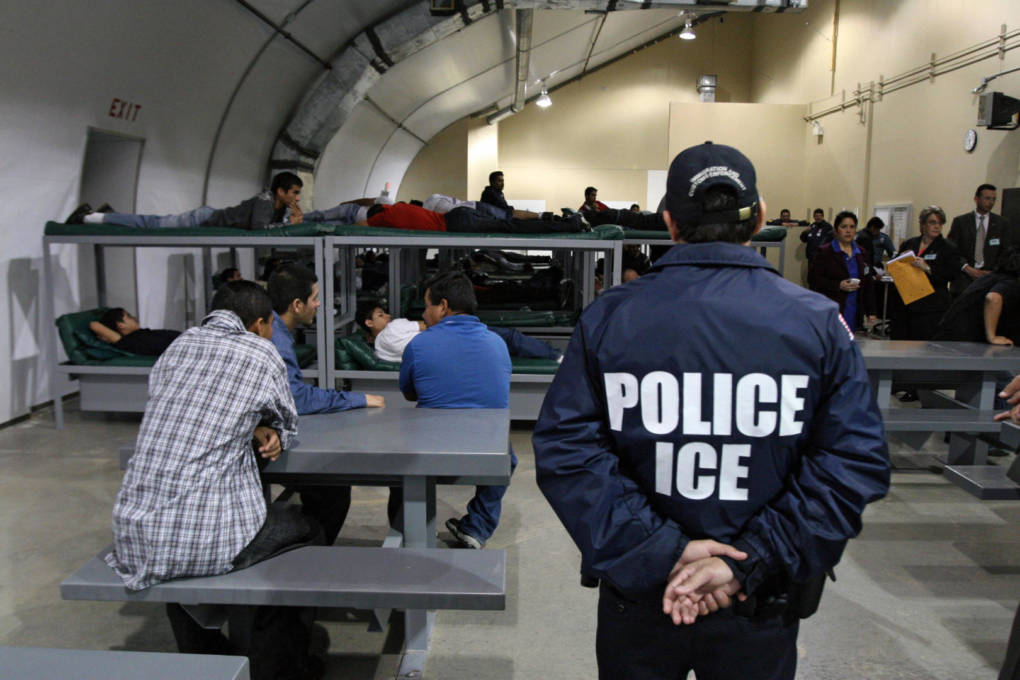
"caption": "An Immigration and Customs Enforcement (ICE) officer guards a group of 116 Salvadorean immigrants waiting to be deported. Under SB54, California won't let local police or sheriff's work with ICE in most circumstances. ",
"description": null,
"title": "TO GO WITH AFP STORY BY CARLOS MARIO MAR",
"credit": "Jose Cabezas/AFP/Getty Images",
"status": "inherit",
"isLoading": false,
"fetchFailed": false
},
"news_11611803": {
"type": "attachments",
"id": "news_11611803",
"meta": {
"index": "attachments_1716263798",
"site": "news",
"id": "11611803",
"found": true
},
"parent": 11611739,
"imgSizes": {
"small": {
"file": "https://ww2.kqed.org/app/uploads/sites/10/2017/08/BecerraHerrera-520x366.jpg",
"width": 520,
"mimeType": "image/jpeg",
"height": 366
},
"twentyfourteen-full-width": {
"file": "https://ww2.kqed.org/app/uploads/sites/10/2017/08/BecerraHerrera-1038x576.jpg",
"width": 1038,
"mimeType": "image/jpeg",
"height": 576
},
"thumbnail": {
"file": "https://ww2.kqed.org/app/uploads/sites/10/2017/08/BecerraHerrera-160x113.jpg",
"width": 160,
"mimeType": "image/jpeg",
"height": 113
},
"fd-sm": {
"file": "https://ww2.kqed.org/app/uploads/sites/10/2017/08/BecerraHerrera-960x677.jpg",
"width": 960,
"mimeType": "image/jpeg",
"height": 677
},
"post-thumbnail": {
"file": "https://ww2.kqed.org/app/uploads/sites/10/2017/08/BecerraHerrera-672x372.jpg",
"width": 672,
"mimeType": "image/jpeg",
"height": 372
},
"xsmall": {
"file": "https://ww2.kqed.org/app/uploads/sites/10/2017/08/BecerraHerrera-375x264.jpg",
"width": 375,
"mimeType": "image/jpeg",
"height": 264
},
"kqedFullSize": {
"file": "https://ww2.kqed.org/app/uploads/sites/10/2017/08/BecerraHerrera.jpg",
"width": 1920,
"height": 1353
},
"large": {
"file": "https://ww2.kqed.org/app/uploads/sites/10/2017/08/BecerraHerrera-1020x719.jpg",
"width": 1020,
"mimeType": "image/jpeg",
"height": 719
},
"xlarge": {
"file": "https://ww2.kqed.org/app/uploads/sites/10/2017/08/BecerraHerrera-1180x832.jpg",
"width": 1180,
"mimeType": "image/jpeg",
"height": 832
},
"guest-author-50": {
"file": "https://ww2.kqed.org/app/uploads/sites/10/2017/08/BecerraHerrera-50x50.jpg",
"width": 50,
"mimeType": "image/jpeg",
"height": 50
},
"guest-author-96": {
"file": "https://ww2.kqed.org/app/uploads/sites/10/2017/08/BecerraHerrera-96x96.jpg",
"width": 96,
"mimeType": "image/jpeg",
"height": 96
},
"medium": {
"file": "https://ww2.kqed.org/app/uploads/sites/10/2017/08/BecerraHerrera-800x564.jpg",
"width": 800,
"mimeType": "image/jpeg",
"height": 564
},
"guest-author-64": {
"file": "https://ww2.kqed.org/app/uploads/sites/10/2017/08/BecerraHerrera-64x64.jpg",
"width": 64,
"mimeType": "image/jpeg",
"height": 64
},
"guest-author-32": {
"file": "https://ww2.kqed.org/app/uploads/sites/10/2017/08/BecerraHerrera-32x32.jpg",
"width": 32,
"mimeType": "image/jpeg",
"height": 32
},
"fd-lrg": {
"file": "https://ww2.kqed.org/app/uploads/sites/10/2017/08/BecerraHerrera-1920x1353.jpg",
"width": 1920,
"mimeType": "image/jpeg",
"height": 1353
},
"fd-med": {
"file": "https://ww2.kqed.org/app/uploads/sites/10/2017/08/BecerraHerrera-1180x832.jpg",
"width": 1180,
"mimeType": "image/jpeg",
"height": 832
},
"full-width": {
"file": "https://ww2.kqed.org/app/uploads/sites/10/2017/08/BecerraHerrera-1920x1353.jpg",
"width": 1920,
"mimeType": "image/jpeg",
"height": 1353
},
"detail": {
"file": "https://ww2.kqed.org/app/uploads/sites/10/2017/08/BecerraHerrera-150x150.jpg",
"width": 150,
"mimeType": "image/jpeg",
"height": 150
},
"guest-author-128": {
"file": "https://ww2.kqed.org/app/uploads/sites/10/2017/08/BecerraHerrera-128x128.jpg",
"width": 128,
"mimeType": "image/jpeg",
"height": 128
},
"xxsmall": {
"file": "https://ww2.kqed.org/app/uploads/sites/10/2017/08/BecerraHerrera-240x169.jpg",
"width": 240,
"mimeType": "image/jpeg",
"height": 169
}
},
"publishDate": 1502738683,
"modified": 1502738710,
"caption": "California Attorney General Xavier Becerra and San Francisco City Attorney Dennis Herrera announce new litigation against President Trump's latest policy to withhold federal justice assistance grants from 'sanctuary cities.'",
"description": "California Attorney General Xavier Becerra and San Francisco City Attorney Dennis Herrera announce new litigation against President Trump's latest policy to withhold federal justice assistance grants from 'sanctuary cities.'",
"title": "BecerraHerrera",
"credit": "Ryan Levi/KQED",
"status": "inherit",
"isLoading": false,
"fetchFailed": false
},
"news_11541167": {
"type": "attachments",
"id": "news_11541167",
"meta": {
"index": "attachments_1716263798",
"site": "news",
"id": "11541167",
"found": true
},
"parent": 11540906,
"imgSizes": {
"small": {
"file": "https://ww2.kqed.org/app/uploads/sites/10/2017/06/RS25903_GettyImages-697936930-qut-520x347.jpg",
"width": 520,
"mimeType": "image/jpeg",
"height": 347
},
"twentyfourteen-full-width": {
"file": "https://ww2.kqed.org/app/uploads/sites/10/2017/06/RS25903_GettyImages-697936930-qut-1038x576.jpg",
"width": 1038,
"mimeType": "image/jpeg",
"height": 576
},
"thumbnail": {
"file": "https://ww2.kqed.org/app/uploads/sites/10/2017/06/RS25903_GettyImages-697936930-qut-160x107.jpg",
"width": 160,
"mimeType": "image/jpeg",
"height": 107
},
"fd-sm": {
"file": "https://ww2.kqed.org/app/uploads/sites/10/2017/06/RS25903_GettyImages-697936930-qut-960x640.jpg",
"width": 960,
"mimeType": "image/jpeg",
"height": 640
},
"post-thumbnail": {
"file": "https://ww2.kqed.org/app/uploads/sites/10/2017/06/RS25903_GettyImages-697936930-qut-672x372.jpg",
"width": 672,
"mimeType": "image/jpeg",
"height": 372
},
"xsmall": {
"file": "https://ww2.kqed.org/app/uploads/sites/10/2017/06/RS25903_GettyImages-697936930-qut-375x250.jpg",
"width": 375,
"mimeType": "image/jpeg",
"height": 250
},
"kqedFullSize": {
"file": "https://ww2.kqed.org/app/uploads/sites/10/2017/06/RS25903_GettyImages-697936930-qut.jpg",
"width": 1920,
"height": 1280
},
"large": {
"file": "https://ww2.kqed.org/app/uploads/sites/10/2017/06/RS25903_GettyImages-697936930-qut-1020x680.jpg",
"width": 1020,
"mimeType": "image/jpeg",
"height": 680
},
"xlarge": {
"file": "https://ww2.kqed.org/app/uploads/sites/10/2017/06/RS25903_GettyImages-697936930-qut-1180x787.jpg",
"width": 1180,
"mimeType": "image/jpeg",
"height": 787
},
"guest-author-50": {
"file": "https://ww2.kqed.org/app/uploads/sites/10/2017/06/RS25903_GettyImages-697936930-qut-50x50.jpg",
"width": 50,
"mimeType": "image/jpeg",
"height": 50
},
"guest-author-96": {
"file": "https://ww2.kqed.org/app/uploads/sites/10/2017/06/RS25903_GettyImages-697936930-qut-96x96.jpg",
"width": 96,
"mimeType": "image/jpeg",
"height": 96
},
"medium": {
"file": "https://ww2.kqed.org/app/uploads/sites/10/2017/06/RS25903_GettyImages-697936930-qut-800x533.jpg",
"width": 800,
"mimeType": "image/jpeg",
"height": 533
},
"guest-author-64": {
"file": "https://ww2.kqed.org/app/uploads/sites/10/2017/06/RS25903_GettyImages-697936930-qut-64x64.jpg",
"width": 64,
"mimeType": "image/jpeg",
"height": 64
},
"guest-author-32": {
"file": "https://ww2.kqed.org/app/uploads/sites/10/2017/06/RS25903_GettyImages-697936930-qut-32x32.jpg",
"width": 32,
"mimeType": "image/jpeg",
"height": 32
},
"fd-lrg": {
"file": "https://ww2.kqed.org/app/uploads/sites/10/2017/06/RS25903_GettyImages-697936930-qut-1920x1280.jpg",
"width": 1920,
"mimeType": "image/jpeg",
"height": 1280
},
"fd-med": {
"file": "https://ww2.kqed.org/app/uploads/sites/10/2017/06/RS25903_GettyImages-697936930-qut-1180x787.jpg",
"width": 1180,
"mimeType": "image/jpeg",
"height": 787
},
"full-width": {
"file": "https://ww2.kqed.org/app/uploads/sites/10/2017/06/RS25903_GettyImages-697936930-qut-1920x1280.jpg",
"width": 1920,
"mimeType": "image/jpeg",
"height": 1280
},
"detail": {
"file": "https://ww2.kqed.org/app/uploads/sites/10/2017/06/RS25903_GettyImages-697936930-qut-150x150.jpg",
"width": 150,
"mimeType": "image/jpeg",
"height": 150
},
"guest-author-128": {
"file": "https://ww2.kqed.org/app/uploads/sites/10/2017/06/RS25903_GettyImages-697936930-qut-128x128.jpg",
"width": 128,
"mimeType": "image/jpeg",
"height": 128
},
"xxsmall": {
"file": "https://ww2.kqed.org/app/uploads/sites/10/2017/06/RS25903_GettyImages-697936930-qut-240x160.jpg",
"width": 240,
"mimeType": "image/jpeg",
"height": 160
}
},
"publishDate": 1498860681,
"modified": 1498862204,
"caption": "Newly naturalized citizens wave American flags after being sworn in as U.S. citizens during a naturalization ceremony on June 19, 2017, in San Francisco.",
"description": "Newly naturalized citizens wave American flags after being sworn in as U.S. citizens during a naturalization ceremony on June 19 in San Francisco.",
"title": "Former Refugees To U.S. Sworn In As American Citizens In San Francisco",
"credit": "Justin Sullivan/Getty Images",
"status": "inherit",
"isLoading": false,
"fetchFailed": false
},
"news_11472182": {
"type": "attachments",
"id": "news_11472182",
"meta": {
"index": "attachments_1716263798",
"site": "news",
"id": "11472182",
"found": true
},
"parent": 11472181,
"imgSizes": {
"small": {
"file": "https://ww2.kqed.org/app/uploads/sites/10/2017/05/gettyimages-6807417981_edit_custom-428619f55464b4d12dbf35a3d39a71c31da695c4-520x299.jpg",
"width": 520,
"mimeType": "image/jpeg",
"height": 299
},
"twentyfourteen-full-width": {
"file": "https://ww2.kqed.org/app/uploads/sites/10/2017/05/gettyimages-6807417981_edit_custom-428619f55464b4d12dbf35a3d39a71c31da695c4-1038x576.jpg",
"width": 1038,
"mimeType": "image/jpeg",
"height": 576
},
"thumbnail": {
"file": "https://ww2.kqed.org/app/uploads/sites/10/2017/05/gettyimages-6807417981_edit_custom-428619f55464b4d12dbf35a3d39a71c31da695c4-160x92.jpg",
"width": 160,
"mimeType": "image/jpeg",
"height": 92
},
"fd-sm": {
"file": "https://ww2.kqed.org/app/uploads/sites/10/2017/05/gettyimages-6807417981_edit_custom-428619f55464b4d12dbf35a3d39a71c31da695c4-960x551.jpg",
"width": 960,
"mimeType": "image/jpeg",
"height": 551
},
"post-thumbnail": {
"file": "https://ww2.kqed.org/app/uploads/sites/10/2017/05/gettyimages-6807417981_edit_custom-428619f55464b4d12dbf35a3d39a71c31da695c4-672x372.jpg",
"width": 672,
"mimeType": "image/jpeg",
"height": 372
},
"xsmall": {
"file": "https://ww2.kqed.org/app/uploads/sites/10/2017/05/gettyimages-6807417981_edit_custom-428619f55464b4d12dbf35a3d39a71c31da695c4-375x215.jpg",
"width": 375,
"mimeType": "image/jpeg",
"height": 215
},
"kqedFullSize": {
"file": "https://ww2.kqed.org/app/uploads/sites/10/2017/05/gettyimages-6807417981_edit_custom-428619f55464b4d12dbf35a3d39a71c31da695c4.jpg",
"width": 1787,
"height": 1026
},
"large": {
"file": "https://ww2.kqed.org/app/uploads/sites/10/2017/05/gettyimages-6807417981_edit_custom-428619f55464b4d12dbf35a3d39a71c31da695c4-1020x586.jpg",
"width": 1020,
"mimeType": "image/jpeg",
"height": 586
},
"xlarge": {
"file": "https://ww2.kqed.org/app/uploads/sites/10/2017/05/gettyimages-6807417981_edit_custom-428619f55464b4d12dbf35a3d39a71c31da695c4-1180x677.jpg",
"width": 1180,
"mimeType": "image/jpeg",
"height": 677
},
"guest-author-50": {
"file": "https://ww2.kqed.org/app/uploads/sites/10/2017/05/gettyimages-6807417981_edit_custom-428619f55464b4d12dbf35a3d39a71c31da695c4-50x50.jpg",
"width": 50,
"mimeType": "image/jpeg",
"height": 50
},
"guest-author-96": {
"file": "https://ww2.kqed.org/app/uploads/sites/10/2017/05/gettyimages-6807417981_edit_custom-428619f55464b4d12dbf35a3d39a71c31da695c4-96x96.jpg",
"width": 96,
"mimeType": "image/jpeg",
"height": 96
},
"medium": {
"file": "https://ww2.kqed.org/app/uploads/sites/10/2017/05/gettyimages-6807417981_edit_custom-428619f55464b4d12dbf35a3d39a71c31da695c4-800x459.jpg",
"width": 800,
"mimeType": "image/jpeg",
"height": 459
},
"guest-author-64": {
"file": "https://ww2.kqed.org/app/uploads/sites/10/2017/05/gettyimages-6807417981_edit_custom-428619f55464b4d12dbf35a3d39a71c31da695c4-64x64.jpg",
"width": 64,
"mimeType": "image/jpeg",
"height": 64
},
"guest-author-32": {
"file": "https://ww2.kqed.org/app/uploads/sites/10/2017/05/gettyimages-6807417981_edit_custom-428619f55464b4d12dbf35a3d39a71c31da695c4-32x32.jpg",
"width": 32,
"mimeType": "image/jpeg",
"height": 32
},
"fd-med": {
"file": "https://ww2.kqed.org/app/uploads/sites/10/2017/05/gettyimages-6807417981_edit_custom-428619f55464b4d12dbf35a3d39a71c31da695c4-1180x677.jpg",
"width": 1180,
"mimeType": "image/jpeg",
"height": 677
},
"detail": {
"file": "https://ww2.kqed.org/app/uploads/sites/10/2017/05/gettyimages-6807417981_edit_custom-428619f55464b4d12dbf35a3d39a71c31da695c4-150x150.jpg",
"width": 150,
"mimeType": "image/jpeg",
"height": 150
},
"guest-author-128": {
"file": "https://ww2.kqed.org/app/uploads/sites/10/2017/05/gettyimages-6807417981_edit_custom-428619f55464b4d12dbf35a3d39a71c31da695c4-128x128.jpg",
"width": 128,
"mimeType": "image/jpeg",
"height": 128
},
"xxsmall": {
"file": "https://ww2.kqed.org/app/uploads/sites/10/2017/05/gettyimages-6807417981_edit_custom-428619f55464b4d12dbf35a3d39a71c31da695c4-240x138.jpg",
"width": 240,
"mimeType": "image/jpeg",
"height": 138
}
},
"publishDate": 1495494668,
"modified": 1495495505,
"caption": "Attorney General Jeff Sessions waits to be introduced during a service at the National Law Enforcement Officers Memorial on May 9 in Washington, D.C. Sessions issued an order on Monday narrowing the scope of his financial threat to \"sanctuary cities.\"",
"description": "Attorney General Jeff Sessions waits to be introduced during a service at the National Law Enforcement Officers Memorial on May 9 in Washington, D.C. Sessions issued an order on Monday narrowing the scope of his financial threat to \"sanctuary cities.\"",
"title": "Attorney General Jeff Sessions waits to be introduced during a service at the National Law Enforcement Officers Memorial on May 9 in Washington, D.C. Sessions issued an order on Monday narrowing the scope of his financial threat to \"sanctuary cities.\"",
"credit": "Alex Wong/Getty Images",
"status": "inherit",
"isLoading": false,
"fetchFailed": false
},
"news_11466982": {
"type": "attachments",
"id": "news_11466982",
"meta": {
"index": "attachments_1716263798",
"site": "news",
"id": "11466982",
"found": true
},
"parent": 11466901,
"imgSizes": {
"small": {
"file": "https://ww2.kqed.org/app/uploads/sites/10/2017/05/CCC_OfficeOfSheriff_Sheriff-at-podiumt-520x402.jpg",
"width": 520,
"mimeType": "image/jpeg",
"height": 402
},
"twentyfourteen-full-width": {
"file": "https://ww2.kqed.org/app/uploads/sites/10/2017/05/CCC_OfficeOfSheriff_Sheriff-at-podiumt-1038x576.jpg",
"width": 1038,
"mimeType": "image/jpeg",
"height": 576
},
"thumbnail": {
"file": "https://ww2.kqed.org/app/uploads/sites/10/2017/05/CCC_OfficeOfSheriff_Sheriff-at-podiumt-160x124.jpg",
"width": 160,
"mimeType": "image/jpeg",
"height": 124
},
"fd-sm": {
"file": "https://ww2.kqed.org/app/uploads/sites/10/2017/05/CCC_OfficeOfSheriff_Sheriff-at-podiumt-960x742.jpg",
"width": 960,
"mimeType": "image/jpeg",
"height": 742
},
"post-thumbnail": {
"file": "https://ww2.kqed.org/app/uploads/sites/10/2017/05/CCC_OfficeOfSheriff_Sheriff-at-podiumt-672x372.jpg",
"width": 672,
"mimeType": "image/jpeg",
"height": 372
},
"xsmall": {
"file": "https://ww2.kqed.org/app/uploads/sites/10/2017/05/CCC_OfficeOfSheriff_Sheriff-at-podiumt-375x290.jpg",
"width": 375,
"mimeType": "image/jpeg",
"height": 290
},
"kqedFullSize": {
"file": "https://ww2.kqed.org/app/uploads/sites/10/2017/05/CCC_OfficeOfSheriff_Sheriff-at-podiumt-e1495234961251.jpg",
"width": 1920,
"height": 1484
},
"large": {
"file": "https://ww2.kqed.org/app/uploads/sites/10/2017/05/CCC_OfficeOfSheriff_Sheriff-at-podiumt-1020x788.jpg",
"width": 1020,
"mimeType": "image/jpeg",
"height": 788
},
"xlarge": {
"file": "https://ww2.kqed.org/app/uploads/sites/10/2017/05/CCC_OfficeOfSheriff_Sheriff-at-podiumt-1180x912.jpg",
"width": 1180,
"mimeType": "image/jpeg",
"height": 912
},
"guest-author-50": {
"file": "https://ww2.kqed.org/app/uploads/sites/10/2017/05/CCC_OfficeOfSheriff_Sheriff-at-podiumt-50x50.jpg",
"width": 50,
"mimeType": "image/jpeg",
"height": 50
},
"guest-author-96": {
"file": "https://ww2.kqed.org/app/uploads/sites/10/2017/05/CCC_OfficeOfSheriff_Sheriff-at-podiumt-96x96.jpg",
"width": 96,
"mimeType": "image/jpeg",
"height": 96
},
"medium": {
"file": "https://ww2.kqed.org/app/uploads/sites/10/2017/05/CCC_OfficeOfSheriff_Sheriff-at-podiumt-800x618.jpg",
"width": 800,
"mimeType": "image/jpeg",
"height": 618
},
"guest-author-64": {
"file": "https://ww2.kqed.org/app/uploads/sites/10/2017/05/CCC_OfficeOfSheriff_Sheriff-at-podiumt-64x64.jpg",
"width": 64,
"mimeType": "image/jpeg",
"height": 64
},
"guest-author-32": {
"file": "https://ww2.kqed.org/app/uploads/sites/10/2017/05/CCC_OfficeOfSheriff_Sheriff-at-podiumt-32x32.jpg",
"width": 32,
"mimeType": "image/jpeg",
"height": 32
},
"fd-lrg": {
"file": "https://ww2.kqed.org/app/uploads/sites/10/2017/05/CCC_OfficeOfSheriff_Sheriff-at-podiumt-1920x1484.jpg",
"width": 1920,
"mimeType": "image/jpeg",
"height": 1484
},
"fd-med": {
"file": "https://ww2.kqed.org/app/uploads/sites/10/2017/05/CCC_OfficeOfSheriff_Sheriff-at-podiumt-1180x912.jpg",
"width": 1180,
"mimeType": "image/jpeg",
"height": 912
},
"full-width": {
"file": "https://ww2.kqed.org/app/uploads/sites/10/2017/05/CCC_OfficeOfSheriff_Sheriff-at-podiumt-1920x1484.jpg",
"width": 1920,
"mimeType": "image/jpeg",
"height": 1484
},
"detail": {
"file": "https://ww2.kqed.org/app/uploads/sites/10/2017/05/CCC_OfficeOfSheriff_Sheriff-at-podiumt-150x150.jpg",
"width": 150,
"mimeType": "image/jpeg",
"height": 150
},
"guest-author-128": {
"file": "https://ww2.kqed.org/app/uploads/sites/10/2017/05/CCC_OfficeOfSheriff_Sheriff-at-podiumt-128x128.jpg",
"width": 128,
"mimeType": "image/jpeg",
"height": 128
},
"xxsmall": {
"file": "https://ww2.kqed.org/app/uploads/sites/10/2017/05/CCC_OfficeOfSheriff_Sheriff-at-podiumt-240x186.jpg",
"width": 240,
"mimeType": "image/jpeg",
"height": 186
}
},
"publishDate": 1495224134,
"modified": 1578583842,
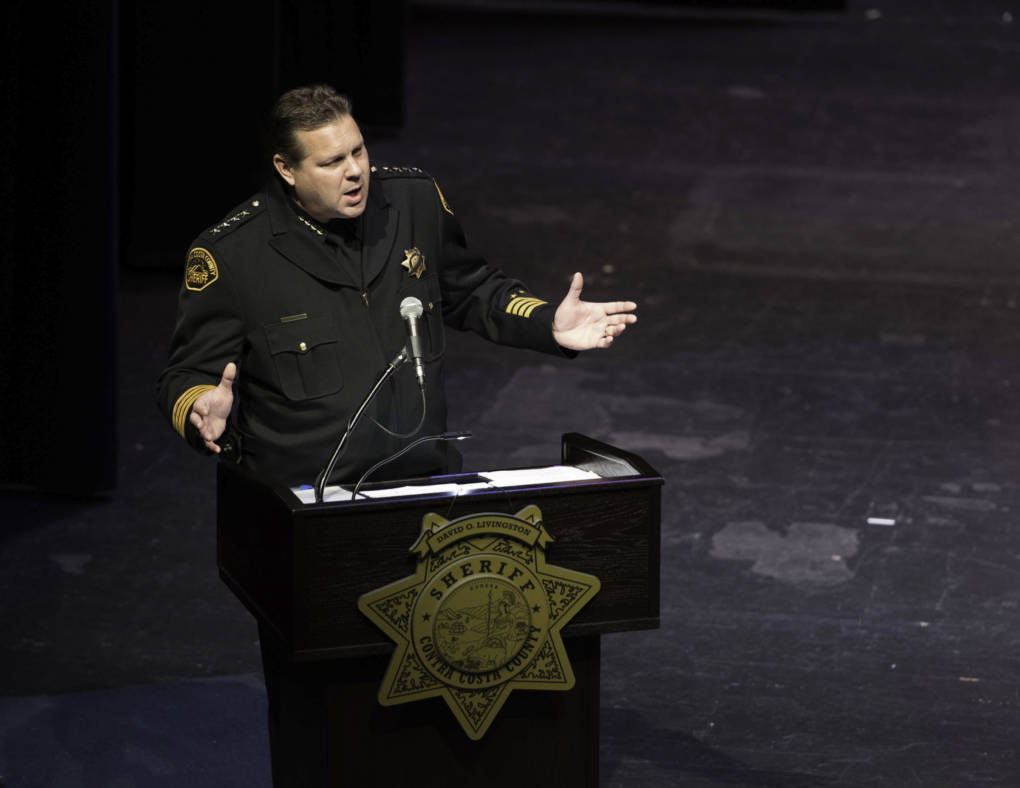
"caption": "Contra Costa County Sheriff David Livingston",
"description": null,
"title": "Contra Costa County Sheriff David Livingston",
"credit": "Courtesy of Contra Costa County Office of the Sheriff",
"status": "inherit",
"isLoading": false,
"fetchFailed": false
},
"news_11457784": {
"type": "attachments",
"id": "news_11457784",
"meta": {
"index": "attachments_1716263798",
"site": "news",
"id": "11457784",
"found": true
},
"parent": 11457713,
"imgSizes": {
"small": {
"file": "https://ww2.kqed.org/app/uploads/sites/10/2018/05/RS24471_ICE_4-qut-520x293.jpg",
"width": 520,
"mimeType": "image/jpeg",
"height": 293
},
"twentyfourteen-full-width": {
"file": "https://ww2.kqed.org/app/uploads/sites/10/2018/05/RS24471_ICE_4-qut-1038x576.jpg",
"width": 1038,
"mimeType": "image/jpeg",
"height": 576
},
"thumbnail": {
"file": "https://ww2.kqed.org/app/uploads/sites/10/2018/05/RS24471_ICE_4-qut-160x90.jpg",
"width": 160,
"mimeType": "image/jpeg",
"height": 90
},
"fd-sm": {
"file": "https://ww2.kqed.org/app/uploads/sites/10/2018/05/RS24471_ICE_4-qut-960x540.jpg",
"width": 960,
"mimeType": "image/jpeg",
"height": 540
},
"post-thumbnail": {
"file": "https://ww2.kqed.org/app/uploads/sites/10/2018/05/RS24471_ICE_4-qut-672x372.jpg",
"width": 672,
"mimeType": "image/jpeg",
"height": 372
},
"xsmall": {
"file": "https://ww2.kqed.org/app/uploads/sites/10/2018/05/RS24471_ICE_4-qut-375x211.jpg",
"width": 375,
"mimeType": "image/jpeg",
"height": 211
},
"kqedFullSize": {
"file": "https://ww2.kqed.org/app/uploads/sites/10/2018/05/RS24471_ICE_4-qut.jpg",
"width": 1920,
"height": 1080
},
"large": {
"file": "https://ww2.kqed.org/app/uploads/sites/10/2018/05/RS24471_ICE_4-qut-1020x574.jpg",
"width": 1020,
"mimeType": "image/jpeg",
"height": 574
},
"xlarge": {
"file": "https://ww2.kqed.org/app/uploads/sites/10/2018/05/RS24471_ICE_4-qut-1180x664.jpg",
"width": 1180,
"mimeType": "image/jpeg",
"height": 664
},
"guest-author-50": {
"file": "https://ww2.kqed.org/app/uploads/sites/10/2018/05/RS24471_ICE_4-qut-50x50.jpg",
"width": 50,
"mimeType": "image/jpeg",
"height": 50
},
"guest-author-96": {
"file": "https://ww2.kqed.org/app/uploads/sites/10/2018/05/RS24471_ICE_4-qut-96x96.jpg",
"width": 96,
"mimeType": "image/jpeg",
"height": 96
},
"medium": {
"file": "https://ww2.kqed.org/app/uploads/sites/10/2018/05/RS24471_ICE_4-qut-800x450.jpg",
"width": 800,
"mimeType": "image/jpeg",
"height": 450
},
"guest-author-64": {
"file": "https://ww2.kqed.org/app/uploads/sites/10/2018/05/RS24471_ICE_4-qut-64x64.jpg",
"width": 64,
"mimeType": "image/jpeg",
"height": 64
},
"guest-author-32": {
"file": "https://ww2.kqed.org/app/uploads/sites/10/2018/05/RS24471_ICE_4-qut-32x32.jpg",
"width": 32,
"mimeType": "image/jpeg",
"height": 32
},
"fd-lrg": {
"file": "https://ww2.kqed.org/app/uploads/sites/10/2018/05/RS24471_ICE_4-qut-1920x1080.jpg",
"width": 1920,
"mimeType": "image/jpeg",
"height": 1080
},
"fd-med": {
"file": "https://ww2.kqed.org/app/uploads/sites/10/2018/05/RS24471_ICE_4-qut-1180x664.jpg",
"width": 1180,
"mimeType": "image/jpeg",
"height": 664
},
"full-width": {
"file": "https://ww2.kqed.org/app/uploads/sites/10/2018/05/RS24471_ICE_4-qut-1920x1080.jpg",
"width": 1920,
"mimeType": "image/jpeg",
"height": 1080
},
"detail": {
"file": "https://ww2.kqed.org/app/uploads/sites/10/2018/05/RS24471_ICE_4-qut-150x150.jpg",
"width": 150,
"mimeType": "image/jpeg",
"height": 150
},
"guest-author-128": {
"file": "https://ww2.kqed.org/app/uploads/sites/10/2018/05/RS24471_ICE_4-qut-128x128.jpg",
"width": 128,
"mimeType": "image/jpeg",
"height": 128
},
"xxsmall": {
"file": "https://ww2.kqed.org/app/uploads/sites/10/2018/05/RS24471_ICE_4-qut-240x135.jpg",
"width": 240,
"mimeType": "image/jpeg",
"height": 135
}
},
"publishDate": 1494793970,
"modified": 1494890228,
"caption": "Maguiber was detained by ICE on February 9, 2017. His wife, Yiby, is unemployed and now watches their three children, who are U.S. citizens, by herself. ",
"description": "Maguiber was detained by ICE on February 9, 2017. His wife, Yiby, is unemployed and now watches their 3 children, who are U.S. citizens, by herself. ",
"title": "RS24471_ICE_4-qut",
"credit": "Erasmo Martinez/KQED",
"status": "inherit",
"isLoading": false,
"fetchFailed": false
},
"news_11454851": {
"type": "attachments",
"id": "news_11454851",
"meta": {
"index": "attachments_1716263798",
"site": "news",
"id": "11454851",
"found": true
},
"parent": 11454621,
"imgSizes": {
"small": {
"file": "https://ww2.kqed.org/app/uploads/sites/10/2017/05/ice-520x280.png",
"width": 520,
"mimeType": "image/png",
"height": 280
},
"twentyfourteen-full-width": {
"file": "https://ww2.kqed.org/app/uploads/sites/10/2017/05/ice-1038x576.png",
"width": 1038,
"mimeType": "image/png",
"height": 576
},
"thumbnail": {
"file": "https://ww2.kqed.org/app/uploads/sites/10/2017/05/ice-160x86.png",
"width": 160,
"mimeType": "image/png",
"height": 86
},
"fd-sm": {
"file": "https://ww2.kqed.org/app/uploads/sites/10/2017/05/ice-960x518.png",
"width": 960,
"mimeType": "image/png",
"height": 518
},
"post-thumbnail": {
"file": "https://ww2.kqed.org/app/uploads/sites/10/2017/05/ice-672x372.png",
"width": 672,
"mimeType": "image/png",
"height": 372
},
"xsmall": {
"file": "https://ww2.kqed.org/app/uploads/sites/10/2017/05/ice-375x202.png",
"width": 375,
"mimeType": "image/png",
"height": 202
},
"kqedFullSize": {
"file": "https://ww2.kqed.org/app/uploads/sites/10/2017/05/ice.png",
"width": 1278,
"height": 689
},
"large": {
"file": "https://ww2.kqed.org/app/uploads/sites/10/2017/05/ice-1020x550.png",
"width": 1020,
"mimeType": "image/png",
"height": 550
},
"xlarge": {
"file": "https://ww2.kqed.org/app/uploads/sites/10/2017/05/ice-1180x636.png",
"width": 1180,
"mimeType": "image/png",
"height": 636
},
"guest-author-50": {
"file": "https://ww2.kqed.org/app/uploads/sites/10/2017/05/ice-50x50.png",
"width": 50,
"mimeType": "image/png",
"height": 50
},
"guest-author-96": {
"file": "https://ww2.kqed.org/app/uploads/sites/10/2017/05/ice-96x96.png",
"width": 96,
"mimeType": "image/png",
"height": 96
},
"medium": {
"file": "https://ww2.kqed.org/app/uploads/sites/10/2017/05/ice-800x431.png",
"width": 800,
"mimeType": "image/png",
"height": 431
},
"guest-author-64": {
"file": "https://ww2.kqed.org/app/uploads/sites/10/2017/05/ice-64x64.png",
"width": 64,
"mimeType": "image/png",
"height": 64
},
"guest-author-32": {
"file": "https://ww2.kqed.org/app/uploads/sites/10/2017/05/ice-32x32.png",
"width": 32,
"mimeType": "image/png",
"height": 32
},
"fd-med": {
"file": "https://ww2.kqed.org/app/uploads/sites/10/2017/05/ice-1180x636.png",
"width": 1180,
"mimeType": "image/png",
"height": 636
},
"detail": {
"file": "https://ww2.kqed.org/app/uploads/sites/10/2017/05/ice-150x150.png",
"width": 150,
"mimeType": "image/png",
"height": 150
},
"guest-author-128": {
"file": "https://ww2.kqed.org/app/uploads/sites/10/2017/05/ice-128x128.png",
"width": 128,
"mimeType": "image/png",
"height": 128
},
"xxsmall": {
"file": "https://ww2.kqed.org/app/uploads/sites/10/2017/05/ice-240x129.png",
"width": 240,
"mimeType": "image/png",
"height": 129
}
},
"publishDate": 1494641276,
"modified": 1494641276,
"caption": null,
"description": null,
"title": "ice",
"credit": null,
"status": "inherit",
"isLoading": false,
"fetchFailed": false
},
"news_11364194": {
"type": "attachments",
"id": "news_11364194",
"meta": {
"index": "attachments_1716263798",
"site": "news",
"id": "11364194",
"found": true
},
"parent": 11364187,
"imgSizes": {
"small": {
"file": "https://ww2.kqed.org/app/uploads/sites/10/2017/03/TrumpBudget-520x350.jpg",
"width": 520,
"mimeType": "image/jpeg",
"height": 350
},
"twentyfourteen-full-width": {
"file": "https://ww2.kqed.org/app/uploads/sites/10/2017/03/TrumpBudget-1038x576.jpg",
"width": 1038,
"mimeType": "image/jpeg",
"height": 576
},
"thumbnail": {
"file": "https://ww2.kqed.org/app/uploads/sites/10/2017/03/TrumpBudget-160x108.jpg",
"width": 160,
"mimeType": "image/jpeg",
"height": 108
},
"fd-sm": {
"file": "https://ww2.kqed.org/app/uploads/sites/10/2017/03/TrumpBudget-960x647.jpg",
"width": 960,
"mimeType": "image/jpeg",
"height": 647
},
"post-thumbnail": {
"file": "https://ww2.kqed.org/app/uploads/sites/10/2017/03/TrumpBudget-672x372.jpg",
"width": 672,
"mimeType": "image/jpeg",
"height": 372
},
"xsmall": {
"file": "https://ww2.kqed.org/app/uploads/sites/10/2017/03/TrumpBudget-375x253.jpg",
"width": 375,
"mimeType": "image/jpeg",
"height": 253
},
"kqedFullSize": {
"file": "https://ww2.kqed.org/app/uploads/sites/10/2017/03/TrumpBudget.jpg",
"width": 1920,
"height": 1293
},
"large": {
"file": "https://ww2.kqed.org/app/uploads/sites/10/2017/03/TrumpBudget-1020x687.jpg",
"width": 1020,
"mimeType": "image/jpeg",
"height": 687
},
"xlarge": {
"file": "https://ww2.kqed.org/app/uploads/sites/10/2017/03/TrumpBudget-1180x795.jpg",
"width": 1180,
"mimeType": "image/jpeg",
"height": 795
},
"guest-author-50": {
"file": "https://ww2.kqed.org/app/uploads/sites/10/2017/03/TrumpBudget-50x50.jpg",
"width": 50,
"mimeType": "image/jpeg",
"height": 50
},
"guest-author-96": {
"file": "https://ww2.kqed.org/app/uploads/sites/10/2017/03/TrumpBudget-96x96.jpg",
"width": 96,
"mimeType": "image/jpeg",
"height": 96
},
"medium": {
"file": "https://ww2.kqed.org/app/uploads/sites/10/2017/03/TrumpBudget-800x539.jpg",
"width": 800,
"mimeType": "image/jpeg",
"height": 539
},
"guest-author-64": {
"file": "https://ww2.kqed.org/app/uploads/sites/10/2017/03/TrumpBudget-64x64.jpg",
"width": 64,
"mimeType": "image/jpeg",
"height": 64
},
"guest-author-32": {
"file": "https://ww2.kqed.org/app/uploads/sites/10/2017/03/TrumpBudget-32x32.jpg",
"width": 32,
"mimeType": "image/jpeg",
"height": 32
},
"fd-lrg": {
"file": "https://ww2.kqed.org/app/uploads/sites/10/2017/03/TrumpBudget-1920x1293.jpg",
"width": 1920,
"mimeType": "image/jpeg",
"height": 1293
},
"fd-med": {
"file": "https://ww2.kqed.org/app/uploads/sites/10/2017/03/TrumpBudget-1180x795.jpg",
"width": 1180,
"mimeType": "image/jpeg",
"height": 795
},
"full-width": {
"file": "https://ww2.kqed.org/app/uploads/sites/10/2017/03/TrumpBudget-1920x1293.jpg",
"width": 1920,
"mimeType": "image/jpeg",
"height": 1293
},
"detail": {
"file": "https://ww2.kqed.org/app/uploads/sites/10/2017/03/TrumpBudget-150x150.jpg",
"width": 150,
"mimeType": "image/jpeg",
"height": 150
},
"guest-author-128": {
"file": "https://ww2.kqed.org/app/uploads/sites/10/2017/03/TrumpBudget-128x128.jpg",
"width": 128,
"mimeType": "image/jpeg",
"height": 128
},
"xxsmall": {
"file": "https://ww2.kqed.org/app/uploads/sites/10/2017/03/TrumpBudget-240x162.jpg",
"width": 240,
"mimeType": "image/jpeg",
"height": 162
}
},
"publishDate": 1489790148,
"modified": 1489790185,
"caption": "President Donald Trump discusses the federal budget with economic advisers on Feb. 22, 2017.",
"description": "President Donald Trump discusses the federal budget with economic advisers on Feb. 22, 2017.",
"title": "TrumpBudget",
"credit": "Olivier Douliery-Pool/Getty Images",
"status": "inherit",
"isLoading": false,
"fetchFailed": false
},
"news_11420121": {
"type": "attachments",
"id": "news_11420121",
"meta": {
"index": "attachments_1716263798",
"site": "news",
"id": "11420121",
"found": true
},
"parent": 11420036,
"imgSizes": {
"small": {
"file": "https://ww2.kqed.org/app/uploads/sites/10/2017/04/RS24861_GettyImages-658393874-qut-520x347.jpg",
"width": 520,
"mimeType": "image/jpeg",
"height": 347
},
"twentyfourteen-full-width": {
"file": "https://ww2.kqed.org/app/uploads/sites/10/2017/04/RS24861_GettyImages-658393874-qut-1038x576.jpg",
"width": 1038,
"mimeType": "image/jpeg",
"height": 576
},
"thumbnail": {
"file": "https://ww2.kqed.org/app/uploads/sites/10/2017/04/RS24861_GettyImages-658393874-qut-160x107.jpg",
"width": 160,
"mimeType": "image/jpeg",
"height": 107
},
"fd-sm": {
"file": "https://ww2.kqed.org/app/uploads/sites/10/2017/04/RS24861_GettyImages-658393874-qut-960x640.jpg",
"width": 960,
"mimeType": "image/jpeg",
"height": 640
},
"post-thumbnail": {
"file": "https://ww2.kqed.org/app/uploads/sites/10/2017/04/RS24861_GettyImages-658393874-qut-672x372.jpg",
"width": 672,
"mimeType": "image/jpeg",
"height": 372
},
"xsmall": {
"file": "https://ww2.kqed.org/app/uploads/sites/10/2017/04/RS24861_GettyImages-658393874-qut-375x250.jpg",
"width": 375,
"mimeType": "image/jpeg",
"height": 250
},
"kqedFullSize": {
"file": "https://ww2.kqed.org/app/uploads/sites/10/2017/04/RS24861_GettyImages-658393874-qut.jpg",
"width": 1920,
"height": 1280
},
"large": {
"file": "https://ww2.kqed.org/app/uploads/sites/10/2017/04/RS24861_GettyImages-658393874-qut-1020x680.jpg",
"width": 1020,
"mimeType": "image/jpeg",
"height": 680
},
"xlarge": {
"file": "https://ww2.kqed.org/app/uploads/sites/10/2017/04/RS24861_GettyImages-658393874-qut-1180x787.jpg",
"width": 1180,
"mimeType": "image/jpeg",
"height": 787
},
"guest-author-50": {
"file": "https://ww2.kqed.org/app/uploads/sites/10/2017/04/RS24861_GettyImages-658393874-qut-50x50.jpg",
"width": 50,
"mimeType": "image/jpeg",
"height": 50
},
"guest-author-96": {
"file": "https://ww2.kqed.org/app/uploads/sites/10/2017/04/RS24861_GettyImages-658393874-qut-96x96.jpg",
"width": 96,
"mimeType": "image/jpeg",
"height": 96
},
"medium": {
"file": "https://ww2.kqed.org/app/uploads/sites/10/2017/04/RS24861_GettyImages-658393874-qut-800x533.jpg",
"width": 800,
"mimeType": "image/jpeg",
"height": 533
},
"guest-author-64": {
"file": "https://ww2.kqed.org/app/uploads/sites/10/2017/04/RS24861_GettyImages-658393874-qut-64x64.jpg",
"width": 64,
"mimeType": "image/jpeg",
"height": 64
},
"guest-author-32": {
"file": "https://ww2.kqed.org/app/uploads/sites/10/2017/04/RS24861_GettyImages-658393874-qut-32x32.jpg",
"width": 32,
"mimeType": "image/jpeg",
"height": 32
},
"fd-lrg": {
"file": "https://ww2.kqed.org/app/uploads/sites/10/2017/04/RS24861_GettyImages-658393874-qut-1920x1280.jpg",
"width": 1920,
"mimeType": "image/jpeg",
"height": 1280
},
"fd-med": {
"file": "https://ww2.kqed.org/app/uploads/sites/10/2017/04/RS24861_GettyImages-658393874-qut-1180x787.jpg",
"width": 1180,
"mimeType": "image/jpeg",
"height": 787
},
"full-width": {
"file": "https://ww2.kqed.org/app/uploads/sites/10/2017/04/RS24861_GettyImages-658393874-qut-1920x1280.jpg",
"width": 1920,
"mimeType": "image/jpeg",
"height": 1280
},
"detail": {
"file": "https://ww2.kqed.org/app/uploads/sites/10/2017/04/RS24861_GettyImages-658393874-qut-150x150.jpg",
"width": 150,
"mimeType": "image/jpeg",
"height": 150
},
"guest-author-128": {
"file": "https://ww2.kqed.org/app/uploads/sites/10/2017/04/RS24861_GettyImages-658393874-qut-128x128.jpg",
"width": 128,
"mimeType": "image/jpeg",
"height": 128
},
"xxsmall": {
"file": "https://ww2.kqed.org/app/uploads/sites/10/2017/04/RS24861_GettyImages-658393874-qut-240x160.jpg",
"width": 240,
"mimeType": "image/jpeg",
"height": 160
}
},
"publishDate": 1492798698,
"modified": 1492813215,
"caption": "U.S. Attorney General Jeff Sessions is making good on his promise to crack down on so-called sanctuary cities.",
"description": null,
"title": "RS24861_GettyImages-658393874-qut",
"credit": "JIM WATSON/AFP/Getty Images",
"status": "inherit",
"isLoading": false,
"fetchFailed": false
},
"news_11408830": {
"type": "attachments",
"id": "news_11408830",
"meta": {
"index": "attachments_1716263798",
"site": "news",
"id": "11408830",
"found": true
},
"parent": 11408633,
"imgSizes": {
"small": {
"file": "https://ww2.kqed.org/app/uploads/sites/10/2017/04/SfCityAttorneys-520x352.jpg",
"width": 520,
"mimeType": "image/jpeg",
"height": 352
},
"twentyfourteen-full-width": {
"file": "https://ww2.kqed.org/app/uploads/sites/10/2017/04/SfCityAttorneys-1038x576.jpg",
"width": 1038,
"mimeType": "image/jpeg",
"height": 576
},
"thumbnail": {
"file": "https://ww2.kqed.org/app/uploads/sites/10/2017/04/SfCityAttorneys-160x108.jpg",
"width": 160,
"mimeType": "image/jpeg",
"height": 108
},
"fd-sm": {
"file": "https://ww2.kqed.org/app/uploads/sites/10/2017/04/SfCityAttorneys-960x650.jpg",
"width": 960,
"mimeType": "image/jpeg",
"height": 650
},
"post-thumbnail": {
"file": "https://ww2.kqed.org/app/uploads/sites/10/2017/04/SfCityAttorneys-672x372.jpg",
"width": 672,
"mimeType": "image/jpeg",
"height": 372
},
"xsmall": {
"file": "https://ww2.kqed.org/app/uploads/sites/10/2017/04/SfCityAttorneys-375x254.jpg",
"width": 375,
"mimeType": "image/jpeg",
"height": 254
},
"kqedFullSize": {
"file": "https://ww2.kqed.org/app/uploads/sites/10/2017/04/SfCityAttorneys.jpg",
"width": 1920,
"height": 1300
},
"large": {
"file": "https://ww2.kqed.org/app/uploads/sites/10/2017/04/SfCityAttorneys-1020x691.jpg",
"width": 1020,
"mimeType": "image/jpeg",
"height": 691
},
"xlarge": {
"file": "https://ww2.kqed.org/app/uploads/sites/10/2017/04/SfCityAttorneys-1180x799.jpg",
"width": 1180,
"mimeType": "image/jpeg",
"height": 799
},
"guest-author-50": {
"file": "https://ww2.kqed.org/app/uploads/sites/10/2017/04/SfCityAttorneys-50x50.jpg",
"width": 50,
"mimeType": "image/jpeg",
"height": 50
},
"guest-author-96": {
"file": "https://ww2.kqed.org/app/uploads/sites/10/2017/04/SfCityAttorneys-96x96.jpg",
"width": 96,
"mimeType": "image/jpeg",
"height": 96
},
"medium": {
"file": "https://ww2.kqed.org/app/uploads/sites/10/2017/04/SfCityAttorneys-800x542.jpg",
"width": 800,
"mimeType": "image/jpeg",
"height": 542
},
"guest-author-64": {
"file": "https://ww2.kqed.org/app/uploads/sites/10/2017/04/SfCityAttorneys-64x64.jpg",
"width": 64,
"mimeType": "image/jpeg",
"height": 64
},
"guest-author-32": {
"file": "https://ww2.kqed.org/app/uploads/sites/10/2017/04/SfCityAttorneys-32x32.jpg",
"width": 32,
"mimeType": "image/jpeg",
"height": 32
},
"fd-lrg": {
"file": "https://ww2.kqed.org/app/uploads/sites/10/2017/04/SfCityAttorneys-1920x1300.jpg",
"width": 1920,
"mimeType": "image/jpeg",
"height": 1300
},
"fd-med": {
"file": "https://ww2.kqed.org/app/uploads/sites/10/2017/04/SfCityAttorneys-1180x799.jpg",
"width": 1180,
"mimeType": "image/jpeg",
"height": 799
},
"full-width": {
"file": "https://ww2.kqed.org/app/uploads/sites/10/2017/04/SfCityAttorneys-1920x1300.jpg",
"width": 1920,
"mimeType": "image/jpeg",
"height": 1300
},
"detail": {
"file": "https://ww2.kqed.org/app/uploads/sites/10/2017/04/SfCityAttorneys-150x150.jpg",
"width": 150,
"mimeType": "image/jpeg",
"height": 150
},
"guest-author-128": {
"file": "https://ww2.kqed.org/app/uploads/sites/10/2017/04/SfCityAttorneys-128x128.jpg",
"width": 128,
"mimeType": "image/jpeg",
"height": 128
},
"xxsmall": {
"file": "https://ww2.kqed.org/app/uploads/sites/10/2017/04/SfCityAttorneys-240x163.jpg",
"width": 240,
"mimeType": "image/jpeg",
"height": 163
}
},
"publishDate": 1492210278,
"modified": 1492213932,
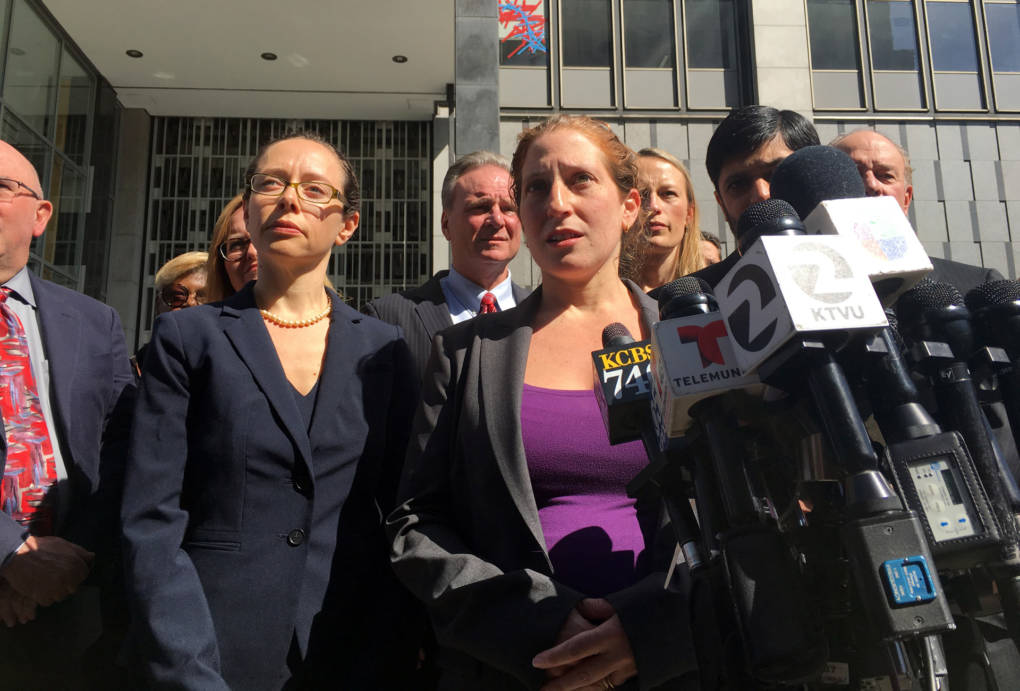
"caption": "San Francisco deputy city attorneys Mollie Lee and Sara Eisenberg seek to block President Trump's plan to defund sanctuary cities.",
"description": "San Francisco city attorneys Mollie Lee and Sara Eisenberg seek to block President Trump's plan to defund sanctuary cities.",
"title": "SfCityAttorneys",
"credit": "Julie Small/KQED",
"status": "inherit",
"isLoading": false,
"fetchFailed": false
},
"news_11407001": {
"type": "attachments",
"id": "news_11407001",
"meta": {
"index": "attachments_1716263798",
"site": "news",
"id": "11407001",
"found": true
},
"parent": 11406744,
"imgSizes": {
"small": {
"file": "https://ww2.kqed.org/app/uploads/sites/10/2017/04/RS24934_GettyImages-481485054-qut-520x371.jpg",
"width": 520,
"mimeType": "image/jpeg",
"height": 371
},
"twentyfourteen-full-width": {
"file": "https://ww2.kqed.org/app/uploads/sites/10/2017/04/RS24934_GettyImages-481485054-qut-1038x576.jpg",
"width": 1038,
"mimeType": "image/jpeg",
"height": 576
},
"thumbnail": {
"file": "https://ww2.kqed.org/app/uploads/sites/10/2017/04/RS24934_GettyImages-481485054-qut-160x114.jpg",
"width": 160,
"mimeType": "image/jpeg",
"height": 114
},
"fd-sm": {
"file": "https://ww2.kqed.org/app/uploads/sites/10/2017/04/RS24934_GettyImages-481485054-qut-960x685.jpg",
"width": 960,
"mimeType": "image/jpeg",
"height": 685
},
"post-thumbnail": {
"file": "https://ww2.kqed.org/app/uploads/sites/10/2017/04/RS24934_GettyImages-481485054-qut-672x372.jpg",
"width": 672,
"mimeType": "image/jpeg",
"height": 372
},
"xsmall": {
"file": "https://ww2.kqed.org/app/uploads/sites/10/2017/04/RS24934_GettyImages-481485054-qut-375x268.jpg",
"width": 375,
"mimeType": "image/jpeg",
"height": 268
},
"kqedFullSize": {
"file": "https://ww2.kqed.org/app/uploads/sites/10/2017/04/RS24934_GettyImages-481485054-qut.jpg",
"width": 1920,
"height": 1370
},
"large": {
"file": "https://ww2.kqed.org/app/uploads/sites/10/2017/04/RS24934_GettyImages-481485054-qut-1020x728.jpg",
"width": 1020,
"mimeType": "image/jpeg",
"height": 728
},
"xlarge": {
"file": "https://ww2.kqed.org/app/uploads/sites/10/2017/04/RS24934_GettyImages-481485054-qut-1180x842.jpg",
"width": 1180,
"mimeType": "image/jpeg",
"height": 842
},
"guest-author-50": {
"file": "https://ww2.kqed.org/app/uploads/sites/10/2017/04/RS24934_GettyImages-481485054-qut-50x50.jpg",
"width": 50,
"mimeType": "image/jpeg",
"height": 50
},
"guest-author-96": {
"file": "https://ww2.kqed.org/app/uploads/sites/10/2017/04/RS24934_GettyImages-481485054-qut-96x96.jpg",
"width": 96,
"mimeType": "image/jpeg",
"height": 96
},
"medium": {
"file": "https://ww2.kqed.org/app/uploads/sites/10/2017/04/RS24934_GettyImages-481485054-qut-800x571.jpg",
"width": 800,
"mimeType": "image/jpeg",
"height": 571
},
"guest-author-64": {
"file": "https://ww2.kqed.org/app/uploads/sites/10/2017/04/RS24934_GettyImages-481485054-qut-64x64.jpg",
"width": 64,
"mimeType": "image/jpeg",
"height": 64
},
"guest-author-32": {
"file": "https://ww2.kqed.org/app/uploads/sites/10/2017/04/RS24934_GettyImages-481485054-qut-32x32.jpg",
"width": 32,
"mimeType": "image/jpeg",
"height": 32
},
"fd-lrg": {
"file": "https://ww2.kqed.org/app/uploads/sites/10/2017/04/RS24934_GettyImages-481485054-qut-1920x1370.jpg",
"width": 1920,
"mimeType": "image/jpeg",
"height": 1370
},
"fd-med": {
"file": "https://ww2.kqed.org/app/uploads/sites/10/2017/04/RS24934_GettyImages-481485054-qut-1180x842.jpg",
"width": 1180,
"mimeType": "image/jpeg",
"height": 842
},
"full-width": {
"file": "https://ww2.kqed.org/app/uploads/sites/10/2017/04/RS24934_GettyImages-481485054-qut-1920x1370.jpg",
"width": 1920,
"mimeType": "image/jpeg",
"height": 1370
},
"detail": {
"file": "https://ww2.kqed.org/app/uploads/sites/10/2017/04/RS24934_GettyImages-481485054-qut-150x150.jpg",
"width": 150,
"mimeType": "image/jpeg",
"height": 150
},
"guest-author-128": {
"file": "https://ww2.kqed.org/app/uploads/sites/10/2017/04/RS24934_GettyImages-481485054-qut-128x128.jpg",
"width": 128,
"mimeType": "image/jpeg",
"height": 128
},
"xxsmall": {
"file": "https://ww2.kqed.org/app/uploads/sites/10/2017/04/RS24934_GettyImages-481485054-qut-240x171.jpg",
"width": 240,
"mimeType": "image/jpeg",
"height": 171
}
},
"publishDate": 1492119012,
"modified": 1492126334,
"caption": "Kate Steinle's mother, Liz Sullivan, is comforted during a Senate Judiciary Committee hearing on Capitol Hill on July 21, 2015, in Washington, D.C.",
"description": "Kate Steinle's mother, Liz Sullivan, is comforted during a Senate Judiciary Committee hearing on Capitol Hill on July 21, 2015, in Washington, D.C.",
"title": "Senate Holds Hearing On Immigration Enforcement Policies And Public Safety",
"credit": "Mark Wilson/Getty Images",
"status": "inherit",
"isLoading": false,
"fetchFailed": false
},
"news_11357784": {
"type": "attachments",
"id": "news_11357784",
"meta": {
"index": "attachments_1716263798",
"site": "news",
"id": "11357784",
"found": true
},
"parent": 11357773,
"imgSizes": {
"small": {
"file": "https://ww2.kqed.org/app/uploads/sites/10/2017/03/RS24598_GettyImages-492659324-qut-520x347.jpg",
"width": 520,
"mimeType": "image/jpeg",
"height": 347
},
"twentyfourteen-full-width": {
"file": "https://ww2.kqed.org/app/uploads/sites/10/2017/03/RS24598_GettyImages-492659324-qut-1038x576.jpg",
"width": 1038,
"mimeType": "image/jpeg",
"height": 576
},
"thumbnail": {
"file": "https://ww2.kqed.org/app/uploads/sites/10/2017/03/RS24598_GettyImages-492659324-qut-160x107.jpg",
"width": 160,
"mimeType": "image/jpeg",
"height": 107
},
"fd-sm": {
"file": "https://ww2.kqed.org/app/uploads/sites/10/2017/03/RS24598_GettyImages-492659324-qut-960x640.jpg",
"width": 960,
"mimeType": "image/jpeg",
"height": 640
},
"post-thumbnail": {
"file": "https://ww2.kqed.org/app/uploads/sites/10/2017/03/RS24598_GettyImages-492659324-qut-672x372.jpg",
"width": 672,
"mimeType": "image/jpeg",
"height": 372
},
"xsmall": {
"file": "https://ww2.kqed.org/app/uploads/sites/10/2017/03/RS24598_GettyImages-492659324-qut-375x250.jpg",
"width": 375,
"mimeType": "image/jpeg",
"height": 250
},
"kqedFullSize": {
"file": "https://ww2.kqed.org/app/uploads/sites/10/2017/03/RS24598_GettyImages-492659324-qut.jpg",
"width": 1920,
"height": 1280
},
"large": {
"file": "https://ww2.kqed.org/app/uploads/sites/10/2017/03/RS24598_GettyImages-492659324-qut-1020x680.jpg",
"width": 1020,
"mimeType": "image/jpeg",
"height": 680
},
"xlarge": {
"file": "https://ww2.kqed.org/app/uploads/sites/10/2017/03/RS24598_GettyImages-492659324-qut-1180x787.jpg",
"width": 1180,
"mimeType": "image/jpeg",
"height": 787
},
"guest-author-50": {
"file": "https://ww2.kqed.org/app/uploads/sites/10/2017/03/RS24598_GettyImages-492659324-qut-50x50.jpg",
"width": 50,
"mimeType": "image/jpeg",
"height": 50
},
"guest-author-96": {
"file": "https://ww2.kqed.org/app/uploads/sites/10/2017/03/RS24598_GettyImages-492659324-qut-96x96.jpg",
"width": 96,
"mimeType": "image/jpeg",
"height": 96
},
"medium": {
"file": "https://ww2.kqed.org/app/uploads/sites/10/2017/03/RS24598_GettyImages-492659324-qut-800x533.jpg",
"width": 800,
"mimeType": "image/jpeg",
"height": 533
},
"guest-author-64": {
"file": "https://ww2.kqed.org/app/uploads/sites/10/2017/03/RS24598_GettyImages-492659324-qut-64x64.jpg",
"width": 64,
"mimeType": "image/jpeg",
"height": 64
},
"guest-author-32": {
"file": "https://ww2.kqed.org/app/uploads/sites/10/2017/03/RS24598_GettyImages-492659324-qut-32x32.jpg",
"width": 32,
"mimeType": "image/jpeg",
"height": 32
},
"fd-lrg": {
"file": "https://ww2.kqed.org/app/uploads/sites/10/2017/03/RS24598_GettyImages-492659324-qut-1920x1280.jpg",
"width": 1920,
"mimeType": "image/jpeg",
"height": 1280
},
"fd-med": {
"file": "https://ww2.kqed.org/app/uploads/sites/10/2017/03/RS24598_GettyImages-492659324-qut-1180x787.jpg",
"width": 1180,
"mimeType": "image/jpeg",
"height": 787
},
"full-width": {
"file": "https://ww2.kqed.org/app/uploads/sites/10/2017/03/RS24598_GettyImages-492659324-qut-1920x1280.jpg",
"width": 1920,
"mimeType": "image/jpeg",
"height": 1280
},
"detail": {
"file": "https://ww2.kqed.org/app/uploads/sites/10/2017/03/RS24598_GettyImages-492659324-qut-150x150.jpg",
"width": 150,
"mimeType": "image/jpeg",
"height": 150
},
"guest-author-128": {
"file": "https://ww2.kqed.org/app/uploads/sites/10/2017/03/RS24598_GettyImages-492659324-qut-128x128.jpg",
"width": 128,
"mimeType": "image/jpeg",
"height": 128
},
"xxsmall": {
"file": "https://ww2.kqed.org/app/uploads/sites/10/2017/03/RS24598_GettyImages-492659324-qut-240x160.jpg",
"width": 240,
"mimeType": "image/jpeg",
"height": 160
}
},
"publishDate": 1489441479,
"modified": 1498783179,
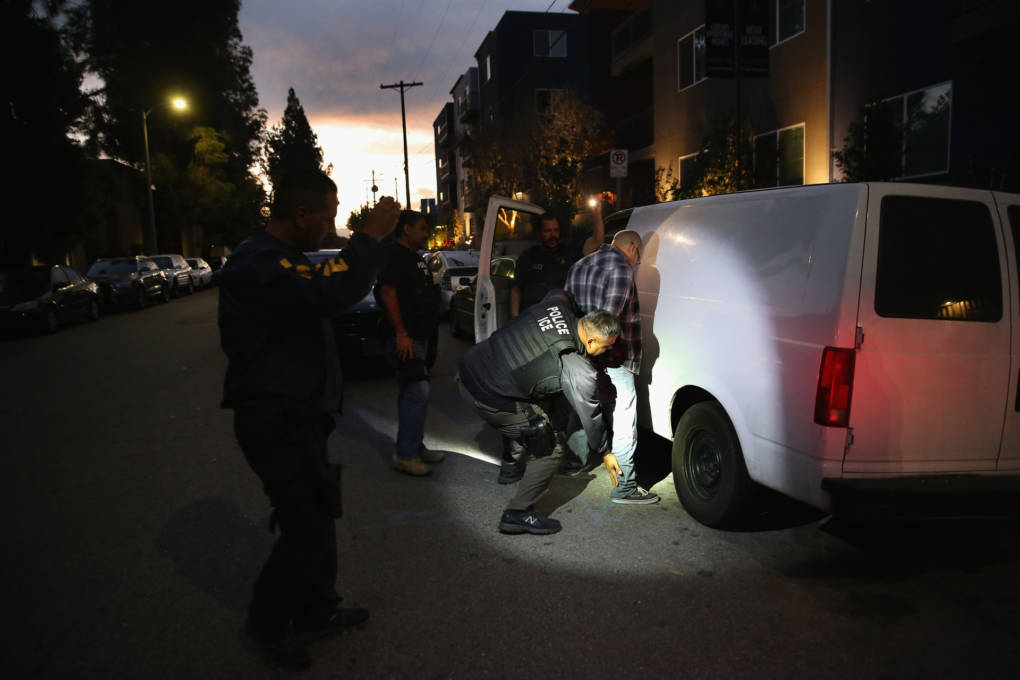
"caption": " A man is detained by Immigration and Customs Enforcement (ICE) agents early on Oct. 14, 2015, in Los Angeles.",
"description": null,
"title": "RS24598_GettyImages-492659324-qut",
"credit": "John Moore/Getty Images",
"status": "inherit",
"isLoading": false,
"fetchFailed": false
}
},
"audioPlayerReducer": {
"postId": "stream_live",
"isPaused": true,
"isPlaying": false,
"pfsActive": false,
"pledgeModalIsOpen": true,
"playerDrawerIsOpen": false,
"liveAudioPlayStartedAt": 0,
"liveAudioPlayContext": ""
},
"authorsReducer": {
"byline_news_11472181": {
"type": "authors",
"id": "byline_news_11472181",
"meta": {
"override": true
},
"slug": "byline_news_11472181",
"name": "\u003cstrong>\u003ca href=\"http://www.npr.org/people/127410674/carrie-johnson\">Carrie Johnson\u003c/a>\u003cbr />NPR\u003c/strong>",
"isLoading": false
},
"byline_news_11426580": {
"type": "authors",
"id": "byline_news_11426580",
"meta": {
"override": true
},
"slug": "byline_news_11426580",
"name": "\u003cstrong>Sudhin Thanawala\u003cbr />Associated Press\u003c/strong>",
"isLoading": false
},
"lisapickoffwhite-2": {
"type": "authors",
"id": "199",
"meta": {
"index": "authors_1716337520",
"id": "199",
"found": true
},
"name": "Lisa Pickoff-White",
"firstName": "Lisa",
"lastName": "Pickoff-White",
"slug": "lisapickoffwhite-2",
"email": "lpickoffwhite@kqed.org",
"display_author_email": false,
"staff_mastheads": [
"news"
],
"title": "Data Journalist, Senior Producer",
"bio": "Lisa Pickoff-White is KQED's data reporter. Lisa specializes in simplifying complex topics and bringing them to life through compelling visuals, including photography and data visualizations. She previously has worked at the Center for Investigative Reporting and other national outlets. Her work has been honored with awards from the Online News Association, Investigative Reporters and Editors, the Society of Professional Journalists and SXSW Interactive. \u003cstrong> \u003c/strong>",
"avatar": "https://secure.gravatar.com/avatar/5513c5f3967df792aa65bee2501e84d6?s=600&d=blank&r=g",
"twitter": "pickoffwhite",
"facebook": null,
"instagram": null,
"linkedin": null,
"sites": [
{
"site": "",
"roles": [
"editor"
]
},
{
"site": "arts",
"roles": []
},
{
"site": "news",
"roles": [
"administrator"
]
},
{
"site": "about",
"roles": [
"editor"
]
},
{
"site": "stateofhealth",
"roles": [
"administrator"
]
},
{
"site": "science",
"roles": [
"editor"
]
},
{
"site": "quest",
"roles": [
"editor"
]
},
{
"site": "forum",
"roles": [
"editor"
]
}
],
"headData": {
"title": "Lisa Pickoff-White | KQED",
"description": "Data Journalist, Senior Producer",
"ogImgSrc": "https://secure.gravatar.com/avatar/5513c5f3967df792aa65bee2501e84d6?s=600&d=blank&r=g",
"twImgSrc": "https://secure.gravatar.com/avatar/5513c5f3967df792aa65bee2501e84d6?s=600&d=blank&r=g"
},
"isLoading": false,
"link": "/author/lisapickoffwhite-2"
},
"gmarzorati": {
"type": "authors",
"id": "227",
"meta": {
"index": "authors_1716337520",
"id": "227",
"found": true
},
"name": "Guy Marzorati",
"firstName": "Guy",
"lastName": "Marzorati",
"slug": "gmarzorati",
"email": "gmarzorati@KQED.org",
"display_author_email": true,
"staff_mastheads": [
"news"
],
"title": "Correspondent",
"bio": "Guy Marzorati is a correspondent on KQED's California Politics and Government Desk, based in San Jose. A graduate of Santa Clara University, Guy joined KQED in 2013. He reports on state and local politics and produces KQED's digital voter guide.",
"avatar": "https://secure.gravatar.com/avatar/e7038b8dbfd55b104369b76b1cd0b9de?s=600&d=blank&r=g",
"twitter": "guymarzorati",
"facebook": null,
"instagram": null,
"linkedin": null,
"sites": [
{
"site": "",
"roles": [
"editor"
]
},
{
"site": "news",
"roles": [
"editor"
]
},
{
"site": "science",
"roles": [
"editor"
]
},
{
"site": "forum",
"roles": [
"editor"
]
},
{
"site": "elections",
"roles": [
"editor"
]
},
{
"site": "liveblog",
"roles": [
"editor"
]
}
],
"headData": {
"title": "Guy Marzorati | KQED",
"description": "Correspondent",
"ogImgSrc": "https://secure.gravatar.com/avatar/e7038b8dbfd55b104369b76b1cd0b9de?s=600&d=blank&r=g",
"twImgSrc": "https://secure.gravatar.com/avatar/e7038b8dbfd55b104369b76b1cd0b9de?s=600&d=blank&r=g"
},
"isLoading": false,
"link": "/author/gmarzorati"
},
"kqed": {
"type": "authors",
"id": "236",
"meta": {
"index": "authors_1716337520",
"id": "236",
"found": true
},
"name": "KQED News Staff",
"firstName": "KQED News Staff",
"lastName": null,
"slug": "kqed",
"email": "faq@kqed.org",
"display_author_email": false,
"staff_mastheads": [],
"title": null,
"bio": null,
"avatar": "https://secure.gravatar.com/avatar/ef0e801a68c4c54afa9180db14084167?s=600&d=blank&r=g",
"twitter": null,
"facebook": null,
"instagram": null,
"linkedin": null,
"sites": [
{
"site": "arts",
"roles": [
"contributor"
]
},
{
"site": "news",
"roles": [
"editor"
]
},
{
"site": "futureofyou",
"roles": [
"author"
]
}
],
"headData": {
"title": "KQED News Staff | KQED",
"description": null,
"ogImgSrc": "https://secure.gravatar.com/avatar/ef0e801a68c4c54afa9180db14084167?s=600&d=blank&r=g",
"twImgSrc": "https://secure.gravatar.com/avatar/ef0e801a68c4c54afa9180db14084167?s=600&d=blank&r=g"
},
"isLoading": false,
"link": "/author/kqed"
},
"mlam": {
"type": "authors",
"id": "244",
"meta": {
"index": "authors_1716337520",
"id": "244",
"found": true
},
"name": "Monica Lam",
"firstName": "Monica Z.",
"lastName": "Lam",
"slug": "mlam",
"email": "mlam@kqed.org",
"display_author_email": true,
"staff_mastheads": [
"news"
],
"title": "KQED Senior Producer",
"bio": "Monica is senior producer of the weekly current affairs program, \"KQED Newsroom.\" She's also served as senior editor of digital content at KQED. She likes to report and edit as well as produce video and take photos.\r\n\r\nBefore joining KQED, Monica worked at the Center for Investigative Reporting, where she examined conditions inside \u003cspan style=\"font-weight: 400;\">maximum security \u003c/span>prisons and abuse in state-run institutions for the developmentally disabled. Prior to that, she produced and directed \u003cem>Journey of the Bonesetter's Daughter,\u003c/em> a documentary that follows novelist Amy Tan as she creates an opera based on her family history.\r\n\r\nMonica's work has been honored with a duPont Award, five Emmys, regional and national Murrow Awards, and has been recognized by Investigative Reporters and Editors, the Society of Professional Journalists, Religion Newswriters Association and the San Francisco Peninsula Press Club. Monica studied urban studies at Stanford University and earned a master's in journalism at University of California at Berkeley. Follow her on twitter: @monicazlam",
"avatar": "https://secure.gravatar.com/avatar/018c474b2b71f43e0e6ca9b15a0ad36f?s=600&d=blank&r=g",
"twitter": "@monicazlam",
"facebook": null,
"instagram": null,
"linkedin": null,
"sites": [
{
"site": "arts",
"roles": [
"administrator"
]
},
{
"site": "news",
"roles": [
"editor"
]
},
{
"site": "trulyca",
"roles": [
"editor"
]
},
{
"site": "science",
"roles": [
"editor"
]
},
{
"site": "breakingnews",
"roles": [
"editor"
]
}
],
"headData": {
"title": "Monica Lam | KQED",
"description": "KQED Senior Producer",
"ogImgSrc": "https://secure.gravatar.com/avatar/018c474b2b71f43e0e6ca9b15a0ad36f?s=600&d=blank&r=g",
"twImgSrc": "https://secure.gravatar.com/avatar/018c474b2b71f43e0e6ca9b15a0ad36f?s=600&d=blank&r=g"
},
"isLoading": false,
"link": "/author/mlam"
},
"aemslie": {
"type": "authors",
"id": "3206",
"meta": {
"index": "authors_1716337520",
"id": "3206",
"found": true
},
"name": "Alex Emslie",
"firstName": "Alex",
"lastName": "Emslie",
"slug": "aemslie",
"email": "aemslie@kqed.org",
"display_author_email": true,
"staff_mastheads": [
"news"
],
"title": "KQED Senior Editor",
"bio": "Alex Emslie is senior editor of talent and development at KQED, where he manages dozens of early career journalists and oversees news department internships.\r\n\r\nHe is a former carpenter and proud graduate of City College of San Francisco and San Francisco State University, where he studied journalism and criminal justice before joining KQED in 2013.\r\n\r\nAlex produced investigative journalism focused on \u003ca href=\"https://www.kqed.org/news/11667594/the-trials-of-marvin-mutch-video\">criminal justice\u003c/a> and policing for most of a decade. He has broken major stories about \u003ca href=\"https://www.kqed.org/news/135682/amid-a-series-of-vallejo-police-shootings-one-officers-name-stands-out\">police use of deadly force\u003c/a>, \u003ca href=\"https://www.kqed.org/news/10454955/racist-texts-prompt-sfpd-internal-investigation\">officer misconduct\u003c/a> and \u003ca href=\"https://www.kqed.org/news/11712239/terrorist-or-troll-judge-to-weigh-whether-oakland-man-really-intended-to-attack-bay-area\">other\u003c/a> \u003ca href=\"https://www.kqed.org/news/11221414/hayward-paid-159000-to-husband-of-retired-police-chief-documents-show\">high\u003c/a>-\u003ca href=\"https://www.kqed.org/news/10622762/the-forgotten-tracking-two-homicides-in-san-francisco-public-housing\">profile\u003c/a> \u003ca href=\"https://www.kqed.org/news/11624516/federal-agency-promoted-ranger-just-months-after-his-gun-was-stolen-and-used-in-steinle-killing\">cases\u003c/a>. He co-founded the \u003ca href=\"https://projects.scpr.org/california-reporting-project/\">California Reporting Project\u003c/a> in 2019 to obtain and report on previously confidential police internal investigations. The effort produced well over 100 original stories and changed the course of multiple criminal cases.\r\n\r\nHis work has been recognized with numerous journalism awards, including a national Edward R. Murrow award for several years of \u003ca href=\"https://www.kqed.org/news/11688481/sfpd-officers-in-mario-woods-case-recount-shooting-in-newly-filed-depositions\">reporting\u003c/a> on the San Francisco Police shooting of Mario Woods. His \u003ca href=\"https://www.kqed.org/news/147854/half-of-those-killed-by-san-francisco-police-are-mentally-ill\">reporting\u003c/a> on police killings of people in psychiatric crisis was cited in amicus briefs before the U.S. Supreme Court.\r\n\r\nAlex now enjoys mentoring the next generation of journalists at KQED.",
"avatar": "https://secure.gravatar.com/avatar/e691e65209f20e9da202bd730ead5663?s=600&d=blank&r=g",
"twitter": "SFNewsReporter",
"facebook": null,
"instagram": null,
"linkedin": null,
"sites": [
{
"site": "arts",
"roles": [
"editor"
]
},
{
"site": "news",
"roles": [
"editor"
]
},
{
"site": "mindshift",
"roles": [
"editor"
]
},
{
"site": "stateofhealth",
"roles": [
"editor"
]
},
{
"site": "science",
"roles": [
"administrator"
]
}
],
"headData": {
"title": "Alex Emslie | KQED",
"description": "KQED Senior Editor",
"ogImgSrc": "https://secure.gravatar.com/avatar/e691e65209f20e9da202bd730ead5663?s=600&d=blank&r=g",
"twImgSrc": "https://secure.gravatar.com/avatar/e691e65209f20e9da202bd730ead5663?s=600&d=blank&r=g"
},
"isLoading": false,
"link": "/author/aemslie"
},
"mlagos": {
"type": "authors",
"id": "3239",
"meta": {
"index": "authors_1716337520",
"id": "3239",
"found": true
},
"name": "Marisa Lagos",
"firstName": "Marisa",
"lastName": "Lagos",
"slug": "mlagos",
"email": "mlagos@kqed.org",
"display_author_email": false,
"staff_mastheads": [
"news"
],
"title": "KQED Contributor",
"bio": "Marisa Lagos is a correspondent for KQED’s California Politics and Government Desk and co-hosts the award-winning show and podcast, Political Breakdown. At KQED, Lagos also conducts reporting, analysis and investigations into state, local and national politics for radio, TV, online and onstage. In 2022, she and co-host, Scott Shafer, moderated the only gubernatorial debate in California. In 2020, the \u003ci>Washington Post\u003c/i> named her one of the top political journalists in California; she was nominated for a Peabody and won several other awards for her work investigating the 2017 California wildfires. She has worked at the \u003ci>San Francisco Chronicle\u003c/i>, \u003ci>San Francisco Examiner\u003c/i> and \u003ci>Los Angeles Times\u003c/i>. A UC Santa Barbara graduate, she lives in San Francisco with her two sons and husband.",
"avatar": "https://secure.gravatar.com/avatar/a261a0d3696fc066871ef96b85b5e7d2?s=600&d=blank&r=g",
"twitter": "@mlagos",
"facebook": null,
"instagram": null,
"linkedin": null,
"sites": [
{
"site": "arts",
"roles": [
"author"
]
},
{
"site": "news",
"roles": [
"editor"
]
},
{
"site": "science",
"roles": [
"editor"
]
},
{
"site": "forum",
"roles": [
"author"
]
},
{
"site": "liveblog",
"roles": [
"author"
]
}
],
"headData": {
"title": "Marisa Lagos | KQED",
"description": "KQED Contributor",
"ogImgSrc": "https://secure.gravatar.com/avatar/a261a0d3696fc066871ef96b85b5e7d2?s=600&d=blank&r=g",
"twImgSrc": "https://secure.gravatar.com/avatar/a261a0d3696fc066871ef96b85b5e7d2?s=600&d=blank&r=g"
},
"isLoading": false,
"link": "/author/mlagos"
},
"jsmall": {
"type": "authors",
"id": "6625",
"meta": {
"index": "authors_1716337520",
"id": "6625",
"found": true
},
"name": "Julie Small",
"firstName": "Julie",
"lastName": "Small",
"slug": "jsmall",
"email": "jsmall@kqed.org",
"display_author_email": true,
"staff_mastheads": [
"news"
],
"title": "KQED Contributor",
"bio": "Julie Small reports on criminal justice and immigration.\r\n\r\nShe was part of a team at KQED awarded a regional 2019 Edward R. Murrow award for continuing coverage of the Trump Administration's family separation policy.\r\n\r\nThe Society for Professional Journalists recognized Julie's 2018 \u003ca href=\"https://www.kqed.org/news/11636262/the-officer-tased-him-31-times-the-sheriff-called-his-death-an-accident\">reporting\u003c/a> on the San Joaquin County Sheriff's \u003ca href=\"https://www.kqed.org/news/11634689/autopsy-doctors-sheriff-overrode-death-findings-to-protect-law-enforcement\">interference\u003c/a> in death investigations with an Excellence in Journalism Award for Ongoing Coverage.\r\n\r\nJulie's\u003ca href=\"https://www.kqed.org/news/11039666/two-mentally-ill-inmates-died-one-month-in-santa-clara\"> reporting\u003c/a> with Lisa Pickoff-White on the treatment of mentally ill offenders in California jails earned a 2017 regional Edward R. Murrow Award for news reporting and an investigative reporting award from the SPJ of Northern California.\r\n\r\nBefore joining KQED, Julie covered government and politics in Sacramento for Southern California Public Radio (SCPR). Her 2010 \u003ca href=\"https://www.scpr.org/specials/prisonmedical/\">series\u003c/a> on lapses in California’s prison medical care also won a regional Edward R. Murrow Award for investigative reporting and a Golden Mic Award from the RTNDA of Southern California.\r\n\r\nJulie began her career in journalism in 2000 as the deputy foreign editor for public radio's \u003cem>Marketplace, \u003c/em>while earning her master's degree in journalism from USC’s Annenberg School of Communication.",
"avatar": "https://secure.gravatar.com/avatar/4baedf201468df97be97c2a9dd7585d0?s=600&d=blank&r=g",
"twitter": "@SmallRadio2",
"facebook": null,
"instagram": null,
"linkedin": null,
"sites": [
{
"site": "news",
"roles": [
"editor"
]
},
{
"site": "stateofhealth",
"roles": [
"author"
]
},
{
"site": "science",
"roles": [
"author"
]
}
],
"headData": {
"title": "Julie Small | KQED",
"description": "KQED Contributor",
"ogImgSrc": "https://secure.gravatar.com/avatar/4baedf201468df97be97c2a9dd7585d0?s=600&d=blank&r=g",
"twImgSrc": "https://secure.gravatar.com/avatar/4baedf201468df97be97c2a9dd7585d0?s=600&d=blank&r=g"
},
"isLoading": false,
"link": "/author/jsmall"
},
"korr": {
"type": "authors",
"id": "11200",
"meta": {
"index": "authors_1716337520",
"id": "11200",
"found": true
},
"name": "Katie Orr",
"firstName": "Katie",
"lastName": "Orr",
"slug": "korr",
"email": "korr@kqed.org",
"display_author_email": false,
"staff_mastheads": [],
"title": "KQED Contributor",
"bio": "Katie Orr was a Sacramento-based reporter for KQED's Politics and Government Desk, covering the state Capitol and a variety of issues including women in politics, voting and elections and legislation. Prior to joining KQED in 2016, Katie was state government reporter for Capital Public Radio in Sacramento. She's also worked for KPBS in San Diego, where she covered City Hall.\r\n\r\nKatie received her masters degree in political science from San Diego State University and holds a Bachelors degree in broadcast journalism from Arizona State University.\r\n\r\nIn 2015 Katie won a national Clarion Award for a series of stories she did on women in California politics. She's been honored by the Society for Professional Journalists and, in 2013, was named by \u003cem>The Washington Post\u003c/em> as one of the country's top state Capitol reporters. She's also reported for the award-winning documentary series \u003cem>The View from Here \u003c/em>and was part of the team that won national PRNDI and Gabriel Awards in 2015. She lives in Sacramento with her husband. Twitter: @1KatieOrr",
"avatar": "https://secure.gravatar.com/avatar/41a40b25845adc78f50808670860449e?s=600&d=blank&r=g",
"twitter": "1katieorr",
"facebook": null,
"instagram": null,
"linkedin": null,
"sites": [
{
"site": "news",
"roles": [
"subscriber"
]
},
{
"site": "stateofhealth",
"roles": [
"author"
]
},
{
"site": "forum",
"roles": [
"author"
]
}
],
"headData": {
"title": "Katie Orr | KQED",
"description": "KQED Contributor",
"ogImgSrc": "https://secure.gravatar.com/avatar/41a40b25845adc78f50808670860449e?s=600&d=blank&r=g",
"twImgSrc": "https://secure.gravatar.com/avatar/41a40b25845adc78f50808670860449e?s=600&d=blank&r=g"
},
"isLoading": false,
"link": "/author/korr"
},
"rlevi": {
"type": "authors",
"id": "11260",
"meta": {
"index": "authors_1716337520",
"id": "11260",
"found": true
},
"name": "Ryan Levi",
"firstName": "Ryan",
"lastName": "Levi",
"slug": "rlevi",
"email": "rlevi@KQED.org",
"display_author_email": false,
"staff_mastheads": [],
"title": "KQED Contributor",
"bio": "Ryan Levi was a reporter and podcast producer at KQED News from 2016-2019. He worked on \u003ca href=\"https://www.kqed.org/news/series/baycurious\">Bay Curious\u003c/a>, \u003ca href=\"https://www.kqed.org/news/tag/the-bay/\">The Bay, \u003c/a>and \u003ca href=\"https://podcasts.apple.com/us/podcast/the-california-report-magazine/id1314750545\">The California Report Magazine\u003c/a>, as well as hosting and producing the weekly \u003ca href=\"https://www.kqed.org/news/program/qedup/\">Q'ed Up podcast. \u003c/a>He also helped inaugurate KQED's weekend news coverage in 2017 as one of two original digital producers. Ryan holds degrees in multimedia journalism and Spanish from the University of Missouri.",
"avatar": "https://secure.gravatar.com/avatar/4cb2ddd028ac8807d1adf09609c5555d?s=600&d=blank&r=g",
"twitter": "ryan_levi",
"facebook": null,
"instagram": null,
"linkedin": null,
"sites": [
{
"site": "arts",
"roles": [
"editor"
]
},
{
"site": "news",
"roles": [
"subscriber"
]
},
{
"site": "stateofhealth",
"roles": [
"editor"
]
},
{
"site": "science",
"roles": [
"editor"
]
},
{
"site": "forum",
"roles": [
"administrator"
]
},
{
"site": "perspectives",
"roles": [
"administrator"
]
}
],
"headData": {
"title": "Ryan Levi | KQED",
"description": "KQED Contributor",
"ogImgSrc": "https://secure.gravatar.com/avatar/4cb2ddd028ac8807d1adf09609c5555d?s=600&d=blank&r=g",
"twImgSrc": "https://secure.gravatar.com/avatar/4cb2ddd028ac8807d1adf09609c5555d?s=600&d=blank&r=g"
},
"isLoading": false,
"link": "/author/rlevi"
}
},
"pagesReducer": {
"news_tag_sanctuary-cities": {
"type": "terms",
"id": "news_20445",
"meta": {
"index": "terms_1716263798",
"site": "news",
"id": "20445",
"score": 9.555889
},
"featImg": null,
"name": "Sanctuary Cities",
"description": null,
"taxonomy": "tag",
"headData": {
"twImgId": null,
"twTitle": null,
"ogTitle": null,
"ogImgId": null,
"twDescription": null,
"description": null,
"title": "Sanctuary Cities Archives | KQED News",
"ogDescription": null
},
"ttid": 20462,
"slug": "sanctuary-cities",
"isLoading": false,
"title": "Sanctuary Cities",
"pageMeta": {
"site": "news",
"WpPageTemplate": "page-topic-editorial",
"currentPage": 6
},
"blocks": [
{
"blockName": "kqed/post-list",
"attrs": {
"layout": "cardArticle2",
"query": "posts/news?tag=sanctuary-cities",
"seeMore": false,
"paginated": true,
"page": 6
}
},
{
"blockName": "kqed/ad"
}
]
}
},
"pfsSessionReducer": {},
"postsReducer": {
"stream_live": {
"type": "live",
"id": "stream_live",
"audioUrl": "https://streams.kqed.org/kqedradio",
"title": "Live Stream",
"excerpt": "Live Stream information currently unavailable.",
"link": "/radio",
"featImg": "",
"label": {
"name": "KQED Live",
"link": "/"
}
},
"stream_kqedNewscast": {
"type": "posts",
"id": "stream_kqedNewscast",
"audioUrl": "https://www.kqed.org/.stream/anon/radio/RDnews/newscast.mp3?_=1",
"title": "KQED Newscast",
"featImg": "",
"label": {
"name": "88.5 FM",
"link": "/"
}
},
"news_11617133": {
"type": "posts",
"id": "news_11617133",
"meta": {
"index": "posts_1716263798",
"site": "news",
"id": "11617133",
"score": null,
"sort": [
1505513003000
]
},
"guestAuthors": [],
"slug": "assembly-approves-controversial-sanctuary-state-bill",
"title": "Assembly Approves Controversial 'Sanctuary State' Bill",
"publishDate": 1505513003,
"format": "standard",
"headTitle": "Assembly Approves Controversial ‘Sanctuary State’ Bill | KQED",
"labelTerm": {
"term": 72,
"site": "news"
},
"content": "\u003cp>\u003cstrong>Update: Saturday, September 16, 1:45 a.m. \u003c/strong>\u003c/p>\n\u003cp>The State Senate gave final passage to the legislature’s ‘Sanctuary State’ bill in the early hours of Saturday morning.\u003c/p>\n\u003cp>“Californians will not squander public safety dollars to tear families apart,” said Senate President Pro Tem Kevin de Leon, the bill’s author.\u003c/p>\n\u003cp>Debate on the bill, which will limit how local officials can communicate and cooperate with federal immigration enforcement, was delayed for hours. The Assembly passed the measure in the afternoon, but the bill wasn’t taken up in the Senate until around 1:15 a.m.\u003c/p>\n\u003cp>Conversations with the Assembly dragged on over a variety of measures, and a brief procedural panic ensued when the Senate’s work slipped past its midnight deadline.\u003c/p>\n\u003cp>[ad fullwidth]\u003c/p>\n\u003cp>The vote on SB 54 wasn’t quite as dramatic: the bill sailed to the Governor Jerry Brown’s desk on a 27-11 party-line vote, with no Republicans supporting the measure.\u003c/p>\n\u003cp>\u003cspan style=\"font-weight: 400\">“It shields much more than dreamers,” said Senator Joel Anderson, R-San Diego. \u003c/span>\u003cspan style=\"font-weight: 400\">“It continues to shield criminals in our jails.” \u003c/span>\u003c/p>\n\u003cp>The Governor is expected to sign the measure.\u003c/p>\n\u003cp>\u003cstrong>Original Post: \u003c/strong>\u003c/p>\n\u003cp>It was \u003ca href=\"https://ww2.kqed.org/news/2017/04/13/california-debates-whether-to-become-a-sanctuary-state/\">10 months in the making\u003c/a> — and the final version was a lot weaker than many immigration advocates had pushed for — but lawmakers on Friday finally passed a bill that will severely curtail California law enforcement’s ability to work with federal immigration officials.\u003c/p>\n\u003cp>Gov. Jerry Brown has promised to sign Senate President Pro Tem Kevin de Leon’s\u003ca href=\"https://ww2.kqed.org/forum/2017/09/11/deal-reached-between-governor-brown-and-lawmakers-on-sanctuary-state-bill/\"> final legislation\u003c/a>,\u003ca href=\"http://leginfo.legislature.ca.gov/faces/billNavClient.xhtml?bill_id=201720180SB54\"> Senate Bill 54, \u003c/a>after some law enforcement groups removed their opposition. But it remains unclear how the Trump administration — which has moved to restrict federal law enforcement grants to cities and counties with so-called sanctuary policies and is \u003ca href=\"https://ww2.kqed.org/news/2017/08/14/s-f-and-california-attorney-general-announce-lawsuit-challenging-latest-trump-sanctuary-city-policies/\">being sued by the state and others \u003c/a>— will respond when the bill becomes law.\u003c/p>\n\u003cp>[contextly_sidebar id=”Vls2lQNv3QD3H8CRhCl9kXpRH59dQELo”]\u003c/p>\n\u003cp>That uncertainty didn’t phase most supporters of the bill. It was approved by the state Assembly on a 49-25 vote Friday, and faces one more procedural vote in the Senate today before it can be sent to Brown.\u003c/p>\n\u003cp>Sacramento Democratic Assemblyman Kevin McCarty said while opponents say SB54 isn’t needed because police in California aren’t enforcing immigration laws, that’s not always the case. He cited Juana Reyes, a woman who was \u003ca href=\"http://www.cnn.com/2012/08/01/opinion/navarrette-deportation-sacramento/index.html\">arrested by sheriff’s deputies in Sacramento several years ago for selling tamales \u003c/a>outside a Walmart and was handed over to ICE.\u003c/p>\n\u003cp>“That’s what this bill is focusing about, laying out the rules of California and our values, which is that serious offenses should be taken serious, but we should not go after individuals who are living their lives here, going about their daily business,” he said.\u003c/p>\n\u003cp>The\u003ca href=\"https://ww2.kqed.org/news/2017/09/11/governor-senate-leader-reach-deal-on-california-sanctuary-state-bill/\"> final legislation was the result of months of intense negotiations \u003c/a>between lawmakers, the governor and law enforcement groups who were concerned that the bill would tie their hands and prevent them from keeping the public safe.\u003c/p>\n\u003cp>[contextly_sidebar id=”JId9MFGsYeeVeDV9V7p4s3SlkbniOnER”]\u003c/p>\n\u003cp>Advocates, meanwhile, had pushed for the strongest possible protections for immigrants who come in contact with police, saying public safety is at risk if immigrant communities don’t trust law enforcement.\u003c/p>\n\u003cp>After a number of changes allowing exceptions to the initially proposed all-out ban on communication between local agencies and Immigration and Customs Enforcement, the association representing police chiefs agreed not to oppose the legislation. Several other law enforcement groups, including the California State Sheriff’s Association, remained opposed, but with the majority of their concerns addressed, Brown said he’d back the bill.\u003c/p>\n\u003cp>The final bill prohibits all law enforcement from using their own resources to enforce immigration laws. It forbids sheriffs — who run jails in California — from holding someone in jail past their release date for ICE, and limits when sheriffs officials may talk to immigration officials. Under the final bill, that communication is barred unless an inmate has been convicted of one of some 800 crimes in the past 15 years.\u003c/p>\n\u003cfigure id=\"attachment_11533422\" class=\"wp-caption aligncenter\" style=\"max-width: 800px\">\u003cimg loading=\"lazy\" decoding=\"async\" class=\"size-medium wp-image-11533422\" src=\"https://ww2.kqed.org/news/wp-content/uploads/sites/10/2017/06/AdelantoCell-800x544.jpg\" alt=\"An immigrant detainee looks out from his 'segregation cell' at California's Adelanto Detention Facility.\" width=\"800\" height=\"544\" srcset=\"https://cdn.kqed.org/wp-content/uploads/sites/10/2017/06/AdelantoCell-800x544.jpg 800w, https://cdn.kqed.org/wp-content/uploads/sites/10/2017/06/AdelantoCell-160x109.jpg 160w, https://cdn.kqed.org/wp-content/uploads/sites/10/2017/06/AdelantoCell-1020x693.jpg 1020w, https://cdn.kqed.org/wp-content/uploads/sites/10/2017/06/AdelantoCell.jpg 1920w, https://cdn.kqed.org/wp-content/uploads/sites/10/2017/06/AdelantoCell-1180x802.jpg 1180w, https://cdn.kqed.org/wp-content/uploads/sites/10/2017/06/AdelantoCell-960x653.jpg 960w, https://cdn.kqed.org/wp-content/uploads/sites/10/2017/06/AdelantoCell-240x163.jpg 240w, https://cdn.kqed.org/wp-content/uploads/sites/10/2017/06/AdelantoCell-375x255.jpg 375w, https://cdn.kqed.org/wp-content/uploads/sites/10/2017/06/AdelantoCell-520x353.jpg 520w\" sizes=\"(max-width: 800px) 100vw, 800px\">\u003cfigcaption class=\"wp-caption-text\">An immigrant detainee looks out from his ‘segregation cell’ at California’s Adelanto Detention Facility. \u003ccite>(John Moore/Getty Images)\u003c/cite>\u003c/figcaption>\u003c/figure>\n\u003cp>The bill also bars California police from participating in joint task forces if the main purpose is immigration enforcement. It prohibits them from sharing personal information with ICE but will allow the agency to access state databases.\u003c/p>\n\u003cp>Its provisions do not apply to state prison officials.\u003c/p>\n\u003cp>Angela Chan, an immigration lawyer with the Asian Law Caucus in San Francisco, has been working for nearly a decade to limit police and ICE cooperation. Chan said while she and others had hoped for an all-out ban on talking to or working with ICE, this is the most sweeping limits achieved since she began working on the issue in 2008. She said the impact will be felt most significantly in counties that don’t have \u003ca href=\"https://ww2.kqed.org/news/2017/04/06/long-history-of-sanctuary-laws-debate-in-san-francisco/\">sanctuary protections already\u003c/a>.\u003c/p>\n\u003cp>[contextly_sidebar id=”s5C8RXWUSIDAsF7i86ZxspbLhTDtkikP”]\u003c/p>\n\u003cp>“Overall, when you look at the bill it does make a significant impact in increasing protections for immigrants,” she said. “I think it’s really important to have SB54, even with the amendments. In most counties, there are no protections against entanglements with ICE.”\u003c/p>\n\u003cp>Still, she said there’s more to be done.\u003c/p>\n\u003cp>“I’m glad for the significant step we made this year, it does cover a lot of different pieces, but because it’s not everything we’d hoped for, we do have a lot more work to do in (the) future,” Chan said.\u003c/p>\n\u003cp>Santa Barbara Sheriff Bill Brown, president of the Sheriff’s Association, said his group still opposes the measure because they don’t want any restrictions on sheriff’s department’s ability to communicate with ICE. Brown said while he’s grateful to the governor for his work on expanding the list of exceptions to that ban, he still wanted it to go further.\u003c/p>\n\u003cp>[contextly_sidebar id=”VsxpUp2uTzmmFhV2iWMjoIqWvDP3mkTn”]\u003c/p>\n\u003cp>Brown said sheriffs have no interest in acting as an arm of immigration authorities by making arrests based purely on someone’s immigration status.\u003c/p>\n\u003cp>But, he said, “we still feel that limiting our mandate to be able to communicate with another law enforcement agency is not something we can support.”\u003c/p>\n\u003cp>[ad floatright]\u003c/p>\n\u003cp>Brown said when someone who is not here legally is a judged by police to be a danger, calling ICE to remove them from that community should be allowed.\u003c/p>\n\n",
"blocks": [],
"excerpt": "California lawmakers sent Gov. Jerry Brown a bill on Friday that would severely curtail law enforcement's ability to work with federal immigration officials.",
"status": "publish",
"parent": 0,
"modified": 1721111975,
"stats": {
"hasAudio": false,
"hasVideo": false,
"hasChartOrMap": false,
"iframeSrcs": [],
"hasGoogleForm": false,
"hasGallery": false,
"hasHearkenModule": false,
"hasPolis": false,
"paragraphCount": 34,
"wordCount": 1128
},
"headData": {
"title": "Assembly Approves Controversial 'Sanctuary State' Bill | KQED",
"description": "California lawmakers sent Gov. Jerry Brown a bill on Friday that would severely curtail law enforcement's ability to work with federal immigration officials.",
"ogTitle": "",
"ogDescription": "",
"ogImgId": "",
"twTitle": "",
"twDescription": "",
"twImgId": "",
"schema": {
"@context": "https://schema.org",
"@type": "NewsArticle",
"headline": "Assembly Approves Controversial 'Sanctuary State' Bill",
"datePublished": "2017-09-15T15:03:23-07:00",
"dateModified": "2024-07-15T23:39:35-07:00",
"image": "https://cdn.kqed.org/wp-content/uploads/2020/02/KQED-OG-Image@1x.png",
"isAccessibleForFree": "True",
"publisher": {
"@type": "NewsMediaOrganization",
"@id": "https://www.kqed.org/#organization",
"name": "KQED",
"logo": "https://cdn.kqed.org/wp-content/uploads/2020/02/KQED-OG-Image@1x.png",
"url": "https://www.kqed.org",
"sameAs": [
"https://www.facebook.com/KQED",
"https://twitter.com/KQED",
"https://www.instagram.com/kqed/",
"https://www.tiktok.com/@kqedofficial",
"https://www.linkedin.com/company/kqed",
"https://www.youtube.com/channel/UCeC0IOo7i1P_61zVUWbJ4nw"
]
}
}
},
"sticky": false,
"path": "/news/11617133/assembly-approves-controversial-sanctuary-state-bill",
"audioTrackLength": null,
"parsedContent": [
{
"type": "contentString",
"content": "\u003cdiv class=\"post-body\">\u003cp>\u003cp>\u003cstrong>Update: Saturday, September 16, 1:45 a.m. \u003c/strong>\u003c/p>\n\u003cp>The State Senate gave final passage to the legislature’s ‘Sanctuary State’ bill in the early hours of Saturday morning.\u003c/p>\n\u003cp>“Californians will not squander public safety dollars to tear families apart,” said Senate President Pro Tem Kevin de Leon, the bill’s author.\u003c/p>\n\u003cp>Debate on the bill, which will limit how local officials can communicate and cooperate with federal immigration enforcement, was delayed for hours. The Assembly passed the measure in the afternoon, but the bill wasn’t taken up in the Senate until around 1:15 a.m.\u003c/p>\n\u003cp>Conversations with the Assembly dragged on over a variety of measures, and a brief procedural panic ensued when the Senate’s work slipped past its midnight deadline.\u003c/p>\n\u003cp>\u003c/p>\u003c/div>",
"attributes": {
"named": {},
"numeric": []
}
},
{
"type": "component",
"content": "",
"name": "ad",
"attributes": {
"named": {
"label": "fullwidth"
},
"numeric": [
"fullwidth"
]
}
},
{
"type": "contentString",
"content": "\u003cdiv class=\"post-body\">\u003cp>\u003c/p>\n\u003cp>The vote on SB 54 wasn’t quite as dramatic: the bill sailed to the Governor Jerry Brown’s desk on a 27-11 party-line vote, with no Republicans supporting the measure.\u003c/p>\n\u003cp>\u003cspan style=\"font-weight: 400\">“It shields much more than dreamers,” said Senator Joel Anderson, R-San Diego. \u003c/span>\u003cspan style=\"font-weight: 400\">“It continues to shield criminals in our jails.” \u003c/span>\u003c/p>\n\u003cp>The Governor is expected to sign the measure.\u003c/p>\n\u003cp>\u003cstrong>Original Post: \u003c/strong>\u003c/p>\n\u003cp>It was \u003ca href=\"https://ww2.kqed.org/news/2017/04/13/california-debates-whether-to-become-a-sanctuary-state/\">10 months in the making\u003c/a> — and the final version was a lot weaker than many immigration advocates had pushed for — but lawmakers on Friday finally passed a bill that will severely curtail California law enforcement’s ability to work with federal immigration officials.\u003c/p>\n\u003cp>Gov. Jerry Brown has promised to sign Senate President Pro Tem Kevin de Leon’s\u003ca href=\"https://ww2.kqed.org/forum/2017/09/11/deal-reached-between-governor-brown-and-lawmakers-on-sanctuary-state-bill/\"> final legislation\u003c/a>,\u003ca href=\"http://leginfo.legislature.ca.gov/faces/billNavClient.xhtml?bill_id=201720180SB54\"> Senate Bill 54, \u003c/a>after some law enforcement groups removed their opposition. But it remains unclear how the Trump administration — which has moved to restrict federal law enforcement grants to cities and counties with so-called sanctuary policies and is \u003ca href=\"https://ww2.kqed.org/news/2017/08/14/s-f-and-california-attorney-general-announce-lawsuit-challenging-latest-trump-sanctuary-city-policies/\">being sued by the state and others \u003c/a>— will respond when the bill becomes law.\u003c/p>\n\u003cp>\u003c/p>\u003cp>\u003c/p>\u003cp>\u003c/p>\n\u003cp>That uncertainty didn’t phase most supporters of the bill. It was approved by the state Assembly on a 49-25 vote Friday, and faces one more procedural vote in the Senate today before it can be sent to Brown.\u003c/p>\n\u003cp>Sacramento Democratic Assemblyman Kevin McCarty said while opponents say SB54 isn’t needed because police in California aren’t enforcing immigration laws, that’s not always the case. He cited Juana Reyes, a woman who was \u003ca href=\"http://www.cnn.com/2012/08/01/opinion/navarrette-deportation-sacramento/index.html\">arrested by sheriff’s deputies in Sacramento several years ago for selling tamales \u003c/a>outside a Walmart and was handed over to ICE.\u003c/p>\n\u003cp>“That’s what this bill is focusing about, laying out the rules of California and our values, which is that serious offenses should be taken serious, but we should not go after individuals who are living their lives here, going about their daily business,” he said.\u003c/p>\n\u003cp>The\u003ca href=\"https://ww2.kqed.org/news/2017/09/11/governor-senate-leader-reach-deal-on-california-sanctuary-state-bill/\"> final legislation was the result of months of intense negotiations \u003c/a>between lawmakers, the governor and law enforcement groups who were concerned that the bill would tie their hands and prevent them from keeping the public safe.\u003c/p>\n\u003cp>\u003c/p>\u003cp>\u003c/p>\u003cp>\u003c/p>\n\u003cp>Advocates, meanwhile, had pushed for the strongest possible protections for immigrants who come in contact with police, saying public safety is at risk if immigrant communities don’t trust law enforcement.\u003c/p>\n\u003cp>After a number of changes allowing exceptions to the initially proposed all-out ban on communication between local agencies and Immigration and Customs Enforcement, the association representing police chiefs agreed not to oppose the legislation. Several other law enforcement groups, including the California State Sheriff’s Association, remained opposed, but with the majority of their concerns addressed, Brown said he’d back the bill.\u003c/p>\n\u003cp>The final bill prohibits all law enforcement from using their own resources to enforce immigration laws. It forbids sheriffs — who run jails in California — from holding someone in jail past their release date for ICE, and limits when sheriffs officials may talk to immigration officials. Under the final bill, that communication is barred unless an inmate has been convicted of one of some 800 crimes in the past 15 years.\u003c/p>\n\u003cfigure id=\"attachment_11533422\" class=\"wp-caption aligncenter\" style=\"max-width: 800px\">\u003cimg loading=\"lazy\" decoding=\"async\" class=\"size-medium wp-image-11533422\" src=\"https://ww2.kqed.org/news/wp-content/uploads/sites/10/2017/06/AdelantoCell-800x544.jpg\" alt=\"An immigrant detainee looks out from his 'segregation cell' at California's Adelanto Detention Facility.\" width=\"800\" height=\"544\" srcset=\"https://cdn.kqed.org/wp-content/uploads/sites/10/2017/06/AdelantoCell-800x544.jpg 800w, https://cdn.kqed.org/wp-content/uploads/sites/10/2017/06/AdelantoCell-160x109.jpg 160w, https://cdn.kqed.org/wp-content/uploads/sites/10/2017/06/AdelantoCell-1020x693.jpg 1020w, https://cdn.kqed.org/wp-content/uploads/sites/10/2017/06/AdelantoCell.jpg 1920w, https://cdn.kqed.org/wp-content/uploads/sites/10/2017/06/AdelantoCell-1180x802.jpg 1180w, https://cdn.kqed.org/wp-content/uploads/sites/10/2017/06/AdelantoCell-960x653.jpg 960w, https://cdn.kqed.org/wp-content/uploads/sites/10/2017/06/AdelantoCell-240x163.jpg 240w, https://cdn.kqed.org/wp-content/uploads/sites/10/2017/06/AdelantoCell-375x255.jpg 375w, https://cdn.kqed.org/wp-content/uploads/sites/10/2017/06/AdelantoCell-520x353.jpg 520w\" sizes=\"(max-width: 800px) 100vw, 800px\">\u003cfigcaption class=\"wp-caption-text\">An immigrant detainee looks out from his ‘segregation cell’ at California’s Adelanto Detention Facility. \u003ccite>(John Moore/Getty Images)\u003c/cite>\u003c/figcaption>\u003c/figure>\n\u003cp>The bill also bars California police from participating in joint task forces if the main purpose is immigration enforcement. It prohibits them from sharing personal information with ICE but will allow the agency to access state databases.\u003c/p>\n\u003cp>Its provisions do not apply to state prison officials.\u003c/p>\n\u003cp>Angela Chan, an immigration lawyer with the Asian Law Caucus in San Francisco, has been working for nearly a decade to limit police and ICE cooperation. Chan said while she and others had hoped for an all-out ban on talking to or working with ICE, this is the most sweeping limits achieved since she began working on the issue in 2008. She said the impact will be felt most significantly in counties that don’t have \u003ca href=\"https://ww2.kqed.org/news/2017/04/06/long-history-of-sanctuary-laws-debate-in-san-francisco/\">sanctuary protections already\u003c/a>.\u003c/p>\n\u003cp>\u003c/p>\u003cp>\u003c/p>\u003cp>\u003c/p>\n\u003cp>“Overall, when you look at the bill it does make a significant impact in increasing protections for immigrants,” she said. “I think it’s really important to have SB54, even with the amendments. In most counties, there are no protections against entanglements with ICE.”\u003c/p>\n\u003cp>Still, she said there’s more to be done.\u003c/p>\n\u003cp>“I’m glad for the significant step we made this year, it does cover a lot of different pieces, but because it’s not everything we’d hoped for, we do have a lot more work to do in (the) future,” Chan said.\u003c/p>\n\u003cp>Santa Barbara Sheriff Bill Brown, president of the Sheriff’s Association, said his group still opposes the measure because they don’t want any restrictions on sheriff’s department’s ability to communicate with ICE. Brown said while he’s grateful to the governor for his work on expanding the list of exceptions to that ban, he still wanted it to go further.\u003c/p>\n\u003cp>\u003c/p>\u003cp>\u003c/p>\u003cp>\u003c/p>\n\u003cp>Brown said sheriffs have no interest in acting as an arm of immigration authorities by making arrests based purely on someone’s immigration status.\u003c/p>\n\u003cp>But, he said, “we still feel that limiting our mandate to be able to communicate with another law enforcement agency is not something we can support.”\u003c/p>\n\u003cp>\u003c/p>\u003c/div>",
"attributes": {
"named": {},
"numeric": []
}
},
{
"type": "component",
"content": "",
"name": "ad",
"attributes": {
"named": {
"label": "floatright"
},
"numeric": [
"floatright"
]
}
},
{
"type": "contentString",
"content": "\u003cdiv class=\"post-body\">\u003cp>\u003c/p>\n\u003cp>Brown said when someone who is not here legally is a judged by police to be a danger, calling ICE to remove them from that community should be allowed.\u003c/p>\n\n\u003c/div>\u003c/p>",
"attributes": {
"named": {},
"numeric": []
}
}
],
"link": "/news/11617133/assembly-approves-controversial-sanctuary-state-bill",
"authors": [
"3239",
"227"
],
"programs": [
"news_6944",
"news_72"
],
"categories": [
"news_1169",
"news_6188",
"news_8",
"news_13"
],
"tags": [
"news_2704",
"news_21615",
"news_19542",
"news_20445",
"news_17041",
"news_20529"
],
"featImg": "news_11617136",
"label": "news_72"
},
"news_11611739": {
"type": "posts",
"id": "news_11611739",
"meta": {
"index": "posts_1716263798",
"site": "news",
"id": "11611739",
"score": null,
"sort": [
1502735001000
]
},
"parent": 0,
"labelTerm": {
"site": "news",
"term": 72
},
"blocks": [],
"publishDate": 1502735001,
"format": "standard",
"disqusTitle": "S.F. and California Attorney General Announce Lawsuit Challenging Latest Trump 'Sanctuary City' Policies",
"title": "S.F. and California Attorney General Announce Lawsuit Challenging Latest Trump 'Sanctuary City' Policies",
"headTitle": "The California Report | KQED News",
"content": "\u003cp>San Francisco City Attorney Dennis Herrera announced the city's latest legal challenge Monday to President Trump's efforts to withhold federal funding from \"sanctuary cities,\" jurisdictions that minimize local law enforcement cooperation with immigration enforcement.\u003c/p>\n\u003cp>It follows a lawsuit in January that challenged Trump's broader threat to funding for sanctuary cities. The latest suit names U.S. Attorney General Jeff Sessions and challenges conditions announced July 25 on certain grants from the federal Department of Justice.\u003c/p>\n\u003cp>\"The president is once again attempting to end-run the Constitution,\" Herrera said. \"In the name of public safety, this president is undercutting law enforcement by withholding money used to reduce crime.\"\u003c/p>\n\u003cp>California Attorney General Xavier Becerra joined Herrera's announcement and said he plans to soon file a similar lawsuit on behalf of all the state's jurisdictions, which stand to lose more than $28 million in Byrne Justice Assistance Grants (JAG) if the latest, paired-down threat to federal funding in sanctuary cities is carried out. Herrera said San Francisco receives about $1.5 million in JAG funds.\u003c/p>\n\u003cp>\"We all rely on those grants for crime-fighting,\" Becerra said, adding that the grants often help fund policing as well as programs to reduce recidivism.\u003c/p>\n\u003cp>[ad fullwidth]\u003c/p>\n\u003cp>The suit on behalf of California will be the first of its kind, Becerra said, brought by an entire state that challenges the constitutionality of cutting federal grants for cities that minimize cooperation with U.S. immigration agents. Becerra had previously written in support of San Francisco's suit against Trump's executive order.\u003c/p>\n\u003cp>\"Today we will file a lawsuit to join with the city of San Francisco to make it clear we’re intent on fighting crime,\" Becerra said. \"We’re intent on gaining the resources we need.\"\u003c/p>\n\u003cp>Both Herrera and Becerra stressed that local and state law enforcement officials are in the best position to make decisions about how California and its cities should use its resources, not the federal government. Becerra said the state has the resources that many smaller localities don’t have to take on the “bullying” of the federal government.\u003c/p>\n\u003cp>\"What the Trump administration is trying to do is unconstitutional,\" Becerra said. \"It’s unlawful. Why should I permit that to occur? We abide by federal law. We abide by the Constitution. So should the federal government.\"\u003c/p>\n\u003cp>San Francisco's first lawsuit against the Trump administration over sanctuary cities led a federal judge in April to \u003ca href=\"https://ww2.kqed.org/news/2017/04/25/federal-judge-blocks-trump-order-on-sanctuary-city-funding/\" target=\"_blank\" rel=\"noopener noreferrer\">block the president's executive order\u003c/a>, which would have broadly denied federal funding to sanctuary cities.\u003c/p>\n\u003cp>In May, Sessions released \u003ca href=\"https://www.washingtonpost.com/local/social-issues/sessions-memo-defines-sanctuary-cities--and-hints-that-the-definition-may-widen/2017/05/22/68f8c9ec-3f1a-11e7-9869-bac8b446820a_story.html?utm_term=.d847f697ab2f\" target=\"_blank\" rel=\"noopener noreferrer\">a memo\u003c/a> narrowing the executive order's scope to deny only select federal law enforcement grants — JAG funds — to cities that do not willingly exchange information about the immigration status of an individual. The memo left open the possibility that the federal government could impose additional conditions on future grants, which is exactly what happened last month.\u003c/p>\n\u003cp>The Department of Justice \u003ca href=\"https://www.justice.gov/opa/pr/attorney-general-sessions-announces-immigration-compliance-requirements-edward-byrne-memorial\" target=\"_blank\" rel=\"noopener noreferrer\">announced on July 25\u003c/a> that jurisdictions requesting JAG funds for the upcoming fiscal year would have to agree to provide immigration officials access to local jails and alert them 48 hours before undocumented immigrants were set to be released.\u003c/p>\n\u003cp>\"There is nothing in the Byrne grant statute that would suggest that this was an appropriate part of the program,\" said Lena Graber, an attorney with the Washington, D.C.-based Immigrant Legal Resource Center. \"It seems clearly illegal, but the administration doesn't care because they're just determined to take whatever steps they can to really force local law enforcement agencies and local governments to be the foot soldiers in their anti-immigrant campaigns.\"\u003c/p>\n\u003cp>On Monday, Becerra cited studies finding that sanctuary policies have a positive impact on public safety and said federal immigration policy is based on the misguided belief that immigrant communities pose a danger to public safety.\u003c/p>\n\u003cp>\"We are here to say to every one of the people who lives in our city and in our state, if you're here to build this city and our state, if you're here to work hard, then we want you to know that you'll be safe,\" Becerra said.\u003c/p>\n\u003cp>Chicago filed a similar lawsuit \u003ca href=\"http://www.latimes.com/nation/ct-rahm-emanuel-donald-trump-lawsuit-met-0808-2-20170807-story.html\" target=\"_blank\" rel=\"noopener noreferrer\">last week\u003c/a>, arguing that the Trump administration's bid to withhold public safety grants from so-called sanctuary cities is illegal.\u003c/p>\n\u003cp>Sessions has said the Trump administration \"will not simply give away grant dollars to city governments that proudly violate the rule of law and protect criminal aliens.\"\u003c/p>\n\u003cp>In a statement on Monday, a U.S. Department of Justice spokesman said: \"Given the multiple high-profile incidents that have occurred in California in recent years, it is especially disappointing that state leaders would take steps to limit cooperation between local jurisdictions and immigration authorities that are trying to keep Californians safe.\"\u003c/p>\n\u003cp>\u003cem>Read San Francisco's latest lawsuit below.\u003c/em>\u003c/p>\n\u003cp>[documentcloud url=\"https://www.documentcloud.org/documents/3931913-Sf-v-Sessions-Complaint-Only\" notes=\"true\" text=\"true\" search=\"true\" sidebar=\"true\" pdf=\"true\" responsive=\"true\" page=\"1\"]\u003c/p>\n\u003cp>\u003c/p>\n\u003cp>\u003cem>This post contains reporting from the Associated Press.\u003c/em>\u003c/p>\n\n",
"disqusIdentifier": "11611739 https://ww2.kqed.org/news/?p=11611739",
"disqusUrl": "https://ww2.kqed.org/news/2017/08/14/s-f-and-california-attorney-general-announce-lawsuit-challenging-latest-trump-sanctuary-city-policies/",
"stats": {
"hasVideo": false,
"hasChartOrMap": false,
"hasAudio": false,
"hasPolis": false,
"wordCount": 847,
"hasGoogleForm": false,
"hasGallery": false,
"hasHearkenModule": false,
"iframeSrcs": [],
"paragraphCount": 23
},
"modified": 1618878333,
"excerpt": "Litigation challenges policies outlined by U.S. Attorney Jeff Sessions that would withhold more than $28 million from 'sanctuary cities.'",
"headData": {
"twImgId": "",
"twTitle": "",
"ogTitle": "",
"ogImgId": "",
"twDescription": "",
"description": "Litigation challenges policies outlined by U.S. Attorney Jeff Sessions that would withhold more than $28 million from 'sanctuary cities.'",
"title": "S.F. and California Attorney General Announce Lawsuit Challenging Latest Trump 'Sanctuary City' Policies | KQED",
"ogDescription": "",
"schema": {
"@context": "https://schema.org",
"@type": "NewsArticle",
"headline": "S.F. and California Attorney General Announce Lawsuit Challenging Latest Trump 'Sanctuary City' Policies",
"datePublished": "2017-08-14T11:23:21-07:00",
"dateModified": "2021-04-19T17:25:33-07:00",
"image": "https://cdn.kqed.org/wp-content/uploads/2020/02/KQED-OG-Image@1x.png",
"isAccessibleForFree": "True",
"publisher": {
"@type": "NewsMediaOrganization",
"@id": "https://www.kqed.org/#organization",
"name": "KQED",
"logo": "https://cdn.kqed.org/wp-content/uploads/2020/02/KQED-OG-Image@1x.png",
"url": "https://www.kqed.org",
"sameAs": [
"https://www.facebook.com/KQED",
"https://twitter.com/KQED",
"https://www.instagram.com/kqed/",
"https://www.tiktok.com/@kqedofficial",
"https://www.linkedin.com/company/kqed",
"https://www.youtube.com/channel/UCeC0IOo7i1P_61zVUWbJ4nw"
]
}
}
},
"guestAuthors": [],
"slug": "s-f-and-california-attorney-general-announce-lawsuit-challenging-latest-trump-sanctuary-city-policies",
"status": "publish",
"templateType": "standard",
"featuredImageType": "standard",
"path": "/news/11611739/s-f-and-california-attorney-general-announce-lawsuit-challenging-latest-trump-sanctuary-city-policies",
"audioTrackLength": null,
"parsedContent": [
{
"type": "contentString",
"content": "\u003cdiv class=\"post-body\">\u003cp>\u003cp>San Francisco City Attorney Dennis Herrera announced the city's latest legal challenge Monday to President Trump's efforts to withhold federal funding from \"sanctuary cities,\" jurisdictions that minimize local law enforcement cooperation with immigration enforcement.\u003c/p>\n\u003cp>It follows a lawsuit in January that challenged Trump's broader threat to funding for sanctuary cities. The latest suit names U.S. Attorney General Jeff Sessions and challenges conditions announced July 25 on certain grants from the federal Department of Justice.\u003c/p>\n\u003cp>\"The president is once again attempting to end-run the Constitution,\" Herrera said. \"In the name of public safety, this president is undercutting law enforcement by withholding money used to reduce crime.\"\u003c/p>\n\u003cp>California Attorney General Xavier Becerra joined Herrera's announcement and said he plans to soon file a similar lawsuit on behalf of all the state's jurisdictions, which stand to lose more than $28 million in Byrne Justice Assistance Grants (JAG) if the latest, paired-down threat to federal funding in sanctuary cities is carried out. Herrera said San Francisco receives about $1.5 million in JAG funds.\u003c/p>\n\u003cp>\"We all rely on those grants for crime-fighting,\" Becerra said, adding that the grants often help fund policing as well as programs to reduce recidivism.\u003c/p>\n\u003cp>\u003c/p>\u003c/div>",
"attributes": {
"named": {},
"numeric": []
}
},
{
"type": "component",
"content": "",
"name": "ad",
"attributes": {
"named": {
"label": "fullwidth"
},
"numeric": [
"fullwidth"
]
}
},
{
"type": "contentString",
"content": "\u003cdiv class=\"post-body\">\u003cp>\u003c/p>\n\u003cp>The suit on behalf of California will be the first of its kind, Becerra said, brought by an entire state that challenges the constitutionality of cutting federal grants for cities that minimize cooperation with U.S. immigration agents. Becerra had previously written in support of San Francisco's suit against Trump's executive order.\u003c/p>\n\u003cp>\"Today we will file a lawsuit to join with the city of San Francisco to make it clear we’re intent on fighting crime,\" Becerra said. \"We’re intent on gaining the resources we need.\"\u003c/p>\n\u003cp>Both Herrera and Becerra stressed that local and state law enforcement officials are in the best position to make decisions about how California and its cities should use its resources, not the federal government. Becerra said the state has the resources that many smaller localities don’t have to take on the “bullying” of the federal government.\u003c/p>\n\u003cp>\"What the Trump administration is trying to do is unconstitutional,\" Becerra said. \"It’s unlawful. Why should I permit that to occur? We abide by federal law. We abide by the Constitution. So should the federal government.\"\u003c/p>\n\u003cp>San Francisco's first lawsuit against the Trump administration over sanctuary cities led a federal judge in April to \u003ca href=\"https://ww2.kqed.org/news/2017/04/25/federal-judge-blocks-trump-order-on-sanctuary-city-funding/\" target=\"_blank\" rel=\"noopener noreferrer\">block the president's executive order\u003c/a>, which would have broadly denied federal funding to sanctuary cities.\u003c/p>\n\u003cp>In May, Sessions released \u003ca href=\"https://www.washingtonpost.com/local/social-issues/sessions-memo-defines-sanctuary-cities--and-hints-that-the-definition-may-widen/2017/05/22/68f8c9ec-3f1a-11e7-9869-bac8b446820a_story.html?utm_term=.d847f697ab2f\" target=\"_blank\" rel=\"noopener noreferrer\">a memo\u003c/a> narrowing the executive order's scope to deny only select federal law enforcement grants — JAG funds — to cities that do not willingly exchange information about the immigration status of an individual. The memo left open the possibility that the federal government could impose additional conditions on future grants, which is exactly what happened last month.\u003c/p>\n\u003cp>The Department of Justice \u003ca href=\"https://www.justice.gov/opa/pr/attorney-general-sessions-announces-immigration-compliance-requirements-edward-byrne-memorial\" target=\"_blank\" rel=\"noopener noreferrer\">announced on July 25\u003c/a> that jurisdictions requesting JAG funds for the upcoming fiscal year would have to agree to provide immigration officials access to local jails and alert them 48 hours before undocumented immigrants were set to be released.\u003c/p>\n\u003cp>\"There is nothing in the Byrne grant statute that would suggest that this was an appropriate part of the program,\" said Lena Graber, an attorney with the Washington, D.C.-based Immigrant Legal Resource Center. \"It seems clearly illegal, but the administration doesn't care because they're just determined to take whatever steps they can to really force local law enforcement agencies and local governments to be the foot soldiers in their anti-immigrant campaigns.\"\u003c/p>\n\u003cp>On Monday, Becerra cited studies finding that sanctuary policies have a positive impact on public safety and said federal immigration policy is based on the misguided belief that immigrant communities pose a danger to public safety.\u003c/p>\n\u003cp>\"We are here to say to every one of the people who lives in our city and in our state, if you're here to build this city and our state, if you're here to work hard, then we want you to know that you'll be safe,\" Becerra said.\u003c/p>\n\u003cp>Chicago filed a similar lawsuit \u003ca href=\"http://www.latimes.com/nation/ct-rahm-emanuel-donald-trump-lawsuit-met-0808-2-20170807-story.html\" target=\"_blank\" rel=\"noopener noreferrer\">last week\u003c/a>, arguing that the Trump administration's bid to withhold public safety grants from so-called sanctuary cities is illegal.\u003c/p>\n\u003cp>Sessions has said the Trump administration \"will not simply give away grant dollars to city governments that proudly violate the rule of law and protect criminal aliens.\"\u003c/p>\n\u003cp>In a statement on Monday, a U.S. Department of Justice spokesman said: \"Given the multiple high-profile incidents that have occurred in California in recent years, it is especially disappointing that state leaders would take steps to limit cooperation between local jurisdictions and immigration authorities that are trying to keep Californians safe.\"\u003c/p>\n\u003cp>\u003cem>Read San Francisco's latest lawsuit below.\u003c/em>\u003c/p>\n\u003cp>\u003c/p>\u003c/div>",
"attributes": {
"named": {},
"numeric": []
}
},
{
"type": "component",
"content": "",
"name": "documentcloud",
"attributes": {
"named": {
"url": "https://www.documentcloud.org/documents/3931913-Sf-v-Sessions-Complaint-Only",
"notes": "true",
"text": "true",
"search": "true",
"sidebar": "true",
"pdf": "true",
"responsive": "true",
"page": "1",
"label": ""
},
"numeric": []
}
},
{
"type": "contentString",
"content": "\u003cdiv class=\"post-body\">\u003cp>\u003c/p>\n\u003cp>\u003c/p>\n\u003cp>\u003cem>This post contains reporting from the Associated Press.\u003c/em>\u003c/p>\n\n\u003c/div>\u003c/p>",
"attributes": {
"named": {},
"numeric": []
}
}
],
"link": "/news/11611739/s-f-and-california-attorney-general-announce-lawsuit-challenging-latest-trump-sanctuary-city-policies",
"authors": [
"11260",
"3206"
],
"programs": [
"news_6944",
"news_72"
],
"categories": [
"news_1169",
"news_6188",
"news_8"
],
"tags": [
"news_1692",
"news_20445",
"news_17286",
"news_20378"
],
"featImg": "news_11611803",
"label": "news_72"
},
"news_11540906": {
"type": "posts",
"id": "news_11540906",
"meta": {
"index": "posts_1716263798",
"site": "news",
"id": "11540906",
"score": null,
"sort": [
1498862724000
]
},
"parent": 0,
"labelTerm": {
"site": "news",
"term": 72
},
"blocks": [],
"publishDate": 1498862724,
"format": "standard",
"disqusTitle": "California Crime Drop Linked to Rise in Immigration: Report",
"title": "California Crime Drop Linked to Rise in Immigration: Report",
"headTitle": "The California Report | KQED News",
"content": "\u003cp>\u003cem>Updated Friday, 7:45 p.m.\u003c/em>\u003c/p>\n\u003cp>A recent \u003ca href=\"#report\">report\u003c/a> by the San Francisco-based Center on Juvenile and Criminal Justice finds a correlation between California's immigration-driven diversifying population and a drop in crime rates over the past 35 years.\u003c/p>\n\u003cp>Titled \"Refuting Fear: Immigration, Youth, and California's Stunning Declines in Crime and Violence,\" the report comes amid national efforts pushed by President Trump to restrict immigration and crack down on those living in the U.S. without authorization -- largely based on arguments about crimes committed by undocumented immigrants and concerns over terrorist attacks.\u003cbr>\n[contextly_sidebar id=\"zuXmsZX9NbPK9DFxny2zr3FQ5GTZa1FY\"]\u003cbr>\n\"President Donald Trump is blaming people of color -- specifically immigrants from Muslim-majority countries and Mexico -- for causing increased crime, drug-related death, and 'American carnage,' \" the report says. \"However, California's crime trends in the all-minority population era have proven to be more positive than the nation overall. This is especially apparent in California's largest cities, many of which have established local policies, or must adhere to state policy, limiting cooperation with federal Immigration and Customs Enforcement (ICE).\"\u003c/p>\n\u003cp>Policies limiting local law enforcement assistance to federal immigration authorities are commonly known as \"sanctuary\" policies, although no uniform legal definition exists. \"Sanctuary cities,\" which include San Francisco, San Jose, Oakland and hundreds more across the U.S., have been targeted by the president through an executive order blocked by a federal court and by Republican legislation in Congress.\u003c/p>\n\u003cp>The U.S. House of Representatives passed two bills on Thursday related to \"sanctuary\" cities: One would revoke some federal grants to those cities, detain more people who are awaiting deportation hearings and allow crime victims to sue cities that refuse to detain people for immigration authorities. Another called \"Kate's Law,\" named for Kate Steinle, who was fatally shot in San Francisco in 2015 allegedly by an undocumented immigrant who had been deported several times, would increase criminal sentences for people caught re-entering the U.S. after a previous removal.\u003cbr>\n[contextly_sidebar id=\"hfQ0Grz8GWBzZoeC048oCNdEEAOby5Yt\"]\u003cbr>\n\"There are a lot of parallel trends that suggest that immigration has an extremely positive impact on California,\" said Mike Males, the report's author. \"It’s just the opposite of what the debate in the U.S. House of Representatives yesterday would make you think is going on.\"\u003c/p>\n\u003cp>[ad fullwidth]\u003c/p>\n\u003cp>The report notes that 28 percent of California youth (under 25) are white, compared to 60 percent in 1980. Today, more than 60 percent of California residents are people of color. Crime rates across the U.S. have steadily declined since the mid-1990s, when California's homicide rate was well above the national average. But in both general crime rates and violent crime, the Golden State has seen larger reductions than the rest of the country.\u003c/p>\n\u003cp>\"If you don't believe the fact that there are 11,000 undocumented felons serving in California prisons, then you are a crime denier,\" state Sen. Joel Anderson, R-San Diego, said in a statement responding to the report. Anderson is a leading opponent of Senate Bill 54, known as the \"sanctuary state\" bill currently in the Assembly. \"SB 54 continues to shield convicted felons serving time in our prisons from ICE, and I believe every one of them should be deported.\"\u003c/p>\n\u003cfigure id=\"attachment_11541176\" class=\"wp-caption alignnone\" style=\"max-width: 800px\">\u003cimg class=\"size-medium wp-image-11541176\" src=\"https://ww2.kqed.org/news/wp-content/uploads/sites/10/2017/06/CJCJ-Chart-800x412.jpg\" alt=\"A graph in the Center on Juvenile and Criminal Justice report shows California's demographic changes and crime rates since 1980.\" width=\"800\" height=\"412\" srcset=\"https://ww2.kqed.org/app/uploads/sites/10/2017/06/CJCJ-Chart-800x412.jpg 800w, https://ww2.kqed.org/app/uploads/sites/10/2017/06/CJCJ-Chart-160x82.jpg 160w, https://ww2.kqed.org/app/uploads/sites/10/2017/06/CJCJ-Chart-1020x525.jpg 1020w, https://ww2.kqed.org/app/uploads/sites/10/2017/06/CJCJ-Chart-1180x607.jpg 1180w, https://ww2.kqed.org/app/uploads/sites/10/2017/06/CJCJ-Chart-960x494.jpg 960w, https://ww2.kqed.org/app/uploads/sites/10/2017/06/CJCJ-Chart-240x123.jpg 240w, https://ww2.kqed.org/app/uploads/sites/10/2017/06/CJCJ-Chart-375x193.jpg 375w, https://ww2.kqed.org/app/uploads/sites/10/2017/06/CJCJ-Chart-520x268.jpg 520w, https://ww2.kqed.org/app/uploads/sites/10/2017/06/CJCJ-Chart.jpg 1716w\" sizes=\"(max-width: 800px) 100vw, 800px\">\u003cfigcaption class=\"wp-caption-text\">A graph in the Center on Juvenile and Criminal Justice report shows demographic changes among California's youth and violent crime rates since 1980.\u003c/figcaption>\u003c/figure>\n\u003cp>Researcher Mike Males said estimating crime rates for solely undocumented immigrants is difficult because those arrested, convicted and incarcerated are not tracked by citizenship status on the state level. But there are indications that undocumented immigrants are not unusually prone to crime, he said. In fact, it's the opposite.\u003c/p>\n\u003cp>\"If undocumented immigrants were committing a scourge of crime in California, we would expect the crime rate of Latinos to go through the roof, they’d be sky high, and they’re not,\" he said. \"I would expect them to be going up and they’re not. They’re going down.\"\u003c/p>\n\u003cp>The report found the crime rate reductions are \"concentrated in the groups most impacted by immigration,\" including areas with higher proportions of immigrants and groups more likely to include higher rates of recent immigrants, like Latino and Asian populations.\u003c/p>\n\u003cp>\"[I]mmigration may be contributing, in part, to reduced risk,\" the report says. \"While causal factors remain multifarious and unstudied, there appears to be a complex interaction in which younger and more diverse age groups are less involved with crime, violence, and drugs than the state's older residents.\"\u003cbr>\n\u003ca name=\"report\">\u003c/a>\u003cbr>\nIt continues: \"This correlation contradicts claims that increasing immigration will negatively impact society, that 'sanctuary cities' such as those in California 'breed crime,' or that California is 'out of control,' \" quoting the president.\u003c/p>\n\u003cp>\u003c/p>\n\u003cp>http://www.cjcj.org/uploads/cjcj/documents/refuting_fear_-_immigration_youth_and_californias_stunning_declines_in_crime_and_violence.pdf\u003c/p>\n\n",
"disqusIdentifier": "11540906 https://ww2.kqed.org/news/?p=11540906",
"disqusUrl": "https://ww2.kqed.org/news/2017/06/30/report-california-crime-drop-linked-to-immigration-diversifying-population/",
"stats": {
"hasVideo": false,
"hasChartOrMap": false,
"hasAudio": false,
"hasPolis": false,
"wordCount": 804,
"hasGoogleForm": false,
"hasGallery": false,
"hasHearkenModule": false,
"iframeSrcs": [],
"paragraphCount": 13
},
"modified": 1498877376,
"excerpt": "California proves larger immigrant populations do not cause increases in crime, report says, despite rhetoric and legislation in Washington, D.C.",
"headData": {
"twImgId": "",
"twTitle": "",
"ogTitle": "",
"ogImgId": "",
"twDescription": "",
"description": "California proves larger immigrant populations do not cause increases in crime, report says, despite rhetoric and legislation in Washington, D.C.",
"title": "California Crime Drop Linked to Rise in Immigration: Report | KQED",
"ogDescription": "",
"schema": {
"@context": "https://schema.org",
"@type": "NewsArticle",
"headline": "California Crime Drop Linked to Rise in Immigration: Report",
"datePublished": "2017-06-30T15:45:24-07:00",
"dateModified": "2017-06-30T19:49:36-07:00",
"image": "https://cdn.kqed.org/wp-content/uploads/2020/02/KQED-OG-Image@1x.png",
"isAccessibleForFree": "True",
"publisher": {
"@type": "NewsMediaOrganization",
"@id": "https://www.kqed.org/#organization",
"name": "KQED",
"logo": "https://cdn.kqed.org/wp-content/uploads/2020/02/KQED-OG-Image@1x.png",
"url": "https://www.kqed.org",
"sameAs": [
"https://www.facebook.com/KQED",
"https://twitter.com/KQED",
"https://www.instagram.com/kqed/",
"https://www.tiktok.com/@kqedofficial",
"https://www.linkedin.com/company/kqed",
"https://www.youtube.com/channel/UCeC0IOo7i1P_61zVUWbJ4nw"
]
}
}
},
"guestAuthors": [],
"slug": "report-california-crime-drop-linked-to-immigration-diversifying-population",
"status": "publish",
"path": "/news/11540906/report-california-crime-drop-linked-to-immigration-diversifying-population",
"audioTrackLength": null,
"parsedContent": [
{
"type": "contentString",
"content": "\u003cdiv class=\"post-body\">\u003cp>\u003cp>\u003cem>Updated Friday, 7:45 p.m.\u003c/em>\u003c/p>\n\u003cp>A recent \u003ca href=\"#report\">report\u003c/a> by the San Francisco-based Center on Juvenile and Criminal Justice finds a correlation between California's immigration-driven diversifying population and a drop in crime rates over the past 35 years.\u003c/p>\n\u003cp>Titled \"Refuting Fear: Immigration, Youth, and California's Stunning Declines in Crime and Violence,\" the report comes amid national efforts pushed by President Trump to restrict immigration and crack down on those living in the U.S. without authorization -- largely based on arguments about crimes committed by undocumented immigrants and concerns over terrorist attacks.\u003cbr>\n\u003c/p>\u003cp>\u003c/p>\u003cp>\u003cbr>\n\"President Donald Trump is blaming people of color -- specifically immigrants from Muslim-majority countries and Mexico -- for causing increased crime, drug-related death, and 'American carnage,' \" the report says. \"However, California's crime trends in the all-minority population era have proven to be more positive than the nation overall. This is especially apparent in California's largest cities, many of which have established local policies, or must adhere to state policy, limiting cooperation with federal Immigration and Customs Enforcement (ICE).\"\u003c/p>\n\u003cp>Policies limiting local law enforcement assistance to federal immigration authorities are commonly known as \"sanctuary\" policies, although no uniform legal definition exists. \"Sanctuary cities,\" which include San Francisco, San Jose, Oakland and hundreds more across the U.S., have been targeted by the president through an executive order blocked by a federal court and by Republican legislation in Congress.\u003c/p>\n\u003cp>The U.S. House of Representatives passed two bills on Thursday related to \"sanctuary\" cities: One would revoke some federal grants to those cities, detain more people who are awaiting deportation hearings and allow crime victims to sue cities that refuse to detain people for immigration authorities. Another called \"Kate's Law,\" named for Kate Steinle, who was fatally shot in San Francisco in 2015 allegedly by an undocumented immigrant who had been deported several times, would increase criminal sentences for people caught re-entering the U.S. after a previous removal.\u003cbr>\n\u003c/p>\u003cp>\u003c/p>\u003cp>\u003cbr>\n\"There are a lot of parallel trends that suggest that immigration has an extremely positive impact on California,\" said Mike Males, the report's author. \"It’s just the opposite of what the debate in the U.S. House of Representatives yesterday would make you think is going on.\"\u003c/p>\n\u003cp>\u003c/p>\u003c/div>",
"attributes": {
"named": {},
"numeric": []
}
},
{
"type": "component",
"content": "",
"name": "ad",
"attributes": {
"named": {
"label": "fullwidth"
},
"numeric": [
"fullwidth"
]
}
},
{
"type": "contentString",
"content": "\u003cdiv class=\"post-body\">\u003cp>\u003c/p>\n\u003cp>The report notes that 28 percent of California youth (under 25) are white, compared to 60 percent in 1980. Today, more than 60 percent of California residents are people of color. Crime rates across the U.S. have steadily declined since the mid-1990s, when California's homicide rate was well above the national average. But in both general crime rates and violent crime, the Golden State has seen larger reductions than the rest of the country.\u003c/p>\n\u003cp>\"If you don't believe the fact that there are 11,000 undocumented felons serving in California prisons, then you are a crime denier,\" state Sen. Joel Anderson, R-San Diego, said in a statement responding to the report. Anderson is a leading opponent of Senate Bill 54, known as the \"sanctuary state\" bill currently in the Assembly. \"SB 54 continues to shield convicted felons serving time in our prisons from ICE, and I believe every one of them should be deported.\"\u003c/p>\n\u003cfigure id=\"attachment_11541176\" class=\"wp-caption alignnone\" style=\"max-width: 800px\">\u003cimg class=\"size-medium wp-image-11541176\" src=\"https://ww2.kqed.org/news/wp-content/uploads/sites/10/2017/06/CJCJ-Chart-800x412.jpg\" alt=\"A graph in the Center on Juvenile and Criminal Justice report shows California's demographic changes and crime rates since 1980.\" width=\"800\" height=\"412\" srcset=\"https://ww2.kqed.org/app/uploads/sites/10/2017/06/CJCJ-Chart-800x412.jpg 800w, https://ww2.kqed.org/app/uploads/sites/10/2017/06/CJCJ-Chart-160x82.jpg 160w, https://ww2.kqed.org/app/uploads/sites/10/2017/06/CJCJ-Chart-1020x525.jpg 1020w, https://ww2.kqed.org/app/uploads/sites/10/2017/06/CJCJ-Chart-1180x607.jpg 1180w, https://ww2.kqed.org/app/uploads/sites/10/2017/06/CJCJ-Chart-960x494.jpg 960w, https://ww2.kqed.org/app/uploads/sites/10/2017/06/CJCJ-Chart-240x123.jpg 240w, https://ww2.kqed.org/app/uploads/sites/10/2017/06/CJCJ-Chart-375x193.jpg 375w, https://ww2.kqed.org/app/uploads/sites/10/2017/06/CJCJ-Chart-520x268.jpg 520w, https://ww2.kqed.org/app/uploads/sites/10/2017/06/CJCJ-Chart.jpg 1716w\" sizes=\"(max-width: 800px) 100vw, 800px\">\u003cfigcaption class=\"wp-caption-text\">A graph in the Center on Juvenile and Criminal Justice report shows demographic changes among California's youth and violent crime rates since 1980.\u003c/figcaption>\u003c/figure>\n\u003cp>Researcher Mike Males said estimating crime rates for solely undocumented immigrants is difficult because those arrested, convicted and incarcerated are not tracked by citizenship status on the state level. But there are indications that undocumented immigrants are not unusually prone to crime, he said. In fact, it's the opposite.\u003c/p>\n\u003cp>\"If undocumented immigrants were committing a scourge of crime in California, we would expect the crime rate of Latinos to go through the roof, they’d be sky high, and they’re not,\" he said. \"I would expect them to be going up and they’re not. They’re going down.\"\u003c/p>\n\u003cp>The report found the crime rate reductions are \"concentrated in the groups most impacted by immigration,\" including areas with higher proportions of immigrants and groups more likely to include higher rates of recent immigrants, like Latino and Asian populations.\u003c/p>\n\u003cp>\"[I]mmigration may be contributing, in part, to reduced risk,\" the report says. \"While causal factors remain multifarious and unstudied, there appears to be a complex interaction in which younger and more diverse age groups are less involved with crime, violence, and drugs than the state's older residents.\"\u003cbr>\n\u003ca name=\"report\">\u003c/a>\u003cbr>\nIt continues: \"This correlation contradicts claims that increasing immigration will negatively impact society, that 'sanctuary cities' such as those in California 'breed crime,' or that California is 'out of control,' \" quoting the president.\u003c/p>\n\u003cp>\u003c/p>\n\u003cp>http://www.cjcj.org/uploads/cjcj/documents/refuting_fear_-_immigration_youth_and_californias_stunning_declines_in_crime_and_violence.pdf\u003c/p>\n\n\u003c/div>\u003c/p>",
"attributes": {
"named": {},
"numeric": []
}
}
],
"link": "/news/11540906/report-california-crime-drop-linked-to-immigration-diversifying-population",
"authors": [
"3206"
],
"programs": [
"news_6944",
"news_72"
],
"categories": [
"news_1169",
"news_6188",
"news_8",
"news_13"
],
"tags": [
"news_20445"
],
"featImg": "news_11541167",
"label": "news_72"
},
"news_11472181": {
"type": "posts",
"id": "news_11472181",
"meta": {
"index": "posts_1716263798",
"site": "news",
"id": "11472181",
"score": null,
"sort": [
1495495186000
]
},
"parent": 0,
"labelTerm": {},
"blocks": [],
"publishDate": 1495495186,
"format": "standard",
"disqusTitle": "Justice Department Narrows Scope Of 'Sanctuary Cities' Executive Order",
"title": "Justice Department Narrows Scope Of 'Sanctuary Cities' Executive Order",
"headTitle": "The California Report | KQED News",
"content": "\u003cp>Attorney General Jeff Sessions is narrowing the scope of an executive order on so-called sanctuary cities.\u003c/p>\n\u003cp>A federal judge in California last month blocked a key part of that order, reasoning that the Trump administration had overstepped by threatening to yank federal money from those places.\u003cbr>\n[contextly_sidebar id=\"KzyhbMPx9JVo2z9ekE3nYww8t6byiWgB\"]\u003cbr>\nIn the new memo, the attorney general defines the cities narrowly — as places that \"willfully refuse to comply\" with federal law. Sessions also made clear the threats apply only to a modest pool of grants administered by the Justice Department and the Department of Homeland Security, \u003ca href=\"http://www.npr.org/2017/04/19/524733432/justice-department-veterans-warn-federal-money-could-have-strings-attached\">not the entire stream of U.S. funding for states and localities.\u003c/a>\u003c/p>\n\u003cp>That point figured prominently in the recent ruling by federal Judge William Orrick, who wrote: \"Federal funding that bears no meaningful relationship to immigration enforcement cannot be threatened merely because a jurisdiction chooses an immigration-enforcement strategy of which the president disapproves.\"\u003c/p>\n\u003cp>Sessions recently \u003ca href=\"http://www.npr.org/2017/04/21/525072689/justice-department-warns-sanctuary-cities-with-grant-money-at-risk\">notified\u003c/a> several jurisdictions that their funding was at risk, insisting they provide proof they are complying with federal immigration law. The AG did not rule out naming and shaming more places that he says undermine the lawful system of immigration.\u003c/p>\n\u003cp>His new memo also signals that for future grants, federal authorities may prioritize places that honor requests to detain people in local law enforcement custody to give federal officials time to arrive. \u003c/p>\n\u003cdiv class=\"fullattribution\">Copyright 2017 NPR. To see more, visit http://www.npr.org/.\u003cimg src=\"https://www.google-analytics.com/__utm.gif?utmac=UA-5828686-4&utmdt=Justice+Department+Narrows+Scope+Of+%27Sanctuary+Cities%27+Executive+Order&utme=8(APIKey)9(MDAxOTAwOTE4MDEyMTkxMDAzNjczZDljZA004)\">\u003c/div>\n\u003cp>[ad fullwidth]\u003c/p>\u003cp>\u003c/p>\n",
"disqusIdentifier": "11472181 https://ww2.kqed.org/news/?p=11472181",
"disqusUrl": "https://ww2.kqed.org/news/2017/05/22/justice-department-narrows-scope-of-sanctuary-cities-executive-order/",
"stats": {
"hasVideo": false,
"hasChartOrMap": false,
"hasAudio": false,
"hasPolis": false,
"wordCount": 238,
"hasGoogleForm": false,
"hasGallery": false,
"hasHearkenModule": false,
"iframeSrcs": [],
"paragraphCount": 7
},
"modified": 1495495511,
"excerpt": "The move by Attorney General Jeff Sessions comes after a federal judge blocked a key part of the directive, the threat of withholding federal funds.",
"headData": {
"twImgId": "",
"twTitle": "",
"ogTitle": "",
"ogImgId": "",
"twDescription": "",
"description": "The move by Attorney General Jeff Sessions comes after a federal judge blocked a key part of the directive, the threat of withholding federal funds.",
"title": "Justice Department Narrows Scope Of 'Sanctuary Cities' Executive Order | KQED",
"ogDescription": "",
"schema": {
"@context": "https://schema.org",
"@type": "NewsArticle",
"headline": "Justice Department Narrows Scope Of 'Sanctuary Cities' Executive Order",
"datePublished": "2017-05-22T16:19:46-07:00",
"dateModified": "2017-05-22T16:25:11-07:00",
"image": "https://cdn.kqed.org/wp-content/uploads/2020/02/KQED-OG-Image@1x.png",
"isAccessibleForFree": "True",
"publisher": {
"@type": "NewsMediaOrganization",
"@id": "https://www.kqed.org/#organization",
"name": "KQED",
"logo": "https://cdn.kqed.org/wp-content/uploads/2020/02/KQED-OG-Image@1x.png",
"url": "https://www.kqed.org",
"sameAs": [
"https://www.facebook.com/KQED",
"https://twitter.com/KQED",
"https://www.instagram.com/kqed/",
"https://www.tiktok.com/@kqedofficial",
"https://www.linkedin.com/company/kqed",
"https://www.youtube.com/channel/UCeC0IOo7i1P_61zVUWbJ4nw"
]
}
}
},
"guestAuthors": [],
"slug": "justice-department-narrows-scope-of-sanctuary-cities-executive-order",
"status": "publish",
"nprApiLink": "http://api.npr.org/query?id=529560837&apiKey=MDAxOTAwOTE4MDEyMTkxMDAzNjczZDljZA004",
"nprByline": "\u003cstrong>\u003ca href=\"http://www.npr.org/people/127410674/carrie-johnson\">Carrie Johnson\u003c/a>\u003cbr />NPR\u003c/strong>",
"nprStoryDate": "Mon, 22 May 2017 17:07:00 -0400",
"nprLastModifiedDate": "Mon, 22 May 2017 18:29:06 -0400",
"nprHtmlLink": "http://www.npr.org/2017/05/22/529560837/justice-department-narrows-scope-of-sanctuary-cities-executive-order?ft=nprml&f=529560837",
"nprImageAgency": "Getty Images",
"nprImageCredit": "Alex Wong",
"source": "NPR",
"nprStoryId": "529560837",
"nprRetrievedStory": "1",
"nprPubDate": "Mon, 22 May 2017 18:29:00 -0400",
"path": "/news/11472181/justice-department-narrows-scope-of-sanctuary-cities-executive-order",
"audioTrackLength": null,
"parsedContent": [
{
"type": "contentString",
"content": "\u003cdiv class=\"post-body\">\u003cp>\u003cp>Attorney General Jeff Sessions is narrowing the scope of an executive order on so-called sanctuary cities.\u003c/p>\n\u003cp>A federal judge in California last month blocked a key part of that order, reasoning that the Trump administration had overstepped by threatening to yank federal money from those places.\u003cbr>\n\u003c/p>\u003cp>\u003c/p>\u003cp>\u003cbr>\nIn the new memo, the attorney general defines the cities narrowly — as places that \"willfully refuse to comply\" with federal law. Sessions also made clear the threats apply only to a modest pool of grants administered by the Justice Department and the Department of Homeland Security, \u003ca href=\"http://www.npr.org/2017/04/19/524733432/justice-department-veterans-warn-federal-money-could-have-strings-attached\">not the entire stream of U.S. funding for states and localities.\u003c/a>\u003c/p>\n\u003cp>That point figured prominently in the recent ruling by federal Judge William Orrick, who wrote: \"Federal funding that bears no meaningful relationship to immigration enforcement cannot be threatened merely because a jurisdiction chooses an immigration-enforcement strategy of which the president disapproves.\"\u003c/p>\n\u003cp>Sessions recently \u003ca href=\"http://www.npr.org/2017/04/21/525072689/justice-department-warns-sanctuary-cities-with-grant-money-at-risk\">notified\u003c/a> several jurisdictions that their funding was at risk, insisting they provide proof they are complying with federal immigration law. The AG did not rule out naming and shaming more places that he says undermine the lawful system of immigration.\u003c/p>\n\u003cp>His new memo also signals that for future grants, federal authorities may prioritize places that honor requests to detain people in local law enforcement custody to give federal officials time to arrive. \u003c/p>\n\u003cdiv class=\"fullattribution\">Copyright 2017 NPR. To see more, visit http://www.npr.org/.\u003cimg src=\"https://www.google-analytics.com/__utm.gif?utmac=UA-5828686-4&utmdt=Justice+Department+Narrows+Scope+Of+%27Sanctuary+Cities%27+Executive+Order&utme=8(APIKey)9(MDAxOTAwOTE4MDEyMTkxMDAzNjczZDljZA004)\">\u003c/div>\n\u003cp>\u003c/p>\u003c/div>",
"attributes": {
"named": {},
"numeric": []
}
},
{
"type": "component",
"content": "",
"name": "ad",
"attributes": {
"named": {
"label": "fullwidth"
},
"numeric": [
"fullwidth"
]
}
},
{
"type": "contentString",
"content": "\u003cdiv class=\"post-body\">\u003cp>\u003c/p>\u003cp>\u003c/p>\n\u003c/div>\u003c/p>",
"attributes": {
"named": {},
"numeric": []
}
}
],
"link": "/news/11472181/justice-department-narrows-scope-of-sanctuary-cities-executive-order",
"authors": [
"byline_news_11472181"
],
"programs": [
"news_6944",
"news_72"
],
"categories": [
"news_1169",
"news_6188",
"news_8",
"news_13"
],
"tags": [
"news_20377",
"news_20445",
"news_17286"
],
"featImg": "news_11472182",
"label": "source_news_11472181"
},
"news_11466901": {
"type": "posts",
"id": "news_11466901",
"meta": {
"index": "posts_1716263798",
"site": "news",
"id": "11466901",
"score": null,
"sort": [
1495240415000
]
},
"parent": 0,
"labelTerm": {
"site": "news",
"term": 72
},
"blocks": [],
"publishDate": 1495240415,
"format": "video",
"disqusTitle": "How the Contra Costa County Sheriff Works With ICE",
"title": "How the Contra Costa County Sheriff Works With ICE",
"headTitle": "The California Report | KQED News",
"content": "\u003cp>For decades Contra Costa County has worked with U.S. Immigration and Customs Enforcement (ICE) to hold immigrant detainees in a county jail in Richmond. But now new legislation could change that.\u003c/p>\n\u003cp>The county currently leases beds at its West County Jail to ICE to detain undocumented immigrants under a contract that funnels about $6 million to the county, according to Contra Costa County Sheriff David Livingston.\u003c/p>\n\u003cp>But a state bill making its way through the California Legislature, \u003ca href=\"https://ww2.kqed.org/news/2017/04/13/california-debates-whether-to-become-a-sanctuary-state/\" target=\"_blank\" rel=\"noopener noreferrer\">Senate Bill 54\u003c/a>, would end all ICE contracts and bar local law enforcement from communicating and cooperating with federal immigration authorities, except in rare cases.\u003c/p>\n\u003cp>Livingston called SB 54 \"a disaster,\" saying it would hamper law enforcement efforts. “We couldn't share basic information about human trafficking or other cases with ICE unless the individual has a prior conviction for a serious or violent felony,” he said.\u003c/p>\n\u003cfigure id=\"attachment_11466909\" class=\"wp-caption alignnone\" style=\"max-width: 800px\">\u003cimg class=\"size-medium wp-image-11466909\" src=\"https://ww2.kqed.org/news/wp-content/uploads/sites/10/2017/05/RS24870_20170405_OaklandImmigrationRally_Credit_BertJohnson-10-qut-800x533.jpg\" alt=\"\" width=\"800\" height=\"533\" srcset=\"https://ww2.kqed.org/app/uploads/sites/10/2017/05/RS24870_20170405_OaklandImmigrationRally_Credit_BertJohnson-10-qut-800x533.jpg 800w, https://ww2.kqed.org/app/uploads/sites/10/2017/05/RS24870_20170405_OaklandImmigrationRally_Credit_BertJohnson-10-qut-160x107.jpg 160w, https://ww2.kqed.org/app/uploads/sites/10/2017/05/RS24870_20170405_OaklandImmigrationRally_Credit_BertJohnson-10-qut-1020x680.jpg 1020w, https://ww2.kqed.org/app/uploads/sites/10/2017/05/RS24870_20170405_OaklandImmigrationRally_Credit_BertJohnson-10-qut.jpg 1920w, https://ww2.kqed.org/app/uploads/sites/10/2017/05/RS24870_20170405_OaklandImmigrationRally_Credit_BertJohnson-10-qut-1180x787.jpg 1180w, https://ww2.kqed.org/app/uploads/sites/10/2017/05/RS24870_20170405_OaklandImmigrationRally_Credit_BertJohnson-10-qut-960x640.jpg 960w, https://ww2.kqed.org/app/uploads/sites/10/2017/05/RS24870_20170405_OaklandImmigrationRally_Credit_BertJohnson-10-qut-240x160.jpg 240w, https://ww2.kqed.org/app/uploads/sites/10/2017/05/RS24870_20170405_OaklandImmigrationRally_Credit_BertJohnson-10-qut-375x250.jpg 375w, https://ww2.kqed.org/app/uploads/sites/10/2017/05/RS24870_20170405_OaklandImmigrationRally_Credit_BertJohnson-10-qut-520x347.jpg 520w\" sizes=\"(max-width: 800px) 100vw, 800px\">\u003cfigcaption class=\"wp-caption-text\">Protesters criticize Immigration and Customs Enforcement at a rally in Oakland, April 5, 2017 \u003ccite>(Bert Johnson)\u003c/cite>\u003c/figcaption>\u003c/figure>\n\u003cp>Contra Costa County’s contract with federal immigration authorities has drawn a steady stream of criticism and protests from advocates and family members of detainees.\u003c/p>\n\u003cp>[ad fullwidth]\u003c/p>\n\u003cp>With the Trump administration ramping up immigration enforcement, California state lawmakers have drafted several bills aiming to restrict the federal government's ability to enforce its immigration policies.\u003c/p>\n\u003cp>Another bill proposed by state Sen. Nancy Skinner (D-Berkeley), \u003ca href=\"https://leginfo.legislature.ca.gov/faces/billAnalysisClient.xhtml?bill_id=201720180SB630\" target=\"_blank\" rel=\"noopener noreferrer\">Senate Bill 630\u003c/a>, would bar jails from using state funds for expansions as long as they also house federal prisoners, including immigrant detainees.\u003c/p>\n\u003cp>Skinner's bill raises the stakes for counties like Contra Costa, which is currently competing for a $70 million grant to add 400 beds to its Richmond facility. On Wednesday, the Board of State and Community Corrections put Contra Costa County’s proposal -- which would include space for rehabilitation facilities -- at the top of its short list of recommended grant recipients.\u003c/p>\n\u003cp>“We desperately need a new mental health and re-entry building in West County Jail,” Livingston said.\u003c/p>\n\u003cp>https://twitter.com/CABSCC/status/864909829948678144\u003c/p>\n\u003cp>If Skinner's bill passes, Livingston says the choice is clear: He would cancel the county's ICE contract to stay in the running for jail expansion funds. Still, he would prefer to maintain both funding sources, as they are allocated to different needs.\u003c/p>\n\u003cp>In an interview with \u003ca href=\"https://ww2.kqed.org/news/programs/kqed-newsroom/\" target=\"_blank\" rel=\"noopener noreferrer\">KQED Newsroom\u003c/a>, Sheriff Livingston discussed in detail the county’s policies and interactions with ICE.\u003c/p>\n\u003cp>\u003cstrong>Interview Transcript\u003c/strong>\u003c/p>\n\u003cp>\u003cem>Editor’s note: This transcript has been edited for clarity.\u003c/em>\u003c/p>\n\u003cp>\u003cstrong>Thuy Vu:\u003c/strong> Contra Costa has a contract with ICE -- Immigration and Customs Enforcement -- to house federal detainees at your jail in Richmond. How long have you had this contract, and why did you agree to it?\u003c/p>\n\u003cp>\u003cstrong>Sheriff David Livingston:\u003c/strong> The contract actually began back in 1992 with the U.S. Marshals Service. More recently ICE has asked to also use that contract to hold some of their detainees in our facility, which is important to know is a dormitory-style building in West County. It is intended specifically for that type of population. They actually have keys to their own cell doors. It's minimum to low security and it's extra bed space. So we thought it prudent to go ahead and rent those spaces to ICE, generate revenue and reduce the operating costs to the taxpayers of Contra Costa County.\u003c/p>\n\u003cp>\u003cstrong>Vu:\u003c/strong> How much revenue do you get from it a year?\u003c/p>\n\u003cp>\u003cstrong>Livingston:\u003c/strong> Typically it's about $6 million a year.\u003c/p>\n\u003cp>\u003cstrong>Vu:\u003c/strong> And how many detainees on a given day, a given month?\u003c/p>\n\u003cp>\u003cstrong>Livingston:\u003c/strong> Our average is about 200 a day, although that moves day to day by as many as 10 or 20 in either direction.\u003c/p>\n\u003cp>\u003cstrong>Vu:\u003c/strong> So on any given day, most people in your jail are there for reasons unrelated to immigration. They may be awaiting trial. They're serving time for other crimes. But in this country all inmates have their fingerprints sent to the FBI database. So once federal immigration authorities figure out that some of the folks you have there are undocumented, what do they want you to do?\u003c/p>\n\u003cp>\u003cstrong>Livingston:\u003c/strong> So essentially anyone that's booked into my jail and for Contra Costa -- of course, we don't have a choice who comes in the facility -- everyone is booked into one of our jails. Those fingerprints are automatically sent to Homeland Security and to FBI. It's at that time that ICE determines that they may want to interview one of the persons recently arrested in my facility, for example, and they notify us that they'd like to talk to that person. Formerly they might put in a request for a hold. Holds are no longer allowed in California. We don't honor holds. If that person is subject to being released at a certain time we release them at that time. If ICE is present to interview them, we’ll allow the interview to occur. Otherwise, that person is released.\u003c/p>\n\u003cp>\u003cstrong>Vu:\u003c/strong> Do you ever proactively contact ICE to let them know that someone is about to be released?\u003c/p>\n\u003cp>\u003cstrong>Livingston:\u003c/strong> If there is a particular individual that has come to our attention as a violent offender or a serious offender or who self-discloses that they may be subject to ICE investigation, we’ll notify ICE that they may be interested in this person. But that doesn't happen very often. ICE typically knows who they want to interview. And by the way, when they come in to do that interview, in many cases, they do not remove the person into their custody.\u003c/p>\n\u003cp>\u003cstrong>Vu:\u003c/strong> You know, a lot of people take issue with that, though. You've had a number of protests at your facility. People who feel it's wrong for you to do this, wrong for you to proactively contact ICE. How do you respond to that?\u003c/p>\n\u003cp>\u003cstrong>Livingston:\u003c/strong> Well, it's a relatively small group of people. It's somewhere between 30 and 50 that appear pretty regularly to protest. My obligation as sheriff for Contra Costa County is to provide public safety to the entire county -- that's 1.1 million people. So we focus on what's best, in our view, in providing public safety to everyone, not just particular special interest groups. And we already have a policy that I have signed off on that says we will do no immigration enforcement at all for our deputies on the street. This is really about the back end when someone who is already here, undocumented, has committed a new crime and now finds himself in jail.\u003c/p>\n\u003cp>\u003cstrong>Vu:\u003c/strong> Several cities throughout California have declared themselves sanctuary cities and now there's a bill, SB 54, a state bill that would make all of California a sanctuary state and prohibit law enforcement agencies like yours from cooperating with federal immigration agents. Where do you stand on SB 54?\u003c/p>\n\u003cp>\u003cstrong>Livingston:\u003c/strong> I, like nearly all of my colleagues in California and the State Sheriffs’ Association, are absolutely opposed to that bill. We think it's a disaster. It's the first time that we have heard of where the state government is trying to tell us who we can talk to and who we can’t talk to among other law enforcement agencies. It would hamper our efforts in a very demonstrable way. We couldn't share basic information about human trafficking or other cases with ICE unless the individual has a prior conviction for a serious or violent felony. And so putting those kinds of restrictions on our access to our federal colleagues and partners can be very damaging to public safety. We oppose it.\u003c/p>\n\u003cp>\u003cstrong>Vu:\u003c/strong> Supporters of the bill, though, say that the flip side of this is that there would be damage to public safety from another angle, and that is, it would make undocumented immigrants so fearful of deportation that they would be less willing to cooperate with you and other law enforcement agencies, less willing to report crimes.\u003c/p>\n\u003cp>\u003cstrong>Livingston:\u003c/strong> Well, we want everyone to feel comfortable coming to their local law enforcement agency or the sheriff's office to report a crime, of course, either to report a crime as a victim or a witness. We work in communities now, North Richmond, for example, where we already encounter those types of issues and it's very difficult to get people to come forward to work with us reporting crimes so ...\u003c/p>\n\u003cp>\u003cstrong>Vu:\u003c/strong> But wouldn’t those issues be exacerbated, though, if you keep on opposing this sanctuary bill?\u003c/p>\n\u003cp>\u003cstrong>Livingston:\u003c/strong> I don't believe so. In fact, if we have a situation where ICE has to go now into the community to take someone into custody who may be facing a felony or a very serious charge, when they could have had that interview conducted in the safety and security of a custodial facility, that's putting more people at risk. So we believe at least working with ICE to the extent that they can conduct an interview makes sense.\u003c/p>\n\u003cp>\u003cstrong>Vu:\u003c/strong> You're currently seeking $95 million to expand the West County facility. State Sen. Nancy Skinner of Berkeley has a bill that essentially bars state funds from being used for jail expansions in counties that hold ICE detainees. So you're seeking of this $95 million in funds could be in jeopardy if this bill passes. Your thoughts on Sen. Skinner's bill?\u003c/p>\n\u003cp>\u003cstrong>Livingston:\u003c/strong> I think Sen. Skinner has moved the goalposts in the middle of the game. We applied in good faith for those funds to build a re-entry facility that will help those that need it most in our custody -- mental health treatment, substance abuse treatment. That's what this is about. It's a $70 billion grant with matching funds that the county would come up with. The grants will be awarded as early as next week. It's a very competitive grant and we've had this contract with ICE for many, many years. So to now say, well, if you received the grant funds you're not going to be able to have contracts with any federal agency, I think is just patently unfair and it's inappropriate.\u003c/p>\n\u003cp>\u003cstrong>Vu:\u003c/strong> All right, Sheriff David Livingston of Contra Costa County, thank you so much for being here.\u003c/p>\n\u003cp>[ad floatright]\u003c/p>\n\u003cp>\u003cem>Sheraz Sadiq, Julie Small and Lisa Pickoff-White contributed to this report.\u003c/em>\u003c/p>\n\n",
"disqusIdentifier": "11466901 https://ww2.kqed.org/news/?p=11466901",
"disqusUrl": "https://ww2.kqed.org/news/2017/05/19/how-the-contra-costa-county-sheriff-works-with-ice/",
"stats": {
"hasVideo": false,
"hasChartOrMap": false,
"hasAudio": false,
"hasPolis": false,
"wordCount": 1744,
"hasGoogleForm": false,
"hasGallery": false,
"hasHearkenModule": false,
"iframeSrcs": [],
"paragraphCount": 37
},
"modified": 1495586202,
"excerpt": "Sheriff details extent of ICE interaction, calls proposed sanctuary state bill 'a disaster.'",
"headData": {
"twImgId": "",
"twTitle": "",
"ogTitle": "",
"ogImgId": "",
"twDescription": "",
"description": "Sheriff details extent of ICE interaction, calls proposed sanctuary state bill 'a disaster.'",
"title": "How the Contra Costa County Sheriff Works With ICE | KQED",
"ogDescription": "",
"schema": {
"@context": "https://schema.org",
"@type": "NewsArticle",
"headline": "How the Contra Costa County Sheriff Works With ICE",
"datePublished": "2017-05-19T17:33:35-07:00",
"dateModified": "2017-05-23T17:36:42-07:00",
"image": "https://cdn.kqed.org/wp-content/uploads/2020/02/KQED-OG-Image@1x.png",
"isAccessibleForFree": "True",
"publisher": {
"@type": "NewsMediaOrganization",
"@id": "https://www.kqed.org/#organization",
"name": "KQED",
"logo": "https://cdn.kqed.org/wp-content/uploads/2020/02/KQED-OG-Image@1x.png",
"url": "https://www.kqed.org",
"sameAs": [
"https://www.facebook.com/KQED",
"https://twitter.com/KQED",
"https://www.instagram.com/kqed/",
"https://www.tiktok.com/@kqedofficial",
"https://www.linkedin.com/company/kqed",
"https://www.youtube.com/channel/UCeC0IOo7i1P_61zVUWbJ4nw"
]
}
}
},
"guestAuthors": [],
"slug": "how-the-contra-costa-county-sheriff-works-with-ice",
"status": "publish",
"videoEmbed": "https://youtu.be/kddaXK75Bys",
"path": "/news/11466901/how-the-contra-costa-county-sheriff-works-with-ice",
"audioTrackLength": null,
"parsedContent": [
{
"type": "contentString",
"content": "\u003cdiv class=\"post-body\">\u003cp>\u003cp>For decades Contra Costa County has worked with U.S. Immigration and Customs Enforcement (ICE) to hold immigrant detainees in a county jail in Richmond. But now new legislation could change that.\u003c/p>\n\u003cp>The county currently leases beds at its West County Jail to ICE to detain undocumented immigrants under a contract that funnels about $6 million to the county, according to Contra Costa County Sheriff David Livingston.\u003c/p>\n\u003cp>But a state bill making its way through the California Legislature, \u003ca href=\"https://ww2.kqed.org/news/2017/04/13/california-debates-whether-to-become-a-sanctuary-state/\" target=\"_blank\" rel=\"noopener noreferrer\">Senate Bill 54\u003c/a>, would end all ICE contracts and bar local law enforcement from communicating and cooperating with federal immigration authorities, except in rare cases.\u003c/p>\n\u003cp>Livingston called SB 54 \"a disaster,\" saying it would hamper law enforcement efforts. “We couldn't share basic information about human trafficking or other cases with ICE unless the individual has a prior conviction for a serious or violent felony,” he said.\u003c/p>\n\u003cfigure id=\"attachment_11466909\" class=\"wp-caption alignnone\" style=\"max-width: 800px\">\u003cimg class=\"size-medium wp-image-11466909\" src=\"https://ww2.kqed.org/news/wp-content/uploads/sites/10/2017/05/RS24870_20170405_OaklandImmigrationRally_Credit_BertJohnson-10-qut-800x533.jpg\" alt=\"\" width=\"800\" height=\"533\" srcset=\"https://ww2.kqed.org/app/uploads/sites/10/2017/05/RS24870_20170405_OaklandImmigrationRally_Credit_BertJohnson-10-qut-800x533.jpg 800w, https://ww2.kqed.org/app/uploads/sites/10/2017/05/RS24870_20170405_OaklandImmigrationRally_Credit_BertJohnson-10-qut-160x107.jpg 160w, https://ww2.kqed.org/app/uploads/sites/10/2017/05/RS24870_20170405_OaklandImmigrationRally_Credit_BertJohnson-10-qut-1020x680.jpg 1020w, https://ww2.kqed.org/app/uploads/sites/10/2017/05/RS24870_20170405_OaklandImmigrationRally_Credit_BertJohnson-10-qut.jpg 1920w, https://ww2.kqed.org/app/uploads/sites/10/2017/05/RS24870_20170405_OaklandImmigrationRally_Credit_BertJohnson-10-qut-1180x787.jpg 1180w, https://ww2.kqed.org/app/uploads/sites/10/2017/05/RS24870_20170405_OaklandImmigrationRally_Credit_BertJohnson-10-qut-960x640.jpg 960w, https://ww2.kqed.org/app/uploads/sites/10/2017/05/RS24870_20170405_OaklandImmigrationRally_Credit_BertJohnson-10-qut-240x160.jpg 240w, https://ww2.kqed.org/app/uploads/sites/10/2017/05/RS24870_20170405_OaklandImmigrationRally_Credit_BertJohnson-10-qut-375x250.jpg 375w, https://ww2.kqed.org/app/uploads/sites/10/2017/05/RS24870_20170405_OaklandImmigrationRally_Credit_BertJohnson-10-qut-520x347.jpg 520w\" sizes=\"(max-width: 800px) 100vw, 800px\">\u003cfigcaption class=\"wp-caption-text\">Protesters criticize Immigration and Customs Enforcement at a rally in Oakland, April 5, 2017 \u003ccite>(Bert Johnson)\u003c/cite>\u003c/figcaption>\u003c/figure>\n\u003cp>Contra Costa County’s contract with federal immigration authorities has drawn a steady stream of criticism and protests from advocates and family members of detainees.\u003c/p>\n\u003cp>\u003c/p>\u003c/div>",
"attributes": {
"named": {},
"numeric": []
}
},
{
"type": "component",
"content": "",
"name": "ad",
"attributes": {
"named": {
"label": "fullwidth"
},
"numeric": [
"fullwidth"
]
}
},
{
"type": "contentString",
"content": "\u003cdiv class=\"post-body\">\u003cp>\u003c/p>\n\u003cp>With the Trump administration ramping up immigration enforcement, California state lawmakers have drafted several bills aiming to restrict the federal government's ability to enforce its immigration policies.\u003c/p>\n\u003cp>Another bill proposed by state Sen. Nancy Skinner (D-Berkeley), \u003ca href=\"https://leginfo.legislature.ca.gov/faces/billAnalysisClient.xhtml?bill_id=201720180SB630\" target=\"_blank\" rel=\"noopener noreferrer\">Senate Bill 630\u003c/a>, would bar jails from using state funds for expansions as long as they also house federal prisoners, including immigrant detainees.\u003c/p>\n\u003cp>Skinner's bill raises the stakes for counties like Contra Costa, which is currently competing for a $70 million grant to add 400 beds to its Richmond facility. On Wednesday, the Board of State and Community Corrections put Contra Costa County’s proposal -- which would include space for rehabilitation facilities -- at the top of its short list of recommended grant recipients.\u003c/p>\n\u003cp>“We desperately need a new mental health and re-entry building in West County Jail,” Livingston said.\u003c/p>\u003c/p>\u003c/div>",
"attributes": {
"named": {},
"numeric": []
}
},
{
"type": "component",
"content": "",
"name": "singleTwitterStatus",
"attributes": {
"named": {
"id": "864909829948678144"
},
"numeric": []
}
},
{
"type": "contentString",
"content": "\u003cdiv class=\"post-body\">\u003cp>\n\u003cp>If Skinner's bill passes, Livingston says the choice is clear: He would cancel the county's ICE contract to stay in the running for jail expansion funds. Still, he would prefer to maintain both funding sources, as they are allocated to different needs.\u003c/p>\n\u003cp>In an interview with \u003ca href=\"https://ww2.kqed.org/news/programs/kqed-newsroom/\" target=\"_blank\" rel=\"noopener noreferrer\">KQED Newsroom\u003c/a>, Sheriff Livingston discussed in detail the county’s policies and interactions with ICE.\u003c/p>\n\u003cp>\u003cstrong>Interview Transcript\u003c/strong>\u003c/p>\n\u003cp>\u003cem>Editor’s note: This transcript has been edited for clarity.\u003c/em>\u003c/p>\n\u003cp>\u003cstrong>Thuy Vu:\u003c/strong> Contra Costa has a contract with ICE -- Immigration and Customs Enforcement -- to house federal detainees at your jail in Richmond. How long have you had this contract, and why did you agree to it?\u003c/p>\n\u003cp>\u003cstrong>Sheriff David Livingston:\u003c/strong> The contract actually began back in 1992 with the U.S. Marshals Service. More recently ICE has asked to also use that contract to hold some of their detainees in our facility, which is important to know is a dormitory-style building in West County. It is intended specifically for that type of population. They actually have keys to their own cell doors. It's minimum to low security and it's extra bed space. So we thought it prudent to go ahead and rent those spaces to ICE, generate revenue and reduce the operating costs to the taxpayers of Contra Costa County.\u003c/p>\n\u003cp>\u003cstrong>Vu:\u003c/strong> How much revenue do you get from it a year?\u003c/p>\n\u003cp>\u003cstrong>Livingston:\u003c/strong> Typically it's about $6 million a year.\u003c/p>\n\u003cp>\u003cstrong>Vu:\u003c/strong> And how many detainees on a given day, a given month?\u003c/p>\n\u003cp>\u003cstrong>Livingston:\u003c/strong> Our average is about 200 a day, although that moves day to day by as many as 10 or 20 in either direction.\u003c/p>\n\u003cp>\u003cstrong>Vu:\u003c/strong> So on any given day, most people in your jail are there for reasons unrelated to immigration. They may be awaiting trial. They're serving time for other crimes. But in this country all inmates have their fingerprints sent to the FBI database. So once federal immigration authorities figure out that some of the folks you have there are undocumented, what do they want you to do?\u003c/p>\n\u003cp>\u003cstrong>Livingston:\u003c/strong> So essentially anyone that's booked into my jail and for Contra Costa -- of course, we don't have a choice who comes in the facility -- everyone is booked into one of our jails. Those fingerprints are automatically sent to Homeland Security and to FBI. It's at that time that ICE determines that they may want to interview one of the persons recently arrested in my facility, for example, and they notify us that they'd like to talk to that person. Formerly they might put in a request for a hold. Holds are no longer allowed in California. We don't honor holds. If that person is subject to being released at a certain time we release them at that time. If ICE is present to interview them, we’ll allow the interview to occur. Otherwise, that person is released.\u003c/p>\n\u003cp>\u003cstrong>Vu:\u003c/strong> Do you ever proactively contact ICE to let them know that someone is about to be released?\u003c/p>\n\u003cp>\u003cstrong>Livingston:\u003c/strong> If there is a particular individual that has come to our attention as a violent offender or a serious offender or who self-discloses that they may be subject to ICE investigation, we’ll notify ICE that they may be interested in this person. But that doesn't happen very often. ICE typically knows who they want to interview. And by the way, when they come in to do that interview, in many cases, they do not remove the person into their custody.\u003c/p>\n\u003cp>\u003cstrong>Vu:\u003c/strong> You know, a lot of people take issue with that, though. You've had a number of protests at your facility. People who feel it's wrong for you to do this, wrong for you to proactively contact ICE. How do you respond to that?\u003c/p>\n\u003cp>\u003cstrong>Livingston:\u003c/strong> Well, it's a relatively small group of people. It's somewhere between 30 and 50 that appear pretty regularly to protest. My obligation as sheriff for Contra Costa County is to provide public safety to the entire county -- that's 1.1 million people. So we focus on what's best, in our view, in providing public safety to everyone, not just particular special interest groups. And we already have a policy that I have signed off on that says we will do no immigration enforcement at all for our deputies on the street. This is really about the back end when someone who is already here, undocumented, has committed a new crime and now finds himself in jail.\u003c/p>\n\u003cp>\u003cstrong>Vu:\u003c/strong> Several cities throughout California have declared themselves sanctuary cities and now there's a bill, SB 54, a state bill that would make all of California a sanctuary state and prohibit law enforcement agencies like yours from cooperating with federal immigration agents. Where do you stand on SB 54?\u003c/p>\n\u003cp>\u003cstrong>Livingston:\u003c/strong> I, like nearly all of my colleagues in California and the State Sheriffs’ Association, are absolutely opposed to that bill. We think it's a disaster. It's the first time that we have heard of where the state government is trying to tell us who we can talk to and who we can’t talk to among other law enforcement agencies. It would hamper our efforts in a very demonstrable way. We couldn't share basic information about human trafficking or other cases with ICE unless the individual has a prior conviction for a serious or violent felony. And so putting those kinds of restrictions on our access to our federal colleagues and partners can be very damaging to public safety. We oppose it.\u003c/p>\n\u003cp>\u003cstrong>Vu:\u003c/strong> Supporters of the bill, though, say that the flip side of this is that there would be damage to public safety from another angle, and that is, it would make undocumented immigrants so fearful of deportation that they would be less willing to cooperate with you and other law enforcement agencies, less willing to report crimes.\u003c/p>\n\u003cp>\u003cstrong>Livingston:\u003c/strong> Well, we want everyone to feel comfortable coming to their local law enforcement agency or the sheriff's office to report a crime, of course, either to report a crime as a victim or a witness. We work in communities now, North Richmond, for example, where we already encounter those types of issues and it's very difficult to get people to come forward to work with us reporting crimes so ...\u003c/p>\n\u003cp>\u003cstrong>Vu:\u003c/strong> But wouldn’t those issues be exacerbated, though, if you keep on opposing this sanctuary bill?\u003c/p>\n\u003cp>\u003cstrong>Livingston:\u003c/strong> I don't believe so. In fact, if we have a situation where ICE has to go now into the community to take someone into custody who may be facing a felony or a very serious charge, when they could have had that interview conducted in the safety and security of a custodial facility, that's putting more people at risk. So we believe at least working with ICE to the extent that they can conduct an interview makes sense.\u003c/p>\n\u003cp>\u003cstrong>Vu:\u003c/strong> You're currently seeking $95 million to expand the West County facility. State Sen. Nancy Skinner of Berkeley has a bill that essentially bars state funds from being used for jail expansions in counties that hold ICE detainees. So you're seeking of this $95 million in funds could be in jeopardy if this bill passes. Your thoughts on Sen. Skinner's bill?\u003c/p>\n\u003cp>\u003cstrong>Livingston:\u003c/strong> I think Sen. Skinner has moved the goalposts in the middle of the game. We applied in good faith for those funds to build a re-entry facility that will help those that need it most in our custody -- mental health treatment, substance abuse treatment. That's what this is about. It's a $70 billion grant with matching funds that the county would come up with. The grants will be awarded as early as next week. It's a very competitive grant and we've had this contract with ICE for many, many years. So to now say, well, if you received the grant funds you're not going to be able to have contracts with any federal agency, I think is just patently unfair and it's inappropriate.\u003c/p>\n\u003cp>\u003cstrong>Vu:\u003c/strong> All right, Sheriff David Livingston of Contra Costa County, thank you so much for being here.\u003c/p>\n\u003cp>\u003c/p>\u003c/div>",
"attributes": {
"named": {},
"numeric": []
}
},
{
"type": "component",
"content": "",
"name": "ad",
"attributes": {
"named": {
"label": "floatright"
},
"numeric": [
"floatright"
]
}
},
{
"type": "contentString",
"content": "\u003cdiv class=\"post-body\">\u003cp>\u003c/p>\n\u003cp>\u003cem>Sheraz Sadiq, Julie Small and Lisa Pickoff-White contributed to this report.\u003c/em>\u003c/p>\n\n\u003c/div>\u003c/p>",
"attributes": {
"named": {},
"numeric": []
}
}
],
"link": "/news/11466901/how-the-contra-costa-county-sheriff-works-with-ice",
"authors": [
"244"
],
"programs": [
"news_6944",
"news_7052",
"news_72"
],
"categories": [
"news_1169",
"news_6188",
"news_8"
],
"tags": [
"news_1467",
"news_20445",
"news_20529"
],
"featImg": "news_11466982",
"label": "news_72"
},
"news_11457713": {
"type": "posts",
"id": "news_11457713",
"meta": {
"index": "posts_1716263798",
"site": "news",
"id": "11457713",
"score": null,
"sort": [
1494872392000
]
},
"parent": 0,
"labelTerm": {
"site": "news",
"term": 72
},
"blocks": [],
"publishDate": 1494872392,
"format": "standard",
"disqusTitle": "Report: 10,000 Immigrant Parents of U.S. Citizens Detained Per Year in California",
"title": "Report: 10,000 Immigrant Parents of U.S. Citizens Detained Per Year in California",
"headTitle": "The California Report | KQED News",
"content": "\u003cp>Many of the 65,000 immigrants detained on average in California every year are parents of U.S. citizens, according to a new report from an international human rights advocacy organization.\u003c/p>\n\u003cp>California courts and lockups are an integral part of immigration detention and deportation in the United States. The Golden State has the \u003ca href=\"http://trac.syr.edu/phptools/immigration/court_backlog/\" target=\"_blank\" rel=\"noopener noreferrer\">largest immigration court\u003c/a> workload in the country. And the only other state to hold more detainees on any given day is Texas, according to data from U.S. Immigration and Customs Enforcement.\u003c/p>\n\u003cp>The advocacy organization \u003ca href=\"https://www.hrw.org/\" target=\"_blank\" rel=\"noopener noreferrer\">Human Rights Watch\u003c/a> determined that more than 10,000 immigrant detainees held in California each year have children who are U.S. citizens. The \u003ca href=\"#report\">report\u003c/a>, published Monday, analyzed nine months of ICE data that include information on detainees' families. It used a statistical model to estimate the number of detainees with U.S. citizen children in California over a 4½-year period -- from Jan. 1, 2011, to June 30, 2015.\u003c/p>\n\u003cp>[contextly_sidebar id=\"LgXtg7i7K91PBi1ZYEm9pz2OSNyF6M6q\"]\u003c/p>\n\u003cp>Two-thirds of the estimated 11.1 million undocumented people in the U.S. have been in the country for more than a decade, according to \u003ca href=\"http://www.pewhispanic.org/2016/09/20/overall-number-of-u-s-unauthorized-immigrants-holds-steady-since-2009/#recent-arrivals-a-smaller-share-of-u-s-unauthorized-immigrants\" target=\"_blank\" rel=\"noopener noreferrer\">the Pew Research Center\u003c/a>. People who have lived in the country for a long time are more likely to have started families with U.S. citizen children, according to an older \u003ca href=\"http://www.pewhispanic.org/2014/09/03/as-growth-stalls-unauthorized-immigrant-population-becomes-more-settled/\" target=\"_blank\" rel=\"noopener noreferrer\">Pew study\u003c/a>.\u003c/p>\n\u003cp>[ad fullwidth]\u003c/p>\n\u003cp>That’s the case for a Guatemalan man named Maguiber, whose family lives in Oakland. His attorneys requested that KQED not publish his last name until his immigration status is resolved.\u003c/p>\n\u003cp>This February, before dawn one morning in Oakland, ICE agents knocked on the door of Maguiber's home, asking about a hit-and-run. He went outside to show the agents his car registration and \u003ca href=\"https://ww2.kqed.org/news/2017/03/08/how-trump-could-detain-more-immigrants-in-california/\" target=\"_blank\" rel=\"noopener noreferrer\">has been detained\u003c/a> ever since at the West County Detention Facility in Richmond. Maguiber has three children who are U.S. citizens: Kevin, 8, Gabriela, 4, and Christopher, 2.\u003c/p>\n\u003cp>Yibi Heras says her husband is not a criminal.\u003c/p>\n\u003cp>“Like all of us, he has made mistakes,” she said. “But he’s not dangerous.”\u003c/p>\n\u003cp>The couple's son, Kevin, has cerebral palsy and needs extra care. Heras stays home to care for him, and her two younger children. Maguiber is applying for asylum with the help of Heras and a \u003cem>pro bono\u003c/em> lawyer.\u003c/p>\n\u003cp>\"The California legislature is currently considering several initiatives that could help to mitigate the harms of immigration detention and protect Californian families,\" the Human Rights Watch report says. \"The purpose of the analysis set forth in this paper is to provide more detailed information on immigration detention in the state, with the goal of helping prompt better, more rights-respecting reforms.\"\u003c/p>\n\u003cp>An ICE spokeswoman wrote in a statement to KQED that the agency \"may consider\" whether an individual is the parent of a U.S. citizen or caretaker of a minor.\u003c/p>\n\u003cp>\"For parents who are ordered removed, it is their decision whether or not to relocate their children with them. If parents choose to have their U.S. citizen child(ren) accompany them, ICE accommodates, to the extent practicable, the parents’ efforts to make provisions for their child(ren). As practicable, ICE will coordinate to afford detained parents or legal guardians access to counsel, consulates and consular officials, courts, and/or family members in the weeks preceding removal in order to execute documents (e.g., powers of attorney, passport applications), purchase airline tickets, and make other necessary arrangements prior to travel,” she wrote.\u003c/p>\n\u003ch3>State Legislation\u003c/h3>\n\u003cp>Four bills moving through the state Legislature could dramatically change how immigration detention works in California.\u003c/p>\n\u003cul>\n\u003cli>\u003ca href=\"https://ww2.kqed.org/news/2017/04/13/california-debates-whether-to-become-a-sanctuary-state/\" target=\"_blank\" rel=\"noopener noreferrer\">Senate Bill 54\u003c/a> would prohibit law enforcement agencies from being involved in any immigration enforcement action, bar sheriffs from contacting ICE about someone in their jail and end contracts that local municipalities have to hold immigrant detainees for ICE.\u003c/li>\n\u003cli>\u003ca href=\"https://ww2.kqed.org/news/2017/05/05/could-congress-and-california-thwart-trumps-mass-immigration-detention-plans/\" target=\"_blank\" rel=\"noopener noreferrer\">Senate Bill 29\u003c/a> would phase out the contracts four California cities have with ICE to hold immigrant detainees in facilities run by private companies, hold counties and cities that house immigrant detainees in local jails to higher standards of care, make more detention records public documents and expand who could sue on behalf of immigrant detainees.\u003c/li>\n\u003cli>\u003ca href=\"https://leginfo.legislature.ca.gov/faces/billAnalysisClient.xhtml?bill_id=201720180SB630\" target=\"_blank\" rel=\"noopener noreferrer\">Senate Bill 630\u003c/a> would prohibit counties from using state funds to expand jails that also are used to house federal prisoners, including immigrant detainees, for 10 years.\u003c/li>\n\u003cli>And \u003ca href=\"http://www.latimes.com/politics/la-pol-sac-california-legal-immigrant-defense-20170302-htmlstory.html\" target=\"_blank\" rel=\"noopener noreferrer\">Senate Bill 6\u003c/a> would provide legal aid to anyone arrested by ICE, who is not convicted of a violent crime.\u003c/li>\n\u003c/ul>\n\u003cp>The California State Sheriffs' Association opposes three of the bills.\u003c/p>\n\u003cp>Spokesman Cory Salzillo said the state is overstepping its authority by attempting to regulate immigrant detention in the state. He said ICE sets the standards for immigrant detainees with local jails, and those standards are written into legally binding contracts.\u003c/p>\n\u003cp>Contra Costa Sheriff David Livingston is particularly concerned about SB 54. The county receives about $6 million a year from its contract with ICE to hold immigrant detainees like Maguiber.\u003c/p>\n\u003cp>“We think it’s a disaster,” he told \u003ca href=\"https://ww2.kqed.org/news/2017/05/12/rep-eric-swalwell-sheriff-david-livingston-maz-jobrani-golden-state-warriors/\" target=\"_blank\" rel=\"noopener noreferrer\">KQED Newsroom\u003c/a> prior to the release of the Human Rights Watch report.\u003c/p>\n\u003cp>California's Trust Act restricts sheriffs from detaining immigrants with minor crimes past their release date. SB 54 would go much further than that, Livingston said.\u003c/p>\n\u003cp>\"It would hamper our efforts in a very demonstrable way\" he said. \"We couldn't share basic information about human trafficking or other cases with ICE, unless the individual has a prior conviction for a serious or violent felony. Putting those kinds of restrictions on our access to our federal colleagues and partners can be very damaging to public safety.”\u003c/p>\n\u003ch3>Who Is Detained in California?\u003c/h3>\n\u003cp>People are generally held in immigration detention while they await a hearing in immigration court. This population includes asylum seekers and people in deportation proceedings.\u003c/p>\n\u003cp>People detained in California come from all over the world, according to data from ICE.\u003c/p>\n\u003cp>The map below shows the number of immigration detainees held on one day in California in November 2016, by country of origin.\u003c/p>\n\u003cdiv class=\"callout noborder\">[detaineeMapNat]\u003c/div>\n\u003cp>Human Rights Watch reports that nearly half of immigrant detainees held in California had no criminal histories. And of detainees with criminal records, those convicted of relatively minor offenses — immigration offenses, drug use, possession or DUI — outnumbered by nearly 3-to-1 those convicted of violent felonies. Many of those crimes were also committed years ago. On average, the most recent conviction had occurred seven years before being detained by immigration. \u003ca href=\"https://www.nber.org/papers/w13229.pdf\" target=\"_blank\" rel=\"noopener noreferrer\">Statistically\u003c/a>, immigrants are less likely to commit crime than people born in the U.S.\u003c/p>\n\u003cp>The vast majority of immigrants detained in California were arrested in the state or at the border, Human Rights Watch said. About 40 percent of detainees entered into the system in San Diego or at the border; and 20 percent in Los Angeles.\u003c/p>\n\u003cp>Opponents of SB 54 and SB 29 say that ending immigration detention in California would separate families since detainees would end up in other states.\u003c/p>\n\u003cp>The amount of time that immigrant detainees spent in detention varied greatly, according to the Human Rights Watch report. About 84 percent of detainees spent less than one month in detention. However, 8,298 people spent more than six months, and 1,787 more than a year in detention during the time period Human Rights Watch studied. Only one in 10 detainees were granted bond.\u003cbr>\n\u003ca name=\"report\">\u003c/a>\u003cbr>\nThe majority, 55 percent, of people studied by Human Rights Watch were deported. The analysis shows that parents of U.S. citizens were more likely to be deported.\u003cbr>\n[documentcloud url=\"https://www.documentcloud.org/documents/3720859-Human-Rights-Watch-the-Detention-and-Deportation\" notes=\"true\" text=\"true\" search=\"true\" sidebar=\"true\" pdf=\"true\" responsive=\"true\" page=\"1\"]\u003c/p>\n\u003cp>[ad floatright]\u003c/p>\n\u003cp>\u003cem>This article was updated with a statement from ICE.\u003c/em>\u003c/p>\n\n",
"disqusIdentifier": "11457713 https://ww2.kqed.org/news/?p=11457713",
"disqusUrl": "https://ww2.kqed.org/news/2017/05/15/report-10000-immigrant-parents-of-u-s-citizens-detained-per-year-in-california/",
"stats": {
"hasVideo": false,
"hasChartOrMap": false,
"hasAudio": false,
"hasPolis": false,
"wordCount": 1290,
"hasGoogleForm": false,
"hasGallery": false,
"hasHearkenModule": false,
"iframeSrcs": [],
"paragraphCount": 30
},
"modified": 1618879077,
"excerpt": "Several state bills could change immigration detention in California. A new report and KQED analysis show who is caught up in the system.",
"headData": {
"twImgId": "",
"twTitle": "",
"ogTitle": "",
"ogImgId": "",
"twDescription": "",
"description": "Several state bills could change immigration detention in California. A new report and KQED analysis show who is caught up in the system.",
"title": "Report: 10,000 Immigrant Parents of U.S. Citizens Detained Per Year in California | KQED",
"ogDescription": "",
"schema": {
"@context": "https://schema.org",
"@type": "NewsArticle",
"headline": "Report: 10,000 Immigrant Parents of U.S. Citizens Detained Per Year in California",
"datePublished": "2017-05-15T11:19:52-07:00",
"dateModified": "2021-04-19T17:37:57-07:00",
"image": "https://cdn.kqed.org/wp-content/uploads/2020/02/KQED-OG-Image@1x.png",
"isAccessibleForFree": "True",
"publisher": {
"@type": "NewsMediaOrganization",
"@id": "https://www.kqed.org/#organization",
"name": "KQED",
"logo": "https://cdn.kqed.org/wp-content/uploads/2020/02/KQED-OG-Image@1x.png",
"url": "https://www.kqed.org",
"sameAs": [
"https://www.facebook.com/KQED",
"https://twitter.com/KQED",
"https://www.instagram.com/kqed/",
"https://www.tiktok.com/@kqedofficial",
"https://www.linkedin.com/company/kqed",
"https://www.youtube.com/channel/UCeC0IOo7i1P_61zVUWbJ4nw"
]
}
}
},
"guestAuthors": [],
"slug": "report-10000-immigrant-parents-of-u-s-citizens-detained-per-year-in-california",
"status": "publish",
"templateType": "standard",
"featuredImageType": "standard",
"path": "/news/11457713/report-10000-immigrant-parents-of-u-s-citizens-detained-per-year-in-california",
"audioTrackLength": null,
"parsedContent": [
{
"type": "contentString",
"content": "\u003cdiv class=\"post-body\">\u003cp>\u003cp>Many of the 65,000 immigrants detained on average in California every year are parents of U.S. citizens, according to a new report from an international human rights advocacy organization.\u003c/p>\n\u003cp>California courts and lockups are an integral part of immigration detention and deportation in the United States. The Golden State has the \u003ca href=\"http://trac.syr.edu/phptools/immigration/court_backlog/\" target=\"_blank\" rel=\"noopener noreferrer\">largest immigration court\u003c/a> workload in the country. And the only other state to hold more detainees on any given day is Texas, according to data from U.S. Immigration and Customs Enforcement.\u003c/p>\n\u003cp>The advocacy organization \u003ca href=\"https://www.hrw.org/\" target=\"_blank\" rel=\"noopener noreferrer\">Human Rights Watch\u003c/a> determined that more than 10,000 immigrant detainees held in California each year have children who are U.S. citizens. The \u003ca href=\"#report\">report\u003c/a>, published Monday, analyzed nine months of ICE data that include information on detainees' families. It used a statistical model to estimate the number of detainees with U.S. citizen children in California over a 4½-year period -- from Jan. 1, 2011, to June 30, 2015.\u003c/p>\n\u003cp>\u003c/p>\u003cp>\u003c/p>\u003cp>\u003c/p>\n\u003cp>Two-thirds of the estimated 11.1 million undocumented people in the U.S. have been in the country for more than a decade, according to \u003ca href=\"http://www.pewhispanic.org/2016/09/20/overall-number-of-u-s-unauthorized-immigrants-holds-steady-since-2009/#recent-arrivals-a-smaller-share-of-u-s-unauthorized-immigrants\" target=\"_blank\" rel=\"noopener noreferrer\">the Pew Research Center\u003c/a>. People who have lived in the country for a long time are more likely to have started families with U.S. citizen children, according to an older \u003ca href=\"http://www.pewhispanic.org/2014/09/03/as-growth-stalls-unauthorized-immigrant-population-becomes-more-settled/\" target=\"_blank\" rel=\"noopener noreferrer\">Pew study\u003c/a>.\u003c/p>\n\u003cp>\u003c/p>\u003c/div>",
"attributes": {
"named": {},
"numeric": []
}
},
{
"type": "component",
"content": "",
"name": "ad",
"attributes": {
"named": {
"label": "fullwidth"
},
"numeric": [
"fullwidth"
]
}
},
{
"type": "contentString",
"content": "\u003cdiv class=\"post-body\">\u003cp>\u003c/p>\n\u003cp>That’s the case for a Guatemalan man named Maguiber, whose family lives in Oakland. His attorneys requested that KQED not publish his last name until his immigration status is resolved.\u003c/p>\n\u003cp>This February, before dawn one morning in Oakland, ICE agents knocked on the door of Maguiber's home, asking about a hit-and-run. He went outside to show the agents his car registration and \u003ca href=\"https://ww2.kqed.org/news/2017/03/08/how-trump-could-detain-more-immigrants-in-california/\" target=\"_blank\" rel=\"noopener noreferrer\">has been detained\u003c/a> ever since at the West County Detention Facility in Richmond. Maguiber has three children who are U.S. citizens: Kevin, 8, Gabriela, 4, and Christopher, 2.\u003c/p>\n\u003cp>Yibi Heras says her husband is not a criminal.\u003c/p>\n\u003cp>“Like all of us, he has made mistakes,” she said. “But he’s not dangerous.”\u003c/p>\n\u003cp>The couple's son, Kevin, has cerebral palsy and needs extra care. Heras stays home to care for him, and her two younger children. Maguiber is applying for asylum with the help of Heras and a \u003cem>pro bono\u003c/em> lawyer.\u003c/p>\n\u003cp>\"The California legislature is currently considering several initiatives that could help to mitigate the harms of immigration detention and protect Californian families,\" the Human Rights Watch report says. \"The purpose of the analysis set forth in this paper is to provide more detailed information on immigration detention in the state, with the goal of helping prompt better, more rights-respecting reforms.\"\u003c/p>\n\u003cp>An ICE spokeswoman wrote in a statement to KQED that the agency \"may consider\" whether an individual is the parent of a U.S. citizen or caretaker of a minor.\u003c/p>\n\u003cp>\"For parents who are ordered removed, it is their decision whether or not to relocate their children with them. If parents choose to have their U.S. citizen child(ren) accompany them, ICE accommodates, to the extent practicable, the parents’ efforts to make provisions for their child(ren). As practicable, ICE will coordinate to afford detained parents or legal guardians access to counsel, consulates and consular officials, courts, and/or family members in the weeks preceding removal in order to execute documents (e.g., powers of attorney, passport applications), purchase airline tickets, and make other necessary arrangements prior to travel,” she wrote.\u003c/p>\n\u003ch3>State Legislation\u003c/h3>\n\u003cp>Four bills moving through the state Legislature could dramatically change how immigration detention works in California.\u003c/p>\n\u003cul>\n\u003cli>\u003ca href=\"https://ww2.kqed.org/news/2017/04/13/california-debates-whether-to-become-a-sanctuary-state/\" target=\"_blank\" rel=\"noopener noreferrer\">Senate Bill 54\u003c/a> would prohibit law enforcement agencies from being involved in any immigration enforcement action, bar sheriffs from contacting ICE about someone in their jail and end contracts that local municipalities have to hold immigrant detainees for ICE.\u003c/li>\n\u003cli>\u003ca href=\"https://ww2.kqed.org/news/2017/05/05/could-congress-and-california-thwart-trumps-mass-immigration-detention-plans/\" target=\"_blank\" rel=\"noopener noreferrer\">Senate Bill 29\u003c/a> would phase out the contracts four California cities have with ICE to hold immigrant detainees in facilities run by private companies, hold counties and cities that house immigrant detainees in local jails to higher standards of care, make more detention records public documents and expand who could sue on behalf of immigrant detainees.\u003c/li>\n\u003cli>\u003ca href=\"https://leginfo.legislature.ca.gov/faces/billAnalysisClient.xhtml?bill_id=201720180SB630\" target=\"_blank\" rel=\"noopener noreferrer\">Senate Bill 630\u003c/a> would prohibit counties from using state funds to expand jails that also are used to house federal prisoners, including immigrant detainees, for 10 years.\u003c/li>\n\u003cli>And \u003ca href=\"http://www.latimes.com/politics/la-pol-sac-california-legal-immigrant-defense-20170302-htmlstory.html\" target=\"_blank\" rel=\"noopener noreferrer\">Senate Bill 6\u003c/a> would provide legal aid to anyone arrested by ICE, who is not convicted of a violent crime.\u003c/li>\n\u003c/ul>\n\u003cp>The California State Sheriffs' Association opposes three of the bills.\u003c/p>\n\u003cp>Spokesman Cory Salzillo said the state is overstepping its authority by attempting to regulate immigrant detention in the state. He said ICE sets the standards for immigrant detainees with local jails, and those standards are written into legally binding contracts.\u003c/p>\n\u003cp>Contra Costa Sheriff David Livingston is particularly concerned about SB 54. The county receives about $6 million a year from its contract with ICE to hold immigrant detainees like Maguiber.\u003c/p>\n\u003cp>“We think it’s a disaster,” he told \u003ca href=\"https://ww2.kqed.org/news/2017/05/12/rep-eric-swalwell-sheriff-david-livingston-maz-jobrani-golden-state-warriors/\" target=\"_blank\" rel=\"noopener noreferrer\">KQED Newsroom\u003c/a> prior to the release of the Human Rights Watch report.\u003c/p>\n\u003cp>California's Trust Act restricts sheriffs from detaining immigrants with minor crimes past their release date. SB 54 would go much further than that, Livingston said.\u003c/p>\n\u003cp>\"It would hamper our efforts in a very demonstrable way\" he said. \"We couldn't share basic information about human trafficking or other cases with ICE, unless the individual has a prior conviction for a serious or violent felony. Putting those kinds of restrictions on our access to our federal colleagues and partners can be very damaging to public safety.”\u003c/p>\n\u003ch3>Who Is Detained in California?\u003c/h3>\n\u003cp>People are generally held in immigration detention while they await a hearing in immigration court. This population includes asylum seekers and people in deportation proceedings.\u003c/p>\n\u003cp>People detained in California come from all over the world, according to data from ICE.\u003c/p>\n\u003cp>The map below shows the number of immigration detainees held on one day in California in November 2016, by country of origin.\u003c/p>\n\u003cdiv class=\"callout noborder\">[detaineeMapNat]\u003c/div>\n\u003cp>Human Rights Watch reports that nearly half of immigrant detainees held in California had no criminal histories. And of detainees with criminal records, those convicted of relatively minor offenses — immigration offenses, drug use, possession or DUI — outnumbered by nearly 3-to-1 those convicted of violent felonies. Many of those crimes were also committed years ago. On average, the most recent conviction had occurred seven years before being detained by immigration. \u003ca href=\"https://www.nber.org/papers/w13229.pdf\" target=\"_blank\" rel=\"noopener noreferrer\">Statistically\u003c/a>, immigrants are less likely to commit crime than people born in the U.S.\u003c/p>\n\u003cp>The vast majority of immigrants detained in California were arrested in the state or at the border, Human Rights Watch said. About 40 percent of detainees entered into the system in San Diego or at the border; and 20 percent in Los Angeles.\u003c/p>\n\u003cp>Opponents of SB 54 and SB 29 say that ending immigration detention in California would separate families since detainees would end up in other states.\u003c/p>\n\u003cp>The amount of time that immigrant detainees spent in detention varied greatly, according to the Human Rights Watch report. About 84 percent of detainees spent less than one month in detention. However, 8,298 people spent more than six months, and 1,787 more than a year in detention during the time period Human Rights Watch studied. Only one in 10 detainees were granted bond.\u003cbr>\n\u003ca name=\"report\">\u003c/a>\u003cbr>\nThe majority, 55 percent, of people studied by Human Rights Watch were deported. The analysis shows that parents of U.S. citizens were more likely to be deported.\u003cbr>\n\u003c/p>\u003c/div>",
"attributes": {
"named": {},
"numeric": []
}
},
{
"type": "component",
"content": "",
"name": "documentcloud",
"attributes": {
"named": {
"url": "https://www.documentcloud.org/documents/3720859-Human-Rights-Watch-the-Detention-and-Deportation",
"notes": "true",
"text": "true",
"search": "true",
"sidebar": "true",
"pdf": "true",
"responsive": "true",
"page": "1",
"label": ""
},
"numeric": []
}
},
{
"type": "contentString",
"content": "\u003cdiv class=\"post-body\">\u003cp>\u003c/p>\n\u003cp>\u003c/p>\u003c/div>",
"attributes": {
"named": {},
"numeric": []
}
},
{
"type": "component",
"content": "",
"name": "ad",
"attributes": {
"named": {
"label": "floatright"
},
"numeric": [
"floatright"
]
}
},
{
"type": "contentString",
"content": "\u003cdiv class=\"post-body\">\u003cp>\u003c/p>\n\u003cp>\u003cem>This article was updated with a statement from ICE.\u003c/em>\u003c/p>\n\n\u003c/div>\u003c/p>",
"attributes": {
"named": {},
"numeric": []
}
}
],
"link": "/news/11457713/report-10000-immigrant-parents-of-u-s-citizens-detained-per-year-in-california",
"authors": [
"6625",
"199"
],
"programs": [
"news_6944",
"news_72"
],
"categories": [
"news_1169",
"news_6188",
"news_8",
"news_13"
],
"tags": [
"news_20584",
"news_20445",
"news_17286",
"news_20529",
"news_244"
],
"featImg": "news_11457784",
"label": "news_72"
},
"news_11454621": {
"type": "posts",
"id": "news_11454621",
"meta": {
"index": "posts_1716263798",
"site": "news",
"id": "11454621",
"score": null,
"sort": [
1494641446000
]
},
"guestAuthors": [],
"slug": "rep-eric-swalwell-sheriff-david-livingston-maz-jobrani-golden-state-warriors",
"title": "Rep. Eric Swalwell, Sheriff David Livingston, Maz Jobrani, Golden State Warriors",
"publishDate": 1494641446,
"format": "video",
"headTitle": "Rep. Eric Swalwell, Sheriff David Livingston, Maz Jobrani, Golden State Warriors | KQED",
"labelTerm": {
"term": 7052,
"site": "news"
},
"content": "\u003cp>\u003cstrong>Congressman Eric Swalwell\u003c/strong>\u003c/p>\n\u003cp>California Congressman Eric Swalwell condemned President Trump’s decision to fire FBI director James Comey\u003cstrong>. \u003c/strong>Swalwell is also calling for an independent, bipartisan committee to investigate potential interference by Russian officials in the 2016 presidential elections.\u003c/p>\n\u003cp>\u003cstrong>Contra Costa Sheriff David Livingston\u003c/strong>\u003c/p>\n\u003cp>Contra Costa County Sheriff David Livingston discusses his opposition to a proposed state bill to make California a sanctuary state and why the county jail leases beds to Immigration and Customs Enforcement for use in detaining undocumented immigrants.\u003c/p>\n\u003cp>\u003cstrong>Maz Jobrani\u003c/strong>\u003c/p>\n\u003cp>[ad fullwidth]\u003c/p>\n\u003cp>Iranian-American Maz Jobrani studied political science at UC Berkeley but ended up pursuing a career in comedy, where he tackles politics, race, and stereotypes about the Middle East. Jobrani stopped by KQED on his way to speaking at commencement at his alma mater, UC Berkeley.\u003c/p>\n\u003cp>\u003cstrong>Golden State Warriors\u003c/strong>\u003c/p>\n\u003cp>\u003c/p>\n\u003cp>This weekend the Golden State Warriors resume their run for a second NBA title in three years. They’ll take on the San Antonio Spurs Sunday at home for the first game of their best of seven series for the Western Conference.\u003c/p>\n\u003cul>\n\u003cli>Guest: Bay Area News Group columnist Marcus Thompson\u003c/li>\n\u003c/ul>\n\n",
"blocks": [],
"excerpt": "Congressman Eric Swalwell, Sheriff David Livingston, Maz Jobrani and Golden State Warriors playoff run.",
"status": "publish",
"parent": 0,
"modified": 1738109502,
"stats": {
"hasAudio": false,
"hasVideo": false,
"hasChartOrMap": false,
"iframeSrcs": [],
"hasGoogleForm": false,
"hasGallery": false,
"hasHearkenModule": false,
"hasPolis": false,
"paragraphCount": 10,
"wordCount": 187
},
"headData": {
"title": "Rep. Eric Swalwell, Sheriff David Livingston, Maz Jobrani, Golden State Warriors | KQED",
"description": "Congressman Eric Swalwell, Sheriff David Livingston, Maz Jobrani and Golden State Warriors playoff run.",
"ogTitle": "",
"ogDescription": "",
"ogImgId": "",
"twTitle": "",
"twDescription": "",
"twImgId": "",
"schema": {
"@context": "https://schema.org",
"@type": "NewsArticle",
"headline": "Rep. Eric Swalwell, Sheriff David Livingston, Maz Jobrani, Golden State Warriors",
"datePublished": "2017-05-12T19:10:46-07:00",
"dateModified": "2025-01-28T16:11:42-08:00",
"image": "https://cdn.kqed.org/wp-content/uploads/2020/02/KQED-OG-Image@1x.png",
"isAccessibleForFree": "True",
"publisher": {
"@type": "NewsMediaOrganization",
"@id": "https://www.kqed.org/#organization",
"name": "KQED",
"logo": "https://cdn.kqed.org/wp-content/uploads/2020/02/KQED-OG-Image@1x.png",
"url": "https://www.kqed.org",
"sameAs": [
"https://www.facebook.com/KQED",
"https://twitter.com/KQED",
"https://www.instagram.com/kqed/",
"https://www.tiktok.com/@kqedofficial",
"https://www.linkedin.com/company/kqed",
"https://www.youtube.com/channel/UCeC0IOo7i1P_61zVUWbJ4nw"
]
}
}
},
"videoEmbed": "https://youtu.be/AD1-J9hlqMU",
"sticky": false,
"path": "/news/11454621/rep-eric-swalwell-sheriff-david-livingston-maz-jobrani-golden-state-warriors",
"audioTrackLength": null,
"parsedContent": [
{
"type": "contentString",
"content": "\u003cdiv class=\"post-body\">\u003cp>\u003cp>\u003cstrong>Congressman Eric Swalwell\u003c/strong>\u003c/p>\n\u003cp>California Congressman Eric Swalwell condemned President Trump’s decision to fire FBI director James Comey\u003cstrong>. \u003c/strong>Swalwell is also calling for an independent, bipartisan committee to investigate potential interference by Russian officials in the 2016 presidential elections.\u003c/p>\n\u003cp>\u003cstrong>Contra Costa Sheriff David Livingston\u003c/strong>\u003c/p>\n\u003cp>Contra Costa County Sheriff David Livingston discusses his opposition to a proposed state bill to make California a sanctuary state and why the county jail leases beds to Immigration and Customs Enforcement for use in detaining undocumented immigrants.\u003c/p>\n\u003cp>\u003cstrong>Maz Jobrani\u003c/strong>\u003c/p>\n\u003cp>\u003c/p>\u003c/div>",
"attributes": {
"named": {},
"numeric": []
}
},
{
"type": "component",
"content": "",
"name": "ad",
"attributes": {
"named": {
"label": "fullwidth"
},
"numeric": [
"fullwidth"
]
}
},
{
"type": "contentString",
"content": "\u003cdiv class=\"post-body\">\u003cp>\u003c/p>\n\u003cp>Iranian-American Maz Jobrani studied political science at UC Berkeley but ended up pursuing a career in comedy, where he tackles politics, race, and stereotypes about the Middle East. Jobrani stopped by KQED on his way to speaking at commencement at his alma mater, UC Berkeley.\u003c/p>\n\u003cp>\u003cstrong>Golden State Warriors\u003c/strong>\u003c/p>\n\u003cp>\u003c/p>\n\u003cp>This weekend the Golden State Warriors resume their run for a second NBA title in three years. They’ll take on the San Antonio Spurs Sunday at home for the first game of their best of seven series for the Western Conference.\u003c/p>\n\u003cul>\n\u003cli>Guest: Bay Area News Group columnist Marcus Thompson\u003c/li>\n\u003c/ul>\n\n\u003c/div>\u003c/p>",
"attributes": {
"named": {},
"numeric": []
}
}
],
"link": "/news/11454621/rep-eric-swalwell-sheriff-david-livingston-maz-jobrani-golden-state-warriors",
"authors": [
"236"
],
"programs": [
"news_7052"
],
"categories": [
"news_1169",
"news_8",
"news_13",
"news_10"
],
"tags": [
"news_1467",
"news_1323",
"news_20910",
"news_425",
"news_935",
"news_20383",
"news_4593",
"news_20297",
"news_19177",
"news_20445",
"news_20951",
"news_18016",
"news_20529",
"news_17597"
],
"featImg": "news_11454851",
"label": "news_7052"
},
"news_11426580": {
"type": "posts",
"id": "news_11426580",
"meta": {
"index": "posts_1716263798",
"site": "news",
"id": "11426580",
"score": null,
"sort": [
1493153190000
]
},
"parent": 0,
"labelTerm": {
"site": "news",
"term": 72
},
"blocks": [],
"publishDate": 1493153190,
"format": "standard",
"disqusTitle": "Federal Judge Blocks Trump Order on 'Sanctuary City' Funding",
"title": "Federal Judge Blocks Trump Order on 'Sanctuary City' Funding",
"headTitle": "The California Report | KQED News",
"content": "\u003cp>A federal judge on Tuesday blocked President Trump's attempt to withhold funding from \"sanctuary cities\" that do not cooperate with U.S. immigration officials, saying the president has no authority to attach new conditions to federal spending.\u003c/p>\n\u003cp>U.S. District Judge William Orrick of San Francisco issued the preliminary injunction in two lawsuits -- one brought by the city of San Francisco, the other by Santa Clara County -- against an executive order targeting communities that protect immigrants from deportation.\u003c/p>\n\u003cp>The injunction will stay in place while the lawsuits work their way through court.\u003c/p>\n\u003cp>[contextly_sidebar id=\"7SpI0JYpzDn4rqPauHukrLG54o5NVjtS\"]\u003c/p>\n\u003cp>The judge rejected the administration's argument that the executive order applies only to a relatively small pot of money and said Trump cannot set new conditions on spending approved by Congress.\u003c/p>\n\u003cp>[ad fullwidth]\u003c/p>\n\u003cp>\"Federal funding that bears no meaningful relationship to immigration enforcement cannot be threatened merely because a jurisdiction chooses an immigration enforcement strategy of which the president disapproves,\" the judge said.\u003c/p>\n\u003cp>It was the third major setback for the administration on immigration policy. The Justice Department had no immediate comment.\u003c/p>\n\u003cp>San Francisco City Attorney Dennis Herrera praised the ruling Tuesday and said the president was \"forced to back down.\"\u003c/p>\n\u003cp>\"This is why we have courts -- to halt the overreach of a president and an attorney general who either don't understand the Constitution or chose to ignore it,\" Herrera said in a statement.\u003c/p>\n\u003cp>Santa Clara County Counsel James Williams said the ruling will allow cities and counties across the country to prepare budgets without the \"unconstitutional threat of federal defunding hanging over our heads.\"\u003c/p>\n\u003cp>A Justice Department attorney, Chad Readler, previously defended the president's executive order as an attempt to use his \"bully pulpit\" to \"encourage communities and states to comply with the law.\"\u003c/p>\n\u003cp>Readler also said the order applied to only three Justice Department and Homeland Security grants that would affect less than $1 million for Santa Clara County and possibly no money for San Francisco.\u003c/p>\n\u003cp>But the judge said executive order was written broadly to reach all federal grants and potentially jeopardized hundreds of millions of dollars in funding to San Francisco and Santa Clara.\u003c/p>\n\u003cp>He cited comments by the president and Attorney General Jeff Sessions as evidence of the order's scope and said the president himself had called it a \"weapon\" to use against recalcitrant cities.\u003c/p>\n\u003cp>The government hasn't cut off any money yet or declared any communities to be sanctuary cities. But the Justice Department sent letters last week advising communities to prove they are in compliance. California was informed it could lose $18.2 million.\u003c/p>\n\u003cp>Sanctuary cities is a loosely defined term for jurisdictions that don't comply with immigration authorities.\u003c/p>\n\u003cp>The Trump administration argued that the executive order applied narrowly to cities that forbid officials from reporting people's immigration status to federal authorities. But Orrick said it could also be construed to apply to cities that refuse to hold jail inmates for immigration authorities.\u003c/p>\n\u003cp>The Trump administration says sanctuary cities allow dangerous criminals back on the street and that the order is needed to keep the country safe. San Francisco and other sanctuary cities say turning local police into immigration officers erodes the trust that is needed to get people to report crime.\u003c/p>\n\u003cp>The order has also led to lawsuits by Seattle; two Massachusetts cities, Lawrence and Chelsea; and a third San Francisco Bay Area government, the city of Richmond. The San Francisco and Santa Clara County lawsuits were the first to get a hearing before a judge.\u003c/p>\n\u003cp>On Tuesday, mayors from several cities threatened with the loss of federal grants emerged from a meeting with Sessions saying they remain confused about how to prove their police are in compliance with immigration policies.\u003c/p>\n\u003cp>The sanctuary city order was among a flurry of immigration measures Trump signed after taking office in January, including a ban on travelers from seven Muslim-majority countries and a directive calling for a wall on the Mexican border.\u003c/p>\n\u003cp>A federal appeals court blocked the travel ban. The administration then revised it, but the new version also is stalled in court.\u003c/p>\n\u003cp>\u003cem>Associated Press writer Sadie Gurman in Washington contributed to this story.\u003c/em>\u003c/p>\n\u003cp>\u003c/p>\n\u003cp>[documentcloud url=\"https://www.documentcloud.org/documents/3678063-U-S-District-Court-Sancutary-City-Injunction\" notes=\"true\" text=\"true\" search=\"true\" sidebar=\"true\" pdf=\"true\" responsive=\"true\" page=\"1\"]\u003c/p>\n\n",
"disqusIdentifier": "11426580 https://ww2.kqed.org/news/?p=11426580",
"disqusUrl": "https://ww2.kqed.org/news/2017/04/25/federal-judge-blocks-trump-order-on-sanctuary-city-funding/",
"stats": {
"hasVideo": false,
"hasChartOrMap": false,
"hasAudio": false,
"hasPolis": false,
"wordCount": 723,
"hasGoogleForm": false,
"hasGallery": false,
"hasHearkenModule": false,
"iframeSrcs": [],
"paragraphCount": 26
},
"modified": 1618879103,
"excerpt": "Ruling says president has no authority to attach new conditions to federal spending. Suits by S.F. and Santa Clara counties were prompted by executive order to withhold funding from communities that limit cooperation with U.S. immigration authorities.",
"headData": {
"twImgId": "",
"twTitle": "",
"ogTitle": "",
"ogImgId": "",
"twDescription": "",
"description": "Ruling says president has no authority to attach new conditions to federal spending. Suits by S.F. and Santa Clara counties were prompted by executive order to withhold funding from communities that limit cooperation with U.S. immigration authorities.",
"title": "Federal Judge Blocks Trump Order on 'Sanctuary City' Funding | KQED",
"ogDescription": "",
"schema": {
"@context": "https://schema.org",
"@type": "NewsArticle",
"headline": "Federal Judge Blocks Trump Order on 'Sanctuary City' Funding",
"datePublished": "2017-04-25T13:46:30-07:00",
"dateModified": "2021-04-19T17:38:23-07:00",
"image": "https://cdn.kqed.org/wp-content/uploads/2020/02/KQED-OG-Image@1x.png",
"isAccessibleForFree": "True",
"publisher": {
"@type": "NewsMediaOrganization",
"@id": "https://www.kqed.org/#organization",
"name": "KQED",
"logo": "https://cdn.kqed.org/wp-content/uploads/2020/02/KQED-OG-Image@1x.png",
"url": "https://www.kqed.org",
"sameAs": [
"https://www.facebook.com/KQED",
"https://twitter.com/KQED",
"https://www.instagram.com/kqed/",
"https://www.tiktok.com/@kqedofficial",
"https://www.linkedin.com/company/kqed",
"https://www.youtube.com/channel/UCeC0IOo7i1P_61zVUWbJ4nw"
]
}
}
},
"guestAuthors": [],
"slug": "federal-judge-blocks-trump-order-on-sanctuary-city-funding",
"status": "publish",
"templateType": "standard",
"nprByline": "\u003cstrong>Sudhin Thanawala\u003cbr />Associated Press\u003c/strong>",
"featuredImageType": "standard",
"path": "/news/11426580/federal-judge-blocks-trump-order-on-sanctuary-city-funding",
"audioTrackLength": null,
"parsedContent": [
{
"type": "contentString",
"content": "\u003cdiv class=\"post-body\">\u003cp>\u003cp>A federal judge on Tuesday blocked President Trump's attempt to withhold funding from \"sanctuary cities\" that do not cooperate with U.S. immigration officials, saying the president has no authority to attach new conditions to federal spending.\u003c/p>\n\u003cp>U.S. District Judge William Orrick of San Francisco issued the preliminary injunction in two lawsuits -- one brought by the city of San Francisco, the other by Santa Clara County -- against an executive order targeting communities that protect immigrants from deportation.\u003c/p>\n\u003cp>The injunction will stay in place while the lawsuits work their way through court.\u003c/p>\n\u003cp>\u003c/p>\u003cp>\u003c/p>\u003cp>\u003c/p>\n\u003cp>The judge rejected the administration's argument that the executive order applies only to a relatively small pot of money and said Trump cannot set new conditions on spending approved by Congress.\u003c/p>\n\u003cp>\u003c/p>\u003c/div>",
"attributes": {
"named": {},
"numeric": []
}
},
{
"type": "component",
"content": "",
"name": "ad",
"attributes": {
"named": {
"label": "fullwidth"
},
"numeric": [
"fullwidth"
]
}
},
{
"type": "contentString",
"content": "\u003cdiv class=\"post-body\">\u003cp>\u003c/p>\n\u003cp>\"Federal funding that bears no meaningful relationship to immigration enforcement cannot be threatened merely because a jurisdiction chooses an immigration enforcement strategy of which the president disapproves,\" the judge said.\u003c/p>\n\u003cp>It was the third major setback for the administration on immigration policy. The Justice Department had no immediate comment.\u003c/p>\n\u003cp>San Francisco City Attorney Dennis Herrera praised the ruling Tuesday and said the president was \"forced to back down.\"\u003c/p>\n\u003cp>\"This is why we have courts -- to halt the overreach of a president and an attorney general who either don't understand the Constitution or chose to ignore it,\" Herrera said in a statement.\u003c/p>\n\u003cp>Santa Clara County Counsel James Williams said the ruling will allow cities and counties across the country to prepare budgets without the \"unconstitutional threat of federal defunding hanging over our heads.\"\u003c/p>\n\u003cp>A Justice Department attorney, Chad Readler, previously defended the president's executive order as an attempt to use his \"bully pulpit\" to \"encourage communities and states to comply with the law.\"\u003c/p>\n\u003cp>Readler also said the order applied to only three Justice Department and Homeland Security grants that would affect less than $1 million for Santa Clara County and possibly no money for San Francisco.\u003c/p>\n\u003cp>But the judge said executive order was written broadly to reach all federal grants and potentially jeopardized hundreds of millions of dollars in funding to San Francisco and Santa Clara.\u003c/p>\n\u003cp>He cited comments by the president and Attorney General Jeff Sessions as evidence of the order's scope and said the president himself had called it a \"weapon\" to use against recalcitrant cities.\u003c/p>\n\u003cp>The government hasn't cut off any money yet or declared any communities to be sanctuary cities. But the Justice Department sent letters last week advising communities to prove they are in compliance. California was informed it could lose $18.2 million.\u003c/p>\n\u003cp>Sanctuary cities is a loosely defined term for jurisdictions that don't comply with immigration authorities.\u003c/p>\n\u003cp>The Trump administration argued that the executive order applied narrowly to cities that forbid officials from reporting people's immigration status to federal authorities. But Orrick said it could also be construed to apply to cities that refuse to hold jail inmates for immigration authorities.\u003c/p>\n\u003cp>The Trump administration says sanctuary cities allow dangerous criminals back on the street and that the order is needed to keep the country safe. San Francisco and other sanctuary cities say turning local police into immigration officers erodes the trust that is needed to get people to report crime.\u003c/p>\n\u003cp>The order has also led to lawsuits by Seattle; two Massachusetts cities, Lawrence and Chelsea; and a third San Francisco Bay Area government, the city of Richmond. The San Francisco and Santa Clara County lawsuits were the first to get a hearing before a judge.\u003c/p>\n\u003cp>On Tuesday, mayors from several cities threatened with the loss of federal grants emerged from a meeting with Sessions saying they remain confused about how to prove their police are in compliance with immigration policies.\u003c/p>\n\u003cp>The sanctuary city order was among a flurry of immigration measures Trump signed after taking office in January, including a ban on travelers from seven Muslim-majority countries and a directive calling for a wall on the Mexican border.\u003c/p>\n\u003cp>A federal appeals court blocked the travel ban. The administration then revised it, but the new version also is stalled in court.\u003c/p>\n\u003cp>\u003cem>Associated Press writer Sadie Gurman in Washington contributed to this story.\u003c/em>\u003c/p>\n\u003cp>\u003c/p>\n\u003cp>\u003c/p>\u003c/div>",
"attributes": {
"named": {},
"numeric": []
}
},
{
"type": "component",
"content": "",
"name": "documentcloud",
"attributes": {
"named": {
"url": "https://www.documentcloud.org/documents/3678063-U-S-District-Court-Sancutary-City-Injunction",
"notes": "true",
"text": "true",
"search": "true",
"sidebar": "true",
"pdf": "true",
"responsive": "true",
"page": "1",
"label": ""
},
"numeric": []
}
},
{
"type": "contentString",
"content": "\u003cdiv class=\"post-body\">\u003cp>\u003c/p>\n\n\u003c/div>\u003c/p>",
"attributes": {
"named": {},
"numeric": []
}
}
],
"link": "/news/11426580/federal-judge-blocks-trump-order-on-sanctuary-city-funding",
"authors": [
"byline_news_11426580"
],
"programs": [
"news_6944",
"news_72"
],
"categories": [
"news_1169",
"news_6188",
"news_8",
"news_13"
],
"tags": [
"news_19542",
"news_20445",
"news_17041"
],
"featImg": "news_11364194",
"label": "news_72"
},
"news_11420036": {
"type": "posts",
"id": "news_11420036",
"meta": {
"index": "posts_1716263798",
"site": "news",
"id": "11420036",
"score": null,
"sort": [
1492801144000
]
},
"guestAuthors": [],
"slug": "sessions-threatens-to-cut-18-million-to-california-over-sanctuary-policies",
"title": "Sessions Threatens to Cut $18 Million to California Over ‘Sanctuary’ Policies",
"publishDate": 1492801144,
"format": "standard",
"headTitle": "Sessions Threatens to Cut $18 Million to California Over ‘Sanctuary’ Policies | KQED",
"labelTerm": {
"term": 72,
"site": "news"
},
"content": "\u003cp>U.S. Attorney General Jeff Sessions, who has made going after so-called sanctuary cities a cornerstone of his tenure, \u003ca href=\"http://documents.latimes.com/justice-departments-letter-states-sanctuary-cities/\">sent a letter\u003c/a> Friday to California correctional leaders threatening to cut off $18 million a year in public safety grants if the state can’t prove it is cooperating with federal immigration law.\u003c/p>\n\u003cp>It was one of nine letters sent to jurisdictions across the nation on Friday with policies that restrict local law enforcement cooperation with federal immigration actions. The letter asks the California Board of State and Community Corrections — an agency in the Department of Corrections and Rehabilitation that oversees an $18 million a year federal grant program — to prove by June 30 that the state complies with a federal law that \u003ca href=\"https://www.law.cornell.edu/uscode/text/8/1373\">requires local governments to communicate with\u003c/a> federal immigration officials about the immigration status of people they come in contact with.\u003c/p>\n\u003cp>“Many of these jurisdictions are … crumbling under the weight of illegal immigration and violent crime,” the Justice Department said in a news release, despite the fact that\u003ca href=\"https://www.usnews.com/news/articles/2016-09-26/us-crime-rate-rises-slightly-remains-near-20-year-low\"> violent crime rates in the U.S. are near record lows\u003c/a>.\u003c/p>\n\u003cp>[contextly_sidebar id=”2mLv47RLRO5pJ0MDFsFi29BQkFJAu8Py”]\u003c/p>\n\u003cp>The news release also stated, “Just several weeks ago in California’s Bay Area, after a raid captured 11 MS-13 members on charges including murder, extortion and drug trafficking, city officials seemed more concerned with reassuring illegal immigrants that the raid was unrelated to immigration than with warning other MS-13 members that they were next.”\u003c/p>\n\u003cp>[ad fullwidth]\u003c/p>\n\u003cp>Tracie Cone, a spokeswoman for the Board of State and Community Corrections, said in a written statement that the board complies with the federal law cited in the letter.\u003c/p>\n\u003cp>In the past, California officials at both the state and local level have argued that while their sanctuary laws prevent them from participating in immigration raids or holding people in jails or prison who would otherwise be released, they \u003ca href=\"https://ww2.kqed.org/news/2016/11/29/donald-trump-wants-to-cut-funding-from-sanctuary-cities-but-can-he/\">do communicate with federal officials and therefore follow the law\u003c/a>.\u003c/p>\n\u003cp>Angela Chan, an immigrants rights attorney who has helped draft sanctuary laws, said the letter is nothing more than posturing by Sessions.\u003c/p>\n\u003cp>\u003cspan style=\"font-weight: 400\">“There’s no teeth in this whatsoever,” she said. “\u003c/span>\u003cspan class=\"s1\">There’s still nothing in this letter that says we are going to pull funding, nothing in this letter that says we believe you are violating this federal statute, and nothing in this letter that says the federal government has the power to pull funding.” \u003c/span>\u003c/p>\n\u003cp>[documentcloud url=\"https://www.documentcloud.org/documents/3675426-Justice-Department-4-21-letters-to-sanctuary\" notes=\"true\" text=\"true\" search=\"true\" sidebar=\"true\" pdf=\"true\" responsive=\"true\" page=\"1\"]\u003c/p>\n\u003cp>California’s Trust Act prohibits local jails from holding most undocumented immigrants strictly for Immigration and Customs Enforcement (ICE) if they should otherwise be released, and many of the counties that receive the money under the grant program at issue — known as the \u003ca href=\"https://www.bja.gov/jag/\">Edward Byrne Memorial Justice Assistance Grant Program\u003c/a>, or JAG — have their own sanctuary policies.\u003c/p>\n\u003cp>But threats by Sessions and President Trump have inspired many Democrats in California to push for even stronger protections for undocumented immigrants, ever since Trump issued a \u003ca href=\"https://www.federalregister.gov/documents/2017/01/30/2017-02102/enhancing-public-safety-in-the-interior-of-the-united-states\">Jan. 25 executive order\u003c/a> directing the Justice Department to strip funding from sanctuary jurisdictions.\u003c/p>\n\u003cp>California lawmakers are \u003ca href=\"https://ww2.kqed.org/news/2017/04/13/california-debates-whether-to-become-a-sanctuary-state/\">weighing a bill that would expand\u003c/a> the statewide restrictions even further. Senate President Kevin de León, who is authoring the legislation, lashed out Friday over the letters.\u003c/p>\n\u003cp>“It has become abundantly clear that Attorney General Sessions and the Trump Administration are basing their law enforcement policies on principles of white supremacy — not American values,” he said in a written statement. “Their constant and systematic targeting of diverse cities and states goes beyond constitutional norms and will be challenged at every level.”\u003c/p>\n\u003cp>In an interview, de León said that whether the letter is simply posturing or not, “when they make threats to withhold needed police officers, we take that seriously.” He compared the threat to “holding a gun to the head” of cities, counties and states that want to protect “hard-working immigrants” and said he remains committed to his legislation, \u003ca href=\"http://leginfo.legislature.ca.gov/faces/billNavClient.xhtml?bill_id=201720180SB54\">Senate Bill 54\u003c/a>.\u003c/p>\n\u003cp>De León noted that the bill has been amended to allow law enforcement officials to work with Immigration and Customs Enforcement if they come across people with serious and violent criminal histories.\u003c/p>\n\u003cp>Meanwhile, San Francisco — which has a \u003ca href=\"https://ww2.kqed.org/news/2017/04/06/long-history-of-sanctuary-laws-debate-in-san-francisco/\">long history of protecting undocumented immigrants\u003c/a> — and Santa Clara counties already sued the federal government over the executive order, saying it is \u003ca href=\"https://ww2.kqed.org/news/2017/01/31/s-f-files-suit-against-trump-saying-punishing-sanctuary-cities-is-illegal/\">unconstitutional\u003c/a>.\u003c/p>\n\u003cp>They want a court to \u003ca href=\"https://ww2.kqed.org/news/2017/03/09/s-f-city-attorney-asks-court-to-block-trump-order-stripping-sanctuary-city-funding/\">block the order\u003c/a> from taking effect; a judge considering the case \u003ca href=\"https://ww2.kqed.org/news/2017/04/14/trumps-plan-to-cut-sanctuary-funds-threatens-s-f-santa-clara-counties-judge-says/\">seems inclined to side with the counties \u003c/a>while the case plays out in court.\u003c/p>\n\u003cp>\u003c/p>\n\u003cp>Among the \u003ca href=\"http://www.bscc.ca.gov/downloads/2016%20JAG%20Project%20Descriptions%20-%20Rev%202.3.17.pdf\">counties that receive JAG grants\u003c/a> to pay for programs in the areas of education and crime prevention, law enforcement and prosecution, and courts, including indigent defense:\u003c/p>\n\u003cul>\n\u003cli>Contra Costa County\u003c/li>\n\u003cli>Kern County\u003c/li>\n\u003cli>Los Angeles County\u003c/li>\n\u003cli>San Diego County\u003c/li>\n\u003cli>San Francisco City and County\u003c/li>\n\u003cli>San Joaquin County\u003c/li>\n\u003cli>San Mateo County\u003c/li>\n\u003cli>Ventura County\u003c/li>\n\u003cli>Butte County\u003c/li>\n\u003cli>Merced County\u003c/li>\n\u003cli>Placer County\u003c/li>\n\u003cli>Santa Cruz County\u003c/li>\n\u003cli>Sonoma County\u003c/li>\n\u003cli>Stanislaus County\u003c/li>\n\u003cli>Tulare County\u003c/li>\n\u003cli>Yolo County\u003c/li>\n\u003cli>Calaveras County\u003c/li>\n\u003cli>Humboldt County\u003c/li>\n\u003cli>Imperial County\u003c/li>\n\u003cli>Kings County\u003c/li>\n\u003cli>Lassen County\u003c/li>\n\u003cli>Madera County\u003c/li>\n\u003cli>Mariposa County\u003c/li>\n\u003cli>Mendocino County\u003c/li>\n\u003cli>Modoc County\u003c/li>\n\u003cli>Mono County\u003c/li>\n\u003cli>Plumas County\u003c/li>\n\u003cli>San Benito County\u003c/li>\n\u003cli>Shasta County\u003c/li>\n\u003cli>Tehama County\u003c/li>\n\u003cli>Tuolumne County\u003c/li>\n\u003cli>Yuba County\u003c/li>\n\u003c/ul>\n\n",
"blocks": [],
"excerpt": "U.S. Attorney General Jeff Sessions threatened to cut off $18 million a year in public safety grants if California can't prove it’s cooperating with federal immigration law.\r\n",
"status": "publish",
"parent": 0,
"modified": 1721110051,
"stats": {
"hasAudio": false,
"hasVideo": false,
"hasChartOrMap": false,
"iframeSrcs": [],
"hasGoogleForm": false,
"hasGallery": false,
"hasHearkenModule": false,
"hasPolis": false,
"paragraphCount": 21,
"wordCount": 917
},
"headData": {
"title": "Sessions Threatens to Cut $18 Million to California Over ‘Sanctuary’ Policies | KQED",
"description": "U.S. Attorney General Jeff Sessions threatened to cut off $18 million a year in public safety grants if California can't prove it’s cooperating with federal immigration law.\r\n",
"ogTitle": "",
"ogDescription": "",
"ogImgId": "",
"twTitle": "",
"twDescription": "",
"twImgId": "",
"schema": {
"@context": "https://schema.org",
"@type": "NewsArticle",
"headline": "Sessions Threatens to Cut $18 Million to California Over ‘Sanctuary’ Policies",
"datePublished": "2017-04-21T11:59:04-07:00",
"dateModified": "2024-07-15T23:07:31-07:00",
"image": "https://cdn.kqed.org/wp-content/uploads/2020/02/KQED-OG-Image@1x.png",
"isAccessibleForFree": "True",
"publisher": {
"@type": "NewsMediaOrganization",
"@id": "https://www.kqed.org/#organization",
"name": "KQED",
"logo": "https://cdn.kqed.org/wp-content/uploads/2020/02/KQED-OG-Image@1x.png",
"url": "https://www.kqed.org",
"sameAs": [
"https://www.facebook.com/KQED",
"https://twitter.com/KQED",
"https://www.instagram.com/kqed/",
"https://www.tiktok.com/@kqedofficial",
"https://www.linkedin.com/company/kqed",
"https://www.youtube.com/channel/UCeC0IOo7i1P_61zVUWbJ4nw"
]
}
}
},
"sticky": false,
"templateType": "standard",
"featuredImageType": "standard",
"path": "/news/11420036/sessions-threatens-to-cut-18-million-to-california-over-sanctuary-policies",
"audioTrackLength": null,
"parsedContent": [
{
"type": "contentString",
"content": "\u003cdiv class=\"post-body\">\u003cp>\u003cp>U.S. Attorney General Jeff Sessions, who has made going after so-called sanctuary cities a cornerstone of his tenure, \u003ca href=\"http://documents.latimes.com/justice-departments-letter-states-sanctuary-cities/\">sent a letter\u003c/a> Friday to California correctional leaders threatening to cut off $18 million a year in public safety grants if the state can’t prove it is cooperating with federal immigration law.\u003c/p>\n\u003cp>It was one of nine letters sent to jurisdictions across the nation on Friday with policies that restrict local law enforcement cooperation with federal immigration actions. The letter asks the California Board of State and Community Corrections — an agency in the Department of Corrections and Rehabilitation that oversees an $18 million a year federal grant program — to prove by June 30 that the state complies with a federal law that \u003ca href=\"https://www.law.cornell.edu/uscode/text/8/1373\">requires local governments to communicate with\u003c/a> federal immigration officials about the immigration status of people they come in contact with.\u003c/p>\n\u003cp>“Many of these jurisdictions are … crumbling under the weight of illegal immigration and violent crime,” the Justice Department said in a news release, despite the fact that\u003ca href=\"https://www.usnews.com/news/articles/2016-09-26/us-crime-rate-rises-slightly-remains-near-20-year-low\"> violent crime rates in the U.S. are near record lows\u003c/a>.\u003c/p>\n\u003cp>\u003c/p>\u003cp>\u003c/p>\u003cp>\u003c/p>\n\u003cp>The news release also stated, “Just several weeks ago in California’s Bay Area, after a raid captured 11 MS-13 members on charges including murder, extortion and drug trafficking, city officials seemed more concerned with reassuring illegal immigrants that the raid was unrelated to immigration than with warning other MS-13 members that they were next.”\u003c/p>\n\u003cp>\u003c/p>\u003c/div>",
"attributes": {
"named": {},
"numeric": []
}
},
{
"type": "component",
"content": "",
"name": "ad",
"attributes": {
"named": {
"label": "fullwidth"
},
"numeric": [
"fullwidth"
]
}
},
{
"type": "contentString",
"content": "\u003cdiv class=\"post-body\">\u003cp>\u003c/p>\n\u003cp>Tracie Cone, a spokeswoman for the Board of State and Community Corrections, said in a written statement that the board complies with the federal law cited in the letter.\u003c/p>\n\u003cp>In the past, California officials at both the state and local level have argued that while their sanctuary laws prevent them from participating in immigration raids or holding people in jails or prison who would otherwise be released, they \u003ca href=\"https://ww2.kqed.org/news/2016/11/29/donald-trump-wants-to-cut-funding-from-sanctuary-cities-but-can-he/\">do communicate with federal officials and therefore follow the law\u003c/a>.\u003c/p>\n\u003cp>Angela Chan, an immigrants rights attorney who has helped draft sanctuary laws, said the letter is nothing more than posturing by Sessions.\u003c/p>\n\u003cp>\u003cspan style=\"font-weight: 400\">“There’s no teeth in this whatsoever,” she said. “\u003c/span>\u003cspan class=\"s1\">There’s still nothing in this letter that says we are going to pull funding, nothing in this letter that says we believe you are violating this federal statute, and nothing in this letter that says the federal government has the power to pull funding.” \u003c/span>\u003c/p>\n\u003cp>\u003c/p>\u003c/div>",
"attributes": {
"named": {},
"numeric": []
}
},
{
"type": "component",
"content": "",
"name": "documentcloud",
"attributes": {
"named": {
"url": "https://www.documentcloud.org/documents/3675426-Justice-Department-4-21-letters-to-sanctuary",
"notes": "true",
"text": "true",
"search": "true",
"sidebar": "true",
"pdf": "true",
"responsive": "true",
"page": "1",
"label": ""
},
"numeric": []
}
},
{
"type": "contentString",
"content": "\u003cdiv class=\"post-body\">\u003cp>\u003c/p>\n\u003cp>California’s Trust Act prohibits local jails from holding most undocumented immigrants strictly for Immigration and Customs Enforcement (ICE) if they should otherwise be released, and many of the counties that receive the money under the grant program at issue — known as the \u003ca href=\"https://www.bja.gov/jag/\">Edward Byrne Memorial Justice Assistance Grant Program\u003c/a>, or JAG — have their own sanctuary policies.\u003c/p>\n\u003cp>But threats by Sessions and President Trump have inspired many Democrats in California to push for even stronger protections for undocumented immigrants, ever since Trump issued a \u003ca href=\"https://www.federalregister.gov/documents/2017/01/30/2017-02102/enhancing-public-safety-in-the-interior-of-the-united-states\">Jan. 25 executive order\u003c/a> directing the Justice Department to strip funding from sanctuary jurisdictions.\u003c/p>\n\u003cp>California lawmakers are \u003ca href=\"https://ww2.kqed.org/news/2017/04/13/california-debates-whether-to-become-a-sanctuary-state/\">weighing a bill that would expand\u003c/a> the statewide restrictions even further. Senate President Kevin de León, who is authoring the legislation, lashed out Friday over the letters.\u003c/p>\n\u003cp>“It has become abundantly clear that Attorney General Sessions and the Trump Administration are basing their law enforcement policies on principles of white supremacy — not American values,” he said in a written statement. “Their constant and systematic targeting of diverse cities and states goes beyond constitutional norms and will be challenged at every level.”\u003c/p>\n\u003cp>In an interview, de León said that whether the letter is simply posturing or not, “when they make threats to withhold needed police officers, we take that seriously.” He compared the threat to “holding a gun to the head” of cities, counties and states that want to protect “hard-working immigrants” and said he remains committed to his legislation, \u003ca href=\"http://leginfo.legislature.ca.gov/faces/billNavClient.xhtml?bill_id=201720180SB54\">Senate Bill 54\u003c/a>.\u003c/p>\n\u003cp>De León noted that the bill has been amended to allow law enforcement officials to work with Immigration and Customs Enforcement if they come across people with serious and violent criminal histories.\u003c/p>\n\u003cp>Meanwhile, San Francisco — which has a \u003ca href=\"https://ww2.kqed.org/news/2017/04/06/long-history-of-sanctuary-laws-debate-in-san-francisco/\">long history of protecting undocumented immigrants\u003c/a> — and Santa Clara counties already sued the federal government over the executive order, saying it is \u003ca href=\"https://ww2.kqed.org/news/2017/01/31/s-f-files-suit-against-trump-saying-punishing-sanctuary-cities-is-illegal/\">unconstitutional\u003c/a>.\u003c/p>\n\u003cp>They want a court to \u003ca href=\"https://ww2.kqed.org/news/2017/03/09/s-f-city-attorney-asks-court-to-block-trump-order-stripping-sanctuary-city-funding/\">block the order\u003c/a> from taking effect; a judge considering the case \u003ca href=\"https://ww2.kqed.org/news/2017/04/14/trumps-plan-to-cut-sanctuary-funds-threatens-s-f-santa-clara-counties-judge-says/\">seems inclined to side with the counties \u003c/a>while the case plays out in court.\u003c/p>\n\u003cp>\u003c/p>\n\u003cp>Among the \u003ca href=\"http://www.bscc.ca.gov/downloads/2016%20JAG%20Project%20Descriptions%20-%20Rev%202.3.17.pdf\">counties that receive JAG grants\u003c/a> to pay for programs in the areas of education and crime prevention, law enforcement and prosecution, and courts, including indigent defense:\u003c/p>\n\u003cul>\n\u003cli>Contra Costa County\u003c/li>\n\u003cli>Kern County\u003c/li>\n\u003cli>Los Angeles County\u003c/li>\n\u003cli>San Diego County\u003c/li>\n\u003cli>San Francisco City and County\u003c/li>\n\u003cli>San Joaquin County\u003c/li>\n\u003cli>San Mateo County\u003c/li>\n\u003cli>Ventura County\u003c/li>\n\u003cli>Butte County\u003c/li>\n\u003cli>Merced County\u003c/li>\n\u003cli>Placer County\u003c/li>\n\u003cli>Santa Cruz County\u003c/li>\n\u003cli>Sonoma County\u003c/li>\n\u003cli>Stanislaus County\u003c/li>\n\u003cli>Tulare County\u003c/li>\n\u003cli>Yolo County\u003c/li>\n\u003cli>Calaveras County\u003c/li>\n\u003cli>Humboldt County\u003c/li>\n\u003cli>Imperial County\u003c/li>\n\u003cli>Kings County\u003c/li>\n\u003cli>Lassen County\u003c/li>\n\u003cli>Madera County\u003c/li>\n\u003cli>Mariposa County\u003c/li>\n\u003cli>Mendocino County\u003c/li>\n\u003cli>Modoc County\u003c/li>\n\u003cli>Mono County\u003c/li>\n\u003cli>Plumas County\u003c/li>\n\u003cli>San Benito County\u003c/li>\n\u003cli>Shasta County\u003c/li>\n\u003cli>Tehama County\u003c/li>\n\u003cli>Tuolumne County\u003c/li>\n\u003cli>Yuba County\u003c/li>\n\u003c/ul>\n\n\u003c/div>\u003c/p>",
"attributes": {
"named": {},
"numeric": []
}
}
],
"link": "/news/11420036/sessions-threatens-to-cut-18-million-to-california-over-sanctuary-policies",
"authors": [
"3239"
],
"programs": [
"news_6944",
"news_72"
],
"categories": [
"news_1169",
"news_6188",
"news_8",
"news_13"
],
"tags": [
"news_20377",
"news_17968",
"news_20445",
"news_17286",
"news_20529",
"news_244"
],
"featImg": "news_11420121",
"label": "news_72"
},
"news_11408633": {
"type": "posts",
"id": "news_11408633",
"meta": {
"index": "posts_1716263798",
"site": "news",
"id": "11408633",
"score": null,
"sort": [
1492212625000
]
},
"parent": 0,
"labelTerm": {
"site": "news",
"term": 72
},
"blocks": [],
"publishDate": 1492212625,
"format": "standard",
"disqusTitle": "Trump's Plan to Cut 'Sanctuary' Funds Threatens S.F., Santa Clara Counties, Judge Says",
"title": "Trump's Plan to Cut 'Sanctuary' Funds Threatens S.F., Santa Clara Counties, Judge Says",
"headTitle": "The California Report | KQED News",
"content": "\u003cp>A federal judge says San Francisco and Santa Clara counties are at risk from the Trump administration's threat to cut funding for local governments with sanctuary policies.\u003c/p>\n\u003cp>“San Francisco believes it has a target on its back,” San Francisco Deputy City Attorney Sara Eisenberg told \u003ca href=\"http://www.cand.uscourts.gov/who\" target=\"_blank\">U.S. District Judge William Orrick\u003c/a> Friday during a hearing on legal challenges to President Trump’s \u003ca href=\"https://www.whitehouse.gov/the-press-office/2017/01/25/presidential-executive-order-enhancing-public-safety-interior-united\" target=\"_blank\">executive order\u003c/a> to slash federal funds from cities, counties and states that have so-called sanctuary policies.\u003c/p>\n\u003cp>\"We know we don’t have to wait for that arrow to hit that target,\" she said.\u003c/p>\n\u003cp>Attorneys for San Francisco and Santa Clara counties brought the complaint in U.S. District Court.\u003c/p>\n\u003cp>During the hearing in San Francisco, Orrick asked the counties to respond to the federal government's main argument that the counties lack the right to challenge the order because, so far, neither has lost any federal funding.\u003c/p>\n\u003cp>[ad fullwidth]\u003c/p>\n\u003cp>“We believe that they are coming for San Francisco's funds,” Eisenberg said.\u003c/p>\n\u003cp>San Francisco receives roughly $2 billion a year in federal funds. Santa Clara County relies on $1.7 billion.\u003c/p>\n\u003cp>The counties are seeking a nationwide injunction against parts of the Jan. 25 executive order that they say threatens all of that money and puts their fiscal health at risk.\u003c/p>\n\u003cp>But the government's lawyer, Acting Assistant Attorney General Chad Readler, refuted the claims. He said the counties were interpreting the executive order \"in the broadest terms.\"\u003c/p>\n\u003cp>\u003cstrong>Executive Order 13768\u003c/strong>\u003c/p>\n\u003cp>The order states that people who enter the United States or overstay visas present “a significant threat to national security and public safety,” a threat the Trump administration asserts is heightened by jurisdictions that shield immigrants from deportation.\u003c/p>\n\u003cp>The order instructs the U.S. attorney general and the secretary of Homeland Security to identify and penalize any jurisdiction that “prevents or hinders” enforcement of U.S. immigration law.\u003c/p>\n\u003cp>Readler asserted that the only federal funds that might be cut are grants from the Department of Justice to fund local policing initiatives, and only if jurisdictions violate a federal statute that says no local authority can hinder communication between law enforcement and ICE regarding a person's immigration status.\u003c/p>\n\u003cp>Readler added that neither San Francisco nor Santa Clara had been found to violate that provision.\u003c/p>\n\u003cp>San Francisco's laws prohibit law enforcement officers from responding with ICE detainer requests and limit when to give ICE advance notice of a person's release date.\u003c/p>\n\u003cp>Santa Clara County adopted a \"civil detainer policy” in 2011 that included a provision that the county would honor detainers for serious or violent felons only if ICE would agree in writing to reimburse all costs. ICE refused, and the county stopped honoring detainer requests in October 2011.\u003c/p>\n\u003cp>Attorneys for the counties said the executive order has to be considered in the context of threats by Trump, the White House press secretary and U.S. Attorney General \u003ca href=\"https://www.c-span.org/video/?c4663754/ag-sessions-sanctuary-cities\" target=\"_blank\">Jeff Sessions\u003c/a> to punish local jurisdictions that do not respond to \u003ca href=\"https://www.ice.gov/detainer-policy\" target=\"_blank\">detainer requests\u003c/a> from ICE.\u003c/p>\n\u003cp>ICE issues these administrative warrants to get local law enforcement officials who are holding undocumented inmates in jail or prison to continue to hold them until federal agents can arrive to take them into custody.\u003c/p>\n\u003cp>Many jurisdictions, including some that do not identify as sanctuaries, \u003ca href=\"https://www.americanimmigrationcouncil.org/research/immigration-detainers-overview\" target=\"_blank\">refuse\u003c/a> to honor these requests because \u003ca href=\"https://www.lexisnexis.com/legalnewsroom/immigration/b/insidenews/archive/2014/04/17/ice-detainer-4th-amendment-violation-miranda-olivares-v-clackamas-county.aspx\" target=\"_blank\">courts\u003c/a> have found them unconstitutional.\u003c/p>\n\u003cp>Attorney John Keker, arguing for Santa Clara County, told Judge Orrick the Trump administration is using the executive order in his own words \"as a 'weapon' to deprive jurisdictions of the money they need to operate.\"\u003c/p>\n\u003cp>But Readler put that down to the \"heated political debate about immigration.\" He said, “There’s no actual enforcement action on the table or even being threatened.”\u003c/p>\n\u003cp>Orrick disagreed. The judge labeled the threat to county budgets an indisputable fact.\u003c/p>\n\u003cp>\"Is it true that every day you are owed millions of dollars by the federal government for services provided?\" Orrick asked Santa Clara County counsel James Williams.\u003c/p>\n\u003cp>Williams answered that the county spends on average $4 million to $5 million a day that it relies on the federal government to reimburse.\u003c/p>\n\u003cp>Orrick said he would issue a ruling as soon as he can.\u003c/p>\n\u003cp>\u003cstrong>Constitutionality of Cuts May Come Down to Economic Impact\u003c/strong>\u003c/p>\n\u003cp>Both county’s lawsuits cite a\u003ca href=\"http://www.scotusblog.com/case-files/cases/national-federation-of-independent-business-v-sebelius/\" target=\"_blank\"> U.S. Supreme Court decision\u003c/a> striking down part of the Affordable Care Act that would have cut all Medicaid funding for states that refused to expand the program. The move would have cut an average 10 percent of state budgets. The court said that was too coercive.\u003c/p>\n\u003cp>Justice John Roberts called the cuts “a gun to the head”\u003c/p>\n\u003cp>But in the case challenging the administration’s crackdown on sanctuary cities, UC Berkeley Law Professor John Yoo thinks the government is well within its rights.\u003c/p>\n\u003cp>\"It’s not unconstitutional for the federal government to place conditions on the use of funds, or to cut off funds altogether,\" he said.\u003c/p>\n\u003cp>\u003c/p>\n\u003cp>Yoo served in the Justice Department of President George W. Bush, and says in an earlier case out of South Dakota the Supreme Court ruled that it was OK to withhold highway funds to get state officials to raise the drinking age to 21. In that case the cuts represented a tiny share of the state budget -- less than half a percent.\u003c/p>\n\n",
"disqusIdentifier": "11408633 https://ww2.kqed.org/news/?p=11408633",
"disqusUrl": "https://ww2.kqed.org/news/2017/04/14/trumps-plan-to-cut-sanctuary-funds-threatens-s-f-santa-clara-counties-judge-says/",
"stats": {
"hasVideo": false,
"hasChartOrMap": false,
"hasAudio": false,
"hasPolis": false,
"wordCount": 902,
"hasGoogleForm": false,
"hasGallery": false,
"hasHearkenModule": false,
"iframeSrcs": [],
"paragraphCount": 33
},
"modified": 1492214722,
"excerpt": "'We believe they are coming for San Francisco’s funds,' a deputy city attorney said during a hearing on challenges to a presidential executive order to slash federal funds from 'sanctuary' cities.",
"headData": {
"twImgId": "",
"twTitle": "",
"ogTitle": "",
"ogImgId": "",
"twDescription": "",
"description": "'We believe they are coming for San Francisco’s funds,' a deputy city attorney said during a hearing on challenges to a presidential executive order to slash federal funds from 'sanctuary' cities.",
"title": "Trump's Plan to Cut 'Sanctuary' Funds Threatens S.F., Santa Clara Counties, Judge Says | KQED",
"ogDescription": "",
"schema": {
"@context": "https://schema.org",
"@type": "NewsArticle",
"headline": "Trump's Plan to Cut 'Sanctuary' Funds Threatens S.F., Santa Clara Counties, Judge Says",
"datePublished": "2017-04-14T16:30:25-07:00",
"dateModified": "2017-04-14T17:05:22-07:00",
"image": "https://cdn.kqed.org/wp-content/uploads/2020/02/KQED-OG-Image@1x.png",
"isAccessibleForFree": "True",
"publisher": {
"@type": "NewsMediaOrganization",
"@id": "https://www.kqed.org/#organization",
"name": "KQED",
"logo": "https://cdn.kqed.org/wp-content/uploads/2020/02/KQED-OG-Image@1x.png",
"url": "https://www.kqed.org",
"sameAs": [
"https://www.facebook.com/KQED",
"https://twitter.com/KQED",
"https://www.instagram.com/kqed/",
"https://www.tiktok.com/@kqedofficial",
"https://www.linkedin.com/company/kqed",
"https://www.youtube.com/channel/UCeC0IOo7i1P_61zVUWbJ4nw"
]
}
}
},
"guestAuthors": [],
"slug": "trumps-plan-to-cut-sanctuary-funds-threatens-s-f-santa-clara-counties-judge-says",
"status": "publish",
"path": "/news/11408633/trumps-plan-to-cut-sanctuary-funds-threatens-s-f-santa-clara-counties-judge-says",
"audioTrackLength": null,
"parsedContent": [
{
"type": "contentString",
"content": "\u003cdiv class=\"post-body\">\u003cp>\u003cp>A federal judge says San Francisco and Santa Clara counties are at risk from the Trump administration's threat to cut funding for local governments with sanctuary policies.\u003c/p>\n\u003cp>“San Francisco believes it has a target on its back,” San Francisco Deputy City Attorney Sara Eisenberg told \u003ca href=\"http://www.cand.uscourts.gov/who\" target=\"_blank\">U.S. District Judge William Orrick\u003c/a> Friday during a hearing on legal challenges to President Trump’s \u003ca href=\"https://www.whitehouse.gov/the-press-office/2017/01/25/presidential-executive-order-enhancing-public-safety-interior-united\" target=\"_blank\">executive order\u003c/a> to slash federal funds from cities, counties and states that have so-called sanctuary policies.\u003c/p>\n\u003cp>\"We know we don’t have to wait for that arrow to hit that target,\" she said.\u003c/p>\n\u003cp>Attorneys for San Francisco and Santa Clara counties brought the complaint in U.S. District Court.\u003c/p>\n\u003cp>During the hearing in San Francisco, Orrick asked the counties to respond to the federal government's main argument that the counties lack the right to challenge the order because, so far, neither has lost any federal funding.\u003c/p>\n\u003cp>\u003c/p>\u003c/div>",
"attributes": {
"named": {},
"numeric": []
}
},
{
"type": "component",
"content": "",
"name": "ad",
"attributes": {
"named": {
"label": "fullwidth"
},
"numeric": [
"fullwidth"
]
}
},
{
"type": "contentString",
"content": "\u003cdiv class=\"post-body\">\u003cp>\u003c/p>\n\u003cp>“We believe that they are coming for San Francisco's funds,” Eisenberg said.\u003c/p>\n\u003cp>San Francisco receives roughly $2 billion a year in federal funds. Santa Clara County relies on $1.7 billion.\u003c/p>\n\u003cp>The counties are seeking a nationwide injunction against parts of the Jan. 25 executive order that they say threatens all of that money and puts their fiscal health at risk.\u003c/p>\n\u003cp>But the government's lawyer, Acting Assistant Attorney General Chad Readler, refuted the claims. He said the counties were interpreting the executive order \"in the broadest terms.\"\u003c/p>\n\u003cp>\u003cstrong>Executive Order 13768\u003c/strong>\u003c/p>\n\u003cp>The order states that people who enter the United States or overstay visas present “a significant threat to national security and public safety,” a threat the Trump administration asserts is heightened by jurisdictions that shield immigrants from deportation.\u003c/p>\n\u003cp>The order instructs the U.S. attorney general and the secretary of Homeland Security to identify and penalize any jurisdiction that “prevents or hinders” enforcement of U.S. immigration law.\u003c/p>\n\u003cp>Readler asserted that the only federal funds that might be cut are grants from the Department of Justice to fund local policing initiatives, and only if jurisdictions violate a federal statute that says no local authority can hinder communication between law enforcement and ICE regarding a person's immigration status.\u003c/p>\n\u003cp>Readler added that neither San Francisco nor Santa Clara had been found to violate that provision.\u003c/p>\n\u003cp>San Francisco's laws prohibit law enforcement officers from responding with ICE detainer requests and limit when to give ICE advance notice of a person's release date.\u003c/p>\n\u003cp>Santa Clara County adopted a \"civil detainer policy” in 2011 that included a provision that the county would honor detainers for serious or violent felons only if ICE would agree in writing to reimburse all costs. ICE refused, and the county stopped honoring detainer requests in October 2011.\u003c/p>\n\u003cp>Attorneys for the counties said the executive order has to be considered in the context of threats by Trump, the White House press secretary and U.S. Attorney General \u003ca href=\"https://www.c-span.org/video/?c4663754/ag-sessions-sanctuary-cities\" target=\"_blank\">Jeff Sessions\u003c/a> to punish local jurisdictions that do not respond to \u003ca href=\"https://www.ice.gov/detainer-policy\" target=\"_blank\">detainer requests\u003c/a> from ICE.\u003c/p>\n\u003cp>ICE issues these administrative warrants to get local law enforcement officials who are holding undocumented inmates in jail or prison to continue to hold them until federal agents can arrive to take them into custody.\u003c/p>\n\u003cp>Many jurisdictions, including some that do not identify as sanctuaries, \u003ca href=\"https://www.americanimmigrationcouncil.org/research/immigration-detainers-overview\" target=\"_blank\">refuse\u003c/a> to honor these requests because \u003ca href=\"https://www.lexisnexis.com/legalnewsroom/immigration/b/insidenews/archive/2014/04/17/ice-detainer-4th-amendment-violation-miranda-olivares-v-clackamas-county.aspx\" target=\"_blank\">courts\u003c/a> have found them unconstitutional.\u003c/p>\n\u003cp>Attorney John Keker, arguing for Santa Clara County, told Judge Orrick the Trump administration is using the executive order in his own words \"as a 'weapon' to deprive jurisdictions of the money they need to operate.\"\u003c/p>\n\u003cp>But Readler put that down to the \"heated political debate about immigration.\" He said, “There’s no actual enforcement action on the table or even being threatened.”\u003c/p>\n\u003cp>Orrick disagreed. The judge labeled the threat to county budgets an indisputable fact.\u003c/p>\n\u003cp>\"Is it true that every day you are owed millions of dollars by the federal government for services provided?\" Orrick asked Santa Clara County counsel James Williams.\u003c/p>\n\u003cp>Williams answered that the county spends on average $4 million to $5 million a day that it relies on the federal government to reimburse.\u003c/p>\n\u003cp>Orrick said he would issue a ruling as soon as he can.\u003c/p>\n\u003cp>\u003cstrong>Constitutionality of Cuts May Come Down to Economic Impact\u003c/strong>\u003c/p>\n\u003cp>Both county’s lawsuits cite a\u003ca href=\"http://www.scotusblog.com/case-files/cases/national-federation-of-independent-business-v-sebelius/\" target=\"_blank\"> U.S. Supreme Court decision\u003c/a> striking down part of the Affordable Care Act that would have cut all Medicaid funding for states that refused to expand the program. The move would have cut an average 10 percent of state budgets. The court said that was too coercive.\u003c/p>\n\u003cp>Justice John Roberts called the cuts “a gun to the head”\u003c/p>\n\u003cp>But in the case challenging the administration’s crackdown on sanctuary cities, UC Berkeley Law Professor John Yoo thinks the government is well within its rights.\u003c/p>\n\u003cp>\"It’s not unconstitutional for the federal government to place conditions on the use of funds, or to cut off funds altogether,\" he said.\u003c/p>\n\u003cp>\u003c/p>\n\u003cp>Yoo served in the Justice Department of President George W. Bush, and says in an earlier case out of South Dakota the Supreme Court ruled that it was OK to withhold highway funds to get state officials to raise the drinking age to 21. In that case the cuts represented a tiny share of the state budget -- less than half a percent.\u003c/p>\n\n\u003c/div>\u003c/p>",
"attributes": {
"named": {},
"numeric": []
}
}
],
"link": "/news/11408633/trumps-plan-to-cut-sanctuary-funds-threatens-s-f-santa-clara-counties-judge-says",
"authors": [
"6625"
],
"programs": [
"news_6944",
"news_72"
],
"categories": [
"news_1169",
"news_8",
"news_13"
],
"tags": [
"news_17825",
"news_3716",
"news_1323",
"news_19542",
"news_20445",
"news_17286",
"news_17041",
"news_20529",
"news_1172"
],
"featImg": "news_11408830",
"label": "news_72"
},
"news_11406744": {
"type": "posts",
"id": "news_11406744",
"meta": {
"index": "posts_1716263798",
"site": "news",
"id": "11406744",
"score": null,
"sort": [
1492125952000
]
},
"parent": 0,
"labelTerm": {
"site": "news",
"term": 72
},
"blocks": [],
"publishDate": 1492125952,
"format": "standard",
"disqusTitle": "California Debates Whether to Become a 'Sanctuary' State",
"title": "California Debates Whether to Become a 'Sanctuary' State",
"headTitle": "The California Report | KQED News",
"content": "\u003cp>It's a murder that is still driving debate nationally about so-called sanctuary cities.\u003c/p>\n\u003cp>Thirty-two-year-old Kate Steinle was walking along the San Francisco waterfront on July 1, 2015, when shots rang out and she fell to the ground.\u003c/p>\n\u003cp>She died at the hospital hours later.\u003c/p>\n\u003cp>An undocumented man was arrested and charged with her murder. He'd recently been released from San Francisco jail after a court dismissed a 20-year-old marijuana charge against him. The San Francisco Sheriff's Department ignored requests to tell immigration officials about his release, citing San Francisco's sanctuary law.\u003c/p>\n\u003caside class=\"pullquote alignleft\">\"If you are prosecuted and convicted by a district attorney, you should do your time in prison -- you shouldn't be swept up and deported.\" \u003ccite>Senate President Kevin de León\u003c/cite>\u003c/aside>\n\u003cp>But \u003ca href=\"https://www.nytimes.com/2015/07/08/us/san-francisco-murder-case-exposes-lapses-in-immigration-enforcement.html?_r=1\">why the man, Juan Francisco Lopez-Sanchez, was in San Francisco in the first place remains unclear.\u003c/a> He had just finished almost four years in a federal prison for crossing the border illegally -- the fifth time he’d been caught sneaking into the U.S. He also had seven past felony convictions. Yet the federal government transferred him to San Francisco for a decades-old misdemeanor and immigration officials never came to get him -- or got a court warrant, which would have forced the sheriff to hand Sanchez over to ICE.\u003c/p>\n\u003cp>[ad fullwidth]\u003c/p>\n\u003cp>Still, the case \u003ca href=\"http://www.sfchronicle.com/crime/article/Pier-slaying-reveals-immigrant-justice-depends-on-6379649.php?t=66a13a1dd30a4808f6&cmpid=twitter-premium\">stoked anger\u003c/a> and became \u003ca href=\"http://kron4.com/2016/07/21/trump-mentions-kate-steinle-during-speech/\">campaign fodder\u003c/a> for then-candidate Donald Trump.\u003c/p>\n\u003cp>And nearly two years later, it's still being invoked on both sides of a debate over whether the state of California should embrace policies similar to San Francisco's, which prohibit local law enforcement from cooperating with federal immigration enforcement in most circumstances.\u003c/p>\n\u003cp>Democratic lawmakers in the state Senate recently approved a \u003ca href=\"http://leginfo.legislature.ca.gov/faces/billTextClient.xhtml?bill_id=201720180SB54\">bill\u003c/a>, on a party-line vote, to expand those protections statewide -- even as the Trump administration threatens to withhold federal funding from governments it deems to have sanctuary policies.\u003c/p>\n\u003cfigure id=\"attachment_11406894\" class=\"wp-caption alignright\" style=\"max-width: 800px\">\u003cimg class=\"wp-image-11406894 size-medium\" src=\"https://ww2.kqed.org/news/wp-content/uploads/sites/10/2017/04/RS15578_BUDGET_34-qut-800x533.jpg\" alt=\"Senate President Kevin de Leon wrote SB54 to restrict local law enforcement cooperation with ICE.\" width=\"800\" height=\"533\" srcset=\"https://ww2.kqed.org/app/uploads/sites/10/2017/04/RS15578_BUDGET_34-qut-800x533.jpg 800w, https://ww2.kqed.org/app/uploads/sites/10/2017/04/RS15578_BUDGET_34-qut-160x107.jpg 160w, https://ww2.kqed.org/app/uploads/sites/10/2017/04/RS15578_BUDGET_34-qut-1020x680.jpg 1020w, https://ww2.kqed.org/app/uploads/sites/10/2017/04/RS15578_BUDGET_34-qut.jpg 1920w, https://ww2.kqed.org/app/uploads/sites/10/2017/04/RS15578_BUDGET_34-qut-1180x787.jpg 1180w, https://ww2.kqed.org/app/uploads/sites/10/2017/04/RS15578_BUDGET_34-qut-960x640.jpg 960w, https://ww2.kqed.org/app/uploads/sites/10/2017/04/RS15578_BUDGET_34-qut-240x160.jpg 240w, https://ww2.kqed.org/app/uploads/sites/10/2017/04/RS15578_BUDGET_34-qut-375x250.jpg 375w, https://ww2.kqed.org/app/uploads/sites/10/2017/04/RS15578_BUDGET_34-qut-520x347.jpg 520w\" sizes=\"(max-width: 800px) 100vw, 800px\">\u003cfigcaption class=\"wp-caption-text\">Senate President Kevin de León wrote SB 54 to restrict local law enforcement cooperation with ICE. \u003ccite>(Max Whittaker/KQED)\u003c/cite>\u003c/figcaption>\u003c/figure>\n\u003cp>\"I think all of us as senators -- Democrats and Republicans ... do not want criminals in our neighborhoods,\" said Senate President Kevin de León, who wrote Senate Bill 54. \"But what's extraordinary about this administration is that the focus (of immigration authorities) is no longer exclusively on violent criminal felons, rather it's on ordinary residents of this great state. It's been broadened ... to include everybody.\"\u003c/p>\n\u003cp>De León thinks SB 54 will help protect those ordinary immigrants and others, by ensuring that immigrant communities trust police and come forward to report crimes.\u003c/p>\n\u003cp>U.S. Immigration and Customs Enforcement officials would not comment on either the Steinle case or SB 54.\u003c/p>\n\u003cp>While California law already restricts sheriffs from holding undocumented immigrants in jail simply because of their immigration status, the bill would go even further by prohibiting law enforcement agencies in California from being involved in any immigration enforcement action. Most controversially, it would bar sheriffs, who run jails, from contacting ICE about someone in their jail, or transferring a criminal suspect to the federal agency, unless a judge orders them to do so -- or the person has a violent or serious felony in their past.\u003c/p>\n\u003cp>But the Trump administration says it will punish governments with sanctuary policies by withholding federal funding. Whether the administration can do so is up in the air -- cities, including San Francisco, have \u003ca href=\"https://ww2.kqed.org/news/2017/01/31/s-f-files-suit-against-trump-saying-punishing-sanctuary-cities-is-illegal/\">sued over the threat\u003c/a>.\u003c/p>\n\u003caside class=\"pullquote alignleft\">\"It makes no distinction between people who come here to work hard, to become U.S. citizens, to those who come here to prey on others.\" \u003ccite>Republican Senator Joel Anderson\u003c/cite>\u003c/aside>\n\u003cp>State Senate Republican Joel Anderson said his concerns about the bill extend beyond the potential\u003cspan class=\"s1\"> financial repercussions.\u003c/span>\u003c/p>\n\u003cp class=\"p1\">\u003cspan class=\"s1\">\"It makes no distinction between people who come here to work hard, to become U.S. citizens, to those who come here to prey on others,\" he said. \u003c/span>\u003c/p>\n\u003cp>Anderson is among the Republicans and sheriffs who say the bill will push immigration enforcement actions out of jails and into communities -- and make law-abiding undocumented immigrants less safe.\u003c/p>\n\u003cp>\"If we’re not allowed to contact our federal partner and these people are released into our community, they’re going to create more victims. And a lot of these victims are undocumented immigrants who live in our communities and work in our counties,\" said Kern County Sheriff Donny Youngblood, who serves as president of the California State Sheriffs' Association.\u003c/p>\n\u003cp>[audio src=\"http://www.kqed.org/.stream/anon/radio/tcr/2017/04/2017-04-14c-tcr.mp3\" Image=\"https://ww2.kqed.org/news/wp-content/uploads/sites/10/2017/04/RS24934_GettyImages-481485054-qut-800x571.jpg\" Title=\"California Debates Whether to Become a 'Sanctuary' State\" program=\"The California Report\"]\u003c/p>\n\u003cp>Youngblood said sheriffs don’t want to be immigration agents, but have to follow both state and federal laws.\u003c/p>\n\u003cp>And while Democrats say undocumented immigrants accused of a crime should be afforded due process under the law, Youngblood argued that many people who come through his jail are dangerous --even though they’ve never been convicted.\u003c/p>\n\u003cp>The bill, he said, will, \"prohibit sheriffs from sharing information about a gang member being held in county jail on a murder charge, because he hasn't even been convicted yet. That’s very troubling.\"\u003c/p>\n\u003cp>But de León says that argument is troubling. Immigration enforcement shouldn’t be used to punish people for alleged crimes, he said -- the criminal justice system should.\u003c/p>\n\u003cp>\"If there is alleged crime that has been committed and if you are prosecuted and convicted by a district attorney, you should do your time in prison -- you shouldn't be swept up and deported. That's called criminal dumping,\" he said.\u003c/p>\n\u003cp>De León contends that’s what happened in the Kate Steinle case -- the federal government failed to do its job even after Steinle’s alleged killer repeatedly sneaked back into the U.S.\u003c/p>\n\u003cp>De León argues the bill will safeguard California and its economy by maintaining all residents’ trust in police and protecting people now eligible for deportation under an executive order signed by President Trump.\u003c/p>\n\u003cp>\"The very men and women that we trust to take care of our children, the very same men and women who make our food, the very same men and women who works the fields in Tulare and Kings County and Kern County and Fresno -- who sweat under hot sun every single day -- because they are eligible by the criteria that’s been broadened by the executive order,\" he said.\u003c/p>\n\u003cp>[ad floatright]\u003c/p>\n\u003cp>The bill now goes to the state Assembly for consideration.\u003c/p>\n\n",
"disqusIdentifier": "11406744 https://ww2.kqed.org/news/?p=11406744",
"disqusUrl": "https://ww2.kqed.org/news/2017/04/13/california-debates-whether-to-become-a-sanctuary-state/",
"stats": {
"hasVideo": false,
"hasChartOrMap": false,
"hasAudio": true,
"hasPolis": false,
"wordCount": 1133,
"hasGoogleForm": false,
"hasGallery": false,
"hasHearkenModule": false,
"iframeSrcs": [],
"paragraphCount": 27
},
"modified": 1492193957,
"excerpt": "The 2015 murder of Kate Steinle is still being invoked as lawmakers weigh whether to embrace policies similar to San Francisco's, which prohibit local law enforcement from cooperating with ICE in most circumstances.",
"headData": {
"twImgId": "",
"twTitle": "",
"ogTitle": "",
"ogImgId": "",
"twDescription": "",
"description": "The 2015 murder of Kate Steinle is still being invoked as lawmakers weigh whether to embrace policies similar to San Francisco's, which prohibit local law enforcement from cooperating with ICE in most circumstances.",
"title": "California Debates Whether to Become a 'Sanctuary' State | KQED",
"ogDescription": "",
"schema": {
"@context": "https://schema.org",
"@type": "NewsArticle",
"headline": "California Debates Whether to Become a 'Sanctuary' State",
"datePublished": "2017-04-13T16:25:52-07:00",
"dateModified": "2017-04-14T11:19:17-07:00",
"image": "https://cdn.kqed.org/wp-content/uploads/2020/02/KQED-OG-Image@1x.png",
"isAccessibleForFree": "True",
"publisher": {
"@type": "NewsMediaOrganization",
"@id": "https://www.kqed.org/#organization",
"name": "KQED",
"logo": "https://cdn.kqed.org/wp-content/uploads/2020/02/KQED-OG-Image@1x.png",
"url": "https://www.kqed.org",
"sameAs": [
"https://www.facebook.com/KQED",
"https://twitter.com/KQED",
"https://www.instagram.com/kqed/",
"https://www.tiktok.com/@kqedofficial",
"https://www.linkedin.com/company/kqed",
"https://www.youtube.com/channel/UCeC0IOo7i1P_61zVUWbJ4nw"
]
}
}
},
"guestAuthors": [],
"slug": "california-debates-whether-to-become-a-sanctuary-state",
"status": "publish",
"path": "/news/11406744/california-debates-whether-to-become-a-sanctuary-state",
"audioTrackLength": null,
"parsedContent": [
{
"type": "contentString",
"content": "\u003cdiv class=\"post-body\">\u003cp>\u003cp>It's a murder that is still driving debate nationally about so-called sanctuary cities.\u003c/p>\n\u003cp>Thirty-two-year-old Kate Steinle was walking along the San Francisco waterfront on July 1, 2015, when shots rang out and she fell to the ground.\u003c/p>\n\u003cp>She died at the hospital hours later.\u003c/p>\n\u003cp>An undocumented man was arrested and charged with her murder. He'd recently been released from San Francisco jail after a court dismissed a 20-year-old marijuana charge against him. The San Francisco Sheriff's Department ignored requests to tell immigration officials about his release, citing San Francisco's sanctuary law.\u003c/p>\n\u003caside class=\"pullquote alignleft\">\"If you are prosecuted and convicted by a district attorney, you should do your time in prison -- you shouldn't be swept up and deported.\" \u003ccite>Senate President Kevin de León\u003c/cite>\u003c/aside>\n\u003cp>But \u003ca href=\"https://www.nytimes.com/2015/07/08/us/san-francisco-murder-case-exposes-lapses-in-immigration-enforcement.html?_r=1\">why the man, Juan Francisco Lopez-Sanchez, was in San Francisco in the first place remains unclear.\u003c/a> He had just finished almost four years in a federal prison for crossing the border illegally -- the fifth time he’d been caught sneaking into the U.S. He also had seven past felony convictions. Yet the federal government transferred him to San Francisco for a decades-old misdemeanor and immigration officials never came to get him -- or got a court warrant, which would have forced the sheriff to hand Sanchez over to ICE.\u003c/p>\n\u003cp>\u003c/p>\u003c/div>",
"attributes": {
"named": {},
"numeric": []
}
},
{
"type": "component",
"content": "",
"name": "ad",
"attributes": {
"named": {
"label": "fullwidth"
},
"numeric": [
"fullwidth"
]
}
},
{
"type": "contentString",
"content": "\u003cdiv class=\"post-body\">\u003cp>\u003c/p>\n\u003cp>Still, the case \u003ca href=\"http://www.sfchronicle.com/crime/article/Pier-slaying-reveals-immigrant-justice-depends-on-6379649.php?t=66a13a1dd30a4808f6&cmpid=twitter-premium\">stoked anger\u003c/a> and became \u003ca href=\"http://kron4.com/2016/07/21/trump-mentions-kate-steinle-during-speech/\">campaign fodder\u003c/a> for then-candidate Donald Trump.\u003c/p>\n\u003cp>And nearly two years later, it's still being invoked on both sides of a debate over whether the state of California should embrace policies similar to San Francisco's, which prohibit local law enforcement from cooperating with federal immigration enforcement in most circumstances.\u003c/p>\n\u003cp>Democratic lawmakers in the state Senate recently approved a \u003ca href=\"http://leginfo.legislature.ca.gov/faces/billTextClient.xhtml?bill_id=201720180SB54\">bill\u003c/a>, on a party-line vote, to expand those protections statewide -- even as the Trump administration threatens to withhold federal funding from governments it deems to have sanctuary policies.\u003c/p>\n\u003cfigure id=\"attachment_11406894\" class=\"wp-caption alignright\" style=\"max-width: 800px\">\u003cimg class=\"wp-image-11406894 size-medium\" src=\"https://ww2.kqed.org/news/wp-content/uploads/sites/10/2017/04/RS15578_BUDGET_34-qut-800x533.jpg\" alt=\"Senate President Kevin de Leon wrote SB54 to restrict local law enforcement cooperation with ICE.\" width=\"800\" height=\"533\" srcset=\"https://ww2.kqed.org/app/uploads/sites/10/2017/04/RS15578_BUDGET_34-qut-800x533.jpg 800w, https://ww2.kqed.org/app/uploads/sites/10/2017/04/RS15578_BUDGET_34-qut-160x107.jpg 160w, https://ww2.kqed.org/app/uploads/sites/10/2017/04/RS15578_BUDGET_34-qut-1020x680.jpg 1020w, https://ww2.kqed.org/app/uploads/sites/10/2017/04/RS15578_BUDGET_34-qut.jpg 1920w, https://ww2.kqed.org/app/uploads/sites/10/2017/04/RS15578_BUDGET_34-qut-1180x787.jpg 1180w, https://ww2.kqed.org/app/uploads/sites/10/2017/04/RS15578_BUDGET_34-qut-960x640.jpg 960w, https://ww2.kqed.org/app/uploads/sites/10/2017/04/RS15578_BUDGET_34-qut-240x160.jpg 240w, https://ww2.kqed.org/app/uploads/sites/10/2017/04/RS15578_BUDGET_34-qut-375x250.jpg 375w, https://ww2.kqed.org/app/uploads/sites/10/2017/04/RS15578_BUDGET_34-qut-520x347.jpg 520w\" sizes=\"(max-width: 800px) 100vw, 800px\">\u003cfigcaption class=\"wp-caption-text\">Senate President Kevin de León wrote SB 54 to restrict local law enforcement cooperation with ICE. \u003ccite>(Max Whittaker/KQED)\u003c/cite>\u003c/figcaption>\u003c/figure>\n\u003cp>\"I think all of us as senators -- Democrats and Republicans ... do not want criminals in our neighborhoods,\" said Senate President Kevin de León, who wrote Senate Bill 54. \"But what's extraordinary about this administration is that the focus (of immigration authorities) is no longer exclusively on violent criminal felons, rather it's on ordinary residents of this great state. It's been broadened ... to include everybody.\"\u003c/p>\n\u003cp>De León thinks SB 54 will help protect those ordinary immigrants and others, by ensuring that immigrant communities trust police and come forward to report crimes.\u003c/p>\n\u003cp>U.S. Immigration and Customs Enforcement officials would not comment on either the Steinle case or SB 54.\u003c/p>\n\u003cp>While California law already restricts sheriffs from holding undocumented immigrants in jail simply because of their immigration status, the bill would go even further by prohibiting law enforcement agencies in California from being involved in any immigration enforcement action. Most controversially, it would bar sheriffs, who run jails, from contacting ICE about someone in their jail, or transferring a criminal suspect to the federal agency, unless a judge orders them to do so -- or the person has a violent or serious felony in their past.\u003c/p>\n\u003cp>But the Trump administration says it will punish governments with sanctuary policies by withholding federal funding. Whether the administration can do so is up in the air -- cities, including San Francisco, have \u003ca href=\"https://ww2.kqed.org/news/2017/01/31/s-f-files-suit-against-trump-saying-punishing-sanctuary-cities-is-illegal/\">sued over the threat\u003c/a>.\u003c/p>\n\u003caside class=\"pullquote alignleft\">\"It makes no distinction between people who come here to work hard, to become U.S. citizens, to those who come here to prey on others.\" \u003ccite>Republican Senator Joel Anderson\u003c/cite>\u003c/aside>\n\u003cp>State Senate Republican Joel Anderson said his concerns about the bill extend beyond the potential\u003cspan class=\"s1\"> financial repercussions.\u003c/span>\u003c/p>\n\u003cp class=\"p1\">\u003cspan class=\"s1\">\"It makes no distinction between people who come here to work hard, to become U.S. citizens, to those who come here to prey on others,\" he said. \u003c/span>\u003c/p>\n\u003cp>Anderson is among the Republicans and sheriffs who say the bill will push immigration enforcement actions out of jails and into communities -- and make law-abiding undocumented immigrants less safe.\u003c/p>\n\u003cp>\"If we’re not allowed to contact our federal partner and these people are released into our community, they’re going to create more victims. And a lot of these victims are undocumented immigrants who live in our communities and work in our counties,\" said Kern County Sheriff Donny Youngblood, who serves as president of the California State Sheriffs' Association.\u003c/p>\n\u003cp>\u003c/p>\u003c/div>",
"attributes": {
"named": {},
"numeric": []
}
},
{
"type": "component",
"content": "",
"name": "audio",
"attributes": {
"named": {
"src": "http://www.kqed.org/.stream/anon/radio/tcr/2017/04/2017-04-14c-tcr.mp3",
"image": "https://ww2.kqed.org/news/wp-content/uploads/sites/10/2017/04/RS24934_GettyImages-481485054-qut-800x571.jpg",
"title": "California Debates Whether to Become a 'Sanctuary' State",
"program": "The California Report",
"label": ""
},
"numeric": []
}
},
{
"type": "contentString",
"content": "\u003cdiv class=\"post-body\">\u003cp>\u003c/p>\n\u003cp>Youngblood said sheriffs don’t want to be immigration agents, but have to follow both state and federal laws.\u003c/p>\n\u003cp>And while Democrats say undocumented immigrants accused of a crime should be afforded due process under the law, Youngblood argued that many people who come through his jail are dangerous --even though they’ve never been convicted.\u003c/p>\n\u003cp>The bill, he said, will, \"prohibit sheriffs from sharing information about a gang member being held in county jail on a murder charge, because he hasn't even been convicted yet. That’s very troubling.\"\u003c/p>\n\u003cp>But de León says that argument is troubling. Immigration enforcement shouldn’t be used to punish people for alleged crimes, he said -- the criminal justice system should.\u003c/p>\n\u003cp>\"If there is alleged crime that has been committed and if you are prosecuted and convicted by a district attorney, you should do your time in prison -- you shouldn't be swept up and deported. That's called criminal dumping,\" he said.\u003c/p>\n\u003cp>De León contends that’s what happened in the Kate Steinle case -- the federal government failed to do its job even after Steinle’s alleged killer repeatedly sneaked back into the U.S.\u003c/p>\n\u003cp>De León argues the bill will safeguard California and its economy by maintaining all residents’ trust in police and protecting people now eligible for deportation under an executive order signed by President Trump.\u003c/p>\n\u003cp>\"The very men and women that we trust to take care of our children, the very same men and women who make our food, the very same men and women who works the fields in Tulare and Kings County and Kern County and Fresno -- who sweat under hot sun every single day -- because they are eligible by the criteria that’s been broadened by the executive order,\" he said.\u003c/p>\n\u003cp>\u003c/p>\u003c/div>",
"attributes": {
"named": {},
"numeric": []
}
},
{
"type": "component",
"content": "",
"name": "ad",
"attributes": {
"named": {
"label": "floatright"
},
"numeric": [
"floatright"
]
}
},
{
"type": "contentString",
"content": "\u003cdiv class=\"post-body\">\u003cp>\u003c/p>\n\u003cp>The bill now goes to the state Assembly for consideration.\u003c/p>\n\n\u003c/div>\u003c/p>",
"attributes": {
"named": {},
"numeric": []
}
}
],
"link": "/news/11406744/california-debates-whether-to-become-a-sanctuary-state",
"authors": [
"3239"
],
"programs": [
"news_6944",
"news_72"
],
"categories": [
"news_1169",
"news_6188",
"news_8",
"news_13"
],
"tags": [
"news_914",
"news_19542",
"news_20445",
"news_17286",
"news_17041",
"news_20529",
"news_244"
],
"featImg": "news_11407001",
"label": "news_72"
},
"news_11390326": {
"type": "posts",
"id": "news_11390326",
"meta": {
"index": "posts_1716263798",
"site": "news",
"id": "11390326",
"score": null,
"sort": [
1491271664000
]
},
"parent": 0,
"labelTerm": {
"site": "news",
"term": 72
},
"blocks": [],
"publishDate": 1491271664,
"format": "audio",
"disqusTitle": "California Senate OKs 'Sanctuary' State Bill; Critics Fear Losing Federal Money",
"title": "California Senate OKs 'Sanctuary' State Bill; Critics Fear Losing Federal Money",
"headTitle": "The California Report | KQED News",
"content": "\u003cp>California's Senate passed a bill late Monday that would make the state a \"sanctuary state,\" under which local and state law enforcement agencies would be prohibited from using their resources to help federal immigration officials.\u003c/p>\n\u003cp>The legislation, \u003ca href=\"http://leginfo.legislature.ca.gov/faces/billTextClient.xhtml?bill_id=201720180SB54\" target=\"_blank\">Senate Bill 54\u003c/a>, passed despite last week's announcement by U.S. Attorney General Jeff Sessions that sanctuary jurisdictions \u003ca href=\"http://www.npr.org/2017/03/27/521680263/attorney-general-orders-crackdown-on-sanctuary-cities-threatens-holding-funds\">risk losing federal money\u003c/a>. During the Senate debate, the bill's author said he wasn't deterred by Sessions' remarks.\u003c/p>\n\u003cp>“We’re the great state of California. We don’t grovel and put our hand out so we can get a little budget money, so we can buy a police car,\" said Kevin de León, a Democrat. \"That’s not who we are as a great state. Our role and responsibility is to protect all individuals and make sure our communities are safer.”\u003c/p>\n\u003cp>But critics like Republican Sen. John Moorlach said California can’t afford to anger the federal government.\u003c/p>\n\u003cp>“California has a very precarious budget,\" he said. \"It has major unfunded liabilities. It has major retiree medical expenses. It has severe infrastructure concerns. We just don’t need to jeopardize a funding source from the federal government.”\u003c/p>\n\u003cp>[ad fullwidth]\u003c/p>\n\u003cp>The bill, which now heads to the Assembly for approval, has been amended to allow for some communication between state and local law enforcement agencies and federal immigration authorities. But law enforcement groups say it’s still too restrictive.\u003c/p>\n\u003cp>An additional amendment would allow people who have previously been deported for violent felonies to be turned over to immigration officials. But Republican Sen. Pat Bates said that amendment doesn't go far enough.\u003c/p>\n\u003cp>\"I remain concerned about the criminals charged with crimes such as stalking, human trafficking, felony child abuse, domestic violence, Bates said. \"And I can't believe any of us really want to allow these individuals to remain in our communities and stay in our country after committing such heinous crimes.\"\u003c/p>\n\u003cp>But de León countered that his bill would make the state safer.\u003c/p>\n\u003cp>\"Undocumented residents commit crimes and are incarcerated at a lower rate than native-born residents,\" he said. \"Counties with sanctuary policies are safer and economically better off than comparable non-sanctuary counties.\"\u003c/p>\n\u003cp>The bill now moves to the Assembly. Gov. Jerry Brown has not publicly said whether he'll sign the legislation should it reach his desk.\u003c/p>\n\u003cp>\u003c/p>\n\u003cp>Several other states have recently \u003ca href=\"http://www.npr.org/2017/03/30/522091676/several-states-work-to-prevent-data-sharing-about-immigration-status\" target=\"_blank\">taken steps similar\u003c/a> to de Leon's bill, with the governors of Oregon and Washington recently signing executive orders declaring their states as \"sanctuary\" states.\u003c/p>\n\n",
"disqusIdentifier": "11390326 https://ww2.kqed.org/news/?p=11390326",
"disqusUrl": "https://ww2.kqed.org/news/2017/04/03/california-senate-oks-sanctuary-state-bill-critics-fear-losing-federal-money/",
"stats": {
"hasVideo": false,
"hasChartOrMap": false,
"hasAudio": false,
"hasPolis": false,
"wordCount": 448,
"hasGoogleForm": false,
"hasGallery": false,
"hasHearkenModule": false,
"iframeSrcs": [],
"paragraphCount": 14
},
"modified": 1491352511,
"excerpt": "Undocumented immigrants in California would be shielded from federal immigration officials under a bill that has passed the state Senate.",
"headData": {
"twImgId": "",
"twTitle": "",
"ogTitle": "",
"ogImgId": "",
"twDescription": "",
"description": "Undocumented immigrants in California would be shielded from federal immigration officials under a bill that has passed the state Senate.",
"title": "California Senate OKs 'Sanctuary' State Bill; Critics Fear Losing Federal Money | KQED",
"ogDescription": "",
"schema": {
"@context": "https://schema.org",
"@type": "NewsArticle",
"headline": "California Senate OKs 'Sanctuary' State Bill; Critics Fear Losing Federal Money",
"datePublished": "2017-04-03T19:07:44-07:00",
"dateModified": "2017-04-04T17:35:11-07:00",
"image": "https://cdn.kqed.org/wp-content/uploads/2020/02/KQED-OG-Image@1x.png",
"isAccessibleForFree": "True",
"publisher": {
"@type": "NewsMediaOrganization",
"@id": "https://www.kqed.org/#organization",
"name": "KQED",
"logo": "https://cdn.kqed.org/wp-content/uploads/2020/02/KQED-OG-Image@1x.png",
"url": "https://www.kqed.org",
"sameAs": [
"https://www.facebook.com/KQED",
"https://twitter.com/KQED",
"https://www.instagram.com/kqed/",
"https://www.tiktok.com/@kqedofficial",
"https://www.linkedin.com/company/kqed",
"https://www.youtube.com/channel/UCeC0IOo7i1P_61zVUWbJ4nw"
]
}
}
},
"guestAuthors": [],
"slug": "california-senate-oks-sanctuary-state-bill-critics-fear-losing-federal-money",
"status": "publish",
"audioUrl": "http://www.kqed.org/.stream/anon/radio/tcr/2017/04/2017-04-04a-tcr.mp3",
"guestFields": "0",
"path": "/news/11390326/california-senate-oks-sanctuary-state-bill-critics-fear-losing-federal-money",
"audioTrackLength": null,
"parsedContent": [
{
"type": "contentString",
"content": "\u003cdiv class=\"post-body\">\u003cp>\u003cp>California's Senate passed a bill late Monday that would make the state a \"sanctuary state,\" under which local and state law enforcement agencies would be prohibited from using their resources to help federal immigration officials.\u003c/p>\n\u003cp>The legislation, \u003ca href=\"http://leginfo.legislature.ca.gov/faces/billTextClient.xhtml?bill_id=201720180SB54\" target=\"_blank\">Senate Bill 54\u003c/a>, passed despite last week's announcement by U.S. Attorney General Jeff Sessions that sanctuary jurisdictions \u003ca href=\"http://www.npr.org/2017/03/27/521680263/attorney-general-orders-crackdown-on-sanctuary-cities-threatens-holding-funds\">risk losing federal money\u003c/a>. During the Senate debate, the bill's author said he wasn't deterred by Sessions' remarks.\u003c/p>\n\u003cp>“We’re the great state of California. We don’t grovel and put our hand out so we can get a little budget money, so we can buy a police car,\" said Kevin de León, a Democrat. \"That’s not who we are as a great state. Our role and responsibility is to protect all individuals and make sure our communities are safer.”\u003c/p>\n\u003cp>But critics like Republican Sen. John Moorlach said California can’t afford to anger the federal government.\u003c/p>\n\u003cp>“California has a very precarious budget,\" he said. \"It has major unfunded liabilities. It has major retiree medical expenses. It has severe infrastructure concerns. We just don’t need to jeopardize a funding source from the federal government.”\u003c/p>\n\u003cp>\u003c/p>\u003c/div>",
"attributes": {
"named": {},
"numeric": []
}
},
{
"type": "component",
"content": "",
"name": "ad",
"attributes": {
"named": {
"label": "fullwidth"
},
"numeric": [
"fullwidth"
]
}
},
{
"type": "contentString",
"content": "\u003cdiv class=\"post-body\">\u003cp>\u003c/p>\n\u003cp>The bill, which now heads to the Assembly for approval, has been amended to allow for some communication between state and local law enforcement agencies and federal immigration authorities. But law enforcement groups say it’s still too restrictive.\u003c/p>\n\u003cp>An additional amendment would allow people who have previously been deported for violent felonies to be turned over to immigration officials. But Republican Sen. Pat Bates said that amendment doesn't go far enough.\u003c/p>\n\u003cp>\"I remain concerned about the criminals charged with crimes such as stalking, human trafficking, felony child abuse, domestic violence, Bates said. \"And I can't believe any of us really want to allow these individuals to remain in our communities and stay in our country after committing such heinous crimes.\"\u003c/p>\n\u003cp>But de León countered that his bill would make the state safer.\u003c/p>\n\u003cp>\"Undocumented residents commit crimes and are incarcerated at a lower rate than native-born residents,\" he said. \"Counties with sanctuary policies are safer and economically better off than comparable non-sanctuary counties.\"\u003c/p>\n\u003cp>The bill now moves to the Assembly. Gov. Jerry Brown has not publicly said whether he'll sign the legislation should it reach his desk.\u003c/p>\n\u003cp>\u003c/p>\n\u003cp>Several other states have recently \u003ca href=\"http://www.npr.org/2017/03/30/522091676/several-states-work-to-prevent-data-sharing-about-immigration-status\" target=\"_blank\">taken steps similar\u003c/a> to de Leon's bill, with the governors of Oregon and Washington recently signing executive orders declaring their states as \"sanctuary\" states.\u003c/p>\n\n\u003c/div>\u003c/p>",
"attributes": {
"named": {},
"numeric": []
}
}
],
"link": "/news/11390326/california-senate-oks-sanctuary-state-bill-critics-fear-losing-federal-money",
"authors": [
"11200"
],
"programs": [
"news_6944",
"news_72"
],
"categories": [
"news_6188",
"news_8",
"news_13"
],
"tags": [
"news_1323",
"news_20202",
"news_20377",
"news_18391",
"news_20445",
"news_20750",
"news_17286",
"news_244"
],
"featImg": "news_11357784",
"label": "news_72"
}
},
"podcastsReducer": {
"isFetching": false,
"fetchFailed": false,
"hasFetched": false,
"podcasts": {}
},
"radioProgramsReducer": {
"isFetching": false,
"fetchFailed": false,
"hasFetched": false,
"radioPrograms": {}
},
"radioSearchSegmentsReducer": {},
"programsReducer": {
"all-things-considered": {
"id": "all-things-considered",
"title": "All Things Considered",
"info": "Every weekday, \u003cem>All Things Considered\u003c/em> hosts Robert Siegel, Audie Cornish, Ari Shapiro, and Kelly McEvers present the program's trademark mix of news, interviews, commentaries, reviews, and offbeat features. Michel Martin hosts on the weekends.",
"airtime": "MON-FRI 1pm-2pm, 4:30pm-6:30pm\u003cbr />SAT-SUN 5pm-6pm",
"imageSrc": "https://cdn.kqed.org/wp-content/uploads/2024/04/All-Things-Considered-Podcast-Tile-360x360-1.jpg",
"officialWebsiteLink": "https://www.npr.org/programs/all-things-considered/",
"meta": {
"site": "news",
"source": "npr"
},
"link": "/radio/program/all-things-considered"
},
"american-suburb-podcast": {
"id": "american-suburb-podcast",
"title": "American Suburb: The Podcast",
"tagline": "The flip side of gentrification, told through one town",
"info": "Gentrification is changing cities across America, forcing people from neighborhoods they have long called home. Call them the displaced. Now those priced out of the Bay Area are looking for a better life in an unlikely place. American Suburb follows this migration to one California town along the Delta, 45 miles from San Francisco. But is this once sleepy suburb ready for them?",
"imageSrc": "https://cdn.kqed.org/wp-content/uploads/2024/04/American-Suburb-Podcast-Tile-703x703-1.jpg",
"officialWebsiteLink": "/news/series/american-suburb-podcast",
"meta": {
"site": "news",
"source": "kqed",
"order": 19
},
"link": "/news/series/american-suburb-podcast/",
"subscribe": {
"npr": "https://rpb3r.app.goo.gl/RBrW",
"apple": "https://itunes.apple.com/WebObjects/MZStore.woa/wa/viewPodcast?mt=2&id=1287748328",
"tuneIn": "https://tunein.com/radio/American-Suburb-p1086805/",
"rss": "https://ww2.kqed.org/news/series/american-suburb-podcast/feed/podcast",
"google": "https://podcasts.google.com/feed/aHR0cHM6Ly9mZWVkcy5tZWdhcGhvbmUuZm0vS1FJTkMzMDExODgxNjA5"
}
},
"baycurious": {
"id": "baycurious",
"title": "Bay Curious",
"tagline": "Exploring the Bay Area, one question at a time",
"info": "KQED’s new podcast, Bay Curious, gets to the bottom of the mysteries — both profound and peculiar — that give the Bay Area its unique identity. And we’ll do it with your help! You ask the questions. You decide what Bay Curious investigates. And you join us on the journey to find the answers.",
"imageSrc": "https://cdn.kqed.org/wp-content/uploads/2024/04/Bay-Curious-Podcast-Tile-703x703-1.jpg",
"imageAlt": "KQED Bay Curious",
"officialWebsiteLink": "/news/series/baycurious",
"meta": {
"site": "news",
"source": "kqed",
"order": 3
},
"link": "/podcasts/baycurious",
"subscribe": {
"apple": "https://podcasts.apple.com/us/podcast/bay-curious/id1172473406",
"npr": "https://www.npr.org/podcasts/500557090/bay-curious",
"rss": "https://ww2.kqed.org/news/category/bay-curious-podcast/feed/podcast",
"amazon": "https://music.amazon.com/podcasts/9a90d476-aa04-455d-9a4c-0871ed6216d4/bay-curious",
"stitcher": "https://www.stitcher.com/podcast/kqed/bay-curious",
"spotify": "https://open.spotify.com/show/6O76IdmhixfijmhTZLIJ8k"
}
},
"bbc-world-service": {
"id": "bbc-world-service",
"title": "BBC World Service",
"info": "The day's top stories from BBC News compiled twice daily in the week, once at weekends.",
"airtime": "MON-FRI 9pm-10pm, TUE-FRI 1am-2am",
"imageSrc": "https://cdn.kqed.org/wp-content/uploads/2024/04/BBC-World-Service-Podcast-Tile-360x360-1.jpg",
"officialWebsiteLink": "https://www.bbc.co.uk/sounds/play/live:bbc_world_service",
"meta": {
"site": "news",
"source": "BBC World Service"
},
"link": "/radio/program/bbc-world-service",
"subscribe": {
"apple": "https://itunes.apple.com/us/podcast/global-news-podcast/id135067274?mt=2",
"tuneIn": "https://tunein.com/radio/BBC-World-Service-p455581/",
"rss": "https://podcasts.files.bbci.co.uk/p02nq0gn.rss"
}
},
"californiareport": {
"id": "californiareport",
"title": "The California Report",
"tagline": "California, day by day",
"info": "KQED’s statewide radio news program providing daily coverage of issues, trends and public policy decisions.",
"imageSrc": "https://cdn.kqed.org/wp-content/uploads/2024/04/The-California-Report-Podcast-Tile-703x703-1.jpg",
"imageAlt": "KQED The California Report",
"officialWebsiteLink": "/californiareport",
"meta": {
"site": "news",
"source": "kqed",
"order": 8
},
"link": "/californiareport",
"subscribe": {
"apple": "https://podcasts.apple.com/us/podcast/kqeds-the-california-report/id79681292",
"amazon": "https://music.amazon.com/podcasts/26099305-72af-4542-9dde-ac1807fe36d5/kqed-s-the-california-report",
"npr": "https://www.npr.org/podcasts/432285393/the-california-report",
"stitcher": "https://www.stitcher.com/podcast/kqedfm-kqeds-the-california-report-podcast-8838",
"rss": "https://ww2.kqed.org/news/tag/tcram/feed/podcast"
}
},
"californiareportmagazine": {
"id": "californiareportmagazine",
"title": "The California Report Magazine",
"tagline": "Your state, your stories",
"info": "Every week, The California Report Magazine takes you on a road trip for the ears: to visit the places and meet the people who make California unique. The in-depth storytelling podcast from the California Report.",
"airtime": "FRI 4:30pm-5pm, 6:30pm-7pm, 11pm-11:30pm",
"imageSrc": "https://cdn.kqed.org/wp-content/uploads/2024/04/The-California-Report-Magazine-Podcast-Tile-703x703-1.jpg",
"imageAlt": "KQED The California Report Magazine",
"officialWebsiteLink": "/californiareportmagazine",
"meta": {
"site": "news",
"source": "kqed",
"order": 10
},
"link": "/californiareportmagazine",
"subscribe": {
"apple": "https://podcasts.apple.com/us/podcast/the-california-report-magazine/id1314750545",
"google": "https://podcasts.google.com/feed/aHR0cHM6Ly9mZWVkcy5tZWdhcGhvbmUuZm0vS1FJTkM3NjkwNjk1OTAz",
"npr": "https://www.npr.org/podcasts/564733126/the-california-report-magazine",
"stitcher": "https://www.stitcher.com/podcast/kqed/the-california-report-magazine",
"rss": "https://ww2.kqed.org/news/tag/tcrmag/feed/podcast"
}
},
"city-arts": {
"id": "city-arts",
"title": "City Arts & Lectures",
"info": "A one-hour radio program to hear celebrated writers, artists and thinkers address contemporary ideas and values, often discussing the creative process. Please note: tapes or transcripts are not available",
"imageSrc": "https://ww2.kqed.org/radio/wp-content/uploads/sites/50/2018/05/cityartsandlecture-300x300.jpg",
"officialWebsiteLink": "https://www.cityarts.net/",
"airtime": "SUN 1pm-2pm, TUE 10pm, WED 1am",
"meta": {
"site": "news",
"source": "City Arts & Lectures"
},
"link": "https://www.cityarts.net",
"subscribe": {
"tuneIn": "https://tunein.com/radio/City-Arts-and-Lectures-p692/",
"rss": "https://www.cityarts.net/feed/"
}
},
"closealltabs": {
"id": "closealltabs",
"title": "Close All Tabs",
"tagline": "Your irreverent guide to the trends redefining our world",
"info": "Close All Tabs breaks down how digital culture shapes our world through thoughtful insights and irreverent humor.",
"imageSrc": "https://cdn.kqed.org/wp-content/uploads/2025/02/CAT_2_Tile-scaled.jpg",
"imageAlt": "KQED Close All Tabs",
"officialWebsiteLink": "/podcasts/closealltabs",
"meta": {
"site": "news",
"source": "kqed",
"order": 1
},
"link": "/podcasts/closealltabs",
"subscribe": {
"apple": "https://podcasts.apple.com/us/podcast/close-all-tabs/id214663465",
"rss": "https://feeds.megaphone.fm/KQINC6993880386",
"amazon": "https://music.amazon.com/podcasts/92d9d4ac-67a3-4eed-b10a-fb45d45b1ef2/close-all-tabs",
"spotify": "https://open.spotify.com/show/6LAJFHnGK1pYXYzv6SIol6?si=deb0cae19813417c"
}
},
"code-switch-life-kit": {
"id": "code-switch-life-kit",
"title": "Code Switch / Life Kit",
"info": "\u003cem>Code Switch\u003c/em>, which listeners will hear in the first part of the hour, has fearless and much-needed conversations about race. Hosted by journalists of color, the show tackles the subject of race head-on, exploring how it impacts every part of society — from politics and pop culture to history, sports and more.\u003cbr />\u003cbr />\u003cem>Life Kit\u003c/em>, which will be in the second part of the hour, guides you through spaces and feelings no one prepares you for — from finances to mental health, from workplace microaggressions to imposter syndrome, from relationships to parenting. The show features experts with real world experience and shares their knowledge. Because everyone needs a little help being human.\u003cbr />\u003cbr />\u003ca href=\"https://www.npr.org/podcasts/510312/codeswitch\">\u003cem>Code Switch\u003c/em> offical site and podcast\u003c/a>\u003cbr />\u003ca href=\"https://www.npr.org/lifekit\">\u003cem>Life Kit\u003c/em> offical site and podcast\u003c/a>\u003cbr />",
"airtime": "SUN 9pm-10pm",
"imageSrc": "https://cdn.kqed.org/wp-content/uploads/2024/04/Code-Switch-Life-Kit-Podcast-Tile-360x360-1.jpg",
"meta": {
"site": "radio",
"source": "npr"
},
"link": "/radio/program/code-switch-life-kit",
"subscribe": {
"apple": "https://podcasts.apple.com/podcast/1112190608?mt=2&at=11l79Y&ct=nprdirectory",
"google": "https://podcasts.google.com/feed/aHR0cHM6Ly93d3cubnByLm9yZy9yc3MvcG9kY2FzdC5waHA_aWQ9NTEwMzEy",
"spotify": "https://open.spotify.com/show/3bExJ9JQpkwNhoHvaIIuyV",
"rss": "https://feeds.npr.org/510312/podcast.xml"
}
},
"commonwealth-club": {
"id": "commonwealth-club",
"title": "Commonwealth Club of California Podcast",
"info": "The Commonwealth Club of California is the nation's oldest and largest public affairs forum. As a non-partisan forum, The Club brings to the public airwaves diverse viewpoints on important topics. The Club's weekly radio broadcast - the oldest in the U.S., dating back to 1924 - is carried across the nation on public radio stations and is now podcasting. Our website archive features audio of our recent programs, as well as selected speeches from our long and distinguished history. This podcast feed is usually updated twice a week and is always un-edited.",
"airtime": "THU 10pm, FRI 1am",
"imageSrc": "https://cdn.kqed.org/wp-content/uploads/2024/04/Commonwealth-Club-Podcast-Tile-360x360-1.jpg",
"officialWebsiteLink": "https://www.commonwealthclub.org/podcasts",
"meta": {
"site": "news",
"source": "Commonwealth Club of California"
},
"link": "/radio/program/commonwealth-club",
"subscribe": {
"apple": "https://itunes.apple.com/us/podcast/commonwealth-club-of-california-podcast/id976334034?mt=2",
"google": "https://podcasts.google.com/feed/aHR0cDovL3d3dy5jb21tb253ZWFsdGhjbHViLm9yZy9hdWRpby9wb2RjYXN0L3dlZWtseS54bWw",
"tuneIn": "https://tunein.com/radio/Commonwealth-Club-of-California-p1060/"
}
},
"forum": {
"id": "forum",
"title": "Forum",
"tagline": "The conversation starts here",
"info": "KQED’s live call-in program discussing local, state, national and international issues, as well as in-depth interviews.",
"airtime": "MON-FRI 9am-11am, 10pm-11pm",
"imageSrc": "https://cdn.kqed.org/wp-content/uploads/2024/04/Forum-Podcast-Tile-703x703-1.jpg",
"imageAlt": "KQED Forum with Mina Kim and Alexis Madrigal",
"officialWebsiteLink": "/forum",
"meta": {
"site": "news",
"source": "kqed",
"order": 9
},
"link": "/forum",
"subscribe": {
"apple": "https://podcasts.apple.com/us/podcast/kqeds-forum/id73329719",
"google": "https://podcasts.google.com/feed/aHR0cHM6Ly9mZWVkcy5tZWdhcGhvbmUuZm0vS1FJTkM5NTU3MzgxNjMz",
"npr": "https://www.npr.org/podcasts/432307980/forum",
"stitcher": "https://www.stitcher.com/podcast/kqedfm-kqeds-forum-podcast",
"rss": "https://feeds.megaphone.fm/KQINC9557381633"
}
},
"freakonomics-radio": {
"id": "freakonomics-radio",
"title": "Freakonomics Radio",
"info": "Freakonomics Radio is a one-hour award-winning podcast and public-radio project hosted by Stephen Dubner, with co-author Steve Levitt as a regular guest. It is produced in partnership with WNYC.",
"imageSrc": "https://ww2.kqed.org/news/wp-content/uploads/sites/10/2018/05/freakonomicsRadio.png",
"officialWebsiteLink": "http://freakonomics.com/",
"airtime": "SUN 1am-2am, SAT 3pm-4pm",
"meta": {
"site": "radio",
"source": "WNYC"
},
"link": "/radio/program/freakonomics-radio",
"subscribe": {
"npr": "https://rpb3r.app.goo.gl/4s8b",
"apple": "https://itunes.apple.com/us/podcast/freakonomics-radio/id354668519",
"tuneIn": "https://tunein.com/podcasts/WNYC-Podcasts/Freakonomics-Radio-p272293/",
"rss": "https://feeds.feedburner.com/freakonomicsradio"
}
},
"fresh-air": {
"id": "fresh-air",
"title": "Fresh Air",
"info": "Hosted by Terry Gross, \u003cem>Fresh Air from WHYY\u003c/em> is the Peabody Award-winning weekday magazine of contemporary arts and issues. One of public radio's most popular programs, Fresh Air features intimate conversations with today's biggest luminaries.",
"airtime": "MON-FRI 7pm-8pm",
"imageSrc": "https://cdn.kqed.org/wp-content/uploads/2024/04/Fresh-Air-Podcast-Tile-360x360-1.jpg",
"officialWebsiteLink": "https://www.npr.org/programs/fresh-air/",
"meta": {
"site": "radio",
"source": "npr"
},
"link": "/radio/program/fresh-air",
"subscribe": {
"npr": "https://rpb3r.app.goo.gl/4s8b",
"apple": "https://itunes.apple.com/WebObjects/MZStore.woa/wa/viewPodcast?s=143441&mt=2&id=214089682&at=11l79Y&ct=nprdirectory",
"tuneIn": "https://tunein.com/radio/Fresh-Air-p17/",
"rss": "https://feeds.npr.org/381444908/podcast.xml"
}
},
"here-and-now": {
"id": "here-and-now",
"title": "Here & Now",
"info": "A live production of NPR and WBUR Boston, in collaboration with stations across the country, Here & Now reflects the fluid world of news as it's happening in the middle of the day, with timely, in-depth news, interviews and conversation. Hosted by Robin Young, Jeremy Hobson and Tonya Mosley.",
"airtime": "MON-THU 11am-12pm",
"imageSrc": "https://cdn.kqed.org/wp-content/uploads/2024/04/Here-And-Now-Podcast-Tile-360x360-1.jpg",
"officialWebsiteLink": "http://www.wbur.org/hereandnow",
"meta": {
"site": "news",
"source": "npr"
},
"link": "/radio/program/here-and-now",
"subsdcribe": {
"apple": "https://itunes.apple.com/WebObjects/MZStore.woa/wa/viewPodcast?mt=2&id=426698661",
"tuneIn": "https://tunein.com/radio/Here--Now-p211/",
"rss": "https://feeds.npr.org/510051/podcast.xml"
}
},
"hidden-brain": {
"id": "hidden-brain",
"title": "Hidden Brain",
"info": "Shankar Vedantam uses science and storytelling to reveal the unconscious patterns that drive human behavior, shape our choices and direct our relationships.",
"imageSrc": "https://ww2.kqed.org/radio/wp-content/uploads/sites/50/2018/05/hiddenbrain.jpg",
"officialWebsiteLink": "https://www.npr.org/series/423302056/hidden-brain",
"airtime": "SUN 7pm-8pm",
"meta": {
"site": "news",
"source": "NPR"
},
"link": "/radio/program/hidden-brain",
"subscribe": {
"apple": "https://itunes.apple.com/us/podcast/hidden-brain/id1028908750?mt=2",
"tuneIn": "https://tunein.com/podcasts/Science-Podcasts/Hidden-Brain-p787503/",
"rss": "https://feeds.npr.org/510308/podcast.xml"
}
},
"how-i-built-this": {
"id": "how-i-built-this",
"title": "How I Built This with Guy Raz",
"info": "Guy Raz dives into the stories behind some of the world's best known companies. How I Built This weaves a narrative journey about innovators, entrepreneurs and idealists—and the movements they built.",
"imageSrc": "https://ww2.kqed.org/news/wp-content/uploads/sites/10/2018/05/howIBuiltThis.png",
"officialWebsiteLink": "https://www.npr.org/podcasts/510313/how-i-built-this",
"airtime": "SUN 7:30pm-8pm",
"meta": {
"site": "news",
"source": "npr"
},
"link": "/radio/program/how-i-built-this",
"subscribe": {
"npr": "https://rpb3r.app.goo.gl/3zxy",
"apple": "https://itunes.apple.com/us/podcast/how-i-built-this-with-guy-raz/id1150510297?mt=2",
"tuneIn": "https://tunein.com/podcasts/Arts--Culture-Podcasts/How-I-Built-This-p910896/",
"rss": "https://feeds.npr.org/510313/podcast.xml"
}
},
"hyphenacion": {
"id": "hyphenacion",
"title": "Hyphenación",
"tagline": "Where conversation and cultura meet",
"info": "What kind of no sabo word is Hyphenación? For us, it’s about living within a hyphenation. Like being a third-gen Mexican-American from the Texas border now living that Bay Area Chicano life. Like Xorje! Each week we bring together a couple of hyphenated Latinos to talk all about personal life choices: family, careers, relationships, belonging … everything is on the table. ",
"imageSrc": "https://cdn.kqed.org/wp-content/uploads/2025/03/Hyphenacion_FinalAssets_PodcastTile.png",
"imageAlt": "KQED Hyphenación",
"officialWebsiteLink": "/podcasts/hyphenacion",
"meta": {
"site": "news",
"source": "kqed",
"order": 15
},
"link": "/podcasts/hyphenacion",
"subscribe": {
"apple": "https://podcasts.apple.com/us/podcast/hyphenaci%C3%B3n/id1191591838",
"spotify": "https://open.spotify.com/show/2p3Fifq96nw9BPcmFdIq0o?si=39209f7b25774f38",
"youtube": "https://www.youtube.com/c/kqedarts",
"amazon": "https://music.amazon.com/podcasts/6c3dd23c-93fb-4aab-97ba-1725fa6315f1/hyphenaci%C3%B3n",
"rss": "https://feeds.megaphone.fm/KQINC2275451163"
}
},
"jerrybrown": {
"id": "jerrybrown",
"title": "The Political Mind of Jerry Brown",
"tagline": "Lessons from a lifetime in politics",
"info": "The Political Mind of Jerry Brown brings listeners the wisdom of the former Governor, Mayor, and presidential candidate. Scott Shafer interviewed Brown for more than 40 hours, covering the former governor's life and half-century in the political game – and Brown has some lessons he'd like to share. ",
"imageSrc": "https://cdn.kqed.org/wp-content/uploads/2024/04/The-Political-Mind-of-Jerry-Brown-Podcast-Tile-703x703-1.jpg",
"imageAlt": "KQED The Political Mind of Jerry Brown",
"officialWebsiteLink": "/podcasts/jerrybrown",
"meta": {
"site": "news",
"source": "kqed",
"order": 18
},
"link": "/podcasts/jerrybrown",
"subscribe": {
"npr": "https://www.npr.org/podcasts/790253322/the-political-mind-of-jerry-brown",
"apple": "https://itunes.apple.com/us/podcast/id1492194549",
"rss": "https://ww2.kqed.org/news/series/jerrybrown/feed/podcast/",
"tuneIn": "http://tun.in/pjGcK",
"stitcher": "https://www.stitcher.com/podcast/kqed/the-political-mind-of-jerry-brown",
"spotify": "https://open.spotify.com/show/54C1dmuyFyKMFttY6X2j6r?si=K8SgRCoISNK6ZbjpXrX5-w",
"amazon": "https://music.amazon.com/podcasts/44420f75-3b0e-4301-ab3b-16da6b09e543/the-political-mind-of-jerry-brown"
}
},
"latino-usa": {
"id": "latino-usa",
"title": "Latino USA",
"airtime": "MON 1am-2am, SUN 6pm-7pm",
"info": "Latino USA, the radio journal of news and culture, is the only national, English-language radio program produced from a Latino perspective.",
"imageSrc": "https://ww2.kqed.org/radio/wp-content/uploads/sites/50/2018/04/latinoUsa.jpg",
"officialWebsiteLink": "http://latinousa.org/",
"meta": {
"site": "news",
"source": "npr"
},
"link": "/radio/program/latino-usa",
"subscribe": {
"npr": "https://rpb3r.app.goo.gl/xtTd",
"apple": "https://itunes.apple.com/WebObjects/MZStore.woa/wa/viewPodcast?s=143441&mt=2&id=79681317&at=11l79Y&ct=nprdirectory",
"tuneIn": "https://tunein.com/radio/Latino-USA-p621/",
"rss": "https://feeds.npr.org/510016/podcast.xml"
}
},
"marketplace": {
"id": "marketplace",
"title": "Marketplace",
"info": "Our flagship program, helmed by Kai Ryssdal, examines what the day in money delivered, through stories, conversations, newsworthy numbers and more. Updated Monday through Friday at about 3:30 p.m. PT.",
"airtime": "MON-FRI 4pm-4:30pm, MON-WED 6:30pm-7pm",
"imageSrc": "https://cdn.kqed.org/wp-content/uploads/2024/04/Marketplace-Podcast-Tile-360x360-1.jpg",
"officialWebsiteLink": "https://www.marketplace.org/",
"meta": {
"site": "news",
"source": "American Public Media"
},
"link": "/radio/program/marketplace",
"subscribe": {
"apple": "https://itunes.apple.com/WebObjects/MZStore.woa/wa/viewPodcast?s=143441&mt=2&id=201853034&at=11l79Y&ct=nprdirectory",
"tuneIn": "https://tunein.com/radio/APM-Marketplace-p88/",
"rss": "https://feeds.publicradio.org/public_feeds/marketplace-pm/rss/rss"
}
},
"masters-of-scale": {
"id": "masters-of-scale",
"title": "Masters of Scale",
"info": "Masters of Scale is an original podcast in which LinkedIn co-founder and Greylock Partner Reid Hoffman sets out to describe and prove theories that explain how great entrepreneurs take their companies from zero to a gazillion in ingenious fashion.",
"airtime": "Every other Wednesday June 12 through October 16 at 8pm (repeats Thursdays at 2am)",
"imageSrc": "https://cdn.kqed.org/wp-content/uploads/2024/04/Masters-of-Scale-Podcast-Tile-360x360-1.jpg",
"officialWebsiteLink": "https://mastersofscale.com/",
"meta": {
"site": "radio",
"source": "WaitWhat"
},
"link": "/radio/program/masters-of-scale",
"subscribe": {
"apple": "http://mastersofscale.app.link/",
"rss": "https://rss.art19.com/masters-of-scale"
}
},
"mindshift": {
"id": "mindshift",
"title": "MindShift",
"tagline": "A podcast about the future of learning and how we raise our kids",
"info": "The MindShift podcast explores the innovations in education that are shaping how kids learn. Hosts Ki Sung and Katrina Schwartz introduce listeners to educators, researchers, parents and students who are developing effective ways to improve how kids learn. We cover topics like how fed-up administrators are developing surprising tactics to deal with classroom disruptions; how listening to podcasts are helping kids develop reading skills; the consequences of overparenting; and why interdisciplinary learning can engage students on all ends of the traditional achievement spectrum. This podcast is part of the MindShift education site, a division of KQED News. KQED is an NPR/PBS member station based in San Francisco. You can also visit the MindShift website for episodes and supplemental blog posts or tweet us \u003ca href=\"https://twitter.com/MindShiftKQED\">@MindShiftKQED\u003c/a> or visit us at \u003ca href=\"/mindshift\">MindShift.KQED.org\u003c/a>",
"imageSrc": "https://cdn.kqed.org/wp-content/uploads/2024/04/Mindshift-Podcast-Tile-703x703-1.jpg",
"imageAlt": "KQED MindShift: How We Will Learn",
"officialWebsiteLink": "/mindshift/",
"meta": {
"site": "news",
"source": "kqed",
"order": 12
},
"link": "/podcasts/mindshift",
"subscribe": {
"apple": "https://podcasts.apple.com/us/podcast/mindshift-podcast/id1078765985",
"google": "https://podcasts.google.com/feed/aHR0cHM6Ly9mZWVkcy5tZWdhcGhvbmUuZm0vS1FJTkM1NzY0NjAwNDI5",
"npr": "https://www.npr.org/podcasts/464615685/mind-shift-podcast",
"stitcher": "https://www.stitcher.com/podcast/kqed/stories-teachers-share",
"spotify": "https://open.spotify.com/show/0MxSpNYZKNprFLCl7eEtyx"
}
},
"morning-edition": {
"id": "morning-edition",
"title": "Morning Edition",
"info": "\u003cem>Morning Edition\u003c/em> takes listeners around the country and the world with multi-faceted stories and commentaries every weekday. Hosts Steve Inskeep, David Greene and Rachel Martin bring you the latest breaking news and features to prepare you for the day.",
"airtime": "MON-FRI 3am-9am",
"imageSrc": "https://cdn.kqed.org/wp-content/uploads/2024/04/Morning-Edition-Podcast-Tile-360x360-1.jpg",
"officialWebsiteLink": "https://www.npr.org/programs/morning-edition/",
"meta": {
"site": "news",
"source": "npr"
},
"link": "/radio/program/morning-edition"
},
"onourwatch": {
"id": "onourwatch",
"title": "On Our Watch",
"tagline": "Deeply-reported investigative journalism",
"info": "For decades, the process for how police police themselves has been inconsistent – if not opaque. In some states, like California, these proceedings were completely hidden. After a new police transparency law unsealed scores of internal affairs files, our reporters set out to examine these cases and the shadow world of police discipline. On Our Watch brings listeners into the rooms where officers are questioned and witnesses are interrogated to find out who this system is really protecting. Is it the officers, or the public they've sworn to serve?",
"imageSrc": "https://cdn.kqed.org/wp-content/uploads/2024/04/On-Our-Watch-Podcast-Tile-703x703-1.jpg",
"imageAlt": "On Our Watch from NPR and KQED",
"officialWebsiteLink": "/podcasts/onourwatch",
"meta": {
"site": "news",
"source": "kqed",
"order": 11
},
"link": "/podcasts/onourwatch",
"subscribe": {
"apple": "https://podcasts.apple.com/podcast/id1567098962",
"google": "https://podcasts.google.com/feed/aHR0cHM6Ly9mZWVkcy5ucHIub3JnLzUxMDM2MC9wb2RjYXN0LnhtbD9zYz1nb29nbGVwb2RjYXN0cw",
"npr": "https://rpb3r.app.goo.gl/onourwatch",
"spotify": "https://open.spotify.com/show/0OLWoyizopu6tY1XiuX70x",
"tuneIn": "https://tunein.com/radio/On-Our-Watch-p1436229/",
"stitcher": "https://www.stitcher.com/show/on-our-watch",
"rss": "https://feeds.npr.org/510360/podcast.xml"
}
},
"on-the-media": {
"id": "on-the-media",
"title": "On The Media",
"info": "Our weekly podcast explores how the media 'sausage' is made, casts an incisive eye on fluctuations in the marketplace of ideas, and examines threats to the freedom of information and expression in America and abroad. For one hour a week, the show tries to lift the veil from the process of \"making media,\" especially news media, because it's through that lens that we see the world and the world sees us",
"airtime": "SUN 2pm-3pm, MON 12am-1am",
"imageSrc": "https://ww2.kqed.org/radio/wp-content/uploads/sites/50/2018/04/onTheMedia.png",
"officialWebsiteLink": "https://www.wnycstudios.org/shows/otm",
"meta": {
"site": "news",
"source": "wnyc"
},
"link": "/radio/program/on-the-media",
"subscribe": {
"apple": "https://itunes.apple.com/us/podcast/on-the-media/id73330715?mt=2",
"tuneIn": "https://tunein.com/radio/On-the-Media-p69/",
"rss": "http://feeds.wnyc.org/onthemedia"
}
},
"pbs-newshour": {
"id": "pbs-newshour",
"title": "PBS NewsHour",
"info": "Analysis, background reports and updates from the PBS NewsHour putting today's news in context.",
"airtime": "MON-FRI 3pm-4pm",
"imageSrc": "https://cdn.kqed.org/wp-content/uploads/2024/04/PBS-News-Hour-Podcast-Tile-360x360-1.jpg",
"officialWebsiteLink": "https://www.pbs.org/newshour/",
"meta": {
"site": "news",
"source": "pbs"
},
"link": "/radio/program/pbs-newshour",
"subscribe": {
"apple": "https://itunes.apple.com/us/podcast/pbs-newshour-full-show/id394432287?mt=2",
"tuneIn": "https://tunein.com/radio/PBS-NewsHour---Full-Show-p425698/",
"rss": "https://www.pbs.org/newshour/feeds/rss/podcasts/show"
}
},
"perspectives": {
"id": "perspectives",
"title": "Perspectives",
"tagline": "KQED's series of daily listener commentaries since 1991",
"info": "KQED's series of daily listener commentaries since 1991.",
"imageSrc": "https://cdn.kqed.org/wp-content/uploads/2025/01/Perspectives_Tile_Final.jpg",
"imageAlt": "KQED Perspectives",
"officialWebsiteLink": "/perspectives/",
"meta": {
"site": "radio",
"source": "kqed",
"order": 14
},
"link": "/perspectives",
"subscribe": {
"apple": "https://podcasts.apple.com/us/podcast/id73801135",
"npr": "https://www.npr.org/podcasts/432309616/perspectives",
"rss": "https://ww2.kqed.org/perspectives/category/perspectives/feed/",
"google": "https://podcasts.google.com/feed/aHR0cHM6Ly93dzIua3FlZC5vcmcvcGVyc3BlY3RpdmVzL2NhdGVnb3J5L3BlcnNwZWN0aXZlcy9mZWVkLw"
}
},
"planet-money": {
"id": "planet-money",
"title": "Planet Money",
"info": "The economy explained. Imagine you could call up a friend and say, Meet me at the bar and tell me what's going on with the economy. Now imagine that's actually a fun evening.",
"airtime": "SUN 3pm-4pm",
"imageSrc": "https://ww2.kqed.org/radio/wp-content/uploads/sites/50/2018/04/planetmoney.jpg",
"officialWebsiteLink": "https://www.npr.org/sections/money/",
"meta": {
"site": "news",
"source": "npr"
},
"link": "/radio/program/planet-money",
"subscribe": {
"npr": "https://rpb3r.app.goo.gl/M4f5",
"apple": "https://itunes.apple.com/us/podcast/planet-money/id290783428?mt=2",
"tuneIn": "https://tunein.com/podcasts/Business--Economics-Podcasts/Planet-Money-p164680/",
"rss": "https://feeds.npr.org/510289/podcast.xml"
}
},
"politicalbreakdown": {
"id": "politicalbreakdown",
"title": "Political Breakdown",
"tagline": "Politics from a personal perspective",
"info": "Political Breakdown is a new series that explores the political intersection of California and the nation. Each week hosts Scott Shafer and Marisa Lagos are joined with a new special guest to unpack politics -- with personality — and offer an insider’s glimpse at how politics happens.",
"airtime": "THU 6:30pm-7pm",
"imageSrc": "https://cdn.kqed.org/wp-content/uploads/2024/04/Political-Breakdown-2024-Podcast-Tile-703x703-1.jpg",
"imageAlt": "KQED Political Breakdown",
"officialWebsiteLink": "/podcasts/politicalbreakdown",
"meta": {
"site": "radio",
"source": "kqed",
"order": 5
},
"link": "/podcasts/politicalbreakdown",
"subscribe": {
"apple": "https://podcasts.apple.com/us/podcast/political-breakdown/id1327641087",
"amazon": "https://music.amazon.com/podcasts/e0c2d153-ad36-4c8d-901d-f1da6a724824/political-breakdown",
"npr": "https://www.npr.org/podcasts/572155894/political-breakdown",
"stitcher": "https://www.stitcher.com/podcast/kqed/political-breakdown",
"spotify": "https://open.spotify.com/show/07RVyIjIdk2WDuVehvBMoN",
"rss": "https://ww2.kqed.org/news/tag/political-breakdown/feed/podcast"
}
},
"possible": {
"id": "possible",
"title": "Possible",
"info": "Possible is hosted by entrepreneur Reid Hoffman and writer Aria Finger. Together in Possible, Hoffman and Finger lead enlightening discussions about building a brighter collective future. The show features interviews with visionary guests like Trevor Noah, Sam Altman and Janette Sadik-Khan. Possible paints an optimistic portrait of the world we can create through science, policy, business, art and our shared humanity. It asks: What if everything goes right for once? How can we get there? Each episode also includes a short fiction story generated by advanced AI GPT-4, serving as a thought-provoking springboard to speculate how humanity could leverage technology for good.",
"airtime": "SUN 2pm",
"imageSrc": "https://cdn.kqed.org/wp-content/uploads/2024/04/Possible-Podcast-Tile-360x360-1.jpg",
"officialWebsiteLink": "https://www.possible.fm/",
"meta": {
"site": "news",
"source": "Possible"
},
"link": "/radio/program/possible",
"subscribe": {
"apple": "https://podcasts.apple.com/us/podcast/possible/id1677184070",
"spotify": "https://open.spotify.com/show/730YpdUSNlMyPQwNnyjp4k"
}
},
"pri-the-world": {
"id": "pri-the-world",
"title": "PRI's The World: Latest Edition",
"info": "Each weekday, host Marco Werman and his team of producers bring you the world's most interesting stories in an hour of radio that reminds us just how small our planet really is.",
"airtime": "MON-FRI 2pm-3pm",
"imageSrc": "https://cdn.kqed.org/wp-content/uploads/2024/04/The-World-Podcast-Tile-360x360-1.jpg",
"officialWebsiteLink": "https://www.pri.org/programs/the-world",
"meta": {
"site": "news",
"source": "PRI"
},
"link": "/radio/program/pri-the-world",
"subscribe": {
"apple": "https://itunes.apple.com/us/podcast/pris-the-world-latest-edition/id278196007?mt=2",
"tuneIn": "https://tunein.com/podcasts/News--Politics-Podcasts/PRIs-The-World-p24/",
"rss": "http://feeds.feedburner.com/pri/theworld"
}
},
"radiolab": {
"id": "radiolab",
"title": "Radiolab",
"info": "A two-time Peabody Award-winner, Radiolab is an investigation told through sounds and stories, and centered around one big idea. In the Radiolab world, information sounds like music and science and culture collide. Hosted by Jad Abumrad and Robert Krulwich, the show is designed for listeners who demand skepticism, but appreciate wonder. WNYC Studios is the producer of other leading podcasts including Freakonomics Radio, Death, Sex & Money, On the Media and many more.",
"airtime": "SUN 12am-1am, SAT 2pm-3pm",
"imageSrc": "https://ww2.kqed.org/radio/wp-content/uploads/sites/50/2018/04/radiolab1400.png",
"officialWebsiteLink": "https://www.wnycstudios.org/shows/radiolab/",
"meta": {
"site": "science",
"source": "WNYC"
},
"link": "/radio/program/radiolab",
"subscribe": {
"apple": "https://itunes.apple.com/us/podcast/radiolab/id152249110?mt=2",
"tuneIn": "https://tunein.com/radio/RadioLab-p68032/",
"rss": "https://feeds.wnyc.org/radiolab"
}
},
"reveal": {
"id": "reveal",
"title": "Reveal",
"info": "Created by The Center for Investigative Reporting and PRX, Reveal is public radios first one-hour weekly radio show and podcast dedicated to investigative reporting. Credible, fact based and without a partisan agenda, Reveal combines the power and artistry of driveway moment storytelling with data-rich reporting on critically important issues. The result is stories that inform and inspire, arming our listeners with information to right injustices, hold the powerful accountable and improve lives.Reveal is hosted by Al Letson and showcases the award-winning work of CIR and newsrooms large and small across the nation. In a radio and podcast market crowded with choices, Reveal focuses on important and often surprising stories that illuminate the world for our listeners.",
"airtime": "SAT 4pm-5pm",
"imageSrc": "https://ww2.kqed.org/radio/wp-content/uploads/sites/50/2018/04/reveal300px.png",
"officialWebsiteLink": "https://www.revealnews.org/episodes/",
"meta": {
"site": "news",
"source": "npr"
},
"link": "/radio/program/reveal",
"subscribe": {
"apple": "https://itunes.apple.com/us/podcast/reveal/id886009669",
"tuneIn": "https://tunein.com/radio/Reveal-p679597/",
"rss": "http://feeds.revealradio.org/revealpodcast"
}
},
"rightnowish": {
"id": "rightnowish",
"title": "Rightnowish",
"tagline": "Art is where you find it",
"info": "Rightnowish digs into life in the Bay Area right now… ish. Journalist Pendarvis Harshaw takes us to galleries painted on the sides of liquor stores in West Oakland. We'll dance in warehouses in the Bayview, make smoothies with kids in South Berkeley, and listen to classical music in a 1984 Cutlass Supreme in Richmond. Every week, Pen talks to movers and shakers about how the Bay Area shapes what they create, and how they shape the place we call home.",
"imageSrc": "https://cdn.kqed.org/wp-content/uploads/2024/04/Rightnowish-Podcast-Tile-500x500-1.jpg",
"imageAlt": "KQED Rightnowish with Pendarvis Harshaw",
"officialWebsiteLink": "/podcasts/rightnowish",
"meta": {
"site": "arts",
"source": "kqed",
"order": 16
},
"link": "/podcasts/rightnowish",
"subscribe": {
"npr": "https://www.npr.org/podcasts/721590300/rightnowish",
"rss": "https://ww2.kqed.org/arts/programs/rightnowish/feed/podcast",
"apple": "https://podcasts.apple.com/us/podcast/rightnowish/id1482187648",
"stitcher": "https://www.stitcher.com/podcast/kqed/rightnowish",
"google": "https://podcasts.google.com/feed/aHR0cHM6Ly9mZWVkcy5tZWdhcGhvbmUuZm0vS1FJTkMxMjU5MTY3NDc4",
"spotify": "https://open.spotify.com/show/7kEJuafTzTVan7B78ttz1I"
}
},
"science-friday": {
"id": "science-friday",
"title": "Science Friday",
"info": "Science Friday is a weekly science talk show, broadcast live over public radio stations nationwide. Each week, the show focuses on science topics that are in the news and tries to bring an educated, balanced discussion to bear on the scientific issues at hand. Panels of expert guests join host Ira Flatow, a veteran science journalist, to discuss science and to take questions from listeners during the call-in portion of the program.",
"airtime": "FRI 11am-1pm",
"imageSrc": "https://cdn.kqed.org/wp-content/uploads/2024/04/Science-Friday-Podcast-Tile-360x360-1.jpg",
"officialWebsiteLink": "https://www.wnycstudios.org/shows/science-friday",
"meta": {
"site": "news",
"source": "npr"
},
"link": "/radio/program/science-friday",
"subscribe": {
"apple": "https://itunes.apple.com/WebObjects/MZStore.woa/wa/viewPodcast?s=143441&mt=2&id=73329284&at=11l79Y&ct=nprdirectory",
"tuneIn": "https://tunein.com/radio/Science-Friday-p394/",
"rss": "http://feeds.wnyc.org/science-friday"
}
},
"snap-judgment": {
"id": "snap-judgment",
"title": "Snap Judgment",
"tagline": "Real stories with killer beats",
"info": "The Snap Judgment radio show and podcast mixes real stories with killer beats to produce cinematic, dramatic radio. Snap's musical brand of storytelling dares listeners to see the world through the eyes of another. This is storytelling... with a BEAT!! Snap first aired on public radio stations nationwide in July 2010. Today, Snap Judgment airs on over 450 public radio stations and is brought to the airwaves by KQED & PRX.",
"airtime": "SAT 1pm-2pm, 9pm-10pm",
"imageSrc": "https://cdn.kqed.org/wp-content/uploads/2024/05/Snap-Judgment-Podcast-Tile-703x703-1.jpg",
"imageAlt": "KQED Snap Judgment",
"officialWebsiteLink": "https://snapjudgment.org",
"meta": {
"site": "arts",
"source": "kqed",
"order": 4
},
"link": "https://snapjudgment.org",
"subscribe": {
"apple": "https://podcasts.apple.com/us/podcast/snap-judgment/id283657561",
"npr": "https://www.npr.org/podcasts/449018144/snap-judgment",
"stitcher": "https://www.pandora.com/podcast/snap-judgment/PC:241?source=stitcher-sunset",
"spotify": "https://open.spotify.com/show/3Cct7ZWmxHNAtLgBTqjC5v",
"rss": "https://snap.feed.snapjudgment.org/"
}
},
"soldout": {
"id": "soldout",
"title": "SOLD OUT: Rethinking Housing in America",
"tagline": "A new future for housing",
"info": "Sold Out: Rethinking Housing in America",
"imageSrc": "https://cdn.kqed.org/wp-content/uploads/2024/04/Sold-Out-Podcast-Tile-703x703-1.jpg",
"imageAlt": "KQED Sold Out: Rethinking Housing in America",
"officialWebsiteLink": "/podcasts/soldout",
"meta": {
"site": "news",
"source": "kqed",
"order": 13
},
"link": "/podcasts/soldout",
"subscribe": {
"npr": "https://www.npr.org/podcasts/911586047/s-o-l-d-o-u-t-a-new-future-for-housing",
"apple": "https://podcasts.apple.com/us/podcast/introducing-sold-out-rethinking-housing-in-america/id1531354937",
"rss": "https://feeds.megaphone.fm/soldout",
"spotify": "https://open.spotify.com/show/38dTBSk2ISFoPiyYNoKn1X",
"stitcher": "https://www.stitcher.com/podcast/kqed/sold-out-rethinking-housing-in-america",
"tunein": "https://tunein.com/radio/SOLD-OUT-Rethinking-Housing-in-America-p1365871/"
}
},
"spooked": {
"id": "spooked",
"title": "Spooked",
"tagline": "True-life supernatural stories",
"info": "",
"imageSrc": "https://cdn.kqed.org/wp-content/uploads/2024/10/Spooked-Podcast-Tile-703x703-1.jpg",
"imageAlt": "KQED Spooked",
"officialWebsiteLink": "https://spookedpodcast.org/",
"meta": {
"site": "news",
"source": "kqed",
"order": 7
},
"link": "https://spookedpodcast.org/",
"subscribe": {
"apple": "https://podcasts.apple.com/us/podcast/spooked/id1279361017",
"npr": "https://www.npr.org/podcasts/549547848/snap-judgment-presents-spooked",
"spotify": "https://open.spotify.com/show/76571Rfl3m7PLJQZKQIGCT",
"rss": "https://feeds.simplecast.com/TBotaapn"
}
},
"tech-nation": {
"id": "tech-nation",
"title": "Tech Nation Radio Podcast",
"info": "Tech Nation is a weekly public radio program, hosted by Dr. Moira Gunn. Founded in 1993, it has grown from a simple interview show to a multi-faceted production, featuring conversations with noted technology and science leaders, and a weekly science and technology-related commentary.",
"airtime": "FRI 10pm",
"imageSrc": "https://cdn.kqed.org/wp-content/uploads/2024/04/Tech-Nation-Radio-Podcast-Tile-360x360-1.jpg",
"officialWebsiteLink": "http://technation.podomatic.com/",
"meta": {
"site": "science",
"source": "Tech Nation Media"
},
"link": "/radio/program/tech-nation",
"subscribe": {
"rss": "https://technation.podomatic.com/rss2.xml"
}
},
"ted-radio-hour": {
"id": "ted-radio-hour",
"title": "TED Radio Hour",
"info": "The TED Radio Hour is a journey through fascinating ideas, astonishing inventions, fresh approaches to old problems, and new ways to think and create.",
"airtime": "SUN 3pm-4pm, SAT 10pm-11pm",
"imageSrc": "https://ww2.kqed.org/radio/wp-content/uploads/sites/50/2018/04/tedRadioHour.jpg",
"officialWebsiteLink": "https://www.npr.org/programs/ted-radio-hour/?showDate=2018-06-22",
"meta": {
"site": "news",
"source": "npr"
},
"link": "/radio/program/ted-radio-hour",
"subscribe": {
"npr": "https://rpb3r.app.goo.gl/8vsS",
"apple": "https://itunes.apple.com/WebObjects/MZStore.woa/wa/viewPodcast?s=143441&mt=2&id=523121474&at=11l79Y&ct=nprdirectory",
"tuneIn": "https://tunein.com/radio/TED-Radio-Hour-p418021/",
"rss": "https://feeds.npr.org/510298/podcast.xml"
}
},
"thebay": {
"id": "thebay",
"title": "The Bay",
"tagline": "Local news to keep you rooted",
"info": "Host Devin Katayama walks you through the biggest story of the day with reporters and newsmakers.",
"imageSrc": "https://cdn.kqed.org/wp-content/uploads/2024/04/The-Bay-Podcast-Tile-703x703-1.jpg",
"imageAlt": "KQED The Bay",
"officialWebsiteLink": "/podcasts/thebay",
"meta": {
"site": "radio",
"source": "kqed",
"order": 2
},
"link": "/podcasts/thebay",
"subscribe": {
"apple": "https://podcasts.apple.com/us/podcast/the-bay/id1350043452",
"amazon": "https://music.amazon.com/podcasts/d800ea4c-7a2c-42f2-b861-edaf78a5db0b/the-bay",
"npr": "https://www.npr.org/podcasts/586725995/the-bay",
"stitcher": "https://www.stitcher.com/podcast/kqed/the-bay",
"spotify": "https://open.spotify.com/show/4BIKBKIujizLHlIlBNaAqQ",
"rss": "https://feeds.megaphone.fm/KQINC8259786327"
}
},
"thelatest": {
"id": "thelatest",
"title": "The Latest",
"tagline": "Trusted local news in real time",
"info": "",
"imageSrc": "https://cdn.kqed.org/wp-content/uploads/2025/05/The-Latest-2025-Podcast-Tile-703x703-1.jpg",
"imageAlt": "KQED The Latest",
"officialWebsiteLink": "/thelatest",
"meta": {
"site": "news",
"source": "kqed",
"order": 6
},
"link": "/thelatest",
"subscribe": {
"apple": "https://podcasts.apple.com/us/podcast/the-latest-from-kqed/id1197721799",
"npr": "https://www.npr.org/podcasts/1257949365/the-latest-from-k-q-e-d",
"spotify": "https://open.spotify.com/show/5KIIXMgM9GTi5AepwOYvIZ?si=bd3053fec7244dba",
"rss": "https://feeds.megaphone.fm/KQINC9137121918"
}
},
"theleap": {
"id": "theleap",
"title": "The Leap",
"tagline": "What if you closed your eyes, and jumped?",
"info": "Stories about people making dramatic, risky changes, told by award-winning public radio reporter Judy Campbell.",
"imageSrc": "https://cdn.kqed.org/wp-content/uploads/2024/04/The-Leap-Podcast-Tile-703x703-1.jpg",
"imageAlt": "KQED The Leap",
"officialWebsiteLink": "/podcasts/theleap",
"meta": {
"site": "news",
"source": "kqed",
"order": 17
},
"link": "/podcasts/theleap",
"subscribe": {
"apple": "https://podcasts.apple.com/us/podcast/the-leap/id1046668171",
"npr": "https://www.npr.org/podcasts/447248267/the-leap",
"stitcher": "https://www.stitcher.com/podcast/kqed/the-leap",
"spotify": "https://open.spotify.com/show/3sSlVHHzU0ytLwuGs1SD1U",
"rss": "https://ww2.kqed.org/news/programs/the-leap/feed/podcast"
}
},
"the-moth-radio-hour": {
"id": "the-moth-radio-hour",
"title": "The Moth Radio Hour",
"info": "Since its launch in 1997, The Moth has presented thousands of true stories, told live and without notes, to standing-room-only crowds worldwide. Moth storytellers stand alone, under a spotlight, with only a microphone and a roomful of strangers. The storyteller and the audience embark on a high-wire act of shared experience which is both terrifying and exhilarating. Since 2008, The Moth podcast has featured many of our favorite stories told live on Moth stages around the country. For information on all of our programs and live events, visit themoth.org.",
"airtime": "SAT 8pm-9pm and SUN 11am-12pm",
"imageSrc": "https://ww2.kqed.org/radio/wp-content/uploads/sites/50/2018/04/theMoth.jpg",
"officialWebsiteLink": "https://themoth.org/",
"meta": {
"site": "arts",
"source": "prx"
},
"link": "/radio/program/the-moth-radio-hour",
"subscribe": {
"apple": "https://itunes.apple.com/us/podcast/the-moth-podcast/id275699983?mt=2",
"tuneIn": "https://tunein.com/radio/The-Moth-p273888/",
"rss": "http://feeds.themoth.org/themothpodcast"
}
},
"the-new-yorker-radio-hour": {
"id": "the-new-yorker-radio-hour",
"title": "The New Yorker Radio Hour",
"info": "The New Yorker Radio Hour is a weekly program presented by the magazine's editor, David Remnick, and produced by WNYC Studios and The New Yorker. Each episode features a diverse mix of interviews, profiles, storytelling, and an occasional burst of humor inspired by the magazine, and shaped by its writers, artists, and editors. This isn't a radio version of a magazine, but something all its own, reflecting the rich possibilities of audio storytelling and conversation. Theme music for the show was composed and performed by Merrill Garbus of tUnE-YArDs.",
"airtime": "SAT 10am-11am",
"imageSrc": "https://cdn.kqed.org/wp-content/uploads/2024/04/The-New-Yorker-Podcast-Tile-360x360-1.jpg",
"officialWebsiteLink": "https://www.wnycstudios.org/shows/tnyradiohour",
"meta": {
"site": "arts",
"source": "WNYC"
},
"link": "/radio/program/the-new-yorker-radio-hour",
"subscribe": {
"apple": "https://itunes.apple.com/us/podcast/id1050430296",
"tuneIn": "https://tunein.com/podcasts/WNYC-Podcasts/New-Yorker-Radio-Hour-p803804/",
"rss": "https://feeds.feedburner.com/newyorkerradiohour"
}
},
"the-sam-sanders-show": {
"id": "the-sam-sanders-show",
"title": "The Sam Sanders Show",
"info": "One of public radio's most dynamic voices, Sam Sanders helped launch The NPR Politics Podcast and hosted NPR's hit show It's Been A Minute. Now, the award-winning host returns with something brand new, The Sam Sanders Show. Every week, Sam Sanders and friends dig into the culture that shapes our lives: what's driving the biggest trends, how artists really think, and even the memes you can't stop scrolling past. Sam is beloved for his way of unpacking the world and bringing you up close to fresh currents and engaging conversations. The Sam Sanders Show is smart, funny and always a good time.",
"airtime": "FRI 12-1pm AND SAT 11am-12pm",
"imageSrc": "https://cdn.kqed.org/wp-content/uploads/2025/11/The-Sam-Sanders-Show-Podcast-Tile-400x400-1.jpg",
"officialWebsiteLink": "https://www.kcrw.com/shows/the-sam-sanders-show/latest",
"meta": {
"site": "arts",
"source": "KCRW"
},
"link": "https://www.kcrw.com/shows/the-sam-sanders-show/latest",
"subscribe": {
"rss": "https://feed.cdnstream1.com/zjb/feed/download/ac/28/59/ac28594c-e1d0-4231-8728-61865cdc80e8.xml"
}
},
"the-splendid-table": {
"id": "the-splendid-table",
"title": "The Splendid Table",
"info": "\u003cem>The Splendid Table\u003c/em> hosts our nation's conversations about cooking, sustainability and food culture.",
"imageSrc": "https://cdn.kqed.org/wp-content/uploads/2024/04/The-Splendid-Table-Podcast-Tile-360x360-1.jpg",
"officialWebsiteLink": "https://www.splendidtable.org/",
"airtime": "SUN 10-11 pm",
"meta": {
"site": "radio",
"source": "npr"
},
"link": "/radio/program/the-splendid-table"
},
"this-american-life": {
"id": "this-american-life",
"title": "This American Life",
"info": "This American Life is a weekly public radio show, heard by 2.2 million people on more than 500 stations. Another 2.5 million people download the weekly podcast. It is hosted by Ira Glass, produced in collaboration with Chicago Public Media, delivered to stations by PRX The Public Radio Exchange, and has won all of the major broadcasting awards.",
"airtime": "SAT 12pm-1pm, 7pm-8pm",
"imageSrc": "https://ww2.kqed.org/radio/wp-content/uploads/sites/50/2018/04/thisAmericanLife.png",
"officialWebsiteLink": "https://www.thisamericanlife.org/",
"meta": {
"site": "news",
"source": "wbez"
},
"link": "/radio/program/this-american-life",
"subscribe": {
"apple": "https://itunes.apple.com/WebObjects/MZStore.woa/wa/viewPodcast?s=143441&mt=2&id=201671138&at=11l79Y&ct=nprdirectory",
"rss": "https://www.thisamericanlife.org/podcast/rss.xml"
}
},
"tinydeskradio": {
"id": "tinydeskradio",
"title": "Tiny Desk Radio",
"info": "We're bringing the best of Tiny Desk to the airwaves, only on public radio.",
"airtime": "SUN 8pm and SAT 9pm",
"imageSrc": "https://cdn.kqed.org/wp-content/uploads/2025/04/300x300-For-Member-Station-Logo-Tiny-Desk-Radio-@2x.png",
"officialWebsiteLink": "https://www.npr.org/series/g-s1-52030/tiny-desk-radio",
"meta": {
"site": "news",
"source": "npr"
},
"link": "/radio/program/tinydeskradio",
"subscribe": {
"rss": "https://feeds.npr.org/g-s1-52030/rss.xml"
}
},
"wait-wait-dont-tell-me": {
"id": "wait-wait-dont-tell-me",
"title": "Wait Wait... Don't Tell Me!",
"info": "Peter Sagal and Bill Kurtis host the weekly NPR News quiz show alongside some of the best and brightest news and entertainment personalities.",
"airtime": "SUN 10am-11am, SAT 11am-12pm, SAT 6pm-7pm",
"imageSrc": "https://cdn.kqed.org/wp-content/uploads/2024/04/Wait-Wait-Podcast-Tile-300x300-1.jpg",
"officialWebsiteLink": "https://www.npr.org/programs/wait-wait-dont-tell-me/",
"meta": {
"site": "news",
"source": "npr"
},
"link": "/radio/program/wait-wait-dont-tell-me",
"subscribe": {
"npr": "https://rpb3r.app.goo.gl/Xogv",
"apple": "https://itunes.apple.com/WebObjects/MZStore.woa/wa/viewPodcast?s=143441&mt=2&id=121493804&at=11l79Y&ct=nprdirectory",
"tuneIn": "https://tunein.com/radio/Wait-Wait-Dont-Tell-Me-p46/",
"rss": "https://feeds.npr.org/344098539/podcast.xml"
}
},
"weekend-edition-saturday": {
"id": "weekend-edition-saturday",
"title": "Weekend Edition Saturday",
"info": "Weekend Edition Saturday wraps up the week's news and offers a mix of analysis and features on a wide range of topics, including arts, sports, entertainment, and human interest stories. The two-hour program is hosted by NPR's Peabody Award-winning Scott Simon.",
"airtime": "SAT 5am-10am",
"imageSrc": "https://cdn.kqed.org/wp-content/uploads/2024/04/Weekend-Edition-Podcast-Tile-360x360-1.jpg",
"officialWebsiteLink": "https://www.npr.org/programs/weekend-edition-saturday/",
"meta": {
"site": "news",
"source": "npr"
},
"link": "/radio/program/weekend-edition-saturday"
},
"weekend-edition-sunday": {
"id": "weekend-edition-sunday",
"title": "Weekend Edition Sunday",
"info": "Weekend Edition Sunday features interviews with newsmakers, artists, scientists, politicians, musicians, writers, theologians and historians. The program has covered news events from Nelson Mandela's 1990 release from a South African prison to the capture of Saddam Hussein.",
"airtime": "SUN 5am-10am",
"imageSrc": "https://cdn.kqed.org/wp-content/uploads/2024/04/Weekend-Edition-Podcast-Tile-360x360-1.jpg",
"officialWebsiteLink": "https://www.npr.org/programs/weekend-edition-sunday/",
"meta": {
"site": "news",
"source": "npr"
},
"link": "/radio/program/weekend-edition-sunday"
}
},
"racesReducer": {},
"racesGenElectionReducer": {},
"racesGenElection2026Reducer": {},
"radioSchedulesReducer": {},
"listsReducer": {
"posts/news?tag=sanctuary-cities": {
"isFetching": false,
"latestQuery": {
"from": 60,
"size": 12
},
"vitalsOnly": false,
"totalRequested": 12,
"isLoading": false,
"isLoadingMore": true,
"total": {
"value": 80,
"relation": "eq"
},
"items": [
"news_11617133",
"news_11611739",
"news_11540906",
"news_11472181",
"news_11466901",
"news_11457713",
"news_11454621",
"news_11426580",
"news_11420036",
"news_11408633",
"news_11406744",
"news_11390326"
],
"complete": true
}
},
"recallGuideReducer": {
"intros": {},
"policy": {},
"candidates": {}
},
"savedArticleReducer": {
"articles": [],
"status": {}
},
"newslettersReducer": {
"isFetching": false,
"fetchFailed": false,
"hasFetched": false,
"newsletters": {},
"isSubscribing": false,
"isUnsubscribing": false,
"subscribedNewsletters": {}
},
"termsReducer": {
"about": {
"name": "About",
"type": "terms",
"id": "about",
"slug": "about",
"link": "/about",
"taxonomy": "site"
},
"arts": {
"name": "Arts & Culture",
"grouping": [
"arts",
"pop",
"trulyca"
],
"description": "KQED Arts provides daily in-depth coverage of the Bay Area's music, art, film, performing arts, literature and arts news, as well as cultural commentary and criticism.",
"type": "terms",
"id": "arts",
"slug": "arts",
"link": "/arts",
"taxonomy": "site"
},
"artschool": {
"name": "Art School",
"parent": "arts",
"type": "terms",
"id": "artschool",
"slug": "artschool",
"link": "/artschool",
"taxonomy": "site"
},
"bayareabites": {
"name": "KQED food",
"grouping": [
"food",
"bayareabites",
"checkplease"
],
"parent": "food",
"type": "terms",
"id": "bayareabites",
"slug": "bayareabites",
"link": "/food",
"taxonomy": "site"
},
"bayareahiphop": {
"name": "Bay Area Hiphop",
"type": "terms",
"id": "bayareahiphop",
"slug": "bayareahiphop",
"link": "/bayareahiphop",
"taxonomy": "site"
},
"campaign21": {
"name": "Campaign 21",
"type": "terms",
"id": "campaign21",
"slug": "campaign21",
"link": "/campaign21",
"taxonomy": "site"
},
"careers": {
"name": "Careers",
"type": "terms",
"id": "careers",
"slug": "careers",
"link": "/careers",
"taxonomy": "site"
},
"checkplease": {
"name": "KQED food",
"grouping": [
"food",
"bayareabites",
"checkplease"
],
"parent": "food",
"type": "terms",
"id": "checkplease",
"slug": "checkplease",
"link": "/food",
"taxonomy": "site"
},
"education": {
"name": "Education",
"grouping": [
"education"
],
"type": "terms",
"id": "education",
"slug": "education",
"link": "/education",
"taxonomy": "site"
},
"elections": {
"name": "Elections",
"type": "terms",
"id": "elections",
"slug": "elections",
"link": "/elections",
"taxonomy": "site"
},
"events": {
"name": "Events",
"type": "terms",
"id": "events",
"slug": "events",
"link": "/events",
"taxonomy": "site"
},
"event": {
"name": "Event",
"alias": "events",
"type": "terms",
"id": "event",
"slug": "event",
"link": "/event",
"taxonomy": "site"
},
"filmschoolshorts": {
"name": "Film School Shorts",
"type": "terms",
"id": "filmschoolshorts",
"slug": "filmschoolshorts",
"link": "/filmschoolshorts",
"taxonomy": "site"
},
"food": {
"name": "KQED food",
"grouping": [
"food",
"bayareabites",
"checkplease"
],
"type": "terms",
"id": "food",
"slug": "food",
"link": "/food",
"taxonomy": "site"
},
"forum": {
"name": "Forum",
"relatedContentQuery": "posts/forum?",
"parent": "news",
"type": "terms",
"id": "forum",
"slug": "forum",
"link": "/forum",
"taxonomy": "site"
},
"futureofyou": {
"name": "Future of You",
"grouping": [
"science",
"futureofyou"
],
"parent": "science",
"type": "terms",
"id": "futureofyou",
"slug": "futureofyou",
"link": "/futureofyou",
"taxonomy": "site"
},
"jpepinheart": {
"name": "KQED food",
"relatedContentQuery": "posts/food,bayareabites,checkplease",
"parent": "food",
"type": "terms",
"id": "jpepinheart",
"slug": "jpepinheart",
"link": "/food",
"taxonomy": "site"
},
"liveblog": {
"name": "Live Blog",
"type": "terms",
"id": "liveblog",
"slug": "liveblog",
"link": "/liveblog",
"taxonomy": "site"
},
"livetv": {
"name": "Live TV",
"parent": "tv",
"type": "terms",
"id": "livetv",
"slug": "livetv",
"link": "/livetv",
"taxonomy": "site"
},
"lowdown": {
"name": "The Lowdown",
"relatedContentQuery": "posts/lowdown?",
"parent": "news",
"type": "terms",
"id": "lowdown",
"slug": "lowdown",
"link": "/lowdown",
"taxonomy": "site"
},
"mindshift": {
"name": "Mindshift",
"parent": "news",
"description": "MindShift explores the future of education by highlighting the innovative – and sometimes counterintuitive – ways educators and parents are helping all children succeed.",
"type": "terms",
"id": "mindshift",
"slug": "mindshift",
"link": "/mindshift",
"taxonomy": "site"
},
"news": {
"name": "News",
"grouping": [
"news",
"forum"
],
"type": "terms",
"id": "news",
"slug": "news",
"link": "/news",
"taxonomy": "site"
},
"newsletters": {
"name": "newsletters",
"type": "terms",
"id": "newsletters",
"slug": "newsletters",
"link": "/newsletters",
"taxonomy": "site"
},
"perspectives": {
"name": "Perspectives",
"parent": "radio",
"type": "terms",
"id": "perspectives",
"slug": "perspectives",
"link": "/perspectives",
"taxonomy": "site"
},
"podcasts": {
"name": "Podcasts",
"type": "terms",
"id": "podcasts",
"slug": "podcasts",
"link": "/podcasts",
"taxonomy": "site"
},
"pop": {
"name": "Pop",
"parent": "arts",
"type": "terms",
"id": "pop",
"slug": "pop",
"link": "/pop",
"taxonomy": "site"
},
"pressroom": {
"name": "Pressroom",
"type": "terms",
"id": "pressroom",
"slug": "pressroom",
"link": "/pressroom",
"taxonomy": "site"
},
"quest": {
"name": "Quest",
"parent": "science",
"type": "terms",
"id": "quest",
"slug": "quest",
"link": "/quest",
"taxonomy": "site"
},
"radio": {
"name": "Radio",
"grouping": [
"forum",
"perspectives"
],
"description": "Listen to KQED Public Radio – home of Forum and The California Report – on 88.5 FM in San Francisco, 89.3 FM in Sacramento, 88.3 FM in Santa Rosa and 88.1 FM in Martinez.",
"type": "terms",
"id": "radio",
"slug": "radio",
"link": "/radio",
"taxonomy": "site"
},
"root": {
"name": "KQED",
"image": "https://ww2.kqed.org/app/uploads/2020/02/KQED-OG-Image@1x.png",
"imageWidth": 1200,
"imageHeight": 630,
"headData": {
"title": "KQED | News, Radio, Podcasts, TV | Public Media for Northern California",
"description": "KQED provides public radio, television, and independent reporting on issues that matter to the Bay Area. We’re the NPR and PBS member station for Northern California."
},
"type": "terms",
"id": "root",
"slug": "root",
"link": "/root",
"taxonomy": "site"
},
"science": {
"name": "Science",
"grouping": [
"science",
"futureofyou"
],
"description": "KQED Science brings you award-winning science and environment coverage from the Bay Area and beyond.",
"type": "terms",
"id": "science",
"slug": "science",
"link": "/science",
"taxonomy": "site"
},
"stateofhealth": {
"name": "State of Health",
"parent": "science",
"type": "terms",
"id": "stateofhealth",
"slug": "stateofhealth",
"link": "/stateofhealth",
"taxonomy": "site"
},
"support": {
"name": "Support",
"type": "terms",
"id": "support",
"slug": "support",
"link": "/support",
"taxonomy": "site"
},
"thedolist": {
"name": "The Do List",
"parent": "arts",
"type": "terms",
"id": "thedolist",
"slug": "thedolist",
"link": "/thedolist",
"taxonomy": "site"
},
"trulyca": {
"name": "Truly CA",
"grouping": [
"arts",
"pop",
"trulyca"
],
"parent": "arts",
"type": "terms",
"id": "trulyca",
"slug": "trulyca",
"link": "/trulyca",
"taxonomy": "site"
},
"tv": {
"name": "TV",
"type": "terms",
"id": "tv",
"slug": "tv",
"link": "/tv",
"taxonomy": "site"
},
"voterguide": {
"name": "Voter Guide",
"parent": "elections",
"alias": "elections",
"type": "terms",
"id": "voterguide",
"slug": "voterguide",
"link": "/voterguide",
"taxonomy": "site"
},
"guiaelectoral": {
"name": "Guia Electoral",
"parent": "elections",
"alias": "elections",
"type": "terms",
"id": "guiaelectoral",
"slug": "guiaelectoral",
"link": "/guiaelectoral",
"taxonomy": "site"
},
"news_tag_sanctuary-cities": {
"isLoading": true
},
"news_20445": {
"type": "terms",
"id": "news_20445",
"meta": {
"index": "terms_1716263798",
"site": "news",
"id": "20445",
"found": true
},
"relationships": {},
"featImg": null,
"name": "Sanctuary Cities",
"description": null,
"taxonomy": "tag",
"headData": {
"twImgId": null,
"twTitle": null,
"ogTitle": null,
"ogImgId": null,
"twDescription": null,
"description": null,
"title": "Sanctuary Cities Archives | KQED News",
"ogDescription": null
},
"ttid": 20462,
"slug": "sanctuary-cities",
"isLoading": false,
"link": "/news/tag/sanctuary-cities"
},
"source_news_11472181": {
"type": "terms",
"id": "source_news_11472181",
"meta": {
"override": true
},
"name": "NPR",
"isLoading": false
},
"news_6944": {
"type": "terms",
"id": "news_6944",
"meta": {
"index": "terms_1716263798",
"site": "news",
"id": "6944",
"found": true
},
"relationships": {},
"featImg": "https://ww2.kqed.org/app/uploads/sites/10/2014/10/News-Fix-Logo-Web-Banners-04.png",
"name": "News Fix",
"description": null,
"taxonomy": "program",
"headData": {
"twImgId": null,
"twTitle": null,
"ogTitle": null,
"ogImgId": null,
"twDescription": null,
"description": "The News Fix is a daily news podcast from KQED that breaks down the latest headlines and provides in-depth analysis of the stories that matter to the Bay Area.",
"title": "News Fix - Daily Dose of Bay Area News | KQED",
"ogDescription": null
},
"ttid": 6968,
"slug": "news-fix",
"isLoading": false,
"link": "/news/program/news-fix"
},
"news_72": {
"type": "terms",
"id": "news_72",
"meta": {
"index": "terms_1716263798",
"site": "news",
"id": "72",
"found": true
},
"relationships": {},
"featImg": "https://ww2.kqed.org/app/uploads/sites/10/2014/10/TCR-2-Logo-Web-Banners-03.png",
"name": "The California Report",
"description": null,
"taxonomy": "program",
"headData": {
"twImgId": null,
"twTitle": null,
"ogTitle": null,
"ogImgId": null,
"twDescription": null,
"description": null,
"title": "The California Report Archives | KQED News",
"ogDescription": null
},
"ttid": 6969,
"slug": "the-california-report",
"isLoading": false,
"link": "/news/program/the-california-report"
},
"news_1169": {
"type": "terms",
"id": "news_1169",
"meta": {
"index": "terms_1716263798",
"site": "news",
"id": "1169",
"found": true
},
"relationships": {},
"featImg": null,
"name": "Immigration",
"description": null,
"taxonomy": "category",
"headData": {
"twImgId": null,
"twTitle": null,
"ogTitle": null,
"ogImgId": null,
"twDescription": null,
"description": null,
"title": "Immigration Archives | KQED News",
"ogDescription": null
},
"ttid": 1180,
"slug": "immigration",
"isLoading": false,
"link": "/news/category/immigration"
},
"news_6188": {
"type": "terms",
"id": "news_6188",
"meta": {
"index": "terms_1716263798",
"site": "news",
"id": "6188",
"found": true
},
"relationships": {},
"featImg": null,
"name": "Law and Justice",
"description": null,
"taxonomy": "category",
"headData": {
"twImgId": null,
"twTitle": null,
"ogTitle": null,
"ogImgId": null,
"twDescription": null,
"description": null,
"title": "Law and Justice Archives | KQED News",
"ogDescription": null
},
"ttid": 6212,
"slug": "law-and-justice",
"isLoading": false,
"link": "/news/category/law-and-justice"
},
"news_8": {
"type": "terms",
"id": "news_8",
"meta": {
"index": "terms_1716263798",
"site": "news",
"id": "8",
"found": true
},
"relationships": {},
"featImg": null,
"name": "News",
"description": null,
"taxonomy": "category",
"headData": {
"twImgId": null,
"twTitle": null,
"ogTitle": null,
"ogImgId": null,
"twDescription": null,
"description": null,
"title": "News Archives | KQED News",
"ogDescription": null
},
"ttid": 8,
"slug": "news",
"isLoading": false,
"link": "/news/category/news"
},
"news_13": {
"type": "terms",
"id": "news_13",
"meta": {
"index": "terms_1716263798",
"site": "news",
"id": "13",
"found": true
},
"relationships": {},
"name": "Politics",
"slug": "politics",
"taxonomy": "category",
"description": null,
"featImg": null,
"headData": {
"title": "Politics | KQED News",
"description": null,
"ogTitle": null,
"ogDescription": null,
"ogImgId": null,
"twTitle": null,
"twDescription": null,
"twImgId": null
},
"ttid": 13,
"isLoading": false,
"link": "/news/category/politics"
},
"news_2704": {
"type": "terms",
"id": "news_2704",
"meta": {
"index": "terms_1716263798",
"site": "news",
"id": "2704",
"found": true
},
"relationships": {},
"featImg": null,
"name": "California Legislature",
"description": null,
"taxonomy": "tag",
"headData": {
"twImgId": null,
"twTitle": null,
"ogTitle": null,
"ogImgId": null,
"twDescription": null,
"description": null,
"title": "California Legislature Archives | KQED News",
"ogDescription": null
},
"ttid": 2722,
"slug": "california-legislature",
"isLoading": false,
"link": "/news/tag/california-legislature"
},
"news_21615": {
"type": "terms",
"id": "news_21615",
"meta": {
"index": "terms_1716263798",
"site": "news",
"id": "21615",
"found": true
},
"relationships": {},
"name": "California State Sheriff's Association",
"slug": "california-state-sheriffs-association",
"taxonomy": "tag",
"description": null,
"featImg": null,
"headData": {
"title": "California State Sheriff's Association | KQED News",
"description": null,
"ogTitle": null,
"ogDescription": null,
"ogImgId": null,
"twTitle": null,
"twDescription": null,
"twImgId": null,
"metaRobotsNoIndex": "noindex"
},
"ttid": 21632,
"isLoading": false,
"link": "/news/tag/california-state-sheriffs-association"
},
"news_19542": {
"type": "terms",
"id": "news_19542",
"meta": {
"index": "terms_1716263798",
"site": "news",
"id": "19542",
"found": true
},
"relationships": {},
"featImg": null,
"name": "featured",
"description": null,
"taxonomy": "tag",
"headData": {
"twImgId": null,
"twTitle": null,
"ogTitle": null,
"ogImgId": null,
"twDescription": null,
"description": null,
"title": "featured Archives | KQED News",
"ogDescription": null
},
"ttid": 19559,
"slug": "featured",
"isLoading": false,
"link": "/news/tag/featured"
},
"news_17041": {
"type": "terms",
"id": "news_17041",
"meta": {
"index": "terms_1716263798",
"site": "news",
"id": "17041",
"found": true
},
"relationships": {},
"featImg": null,
"name": "the-california-report-featured",
"description": null,
"taxonomy": "tag",
"headData": {
"twImgId": null,
"twTitle": null,
"ogTitle": null,
"ogImgId": null,
"twDescription": null,
"description": null,
"title": "the-california-report-featured Archives | KQED News",
"ogDescription": null
},
"ttid": 17067,
"slug": "the-california-report-featured",
"isLoading": false,
"link": "/news/tag/the-california-report-featured"
},
"news_20529": {
"type": "terms",
"id": "news_20529",
"meta": {
"index": "terms_1716263798",
"site": "news",
"id": "20529",
"found": true
},
"relationships": {},
"featImg": null,
"name": "U.S. Immigration and Customs Enforcement",
"description": null,
"taxonomy": "tag",
"headData": {
"twImgId": null,
"twTitle": null,
"ogTitle": null,
"ogImgId": null,
"twDescription": null,
"description": null,
"title": "U.S. Immigration and Customs Enforcement Archives | KQED News",
"ogDescription": null
},
"ttid": 20546,
"slug": "u-s-immigration-and-customs-enforcement",
"isLoading": false,
"link": "/news/tag/u-s-immigration-and-customs-enforcement"
},
"news_1692": {
"type": "terms",
"id": "news_1692",
"meta": {
"index": "terms_1716263798",
"site": "news",
"id": "1692",
"found": true
},
"relationships": {},
"featImg": null,
"name": "Dennis Herrera",
"description": null,
"taxonomy": "tag",
"headData": {
"twImgId": null,
"twTitle": null,
"ogTitle": null,
"ogImgId": null,
"twDescription": null,
"description": null,
"title": "Dennis Herrera Archives | KQED News",
"ogDescription": null
},
"ttid": 1704,
"slug": "dennis-herrera",
"isLoading": false,
"link": "/news/tag/dennis-herrera"
},
"news_17286": {
"type": "terms",
"id": "news_17286",
"meta": {
"index": "terms_1716263798",
"site": "news",
"id": "17286",
"found": true
},
"relationships": {},
"featImg": null,
"name": "tcr",
"description": null,
"taxonomy": "tag",
"headData": {
"twImgId": null,
"twTitle": null,
"ogTitle": null,
"ogImgId": null,
"twDescription": null,
"description": null,
"title": "tcr Archives | KQED News",
"ogDescription": null
},
"ttid": 17318,
"slug": "tcr",
"isLoading": false,
"link": "/news/tag/tcr"
},
"news_20378": {
"type": "terms",
"id": "news_20378",
"meta": {
"index": "terms_1716263798",
"site": "news",
"id": "20378",
"found": true
},
"relationships": {},
"featImg": null,
"name": "Xavier Becerra",
"description": null,
"taxonomy": "tag",
"headData": {
"twImgId": null,
"twTitle": null,
"ogTitle": null,
"ogImgId": null,
"twDescription": null,
"description": null,
"title": "Xavier Becerra Archives | KQED News",
"ogDescription": null
},
"ttid": 20395,
"slug": "xavier-becerra",
"isLoading": false,
"link": "/news/tag/xavier-becerra"
},
"news_20377": {
"type": "terms",
"id": "news_20377",
"meta": {
"index": "terms_1716263798",
"site": "news",
"id": "20377",
"found": true
},
"relationships": {},
"featImg": null,
"name": "jeff sessions",
"description": null,
"taxonomy": "tag",
"headData": {
"twImgId": null,
"twTitle": null,
"ogTitle": null,
"ogImgId": null,
"twDescription": null,
"description": null,
"title": "jeff sessions Archives | KQED News",
"ogDescription": null
},
"ttid": 20394,
"slug": "jeff-sessions",
"isLoading": false,
"link": "/news/tag/jeff-sessions"
},
"news_7052": {
"type": "terms",
"id": "news_7052",
"meta": {
"index": "terms_1716263798",
"site": "news",
"id": "7052",
"found": true
},
"relationships": {
"ogImgId": {
"data": {
"type": "attachments",
"id": "news_117396"
}
}
},
"featImg": "https://ww2.kqed.org/app/uploads/sites/10/2014/10/KQED-Newsroom-Logo-Web-Banners-051.png",
"name": "KQED Newsroom",
"description": null,
"taxonomy": "program",
"headData": {
"twImgId": null,
"twTitle": null,
"ogTitle": "KQED Newsroom",
"ogImgId": "news_117396",
"twDescription": null,
"description": "KQED Newsroom airs every Friday on KQED-9",
"title": "KQED Newsroom | KQED Arts",
"ogDescription": "KQED Newsroom is our weekly show highlighting the issues that matter most to the people of Northern California."
},
"ttid": 7078,
"slug": "kqed-newsroom",
"isLoading": false,
"link": "/news/program/kqed-newsroom"
},
"news_1467": {
"type": "terms",
"id": "news_1467",
"meta": {
"index": "terms_1716263798",
"site": "news",
"id": "1467",
"found": true
},
"relationships": {},
"featImg": null,
"name": "Contra Costa County",
"description": null,
"taxonomy": "tag",
"headData": {
"twImgId": null,
"twTitle": null,
"ogTitle": null,
"ogImgId": null,
"twDescription": null,
"description": null,
"title": "Contra Costa County Archives | KQED News",
"ogDescription": null
},
"ttid": 1479,
"slug": "contra-costa-county",
"isLoading": false,
"link": "/news/tag/contra-costa-county"
},
"news_20584": {
"type": "terms",
"id": "news_20584",
"meta": {
"index": "terms_1716263798",
"site": "news",
"id": "20584",
"found": true
},
"relationships": {},
"featImg": null,
"name": "immigration detention",
"description": null,
"taxonomy": "tag",
"headData": {
"twImgId": null,
"twTitle": null,
"ogTitle": null,
"ogImgId": null,
"twDescription": null,
"description": null,
"title": "immigration detention Archives | KQED News",
"ogDescription": null
},
"ttid": 20601,
"slug": "immigration-detention",
"isLoading": false,
"link": "/news/tag/immigration-detention"
},
"news_244": {
"type": "terms",
"id": "news_244",
"meta": {
"index": "terms_1716263798",
"site": "news",
"id": "244",
"found": true
},
"relationships": {},
"featImg": null,
"name": "undocumented immigrants",
"description": null,
"taxonomy": "tag",
"headData": {
"twImgId": null,
"twTitle": null,
"ogTitle": null,
"ogImgId": null,
"twDescription": null,
"description": null,
"title": "undocumented immigrants Archives | KQED News",
"ogDescription": null
},
"ttid": 252,
"slug": "undocumented-immigrants",
"isLoading": false,
"link": "/news/tag/undocumented-immigrants"
},
"news_10": {
"type": "terms",
"id": "news_10",
"meta": {
"index": "terms_1716263798",
"site": "news",
"id": "10",
"found": true
},
"relationships": {},
"featImg": null,
"name": "Sports",
"description": null,
"taxonomy": "category",
"headData": {
"twImgId": null,
"twTitle": null,
"ogTitle": null,
"ogImgId": null,
"twDescription": null,
"description": null,
"title": "Sports Archives | KQED News",
"ogDescription": null
},
"ttid": 10,
"slug": "sports",
"isLoading": false,
"link": "/news/category/sports"
},
"news_1323": {
"type": "terms",
"id": "news_1323",
"meta": {
"index": "terms_1716263798",
"site": "news",
"id": "1323",
"found": true
},
"relationships": {},
"featImg": null,
"name": "Donald Trump",
"description": null,
"taxonomy": "tag",
"headData": {
"twImgId": null,
"twTitle": null,
"ogTitle": null,
"ogImgId": null,
"twDescription": null,
"description": null,
"title": "Donald Trump Archives | KQED News",
"ogDescription": null
},
"ttid": 1335,
"slug": "donald-trump",
"isLoading": false,
"link": "/news/tag/donald-trump"
},
"news_20910": {
"type": "terms",
"id": "news_20910",
"meta": {
"index": "terms_1716263798",
"site": "news",
"id": "20910",
"found": true
},
"relationships": {},
"featImg": null,
"name": "Eric Swalwell",
"description": null,
"taxonomy": "tag",
"headData": {
"twImgId": null,
"twTitle": null,
"ogTitle": null,
"ogImgId": null,
"twDescription": null,
"description": null,
"title": "Eric Swalwell Archives | KQED News",
"ogDescription": null
},
"ttid": 20927,
"slug": "eric-swalwell",
"isLoading": false,
"link": "/news/tag/eric-swalwell"
},
"news_425": {
"type": "terms",
"id": "news_425",
"meta": {
"index": "terms_1716263798",
"site": "news",
"id": "425",
"found": true
},
"relationships": {},
"featImg": null,
"name": "FBI",
"description": null,
"taxonomy": "tag",
"headData": {
"twImgId": null,
"twTitle": null,
"ogTitle": null,
"ogImgId": null,
"twDescription": null,
"description": null,
"title": "FBI Archives | KQED News",
"ogDescription": null
},
"ttid": 434,
"slug": "fbi",
"isLoading": false,
"link": "/news/tag/fbi"
},
"news_935": {
"type": "terms",
"id": "news_935",
"meta": {
"index": "terms_1716263798",
"site": "news",
"id": "935",
"found": true
},
"relationships": {},
"featImg": null,
"name": "golden state warriors",
"description": null,
"taxonomy": "tag",
"headData": {
"twImgId": null,
"twTitle": null,
"ogTitle": null,
"ogImgId": null,
"twDescription": null,
"description": null,
"title": "golden state warriors Archives | KQED News",
"ogDescription": null
},
"ttid": 945,
"slug": "golden-state-warriors",
"isLoading": false,
"link": "/news/tag/golden-state-warriors"
},
"news_20383": {
"type": "terms",
"id": "news_20383",
"meta": {
"index": "terms_1716263798",
"site": "news",
"id": "20383",
"found": true
},
"relationships": {},
"featImg": null,
"name": "James Comey",
"description": null,
"taxonomy": "tag",
"headData": {
"twImgId": null,
"twTitle": null,
"ogTitle": null,
"ogImgId": null,
"twDescription": null,
"description": null,
"title": "James Comey Archives | KQED News",
"ogDescription": null
},
"ttid": 20400,
"slug": "james-comey",
"isLoading": false,
"link": "/news/tag/james-comey"
},
"news_4593": {
"type": "terms",
"id": "news_4593",
"meta": {
"index": "terms_1716263798",
"site": "news",
"id": "4593",
"found": true
},
"relationships": {},
"featImg": null,
"name": "KQED newsroom",
"description": null,
"taxonomy": "tag",
"headData": {
"twImgId": null,
"twTitle": null,
"ogTitle": null,
"ogImgId": null,
"twDescription": null,
"description": null,
"title": "KQED newsroom Archives | KQED News",
"ogDescription": null
},
"ttid": 4612,
"slug": "newsroom-kqed",
"isLoading": false,
"link": "/news/tag/newsroom-kqed"
},
"news_20297": {
"type": "terms",
"id": "news_20297",
"meta": {
"index": "terms_1716263798",
"site": "news",
"id": "20297",
"found": true
},
"relationships": {},
"featImg": "https://ww2.kqed.org/app/uploads/sites/10/2014/10/KQED-Newsroom-Logo-Web-Banners-051.png",
"name": "KQED Newsroom Full Episodes",
"description": null,
"taxonomy": "tag",
"headData": {
"twImgId": null,
"twTitle": null,
"ogTitle": null,
"ogImgId": null,
"twDescription": null,
"description": null,
"title": "KQED Newsroom Full Episodes Archives | KQED News",
"ogDescription": null
},
"ttid": 20314,
"slug": "kqed-newsroom-episode",
"isLoading": false,
"link": "/news/tag/kqed-newsroom-episode"
},
"news_19177": {
"type": "terms",
"id": "news_19177",
"meta": {
"index": "terms_1716263798",
"site": "news",
"id": "19177",
"found": true
},
"relationships": {},
"featImg": null,
"name": "kqed-newsroom-featured",
"description": null,
"taxonomy": "tag",
"headData": {
"twImgId": null,
"twTitle": null,
"ogTitle": null,
"ogImgId": null,
"twDescription": null,
"description": null,
"title": "kqed-newsroom-featured Archives | KQED News",
"ogDescription": null
},
"ttid": 19194,
"slug": "kqed-newsroom-featured",
"isLoading": false,
"link": "/news/tag/kqed-newsroom-featured"
},
"news_20951": {
"type": "terms",
"id": "news_20951",
"meta": {
"index": "terms_1716263798",
"site": "news",
"id": "20951",
"found": true
},
"relationships": {},
"name": "sheriff david livingston",
"slug": "sheriff-david-livingston",
"taxonomy": "tag",
"description": null,
"featImg": null,
"headData": {
"title": "sheriff david livingston | KQED News",
"description": null,
"ogTitle": null,
"ogDescription": null,
"ogImgId": null,
"twTitle": null,
"twDescription": null,
"twImgId": null,
"metaRobotsNoIndex": "noindex"
},
"ttid": 20968,
"isLoading": false,
"link": "/news/tag/sheriff-david-livingston"
},
"news_18016": {
"type": "terms",
"id": "news_18016",
"meta": {
"index": "terms_1716263798",
"site": "news",
"id": "18016",
"found": true
},
"relationships": {},
"featImg": null,
"name": "Steph Curry",
"description": null,
"taxonomy": "tag",
"headData": {
"twImgId": null,
"twTitle": null,
"ogTitle": null,
"ogImgId": null,
"twDescription": null,
"description": null,
"title": "Steph Curry Archives | KQED News",
"ogDescription": null
},
"ttid": 18050,
"slug": "steph-curry",
"isLoading": false,
"link": "/news/tag/steph-curry"
},
"news_17597": {
"type": "terms",
"id": "news_17597",
"meta": {
"index": "terms_1716263798",
"site": "news",
"id": "17597",
"found": true
},
"relationships": {},
"featImg": null,
"name": "UC Berkeley",
"description": null,
"taxonomy": "tag",
"headData": {
"twImgId": null,
"twTitle": null,
"ogTitle": null,
"ogImgId": null,
"twDescription": null,
"description": null,
"title": "UC Berkeley Archives | KQED News",
"ogDescription": null
},
"ttid": 17631,
"slug": "uc-berkeley",
"isLoading": false,
"link": "/news/tag/uc-berkeley"
},
"news_17968": {
"type": "terms",
"id": "news_17968",
"meta": {
"index": "terms_1716263798",
"site": "news",
"id": "17968",
"found": true
},
"relationships": {},
"name": "Politics",
"slug": "politics",
"taxonomy": "tag",
"description": null,
"featImg": null,
"headData": {
"title": "Politics | KQED News",
"description": null,
"ogTitle": null,
"ogDescription": null,
"ogImgId": null,
"twTitle": null,
"twDescription": null,
"twImgId": null
},
"ttid": 18002,
"isLoading": false,
"link": "/news/tag/politics"
},
"news_17825": {
"type": "terms",
"id": "news_17825",
"meta": {
"index": "terms_1716263798",
"site": "news",
"id": "17825",
"found": true
},
"relationships": {},
"featImg": null,
"name": "courts",
"description": null,
"taxonomy": "tag",
"headData": {
"twImgId": null,
"twTitle": null,
"ogTitle": null,
"ogImgId": null,
"twDescription": null,
"description": null,
"title": "courts Archives | KQED News",
"ogDescription": null
},
"ttid": 17859,
"slug": "courts",
"isLoading": false,
"link": "/news/tag/courts"
},
"news_3716": {
"type": "terms",
"id": "news_3716",
"meta": {
"index": "terms_1716263798",
"site": "news",
"id": "3716",
"found": true
},
"relationships": {},
"featImg": null,
"name": "Department of Homeland Security",
"description": null,
"taxonomy": "tag",
"headData": {
"twImgId": null,
"twTitle": null,
"ogTitle": null,
"ogImgId": null,
"twDescription": null,
"description": null,
"title": "Department of Homeland Security Archives | KQED News",
"ogDescription": null
},
"ttid": 3734,
"slug": "department-of-homeland-security",
"isLoading": false,
"link": "/news/tag/department-of-homeland-security"
},
"news_1172": {
"type": "terms",
"id": "news_1172",
"meta": {
"index": "terms_1716263798",
"site": "news",
"id": "1172",
"found": true
},
"relationships": {},
"featImg": null,
"name": "U.S. Supreme Court",
"description": null,
"taxonomy": "tag",
"headData": {
"twImgId": null,
"twTitle": null,
"ogTitle": null,
"ogImgId": null,
"twDescription": null,
"description": null,
"title": "U.S. Supreme Court Archives | KQED News",
"ogDescription": null
},
"ttid": 1183,
"slug": "u-s-supreme-court",
"isLoading": false,
"link": "/news/tag/u-s-supreme-court"
},
"news_914": {
"type": "terms",
"id": "news_914",
"meta": {
"index": "terms_1716263798",
"site": "news",
"id": "914",
"found": true
},
"relationships": {},
"featImg": null,
"name": "California Senate",
"description": null,
"taxonomy": "tag",
"headData": {
"twImgId": null,
"twTitle": null,
"ogTitle": null,
"ogImgId": null,
"twDescription": null,
"description": null,
"title": "California Senate Archives | KQED News",
"ogDescription": null
},
"ttid": 924,
"slug": "california-senate",
"isLoading": false,
"link": "/news/tag/california-senate"
},
"news_20202": {
"type": "terms",
"id": "news_20202",
"meta": {
"index": "terms_1716263798",
"site": "news",
"id": "20202",
"found": true
},
"relationships": {},
"featImg": null,
"name": "immigration",
"description": null,
"taxonomy": "tag",
"headData": {
"twImgId": null,
"twTitle": null,
"ogTitle": null,
"ogImgId": null,
"twDescription": null,
"description": null,
"title": "immigration Archives | KQED News",
"ogDescription": null
},
"ttid": 20219,
"slug": "immigration",
"isLoading": false,
"link": "/news/tag/immigration"
},
"news_18391": {
"type": "terms",
"id": "news_18391",
"meta": {
"index": "terms_1716263798",
"site": "news",
"id": "18391",
"found": true
},
"relationships": {},
"featImg": null,
"name": "Kevin de Leon",
"description": null,
"taxonomy": "tag",
"headData": {
"twImgId": null,
"twTitle": null,
"ogTitle": null,
"ogImgId": null,
"twDescription": null,
"description": null,
"title": "Kevin de Leon Archives | KQED News",
"ogDescription": null
},
"ttid": 18425,
"slug": "kevin-de-leon",
"isLoading": false,
"link": "/news/tag/kevin-de-leon"
},
"news_20750": {
"type": "terms",
"id": "news_20750",
"meta": {
"index": "terms_1716263798",
"site": "news",
"id": "20750",
"found": true
},
"relationships": {},
"featImg": null,
"name": "SB 54",
"description": null,
"taxonomy": "tag",
"headData": {
"twImgId": null,
"twTitle": null,
"ogTitle": null,
"ogImgId": null,
"twDescription": null,
"description": null,
"title": "SB 54 Archives | KQED News",
"ogDescription": null
},
"ttid": 20767,
"slug": "sb-54",
"isLoading": false,
"link": "/news/tag/sb-54"
}
},
"userPermissionsReducer": {
"wpLoggedIn": false
},
"eventsReducer": {},
"fssReducer": {},
"tvDailyScheduleReducer": {},
"tvWeeklyScheduleReducer": {},
"tvPrimetimeScheduleReducer": {},
"tvMonthlyScheduleReducer": {},
"userAccountReducer": {
"user": {
"email": null,
"emailStatus": "EMAIL_UNVALIDATED",
"loggedStatus": "LOGGED_OUT",
"loggingChecked": false,
"articles": [],
"firstName": null,
"lastName": null,
"phoneNumber": null,
"fetchingMembership": false,
"membershipError": false,
"memberships": [
{
"id": null,
"startDate": null,
"firstName": null,
"lastName": null,
"familyNumber": null,
"memberNumber": null,
"memberSince": null,
"expirationDate": null,
"pfsEligible": false,
"isSustaining": false,
"membershipLevel": "Prospect",
"membershipStatus": "Non Member",
"lastGiftDate": null,
"renewalDate": null,
"lastDonationAmount": null
}
]
},
"authModal": {
"isOpen": false,
"view": "LANDING_VIEW"
},
"error": null
},
"youthMediaReducer": {},
"checkPleaseReducer": {
"filterData": {
"region": {
"key": "Restaurant Region",
"filters": [
"Any Region"
]
},
"cuisine": {
"key": "Restaurant Cuisine",
"filters": [
"Any Cuisine"
]
}
},
"restaurantDataById": {},
"restaurantIdsSorted": [],
"error": null
},
"userAgentReducer": {
"userAgent": "Mozilla/5.0 AppleWebKit/537.36 (KHTML, like Gecko; compatible; ClaudeBot/1.0; +claudebot@anthropic.com)",
"isBot": true
},
"requestOutcomesReducer": {
"notFound": []
}
}