window.__IS_SSR__=true
window.__INITIAL_STATE__={
"attachmentsReducer": {
"audio_0": {
"type": "attachments",
"id": "audio_0",
"imgSizes": {
"kqedFullSize": {
"file": "https://ww2.kqed.org/news/wp-content/themes/KQED-unified/img/audio_bgs/background0.jpg"
}
}
},
"audio_1": {
"type": "attachments",
"id": "audio_1",
"imgSizes": {
"kqedFullSize": {
"file": "https://ww2.kqed.org/news/wp-content/themes/KQED-unified/img/audio_bgs/background1.jpg"
}
}
},
"audio_2": {
"type": "attachments",
"id": "audio_2",
"imgSizes": {
"kqedFullSize": {
"file": "https://ww2.kqed.org/news/wp-content/themes/KQED-unified/img/audio_bgs/background2.jpg"
}
}
},
"audio_3": {
"type": "attachments",
"id": "audio_3",
"imgSizes": {
"kqedFullSize": {
"file": "https://ww2.kqed.org/news/wp-content/themes/KQED-unified/img/audio_bgs/background3.jpg"
}
}
},
"audio_4": {
"type": "attachments",
"id": "audio_4",
"imgSizes": {
"kqedFullSize": {
"file": "https://ww2.kqed.org/news/wp-content/themes/KQED-unified/img/audio_bgs/background4.jpg"
}
}
},
"placeholder": {
"type": "attachments",
"id": "placeholder",
"imgSizes": {
"thumbnail": {
"file": "https://cdn.kqed.org/wp-content/uploads/2024/12/KQED-Default-Image-816638274-2000x1333-1-160x107.jpg",
"width": 160,
"height": 107,
"mimeType": "image/jpeg"
},
"medium": {
"file": "https://cdn.kqed.org/wp-content/uploads/2024/12/KQED-Default-Image-816638274-2000x1333-1-800x533.jpg",
"width": 800,
"height": 533,
"mimeType": "image/jpeg"
},
"medium_large": {
"file": "https://cdn.kqed.org/wp-content/uploads/2024/12/KQED-Default-Image-816638274-2000x1333-1-768x512.jpg",
"width": 768,
"height": 512,
"mimeType": "image/jpeg"
},
"large": {
"file": "https://cdn.kqed.org/wp-content/uploads/2024/12/KQED-Default-Image-816638274-2000x1333-1-1020x680.jpg",
"width": 1020,
"height": 680,
"mimeType": "image/jpeg"
},
"1536x1536": {
"file": "https://cdn.kqed.org/wp-content/uploads/2024/12/KQED-Default-Image-816638274-2000x1333-1-1536x1024.jpg",
"width": 1536,
"height": 1024,
"mimeType": "image/jpeg"
},
"fd-lrg": {
"file": "https://cdn.kqed.org/wp-content/uploads/2024/12/KQED-Default-Image-816638274-2000x1333-1-1536x1024.jpg",
"width": 1536,
"height": 1024,
"mimeType": "image/jpeg"
},
"fd-med": {
"file": "https://cdn.kqed.org/wp-content/uploads/2024/12/KQED-Default-Image-816638274-2000x1333-1-1020x680.jpg",
"width": 1020,
"height": 680,
"mimeType": "image/jpeg"
},
"fd-sm": {
"file": "https://cdn.kqed.org/wp-content/uploads/2024/12/KQED-Default-Image-816638274-2000x1333-1-800x533.jpg",
"width": 800,
"height": 533,
"mimeType": "image/jpeg"
},
"post-thumbnail": {
"file": "https://cdn.kqed.org/wp-content/uploads/2024/12/KQED-Default-Image-816638274-2000x1333-1-672x372.jpg",
"width": 672,
"height": 372,
"mimeType": "image/jpeg"
},
"twentyfourteen-full-width": {
"file": "https://cdn.kqed.org/wp-content/uploads/2024/12/KQED-Default-Image-816638274-2000x1333-1-1038x576.jpg",
"width": 1038,
"height": 576,
"mimeType": "image/jpeg"
},
"xxsmall": {
"file": "https://cdn.kqed.org/wp-content/uploads/2024/12/KQED-Default-Image-816638274-2000x1333-1-160x107.jpg",
"width": 160,
"height": 107,
"mimeType": "image/jpeg"
},
"xsmall": {
"file": "https://cdn.kqed.org/wp-content/uploads/2024/12/KQED-Default-Image-816638274-2000x1333-1-672x372.jpg",
"width": 672,
"height": 372,
"mimeType": "image/jpeg"
},
"small": {
"file": "https://cdn.kqed.org/wp-content/uploads/2024/12/KQED-Default-Image-816638274-2000x1333-1-672x372.jpg",
"width": 672,
"height": 372,
"mimeType": "image/jpeg"
},
"xlarge": {
"file": "https://cdn.kqed.org/wp-content/uploads/2024/12/KQED-Default-Image-816638274-2000x1333-1-1020x680.jpg",
"width": 1020,
"height": 680,
"mimeType": "image/jpeg"
},
"full-width": {
"file": "https://cdn.kqed.org/wp-content/uploads/2024/12/KQED-Default-Image-816638274-2000x1333-1-1920x1280.jpg",
"width": 1920,
"height": 1280,
"mimeType": "image/jpeg"
},
"guest-author-32": {
"file": "https://cdn.kqed.org/wp-content/uploads/2025/01/KQED-Default-Image-816638274-1333x1333-1-160x160.jpg",
"width": 32,
"height": 32,
"mimeType": "image/jpeg"
},
"guest-author-50": {
"file": "https://cdn.kqed.org/wp-content/uploads/2025/01/KQED-Default-Image-816638274-1333x1333-1-160x160.jpg",
"width": 50,
"height": 50,
"mimeType": "image/jpeg"
},
"guest-author-64": {
"file": "https://cdn.kqed.org/wp-content/uploads/2025/01/KQED-Default-Image-816638274-1333x1333-1-160x160.jpg",
"width": 64,
"height": 64,
"mimeType": "image/jpeg"
},
"guest-author-96": {
"file": "https://cdn.kqed.org/wp-content/uploads/2025/01/KQED-Default-Image-816638274-1333x1333-1-160x160.jpg",
"width": 96,
"height": 96,
"mimeType": "image/jpeg"
},
"guest-author-128": {
"file": "https://cdn.kqed.org/wp-content/uploads/2025/01/KQED-Default-Image-816638274-1333x1333-1-160x160.jpg",
"width": 128,
"height": 128,
"mimeType": "image/jpeg"
},
"detail": {
"file": "https://cdn.kqed.org/wp-content/uploads/2025/01/KQED-Default-Image-816638274-1333x1333-1-160x160.jpg",
"width": 160,
"height": 160,
"mimeType": "image/jpeg"
},
"kqedFullSize": {
"file": "https://cdn.kqed.org/wp-content/uploads/2024/12/KQED-Default-Image-816638274-2000x1333-1.jpg",
"width": 2000,
"height": 1333
}
}
},
"news_11650132": {
"type": "attachments",
"id": "news_11650132",
"meta": {
"index": "attachments_1716263798",
"site": "news",
"id": "11650132",
"found": true
},
"parent": 11650006,
"imgSizes": {
"small": {
"file": "https://ww2.kqed.org/app/uploads/sites/10/2018/02/RS29447_ICE-qut-520x347.jpg",
"width": 520,
"mimeType": "image/jpeg",
"height": 347
},
"twentyfourteen-full-width": {
"file": "https://ww2.kqed.org/app/uploads/sites/10/2018/02/RS29447_ICE-qut-1000x576.jpg",
"width": 1000,
"mimeType": "image/jpeg",
"height": 576
},
"thumbnail": {
"file": "https://ww2.kqed.org/app/uploads/sites/10/2018/02/RS29447_ICE-qut-160x107.jpg",
"width": 160,
"mimeType": "image/jpeg",
"height": 107
},
"fd-sm": {
"file": "https://ww2.kqed.org/app/uploads/sites/10/2018/02/RS29447_ICE-qut-960x640.jpg",
"width": 960,
"mimeType": "image/jpeg",
"height": 640
},
"post-thumbnail": {
"file": "https://ww2.kqed.org/app/uploads/sites/10/2018/02/RS29447_ICE-qut-672x372.jpg",
"width": 672,
"mimeType": "image/jpeg",
"height": 372
},
"xsmall": {
"file": "https://ww2.kqed.org/app/uploads/sites/10/2018/02/RS29447_ICE-qut-375x250.jpg",
"width": 375,
"mimeType": "image/jpeg",
"height": 250
},
"kqedFullSize": {
"file": "https://ww2.kqed.org/app/uploads/sites/10/2018/02/RS29447_ICE-qut.jpg",
"width": 1000,
"height": 667
},
"guest-author-50": {
"file": "https://ww2.kqed.org/app/uploads/sites/10/2018/02/RS29447_ICE-qut-50x50.jpg",
"width": 50,
"mimeType": "image/jpeg",
"height": 50
},
"guest-author-96": {
"file": "https://ww2.kqed.org/app/uploads/sites/10/2018/02/RS29447_ICE-qut-96x96.jpg",
"width": 96,
"mimeType": "image/jpeg",
"height": 96
},
"medium": {
"file": "https://ww2.kqed.org/app/uploads/sites/10/2018/02/RS29447_ICE-qut-800x534.jpg",
"width": 800,
"mimeType": "image/jpeg",
"height": 534
},
"guest-author-64": {
"file": "https://ww2.kqed.org/app/uploads/sites/10/2018/02/RS29447_ICE-qut-64x64.jpg",
"width": 64,
"mimeType": "image/jpeg",
"height": 64
},
"guest-author-32": {
"file": "https://ww2.kqed.org/app/uploads/sites/10/2018/02/RS29447_ICE-qut-32x32.jpg",
"width": 32,
"mimeType": "image/jpeg",
"height": 32
},
"detail": {
"file": "https://ww2.kqed.org/app/uploads/sites/10/2018/02/RS29447_ICE-qut-150x150.jpg",
"width": 150,
"mimeType": "image/jpeg",
"height": 150
},
"guest-author-128": {
"file": "https://ww2.kqed.org/app/uploads/sites/10/2018/02/RS29447_ICE-qut-128x128.jpg",
"width": 128,
"mimeType": "image/jpeg",
"height": 128
},
"xxsmall": {
"file": "https://ww2.kqed.org/app/uploads/sites/10/2018/02/RS29447_ICE-qut-240x160.jpg",
"width": 240,
"mimeType": "image/jpeg",
"height": 160
}
},
"publishDate": 1518652301,
"modified": 1518727936,
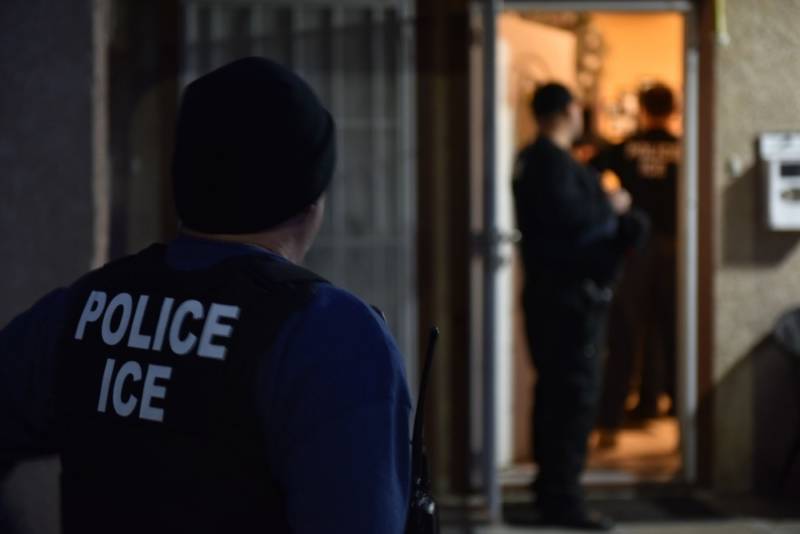
"caption": "Immigration and Customs Enforcement officers carry out a raid in Los Angeles on Feb. 11, 2018.",
"description": "Immigration and Customs Enforcement officers carry out a raid in Los Angeles on Feb. 11, 2018.",
"title": "RS29447_ICE-qut",
"credit": "Courtesy of U.S. Immigration and Customs Enforcement",
"status": "inherit",
"isLoading": false,
"fetchFailed": false
},
"news_11644648": {
"type": "attachments",
"id": "news_11644648",
"meta": {
"index": "attachments_1716263798",
"site": "news",
"id": "11644648",
"found": true
},
"parent": 11644642,
"imgSizes": {
"small": {
"file": "https://ww2.kqed.org/app/uploads/sites/10/2018/01/subpoena_012618_final-520x520.jpg",
"width": 520,
"mimeType": "image/jpeg",
"height": 520
},
"twentyfourteen-full-width": {
"file": "https://ww2.kqed.org/app/uploads/sites/10/2018/01/subpoena_012618_final-1038x576.jpg",
"width": 1038,
"mimeType": "image/jpeg",
"height": 576
},
"thumbnail": {
"file": "https://ww2.kqed.org/app/uploads/sites/10/2018/01/subpoena_012618_final-160x160.jpg",
"width": 160,
"mimeType": "image/jpeg",
"height": 160
},
"fd-sm": {
"file": "https://ww2.kqed.org/app/uploads/sites/10/2018/01/subpoena_012618_final-960x960.jpg",
"width": 960,
"mimeType": "image/jpeg",
"height": 960
},
"post-thumbnail": {
"file": "https://ww2.kqed.org/app/uploads/sites/10/2018/01/subpoena_012618_final-672x372.jpg",
"width": 672,
"mimeType": "image/jpeg",
"height": 372
},
"xsmall": {
"file": "https://ww2.kqed.org/app/uploads/sites/10/2018/01/subpoena_012618_final-375x375.jpg",
"width": 375,
"mimeType": "image/jpeg",
"height": 375
},
"kqedFullSize": {
"file": "https://ww2.kqed.org/app/uploads/sites/10/2018/01/subpoena_012618_final.jpg",
"width": 1920,
"height": 1920
},
"large": {
"file": "https://ww2.kqed.org/app/uploads/sites/10/2018/01/subpoena_012618_final-1020x1020.jpg",
"width": 1020,
"mimeType": "image/jpeg",
"height": 1020
},
"xlarge": {
"file": "https://ww2.kqed.org/app/uploads/sites/10/2018/01/subpoena_012618_final-1180x1180.jpg",
"width": 1180,
"mimeType": "image/jpeg",
"height": 1180
},
"guest-author-50": {
"file": "https://ww2.kqed.org/app/uploads/sites/10/2018/01/subpoena_012618_final-50x50.jpg",
"width": 50,
"mimeType": "image/jpeg",
"height": 50
},
"guest-author-96": {
"file": "https://ww2.kqed.org/app/uploads/sites/10/2018/01/subpoena_012618_final-96x96.jpg",
"width": 96,
"mimeType": "image/jpeg",
"height": 96
},
"medium": {
"file": "https://ww2.kqed.org/app/uploads/sites/10/2018/01/subpoena_012618_final-800x800.jpg",
"width": 800,
"mimeType": "image/jpeg",
"height": 800
},
"guest-author-64": {
"file": "https://ww2.kqed.org/app/uploads/sites/10/2018/01/subpoena_012618_final-64x64.jpg",
"width": 64,
"mimeType": "image/jpeg",
"height": 64
},
"guest-author-32": {
"file": "https://ww2.kqed.org/app/uploads/sites/10/2018/01/subpoena_012618_final-32x32.jpg",
"width": 32,
"mimeType": "image/jpeg",
"height": 32
},
"fd-lrg": {
"file": "https://ww2.kqed.org/app/uploads/sites/10/2018/01/subpoena_012618_final-1920x1920.jpg",
"width": 1920,
"mimeType": "image/jpeg",
"height": 1920
},
"fd-med": {
"file": "https://ww2.kqed.org/app/uploads/sites/10/2018/01/subpoena_012618_final-1180x1180.jpg",
"width": 1180,
"mimeType": "image/jpeg",
"height": 1180
},
"full-width": {
"file": "https://ww2.kqed.org/app/uploads/sites/10/2018/01/subpoena_012618_final-1920x1920.jpg",
"width": 1920,
"mimeType": "image/jpeg",
"height": 1920
},
"detail": {
"file": "https://ww2.kqed.org/app/uploads/sites/10/2018/01/subpoena_012618_final-150x150.jpg",
"width": 150,
"mimeType": "image/jpeg",
"height": 150
},
"guest-author-128": {
"file": "https://ww2.kqed.org/app/uploads/sites/10/2018/01/subpoena_012618_final-128x128.jpg",
"width": 128,
"mimeType": "image/jpeg",
"height": 128
},
"xxsmall": {
"file": "https://ww2.kqed.org/app/uploads/sites/10/2018/01/subpoena_012618_final-240x240.jpg",
"width": 240,
"mimeType": "image/jpeg",
"height": 240
}
},
"publishDate": 1517001650,
"modified": 1517001669,
"caption": null,
"description": null,
"title": "subpoena_012618_final",
"credit": null,
"status": "inherit",
"isLoading": false,
"fetchFailed": false
},
"news_11644014": {
"type": "attachments",
"id": "news_11644014",
"meta": {
"index": "attachments_1716263798",
"site": "news",
"id": "11644014",
"found": true
},
"parent": 11644011,
"imgSizes": {
"small": {
"file": "https://ww2.kqed.org/app/uploads/sites/10/2018/01/RS23849_20170125_135146-qut-520x390.jpg",
"width": 520,
"mimeType": "image/jpeg",
"height": 390
},
"twentyfourteen-full-width": {
"file": "https://ww2.kqed.org/app/uploads/sites/10/2018/01/RS23849_20170125_135146-qut-1038x576.jpg",
"width": 1038,
"mimeType": "image/jpeg",
"height": 576
},
"thumbnail": {
"file": "https://ww2.kqed.org/app/uploads/sites/10/2018/01/RS23849_20170125_135146-qut-160x120.jpg",
"width": 160,
"mimeType": "image/jpeg",
"height": 120
},
"fd-sm": {
"file": "https://ww2.kqed.org/app/uploads/sites/10/2018/01/RS23849_20170125_135146-qut-960x720.jpg",
"width": 960,
"mimeType": "image/jpeg",
"height": 720
},
"post-thumbnail": {
"file": "https://ww2.kqed.org/app/uploads/sites/10/2018/01/RS23849_20170125_135146-qut-672x372.jpg",
"width": 672,
"mimeType": "image/jpeg",
"height": 372
},
"xsmall": {
"file": "https://ww2.kqed.org/app/uploads/sites/10/2018/01/RS23849_20170125_135146-qut-375x281.jpg",
"width": 375,
"mimeType": "image/jpeg",
"height": 281
},
"kqedFullSize": {
"file": "https://ww2.kqed.org/app/uploads/sites/10/2018/01/RS23849_20170125_135146-qut.jpg",
"width": 1920,
"height": 1440
},
"large": {
"file": "https://ww2.kqed.org/app/uploads/sites/10/2018/01/RS23849_20170125_135146-qut-1020x765.jpg",
"width": 1020,
"mimeType": "image/jpeg",
"height": 765
},
"xlarge": {
"file": "https://ww2.kqed.org/app/uploads/sites/10/2018/01/RS23849_20170125_135146-qut-1180x885.jpg",
"width": 1180,
"mimeType": "image/jpeg",
"height": 885
},
"guest-author-50": {
"file": "https://ww2.kqed.org/app/uploads/sites/10/2018/01/RS23849_20170125_135146-qut-50x50.jpg",
"width": 50,
"mimeType": "image/jpeg",
"height": 50
},
"guest-author-96": {
"file": "https://ww2.kqed.org/app/uploads/sites/10/2018/01/RS23849_20170125_135146-qut-96x96.jpg",
"width": 96,
"mimeType": "image/jpeg",
"height": 96
},
"medium": {
"file": "https://ww2.kqed.org/app/uploads/sites/10/2018/01/RS23849_20170125_135146-qut-800x600.jpg",
"width": 800,
"mimeType": "image/jpeg",
"height": 600
},
"guest-author-64": {
"file": "https://ww2.kqed.org/app/uploads/sites/10/2018/01/RS23849_20170125_135146-qut-64x64.jpg",
"width": 64,
"mimeType": "image/jpeg",
"height": 64
},
"guest-author-32": {
"file": "https://ww2.kqed.org/app/uploads/sites/10/2018/01/RS23849_20170125_135146-qut-32x32.jpg",
"width": 32,
"mimeType": "image/jpeg",
"height": 32
},
"fd-lrg": {
"file": "https://ww2.kqed.org/app/uploads/sites/10/2018/01/RS23849_20170125_135146-qut-1920x1440.jpg",
"width": 1920,
"mimeType": "image/jpeg",
"height": 1440
},
"fd-med": {
"file": "https://ww2.kqed.org/app/uploads/sites/10/2018/01/RS23849_20170125_135146-qut-1180x885.jpg",
"width": 1180,
"mimeType": "image/jpeg",
"height": 885
},
"full-width": {
"file": "https://ww2.kqed.org/app/uploads/sites/10/2018/01/RS23849_20170125_135146-qut-1920x1440.jpg",
"width": 1920,
"mimeType": "image/jpeg",
"height": 1440
},
"detail": {
"file": "https://ww2.kqed.org/app/uploads/sites/10/2018/01/RS23849_20170125_135146-qut-150x150.jpg",
"width": 150,
"mimeType": "image/jpeg",
"height": 150
},
"guest-author-128": {
"file": "https://ww2.kqed.org/app/uploads/sites/10/2018/01/RS23849_20170125_135146-qut-128x128.jpg",
"width": 128,
"mimeType": "image/jpeg",
"height": 128
},
"xxsmall": {
"file": "https://ww2.kqed.org/app/uploads/sites/10/2018/01/RS23849_20170125_135146-qut-240x180.jpg",
"width": 240,
"mimeType": "image/jpeg",
"height": 180
}
},
"publishDate": 1516825485,
"modified": 1516836672,
"caption": "San Francisco groups rallied outside City Hall on Jan. 25, 2017, in protest of President Trump's executive orders regarding immigration enforcement.",
"description": "San Francisco groups rallied outside City Hall on Jan. 25, 2017, in protest of President Donald Trump's executive orders regarding immigration enforcement.",
"title": "RS23849_20170125_135146-qut",
"credit": "Alex Emslie/KQED",
"status": "inherit",
"isLoading": false,
"fetchFailed": false
},
"news_11636441": {
"type": "attachments",
"id": "news_11636441",
"meta": {
"index": "attachments_1716263798",
"site": "news",
"id": "11636441",
"found": true
},
"parent": 11636436,
"imgSizes": {
"small": {
"file": "https://ww2.kqed.org/app/uploads/sites/10/2017/12/IceDetained-520x359.jpg",
"width": 520,
"mimeType": "image/jpeg",
"height": 359
},
"twentyfourteen-full-width": {
"file": "https://ww2.kqed.org/app/uploads/sites/10/2017/12/IceDetained-1038x576.jpg",
"width": 1038,
"mimeType": "image/jpeg",
"height": 576
},
"thumbnail": {
"file": "https://ww2.kqed.org/app/uploads/sites/10/2017/12/IceDetained-160x111.jpg",
"width": 160,
"mimeType": "image/jpeg",
"height": 111
},
"fd-sm": {
"file": "https://ww2.kqed.org/app/uploads/sites/10/2017/12/IceDetained-960x664.jpg",
"width": 960,
"mimeType": "image/jpeg",
"height": 664
},
"post-thumbnail": {
"file": "https://ww2.kqed.org/app/uploads/sites/10/2017/12/IceDetained-672x372.jpg",
"width": 672,
"mimeType": "image/jpeg",
"height": 372
},
"xsmall": {
"file": "https://ww2.kqed.org/app/uploads/sites/10/2017/12/IceDetained-375x259.jpg",
"width": 375,
"mimeType": "image/jpeg",
"height": 259
},
"kqedFullSize": {
"file": "https://ww2.kqed.org/app/uploads/sites/10/2017/12/IceDetained.jpg",
"width": 1920,
"height": 1327
},
"large": {
"file": "https://ww2.kqed.org/app/uploads/sites/10/2017/12/IceDetained-1020x705.jpg",
"width": 1020,
"mimeType": "image/jpeg",
"height": 705
},
"xlarge": {
"file": "https://ww2.kqed.org/app/uploads/sites/10/2017/12/IceDetained-1180x816.jpg",
"width": 1180,
"mimeType": "image/jpeg",
"height": 816
},
"guest-author-50": {
"file": "https://ww2.kqed.org/app/uploads/sites/10/2017/12/IceDetained-50x50.jpg",
"width": 50,
"mimeType": "image/jpeg",
"height": 50
},
"guest-author-96": {
"file": "https://ww2.kqed.org/app/uploads/sites/10/2017/12/IceDetained-96x96.jpg",
"width": 96,
"mimeType": "image/jpeg",
"height": 96
},
"medium": {
"file": "https://ww2.kqed.org/app/uploads/sites/10/2017/12/IceDetained-800x553.jpg",
"width": 800,
"mimeType": "image/jpeg",
"height": 553
},
"guest-author-64": {
"file": "https://ww2.kqed.org/app/uploads/sites/10/2017/12/IceDetained-64x64.jpg",
"width": 64,
"mimeType": "image/jpeg",
"height": 64
},
"guest-author-32": {
"file": "https://ww2.kqed.org/app/uploads/sites/10/2017/12/IceDetained-32x32.jpg",
"width": 32,
"mimeType": "image/jpeg",
"height": 32
},
"fd-lrg": {
"file": "https://ww2.kqed.org/app/uploads/sites/10/2017/12/IceDetained-1920x1327.jpg",
"width": 1920,
"mimeType": "image/jpeg",
"height": 1327
},
"fd-med": {
"file": "https://ww2.kqed.org/app/uploads/sites/10/2017/12/IceDetained-1180x816.jpg",
"width": 1180,
"mimeType": "image/jpeg",
"height": 816
},
"full-width": {
"file": "https://ww2.kqed.org/app/uploads/sites/10/2017/12/IceDetained-1920x1327.jpg",
"width": 1920,
"mimeType": "image/jpeg",
"height": 1327
},
"detail": {
"file": "https://ww2.kqed.org/app/uploads/sites/10/2017/12/IceDetained-150x150.jpg",
"width": 150,
"mimeType": "image/jpeg",
"height": 150
},
"guest-author-128": {
"file": "https://ww2.kqed.org/app/uploads/sites/10/2017/12/IceDetained-128x128.jpg",
"width": 128,
"mimeType": "image/jpeg",
"height": 128
},
"xxsmall": {
"file": "https://ww2.kqed.org/app/uploads/sites/10/2017/12/IceDetained-240x166.jpg",
"width": 240,
"mimeType": "image/jpeg",
"height": 166
}
},
"publishDate": 1513110601,
"modified": 1513129657,
"caption": "A man is detained by Immigration and Customs Enforcement (ICE) agents in October 2015 in Los Angeles",
"description": "A man is detained by Immigration and Customs Enforcement (ICE), agents in October, 2015 in Los Angeles.",
"title": "IceDetained",
"credit": "John Moore/Getty Images",
"status": "inherit",
"isLoading": false,
"fetchFailed": false
},
"news_11634235": {
"type": "attachments",
"id": "news_11634235",
"meta": {
"index": "attachments_1716263798",
"site": "news",
"id": "11634235",
"found": true
},
"parent": 11634201,
"imgSizes": {
"small": {
"file": "https://ww2.kqed.org/app/uploads/sites/10/2017/11/ZarateArraign-520x347.jpg",
"width": 520,
"mimeType": "image/jpeg",
"height": 347
},
"twentyfourteen-full-width": {
"file": "https://ww2.kqed.org/app/uploads/sites/10/2017/11/ZarateArraign-1038x576.jpg",
"width": 1038,
"mimeType": "image/jpeg",
"height": 576
},
"thumbnail": {
"file": "https://ww2.kqed.org/app/uploads/sites/10/2017/11/ZarateArraign-160x107.jpg",
"width": 160,
"mimeType": "image/jpeg",
"height": 107
},
"fd-sm": {
"file": "https://ww2.kqed.org/app/uploads/sites/10/2017/11/ZarateArraign-960x640.jpg",
"width": 960,
"mimeType": "image/jpeg",
"height": 640
},
"post-thumbnail": {
"file": "https://ww2.kqed.org/app/uploads/sites/10/2017/11/ZarateArraign-672x372.jpg",
"width": 672,
"mimeType": "image/jpeg",
"height": 372
},
"xsmall": {
"file": "https://ww2.kqed.org/app/uploads/sites/10/2017/11/ZarateArraign-375x250.jpg",
"width": 375,
"mimeType": "image/jpeg",
"height": 250
},
"kqedFullSize": {
"file": "https://ww2.kqed.org/app/uploads/sites/10/2017/11/ZarateArraign.jpg",
"width": 1920,
"height": 1280
},
"large": {
"file": "https://ww2.kqed.org/app/uploads/sites/10/2017/11/ZarateArraign-1020x680.jpg",
"width": 1020,
"mimeType": "image/jpeg",
"height": 680
},
"xlarge": {
"file": "https://ww2.kqed.org/app/uploads/sites/10/2017/11/ZarateArraign-1180x787.jpg",
"width": 1180,
"mimeType": "image/jpeg",
"height": 787
},
"guest-author-50": {
"file": "https://ww2.kqed.org/app/uploads/sites/10/2017/11/ZarateArraign-50x50.jpg",
"width": 50,
"mimeType": "image/jpeg",
"height": 50
},
"guest-author-96": {
"file": "https://ww2.kqed.org/app/uploads/sites/10/2017/11/ZarateArraign-96x96.jpg",
"width": 96,
"mimeType": "image/jpeg",
"height": 96
},
"medium": {
"file": "https://ww2.kqed.org/app/uploads/sites/10/2017/11/ZarateArraign-800x533.jpg",
"width": 800,
"mimeType": "image/jpeg",
"height": 533
},
"guest-author-64": {
"file": "https://ww2.kqed.org/app/uploads/sites/10/2017/11/ZarateArraign-64x64.jpg",
"width": 64,
"mimeType": "image/jpeg",
"height": 64
},
"guest-author-32": {
"file": "https://ww2.kqed.org/app/uploads/sites/10/2017/11/ZarateArraign-32x32.jpg",
"width": 32,
"mimeType": "image/jpeg",
"height": 32
},
"fd-lrg": {
"file": "https://ww2.kqed.org/app/uploads/sites/10/2017/11/ZarateArraign-1920x1280.jpg",
"width": 1920,
"mimeType": "image/jpeg",
"height": 1280
},
"fd-med": {
"file": "https://ww2.kqed.org/app/uploads/sites/10/2017/11/ZarateArraign-1180x787.jpg",
"width": 1180,
"mimeType": "image/jpeg",
"height": 787
},
"full-width": {
"file": "https://ww2.kqed.org/app/uploads/sites/10/2017/11/ZarateArraign-1920x1280.jpg",
"width": 1920,
"mimeType": "image/jpeg",
"height": 1280
},
"detail": {
"file": "https://ww2.kqed.org/app/uploads/sites/10/2017/11/ZarateArraign-150x150.jpg",
"width": 150,
"mimeType": "image/jpeg",
"height": 150
},
"guest-author-128": {
"file": "https://ww2.kqed.org/app/uploads/sites/10/2017/11/ZarateArraign-128x128.jpg",
"width": 128,
"mimeType": "image/jpeg",
"height": 128
},
"xxsmall": {
"file": "https://ww2.kqed.org/app/uploads/sites/10/2017/11/ZarateArraign-240x160.jpg",
"width": 240,
"mimeType": "image/jpeg",
"height": 160
}
},
"publishDate": 1512097449,
"modified": 1512097519,
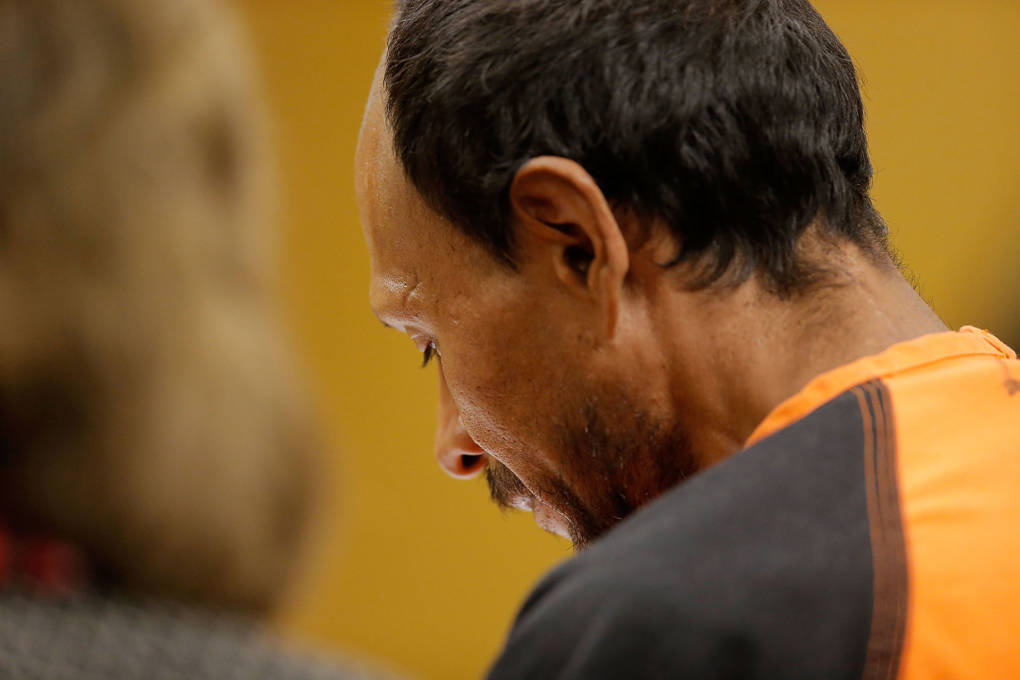
"caption": "Defendant Jose Ines Garcia Zarate, who is also known as Juan Francisco Lopez Sanchez, at his arraignment on July 7, 2015, in San Francisco.",
"description": "Defendant Jose Ines Garcia Zarate, who is also known as Juan Francisco Lopez Sanchez, at his arraignment on July 7, 2015, in San Francisco.",
"title": "ZarateArraign",
"credit": "Michael Macor-Pool/Getty Images",
"status": "inherit",
"isLoading": false,
"fetchFailed": false
},
"news_11624951": {
"type": "attachments",
"id": "news_11624951",
"meta": {
"index": "attachments_1716263798",
"site": "news",
"id": "11624951",
"found": true
},
"parent": 11624516,
"imgSizes": {
"small": {
"file": "https://ww2.kqed.org/app/uploads/sites/10/2017/10/Woychowski-520x378.jpg",
"width": 520,
"mimeType": "image/jpeg",
"height": 378
},
"thumbnail": {
"file": "https://ww2.kqed.org/app/uploads/sites/10/2017/10/Woychowski-160x116.jpg",
"width": 160,
"mimeType": "image/jpeg",
"height": 116
},
"post-thumbnail": {
"file": "https://ww2.kqed.org/app/uploads/sites/10/2017/10/Woychowski-640x372.jpg",
"width": 640,
"mimeType": "image/jpeg",
"height": 372
},
"xsmall": {
"file": "https://ww2.kqed.org/app/uploads/sites/10/2017/10/Woychowski-375x272.jpg",
"width": 375,
"mimeType": "image/jpeg",
"height": 272
},
"kqedFullSize": {
"file": "https://ww2.kqed.org/app/uploads/sites/10/2017/10/Woychowski.jpg",
"width": 640,
"height": 465
},
"guest-author-50": {
"file": "https://ww2.kqed.org/app/uploads/sites/10/2017/10/Woychowski-50x50.jpg",
"width": 50,
"mimeType": "image/jpeg",
"height": 50
},
"guest-author-96": {
"file": "https://ww2.kqed.org/app/uploads/sites/10/2017/10/Woychowski-96x96.jpg",
"width": 96,
"mimeType": "image/jpeg",
"height": 96
},
"guest-author-64": {
"file": "https://ww2.kqed.org/app/uploads/sites/10/2017/10/Woychowski-64x64.jpg",
"width": 64,
"mimeType": "image/jpeg",
"height": 64
},
"detail": {
"file": "https://ww2.kqed.org/app/uploads/sites/10/2017/10/Woychowski-150x150.jpg",
"width": 150,
"mimeType": "image/jpeg",
"height": 150
},
"guest-author-32": {
"file": "https://ww2.kqed.org/app/uploads/sites/10/2017/10/Woychowski-32x32.jpg",
"width": 32,
"mimeType": "image/jpeg",
"height": 32
},
"guest-author-128": {
"file": "https://ww2.kqed.org/app/uploads/sites/10/2017/10/Woychowski-128x128.jpg",
"width": 128,
"mimeType": "image/jpeg",
"height": 128
},
"xxsmall": {
"file": "https://ww2.kqed.org/app/uploads/sites/10/2017/10/Woychowski-240x174.jpg",
"width": 240,
"mimeType": "image/jpeg",
"height": 174
}
},
"publishDate": 1508523752,
"modified": 1508524517,
"caption": "Bureau of Land Management ranger John Woychowski (center) was named El Centro Field Office 'Ranger of the Year' in 2011. Salvador Nieblas (left) went on to become the chief BLM ranger for California. Margaret Gordo (right) was the chief BLM ranger for El Centro in 2011.",
"description": null,
"title": "Woychowski",
"credit": "Bureau of Land Management California via Internet Archive",
"status": "inherit",
"isLoading": false,
"fetchFailed": false
},
"news_11624499": {
"type": "attachments",
"id": "news_11624499",
"meta": {
"index": "attachments_1716263798",
"site": "news",
"id": "11624499",
"found": true
},
"parent": 11624387,
"imgSizes": {
"small": {
"file": "https://ww2.kqed.org/app/uploads/sites/10/2017/10/SteinleMain-520x358.jpg",
"width": 520,
"mimeType": "image/jpeg",
"height": 358
},
"twentyfourteen-full-width": {
"file": "https://ww2.kqed.org/app/uploads/sites/10/2017/10/SteinleMain-1038x576.jpg",
"width": 1038,
"mimeType": "image/jpeg",
"height": 576
},
"thumbnail": {
"file": "https://ww2.kqed.org/app/uploads/sites/10/2017/10/SteinleMain-160x110.jpg",
"width": 160,
"mimeType": "image/jpeg",
"height": 110
},
"fd-sm": {
"file": "https://ww2.kqed.org/app/uploads/sites/10/2017/10/SteinleMain-960x661.jpg",
"width": 960,
"mimeType": "image/jpeg",
"height": 661
},
"post-thumbnail": {
"file": "https://ww2.kqed.org/app/uploads/sites/10/2017/10/SteinleMain-672x372.jpg",
"width": 672,
"mimeType": "image/jpeg",
"height": 372
},
"xsmall": {
"file": "https://ww2.kqed.org/app/uploads/sites/10/2017/10/SteinleMain-375x258.jpg",
"width": 375,
"mimeType": "image/jpeg",
"height": 258
},
"kqedFullSize": {
"file": "https://ww2.kqed.org/app/uploads/sites/10/2017/10/SteinleMain.jpg",
"width": 1920,
"height": 1322
},
"large": {
"file": "https://ww2.kqed.org/app/uploads/sites/10/2017/10/SteinleMain-1020x702.jpg",
"width": 1020,
"mimeType": "image/jpeg",
"height": 702
},
"xlarge": {
"file": "https://ww2.kqed.org/app/uploads/sites/10/2017/10/SteinleMain-1180x812.jpg",
"width": 1180,
"mimeType": "image/jpeg",
"height": 812
},
"guest-author-50": {
"file": "https://ww2.kqed.org/app/uploads/sites/10/2017/10/SteinleMain-50x50.jpg",
"width": 50,
"mimeType": "image/jpeg",
"height": 50
},
"guest-author-96": {
"file": "https://ww2.kqed.org/app/uploads/sites/10/2017/10/SteinleMain-96x96.jpg",
"width": 96,
"mimeType": "image/jpeg",
"height": 96
},
"medium": {
"file": "https://ww2.kqed.org/app/uploads/sites/10/2017/10/SteinleMain-800x551.jpg",
"width": 800,
"mimeType": "image/jpeg",
"height": 551
},
"guest-author-64": {
"file": "https://ww2.kqed.org/app/uploads/sites/10/2017/10/SteinleMain-64x64.jpg",
"width": 64,
"mimeType": "image/jpeg",
"height": 64
},
"guest-author-32": {
"file": "https://ww2.kqed.org/app/uploads/sites/10/2017/10/SteinleMain-32x32.jpg",
"width": 32,
"mimeType": "image/jpeg",
"height": 32
},
"fd-lrg": {
"file": "https://ww2.kqed.org/app/uploads/sites/10/2017/10/SteinleMain-1920x1322.jpg",
"width": 1920,
"mimeType": "image/jpeg",
"height": 1322
},
"fd-med": {
"file": "https://ww2.kqed.org/app/uploads/sites/10/2017/10/SteinleMain-1180x812.jpg",
"width": 1180,
"mimeType": "image/jpeg",
"height": 812
},
"full-width": {
"file": "https://ww2.kqed.org/app/uploads/sites/10/2017/10/SteinleMain-1920x1322.jpg",
"width": 1920,
"mimeType": "image/jpeg",
"height": 1322
},
"detail": {
"file": "https://ww2.kqed.org/app/uploads/sites/10/2017/10/SteinleMain-150x150.jpg",
"width": 150,
"mimeType": "image/jpeg",
"height": 150
},
"guest-author-128": {
"file": "https://ww2.kqed.org/app/uploads/sites/10/2017/10/SteinleMain-128x128.jpg",
"width": 128,
"mimeType": "image/jpeg",
"height": 128
},
"xxsmall": {
"file": "https://ww2.kqed.org/app/uploads/sites/10/2017/10/SteinleMain-240x165.jpg",
"width": 240,
"mimeType": "image/jpeg",
"height": 165
}
},
"publishDate": 1508375551,
"modified": 1508375596,
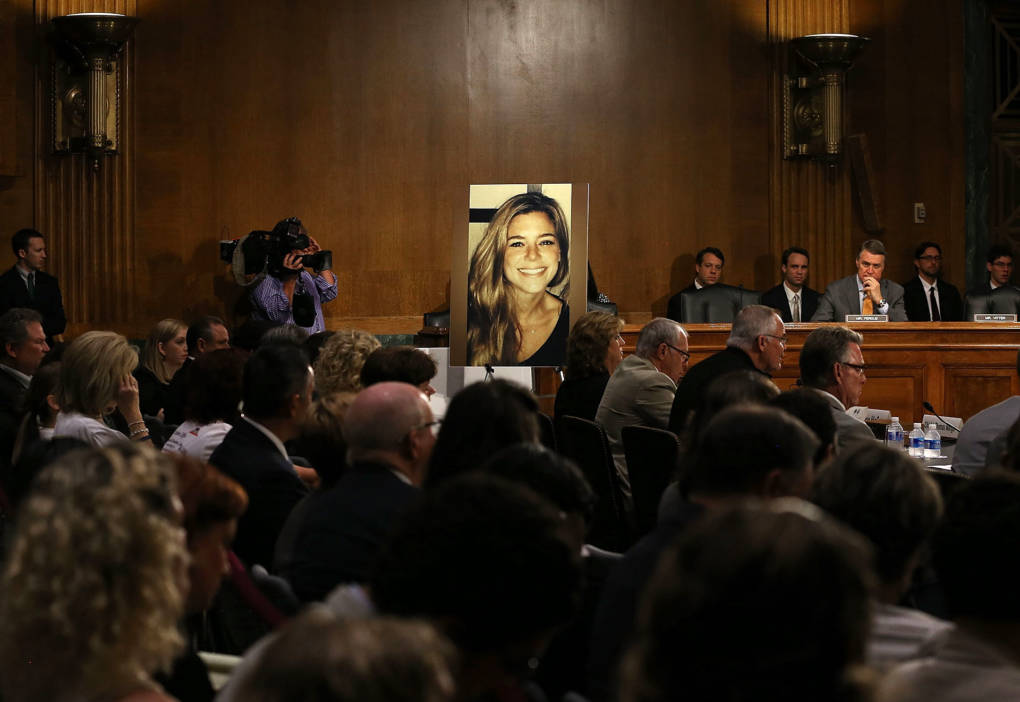
"caption": "A large photo of Kathryn Steinle is shown while her dad, James Steinle, testifies during a Senate Judiciary Committee hearing on Capitol Hill, July 21, 2015, in Washington, D.C. The committee heard testimony from family members who have had loved ones killed by undocumented immigrants.",
"description": "A large photo of Kathryn Steinle is shown while her dad, James Steinle, testifies during a Senate Judiciary Committee hearing on Capitol Hill, July 21, 2015, in Washington, D.C. The committee heard testimony from family members who have had loved ones killed by undocumented immigrants.",
"title": "SteinleMain",
"credit": "Mark Wilson/Getty Images",
"status": "inherit",
"isLoading": false,
"fetchFailed": false
},
"news_11616371": {
"type": "attachments",
"id": "news_11616371",
"meta": {
"index": "attachments_1716263798",
"site": "news",
"id": "11616371",
"found": true
},
"parent": 11616363,
"imgSizes": {
"small": {
"file": "https://ww2.kqed.org/app/uploads/sites/10/2017/09/RS15578_BUDGET_34-qut-520x347.jpg",
"width": 520,
"mimeType": "image/jpeg",
"height": 347
},
"twentyfourteen-full-width": {
"file": "https://ww2.kqed.org/app/uploads/sites/10/2017/09/RS15578_BUDGET_34-qut-1038x576.jpg",
"width": 1038,
"mimeType": "image/jpeg",
"height": 576
},
"thumbnail": {
"file": "https://ww2.kqed.org/app/uploads/sites/10/2017/09/RS15578_BUDGET_34-qut-160x107.jpg",
"width": 160,
"mimeType": "image/jpeg",
"height": 107
},
"fd-sm": {
"file": "https://ww2.kqed.org/app/uploads/sites/10/2017/09/RS15578_BUDGET_34-qut-960x640.jpg",
"width": 960,
"mimeType": "image/jpeg",
"height": 640
},
"post-thumbnail": {
"file": "https://ww2.kqed.org/app/uploads/sites/10/2017/09/RS15578_BUDGET_34-qut-672x372.jpg",
"width": 672,
"mimeType": "image/jpeg",
"height": 372
},
"xsmall": {
"file": "https://ww2.kqed.org/app/uploads/sites/10/2017/09/RS15578_BUDGET_34-qut-375x250.jpg",
"width": 375,
"mimeType": "image/jpeg",
"height": 250
},
"kqedFullSize": {
"file": "https://ww2.kqed.org/app/uploads/sites/10/2017/09/RS15578_BUDGET_34-qut.jpg",
"width": 1920,
"height": 1280
},
"large": {
"file": "https://ww2.kqed.org/app/uploads/sites/10/2017/09/RS15578_BUDGET_34-qut-1020x680.jpg",
"width": 1020,
"mimeType": "image/jpeg",
"height": 680
},
"xlarge": {
"file": "https://ww2.kqed.org/app/uploads/sites/10/2017/09/RS15578_BUDGET_34-qut-1180x787.jpg",
"width": 1180,
"mimeType": "image/jpeg",
"height": 787
},
"guest-author-50": {
"file": "https://ww2.kqed.org/app/uploads/sites/10/2017/09/RS15578_BUDGET_34-qut-50x50.jpg",
"width": 50,
"mimeType": "image/jpeg",
"height": 50
},
"guest-author-96": {
"file": "https://ww2.kqed.org/app/uploads/sites/10/2017/09/RS15578_BUDGET_34-qut-96x96.jpg",
"width": 96,
"mimeType": "image/jpeg",
"height": 96
},
"medium": {
"file": "https://ww2.kqed.org/app/uploads/sites/10/2017/09/RS15578_BUDGET_34-qut-800x533.jpg",
"width": 800,
"mimeType": "image/jpeg",
"height": 533
},
"guest-author-64": {
"file": "https://ww2.kqed.org/app/uploads/sites/10/2017/09/RS15578_BUDGET_34-qut-64x64.jpg",
"width": 64,
"mimeType": "image/jpeg",
"height": 64
},
"guest-author-32": {
"file": "https://ww2.kqed.org/app/uploads/sites/10/2017/09/RS15578_BUDGET_34-qut-32x32.jpg",
"width": 32,
"mimeType": "image/jpeg",
"height": 32
},
"fd-lrg": {
"file": "https://ww2.kqed.org/app/uploads/sites/10/2017/09/RS15578_BUDGET_34-qut-1920x1280.jpg",
"width": 1920,
"mimeType": "image/jpeg",
"height": 1280
},
"fd-med": {
"file": "https://ww2.kqed.org/app/uploads/sites/10/2017/09/RS15578_BUDGET_34-qut-1180x787.jpg",
"width": 1180,
"mimeType": "image/jpeg",
"height": 787
},
"full-width": {
"file": "https://ww2.kqed.org/app/uploads/sites/10/2017/09/RS15578_BUDGET_34-qut-1920x1280.jpg",
"width": 1920,
"mimeType": "image/jpeg",
"height": 1280
},
"detail": {
"file": "https://ww2.kqed.org/app/uploads/sites/10/2017/09/RS15578_BUDGET_34-qut-150x150.jpg",
"width": 150,
"mimeType": "image/jpeg",
"height": 150
},
"guest-author-128": {
"file": "https://ww2.kqed.org/app/uploads/sites/10/2017/09/RS15578_BUDGET_34-qut-128x128.jpg",
"width": 128,
"mimeType": "image/jpeg",
"height": 128
},
"xxsmall": {
"file": "https://ww2.kqed.org/app/uploads/sites/10/2017/09/RS15578_BUDGET_34-qut-240x160.jpg",
"width": 240,
"mimeType": "image/jpeg",
"height": 160
}
},
"publishDate": 1505174831,
"modified": 1508189628,
"caption": "Senate President Pro Tem Kevin de León (D-Los Angeles) made passing Senate Bill 54 his main legislative priority after Trump's election. ",
"description": null,
"title": "RS15578_BUDGET_34-qut",
"credit": "Max Whittaker/KQED",
"status": "inherit",
"isLoading": false,
"fetchFailed": false
},
"news_11620184": {
"type": "attachments",
"id": "news_11620184",
"meta": {
"index": "attachments_1716263798",
"site": "news",
"id": "11620184",
"found": true
},
"parent": 11620105,
"imgSizes": {
"small": {
"file": "https://ww2.kqed.org/app/uploads/sites/10/2017/09/RS24379_GettyImages-492659304-qut-520x347.jpg",
"width": 520,
"mimeType": "image/jpeg",
"height": 347
},
"twentyfourteen-full-width": {
"file": "https://ww2.kqed.org/app/uploads/sites/10/2017/09/RS24379_GettyImages-492659304-qut-1038x576.jpg",
"width": 1038,
"mimeType": "image/jpeg",
"height": 576
},
"thumbnail": {
"file": "https://ww2.kqed.org/app/uploads/sites/10/2017/09/RS24379_GettyImages-492659304-qut-160x107.jpg",
"width": 160,
"mimeType": "image/jpeg",
"height": 107
},
"fd-sm": {
"file": "https://ww2.kqed.org/app/uploads/sites/10/2017/09/RS24379_GettyImages-492659304-qut-960x640.jpg",
"width": 960,
"mimeType": "image/jpeg",
"height": 640
},
"post-thumbnail": {
"file": "https://ww2.kqed.org/app/uploads/sites/10/2017/09/RS24379_GettyImages-492659304-qut-672x372.jpg",
"width": 672,
"mimeType": "image/jpeg",
"height": 372
},
"xsmall": {
"file": "https://ww2.kqed.org/app/uploads/sites/10/2017/09/RS24379_GettyImages-492659304-qut-375x250.jpg",
"width": 375,
"mimeType": "image/jpeg",
"height": 250
},
"kqedFullSize": {
"file": "https://ww2.kqed.org/app/uploads/sites/10/2017/09/RS24379_GettyImages-492659304-qut.jpg",
"width": 1920,
"height": 1280
},
"large": {
"file": "https://ww2.kqed.org/app/uploads/sites/10/2017/09/RS24379_GettyImages-492659304-qut-1020x680.jpg",
"width": 1020,
"mimeType": "image/jpeg",
"height": 680
},
"xlarge": {
"file": "https://ww2.kqed.org/app/uploads/sites/10/2017/09/RS24379_GettyImages-492659304-qut-1180x787.jpg",
"width": 1180,
"mimeType": "image/jpeg",
"height": 787
},
"guest-author-50": {
"file": "https://ww2.kqed.org/app/uploads/sites/10/2017/09/RS24379_GettyImages-492659304-qut-50x50.jpg",
"width": 50,
"mimeType": "image/jpeg",
"height": 50
},
"guest-author-96": {
"file": "https://ww2.kqed.org/app/uploads/sites/10/2017/09/RS24379_GettyImages-492659304-qut-96x96.jpg",
"width": 96,
"mimeType": "image/jpeg",
"height": 96
},
"medium": {
"file": "https://ww2.kqed.org/app/uploads/sites/10/2017/09/RS24379_GettyImages-492659304-qut-800x533.jpg",
"width": 800,
"mimeType": "image/jpeg",
"height": 533
},
"guest-author-64": {
"file": "https://ww2.kqed.org/app/uploads/sites/10/2017/09/RS24379_GettyImages-492659304-qut-64x64.jpg",
"width": 64,
"mimeType": "image/jpeg",
"height": 64
},
"guest-author-32": {
"file": "https://ww2.kqed.org/app/uploads/sites/10/2017/09/RS24379_GettyImages-492659304-qut-32x32.jpg",
"width": 32,
"mimeType": "image/jpeg",
"height": 32
},
"fd-lrg": {
"file": "https://ww2.kqed.org/app/uploads/sites/10/2017/09/RS24379_GettyImages-492659304-qut-1920x1280.jpg",
"width": 1920,
"mimeType": "image/jpeg",
"height": 1280
},
"fd-med": {
"file": "https://ww2.kqed.org/app/uploads/sites/10/2017/09/RS24379_GettyImages-492659304-qut-1180x787.jpg",
"width": 1180,
"mimeType": "image/jpeg",
"height": 787
},
"full-width": {
"file": "https://ww2.kqed.org/app/uploads/sites/10/2017/09/RS24379_GettyImages-492659304-qut-1920x1280.jpg",
"width": 1920,
"mimeType": "image/jpeg",
"height": 1280
},
"detail": {
"file": "https://ww2.kqed.org/app/uploads/sites/10/2017/09/RS24379_GettyImages-492659304-qut-150x150.jpg",
"width": 150,
"mimeType": "image/jpeg",
"height": 150
},
"guest-author-128": {
"file": "https://ww2.kqed.org/app/uploads/sites/10/2017/09/RS24379_GettyImages-492659304-qut-128x128.jpg",
"width": 128,
"mimeType": "image/jpeg",
"height": 128
},
"xxsmall": {
"file": "https://ww2.kqed.org/app/uploads/sites/10/2017/09/RS24379_GettyImages-492659304-qut-240x160.jpg",
"width": 240,
"mimeType": "image/jpeg",
"height": 160
}
},
"publishDate": 1506730902,
"modified": 1506985606,
"caption": "A man is detained by Immigration and Customs Enforcement agents early on Oct. 14, 2015, in Los Angeles.",
"description": "A man is detained by Immigration and Customs Enforcement agents early on October 14, 2015 in Los Angeles.",
"title": "RS24379_GettyImages-492659304-qut",
"credit": "John Moore/Getty Images",
"status": "inherit",
"isLoading": false,
"fetchFailed": false
},
"news_11620011": {
"type": "attachments",
"id": "news_11620011",
"meta": {
"index": "attachments_1716263798",
"site": "news",
"id": "11620011",
"found": true
},
"parent": 11619998,
"imgSizes": {
"small": {
"file": "https://ww2.kqed.org/app/uploads/sites/10/2017/09/welcome_092917_final-520x520.jpg",
"width": 520,
"mimeType": "image/jpeg",
"height": 520
},
"twentyfourteen-full-width": {
"file": "https://ww2.kqed.org/app/uploads/sites/10/2017/09/welcome_092917_final-1038x576.jpg",
"width": 1038,
"mimeType": "image/jpeg",
"height": 576
},
"thumbnail": {
"file": "https://ww2.kqed.org/app/uploads/sites/10/2017/09/welcome_092917_final-160x160.jpg",
"width": 160,
"mimeType": "image/jpeg",
"height": 160
},
"fd-sm": {
"file": "https://ww2.kqed.org/app/uploads/sites/10/2017/09/welcome_092917_final-960x960.jpg",
"width": 960,
"mimeType": "image/jpeg",
"height": 960
},
"post-thumbnail": {
"file": "https://ww2.kqed.org/app/uploads/sites/10/2017/09/welcome_092917_final-672x372.jpg",
"width": 672,
"mimeType": "image/jpeg",
"height": 372
},
"xsmall": {
"file": "https://ww2.kqed.org/app/uploads/sites/10/2017/09/welcome_092917_final-375x375.jpg",
"width": 375,
"mimeType": "image/jpeg",
"height": 375
},
"kqedFullSize": {
"file": "https://ww2.kqed.org/app/uploads/sites/10/2017/09/welcome_092917_final.jpg",
"width": 1920,
"height": 1920
},
"large": {
"file": "https://ww2.kqed.org/app/uploads/sites/10/2017/09/welcome_092917_final-1020x1020.jpg",
"width": 1020,
"mimeType": "image/jpeg",
"height": 1020
},
"xlarge": {
"file": "https://ww2.kqed.org/app/uploads/sites/10/2017/09/welcome_092917_final-1180x1180.jpg",
"width": 1180,
"mimeType": "image/jpeg",
"height": 1180
},
"guest-author-50": {
"file": "https://ww2.kqed.org/app/uploads/sites/10/2017/09/welcome_092917_final-50x50.jpg",
"width": 50,
"mimeType": "image/jpeg",
"height": 50
},
"guest-author-96": {
"file": "https://ww2.kqed.org/app/uploads/sites/10/2017/09/welcome_092917_final-96x96.jpg",
"width": 96,
"mimeType": "image/jpeg",
"height": 96
},
"medium": {
"file": "https://ww2.kqed.org/app/uploads/sites/10/2017/09/welcome_092917_final-800x800.jpg",
"width": 800,
"mimeType": "image/jpeg",
"height": 800
},
"guest-author-64": {
"file": "https://ww2.kqed.org/app/uploads/sites/10/2017/09/welcome_092917_final-64x64.jpg",
"width": 64,
"mimeType": "image/jpeg",
"height": 64
},
"guest-author-32": {
"file": "https://ww2.kqed.org/app/uploads/sites/10/2017/09/welcome_092917_final-32x32.jpg",
"width": 32,
"mimeType": "image/jpeg",
"height": 32
},
"fd-lrg": {
"file": "https://ww2.kqed.org/app/uploads/sites/10/2017/09/welcome_092917_final-1920x1920.jpg",
"width": 1920,
"mimeType": "image/jpeg",
"height": 1920
},
"fd-med": {
"file": "https://ww2.kqed.org/app/uploads/sites/10/2017/09/welcome_092917_final-1180x1180.jpg",
"width": 1180,
"mimeType": "image/jpeg",
"height": 1180
},
"full-width": {
"file": "https://ww2.kqed.org/app/uploads/sites/10/2017/09/welcome_092917_final-1920x1920.jpg",
"width": 1920,
"mimeType": "image/jpeg",
"height": 1920
},
"detail": {
"file": "https://ww2.kqed.org/app/uploads/sites/10/2017/09/welcome_092917_final-150x150.jpg",
"width": 150,
"mimeType": "image/jpeg",
"height": 150
},
"guest-author-128": {
"file": "https://ww2.kqed.org/app/uploads/sites/10/2017/09/welcome_092917_final-128x128.jpg",
"width": 128,
"mimeType": "image/jpeg",
"height": 128
},
"xxsmall": {
"file": "https://ww2.kqed.org/app/uploads/sites/10/2017/09/welcome_092917_final-240x240.jpg",
"width": 240,
"mimeType": "image/jpeg",
"height": 240
}
},
"publishDate": 1506713373,
"modified": 1506713398,
"caption": null,
"description": null,
"title": "welcome_092917_final",
"credit": null,
"status": "inherit",
"isLoading": false,
"fetchFailed": false
},
"news_11617309": {
"type": "attachments",
"id": "news_11617309",
"meta": {
"index": "attachments_1716263798",
"site": "news",
"id": "11617309",
"found": true
},
"parent": 11617239,
"imgSizes": {
"small": {
"file": "https://ww2.kqed.org/app/uploads/sites/10/2017/09/RS20978_capitol-building-520x390.jpg",
"width": 520,
"mimeType": "image/jpeg",
"height": 390
},
"twentyfourteen-full-width": {
"file": "https://ww2.kqed.org/app/uploads/sites/10/2017/09/RS20978_capitol-building-1038x576.jpg",
"width": 1038,
"mimeType": "image/jpeg",
"height": 576
},
"thumbnail": {
"file": "https://ww2.kqed.org/app/uploads/sites/10/2017/09/RS20978_capitol-building-160x120.jpg",
"width": 160,
"mimeType": "image/jpeg",
"height": 120
},
"fd-sm": {
"file": "https://ww2.kqed.org/app/uploads/sites/10/2017/09/RS20978_capitol-building-960x720.jpg",
"width": 960,
"mimeType": "image/jpeg",
"height": 720
},
"post-thumbnail": {
"file": "https://ww2.kqed.org/app/uploads/sites/10/2017/09/RS20978_capitol-building-672x372.jpg",
"width": 672,
"mimeType": "image/jpeg",
"height": 372
},
"xsmall": {
"file": "https://ww2.kqed.org/app/uploads/sites/10/2017/09/RS20978_capitol-building-375x281.jpg",
"width": 375,
"mimeType": "image/jpeg",
"height": 281
},
"kqedFullSize": {
"file": "https://ww2.kqed.org/app/uploads/sites/10/2017/09/RS20978_capitol-building.jpg",
"width": 1280,
"height": 960
},
"large": {
"file": "https://ww2.kqed.org/app/uploads/sites/10/2017/09/RS20978_capitol-building-1020x765.jpg",
"width": 1020,
"mimeType": "image/jpeg",
"height": 765
},
"xlarge": {
"file": "https://ww2.kqed.org/app/uploads/sites/10/2017/09/RS20978_capitol-building-1180x885.jpg",
"width": 1180,
"mimeType": "image/jpeg",
"height": 885
},
"guest-author-50": {
"file": "https://ww2.kqed.org/app/uploads/sites/10/2017/09/RS20978_capitol-building-50x50.jpg",
"width": 50,
"mimeType": "image/jpeg",
"height": 50
},
"guest-author-96": {
"file": "https://ww2.kqed.org/app/uploads/sites/10/2017/09/RS20978_capitol-building-96x96.jpg",
"width": 96,
"mimeType": "image/jpeg",
"height": 96
},
"medium": {
"file": "https://ww2.kqed.org/app/uploads/sites/10/2017/09/RS20978_capitol-building-800x600.jpg",
"width": 800,
"mimeType": "image/jpeg",
"height": 600
},
"guest-author-64": {
"file": "https://ww2.kqed.org/app/uploads/sites/10/2017/09/RS20978_capitol-building-64x64.jpg",
"width": 64,
"mimeType": "image/jpeg",
"height": 64
},
"guest-author-32": {
"file": "https://ww2.kqed.org/app/uploads/sites/10/2017/09/RS20978_capitol-building-32x32.jpg",
"width": 32,
"mimeType": "image/jpeg",
"height": 32
},
"fd-med": {
"file": "https://ww2.kqed.org/app/uploads/sites/10/2017/09/RS20978_capitol-building-1180x885.jpg",
"width": 1180,
"mimeType": "image/jpeg",
"height": 885
},
"detail": {
"file": "https://ww2.kqed.org/app/uploads/sites/10/2017/09/RS20978_capitol-building-150x150.jpg",
"width": 150,
"mimeType": "image/jpeg",
"height": 150
},
"guest-author-128": {
"file": "https://ww2.kqed.org/app/uploads/sites/10/2017/09/RS20978_capitol-building-128x128.jpg",
"width": 128,
"mimeType": "image/jpeg",
"height": 128
},
"xxsmall": {
"file": "https://ww2.kqed.org/app/uploads/sites/10/2017/09/RS20978_capitol-building-240x180.jpg",
"width": 240,
"mimeType": "image/jpeg",
"height": 180
}
},
"publishDate": 1505513108,
"modified": 1505513426,
"caption": "The governor has a month to decide whether to pass bills into law.",
"description": null,
"title": "RS20978_capitol building",
"credit": "Vanessa Rancano/KQED",
"status": "inherit",
"isLoading": false,
"fetchFailed": false
},
"news_11617319": {
"type": "attachments",
"id": "news_11617319",
"meta": {
"index": "attachments_1716263798",
"site": "news",
"id": "11617319",
"found": true
},
"parent": 11617314,
"imgSizes": {
"small": {
"file": "https://ww2.kqed.org/app/uploads/sites/10/2017/09/RS26538_GettyImages-842938776-qut-520x353.jpg",
"width": 520,
"mimeType": "image/jpeg",
"height": 353
},
"twentyfourteen-full-width": {
"file": "https://ww2.kqed.org/app/uploads/sites/10/2017/09/RS26538_GettyImages-842938776-qut-1038x576.jpg",
"width": 1038,
"mimeType": "image/jpeg",
"height": 576
},
"thumbnail": {
"file": "https://ww2.kqed.org/app/uploads/sites/10/2017/09/RS26538_GettyImages-842938776-qut-160x109.jpg",
"width": 160,
"mimeType": "image/jpeg",
"height": 109
},
"fd-sm": {
"file": "https://ww2.kqed.org/app/uploads/sites/10/2017/09/RS26538_GettyImages-842938776-qut-960x651.jpg",
"width": 960,
"mimeType": "image/jpeg",
"height": 651
},
"post-thumbnail": {
"file": "https://ww2.kqed.org/app/uploads/sites/10/2017/09/RS26538_GettyImages-842938776-qut-672x372.jpg",
"width": 672,
"mimeType": "image/jpeg",
"height": 372
},
"xsmall": {
"file": "https://ww2.kqed.org/app/uploads/sites/10/2017/09/RS26538_GettyImages-842938776-qut-375x254.jpg",
"width": 375,
"mimeType": "image/jpeg",
"height": 254
},
"kqedFullSize": {
"file": "https://ww2.kqed.org/app/uploads/sites/10/2017/09/RS26538_GettyImages-842938776-qut.jpg",
"width": 1920,
"height": 1302
},
"large": {
"file": "https://ww2.kqed.org/app/uploads/sites/10/2017/09/RS26538_GettyImages-842938776-qut-1020x692.jpg",
"width": 1020,
"mimeType": "image/jpeg",
"height": 692
},
"xlarge": {
"file": "https://ww2.kqed.org/app/uploads/sites/10/2017/09/RS26538_GettyImages-842938776-qut-1180x800.jpg",
"width": 1180,
"mimeType": "image/jpeg",
"height": 800
},
"guest-author-50": {
"file": "https://ww2.kqed.org/app/uploads/sites/10/2017/09/RS26538_GettyImages-842938776-qut-50x50.jpg",
"width": 50,
"mimeType": "image/jpeg",
"height": 50
},
"guest-author-96": {
"file": "https://ww2.kqed.org/app/uploads/sites/10/2017/09/RS26538_GettyImages-842938776-qut-96x96.jpg",
"width": 96,
"mimeType": "image/jpeg",
"height": 96
},
"medium": {
"file": "https://ww2.kqed.org/app/uploads/sites/10/2017/09/RS26538_GettyImages-842938776-qut-800x543.jpg",
"width": 800,
"mimeType": "image/jpeg",
"height": 543
},
"guest-author-64": {
"file": "https://ww2.kqed.org/app/uploads/sites/10/2017/09/RS26538_GettyImages-842938776-qut-64x64.jpg",
"width": 64,
"mimeType": "image/jpeg",
"height": 64
},
"guest-author-32": {
"file": "https://ww2.kqed.org/app/uploads/sites/10/2017/09/RS26538_GettyImages-842938776-qut-32x32.jpg",
"width": 32,
"mimeType": "image/jpeg",
"height": 32
},
"fd-lrg": {
"file": "https://ww2.kqed.org/app/uploads/sites/10/2017/09/RS26538_GettyImages-842938776-qut-1920x1302.jpg",
"width": 1920,
"mimeType": "image/jpeg",
"height": 1302
},
"fd-med": {
"file": "https://ww2.kqed.org/app/uploads/sites/10/2017/09/RS26538_GettyImages-842938776-qut-1180x800.jpg",
"width": 1180,
"mimeType": "image/jpeg",
"height": 800
},
"full-width": {
"file": "https://ww2.kqed.org/app/uploads/sites/10/2017/09/RS26538_GettyImages-842938776-qut-1920x1302.jpg",
"width": 1920,
"mimeType": "image/jpeg",
"height": 1302
},
"detail": {
"file": "https://ww2.kqed.org/app/uploads/sites/10/2017/09/RS26538_GettyImages-842938776-qut-150x150.jpg",
"width": 150,
"mimeType": "image/jpeg",
"height": 150
},
"guest-author-128": {
"file": "https://ww2.kqed.org/app/uploads/sites/10/2017/09/RS26538_GettyImages-842938776-qut-128x128.jpg",
"width": 128,
"mimeType": "image/jpeg",
"height": 128
},
"xxsmall": {
"file": "https://ww2.kqed.org/app/uploads/sites/10/2017/09/RS26538_GettyImages-842938776-qut-240x163.jpg",
"width": 240,
"mimeType": "image/jpeg",
"height": 163
}
},
"publishDate": 1505514347,
"modified": 1505514392,
"caption": "US Attorney General Jeff Sessions speaks regarding the Deferred Action for Childhood Arrivals (DACA) program on September 5, 2017.",
"description": null,
"title": "US-POLITICS-IMMIGRATION-JUSTICE",
"credit": "Paul J. Richards/AFP/Getty Images)",
"status": "inherit",
"isLoading": false,
"fetchFailed": false
}
},
"audioPlayerReducer": {
"postId": "stream_live",
"isPaused": true,
"isPlaying": false,
"pfsActive": false,
"pledgeModalIsOpen": true,
"playerDrawerIsOpen": false,
"liveAudioPlayStartedAt": 0,
"liveAudioPlayContext": ""
},
"authorsReducer": {
"byline_news_11636436": {
"type": "authors",
"id": "byline_news_11636436",
"meta": {
"override": true
},
"slug": "byline_news_11636436",
"name": "\u003cstrong>\u003ca href=\"https://calmatters.org/articles/author/elizabeth-aguilera/\">Elizabeth Aguilera\u003c/a>\u003c/strong>",
"isLoading": false
},
"byline_news_11617314": {
"type": "authors",
"id": "byline_news_11617314",
"meta": {
"override": true
},
"slug": "byline_news_11617314",
"name": "\u003cstrong>Don Babwin\u003c/br>Associated Press\u003c/strong>",
"isLoading": false
},
"gmarzorati": {
"type": "authors",
"id": "227",
"meta": {
"index": "authors_1716337520",
"id": "227",
"found": true
},
"name": "Guy Marzorati",
"firstName": "Guy",
"lastName": "Marzorati",
"slug": "gmarzorati",
"email": "gmarzorati@KQED.org",
"display_author_email": true,
"staff_mastheads": [
"news"
],
"title": "Correspondent",
"bio": "Guy Marzorati is a correspondent on KQED's California Politics and Government Desk, based in San Jose. A graduate of Santa Clara University, Guy joined KQED in 2013. He reports on state and local politics and produces KQED's digital voter guide.",
"avatar": "https://secure.gravatar.com/avatar/e7038b8dbfd55b104369b76b1cd0b9de?s=600&d=blank&r=g",
"twitter": "guymarzorati",
"facebook": null,
"instagram": null,
"linkedin": null,
"sites": [
{
"site": "",
"roles": [
"editor"
]
},
{
"site": "news",
"roles": [
"editor"
]
},
{
"site": "science",
"roles": [
"editor"
]
},
{
"site": "forum",
"roles": [
"editor"
]
},
{
"site": "elections",
"roles": [
"editor"
]
},
{
"site": "liveblog",
"roles": [
"editor"
]
}
],
"headData": {
"title": "Guy Marzorati | KQED",
"description": "Correspondent",
"ogImgSrc": "https://secure.gravatar.com/avatar/e7038b8dbfd55b104369b76b1cd0b9de?s=600&d=blank&r=g",
"twImgSrc": "https://secure.gravatar.com/avatar/e7038b8dbfd55b104369b76b1cd0b9de?s=600&d=blank&r=g"
},
"isLoading": false,
"link": "/author/gmarzorati"
},
"scottshafer": {
"type": "authors",
"id": "255",
"meta": {
"index": "authors_1716337520",
"id": "255",
"found": true
},
"name": "Scott Shafer",
"firstName": "Scott",
"lastName": "Shafer",
"slug": "scottshafer",
"email": "sshafer@kqed.org",
"display_author_email": false,
"staff_mastheads": [
"news"
],
"title": "KQED Contributor",
"bio": "Scott Shafer is a senior editor with the KQED Politics and Government desk. He is co-host of Political Breakdown, the award-winning radio show and podcast with a personal take on the world of politics. Scott came to KQED in 1998 to host the statewide\u003cem> California Report\u003c/em>. Prior to that he had extended stints in politics and government\u003cem>.\u003c/em> He uses that inside experience at KQED in his, reporting, hosting and analysis for the politics desk. Scott collaborated \u003cem>Political Breakdown a\u003c/em>nd on \u003cem>The Political Mind of Jerry Brown, \u003c/em>an eight-part series about the life and extraordinary political career of the former governor. For fun, he plays water polo with the San Francisco Tsunami.",
"avatar": "https://secure.gravatar.com/avatar/a62ebae45b79d7aed1a39a0e3bf68104?s=600&d=blank&r=g",
"twitter": "scottshafer",
"bluesky": null,
"facebook": null,
"instagram": null,
"linkedin": null,
"sites": [
{
"site": "news",
"roles": [
"editor"
]
},
{
"site": "stateofhealth",
"roles": [
"author"
]
},
{
"site": "science",
"roles": [
"author"
]
},
{
"site": "forum",
"roles": [
"subscriber"
]
},
{
"site": "liveblog",
"roles": [
"author"
]
}
],
"headData": {
"title": "Scott Shafer | KQED",
"description": "KQED Contributor",
"ogImgSrc": "https://secure.gravatar.com/avatar/a62ebae45b79d7aed1a39a0e3bf68104?s=600&d=blank&r=g",
"twImgSrc": "https://secure.gravatar.com/avatar/a62ebae45b79d7aed1a39a0e3bf68104?s=600&d=blank&r=g"
},
"isLoading": false,
"link": "/author/scottshafer"
},
"aemslie": {
"type": "authors",
"id": "3206",
"meta": {
"index": "authors_1716337520",
"id": "3206",
"found": true
},
"name": "Alex Emslie",
"firstName": "Alex",
"lastName": "Emslie",
"slug": "aemslie",
"email": "aemslie@kqed.org",
"display_author_email": true,
"staff_mastheads": [
"news"
],
"title": "KQED Senior Editor",
"bio": "Alex Emslie is senior editor of talent and development at KQED, where he manages dozens of early career journalists and oversees news department internships.\r\n\r\nHe is a former carpenter and proud graduate of City College of San Francisco and San Francisco State University, where he studied journalism and criminal justice before joining KQED in 2013.\r\n\r\nAlex produced investigative journalism focused on \u003ca href=\"https://www.kqed.org/news/11667594/the-trials-of-marvin-mutch-video\">criminal justice\u003c/a> and policing for most of a decade. He has broken major stories about \u003ca href=\"https://www.kqed.org/news/135682/amid-a-series-of-vallejo-police-shootings-one-officers-name-stands-out\">police use of deadly force\u003c/a>, \u003ca href=\"https://www.kqed.org/news/10454955/racist-texts-prompt-sfpd-internal-investigation\">officer misconduct\u003c/a> and \u003ca href=\"https://www.kqed.org/news/11712239/terrorist-or-troll-judge-to-weigh-whether-oakland-man-really-intended-to-attack-bay-area\">other\u003c/a> \u003ca href=\"https://www.kqed.org/news/11221414/hayward-paid-159000-to-husband-of-retired-police-chief-documents-show\">high\u003c/a>-\u003ca href=\"https://www.kqed.org/news/10622762/the-forgotten-tracking-two-homicides-in-san-francisco-public-housing\">profile\u003c/a> \u003ca href=\"https://www.kqed.org/news/11624516/federal-agency-promoted-ranger-just-months-after-his-gun-was-stolen-and-used-in-steinle-killing\">cases\u003c/a>. He co-founded the \u003ca href=\"https://projects.scpr.org/california-reporting-project/\">California Reporting Project\u003c/a> in 2019 to obtain and report on previously confidential police internal investigations. The effort produced well over 100 original stories and changed the course of multiple criminal cases.\r\n\r\nHis work has been recognized with numerous journalism awards, including a national Edward R. Murrow award for several years of \u003ca href=\"https://www.kqed.org/news/11688481/sfpd-officers-in-mario-woods-case-recount-shooting-in-newly-filed-depositions\">reporting\u003c/a> on the San Francisco Police shooting of Mario Woods. His \u003ca href=\"https://www.kqed.org/news/147854/half-of-those-killed-by-san-francisco-police-are-mentally-ill\">reporting\u003c/a> on police killings of people in psychiatric crisis was cited in amicus briefs before the U.S. Supreme Court.\r\n\r\nAlex now enjoys mentoring the next generation of journalists at KQED.",
"avatar": "https://secure.gravatar.com/avatar/e691e65209f20e9da202bd730ead5663?s=600&d=blank&r=g",
"twitter": "SFNewsReporter",
"facebook": null,
"instagram": null,
"linkedin": null,
"sites": [
{
"site": "arts",
"roles": [
"editor"
]
},
{
"site": "news",
"roles": [
"editor"
]
},
{
"site": "mindshift",
"roles": [
"editor"
]
},
{
"site": "stateofhealth",
"roles": [
"editor"
]
},
{
"site": "science",
"roles": [
"administrator"
]
}
],
"headData": {
"title": "Alex Emslie | KQED",
"description": "KQED Senior Editor",
"ogImgSrc": "https://secure.gravatar.com/avatar/e691e65209f20e9da202bd730ead5663?s=600&d=blank&r=g",
"twImgSrc": "https://secure.gravatar.com/avatar/e691e65209f20e9da202bd730ead5663?s=600&d=blank&r=g"
},
"isLoading": false,
"link": "/author/aemslie"
},
"markfiore": {
"type": "authors",
"id": "3236",
"meta": {
"index": "authors_1716337520",
"id": "3236",
"found": true
},
"name": "Mark Fiore",
"firstName": "Mark",
"lastName": "Fiore",
"slug": "markfiore",
"email": "mark@markfiore.com",
"display_author_email": false,
"staff_mastheads": [
"news"
],
"title": "KQED News Cartoonist",
"bio": "\u003ca href=\"http://www.MarkFiore.com\">MarkFiore.com\u003c/a> | \u003ca href=\"https://twitter.com/markfiore\">Follow on Twitter\u003c/a> | \u003ca href=\"https://www.facebook.com/pages/Mark-Fiore-Animated-Political-Cartoons/94451707396?ref=bookmarks\">Facebook\u003c/a> | \u003ca href=\"mailto:mark@markfiore.com\">email\u003c/a>\r\n\r\nPulitzer Prize-winner, Mark Fiore, who the Wall Street Journal has called “the undisputed guru of the form,” creates animated political cartoons in San Francisco, where his work has been featured regularly on the San Francisco Chronicle’s web site, SFGate.com. His work has appeared on Newsweek.com, Slate.com, CBSNews.com, MotherJones.com, DailyKos.com and NPR’s web site. Fiore’s political animation has appeared on CNN, Frontline, Bill Moyers Journal, Salon.com and cable and broadcast outlets across the globe.\r\n\r\nBeginning his professional life by drawing traditional political cartoons for newspapers, Fiore’s work appeared in publications ranging from the Washington Post to the Los Angeles Times. In the late 1990s, he began to experiment with animating political cartoons and, after a short stint at the San Jose Mercury News as their staff cartoonist, Fiore devoted all his energies to animation.\r\nGrowing up in California, Fiore also spent a good portion of his life in the backwoods of Idaho. It was this combination that shaped him politically. Mark majored in political science at Colorado College, where, in a perfect send-off for a cartoonist, he received his diploma in 1991 as commencement speaker Dick Cheney smiled approvingly.\r\nMark Fiore was awarded the Pulitzer Prize for political cartooning in 2010, a Robert F. Kennedy Journalism Award in 2004 and has twice received an Online Journalism Award for commentary from the Online News Association (2002, 2008). Fiore has received two awards for his work in new media from the National Cartoonists Society (2001, 2002), and in 2006 received The James Madison Freedom of Information Award from The Society of Professional Journalists.",
"avatar": "https://secure.gravatar.com/avatar/fc4e2a612b15b67bad0c6f0e1db4ca9b?s=600&d=blank&r=g",
"twitter": "MarkFiore",
"facebook": null,
"instagram": "https://www.instagram.com/markfiore/?hl=en",
"linkedin": null,
"sites": [
{
"site": "arts",
"roles": [
"contributor"
]
},
{
"site": "news",
"roles": [
"editor"
]
},
{
"site": "futureofyou",
"roles": [
"editor"
]
},
{
"site": "science",
"roles": [
"editor"
]
}
],
"headData": {
"title": "Mark Fiore | KQED",
"description": "KQED News Cartoonist",
"ogImgSrc": "https://secure.gravatar.com/avatar/fc4e2a612b15b67bad0c6f0e1db4ca9b?s=600&d=blank&r=g",
"twImgSrc": "https://secure.gravatar.com/avatar/fc4e2a612b15b67bad0c6f0e1db4ca9b?s=600&d=blank&r=g"
},
"isLoading": false,
"link": "/author/markfiore"
},
"mlagos": {
"type": "authors",
"id": "3239",
"meta": {
"index": "authors_1716337520",
"id": "3239",
"found": true
},
"name": "Marisa Lagos",
"firstName": "Marisa",
"lastName": "Lagos",
"slug": "mlagos",
"email": "mlagos@kqed.org",
"display_author_email": false,
"staff_mastheads": [
"news"
],
"title": "KQED Contributor",
"bio": "Marisa Lagos is a correspondent for KQED’s California Politics and Government Desk and co-hosts the award-winning show and podcast, Political Breakdown. At KQED, Lagos also conducts reporting, analysis and investigations into state, local and national politics for radio, TV, online and onstage. In 2022, she and co-host, Scott Shafer, moderated the only gubernatorial debate in California. In 2020, the \u003ci>Washington Post\u003c/i> named her one of the top political journalists in California; she was nominated for a Peabody and won several other awards for her work investigating the 2017 California wildfires. She has worked at the \u003ci>San Francisco Chronicle\u003c/i>, \u003ci>San Francisco Examiner\u003c/i> and \u003ci>Los Angeles Times\u003c/i>. A UC Santa Barbara graduate, she lives in San Francisco with her two sons and husband.",
"avatar": "https://secure.gravatar.com/avatar/a261a0d3696fc066871ef96b85b5e7d2?s=600&d=blank&r=g",
"twitter": "@mlagos",
"facebook": null,
"instagram": null,
"linkedin": null,
"sites": [
{
"site": "arts",
"roles": [
"author"
]
},
{
"site": "news",
"roles": [
"editor"
]
},
{
"site": "science",
"roles": [
"editor"
]
},
{
"site": "forum",
"roles": [
"author"
]
},
{
"site": "liveblog",
"roles": [
"author"
]
}
],
"headData": {
"title": "Marisa Lagos | KQED",
"description": "KQED Contributor",
"ogImgSrc": "https://secure.gravatar.com/avatar/a261a0d3696fc066871ef96b85b5e7d2?s=600&d=blank&r=g",
"twImgSrc": "https://secure.gravatar.com/avatar/a261a0d3696fc066871ef96b85b5e7d2?s=600&d=blank&r=g"
},
"isLoading": false,
"link": "/author/mlagos"
},
"jsmall": {
"type": "authors",
"id": "6625",
"meta": {
"index": "authors_1716337520",
"id": "6625",
"found": true
},
"name": "Julie Small",
"firstName": "Julie",
"lastName": "Small",
"slug": "jsmall",
"email": "jsmall@kqed.org",
"display_author_email": true,
"staff_mastheads": [
"news"
],
"title": "KQED Contributor",
"bio": "Julie Small reports on criminal justice and immigration.\r\n\r\nShe was part of a team at KQED awarded a regional 2019 Edward R. Murrow award for continuing coverage of the Trump Administration's family separation policy.\r\n\r\nThe Society for Professional Journalists recognized Julie's 2018 \u003ca href=\"https://www.kqed.org/news/11636262/the-officer-tased-him-31-times-the-sheriff-called-his-death-an-accident\">reporting\u003c/a> on the San Joaquin County Sheriff's \u003ca href=\"https://www.kqed.org/news/11634689/autopsy-doctors-sheriff-overrode-death-findings-to-protect-law-enforcement\">interference\u003c/a> in death investigations with an Excellence in Journalism Award for Ongoing Coverage.\r\n\r\nJulie's\u003ca href=\"https://www.kqed.org/news/11039666/two-mentally-ill-inmates-died-one-month-in-santa-clara\"> reporting\u003c/a> with Lisa Pickoff-White on the treatment of mentally ill offenders in California jails earned a 2017 regional Edward R. Murrow Award for news reporting and an investigative reporting award from the SPJ of Northern California.\r\n\r\nBefore joining KQED, Julie covered government and politics in Sacramento for Southern California Public Radio (SCPR). Her 2010 \u003ca href=\"https://www.scpr.org/specials/prisonmedical/\">series\u003c/a> on lapses in California’s prison medical care also won a regional Edward R. Murrow Award for investigative reporting and a Golden Mic Award from the RTNDA of Southern California.\r\n\r\nJulie began her career in journalism in 2000 as the deputy foreign editor for public radio's \u003cem>Marketplace, \u003c/em>while earning her master's degree in journalism from USC’s Annenberg School of Communication.",
"avatar": "https://secure.gravatar.com/avatar/4baedf201468df97be97c2a9dd7585d0?s=600&d=blank&r=g",
"twitter": "@SmallRadio2",
"facebook": null,
"instagram": null,
"linkedin": null,
"sites": [
{
"site": "news",
"roles": [
"editor"
]
},
{
"site": "stateofhealth",
"roles": [
"author"
]
},
{
"site": "science",
"roles": [
"author"
]
}
],
"headData": {
"title": "Julie Small | KQED",
"description": "KQED Contributor",
"ogImgSrc": "https://secure.gravatar.com/avatar/4baedf201468df97be97c2a9dd7585d0?s=600&d=blank&r=g",
"twImgSrc": "https://secure.gravatar.com/avatar/4baedf201468df97be97c2a9dd7585d0?s=600&d=blank&r=g"
},
"isLoading": false,
"link": "/author/jsmall"
},
"ajperry": {
"type": "authors",
"id": "11334",
"meta": {
"index": "authors_1716337520",
"id": "11334",
"found": true
},
"name": "Alyssa Jeong Perry",
"firstName": "Alyssa",
"lastName": "Perry",
"slug": "ajperry",
"email": "AlyssaPerry@KQED.org",
"display_author_email": false,
"staff_mastheads": [],
"title": "KQED Contributor",
"bio": "Alyssa Jeong Perry is a on-call reporter at KQED. She's had stories air on NPR and WBUR's \u003cem>Here & Now,\u003c/em> PRI's The World and WNYC's \u003cem>The Takeaway.\u003c/em> And her written stories have been published in \u003cem>The Guardian \u003c/em>and \u003cem>The Nation. \u003c/em> For her reporting on immigration, Alyssa was honored as a 2015 Ford Foundation fellow through International Center for Journalists and a 2016 Mark Felt fellow with the UC Berkeley's Investigative Reporting Program. She's also interned at \u003cem>Oregon Public Broadcasting \u003c/em>and has her masters in journalism from the UC Berkeley. Before diving deep into journalism, she lived in Korea for almost four years and traveled extensively through Central America and Asia.",
"avatar": "https://secure.gravatar.com/avatar/8601b3e2995177110a6b5beb3aaea2f3?s=600&d=blank&r=g",
"twitter": "alyssajperry",
"facebook": null,
"instagram": null,
"linkedin": null,
"sites": [
{
"site": "news",
"roles": [
"author"
]
}
],
"headData": {
"title": "Alyssa Jeong Perry | KQED",
"description": "KQED Contributor",
"ogImgSrc": "https://secure.gravatar.com/avatar/8601b3e2995177110a6b5beb3aaea2f3?s=600&d=blank&r=g",
"twImgSrc": "https://secure.gravatar.com/avatar/8601b3e2995177110a6b5beb3aaea2f3?s=600&d=blank&r=g"
},
"isLoading": false,
"link": "/author/ajperry"
}
},
"pagesReducer": {
"news_tag_sanctuary-cities": {
"type": "terms",
"id": "news_20445",
"meta": {
"index": "terms_1716263798",
"site": "news",
"id": "20445",
"score": 9.555889
},
"featImg": null,
"name": "Sanctuary Cities",
"description": null,
"taxonomy": "tag",
"headData": {
"twImgId": null,
"twTitle": null,
"ogTitle": null,
"ogImgId": null,
"twDescription": null,
"description": null,
"title": "Sanctuary Cities Archives | KQED News",
"ogDescription": null
},
"ttid": 20462,
"slug": "sanctuary-cities",
"isLoading": false,
"title": "Sanctuary Cities",
"pageMeta": {
"site": "news",
"WpPageTemplate": "page-topic-editorial",
"currentPage": 5
},
"blocks": [
{
"blockName": "kqed/post-list",
"attrs": {
"layout": "cardArticle2",
"query": "posts/news?tag=sanctuary-cities",
"seeMore": false,
"paginated": true,
"page": 5
}
},
{
"blockName": "kqed/ad"
}
]
}
},
"pfsSessionReducer": {},
"postsReducer": {
"stream_live": {
"type": "live",
"id": "stream_live",
"audioUrl": "https://streams.kqed.org/kqedradio",
"title": "Live Stream",
"excerpt": "Live Stream information currently unavailable.",
"link": "/radio",
"featImg": "",
"label": {
"name": "KQED Live",
"link": "/"
}
},
"stream_kqedNewscast": {
"type": "posts",
"id": "stream_kqedNewscast",
"audioUrl": "https://www.kqed.org/.stream/anon/radio/RDnews/newscast.mp3?_=1",
"title": "KQED Newscast",
"featImg": "",
"label": {
"name": "88.5 FM",
"link": "/"
}
},
"news_11650006": {
"type": "posts",
"id": "news_11650006",
"meta": {
"index": "posts_1716263798",
"site": "news",
"id": "11650006",
"score": null,
"sort": [
1518654270000
]
},
"guestAuthors": [],
"slug": "immigration-requests-shoot-up-in-san-francisco-l-a-jails-under-trump",
"title": "Immigration Requests Shoot Up in San Francisco, L.A. Jails Under Trump",
"publishDate": 1518654270,
"format": "audio",
"headTitle": "Immigration Requests Shoot Up in San Francisco, L.A. Jails Under Trump | KQED",
"labelTerm": {
"term": 72,
"site": "news"
},
"content": "\u003cp>Immigration advocates derisively called former President Barack Obama the “deporter-in-chief,” but new data obtained by KQED show the Trump administration has been even more aggressive in targeting jail inmates for deportation from San Francisco.\u003c/p>\n\u003cp>San Francisco Sheriff Vicki Hennessy said the sheriff’s office received more than four times as many immigration requests in 2017 — the first year Donald Trump was president — as in the final year of Barack Obama’s presidency.\u003c/p>\n\u003cp>Those requests come from U.S. Immigration and Customs Enforcement (ICE) anytime someone booked into San Francisco County Jail is flagged as having a potential immigration violation, Hennessy said. ICE could be asking for information, or issuing what’s known as a detainer request — asking the sheriff to keep an inmate in jail past when they should be released on their local criminal case.\u003c/p>\n\u003cp>“What has changed is the number of requests we are getting,” she said in a recent interview.\u003c/p>\n\u003cp>[contextly_sidebar id=”WJARx2qXyIdooH4V5kJcywsvyvZwP6Q9″]\u003c/p>\n\u003cp>“On a detainer, they’d like us to hold somebody and let them know when we’re finished with them so they could come and get them. If it’s a voluntary notification, they want us to let them know whenever we are releasing somebody.”\u003c/p>\n\u003cp>[ad fullwidth]\u003c/p>\n\u003cp>Hennessy said that in 2016 ICE issued 133 requests. In 2017, that number jumped to 519. San Francisco hasn’t complied with any of those requests, she said, because no one has met the limited criteria allowed under state and local sanctuary laws. Those laws prohibit the sheriff from holding someone past their release date — or sharing information with ICE about an inmate — unless the person has a violent criminal history.\u003c/p>\n\u003cp>By contrast, the Los Angeles County Sheriff’s Office — which has had a \u003ca href=\"http://www.latimes.com/local/lanow/la-me-jails-ice-audit-20171009-story.html\">closer and more cooperative relationship with ICE\u003c/a> — saw the number of ICE requests jump between 2016 and the first 10 months of 2017, from 1,603 to 2,540.\u003c/p>\n\u003cp>But the number of inmates handed over to ICE stayed about the same, around 1,000.\u003c/p>\n\u003cp>[contextly_sidebar id=”9U5eGswgzmmsSXSJXdcb0K1QmriMbgQA”]\u003c/p>\n\u003cp>Los Angeles, and all California counties, are now barred from detaining any inmates past their release date for ICE \u003ca href=\"https://ww2.kqed.org/news/2017/10/05/governor-jerry-brown-signs-sanctuary-state-bill-setting-up-standoff-with-trump-adminstration/\">under Senate Bill 54, which took effect in January\u003c/a>. Under the law, sheriffs can cooperate with ICE if an inmate has a violent criminal history.\u003c/p>\n\u003cp>ICE opposes the law — when California Gov. Jerry Brown signed it last year, ICE acting director Thomas Homan said it would undermine public safety and force ICE enforcement out of jails and into the community, where more people might be swept up in what’s known as collateral arrests.\u003c/p>\n\u003cp>This week, ICE launched a wide sweep in the Los Angeles area, \u003ca href=\"http://www.latimes.com/local/california/la-me-ice-raids-20180213-story.html\">arresting more than 100 people\u003c/a>. In a statement acknowledging this week’s enforcement push, an ICE spokeswoman echoed earlier criticisms of sanctuary policies and laws, indicating that they are to blame for the agency’s actions this week.\u003c/p>\n\u003cp>[contextly_sidebar id=”PDzv0b7AWhKTsX4edNlnN53jbnPQEY0I”]\u003c/p>\n\u003cp>“ICE focuses its enforcement resources on individuals who pose a threat to national security, public safety and border security. This means that, ideally, we are working with local police and county jails to identify public safety threats in their custody, who are also in the country illegally, for deportation,” spokeswoman Danielle Bennett said in a written statement.\u003c/p>\n\u003cp>\u003c/p>\n\u003cp>“While the vast majority of cities in America do cooperate with ICE, others force ICE to focus additional resources to conduct at-large arrests in the community, putting officers, the general public and the aliens at greater risk and increasing the incidents of collateral arrests. That is what ICE is now doing in Los Angeles, and what ICE will continue to do in uncooperative jurisdictions. Sanctuary cities are not immune from federal law.”\u003c/p>\n\n",
"blocks": [],
"excerpt": "ICE officials sent four times as many requests to the San Francisco sheriff in 2017 as they did the year before.",
"status": "publish",
"parent": 0,
"modified": 1721109531,
"stats": {
"hasAudio": false,
"hasVideo": false,
"hasChartOrMap": false,
"iframeSrcs": [],
"hasGoogleForm": false,
"hasGallery": false,
"hasHearkenModule": false,
"hasPolis": false,
"paragraphCount": 18,
"wordCount": 651
},
"headData": {
"title": "Immigration Requests Shoot Up in San Francisco, L.A. Jails Under Trump | KQED",
"description": "ICE officials sent four times as many requests to the San Francisco sheriff in 2017 as they did the year before.",
"ogTitle": "",
"ogDescription": "",
"ogImgId": "",
"twTitle": "",
"twDescription": "",
"twImgId": "",
"schema": {
"@context": "https://schema.org",
"@type": "NewsArticle",
"headline": "Immigration Requests Shoot Up in San Francisco, L.A. Jails Under Trump",
"datePublished": "2018-02-14T16:24:30-08:00",
"dateModified": "2024-07-15T22:58:51-07:00",
"image": "https://cdn.kqed.org/wp-content/uploads/2020/02/KQED-OG-Image@1x.png",
"isAccessibleForFree": "True",
"publisher": {
"@type": "NewsMediaOrganization",
"@id": "https://www.kqed.org/#organization",
"name": "KQED",
"logo": "https://cdn.kqed.org/wp-content/uploads/2020/02/KQED-OG-Image@1x.png",
"url": "https://www.kqed.org",
"sameAs": [
"https://www.facebook.com/KQED",
"https://twitter.com/KQED",
"https://www.instagram.com/kqed/",
"https://www.tiktok.com/@kqedofficial",
"https://www.linkedin.com/company/kqed",
"https://www.youtube.com/channel/UCeC0IOo7i1P_61zVUWbJ4nw"
]
}
}
},
"audioUrl": "https://www.kqed.org/.stream/anon/radio/tcr/2018/02/IceDetainerLagos180215.mp3",
"sticky": false,
"path": "/news/11650006/immigration-requests-shoot-up-in-san-francisco-l-a-jails-under-trump",
"audioDuration": 133000,
"audioTrackLength": null,
"parsedContent": [
{
"type": "contentString",
"content": "\u003cdiv class=\"post-body\">\u003cp>\u003cp>Immigration advocates derisively called former President Barack Obama the “deporter-in-chief,” but new data obtained by KQED show the Trump administration has been even more aggressive in targeting jail inmates for deportation from San Francisco.\u003c/p>\n\u003cp>San Francisco Sheriff Vicki Hennessy said the sheriff’s office received more than four times as many immigration requests in 2017 — the first year Donald Trump was president — as in the final year of Barack Obama’s presidency.\u003c/p>\n\u003cp>Those requests come from U.S. Immigration and Customs Enforcement (ICE) anytime someone booked into San Francisco County Jail is flagged as having a potential immigration violation, Hennessy said. ICE could be asking for information, or issuing what’s known as a detainer request — asking the sheriff to keep an inmate in jail past when they should be released on their local criminal case.\u003c/p>\n\u003cp>“What has changed is the number of requests we are getting,” she said in a recent interview.\u003c/p>\n\u003cp>\u003c/p>\u003cp>\u003c/p>\u003cp>\u003c/p>\n\u003cp>“On a detainer, they’d like us to hold somebody and let them know when we’re finished with them so they could come and get them. If it’s a voluntary notification, they want us to let them know whenever we are releasing somebody.”\u003c/p>\n\u003cp>\u003c/p>\u003c/div>",
"attributes": {
"named": {},
"numeric": []
}
},
{
"type": "component",
"content": "",
"name": "ad",
"attributes": {
"named": {
"label": "fullwidth"
},
"numeric": [
"fullwidth"
]
}
},
{
"type": "contentString",
"content": "\u003cdiv class=\"post-body\">\u003cp>\u003c/p>\n\u003cp>Hennessy said that in 2016 ICE issued 133 requests. In 2017, that number jumped to 519. San Francisco hasn’t complied with any of those requests, she said, because no one has met the limited criteria allowed under state and local sanctuary laws. Those laws prohibit the sheriff from holding someone past their release date — or sharing information with ICE about an inmate — unless the person has a violent criminal history.\u003c/p>\n\u003cp>By contrast, the Los Angeles County Sheriff’s Office — which has had a \u003ca href=\"http://www.latimes.com/local/lanow/la-me-jails-ice-audit-20171009-story.html\">closer and more cooperative relationship with ICE\u003c/a> — saw the number of ICE requests jump between 2016 and the first 10 months of 2017, from 1,603 to 2,540.\u003c/p>\n\u003cp>But the number of inmates handed over to ICE stayed about the same, around 1,000.\u003c/p>\n\u003cp>\u003c/p>\u003cp>\u003c/p>\u003cp>\u003c/p>\n\u003cp>Los Angeles, and all California counties, are now barred from detaining any inmates past their release date for ICE \u003ca href=\"https://ww2.kqed.org/news/2017/10/05/governor-jerry-brown-signs-sanctuary-state-bill-setting-up-standoff-with-trump-adminstration/\">under Senate Bill 54, which took effect in January\u003c/a>. Under the law, sheriffs can cooperate with ICE if an inmate has a violent criminal history.\u003c/p>\n\u003cp>ICE opposes the law — when California Gov. Jerry Brown signed it last year, ICE acting director Thomas Homan said it would undermine public safety and force ICE enforcement out of jails and into the community, where more people might be swept up in what’s known as collateral arrests.\u003c/p>\n\u003cp>This week, ICE launched a wide sweep in the Los Angeles area, \u003ca href=\"http://www.latimes.com/local/california/la-me-ice-raids-20180213-story.html\">arresting more than 100 people\u003c/a>. In a statement acknowledging this week’s enforcement push, an ICE spokeswoman echoed earlier criticisms of sanctuary policies and laws, indicating that they are to blame for the agency’s actions this week.\u003c/p>\n\u003cp>\u003c/p>\u003cp>\u003c/p>\u003cp>\u003c/p>\n\u003cp>“ICE focuses its enforcement resources on individuals who pose a threat to national security, public safety and border security. This means that, ideally, we are working with local police and county jails to identify public safety threats in their custody, who are also in the country illegally, for deportation,” spokeswoman Danielle Bennett said in a written statement.\u003c/p>\n\u003cp>\u003c/p>\n\u003cp>“While the vast majority of cities in America do cooperate with ICE, others force ICE to focus additional resources to conduct at-large arrests in the community, putting officers, the general public and the aliens at greater risk and increasing the incidents of collateral arrests. That is what ICE is now doing in Los Angeles, and what ICE will continue to do in uncooperative jurisdictions. Sanctuary cities are not immune from federal law.”\u003c/p>\n\n\u003c/div>\u003c/p>",
"attributes": {
"named": {},
"numeric": []
}
}
],
"link": "/news/11650006/immigration-requests-shoot-up-in-san-francisco-l-a-jails-under-trump",
"authors": [
"3239"
],
"programs": [
"news_6944",
"news_72"
],
"categories": [
"news_1169",
"news_6188",
"news_8",
"news_13"
],
"tags": [
"news_19542",
"news_20579",
"news_116",
"news_1973",
"news_20445",
"news_17286",
"news_17041",
"news_20529",
"news_244"
],
"featImg": "news_11650132",
"label": "news_72"
},
"news_11644642": {
"type": "posts",
"id": "news_11644642",
"meta": {
"index": "posts_1716263798",
"site": "news",
"id": "11644642",
"score": null,
"sort": [
1517006592000
]
},
"guestAuthors": [],
"slug": "sessions-subpoena-threat",
"title": "Sessions' Subpoena Threat",
"publishDate": 1517006592,
"format": "standard",
"headTitle": "Sessions’ Subpoena Threat | KQED",
"labelTerm": {
"term": 18515,
"site": "news"
},
"content": "\u003cp>The U.S. Department of Justice demanded records and \u003ca href=\"http://bit.ly/marksubpoena\">threatened to subpoena sanctuary cities\u003c/a>, with Attorney General Jeff Sessions issuing a statement saying “enough is enough.”\u003c/p>\n\u003cp>The Justice Department issued letters to 23 different jurisdictions this week, requesting (under threat of subpoena) documents relating to local “sanctuary city” policies.\u003c/p>\n\u003cp>California officials received nine of the letters, with San Francisco Mayor Mark Farrell receiving a letter on his first day on the job.\u003c/p>\n\u003cp>[ad fullwidth]\u003c/p>\u003cp>\u003c/p>\n",
"blocks": [],
"excerpt": "The U.S. Department of Justice demanded records and threatened to subpoena sanctuary cities this week, with Attorney General Jeff Sessions issuing a statement saying \"enough is enough.\"\r\n",
"status": "publish",
"parent": 0,
"modified": 1721110046,
"stats": {
"hasAudio": false,
"hasVideo": false,
"hasChartOrMap": false,
"iframeSrcs": [],
"hasGoogleForm": false,
"hasGallery": false,
"hasHearkenModule": false,
"hasPolis": false,
"paragraphCount": 5,
"wordCount": 78
},
"headData": {
"title": "Sessions' Subpoena Threat | KQED",
"description": "The U.S. Department of Justice demanded records and threatened to subpoena sanctuary cities this week, with Attorney General Jeff Sessions issuing a statement saying "enough is enough."\r\n",
"ogTitle": "",
"ogDescription": "",
"ogImgId": "",
"twTitle": "",
"twDescription": "",
"twImgId": "",
"schema": {
"@context": "https://schema.org",
"@type": "NewsArticle",
"headline": "Sessions' Subpoena Threat",
"datePublished": "2018-01-26T14:43:12-08:00",
"dateModified": "2024-07-15T23:07:26-07:00",
"image": "https://cdn.kqed.org/wp-content/uploads/2020/02/KQED-OG-Image@1x.png",
"isAccessibleForFree": "True",
"publisher": {
"@type": "NewsMediaOrganization",
"@id": "https://www.kqed.org/#organization",
"name": "KQED",
"logo": "https://cdn.kqed.org/wp-content/uploads/2020/02/KQED-OG-Image@1x.png",
"url": "https://www.kqed.org",
"sameAs": [
"https://www.facebook.com/KQED",
"https://twitter.com/KQED",
"https://www.instagram.com/kqed/",
"https://www.tiktok.com/@kqedofficial",
"https://www.linkedin.com/company/kqed",
"https://www.youtube.com/channel/UCeC0IOo7i1P_61zVUWbJ4nw"
]
}
}
},
"sticky": false,
"path": "/news/11644642/sessions-subpoena-threat",
"audioTrackLength": null,
"parsedContent": [
{
"type": "contentString",
"content": "\u003cdiv class=\"post-body\">\u003cp>\u003cp>The U.S. Department of Justice demanded records and \u003ca href=\"http://bit.ly/marksubpoena\">threatened to subpoena sanctuary cities\u003c/a>, with Attorney General Jeff Sessions issuing a statement saying “enough is enough.”\u003c/p>\n\u003cp>The Justice Department issued letters to 23 different jurisdictions this week, requesting (under threat of subpoena) documents relating to local “sanctuary city” policies.\u003c/p>\n\u003cp>California officials received nine of the letters, with San Francisco Mayor Mark Farrell receiving a letter on his first day on the job.\u003c/p>\n\u003cp>\u003c/p>\u003c/div>",
"attributes": {
"named": {},
"numeric": []
}
},
{
"type": "component",
"content": "",
"name": "ad",
"attributes": {
"named": {
"label": "fullwidth"
},
"numeric": [
"fullwidth"
]
}
},
{
"type": "contentString",
"content": "\u003cdiv class=\"post-body\">\u003cp>\u003c/p>\u003cp>\u003c/p>\n\u003c/div>\u003c/p>",
"attributes": {
"named": {},
"numeric": []
}
}
],
"link": "/news/11644642/sessions-subpoena-threat",
"authors": [
"3236"
],
"series": [
"news_18515"
],
"categories": [
"news_1169",
"news_6188",
"news_8",
"news_13"
],
"tags": [
"news_20150",
"news_20377",
"news_2240",
"news_20949",
"news_17968",
"news_20445",
"news_18775",
"news_20058"
],
"featImg": "news_11644648",
"label": "news_18515"
},
"news_11644011": {
"type": "posts",
"id": "news_11644011",
"meta": {
"index": "posts_1716263798",
"site": "news",
"id": "11644011",
"score": null,
"sort": [
1516832421000
]
},
"parent": 0,
"labelTerm": {
"site": "news",
"term": 72
},
"blocks": [],
"publishDate": 1516832421,
"format": "standard",
"disqusTitle": "U.S. Justice Department Threatens to Subpoena So-Called Sanctuary Cities, Many in California",
"title": "U.S. Justice Department Threatens to Subpoena So-Called Sanctuary Cities, Many in California",
"headTitle": "The California Report | KQED News",
"content": "\u003cp>Officials at the state, county and city level in California -- along with others around the country -- received letters from the U.S. Department of Justice Wednesday requesting documentation of policies about local law enforcement communication with federal immigration enforcement agencies.\u003c/p>\n\u003cp>The letters request \"any orders, directives, instructions, or guidance to your law enforcement employees ... regarding whether and how these employees may, or may not, communicate with the Department of Justice, the Department of Homeland Security, and/or Immigration and Customs Enforcement, or their agents, whether directly or indirectly.” The federal government is not seeking information on the immigration status of individuals.\u003c/p>\n\u003cp>The Justice Department wrote to cities and counties -- and state-level offices in California, Illinois and Oregon -- that have general policies limiting law enforcement cooperation with federal immigration enforcement: so-called sanctuary jurisdictions. Officials in California received nine of the 23 letters, the largest proportion, followed by Illinois, which received three.\u003c/p>\n\u003caside class=\"alignright\">\n\u003cfigure>\u003c/figure>\n\u003cfigure>\u003cimg class=\"aligncenter wp-image-10533302\" src=\"https://ww2.kqed.org/news/wp-content/uploads/sites/10/2018/01/iStock-638511130.jpg\" alt=\"RS6677_115011610-sfi\" width=\"284\" height=\"266\">\u003c/figure>\n\u003ch2 style=\"text-align: center\">Who Received the Letters\u003c/h2>\n\u003ch3>California:\u003c/h3>\n\u003cul>\n\u003cli>California Board of State and Community Corrections\u003c/li>\n\u003cli>Los Angeles\u003c/li>\n\u003cli>San Francisco\u003c/li>\n\u003cli>Berkeley\u003c/li>\n\u003cli>Watsonville\u003c/li>\n\u003cli>Fremont\u003c/li>\n\u003cli>Monterey County\u003c/li>\n\u003cli>Sacramento County\u003c/li>\n\u003cli>Sonoma County\u003c/li>\n\u003c/ul>\n\u003ch3>Illinois:\u003c/h3>\n\u003cul>\n\u003cli>Illinois Criminal Justice Information Authority\u003c/li>\n\u003cli>Chicago\u003c/li>\n\u003cli>Cook County\u003c/li>\n\u003c/ul>\n\u003ch3>New York:\u003c/h3>\n\u003cul>\n\u003cli>New York City\u003c/li>\n\u003cli>Albany\u003c/li>\n\u003c/ul>\n\u003ch3>Other:\u003c/h3>\n\u003cul>\n\u003cli>Oregon Criminal Justice Commission\u003c/li>\n\u003cli>Albuquerque, New Mexico\u003c/li>\n\u003cli>Denver, Colorado\u003c/li>\n\u003cli>Burlington, Vermont\u003c/li>\n\u003cli>Jackson, Mississippi\u003c/li>\n\u003cli>Lawrence, Massachusetts\u003c/li>\n\u003cli>Louisville, Kentucky\u003c/li>\n\u003cli>West Palm Beach, Florida\u003c/li>\n\u003cli>King County, Washington\u003c/li>\n\u003cli>\n\u003c/ul>\n\u003c/aside>\n\u003cp>The correspondence seeks documents from public offices that applied for federal Edward Byrne Memorial Justice Assistance Grant funding in 2017. The Justice Department maintains that compliance with federal immigration law is a requirement for receiving the grants, which typically fund improvements for local criminal justice systems.\u003c/p>\n\u003cp>\"Should the department determine your jurisdiction is out of compliance with [8 U.S.C. § 1373], the Department may, as detailed in your award documents, seek return of your FY 2016 grant funds, require additional conditions for receipt of any FY 2017 Byrne JAG funding for which you have applied, and/or deem you ineligible for FY 2017 Byrne JAG funds,\" the letters say.\u003c/p>\n\u003cp>[ad fullwidth]\u003c/p>\n\u003cp>Public entities that applied for the grants could also face legal action if they refuse to provide the requested documents, the letters say.\u003c/p>\n\u003cp>\"[R]ecipient jurisdictions that fail to respond, fail to respond completely, or fail to respond in a timely manner will be subject to a Department of Justice subpoena,\" according to a U.S. Department of Justice \u003ca href=\"https://www.justice.gov/opa/pr/justice-department-demands-documents-and-threatens-subpoena-23-jurisdictions-part-8-usc-1373\" target=\"_blank\" rel=\"noopener noreferrer\">press release\u003c/a>.\u003c/p>\n\u003cp>“I continue to urge all jurisdictions under review to reconsider policies that place the safety of their communities and their residents at risk,” U.S. Attorney General Jeff Sessions said in a written statement. “Protecting criminal aliens from federal immigration authorities defies common sense and undermines the rule of law. We have seen too many examples of the threat to public safety represented by jurisdictions that actively thwart the federal government’s immigration enforcement -- enough is enough.”\u003c/p>\n\u003cp>The Board of State and Community Corrections received a letter -- the only California statewide agency on the list. The BSCC was awarded the most state-level Byrne JAG funding in 2016 -- $18,244,126, according to U.S. \u003ca href=\"https://www.bja.gov/jag/archives.html\" target=\"_blank\" rel=\"noopener noreferrer\">Bureau of Justice Assistance data\u003c/a>, which oversees the grant program.\u003c/p>\n\u003cp>\"The Board of State and Community Corrections will be responding to the letter, but California is in full compliance with the law that was cited,\" a spokeswoman for the California Department of Justice said. \"The [California] Attorney General fully expects to prevail in our pending litigation over the federal government’s overbroad interpretation of the law.\"\u003c/p>\n\u003cp>San Francisco, whose recently appointed Mayor Mark Farrell also received a letter, was awarded $522,943 in 2016.\u003c/p>\n\u003cp>\"San Francisco prioritizes using our limited law enforcement resources to actually fight crime, not break up hardworking families,\" City Attorney Dennis Herrera said in a written statement. \"We leave it to the federal government to enforce immigration law, and we are going to continue to apply for federal grants that we are eligible for.\"\u003c/p>\n\u003cp>San Francisco officials maintains that they are in compliance with federal law.\u003c/p>\n\u003cp>\"San Francisco is proud to be a sanctuary city,\" Herrera said. \"We’re also in full compliance with federal immigration law. What the law requires is narrow, and San Francisco follows the law. It’s that simple.\"\u003c/p>\n\u003cp>He said the city plans to provide the requested policies to the Bureau of Justice Assistance \"in a timely fashion,\" without a subpoena.\u003c/p>\n\u003cp>The Associated Press reports that mayors from across the U.S. boycotted a White House meeting on infrastructure Wednesday in response to the letters. President Trump said the mayors who left the meeting are placing the needs of immigrants in the country without authorization above U.S. citizens.\u003c/p>\n\u003cp>\"The Trump administration's decision to threaten mayors and demonize immigrants yet again -- and use cities as political props in the process -- has made this meeting untenable,\" New Orleans Mayor Mitch Landrieu said in a written statement.\u003c/p>\n\u003cp>\u003cem>Read the letter to San Francisco Mayor Mark Farrell below. See all 23 letters \u003ca href=\"https://www.justice.gov/opa/press-release/file/1028311/download\" target=\"_blank\" rel=\"noopener noreferrer\">here\u003c/a>.\u003c/em>\u003c/p>\n\u003cp>\u003c/p>\n\u003cp>[documentcloud url=\"https://www.documentcloud.org/documents/4359074-1373-Cover-Letter-City-and-County-of-San-Francisco\" notes=\"true\" text=\"true\" search=\"true\" sidebar=\"true\" pdf=\"true\" responsive=\"true\" page=\"1\"]\u003c/p>\n\n",
"disqusIdentifier": "11644011 https://ww2.kqed.org/news/?p=11644011",
"disqusUrl": "https://ww2.kqed.org/news/2018/01/24/u-s-justice-department-threatens-to-subpoena-so-called-sanctuary-cities-many-in-california/",
"stats": {
"hasVideo": false,
"hasChartOrMap": false,
"hasAudio": false,
"hasPolis": false,
"wordCount": 861,
"hasGoogleForm": false,
"hasGallery": false,
"hasHearkenModule": false,
"iframeSrcs": [],
"paragraphCount": 21
},
"modified": 1618877345,
"excerpt": "Feds want documents from communities seeking federal grant funds for local law enforcement.",
"headData": {
"twImgId": "",
"twTitle": "",
"ogTitle": "",
"ogImgId": "",
"twDescription": "",
"description": "Feds want documents from communities seeking federal grant funds for local law enforcement.",
"title": "U.S. Justice Department Threatens to Subpoena So-Called Sanctuary Cities, Many in California | KQED",
"ogDescription": "",
"schema": {
"@context": "https://schema.org",
"@type": "NewsArticle",
"headline": "U.S. Justice Department Threatens to Subpoena So-Called Sanctuary Cities, Many in California",
"datePublished": "2018-01-24T14:20:21-08:00",
"dateModified": "2021-04-19T17:09:05-07:00",
"image": "https://cdn.kqed.org/wp-content/uploads/2020/02/KQED-OG-Image@1x.png",
"isAccessibleForFree": "True",
"publisher": {
"@type": "NewsMediaOrganization",
"@id": "https://www.kqed.org/#organization",
"name": "KQED",
"logo": "https://cdn.kqed.org/wp-content/uploads/2020/02/KQED-OG-Image@1x.png",
"url": "https://www.kqed.org",
"sameAs": [
"https://www.facebook.com/KQED",
"https://twitter.com/KQED",
"https://www.instagram.com/kqed/",
"https://www.tiktok.com/@kqedofficial",
"https://www.linkedin.com/company/kqed",
"https://www.youtube.com/channel/UCeC0IOo7i1P_61zVUWbJ4nw"
]
}
}
},
"guestAuthors": [],
"slug": "u-s-justice-department-threatens-to-subpoena-so-called-sanctuary-cities-many-in-california",
"status": "publish",
"templateType": "standard",
"featuredImageType": "standard",
"path": "/news/11644011/u-s-justice-department-threatens-to-subpoena-so-called-sanctuary-cities-many-in-california",
"audioTrackLength": null,
"parsedContent": [
{
"type": "contentString",
"content": "\u003cdiv class=\"post-body\">\u003cp>\u003cp>Officials at the state, county and city level in California -- along with others around the country -- received letters from the U.S. Department of Justice Wednesday requesting documentation of policies about local law enforcement communication with federal immigration enforcement agencies.\u003c/p>\n\u003cp>The letters request \"any orders, directives, instructions, or guidance to your law enforcement employees ... regarding whether and how these employees may, or may not, communicate with the Department of Justice, the Department of Homeland Security, and/or Immigration and Customs Enforcement, or their agents, whether directly or indirectly.” The federal government is not seeking information on the immigration status of individuals.\u003c/p>\n\u003cp>The Justice Department wrote to cities and counties -- and state-level offices in California, Illinois and Oregon -- that have general policies limiting law enforcement cooperation with federal immigration enforcement: so-called sanctuary jurisdictions. Officials in California received nine of the 23 letters, the largest proportion, followed by Illinois, which received three.\u003c/p>\n\u003caside class=\"alignright\">\n\u003cfigure>\u003c/figure>\n\u003cfigure>\u003cimg class=\"aligncenter wp-image-10533302\" src=\"https://ww2.kqed.org/news/wp-content/uploads/sites/10/2018/01/iStock-638511130.jpg\" alt=\"RS6677_115011610-sfi\" width=\"284\" height=\"266\">\u003c/figure>\n\u003ch2 style=\"text-align: center\">Who Received the Letters\u003c/h2>\n\u003ch3>California:\u003c/h3>\n\u003cul>\n\u003cli>California Board of State and Community Corrections\u003c/li>\n\u003cli>Los Angeles\u003c/li>\n\u003cli>San Francisco\u003c/li>\n\u003cli>Berkeley\u003c/li>\n\u003cli>Watsonville\u003c/li>\n\u003cli>Fremont\u003c/li>\n\u003cli>Monterey County\u003c/li>\n\u003cli>Sacramento County\u003c/li>\n\u003cli>Sonoma County\u003c/li>\n\u003c/ul>\n\u003ch3>Illinois:\u003c/h3>\n\u003cul>\n\u003cli>Illinois Criminal Justice Information Authority\u003c/li>\n\u003cli>Chicago\u003c/li>\n\u003cli>Cook County\u003c/li>\n\u003c/ul>\n\u003ch3>New York:\u003c/h3>\n\u003cul>\n\u003cli>New York City\u003c/li>\n\u003cli>Albany\u003c/li>\n\u003c/ul>\n\u003ch3>Other:\u003c/h3>\n\u003cul>\n\u003cli>Oregon Criminal Justice Commission\u003c/li>\n\u003cli>Albuquerque, New Mexico\u003c/li>\n\u003cli>Denver, Colorado\u003c/li>\n\u003cli>Burlington, Vermont\u003c/li>\n\u003cli>Jackson, Mississippi\u003c/li>\n\u003cli>Lawrence, Massachusetts\u003c/li>\n\u003cli>Louisville, Kentucky\u003c/li>\n\u003cli>West Palm Beach, Florida\u003c/li>\n\u003cli>King County, Washington\u003c/li>\n\u003cli>\n\u003c/ul>\n\u003c/aside>\n\u003cp>The correspondence seeks documents from public offices that applied for federal Edward Byrne Memorial Justice Assistance Grant funding in 2017. The Justice Department maintains that compliance with federal immigration law is a requirement for receiving the grants, which typically fund improvements for local criminal justice systems.\u003c/p>\n\u003cp>\"Should the department determine your jurisdiction is out of compliance with [8 U.S.C. § 1373], the Department may, as detailed in your award documents, seek return of your FY 2016 grant funds, require additional conditions for receipt of any FY 2017 Byrne JAG funding for which you have applied, and/or deem you ineligible for FY 2017 Byrne JAG funds,\" the letters say.\u003c/p>\n\u003cp>\u003c/p>\u003c/div>",
"attributes": {
"named": {},
"numeric": []
}
},
{
"type": "component",
"content": "",
"name": "ad",
"attributes": {
"named": {
"label": "fullwidth"
},
"numeric": [
"fullwidth"
]
}
},
{
"type": "contentString",
"content": "\u003cdiv class=\"post-body\">\u003cp>\u003c/p>\n\u003cp>Public entities that applied for the grants could also face legal action if they refuse to provide the requested documents, the letters say.\u003c/p>\n\u003cp>\"[R]ecipient jurisdictions that fail to respond, fail to respond completely, or fail to respond in a timely manner will be subject to a Department of Justice subpoena,\" according to a U.S. Department of Justice \u003ca href=\"https://www.justice.gov/opa/pr/justice-department-demands-documents-and-threatens-subpoena-23-jurisdictions-part-8-usc-1373\" target=\"_blank\" rel=\"noopener noreferrer\">press release\u003c/a>.\u003c/p>\n\u003cp>“I continue to urge all jurisdictions under review to reconsider policies that place the safety of their communities and their residents at risk,” U.S. Attorney General Jeff Sessions said in a written statement. “Protecting criminal aliens from federal immigration authorities defies common sense and undermines the rule of law. We have seen too many examples of the threat to public safety represented by jurisdictions that actively thwart the federal government’s immigration enforcement -- enough is enough.”\u003c/p>\n\u003cp>The Board of State and Community Corrections received a letter -- the only California statewide agency on the list. The BSCC was awarded the most state-level Byrne JAG funding in 2016 -- $18,244,126, according to U.S. \u003ca href=\"https://www.bja.gov/jag/archives.html\" target=\"_blank\" rel=\"noopener noreferrer\">Bureau of Justice Assistance data\u003c/a>, which oversees the grant program.\u003c/p>\n\u003cp>\"The Board of State and Community Corrections will be responding to the letter, but California is in full compliance with the law that was cited,\" a spokeswoman for the California Department of Justice said. \"The [California] Attorney General fully expects to prevail in our pending litigation over the federal government’s overbroad interpretation of the law.\"\u003c/p>\n\u003cp>San Francisco, whose recently appointed Mayor Mark Farrell also received a letter, was awarded $522,943 in 2016.\u003c/p>\n\u003cp>\"San Francisco prioritizes using our limited law enforcement resources to actually fight crime, not break up hardworking families,\" City Attorney Dennis Herrera said in a written statement. \"We leave it to the federal government to enforce immigration law, and we are going to continue to apply for federal grants that we are eligible for.\"\u003c/p>\n\u003cp>San Francisco officials maintains that they are in compliance with federal law.\u003c/p>\n\u003cp>\"San Francisco is proud to be a sanctuary city,\" Herrera said. \"We’re also in full compliance with federal immigration law. What the law requires is narrow, and San Francisco follows the law. It’s that simple.\"\u003c/p>\n\u003cp>He said the city plans to provide the requested policies to the Bureau of Justice Assistance \"in a timely fashion,\" without a subpoena.\u003c/p>\n\u003cp>The Associated Press reports that mayors from across the U.S. boycotted a White House meeting on infrastructure Wednesday in response to the letters. President Trump said the mayors who left the meeting are placing the needs of immigrants in the country without authorization above U.S. citizens.\u003c/p>\n\u003cp>\"The Trump administration's decision to threaten mayors and demonize immigrants yet again -- and use cities as political props in the process -- has made this meeting untenable,\" New Orleans Mayor Mitch Landrieu said in a written statement.\u003c/p>\n\u003cp>\u003cem>Read the letter to San Francisco Mayor Mark Farrell below. See all 23 letters \u003ca href=\"https://www.justice.gov/opa/press-release/file/1028311/download\" target=\"_blank\" rel=\"noopener noreferrer\">here\u003c/a>.\u003c/em>\u003c/p>\n\u003cp>\u003c/p>\n\u003cp>\u003c/p>\u003c/div>",
"attributes": {
"named": {},
"numeric": []
}
},
{
"type": "component",
"content": "",
"name": "documentcloud",
"attributes": {
"named": {
"url": "https://www.documentcloud.org/documents/4359074-1373-Cover-Letter-City-and-County-of-San-Francisco",
"notes": "true",
"text": "true",
"search": "true",
"sidebar": "true",
"pdf": "true",
"responsive": "true",
"page": "1",
"label": ""
},
"numeric": []
}
},
{
"type": "contentString",
"content": "\u003cdiv class=\"post-body\">\u003cp>\u003c/p>\n\n\u003c/div>\u003c/p>",
"attributes": {
"named": {},
"numeric": []
}
}
],
"link": "/news/11644011/u-s-justice-department-threatens-to-subpoena-so-called-sanctuary-cities-many-in-california",
"authors": [
"3206"
],
"programs": [
"news_6944",
"news_72"
],
"categories": [
"news_1169",
"news_6188",
"news_8"
],
"tags": [
"news_20377",
"news_20445",
"news_17286"
],
"featImg": "news_11644014",
"label": "news_72"
},
"news_11636436": {
"type": "posts",
"id": "news_11636436",
"meta": {
"index": "posts_1716263798",
"site": "news",
"id": "11636436",
"score": null,
"sort": [
1513125040000
]
},
"parent": 0,
"labelTerm": {},
"blocks": [],
"publishDate": 1513125040,
"format": "image",
"disqusTitle": "California's New 'Sanctuary' Law Will Aid Some Immigrants, But Not All",
"title": "California's New 'Sanctuary' Law Will Aid Some Immigrants, But Not All",
"headTitle": "The California Report | KQED News",
"content": "\u003cp>One of the most controversial issues in Sacramento this year has been widely referred to as the \u003ca href=\"https://ww2.kqed.org/news/2017/10/05/governor-jerry-brown-signs-sanctuary-state-bill-setting-up-standoff-with-trump-adminstration/\" target=\"_blank\" rel=\"noopener\">“sanctuary state” law\u003c/a>, which will take effect Jan. 1.\u003c/p>\n\u003cp>It is intended to protect law-abiding immigrants from being set on a path to deportation after interactions with local police. But in immigrant communities and elsewhere, there is confusion about how the law will work and exactly what protection it provides.\u003c/p>\n\u003cp>Gov. Jerry Brown signed the measure, named the \u003ca href=\"https://leginfo.legislature.ca.gov/faces/billTextClient.xhtml?bill_id=201720180SB54\">California Values Act\u003c/a>, into law after negotiations made it more palatable to law enforcers, who had protested it initially.\u003c/p>\n\u003ch2>Why call it the 'sanctuary state' law when the senator who wrote it says that phrase is a misnomer?\u003c/h2>\n\u003cp>The author, state Senate leader Kevin de Léon, a Los Angeles Democrat, and others say the label is confusing because the term “sanctuary” has become \u003ca href=\"http://www.latimes.com/politics/la-pol-sac-skelton-sanctuary-state-compromise-20170316-story.html\">political\u003c/a>—a flashpoint in the immigration debate. The phrase originated with people who took sanctuary in \u003ca href=\"http://www.cnn.com/2017/02/17/us/immigrants-sanctuary-churches-legality-trnd/index.html\">churches\u003c/a>. Undocumented immigrants continue to do this, and so far immigration officials have not gone to places of worship to arrest them. However, just being in California does not mean blanket protection from federal authorities.\u003c/p>\n\u003cp>The state law sets up guidelines for California law enforcement agencies’ interaction with federal immigration authorities. Undocumented immigrants may still face deportation if they have committed crimes or are swept up in raids by federal agents at workplaces, in neighborhoods or other venues or are arrested individually.\u003c/p>\n\u003cp>[ad fullwidth]\u003c/p>\n\u003cp>The Values Act has been called a tool for public safety, put in place to ensure that immigrants continue to feel safe cooperating with local police as reporters of crimes and witnesses in court. Some police officials, including the chief of police in Los Angeles, endorsed the law for this reason.\u003c/p>\n\u003cfigure id=\"attachment_11636459\" class=\"wp-caption aligncenter\" style=\"max-width: 800px\">\u003cimg class=\"size-medium wp-image-11636459\" src=\"https://ww2.kqed.org/news/wp-content/uploads/sites/10/2017/12/RS15578_BUDGET_34-qut-800x533.jpg\" alt=\"Senate leader Kevin de Léon, author of the California Values Act.\" width=\"800\" height=\"533\" srcset=\"https://ww2.kqed.org/app/uploads/sites/10/2017/12/RS15578_BUDGET_34-qut-800x533.jpg 800w, https://ww2.kqed.org/app/uploads/sites/10/2017/12/RS15578_BUDGET_34-qut-160x107.jpg 160w, https://ww2.kqed.org/app/uploads/sites/10/2017/12/RS15578_BUDGET_34-qut-1020x680.jpg 1020w, https://ww2.kqed.org/app/uploads/sites/10/2017/12/RS15578_BUDGET_34-qut.jpg 1920w, https://ww2.kqed.org/app/uploads/sites/10/2017/12/RS15578_BUDGET_34-qut-1180x787.jpg 1180w, https://ww2.kqed.org/app/uploads/sites/10/2017/12/RS15578_BUDGET_34-qut-960x640.jpg 960w, https://ww2.kqed.org/app/uploads/sites/10/2017/12/RS15578_BUDGET_34-qut-240x160.jpg 240w, https://ww2.kqed.org/app/uploads/sites/10/2017/12/RS15578_BUDGET_34-qut-375x250.jpg 375w, https://ww2.kqed.org/app/uploads/sites/10/2017/12/RS15578_BUDGET_34-qut-520x347.jpg 520w\" sizes=\"(max-width: 800px) 100vw, 800px\">\u003cfigcaption class=\"wp-caption-text\">Senate leader Kevin de Léon, author of the California Values Act. \u003ccite>(Max Whittaker/KQED)\u003c/cite>\u003c/figcaption>\u003c/figure>\n\u003ch2>What does the new law actually do?\u003c/h2>\n\u003cp>The measure erects a barrier between state and local law enforcement and federal immigration agencies. It doesn’t completely prohibit cooperation or the transfer of certain felons to federal custody. It creates a framework for when state agencies may cooperate with federal agencies, and that is only when required by federal law. Previously, state and local authorities could use their discretion in many circumstances.\u003c/p>\n\u003cp>For people convicted of certain crimes—as many as 800, identified in a 2013 law called the \u003ca href=\"https://leginfo.legislature.ca.gov/faces/billNavClient.xhtml?bill_id=201320140AB4\">Trust Act\u003c/a>—there is little protection. Those infractions range from violent crimes and other serious offenses to felony drunk driving. State and local police agencies will still be allowed to let federal immigration authorities know when individuals are to be released and to hand them over to those agents. However, individuals cannot be held beyond their release dates even if they have committed serious crimes.\u003c/p>\n\u003cp>The law does allow state corrections officials to continue to work with federal immigration agencies for those who are incarcerated and who face deportation after serving their sentences. They will continue to communicate with federal authorities about who is in prison and their expected release dates and to hand those individuals over to federal agents upon release.\u003c/p>\n\u003cp>[contextly_sidebar id=\"bzuYmY6PaC9ZSYwpoAZYGhGUgZyaN588\"]\u003c/p>\n\u003cp>But it prohibits new or expanded contracts between the federal government and local facilities to be used as \u003ca href=\"https://calmatters.org/articles/feds-seek-beds-lock-deportable-immigrants-california-may-try-thwart/\">detention centers\u003c/a>. Existing contracts are allowed to continue. The law also designates all courts, schools, libraries and hospitals as safe zones, immune to immigration enforcement as long as federal law does not require arrests there.\u003c/p>\n\u003cp>Police and sheriffs will not be allowed to act as immigration authorities, inquire about a person’s immigration status, detain someone based only on a federal hold request, participate in arrests based on immigration status, assist immigration authorities in arrests or transfer people to federal custody without a warrant or certain other criteria.\u003c/p>\n\u003ch2>Does the Values Act mean immigration agents can't deport people in California?\u003c/h2>\n\u003cp>No. No one can claim that living in California makes them exempt from deportation.\u003c/p>\n\u003cp>Federal authorities can conduct raids, arrest suspected undocumented immigrants and do other work separately from state and local law enforcement. In addition, they can continue to communicate with local agencies about arrestees who have committed certain crimes and will be able to take custody of those individuals from local lockups when they are released. Agencies will not honor “hold requests” from federal immigration agencies that previously could last up to 48 hours.\u003c/p>\n\u003ch2>Does it mean undocumented immigrants won't be deported if they commit violent crimes?\u003c/h2>\n\u003cp>No. Immigrants—those here both legally and illegally—are not safe from deportation under the new law.\u003c/p>\n\u003cp>Undocumented immigrants who are convicted of certain crimes will continue to be reported to federal immigration officials for deportation. The list of relevant crimes was not included when the Values Act was originally proposed.\u003c/p>\n\u003cp>[contextly_sidebar id=\"uop5ZLOuwChhV2AWGmhRyusJH41N7m7Y\"]\u003c/p>\n\u003cp>However, Gov. Jerry Brown negotiated with de León to ensure that those who commit serious crimes, including homicide, sexual assault and theft, will not be allowed to stay, but those arrested for a minor offense will not be held for deportation.\u003c/p>\n\u003ch2>What will happen if a county or city does not follow the new law and allows its jail authorities to cooperate with immigration agents?\u003c/h2>\n\u003cp>Local agencies that do not follow the new law could face lawsuits by advocacy groups or others for failing to uphold it or for constitutional claims such as wrongful detention.\u003c/p>\n\u003cp>They could also face action from the state attorney general. Some law enforcement groups that had \u003ca href=\"http://www.dailynews.com/2017/09/12/despite-compromise-california-law-enforcement-mixed-on-sanctuary-state-bill/\">criticized\u003c/a> the measure dropped their opposition when the list of excluded crimes was increased from 60 to 800.\u003c/p>\n\u003cp>\u003c/p>\n\u003cp>\u003cem>CALmatters.org is a nonprofit, nonpartisan media venture explaining California policies and politics.\u003c/em>\u003c/p>\n\n",
"disqusIdentifier": "11636436 https://ww2.kqed.org/news/?p=11636436",
"disqusUrl": "https://ww2.kqed.org/news/2017/12/12/californias-new-sanctuary-law-will-aid-some-immigrants-but-not-all/",
"stats": {
"hasVideo": false,
"hasChartOrMap": false,
"hasAudio": false,
"hasPolis": false,
"wordCount": 952,
"hasGoogleForm": false,
"hasGallery": false,
"hasHearkenModule": false,
"iframeSrcs": [],
"paragraphCount": 23
},
"modified": 1513129726,
"excerpt": "It is intended to protect law-abiding immigrants from being set on a path to deportation after interactions with local police. ",
"headData": {
"twImgId": "",
"twTitle": "",
"ogTitle": "",
"ogImgId": "",
"twDescription": "",
"description": "It is intended to protect law-abiding immigrants from being set on a path to deportation after interactions with local police. ",
"title": "California's New 'Sanctuary' Law Will Aid Some Immigrants, But Not All | KQED",
"ogDescription": "",
"schema": {
"@context": "https://schema.org",
"@type": "NewsArticle",
"headline": "California's New 'Sanctuary' Law Will Aid Some Immigrants, But Not All",
"datePublished": "2017-12-12T16:30:40-08:00",
"dateModified": "2017-12-12T17:48:46-08:00",
"image": "https://cdn.kqed.org/wp-content/uploads/2020/02/KQED-OG-Image@1x.png",
"isAccessibleForFree": "True",
"publisher": {
"@type": "NewsMediaOrganization",
"@id": "https://www.kqed.org/#organization",
"name": "KQED",
"logo": "https://cdn.kqed.org/wp-content/uploads/2020/02/KQED-OG-Image@1x.png",
"url": "https://www.kqed.org",
"sameAs": [
"https://www.facebook.com/KQED",
"https://twitter.com/KQED",
"https://www.instagram.com/kqed/",
"https://www.tiktok.com/@kqedofficial",
"https://www.linkedin.com/company/kqed",
"https://www.youtube.com/channel/UCeC0IOo7i1P_61zVUWbJ4nw"
]
}
}
},
"guestAuthors": [],
"slug": "californias-new-sanctuary-law-will-aid-some-immigrants-but-not-all",
"status": "publish",
"sourceUrl": "https://calmatters.org/",
"nprByline": "\u003cstrong>\u003ca href=\"https://calmatters.org/articles/author/elizabeth-aguilera/\">Elizabeth Aguilera\u003c/a>\u003c/strong>",
"source": "CALmatters",
"path": "/news/11636436/californias-new-sanctuary-law-will-aid-some-immigrants-but-not-all",
"audioTrackLength": null,
"parsedContent": [
{
"type": "contentString",
"content": "\u003cdiv class=\"post-body\">\u003cp>\u003cp>One of the most controversial issues in Sacramento this year has been widely referred to as the \u003ca href=\"https://ww2.kqed.org/news/2017/10/05/governor-jerry-brown-signs-sanctuary-state-bill-setting-up-standoff-with-trump-adminstration/\" target=\"_blank\" rel=\"noopener\">“sanctuary state” law\u003c/a>, which will take effect Jan. 1.\u003c/p>\n\u003cp>It is intended to protect law-abiding immigrants from being set on a path to deportation after interactions with local police. But in immigrant communities and elsewhere, there is confusion about how the law will work and exactly what protection it provides.\u003c/p>\n\u003cp>Gov. Jerry Brown signed the measure, named the \u003ca href=\"https://leginfo.legislature.ca.gov/faces/billTextClient.xhtml?bill_id=201720180SB54\">California Values Act\u003c/a>, into law after negotiations made it more palatable to law enforcers, who had protested it initially.\u003c/p>\n\u003ch2>Why call it the 'sanctuary state' law when the senator who wrote it says that phrase is a misnomer?\u003c/h2>\n\u003cp>The author, state Senate leader Kevin de Léon, a Los Angeles Democrat, and others say the label is confusing because the term “sanctuary” has become \u003ca href=\"http://www.latimes.com/politics/la-pol-sac-skelton-sanctuary-state-compromise-20170316-story.html\">political\u003c/a>—a flashpoint in the immigration debate. The phrase originated with people who took sanctuary in \u003ca href=\"http://www.cnn.com/2017/02/17/us/immigrants-sanctuary-churches-legality-trnd/index.html\">churches\u003c/a>. Undocumented immigrants continue to do this, and so far immigration officials have not gone to places of worship to arrest them. However, just being in California does not mean blanket protection from federal authorities.\u003c/p>\n\u003cp>The state law sets up guidelines for California law enforcement agencies’ interaction with federal immigration authorities. Undocumented immigrants may still face deportation if they have committed crimes or are swept up in raids by federal agents at workplaces, in neighborhoods or other venues or are arrested individually.\u003c/p>\n\u003cp>\u003c/p>\u003c/div>",
"attributes": {
"named": {},
"numeric": []
}
},
{
"type": "component",
"content": "",
"name": "ad",
"attributes": {
"named": {
"label": "fullwidth"
},
"numeric": [
"fullwidth"
]
}
},
{
"type": "contentString",
"content": "\u003cdiv class=\"post-body\">\u003cp>\u003c/p>\n\u003cp>The Values Act has been called a tool for public safety, put in place to ensure that immigrants continue to feel safe cooperating with local police as reporters of crimes and witnesses in court. Some police officials, including the chief of police in Los Angeles, endorsed the law for this reason.\u003c/p>\n\u003cfigure id=\"attachment_11636459\" class=\"wp-caption aligncenter\" style=\"max-width: 800px\">\u003cimg class=\"size-medium wp-image-11636459\" src=\"https://ww2.kqed.org/news/wp-content/uploads/sites/10/2017/12/RS15578_BUDGET_34-qut-800x533.jpg\" alt=\"Senate leader Kevin de Léon, author of the California Values Act.\" width=\"800\" height=\"533\" srcset=\"https://ww2.kqed.org/app/uploads/sites/10/2017/12/RS15578_BUDGET_34-qut-800x533.jpg 800w, https://ww2.kqed.org/app/uploads/sites/10/2017/12/RS15578_BUDGET_34-qut-160x107.jpg 160w, https://ww2.kqed.org/app/uploads/sites/10/2017/12/RS15578_BUDGET_34-qut-1020x680.jpg 1020w, https://ww2.kqed.org/app/uploads/sites/10/2017/12/RS15578_BUDGET_34-qut.jpg 1920w, https://ww2.kqed.org/app/uploads/sites/10/2017/12/RS15578_BUDGET_34-qut-1180x787.jpg 1180w, https://ww2.kqed.org/app/uploads/sites/10/2017/12/RS15578_BUDGET_34-qut-960x640.jpg 960w, https://ww2.kqed.org/app/uploads/sites/10/2017/12/RS15578_BUDGET_34-qut-240x160.jpg 240w, https://ww2.kqed.org/app/uploads/sites/10/2017/12/RS15578_BUDGET_34-qut-375x250.jpg 375w, https://ww2.kqed.org/app/uploads/sites/10/2017/12/RS15578_BUDGET_34-qut-520x347.jpg 520w\" sizes=\"(max-width: 800px) 100vw, 800px\">\u003cfigcaption class=\"wp-caption-text\">Senate leader Kevin de Léon, author of the California Values Act. \u003ccite>(Max Whittaker/KQED)\u003c/cite>\u003c/figcaption>\u003c/figure>\n\u003ch2>What does the new law actually do?\u003c/h2>\n\u003cp>The measure erects a barrier between state and local law enforcement and federal immigration agencies. It doesn’t completely prohibit cooperation or the transfer of certain felons to federal custody. It creates a framework for when state agencies may cooperate with federal agencies, and that is only when required by federal law. Previously, state and local authorities could use their discretion in many circumstances.\u003c/p>\n\u003cp>For people convicted of certain crimes—as many as 800, identified in a 2013 law called the \u003ca href=\"https://leginfo.legislature.ca.gov/faces/billNavClient.xhtml?bill_id=201320140AB4\">Trust Act\u003c/a>—there is little protection. Those infractions range from violent crimes and other serious offenses to felony drunk driving. State and local police agencies will still be allowed to let federal immigration authorities know when individuals are to be released and to hand them over to those agents. However, individuals cannot be held beyond their release dates even if they have committed serious crimes.\u003c/p>\n\u003cp>The law does allow state corrections officials to continue to work with federal immigration agencies for those who are incarcerated and who face deportation after serving their sentences. They will continue to communicate with federal authorities about who is in prison and their expected release dates and to hand those individuals over to federal agents upon release.\u003c/p>\n\u003cp>\u003c/p>\u003cp>\u003c/p>\u003cp>\u003c/p>\n\u003cp>But it prohibits new or expanded contracts between the federal government and local facilities to be used as \u003ca href=\"https://calmatters.org/articles/feds-seek-beds-lock-deportable-immigrants-california-may-try-thwart/\">detention centers\u003c/a>. Existing contracts are allowed to continue. The law also designates all courts, schools, libraries and hospitals as safe zones, immune to immigration enforcement as long as federal law does not require arrests there.\u003c/p>\n\u003cp>Police and sheriffs will not be allowed to act as immigration authorities, inquire about a person’s immigration status, detain someone based only on a federal hold request, participate in arrests based on immigration status, assist immigration authorities in arrests or transfer people to federal custody without a warrant or certain other criteria.\u003c/p>\n\u003ch2>Does the Values Act mean immigration agents can't deport people in California?\u003c/h2>\n\u003cp>No. No one can claim that living in California makes them exempt from deportation.\u003c/p>\n\u003cp>Federal authorities can conduct raids, arrest suspected undocumented immigrants and do other work separately from state and local law enforcement. In addition, they can continue to communicate with local agencies about arrestees who have committed certain crimes and will be able to take custody of those individuals from local lockups when they are released. Agencies will not honor “hold requests” from federal immigration agencies that previously could last up to 48 hours.\u003c/p>\n\u003ch2>Does it mean undocumented immigrants won't be deported if they commit violent crimes?\u003c/h2>\n\u003cp>No. Immigrants—those here both legally and illegally—are not safe from deportation under the new law.\u003c/p>\n\u003cp>Undocumented immigrants who are convicted of certain crimes will continue to be reported to federal immigration officials for deportation. The list of relevant crimes was not included when the Values Act was originally proposed.\u003c/p>\n\u003cp>\u003c/p>\u003cp>\u003c/p>\u003cp>\u003c/p>\n\u003cp>However, Gov. Jerry Brown negotiated with de León to ensure that those who commit serious crimes, including homicide, sexual assault and theft, will not be allowed to stay, but those arrested for a minor offense will not be held for deportation.\u003c/p>\n\u003ch2>What will happen if a county or city does not follow the new law and allows its jail authorities to cooperate with immigration agents?\u003c/h2>\n\u003cp>Local agencies that do not follow the new law could face lawsuits by advocacy groups or others for failing to uphold it or for constitutional claims such as wrongful detention.\u003c/p>\n\u003cp>They could also face action from the state attorney general. Some law enforcement groups that had \u003ca href=\"http://www.dailynews.com/2017/09/12/despite-compromise-california-law-enforcement-mixed-on-sanctuary-state-bill/\">criticized\u003c/a> the measure dropped their opposition when the list of excluded crimes was increased from 60 to 800.\u003c/p>\n\u003cp>\u003c/p>\n\u003cp>\u003cem>CALmatters.org is a nonprofit, nonpartisan media venture explaining California policies and politics.\u003c/em>\u003c/p>\n\n\u003c/div>\u003c/p>",
"attributes": {
"named": {},
"numeric": []
}
}
],
"link": "/news/11636436/californias-new-sanctuary-law-will-aid-some-immigrants-but-not-all",
"authors": [
"byline_news_11636436"
],
"programs": [
"news_6944",
"news_72"
],
"categories": [
"news_1169",
"news_6188",
"news_8",
"news_13"
],
"tags": [
"news_18391",
"news_20445",
"news_17286",
"news_244"
],
"affiliates": [
"news_18481"
],
"featImg": "news_11636441",
"label": "source_news_11636436"
},
"news_11634201": {
"type": "posts",
"id": "news_11634201",
"meta": {
"index": "posts_1716263798",
"site": "news",
"id": "11634201",
"score": null,
"sort": [
1512098376000
]
},
"parent": 0,
"labelTerm": {
"site": "news",
"term": 72
},
"blocks": [],
"publishDate": 1512098376,
"format": "standard",
"disqusTitle": "How the Steinle Verdict Could Alter the Political Landscape",
"title": "How the Steinle Verdict Could Alter the Political Landscape",
"headTitle": "The California Report | KQED News",
"content": "\u003cp>Minutes after a San Francisco jury \u003ca href=\"https://ww2.kqed.org/news/2017/11/30/steinle-trial-verdict/\" target=\"_blank\" rel=\"noopener\">acquitted an undocumented immigrant\u003c/a> of murder and manslaughter in the death of Kathryn Steinle, his defense attorney, Matt Gonzalez, suggested that President Trump and Attorney General Jeff Sessions reflect upon the fact that everyone -- including them -- is entitled to the presumption of innocence until found guilty.\u003c/p>\n\u003cp>Gonzalez said he hoped \"they would reflect on that before they comment or disparage the verdict.\"\u003c/p>\n\u003cp>Minutes later, Sessions issued a dire statement.\u003c/p>\n\u003cp>“San Francisco’s decision to protect criminal aliens led to the preventable and heartbreaking death of Kate Steinle,\" he said.\u003c/p>\n\u003cp>In a reference to San Francisco's sanctuary city policy, Sessions added: \"I urge the leaders of the nation’s communities to reflect on the outcome of this case and consider carefully the harm they are doing to their citizens by refusing to cooperate with federal law enforcement officers.”\u003c/p>\n\u003cp>[ad fullwidth]\u003c/p>\n\u003cp>[contextly_sidebar id=\"1CTCAkwjDIasLxnFWALVfvyQkqk1GTOX\"]\u003c/p>\n\u003cp>San Francisco is one of dozens of so-called sanctuary cities in a state that just enacted its own \"sanctuary\" policy, limiting local law enforcement cooperation with federal immigration authorities.\u003c/p>\n\u003cp>UC Hastings law professor Rory Little said he wasn't surprised by the jury's not guilty verdict from a legal perspective.\u003c/p>\n\u003cp>\"There was not evidence beyond reasonable doubt that the defendant intended to shoot [Steinle] or that he intended to shoot the gun at all,\" Little said.\u003c/p>\n\u003cp>That said, Little believes \"it’s likely to be perceived as, 'Oh, that liberal San Francisco let a killer loose.' \"\u003c/p>\n\u003cp>Conservatives \u003ca href=\"https://ww2.kqed.org/news/2017/10/19/how-a-san-francisco-killing-became-part-of-the-u-s-immigration-debate/\" target=\"_blank\" rel=\"noopener\">seized on Steinle's death\u003c/a> as proof that cities like San Francisco are shielding dangerous criminals, a sentiment Trump echoed in a tweet a few hours after what he called \"a disgraceful verdict,\" adding \"no wonder the people of our Country are so angry with illegal immigration.\"\u003c/p>\n\u003cp>But defenders of the city's policy note that defendant Jose Ines Garcia Zarate didn't have a violent past and that he had been in the custody of federal officials before being sent to San Francisco a few months prior to the shooting.\u003c/p>\n\u003cp>So, in this hyperpartisan era, how will the verdict and sanctuary policies play out in state and national races next year?\u003c/p>\n\u003cp>\"This goes to the heart of the sanctuary city movement,\" said Republican consultant Sean Walsh.\u003c/p>\n\u003cp>Walsh believes what's needed now is a thoughtful discussion about border security and immigration, but he doubts that will happen.\u003c/p>\n\u003cp>\"It gives the real extremists on the anti-immigration side a lot of ammunition,\" Walsh said. \"A lot of people will be appalled by this verdict, I can tell you that.\"\u003c/p>\n\u003cfigure id=\"attachment_11634240\" class=\"wp-caption aligncenter\" style=\"max-width: 800px\">\u003cimg class=\"size-medium wp-image-11634240\" src=\"https://ww2.kqed.org/news/wp-content/uploads/sites/10/2017/11/SteinleFlowers-800x532.jpg\" alt=\"A well-wisher drops off flowers at the site where 32-year-old Kathryn Steinle was killed on July 6, 2015 in San Francisco.\" width=\"800\" height=\"532\" srcset=\"https://ww2.kqed.org/app/uploads/sites/10/2017/11/SteinleFlowers-800x532.jpg 800w, https://ww2.kqed.org/app/uploads/sites/10/2017/11/SteinleFlowers-160x106.jpg 160w, https://ww2.kqed.org/app/uploads/sites/10/2017/11/SteinleFlowers-1020x678.jpg 1020w, https://ww2.kqed.org/app/uploads/sites/10/2017/11/SteinleFlowers.jpg 1920w, https://ww2.kqed.org/app/uploads/sites/10/2017/11/SteinleFlowers-1180x784.jpg 1180w, https://ww2.kqed.org/app/uploads/sites/10/2017/11/SteinleFlowers-960x638.jpg 960w, https://ww2.kqed.org/app/uploads/sites/10/2017/11/SteinleFlowers-240x160.jpg 240w, https://ww2.kqed.org/app/uploads/sites/10/2017/11/SteinleFlowers-375x249.jpg 375w, https://ww2.kqed.org/app/uploads/sites/10/2017/11/SteinleFlowers-520x346.jpg 520w\" sizes=\"(max-width: 800px) 100vw, 800px\">\u003cfigcaption class=\"wp-caption-text\">A well-wisher drops off flowers at the site where 32-year-old Kathryn Steinle was killed on July 1, 2015, in San Francisco. \u003ccite>(Justin Sullivan/Getty Images)\u003c/cite>\u003c/figcaption>\u003c/figure>\n\u003cp>Consultant Mike Madrid, a Republican who is helping Democrat Antonio Villaraigosa's campaign for governor, says the verdict \"brings up old issues and old wounds\" from immigration wars in California during the 1990s.\u003c/p>\n\u003cp>\"California fought these culture wars 20 years ago and they’re mostly decided now,\" Madrid said.\u003c/p>\n\u003cp>In fact, a \u003ca href=\"http://www.ppic.org/publication/ppic-statewide-survey-californians-and-their-government-december-2017\" target=\"_blank\" rel=\"noopener\">new poll\u003c/a> from the Public Policy Institute of California found that 86 percent of Californians favor a path to citizenship for people in the U.S. illegally, if certain conditions are met.\u003c/p>\n\u003cp>However, Madrid notes, \"a lot of polling suggest sanctuary cities are not as popular in California as people believe.\"\u003c/p>\n\u003cp>Walsh, the Republican consultant, said Thursday's verdict could provide an opening for Villaraigosa.\u003c/p>\n\u003cp>\"He’s very supportive of having people come out of the shadows, Walsh said. \"But he’s also very hard on criminal aliens.\"\u003c/p>\n\u003cp>[contextly_sidebar id=\"toItvKL4S4xgfOwFzT5Ii0AoCa4FLgib\"]\u003c/p>\n\u003cp>\"It took Nixon to go to China and maybe it will take the first Latino governor in more than 100 years in California to push back on those who support unreasonable policies like not incarcerating or expelling criminal aliens,\" Walsh added.\u003c/p>\n\u003cp>Roger Salazar, a Democratic political consultant, said the president and other hard-line immigration Republicans outside California will certainly try to paint the case as a byproduct of San Francisco's liberal politics.\u003c/p>\n\u003cp>\"There is obviously nothing good about a tragic situation like this -- and I think what's even more unfortunate is that Trump and the White House will use the verdict to further try and divide people,\" Salazar said.\u003c/p>\n\u003cp>Immigration advocates in California also argued that the public and politicians now face a critical choice. Angela Chan, policy director and senior staff attorney at the Asian Law Caucus, has helped write many of the sanctuary policies and laws in California.\u003c/p>\n\u003cp>Chan said she hopes politicians \"will not allow this terrible tragedy to be used to further an extremist agenda.\"\u003c/p>\n\u003cp>\"Instead, we hope that people from all walks of life will be able to come together amidst the grief to advance our deepest values as a society,\" she said.\u003c/p>\n\u003cp>\u003c/p>\n\u003cp>\"Immigrants are a fundamental part of our communities. We need 'sanctuary' policies in order to protect residents from troubling abuses of federal power, limit racial profiling, and address persistent issues of confidence in law enforcement -- including making sure victims and witnesses can seek help without fear of deportation.\"\u003c/p>\n\n",
"disqusIdentifier": "11634201 https://ww2.kqed.org/news/?p=11634201",
"disqusUrl": "https://ww2.kqed.org/news/2017/11/30/how-the-steinle-verdict-could-alter-the-political-landscape/",
"stats": {
"hasVideo": false,
"hasChartOrMap": false,
"hasAudio": false,
"hasPolis": false,
"wordCount": 857,
"hasGoogleForm": false,
"hasGallery": false,
"hasHearkenModule": false,
"iframeSrcs": [],
"paragraphCount": 32
},
"modified": 1512175130,
"excerpt": "Will a controversial 'not guilty' verdict in the murder trial of an undocumented immigrant have political repercussions in California?",
"headData": {
"twImgId": "",
"twTitle": "",
"ogTitle": "",
"ogImgId": "",
"twDescription": "",
"description": "Will a controversial 'not guilty' verdict in the murder trial of an undocumented immigrant have political repercussions in California?",
"title": "How the Steinle Verdict Could Alter the Political Landscape | KQED",
"ogDescription": "",
"schema": {
"@context": "https://schema.org",
"@type": "NewsArticle",
"headline": "How the Steinle Verdict Could Alter the Political Landscape",
"datePublished": "2017-11-30T19:19:36-08:00",
"dateModified": "2017-12-01T16:38:50-08:00",
"image": "https://cdn.kqed.org/wp-content/uploads/2020/02/KQED-OG-Image@1x.png",
"isAccessibleForFree": "True",
"publisher": {
"@type": "NewsMediaOrganization",
"@id": "https://www.kqed.org/#organization",
"name": "KQED",
"logo": "https://cdn.kqed.org/wp-content/uploads/2020/02/KQED-OG-Image@1x.png",
"url": "https://www.kqed.org",
"sameAs": [
"https://www.facebook.com/KQED",
"https://twitter.com/KQED",
"https://www.instagram.com/kqed/",
"https://www.tiktok.com/@kqedofficial",
"https://www.linkedin.com/company/kqed",
"https://www.youtube.com/channel/UCeC0IOo7i1P_61zVUWbJ4nw"
]
}
}
},
"guestAuthors": [],
"slug": "how-the-steinle-verdict-could-alter-the-political-landscape",
"status": "publish",
"path": "/news/11634201/how-the-steinle-verdict-could-alter-the-political-landscape",
"audioTrackLength": null,
"parsedContent": [
{
"type": "contentString",
"content": "\u003cdiv class=\"post-body\">\u003cp>\u003cp>Minutes after a San Francisco jury \u003ca href=\"https://ww2.kqed.org/news/2017/11/30/steinle-trial-verdict/\" target=\"_blank\" rel=\"noopener\">acquitted an undocumented immigrant\u003c/a> of murder and manslaughter in the death of Kathryn Steinle, his defense attorney, Matt Gonzalez, suggested that President Trump and Attorney General Jeff Sessions reflect upon the fact that everyone -- including them -- is entitled to the presumption of innocence until found guilty.\u003c/p>\n\u003cp>Gonzalez said he hoped \"they would reflect on that before they comment or disparage the verdict.\"\u003c/p>\n\u003cp>Minutes later, Sessions issued a dire statement.\u003c/p>\n\u003cp>“San Francisco’s decision to protect criminal aliens led to the preventable and heartbreaking death of Kate Steinle,\" he said.\u003c/p>\n\u003cp>In a reference to San Francisco's sanctuary city policy, Sessions added: \"I urge the leaders of the nation’s communities to reflect on the outcome of this case and consider carefully the harm they are doing to their citizens by refusing to cooperate with federal law enforcement officers.”\u003c/p>\n\u003cp>\u003c/p>\u003c/div>",
"attributes": {
"named": {},
"numeric": []
}
},
{
"type": "component",
"content": "",
"name": "ad",
"attributes": {
"named": {
"label": "fullwidth"
},
"numeric": [
"fullwidth"
]
}
},
{
"type": "contentString",
"content": "\u003cdiv class=\"post-body\">\u003cp>\u003c/p>\n\u003cp>\u003c/p>\u003cp>\u003c/p>\u003cp>\u003c/p>\n\u003cp>San Francisco is one of dozens of so-called sanctuary cities in a state that just enacted its own \"sanctuary\" policy, limiting local law enforcement cooperation with federal immigration authorities.\u003c/p>\n\u003cp>UC Hastings law professor Rory Little said he wasn't surprised by the jury's not guilty verdict from a legal perspective.\u003c/p>\n\u003cp>\"There was not evidence beyond reasonable doubt that the defendant intended to shoot [Steinle] or that he intended to shoot the gun at all,\" Little said.\u003c/p>\n\u003cp>That said, Little believes \"it’s likely to be perceived as, 'Oh, that liberal San Francisco let a killer loose.' \"\u003c/p>\n\u003cp>Conservatives \u003ca href=\"https://ww2.kqed.org/news/2017/10/19/how-a-san-francisco-killing-became-part-of-the-u-s-immigration-debate/\" target=\"_blank\" rel=\"noopener\">seized on Steinle's death\u003c/a> as proof that cities like San Francisco are shielding dangerous criminals, a sentiment Trump echoed in a tweet a few hours after what he called \"a disgraceful verdict,\" adding \"no wonder the people of our Country are so angry with illegal immigration.\"\u003c/p>\n\u003cp>But defenders of the city's policy note that defendant Jose Ines Garcia Zarate didn't have a violent past and that he had been in the custody of federal officials before being sent to San Francisco a few months prior to the shooting.\u003c/p>\n\u003cp>So, in this hyperpartisan era, how will the verdict and sanctuary policies play out in state and national races next year?\u003c/p>\n\u003cp>\"This goes to the heart of the sanctuary city movement,\" said Republican consultant Sean Walsh.\u003c/p>\n\u003cp>Walsh believes what's needed now is a thoughtful discussion about border security and immigration, but he doubts that will happen.\u003c/p>\n\u003cp>\"It gives the real extremists on the anti-immigration side a lot of ammunition,\" Walsh said. \"A lot of people will be appalled by this verdict, I can tell you that.\"\u003c/p>\n\u003cfigure id=\"attachment_11634240\" class=\"wp-caption aligncenter\" style=\"max-width: 800px\">\u003cimg class=\"size-medium wp-image-11634240\" src=\"https://ww2.kqed.org/news/wp-content/uploads/sites/10/2017/11/SteinleFlowers-800x532.jpg\" alt=\"A well-wisher drops off flowers at the site where 32-year-old Kathryn Steinle was killed on July 6, 2015 in San Francisco.\" width=\"800\" height=\"532\" srcset=\"https://ww2.kqed.org/app/uploads/sites/10/2017/11/SteinleFlowers-800x532.jpg 800w, https://ww2.kqed.org/app/uploads/sites/10/2017/11/SteinleFlowers-160x106.jpg 160w, https://ww2.kqed.org/app/uploads/sites/10/2017/11/SteinleFlowers-1020x678.jpg 1020w, https://ww2.kqed.org/app/uploads/sites/10/2017/11/SteinleFlowers.jpg 1920w, https://ww2.kqed.org/app/uploads/sites/10/2017/11/SteinleFlowers-1180x784.jpg 1180w, https://ww2.kqed.org/app/uploads/sites/10/2017/11/SteinleFlowers-960x638.jpg 960w, https://ww2.kqed.org/app/uploads/sites/10/2017/11/SteinleFlowers-240x160.jpg 240w, https://ww2.kqed.org/app/uploads/sites/10/2017/11/SteinleFlowers-375x249.jpg 375w, https://ww2.kqed.org/app/uploads/sites/10/2017/11/SteinleFlowers-520x346.jpg 520w\" sizes=\"(max-width: 800px) 100vw, 800px\">\u003cfigcaption class=\"wp-caption-text\">A well-wisher drops off flowers at the site where 32-year-old Kathryn Steinle was killed on July 1, 2015, in San Francisco. \u003ccite>(Justin Sullivan/Getty Images)\u003c/cite>\u003c/figcaption>\u003c/figure>\n\u003cp>Consultant Mike Madrid, a Republican who is helping Democrat Antonio Villaraigosa's campaign for governor, says the verdict \"brings up old issues and old wounds\" from immigration wars in California during the 1990s.\u003c/p>\n\u003cp>\"California fought these culture wars 20 years ago and they’re mostly decided now,\" Madrid said.\u003c/p>\n\u003cp>In fact, a \u003ca href=\"http://www.ppic.org/publication/ppic-statewide-survey-californians-and-their-government-december-2017\" target=\"_blank\" rel=\"noopener\">new poll\u003c/a> from the Public Policy Institute of California found that 86 percent of Californians favor a path to citizenship for people in the U.S. illegally, if certain conditions are met.\u003c/p>\n\u003cp>However, Madrid notes, \"a lot of polling suggest sanctuary cities are not as popular in California as people believe.\"\u003c/p>\n\u003cp>Walsh, the Republican consultant, said Thursday's verdict could provide an opening for Villaraigosa.\u003c/p>\n\u003cp>\"He’s very supportive of having people come out of the shadows, Walsh said. \"But he’s also very hard on criminal aliens.\"\u003c/p>\n\u003cp>\u003c/p>\u003cp>\u003c/p>\u003cp>\u003c/p>\n\u003cp>\"It took Nixon to go to China and maybe it will take the first Latino governor in more than 100 years in California to push back on those who support unreasonable policies like not incarcerating or expelling criminal aliens,\" Walsh added.\u003c/p>\n\u003cp>Roger Salazar, a Democratic political consultant, said the president and other hard-line immigration Republicans outside California will certainly try to paint the case as a byproduct of San Francisco's liberal politics.\u003c/p>\n\u003cp>\"There is obviously nothing good about a tragic situation like this -- and I think what's even more unfortunate is that Trump and the White House will use the verdict to further try and divide people,\" Salazar said.\u003c/p>\n\u003cp>Immigration advocates in California also argued that the public and politicians now face a critical choice. Angela Chan, policy director and senior staff attorney at the Asian Law Caucus, has helped write many of the sanctuary policies and laws in California.\u003c/p>\n\u003cp>Chan said she hopes politicians \"will not allow this terrible tragedy to be used to further an extremist agenda.\"\u003c/p>\n\u003cp>\"Instead, we hope that people from all walks of life will be able to come together amidst the grief to advance our deepest values as a society,\" she said.\u003c/p>\n\u003cp>\u003c/p>\n\u003cp>\"Immigrants are a fundamental part of our communities. We need 'sanctuary' policies in order to protect residents from troubling abuses of federal power, limit racial profiling, and address persistent issues of confidence in law enforcement -- including making sure victims and witnesses can seek help without fear of deportation.\"\u003c/p>\n\n\u003c/div>\u003c/p>",
"attributes": {
"named": {},
"numeric": []
}
}
],
"link": "/news/11634201/how-the-steinle-verdict-could-alter-the-political-landscape",
"authors": [
"255"
],
"programs": [
"news_6944",
"news_72"
],
"categories": [
"news_1169",
"news_6188",
"news_8",
"news_13"
],
"tags": [
"news_18308",
"news_20445",
"news_17286",
"news_244"
],
"featImg": "news_11634235",
"label": "news_72"
},
"news_11624516": {
"type": "posts",
"id": "news_11624516",
"meta": {
"index": "posts_1716263798",
"site": "news",
"id": "11624516",
"score": null,
"sort": [
1508525764000
]
},
"parent": 0,
"labelTerm": {
"site": "news",
"term": 72
},
"blocks": [],
"publishDate": 1508525764,
"format": "standard",
"disqusTitle": "Federal Agency Promoted Ranger Five Months After His Gun Was Stolen and Used in Steinle Killing",
"title": "Federal Agency Promoted Ranger Five Months After His Gun Was Stolen and Used in Steinle Killing",
"headTitle": "The California Report | KQED News",
"content": "\u003cp>Five months after Kathryn Steinle was slain on San Francisco's waterfront, the U.S. Bureau of Land Management promoted the law enforcement ranger whose unsecured stolen gun was used to kill her, according to an internal BLM email obtained by KQED.\u003c/p>\n\u003cp>Jose Ines Garcia Zarate, an undocumented Mexican national, is expected to go on trial in San Francisco next week on a charge of murder in Steinle's killing. Conservative lawmakers have seized on Garcia Zarate’s history of deportations and illegal re-entry into the U.S. -- plus San Francisco’s policy that ignored a detention request from immigration authorities -- \u003ca href=\"https://ww2.kqed.org/news/2017/10/19/how-a-san-francisco-killing-became-part-of-the-u-s-immigration-debate/\" target=\"_blank\" rel=\"noopener\">to fuel a political assault on so-called sanctuary cities\u003c/a>.\u003c/p>\n\u003cp>[contextly_sidebar id=\"NMedPwCwXhP4pMR2JFbs87mg70FMsjZi\"]\u003c/p>\n\u003cp>BLM ranger John Woychowski’s .40-caliber Sig Sauer handgun has received far less attention, and how it ended up in Garcia Zarate’s hands remains a mystery. \u003c/p>\n\u003cp>Garcia Zarate's defense attorneys plan to argue that he found the gun wrapped in a T-shirt, and that he didn’t know what he was holding when a round accidentally fired, bounced off the concrete pier and traveled some 78 feet before it hit Steinle in the back on July 1, 2015.\u003c/p>\n\u003cp>[ad fullwidth]\u003c/p>\n\u003cp>But no one disputes that it was a bullet from Woychowski’s gun that killed Steinle.\u003c/p>\n\u003cp>[audio src=\"https://www.kqed.org/.stream/anon/radio/RDnews/2017/10/Emslie2wayWoychowskiPromotion.mp3\" Image=\"https://ww2.kqed.org/news/wp-content/uploads/sites/10/2017/10/Woychowski.jpg\" Title=\"Federal Agency Promoted Ranger Five Months After His Gun Was Stolen and Used in Steinle Killing\" program=\"The California Report\"]\u003c/p>\n\u003ch2>Ranger Based in El Centro\u003c/h2>\n\u003cp>Woychowski's reason for being in San Francisco the evening of June 27, 2015, is somewhat unclear, although he will likely be questioned about it when he takes the stand.\u003c/p>\n\u003cp>According to attorneys familiar with his statements to police and to his own agency, Woychowski has said he left El Centro, California, near the Mexican border, on June 27. He was on his way to an official assignment in Helena, Montana, that was supposed to begin around July 4.\u003c/p>\n\u003cp>The trip wasn't strictly business, though.\u003c/p>\n\u003cfigure id=\"attachment_11624499\" class=\"wp-caption aligncenter\" style=\"max-width: 800px\">\u003cimg class=\"size-medium wp-image-11624499\" src=\"https://ww2.kqed.org/news/wp-content/uploads/sites/10/2017/10/SteinleMain-800x551.jpg\" alt=\"A large photo of Kathryn Steinle is shown while her dad, James Steinle, testifies during a Senate Judiciary Committee hearing on Capitol Hill, July 21, 2015, in Washington, D.C. The committee heard testimony from family members who have had loved ones killed by undocumented immigrants.\" width=\"800\" height=\"551\" srcset=\"https://ww2.kqed.org/app/uploads/sites/10/2017/10/SteinleMain-800x551.jpg 800w, https://ww2.kqed.org/app/uploads/sites/10/2017/10/SteinleMain-160x110.jpg 160w, https://ww2.kqed.org/app/uploads/sites/10/2017/10/SteinleMain-1020x702.jpg 1020w, https://ww2.kqed.org/app/uploads/sites/10/2017/10/SteinleMain.jpg 1920w, https://ww2.kqed.org/app/uploads/sites/10/2017/10/SteinleMain-1180x812.jpg 1180w, https://ww2.kqed.org/app/uploads/sites/10/2017/10/SteinleMain-960x661.jpg 960w, https://ww2.kqed.org/app/uploads/sites/10/2017/10/SteinleMain-240x165.jpg 240w, https://ww2.kqed.org/app/uploads/sites/10/2017/10/SteinleMain-375x258.jpg 375w, https://ww2.kqed.org/app/uploads/sites/10/2017/10/SteinleMain-520x358.jpg 520w\" sizes=\"(max-width: 800px) 100vw, 800px\">\u003cfigcaption class=\"wp-caption-text\">A large photo of Kathryn Steinle is shown while her dad, James Steinle, testifies during a Senate Judiciary Committee hearing on Capitol Hill July 21, 2015, in Washington, D.C. The committee heard testimony from family members who have had loved ones killed by undocumented immigrants. \u003ccite>(Mark Wilson/Getty Images)\u003c/cite>\u003c/figcaption>\u003c/figure>\n\u003cp>The attorneys say Woychowski was driving his personal vehicle, and he had passengers -- his then-girlfriend and three children, 5, 10 and 14 years old. According to attorneys familiar with the case, Woychowski told investigators he left on a day off and drove up the California coast -- over 600 miles -- before stopping near the Embarcadero in San Francisco for dinner at almost 10 p.m.\u003c/p>\n\u003cp>When Woychowski and the group returned to the vehicle, they found it burglarized, with the backpack containing Woychowski's duty weapon and ammunition missing. It had been stashed under the driver's seat.\u003c/p>\n\u003cp>The gun's path from there to Jose Ines Garcia Zarate's hands -- as he sat in a spinning metal chair on Pier 14 four days later -- is unknown.\u003c/p>\n\u003cp>Garcia Zarate's defense attorneys attempted to introduce evidence in August that Woychowski's vehicle was among several cars burglarized in the area along the Embarcadero south of the Ferry Building the night of June 27.\u003c/p>\n\u003cp>Woychowski made a report to San Francisco police at 11:14 p.m., according to the defense motion. Another auto burglary, in a parking garage near 300 Embarcadero, just down the street from Pier 14, was reported at 11:34 p.m. The backpack, a .40-caliber ammunition magazine and Woychowski's BLM-issued credit cards were found near the site of the second break-in.\u003c/p>\n\u003cp>But that information won't be presented to the jury. To resolve a dispute over its relevance, the prosecution agreed to stipulate that no evidence ties Garcia Zarate to the auto burglaries. It was a small victory for the defense's argument that Garcia Zarate found the gun on the pier just before the shooting, and he didn't know what he was holding until it accidentally fired.\u003c/p>\n\u003ch2>No Prosecution\u003c/h2>\n\u003cp>Woychowski faced neither discipline nor criminal charges for failing to secure his weapon -- a misdemeanor under California law.\u003c/p>\n\u003cp>At a hearing on Thursday about the scope of Woychowski's testimony, defense attorney Matt Gonzalez said the police department's treatment of the ranger during its homicide investigation would be probed in front of the jury.\u003c/p>\n\u003cp>\"The investigation in this case is going to be criticized,\" he said. \"[Police] adhered to an age-old custom of protecting their own. Part of that is the kid gloves they treated this ranger with.\"\u003c/p>\n\u003cp>Attorneys representing Kathryn Steinle's family in a civil lawsuit agreed.\u003c/p>\n\u003cfigure id=\"attachment_11624403\" class=\"wp-caption aligncenter\" style=\"max-width: 800px\">\u003cimg class=\"size-medium wp-image-11624403\" src=\"https://ww2.kqed.org/news/wp-content/uploads/sites/10/2017/10/GettyImages-479823652-800x1016.jpg\" alt=\"\" width=\"800\" height=\"1016\">\u003cfigcaption class=\"wp-caption-text\">Jose Ines Garcia Zarate will stand trial for Kathryn Steinle's killing. \u003ccite>(Michael Macor/Getty Images)\u003c/cite>\u003c/figcaption>\u003c/figure>\n\u003cp>\"If the San Francisco Police Department and the district attorney wanted to, they could have pressed charges,\" civil attorney Alison Cordova said in an interview. \"From what we know, John Woychowski did not have his gun in a locked compartment in the vehicle. It was in a backpack, unlocked in the vehicle. That is not a locked compartment. It was a violation of criminal law at the time that it happened.\"\u003c/p>\n\u003cp>Defense attorney Gonzalez says that wasn't the only crime. Woychowski had a second handgun in the spare tire wheel well in the trunk of his car that Gonzalez says was also unsecured. It wasn't stolen. Woychowski didn't mention it to police investigators, and they didn't ask, Gonzalez said.\u003c/p>\n\u003cp>\"He was worried that he was going to be prosecuted,\" Gonzalez said, referring to notes of an interview SFPD conducted with Woychowski. \"He wanted assurances that he wasn’t going to be, and they gave it to him.\"\u003c/p>\n\u003cp>The law that could have led to charges for Woychowski was since strengthened through legislation authored by state Sen. Jerry Hill that took effect this year. Guns are now required to be locked in a container \u003cem>attached\u003c/em> to the vehicle, so the container can't simply be swiped. Leaving a weapon unsecured in a vehicle also now carries a potential $1,000 penalty.\u003c/p>\n\u003ch2>No Discipline\u003c/h2>\n\u003cp>Even though he wasn't criminally charged, Woychowski should have faced administrative discipline -- such as a reprimand, suspension or firing, Gonzalez says, for violating BLM law enforcement policies in addition to state law.\u003c/p>\n\u003cp>He faced none, however.\u003c/p>\n\u003cp>The jury won't hear about that, though. Prosecuting attorney Diana Garcia successfully moved to exclude any testimony about a lack of consequences for the ranger.\u003c/p>\n\u003cp>\"The jury is going to be fixated on, 'Oh my God, he wasn’t disciplined,' \" she said in court. \"I don’t want them deliberating about that.\"\u003c/p>\n\u003cp>But the BLM policies around firearm safety and security will come into evidence, San Francisco Superior Court Judge Samuel Feng ruled. The bureau closely guards the rules that govern law enforcement officers, arguing they are exempt from public disclosure. Defense attorneys provided KQED with the BLM policies relevant to their case.\u003c/p>\n\u003cfigure id=\"attachment_11624510\" class=\"wp-caption aligncenter\" style=\"max-width: 800px\">\u003cimg class=\"size-medium wp-image-11624510\" src=\"https://ww2.kqed.org/news/wp-content/uploads/sites/10/2017/10/SteinleFlowers-800x558.jpg\" alt=\"A well-wisher drops off flowers at the site where 32-year-old Kathryn Steinle was killed on Pier 14 in San Francisco.\" width=\"800\" height=\"558\" srcset=\"https://ww2.kqed.org/app/uploads/sites/10/2017/10/SteinleFlowers-800x558.jpg 800w, https://ww2.kqed.org/app/uploads/sites/10/2017/10/SteinleFlowers-160x112.jpg 160w, https://ww2.kqed.org/app/uploads/sites/10/2017/10/SteinleFlowers-1020x711.jpg 1020w, https://ww2.kqed.org/app/uploads/sites/10/2017/10/SteinleFlowers.jpg 1920w, https://ww2.kqed.org/app/uploads/sites/10/2017/10/SteinleFlowers-1180x822.jpg 1180w, https://ww2.kqed.org/app/uploads/sites/10/2017/10/SteinleFlowers-960x669.jpg 960w, https://ww2.kqed.org/app/uploads/sites/10/2017/10/SteinleFlowers-240x167.jpg 240w, https://ww2.kqed.org/app/uploads/sites/10/2017/10/SteinleFlowers-375x261.jpg 375w, https://ww2.kqed.org/app/uploads/sites/10/2017/10/SteinleFlowers-520x362.jpg 520w\" sizes=\"(max-width: 800px) 100vw, 800px\">\u003cfigcaption class=\"wp-caption-text\">A well-wisher drops off flowers at the site where 32-year-old Kathryn Steinle was killed on Pier 14 in San Francisco. \u003ccite>(Justin Sullivan/Getty Images)\u003c/cite>\u003c/figcaption>\u003c/figure>\n\u003cp>The policies came into the case over the prosecution's objection.\u003c/p>\n\u003cp>\"The BLM policies are not on trial,\" prosecutor Garcia argued. \"None of the policies or rules ... are applicable to him. The BLM ranger did not violate any policies or procedures in place at the time.\"\u003c/p>\n\u003cp>While there was an apparent loophole in specific regulations on storage of weapons in personal vehicles, Woychowski still appears to have violated several more general BLM law enforcement rules in place in 2015.\u003c/p>\n\u003cp>\"An LEO (law enforcement officer) is responsible for ensuring that their authorized firearms are secure at all times,\" say general orders in place in 2011.\u003c/p>\n\u003cp>They were later strengthened in response to Office of the Inspector General findings about lax firearm security throughout the Department of the Interior, which includes the BLM.\u003c/p>\n\u003cp>\"Firearms not in an officer's immediate control must be appropriately secured to ensure they are kept out of reach of children or other unauthorized persons,\" according to a Department of the Interior manual issued in 2014.\u003c/p>\n\u003cp>The defense plans to argue that Woychowski's road trip with three children and his unlocked firearm that was eventually stolen violates that rule.\u003c/p>\n\u003cp>\"We can allege that he violated policy, they can argue that he didn’t,\" Gonzalez said after court. \"But in that skirmish I assure you that the takeaway will be he shouldn’t have left his gun in a car loaded like that in a backpack. I think that’s easy.\"\u003c/p>\n\u003cp>BLM again updated its firearms rules after Steinle's death. The bureau now requires two levels of locks on firearms stored in vehicles, and it closed the personal vehicle loophole.\u003c/p>\n\u003cp>An instruction memorandum issued in June last year appears to reference Woychowski's conduct:\u003c/p>\n\u003cblockquote>\u003cp>While GO [General Order] 15, 'Firearms' includes policy guidance focused on security, storage and handling requirements for firearms carried within officially assigned vehicles (e.g., government-owned vehicles such as Law Enforcement Rangers and Special Agents), it was determined additional guidance was necessary to address the securing of firearms within personally-owned vehicles, rental vehicles, etc.\u003c/p>\u003c/blockquote>\n\u003cp>The federal government's internal investigation into Woychowski's conduct is not public. But attorneys defending the federal government in a civil lawsuit filed by Kathryn Steinle's family included a description of the internal accountability for Woychowski in a footnote on a Sept. 12, 2016, motion to dismiss filed early in the case. The motion was eventually rejected.\u003c/p>\n\u003cp>\"[T]he BLM ranger’s conduct was reviewed, and he was not found to have violated BLM rules or policies in place at the time of the theft were violated (sic),\" the footnote says.\u003c/p>\n\u003ch2>'Calm Under Pressure'\u003c/h2>\n\u003cp>It's unclear how long it took the BLM to absolve Woychowski through its review. But the loss of his unsecured firearm didn't prevent him from being promoted to a supervisory position five months after Steinle's death, according to a former employee of the bureau and an internal BLM email thread that person provided to KQED.\u003c/p>\n\u003cp>\"It’s astonishing,\" civil attorney Cordova said of Woychowski's promotion when she was informed of it by KQED. \"It’s really inexcusable.\"\u003c/p>\n\u003caside class=\"alignright\">\n\u003ch3>U.S. Bureau of Land Management Policies Related to Firearm Safety and Security\u003c/h3>\n\u003cp>Follow the evolution of BLM firearm policies before and after Kathryn Steinle's death.\u003c/p>\n\u003cul>\n\u003cli>\u003ca href=\"https://www.documentcloud.org/documents/4113627-060809-BLM-Handbook-Non-LEO-Employee-Firearms.html\" target=\"_blank\" rel=\"noopener\">2006 BLM Handbook\u003c/a>\u003c/li>\n\u003cli>\u003ca href=\"https://www.documentcloud.org/documents/4113632-110204-BLM-Law-Enforcement-General-Order-15.html\" target=\"_blank\" rel=\"noopener\">2011 Law Enforcement General Orders 15: Firearms\u003c/a>\u003c/li>\n\u003cli>\u003ca href=\"https://www.documentcloud.org/documents/4113624-140702-Firearms-and-Defensive-Equipment-Standards.html\" target=\"_blank\" rel=\"noopener\">2014 Department of the Interior Manual: Firearms and Defensive Equipment Standards\u003c/a>\u003c/li>\n\u003cli>\u003ca href=\"https://www.documentcloud.org/documents/4113628-140804-BLM-Safety-and-Health-Management-Handbook.html\" target=\"_blank\" rel=\"noopener\">2014 BLM Safety and Health Management Handbook\u003c/a>\u003c/li>\n\u003cli>\u003ca href=\"https://www.documentcloud.org/documents/4113626-160115-Law-Enforcement-Handbook-CH-10-Firearms.html\" target=\"_blank\" rel=\"noopener\">2016 Law Enforcement Handbook: Firearms Standards\u003c/a>\u003c/li>\n\u003cli>\u003ca href=\"https://www.documentcloud.org/documents/4113631-160613-OLES-BLM-Security-and-Storage-of-Firearms.html\" target=\"_blank\" rel=\"noopener\">2016 BLM Memo on Security and Storage of Firearms\u003c/a>\u003c/li>\n\u003c/ul>\n\u003c/aside>\n\u003cp>Gonzalez brought up the promotion in court on Thursday, after he learned about it in an interview with KQED.\u003c/p>\n\u003cp>\"Your honor, he got promoted after this incident,\" Gonzalez said. \"It’s not just lack of discipline. They [BLM] have zero credibility as an agency.\"\u003c/p>\n\u003cp>The email thread announcing Woychowski's promotion starts with a message from Stephanie Clark, then the chief ranger of the BLM's El Centro field office, sent just before 1 p.m. on Dec. 9, 2015. Its recipients include the BLM's top law enforcement official in California, Special Agent in Charge Kynan Barrios, and the BLM's chief ranger in the state, Salvador Nieblas. Both are based in Sacramento but worked previously in El Centro.\u003c/p>\n\u003cp>\"I'm pleased to announce the selections of Ranger George Masner and Ranger John Woychowski as Supervisory Staff Law Enforcement Rangers (Field Supervisors) for the El Centro Field Office,\" the message begins. Clark mentions that both men had in the past served as acting supervisory rangers.\u003c/p>\n\u003cp>\"John is an accomplished Field Training Instructor and provides tremendous guidance to his trainees, El Centro Rangers, and peers throughout the nation; experience greatly needed as El Centro prepares the next generation of rangers.\"\u003c/p>\n\u003cp>Masner went on to become acting chief ranger for the El Centro field office, according to an \u003ca href=\"https://www.blm.gov/sites/blm.gov/files/get-involved-rac-near-you-california-california-desert-district-FieldOfficeReports-Feb2017.pdf\" target=\"_blank\" rel=\"noopener\">annual report\u003c/a> from February. The Bureau of Land Management confirmed that Woychowski was a BLM employee in July, when \u003ca href=\"https://ww2.kqed.org/news/2017/07/07/court-filing-ids-fed-whose-stolen-gun-was-used-in-kate-steinle-killing/\" target=\"_blank\" rel=\"noopener\">KQED reported\u003c/a> that he was identified by a defense subpoena in the Garcia Zarate trial. The agency refused repeated requests to verify Woychowski's employment history -- where he had worked and in what positions -- since joining the BLM. He is listed in publicly available federal purchase records, however, as being based in El Centro from late 2009 to 2017.\u003c/p>\n\u003cp>He was named ranger of the year in El Centro in 2011, according to a BLM newsletter announcement, since removed from the bureau's website (\u003ca href=\"https://web.archive.org/web/20120114224541/http://www.blm.gov/ca/st/en/info/newsbytes/2011/509xtra_ranger_year_ecfo.html\" target=\"_blank\" rel=\"noopener\">archived here\u003c/a>). The post includes a photograph of Woychowski with then-El Centro Chief Ranger Margaret Goodro and Woychowski's then-supervisor, Salvador Nieblas.\u003c/p>\n\u003cp>Nieblas had himself risen through the ranks of the BLM and in 2015, he was the chief BLM ranger for all of California, as he is today. Stephanie Clark's email announcing Woychowski's promotion in December 2015 was sent to state-level BLM officials and employees in the El Centro office. Nieblas forwarded the announcement, with a message of his own to larger email lists:\u003c/p>\n\u003cblockquote>\u003cp>All,\u003c/p>\n\u003cp>Please join me in congratulating George Masner and John Woychowski as the 2 new LE supervisors for the busy El Centro Field Office. Their law enforcement field experience along with their stints as acting LE supervisors, acting Chiefs, shift leads, ops chiefs, and Incident Commanders sets a strong foundation for leadership, especially as we endeavor to rebuild our ranks. Not only are they good at making arrests, they easily transition to community policing and involving our non-LE staff to meet our mission. Calm under pressure.\u003c/p>\n\u003cp>Congrats,\u003cbr>\nSal\u003c/p>\u003c/blockquote>\n\u003cp>The email thread and the promotions it celebrated were confirmed by current and former BLM employees who spoke on condition of anonymity because they are either not authorized to speak on the record or because they fear retaliation from the federal government, including the Bureau of Land Management and the U.S. departments of the Interior and Justice, which are all involved in the criminal and civil litigation arising from Steinle's death.\u003c/p>\n\u003cp>[contextly_sidebar id=\"AyjMapc3nbdLX15PVevZRRNjDVKFk9Wl\"]\u003c/p>\n\u003cp>Though he received no consequences, both criminal and civil attorneys allege Woychowski's carelessness played a key role in Steinle's killing.\u003c/p>\n\u003cp>\"None of this would have been possible but for Woychowski’s negligence,\" defense attorney Gonzalez said. \"He started the chain of events and there’s been no scrutiny of his actions.\"\u003c/p>\n\u003cp>He continued: \"You don't want to punish someone for an accident which he feels bad about. OK, we understand that. But to promote him is an affront to the role that he played in starting this chain of events.\"\u003c/p>\n\u003cp>The former employee who saved and eventually provided to KQED a copy of the email announcing Woychowski's promotion said the Steinle family has a right to know about it.\u003c/p>\n\u003cp>\"I feel horrible for the family,\" the source said. \"I feel somewhat accountable. I worked for the agency. I know the devil is in the details. I know the fact that he really shouldn't have been there. I know for a fact that he shouldn't have left his gun in the car. He did two major no-nos.\"\u003c/p>\n\u003cp>KQED sought comment from BLM leadership involved in announcing Woychowski's promotion. Stephanie Clark could not be reached for comment. John Woychowski, Salvador Nieblas and Kynan Barrios did not return phone messages seeking comment.\u003c/p>\n\u003cp>\"The BLM will not comment on employment history in cases where the request pertains to pending litigation,\" a spokeswoman for the bureau's California state office wrote in an emailed response.\u003c/p>\n\u003cp>[ad floatright]\u003c/p>\n\u003cp>\u003cem>Marisa Lagos, Dan Brekke and David Weir of KQED News contributed to this report.\u003c/em>\u003c/p>\n\n",
"disqusIdentifier": "11624516 https://ww2.kqed.org/news/?p=11624516",
"disqusUrl": "https://ww2.kqed.org/news/2017/10/20/federal-agency-promoted-ranger-just-months-after-his-gun-was-stolen-and-used-in-steinle-killing/",
"stats": {
"hasVideo": false,
"hasChartOrMap": false,
"hasAudio": true,
"hasPolis": false,
"wordCount": 2663,
"hasGoogleForm": false,
"hasGallery": false,
"hasHearkenModule": false,
"iframeSrcs": [],
"paragraphCount": 67
},
"modified": 1508549340,
"excerpt": "U.S. Bureau of Land Management ranger's unsecured weapon was taken from his car and later used in 2015 shooting that cast spotlight on San Francisco's sanctuary city policy.",
"headData": {
"twImgId": "",
"twTitle": "",
"ogTitle": "",
"ogImgId": "",
"twDescription": "",
"description": "U.S. Bureau of Land Management ranger's unsecured weapon was taken from his car and later used in 2015 shooting that cast spotlight on San Francisco's sanctuary city policy.",
"title": "Federal Agency Promoted Ranger Five Months After His Gun Was Stolen and Used in Steinle Killing | KQED",
"ogDescription": "",
"schema": {
"@context": "https://schema.org",
"@type": "NewsArticle",
"headline": "Federal Agency Promoted Ranger Five Months After His Gun Was Stolen and Used in Steinle Killing",
"datePublished": "2017-10-20T11:56:04-07:00",
"dateModified": "2017-10-20T18:29:00-07:00",
"image": "https://cdn.kqed.org/wp-content/uploads/2020/02/KQED-OG-Image@1x.png",
"isAccessibleForFree": "True",
"publisher": {
"@type": "NewsMediaOrganization",
"@id": "https://www.kqed.org/#organization",
"name": "KQED",
"logo": "https://cdn.kqed.org/wp-content/uploads/2020/02/KQED-OG-Image@1x.png",
"url": "https://www.kqed.org",
"sameAs": [
"https://www.facebook.com/KQED",
"https://twitter.com/KQED",
"https://www.instagram.com/kqed/",
"https://www.tiktok.com/@kqedofficial",
"https://www.linkedin.com/company/kqed",
"https://www.youtube.com/channel/UCeC0IOo7i1P_61zVUWbJ4nw"
]
}
}
},
"guestAuthors": [],
"slug": "federal-agency-promoted-ranger-just-months-after-his-gun-was-stolen-and-used-in-steinle-killing",
"status": "publish",
"path": "/news/11624516/federal-agency-promoted-ranger-just-months-after-his-gun-was-stolen-and-used-in-steinle-killing",
"audioUrl": "https://www.kqed.org/.stream/anon/radio/RDnews/2017/10/Emslie2wayWoychowskiPromotion.mp3",
"audioDuration": 231000,
"audioTrackLength": null,
"parsedContent": [
{
"type": "contentString",
"content": "\u003cdiv class=\"post-body\">\u003cp>\u003cp>Five months after Kathryn Steinle was slain on San Francisco's waterfront, the U.S. Bureau of Land Management promoted the law enforcement ranger whose unsecured stolen gun was used to kill her, according to an internal BLM email obtained by KQED.\u003c/p>\n\u003cp>Jose Ines Garcia Zarate, an undocumented Mexican national, is expected to go on trial in San Francisco next week on a charge of murder in Steinle's killing. Conservative lawmakers have seized on Garcia Zarate’s history of deportations and illegal re-entry into the U.S. -- plus San Francisco’s policy that ignored a detention request from immigration authorities -- \u003ca href=\"https://ww2.kqed.org/news/2017/10/19/how-a-san-francisco-killing-became-part-of-the-u-s-immigration-debate/\" target=\"_blank\" rel=\"noopener\">to fuel a political assault on so-called sanctuary cities\u003c/a>.\u003c/p>\n\u003cp>\u003c/p>\u003cp>\u003c/p>\u003cp>\u003c/p>\n\u003cp>BLM ranger John Woychowski’s .40-caliber Sig Sauer handgun has received far less attention, and how it ended up in Garcia Zarate’s hands remains a mystery. \u003c/p>\n\u003cp>Garcia Zarate's defense attorneys plan to argue that he found the gun wrapped in a T-shirt, and that he didn’t know what he was holding when a round accidentally fired, bounced off the concrete pier and traveled some 78 feet before it hit Steinle in the back on July 1, 2015.\u003c/p>\n\u003cp>\u003c/p>\u003c/div>",
"attributes": {
"named": {},
"numeric": []
}
},
{
"type": "component",
"content": "",
"name": "ad",
"attributes": {
"named": {
"label": "fullwidth"
},
"numeric": [
"fullwidth"
]
}
},
{
"type": "contentString",
"content": "\u003cdiv class=\"post-body\">\u003cp>\u003c/p>\n\u003cp>But no one disputes that it was a bullet from Woychowski’s gun that killed Steinle.\u003c/p>\n\u003cp>\u003c/p>\u003c/div>",
"attributes": {
"named": {},
"numeric": []
}
},
{
"type": "component",
"content": "",
"name": "audio",
"attributes": {
"named": {
"src": "https://www.kqed.org/.stream/anon/radio/RDnews/2017/10/Emslie2wayWoychowskiPromotion.mp3",
"image": "https://ww2.kqed.org/news/wp-content/uploads/sites/10/2017/10/Woychowski.jpg",
"title": "Federal Agency Promoted Ranger Five Months After His Gun Was Stolen and Used in Steinle Killing",
"program": "The California Report",
"label": ""
},
"numeric": []
}
},
{
"type": "contentString",
"content": "\u003cdiv class=\"post-body\">\u003cp>\u003c/p>\n\u003ch2>Ranger Based in El Centro\u003c/h2>\n\u003cp>Woychowski's reason for being in San Francisco the evening of June 27, 2015, is somewhat unclear, although he will likely be questioned about it when he takes the stand.\u003c/p>\n\u003cp>According to attorneys familiar with his statements to police and to his own agency, Woychowski has said he left El Centro, California, near the Mexican border, on June 27. He was on his way to an official assignment in Helena, Montana, that was supposed to begin around July 4.\u003c/p>\n\u003cp>The trip wasn't strictly business, though.\u003c/p>\n\u003cfigure id=\"attachment_11624499\" class=\"wp-caption aligncenter\" style=\"max-width: 800px\">\u003cimg class=\"size-medium wp-image-11624499\" src=\"https://ww2.kqed.org/news/wp-content/uploads/sites/10/2017/10/SteinleMain-800x551.jpg\" alt=\"A large photo of Kathryn Steinle is shown while her dad, James Steinle, testifies during a Senate Judiciary Committee hearing on Capitol Hill, July 21, 2015, in Washington, D.C. The committee heard testimony from family members who have had loved ones killed by undocumented immigrants.\" width=\"800\" height=\"551\" srcset=\"https://ww2.kqed.org/app/uploads/sites/10/2017/10/SteinleMain-800x551.jpg 800w, https://ww2.kqed.org/app/uploads/sites/10/2017/10/SteinleMain-160x110.jpg 160w, https://ww2.kqed.org/app/uploads/sites/10/2017/10/SteinleMain-1020x702.jpg 1020w, https://ww2.kqed.org/app/uploads/sites/10/2017/10/SteinleMain.jpg 1920w, https://ww2.kqed.org/app/uploads/sites/10/2017/10/SteinleMain-1180x812.jpg 1180w, https://ww2.kqed.org/app/uploads/sites/10/2017/10/SteinleMain-960x661.jpg 960w, https://ww2.kqed.org/app/uploads/sites/10/2017/10/SteinleMain-240x165.jpg 240w, https://ww2.kqed.org/app/uploads/sites/10/2017/10/SteinleMain-375x258.jpg 375w, https://ww2.kqed.org/app/uploads/sites/10/2017/10/SteinleMain-520x358.jpg 520w\" sizes=\"(max-width: 800px) 100vw, 800px\">\u003cfigcaption class=\"wp-caption-text\">A large photo of Kathryn Steinle is shown while her dad, James Steinle, testifies during a Senate Judiciary Committee hearing on Capitol Hill July 21, 2015, in Washington, D.C. The committee heard testimony from family members who have had loved ones killed by undocumented immigrants. \u003ccite>(Mark Wilson/Getty Images)\u003c/cite>\u003c/figcaption>\u003c/figure>\n\u003cp>The attorneys say Woychowski was driving his personal vehicle, and he had passengers -- his then-girlfriend and three children, 5, 10 and 14 years old. According to attorneys familiar with the case, Woychowski told investigators he left on a day off and drove up the California coast -- over 600 miles -- before stopping near the Embarcadero in San Francisco for dinner at almost 10 p.m.\u003c/p>\n\u003cp>When Woychowski and the group returned to the vehicle, they found it burglarized, with the backpack containing Woychowski's duty weapon and ammunition missing. It had been stashed under the driver's seat.\u003c/p>\n\u003cp>The gun's path from there to Jose Ines Garcia Zarate's hands -- as he sat in a spinning metal chair on Pier 14 four days later -- is unknown.\u003c/p>\n\u003cp>Garcia Zarate's defense attorneys attempted to introduce evidence in August that Woychowski's vehicle was among several cars burglarized in the area along the Embarcadero south of the Ferry Building the night of June 27.\u003c/p>\n\u003cp>Woychowski made a report to San Francisco police at 11:14 p.m., according to the defense motion. Another auto burglary, in a parking garage near 300 Embarcadero, just down the street from Pier 14, was reported at 11:34 p.m. The backpack, a .40-caliber ammunition magazine and Woychowski's BLM-issued credit cards were found near the site of the second break-in.\u003c/p>\n\u003cp>But that information won't be presented to the jury. To resolve a dispute over its relevance, the prosecution agreed to stipulate that no evidence ties Garcia Zarate to the auto burglaries. It was a small victory for the defense's argument that Garcia Zarate found the gun on the pier just before the shooting, and he didn't know what he was holding until it accidentally fired.\u003c/p>\n\u003ch2>No Prosecution\u003c/h2>\n\u003cp>Woychowski faced neither discipline nor criminal charges for failing to secure his weapon -- a misdemeanor under California law.\u003c/p>\n\u003cp>At a hearing on Thursday about the scope of Woychowski's testimony, defense attorney Matt Gonzalez said the police department's treatment of the ranger during its homicide investigation would be probed in front of the jury.\u003c/p>\n\u003cp>\"The investigation in this case is going to be criticized,\" he said. \"[Police] adhered to an age-old custom of protecting their own. Part of that is the kid gloves they treated this ranger with.\"\u003c/p>\n\u003cp>Attorneys representing Kathryn Steinle's family in a civil lawsuit agreed.\u003c/p>\n\u003cfigure id=\"attachment_11624403\" class=\"wp-caption aligncenter\" style=\"max-width: 800px\">\u003cimg class=\"size-medium wp-image-11624403\" src=\"https://ww2.kqed.org/news/wp-content/uploads/sites/10/2017/10/GettyImages-479823652-800x1016.jpg\" alt=\"\" width=\"800\" height=\"1016\">\u003cfigcaption class=\"wp-caption-text\">Jose Ines Garcia Zarate will stand trial for Kathryn Steinle's killing. \u003ccite>(Michael Macor/Getty Images)\u003c/cite>\u003c/figcaption>\u003c/figure>\n\u003cp>\"If the San Francisco Police Department and the district attorney wanted to, they could have pressed charges,\" civil attorney Alison Cordova said in an interview. \"From what we know, John Woychowski did not have his gun in a locked compartment in the vehicle. It was in a backpack, unlocked in the vehicle. That is not a locked compartment. It was a violation of criminal law at the time that it happened.\"\u003c/p>\n\u003cp>Defense attorney Gonzalez says that wasn't the only crime. Woychowski had a second handgun in the spare tire wheel well in the trunk of his car that Gonzalez says was also unsecured. It wasn't stolen. Woychowski didn't mention it to police investigators, and they didn't ask, Gonzalez said.\u003c/p>\n\u003cp>\"He was worried that he was going to be prosecuted,\" Gonzalez said, referring to notes of an interview SFPD conducted with Woychowski. \"He wanted assurances that he wasn’t going to be, and they gave it to him.\"\u003c/p>\n\u003cp>The law that could have led to charges for Woychowski was since strengthened through legislation authored by state Sen. Jerry Hill that took effect this year. Guns are now required to be locked in a container \u003cem>attached\u003c/em> to the vehicle, so the container can't simply be swiped. Leaving a weapon unsecured in a vehicle also now carries a potential $1,000 penalty.\u003c/p>\n\u003ch2>No Discipline\u003c/h2>\n\u003cp>Even though he wasn't criminally charged, Woychowski should have faced administrative discipline -- such as a reprimand, suspension or firing, Gonzalez says, for violating BLM law enforcement policies in addition to state law.\u003c/p>\n\u003cp>He faced none, however.\u003c/p>\n\u003cp>The jury won't hear about that, though. Prosecuting attorney Diana Garcia successfully moved to exclude any testimony about a lack of consequences for the ranger.\u003c/p>\n\u003cp>\"The jury is going to be fixated on, 'Oh my God, he wasn’t disciplined,' \" she said in court. \"I don’t want them deliberating about that.\"\u003c/p>\n\u003cp>But the BLM policies around firearm safety and security will come into evidence, San Francisco Superior Court Judge Samuel Feng ruled. The bureau closely guards the rules that govern law enforcement officers, arguing they are exempt from public disclosure. Defense attorneys provided KQED with the BLM policies relevant to their case.\u003c/p>\n\u003cfigure id=\"attachment_11624510\" class=\"wp-caption aligncenter\" style=\"max-width: 800px\">\u003cimg class=\"size-medium wp-image-11624510\" src=\"https://ww2.kqed.org/news/wp-content/uploads/sites/10/2017/10/SteinleFlowers-800x558.jpg\" alt=\"A well-wisher drops off flowers at the site where 32-year-old Kathryn Steinle was killed on Pier 14 in San Francisco.\" width=\"800\" height=\"558\" srcset=\"https://ww2.kqed.org/app/uploads/sites/10/2017/10/SteinleFlowers-800x558.jpg 800w, https://ww2.kqed.org/app/uploads/sites/10/2017/10/SteinleFlowers-160x112.jpg 160w, https://ww2.kqed.org/app/uploads/sites/10/2017/10/SteinleFlowers-1020x711.jpg 1020w, https://ww2.kqed.org/app/uploads/sites/10/2017/10/SteinleFlowers.jpg 1920w, https://ww2.kqed.org/app/uploads/sites/10/2017/10/SteinleFlowers-1180x822.jpg 1180w, https://ww2.kqed.org/app/uploads/sites/10/2017/10/SteinleFlowers-960x669.jpg 960w, https://ww2.kqed.org/app/uploads/sites/10/2017/10/SteinleFlowers-240x167.jpg 240w, https://ww2.kqed.org/app/uploads/sites/10/2017/10/SteinleFlowers-375x261.jpg 375w, https://ww2.kqed.org/app/uploads/sites/10/2017/10/SteinleFlowers-520x362.jpg 520w\" sizes=\"(max-width: 800px) 100vw, 800px\">\u003cfigcaption class=\"wp-caption-text\">A well-wisher drops off flowers at the site where 32-year-old Kathryn Steinle was killed on Pier 14 in San Francisco. \u003ccite>(Justin Sullivan/Getty Images)\u003c/cite>\u003c/figcaption>\u003c/figure>\n\u003cp>The policies came into the case over the prosecution's objection.\u003c/p>\n\u003cp>\"The BLM policies are not on trial,\" prosecutor Garcia argued. \"None of the policies or rules ... are applicable to him. The BLM ranger did not violate any policies or procedures in place at the time.\"\u003c/p>\n\u003cp>While there was an apparent loophole in specific regulations on storage of weapons in personal vehicles, Woychowski still appears to have violated several more general BLM law enforcement rules in place in 2015.\u003c/p>\n\u003cp>\"An LEO (law enforcement officer) is responsible for ensuring that their authorized firearms are secure at all times,\" say general orders in place in 2011.\u003c/p>\n\u003cp>They were later strengthened in response to Office of the Inspector General findings about lax firearm security throughout the Department of the Interior, which includes the BLM.\u003c/p>\n\u003cp>\"Firearms not in an officer's immediate control must be appropriately secured to ensure they are kept out of reach of children or other unauthorized persons,\" according to a Department of the Interior manual issued in 2014.\u003c/p>\n\u003cp>The defense plans to argue that Woychowski's road trip with three children and his unlocked firearm that was eventually stolen violates that rule.\u003c/p>\n\u003cp>\"We can allege that he violated policy, they can argue that he didn’t,\" Gonzalez said after court. \"But in that skirmish I assure you that the takeaway will be he shouldn’t have left his gun in a car loaded like that in a backpack. I think that’s easy.\"\u003c/p>\n\u003cp>BLM again updated its firearms rules after Steinle's death. The bureau now requires two levels of locks on firearms stored in vehicles, and it closed the personal vehicle loophole.\u003c/p>\n\u003cp>An instruction memorandum issued in June last year appears to reference Woychowski's conduct:\u003c/p>\n\u003cblockquote>\u003cp>While GO [General Order] 15, 'Firearms' includes policy guidance focused on security, storage and handling requirements for firearms carried within officially assigned vehicles (e.g., government-owned vehicles such as Law Enforcement Rangers and Special Agents), it was determined additional guidance was necessary to address the securing of firearms within personally-owned vehicles, rental vehicles, etc.\u003c/p>\u003c/blockquote>\n\u003cp>The federal government's internal investigation into Woychowski's conduct is not public. But attorneys defending the federal government in a civil lawsuit filed by Kathryn Steinle's family included a description of the internal accountability for Woychowski in a footnote on a Sept. 12, 2016, motion to dismiss filed early in the case. The motion was eventually rejected.\u003c/p>\n\u003cp>\"[T]he BLM ranger’s conduct was reviewed, and he was not found to have violated BLM rules or policies in place at the time of the theft were violated (sic),\" the footnote says.\u003c/p>\n\u003ch2>'Calm Under Pressure'\u003c/h2>\n\u003cp>It's unclear how long it took the BLM to absolve Woychowski through its review. But the loss of his unsecured firearm didn't prevent him from being promoted to a supervisory position five months after Steinle's death, according to a former employee of the bureau and an internal BLM email thread that person provided to KQED.\u003c/p>\n\u003cp>\"It’s astonishing,\" civil attorney Cordova said of Woychowski's promotion when she was informed of it by KQED. \"It’s really inexcusable.\"\u003c/p>\n\u003caside class=\"alignright\">\n\u003ch3>U.S. Bureau of Land Management Policies Related to Firearm Safety and Security\u003c/h3>\n\u003cp>Follow the evolution of BLM firearm policies before and after Kathryn Steinle's death.\u003c/p>\n\u003cul>\n\u003cli>\u003ca href=\"https://www.documentcloud.org/documents/4113627-060809-BLM-Handbook-Non-LEO-Employee-Firearms.html\" target=\"_blank\" rel=\"noopener\">2006 BLM Handbook\u003c/a>\u003c/li>\n\u003cli>\u003ca href=\"https://www.documentcloud.org/documents/4113632-110204-BLM-Law-Enforcement-General-Order-15.html\" target=\"_blank\" rel=\"noopener\">2011 Law Enforcement General Orders 15: Firearms\u003c/a>\u003c/li>\n\u003cli>\u003ca href=\"https://www.documentcloud.org/documents/4113624-140702-Firearms-and-Defensive-Equipment-Standards.html\" target=\"_blank\" rel=\"noopener\">2014 Department of the Interior Manual: Firearms and Defensive Equipment Standards\u003c/a>\u003c/li>\n\u003cli>\u003ca href=\"https://www.documentcloud.org/documents/4113628-140804-BLM-Safety-and-Health-Management-Handbook.html\" target=\"_blank\" rel=\"noopener\">2014 BLM Safety and Health Management Handbook\u003c/a>\u003c/li>\n\u003cli>\u003ca href=\"https://www.documentcloud.org/documents/4113626-160115-Law-Enforcement-Handbook-CH-10-Firearms.html\" target=\"_blank\" rel=\"noopener\">2016 Law Enforcement Handbook: Firearms Standards\u003c/a>\u003c/li>\n\u003cli>\u003ca href=\"https://www.documentcloud.org/documents/4113631-160613-OLES-BLM-Security-and-Storage-of-Firearms.html\" target=\"_blank\" rel=\"noopener\">2016 BLM Memo on Security and Storage of Firearms\u003c/a>\u003c/li>\n\u003c/ul>\n\u003c/aside>\n\u003cp>Gonzalez brought up the promotion in court on Thursday, after he learned about it in an interview with KQED.\u003c/p>\n\u003cp>\"Your honor, he got promoted after this incident,\" Gonzalez said. \"It’s not just lack of discipline. They [BLM] have zero credibility as an agency.\"\u003c/p>\n\u003cp>The email thread announcing Woychowski's promotion starts with a message from Stephanie Clark, then the chief ranger of the BLM's El Centro field office, sent just before 1 p.m. on Dec. 9, 2015. Its recipients include the BLM's top law enforcement official in California, Special Agent in Charge Kynan Barrios, and the BLM's chief ranger in the state, Salvador Nieblas. Both are based in Sacramento but worked previously in El Centro.\u003c/p>\n\u003cp>\"I'm pleased to announce the selections of Ranger George Masner and Ranger John Woychowski as Supervisory Staff Law Enforcement Rangers (Field Supervisors) for the El Centro Field Office,\" the message begins. Clark mentions that both men had in the past served as acting supervisory rangers.\u003c/p>\n\u003cp>\"John is an accomplished Field Training Instructor and provides tremendous guidance to his trainees, El Centro Rangers, and peers throughout the nation; experience greatly needed as El Centro prepares the next generation of rangers.\"\u003c/p>\n\u003cp>Masner went on to become acting chief ranger for the El Centro field office, according to an \u003ca href=\"https://www.blm.gov/sites/blm.gov/files/get-involved-rac-near-you-california-california-desert-district-FieldOfficeReports-Feb2017.pdf\" target=\"_blank\" rel=\"noopener\">annual report\u003c/a> from February. The Bureau of Land Management confirmed that Woychowski was a BLM employee in July, when \u003ca href=\"https://ww2.kqed.org/news/2017/07/07/court-filing-ids-fed-whose-stolen-gun-was-used-in-kate-steinle-killing/\" target=\"_blank\" rel=\"noopener\">KQED reported\u003c/a> that he was identified by a defense subpoena in the Garcia Zarate trial. The agency refused repeated requests to verify Woychowski's employment history -- where he had worked and in what positions -- since joining the BLM. He is listed in publicly available federal purchase records, however, as being based in El Centro from late 2009 to 2017.\u003c/p>\n\u003cp>He was named ranger of the year in El Centro in 2011, according to a BLM newsletter announcement, since removed from the bureau's website (\u003ca href=\"https://web.archive.org/web/20120114224541/http://www.blm.gov/ca/st/en/info/newsbytes/2011/509xtra_ranger_year_ecfo.html\" target=\"_blank\" rel=\"noopener\">archived here\u003c/a>). The post includes a photograph of Woychowski with then-El Centro Chief Ranger Margaret Goodro and Woychowski's then-supervisor, Salvador Nieblas.\u003c/p>\n\u003cp>Nieblas had himself risen through the ranks of the BLM and in 2015, he was the chief BLM ranger for all of California, as he is today. Stephanie Clark's email announcing Woychowski's promotion in December 2015 was sent to state-level BLM officials and employees in the El Centro office. Nieblas forwarded the announcement, with a message of his own to larger email lists:\u003c/p>\n\u003cblockquote>\u003cp>All,\u003c/p>\n\u003cp>Please join me in congratulating George Masner and John Woychowski as the 2 new LE supervisors for the busy El Centro Field Office. Their law enforcement field experience along with their stints as acting LE supervisors, acting Chiefs, shift leads, ops chiefs, and Incident Commanders sets a strong foundation for leadership, especially as we endeavor to rebuild our ranks. Not only are they good at making arrests, they easily transition to community policing and involving our non-LE staff to meet our mission. Calm under pressure.\u003c/p>\n\u003cp>Congrats,\u003cbr>\nSal\u003c/p>\u003c/blockquote>\n\u003cp>The email thread and the promotions it celebrated were confirmed by current and former BLM employees who spoke on condition of anonymity because they are either not authorized to speak on the record or because they fear retaliation from the federal government, including the Bureau of Land Management and the U.S. departments of the Interior and Justice, which are all involved in the criminal and civil litigation arising from Steinle's death.\u003c/p>\n\u003cp>\u003c/p>\u003cp>\u003c/p>\u003cp>\u003c/p>\n\u003cp>Though he received no consequences, both criminal and civil attorneys allege Woychowski's carelessness played a key role in Steinle's killing.\u003c/p>\n\u003cp>\"None of this would have been possible but for Woychowski’s negligence,\" defense attorney Gonzalez said. \"He started the chain of events and there’s been no scrutiny of his actions.\"\u003c/p>\n\u003cp>He continued: \"You don't want to punish someone for an accident which he feels bad about. OK, we understand that. But to promote him is an affront to the role that he played in starting this chain of events.\"\u003c/p>\n\u003cp>The former employee who saved and eventually provided to KQED a copy of the email announcing Woychowski's promotion said the Steinle family has a right to know about it.\u003c/p>\n\u003cp>\"I feel horrible for the family,\" the source said. \"I feel somewhat accountable. I worked for the agency. I know the devil is in the details. I know the fact that he really shouldn't have been there. I know for a fact that he shouldn't have left his gun in the car. He did two major no-nos.\"\u003c/p>\n\u003cp>KQED sought comment from BLM leadership involved in announcing Woychowski's promotion. Stephanie Clark could not be reached for comment. John Woychowski, Salvador Nieblas and Kynan Barrios did not return phone messages seeking comment.\u003c/p>\n\u003cp>\"The BLM will not comment on employment history in cases where the request pertains to pending litigation,\" a spokeswoman for the bureau's California state office wrote in an emailed response.\u003c/p>\n\u003cp>\u003c/p>\u003c/div>",
"attributes": {
"named": {},
"numeric": []
}
},
{
"type": "component",
"content": "",
"name": "ad",
"attributes": {
"named": {
"label": "floatright"
},
"numeric": [
"floatright"
]
}
},
{
"type": "contentString",
"content": "\u003cdiv class=\"post-body\">\u003cp>\u003c/p>\n\u003cp>\u003cem>Marisa Lagos, Dan Brekke and David Weir of KQED News contributed to this report.\u003c/em>\u003c/p>\n\n\u003c/div>\u003c/p>",
"attributes": {
"named": {},
"numeric": []
}
}
],
"link": "/news/11624516/federal-agency-promoted-ranger-just-months-after-his-gun-was-stolen-and-used-in-steinle-killing",
"authors": [
"3206"
],
"programs": [
"news_6944",
"news_72"
],
"categories": [
"news_6188",
"news_8",
"news_13"
],
"tags": [
"news_19542",
"news_18308",
"news_20445"
],
"featImg": "news_11624951",
"label": "news_72"
},
"news_11624387": {
"type": "posts",
"id": "news_11624387",
"meta": {
"index": "posts_1716263798",
"site": "news",
"id": "11624387",
"score": null,
"sort": [
1508418085000
]
},
"guestAuthors": [],
"slug": "how-a-san-francisco-killing-became-part-of-the-u-s-immigration-debate",
"title": "How S.F. Killing Became Part of the U.S. Immigration Debate",
"publishDate": 1508418085,
"format": "image",
"headTitle": "How S.F. Killing Became Part of the U.S. Immigration Debate | KQED",
"labelTerm": {
"term": 72,
"site": "news"
},
"content": "\u003cp>[dropcap]O[/dropcap]n July 1, 2015, a 32-year-old white woman was fatally shot while walking with her father along San Francisco’s waterfront.\u003c/p>\n\u003cp>Within hours, police arrested a Mexican national in connection with her slaying — and suddenly, Kathryn Steinle’s tragic death morphed from a local murder into a national controversy.\u003c/p>\n\u003cp>Next week, that man, Jose Ines Garcia Zarate, will stand trial in Courtroom 13 at the San Francisco Hall of Justice. For the judge, attorneys and jurors, it’s a straightforward murder case — but for the country at large, it’s become part of a larger debate about crime, immigration policies and sanctuary cities.\u003c/p>\n\u003cp>[audio src=\"https://www.kqed.org/.stream/anon/radio/RDnews/2017/10/SteinleTrialEmslieLagos.mp3\" Image=\"https://ww2.kqed.org/news/wp-content/uploads/sites/10/2017/10/SteinleMain-1920x1322.jpg\" Title=\"How a San Francisco Killing Became Part of the U.S. Immigration Debate\" program=\"The California Report\"]\u003c/p>\n\u003cp>Garcia Zarate wasn’t just any immigrant — he was an undocumented immigrant with a felony record who had repeatedly been caught sneaking into the U.S. And he was released from San Francisco Jail just two months before Steinle’s death.\u003c/p>\n\u003cp>[ad fullwidth]\u003c/p>\n\u003cp>Steinle’s murder exposed a long-simmering disagreement between leaders of liberal cities with sanctuary policies, such as San Francisco, and Republicans who favor a more hard-line approach to immigration.\u003c/p>\n\u003cp>President Trump helped stir national outrage as he campaigned for president last year, repeatedly invoking Steinle’s death.\u003c/p>\n\u003cp>“Countless innocent American lives have been stolen because our politicians have failed in their duty to secure our borders and enforce our laws like they have to be enforced,” he told a cheering crowd in Phoenix, Arizona, last August. “(One) victim is Kate Steinle. Gunned down in the sanctuary city of San Francisco, by an illegal immigrant, deported five previous times. And they knew he was no good.”\u003c/p>\n\u003cfigure id=\"attachment_11624403\" class=\"wp-caption aligncenter\" style=\"max-width: 800px\">\u003cimg loading=\"lazy\" decoding=\"async\" class=\"size-medium wp-image-11624403\" src=\"https://ww2.kqed.org/news/wp-content/uploads/sites/10/2017/10/GettyImages-479823652-800x1016.jpg\" alt=\"\" width=\"800\" height=\"1016\">\u003cfigcaption class=\"wp-caption-text\">Jose Ines Garcia Zarate will stand trial for Kathryn Steinle’s murder. \u003ccite>(Michael Macor/Getty Images)\u003c/cite>\u003c/figcaption>\u003c/figure>\n\u003cp>In the months after his arrest, Garcia Zarate — who was identified at that time as Juan Francisco Lopez Sanchez — was painted as a violent felon, a dangerous person who never should have been on the streets of the United States and who shot Kathryn Steinle point-blank. The speaker of the House of Representatives, Paul Ryan, \u003ca href=\"https://www.speaker.gov/general/law-kate\">accused him of stealing the gun used to kill Steinle\u003c/a>. Blame for her death was placed squarely on Democratic leaders in San Francisco, who refuse to cooperate with immigration enforcement.\u003c/p>\n\u003cp>But much of what’s been said, and repeated — about Garcia Zarate, and about the circumstances that led to Steinle’s death — isn’t true.\u003c/p>\n\u003cp>Here are the facts: He didn’t have a violent criminal past. The bullet ricocheted before hitting Steinle. There’s no evidence he stole the gun. And federal officials missed their own chance to deport Garcia Zarate before they sent him to San Francisco.\u003c/p>\n\u003caside class=\"pullquote alignright\">‘The only reason he ended up in San Francisco is that the federal government decided to send him to San Francisco.’\u003c/aside>\n\u003cp>David Bier, an immigration expert at the libertarian Cato Institute, said nothing proposed since the July 2015 shooting would have saved Kathryn Steinle — including a bill named for her, Kate’s Law, that supporters argue would close loopholes in border security and immigration law that led to her shooting.\u003c/p>\n\u003cp>“The entire narrative based on this case has been: ‘We need to crack down on illegal immigration, we need more border security’ … (but) he had not crossed the border illegally without being caught since the 1990s,” Bier said. “The other common refrain is, ‘This individual was a felon, he’d racked up multiple convictions for felonies in U.S.’ — and that is true, but none of them were violent crimes.”\u003c/p>\n\u003cp>Bier said after studying the case at length, his takeaway “is that insufficient border enforcement played no role in Kate Steinle’s death.”\u003c/p>\n\u003cp>Bier believes the actions of federal authorities did.\u003c/p>\n\u003cp>“The only reason he ended up in San Francisco is that the federal government decided to send him to San Francisco,” he said.\u003c/p>\n\u003cp>How that happened is part of a longer story that does get to the heart of a fight playing out between Democrats and Republicans over how to treat people in the country illegally. But in the courtroom, that’s not going to come up.\u003c/p>\n\u003ch2>The Murder Trial\u003c/h2>\n\u003cp>Lawyers on both sides of Garcia Zarate’s murder trial do not plan on making the case about any larger immigration debate.\u003c/p>\n\u003cp>San Francisco District Attorney’s Office spokesman Alex Bastian said prosecutors simply want justice for the Steinle family.\u003c/p>\n\u003cp>“A loved one is no longer here, and she’s murdered. So we’re going to do everything we can within the court process to bring the family justice,” he said. “When we look at a case, there really are only two things that we have to look at: the facts and the law … to see if we have sufficient evidence to prosecute a case. We’ve charged this case as murder.”\u003c/p>\n\u003cfigure id=\"attachment_11624510\" class=\"wp-caption aligncenter\" style=\"max-width: 800px\">\u003cimg loading=\"lazy\" decoding=\"async\" class=\"size-medium wp-image-11624510\" src=\"https://ww2.kqed.org/news/wp-content/uploads/sites/10/2017/10/SteinleFlowers-800x558.jpg\" alt=\"A well-wisher drops off flowers at the site where 32-year-old Kathryn Steinle was killed on Pier 14 in San Francisco.\" width=\"800\" height=\"558\" srcset=\"https://cdn.kqed.org/wp-content/uploads/sites/10/2017/10/SteinleFlowers-800x558.jpg 800w, https://cdn.kqed.org/wp-content/uploads/sites/10/2017/10/SteinleFlowers-160x112.jpg 160w, https://cdn.kqed.org/wp-content/uploads/sites/10/2017/10/SteinleFlowers-1020x711.jpg 1020w, https://cdn.kqed.org/wp-content/uploads/sites/10/2017/10/SteinleFlowers.jpg 1920w, https://cdn.kqed.org/wp-content/uploads/sites/10/2017/10/SteinleFlowers-1180x822.jpg 1180w, https://cdn.kqed.org/wp-content/uploads/sites/10/2017/10/SteinleFlowers-960x669.jpg 960w, https://cdn.kqed.org/wp-content/uploads/sites/10/2017/10/SteinleFlowers-240x167.jpg 240w, https://cdn.kqed.org/wp-content/uploads/sites/10/2017/10/SteinleFlowers-375x261.jpg 375w, https://cdn.kqed.org/wp-content/uploads/sites/10/2017/10/SteinleFlowers-520x362.jpg 520w\" sizes=\"(max-width: 800px) 100vw, 800px\">\u003cfigcaption class=\"wp-caption-text\">A well-wisher drops off flowers at the site where 32-year-old Kathryn Steinle was killed on Pier 14 in San Francisco. \u003ccite>(Justin Sullivan/Getty Images)\u003c/cite>\u003c/figcaption>\u003c/figure>\n\u003cp>The prosecution plans to argue that firing a gun in a crowded place is likely to cause someone’s death — even if Garcia Zarate wasn’t targeting Steinle specifically.\u003c/p>\n\u003cp>His public defenders, Matt Gonzalez and Francisco Ugarte, believe the shooting was an accident. They will tell the jury that Garcia Zarate found a gun wrapped in a T-shirt on Pier 14, and that it went off as he was unwrapping it. But Ugarte acknowledged that outside the Hall of Justice, the case has become “an immigration story.”\u003c/p>\n\u003cp>“That’s in the narrative, but I think the reason it is, is that Donald Trump put it there, and focused on Mr. Garcia Zarate’s immigration status, as somehow a reason, as a motivating factor, for Ms. Steinle’s death, and keeps repeating that narrative, over and over again,” he said. “But the problem with using this case is that it’s based on a false narrative.”\u003c/p>\n\u003cp>Gonzalez said there is one way the politicization of Steinle’s death has seeped into the murder case.\u003c/p>\n\u003cp>“If he was not a Mexican immigrant with prior felony convictions, he would not be charged with this crime,” Gonzalez said. “This is a guy with crackers in his pocket, and you don’t become a killer because you find a gun somewhere.”\u003c/p>\n\u003ch2>‘Sanctuary’ Controversy\u003c/h2>\n\u003cp>In the weeks following Steinle’s death, critics pounced on the fact that Garcia Zarate had been released from San Francisco Jail two months before the shooting. Republicans like South Carolina congressman Trey Gowdy fumed, blaming the city’s sanctuary law, which bars local officials from communicating in most cases with Immigration and Customs Enforcement, or ICE.\u003c/p>\n\u003cp>“With this horrific criminal history — they released him. So he would be free to walk around, and shoot someone’s daughter, which is exactly what he did,” Gowdy said on the floor of Congress weeks after Steinle’s death.\u003c/p>\n\u003cp>[contextly_sidebar id=”ni10b85PuIYtOKZrioKQdjn1fzq5LS2I”]\u003c/p>\n\u003cp>But Garcia Zarate’s path to that pier where Steinle was shot didn’t start in San Francisco Jail.\u003c/p>\n\u003cp>Not much is known about his life, but his lawyers describe him as a perpetual migrant, repeatedly coming to the U.S. in search of a way to feed himself, which he couldn’t find in Mexico.\u003c/p>\n\u003cp>Garcia Zarate never lasted long in the U.S. He kept getting caught. And deported. Then caught again. Garcia Zarate served three prison terms for illegal re-entry between 1998 and his release to San Francisco in 2015.\u003c/p>\n\u003cp>Defense lawyer Gonzalez said he asked Garcia Zarate why he kept coming back, even after serving prison time.\u003c/p>\n\u003cp>“And he said literally, that he was living — he was on a ranch, and there wasn’t enough food for everybody, and he was literally asked to leave because there wasn’t enough food to feed everybody,” Gonzalez said.\u003c/p>\n\u003cp>Before Garcia Zarate’s string of deportations, he also racked up a handful of felony drug charges — including one in San Francisco.\u003c/p>\n\u003cp>But it was the border crossings that landed him in prison.\u003c/p>\n\u003cfigure id=\"attachment_11624519\" class=\"wp-caption aligncenter\" style=\"max-width: 800px\">\u003cimg loading=\"lazy\" decoding=\"async\" class=\"size-medium wp-image-11624519\" src=\"https://ww2.kqed.org/news/wp-content/uploads/sites/10/2017/10/ICE1920-800x533.jpg\" alt=\"A U.S. Immigration and Customs Enforcement (ICE) agent.\" width=\"800\" height=\"533\" srcset=\"https://cdn.kqed.org/wp-content/uploads/sites/10/2017/10/ICE1920-800x533.jpg 800w, https://cdn.kqed.org/wp-content/uploads/sites/10/2017/10/ICE1920-160x107.jpg 160w, https://cdn.kqed.org/wp-content/uploads/sites/10/2017/10/ICE1920-1020x680.jpg 1020w, https://cdn.kqed.org/wp-content/uploads/sites/10/2017/10/ICE1920.jpg 1920w, https://cdn.kqed.org/wp-content/uploads/sites/10/2017/10/ICE1920-1180x787.jpg 1180w, https://cdn.kqed.org/wp-content/uploads/sites/10/2017/10/ICE1920-960x640.jpg 960w, https://cdn.kqed.org/wp-content/uploads/sites/10/2017/10/ICE1920-240x160.jpg 240w, https://cdn.kqed.org/wp-content/uploads/sites/10/2017/10/ICE1920-375x250.jpg 375w, https://cdn.kqed.org/wp-content/uploads/sites/10/2017/10/ICE1920-520x347.jpg 520w\" sizes=\"(max-width: 800px) 100vw, 800px\">\u003cfigcaption class=\"wp-caption-text\">A U.S. Immigration and Customs Enforcement (ICE) agent. \u003ccite>(John Moore/Getty Images)\u003c/cite>\u003c/figcaption>\u003c/figure>\n\u003cp>After two of those prison stints, federal prison officials handed him directly to immigration enforcement agents, who deported him.\u003c/p>\n\u003cp>But in 2015, they did something different: Instead of calling immigration officials, federal prison authorities called San Francisco about a 20-year-old marijuana charge against Garcia Zarate still on the books.\u003c/p>\n\u003cp>Bier of the Cato Institute said that has never made sense.\u003c/p>\n\u003cp>“It’s really mystifying, and there has not been a good answer, for why they chose this time to send him to San Francisco when in every other instance he was simply deported,” he said.\u003c/p>\n\u003cp>Bier noted that after Steinle’s death, federal officials \u003ca href=\"https://www.cnsnews.com/news/article/melanie-hunter/lynch-federal-prisons-must-now-hand-over-illegals-deportation-orders-ice\">changed their policy\u003c/a> so that ICE requests take priority over local county warrants. But at the time, the federal Bureau of Prisons sent Garcia Zarate to San Francisco.\u003c/p>\n\u003cp>The next day, his 20-year-old marijuana charge was dismissed — San Francisco authorities said the evidence was destroyed years ago.\u003c/p>\n\u003cp>So the deputies reporting to then-Sheriff Ross Mirkarimi were left to figure out what to do with him. For more than two weeks, Garcia Zarate stayed in San Francisco jail as deputies went back and forth with federal prison authorities, making sure he’d served his full federal sentence. He had — so San Francisco released him, even though immigration agents had asked San Francisco to hold Garcia Zarate for deportation.\u003c/p>\n\u003cp>It’s a routine request from ICE. But San Francisco doesn’t honor those detention requests, because of its sanctuary laws. Many other cities also ignore such detention requests, because they’re simply that: requests. And federal courts have found that if jails do hold people past their criminal release date, it’s a violation of the inmates’ Fourth Amendment rights — and the sheriff can be sued.\u003c/p>\n\u003cp>[contextly_sidebar id=”fS407KniM7kYisCxasJlixFL2r6ARqUU”]\u003c/p>\n\u003cp>Mirkarimi, who was unpopular in San Francisco, was criticized for Garcia Zarate’s release by both Republicans and Democrats — including San Francisco Mayor Ed Lee.\u003c/p>\n\u003cp>At the time, Mirkarimi said the critics who disagreed with his decision to release Garcia Zarate were asking him to ignore the law.\u003c/p>\n\u003cp>“Really, is that really how cavalier we’re supposed to operate?” Mirkarimi told reporters in 2015. “Just like on a whim or wink or nod, that we just call ICE and say, ‘Hey we’ve got this guy?’ No, we follow the law.”\u003c/p>\n\u003cp>But Eileen Hirst, a spokeswoman for the current sheriff, said if someone like Garcia Zarate were in jail today, he would still be released under San Francisco law. What’s different is that since the shooting, the city has changed its policies so that prosecutors, courts and the sheriff purge old warrants like Garcia Zarate’s from the system if they no longer plan to prosecute them.\u003c/p>\n\u003cp>Since Trump’s election, San Francisco officials have been unified in their support of the sanctuary law. But broader fault lines among Democrats that emerged because of Steinle’s death remain: For one, the case prompted some Democrats to jump on board when Republicans proposed a law named for Kathryn Steinle.\u003c/p>\n\u003cfigure id=\"attachment_11624522\" class=\"wp-caption aligncenter\" style=\"max-width: 800px\">\u003cimg loading=\"lazy\" decoding=\"async\" class=\"size-medium wp-image-11624522\" src=\"https://ww2.kqed.org/news/wp-content/uploads/sites/10/2017/10/SteinleMemorial-800x602.jpg\" alt=\"A memorial for Kate Steinle on San Francisco's Pier 14.\" width=\"800\" height=\"602\" srcset=\"https://cdn.kqed.org/wp-content/uploads/sites/10/2017/10/SteinleMemorial-800x602.jpg 800w, https://cdn.kqed.org/wp-content/uploads/sites/10/2017/10/SteinleMemorial-160x120.jpg 160w, https://cdn.kqed.org/wp-content/uploads/sites/10/2017/10/SteinleMemorial-1020x768.jpg 1020w, https://cdn.kqed.org/wp-content/uploads/sites/10/2017/10/SteinleMemorial.jpg 1920w, https://cdn.kqed.org/wp-content/uploads/sites/10/2017/10/SteinleMemorial-1180x888.jpg 1180w, https://cdn.kqed.org/wp-content/uploads/sites/10/2017/10/SteinleMemorial-960x723.jpg 960w, https://cdn.kqed.org/wp-content/uploads/sites/10/2017/10/SteinleMemorial-240x181.jpg 240w, https://cdn.kqed.org/wp-content/uploads/sites/10/2017/10/SteinleMemorial-375x282.jpg 375w, https://cdn.kqed.org/wp-content/uploads/sites/10/2017/10/SteinleMemorial-520x391.jpg 520w\" sizes=\"(max-width: 800px) 100vw, 800px\">\u003cfigcaption class=\"wp-caption-text\">A memorial for Kate Steinle on San Francisco’s Pier 14. \u003ccite>(Erika Kelly/KQED)\u003c/cite>\u003c/figcaption>\u003c/figure>\n\u003cp>Kate’s Law passed the House in June. It would increase prison sentences for people who repeatedly enter the U.S. illegally. Twenty-four Democrats voted for it, including Bay Area Rep. Jackie Speier, who in August told KQED’s \u003cem>Forum\u003c/em> that the bill “was all about making sure this didn’t happen to someone else.”\u003c/p>\n\u003cp>But Bier doesn’t think it would have made a difference, because Garcia Zarate kept getting caught at the border, and spent 15 years in prison for it.\u003c/p>\n\u003cp>“He was clearly not deterred after the first five-year term or the second, and ultimately it really played no role in him being sent to San Francisco anyway — so it’s not clear to me what (this bill) is trying to get at or how the authors believe this is going to prevent a future Kate Steinle situation from occurring,” he said.\u003c/p>\n\u003ch2>The Murder Weapon\u003c/h2>\n\u003cp>One thing might have prevented her death: If Garcia Zarate hadn’t had a gun.\u003c/p>\n\u003cp>How he got that firearm is a key part of the San Francisco murder trial, but it’s missing from the national debate.\u003c/p>\n\u003cp>The gun that killed Kathryn Steinle \u003ca href=\"https://ww2.kqed.org/news/2017/07/07/court-filing-ids-fed-whose-stolen-gun-was-used-in-kate-steinle-killing/\" target=\"_blank\" rel=\"noopener\">belonged to U.S. Bureau of Land Management ranger John Woychowski\u003c/a>. He stopped in San Francisco four days before Steinle was shot, and his duty weapon — a .40-caliber Sig Sauer handgun — was stolen out of his car.\u003cbr>\n[contextly_sidebar id=”wwao6WrvOCcfQAy4xEFumSGTr9XbtC2H”]\u003c/p>\n\u003cp>The fact that a law enforcement officer left his official gun unsecured in a car is part of a lawsuit filed by Kathryn Steinle’s family against San Francisco, ICE and the Bureau of Land Management.\u003c/p>\n\u003cp>“The secret that has probably haunted all of us is how could a gun that belonged to a federal official, a ranger, somehow get taken, stolen and used in this horrible, horrible killing,” Frank Pitre, who is representing the family, said as he announced the lawsuit in September 2015.\u003c/p>\n\u003cp>Woychowski was not disciplined for leaving his weapon unsecured in his car. In fact, \u003ca href=\"https://ww2.kqed.org/news/2017/10/20/federal-agency-promoted-ranger-just-months-after-his-gun-was-stolen-and-used-in-steinle-killing/\" rel=\"noopener\" target=\"_blank\">he was promoted\u003c/a> five months after Steinle was killed.\u003c/p>\n\u003cp>Police don’t know who stole it, or how Garcia Zarate ended up with it. Whoever broke into Woychowski’s car broke into several others nearby, and left some of what they stole behind, including ammunition from Woychowski’s bag, found in a second car.\u003c/p>\n\u003cp>Garcia Zarate’s defense attorney, Gonzalez, said he has no doubt that his client did not steal the gun.\u003c/p>\n\u003cp>“There’s no evidence he did, and this guy has no history of theft,” he said.\u003c/p>\n\u003cfigure id=\"attachment_11624405\" class=\"wp-caption aligncenter\" style=\"max-width: 800px\">\u003cimg loading=\"lazy\" decoding=\"async\" class=\"size-medium wp-image-11624405\" src=\"https://ww2.kqed.org/news/wp-content/uploads/sites/10/2017/10/RS27585_GettyImages-486170370-qut-800x533.jpg\" alt=\"\" width=\"800\" height=\"533\" srcset=\"https://cdn.kqed.org/wp-content/uploads/sites/10/2017/10/RS27585_GettyImages-486170370-qut-800x533.jpg 800w, https://cdn.kqed.org/wp-content/uploads/sites/10/2017/10/RS27585_GettyImages-486170370-qut-160x107.jpg 160w, https://cdn.kqed.org/wp-content/uploads/sites/10/2017/10/RS27585_GettyImages-486170370-qut-1020x680.jpg 1020w, https://cdn.kqed.org/wp-content/uploads/sites/10/2017/10/RS27585_GettyImages-486170370-qut.jpg 1920w, https://cdn.kqed.org/wp-content/uploads/sites/10/2017/10/RS27585_GettyImages-486170370-qut-1180x787.jpg 1180w, https://cdn.kqed.org/wp-content/uploads/sites/10/2017/10/RS27585_GettyImages-486170370-qut-960x640.jpg 960w, https://cdn.kqed.org/wp-content/uploads/sites/10/2017/10/RS27585_GettyImages-486170370-qut-240x160.jpg 240w, https://cdn.kqed.org/wp-content/uploads/sites/10/2017/10/RS27585_GettyImages-486170370-qut-375x250.jpg 375w, https://cdn.kqed.org/wp-content/uploads/sites/10/2017/10/RS27585_GettyImages-486170370-qut-520x347.jpg 520w\" sizes=\"(max-width: 800px) 100vw, 800px\">\u003cfigcaption class=\"wp-caption-text\">James Steinle was with his daughter when she was shot on Pier 14 in 2015. He has sued the government over her death. \u003ccite>(Justin Sullivan/Getty Images)\u003c/cite>\u003c/figcaption>\u003c/figure>\n\u003cp>That’s probably no solace for Steinle’s family.\u003c/p>\n\u003cp>Her father, James Steinle, was there that evening.\u003c/p>\n\u003cp>“I’m walking down the pier, arm in arm with my daughter,” he recounted at the \u003ca href=\"http://wwlp.com/2015/09/02/parents-of-women-killed-on-san-francisco-pier-file-claims/\" target=\"_blank\" rel=\"noopener\">2015 news conference\u003c/a> announcing the family’s civil suit.\u003c/p>\n\u003cp>The single shot ricocheted off the concrete pier about 12 feet from where Garcia Zarate was sitting. It traveled another 78 feet before hitting Kathryn Steinle in the back.\u003c/p>\n\u003cp>“She turns around, she’s shot. As she fell, she said, ‘Help me, Dad!’ That’s my bedtime story every night,” he said.\u003c/p>\n\u003cp>[ad floatright]\u003c/p>\n\u003cp>The jury won’t be considering all the political questions Steinle’s death has raised. It won’t be discussing immigration policy or sanctuary city laws. It will just decide if Garcia Zarate is guilty of murder.\u003c/p>\n\n",
"blocks": [],
"excerpt": "A murder trial set to begin in San Francisco next week is part of a larger controversy over immigration and sanctuary cities.",
"status": "publish",
"parent": 0,
"modified": 1721112553,
"stats": {
"hasAudio": true,
"hasVideo": false,
"hasChartOrMap": false,
"iframeSrcs": [],
"hasGoogleForm": false,
"hasGallery": false,
"hasHearkenModule": false,
"hasPolis": false,
"paragraphCount": 68,
"wordCount": 2653
},
"headData": {
"title": "How S.F. Killing Became Part of the U.S. Immigration Debate | KQED",
"description": "A murder trial set to begin in San Francisco next week is part of a larger controversy over immigration and sanctuary cities.",
"ogTitle": "",
"ogDescription": "",
"ogImgId": "",
"twTitle": "",
"twDescription": "",
"twImgId": "",
"schema": {
"@context": "https://schema.org",
"@type": "NewsArticle",
"headline": "How S.F. Killing Became Part of the U.S. Immigration Debate",
"datePublished": "2017-10-19T06:01:25-07:00",
"dateModified": "2024-07-15T23:49:13-07:00",
"image": "https://cdn.kqed.org/wp-content/uploads/2020/02/KQED-OG-Image@1x.png",
"isAccessibleForFree": "True",
"publisher": {
"@type": "NewsMediaOrganization",
"@id": "https://www.kqed.org/#organization",
"name": "KQED",
"logo": "https://cdn.kqed.org/wp-content/uploads/2020/02/KQED-OG-Image@1x.png",
"url": "https://www.kqed.org",
"sameAs": [
"https://www.facebook.com/KQED",
"https://twitter.com/KQED",
"https://www.instagram.com/kqed/",
"https://www.tiktok.com/@kqedofficial",
"https://www.linkedin.com/company/kqed",
"https://www.youtube.com/channel/UCeC0IOo7i1P_61zVUWbJ4nw"
]
}
}
},
"sticky": false,
"path": "/news/11624387/how-a-san-francisco-killing-became-part-of-the-u-s-immigration-debate",
"audioTrackLength": null,
"parsedContent": [
{
"type": "contentString",
"content": "\u003cdiv class=\"post-body\">\u003cp>\u003cp>\u003c/p>\u003cp>\u003cspan class=\"utils-parseShortcode-shortcodes-__dropcapShortcode__dropcap\">O\u003c/span>\u003c/p>\u003cp>n July 1, 2015, a 32-year-old white woman was fatally shot while walking with her father along San Francisco’s waterfront.\u003c/p>\n\u003cp>Within hours, police arrested a Mexican national in connection with her slaying — and suddenly, Kathryn Steinle’s tragic death morphed from a local murder into a national controversy.\u003c/p>\n\u003cp>Next week, that man, Jose Ines Garcia Zarate, will stand trial in Courtroom 13 at the San Francisco Hall of Justice. For the judge, attorneys and jurors, it’s a straightforward murder case — but for the country at large, it’s become part of a larger debate about crime, immigration policies and sanctuary cities.\u003c/p>\n\u003cp>\u003c/p>\u003c/div>",
"attributes": {
"named": {},
"numeric": []
}
},
{
"type": "component",
"content": "",
"name": "audio",
"attributes": {
"named": {
"src": "https://www.kqed.org/.stream/anon/radio/RDnews/2017/10/SteinleTrialEmslieLagos.mp3",
"image": "https://ww2.kqed.org/news/wp-content/uploads/sites/10/2017/10/SteinleMain-1920x1322.jpg",
"title": "How a San Francisco Killing Became Part of the U.S. Immigration Debate",
"program": "The California Report",
"label": ""
},
"numeric": []
}
},
{
"type": "contentString",
"content": "\u003cdiv class=\"post-body\">\u003cp>\u003c/p>\n\u003cp>Garcia Zarate wasn’t just any immigrant — he was an undocumented immigrant with a felony record who had repeatedly been caught sneaking into the U.S. And he was released from San Francisco Jail just two months before Steinle’s death.\u003c/p>\n\u003cp>\u003c/p>\u003c/div>",
"attributes": {
"named": {},
"numeric": []
}
},
{
"type": "component",
"content": "",
"name": "ad",
"attributes": {
"named": {
"label": "fullwidth"
},
"numeric": [
"fullwidth"
]
}
},
{
"type": "contentString",
"content": "\u003cdiv class=\"post-body\">\u003cp>\u003c/p>\n\u003cp>Steinle’s murder exposed a long-simmering disagreement between leaders of liberal cities with sanctuary policies, such as San Francisco, and Republicans who favor a more hard-line approach to immigration.\u003c/p>\n\u003cp>President Trump helped stir national outrage as he campaigned for president last year, repeatedly invoking Steinle’s death.\u003c/p>\n\u003cp>“Countless innocent American lives have been stolen because our politicians have failed in their duty to secure our borders and enforce our laws like they have to be enforced,” he told a cheering crowd in Phoenix, Arizona, last August. “(One) victim is Kate Steinle. Gunned down in the sanctuary city of San Francisco, by an illegal immigrant, deported five previous times. And they knew he was no good.”\u003c/p>\n\u003cfigure id=\"attachment_11624403\" class=\"wp-caption aligncenter\" style=\"max-width: 800px\">\u003cimg loading=\"lazy\" decoding=\"async\" class=\"size-medium wp-image-11624403\" src=\"https://ww2.kqed.org/news/wp-content/uploads/sites/10/2017/10/GettyImages-479823652-800x1016.jpg\" alt=\"\" width=\"800\" height=\"1016\">\u003cfigcaption class=\"wp-caption-text\">Jose Ines Garcia Zarate will stand trial for Kathryn Steinle’s murder. \u003ccite>(Michael Macor/Getty Images)\u003c/cite>\u003c/figcaption>\u003c/figure>\n\u003cp>In the months after his arrest, Garcia Zarate — who was identified at that time as Juan Francisco Lopez Sanchez — was painted as a violent felon, a dangerous person who never should have been on the streets of the United States and who shot Kathryn Steinle point-blank. The speaker of the House of Representatives, Paul Ryan, \u003ca href=\"https://www.speaker.gov/general/law-kate\">accused him of stealing the gun used to kill Steinle\u003c/a>. Blame for her death was placed squarely on Democratic leaders in San Francisco, who refuse to cooperate with immigration enforcement.\u003c/p>\n\u003cp>But much of what’s been said, and repeated — about Garcia Zarate, and about the circumstances that led to Steinle’s death — isn’t true.\u003c/p>\n\u003cp>Here are the facts: He didn’t have a violent criminal past. The bullet ricocheted before hitting Steinle. There’s no evidence he stole the gun. And federal officials missed their own chance to deport Garcia Zarate before they sent him to San Francisco.\u003c/p>\n\u003caside class=\"pullquote alignright\">‘The only reason he ended up in San Francisco is that the federal government decided to send him to San Francisco.’\u003c/aside>\n\u003cp>David Bier, an immigration expert at the libertarian Cato Institute, said nothing proposed since the July 2015 shooting would have saved Kathryn Steinle — including a bill named for her, Kate’s Law, that supporters argue would close loopholes in border security and immigration law that led to her shooting.\u003c/p>\n\u003cp>“The entire narrative based on this case has been: ‘We need to crack down on illegal immigration, we need more border security’ … (but) he had not crossed the border illegally without being caught since the 1990s,” Bier said. “The other common refrain is, ‘This individual was a felon, he’d racked up multiple convictions for felonies in U.S.’ — and that is true, but none of them were violent crimes.”\u003c/p>\n\u003cp>Bier said after studying the case at length, his takeaway “is that insufficient border enforcement played no role in Kate Steinle’s death.”\u003c/p>\n\u003cp>Bier believes the actions of federal authorities did.\u003c/p>\n\u003cp>“The only reason he ended up in San Francisco is that the federal government decided to send him to San Francisco,” he said.\u003c/p>\n\u003cp>How that happened is part of a longer story that does get to the heart of a fight playing out between Democrats and Republicans over how to treat people in the country illegally. But in the courtroom, that’s not going to come up.\u003c/p>\n\u003ch2>The Murder Trial\u003c/h2>\n\u003cp>Lawyers on both sides of Garcia Zarate’s murder trial do not plan on making the case about any larger immigration debate.\u003c/p>\n\u003cp>San Francisco District Attorney’s Office spokesman Alex Bastian said prosecutors simply want justice for the Steinle family.\u003c/p>\n\u003cp>“A loved one is no longer here, and she’s murdered. So we’re going to do everything we can within the court process to bring the family justice,” he said. “When we look at a case, there really are only two things that we have to look at: the facts and the law … to see if we have sufficient evidence to prosecute a case. We’ve charged this case as murder.”\u003c/p>\n\u003cfigure id=\"attachment_11624510\" class=\"wp-caption aligncenter\" style=\"max-width: 800px\">\u003cimg loading=\"lazy\" decoding=\"async\" class=\"size-medium wp-image-11624510\" src=\"https://ww2.kqed.org/news/wp-content/uploads/sites/10/2017/10/SteinleFlowers-800x558.jpg\" alt=\"A well-wisher drops off flowers at the site where 32-year-old Kathryn Steinle was killed on Pier 14 in San Francisco.\" width=\"800\" height=\"558\" srcset=\"https://cdn.kqed.org/wp-content/uploads/sites/10/2017/10/SteinleFlowers-800x558.jpg 800w, https://cdn.kqed.org/wp-content/uploads/sites/10/2017/10/SteinleFlowers-160x112.jpg 160w, https://cdn.kqed.org/wp-content/uploads/sites/10/2017/10/SteinleFlowers-1020x711.jpg 1020w, https://cdn.kqed.org/wp-content/uploads/sites/10/2017/10/SteinleFlowers.jpg 1920w, https://cdn.kqed.org/wp-content/uploads/sites/10/2017/10/SteinleFlowers-1180x822.jpg 1180w, https://cdn.kqed.org/wp-content/uploads/sites/10/2017/10/SteinleFlowers-960x669.jpg 960w, https://cdn.kqed.org/wp-content/uploads/sites/10/2017/10/SteinleFlowers-240x167.jpg 240w, https://cdn.kqed.org/wp-content/uploads/sites/10/2017/10/SteinleFlowers-375x261.jpg 375w, https://cdn.kqed.org/wp-content/uploads/sites/10/2017/10/SteinleFlowers-520x362.jpg 520w\" sizes=\"(max-width: 800px) 100vw, 800px\">\u003cfigcaption class=\"wp-caption-text\">A well-wisher drops off flowers at the site where 32-year-old Kathryn Steinle was killed on Pier 14 in San Francisco. \u003ccite>(Justin Sullivan/Getty Images)\u003c/cite>\u003c/figcaption>\u003c/figure>\n\u003cp>The prosecution plans to argue that firing a gun in a crowded place is likely to cause someone’s death — even if Garcia Zarate wasn’t targeting Steinle specifically.\u003c/p>\n\u003cp>His public defenders, Matt Gonzalez and Francisco Ugarte, believe the shooting was an accident. They will tell the jury that Garcia Zarate found a gun wrapped in a T-shirt on Pier 14, and that it went off as he was unwrapping it. But Ugarte acknowledged that outside the Hall of Justice, the case has become “an immigration story.”\u003c/p>\n\u003cp>“That’s in the narrative, but I think the reason it is, is that Donald Trump put it there, and focused on Mr. Garcia Zarate’s immigration status, as somehow a reason, as a motivating factor, for Ms. Steinle’s death, and keeps repeating that narrative, over and over again,” he said. “But the problem with using this case is that it’s based on a false narrative.”\u003c/p>\n\u003cp>Gonzalez said there is one way the politicization of Steinle’s death has seeped into the murder case.\u003c/p>\n\u003cp>“If he was not a Mexican immigrant with prior felony convictions, he would not be charged with this crime,” Gonzalez said. “This is a guy with crackers in his pocket, and you don’t become a killer because you find a gun somewhere.”\u003c/p>\n\u003ch2>‘Sanctuary’ Controversy\u003c/h2>\n\u003cp>In the weeks following Steinle’s death, critics pounced on the fact that Garcia Zarate had been released from San Francisco Jail two months before the shooting. Republicans like South Carolina congressman Trey Gowdy fumed, blaming the city’s sanctuary law, which bars local officials from communicating in most cases with Immigration and Customs Enforcement, or ICE.\u003c/p>\n\u003cp>“With this horrific criminal history — they released him. So he would be free to walk around, and shoot someone’s daughter, which is exactly what he did,” Gowdy said on the floor of Congress weeks after Steinle’s death.\u003c/p>\n\u003cp>\u003c/p>\u003cp>\u003c/p>\u003cp>\u003c/p>\n\u003cp>But Garcia Zarate’s path to that pier where Steinle was shot didn’t start in San Francisco Jail.\u003c/p>\n\u003cp>Not much is known about his life, but his lawyers describe him as a perpetual migrant, repeatedly coming to the U.S. in search of a way to feed himself, which he couldn’t find in Mexico.\u003c/p>\n\u003cp>Garcia Zarate never lasted long in the U.S. He kept getting caught. And deported. Then caught again. Garcia Zarate served three prison terms for illegal re-entry between 1998 and his release to San Francisco in 2015.\u003c/p>\n\u003cp>Defense lawyer Gonzalez said he asked Garcia Zarate why he kept coming back, even after serving prison time.\u003c/p>\n\u003cp>“And he said literally, that he was living — he was on a ranch, and there wasn’t enough food for everybody, and he was literally asked to leave because there wasn’t enough food to feed everybody,” Gonzalez said.\u003c/p>\n\u003cp>Before Garcia Zarate’s string of deportations, he also racked up a handful of felony drug charges — including one in San Francisco.\u003c/p>\n\u003cp>But it was the border crossings that landed him in prison.\u003c/p>\n\u003cfigure id=\"attachment_11624519\" class=\"wp-caption aligncenter\" style=\"max-width: 800px\">\u003cimg loading=\"lazy\" decoding=\"async\" class=\"size-medium wp-image-11624519\" src=\"https://ww2.kqed.org/news/wp-content/uploads/sites/10/2017/10/ICE1920-800x533.jpg\" alt=\"A U.S. Immigration and Customs Enforcement (ICE) agent.\" width=\"800\" height=\"533\" srcset=\"https://cdn.kqed.org/wp-content/uploads/sites/10/2017/10/ICE1920-800x533.jpg 800w, https://cdn.kqed.org/wp-content/uploads/sites/10/2017/10/ICE1920-160x107.jpg 160w, https://cdn.kqed.org/wp-content/uploads/sites/10/2017/10/ICE1920-1020x680.jpg 1020w, https://cdn.kqed.org/wp-content/uploads/sites/10/2017/10/ICE1920.jpg 1920w, https://cdn.kqed.org/wp-content/uploads/sites/10/2017/10/ICE1920-1180x787.jpg 1180w, https://cdn.kqed.org/wp-content/uploads/sites/10/2017/10/ICE1920-960x640.jpg 960w, https://cdn.kqed.org/wp-content/uploads/sites/10/2017/10/ICE1920-240x160.jpg 240w, https://cdn.kqed.org/wp-content/uploads/sites/10/2017/10/ICE1920-375x250.jpg 375w, https://cdn.kqed.org/wp-content/uploads/sites/10/2017/10/ICE1920-520x347.jpg 520w\" sizes=\"(max-width: 800px) 100vw, 800px\">\u003cfigcaption class=\"wp-caption-text\">A U.S. Immigration and Customs Enforcement (ICE) agent. \u003ccite>(John Moore/Getty Images)\u003c/cite>\u003c/figcaption>\u003c/figure>\n\u003cp>After two of those prison stints, federal prison officials handed him directly to immigration enforcement agents, who deported him.\u003c/p>\n\u003cp>But in 2015, they did something different: Instead of calling immigration officials, federal prison authorities called San Francisco about a 20-year-old marijuana charge against Garcia Zarate still on the books.\u003c/p>\n\u003cp>Bier of the Cato Institute said that has never made sense.\u003c/p>\n\u003cp>“It’s really mystifying, and there has not been a good answer, for why they chose this time to send him to San Francisco when in every other instance he was simply deported,” he said.\u003c/p>\n\u003cp>Bier noted that after Steinle’s death, federal officials \u003ca href=\"https://www.cnsnews.com/news/article/melanie-hunter/lynch-federal-prisons-must-now-hand-over-illegals-deportation-orders-ice\">changed their policy\u003c/a> so that ICE requests take priority over local county warrants. But at the time, the federal Bureau of Prisons sent Garcia Zarate to San Francisco.\u003c/p>\n\u003cp>The next day, his 20-year-old marijuana charge was dismissed — San Francisco authorities said the evidence was destroyed years ago.\u003c/p>\n\u003cp>So the deputies reporting to then-Sheriff Ross Mirkarimi were left to figure out what to do with him. For more than two weeks, Garcia Zarate stayed in San Francisco jail as deputies went back and forth with federal prison authorities, making sure he’d served his full federal sentence. He had — so San Francisco released him, even though immigration agents had asked San Francisco to hold Garcia Zarate for deportation.\u003c/p>\n\u003cp>It’s a routine request from ICE. But San Francisco doesn’t honor those detention requests, because of its sanctuary laws. Many other cities also ignore such detention requests, because they’re simply that: requests. And federal courts have found that if jails do hold people past their criminal release date, it’s a violation of the inmates’ Fourth Amendment rights — and the sheriff can be sued.\u003c/p>\n\u003cp>\u003c/p>\u003cp>\u003c/p>\u003cp>\u003c/p>\n\u003cp>Mirkarimi, who was unpopular in San Francisco, was criticized for Garcia Zarate’s release by both Republicans and Democrats — including San Francisco Mayor Ed Lee.\u003c/p>\n\u003cp>At the time, Mirkarimi said the critics who disagreed with his decision to release Garcia Zarate were asking him to ignore the law.\u003c/p>\n\u003cp>“Really, is that really how cavalier we’re supposed to operate?” Mirkarimi told reporters in 2015. “Just like on a whim or wink or nod, that we just call ICE and say, ‘Hey we’ve got this guy?’ No, we follow the law.”\u003c/p>\n\u003cp>But Eileen Hirst, a spokeswoman for the current sheriff, said if someone like Garcia Zarate were in jail today, he would still be released under San Francisco law. What’s different is that since the shooting, the city has changed its policies so that prosecutors, courts and the sheriff purge old warrants like Garcia Zarate’s from the system if they no longer plan to prosecute them.\u003c/p>\n\u003cp>Since Trump’s election, San Francisco officials have been unified in their support of the sanctuary law. But broader fault lines among Democrats that emerged because of Steinle’s death remain: For one, the case prompted some Democrats to jump on board when Republicans proposed a law named for Kathryn Steinle.\u003c/p>\n\u003cfigure id=\"attachment_11624522\" class=\"wp-caption aligncenter\" style=\"max-width: 800px\">\u003cimg loading=\"lazy\" decoding=\"async\" class=\"size-medium wp-image-11624522\" src=\"https://ww2.kqed.org/news/wp-content/uploads/sites/10/2017/10/SteinleMemorial-800x602.jpg\" alt=\"A memorial for Kate Steinle on San Francisco's Pier 14.\" width=\"800\" height=\"602\" srcset=\"https://cdn.kqed.org/wp-content/uploads/sites/10/2017/10/SteinleMemorial-800x602.jpg 800w, https://cdn.kqed.org/wp-content/uploads/sites/10/2017/10/SteinleMemorial-160x120.jpg 160w, https://cdn.kqed.org/wp-content/uploads/sites/10/2017/10/SteinleMemorial-1020x768.jpg 1020w, https://cdn.kqed.org/wp-content/uploads/sites/10/2017/10/SteinleMemorial.jpg 1920w, https://cdn.kqed.org/wp-content/uploads/sites/10/2017/10/SteinleMemorial-1180x888.jpg 1180w, https://cdn.kqed.org/wp-content/uploads/sites/10/2017/10/SteinleMemorial-960x723.jpg 960w, https://cdn.kqed.org/wp-content/uploads/sites/10/2017/10/SteinleMemorial-240x181.jpg 240w, https://cdn.kqed.org/wp-content/uploads/sites/10/2017/10/SteinleMemorial-375x282.jpg 375w, https://cdn.kqed.org/wp-content/uploads/sites/10/2017/10/SteinleMemorial-520x391.jpg 520w\" sizes=\"(max-width: 800px) 100vw, 800px\">\u003cfigcaption class=\"wp-caption-text\">A memorial for Kate Steinle on San Francisco’s Pier 14. \u003ccite>(Erika Kelly/KQED)\u003c/cite>\u003c/figcaption>\u003c/figure>\n\u003cp>Kate’s Law passed the House in June. It would increase prison sentences for people who repeatedly enter the U.S. illegally. Twenty-four Democrats voted for it, including Bay Area Rep. Jackie Speier, who in August told KQED’s \u003cem>Forum\u003c/em> that the bill “was all about making sure this didn’t happen to someone else.”\u003c/p>\n\u003cp>But Bier doesn’t think it would have made a difference, because Garcia Zarate kept getting caught at the border, and spent 15 years in prison for it.\u003c/p>\n\u003cp>“He was clearly not deterred after the first five-year term or the second, and ultimately it really played no role in him being sent to San Francisco anyway — so it’s not clear to me what (this bill) is trying to get at or how the authors believe this is going to prevent a future Kate Steinle situation from occurring,” he said.\u003c/p>\n\u003ch2>The Murder Weapon\u003c/h2>\n\u003cp>One thing might have prevented her death: If Garcia Zarate hadn’t had a gun.\u003c/p>\n\u003cp>How he got that firearm is a key part of the San Francisco murder trial, but it’s missing from the national debate.\u003c/p>\n\u003cp>The gun that killed Kathryn Steinle \u003ca href=\"https://ww2.kqed.org/news/2017/07/07/court-filing-ids-fed-whose-stolen-gun-was-used-in-kate-steinle-killing/\" target=\"_blank\" rel=\"noopener\">belonged to U.S. Bureau of Land Management ranger John Woychowski\u003c/a>. He stopped in San Francisco four days before Steinle was shot, and his duty weapon — a .40-caliber Sig Sauer handgun — was stolen out of his car.\u003cbr>\n\u003c/p>\u003cp>\u003c/p>\u003cp>\u003c/p>\n\u003cp>The fact that a law enforcement officer left his official gun unsecured in a car is part of a lawsuit filed by Kathryn Steinle’s family against San Francisco, ICE and the Bureau of Land Management.\u003c/p>\n\u003cp>“The secret that has probably haunted all of us is how could a gun that belonged to a federal official, a ranger, somehow get taken, stolen and used in this horrible, horrible killing,” Frank Pitre, who is representing the family, said as he announced the lawsuit in September 2015.\u003c/p>\n\u003cp>Woychowski was not disciplined for leaving his weapon unsecured in his car. In fact, \u003ca href=\"https://ww2.kqed.org/news/2017/10/20/federal-agency-promoted-ranger-just-months-after-his-gun-was-stolen-and-used-in-steinle-killing/\" rel=\"noopener\" target=\"_blank\">he was promoted\u003c/a> five months after Steinle was killed.\u003c/p>\n\u003cp>Police don’t know who stole it, or how Garcia Zarate ended up with it. Whoever broke into Woychowski’s car broke into several others nearby, and left some of what they stole behind, including ammunition from Woychowski’s bag, found in a second car.\u003c/p>\n\u003cp>Garcia Zarate’s defense attorney, Gonzalez, said he has no doubt that his client did not steal the gun.\u003c/p>\n\u003cp>“There’s no evidence he did, and this guy has no history of theft,” he said.\u003c/p>\n\u003cfigure id=\"attachment_11624405\" class=\"wp-caption aligncenter\" style=\"max-width: 800px\">\u003cimg loading=\"lazy\" decoding=\"async\" class=\"size-medium wp-image-11624405\" src=\"https://ww2.kqed.org/news/wp-content/uploads/sites/10/2017/10/RS27585_GettyImages-486170370-qut-800x533.jpg\" alt=\"\" width=\"800\" height=\"533\" srcset=\"https://cdn.kqed.org/wp-content/uploads/sites/10/2017/10/RS27585_GettyImages-486170370-qut-800x533.jpg 800w, https://cdn.kqed.org/wp-content/uploads/sites/10/2017/10/RS27585_GettyImages-486170370-qut-160x107.jpg 160w, https://cdn.kqed.org/wp-content/uploads/sites/10/2017/10/RS27585_GettyImages-486170370-qut-1020x680.jpg 1020w, https://cdn.kqed.org/wp-content/uploads/sites/10/2017/10/RS27585_GettyImages-486170370-qut.jpg 1920w, https://cdn.kqed.org/wp-content/uploads/sites/10/2017/10/RS27585_GettyImages-486170370-qut-1180x787.jpg 1180w, https://cdn.kqed.org/wp-content/uploads/sites/10/2017/10/RS27585_GettyImages-486170370-qut-960x640.jpg 960w, https://cdn.kqed.org/wp-content/uploads/sites/10/2017/10/RS27585_GettyImages-486170370-qut-240x160.jpg 240w, https://cdn.kqed.org/wp-content/uploads/sites/10/2017/10/RS27585_GettyImages-486170370-qut-375x250.jpg 375w, https://cdn.kqed.org/wp-content/uploads/sites/10/2017/10/RS27585_GettyImages-486170370-qut-520x347.jpg 520w\" sizes=\"(max-width: 800px) 100vw, 800px\">\u003cfigcaption class=\"wp-caption-text\">James Steinle was with his daughter when she was shot on Pier 14 in 2015. He has sued the government over her death. \u003ccite>(Justin Sullivan/Getty Images)\u003c/cite>\u003c/figcaption>\u003c/figure>\n\u003cp>That’s probably no solace for Steinle’s family.\u003c/p>\n\u003cp>Her father, James Steinle, was there that evening.\u003c/p>\n\u003cp>“I’m walking down the pier, arm in arm with my daughter,” he recounted at the \u003ca href=\"http://wwlp.com/2015/09/02/parents-of-women-killed-on-san-francisco-pier-file-claims/\" target=\"_blank\" rel=\"noopener\">2015 news conference\u003c/a> announcing the family’s civil suit.\u003c/p>\n\u003cp>The single shot ricocheted off the concrete pier about 12 feet from where Garcia Zarate was sitting. It traveled another 78 feet before hitting Kathryn Steinle in the back.\u003c/p>\n\u003cp>“She turns around, she’s shot. As she fell, she said, ‘Help me, Dad!’ That’s my bedtime story every night,” he said.\u003c/p>\n\u003cp>\u003c/p>\u003c/div>",
"attributes": {
"named": {},
"numeric": []
}
},
{
"type": "component",
"content": "",
"name": "ad",
"attributes": {
"named": {
"label": "floatright"
},
"numeric": [
"floatright"
]
}
},
{
"type": "contentString",
"content": "\u003cdiv class=\"post-body\">\u003cp>\u003c/p>\n\u003cp>The jury won’t be considering all the political questions Steinle’s death has raised. It won’t be discussing immigration policy or sanctuary city laws. It will just decide if Garcia Zarate is guilty of murder.\u003c/p>\n\n\u003c/div>\u003c/p>",
"attributes": {
"named": {},
"numeric": []
}
}
],
"link": "/news/11624387/how-a-san-francisco-killing-became-part-of-the-u-s-immigration-debate",
"authors": [
"3239",
"3206"
],
"programs": [
"news_6944",
"news_72"
],
"categories": [
"news_1169",
"news_6188",
"news_8",
"news_13"
],
"tags": [
"news_17725",
"news_19542",
"news_18310",
"news_18308",
"news_20445",
"news_17041"
],
"featImg": "news_11624499",
"label": "news_72"
},
"news_11621200": {
"type": "posts",
"id": "news_11621200",
"meta": {
"index": "posts_1716263798",
"site": "news",
"id": "11621200",
"score": null,
"sort": [
1507226812000
]
},
"guestAuthors": [],
"slug": "governor-jerry-brown-signs-sanctuary-state-bill-setting-up-standoff-with-trump-adminstration",
"title": "Gov. Brown Signs 'Sanctuary State' Bill, Setting Up Standoff With Trump Administration",
"publishDate": 1507226812,
"format": "audio",
"headTitle": "Gov. Brown Signs ‘Sanctuary State’ Bill, Setting Up Standoff With Trump Administration | KQED",
"labelTerm": {
"term": 72,
"site": "news"
},
"content": "\u003cp>Gov. Jerry Brown signed a bill Thursday that will severely limit California law enforcement’s ability to work with federal immigration enforcement officials, making California a so-called sanctuary state and setting up perhaps the state’s most intense standoff with the Trump administration to date.\u003c/p>\n\u003cp>“This action protects public safety and ensures hard-working people who contribute to our state are respected,” Brown said in a written statement.\u003c/p>\n\u003cp>President Trump made cracking down on sanctuary cities — like San Francisco — a campaign promise and has moved to cut off some federal law enforcement grants from jurisdictions that restrict their police and sheriffs from working with Immigration and Customs Enforcement (ICE). So far, his efforts have been halted by courts, but \u003ca href=\"https://ww2.kqed.org/news/2017/08/14/s-f-and-california-attorney-general-announce-lawsuit-challenging-latest-trump-sanctuary-city-policies/\" target=\"_blank\" rel=\"noopener\">several lawsuits\u003c/a> are still working their way through the system.\u003c/p>\n\u003cp>If the Trump administration is successful in taking away that money, California law enforcement agencies could lose around $18 million.\u003c/p>\n\u003cp>The state bill doesn’t go as far as supporters had wanted. Brown worked to narrow \u003ca href=\"https://ww2.kqed.org/news/2017/09/15/assembly-approves-controversial-sanctuary-state-bill/\" target=\"_blank\" rel=\"noopener\">the original measure by Senate President Pro Tem Kevin de León \u003c/a>after law enforcement officers — particularly sheriffs — raised concerns that Senate Bill 54 would prevent them from protecting their communities from dangerous criminals.\u003c/p>\n\u003cp>[ad fullwidth]\u003c/p>\n\u003cp>In a signing message, Brown said the bill “strikes a balance that will protect public safety, while bringing a measure of comfort to those families who are now living in fear every day.”\u003c/p>\n\u003cp>“In enshrining these new protections, it is important to note what the bill does not do. This bill does not prevent or prohibit Immigration and Customs Enforcement or the Department of Homeland Security from doing their own work in any way,” Brown wrote. “They are free to use their own considerable resources to enforce federal immigration law in California.”\u003c/p>\n\u003cp>Ultimately, the legislation expands on previous restrictions aimed at protecting undocumented Californians from deportation, completely barring immigration holds — a practice where local jails are asked to keep someone in their custody on behalf of ICE who’s otherwise eligible for release. But it also gives sheriffs some latitude over when they can talk to immigration officials about somebody in their custody, if that person has been convicted of one of some 800 crimes in the past 15 years.\u003c/p>\n\u003cp>Devin M. O’Malley, a spokesman for the U.S. Department of Justice, slammed the governor’s decision in a written statement.\u003c/p>\n\u003cp>“The state of California has now codified a commitment to returning criminal aliens back onto our streets, which undermines public safety, national security, and law enforcement,” he said. “Given the multiple high-profile incidents that have occurred in California in recent years, it is especially disappointing that state leaders have made it law to limit cooperation between local jurisdictions and immigration authorities attempting to keep Californians safe.”\u003c/p>\n\u003cp>But de\u003ca href=\"https://ww2.kqed.org/news/2017/09/15/assembly-approves-controversial-sanctuary-state-bill/\" target=\"_blank\" rel=\"noopener\"> León \u003c/a>said the bill is about more than just California, and said that while the measure won’t provide “full sanctuary” to undocumented immigrants in the state, “it will put a kink in Trump’s perverse and inhumane deportation machine.”\u003c/p>\n\u003cp>\u003c/p>\n\u003cp>“The signing of SB 54 comes at a critical time in our nation’s history. With the election of Donald Trump, we have witnessed a growing racial divide we have not seen in decades. Over and over again the president has deployed fear and division to advance his ambitions. The result of this constant barrage of dog whistles is a sickening rise in racism turning American against American,” he said. “[California] simply will not divert its public safety assets to stalk law-abiding immigrants and undermine the safety in our communities in the process.”\u003c/p>\n\n",
"blocks": [],
"excerpt": "The state bill doesn't go as far as supporters had wanted, due to various law enforcement concerns. \r\n ",
"status": "publish",
"parent": 0,
"modified": 1738715446,
"stats": {
"hasAudio": false,
"hasVideo": false,
"hasChartOrMap": false,
"iframeSrcs": [],
"hasGoogleForm": false,
"hasGallery": false,
"hasHearkenModule": false,
"hasPolis": false,
"paragraphCount": 14,
"wordCount": 640
},
"headData": {
"title": "Gov. Brown Signs 'Sanctuary State' Bill, Setting Up Standoff With Trump Administration | KQED",
"description": "The state bill doesn't go as far as supporters had wanted, due to various law enforcement concerns. \r\n ",
"ogTitle": "",
"ogDescription": "",
"ogImgId": "",
"twTitle": "",
"twDescription": "",
"twImgId": "",
"schema": {
"@context": "https://schema.org",
"@type": "NewsArticle",
"headline": "Gov. Brown Signs 'Sanctuary State' Bill, Setting Up Standoff With Trump Administration",
"datePublished": "2017-10-05T11:06:52-07:00",
"dateModified": "2025-02-04T16:30:46-08:00",
"image": "https://cdn.kqed.org/wp-content/uploads/2020/02/KQED-OG-Image@1x.png",
"isAccessibleForFree": "True",
"publisher": {
"@type": "NewsMediaOrganization",
"@id": "https://www.kqed.org/#organization",
"name": "KQED",
"logo": "https://cdn.kqed.org/wp-content/uploads/2020/02/KQED-OG-Image@1x.png",
"url": "https://www.kqed.org",
"sameAs": [
"https://www.facebook.com/KQED",
"https://twitter.com/KQED",
"https://www.instagram.com/kqed/",
"https://www.tiktok.com/@kqedofficial",
"https://www.linkedin.com/company/kqed",
"https://www.youtube.com/channel/UCeC0IOo7i1P_61zVUWbJ4nw"
]
}
}
},
"audioUrl": "https://www.kqed.org/.stream/anon/radio/tcr/2017/10/UndocumentedBills2way.mp3",
"sticky": false,
"path": "/news/11621200/governor-jerry-brown-signs-sanctuary-state-bill-setting-up-standoff-with-trump-adminstration",
"audioDuration": 247000,
"audioTrackLength": null,
"parsedContent": [
{
"type": "contentString",
"content": "\u003cdiv class=\"post-body\">\u003cp>\u003cp>Gov. Jerry Brown signed a bill Thursday that will severely limit California law enforcement’s ability to work with federal immigration enforcement officials, making California a so-called sanctuary state and setting up perhaps the state’s most intense standoff with the Trump administration to date.\u003c/p>\n\u003cp>“This action protects public safety and ensures hard-working people who contribute to our state are respected,” Brown said in a written statement.\u003c/p>\n\u003cp>President Trump made cracking down on sanctuary cities — like San Francisco — a campaign promise and has moved to cut off some federal law enforcement grants from jurisdictions that restrict their police and sheriffs from working with Immigration and Customs Enforcement (ICE). So far, his efforts have been halted by courts, but \u003ca href=\"https://ww2.kqed.org/news/2017/08/14/s-f-and-california-attorney-general-announce-lawsuit-challenging-latest-trump-sanctuary-city-policies/\" target=\"_blank\" rel=\"noopener\">several lawsuits\u003c/a> are still working their way through the system.\u003c/p>\n\u003cp>If the Trump administration is successful in taking away that money, California law enforcement agencies could lose around $18 million.\u003c/p>\n\u003cp>The state bill doesn’t go as far as supporters had wanted. Brown worked to narrow \u003ca href=\"https://ww2.kqed.org/news/2017/09/15/assembly-approves-controversial-sanctuary-state-bill/\" target=\"_blank\" rel=\"noopener\">the original measure by Senate President Pro Tem Kevin de León \u003c/a>after law enforcement officers — particularly sheriffs — raised concerns that Senate Bill 54 would prevent them from protecting their communities from dangerous criminals.\u003c/p>\n\u003cp>\u003c/p>\u003c/div>",
"attributes": {
"named": {},
"numeric": []
}
},
{
"type": "component",
"content": "",
"name": "ad",
"attributes": {
"named": {
"label": "fullwidth"
},
"numeric": [
"fullwidth"
]
}
},
{
"type": "contentString",
"content": "\u003cdiv class=\"post-body\">\u003cp>\u003c/p>\n\u003cp>In a signing message, Brown said the bill “strikes a balance that will protect public safety, while bringing a measure of comfort to those families who are now living in fear every day.”\u003c/p>\n\u003cp>“In enshrining these new protections, it is important to note what the bill does not do. This bill does not prevent or prohibit Immigration and Customs Enforcement or the Department of Homeland Security from doing their own work in any way,” Brown wrote. “They are free to use their own considerable resources to enforce federal immigration law in California.”\u003c/p>\n\u003cp>Ultimately, the legislation expands on previous restrictions aimed at protecting undocumented Californians from deportation, completely barring immigration holds — a practice where local jails are asked to keep someone in their custody on behalf of ICE who’s otherwise eligible for release. But it also gives sheriffs some latitude over when they can talk to immigration officials about somebody in their custody, if that person has been convicted of one of some 800 crimes in the past 15 years.\u003c/p>\n\u003cp>Devin M. O’Malley, a spokesman for the U.S. Department of Justice, slammed the governor’s decision in a written statement.\u003c/p>\n\u003cp>“The state of California has now codified a commitment to returning criminal aliens back onto our streets, which undermines public safety, national security, and law enforcement,” he said. “Given the multiple high-profile incidents that have occurred in California in recent years, it is especially disappointing that state leaders have made it law to limit cooperation between local jurisdictions and immigration authorities attempting to keep Californians safe.”\u003c/p>\n\u003cp>But de\u003ca href=\"https://ww2.kqed.org/news/2017/09/15/assembly-approves-controversial-sanctuary-state-bill/\" target=\"_blank\" rel=\"noopener\"> León \u003c/a>said the bill is about more than just California, and said that while the measure won’t provide “full sanctuary” to undocumented immigrants in the state, “it will put a kink in Trump’s perverse and inhumane deportation machine.”\u003c/p>\n\u003cp>\u003c/p>\n\u003cp>“The signing of SB 54 comes at a critical time in our nation’s history. With the election of Donald Trump, we have witnessed a growing racial divide we have not seen in decades. Over and over again the president has deployed fear and division to advance his ambitions. The result of this constant barrage of dog whistles is a sickening rise in racism turning American against American,” he said. “[California] simply will not divert its public safety assets to stalk law-abiding immigrants and undermine the safety in our communities in the process.”\u003c/p>\n\n\u003c/div>\u003c/p>",
"attributes": {
"named": {},
"numeric": []
}
}
],
"link": "/news/11621200/governor-jerry-brown-signs-sanctuary-state-bill-setting-up-standoff-with-trump-adminstration",
"authors": [
"3239"
],
"programs": [
"news_6944",
"news_72"
],
"categories": [
"news_1169",
"news_6188",
"news_8",
"news_33520",
"news_13"
],
"tags": [
"news_20202",
"news_30",
"news_20445",
"news_17041"
],
"featImg": "news_11616371",
"label": "news_72"
},
"news_11620105": {
"type": "posts",
"id": "news_11620105",
"meta": {
"index": "posts_1716263798",
"site": "news",
"id": "11620105",
"score": null,
"sort": [
1506732297000
]
},
"parent": 0,
"labelTerm": {
"site": "news",
"term": 72
},
"blocks": [],
"publishDate": 1506732297,
"format": "audio",
"disqusTitle": "ICE Makes Arrests to Send a Message to Cities That Don't Cooperate",
"title": "ICE Makes Arrests to Send a Message to Cities That Don't Cooperate",
"headTitle": "The California Report | KQED News",
"content": "\u003cp>U.S. Immigration and Customs Enforcement arrested 498 people nationwide this week in what appears to be a shift in policy toward targeting cities and counties that refuse to cooperate with the agency.\u003c/p>\n\u003cp>\u003ca href=\"https://www.ice.gov/news/releases/ice-arrests-over-450-federal-immigration-charges-during-operation-safe-city\" target=\"_blank\" rel=\"noopener\">Operation Safe Cities\u003c/a> focused on regions where ICE officers are denied access to jails or prisons, and officials refuse agency requests to hold people facing deportation past their release dates so that agents can take custody.\u003c/p>\n\u003cp>ICE arrested 101 people in Los Angeles, 21 in Santa Clara County and six in San Francisco during the four-day operation, according to spokeswoman Lori Haley.\u003c/p>\n\u003cp>“This particular operation targeted these sanctuary cities,” Haley said, using a catch-all term to describe localities that have varying laws prohibiting cooperation with federal immigration enforcement. “The problem is that when we are denied access to the jails and we don’t receive notification of dangerous criminal aliens and they’re released into the community, we have to dedicate more of our resources to go out and conduct at-large arrests.”\u003c/p>\n\u003cp>ICE reports agents also rounded up 28 people in Baltimore; 30 in Cook County, Illinois; 63 in Denver; 45 in New York; 107 in Philadelphia; 33 in Seattle; 14 in Washington, D.C.; and 50 people in the state of Massachusetts.\u003c/p>\n\u003cp>[ad fullwidth]\u003c/p>\n\u003cp>Of all those arrested nationally, 63 percent had criminal convictions in the U.S., the majority for driving under the influence, according to ICE. Others had broken immigration law, which is not a criminal offense.\u003c/p>\n\u003cp>People brought to the U.S. illegally as children who have applied for the Deferred Action for Childhood Arrivals program were not targeted for arrest, according to federal immigration officials.\u003c/p>\n\u003ch2>Immigration Advocates Skeptical of ICE 'Spin'\u003c/h2>\n\u003cp>“The raids that happened these last couple of days appear to be a public relations move by ICE,” said Angela Chan, policy director at the Asian Law Caucus in San Francisco. The message, she says, was “to try to scare cities to engage in immigration enforcement.”\u003c/p>\n\u003cp>Mary Small, with Detention Watch Network, said so-called sanctuary cities often have lower crime rates.\u003c/p>\n\u003cp>“ICE would have people believe that if your city dares to refuse to cooperate with ICE that you are at more risk. There’s no evidence to support that.\" Small said. “Overall, I think people in sanctuary cities are actually still better protected, but ICE does these really high-profile raids in those cities to make a point.\"\u003c/p>\n\u003cp>The most recent statistics from ICE show that arrests of unauthorized immigrants have climbed 37 percent nationally from January to June -- compared with the same period in 2016.\u003c/p>\n\u003cp>\u003c/p>\n\u003cp>During that time, arrests \u003ca href=\"https://ww2.kqed.org/news/2017/08/16/immigration-arrests-increase-in-northern-california/\" target=\"_blank\" rel=\"noopener\">climbed \u003c/a>10 percent in San Francisco.\u003c/p>\n\n",
"disqusIdentifier": "11620105 https://ww2.kqed.org/news/?p=11620105",
"disqusUrl": "https://ww2.kqed.org/news/2017/09/29/ice-makes-arrests-to-send-a-message-to-cities-that-dont-cooperate/",
"stats": {
"hasVideo": false,
"hasChartOrMap": false,
"hasAudio": false,
"hasPolis": false,
"wordCount": 456,
"hasGoogleForm": false,
"hasGallery": false,
"hasHearkenModule": false,
"iframeSrcs": [],
"paragraphCount": 14
},
"modified": 1506985810,
"excerpt": "'This particular operation targeted these sanctuary cities,' a U.S. Immigration and Customs Enforcement spokeswoman said.",
"headData": {
"twImgId": "",
"twTitle": "",
"ogTitle": "",
"ogImgId": "",
"twDescription": "",
"description": "'This particular operation targeted these sanctuary cities,' a U.S. Immigration and Customs Enforcement spokeswoman said.",
"title": "ICE Makes Arrests to Send a Message to Cities That Don't Cooperate | KQED",
"ogDescription": "",
"schema": {
"@context": "https://schema.org",
"@type": "NewsArticle",
"headline": "ICE Makes Arrests to Send a Message to Cities That Don't Cooperate",
"datePublished": "2017-09-29T17:44:57-07:00",
"dateModified": "2017-10-02T16:10:10-07:00",
"image": "https://cdn.kqed.org/wp-content/uploads/2020/02/KQED-OG-Image@1x.png",
"isAccessibleForFree": "True",
"publisher": {
"@type": "NewsMediaOrganization",
"@id": "https://www.kqed.org/#organization",
"name": "KQED",
"logo": "https://cdn.kqed.org/wp-content/uploads/2020/02/KQED-OG-Image@1x.png",
"url": "https://www.kqed.org",
"sameAs": [
"https://www.facebook.com/KQED",
"https://twitter.com/KQED",
"https://www.instagram.com/kqed/",
"https://www.tiktok.com/@kqedofficial",
"https://www.linkedin.com/company/kqed",
"https://www.youtube.com/channel/UCeC0IOo7i1P_61zVUWbJ4nw"
]
}
}
},
"guestAuthors": [],
"slug": "ice-makes-arrests-to-send-a-message-to-cities-that-dont-cooperate",
"status": "publish",
"audioUrl": "https://www.kqed.org/.stream/anon/radio/RDnews/2017/09/ImmigrArrestsSmall.mp3",
"path": "/news/11620105/ice-makes-arrests-to-send-a-message-to-cities-that-dont-cooperate",
"audioTrackLength": null,
"parsedContent": [
{
"type": "contentString",
"content": "\u003cdiv class=\"post-body\">\u003cp>\u003cp>U.S. Immigration and Customs Enforcement arrested 498 people nationwide this week in what appears to be a shift in policy toward targeting cities and counties that refuse to cooperate with the agency.\u003c/p>\n\u003cp>\u003ca href=\"https://www.ice.gov/news/releases/ice-arrests-over-450-federal-immigration-charges-during-operation-safe-city\" target=\"_blank\" rel=\"noopener\">Operation Safe Cities\u003c/a> focused on regions where ICE officers are denied access to jails or prisons, and officials refuse agency requests to hold people facing deportation past their release dates so that agents can take custody.\u003c/p>\n\u003cp>ICE arrested 101 people in Los Angeles, 21 in Santa Clara County and six in San Francisco during the four-day operation, according to spokeswoman Lori Haley.\u003c/p>\n\u003cp>“This particular operation targeted these sanctuary cities,” Haley said, using a catch-all term to describe localities that have varying laws prohibiting cooperation with federal immigration enforcement. “The problem is that when we are denied access to the jails and we don’t receive notification of dangerous criminal aliens and they’re released into the community, we have to dedicate more of our resources to go out and conduct at-large arrests.”\u003c/p>\n\u003cp>ICE reports agents also rounded up 28 people in Baltimore; 30 in Cook County, Illinois; 63 in Denver; 45 in New York; 107 in Philadelphia; 33 in Seattle; 14 in Washington, D.C.; and 50 people in the state of Massachusetts.\u003c/p>\n\u003cp>\u003c/p>\u003c/div>",
"attributes": {
"named": {},
"numeric": []
}
},
{
"type": "component",
"content": "",
"name": "ad",
"attributes": {
"named": {
"label": "fullwidth"
},
"numeric": [
"fullwidth"
]
}
},
{
"type": "contentString",
"content": "\u003cdiv class=\"post-body\">\u003cp>\u003c/p>\n\u003cp>Of all those arrested nationally, 63 percent had criminal convictions in the U.S., the majority for driving under the influence, according to ICE. Others had broken immigration law, which is not a criminal offense.\u003c/p>\n\u003cp>People brought to the U.S. illegally as children who have applied for the Deferred Action for Childhood Arrivals program were not targeted for arrest, according to federal immigration officials.\u003c/p>\n\u003ch2>Immigration Advocates Skeptical of ICE 'Spin'\u003c/h2>\n\u003cp>“The raids that happened these last couple of days appear to be a public relations move by ICE,” said Angela Chan, policy director at the Asian Law Caucus in San Francisco. The message, she says, was “to try to scare cities to engage in immigration enforcement.”\u003c/p>\n\u003cp>Mary Small, with Detention Watch Network, said so-called sanctuary cities often have lower crime rates.\u003c/p>\n\u003cp>“ICE would have people believe that if your city dares to refuse to cooperate with ICE that you are at more risk. There’s no evidence to support that.\" Small said. “Overall, I think people in sanctuary cities are actually still better protected, but ICE does these really high-profile raids in those cities to make a point.\"\u003c/p>\n\u003cp>The most recent statistics from ICE show that arrests of unauthorized immigrants have climbed 37 percent nationally from January to June -- compared with the same period in 2016.\u003c/p>\n\u003cp>\u003c/p>\n\u003cp>During that time, arrests \u003ca href=\"https://ww2.kqed.org/news/2017/08/16/immigration-arrests-increase-in-northern-california/\" target=\"_blank\" rel=\"noopener\">climbed \u003c/a>10 percent in San Francisco.\u003c/p>\n\n\u003c/div>\u003c/p>",
"attributes": {
"named": {},
"numeric": []
}
}
],
"link": "/news/11620105/ice-makes-arrests-to-send-a-message-to-cities-that-dont-cooperate",
"authors": [
"6625",
"11334"
],
"programs": [
"news_6944",
"news_72"
],
"categories": [
"news_1169",
"news_6188",
"news_8"
],
"tags": [
"news_20445",
"news_17286",
"news_20529"
],
"featImg": "news_11620184",
"label": "news_72"
},
"news_11619998": {
"type": "posts",
"id": "news_11619998",
"meta": {
"index": "posts_1716263798",
"site": "news",
"id": "11619998",
"score": null,
"sort": [
1506726942000
]
},
"guestAuthors": [],
"slug": "ice-raids-target-sanctuary-cities",
"title": "ICE Raids Target 'Sanctuary Cities'",
"publishDate": 1506726942,
"format": "standard",
"headTitle": "ICE Raids Target ‘Sanctuary Cities’ | KQED",
"labelTerm": {
"term": 18515,
"site": "news"
},
"content": "\u003cp>U.S. Immigration and Customs Enforcement agents \u003ca href=\"https://ww2.kqed.org/news/2017/09/29/ice-makes-arrests-to-send-a-message-to-cities-that-dont-cooperate/\" rel=\"noopener\" target=\"_blank\">targeted “sanctuary cities” \u003c/a>in raids that led to 498 arrests.\u003c/p>\n\u003cp>ICE Acting Director Tom Homan said these cities are “\u003ca href=\"https://www.ice.gov/news/releases/ice-arrests-over-450-federal-immigration-charges-during-operation-safe-city\">creating a magnet for illegal immigration\u003c/a>.” Philadelphia had the highest number of arrests with 107 people, followed by Los Angeles with 101.\u003c/p>\n\u003cp>Sanctuary city proponents argue that cooperating with ICE leads people to be less likely to help with local police investigations.\u003c/p>\n\u003cp>[ad fullwidth]\u003c/p>\u003cp>\u003c/p>\n",
"blocks": [],
"excerpt": "Immigration and Customs Enforcement agents targeted 'sanctuary cities' in raids that led to 498 arrests. ICE Acting Director Tom Homan said these cities are 'creating a magnet for illegal immigration.'",
"status": "publish",
"parent": 0,
"modified": 1721112348,
"stats": {
"hasAudio": false,
"hasVideo": false,
"hasChartOrMap": false,
"iframeSrcs": [],
"hasGoogleForm": false,
"hasGallery": false,
"hasHearkenModule": false,
"hasPolis": false,
"paragraphCount": 5,
"wordCount": 74
},
"headData": {
"title": "ICE Raids Target 'Sanctuary Cities' | KQED",
"description": "Immigration and Customs Enforcement agents targeted 'sanctuary cities' in raids that led to 498 arrests. ICE Acting Director Tom Homan said these cities are 'creating a magnet for illegal immigration.'",
"ogTitle": "",
"ogDescription": "",
"ogImgId": "",
"twTitle": "",
"twDescription": "",
"twImgId": "",
"schema": {
"@context": "https://schema.org",
"@type": "NewsArticle",
"headline": "ICE Raids Target 'Sanctuary Cities'",
"datePublished": "2017-09-29T16:15:42-07:00",
"dateModified": "2024-07-15T23:45:48-07:00",
"image": "https://cdn.kqed.org/wp-content/uploads/2020/02/KQED-OG-Image@1x.png",
"isAccessibleForFree": "True",
"publisher": {
"@type": "NewsMediaOrganization",
"@id": "https://www.kqed.org/#organization",
"name": "KQED",
"logo": "https://cdn.kqed.org/wp-content/uploads/2020/02/KQED-OG-Image@1x.png",
"url": "https://www.kqed.org",
"sameAs": [
"https://www.facebook.com/KQED",
"https://twitter.com/KQED",
"https://www.instagram.com/kqed/",
"https://www.tiktok.com/@kqedofficial",
"https://www.linkedin.com/company/kqed",
"https://www.youtube.com/channel/UCeC0IOo7i1P_61zVUWbJ4nw"
]
}
}
},
"sticky": false,
"path": "/news/11619998/ice-raids-target-sanctuary-cities",
"audioTrackLength": null,
"parsedContent": [
{
"type": "contentString",
"content": "\u003cdiv class=\"post-body\">\u003cp>\u003cp>U.S. Immigration and Customs Enforcement agents \u003ca href=\"https://ww2.kqed.org/news/2017/09/29/ice-makes-arrests-to-send-a-message-to-cities-that-dont-cooperate/\" rel=\"noopener\" target=\"_blank\">targeted “sanctuary cities” \u003c/a>in raids that led to 498 arrests.\u003c/p>\n\u003cp>ICE Acting Director Tom Homan said these cities are “\u003ca href=\"https://www.ice.gov/news/releases/ice-arrests-over-450-federal-immigration-charges-during-operation-safe-city\">creating a magnet for illegal immigration\u003c/a>.” Philadelphia had the highest number of arrests with 107 people, followed by Los Angeles with 101.\u003c/p>\n\u003cp>Sanctuary city proponents argue that cooperating with ICE leads people to be less likely to help with local police investigations.\u003c/p>\n\u003cp>\u003c/p>\u003c/div>",
"attributes": {
"named": {},
"numeric": []
}
},
{
"type": "component",
"content": "",
"name": "ad",
"attributes": {
"named": {
"label": "fullwidth"
},
"numeric": [
"fullwidth"
]
}
},
{
"type": "contentString",
"content": "\u003cdiv class=\"post-body\">\u003cp>\u003c/p>\u003cp>\u003c/p>\n\u003c/div>\u003c/p>",
"attributes": {
"named": {},
"numeric": []
}
}
],
"link": "/news/11619998/ice-raids-target-sanctuary-cities",
"authors": [
"3236"
],
"series": [
"news_18515"
],
"categories": [
"news_1169",
"news_6188",
"news_8",
"news_13"
],
"tags": [
"news_20150",
"news_21027",
"news_20202",
"news_20857",
"news_20949",
"news_20445"
],
"featImg": "news_11620011",
"label": "news_18515"
},
"news_11617239": {
"type": "posts",
"id": "news_11617239",
"meta": {
"index": "posts_1716263798",
"site": "news",
"id": "11617239",
"score": null,
"sort": [
1505587485000
]
},
"parent": 0,
"labelTerm": {
"site": "news",
"term": 72
},
"blocks": [],
"publishDate": 1505587485,
"format": "audio",
"disqusTitle": "Hundreds of Bills Head to Jerry Brown's Desk",
"title": "Hundreds of Bills Head to Jerry Brown's Desk",
"headTitle": "The California Report | KQED News",
"content": "\u003cp>Friday was the end of this year's legislative session, and lawmakers sent Gov. Jerry Brown hundreds of bills this week covering issues as wide-ranging as immigration, public safety, health care and housing.\u003c/p>\n\u003cp>Here's a roundup of some of the bills now sitting on Brown's desk.\u003c/p>\n\u003cp>(Skip to bills on \u003ca href=\"#housing\">housing\u003c/a>, \u003ca href=\"#healthcare\">health care\u003c/a> and \u003ca href=\"#transportation\">transportation\u003c/a>.)\u003c/p>\n\u003cp>\u003cstrong>Immigration\u003c/strong>\u003c/p>\n\u003cul>\n\u003cli>Senate Bill 54 was the most closely watched immigration bill of the session. If signed, it will tighten limitations on law enforcement's ability to work with and communicate with federal immigration officials.\u003c/li>\n\u003cli>\u003ca href=\"https://leginfo.legislature.ca.gov/faces/billTextClient.xhtml?bill_id=201720180SB29\" target=\"_blank\" rel=\"noopener noreferrer\">SB 29\u003c/a> would bar local governments from entering into new contracts to detain immigrants facing deportation for Immigration and Customs Enforcement. \u003ca href=\"https://ww2.kqed.org/news/2017/09/11/could-congress-and-california-thwart-trumps-mass-immigration-detention-plans/\" target=\"_blank\" rel=\"noopener noreferrer\">Eleven municipalities already have such contracts\u003c/a> and would be prohibited from expanding their existing contracts as they come up for renewal. It would not prevent private companies from having their own contracts with ICE, such as the Otay Mesa Detention Center in San Diego, owned and operated by CoreCivic (formerly CCA). If the bill is signed, it would also empower the state attorney general to inspect conditions for immigrant detainees in jails and private prisons in California.\u003c/li>\n\u003cli>\u003ca href=\"https://leginfo.legislature.ca.gov/faces/billTextClient.xhtml?bill_id=201720180SB257\" target=\"_blank\" rel=\"noopener noreferrer\">SB 257\u003c/a> would allow the U.S. citizen children of deported parents to continue to attend local schools.\u003c/li>\n\u003cli>\u003ca href=\"https://leginfo.legislature.ca.gov/faces/billTextClient.xhtml?bill_id=201720180AB21\" target=\"_blank\" rel=\"noopener noreferrer\">Assembly Bill 21\u003c/a> is a response to the elimination of \u003ca href=\"https://undocu.berkeley.edu/legal-support-overview/what-is-daca/\" target=\"_blank\" rel=\"noopener noreferrer\">DACA\u003c/a>. If signed, the bill would require that California State University and community colleges have policies to ensure that undocumented students have access to financial aid, legal representation and their right to due process. It also would create a framework for how institutions of higher learning interact with ICE, such as prohibiting the disclosure of the immigration status of undocumented students, faculty and staff.\u003c/li>\n\u003cli>\u003ca href=\"https://leginfo.legislature.ca.gov/faces/billTextClient.xhtml?bill_id=201720180AB291\" target=\"_blank\" rel=\"noopener noreferrer\">AB 291\u003c/a> would prohibit landlords or property managers from disclosing, or threatening to disclose, a tenant's immigration status to any immigration authority.\u003c/li>\n\u003cli>\u003ca href=\"https://leginfo.legislature.ca.gov/faces/billTextClient.xhtml?bill_id=201720180AB450\" target=\"_blank\" rel=\"noopener noreferrer\">AB 450\u003c/a> would require employers to ask ICE for a warrant before a workplace raid, and it would require employers to give employees advance notice of ICE actions.\u003c/li>\n\u003c/ul>\n\u003cp>\u003ca id=\"housing\">\u003c/a>\u003cbr>\n\u003cstrong>Housing\u003c/strong>\u003c/p>\n\u003cp>[ad fullwidth]\u003c/p>\n\u003cp>On Friday, the Senate gave final passage to a trio of high-profile housing bills that aim to increase California's housing supply and help more Californians afford a home. A dozen more are headed to the governor's desk in response to the state's housing crisis.\u003c/p>\n\u003cul>\n\u003cli>\u003ca href=\"http://leginfo.legislature.ca.gov/faces/billNavClient.xhtml?bill_id=201720180SB3\" target=\"_blank\" rel=\"noopener noreferrer\">SB 3\u003c/a> is a $4 billion bond measure aimed to go before voters in November 2018\u003c/li>\n\u003cli>\u003ca href=\"https://leginfo.legislature.ca.gov/faces/billNavClient.xhtml?bill_id=201720180SB2\" target=\"_blank\" rel=\"noopener noreferrer\">SB 2\u003c/a> would provide hundreds of millions of dollars for affordable housing construction through a $75 fee on real estate transactions.\u003c/li>\n\u003cli>\u003ca href=\"https://leginfo.legislature.ca.gov/faces/billNavClient.xhtml?bill_id=201720180SB35\" target=\"_blank\" rel=\"noopener noreferrer\">SB 35\u003c/a> aims to kick start hosing development in communities that are not keeping up with their own housing consruction promises. It would bypass some local reviews for developments in communities that have fallen behind on regional housing goals.\u003c/li>\n\u003c/ul>\n\u003cp>\u003ca id=\"healthcare\">\u003c/a>\u003cbr>\n\u003cstrong>Health Care \u003c/strong>\u003c/p>\n\u003cul>\n\u003cli>SB 17 aims to shed more life on one year after its authored abandoned the bill because it had been so dramatically changed by other Democrats\u003c/li>\n\u003c/ul>\n\u003cp>\u003ca id=\"transportation\">\u003c/a>\u003cbr>\n\u003cstrong>Transportation \u003c/strong>\u003c/p>\n\u003cul>\n\u003cli>\u003ca href=\"http://leginfo.legislature.ca.gov/faces/billNavClient.xhtml?bill_id=201720180SB595\" target=\"_blank\" rel=\"noopener noreferrer\">SB 595\u003c/a> provides for a Bay Area-wide vote on a toll increase of up to $3 on the region's seven state-owned toll bridges. The vote, to be held sometime in 2018, would raise funds to support $4.45 billion in transit and highway projects.\u003c/li>\n\u003cli>\u003ca href=\"http://leginfo.legislature.ca.gov/faces/billNavClient.xhtml?bill_id=201720180AB544\" target=\"_blank\" rel=\"noopener noreferrer\">AB 544\u003c/a> extends a state program that allows solo drivers in electric cars to use high-occupany vehicles (a.k.a. carpool) lanes on the state's freeways.\u003c/li>\n\u003cli>\u003ca href=\"http://leginfo.legislature.ca.gov/faces/billNavClient.xhtml?bill_id=201720180SB65\" target=\"_blank\" rel=\"noopener noreferrer\">SB 65\u003c/a> outlaws smoking pot while driving or riding in cars. The bill, signed by Gov. Brown earlier this week, adds marijuana consumption to the law prohibiting alcohol consumption, which is an infraction currently punishable with a base fine of $70.\u003c/li>\n\u003cli>\u003ca href=\"http://leginfo.legislature.ca.gov/faces/billTextClient.xhtml?bill_id=201720180AB1393\" target=\"_blank\" rel=\"noopener noreferrer\">AB 1393\u003c/a> requires that a vehicle be impounded for 30 days if the vehicle's registered owner is convicted of second or subsequent offense for reckless driving or engaging in a speed contest while operating the vehicle.\u003c/li>\n\u003cli>\u003ca href=\"http://leginfo.legislature.ca.gov/faces/billTextClient.xhtml?bill_id=201720180SB182\">SB 182\u003c/a> bars cities and counties from requiring ride-service drivers, like those working for Lyft and Uber, to obtain more than one business license regardless of how many jurisdiction they operate in. A local government could require business license only for drivers who live in its jurisdiction.\u003c/li>\n\u003c/ul>\n\u003cp>\u003cstrong>Criminal Justice \u003c/strong>\u003c/p>\n\u003cul>\n\u003cli>SB 190\u003cspan style=\"font-weight: 400;\"> Like the next two below, this measure is part of a criminal justice reform package from Sens. Holly Mitchell (D-Los Angeles) and Ricardo Lara (D-Bell Gardens). The measure \u003c/span>\u003ca href=\"https://ww2.kqed.org/news/2017/03/09/new-bill-aims-to-stop-charging-parents-of-incarcerated-kids/\">\u003cspan style=\"font-weight: 400;\">ends the assessment\u003c/span>\u003c/a>\u003cspan style=\"font-weight: 400;\"> of fees on parents with kids in the juvenile justice system. In the last year, five Bay Area counties (including Alameda and Santa Clara) chose to stop collecting the fees on their own.\u003c/span>\u003c/li>\n\u003cli>SB 393\u003cspan style=\"font-weight: 400;\"> Californians who were arrested but not convicted of a crime \u003c/span>\u003ca href=\"https://ww2.kqed.org/news/2017/09/15/hundreds-of-bills-will-live-or-die-as-friday-deadline-looms/\">\u003cspan style=\"font-weight: 400;\">would be allowed\u003c/span>\u003c/a>\u003cspan style=\"font-weight: 400;\"> to petition the court to seal their records, and avoid having a past arrest hurt their chances of getting employment or housing. \u003c/span>\u003c/li>\n\u003cli>SB 395\u003cspan style=\"font-weight: 400;\"> The bill would require that juveniles \u003c/span>\u003ca href=\"https://ww2.kqed.org/news/2017/09/13/in-sacramento-a-plan-to-strengthen-miranda-rights-for-juveniles/\">\u003cspan style=\"font-weight: 400;\">consult with an attorney\u003c/span>\u003c/a>\u003cspan style=\"font-weight: 400;\"> before waiving their Miranda rights and talking with law enforcement.\u003c/span>\u003c/li>\n\u003c/ul>\n\u003cp>\u003cstrong>Workplace\u003c/strong>\u003c/p>\n\u003cul>\n\u003cli>SB 63 \u003cspan style=\"font-weight: 400;\">A similar effort to expand parental leave requirements to California small businesses was vetoed by the governor last year. This year’s version, which would require companies with between 20 and 49 workers to provide three months of job-protected leave, is \u003c/span>\u003ca href=\"https://ww2.kqed.org/news/2017/09/15/hundreds-of-bills-will-live-or-die-as-friday-deadline-looms/\">\u003cspan style=\"font-weight: 400;\">expected to be signed\u003c/span>\u003c/a>\u003cspan style=\"font-weight: 400;\">. The creation of a mediation board to hear disputes between workers and employers was added to the bill to address concerns of excessive litigation against small businesses.\u003c/span>\u003c/li>\n\u003cli>AB 168\u003cspan style=\"font-weight: 400;\"> This bill bans employers from requesting the pay history of a job applicant, in an effort to stop companies from basing compensation on past pay, a factor that has been cited in the gender pay gap between men and women. The bill also gives workers the right to see the pay scale for a position.\u003c/span>\u003c/li>\n\u003cli>AB 1008 \u003cspan style=\"font-weight: 400;\">Statewide ‘ban-the-box’ legislation would ban most companies from asking about a prospective employee’s criminal history on their initial application. The measure has an exemption for small businesses.\u003c/span>\u003c/li>\n\u003c/ul>\n\u003cp>\u003cstrong>Elections\u003c/strong>\u003c/p>\n\u003cul>\n\u003cli>SB 149\u003cspan style=\"font-weight: 400;\"> In response to the campaign of President Donald Trump, this bill would require presidential candidates to release their tax returns in order to appear on the ballot in California.\u003c/span>\u003c/li>\n\u003cli>SB 568\u003cb> \u003c/b>\u003cspan style=\"font-weight: 400;\">The latest effort to change the date of California’s presidential primary, is the \u003c/span>\u003ca href=\"https://ww2.kqed.org/news/2016/03/15/why-is-californias-presidential-primary-so-late/\">\u003cspan style=\"font-weight: 400;\">latest effort\u003c/span>\u003c/a>\u003cspan style=\"font-weight: 400;\"> to make the state more relevant in primary campaigns. Prior attempts to make California a player in primary politics ran into issues of cost, and didn’t always result in meaningful votes. \u003c/span>\u003c/li>\n\u003c/ul>\n\u003cp>[ad floatright]\u003c/p>\n\u003cp>\u003cem>Dan Brekke and Lisa Pickoff-White contributed to this report.\u003c/em>\u003c/p>\n\n",
"disqusIdentifier": "11617239 https://ww2.kqed.org/news/?p=11617239",
"disqusUrl": "https://ww2.kqed.org/news/2017/09/16/hundreds-of-bills-head-to-jerry-browns-desk/",
"stats": {
"hasVideo": false,
"hasChartOrMap": false,
"hasAudio": false,
"hasPolis": false,
"wordCount": 1096,
"hasGoogleForm": false,
"hasGallery": false,
"hasHearkenModule": false,
"iframeSrcs": [],
"paragraphCount": 14
},
"modified": 1505763179,
"excerpt": null,
"headData": {
"twImgId": "",
"twTitle": "",
"ogTitle": "",
"ogImgId": "",
"twDescription": "",
"description": "Friday was the end of this year's legislative session, and lawmakers sent Gov. Jerry Brown hundreds of bills this week covering issues as wide-ranging as immigration, public safety, health care and housing. Here's a roundup of some of the bills now sitting on Brown's desk. (Skip to bills on housing, health care and transportation.) Immigration Senate",
"title": "Hundreds of Bills Head to Jerry Brown's Desk | KQED",
"ogDescription": "",
"schema": {
"@context": "https://schema.org",
"@type": "NewsArticle",
"headline": "Hundreds of Bills Head to Jerry Brown's Desk",
"datePublished": "2017-09-16T11:44:45-07:00",
"dateModified": "2017-09-18T12:32:59-07:00",
"image": "https://cdn.kqed.org/wp-content/uploads/2020/02/KQED-OG-Image@1x.png",
"isAccessibleForFree": "True",
"publisher": {
"@type": "NewsMediaOrganization",
"@id": "https://www.kqed.org/#organization",
"name": "KQED",
"logo": "https://cdn.kqed.org/wp-content/uploads/2020/02/KQED-OG-Image@1x.png",
"url": "https://www.kqed.org",
"sameAs": [
"https://www.facebook.com/KQED",
"https://twitter.com/KQED",
"https://www.instagram.com/kqed/",
"https://www.tiktok.com/@kqedofficial",
"https://www.linkedin.com/company/kqed",
"https://www.youtube.com/channel/UCeC0IOo7i1P_61zVUWbJ4nw"
]
}
}
},
"guestAuthors": [],
"slug": "hundreds-of-bills-head-to-jerry-browns-desk",
"status": "publish",
"audioUrl": "https://www.kqed.org/.stream/anon/radio/tcr/2017/09/20170918tcrmarzoratilegislativerecap.mp3",
"path": "/news/11617239/hundreds-of-bills-head-to-jerry-browns-desk",
"audioDuration": null,
"audioTrackLength": null,
"parsedContent": [
{
"type": "contentString",
"content": "\u003cdiv class=\"post-body\">\u003cp>\u003cp>Friday was the end of this year's legislative session, and lawmakers sent Gov. Jerry Brown hundreds of bills this week covering issues as wide-ranging as immigration, public safety, health care and housing.\u003c/p>\n\u003cp>Here's a roundup of some of the bills now sitting on Brown's desk.\u003c/p>\n\u003cp>(Skip to bills on \u003ca href=\"#housing\">housing\u003c/a>, \u003ca href=\"#healthcare\">health care\u003c/a> and \u003ca href=\"#transportation\">transportation\u003c/a>.)\u003c/p>\n\u003cp>\u003cstrong>Immigration\u003c/strong>\u003c/p>\n\u003cul>\n\u003cli>Senate Bill 54 was the most closely watched immigration bill of the session. If signed, it will tighten limitations on law enforcement's ability to work with and communicate with federal immigration officials.\u003c/li>\n\u003cli>\u003ca href=\"https://leginfo.legislature.ca.gov/faces/billTextClient.xhtml?bill_id=201720180SB29\" target=\"_blank\" rel=\"noopener noreferrer\">SB 29\u003c/a> would bar local governments from entering into new contracts to detain immigrants facing deportation for Immigration and Customs Enforcement. \u003ca href=\"https://ww2.kqed.org/news/2017/09/11/could-congress-and-california-thwart-trumps-mass-immigration-detention-plans/\" target=\"_blank\" rel=\"noopener noreferrer\">Eleven municipalities already have such contracts\u003c/a> and would be prohibited from expanding their existing contracts as they come up for renewal. It would not prevent private companies from having their own contracts with ICE, such as the Otay Mesa Detention Center in San Diego, owned and operated by CoreCivic (formerly CCA). If the bill is signed, it would also empower the state attorney general to inspect conditions for immigrant detainees in jails and private prisons in California.\u003c/li>\n\u003cli>\u003ca href=\"https://leginfo.legislature.ca.gov/faces/billTextClient.xhtml?bill_id=201720180SB257\" target=\"_blank\" rel=\"noopener noreferrer\">SB 257\u003c/a> would allow the U.S. citizen children of deported parents to continue to attend local schools.\u003c/li>\n\u003cli>\u003ca href=\"https://leginfo.legislature.ca.gov/faces/billTextClient.xhtml?bill_id=201720180AB21\" target=\"_blank\" rel=\"noopener noreferrer\">Assembly Bill 21\u003c/a> is a response to the elimination of \u003ca href=\"https://undocu.berkeley.edu/legal-support-overview/what-is-daca/\" target=\"_blank\" rel=\"noopener noreferrer\">DACA\u003c/a>. If signed, the bill would require that California State University and community colleges have policies to ensure that undocumented students have access to financial aid, legal representation and their right to due process. It also would create a framework for how institutions of higher learning interact with ICE, such as prohibiting the disclosure of the immigration status of undocumented students, faculty and staff.\u003c/li>\n\u003cli>\u003ca href=\"https://leginfo.legislature.ca.gov/faces/billTextClient.xhtml?bill_id=201720180AB291\" target=\"_blank\" rel=\"noopener noreferrer\">AB 291\u003c/a> would prohibit landlords or property managers from disclosing, or threatening to disclose, a tenant's immigration status to any immigration authority.\u003c/li>\n\u003cli>\u003ca href=\"https://leginfo.legislature.ca.gov/faces/billTextClient.xhtml?bill_id=201720180AB450\" target=\"_blank\" rel=\"noopener noreferrer\">AB 450\u003c/a> would require employers to ask ICE for a warrant before a workplace raid, and it would require employers to give employees advance notice of ICE actions.\u003c/li>\n\u003c/ul>\n\u003cp>\u003ca id=\"housing\">\u003c/a>\u003cbr>\n\u003cstrong>Housing\u003c/strong>\u003c/p>\n\u003cp>\u003c/p>\u003c/div>",
"attributes": {
"named": {},
"numeric": []
}
},
{
"type": "component",
"content": "",
"name": "ad",
"attributes": {
"named": {
"label": "fullwidth"
},
"numeric": [
"fullwidth"
]
}
},
{
"type": "contentString",
"content": "\u003cdiv class=\"post-body\">\u003cp>\u003c/p>\n\u003cp>On Friday, the Senate gave final passage to a trio of high-profile housing bills that aim to increase California's housing supply and help more Californians afford a home. A dozen more are headed to the governor's desk in response to the state's housing crisis.\u003c/p>\n\u003cul>\n\u003cli>\u003ca href=\"http://leginfo.legislature.ca.gov/faces/billNavClient.xhtml?bill_id=201720180SB3\" target=\"_blank\" rel=\"noopener noreferrer\">SB 3\u003c/a> is a $4 billion bond measure aimed to go before voters in November 2018\u003c/li>\n\u003cli>\u003ca href=\"https://leginfo.legislature.ca.gov/faces/billNavClient.xhtml?bill_id=201720180SB2\" target=\"_blank\" rel=\"noopener noreferrer\">SB 2\u003c/a> would provide hundreds of millions of dollars for affordable housing construction through a $75 fee on real estate transactions.\u003c/li>\n\u003cli>\u003ca href=\"https://leginfo.legislature.ca.gov/faces/billNavClient.xhtml?bill_id=201720180SB35\" target=\"_blank\" rel=\"noopener noreferrer\">SB 35\u003c/a> aims to kick start hosing development in communities that are not keeping up with their own housing consruction promises. It would bypass some local reviews for developments in communities that have fallen behind on regional housing goals.\u003c/li>\n\u003c/ul>\n\u003cp>\u003ca id=\"healthcare\">\u003c/a>\u003cbr>\n\u003cstrong>Health Care \u003c/strong>\u003c/p>\n\u003cul>\n\u003cli>SB 17 aims to shed more life on one year after its authored abandoned the bill because it had been so dramatically changed by other Democrats\u003c/li>\n\u003c/ul>\n\u003cp>\u003ca id=\"transportation\">\u003c/a>\u003cbr>\n\u003cstrong>Transportation \u003c/strong>\u003c/p>\n\u003cul>\n\u003cli>\u003ca href=\"http://leginfo.legislature.ca.gov/faces/billNavClient.xhtml?bill_id=201720180SB595\" target=\"_blank\" rel=\"noopener noreferrer\">SB 595\u003c/a> provides for a Bay Area-wide vote on a toll increase of up to $3 on the region's seven state-owned toll bridges. The vote, to be held sometime in 2018, would raise funds to support $4.45 billion in transit and highway projects.\u003c/li>\n\u003cli>\u003ca href=\"http://leginfo.legislature.ca.gov/faces/billNavClient.xhtml?bill_id=201720180AB544\" target=\"_blank\" rel=\"noopener noreferrer\">AB 544\u003c/a> extends a state program that allows solo drivers in electric cars to use high-occupany vehicles (a.k.a. carpool) lanes on the state's freeways.\u003c/li>\n\u003cli>\u003ca href=\"http://leginfo.legislature.ca.gov/faces/billNavClient.xhtml?bill_id=201720180SB65\" target=\"_blank\" rel=\"noopener noreferrer\">SB 65\u003c/a> outlaws smoking pot while driving or riding in cars. The bill, signed by Gov. Brown earlier this week, adds marijuana consumption to the law prohibiting alcohol consumption, which is an infraction currently punishable with a base fine of $70.\u003c/li>\n\u003cli>\u003ca href=\"http://leginfo.legislature.ca.gov/faces/billTextClient.xhtml?bill_id=201720180AB1393\" target=\"_blank\" rel=\"noopener noreferrer\">AB 1393\u003c/a> requires that a vehicle be impounded for 30 days if the vehicle's registered owner is convicted of second or subsequent offense for reckless driving or engaging in a speed contest while operating the vehicle.\u003c/li>\n\u003cli>\u003ca href=\"http://leginfo.legislature.ca.gov/faces/billTextClient.xhtml?bill_id=201720180SB182\">SB 182\u003c/a> bars cities and counties from requiring ride-service drivers, like those working for Lyft and Uber, to obtain more than one business license regardless of how many jurisdiction they operate in. A local government could require business license only for drivers who live in its jurisdiction.\u003c/li>\n\u003c/ul>\n\u003cp>\u003cstrong>Criminal Justice \u003c/strong>\u003c/p>\n\u003cul>\n\u003cli>SB 190\u003cspan style=\"font-weight: 400;\"> Like the next two below, this measure is part of a criminal justice reform package from Sens. Holly Mitchell (D-Los Angeles) and Ricardo Lara (D-Bell Gardens). The measure \u003c/span>\u003ca href=\"https://ww2.kqed.org/news/2017/03/09/new-bill-aims-to-stop-charging-parents-of-incarcerated-kids/\">\u003cspan style=\"font-weight: 400;\">ends the assessment\u003c/span>\u003c/a>\u003cspan style=\"font-weight: 400;\"> of fees on parents with kids in the juvenile justice system. In the last year, five Bay Area counties (including Alameda and Santa Clara) chose to stop collecting the fees on their own.\u003c/span>\u003c/li>\n\u003cli>SB 393\u003cspan style=\"font-weight: 400;\"> Californians who were arrested but not convicted of a crime \u003c/span>\u003ca href=\"https://ww2.kqed.org/news/2017/09/15/hundreds-of-bills-will-live-or-die-as-friday-deadline-looms/\">\u003cspan style=\"font-weight: 400;\">would be allowed\u003c/span>\u003c/a>\u003cspan style=\"font-weight: 400;\"> to petition the court to seal their records, and avoid having a past arrest hurt their chances of getting employment or housing. \u003c/span>\u003c/li>\n\u003cli>SB 395\u003cspan style=\"font-weight: 400;\"> The bill would require that juveniles \u003c/span>\u003ca href=\"https://ww2.kqed.org/news/2017/09/13/in-sacramento-a-plan-to-strengthen-miranda-rights-for-juveniles/\">\u003cspan style=\"font-weight: 400;\">consult with an attorney\u003c/span>\u003c/a>\u003cspan style=\"font-weight: 400;\"> before waiving their Miranda rights and talking with law enforcement.\u003c/span>\u003c/li>\n\u003c/ul>\n\u003cp>\u003cstrong>Workplace\u003c/strong>\u003c/p>\n\u003cul>\n\u003cli>SB 63 \u003cspan style=\"font-weight: 400;\">A similar effort to expand parental leave requirements to California small businesses was vetoed by the governor last year. This year’s version, which would require companies with between 20 and 49 workers to provide three months of job-protected leave, is \u003c/span>\u003ca href=\"https://ww2.kqed.org/news/2017/09/15/hundreds-of-bills-will-live-or-die-as-friday-deadline-looms/\">\u003cspan style=\"font-weight: 400;\">expected to be signed\u003c/span>\u003c/a>\u003cspan style=\"font-weight: 400;\">. The creation of a mediation board to hear disputes between workers and employers was added to the bill to address concerns of excessive litigation against small businesses.\u003c/span>\u003c/li>\n\u003cli>AB 168\u003cspan style=\"font-weight: 400;\"> This bill bans employers from requesting the pay history of a job applicant, in an effort to stop companies from basing compensation on past pay, a factor that has been cited in the gender pay gap between men and women. The bill also gives workers the right to see the pay scale for a position.\u003c/span>\u003c/li>\n\u003cli>AB 1008 \u003cspan style=\"font-weight: 400;\">Statewide ‘ban-the-box’ legislation would ban most companies from asking about a prospective employee’s criminal history on their initial application. The measure has an exemption for small businesses.\u003c/span>\u003c/li>\n\u003c/ul>\n\u003cp>\u003cstrong>Elections\u003c/strong>\u003c/p>\n\u003cul>\n\u003cli>SB 149\u003cspan style=\"font-weight: 400;\"> In response to the campaign of President Donald Trump, this bill would require presidential candidates to release their tax returns in order to appear on the ballot in California.\u003c/span>\u003c/li>\n\u003cli>SB 568\u003cb> \u003c/b>\u003cspan style=\"font-weight: 400;\">The latest effort to change the date of California’s presidential primary, is the \u003c/span>\u003ca href=\"https://ww2.kqed.org/news/2016/03/15/why-is-californias-presidential-primary-so-late/\">\u003cspan style=\"font-weight: 400;\">latest effort\u003c/span>\u003c/a>\u003cspan style=\"font-weight: 400;\"> to make the state more relevant in primary campaigns. Prior attempts to make California a player in primary politics ran into issues of cost, and didn’t always result in meaningful votes. \u003c/span>\u003c/li>\n\u003c/ul>\n\u003cp>\u003c/p>\u003c/div>",
"attributes": {
"named": {},
"numeric": []
}
},
{
"type": "component",
"content": "",
"name": "ad",
"attributes": {
"named": {
"label": "floatright"
},
"numeric": [
"floatright"
]
}
},
{
"type": "contentString",
"content": "\u003cdiv class=\"post-body\">\u003cp>\u003c/p>\n\u003cp>\u003cem>Dan Brekke and Lisa Pickoff-White contributed to this report.\u003c/em>\u003c/p>\n\n\u003c/div>\u003c/p>",
"attributes": {
"named": {},
"numeric": []
}
}
],
"link": "/news/11617239/hundreds-of-bills-head-to-jerry-browns-desk",
"authors": [
"3239",
"227",
"255"
],
"programs": [
"news_6944",
"news_72"
],
"categories": [
"news_19906",
"news_457",
"news_6266",
"news_1169",
"news_6188",
"news_8",
"news_13"
],
"tags": [
"news_30",
"news_20445",
"news_17286"
],
"featImg": "news_11617309",
"label": "news_72"
},
"news_11617314": {
"type": "posts",
"id": "news_11617314",
"meta": {
"index": "posts_1716263798",
"site": "news",
"id": "11617314",
"score": null,
"sort": [
1505514427000
]
},
"parent": 0,
"labelTerm": {},
"blocks": [],
"publishDate": 1505514427,
"format": "standard",
"disqusTitle": "Judge: Sessions Can’t Deny Grant Money for 'Sanctuary Cities'",
"title": "Judge: Sessions Can’t Deny Grant Money for 'Sanctuary Cities'",
"headTitle": "The California Report | KQED News",
"content": "\u003cp>Attorney General Jeff Sessions can’t follow through — at least for now — with his threat to withhold public safety grant money to Chicago and other so-called sanctuary cities for refusing to impose new tough immigration policies, a judge ruled Friday in a legal defeat for the Trump administration.\u003c/p>\n\u003cp>In what is at least a temporary victory for cities that have defied Sessions, U.S. District Judge Harry Leinenweber ruled that the Justice Department could not impose the requirements.\u003cbr>\n[contextly_sidebar id=\"yfMBBw6sFRZNPMaKxvs55IQ6odlHHzgi\"]\u003cbr>\nHe said the city had shown a “likelihood of success” in arguing that Sessions exceeded his authority with the new conditions. Among them are requirements that cities notify immigration agents when someone in the country illegally is about to be released from local jails and to allow agents access to the jails.\u003c/p>\n\u003cp>Chicago Mayor Rahm Emanuel called the ruling a victory for cities, counties and states nationwide and “a clear statement that the Trump administration is wrong.”\u003c/p>\n\u003cp>“It means essential resources for public safety will not come with unlawful strings attached, and the Trump justice department cannot continue to coerce us into violating and abandoning our values,” Emanuel said.\u003c/p>\n\u003cp>The city had asked the judge for a “nationwide” temporary injunction this week, asking the judge not to allow the Justice Department to impose the requirements until the city’s lawsuit against the department plays out in court.\u003c/p>\n\u003cp>[ad fullwidth]\u003c/p>\n\u003cp>City officials have said such a ruling would prevent the Justice Department from withholding what are called Edward Byrne Memorial Justice Assistance Grants to the cities based on their refusal to take the steps Sessions ordered.\u003c/p>\n\u003cp>Chicago has applied for $2.2 million in the federal grant money — $1.5 million for the city and the rest for Cook County and 10 other suburbs. But in a recent court hearing, attorneys representing the city said that more than 30 other jurisdictions across the United States filed court briefs supporting Chicago’s lawsuit and have up to $35 million in grants at stake. At least seven cities and counties, including Seattle and San Francisco, as well as the state of California, are refusing to cooperate with the new federal rules.\u003c/p>\n\u003cp>Though the $1.5 million is just a tiny fraction of the city’s budget, the ruling could be a major victory for a city that has been in a public fight with Sessions. Mayor Rahm Emanuel has said the city would not “be blackmailed” into changing its values as a city welcoming of immigrants, and Sessions responded that the Trump administration would not “simply give away grant money to city governments that proudly violate the rule of law and protect criminal aliens at the expense of public safety.”\u003c/p>\n\u003cp>The ruling is another blow to Sessions, a longtime champion of tougher immigration laws. Earlier this month, Sessions announced that the administration would end a program that protects young immigrants who were brought to the U.S. illegally as children or came with families who overstayed their visas. Trump later announced he was working on an agreement to protect them.\u003c/p>\n\u003cp>Whether or not the ruling means that Leinenweber will ultimately decide in favor of the city is unclear.\u003c/p>\n\u003cp>\u003c/p>\n\u003cp>During a hearing, Ron Safer, an attorney representing the city, said that if the Justice Department prevailed, it could use the same argument to “seize” even more authority to tie grant money to doing what he wants.\u003c/p>\n\n",
"disqusIdentifier": "11617314 https://ww2.kqed.org/news/?p=11617314",
"disqusUrl": "https://ww2.kqed.org/news/2017/09/15/judge-sessions-cant-deny-grant-money-for-sanctuary-cities/",
"stats": {
"hasVideo": false,
"hasChartOrMap": false,
"hasAudio": false,
"hasPolis": false,
"wordCount": 585,
"hasGoogleForm": false,
"hasGallery": false,
"hasHearkenModule": false,
"iframeSrcs": [],
"paragraphCount": 13
},
"modified": 1505514427,
"excerpt": "Attorney General Jeff Sessions can’t follow through, for now, with his threat to withhold public safety grant money to so-called sanctuary cities.",
"headData": {
"twImgId": "",
"twTitle": "",
"ogTitle": "",
"ogImgId": "",
"twDescription": "",
"description": "Attorney General Jeff Sessions can’t follow through, for now, with his threat to withhold public safety grant money to so-called sanctuary cities.",
"title": "Judge: Sessions Can’t Deny Grant Money for 'Sanctuary Cities' | KQED",
"ogDescription": "",
"schema": {
"@context": "https://schema.org",
"@type": "NewsArticle",
"headline": "Judge: Sessions Can’t Deny Grant Money for 'Sanctuary Cities'",
"datePublished": "2017-09-15T15:27:07-07:00",
"dateModified": "2017-09-15T15:27:07-07:00",
"image": "https://cdn.kqed.org/wp-content/uploads/2020/02/KQED-OG-Image@1x.png",
"isAccessibleForFree": "True",
"publisher": {
"@type": "NewsMediaOrganization",
"@id": "https://www.kqed.org/#organization",
"name": "KQED",
"logo": "https://cdn.kqed.org/wp-content/uploads/2020/02/KQED-OG-Image@1x.png",
"url": "https://www.kqed.org",
"sameAs": [
"https://www.facebook.com/KQED",
"https://twitter.com/KQED",
"https://www.instagram.com/kqed/",
"https://www.tiktok.com/@kqedofficial",
"https://www.linkedin.com/company/kqed",
"https://www.youtube.com/channel/UCeC0IOo7i1P_61zVUWbJ4nw"
]
}
}
},
"guestAuthors": [],
"slug": "judge-sessions-cant-deny-grant-money-for-sanctuary-cities",
"status": "publish",
"nprByline": "\u003cstrong>Don Babwin\u003c/br>Associated Press\u003c/strong>",
"source": "Associated Press",
"path": "/news/11617314/judge-sessions-cant-deny-grant-money-for-sanctuary-cities",
"audioTrackLength": null,
"parsedContent": [
{
"type": "contentString",
"content": "\u003cdiv class=\"post-body\">\u003cp>\u003cp>Attorney General Jeff Sessions can’t follow through — at least for now — with his threat to withhold public safety grant money to Chicago and other so-called sanctuary cities for refusing to impose new tough immigration policies, a judge ruled Friday in a legal defeat for the Trump administration.\u003c/p>\n\u003cp>In what is at least a temporary victory for cities that have defied Sessions, U.S. District Judge Harry Leinenweber ruled that the Justice Department could not impose the requirements.\u003cbr>\n\u003c/p>\u003cp>\u003c/p>\u003cp>\u003cbr>\nHe said the city had shown a “likelihood of success” in arguing that Sessions exceeded his authority with the new conditions. Among them are requirements that cities notify immigration agents when someone in the country illegally is about to be released from local jails and to allow agents access to the jails.\u003c/p>\n\u003cp>Chicago Mayor Rahm Emanuel called the ruling a victory for cities, counties and states nationwide and “a clear statement that the Trump administration is wrong.”\u003c/p>\n\u003cp>“It means essential resources for public safety will not come with unlawful strings attached, and the Trump justice department cannot continue to coerce us into violating and abandoning our values,” Emanuel said.\u003c/p>\n\u003cp>The city had asked the judge for a “nationwide” temporary injunction this week, asking the judge not to allow the Justice Department to impose the requirements until the city’s lawsuit against the department plays out in court.\u003c/p>\n\u003cp>\u003c/p>\u003c/div>",
"attributes": {
"named": {},
"numeric": []
}
},
{
"type": "component",
"content": "",
"name": "ad",
"attributes": {
"named": {
"label": "fullwidth"
},
"numeric": [
"fullwidth"
]
}
},
{
"type": "contentString",
"content": "\u003cdiv class=\"post-body\">\u003cp>\u003c/p>\n\u003cp>City officials have said such a ruling would prevent the Justice Department from withholding what are called Edward Byrne Memorial Justice Assistance Grants to the cities based on their refusal to take the steps Sessions ordered.\u003c/p>\n\u003cp>Chicago has applied for $2.2 million in the federal grant money — $1.5 million for the city and the rest for Cook County and 10 other suburbs. But in a recent court hearing, attorneys representing the city said that more than 30 other jurisdictions across the United States filed court briefs supporting Chicago’s lawsuit and have up to $35 million in grants at stake. At least seven cities and counties, including Seattle and San Francisco, as well as the state of California, are refusing to cooperate with the new federal rules.\u003c/p>\n\u003cp>Though the $1.5 million is just a tiny fraction of the city’s budget, the ruling could be a major victory for a city that has been in a public fight with Sessions. Mayor Rahm Emanuel has said the city would not “be blackmailed” into changing its values as a city welcoming of immigrants, and Sessions responded that the Trump administration would not “simply give away grant money to city governments that proudly violate the rule of law and protect criminal aliens at the expense of public safety.”\u003c/p>\n\u003cp>The ruling is another blow to Sessions, a longtime champion of tougher immigration laws. Earlier this month, Sessions announced that the administration would end a program that protects young immigrants who were brought to the U.S. illegally as children or came with families who overstayed their visas. Trump later announced he was working on an agreement to protect them.\u003c/p>\n\u003cp>Whether or not the ruling means that Leinenweber will ultimately decide in favor of the city is unclear.\u003c/p>\n\u003cp>\u003c/p>\n\u003cp>During a hearing, Ron Safer, an attorney representing the city, said that if the Justice Department prevailed, it could use the same argument to “seize” even more authority to tie grant money to doing what he wants.\u003c/p>\n\n\u003c/div>\u003c/p>",
"attributes": {
"named": {},
"numeric": []
}
}
],
"link": "/news/11617314/judge-sessions-cant-deny-grant-money-for-sanctuary-cities",
"authors": [
"byline_news_11617314"
],
"programs": [
"news_72"
],
"categories": [
"news_1169",
"news_6188",
"news_13"
],
"tags": [
"news_20445"
],
"featImg": "news_11617319",
"label": "source_news_11617314"
}
},
"podcastsReducer": {
"isFetching": false,
"fetchFailed": false,
"hasFetched": false,
"podcasts": {}
},
"radioProgramsReducer": {
"isFetching": false,
"fetchFailed": false,
"hasFetched": false,
"radioPrograms": {}
},
"radioSearchSegmentsReducer": {},
"programsReducer": {
"all-things-considered": {
"id": "all-things-considered",
"title": "All Things Considered",
"info": "Every weekday, \u003cem>All Things Considered\u003c/em> hosts Robert Siegel, Audie Cornish, Ari Shapiro, and Kelly McEvers present the program's trademark mix of news, interviews, commentaries, reviews, and offbeat features. Michel Martin hosts on the weekends.",
"airtime": "MON-FRI 1pm-2pm, 4:30pm-6:30pm\u003cbr />SAT-SUN 5pm-6pm",
"imageSrc": "https://cdn.kqed.org/wp-content/uploads/2024/04/All-Things-Considered-Podcast-Tile-360x360-1.jpg",
"officialWebsiteLink": "https://www.npr.org/programs/all-things-considered/",
"meta": {
"site": "news",
"source": "npr"
},
"link": "/radio/program/all-things-considered"
},
"american-suburb-podcast": {
"id": "american-suburb-podcast",
"title": "American Suburb: The Podcast",
"tagline": "The flip side of gentrification, told through one town",
"info": "Gentrification is changing cities across America, forcing people from neighborhoods they have long called home. Call them the displaced. Now those priced out of the Bay Area are looking for a better life in an unlikely place. American Suburb follows this migration to one California town along the Delta, 45 miles from San Francisco. But is this once sleepy suburb ready for them?",
"imageSrc": "https://cdn.kqed.org/wp-content/uploads/2024/04/American-Suburb-Podcast-Tile-703x703-1.jpg",
"officialWebsiteLink": "/news/series/american-suburb-podcast",
"meta": {
"site": "news",
"source": "kqed",
"order": 19
},
"link": "/news/series/american-suburb-podcast/",
"subscribe": {
"npr": "https://rpb3r.app.goo.gl/RBrW",
"apple": "https://itunes.apple.com/WebObjects/MZStore.woa/wa/viewPodcast?mt=2&id=1287748328",
"tuneIn": "https://tunein.com/radio/American-Suburb-p1086805/",
"rss": "https://ww2.kqed.org/news/series/american-suburb-podcast/feed/podcast",
"google": "https://podcasts.google.com/feed/aHR0cHM6Ly9mZWVkcy5tZWdhcGhvbmUuZm0vS1FJTkMzMDExODgxNjA5"
}
},
"baycurious": {
"id": "baycurious",
"title": "Bay Curious",
"tagline": "Exploring the Bay Area, one question at a time",
"info": "KQED’s new podcast, Bay Curious, gets to the bottom of the mysteries — both profound and peculiar — that give the Bay Area its unique identity. And we’ll do it with your help! You ask the questions. You decide what Bay Curious investigates. And you join us on the journey to find the answers.",
"imageSrc": "https://cdn.kqed.org/wp-content/uploads/2024/04/Bay-Curious-Podcast-Tile-703x703-1.jpg",
"imageAlt": "KQED Bay Curious",
"officialWebsiteLink": "/news/series/baycurious",
"meta": {
"site": "news",
"source": "kqed",
"order": 3
},
"link": "/podcasts/baycurious",
"subscribe": {
"apple": "https://podcasts.apple.com/us/podcast/bay-curious/id1172473406",
"npr": "https://www.npr.org/podcasts/500557090/bay-curious",
"rss": "https://ww2.kqed.org/news/category/bay-curious-podcast/feed/podcast",
"amazon": "https://music.amazon.com/podcasts/9a90d476-aa04-455d-9a4c-0871ed6216d4/bay-curious",
"stitcher": "https://www.stitcher.com/podcast/kqed/bay-curious",
"spotify": "https://open.spotify.com/show/6O76IdmhixfijmhTZLIJ8k"
}
},
"bbc-world-service": {
"id": "bbc-world-service",
"title": "BBC World Service",
"info": "The day's top stories from BBC News compiled twice daily in the week, once at weekends.",
"airtime": "MON-FRI 9pm-10pm, TUE-FRI 1am-2am",
"imageSrc": "https://cdn.kqed.org/wp-content/uploads/2024/04/BBC-World-Service-Podcast-Tile-360x360-1.jpg",
"officialWebsiteLink": "https://www.bbc.co.uk/sounds/play/live:bbc_world_service",
"meta": {
"site": "news",
"source": "BBC World Service"
},
"link": "/radio/program/bbc-world-service",
"subscribe": {
"apple": "https://itunes.apple.com/us/podcast/global-news-podcast/id135067274?mt=2",
"tuneIn": "https://tunein.com/radio/BBC-World-Service-p455581/",
"rss": "https://podcasts.files.bbci.co.uk/p02nq0gn.rss"
}
},
"californiareport": {
"id": "californiareport",
"title": "The California Report",
"tagline": "California, day by day",
"info": "KQED’s statewide radio news program providing daily coverage of issues, trends and public policy decisions.",
"imageSrc": "https://cdn.kqed.org/wp-content/uploads/2024/04/The-California-Report-Podcast-Tile-703x703-1.jpg",
"imageAlt": "KQED The California Report",
"officialWebsiteLink": "/californiareport",
"meta": {
"site": "news",
"source": "kqed",
"order": 8
},
"link": "/californiareport",
"subscribe": {
"apple": "https://podcasts.apple.com/us/podcast/kqeds-the-california-report/id79681292",
"amazon": "https://music.amazon.com/podcasts/26099305-72af-4542-9dde-ac1807fe36d5/kqed-s-the-california-report",
"npr": "https://www.npr.org/podcasts/432285393/the-california-report",
"stitcher": "https://www.stitcher.com/podcast/kqedfm-kqeds-the-california-report-podcast-8838",
"rss": "https://ww2.kqed.org/news/tag/tcram/feed/podcast"
}
},
"californiareportmagazine": {
"id": "californiareportmagazine",
"title": "The California Report Magazine",
"tagline": "Your state, your stories",
"info": "Every week, The California Report Magazine takes you on a road trip for the ears: to visit the places and meet the people who make California unique. The in-depth storytelling podcast from the California Report.",
"airtime": "FRI 4:30pm-5pm, 6:30pm-7pm, 11pm-11:30pm",
"imageSrc": "https://cdn.kqed.org/wp-content/uploads/2024/04/The-California-Report-Magazine-Podcast-Tile-703x703-1.jpg",
"imageAlt": "KQED The California Report Magazine",
"officialWebsiteLink": "/californiareportmagazine",
"meta": {
"site": "news",
"source": "kqed",
"order": 10
},
"link": "/californiareportmagazine",
"subscribe": {
"apple": "https://podcasts.apple.com/us/podcast/the-california-report-magazine/id1314750545",
"google": "https://podcasts.google.com/feed/aHR0cHM6Ly9mZWVkcy5tZWdhcGhvbmUuZm0vS1FJTkM3NjkwNjk1OTAz",
"npr": "https://www.npr.org/podcasts/564733126/the-california-report-magazine",
"stitcher": "https://www.stitcher.com/podcast/kqed/the-california-report-magazine",
"rss": "https://ww2.kqed.org/news/tag/tcrmag/feed/podcast"
}
},
"city-arts": {
"id": "city-arts",
"title": "City Arts & Lectures",
"info": "A one-hour radio program to hear celebrated writers, artists and thinkers address contemporary ideas and values, often discussing the creative process. Please note: tapes or transcripts are not available",
"imageSrc": "https://ww2.kqed.org/radio/wp-content/uploads/sites/50/2018/05/cityartsandlecture-300x300.jpg",
"officialWebsiteLink": "https://www.cityarts.net/",
"airtime": "SUN 1pm-2pm, TUE 10pm, WED 1am",
"meta": {
"site": "news",
"source": "City Arts & Lectures"
},
"link": "https://www.cityarts.net",
"subscribe": {
"tuneIn": "https://tunein.com/radio/City-Arts-and-Lectures-p692/",
"rss": "https://www.cityarts.net/feed/"
}
},
"closealltabs": {
"id": "closealltabs",
"title": "Close All Tabs",
"tagline": "Your irreverent guide to the trends redefining our world",
"info": "Close All Tabs breaks down how digital culture shapes our world through thoughtful insights and irreverent humor.",
"imageSrc": "https://cdn.kqed.org/wp-content/uploads/2025/02/CAT_2_Tile-scaled.jpg",
"imageAlt": "KQED Close All Tabs",
"officialWebsiteLink": "/podcasts/closealltabs",
"meta": {
"site": "news",
"source": "kqed",
"order": 1
},
"link": "/podcasts/closealltabs",
"subscribe": {
"apple": "https://podcasts.apple.com/us/podcast/close-all-tabs/id214663465",
"rss": "https://feeds.megaphone.fm/KQINC6993880386",
"amazon": "https://music.amazon.com/podcasts/92d9d4ac-67a3-4eed-b10a-fb45d45b1ef2/close-all-tabs",
"spotify": "https://open.spotify.com/show/6LAJFHnGK1pYXYzv6SIol6?si=deb0cae19813417c"
}
},
"code-switch-life-kit": {
"id": "code-switch-life-kit",
"title": "Code Switch / Life Kit",
"info": "\u003cem>Code Switch\u003c/em>, which listeners will hear in the first part of the hour, has fearless and much-needed conversations about race. Hosted by journalists of color, the show tackles the subject of race head-on, exploring how it impacts every part of society — from politics and pop culture to history, sports and more.\u003cbr />\u003cbr />\u003cem>Life Kit\u003c/em>, which will be in the second part of the hour, guides you through spaces and feelings no one prepares you for — from finances to mental health, from workplace microaggressions to imposter syndrome, from relationships to parenting. The show features experts with real world experience and shares their knowledge. Because everyone needs a little help being human.\u003cbr />\u003cbr />\u003ca href=\"https://www.npr.org/podcasts/510312/codeswitch\">\u003cem>Code Switch\u003c/em> offical site and podcast\u003c/a>\u003cbr />\u003ca href=\"https://www.npr.org/lifekit\">\u003cem>Life Kit\u003c/em> offical site and podcast\u003c/a>\u003cbr />",
"airtime": "SUN 9pm-10pm",
"imageSrc": "https://cdn.kqed.org/wp-content/uploads/2024/04/Code-Switch-Life-Kit-Podcast-Tile-360x360-1.jpg",
"meta": {
"site": "radio",
"source": "npr"
},
"link": "/radio/program/code-switch-life-kit",
"subscribe": {
"apple": "https://podcasts.apple.com/podcast/1112190608?mt=2&at=11l79Y&ct=nprdirectory",
"google": "https://podcasts.google.com/feed/aHR0cHM6Ly93d3cubnByLm9yZy9yc3MvcG9kY2FzdC5waHA_aWQ9NTEwMzEy",
"spotify": "https://open.spotify.com/show/3bExJ9JQpkwNhoHvaIIuyV",
"rss": "https://feeds.npr.org/510312/podcast.xml"
}
},
"commonwealth-club": {
"id": "commonwealth-club",
"title": "Commonwealth Club of California Podcast",
"info": "The Commonwealth Club of California is the nation's oldest and largest public affairs forum. As a non-partisan forum, The Club brings to the public airwaves diverse viewpoints on important topics. The Club's weekly radio broadcast - the oldest in the U.S., dating back to 1924 - is carried across the nation on public radio stations and is now podcasting. Our website archive features audio of our recent programs, as well as selected speeches from our long and distinguished history. This podcast feed is usually updated twice a week and is always un-edited.",
"airtime": "THU 10pm, FRI 1am",
"imageSrc": "https://cdn.kqed.org/wp-content/uploads/2024/04/Commonwealth-Club-Podcast-Tile-360x360-1.jpg",
"officialWebsiteLink": "https://www.commonwealthclub.org/podcasts",
"meta": {
"site": "news",
"source": "Commonwealth Club of California"
},
"link": "/radio/program/commonwealth-club",
"subscribe": {
"apple": "https://itunes.apple.com/us/podcast/commonwealth-club-of-california-podcast/id976334034?mt=2",
"google": "https://podcasts.google.com/feed/aHR0cDovL3d3dy5jb21tb253ZWFsdGhjbHViLm9yZy9hdWRpby9wb2RjYXN0L3dlZWtseS54bWw",
"tuneIn": "https://tunein.com/radio/Commonwealth-Club-of-California-p1060/"
}
},
"forum": {
"id": "forum",
"title": "Forum",
"tagline": "The conversation starts here",
"info": "KQED’s live call-in program discussing local, state, national and international issues, as well as in-depth interviews.",
"airtime": "MON-FRI 9am-11am, 10pm-11pm",
"imageSrc": "https://cdn.kqed.org/wp-content/uploads/2024/04/Forum-Podcast-Tile-703x703-1.jpg",
"imageAlt": "KQED Forum with Mina Kim and Alexis Madrigal",
"officialWebsiteLink": "/forum",
"meta": {
"site": "news",
"source": "kqed",
"order": 9
},
"link": "/forum",
"subscribe": {
"apple": "https://podcasts.apple.com/us/podcast/kqeds-forum/id73329719",
"google": "https://podcasts.google.com/feed/aHR0cHM6Ly9mZWVkcy5tZWdhcGhvbmUuZm0vS1FJTkM5NTU3MzgxNjMz",
"npr": "https://www.npr.org/podcasts/432307980/forum",
"stitcher": "https://www.stitcher.com/podcast/kqedfm-kqeds-forum-podcast",
"rss": "https://feeds.megaphone.fm/KQINC9557381633"
}
},
"freakonomics-radio": {
"id": "freakonomics-radio",
"title": "Freakonomics Radio",
"info": "Freakonomics Radio is a one-hour award-winning podcast and public-radio project hosted by Stephen Dubner, with co-author Steve Levitt as a regular guest. It is produced in partnership with WNYC.",
"imageSrc": "https://ww2.kqed.org/news/wp-content/uploads/sites/10/2018/05/freakonomicsRadio.png",
"officialWebsiteLink": "http://freakonomics.com/",
"airtime": "SUN 1am-2am, SAT 3pm-4pm",
"meta": {
"site": "radio",
"source": "WNYC"
},
"link": "/radio/program/freakonomics-radio",
"subscribe": {
"npr": "https://rpb3r.app.goo.gl/4s8b",
"apple": "https://itunes.apple.com/us/podcast/freakonomics-radio/id354668519",
"tuneIn": "https://tunein.com/podcasts/WNYC-Podcasts/Freakonomics-Radio-p272293/",
"rss": "https://feeds.feedburner.com/freakonomicsradio"
}
},
"fresh-air": {
"id": "fresh-air",
"title": "Fresh Air",
"info": "Hosted by Terry Gross, \u003cem>Fresh Air from WHYY\u003c/em> is the Peabody Award-winning weekday magazine of contemporary arts and issues. One of public radio's most popular programs, Fresh Air features intimate conversations with today's biggest luminaries.",
"airtime": "MON-FRI 7pm-8pm",
"imageSrc": "https://cdn.kqed.org/wp-content/uploads/2024/04/Fresh-Air-Podcast-Tile-360x360-1.jpg",
"officialWebsiteLink": "https://www.npr.org/programs/fresh-air/",
"meta": {
"site": "radio",
"source": "npr"
},
"link": "/radio/program/fresh-air",
"subscribe": {
"npr": "https://rpb3r.app.goo.gl/4s8b",
"apple": "https://itunes.apple.com/WebObjects/MZStore.woa/wa/viewPodcast?s=143441&mt=2&id=214089682&at=11l79Y&ct=nprdirectory",
"tuneIn": "https://tunein.com/radio/Fresh-Air-p17/",
"rss": "https://feeds.npr.org/381444908/podcast.xml"
}
},
"here-and-now": {
"id": "here-and-now",
"title": "Here & Now",
"info": "A live production of NPR and WBUR Boston, in collaboration with stations across the country, Here & Now reflects the fluid world of news as it's happening in the middle of the day, with timely, in-depth news, interviews and conversation. Hosted by Robin Young, Jeremy Hobson and Tonya Mosley.",
"airtime": "MON-THU 11am-12pm",
"imageSrc": "https://cdn.kqed.org/wp-content/uploads/2024/04/Here-And-Now-Podcast-Tile-360x360-1.jpg",
"officialWebsiteLink": "http://www.wbur.org/hereandnow",
"meta": {
"site": "news",
"source": "npr"
},
"link": "/radio/program/here-and-now",
"subsdcribe": {
"apple": "https://itunes.apple.com/WebObjects/MZStore.woa/wa/viewPodcast?mt=2&id=426698661",
"tuneIn": "https://tunein.com/radio/Here--Now-p211/",
"rss": "https://feeds.npr.org/510051/podcast.xml"
}
},
"hidden-brain": {
"id": "hidden-brain",
"title": "Hidden Brain",
"info": "Shankar Vedantam uses science and storytelling to reveal the unconscious patterns that drive human behavior, shape our choices and direct our relationships.",
"imageSrc": "https://ww2.kqed.org/radio/wp-content/uploads/sites/50/2018/05/hiddenbrain.jpg",
"officialWebsiteLink": "https://www.npr.org/series/423302056/hidden-brain",
"airtime": "SUN 7pm-8pm",
"meta": {
"site": "news",
"source": "NPR"
},
"link": "/radio/program/hidden-brain",
"subscribe": {
"apple": "https://itunes.apple.com/us/podcast/hidden-brain/id1028908750?mt=2",
"tuneIn": "https://tunein.com/podcasts/Science-Podcasts/Hidden-Brain-p787503/",
"rss": "https://feeds.npr.org/510308/podcast.xml"
}
},
"how-i-built-this": {
"id": "how-i-built-this",
"title": "How I Built This with Guy Raz",
"info": "Guy Raz dives into the stories behind some of the world's best known companies. How I Built This weaves a narrative journey about innovators, entrepreneurs and idealists—and the movements they built.",
"imageSrc": "https://ww2.kqed.org/news/wp-content/uploads/sites/10/2018/05/howIBuiltThis.png",
"officialWebsiteLink": "https://www.npr.org/podcasts/510313/how-i-built-this",
"airtime": "SUN 7:30pm-8pm",
"meta": {
"site": "news",
"source": "npr"
},
"link": "/radio/program/how-i-built-this",
"subscribe": {
"npr": "https://rpb3r.app.goo.gl/3zxy",
"apple": "https://itunes.apple.com/us/podcast/how-i-built-this-with-guy-raz/id1150510297?mt=2",
"tuneIn": "https://tunein.com/podcasts/Arts--Culture-Podcasts/How-I-Built-This-p910896/",
"rss": "https://feeds.npr.org/510313/podcast.xml"
}
},
"hyphenacion": {
"id": "hyphenacion",
"title": "Hyphenación",
"tagline": "Where conversation and cultura meet",
"info": "What kind of no sabo word is Hyphenación? For us, it’s about living within a hyphenation. Like being a third-gen Mexican-American from the Texas border now living that Bay Area Chicano life. Like Xorje! Each week we bring together a couple of hyphenated Latinos to talk all about personal life choices: family, careers, relationships, belonging … everything is on the table. ",
"imageSrc": "https://cdn.kqed.org/wp-content/uploads/2025/03/Hyphenacion_FinalAssets_PodcastTile.png",
"imageAlt": "KQED Hyphenación",
"officialWebsiteLink": "/podcasts/hyphenacion",
"meta": {
"site": "news",
"source": "kqed",
"order": 15
},
"link": "/podcasts/hyphenacion",
"subscribe": {
"apple": "https://podcasts.apple.com/us/podcast/hyphenaci%C3%B3n/id1191591838",
"spotify": "https://open.spotify.com/show/2p3Fifq96nw9BPcmFdIq0o?si=39209f7b25774f38",
"youtube": "https://www.youtube.com/c/kqedarts",
"amazon": "https://music.amazon.com/podcasts/6c3dd23c-93fb-4aab-97ba-1725fa6315f1/hyphenaci%C3%B3n",
"rss": "https://feeds.megaphone.fm/KQINC2275451163"
}
},
"jerrybrown": {
"id": "jerrybrown",
"title": "The Political Mind of Jerry Brown",
"tagline": "Lessons from a lifetime in politics",
"info": "The Political Mind of Jerry Brown brings listeners the wisdom of the former Governor, Mayor, and presidential candidate. Scott Shafer interviewed Brown for more than 40 hours, covering the former governor's life and half-century in the political game – and Brown has some lessons he'd like to share. ",
"imageSrc": "https://cdn.kqed.org/wp-content/uploads/2024/04/The-Political-Mind-of-Jerry-Brown-Podcast-Tile-703x703-1.jpg",
"imageAlt": "KQED The Political Mind of Jerry Brown",
"officialWebsiteLink": "/podcasts/jerrybrown",
"meta": {
"site": "news",
"source": "kqed",
"order": 18
},
"link": "/podcasts/jerrybrown",
"subscribe": {
"npr": "https://www.npr.org/podcasts/790253322/the-political-mind-of-jerry-brown",
"apple": "https://itunes.apple.com/us/podcast/id1492194549",
"rss": "https://ww2.kqed.org/news/series/jerrybrown/feed/podcast/",
"tuneIn": "http://tun.in/pjGcK",
"stitcher": "https://www.stitcher.com/podcast/kqed/the-political-mind-of-jerry-brown",
"spotify": "https://open.spotify.com/show/54C1dmuyFyKMFttY6X2j6r?si=K8SgRCoISNK6ZbjpXrX5-w",
"amazon": "https://music.amazon.com/podcasts/44420f75-3b0e-4301-ab3b-16da6b09e543/the-political-mind-of-jerry-brown"
}
},
"latino-usa": {
"id": "latino-usa",
"title": "Latino USA",
"airtime": "MON 1am-2am, SUN 6pm-7pm",
"info": "Latino USA, the radio journal of news and culture, is the only national, English-language radio program produced from a Latino perspective.",
"imageSrc": "https://ww2.kqed.org/radio/wp-content/uploads/sites/50/2018/04/latinoUsa.jpg",
"officialWebsiteLink": "http://latinousa.org/",
"meta": {
"site": "news",
"source": "npr"
},
"link": "/radio/program/latino-usa",
"subscribe": {
"npr": "https://rpb3r.app.goo.gl/xtTd",
"apple": "https://itunes.apple.com/WebObjects/MZStore.woa/wa/viewPodcast?s=143441&mt=2&id=79681317&at=11l79Y&ct=nprdirectory",
"tuneIn": "https://tunein.com/radio/Latino-USA-p621/",
"rss": "https://feeds.npr.org/510016/podcast.xml"
}
},
"marketplace": {
"id": "marketplace",
"title": "Marketplace",
"info": "Our flagship program, helmed by Kai Ryssdal, examines what the day in money delivered, through stories, conversations, newsworthy numbers and more. Updated Monday through Friday at about 3:30 p.m. PT.",
"airtime": "MON-FRI 4pm-4:30pm, MON-WED 6:30pm-7pm",
"imageSrc": "https://cdn.kqed.org/wp-content/uploads/2024/04/Marketplace-Podcast-Tile-360x360-1.jpg",
"officialWebsiteLink": "https://www.marketplace.org/",
"meta": {
"site": "news",
"source": "American Public Media"
},
"link": "/radio/program/marketplace",
"subscribe": {
"apple": "https://itunes.apple.com/WebObjects/MZStore.woa/wa/viewPodcast?s=143441&mt=2&id=201853034&at=11l79Y&ct=nprdirectory",
"tuneIn": "https://tunein.com/radio/APM-Marketplace-p88/",
"rss": "https://feeds.publicradio.org/public_feeds/marketplace-pm/rss/rss"
}
},
"masters-of-scale": {
"id": "masters-of-scale",
"title": "Masters of Scale",
"info": "Masters of Scale is an original podcast in which LinkedIn co-founder and Greylock Partner Reid Hoffman sets out to describe and prove theories that explain how great entrepreneurs take their companies from zero to a gazillion in ingenious fashion.",
"airtime": "Every other Wednesday June 12 through October 16 at 8pm (repeats Thursdays at 2am)",
"imageSrc": "https://cdn.kqed.org/wp-content/uploads/2024/04/Masters-of-Scale-Podcast-Tile-360x360-1.jpg",
"officialWebsiteLink": "https://mastersofscale.com/",
"meta": {
"site": "radio",
"source": "WaitWhat"
},
"link": "/radio/program/masters-of-scale",
"subscribe": {
"apple": "http://mastersofscale.app.link/",
"rss": "https://rss.art19.com/masters-of-scale"
}
},
"mindshift": {
"id": "mindshift",
"title": "MindShift",
"tagline": "A podcast about the future of learning and how we raise our kids",
"info": "The MindShift podcast explores the innovations in education that are shaping how kids learn. Hosts Ki Sung and Katrina Schwartz introduce listeners to educators, researchers, parents and students who are developing effective ways to improve how kids learn. We cover topics like how fed-up administrators are developing surprising tactics to deal with classroom disruptions; how listening to podcasts are helping kids develop reading skills; the consequences of overparenting; and why interdisciplinary learning can engage students on all ends of the traditional achievement spectrum. This podcast is part of the MindShift education site, a division of KQED News. KQED is an NPR/PBS member station based in San Francisco. You can also visit the MindShift website for episodes and supplemental blog posts or tweet us \u003ca href=\"https://twitter.com/MindShiftKQED\">@MindShiftKQED\u003c/a> or visit us at \u003ca href=\"/mindshift\">MindShift.KQED.org\u003c/a>",
"imageSrc": "https://cdn.kqed.org/wp-content/uploads/2024/04/Mindshift-Podcast-Tile-703x703-1.jpg",
"imageAlt": "KQED MindShift: How We Will Learn",
"officialWebsiteLink": "/mindshift/",
"meta": {
"site": "news",
"source": "kqed",
"order": 12
},
"link": "/podcasts/mindshift",
"subscribe": {
"apple": "https://podcasts.apple.com/us/podcast/mindshift-podcast/id1078765985",
"google": "https://podcasts.google.com/feed/aHR0cHM6Ly9mZWVkcy5tZWdhcGhvbmUuZm0vS1FJTkM1NzY0NjAwNDI5",
"npr": "https://www.npr.org/podcasts/464615685/mind-shift-podcast",
"stitcher": "https://www.stitcher.com/podcast/kqed/stories-teachers-share",
"spotify": "https://open.spotify.com/show/0MxSpNYZKNprFLCl7eEtyx"
}
},
"morning-edition": {
"id": "morning-edition",
"title": "Morning Edition",
"info": "\u003cem>Morning Edition\u003c/em> takes listeners around the country and the world with multi-faceted stories and commentaries every weekday. Hosts Steve Inskeep, David Greene and Rachel Martin bring you the latest breaking news and features to prepare you for the day.",
"airtime": "MON-FRI 3am-9am",
"imageSrc": "https://cdn.kqed.org/wp-content/uploads/2024/04/Morning-Edition-Podcast-Tile-360x360-1.jpg",
"officialWebsiteLink": "https://www.npr.org/programs/morning-edition/",
"meta": {
"site": "news",
"source": "npr"
},
"link": "/radio/program/morning-edition"
},
"onourwatch": {
"id": "onourwatch",
"title": "On Our Watch",
"tagline": "Deeply-reported investigative journalism",
"info": "For decades, the process for how police police themselves has been inconsistent – if not opaque. In some states, like California, these proceedings were completely hidden. After a new police transparency law unsealed scores of internal affairs files, our reporters set out to examine these cases and the shadow world of police discipline. On Our Watch brings listeners into the rooms where officers are questioned and witnesses are interrogated to find out who this system is really protecting. Is it the officers, or the public they've sworn to serve?",
"imageSrc": "https://cdn.kqed.org/wp-content/uploads/2024/04/On-Our-Watch-Podcast-Tile-703x703-1.jpg",
"imageAlt": "On Our Watch from NPR and KQED",
"officialWebsiteLink": "/podcasts/onourwatch",
"meta": {
"site": "news",
"source": "kqed",
"order": 11
},
"link": "/podcasts/onourwatch",
"subscribe": {
"apple": "https://podcasts.apple.com/podcast/id1567098962",
"google": "https://podcasts.google.com/feed/aHR0cHM6Ly9mZWVkcy5ucHIub3JnLzUxMDM2MC9wb2RjYXN0LnhtbD9zYz1nb29nbGVwb2RjYXN0cw",
"npr": "https://rpb3r.app.goo.gl/onourwatch",
"spotify": "https://open.spotify.com/show/0OLWoyizopu6tY1XiuX70x",
"tuneIn": "https://tunein.com/radio/On-Our-Watch-p1436229/",
"stitcher": "https://www.stitcher.com/show/on-our-watch",
"rss": "https://feeds.npr.org/510360/podcast.xml"
}
},
"on-the-media": {
"id": "on-the-media",
"title": "On The Media",
"info": "Our weekly podcast explores how the media 'sausage' is made, casts an incisive eye on fluctuations in the marketplace of ideas, and examines threats to the freedom of information and expression in America and abroad. For one hour a week, the show tries to lift the veil from the process of \"making media,\" especially news media, because it's through that lens that we see the world and the world sees us",
"airtime": "SUN 2pm-3pm, MON 12am-1am",
"imageSrc": "https://ww2.kqed.org/radio/wp-content/uploads/sites/50/2018/04/onTheMedia.png",
"officialWebsiteLink": "https://www.wnycstudios.org/shows/otm",
"meta": {
"site": "news",
"source": "wnyc"
},
"link": "/radio/program/on-the-media",
"subscribe": {
"apple": "https://itunes.apple.com/us/podcast/on-the-media/id73330715?mt=2",
"tuneIn": "https://tunein.com/radio/On-the-Media-p69/",
"rss": "http://feeds.wnyc.org/onthemedia"
}
},
"pbs-newshour": {
"id": "pbs-newshour",
"title": "PBS NewsHour",
"info": "Analysis, background reports and updates from the PBS NewsHour putting today's news in context.",
"airtime": "MON-FRI 3pm-4pm",
"imageSrc": "https://cdn.kqed.org/wp-content/uploads/2024/04/PBS-News-Hour-Podcast-Tile-360x360-1.jpg",
"officialWebsiteLink": "https://www.pbs.org/newshour/",
"meta": {
"site": "news",
"source": "pbs"
},
"link": "/radio/program/pbs-newshour",
"subscribe": {
"apple": "https://itunes.apple.com/us/podcast/pbs-newshour-full-show/id394432287?mt=2",
"tuneIn": "https://tunein.com/radio/PBS-NewsHour---Full-Show-p425698/",
"rss": "https://www.pbs.org/newshour/feeds/rss/podcasts/show"
}
},
"perspectives": {
"id": "perspectives",
"title": "Perspectives",
"tagline": "KQED's series of daily listener commentaries since 1991",
"info": "KQED's series of daily listener commentaries since 1991.",
"imageSrc": "https://cdn.kqed.org/wp-content/uploads/2025/01/Perspectives_Tile_Final.jpg",
"imageAlt": "KQED Perspectives",
"officialWebsiteLink": "/perspectives/",
"meta": {
"site": "radio",
"source": "kqed",
"order": 14
},
"link": "/perspectives",
"subscribe": {
"apple": "https://podcasts.apple.com/us/podcast/id73801135",
"npr": "https://www.npr.org/podcasts/432309616/perspectives",
"rss": "https://ww2.kqed.org/perspectives/category/perspectives/feed/",
"google": "https://podcasts.google.com/feed/aHR0cHM6Ly93dzIua3FlZC5vcmcvcGVyc3BlY3RpdmVzL2NhdGVnb3J5L3BlcnNwZWN0aXZlcy9mZWVkLw"
}
},
"planet-money": {
"id": "planet-money",
"title": "Planet Money",
"info": "The economy explained. Imagine you could call up a friend and say, Meet me at the bar and tell me what's going on with the economy. Now imagine that's actually a fun evening.",
"airtime": "SUN 3pm-4pm",
"imageSrc": "https://ww2.kqed.org/radio/wp-content/uploads/sites/50/2018/04/planetmoney.jpg",
"officialWebsiteLink": "https://www.npr.org/sections/money/",
"meta": {
"site": "news",
"source": "npr"
},
"link": "/radio/program/planet-money",
"subscribe": {
"npr": "https://rpb3r.app.goo.gl/M4f5",
"apple": "https://itunes.apple.com/us/podcast/planet-money/id290783428?mt=2",
"tuneIn": "https://tunein.com/podcasts/Business--Economics-Podcasts/Planet-Money-p164680/",
"rss": "https://feeds.npr.org/510289/podcast.xml"
}
},
"politicalbreakdown": {
"id": "politicalbreakdown",
"title": "Political Breakdown",
"tagline": "Politics from a personal perspective",
"info": "Political Breakdown is a new series that explores the political intersection of California and the nation. Each week hosts Scott Shafer and Marisa Lagos are joined with a new special guest to unpack politics -- with personality — and offer an insider’s glimpse at how politics happens.",
"airtime": "THU 6:30pm-7pm",
"imageSrc": "https://cdn.kqed.org/wp-content/uploads/2024/04/Political-Breakdown-2024-Podcast-Tile-703x703-1.jpg",
"imageAlt": "KQED Political Breakdown",
"officialWebsiteLink": "/podcasts/politicalbreakdown",
"meta": {
"site": "radio",
"source": "kqed",
"order": 5
},
"link": "/podcasts/politicalbreakdown",
"subscribe": {
"apple": "https://podcasts.apple.com/us/podcast/political-breakdown/id1327641087",
"amazon": "https://music.amazon.com/podcasts/e0c2d153-ad36-4c8d-901d-f1da6a724824/political-breakdown",
"npr": "https://www.npr.org/podcasts/572155894/political-breakdown",
"stitcher": "https://www.stitcher.com/podcast/kqed/political-breakdown",
"spotify": "https://open.spotify.com/show/07RVyIjIdk2WDuVehvBMoN",
"rss": "https://ww2.kqed.org/news/tag/political-breakdown/feed/podcast"
}
},
"possible": {
"id": "possible",
"title": "Possible",
"info": "Possible is hosted by entrepreneur Reid Hoffman and writer Aria Finger. Together in Possible, Hoffman and Finger lead enlightening discussions about building a brighter collective future. The show features interviews with visionary guests like Trevor Noah, Sam Altman and Janette Sadik-Khan. Possible paints an optimistic portrait of the world we can create through science, policy, business, art and our shared humanity. It asks: What if everything goes right for once? How can we get there? Each episode also includes a short fiction story generated by advanced AI GPT-4, serving as a thought-provoking springboard to speculate how humanity could leverage technology for good.",
"airtime": "SUN 2pm",
"imageSrc": "https://cdn.kqed.org/wp-content/uploads/2024/04/Possible-Podcast-Tile-360x360-1.jpg",
"officialWebsiteLink": "https://www.possible.fm/",
"meta": {
"site": "news",
"source": "Possible"
},
"link": "/radio/program/possible",
"subscribe": {
"apple": "https://podcasts.apple.com/us/podcast/possible/id1677184070",
"spotify": "https://open.spotify.com/show/730YpdUSNlMyPQwNnyjp4k"
}
},
"pri-the-world": {
"id": "pri-the-world",
"title": "PRI's The World: Latest Edition",
"info": "Each weekday, host Marco Werman and his team of producers bring you the world's most interesting stories in an hour of radio that reminds us just how small our planet really is.",
"airtime": "MON-FRI 2pm-3pm",
"imageSrc": "https://cdn.kqed.org/wp-content/uploads/2024/04/The-World-Podcast-Tile-360x360-1.jpg",
"officialWebsiteLink": "https://www.pri.org/programs/the-world",
"meta": {
"site": "news",
"source": "PRI"
},
"link": "/radio/program/pri-the-world",
"subscribe": {
"apple": "https://itunes.apple.com/us/podcast/pris-the-world-latest-edition/id278196007?mt=2",
"tuneIn": "https://tunein.com/podcasts/News--Politics-Podcasts/PRIs-The-World-p24/",
"rss": "http://feeds.feedburner.com/pri/theworld"
}
},
"radiolab": {
"id": "radiolab",
"title": "Radiolab",
"info": "A two-time Peabody Award-winner, Radiolab is an investigation told through sounds and stories, and centered around one big idea. In the Radiolab world, information sounds like music and science and culture collide. Hosted by Jad Abumrad and Robert Krulwich, the show is designed for listeners who demand skepticism, but appreciate wonder. WNYC Studios is the producer of other leading podcasts including Freakonomics Radio, Death, Sex & Money, On the Media and many more.",
"airtime": "SUN 12am-1am, SAT 2pm-3pm",
"imageSrc": "https://ww2.kqed.org/radio/wp-content/uploads/sites/50/2018/04/radiolab1400.png",
"officialWebsiteLink": "https://www.wnycstudios.org/shows/radiolab/",
"meta": {
"site": "science",
"source": "WNYC"
},
"link": "/radio/program/radiolab",
"subscribe": {
"apple": "https://itunes.apple.com/us/podcast/radiolab/id152249110?mt=2",
"tuneIn": "https://tunein.com/radio/RadioLab-p68032/",
"rss": "https://feeds.wnyc.org/radiolab"
}
},
"reveal": {
"id": "reveal",
"title": "Reveal",
"info": "Created by The Center for Investigative Reporting and PRX, Reveal is public radios first one-hour weekly radio show and podcast dedicated to investigative reporting. Credible, fact based and without a partisan agenda, Reveal combines the power and artistry of driveway moment storytelling with data-rich reporting on critically important issues. The result is stories that inform and inspire, arming our listeners with information to right injustices, hold the powerful accountable and improve lives.Reveal is hosted by Al Letson and showcases the award-winning work of CIR and newsrooms large and small across the nation. In a radio and podcast market crowded with choices, Reveal focuses on important and often surprising stories that illuminate the world for our listeners.",
"airtime": "SAT 4pm-5pm",
"imageSrc": "https://ww2.kqed.org/radio/wp-content/uploads/sites/50/2018/04/reveal300px.png",
"officialWebsiteLink": "https://www.revealnews.org/episodes/",
"meta": {
"site": "news",
"source": "npr"
},
"link": "/radio/program/reveal",
"subscribe": {
"apple": "https://itunes.apple.com/us/podcast/reveal/id886009669",
"tuneIn": "https://tunein.com/radio/Reveal-p679597/",
"rss": "http://feeds.revealradio.org/revealpodcast"
}
},
"rightnowish": {
"id": "rightnowish",
"title": "Rightnowish",
"tagline": "Art is where you find it",
"info": "Rightnowish digs into life in the Bay Area right now… ish. Journalist Pendarvis Harshaw takes us to galleries painted on the sides of liquor stores in West Oakland. We'll dance in warehouses in the Bayview, make smoothies with kids in South Berkeley, and listen to classical music in a 1984 Cutlass Supreme in Richmond. Every week, Pen talks to movers and shakers about how the Bay Area shapes what they create, and how they shape the place we call home.",
"imageSrc": "https://cdn.kqed.org/wp-content/uploads/2024/04/Rightnowish-Podcast-Tile-500x500-1.jpg",
"imageAlt": "KQED Rightnowish with Pendarvis Harshaw",
"officialWebsiteLink": "/podcasts/rightnowish",
"meta": {
"site": "arts",
"source": "kqed",
"order": 16
},
"link": "/podcasts/rightnowish",
"subscribe": {
"npr": "https://www.npr.org/podcasts/721590300/rightnowish",
"rss": "https://ww2.kqed.org/arts/programs/rightnowish/feed/podcast",
"apple": "https://podcasts.apple.com/us/podcast/rightnowish/id1482187648",
"stitcher": "https://www.stitcher.com/podcast/kqed/rightnowish",
"google": "https://podcasts.google.com/feed/aHR0cHM6Ly9mZWVkcy5tZWdhcGhvbmUuZm0vS1FJTkMxMjU5MTY3NDc4",
"spotify": "https://open.spotify.com/show/7kEJuafTzTVan7B78ttz1I"
}
},
"science-friday": {
"id": "science-friday",
"title": "Science Friday",
"info": "Science Friday is a weekly science talk show, broadcast live over public radio stations nationwide. Each week, the show focuses on science topics that are in the news and tries to bring an educated, balanced discussion to bear on the scientific issues at hand. Panels of expert guests join host Ira Flatow, a veteran science journalist, to discuss science and to take questions from listeners during the call-in portion of the program.",
"airtime": "FRI 11am-1pm",
"imageSrc": "https://cdn.kqed.org/wp-content/uploads/2024/04/Science-Friday-Podcast-Tile-360x360-1.jpg",
"officialWebsiteLink": "https://www.wnycstudios.org/shows/science-friday",
"meta": {
"site": "news",
"source": "npr"
},
"link": "/radio/program/science-friday",
"subscribe": {
"apple": "https://itunes.apple.com/WebObjects/MZStore.woa/wa/viewPodcast?s=143441&mt=2&id=73329284&at=11l79Y&ct=nprdirectory",
"tuneIn": "https://tunein.com/radio/Science-Friday-p394/",
"rss": "http://feeds.wnyc.org/science-friday"
}
},
"snap-judgment": {
"id": "snap-judgment",
"title": "Snap Judgment",
"tagline": "Real stories with killer beats",
"info": "The Snap Judgment radio show and podcast mixes real stories with killer beats to produce cinematic, dramatic radio. Snap's musical brand of storytelling dares listeners to see the world through the eyes of another. This is storytelling... with a BEAT!! Snap first aired on public radio stations nationwide in July 2010. Today, Snap Judgment airs on over 450 public radio stations and is brought to the airwaves by KQED & PRX.",
"airtime": "SAT 1pm-2pm, 9pm-10pm",
"imageSrc": "https://cdn.kqed.org/wp-content/uploads/2024/05/Snap-Judgment-Podcast-Tile-703x703-1.jpg",
"imageAlt": "KQED Snap Judgment",
"officialWebsiteLink": "https://snapjudgment.org",
"meta": {
"site": "arts",
"source": "kqed",
"order": 4
},
"link": "https://snapjudgment.org",
"subscribe": {
"apple": "https://podcasts.apple.com/us/podcast/snap-judgment/id283657561",
"npr": "https://www.npr.org/podcasts/449018144/snap-judgment",
"stitcher": "https://www.pandora.com/podcast/snap-judgment/PC:241?source=stitcher-sunset",
"spotify": "https://open.spotify.com/show/3Cct7ZWmxHNAtLgBTqjC5v",
"rss": "https://snap.feed.snapjudgment.org/"
}
},
"soldout": {
"id": "soldout",
"title": "SOLD OUT: Rethinking Housing in America",
"tagline": "A new future for housing",
"info": "Sold Out: Rethinking Housing in America",
"imageSrc": "https://cdn.kqed.org/wp-content/uploads/2024/04/Sold-Out-Podcast-Tile-703x703-1.jpg",
"imageAlt": "KQED Sold Out: Rethinking Housing in America",
"officialWebsiteLink": "/podcasts/soldout",
"meta": {
"site": "news",
"source": "kqed",
"order": 13
},
"link": "/podcasts/soldout",
"subscribe": {
"npr": "https://www.npr.org/podcasts/911586047/s-o-l-d-o-u-t-a-new-future-for-housing",
"apple": "https://podcasts.apple.com/us/podcast/introducing-sold-out-rethinking-housing-in-america/id1531354937",
"rss": "https://feeds.megaphone.fm/soldout",
"spotify": "https://open.spotify.com/show/38dTBSk2ISFoPiyYNoKn1X",
"stitcher": "https://www.stitcher.com/podcast/kqed/sold-out-rethinking-housing-in-america",
"tunein": "https://tunein.com/radio/SOLD-OUT-Rethinking-Housing-in-America-p1365871/"
}
},
"spooked": {
"id": "spooked",
"title": "Spooked",
"tagline": "True-life supernatural stories",
"info": "",
"imageSrc": "https://cdn.kqed.org/wp-content/uploads/2024/10/Spooked-Podcast-Tile-703x703-1.jpg",
"imageAlt": "KQED Spooked",
"officialWebsiteLink": "https://spookedpodcast.org/",
"meta": {
"site": "news",
"source": "kqed",
"order": 7
},
"link": "https://spookedpodcast.org/",
"subscribe": {
"apple": "https://podcasts.apple.com/us/podcast/spooked/id1279361017",
"npr": "https://www.npr.org/podcasts/549547848/snap-judgment-presents-spooked",
"spotify": "https://open.spotify.com/show/76571Rfl3m7PLJQZKQIGCT",
"rss": "https://feeds.simplecast.com/TBotaapn"
}
},
"tech-nation": {
"id": "tech-nation",
"title": "Tech Nation Radio Podcast",
"info": "Tech Nation is a weekly public radio program, hosted by Dr. Moira Gunn. Founded in 1993, it has grown from a simple interview show to a multi-faceted production, featuring conversations with noted technology and science leaders, and a weekly science and technology-related commentary.",
"airtime": "FRI 10pm",
"imageSrc": "https://cdn.kqed.org/wp-content/uploads/2024/04/Tech-Nation-Radio-Podcast-Tile-360x360-1.jpg",
"officialWebsiteLink": "http://technation.podomatic.com/",
"meta": {
"site": "science",
"source": "Tech Nation Media"
},
"link": "/radio/program/tech-nation",
"subscribe": {
"rss": "https://technation.podomatic.com/rss2.xml"
}
},
"ted-radio-hour": {
"id": "ted-radio-hour",
"title": "TED Radio Hour",
"info": "The TED Radio Hour is a journey through fascinating ideas, astonishing inventions, fresh approaches to old problems, and new ways to think and create.",
"airtime": "SUN 3pm-4pm, SAT 10pm-11pm",
"imageSrc": "https://ww2.kqed.org/radio/wp-content/uploads/sites/50/2018/04/tedRadioHour.jpg",
"officialWebsiteLink": "https://www.npr.org/programs/ted-radio-hour/?showDate=2018-06-22",
"meta": {
"site": "news",
"source": "npr"
},
"link": "/radio/program/ted-radio-hour",
"subscribe": {
"npr": "https://rpb3r.app.goo.gl/8vsS",
"apple": "https://itunes.apple.com/WebObjects/MZStore.woa/wa/viewPodcast?s=143441&mt=2&id=523121474&at=11l79Y&ct=nprdirectory",
"tuneIn": "https://tunein.com/radio/TED-Radio-Hour-p418021/",
"rss": "https://feeds.npr.org/510298/podcast.xml"
}
},
"thebay": {
"id": "thebay",
"title": "The Bay",
"tagline": "Local news to keep you rooted",
"info": "Host Devin Katayama walks you through the biggest story of the day with reporters and newsmakers.",
"imageSrc": "https://cdn.kqed.org/wp-content/uploads/2024/04/The-Bay-Podcast-Tile-703x703-1.jpg",
"imageAlt": "KQED The Bay",
"officialWebsiteLink": "/podcasts/thebay",
"meta": {
"site": "radio",
"source": "kqed",
"order": 2
},
"link": "/podcasts/thebay",
"subscribe": {
"apple": "https://podcasts.apple.com/us/podcast/the-bay/id1350043452",
"amazon": "https://music.amazon.com/podcasts/d800ea4c-7a2c-42f2-b861-edaf78a5db0b/the-bay",
"npr": "https://www.npr.org/podcasts/586725995/the-bay",
"stitcher": "https://www.stitcher.com/podcast/kqed/the-bay",
"spotify": "https://open.spotify.com/show/4BIKBKIujizLHlIlBNaAqQ",
"rss": "https://feeds.megaphone.fm/KQINC8259786327"
}
},
"thelatest": {
"id": "thelatest",
"title": "The Latest",
"tagline": "Trusted local news in real time",
"info": "",
"imageSrc": "https://cdn.kqed.org/wp-content/uploads/2025/05/The-Latest-2025-Podcast-Tile-703x703-1.jpg",
"imageAlt": "KQED The Latest",
"officialWebsiteLink": "/thelatest",
"meta": {
"site": "news",
"source": "kqed",
"order": 6
},
"link": "/thelatest",
"subscribe": {
"apple": "https://podcasts.apple.com/us/podcast/the-latest-from-kqed/id1197721799",
"npr": "https://www.npr.org/podcasts/1257949365/the-latest-from-k-q-e-d",
"spotify": "https://open.spotify.com/show/5KIIXMgM9GTi5AepwOYvIZ?si=bd3053fec7244dba",
"rss": "https://feeds.megaphone.fm/KQINC9137121918"
}
},
"theleap": {
"id": "theleap",
"title": "The Leap",
"tagline": "What if you closed your eyes, and jumped?",
"info": "Stories about people making dramatic, risky changes, told by award-winning public radio reporter Judy Campbell.",
"imageSrc": "https://cdn.kqed.org/wp-content/uploads/2024/04/The-Leap-Podcast-Tile-703x703-1.jpg",
"imageAlt": "KQED The Leap",
"officialWebsiteLink": "/podcasts/theleap",
"meta": {
"site": "news",
"source": "kqed",
"order": 17
},
"link": "/podcasts/theleap",
"subscribe": {
"apple": "https://podcasts.apple.com/us/podcast/the-leap/id1046668171",
"npr": "https://www.npr.org/podcasts/447248267/the-leap",
"stitcher": "https://www.stitcher.com/podcast/kqed/the-leap",
"spotify": "https://open.spotify.com/show/3sSlVHHzU0ytLwuGs1SD1U",
"rss": "https://ww2.kqed.org/news/programs/the-leap/feed/podcast"
}
},
"the-moth-radio-hour": {
"id": "the-moth-radio-hour",
"title": "The Moth Radio Hour",
"info": "Since its launch in 1997, The Moth has presented thousands of true stories, told live and without notes, to standing-room-only crowds worldwide. Moth storytellers stand alone, under a spotlight, with only a microphone and a roomful of strangers. The storyteller and the audience embark on a high-wire act of shared experience which is both terrifying and exhilarating. Since 2008, The Moth podcast has featured many of our favorite stories told live on Moth stages around the country. For information on all of our programs and live events, visit themoth.org.",
"airtime": "SAT 8pm-9pm and SUN 11am-12pm",
"imageSrc": "https://ww2.kqed.org/radio/wp-content/uploads/sites/50/2018/04/theMoth.jpg",
"officialWebsiteLink": "https://themoth.org/",
"meta": {
"site": "arts",
"source": "prx"
},
"link": "/radio/program/the-moth-radio-hour",
"subscribe": {
"apple": "https://itunes.apple.com/us/podcast/the-moth-podcast/id275699983?mt=2",
"tuneIn": "https://tunein.com/radio/The-Moth-p273888/",
"rss": "http://feeds.themoth.org/themothpodcast"
}
},
"the-new-yorker-radio-hour": {
"id": "the-new-yorker-radio-hour",
"title": "The New Yorker Radio Hour",
"info": "The New Yorker Radio Hour is a weekly program presented by the magazine's editor, David Remnick, and produced by WNYC Studios and The New Yorker. Each episode features a diverse mix of interviews, profiles, storytelling, and an occasional burst of humor inspired by the magazine, and shaped by its writers, artists, and editors. This isn't a radio version of a magazine, but something all its own, reflecting the rich possibilities of audio storytelling and conversation. Theme music for the show was composed and performed by Merrill Garbus of tUnE-YArDs.",
"airtime": "SAT 10am-11am",
"imageSrc": "https://cdn.kqed.org/wp-content/uploads/2024/04/The-New-Yorker-Podcast-Tile-360x360-1.jpg",
"officialWebsiteLink": "https://www.wnycstudios.org/shows/tnyradiohour",
"meta": {
"site": "arts",
"source": "WNYC"
},
"link": "/radio/program/the-new-yorker-radio-hour",
"subscribe": {
"apple": "https://itunes.apple.com/us/podcast/id1050430296",
"tuneIn": "https://tunein.com/podcasts/WNYC-Podcasts/New-Yorker-Radio-Hour-p803804/",
"rss": "https://feeds.feedburner.com/newyorkerradiohour"
}
},
"the-sam-sanders-show": {
"id": "the-sam-sanders-show",
"title": "The Sam Sanders Show",
"info": "One of public radio's most dynamic voices, Sam Sanders helped launch The NPR Politics Podcast and hosted NPR's hit show It's Been A Minute. Now, the award-winning host returns with something brand new, The Sam Sanders Show. Every week, Sam Sanders and friends dig into the culture that shapes our lives: what's driving the biggest trends, how artists really think, and even the memes you can't stop scrolling past. Sam is beloved for his way of unpacking the world and bringing you up close to fresh currents and engaging conversations. The Sam Sanders Show is smart, funny and always a good time.",
"airtime": "FRI 12-1pm AND SAT 11am-12pm",
"imageSrc": "https://cdn.kqed.org/wp-content/uploads/2025/11/The-Sam-Sanders-Show-Podcast-Tile-400x400-1.jpg",
"officialWebsiteLink": "https://www.kcrw.com/shows/the-sam-sanders-show/latest",
"meta": {
"site": "arts",
"source": "KCRW"
},
"link": "https://www.kcrw.com/shows/the-sam-sanders-show/latest",
"subscribe": {
"rss": "https://feed.cdnstream1.com/zjb/feed/download/ac/28/59/ac28594c-e1d0-4231-8728-61865cdc80e8.xml"
}
},
"the-splendid-table": {
"id": "the-splendid-table",
"title": "The Splendid Table",
"info": "\u003cem>The Splendid Table\u003c/em> hosts our nation's conversations about cooking, sustainability and food culture.",
"imageSrc": "https://cdn.kqed.org/wp-content/uploads/2024/04/The-Splendid-Table-Podcast-Tile-360x360-1.jpg",
"officialWebsiteLink": "https://www.splendidtable.org/",
"airtime": "SUN 10-11 pm",
"meta": {
"site": "radio",
"source": "npr"
},
"link": "/radio/program/the-splendid-table"
},
"this-american-life": {
"id": "this-american-life",
"title": "This American Life",
"info": "This American Life is a weekly public radio show, heard by 2.2 million people on more than 500 stations. Another 2.5 million people download the weekly podcast. It is hosted by Ira Glass, produced in collaboration with Chicago Public Media, delivered to stations by PRX The Public Radio Exchange, and has won all of the major broadcasting awards.",
"airtime": "SAT 12pm-1pm, 7pm-8pm",
"imageSrc": "https://ww2.kqed.org/radio/wp-content/uploads/sites/50/2018/04/thisAmericanLife.png",
"officialWebsiteLink": "https://www.thisamericanlife.org/",
"meta": {
"site": "news",
"source": "wbez"
},
"link": "/radio/program/this-american-life",
"subscribe": {
"apple": "https://itunes.apple.com/WebObjects/MZStore.woa/wa/viewPodcast?s=143441&mt=2&id=201671138&at=11l79Y&ct=nprdirectory",
"rss": "https://www.thisamericanlife.org/podcast/rss.xml"
}
},
"tinydeskradio": {
"id": "tinydeskradio",
"title": "Tiny Desk Radio",
"info": "We're bringing the best of Tiny Desk to the airwaves, only on public radio.",
"airtime": "SUN 8pm and SAT 9pm",
"imageSrc": "https://cdn.kqed.org/wp-content/uploads/2025/04/300x300-For-Member-Station-Logo-Tiny-Desk-Radio-@2x.png",
"officialWebsiteLink": "https://www.npr.org/series/g-s1-52030/tiny-desk-radio",
"meta": {
"site": "news",
"source": "npr"
},
"link": "/radio/program/tinydeskradio",
"subscribe": {
"rss": "https://feeds.npr.org/g-s1-52030/rss.xml"
}
},
"wait-wait-dont-tell-me": {
"id": "wait-wait-dont-tell-me",
"title": "Wait Wait... Don't Tell Me!",
"info": "Peter Sagal and Bill Kurtis host the weekly NPR News quiz show alongside some of the best and brightest news and entertainment personalities.",
"airtime": "SUN 10am-11am, SAT 11am-12pm, SAT 6pm-7pm",
"imageSrc": "https://cdn.kqed.org/wp-content/uploads/2024/04/Wait-Wait-Podcast-Tile-300x300-1.jpg",
"officialWebsiteLink": "https://www.npr.org/programs/wait-wait-dont-tell-me/",
"meta": {
"site": "news",
"source": "npr"
},
"link": "/radio/program/wait-wait-dont-tell-me",
"subscribe": {
"npr": "https://rpb3r.app.goo.gl/Xogv",
"apple": "https://itunes.apple.com/WebObjects/MZStore.woa/wa/viewPodcast?s=143441&mt=2&id=121493804&at=11l79Y&ct=nprdirectory",
"tuneIn": "https://tunein.com/radio/Wait-Wait-Dont-Tell-Me-p46/",
"rss": "https://feeds.npr.org/344098539/podcast.xml"
}
},
"weekend-edition-saturday": {
"id": "weekend-edition-saturday",
"title": "Weekend Edition Saturday",
"info": "Weekend Edition Saturday wraps up the week's news and offers a mix of analysis and features on a wide range of topics, including arts, sports, entertainment, and human interest stories. The two-hour program is hosted by NPR's Peabody Award-winning Scott Simon.",
"airtime": "SAT 5am-10am",
"imageSrc": "https://cdn.kqed.org/wp-content/uploads/2024/04/Weekend-Edition-Podcast-Tile-360x360-1.jpg",
"officialWebsiteLink": "https://www.npr.org/programs/weekend-edition-saturday/",
"meta": {
"site": "news",
"source": "npr"
},
"link": "/radio/program/weekend-edition-saturday"
},
"weekend-edition-sunday": {
"id": "weekend-edition-sunday",
"title": "Weekend Edition Sunday",
"info": "Weekend Edition Sunday features interviews with newsmakers, artists, scientists, politicians, musicians, writers, theologians and historians. The program has covered news events from Nelson Mandela's 1990 release from a South African prison to the capture of Saddam Hussein.",
"airtime": "SUN 5am-10am",
"imageSrc": "https://cdn.kqed.org/wp-content/uploads/2024/04/Weekend-Edition-Podcast-Tile-360x360-1.jpg",
"officialWebsiteLink": "https://www.npr.org/programs/weekend-edition-sunday/",
"meta": {
"site": "news",
"source": "npr"
},
"link": "/radio/program/weekend-edition-sunday"
}
},
"racesReducer": {},
"racesGenElectionReducer": {},
"racesGenElection2026Reducer": {},
"radioSchedulesReducer": {},
"listsReducer": {
"posts/news?tag=sanctuary-cities": {
"isFetching": false,
"latestQuery": {
"from": 48,
"size": 12
},
"vitalsOnly": false,
"totalRequested": 12,
"isLoading": false,
"isLoadingMore": true,
"total": {
"value": 80,
"relation": "eq"
},
"items": [
"news_11650006",
"news_11644642",
"news_11644011",
"news_11636436",
"news_11634201",
"news_11624516",
"news_11624387",
"news_11621200",
"news_11620105",
"news_11619998",
"news_11617239",
"news_11617314"
],
"complete": true
}
},
"recallGuideReducer": {
"intros": {},
"policy": {},
"candidates": {}
},
"savedArticleReducer": {
"articles": [],
"status": {}
},
"newslettersReducer": {
"isFetching": false,
"fetchFailed": false,
"hasFetched": false,
"newsletters": {},
"isSubscribing": false,
"isUnsubscribing": false,
"subscribedNewsletters": {}
},
"termsReducer": {
"about": {
"name": "About",
"type": "terms",
"id": "about",
"slug": "about",
"link": "/about",
"taxonomy": "site"
},
"arts": {
"name": "Arts & Culture",
"grouping": [
"arts",
"pop",
"trulyca"
],
"description": "KQED Arts provides daily in-depth coverage of the Bay Area's music, art, film, performing arts, literature and arts news, as well as cultural commentary and criticism.",
"type": "terms",
"id": "arts",
"slug": "arts",
"link": "/arts",
"taxonomy": "site"
},
"artschool": {
"name": "Art School",
"parent": "arts",
"type": "terms",
"id": "artschool",
"slug": "artschool",
"link": "/artschool",
"taxonomy": "site"
},
"bayareabites": {
"name": "KQED food",
"grouping": [
"food",
"bayareabites",
"checkplease"
],
"parent": "food",
"type": "terms",
"id": "bayareabites",
"slug": "bayareabites",
"link": "/food",
"taxonomy": "site"
},
"bayareahiphop": {
"name": "Bay Area Hiphop",
"type": "terms",
"id": "bayareahiphop",
"slug": "bayareahiphop",
"link": "/bayareahiphop",
"taxonomy": "site"
},
"campaign21": {
"name": "Campaign 21",
"type": "terms",
"id": "campaign21",
"slug": "campaign21",
"link": "/campaign21",
"taxonomy": "site"
},
"careers": {
"name": "Careers",
"type": "terms",
"id": "careers",
"slug": "careers",
"link": "/careers",
"taxonomy": "site"
},
"checkplease": {
"name": "KQED food",
"grouping": [
"food",
"bayareabites",
"checkplease"
],
"parent": "food",
"type": "terms",
"id": "checkplease",
"slug": "checkplease",
"link": "/food",
"taxonomy": "site"
},
"education": {
"name": "Education",
"grouping": [
"education"
],
"type": "terms",
"id": "education",
"slug": "education",
"link": "/education",
"taxonomy": "site"
},
"elections": {
"name": "Elections",
"type": "terms",
"id": "elections",
"slug": "elections",
"link": "/elections",
"taxonomy": "site"
},
"events": {
"name": "Events",
"type": "terms",
"id": "events",
"slug": "events",
"link": "/events",
"taxonomy": "site"
},
"event": {
"name": "Event",
"alias": "events",
"type": "terms",
"id": "event",
"slug": "event",
"link": "/event",
"taxonomy": "site"
},
"filmschoolshorts": {
"name": "Film School Shorts",
"type": "terms",
"id": "filmschoolshorts",
"slug": "filmschoolshorts",
"link": "/filmschoolshorts",
"taxonomy": "site"
},
"food": {
"name": "KQED food",
"grouping": [
"food",
"bayareabites",
"checkplease"
],
"type": "terms",
"id": "food",
"slug": "food",
"link": "/food",
"taxonomy": "site"
},
"forum": {
"name": "Forum",
"relatedContentQuery": "posts/forum?",
"parent": "news",
"type": "terms",
"id": "forum",
"slug": "forum",
"link": "/forum",
"taxonomy": "site"
},
"futureofyou": {
"name": "Future of You",
"grouping": [
"science",
"futureofyou"
],
"parent": "science",
"type": "terms",
"id": "futureofyou",
"slug": "futureofyou",
"link": "/futureofyou",
"taxonomy": "site"
},
"jpepinheart": {
"name": "KQED food",
"relatedContentQuery": "posts/food,bayareabites,checkplease",
"parent": "food",
"type": "terms",
"id": "jpepinheart",
"slug": "jpepinheart",
"link": "/food",
"taxonomy": "site"
},
"liveblog": {
"name": "Live Blog",
"type": "terms",
"id": "liveblog",
"slug": "liveblog",
"link": "/liveblog",
"taxonomy": "site"
},
"livetv": {
"name": "Live TV",
"parent": "tv",
"type": "terms",
"id": "livetv",
"slug": "livetv",
"link": "/livetv",
"taxonomy": "site"
},
"lowdown": {
"name": "The Lowdown",
"relatedContentQuery": "posts/lowdown?",
"parent": "news",
"type": "terms",
"id": "lowdown",
"slug": "lowdown",
"link": "/lowdown",
"taxonomy": "site"
},
"mindshift": {
"name": "Mindshift",
"parent": "news",
"description": "MindShift explores the future of education by highlighting the innovative – and sometimes counterintuitive – ways educators and parents are helping all children succeed.",
"type": "terms",
"id": "mindshift",
"slug": "mindshift",
"link": "/mindshift",
"taxonomy": "site"
},
"news": {
"name": "News",
"grouping": [
"news",
"forum"
],
"type": "terms",
"id": "news",
"slug": "news",
"link": "/news",
"taxonomy": "site"
},
"newsletters": {
"name": "newsletters",
"type": "terms",
"id": "newsletters",
"slug": "newsletters",
"link": "/newsletters",
"taxonomy": "site"
},
"perspectives": {
"name": "Perspectives",
"parent": "radio",
"type": "terms",
"id": "perspectives",
"slug": "perspectives",
"link": "/perspectives",
"taxonomy": "site"
},
"podcasts": {
"name": "Podcasts",
"type": "terms",
"id": "podcasts",
"slug": "podcasts",
"link": "/podcasts",
"taxonomy": "site"
},
"pop": {
"name": "Pop",
"parent": "arts",
"type": "terms",
"id": "pop",
"slug": "pop",
"link": "/pop",
"taxonomy": "site"
},
"pressroom": {
"name": "Pressroom",
"type": "terms",
"id": "pressroom",
"slug": "pressroom",
"link": "/pressroom",
"taxonomy": "site"
},
"quest": {
"name": "Quest",
"parent": "science",
"type": "terms",
"id": "quest",
"slug": "quest",
"link": "/quest",
"taxonomy": "site"
},
"radio": {
"name": "Radio",
"grouping": [
"forum",
"perspectives"
],
"description": "Listen to KQED Public Radio – home of Forum and The California Report – on 88.5 FM in San Francisco, 89.3 FM in Sacramento, 88.3 FM in Santa Rosa and 88.1 FM in Martinez.",
"type": "terms",
"id": "radio",
"slug": "radio",
"link": "/radio",
"taxonomy": "site"
},
"root": {
"name": "KQED",
"image": "https://ww2.kqed.org/app/uploads/2020/02/KQED-OG-Image@1x.png",
"imageWidth": 1200,
"imageHeight": 630,
"headData": {
"title": "KQED | News, Radio, Podcasts, TV | Public Media for Northern California",
"description": "KQED provides public radio, television, and independent reporting on issues that matter to the Bay Area. We’re the NPR and PBS member station for Northern California."
},
"type": "terms",
"id": "root",
"slug": "root",
"link": "/root",
"taxonomy": "site"
},
"science": {
"name": "Science",
"grouping": [
"science",
"futureofyou"
],
"description": "KQED Science brings you award-winning science and environment coverage from the Bay Area and beyond.",
"type": "terms",
"id": "science",
"slug": "science",
"link": "/science",
"taxonomy": "site"
},
"stateofhealth": {
"name": "State of Health",
"parent": "science",
"type": "terms",
"id": "stateofhealth",
"slug": "stateofhealth",
"link": "/stateofhealth",
"taxonomy": "site"
},
"support": {
"name": "Support",
"type": "terms",
"id": "support",
"slug": "support",
"link": "/support",
"taxonomy": "site"
},
"thedolist": {
"name": "The Do List",
"parent": "arts",
"type": "terms",
"id": "thedolist",
"slug": "thedolist",
"link": "/thedolist",
"taxonomy": "site"
},
"trulyca": {
"name": "Truly CA",
"grouping": [
"arts",
"pop",
"trulyca"
],
"parent": "arts",
"type": "terms",
"id": "trulyca",
"slug": "trulyca",
"link": "/trulyca",
"taxonomy": "site"
},
"tv": {
"name": "TV",
"type": "terms",
"id": "tv",
"slug": "tv",
"link": "/tv",
"taxonomy": "site"
},
"voterguide": {
"name": "Voter Guide",
"parent": "elections",
"alias": "elections",
"type": "terms",
"id": "voterguide",
"slug": "voterguide",
"link": "/voterguide",
"taxonomy": "site"
},
"guiaelectoral": {
"name": "Guia Electoral",
"parent": "elections",
"alias": "elections",
"type": "terms",
"id": "guiaelectoral",
"slug": "guiaelectoral",
"link": "/guiaelectoral",
"taxonomy": "site"
},
"news_tag_sanctuary-cities": {
"isLoading": true
},
"news_20445": {
"type": "terms",
"id": "news_20445",
"meta": {
"index": "terms_1716263798",
"site": "news",
"id": "20445",
"found": true
},
"relationships": {},
"featImg": null,
"name": "Sanctuary Cities",
"description": null,
"taxonomy": "tag",
"headData": {
"twImgId": null,
"twTitle": null,
"ogTitle": null,
"ogImgId": null,
"twDescription": null,
"description": null,
"title": "Sanctuary Cities Archives | KQED News",
"ogDescription": null
},
"ttid": 20462,
"slug": "sanctuary-cities",
"isLoading": false,
"link": "/news/tag/sanctuary-cities"
},
"source_news_11636436": {
"type": "terms",
"id": "source_news_11636436",
"meta": {
"override": true
},
"name": "CALmatters",
"link": "https://calmatters.org/",
"isLoading": false
},
"source_news_11617314": {
"type": "terms",
"id": "source_news_11617314",
"meta": {
"override": true
},
"name": "Associated Press",
"isLoading": false
},
"news_6944": {
"type": "terms",
"id": "news_6944",
"meta": {
"index": "terms_1716263798",
"site": "news",
"id": "6944",
"found": true
},
"relationships": {},
"featImg": "https://ww2.kqed.org/app/uploads/sites/10/2014/10/News-Fix-Logo-Web-Banners-04.png",
"name": "News Fix",
"description": null,
"taxonomy": "program",
"headData": {
"twImgId": null,
"twTitle": null,
"ogTitle": null,
"ogImgId": null,
"twDescription": null,
"description": "The News Fix is a daily news podcast from KQED that breaks down the latest headlines and provides in-depth analysis of the stories that matter to the Bay Area.",
"title": "News Fix - Daily Dose of Bay Area News | KQED",
"ogDescription": null
},
"ttid": 6968,
"slug": "news-fix",
"isLoading": false,
"link": "/news/program/news-fix"
},
"news_72": {
"type": "terms",
"id": "news_72",
"meta": {
"index": "terms_1716263798",
"site": "news",
"id": "72",
"found": true
},
"relationships": {},
"featImg": "https://ww2.kqed.org/app/uploads/sites/10/2014/10/TCR-2-Logo-Web-Banners-03.png",
"name": "The California Report",
"description": null,
"taxonomy": "program",
"headData": {
"twImgId": null,
"twTitle": null,
"ogTitle": null,
"ogImgId": null,
"twDescription": null,
"description": null,
"title": "The California Report Archives | KQED News",
"ogDescription": null
},
"ttid": 6969,
"slug": "the-california-report",
"isLoading": false,
"link": "/news/program/the-california-report"
},
"news_1169": {
"type": "terms",
"id": "news_1169",
"meta": {
"index": "terms_1716263798",
"site": "news",
"id": "1169",
"found": true
},
"relationships": {},
"featImg": null,
"name": "Immigration",
"description": null,
"taxonomy": "category",
"headData": {
"twImgId": null,
"twTitle": null,
"ogTitle": null,
"ogImgId": null,
"twDescription": null,
"description": null,
"title": "Immigration Archives | KQED News",
"ogDescription": null
},
"ttid": 1180,
"slug": "immigration",
"isLoading": false,
"link": "/news/category/immigration"
},
"news_6188": {
"type": "terms",
"id": "news_6188",
"meta": {
"index": "terms_1716263798",
"site": "news",
"id": "6188",
"found": true
},
"relationships": {},
"featImg": null,
"name": "Law and Justice",
"description": null,
"taxonomy": "category",
"headData": {
"twImgId": null,
"twTitle": null,
"ogTitle": null,
"ogImgId": null,
"twDescription": null,
"description": null,
"title": "Law and Justice Archives | KQED News",
"ogDescription": null
},
"ttid": 6212,
"slug": "law-and-justice",
"isLoading": false,
"link": "/news/category/law-and-justice"
},
"news_8": {
"type": "terms",
"id": "news_8",
"meta": {
"index": "terms_1716263798",
"site": "news",
"id": "8",
"found": true
},
"relationships": {},
"featImg": null,
"name": "News",
"description": null,
"taxonomy": "category",
"headData": {
"twImgId": null,
"twTitle": null,
"ogTitle": null,
"ogImgId": null,
"twDescription": null,
"description": null,
"title": "News Archives | KQED News",
"ogDescription": null
},
"ttid": 8,
"slug": "news",
"isLoading": false,
"link": "/news/category/news"
},
"news_13": {
"type": "terms",
"id": "news_13",
"meta": {
"index": "terms_1716263798",
"site": "news",
"id": "13",
"found": true
},
"relationships": {},
"name": "Politics",
"slug": "politics",
"taxonomy": "category",
"description": null,
"featImg": null,
"headData": {
"title": "Politics | KQED News",
"description": null,
"ogTitle": null,
"ogDescription": null,
"ogImgId": null,
"twTitle": null,
"twDescription": null,
"twImgId": null
},
"ttid": 13,
"isLoading": false,
"link": "/news/category/politics"
},
"news_19542": {
"type": "terms",
"id": "news_19542",
"meta": {
"index": "terms_1716263798",
"site": "news",
"id": "19542",
"found": true
},
"relationships": {},
"featImg": null,
"name": "featured",
"description": null,
"taxonomy": "tag",
"headData": {
"twImgId": null,
"twTitle": null,
"ogTitle": null,
"ogImgId": null,
"twDescription": null,
"description": null,
"title": "featured Archives | KQED News",
"ogDescription": null
},
"ttid": 19559,
"slug": "featured",
"isLoading": false,
"link": "/news/tag/featured"
},
"news_20579": {
"type": "terms",
"id": "news_20579",
"meta": {
"index": "terms_1716263798",
"site": "news",
"id": "20579",
"found": true
},
"relationships": {},
"featImg": null,
"name": "immigrant rights",
"description": null,
"taxonomy": "tag",
"headData": {
"twImgId": null,
"twTitle": null,
"ogTitle": null,
"ogImgId": null,
"twDescription": null,
"description": null,
"title": "immigrant rights Archives | KQED News",
"ogDescription": null
},
"ttid": 20596,
"slug": "immigrant-rights",
"isLoading": false,
"link": "/news/tag/immigrant-rights"
},
"news_116": {
"type": "terms",
"id": "news_116",
"meta": {
"index": "terms_1716263798",
"site": "news",
"id": "116",
"found": true
},
"relationships": {},
"featImg": null,
"name": "police",
"description": null,
"taxonomy": "tag",
"headData": {
"twImgId": null,
"twTitle": null,
"ogTitle": null,
"ogImgId": null,
"twDescription": null,
"description": null,
"title": "police Archives | KQED News",
"ogDescription": null
},
"ttid": 120,
"slug": "police",
"isLoading": false,
"link": "/news/tag/police"
},
"news_1973": {
"type": "terms",
"id": "news_1973",
"meta": {
"index": "terms_1716263798",
"site": "news",
"id": "1973",
"found": true
},
"relationships": {},
"featImg": null,
"name": "San Francisco Sheriff",
"description": null,
"taxonomy": "tag",
"headData": {
"twImgId": null,
"twTitle": null,
"ogTitle": null,
"ogImgId": null,
"twDescription": null,
"description": null,
"title": "San Francisco Sheriff Archives | KQED News",
"ogDescription": null
},
"ttid": 1988,
"slug": "san-francisco-sheriff",
"isLoading": false,
"link": "/news/tag/san-francisco-sheriff"
},
"news_17286": {
"type": "terms",
"id": "news_17286",
"meta": {
"index": "terms_1716263798",
"site": "news",
"id": "17286",
"found": true
},
"relationships": {},
"featImg": null,
"name": "tcr",
"description": null,
"taxonomy": "tag",
"headData": {
"twImgId": null,
"twTitle": null,
"ogTitle": null,
"ogImgId": null,
"twDescription": null,
"description": null,
"title": "tcr Archives | KQED News",
"ogDescription": null
},
"ttid": 17318,
"slug": "tcr",
"isLoading": false,
"link": "/news/tag/tcr"
},
"news_17041": {
"type": "terms",
"id": "news_17041",
"meta": {
"index": "terms_1716263798",
"site": "news",
"id": "17041",
"found": true
},
"relationships": {},
"featImg": null,
"name": "the-california-report-featured",
"description": null,
"taxonomy": "tag",
"headData": {
"twImgId": null,
"twTitle": null,
"ogTitle": null,
"ogImgId": null,
"twDescription": null,
"description": null,
"title": "the-california-report-featured Archives | KQED News",
"ogDescription": null
},
"ttid": 17067,
"slug": "the-california-report-featured",
"isLoading": false,
"link": "/news/tag/the-california-report-featured"
},
"news_20529": {
"type": "terms",
"id": "news_20529",
"meta": {
"index": "terms_1716263798",
"site": "news",
"id": "20529",
"found": true
},
"relationships": {},
"featImg": null,
"name": "U.S. Immigration and Customs Enforcement",
"description": null,
"taxonomy": "tag",
"headData": {
"twImgId": null,
"twTitle": null,
"ogTitle": null,
"ogImgId": null,
"twDescription": null,
"description": null,
"title": "U.S. Immigration and Customs Enforcement Archives | KQED News",
"ogDescription": null
},
"ttid": 20546,
"slug": "u-s-immigration-and-customs-enforcement",
"isLoading": false,
"link": "/news/tag/u-s-immigration-and-customs-enforcement"
},
"news_244": {
"type": "terms",
"id": "news_244",
"meta": {
"index": "terms_1716263798",
"site": "news",
"id": "244",
"found": true
},
"relationships": {},
"featImg": null,
"name": "undocumented immigrants",
"description": null,
"taxonomy": "tag",
"headData": {
"twImgId": null,
"twTitle": null,
"ogTitle": null,
"ogImgId": null,
"twDescription": null,
"description": null,
"title": "undocumented immigrants Archives | KQED News",
"ogDescription": null
},
"ttid": 252,
"slug": "undocumented-immigrants",
"isLoading": false,
"link": "/news/tag/undocumented-immigrants"
},
"news_18515": {
"type": "terms",
"id": "news_18515",
"meta": {
"index": "terms_1716263798",
"site": "news",
"id": "18515",
"found": true
},
"relationships": {},
"featImg": "https://ww2.kqed.org/app/uploads/sites/10/2015/09/DrawnBayHeader.jpg",
"name": "Mark Fiore: Drawn to the Bay",
"description": "\"Mark Fiore: Drawn to the Bay\" is a look at the Bay Area through the eyes of a longtime local cartoonist. Sometimes current, sometimes quirky, always interesting and engaging, you can find Drawn to the Bay here and on KQED’s Facebook, Twitter and Instagram feeds Monday through Friday. Mark Fiore is a Pulitzer Prize-winning political animator and cartoonist who hatched in California before the Intertubes were even invented.\r\n",
"taxonomy": "series",
"headData": {
"twImgId": null,
"twTitle": null,
"ogTitle": null,
"ogImgId": null,
"twDescription": null,
"description": "\"Mark Fiore: Drawn to the Bay\" is a look at the Bay Area through the eyes of a longtime local cartoonist. Sometimes current, sometimes quirky, always interesting and engaging, you can find Drawn to the Bay here and on KQED’s Facebook, Twitter and Instagram feeds Monday through Friday. Mark Fiore is a Pulitzer Prize-winning political animator and cartoonist who hatched in California before the Intertubes were even invented.",
"title": "Mark Fiore: Drawn to the Bay Archives | KQED News",
"ogDescription": null
},
"ttid": 18549,
"slug": "mark-fiore-drawn-to-the-bay",
"isLoading": false,
"link": "/news/series/mark-fiore-drawn-to-the-bay"
},
"news_20150": {
"type": "terms",
"id": "news_20150",
"meta": {
"index": "terms_1716263798",
"site": "news",
"id": "20150",
"found": true
},
"relationships": {},
"featImg": null,
"name": "exclude",
"description": null,
"taxonomy": "tag",
"headData": {
"twImgId": null,
"twTitle": null,
"ogTitle": null,
"ogImgId": null,
"twDescription": null,
"description": null,
"title": "exclude Archives | KQED News",
"ogDescription": null
},
"ttid": 20167,
"slug": "exclude",
"isLoading": false,
"link": "/news/tag/exclude"
},
"news_20377": {
"type": "terms",
"id": "news_20377",
"meta": {
"index": "terms_1716263798",
"site": "news",
"id": "20377",
"found": true
},
"relationships": {},
"featImg": null,
"name": "jeff sessions",
"description": null,
"taxonomy": "tag",
"headData": {
"twImgId": null,
"twTitle": null,
"ogTitle": null,
"ogImgId": null,
"twDescription": null,
"description": null,
"title": "jeff sessions Archives | KQED News",
"ogDescription": null
},
"ttid": 20394,
"slug": "jeff-sessions",
"isLoading": false,
"link": "/news/tag/jeff-sessions"
},
"news_2240": {
"type": "terms",
"id": "news_2240",
"meta": {
"index": "terms_1716263798",
"site": "news",
"id": "2240",
"found": true
},
"relationships": {},
"featImg": null,
"name": "Justice Department",
"description": null,
"taxonomy": "tag",
"headData": {
"twImgId": null,
"twTitle": null,
"ogTitle": null,
"ogImgId": null,
"twDescription": null,
"description": null,
"title": "Justice Department Archives | KQED News",
"ogDescription": null
},
"ttid": 2255,
"slug": "justice-department",
"isLoading": false,
"link": "/news/tag/justice-department"
},
"news_20949": {
"type": "terms",
"id": "news_20949",
"meta": {
"index": "terms_1716263798",
"site": "news",
"id": "20949",
"found": true
},
"relationships": {},
"featImg": null,
"name": "mark-fiore-drawn-to-the-bay-featured",
"description": null,
"taxonomy": "tag",
"headData": {
"twImgId": null,
"twTitle": null,
"ogTitle": null,
"ogImgId": null,
"twDescription": null,
"description": null,
"title": "mark-fiore-drawn-to-the-bay-featured Archives | KQED News",
"ogDescription": null
},
"ttid": 20966,
"slug": "mark-fiore-drawn-to-the-bay-featured",
"isLoading": false,
"link": "/news/tag/mark-fiore-drawn-to-the-bay-featured"
},
"news_17968": {
"type": "terms",
"id": "news_17968",
"meta": {
"index": "terms_1716263798",
"site": "news",
"id": "17968",
"found": true
},
"relationships": {},
"name": "Politics",
"slug": "politics",
"taxonomy": "tag",
"description": null,
"featImg": null,
"headData": {
"title": "Politics | KQED News",
"description": null,
"ogTitle": null,
"ogDescription": null,
"ogImgId": null,
"twTitle": null,
"twDescription": null,
"twImgId": null
},
"ttid": 18002,
"isLoading": false,
"link": "/news/tag/politics"
},
"news_18775": {
"type": "terms",
"id": "news_18775",
"meta": {
"index": "terms_1716263798",
"site": "news",
"id": "18775",
"found": true
},
"relationships": {},
"featImg": null,
"name": "sanctuary city",
"description": null,
"taxonomy": "tag",
"headData": {
"twImgId": null,
"twTitle": null,
"ogTitle": null,
"ogImgId": null,
"twDescription": null,
"description": null,
"title": "sanctuary city Archives | KQED News",
"ogDescription": null
},
"ttid": 18792,
"slug": "sanctuary-city",
"isLoading": false,
"link": "/news/tag/sanctuary-city"
},
"news_20058": {
"type": "terms",
"id": "news_20058",
"meta": {
"index": "terms_1716263798",
"site": "news",
"id": "20058",
"found": true
},
"relationships": {},
"featImg": null,
"name": "U.S. Department of Justice",
"description": null,
"taxonomy": "tag",
"headData": {
"twImgId": null,
"twTitle": null,
"ogTitle": null,
"ogImgId": null,
"twDescription": null,
"description": null,
"title": "U.S. Department of Justice Archives | KQED News",
"ogDescription": null
},
"ttid": 20075,
"slug": "u-s-department-of-justice",
"isLoading": false,
"link": "/news/tag/u-s-department-of-justice"
},
"news_18391": {
"type": "terms",
"id": "news_18391",
"meta": {
"index": "terms_1716263798",
"site": "news",
"id": "18391",
"found": true
},
"relationships": {},
"featImg": null,
"name": "Kevin de Leon",
"description": null,
"taxonomy": "tag",
"headData": {
"twImgId": null,
"twTitle": null,
"ogTitle": null,
"ogImgId": null,
"twDescription": null,
"description": null,
"title": "Kevin de Leon Archives | KQED News",
"ogDescription": null
},
"ttid": 18425,
"slug": "kevin-de-leon",
"isLoading": false,
"link": "/news/tag/kevin-de-leon"
},
"news_18481": {
"type": "terms",
"id": "news_18481",
"meta": {
"index": "terms_1716263798",
"site": "news",
"id": "18481",
"found": true
},
"relationships": {},
"featImg": null,
"name": "CALmatters",
"description": null,
"taxonomy": "affiliate",
"headData": {
"twImgId": null,
"twTitle": null,
"ogTitle": null,
"ogImgId": null,
"twDescription": null,
"description": null,
"title": "CALmatters Archives | KQED Arts",
"ogDescription": null
},
"ttid": 18515,
"slug": "calmatters",
"isLoading": false,
"link": "/news/affiliate/calmatters"
},
"news_18308": {
"type": "terms",
"id": "news_18308",
"meta": {
"index": "terms_1716263798",
"site": "news",
"id": "18308",
"found": true
},
"relationships": {},
"featImg": null,
"name": "Kathryn Steinle",
"description": null,
"taxonomy": "tag",
"headData": {
"twImgId": null,
"twTitle": null,
"ogTitle": null,
"ogImgId": null,
"twDescription": null,
"description": null,
"title": "Kathryn Steinle Archives | KQED News",
"ogDescription": null
},
"ttid": 18342,
"slug": "kathryn-steinle",
"isLoading": false,
"link": "/news/tag/kathryn-steinle"
},
"news_17725": {
"type": "terms",
"id": "news_17725",
"meta": {
"index": "terms_1716263798",
"site": "news",
"id": "17725",
"found": true
},
"relationships": {},
"featImg": null,
"name": "criminal justice",
"description": null,
"taxonomy": "tag",
"headData": {
"twImgId": null,
"twTitle": null,
"ogTitle": null,
"ogImgId": null,
"twDescription": null,
"description": null,
"title": "criminal justice Archives | KQED News",
"ogDescription": null
},
"ttid": 17759,
"slug": "criminal-justice",
"isLoading": false,
"link": "/news/tag/criminal-justice"
},
"news_18310": {
"type": "terms",
"id": "news_18310",
"meta": {
"index": "terms_1716263798",
"site": "news",
"id": "18310",
"found": true
},
"relationships": {},
"featImg": null,
"name": "Juan Francisco Lopez-Sanchez",
"description": null,
"taxonomy": "tag",
"headData": {
"twImgId": null,
"twTitle": null,
"ogTitle": null,
"ogImgId": null,
"twDescription": null,
"description": null,
"title": "Juan Francisco Lopez-Sanchez Archives | KQED News",
"ogDescription": null
},
"ttid": 18344,
"slug": "juan-francisco-lopez-sanchez",
"isLoading": false,
"link": "/news/tag/juan-francisco-lopez-sanchez"
},
"news_33520": {
"type": "terms",
"id": "news_33520",
"meta": {
"index": "terms_1716263798",
"site": "news",
"id": "33520",
"found": true
},
"relationships": {},
"featImg": null,
"name": "Podcast",
"description": null,
"taxonomy": "category",
"headData": {
"twImgId": null,
"twTitle": null,
"ogTitle": null,
"ogImgId": null,
"twDescription": null,
"description": null,
"title": "Podcast Archives | KQED News",
"ogDescription": null
},
"ttid": 33537,
"slug": "podcast",
"isLoading": false,
"link": "/news/category/podcast"
},
"news_20202": {
"type": "terms",
"id": "news_20202",
"meta": {
"index": "terms_1716263798",
"site": "news",
"id": "20202",
"found": true
},
"relationships": {},
"featImg": null,
"name": "immigration",
"description": null,
"taxonomy": "tag",
"headData": {
"twImgId": null,
"twTitle": null,
"ogTitle": null,
"ogImgId": null,
"twDescription": null,
"description": null,
"title": "immigration Archives | KQED News",
"ogDescription": null
},
"ttid": 20219,
"slug": "immigration",
"isLoading": false,
"link": "/news/tag/immigration"
},
"news_30": {
"type": "terms",
"id": "news_30",
"meta": {
"index": "terms_1716263798",
"site": "news",
"id": "30",
"found": true
},
"relationships": {},
"featImg": null,
"name": "Jerry Brown",
"description": null,
"taxonomy": "tag",
"headData": {
"twImgId": null,
"twTitle": null,
"ogTitle": null,
"ogImgId": null,
"twDescription": null,
"description": null,
"title": "Jerry Brown Archives | KQED News",
"ogDescription": null
},
"ttid": 30,
"slug": "jerry-brown",
"isLoading": false,
"link": "/news/tag/jerry-brown"
},
"news_21027": {
"type": "terms",
"id": "news_21027",
"meta": {
"index": "terms_1716263798",
"site": "news",
"id": "21027",
"found": true
},
"relationships": {},
"featImg": null,
"name": "ICE",
"description": null,
"taxonomy": "tag",
"headData": {
"twImgId": null,
"twTitle": null,
"ogTitle": null,
"ogImgId": null,
"twDescription": null,
"description": null,
"title": "ICE Archives | KQED News",
"ogDescription": null
},
"ttid": 21044,
"slug": "ice",
"isLoading": false,
"link": "/news/tag/ice"
},
"news_20857": {
"type": "terms",
"id": "news_20857",
"meta": {
"index": "terms_1716263798",
"site": "news",
"id": "20857",
"found": true
},
"relationships": {},
"featImg": null,
"name": "Immigration Customs and Enforcement",
"description": null,
"taxonomy": "tag",
"headData": {
"twImgId": null,
"twTitle": null,
"ogTitle": null,
"ogImgId": null,
"twDescription": null,
"description": null,
"title": "Immigration Customs and Enforcement Archives | KQED News",
"ogDescription": null
},
"ttid": 20874,
"slug": "immigration-customs-and-enforcement",
"isLoading": false,
"link": "/news/tag/immigration-customs-and-enforcement"
},
"news_19906": {
"type": "terms",
"id": "news_19906",
"meta": {
"index": "terms_1716263798",
"site": "news",
"id": "19906",
"found": true
},
"relationships": {},
"featImg": null,
"name": "Environment",
"description": null,
"taxonomy": "category",
"headData": {
"twImgId": null,
"twTitle": null,
"ogTitle": null,
"ogImgId": null,
"twDescription": null,
"description": null,
"title": "Environment Archives | KQED News",
"ogDescription": null
},
"ttid": 19923,
"slug": "environment",
"isLoading": false,
"link": "/news/category/environment"
},
"news_457": {
"type": "terms",
"id": "news_457",
"meta": {
"index": "terms_1716263798",
"site": "news",
"id": "457",
"found": true
},
"relationships": {},
"featImg": null,
"name": "Health",
"description": null,
"taxonomy": "category",
"headData": {
"twImgId": null,
"twTitle": null,
"ogTitle": null,
"ogImgId": null,
"twDescription": null,
"description": null,
"title": "Health Archives | KQED News",
"ogDescription": null
},
"ttid": 16998,
"slug": "health",
"isLoading": false,
"link": "/news/category/health"
},
"news_6266": {
"type": "terms",
"id": "news_6266",
"meta": {
"index": "terms_1716263798",
"site": "news",
"id": "6266",
"found": true
},
"relationships": {},
"featImg": null,
"name": "Housing",
"description": null,
"taxonomy": "category",
"headData": {
"twImgId": null,
"twTitle": null,
"ogTitle": null,
"ogImgId": null,
"twDescription": null,
"description": null,
"title": "Housing Archives | KQED News",
"ogDescription": null
},
"ttid": 6290,
"slug": "housing",
"isLoading": false,
"link": "/news/category/housing"
}
},
"userPermissionsReducer": {
"wpLoggedIn": false
},
"eventsReducer": {},
"fssReducer": {},
"tvDailyScheduleReducer": {},
"tvWeeklyScheduleReducer": {},
"tvPrimetimeScheduleReducer": {},
"tvMonthlyScheduleReducer": {},
"userAccountReducer": {
"user": {
"email": null,
"emailStatus": "EMAIL_UNVALIDATED",
"loggedStatus": "LOGGED_OUT",
"loggingChecked": false,
"articles": [],
"firstName": null,
"lastName": null,
"phoneNumber": null,
"fetchingMembership": false,
"membershipError": false,
"memberships": [
{
"id": null,
"startDate": null,
"firstName": null,
"lastName": null,
"familyNumber": null,
"memberNumber": null,
"memberSince": null,
"expirationDate": null,
"pfsEligible": false,
"isSustaining": false,
"membershipLevel": "Prospect",
"membershipStatus": "Non Member",
"lastGiftDate": null,
"renewalDate": null,
"lastDonationAmount": null
}
]
},
"authModal": {
"isOpen": false,
"view": "LANDING_VIEW"
},
"error": null
},
"youthMediaReducer": {},
"checkPleaseReducer": {
"filterData": {
"region": {
"key": "Restaurant Region",
"filters": [
"Any Region"
]
},
"cuisine": {
"key": "Restaurant Cuisine",
"filters": [
"Any Cuisine"
]
}
},
"restaurantDataById": {},
"restaurantIdsSorted": [],
"error": null
},
"userAgentReducer": {
"userAgent": "Mozilla/5.0 AppleWebKit/537.36 (KHTML, like Gecko; compatible; ClaudeBot/1.0; +claudebot@anthropic.com)",
"isBot": true
},
"requestOutcomesReducer": {
"notFound": []
}
}