window.__IS_SSR__=true
window.__INITIAL_STATE__={
"attachmentsReducer": {
"audio_0": {
"type": "attachments",
"id": "audio_0",
"imgSizes": {
"kqedFullSize": {
"file": "https://ww2.kqed.org/news/wp-content/themes/KQED-unified/img/audio_bgs/background0.jpg"
}
}
},
"audio_1": {
"type": "attachments",
"id": "audio_1",
"imgSizes": {
"kqedFullSize": {
"file": "https://ww2.kqed.org/news/wp-content/themes/KQED-unified/img/audio_bgs/background1.jpg"
}
}
},
"audio_2": {
"type": "attachments",
"id": "audio_2",
"imgSizes": {
"kqedFullSize": {
"file": "https://ww2.kqed.org/news/wp-content/themes/KQED-unified/img/audio_bgs/background2.jpg"
}
}
},
"audio_3": {
"type": "attachments",
"id": "audio_3",
"imgSizes": {
"kqedFullSize": {
"file": "https://ww2.kqed.org/news/wp-content/themes/KQED-unified/img/audio_bgs/background3.jpg"
}
}
},
"audio_4": {
"type": "attachments",
"id": "audio_4",
"imgSizes": {
"kqedFullSize": {
"file": "https://ww2.kqed.org/news/wp-content/themes/KQED-unified/img/audio_bgs/background4.jpg"
}
}
},
"placeholder": {
"type": "attachments",
"id": "placeholder",
"imgSizes": {
"thumbnail": {
"file": "https://cdn.kqed.org/wp-content/uploads/2024/12/KQED-Default-Image-816638274-2000x1333-1-160x107.jpg",
"width": 160,
"height": 107,
"mimeType": "image/jpeg"
},
"medium": {
"file": "https://cdn.kqed.org/wp-content/uploads/2024/12/KQED-Default-Image-816638274-2000x1333-1-800x533.jpg",
"width": 800,
"height": 533,
"mimeType": "image/jpeg"
},
"medium_large": {
"file": "https://cdn.kqed.org/wp-content/uploads/2024/12/KQED-Default-Image-816638274-2000x1333-1-768x512.jpg",
"width": 768,
"height": 512,
"mimeType": "image/jpeg"
},
"large": {
"file": "https://cdn.kqed.org/wp-content/uploads/2024/12/KQED-Default-Image-816638274-2000x1333-1-1020x680.jpg",
"width": 1020,
"height": 680,
"mimeType": "image/jpeg"
},
"1536x1536": {
"file": "https://cdn.kqed.org/wp-content/uploads/2024/12/KQED-Default-Image-816638274-2000x1333-1-1536x1024.jpg",
"width": 1536,
"height": 1024,
"mimeType": "image/jpeg"
},
"fd-lrg": {
"file": "https://cdn.kqed.org/wp-content/uploads/2024/12/KQED-Default-Image-816638274-2000x1333-1-1536x1024.jpg",
"width": 1536,
"height": 1024,
"mimeType": "image/jpeg"
},
"fd-med": {
"file": "https://cdn.kqed.org/wp-content/uploads/2024/12/KQED-Default-Image-816638274-2000x1333-1-1020x680.jpg",
"width": 1020,
"height": 680,
"mimeType": "image/jpeg"
},
"fd-sm": {
"file": "https://cdn.kqed.org/wp-content/uploads/2024/12/KQED-Default-Image-816638274-2000x1333-1-800x533.jpg",
"width": 800,
"height": 533,
"mimeType": "image/jpeg"
},
"post-thumbnail": {
"file": "https://cdn.kqed.org/wp-content/uploads/2024/12/KQED-Default-Image-816638274-2000x1333-1-672x372.jpg",
"width": 672,
"height": 372,
"mimeType": "image/jpeg"
},
"twentyfourteen-full-width": {
"file": "https://cdn.kqed.org/wp-content/uploads/2024/12/KQED-Default-Image-816638274-2000x1333-1-1038x576.jpg",
"width": 1038,
"height": 576,
"mimeType": "image/jpeg"
},
"xxsmall": {
"file": "https://cdn.kqed.org/wp-content/uploads/2024/12/KQED-Default-Image-816638274-2000x1333-1-160x107.jpg",
"width": 160,
"height": 107,
"mimeType": "image/jpeg"
},
"xsmall": {
"file": "https://cdn.kqed.org/wp-content/uploads/2024/12/KQED-Default-Image-816638274-2000x1333-1-672x372.jpg",
"width": 672,
"height": 372,
"mimeType": "image/jpeg"
},
"small": {
"file": "https://cdn.kqed.org/wp-content/uploads/2024/12/KQED-Default-Image-816638274-2000x1333-1-672x372.jpg",
"width": 672,
"height": 372,
"mimeType": "image/jpeg"
},
"xlarge": {
"file": "https://cdn.kqed.org/wp-content/uploads/2024/12/KQED-Default-Image-816638274-2000x1333-1-1020x680.jpg",
"width": 1020,
"height": 680,
"mimeType": "image/jpeg"
},
"full-width": {
"file": "https://cdn.kqed.org/wp-content/uploads/2024/12/KQED-Default-Image-816638274-2000x1333-1-1920x1280.jpg",
"width": 1920,
"height": 1280,
"mimeType": "image/jpeg"
},
"guest-author-32": {
"file": "https://cdn.kqed.org/wp-content/uploads/2025/01/KQED-Default-Image-816638274-1333x1333-1-160x160.jpg",
"width": 32,
"height": 32,
"mimeType": "image/jpeg"
},
"guest-author-50": {
"file": "https://cdn.kqed.org/wp-content/uploads/2025/01/KQED-Default-Image-816638274-1333x1333-1-160x160.jpg",
"width": 50,
"height": 50,
"mimeType": "image/jpeg"
},
"guest-author-64": {
"file": "https://cdn.kqed.org/wp-content/uploads/2025/01/KQED-Default-Image-816638274-1333x1333-1-160x160.jpg",
"width": 64,
"height": 64,
"mimeType": "image/jpeg"
},
"guest-author-96": {
"file": "https://cdn.kqed.org/wp-content/uploads/2025/01/KQED-Default-Image-816638274-1333x1333-1-160x160.jpg",
"width": 96,
"height": 96,
"mimeType": "image/jpeg"
},
"guest-author-128": {
"file": "https://cdn.kqed.org/wp-content/uploads/2025/01/KQED-Default-Image-816638274-1333x1333-1-160x160.jpg",
"width": 128,
"height": 128,
"mimeType": "image/jpeg"
},
"detail": {
"file": "https://cdn.kqed.org/wp-content/uploads/2025/01/KQED-Default-Image-816638274-1333x1333-1-160x160.jpg",
"width": 160,
"height": 160,
"mimeType": "image/jpeg"
},
"kqedFullSize": {
"file": "https://cdn.kqed.org/wp-content/uploads/2024/12/KQED-Default-Image-816638274-2000x1333-1.jpg",
"width": 2000,
"height": 1333
}
}
},
"news_11614635": {
"type": "attachments",
"id": "news_11614635",
"meta": {
"index": "attachments_1716263798",
"site": "news",
"id": "11614635",
"found": true
},
"parent": 11614522,
"imgSizes": {
"small": {
"file": "https://ww2.kqed.org/app/uploads/sites/10/2017/08/columbusbestest-1-520x260.jpg",
"width": 520,
"mimeType": "image/jpeg",
"height": 260
},
"twentyfourteen-full-width": {
"file": "https://ww2.kqed.org/app/uploads/sites/10/2017/08/columbusbestest-1-1038x576.jpg",
"width": 1038,
"mimeType": "image/jpeg",
"height": 576
},
"thumbnail": {
"file": "https://ww2.kqed.org/app/uploads/sites/10/2017/08/columbusbestest-1-160x80.jpg",
"width": 160,
"mimeType": "image/jpeg",
"height": 80
},
"fd-sm": {
"file": "https://ww2.kqed.org/app/uploads/sites/10/2017/08/columbusbestest-1-960x480.jpg",
"width": 960,
"mimeType": "image/jpeg",
"height": 480
},
"post-thumbnail": {
"file": "https://ww2.kqed.org/app/uploads/sites/10/2017/08/columbusbestest-1-672x372.jpg",
"width": 672,
"mimeType": "image/jpeg",
"height": 372
},
"xsmall": {
"file": "https://ww2.kqed.org/app/uploads/sites/10/2017/08/columbusbestest-1-375x188.jpg",
"width": 375,
"mimeType": "image/jpeg",
"height": 188
},
"kqedFullSize": {
"file": "https://ww2.kqed.org/app/uploads/sites/10/2017/08/columbusbestest-1.jpg",
"width": 2000,
"height": 1001
},
"large": {
"file": "https://ww2.kqed.org/app/uploads/sites/10/2017/08/columbusbestest-1-1020x511.jpg",
"width": 1020,
"mimeType": "image/jpeg",
"height": 511
},
"xlarge": {
"file": "https://ww2.kqed.org/app/uploads/sites/10/2017/08/columbusbestest-1-1180x591.jpg",
"width": 1180,
"mimeType": "image/jpeg",
"height": 591
},
"guest-author-50": {
"file": "https://ww2.kqed.org/app/uploads/sites/10/2017/08/columbusbestest-1-50x50.jpg",
"width": 50,
"mimeType": "image/jpeg",
"height": 50
},
"guest-author-96": {
"file": "https://ww2.kqed.org/app/uploads/sites/10/2017/08/columbusbestest-1-96x96.jpg",
"width": 96,
"mimeType": "image/jpeg",
"height": 96
},
"medium": {
"file": "https://ww2.kqed.org/app/uploads/sites/10/2017/08/columbusbestest-1-800x400.jpg",
"width": 800,
"mimeType": "image/jpeg",
"height": 400
},
"guest-author-64": {
"file": "https://ww2.kqed.org/app/uploads/sites/10/2017/08/columbusbestest-1-64x64.jpg",
"width": 64,
"mimeType": "image/jpeg",
"height": 64
},
"guest-author-32": {
"file": "https://ww2.kqed.org/app/uploads/sites/10/2017/08/columbusbestest-1-32x32.jpg",
"width": 32,
"mimeType": "image/jpeg",
"height": 32
},
"fd-lrg": {
"file": "https://ww2.kqed.org/app/uploads/sites/10/2017/08/columbusbestest-1-1920x961.jpg",
"width": 1920,
"mimeType": "image/jpeg",
"height": 961
},
"fd-med": {
"file": "https://ww2.kqed.org/app/uploads/sites/10/2017/08/columbusbestest-1-1180x591.jpg",
"width": 1180,
"mimeType": "image/jpeg",
"height": 591
},
"full-width": {
"file": "https://ww2.kqed.org/app/uploads/sites/10/2017/08/columbusbestest-1-1920x961.jpg",
"width": 1920,
"mimeType": "image/jpeg",
"height": 961
},
"detail": {
"file": "https://ww2.kqed.org/app/uploads/sites/10/2017/08/columbusbestest-1-150x150.jpg",
"width": 150,
"mimeType": "image/jpeg",
"height": 150
},
"guest-author-128": {
"file": "https://ww2.kqed.org/app/uploads/sites/10/2017/08/columbusbestest-1-128x128.jpg",
"width": 128,
"mimeType": "image/jpeg",
"height": 128
},
"xxsmall": {
"file": "https://ww2.kqed.org/app/uploads/sites/10/2017/08/columbusbestest-1-240x120.jpg",
"width": 240,
"mimeType": "image/jpeg",
"height": 120
}
},
"publishDate": 1504046415,
"modified": 1504046566,
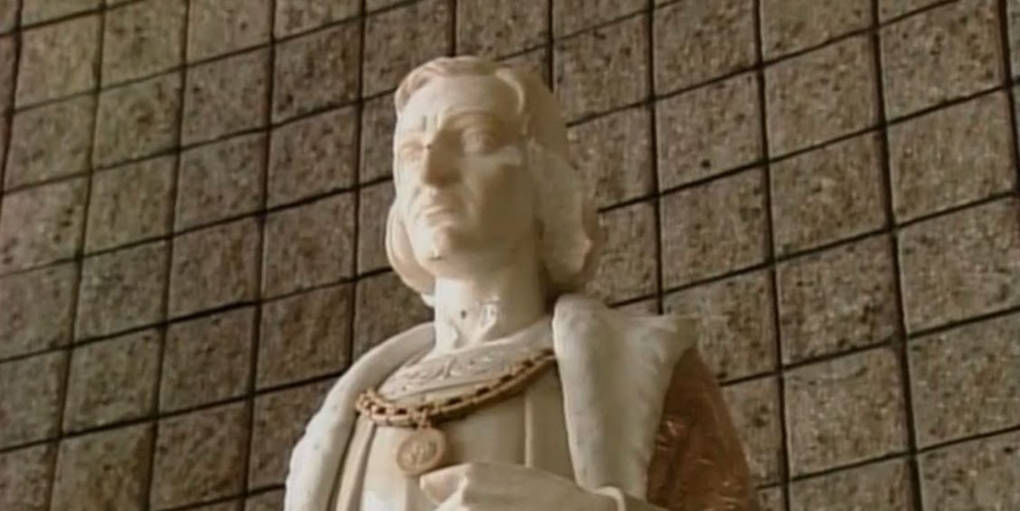
"caption": "A statue of Christopher Columbus in San Jose City Hall. ",
"description": null,
"title": "columbusbestest-1",
"credit": "CBS SF Bay Area/YouTube",
"status": "inherit",
"isLoading": false,
"fetchFailed": false
},
"news_11612605": {
"type": "attachments",
"id": "news_11612605",
"meta": {
"index": "attachments_1716263798",
"site": "news",
"id": "11612605",
"found": true
},
"parent": 11612579,
"imgSizes": {
"small": {
"file": "https://ww2.kqed.org/app/uploads/sites/10/2017/08/IMG_0104-520x390.jpg",
"width": 520,
"mimeType": "image/jpeg",
"height": 390
},
"twentyfourteen-full-width": {
"file": "https://ww2.kqed.org/app/uploads/sites/10/2017/08/IMG_0104-1038x576.jpg",
"width": 1038,
"mimeType": "image/jpeg",
"height": 576
},
"thumbnail": {
"file": "https://ww2.kqed.org/app/uploads/sites/10/2017/08/IMG_0104-160x120.jpg",
"width": 160,
"mimeType": "image/jpeg",
"height": 120
},
"fd-sm": {
"file": "https://ww2.kqed.org/app/uploads/sites/10/2017/08/IMG_0104-960x720.jpg",
"width": 960,
"mimeType": "image/jpeg",
"height": 720
},
"post-thumbnail": {
"file": "https://ww2.kqed.org/app/uploads/sites/10/2017/08/IMG_0104-672x372.jpg",
"width": 672,
"mimeType": "image/jpeg",
"height": 372
},
"xsmall": {
"file": "https://ww2.kqed.org/app/uploads/sites/10/2017/08/IMG_0104-375x281.jpg",
"width": 375,
"mimeType": "image/jpeg",
"height": 281
},
"kqedFullSize": {
"file": "https://ww2.kqed.org/app/uploads/sites/10/2017/08/IMG_0104.jpg",
"width": 4032,
"height": 3024
},
"large": {
"file": "https://ww2.kqed.org/app/uploads/sites/10/2017/08/IMG_0104-1020x765.jpg",
"width": 1020,
"mimeType": "image/jpeg",
"height": 765
},
"xlarge": {
"file": "https://ww2.kqed.org/app/uploads/sites/10/2017/08/IMG_0104-1180x885.jpg",
"width": 1180,
"mimeType": "image/jpeg",
"height": 885
},
"guest-author-50": {
"file": "https://ww2.kqed.org/app/uploads/sites/10/2017/08/IMG_0104-50x50.jpg",
"width": 50,
"mimeType": "image/jpeg",
"height": 50
},
"guest-author-96": {
"file": "https://ww2.kqed.org/app/uploads/sites/10/2017/08/IMG_0104-96x96.jpg",
"width": 96,
"mimeType": "image/jpeg",
"height": 96
},
"medium": {
"file": "https://ww2.kqed.org/app/uploads/sites/10/2017/08/IMG_0104-800x600.jpg",
"width": 800,
"mimeType": "image/jpeg",
"height": 600
},
"guest-author-64": {
"file": "https://ww2.kqed.org/app/uploads/sites/10/2017/08/IMG_0104-64x64.jpg",
"width": 64,
"mimeType": "image/jpeg",
"height": 64
},
"guest-author-32": {
"file": "https://ww2.kqed.org/app/uploads/sites/10/2017/08/IMG_0104-32x32.jpg",
"width": 32,
"mimeType": "image/jpeg",
"height": 32
},
"fd-lrg": {
"file": "https://ww2.kqed.org/app/uploads/sites/10/2017/08/IMG_0104-1920x1440.jpg",
"width": 1920,
"mimeType": "image/jpeg",
"height": 1440
},
"fd-med": {
"file": "https://ww2.kqed.org/app/uploads/sites/10/2017/08/IMG_0104-1180x885.jpg",
"width": 1180,
"mimeType": "image/jpeg",
"height": 885
},
"full-width": {
"file": "https://ww2.kqed.org/app/uploads/sites/10/2017/08/IMG_0104-1920x1440.jpg",
"width": 1920,
"mimeType": "image/jpeg",
"height": 1440
},
"detail": {
"file": "https://ww2.kqed.org/app/uploads/sites/10/2017/08/IMG_0104-150x150.jpg",
"width": 150,
"mimeType": "image/jpeg",
"height": 150
},
"guest-author-128": {
"file": "https://ww2.kqed.org/app/uploads/sites/10/2017/08/IMG_0104-128x128.jpg",
"width": 128,
"mimeType": "image/jpeg",
"height": 128
},
"xxsmall": {
"file": "https://ww2.kqed.org/app/uploads/sites/10/2017/08/IMG_0104-240x180.jpg",
"width": 240,
"mimeType": "image/jpeg",
"height": 180
}
},
"publishDate": 1502988761,
"modified": 1503526415,
"caption": "A handmade \"No Dumping\" sign in the Rock Springs neighborhood of San Jose, hit hard by a flood in February.",
"description": "A handmade \"No Dumping\" sign in the Rock Springs neighborhood of San Jose, hit hard by a flood in February.",
"title": "A handmade \"No Dumping\" sign in the neighborhood of Rock Springs",
"credit": "Tonya Mosely/KQED",
"status": "inherit",
"isLoading": false,
"fetchFailed": false
},
"news_11612797": {
"type": "attachments",
"id": "news_11612797",
"meta": {
"index": "attachments_1716263798",
"site": "news",
"id": "11612797",
"found": true
},
"title": "TOPSHOT-US-WEATHER-CALIFORNIA-FLOODS",
"publishDate": 1503014908,
"status": "inherit",
"parent": 11612712,
"modified": 1740073995,
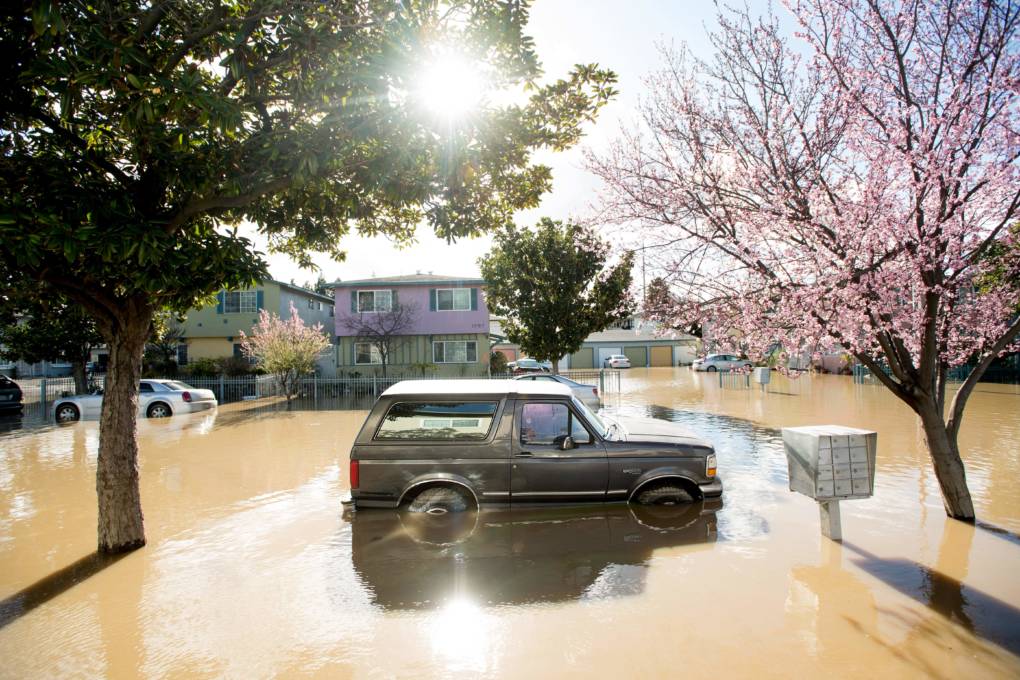
"caption": "A Ford Bronco rests in floodwaters on Feb. 22, 2017, in the Rock Springs neighborhood of San José.",
"credit": "Noah Berger/AFP/Getty Images",
"altTag": null,
"description": null,
"imgSizes": {
"thumbnail": {
"file": "https://cdn.kqed.org/wp-content/uploads/sites/10/2017/08/CoyoteCreekFlood1Getty-160x107.jpg",
"width": 160,
"height": 107,
"mimeType": "image/jpeg"
},
"medium": {
"file": "https://cdn.kqed.org/wp-content/uploads/sites/10/2017/08/CoyoteCreekFlood1Getty-800x533.jpg",
"width": 800,
"height": 533,
"mimeType": "image/jpeg"
},
"large": {
"file": "https://cdn.kqed.org/wp-content/uploads/sites/10/2017/08/CoyoteCreekFlood1Getty-1020x680.jpg",
"width": 1020,
"height": 680,
"mimeType": "image/jpeg"
},
"fd-lrg": {
"file": "https://cdn.kqed.org/wp-content/uploads/sites/10/2017/08/CoyoteCreekFlood1Getty-1920x1280.jpg",
"width": 1920,
"height": 1280,
"mimeType": "image/jpeg"
},
"fd-med": {
"file": "https://cdn.kqed.org/wp-content/uploads/sites/10/2017/08/CoyoteCreekFlood1Getty-1180x787.jpg",
"width": 1180,
"height": 787,
"mimeType": "image/jpeg"
},
"fd-sm": {
"file": "https://cdn.kqed.org/wp-content/uploads/sites/10/2017/08/CoyoteCreekFlood1Getty-960x640.jpg",
"width": 960,
"height": 640,
"mimeType": "image/jpeg"
},
"post-thumbnail": {
"file": "https://cdn.kqed.org/wp-content/uploads/sites/10/2017/08/CoyoteCreekFlood1Getty-672x372.jpg",
"width": 672,
"height": 372,
"mimeType": "image/jpeg"
},
"twentyfourteen-full-width": {
"file": "https://cdn.kqed.org/wp-content/uploads/sites/10/2017/08/CoyoteCreekFlood1Getty-1038x576.jpg",
"width": 1038,
"height": 576,
"mimeType": "image/jpeg"
},
"xxsmall": {
"file": "https://cdn.kqed.org/wp-content/uploads/sites/10/2017/08/CoyoteCreekFlood1Getty-240x160.jpg",
"width": 240,
"height": 160,
"mimeType": "image/jpeg"
},
"xsmall": {
"file": "https://cdn.kqed.org/wp-content/uploads/sites/10/2017/08/CoyoteCreekFlood1Getty-375x250.jpg",
"width": 375,
"height": 250,
"mimeType": "image/jpeg"
},
"small": {
"file": "https://cdn.kqed.org/wp-content/uploads/sites/10/2017/08/CoyoteCreekFlood1Getty-520x347.jpg",
"width": 520,
"height": 347,
"mimeType": "image/jpeg"
},
"xlarge": {
"file": "https://cdn.kqed.org/wp-content/uploads/sites/10/2017/08/CoyoteCreekFlood1Getty-1180x787.jpg",
"width": 1180,
"height": 787,
"mimeType": "image/jpeg"
},
"full-width": {
"file": "https://cdn.kqed.org/wp-content/uploads/sites/10/2017/08/CoyoteCreekFlood1Getty-1920x1280.jpg",
"width": 1920,
"height": 1280,
"mimeType": "image/jpeg"
},
"guest-author-32": {
"file": "https://cdn.kqed.org/wp-content/uploads/sites/10/2017/08/CoyoteCreekFlood1Getty-32x32.jpg",
"width": 32,
"height": 32,
"mimeType": "image/jpeg"
},
"guest-author-50": {
"file": "https://cdn.kqed.org/wp-content/uploads/sites/10/2017/08/CoyoteCreekFlood1Getty-50x50.jpg",
"width": 50,
"height": 50,
"mimeType": "image/jpeg"
},
"guest-author-64": {
"file": "https://cdn.kqed.org/wp-content/uploads/sites/10/2017/08/CoyoteCreekFlood1Getty-64x64.jpg",
"width": 64,
"height": 64,
"mimeType": "image/jpeg"
},
"guest-author-96": {
"file": "https://cdn.kqed.org/wp-content/uploads/sites/10/2017/08/CoyoteCreekFlood1Getty-96x96.jpg",
"width": 96,
"height": 96,
"mimeType": "image/jpeg"
},
"guest-author-128": {
"file": "https://cdn.kqed.org/wp-content/uploads/sites/10/2017/08/CoyoteCreekFlood1Getty-128x128.jpg",
"width": 128,
"height": 128,
"mimeType": "image/jpeg"
},
"detail": {
"file": "https://cdn.kqed.org/wp-content/uploads/sites/10/2017/08/CoyoteCreekFlood1Getty-150x150.jpg",
"width": 150,
"height": 150,
"mimeType": "image/jpeg"
},
"kqedFullSize": {
"file": "https://cdn.kqed.org/wp-content/uploads/sites/10/2017/08/CoyoteCreekFlood1Getty-e1503424526229.jpg",
"width": 1920,
"height": 1280
}
},
"isLoading": false,
"fetchFailed": false
},
"news_11552152": {
"type": "attachments",
"id": "news_11552152",
"meta": {
"index": "attachments_1716263798",
"site": "news",
"id": "11552152",
"found": true
},
"parent": 11551947,
"imgSizes": {
"small": {
"file": "https://ww2.kqed.org/app/uploads/sites/10/2017/07/RS25563_20170524_Rosicrucian_credit_BertJohnson-8-qut-520x347.jpg",
"width": 520,
"mimeType": "image/jpeg",
"height": 347
},
"twentyfourteen-full-width": {
"file": "https://ww2.kqed.org/app/uploads/sites/10/2017/07/RS25563_20170524_Rosicrucian_credit_BertJohnson-8-qut-1038x576.jpg",
"width": 1038,
"mimeType": "image/jpeg",
"height": 576
},
"thumbnail": {
"file": "https://ww2.kqed.org/app/uploads/sites/10/2017/07/RS25563_20170524_Rosicrucian_credit_BertJohnson-8-qut-160x107.jpg",
"width": 160,
"mimeType": "image/jpeg",
"height": 107
},
"fd-sm": {
"file": "https://ww2.kqed.org/app/uploads/sites/10/2017/07/RS25563_20170524_Rosicrucian_credit_BertJohnson-8-qut-960x640.jpg",
"width": 960,
"mimeType": "image/jpeg",
"height": 640
},
"post-thumbnail": {
"file": "https://ww2.kqed.org/app/uploads/sites/10/2017/07/RS25563_20170524_Rosicrucian_credit_BertJohnson-8-qut-672x372.jpg",
"width": 672,
"mimeType": "image/jpeg",
"height": 372
},
"xsmall": {
"file": "https://ww2.kqed.org/app/uploads/sites/10/2017/07/RS25563_20170524_Rosicrucian_credit_BertJohnson-8-qut-375x250.jpg",
"width": 375,
"mimeType": "image/jpeg",
"height": 250
},
"kqedFullSize": {
"file": "https://ww2.kqed.org/app/uploads/sites/10/2017/07/RS25563_20170524_Rosicrucian_credit_BertJohnson-8-qut.jpg",
"width": 1920,
"height": 1280
},
"large": {
"file": "https://ww2.kqed.org/app/uploads/sites/10/2017/07/RS25563_20170524_Rosicrucian_credit_BertJohnson-8-qut-1020x680.jpg",
"width": 1020,
"mimeType": "image/jpeg",
"height": 680
},
"xlarge": {
"file": "https://ww2.kqed.org/app/uploads/sites/10/2017/07/RS25563_20170524_Rosicrucian_credit_BertJohnson-8-qut-1180x787.jpg",
"width": 1180,
"mimeType": "image/jpeg",
"height": 787
},
"guest-author-50": {
"file": "https://ww2.kqed.org/app/uploads/sites/10/2017/07/RS25563_20170524_Rosicrucian_credit_BertJohnson-8-qut-50x50.jpg",
"width": 50,
"mimeType": "image/jpeg",
"height": 50
},
"guest-author-96": {
"file": "https://ww2.kqed.org/app/uploads/sites/10/2017/07/RS25563_20170524_Rosicrucian_credit_BertJohnson-8-qut-96x96.jpg",
"width": 96,
"mimeType": "image/jpeg",
"height": 96
},
"medium": {
"file": "https://ww2.kqed.org/app/uploads/sites/10/2017/07/RS25563_20170524_Rosicrucian_credit_BertJohnson-8-qut-800x533.jpg",
"width": 800,
"mimeType": "image/jpeg",
"height": 533
},
"guest-author-64": {
"file": "https://ww2.kqed.org/app/uploads/sites/10/2017/07/RS25563_20170524_Rosicrucian_credit_BertJohnson-8-qut-64x64.jpg",
"width": 64,
"mimeType": "image/jpeg",
"height": 64
},
"guest-author-32": {
"file": "https://ww2.kqed.org/app/uploads/sites/10/2017/07/RS25563_20170524_Rosicrucian_credit_BertJohnson-8-qut-32x32.jpg",
"width": 32,
"mimeType": "image/jpeg",
"height": 32
},
"fd-lrg": {
"file": "https://ww2.kqed.org/app/uploads/sites/10/2017/07/RS25563_20170524_Rosicrucian_credit_BertJohnson-8-qut-1920x1280.jpg",
"width": 1920,
"mimeType": "image/jpeg",
"height": 1280
},
"fd-med": {
"file": "https://ww2.kqed.org/app/uploads/sites/10/2017/07/RS25563_20170524_Rosicrucian_credit_BertJohnson-8-qut-1180x787.jpg",
"width": 1180,
"mimeType": "image/jpeg",
"height": 787
},
"full-width": {
"file": "https://ww2.kqed.org/app/uploads/sites/10/2017/07/RS25563_20170524_Rosicrucian_credit_BertJohnson-8-qut-1920x1280.jpg",
"width": 1920,
"mimeType": "image/jpeg",
"height": 1280
},
"detail": {
"file": "https://ww2.kqed.org/app/uploads/sites/10/2017/07/RS25563_20170524_Rosicrucian_credit_BertJohnson-8-qut-150x150.jpg",
"width": 150,
"mimeType": "image/jpeg",
"height": 150
},
"guest-author-128": {
"file": "https://ww2.kqed.org/app/uploads/sites/10/2017/07/RS25563_20170524_Rosicrucian_credit_BertJohnson-8-qut-128x128.jpg",
"width": 128,
"mimeType": "image/jpeg",
"height": 128
},
"xxsmall": {
"file": "https://ww2.kqed.org/app/uploads/sites/10/2017/07/RS25563_20170524_Rosicrucian_credit_BertJohnson-8-qut-240x160.jpg",
"width": 240,
"mimeType": "image/jpeg",
"height": 160
}
},
"publishDate": 1499384175,
"modified": 1499819782,
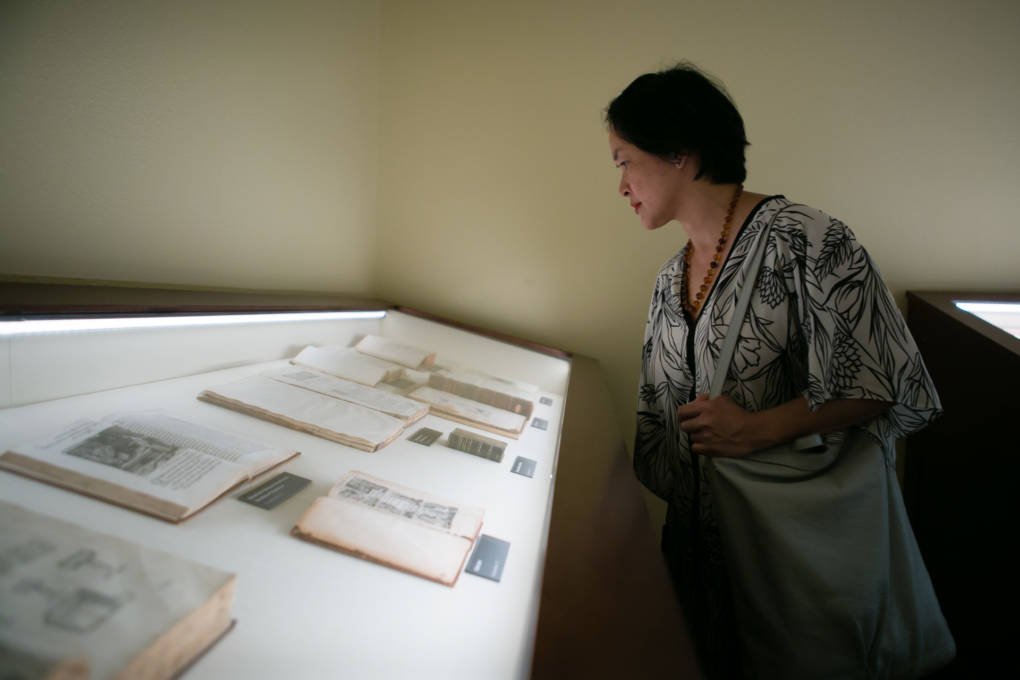
"caption": "The research library at Rosicrucian Park includes ancient texts dating back to the Renaissance era in Europe.",
"description": null,
"title": "RS25563_20170524_Rosicrucian_credit_BertJohnson-8-qut",
"credit": "Bert Johnson/KQED",
"status": "inherit",
"isLoading": false,
"fetchFailed": false
},
"news_11535708": {
"type": "attachments",
"id": "news_11535708",
"meta": {
"index": "attachments_1716263798",
"site": "news",
"id": "11535708",
"found": true
},
"parent": 11535588,
"imgSizes": {
"small": {
"file": "https://ww2.kqed.org/app/uploads/sites/10/2017/06/RS12714_491213158_af42d77b95_o-qut-520x320.jpg",
"width": 520,
"mimeType": "image/jpeg",
"height": 320
},
"twentyfourteen-full-width": {
"file": "https://ww2.kqed.org/app/uploads/sites/10/2017/06/RS12714_491213158_af42d77b95_o-qut-1038x576.jpg",
"width": 1038,
"mimeType": "image/jpeg",
"height": 576
},
"thumbnail": {
"file": "https://ww2.kqed.org/app/uploads/sites/10/2017/06/RS12714_491213158_af42d77b95_o-qut-160x98.jpg",
"width": 160,
"mimeType": "image/jpeg",
"height": 98
},
"fd-sm": {
"file": "https://ww2.kqed.org/app/uploads/sites/10/2017/06/RS12714_491213158_af42d77b95_o-qut-960x590.jpg",
"width": 960,
"mimeType": "image/jpeg",
"height": 590
},
"post-thumbnail": {
"file": "https://ww2.kqed.org/app/uploads/sites/10/2017/06/RS12714_491213158_af42d77b95_o-qut-672x372.jpg",
"width": 672,
"mimeType": "image/jpeg",
"height": 372
},
"xsmall": {
"file": "https://ww2.kqed.org/app/uploads/sites/10/2017/06/RS12714_491213158_af42d77b95_o-qut-375x230.jpg",
"width": 375,
"mimeType": "image/jpeg",
"height": 230
},
"kqedFullSize": {
"file": "https://ww2.kqed.org/app/uploads/sites/10/2017/06/RS12714_491213158_af42d77b95_o-qut.jpg",
"width": 1440,
"height": 885
},
"large": {
"file": "https://ww2.kqed.org/app/uploads/sites/10/2017/06/RS12714_491213158_af42d77b95_o-qut-1020x627.jpg",
"width": 1020,
"mimeType": "image/jpeg",
"height": 627
},
"xlarge": {
"file": "https://ww2.kqed.org/app/uploads/sites/10/2017/06/RS12714_491213158_af42d77b95_o-qut-1180x725.jpg",
"width": 1180,
"mimeType": "image/jpeg",
"height": 725
},
"guest-author-50": {
"file": "https://ww2.kqed.org/app/uploads/sites/10/2017/06/RS12714_491213158_af42d77b95_o-qut-50x50.jpg",
"width": 50,
"mimeType": "image/jpeg",
"height": 50
},
"guest-author-96": {
"file": "https://ww2.kqed.org/app/uploads/sites/10/2017/06/RS12714_491213158_af42d77b95_o-qut-96x96.jpg",
"width": 96,
"mimeType": "image/jpeg",
"height": 96
},
"medium": {
"file": "https://ww2.kqed.org/app/uploads/sites/10/2017/06/RS12714_491213158_af42d77b95_o-qut-800x492.jpg",
"width": 800,
"mimeType": "image/jpeg",
"height": 492
},
"guest-author-64": {
"file": "https://ww2.kqed.org/app/uploads/sites/10/2017/06/RS12714_491213158_af42d77b95_o-qut-64x64.jpg",
"width": 64,
"mimeType": "image/jpeg",
"height": 64
},
"guest-author-32": {
"file": "https://ww2.kqed.org/app/uploads/sites/10/2017/06/RS12714_491213158_af42d77b95_o-qut-32x32.jpg",
"width": 32,
"mimeType": "image/jpeg",
"height": 32
},
"fd-med": {
"file": "https://ww2.kqed.org/app/uploads/sites/10/2017/06/RS12714_491213158_af42d77b95_o-qut-1180x725.jpg",
"width": 1180,
"mimeType": "image/jpeg",
"height": 725
},
"detail": {
"file": "https://ww2.kqed.org/app/uploads/sites/10/2017/06/RS12714_491213158_af42d77b95_o-qut-150x150.jpg",
"width": 150,
"mimeType": "image/jpeg",
"height": 150
},
"guest-author-128": {
"file": "https://ww2.kqed.org/app/uploads/sites/10/2017/06/RS12714_491213158_af42d77b95_o-qut-128x128.jpg",
"width": 128,
"mimeType": "image/jpeg",
"height": 128
},
"xxsmall": {
"file": "https://ww2.kqed.org/app/uploads/sites/10/2017/06/RS12714_491213158_af42d77b95_o-qut-240x148.jpg",
"width": 240,
"mimeType": "image/jpeg",
"height": 148
}
},
"publishDate": 1498603501,
"modified": 1498604279,
"caption": "A San Jose police car. The City of San Jose is receiving reports of illegal use of fireworks ahead of July 4.",
"description": null,
"title": "RS12714_491213158_af42d77b95_o-qut",
"credit": "Thomas Hawk/Flickr",
"status": "inherit",
"isLoading": false,
"fetchFailed": false
},
"bayareabites_118497": {
"type": "attachments",
"id": "bayareabites_118497",
"meta": {
"index": "attachments_1716263798",
"site": "bayareabites",
"id": "118497",
"found": true
},
"parent": 118478,
"imgSizes": {
"small": {
"file": "https://ww2.kqed.org/app/uploads/sites/24/2017/06/RS25759_Photo-May-25-12-53-19-PM-qut-520x293.jpg",
"width": 520,
"mimeType": "image/jpeg",
"height": 293
},
"twentyfourteen-full-width": {
"file": "https://ww2.kqed.org/app/uploads/sites/24/2017/06/RS25759_Photo-May-25-12-53-19-PM-qut-1038x576.jpg",
"width": 1038,
"mimeType": "image/jpeg",
"height": 576
},
"thumbnail": {
"file": "https://ww2.kqed.org/app/uploads/sites/24/2017/06/RS25759_Photo-May-25-12-53-19-PM-qut-160x90.jpg",
"width": 160,
"mimeType": "image/jpeg",
"height": 90
},
"fd-sm": {
"file": "https://ww2.kqed.org/app/uploads/sites/24/2017/06/RS25759_Photo-May-25-12-53-19-PM-qut-960x540.jpg",
"width": 960,
"mimeType": "image/jpeg",
"height": 540
},
"post-thumbnail": {
"file": "https://ww2.kqed.org/app/uploads/sites/24/2017/06/RS25759_Photo-May-25-12-53-19-PM-qut-672x372.jpg",
"width": 672,
"mimeType": "image/jpeg",
"height": 372
},
"xsmall": {
"file": "https://ww2.kqed.org/app/uploads/sites/24/2017/06/RS25759_Photo-May-25-12-53-19-PM-qut-375x211.jpg",
"width": 375,
"mimeType": "image/jpeg",
"height": 211
},
"kqedFullSize": {
"file": "https://ww2.kqed.org/app/uploads/sites/24/2017/06/RS25759_Photo-May-25-12-53-19-PM-qut.jpg",
"width": 1920,
"height": 1080
},
"large": {
"file": "https://ww2.kqed.org/app/uploads/sites/24/2017/06/RS25759_Photo-May-25-12-53-19-PM-qut-1020x574.jpg",
"width": 1020,
"mimeType": "image/jpeg",
"height": 574
},
"xlarge": {
"file": "https://ww2.kqed.org/app/uploads/sites/24/2017/06/RS25759_Photo-May-25-12-53-19-PM-qut-1180x664.jpg",
"width": 1180,
"mimeType": "image/jpeg",
"height": 664
},
"guest-author-50": {
"file": "https://ww2.kqed.org/app/uploads/sites/24/2017/06/RS25759_Photo-May-25-12-53-19-PM-qut-50x50.jpg",
"width": 50,
"mimeType": "image/jpeg",
"height": 50
},
"guest-author-96": {
"file": "https://ww2.kqed.org/app/uploads/sites/24/2017/06/RS25759_Photo-May-25-12-53-19-PM-qut-96x96.jpg",
"width": 96,
"mimeType": "image/jpeg",
"height": 96
},
"medium": {
"file": "https://ww2.kqed.org/app/uploads/sites/24/2017/06/RS25759_Photo-May-25-12-53-19-PM-qut-800x450.jpg",
"width": 800,
"mimeType": "image/jpeg",
"height": 450
},
"guest-author-64": {
"file": "https://ww2.kqed.org/app/uploads/sites/24/2017/06/RS25759_Photo-May-25-12-53-19-PM-qut-64x64.jpg",
"width": 64,
"mimeType": "image/jpeg",
"height": 64
},
"guest-author-32": {
"file": "https://ww2.kqed.org/app/uploads/sites/24/2017/06/RS25759_Photo-May-25-12-53-19-PM-qut-32x32.jpg",
"width": 32,
"mimeType": "image/jpeg",
"height": 32
},
"fd-lrg": {
"file": "https://ww2.kqed.org/app/uploads/sites/24/2017/06/RS25759_Photo-May-25-12-53-19-PM-qut-1920x1080.jpg",
"width": 1920,
"mimeType": "image/jpeg",
"height": 1080
},
"fd-med": {
"file": "https://ww2.kqed.org/app/uploads/sites/24/2017/06/RS25759_Photo-May-25-12-53-19-PM-qut-1180x664.jpg",
"width": 1180,
"mimeType": "image/jpeg",
"height": 664
},
"full-width": {
"file": "https://ww2.kqed.org/app/uploads/sites/24/2017/06/RS25759_Photo-May-25-12-53-19-PM-qut-1920x1080.jpg",
"width": 1920,
"mimeType": "image/jpeg",
"height": 1080
},
"detail": {
"file": "https://ww2.kqed.org/app/uploads/sites/24/2017/06/RS25759_Photo-May-25-12-53-19-PM-qut-150x150.jpg",
"width": 150,
"mimeType": "image/jpeg",
"height": 150
},
"medium_large": {
"file": "https://ww2.kqed.org/app/uploads/sites/24/2017/06/RS25759_Photo-May-25-12-53-19-PM-qut-768x432.jpg",
"width": 768,
"mimeType": "image/jpeg",
"height": 432
},
"guest-author-128": {
"file": "https://ww2.kqed.org/app/uploads/sites/24/2017/06/RS25759_Photo-May-25-12-53-19-PM-qut-128x128.jpg",
"width": 128,
"mimeType": "image/jpeg",
"height": 128
},
"xxsmall": {
"file": "https://ww2.kqed.org/app/uploads/sites/24/2017/06/RS25759_Photo-May-25-12-53-19-PM-qut-240x135.jpg",
"width": 240,
"mimeType": "image/jpeg",
"height": 135
}
},
"publishDate": 1498082007,
"modified": 1498082074,
"caption": "San Jose is the latest city to make use of a state law letting landlords to loan out urban land for agriculture.",
"description": "San Jose is the latest city to make use of a state law letting landlords to loan out urban land for agriculture.",
"title": "RS25759_Photo-May-25-12-53-19-PM-qut",
"credit": "Rachael Myrow",
"status": "inherit",
"isLoading": false,
"fetchFailed": false
},
"news_10348129": {
"type": "attachments",
"id": "news_10348129",
"meta": {
"index": "attachments_1716263798",
"site": "news",
"id": "10348129",
"found": true
},
"parent": 10348125,
"imgSizes": {
"twentyfourteen-full-width": {
"file": "https://ww2.kqed.org/app/uploads/sites/10/2014/11/Liccardo1-1038x576.jpg",
"width": 1038,
"mimeType": "image/jpeg",
"height": 576
},
"thumbnail": {
"file": "https://ww2.kqed.org/app/uploads/sites/10/2014/11/Liccardo1-400x266.jpg",
"width": 400,
"mimeType": "image/jpeg",
"height": 266
},
"post-thumbnail": {
"file": "https://ww2.kqed.org/app/uploads/sites/10/2014/11/Liccardo1-672x372.jpg",
"width": 672,
"mimeType": "image/jpeg",
"height": 372
},
"kqedFullSize": {
"file": "https://ww2.kqed.org/app/uploads/sites/10/2014/11/Liccardo1-e1415817836306.jpg",
"width": 1440,
"height": 960
},
"large": {
"file": "https://ww2.kqed.org/app/uploads/sites/10/2014/11/Liccardo1-1440x960.jpg",
"width": 1440,
"mimeType": "image/jpeg",
"height": 960
},
"guest-author-96": {
"file": "https://ww2.kqed.org/app/uploads/sites/10/2014/11/Liccardo1-96x96.jpg",
"width": 96,
"mimeType": "image/jpeg",
"height": 96
},
"medium": {
"file": "https://ww2.kqed.org/app/uploads/sites/10/2014/11/Liccardo1-800x533.jpg",
"width": 800,
"mimeType": "image/jpeg",
"height": 533
},
"guest-author-64": {
"file": "https://ww2.kqed.org/app/uploads/sites/10/2014/11/Liccardo1-64x64.jpg",
"width": 64,
"mimeType": "image/jpeg",
"height": 64
},
"detail": {
"file": "https://ww2.kqed.org/app/uploads/sites/10/2014/11/Liccardo1-75x75.jpg",
"width": 75,
"mimeType": "image/jpeg",
"height": 75
},
"guest-author-32": {
"file": "https://ww2.kqed.org/app/uploads/sites/10/2014/11/Liccardo1-32x32.jpg",
"width": 32,
"mimeType": "image/jpeg",
"height": 32
},
"guest-author-128": {
"file": "https://ww2.kqed.org/app/uploads/sites/10/2014/11/Liccardo1-128x128.jpg",
"width": 128,
"mimeType": "image/jpeg",
"height": 128
}
},
"publishDate": 1415769147,
"modified": 1416003871,
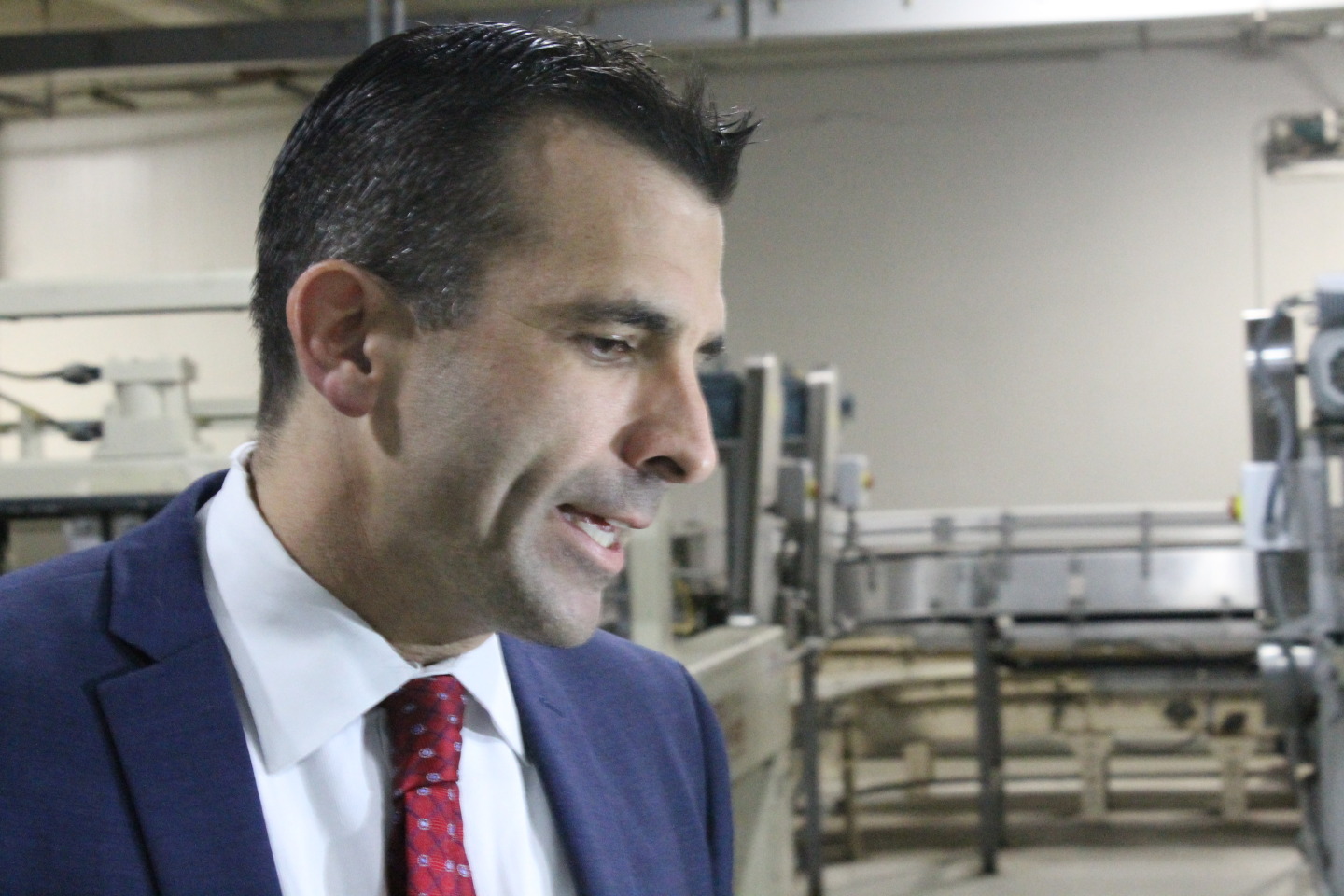
"caption": "San Jose's Mayor-elect Sam Liccardo on election night. (Nicholas Ibarra / SJSU)",
"description": null,
"title": "Liccardo",
"credit": null,
"status": "inherit",
"isLoading": false,
"fetchFailed": false
},
"news_11327177": {
"type": "attachments",
"id": "news_11327177",
"meta": {
"index": "attachments_1716263798",
"site": "news",
"id": "11327177",
"found": true
},
"parent": 11327172,
"imgSizes": {
"small": {
"file": "https://ww2.kqed.org/app/uploads/sites/10/2017/02/RS24298_IMG_6647-qut-2-520x390.jpg",
"width": 520,
"mimeType": "image/jpeg",
"height": 390
},
"twentyfourteen-full-width": {
"file": "https://ww2.kqed.org/app/uploads/sites/10/2017/02/RS24298_IMG_6647-qut-2-1038x576.jpg",
"width": 1038,
"mimeType": "image/jpeg",
"height": 576
},
"thumbnail": {
"file": "https://ww2.kqed.org/app/uploads/sites/10/2017/02/RS24298_IMG_6647-qut-2-160x120.jpg",
"width": 160,
"mimeType": "image/jpeg",
"height": 120
},
"fd-sm": {
"file": "https://ww2.kqed.org/app/uploads/sites/10/2017/02/RS24298_IMG_6647-qut-2-960x720.jpg",
"width": 960,
"mimeType": "image/jpeg",
"height": 720
},
"post-thumbnail": {
"file": "https://ww2.kqed.org/app/uploads/sites/10/2017/02/RS24298_IMG_6647-qut-2-672x372.jpg",
"width": 672,
"mimeType": "image/jpeg",
"height": 372
},
"xsmall": {
"file": "https://ww2.kqed.org/app/uploads/sites/10/2017/02/RS24298_IMG_6647-qut-2-375x281.jpg",
"width": 375,
"mimeType": "image/jpeg",
"height": 281
},
"kqedFullSize": {
"file": "https://ww2.kqed.org/app/uploads/sites/10/2017/02/RS24298_IMG_6647-qut-2.jpg",
"width": 1920,
"height": 1440
},
"large": {
"file": "https://ww2.kqed.org/app/uploads/sites/10/2017/02/RS24298_IMG_6647-qut-2-1020x765.jpg",
"width": 1020,
"mimeType": "image/jpeg",
"height": 765
},
"xlarge": {
"file": "https://ww2.kqed.org/app/uploads/sites/10/2017/02/RS24298_IMG_6647-qut-2-1180x885.jpg",
"width": 1180,
"mimeType": "image/jpeg",
"height": 885
},
"guest-author-50": {
"file": "https://ww2.kqed.org/app/uploads/sites/10/2017/02/RS24298_IMG_6647-qut-2-50x50.jpg",
"width": 50,
"mimeType": "image/jpeg",
"height": 50
},
"guest-author-96": {
"file": "https://ww2.kqed.org/app/uploads/sites/10/2017/02/RS24298_IMG_6647-qut-2-96x96.jpg",
"width": 96,
"mimeType": "image/jpeg",
"height": 96
},
"medium": {
"file": "https://ww2.kqed.org/app/uploads/sites/10/2017/02/RS24298_IMG_6647-qut-2-800x600.jpg",
"width": 800,
"mimeType": "image/jpeg",
"height": 600
},
"guest-author-64": {
"file": "https://ww2.kqed.org/app/uploads/sites/10/2017/02/RS24298_IMG_6647-qut-2-64x64.jpg",
"width": 64,
"mimeType": "image/jpeg",
"height": 64
},
"guest-author-32": {
"file": "https://ww2.kqed.org/app/uploads/sites/10/2017/02/RS24298_IMG_6647-qut-2-32x32.jpg",
"width": 32,
"mimeType": "image/jpeg",
"height": 32
},
"fd-lrg": {
"file": "https://ww2.kqed.org/app/uploads/sites/10/2017/02/RS24298_IMG_6647-qut-2-1920x1440.jpg",
"width": 1920,
"mimeType": "image/jpeg",
"height": 1440
},
"fd-med": {
"file": "https://ww2.kqed.org/app/uploads/sites/10/2017/02/RS24298_IMG_6647-qut-2-1180x885.jpg",
"width": 1180,
"mimeType": "image/jpeg",
"height": 885
},
"full-width": {
"file": "https://ww2.kqed.org/app/uploads/sites/10/2017/02/RS24298_IMG_6647-qut-2-1920x1440.jpg",
"width": 1920,
"mimeType": "image/jpeg",
"height": 1440
},
"detail": {
"file": "https://ww2.kqed.org/app/uploads/sites/10/2017/02/RS24298_IMG_6647-qut-2-150x150.jpg",
"width": 150,
"mimeType": "image/jpeg",
"height": 150
},
"guest-author-128": {
"file": "https://ww2.kqed.org/app/uploads/sites/10/2017/02/RS24298_IMG_6647-qut-2-128x128.jpg",
"width": 128,
"mimeType": "image/jpeg",
"height": 128
},
"xxsmall": {
"file": "https://ww2.kqed.org/app/uploads/sites/10/2017/02/RS24298_IMG_6647-qut-2-240x180.jpg",
"width": 240,
"mimeType": "image/jpeg",
"height": 180
}
},
"publishDate": 1487721092,
"modified": 1487721494,
"caption": "San Jose's Fire Department rescues people caught in floodwaters on Feb. 21, 2017.",
"description": null,
"title": "RS24298_IMG_6647-qut",
"credit": "Peter Jon Shuler/KQED",
"status": "inherit",
"isLoading": false,
"fetchFailed": false
},
"news_11296502": {
"type": "attachments",
"id": "news_11296502",
"meta": {
"index": "attachments_1716263798",
"site": "news",
"id": "11296502",
"found": true
},
"parent": 10953849,
"imgSizes": {
"small": {
"file": "https://ww2.kqed.org/app/uploads/sites/10/2016/09/SanJose2-520x293.png",
"width": 520,
"mimeType": "image/png",
"height": 293
},
"thumbnail": {
"file": "https://ww2.kqed.org/app/uploads/sites/10/2016/09/SanJose2-160x90.png",
"width": 160,
"mimeType": "image/png",
"height": 90
},
"post-thumbnail": {
"file": "https://ww2.kqed.org/app/uploads/sites/10/2016/09/SanJose2-672x372.png",
"width": 672,
"mimeType": "image/png",
"height": 372
},
"xsmall": {
"file": "https://ww2.kqed.org/app/uploads/sites/10/2016/09/SanJose2-375x211.png",
"width": 375,
"mimeType": "image/png",
"height": 211
},
"kqedFullSize": {
"file": "https://ww2.kqed.org/app/uploads/sites/10/2016/09/SanJose2.png",
"width": 679,
"height": 382
},
"guest-author-50": {
"file": "https://ww2.kqed.org/app/uploads/sites/10/2016/09/SanJose2-50x50.png",
"width": 50,
"mimeType": "image/png",
"height": 50
},
"guest-author-96": {
"file": "https://ww2.kqed.org/app/uploads/sites/10/2016/09/SanJose2-96x96.png",
"width": 96,
"mimeType": "image/png",
"height": 96
},
"guest-author-64": {
"file": "https://ww2.kqed.org/app/uploads/sites/10/2016/09/SanJose2-64x64.png",
"width": 64,
"mimeType": "image/png",
"height": 64
},
"guest-author-32": {
"file": "https://ww2.kqed.org/app/uploads/sites/10/2016/09/SanJose2-32x32.png",
"width": 32,
"mimeType": "image/png",
"height": 32
},
"jmtc-small-thumb": {
"file": "https://ww2.kqed.org/app/uploads/sites/10/2016/09/SanJose2-280x150.png",
"width": 280,
"mimeType": "image/png",
"height": 150
},
"detail": {
"file": "https://ww2.kqed.org/app/uploads/sites/10/2016/09/SanJose2-150x150.png",
"width": 150,
"mimeType": "image/png",
"height": 150
},
"guest-author-128": {
"file": "https://ww2.kqed.org/app/uploads/sites/10/2016/09/SanJose2-128x128.png",
"width": 128,
"mimeType": "image/png",
"height": 128
},
"xxsmall": {
"file": "https://ww2.kqed.org/app/uploads/sites/10/2016/09/SanJose2-240x135.png",
"width": 240,
"mimeType": "image/png",
"height": 135
}
},
"publishDate": 1485978794,
"modified": 1485978794,
"caption": null,
"description": null,
"title": "SanJose2",
"credit": null,
"status": "inherit",
"isLoading": false,
"fetchFailed": false
},
"arts_12709109": {
"type": "attachments",
"id": "arts_12709109",
"meta": {
"index": "attachments_1716263798",
"site": "arts",
"id": "12709109",
"found": true
},
"parent": 12708718,
"imgSizes": {
"small": {
"file": "https://ww2.kqed.org/app/uploads/sites/2/2017/02/RS23970_Proverbs-22-v6-001-qut-520x293.jpg",
"width": 520,
"mimeType": "image/jpeg",
"height": 293
},
"twentyfourteen-full-width": {
"file": "https://ww2.kqed.org/app/uploads/sites/2/2017/02/RS23970_Proverbs-22-v6-001-qut-1038x576.jpg",
"width": 1038,
"mimeType": "image/jpeg",
"height": 576
},
"thumbnail": {
"file": "https://ww2.kqed.org/app/uploads/sites/2/2017/02/RS23970_Proverbs-22-v6-001-qut-160x90.jpg",
"width": 160,
"mimeType": "image/jpeg",
"height": 90
},
"fd-sm": {
"file": "https://ww2.kqed.org/app/uploads/sites/2/2017/02/RS23970_Proverbs-22-v6-001-qut-960x541.jpg",
"width": 960,
"mimeType": "image/jpeg",
"height": 541
},
"post-thumbnail": {
"file": "https://ww2.kqed.org/app/uploads/sites/2/2017/02/RS23970_Proverbs-22-v6-001-qut-672x372.jpg",
"width": 672,
"mimeType": "image/jpeg",
"height": 372
},
"xsmall": {
"file": "https://ww2.kqed.org/app/uploads/sites/2/2017/02/RS23970_Proverbs-22-v6-001-qut-375x211.jpg",
"width": 375,
"mimeType": "image/jpeg",
"height": 211
},
"kqedFullSize": {
"file": "https://ww2.kqed.org/app/uploads/sites/2/2017/02/RS23970_Proverbs-22-v6-001-qut.jpg",
"width": 1920,
"height": 1081
},
"large": {
"file": "https://ww2.kqed.org/app/uploads/sites/2/2017/02/RS23970_Proverbs-22-v6-001-qut-1020x574.jpg",
"width": 1020,
"mimeType": "image/jpeg",
"height": 574
},
"xlarge": {
"file": "https://ww2.kqed.org/app/uploads/sites/2/2017/02/RS23970_Proverbs-22-v6-001-qut-1180x664.jpg",
"width": 1180,
"mimeType": "image/jpeg",
"height": 664
},
"guest-author-50": {
"file": "https://ww2.kqed.org/app/uploads/sites/2/2017/02/RS23970_Proverbs-22-v6-001-qut-50x50.jpg",
"width": 50,
"mimeType": "image/jpeg",
"height": 50
},
"guest-author-96": {
"file": "https://ww2.kqed.org/app/uploads/sites/2/2017/02/RS23970_Proverbs-22-v6-001-qut-96x96.jpg",
"width": 96,
"mimeType": "image/jpeg",
"height": 96
},
"medium": {
"file": "https://ww2.kqed.org/app/uploads/sites/2/2017/02/RS23970_Proverbs-22-v6-001-qut-800x450.jpg",
"width": 800,
"mimeType": "image/jpeg",
"height": 450
},
"guest-author-64": {
"file": "https://ww2.kqed.org/app/uploads/sites/2/2017/02/RS23970_Proverbs-22-v6-001-qut-64x64.jpg",
"width": 64,
"mimeType": "image/jpeg",
"height": 64
},
"guest-author-32": {
"file": "https://ww2.kqed.org/app/uploads/sites/2/2017/02/RS23970_Proverbs-22-v6-001-qut-32x32.jpg",
"width": 32,
"mimeType": "image/jpeg",
"height": 32
},
"fd-lrg": {
"file": "https://ww2.kqed.org/app/uploads/sites/2/2017/02/RS23970_Proverbs-22-v6-001-qut-1920x1081.jpg",
"width": 1920,
"mimeType": "image/jpeg",
"height": 1081
},
"fd-med": {
"file": "https://ww2.kqed.org/app/uploads/sites/2/2017/02/RS23970_Proverbs-22-v6-001-qut-1180x664.jpg",
"width": 1180,
"mimeType": "image/jpeg",
"height": 664
},
"full-width": {
"file": "https://ww2.kqed.org/app/uploads/sites/2/2017/02/RS23970_Proverbs-22-v6-001-qut-1920x1081.jpg",
"width": 1920,
"mimeType": "image/jpeg",
"height": 1081
},
"detail": {
"file": "https://ww2.kqed.org/app/uploads/sites/2/2017/02/RS23970_Proverbs-22-v6-001-qut-150x150.jpg",
"width": 150,
"mimeType": "image/jpeg",
"height": 150
},
"medium_large": {
"file": "https://ww2.kqed.org/app/uploads/sites/2/2017/02/RS23970_Proverbs-22-v6-001-qut-768x432.jpg",
"width": 768,
"mimeType": "image/jpeg",
"height": 432
},
"guest-author-128": {
"file": "https://ww2.kqed.org/app/uploads/sites/2/2017/02/RS23970_Proverbs-22-v6-001-qut-128x128.jpg",
"width": 128,
"mimeType": "image/jpeg",
"height": 128
},
"xxsmall": {
"file": "https://ww2.kqed.org/app/uploads/sites/2/2017/02/RS23970_Proverbs-22-v6-001-qut-240x135.jpg",
"width": 240,
"mimeType": "image/jpeg",
"height": 135
}
},
"publishDate": 1485987918,
"modified": 1486762489,
"caption": "Detail of \"Proverbs 22 v6\" by San Francisco visual artist Mark Harris. This is one of 11 paintings initially up in the administrative offices of the East Side Union High School District for African American History Month. ",
"description": "Detail of \"Proverbs 22 v6\" by San Francisco visual artist Mark Harris. This is one 11 paintings initially up in the administrative offices of the East Side Union High School District for African American History Month. ",
"title": "RS23970_Proverbs 22 v6 -001-qut",
"credit": "Photo: Courtesy of Mark Harris",
"status": "inherit",
"isLoading": false,
"fetchFailed": false
},
"arts_12686212": {
"type": "attachments",
"id": "arts_12686212",
"meta": {
"index": "attachments_1716263798",
"site": "arts",
"id": "12686212",
"found": true
},
"parent": 12685435,
"imgSizes": {
"small": {
"file": "https://ww2.kqed.org/app/uploads/sites/2/2017/01/Photo-Jan-23-7-24-06-PM-520x292.jpg",
"width": 520,
"mimeType": "image/jpeg",
"height": 292
},
"twentyfourteen-full-width": {
"file": "https://ww2.kqed.org/app/uploads/sites/2/2017/01/Photo-Jan-23-7-24-06-PM-1038x576.jpg",
"width": 1038,
"mimeType": "image/jpeg",
"height": 576
},
"thumbnail": {
"file": "https://ww2.kqed.org/app/uploads/sites/2/2017/01/Photo-Jan-23-7-24-06-PM-160x90.jpg",
"width": 160,
"mimeType": "image/jpeg",
"height": 90
},
"fd-sm": {
"file": "https://ww2.kqed.org/app/uploads/sites/2/2017/01/Photo-Jan-23-7-24-06-PM-960x540.jpg",
"width": 960,
"mimeType": "image/jpeg",
"height": 540
},
"post-thumbnail": {
"file": "https://ww2.kqed.org/app/uploads/sites/2/2017/01/Photo-Jan-23-7-24-06-PM-672x372.jpg",
"width": 672,
"mimeType": "image/jpeg",
"height": 372
},
"xsmall": {
"file": "https://ww2.kqed.org/app/uploads/sites/2/2017/01/Photo-Jan-23-7-24-06-PM-375x211.jpg",
"width": 375,
"mimeType": "image/jpeg",
"height": 211
},
"kqedFullSize": {
"file": "https://ww2.kqed.org/app/uploads/sites/2/2017/01/Photo-Jan-23-7-24-06-PM.jpg",
"width": 2048,
"height": 1151
},
"large": {
"file": "https://ww2.kqed.org/app/uploads/sites/2/2017/01/Photo-Jan-23-7-24-06-PM-1020x573.jpg",
"width": 1020,
"mimeType": "image/jpeg",
"height": 573
},
"xlarge": {
"file": "https://ww2.kqed.org/app/uploads/sites/2/2017/01/Photo-Jan-23-7-24-06-PM-1180x663.jpg",
"width": 1180,
"mimeType": "image/jpeg",
"height": 663
},
"guest-author-50": {
"file": "https://ww2.kqed.org/app/uploads/sites/2/2017/01/Photo-Jan-23-7-24-06-PM-50x50.jpg",
"width": 50,
"mimeType": "image/jpeg",
"height": 50
},
"guest-author-96": {
"file": "https://ww2.kqed.org/app/uploads/sites/2/2017/01/Photo-Jan-23-7-24-06-PM-96x96.jpg",
"width": 96,
"mimeType": "image/jpeg",
"height": 96
},
"medium": {
"file": "https://ww2.kqed.org/app/uploads/sites/2/2017/01/Photo-Jan-23-7-24-06-PM-800x450.jpg",
"width": 800,
"mimeType": "image/jpeg",
"height": 450
},
"guest-author-64": {
"file": "https://ww2.kqed.org/app/uploads/sites/2/2017/01/Photo-Jan-23-7-24-06-PM-64x64.jpg",
"width": 64,
"mimeType": "image/jpeg",
"height": 64
},
"guest-author-32": {
"file": "https://ww2.kqed.org/app/uploads/sites/2/2017/01/Photo-Jan-23-7-24-06-PM-32x32.jpg",
"width": 32,
"mimeType": "image/jpeg",
"height": 32
},
"fd-lrg": {
"file": "https://ww2.kqed.org/app/uploads/sites/2/2017/01/Photo-Jan-23-7-24-06-PM-1920x1079.jpg",
"width": 1920,
"mimeType": "image/jpeg",
"height": 1079
},
"fd-med": {
"file": "https://ww2.kqed.org/app/uploads/sites/2/2017/01/Photo-Jan-23-7-24-06-PM-1180x663.jpg",
"width": 1180,
"mimeType": "image/jpeg",
"height": 663
},
"full-width": {
"file": "https://ww2.kqed.org/app/uploads/sites/2/2017/01/Photo-Jan-23-7-24-06-PM-1920x1079.jpg",
"width": 1920,
"mimeType": "image/jpeg",
"height": 1079
},
"detail": {
"file": "https://ww2.kqed.org/app/uploads/sites/2/2017/01/Photo-Jan-23-7-24-06-PM-150x150.jpg",
"width": 150,
"mimeType": "image/jpeg",
"height": 150
},
"medium_large": {
"file": "https://ww2.kqed.org/app/uploads/sites/2/2017/01/Photo-Jan-23-7-24-06-PM-768x432.jpg",
"width": 768,
"mimeType": "image/jpeg",
"height": 432
},
"guest-author-128": {
"file": "https://ww2.kqed.org/app/uploads/sites/2/2017/01/Photo-Jan-23-7-24-06-PM-128x128.jpg",
"width": 128,
"mimeType": "image/jpeg",
"height": 128
},
"xxsmall": {
"file": "https://ww2.kqed.org/app/uploads/sites/2/2017/01/Photo-Jan-23-7-24-06-PM-240x135.jpg",
"width": 240,
"mimeType": "image/jpeg",
"height": 135
}
},
"publishDate": 1485550557,
"modified": 1485550575,
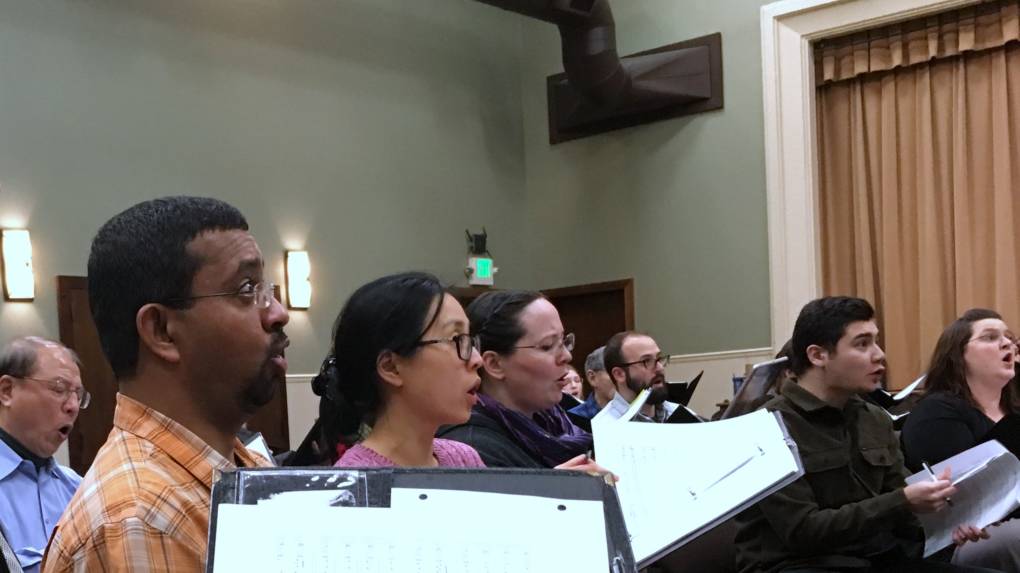
"caption": "The Choral Project rehearses Street Requiem at Willow Glen United Methodist Church in San Jose. \"It was such a moving work,\" says baritone Wilfred Matthews (far left), who's performed the piece before. \"I felt like I could contribute in a little way to spreading the message of hope for the marginalized in our society.\"",
"description": "The Choral Project rehearses Street Requiem at Willow Glen United Methodist Church in San Jose. \"It was such a moving work,\" says baritone Wilfred Matthews (far left), who's performed the piece before. \"I felt like I could contribute in a little way to spreading the message of hope for the marginalized in our society.\"",
"title": "Photo Jan 23, 7 24 06 PM",
"credit": "Photo: Rachael Myrow/KQED",
"status": "inherit",
"isLoading": false,
"fetchFailed": false
},
"news_11280901": {
"type": "attachments",
"id": "news_11280901",
"meta": {
"index": "attachments_1716263798",
"site": "news",
"id": "11280901",
"found": true
},
"parent": 11280454,
"imgSizes": {
"small": {
"file": "https://ww2.kqed.org/app/uploads/sites/10/2017/01/RS23777_170121_SFWomensMarch_bhs02-qut1-520x347.jpg",
"width": 520,
"mimeType": "image/jpeg",
"height": 347
},
"twentyfourteen-full-width": {
"file": "https://ww2.kqed.org/app/uploads/sites/10/2017/01/RS23777_170121_SFWomensMarch_bhs02-qut1-1038x576.jpg",
"width": 1038,
"mimeType": "image/jpeg",
"height": 576
},
"thumbnail": {
"file": "https://ww2.kqed.org/app/uploads/sites/10/2017/01/RS23777_170121_SFWomensMarch_bhs02-qut1-160x107.jpg",
"width": 160,
"mimeType": "image/jpeg",
"height": 107
},
"fd-sm": {
"file": "https://ww2.kqed.org/app/uploads/sites/10/2017/01/RS23777_170121_SFWomensMarch_bhs02-qut1-960x640.jpg",
"width": 960,
"mimeType": "image/jpeg",
"height": 640
},
"post-thumbnail": {
"file": "https://ww2.kqed.org/app/uploads/sites/10/2017/01/RS23777_170121_SFWomensMarch_bhs02-qut1-672x372.jpg",
"width": 672,
"mimeType": "image/jpeg",
"height": 372
},
"xsmall": {
"file": "https://ww2.kqed.org/app/uploads/sites/10/2017/01/RS23777_170121_SFWomensMarch_bhs02-qut1-375x250.jpg",
"width": 375,
"mimeType": "image/jpeg",
"height": 250
},
"kqedFullSize": {
"file": "https://ww2.kqed.org/app/uploads/sites/10/2017/01/RS23777_170121_SFWomensMarch_bhs02-qut1.jpg",
"width": 1920,
"height": 1280
},
"large": {
"file": "https://ww2.kqed.org/app/uploads/sites/10/2017/01/RS23777_170121_SFWomensMarch_bhs02-qut1-1020x680.jpg",
"width": 1020,
"mimeType": "image/jpeg",
"height": 680
},
"xlarge": {
"file": "https://ww2.kqed.org/app/uploads/sites/10/2017/01/RS23777_170121_SFWomensMarch_bhs02-qut1-1180x787.jpg",
"width": 1180,
"mimeType": "image/jpeg",
"height": 787
},
"guest-author-50": {
"file": "https://ww2.kqed.org/app/uploads/sites/10/2017/01/RS23777_170121_SFWomensMarch_bhs02-qut1-50x50.jpg",
"width": 50,
"mimeType": "image/jpeg",
"height": 50
},
"guest-author-96": {
"file": "https://ww2.kqed.org/app/uploads/sites/10/2017/01/RS23777_170121_SFWomensMarch_bhs02-qut1-96x96.jpg",
"width": 96,
"mimeType": "image/jpeg",
"height": 96
},
"medium": {
"file": "https://ww2.kqed.org/app/uploads/sites/10/2017/01/RS23777_170121_SFWomensMarch_bhs02-qut1-800x533.jpg",
"width": 800,
"mimeType": "image/jpeg",
"height": 533
},
"guest-author-64": {
"file": "https://ww2.kqed.org/app/uploads/sites/10/2017/01/RS23777_170121_SFWomensMarch_bhs02-qut1-64x64.jpg",
"width": 64,
"mimeType": "image/jpeg",
"height": 64
},
"guest-author-32": {
"file": "https://ww2.kqed.org/app/uploads/sites/10/2017/01/RS23777_170121_SFWomensMarch_bhs02-qut1-32x32.jpg",
"width": 32,
"mimeType": "image/jpeg",
"height": 32
},
"jmtc-small-thumb": {
"file": "https://ww2.kqed.org/app/uploads/sites/10/2017/01/RS23777_170121_SFWomensMarch_bhs02-qut1-280x150.jpg",
"width": 280,
"mimeType": "image/jpeg",
"height": 150
},
"fd-lrg": {
"file": "https://ww2.kqed.org/app/uploads/sites/10/2017/01/RS23777_170121_SFWomensMarch_bhs02-qut1-1920x1280.jpg",
"width": 1920,
"mimeType": "image/jpeg",
"height": 1280
},
"fd-med": {
"file": "https://ww2.kqed.org/app/uploads/sites/10/2017/01/RS23777_170121_SFWomensMarch_bhs02-qut1-1180x787.jpg",
"width": 1180,
"mimeType": "image/jpeg",
"height": 787
},
"full-width": {
"file": "https://ww2.kqed.org/app/uploads/sites/10/2017/01/RS23777_170121_SFWomensMarch_bhs02-qut1-1920x1280.jpg",
"width": 1920,
"mimeType": "image/jpeg",
"height": 1280
},
"detail": {
"file": "https://ww2.kqed.org/app/uploads/sites/10/2017/01/RS23777_170121_SFWomensMarch_bhs02-qut1-150x150.jpg",
"width": 150,
"mimeType": "image/jpeg",
"height": 150
},
"guest-author-128": {
"file": "https://ww2.kqed.org/app/uploads/sites/10/2017/01/RS23777_170121_SFWomensMarch_bhs02-qut1-128x128.jpg",
"width": 128,
"mimeType": "image/jpeg",
"height": 128
},
"xxsmall": {
"file": "https://ww2.kqed.org/app/uploads/sites/10/2017/01/RS23777_170121_SFWomensMarch_bhs02-qut1-240x160.jpg",
"width": 240,
"mimeType": "image/jpeg",
"height": 160
}
},
"publishDate": 1485051603,
"modified": 1485051771,
"caption": "San Francisco’s Women’s March began at the Civic Center Plaza in San Francisco on Jan. 21, 2017. Even with looming clouds and rain thousands joined in the march down Market St.",
"description": null,
"title": "RS23777_170121_SFWomensMarch_bhs02-qut(1)",
"credit": "Brittany Hosea-Small/KQED",
"status": "inherit",
"isLoading": false,
"fetchFailed": false
}
},
"audioPlayerReducer": {
"postId": "stream_live",
"isPaused": true,
"isPlaying": false,
"pfsActive": false,
"pledgeModalIsOpen": true,
"playerDrawerIsOpen": false,
"liveAudioPlayStartedAt": 0,
"liveAudioPlayContext": ""
},
"authorsReducer": {
"dclyde": {
"type": "authors",
"id": "104",
"meta": {
"index": "authors_1716337520",
"id": "104",
"found": true
},
"name": "Don Clyde",
"firstName": "Don",
"lastName": "Clyde",
"slug": "dclyde",
"email": "dclyde@kqed.org",
"display_author_email": false,
"staff_mastheads": [],
"title": "KQED Contributor",
"bio": "Don Clyde is an online producer, reporter and copy editor for KQED News. Before venturing into journalism, he worked as a medical device engineer and scientist for nearly a decade after earning a degree in physics from UC Berkeley. He loves travel, reading, living in Oakland, and most importantly, a good walk. Email him at dclyde@kqed.org or follow him @clydedon.",
"avatar": "https://secure.gravatar.com/avatar/decd3e640c3eedbd0a574275aebb2d19?s=600&d=blank&r=g",
"twitter": "clydedon",
"facebook": null,
"instagram": null,
"linkedin": null,
"sites": [
{
"site": "artschool",
"roles": [
"editor"
]
},
{
"site": "news",
"roles": [
"administrator"
]
},
{
"site": "futureofyou",
"roles": [
"editor"
]
},
{
"site": "about",
"roles": [
"editor"
]
},
{
"site": "mindshift",
"roles": [
"contributor"
]
},
{
"site": "bayareabites",
"roles": [
"contributor"
]
},
{
"site": "lowdown",
"roles": [
"editor"
]
},
{
"site": "stateofhealth",
"roles": [
"administrator"
]
},
{
"site": "spark",
"roles": [
"administrator"
]
},
{
"site": "trulyca",
"roles": [
"administrator"
]
},
{
"site": "imagemakers",
"roles": [
"administrator"
]
},
{
"site": "science",
"roles": []
},
{
"site": "education",
"roles": [
"editor"
]
},
{
"site": "quest",
"roles": [
"subscriber"
]
},
{
"site": "checkplease",
"roles": [
"subscriber"
]
},
{
"site": "forum",
"roles": [
"editor"
]
},
{
"site": "perspectives",
"roles": [
"editor"
]
}
],
"headData": {
"title": "Don Clyde | KQED",
"description": "KQED Contributor",
"ogImgSrc": "https://secure.gravatar.com/avatar/decd3e640c3eedbd0a574275aebb2d19?s=600&d=blank&r=g",
"twImgSrc": "https://secure.gravatar.com/avatar/decd3e640c3eedbd0a574275aebb2d19?s=600&d=blank&r=g"
},
"isLoading": false,
"link": "/author/dclyde"
},
"danbrekke": {
"type": "authors",
"id": "222",
"meta": {
"index": "authors_1716337520",
"id": "222",
"found": true
},
"name": "Dan Brekke",
"firstName": "Dan",
"lastName": "Brekke",
"slug": "danbrekke",
"email": "dbrekke@kqed.org",
"display_author_email": true,
"staff_mastheads": [
"news",
"science"
],
"title": "KQED Editor and Reporter",
"bio": "Dan Brekke is a reporter and editor for KQED News, responsible for coverage of topics ranging from California water issues to the Bay Area's transportation challenges. In a newsroom career that began in Chicago in 1972, Dan has worked for \u003cem>The San Francisco Examiner,\u003c/em> Wired and TechTV and has been published in The New York Times, The New York Times Magazine, Business 2.0, Salon and elsewhere.\r\n\r\nSince joining KQED in 2007, Dan has reported, edited and produced both radio and online features and breaking news pieces. He has shared as both editor and reporter in four Society of Professional Journalists Norcal Excellence in Journalism awards and one Edward R. Murrow regional award. He was chosen for a spring 2017 residency at the Mesa Refuge to advance his research on California salmon.\r\n\r\nEmail Dan at: \u003ca href=\"mailto:dbrekke@kqed.org\">dbrekke@kqed.org\u003c/a>\r\n\r\n\u003cstrong>Twitter:\u003c/strong> \u003ca href=\"https://twitter.com/danbrekke\" rel=\"noopener noreferrer\">twitter.com/danbrekke\u003c/a>\r\n\u003cstrong>Facebook:\u003c/strong> \u003ca href=\"https://www.facebook.com/danbrekke\" rel=\"noopener noreferrer\">www.facebook.com/danbrekke\u003c/a>\r\n\u003cstrong>LinkedIn:\u003c/strong> \u003ca href=\"https://www.linkedin.com/in/danbrekke\" rel=\"noopener noreferrer\">www.linkedin.com/in/danbrekke\u003c/a>",
"avatar": "https://secure.gravatar.com/avatar/c8126230345efca3f7aa89b1a402be45?s=600&d=mm&r=g",
"twitter": "danbrekke",
"facebook": null,
"instagram": "https://www.instagram.com/dan.brekke/",
"linkedin": "https://www.linkedin.com/in/danbrekke/",
"sites": [
{
"site": "news",
"roles": [
"administrator",
"create_posts"
]
},
{
"site": "stateofhealth",
"roles": [
"editor"
]
},
{
"site": "science",
"roles": [
"editor"
]
},
{
"site": "quest",
"roles": [
"contributor"
]
},
{
"site": "food",
"roles": [
"contributor"
]
},
{
"site": "forum",
"roles": [
"contributor"
]
},
{
"site": "liveblog",
"roles": [
"editor"
]
}
],
"headData": {
"title": "Dan Brekke | KQED",
"description": "KQED Editor and Reporter",
"ogImgSrc": "https://secure.gravatar.com/avatar/c8126230345efca3f7aa89b1a402be45?s=600&d=mm&r=g",
"twImgSrc": "https://secure.gravatar.com/avatar/c8126230345efca3f7aa89b1a402be45?s=600&d=mm&r=g"
},
"isLoading": false,
"link": "/author/danbrekke"
},
"rachael-myrow": {
"type": "authors",
"id": "251",
"meta": {
"index": "authors_1716337520",
"id": "251",
"found": true
},
"name": "Rachael Myrow",
"firstName": "Rachael",
"lastName": "Myrow",
"slug": "rachael-myrow",
"email": "rmyrow@kqed.org",
"display_author_email": true,
"staff_mastheads": [
"news"
],
"title": "Senior Editor of KQED's Silicon Valley News Desk",
"bio": "• I write and edit stories about how Silicon Valley power and policies shape everyday life in California. I’m also passionate about making Bay Area history and culture more accessible to a broad public. • I’ve been a journalist for most of my life, starting in high school with The Franklin Press in Los Angeles, where I grew up. While earning my first degree in English at UC Berkeley, I got my start in public radio at KALX-FM. After completing a second degree in journalism at Cal, I landed my first professional job at Marketplace, then moved on to KPCC (now LAist), and then KQED, where I hosted The California Report for more than seven years. • My reporting has appeared on NPR, The World, WBUR’s \u003ci>Here & Now\u003c/i>, and the BBC. I also guest host for KQED’s \u003ci>Forum\u003c/i>, as well as the Commonwealth Club in San Francisco. • I speak periodically on media, democracy and technology issues, and do voiceover work for documentaries and educational video projects. • Outside of the studio, you'll find me hiking Bay Area trails and whipping up Insta-ready meals in my kitchen. • I do not accept gifts, money, or favors from anyone connected to my reporting, I don't pay people for information, and I do not support or donate to political causes. • I strive to treat the people I report on with fairness, honesty, and respect. I also recognize there are often multiple sides to a story and work to verify information through multiple sources and documentation. If I get something wrong, I correct it.",
"avatar": "https://secure.gravatar.com/avatar/3ed8a3c5f26025e4a805ba634cda8cd764906b97438a6d9ce216b044e340da4e?s=600&d=blank&r=g",
"twitter": "rachaelmyrow",
"bluesky": null,
"facebook": null,
"instagram": null,
"linkedin": "https://www.linkedin.com/in/rachaelmyrow/",
"sites": [
{
"site": "arts",
"roles": [
"administrator"
]
},
{
"site": "news",
"roles": [
"edit_others_posts",
"editor"
]
},
{
"site": "futureofyou",
"roles": [
"editor"
]
},
{
"site": "bayareabites",
"roles": [
"editor"
]
},
{
"site": "stateofhealth",
"roles": [
"editor"
]
},
{
"site": "science",
"roles": [
"editor"
]
},
{
"site": "food",
"roles": [
"editor"
]
},
{
"site": "forum",
"roles": [
"editor"
]
},
{
"site": "liveblog",
"roles": [
"author"
]
}
],
"headData": {
"title": "Rachael Myrow | KQED",
"description": "Senior Editor of KQED's Silicon Valley News Desk",
"ogImgSrc": "https://secure.gravatar.com/avatar/3ed8a3c5f26025e4a805ba634cda8cd764906b97438a6d9ce216b044e340da4e?s=600&d=blank&r=g",
"twImgSrc": "https://secure.gravatar.com/avatar/3ed8a3c5f26025e4a805ba634cda8cd764906b97438a6d9ce216b044e340da4e?s=600&d=blank&r=g"
},
"isLoading": false,
"link": "/author/rachael-myrow"
},
"tgoldberg": {
"type": "authors",
"id": "258",
"meta": {
"index": "authors_1716337520",
"id": "258",
"found": true
},
"name": "Ted Goldberg",
"firstName": "Ted",
"lastName": "Goldberg",
"slug": "tgoldberg",
"email": "tgoldberg@kqed.org",
"display_author_email": true,
"staff_mastheads": [
"news"
],
"title": "KQED Managing Editor, News and Newscasts",
"bio": "Ted Goldberg is Managing Editor of News and Newscasts at KQED. His main reporting beat is the Bay Area's oil refining industry.\r\n\r\nPrior to joining KQED in 2014, Ted worked at CBS News and WCBS AM in New York and Bay City News and KCBS Radio in San Francisco. He graduated from Oberlin College in Ohio in 1998.",
"avatar": "https://secure.gravatar.com/avatar/30ce2e4fe89135e104f89be2394d16225b9d36c121b5b3cb7651ce642978b96f?s=600&d=blank&r=g",
"twitter": "TedrickG",
"bluesky": null,
"facebook": null,
"instagram": null,
"linkedin": null,
"sites": [
{
"site": "news",
"roles": [
"editor"
]
},
{
"site": "science",
"roles": [
"editor"
]
}
],
"headData": {
"title": "Ted Goldberg | KQED",
"description": "KQED Managing Editor, News and Newscasts",
"ogImgSrc": "https://secure.gravatar.com/avatar/30ce2e4fe89135e104f89be2394d16225b9d36c121b5b3cb7651ce642978b96f?s=600&d=blank&r=g",
"twImgSrc": "https://secure.gravatar.com/avatar/30ce2e4fe89135e104f89be2394d16225b9d36c121b5b3cb7651ce642978b96f?s=600&d=blank&r=g"
},
"isLoading": false,
"link": "/author/tgoldberg"
},
"ecruzguevarra": {
"type": "authors",
"id": "8654",
"meta": {
"index": "authors_1716337520",
"id": "8654",
"found": true
},
"name": "Ericka Cruz Guevarra",
"firstName": "Ericka",
"lastName": "Cruz Guevarra",
"slug": "ecruzguevarra",
"email": "ecruzguevarra@kqed.org",
"display_author_email": true,
"staff_mastheads": [
"news"
],
"title": "Producer, The Bay Podcast",
"bio": "Ericka Cruz Guevarra is host of \u003ca href=\"https://www.kqed.org/podcasts/thebay\">\u003cem>The Bay\u003c/em>\u003c/a> podcast at KQED. Before host, she was the show’s producer. Her work in that capacity includes a three-part reported series on policing in Vallejo, which won a 2020 excellence in journalism award from the Society of Professional Journalists. Ericka has worked as a breaking news reporter at Oregon Public Broadcasting, helped produce the Code Switch podcast, and was KQED’s inaugural Raul Ramirez Diversity Fund intern. She’s also an alumna of NPR’s Next Generation Radio program. Send her an email if you have strong feelings about whether Fairfield and Suisun City are the Bay. Ericka is represented by SAG-AFTRA.",
"avatar": "https://secure.gravatar.com/avatar/accefc1de4bafc7e234b69bcb9b6f6536c130fd84709bc3069ef11a78787e1bb?s=600&d=blank&r=g",
"twitter": "NotoriousECG",
"bluesky": null,
"facebook": null,
"instagram": null,
"linkedin": null,
"sites": [
{
"site": "arts",
"roles": [
"subscriber"
]
},
{
"site": "news",
"roles": [
"editor",
"manage_categories"
]
},
{
"site": "futureofyou",
"roles": [
"subscriber"
]
},
{
"site": "stateofhealth",
"roles": [
"subscriber"
]
},
{
"site": "science",
"roles": [
"editor"
]
},
{
"site": "forum",
"roles": [
"subscriber"
]
}
],
"headData": {
"title": "Ericka Cruz Guevarra | KQED",
"description": "Producer, The Bay Podcast",
"ogImgSrc": "https://secure.gravatar.com/avatar/accefc1de4bafc7e234b69bcb9b6f6536c130fd84709bc3069ef11a78787e1bb?s=600&d=blank&r=g",
"twImgSrc": "https://secure.gravatar.com/avatar/accefc1de4bafc7e234b69bcb9b6f6536c130fd84709bc3069ef11a78787e1bb?s=600&d=blank&r=g"
},
"isLoading": false,
"link": "/author/ecruzguevarra"
},
"qkim": {
"type": "authors",
"id": "11099",
"meta": {
"index": "authors_1716337520",
"id": "11099",
"found": true
},
"name": "Queena Sook Kim",
"firstName": "Queena",
"lastName": "Kim",
"slug": "qkim",
"email": "qkim@kqed.org",
"display_author_email": false,
"staff_mastheads": [
"news"
],
"title": "Senior Editor",
"bio": "\u003cspan style=\"font-weight: 400;\">Queena Sook Kim is a former senior editor of the weekend desk at KQED. Before taking on that post, she was the Senior Editor of the Silicon Valley Desk and was the \u003c/span>\u003cspan style=\"font-weight: 400;\">host of The California Report. The daily morning show airs on KQED in San Francisco, one of the nation’s largest NPR affiliates, and on 30 stations across the state. In that role, she produces and reports on news, politics and life in the Golden State. Queena likes to take sideways look at the larger trends changing the state. One of her favorite stories asked\u003c/span>\u003ca href=\"https://ww2.kqed.org/news/2015/02/15/why-the-heck-do-mexican-reporters-on-public-radio-say-their-names-that-way\"> \u003cspan style=\"font-weight: 400;\">why Latino journalists “over’pronounce” their Spanish surnames\u003c/span>\u003c/a>\u003cspan style=\"font-weight: 400;\"> as a way of looking at how immigration is creating a culture shift in California.\u003c/span>\r\n\r\n\u003cspan style=\"font-weight: 400;\">Before joining The California Report, Queena was a \u003ca href=\"http://www.marketplace.org/people/queena-kim\">Senior Reporter covering technology for Marketplace\u003c/a>, the daily business show that airs on public radio. Queena covered daily tech business stories and reported on larger technology trends. She did a series of stories looking at role of social engineering in hacking and on a start-up in Silicon Valley that’s trying to use technology, instead of animals, to make meat that bleeds.\u003c/span>\r\n\r\n\u003cspan style=\"font-weight: 400;\">Queena started her career as a business journalist at the Wall Street Journal, where she spent four years covering the paper, home building and toy industries. She wrote A1 stories about the unusually aggressive tactics KB Home took against its home buyers. and the resurgence of “Cracker” architecture in Florida. She also wrote section front stories on marketing trends and\u003c/span>\r\n\r\n\u003cspan style=\"font-weight: 400;\">As a journalist, Queena has spent much of her career helping start-up editorial products. She was on the founding editorial team of The Bay Citizen, an experimental, online news site in San Francisco that was funded by the late hillbilly billionaire Warren Hellman. In 2009, Queena received a grant from the Corporation of Public Broadcasting to start-up a podcast called \u003ca href=\"https://soundcloud.com/cyberfrequencies\">CyberFrequencies\u003c/a>, which reported on the culture of technology. She also helped start-up two radio shows - Off-Ramp and Pacific Drift - for KPCC, the NPR-affiliate in Los Angeles. Off-Ramp was awarded 1st Place for news and Public Affairs programming by the PRINDI and the L.A. Press club. \u003ca href=\"https://soundcloud.com/queena-sook-kim\">Queena’s stories have appeared \u003c/a>on NPR’s Day to Day, Hearing Voices, WNYC’s Studio 360, WBUR’s Here and Now, BBC’s Global Perspectives and New York Times’ multimedia page.\u003c/span>\r\n\r\n\u003cspan style=\"font-weight: 400;\">In 1994, Queena won a Fulbright Grant to teach and study in Seoul, South Korea. She was also selected to be a Teach For America Corps Member in 1991 and taught elementary school in the Inglewood Unified School District in Southern California.\u003c/span>\r\n\r\n\u003cspan style=\"font-weight: 400;\">Queena is a frequent public speaker and has given talks at UC Berkeley, Stanford University, San Francisco State University, PRINDI conference and the Craigslist Foundation Boot Camp. Queena went to UC Berkeley’s Graduate School of Journalism and graduated cum laude from New York University with a B.A. in Politics. She grew up in Southern California and lives in Berkeley, Ca in a big fixer on which she spends most weekends, well, fixing.\u003c/span>",
"avatar": "https://secure.gravatar.com/avatar/b72382fd0db351b99f8a31939f4853fc?s=600&d=blank&r=g",
"twitter": "queenasookkim",
"facebook": null,
"instagram": null,
"linkedin": null,
"sites": [
{
"site": "news",
"roles": [
"subscriber"
]
},
{
"site": "forum",
"roles": [
"author"
]
},
{
"site": "breakingnews",
"roles": [
"editor"
]
}
],
"headData": {
"title": "Queena Sook Kim | KQED",
"description": "Senior Editor",
"ogImgSrc": "https://secure.gravatar.com/avatar/b72382fd0db351b99f8a31939f4853fc?s=600&d=blank&r=g",
"twImgSrc": "https://secure.gravatar.com/avatar/b72382fd0db351b99f8a31939f4853fc?s=600&d=blank&r=g"
},
"isLoading": false,
"link": "/author/qkim"
},
"dcronin": {
"type": "authors",
"id": "11362",
"meta": {
"index": "authors_1716337520",
"id": "11362",
"found": true
},
"name": "Dana Cronin",
"firstName": "Dana",
"lastName": "Cronin",
"slug": "dcronin",
"email": "dcronin@KQED.org",
"display_author_email": true,
"staff_mastheads": [],
"title": "KQED Contributor",
"bio": "Dana Cronin is a reporter for KQED News. She loves writing stories about climate change, environmental issues, food and agriculture. She's reported across the country, from Colorado to Washington D.C. to Illinois, and has won numerous awards for her coverage. Her work is regularly featured on national broadcasts, including NPR’s Morning Edition, All Things Considered, PBS Newshour and Science Friday. She lives in Oakland and has an avocado tree in her back yard.",
"avatar": "https://secure.gravatar.com/avatar/bcf89e3455ff7235f96ab6fa7258dd95?s=600&d=blank&r=g",
"twitter": "DanaHCronin",
"facebook": null,
"instagram": null,
"linkedin": null,
"sites": [
{
"site": "arts",
"roles": [
"author"
]
},
{
"site": "news",
"roles": [
"editor"
]
},
{
"site": "science",
"roles": [
"author"
]
},
{
"site": "liveblog",
"roles": [
"author"
]
}
],
"headData": {
"title": "Dana Cronin | KQED",
"description": "KQED Contributor",
"ogImgSrc": "https://secure.gravatar.com/avatar/bcf89e3455ff7235f96ab6fa7258dd95?s=600&d=blank&r=g",
"twImgSrc": "https://secure.gravatar.com/avatar/bcf89e3455ff7235f96ab6fa7258dd95?s=600&d=blank&r=g"
},
"isLoading": false,
"link": "/author/dcronin"
},
"tmosley": {
"type": "authors",
"id": "11373",
"meta": {
"index": "authors_1716337520",
"id": "11373",
"found": true
},
"name": "Tonya Mosley",
"firstName": "Tonya",
"lastName": "Mosley",
"slug": "tmosley",
"email": "tmosley@kqed.org",
"display_author_email": false,
"staff_mastheads": [],
"title": "KQED Contributor",
"bio": "Tonya Mosley is a former Silicon Valley bureau chief for KQED. She served as the senior editor, leading a team of journalists covering the impacts of technology companies on the South Bay and society. Tonya is also a former host and reporter for KQED.\r\n\r\nPrior to KQED, Tonya served as a television reporter & anchor for several media outlets, including Al Jazeera America.\r\n\r\nIn 2015, Tonya was awarded a John S. Knight Journalism Fellowship at Stanford University where she co-created a workshop for journalists on the impacts of implicit bias, and co-wrote a Belgian/American experimental study on the effects of protest coverage.\r\n\r\nTonya has won several national awards for her work, most recently an Emmy Award in 2016 for her televised piece \"Beyond Ferguson,\" and a national Edward R. Murrow award for her public radio series \"Black in Seattle.\"\r\n\r\nYou can reach Tonya at: tmosley@kqed.org.",
"avatar": "https://secure.gravatar.com/avatar/0b2ea2bbfed6bafaacd21e9398c68e5e?s=600&d=blank&r=g",
"twitter": "tonyamosley",
"facebook": null,
"instagram": null,
"linkedin": null,
"sites": [
{
"site": "arts",
"roles": [
"editor"
]
},
{
"site": "news",
"roles": [
"subscriber"
]
},
{
"site": "about",
"roles": [
"author"
]
},
{
"site": "forum",
"roles": [
"author"
]
}
],
"headData": {
"title": "Tonya Mosley | KQED",
"description": "KQED Contributor",
"ogImgSrc": "https://secure.gravatar.com/avatar/0b2ea2bbfed6bafaacd21e9398c68e5e?s=600&d=blank&r=g",
"twImgSrc": "https://secure.gravatar.com/avatar/0b2ea2bbfed6bafaacd21e9398c68e5e?s=600&d=blank&r=g"
},
"isLoading": false,
"link": "/author/tmosley"
}
},
"pagesReducer": {
"news_tag_san-jose": {
"type": "terms",
"id": "news_18541",
"meta": {
"index": "terms_1716263798",
"site": "news",
"id": "18541",
"score": 8.005292
},
"featImg": null,
"name": "San Jose",
"description": null,
"taxonomy": "tag",
"headData": {
"twImgId": null,
"twTitle": null,
"ogTitle": null,
"ogImgId": null,
"twDescription": null,
"description": null,
"title": "San Jose Archives | KQED News",
"ogDescription": null
},
"ttid": 91,
"slug": "san-jose",
"isLoading": false,
"title": "San Jose",
"pageMeta": {
"site": "news",
"WpPageTemplate": "page-topic-editorial",
"currentPage": 38
},
"blocks": [
{
"blockName": "kqed/post-list",
"attrs": {
"layout": "cardArticle2",
"query": "posts/news?tag=san-jose",
"seeMore": false,
"paginated": true,
"page": 38
}
},
{
"blockName": "kqed/ad"
}
]
}
},
"pfsSessionReducer": {},
"postsReducer": {
"stream_live": {
"type": "live",
"id": "stream_live",
"audioUrl": "https://streams.kqed.org/kqedradio",
"title": "Live Stream",
"excerpt": "Live Stream information currently unavailable.",
"link": "/radio",
"featImg": "",
"label": {
"name": "KQED Live",
"link": "/"
}
},
"stream_kqedNewscast": {
"type": "posts",
"id": "stream_kqedNewscast",
"audioUrl": "https://www.kqed.org/.stream/anon/radio/RDnews/newscast.mp3?_=1",
"title": "KQED Newscast",
"featImg": "",
"label": {
"name": "88.5 FM",
"link": "/"
}
},
"news_11614522": {
"type": "posts",
"id": "news_11614522",
"meta": {
"index": "posts_1716263798",
"site": "news",
"id": "11614522",
"score": null,
"sort": [
1504040648000
]
},
"guestAuthors": [],
"slug": "should-san-jose-remove-its-christopher-columbus-statue",
"title": "Should San Jose Remove Its Christopher Columbus Statue?",
"publishDate": 1504040648,
"format": "audio",
"headTitle": "Should San Jose Remove Its Christopher Columbus Statue? | KQED",
"labelTerm": {
"term": 6944,
"site": "news"
},
"content": "\u003cp>In the South, slavery and the Confederacy are at the center of an ongoing debate about historical monuments. \u003ca href=\"http://www.latimes.com/local/lanow/la-me-junipero-serra-vandalized-mission-hills-20170820-story.html\" target=\"_blank\" rel=\"noopener noreferrer\">In California, that debate largely centers on colonization and the oppression of indigenous people\u003c/a>.\u003c/p>\n\u003cp>And so as \u003ca href=\"http://www.sfchronicle.com/news/article/SF-is-facing-its-own-battle-over-controversial-11948403.php\" target=\"_blank\" rel=\"noopener noreferrer\">the Bay Area wrestles with the issue\u003c/a>, it’s not surprising that Christopher Columbus has become a target. In San Jose, a social justice group called the Brown Berets is calling on the city to remove a statue of Columbus in City Hall.\u003c/p>\n\u003cp>\u003ca href=\"https://www.change.org/p/san-jose-city-council-relocate-christopher-columbus-statue-from-san-jose-city-hall\" target=\"_blank\" rel=\"noopener noreferrer\">The Brown Berets’ online petition\u003c/a> has gotten about 1,800 signatures so far.\u003c/p>\n\u003cp>“Relocate Christopher Columbus statue,” the petition reads. “This statue is obscene and offensive to the native community, whose ancestry has suffered years of oppression, rape, and genocide at the hands of the figure that now stands at our city hall.”\u003c/p>\n\u003cp>The statue itself is large but unassuming. It’s made of marble imported from Italy, according to an inscription.\u003c/p>\n\u003cp>[ad fullwidth]\u003c/p>\n\u003cp>“Back in the late 1950s, an organization known as the Civic Club, which was an Italian-American collection of business people, donated the statue to the city,” said San Jose Mayor Sam Liccardo.\u003c/p>\n\u003cp>A native of San Jose and of Italian descent, Liccardo said his grandfather was probably on the board of the Civic Club when the statue was donated. Does the mayor think the statue should be removed?\u003c/p>\n\u003cp>Liccardo said San Jose honors lots of historic figures by naming schools, community centers and, of course, statues after them. He said these are often people who “accomplished great things, but have also committed great evil.”\u003c/p>\n\u003cp>“Christopher Columbus undoubtedly showed great courage and boldness,” said Liccardo. “And at the same time, he governed Hispaniola in ways that by today’s standards we’d all say was brutal and inhumane.”\u003c/p>\n\u003cp>But Liccardo says in this case the historical arguments are an aside. As a former prosecutor, Liccardo focuses on the written rules.\u003c/p>\n\u003cp>“The rules that we’ve had in City Hall for a decade have said, ‘If you’re going to have an exhibit, it has to have a direct connection to the city,’ ” he said.\u003c/p>\n\u003cp>It’s true that Christopher Columbus didn’t set foot in San Jose, but the statue was donated by San Jose’s Italian-American community. Couldn’t you argue that it reflects the culture of a community in San Jose?\u003c/p>\n\u003cp>“You might say that,” said Liccardo. “Although at the time Columbus set sail, he would have been called Genovese and not Italian because the nation of Italy didn’t exist for another four or five centuries.”\u003c/p>\n\u003cp>As cities across the country grapple with similar monument debates, Liccardo said he believes mayors should facilitate communication around the issues.\u003c/p>\n\u003cp>“I’m not interested in secreting any statues out \u003ca href=\"https://www.theguardian.com/us-news/2017/aug/16/baltimore-takes-down-confederate-statues-in-middle-of-night\" target=\"_blank\" rel=\"noopener noreferrer\">in the dead of night\u003c/a>,” he said. Instead, Liccardo believes the monument debates could be a teachable moment.\u003c/p>\n\u003cp>“Clearly there’s a significant portion of our community that is pained by the history of colonialism and we all need to hear that,” he said. “At the same time, we know in the 1950s, when this was donated, it was donated by a community that felt marginalized in its own way.”\u003c/p>\n\u003cp>\u003c/p>\n\u003cp>Liccardo suspects that after the conversation is had, the community will agree there is a better place for the Christopher Columbus statue in the city.\u003c/p>\n\n",
"blocks": [],
"excerpt": "In San Jose, the mayor considers a petition to remove a Christopher Columbus statue from City Hall.",
"status": "publish",
"parent": 0,
"modified": 1721111666,
"stats": {
"hasAudio": false,
"hasVideo": false,
"hasChartOrMap": false,
"iframeSrcs": [],
"hasGoogleForm": false,
"hasGallery": false,
"hasHearkenModule": false,
"hasPolis": false,
"paragraphCount": 19,
"wordCount": 612
},
"headData": {
"title": "Should San Jose Remove Its Christopher Columbus Statue? | KQED",
"description": "In San Jose, the mayor considers a petition to remove a Christopher Columbus statue from City Hall.",
"ogTitle": "",
"ogDescription": "",
"ogImgId": "",
"twTitle": "",
"twDescription": "",
"twImgId": "",
"schema": {
"@context": "https://schema.org",
"@type": "NewsArticle",
"headline": "Should San Jose Remove Its Christopher Columbus Statue?",
"datePublished": "2017-08-29T14:04:08-07:00",
"dateModified": "2024-07-15T23:34:26-07:00",
"image": "https://cdn.kqed.org/wp-content/uploads/2020/02/KQED-OG-Image@1x.png",
"isAccessibleForFree": "True",
"publisher": {
"@type": "NewsMediaOrganization",
"@id": "https://www.kqed.org/#organization",
"name": "KQED",
"logo": "https://cdn.kqed.org/wp-content/uploads/2020/02/KQED-OG-Image@1x.png",
"url": "https://www.kqed.org",
"sameAs": [
"https://www.facebook.com/KQED",
"https://twitter.com/KQED",
"https://www.instagram.com/kqed/",
"https://www.tiktok.com/@kqedofficial",
"https://www.linkedin.com/company/kqed",
"https://www.youtube.com/channel/UCeC0IOo7i1P_61zVUWbJ4nw"
]
}
}
},
"audioUrl": "http://www.kqed.org/.stream/anon/radio/RDnews/2017/08/ColumbusStatue.mp3",
"sticky": false,
"path": "/news/11614522/should-san-jose-remove-its-christopher-columbus-statue",
"audioTrackLength": null,
"parsedContent": [
{
"type": "contentString",
"content": "\u003cdiv class=\"post-body\">\u003cp>\u003cp>In the South, slavery and the Confederacy are at the center of an ongoing debate about historical monuments. \u003ca href=\"http://www.latimes.com/local/lanow/la-me-junipero-serra-vandalized-mission-hills-20170820-story.html\" target=\"_blank\" rel=\"noopener noreferrer\">In California, that debate largely centers on colonization and the oppression of indigenous people\u003c/a>.\u003c/p>\n\u003cp>And so as \u003ca href=\"http://www.sfchronicle.com/news/article/SF-is-facing-its-own-battle-over-controversial-11948403.php\" target=\"_blank\" rel=\"noopener noreferrer\">the Bay Area wrestles with the issue\u003c/a>, it’s not surprising that Christopher Columbus has become a target. In San Jose, a social justice group called the Brown Berets is calling on the city to remove a statue of Columbus in City Hall.\u003c/p>\n\u003cp>\u003ca href=\"https://www.change.org/p/san-jose-city-council-relocate-christopher-columbus-statue-from-san-jose-city-hall\" target=\"_blank\" rel=\"noopener noreferrer\">The Brown Berets’ online petition\u003c/a> has gotten about 1,800 signatures so far.\u003c/p>\n\u003cp>“Relocate Christopher Columbus statue,” the petition reads. “This statue is obscene and offensive to the native community, whose ancestry has suffered years of oppression, rape, and genocide at the hands of the figure that now stands at our city hall.”\u003c/p>\n\u003cp>The statue itself is large but unassuming. It’s made of marble imported from Italy, according to an inscription.\u003c/p>\n\u003cp>\u003c/p>\u003c/div>",
"attributes": {
"named": {},
"numeric": []
}
},
{
"type": "component",
"content": "",
"name": "ad",
"attributes": {
"named": {
"label": "fullwidth"
},
"numeric": [
"fullwidth"
]
}
},
{
"type": "contentString",
"content": "\u003cdiv class=\"post-body\">\u003cp>\u003c/p>\n\u003cp>“Back in the late 1950s, an organization known as the Civic Club, which was an Italian-American collection of business people, donated the statue to the city,” said San Jose Mayor Sam Liccardo.\u003c/p>\n\u003cp>A native of San Jose and of Italian descent, Liccardo said his grandfather was probably on the board of the Civic Club when the statue was donated. Does the mayor think the statue should be removed?\u003c/p>\n\u003cp>Liccardo said San Jose honors lots of historic figures by naming schools, community centers and, of course, statues after them. He said these are often people who “accomplished great things, but have also committed great evil.”\u003c/p>\n\u003cp>“Christopher Columbus undoubtedly showed great courage and boldness,” said Liccardo. “And at the same time, he governed Hispaniola in ways that by today’s standards we’d all say was brutal and inhumane.”\u003c/p>\n\u003cp>But Liccardo says in this case the historical arguments are an aside. As a former prosecutor, Liccardo focuses on the written rules.\u003c/p>\n\u003cp>“The rules that we’ve had in City Hall for a decade have said, ‘If you’re going to have an exhibit, it has to have a direct connection to the city,’ ” he said.\u003c/p>\n\u003cp>It’s true that Christopher Columbus didn’t set foot in San Jose, but the statue was donated by San Jose’s Italian-American community. Couldn’t you argue that it reflects the culture of a community in San Jose?\u003c/p>\n\u003cp>“You might say that,” said Liccardo. “Although at the time Columbus set sail, he would have been called Genovese and not Italian because the nation of Italy didn’t exist for another four or five centuries.”\u003c/p>\n\u003cp>As cities across the country grapple with similar monument debates, Liccardo said he believes mayors should facilitate communication around the issues.\u003c/p>\n\u003cp>“I’m not interested in secreting any statues out \u003ca href=\"https://www.theguardian.com/us-news/2017/aug/16/baltimore-takes-down-confederate-statues-in-middle-of-night\" target=\"_blank\" rel=\"noopener noreferrer\">in the dead of night\u003c/a>,” he said. Instead, Liccardo believes the monument debates could be a teachable moment.\u003c/p>\n\u003cp>“Clearly there’s a significant portion of our community that is pained by the history of colonialism and we all need to hear that,” he said. “At the same time, we know in the 1950s, when this was donated, it was donated by a community that felt marginalized in its own way.”\u003c/p>\n\u003cp>\u003c/p>\n\u003cp>Liccardo suspects that after the conversation is had, the community will agree there is a better place for the Christopher Columbus statue in the city.\u003c/p>\n\n\u003c/div>\u003c/p>",
"attributes": {
"named": {},
"numeric": []
}
}
],
"link": "/news/11614522/should-san-jose-remove-its-christopher-columbus-statue",
"authors": [
"11099"
],
"programs": [
"news_6944"
],
"categories": [
"news_6188",
"news_8"
],
"tags": [
"news_19542",
"news_17968",
"news_18541"
],
"featImg": "news_11614635",
"label": "news_6944"
},
"news_11612579": {
"type": "posts",
"id": "news_11612579",
"meta": {
"index": "posts_1716263798",
"site": "news",
"id": "11612579",
"score": null,
"sort": [
1503526648000
]
},
"guestAuthors": [],
"slug": "the-flooding-is-gone-but-the-trash-lives-on",
"title": "In San Jose, the Flooding Is Gone, But the Trash Lives On",
"publishDate": 1503526648,
"format": "audio",
"headTitle": "In San Jose, the Flooding Is Gone, But the Trash Lives On | KQED",
"labelTerm": {
"term": 6944,
"site": "news"
},
"content": "\u003cp>During her morning walk, Pairom Sar points in disgust at the dirty green leather chair hanging off the curb. Next to it? A pile of stinky yard waste.\u003c/p>\n\u003cp>The chair and yard waste weren’t there when Sar went to bed. But most nights trash just seems to appear out of nowhere. She believes the items are dumped by people who don’t live in the neighborhood.\u003c/p>\n\u003cp>“Some people outside of the flood (zone) come here,” Sar says.\u003c/p>\n\u003cfigure id=\"attachment_11612686\" class=\"wp-caption alignnone\" style=\"max-width: 800px\">\u003cimg loading=\"lazy\" decoding=\"async\" class=\"wp-image-11612686 size-medium\" src=\"https://ww2.kqed.org/news/wp-content/uploads/sites/10/2017/08/IMG_0094-800x600.jpg\" alt=\"\" width=\"800\" height=\"600\" srcset=\"https://cdn.kqed.org/wp-content/uploads/sites/10/2017/08/IMG_0094-800x600.jpg 800w, https://cdn.kqed.org/wp-content/uploads/sites/10/2017/08/IMG_0094-160x120.jpg 160w, https://cdn.kqed.org/wp-content/uploads/sites/10/2017/08/IMG_0094-1020x765.jpg 1020w, https://cdn.kqed.org/wp-content/uploads/sites/10/2017/08/IMG_0094-1920x1440.jpg 1920w, https://cdn.kqed.org/wp-content/uploads/sites/10/2017/08/IMG_0094-1180x885.jpg 1180w, https://cdn.kqed.org/wp-content/uploads/sites/10/2017/08/IMG_0094-960x720.jpg 960w, https://cdn.kqed.org/wp-content/uploads/sites/10/2017/08/IMG_0094-240x180.jpg 240w, https://cdn.kqed.org/wp-content/uploads/sites/10/2017/08/IMG_0094-375x281.jpg 375w, https://cdn.kqed.org/wp-content/uploads/sites/10/2017/08/IMG_0094-520x390.jpg 520w\" sizes=\"auto, (max-width: 800px) 100vw, 800px\">\u003cfigcaption class=\"wp-caption-text\">A dumped chair and yard waste at the corner of Needles Drive and Welch Avenue in Rock Springs. \u003ccite>(Tonya Mosley/KQED)\u003c/cite>\u003c/figcaption>\u003c/figure>\n\u003cp>After San Jose’s Coyote Creek flooded on Feb. 21, the neighborhood of Rock Springs was inundated with trash and debris. Residents and construction crews spent months cleaning up and throwing out ruined furniture and belongings, and the city of San Jose provided dumpsters and regular pickups to assist.\u003c/p>\n\u003cp>But that pickup program ended earlier this summer, and there are still piles of trash. Deputy City Manager Kip Harkness believes the city’s cleanup effort has had an unintended effect.\u003c/p>\n\u003cp>[ad fullwidth]\u003c/p>\n\u003cp>“When people see trash in a neighborhood, they tend to bring their own stuff and dump it,” Harkness says.\u003c/p>\n\u003cp>Handwritten “no dumping signs” hang on the trees in the neighborhood. Residents regularly report the illegal dumping to the city. But still people dump.\u003c/p>\n\u003cp>“They want a clean, safe community just like everyone else,” Harkness says.\u003c/p>\n\u003cp>The sad thing is that there’s really no reason to dump.\u003c/p>\n\u003cp>“The city will pick up up to three large bulk items,” Harkness says. “Just go to our website or app and make an appointment.”\u003c/p>\n\u003cp>The city is encouraging people to continue to report the dumping. If Rock Springs continues to become a hotspot for it, the city will consider installing cameras to catch dumpers and fine them. The fee for a first-time dumper is $2,500.\u003c/p>\n\u003cfigure id=\"attachment_11612687\" class=\"wp-caption alignnone\" style=\"max-width: 800px\">\u003cimg loading=\"lazy\" decoding=\"async\" class=\"wp-image-11612687 size-medium\" src=\"https://ww2.kqed.org/news/wp-content/uploads/sites/10/2017/08/JulyRockSpringsTrash-800x600.jpg\" alt=\"\" width=\"800\" height=\"600\" srcset=\"https://cdn.kqed.org/wp-content/uploads/sites/10/2017/08/JulyRockSpringsTrash-800x600.jpg 800w, https://cdn.kqed.org/wp-content/uploads/sites/10/2017/08/JulyRockSpringsTrash-160x120.jpg 160w, https://cdn.kqed.org/wp-content/uploads/sites/10/2017/08/JulyRockSpringsTrash-1020x765.jpg 1020w, https://cdn.kqed.org/wp-content/uploads/sites/10/2017/08/JulyRockSpringsTrash-1920x1440.jpg 1920w, https://cdn.kqed.org/wp-content/uploads/sites/10/2017/08/JulyRockSpringsTrash-1180x885.jpg 1180w, https://cdn.kqed.org/wp-content/uploads/sites/10/2017/08/JulyRockSpringsTrash-960x720.jpg 960w, https://cdn.kqed.org/wp-content/uploads/sites/10/2017/08/JulyRockSpringsTrash-240x180.jpg 240w, https://cdn.kqed.org/wp-content/uploads/sites/10/2017/08/JulyRockSpringsTrash-375x281.jpg 375w, https://cdn.kqed.org/wp-content/uploads/sites/10/2017/08/JulyRockSpringsTrash-520x390.jpg 520w, https://cdn.kqed.org/wp-content/uploads/sites/10/2017/08/JulyRockSpringsTrash.jpg 2048w\" sizes=\"auto, (max-width: 800px) 100vw, 800px\">\u003cfigcaption class=\"wp-caption-text\">A pile of trash on Welch Avenue in the Rock Springs neighborhood of San Jose in July 2017. \u003ccite>(Tonya Mosley/KQED)\u003c/cite>\u003c/figcaption>\u003c/figure>\n\u003cp>Pairom Sar stares at that dirty green leather chair hanging off the curb when I ask how she’s been doing since the flood.\u003c/p>\n\u003cp>“Just a little OK,” she says.\u003c/p>\n\u003cp>Sar goes on to say she’s lived in Rock Springs since 1988, and most of her possessions were destroyed in the flood. All of the trash is a reminder of those losses.\u003c/p>\n\u003cp>\u003c/p>\n\u003cp>Sar and her neighbors want it to go away — so that they can finally move on.\u003c/p>\n\n",
"blocks": [],
"excerpt": "San Jose's Rock Springs neighborhood continues to be plagued by dumping and debris.",
"status": "publish",
"parent": 0,
"modified": 1738793761,
"stats": {
"hasAudio": false,
"hasVideo": false,
"hasChartOrMap": false,
"iframeSrcs": [],
"hasGoogleForm": false,
"hasGallery": false,
"hasHearkenModule": false,
"hasPolis": false,
"paragraphCount": 17,
"wordCount": 445
},
"headData": {
"title": "In San Jose, the Flooding Is Gone, But the Trash Lives On | KQED",
"description": "San Jose's Rock Springs neighborhood continues to be plagued by dumping and debris.",
"ogTitle": "",
"ogDescription": "",
"ogImgId": "",
"twTitle": "",
"twDescription": "",
"twImgId": "",
"schema": {
"@context": "https://schema.org",
"@type": "NewsArticle",
"headline": "In San Jose, the Flooding Is Gone, But the Trash Lives On",
"datePublished": "2017-08-23T15:17:28-07:00",
"dateModified": "2025-02-05T14:16:01-08:00",
"image": "https://cdn.kqed.org/wp-content/uploads/2020/02/KQED-OG-Image@1x.png",
"isAccessibleForFree": "True",
"publisher": {
"@type": "NewsMediaOrganization",
"@id": "https://www.kqed.org/#organization",
"name": "KQED",
"logo": "https://cdn.kqed.org/wp-content/uploads/2020/02/KQED-OG-Image@1x.png",
"url": "https://www.kqed.org",
"sameAs": [
"https://www.facebook.com/KQED",
"https://twitter.com/KQED",
"https://www.instagram.com/kqed/",
"https://www.tiktok.com/@kqedofficial",
"https://www.linkedin.com/company/kqed",
"https://www.youtube.com/channel/UCeC0IOo7i1P_61zVUWbJ4nw"
]
}
}
},
"audioUrl": "http://www.kqed.org/.stream/anon/radio/RDnews/2017/08/SanJoseDumpingMosley.mp3",
"sticky": false,
"path": "/news/11612579/the-flooding-is-gone-but-the-trash-lives-on",
"audioTrackLength": null,
"parsedContent": [
{
"type": "contentString",
"content": "\u003cdiv class=\"post-body\">\u003cp>\u003cp>During her morning walk, Pairom Sar points in disgust at the dirty green leather chair hanging off the curb. Next to it? A pile of stinky yard waste.\u003c/p>\n\u003cp>The chair and yard waste weren’t there when Sar went to bed. But most nights trash just seems to appear out of nowhere. She believes the items are dumped by people who don’t live in the neighborhood.\u003c/p>\n\u003cp>“Some people outside of the flood (zone) come here,” Sar says.\u003c/p>\n\u003cfigure id=\"attachment_11612686\" class=\"wp-caption alignnone\" style=\"max-width: 800px\">\u003cimg loading=\"lazy\" decoding=\"async\" class=\"wp-image-11612686 size-medium\" src=\"https://ww2.kqed.org/news/wp-content/uploads/sites/10/2017/08/IMG_0094-800x600.jpg\" alt=\"\" width=\"800\" height=\"600\" srcset=\"https://cdn.kqed.org/wp-content/uploads/sites/10/2017/08/IMG_0094-800x600.jpg 800w, https://cdn.kqed.org/wp-content/uploads/sites/10/2017/08/IMG_0094-160x120.jpg 160w, https://cdn.kqed.org/wp-content/uploads/sites/10/2017/08/IMG_0094-1020x765.jpg 1020w, https://cdn.kqed.org/wp-content/uploads/sites/10/2017/08/IMG_0094-1920x1440.jpg 1920w, https://cdn.kqed.org/wp-content/uploads/sites/10/2017/08/IMG_0094-1180x885.jpg 1180w, https://cdn.kqed.org/wp-content/uploads/sites/10/2017/08/IMG_0094-960x720.jpg 960w, https://cdn.kqed.org/wp-content/uploads/sites/10/2017/08/IMG_0094-240x180.jpg 240w, https://cdn.kqed.org/wp-content/uploads/sites/10/2017/08/IMG_0094-375x281.jpg 375w, https://cdn.kqed.org/wp-content/uploads/sites/10/2017/08/IMG_0094-520x390.jpg 520w\" sizes=\"auto, (max-width: 800px) 100vw, 800px\">\u003cfigcaption class=\"wp-caption-text\">A dumped chair and yard waste at the corner of Needles Drive and Welch Avenue in Rock Springs. \u003ccite>(Tonya Mosley/KQED)\u003c/cite>\u003c/figcaption>\u003c/figure>\n\u003cp>After San Jose’s Coyote Creek flooded on Feb. 21, the neighborhood of Rock Springs was inundated with trash and debris. Residents and construction crews spent months cleaning up and throwing out ruined furniture and belongings, and the city of San Jose provided dumpsters and regular pickups to assist.\u003c/p>\n\u003cp>But that pickup program ended earlier this summer, and there are still piles of trash. Deputy City Manager Kip Harkness believes the city’s cleanup effort has had an unintended effect.\u003c/p>\n\u003cp>\u003c/p>\u003c/div>",
"attributes": {
"named": {},
"numeric": []
}
},
{
"type": "component",
"content": "",
"name": "ad",
"attributes": {
"named": {
"label": "fullwidth"
},
"numeric": [
"fullwidth"
]
}
},
{
"type": "contentString",
"content": "\u003cdiv class=\"post-body\">\u003cp>\u003c/p>\n\u003cp>“When people see trash in a neighborhood, they tend to bring their own stuff and dump it,” Harkness says.\u003c/p>\n\u003cp>Handwritten “no dumping signs” hang on the trees in the neighborhood. Residents regularly report the illegal dumping to the city. But still people dump.\u003c/p>\n\u003cp>“They want a clean, safe community just like everyone else,” Harkness says.\u003c/p>\n\u003cp>The sad thing is that there’s really no reason to dump.\u003c/p>\n\u003cp>“The city will pick up up to three large bulk items,” Harkness says. “Just go to our website or app and make an appointment.”\u003c/p>\n\u003cp>The city is encouraging people to continue to report the dumping. If Rock Springs continues to become a hotspot for it, the city will consider installing cameras to catch dumpers and fine them. The fee for a first-time dumper is $2,500.\u003c/p>\n\u003cfigure id=\"attachment_11612687\" class=\"wp-caption alignnone\" style=\"max-width: 800px\">\u003cimg loading=\"lazy\" decoding=\"async\" class=\"wp-image-11612687 size-medium\" src=\"https://ww2.kqed.org/news/wp-content/uploads/sites/10/2017/08/JulyRockSpringsTrash-800x600.jpg\" alt=\"\" width=\"800\" height=\"600\" srcset=\"https://cdn.kqed.org/wp-content/uploads/sites/10/2017/08/JulyRockSpringsTrash-800x600.jpg 800w, https://cdn.kqed.org/wp-content/uploads/sites/10/2017/08/JulyRockSpringsTrash-160x120.jpg 160w, https://cdn.kqed.org/wp-content/uploads/sites/10/2017/08/JulyRockSpringsTrash-1020x765.jpg 1020w, https://cdn.kqed.org/wp-content/uploads/sites/10/2017/08/JulyRockSpringsTrash-1920x1440.jpg 1920w, https://cdn.kqed.org/wp-content/uploads/sites/10/2017/08/JulyRockSpringsTrash-1180x885.jpg 1180w, https://cdn.kqed.org/wp-content/uploads/sites/10/2017/08/JulyRockSpringsTrash-960x720.jpg 960w, https://cdn.kqed.org/wp-content/uploads/sites/10/2017/08/JulyRockSpringsTrash-240x180.jpg 240w, https://cdn.kqed.org/wp-content/uploads/sites/10/2017/08/JulyRockSpringsTrash-375x281.jpg 375w, https://cdn.kqed.org/wp-content/uploads/sites/10/2017/08/JulyRockSpringsTrash-520x390.jpg 520w, https://cdn.kqed.org/wp-content/uploads/sites/10/2017/08/JulyRockSpringsTrash.jpg 2048w\" sizes=\"auto, (max-width: 800px) 100vw, 800px\">\u003cfigcaption class=\"wp-caption-text\">A pile of trash on Welch Avenue in the Rock Springs neighborhood of San Jose in July 2017. \u003ccite>(Tonya Mosley/KQED)\u003c/cite>\u003c/figcaption>\u003c/figure>\n\u003cp>Pairom Sar stares at that dirty green leather chair hanging off the curb when I ask how she’s been doing since the flood.\u003c/p>\n\u003cp>“Just a little OK,” she says.\u003c/p>\n\u003cp>Sar goes on to say she’s lived in Rock Springs since 1988, and most of her possessions were destroyed in the flood. All of the trash is a reminder of those losses.\u003c/p>\n\u003cp>\u003c/p>\n\u003cp>Sar and her neighbors want it to go away — so that they can finally move on.\u003c/p>\n\n\u003c/div>\u003c/p>",
"attributes": {
"named": {},
"numeric": []
}
}
],
"link": "/news/11612579/the-flooding-is-gone-but-the-trash-lives-on",
"authors": [
"11373"
],
"programs": [
"news_6944"
],
"categories": [
"news_19906",
"news_457",
"news_6266",
"news_248"
],
"tags": [
"news_3431",
"news_18541",
"news_1631",
"news_22396"
],
"featImg": "news_11612605",
"label": "news_6944"
},
"news_11612712": {
"type": "posts",
"id": "news_11612712",
"meta": {
"index": "posts_1716263798",
"site": "news",
"id": "11612712",
"score": null,
"sort": [
1503443498000
]
},
"guestAuthors": [],
"slug": "the-san-jose-flood-what-went-wrong-and-how-the-city-plans-to-fix-it",
"title": "The San Jose Flood: What Went Wrong and How the City Plans to Fix It",
"publishDate": 1503443498,
"format": "audio",
"headTitle": "The San Jose Flood: What Went Wrong and How the City Plans to Fix It | KQED",
"labelTerm": {
"term": 72,
"site": "news"
},
"content": "\u003cp>A new report could give insight into why San Jose failed to notify more than 14,000 residents that their neighborhoods were under a flood threat in February.\u003c/p>\n\u003cp>The report, commissioned by San Jose and conducted by emergency management consultant Witt O’Brien’s, gave the city an “A” for how it responded after the Feb. 21 flood but an “F” for foresight.\u003c/p>\n\u003cp>It was also critical of the way the city handled notifying residents, such as Juanita Wilson, who was living in the Rock Springs neighborhood when the flood occurred. That area is near Coyote Creek, which floods whenever Anderson Dam overflows. South of San Jose, the dam was built in 1950.\u003c/p>\n\u003cp>“We had no warning from the city, none from the county, nothing at all,” Wilson said.\u003c/p>\n\u003cfigure id=\"attachment_11612794\" class=\"wp-caption alignright\" style=\"max-width: 337px\">\u003cimg loading=\"lazy\" decoding=\"async\" class=\"size-full wp-image-11612794\" src=\"https://ww2.kqed.org/news/wp-content/uploads/sites/10/2017/08/2017-02-20-05.19.36.jpg\" alt=\"\" width=\"337\" height=\"600\" srcset=\"https://cdn.kqed.org/wp-content/uploads/sites/10/2017/08/2017-02-20-05.19.36.jpg 337w, https://cdn.kqed.org/wp-content/uploads/sites/10/2017/08/2017-02-20-05.19.36-160x285.jpg 160w, https://cdn.kqed.org/wp-content/uploads/sites/10/2017/08/2017-02-20-05.19.36-240x427.jpg 240w\" sizes=\"auto, (max-width: 337px) 100vw, 337px\">\u003cfigcaption class=\"wp-caption-text\">A night photo of the pole Jeffrey Hare uses to measure Coyote Creek water levels. This photo was taken on Sunday, Feb. 19, 2017, two days before the neighborhood was flooded. \u003ccite>(Courtesy of Jeffrey Hare)\u003c/cite>\u003c/figcaption>\u003c/figure>\n\u003cp>As the floodwaters were reaching her neighborhood, she was preparing for a trip to the DMV. As she grabbed her keys to head to the door, she heard firefighters yelling over a loudspeaker.\u003c/p>\n\u003cp>[ad fullwidth]\u003c/p>\n\u003cp>“I’m like, what are you talking about,” Wilson said. “So I opened the door and there was water everywhere and I just kept thinking, I can’t go. I can’t get out!”\u003c/p>\n\u003cp>Wilson’s neighbor, Jeffrey Hare, had known for days that the flood was coming and he was frantic.\u003c/p>\n\u003cp>“We were trying to contact the city, we were trying to contact the water district, we were trying to contact anyone we could,” Hare said. “We couldn’t get through to any of them.”\u003c/p>\n\u003cp>Four days before the flood, Hare had begun taking water level readings of Coyote Creek using a pole to measure its rise. He installed that pole in 1997, when he saw the creek overflow the first time. It was Super Bowl Sunday and the city had failed to alert residents. Hare said he had to knock on doors to warn his neighbors. Twenty years later, as the creek began to rise again, Hare was back knocking on those doors.\u003c/p>\n\u003cp>“When I called emergency dispatch, they put me in touch with the San Jose Water Co.,” Hare said. “They said they were sending out a technician. I told them I’m not reporting a leak. I’m reporting a flood.”\u003c/p>\n\u003cfigure id=\"attachment_11612792\" class=\"wp-caption alignnone\" style=\"max-width: 800px\">\u003cimg loading=\"lazy\" decoding=\"async\" class=\"size-medium wp-image-11612792\" src=\"https://ww2.kqed.org/news/wp-content/uploads/sites/10/2017/08/IMG_1272-800x600.jpg\" alt=\"\" width=\"800\" height=\"600\" srcset=\"https://cdn.kqed.org/wp-content/uploads/sites/10/2017/08/IMG_1272-800x600.jpg 800w, https://cdn.kqed.org/wp-content/uploads/sites/10/2017/08/IMG_1272-160x120.jpg 160w, https://cdn.kqed.org/wp-content/uploads/sites/10/2017/08/IMG_1272-1020x765.jpg 1020w, https://cdn.kqed.org/wp-content/uploads/sites/10/2017/08/IMG_1272-1920x1440.jpg 1920w, https://cdn.kqed.org/wp-content/uploads/sites/10/2017/08/IMG_1272-1180x885.jpg 1180w, https://cdn.kqed.org/wp-content/uploads/sites/10/2017/08/IMG_1272-960x720.jpg 960w, https://cdn.kqed.org/wp-content/uploads/sites/10/2017/08/IMG_1272-240x180.jpg 240w, https://cdn.kqed.org/wp-content/uploads/sites/10/2017/08/IMG_1272-375x281.jpg 375w, https://cdn.kqed.org/wp-content/uploads/sites/10/2017/08/IMG_1272-520x390.jpg 520w, https://cdn.kqed.org/wp-content/uploads/sites/10/2017/08/IMG_1272.jpg 2048w\" sizes=\"auto, (max-width: 800px) 100vw, 800px\">\u003cfigcaption class=\"wp-caption-text\">Naglee Park resident Jeffrey Hare points to the flood line of his neighbor’s home off Coyote Creek. \u003ccite>(Tonya Mosley/KQED)\u003c/cite>\u003c/figcaption>\u003c/figure>\n\u003cp>By the time San Jose issued an evacuation order, Juanita Wilson was already standing waist-deep in floodwaters.\u003c/p>\n\u003cp>“I didn’t know what to do. I felt lost,” she said. “I didn’t know what to get, what to do.”\u003c/p>\n\u003cp>She didn’t know what to do because there was no universal alert system in place to notify residents, despite the fact that it had been recommended after the flood in 1997. The recent analysis report from Witt O’Brien’s noted that in the case of this latest flood, San Jose failed to learn anything from the 1997 event.\u003c/p>\n\u003cp>Warnings that did go out from the city were posted primarily on social media sites. Few residents in the largely low-income Rock Springs neighborhood got those warnings. Most speak Spanish or Vietnamese, and not everyone is online.\u003c/p>\n\u003cfigure id=\"attachment_11612714\" class=\"wp-caption aligncenter\" style=\"max-width: 800px\">\u003cimg loading=\"lazy\" decoding=\"async\" class=\"size-medium wp-image-11612714\" src=\"https://ww2.kqed.org/news/wp-content/uploads/sites/10/2017/08/CoyoteCreekFlood2Getty-800x533.jpg\" alt=\"\" width=\"800\" height=\"533\">\u003cfigcaption class=\"wp-caption-text\">Floodwaters surround a play structure on Feb. 22, 2017, in San Jose, California. \u003ccite>( Noah Berger AFP/Getty Images)\u003c/cite>\u003c/figcaption>\u003c/figure>\n\u003cp>Hare said city officials knew the flood was coming and didn’t act. Public records show that officials had exchanged emails, had conference calls and had met in person to discuss the possibility of a flood.\u003c/p>\n\u003cp>“Unbeknownst to us at the time, the city and the water district had been meeting for seven days prior to the flood,” Hare said.\u003c/p>\n\u003cp>Why didn’t the city act fast enough to designate the flood an emergency? The Santa Clara Valley Water District, which is in charge of overseeing flood control, said it notified the city days before that a flood was imminent.\u003c/p>\n\u003cp>And for days, field workers sent emails and photos to city officials showing the rising waters, but there was no action. There was nobody to coordinate a response. One reason was that the emergency management director position was vacant and had been for months.\u003c/p>\n\u003cp>https://cdn.knightlab.com/libs/timeline3/latest/embed/index.html?source=1Lg-x74mAEeDhbedZxDTIWXAtejxMom8J5-PtF1tFTYM&font=Default&lang=en&initial_zoom=2&height=650\u003c/p>\n\u003cp>It wasn’t until the water started rushing into the homes of residents like Juanita Wilson that an emergency evacuation was finally issued.\u003c/p>\n\u003cp>“I really feel, you know, let down and disappointed that they thought so little of us,” Wilson said.\u003c/p>\n\u003cp>For several months afterward, she lived in a shelter. She just recently found an apartment two hours away from her job as an instructional assistant at an elementary school.\u003c/p>\n\u003cp>Sometimes Wilson said she has flashes of what she lost. Like the Christmas ornaments her now-adult children made for her when they were kids. And at 66 it feels weird, she said, to be starting over.\u003c/p>\n\u003cp>“You just have to go from where you are,” she said. “You kind of work with the hand you’re dealt.”\u003c/p>\n\u003cfigure id=\"attachment_11612795\" class=\"wp-caption alignnone\" style=\"max-width: 800px\">\u003cimg loading=\"lazy\" decoding=\"async\" class=\"size-medium wp-image-11612795\" src=\"https://ww2.kqed.org/news/wp-content/uploads/sites/10/2017/08/IMG_1749-800x600.jpg\" alt=\"\" width=\"800\" height=\"600\" srcset=\"https://cdn.kqed.org/wp-content/uploads/sites/10/2017/08/IMG_1749-800x600.jpg 800w, https://cdn.kqed.org/wp-content/uploads/sites/10/2017/08/IMG_1749-160x120.jpg 160w, https://cdn.kqed.org/wp-content/uploads/sites/10/2017/08/IMG_1749-1020x765.jpg 1020w, https://cdn.kqed.org/wp-content/uploads/sites/10/2017/08/IMG_1749-1920x1440.jpg 1920w, https://cdn.kqed.org/wp-content/uploads/sites/10/2017/08/IMG_1749-1180x885.jpg 1180w, https://cdn.kqed.org/wp-content/uploads/sites/10/2017/08/IMG_1749-960x720.jpg 960w, https://cdn.kqed.org/wp-content/uploads/sites/10/2017/08/IMG_1749-240x180.jpg 240w, https://cdn.kqed.org/wp-content/uploads/sites/10/2017/08/IMG_1749-375x281.jpg 375w, https://cdn.kqed.org/wp-content/uploads/sites/10/2017/08/IMG_1749-520x390.jpg 520w\" sizes=\"auto, (max-width: 800px) 100vw, 800px\">\u003cfigcaption class=\"wp-caption-text\">Juanita Wilson (right) leaving the Santa Clara County Housing Authority with her daughter, Annalisa. Wilson lost all of her belongings in the Coyote Creek flood. \u003ccite>(Tonya Mosley/KQED)\u003c/cite>\u003c/figcaption>\u003c/figure>\n\u003cp>Wilson wants the city to put in place systems to make certain residents aren’t victimized by flooding again. She is among more than 150 flood victims who are filing claims against the city for failure to provide proper notice. They’re also filing claims against the Santa Clara Valley Water District for failing to prevent Anderson Dam from overflowing, and Santa Clara County for failing to set up an alert system that would have notified everyone in time to save their belongings.\u003c/p>\n\u003cp>Since the flood, San Jose officials say they’ve implemented key changes to the city’s emergency response.\u003c/p>\n\u003cul>\n\u003cli>Last March, San Jose hired Ray Riordan as the emergency management director.\u003c/li>\n\u003cli>The city is implementing a new three-tiered warning system. Yellow: issued up to 72 hours in advance of flooding. Orange: issued a day ahead, when there is a likelihood of flooding. Red: issued up to six hours in advance of an evacuation.\u003c/li>\n\u003cli>Deployment of the “L-Rad” system. This is a long-range acoustic device that can notify people from far away to evacuate. These messages will be in English, Spanish and Vietnamese.\u003c/li>\n\u003c/ul>\n\u003cp>The Santa Clara Valley Water District recently announced a partnership with the U.S. Army Corps of Engineers to conduct a feasibility study for reducing flood risks on Coyote Creek.\u003c/p>\n\u003cp>This is the second time the district has partnered with the Army Corps of Engineers. In 2000, the two agencies partnered to look at flood protection for the Rock Springs neighborhood of San Jose. The study found that the project would cost too much, and further work was scraped.\u003c/p>\n\u003cp>[ad floatright]\u003c/p>\n\u003cp>According to Santa Clara Valley Water District Supervisor Marty Grimes, the agency has been clearing out channel blockages, repairing structures, removing debris and clearing invasive and non-invasive vegetation from Coyote Creek. The district is also in the midst of preparing a plan for temporary flood measures for the Rock Springs neighborhood.\u003c/p>\n\n",
"blocks": [],
"excerpt": "A new report commissioned by the city could shed new light on why it failed to notify more than 14,000 residents that their neighborhoods were under a flood threat.",
"status": "publish",
"parent": 0,
"modified": 1738793763,
"stats": {
"hasAudio": false,
"hasVideo": false,
"hasChartOrMap": false,
"iframeSrcs": [],
"hasGoogleForm": false,
"hasGallery": false,
"hasHearkenModule": false,
"hasPolis": false,
"paragraphCount": 30,
"wordCount": 1300
},
"headData": {
"title": "The San Jose Flood: What Went Wrong and How the City Plans to Fix It | KQED",
"description": "A new report commissioned by the city could shed new light on why it failed to notify more than 14,000 residents that their neighborhoods were under a flood threat.",
"ogTitle": "",
"ogDescription": "",
"ogImgId": "",
"twTitle": "",
"twDescription": "",
"twImgId": "",
"schema": {
"@context": "https://schema.org",
"@type": "NewsArticle",
"headline": "The San Jose Flood: What Went Wrong and How the City Plans to Fix It",
"datePublished": "2017-08-22T16:11:38-07:00",
"dateModified": "2025-02-05T14:16:03-08:00",
"image": "https://cdn.kqed.org/wp-content/uploads/2020/02/KQED-OG-Image@1x.png",
"isAccessibleForFree": "True",
"publisher": {
"@type": "NewsMediaOrganization",
"@id": "https://www.kqed.org/#organization",
"name": "KQED",
"logo": "https://cdn.kqed.org/wp-content/uploads/2020/02/KQED-OG-Image@1x.png",
"url": "https://www.kqed.org",
"sameAs": [
"https://www.facebook.com/KQED",
"https://twitter.com/KQED",
"https://www.instagram.com/kqed/",
"https://www.tiktok.com/@kqedofficial",
"https://www.linkedin.com/company/kqed",
"https://www.youtube.com/channel/UCeC0IOo7i1P_61zVUWbJ4nw"
]
}
}
},
"audioUrl": "http://www.kqed.org/.stream/anon/radio/RDnews/2017/08/SanJoseFloodBSeg.mp3",
"sticky": false,
"path": "/news/11612712/the-san-jose-flood-what-went-wrong-and-how-the-city-plans-to-fix-it",
"audioTrackLength": null,
"parsedContent": [
{
"type": "contentString",
"content": "\u003cdiv class=\"post-body\">\u003cp>\u003cp>A new report could give insight into why San Jose failed to notify more than 14,000 residents that their neighborhoods were under a flood threat in February.\u003c/p>\n\u003cp>The report, commissioned by San Jose and conducted by emergency management consultant Witt O’Brien’s, gave the city an “A” for how it responded after the Feb. 21 flood but an “F” for foresight.\u003c/p>\n\u003cp>It was also critical of the way the city handled notifying residents, such as Juanita Wilson, who was living in the Rock Springs neighborhood when the flood occurred. That area is near Coyote Creek, which floods whenever Anderson Dam overflows. South of San Jose, the dam was built in 1950.\u003c/p>\n\u003cp>“We had no warning from the city, none from the county, nothing at all,” Wilson said.\u003c/p>\n\u003cfigure id=\"attachment_11612794\" class=\"wp-caption alignright\" style=\"max-width: 337px\">\u003cimg loading=\"lazy\" decoding=\"async\" class=\"size-full wp-image-11612794\" src=\"https://ww2.kqed.org/news/wp-content/uploads/sites/10/2017/08/2017-02-20-05.19.36.jpg\" alt=\"\" width=\"337\" height=\"600\" srcset=\"https://cdn.kqed.org/wp-content/uploads/sites/10/2017/08/2017-02-20-05.19.36.jpg 337w, https://cdn.kqed.org/wp-content/uploads/sites/10/2017/08/2017-02-20-05.19.36-160x285.jpg 160w, https://cdn.kqed.org/wp-content/uploads/sites/10/2017/08/2017-02-20-05.19.36-240x427.jpg 240w\" sizes=\"auto, (max-width: 337px) 100vw, 337px\">\u003cfigcaption class=\"wp-caption-text\">A night photo of the pole Jeffrey Hare uses to measure Coyote Creek water levels. This photo was taken on Sunday, Feb. 19, 2017, two days before the neighborhood was flooded. \u003ccite>(Courtesy of Jeffrey Hare)\u003c/cite>\u003c/figcaption>\u003c/figure>\n\u003cp>As the floodwaters were reaching her neighborhood, she was preparing for a trip to the DMV. As she grabbed her keys to head to the door, she heard firefighters yelling over a loudspeaker.\u003c/p>\n\u003cp>\u003c/p>\u003c/div>",
"attributes": {
"named": {},
"numeric": []
}
},
{
"type": "component",
"content": "",
"name": "ad",
"attributes": {
"named": {
"label": "fullwidth"
},
"numeric": [
"fullwidth"
]
}
},
{
"type": "contentString",
"content": "\u003cdiv class=\"post-body\">\u003cp>\u003c/p>\n\u003cp>“I’m like, what are you talking about,” Wilson said. “So I opened the door and there was water everywhere and I just kept thinking, I can’t go. I can’t get out!”\u003c/p>\n\u003cp>Wilson’s neighbor, Jeffrey Hare, had known for days that the flood was coming and he was frantic.\u003c/p>\n\u003cp>“We were trying to contact the city, we were trying to contact the water district, we were trying to contact anyone we could,” Hare said. “We couldn’t get through to any of them.”\u003c/p>\n\u003cp>Four days before the flood, Hare had begun taking water level readings of Coyote Creek using a pole to measure its rise. He installed that pole in 1997, when he saw the creek overflow the first time. It was Super Bowl Sunday and the city had failed to alert residents. Hare said he had to knock on doors to warn his neighbors. Twenty years later, as the creek began to rise again, Hare was back knocking on those doors.\u003c/p>\n\u003cp>“When I called emergency dispatch, they put me in touch with the San Jose Water Co.,” Hare said. “They said they were sending out a technician. I told them I’m not reporting a leak. I’m reporting a flood.”\u003c/p>\n\u003cfigure id=\"attachment_11612792\" class=\"wp-caption alignnone\" style=\"max-width: 800px\">\u003cimg loading=\"lazy\" decoding=\"async\" class=\"size-medium wp-image-11612792\" src=\"https://ww2.kqed.org/news/wp-content/uploads/sites/10/2017/08/IMG_1272-800x600.jpg\" alt=\"\" width=\"800\" height=\"600\" srcset=\"https://cdn.kqed.org/wp-content/uploads/sites/10/2017/08/IMG_1272-800x600.jpg 800w, https://cdn.kqed.org/wp-content/uploads/sites/10/2017/08/IMG_1272-160x120.jpg 160w, https://cdn.kqed.org/wp-content/uploads/sites/10/2017/08/IMG_1272-1020x765.jpg 1020w, https://cdn.kqed.org/wp-content/uploads/sites/10/2017/08/IMG_1272-1920x1440.jpg 1920w, https://cdn.kqed.org/wp-content/uploads/sites/10/2017/08/IMG_1272-1180x885.jpg 1180w, https://cdn.kqed.org/wp-content/uploads/sites/10/2017/08/IMG_1272-960x720.jpg 960w, https://cdn.kqed.org/wp-content/uploads/sites/10/2017/08/IMG_1272-240x180.jpg 240w, https://cdn.kqed.org/wp-content/uploads/sites/10/2017/08/IMG_1272-375x281.jpg 375w, https://cdn.kqed.org/wp-content/uploads/sites/10/2017/08/IMG_1272-520x390.jpg 520w, https://cdn.kqed.org/wp-content/uploads/sites/10/2017/08/IMG_1272.jpg 2048w\" sizes=\"auto, (max-width: 800px) 100vw, 800px\">\u003cfigcaption class=\"wp-caption-text\">Naglee Park resident Jeffrey Hare points to the flood line of his neighbor’s home off Coyote Creek. \u003ccite>(Tonya Mosley/KQED)\u003c/cite>\u003c/figcaption>\u003c/figure>\n\u003cp>By the time San Jose issued an evacuation order, Juanita Wilson was already standing waist-deep in floodwaters.\u003c/p>\n\u003cp>“I didn’t know what to do. I felt lost,” she said. “I didn’t know what to get, what to do.”\u003c/p>\n\u003cp>She didn’t know what to do because there was no universal alert system in place to notify residents, despite the fact that it had been recommended after the flood in 1997. The recent analysis report from Witt O’Brien’s noted that in the case of this latest flood, San Jose failed to learn anything from the 1997 event.\u003c/p>\n\u003cp>Warnings that did go out from the city were posted primarily on social media sites. Few residents in the largely low-income Rock Springs neighborhood got those warnings. Most speak Spanish or Vietnamese, and not everyone is online.\u003c/p>\n\u003cfigure id=\"attachment_11612714\" class=\"wp-caption aligncenter\" style=\"max-width: 800px\">\u003cimg loading=\"lazy\" decoding=\"async\" class=\"size-medium wp-image-11612714\" src=\"https://ww2.kqed.org/news/wp-content/uploads/sites/10/2017/08/CoyoteCreekFlood2Getty-800x533.jpg\" alt=\"\" width=\"800\" height=\"533\">\u003cfigcaption class=\"wp-caption-text\">Floodwaters surround a play structure on Feb. 22, 2017, in San Jose, California. \u003ccite>( Noah Berger AFP/Getty Images)\u003c/cite>\u003c/figcaption>\u003c/figure>\n\u003cp>Hare said city officials knew the flood was coming and didn’t act. Public records show that officials had exchanged emails, had conference calls and had met in person to discuss the possibility of a flood.\u003c/p>\n\u003cp>“Unbeknownst to us at the time, the city and the water district had been meeting for seven days prior to the flood,” Hare said.\u003c/p>\n\u003cp>Why didn’t the city act fast enough to designate the flood an emergency? The Santa Clara Valley Water District, which is in charge of overseeing flood control, said it notified the city days before that a flood was imminent.\u003c/p>\n\u003cp>And for days, field workers sent emails and photos to city officials showing the rising waters, but there was no action. There was nobody to coordinate a response. One reason was that the emergency management director position was vacant and had been for months.\u003c/p>\n\u003cp>https://cdn.knightlab.com/libs/timeline3/latest/embed/index.html?source=1Lg-x74mAEeDhbedZxDTIWXAtejxMom8J5-PtF1tFTYM&font=Default&lang=en&initial_zoom=2&height=650\u003c/p>\n\u003cp>It wasn’t until the water started rushing into the homes of residents like Juanita Wilson that an emergency evacuation was finally issued.\u003c/p>\n\u003cp>“I really feel, you know, let down and disappointed that they thought so little of us,” Wilson said.\u003c/p>\n\u003cp>For several months afterward, she lived in a shelter. She just recently found an apartment two hours away from her job as an instructional assistant at an elementary school.\u003c/p>\n\u003cp>Sometimes Wilson said she has flashes of what she lost. Like the Christmas ornaments her now-adult children made for her when they were kids. And at 66 it feels weird, she said, to be starting over.\u003c/p>\n\u003cp>“You just have to go from where you are,” she said. “You kind of work with the hand you’re dealt.”\u003c/p>\n\u003cfigure id=\"attachment_11612795\" class=\"wp-caption alignnone\" style=\"max-width: 800px\">\u003cimg loading=\"lazy\" decoding=\"async\" class=\"size-medium wp-image-11612795\" src=\"https://ww2.kqed.org/news/wp-content/uploads/sites/10/2017/08/IMG_1749-800x600.jpg\" alt=\"\" width=\"800\" height=\"600\" srcset=\"https://cdn.kqed.org/wp-content/uploads/sites/10/2017/08/IMG_1749-800x600.jpg 800w, https://cdn.kqed.org/wp-content/uploads/sites/10/2017/08/IMG_1749-160x120.jpg 160w, https://cdn.kqed.org/wp-content/uploads/sites/10/2017/08/IMG_1749-1020x765.jpg 1020w, https://cdn.kqed.org/wp-content/uploads/sites/10/2017/08/IMG_1749-1920x1440.jpg 1920w, https://cdn.kqed.org/wp-content/uploads/sites/10/2017/08/IMG_1749-1180x885.jpg 1180w, https://cdn.kqed.org/wp-content/uploads/sites/10/2017/08/IMG_1749-960x720.jpg 960w, https://cdn.kqed.org/wp-content/uploads/sites/10/2017/08/IMG_1749-240x180.jpg 240w, https://cdn.kqed.org/wp-content/uploads/sites/10/2017/08/IMG_1749-375x281.jpg 375w, https://cdn.kqed.org/wp-content/uploads/sites/10/2017/08/IMG_1749-520x390.jpg 520w\" sizes=\"auto, (max-width: 800px) 100vw, 800px\">\u003cfigcaption class=\"wp-caption-text\">Juanita Wilson (right) leaving the Santa Clara County Housing Authority with her daughter, Annalisa. Wilson lost all of her belongings in the Coyote Creek flood. \u003ccite>(Tonya Mosley/KQED)\u003c/cite>\u003c/figcaption>\u003c/figure>\n\u003cp>Wilson wants the city to put in place systems to make certain residents aren’t victimized by flooding again. She is among more than 150 flood victims who are filing claims against the city for failure to provide proper notice. They’re also filing claims against the Santa Clara Valley Water District for failing to prevent Anderson Dam from overflowing, and Santa Clara County for failing to set up an alert system that would have notified everyone in time to save their belongings.\u003c/p>\n\u003cp>Since the flood, San Jose officials say they’ve implemented key changes to the city’s emergency response.\u003c/p>\n\u003cul>\n\u003cli>Last March, San Jose hired Ray Riordan as the emergency management director.\u003c/li>\n\u003cli>The city is implementing a new three-tiered warning system. Yellow: issued up to 72 hours in advance of flooding. Orange: issued a day ahead, when there is a likelihood of flooding. Red: issued up to six hours in advance of an evacuation.\u003c/li>\n\u003cli>Deployment of the “L-Rad” system. This is a long-range acoustic device that can notify people from far away to evacuate. These messages will be in English, Spanish and Vietnamese.\u003c/li>\n\u003c/ul>\n\u003cp>The Santa Clara Valley Water District recently announced a partnership with the U.S. Army Corps of Engineers to conduct a feasibility study for reducing flood risks on Coyote Creek.\u003c/p>\n\u003cp>This is the second time the district has partnered with the Army Corps of Engineers. In 2000, the two agencies partnered to look at flood protection for the Rock Springs neighborhood of San Jose. The study found that the project would cost too much, and further work was scraped.\u003c/p>\n\u003cp>\u003c/p>\u003c/div>",
"attributes": {
"named": {},
"numeric": []
}
},
{
"type": "component",
"content": "",
"name": "ad",
"attributes": {
"named": {
"label": "floatright"
},
"numeric": [
"floatright"
]
}
},
{
"type": "contentString",
"content": "\u003cdiv class=\"post-body\">\u003cp>\u003c/p>\n\u003cp>According to Santa Clara Valley Water District Supervisor Marty Grimes, the agency has been clearing out channel blockages, repairing structures, removing debris and clearing invasive and non-invasive vegetation from Coyote Creek. The district is also in the midst of preparing a plan for temporary flood measures for the Rock Springs neighborhood.\u003c/p>\n\n\u003c/div>\u003c/p>",
"attributes": {
"named": {},
"numeric": []
}
}
],
"link": "/news/11612712/the-san-jose-flood-what-went-wrong-and-how-the-city-plans-to-fix-it",
"authors": [
"11373"
],
"programs": [
"news_6944",
"news_72"
],
"categories": [
"news_8",
"news_33520"
],
"tags": [
"news_20023",
"news_3431",
"news_18541",
"news_22396"
],
"featImg": "news_11612797",
"label": "news_72"
},
"news_11551947": {
"type": "posts",
"id": "news_11551947",
"meta": {
"index": "posts_1716263798",
"site": "news",
"id": "11551947",
"score": null,
"sort": [
1499929277000
]
},
"guestAuthors": [],
"slug": "what-is-the-rosicrucian-egyptian-museum-and-why-is-it-in-san-jose",
"title": "What Is the Rosicrucian Egyptian Museum and Why Is It in San Jose?",
"publishDate": 1499929277,
"format": "audio",
"headTitle": "What Is the Rosicrucian Egyptian Museum and Why Is It in San Jose? | KQED",
"labelTerm": {
"term": 33523,
"site": "news"
},
"content": "\u003cp>\u003cb>\u003c/b>If you attended sixth grade anywhere in or near San Jose, there’s a high likelihood you’ve been to see the largest collection of ancient Egyptian antiquities on public display anywhere west of the Mississippi.\u003c/p>\n\u003cp>I’m talking about the \u003ca href=\"http://www.egyptianmuseum.org\" target=\"_blank\" rel=\"noopener noreferrer\">Rosicrucian Egyptian Museum\u003c/a>.\u003c/p>\n\u003cp>Peggy Tran-Le visited as a teenager, but she still has questions. Sooooo many questions.\u003c/p>\n\u003cp>[baycuriouspodcastinfo]\u003c/p>\n\u003cp>“Why San Jose? How did they get those mummies? How did those mummies get out of Egypt? And why is it not — I mean, maybe I’m mistaken, but — why is it not better known?”\u003c/p>\n\u003cp>[ad fullwidth]\u003c/p>\n\u003cp>To find the answers, I joined her for a visit to the museum.\u003c/p>\n\u003cp>The entrance is lined with huge columns, potted papyrus and rows of ram-headed sphinxes — just like the ones lining the processional road to Karnak. Then, you open the giant brass-plated doors, and you see sixth-graders. Lots and lots of sixth-graders.\u003c/p>\n\u003cfigure id=\"attachment_11552129\" class=\"wp-caption aligncenter\" style=\"max-width: 800px\">\u003cimg loading=\"lazy\" decoding=\"async\" class=\"wp-image-11552129 size-medium\" src=\"https://ww2.kqed.org/news/wp-content/uploads/sites/10/2017/07/RS25561_20170524_Rosicrucian_credit_BertJohnson-3-qut-800x533.jpg\" alt='\"I remember the cat mummy. I remember the recreation of an Egyptian tomb. It scared the heck out of me,\" says Bay Curious question asker Peggy Tran-Le.' width=\"800\" height=\"533\" srcset=\"https://cdn.kqed.org/wp-content/uploads/sites/10/2017/07/RS25561_20170524_Rosicrucian_credit_BertJohnson-3-qut-800x533.jpg 800w, https://cdn.kqed.org/wp-content/uploads/sites/10/2017/07/RS25561_20170524_Rosicrucian_credit_BertJohnson-3-qut-160x107.jpg 160w, https://cdn.kqed.org/wp-content/uploads/sites/10/2017/07/RS25561_20170524_Rosicrucian_credit_BertJohnson-3-qut-1020x680.jpg 1020w, https://cdn.kqed.org/wp-content/uploads/sites/10/2017/07/RS25561_20170524_Rosicrucian_credit_BertJohnson-3-qut.jpg 1920w, https://cdn.kqed.org/wp-content/uploads/sites/10/2017/07/RS25561_20170524_Rosicrucian_credit_BertJohnson-3-qut-1180x787.jpg 1180w, https://cdn.kqed.org/wp-content/uploads/sites/10/2017/07/RS25561_20170524_Rosicrucian_credit_BertJohnson-3-qut-960x640.jpg 960w, https://cdn.kqed.org/wp-content/uploads/sites/10/2017/07/RS25561_20170524_Rosicrucian_credit_BertJohnson-3-qut-240x160.jpg 240w, https://cdn.kqed.org/wp-content/uploads/sites/10/2017/07/RS25561_20170524_Rosicrucian_credit_BertJohnson-3-qut-375x250.jpg 375w, https://cdn.kqed.org/wp-content/uploads/sites/10/2017/07/RS25561_20170524_Rosicrucian_credit_BertJohnson-3-qut-520x347.jpg 520w\" sizes=\"(max-width: 800px) 100vw, 800px\">\u003cfigcaption class=\"wp-caption-text\">“I remember the cat mummy. I remember the re-creation of an Egyptian tomb. It scared the heck out of me,” says Bay Curious question asker Peggy Tran-Le. \u003ccite>(Bert Johnson/KQED)\u003c/cite>\u003c/figcaption>\u003c/figure>\n\u003cp>“We host 110,000 guests per year, and about 26,000 of them are sixth-graders,” says Julie Scott, executive director of the Rosicrucian Egyptian Museum.\u003c/p>\n\u003cp>As it happens, Scott is also a practicing Rosicrucian, which is to say she belongs to a philosophical society that believes there’s a spiritual, transformative value to nerding out on ancient Egypt.\u003c/p>\n\u003cp>“I’ve been to Egypt 12 times now,” she says. “There’s always something fascinating to learn and discover.”\u003c/p>\n\u003cp>Rosicrucianism in its modern form bloomed around the turn of the 20th century, along with a host of other metaphysical philosophies seeking to plumb ancient depths for fresh perspectives on the mysteries of life and nature.\u003c/p>\n\u003cfigure id=\"attachment_11552128\" class=\"wp-caption aligncenter\" style=\"max-width: 800px\">\u003cimg loading=\"lazy\" decoding=\"async\" class=\"wp-image-11552128 size-medium\" src=\"https://ww2.kqed.org/news/wp-content/uploads/sites/10/2017/07/RS25564_20170524_Rosicrucian_credit_BertJohnson-2-qut-800x533.jpg\" alt=\"“We’re the caretakers of these artifacts,” says the Rosicrucian Egyptian Museum’s Executive Director Julie Scott. \" width=\"800\" height=\"533\" srcset=\"https://cdn.kqed.org/wp-content/uploads/sites/10/2017/07/RS25564_20170524_Rosicrucian_credit_BertJohnson-2-qut-800x533.jpg 800w, https://cdn.kqed.org/wp-content/uploads/sites/10/2017/07/RS25564_20170524_Rosicrucian_credit_BertJohnson-2-qut-160x107.jpg 160w, https://cdn.kqed.org/wp-content/uploads/sites/10/2017/07/RS25564_20170524_Rosicrucian_credit_BertJohnson-2-qut-1020x680.jpg 1020w, https://cdn.kqed.org/wp-content/uploads/sites/10/2017/07/RS25564_20170524_Rosicrucian_credit_BertJohnson-2-qut.jpg 1920w, https://cdn.kqed.org/wp-content/uploads/sites/10/2017/07/RS25564_20170524_Rosicrucian_credit_BertJohnson-2-qut-1180x787.jpg 1180w, https://cdn.kqed.org/wp-content/uploads/sites/10/2017/07/RS25564_20170524_Rosicrucian_credit_BertJohnson-2-qut-960x640.jpg 960w, https://cdn.kqed.org/wp-content/uploads/sites/10/2017/07/RS25564_20170524_Rosicrucian_credit_BertJohnson-2-qut-240x160.jpg 240w, https://cdn.kqed.org/wp-content/uploads/sites/10/2017/07/RS25564_20170524_Rosicrucian_credit_BertJohnson-2-qut-375x250.jpg 375w, https://cdn.kqed.org/wp-content/uploads/sites/10/2017/07/RS25564_20170524_Rosicrucian_credit_BertJohnson-2-qut-520x347.jpg 520w\" sizes=\"(max-width: 800px) 100vw, 800px\">\u003cfigcaption class=\"wp-caption-text\">“We’re the caretakers of these artifacts,” says the Rosicrucian Egyptian Museum’s executive director, Julie Scott. \u003ccite>(Bert Johnson/KQED)\u003c/cite>\u003c/figcaption>\u003c/figure>\n\u003cp>Local Rosicrucians began collecting ancient artifacts in 1929 and just kept going. There’s room after room of more than 4,000 statues and maps and mummies: human and otherwise.\u003c/p>\n\u003cp>“I think as a teenager, the animal mummies were the highlight of my first visit,” Tran-Le says.\u003c/p>\n\u003cp>Over the years, the museum has modernized to take advantage of advancements in science. Egyptologists have visited and reassessed various items. As an example, Scott tells me the back story behind a baboon mummy that captures my attention.\u003c/p>\n\u003cp>“So, this baboon, he looks — he is ancient, but he’s not a baboon,” Scott says. “We found, after doing an X-ray of him, that the body is actually a ceramic jar. The Egyptians would do this. They would put just a small piece of an animal, say, part of a bone or some of their fur, in this votive offering, and that way they could make more votive offerings.”\u003c/p>\n\u003cfigure id=\"attachment_11552132\" class=\"wp-caption aligncenter\" style=\"max-width: 800px\">\u003cimg loading=\"lazy\" decoding=\"async\" class=\"size-medium wp-image-11552132\" src=\"https://ww2.kqed.org/news/wp-content/uploads/sites/10/2017/07/RS25928_1930-RosicrucianDigest-qut-800x1139.jpg\" alt=\"The Rosicrucian Digest, published continuously from 1915, is put out by The Ancient and Mystical Order Rosæ Crucis, which also runs the Rosicrucian Egyptian Museum in San Jose.\" width=\"800\" height=\"1139\" srcset=\"https://cdn.kqed.org/wp-content/uploads/sites/10/2017/07/RS25928_1930-RosicrucianDigest-qut-800x1139.jpg 800w, https://cdn.kqed.org/wp-content/uploads/sites/10/2017/07/RS25928_1930-RosicrucianDigest-qut-160x228.jpg 160w, https://cdn.kqed.org/wp-content/uploads/sites/10/2017/07/RS25928_1930-RosicrucianDigest-qut-1020x1452.jpg 1020w, https://cdn.kqed.org/wp-content/uploads/sites/10/2017/07/RS25928_1930-RosicrucianDigest-qut.jpg 1920w, https://cdn.kqed.org/wp-content/uploads/sites/10/2017/07/RS25928_1930-RosicrucianDigest-qut-1180x1680.jpg 1180w, https://cdn.kqed.org/wp-content/uploads/sites/10/2017/07/RS25928_1930-RosicrucianDigest-qut-960x1367.jpg 960w, https://cdn.kqed.org/wp-content/uploads/sites/10/2017/07/RS25928_1930-RosicrucianDigest-qut-240x342.jpg 240w, https://cdn.kqed.org/wp-content/uploads/sites/10/2017/07/RS25928_1930-RosicrucianDigest-qut-375x534.jpg 375w, https://cdn.kqed.org/wp-content/uploads/sites/10/2017/07/RS25928_1930-RosicrucianDigest-qut-520x740.jpg 520w\" sizes=\"(max-width: 800px) 100vw, 800px\">\u003cfigcaption class=\"wp-caption-text\">The Rosicrucian Digest, published continuously from 1915, is put out by The Ancient and Mystical Order Rosæ Crucis, which also runs the Rosicrucian Egyptian Museum in San Jose. \u003ccite>(Courtesy of the Rosicrucian Egyptian Museum)\u003c/cite>\u003c/figcaption>\u003c/figure>\n\u003cp>To enhance the educational purpose of the collection, the Roscicrucians have also had a few replicas cast of famous items like King Tut’s golden sarcophagus and the Rosetta Stone. There’s also a tomb that is a composite replica of several real tombs in Egypt.\u003c/p>\n\u003cp>“In 1966, a team of Rosicrucian researchers went to Egypt and explored a number of tombs in the Beni Hasan region,” Scott explains, adding this tomb was most like the one of a man who was named Khnumhotep. He was not a pharaoh, but a nomarch — a governor, like Gov. Jerry Brown.\u003c/p>\n\u003cp>The tomb is located at the end of a series of winding stairs, not unlike the line you travel through to get to the Indiana Jones ride at Disneyland. Ask people what they remember from their childhood visit here, and it comes down to the animal mummies and the tomb.\u003c/p>\n\u003cfigure id=\"attachment_11552117\" class=\"wp-caption aligncenter\" style=\"max-width: 800px\">\u003cimg loading=\"lazy\" decoding=\"async\" class=\"size-medium wp-image-11552117\" src=\"https://ww2.kqed.org/news/wp-content/uploads/sites/10/2017/07/RS25769_20170615_credit_BertJohnson-2-qut-800x533.jpg\" alt=\"Peggy Tran-Le looks at the baboon mummy at the Rosicrucian Egyptian Museum in San Jose.\" width=\"800\" height=\"533\" srcset=\"https://cdn.kqed.org/wp-content/uploads/sites/10/2017/07/RS25769_20170615_credit_BertJohnson-2-qut-800x533.jpg 800w, https://cdn.kqed.org/wp-content/uploads/sites/10/2017/07/RS25769_20170615_credit_BertJohnson-2-qut-160x107.jpg 160w, https://cdn.kqed.org/wp-content/uploads/sites/10/2017/07/RS25769_20170615_credit_BertJohnson-2-qut-1020x680.jpg 1020w, https://cdn.kqed.org/wp-content/uploads/sites/10/2017/07/RS25769_20170615_credit_BertJohnson-2-qut.jpg 1920w, https://cdn.kqed.org/wp-content/uploads/sites/10/2017/07/RS25769_20170615_credit_BertJohnson-2-qut-1180x787.jpg 1180w, https://cdn.kqed.org/wp-content/uploads/sites/10/2017/07/RS25769_20170615_credit_BertJohnson-2-qut-960x640.jpg 960w, https://cdn.kqed.org/wp-content/uploads/sites/10/2017/07/RS25769_20170615_credit_BertJohnson-2-qut-240x160.jpg 240w, https://cdn.kqed.org/wp-content/uploads/sites/10/2017/07/RS25769_20170615_credit_BertJohnson-2-qut-375x250.jpg 375w, https://cdn.kqed.org/wp-content/uploads/sites/10/2017/07/RS25769_20170615_credit_BertJohnson-2-qut-520x347.jpg 520w\" sizes=\"(max-width: 800px) 100vw, 800px\">\u003cfigcaption class=\"wp-caption-text\">Peggy Tran-Le regards the baboon mummy at the Rosicrucian Egyptian Museum in San Jose. \u003ccite>(Bert Johnson/KQED)\u003c/cite>\u003c/figcaption>\u003c/figure>\n\u003cp>There are lots of thoughtful, even funny, touches. For example, the sarcophagus in this tomb is missing because it was “robbed,” as so many ancient Egyptian tombs were. Also, the lighting is low enough to encourage young minds to think anxious thoughts.\u003c/p>\n\u003cp>“I have to say that this part of the museum always scared me as a kid,” Tran-Le says, laughing. “It’s such a, it’s a dopey reaction, but it scared me. So I’m having just sort of flashbacks to being a scared young person down here.”\u003c/p>\n\u003cp>\u003ci>\u003c/i>We retreat to another gallery focused on the daily lives of ancient Egyptians. As you wander through the rooms, you’re reminded of just how impressive, how sophisticated they really were. They brewed beer, as we do today. They worshipped cats, as we do today. They kept their kohl, their black eye makeup, in cylinders that look just like mascara containers today.\u003c/p>\n\u003cp>\u003ci>\u003c/i>The museum is the crown jewel in a complex that includes a planetarium and a research library with ancient books from big names like Francis Bacon and Isaac Newton, who the Rosicrucians of today claim as their own.\u003c/p>\n\u003cfigure id=\"attachment_11552135\" class=\"wp-caption aligncenter\" style=\"max-width: 800px\">\u003cimg loading=\"lazy\" decoding=\"async\" class=\"wp-image-11552135 size-medium\" src=\"https://ww2.kqed.org/news/wp-content/uploads/sites/10/2017/07/RS25565_20170524_Rosicrucian_credit_BertJohnson-7-qut-800x533.jpg\" alt=\"The local order of Rosicrucians in San Jose is planning a new museum to focus on alchemy.\" width=\"800\" height=\"533\" srcset=\"https://cdn.kqed.org/wp-content/uploads/sites/10/2017/07/RS25565_20170524_Rosicrucian_credit_BertJohnson-7-qut-800x533.jpg 800w, https://cdn.kqed.org/wp-content/uploads/sites/10/2017/07/RS25565_20170524_Rosicrucian_credit_BertJohnson-7-qut-160x107.jpg 160w, https://cdn.kqed.org/wp-content/uploads/sites/10/2017/07/RS25565_20170524_Rosicrucian_credit_BertJohnson-7-qut-1020x680.jpg 1020w, https://cdn.kqed.org/wp-content/uploads/sites/10/2017/07/RS25565_20170524_Rosicrucian_credit_BertJohnson-7-qut.jpg 1920w, https://cdn.kqed.org/wp-content/uploads/sites/10/2017/07/RS25565_20170524_Rosicrucian_credit_BertJohnson-7-qut-1180x787.jpg 1180w, https://cdn.kqed.org/wp-content/uploads/sites/10/2017/07/RS25565_20170524_Rosicrucian_credit_BertJohnson-7-qut-960x640.jpg 960w, https://cdn.kqed.org/wp-content/uploads/sites/10/2017/07/RS25565_20170524_Rosicrucian_credit_BertJohnson-7-qut-240x160.jpg 240w, https://cdn.kqed.org/wp-content/uploads/sites/10/2017/07/RS25565_20170524_Rosicrucian_credit_BertJohnson-7-qut-375x250.jpg 375w, https://cdn.kqed.org/wp-content/uploads/sites/10/2017/07/RS25565_20170524_Rosicrucian_credit_BertJohnson-7-qut-520x347.jpg 520w\" sizes=\"(max-width: 800px) 100vw, 800px\">\u003cfigcaption class=\"wp-caption-text\">The local order of Rosicrucians in San Jose is planning a new museum to focus on alchemy. \u003ccite>(Bert Johnson/KQED)\u003c/cite>\u003c/figcaption>\u003c/figure>\n\u003cp>“Isaac Newton had the largest collection of alchemical books in Europe,” Scott says. “But he had to keep that private, because mystics at that time, they basically had to say, ‘OK, I’m just focusing on science. I’m staying out of religion. You guys do your religious stuff.’ But he was a very avid alchemist.”\u003c/p>\n\u003cp>So, modern scientists have been able to turn baser metals into gold, but it’s a hugely complicated and expensive effort that involves a \u003ca href=\"https://www.scientificamerican.com/article/fact-or-fiction-lead-can-be-turned-into-gold/\" target=\"_blank\" rel=\"noopener noreferrer\">particle accelerator\u003c/a>. The kind of alchemy the Rosicrucians believe is possible has not been replicated by modern scientists. The local order of Rosicrucians has posted a number of videos allowing you to explore the ideas for yourself.\u003c/p>\n\u003cp>https://youtu.be/qOCdFDXe5jQ\u003c/p>\n\u003cp>\u003ci>\u003c/i>“We don’t see (the pyramid) as a tomb,” Scott says. “We see it as an initiation chamber.”\u003c/p>\n\u003cp>\u003ci>\u003c/i>This line of conversation raises another question for Tran-Le: “When I came here with my friend’s mom and my friend, we walked the grounds and she said, ‘Oh, this is where the order held secret ceremonies.’ I don’t know if she was just trying to entertain a bunch of teenagers. Or is that something you can confirm? Or deny?”\u003c/p>\n\u003cp>Scott explains: “Well, we hold regular meetings for Rosicrucians that include a meditation and a discussion. They’re private to only Rosicrucians. We wouldn’t call them secret, but you have to be a Rosicrucian member to participate. That’s held in our grand temple, which is for Rosicrucians — that’s the spiritual headquarters, here at Rosicrucian Park.”\u003c/p>\n\u003cfigure id=\"attachment_11552139\" class=\"wp-caption aligncenter\" style=\"max-width: 800px\">\u003cimg loading=\"lazy\" decoding=\"async\" class=\"wp-image-11552139 size-medium\" src=\"https://ww2.kqed.org/news/wp-content/uploads/sites/10/2017/07/RS25929_1931-Poster-qut-800x999.jpg\" alt=\"For many years, Rosicrucians advertised in popular magazines.\" width=\"800\" height=\"999\" srcset=\"https://cdn.kqed.org/wp-content/uploads/sites/10/2017/07/RS25929_1931-Poster-qut-800x999.jpg 800w, https://cdn.kqed.org/wp-content/uploads/sites/10/2017/07/RS25929_1931-Poster-qut-160x200.jpg 160w, https://cdn.kqed.org/wp-content/uploads/sites/10/2017/07/RS25929_1931-Poster-qut-1020x1273.jpg 1020w, https://cdn.kqed.org/wp-content/uploads/sites/10/2017/07/RS25929_1931-Poster-qut.jpg 1920w, https://cdn.kqed.org/wp-content/uploads/sites/10/2017/07/RS25929_1931-Poster-qut-1180x1473.jpg 1180w, https://cdn.kqed.org/wp-content/uploads/sites/10/2017/07/RS25929_1931-Poster-qut-960x1199.jpg 960w, https://cdn.kqed.org/wp-content/uploads/sites/10/2017/07/RS25929_1931-Poster-qut-240x300.jpg 240w, https://cdn.kqed.org/wp-content/uploads/sites/10/2017/07/RS25929_1931-Poster-qut-375x468.jpg 375w, https://cdn.kqed.org/wp-content/uploads/sites/10/2017/07/RS25929_1931-Poster-qut-520x649.jpg 520w\" sizes=\"(max-width: 800px) 100vw, 800px\">\u003cfigcaption class=\"wp-caption-text\">For many years, Rosicrucians advertised in popular magazines.\u003c/figcaption>\u003c/figure>\n\u003cp>\u003cb>\u003c/b>Scott says there about 250,000 Rosicrucians worldwide, and other big centers like this one in \u003ca href=\"https://www.rose-croix.org\" target=\"_blank\" rel=\"noopener noreferrer\">France\u003c/a> and \u003ca href=\"http://www.maxheindel.org\" target=\"_blank\" rel=\"noopener noreferrer\">Brazil\u003c/a>. The New Yorker who started the U.S. chapter landed in San Jose’s bucolic Rose Garden neighborhood because land was cheap here. Well, it \u003ci>was\u003c/i> back in the early 20th century!\u003c/p>\n\u003cp>Scott adds: “People in this part of the world are so open to other ways of thinking and learning — and especially to more than just intellectual learning and understanding.”\u003c/p>\n\u003cp>From the beginning, the Golden State has welcomed seekers, people keen to remake the world into something less rational and boring, into something more mystical and spiritually resonant. But if you’re thinking Rosicrucianism is a religion, it’s not.\u003c/p>\n\u003cfigure id=\"attachment_11552141\" class=\"wp-caption aligncenter\" style=\"max-width: 800px\">\u003cimg loading=\"lazy\" decoding=\"async\" class=\"wp-image-11552141 size-medium\" src=\"https://ww2.kqed.org/news/wp-content/uploads/sites/10/2017/07/RS25932_Rosicrucian-Planetarium-historic-postcard-copy-qut-800x533.jpg\" alt=\"A postcard of the planetarium at Rosicrucian Park, one of the first in the US.\" width=\"800\" height=\"533\" srcset=\"https://cdn.kqed.org/wp-content/uploads/sites/10/2017/07/RS25932_Rosicrucian-Planetarium-historic-postcard-copy-qut-800x533.jpg 800w, https://cdn.kqed.org/wp-content/uploads/sites/10/2017/07/RS25932_Rosicrucian-Planetarium-historic-postcard-copy-qut-160x107.jpg 160w, https://cdn.kqed.org/wp-content/uploads/sites/10/2017/07/RS25932_Rosicrucian-Planetarium-historic-postcard-copy-qut-1020x680.jpg 1020w, https://cdn.kqed.org/wp-content/uploads/sites/10/2017/07/RS25932_Rosicrucian-Planetarium-historic-postcard-copy-qut-1180x787.jpg 1180w, https://cdn.kqed.org/wp-content/uploads/sites/10/2017/07/RS25932_Rosicrucian-Planetarium-historic-postcard-copy-qut-960x640.jpg 960w, https://cdn.kqed.org/wp-content/uploads/sites/10/2017/07/RS25932_Rosicrucian-Planetarium-historic-postcard-copy-qut-240x160.jpg 240w, https://cdn.kqed.org/wp-content/uploads/sites/10/2017/07/RS25932_Rosicrucian-Planetarium-historic-postcard-copy-qut-375x250.jpg 375w, https://cdn.kqed.org/wp-content/uploads/sites/10/2017/07/RS25932_Rosicrucian-Planetarium-historic-postcard-copy-qut-520x347.jpg 520w, https://cdn.kqed.org/wp-content/uploads/sites/10/2017/07/RS25932_Rosicrucian-Planetarium-historic-postcard-copy-qut.jpg 1800w\" sizes=\"(max-width: 800px) 100vw, 800px\">\u003cfigcaption class=\"wp-caption-text\">A postcard of the planetarium at Rosicrucian Park, one of the first in the U.S. \u003ccite>(Courtesy of the Rosicrucian Egyptian Museum)\u003c/cite>\u003c/figcaption>\u003c/figure>\n\u003cp>“I know Rosicrucians who are Catholics and Buddhist and Jews — every religion that I’m aware of, I’ve met somebody who is a practitioner of that religion,” Scott says. “There are also Rosicrucians who don’t consider themselves religious at all. They consider themselves spiritual.”\u003c/p>\n\u003cp>Regardless, you don’t have to \u003ci>believe\u003c/i> to benefit from the Rosicrucians’ enthusiasm for ancient Egypt.\u003c/p>\n\u003cp>\u003ci>\u003c/i>\u003ca href=\"https://history.stanford.edu/people/anne-austin\" target=\"_blank\" rel=\"noopener noreferrer\">Anne Austin\u003c/a> is an Egyptologist and archaeologist at Stanford who teaches a class called Egyptomania. She takes every class to San Jose. “I think it’s a great teaching collection, especially for people who are new to Egypt,” Austin says.\u003c/p>\n\u003cfigure id=\"attachment_11552137\" class=\"wp-caption aligncenter\" style=\"max-width: 800px\">\u003cimg loading=\"lazy\" decoding=\"async\" class=\"size-medium wp-image-11552137\" src=\"https://ww2.kqed.org/news/wp-content/uploads/sites/10/2017/07/RS25557_20170524_Rosicrucian_credit_BertJohnson-10-qut-800x533.jpg\" alt=\"The entrance to the Rosicrucian Egyptian Museum in San Jose.\" width=\"800\" height=\"533\" srcset=\"https://cdn.kqed.org/wp-content/uploads/sites/10/2017/07/RS25557_20170524_Rosicrucian_credit_BertJohnson-10-qut-800x533.jpg 800w, https://cdn.kqed.org/wp-content/uploads/sites/10/2017/07/RS25557_20170524_Rosicrucian_credit_BertJohnson-10-qut-160x107.jpg 160w, https://cdn.kqed.org/wp-content/uploads/sites/10/2017/07/RS25557_20170524_Rosicrucian_credit_BertJohnson-10-qut-1020x680.jpg 1020w, https://cdn.kqed.org/wp-content/uploads/sites/10/2017/07/RS25557_20170524_Rosicrucian_credit_BertJohnson-10-qut.jpg 1920w, https://cdn.kqed.org/wp-content/uploads/sites/10/2017/07/RS25557_20170524_Rosicrucian_credit_BertJohnson-10-qut-1180x787.jpg 1180w, https://cdn.kqed.org/wp-content/uploads/sites/10/2017/07/RS25557_20170524_Rosicrucian_credit_BertJohnson-10-qut-960x640.jpg 960w, https://cdn.kqed.org/wp-content/uploads/sites/10/2017/07/RS25557_20170524_Rosicrucian_credit_BertJohnson-10-qut-240x160.jpg 240w, https://cdn.kqed.org/wp-content/uploads/sites/10/2017/07/RS25557_20170524_Rosicrucian_credit_BertJohnson-10-qut-375x250.jpg 375w, https://cdn.kqed.org/wp-content/uploads/sites/10/2017/07/RS25557_20170524_Rosicrucian_credit_BertJohnson-10-qut-520x347.jpg 520w\" sizes=\"(max-width: 800px) 100vw, 800px\">\u003cfigcaption class=\"wp-caption-text\">The entrance to the Rosicrucian Egyptian Museum in San Jose. \u003ccite>(Courtesy of the Rosicrucian Egyptian Museum)\u003c/cite>\u003c/figcaption>\u003c/figure>\n\u003cp>I ask Austin if some Rosicrucian ideas about ancient Egyptian practices diverge from accepted academic gospel today.\u003c/p>\n\u003cp>“I think they’re open to a variety of interpretations of Egypt in a way that Egyptologists are less open,” Austin says. “So we’re not really open to thinking about past lives in Egypt. We’re not really open to feeling a kind of spiritual, direct connection with Egypt. I do not feel a direct spiritual connection with Egypt.”\u003c/p>\n\u003cp>\u003ci>\u003c/i>And the Rosicrucians, it’s fair to say, do.\u003c/p>\n\u003cp>[ad floatright]\u003c/p>\n\u003cp>[baycuriousquestion]\u003c/p>\n\n",
"blocks": [],
"excerpt": "'We host 110,000 guests per year, and about 26,000 of them are sixth-graders,' says the museum's executive director.",
"status": "publish",
"parent": 0,
"modified": 1721105259,
"stats": {
"hasAudio": false,
"hasVideo": false,
"hasChartOrMap": false,
"iframeSrcs": [],
"hasGoogleForm": false,
"hasGallery": false,
"hasHearkenModule": true,
"hasPolis": false,
"paragraphCount": 39,
"wordCount": 1614
},
"headData": {
"title": "What Is the Rosicrucian Egyptian Museum and Why Is It in San Jose? | KQED",
"description": "'We host 110,000 guests per year, and about 26,000 of them are sixth-graders,' says the museum's executive director.",
"ogTitle": "",
"ogDescription": "",
"ogImgId": "",
"twTitle": "",
"twDescription": "",
"twImgId": "",
"schema": {
"@context": "https://schema.org",
"@type": "NewsArticle",
"headline": "What Is the Rosicrucian Egyptian Museum and Why Is It in San Jose?",
"datePublished": "2017-07-13T00:01:17-07:00",
"dateModified": "2024-07-15T21:47:39-07:00",
"image": "https://cdn.kqed.org/wp-content/uploads/2020/02/KQED-OG-Image@1x.png",
"isAccessibleForFree": "True",
"publisher": {
"@type": "NewsMediaOrganization",
"@id": "https://www.kqed.org/#organization",
"name": "KQED",
"logo": "https://cdn.kqed.org/wp-content/uploads/2020/02/KQED-OG-Image@1x.png",
"url": "https://www.kqed.org",
"sameAs": [
"https://www.facebook.com/KQED",
"https://twitter.com/KQED",
"https://www.instagram.com/kqed/",
"https://www.tiktok.com/@kqedofficial",
"https://www.linkedin.com/company/kqed",
"https://www.youtube.com/channel/UCeC0IOo7i1P_61zVUWbJ4nw"
]
}
}
},
"audioUrl": "https://www.kqed.org/.stream/mp3splice/radio/bay-curious/2017/07/Rosicrucianpodcastmastered.mp3",
"sticky": false,
"path": "/news/11551947/what-is-the-rosicrucian-egyptian-museum-and-why-is-it-in-san-jose",
"audioDuration": 632000,
"audioTrackLength": null,
"parsedContent": [
{
"type": "contentString",
"content": "\u003cdiv class=\"post-body\">\u003cp>\u003cp>\u003cb>\u003c/b>If you attended sixth grade anywhere in or near San Jose, there’s a high likelihood you’ve been to see the largest collection of ancient Egyptian antiquities on public display anywhere west of the Mississippi.\u003c/p>\n\u003cp>I’m talking about the \u003ca href=\"http://www.egyptianmuseum.org\" target=\"_blank\" rel=\"noopener noreferrer\">Rosicrucian Egyptian Museum\u003c/a>.\u003c/p>\n\u003cp>Peggy Tran-Le visited as a teenager, but she still has questions. Sooooo many questions.\u003c/p>\n\u003cp>\u003c/p>\u003cp>\u003caside class=\"alignleft utils-parseShortcode-shortcodes-__bayCuriousPodcastShortcode__bayCurious\">\u003cimg src=https://cdn.kqed.org/wp-content/uploads/2023/02/bayCuriousLogo.png alt=\"Bay Curious Podcast\" loading=\"lazy\" />\n \u003ca href=\"/news/series/baycurious\">Bay Curious\u003c/a> is a podcast that answers your questions about the Bay Area.\n Subscribe on \u003ca href=\"https://itunes.apple.com/us/podcast/bay-curious/id1172473406\" target=\"_blank\" rel=\"noopener noreferrer\">Apple Podcasts\u003c/a>,\n \u003ca href=\"http://www.npr.org/podcasts/500557090/bay-curious\" target=\"_blank\" rel=\"noopener noreferrer\">NPR One\u003c/a> or your favorite podcast platform.\u003c/aside>\u003c/p>\u003cp>\u003c/p>\n\u003cp>“Why San Jose? How did they get those mummies? How did those mummies get out of Egypt? And why is it not — I mean, maybe I’m mistaken, but — why is it not better known?”\u003c/p>\n\u003cp>\u003c/p>\u003c/div>",
"attributes": {
"named": {},
"numeric": []
}
},
{
"type": "component",
"content": "",
"name": "ad",
"attributes": {
"named": {
"label": "fullwidth"
},
"numeric": [
"fullwidth"
]
}
},
{
"type": "contentString",
"content": "\u003cdiv class=\"post-body\">\u003cp>\u003c/p>\n\u003cp>To find the answers, I joined her for a visit to the museum.\u003c/p>\n\u003cp>The entrance is lined with huge columns, potted papyrus and rows of ram-headed sphinxes — just like the ones lining the processional road to Karnak. Then, you open the giant brass-plated doors, and you see sixth-graders. Lots and lots of sixth-graders.\u003c/p>\n\u003cfigure id=\"attachment_11552129\" class=\"wp-caption aligncenter\" style=\"max-width: 800px\">\u003cimg loading=\"lazy\" decoding=\"async\" class=\"wp-image-11552129 size-medium\" src=\"https://ww2.kqed.org/news/wp-content/uploads/sites/10/2017/07/RS25561_20170524_Rosicrucian_credit_BertJohnson-3-qut-800x533.jpg\" alt='\"I remember the cat mummy. I remember the recreation of an Egyptian tomb. It scared the heck out of me,\" says Bay Curious question asker Peggy Tran-Le.' width=\"800\" height=\"533\" srcset=\"https://cdn.kqed.org/wp-content/uploads/sites/10/2017/07/RS25561_20170524_Rosicrucian_credit_BertJohnson-3-qut-800x533.jpg 800w, https://cdn.kqed.org/wp-content/uploads/sites/10/2017/07/RS25561_20170524_Rosicrucian_credit_BertJohnson-3-qut-160x107.jpg 160w, https://cdn.kqed.org/wp-content/uploads/sites/10/2017/07/RS25561_20170524_Rosicrucian_credit_BertJohnson-3-qut-1020x680.jpg 1020w, https://cdn.kqed.org/wp-content/uploads/sites/10/2017/07/RS25561_20170524_Rosicrucian_credit_BertJohnson-3-qut.jpg 1920w, https://cdn.kqed.org/wp-content/uploads/sites/10/2017/07/RS25561_20170524_Rosicrucian_credit_BertJohnson-3-qut-1180x787.jpg 1180w, https://cdn.kqed.org/wp-content/uploads/sites/10/2017/07/RS25561_20170524_Rosicrucian_credit_BertJohnson-3-qut-960x640.jpg 960w, https://cdn.kqed.org/wp-content/uploads/sites/10/2017/07/RS25561_20170524_Rosicrucian_credit_BertJohnson-3-qut-240x160.jpg 240w, https://cdn.kqed.org/wp-content/uploads/sites/10/2017/07/RS25561_20170524_Rosicrucian_credit_BertJohnson-3-qut-375x250.jpg 375w, https://cdn.kqed.org/wp-content/uploads/sites/10/2017/07/RS25561_20170524_Rosicrucian_credit_BertJohnson-3-qut-520x347.jpg 520w\" sizes=\"(max-width: 800px) 100vw, 800px\">\u003cfigcaption class=\"wp-caption-text\">“I remember the cat mummy. I remember the re-creation of an Egyptian tomb. It scared the heck out of me,” says Bay Curious question asker Peggy Tran-Le. \u003ccite>(Bert Johnson/KQED)\u003c/cite>\u003c/figcaption>\u003c/figure>\n\u003cp>“We host 110,000 guests per year, and about 26,000 of them are sixth-graders,” says Julie Scott, executive director of the Rosicrucian Egyptian Museum.\u003c/p>\n\u003cp>As it happens, Scott is also a practicing Rosicrucian, which is to say she belongs to a philosophical society that believes there’s a spiritual, transformative value to nerding out on ancient Egypt.\u003c/p>\n\u003cp>“I’ve been to Egypt 12 times now,” she says. “There’s always something fascinating to learn and discover.”\u003c/p>\n\u003cp>Rosicrucianism in its modern form bloomed around the turn of the 20th century, along with a host of other metaphysical philosophies seeking to plumb ancient depths for fresh perspectives on the mysteries of life and nature.\u003c/p>\n\u003cfigure id=\"attachment_11552128\" class=\"wp-caption aligncenter\" style=\"max-width: 800px\">\u003cimg loading=\"lazy\" decoding=\"async\" class=\"wp-image-11552128 size-medium\" src=\"https://ww2.kqed.org/news/wp-content/uploads/sites/10/2017/07/RS25564_20170524_Rosicrucian_credit_BertJohnson-2-qut-800x533.jpg\" alt=\"“We’re the caretakers of these artifacts,” says the Rosicrucian Egyptian Museum’s Executive Director Julie Scott. \" width=\"800\" height=\"533\" srcset=\"https://cdn.kqed.org/wp-content/uploads/sites/10/2017/07/RS25564_20170524_Rosicrucian_credit_BertJohnson-2-qut-800x533.jpg 800w, https://cdn.kqed.org/wp-content/uploads/sites/10/2017/07/RS25564_20170524_Rosicrucian_credit_BertJohnson-2-qut-160x107.jpg 160w, https://cdn.kqed.org/wp-content/uploads/sites/10/2017/07/RS25564_20170524_Rosicrucian_credit_BertJohnson-2-qut-1020x680.jpg 1020w, https://cdn.kqed.org/wp-content/uploads/sites/10/2017/07/RS25564_20170524_Rosicrucian_credit_BertJohnson-2-qut.jpg 1920w, https://cdn.kqed.org/wp-content/uploads/sites/10/2017/07/RS25564_20170524_Rosicrucian_credit_BertJohnson-2-qut-1180x787.jpg 1180w, https://cdn.kqed.org/wp-content/uploads/sites/10/2017/07/RS25564_20170524_Rosicrucian_credit_BertJohnson-2-qut-960x640.jpg 960w, https://cdn.kqed.org/wp-content/uploads/sites/10/2017/07/RS25564_20170524_Rosicrucian_credit_BertJohnson-2-qut-240x160.jpg 240w, https://cdn.kqed.org/wp-content/uploads/sites/10/2017/07/RS25564_20170524_Rosicrucian_credit_BertJohnson-2-qut-375x250.jpg 375w, https://cdn.kqed.org/wp-content/uploads/sites/10/2017/07/RS25564_20170524_Rosicrucian_credit_BertJohnson-2-qut-520x347.jpg 520w\" sizes=\"(max-width: 800px) 100vw, 800px\">\u003cfigcaption class=\"wp-caption-text\">“We’re the caretakers of these artifacts,” says the Rosicrucian Egyptian Museum’s executive director, Julie Scott. \u003ccite>(Bert Johnson/KQED)\u003c/cite>\u003c/figcaption>\u003c/figure>\n\u003cp>Local Rosicrucians began collecting ancient artifacts in 1929 and just kept going. There’s room after room of more than 4,000 statues and maps and mummies: human and otherwise.\u003c/p>\n\u003cp>“I think as a teenager, the animal mummies were the highlight of my first visit,” Tran-Le says.\u003c/p>\n\u003cp>Over the years, the museum has modernized to take advantage of advancements in science. Egyptologists have visited and reassessed various items. As an example, Scott tells me the back story behind a baboon mummy that captures my attention.\u003c/p>\n\u003cp>“So, this baboon, he looks — he is ancient, but he’s not a baboon,” Scott says. “We found, after doing an X-ray of him, that the body is actually a ceramic jar. The Egyptians would do this. They would put just a small piece of an animal, say, part of a bone or some of their fur, in this votive offering, and that way they could make more votive offerings.”\u003c/p>\n\u003cfigure id=\"attachment_11552132\" class=\"wp-caption aligncenter\" style=\"max-width: 800px\">\u003cimg loading=\"lazy\" decoding=\"async\" class=\"size-medium wp-image-11552132\" src=\"https://ww2.kqed.org/news/wp-content/uploads/sites/10/2017/07/RS25928_1930-RosicrucianDigest-qut-800x1139.jpg\" alt=\"The Rosicrucian Digest, published continuously from 1915, is put out by The Ancient and Mystical Order Rosæ Crucis, which also runs the Rosicrucian Egyptian Museum in San Jose.\" width=\"800\" height=\"1139\" srcset=\"https://cdn.kqed.org/wp-content/uploads/sites/10/2017/07/RS25928_1930-RosicrucianDigest-qut-800x1139.jpg 800w, https://cdn.kqed.org/wp-content/uploads/sites/10/2017/07/RS25928_1930-RosicrucianDigest-qut-160x228.jpg 160w, https://cdn.kqed.org/wp-content/uploads/sites/10/2017/07/RS25928_1930-RosicrucianDigest-qut-1020x1452.jpg 1020w, https://cdn.kqed.org/wp-content/uploads/sites/10/2017/07/RS25928_1930-RosicrucianDigest-qut.jpg 1920w, https://cdn.kqed.org/wp-content/uploads/sites/10/2017/07/RS25928_1930-RosicrucianDigest-qut-1180x1680.jpg 1180w, https://cdn.kqed.org/wp-content/uploads/sites/10/2017/07/RS25928_1930-RosicrucianDigest-qut-960x1367.jpg 960w, https://cdn.kqed.org/wp-content/uploads/sites/10/2017/07/RS25928_1930-RosicrucianDigest-qut-240x342.jpg 240w, https://cdn.kqed.org/wp-content/uploads/sites/10/2017/07/RS25928_1930-RosicrucianDigest-qut-375x534.jpg 375w, https://cdn.kqed.org/wp-content/uploads/sites/10/2017/07/RS25928_1930-RosicrucianDigest-qut-520x740.jpg 520w\" sizes=\"(max-width: 800px) 100vw, 800px\">\u003cfigcaption class=\"wp-caption-text\">The Rosicrucian Digest, published continuously from 1915, is put out by The Ancient and Mystical Order Rosæ Crucis, which also runs the Rosicrucian Egyptian Museum in San Jose. \u003ccite>(Courtesy of the Rosicrucian Egyptian Museum)\u003c/cite>\u003c/figcaption>\u003c/figure>\n\u003cp>To enhance the educational purpose of the collection, the Roscicrucians have also had a few replicas cast of famous items like King Tut’s golden sarcophagus and the Rosetta Stone. There’s also a tomb that is a composite replica of several real tombs in Egypt.\u003c/p>\n\u003cp>“In 1966, a team of Rosicrucian researchers went to Egypt and explored a number of tombs in the Beni Hasan region,” Scott explains, adding this tomb was most like the one of a man who was named Khnumhotep. He was not a pharaoh, but a nomarch — a governor, like Gov. Jerry Brown.\u003c/p>\n\u003cp>The tomb is located at the end of a series of winding stairs, not unlike the line you travel through to get to the Indiana Jones ride at Disneyland. Ask people what they remember from their childhood visit here, and it comes down to the animal mummies and the tomb.\u003c/p>\n\u003cfigure id=\"attachment_11552117\" class=\"wp-caption aligncenter\" style=\"max-width: 800px\">\u003cimg loading=\"lazy\" decoding=\"async\" class=\"size-medium wp-image-11552117\" src=\"https://ww2.kqed.org/news/wp-content/uploads/sites/10/2017/07/RS25769_20170615_credit_BertJohnson-2-qut-800x533.jpg\" alt=\"Peggy Tran-Le looks at the baboon mummy at the Rosicrucian Egyptian Museum in San Jose.\" width=\"800\" height=\"533\" srcset=\"https://cdn.kqed.org/wp-content/uploads/sites/10/2017/07/RS25769_20170615_credit_BertJohnson-2-qut-800x533.jpg 800w, https://cdn.kqed.org/wp-content/uploads/sites/10/2017/07/RS25769_20170615_credit_BertJohnson-2-qut-160x107.jpg 160w, https://cdn.kqed.org/wp-content/uploads/sites/10/2017/07/RS25769_20170615_credit_BertJohnson-2-qut-1020x680.jpg 1020w, https://cdn.kqed.org/wp-content/uploads/sites/10/2017/07/RS25769_20170615_credit_BertJohnson-2-qut.jpg 1920w, https://cdn.kqed.org/wp-content/uploads/sites/10/2017/07/RS25769_20170615_credit_BertJohnson-2-qut-1180x787.jpg 1180w, https://cdn.kqed.org/wp-content/uploads/sites/10/2017/07/RS25769_20170615_credit_BertJohnson-2-qut-960x640.jpg 960w, https://cdn.kqed.org/wp-content/uploads/sites/10/2017/07/RS25769_20170615_credit_BertJohnson-2-qut-240x160.jpg 240w, https://cdn.kqed.org/wp-content/uploads/sites/10/2017/07/RS25769_20170615_credit_BertJohnson-2-qut-375x250.jpg 375w, https://cdn.kqed.org/wp-content/uploads/sites/10/2017/07/RS25769_20170615_credit_BertJohnson-2-qut-520x347.jpg 520w\" sizes=\"(max-width: 800px) 100vw, 800px\">\u003cfigcaption class=\"wp-caption-text\">Peggy Tran-Le regards the baboon mummy at the Rosicrucian Egyptian Museum in San Jose. \u003ccite>(Bert Johnson/KQED)\u003c/cite>\u003c/figcaption>\u003c/figure>\n\u003cp>There are lots of thoughtful, even funny, touches. For example, the sarcophagus in this tomb is missing because it was “robbed,” as so many ancient Egyptian tombs were. Also, the lighting is low enough to encourage young minds to think anxious thoughts.\u003c/p>\n\u003cp>“I have to say that this part of the museum always scared me as a kid,” Tran-Le says, laughing. “It’s such a, it’s a dopey reaction, but it scared me. So I’m having just sort of flashbacks to being a scared young person down here.”\u003c/p>\n\u003cp>\u003ci>\u003c/i>We retreat to another gallery focused on the daily lives of ancient Egyptians. As you wander through the rooms, you’re reminded of just how impressive, how sophisticated they really were. They brewed beer, as we do today. They worshipped cats, as we do today. They kept their kohl, their black eye makeup, in cylinders that look just like mascara containers today.\u003c/p>\n\u003cp>\u003ci>\u003c/i>The museum is the crown jewel in a complex that includes a planetarium and a research library with ancient books from big names like Francis Bacon and Isaac Newton, who the Rosicrucians of today claim as their own.\u003c/p>\n\u003cfigure id=\"attachment_11552135\" class=\"wp-caption aligncenter\" style=\"max-width: 800px\">\u003cimg loading=\"lazy\" decoding=\"async\" class=\"wp-image-11552135 size-medium\" src=\"https://ww2.kqed.org/news/wp-content/uploads/sites/10/2017/07/RS25565_20170524_Rosicrucian_credit_BertJohnson-7-qut-800x533.jpg\" alt=\"The local order of Rosicrucians in San Jose is planning a new museum to focus on alchemy.\" width=\"800\" height=\"533\" srcset=\"https://cdn.kqed.org/wp-content/uploads/sites/10/2017/07/RS25565_20170524_Rosicrucian_credit_BertJohnson-7-qut-800x533.jpg 800w, https://cdn.kqed.org/wp-content/uploads/sites/10/2017/07/RS25565_20170524_Rosicrucian_credit_BertJohnson-7-qut-160x107.jpg 160w, https://cdn.kqed.org/wp-content/uploads/sites/10/2017/07/RS25565_20170524_Rosicrucian_credit_BertJohnson-7-qut-1020x680.jpg 1020w, https://cdn.kqed.org/wp-content/uploads/sites/10/2017/07/RS25565_20170524_Rosicrucian_credit_BertJohnson-7-qut.jpg 1920w, https://cdn.kqed.org/wp-content/uploads/sites/10/2017/07/RS25565_20170524_Rosicrucian_credit_BertJohnson-7-qut-1180x787.jpg 1180w, https://cdn.kqed.org/wp-content/uploads/sites/10/2017/07/RS25565_20170524_Rosicrucian_credit_BertJohnson-7-qut-960x640.jpg 960w, https://cdn.kqed.org/wp-content/uploads/sites/10/2017/07/RS25565_20170524_Rosicrucian_credit_BertJohnson-7-qut-240x160.jpg 240w, https://cdn.kqed.org/wp-content/uploads/sites/10/2017/07/RS25565_20170524_Rosicrucian_credit_BertJohnson-7-qut-375x250.jpg 375w, https://cdn.kqed.org/wp-content/uploads/sites/10/2017/07/RS25565_20170524_Rosicrucian_credit_BertJohnson-7-qut-520x347.jpg 520w\" sizes=\"(max-width: 800px) 100vw, 800px\">\u003cfigcaption class=\"wp-caption-text\">The local order of Rosicrucians in San Jose is planning a new museum to focus on alchemy. \u003ccite>(Bert Johnson/KQED)\u003c/cite>\u003c/figcaption>\u003c/figure>\n\u003cp>“Isaac Newton had the largest collection of alchemical books in Europe,” Scott says. “But he had to keep that private, because mystics at that time, they basically had to say, ‘OK, I’m just focusing on science. I’m staying out of religion. You guys do your religious stuff.’ But he was a very avid alchemist.”\u003c/p>\n\u003cp>So, modern scientists have been able to turn baser metals into gold, but it’s a hugely complicated and expensive effort that involves a \u003ca href=\"https://www.scientificamerican.com/article/fact-or-fiction-lead-can-be-turned-into-gold/\" target=\"_blank\" rel=\"noopener noreferrer\">particle accelerator\u003c/a>. The kind of alchemy the Rosicrucians believe is possible has not been replicated by modern scientists. The local order of Rosicrucians has posted a number of videos allowing you to explore the ideas for yourself.\u003c/p>\u003c/p>\u003cp>\u003cspan class='utils-parseShortcode-shortcodes-__youtubeShortcode__embedYoutube'>\n \u003cspan class='utils-parseShortcode-shortcodes-__youtubeShortcode__embedYoutubeInside'>\n \u003ciframe\n loading='lazy'\n class='utils-parseShortcode-shortcodes-__youtubeShortcode__youtubePlayer'\n type='text/html'\n src='//www.youtube.com/embed/qOCdFDXe5jQ'\n title='//www.youtube.com/embed/qOCdFDXe5jQ'\n allowfullscreen='true'\n style='border:0;'>\u003c/iframe>\n \u003c/span>\n \u003c/span>\u003c/p>\u003cp>\u003cp>\u003ci>\u003c/i>“We don’t see (the pyramid) as a tomb,” Scott says. “We see it as an initiation chamber.”\u003c/p>\n\u003cp>\u003ci>\u003c/i>This line of conversation raises another question for Tran-Le: “When I came here with my friend’s mom and my friend, we walked the grounds and she said, ‘Oh, this is where the order held secret ceremonies.’ I don’t know if she was just trying to entertain a bunch of teenagers. Or is that something you can confirm? Or deny?”\u003c/p>\n\u003cp>Scott explains: “Well, we hold regular meetings for Rosicrucians that include a meditation and a discussion. They’re private to only Rosicrucians. We wouldn’t call them secret, but you have to be a Rosicrucian member to participate. That’s held in our grand temple, which is for Rosicrucians — that’s the spiritual headquarters, here at Rosicrucian Park.”\u003c/p>\n\u003cfigure id=\"attachment_11552139\" class=\"wp-caption aligncenter\" style=\"max-width: 800px\">\u003cimg loading=\"lazy\" decoding=\"async\" class=\"wp-image-11552139 size-medium\" src=\"https://ww2.kqed.org/news/wp-content/uploads/sites/10/2017/07/RS25929_1931-Poster-qut-800x999.jpg\" alt=\"For many years, Rosicrucians advertised in popular magazines.\" width=\"800\" height=\"999\" srcset=\"https://cdn.kqed.org/wp-content/uploads/sites/10/2017/07/RS25929_1931-Poster-qut-800x999.jpg 800w, https://cdn.kqed.org/wp-content/uploads/sites/10/2017/07/RS25929_1931-Poster-qut-160x200.jpg 160w, https://cdn.kqed.org/wp-content/uploads/sites/10/2017/07/RS25929_1931-Poster-qut-1020x1273.jpg 1020w, https://cdn.kqed.org/wp-content/uploads/sites/10/2017/07/RS25929_1931-Poster-qut.jpg 1920w, https://cdn.kqed.org/wp-content/uploads/sites/10/2017/07/RS25929_1931-Poster-qut-1180x1473.jpg 1180w, https://cdn.kqed.org/wp-content/uploads/sites/10/2017/07/RS25929_1931-Poster-qut-960x1199.jpg 960w, https://cdn.kqed.org/wp-content/uploads/sites/10/2017/07/RS25929_1931-Poster-qut-240x300.jpg 240w, https://cdn.kqed.org/wp-content/uploads/sites/10/2017/07/RS25929_1931-Poster-qut-375x468.jpg 375w, https://cdn.kqed.org/wp-content/uploads/sites/10/2017/07/RS25929_1931-Poster-qut-520x649.jpg 520w\" sizes=\"(max-width: 800px) 100vw, 800px\">\u003cfigcaption class=\"wp-caption-text\">For many years, Rosicrucians advertised in popular magazines.\u003c/figcaption>\u003c/figure>\n\u003cp>\u003cb>\u003c/b>Scott says there about 250,000 Rosicrucians worldwide, and other big centers like this one in \u003ca href=\"https://www.rose-croix.org\" target=\"_blank\" rel=\"noopener noreferrer\">France\u003c/a> and \u003ca href=\"http://www.maxheindel.org\" target=\"_blank\" rel=\"noopener noreferrer\">Brazil\u003c/a>. The New Yorker who started the U.S. chapter landed in San Jose’s bucolic Rose Garden neighborhood because land was cheap here. Well, it \u003ci>was\u003c/i> back in the early 20th century!\u003c/p>\n\u003cp>Scott adds: “People in this part of the world are so open to other ways of thinking and learning — and especially to more than just intellectual learning and understanding.”\u003c/p>\n\u003cp>From the beginning, the Golden State has welcomed seekers, people keen to remake the world into something less rational and boring, into something more mystical and spiritually resonant. But if you’re thinking Rosicrucianism is a religion, it’s not.\u003c/p>\n\u003cfigure id=\"attachment_11552141\" class=\"wp-caption aligncenter\" style=\"max-width: 800px\">\u003cimg loading=\"lazy\" decoding=\"async\" class=\"wp-image-11552141 size-medium\" src=\"https://ww2.kqed.org/news/wp-content/uploads/sites/10/2017/07/RS25932_Rosicrucian-Planetarium-historic-postcard-copy-qut-800x533.jpg\" alt=\"A postcard of the planetarium at Rosicrucian Park, one of the first in the US.\" width=\"800\" height=\"533\" srcset=\"https://cdn.kqed.org/wp-content/uploads/sites/10/2017/07/RS25932_Rosicrucian-Planetarium-historic-postcard-copy-qut-800x533.jpg 800w, https://cdn.kqed.org/wp-content/uploads/sites/10/2017/07/RS25932_Rosicrucian-Planetarium-historic-postcard-copy-qut-160x107.jpg 160w, https://cdn.kqed.org/wp-content/uploads/sites/10/2017/07/RS25932_Rosicrucian-Planetarium-historic-postcard-copy-qut-1020x680.jpg 1020w, https://cdn.kqed.org/wp-content/uploads/sites/10/2017/07/RS25932_Rosicrucian-Planetarium-historic-postcard-copy-qut-1180x787.jpg 1180w, https://cdn.kqed.org/wp-content/uploads/sites/10/2017/07/RS25932_Rosicrucian-Planetarium-historic-postcard-copy-qut-960x640.jpg 960w, https://cdn.kqed.org/wp-content/uploads/sites/10/2017/07/RS25932_Rosicrucian-Planetarium-historic-postcard-copy-qut-240x160.jpg 240w, https://cdn.kqed.org/wp-content/uploads/sites/10/2017/07/RS25932_Rosicrucian-Planetarium-historic-postcard-copy-qut-375x250.jpg 375w, https://cdn.kqed.org/wp-content/uploads/sites/10/2017/07/RS25932_Rosicrucian-Planetarium-historic-postcard-copy-qut-520x347.jpg 520w, https://cdn.kqed.org/wp-content/uploads/sites/10/2017/07/RS25932_Rosicrucian-Planetarium-historic-postcard-copy-qut.jpg 1800w\" sizes=\"(max-width: 800px) 100vw, 800px\">\u003cfigcaption class=\"wp-caption-text\">A postcard of the planetarium at Rosicrucian Park, one of the first in the U.S. \u003ccite>(Courtesy of the Rosicrucian Egyptian Museum)\u003c/cite>\u003c/figcaption>\u003c/figure>\n\u003cp>“I know Rosicrucians who are Catholics and Buddhist and Jews — every religion that I’m aware of, I’ve met somebody who is a practitioner of that religion,” Scott says. “There are also Rosicrucians who don’t consider themselves religious at all. They consider themselves spiritual.”\u003c/p>\n\u003cp>Regardless, you don’t have to \u003ci>believe\u003c/i> to benefit from the Rosicrucians’ enthusiasm for ancient Egypt.\u003c/p>\n\u003cp>\u003ci>\u003c/i>\u003ca href=\"https://history.stanford.edu/people/anne-austin\" target=\"_blank\" rel=\"noopener noreferrer\">Anne Austin\u003c/a> is an Egyptologist and archaeologist at Stanford who teaches a class called Egyptomania. She takes every class to San Jose. “I think it’s a great teaching collection, especially for people who are new to Egypt,” Austin says.\u003c/p>\n\u003cfigure id=\"attachment_11552137\" class=\"wp-caption aligncenter\" style=\"max-width: 800px\">\u003cimg loading=\"lazy\" decoding=\"async\" class=\"size-medium wp-image-11552137\" src=\"https://ww2.kqed.org/news/wp-content/uploads/sites/10/2017/07/RS25557_20170524_Rosicrucian_credit_BertJohnson-10-qut-800x533.jpg\" alt=\"The entrance to the Rosicrucian Egyptian Museum in San Jose.\" width=\"800\" height=\"533\" srcset=\"https://cdn.kqed.org/wp-content/uploads/sites/10/2017/07/RS25557_20170524_Rosicrucian_credit_BertJohnson-10-qut-800x533.jpg 800w, https://cdn.kqed.org/wp-content/uploads/sites/10/2017/07/RS25557_20170524_Rosicrucian_credit_BertJohnson-10-qut-160x107.jpg 160w, https://cdn.kqed.org/wp-content/uploads/sites/10/2017/07/RS25557_20170524_Rosicrucian_credit_BertJohnson-10-qut-1020x680.jpg 1020w, https://cdn.kqed.org/wp-content/uploads/sites/10/2017/07/RS25557_20170524_Rosicrucian_credit_BertJohnson-10-qut.jpg 1920w, https://cdn.kqed.org/wp-content/uploads/sites/10/2017/07/RS25557_20170524_Rosicrucian_credit_BertJohnson-10-qut-1180x787.jpg 1180w, https://cdn.kqed.org/wp-content/uploads/sites/10/2017/07/RS25557_20170524_Rosicrucian_credit_BertJohnson-10-qut-960x640.jpg 960w, https://cdn.kqed.org/wp-content/uploads/sites/10/2017/07/RS25557_20170524_Rosicrucian_credit_BertJohnson-10-qut-240x160.jpg 240w, https://cdn.kqed.org/wp-content/uploads/sites/10/2017/07/RS25557_20170524_Rosicrucian_credit_BertJohnson-10-qut-375x250.jpg 375w, https://cdn.kqed.org/wp-content/uploads/sites/10/2017/07/RS25557_20170524_Rosicrucian_credit_BertJohnson-10-qut-520x347.jpg 520w\" sizes=\"(max-width: 800px) 100vw, 800px\">\u003cfigcaption class=\"wp-caption-text\">The entrance to the Rosicrucian Egyptian Museum in San Jose. \u003ccite>(Courtesy of the Rosicrucian Egyptian Museum)\u003c/cite>\u003c/figcaption>\u003c/figure>\n\u003cp>I ask Austin if some Rosicrucian ideas about ancient Egyptian practices diverge from accepted academic gospel today.\u003c/p>\n\u003cp>“I think they’re open to a variety of interpretations of Egypt in a way that Egyptologists are less open,” Austin says. “So we’re not really open to thinking about past lives in Egypt. We’re not really open to feeling a kind of spiritual, direct connection with Egypt. I do not feel a direct spiritual connection with Egypt.”\u003c/p>\n\u003cp>\u003ci>\u003c/i>And the Rosicrucians, it’s fair to say, do.\u003c/p>\n\u003cp>\u003c/p>\u003c/div>",
"attributes": {
"named": {},
"numeric": []
}
},
{
"type": "component",
"content": "",
"name": "ad",
"attributes": {
"named": {
"label": "floatright"
},
"numeric": [
"floatright"
]
}
},
{
"type": "contentString",
"content": "\u003cdiv class=\"post-body\">\u003cp>\u003c/p>\n\u003cp>\u003c/p>\u003c/div>",
"attributes": {
"named": {},
"numeric": []
}
},
{
"type": "component",
"content": "",
"name": "baycuriousquestion",
"attributes": {
"named": {
"label": ""
},
"numeric": []
}
},
{
"type": "contentString",
"content": "\u003cdiv class=\"post-body\">\u003cp>\u003c/p>\n\n\u003c/div>\u003c/p>",
"attributes": {
"named": {},
"numeric": []
}
}
],
"link": "/news/11551947/what-is-the-rosicrucian-egyptian-museum-and-why-is-it-in-san-jose",
"authors": [
"251"
],
"programs": [
"news_6944",
"news_33523"
],
"series": [
"news_17986"
],
"categories": [
"news_223",
"news_33520"
],
"tags": [
"news_19133",
"news_18426",
"news_18541"
],
"featImg": "news_11552152",
"label": "news_33523"
},
"news_11535588": {
"type": "posts",
"id": "news_11535588",
"meta": {
"index": "posts_1716263798",
"site": "news",
"id": "11535588",
"score": null,
"sort": [
1498673832000
]
},
"parent": 0,
"labelTerm": {
"site": "news",
"term": 6944
},
"blocks": [],
"publishDate": 1498673832,
"format": "standard",
"disqusTitle": "San Jose Residents Filing Fireworks Complaints Ahead of Holiday",
"title": "San Jose Residents Filing Fireworks Complaints Ahead of Holiday",
"headTitle": "News Fix | KQED News",
"content": "\u003cp>San Jose city officials are being flooded with complaints about the illegal use of fireworks ahead of the July Fourth holiday. City spokeswoman Cheryl Wessling says they have received more than 100 complaints, many of which came in the last week.\u003c/p>\n\u003cp>Community members have concerns ranging from fire danger to scared pets, according to Wessling.\u003c/p>\n\u003cp>“What we really need the community to know is that this is an issue of respect: respecting your neighbor, respecting the fact that people have pets,” she said.\u003c/p>\n\u003cp>\u003cimg class=\"alignright wp-image-11537249\" src=\"https://ww2.kqed.org/news/wp-content/uploads/sites/10/2017/06/Fireman-ad.jpg\" alt=\"\" width=\"377\" height=\"171\" srcset=\"https://ww2.kqed.org/app/uploads/sites/10/2017/06/Fireman-ad.jpg 500w, https://ww2.kqed.org/app/uploads/sites/10/2017/06/Fireman-ad-160x73.jpg 160w, https://ww2.kqed.org/app/uploads/sites/10/2017/06/Fireman-ad-240x109.jpg 240w, https://ww2.kqed.org/app/uploads/sites/10/2017/06/Fireman-ad-375x170.jpg 375w\" sizes=\"(max-width: 377px) 100vw, 377px\">\u003c/p>\n\u003cp>In preparation for the upcoming holiday, Wessling says the city has posted billboards and bus ads publicizing the dangers of fireworks. San Jose is encouraging people to report firework use \u003ca href=\"http://www.sanjoseca.gov/fireworks\" target=\"_blank\" rel=\"noopener noreferrer\">through the city website\u003c/a>.\u003c/p>\n\u003cp>[ad fullwidth]\u003c/p>\n\u003cp>“When a lot of people are using fireworks at the same time, it absolutely creates a safety crisis,” she said.\u003c/p>\n\u003cp>Wessling says it’s not only about respecting neighbors and law enforcement, but also military veterans who may experience the effects of post-traumatic stress disorder.\u003c/p>\n\u003cp>“The sound of fireworks these days is not that far from the sound of a war zone,” she said.\u003c/p>\n\u003cp>The San Jose Police Department began an investigation into the use and possession of fireworks in April amid community concerns.\u003c/p>\n\u003cp>\u003c/p>\n\u003cp>So far, the department reports having seized 2,700 pounds of fireworks. All types of fireworks are illegal in San Jose, including Roman candles and sparklers.\u003c/p>\n\n",
"disqusIdentifier": "11535588 https://ww2.kqed.org/news/?p=11535588",
"disqusUrl": "https://ww2.kqed.org/news/2017/06/28/san-jose-residents-filing-fireworks-complaints-ahead-of-holiday/",
"stats": {
"hasVideo": false,
"hasChartOrMap": false,
"hasAudio": false,
"hasPolis": false,
"wordCount": 239,
"hasGoogleForm": false,
"hasGallery": false,
"hasHearkenModule": false,
"iframeSrcs": [],
"paragraphCount": 12
},
"modified": 1498687410,
"excerpt": "Ahead of the Fourth of July holiday, the city has received more than 100 complaints about illegal fireworks.",
"headData": {
"twImgId": "",
"twTitle": "",
"ogTitle": "",
"ogImgId": "",
"twDescription": "",
"description": "Ahead of the Fourth of July holiday, the city has received more than 100 complaints about illegal fireworks.",
"title": "San Jose Residents Filing Fireworks Complaints Ahead of Holiday | KQED",
"ogDescription": "",
"schema": {
"@context": "https://schema.org",
"@type": "NewsArticle",
"headline": "San Jose Residents Filing Fireworks Complaints Ahead of Holiday",
"datePublished": "2017-06-28T11:17:12-07:00",
"dateModified": "2017-06-28T15:03:30-07:00",
"image": "https://cdn.kqed.org/wp-content/uploads/2020/02/KQED-OG-Image@1x.png",
"isAccessibleForFree": "True",
"publisher": {
"@type": "NewsMediaOrganization",
"@id": "https://www.kqed.org/#organization",
"name": "KQED",
"logo": "https://cdn.kqed.org/wp-content/uploads/2020/02/KQED-OG-Image@1x.png",
"url": "https://www.kqed.org",
"sameAs": [
"https://www.facebook.com/KQED",
"https://twitter.com/KQED",
"https://www.instagram.com/kqed/",
"https://www.tiktok.com/@kqedofficial",
"https://www.linkedin.com/company/kqed",
"https://www.youtube.com/channel/UCeC0IOo7i1P_61zVUWbJ4nw"
]
}
}
},
"guestAuthors": [],
"slug": "san-jose-residents-filing-fireworks-complaints-ahead-of-holiday",
"status": "publish",
"path": "/news/11535588/san-jose-residents-filing-fireworks-complaints-ahead-of-holiday",
"audioTrackLength": null,
"parsedContent": [
{
"type": "contentString",
"content": "\u003cdiv class=\"post-body\">\u003cp>\u003cp>San Jose city officials are being flooded with complaints about the illegal use of fireworks ahead of the July Fourth holiday. City spokeswoman Cheryl Wessling says they have received more than 100 complaints, many of which came in the last week.\u003c/p>\n\u003cp>Community members have concerns ranging from fire danger to scared pets, according to Wessling.\u003c/p>\n\u003cp>“What we really need the community to know is that this is an issue of respect: respecting your neighbor, respecting the fact that people have pets,” she said.\u003c/p>\n\u003cp>\u003cimg class=\"alignright wp-image-11537249\" src=\"https://ww2.kqed.org/news/wp-content/uploads/sites/10/2017/06/Fireman-ad.jpg\" alt=\"\" width=\"377\" height=\"171\" srcset=\"https://ww2.kqed.org/app/uploads/sites/10/2017/06/Fireman-ad.jpg 500w, https://ww2.kqed.org/app/uploads/sites/10/2017/06/Fireman-ad-160x73.jpg 160w, https://ww2.kqed.org/app/uploads/sites/10/2017/06/Fireman-ad-240x109.jpg 240w, https://ww2.kqed.org/app/uploads/sites/10/2017/06/Fireman-ad-375x170.jpg 375w\" sizes=\"(max-width: 377px) 100vw, 377px\">\u003c/p>\n\u003cp>In preparation for the upcoming holiday, Wessling says the city has posted billboards and bus ads publicizing the dangers of fireworks. San Jose is encouraging people to report firework use \u003ca href=\"http://www.sanjoseca.gov/fireworks\" target=\"_blank\" rel=\"noopener noreferrer\">through the city website\u003c/a>.\u003c/p>\n\u003cp>\u003c/p>\u003c/div>",
"attributes": {
"named": {},
"numeric": []
}
},
{
"type": "component",
"content": "",
"name": "ad",
"attributes": {
"named": {
"label": "fullwidth"
},
"numeric": [
"fullwidth"
]
}
},
{
"type": "contentString",
"content": "\u003cdiv class=\"post-body\">\u003cp>\u003c/p>\n\u003cp>“When a lot of people are using fireworks at the same time, it absolutely creates a safety crisis,” she said.\u003c/p>\n\u003cp>Wessling says it’s not only about respecting neighbors and law enforcement, but also military veterans who may experience the effects of post-traumatic stress disorder.\u003c/p>\n\u003cp>“The sound of fireworks these days is not that far from the sound of a war zone,” she said.\u003c/p>\n\u003cp>The San Jose Police Department began an investigation into the use and possession of fireworks in April amid community concerns.\u003c/p>\n\u003cp>\u003c/p>\n\u003cp>So far, the department reports having seized 2,700 pounds of fireworks. All types of fireworks are illegal in San Jose, including Roman candles and sparklers.\u003c/p>\n\n\u003c/div>\u003c/p>",
"attributes": {
"named": {},
"numeric": []
}
}
],
"link": "/news/11535588/san-jose-residents-filing-fireworks-complaints-ahead-of-holiday",
"authors": [
"11362"
],
"programs": [
"news_6944"
],
"categories": [
"news_8"
],
"tags": [
"news_1619",
"news_1616",
"news_18541"
],
"featImg": "news_11535708",
"label": "news_6944"
},
"bayareabites_118478": {
"type": "posts",
"id": "bayareabites_118478",
"meta": {
"index": "posts_1716263798",
"site": "bayareabites",
"id": "118478",
"score": null,
"sort": [
1498135242000
]
},
"parent": 0,
"labelTerm": {},
"blocks": [],
"publishDate": 1498135242,
"format": "audio",
"disqusTitle": "Urban Gardening is Alive and Well and Living in Downtown San Jose",
"title": "Urban Gardening is Alive and Well and Living in Downtown San Jose",
"headTitle": "Bay Area Bites | KQED Food",
"content": "\u003cp>Ask any gardener: Nothing tastes so sweet as something you grew yourself, even in the big city.\u003c/p>\n\u003cp>Before Silicon Valley was paved over with concrete, it was the Valley of Heart’s Delight, boasting some of the world’s richest topsoil.\u003c/p>\n\u003cp>So there’s poetic irony in the fact that some techies can’t wait to get their hands in that soil.\u003c/p>\n\u003cp>\"It’s just soothing. It’s healing,\" says PayPal cloud manager Anant Kumar. He bought a home in San Jose in 2000. He tore out the grass straight away and planted a garden. \"I started out with what was easy: pumpkins, squashes, zucchinis, tomatoes, chili peppers.\"\u003c/p>\n\u003cp>Anant Kumar originally hails from the big city of New Delhi, in India, but his father grew up on a farm. Bitter melons – a taste of Kumar's home – are coming soon.\u003c/p>\n\u003cfigure id=\"attachment_118496\" class=\"wp-caption aligncenter\" style=\"max-width: 1920px\">\u003cimg class=\"size-full wp-image-118496\" src=\"https://ww2.kqed.org/bayareabites/wp-content/uploads/sites/24/2017/06/RS25757_Photo-May-25-11-43-22-AM-qut.jpg\" alt=\"Valley Verde is offering workshops for beginning urban gardeners, as well as seedlings to re-plant back home.\" width=\"1920\" height=\"1080\" srcset=\"https://ww2.kqed.org/app/uploads/sites/24/2017/06/RS25757_Photo-May-25-11-43-22-AM-qut.jpg 1920w, https://ww2.kqed.org/app/uploads/sites/24/2017/06/RS25757_Photo-May-25-11-43-22-AM-qut-160x90.jpg 160w, https://ww2.kqed.org/app/uploads/sites/24/2017/06/RS25757_Photo-May-25-11-43-22-AM-qut-800x450.jpg 800w, https://ww2.kqed.org/app/uploads/sites/24/2017/06/RS25757_Photo-May-25-11-43-22-AM-qut-768x432.jpg 768w, https://ww2.kqed.org/app/uploads/sites/24/2017/06/RS25757_Photo-May-25-11-43-22-AM-qut-1020x574.jpg 1020w, https://ww2.kqed.org/app/uploads/sites/24/2017/06/RS25757_Photo-May-25-11-43-22-AM-qut-1180x664.jpg 1180w, https://ww2.kqed.org/app/uploads/sites/24/2017/06/RS25757_Photo-May-25-11-43-22-AM-qut-960x540.jpg 960w, https://ww2.kqed.org/app/uploads/sites/24/2017/06/RS25757_Photo-May-25-11-43-22-AM-qut-240x135.jpg 240w, https://ww2.kqed.org/app/uploads/sites/24/2017/06/RS25757_Photo-May-25-11-43-22-AM-qut-375x211.jpg 375w, https://ww2.kqed.org/app/uploads/sites/24/2017/06/RS25757_Photo-May-25-11-43-22-AM-qut-520x293.jpg 520w\" sizes=\"(max-width: 1920px) 100vw, 1920px\">\u003cfigcaption class=\"wp-caption-text\">Valley Verde is offering workshops for beginning urban gardeners, as well as seedlings to re-plant back home. \u003ccite>(Rachael Myrow)\u003c/cite>\u003c/figcaption>\u003c/figure>\n\u003cp>\"You saute them with a few onions, maybe add a little bit of mango powder. You got to try it!\" Kumar insists.\u003c/p>\n\u003cp>[ad fullwidth]\u003c/p>\n\u003cp>Kumar is keen to spread the good word about gardening. Along with several PayPal colleagues, he volunteered to build a greenhouse for a San Jose non-profit called \u003ca href=\"http://www.valleyverde.org/\" target=\"_blank\" rel=\"noopener noreferrer\">Valley Verde\u003c/a>, which helps low-income families grow their own food.\u003c/p>\n\u003cp>On a recent sunny day, the group celebrated the greenhouse’s grand opening in San Jose’s first “urban agriculture incentive zone.” What was a used car lot is now covered with raised planting beds and stacks of bagged soil. \"It looks amazing,\" Kumar gushes, \"and I think we need more of this in the city.\"\u003c/p>\n\u003cp>There are workshops for beginners, and seedlings to replant back home. Property owner Thang Do says he does intend to develop on the land eventually, but in the meantime, he’s game to lend the land to gardeners. \"I mean, what’s not to like about this?\" he asks, rhetorically, before acknowledging, \"The city and the county take a hit on something like this because they’re giving landowners like me a property tax break.\"\u003c/p>\n\u003cfigure id=\"attachment_118498\" class=\"wp-caption aligncenter\" style=\"max-width: 1920px\">\u003cimg class=\"wp-image-118498 size-full\" src=\"https://ww2.kqed.org/app/uploads/sites/24/2017/06/RS25756_Photo-May-25-11-42-46-AM-qut.jpg\" alt='Thang Do addresses a crowd that gathered for the grand opening of the greenhouse on his property. He plans to develop after five years but is happy to let Valley Verde have the run of the place before then. Do says \"At a time when national politics is so divisive, nice to see local community come together.\"' width=\"1920\" height=\"1080\" srcset=\"https://ww2.kqed.org/app/uploads/sites/24/2017/06/RS25756_Photo-May-25-11-42-46-AM-qut.jpg 1920w, https://ww2.kqed.org/app/uploads/sites/24/2017/06/RS25756_Photo-May-25-11-42-46-AM-qut-160x90.jpg 160w, https://ww2.kqed.org/app/uploads/sites/24/2017/06/RS25756_Photo-May-25-11-42-46-AM-qut-800x450.jpg 800w, https://ww2.kqed.org/app/uploads/sites/24/2017/06/RS25756_Photo-May-25-11-42-46-AM-qut-768x432.jpg 768w, https://ww2.kqed.org/app/uploads/sites/24/2017/06/RS25756_Photo-May-25-11-42-46-AM-qut-1020x574.jpg 1020w, https://ww2.kqed.org/app/uploads/sites/24/2017/06/RS25756_Photo-May-25-11-42-46-AM-qut-1180x664.jpg 1180w, https://ww2.kqed.org/app/uploads/sites/24/2017/06/RS25756_Photo-May-25-11-42-46-AM-qut-960x540.jpg 960w, https://ww2.kqed.org/app/uploads/sites/24/2017/06/RS25756_Photo-May-25-11-42-46-AM-qut-240x135.jpg 240w, https://ww2.kqed.org/app/uploads/sites/24/2017/06/RS25756_Photo-May-25-11-42-46-AM-qut-375x211.jpg 375w, https://ww2.kqed.org/app/uploads/sites/24/2017/06/RS25756_Photo-May-25-11-42-46-AM-qut-520x293.jpg 520w\" sizes=\"(max-width: 1920px) 100vw, 1920px\">\u003cfigcaption class=\"wp-caption-text\">Thang Do addresses a crowd that gathered for the grand opening of the greenhouse on his property. He plans to develop on the land after five years, but is happy to let Valley Verde have the run of the place before then. Do says \"At a time when national politics is so divisive, nice to see local community come together.\" \u003ccite>(Rachael Myrow)\u003c/cite>\u003c/figcaption>\u003c/figure>\n\u003cp>State law \u003ca href=\"http://www.sfgate.com/food/article/Assembly-bill-would-extend-tax-break-to-turn-10963151.php\" target=\"_blank\" rel=\"noopener noreferrer\">changed in 2014\u003c/a> to incentivize landowners like Do by assessing the property value as relatively cheap farmland – not pricey downtown lots. But the concept is taking more time than anticipated to take root. It’s taken years to get counties and cities to make the necessary local rule changes.\u003c/p>\n\u003cp>\"It’s frustrating how long it takes because it seems like a no-brainer. It seems like you could just make it happen. But government is government,\" Do says.\u003c/p>\n\u003cp>Is it worth the bother? Yes, says Tori Truscheit, an organizer with \u003ca href=\"https://www.facebook.com/groups/SHCSLaMesaVerde/\" target=\"_blank\" rel=\"noopener noreferrer\">La Mesa Verde\u003c/a>, a network of home gardeners working in tandem with Valley Verde. \"Not only are they going to have beautiful vegetables, but they’re going to be connected to other people who care about where their food comes from,\" Truscheit says.\u003c/p>\n\u003cp>So far, only four cities have the zones: San Jose, San Francisco, Sacramento and San Diego. Los Angeles is working toward passing an ordinance. Unincorporated parts of Los Angeles County, as well as Santa Clara County, already offer the tax breaks.\u003c/p>\n\u003cp>\u003c/p>\n\u003cp>The state law, however, expires in 2019. But urban farmers have their eye on a new \u003ca href=\"https://a19.asmdc.org/press-releases/ting-pushes-extension-property-tax-breaks-community-gardens\" target=\"_blank\" rel=\"noopener noreferrer\">bill that would extend\u003c/a> the program for another decade, hoping it makes its way to the Governor’s desk before harvest time in October.\u003c/p>\n\n",
"disqusIdentifier": "118478 https://ww2.kqed.org/bayareabites/?p=118478",
"disqusUrl": "https://ww2.kqed.org/bayareabites/2017/06/22/urban-gardening-is-alive-and-well-and-living-in-downtown-san-jose/",
"stats": {
"hasVideo": false,
"hasChartOrMap": false,
"hasAudio": false,
"hasPolis": false,
"wordCount": 664,
"hasGoogleForm": false,
"hasGallery": false,
"hasHearkenModule": false,
"iframeSrcs": [],
"paragraphCount": 16
},
"modified": 1652276269,
"excerpt": "San Jose is the latest city to take advantage of a state law helping landlords lend land to urban farmers.",
"headData": {
"twImgId": "",
"twTitle": "",
"ogTitle": "",
"ogImgId": "",
"twDescription": "",
"description": "San Jose is the latest city to take advantage of a state law helping landlords lend land to urban farmers.",
"title": "Urban Gardening is Alive and Well and Living in Downtown San Jose | KQED",
"ogDescription": "",
"schema": {
"@context": "https://schema.org",
"@type": "Article",
"headline": "Urban Gardening is Alive and Well and Living in Downtown San Jose",
"datePublished": "2017-06-22T05:40:42-07:00",
"dateModified": "2022-05-11T06:37:49-07:00",
"image": "https://cdn.kqed.org/wp-content/uploads/2020/02/KQED-OG-Image@1x.png"
}
},
"guestAuthors": [],
"slug": "urban-gardening-is-alive-and-well-and-living-in-downtown-san-jose",
"status": "publish",
"sourceUrl": "https://ww2.kqed.org/bayareabites/category/gardening-and-urban-farming/",
"audioUrl": "http://www.kqed.org/.stream/anon/radio/RDnews/2017/06/20170621MyrowUrbanFarm.mp3",
"excludeFromSiteSearch": "Include",
"source": "Gardening And Urban Farming",
"path": "/bayareabites/118478/urban-gardening-is-alive-and-well-and-living-in-downtown-san-jose",
"audioTrackLength": null,
"parsedContent": [
{
"type": "contentString",
"content": "\u003cdiv class=\"post-body\">\u003cp>\u003cp>Ask any gardener: Nothing tastes so sweet as something you grew yourself, even in the big city.\u003c/p>\n\u003cp>Before Silicon Valley was paved over with concrete, it was the Valley of Heart’s Delight, boasting some of the world’s richest topsoil.\u003c/p>\n\u003cp>So there’s poetic irony in the fact that some techies can’t wait to get their hands in that soil.\u003c/p>\n\u003cp>\"It’s just soothing. It’s healing,\" says PayPal cloud manager Anant Kumar. He bought a home in San Jose in 2000. He tore out the grass straight away and planted a garden. \"I started out with what was easy: pumpkins, squashes, zucchinis, tomatoes, chili peppers.\"\u003c/p>\n\u003cp>Anant Kumar originally hails from the big city of New Delhi, in India, but his father grew up on a farm. Bitter melons – a taste of Kumar's home – are coming soon.\u003c/p>\n\u003cfigure id=\"attachment_118496\" class=\"wp-caption aligncenter\" style=\"max-width: 1920px\">\u003cimg class=\"size-full wp-image-118496\" src=\"https://ww2.kqed.org/bayareabites/wp-content/uploads/sites/24/2017/06/RS25757_Photo-May-25-11-43-22-AM-qut.jpg\" alt=\"Valley Verde is offering workshops for beginning urban gardeners, as well as seedlings to re-plant back home.\" width=\"1920\" height=\"1080\" srcset=\"https://ww2.kqed.org/app/uploads/sites/24/2017/06/RS25757_Photo-May-25-11-43-22-AM-qut.jpg 1920w, https://ww2.kqed.org/app/uploads/sites/24/2017/06/RS25757_Photo-May-25-11-43-22-AM-qut-160x90.jpg 160w, https://ww2.kqed.org/app/uploads/sites/24/2017/06/RS25757_Photo-May-25-11-43-22-AM-qut-800x450.jpg 800w, https://ww2.kqed.org/app/uploads/sites/24/2017/06/RS25757_Photo-May-25-11-43-22-AM-qut-768x432.jpg 768w, https://ww2.kqed.org/app/uploads/sites/24/2017/06/RS25757_Photo-May-25-11-43-22-AM-qut-1020x574.jpg 1020w, https://ww2.kqed.org/app/uploads/sites/24/2017/06/RS25757_Photo-May-25-11-43-22-AM-qut-1180x664.jpg 1180w, https://ww2.kqed.org/app/uploads/sites/24/2017/06/RS25757_Photo-May-25-11-43-22-AM-qut-960x540.jpg 960w, https://ww2.kqed.org/app/uploads/sites/24/2017/06/RS25757_Photo-May-25-11-43-22-AM-qut-240x135.jpg 240w, https://ww2.kqed.org/app/uploads/sites/24/2017/06/RS25757_Photo-May-25-11-43-22-AM-qut-375x211.jpg 375w, https://ww2.kqed.org/app/uploads/sites/24/2017/06/RS25757_Photo-May-25-11-43-22-AM-qut-520x293.jpg 520w\" sizes=\"(max-width: 1920px) 100vw, 1920px\">\u003cfigcaption class=\"wp-caption-text\">Valley Verde is offering workshops for beginning urban gardeners, as well as seedlings to re-plant back home. \u003ccite>(Rachael Myrow)\u003c/cite>\u003c/figcaption>\u003c/figure>\n\u003cp>\"You saute them with a few onions, maybe add a little bit of mango powder. You got to try it!\" Kumar insists.\u003c/p>\n\u003cp>\u003c/p>\u003c/div>",
"attributes": {
"named": {},
"numeric": []
}
},
{
"type": "component",
"content": "",
"name": "ad",
"attributes": {
"named": {
"label": "fullwidth"
},
"numeric": [
"fullwidth"
]
}
},
{
"type": "contentString",
"content": "\u003cdiv class=\"post-body\">\u003cp>\u003c/p>\n\u003cp>Kumar is keen to spread the good word about gardening. Along with several PayPal colleagues, he volunteered to build a greenhouse for a San Jose non-profit called \u003ca href=\"http://www.valleyverde.org/\" target=\"_blank\" rel=\"noopener noreferrer\">Valley Verde\u003c/a>, which helps low-income families grow their own food.\u003c/p>\n\u003cp>On a recent sunny day, the group celebrated the greenhouse’s grand opening in San Jose’s first “urban agriculture incentive zone.” What was a used car lot is now covered with raised planting beds and stacks of bagged soil. \"It looks amazing,\" Kumar gushes, \"and I think we need more of this in the city.\"\u003c/p>\n\u003cp>There are workshops for beginners, and seedlings to replant back home. Property owner Thang Do says he does intend to develop on the land eventually, but in the meantime, he’s game to lend the land to gardeners. \"I mean, what’s not to like about this?\" he asks, rhetorically, before acknowledging, \"The city and the county take a hit on something like this because they’re giving landowners like me a property tax break.\"\u003c/p>\n\u003cfigure id=\"attachment_118498\" class=\"wp-caption aligncenter\" style=\"max-width: 1920px\">\u003cimg class=\"wp-image-118498 size-full\" src=\"https://ww2.kqed.org/app/uploads/sites/24/2017/06/RS25756_Photo-May-25-11-42-46-AM-qut.jpg\" alt='Thang Do addresses a crowd that gathered for the grand opening of the greenhouse on his property. He plans to develop after five years but is happy to let Valley Verde have the run of the place before then. Do says \"At a time when national politics is so divisive, nice to see local community come together.\"' width=\"1920\" height=\"1080\" srcset=\"https://ww2.kqed.org/app/uploads/sites/24/2017/06/RS25756_Photo-May-25-11-42-46-AM-qut.jpg 1920w, https://ww2.kqed.org/app/uploads/sites/24/2017/06/RS25756_Photo-May-25-11-42-46-AM-qut-160x90.jpg 160w, https://ww2.kqed.org/app/uploads/sites/24/2017/06/RS25756_Photo-May-25-11-42-46-AM-qut-800x450.jpg 800w, https://ww2.kqed.org/app/uploads/sites/24/2017/06/RS25756_Photo-May-25-11-42-46-AM-qut-768x432.jpg 768w, https://ww2.kqed.org/app/uploads/sites/24/2017/06/RS25756_Photo-May-25-11-42-46-AM-qut-1020x574.jpg 1020w, https://ww2.kqed.org/app/uploads/sites/24/2017/06/RS25756_Photo-May-25-11-42-46-AM-qut-1180x664.jpg 1180w, https://ww2.kqed.org/app/uploads/sites/24/2017/06/RS25756_Photo-May-25-11-42-46-AM-qut-960x540.jpg 960w, https://ww2.kqed.org/app/uploads/sites/24/2017/06/RS25756_Photo-May-25-11-42-46-AM-qut-240x135.jpg 240w, https://ww2.kqed.org/app/uploads/sites/24/2017/06/RS25756_Photo-May-25-11-42-46-AM-qut-375x211.jpg 375w, https://ww2.kqed.org/app/uploads/sites/24/2017/06/RS25756_Photo-May-25-11-42-46-AM-qut-520x293.jpg 520w\" sizes=\"(max-width: 1920px) 100vw, 1920px\">\u003cfigcaption class=\"wp-caption-text\">Thang Do addresses a crowd that gathered for the grand opening of the greenhouse on his property. He plans to develop on the land after five years, but is happy to let Valley Verde have the run of the place before then. Do says \"At a time when national politics is so divisive, nice to see local community come together.\" \u003ccite>(Rachael Myrow)\u003c/cite>\u003c/figcaption>\u003c/figure>\n\u003cp>State law \u003ca href=\"http://www.sfgate.com/food/article/Assembly-bill-would-extend-tax-break-to-turn-10963151.php\" target=\"_blank\" rel=\"noopener noreferrer\">changed in 2014\u003c/a> to incentivize landowners like Do by assessing the property value as relatively cheap farmland – not pricey downtown lots. But the concept is taking more time than anticipated to take root. It’s taken years to get counties and cities to make the necessary local rule changes.\u003c/p>\n\u003cp>\"It’s frustrating how long it takes because it seems like a no-brainer. It seems like you could just make it happen. But government is government,\" Do says.\u003c/p>\n\u003cp>Is it worth the bother? Yes, says Tori Truscheit, an organizer with \u003ca href=\"https://www.facebook.com/groups/SHCSLaMesaVerde/\" target=\"_blank\" rel=\"noopener noreferrer\">La Mesa Verde\u003c/a>, a network of home gardeners working in tandem with Valley Verde. \"Not only are they going to have beautiful vegetables, but they’re going to be connected to other people who care about where their food comes from,\" Truscheit says.\u003c/p>\n\u003cp>So far, only four cities have the zones: San Jose, San Francisco, Sacramento and San Diego. Los Angeles is working toward passing an ordinance. Unincorporated parts of Los Angeles County, as well as Santa Clara County, already offer the tax breaks.\u003c/p>\n\u003cp>\u003c/p>\n\u003cp>The state law, however, expires in 2019. But urban farmers have their eye on a new \u003ca href=\"https://a19.asmdc.org/press-releases/ting-pushes-extension-property-tax-breaks-community-gardens\" target=\"_blank\" rel=\"noopener noreferrer\">bill that would extend\u003c/a> the program for another decade, hoping it makes its way to the Governor’s desk before harvest time in October.\u003c/p>\n\n\u003c/div>\u003c/p>",
"attributes": {
"named": {},
"numeric": []
}
}
],
"link": "/bayareabites/118478/urban-gardening-is-alive-and-well-and-living-in-downtown-san-jose",
"authors": [
"251"
],
"categories": [
"bayareabites_109",
"bayareabites_64",
"bayareabites_11028",
"bayareabites_10028",
"bayareabites_2554",
"bayareabites_1245",
"bayareabites_45",
"bayareabites_2035",
"bayareabites_34",
"bayareabites_265",
"bayareabites_358",
"bayareabites_91",
"bayareabites_60"
],
"tags": [
"bayareabites_17080",
"bayareabites_14752",
"bayareabites_2055"
],
"featImg": "bayareabites_118497",
"label": "source_bayareabites_118478"
},
"news_11415457": {
"type": "posts",
"id": "news_11415457",
"meta": {
"index": "posts_1716263798",
"site": "news",
"id": "11415457",
"score": null,
"sort": [
1492531558000
]
},
"parent": 0,
"labelTerm": {
"site": "news"
},
"blocks": [],
"publishDate": 1492531558,
"format": "audio",
"disqusTitle": "San Jose Mayor Discusses Proposed Tenant Protection Ordinance",
"title": "San Jose Mayor Discusses Proposed Tenant Protection Ordinance",
"headTitle": "KQED News",
"content": "\u003cp>San Jose has one of the most expensive rental markets in the nation and there are signs that evictions are on the rise. Unlike cities like Oakland and San Francisco, San Jose allows for \"no cause\" evictions. Basically, landlords can evict tenants without giving a reason.\u003c/p>\n\u003cp>The city council is voting on an ordinance on Tuesday to give tenants some protections. Among them, tenants who are afraid to ask for repairs for fear of eviction can register with the city. This will give the tenant a six-month protection from eviction.\u003c/p>\n\u003cp>We spoke to San Jose Mayor Sam Liccardo to see how he'd weigh in.\u003c/p>\n\u003cp>[ad fullwidth]\u003c/p>\u003cp>\u003c/p>\n",
"disqusIdentifier": "11415457 https://ww2.kqed.org/news/?p=11415457",
"disqusUrl": "https://ww2.kqed.org/news/2017/04/18/san-jose-mayor-discusses-proposed-tenant-protection-ordinance/",
"stats": {
"hasVideo": false,
"hasChartOrMap": false,
"hasAudio": false,
"hasPolis": false,
"wordCount": 108,
"hasGoogleForm": false,
"hasGallery": false,
"hasHearkenModule": false,
"iframeSrcs": [],
"paragraphCount": 5
},
"modified": 1492562227,
"excerpt": "The city council is voting on an ordinance on Tuesday to give tenants some protections.",
"headData": {
"twImgId": "",
"twTitle": "",
"ogTitle": "",
"ogImgId": "",
"twDescription": "",
"description": "The city council is voting on an ordinance on Tuesday to give tenants some protections.",
"title": "San Jose Mayor Discusses Proposed Tenant Protection Ordinance | KQED",
"ogDescription": "",
"schema": {
"@context": "https://schema.org",
"@type": "NewsArticle",
"headline": "San Jose Mayor Discusses Proposed Tenant Protection Ordinance",
"datePublished": "2017-04-18T09:05:58-07:00",
"dateModified": "2017-04-18T17:37:07-07:00",
"image": "https://cdn.kqed.org/wp-content/uploads/2020/02/KQED-OG-Image@1x.png",
"isAccessibleForFree": "True",
"publisher": {
"@type": "NewsMediaOrganization",
"@id": "https://www.kqed.org/#organization",
"name": "KQED",
"logo": "https://cdn.kqed.org/wp-content/uploads/2020/02/KQED-OG-Image@1x.png",
"url": "https://www.kqed.org",
"sameAs": [
"https://www.facebook.com/KQED",
"https://twitter.com/KQED",
"https://www.instagram.com/kqed/",
"https://www.tiktok.com/@kqedofficial",
"https://www.linkedin.com/company/kqed",
"https://www.youtube.com/channel/UCeC0IOo7i1P_61zVUWbJ4nw"
]
}
}
},
"guestAuthors": [],
"slug": "san-jose-mayor-discusses-proposed-tenant-protection-ordinance",
"status": "publish",
"audioUrl": "http://www.kqed.org/.stream/anon/radio/RDnews/2017/04/kimliccardo20170418.mp3",
"guestFields": "0",
"path": "/news/11415457/san-jose-mayor-discusses-proposed-tenant-protection-ordinance",
"audioTrackLength": null,
"parsedContent": [
{
"type": "contentString",
"content": "\u003cdiv class=\"post-body\">\u003cp>\u003cp>San Jose has one of the most expensive rental markets in the nation and there are signs that evictions are on the rise. Unlike cities like Oakland and San Francisco, San Jose allows for \"no cause\" evictions. Basically, landlords can evict tenants without giving a reason.\u003c/p>\n\u003cp>The city council is voting on an ordinance on Tuesday to give tenants some protections. Among them, tenants who are afraid to ask for repairs for fear of eviction can register with the city. This will give the tenant a six-month protection from eviction.\u003c/p>\n\u003cp>We spoke to San Jose Mayor Sam Liccardo to see how he'd weigh in.\u003c/p>\n\u003cp>\u003c/p>\u003c/div>",
"attributes": {
"named": {},
"numeric": []
}
},
{
"type": "component",
"content": "",
"name": "ad",
"attributes": {
"named": {
"label": "fullwidth"
},
"numeric": [
"fullwidth"
]
}
},
{
"type": "contentString",
"content": "\u003cdiv class=\"post-body\">\u003cp>\u003c/p>\u003cp>\u003c/p>\n\u003c/div>\u003c/p>",
"attributes": {
"named": {},
"numeric": []
}
}
],
"link": "/news/11415457/san-jose-mayor-discusses-proposed-tenant-protection-ordinance",
"authors": [
"11099"
],
"categories": [
"news_8"
],
"tags": [
"news_18372",
"news_6413",
"news_18541"
],
"featImg": "news_10348129",
"label": "news"
},
"news_11328162": {
"type": "posts",
"id": "news_11328162",
"meta": {
"index": "posts_1716263798",
"site": "news",
"id": "11328162",
"score": null,
"sort": [
1487872542000
]
},
"guestAuthors": [],
"slug": "san-jose-flooding-14000-told-to-evacuate",
"title": "San Jose Flood: Thousands Still Waiting for OK to Go Home",
"publishDate": 1487872542,
"format": "standard",
"headTitle": "San Jose Flood: Thousands Still Waiting for OK to Go Home | KQED",
"labelTerm": {
"term": 72,
"site": "news"
},
"content": "\u003cp>\u003cstrong>Update, 9:55 a.m. Thursday:\u003c/strong> Most of the 14,000 people forced to leave their homes by flooding southeast of downtown San Jose have been allowed to go home, city officials say.\u003c/p>\n\u003cp>But the city said Thursday morning that about 3,800 people from 1,100 residences are still under mandatory evacuation orders as crews work to pump water out of their inundated neighborhoods.\u003c/p>\n\u003cp>The city announced that much of an area west and north of a mandatory evacuation zone north of Interstate 280 and west of U.S. 101 had escaped serious flooding, and residents there were allowed to return.\u003c/p>\n\u003cp>But three areas remain evacuated — \u003ca href=\"http://sanjoseca.gov/DocumentCenter/View/66354\" target=\"_blank\">see the city’s official map\u003c/a> — as authorities try to drain standing water left behind after Coyote Creek, swollen with floodwater spilling from Anderson Reservoir, overflowed on Tuesday.\u003c/p>\n\u003cp>Those neighborhoods include the neighborhood immediately surrounding William Street Park, just south of downtown; the Rock Springs area, where flooding first occurred Tuesday afternoon; and three mobile home parks near Old Oakland Road in north San Jose.\u003c/p>\n\u003cp>[ad fullwidth]\u003c/p>\n\u003cp>Of the three areas still under mandatory evacuation orders, Rock Springs appeared to be the hardest hit. Floodwaters were the deepest there, and a sewage pumping station that serves the neighborhood was inundated and knocked out of service.\u003c/p>\n\u003cp>City officials say they expect the bill for repairs to flooded property to be in the tens of millions of dollars.\u003c/p>\n\u003cp>On KQED’s \u003cem>Forum\u003c/em> program Thursday morning, San Jose Mayor Sam Liccardo said the city needs to work with the Santa Clara Valley Water District, which operates Anderson Reservoir, to find out why the available streamflow data for Coyote Creek failed to alert officials to the potential for widespread flooding.\u003c/p>\n\u003cp>“There are some technical issues that need to be resolved, and we need to figure quickly, because I know rains will continue this season,” Liccardo said.\u003c/p>\n\u003cp>Jim Fiedler, the water district’s chief operating officer, also appeared on \u003cem>Forum\u003c/em>. He disputed suggestions that his agency was responsible for stream conditions near Rock Springs that some city officials have said may have contributed to flooding there.\u003c/p>\n\u003cp>“The particular stretch around one of those areas in question is property that’s not owned by the water district,” Fiedler said. “The area by Rock Springs in fact is owned by the city of San Jose. In fact, much of the stream land … unless there’s been improvements made over the years, are not owned by the district, so we don’t regularly maintain those.”\u003c/p>\n\u003cp>\u003cstrong>Update, 5:10 p.m. Wednesday:\u003c/strong> City officials say they’re going house to house in neighborhoods inundated by floodwaters late Tuesday and early Wednesday to assess the extent of damage and decide when residents can return home.\u003c/p>\n\u003cp>Fire Department and other city crews are also pumping water out of mobile home parks and other areas where water that surged outside the banks of Coyote Creek has not receded naturally.\u003c/p>\n\u003cp>Although the city has issued \u003ca href=\"http://sanjoseca.gov/DocumentCenter/View/66339\" target=\"_blank\">a checklist\u003c/a> of procedures for residents when they return to flooded homes, officials still haven’t said when the 14,000 people forced to leave their homes will be able to return.\u003c/p>\n\u003cp>“There will be people allowed to return tonight,” said Dave Sykes, director of the city’s emergency operations center. Those areas cleared for residents to return would be posted on the city’s website, he said.\u003c/p>\n\u003cp>Most of those evacuated were from three areas, the city said:\u003c/p>\n\u003cul>\n\u003cli>Mobile home parks near Old Oakland Road: South Bay Mobile Home Park, Golden Wheel, and River Bend Mobile Home Park\u003c/li>\n\u003cli>Neighborhoods near Williams Street Park\u003c/li>\n\u003cli>Rock Springs neighborhood\u003c/li>\n\u003c/ul>\n\u003cp>Assistant Fire Chief Robert Sapien said continuing concern about water that had been contaminated as it flowed the 30 miles from over-full Anderson Reservoir to San Francisco Bay was cited as the chief reason the mandatory evacuation order was still in place.\u003c/p>\n\u003cp>“The water between Anderson Lake to the end point of the bay in San Jose means it has traveled through every product source available between those two points,” Sapien said. “That includes vehicle fuels, oils, any homes that may have had pesticides, any sewage backups that may have occurred, anything that was in the creekways.”\u003c/p>\n\u003cp>Sapien advised anyone who comes into contact with the water to wash thoroughly.\u003c/p>\n\u003cp>Other developments:\u003c/p>\n\u003cul>\n\u003cli>The city said it would maintain emergency shelters at Evergreen High School and James Lick High School. Two other shelters were closed because they were lightly used, officials said.\u003c/li>\n\u003cli>The San Jose Water Co., which provides drinking water to the inundated area, advised customers its supplies are uncontaminated and safe to consume.\u003c/li>\n\u003cli>The city of San Jose has established a fund to help those affected by the flood. Donations can be made through the San Jose mayor’s office — or \u003ca href=\"http://www.sjmayor.org\" target=\"_blank\">http://www.sjmayor.org\u003c/a> — or the Silicon Valley Community Foundation — or \u003ca href=\"https://www.siliconvalleycf.org/sjflood\" target=\"_blank\">https://www.siliconvalleycf.org/sjflood\u003c/a>.\u003c/li>\n\u003c/ul>\n\u003cp>\u003cstrong>Update, 12:20 p.m.:\u003c/strong> San Jose officials say residents forced to leave their homes late Tuesday and early Wednesday by inundation along Coyote Creek should not return immediately because of concern about contaminated floodwater.\u003c/p>\n\u003cp>“The water is not safe,” Mayor Sam Liccardo said during a media briefing Wednesday morning. “There is contamination in this water, and the contamination runs the gamut” from gasoline and oil to raw sewage.\u003c/p>\n\u003cp>“It is not safe for people to go into the water to go back to their homes,” Liccardo said.\u003c/p>\n\u003cp>He added that the city was looking at whether it had done enough to alert residents along the path of the creek, which overflowed because of flood releases from the Santa Clara County Water District’s Anderson Reservoir, that they might have to evacuate their homes.\u003c/p>\n\u003cp>“If the first time that a resident is aware that they need to get out of a home is when they see a firefighter in a boat, then clearly there’s been a failure,” Liccardo said. “We are assessing what it is that happened that led to that failure.”\u003c/p>\n\u003cp>The mayor said about 400 residents had been rescued from their homes by emergency crews in boats.\u003c/p>\n\u003cp>City officials expressed uncertainty about exactly why the flooding happened when and where it happened. From \u003ca href=\"http://www.mercurynews.com/2017/02/22/san-jose-flood-update-mandatory-evacuations-expand-overnight-about-14000-affected/\" target=\"_blank\">the San Jose Mercury News account\u003c/a> of their remarks:\u003c/p>\n\u003cblockquote>\u003cp>Assistant City Manager Dave Sykes said the breach of the creek Tuesday morning in the Rock Springs neighborhood near Kelley Park “happened at a flow level much below the capacity of the channel.”\u003c/p>\n\u003cp>“That’s the issue we need to investigate,” Sykes said. “We were not anticipating flows to come out of the channel at that time. So we need to figure out what went on. Were there blockages? What were the issues that contributed to flows coming out of the channel at that point?”\u003c/p>\n\u003cp>Sykes later added: “We weren’t expecting to have issues at Rock Springs for many, many hours, and we certainly weren’t expecting Rock Springs to be the first place we had issues.”\u003c/p>\n\u003cp>San Jose Mayor Sam Liccardo said “clearly there was a failure” leading to the unprecedented flooding that left some homes in nearly eight feet of water.\u003c/p>\n\u003cp>One failure, according to the mayor, is the city was told by the Santa Clara Valley Water District that the area wouldn’t flood unless water flow topped 7,400 cubic feet per second. But waters began creeping into neighborhoods well before that level.\u003c/p>\n\u003cp>“What we’re learning is the data’s wrong and we need to understand why that is,” Liccardo told this news organization following a press conference Wednesday. “Obviously that’s something we need to undertake in partnership with other agencies that have the experts. We don’t have the hydrologists. They do.”\u003c/p>\n\u003cp>Rachael Gibson, the district’s emergency operations center spokeswoman, said that model was based on “best available data,” and hydrologists were analyzing flow rates Wednesday afternoon. They did not immediately know what rate was reached on Tuesday and Wednesday.\u003c/p>\n\u003cp>Gibson added that other factors are tough or impossible to predict, such as blockages in the creek that could affect capacity.\u003c/p>\u003c/blockquote>\n\u003cp>\u003cstrong>Original post:\u003c/strong> Thousands of San Jose residents and city officials are facing a massive cleanup after overnight flooding along Coyote Creek prompted emergency evacuations in neighborhoods along the stream.\u003c/p>\n\u003cp>Although waters were slowly receding by dawn Wednesday, flooding was still a concern.\u003c/p>\n\u003cp>“Although the rain has largely stopped, flooding is continuing along Coyote Creek as reservoirs continue to spill and creek flow is extremely high,” said Cheryl Wessling, a spokeswoman for the city’s Emergency Operations Center, in an email early Wednesday.\u003c/p>\n\u003cp>Those high flows, which flooded the Rock Springs neighborhood southeast of downtown Tuesday afternoon, led to a 12:15 a.m. evacuation order covering about 14,000 people.\u003c/p>\n\u003cp>The city set up evacuation centers at the Mayfair and Shirakawa community centers, overnight shelters at Evergreen Valley and James Lick high schools, and winter warming centers at four library branches.\u003c/p>\n\u003cp>The inundation follows weeks of storms that have slammed the region. The last system in the most recent series of storms, on Presidents Day, hit the South Bay with particularly heavy rain.\u003c/p>\n\u003cp>The deluges have filled Anderson Reservoir to capacity, causing water to rush down the dam’s spillway and into Coyote Creek. The stream flows through neighborhoods in South San Jose, then east of downtown to the bayside community of Alviso.\u003c/p>\n\u003cp>High water flooded a wide area southeast, east and northeast of downtown and prompted the 12:15 a.m. evacuation order for the area adjacent to Coyote Creek north of Interstate 280, west of U.S. 101 and south of Highway 237.\u003c/p>\n\u003cp>Flooding forced the closure of more than a dozen roads, including both directions of 101 between I-280 and I-880.\u003c/p>\n\u003cp>Santa Clara Valley Water District officials said Wednesday morning that their crews had completed temporary repairs to Coyote Canal, work that was aimed at preventing more flooding onto 101.\u003c/p>\n\u003cp>The expanded evacuation orders early Wednesday came hours after fire crews rushed to rescue hundreds of people in the city’s Rock Springs neighborhood, where homes and cars were inundated under several feet of water.\u003c/p>\n\u003cfigure id=\"attachment_11328231\" class=\"wp-caption aligncenter\" style=\"max-width: 800px\">\u003ca href=\"https://ww2.kqed.org/news/wp-content/uploads/sites/10/2017/02/sjevacuationmap.jpg\">\u003cimg loading=\"lazy\" decoding=\"async\" class=\"size-medium wp-image-11328231\" src=\"https://ww2.kqed.org/news/wp-content/uploads/sites/10/2017/02/sjevacuationmap-800x1035.jpg\" alt=\"City of San Jose map showing area where evacuations were ordered after Coyote Creek flooded. \" width=\"800\" height=\"1035\" srcset=\"https://cdn.kqed.org/wp-content/uploads/sites/10/2017/02/sjevacuationmap-800x1035.jpg 800w, https://cdn.kqed.org/wp-content/uploads/sites/10/2017/02/sjevacuationmap-160x207.jpg 160w, https://cdn.kqed.org/wp-content/uploads/sites/10/2017/02/sjevacuationmap-960x1242.jpg 960w, https://cdn.kqed.org/wp-content/uploads/sites/10/2017/02/sjevacuationmap-240x311.jpg 240w, https://cdn.kqed.org/wp-content/uploads/sites/10/2017/02/sjevacuationmap-375x485.jpg 375w, https://cdn.kqed.org/wp-content/uploads/sites/10/2017/02/sjevacuationmap-520x673.jpg 520w, https://cdn.kqed.org/wp-content/uploads/sites/10/2017/02/sjevacuationmap.jpg 989w\" sizes=\"auto, (max-width: 800px) 100vw, 800px\">\u003c/a>\u003cfigcaption class=\"wp-caption-text\">City of San Jose map showing area where evacuations were ordered after Coyote Creek flooded.\u003c/figcaption>\u003c/figure>\n\u003cp>“I don’t have specific numbers for other water rescue operations, but I can tell you in my career this is probably the biggest,” San Jose Fire Department Capt. Mitch Matlow said Tuesday afternoon. “In the history of San Jose, I don’t know if it’s been bigger, but this is probably in the top 10.”\u003c/p>\n\u003cp>Andy Seoung was among the residents rescued by fire crews. “At some parts of the street the water is as high as your waist, my waist,” Seoung said. “I’m 6 feet tall and my waist is about 30 inches off the ground.”\u003c/p>\n\u003cp>San Jose Mayor Sam Liccardo said Tuesday that officials suspect a breach of the creek’s bank caused the rapid flooding in Rock Springs.\u003c/p>\n\u003cp>“Clearly, there’s a source in the creek where there’s a significantly large amount of water that’s rushing in,” Liccardo said.\u003c/p>\n\u003cp>[ad floatright]\u003c/p>\n\u003cp>\u003cem>KQED’s Peter Jon Shuler contributed to this report. \u003c/em>\u003c/p>\n\n",
"blocks": [],
"excerpt": "Inundation was not as widespread as feared in mandatory evacuation area. Residents of three neighborhoods still waiting for waters to recede. ",
"status": "publish",
"parent": 0,
"modified": 1738793998,
"stats": {
"hasAudio": false,
"hasVideo": false,
"hasChartOrMap": false,
"iframeSrcs": [],
"hasGoogleForm": false,
"hasGallery": false,
"hasHearkenModule": false,
"hasPolis": false,
"paragraphCount": 53,
"wordCount": 1935
},
"headData": {
"title": "San Jose Flood: Thousands Still Waiting for OK to Go Home | KQED",
"description": "Inundation was not as widespread as feared in mandatory evacuation area. Residents of three neighborhoods still waiting for waters to recede. ",
"ogTitle": "",
"ogDescription": "",
"ogImgId": "",
"twTitle": "",
"twDescription": "",
"twImgId": "",
"schema": {
"@context": "https://schema.org",
"@type": "NewsArticle",
"headline": "San Jose Flood: Thousands Still Waiting for OK to Go Home",
"datePublished": "2017-02-23T09:55:42-08:00",
"dateModified": "2025-02-05T14:19:58-08:00",
"image": "https://cdn.kqed.org/wp-content/uploads/2020/02/KQED-OG-Image@1x.png",
"isAccessibleForFree": "True",
"publisher": {
"@type": "NewsMediaOrganization",
"@id": "https://www.kqed.org/#organization",
"name": "KQED",
"logo": "https://cdn.kqed.org/wp-content/uploads/2020/02/KQED-OG-Image@1x.png",
"url": "https://www.kqed.org",
"sameAs": [
"https://www.facebook.com/KQED",
"https://twitter.com/KQED",
"https://www.instagram.com/kqed/",
"https://www.tiktok.com/@kqedofficial",
"https://www.linkedin.com/company/kqed",
"https://www.youtube.com/channel/UCeC0IOo7i1P_61zVUWbJ4nw"
]
}
}
},
"sticky": false,
"customPermalink": "2017/02/22/san-jose-flooding-14000-told-to-evacuate/",
"path": "/news/11328162/san-jose-flooding-14000-told-to-evacuate",
"audioTrackLength": null,
"parsedContent": [
{
"type": "contentString",
"content": "\u003cdiv class=\"post-body\">\u003cp>\u003cp>\u003cstrong>Update, 9:55 a.m. Thursday:\u003c/strong> Most of the 14,000 people forced to leave their homes by flooding southeast of downtown San Jose have been allowed to go home, city officials say.\u003c/p>\n\u003cp>But the city said Thursday morning that about 3,800 people from 1,100 residences are still under mandatory evacuation orders as crews work to pump water out of their inundated neighborhoods.\u003c/p>\n\u003cp>The city announced that much of an area west and north of a mandatory evacuation zone north of Interstate 280 and west of U.S. 101 had escaped serious flooding, and residents there were allowed to return.\u003c/p>\n\u003cp>But three areas remain evacuated — \u003ca href=\"http://sanjoseca.gov/DocumentCenter/View/66354\" target=\"_blank\">see the city’s official map\u003c/a> — as authorities try to drain standing water left behind after Coyote Creek, swollen with floodwater spilling from Anderson Reservoir, overflowed on Tuesday.\u003c/p>\n\u003cp>Those neighborhoods include the neighborhood immediately surrounding William Street Park, just south of downtown; the Rock Springs area, where flooding first occurred Tuesday afternoon; and three mobile home parks near Old Oakland Road in north San Jose.\u003c/p>\n\u003cp>\u003c/p>\u003c/div>",
"attributes": {
"named": {},
"numeric": []
}
},
{
"type": "component",
"content": "",
"name": "ad",
"attributes": {
"named": {
"label": "fullwidth"
},
"numeric": [
"fullwidth"
]
}
},
{
"type": "contentString",
"content": "\u003cdiv class=\"post-body\">\u003cp>\u003c/p>\n\u003cp>Of the three areas still under mandatory evacuation orders, Rock Springs appeared to be the hardest hit. Floodwaters were the deepest there, and a sewage pumping station that serves the neighborhood was inundated and knocked out of service.\u003c/p>\n\u003cp>City officials say they expect the bill for repairs to flooded property to be in the tens of millions of dollars.\u003c/p>\n\u003cp>On KQED’s \u003cem>Forum\u003c/em> program Thursday morning, San Jose Mayor Sam Liccardo said the city needs to work with the Santa Clara Valley Water District, which operates Anderson Reservoir, to find out why the available streamflow data for Coyote Creek failed to alert officials to the potential for widespread flooding.\u003c/p>\n\u003cp>“There are some technical issues that need to be resolved, and we need to figure quickly, because I know rains will continue this season,” Liccardo said.\u003c/p>\n\u003cp>Jim Fiedler, the water district’s chief operating officer, also appeared on \u003cem>Forum\u003c/em>. He disputed suggestions that his agency was responsible for stream conditions near Rock Springs that some city officials have said may have contributed to flooding there.\u003c/p>\n\u003cp>“The particular stretch around one of those areas in question is property that’s not owned by the water district,” Fiedler said. “The area by Rock Springs in fact is owned by the city of San Jose. In fact, much of the stream land … unless there’s been improvements made over the years, are not owned by the district, so we don’t regularly maintain those.”\u003c/p>\n\u003cp>\u003cstrong>Update, 5:10 p.m. Wednesday:\u003c/strong> City officials say they’re going house to house in neighborhoods inundated by floodwaters late Tuesday and early Wednesday to assess the extent of damage and decide when residents can return home.\u003c/p>\n\u003cp>Fire Department and other city crews are also pumping water out of mobile home parks and other areas where water that surged outside the banks of Coyote Creek has not receded naturally.\u003c/p>\n\u003cp>Although the city has issued \u003ca href=\"http://sanjoseca.gov/DocumentCenter/View/66339\" target=\"_blank\">a checklist\u003c/a> of procedures for residents when they return to flooded homes, officials still haven’t said when the 14,000 people forced to leave their homes will be able to return.\u003c/p>\n\u003cp>“There will be people allowed to return tonight,” said Dave Sykes, director of the city’s emergency operations center. Those areas cleared for residents to return would be posted on the city’s website, he said.\u003c/p>\n\u003cp>Most of those evacuated were from three areas, the city said:\u003c/p>\n\u003cul>\n\u003cli>Mobile home parks near Old Oakland Road: South Bay Mobile Home Park, Golden Wheel, and River Bend Mobile Home Park\u003c/li>\n\u003cli>Neighborhoods near Williams Street Park\u003c/li>\n\u003cli>Rock Springs neighborhood\u003c/li>\n\u003c/ul>\n\u003cp>Assistant Fire Chief Robert Sapien said continuing concern about water that had been contaminated as it flowed the 30 miles from over-full Anderson Reservoir to San Francisco Bay was cited as the chief reason the mandatory evacuation order was still in place.\u003c/p>\n\u003cp>“The water between Anderson Lake to the end point of the bay in San Jose means it has traveled through every product source available between those two points,” Sapien said. “That includes vehicle fuels, oils, any homes that may have had pesticides, any sewage backups that may have occurred, anything that was in the creekways.”\u003c/p>\n\u003cp>Sapien advised anyone who comes into contact with the water to wash thoroughly.\u003c/p>\n\u003cp>Other developments:\u003c/p>\n\u003cul>\n\u003cli>The city said it would maintain emergency shelters at Evergreen High School and James Lick High School. Two other shelters were closed because they were lightly used, officials said.\u003c/li>\n\u003cli>The San Jose Water Co., which provides drinking water to the inundated area, advised customers its supplies are uncontaminated and safe to consume.\u003c/li>\n\u003cli>The city of San Jose has established a fund to help those affected by the flood. Donations can be made through the San Jose mayor’s office — or \u003ca href=\"http://www.sjmayor.org\" target=\"_blank\">http://www.sjmayor.org\u003c/a> — or the Silicon Valley Community Foundation — or \u003ca href=\"https://www.siliconvalleycf.org/sjflood\" target=\"_blank\">https://www.siliconvalleycf.org/sjflood\u003c/a>.\u003c/li>\n\u003c/ul>\n\u003cp>\u003cstrong>Update, 12:20 p.m.:\u003c/strong> San Jose officials say residents forced to leave their homes late Tuesday and early Wednesday by inundation along Coyote Creek should not return immediately because of concern about contaminated floodwater.\u003c/p>\n\u003cp>“The water is not safe,” Mayor Sam Liccardo said during a media briefing Wednesday morning. “There is contamination in this water, and the contamination runs the gamut” from gasoline and oil to raw sewage.\u003c/p>\n\u003cp>“It is not safe for people to go into the water to go back to their homes,” Liccardo said.\u003c/p>\n\u003cp>He added that the city was looking at whether it had done enough to alert residents along the path of the creek, which overflowed because of flood releases from the Santa Clara County Water District’s Anderson Reservoir, that they might have to evacuate their homes.\u003c/p>\n\u003cp>“If the first time that a resident is aware that they need to get out of a home is when they see a firefighter in a boat, then clearly there’s been a failure,” Liccardo said. “We are assessing what it is that happened that led to that failure.”\u003c/p>\n\u003cp>The mayor said about 400 residents had been rescued from their homes by emergency crews in boats.\u003c/p>\n\u003cp>City officials expressed uncertainty about exactly why the flooding happened when and where it happened. From \u003ca href=\"http://www.mercurynews.com/2017/02/22/san-jose-flood-update-mandatory-evacuations-expand-overnight-about-14000-affected/\" target=\"_blank\">the San Jose Mercury News account\u003c/a> of their remarks:\u003c/p>\n\u003cblockquote>\u003cp>Assistant City Manager Dave Sykes said the breach of the creek Tuesday morning in the Rock Springs neighborhood near Kelley Park “happened at a flow level much below the capacity of the channel.”\u003c/p>\n\u003cp>“That’s the issue we need to investigate,” Sykes said. “We were not anticipating flows to come out of the channel at that time. So we need to figure out what went on. Were there blockages? What were the issues that contributed to flows coming out of the channel at that point?”\u003c/p>\n\u003cp>Sykes later added: “We weren’t expecting to have issues at Rock Springs for many, many hours, and we certainly weren’t expecting Rock Springs to be the first place we had issues.”\u003c/p>\n\u003cp>San Jose Mayor Sam Liccardo said “clearly there was a failure” leading to the unprecedented flooding that left some homes in nearly eight feet of water.\u003c/p>\n\u003cp>One failure, according to the mayor, is the city was told by the Santa Clara Valley Water District that the area wouldn’t flood unless water flow topped 7,400 cubic feet per second. But waters began creeping into neighborhoods well before that level.\u003c/p>\n\u003cp>“What we’re learning is the data’s wrong and we need to understand why that is,” Liccardo told this news organization following a press conference Wednesday. “Obviously that’s something we need to undertake in partnership with other agencies that have the experts. We don’t have the hydrologists. They do.”\u003c/p>\n\u003cp>Rachael Gibson, the district’s emergency operations center spokeswoman, said that model was based on “best available data,” and hydrologists were analyzing flow rates Wednesday afternoon. They did not immediately know what rate was reached on Tuesday and Wednesday.\u003c/p>\n\u003cp>Gibson added that other factors are tough or impossible to predict, such as blockages in the creek that could affect capacity.\u003c/p>\u003c/blockquote>\n\u003cp>\u003cstrong>Original post:\u003c/strong> Thousands of San Jose residents and city officials are facing a massive cleanup after overnight flooding along Coyote Creek prompted emergency evacuations in neighborhoods along the stream.\u003c/p>\n\u003cp>Although waters were slowly receding by dawn Wednesday, flooding was still a concern.\u003c/p>\n\u003cp>“Although the rain has largely stopped, flooding is continuing along Coyote Creek as reservoirs continue to spill and creek flow is extremely high,” said Cheryl Wessling, a spokeswoman for the city’s Emergency Operations Center, in an email early Wednesday.\u003c/p>\n\u003cp>Those high flows, which flooded the Rock Springs neighborhood southeast of downtown Tuesday afternoon, led to a 12:15 a.m. evacuation order covering about 14,000 people.\u003c/p>\n\u003cp>The city set up evacuation centers at the Mayfair and Shirakawa community centers, overnight shelters at Evergreen Valley and James Lick high schools, and winter warming centers at four library branches.\u003c/p>\n\u003cp>The inundation follows weeks of storms that have slammed the region. The last system in the most recent series of storms, on Presidents Day, hit the South Bay with particularly heavy rain.\u003c/p>\n\u003cp>The deluges have filled Anderson Reservoir to capacity, causing water to rush down the dam’s spillway and into Coyote Creek. The stream flows through neighborhoods in South San Jose, then east of downtown to the bayside community of Alviso.\u003c/p>\n\u003cp>High water flooded a wide area southeast, east and northeast of downtown and prompted the 12:15 a.m. evacuation order for the area adjacent to Coyote Creek north of Interstate 280, west of U.S. 101 and south of Highway 237.\u003c/p>\n\u003cp>Flooding forced the closure of more than a dozen roads, including both directions of 101 between I-280 and I-880.\u003c/p>\n\u003cp>Santa Clara Valley Water District officials said Wednesday morning that their crews had completed temporary repairs to Coyote Canal, work that was aimed at preventing more flooding onto 101.\u003c/p>\n\u003cp>The expanded evacuation orders early Wednesday came hours after fire crews rushed to rescue hundreds of people in the city’s Rock Springs neighborhood, where homes and cars were inundated under several feet of water.\u003c/p>\n\u003cfigure id=\"attachment_11328231\" class=\"wp-caption aligncenter\" style=\"max-width: 800px\">\u003ca href=\"https://ww2.kqed.org/news/wp-content/uploads/sites/10/2017/02/sjevacuationmap.jpg\">\u003cimg loading=\"lazy\" decoding=\"async\" class=\"size-medium wp-image-11328231\" src=\"https://ww2.kqed.org/news/wp-content/uploads/sites/10/2017/02/sjevacuationmap-800x1035.jpg\" alt=\"City of San Jose map showing area where evacuations were ordered after Coyote Creek flooded. \" width=\"800\" height=\"1035\" srcset=\"https://cdn.kqed.org/wp-content/uploads/sites/10/2017/02/sjevacuationmap-800x1035.jpg 800w, https://cdn.kqed.org/wp-content/uploads/sites/10/2017/02/sjevacuationmap-160x207.jpg 160w, https://cdn.kqed.org/wp-content/uploads/sites/10/2017/02/sjevacuationmap-960x1242.jpg 960w, https://cdn.kqed.org/wp-content/uploads/sites/10/2017/02/sjevacuationmap-240x311.jpg 240w, https://cdn.kqed.org/wp-content/uploads/sites/10/2017/02/sjevacuationmap-375x485.jpg 375w, https://cdn.kqed.org/wp-content/uploads/sites/10/2017/02/sjevacuationmap-520x673.jpg 520w, https://cdn.kqed.org/wp-content/uploads/sites/10/2017/02/sjevacuationmap.jpg 989w\" sizes=\"auto, (max-width: 800px) 100vw, 800px\">\u003c/a>\u003cfigcaption class=\"wp-caption-text\">City of San Jose map showing area where evacuations were ordered after Coyote Creek flooded.\u003c/figcaption>\u003c/figure>\n\u003cp>“I don’t have specific numbers for other water rescue operations, but I can tell you in my career this is probably the biggest,” San Jose Fire Department Capt. Mitch Matlow said Tuesday afternoon. “In the history of San Jose, I don’t know if it’s been bigger, but this is probably in the top 10.”\u003c/p>\n\u003cp>Andy Seoung was among the residents rescued by fire crews. “At some parts of the street the water is as high as your waist, my waist,” Seoung said. “I’m 6 feet tall and my waist is about 30 inches off the ground.”\u003c/p>\n\u003cp>San Jose Mayor Sam Liccardo said Tuesday that officials suspect a breach of the creek’s bank caused the rapid flooding in Rock Springs.\u003c/p>\n\u003cp>“Clearly, there’s a source in the creek where there’s a significantly large amount of water that’s rushing in,” Liccardo said.\u003c/p>\n\u003cp>\u003c/p>\u003c/div>",
"attributes": {
"named": {},
"numeric": []
}
},
{
"type": "component",
"content": "",
"name": "ad",
"attributes": {
"named": {
"label": "floatright"
},
"numeric": [
"floatright"
]
}
},
{
"type": "contentString",
"content": "\u003cdiv class=\"post-body\">\u003cp>\u003c/p>\n\u003cp>\u003cem>KQED’s Peter Jon Shuler contributed to this report. \u003c/em>\u003c/p>\n\n\u003c/div>\u003c/p>",
"attributes": {
"named": {},
"numeric": []
}
}
],
"link": "/news/11328162/san-jose-flooding-14000-told-to-evacuate",
"authors": [
"258",
"222"
],
"programs": [
"news_6944",
"news_72"
],
"categories": [
"news_19906",
"news_6266",
"news_8",
"news_33520",
"news_356"
],
"tags": [
"news_19542",
"news_3431",
"news_18541",
"news_17041"
],
"featImg": "news_11327177",
"label": "news_72"
},
"news_10953849": {
"type": "posts",
"id": "news_10953849",
"meta": {
"index": "posts_1716263798",
"site": "news",
"id": "10953849",
"score": null,
"sort": [
1486045333000
]
},
"parent": 0,
"labelTerm": {
"site": "news",
"term": 33523
},
"blocks": [],
"publishDate": 1486045333,
"format": "audio",
"title": "Why Does San Jose Have So Many Urban Islands?",
"headTitle": "Why Does San Jose Have So Many Urban Islands? | KQED",
"content": "\u003cp>\u003ca href=\"http://ww2.kqed.org/news/series/baycurious\" target=\"_blank\" rel=\"noopener\">Bay Curious\u003c/a> listener Kristin Seitz was looking at a map of San Jose when she noticed an awful lot of holes. The city’s territory isn’t one undivided shape, but rather resembles a piece of Swiss cheese.\u003c/p>\n\u003cp>Seitz wondered: Why are there so many unincorporated “urban islands” in the San Jose area?\u003c/p>\n\u003cp>To find out, first we went to Jane Power’s house. When you stand on her front porch, you’d think you’re in San Jose. Walk 10 minutes south and you can be at San Jose City College. Drive a few miles east and you can be in the city’s downtown.\u003c/p>\n\u003cp>[baycuriouspodcastinfo]\u003c/p>\n\u003cp>But when Power and her neighbors cast their ballots, they don’t get to vote for San Jose representatives or ballot measures.\u003c/p>\n\u003cp>[ad fullwidth]\u003c/p>\n\u003cp>And when they call for police, it’s not the San Jose police that will come.\u003c/p>\n\u003cp>That’s because despite being completely surrounded by San Jose on all sides, Power doesn’t live in San Jose.\u003c/p>\n\u003cp>She lives in the unincorporated island of Burbank.\u003c/p>\n\u003cfigure id=\"attachment_10961044\" class=\"wp-caption alignright\" style=\"max-width: 400px\">\u003cimg decoding=\"async\" loading=\"lazy\" class=\"size-thumbnail wp-image-10961044\" src=\"http://ww2.kqed.org/news/wp-content/uploads/sites/10/2016/05/0M6A4738-400x334.jpg\" alt=\"Jane Power stands in front of her home in Burbank, an unincorporated island in San Jose. \" width=\"400\" height=\"334\" srcset=\"https://ww2.kqed.org/app/uploads/sites/10/2016/05/0M6A4738-400x334.jpg 400w, https://ww2.kqed.org/app/uploads/sites/10/2016/05/0M6A4738-800x668.jpg 800w, https://ww2.kqed.org/app/uploads/sites/10/2016/05/0M6A4738-1920x1603.jpg 1920w, https://ww2.kqed.org/app/uploads/sites/10/2016/05/0M6A4738-1180x985.jpg 1180w, https://ww2.kqed.org/app/uploads/sites/10/2016/05/0M6A4738-960x802.jpg 960w\" sizes=\"(max-width: 400px) 100vw, 400px\">\u003cfigcaption class=\"wp-caption-text\">Jane Power stands in front of her home in Burbank, an unincorporated island in San Jose. \u003ccite>(Ericka Cruz Guevarra/KQED)\u003c/cite>\u003c/figcaption>\u003c/figure>\n\u003cp>“I like being special and Burbank is special,” says Power, who chairs the \u003ca href=\"http://www.burbanksj.org/\">Burbank Community Association\u003c/a>, a collection of residents who gather to talk about community issues. “There’s a feeling of neighborhood. That’s something that a lot of places in the Bay Area just don’t have.”\u003c/p>\n\u003cp>All around San Jose you’ll find islands just like Burbank — small communities that are completely surrounded or bordered by San Jose or Campbell, but aren’t actually part of any city at all.\u003c/p>\n\u003cp>While some of these islands are open land, many look just like any other neighborhood. Nearly 5,000 people live in Central Burbank alone, and they fall under the jurisdiction of Santa Clara County.\u003c/p>\n\u003cp> \u003c/p>\n\u003cfigure id=\"attachment_10958602\" class=\"wp-caption aligncenter\" style=\"max-width: 640px\">\u003cimg decoding=\"async\" loading=\"lazy\" class=\"wp-image-10958602 size-large\" src=\"http://ww2.kqed.org/news/wp-content/uploads/sites/10/2016/05/0M6A4757-1920x1280.jpg\" alt=\"Henni Kaufman, Jane Power, Pete Sclafani and Ken Colson, members of the Burbank Community Council, stand in front of Power's home in Burbank.\" width=\"640\" height=\"427\" srcset=\"https://ww2.kqed.org/app/uploads/sites/10/2016/05/0M6A4757-1920x1280.jpg 1920w, https://ww2.kqed.org/app/uploads/sites/10/2016/05/0M6A4757-400x267.jpg 400w, https://ww2.kqed.org/app/uploads/sites/10/2016/05/0M6A4757-800x533.jpg 800w, https://ww2.kqed.org/app/uploads/sites/10/2016/05/0M6A4757-1180x787.jpg 1180w, https://ww2.kqed.org/app/uploads/sites/10/2016/05/0M6A4757-960x640.jpg 960w\" sizes=\"(max-width: 640px) 100vw, 640px\">\u003cfigcaption class=\"wp-caption-text\">Henni Kaufman, Jane Power, Pete Sclafani and Ken Colson, members of the Burbank Community Association, stand in front of Power’s home in Burbank. \u003ccite>(Ericka Cruz Guevarra/KQED)\u003c/cite>\u003c/figcaption>\u003c/figure>\n\u003cp>But what is it that Burbank \u003cem>doesn’t\u003c/em> have that an incorporated city might?\u003c/p>\n\u003cp>For one, there are no city taxes. There’s no city government or business tax, and if there’s an issue that might sound like a job for city government, residents call their county supervisor. When someone in Burbank calls 911, the county sheriff responds — not San Jose police.\u003c/p>\n\u003cp>[soundcloud url=”https://api.soundcloud.com/tracks/282905937″ params=”color=ff5500&auto_play=false&hide_related=false&show_comments=true&show_user=true&show_reposts=false” width=”100%” height=”166″ iframe=”true” /]\u003c/p>\n\u003cp>Burbank’s school district consists of \u003ca href=\"http://www.lbsd.k12.ca.us/Page/1\"> one elementary school \u003c/a>with a different enrollment process than schools just a few miles away. Burbank isn’t connected to San Jose’s sewer system, so in 1940 they established\u003ca href=\"http://www.burbanksanitary.org/\"> their own sanitary district.\u003c/a>\u003c/p>\n\u003cp>Burbank residents say they feel removed from the high-rises and tech industries changing San Jose. The small bungalows and Craftsman-style homes built for cannery workers and blue-collar folks leave them with a desire to preserve a way of life that predates the modern definition of Silicon Valley.\u003c/p>\n\u003cp>“It’s almost like the ’50s,” says Henni Kaufman, treasurer of the Burbank Community Association. “I do a lot of yard work and I’m out there and the kids come and talk to me. They ride their bicycles up and down the sidewalk, and neighbors really watch out for one another.”\u003c/p>\n\u003cp>The former San Jose resident had no idea that she was moving into an unincorporated community when she bought her home in 1984. Now, the difference is clear.\u003c/p>\n\u003caside class=\"pullquote alignright\">‘I have the opportunity to do something to improve the quality of the community because it’s manageable.’\u003ccite>Ken Colson, Director of the Burbank Sanitary District\u003c/cite>\u003c/aside>\n\u003cp>The community feel translates on a political level, too, says Ken Colson, who sits on the board of directors of the Burbank Sanitary District.\u003c/p>\n\u003cp>“I have the opportunity to do something to improve the quality of the community [because] it’s manageable,” says Colson. “We can get on the phone and call our county supervisor and he has a staff that responds. The city? [That] would be tough.”\u003c/p>\n\u003ch3>A Historic Artifact\u003c/h3>\n\u003cp>Jane Power’s home was one of the first houses built in her subdivision in 1905. The bedrooms have no closets and the street in front of her home is so narrow that you can park on only one side of it. Perhaps it was the perfect width for a horse-drawn carriage, but not enough for the cars of today.\u003c/p>\n\u003cp>Areas like Burbank developed long before the neighborhoods around them did, says Bill Shoe, the principal planner of the \u003ca href=\"https://www.sccgov.org/sites/dpd/Programs/Islands/Pages/UrbanIslands.aspx\">Santa Clara Planning Department\u003c/a>. In fact, developers began building the first residential tracts in Burbank as early as 1904. Shoe says these islands are a direct result of the way San Jose expanded.\u003c/p>\n\u003cp>“They’re like a window into the history of urbanization in the county,” he says.\u003c/p>\n\u003cp>[baycuriousbug]\u003c/p>\n\u003cp>After World War II, the suburbanization of San Jose mirrored national trends. Returning veterans, the advent of the car and expanding freeways incentivized the city to expand its borders as a way to grow its tax base.\u003c/p>\n\u003cp>But this growth wasn’t always uniform or rational. Because some land was easier to annex than others, the city would skip over pockets of land to continue its outward growth.\u003c/p>\n\u003cp>“It resulted in an irregular and dysfunctional set of boundaries,” Shoe says.\u003c/p>\n\u003cp>The pockets of land that got skipped over were often neighborhoods with homes built by those who worked at the canneries or in agriculture before the war — long before anyone thought about suburbanization.\u003c/p>\n\u003cfigure id=\"attachment_10961231\" class=\"wp-caption alignright\" style=\"max-width: 400px\">\u003cimg decoding=\"async\" loading=\"lazy\" class=\"wp-image-10961231 size-thumbnail\" src=\"http://ww2.kqed.org/news/wp-content/uploads/sites/10/2016/05/6074154702_c17ae6e62d_o-400x320.jpg\" alt=\"The Burbank Community Theater\" width=\"400\" height=\"320\" srcset=\"https://ww2.kqed.org/app/uploads/sites/10/2016/05/6074154702_c17ae6e62d_o-400x320.jpg 400w, https://ww2.kqed.org/app/uploads/sites/10/2016/05/6074154702_c17ae6e62d_o.jpg 500w\" sizes=\"(max-width: 400px) 100vw, 400px\">\u003cfigcaption class=\"wp-caption-text\">The Burbank Theater on Bascom Avenue opened in 1949. \u003ccite>(\u003ca href=\"https://www.flickr.com/photos/bvna/6074154702/in/photolist-afKCuN-afGWjt-9Q2eb-69rpNv-h2x6F-afKEeS-h2xac-9Q2fB-afGWc2-h2x5e-fmGgu-afGStK-afGSpt-9Q2dN-h2x9o-9Q2dC-h2x6e-afGTXX-afKEGh-afGV8B-9Q2fj-h2x5v-9Q2fN-fmGjX-afGUR6-9Q2gW-afKEvW-afKFFE-h2xb9-h2x7F-9Q2g6-9Q2hs-h2x7f-9Q2ei-h2xc9-9Q2hm-9Q2dw-afKCzd-afKGKE-afGUMg-h2x8p-afGV3g-9Q2gR-afGUfx-fmGhC-h2x8T-afGVZH-h2xaJ-fmGj7-h2xbB\">BVNA\u003c/a>)\u003c/cite>\u003c/figcaption>\u003c/figure>\n\u003cp>“It’s a reflection of the history,” says Shoe. “Of the time when cars were not as predominant, and when people still had horses and carriages.”\u003c/p>\n\u003cp>At their peak, there were likely hundreds of unincorporated islands in Santa Clara County, but the county did not keep documentation of these islands until they launched an island annexation program in the 1990s.\u003c/p>\n\u003cp>In 2005, the county still had 180 unincorporated areas. Eighty-nine percent of them were smaller than 150 acres. That number has been whittled down to 87 islands that remain today. The largest and most well-known include Burbank, Alum Rock and Cambrian.\u003c/p>\n\u003ch3>Plans to Annex\u003c/h3>\n\u003cp>While there aren’t as many unincorporated urban islands as there once were, the county plans to eventually dissolve them all into neighboring and surrounding cities, says Neelima Palacherla, executive officer of the Local Agency Formation Commission of Santa Clara County.\u003c/p>\n\u003cp>Palacherla says the county simply wasn’t built to provide services to unincorporated islands. Sometimes, she says, this system gets confusing for both the county and unincorporated residents.\u003c/p>\n\u003cp>“There could be a lot of confusion for residents who live in an island regarding who provides services to them in an emergency. Who do they call?” says Palacherla.\u003c/p>\n\u003cp>New residents, like Henni Kaufman, sometimes have no idea they moved into an unincorporated area. Some don’t find out until an emergency or an election.\u003c/p>\n\u003cp>Then there are things like sidewalks. In San Jose, all major developments must have sidewalks. In unincorporated islands, they’re simply not required — though sometimes residents put them in themselves.\u003c/p>\n\u003cfigure id=\"attachment_10954171\" class=\"wp-caption aligncenter\" style=\"max-width: 866px\">\u003cimg decoding=\"async\" loading=\"lazy\" class=\"wp-image-10954171 size-full\" src=\"http://ww2.kqed.org/news/wp-content/uploads/sites/10/2016/05/UnincorporatedSCC.jpg\" alt=\"The unincorporated island of Burbank. \" width=\"866\" height=\"560\" srcset=\"https://ww2.kqed.org/app/uploads/sites/10/2016/05/UnincorporatedSCC.jpg 866w, https://ww2.kqed.org/app/uploads/sites/10/2016/05/UnincorporatedSCC-400x259.jpg 400w, https://ww2.kqed.org/app/uploads/sites/10/2016/05/UnincorporatedSCC-800x517.jpg 800w\" sizes=\"(max-width: 866px) 100vw, 866px\">\u003cfigcaption class=\"wp-caption-text\">The unincorporated island of Burbank. \u003ccite>(\u003ca href=\"https://www.sccgov.org/sites/dpd/Programs/Islands/Pages/UrbanIslands.aspx\">Santa Clara Department of Planning and Development\u003c/a>)\u003c/cite>\u003c/figcaption>\u003c/figure>\n\u003cp>“By annexing into a city, they know that they’re receiving or will be receiving services from an agency — which is the city — that was created and geared to provide services to their neighborhood and their area, as opposed to the county, which has to provide these services in a very scattered manner,” Palacherla says.\u003c/p>\n\u003cp>But don’t expect mass annexation any time soon. There are plenty of obstacles.\u003c/p>\n\u003cp>“Because of … just how lengthy [annexation] could be, and how expensive and cumbersome, many of the city’s residents and county are not interested in going through this process,” Palacherla says.\u003c/p>\n\u003cp>Annexation is perceived to be so cumbersome, she says, that the county is working on creating a more streamlined process. The traditional process starts with the proposed annexation, then moves onto zoning designations, community meetings for larger areas, and planning commission and city council hearings. Sometimes, in between all of this, there are protests from residents. In other cases, cities simply don’t see any financial benefit to annexation.\u003c/p>\n\u003cp>The most contentious annexation battle in recent history happened in 2011, when San Jose and the neighboring city of Campbell fought to win over the hearts of 1,000 residents in a 103-acre island known as Cambrian 36.\u003c/p>\n\u003cp>Cambrian residents had a strong unincorporated neighborhood association that protested annexation at public hearings in San Jose. The city had its eye on the promise of new tax revenue to be generated by the island’s annexation. The deal ended in a $1 million settlement between the two cities. Campbell got the island, and San Jose got the money.\u003c/p>\n\u003cp>San Jose has stepped up its annexation proceedings over the last 10 years, taking over dozens of islands as part of an \u003ca href=\"http://www.sanjoseca.gov/DocumentCenter/View/1632\">annexation collaboration\u003c/a> between the county and San Jose.\u003c/p>\n\u003cp>“There might be a time in the near future when it becomes a focus of the cities, but it’s hard to predict,” says Shoe.\u003c/p>\n\u003cp>Burbank residents who want to hold onto their unincorporated status are nervous.\u003c/p>\n\u003cfigure id=\"attachment_10958604\" class=\"wp-caption alignright\" style=\"max-width: 640px\">\u003cimg decoding=\"async\" loading=\"lazy\" class=\"wp-image-10958604 size-large\" src=\"http://ww2.kqed.org/news/wp-content/uploads/sites/10/2016/05/0M6A4771-1920x1280.jpg\" alt=\"A welcome sign in Burbank. \" width=\"640\" height=\"427\" srcset=\"https://ww2.kqed.org/app/uploads/sites/10/2016/05/0M6A4771-1920x1280.jpg 1920w, https://ww2.kqed.org/app/uploads/sites/10/2016/05/0M6A4771-400x267.jpg 400w, https://ww2.kqed.org/app/uploads/sites/10/2016/05/0M6A4771-800x533.jpg 800w, https://ww2.kqed.org/app/uploads/sites/10/2016/05/0M6A4771-1180x787.jpg 1180w, https://ww2.kqed.org/app/uploads/sites/10/2016/05/0M6A4771-960x640.jpg 960w\" sizes=\"(max-width: 640px) 100vw, 640px\">\u003cfigcaption class=\"wp-caption-text\">A welcome sign in Burbank. \u003ccite>(Ericka Cruz Guevarra)\u003c/cite>\u003c/figcaption>\u003c/figure>\n\u003cp>“We in the Burbank area are challenged,” Colson says. “We’re brainstorming how we can keep some semblance of an identity here and keep this kind of character.”\u003c/p>\n\u003cp>Residents like Jane Power say it’s about saving the community from the redevelopment that has changed San Jose.\u003c/p>\n\u003cp>“We want to keep the unique housing,” she says. “We don’t want to have it bulldozed down and have another high-rise take up three or four lots where we have single-family housing.”\u003c/p>\n\u003cp>For now, Shoe says it’s unclear when full annexation of the remaining pockets will happen.\u003c/p>\n\u003cp>[ad floatright]\u003c/p>\n\u003cp>Until then, Burbank will remain exactly the way Jane Power likes it: special.\u003c/p>\n\n",
"stats": {
"hasVideo": false,
"hasChartOrMap": false,
"hasAudio": false,
"hasPolis": false,
"wordCount": 1817,
"hasGoogleForm": false,
"hasGallery": false,
"hasHearkenModule": false,
"iframeSrcs": [],
"paragraphCount": 52
},
"modified": 1700598457,
"excerpt": "For the residents of one unincorporated urban island, there's a uniqueness to their community they want to preserve. ",
"headData": {
"twImgId": "",
"twTitle": "",
"ogTitle": "",
"ogImgId": "",
"twDescription": "",
"description": "For the residents of one unincorporated urban island, there's a uniqueness to their community they want to preserve. ",
"title": "Why Does San Jose Have So Many Urban Islands? | KQED",
"ogDescription": "",
"schema": {
"@context": "https://schema.org",
"@type": "NewsArticle",
"headline": "Why Does San Jose Have So Many Urban Islands?",
"datePublished": "2017-02-02T06:22:13-08:00",
"dateModified": "2023-11-21T12:27:37-08:00",
"image": "https://cdn.kqed.org/wp-content/uploads/2020/02/KQED-OG-Image@1x.png",
"isAccessibleForFree": "True",
"publisher": {
"@type": "NewsMediaOrganization",
"@id": "https://www.kqed.org/#organization",
"name": "KQED",
"logo": "https://cdn.kqed.org/wp-content/uploads/2020/02/KQED-OG-Image@1x.png",
"url": "https://www.kqed.org",
"sameAs": [
"https://www.facebook.com/KQED",
"https://twitter.com/KQED",
"https://www.instagram.com/kqed/",
"https://www.tiktok.com/@kqedofficial",
"https://www.linkedin.com/company/kqed",
"https://www.youtube.com/channel/UCeC0IOo7i1P_61zVUWbJ4nw"
]
}
}
},
"guestAuthors": [],
"slug": "whats-it-like-to-live-in-an-urban-island",
"status": "publish",
"customPermalink": "2016/09/14/whats-it-like-to-live-in-an-urban-island/",
"audioUrl": "https://www.kqed.org/.stream/anon/radio/bay-curious/2017/02/BCUrbanIslands.mp3",
"excludeFromSiteSearch": "Include",
"articleAge": "0",
"nprStoryId": "493926703",
"path": "/news/10953849/whats-it-like-to-live-in-an-urban-island",
"audioDuration": 314000,
"audioTrackLength": null,
"parsedContent": [
{
"type": "contentString",
"content": "\u003cdiv class=\"post-body\">\u003cp>\u003cp>\u003ca href=\"http://ww2.kqed.org/news/series/baycurious\" target=\"_blank\" rel=\"noopener\">Bay Curious\u003c/a> listener Kristin Seitz was looking at a map of San Jose when she noticed an awful lot of holes. The city’s territory isn’t one undivided shape, but rather resembles a piece of Swiss cheese.\u003c/p>\n\u003cp>Seitz wondered: Why are there so many unincorporated “urban islands” in the San Jose area?\u003c/p>\n\u003cp>To find out, first we went to Jane Power’s house. When you stand on her front porch, you’d think you’re in San Jose. Walk 10 minutes south and you can be at San Jose City College. Drive a few miles east and you can be in the city’s downtown.\u003c/p>\n\u003cp>\u003c/p>\u003cp>\u003caside class=\"alignleft utils-parseShortcode-shortcodes-__bayCuriousPodcastShortcode__bayCurious\">\u003cimg src=https://cdn.kqed.org/wp-content/uploads/2023/02/bayCuriousLogo.png alt=\"Bay Curious Podcast\" loading=\"lazy\" />\n \u003ca href=\"/news/series/baycurious\">Bay Curious\u003c/a> is a podcast that answers your questions about the Bay Area.\n Subscribe on \u003ca href=\"https://itunes.apple.com/us/podcast/bay-curious/id1172473406\" target=\"_blank\" rel=\"noopener noreferrer\">Apple Podcasts\u003c/a>,\n \u003ca href=\"http://www.npr.org/podcasts/500557090/bay-curious\" target=\"_blank\" rel=\"noopener noreferrer\">NPR One\u003c/a> or your favorite podcast platform.\u003c/aside>\u003c/p>\u003cp>\u003c/p>\n\u003cp>But when Power and her neighbors cast their ballots, they don’t get to vote for San Jose representatives or ballot measures.\u003c/p>\n\u003cp>\u003c/p>\u003c/div>",
"attributes": {
"named": {},
"numeric": []
}
},
{
"type": "component",
"content": "",
"name": "ad",
"attributes": {
"named": {
"label": "fullwidth"
},
"numeric": [
"fullwidth"
]
}
},
{
"type": "contentString",
"content": "\u003cdiv class=\"post-body\">\u003cp>\u003c/p>\n\u003cp>And when they call for police, it’s not the San Jose police that will come.\u003c/p>\n\u003cp>That’s because despite being completely surrounded by San Jose on all sides, Power doesn’t live in San Jose.\u003c/p>\n\u003cp>She lives in the unincorporated island of Burbank.\u003c/p>\n\u003cfigure id=\"attachment_10961044\" class=\"wp-caption alignright\" style=\"max-width: 400px\">\u003cimg decoding=\"async\" loading=\"lazy\" class=\"size-thumbnail wp-image-10961044\" src=\"http://ww2.kqed.org/news/wp-content/uploads/sites/10/2016/05/0M6A4738-400x334.jpg\" alt=\"Jane Power stands in front of her home in Burbank, an unincorporated island in San Jose. \" width=\"400\" height=\"334\" srcset=\"https://ww2.kqed.org/app/uploads/sites/10/2016/05/0M6A4738-400x334.jpg 400w, https://ww2.kqed.org/app/uploads/sites/10/2016/05/0M6A4738-800x668.jpg 800w, https://ww2.kqed.org/app/uploads/sites/10/2016/05/0M6A4738-1920x1603.jpg 1920w, https://ww2.kqed.org/app/uploads/sites/10/2016/05/0M6A4738-1180x985.jpg 1180w, https://ww2.kqed.org/app/uploads/sites/10/2016/05/0M6A4738-960x802.jpg 960w\" sizes=\"(max-width: 400px) 100vw, 400px\">\u003cfigcaption class=\"wp-caption-text\">Jane Power stands in front of her home in Burbank, an unincorporated island in San Jose. \u003ccite>(Ericka Cruz Guevarra/KQED)\u003c/cite>\u003c/figcaption>\u003c/figure>\n\u003cp>“I like being special and Burbank is special,” says Power, who chairs the \u003ca href=\"http://www.burbanksj.org/\">Burbank Community Association\u003c/a>, a collection of residents who gather to talk about community issues. “There’s a feeling of neighborhood. That’s something that a lot of places in the Bay Area just don’t have.”\u003c/p>\n\u003cp>All around San Jose you’ll find islands just like Burbank — small communities that are completely surrounded or bordered by San Jose or Campbell, but aren’t actually part of any city at all.\u003c/p>\n\u003cp>While some of these islands are open land, many look just like any other neighborhood. Nearly 5,000 people live in Central Burbank alone, and they fall under the jurisdiction of Santa Clara County.\u003c/p>\n\u003cp> \u003c/p>\n\u003cfigure id=\"attachment_10958602\" class=\"wp-caption aligncenter\" style=\"max-width: 640px\">\u003cimg decoding=\"async\" loading=\"lazy\" class=\"wp-image-10958602 size-large\" src=\"http://ww2.kqed.org/news/wp-content/uploads/sites/10/2016/05/0M6A4757-1920x1280.jpg\" alt=\"Henni Kaufman, Jane Power, Pete Sclafani and Ken Colson, members of the Burbank Community Council, stand in front of Power's home in Burbank.\" width=\"640\" height=\"427\" srcset=\"https://ww2.kqed.org/app/uploads/sites/10/2016/05/0M6A4757-1920x1280.jpg 1920w, https://ww2.kqed.org/app/uploads/sites/10/2016/05/0M6A4757-400x267.jpg 400w, https://ww2.kqed.org/app/uploads/sites/10/2016/05/0M6A4757-800x533.jpg 800w, https://ww2.kqed.org/app/uploads/sites/10/2016/05/0M6A4757-1180x787.jpg 1180w, https://ww2.kqed.org/app/uploads/sites/10/2016/05/0M6A4757-960x640.jpg 960w\" sizes=\"(max-width: 640px) 100vw, 640px\">\u003cfigcaption class=\"wp-caption-text\">Henni Kaufman, Jane Power, Pete Sclafani and Ken Colson, members of the Burbank Community Association, stand in front of Power’s home in Burbank. \u003ccite>(Ericka Cruz Guevarra/KQED)\u003c/cite>\u003c/figcaption>\u003c/figure>\n\u003cp>But what is it that Burbank \u003cem>doesn’t\u003c/em> have that an incorporated city might?\u003c/p>\n\u003cp>For one, there are no city taxes. There’s no city government or business tax, and if there’s an issue that might sound like a job for city government, residents call their county supervisor. When someone in Burbank calls 911, the county sheriff responds — not San Jose police.\u003c/p>\n\u003cp>\u003c/p>\u003cp>\u003cdiv class='utils-parseShortcode-shortcodes-__shortcodes__shortcodeWrapper'>\n \u003ciframe width='”100%”' height='”166″'\n scrolling='no' frameborder='no'\n src='https://w.soundcloud.com/player/?url=”https://api.soundcloud.com/tracks/282905937″&visual=true&”color=ff5500&auto_play=false&hide_related=false&show_comments=true&show_user=true&show_reposts=false”'\n title='”https://api.soundcloud.com/tracks/282905937″'>\n \u003c/iframe>\n \u003c/div>\u003c/p>\u003cp>\u003c/p>\n\u003cp>Burbank’s school district consists of \u003ca href=\"http://www.lbsd.k12.ca.us/Page/1\"> one elementary school \u003c/a>with a different enrollment process than schools just a few miles away. Burbank isn’t connected to San Jose’s sewer system, so in 1940 they established\u003ca href=\"http://www.burbanksanitary.org/\"> their own sanitary district.\u003c/a>\u003c/p>\n\u003cp>Burbank residents say they feel removed from the high-rises and tech industries changing San Jose. The small bungalows and Craftsman-style homes built for cannery workers and blue-collar folks leave them with a desire to preserve a way of life that predates the modern definition of Silicon Valley.\u003c/p>\n\u003cp>“It’s almost like the ’50s,” says Henni Kaufman, treasurer of the Burbank Community Association. “I do a lot of yard work and I’m out there and the kids come and talk to me. They ride their bicycles up and down the sidewalk, and neighbors really watch out for one another.”\u003c/p>\n\u003cp>The former San Jose resident had no idea that she was moving into an unincorporated community when she bought her home in 1984. Now, the difference is clear.\u003c/p>\n\u003caside class=\"pullquote alignright\">‘I have the opportunity to do something to improve the quality of the community because it’s manageable.’\u003ccite>Ken Colson, Director of the Burbank Sanitary District\u003c/cite>\u003c/aside>\n\u003cp>The community feel translates on a political level, too, says Ken Colson, who sits on the board of directors of the Burbank Sanitary District.\u003c/p>\n\u003cp>“I have the opportunity to do something to improve the quality of the community [because] it’s manageable,” says Colson. “We can get on the phone and call our county supervisor and he has a staff that responds. The city? [That] would be tough.”\u003c/p>\n\u003ch3>A Historic Artifact\u003c/h3>\n\u003cp>Jane Power’s home was one of the first houses built in her subdivision in 1905. The bedrooms have no closets and the street in front of her home is so narrow that you can park on only one side of it. Perhaps it was the perfect width for a horse-drawn carriage, but not enough for the cars of today.\u003c/p>\n\u003cp>Areas like Burbank developed long before the neighborhoods around them did, says Bill Shoe, the principal planner of the \u003ca href=\"https://www.sccgov.org/sites/dpd/Programs/Islands/Pages/UrbanIslands.aspx\">Santa Clara Planning Department\u003c/a>. In fact, developers began building the first residential tracts in Burbank as early as 1904. Shoe says these islands are a direct result of the way San Jose expanded.\u003c/p>\n\u003cp>“They’re like a window into the history of urbanization in the county,” he says.\u003c/p>\n\u003cp>\u003c/p>\u003cp>\u003caside class=\"alignleft utils-parseShortcode-shortcodes-__bayCuriousPodcastShortcode__bayCurious\">\u003cimg src=https://cdn.kqed.org/wp-content/uploads/2023/02/bayCuriousLogo.png alt=\"Bay Curious Podcast\" loading=\"lazy\" />\n What do you wonder about the Bay Area, its culture or people that you want KQED to investigate?\n \u003ca href=\"/news/series/baycurious\">Ask Bay Curious.\u003c/a>\u003c/aside>\u003c/p>\u003cp>\u003c/p>\n\u003cp>After World War II, the suburbanization of San Jose mirrored national trends. Returning veterans, the advent of the car and expanding freeways incentivized the city to expand its borders as a way to grow its tax base.\u003c/p>\n\u003cp>But this growth wasn’t always uniform or rational. Because some land was easier to annex than others, the city would skip over pockets of land to continue its outward growth.\u003c/p>\n\u003cp>“It resulted in an irregular and dysfunctional set of boundaries,” Shoe says.\u003c/p>\n\u003cp>The pockets of land that got skipped over were often neighborhoods with homes built by those who worked at the canneries or in agriculture before the war — long before anyone thought about suburbanization.\u003c/p>\n\u003cfigure id=\"attachment_10961231\" class=\"wp-caption alignright\" style=\"max-width: 400px\">\u003cimg decoding=\"async\" loading=\"lazy\" class=\"wp-image-10961231 size-thumbnail\" src=\"http://ww2.kqed.org/news/wp-content/uploads/sites/10/2016/05/6074154702_c17ae6e62d_o-400x320.jpg\" alt=\"The Burbank Community Theater\" width=\"400\" height=\"320\" srcset=\"https://ww2.kqed.org/app/uploads/sites/10/2016/05/6074154702_c17ae6e62d_o-400x320.jpg 400w, https://ww2.kqed.org/app/uploads/sites/10/2016/05/6074154702_c17ae6e62d_o.jpg 500w\" sizes=\"(max-width: 400px) 100vw, 400px\">\u003cfigcaption class=\"wp-caption-text\">The Burbank Theater on Bascom Avenue opened in 1949. \u003ccite>(\u003ca href=\"https://www.flickr.com/photos/bvna/6074154702/in/photolist-afKCuN-afGWjt-9Q2eb-69rpNv-h2x6F-afKEeS-h2xac-9Q2fB-afGWc2-h2x5e-fmGgu-afGStK-afGSpt-9Q2dN-h2x9o-9Q2dC-h2x6e-afGTXX-afKEGh-afGV8B-9Q2fj-h2x5v-9Q2fN-fmGjX-afGUR6-9Q2gW-afKEvW-afKFFE-h2xb9-h2x7F-9Q2g6-9Q2hs-h2x7f-9Q2ei-h2xc9-9Q2hm-9Q2dw-afKCzd-afKGKE-afGUMg-h2x8p-afGV3g-9Q2gR-afGUfx-fmGhC-h2x8T-afGVZH-h2xaJ-fmGj7-h2xbB\">BVNA\u003c/a>)\u003c/cite>\u003c/figcaption>\u003c/figure>\n\u003cp>“It’s a reflection of the history,” says Shoe. “Of the time when cars were not as predominant, and when people still had horses and carriages.”\u003c/p>\n\u003cp>At their peak, there were likely hundreds of unincorporated islands in Santa Clara County, but the county did not keep documentation of these islands until they launched an island annexation program in the 1990s.\u003c/p>\n\u003cp>In 2005, the county still had 180 unincorporated areas. Eighty-nine percent of them were smaller than 150 acres. That number has been whittled down to 87 islands that remain today. The largest and most well-known include Burbank, Alum Rock and Cambrian.\u003c/p>\n\u003ch3>Plans to Annex\u003c/h3>\n\u003cp>While there aren’t as many unincorporated urban islands as there once were, the county plans to eventually dissolve them all into neighboring and surrounding cities, says Neelima Palacherla, executive officer of the Local Agency Formation Commission of Santa Clara County.\u003c/p>\n\u003cp>Palacherla says the county simply wasn’t built to provide services to unincorporated islands. Sometimes, she says, this system gets confusing for both the county and unincorporated residents.\u003c/p>\n\u003cp>“There could be a lot of confusion for residents who live in an island regarding who provides services to them in an emergency. Who do they call?” says Palacherla.\u003c/p>\n\u003cp>New residents, like Henni Kaufman, sometimes have no idea they moved into an unincorporated area. Some don’t find out until an emergency or an election.\u003c/p>\n\u003cp>Then there are things like sidewalks. In San Jose, all major developments must have sidewalks. In unincorporated islands, they’re simply not required — though sometimes residents put them in themselves.\u003c/p>\n\u003cfigure id=\"attachment_10954171\" class=\"wp-caption aligncenter\" style=\"max-width: 866px\">\u003cimg decoding=\"async\" loading=\"lazy\" class=\"wp-image-10954171 size-full\" src=\"http://ww2.kqed.org/news/wp-content/uploads/sites/10/2016/05/UnincorporatedSCC.jpg\" alt=\"The unincorporated island of Burbank. \" width=\"866\" height=\"560\" srcset=\"https://ww2.kqed.org/app/uploads/sites/10/2016/05/UnincorporatedSCC.jpg 866w, https://ww2.kqed.org/app/uploads/sites/10/2016/05/UnincorporatedSCC-400x259.jpg 400w, https://ww2.kqed.org/app/uploads/sites/10/2016/05/UnincorporatedSCC-800x517.jpg 800w\" sizes=\"(max-width: 866px) 100vw, 866px\">\u003cfigcaption class=\"wp-caption-text\">The unincorporated island of Burbank. \u003ccite>(\u003ca href=\"https://www.sccgov.org/sites/dpd/Programs/Islands/Pages/UrbanIslands.aspx\">Santa Clara Department of Planning and Development\u003c/a>)\u003c/cite>\u003c/figcaption>\u003c/figure>\n\u003cp>“By annexing into a city, they know that they’re receiving or will be receiving services from an agency — which is the city — that was created and geared to provide services to their neighborhood and their area, as opposed to the county, which has to provide these services in a very scattered manner,” Palacherla says.\u003c/p>\n\u003cp>But don’t expect mass annexation any time soon. There are plenty of obstacles.\u003c/p>\n\u003cp>“Because of … just how lengthy [annexation] could be, and how expensive and cumbersome, many of the city’s residents and county are not interested in going through this process,” Palacherla says.\u003c/p>\n\u003cp>Annexation is perceived to be so cumbersome, she says, that the county is working on creating a more streamlined process. The traditional process starts with the proposed annexation, then moves onto zoning designations, community meetings for larger areas, and planning commission and city council hearings. Sometimes, in between all of this, there are protests from residents. In other cases, cities simply don’t see any financial benefit to annexation.\u003c/p>\n\u003cp>The most contentious annexation battle in recent history happened in 2011, when San Jose and the neighboring city of Campbell fought to win over the hearts of 1,000 residents in a 103-acre island known as Cambrian 36.\u003c/p>\n\u003cp>Cambrian residents had a strong unincorporated neighborhood association that protested annexation at public hearings in San Jose. The city had its eye on the promise of new tax revenue to be generated by the island’s annexation. The deal ended in a $1 million settlement between the two cities. Campbell got the island, and San Jose got the money.\u003c/p>\n\u003cp>San Jose has stepped up its annexation proceedings over the last 10 years, taking over dozens of islands as part of an \u003ca href=\"http://www.sanjoseca.gov/DocumentCenter/View/1632\">annexation collaboration\u003c/a> between the county and San Jose.\u003c/p>\n\u003cp>“There might be a time in the near future when it becomes a focus of the cities, but it’s hard to predict,” says Shoe.\u003c/p>\n\u003cp>Burbank residents who want to hold onto their unincorporated status are nervous.\u003c/p>\n\u003cfigure id=\"attachment_10958604\" class=\"wp-caption alignright\" style=\"max-width: 640px\">\u003cimg decoding=\"async\" loading=\"lazy\" class=\"wp-image-10958604 size-large\" src=\"http://ww2.kqed.org/news/wp-content/uploads/sites/10/2016/05/0M6A4771-1920x1280.jpg\" alt=\"A welcome sign in Burbank. \" width=\"640\" height=\"427\" srcset=\"https://ww2.kqed.org/app/uploads/sites/10/2016/05/0M6A4771-1920x1280.jpg 1920w, https://ww2.kqed.org/app/uploads/sites/10/2016/05/0M6A4771-400x267.jpg 400w, https://ww2.kqed.org/app/uploads/sites/10/2016/05/0M6A4771-800x533.jpg 800w, https://ww2.kqed.org/app/uploads/sites/10/2016/05/0M6A4771-1180x787.jpg 1180w, https://ww2.kqed.org/app/uploads/sites/10/2016/05/0M6A4771-960x640.jpg 960w\" sizes=\"(max-width: 640px) 100vw, 640px\">\u003cfigcaption class=\"wp-caption-text\">A welcome sign in Burbank. \u003ccite>(Ericka Cruz Guevarra)\u003c/cite>\u003c/figcaption>\u003c/figure>\n\u003cp>“We in the Burbank area are challenged,” Colson says. “We’re brainstorming how we can keep some semblance of an identity here and keep this kind of character.”\u003c/p>\n\u003cp>Residents like Jane Power say it’s about saving the community from the redevelopment that has changed San Jose.\u003c/p>\n\u003cp>“We want to keep the unique housing,” she says. “We don’t want to have it bulldozed down and have another high-rise take up three or four lots where we have single-family housing.”\u003c/p>\n\u003cp>For now, Shoe says it’s unclear when full annexation of the remaining pockets will happen.\u003c/p>\n\u003cp>\u003c/p>\u003c/div>",
"attributes": {
"named": {},
"numeric": []
}
},
{
"type": "component",
"content": "",
"name": "ad",
"attributes": {
"named": {
"label": "floatright"
},
"numeric": [
"floatright"
]
}
},
{
"type": "contentString",
"content": "\u003cdiv class=\"post-body\">\u003cp>\u003c/p>\n\u003cp>Until then, Burbank will remain exactly the way Jane Power likes it: special.\u003c/p>\n\n\u003c/div>\u003c/p>",
"attributes": {
"named": {},
"numeric": []
}
}
],
"link": "/news/10953849/whats-it-like-to-live-in-an-urban-island",
"authors": [
"8654"
],
"programs": [
"news_6944",
"news_33523"
],
"series": [
"news_17986"
],
"categories": [
"news_8",
"news_33520"
],
"tags": [
"news_19542",
"news_18541"
],
"featImg": "news_11296502",
"label": "news_33523"
},
"arts_12708718": {
"type": "posts",
"id": "arts_12708718",
"meta": {
"index": "posts_1716263798",
"site": "arts",
"id": "12708718",
"score": null,
"sort": [
1485999160000
]
},
"guestAuthors": [],
"slug": "black-history-month-art-removed-after-parents-complain",
"title": "Black History Month Art Removed After Parents Complain",
"publishDate": 1485999160,
"format": "standard",
"headTitle": "Black History Month Art Removed After Parents Complain | KQED",
"labelTerm": {
"site": "arts"
},
"content": "\u003cp>The assignment seemed simple enough. Reverend Jeff Moore, president of the \u003ca href=\"http://www.sanjosenaacp.org/\" target=\"_blank\" rel=\"noopener\">San Jose/Silicon Valley Branch\u003c/a> of the NAACP, approached visual artist \u003ca href=\"http://www.markharrisstudiosf.com/\" target=\"_blank\" rel=\"noopener\">Mark Harris\u003c/a> and asked him to pull together a small collection of his artwork to show in the lobby of the administrative offices of the \u003ca href=\"http://www.esuhsd.org/\" target=\"_blank\" rel=\"noopener\">East Side Union High School District\u003c/a> in San Jose for Black History Month in February.\u003c/p>\n\u003cp>That’s exactly what Harris did, curating together 11 paintings, in consultation with Moore, who works at the district’s Independence High School as a counselor.\u003c/p>\n\u003cp>“I would say it’s agitprop,” says Harris of the selection of works, done in mixed media, collage, acrylic and egg tempera. “It’s definitely something thought-provoking. It’s not something you’re going to walk by and not have a second thought about.”\u003c/p>\n\u003cp>A few hours after the artist’s paintings went up on display, they were taken down. Harris heard the news about the removal second-hand from Moore.\u003c/p>\n\u003cp>“Some parents who’d come into the administration offices were offended by the work.” Moore also said the district superintendent, Chris Funk said a school district shouldn’t take a political stance, “which I think is ridiculous,” Harris says. “The fact that the superintendent was uncomfortable with the exhibit was disappointing also.”\u003c/p>\n\u003cfigure id=\"attachment_12709112\" class=\"wp-caption aligncenter\" style=\"max-width: 800px\">\u003cimg loading=\"lazy\" decoding=\"async\" class=\"size-medium wp-image-12709112\" src=\"https://ww2.kqed.org/arts/wp-content/uploads/sites/2/2017/02/RS23971_Den-of-Iniquity-001-qut-800x450.jpg\" alt=\"Detail of "Den of Iniquity" by San Francisco visual artist Mark Harris. "Whenever you tell a cultural group that they can't tell their own story, that's how things get whitewashed," Harris says.\" width=\"800\" height=\"450\" srcset=\"https://cdn.kqed.org/wp-content/uploads/sites/2/2017/02/RS23971_Den-of-Iniquity-001-qut-800x450.jpg 800w, https://cdn.kqed.org/wp-content/uploads/sites/2/2017/02/RS23971_Den-of-Iniquity-001-qut-160x90.jpg 160w, https://cdn.kqed.org/wp-content/uploads/sites/2/2017/02/RS23971_Den-of-Iniquity-001-qut-768x432.jpg 768w, https://cdn.kqed.org/wp-content/uploads/sites/2/2017/02/RS23971_Den-of-Iniquity-001-qut-1020x574.jpg 1020w, https://cdn.kqed.org/wp-content/uploads/sites/2/2017/02/RS23971_Den-of-Iniquity-001-qut.jpg 1920w, https://cdn.kqed.org/wp-content/uploads/sites/2/2017/02/RS23971_Den-of-Iniquity-001-qut-1180x664.jpg 1180w, https://cdn.kqed.org/wp-content/uploads/sites/2/2017/02/RS23971_Den-of-Iniquity-001-qut-960x540.jpg 960w, https://cdn.kqed.org/wp-content/uploads/sites/2/2017/02/RS23971_Den-of-Iniquity-001-qut-240x135.jpg 240w, https://cdn.kqed.org/wp-content/uploads/sites/2/2017/02/RS23971_Den-of-Iniquity-001-qut-375x211.jpg 375w, https://cdn.kqed.org/wp-content/uploads/sites/2/2017/02/RS23971_Den-of-Iniquity-001-qut-520x293.jpg 520w\" sizes=\"(max-width: 800px) 100vw, 800px\">\u003cfigcaption class=\"wp-caption-text\">Detail of “Den of Iniquity” by San Francisco visual artist Mark Harris. “Whenever you tell a cultural group that they can’t tell their own story, that’s how things get whitewashed,” Harris says. \u003ccite>(Photo: Courtesy of Mark Harris)\u003c/cite>\u003c/figcaption>\u003c/figure>\n\u003cp>Art has gone up on display to celebrate African American History Month at the offices for the past three years. Funk says that to date, there had been no concerns in part because the displays had been made up of historical artifacts like books, quilts, and representations of famous African Americans.\u003c/p>\n\u003cp>[ad fullwidth]\u003c/p>\n\u003cp>“I had no intention to embarrass or harm Mr. Harris,” Funk says. “He seems to be a very talented artist. I’m sorry he got caught up in a situation where Mr. Moore was not upfront about what his motives were and what his expectations were. I didn’t approve the art. I didn’t approve the artist. I didn’t have a chance to review the art beforehand. It was just — smack, hit you in the face — when you walked in. That’s why I took it down.”\u003c/p>\n\u003cp>Funk says there is a time and place for political expression, such as at the recent March on Washington or at last weekend’s airport protests. “But we’re not here to advocate one position or another as a public institution,” Funk says about his decision to remove Harris’ works. “I have Republicans and Democrats on my board, among my teachers.”\u003c/p>\n\u003cp>Moore says he did not intend to surprise Funk and his colleagues. He says he visited the offices to talk to the superintendent at one point before the exhibition went up, but that Funk was in a meeting when he arrived. Past displays, Moore says, have in fact included content that could be deemed as political, ranging, subject-wise, from African culture to figures like Frederick Douglass, Malcolm X and President Barack Obama.\u003c/p>\n\u003cp>Much of the material for those exhibitions was pulled from Moore’s own home, as well as the homes of other people involved with \u003ca href=\"http://www.esuhsd.org/Students--Parents/Student--Parent-Groups/African-American-Student-Advocates/\" target=\"_blank\" rel=\"noopener\">African American Student Advocates\u003c/a>, a district stakeholder group made up largely of adults.\u003c/p>\n\u003cp>“How many people were offended? How many people were upset?” Moore says. “White supremacy is a topic of conversation right now. I thought this was timely.”\u003c/p>\n\u003cfigure id=\"attachment_12709115\" class=\"wp-caption alignnone\" style=\"max-width: 800px\">\u003cimg loading=\"lazy\" decoding=\"async\" class=\"wp-image-12709115 size-medium\" src=\"https://ww2.kqed.org/arts/wp-content/uploads/sites/2/2017/02/RS23972_To-Be-Young-Gifted-and-Criminalized-qut-800x1016.jpg\" alt=\""To Be Young Gifted and Criminalized" by San Francisco visual artist Mark Harris, who also teaches. "I want to inspire students to use their voices and be involved in this new movement that's happening. It's their future. If I can inspire them to use their voices, that's me doing my job."\" width=\"800\" height=\"1016\" srcset=\"https://cdn.kqed.org/wp-content/uploads/sites/2/2017/02/RS23972_To-Be-Young-Gifted-and-Criminalized-qut-800x1016.jpg 800w, https://cdn.kqed.org/wp-content/uploads/sites/2/2017/02/RS23972_To-Be-Young-Gifted-and-Criminalized-qut-160x203.jpg 160w, https://cdn.kqed.org/wp-content/uploads/sites/2/2017/02/RS23972_To-Be-Young-Gifted-and-Criminalized-qut-768x975.jpg 768w, https://cdn.kqed.org/wp-content/uploads/sites/2/2017/02/RS23972_To-Be-Young-Gifted-and-Criminalized-qut-1020x1295.jpg 1020w, https://cdn.kqed.org/wp-content/uploads/sites/2/2017/02/RS23972_To-Be-Young-Gifted-and-Criminalized-qut-1920x2438.jpg 1920w, https://cdn.kqed.org/wp-content/uploads/sites/2/2017/02/RS23972_To-Be-Young-Gifted-and-Criminalized-qut-1180x1498.jpg 1180w, https://cdn.kqed.org/wp-content/uploads/sites/2/2017/02/RS23972_To-Be-Young-Gifted-and-Criminalized-qut-960x1219.jpg 960w, https://cdn.kqed.org/wp-content/uploads/sites/2/2017/02/RS23972_To-Be-Young-Gifted-and-Criminalized-qut-240x305.jpg 240w, https://cdn.kqed.org/wp-content/uploads/sites/2/2017/02/RS23972_To-Be-Young-Gifted-and-Criminalized-qut-375x476.jpg 375w, https://cdn.kqed.org/wp-content/uploads/sites/2/2017/02/RS23972_To-Be-Young-Gifted-and-Criminalized-qut-520x660.jpg 520w, https://cdn.kqed.org/wp-content/uploads/sites/2/2017/02/RS23972_To-Be-Young-Gifted-and-Criminalized-qut.jpg 1613w\" sizes=\"(max-width: 800px) 100vw, 800px\">\u003cfigcaption class=\"wp-caption-text\">“To Be Young Gifted and Criminalized” by San Francisco visual artist Mark Harris, who also teaches. “I want to inspire students to use their voices and be involved in this new movement that’s happening. It’s their future. If I can inspire them to use their voices, that’s me doing my job.” \u003ccite>(Photo: Courtesy of Mark Harris)\u003c/cite>\u003c/figcaption>\u003c/figure>\n\u003cp>Moore says the African American Student Advocates had a previously scheduled meeting Thursday night at which Harris was to speak about his art work at the administrative offices. Now, he will be talking about the fact it was taken down, and retrieving the paintings to bring them home.\u003c/p>\n\u003cp>“My artwork expresses the real visceral outrage that a lot of African Americans have about the violence we’re still subjected to in the 21st century,” Harris says. “For centuries, we have been told not to speak out about it. You don’t have to like it. It’s not only my history. This is American history.”\u003cstrong> \u003c/strong>\u003c/p>\n\u003cp>\u003c/p>\n\u003cp>\u003cimg loading=\"lazy\" decoding=\"async\" class=\"aligncenter size-full wp-image-12127869\" src=\"https://ww2.kqed.org/arts/wp-content/uploads/sites/2/2016/09/Q.Logo_.Break_.jpg\" alt=\"Q.Logo.Break\" width=\"800\" height=\"78\" srcset=\"https://cdn.kqed.org/wp-content/uploads/sites/2/2016/09/Q.Logo_.Break_.jpg 800w, https://cdn.kqed.org/wp-content/uploads/sites/2/2016/09/Q.Logo_.Break_-400x39.jpg 400w, https://cdn.kqed.org/wp-content/uploads/sites/2/2016/09/Q.Logo_.Break_-768x75.jpg 768w\" sizes=\"(max-width: 800px) 100vw, 800px\">\u003c/p>\n\n",
"blocks": [],
"excerpt": "Visual artist Mark Harris' political-themed paintings were removed from the walls of the administrative offices of the East Side Union High School District in San Jose on Wednesday.",
"status": "publish",
"parent": 0,
"modified": 1726785747,
"stats": {
"hasAudio": false,
"hasVideo": false,
"hasChartOrMap": false,
"iframeSrcs": [],
"hasGoogleForm": false,
"hasGallery": false,
"hasHearkenModule": false,
"hasPolis": false,
"paragraphCount": 16,
"wordCount": 828
},
"headData": {
"title": "Black History Month Art Removed After Parents Complain | KQED",
"description": "Visual artist Mark Harris' political-themed paintings were removed from the walls of the administrative offices of the East Side Union High School District in San Jose on Wednesday.",
"ogTitle": "",
"ogDescription": "",
"ogImgId": "",
"twTitle": "",
"twDescription": "",
"twImgId": "",
"schema": {
"@context": "https://schema.org",
"@type": "Article",
"headline": "Black History Month Art Removed After Parents Complain",
"datePublished": "2017-02-01T17:32:40-08:00",
"dateModified": "2024-09-19T15:42:27-07:00",
"image": "https://cdn.kqed.org/wp-content/uploads/2020/02/KQED-OG-Image@1x.png"
}
},
"sticky": false,
"path": "/arts/12708718/black-history-month-art-removed-after-parents-complain",
"audioTrackLength": null,
"parsedContent": [
{
"type": "contentString",
"content": "\u003cdiv class=\"post-body\">\u003cp>\u003cp>The assignment seemed simple enough. Reverend Jeff Moore, president of the \u003ca href=\"http://www.sanjosenaacp.org/\" target=\"_blank\" rel=\"noopener\">San Jose/Silicon Valley Branch\u003c/a> of the NAACP, approached visual artist \u003ca href=\"http://www.markharrisstudiosf.com/\" target=\"_blank\" rel=\"noopener\">Mark Harris\u003c/a> and asked him to pull together a small collection of his artwork to show in the lobby of the administrative offices of the \u003ca href=\"http://www.esuhsd.org/\" target=\"_blank\" rel=\"noopener\">East Side Union High School District\u003c/a> in San Jose for Black History Month in February.\u003c/p>\n\u003cp>That’s exactly what Harris did, curating together 11 paintings, in consultation with Moore, who works at the district’s Independence High School as a counselor.\u003c/p>\n\u003cp>“I would say it’s agitprop,” says Harris of the selection of works, done in mixed media, collage, acrylic and egg tempera. “It’s definitely something thought-provoking. It’s not something you’re going to walk by and not have a second thought about.”\u003c/p>\n\u003cp>A few hours after the artist’s paintings went up on display, they were taken down. Harris heard the news about the removal second-hand from Moore.\u003c/p>\n\u003cp>“Some parents who’d come into the administration offices were offended by the work.” Moore also said the district superintendent, Chris Funk said a school district shouldn’t take a political stance, “which I think is ridiculous,” Harris says. “The fact that the superintendent was uncomfortable with the exhibit was disappointing also.”\u003c/p>\n\u003cfigure id=\"attachment_12709112\" class=\"wp-caption aligncenter\" style=\"max-width: 800px\">\u003cimg loading=\"lazy\" decoding=\"async\" class=\"size-medium wp-image-12709112\" src=\"https://ww2.kqed.org/arts/wp-content/uploads/sites/2/2017/02/RS23971_Den-of-Iniquity-001-qut-800x450.jpg\" alt=\"Detail of "Den of Iniquity" by San Francisco visual artist Mark Harris. "Whenever you tell a cultural group that they can't tell their own story, that's how things get whitewashed," Harris says.\" width=\"800\" height=\"450\" srcset=\"https://cdn.kqed.org/wp-content/uploads/sites/2/2017/02/RS23971_Den-of-Iniquity-001-qut-800x450.jpg 800w, https://cdn.kqed.org/wp-content/uploads/sites/2/2017/02/RS23971_Den-of-Iniquity-001-qut-160x90.jpg 160w, https://cdn.kqed.org/wp-content/uploads/sites/2/2017/02/RS23971_Den-of-Iniquity-001-qut-768x432.jpg 768w, https://cdn.kqed.org/wp-content/uploads/sites/2/2017/02/RS23971_Den-of-Iniquity-001-qut-1020x574.jpg 1020w, https://cdn.kqed.org/wp-content/uploads/sites/2/2017/02/RS23971_Den-of-Iniquity-001-qut.jpg 1920w, https://cdn.kqed.org/wp-content/uploads/sites/2/2017/02/RS23971_Den-of-Iniquity-001-qut-1180x664.jpg 1180w, https://cdn.kqed.org/wp-content/uploads/sites/2/2017/02/RS23971_Den-of-Iniquity-001-qut-960x540.jpg 960w, https://cdn.kqed.org/wp-content/uploads/sites/2/2017/02/RS23971_Den-of-Iniquity-001-qut-240x135.jpg 240w, https://cdn.kqed.org/wp-content/uploads/sites/2/2017/02/RS23971_Den-of-Iniquity-001-qut-375x211.jpg 375w, https://cdn.kqed.org/wp-content/uploads/sites/2/2017/02/RS23971_Den-of-Iniquity-001-qut-520x293.jpg 520w\" sizes=\"(max-width: 800px) 100vw, 800px\">\u003cfigcaption class=\"wp-caption-text\">Detail of “Den of Iniquity” by San Francisco visual artist Mark Harris. “Whenever you tell a cultural group that they can’t tell their own story, that’s how things get whitewashed,” Harris says. \u003ccite>(Photo: Courtesy of Mark Harris)\u003c/cite>\u003c/figcaption>\u003c/figure>\n\u003cp>Art has gone up on display to celebrate African American History Month at the offices for the past three years. Funk says that to date, there had been no concerns in part because the displays had been made up of historical artifacts like books, quilts, and representations of famous African Americans.\u003c/p>\n\u003cp>\u003c/p>\u003c/div>",
"attributes": {
"named": {},
"numeric": []
}
},
{
"type": "component",
"content": "",
"name": "ad",
"attributes": {
"named": {
"label": "fullwidth"
},
"numeric": [
"fullwidth"
]
}
},
{
"type": "contentString",
"content": "\u003cdiv class=\"post-body\">\u003cp>\u003c/p>\n\u003cp>“I had no intention to embarrass or harm Mr. Harris,” Funk says. “He seems to be a very talented artist. I’m sorry he got caught up in a situation where Mr. Moore was not upfront about what his motives were and what his expectations were. I didn’t approve the art. I didn’t approve the artist. I didn’t have a chance to review the art beforehand. It was just — smack, hit you in the face — when you walked in. That’s why I took it down.”\u003c/p>\n\u003cp>Funk says there is a time and place for political expression, such as at the recent March on Washington or at last weekend’s airport protests. “But we’re not here to advocate one position or another as a public institution,” Funk says about his decision to remove Harris’ works. “I have Republicans and Democrats on my board, among my teachers.”\u003c/p>\n\u003cp>Moore says he did not intend to surprise Funk and his colleagues. He says he visited the offices to talk to the superintendent at one point before the exhibition went up, but that Funk was in a meeting when he arrived. Past displays, Moore says, have in fact included content that could be deemed as political, ranging, subject-wise, from African culture to figures like Frederick Douglass, Malcolm X and President Barack Obama.\u003c/p>\n\u003cp>Much of the material for those exhibitions was pulled from Moore’s own home, as well as the homes of other people involved with \u003ca href=\"http://www.esuhsd.org/Students--Parents/Student--Parent-Groups/African-American-Student-Advocates/\" target=\"_blank\" rel=\"noopener\">African American Student Advocates\u003c/a>, a district stakeholder group made up largely of adults.\u003c/p>\n\u003cp>“How many people were offended? How many people were upset?” Moore says. “White supremacy is a topic of conversation right now. I thought this was timely.”\u003c/p>\n\u003cfigure id=\"attachment_12709115\" class=\"wp-caption alignnone\" style=\"max-width: 800px\">\u003cimg loading=\"lazy\" decoding=\"async\" class=\"wp-image-12709115 size-medium\" src=\"https://ww2.kqed.org/arts/wp-content/uploads/sites/2/2017/02/RS23972_To-Be-Young-Gifted-and-Criminalized-qut-800x1016.jpg\" alt=\""To Be Young Gifted and Criminalized" by San Francisco visual artist Mark Harris, who also teaches. "I want to inspire students to use their voices and be involved in this new movement that's happening. It's their future. If I can inspire them to use their voices, that's me doing my job."\" width=\"800\" height=\"1016\" srcset=\"https://cdn.kqed.org/wp-content/uploads/sites/2/2017/02/RS23972_To-Be-Young-Gifted-and-Criminalized-qut-800x1016.jpg 800w, https://cdn.kqed.org/wp-content/uploads/sites/2/2017/02/RS23972_To-Be-Young-Gifted-and-Criminalized-qut-160x203.jpg 160w, https://cdn.kqed.org/wp-content/uploads/sites/2/2017/02/RS23972_To-Be-Young-Gifted-and-Criminalized-qut-768x975.jpg 768w, https://cdn.kqed.org/wp-content/uploads/sites/2/2017/02/RS23972_To-Be-Young-Gifted-and-Criminalized-qut-1020x1295.jpg 1020w, https://cdn.kqed.org/wp-content/uploads/sites/2/2017/02/RS23972_To-Be-Young-Gifted-and-Criminalized-qut-1920x2438.jpg 1920w, https://cdn.kqed.org/wp-content/uploads/sites/2/2017/02/RS23972_To-Be-Young-Gifted-and-Criminalized-qut-1180x1498.jpg 1180w, https://cdn.kqed.org/wp-content/uploads/sites/2/2017/02/RS23972_To-Be-Young-Gifted-and-Criminalized-qut-960x1219.jpg 960w, https://cdn.kqed.org/wp-content/uploads/sites/2/2017/02/RS23972_To-Be-Young-Gifted-and-Criminalized-qut-240x305.jpg 240w, https://cdn.kqed.org/wp-content/uploads/sites/2/2017/02/RS23972_To-Be-Young-Gifted-and-Criminalized-qut-375x476.jpg 375w, https://cdn.kqed.org/wp-content/uploads/sites/2/2017/02/RS23972_To-Be-Young-Gifted-and-Criminalized-qut-520x660.jpg 520w, https://cdn.kqed.org/wp-content/uploads/sites/2/2017/02/RS23972_To-Be-Young-Gifted-and-Criminalized-qut.jpg 1613w\" sizes=\"(max-width: 800px) 100vw, 800px\">\u003cfigcaption class=\"wp-caption-text\">“To Be Young Gifted and Criminalized” by San Francisco visual artist Mark Harris, who also teaches. “I want to inspire students to use their voices and be involved in this new movement that’s happening. It’s their future. If I can inspire them to use their voices, that’s me doing my job.” \u003ccite>(Photo: Courtesy of Mark Harris)\u003c/cite>\u003c/figcaption>\u003c/figure>\n\u003cp>Moore says the African American Student Advocates had a previously scheduled meeting Thursday night at which Harris was to speak about his art work at the administrative offices. Now, he will be talking about the fact it was taken down, and retrieving the paintings to bring them home.\u003c/p>\n\u003cp>“My artwork expresses the real visceral outrage that a lot of African Americans have about the violence we’re still subjected to in the 21st century,” Harris says. “For centuries, we have been told not to speak out about it. You don’t have to like it. It’s not only my history. This is American history.”\u003cstrong> \u003c/strong>\u003c/p>\n\u003cp>\u003c/p>\n\u003cp>\u003cimg loading=\"lazy\" decoding=\"async\" class=\"aligncenter size-full wp-image-12127869\" src=\"https://ww2.kqed.org/arts/wp-content/uploads/sites/2/2016/09/Q.Logo_.Break_.jpg\" alt=\"Q.Logo.Break\" width=\"800\" height=\"78\" srcset=\"https://cdn.kqed.org/wp-content/uploads/sites/2/2016/09/Q.Logo_.Break_.jpg 800w, https://cdn.kqed.org/wp-content/uploads/sites/2/2016/09/Q.Logo_.Break_-400x39.jpg 400w, https://cdn.kqed.org/wp-content/uploads/sites/2/2016/09/Q.Logo_.Break_-768x75.jpg 768w\" sizes=\"(max-width: 800px) 100vw, 800px\">\u003c/p>\n\n\u003c/div>\u003c/p>",
"attributes": {
"named": {},
"numeric": []
}
}
],
"link": "/arts/12708718/black-history-month-art-removed-after-parents-complain",
"authors": [
"251"
],
"categories": [
"arts_235",
"arts_70"
],
"tags": [
"arts_1448",
"arts_746",
"arts_596"
],
"featImg": "arts_12709109",
"label": "arts"
},
"arts_12685435": {
"type": "posts",
"id": "arts_12685435",
"meta": {
"index": "posts_1716263798",
"site": "arts",
"id": "12685435",
"score": null,
"sort": [
1485561903000
]
},
"guestAuthors": [],
"slug": "street-requiem-inspires-choir-to-tackle-homeless-problem",
"title": "'Street Requiem' Inspires Choir to Tackle Homeless Problem",
"publishDate": 1485561903,
"format": "standard",
"headTitle": "‘Street Requiem’ Inspires Choir to Tackle Homeless Problem | KQED",
"labelTerm": {
"term": 140,
"site": "arts"
},
"content": "\u003cp>Like most of us living in the Bay Area who are lucky enough to have a roof over our heads, Daniel Hughes says he has looked away when walking past homeless people.\u003c/p>\n\u003cp>“What I observed in my own behavior, as well as people on the street, was just how difficult it was to confront how someone has fallen so low,” says Hughes, who serves as the artistic director and conductor of \u003ca href=\"http://www.choralproject.org/\" target=\"_blank\" rel=\"noopener\">The Choral Project\u003c/a>, a community choir in San Jose. “The regular man’s reaction to that is to try to ignore it and pretend it’s not there, because it really does force us to confront our own humanity.”\u003c/p>\n\u003cp>That response, or lack thereof, is exactly what \u003cem>Street Requiem\u003c/em> is designed to confront. Choral groups around the world have performed the work since its debut in 2014 — and donated proceeds to support the homeless in cities from Melbourne, Australia to San Francisco.\u003c/p>\n\u003cp>[soundcloud url=”https://api.soundcloud.com/tracks/304880949″ params=”color=ff5500&auto_play=false&hide_related=false&show_comments=true&show_user=true&show_reposts=false” width=”100%” height=”166″ iframe=”true” /]\u003c/p>\n\u003cp>Now the Choral Project is performing \u003cem>Street Requiem\u003c/em> in San Jose and Santa Cruz, two Silicon Valley cities with \u003ca href=\"https://www.hudexchange.info/resources/documents/2016-AHAR-Part-1.pdf\" target=\"_blank\" rel=\"noopener\">substantial homeless populations\u003c/a>. 10 percent of the net proceeds from the choir’s shows will be donated to the Office of Social Ministry at the \u003ca href=\"http://www.stjosephcathedral.org/\" target=\"_blank\" rel=\"noopener\">Saint Joseph Cathedral Basilica\u003c/a> in downtown San Jose.\u003c/p>\n\u003cp>[ad fullwidth]\u003c/p>\n\u003cp>Kathleen McGuire, one of the co-creators of \u003cem>Street Requiem\u003c/em>, spent 13 years in the San Francisco Bay Area. She led a number of high profile groups, including the \u003ca href=\"http://www.sfgmc.org/\" target=\"_blank\" rel=\"noopener\">San Francisco Gay Men’s Chorus\u003c/a> and a homeless choir in San Francisco called \u003ca href=\"http://www.singersofthestreet.org/\" target=\"_blank\" rel=\"noopener\">Singers of the Street\u003c/a> (SOS).\u003c/p>\n\u003cp>McGuire was inspired to launch SOS by a fellow Australian choral conductor, \u003ca href=\"http://www.jonathonwelch.com/\" target=\"_blank\" rel=\"noopener\">Jonathon Welch\u003c/a>, who’s started two homeless choirs himself, in Australia. He also came up with the idea for \u003cem>Street Requiem\u003c/em>.\u003c/p>\n\u003cp>[youtube https://www.youtube.com/watch?v=nf_exeHB9JA?list=PLwHx0O0gnxuj3Vnf5RZBtImSqzAGvjQrK]”There are so many people who die on the streets every year, who nobody mourns, and nobody knows their name,” McGuire says. \u003cem>Street Requiem,\u003c/em> she says, “is really about the experience of the person on the street, and yes, trying to put the audience, as well as the performers, into a different mindset.”\u003c/p>\n\u003cp>\u003cem>Street Requiem\u003c/em> draws from multiple musical traditions, foremost among them Roman Catholic religious music. The “Requiem Æternam” movement, or “Eternal Rest” in Latin, for instance, is a prayer asking God to hasten the journey souls take from purgatory to heaven.\u003c/p>\n\u003cp>“We’ve taken some core elements of the traditional requiem, but we’ve put it into modern vernacular,” McGuire says. “We’ve also taken out some of the very overtly Christian language to try and make it more accessible to people of faith but not a specific religion.”\u003c/p>\n\u003cblockquote>\u003cp>\u003cstrong>Excerpt from “Ubi Caritas – Charity and Love”\u003c/strong>\u003c/p>\n\u003cp>What is it that scares you when it’s change I’m looking for?\u003c/p>\n\u003cp>What is it that scares you that make you bar the door?\u003c/p>\n\u003cp>What is it that scares you when my hand’s stretched out this way?\u003c/p>\n\u003cp>What is it that scares you that makes you turn away?\u003c/p>\n\u003cp>Ubi caritas et amor deus ibi est.\u003c/p>\n\u003cp>\u003ci>(Where there is charity and love, there you will find the spirit of God.)\u003c/i>\u003c/p>\u003c/blockquote>\n\u003cp>\u003cem>Street Requiem\u003c/em> also addresses the multiple ways people die on the street across the world every day — not just as a result of exposure to the elements, but also through crime and government oppression. One of the most touching movements, “Gloria,” includes a phrase from the Zulu language commonly sung at South African funerals and demonstrations.\u003c/p>\n\u003cp>“Senzeni na means ‘What have I done?’ or ‘What have we done?'” McGuire says. “It also means, ‘What have we done, as a society, to each other?'”\u003c/p>\n\u003cp>McGuire is not the only musician involved in the project who feels the homeless crisis applies to all of us. That’s why the Bay Area-based, internationally renowned mezzo-soprano Frederica von Stade is involved in the San Jose and Santa Cruz performances of \u003cem>Street Requiem\u003c/em>.\u003c/p>\n\u003cfigure id=\"attachment_12685633\" class=\"wp-caption aligncenter\" style=\"max-width: 800px\">\u003cimg loading=\"lazy\" decoding=\"async\" class=\"size-medium wp-image-12685633\" src=\"https://ww2.kqed.org/arts/wp-content/uploads/sites/2/2017/01/RS23888_Photo-Jan-23-7-27-40-PM-001-qut-800x450.jpg\" alt='\"The more you go back to [Street Requiem], the more you discover new levels of depth,\" says Daniel Hughes, artistic director and conductor of The Choral Project in San Jose. \"The depth of emotions I have to this music and the issues just continues to increase.\"' width=\"800\" height=\"450\" srcset=\"https://cdn.kqed.org/wp-content/uploads/sites/2/2017/01/RS23888_Photo-Jan-23-7-27-40-PM-001-qut-800x450.jpg 800w, https://cdn.kqed.org/wp-content/uploads/sites/2/2017/01/RS23888_Photo-Jan-23-7-27-40-PM-001-qut-160x90.jpg 160w, https://cdn.kqed.org/wp-content/uploads/sites/2/2017/01/RS23888_Photo-Jan-23-7-27-40-PM-001-qut-768x432.jpg 768w, https://cdn.kqed.org/wp-content/uploads/sites/2/2017/01/RS23888_Photo-Jan-23-7-27-40-PM-001-qut-1020x574.jpg 1020w, https://cdn.kqed.org/wp-content/uploads/sites/2/2017/01/RS23888_Photo-Jan-23-7-27-40-PM-001-qut.jpg 1920w, https://cdn.kqed.org/wp-content/uploads/sites/2/2017/01/RS23888_Photo-Jan-23-7-27-40-PM-001-qut-1180x664.jpg 1180w, https://cdn.kqed.org/wp-content/uploads/sites/2/2017/01/RS23888_Photo-Jan-23-7-27-40-PM-001-qut-960x541.jpg 960w, https://cdn.kqed.org/wp-content/uploads/sites/2/2017/01/RS23888_Photo-Jan-23-7-27-40-PM-001-qut-240x135.jpg 240w, https://cdn.kqed.org/wp-content/uploads/sites/2/2017/01/RS23888_Photo-Jan-23-7-27-40-PM-001-qut-375x211.jpg 375w, https://cdn.kqed.org/wp-content/uploads/sites/2/2017/01/RS23888_Photo-Jan-23-7-27-40-PM-001-qut-520x293.jpg 520w\" sizes=\"(max-width: 800px) 100vw, 800px\">\u003cfigcaption class=\"wp-caption-text\">“The more you go back to [Street Requiem], the more you discover new levels of depth,” says Daniel Hughes, artistic director and conductor of The Choral Project in San Jose. “The depth of emotions I have to this music and the issues just continues to increase.” \u003ccite>(Photo: Rachael Myrow/KQED)\u003c/cite>\u003c/figcaption>\u003c/figure>\n\u003cp>“It’s not very hard to end up on the street.” says von Stade, who has performed \u003cem>Street Requiem\u003c/em> in Dallas, San Mateo, San Francisco and with an Australian choir at Carnegie Hall. “Nobody’s that different than we are. They’ve just had unbelievably tragic circumstances and they’re circumstances that are beyond people’s control.” Over the years, she’s also worked with a couple of organizations that provide opportunities for poor children to learn music, including the \u003ca href=\"http://www.youngmusiciansco.org/\" target=\"_blank\" rel=\"noopener\">Young Musicians Choral Orchestra\u003c/a>.\u003c/p>\n\u003cp>With real estate prices as high as they are in Silicon Valley, choir members can’t help but resonate with the thought that we’re all potentially one crisis away from the streets, and that any one of us could fall prey to a layoff, a health crisis, crime, or indifference from friends and family.\u003c/p>\n\u003cp>It’s heavy stuff, acknowledges Choral Project baritone Wilfred Matthews. He’s been singing with the community choir for 13 years, commuting from as far away as Sacramento at one point to be a part of the group.\u003c/p>\n\u003cfigure id=\"attachment_12685634\" class=\"wp-caption aligncenter\" style=\"max-width: 800px\">\u003cimg loading=\"lazy\" decoding=\"async\" class=\"size-medium wp-image-12685634\" src=\"https://ww2.kqed.org/arts/wp-content/uploads/sites/2/2017/01/RS23886_Photo-Jan-23-7-24-00-PM-001-qut-800x453.jpg\" alt='The Choral Project rehearses Street Requiem at Willow Glen United Methodist Church in San Jose. \"It’s very moving,\" says alto Kathy Armstrong, \"but also uplifting at the same time. It’s great fun to sing.\"' width=\"800\" height=\"453\" srcset=\"https://cdn.kqed.org/wp-content/uploads/sites/2/2017/01/RS23886_Photo-Jan-23-7-24-00-PM-001-qut-800x453.jpg 800w, https://cdn.kqed.org/wp-content/uploads/sites/2/2017/01/RS23886_Photo-Jan-23-7-24-00-PM-001-qut-160x91.jpg 160w, https://cdn.kqed.org/wp-content/uploads/sites/2/2017/01/RS23886_Photo-Jan-23-7-24-00-PM-001-qut-768x435.jpg 768w, https://cdn.kqed.org/wp-content/uploads/sites/2/2017/01/RS23886_Photo-Jan-23-7-24-00-PM-001-qut-1020x578.jpg 1020w, https://cdn.kqed.org/wp-content/uploads/sites/2/2017/01/RS23886_Photo-Jan-23-7-24-00-PM-001-qut.jpg 1920w, https://cdn.kqed.org/wp-content/uploads/sites/2/2017/01/RS23886_Photo-Jan-23-7-24-00-PM-001-qut-1180x669.jpg 1180w, https://cdn.kqed.org/wp-content/uploads/sites/2/2017/01/RS23886_Photo-Jan-23-7-24-00-PM-001-qut-960x544.jpg 960w, https://cdn.kqed.org/wp-content/uploads/sites/2/2017/01/RS23886_Photo-Jan-23-7-24-00-PM-001-qut-240x136.jpg 240w, https://cdn.kqed.org/wp-content/uploads/sites/2/2017/01/RS23886_Photo-Jan-23-7-24-00-PM-001-qut-375x213.jpg 375w, https://cdn.kqed.org/wp-content/uploads/sites/2/2017/01/RS23886_Photo-Jan-23-7-24-00-PM-001-qut-520x295.jpg 520w\" sizes=\"(max-width: 800px) 100vw, 800px\">\u003cfigcaption class=\"wp-caption-text\">The Choral Project rehearses Street Requiem at Willow Glen United Methodist Church in San Jose. “It’s very moving,” says alto Kathy Armstrong, “but also uplifting at the same time. It’s great fun to sing.” \u003ccite>(Photo: Rachael Myrow/KQED)\u003c/cite>\u003c/figcaption>\u003c/figure>\n\u003cp>Matthews sang \u003cem>Street Requiem\u003c/em> two years ago when it was performed in San Francisco and San Mateo. “It was such a moving work,” Matthews says. “I felt like I could contribute in a little way, you know, even with my own small voice, to spreading the message of hope for the marginalized in our society.”\u003c/p>\n\u003cp>Matthews says the work has helped to change the way he interacts with people living on the streets. “I actually look at them in the eye,” he says. “I don’t walk away like I used to before.”\u003c/p>\n\u003cp>\u003cimg loading=\"lazy\" decoding=\"async\" class=\"aligncenter size-full wp-image-12127869\" src=\"https://ww2.kqed.org/arts/wp-content/uploads/sites/2/2016/09/Q.Logo_.Break_.jpg\" alt=\"Q.Logo.Break\" width=\"800\" height=\"78\" srcset=\"https://cdn.kqed.org/wp-content/uploads/sites/2/2016/09/Q.Logo_.Break_.jpg 800w, https://cdn.kqed.org/wp-content/uploads/sites/2/2016/09/Q.Logo_.Break_-400x39.jpg 400w, https://cdn.kqed.org/wp-content/uploads/sites/2/2016/09/Q.Logo_.Break_-768x75.jpg 768w\" sizes=\"(max-width: 800px) 100vw, 800px\">\u003c/p>\n\u003cp>[ad floatright]\u003c/p>\n\u003cp>\u003ci>The \u003cstrong>Choral Project\u003c/strong> performs \u003cstrong>Street Requiem\u003c/strong> on Wednesday, Feb. 15, at the \u003cem>Saint Joseph Cathedral Basilica\u003c/em> in San Jose; and Saturday, Feb. 18, 2017 at Peace United Church of Christ in Santa Cruz. \u003ca href=\"http://www.choralproject.org/categories/street-requiem/\" target=\"_blank\" rel=\"noopener\">Details here.\u003c/a>\u003c/i>\u003c/p>\n\n",
"blocks": [],
"excerpt": "With its performances of the contemporary choral work in San Jose and Santa Cruz in mid February, the Choral Project of Silicon Valley aims to raise funds for local charities that help homeless people.",
"status": "publish",
"parent": 0,
"modified": 1726701119,
"stats": {
"hasAudio": false,
"hasVideo": true,
"hasChartOrMap": false,
"iframeSrcs": [],
"hasGoogleForm": false,
"hasGallery": false,
"hasHearkenModule": false,
"hasPolis": false,
"paragraphCount": 29,
"wordCount": 1183
},
"headData": {
"title": "'Street Requiem' Inspires Choir to Tackle Homeless Problem | KQED",
"description": "With its performances of the contemporary choral work in San Jose and Santa Cruz in mid February, the Choral Project of Silicon Valley aims to raise funds for local charities that help homeless people.",
"ogTitle": "",
"ogDescription": "",
"ogImgId": "",
"twTitle": "",
"twDescription": "",
"twImgId": "",
"schema": {
"@context": "https://schema.org",
"@type": "Article",
"headline": "'Street Requiem' Inspires Choir to Tackle Homeless Problem",
"datePublished": "2017-01-27T16:05:03-08:00",
"dateModified": "2024-09-18T16:11:59-07:00",
"image": "https://cdn.kqed.org/wp-content/uploads/2020/02/KQED-OG-Image@1x.png"
}
},
"guestFields": "0",
"sticky": false,
"path": "/arts/12685435/street-requiem-inspires-choir-to-tackle-homeless-problem",
"audioTrackLength": null,
"parsedContent": [
{
"type": "contentString",
"content": "\u003cdiv class=\"post-body\">\u003cp>\u003cp>Like most of us living in the Bay Area who are lucky enough to have a roof over our heads, Daniel Hughes says he has looked away when walking past homeless people.\u003c/p>\n\u003cp>“What I observed in my own behavior, as well as people on the street, was just how difficult it was to confront how someone has fallen so low,” says Hughes, who serves as the artistic director and conductor of \u003ca href=\"http://www.choralproject.org/\" target=\"_blank\" rel=\"noopener\">The Choral Project\u003c/a>, a community choir in San Jose. “The regular man’s reaction to that is to try to ignore it and pretend it’s not there, because it really does force us to confront our own humanity.”\u003c/p>\n\u003cp>That response, or lack thereof, is exactly what \u003cem>Street Requiem\u003c/em> is designed to confront. Choral groups around the world have performed the work since its debut in 2014 — and donated proceeds to support the homeless in cities from Melbourne, Australia to San Francisco.\u003c/p>\n\u003cp>\u003c/p>\u003cp>\u003cdiv class='utils-parseShortcode-shortcodes-__shortcodes__shortcodeWrapper'>\n \u003ciframe width='”100%”' height='”166″'\n scrolling='no' frameborder='no'\n src='https://w.soundcloud.com/player/?url=”https://api.soundcloud.com/tracks/304880949″&visual=true&”color=ff5500&auto_play=false&hide_related=false&show_comments=true&show_user=true&show_reposts=false”'\n title='”https://api.soundcloud.com/tracks/304880949″'>\n \u003c/iframe>\n \u003c/div>\u003c/p>\u003cp>\u003c/p>\n\u003cp>Now the Choral Project is performing \u003cem>Street Requiem\u003c/em> in San Jose and Santa Cruz, two Silicon Valley cities with \u003ca href=\"https://www.hudexchange.info/resources/documents/2016-AHAR-Part-1.pdf\" target=\"_blank\" rel=\"noopener\">substantial homeless populations\u003c/a>. 10 percent of the net proceeds from the choir’s shows will be donated to the Office of Social Ministry at the \u003ca href=\"http://www.stjosephcathedral.org/\" target=\"_blank\" rel=\"noopener\">Saint Joseph Cathedral Basilica\u003c/a> in downtown San Jose.\u003c/p>\n\u003cp>\u003c/p>\u003c/div>",
"attributes": {
"named": {},
"numeric": []
}
},
{
"type": "component",
"content": "",
"name": "ad",
"attributes": {
"named": {
"label": "fullwidth"
},
"numeric": [
"fullwidth"
]
}
},
{
"type": "contentString",
"content": "\u003cdiv class=\"post-body\">\u003cp>\u003c/p>\n\u003cp>Kathleen McGuire, one of the co-creators of \u003cem>Street Requiem\u003c/em>, spent 13 years in the San Francisco Bay Area. She led a number of high profile groups, including the \u003ca href=\"http://www.sfgmc.org/\" target=\"_blank\" rel=\"noopener\">San Francisco Gay Men’s Chorus\u003c/a> and a homeless choir in San Francisco called \u003ca href=\"http://www.singersofthestreet.org/\" target=\"_blank\" rel=\"noopener\">Singers of the Street\u003c/a> (SOS).\u003c/p>\n\u003cp>McGuire was inspired to launch SOS by a fellow Australian choral conductor, \u003ca href=\"http://www.jonathonwelch.com/\" target=\"_blank\" rel=\"noopener\">Jonathon Welch\u003c/a>, who’s started two homeless choirs himself, in Australia. He also came up with the idea for \u003cem>Street Requiem\u003c/em>.\u003c/p>\n\u003cp>\u003c/p>\u003cp>\u003cspan class='utils-parseShortcode-shortcodes-__youtubeShortcode__embedYoutube'>\n \u003cspan class='utils-parseShortcode-shortcodes-__youtubeShortcode__embedYoutubeInside'>\n \u003ciframe\n loading='lazy'\n class='utils-parseShortcode-shortcodes-__youtubeShortcode__youtubePlayer'\n type='text/html'\n src='//www.youtube.com/embed/nf_exeHB9JA?list=PLwHx0O0gnxuj3Vnf5RZBtImSqzAGvjQrK'\n title='//www.youtube.com/embed/nf_exeHB9JA?list=PLwHx0O0gnxuj3Vnf5RZBtImSqzAGvjQrK'\n allowfullscreen='true'\n style='border:0;'>\u003c/iframe>\n \u003c/span>\n \u003c/span>\u003c/p>\u003cp>”There are so many people who die on the streets every year, who nobody mourns, and nobody knows their name,” McGuire says. \u003cem>Street Requiem,\u003c/em> she says, “is really about the experience of the person on the street, and yes, trying to put the audience, as well as the performers, into a different mindset.”\u003c/p>\n\u003cp>\u003cem>Street Requiem\u003c/em> draws from multiple musical traditions, foremost among them Roman Catholic religious music. The “Requiem Æternam” movement, or “Eternal Rest” in Latin, for instance, is a prayer asking God to hasten the journey souls take from purgatory to heaven.\u003c/p>\n\u003cp>“We’ve taken some core elements of the traditional requiem, but we’ve put it into modern vernacular,” McGuire says. “We’ve also taken out some of the very overtly Christian language to try and make it more accessible to people of faith but not a specific religion.”\u003c/p>\n\u003cblockquote>\u003cp>\u003cstrong>Excerpt from “Ubi Caritas – Charity and Love”\u003c/strong>\u003c/p>\n\u003cp>What is it that scares you when it’s change I’m looking for?\u003c/p>\n\u003cp>What is it that scares you that make you bar the door?\u003c/p>\n\u003cp>What is it that scares you when my hand’s stretched out this way?\u003c/p>\n\u003cp>What is it that scares you that makes you turn away?\u003c/p>\n\u003cp>Ubi caritas et amor deus ibi est.\u003c/p>\n\u003cp>\u003ci>(Where there is charity and love, there you will find the spirit of God.)\u003c/i>\u003c/p>\u003c/blockquote>\n\u003cp>\u003cem>Street Requiem\u003c/em> also addresses the multiple ways people die on the street across the world every day — not just as a result of exposure to the elements, but also through crime and government oppression. One of the most touching movements, “Gloria,” includes a phrase from the Zulu language commonly sung at South African funerals and demonstrations.\u003c/p>\n\u003cp>“Senzeni na means ‘What have I done?’ or ‘What have we done?'” McGuire says. “It also means, ‘What have we done, as a society, to each other?'”\u003c/p>\n\u003cp>McGuire is not the only musician involved in the project who feels the homeless crisis applies to all of us. That’s why the Bay Area-based, internationally renowned mezzo-soprano Frederica von Stade is involved in the San Jose and Santa Cruz performances of \u003cem>Street Requiem\u003c/em>.\u003c/p>\n\u003cfigure id=\"attachment_12685633\" class=\"wp-caption aligncenter\" style=\"max-width: 800px\">\u003cimg loading=\"lazy\" decoding=\"async\" class=\"size-medium wp-image-12685633\" src=\"https://ww2.kqed.org/arts/wp-content/uploads/sites/2/2017/01/RS23888_Photo-Jan-23-7-27-40-PM-001-qut-800x450.jpg\" alt='\"The more you go back to [Street Requiem], the more you discover new levels of depth,\" says Daniel Hughes, artistic director and conductor of The Choral Project in San Jose. \"The depth of emotions I have to this music and the issues just continues to increase.\"' width=\"800\" height=\"450\" srcset=\"https://cdn.kqed.org/wp-content/uploads/sites/2/2017/01/RS23888_Photo-Jan-23-7-27-40-PM-001-qut-800x450.jpg 800w, https://cdn.kqed.org/wp-content/uploads/sites/2/2017/01/RS23888_Photo-Jan-23-7-27-40-PM-001-qut-160x90.jpg 160w, https://cdn.kqed.org/wp-content/uploads/sites/2/2017/01/RS23888_Photo-Jan-23-7-27-40-PM-001-qut-768x432.jpg 768w, https://cdn.kqed.org/wp-content/uploads/sites/2/2017/01/RS23888_Photo-Jan-23-7-27-40-PM-001-qut-1020x574.jpg 1020w, https://cdn.kqed.org/wp-content/uploads/sites/2/2017/01/RS23888_Photo-Jan-23-7-27-40-PM-001-qut.jpg 1920w, https://cdn.kqed.org/wp-content/uploads/sites/2/2017/01/RS23888_Photo-Jan-23-7-27-40-PM-001-qut-1180x664.jpg 1180w, https://cdn.kqed.org/wp-content/uploads/sites/2/2017/01/RS23888_Photo-Jan-23-7-27-40-PM-001-qut-960x541.jpg 960w, https://cdn.kqed.org/wp-content/uploads/sites/2/2017/01/RS23888_Photo-Jan-23-7-27-40-PM-001-qut-240x135.jpg 240w, https://cdn.kqed.org/wp-content/uploads/sites/2/2017/01/RS23888_Photo-Jan-23-7-27-40-PM-001-qut-375x211.jpg 375w, https://cdn.kqed.org/wp-content/uploads/sites/2/2017/01/RS23888_Photo-Jan-23-7-27-40-PM-001-qut-520x293.jpg 520w\" sizes=\"(max-width: 800px) 100vw, 800px\">\u003cfigcaption class=\"wp-caption-text\">“The more you go back to [Street Requiem], the more you discover new levels of depth,” says Daniel Hughes, artistic director and conductor of The Choral Project in San Jose. “The depth of emotions I have to this music and the issues just continues to increase.” \u003ccite>(Photo: Rachael Myrow/KQED)\u003c/cite>\u003c/figcaption>\u003c/figure>\n\u003cp>“It’s not very hard to end up on the street.” says von Stade, who has performed \u003cem>Street Requiem\u003c/em> in Dallas, San Mateo, San Francisco and with an Australian choir at Carnegie Hall. “Nobody’s that different than we are. They’ve just had unbelievably tragic circumstances and they’re circumstances that are beyond people’s control.” Over the years, she’s also worked with a couple of organizations that provide opportunities for poor children to learn music, including the \u003ca href=\"http://www.youngmusiciansco.org/\" target=\"_blank\" rel=\"noopener\">Young Musicians Choral Orchestra\u003c/a>.\u003c/p>\n\u003cp>With real estate prices as high as they are in Silicon Valley, choir members can’t help but resonate with the thought that we’re all potentially one crisis away from the streets, and that any one of us could fall prey to a layoff, a health crisis, crime, or indifference from friends and family.\u003c/p>\n\u003cp>It’s heavy stuff, acknowledges Choral Project baritone Wilfred Matthews. He’s been singing with the community choir for 13 years, commuting from as far away as Sacramento at one point to be a part of the group.\u003c/p>\n\u003cfigure id=\"attachment_12685634\" class=\"wp-caption aligncenter\" style=\"max-width: 800px\">\u003cimg loading=\"lazy\" decoding=\"async\" class=\"size-medium wp-image-12685634\" src=\"https://ww2.kqed.org/arts/wp-content/uploads/sites/2/2017/01/RS23886_Photo-Jan-23-7-24-00-PM-001-qut-800x453.jpg\" alt='The Choral Project rehearses Street Requiem at Willow Glen United Methodist Church in San Jose. \"It’s very moving,\" says alto Kathy Armstrong, \"but also uplifting at the same time. It’s great fun to sing.\"' width=\"800\" height=\"453\" srcset=\"https://cdn.kqed.org/wp-content/uploads/sites/2/2017/01/RS23886_Photo-Jan-23-7-24-00-PM-001-qut-800x453.jpg 800w, https://cdn.kqed.org/wp-content/uploads/sites/2/2017/01/RS23886_Photo-Jan-23-7-24-00-PM-001-qut-160x91.jpg 160w, https://cdn.kqed.org/wp-content/uploads/sites/2/2017/01/RS23886_Photo-Jan-23-7-24-00-PM-001-qut-768x435.jpg 768w, https://cdn.kqed.org/wp-content/uploads/sites/2/2017/01/RS23886_Photo-Jan-23-7-24-00-PM-001-qut-1020x578.jpg 1020w, https://cdn.kqed.org/wp-content/uploads/sites/2/2017/01/RS23886_Photo-Jan-23-7-24-00-PM-001-qut.jpg 1920w, https://cdn.kqed.org/wp-content/uploads/sites/2/2017/01/RS23886_Photo-Jan-23-7-24-00-PM-001-qut-1180x669.jpg 1180w, https://cdn.kqed.org/wp-content/uploads/sites/2/2017/01/RS23886_Photo-Jan-23-7-24-00-PM-001-qut-960x544.jpg 960w, https://cdn.kqed.org/wp-content/uploads/sites/2/2017/01/RS23886_Photo-Jan-23-7-24-00-PM-001-qut-240x136.jpg 240w, https://cdn.kqed.org/wp-content/uploads/sites/2/2017/01/RS23886_Photo-Jan-23-7-24-00-PM-001-qut-375x213.jpg 375w, https://cdn.kqed.org/wp-content/uploads/sites/2/2017/01/RS23886_Photo-Jan-23-7-24-00-PM-001-qut-520x295.jpg 520w\" sizes=\"(max-width: 800px) 100vw, 800px\">\u003cfigcaption class=\"wp-caption-text\">The Choral Project rehearses Street Requiem at Willow Glen United Methodist Church in San Jose. “It’s very moving,” says alto Kathy Armstrong, “but also uplifting at the same time. It’s great fun to sing.” \u003ccite>(Photo: Rachael Myrow/KQED)\u003c/cite>\u003c/figcaption>\u003c/figure>\n\u003cp>Matthews sang \u003cem>Street Requiem\u003c/em> two years ago when it was performed in San Francisco and San Mateo. “It was such a moving work,” Matthews says. “I felt like I could contribute in a little way, you know, even with my own small voice, to spreading the message of hope for the marginalized in our society.”\u003c/p>\n\u003cp>Matthews says the work has helped to change the way he interacts with people living on the streets. “I actually look at them in the eye,” he says. “I don’t walk away like I used to before.”\u003c/p>\n\u003cp>\u003cimg loading=\"lazy\" decoding=\"async\" class=\"aligncenter size-full wp-image-12127869\" src=\"https://ww2.kqed.org/arts/wp-content/uploads/sites/2/2016/09/Q.Logo_.Break_.jpg\" alt=\"Q.Logo.Break\" width=\"800\" height=\"78\" srcset=\"https://cdn.kqed.org/wp-content/uploads/sites/2/2016/09/Q.Logo_.Break_.jpg 800w, https://cdn.kqed.org/wp-content/uploads/sites/2/2016/09/Q.Logo_.Break_-400x39.jpg 400w, https://cdn.kqed.org/wp-content/uploads/sites/2/2016/09/Q.Logo_.Break_-768x75.jpg 768w\" sizes=\"(max-width: 800px) 100vw, 800px\">\u003c/p>\n\u003cp>\u003c/p>\u003c/div>",
"attributes": {
"named": {},
"numeric": []
}
},
{
"type": "component",
"content": "",
"name": "ad",
"attributes": {
"named": {
"label": "floatright"
},
"numeric": [
"floatright"
]
}
},
{
"type": "contentString",
"content": "\u003cdiv class=\"post-body\">\u003cp>\u003c/p>\n\u003cp>\u003ci>The \u003cstrong>Choral Project\u003c/strong> performs \u003cstrong>Street Requiem\u003c/strong> on Wednesday, Feb. 15, at the \u003cem>Saint Joseph Cathedral Basilica\u003c/em> in San Jose; and Saturday, Feb. 18, 2017 at Peace United Church of Christ in Santa Cruz. \u003ca href=\"http://www.choralproject.org/categories/street-requiem/\" target=\"_blank\" rel=\"noopener\">Details here.\u003c/a>\u003c/i>\u003c/p>\n\n\u003c/div>\u003c/p>",
"attributes": {
"named": {},
"numeric": []
}
}
],
"link": "/arts/12685435/street-requiem-inspires-choir-to-tackle-homeless-problem",
"authors": [
"251"
],
"programs": [
"arts_140"
],
"categories": [
"arts_69",
"arts_235"
],
"tags": [
"arts_1119",
"arts_1118",
"arts_596"
],
"featImg": "arts_12686212",
"label": "arts_140"
},
"news_11280454": {
"type": "posts",
"id": "news_11280454",
"meta": {
"index": "posts_1716263798",
"site": "news",
"id": "11280454",
"score": null,
"sort": [
1485035936000
]
},
"parent": 0,
"labelTerm": {
"site": "news",
"term": 72
},
"blocks": [],
"publishDate": 1485035936,
"format": "image",
"disqusTitle": "Protesters Gather Across Bay Area and Sacramento for Women's Marches Against Trump",
"title": "Protesters Gather Across Bay Area and Sacramento for Women's Marches Against Trump",
"headTitle": "The California Report | KQED News",
"content": "\u003cp>\u003cem>We will update this post as more information is available.\u003c/em>\u003c/p>\n\u003cp>\u003cstrong>Updated at 7:20 p.m.\u003c/strong>\u003c/p>\n\u003cp>Huge crowds protested at Women's March demonstrations in Oakland, San Jose, Sacramento and San Francisco Saturday for a second day of actions against President Donald Trump and his administration.\u003c/p>\n\u003cp>The demonstrations paralleled the large nationwide protests and the massive \u003ca href=\"https://ww2.kqed.org/news/2017/01/21/washington-flooded-with-pink-as-womens-march-descends-on-d-c/\" target=\"_blank\">Women's March on Washington\u003c/a>, which drew an estimated 500,000 people to rally against the Trump administration's agenda, particularly on issues of women's rights.\u003c/p>\n\u003cp>[soundcloud url=\"https://api.soundcloud.com/tracks/303889139\" params=\"color=ff5500&auto_play=false&hide_related=false&show_comments=true&show_user=true&show_reposts=false\" width=\"100%\" height=\"166\" iframe=\"true\" /]\u003c/p>\n\u003cp>Today's Women's Marches follow Friday protests across the nation and in the \u003ca href=\"https://ww2.kqed.org/news/2017/01/20/trump-inauguration-protests-sweep-across-bay-area/\" target=\"_blank\">Bay Area\u003c/a> after Trump's inauguration.\u003c/p>\n\u003cfigure id=\"attachment_11280902\" class=\"wp-caption alignright\" style=\"max-width: 800px\">\u003cimg src=\"https://ww2.kqed.org/news/wp-content/uploads/sites/10/2017/01/sf-civic-center-800x600.jpg\" alt=\"Thousands of people poured into Civic Center Plaza for the San Francisco Women's March.\" width=\"800\" height=\"600\" class=\"size-medium wp-image-11280902\" srcset=\"https://ww2.kqed.org/app/uploads/sites/10/2017/01/sf-civic-center-800x600.jpg 800w, https://ww2.kqed.org/app/uploads/sites/10/2017/01/sf-civic-center-160x120.jpg 160w, https://ww2.kqed.org/app/uploads/sites/10/2017/01/sf-civic-center-1020x765.jpg 1020w, https://ww2.kqed.org/app/uploads/sites/10/2017/01/sf-civic-center-1180x885.jpg 1180w, https://ww2.kqed.org/app/uploads/sites/10/2017/01/sf-civic-center-960x720.jpg 960w, https://ww2.kqed.org/app/uploads/sites/10/2017/01/sf-civic-center-240x180.jpg 240w, https://ww2.kqed.org/app/uploads/sites/10/2017/01/sf-civic-center-375x281.jpg 375w, https://ww2.kqed.org/app/uploads/sites/10/2017/01/sf-civic-center-520x390.jpg 520w, https://ww2.kqed.org/app/uploads/sites/10/2017/01/sf-civic-center.jpg 1632w\" sizes=\"(max-width: 800px) 100vw, 800px\">\u003cfigcaption class=\"wp-caption-text\">Thousands of people poured into Civic Center Plaza for the San Francisco Women's March. \u003ccite>(Lisa Pickoff-White)\u003c/cite>\u003c/figcaption>\u003c/figure>\n\u003cp>The Women's March in San Francisco drew tens of thousands of demonstrators to Civic Center Plaza in the afternoon, followed by a march on Market Street through rain and wind that began after 4:30 p.m. The march was still going strong as of 7 p.m.\u003c/p>\n\u003cp>[ad fullwidth]\u003c/p>\n\u003cp>Protesters chanted, \"Racist, sexist, anti-gay. Donald Trump go away,\" \"Hear our voice\" and \"My body, my choice.\"\u003c/p>\n\u003cp>Isabel Martinez, a ninth grader at Gateway High School in San Francisco, watched the march from the sidewalk. After talking about social movements in school, Martinez chose to come out to the march and participate. \u003c/p>\n\u003cp>“I don’t think Donald Trump has a lot of respect for women, coming out here gives me a chance to share what I have to say,” Martinez said.\u003c/p>\n\u003cp>Nicole Barnes chanted with other protesters as she carried a candle during the march.\u003c/p>\n\u003cp>“We are not invisible and nobody is going to speak for us,” Barnes said. “We have a voice, we’ve had it the whole time.”\u003c/p>\n\u003cp>https://twitter.com/BrittanyKirstin/status/822977051007168512\u003c/p>\n\u003cp>A separate demonstration against abortion took place at Civic Center shortly after 12 p.m. followed by a march. The \u003ca href=\"http://www.sfgate.com/news/article/Anti-abortion-protesters-march-in-San-Francisco-10874385.php\" target=\"_blank\">San Francisco Chronicle reported\u003c/a> that thousands turned out at City Hall for the 13th annual Walk for Life West Coast. It was a protest that was scheduled well before the presidential election was decided. \u003c/p>\n\u003cfigure id=\"attachment_11280900\" class=\"wp-caption aligncenter\" style=\"max-width: 800px\">\u003cimg src=\"https://ww2.kqed.org/news/wp-content/uploads/sites/10/2017/01/oakland1-800x533.jpg\" alt=\"Thousands of people crowd Frank Ogawa Plaza in Oakland during the Women’s March rally on Jan.21, 2017.\" width=\"800\" height=\"533\" class=\"size-medium wp-image-11280900\" srcset=\"https://ww2.kqed.org/app/uploads/sites/10/2017/01/oakland1-800x533.jpg 800w, https://ww2.kqed.org/app/uploads/sites/10/2017/01/oakland1-160x107.jpg 160w, https://ww2.kqed.org/app/uploads/sites/10/2017/01/oakland1-1020x680.jpg 1020w, https://ww2.kqed.org/app/uploads/sites/10/2017/01/oakland1.jpg 1920w, https://ww2.kqed.org/app/uploads/sites/10/2017/01/oakland1-1180x787.jpg 1180w, https://ww2.kqed.org/app/uploads/sites/10/2017/01/oakland1-960x640.jpg 960w, https://ww2.kqed.org/app/uploads/sites/10/2017/01/oakland1-240x160.jpg 240w, https://ww2.kqed.org/app/uploads/sites/10/2017/01/oakland1-375x250.jpg 375w, https://ww2.kqed.org/app/uploads/sites/10/2017/01/oakland1-520x347.jpg 520w\" sizes=\"(max-width: 800px) 100vw, 800px\">\u003cfigcaption class=\"wp-caption-text\">Thousands of people crowd Frank Ogawa Plaza in Oakland during the Women’s March rally on Jan.21, 2017. \u003ccite>(Brittany Hosea-Small)\u003c/cite>\u003c/figcaption>\u003c/figure>\n\u003cp>In Oakland, thousands gathered at Madison Park at 11 a.m. for a march to City Hall in downtown, according to KQED's Devin Katayama.\u003c/p>\n\u003cp>Protesters carried signs reading, \"Girls can fight\" and \"Nasty woman,\" a reference to comments Donald Trump made about Democratic candidate Hillary Clinton during the presidential campaign.\u003c/p>\n\u003cp>About 60,000 people packed into Frank Ogawa Plaza downtown, which was at near capacity at about 1:30 p.m., according to Oakland officials.\u003c/p>\n\u003cp>“It’s really important to feel a sense of security and safety, and I think by a bunch of people coming out here should to do that,\" said Hayward resident Kelsey Shiell at the Oakland march. \"It really creates that community.\"\u003c/p>\n\u003cp>https://twitter.com/RadioDevin/status/822911199461314560\u003c/p>\n\u003cp>\"A lot of my friends, especially my friends that are girls, feel like he’s sending the wrong message to girls of a young age like us,\" 12-year-old Mila Matos of Berkeley said.\u003c/p>\n\u003cp>https://twitter.com/KQEDSashaKhokha/status/822908474409435136\u003c/p>\n\u003cp>The mood in Oakland was described as happy, and demonstrators said the march was a sign of unity designed to send a political message, Katayama said.\u003c/p>\n\u003cp>https://twitter.com/ClydeDon/status/822975348425928704\u003c/p>\n\u003cp>The Oakland Police Department said the protest and march was peaceful and that there were no arrests. Demonstrators left protest signs inside the 19th Street BART station after the march. One read, \"Nasty women get shit done and bow to no one.\" Another read, \"Please don't go back to sleep.\"\u003c/p>\n\u003cfigure id=\"attachment_11280899\" class=\"wp-caption aligncenter\" style=\"max-width: 800px\">\u003cimg src=\"https://ww2.kqed.org/news/wp-content/uploads/sites/10/2017/01/Sacramento2-800x533.jpg\" alt=\"Thousands of demonstrators marched down the Capitol Mall during the Sacramento Women's March on Saturday, Jan. 21, 2017. The march culminated with a rally on the steps of the Capitol Building, with speakers, musicians and poetry performances.\" width=\"800\" height=\"533\" class=\"size-medium wp-image-11280899\" srcset=\"https://ww2.kqed.org/app/uploads/sites/10/2017/01/Sacramento2-800x533.jpg 800w, https://ww2.kqed.org/app/uploads/sites/10/2017/01/Sacramento2-160x107.jpg 160w, https://ww2.kqed.org/app/uploads/sites/10/2017/01/Sacramento2-1020x680.jpg 1020w, https://ww2.kqed.org/app/uploads/sites/10/2017/01/Sacramento2.jpg 1920w, https://ww2.kqed.org/app/uploads/sites/10/2017/01/Sacramento2-1180x787.jpg 1180w, https://ww2.kqed.org/app/uploads/sites/10/2017/01/Sacramento2-960x640.jpg 960w, https://ww2.kqed.org/app/uploads/sites/10/2017/01/Sacramento2-240x160.jpg 240w, https://ww2.kqed.org/app/uploads/sites/10/2017/01/Sacramento2-375x250.jpg 375w, https://ww2.kqed.org/app/uploads/sites/10/2017/01/Sacramento2-520x347.jpg 520w\" sizes=\"(max-width: 800px) 100vw, 800px\">\u003cfigcaption class=\"wp-caption-text\">Thousands of demonstrators marched down the Capitol Mall during the Sacramento Women's March on Saturday, Jan. 21, 2017. The march culminated with a rally on the steps of the Capitol Building, with speakers, musicians and poetry performances. \u003ccite>(Bert Johnson/KQED)\u003c/cite>\u003c/figcaption>\u003c/figure>\n\u003cp>In Sacramento, thousands began marching shortly after 11 a.m. from Southside Park to the state Capitol building where there will be speakers and a rally, according to KQED's Katie Orr.\u003c/p>\n\u003cp>Protesters carried signs reading, \"I'm with her\" with arrows pointing toward other women in the crowd. Another sign read, \"Let's talk about the elephant in my uterus,\" referring to the Republican party.\u003c/p>\n\u003cp>The Sacramento protest was peaceful, upbeat and communal as demonstrators marched shoulder to shoulder, according to KQED's Bert Johnson, who tweeted from the scene.\u003c/p>\n\u003cp>Sacramento resident Linda Hsu marched with fellow members of the group Active Sacramento Lesbians. \"Lesbians are the best feminists,\" she said, and shouted, \"We love you all!\" to other marchers.\u003c/p>\n\u003cp>https://twitter.com/bertjohnsonfoto/status/822891153544474624\u003c/p>\n\u003cp>In San Jose, thousands gathered at City Hall for a march to Cesar Chavez Plaza. A San Jose Police Department spokesman estimated the march at about 25,000 people.\u003c/p>\n\u003cp>Pragna Tantravahi, 20, is a De Anza College student and Fremont resident. She said the San Jose Women's March is the first protest she's attended.\u003c/p>\n\u003cp>\"Equal pay and women's maternity leave is still a huge problem that we're still fighting for, and I think under a Trump presidency, that's going to be much harder to fight for,\" Tantravahi said.\u003c/p>\n\u003cp>https://twitter.com/rachaelmyrow/status/822899779038388224\u003c/p>\n\u003cp>\u003c/p>\n\u003cp>\u003cem>Bert Johnson, Devin Katayama, Queena Kim, and Tara Siler contributed to this report.\u003c/em>\u003c/p>\n\n",
"disqusIdentifier": "11280454 https://ww2.kqed.org/news/?p=11280454",
"disqusUrl": "https://ww2.kqed.org/news/2017/01/21/protesters-gather-across-bay-area-and-sacramento-for-womens-marches-against-trump/",
"stats": {
"hasVideo": false,
"hasChartOrMap": false,
"hasAudio": false,
"hasPolis": false,
"wordCount": 947,
"hasGoogleForm": false,
"hasGallery": false,
"hasHearkenModule": false,
"iframeSrcs": [],
"paragraphCount": 30
},
"modified": 1485208715,
"excerpt": "Massive protests against President Trump are expected across the Bay Area throughout the day and into the night.",
"headData": {
"twImgId": "",
"twTitle": "",
"ogTitle": "",
"ogImgId": "",
"twDescription": "",
"description": "Massive protests against President Trump are expected across the Bay Area throughout the day and into the night.",
"title": "Protesters Gather Across Bay Area and Sacramento for Women's Marches Against Trump | KQED",
"ogDescription": "",
"schema": {
"@context": "https://schema.org",
"@type": "NewsArticle",
"headline": "Protesters Gather Across Bay Area and Sacramento for Women's Marches Against Trump",
"datePublished": "2017-01-21T13:58:56-08:00",
"dateModified": "2017-01-23T13:58:35-08:00",
"image": "https://cdn.kqed.org/wp-content/uploads/2020/02/KQED-OG-Image@1x.png",
"isAccessibleForFree": "True",
"publisher": {
"@type": "NewsMediaOrganization",
"@id": "https://www.kqed.org/#organization",
"name": "KQED",
"logo": "https://cdn.kqed.org/wp-content/uploads/2020/02/KQED-OG-Image@1x.png",
"url": "https://www.kqed.org",
"sameAs": [
"https://www.facebook.com/KQED",
"https://twitter.com/KQED",
"https://www.instagram.com/kqed/",
"https://www.tiktok.com/@kqedofficial",
"https://www.linkedin.com/company/kqed",
"https://www.youtube.com/channel/UCeC0IOo7i1P_61zVUWbJ4nw"
]
}
}
},
"guestAuthors": [],
"slug": "protesters-gather-across-bay-area-and-sacramento-for-womens-marches-against-trump",
"status": "publish",
"path": "/news/11280454/protesters-gather-across-bay-area-and-sacramento-for-womens-marches-against-trump",
"audioTrackLength": null,
"parsedContent": [
{
"type": "contentString",
"content": "\u003cdiv class=\"post-body\">\u003cp>\u003cp>\u003cem>We will update this post as more information is available.\u003c/em>\u003c/p>\n\u003cp>\u003cstrong>Updated at 7:20 p.m.\u003c/strong>\u003c/p>\n\u003cp>Huge crowds protested at Women's March demonstrations in Oakland, San Jose, Sacramento and San Francisco Saturday for a second day of actions against President Donald Trump and his administration.\u003c/p>\n\u003cp>The demonstrations paralleled the large nationwide protests and the massive \u003ca href=\"https://ww2.kqed.org/news/2017/01/21/washington-flooded-with-pink-as-womens-march-descends-on-d-c/\" target=\"_blank\">Women's March on Washington\u003c/a>, which drew an estimated 500,000 people to rally against the Trump administration's agenda, particularly on issues of women's rights.\u003c/p>\n\u003cp>\u003c/p>\u003cp>\u003cdiv class='utils-parseShortcode-shortcodes-__shortcodes__shortcodeWrapper'>\n \u003ciframe width='100%' height='166'\n scrolling='no' frameborder='no'\n src='https://w.soundcloud.com/player/?url=https://api.soundcloud.com/tracks/303889139&visual=true&color=ff5500&auto_play=false&hide_related=false&show_comments=true&show_user=true&show_reposts=false'\n title='https://api.soundcloud.com/tracks/303889139'>\n \u003c/iframe>\n \u003c/div>\u003c/p>\u003cp>\u003c/p>\n\u003cp>Today's Women's Marches follow Friday protests across the nation and in the \u003ca href=\"https://ww2.kqed.org/news/2017/01/20/trump-inauguration-protests-sweep-across-bay-area/\" target=\"_blank\">Bay Area\u003c/a> after Trump's inauguration.\u003c/p>\n\u003cfigure id=\"attachment_11280902\" class=\"wp-caption alignright\" style=\"max-width: 800px\">\u003cimg src=\"https://ww2.kqed.org/news/wp-content/uploads/sites/10/2017/01/sf-civic-center-800x600.jpg\" alt=\"Thousands of people poured into Civic Center Plaza for the San Francisco Women's March.\" width=\"800\" height=\"600\" class=\"size-medium wp-image-11280902\" srcset=\"https://ww2.kqed.org/app/uploads/sites/10/2017/01/sf-civic-center-800x600.jpg 800w, https://ww2.kqed.org/app/uploads/sites/10/2017/01/sf-civic-center-160x120.jpg 160w, https://ww2.kqed.org/app/uploads/sites/10/2017/01/sf-civic-center-1020x765.jpg 1020w, https://ww2.kqed.org/app/uploads/sites/10/2017/01/sf-civic-center-1180x885.jpg 1180w, https://ww2.kqed.org/app/uploads/sites/10/2017/01/sf-civic-center-960x720.jpg 960w, https://ww2.kqed.org/app/uploads/sites/10/2017/01/sf-civic-center-240x180.jpg 240w, https://ww2.kqed.org/app/uploads/sites/10/2017/01/sf-civic-center-375x281.jpg 375w, https://ww2.kqed.org/app/uploads/sites/10/2017/01/sf-civic-center-520x390.jpg 520w, https://ww2.kqed.org/app/uploads/sites/10/2017/01/sf-civic-center.jpg 1632w\" sizes=\"(max-width: 800px) 100vw, 800px\">\u003cfigcaption class=\"wp-caption-text\">Thousands of people poured into Civic Center Plaza for the San Francisco Women's March. \u003ccite>(Lisa Pickoff-White)\u003c/cite>\u003c/figcaption>\u003c/figure>\n\u003cp>The Women's March in San Francisco drew tens of thousands of demonstrators to Civic Center Plaza in the afternoon, followed by a march on Market Street through rain and wind that began after 4:30 p.m. The march was still going strong as of 7 p.m.\u003c/p>\n\u003cp>\u003c/p>\u003c/div>",
"attributes": {
"named": {},
"numeric": []
}
},
{
"type": "component",
"content": "",
"name": "ad",
"attributes": {
"named": {
"label": "fullwidth"
},
"numeric": [
"fullwidth"
]
}
},
{
"type": "contentString",
"content": "\u003cdiv class=\"post-body\">\u003cp>\u003c/p>\n\u003cp>Protesters chanted, \"Racist, sexist, anti-gay. Donald Trump go away,\" \"Hear our voice\" and \"My body, my choice.\"\u003c/p>\n\u003cp>Isabel Martinez, a ninth grader at Gateway High School in San Francisco, watched the march from the sidewalk. After talking about social movements in school, Martinez chose to come out to the march and participate. \u003c/p>\n\u003cp>“I don’t think Donald Trump has a lot of respect for women, coming out here gives me a chance to share what I have to say,” Martinez said.\u003c/p>\n\u003cp>Nicole Barnes chanted with other protesters as she carried a candle during the march.\u003c/p>\n\u003cp>“We are not invisible and nobody is going to speak for us,” Barnes said. “We have a voice, we’ve had it the whole time.”\u003c/p>\u003c/p>\u003c/div>",
"attributes": {
"named": {},
"numeric": []
}
},
{
"type": "component",
"content": "",
"name": "singleTwitterStatus",
"attributes": {
"named": {
"id": "822977051007168512"
},
"numeric": []
}
},
{
"type": "contentString",
"content": "\u003cdiv class=\"post-body\">\u003cp>\n\u003cp>A separate demonstration against abortion took place at Civic Center shortly after 12 p.m. followed by a march. The \u003ca href=\"http://www.sfgate.com/news/article/Anti-abortion-protesters-march-in-San-Francisco-10874385.php\" target=\"_blank\">San Francisco Chronicle reported\u003c/a> that thousands turned out at City Hall for the 13th annual Walk for Life West Coast. It was a protest that was scheduled well before the presidential election was decided. \u003c/p>\n\u003cfigure id=\"attachment_11280900\" class=\"wp-caption aligncenter\" style=\"max-width: 800px\">\u003cimg src=\"https://ww2.kqed.org/news/wp-content/uploads/sites/10/2017/01/oakland1-800x533.jpg\" alt=\"Thousands of people crowd Frank Ogawa Plaza in Oakland during the Women’s March rally on Jan.21, 2017.\" width=\"800\" height=\"533\" class=\"size-medium wp-image-11280900\" srcset=\"https://ww2.kqed.org/app/uploads/sites/10/2017/01/oakland1-800x533.jpg 800w, https://ww2.kqed.org/app/uploads/sites/10/2017/01/oakland1-160x107.jpg 160w, https://ww2.kqed.org/app/uploads/sites/10/2017/01/oakland1-1020x680.jpg 1020w, https://ww2.kqed.org/app/uploads/sites/10/2017/01/oakland1.jpg 1920w, https://ww2.kqed.org/app/uploads/sites/10/2017/01/oakland1-1180x787.jpg 1180w, https://ww2.kqed.org/app/uploads/sites/10/2017/01/oakland1-960x640.jpg 960w, https://ww2.kqed.org/app/uploads/sites/10/2017/01/oakland1-240x160.jpg 240w, https://ww2.kqed.org/app/uploads/sites/10/2017/01/oakland1-375x250.jpg 375w, https://ww2.kqed.org/app/uploads/sites/10/2017/01/oakland1-520x347.jpg 520w\" sizes=\"(max-width: 800px) 100vw, 800px\">\u003cfigcaption class=\"wp-caption-text\">Thousands of people crowd Frank Ogawa Plaza in Oakland during the Women’s March rally on Jan.21, 2017. \u003ccite>(Brittany Hosea-Small)\u003c/cite>\u003c/figcaption>\u003c/figure>\n\u003cp>In Oakland, thousands gathered at Madison Park at 11 a.m. for a march to City Hall in downtown, according to KQED's Devin Katayama.\u003c/p>\n\u003cp>Protesters carried signs reading, \"Girls can fight\" and \"Nasty woman,\" a reference to comments Donald Trump made about Democratic candidate Hillary Clinton during the presidential campaign.\u003c/p>\n\u003cp>About 60,000 people packed into Frank Ogawa Plaza downtown, which was at near capacity at about 1:30 p.m., according to Oakland officials.\u003c/p>\n\u003cp>“It’s really important to feel a sense of security and safety, and I think by a bunch of people coming out here should to do that,\" said Hayward resident Kelsey Shiell at the Oakland march. \"It really creates that community.\"\u003c/p>\u003c/p>\u003c/div>",
"attributes": {
"named": {},
"numeric": []
}
},
{
"type": "component",
"content": "",
"name": "singleTwitterStatus",
"attributes": {
"named": {
"id": "822911199461314560"
},
"numeric": []
}
},
{
"type": "contentString",
"content": "\u003cdiv class=\"post-body\">\u003cp>\n\u003cp>\"A lot of my friends, especially my friends that are girls, feel like he’s sending the wrong message to girls of a young age like us,\" 12-year-old Mila Matos of Berkeley said.\u003c/p>\u003c/p>\u003c/div>",
"attributes": {
"named": {},
"numeric": []
}
},
{
"type": "component",
"content": "",
"name": "singleTwitterStatus",
"attributes": {
"named": {
"id": "822908474409435136"
},
"numeric": []
}
},
{
"type": "contentString",
"content": "\u003cdiv class=\"post-body\">\u003cp>\n\u003cp>The mood in Oakland was described as happy, and demonstrators said the march was a sign of unity designed to send a political message, Katayama said.\u003c/p>\u003c/p>\u003c/div>",
"attributes": {
"named": {},
"numeric": []
}
},
{
"type": "component",
"content": "",
"name": "singleTwitterStatus",
"attributes": {
"named": {
"id": "822975348425928704"
},
"numeric": []
}
},
{
"type": "contentString",
"content": "\u003cdiv class=\"post-body\">\u003cp>\n\u003cp>The Oakland Police Department said the protest and march was peaceful and that there were no arrests. Demonstrators left protest signs inside the 19th Street BART station after the march. One read, \"Nasty women get shit done and bow to no one.\" Another read, \"Please don't go back to sleep.\"\u003c/p>\n\u003cfigure id=\"attachment_11280899\" class=\"wp-caption aligncenter\" style=\"max-width: 800px\">\u003cimg src=\"https://ww2.kqed.org/news/wp-content/uploads/sites/10/2017/01/Sacramento2-800x533.jpg\" alt=\"Thousands of demonstrators marched down the Capitol Mall during the Sacramento Women's March on Saturday, Jan. 21, 2017. The march culminated with a rally on the steps of the Capitol Building, with speakers, musicians and poetry performances.\" width=\"800\" height=\"533\" class=\"size-medium wp-image-11280899\" srcset=\"https://ww2.kqed.org/app/uploads/sites/10/2017/01/Sacramento2-800x533.jpg 800w, https://ww2.kqed.org/app/uploads/sites/10/2017/01/Sacramento2-160x107.jpg 160w, https://ww2.kqed.org/app/uploads/sites/10/2017/01/Sacramento2-1020x680.jpg 1020w, https://ww2.kqed.org/app/uploads/sites/10/2017/01/Sacramento2.jpg 1920w, https://ww2.kqed.org/app/uploads/sites/10/2017/01/Sacramento2-1180x787.jpg 1180w, https://ww2.kqed.org/app/uploads/sites/10/2017/01/Sacramento2-960x640.jpg 960w, https://ww2.kqed.org/app/uploads/sites/10/2017/01/Sacramento2-240x160.jpg 240w, https://ww2.kqed.org/app/uploads/sites/10/2017/01/Sacramento2-375x250.jpg 375w, https://ww2.kqed.org/app/uploads/sites/10/2017/01/Sacramento2-520x347.jpg 520w\" sizes=\"(max-width: 800px) 100vw, 800px\">\u003cfigcaption class=\"wp-caption-text\">Thousands of demonstrators marched down the Capitol Mall during the Sacramento Women's March on Saturday, Jan. 21, 2017. The march culminated with a rally on the steps of the Capitol Building, with speakers, musicians and poetry performances. \u003ccite>(Bert Johnson/KQED)\u003c/cite>\u003c/figcaption>\u003c/figure>\n\u003cp>In Sacramento, thousands began marching shortly after 11 a.m. from Southside Park to the state Capitol building where there will be speakers and a rally, according to KQED's Katie Orr.\u003c/p>\n\u003cp>Protesters carried signs reading, \"I'm with her\" with arrows pointing toward other women in the crowd. Another sign read, \"Let's talk about the elephant in my uterus,\" referring to the Republican party.\u003c/p>\n\u003cp>The Sacramento protest was peaceful, upbeat and communal as demonstrators marched shoulder to shoulder, according to KQED's Bert Johnson, who tweeted from the scene.\u003c/p>\n\u003cp>Sacramento resident Linda Hsu marched with fellow members of the group Active Sacramento Lesbians. \"Lesbians are the best feminists,\" she said, and shouted, \"We love you all!\" to other marchers.\u003c/p>\u003c/p>\u003c/div>",
"attributes": {
"named": {},
"numeric": []
}
},
{
"type": "component",
"content": "",
"name": "singleTwitterStatus",
"attributes": {
"named": {
"id": "822891153544474624"
},
"numeric": []
}
},
{
"type": "contentString",
"content": "\u003cdiv class=\"post-body\">\u003cp>\n\u003cp>In San Jose, thousands gathered at City Hall for a march to Cesar Chavez Plaza. A San Jose Police Department spokesman estimated the march at about 25,000 people.\u003c/p>\n\u003cp>Pragna Tantravahi, 20, is a De Anza College student and Fremont resident. She said the San Jose Women's March is the first protest she's attended.\u003c/p>\n\u003cp>\"Equal pay and women's maternity leave is still a huge problem that we're still fighting for, and I think under a Trump presidency, that's going to be much harder to fight for,\" Tantravahi said.\u003c/p>\u003c/p>\u003c/div>",
"attributes": {
"named": {},
"numeric": []
}
},
{
"type": "component",
"content": "",
"name": "singleTwitterStatus",
"attributes": {
"named": {
"id": "822899779038388224"
},
"numeric": []
}
},
{
"type": "contentString",
"content": "\u003cdiv class=\"post-body\">\u003cp>\n\u003cp>\u003c/p>\n\u003cp>\u003cem>Bert Johnson, Devin Katayama, Queena Kim, and Tara Siler contributed to this report.\u003c/em>\u003c/p>\n\n\u003c/div>\u003c/p>",
"attributes": {
"named": {},
"numeric": []
}
}
],
"link": "/news/11280454/protesters-gather-across-bay-area-and-sacramento-for-womens-marches-against-trump",
"authors": [
"104"
],
"programs": [
"news_6944",
"news_72"
],
"categories": [
"news_223",
"news_8"
],
"tags": [
"news_1323",
"news_18",
"news_95",
"news_38",
"news_18541",
"news_20357"
],
"featImg": "news_11280901",
"label": "news_72"
}
},
"podcastsReducer": {
"isFetching": false,
"fetchFailed": false,
"hasFetched": false,
"podcasts": {}
},
"radioProgramsReducer": {
"isFetching": false,
"fetchFailed": false,
"hasFetched": false,
"radioPrograms": {}
},
"radioSearchSegmentsReducer": {},
"programsReducer": {
"all-things-considered": {
"id": "all-things-considered",
"title": "All Things Considered",
"info": "Every weekday, \u003cem>All Things Considered\u003c/em> hosts Robert Siegel, Audie Cornish, Ari Shapiro, and Kelly McEvers present the program's trademark mix of news, interviews, commentaries, reviews, and offbeat features. Michel Martin hosts on the weekends.",
"airtime": "MON-FRI 1pm-2pm, 4:30pm-6:30pm\u003cbr />SAT-SUN 5pm-6pm",
"imageSrc": "https://cdn.kqed.org/wp-content/uploads/2024/04/All-Things-Considered-Podcast-Tile-360x360-1.jpg",
"officialWebsiteLink": "https://www.npr.org/programs/all-things-considered/",
"meta": {
"site": "news",
"source": "npr"
},
"link": "/radio/program/all-things-considered"
},
"american-suburb-podcast": {
"id": "american-suburb-podcast",
"title": "American Suburb: The Podcast",
"tagline": "The flip side of gentrification, told through one town",
"info": "Gentrification is changing cities across America, forcing people from neighborhoods they have long called home. Call them the displaced. Now those priced out of the Bay Area are looking for a better life in an unlikely place. American Suburb follows this migration to one California town along the Delta, 45 miles from San Francisco. But is this once sleepy suburb ready for them?",
"imageSrc": "https://cdn.kqed.org/wp-content/uploads/2024/04/American-Suburb-Podcast-Tile-703x703-1.jpg",
"officialWebsiteLink": "/news/series/american-suburb-podcast",
"meta": {
"site": "news",
"source": "kqed",
"order": 19
},
"link": "/news/series/american-suburb-podcast/",
"subscribe": {
"npr": "https://rpb3r.app.goo.gl/RBrW",
"apple": "https://itunes.apple.com/WebObjects/MZStore.woa/wa/viewPodcast?mt=2&id=1287748328",
"tuneIn": "https://tunein.com/radio/American-Suburb-p1086805/",
"rss": "https://ww2.kqed.org/news/series/american-suburb-podcast/feed/podcast",
"google": "https://podcasts.google.com/feed/aHR0cHM6Ly9mZWVkcy5tZWdhcGhvbmUuZm0vS1FJTkMzMDExODgxNjA5"
}
},
"baycurious": {
"id": "baycurious",
"title": "Bay Curious",
"tagline": "Exploring the Bay Area, one question at a time",
"info": "KQED’s new podcast, Bay Curious, gets to the bottom of the mysteries — both profound and peculiar — that give the Bay Area its unique identity. And we’ll do it with your help! You ask the questions. You decide what Bay Curious investigates. And you join us on the journey to find the answers.",
"imageSrc": "https://cdn.kqed.org/wp-content/uploads/2024/04/Bay-Curious-Podcast-Tile-703x703-1.jpg",
"imageAlt": "KQED Bay Curious",
"officialWebsiteLink": "/news/series/baycurious",
"meta": {
"site": "news",
"source": "kqed",
"order": 3
},
"link": "/podcasts/baycurious",
"subscribe": {
"apple": "https://podcasts.apple.com/us/podcast/bay-curious/id1172473406",
"npr": "https://www.npr.org/podcasts/500557090/bay-curious",
"rss": "https://ww2.kqed.org/news/category/bay-curious-podcast/feed/podcast",
"amazon": "https://music.amazon.com/podcasts/9a90d476-aa04-455d-9a4c-0871ed6216d4/bay-curious",
"stitcher": "https://www.stitcher.com/podcast/kqed/bay-curious",
"spotify": "https://open.spotify.com/show/6O76IdmhixfijmhTZLIJ8k"
}
},
"bbc-world-service": {
"id": "bbc-world-service",
"title": "BBC World Service",
"info": "The day's top stories from BBC News compiled twice daily in the week, once at weekends.",
"airtime": "MON-FRI 9pm-10pm, TUE-FRI 1am-2am",
"imageSrc": "https://cdn.kqed.org/wp-content/uploads/2024/04/BBC-World-Service-Podcast-Tile-360x360-1.jpg",
"officialWebsiteLink": "https://www.bbc.co.uk/sounds/play/live:bbc_world_service",
"meta": {
"site": "news",
"source": "BBC World Service"
},
"link": "/radio/program/bbc-world-service",
"subscribe": {
"apple": "https://itunes.apple.com/us/podcast/global-news-podcast/id135067274?mt=2",
"tuneIn": "https://tunein.com/radio/BBC-World-Service-p455581/",
"rss": "https://podcasts.files.bbci.co.uk/p02nq0gn.rss"
}
},
"californiareport": {
"id": "californiareport",
"title": "The California Report",
"tagline": "California, day by day",
"info": "KQED’s statewide radio news program providing daily coverage of issues, trends and public policy decisions.",
"imageSrc": "https://cdn.kqed.org/wp-content/uploads/2024/04/The-California-Report-Podcast-Tile-703x703-1.jpg",
"imageAlt": "KQED The California Report",
"officialWebsiteLink": "/californiareport",
"meta": {
"site": "news",
"source": "kqed",
"order": 8
},
"link": "/californiareport",
"subscribe": {
"apple": "https://podcasts.apple.com/us/podcast/kqeds-the-california-report/id79681292",
"amazon": "https://music.amazon.com/podcasts/26099305-72af-4542-9dde-ac1807fe36d5/kqed-s-the-california-report",
"npr": "https://www.npr.org/podcasts/432285393/the-california-report",
"stitcher": "https://www.stitcher.com/podcast/kqedfm-kqeds-the-california-report-podcast-8838",
"rss": "https://ww2.kqed.org/news/tag/tcram/feed/podcast"
}
},
"californiareportmagazine": {
"id": "californiareportmagazine",
"title": "The California Report Magazine",
"tagline": "Your state, your stories",
"info": "Every week, The California Report Magazine takes you on a road trip for the ears: to visit the places and meet the people who make California unique. The in-depth storytelling podcast from the California Report.",
"airtime": "FRI 4:30pm-5pm, 6:30pm-7pm, 11pm-11:30pm",
"imageSrc": "https://cdn.kqed.org/wp-content/uploads/2024/04/The-California-Report-Magazine-Podcast-Tile-703x703-1.jpg",
"imageAlt": "KQED The California Report Magazine",
"officialWebsiteLink": "/californiareportmagazine",
"meta": {
"site": "news",
"source": "kqed",
"order": 10
},
"link": "/californiareportmagazine",
"subscribe": {
"apple": "https://podcasts.apple.com/us/podcast/the-california-report-magazine/id1314750545",
"google": "https://podcasts.google.com/feed/aHR0cHM6Ly9mZWVkcy5tZWdhcGhvbmUuZm0vS1FJTkM3NjkwNjk1OTAz",
"npr": "https://www.npr.org/podcasts/564733126/the-california-report-magazine",
"stitcher": "https://www.stitcher.com/podcast/kqed/the-california-report-magazine",
"rss": "https://ww2.kqed.org/news/tag/tcrmag/feed/podcast"
}
},
"city-arts": {
"id": "city-arts",
"title": "City Arts & Lectures",
"info": "A one-hour radio program to hear celebrated writers, artists and thinkers address contemporary ideas and values, often discussing the creative process. Please note: tapes or transcripts are not available",
"imageSrc": "https://ww2.kqed.org/radio/wp-content/uploads/sites/50/2018/05/cityartsandlecture-300x300.jpg",
"officialWebsiteLink": "https://www.cityarts.net/",
"airtime": "SUN 1pm-2pm, TUE 10pm, WED 1am",
"meta": {
"site": "news",
"source": "City Arts & Lectures"
},
"link": "https://www.cityarts.net",
"subscribe": {
"tuneIn": "https://tunein.com/radio/City-Arts-and-Lectures-p692/",
"rss": "https://www.cityarts.net/feed/"
}
},
"closealltabs": {
"id": "closealltabs",
"title": "Close All Tabs",
"tagline": "Your irreverent guide to the trends redefining our world",
"info": "Close All Tabs breaks down how digital culture shapes our world through thoughtful insights and irreverent humor.",
"imageSrc": "https://cdn.kqed.org/wp-content/uploads/2025/02/CAT_2_Tile-scaled.jpg",
"imageAlt": "KQED Close All Tabs",
"officialWebsiteLink": "/podcasts/closealltabs",
"meta": {
"site": "news",
"source": "kqed",
"order": 1
},
"link": "/podcasts/closealltabs",
"subscribe": {
"apple": "https://podcasts.apple.com/us/podcast/close-all-tabs/id214663465",
"rss": "https://feeds.megaphone.fm/KQINC6993880386",
"amazon": "https://music.amazon.com/podcasts/92d9d4ac-67a3-4eed-b10a-fb45d45b1ef2/close-all-tabs",
"spotify": "https://open.spotify.com/show/6LAJFHnGK1pYXYzv6SIol6?si=deb0cae19813417c"
}
},
"code-switch-life-kit": {
"id": "code-switch-life-kit",
"title": "Code Switch / Life Kit",
"info": "\u003cem>Code Switch\u003c/em>, which listeners will hear in the first part of the hour, has fearless and much-needed conversations about race. Hosted by journalists of color, the show tackles the subject of race head-on, exploring how it impacts every part of society — from politics and pop culture to history, sports and more.\u003cbr />\u003cbr />\u003cem>Life Kit\u003c/em>, which will be in the second part of the hour, guides you through spaces and feelings no one prepares you for — from finances to mental health, from workplace microaggressions to imposter syndrome, from relationships to parenting. The show features experts with real world experience and shares their knowledge. Because everyone needs a little help being human.\u003cbr />\u003cbr />\u003ca href=\"https://www.npr.org/podcasts/510312/codeswitch\">\u003cem>Code Switch\u003c/em> offical site and podcast\u003c/a>\u003cbr />\u003ca href=\"https://www.npr.org/lifekit\">\u003cem>Life Kit\u003c/em> offical site and podcast\u003c/a>\u003cbr />",
"airtime": "SUN 9pm-10pm",
"imageSrc": "https://cdn.kqed.org/wp-content/uploads/2024/04/Code-Switch-Life-Kit-Podcast-Tile-360x360-1.jpg",
"meta": {
"site": "radio",
"source": "npr"
},
"link": "/radio/program/code-switch-life-kit",
"subscribe": {
"apple": "https://podcasts.apple.com/podcast/1112190608?mt=2&at=11l79Y&ct=nprdirectory",
"google": "https://podcasts.google.com/feed/aHR0cHM6Ly93d3cubnByLm9yZy9yc3MvcG9kY2FzdC5waHA_aWQ9NTEwMzEy",
"spotify": "https://open.spotify.com/show/3bExJ9JQpkwNhoHvaIIuyV",
"rss": "https://feeds.npr.org/510312/podcast.xml"
}
},
"commonwealth-club": {
"id": "commonwealth-club",
"title": "Commonwealth Club of California Podcast",
"info": "The Commonwealth Club of California is the nation's oldest and largest public affairs forum. As a non-partisan forum, The Club brings to the public airwaves diverse viewpoints on important topics. The Club's weekly radio broadcast - the oldest in the U.S., dating back to 1924 - is carried across the nation on public radio stations and is now podcasting. Our website archive features audio of our recent programs, as well as selected speeches from our long and distinguished history. This podcast feed is usually updated twice a week and is always un-edited.",
"airtime": "THU 10pm, FRI 1am",
"imageSrc": "https://cdn.kqed.org/wp-content/uploads/2024/04/Commonwealth-Club-Podcast-Tile-360x360-1.jpg",
"officialWebsiteLink": "https://www.commonwealthclub.org/podcasts",
"meta": {
"site": "news",
"source": "Commonwealth Club of California"
},
"link": "/radio/program/commonwealth-club",
"subscribe": {
"apple": "https://itunes.apple.com/us/podcast/commonwealth-club-of-california-podcast/id976334034?mt=2",
"google": "https://podcasts.google.com/feed/aHR0cDovL3d3dy5jb21tb253ZWFsdGhjbHViLm9yZy9hdWRpby9wb2RjYXN0L3dlZWtseS54bWw",
"tuneIn": "https://tunein.com/radio/Commonwealth-Club-of-California-p1060/"
}
},
"forum": {
"id": "forum",
"title": "Forum",
"tagline": "The conversation starts here",
"info": "KQED’s live call-in program discussing local, state, national and international issues, as well as in-depth interviews.",
"airtime": "MON-FRI 9am-11am, 10pm-11pm",
"imageSrc": "https://cdn.kqed.org/wp-content/uploads/2024/04/Forum-Podcast-Tile-703x703-1.jpg",
"imageAlt": "KQED Forum with Mina Kim and Alexis Madrigal",
"officialWebsiteLink": "/forum",
"meta": {
"site": "news",
"source": "kqed",
"order": 9
},
"link": "/forum",
"subscribe": {
"apple": "https://podcasts.apple.com/us/podcast/kqeds-forum/id73329719",
"google": "https://podcasts.google.com/feed/aHR0cHM6Ly9mZWVkcy5tZWdhcGhvbmUuZm0vS1FJTkM5NTU3MzgxNjMz",
"npr": "https://www.npr.org/podcasts/432307980/forum",
"stitcher": "https://www.stitcher.com/podcast/kqedfm-kqeds-forum-podcast",
"rss": "https://feeds.megaphone.fm/KQINC9557381633"
}
},
"freakonomics-radio": {
"id": "freakonomics-radio",
"title": "Freakonomics Radio",
"info": "Freakonomics Radio is a one-hour award-winning podcast and public-radio project hosted by Stephen Dubner, with co-author Steve Levitt as a regular guest. It is produced in partnership with WNYC.",
"imageSrc": "https://ww2.kqed.org/news/wp-content/uploads/sites/10/2018/05/freakonomicsRadio.png",
"officialWebsiteLink": "http://freakonomics.com/",
"airtime": "SUN 1am-2am, SAT 3pm-4pm",
"meta": {
"site": "radio",
"source": "WNYC"
},
"link": "/radio/program/freakonomics-radio",
"subscribe": {
"npr": "https://rpb3r.app.goo.gl/4s8b",
"apple": "https://itunes.apple.com/us/podcast/freakonomics-radio/id354668519",
"tuneIn": "https://tunein.com/podcasts/WNYC-Podcasts/Freakonomics-Radio-p272293/",
"rss": "https://feeds.feedburner.com/freakonomicsradio"
}
},
"fresh-air": {
"id": "fresh-air",
"title": "Fresh Air",
"info": "Hosted by Terry Gross, \u003cem>Fresh Air from WHYY\u003c/em> is the Peabody Award-winning weekday magazine of contemporary arts and issues. One of public radio's most popular programs, Fresh Air features intimate conversations with today's biggest luminaries.",
"airtime": "MON-FRI 7pm-8pm",
"imageSrc": "https://cdn.kqed.org/wp-content/uploads/2024/04/Fresh-Air-Podcast-Tile-360x360-1.jpg",
"officialWebsiteLink": "https://www.npr.org/programs/fresh-air/",
"meta": {
"site": "radio",
"source": "npr"
},
"link": "/radio/program/fresh-air",
"subscribe": {
"npr": "https://rpb3r.app.goo.gl/4s8b",
"apple": "https://itunes.apple.com/WebObjects/MZStore.woa/wa/viewPodcast?s=143441&mt=2&id=214089682&at=11l79Y&ct=nprdirectory",
"tuneIn": "https://tunein.com/radio/Fresh-Air-p17/",
"rss": "https://feeds.npr.org/381444908/podcast.xml"
}
},
"here-and-now": {
"id": "here-and-now",
"title": "Here & Now",
"info": "A live production of NPR and WBUR Boston, in collaboration with stations across the country, Here & Now reflects the fluid world of news as it's happening in the middle of the day, with timely, in-depth news, interviews and conversation. Hosted by Robin Young, Jeremy Hobson and Tonya Mosley.",
"airtime": "MON-THU 11am-12pm",
"imageSrc": "https://cdn.kqed.org/wp-content/uploads/2024/04/Here-And-Now-Podcast-Tile-360x360-1.jpg",
"officialWebsiteLink": "http://www.wbur.org/hereandnow",
"meta": {
"site": "news",
"source": "npr"
},
"link": "/radio/program/here-and-now",
"subsdcribe": {
"apple": "https://itunes.apple.com/WebObjects/MZStore.woa/wa/viewPodcast?mt=2&id=426698661",
"tuneIn": "https://tunein.com/radio/Here--Now-p211/",
"rss": "https://feeds.npr.org/510051/podcast.xml"
}
},
"hidden-brain": {
"id": "hidden-brain",
"title": "Hidden Brain",
"info": "Shankar Vedantam uses science and storytelling to reveal the unconscious patterns that drive human behavior, shape our choices and direct our relationships.",
"imageSrc": "https://ww2.kqed.org/radio/wp-content/uploads/sites/50/2018/05/hiddenbrain.jpg",
"officialWebsiteLink": "https://www.npr.org/series/423302056/hidden-brain",
"airtime": "SUN 7pm-8pm",
"meta": {
"site": "news",
"source": "NPR"
},
"link": "/radio/program/hidden-brain",
"subscribe": {
"apple": "https://itunes.apple.com/us/podcast/hidden-brain/id1028908750?mt=2",
"tuneIn": "https://tunein.com/podcasts/Science-Podcasts/Hidden-Brain-p787503/",
"rss": "https://feeds.npr.org/510308/podcast.xml"
}
},
"how-i-built-this": {
"id": "how-i-built-this",
"title": "How I Built This with Guy Raz",
"info": "Guy Raz dives into the stories behind some of the world's best known companies. How I Built This weaves a narrative journey about innovators, entrepreneurs and idealists—and the movements they built.",
"imageSrc": "https://ww2.kqed.org/news/wp-content/uploads/sites/10/2018/05/howIBuiltThis.png",
"officialWebsiteLink": "https://www.npr.org/podcasts/510313/how-i-built-this",
"airtime": "SUN 7:30pm-8pm",
"meta": {
"site": "news",
"source": "npr"
},
"link": "/radio/program/how-i-built-this",
"subscribe": {
"npr": "https://rpb3r.app.goo.gl/3zxy",
"apple": "https://itunes.apple.com/us/podcast/how-i-built-this-with-guy-raz/id1150510297?mt=2",
"tuneIn": "https://tunein.com/podcasts/Arts--Culture-Podcasts/How-I-Built-This-p910896/",
"rss": "https://feeds.npr.org/510313/podcast.xml"
}
},
"hyphenacion": {
"id": "hyphenacion",
"title": "Hyphenación",
"tagline": "Where conversation and cultura meet",
"info": "What kind of no sabo word is Hyphenación? For us, it’s about living within a hyphenation. Like being a third-gen Mexican-American from the Texas border now living that Bay Area Chicano life. Like Xorje! Each week we bring together a couple of hyphenated Latinos to talk all about personal life choices: family, careers, relationships, belonging … everything is on the table. ",
"imageSrc": "https://cdn.kqed.org/wp-content/uploads/2025/03/Hyphenacion_FinalAssets_PodcastTile.png",
"imageAlt": "KQED Hyphenación",
"officialWebsiteLink": "/podcasts/hyphenacion",
"meta": {
"site": "news",
"source": "kqed",
"order": 15
},
"link": "/podcasts/hyphenacion",
"subscribe": {
"apple": "https://podcasts.apple.com/us/podcast/hyphenaci%C3%B3n/id1191591838",
"spotify": "https://open.spotify.com/show/2p3Fifq96nw9BPcmFdIq0o?si=39209f7b25774f38",
"youtube": "https://www.youtube.com/c/kqedarts",
"amazon": "https://music.amazon.com/podcasts/6c3dd23c-93fb-4aab-97ba-1725fa6315f1/hyphenaci%C3%B3n",
"rss": "https://feeds.megaphone.fm/KQINC2275451163"
}
},
"jerrybrown": {
"id": "jerrybrown",
"title": "The Political Mind of Jerry Brown",
"tagline": "Lessons from a lifetime in politics",
"info": "The Political Mind of Jerry Brown brings listeners the wisdom of the former Governor, Mayor, and presidential candidate. Scott Shafer interviewed Brown for more than 40 hours, covering the former governor's life and half-century in the political game – and Brown has some lessons he'd like to share. ",
"imageSrc": "https://cdn.kqed.org/wp-content/uploads/2024/04/The-Political-Mind-of-Jerry-Brown-Podcast-Tile-703x703-1.jpg",
"imageAlt": "KQED The Political Mind of Jerry Brown",
"officialWebsiteLink": "/podcasts/jerrybrown",
"meta": {
"site": "news",
"source": "kqed",
"order": 18
},
"link": "/podcasts/jerrybrown",
"subscribe": {
"npr": "https://www.npr.org/podcasts/790253322/the-political-mind-of-jerry-brown",
"apple": "https://itunes.apple.com/us/podcast/id1492194549",
"rss": "https://ww2.kqed.org/news/series/jerrybrown/feed/podcast/",
"tuneIn": "http://tun.in/pjGcK",
"stitcher": "https://www.stitcher.com/podcast/kqed/the-political-mind-of-jerry-brown",
"spotify": "https://open.spotify.com/show/54C1dmuyFyKMFttY6X2j6r?si=K8SgRCoISNK6ZbjpXrX5-w",
"amazon": "https://music.amazon.com/podcasts/44420f75-3b0e-4301-ab3b-16da6b09e543/the-political-mind-of-jerry-brown"
}
},
"latino-usa": {
"id": "latino-usa",
"title": "Latino USA",
"airtime": "MON 1am-2am, SUN 6pm-7pm",
"info": "Latino USA, the radio journal of news and culture, is the only national, English-language radio program produced from a Latino perspective.",
"imageSrc": "https://ww2.kqed.org/radio/wp-content/uploads/sites/50/2018/04/latinoUsa.jpg",
"officialWebsiteLink": "http://latinousa.org/",
"meta": {
"site": "news",
"source": "npr"
},
"link": "/radio/program/latino-usa",
"subscribe": {
"npr": "https://rpb3r.app.goo.gl/xtTd",
"apple": "https://itunes.apple.com/WebObjects/MZStore.woa/wa/viewPodcast?s=143441&mt=2&id=79681317&at=11l79Y&ct=nprdirectory",
"tuneIn": "https://tunein.com/radio/Latino-USA-p621/",
"rss": "https://feeds.npr.org/510016/podcast.xml"
}
},
"marketplace": {
"id": "marketplace",
"title": "Marketplace",
"info": "Our flagship program, helmed by Kai Ryssdal, examines what the day in money delivered, through stories, conversations, newsworthy numbers and more. Updated Monday through Friday at about 3:30 p.m. PT.",
"airtime": "MON-FRI 4pm-4:30pm, MON-WED 6:30pm-7pm",
"imageSrc": "https://cdn.kqed.org/wp-content/uploads/2024/04/Marketplace-Podcast-Tile-360x360-1.jpg",
"officialWebsiteLink": "https://www.marketplace.org/",
"meta": {
"site": "news",
"source": "American Public Media"
},
"link": "/radio/program/marketplace",
"subscribe": {
"apple": "https://itunes.apple.com/WebObjects/MZStore.woa/wa/viewPodcast?s=143441&mt=2&id=201853034&at=11l79Y&ct=nprdirectory",
"tuneIn": "https://tunein.com/radio/APM-Marketplace-p88/",
"rss": "https://feeds.publicradio.org/public_feeds/marketplace-pm/rss/rss"
}
},
"masters-of-scale": {
"id": "masters-of-scale",
"title": "Masters of Scale",
"info": "Masters of Scale is an original podcast in which LinkedIn co-founder and Greylock Partner Reid Hoffman sets out to describe and prove theories that explain how great entrepreneurs take their companies from zero to a gazillion in ingenious fashion.",
"airtime": "Every other Wednesday June 12 through October 16 at 8pm (repeats Thursdays at 2am)",
"imageSrc": "https://cdn.kqed.org/wp-content/uploads/2024/04/Masters-of-Scale-Podcast-Tile-360x360-1.jpg",
"officialWebsiteLink": "https://mastersofscale.com/",
"meta": {
"site": "radio",
"source": "WaitWhat"
},
"link": "/radio/program/masters-of-scale",
"subscribe": {
"apple": "http://mastersofscale.app.link/",
"rss": "https://rss.art19.com/masters-of-scale"
}
},
"mindshift": {
"id": "mindshift",
"title": "MindShift",
"tagline": "A podcast about the future of learning and how we raise our kids",
"info": "The MindShift podcast explores the innovations in education that are shaping how kids learn. Hosts Ki Sung and Katrina Schwartz introduce listeners to educators, researchers, parents and students who are developing effective ways to improve how kids learn. We cover topics like how fed-up administrators are developing surprising tactics to deal with classroom disruptions; how listening to podcasts are helping kids develop reading skills; the consequences of overparenting; and why interdisciplinary learning can engage students on all ends of the traditional achievement spectrum. This podcast is part of the MindShift education site, a division of KQED News. KQED is an NPR/PBS member station based in San Francisco. You can also visit the MindShift website for episodes and supplemental blog posts or tweet us \u003ca href=\"https://twitter.com/MindShiftKQED\">@MindShiftKQED\u003c/a> or visit us at \u003ca href=\"/mindshift\">MindShift.KQED.org\u003c/a>",
"imageSrc": "https://cdn.kqed.org/wp-content/uploads/2024/04/Mindshift-Podcast-Tile-703x703-1.jpg",
"imageAlt": "KQED MindShift: How We Will Learn",
"officialWebsiteLink": "/mindshift/",
"meta": {
"site": "news",
"source": "kqed",
"order": 12
},
"link": "/podcasts/mindshift",
"subscribe": {
"apple": "https://podcasts.apple.com/us/podcast/mindshift-podcast/id1078765985",
"google": "https://podcasts.google.com/feed/aHR0cHM6Ly9mZWVkcy5tZWdhcGhvbmUuZm0vS1FJTkM1NzY0NjAwNDI5",
"npr": "https://www.npr.org/podcasts/464615685/mind-shift-podcast",
"stitcher": "https://www.stitcher.com/podcast/kqed/stories-teachers-share",
"spotify": "https://open.spotify.com/show/0MxSpNYZKNprFLCl7eEtyx"
}
},
"morning-edition": {
"id": "morning-edition",
"title": "Morning Edition",
"info": "\u003cem>Morning Edition\u003c/em> takes listeners around the country and the world with multi-faceted stories and commentaries every weekday. Hosts Steve Inskeep, David Greene and Rachel Martin bring you the latest breaking news and features to prepare you for the day.",
"airtime": "MON-FRI 3am-9am",
"imageSrc": "https://cdn.kqed.org/wp-content/uploads/2024/04/Morning-Edition-Podcast-Tile-360x360-1.jpg",
"officialWebsiteLink": "https://www.npr.org/programs/morning-edition/",
"meta": {
"site": "news",
"source": "npr"
},
"link": "/radio/program/morning-edition"
},
"onourwatch": {
"id": "onourwatch",
"title": "On Our Watch",
"tagline": "Deeply-reported investigative journalism",
"info": "For decades, the process for how police police themselves has been inconsistent – if not opaque. In some states, like California, these proceedings were completely hidden. After a new police transparency law unsealed scores of internal affairs files, our reporters set out to examine these cases and the shadow world of police discipline. On Our Watch brings listeners into the rooms where officers are questioned and witnesses are interrogated to find out who this system is really protecting. Is it the officers, or the public they've sworn to serve?",
"imageSrc": "https://cdn.kqed.org/wp-content/uploads/2024/04/On-Our-Watch-Podcast-Tile-703x703-1.jpg",
"imageAlt": "On Our Watch from NPR and KQED",
"officialWebsiteLink": "/podcasts/onourwatch",
"meta": {
"site": "news",
"source": "kqed",
"order": 11
},
"link": "/podcasts/onourwatch",
"subscribe": {
"apple": "https://podcasts.apple.com/podcast/id1567098962",
"google": "https://podcasts.google.com/feed/aHR0cHM6Ly9mZWVkcy5ucHIub3JnLzUxMDM2MC9wb2RjYXN0LnhtbD9zYz1nb29nbGVwb2RjYXN0cw",
"npr": "https://rpb3r.app.goo.gl/onourwatch",
"spotify": "https://open.spotify.com/show/0OLWoyizopu6tY1XiuX70x",
"tuneIn": "https://tunein.com/radio/On-Our-Watch-p1436229/",
"stitcher": "https://www.stitcher.com/show/on-our-watch",
"rss": "https://feeds.npr.org/510360/podcast.xml"
}
},
"on-the-media": {
"id": "on-the-media",
"title": "On The Media",
"info": "Our weekly podcast explores how the media 'sausage' is made, casts an incisive eye on fluctuations in the marketplace of ideas, and examines threats to the freedom of information and expression in America and abroad. For one hour a week, the show tries to lift the veil from the process of \"making media,\" especially news media, because it's through that lens that we see the world and the world sees us",
"airtime": "SUN 2pm-3pm, MON 12am-1am",
"imageSrc": "https://ww2.kqed.org/radio/wp-content/uploads/sites/50/2018/04/onTheMedia.png",
"officialWebsiteLink": "https://www.wnycstudios.org/shows/otm",
"meta": {
"site": "news",
"source": "wnyc"
},
"link": "/radio/program/on-the-media",
"subscribe": {
"apple": "https://itunes.apple.com/us/podcast/on-the-media/id73330715?mt=2",
"tuneIn": "https://tunein.com/radio/On-the-Media-p69/",
"rss": "http://feeds.wnyc.org/onthemedia"
}
},
"pbs-newshour": {
"id": "pbs-newshour",
"title": "PBS NewsHour",
"info": "Analysis, background reports and updates from the PBS NewsHour putting today's news in context.",
"airtime": "MON-FRI 3pm-4pm",
"imageSrc": "https://cdn.kqed.org/wp-content/uploads/2024/04/PBS-News-Hour-Podcast-Tile-360x360-1.jpg",
"officialWebsiteLink": "https://www.pbs.org/newshour/",
"meta": {
"site": "news",
"source": "pbs"
},
"link": "/radio/program/pbs-newshour",
"subscribe": {
"apple": "https://itunes.apple.com/us/podcast/pbs-newshour-full-show/id394432287?mt=2",
"tuneIn": "https://tunein.com/radio/PBS-NewsHour---Full-Show-p425698/",
"rss": "https://www.pbs.org/newshour/feeds/rss/podcasts/show"
}
},
"perspectives": {
"id": "perspectives",
"title": "Perspectives",
"tagline": "KQED's series of daily listener commentaries since 1991",
"info": "KQED's series of daily listener commentaries since 1991.",
"imageSrc": "https://cdn.kqed.org/wp-content/uploads/2025/01/Perspectives_Tile_Final.jpg",
"imageAlt": "KQED Perspectives",
"officialWebsiteLink": "/perspectives/",
"meta": {
"site": "radio",
"source": "kqed",
"order": 14
},
"link": "/perspectives",
"subscribe": {
"apple": "https://podcasts.apple.com/us/podcast/id73801135",
"npr": "https://www.npr.org/podcasts/432309616/perspectives",
"rss": "https://ww2.kqed.org/perspectives/category/perspectives/feed/",
"google": "https://podcasts.google.com/feed/aHR0cHM6Ly93dzIua3FlZC5vcmcvcGVyc3BlY3RpdmVzL2NhdGVnb3J5L3BlcnNwZWN0aXZlcy9mZWVkLw"
}
},
"planet-money": {
"id": "planet-money",
"title": "Planet Money",
"info": "The economy explained. Imagine you could call up a friend and say, Meet me at the bar and tell me what's going on with the economy. Now imagine that's actually a fun evening.",
"airtime": "SUN 3pm-4pm",
"imageSrc": "https://ww2.kqed.org/radio/wp-content/uploads/sites/50/2018/04/planetmoney.jpg",
"officialWebsiteLink": "https://www.npr.org/sections/money/",
"meta": {
"site": "news",
"source": "npr"
},
"link": "/radio/program/planet-money",
"subscribe": {
"npr": "https://rpb3r.app.goo.gl/M4f5",
"apple": "https://itunes.apple.com/us/podcast/planet-money/id290783428?mt=2",
"tuneIn": "https://tunein.com/podcasts/Business--Economics-Podcasts/Planet-Money-p164680/",
"rss": "https://feeds.npr.org/510289/podcast.xml"
}
},
"politicalbreakdown": {
"id": "politicalbreakdown",
"title": "Political Breakdown",
"tagline": "Politics from a personal perspective",
"info": "Political Breakdown is a new series that explores the political intersection of California and the nation. Each week hosts Scott Shafer and Marisa Lagos are joined with a new special guest to unpack politics -- with personality — and offer an insider’s glimpse at how politics happens.",
"airtime": "THU 6:30pm-7pm",
"imageSrc": "https://cdn.kqed.org/wp-content/uploads/2024/04/Political-Breakdown-2024-Podcast-Tile-703x703-1.jpg",
"imageAlt": "KQED Political Breakdown",
"officialWebsiteLink": "/podcasts/politicalbreakdown",
"meta": {
"site": "radio",
"source": "kqed",
"order": 5
},
"link": "/podcasts/politicalbreakdown",
"subscribe": {
"apple": "https://podcasts.apple.com/us/podcast/political-breakdown/id1327641087",
"amazon": "https://music.amazon.com/podcasts/e0c2d153-ad36-4c8d-901d-f1da6a724824/political-breakdown",
"npr": "https://www.npr.org/podcasts/572155894/political-breakdown",
"stitcher": "https://www.stitcher.com/podcast/kqed/political-breakdown",
"spotify": "https://open.spotify.com/show/07RVyIjIdk2WDuVehvBMoN",
"rss": "https://ww2.kqed.org/news/tag/political-breakdown/feed/podcast"
}
},
"possible": {
"id": "possible",
"title": "Possible",
"info": "Possible is hosted by entrepreneur Reid Hoffman and writer Aria Finger. Together in Possible, Hoffman and Finger lead enlightening discussions about building a brighter collective future. The show features interviews with visionary guests like Trevor Noah, Sam Altman and Janette Sadik-Khan. Possible paints an optimistic portrait of the world we can create through science, policy, business, art and our shared humanity. It asks: What if everything goes right for once? How can we get there? Each episode also includes a short fiction story generated by advanced AI GPT-4, serving as a thought-provoking springboard to speculate how humanity could leverage technology for good.",
"airtime": "SUN 2pm",
"imageSrc": "https://cdn.kqed.org/wp-content/uploads/2024/04/Possible-Podcast-Tile-360x360-1.jpg",
"officialWebsiteLink": "https://www.possible.fm/",
"meta": {
"site": "news",
"source": "Possible"
},
"link": "/radio/program/possible",
"subscribe": {
"apple": "https://podcasts.apple.com/us/podcast/possible/id1677184070",
"spotify": "https://open.spotify.com/show/730YpdUSNlMyPQwNnyjp4k"
}
},
"pri-the-world": {
"id": "pri-the-world",
"title": "PRI's The World: Latest Edition",
"info": "Each weekday, host Marco Werman and his team of producers bring you the world's most interesting stories in an hour of radio that reminds us just how small our planet really is.",
"airtime": "MON-FRI 2pm-3pm",
"imageSrc": "https://cdn.kqed.org/wp-content/uploads/2024/04/The-World-Podcast-Tile-360x360-1.jpg",
"officialWebsiteLink": "https://www.pri.org/programs/the-world",
"meta": {
"site": "news",
"source": "PRI"
},
"link": "/radio/program/pri-the-world",
"subscribe": {
"apple": "https://itunes.apple.com/us/podcast/pris-the-world-latest-edition/id278196007?mt=2",
"tuneIn": "https://tunein.com/podcasts/News--Politics-Podcasts/PRIs-The-World-p24/",
"rss": "http://feeds.feedburner.com/pri/theworld"
}
},
"radiolab": {
"id": "radiolab",
"title": "Radiolab",
"info": "A two-time Peabody Award-winner, Radiolab is an investigation told through sounds and stories, and centered around one big idea. In the Radiolab world, information sounds like music and science and culture collide. Hosted by Jad Abumrad and Robert Krulwich, the show is designed for listeners who demand skepticism, but appreciate wonder. WNYC Studios is the producer of other leading podcasts including Freakonomics Radio, Death, Sex & Money, On the Media and many more.",
"airtime": "SUN 12am-1am, SAT 2pm-3pm",
"imageSrc": "https://ww2.kqed.org/radio/wp-content/uploads/sites/50/2018/04/radiolab1400.png",
"officialWebsiteLink": "https://www.wnycstudios.org/shows/radiolab/",
"meta": {
"site": "science",
"source": "WNYC"
},
"link": "/radio/program/radiolab",
"subscribe": {
"apple": "https://itunes.apple.com/us/podcast/radiolab/id152249110?mt=2",
"tuneIn": "https://tunein.com/radio/RadioLab-p68032/",
"rss": "https://feeds.wnyc.org/radiolab"
}
},
"reveal": {
"id": "reveal",
"title": "Reveal",
"info": "Created by The Center for Investigative Reporting and PRX, Reveal is public radios first one-hour weekly radio show and podcast dedicated to investigative reporting. Credible, fact based and without a partisan agenda, Reveal combines the power and artistry of driveway moment storytelling with data-rich reporting on critically important issues. The result is stories that inform and inspire, arming our listeners with information to right injustices, hold the powerful accountable and improve lives.Reveal is hosted by Al Letson and showcases the award-winning work of CIR and newsrooms large and small across the nation. In a radio and podcast market crowded with choices, Reveal focuses on important and often surprising stories that illuminate the world for our listeners.",
"airtime": "SAT 4pm-5pm",
"imageSrc": "https://ww2.kqed.org/radio/wp-content/uploads/sites/50/2018/04/reveal300px.png",
"officialWebsiteLink": "https://www.revealnews.org/episodes/",
"meta": {
"site": "news",
"source": "npr"
},
"link": "/radio/program/reveal",
"subscribe": {
"apple": "https://itunes.apple.com/us/podcast/reveal/id886009669",
"tuneIn": "https://tunein.com/radio/Reveal-p679597/",
"rss": "http://feeds.revealradio.org/revealpodcast"
}
},
"rightnowish": {
"id": "rightnowish",
"title": "Rightnowish",
"tagline": "Art is where you find it",
"info": "Rightnowish digs into life in the Bay Area right now… ish. Journalist Pendarvis Harshaw takes us to galleries painted on the sides of liquor stores in West Oakland. We'll dance in warehouses in the Bayview, make smoothies with kids in South Berkeley, and listen to classical music in a 1984 Cutlass Supreme in Richmond. Every week, Pen talks to movers and shakers about how the Bay Area shapes what they create, and how they shape the place we call home.",
"imageSrc": "https://cdn.kqed.org/wp-content/uploads/2024/04/Rightnowish-Podcast-Tile-500x500-1.jpg",
"imageAlt": "KQED Rightnowish with Pendarvis Harshaw",
"officialWebsiteLink": "/podcasts/rightnowish",
"meta": {
"site": "arts",
"source": "kqed",
"order": 16
},
"link": "/podcasts/rightnowish",
"subscribe": {
"npr": "https://www.npr.org/podcasts/721590300/rightnowish",
"rss": "https://ww2.kqed.org/arts/programs/rightnowish/feed/podcast",
"apple": "https://podcasts.apple.com/us/podcast/rightnowish/id1482187648",
"stitcher": "https://www.stitcher.com/podcast/kqed/rightnowish",
"google": "https://podcasts.google.com/feed/aHR0cHM6Ly9mZWVkcy5tZWdhcGhvbmUuZm0vS1FJTkMxMjU5MTY3NDc4",
"spotify": "https://open.spotify.com/show/7kEJuafTzTVan7B78ttz1I"
}
},
"science-friday": {
"id": "science-friday",
"title": "Science Friday",
"info": "Science Friday is a weekly science talk show, broadcast live over public radio stations nationwide. Each week, the show focuses on science topics that are in the news and tries to bring an educated, balanced discussion to bear on the scientific issues at hand. Panels of expert guests join host Ira Flatow, a veteran science journalist, to discuss science and to take questions from listeners during the call-in portion of the program.",
"airtime": "FRI 11am-1pm",
"imageSrc": "https://cdn.kqed.org/wp-content/uploads/2024/04/Science-Friday-Podcast-Tile-360x360-1.jpg",
"officialWebsiteLink": "https://www.wnycstudios.org/shows/science-friday",
"meta": {
"site": "news",
"source": "npr"
},
"link": "/radio/program/science-friday",
"subscribe": {
"apple": "https://itunes.apple.com/WebObjects/MZStore.woa/wa/viewPodcast?s=143441&mt=2&id=73329284&at=11l79Y&ct=nprdirectory",
"tuneIn": "https://tunein.com/radio/Science-Friday-p394/",
"rss": "http://feeds.wnyc.org/science-friday"
}
},
"snap-judgment": {
"id": "snap-judgment",
"title": "Snap Judgment",
"tagline": "Real stories with killer beats",
"info": "The Snap Judgment radio show and podcast mixes real stories with killer beats to produce cinematic, dramatic radio. Snap's musical brand of storytelling dares listeners to see the world through the eyes of another. This is storytelling... with a BEAT!! Snap first aired on public radio stations nationwide in July 2010. Today, Snap Judgment airs on over 450 public radio stations and is brought to the airwaves by KQED & PRX.",
"airtime": "SAT 1pm-2pm, 9pm-10pm",
"imageSrc": "https://cdn.kqed.org/wp-content/uploads/2024/05/Snap-Judgment-Podcast-Tile-703x703-1.jpg",
"imageAlt": "KQED Snap Judgment",
"officialWebsiteLink": "https://snapjudgment.org",
"meta": {
"site": "arts",
"source": "kqed",
"order": 4
},
"link": "https://snapjudgment.org",
"subscribe": {
"apple": "https://podcasts.apple.com/us/podcast/snap-judgment/id283657561",
"npr": "https://www.npr.org/podcasts/449018144/snap-judgment",
"stitcher": "https://www.pandora.com/podcast/snap-judgment/PC:241?source=stitcher-sunset",
"spotify": "https://open.spotify.com/show/3Cct7ZWmxHNAtLgBTqjC5v",
"rss": "https://snap.feed.snapjudgment.org/"
}
},
"soldout": {
"id": "soldout",
"title": "SOLD OUT: Rethinking Housing in America",
"tagline": "A new future for housing",
"info": "Sold Out: Rethinking Housing in America",
"imageSrc": "https://cdn.kqed.org/wp-content/uploads/2024/04/Sold-Out-Podcast-Tile-703x703-1.jpg",
"imageAlt": "KQED Sold Out: Rethinking Housing in America",
"officialWebsiteLink": "/podcasts/soldout",
"meta": {
"site": "news",
"source": "kqed",
"order": 13
},
"link": "/podcasts/soldout",
"subscribe": {
"npr": "https://www.npr.org/podcasts/911586047/s-o-l-d-o-u-t-a-new-future-for-housing",
"apple": "https://podcasts.apple.com/us/podcast/introducing-sold-out-rethinking-housing-in-america/id1531354937",
"rss": "https://feeds.megaphone.fm/soldout",
"spotify": "https://open.spotify.com/show/38dTBSk2ISFoPiyYNoKn1X",
"stitcher": "https://www.stitcher.com/podcast/kqed/sold-out-rethinking-housing-in-america",
"tunein": "https://tunein.com/radio/SOLD-OUT-Rethinking-Housing-in-America-p1365871/"
}
},
"spooked": {
"id": "spooked",
"title": "Spooked",
"tagline": "True-life supernatural stories",
"info": "",
"imageSrc": "https://cdn.kqed.org/wp-content/uploads/2024/10/Spooked-Podcast-Tile-703x703-1.jpg",
"imageAlt": "KQED Spooked",
"officialWebsiteLink": "https://spookedpodcast.org/",
"meta": {
"site": "news",
"source": "kqed",
"order": 7
},
"link": "https://spookedpodcast.org/",
"subscribe": {
"apple": "https://podcasts.apple.com/us/podcast/spooked/id1279361017",
"npr": "https://www.npr.org/podcasts/549547848/snap-judgment-presents-spooked",
"spotify": "https://open.spotify.com/show/76571Rfl3m7PLJQZKQIGCT",
"rss": "https://feeds.simplecast.com/TBotaapn"
}
},
"tech-nation": {
"id": "tech-nation",
"title": "Tech Nation Radio Podcast",
"info": "Tech Nation is a weekly public radio program, hosted by Dr. Moira Gunn. Founded in 1993, it has grown from a simple interview show to a multi-faceted production, featuring conversations with noted technology and science leaders, and a weekly science and technology-related commentary.",
"airtime": "FRI 10pm",
"imageSrc": "https://cdn.kqed.org/wp-content/uploads/2024/04/Tech-Nation-Radio-Podcast-Tile-360x360-1.jpg",
"officialWebsiteLink": "http://technation.podomatic.com/",
"meta": {
"site": "science",
"source": "Tech Nation Media"
},
"link": "/radio/program/tech-nation",
"subscribe": {
"rss": "https://technation.podomatic.com/rss2.xml"
}
},
"ted-radio-hour": {
"id": "ted-radio-hour",
"title": "TED Radio Hour",
"info": "The TED Radio Hour is a journey through fascinating ideas, astonishing inventions, fresh approaches to old problems, and new ways to think and create.",
"airtime": "SUN 3pm-4pm, SAT 10pm-11pm",
"imageSrc": "https://ww2.kqed.org/radio/wp-content/uploads/sites/50/2018/04/tedRadioHour.jpg",
"officialWebsiteLink": "https://www.npr.org/programs/ted-radio-hour/?showDate=2018-06-22",
"meta": {
"site": "news",
"source": "npr"
},
"link": "/radio/program/ted-radio-hour",
"subscribe": {
"npr": "https://rpb3r.app.goo.gl/8vsS",
"apple": "https://itunes.apple.com/WebObjects/MZStore.woa/wa/viewPodcast?s=143441&mt=2&id=523121474&at=11l79Y&ct=nprdirectory",
"tuneIn": "https://tunein.com/radio/TED-Radio-Hour-p418021/",
"rss": "https://feeds.npr.org/510298/podcast.xml"
}
},
"thebay": {
"id": "thebay",
"title": "The Bay",
"tagline": "Local news to keep you rooted",
"info": "Host Devin Katayama walks you through the biggest story of the day with reporters and newsmakers.",
"imageSrc": "https://cdn.kqed.org/wp-content/uploads/2024/04/The-Bay-Podcast-Tile-703x703-1.jpg",
"imageAlt": "KQED The Bay",
"officialWebsiteLink": "/podcasts/thebay",
"meta": {
"site": "radio",
"source": "kqed",
"order": 2
},
"link": "/podcasts/thebay",
"subscribe": {
"apple": "https://podcasts.apple.com/us/podcast/the-bay/id1350043452",
"amazon": "https://music.amazon.com/podcasts/d800ea4c-7a2c-42f2-b861-edaf78a5db0b/the-bay",
"npr": "https://www.npr.org/podcasts/586725995/the-bay",
"stitcher": "https://www.stitcher.com/podcast/kqed/the-bay",
"spotify": "https://open.spotify.com/show/4BIKBKIujizLHlIlBNaAqQ",
"rss": "https://feeds.megaphone.fm/KQINC8259786327"
}
},
"thelatest": {
"id": "thelatest",
"title": "The Latest",
"tagline": "Trusted local news in real time",
"info": "",
"imageSrc": "https://cdn.kqed.org/wp-content/uploads/2025/05/The-Latest-2025-Podcast-Tile-703x703-1.jpg",
"imageAlt": "KQED The Latest",
"officialWebsiteLink": "/thelatest",
"meta": {
"site": "news",
"source": "kqed",
"order": 6
},
"link": "/thelatest",
"subscribe": {
"apple": "https://podcasts.apple.com/us/podcast/the-latest-from-kqed/id1197721799",
"npr": "https://www.npr.org/podcasts/1257949365/the-latest-from-k-q-e-d",
"spotify": "https://open.spotify.com/show/5KIIXMgM9GTi5AepwOYvIZ?si=bd3053fec7244dba",
"rss": "https://feeds.megaphone.fm/KQINC9137121918"
}
},
"theleap": {
"id": "theleap",
"title": "The Leap",
"tagline": "What if you closed your eyes, and jumped?",
"info": "Stories about people making dramatic, risky changes, told by award-winning public radio reporter Judy Campbell.",
"imageSrc": "https://cdn.kqed.org/wp-content/uploads/2024/04/The-Leap-Podcast-Tile-703x703-1.jpg",
"imageAlt": "KQED The Leap",
"officialWebsiteLink": "/podcasts/theleap",
"meta": {
"site": "news",
"source": "kqed",
"order": 17
},
"link": "/podcasts/theleap",
"subscribe": {
"apple": "https://podcasts.apple.com/us/podcast/the-leap/id1046668171",
"npr": "https://www.npr.org/podcasts/447248267/the-leap",
"stitcher": "https://www.stitcher.com/podcast/kqed/the-leap",
"spotify": "https://open.spotify.com/show/3sSlVHHzU0ytLwuGs1SD1U",
"rss": "https://ww2.kqed.org/news/programs/the-leap/feed/podcast"
}
},
"the-moth-radio-hour": {
"id": "the-moth-radio-hour",
"title": "The Moth Radio Hour",
"info": "Since its launch in 1997, The Moth has presented thousands of true stories, told live and without notes, to standing-room-only crowds worldwide. Moth storytellers stand alone, under a spotlight, with only a microphone and a roomful of strangers. The storyteller and the audience embark on a high-wire act of shared experience which is both terrifying and exhilarating. Since 2008, The Moth podcast has featured many of our favorite stories told live on Moth stages around the country. For information on all of our programs and live events, visit themoth.org.",
"airtime": "SAT 8pm-9pm and SUN 11am-12pm",
"imageSrc": "https://ww2.kqed.org/radio/wp-content/uploads/sites/50/2018/04/theMoth.jpg",
"officialWebsiteLink": "https://themoth.org/",
"meta": {
"site": "arts",
"source": "prx"
},
"link": "/radio/program/the-moth-radio-hour",
"subscribe": {
"apple": "https://itunes.apple.com/us/podcast/the-moth-podcast/id275699983?mt=2",
"tuneIn": "https://tunein.com/radio/The-Moth-p273888/",
"rss": "http://feeds.themoth.org/themothpodcast"
}
},
"the-new-yorker-radio-hour": {
"id": "the-new-yorker-radio-hour",
"title": "The New Yorker Radio Hour",
"info": "The New Yorker Radio Hour is a weekly program presented by the magazine's editor, David Remnick, and produced by WNYC Studios and The New Yorker. Each episode features a diverse mix of interviews, profiles, storytelling, and an occasional burst of humor inspired by the magazine, and shaped by its writers, artists, and editors. This isn't a radio version of a magazine, but something all its own, reflecting the rich possibilities of audio storytelling and conversation. Theme music for the show was composed and performed by Merrill Garbus of tUnE-YArDs.",
"airtime": "SAT 10am-11am",
"imageSrc": "https://cdn.kqed.org/wp-content/uploads/2024/04/The-New-Yorker-Podcast-Tile-360x360-1.jpg",
"officialWebsiteLink": "https://www.wnycstudios.org/shows/tnyradiohour",
"meta": {
"site": "arts",
"source": "WNYC"
},
"link": "/radio/program/the-new-yorker-radio-hour",
"subscribe": {
"apple": "https://itunes.apple.com/us/podcast/id1050430296",
"tuneIn": "https://tunein.com/podcasts/WNYC-Podcasts/New-Yorker-Radio-Hour-p803804/",
"rss": "https://feeds.feedburner.com/newyorkerradiohour"
}
},
"the-sam-sanders-show": {
"id": "the-sam-sanders-show",
"title": "The Sam Sanders Show",
"info": "One of public radio's most dynamic voices, Sam Sanders helped launch The NPR Politics Podcast and hosted NPR's hit show It's Been A Minute. Now, the award-winning host returns with something brand new, The Sam Sanders Show. Every week, Sam Sanders and friends dig into the culture that shapes our lives: what's driving the biggest trends, how artists really think, and even the memes you can't stop scrolling past. Sam is beloved for his way of unpacking the world and bringing you up close to fresh currents and engaging conversations. The Sam Sanders Show is smart, funny and always a good time.",
"airtime": "FRI 12-1pm AND SAT 11am-12pm",
"imageSrc": "https://cdn.kqed.org/wp-content/uploads/2025/11/The-Sam-Sanders-Show-Podcast-Tile-400x400-1.jpg",
"officialWebsiteLink": "https://www.kcrw.com/shows/the-sam-sanders-show/latest",
"meta": {
"site": "arts",
"source": "KCRW"
},
"link": "https://www.kcrw.com/shows/the-sam-sanders-show/latest",
"subscribe": {
"rss": "https://feed.cdnstream1.com/zjb/feed/download/ac/28/59/ac28594c-e1d0-4231-8728-61865cdc80e8.xml"
}
},
"the-splendid-table": {
"id": "the-splendid-table",
"title": "The Splendid Table",
"info": "\u003cem>The Splendid Table\u003c/em> hosts our nation's conversations about cooking, sustainability and food culture.",
"imageSrc": "https://cdn.kqed.org/wp-content/uploads/2024/04/The-Splendid-Table-Podcast-Tile-360x360-1.jpg",
"officialWebsiteLink": "https://www.splendidtable.org/",
"airtime": "SUN 10-11 pm",
"meta": {
"site": "radio",
"source": "npr"
},
"link": "/radio/program/the-splendid-table"
},
"this-american-life": {
"id": "this-american-life",
"title": "This American Life",
"info": "This American Life is a weekly public radio show, heard by 2.2 million people on more than 500 stations. Another 2.5 million people download the weekly podcast. It is hosted by Ira Glass, produced in collaboration with Chicago Public Media, delivered to stations by PRX The Public Radio Exchange, and has won all of the major broadcasting awards.",
"airtime": "SAT 12pm-1pm, 7pm-8pm",
"imageSrc": "https://ww2.kqed.org/radio/wp-content/uploads/sites/50/2018/04/thisAmericanLife.png",
"officialWebsiteLink": "https://www.thisamericanlife.org/",
"meta": {
"site": "news",
"source": "wbez"
},
"link": "/radio/program/this-american-life",
"subscribe": {
"apple": "https://itunes.apple.com/WebObjects/MZStore.woa/wa/viewPodcast?s=143441&mt=2&id=201671138&at=11l79Y&ct=nprdirectory",
"rss": "https://www.thisamericanlife.org/podcast/rss.xml"
}
},
"tinydeskradio": {
"id": "tinydeskradio",
"title": "Tiny Desk Radio",
"info": "We're bringing the best of Tiny Desk to the airwaves, only on public radio.",
"airtime": "SUN 8pm and SAT 9pm",
"imageSrc": "https://cdn.kqed.org/wp-content/uploads/2025/04/300x300-For-Member-Station-Logo-Tiny-Desk-Radio-@2x.png",
"officialWebsiteLink": "https://www.npr.org/series/g-s1-52030/tiny-desk-radio",
"meta": {
"site": "news",
"source": "npr"
},
"link": "/radio/program/tinydeskradio",
"subscribe": {
"rss": "https://feeds.npr.org/g-s1-52030/rss.xml"
}
},
"wait-wait-dont-tell-me": {
"id": "wait-wait-dont-tell-me",
"title": "Wait Wait... Don't Tell Me!",
"info": "Peter Sagal and Bill Kurtis host the weekly NPR News quiz show alongside some of the best and brightest news and entertainment personalities.",
"airtime": "SUN 10am-11am, SAT 11am-12pm, SAT 6pm-7pm",
"imageSrc": "https://cdn.kqed.org/wp-content/uploads/2024/04/Wait-Wait-Podcast-Tile-300x300-1.jpg",
"officialWebsiteLink": "https://www.npr.org/programs/wait-wait-dont-tell-me/",
"meta": {
"site": "news",
"source": "npr"
},
"link": "/radio/program/wait-wait-dont-tell-me",
"subscribe": {
"npr": "https://rpb3r.app.goo.gl/Xogv",
"apple": "https://itunes.apple.com/WebObjects/MZStore.woa/wa/viewPodcast?s=143441&mt=2&id=121493804&at=11l79Y&ct=nprdirectory",
"tuneIn": "https://tunein.com/radio/Wait-Wait-Dont-Tell-Me-p46/",
"rss": "https://feeds.npr.org/344098539/podcast.xml"
}
},
"weekend-edition-saturday": {
"id": "weekend-edition-saturday",
"title": "Weekend Edition Saturday",
"info": "Weekend Edition Saturday wraps up the week's news and offers a mix of analysis and features on a wide range of topics, including arts, sports, entertainment, and human interest stories. The two-hour program is hosted by NPR's Peabody Award-winning Scott Simon.",
"airtime": "SAT 5am-10am",
"imageSrc": "https://cdn.kqed.org/wp-content/uploads/2024/04/Weekend-Edition-Podcast-Tile-360x360-1.jpg",
"officialWebsiteLink": "https://www.npr.org/programs/weekend-edition-saturday/",
"meta": {
"site": "news",
"source": "npr"
},
"link": "/radio/program/weekend-edition-saturday"
},
"weekend-edition-sunday": {
"id": "weekend-edition-sunday",
"title": "Weekend Edition Sunday",
"info": "Weekend Edition Sunday features interviews with newsmakers, artists, scientists, politicians, musicians, writers, theologians and historians. The program has covered news events from Nelson Mandela's 1990 release from a South African prison to the capture of Saddam Hussein.",
"airtime": "SUN 5am-10am",
"imageSrc": "https://cdn.kqed.org/wp-content/uploads/2024/04/Weekend-Edition-Podcast-Tile-360x360-1.jpg",
"officialWebsiteLink": "https://www.npr.org/programs/weekend-edition-sunday/",
"meta": {
"site": "news",
"source": "npr"
},
"link": "/radio/program/weekend-edition-sunday"
}
},
"racesReducer": {},
"racesGenElectionReducer": {},
"racesGenElection2026Reducer": {},
"radioSchedulesReducer": {},
"listsReducer": {
"posts/news?tag=san-jose": {
"isFetching": false,
"latestQuery": {
"from": 444,
"size": 12
},
"vitalsOnly": false,
"totalRequested": 12,
"isLoading": false,
"isLoadingMore": true,
"total": {
"value": 687,
"relation": "eq"
},
"items": [
"news_11614522",
"news_11612579",
"news_11612712",
"news_11551947",
"news_11535588",
"bayareabites_118478",
"news_11415457",
"news_11328162",
"news_10953849",
"arts_12708718",
"arts_12685435",
"news_11280454"
],
"complete": true
}
},
"recallGuideReducer": {
"intros": {},
"policy": {},
"candidates": {}
},
"savedArticleReducer": {
"articles": [],
"status": {}
},
"newslettersReducer": {
"isFetching": false,
"fetchFailed": false,
"hasFetched": false,
"newsletters": {},
"isSubscribing": false,
"isUnsubscribing": false,
"subscribedNewsletters": {}
},
"termsReducer": {
"about": {
"name": "About",
"type": "terms",
"id": "about",
"slug": "about",
"link": "/about",
"taxonomy": "site"
},
"arts": {
"name": "Arts & Culture",
"grouping": [
"arts",
"pop",
"trulyca"
],
"description": "KQED Arts provides daily in-depth coverage of the Bay Area's music, art, film, performing arts, literature and arts news, as well as cultural commentary and criticism.",
"type": "terms",
"id": "arts",
"slug": "arts",
"link": "/arts",
"taxonomy": "site"
},
"artschool": {
"name": "Art School",
"parent": "arts",
"type": "terms",
"id": "artschool",
"slug": "artschool",
"link": "/artschool",
"taxonomy": "site"
},
"bayareabites": {
"name": "KQED food",
"grouping": [
"food",
"bayareabites",
"checkplease"
],
"parent": "food",
"type": "terms",
"id": "bayareabites",
"slug": "bayareabites",
"link": "/food",
"taxonomy": "site"
},
"bayareahiphop": {
"name": "Bay Area Hiphop",
"type": "terms",
"id": "bayareahiphop",
"slug": "bayareahiphop",
"link": "/bayareahiphop",
"taxonomy": "site"
},
"campaign21": {
"name": "Campaign 21",
"type": "terms",
"id": "campaign21",
"slug": "campaign21",
"link": "/campaign21",
"taxonomy": "site"
},
"careers": {
"name": "Careers",
"type": "terms",
"id": "careers",
"slug": "careers",
"link": "/careers",
"taxonomy": "site"
},
"checkplease": {
"name": "KQED food",
"grouping": [
"food",
"bayareabites",
"checkplease"
],
"parent": "food",
"type": "terms",
"id": "checkplease",
"slug": "checkplease",
"link": "/food",
"taxonomy": "site"
},
"education": {
"name": "Education",
"grouping": [
"education"
],
"type": "terms",
"id": "education",
"slug": "education",
"link": "/education",
"taxonomy": "site"
},
"elections": {
"name": "Elections",
"type": "terms",
"id": "elections",
"slug": "elections",
"link": "/elections",
"taxonomy": "site"
},
"events": {
"name": "Events",
"type": "terms",
"id": "events",
"slug": "events",
"link": "/events",
"taxonomy": "site"
},
"event": {
"name": "Event",
"alias": "events",
"type": "terms",
"id": "event",
"slug": "event",
"link": "/event",
"taxonomy": "site"
},
"filmschoolshorts": {
"name": "Film School Shorts",
"type": "terms",
"id": "filmschoolshorts",
"slug": "filmschoolshorts",
"link": "/filmschoolshorts",
"taxonomy": "site"
},
"food": {
"name": "KQED food",
"grouping": [
"food",
"bayareabites",
"checkplease"
],
"type": "terms",
"id": "food",
"slug": "food",
"link": "/food",
"taxonomy": "site"
},
"forum": {
"name": "Forum",
"relatedContentQuery": "posts/forum?",
"parent": "news",
"type": "terms",
"id": "forum",
"slug": "forum",
"link": "/forum",
"taxonomy": "site"
},
"futureofyou": {
"name": "Future of You",
"grouping": [
"science",
"futureofyou"
],
"parent": "science",
"type": "terms",
"id": "futureofyou",
"slug": "futureofyou",
"link": "/futureofyou",
"taxonomy": "site"
},
"jpepinheart": {
"name": "KQED food",
"relatedContentQuery": "posts/food,bayareabites,checkplease",
"parent": "food",
"type": "terms",
"id": "jpepinheart",
"slug": "jpepinheart",
"link": "/food",
"taxonomy": "site"
},
"liveblog": {
"name": "Live Blog",
"type": "terms",
"id": "liveblog",
"slug": "liveblog",
"link": "/liveblog",
"taxonomy": "site"
},
"livetv": {
"name": "Live TV",
"parent": "tv",
"type": "terms",
"id": "livetv",
"slug": "livetv",
"link": "/livetv",
"taxonomy": "site"
},
"lowdown": {
"name": "The Lowdown",
"relatedContentQuery": "posts/lowdown?",
"parent": "news",
"type": "terms",
"id": "lowdown",
"slug": "lowdown",
"link": "/lowdown",
"taxonomy": "site"
},
"mindshift": {
"name": "Mindshift",
"parent": "news",
"description": "MindShift explores the future of education by highlighting the innovative – and sometimes counterintuitive – ways educators and parents are helping all children succeed.",
"type": "terms",
"id": "mindshift",
"slug": "mindshift",
"link": "/mindshift",
"taxonomy": "site"
},
"news": {
"name": "News",
"grouping": [
"news",
"forum"
],
"type": "terms",
"id": "news",
"slug": "news",
"link": "/news",
"taxonomy": "site"
},
"newsletters": {
"name": "newsletters",
"type": "terms",
"id": "newsletters",
"slug": "newsletters",
"link": "/newsletters",
"taxonomy": "site"
},
"perspectives": {
"name": "Perspectives",
"parent": "radio",
"type": "terms",
"id": "perspectives",
"slug": "perspectives",
"link": "/perspectives",
"taxonomy": "site"
},
"podcasts": {
"name": "Podcasts",
"type": "terms",
"id": "podcasts",
"slug": "podcasts",
"link": "/podcasts",
"taxonomy": "site"
},
"pop": {
"name": "Pop",
"parent": "arts",
"type": "terms",
"id": "pop",
"slug": "pop",
"link": "/pop",
"taxonomy": "site"
},
"pressroom": {
"name": "Pressroom",
"type": "terms",
"id": "pressroom",
"slug": "pressroom",
"link": "/pressroom",
"taxonomy": "site"
},
"quest": {
"name": "Quest",
"parent": "science",
"type": "terms",
"id": "quest",
"slug": "quest",
"link": "/quest",
"taxonomy": "site"
},
"radio": {
"name": "Radio",
"grouping": [
"forum",
"perspectives"
],
"description": "Listen to KQED Public Radio – home of Forum and The California Report – on 88.5 FM in San Francisco, 89.3 FM in Sacramento, 88.3 FM in Santa Rosa and 88.1 FM in Martinez.",
"type": "terms",
"id": "radio",
"slug": "radio",
"link": "/radio",
"taxonomy": "site"
},
"root": {
"name": "KQED",
"image": "https://ww2.kqed.org/app/uploads/2020/02/KQED-OG-Image@1x.png",
"imageWidth": 1200,
"imageHeight": 630,
"headData": {
"title": "KQED | News, Radio, Podcasts, TV | Public Media for Northern California",
"description": "KQED provides public radio, television, and independent reporting on issues that matter to the Bay Area. We’re the NPR and PBS member station for Northern California."
},
"type": "terms",
"id": "root",
"slug": "root",
"link": "/root",
"taxonomy": "site"
},
"science": {
"name": "Science",
"grouping": [
"science",
"futureofyou"
],
"description": "KQED Science brings you award-winning science and environment coverage from the Bay Area and beyond.",
"type": "terms",
"id": "science",
"slug": "science",
"link": "/science",
"taxonomy": "site"
},
"stateofhealth": {
"name": "State of Health",
"parent": "science",
"type": "terms",
"id": "stateofhealth",
"slug": "stateofhealth",
"link": "/stateofhealth",
"taxonomy": "site"
},
"support": {
"name": "Support",
"type": "terms",
"id": "support",
"slug": "support",
"link": "/support",
"taxonomy": "site"
},
"thedolist": {
"name": "The Do List",
"parent": "arts",
"type": "terms",
"id": "thedolist",
"slug": "thedolist",
"link": "/thedolist",
"taxonomy": "site"
},
"trulyca": {
"name": "Truly CA",
"grouping": [
"arts",
"pop",
"trulyca"
],
"parent": "arts",
"type": "terms",
"id": "trulyca",
"slug": "trulyca",
"link": "/trulyca",
"taxonomy": "site"
},
"tv": {
"name": "TV",
"type": "terms",
"id": "tv",
"slug": "tv",
"link": "/tv",
"taxonomy": "site"
},
"voterguide": {
"name": "Voter Guide",
"parent": "elections",
"alias": "elections",
"type": "terms",
"id": "voterguide",
"slug": "voterguide",
"link": "/voterguide",
"taxonomy": "site"
},
"guiaelectoral": {
"name": "Guia Electoral",
"parent": "elections",
"alias": "elections",
"type": "terms",
"id": "guiaelectoral",
"slug": "guiaelectoral",
"link": "/guiaelectoral",
"taxonomy": "site"
},
"news_tag_san-jose": {
"isLoading": true
},
"news_18541": {
"type": "terms",
"id": "news_18541",
"meta": {
"index": "terms_1716263798",
"site": "news",
"id": "18541",
"found": true
},
"relationships": {},
"featImg": null,
"name": "San Jose",
"description": null,
"taxonomy": "tag",
"headData": {
"twImgId": null,
"twTitle": null,
"ogTitle": null,
"ogImgId": null,
"twDescription": null,
"description": null,
"title": "San Jose Archives | KQED News",
"ogDescription": null
},
"ttid": 91,
"slug": "san-jose",
"isLoading": false,
"link": "/news/tag/san-jose"
},
"source_bayareabites_118478": {
"type": "terms",
"id": "source_bayareabites_118478",
"meta": {
"override": true
},
"name": "Gardening And Urban Farming",
"link": "https://ww2.kqed.org/bayareabites/category/gardening-and-urban-farming/",
"isLoading": false
},
"news_6944": {
"type": "terms",
"id": "news_6944",
"meta": {
"index": "terms_1716263798",
"site": "news",
"id": "6944",
"found": true
},
"relationships": {},
"featImg": "https://ww2.kqed.org/app/uploads/sites/10/2014/10/News-Fix-Logo-Web-Banners-04.png",
"name": "News Fix",
"description": null,
"taxonomy": "program",
"headData": {
"twImgId": null,
"twTitle": null,
"ogTitle": null,
"ogImgId": null,
"twDescription": null,
"description": "The News Fix is a daily news podcast from KQED that breaks down the latest headlines and provides in-depth analysis of the stories that matter to the Bay Area.",
"title": "News Fix - Daily Dose of Bay Area News | KQED",
"ogDescription": null
},
"ttid": 6968,
"slug": "news-fix",
"isLoading": false,
"link": "/news/program/news-fix"
},
"news_6188": {
"type": "terms",
"id": "news_6188",
"meta": {
"index": "terms_1716263798",
"site": "news",
"id": "6188",
"found": true
},
"relationships": {},
"featImg": null,
"name": "Law and Justice",
"description": null,
"taxonomy": "category",
"headData": {
"twImgId": null,
"twTitle": null,
"ogTitle": null,
"ogImgId": null,
"twDescription": null,
"description": null,
"title": "Law and Justice Archives | KQED News",
"ogDescription": null
},
"ttid": 6212,
"slug": "law-and-justice",
"isLoading": false,
"link": "/news/category/law-and-justice"
},
"news_8": {
"type": "terms",
"id": "news_8",
"meta": {
"index": "terms_1716263798",
"site": "news",
"id": "8",
"found": true
},
"relationships": {},
"featImg": null,
"name": "News",
"description": null,
"taxonomy": "category",
"headData": {
"twImgId": null,
"twTitle": null,
"ogTitle": null,
"ogImgId": null,
"twDescription": null,
"description": null,
"title": "News Archives | KQED News",
"ogDescription": null
},
"ttid": 8,
"slug": "news",
"isLoading": false,
"link": "/news/category/news"
},
"news_19542": {
"type": "terms",
"id": "news_19542",
"meta": {
"index": "terms_1716263798",
"site": "news",
"id": "19542",
"found": true
},
"relationships": {},
"featImg": null,
"name": "featured",
"description": null,
"taxonomy": "tag",
"headData": {
"twImgId": null,
"twTitle": null,
"ogTitle": null,
"ogImgId": null,
"twDescription": null,
"description": null,
"title": "featured Archives | KQED News",
"ogDescription": null
},
"ttid": 19559,
"slug": "featured",
"isLoading": false,
"link": "/news/tag/featured"
},
"news_17968": {
"type": "terms",
"id": "news_17968",
"meta": {
"index": "terms_1716263798",
"site": "news",
"id": "17968",
"found": true
},
"relationships": {},
"name": "Politics",
"slug": "politics",
"taxonomy": "tag",
"description": null,
"featImg": null,
"headData": {
"title": "Politics | KQED News",
"description": null,
"ogTitle": null,
"ogDescription": null,
"ogImgId": null,
"twTitle": null,
"twDescription": null,
"twImgId": null
},
"ttid": 18002,
"isLoading": false,
"link": "/news/tag/politics"
},
"news_19906": {
"type": "terms",
"id": "news_19906",
"meta": {
"index": "terms_1716263798",
"site": "news",
"id": "19906",
"found": true
},
"relationships": {},
"featImg": null,
"name": "Environment",
"description": null,
"taxonomy": "category",
"headData": {
"twImgId": null,
"twTitle": null,
"ogTitle": null,
"ogImgId": null,
"twDescription": null,
"description": null,
"title": "Environment Archives | KQED News",
"ogDescription": null
},
"ttid": 19923,
"slug": "environment",
"isLoading": false,
"link": "/news/category/environment"
},
"news_457": {
"type": "terms",
"id": "news_457",
"meta": {
"index": "terms_1716263798",
"site": "news",
"id": "457",
"found": true
},
"relationships": {},
"featImg": null,
"name": "Health",
"description": null,
"taxonomy": "category",
"headData": {
"twImgId": null,
"twTitle": null,
"ogTitle": null,
"ogImgId": null,
"twDescription": null,
"description": null,
"title": "Health Archives | KQED News",
"ogDescription": null
},
"ttid": 16998,
"slug": "health",
"isLoading": false,
"link": "/news/category/health"
},
"news_6266": {
"type": "terms",
"id": "news_6266",
"meta": {
"index": "terms_1716263798",
"site": "news",
"id": "6266",
"found": true
},
"relationships": {},
"featImg": null,
"name": "Housing",
"description": null,
"taxonomy": "category",
"headData": {
"twImgId": null,
"twTitle": null,
"ogTitle": null,
"ogImgId": null,
"twDescription": null,
"description": null,
"title": "Housing Archives | KQED News",
"ogDescription": null
},
"ttid": 6290,
"slug": "housing",
"isLoading": false,
"link": "/news/category/housing"
},
"news_248": {
"type": "terms",
"id": "news_248",
"meta": {
"index": "terms_1716263798",
"site": "news",
"id": "248",
"found": true
},
"relationships": {},
"featImg": null,
"name": "Technology",
"description": null,
"taxonomy": "category",
"headData": {
"twImgId": null,
"twTitle": null,
"ogTitle": null,
"ogImgId": null,
"twDescription": null,
"description": null,
"title": "Technology Archives | KQED News",
"ogDescription": null
},
"ttid": 256,
"slug": "technology",
"isLoading": false,
"link": "/news/category/technology"
},
"news_3431": {
"type": "terms",
"id": "news_3431",
"meta": {
"index": "terms_1716263798",
"site": "news",
"id": "3431",
"found": true
},
"relationships": {},
"name": "Flooding",
"slug": "flooding",
"taxonomy": "tag",
"description": null,
"featImg": null,
"headData": {
"title": "Flooding | KQED News",
"description": null,
"ogTitle": null,
"ogDescription": null,
"ogImgId": null,
"twTitle": null,
"twDescription": null,
"twImgId": null
},
"ttid": 3449,
"isLoading": false,
"link": "/news/tag/flooding"
},
"news_1631": {
"type": "terms",
"id": "news_1631",
"meta": {
"index": "terms_1716263798",
"site": "news",
"id": "1631",
"found": true
},
"relationships": {},
"name": "Technology",
"slug": "technology",
"taxonomy": "tag",
"description": null,
"featImg": null,
"headData": {
"title": "Technology | KQED News",
"description": null,
"ogTitle": null,
"ogDescription": null,
"ogImgId": null,
"twTitle": null,
"twDescription": null,
"twImgId": null
},
"ttid": 1643,
"isLoading": false,
"link": "/news/tag/technology"
},
"news_22396": {
"type": "terms",
"id": "news_22396",
"meta": {
"index": "terms_1716263798",
"site": "news",
"id": "22396",
"found": true
},
"relationships": {},
"featImg": null,
"name": "Tonya Mosley",
"description": null,
"taxonomy": "tag",
"headData": {
"twImgId": null,
"twTitle": null,
"ogTitle": null,
"ogImgId": null,
"twDescription": null,
"description": null,
"title": "Tonya Mosley Archives | KQED News",
"ogDescription": null
},
"ttid": 22413,
"slug": "tonya-mosley",
"isLoading": false,
"link": "/news/tag/tonya-mosley"
},
"news_72": {
"type": "terms",
"id": "news_72",
"meta": {
"index": "terms_1716263798",
"site": "news",
"id": "72",
"found": true
},
"relationships": {},
"featImg": "https://ww2.kqed.org/app/uploads/sites/10/2014/10/TCR-2-Logo-Web-Banners-03.png",
"name": "The California Report",
"description": null,
"taxonomy": "program",
"headData": {
"twImgId": null,
"twTitle": null,
"ogTitle": null,
"ogImgId": null,
"twDescription": null,
"description": null,
"title": "The California Report Archives | KQED News",
"ogDescription": null
},
"ttid": 6969,
"slug": "the-california-report",
"isLoading": false,
"link": "/news/program/the-california-report"
},
"news_33520": {
"type": "terms",
"id": "news_33520",
"meta": {
"index": "terms_1716263798",
"site": "news",
"id": "33520",
"found": true
},
"relationships": {},
"featImg": null,
"name": "Podcast",
"description": null,
"taxonomy": "category",
"headData": {
"twImgId": null,
"twTitle": null,
"ogTitle": null,
"ogImgId": null,
"twDescription": null,
"description": null,
"title": "Podcast Archives | KQED News",
"ogDescription": null
},
"ttid": 33537,
"slug": "podcast",
"isLoading": false,
"link": "/news/category/podcast"
},
"news_20023": {
"type": "terms",
"id": "news_20023",
"meta": {
"index": "terms_1716263798",
"site": "news",
"id": "20023",
"found": true
},
"relationships": {},
"featImg": null,
"name": "environment",
"description": null,
"taxonomy": "tag",
"headData": {
"twImgId": null,
"twTitle": null,
"ogTitle": null,
"ogImgId": null,
"twDescription": null,
"description": null,
"title": "environment Archives | KQED News",
"ogDescription": null
},
"ttid": 20040,
"slug": "environment",
"isLoading": false,
"link": "/news/tag/environment"
},
"news_33523": {
"type": "terms",
"id": "news_33523",
"meta": {
"index": "terms_1716263798",
"site": "news",
"id": "33523",
"found": true
},
"relationships": {},
"featImg": null,
"name": "Bay Curious",
"description": null,
"taxonomy": "program",
"headData": {
"twImgId": null,
"twTitle": null,
"ogTitle": null,
"ogImgId": null,
"twDescription": null,
"description": null,
"title": "Bay Curious Archives | KQED News",
"ogDescription": null
},
"ttid": 33540,
"slug": "bay-curious",
"isLoading": false,
"link": "/news/program/bay-curious"
},
"news_17986": {
"type": "terms",
"id": "news_17986",
"meta": {
"index": "terms_1716263798",
"site": "news",
"id": "17986",
"found": true
},
"relationships": {},
"featImg": "https://ww2.kqed.org/app/uploads/sites/10/2016/11/BayCuriousLogoFinal01-e1493662037229.png",
"name": "Bay Curious",
"description": "\u003ch2>A podcast exploring the Bay Area one question at a time\u003c/h2>\r\n\r\n\u003caside>\r\n\u003cdiv style=\"width: 100%; padding-right: 20px;\">\r\n\r\nKQED’s \u003cstrong>Bay Curious\u003c/strong> gets to the bottom of the mysteries — both profound and peculiar — that give the Bay Area its unique identity. And we’ll do it with your help! You ask the questions. You decide what Bay Curious investigates. And you join us on the journey to find the answers.\r\n\u003cbr />\r\n\u003cspan class=\"alignleft\">\u003ca href=\"https://itunes.apple.com/us/podcast/id1172473406\">\u003cimg width=\"75px\" src=\"https://ww2.kqed.org/news/wp-content/uploads/sites/10/2016/11/DownloadOniTunes_100x100.png\">\u003c/a> \u003ca href=\"https://goo.gl/app/playmusic?ibi=com.google.PlayMusic&isi=691797987&ius=googleplaymusic&link=https://play.google.com/music/m/Ipi2mc5aqfen4nr2daayiziiyuy?t%3DBay_Curious\">\u003cimg width=\"75px\" src=\"https://ww2.kqed.org/news/wp-content/uploads/sites/10/2016/11/Google_Play_100x100.png\">\u003c/a>\u003c/span>\u003c/div>\r\n\u003c/aside> \r\n\u003ch2>What's your question?\u003c/h2>\r\n\u003cdiv id=\"huxq6\" class=\"curiosity-module\" data-pym-src=\"//modules.wearehearken.com/kqed/curiosity_modules/133\">\u003c/div>\r\n\u003cscript src=\"//assets.wearehearken.com/production/thirdparty/p.m.js\">\u003c/script>\r\n\u003ch2>Bay Curious monthly newsletter\u003c/h2>\r\nWe're launching it soon! \u003ca href=\"https://docs.google.com/forms/d/e/1FAIpQLSdEtzbyNbSQkRHCCAkKhoGiAl3Bd0zWxhk0ZseJ1KH_o_ZDjQ/viewform\" target=\"_blank\">Sign up\u003c/a> so you don't miss it when it drops.\r\n",
"taxonomy": "series",
"headData": {
"twImgId": null,
"twTitle": null,
"ogTitle": null,
"ogImgId": null,
"twDescription": null,
"description": "A podcast exploring the Bay Area one question at a time KQED’s Bay Curious gets to the bottom of the mysteries — both profound and peculiar — that give the Bay Area its unique identity. And we’ll do it with your help! You ask the questions. You decide what Bay Curious investigates. And you join us on the journey to find the answers. What's your question? Bay Curious monthly newsletter We're launching it soon! Sign up so you don't miss it when it drops.",
"title": "Bay Curious Archives | KQED News",
"ogDescription": null
},
"ttid": 18020,
"slug": "baycurious",
"isLoading": false,
"link": "/news/series/baycurious"
},
"news_223": {
"type": "terms",
"id": "news_223",
"meta": {
"index": "terms_1716263798",
"site": "news",
"id": "223",
"found": true
},
"relationships": {},
"featImg": null,
"name": "Arts and Culture",
"description": null,
"taxonomy": "category",
"headData": {
"twImgId": null,
"twTitle": null,
"ogTitle": null,
"ogImgId": null,
"twDescription": null,
"description": null,
"title": "Arts and Culture Archives | KQED News",
"ogDescription": null
},
"ttid": 231,
"slug": "arts-and-culture",
"isLoading": false,
"link": "/news/category/arts-and-culture"
},
"news_19133": {
"type": "terms",
"id": "news_19133",
"meta": {
"index": "terms_1716263798",
"site": "news",
"id": "19133",
"found": true
},
"relationships": {},
"featImg": null,
"name": "Arts",
"description": null,
"taxonomy": "tag",
"headData": {
"twImgId": null,
"twTitle": null,
"ogTitle": null,
"ogImgId": null,
"twDescription": null,
"description": null,
"title": "Arts Archives | KQED News",
"ogDescription": null
},
"ttid": 19150,
"slug": "arts",
"isLoading": false,
"link": "/news/tag/arts"
},
"news_18426": {
"type": "terms",
"id": "news_18426",
"meta": {
"index": "terms_1716263798",
"site": "news",
"id": "18426",
"found": true
},
"relationships": {},
"featImg": null,
"name": "Bay Curious",
"description": null,
"taxonomy": "tag",
"headData": {
"twImgId": null,
"twTitle": null,
"ogTitle": null,
"ogImgId": null,
"twDescription": null,
"description": null,
"title": "Bay Curious Archives | KQED News",
"ogDescription": null
},
"ttid": 18460,
"slug": "bay-curious",
"isLoading": false,
"link": "/news/tag/bay-curious"
},
"news_1619": {
"type": "terms",
"id": "news_1619",
"meta": {
"index": "terms_1716263798",
"site": "news",
"id": "1619",
"found": true
},
"relationships": {},
"featImg": null,
"name": "fireworks",
"description": null,
"taxonomy": "tag",
"headData": {
"twImgId": null,
"twTitle": null,
"ogTitle": null,
"ogImgId": null,
"twDescription": null,
"description": null,
"title": "fireworks Archives | KQED News",
"ogDescription": null
},
"ttid": 1631,
"slug": "fireworks",
"isLoading": false,
"link": "/news/tag/fireworks"
},
"news_1616": {
"type": "terms",
"id": "news_1616",
"meta": {
"index": "terms_1716263798",
"site": "news",
"id": "1616",
"found": true
},
"relationships": {},
"featImg": null,
"name": "Fourth of July",
"description": null,
"taxonomy": "tag",
"headData": {
"twImgId": null,
"twTitle": null,
"ogTitle": null,
"ogImgId": null,
"twDescription": null,
"description": null,
"title": "Fourth of July Archives | KQED News",
"ogDescription": null
},
"ttid": 1628,
"slug": "fourth-of-july",
"isLoading": false,
"link": "/news/tag/fourth-of-july"
},
"bayareabites_109": {
"type": "terms",
"id": "bayareabites_109",
"meta": {
"index": "terms_1716263798",
"site": "bayareabites",
"id": "109",
"found": true
},
"relationships": {},
"featImg": null,
"name": "bay area",
"description": null,
"taxonomy": "category",
"headData": {
"twImgId": null,
"twTitle": null,
"ogTitle": null,
"ogImgId": null,
"twDescription": null,
"description": null,
"title": "bay area Archives | KQED Bay Area Bites",
"ogDescription": null
},
"ttid": 73,
"slug": "bay-area",
"isLoading": false,
"link": "/bayareabites/category/bay-area"
},
"bayareabites_64": {
"type": "terms",
"id": "bayareabites_64",
"meta": {
"index": "terms_1716263798",
"site": "bayareabites",
"id": "64",
"found": true
},
"relationships": {},
"featImg": null,
"name": "culinary education and classes",
"description": null,
"taxonomy": "category",
"headData": {
"twImgId": null,
"twTitle": null,
"ogTitle": null,
"ogImgId": null,
"twDescription": null,
"description": null,
"title": "culinary education and classes Archives | KQED Bay Area Bites",
"ogDescription": null
},
"ttid": 28,
"slug": "culinary-education",
"isLoading": false,
"link": "/bayareabites/category/culinary-education"
},
"bayareabites_11028": {
"type": "terms",
"id": "bayareabites_11028",
"meta": {
"index": "terms_1716263798",
"site": "bayareabites",
"id": "11028",
"found": true
},
"relationships": {},
"featImg": null,
"name": "food art",
"description": null,
"taxonomy": "category",
"headData": {
"twImgId": null,
"twTitle": null,
"ogTitle": null,
"ogImgId": null,
"twDescription": null,
"description": null,
"title": "food art Archives | KQED Bay Area Bites",
"ogDescription": null
},
"ttid": 7736,
"slug": "food-art",
"isLoading": false,
"link": "/bayareabites/category/food-art"
},
"bayareabites_10028": {
"type": "terms",
"id": "bayareabites_10028",
"meta": {
"index": "terms_1716263798",
"site": "bayareabites",
"id": "10028",
"found": true
},
"relationships": {},
"featImg": null,
"name": "food news",
"description": null,
"taxonomy": "category",
"headData": {
"twImgId": null,
"twTitle": null,
"ogTitle": null,
"ogImgId": null,
"twDescription": null,
"description": null,
"title": "food news Archives | KQED Bay Area Bites",
"ogDescription": null
},
"ttid": 8301,
"slug": "food-news",
"isLoading": false,
"link": "/bayareabites/category/food-news"
},
"bayareabites_2554": {
"type": "terms",
"id": "bayareabites_2554",
"meta": {
"index": "terms_1716263798",
"site": "bayareabites",
"id": "2554",
"found": true
},
"relationships": {},
"featImg": null,
"name": "gardening and urban farming",
"description": null,
"taxonomy": "category",
"headData": {
"twImgId": null,
"twTitle": null,
"ogTitle": null,
"ogImgId": null,
"twDescription": null,
"description": null,
"title": "gardening and urban farming Archives | KQED Bay Area Bites",
"ogDescription": null
},
"ttid": 1016,
"slug": "gardening-and-urban-farming",
"isLoading": false,
"link": "/bayareabites/category/gardening-and-urban-farming"
},
"bayareabites_1245": {
"type": "terms",
"id": "bayareabites_1245",
"meta": {
"index": "terms_1716263798",
"site": "bayareabites",
"id": "1245",
"found": true
},
"relationships": {},
"featImg": null,
"name": "health and nutrition",
"description": null,
"taxonomy": "category",
"headData": {
"twImgId": null,
"twTitle": null,
"ogTitle": null,
"ogImgId": null,
"twDescription": null,
"description": null,
"title": "health and nutrition Archives | KQED Bay Area Bites",
"ogDescription": null
},
"ttid": 1078,
"slug": "health-and-nutrition",
"isLoading": false,
"link": "/bayareabites/category/health-and-nutrition"
},
"bayareabites_45": {
"type": "terms",
"id": "bayareabites_45",
"meta": {
"index": "terms_1716263798",
"site": "bayareabites",
"id": "45",
"found": true
},
"relationships": {},
"featImg": null,
"name": "KQED",
"description": null,
"taxonomy": "category",
"headData": {
"twImgId": null,
"twTitle": null,
"ogTitle": null,
"ogImgId": null,
"twDescription": null,
"description": null,
"title": "KQED Archives | KQED Bay Area Bites",
"ogDescription": null
},
"ttid": 7,
"slug": "kqed",
"isLoading": false,
"link": "/bayareabites/category/kqed"
},
"bayareabites_2035": {
"type": "terms",
"id": "bayareabites_2035",
"meta": {
"index": "terms_1716263798",
"site": "bayareabites",
"id": "2035",
"found": true
},
"relationships": {},
"featImg": null,
"name": "politics, activism, food safety",
"description": null,
"taxonomy": "category",
"headData": {
"twImgId": null,
"twTitle": null,
"ogTitle": null,
"ogImgId": null,
"twDescription": null,
"description": null,
"title": "politics, activism, food safety Archives | KQED Bay Area Bites",
"ogDescription": null
},
"ttid": 943,
"slug": "politics-activism-food-safety",
"isLoading": false,
"link": "/bayareabites/category/politics-activism-food-safety"
},
"bayareabites_34": {
"type": "terms",
"id": "bayareabites_34",
"meta": {
"index": "terms_1716263798",
"site": "bayareabites",
"id": "34",
"found": true
},
"relationships": {},
"featImg": null,
"name": "radio",
"description": null,
"taxonomy": "category",
"headData": {
"twImgId": null,
"twTitle": null,
"ogTitle": null,
"ogImgId": null,
"twDescription": null,
"description": null,
"title": "radio Archives | KQED Bay Area Bites",
"ogDescription": null
},
"ttid": 1158,
"slug": "radio",
"isLoading": false,
"link": "/bayareabites/category/radio"
},
"bayareabites_265": {
"type": "terms",
"id": "bayareabites_265",
"meta": {
"index": "terms_1716263798",
"site": "bayareabites",
"id": "265",
"found": true
},
"relationships": {},
"featImg": null,
"name": "san jose",
"description": null,
"taxonomy": "category",
"headData": {
"twImgId": null,
"twTitle": null,
"ogTitle": null,
"ogImgId": null,
"twDescription": null,
"description": null,
"title": "san jose Archives | KQED Bay Area Bites",
"ogDescription": null
},
"ttid": 8158,
"slug": "san-jose",
"isLoading": false,
"link": "/bayareabites/category/san-jose"
},
"bayareabites_358": {
"type": "terms",
"id": "bayareabites_358",
"meta": {
"index": "terms_1716263798",
"site": "bayareabites",
"id": "358",
"found": true
},
"relationships": {},
"featImg": null,
"name": "science",
"description": null,
"taxonomy": "category",
"headData": {
"twImgId": null,
"twTitle": null,
"ogTitle": null,
"ogImgId": null,
"twDescription": null,
"description": null,
"title": "science Archives | KQED Bay Area Bites",
"ogDescription": null
},
"ttid": 7943,
"slug": "science",
"isLoading": false,
"link": "/bayareabites/category/science"
},
"bayareabites_91": {
"type": "terms",
"id": "bayareabites_91",
"meta": {
"index": "terms_1716263798",
"site": "bayareabites",
"id": "91",
"found": true
},
"relationships": {},
"featImg": null,
"name": "south bay",
"description": null,
"taxonomy": "category",
"headData": {
"twImgId": null,
"twTitle": null,
"ogTitle": null,
"ogImgId": null,
"twDescription": null,
"description": null,
"title": "south bay Archives | KQED Bay Area Bites",
"ogDescription": null
},
"ttid": 8157,
"slug": "south-bay",
"isLoading": false,
"link": "/bayareabites/category/south-bay"
},
"bayareabites_60": {
"type": "terms",
"id": "bayareabites_60",
"meta": {
"index": "terms_1716263798",
"site": "bayareabites",
"id": "60",
"found": true
},
"relationships": {},
"featImg": null,
"name": "sustainability, environment, climate change",
"description": null,
"taxonomy": "category",
"headData": {
"twImgId": null,
"twTitle": null,
"ogTitle": null,
"ogImgId": null,
"twDescription": null,
"description": null,
"title": "sustainability, environment, climate change Archives | KQED Bay Area Bites",
"ogDescription": null
},
"ttid": 23,
"slug": "sustainability",
"isLoading": false,
"link": "/bayareabites/category/sustainability"
},
"bayareabites_17080": {
"type": "terms",
"id": "bayareabites_17080",
"meta": {
"index": "terms_1716263798",
"site": "bayareabites",
"id": "17080",
"found": true
},
"relationships": {},
"featImg": null,
"name": "Rachael Myrow",
"description": null,
"taxonomy": "tag",
"headData": {
"twImgId": null,
"twTitle": null,
"ogTitle": null,
"ogImgId": null,
"twDescription": null,
"description": null,
"title": "Rachael Myrow Archives | KQED Bay Area Bites",
"ogDescription": null
},
"ttid": 101410,
"slug": "rachael-myrow",
"isLoading": false,
"link": "/bayareabites/tag/rachael-myrow"
},
"bayareabites_14752": {
"type": "terms",
"id": "bayareabites_14752",
"meta": {
"index": "terms_1716263798",
"site": "bayareabites",
"id": "14752",
"found": true
},
"relationships": {},
"featImg": null,
"name": "san jose",
"description": null,
"taxonomy": "tag",
"headData": {
"twImgId": null,
"twTitle": null,
"ogTitle": null,
"ogImgId": null,
"twDescription": null,
"description": null,
"title": "san jose Archives | KQED Bay Area Bites",
"ogDescription": null
},
"ttid": 230,
"slug": "san-jose",
"isLoading": false,
"link": "/bayareabites/tag/san-jose"
},
"bayareabites_2055": {
"type": "terms",
"id": "bayareabites_2055",
"meta": {
"index": "terms_1716263798",
"site": "bayareabites",
"id": "2055",
"found": true
},
"relationships": {},
"featImg": null,
"name": "urban farming",
"description": null,
"taxonomy": "tag",
"headData": {
"twImgId": null,
"twTitle": null,
"ogTitle": null,
"ogImgId": null,
"twDescription": null,
"description": null,
"title": "urban farming Archives | KQED Bay Area Bites",
"ogDescription": null
},
"ttid": 1546,
"slug": "urban-farming",
"isLoading": false,
"link": "/bayareabites/tag/urban-farming"
},
"news_18372": {
"type": "terms",
"id": "news_18372",
"meta": {
"index": "terms_1716263798",
"site": "news",
"id": "18372",
"found": true
},
"relationships": {},
"featImg": null,
"name": "evictions",
"description": null,
"taxonomy": "tag",
"headData": {
"twImgId": null,
"twTitle": null,
"ogTitle": null,
"ogImgId": null,
"twDescription": null,
"description": null,
"title": "evictions Archives | KQED News",
"ogDescription": null
},
"ttid": 18406,
"slug": "evictions",
"isLoading": false,
"link": "/news/tag/evictions"
},
"news_6413": {
"type": "terms",
"id": "news_6413",
"meta": {
"index": "terms_1716263798",
"site": "news",
"id": "6413",
"found": true
},
"relationships": {},
"featImg": null,
"name": "Sam Liccardo",
"description": null,
"taxonomy": "tag",
"headData": {
"twImgId": null,
"twTitle": null,
"ogTitle": null,
"ogImgId": null,
"twDescription": null,
"description": null,
"title": "Sam Liccardo Archives | KQED News",
"ogDescription": null
},
"ttid": 6437,
"slug": "sam-liccardo",
"isLoading": false,
"link": "/news/tag/sam-liccardo"
},
"news_356": {
"type": "terms",
"id": "news_356",
"meta": {
"index": "terms_1716263798",
"site": "news",
"id": "356",
"found": true
},
"relationships": {},
"featImg": null,
"name": "Science",
"description": null,
"taxonomy": "category",
"headData": {
"twImgId": null,
"twTitle": null,
"ogTitle": null,
"ogImgId": null,
"twDescription": null,
"description": null,
"title": "Science Archives | KQED News",
"ogDescription": null
},
"ttid": 364,
"slug": "science",
"isLoading": false,
"link": "/news/category/science"
},
"news_17041": {
"type": "terms",
"id": "news_17041",
"meta": {
"index": "terms_1716263798",
"site": "news",
"id": "17041",
"found": true
},
"relationships": {},
"featImg": null,
"name": "the-california-report-featured",
"description": null,
"taxonomy": "tag",
"headData": {
"twImgId": null,
"twTitle": null,
"ogTitle": null,
"ogImgId": null,
"twDescription": null,
"description": null,
"title": "the-california-report-featured Archives | KQED News",
"ogDescription": null
},
"ttid": 17067,
"slug": "the-california-report-featured",
"isLoading": false,
"link": "/news/tag/the-california-report-featured"
},
"arts_235": {
"type": "terms",
"id": "arts_235",
"meta": {
"index": "terms_1716263798",
"site": "arts",
"id": "235",
"found": true
},
"relationships": {},
"featImg": null,
"name": "News",
"description": null,
"taxonomy": "category",
"headData": {
"twImgId": null,
"twTitle": null,
"ogTitle": null,
"ogImgId": null,
"twDescription": null,
"description": null,
"title": "News Archives | KQED Arts",
"ogDescription": null
},
"ttid": 236,
"slug": "news",
"isLoading": false,
"link": "/arts/category/news"
},
"arts_70": {
"type": "terms",
"id": "arts_70",
"meta": {
"index": "terms_1716263798",
"site": "arts",
"id": "70",
"found": true
},
"relationships": {},
"featImg": null,
"name": "Visual Arts",
"description": null,
"taxonomy": "category",
"headData": {
"twImgId": null,
"twTitle": null,
"ogTitle": null,
"ogImgId": null,
"twDescription": null,
"description": null,
"title": "Visual Arts Archives | KQED Arts",
"ogDescription": null
},
"ttid": 71,
"slug": "visualarts",
"isLoading": false,
"link": "/arts/category/visualarts"
},
"arts_1448": {
"type": "terms",
"id": "arts_1448",
"meta": {
"index": "terms_1716263798",
"site": "arts",
"id": "1448",
"found": true
},
"relationships": {},
"featImg": null,
"name": "art wire",
"description": null,
"taxonomy": "tag",
"headData": {
"twImgId": null,
"twTitle": null,
"ogTitle": null,
"ogImgId": null,
"twDescription": null,
"description": null,
"title": "art wire Archives | KQED Arts",
"ogDescription": null
},
"ttid": 1460,
"slug": "art-wire",
"isLoading": false,
"link": "/arts/tag/art-wire"
},
"arts_746": {
"type": "terms",
"id": "arts_746",
"meta": {
"index": "terms_1716263798",
"site": "arts",
"id": "746",
"found": true
},
"relationships": {},
"featImg": null,
"name": "news",
"description": null,
"taxonomy": "tag",
"headData": {
"twImgId": null,
"twTitle": null,
"ogTitle": null,
"ogImgId": null,
"twDescription": null,
"description": null,
"title": "news Archives | KQED Arts",
"ogDescription": null
},
"ttid": 764,
"slug": "news-2",
"isLoading": false,
"link": "/arts/tag/news-2"
},
"arts_596": {
"type": "terms",
"id": "arts_596",
"meta": {
"index": "terms_1716263798",
"site": "arts",
"id": "596",
"found": true
},
"relationships": {},
"featImg": null,
"name": "ntv",
"description": null,
"taxonomy": "tag",
"headData": {
"twImgId": null,
"twTitle": null,
"ogTitle": null,
"ogImgId": null,
"twDescription": null,
"description": null,
"title": "ntv Archives | KQED Arts",
"ogDescription": null
},
"ttid": 602,
"slug": "ntv",
"isLoading": false,
"link": "/arts/tag/ntv"
},
"arts_140": {
"type": "terms",
"id": "arts_140",
"meta": {
"index": "terms_1716263798",
"site": "arts",
"id": "140",
"found": true
},
"relationships": {},
"name": "The Do List",
"slug": "the-do-list",
"taxonomy": "program",
"description": null,
"featImg": "https://cdn.kqed.org/wp-content/uploads/sites/2/2015/11/The-Do-LIst-logo-2014-horizontal-015.png",
"headData": {
"title": "The Do List Archives | KQED Arts",
"description": null,
"ogTitle": null,
"ogDescription": null,
"ogImgId": null,
"twTitle": null,
"twDescription": null,
"twImgId": null
},
"ttid": 141,
"isLoading": false,
"link": "/arts/program/the-do-list"
},
"arts_69": {
"type": "terms",
"id": "arts_69",
"meta": {
"index": "terms_1716263798",
"site": "arts",
"id": "69",
"found": true
},
"relationships": {},
"featImg": null,
"name": "Music",
"description": null,
"taxonomy": "category",
"headData": {
"twImgId": null,
"twTitle": null,
"ogTitle": null,
"ogImgId": null,
"twDescription": null,
"description": null,
"title": "Music Archives | KQED Arts",
"ogDescription": null
},
"ttid": 70,
"slug": "music",
"isLoading": false,
"link": "/arts/category/music"
},
"arts_1119": {
"type": "terms",
"id": "arts_1119",
"meta": {
"index": "terms_1716263798",
"site": "arts",
"id": "1119",
"found": true
},
"relationships": {},
"featImg": null,
"name": "feature",
"description": null,
"taxonomy": "tag",
"headData": {
"twImgId": null,
"twTitle": null,
"ogTitle": null,
"ogImgId": null,
"twDescription": null,
"description": null,
"title": "feature Archives | KQED Arts",
"ogDescription": null
},
"ttid": 1136,
"slug": "feature",
"isLoading": false,
"link": "/arts/tag/feature"
},
"arts_1118": {
"type": "terms",
"id": "arts_1118",
"meta": {
"index": "terms_1716263798",
"site": "arts",
"id": "1118",
"found": true
},
"relationships": {},
"featImg": null,
"name": "featured",
"description": null,
"taxonomy": "tag",
"headData": {
"twImgId": null,
"twTitle": null,
"ogTitle": null,
"ogImgId": null,
"twDescription": null,
"description": null,
"title": "featured Archives | KQED Arts",
"ogDescription": null
},
"ttid": 1135,
"slug": "featured",
"isLoading": false,
"link": "/arts/tag/featured"
},
"news_1323": {
"type": "terms",
"id": "news_1323",
"meta": {
"index": "terms_1716263798",
"site": "news",
"id": "1323",
"found": true
},
"relationships": {},
"featImg": null,
"name": "Donald Trump",
"description": null,
"taxonomy": "tag",
"headData": {
"twImgId": null,
"twTitle": null,
"ogTitle": null,
"ogImgId": null,
"twDescription": null,
"description": null,
"title": "Donald Trump Archives | KQED News",
"ogDescription": null
},
"ttid": 1335,
"slug": "donald-trump",
"isLoading": false,
"link": "/news/tag/donald-trump"
},
"news_95": {
"type": "terms",
"id": "news_95",
"meta": {
"index": "terms_1716263798",
"site": "news",
"id": "95",
"found": true
},
"relationships": {},
"featImg": null,
"name": "Sacramento",
"description": null,
"taxonomy": "tag",
"headData": {
"twImgId": null,
"twTitle": null,
"ogTitle": null,
"ogImgId": null,
"twDescription": null,
"description": null,
"title": "Sacramento Archives | KQED News",
"ogDescription": null
},
"ttid": 411,
"slug": "sacramento",
"isLoading": false,
"link": "/news/tag/sacramento"
},
"news_38": {
"type": "terms",
"id": "news_38",
"meta": {
"index": "terms_1716263798",
"site": "news",
"id": "38",
"found": true
},
"relationships": {},
"featImg": null,
"name": "San Francisco",
"description": null,
"taxonomy": "tag",
"headData": {
"twImgId": null,
"twTitle": null,
"ogTitle": null,
"ogImgId": null,
"twDescription": null,
"description": null,
"title": "San Francisco Archives | KQED News",
"ogDescription": null
},
"ttid": 58,
"slug": "san-francisco",
"isLoading": false,
"link": "/news/tag/san-francisco"
},
"news_20357": {
"type": "terms",
"id": "news_20357",
"meta": {
"index": "terms_1716263798",
"site": "news",
"id": "20357",
"found": true
},
"relationships": {},
"featImg": null,
"name": "women's march",
"description": null,
"taxonomy": "tag",
"headData": {
"twImgId": null,
"twTitle": null,
"ogTitle": null,
"ogImgId": null,
"twDescription": null,
"description": null,
"title": "women's march Archives | KQED News",
"ogDescription": null
},
"ttid": 20374,
"slug": "womens-march",
"isLoading": false,
"link": "/news/tag/womens-march"
}
},
"userPermissionsReducer": {
"wpLoggedIn": false
},
"eventsReducer": {},
"fssReducer": {},
"tvDailyScheduleReducer": {},
"tvWeeklyScheduleReducer": {},
"tvPrimetimeScheduleReducer": {},
"tvMonthlyScheduleReducer": {},
"userAccountReducer": {
"user": {
"email": null,
"emailStatus": "EMAIL_UNVALIDATED",
"loggedStatus": "LOGGED_OUT",
"loggingChecked": false,
"articles": [],
"firstName": null,
"lastName": null,
"phoneNumber": null,
"fetchingMembership": false,
"membershipError": false,
"memberships": [
{
"id": null,
"startDate": null,
"firstName": null,
"lastName": null,
"familyNumber": null,
"memberNumber": null,
"memberSince": null,
"expirationDate": null,
"pfsEligible": false,
"isSustaining": false,
"membershipLevel": "Prospect",
"membershipStatus": "Non Member",
"lastGiftDate": null,
"renewalDate": null,
"lastDonationAmount": null
}
]
},
"authModal": {
"isOpen": false,
"view": "LANDING_VIEW"
},
"error": null
},
"youthMediaReducer": {},
"checkPleaseReducer": {
"filterData": {
"region": {
"key": "Restaurant Region",
"filters": [
"Any Region"
]
},
"cuisine": {
"key": "Restaurant Cuisine",
"filters": [
"Any Cuisine"
]
}
},
"restaurantDataById": {},
"restaurantIdsSorted": [],
"error": null
},
"userAgentReducer": {
"userAgent": "Mozilla/5.0 AppleWebKit/537.36 (KHTML, like Gecko; compatible; ClaudeBot/1.0; +claudebot@anthropic.com)",
"isBot": true
},
"requestOutcomesReducer": {
"notFound": []
}
}