window.__IS_SSR__=true
window.__INITIAL_STATE__={
"attachmentsReducer": {
"audio_0": {
"type": "attachments",
"id": "audio_0",
"imgSizes": {
"kqedFullSize": {
"file": "https://ww2.kqed.org/news/wp-content/themes/KQED-unified/img/audio_bgs/background0.jpg"
}
}
},
"audio_1": {
"type": "attachments",
"id": "audio_1",
"imgSizes": {
"kqedFullSize": {
"file": "https://ww2.kqed.org/news/wp-content/themes/KQED-unified/img/audio_bgs/background1.jpg"
}
}
},
"audio_2": {
"type": "attachments",
"id": "audio_2",
"imgSizes": {
"kqedFullSize": {
"file": "https://ww2.kqed.org/news/wp-content/themes/KQED-unified/img/audio_bgs/background2.jpg"
}
}
},
"audio_3": {
"type": "attachments",
"id": "audio_3",
"imgSizes": {
"kqedFullSize": {
"file": "https://ww2.kqed.org/news/wp-content/themes/KQED-unified/img/audio_bgs/background3.jpg"
}
}
},
"audio_4": {
"type": "attachments",
"id": "audio_4",
"imgSizes": {
"kqedFullSize": {
"file": "https://ww2.kqed.org/news/wp-content/themes/KQED-unified/img/audio_bgs/background4.jpg"
}
}
},
"placeholder": {
"type": "attachments",
"id": "placeholder",
"imgSizes": {
"thumbnail": {
"file": "https://cdn.kqed.org/wp-content/uploads/2024/12/KQED-Default-Image-816638274-2000x1333-1-160x107.jpg",
"width": 160,
"height": 107,
"mimeType": "image/jpeg"
},
"medium": {
"file": "https://cdn.kqed.org/wp-content/uploads/2024/12/KQED-Default-Image-816638274-2000x1333-1-800x533.jpg",
"width": 800,
"height": 533,
"mimeType": "image/jpeg"
},
"medium_large": {
"file": "https://cdn.kqed.org/wp-content/uploads/2024/12/KQED-Default-Image-816638274-2000x1333-1-768x512.jpg",
"width": 768,
"height": 512,
"mimeType": "image/jpeg"
},
"large": {
"file": "https://cdn.kqed.org/wp-content/uploads/2024/12/KQED-Default-Image-816638274-2000x1333-1-1020x680.jpg",
"width": 1020,
"height": 680,
"mimeType": "image/jpeg"
},
"1536x1536": {
"file": "https://cdn.kqed.org/wp-content/uploads/2024/12/KQED-Default-Image-816638274-2000x1333-1-1536x1024.jpg",
"width": 1536,
"height": 1024,
"mimeType": "image/jpeg"
},
"fd-lrg": {
"file": "https://cdn.kqed.org/wp-content/uploads/2024/12/KQED-Default-Image-816638274-2000x1333-1-1536x1024.jpg",
"width": 1536,
"height": 1024,
"mimeType": "image/jpeg"
},
"fd-med": {
"file": "https://cdn.kqed.org/wp-content/uploads/2024/12/KQED-Default-Image-816638274-2000x1333-1-1020x680.jpg",
"width": 1020,
"height": 680,
"mimeType": "image/jpeg"
},
"fd-sm": {
"file": "https://cdn.kqed.org/wp-content/uploads/2024/12/KQED-Default-Image-816638274-2000x1333-1-800x533.jpg",
"width": 800,
"height": 533,
"mimeType": "image/jpeg"
},
"post-thumbnail": {
"file": "https://cdn.kqed.org/wp-content/uploads/2024/12/KQED-Default-Image-816638274-2000x1333-1-672x372.jpg",
"width": 672,
"height": 372,
"mimeType": "image/jpeg"
},
"twentyfourteen-full-width": {
"file": "https://cdn.kqed.org/wp-content/uploads/2024/12/KQED-Default-Image-816638274-2000x1333-1-1038x576.jpg",
"width": 1038,
"height": 576,
"mimeType": "image/jpeg"
},
"xxsmall": {
"file": "https://cdn.kqed.org/wp-content/uploads/2024/12/KQED-Default-Image-816638274-2000x1333-1-160x107.jpg",
"width": 160,
"height": 107,
"mimeType": "image/jpeg"
},
"xsmall": {
"file": "https://cdn.kqed.org/wp-content/uploads/2024/12/KQED-Default-Image-816638274-2000x1333-1-672x372.jpg",
"width": 672,
"height": 372,
"mimeType": "image/jpeg"
},
"small": {
"file": "https://cdn.kqed.org/wp-content/uploads/2024/12/KQED-Default-Image-816638274-2000x1333-1-672x372.jpg",
"width": 672,
"height": 372,
"mimeType": "image/jpeg"
},
"xlarge": {
"file": "https://cdn.kqed.org/wp-content/uploads/2024/12/KQED-Default-Image-816638274-2000x1333-1-1020x680.jpg",
"width": 1020,
"height": 680,
"mimeType": "image/jpeg"
},
"full-width": {
"file": "https://cdn.kqed.org/wp-content/uploads/2024/12/KQED-Default-Image-816638274-2000x1333-1-1920x1280.jpg",
"width": 1920,
"height": 1280,
"mimeType": "image/jpeg"
},
"guest-author-32": {
"file": "https://cdn.kqed.org/wp-content/uploads/2025/01/KQED-Default-Image-816638274-1333x1333-1-160x160.jpg",
"width": 32,
"height": 32,
"mimeType": "image/jpeg"
},
"guest-author-50": {
"file": "https://cdn.kqed.org/wp-content/uploads/2025/01/KQED-Default-Image-816638274-1333x1333-1-160x160.jpg",
"width": 50,
"height": 50,
"mimeType": "image/jpeg"
},
"guest-author-64": {
"file": "https://cdn.kqed.org/wp-content/uploads/2025/01/KQED-Default-Image-816638274-1333x1333-1-160x160.jpg",
"width": 64,
"height": 64,
"mimeType": "image/jpeg"
},
"guest-author-96": {
"file": "https://cdn.kqed.org/wp-content/uploads/2025/01/KQED-Default-Image-816638274-1333x1333-1-160x160.jpg",
"width": 96,
"height": 96,
"mimeType": "image/jpeg"
},
"guest-author-128": {
"file": "https://cdn.kqed.org/wp-content/uploads/2025/01/KQED-Default-Image-816638274-1333x1333-1-160x160.jpg",
"width": 128,
"height": 128,
"mimeType": "image/jpeg"
},
"detail": {
"file": "https://cdn.kqed.org/wp-content/uploads/2025/01/KQED-Default-Image-816638274-1333x1333-1-160x160.jpg",
"width": 160,
"height": 160,
"mimeType": "image/jpeg"
},
"kqedFullSize": {
"file": "https://cdn.kqed.org/wp-content/uploads/2024/12/KQED-Default-Image-816638274-2000x1333-1.jpg",
"width": 2000,
"height": 1333
}
}
},
"news_11637095": {
"type": "attachments",
"id": "news_11637095",
"meta": {
"index": "attachments_1716263798",
"site": "news",
"id": "11637095",
"found": true
},
"parent": 11636996,
"imgSizes": {
"small": {
"file": "https://ww2.kqed.org/app/uploads/sites/10/2017/12/RS28570_IMG_9237-2-qut-520x293.jpg",
"width": 520,
"mimeType": "image/jpeg",
"height": 293
},
"twentyfourteen-full-width": {
"file": "https://ww2.kqed.org/app/uploads/sites/10/2017/12/RS28570_IMG_9237-2-qut-1038x576.jpg",
"width": 1038,
"mimeType": "image/jpeg",
"height": 576
},
"thumbnail": {
"file": "https://ww2.kqed.org/app/uploads/sites/10/2017/12/RS28570_IMG_9237-2-qut-160x90.jpg",
"width": 160,
"mimeType": "image/jpeg",
"height": 90
},
"fd-sm": {
"file": "https://ww2.kqed.org/app/uploads/sites/10/2017/12/RS28570_IMG_9237-2-qut-960x540.jpg",
"width": 960,
"mimeType": "image/jpeg",
"height": 540
},
"post-thumbnail": {
"file": "https://ww2.kqed.org/app/uploads/sites/10/2017/12/RS28570_IMG_9237-2-qut-672x372.jpg",
"width": 672,
"mimeType": "image/jpeg",
"height": 372
},
"xsmall": {
"file": "https://ww2.kqed.org/app/uploads/sites/10/2017/12/RS28570_IMG_9237-2-qut-375x211.jpg",
"width": 375,
"mimeType": "image/jpeg",
"height": 211
},
"kqedFullSize": {
"file": "https://ww2.kqed.org/app/uploads/sites/10/2017/12/RS28570_IMG_9237-2-qut.jpg",
"width": 1920,
"height": 1080
},
"large": {
"file": "https://ww2.kqed.org/app/uploads/sites/10/2017/12/RS28570_IMG_9237-2-qut-1020x574.jpg",
"width": 1020,
"mimeType": "image/jpeg",
"height": 574
},
"xlarge": {
"file": "https://ww2.kqed.org/app/uploads/sites/10/2017/12/RS28570_IMG_9237-2-qut-1180x664.jpg",
"width": 1180,
"mimeType": "image/jpeg",
"height": 664
},
"guest-author-50": {
"file": "https://ww2.kqed.org/app/uploads/sites/10/2017/12/RS28570_IMG_9237-2-qut-50x50.jpg",
"width": 50,
"mimeType": "image/jpeg",
"height": 50
},
"guest-author-96": {
"file": "https://ww2.kqed.org/app/uploads/sites/10/2017/12/RS28570_IMG_9237-2-qut-96x96.jpg",
"width": 96,
"mimeType": "image/jpeg",
"height": 96
},
"medium": {
"file": "https://ww2.kqed.org/app/uploads/sites/10/2017/12/RS28570_IMG_9237-2-qut-800x450.jpg",
"width": 800,
"mimeType": "image/jpeg",
"height": 450
},
"guest-author-64": {
"file": "https://ww2.kqed.org/app/uploads/sites/10/2017/12/RS28570_IMG_9237-2-qut-64x64.jpg",
"width": 64,
"mimeType": "image/jpeg",
"height": 64
},
"guest-author-32": {
"file": "https://ww2.kqed.org/app/uploads/sites/10/2017/12/RS28570_IMG_9237-2-qut-32x32.jpg",
"width": 32,
"mimeType": "image/jpeg",
"height": 32
},
"fd-lrg": {
"file": "https://ww2.kqed.org/app/uploads/sites/10/2017/12/RS28570_IMG_9237-2-qut-1920x1080.jpg",
"width": 1920,
"mimeType": "image/jpeg",
"height": 1080
},
"fd-med": {
"file": "https://ww2.kqed.org/app/uploads/sites/10/2017/12/RS28570_IMG_9237-2-qut-1180x664.jpg",
"width": 1180,
"mimeType": "image/jpeg",
"height": 664
},
"full-width": {
"file": "https://ww2.kqed.org/app/uploads/sites/10/2017/12/RS28570_IMG_9237-2-qut-1920x1080.jpg",
"width": 1920,
"mimeType": "image/jpeg",
"height": 1080
},
"detail": {
"file": "https://ww2.kqed.org/app/uploads/sites/10/2017/12/RS28570_IMG_9237-2-qut-150x150.jpg",
"width": 150,
"mimeType": "image/jpeg",
"height": 150
},
"guest-author-128": {
"file": "https://ww2.kqed.org/app/uploads/sites/10/2017/12/RS28570_IMG_9237-2-qut-128x128.jpg",
"width": 128,
"mimeType": "image/jpeg",
"height": 128
},
"xxsmall": {
"file": "https://ww2.kqed.org/app/uploads/sites/10/2017/12/RS28570_IMG_9237-2-qut-240x135.jpg",
"width": 240,
"mimeType": "image/jpeg",
"height": 135
}
},
"publishDate": 1513291930,
"modified": 1513297342,
"caption": "Amah Mutsun Tribal Band members at the Mount Umunhum Ceremonial Circle on Sept. 14, 2017.",
"description": "Amah Mutsun Tribal Band members at the Mount Umunhum Ceremonial Circle on September 14, 2017.",
"title": "RS28570_IMG_9237 2-qut",
"credit": "Courtesy of Sheryl Schaffner",
"status": "inherit",
"isLoading": false,
"fetchFailed": false
},
"news_11636699": {
"type": "attachments",
"id": "news_11636699",
"meta": {
"index": "attachments_1716263798",
"site": "news",
"id": "11636699",
"found": true
},
"title": "RS13372_20141204_jungle_jt_007-qut",
"publishDate": 1513194641,
"status": "inherit",
"parent": 11636690,
"modified": 1740074014,
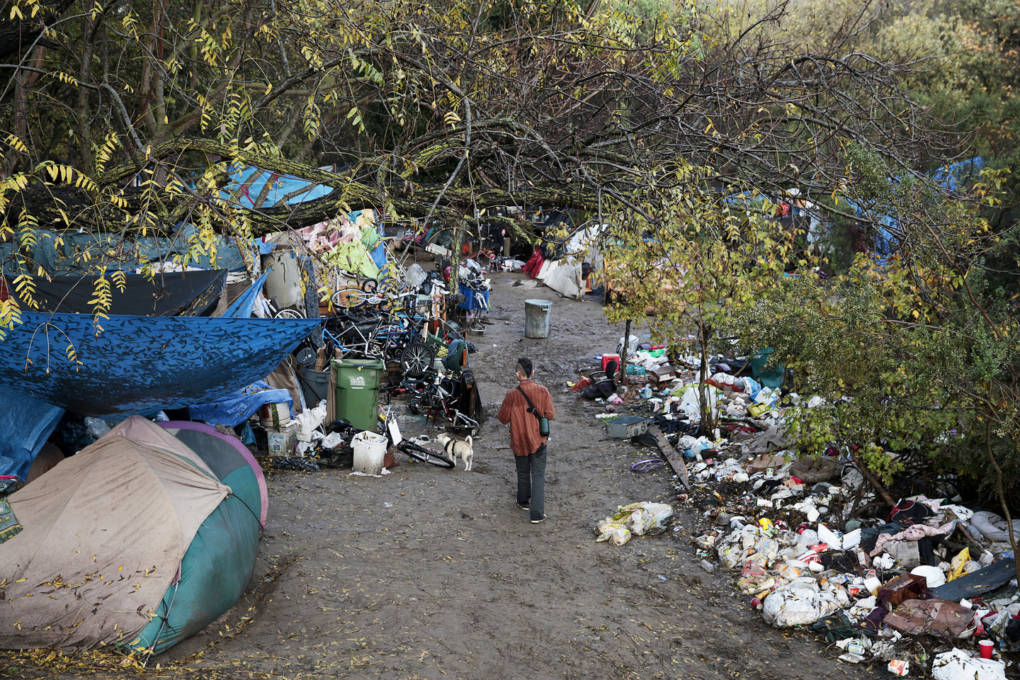
"caption": "A man walks through the Jungle homeless encampment in San José on Dec. 4, 2014. The city of San José cleared out the part of Coyote Creek that was home to around 300 people.",
"credit": "James Tensuan/KQED",
"altTag": null,
"description": null,
"imgSizes": {
"thumbnail": {
"file": "https://cdn.kqed.org/wp-content/uploads/sites/10/2017/12/RS13372_20141204_jungle_jt_007-qut-160x107.jpg",
"width": 160,
"height": 107,
"mimeType": "image/jpeg"
},
"medium": {
"file": "https://cdn.kqed.org/wp-content/uploads/sites/10/2017/12/RS13372_20141204_jungle_jt_007-qut-800x533.jpg",
"width": 800,
"height": 533,
"mimeType": "image/jpeg"
},
"large": {
"file": "https://cdn.kqed.org/wp-content/uploads/sites/10/2017/12/RS13372_20141204_jungle_jt_007-qut-1020x680.jpg",
"width": 1020,
"height": 680,
"mimeType": "image/jpeg"
},
"fd-med": {
"file": "https://cdn.kqed.org/wp-content/uploads/sites/10/2017/12/RS13372_20141204_jungle_jt_007-qut-1180x787.jpg",
"width": 1180,
"height": 787,
"mimeType": "image/jpeg"
},
"fd-sm": {
"file": "https://cdn.kqed.org/wp-content/uploads/sites/10/2017/12/RS13372_20141204_jungle_jt_007-qut-960x640.jpg",
"width": 960,
"height": 640,
"mimeType": "image/jpeg"
},
"post-thumbnail": {
"file": "https://cdn.kqed.org/wp-content/uploads/sites/10/2017/12/RS13372_20141204_jungle_jt_007-qut-672x372.jpg",
"width": 672,
"height": 372,
"mimeType": "image/jpeg"
},
"twentyfourteen-full-width": {
"file": "https://cdn.kqed.org/wp-content/uploads/sites/10/2017/12/RS13372_20141204_jungle_jt_007-qut-1038x576.jpg",
"width": 1038,
"height": 576,
"mimeType": "image/jpeg"
},
"xxsmall": {
"file": "https://cdn.kqed.org/wp-content/uploads/sites/10/2017/12/RS13372_20141204_jungle_jt_007-qut-240x160.jpg",
"width": 240,
"height": 160,
"mimeType": "image/jpeg"
},
"xsmall": {
"file": "https://cdn.kqed.org/wp-content/uploads/sites/10/2017/12/RS13372_20141204_jungle_jt_007-qut-375x250.jpg",
"width": 375,
"height": 250,
"mimeType": "image/jpeg"
},
"small": {
"file": "https://cdn.kqed.org/wp-content/uploads/sites/10/2017/12/RS13372_20141204_jungle_jt_007-qut-520x347.jpg",
"width": 520,
"height": 347,
"mimeType": "image/jpeg"
},
"xlarge": {
"file": "https://cdn.kqed.org/wp-content/uploads/sites/10/2017/12/RS13372_20141204_jungle_jt_007-qut-1180x787.jpg",
"width": 1180,
"height": 787,
"mimeType": "image/jpeg"
},
"guest-author-32": {
"file": "https://cdn.kqed.org/wp-content/uploads/sites/10/2017/12/RS13372_20141204_jungle_jt_007-qut-32x32.jpg",
"width": 32,
"height": 32,
"mimeType": "image/jpeg"
},
"guest-author-50": {
"file": "https://cdn.kqed.org/wp-content/uploads/sites/10/2017/12/RS13372_20141204_jungle_jt_007-qut-50x50.jpg",
"width": 50,
"height": 50,
"mimeType": "image/jpeg"
},
"guest-author-64": {
"file": "https://cdn.kqed.org/wp-content/uploads/sites/10/2017/12/RS13372_20141204_jungle_jt_007-qut-64x64.jpg",
"width": 64,
"height": 64,
"mimeType": "image/jpeg"
},
"guest-author-96": {
"file": "https://cdn.kqed.org/wp-content/uploads/sites/10/2017/12/RS13372_20141204_jungle_jt_007-qut-96x96.jpg",
"width": 96,
"height": 96,
"mimeType": "image/jpeg"
},
"guest-author-128": {
"file": "https://cdn.kqed.org/wp-content/uploads/sites/10/2017/12/RS13372_20141204_jungle_jt_007-qut-128x128.jpg",
"width": 128,
"height": 128,
"mimeType": "image/jpeg"
},
"detail": {
"file": "https://cdn.kqed.org/wp-content/uploads/sites/10/2017/12/RS13372_20141204_jungle_jt_007-qut-150x150.jpg",
"width": 150,
"height": 150,
"mimeType": "image/jpeg"
},
"kqedFullSize": {
"file": "https://cdn.kqed.org/wp-content/uploads/sites/10/2017/12/RS13372_20141204_jungle_jt_007-qut.jpg",
"width": 1440,
"height": 960
}
},
"isLoading": false,
"fetchFailed": false
},
"news_11636022": {
"type": "attachments",
"id": "news_11636022",
"meta": {
"index": "attachments_1716263798",
"site": "news",
"id": "11636022",
"found": true
},
"parent": 11636018,
"imgSizes": {
"small": {
"file": "https://ww2.kqed.org/app/uploads/sites/10/2017/12/RS28447_Photo-Dec-07-3-31-23-PM-2-qut-520x293.jpg",
"width": 520,
"mimeType": "image/jpeg",
"height": 293
},
"twentyfourteen-full-width": {
"file": "https://ww2.kqed.org/app/uploads/sites/10/2017/12/RS28447_Photo-Dec-07-3-31-23-PM-2-qut-1038x576.jpg",
"width": 1038,
"mimeType": "image/jpeg",
"height": 576
},
"thumbnail": {
"file": "https://ww2.kqed.org/app/uploads/sites/10/2017/12/RS28447_Photo-Dec-07-3-31-23-PM-2-qut-160x90.jpg",
"width": 160,
"mimeType": "image/jpeg",
"height": 90
},
"fd-sm": {
"file": "https://ww2.kqed.org/app/uploads/sites/10/2017/12/RS28447_Photo-Dec-07-3-31-23-PM-2-qut-960x540.jpg",
"width": 960,
"mimeType": "image/jpeg",
"height": 540
},
"post-thumbnail": {
"file": "https://ww2.kqed.org/app/uploads/sites/10/2017/12/RS28447_Photo-Dec-07-3-31-23-PM-2-qut-672x372.jpg",
"width": 672,
"mimeType": "image/jpeg",
"height": 372
},
"xsmall": {
"file": "https://ww2.kqed.org/app/uploads/sites/10/2017/12/RS28447_Photo-Dec-07-3-31-23-PM-2-qut-375x211.jpg",
"width": 375,
"mimeType": "image/jpeg",
"height": 211
},
"kqedFullSize": {
"file": "https://ww2.kqed.org/app/uploads/sites/10/2017/12/RS28447_Photo-Dec-07-3-31-23-PM-2-qut.jpg",
"width": 1920,
"height": 1080
},
"large": {
"file": "https://ww2.kqed.org/app/uploads/sites/10/2017/12/RS28447_Photo-Dec-07-3-31-23-PM-2-qut-1020x574.jpg",
"width": 1020,
"mimeType": "image/jpeg",
"height": 574
},
"xlarge": {
"file": "https://ww2.kqed.org/app/uploads/sites/10/2017/12/RS28447_Photo-Dec-07-3-31-23-PM-2-qut-1180x664.jpg",
"width": 1180,
"mimeType": "image/jpeg",
"height": 664
},
"guest-author-50": {
"file": "https://ww2.kqed.org/app/uploads/sites/10/2017/12/RS28447_Photo-Dec-07-3-31-23-PM-2-qut-50x50.jpg",
"width": 50,
"mimeType": "image/jpeg",
"height": 50
},
"guest-author-96": {
"file": "https://ww2.kqed.org/app/uploads/sites/10/2017/12/RS28447_Photo-Dec-07-3-31-23-PM-2-qut-96x96.jpg",
"width": 96,
"mimeType": "image/jpeg",
"height": 96
},
"medium": {
"file": "https://ww2.kqed.org/app/uploads/sites/10/2017/12/RS28447_Photo-Dec-07-3-31-23-PM-2-qut-800x450.jpg",
"width": 800,
"mimeType": "image/jpeg",
"height": 450
},
"guest-author-64": {
"file": "https://ww2.kqed.org/app/uploads/sites/10/2017/12/RS28447_Photo-Dec-07-3-31-23-PM-2-qut-64x64.jpg",
"width": 64,
"mimeType": "image/jpeg",
"height": 64
},
"guest-author-32": {
"file": "https://ww2.kqed.org/app/uploads/sites/10/2017/12/RS28447_Photo-Dec-07-3-31-23-PM-2-qut-32x32.jpg",
"width": 32,
"mimeType": "image/jpeg",
"height": 32
},
"fd-lrg": {
"file": "https://ww2.kqed.org/app/uploads/sites/10/2017/12/RS28447_Photo-Dec-07-3-31-23-PM-2-qut-1920x1080.jpg",
"width": 1920,
"mimeType": "image/jpeg",
"height": 1080
},
"fd-med": {
"file": "https://ww2.kqed.org/app/uploads/sites/10/2017/12/RS28447_Photo-Dec-07-3-31-23-PM-2-qut-1180x664.jpg",
"width": 1180,
"mimeType": "image/jpeg",
"height": 664
},
"full-width": {
"file": "https://ww2.kqed.org/app/uploads/sites/10/2017/12/RS28447_Photo-Dec-07-3-31-23-PM-2-qut-1920x1080.jpg",
"width": 1920,
"mimeType": "image/jpeg",
"height": 1080
},
"detail": {
"file": "https://ww2.kqed.org/app/uploads/sites/10/2017/12/RS28447_Photo-Dec-07-3-31-23-PM-2-qut-150x150.jpg",
"width": 150,
"mimeType": "image/jpeg",
"height": 150
},
"guest-author-128": {
"file": "https://ww2.kqed.org/app/uploads/sites/10/2017/12/RS28447_Photo-Dec-07-3-31-23-PM-2-qut-128x128.jpg",
"width": 128,
"mimeType": "image/jpeg",
"height": 128
},
"xxsmall": {
"file": "https://ww2.kqed.org/app/uploads/sites/10/2017/12/RS28447_Photo-Dec-07-3-31-23-PM-2-qut-240x135.jpg",
"width": 240,
"mimeType": "image/jpeg",
"height": 135
}
},
"publishDate": 1512799889,
"modified": 1512832716,
"caption": "Chester and Amy Nozaki of the San Jose Tofu Company are feeling ready to retire.",
"description": "Chester and Amy Nozaki of the San Jose Tofu Company are feeling ready to retire.",
"title": "RS28447_Photo Dec 07, 3 31 23 PM 2-qut",
"credit": "Rachael Myrow/KQED",
"status": "inherit",
"isLoading": false,
"fetchFailed": false
},
"news_11632967": {
"type": "attachments",
"id": "news_11632967",
"meta": {
"index": "attachments_1716263798",
"site": "news",
"id": "11632967",
"found": true
},
"parent": 11632630,
"imgSizes": {
"small": {
"file": "https://ww2.kqed.org/app/uploads/sites/10/2017/11/sjfire-520x340.jpg",
"width": 520,
"mimeType": "image/jpeg",
"height": 340
},
"twentyfourteen-full-width": {
"file": "https://ww2.kqed.org/app/uploads/sites/10/2017/11/sjfire-1038x576.jpg",
"width": 1038,
"mimeType": "image/jpeg",
"height": 576
},
"thumbnail": {
"file": "https://ww2.kqed.org/app/uploads/sites/10/2017/11/sjfire-160x105.jpg",
"width": 160,
"mimeType": "image/jpeg",
"height": 105
},
"fd-sm": {
"file": "https://ww2.kqed.org/app/uploads/sites/10/2017/11/sjfire-960x628.jpg",
"width": 960,
"mimeType": "image/jpeg",
"height": 628
},
"post-thumbnail": {
"file": "https://ww2.kqed.org/app/uploads/sites/10/2017/11/sjfire-672x372.jpg",
"width": 672,
"mimeType": "image/jpeg",
"height": 372
},
"xsmall": {
"file": "https://ww2.kqed.org/app/uploads/sites/10/2017/11/sjfire-375x245.jpg",
"width": 375,
"mimeType": "image/jpeg",
"height": 245
},
"kqedFullSize": {
"file": "https://ww2.kqed.org/app/uploads/sites/10/2017/11/sjfire.jpg",
"width": 1920,
"height": 1256
},
"large": {
"file": "https://ww2.kqed.org/app/uploads/sites/10/2017/11/sjfire-1020x667.jpg",
"width": 1020,
"mimeType": "image/jpeg",
"height": 667
},
"xlarge": {
"file": "https://ww2.kqed.org/app/uploads/sites/10/2017/11/sjfire-1180x772.jpg",
"width": 1180,
"mimeType": "image/jpeg",
"height": 772
},
"guest-author-50": {
"file": "https://ww2.kqed.org/app/uploads/sites/10/2017/11/sjfire-50x50.jpg",
"width": 50,
"mimeType": "image/jpeg",
"height": 50
},
"guest-author-96": {
"file": "https://ww2.kqed.org/app/uploads/sites/10/2017/11/sjfire-96x96.jpg",
"width": 96,
"mimeType": "image/jpeg",
"height": 96
},
"medium": {
"file": "https://ww2.kqed.org/app/uploads/sites/10/2017/11/sjfire-800x523.jpg",
"width": 800,
"mimeType": "image/jpeg",
"height": 523
},
"guest-author-64": {
"file": "https://ww2.kqed.org/app/uploads/sites/10/2017/11/sjfire-64x64.jpg",
"width": 64,
"mimeType": "image/jpeg",
"height": 64
},
"guest-author-32": {
"file": "https://ww2.kqed.org/app/uploads/sites/10/2017/11/sjfire-32x32.jpg",
"width": 32,
"mimeType": "image/jpeg",
"height": 32
},
"fd-lrg": {
"file": "https://ww2.kqed.org/app/uploads/sites/10/2017/11/sjfire-1920x1256.jpg",
"width": 1920,
"mimeType": "image/jpeg",
"height": 1256
},
"fd-med": {
"file": "https://ww2.kqed.org/app/uploads/sites/10/2017/11/sjfire-1180x772.jpg",
"width": 1180,
"mimeType": "image/jpeg",
"height": 772
},
"full-width": {
"file": "https://ww2.kqed.org/app/uploads/sites/10/2017/11/sjfire-1920x1256.jpg",
"width": 1920,
"mimeType": "image/jpeg",
"height": 1256
},
"detail": {
"file": "https://ww2.kqed.org/app/uploads/sites/10/2017/11/sjfire-150x150.jpg",
"width": 150,
"mimeType": "image/jpeg",
"height": 150
},
"guest-author-128": {
"file": "https://ww2.kqed.org/app/uploads/sites/10/2017/11/sjfire-128x128.jpg",
"width": 128,
"mimeType": "image/jpeg",
"height": 128
},
"xxsmall": {
"file": "https://ww2.kqed.org/app/uploads/sites/10/2017/11/sjfire-240x157.jpg",
"width": 240,
"mimeType": "image/jpeg",
"height": 157
}
},
"publishDate": 1511372174,
"modified": 1511372247,
"caption": "San Jose firefighters at the scene of an apartment fire Saturday, Nov. 18, that killed three people.",
"description": null,
"title": "San Jose Apartment Fire",
"credit": "KNTV/NBC Bay Area via Twitter",
"status": "inherit",
"isLoading": false,
"fetchFailed": false
},
"news_11630862": {
"type": "attachments",
"id": "news_11630862",
"meta": {
"index": "attachments_1716263798",
"site": "news",
"id": "11630862",
"found": true
},
"parent": 11630861,
"imgSizes": {
"small": {
"file": "https://ww2.kqed.org/app/uploads/sites/10/2017/11/valley-file-20171027-2402-15ejnas-520x256.jpg",
"width": 520,
"mimeType": "image/jpeg",
"height": 256
},
"twentyfourteen-full-width": {
"file": "https://ww2.kqed.org/app/uploads/sites/10/2017/11/valley-file-20171027-2402-15ejnas-1038x576.jpg",
"width": 1038,
"mimeType": "image/jpeg",
"height": 576
},
"thumbnail": {
"file": "https://ww2.kqed.org/app/uploads/sites/10/2017/11/valley-file-20171027-2402-15ejnas-160x79.jpg",
"width": 160,
"mimeType": "image/jpeg",
"height": 79
},
"fd-sm": {
"file": "https://ww2.kqed.org/app/uploads/sites/10/2017/11/valley-file-20171027-2402-15ejnas-960x473.jpg",
"width": 960,
"mimeType": "image/jpeg",
"height": 473
},
"post-thumbnail": {
"file": "https://ww2.kqed.org/app/uploads/sites/10/2017/11/valley-file-20171027-2402-15ejnas-672x372.jpg",
"width": 672,
"mimeType": "image/jpeg",
"height": 372
},
"xsmall": {
"file": "https://ww2.kqed.org/app/uploads/sites/10/2017/11/valley-file-20171027-2402-15ejnas-375x185.jpg",
"width": 375,
"mimeType": "image/jpeg",
"height": 185
},
"kqedFullSize": {
"file": "https://ww2.kqed.org/app/uploads/sites/10/2017/11/valley-file-20171027-2402-15ejnas.jpg",
"width": 1356,
"height": 668
},
"large": {
"file": "https://ww2.kqed.org/app/uploads/sites/10/2017/11/valley-file-20171027-2402-15ejnas-1020x502.jpg",
"width": 1020,
"mimeType": "image/jpeg",
"height": 502
},
"xlarge": {
"file": "https://ww2.kqed.org/app/uploads/sites/10/2017/11/valley-file-20171027-2402-15ejnas-1180x581.jpg",
"width": 1180,
"mimeType": "image/jpeg",
"height": 581
},
"guest-author-50": {
"file": "https://ww2.kqed.org/app/uploads/sites/10/2017/11/valley-file-20171027-2402-15ejnas-50x50.jpg",
"width": 50,
"mimeType": "image/jpeg",
"height": 50
},
"guest-author-96": {
"file": "https://ww2.kqed.org/app/uploads/sites/10/2017/11/valley-file-20171027-2402-15ejnas-96x96.jpg",
"width": 96,
"mimeType": "image/jpeg",
"height": 96
},
"medium": {
"file": "https://ww2.kqed.org/app/uploads/sites/10/2017/11/valley-file-20171027-2402-15ejnas-800x394.jpg",
"width": 800,
"mimeType": "image/jpeg",
"height": 394
},
"guest-author-64": {
"file": "https://ww2.kqed.org/app/uploads/sites/10/2017/11/valley-file-20171027-2402-15ejnas-64x64.jpg",
"width": 64,
"mimeType": "image/jpeg",
"height": 64
},
"guest-author-32": {
"file": "https://ww2.kqed.org/app/uploads/sites/10/2017/11/valley-file-20171027-2402-15ejnas-32x32.jpg",
"width": 32,
"mimeType": "image/jpeg",
"height": 32
},
"fd-med": {
"file": "https://ww2.kqed.org/app/uploads/sites/10/2017/11/valley-file-20171027-2402-15ejnas-1180x581.jpg",
"width": 1180,
"mimeType": "image/jpeg",
"height": 581
},
"detail": {
"file": "https://ww2.kqed.org/app/uploads/sites/10/2017/11/valley-file-20171027-2402-15ejnas-150x150.jpg",
"width": 150,
"mimeType": "image/jpeg",
"height": 150
},
"guest-author-128": {
"file": "https://ww2.kqed.org/app/uploads/sites/10/2017/11/valley-file-20171027-2402-15ejnas-128x128.jpg",
"width": 128,
"mimeType": "image/jpeg",
"height": 128
},
"xxsmall": {
"file": "https://ww2.kqed.org/app/uploads/sites/10/2017/11/valley-file-20171027-2402-15ejnas-240x118.jpg",
"width": 240,
"mimeType": "image/jpeg",
"height": 118
}
},
"publishDate": 1510696275,
"modified": 1510696447,
"caption": "Aerial view of San Jose, California, 2016. \n",
"description": "Aerial view of San Jose, California, 2016",
"title": "valley-file-20171027-2402-15ejnas",
"credit": "\u003ca href=\"https://www.flickr.com/photos/gordon-s/29670306746/\">Gordon-Shukwit\u003c/a>, \u003ca href=\"http://creativecommons.org/licenses/by-nc-nd/4.0/\">CC BY-NC-ND\u003c/a>",
"status": "inherit",
"isLoading": false,
"fetchFailed": false
},
"news_11626692": {
"type": "attachments",
"id": "news_11626692",
"meta": {
"index": "attachments_1716263798",
"site": "news",
"id": "11626692",
"found": true
},
"parent": 11626685,
"imgSizes": {
"small": {
"file": "https://ww2.kqed.org/app/uploads/sites/10/2017/10/IMG_0692-e1509298514926-520x390.jpg",
"width": 520,
"mimeType": "image/jpeg",
"height": 390
},
"twentyfourteen-full-width": {
"file": "https://ww2.kqed.org/app/uploads/sites/10/2017/10/IMG_0692-e1509298514926-1038x576.jpg",
"width": 1038,
"mimeType": "image/jpeg",
"height": 576
},
"thumbnail": {
"file": "https://ww2.kqed.org/app/uploads/sites/10/2017/10/IMG_0692-e1509298514926-160x120.jpg",
"width": 160,
"mimeType": "image/jpeg",
"height": 120
},
"fd-sm": {
"file": "https://ww2.kqed.org/app/uploads/sites/10/2017/10/IMG_0692-e1509298514926-960x720.jpg",
"width": 960,
"mimeType": "image/jpeg",
"height": 720
},
"post-thumbnail": {
"file": "https://ww2.kqed.org/app/uploads/sites/10/2017/10/IMG_0692-e1509298514926-672x372.jpg",
"width": 672,
"mimeType": "image/jpeg",
"height": 372
},
"xsmall": {
"file": "https://ww2.kqed.org/app/uploads/sites/10/2017/10/IMG_0692-e1509298514926-375x281.jpg",
"width": 375,
"mimeType": "image/jpeg",
"height": 281
},
"kqedFullSize": {
"file": "https://ww2.kqed.org/app/uploads/sites/10/2017/10/IMG_0692-e1509298514926.jpg",
"width": 4032,
"height": 3024
},
"large": {
"file": "https://ww2.kqed.org/app/uploads/sites/10/2017/10/IMG_0692-e1509298514926-1020x765.jpg",
"width": 1020,
"mimeType": "image/jpeg",
"height": 765
},
"xlarge": {
"file": "https://ww2.kqed.org/app/uploads/sites/10/2017/10/IMG_0692-e1509298514926-1180x885.jpg",
"width": 1180,
"mimeType": "image/jpeg",
"height": 885
},
"guest-author-50": {
"file": "https://ww2.kqed.org/app/uploads/sites/10/2017/10/IMG_0692-e1509298514926-50x50.jpg",
"width": 50,
"mimeType": "image/jpeg",
"height": 50
},
"guest-author-96": {
"file": "https://ww2.kqed.org/app/uploads/sites/10/2017/10/IMG_0692-e1509298514926-96x96.jpg",
"width": 96,
"mimeType": "image/jpeg",
"height": 96
},
"medium": {
"file": "https://ww2.kqed.org/app/uploads/sites/10/2017/10/IMG_0692-e1509298514926-800x600.jpg",
"width": 800,
"mimeType": "image/jpeg",
"height": 600
},
"guest-author-64": {
"file": "https://ww2.kqed.org/app/uploads/sites/10/2017/10/IMG_0692-e1509298514926-64x64.jpg",
"width": 64,
"mimeType": "image/jpeg",
"height": 64
},
"guest-author-32": {
"file": "https://ww2.kqed.org/app/uploads/sites/10/2017/10/IMG_0692-e1509298514926-32x32.jpg",
"width": 32,
"mimeType": "image/jpeg",
"height": 32
},
"fd-lrg": {
"file": "https://ww2.kqed.org/app/uploads/sites/10/2017/10/IMG_0692-e1509298514926-1920x1440.jpg",
"width": 1920,
"mimeType": "image/jpeg",
"height": 1440
},
"fd-med": {
"file": "https://ww2.kqed.org/app/uploads/sites/10/2017/10/IMG_0692-e1509298514926-1180x885.jpg",
"width": 1180,
"mimeType": "image/jpeg",
"height": 885
},
"full-width": {
"file": "https://ww2.kqed.org/app/uploads/sites/10/2017/10/IMG_0692-e1509298514926-1920x1440.jpg",
"width": 1920,
"mimeType": "image/jpeg",
"height": 1440
},
"detail": {
"file": "https://ww2.kqed.org/app/uploads/sites/10/2017/10/IMG_0692-e1509298514926-150x150.jpg",
"width": 150,
"mimeType": "image/jpeg",
"height": 150
},
"guest-author-128": {
"file": "https://ww2.kqed.org/app/uploads/sites/10/2017/10/IMG_0692-e1509298514926-128x128.jpg",
"width": 128,
"mimeType": "image/jpeg",
"height": 128
},
"xxsmall": {
"file": "https://ww2.kqed.org/app/uploads/sites/10/2017/10/IMG_0692-e1509298514926-240x180.jpg",
"width": 240,
"mimeType": "image/jpeg",
"height": 180
}
},
"publishDate": 1509298483,
"modified": 1509409021,
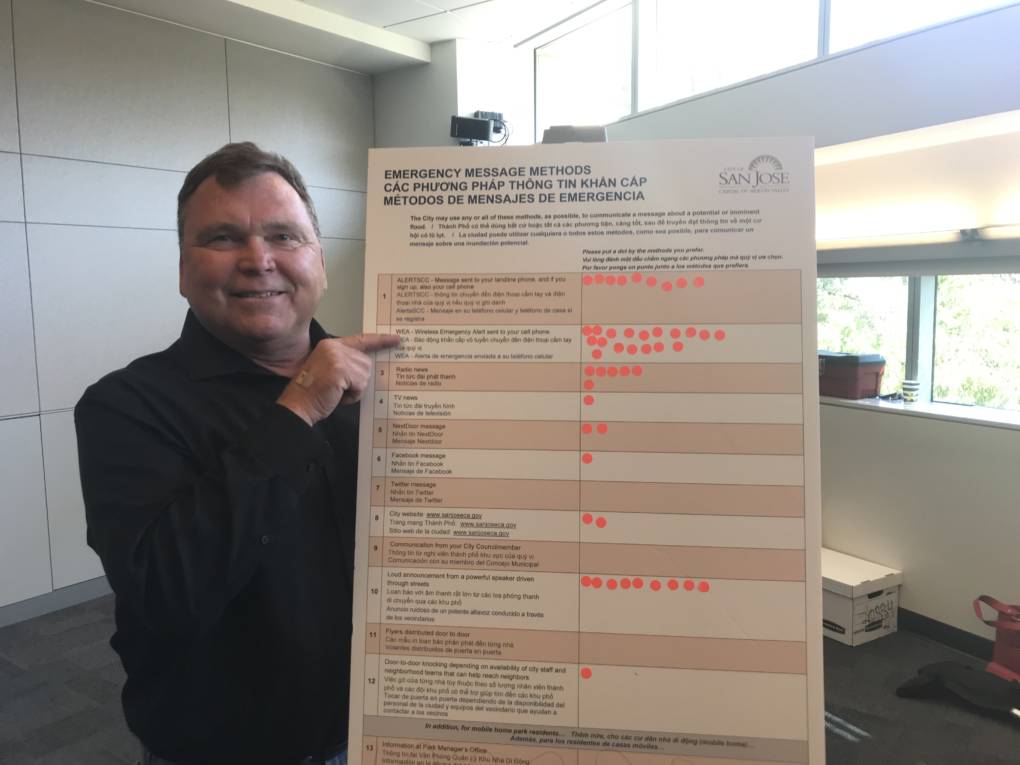
"caption": "Ray Riordan, San Jose's director of emergency management, with a survey on emergency notifications.",
"description": null,
"title": "IMG_0692",
"credit": "Guy Marzorati/KQED",
"status": "inherit",
"isLoading": false,
"fetchFailed": false
},
"news_11626688": {
"type": "attachments",
"id": "news_11626688",
"meta": {
"index": "attachments_1716263798",
"site": "news",
"id": "11626688",
"found": true
},
"parent": 11626686,
"imgSizes": {
"small": {
"file": "https://ww2.kqed.org/app/uploads/sites/10/2017/10/RS26143_GettyImages-670854616-1-qut-520x354.jpg",
"width": 520,
"mimeType": "image/jpeg",
"height": 354
},
"twentyfourteen-full-width": {
"file": "https://ww2.kqed.org/app/uploads/sites/10/2017/10/RS26143_GettyImages-670854616-1-qut-1038x576.jpg",
"width": 1038,
"mimeType": "image/jpeg",
"height": 576
},
"thumbnail": {
"file": "https://ww2.kqed.org/app/uploads/sites/10/2017/10/RS26143_GettyImages-670854616-1-qut-160x109.jpg",
"width": 160,
"mimeType": "image/jpeg",
"height": 109
},
"fd-sm": {
"file": "https://ww2.kqed.org/app/uploads/sites/10/2017/10/RS26143_GettyImages-670854616-1-qut-960x654.jpg",
"width": 960,
"mimeType": "image/jpeg",
"height": 654
},
"post-thumbnail": {
"file": "https://ww2.kqed.org/app/uploads/sites/10/2017/10/RS26143_GettyImages-670854616-1-qut-672x372.jpg",
"width": 672,
"mimeType": "image/jpeg",
"height": 372
},
"xsmall": {
"file": "https://ww2.kqed.org/app/uploads/sites/10/2017/10/RS26143_GettyImages-670854616-1-qut-375x255.jpg",
"width": 375,
"mimeType": "image/jpeg",
"height": 255
},
"kqedFullSize": {
"file": "https://ww2.kqed.org/app/uploads/sites/10/2017/10/RS26143_GettyImages-670854616-1-qut.jpg",
"width": 1920,
"height": 1308
},
"large": {
"file": "https://ww2.kqed.org/app/uploads/sites/10/2017/10/RS26143_GettyImages-670854616-1-qut-1020x695.jpg",
"width": 1020,
"mimeType": "image/jpeg",
"height": 695
},
"xlarge": {
"file": "https://ww2.kqed.org/app/uploads/sites/10/2017/10/RS26143_GettyImages-670854616-1-qut-1180x804.jpg",
"width": 1180,
"mimeType": "image/jpeg",
"height": 804
},
"guest-author-50": {
"file": "https://ww2.kqed.org/app/uploads/sites/10/2017/10/RS26143_GettyImages-670854616-1-qut-50x50.jpg",
"width": 50,
"mimeType": "image/jpeg",
"height": 50
},
"guest-author-96": {
"file": "https://ww2.kqed.org/app/uploads/sites/10/2017/10/RS26143_GettyImages-670854616-1-qut-96x96.jpg",
"width": 96,
"mimeType": "image/jpeg",
"height": 96
},
"medium": {
"file": "https://ww2.kqed.org/app/uploads/sites/10/2017/10/RS26143_GettyImages-670854616-1-qut-800x545.jpg",
"width": 800,
"mimeType": "image/jpeg",
"height": 545
},
"guest-author-64": {
"file": "https://ww2.kqed.org/app/uploads/sites/10/2017/10/RS26143_GettyImages-670854616-1-qut-64x64.jpg",
"width": 64,
"mimeType": "image/jpeg",
"height": 64
},
"guest-author-32": {
"file": "https://ww2.kqed.org/app/uploads/sites/10/2017/10/RS26143_GettyImages-670854616-1-qut-32x32.jpg",
"width": 32,
"mimeType": "image/jpeg",
"height": 32
},
"fd-lrg": {
"file": "https://ww2.kqed.org/app/uploads/sites/10/2017/10/RS26143_GettyImages-670854616-1-qut-1920x1308.jpg",
"width": 1920,
"mimeType": "image/jpeg",
"height": 1308
},
"fd-med": {
"file": "https://ww2.kqed.org/app/uploads/sites/10/2017/10/RS26143_GettyImages-670854616-1-qut-1180x804.jpg",
"width": 1180,
"mimeType": "image/jpeg",
"height": 804
},
"full-width": {
"file": "https://ww2.kqed.org/app/uploads/sites/10/2017/10/RS26143_GettyImages-670854616-1-qut-1920x1308.jpg",
"width": 1920,
"mimeType": "image/jpeg",
"height": 1308
},
"detail": {
"file": "https://ww2.kqed.org/app/uploads/sites/10/2017/10/RS26143_GettyImages-670854616-1-qut-150x150.jpg",
"width": 150,
"mimeType": "image/jpeg",
"height": 150
},
"guest-author-128": {
"file": "https://ww2.kqed.org/app/uploads/sites/10/2017/10/RS26143_GettyImages-670854616-1-qut-128x128.jpg",
"width": 128,
"mimeType": "image/jpeg",
"height": 128
},
"xxsmall": {
"file": "https://ww2.kqed.org/app/uploads/sites/10/2017/10/RS26143_GettyImages-670854616-1-qut-240x164.jpg",
"width": 240,
"mimeType": "image/jpeg",
"height": 164
}
},
"publishDate": 1509297494,
"modified": 1509297754,
"caption": "Justin Calvino displays marijuana grown on one of his properties in Mendocino County, California on April 19, 2017. Recreational legalization is fast-approaching, but confusion over regulations may create issues down the road. ",
"description": "Justin Calvino displays marijuana grown on one of his properties in Mendocino County, California on April 19, 2017. Recreational legalization is fast-approaching, but confusion over regulations may create issues down the road. ",
"title": "US-MARIJUANA-REGULATIONS",
"credit": "Josh EdelsonN/AFP/Getty Images",
"status": "inherit",
"isLoading": false,
"fetchFailed": false
},
"news_11625899": {
"type": "attachments",
"id": "news_11625899",
"meta": {
"index": "attachments_1716263798",
"site": "news",
"id": "11625899",
"found": true
},
"parent": 11625648,
"imgSizes": {
"small": {
"file": "https://ww2.kqed.org/app/uploads/sites/10/2017/10/RS27707_Fresno_cropped-qut-520x309.jpg",
"width": 520,
"mimeType": "image/jpeg",
"height": 309
},
"twentyfourteen-full-width": {
"file": "https://ww2.kqed.org/app/uploads/sites/10/2017/10/RS27707_Fresno_cropped-qut-1038x576.jpg",
"width": 1038,
"mimeType": "image/jpeg",
"height": 576
},
"thumbnail": {
"file": "https://ww2.kqed.org/app/uploads/sites/10/2017/10/RS27707_Fresno_cropped-qut-160x95.jpg",
"width": 160,
"mimeType": "image/jpeg",
"height": 95
},
"fd-sm": {
"file": "https://ww2.kqed.org/app/uploads/sites/10/2017/10/RS27707_Fresno_cropped-qut-960x570.jpg",
"width": 960,
"mimeType": "image/jpeg",
"height": 570
},
"post-thumbnail": {
"file": "https://ww2.kqed.org/app/uploads/sites/10/2017/10/RS27707_Fresno_cropped-qut-672x372.jpg",
"width": 672,
"mimeType": "image/jpeg",
"height": 372
},
"xsmall": {
"file": "https://ww2.kqed.org/app/uploads/sites/10/2017/10/RS27707_Fresno_cropped-qut-375x223.jpg",
"width": 375,
"mimeType": "image/jpeg",
"height": 223
},
"kqedFullSize": {
"file": "https://ww2.kqed.org/app/uploads/sites/10/2017/10/RS27707_Fresno_cropped-qut.jpg",
"width": 1920,
"height": 1140
},
"large": {
"file": "https://ww2.kqed.org/app/uploads/sites/10/2017/10/RS27707_Fresno_cropped-qut-1020x606.jpg",
"width": 1020,
"mimeType": "image/jpeg",
"height": 606
},
"xlarge": {
"file": "https://ww2.kqed.org/app/uploads/sites/10/2017/10/RS27707_Fresno_cropped-qut-1180x701.jpg",
"width": 1180,
"mimeType": "image/jpeg",
"height": 701
},
"guest-author-50": {
"file": "https://ww2.kqed.org/app/uploads/sites/10/2017/10/RS27707_Fresno_cropped-qut-50x50.jpg",
"width": 50,
"mimeType": "image/jpeg",
"height": 50
},
"guest-author-96": {
"file": "https://ww2.kqed.org/app/uploads/sites/10/2017/10/RS27707_Fresno_cropped-qut-96x96.jpg",
"width": 96,
"mimeType": "image/jpeg",
"height": 96
},
"medium": {
"file": "https://ww2.kqed.org/app/uploads/sites/10/2017/10/RS27707_Fresno_cropped-qut-800x475.jpg",
"width": 800,
"mimeType": "image/jpeg",
"height": 475
},
"guest-author-64": {
"file": "https://ww2.kqed.org/app/uploads/sites/10/2017/10/RS27707_Fresno_cropped-qut-64x64.jpg",
"width": 64,
"mimeType": "image/jpeg",
"height": 64
},
"guest-author-32": {
"file": "https://ww2.kqed.org/app/uploads/sites/10/2017/10/RS27707_Fresno_cropped-qut-32x32.jpg",
"width": 32,
"mimeType": "image/jpeg",
"height": 32
},
"fd-lrg": {
"file": "https://ww2.kqed.org/app/uploads/sites/10/2017/10/RS27707_Fresno_cropped-qut-1920x1140.jpg",
"width": 1920,
"mimeType": "image/jpeg",
"height": 1140
},
"fd-med": {
"file": "https://ww2.kqed.org/app/uploads/sites/10/2017/10/RS27707_Fresno_cropped-qut-1180x701.jpg",
"width": 1180,
"mimeType": "image/jpeg",
"height": 701
},
"full-width": {
"file": "https://ww2.kqed.org/app/uploads/sites/10/2017/10/RS27707_Fresno_cropped-qut-1920x1140.jpg",
"width": 1920,
"mimeType": "image/jpeg",
"height": 1140
},
"detail": {
"file": "https://ww2.kqed.org/app/uploads/sites/10/2017/10/RS27707_Fresno_cropped-qut-150x150.jpg",
"width": 150,
"mimeType": "image/jpeg",
"height": 150
},
"guest-author-128": {
"file": "https://ww2.kqed.org/app/uploads/sites/10/2017/10/RS27707_Fresno_cropped-qut-128x128.jpg",
"width": 128,
"mimeType": "image/jpeg",
"height": 128
},
"xxsmall": {
"file": "https://ww2.kqed.org/app/uploads/sites/10/2017/10/RS27707_Fresno_cropped-qut-240x143.jpg",
"width": 240,
"mimeType": "image/jpeg",
"height": 143
}
},
"publishDate": 1508954303,
"modified": 1508954344,
"caption": "Highway scene approaching Fresno, California.",
"description": null,
"title": "RS27707_Fresno_cropped-qut",
"credit": "CharlesNadeau/Flickr",
"status": "inherit",
"isLoading": false,
"fetchFailed": false
},
"news_11621298": {
"type": "attachments",
"id": "news_11621298",
"meta": {
"index": "attachments_1716263798",
"site": "news",
"id": "11621298",
"found": true
},
"parent": 11621271,
"imgSizes": {
"small": {
"file": "https://ww2.kqed.org/app/uploads/sites/10/2017/10/IMG_2625-520x390.jpg",
"width": 520,
"mimeType": "image/jpeg",
"height": 390
},
"twentyfourteen-full-width": {
"file": "https://ww2.kqed.org/app/uploads/sites/10/2017/10/IMG_2625-1038x576.jpg",
"width": 1038,
"mimeType": "image/jpeg",
"height": 576
},
"thumbnail": {
"file": "https://ww2.kqed.org/app/uploads/sites/10/2017/10/IMG_2625-160x120.jpg",
"width": 160,
"mimeType": "image/jpeg",
"height": 120
},
"fd-sm": {
"file": "https://ww2.kqed.org/app/uploads/sites/10/2017/10/IMG_2625-960x720.jpg",
"width": 960,
"mimeType": "image/jpeg",
"height": 720
},
"post-thumbnail": {
"file": "https://ww2.kqed.org/app/uploads/sites/10/2017/10/IMG_2625-672x372.jpg",
"width": 672,
"mimeType": "image/jpeg",
"height": 372
},
"xsmall": {
"file": "https://ww2.kqed.org/app/uploads/sites/10/2017/10/IMG_2625-375x281.jpg",
"width": 375,
"mimeType": "image/jpeg",
"height": 281
},
"kqedFullSize": {
"file": "https://ww2.kqed.org/app/uploads/sites/10/2017/10/IMG_2625.jpg",
"width": 4032,
"height": 3024
},
"large": {
"file": "https://ww2.kqed.org/app/uploads/sites/10/2017/10/IMG_2625-1020x765.jpg",
"width": 1020,
"mimeType": "image/jpeg",
"height": 765
},
"xlarge": {
"file": "https://ww2.kqed.org/app/uploads/sites/10/2017/10/IMG_2625-1180x885.jpg",
"width": 1180,
"mimeType": "image/jpeg",
"height": 885
},
"guest-author-50": {
"file": "https://ww2.kqed.org/app/uploads/sites/10/2017/10/IMG_2625-50x50.jpg",
"width": 50,
"mimeType": "image/jpeg",
"height": 50
},
"guest-author-96": {
"file": "https://ww2.kqed.org/app/uploads/sites/10/2017/10/IMG_2625-96x96.jpg",
"width": 96,
"mimeType": "image/jpeg",
"height": 96
},
"medium": {
"file": "https://ww2.kqed.org/app/uploads/sites/10/2017/10/IMG_2625-800x600.jpg",
"width": 800,
"mimeType": "image/jpeg",
"height": 600
},
"guest-author-64": {
"file": "https://ww2.kqed.org/app/uploads/sites/10/2017/10/IMG_2625-64x64.jpg",
"width": 64,
"mimeType": "image/jpeg",
"height": 64
},
"guest-author-32": {
"file": "https://ww2.kqed.org/app/uploads/sites/10/2017/10/IMG_2625-32x32.jpg",
"width": 32,
"mimeType": "image/jpeg",
"height": 32
},
"fd-lrg": {
"file": "https://ww2.kqed.org/app/uploads/sites/10/2017/10/IMG_2625-1920x1440.jpg",
"width": 1920,
"mimeType": "image/jpeg",
"height": 1440
},
"fd-med": {
"file": "https://ww2.kqed.org/app/uploads/sites/10/2017/10/IMG_2625-1180x885.jpg",
"width": 1180,
"mimeType": "image/jpeg",
"height": 885
},
"full-width": {
"file": "https://ww2.kqed.org/app/uploads/sites/10/2017/10/IMG_2625-1920x1440.jpg",
"width": 1920,
"mimeType": "image/jpeg",
"height": 1440
},
"detail": {
"file": "https://ww2.kqed.org/app/uploads/sites/10/2017/10/IMG_2625-150x150.jpg",
"width": 150,
"mimeType": "image/jpeg",
"height": 150
},
"guest-author-128": {
"file": "https://ww2.kqed.org/app/uploads/sites/10/2017/10/IMG_2625-128x128.jpg",
"width": 128,
"mimeType": "image/jpeg",
"height": 128
},
"xxsmall": {
"file": "https://ww2.kqed.org/app/uploads/sites/10/2017/10/IMG_2625-240x180.jpg",
"width": 240,
"mimeType": "image/jpeg",
"height": 180
}
},
"publishDate": 1507239237,
"modified": 1507323482,
"caption": "A view of San Jose from the 18th floor of City Hall.",
"description": null,
"title": "IMG_2625",
"credit": "Tonya Mosley/KQED",
"status": "inherit",
"isLoading": false,
"fetchFailed": false
},
"news_11617609": {
"type": "attachments",
"id": "news_11617609",
"meta": {
"index": "attachments_1716263798",
"site": "news",
"id": "11617609",
"found": true
},
"parent": 11617150,
"imgSizes": {
"small": {
"file": "https://ww2.kqed.org/app/uploads/sites/10/2017/09/IMG_0139-520x390.jpg",
"width": 520,
"mimeType": "image/jpeg",
"height": 390
},
"twentyfourteen-full-width": {
"file": "https://ww2.kqed.org/app/uploads/sites/10/2017/09/IMG_0139-1038x576.jpg",
"width": 1038,
"mimeType": "image/jpeg",
"height": 576
},
"thumbnail": {
"file": "https://ww2.kqed.org/app/uploads/sites/10/2017/09/IMG_0139-160x120.jpg",
"width": 160,
"mimeType": "image/jpeg",
"height": 120
},
"fd-sm": {
"file": "https://ww2.kqed.org/app/uploads/sites/10/2017/09/IMG_0139-960x720.jpg",
"width": 960,
"mimeType": "image/jpeg",
"height": 720
},
"post-thumbnail": {
"file": "https://ww2.kqed.org/app/uploads/sites/10/2017/09/IMG_0139-672x372.jpg",
"width": 672,
"mimeType": "image/jpeg",
"height": 372
},
"xsmall": {
"file": "https://ww2.kqed.org/app/uploads/sites/10/2017/09/IMG_0139-375x281.jpg",
"width": 375,
"mimeType": "image/jpeg",
"height": 281
},
"kqedFullSize": {
"file": "https://ww2.kqed.org/app/uploads/sites/10/2017/09/IMG_0139-e1505858388408.jpg",
"width": 1920,
"height": 1440
},
"large": {
"file": "https://ww2.kqed.org/app/uploads/sites/10/2017/09/IMG_0139-1020x765.jpg",
"width": 1020,
"mimeType": "image/jpeg",
"height": 765
},
"xlarge": {
"file": "https://ww2.kqed.org/app/uploads/sites/10/2017/09/IMG_0139-1180x885.jpg",
"width": 1180,
"mimeType": "image/jpeg",
"height": 885
},
"guest-author-50": {
"file": "https://ww2.kqed.org/app/uploads/sites/10/2017/09/IMG_0139-50x50.jpg",
"width": 50,
"mimeType": "image/jpeg",
"height": 50
},
"guest-author-96": {
"file": "https://ww2.kqed.org/app/uploads/sites/10/2017/09/IMG_0139-96x96.jpg",
"width": 96,
"mimeType": "image/jpeg",
"height": 96
},
"medium": {
"file": "https://ww2.kqed.org/app/uploads/sites/10/2017/09/IMG_0139-800x600.jpg",
"width": 800,
"mimeType": "image/jpeg",
"height": 600
},
"guest-author-64": {
"file": "https://ww2.kqed.org/app/uploads/sites/10/2017/09/IMG_0139-64x64.jpg",
"width": 64,
"mimeType": "image/jpeg",
"height": 64
},
"guest-author-32": {
"file": "https://ww2.kqed.org/app/uploads/sites/10/2017/09/IMG_0139-32x32.jpg",
"width": 32,
"mimeType": "image/jpeg",
"height": 32
},
"fd-lrg": {
"file": "https://ww2.kqed.org/app/uploads/sites/10/2017/09/IMG_0139-1920x1440.jpg",
"width": 1920,
"mimeType": "image/jpeg",
"height": 1440
},
"fd-med": {
"file": "https://ww2.kqed.org/app/uploads/sites/10/2017/09/IMG_0139-1180x885.jpg",
"width": 1180,
"mimeType": "image/jpeg",
"height": 885
},
"full-width": {
"file": "https://ww2.kqed.org/app/uploads/sites/10/2017/09/IMG_0139-1920x1440.jpg",
"width": 1920,
"mimeType": "image/jpeg",
"height": 1440
},
"detail": {
"file": "https://ww2.kqed.org/app/uploads/sites/10/2017/09/IMG_0139-150x150.jpg",
"width": 150,
"mimeType": "image/jpeg",
"height": 150
},
"guest-author-128": {
"file": "https://ww2.kqed.org/app/uploads/sites/10/2017/09/IMG_0139-128x128.jpg",
"width": 128,
"mimeType": "image/jpeg",
"height": 128
},
"xxsmall": {
"file": "https://ww2.kqed.org/app/uploads/sites/10/2017/09/IMG_0139-240x180.jpg",
"width": 240,
"mimeType": "image/jpeg",
"height": 180
}
},
"publishDate": 1505776581,
"modified": 1505863308,
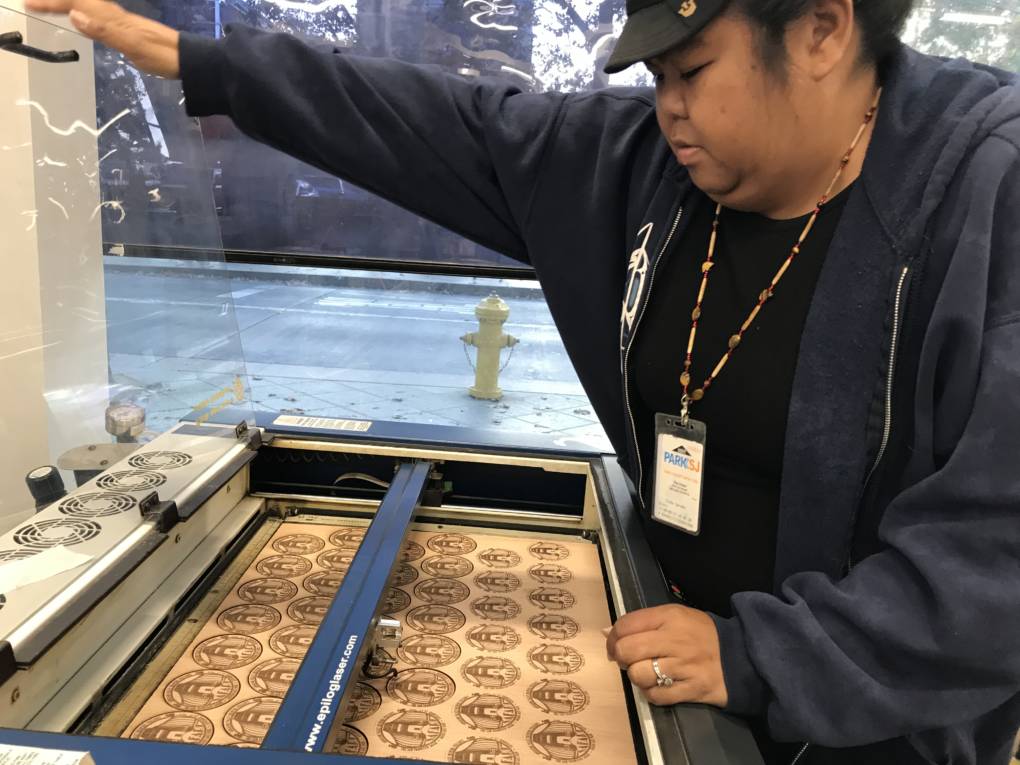
"caption": "Chrystie Mariano, 41, creates a design on coasters she'll sell to a nonprofit. Creating art takes her mind off her living situation.",
"description": null,
"title": "IMG_0139",
"credit": "Tonya Mosley/KQED",
"status": "inherit",
"isLoading": false,
"fetchFailed": false
},
"news_11616594": {
"type": "attachments",
"id": "news_11616594",
"meta": {
"index": "attachments_1716263798",
"site": "news",
"id": "11616594",
"found": true
},
"parent": 11616520,
"imgSizes": {
"small": {
"file": "https://ww2.kqed.org/app/uploads/sites/10/2017/09/RS17468_20151111_homeless_jt-7-qut-520x373.jpg",
"width": 520,
"mimeType": "image/jpeg",
"height": 373
},
"twentyfourteen-full-width": {
"file": "https://ww2.kqed.org/app/uploads/sites/10/2017/09/RS17468_20151111_homeless_jt-7-qut-1038x576.jpg",
"width": 1038,
"mimeType": "image/jpeg",
"height": 576
},
"thumbnail": {
"file": "https://ww2.kqed.org/app/uploads/sites/10/2017/09/RS17468_20151111_homeless_jt-7-qut-160x115.jpg",
"width": 160,
"mimeType": "image/jpeg",
"height": 115
},
"fd-sm": {
"file": "https://ww2.kqed.org/app/uploads/sites/10/2017/09/RS17468_20151111_homeless_jt-7-qut-960x689.jpg",
"width": 960,
"mimeType": "image/jpeg",
"height": 689
},
"post-thumbnail": {
"file": "https://ww2.kqed.org/app/uploads/sites/10/2017/09/RS17468_20151111_homeless_jt-7-qut-672x372.jpg",
"width": 672,
"mimeType": "image/jpeg",
"height": 372
},
"xsmall": {
"file": "https://ww2.kqed.org/app/uploads/sites/10/2017/09/RS17468_20151111_homeless_jt-7-qut-375x269.jpg",
"width": 375,
"mimeType": "image/jpeg",
"height": 269
},
"kqedFullSize": {
"file": "https://ww2.kqed.org/app/uploads/sites/10/2017/09/RS17468_20151111_homeless_jt-7-qut.jpg",
"width": 1920,
"height": 1378
},
"large": {
"file": "https://ww2.kqed.org/app/uploads/sites/10/2017/09/RS17468_20151111_homeless_jt-7-qut-1020x732.jpg",
"width": 1020,
"mimeType": "image/jpeg",
"height": 732
},
"xlarge": {
"file": "https://ww2.kqed.org/app/uploads/sites/10/2017/09/RS17468_20151111_homeless_jt-7-qut-1180x847.jpg",
"width": 1180,
"mimeType": "image/jpeg",
"height": 847
},
"guest-author-50": {
"file": "https://ww2.kqed.org/app/uploads/sites/10/2017/09/RS17468_20151111_homeless_jt-7-qut-50x50.jpg",
"width": 50,
"mimeType": "image/jpeg",
"height": 50
},
"guest-author-96": {
"file": "https://ww2.kqed.org/app/uploads/sites/10/2017/09/RS17468_20151111_homeless_jt-7-qut-96x96.jpg",
"width": 96,
"mimeType": "image/jpeg",
"height": 96
},
"medium": {
"file": "https://ww2.kqed.org/app/uploads/sites/10/2017/09/RS17468_20151111_homeless_jt-7-qut-800x574.jpg",
"width": 800,
"mimeType": "image/jpeg",
"height": 574
},
"guest-author-64": {
"file": "https://ww2.kqed.org/app/uploads/sites/10/2017/09/RS17468_20151111_homeless_jt-7-qut-64x64.jpg",
"width": 64,
"mimeType": "image/jpeg",
"height": 64
},
"guest-author-32": {
"file": "https://ww2.kqed.org/app/uploads/sites/10/2017/09/RS17468_20151111_homeless_jt-7-qut-32x32.jpg",
"width": 32,
"mimeType": "image/jpeg",
"height": 32
},
"fd-lrg": {
"file": "https://ww2.kqed.org/app/uploads/sites/10/2017/09/RS17468_20151111_homeless_jt-7-qut-1920x1378.jpg",
"width": 1920,
"mimeType": "image/jpeg",
"height": 1378
},
"fd-med": {
"file": "https://ww2.kqed.org/app/uploads/sites/10/2017/09/RS17468_20151111_homeless_jt-7-qut-1180x847.jpg",
"width": 1180,
"mimeType": "image/jpeg",
"height": 847
},
"full-width": {
"file": "https://ww2.kqed.org/app/uploads/sites/10/2017/09/RS17468_20151111_homeless_jt-7-qut-1920x1378.jpg",
"width": 1920,
"mimeType": "image/jpeg",
"height": 1378
},
"detail": {
"file": "https://ww2.kqed.org/app/uploads/sites/10/2017/09/RS17468_20151111_homeless_jt-7-qut-150x150.jpg",
"width": 150,
"mimeType": "image/jpeg",
"height": 150
},
"guest-author-128": {
"file": "https://ww2.kqed.org/app/uploads/sites/10/2017/09/RS17468_20151111_homeless_jt-7-qut-128x128.jpg",
"width": 128,
"mimeType": "image/jpeg",
"height": 128
},
"xxsmall": {
"file": "https://ww2.kqed.org/app/uploads/sites/10/2017/09/RS17468_20151111_homeless_jt-7-qut-240x172.jpg",
"width": 240,
"mimeType": "image/jpeg",
"height": 172
}
},
"publishDate": 1505263235,
"modified": 1505263430,
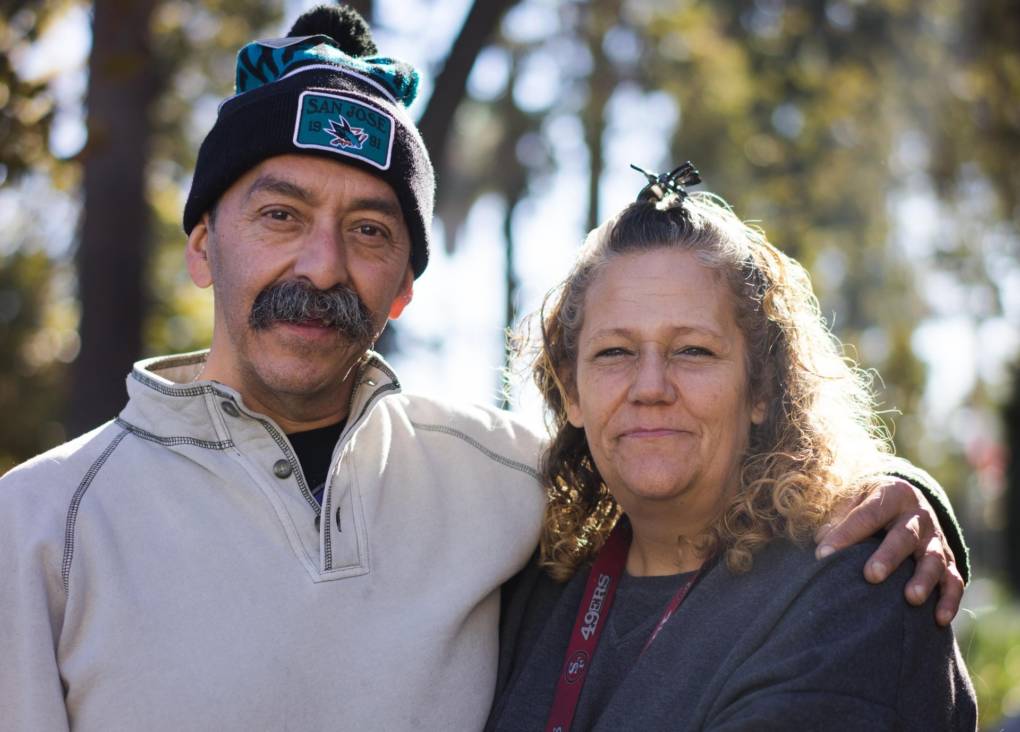
"caption": "Brian and Andrea Rodriguez have been living on San Jose's streets and creeks for the better part of two years now.",
"description": null,
"title": "RS17468_20151111_homeless_jt-7-qut",
"credit": "James Tensuan/KQED",
"status": "inherit",
"isLoading": false,
"fetchFailed": false
},
"news_11615187": {
"type": "attachments",
"id": "news_11615187",
"meta": {
"index": "attachments_1716263798",
"site": "news",
"id": "11615187",
"found": true
},
"parent": 11614958,
"imgSizes": {
"small": {
"file": "https://ww2.kqed.org/app/uploads/sites/10/2017/09/RS26473_IMG_3096-qut-520x293.jpg",
"width": 520,
"mimeType": "image/jpeg",
"height": 293
},
"twentyfourteen-full-width": {
"file": "https://ww2.kqed.org/app/uploads/sites/10/2017/09/RS26473_IMG_3096-qut-1038x576.jpg",
"width": 1038,
"mimeType": "image/jpeg",
"height": 576
},
"thumbnail": {
"file": "https://ww2.kqed.org/app/uploads/sites/10/2017/09/RS26473_IMG_3096-qut-160x90.jpg",
"width": 160,
"mimeType": "image/jpeg",
"height": 90
},
"fd-sm": {
"file": "https://ww2.kqed.org/app/uploads/sites/10/2017/09/RS26473_IMG_3096-qut-960x540.jpg",
"width": 960,
"mimeType": "image/jpeg",
"height": 540
},
"post-thumbnail": {
"file": "https://ww2.kqed.org/app/uploads/sites/10/2017/09/RS26473_IMG_3096-qut-672x372.jpg",
"width": 672,
"mimeType": "image/jpeg",
"height": 372
},
"xsmall": {
"file": "https://ww2.kqed.org/app/uploads/sites/10/2017/09/RS26473_IMG_3096-qut-375x211.jpg",
"width": 375,
"mimeType": "image/jpeg",
"height": 211
},
"kqedFullSize": {
"file": "https://ww2.kqed.org/app/uploads/sites/10/2017/09/RS26473_IMG_3096-qut.jpg",
"width": 1920,
"height": 1080
},
"large": {
"file": "https://ww2.kqed.org/app/uploads/sites/10/2017/09/RS26473_IMG_3096-qut-1020x574.jpg",
"width": 1020,
"mimeType": "image/jpeg",
"height": 574
},
"xlarge": {
"file": "https://ww2.kqed.org/app/uploads/sites/10/2017/09/RS26473_IMG_3096-qut-1180x664.jpg",
"width": 1180,
"mimeType": "image/jpeg",
"height": 664
},
"guest-author-50": {
"file": "https://ww2.kqed.org/app/uploads/sites/10/2017/09/RS26473_IMG_3096-qut-50x50.jpg",
"width": 50,
"mimeType": "image/jpeg",
"height": 50
},
"guest-author-96": {
"file": "https://ww2.kqed.org/app/uploads/sites/10/2017/09/RS26473_IMG_3096-qut-96x96.jpg",
"width": 96,
"mimeType": "image/jpeg",
"height": 96
},
"medium": {
"file": "https://ww2.kqed.org/app/uploads/sites/10/2017/09/RS26473_IMG_3096-qut-800x450.jpg",
"width": 800,
"mimeType": "image/jpeg",
"height": 450
},
"guest-author-64": {
"file": "https://ww2.kqed.org/app/uploads/sites/10/2017/09/RS26473_IMG_3096-qut-64x64.jpg",
"width": 64,
"mimeType": "image/jpeg",
"height": 64
},
"guest-author-32": {
"file": "https://ww2.kqed.org/app/uploads/sites/10/2017/09/RS26473_IMG_3096-qut-32x32.jpg",
"width": 32,
"mimeType": "image/jpeg",
"height": 32
},
"fd-lrg": {
"file": "https://ww2.kqed.org/app/uploads/sites/10/2017/09/RS26473_IMG_3096-qut-1920x1080.jpg",
"width": 1920,
"mimeType": "image/jpeg",
"height": 1080
},
"fd-med": {
"file": "https://ww2.kqed.org/app/uploads/sites/10/2017/09/RS26473_IMG_3096-qut-1180x664.jpg",
"width": 1180,
"mimeType": "image/jpeg",
"height": 664
},
"full-width": {
"file": "https://ww2.kqed.org/app/uploads/sites/10/2017/09/RS26473_IMG_3096-qut-1920x1080.jpg",
"width": 1920,
"mimeType": "image/jpeg",
"height": 1080
},
"detail": {
"file": "https://ww2.kqed.org/app/uploads/sites/10/2017/09/RS26473_IMG_3096-qut-150x150.jpg",
"width": 150,
"mimeType": "image/jpeg",
"height": 150
},
"guest-author-128": {
"file": "https://ww2.kqed.org/app/uploads/sites/10/2017/09/RS26473_IMG_3096-qut-128x128.jpg",
"width": 128,
"mimeType": "image/jpeg",
"height": 128
},
"xxsmall": {
"file": "https://ww2.kqed.org/app/uploads/sites/10/2017/09/RS26473_IMG_3096-qut-240x135.jpg",
"width": 240,
"mimeType": "image/jpeg",
"height": 135
}
},
"publishDate": 1504286742,
"modified": 1505172937,
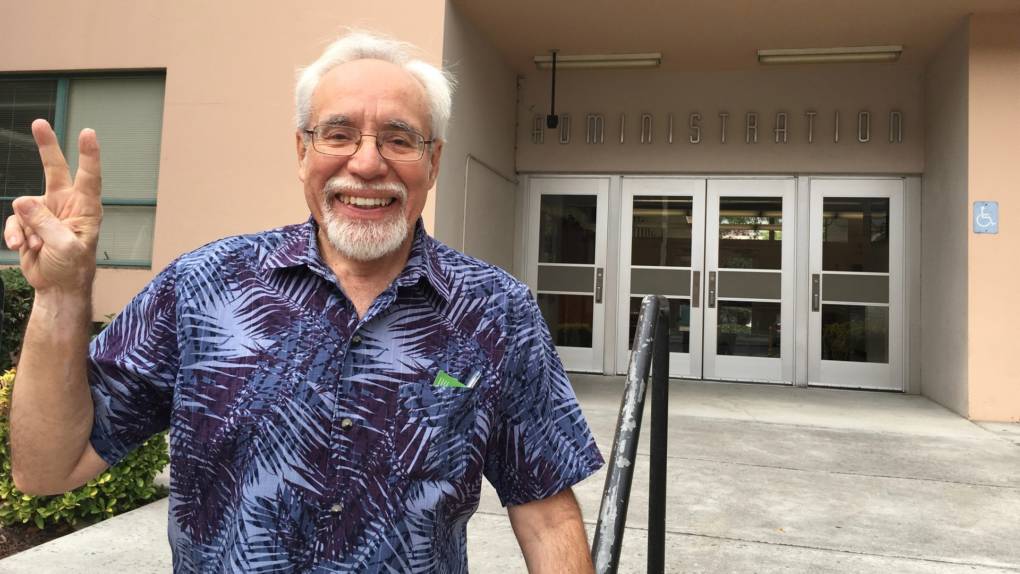
"caption": "Now an emeritus lecturer at San Jose State University, Gil Villagran was expelled as an undergraduate for protesting against the Vietnam War outside this campus administration building.",
"description": "Now an Emeritus Lecturer at San Jose State, Gil Villagran was expelled as an undergraduate for protesting against the Vietnam War outside this campus administration building.",
"title": "RS26473_IMG_3096-qut",
"credit": "Rachael Myrow/KQED",
"status": "inherit",
"isLoading": false,
"fetchFailed": false
}
},
"audioPlayerReducer": {
"postId": "stream_live",
"isPaused": true,
"isPlaying": false,
"pfsActive": false,
"pledgeModalIsOpen": true,
"playerDrawerIsOpen": false,
"liveAudioPlayStartedAt": 0,
"liveAudioPlayContext": ""
},
"authorsReducer": {
"byline_news_11636690": {
"type": "authors",
"id": "byline_news_11636690",
"meta": {
"override": true
},
"slug": "byline_news_11636690",
"name": "\u003cstrong>The Associated Press\u003c/strong>",
"isLoading": false
},
"byline_news_11630861": {
"type": "authors",
"id": "byline_news_11630861",
"meta": {
"override": true
},
"slug": "byline_news_11630861",
"name": "\u003cstrong>\u003ca href=\"https://theconversation.com/profiles/jason-a-heppler-342338\">Jason A. Heppler\u003c/a>\u003c/strong>\u003cbr>University of Nebraska Omaha for \u003ca href=\"https://theconversation.com\">The Conversation\u003c/a>",
"isLoading": false
},
"byline_news_11626686": {
"type": "authors",
"id": "byline_news_11626686",
"meta": {
"override": true
},
"slug": "byline_news_11626686",
"name": "\u003cstrong>Michael R. Blood\u003c/strong>\u003cbr>\u003cstrong>Associated Press\u003c/strong>",
"isLoading": false
},
"lisapickoffwhite-2": {
"type": "authors",
"id": "199",
"meta": {
"index": "authors_1716337520",
"id": "199",
"found": true
},
"name": "Lisa Pickoff-White",
"firstName": "Lisa",
"lastName": "Pickoff-White",
"slug": "lisapickoffwhite-2",
"email": "lpickoffwhite@kqed.org",
"display_author_email": false,
"staff_mastheads": [
"news"
],
"title": "Data Journalist, Senior Producer",
"bio": "Lisa Pickoff-White is KQED's data reporter. Lisa specializes in simplifying complex topics and bringing them to life through compelling visuals, including photography and data visualizations. She previously has worked at the Center for Investigative Reporting and other national outlets. Her work has been honored with awards from the Online News Association, Investigative Reporters and Editors, the Society of Professional Journalists and SXSW Interactive. \u003cstrong> \u003c/strong>",
"avatar": "https://secure.gravatar.com/avatar/5513c5f3967df792aa65bee2501e84d6?s=600&d=blank&r=g",
"twitter": "pickoffwhite",
"facebook": null,
"instagram": null,
"linkedin": null,
"sites": [
{
"site": "",
"roles": [
"editor"
]
},
{
"site": "arts",
"roles": []
},
{
"site": "news",
"roles": [
"administrator"
]
},
{
"site": "about",
"roles": [
"editor"
]
},
{
"site": "stateofhealth",
"roles": [
"administrator"
]
},
{
"site": "science",
"roles": [
"editor"
]
},
{
"site": "quest",
"roles": [
"editor"
]
},
{
"site": "forum",
"roles": [
"editor"
]
}
],
"headData": {
"title": "Lisa Pickoff-White | KQED",
"description": "Data Journalist, Senior Producer",
"ogImgSrc": "https://secure.gravatar.com/avatar/5513c5f3967df792aa65bee2501e84d6?s=600&d=blank&r=g",
"twImgSrc": "https://secure.gravatar.com/avatar/5513c5f3967df792aa65bee2501e84d6?s=600&d=blank&r=g"
},
"isLoading": false,
"link": "/author/lisapickoffwhite-2"
},
"gmarzorati": {
"type": "authors",
"id": "227",
"meta": {
"index": "authors_1716337520",
"id": "227",
"found": true
},
"name": "Guy Marzorati",
"firstName": "Guy",
"lastName": "Marzorati",
"slug": "gmarzorati",
"email": "gmarzorati@KQED.org",
"display_author_email": true,
"staff_mastheads": [
"news"
],
"title": "Correspondent",
"bio": "Guy Marzorati is a correspondent on KQED's California Politics and Government Desk, based in San Jose. A graduate of Santa Clara University, Guy joined KQED in 2013. He reports on state and local politics and produces KQED's digital voter guide.",
"avatar": "https://secure.gravatar.com/avatar/e7038b8dbfd55b104369b76b1cd0b9de?s=600&d=blank&r=g",
"twitter": "guymarzorati",
"facebook": null,
"instagram": null,
"linkedin": null,
"sites": [
{
"site": "",
"roles": [
"editor"
]
},
{
"site": "news",
"roles": [
"editor"
]
},
{
"site": "science",
"roles": [
"editor"
]
},
{
"site": "forum",
"roles": [
"editor"
]
},
{
"site": "elections",
"roles": [
"editor"
]
},
{
"site": "liveblog",
"roles": [
"editor"
]
}
],
"headData": {
"title": "Guy Marzorati | KQED",
"description": "Correspondent",
"ogImgSrc": "https://secure.gravatar.com/avatar/e7038b8dbfd55b104369b76b1cd0b9de?s=600&d=blank&r=g",
"twImgSrc": "https://secure.gravatar.com/avatar/e7038b8dbfd55b104369b76b1cd0b9de?s=600&d=blank&r=g"
},
"isLoading": false,
"link": "/author/gmarzorati"
},
"rachael-myrow": {
"type": "authors",
"id": "251",
"meta": {
"index": "authors_1716337520",
"id": "251",
"found": true
},
"name": "Rachael Myrow",
"firstName": "Rachael",
"lastName": "Myrow",
"slug": "rachael-myrow",
"email": "rmyrow@kqed.org",
"display_author_email": true,
"staff_mastheads": [
"news"
],
"title": "Senior Editor of KQED's Silicon Valley News Desk",
"bio": "• I write and edit stories about how Silicon Valley power and policies shape everyday life in California. I’m also passionate about making Bay Area history and culture more accessible to a broad public. • I’ve been a journalist for most of my life, starting in high school with The Franklin Press in Los Angeles, where I grew up. While earning my first degree in English at UC Berkeley, I got my start in public radio at KALX-FM. After completing a second degree in journalism at Cal, I landed my first professional job at Marketplace, then moved on to KPCC (now LAist), and then KQED, where I hosted The California Report for more than seven years. • My reporting has appeared on NPR, The World, WBUR’s \u003ci>Here & Now\u003c/i>, and the BBC. I also guest host for KQED’s \u003ci>Forum\u003c/i>, as well as the Commonwealth Club in San Francisco. • I speak periodically on media, democracy and technology issues, and do voiceover work for documentaries and educational video projects. • Outside of the studio, you'll find me hiking Bay Area trails and whipping up Insta-ready meals in my kitchen. • I do not accept gifts, money, or favors from anyone connected to my reporting, I don't pay people for information, and I do not support or donate to political causes. • I strive to treat the people I report on with fairness, honesty, and respect. I also recognize there are often multiple sides to a story and work to verify information through multiple sources and documentation. If I get something wrong, I correct it.",
"avatar": "https://secure.gravatar.com/avatar/3ed8a3c5f26025e4a805ba634cda8cd764906b97438a6d9ce216b044e340da4e?s=600&d=blank&r=g",
"twitter": "rachaelmyrow",
"bluesky": null,
"facebook": null,
"instagram": null,
"linkedin": "https://www.linkedin.com/in/rachaelmyrow/",
"sites": [
{
"site": "arts",
"roles": [
"administrator"
]
},
{
"site": "news",
"roles": [
"edit_others_posts",
"editor"
]
},
{
"site": "futureofyou",
"roles": [
"editor"
]
},
{
"site": "bayareabites",
"roles": [
"editor"
]
},
{
"site": "stateofhealth",
"roles": [
"editor"
]
},
{
"site": "science",
"roles": [
"editor"
]
},
{
"site": "food",
"roles": [
"editor"
]
},
{
"site": "forum",
"roles": [
"editor"
]
},
{
"site": "liveblog",
"roles": [
"author"
]
}
],
"headData": {
"title": "Rachael Myrow | KQED",
"description": "Senior Editor of KQED's Silicon Valley News Desk",
"ogImgSrc": "https://secure.gravatar.com/avatar/3ed8a3c5f26025e4a805ba634cda8cd764906b97438a6d9ce216b044e340da4e?s=600&d=blank&r=g",
"twImgSrc": "https://secure.gravatar.com/avatar/3ed8a3c5f26025e4a805ba634cda8cd764906b97438a6d9ce216b044e340da4e?s=600&d=blank&r=g"
},
"isLoading": false,
"link": "/author/rachael-myrow"
},
"tgoldberg": {
"type": "authors",
"id": "258",
"meta": {
"index": "authors_1716337520",
"id": "258",
"found": true
},
"name": "Ted Goldberg",
"firstName": "Ted",
"lastName": "Goldberg",
"slug": "tgoldberg",
"email": "tgoldberg@kqed.org",
"display_author_email": true,
"staff_mastheads": [
"news"
],
"title": "KQED Managing Editor, News and Newscasts",
"bio": "Ted Goldberg is Managing Editor of News and Newscasts at KQED. His main reporting beat is the Bay Area's oil refining industry.\r\n\r\nPrior to joining KQED in 2014, Ted worked at CBS News and WCBS AM in New York and Bay City News and KCBS Radio in San Francisco. He graduated from Oberlin College in Ohio in 1998.",
"avatar": "https://secure.gravatar.com/avatar/30ce2e4fe89135e104f89be2394d16225b9d36c121b5b3cb7651ce642978b96f?s=600&d=blank&r=g",
"twitter": "TedrickG",
"bluesky": null,
"facebook": null,
"instagram": null,
"linkedin": null,
"sites": [
{
"site": "news",
"roles": [
"editor"
]
},
{
"site": "science",
"roles": [
"editor"
]
}
],
"headData": {
"title": "Ted Goldberg | KQED",
"description": "KQED Managing Editor, News and Newscasts",
"ogImgSrc": "https://secure.gravatar.com/avatar/30ce2e4fe89135e104f89be2394d16225b9d36c121b5b3cb7651ce642978b96f?s=600&d=blank&r=g",
"twImgSrc": "https://secure.gravatar.com/avatar/30ce2e4fe89135e104f89be2394d16225b9d36c121b5b3cb7651ce642978b96f?s=600&d=blank&r=g"
},
"isLoading": false,
"link": "/author/tgoldberg"
},
"vrancano": {
"type": "authors",
"id": "11276",
"meta": {
"index": "authors_1716337520",
"id": "11276",
"found": true
},
"name": "Vanessa Rancaño",
"firstName": "Vanessa",
"lastName": "Rancaño",
"slug": "vrancano",
"email": "vrancano@kqed.org",
"display_author_email": false,
"staff_mastheads": [
"news"
],
"title": "Reporter",
"bio": "Vanessa Rancaño is a features reporter for KQED. She’s also covered homelessness and education for the station and reported from the Central Valley. Her work has aired across public radio, from flagship national news shows to longform narrative podcasts. Before taking up a mic, she worked as a freelance print journalist. She’s been recognized with a number of national and regional awards. Vanessa grew up in California's Central Valley. She's a former NPR Kroc Fellow, and a graduate of the UC Berkeley Graduate School of Journalism.",
"avatar": "https://secure.gravatar.com/avatar/b3a383dfb0e7ee1c17568f2cf067904ab654d6e3de9743fc661f3c788ade1bed?s=600&d=blank&r=g",
"twitter": "vanessarancano",
"bluesky": null,
"facebook": null,
"instagram": null,
"linkedin": null,
"sites": [
{
"site": "arts",
"roles": [
"editor"
]
},
{
"site": "news",
"roles": [
"editor"
]
},
{
"site": "liveblog",
"roles": [
"contributor"
]
}
],
"headData": {
"title": "Vanessa Rancaño | KQED",
"description": "Reporter",
"ogImgSrc": "https://secure.gravatar.com/avatar/b3a383dfb0e7ee1c17568f2cf067904ab654d6e3de9743fc661f3c788ade1bed?s=600&d=blank&r=g",
"twImgSrc": "https://secure.gravatar.com/avatar/b3a383dfb0e7ee1c17568f2cf067904ab654d6e3de9743fc661f3c788ade1bed?s=600&d=blank&r=g"
},
"isLoading": false,
"link": "/author/vrancano"
},
"tmosley": {
"type": "authors",
"id": "11373",
"meta": {
"index": "authors_1716337520",
"id": "11373",
"found": true
},
"name": "Tonya Mosley",
"firstName": "Tonya",
"lastName": "Mosley",
"slug": "tmosley",
"email": "tmosley@kqed.org",
"display_author_email": false,
"staff_mastheads": [],
"title": "KQED Contributor",
"bio": "Tonya Mosley is a former Silicon Valley bureau chief for KQED. She served as the senior editor, leading a team of journalists covering the impacts of technology companies on the South Bay and society. Tonya is also a former host and reporter for KQED.\r\n\r\nPrior to KQED, Tonya served as a television reporter & anchor for several media outlets, including Al Jazeera America.\r\n\r\nIn 2015, Tonya was awarded a John S. Knight Journalism Fellowship at Stanford University where she co-created a workshop for journalists on the impacts of implicit bias, and co-wrote a Belgian/American experimental study on the effects of protest coverage.\r\n\r\nTonya has won several national awards for her work, most recently an Emmy Award in 2016 for her televised piece \"Beyond Ferguson,\" and a national Edward R. Murrow award for her public radio series \"Black in Seattle.\"\r\n\r\nYou can reach Tonya at: tmosley@kqed.org.",
"avatar": "https://secure.gravatar.com/avatar/0b2ea2bbfed6bafaacd21e9398c68e5e?s=600&d=blank&r=g",
"twitter": "tonyamosley",
"facebook": null,
"instagram": null,
"linkedin": null,
"sites": [
{
"site": "arts",
"roles": [
"editor"
]
},
{
"site": "news",
"roles": [
"subscriber"
]
},
{
"site": "about",
"roles": [
"author"
]
},
{
"site": "forum",
"roles": [
"author"
]
}
],
"headData": {
"title": "Tonya Mosley | KQED",
"description": "KQED Contributor",
"ogImgSrc": "https://secure.gravatar.com/avatar/0b2ea2bbfed6bafaacd21e9398c68e5e?s=600&d=blank&r=g",
"twImgSrc": "https://secure.gravatar.com/avatar/0b2ea2bbfed6bafaacd21e9398c68e5e?s=600&d=blank&r=g"
},
"isLoading": false,
"link": "/author/tmosley"
},
"eaguilar": {
"type": "authors",
"id": "11382",
"meta": {
"index": "authors_1716337520",
"id": "11382",
"found": true
},
"name": "Erika Aguilar",
"firstName": "Erika",
"lastName": "Aguilar",
"slug": "eaguilar",
"email": "eaa712@gmail.com",
"display_author_email": false,
"staff_mastheads": [],
"title": "KQED Contributor",
"bio": "Erika Aguilar was the director of podcasts at KQED. She was in charge of KQED's portfolio of original podcasts and teams, and sets strategic plans for production and engagement.\r\n\r\nErika helped establish KQED's new housing affordability desk as senior editor. She was also a producer and editor for KQED's local news podcast called \u003cem>The Bay, \u003c/em>and wrote stories about housing in the Bay Area as a reporter for KQED News.\r\n\r\nErika joined KQED in 2017 after producing independent audio projects and podcasts in Southern California. She spent more than a dozen years reporting stories about law enforcement, breaking news, homelessness, government and the environment for KPCC in Los Angeles and KUT in Austin. She also volunteers as an editor and mentor for various journalism training programs.\r\n\r\nErika Aguilar is a proud Tejana from San Antonio. She believes in compromise, optimism and Selena.",
"avatar": "https://secure.gravatar.com/avatar/85bf7bb8dd9af4136525d94cef00f026?s=600&d=blank&r=g",
"twitter": "erikaaaguilar",
"facebook": null,
"instagram": null,
"linkedin": null,
"sites": [
{
"site": "",
"roles": [
"editor"
]
},
{
"site": "news",
"roles": [
"subscriber"
]
},
{
"site": "podcasts",
"roles": [
"editor"
]
}
],
"headData": {
"title": "Erika Aguilar | KQED",
"description": "KQED Contributor",
"ogImgSrc": "https://secure.gravatar.com/avatar/85bf7bb8dd9af4136525d94cef00f026?s=600&d=blank&r=g",
"twImgSrc": "https://secure.gravatar.com/avatar/85bf7bb8dd9af4136525d94cef00f026?s=600&d=blank&r=g"
},
"isLoading": false,
"link": "/author/eaguilar"
}
},
"pagesReducer": {
"news_tag_san-jose": {
"type": "terms",
"id": "news_18541",
"meta": {
"index": "terms_1716263798",
"site": "news",
"id": "18541",
"score": 8.005292
},
"featImg": null,
"name": "San Jose",
"description": null,
"taxonomy": "tag",
"headData": {
"twImgId": null,
"twTitle": null,
"ogTitle": null,
"ogImgId": null,
"twDescription": null,
"description": null,
"title": "San Jose Archives | KQED News",
"ogDescription": null
},
"ttid": 91,
"slug": "san-jose",
"isLoading": false,
"title": "San Jose",
"pageMeta": {
"site": "news",
"WpPageTemplate": "page-topic-editorial",
"currentPage": 37
},
"blocks": [
{
"blockName": "kqed/post-list",
"attrs": {
"layout": "cardArticle2",
"query": "posts/news?tag=san-jose",
"seeMore": false,
"paginated": true,
"page": 37
}
},
{
"blockName": "kqed/ad"
}
]
}
},
"pfsSessionReducer": {},
"postsReducer": {
"stream_live": {
"type": "live",
"id": "stream_live",
"audioUrl": "https://streams.kqed.org/kqedradio",
"title": "Live Stream",
"excerpt": "Live Stream information currently unavailable.",
"link": "/radio",
"featImg": "",
"label": {
"name": "KQED Live",
"link": "/"
}
},
"stream_kqedNewscast": {
"type": "posts",
"id": "stream_kqedNewscast",
"audioUrl": "https://www.kqed.org/.stream/anon/radio/RDnews/newscast.mp3?_=1",
"title": "KQED Newscast",
"featImg": "",
"label": {
"name": "88.5 FM",
"link": "/"
}
},
"news_11636996": {
"type": "posts",
"id": "news_11636996",
"meta": {
"index": "posts_1716263798",
"site": "news",
"id": "11636996",
"score": null,
"sort": [
1513298046000
]
},
"parent": 0,
"labelTerm": {
"site": "news",
"term": 72
},
"blocks": [],
"publishDate": 1513298046,
"format": "standard",
"disqusTitle": "Bay Area Native Americans Granted Property Rights to Sacred Mountain",
"title": "Bay Area Native Americans Granted Property Rights to Sacred Mountain",
"headTitle": "The California Report | KQED News",
"content": "\u003cp>Thousands of years before Europeans arrived, Native Americans who lived near San Jose would come to the summit of \u003ca href=\"https://www.openspace.org/mount-umunhum-sierra-azul\" target=\"_blank\" rel=\"noopener\">Mount Umunhum\u003c/a> to pray and cultivate medicinal plants. Now, they’ll be able to do that again, thanks to a new kind of “cultural conservation easement,\" a deal that could become a model for other tribes looking to re-establish access to their ancestral lands.\u003c/p>\n\u003cp>Wednesday night, the board of the Midpeninsula Regional Open Space District voted unanimously to grant local Native Americans property rights to 36 acres at Mount Umunhum, which was formerly home to the Almaden Air Force Station.\u003c/p>\n\u003cp>Valentin Lopez chairs the \u003ca href=\"http://amahmutsun.org\" target=\"_blank\" rel=\"noopener\">Amah Mutsun Tribal Band\u003c/a>, a group of 600 people descended from tribes who lived near the mountain. During the Spanish colonial era, more than 80 different tribes were pressed into servitude at \u003ca href=\"http://www.oldmissionsjb.org\" target=\"_blank\" rel=\"noopener\">Mission San Juan Bautista\u003c/a> and \u003ca href=\"https://www.parks.ca.gov/?page_id=548\" target=\"_blank\" rel=\"noopener\">Mission Santa Cruz\u003c/a>, including the Mutsun and the Yokut.\u003c/p>\n\u003cp>“We’re not a tribe that descends from one tribe. We descend from the band of tribes that were taken to the missions,\" Lopez says.\u003c/p>\n\u003cp>[audio src=\"https://www.kqed.org/.stream/anon/radio/RDnews/2017/12/MountUmuhumforweb.mp3\" Image=\"https://ww2.kqed.org/news/wp-content/uploads/sites/10/2017/12/RS28569_IMG_9778-2-qut-800x450.jpg\" Title=\"Local Native Americans Granted Historic Access to Mount Umunhum\" program=\"KQED News\"]\u003c/p>\n\u003cp>Between the Spanish, and later, the Americans, this group of tribes \u003ca href=\"http://www.nativeamericancaucus.org/content/california-indian-history\" target=\"_blank\" rel=\"noopener\">lost legal claim\u003c/a> to much of the land they came from. Then, in modern times, as real estate prices rose, many enrolled members were priced out of Silicon Valley. Today, many Native Americans drive from Sacramento and the Central Valley to Mount Umunhum to conduct spiritual ceremonies.\u003c/p>\n\u003cp>[ad fullwidth]\u003c/p>\n\u003cp>Lopez, who lives in Galt (Sacramento County), says this kind of partnership with a parks agency is unprecedented. There is a \u003ca href=\"http://www.parks.ca.gov/pages/21299/files/resolution%2029-2008%20-%20ano%20nuevo%20quiroste%20valley%20cp%20-%2010-31-08%20-%20final-attest..pdf\" target=\"_blank\" rel=\"noopener\">cultural preserve\u003c/a> with \u003ca href=\"http://www.parks.ca.gov/?page_id=523\" target=\"_blank\" rel=\"noopener\">Año Nuevo State Park\u003c/a> that allows for co-management, but he says that agreement doesn’t give the tribe those rights in perpetuity.\u003c/p>\n\u003cp>\"This offers hope to our tribe. But it also offers hope to a lot of other tribes. It provides a mechanism that other tribes can use,\" Lopez says. \"This is the first real recognition of our tribes by a public agency that recognizes that we should have a voice, and an equal voice, on how a particular location of our traditional land is managed and protected and preserved.\"\u003c/p>\n\u003cfigure id=\"attachment_11637104\" class=\"wp-caption aligncenter\" style=\"max-width: 731px\">\u003cimg class=\"size-full wp-image-11637104\" src=\"https://ww2.kqed.org/news/wp-content/uploads/sites/10/2017/12/RS28571_Screen-Shot-2017-12-14-at-12.26.38-PM.png\" alt=\"Map of Mount Umunhum's Summit.\" width=\"731\" height=\"364\" srcset=\"https://ww2.kqed.org/app/uploads/sites/10/2017/12/RS28571_Screen-Shot-2017-12-14-at-12.26.38-PM.png 731w, https://ww2.kqed.org/app/uploads/sites/10/2017/12/RS28571_Screen-Shot-2017-12-14-at-12.26.38-PM-160x80.png 160w, https://ww2.kqed.org/app/uploads/sites/10/2017/12/RS28571_Screen-Shot-2017-12-14-at-12.26.38-PM-240x120.png 240w, https://ww2.kqed.org/app/uploads/sites/10/2017/12/RS28571_Screen-Shot-2017-12-14-at-12.26.38-PM-375x187.png 375w, https://ww2.kqed.org/app/uploads/sites/10/2017/12/RS28571_Screen-Shot-2017-12-14-at-12.26.38-PM-520x259.png 520w\" sizes=\"(max-width: 731px) 100vw, 731px\">\u003cfigcaption class=\"wp-caption-text\">Map of Mount Umunhum's Summit. \u003ccite>(Photo: Courtesy of Midpeninsula Regional Open Space District)\u003c/cite>\u003c/figcaption>\u003c/figure>\n\u003cp>Steve Abbors, general manager of the open space district, says, \"I think the idea of being able to reconnect the indigenous people with this land they lived on for centuries is long overdue.\"\u003c/p>\n\u003cp>Abbors says the agency began reaching out to Native Americans in the area when it realized the mountain had a sacred meaning for them historically.\u003c/p>\n\u003cp>\"We view it as a responsibility,\" Abbors says. \"We are really reconnecting a culture that was severed from the land centuries ago. This (easement) allows us to help manage the land with the people who were the original stewards. We’re trying to help make a culture that was invisible to the public for many years visible.\"\u003c/p>\n\u003cp>[vimeo 243187810 w=640 h=360]\u003c/p>\n\u003cp>Working in tandem with Midpen, the tribe is planing a 1.5-acre garden for food, medicinal and basketry plants of the kind that were there \"pre-contact,\" before Europeans showed up in California.\u003c/p>\n\u003cp>“We see this as a partnership. We want to restore the mountain, as much as possible, to its pre-contact condition,” Lopez says.\u003c/p>\n\u003cp>There are also plans to hold a joint prayer ceremony in January with the \u003ca href=\"http://www.indianhealthcenter.org\" target=\"_blank\" rel=\"noopener\">Indian Health Center of Santa Clara Valley\u003c/a>. Another ceremony in April will focus on veterans, “for the healing of all veterans, not just Native Americans, but all veterans,” Lopez says. The easement allows for six such ceremonies annually on the summit. The tribe may also eventually propose a traditional roundhouse, for educational and ceremonial purposes.\u003c/p>\n\u003cp>The open space district became the owner of the property in 1986 when it bought the parcel from the federal government. It took years before the district raised enough money to restore the area and demolish its military buildings, with the exception of the five-story concrete radar tower many call “the cube,” a historic site in Santa Clara County.\u003c/p>\n\u003cp>\u003c/p>\n\u003cp>Midpen's board also voted to retain and seal the radar tower on Mount Umunhum, long considered a local landmark because of its visibility for miles and because of its ties to the region's Cold War history. Abbors says the agency has been in conversation with veterans' groups about a possible museum to honor Cold War contributions, and those talks led to the determination they would prefer a location that would be easier for older and disabled veterans to reach than the summit at Mount Umunhum.\u003c/p>\n\n",
"disqusIdentifier": "11636996 https://ww2.kqed.org/news/?p=11636996",
"disqusUrl": "https://ww2.kqed.org/news/2017/12/14/local-native-americans-granted-property-rights-to-mount-umunhum/",
"stats": {
"hasVideo": true,
"hasChartOrMap": false,
"hasAudio": true,
"hasPolis": false,
"wordCount": 822,
"hasGoogleForm": false,
"hasGallery": false,
"hasHearkenModule": false,
"iframeSrcs": [],
"paragraphCount": 18
},
"modified": 1515018304,
"excerpt": "Deal with local open space district could become model for other tribes looking to re-establish access to their ancestral lands.",
"headData": {
"twImgId": "",
"twTitle": "",
"ogTitle": "",
"ogImgId": "",
"twDescription": "",
"description": "Deal with local open space district could become model for other tribes looking to re-establish access to their ancestral lands.",
"title": "Bay Area Native Americans Granted Property Rights to Sacred Mountain | KQED",
"ogDescription": "",
"schema": {
"@context": "https://schema.org",
"@type": "NewsArticle",
"headline": "Bay Area Native Americans Granted Property Rights to Sacred Mountain",
"datePublished": "2017-12-14T16:34:06-08:00",
"dateModified": "2018-01-03T14:25:04-08:00",
"image": "https://cdn.kqed.org/wp-content/uploads/2020/02/KQED-OG-Image@1x.png",
"isAccessibleForFree": "True",
"publisher": {
"@type": "NewsMediaOrganization",
"@id": "https://www.kqed.org/#organization",
"name": "KQED",
"logo": "https://cdn.kqed.org/wp-content/uploads/2020/02/KQED-OG-Image@1x.png",
"url": "https://www.kqed.org",
"sameAs": [
"https://www.facebook.com/KQED",
"https://twitter.com/KQED",
"https://www.instagram.com/kqed/",
"https://www.tiktok.com/@kqedofficial",
"https://www.linkedin.com/company/kqed",
"https://www.youtube.com/channel/UCeC0IOo7i1P_61zVUWbJ4nw"
]
}
}
},
"guestAuthors": [],
"slug": "local-native-americans-granted-property-rights-to-mount-umunhum",
"status": "publish",
"path": "/news/11636996/local-native-americans-granted-property-rights-to-mount-umunhum",
"audioTrackLength": null,
"parsedContent": [
{
"type": "contentString",
"content": "\u003cdiv class=\"post-body\">\u003cp>\u003cp>Thousands of years before Europeans arrived, Native Americans who lived near San Jose would come to the summit of \u003ca href=\"https://www.openspace.org/mount-umunhum-sierra-azul\" target=\"_blank\" rel=\"noopener\">Mount Umunhum\u003c/a> to pray and cultivate medicinal plants. Now, they’ll be able to do that again, thanks to a new kind of “cultural conservation easement,\" a deal that could become a model for other tribes looking to re-establish access to their ancestral lands.\u003c/p>\n\u003cp>Wednesday night, the board of the Midpeninsula Regional Open Space District voted unanimously to grant local Native Americans property rights to 36 acres at Mount Umunhum, which was formerly home to the Almaden Air Force Station.\u003c/p>\n\u003cp>Valentin Lopez chairs the \u003ca href=\"http://amahmutsun.org\" target=\"_blank\" rel=\"noopener\">Amah Mutsun Tribal Band\u003c/a>, a group of 600 people descended from tribes who lived near the mountain. During the Spanish colonial era, more than 80 different tribes were pressed into servitude at \u003ca href=\"http://www.oldmissionsjb.org\" target=\"_blank\" rel=\"noopener\">Mission San Juan Bautista\u003c/a> and \u003ca href=\"https://www.parks.ca.gov/?page_id=548\" target=\"_blank\" rel=\"noopener\">Mission Santa Cruz\u003c/a>, including the Mutsun and the Yokut.\u003c/p>\n\u003cp>“We’re not a tribe that descends from one tribe. We descend from the band of tribes that were taken to the missions,\" Lopez says.\u003c/p>\n\u003cp>\u003c/p>\u003c/div>",
"attributes": {
"named": {},
"numeric": []
}
},
{
"type": "component",
"content": "",
"name": "audio",
"attributes": {
"named": {
"src": "https://www.kqed.org/.stream/anon/radio/RDnews/2017/12/MountUmuhumforweb.mp3",
"image": "https://ww2.kqed.org/news/wp-content/uploads/sites/10/2017/12/RS28569_IMG_9778-2-qut-800x450.jpg",
"title": "Local Native Americans Granted Historic Access to Mount Umunhum",
"program": "KQED News",
"label": ""
},
"numeric": []
}
},
{
"type": "contentString",
"content": "\u003cdiv class=\"post-body\">\u003cp>\u003c/p>\n\u003cp>Between the Spanish, and later, the Americans, this group of tribes \u003ca href=\"http://www.nativeamericancaucus.org/content/california-indian-history\" target=\"_blank\" rel=\"noopener\">lost legal claim\u003c/a> to much of the land they came from. Then, in modern times, as real estate prices rose, many enrolled members were priced out of Silicon Valley. Today, many Native Americans drive from Sacramento and the Central Valley to Mount Umunhum to conduct spiritual ceremonies.\u003c/p>\n\u003cp>\u003c/p>\u003c/div>",
"attributes": {
"named": {},
"numeric": []
}
},
{
"type": "component",
"content": "",
"name": "ad",
"attributes": {
"named": {
"label": "fullwidth"
},
"numeric": [
"fullwidth"
]
}
},
{
"type": "contentString",
"content": "\u003cdiv class=\"post-body\">\u003cp>\u003c/p>\n\u003cp>Lopez, who lives in Galt (Sacramento County), says this kind of partnership with a parks agency is unprecedented. There is a \u003ca href=\"http://www.parks.ca.gov/pages/21299/files/resolution%2029-2008%20-%20ano%20nuevo%20quiroste%20valley%20cp%20-%2010-31-08%20-%20final-attest..pdf\" target=\"_blank\" rel=\"noopener\">cultural preserve\u003c/a> with \u003ca href=\"http://www.parks.ca.gov/?page_id=523\" target=\"_blank\" rel=\"noopener\">Año Nuevo State Park\u003c/a> that allows for co-management, but he says that agreement doesn’t give the tribe those rights in perpetuity.\u003c/p>\n\u003cp>\"This offers hope to our tribe. But it also offers hope to a lot of other tribes. It provides a mechanism that other tribes can use,\" Lopez says. \"This is the first real recognition of our tribes by a public agency that recognizes that we should have a voice, and an equal voice, on how a particular location of our traditional land is managed and protected and preserved.\"\u003c/p>\n\u003cfigure id=\"attachment_11637104\" class=\"wp-caption aligncenter\" style=\"max-width: 731px\">\u003cimg class=\"size-full wp-image-11637104\" src=\"https://ww2.kqed.org/news/wp-content/uploads/sites/10/2017/12/RS28571_Screen-Shot-2017-12-14-at-12.26.38-PM.png\" alt=\"Map of Mount Umunhum's Summit.\" width=\"731\" height=\"364\" srcset=\"https://ww2.kqed.org/app/uploads/sites/10/2017/12/RS28571_Screen-Shot-2017-12-14-at-12.26.38-PM.png 731w, https://ww2.kqed.org/app/uploads/sites/10/2017/12/RS28571_Screen-Shot-2017-12-14-at-12.26.38-PM-160x80.png 160w, https://ww2.kqed.org/app/uploads/sites/10/2017/12/RS28571_Screen-Shot-2017-12-14-at-12.26.38-PM-240x120.png 240w, https://ww2.kqed.org/app/uploads/sites/10/2017/12/RS28571_Screen-Shot-2017-12-14-at-12.26.38-PM-375x187.png 375w, https://ww2.kqed.org/app/uploads/sites/10/2017/12/RS28571_Screen-Shot-2017-12-14-at-12.26.38-PM-520x259.png 520w\" sizes=\"(max-width: 731px) 100vw, 731px\">\u003cfigcaption class=\"wp-caption-text\">Map of Mount Umunhum's Summit. \u003ccite>(Photo: Courtesy of Midpeninsula Regional Open Space District)\u003c/cite>\u003c/figcaption>\u003c/figure>\n\u003cp>Steve Abbors, general manager of the open space district, says, \"I think the idea of being able to reconnect the indigenous people with this land they lived on for centuries is long overdue.\"\u003c/p>\n\u003cp>Abbors says the agency began reaching out to Native Americans in the area when it realized the mountain had a sacred meaning for them historically.\u003c/p>\n\u003cp>\"We view it as a responsibility,\" Abbors says. \"We are really reconnecting a culture that was severed from the land centuries ago. This (easement) allows us to help manage the land with the people who were the original stewards. We’re trying to help make a culture that was invisible to the public for many years visible.\"\u003c/p>\n\u003cp>\u003c/p>\u003c/div>",
"attributes": {
"named": {},
"numeric": []
}
},
{
"type": "component",
"content": "",
"name": "vimeo",
"attributes": {
"named": {
"w": "640",
"h": "360",
"label": "243187810"
},
"numeric": [
"243187810"
]
}
},
{
"type": "contentString",
"content": "\u003cdiv class=\"post-body\">\u003cp>\u003c/p>\n\u003cp>Working in tandem with Midpen, the tribe is planing a 1.5-acre garden for food, medicinal and basketry plants of the kind that were there \"pre-contact,\" before Europeans showed up in California.\u003c/p>\n\u003cp>“We see this as a partnership. We want to restore the mountain, as much as possible, to its pre-contact condition,” Lopez says.\u003c/p>\n\u003cp>There are also plans to hold a joint prayer ceremony in January with the \u003ca href=\"http://www.indianhealthcenter.org\" target=\"_blank\" rel=\"noopener\">Indian Health Center of Santa Clara Valley\u003c/a>. Another ceremony in April will focus on veterans, “for the healing of all veterans, not just Native Americans, but all veterans,” Lopez says. The easement allows for six such ceremonies annually on the summit. The tribe may also eventually propose a traditional roundhouse, for educational and ceremonial purposes.\u003c/p>\n\u003cp>The open space district became the owner of the property in 1986 when it bought the parcel from the federal government. It took years before the district raised enough money to restore the area and demolish its military buildings, with the exception of the five-story concrete radar tower many call “the cube,” a historic site in Santa Clara County.\u003c/p>\n\u003cp>\u003c/p>\n\u003cp>Midpen's board also voted to retain and seal the radar tower on Mount Umunhum, long considered a local landmark because of its visibility for miles and because of its ties to the region's Cold War history. Abbors says the agency has been in conversation with veterans' groups about a possible museum to honor Cold War contributions, and those talks led to the determination they would prefer a location that would be easier for older and disabled veterans to reach than the summit at Mount Umunhum.\u003c/p>\n\n\u003c/div>\u003c/p>",
"attributes": {
"named": {},
"numeric": []
}
}
],
"link": "/news/11636996/local-native-americans-granted-property-rights-to-mount-umunhum",
"authors": [
"251"
],
"programs": [
"news_6944",
"news_72"
],
"categories": [
"news_223",
"news_8"
],
"tags": [
"news_1262",
"news_18541"
],
"featImg": "news_11637095",
"label": "news_72"
},
"news_11636690": {
"type": "posts",
"id": "news_11636690",
"meta": {
"index": "posts_1716263798",
"site": "news",
"id": "11636690",
"score": null,
"sort": [
1513195165000
]
},
"parent": 0,
"labelTerm": {},
"blocks": [],
"publishDate": 1513195165,
"format": "standard",
"disqusTitle": "San Jose Approves Tiny Home Plan to Tackle Homelessness",
"title": "San Jose Approves Tiny Home Plan to Tackle Homelessness",
"headTitle": "News Fix | KQED News",
"content": "\u003cp>Officials in San Jose have approved a pilot program to build 40 so-called tiny homes for homeless people to address a growing problem in one of the most expensive rental markets in the country.\u003c/p>\n\u003cp>At a meeting Tuesday night, the City Council voted 9-2 to approve the plan to build micro sleeping cabins, which could eventually be expanded to include all 10 council districts.\u003c/p>\n\u003cp>The \u003ca href=\"http://www.mercurynews.com/2017/12/12/tiny-homes-for-san-joses-homeless-wins-approval-after-heated-debate/\" target=\"_blank\" rel=\"noopener\">Mercury News of San Jose reported\u003c/a> that an angry group of homeowners turned out to plead against the plan, which they say will bring blight and health concerns.\u003c/p>\n\u003cp>The tiny sleeping cabins come with a large sticker price, though: more than $73,000 each for 40 units.\u003c/p>\n\u003cp>Two council members who voted against the plan questioned whether the money could be spent more efficiently.\u003c/p>\n\u003cp>[ad fullwidth]\u003c/p>\u003cp>\u003c/p>\n",
"disqusIdentifier": "11636690 https://ww2.kqed.org/news/?p=11636690",
"disqusUrl": "https://ww2.kqed.org/news/2017/12/13/san-jose-approves-tiny-home-plan-to-tackle-homelessness/",
"stats": {
"hasVideo": false,
"hasChartOrMap": false,
"hasAudio": false,
"hasPolis": false,
"wordCount": 133,
"hasGoogleForm": false,
"hasGallery": false,
"hasHearkenModule": false,
"iframeSrcs": [],
"paragraphCount": 7
},
"modified": 1513204985,
"excerpt": "City Council votes 9-2 for pilot program to build micro sleeping cabins, which could eventually be expanded to include all 10 council districts.",
"headData": {
"twImgId": "",
"twTitle": "",
"ogTitle": "",
"ogImgId": "",
"twDescription": "",
"description": "City Council votes 9-2 for pilot program to build micro sleeping cabins, which could eventually be expanded to include all 10 council districts.",
"title": "San Jose Approves Tiny Home Plan to Tackle Homelessness | KQED",
"ogDescription": "",
"schema": {
"@context": "https://schema.org",
"@type": "NewsArticle",
"headline": "San Jose Approves Tiny Home Plan to Tackle Homelessness",
"datePublished": "2017-12-13T11:59:25-08:00",
"dateModified": "2017-12-13T14:43:05-08:00",
"image": "https://cdn.kqed.org/wp-content/uploads/2020/02/KQED-OG-Image@1x.png",
"isAccessibleForFree": "True",
"publisher": {
"@type": "NewsMediaOrganization",
"@id": "https://www.kqed.org/#organization",
"name": "KQED",
"logo": "https://cdn.kqed.org/wp-content/uploads/2020/02/KQED-OG-Image@1x.png",
"url": "https://www.kqed.org",
"sameAs": [
"https://www.facebook.com/KQED",
"https://twitter.com/KQED",
"https://www.instagram.com/kqed/",
"https://www.tiktok.com/@kqedofficial",
"https://www.linkedin.com/company/kqed",
"https://www.youtube.com/channel/UCeC0IOo7i1P_61zVUWbJ4nw"
]
}
}
},
"guestAuthors": [],
"slug": "san-jose-approves-tiny-home-plan-to-tackle-homelessness",
"status": "publish",
"nprByline": "\u003cstrong>The Associated Press\u003c/strong>",
"source": "Associated Press",
"path": "/news/11636690/san-jose-approves-tiny-home-plan-to-tackle-homelessness",
"audioTrackLength": null,
"parsedContent": [
{
"type": "contentString",
"content": "\u003cdiv class=\"post-body\">\u003cp>\u003cp>Officials in San Jose have approved a pilot program to build 40 so-called tiny homes for homeless people to address a growing problem in one of the most expensive rental markets in the country.\u003c/p>\n\u003cp>At a meeting Tuesday night, the City Council voted 9-2 to approve the plan to build micro sleeping cabins, which could eventually be expanded to include all 10 council districts.\u003c/p>\n\u003cp>The \u003ca href=\"http://www.mercurynews.com/2017/12/12/tiny-homes-for-san-joses-homeless-wins-approval-after-heated-debate/\" target=\"_blank\" rel=\"noopener\">Mercury News of San Jose reported\u003c/a> that an angry group of homeowners turned out to plead against the plan, which they say will bring blight and health concerns.\u003c/p>\n\u003cp>The tiny sleeping cabins come with a large sticker price, though: more than $73,000 each for 40 units.\u003c/p>\n\u003cp>Two council members who voted against the plan questioned whether the money could be spent more efficiently.\u003c/p>\n\u003cp>\u003c/p>\u003c/div>",
"attributes": {
"named": {},
"numeric": []
}
},
{
"type": "component",
"content": "",
"name": "ad",
"attributes": {
"named": {
"label": "fullwidth"
},
"numeric": [
"fullwidth"
]
}
},
{
"type": "contentString",
"content": "\u003cdiv class=\"post-body\">\u003cp>\u003c/p>\u003cp>\u003c/p>\n\u003c/div>\u003c/p>",
"attributes": {
"named": {},
"numeric": []
}
}
],
"link": "/news/11636690/san-jose-approves-tiny-home-plan-to-tackle-homelessness",
"authors": [
"byline_news_11636690"
],
"programs": [
"news_6944"
],
"categories": [
"news_6266",
"news_8"
],
"tags": [
"news_4020",
"news_18541"
],
"featImg": "news_11636699",
"label": "source_news_11636690"
},
"news_11636018": {
"type": "posts",
"id": "news_11636018",
"meta": {
"index": "posts_1716263798",
"site": "news",
"id": "11636018",
"score": null,
"sort": [
1512833427000
]
},
"guestAuthors": [],
"slug": "san-jose-tofu-company-a-japantown-institution-closing-after-71-years",
"title": "San Jose Tofu Company, a Japantown Institution, Closing After 71 Years",
"publishDate": 1512833427,
"format": "standard",
"headTitle": "San Jose Tofu Company, a Japantown Institution, Closing After 71 Years | KQED",
"labelTerm": {
"term": 6944,
"site": "news"
},
"content": "\u003cp>How do you know it’s time to quit? This wasn’t an easy question for Chester and Amy Nozaki of the San Jose Tofu Company. They’re the third generation of Nozakis to run this tiny storefront in San Jose’s Japantown.\u003c/p>\n\u003cp>“The wear and tear started to catch up with us,” Chester says, rubbing the small of his back. “It started to get to the point where our health is a lot more important than making as much money as possible.”\u003c/p>\n\u003cp>Chester’s 61 years old and Amy’s 59, but they say all these years of lugging 50 pound sacks of soybeans — and heavy pots filled with soybeans and water — has taken its toll.\u003c/p>\n\u003cp>“We are getting old. It’s too much physical work for us,” says Amy, who often starts in the kitchen at two in the morning. “It’s so sad to say goodbye, but nothing lasts forever.”\u003c/p>\n\u003cp>\u003cem>Back in 2007, reporter Lita Martinez profiled San Jose Tofu for the KQED program “Pacific Time.” Listen here.\u003c/em>\u003c/p>\n\u003cp>[ad fullwidth]\u003c/p>\n\u003cp>[soundcloud url=”https://api.soundcloud.com/tracks/367179839″ params=”color=#ff5500&auto_play=false&hide_related=false&show_comments=true&show_user=true&show_reposts=false&show_teaser=true” width=”100%” height=”166″ iframe=”true” /]\u003c/p>\n\u003cp>Amy married Chester Nozaki 25 years ago, so she hasn’t put in quite as many hours as Chester has. He grew up in the store his father ran before him, and his grandfather before that. Amy was part-time until Chester’s dad stopped working in 2007.\u003c/p>\n\u003cp>Chester’s dad made him takeover the family business. “Yeah, I was dragged into it. My dad convinced me not to continue with my college education and help out, because it’s a family business.”\u003c/p>\n\u003cp>They have two grown children, but neither of them wants to make tofu. “You know, we don’t want to put any pressure on the kids. It’s just going to end here,” Chester says.\u003c/p>\n\u003cp>Just the same, San Jose is sorry to see them go.\u003c/p>\n\u003cp>A steady stream of locals pop into the store to offer their rueful congratulations, and ask if there’s any tofu left. The store will stay open until the end of the month, but so many people are keen to get one last taste, the Nozakis run out of tofu daily around 11 a.m.\u003c/p>\n\u003cp>[audio src=\"https://www.kqed.org/.stream/anon/radio/RDnews/2017/12/MyrowSanJoseTofu.mp3\" Image=\"https://ww2.kqed.org/news/wp-content/uploads/sites/10/2017/12/RS28448_Photo-Dec-07-3-41-42-PM-2-qut-800x450.jpg\" Title=\"San Jose Tofu Closing After 71 Years\" program=\"KQED News\"]\u003c/p>\n\u003cp>Most tofu makers use machines now, that can make up to 300 tofu bricks an hour. The Nozakis make 42 — and they use no preservatives, so their tofu lasts only two to three days. But the tofu melts in your mouth.\u003c/p>\n\u003cp>I ask about their favorite preparations. Chester likes mabo tofu: tofu in a garlicky, spicy meat sauce. Amy likes to eat it with a little finely chopped green onion, ground ginger and soy sauce. “You can really taste the tofu flavor.”\u003c/p>\n\u003cp>They do make enough to send some tofu to Santo Market in San Jose, Marukai Market in Cupertino, local Nijiya Markets, Berkeley Bowl and Tokyo Fish. That is, until the end of December.\u003c/p>\n\u003cp>\u003c/p>\n\u003cp>Maybe local hipsters will want to revive the ancient tradition. If they’re hoping for a tutorial from the Nozakis, they’ll have to wait till the couple gets back from their first extended vacation in living memory.\u003c/p>\n\n",
"blocks": [],
"excerpt": "How do you know it's time to quit? This wasn't an easy question for Chester and Amy Nozaki. ",
"status": "publish",
"parent": 0,
"modified": 1721133208,
"stats": {
"hasAudio": true,
"hasVideo": false,
"hasChartOrMap": false,
"iframeSrcs": [],
"hasGoogleForm": false,
"hasGallery": false,
"hasHearkenModule": false,
"hasPolis": false,
"paragraphCount": 17,
"wordCount": 646
},
"headData": {
"title": "San Jose Tofu Company, a Japantown Institution, Closing After 71 Years | KQED",
"description": "How do you know it's time to quit? This wasn't an easy question for Chester and Amy Nozaki. ",
"ogTitle": "",
"ogDescription": "",
"ogImgId": "",
"twTitle": "",
"twDescription": "",
"twImgId": "",
"schema": {
"@context": "https://schema.org",
"@type": "NewsArticle",
"headline": "San Jose Tofu Company, a Japantown Institution, Closing After 71 Years",
"datePublished": "2017-12-09T07:30:27-08:00",
"dateModified": "2024-07-16T05:33:28-07:00",
"image": "https://cdn.kqed.org/wp-content/uploads/2020/02/KQED-OG-Image@1x.png",
"isAccessibleForFree": "True",
"publisher": {
"@type": "NewsMediaOrganization",
"@id": "https://www.kqed.org/#organization",
"name": "KQED",
"logo": "https://cdn.kqed.org/wp-content/uploads/2020/02/KQED-OG-Image@1x.png",
"url": "https://www.kqed.org",
"sameAs": [
"https://www.facebook.com/KQED",
"https://twitter.com/KQED",
"https://www.instagram.com/kqed/",
"https://www.tiktok.com/@kqedofficial",
"https://www.linkedin.com/company/kqed",
"https://www.youtube.com/channel/UCeC0IOo7i1P_61zVUWbJ4nw"
]
}
}
},
"sticky": false,
"excludeFromSiteSearch": "Include",
"path": "/news/11636018/san-jose-tofu-company-a-japantown-institution-closing-after-71-years",
"audioTrackLength": null,
"parsedContent": [
{
"type": "contentString",
"content": "\u003cdiv class=\"post-body\">\u003cp>\u003cp>How do you know it’s time to quit? This wasn’t an easy question for Chester and Amy Nozaki of the San Jose Tofu Company. They’re the third generation of Nozakis to run this tiny storefront in San Jose’s Japantown.\u003c/p>\n\u003cp>“The wear and tear started to catch up with us,” Chester says, rubbing the small of his back. “It started to get to the point where our health is a lot more important than making as much money as possible.”\u003c/p>\n\u003cp>Chester’s 61 years old and Amy’s 59, but they say all these years of lugging 50 pound sacks of soybeans — and heavy pots filled with soybeans and water — has taken its toll.\u003c/p>\n\u003cp>“We are getting old. It’s too much physical work for us,” says Amy, who often starts in the kitchen at two in the morning. “It’s so sad to say goodbye, but nothing lasts forever.”\u003c/p>\n\u003cp>\u003cem>Back in 2007, reporter Lita Martinez profiled San Jose Tofu for the KQED program “Pacific Time.” Listen here.\u003c/em>\u003c/p>\n\u003cp>\u003c/p>\u003c/div>",
"attributes": {
"named": {},
"numeric": []
}
},
{
"type": "component",
"content": "",
"name": "ad",
"attributes": {
"named": {
"label": "fullwidth"
},
"numeric": [
"fullwidth"
]
}
},
{
"type": "contentString",
"content": "\u003cdiv class=\"post-body\">\u003cp>\u003c/p>\n\u003cp>\u003c/p>\u003cp>\u003cdiv class='utils-parseShortcode-shortcodes-__shortcodes__shortcodeWrapper'>\n \u003ciframe width='”100%”' height='”166″'\n scrolling='no' frameborder='no'\n src='https://w.soundcloud.com/player/?url=”https://api.soundcloud.com/tracks/367179839″&visual=true&”color=#ff5500&auto_play=false&hide_related=false&show_comments=true&show_user=true&show_reposts=false&show_teaser=true”'\n title='”https://api.soundcloud.com/tracks/367179839″'>\n \u003c/iframe>\n \u003c/div>\u003c/p>\u003cp>\u003c/p>\n\u003cp>Amy married Chester Nozaki 25 years ago, so she hasn’t put in quite as many hours as Chester has. He grew up in the store his father ran before him, and his grandfather before that. Amy was part-time until Chester’s dad stopped working in 2007.\u003c/p>\n\u003cp>Chester’s dad made him takeover the family business. “Yeah, I was dragged into it. My dad convinced me not to continue with my college education and help out, because it’s a family business.”\u003c/p>\n\u003cp>They have two grown children, but neither of them wants to make tofu. “You know, we don’t want to put any pressure on the kids. It’s just going to end here,” Chester says.\u003c/p>\n\u003cp>Just the same, San Jose is sorry to see them go.\u003c/p>\n\u003cp>A steady stream of locals pop into the store to offer their rueful congratulations, and ask if there’s any tofu left. The store will stay open until the end of the month, but so many people are keen to get one last taste, the Nozakis run out of tofu daily around 11 a.m.\u003c/p>\n\u003cp>\u003c/p>\u003c/div>",
"attributes": {
"named": {},
"numeric": []
}
},
{
"type": "component",
"content": "",
"name": "audio",
"attributes": {
"named": {
"src": "https://www.kqed.org/.stream/anon/radio/RDnews/2017/12/MyrowSanJoseTofu.mp3",
"image": "https://ww2.kqed.org/news/wp-content/uploads/sites/10/2017/12/RS28448_Photo-Dec-07-3-41-42-PM-2-qut-800x450.jpg",
"title": "San Jose Tofu Closing After 71 Years",
"program": "KQED News",
"label": ""
},
"numeric": []
}
},
{
"type": "contentString",
"content": "\u003cdiv class=\"post-body\">\u003cp>\u003c/p>\n\u003cp>Most tofu makers use machines now, that can make up to 300 tofu bricks an hour. The Nozakis make 42 — and they use no preservatives, so their tofu lasts only two to three days. But the tofu melts in your mouth.\u003c/p>\n\u003cp>I ask about their favorite preparations. Chester likes mabo tofu: tofu in a garlicky, spicy meat sauce. Amy likes to eat it with a little finely chopped green onion, ground ginger and soy sauce. “You can really taste the tofu flavor.”\u003c/p>\n\u003cp>They do make enough to send some tofu to Santo Market in San Jose, Marukai Market in Cupertino, local Nijiya Markets, Berkeley Bowl and Tokyo Fish. That is, until the end of December.\u003c/p>\n\u003cp>\u003c/p>\n\u003cp>Maybe local hipsters will want to revive the ancient tradition. If they’re hoping for a tutorial from the Nozakis, they’ll have to wait till the couple gets back from their first extended vacation in living memory.\u003c/p>\n\n\u003c/div>\u003c/p>",
"attributes": {
"named": {},
"numeric": []
}
}
],
"link": "/news/11636018/san-jose-tofu-company-a-japantown-institution-closing-after-71-years",
"authors": [
"251"
],
"programs": [
"news_6944"
],
"categories": [
"news_223",
"news_8"
],
"tags": [
"news_333",
"news_17856",
"news_23056",
"news_2011",
"news_18541"
],
"featImg": "news_11636022",
"label": "news_6944"
},
"news_11632630": {
"type": "posts",
"id": "news_11632630",
"meta": {
"index": "posts_1716263798",
"site": "news",
"id": "11632630",
"score": null,
"sort": [
1511382325000
]
},
"parent": 0,
"labelTerm": {
"site": "news",
"term": 6944
},
"blocks": [],
"publishDate": 1511382325,
"format": "standard",
"disqusTitle": "No Smoke Alarms Found in San Jose Apartment Where Fire Killed Three",
"title": "No Smoke Alarms Found in San Jose Apartment Where Fire Killed Three",
"headTitle": "News Fix | KQED News",
"content": "\u003cp>Arson investigators have found no smoke alarms in a San Jose apartment where three people died in a fire early Saturday morning, city fire officials say.\u003c/p>\n\u003cp>San Jose Fire Department Capt. Dan Vega said an investigator who has gone through the duplex apartment on South Ninth Street has found a pair of melted mounting rings for smoke detectors at the site, but no alarms. State law \u003ca href=\"http://leginfo.legislature.ca.gov/faces/codes_displaySection.xhtml?lawCode=HSC§ionNum=13113.7\" target=\"_blank\" rel=\"noopener\">requires\u003c/a> smoke alarms -- or in some cases smoke detectors connected to a fire alarm system -- in all residential units.\u003c/p>\n\u003cp>People who live near the two-bedroom apartment that burned did not hear any alarms, Vega said. There were early reports of people trapped in the building, and firefighters made several rescues.\u003c/p>\n\u003cp>Vega said arson investigators believe the fire, reported just before 5 a.m. Saturday, may have begun in the apartment's kitchen. However, damage from the blaze is so extreme that investigators may never determine a cause, he said.\u003c/p>\n\u003cp>City Councilman Tam Nguyen identified those who died as My-linh Nguyen, 48; her son Thuong Le, 21, a student at San Jose State University; and daughter Yvonne Le, 14, a student at Gunderson High School.\u003c/p>\n\u003cp>[ad fullwidth]\u003c/p>\n\u003cp>Nguyen's husband, Khoa Le, 52, is in a medically induced coma at a local hospital. He reportedly suffered burns over 70 percent of his body.\u003c/p>\n\u003cp>Le, Nguyen and their son emigrated to the United States from Vietnam, according to Councilman Nguyen.\u003c/p>\n\u003cp>A representative for the manager and owner of the building says the family had lived in the duplex for at least 10 years and emphasized the apartment was safe and had been inspected frequently by city officials.\u003c/p>\n\u003cp>\"Everything was up to code,\" said Georgia Tsaboukos, the niece of Afroditi Andrews, who owns the building. All four units in the building had smoke alarms, Tsaboukos said.\u003c/p>\n\u003cp>\"I feel for the whole family,\" Tsaboukos said.\u003c/p>\n\u003cp>The San Jose Fire Department's Bureau of Fire Prevention has yet to release its inspection records of the South Ninth Street building but Capt. Vega said the last check of the property, in June 2017, gave it a clean bill of health.\u003c/p>\n\u003cp>However, it's unclear if the fire crew that inspected the building actually entered the unit where the blaze took place.\u003c/p>\n\u003cp>In San Jose, as in other California cities, firefighters are tasked with inspecting apartment buildings once a year. Those crews often check the common areas of the structures for fire safety violations.\u003c/p>\n\u003cp>It's common, though, for firefighters not to get inside individual units because residents may not be home at the time.\u003c/p>\n\u003cp>\"We're certainly not going to be breaking down any doors,\" Vega said. \"If ... everything looks good from the outside, we may not be overly suspicious that things won't look good on the inside.\"\u003c/p>\n\u003cp>Some areas of the city may get less attention than others, Vega said.\u003c/p>\n\u003cp>\"The busiest fire stations have the most apartments, so they have trouble keeping up with the workload or at least they can,\" he said.\u003c/p>\n\u003cp>The fire has prompted Councilman Nguyen to call for improvements in making San Jose's low-income and older housing stock more fire-safe.\u003c/p>\n\u003cp>\"In poor communities, especially immigrant folks, a lot more people, due to the shortage of housing, are staying in more cramped rooms,\" Nguyen said.\u003c/p>\n\u003cp>Saturday's blaze marks the second fatal residential fire in San Jose in the last three months.\u003c/p>\n\u003cp>\u003c/p>\n\u003cp>A fire Aug. 15 at the Golden Wheel Mobile Home Park, a largely Vietnamese-American community near the Berryessa neighborhood, killed three people.\u003c/p>\n\n",
"disqusIdentifier": "11632630 https://ww2.kqed.org/news/?p=11632630",
"disqusUrl": "https://ww2.kqed.org/news/2017/11/22/no-smoke-alarms-found-in-san-jose-apartment-where-fire-killed-three/",
"stats": {
"hasVideo": false,
"hasChartOrMap": false,
"hasAudio": false,
"hasPolis": false,
"wordCount": 591,
"hasGoogleForm": false,
"hasGallery": false,
"hasHearkenModule": false,
"iframeSrcs": [],
"paragraphCount": 23
},
"modified": 1511389754,
"excerpt": "Landlord's niece says 'everything was up to code' in building that burned early Saturday. ",
"headData": {
"twImgId": "",
"twTitle": "",
"ogTitle": "",
"ogImgId": "",
"twDescription": "",
"description": "Landlord's niece says 'everything was up to code' in building that burned early Saturday. ",
"title": "No Smoke Alarms Found in San Jose Apartment Where Fire Killed Three | KQED",
"ogDescription": "",
"schema": {
"@context": "https://schema.org",
"@type": "NewsArticle",
"headline": "No Smoke Alarms Found in San Jose Apartment Where Fire Killed Three",
"datePublished": "2017-11-22T12:25:25-08:00",
"dateModified": "2017-11-22T14:29:14-08:00",
"image": "https://cdn.kqed.org/wp-content/uploads/2020/02/KQED-OG-Image@1x.png",
"isAccessibleForFree": "True",
"publisher": {
"@type": "NewsMediaOrganization",
"@id": "https://www.kqed.org/#organization",
"name": "KQED",
"logo": "https://cdn.kqed.org/wp-content/uploads/2020/02/KQED-OG-Image@1x.png",
"url": "https://www.kqed.org",
"sameAs": [
"https://www.facebook.com/KQED",
"https://twitter.com/KQED",
"https://www.instagram.com/kqed/",
"https://www.tiktok.com/@kqedofficial",
"https://www.linkedin.com/company/kqed",
"https://www.youtube.com/channel/UCeC0IOo7i1P_61zVUWbJ4nw"
]
}
}
},
"guestAuthors": [],
"slug": "no-smoke-alarms-found-in-san-jose-apartment-where-fire-killed-three",
"status": "publish",
"path": "/news/11632630/no-smoke-alarms-found-in-san-jose-apartment-where-fire-killed-three",
"audioTrackLength": null,
"parsedContent": [
{
"type": "contentString",
"content": "\u003cdiv class=\"post-body\">\u003cp>\u003cp>Arson investigators have found no smoke alarms in a San Jose apartment where three people died in a fire early Saturday morning, city fire officials say.\u003c/p>\n\u003cp>San Jose Fire Department Capt. Dan Vega said an investigator who has gone through the duplex apartment on South Ninth Street has found a pair of melted mounting rings for smoke detectors at the site, but no alarms. State law \u003ca href=\"http://leginfo.legislature.ca.gov/faces/codes_displaySection.xhtml?lawCode=HSC§ionNum=13113.7\" target=\"_blank\" rel=\"noopener\">requires\u003c/a> smoke alarms -- or in some cases smoke detectors connected to a fire alarm system -- in all residential units.\u003c/p>\n\u003cp>People who live near the two-bedroom apartment that burned did not hear any alarms, Vega said. There were early reports of people trapped in the building, and firefighters made several rescues.\u003c/p>\n\u003cp>Vega said arson investigators believe the fire, reported just before 5 a.m. Saturday, may have begun in the apartment's kitchen. However, damage from the blaze is so extreme that investigators may never determine a cause, he said.\u003c/p>\n\u003cp>City Councilman Tam Nguyen identified those who died as My-linh Nguyen, 48; her son Thuong Le, 21, a student at San Jose State University; and daughter Yvonne Le, 14, a student at Gunderson High School.\u003c/p>\n\u003cp>\u003c/p>\u003c/div>",
"attributes": {
"named": {},
"numeric": []
}
},
{
"type": "component",
"content": "",
"name": "ad",
"attributes": {
"named": {
"label": "fullwidth"
},
"numeric": [
"fullwidth"
]
}
},
{
"type": "contentString",
"content": "\u003cdiv class=\"post-body\">\u003cp>\u003c/p>\n\u003cp>Nguyen's husband, Khoa Le, 52, is in a medically induced coma at a local hospital. He reportedly suffered burns over 70 percent of his body.\u003c/p>\n\u003cp>Le, Nguyen and their son emigrated to the United States from Vietnam, according to Councilman Nguyen.\u003c/p>\n\u003cp>A representative for the manager and owner of the building says the family had lived in the duplex for at least 10 years and emphasized the apartment was safe and had been inspected frequently by city officials.\u003c/p>\n\u003cp>\"Everything was up to code,\" said Georgia Tsaboukos, the niece of Afroditi Andrews, who owns the building. All four units in the building had smoke alarms, Tsaboukos said.\u003c/p>\n\u003cp>\"I feel for the whole family,\" Tsaboukos said.\u003c/p>\n\u003cp>The San Jose Fire Department's Bureau of Fire Prevention has yet to release its inspection records of the South Ninth Street building but Capt. Vega said the last check of the property, in June 2017, gave it a clean bill of health.\u003c/p>\n\u003cp>However, it's unclear if the fire crew that inspected the building actually entered the unit where the blaze took place.\u003c/p>\n\u003cp>In San Jose, as in other California cities, firefighters are tasked with inspecting apartment buildings once a year. Those crews often check the common areas of the structures for fire safety violations.\u003c/p>\n\u003cp>It's common, though, for firefighters not to get inside individual units because residents may not be home at the time.\u003c/p>\n\u003cp>\"We're certainly not going to be breaking down any doors,\" Vega said. \"If ... everything looks good from the outside, we may not be overly suspicious that things won't look good on the inside.\"\u003c/p>\n\u003cp>Some areas of the city may get less attention than others, Vega said.\u003c/p>\n\u003cp>\"The busiest fire stations have the most apartments, so they have trouble keeping up with the workload or at least they can,\" he said.\u003c/p>\n\u003cp>The fire has prompted Councilman Nguyen to call for improvements in making San Jose's low-income and older housing stock more fire-safe.\u003c/p>\n\u003cp>\"In poor communities, especially immigrant folks, a lot more people, due to the shortage of housing, are staying in more cramped rooms,\" Nguyen said.\u003c/p>\n\u003cp>Saturday's blaze marks the second fatal residential fire in San Jose in the last three months.\u003c/p>\n\u003cp>\u003c/p>\n\u003cp>A fire Aug. 15 at the Golden Wheel Mobile Home Park, a largely Vietnamese-American community near the Berryessa neighborhood, killed three people.\u003c/p>\n\n\u003c/div>\u003c/p>",
"attributes": {
"named": {},
"numeric": []
}
}
],
"link": "/news/11632630/no-smoke-alarms-found-in-san-jose-apartment-where-fire-killed-three",
"authors": [
"258"
],
"programs": [
"news_6944"
],
"categories": [
"news_6266",
"news_8"
],
"tags": [
"news_4462",
"news_18541"
],
"featImg": "news_11632967",
"label": "news_6944"
},
"news_11630861": {
"type": "posts",
"id": "news_11630861",
"meta": {
"index": "posts_1716263798",
"site": "news",
"id": "11630861",
"score": null,
"sort": [
1511035219000
]
},
"guestAuthors": [],
"slug": "how-silicon-valley-industry-polluted-the-sylvan-california-dream",
"title": "How Silicon Valley Industry Polluted the Sylvan California Dream",
"publishDate": 1511035219,
"format": "image",
"headTitle": "How Silicon Valley Industry Polluted the Sylvan California Dream | KQED",
"labelTerm": {
"term": 72,
"site": "news"
},
"content": "\u003cp>\u003cem>\u003ca href=\"https://theconversation.com/profiles/jason-a-heppler-342338\">Jason A. Heppler\u003c/a> is assistant professor of history at the \u003ca href=\"http://theconversation.com/institutions/university-of-nebraska-omaha-1660\">University of Nebraska Omaha\u003c/a>\u003c/em>\u003c/p>\n\u003cp>On Labor Day 1956, a caravan of moving trucks wound their way into Santa Clara County, just south of San Francisco, carrying the possessions of 600 families and equipment for the missile and space labs of the Lockheed Corporation. One month later, Lockheed’s Sunnyvale campus opened for business. Many of the arriving families were relocating to Sunnyvale from the company’s facility in Burbank, in Southern California.\u003c/p>\n\u003cp>The draw included good jobs in the emerging businesses of electronics research and development, as well as manufacturing of semiconductors and other electronic components for machinery and computers. Affordable housing, a pastoral landscape and a pleasant environment proved very attractive for newcomers. Local boosters, corporate executives and new residents alike \u003ca href=\"https://books.google.com/books?id=KwvEBAAAQBAJ&pg=PT54&dq=Margaret+O%27Mara+environmental+contradictions&hl=en&sa=X&ved=0ahUKEwjDxbPal7LXAhUS3YMKHbuvBiwQ6AEIKDAA#v=onepage&q&f=false\">envisioned a modern future\u003c/a> in stark contrast with the declining dirty urban industrial model of the Northeast and Midwest.\u003c/p>\n\u003cp>This type of industrial work and manufacturing didn’t need smokestacks, large warehouses, or other markers of the industrial age. The Santa Clara Valley’s promise for leading Northern California into a bright economic future quickly brought the area the nickname “Silicon Valley.” But in the book I am writing, I note that if this convergence of natural surroundings, suburban homes and high-tech industrialization represented a facet of the California dream, it also betrayed it.\u003c/p>\n\u003ch2>A Bright Illusion of the Future\u003c/h2>\n\u003cp>In addition to jobs in electronics and aerospace, the emerging suburbs of Silicon Valley promised newcomers a countryside experience. David Beers, whose father worked at the Sunnyvale Lockheed campus, \u003ca href=\"https://books.google.com/books?id=bVMuLOrHoU8C&pg=PT50&dq=Beers+%22all-year+garden%22&hl=en&sa=X&ved=0ahUKEwjz7KDatP_WAhWB64MKHRy-BGgQ6AEIKDAA#v=onepage&q=Beers%20%22all-year%20garden%22&f=false\">remembered\u003c/a> the chamber of commerce brochures claiming an “all-year garden” and “the most beautiful valleys in the world.” Such advertisements were common, assuring home buyers “good living,” the “calm of the country” and “a beautiful walnut and cherry orchard” that “the builder is leaving … for your enjoyment.” The white-collar workers of high tech could make their homes in what appeared to be the countryside.\u003c/p>\n\u003cp>[ad fullwidth]\u003c/p>\n\u003cp>[contextly_sidebar id=”VIdNmdAj84Svw9BXpHXJ6f6voj4pYKMK”]\u003c/p>\n\u003cp>Workplaces, too, were different, with manufacturing happening in places that didn’t look like the old industries of the East. The Stanford Industrial Park, founded in the early 1950s, had \u003ca href=\"https://www.cityofpaloalto.org/civicax/filebank/documents/58349\">strict building guidelines\u003c/a> that made it look more like a suburban area than a manufacturing center. Crucially, 60 percent of each lot had to be preserved as open green space, and no smokestacks were allowed.\u003c/p>\n\u003cp>“Everyone thought of smokestacks,” \u003ca href=\"https://purl.stanford.edu/dv559gn8984\">recalled Alf Brandin\u003c/a>, Stanford’s business manager in the 1940s and 1950s. “These new people who came out from the East and settled here thought, ‘Don’t change it. We just left all the smoke and all that junk. Don’t change this.’”\u003c/p>\n\u003cp>The overall feeling was of much more than just a good job and a nice place to live: a new world was opening, based on computing. Promising young engineers could come west, buy a home and work in the future of the nation’s industry. “There’s a sense of being pioneers here,” Mark Leslie, founder of Synapse Computers, \u003ca href=\"https://www.inc.com/magazine/19820901/3259.html\">told a reporter\u003c/a> in 1982. “I view myself as the kind of guy who would have been living in Detroit in 1910. The future depends on high technology, and we are spearheading it.”\u003c/p>\n\u003cp>Recent college graduates and white-collar workers flocked to the valley to work at companies like Fairchild, Intel, Hewlett-Packard, International Business Machines and Lockheed. The county’s population \u003ca href=\"http://www.bayareacensus.ca.gov/bayarea70.htm\">more than quadrupled\u003c/a> in 30 years, from 290,547 in 1950 to 1,265,200 in 1980. But the clean, gleaming future they imagined was already being tarnished.\u003c/p>\n\u003ch2>Fairchild Contamination\u003c/h2>\n\u003cp>Semiconductor manufacturing involves very carefully connecting microscopic electrical components to each other on large plates of silicon. Pieces of dust can block sensitive circuits, and the smallest scratches can render everything useless. So to clean the silicon wafers and the parts joined to them, manufacturers used \u003ca href=\"https://books.google.com/books?id=-L0ODAAAQBAJ&pg=PA185&dq=semiconductor+chemical+solvents+cleaning+TCE&hl=en&sa=X&ved=0ahUKEwjxra6JuP_WAhXE1IMKHUqAD6cQ6AEINzAD#v=onepage&q=semiconductor%20chemical%20solvents%20cleaning%20TCE&f=false\">harsh chemical solvents\u003c/a> like \u003ca href=\"https://www.epa.gov/assessing-and-managing-chemicals-under-tsca/risk-management-trichloroethylene-tce\">1,1,1 trichloroethane\u003c/a>, \u003ca href=\"https://www.atsdr.cdc.gov/mmg/mmg.asp?id=291&tid=53\">xylene\u003c/a> and \u003ca href=\"https://toxtown.nlm.nih.gov/text_version/chemicals.php?id=77\">methanol\u003c/a>. These chemicals were stored on-site in containers designed to safely hold them.\u003c/p>\n\u003cp>[contextly_sidebar id=”1ztNgjHptbjViwOK9hqyctztdk6xB0mK”]\u003c/p>\n\u003cp>But in December 1981, construction workers discovered a leaking chemical solvents tank at Fairchild Semiconductor’s southern San Jose facility.\u003c/p>\n\u003cp>A cancer-causing chemical, TCE, had found its way into \u003ca href=\"https://www.inc.com/magazine/19820901/3259.html\">nearby drinking-water wells\u003c/a>. The water company promptly shut off pumping water from those wells. A month later, the San Jose Mercury News broke the story of the chemical leak. TCE accumulated in wells at nearly 20 times the permissible limit established by the Environmental Protection Agency. Over the course of two years, \u003ca href=\"https://nepis.epa.gov/Exe/ZyNET.exe/9100976C.txt?ZyActionD=ZyDocument&Client=EPA&Index=1986%20Thru%201990&Docs=&Query=&Time=&EndTime=&SearchMethod=1&TocRestrict=n&Toc=&TocEntry=&QField=&QFieldYear=&QFieldMonth=&QFieldDay=&UseQField=&IntQFieldOp=0&ExtQFieldOp=0&XmlQuery=&File=D%3A%5CZYFILES%5CINDEX%20DATA%5C86THRU90%5CTXT%5C00000020%5C9100976C.txt&User=ANONYMOUS&Password=anonymous&SortMethod=h%7C-&MaximumDocuments=1&FuzzyDegree=0&ImageQuality=r75g8/r75g8/x150y150g16/i425&Display=hpfr&DefSeekPage=x&SearchBack=ZyActionL&Back=ZyActionS&BackDesc=Results%20page&MaximumPages=1&ZyEntry=4\">more than 60,000 gallons\u003c/a> of toxic chemicals had leaked from the tank, spreading underground more than half a mile into the surrounding neighborhood of Los Paseos.\u003c/p>\n\u003ch2>Neighbors Speak Up\u003c/h2>\n\u003cp>For the residents of the Los Paseos neighborhood, just across the street from Fairchild, the news of the chemical leak suddenly explained the stories of birth defects among their neighbors. \u003ca href=\"https://www.inc.com/magazine/19820901/3259.html\">Lorraine Ross\u003c/a>, whose daughter had her first open-heart surgery at nine months old, couldn’t help but wonder if the four birth defects, two miscarriages and one stillbirth of Los Paseos in the past two years were \u003ca href=\"http://www.nytimes.com/1982/05/20/us/leaking-chemicals-in-california-s-silicon-valley-alarm-neighbors.html\">connected to water contamination\u003c/a>.\u003c/p>\n\u003cp>She organized others in the neighborhood to ask questions, eventually partnering with a young lawyer, Ted Smith, who founded a new advocacy organization called the \u003ca href=\"http://svtc.org/\">Silicon Valley Toxics Coalition\u003c/a>. The Silicon Valley Toxics Coalition was designed to advocate for neighborhoods, helping draft new county and city ordinances related to the storage, transportation and disposal of chemicals and gases in Santa Clara County.\u003c/p>\n\u003cfigure id=\"attachment_11630865\" class=\"wp-caption aligncenter\" style=\"max-width: 800px\">\u003cimg loading=\"lazy\" decoding=\"async\" class=\"size-medium wp-image-11630865\" src=\"https://ww2.kqed.org/news/wp-content/uploads/sites/10/2017/11/valley-toxics-file-20171018-32348-9u7c5d-800x478.png\" alt=\"\" width=\"800\" height=\"478\" srcset=\"https://cdn.kqed.org/wp-content/uploads/sites/10/2017/11/valley-toxics-file-20171018-32348-9u7c5d-800x478.png 800w, https://cdn.kqed.org/wp-content/uploads/sites/10/2017/11/valley-toxics-file-20171018-32348-9u7c5d-160x96.png 160w, https://cdn.kqed.org/wp-content/uploads/sites/10/2017/11/valley-toxics-file-20171018-32348-9u7c5d-960x574.png 960w, https://cdn.kqed.org/wp-content/uploads/sites/10/2017/11/valley-toxics-file-20171018-32348-9u7c5d-240x144.png 240w, https://cdn.kqed.org/wp-content/uploads/sites/10/2017/11/valley-toxics-file-20171018-32348-9u7c5d-375x224.png 375w, https://cdn.kqed.org/wp-content/uploads/sites/10/2017/11/valley-toxics-file-20171018-32348-9u7c5d-520x311.png 520w, https://cdn.kqed.org/wp-content/uploads/sites/10/2017/11/valley-toxics-file-20171018-32348-9u7c5d.png 1000w\" sizes=\"(max-width: 800px) 100vw, 800px\">\u003cfigcaption class=\"wp-caption-text\">Silicon Valley Toxics Coalition flyer \u003ccite>(\u003ca class=\"source\" href=\"http://www.oac.cdlib.org/findaid/ark:/13030/kt2b69r7hf/\">Folder 3, Box 11, Silicon Valley Toxics Coalition Papers, San Jose State University\u003c/a>)\u003c/cite>\u003c/figcaption>\u003c/figure>\n\u003cp>News of the Fairchild leak captured the attention of the Bay Area. The presence of these chemicals and synthetics were a revelation.\u003c/p>\n\u003cp>“There was no doubt in my mind that this was a clean industry,” \u003ca href=\"http://www.nytimes.com/1982/05/20/us/leaking-chemicals-in-california-s-silicon-valley-alarm-neighbors.html\">remarked\u003c/a> San Jose Mayor Janet Gray Hayes. Lorraine Ross echoed this sentiment, telling a reporter that “we thought we were living with a clean industry.” But it wasn’t true.\u003c/p>\n\u003ch2>Widespread Pollution\u003c/h2>\n\u003cp>Fairchild wasn’t alone in leaking pollution into the vibrant environment and thriving communities around its industrial sites.\u003c/p>\n\u003cp>[contextly_sidebar id=”5wUjDuF9sZhdXXbosaSakSb3TfaQyPOj”]\u003c/p>\n\u003cp>By 1992, one study found that \u003ca href=\"https://nyupress.org/books/9780814767092/\">57 private and 47 public drinking wells\u003c/a> were contaminated. Santa Clara County authorities determined that 65 of the 79 companies they investigated had contaminated the soil beneath their facilities. Several companies were forced to pay several million dollars for the cleanup of polluted sites, as well as install new monitoring equipment to prevent leaks for occurring again. Fairchild Semiconductor and other companies in the Los Paseos area found to have contaminated the water agreed to pay a multi-million-dollar settlement to 530 residents in southern San Jose.\u003c/p>\n\u003cp>The U.S. Environmental Protection Agency eventually \u003ca href=\"http://dissertation.jasonheppler.org/visualizations/companies/\">determined 29 polluted sites were eligible for Superfund\u003c/a> cleanup money over the course of the 1980s — 24 of which resulted from high-tech industries. Under \u003ca href=\"https://www.epa.gov/superfund\">Superfund\u003c/a>, polluted sites that particularly threaten wildlife or human health become eligible for federal funding to help clean up hazardous and contaminated sites. By the end of the ’80s, Santa Clara County had \u003ca href=\"https://qz.com/1017181/silicon-valley-pollution-there-are-more-superfund-sites-in-santa-clara-than-any-other-us-county/\">more Superfund sites\u003c/a> than any other county in the United States. \u003ca href=\"https://www.epa.gov/superfund/search-superfund-sites-where-you-live\">Twenty-three of the sites\u003c/a> remain in remediation today.\u003c/p>\n\u003cp>\u003cimg loading=\"lazy\" decoding=\"async\" src=\"https://counter.theconversation.com/content/85810/count.gif?distributor=republish-lightbox-basic\" alt=\"The Conversation\" width=\"1\" height=\"1\">By accident and by neglect, the promise of clean industrialization proved elusive. Thousands of people migrated to the Santa Clara Valley hoping to take part in the remarkable convergence of affordable housing and new jobs. And while smokestacks were absent from electronics manufacturing, the presence of highly toxic chemicals – trichloroethane and chlorinated solvents – shattered the illusion behind the tech industry’s green image. The industry permanently altered the land and human bodies.\u003c/p>\n\u003cp>\u003cem>This article originally appeared in \u003ca href=\"http://theconversation.com\" target=\"_blank\" rel=\"noopener\">The Conversation\u003c/a>, a publication that features academics writing about their research and ideas for the public. KQED and The Conversation are partners in the \u003ca href=\"https://ww2.kqed.org/news/series/californiadream/\" target=\"_blank\" rel=\"noopener\">California Dream\u003c/a> project, a collaboration looking at the Golden State’s promise, whether we are achieving it, and the future of California.\u003c/em>\u003c/p>\n\u003cp>\u003cem>\u003ca href=\"https://www.kqed.org/news/series/californiadream/\" target=\"_blank\" rel=\"noopener\">The California Dream series\u003c/a> is a statewide media collaboration of CALmatters, KPBS, KPCC, KQED and Capital Public Radio with support from the Corporation for Public Broadcasting, the James Irvine Foundation and the College Futures Foundation.\u003c/em>\u003c/p>\n\u003cp>[ad floatright]\u003c/p>\n\u003cp>\u003cimg loading=\"lazy\" decoding=\"async\" class=\"aligncenter size-medium wp-image-11660142\" src=\"https://ww2.kqed.org/news/wp-content/uploads/sites/10/2018/04/CADreamBanner-800x219.jpg\" alt=\"\" width=\"800\" height=\"219\" srcset=\"https://cdn.kqed.org/wp-content/uploads/sites/10/2018/04/CADreamBanner-800x219.jpg 800w, https://cdn.kqed.org/wp-content/uploads/sites/10/2018/04/CADreamBanner-160x44.jpg 160w, https://cdn.kqed.org/wp-content/uploads/sites/10/2018/04/CADreamBanner-1020x280.jpg 1020w, https://cdn.kqed.org/wp-content/uploads/sites/10/2018/04/CADreamBanner-1180x324.jpg 1180w, https://cdn.kqed.org/wp-content/uploads/sites/10/2018/04/CADreamBanner-960x263.jpg 960w, https://cdn.kqed.org/wp-content/uploads/sites/10/2018/04/CADreamBanner-240x66.jpg 240w, https://cdn.kqed.org/wp-content/uploads/sites/10/2018/04/CADreamBanner-375x103.jpg 375w, https://cdn.kqed.org/wp-content/uploads/sites/10/2018/04/CADreamBanner-520x143.jpg 520w, https://cdn.kqed.org/wp-content/uploads/sites/10/2018/04/CADreamBanner.jpg 1867w\" sizes=\"(max-width: 800px) 100vw, 800px\">\u003c/p>\n\n",
"blocks": [],
"excerpt": "The earliest visions of Silicon Valley as a new hub of clean manufacturing represented a facet of the California dream -- but the industry betrayed it, says history professor Jason Heppler.",
"status": "publish",
"parent": 0,
"modified": 1729029443,
"stats": {
"hasAudio": false,
"hasVideo": false,
"hasChartOrMap": false,
"iframeSrcs": [],
"hasGoogleForm": false,
"hasGallery": false,
"hasHearkenModule": false,
"hasPolis": false,
"paragraphCount": 28,
"wordCount": 1417
},
"headData": {
"title": "How Silicon Valley Industry Polluted the Sylvan California Dream | KQED",
"description": "The earliest visions of Silicon Valley as a new hub of clean manufacturing represented a facet of the California dream -- but the industry betrayed it, says history professor Jason Heppler.",
"ogTitle": "",
"ogDescription": "",
"ogImgId": "",
"twTitle": "",
"twDescription": "",
"twImgId": "",
"schema": {
"@context": "https://schema.org",
"@type": "NewsArticle",
"headline": "How Silicon Valley Industry Polluted the Sylvan California Dream",
"datePublished": "2017-11-18T12:00:19-08:00",
"dateModified": "2024-10-15T14:57:23-07:00",
"image": "https://cdn.kqed.org/wp-content/uploads/2020/02/KQED-OG-Image@1x.png",
"isAccessibleForFree": "True",
"publisher": {
"@type": "NewsMediaOrganization",
"@id": "https://www.kqed.org/#organization",
"name": "KQED",
"logo": "https://cdn.kqed.org/wp-content/uploads/2020/02/KQED-OG-Image@1x.png",
"url": "https://www.kqed.org",
"sameAs": [
"https://www.facebook.com/KQED",
"https://twitter.com/KQED",
"https://www.instagram.com/kqed/",
"https://www.tiktok.com/@kqedofficial",
"https://www.linkedin.com/company/kqed",
"https://www.youtube.com/channel/UCeC0IOo7i1P_61zVUWbJ4nw"
]
}
}
},
"sticky": false,
"nprByline": "\u003cstrong>\u003ca href=\"https://theconversation.com/profiles/jason-a-heppler-342338\">Jason A. Heppler\u003c/a>\u003c/strong>\u003cbr>University of Nebraska Omaha for \u003ca href=\"https://theconversation.com\">The Conversation\u003c/a>",
"path": "/news/11630861/how-silicon-valley-industry-polluted-the-sylvan-california-dream",
"audioTrackLength": null,
"parsedContent": [
{
"type": "contentString",
"content": "\u003cdiv class=\"post-body\">\u003cp>\u003cp>\u003cem>\u003ca href=\"https://theconversation.com/profiles/jason-a-heppler-342338\">Jason A. Heppler\u003c/a> is assistant professor of history at the \u003ca href=\"http://theconversation.com/institutions/university-of-nebraska-omaha-1660\">University of Nebraska Omaha\u003c/a>\u003c/em>\u003c/p>\n\u003cp>On Labor Day 1956, a caravan of moving trucks wound their way into Santa Clara County, just south of San Francisco, carrying the possessions of 600 families and equipment for the missile and space labs of the Lockheed Corporation. One month later, Lockheed’s Sunnyvale campus opened for business. Many of the arriving families were relocating to Sunnyvale from the company’s facility in Burbank, in Southern California.\u003c/p>\n\u003cp>The draw included good jobs in the emerging businesses of electronics research and development, as well as manufacturing of semiconductors and other electronic components for machinery and computers. Affordable housing, a pastoral landscape and a pleasant environment proved very attractive for newcomers. Local boosters, corporate executives and new residents alike \u003ca href=\"https://books.google.com/books?id=KwvEBAAAQBAJ&pg=PT54&dq=Margaret+O%27Mara+environmental+contradictions&hl=en&sa=X&ved=0ahUKEwjDxbPal7LXAhUS3YMKHbuvBiwQ6AEIKDAA#v=onepage&q&f=false\">envisioned a modern future\u003c/a> in stark contrast with the declining dirty urban industrial model of the Northeast and Midwest.\u003c/p>\n\u003cp>This type of industrial work and manufacturing didn’t need smokestacks, large warehouses, or other markers of the industrial age. The Santa Clara Valley’s promise for leading Northern California into a bright economic future quickly brought the area the nickname “Silicon Valley.” But in the book I am writing, I note that if this convergence of natural surroundings, suburban homes and high-tech industrialization represented a facet of the California dream, it also betrayed it.\u003c/p>\n\u003ch2>A Bright Illusion of the Future\u003c/h2>\n\u003cp>In addition to jobs in electronics and aerospace, the emerging suburbs of Silicon Valley promised newcomers a countryside experience. David Beers, whose father worked at the Sunnyvale Lockheed campus, \u003ca href=\"https://books.google.com/books?id=bVMuLOrHoU8C&pg=PT50&dq=Beers+%22all-year+garden%22&hl=en&sa=X&ved=0ahUKEwjz7KDatP_WAhWB64MKHRy-BGgQ6AEIKDAA#v=onepage&q=Beers%20%22all-year%20garden%22&f=false\">remembered\u003c/a> the chamber of commerce brochures claiming an “all-year garden” and “the most beautiful valleys in the world.” Such advertisements were common, assuring home buyers “good living,” the “calm of the country” and “a beautiful walnut and cherry orchard” that “the builder is leaving … for your enjoyment.” The white-collar workers of high tech could make their homes in what appeared to be the countryside.\u003c/p>\n\u003cp>\u003c/p>\u003c/div>",
"attributes": {
"named": {},
"numeric": []
}
},
{
"type": "component",
"content": "",
"name": "ad",
"attributes": {
"named": {
"label": "fullwidth"
},
"numeric": [
"fullwidth"
]
}
},
{
"type": "contentString",
"content": "\u003cdiv class=\"post-body\">\u003cp>\u003c/p>\n\u003cp>\u003c/p>\u003cp>\u003c/p>\u003cp>\u003c/p>\n\u003cp>Workplaces, too, were different, with manufacturing happening in places that didn’t look like the old industries of the East. The Stanford Industrial Park, founded in the early 1950s, had \u003ca href=\"https://www.cityofpaloalto.org/civicax/filebank/documents/58349\">strict building guidelines\u003c/a> that made it look more like a suburban area than a manufacturing center. Crucially, 60 percent of each lot had to be preserved as open green space, and no smokestacks were allowed.\u003c/p>\n\u003cp>“Everyone thought of smokestacks,” \u003ca href=\"https://purl.stanford.edu/dv559gn8984\">recalled Alf Brandin\u003c/a>, Stanford’s business manager in the 1940s and 1950s. “These new people who came out from the East and settled here thought, ‘Don’t change it. We just left all the smoke and all that junk. Don’t change this.’”\u003c/p>\n\u003cp>The overall feeling was of much more than just a good job and a nice place to live: a new world was opening, based on computing. Promising young engineers could come west, buy a home and work in the future of the nation’s industry. “There’s a sense of being pioneers here,” Mark Leslie, founder of Synapse Computers, \u003ca href=\"https://www.inc.com/magazine/19820901/3259.html\">told a reporter\u003c/a> in 1982. “I view myself as the kind of guy who would have been living in Detroit in 1910. The future depends on high technology, and we are spearheading it.”\u003c/p>\n\u003cp>Recent college graduates and white-collar workers flocked to the valley to work at companies like Fairchild, Intel, Hewlett-Packard, International Business Machines and Lockheed. The county’s population \u003ca href=\"http://www.bayareacensus.ca.gov/bayarea70.htm\">more than quadrupled\u003c/a> in 30 years, from 290,547 in 1950 to 1,265,200 in 1980. But the clean, gleaming future they imagined was already being tarnished.\u003c/p>\n\u003ch2>Fairchild Contamination\u003c/h2>\n\u003cp>Semiconductor manufacturing involves very carefully connecting microscopic electrical components to each other on large plates of silicon. Pieces of dust can block sensitive circuits, and the smallest scratches can render everything useless. So to clean the silicon wafers and the parts joined to them, manufacturers used \u003ca href=\"https://books.google.com/books?id=-L0ODAAAQBAJ&pg=PA185&dq=semiconductor+chemical+solvents+cleaning+TCE&hl=en&sa=X&ved=0ahUKEwjxra6JuP_WAhXE1IMKHUqAD6cQ6AEINzAD#v=onepage&q=semiconductor%20chemical%20solvents%20cleaning%20TCE&f=false\">harsh chemical solvents\u003c/a> like \u003ca href=\"https://www.epa.gov/assessing-and-managing-chemicals-under-tsca/risk-management-trichloroethylene-tce\">1,1,1 trichloroethane\u003c/a>, \u003ca href=\"https://www.atsdr.cdc.gov/mmg/mmg.asp?id=291&tid=53\">xylene\u003c/a> and \u003ca href=\"https://toxtown.nlm.nih.gov/text_version/chemicals.php?id=77\">methanol\u003c/a>. These chemicals were stored on-site in containers designed to safely hold them.\u003c/p>\n\u003cp>\u003c/p>\u003cp>\u003c/p>\u003cp>\u003c/p>\n\u003cp>But in December 1981, construction workers discovered a leaking chemical solvents tank at Fairchild Semiconductor’s southern San Jose facility.\u003c/p>\n\u003cp>A cancer-causing chemical, TCE, had found its way into \u003ca href=\"https://www.inc.com/magazine/19820901/3259.html\">nearby drinking-water wells\u003c/a>. The water company promptly shut off pumping water from those wells. A month later, the San Jose Mercury News broke the story of the chemical leak. TCE accumulated in wells at nearly 20 times the permissible limit established by the Environmental Protection Agency. Over the course of two years, \u003ca href=\"https://nepis.epa.gov/Exe/ZyNET.exe/9100976C.txt?ZyActionD=ZyDocument&Client=EPA&Index=1986%20Thru%201990&Docs=&Query=&Time=&EndTime=&SearchMethod=1&TocRestrict=n&Toc=&TocEntry=&QField=&QFieldYear=&QFieldMonth=&QFieldDay=&UseQField=&IntQFieldOp=0&ExtQFieldOp=0&XmlQuery=&File=D%3A%5CZYFILES%5CINDEX%20DATA%5C86THRU90%5CTXT%5C00000020%5C9100976C.txt&User=ANONYMOUS&Password=anonymous&SortMethod=h%7C-&MaximumDocuments=1&FuzzyDegree=0&ImageQuality=r75g8/r75g8/x150y150g16/i425&Display=hpfr&DefSeekPage=x&SearchBack=ZyActionL&Back=ZyActionS&BackDesc=Results%20page&MaximumPages=1&ZyEntry=4\">more than 60,000 gallons\u003c/a> of toxic chemicals had leaked from the tank, spreading underground more than half a mile into the surrounding neighborhood of Los Paseos.\u003c/p>\n\u003ch2>Neighbors Speak Up\u003c/h2>\n\u003cp>For the residents of the Los Paseos neighborhood, just across the street from Fairchild, the news of the chemical leak suddenly explained the stories of birth defects among their neighbors. \u003ca href=\"https://www.inc.com/magazine/19820901/3259.html\">Lorraine Ross\u003c/a>, whose daughter had her first open-heart surgery at nine months old, couldn’t help but wonder if the four birth defects, two miscarriages and one stillbirth of Los Paseos in the past two years were \u003ca href=\"http://www.nytimes.com/1982/05/20/us/leaking-chemicals-in-california-s-silicon-valley-alarm-neighbors.html\">connected to water contamination\u003c/a>.\u003c/p>\n\u003cp>She organized others in the neighborhood to ask questions, eventually partnering with a young lawyer, Ted Smith, who founded a new advocacy organization called the \u003ca href=\"http://svtc.org/\">Silicon Valley Toxics Coalition\u003c/a>. The Silicon Valley Toxics Coalition was designed to advocate for neighborhoods, helping draft new county and city ordinances related to the storage, transportation and disposal of chemicals and gases in Santa Clara County.\u003c/p>\n\u003cfigure id=\"attachment_11630865\" class=\"wp-caption aligncenter\" style=\"max-width: 800px\">\u003cimg loading=\"lazy\" decoding=\"async\" class=\"size-medium wp-image-11630865\" src=\"https://ww2.kqed.org/news/wp-content/uploads/sites/10/2017/11/valley-toxics-file-20171018-32348-9u7c5d-800x478.png\" alt=\"\" width=\"800\" height=\"478\" srcset=\"https://cdn.kqed.org/wp-content/uploads/sites/10/2017/11/valley-toxics-file-20171018-32348-9u7c5d-800x478.png 800w, https://cdn.kqed.org/wp-content/uploads/sites/10/2017/11/valley-toxics-file-20171018-32348-9u7c5d-160x96.png 160w, https://cdn.kqed.org/wp-content/uploads/sites/10/2017/11/valley-toxics-file-20171018-32348-9u7c5d-960x574.png 960w, https://cdn.kqed.org/wp-content/uploads/sites/10/2017/11/valley-toxics-file-20171018-32348-9u7c5d-240x144.png 240w, https://cdn.kqed.org/wp-content/uploads/sites/10/2017/11/valley-toxics-file-20171018-32348-9u7c5d-375x224.png 375w, https://cdn.kqed.org/wp-content/uploads/sites/10/2017/11/valley-toxics-file-20171018-32348-9u7c5d-520x311.png 520w, https://cdn.kqed.org/wp-content/uploads/sites/10/2017/11/valley-toxics-file-20171018-32348-9u7c5d.png 1000w\" sizes=\"(max-width: 800px) 100vw, 800px\">\u003cfigcaption class=\"wp-caption-text\">Silicon Valley Toxics Coalition flyer \u003ccite>(\u003ca class=\"source\" href=\"http://www.oac.cdlib.org/findaid/ark:/13030/kt2b69r7hf/\">Folder 3, Box 11, Silicon Valley Toxics Coalition Papers, San Jose State University\u003c/a>)\u003c/cite>\u003c/figcaption>\u003c/figure>\n\u003cp>News of the Fairchild leak captured the attention of the Bay Area. The presence of these chemicals and synthetics were a revelation.\u003c/p>\n\u003cp>“There was no doubt in my mind that this was a clean industry,” \u003ca href=\"http://www.nytimes.com/1982/05/20/us/leaking-chemicals-in-california-s-silicon-valley-alarm-neighbors.html\">remarked\u003c/a> San Jose Mayor Janet Gray Hayes. Lorraine Ross echoed this sentiment, telling a reporter that “we thought we were living with a clean industry.” But it wasn’t true.\u003c/p>\n\u003ch2>Widespread Pollution\u003c/h2>\n\u003cp>Fairchild wasn’t alone in leaking pollution into the vibrant environment and thriving communities around its industrial sites.\u003c/p>\n\u003cp>\u003c/p>\u003cp>\u003c/p>\u003cp>\u003c/p>\n\u003cp>By 1992, one study found that \u003ca href=\"https://nyupress.org/books/9780814767092/\">57 private and 47 public drinking wells\u003c/a> were contaminated. Santa Clara County authorities determined that 65 of the 79 companies they investigated had contaminated the soil beneath their facilities. Several companies were forced to pay several million dollars for the cleanup of polluted sites, as well as install new monitoring equipment to prevent leaks for occurring again. Fairchild Semiconductor and other companies in the Los Paseos area found to have contaminated the water agreed to pay a multi-million-dollar settlement to 530 residents in southern San Jose.\u003c/p>\n\u003cp>The U.S. Environmental Protection Agency eventually \u003ca href=\"http://dissertation.jasonheppler.org/visualizations/companies/\">determined 29 polluted sites were eligible for Superfund\u003c/a> cleanup money over the course of the 1980s — 24 of which resulted from high-tech industries. Under \u003ca href=\"https://www.epa.gov/superfund\">Superfund\u003c/a>, polluted sites that particularly threaten wildlife or human health become eligible for federal funding to help clean up hazardous and contaminated sites. By the end of the ’80s, Santa Clara County had \u003ca href=\"https://qz.com/1017181/silicon-valley-pollution-there-are-more-superfund-sites-in-santa-clara-than-any-other-us-county/\">more Superfund sites\u003c/a> than any other county in the United States. \u003ca href=\"https://www.epa.gov/superfund/search-superfund-sites-where-you-live\">Twenty-three of the sites\u003c/a> remain in remediation today.\u003c/p>\n\u003cp>\u003cimg loading=\"lazy\" decoding=\"async\" src=\"https://counter.theconversation.com/content/85810/count.gif?distributor=republish-lightbox-basic\" alt=\"The Conversation\" width=\"1\" height=\"1\">By accident and by neglect, the promise of clean industrialization proved elusive. Thousands of people migrated to the Santa Clara Valley hoping to take part in the remarkable convergence of affordable housing and new jobs. And while smokestacks were absent from electronics manufacturing, the presence of highly toxic chemicals – trichloroethane and chlorinated solvents – shattered the illusion behind the tech industry’s green image. The industry permanently altered the land and human bodies.\u003c/p>\n\u003cp>\u003cem>This article originally appeared in \u003ca href=\"http://theconversation.com\" target=\"_blank\" rel=\"noopener\">The Conversation\u003c/a>, a publication that features academics writing about their research and ideas for the public. KQED and The Conversation are partners in the \u003ca href=\"https://ww2.kqed.org/news/series/californiadream/\" target=\"_blank\" rel=\"noopener\">California Dream\u003c/a> project, a collaboration looking at the Golden State’s promise, whether we are achieving it, and the future of California.\u003c/em>\u003c/p>\n\u003cp>\u003cem>\u003ca href=\"https://www.kqed.org/news/series/californiadream/\" target=\"_blank\" rel=\"noopener\">The California Dream series\u003c/a> is a statewide media collaboration of CALmatters, KPBS, KPCC, KQED and Capital Public Radio with support from the Corporation for Public Broadcasting, the James Irvine Foundation and the College Futures Foundation.\u003c/em>\u003c/p>\n\u003cp>\u003c/p>\u003c/div>",
"attributes": {
"named": {},
"numeric": []
}
},
{
"type": "component",
"content": "",
"name": "ad",
"attributes": {
"named": {
"label": "floatright"
},
"numeric": [
"floatright"
]
}
},
{
"type": "contentString",
"content": "\u003cdiv class=\"post-body\">\u003cp>\u003c/p>\n\u003cp>\u003cimg loading=\"lazy\" decoding=\"async\" class=\"aligncenter size-medium wp-image-11660142\" src=\"https://ww2.kqed.org/news/wp-content/uploads/sites/10/2018/04/CADreamBanner-800x219.jpg\" alt=\"\" width=\"800\" height=\"219\" srcset=\"https://cdn.kqed.org/wp-content/uploads/sites/10/2018/04/CADreamBanner-800x219.jpg 800w, https://cdn.kqed.org/wp-content/uploads/sites/10/2018/04/CADreamBanner-160x44.jpg 160w, https://cdn.kqed.org/wp-content/uploads/sites/10/2018/04/CADreamBanner-1020x280.jpg 1020w, https://cdn.kqed.org/wp-content/uploads/sites/10/2018/04/CADreamBanner-1180x324.jpg 1180w, https://cdn.kqed.org/wp-content/uploads/sites/10/2018/04/CADreamBanner-960x263.jpg 960w, https://cdn.kqed.org/wp-content/uploads/sites/10/2018/04/CADreamBanner-240x66.jpg 240w, https://cdn.kqed.org/wp-content/uploads/sites/10/2018/04/CADreamBanner-375x103.jpg 375w, https://cdn.kqed.org/wp-content/uploads/sites/10/2018/04/CADreamBanner-520x143.jpg 520w, https://cdn.kqed.org/wp-content/uploads/sites/10/2018/04/CADreamBanner.jpg 1867w\" sizes=\"(max-width: 800px) 100vw, 800px\">\u003c/p>\n\n\u003c/div>\u003c/p>",
"attributes": {
"named": {},
"numeric": []
}
}
],
"link": "/news/11630861/how-silicon-valley-industry-polluted-the-sylvan-california-dream",
"authors": [
"byline_news_11630861"
],
"programs": [
"news_6944",
"news_72"
],
"series": [
"news_21879"
],
"categories": [
"news_19906",
"news_8",
"news_33520",
"news_356",
"news_248"
],
"tags": [
"news_2036",
"news_2920",
"news_18541",
"news_17286",
"news_1631",
"news_17041"
],
"featImg": "news_11630862",
"label": "news_72"
},
"news_11626685": {
"type": "posts",
"id": "news_11626685",
"meta": {
"index": "posts_1716263798",
"site": "news",
"id": "11626685",
"score": null,
"sort": [
1509303564000
]
},
"guestAuthors": [],
"slug": "san-jose-looks-to-residents-north-bay-fires-for-flood-preparation",
"title": "San Jose Looks to Residents, North Bay Fires for Flood Preparation",
"publishDate": 1509303564,
"format": "standard",
"headTitle": "San Jose Looks to Residents, North Bay Fires for Flood Preparation | KQED",
"labelTerm": {
"term": 72,
"site": "news"
},
"content": "\u003cp>As the city of San Jose and the Santa Clara Valley Water District prepare for winter storms, they are garnering feedback from residents on their preferred form of emergency contact, as well as hoping to apply lessons learned from the response to the \u003ca href=\"https://ww2.kqed.org/news/tag/north-bay-fires/\" target=\"_blank\" rel=\"noopener\">North Bay fires\u003c/a>.\u003c/p>\n\u003cp>Officials from the city and the district are hoping that winter rains won’t bring with them a repeat of \u003ca href=\"https://ww2.kqed.org/news/2017/08/22/the-san-jose-flood-what-went-wrong-and-how-the-city-plans-to-fix-it/\" target=\"_blank\" rel=\"noopener\">February’s disaster in Coyote Creek\u003c/a>, when flooding led to 40,000 evacuations and $100 million in property damage.\u003c/p>\n\u003cp>Local government was criticized at the time for not having a universal alert system in place to notify residents.\u003c/p>\n\u003cp>On Saturday, the city held the last of three resource fairs, where residents were encouraged to sign up for emergency alerts, take a tutorial in preparing sandbags and hear about the \u003ca href=\"https://nextdoor.com/agency-post/ca/santa-clara-county/santa-clara-valley-water-district-1/board-to-review-draft-joint-emergency-action-plan-and-short-term-proposals-for-coyote-creek-project-60830765/\" target=\"_blank\" rel=\"noopener\">Joint Emergency Action Plan being developed\u003c/a> to prepare for the winter storms.\u003c/p>\n\u003cp>[contextly_sidebar id=”DSqQx1HHYgVjkrVoyW1I0d5os96X9zCL”]\u003c/p>\n\u003cp>Residents were also asked to vote their preference on different ways the city could contact them in an emergency.\u003c/p>\n\u003cp>[ad fullwidth]\u003c/p>\n\u003cp>“It’s one thing for us to write a plan that we think is effective,” said Ray Riordan, San Jose’s director of emergency management. “It’s also important for us to get the feedback from the public and how they think it would be more effective for them to get communications and notifications.”\u003c/p>\n\u003cp>Riordan said over the course of the three meetings, residents have overwhelmingly favored two modes of communication: a \u003ca href=\"https://www.fcc.gov/consumers/guides/wireless-emergency-alerts-wea\" target=\"_blank\" rel=\"noopener\">Wireless Emergency Alert\u003c/a> sent to a cellphone and a loud announcement from a powerful speaker driven through the streets.\u003c/p>\n\u003cp>Unlike other alert systems, Wireless Emergency Alerts do not require users to sign up. Instead they are sent to cellphones in a certain area, like an Amber Alert.\u003c/p>\n\u003cp>“A lot of people don’t like to give their information out, which we respect and understand,” Riordan said. “The WEA alert system goes out using local cell systems.”\u003c/p>\n\u003cp>After large wildfires broke out in Sonoma County this month, officials \u003ca href=\"https://ww2.kqed.org/news/2017/10/17/feinstein-harris-press-fcc-on-wireless-alert-failures-during-wildfires/\" target=\"_blank\" rel=\"noopener\">faced questions\u003c/a> over why the WEA alerts were not deployed. Napa County was not participating in the WEA program.\u003c/p>\n\u003cp>Outside of Saturday’s resource fair at the Dr. Martin Luther King Jr. Library in downtown San Jose, a slightly less high-tech form of emergency communication was on display.\u003c/p>\n\u003cfigure id=\"attachment_11626696\" class=\"wp-caption alignnone\" style=\"max-width: 800px\">\u003cimg loading=\"lazy\" decoding=\"async\" class=\"wp-image-11626696 size-medium\" src=\"https://ww2.kqed.org/news/wp-content/uploads/sites/10/2017/10/IMG_0702-e1509299903229-800x600.jpg\" alt=\"\" width=\"800\" height=\"600\" srcset=\"https://cdn.kqed.org/wp-content/uploads/sites/10/2017/10/IMG_0702-e1509299903229-800x600.jpg 800w, https://cdn.kqed.org/wp-content/uploads/sites/10/2017/10/IMG_0702-e1509299903229-160x120.jpg 160w, https://cdn.kqed.org/wp-content/uploads/sites/10/2017/10/IMG_0702-e1509299903229-1020x765.jpg 1020w, https://cdn.kqed.org/wp-content/uploads/sites/10/2017/10/IMG_0702-e1509299903229-1920x1440.jpg 1920w, https://cdn.kqed.org/wp-content/uploads/sites/10/2017/10/IMG_0702-e1509299903229-1180x885.jpg 1180w, https://cdn.kqed.org/wp-content/uploads/sites/10/2017/10/IMG_0702-e1509299903229-960x720.jpg 960w, https://cdn.kqed.org/wp-content/uploads/sites/10/2017/10/IMG_0702-e1509299903229-240x180.jpg 240w, https://cdn.kqed.org/wp-content/uploads/sites/10/2017/10/IMG_0702-e1509299903229-375x281.jpg 375w, https://cdn.kqed.org/wp-content/uploads/sites/10/2017/10/IMG_0702-e1509299903229-520x390.jpg 520w, https://cdn.kqed.org/wp-content/uploads/sites/10/2017/10/IMG_0702-e1509299903229.jpg 2016w\" sizes=\"auto, (max-width: 800px) 100vw, 800px\">\u003cfigcaption class=\"wp-caption-text\">An outdoor emergency speaker on display in downtown San Jose. \u003ccite>(Guy Marzorati/KQED)\u003c/cite>\u003c/figcaption>\u003c/figure>\n\u003cp>A large speaker was hoisted on top of a trailer and hooked onto the back of an SUV.\u003c/p>\n\u003cp>“Sort of your basic, old-school loudspeaker getting out information,” is how Councilman Raul Peralez described it. “We have the ability to program it in multiple different languages, which we’re going to do.”\u003c/p>\n\u003cp>San Jose resident India Meisner liked the idea of the WEA alert, but also said that a loudspeaker could be the best way to get in touch with her senior neighbors, who may not have cellphones.\u003c/p>\n\u003cp>[contextly_sidebar id=”y65bbGWF84EZYsZohjy4WsZHaAE4SDlL”]\u003c/p>\n\u003cp>“It would be so annoying and so loud that you’d have no choice but to evacuate,” she said. “So it would encourage reluctant people to evacuate.”\u003c/p>\n\u003cp>The speaker system arrived in San Jose only a couple of weeks ago, but it already went for a successful test run in Santa Rosa, where Ray Riordan brought it to broadcast public health information for residents returning to the Coffey Park neighborhood.\u003c/p>\n\u003cp>“They were able to hear a message on a regular basis about what they needed to be careful of as they \u003ca href=\"https://ww2.kqed.org/news/2017/10/20/post-disaster-checklist-returning-home-after-evacuation-order-lifted/\" target=\"_blank\" rel=\"noopener\">return home\u003c/a>,” he said. “We can use this system for alert notifications ahead of time.”\u003c/p>\n\u003cp>San Jose officials said they will use all available forms of communication should a flood or other disaster arise. They also urged residents to prepare their own disaster plans and \u003ca href=\"https://ww2.kqed.org/news/2017/10/10/heres-what-you-should-have-in-your-emergency-bag/\" target=\"_blank\" rel=\"noopener\">personal kits\u003c/a>, noting the risk of future disasters like more floods, fires or an earthquake.\u003c/p>\n\u003cp>\u003c/p>\n\u003cp>“Being better prepared individually is really one of the best things that we can do,” Peralez said.\u003c/p>\n\n",
"blocks": [],
"excerpt": "At winter storm resource fairs, residents favor Wireless Emergency Alerts and a new outdoor speaker system.",
"status": "publish",
"parent": 0,
"modified": 1738793983,
"stats": {
"hasAudio": false,
"hasVideo": false,
"hasChartOrMap": false,
"iframeSrcs": [],
"hasGoogleForm": false,
"hasGallery": false,
"hasHearkenModule": false,
"hasPolis": false,
"paragraphCount": 23,
"wordCount": 686
},
"headData": {
"title": "San Jose Looks to Residents, North Bay Fires for Flood Preparation | KQED",
"description": "At winter storm resource fairs, residents favor Wireless Emergency Alerts and a new outdoor speaker system.",
"ogTitle": "",
"ogDescription": "",
"ogImgId": "",
"twTitle": "",
"twDescription": "",
"twImgId": "",
"schema": {
"@context": "https://schema.org",
"@type": "NewsArticle",
"headline": "San Jose Looks to Residents, North Bay Fires for Flood Preparation",
"datePublished": "2017-10-29T11:59:24-07:00",
"dateModified": "2025-02-05T14:19:43-08:00",
"image": "https://cdn.kqed.org/wp-content/uploads/2020/02/KQED-OG-Image@1x.png",
"isAccessibleForFree": "True",
"publisher": {
"@type": "NewsMediaOrganization",
"@id": "https://www.kqed.org/#organization",
"name": "KQED",
"logo": "https://cdn.kqed.org/wp-content/uploads/2020/02/KQED-OG-Image@1x.png",
"url": "https://www.kqed.org",
"sameAs": [
"https://www.facebook.com/KQED",
"https://twitter.com/KQED",
"https://www.instagram.com/kqed/",
"https://www.tiktok.com/@kqedofficial",
"https://www.linkedin.com/company/kqed",
"https://www.youtube.com/channel/UCeC0IOo7i1P_61zVUWbJ4nw"
]
}
}
},
"sticky": false,
"path": "/news/11626685/san-jose-looks-to-residents-north-bay-fires-for-flood-preparation",
"audioTrackLength": null,
"parsedContent": [
{
"type": "contentString",
"content": "\u003cdiv class=\"post-body\">\u003cp>\u003cp>As the city of San Jose and the Santa Clara Valley Water District prepare for winter storms, they are garnering feedback from residents on their preferred form of emergency contact, as well as hoping to apply lessons learned from the response to the \u003ca href=\"https://ww2.kqed.org/news/tag/north-bay-fires/\" target=\"_blank\" rel=\"noopener\">North Bay fires\u003c/a>.\u003c/p>\n\u003cp>Officials from the city and the district are hoping that winter rains won’t bring with them a repeat of \u003ca href=\"https://ww2.kqed.org/news/2017/08/22/the-san-jose-flood-what-went-wrong-and-how-the-city-plans-to-fix-it/\" target=\"_blank\" rel=\"noopener\">February’s disaster in Coyote Creek\u003c/a>, when flooding led to 40,000 evacuations and $100 million in property damage.\u003c/p>\n\u003cp>Local government was criticized at the time for not having a universal alert system in place to notify residents.\u003c/p>\n\u003cp>On Saturday, the city held the last of three resource fairs, where residents were encouraged to sign up for emergency alerts, take a tutorial in preparing sandbags and hear about the \u003ca href=\"https://nextdoor.com/agency-post/ca/santa-clara-county/santa-clara-valley-water-district-1/board-to-review-draft-joint-emergency-action-plan-and-short-term-proposals-for-coyote-creek-project-60830765/\" target=\"_blank\" rel=\"noopener\">Joint Emergency Action Plan being developed\u003c/a> to prepare for the winter storms.\u003c/p>\n\u003cp>\u003c/p>\u003cp>\u003c/p>\u003cp>\u003c/p>\n\u003cp>Residents were also asked to vote their preference on different ways the city could contact them in an emergency.\u003c/p>\n\u003cp>\u003c/p>\u003c/div>",
"attributes": {
"named": {},
"numeric": []
}
},
{
"type": "component",
"content": "",
"name": "ad",
"attributes": {
"named": {
"label": "fullwidth"
},
"numeric": [
"fullwidth"
]
}
},
{
"type": "contentString",
"content": "\u003cdiv class=\"post-body\">\u003cp>\u003c/p>\n\u003cp>“It’s one thing for us to write a plan that we think is effective,” said Ray Riordan, San Jose’s director of emergency management. “It’s also important for us to get the feedback from the public and how they think it would be more effective for them to get communications and notifications.”\u003c/p>\n\u003cp>Riordan said over the course of the three meetings, residents have overwhelmingly favored two modes of communication: a \u003ca href=\"https://www.fcc.gov/consumers/guides/wireless-emergency-alerts-wea\" target=\"_blank\" rel=\"noopener\">Wireless Emergency Alert\u003c/a> sent to a cellphone and a loud announcement from a powerful speaker driven through the streets.\u003c/p>\n\u003cp>Unlike other alert systems, Wireless Emergency Alerts do not require users to sign up. Instead they are sent to cellphones in a certain area, like an Amber Alert.\u003c/p>\n\u003cp>“A lot of people don’t like to give their information out, which we respect and understand,” Riordan said. “The WEA alert system goes out using local cell systems.”\u003c/p>\n\u003cp>After large wildfires broke out in Sonoma County this month, officials \u003ca href=\"https://ww2.kqed.org/news/2017/10/17/feinstein-harris-press-fcc-on-wireless-alert-failures-during-wildfires/\" target=\"_blank\" rel=\"noopener\">faced questions\u003c/a> over why the WEA alerts were not deployed. Napa County was not participating in the WEA program.\u003c/p>\n\u003cp>Outside of Saturday’s resource fair at the Dr. Martin Luther King Jr. Library in downtown San Jose, a slightly less high-tech form of emergency communication was on display.\u003c/p>\n\u003cfigure id=\"attachment_11626696\" class=\"wp-caption alignnone\" style=\"max-width: 800px\">\u003cimg loading=\"lazy\" decoding=\"async\" class=\"wp-image-11626696 size-medium\" src=\"https://ww2.kqed.org/news/wp-content/uploads/sites/10/2017/10/IMG_0702-e1509299903229-800x600.jpg\" alt=\"\" width=\"800\" height=\"600\" srcset=\"https://cdn.kqed.org/wp-content/uploads/sites/10/2017/10/IMG_0702-e1509299903229-800x600.jpg 800w, https://cdn.kqed.org/wp-content/uploads/sites/10/2017/10/IMG_0702-e1509299903229-160x120.jpg 160w, https://cdn.kqed.org/wp-content/uploads/sites/10/2017/10/IMG_0702-e1509299903229-1020x765.jpg 1020w, https://cdn.kqed.org/wp-content/uploads/sites/10/2017/10/IMG_0702-e1509299903229-1920x1440.jpg 1920w, https://cdn.kqed.org/wp-content/uploads/sites/10/2017/10/IMG_0702-e1509299903229-1180x885.jpg 1180w, https://cdn.kqed.org/wp-content/uploads/sites/10/2017/10/IMG_0702-e1509299903229-960x720.jpg 960w, https://cdn.kqed.org/wp-content/uploads/sites/10/2017/10/IMG_0702-e1509299903229-240x180.jpg 240w, https://cdn.kqed.org/wp-content/uploads/sites/10/2017/10/IMG_0702-e1509299903229-375x281.jpg 375w, https://cdn.kqed.org/wp-content/uploads/sites/10/2017/10/IMG_0702-e1509299903229-520x390.jpg 520w, https://cdn.kqed.org/wp-content/uploads/sites/10/2017/10/IMG_0702-e1509299903229.jpg 2016w\" sizes=\"auto, (max-width: 800px) 100vw, 800px\">\u003cfigcaption class=\"wp-caption-text\">An outdoor emergency speaker on display in downtown San Jose. \u003ccite>(Guy Marzorati/KQED)\u003c/cite>\u003c/figcaption>\u003c/figure>\n\u003cp>A large speaker was hoisted on top of a trailer and hooked onto the back of an SUV.\u003c/p>\n\u003cp>“Sort of your basic, old-school loudspeaker getting out information,” is how Councilman Raul Peralez described it. “We have the ability to program it in multiple different languages, which we’re going to do.”\u003c/p>\n\u003cp>San Jose resident India Meisner liked the idea of the WEA alert, but also said that a loudspeaker could be the best way to get in touch with her senior neighbors, who may not have cellphones.\u003c/p>\n\u003cp>\u003c/p>\u003cp>\u003c/p>\u003cp>\u003c/p>\n\u003cp>“It would be so annoying and so loud that you’d have no choice but to evacuate,” she said. “So it would encourage reluctant people to evacuate.”\u003c/p>\n\u003cp>The speaker system arrived in San Jose only a couple of weeks ago, but it already went for a successful test run in Santa Rosa, where Ray Riordan brought it to broadcast public health information for residents returning to the Coffey Park neighborhood.\u003c/p>\n\u003cp>“They were able to hear a message on a regular basis about what they needed to be careful of as they \u003ca href=\"https://ww2.kqed.org/news/2017/10/20/post-disaster-checklist-returning-home-after-evacuation-order-lifted/\" target=\"_blank\" rel=\"noopener\">return home\u003c/a>,” he said. “We can use this system for alert notifications ahead of time.”\u003c/p>\n\u003cp>San Jose officials said they will use all available forms of communication should a flood or other disaster arise. They also urged residents to prepare their own disaster plans and \u003ca href=\"https://ww2.kqed.org/news/2017/10/10/heres-what-you-should-have-in-your-emergency-bag/\" target=\"_blank\" rel=\"noopener\">personal kits\u003c/a>, noting the risk of future disasters like more floods, fires or an earthquake.\u003c/p>\n\u003cp>\u003c/p>\n\u003cp>“Being better prepared individually is really one of the best things that we can do,” Peralez said.\u003c/p>\n\n\u003c/div>\u003c/p>",
"attributes": {
"named": {},
"numeric": []
}
}
],
"link": "/news/11626685/san-jose-looks-to-residents-north-bay-fires-for-flood-preparation",
"authors": [
"227"
],
"programs": [
"news_6944",
"news_72"
],
"categories": [
"news_8",
"news_33520",
"news_13",
"news_248"
],
"tags": [
"news_20023",
"news_3431",
"news_18541"
],
"featImg": "news_11626692",
"label": "news_72"
},
"news_11626686": {
"type": "posts",
"id": "news_11626686",
"meta": {
"index": "posts_1716263798",
"site": "news",
"id": "11626686",
"score": null,
"sort": [
1509298549000
]
},
"parent": 0,
"labelTerm": {},
"blocks": [],
"publishDate": 1509298549,
"format": "standard",
"disqusTitle": "Confusion Coming with State Marijuana Regulations",
"title": "Confusion Coming with State Marijuana Regulations",
"headTitle": "The California Report | KQED News",
"content": "\u003cp>Ready or not, California will start recreational marijuana sales on Jan. 1. And, mostly, it's not.\u003c/p>\n\u003cp>Los Angeles and San Francisco are among many cities still struggling to fashion local rules for pot shops and growers. Without the regulations, there could be limited options in many places for consumers eager to ring in the new year with a legal pot purchase.\u003c/p>\n\u003cp>\"The bulk of folks probably are not going to be ready Jan. 1,\" conceded Cara Martinson of the California State Association of Counties.\u003c/p>\n\u003cp>In general, California will treat cannabis like alcohol, allowing people 21 and older to legally possess up to an ounce and grow six marijuana plants at home.\u003c/p>\n\u003cp>Come January, the newly legalized recreational sales will be merged with the state's two-decade-old medical marijuana market, which is also coming under much stronger regulation.\u003c/p>\n\u003cp>[ad fullwidth]\u003c/p>\n\u003cp>But big gaps loom in the system intended to move cannabis from the field to distribution centers, then to testing labs and eventually retail shops.\u003c/p>\n\u003cp>The state intends to issue only temporary licenses starting in January, and it has yet to release its plan to govern the estimated $7 billion marketplace, the nation's largest legal pot economy.\u003c/p>\n\u003cp>If businesses aren't licensed and operating in the legal market, governments aren't collecting their slice of revenue from sales. The state alone estimates it could see as much as $1 billion roll in within several years.\u003c/p>\n\u003cp>Operators have complained about what they see as potential conflicts in various laws and rules, or seemingly contradictory plans.\u003c/p>\n\u003cp>The state expects businesses that receive licenses will only work with others that hold them. But that has alarmed operators who wonder what will happen if their supplier, for example, decides not to join the new legal market.\u003c/p>\n\u003cp>Others say it's not clear what could happen in cities that don't enact pot laws, which they warn could open a loophole for businesses to set up shop. Some communities have banned recreational sales completely.\u003c/p>\n\u003cp>Most banks continue to refuse to do business with marijuana operators - pot remains illegal under federal law - and there are also problems obtaining insurance.\u003c/p>\n\u003cp>With recreational legalization fast approaching, \"we don't have enough of anything,\" lamented Hezekiah Allen, executive director of the California Growers Association, a marijuana industry group.\u003c/p>\n\u003cp>The route to legalization began last year when voters approved Proposition 64, which opened the way for recreational pot sales to adults in the nation's most populous state.\u003c/p>\n\u003cp>Unlike the state, cities and counties face no deadline to act. However, the concern is that confusion and a patchwork of local rules could discourage operators from entering the legal economy, feeding a black market that could undercut the legitimate one.\u003c/p>\n\u003cp>Local regulation is a foundation block of the emerging pot economy: A grower or retailer needs a local permit first, which is a steppingstone to obtaining a state license to operate.\u003c/p>\n\u003cp>But those rules remain in limbo in many places.\u003c/p>\n\u003cp>San Jose, the state's third-largest city, has a temporary ban on sales other than medical pot but officials this week proposed hearings to take another look at how to regulate the local industry.\u003c/p>\n\u003cp>Kern County, home to nearly 900,000 people, has banned the sale of marijuana even as California legalizes it. Supervisors said they see it as a danger to citizens and also voted to phase out more than two dozen medical marijuana dispensaries.\u003c/p>\n\u003cp>In Los Angeles, which by some estimates could be a $1 billion marketplace, voters have been strongly supportive of legal pot.\u003c/p>\n\u003cp>But its proposed regulations hit snags, including a dispute over a proposal for so-called certificates of compliance, which operators feared would not meet qualification requirements for state licenses.\u003c/p>\n\u003cp>Adam Spiker, executive director of the Southern California Coalition, an industry group, warned last month that L.A.'s draft rules could upend the emerging industry by failing to provide a prompt way to license suppliers, potentially forcing then to shut down. And he's dubious that the city will be ready to begin issuing licenses on Jan. 1.\u003c/p>\n\u003cp>\"There's not a lot of calendar days left in the year,\" he said.\u003c/p>\n\u003cp>San Francisco, another city that strongly supports legalization, still is debating local rules. Again, it's uncertain what will be ready, or when.\u003c/p>\n\u003cp>\"What we want to do is bring everything into the daylight, regulate it, get fees for the cost of regulation and collect taxes as appropriate,\" said county Supervisor Jeff Sheehy.\u003c/p>\n\u003cp>San Diego is among the cities ready to get the recreational market going.\u003c/p>\n\u003cp>Phil Rath, executive director of the United Medical Marijuana Coalition, a San Diego trade group, said years of disorder in the medical market led to increased black market business. That provided a ready example of how not to manage recreational sales.\u003c/p>\n\u003cp>San Diego moved promptly, setting up a system that will allow recreational sales at dispensaries permitted under the medical system, once they qualify for a state license.\u003c/p>\n\u003cp>Industry experts say the distribution system - a sort of main artery where pot will be received from growers, sent out for testing, taxed, and eventually shipped to retail stores - is not robust enough to support the vast new market.\u003c/p>\n\u003cp>The distributor model \"was the subject of most of the political wrangling over the last two years,\" Allen said.\u003c/p>\n\u003cp>\u003c/p>\n\u003cp>\"That's the control point,\" he said, but \"we don't have enough of them.\"\u003c/p>\n\n",
"disqusIdentifier": "11626686 https://ww2.kqed.org/news/?p=11626686",
"disqusUrl": "https://ww2.kqed.org/news/2017/10/29/confusion-coming-with-state-marijuana-regulations/",
"stats": {
"hasVideo": false,
"hasChartOrMap": false,
"hasAudio": false,
"hasPolis": false,
"wordCount": 899,
"hasGoogleForm": false,
"hasGallery": false,
"hasHearkenModule": false,
"iframeSrcs": [],
"paragraphCount": 33
},
"modified": 1509316638,
"excerpt": "There are still many unanswered questions ahead of the January 1 start date for legal marijuana in California.",
"headData": {
"twImgId": "",
"twTitle": "",
"ogTitle": "",
"ogImgId": "",
"twDescription": "",
"description": "There are still many unanswered questions ahead of the January 1 start date for legal marijuana in California.",
"title": "Confusion Coming with State Marijuana Regulations | KQED",
"ogDescription": "",
"schema": {
"@context": "https://schema.org",
"@type": "NewsArticle",
"headline": "Confusion Coming with State Marijuana Regulations",
"datePublished": "2017-10-29T10:35:49-07:00",
"dateModified": "2017-10-29T15:37:18-07:00",
"image": "https://cdn.kqed.org/wp-content/uploads/2020/02/KQED-OG-Image@1x.png",
"isAccessibleForFree": "True",
"publisher": {
"@type": "NewsMediaOrganization",
"@id": "https://www.kqed.org/#organization",
"name": "KQED",
"logo": "https://cdn.kqed.org/wp-content/uploads/2020/02/KQED-OG-Image@1x.png",
"url": "https://www.kqed.org",
"sameAs": [
"https://www.facebook.com/KQED",
"https://twitter.com/KQED",
"https://www.instagram.com/kqed/",
"https://www.tiktok.com/@kqedofficial",
"https://www.linkedin.com/company/kqed",
"https://www.youtube.com/channel/UCeC0IOo7i1P_61zVUWbJ4nw"
]
}
}
},
"guestAuthors": [],
"slug": "confusion-coming-with-state-marijuana-regulations",
"status": "publish",
"nprByline": "\u003cstrong>Michael R. Blood\u003c/strong>\u003cbr>\u003cstrong>Associated Press\u003c/strong>",
"source": "Associated Press",
"path": "/news/11626686/confusion-coming-with-state-marijuana-regulations",
"audioTrackLength": null,
"parsedContent": [
{
"type": "contentString",
"content": "\u003cdiv class=\"post-body\">\u003cp>\u003cp>Ready or not, California will start recreational marijuana sales on Jan. 1. And, mostly, it's not.\u003c/p>\n\u003cp>Los Angeles and San Francisco are among many cities still struggling to fashion local rules for pot shops and growers. Without the regulations, there could be limited options in many places for consumers eager to ring in the new year with a legal pot purchase.\u003c/p>\n\u003cp>\"The bulk of folks probably are not going to be ready Jan. 1,\" conceded Cara Martinson of the California State Association of Counties.\u003c/p>\n\u003cp>In general, California will treat cannabis like alcohol, allowing people 21 and older to legally possess up to an ounce and grow six marijuana plants at home.\u003c/p>\n\u003cp>Come January, the newly legalized recreational sales will be merged with the state's two-decade-old medical marijuana market, which is also coming under much stronger regulation.\u003c/p>\n\u003cp>\u003c/p>\u003c/div>",
"attributes": {
"named": {},
"numeric": []
}
},
{
"type": "component",
"content": "",
"name": "ad",
"attributes": {
"named": {
"label": "fullwidth"
},
"numeric": [
"fullwidth"
]
}
},
{
"type": "contentString",
"content": "\u003cdiv class=\"post-body\">\u003cp>\u003c/p>\n\u003cp>But big gaps loom in the system intended to move cannabis from the field to distribution centers, then to testing labs and eventually retail shops.\u003c/p>\n\u003cp>The state intends to issue only temporary licenses starting in January, and it has yet to release its plan to govern the estimated $7 billion marketplace, the nation's largest legal pot economy.\u003c/p>\n\u003cp>If businesses aren't licensed and operating in the legal market, governments aren't collecting their slice of revenue from sales. The state alone estimates it could see as much as $1 billion roll in within several years.\u003c/p>\n\u003cp>Operators have complained about what they see as potential conflicts in various laws and rules, or seemingly contradictory plans.\u003c/p>\n\u003cp>The state expects businesses that receive licenses will only work with others that hold them. But that has alarmed operators who wonder what will happen if their supplier, for example, decides not to join the new legal market.\u003c/p>\n\u003cp>Others say it's not clear what could happen in cities that don't enact pot laws, which they warn could open a loophole for businesses to set up shop. Some communities have banned recreational sales completely.\u003c/p>\n\u003cp>Most banks continue to refuse to do business with marijuana operators - pot remains illegal under federal law - and there are also problems obtaining insurance.\u003c/p>\n\u003cp>With recreational legalization fast approaching, \"we don't have enough of anything,\" lamented Hezekiah Allen, executive director of the California Growers Association, a marijuana industry group.\u003c/p>\n\u003cp>The route to legalization began last year when voters approved Proposition 64, which opened the way for recreational pot sales to adults in the nation's most populous state.\u003c/p>\n\u003cp>Unlike the state, cities and counties face no deadline to act. However, the concern is that confusion and a patchwork of local rules could discourage operators from entering the legal economy, feeding a black market that could undercut the legitimate one.\u003c/p>\n\u003cp>Local regulation is a foundation block of the emerging pot economy: A grower or retailer needs a local permit first, which is a steppingstone to obtaining a state license to operate.\u003c/p>\n\u003cp>But those rules remain in limbo in many places.\u003c/p>\n\u003cp>San Jose, the state's third-largest city, has a temporary ban on sales other than medical pot but officials this week proposed hearings to take another look at how to regulate the local industry.\u003c/p>\n\u003cp>Kern County, home to nearly 900,000 people, has banned the sale of marijuana even as California legalizes it. Supervisors said they see it as a danger to citizens and also voted to phase out more than two dozen medical marijuana dispensaries.\u003c/p>\n\u003cp>In Los Angeles, which by some estimates could be a $1 billion marketplace, voters have been strongly supportive of legal pot.\u003c/p>\n\u003cp>But its proposed regulations hit snags, including a dispute over a proposal for so-called certificates of compliance, which operators feared would not meet qualification requirements for state licenses.\u003c/p>\n\u003cp>Adam Spiker, executive director of the Southern California Coalition, an industry group, warned last month that L.A.'s draft rules could upend the emerging industry by failing to provide a prompt way to license suppliers, potentially forcing then to shut down. And he's dubious that the city will be ready to begin issuing licenses on Jan. 1.\u003c/p>\n\u003cp>\"There's not a lot of calendar days left in the year,\" he said.\u003c/p>\n\u003cp>San Francisco, another city that strongly supports legalization, still is debating local rules. Again, it's uncertain what will be ready, or when.\u003c/p>\n\u003cp>\"What we want to do is bring everything into the daylight, regulate it, get fees for the cost of regulation and collect taxes as appropriate,\" said county Supervisor Jeff Sheehy.\u003c/p>\n\u003cp>San Diego is among the cities ready to get the recreational market going.\u003c/p>\n\u003cp>Phil Rath, executive director of the United Medical Marijuana Coalition, a San Diego trade group, said years of disorder in the medical market led to increased black market business. That provided a ready example of how not to manage recreational sales.\u003c/p>\n\u003cp>San Diego moved promptly, setting up a system that will allow recreational sales at dispensaries permitted under the medical system, once they qualify for a state license.\u003c/p>\n\u003cp>Industry experts say the distribution system - a sort of main artery where pot will be received from growers, sent out for testing, taxed, and eventually shipped to retail stores - is not robust enough to support the vast new market.\u003c/p>\n\u003cp>The distributor model \"was the subject of most of the political wrangling over the last two years,\" Allen said.\u003c/p>\n\u003cp>\u003c/p>\n\u003cp>\"That's the control point,\" he said, but \"we don't have enough of them.\"\u003c/p>\n\n\u003c/div>\u003c/p>",
"attributes": {
"named": {},
"numeric": []
}
}
],
"link": "/news/11626686/confusion-coming-with-state-marijuana-regulations",
"authors": [
"byline_news_11626686"
],
"programs": [
"news_6944",
"news_72"
],
"categories": [
"news_8"
],
"tags": [
"news_20320",
"news_18584",
"news_20089",
"news_18541",
"news_17286"
],
"featImg": "news_11626688",
"label": "source_news_11626686"
},
"news_11625648": {
"type": "posts",
"id": "news_11625648",
"meta": {
"index": "posts_1716263798",
"site": "news",
"id": "11625648",
"score": null,
"sort": [
1508886957000
]
},
"parent": 0,
"labelTerm": {
"site": "news",
"term": 72
},
"blocks": [],
"publishDate": 1508886957,
"format": "audio",
"disqusTitle": "Fresno Offers Amazon Something Unique for Its Headquarters: Nothing",
"title": "Fresno Offers Amazon Something Unique for Its Headquarters: Nothing",
"headTitle": "The California Report | KQED News",
"content": "\u003cp>Tech giant Amazon is \u003ca href=\"https://www.amazon.com/b?ie=UTF8&node=17044620011\" target=\"_blank\" rel=\"noopener\">looking for a home\u003c/a> for its second headquarters.\u003c/p>\n\u003cp>The company got 238 proposals from across North America, and some cities are going to great lengths to get its attention: New York temporarily turned the Empire State Building orange, to match the Amazon logo. Tucson shipped the company a 21-foot cactus. The city of Stonecrest, Georgia, offered to rename itself “Amazon.”\u003c/p>\n\u003cp>And, of course, lots of cities and states are hoping to win over the Seattle-based company with massive tax breaks. Chicago is reportedly offering \u003ca href=\"http://www.chicagotribune.com/news/local/politics/ct-met-illinois-amazon-tax-incentives-20171023-story.html\" target=\"_blank\" rel=\"noopener\">north of $2 billion\u003c/a> in incentives. New Jersey is offering \u003ca href=\"http://nj.gov/governor/news/news/552017/approved/20171016c.html\" target=\"_blank\" rel=\"noopener\">$7 billion\u003c/a> if Amazon picks Newark.\u003c/p>\n\u003caside class=\"pullquote alignright\">Fresno officials are pitching it as an opportunity for Amazon to become the 'ultimate corporate citizen.'\u003c/aside>\n\u003cp>In California \u003ca href=\"http://www.chulavistaca.gov/businesses/welcome-home-amazon\" target=\"_blank\" rel=\"noopener\">some cities\u003c/a> are offering major incentives, too -- but a couple are gambling on a different offer: nothing.\u003c/p>\n\u003cp>Proposals from Fresno and San Jose don't put up a dime in direct financial incentives. San Jose Mayor Sam Liccardo \u003ca href=\"https://www.wsj.com/articles/why-im-not-bidding-for-amazons-hq-1507158668\" target=\"_blank\" rel=\"noopener\">thinks subsidies just aren't good for taxpayers\u003c/a>.\u003c/p>\n\u003cp>[ad fullwidth]\u003c/p>\n\u003cp>Fresno’s director of economic development agrees.\u003c/p>\n\u003cp>\"What we see with incentives oftentimes is that it’s a race to the bottom,\" says Larry Westerlund, who wrote \u003ca href=\"https://docs.google.com/viewer?url=https%3A%2F%2Fassets.documentcloud.org%2Fdocuments%2F4113398%2FFresno-s-Amazon-HQ2-cover-letter-10-18-2017.pdf\" target=\"_blank\" rel=\"noopener\">the city's proposal for Amazon\u003c/a>.\u003c/p>\n\u003cp>He says that when incentives get too big, it can take a long time for a city to see benefits. And while the 50,000 jobs Amazon is promising to bring with its new headquarters would be good for Fresno, the change would be hard on some people, too.\u003c/p>\n\u003cp>\"We want to ensure that we don’t push out that middle class to where they have to commute to Visalia to be able to afford a home and then commute back and forth,\" Westerlund says.\u003c/p>\n\u003cp>So the city’s proposal offers a partnership with Amazon that would invest tax revenue the company generates into projects that are good for Fresno.\u003c/p>\n\u003cp>[contextly_sidebar id=\"PpKihWrFWl8VIY4dqWDuUYhpstLljY04\"]\u003c/p>\n\u003cp>The money would go to building affordable housing and transportation infrastructure. Some would go toward creating a new generation of tech-savvy employees. City officials are pitching it as an opportunity for Amazon to become the \"ultimate corporate citizen.\"\u003c/p>\n\u003cp>Westerlund admits it’s a long shot, but he points to Amazon CEO Jeff Bezos' penchant for making unconventional business moves. Maybe, Westerlund says, Fresno's proposal is so unorthodox the company might go for it.\u003c/p>\n\u003cp>\"We hope that that will catch their eye,\" Westerlund says, \"and they’ll go, 'Let’s do something different this time.' \"\u003c/p>\n\u003cp>\u003c/p>\n\u003cp>Amazon launched its search on Sept. 7. The deadline to submit a proposal was Oct. 19. The company says it will announce a decision next year.\u003c/p>\n\n",
"disqusIdentifier": "11625648 https://ww2.kqed.org/news/?p=11625648",
"disqusUrl": "https://ww2.kqed.org/news/2017/10/24/fresno-offers-amazon-something-unique-for-its-headquarters-nothing/",
"stats": {
"hasVideo": false,
"hasChartOrMap": false,
"hasAudio": false,
"hasPolis": false,
"wordCount": 452,
"hasGoogleForm": false,
"hasGallery": false,
"hasHearkenModule": false,
"iframeSrcs": [],
"paragraphCount": 17
},
"modified": 1508954350,
"excerpt": "Hundreds of cities are falling all over themselves to woo Amazon, hoping to secure the company’s new headquarters. Many are offering big tax breaks. Fresno isn't.",
"headData": {
"twImgId": "",
"twTitle": "",
"ogTitle": "",
"ogImgId": "",
"twDescription": "",
"description": "Hundreds of cities are falling all over themselves to woo Amazon, hoping to secure the company’s new headquarters. Many are offering big tax breaks. Fresno isn't.",
"title": "Fresno Offers Amazon Something Unique for Its Headquarters: Nothing | KQED",
"ogDescription": "",
"schema": {
"@context": "https://schema.org",
"@type": "NewsArticle",
"headline": "Fresno Offers Amazon Something Unique for Its Headquarters: Nothing",
"datePublished": "2017-10-24T16:15:57-07:00",
"dateModified": "2017-10-25T10:59:10-07:00",
"image": "https://cdn.kqed.org/wp-content/uploads/2020/02/KQED-OG-Image@1x.png",
"isAccessibleForFree": "True",
"publisher": {
"@type": "NewsMediaOrganization",
"@id": "https://www.kqed.org/#organization",
"name": "KQED",
"logo": "https://cdn.kqed.org/wp-content/uploads/2020/02/KQED-OG-Image@1x.png",
"url": "https://www.kqed.org",
"sameAs": [
"https://www.facebook.com/KQED",
"https://twitter.com/KQED",
"https://www.instagram.com/kqed/",
"https://www.tiktok.com/@kqedofficial",
"https://www.linkedin.com/company/kqed",
"https://www.youtube.com/channel/UCeC0IOo7i1P_61zVUWbJ4nw"
]
}
}
},
"guestAuthors": [],
"slug": "fresno-offers-amazon-something-unique-for-its-headquarters-nothing",
"status": "publish",
"audioUrl": "https://www.kqed.org/.stream/anon/radio/tcr/2017/10/FresnoAmazonRancano.mp3",
"path": "/news/11625648/fresno-offers-amazon-something-unique-for-its-headquarters-nothing",
"audioDuration": 120000,
"audioTrackLength": null,
"parsedContent": [
{
"type": "contentString",
"content": "\u003cdiv class=\"post-body\">\u003cp>\u003cp>Tech giant Amazon is \u003ca href=\"https://www.amazon.com/b?ie=UTF8&node=17044620011\" target=\"_blank\" rel=\"noopener\">looking for a home\u003c/a> for its second headquarters.\u003c/p>\n\u003cp>The company got 238 proposals from across North America, and some cities are going to great lengths to get its attention: New York temporarily turned the Empire State Building orange, to match the Amazon logo. Tucson shipped the company a 21-foot cactus. The city of Stonecrest, Georgia, offered to rename itself “Amazon.”\u003c/p>\n\u003cp>And, of course, lots of cities and states are hoping to win over the Seattle-based company with massive tax breaks. Chicago is reportedly offering \u003ca href=\"http://www.chicagotribune.com/news/local/politics/ct-met-illinois-amazon-tax-incentives-20171023-story.html\" target=\"_blank\" rel=\"noopener\">north of $2 billion\u003c/a> in incentives. New Jersey is offering \u003ca href=\"http://nj.gov/governor/news/news/552017/approved/20171016c.html\" target=\"_blank\" rel=\"noopener\">$7 billion\u003c/a> if Amazon picks Newark.\u003c/p>\n\u003caside class=\"pullquote alignright\">Fresno officials are pitching it as an opportunity for Amazon to become the 'ultimate corporate citizen.'\u003c/aside>\n\u003cp>In California \u003ca href=\"http://www.chulavistaca.gov/businesses/welcome-home-amazon\" target=\"_blank\" rel=\"noopener\">some cities\u003c/a> are offering major incentives, too -- but a couple are gambling on a different offer: nothing.\u003c/p>\n\u003cp>Proposals from Fresno and San Jose don't put up a dime in direct financial incentives. San Jose Mayor Sam Liccardo \u003ca href=\"https://www.wsj.com/articles/why-im-not-bidding-for-amazons-hq-1507158668\" target=\"_blank\" rel=\"noopener\">thinks subsidies just aren't good for taxpayers\u003c/a>.\u003c/p>\n\u003cp>\u003c/p>\u003c/div>",
"attributes": {
"named": {},
"numeric": []
}
},
{
"type": "component",
"content": "",
"name": "ad",
"attributes": {
"named": {
"label": "fullwidth"
},
"numeric": [
"fullwidth"
]
}
},
{
"type": "contentString",
"content": "\u003cdiv class=\"post-body\">\u003cp>\u003c/p>\n\u003cp>Fresno’s director of economic development agrees.\u003c/p>\n\u003cp>\"What we see with incentives oftentimes is that it’s a race to the bottom,\" says Larry Westerlund, who wrote \u003ca href=\"https://docs.google.com/viewer?url=https%3A%2F%2Fassets.documentcloud.org%2Fdocuments%2F4113398%2FFresno-s-Amazon-HQ2-cover-letter-10-18-2017.pdf\" target=\"_blank\" rel=\"noopener\">the city's proposal for Amazon\u003c/a>.\u003c/p>\n\u003cp>He says that when incentives get too big, it can take a long time for a city to see benefits. And while the 50,000 jobs Amazon is promising to bring with its new headquarters would be good for Fresno, the change would be hard on some people, too.\u003c/p>\n\u003cp>\"We want to ensure that we don’t push out that middle class to where they have to commute to Visalia to be able to afford a home and then commute back and forth,\" Westerlund says.\u003c/p>\n\u003cp>So the city’s proposal offers a partnership with Amazon that would invest tax revenue the company generates into projects that are good for Fresno.\u003c/p>\n\u003cp>\u003c/p>\u003cp>\u003c/p>\u003cp>\u003c/p>\n\u003cp>The money would go to building affordable housing and transportation infrastructure. Some would go toward creating a new generation of tech-savvy employees. City officials are pitching it as an opportunity for Amazon to become the \"ultimate corporate citizen.\"\u003c/p>\n\u003cp>Westerlund admits it’s a long shot, but he points to Amazon CEO Jeff Bezos' penchant for making unconventional business moves. Maybe, Westerlund says, Fresno's proposal is so unorthodox the company might go for it.\u003c/p>\n\u003cp>\"We hope that that will catch their eye,\" Westerlund says, \"and they’ll go, 'Let’s do something different this time.' \"\u003c/p>\n\u003cp>\u003c/p>\n\u003cp>Amazon launched its search on Sept. 7. The deadline to submit a proposal was Oct. 19. The company says it will announce a decision next year.\u003c/p>\n\n\u003c/div>\u003c/p>",
"attributes": {
"named": {},
"numeric": []
}
}
],
"link": "/news/11625648/fresno-offers-amazon-something-unique-for-its-headquarters-nothing",
"authors": [
"11276"
],
"programs": [
"news_72"
],
"categories": [
"news_1758",
"news_8",
"news_248"
],
"tags": [
"news_1611",
"news_37",
"news_18541",
"news_17286"
],
"featImg": "news_11625899",
"label": "news_72"
},
"news_11621271": {
"type": "posts",
"id": "news_11621271",
"meta": {
"index": "posts_1716263798",
"site": "news",
"id": "11621271",
"score": null,
"sort": [
1507392260000
]
},
"guestAuthors": [],
"slug": "bay-area-job-losses-may-be-tied-to-affordable-housing-crisis",
"title": "Bay Area Job Losses May Be Tied to Affordable Housing Crisis",
"publishDate": 1507392260,
"format": "audio",
"headTitle": "Bay Area Job Losses May Be Tied to Affordable Housing Crisis | KQED",
"labelTerm": {
"term": 6944,
"site": "news"
},
"content": "\u003cp>Economists have used the term “full employment” to describe the Bay Area’s job market, and the region has a reputation of having plenty of jobs. Take Santa Clara County: The unemployment rate hovers around 3.9 percent.\u003c/p>\n\u003cp>But the county actually lost jobs in August — 3,000, according to the state Employment Development Department.\u003cspan style=\"font-weight: 400\"> The San Francisco-San Mateo area saw a decline of 2,000 jobs during the same period. \u003c/span>\u003c/p>\n\u003cp>\u003cspan style=\"font-weight: 400\">Robert Kleinhenz, executive director of research for \u003ca href=\"https://beaconecon.com/people/bio/robert_kleinhenz\">Beacon Economics\u003c/a>, says the decline might give us a window into how the housing crisis is affecting job growth. \u003c/span>“We think that it’s a binding constraint on growth in the labor force,” he explains, “and in turn growth in the overall economy.”\u003c/p>\n\u003cp>Kleinhenz has been studying the \u003cspan style=\"font-weight: 400\">correlation between high housing prices and job growth in San Francisco and the Silicon Valley. “Those two areas, for several years, accounted for a huge share of job growth in the state as a whole. All of that has really slowed down,” says Kleinhenz. \u003c/span>\u003c/p>\n\u003cp>\u003cspan style=\"font-weight: 400\">Many of the losses were in the transportation, utilities, construction and service sectors — industries with more middle- and low-income employees. \u003c/span>\u003c/p>\n\u003cp>[ad fullwidth]\u003c/p>\n\u003cp>“The reality is, it’s been very hard for any employer to bring in anyone to this area who has not already been accustomed to high housing costs,” says San Jose Mayor Sam Liccardo.\u003c/p>\n\u003cp>\u003cspan style=\"font-weight: 400\">Liccardo says he’s not putting much weight on one month’s worth of numbers, but he has heard for years that housing is a major barrier for employers. That’s why he’s pushing for more of it. “In a region as expensive as this one, you’ll need a public subsidy in order to restrict rents to enable many residents to afford to live.”\u003c/span>\u003c/p>\n\u003cp>\u003c/p>\n\u003cp>\u003cspan style=\"font-weight: 400\"> A recent KQED analysis shows that the San Jose area may be \u003ca href=\"https://ww2.kqed.org/news/2017/09/13/1-in-5-californians-live-in-poverty/\">the most expensive place to be poor in the country\u003c/a>. Meanwhile, the mayor is in the beginning stages of proposing a \u003ca href=\"https://ww2.kqed.org/news/2017/10/02/san-jose-is-growing-will-more-housing-follow-the-city-says-yes/\">15-point housing plan\u003c/a> to spur housing growth, focusing on building more dense housing, like condos and apartment complexes in the downtown core. \u003c/span>\u003c/p>\n\n",
"blocks": [],
"excerpt": "The Bay Area has a reputation for having plenty of jobs, but the affordability crisis might be causing losses.",
"status": "publish",
"parent": 0,
"modified": 1729029474,
"stats": {
"hasAudio": false,
"hasVideo": false,
"hasChartOrMap": false,
"iframeSrcs": [],
"hasGoogleForm": false,
"hasGallery": false,
"hasHearkenModule": false,
"hasPolis": false,
"paragraphCount": 9,
"wordCount": 379
},
"headData": {
"title": "Bay Area Job Losses May Be Tied to Affordable Housing Crisis | KQED",
"description": "The Bay Area has a reputation for having plenty of jobs, but the affordability crisis might be causing losses.",
"ogTitle": "",
"ogDescription": "",
"ogImgId": "",
"twTitle": "",
"twDescription": "",
"twImgId": "",
"schema": {
"@context": "https://schema.org",
"@type": "NewsArticle",
"headline": "Bay Area Job Losses May Be Tied to Affordable Housing Crisis",
"datePublished": "2017-10-07T09:04:20-07:00",
"dateModified": "2024-10-15T14:57:54-07:00",
"image": "https://cdn.kqed.org/wp-content/uploads/2020/02/KQED-OG-Image@1x.png",
"isAccessibleForFree": "True",
"publisher": {
"@type": "NewsMediaOrganization",
"@id": "https://www.kqed.org/#organization",
"name": "KQED",
"logo": "https://cdn.kqed.org/wp-content/uploads/2020/02/KQED-OG-Image@1x.png",
"url": "https://www.kqed.org",
"sameAs": [
"https://www.facebook.com/KQED",
"https://twitter.com/KQED",
"https://www.instagram.com/kqed/",
"https://www.tiktok.com/@kqedofficial",
"https://www.linkedin.com/company/kqed",
"https://www.youtube.com/channel/UCeC0IOo7i1P_61zVUWbJ4nw"
]
}
}
},
"audioUrl": "https://www.kqed.org/.stream/anon/radio/RDnews/2017/10/MosleySantaClaraJobs.mp3",
"sticky": false,
"path": "/news/11621271/bay-area-job-losses-may-be-tied-to-affordable-housing-crisis",
"audioTrackLength": null,
"parsedContent": [
{
"type": "contentString",
"content": "\u003cdiv class=\"post-body\">\u003cp>\u003cp>Economists have used the term “full employment” to describe the Bay Area’s job market, and the region has a reputation of having plenty of jobs. Take Santa Clara County: The unemployment rate hovers around 3.9 percent.\u003c/p>\n\u003cp>But the county actually lost jobs in August — 3,000, according to the state Employment Development Department.\u003cspan style=\"font-weight: 400\"> The San Francisco-San Mateo area saw a decline of 2,000 jobs during the same period. \u003c/span>\u003c/p>\n\u003cp>\u003cspan style=\"font-weight: 400\">Robert Kleinhenz, executive director of research for \u003ca href=\"https://beaconecon.com/people/bio/robert_kleinhenz\">Beacon Economics\u003c/a>, says the decline might give us a window into how the housing crisis is affecting job growth. \u003c/span>“We think that it’s a binding constraint on growth in the labor force,” he explains, “and in turn growth in the overall economy.”\u003c/p>\n\u003cp>Kleinhenz has been studying the \u003cspan style=\"font-weight: 400\">correlation between high housing prices and job growth in San Francisco and the Silicon Valley. “Those two areas, for several years, accounted for a huge share of job growth in the state as a whole. All of that has really slowed down,” says Kleinhenz. \u003c/span>\u003c/p>\n\u003cp>\u003cspan style=\"font-weight: 400\">Many of the losses were in the transportation, utilities, construction and service sectors — industries with more middle- and low-income employees. \u003c/span>\u003c/p>\n\u003cp>\u003c/p>\u003c/div>",
"attributes": {
"named": {},
"numeric": []
}
},
{
"type": "component",
"content": "",
"name": "ad",
"attributes": {
"named": {
"label": "fullwidth"
},
"numeric": [
"fullwidth"
]
}
},
{
"type": "contentString",
"content": "\u003cdiv class=\"post-body\">\u003cp>\u003c/p>\n\u003cp>“The reality is, it’s been very hard for any employer to bring in anyone to this area who has not already been accustomed to high housing costs,” says San Jose Mayor Sam Liccardo.\u003c/p>\n\u003cp>\u003cspan style=\"font-weight: 400\">Liccardo says he’s not putting much weight on one month’s worth of numbers, but he has heard for years that housing is a major barrier for employers. That’s why he’s pushing for more of it. “In a region as expensive as this one, you’ll need a public subsidy in order to restrict rents to enable many residents to afford to live.”\u003c/span>\u003c/p>\n\u003cp>\u003c/p>\n\u003cp>\u003cspan style=\"font-weight: 400\"> A recent KQED analysis shows that the San Jose area may be \u003ca href=\"https://ww2.kqed.org/news/2017/09/13/1-in-5-californians-live-in-poverty/\">the most expensive place to be poor in the country\u003c/a>. Meanwhile, the mayor is in the beginning stages of proposing a \u003ca href=\"https://ww2.kqed.org/news/2017/10/02/san-jose-is-growing-will-more-housing-follow-the-city-says-yes/\">15-point housing plan\u003c/a> to spur housing growth, focusing on building more dense housing, like condos and apartment complexes in the downtown core. \u003c/span>\u003c/p>\n\n\u003c/div>\u003c/p>",
"attributes": {
"named": {},
"numeric": []
}
}
],
"link": "/news/11621271/bay-area-job-losses-may-be-tied-to-affordable-housing-crisis",
"authors": [
"11373"
],
"programs": [
"news_6944"
],
"categories": [
"news_1758",
"news_6266",
"news_8",
"news_248"
],
"tags": [
"news_3921",
"news_21749",
"news_21358",
"news_18541",
"news_1631",
"news_22396"
],
"featImg": "news_11621298",
"label": "news_6944"
},
"news_11617150": {
"type": "posts",
"id": "news_11617150",
"meta": {
"index": "posts_1716263798",
"site": "news",
"id": "11617150",
"score": null,
"sort": [
1505865531000
]
},
"guestAuthors": [],
"slug": "seven-months-after-the-flood-many-san-jose-residents-still-homeless",
"title": "Seven Months After the Flood, Many San Jose Residents Still Homeless",
"publishDate": 1505865531,
"format": "standard",
"headTitle": "Seven Months After the Flood, Many San Jose Residents Still Homeless | KQED",
"labelTerm": {
"term": 6944,
"site": "news"
},
"content": "\u003cp>It’s Saturday night, and the work studio TechSpace in downtown San Jose is nearly empty. For Chrystie Mariano the quiet allows her to concentrate on the repetitive motion of the laser cutting and engraving machine.\u003c/p>\n\u003cp>“The beautiful thing about working on the laser is that you can just keep loading it,” Mariano laughs. “And you can kind of just be a lazy butt and watch it.”\u003c/p>\n\u003cp>[audio src=\"https://www.kqed.org/.stream/anon/radio/RDnews/2017/09/MosleySanJoseFloodFolo.mp3\" title=\"Seven Months After the Flood, Many San Jose Residents Still Homeless\" program=\"KQED News\" image=\"https://ww2.kqed.org/news/wp-content/uploads/sites/10/2017/09/IMG_0141.jpg\"]\u003c/p>\n\u003cp>Producing art gives Mariano a temporary escape from her problems, like finding a place to live. Mariano lost her home in the Coyote Creek flood in February. When we met, Mariano had just spent her first night sleeping in a car. It was scary — her mind was racing all night.\u003c/p>\n\u003cp>“I kept thinking, is someone going to break into the car while I’m sleeping?” Mariano says. “There’s only a window separating us from the outside.”\u003c/p>\n\u003cfigure id=\"attachment_11617164\" class=\"wp-caption alignnone\" style=\"max-width: 800px\">\u003cimg loading=\"lazy\" decoding=\"async\" class=\"size-medium wp-image-11617164\" src=\"https://ww2.kqed.org/news/wp-content/uploads/sites/10/2017/09/IMG_0144-800x600.jpg\" alt=\"\" width=\"800\" height=\"600\" srcset=\"https://cdn.kqed.org/wp-content/uploads/sites/10/2017/09/IMG_0144-800x600.jpg 800w, https://cdn.kqed.org/wp-content/uploads/sites/10/2017/09/IMG_0144-160x120.jpg 160w, https://cdn.kqed.org/wp-content/uploads/sites/10/2017/09/IMG_0144-1020x765.jpg 1020w, https://cdn.kqed.org/wp-content/uploads/sites/10/2017/09/IMG_0144-1920x1440.jpg 1920w, https://cdn.kqed.org/wp-content/uploads/sites/10/2017/09/IMG_0144-1180x885.jpg 1180w, https://cdn.kqed.org/wp-content/uploads/sites/10/2017/09/IMG_0144-960x720.jpg 960w, https://cdn.kqed.org/wp-content/uploads/sites/10/2017/09/IMG_0144-240x180.jpg 240w, https://cdn.kqed.org/wp-content/uploads/sites/10/2017/09/IMG_0144-375x281.jpg 375w, https://cdn.kqed.org/wp-content/uploads/sites/10/2017/09/IMG_0144-520x390.jpg 520w\" sizes=\"auto, (max-width: 800px) 100vw, 800px\">\u003cfigcaption class=\"wp-caption-text\">Chrystie Mariano, 41, creates a design on coasters she’ll sell to a nonprofit. Creating art takes her mind off her living situation. \u003ccite>(Tonya Mosley/KQED)\u003c/cite>\u003c/figcaption>\u003c/figure>\n\u003cp>About 40,000 people were evacuated after Coyote Creek flooded on Feb. 21. Most were able to return to their homes, but Mariano is one of many San Jose residents experiencing long-term displacement. According to Catholic Charities, the lead agency in providing long-term services to flood victims, about 153 people are homeless, many living in hotels, temporary apartments or shelters.\u003c/p>\n\u003ch2>‘I’m Coming Up on That Last Domino’\u003c/h2>\n\u003cp>Like many residents, Mariano was teetering well before the flood. In the 11 years she lived on the bottom floor of her triplex, the rent had gone from $850 a month to $1,295 a month. Between selling art and her disability check, Mariano barely brings in $2,000 a month.\u003c/p>\n\u003cp>[ad fullwidth]\u003c/p>\n\u003cp>Then there are the hardships you can’t put into numbers. Mariano’s mom died a few years ago, and her husband had a stroke and had to move in with his parents. And then Mariano was diagnosed with kidney disease. She’s now on dialysis three times a week.\u003c/p>\n\u003cp>“I feel like there’s a set of dominoes. And I don’t mean to be dark, but I’m coming up on that last domino,” she says.\u003c/p>\n\u003cp>After the flood, there was an outpouring. People gave money and landlords offered temporary housing. In partnership with the Silicon Valley Community Foundation, San Jose was able to distribute $6.9 million to nonprofit relief organizations, which in turn assisted families in getting back on their feet. Mariano was able to secure a temporary apartment, but her lease ended in August — and much of the goodwill she received has dried up.\u003c/p>\n\u003ch2>‘We Can’t Fix Everything’\u003c/h2>\n\u003cp>Emily Prado is with Catholic Charities, the lead agency providing long-term disaster relief in San Jose. She says they’ve helped over 600 people find permanent housing, but there are still about 150 others like Mariano, who are striking out.\u003c/p>\n\u003cp>“There are so many reasons why, but I’ve noticed that some of the clients are coming back to me saying that some of the landlords are requesting three times the rent,” Prado says.\u003c/p>\n\u003cp>This is a major hurdle because most of the people who are still looking were paying below-market rents and living on a fixed income.\u003c/p>\n\u003cp>“Some of my thoughts are, ‘Wow, I’m never going to find housing for them,’ ” Prado says. “But then, I have that one client who lands permanent housing, and that gives me hope for the next client.”\u003c/p>\n\u003cfigure id=\"attachment_11617165\" class=\"wp-caption alignnone\" style=\"max-width: 800px\">\u003cimg loading=\"lazy\" decoding=\"async\" class=\"wp-image-11617165 size-medium\" src=\"https://ww2.kqed.org/news/wp-content/uploads/sites/10/2017/09/IMG_0159-800x600.jpg\" alt=\"\" width=\"800\" height=\"600\" srcset=\"https://cdn.kqed.org/wp-content/uploads/sites/10/2017/09/IMG_0159-800x600.jpg 800w, https://cdn.kqed.org/wp-content/uploads/sites/10/2017/09/IMG_0159-160x120.jpg 160w, https://cdn.kqed.org/wp-content/uploads/sites/10/2017/09/IMG_0159-1020x765.jpg 1020w, https://cdn.kqed.org/wp-content/uploads/sites/10/2017/09/IMG_0159-1920x1440.jpg 1920w, https://cdn.kqed.org/wp-content/uploads/sites/10/2017/09/IMG_0159-1180x885.jpg 1180w, https://cdn.kqed.org/wp-content/uploads/sites/10/2017/09/IMG_0159-960x720.jpg 960w, https://cdn.kqed.org/wp-content/uploads/sites/10/2017/09/IMG_0159-240x180.jpg 240w, https://cdn.kqed.org/wp-content/uploads/sites/10/2017/09/IMG_0159-375x281.jpg 375w, https://cdn.kqed.org/wp-content/uploads/sites/10/2017/09/IMG_0159-520x390.jpg 520w\" sizes=\"auto, (max-width: 800px) 100vw, 800px\">\u003cfigcaption class=\"wp-caption-text\">Catholic Charities housing coordinator Emily Prado scours the internet for housing ads for her clients.\u003c/figcaption>\u003c/figure>\n\u003cp>It’s a plight that disaster victims often face after the support dries up. But high rents in the Bay Area pose a unique problem, says Prado.\u003c/p>\n\u003cp>“We can’t fix everything and sometimes I go home with that, but you know the next day I get up and I try my hardest to do what I can on my end,” Prado says.\u003c/p>\n\u003cp>She says Catholic Charities has been developing relationships with landlords, trying to get them to see the benefit of housing these people who have lost so much. She’s extending her searches beyond Santa Clara County and nudging her clients to think about moving farther away — to more affordable areas.\u003c/p>\n\u003cp>But Mariano says she’s not ready to leave the only city she’s ever really called home.\u003c/p>\n\u003cp>“I was fine with where I was,” Mariano says. “It wasn’t the nicest place, but it was home. I want my home back. Whether it’s my original home, or somewhere I can afford.”\u003c/p>\n\u003cp>\u003c/p>\n\u003cp>Catholic Charities has put Mariano up in a hotel while she continues to search for a permanent place to live.\u003c/p>\n\n",
"blocks": [],
"excerpt": "What happens when the support dries up after a disaster? In San Jose, it can mean permanent displacement.",
"status": "publish",
"parent": 0,
"modified": 1738793750,
"stats": {
"hasAudio": true,
"hasVideo": false,
"hasChartOrMap": false,
"iframeSrcs": [],
"hasGoogleForm": false,
"hasGallery": false,
"hasHearkenModule": false,
"hasPolis": false,
"paragraphCount": 21,
"wordCount": 887
},
"headData": {
"title": "Seven Months After the Flood, Many San Jose Residents Still Homeless | KQED",
"description": "What happens when the support dries up after a disaster? In San Jose, it can mean permanent displacement.",
"ogTitle": "",
"ogDescription": "",
"ogImgId": "",
"twTitle": "",
"twDescription": "",
"twImgId": "",
"schema": {
"@context": "https://schema.org",
"@type": "NewsArticle",
"headline": "Seven Months After the Flood, Many San Jose Residents Still Homeless",
"datePublished": "2017-09-19T16:58:51-07:00",
"dateModified": "2025-02-05T14:15:50-08:00",
"image": "https://cdn.kqed.org/wp-content/uploads/2020/02/KQED-OG-Image@1x.png",
"isAccessibleForFree": "True",
"publisher": {
"@type": "NewsMediaOrganization",
"@id": "https://www.kqed.org/#organization",
"name": "KQED",
"logo": "https://cdn.kqed.org/wp-content/uploads/2020/02/KQED-OG-Image@1x.png",
"url": "https://www.kqed.org",
"sameAs": [
"https://www.facebook.com/KQED",
"https://twitter.com/KQED",
"https://www.instagram.com/kqed/",
"https://www.tiktok.com/@kqedofficial",
"https://www.linkedin.com/company/kqed",
"https://www.youtube.com/channel/UCeC0IOo7i1P_61zVUWbJ4nw"
]
}
}
},
"audioUrl": "https://www.kqed.org/.stream/anon/radio/RDnews/2017/09/MosleySanJoseFloodFolo.mp3",
"sticky": false,
"path": "/news/11617150/seven-months-after-the-flood-many-san-jose-residents-still-homeless",
"audioDuration": null,
"audioTrackLength": null,
"parsedContent": [
{
"type": "contentString",
"content": "\u003cdiv class=\"post-body\">\u003cp>\u003cp>It’s Saturday night, and the work studio TechSpace in downtown San Jose is nearly empty. For Chrystie Mariano the quiet allows her to concentrate on the repetitive motion of the laser cutting and engraving machine.\u003c/p>\n\u003cp>“The beautiful thing about working on the laser is that you can just keep loading it,” Mariano laughs. “And you can kind of just be a lazy butt and watch it.”\u003c/p>\n\u003cp>\u003c/p>\u003c/div>",
"attributes": {
"named": {},
"numeric": []
}
},
{
"type": "component",
"content": "",
"name": "audio",
"attributes": {
"named": {
"src": "https://www.kqed.org/.stream/anon/radio/RDnews/2017/09/MosleySanJoseFloodFolo.mp3",
"title": "Seven Months After the Flood, Many San Jose Residents Still Homeless",
"program": "KQED News",
"image": "https://ww2.kqed.org/news/wp-content/uploads/sites/10/2017/09/IMG_0141.jpg",
"label": ""
},
"numeric": []
}
},
{
"type": "contentString",
"content": "\u003cdiv class=\"post-body\">\u003cp>\u003c/p>\n\u003cp>Producing art gives Mariano a temporary escape from her problems, like finding a place to live. Mariano lost her home in the Coyote Creek flood in February. When we met, Mariano had just spent her first night sleeping in a car. It was scary — her mind was racing all night.\u003c/p>\n\u003cp>“I kept thinking, is someone going to break into the car while I’m sleeping?” Mariano says. “There’s only a window separating us from the outside.”\u003c/p>\n\u003cfigure id=\"attachment_11617164\" class=\"wp-caption alignnone\" style=\"max-width: 800px\">\u003cimg loading=\"lazy\" decoding=\"async\" class=\"size-medium wp-image-11617164\" src=\"https://ww2.kqed.org/news/wp-content/uploads/sites/10/2017/09/IMG_0144-800x600.jpg\" alt=\"\" width=\"800\" height=\"600\" srcset=\"https://cdn.kqed.org/wp-content/uploads/sites/10/2017/09/IMG_0144-800x600.jpg 800w, https://cdn.kqed.org/wp-content/uploads/sites/10/2017/09/IMG_0144-160x120.jpg 160w, https://cdn.kqed.org/wp-content/uploads/sites/10/2017/09/IMG_0144-1020x765.jpg 1020w, https://cdn.kqed.org/wp-content/uploads/sites/10/2017/09/IMG_0144-1920x1440.jpg 1920w, https://cdn.kqed.org/wp-content/uploads/sites/10/2017/09/IMG_0144-1180x885.jpg 1180w, https://cdn.kqed.org/wp-content/uploads/sites/10/2017/09/IMG_0144-960x720.jpg 960w, https://cdn.kqed.org/wp-content/uploads/sites/10/2017/09/IMG_0144-240x180.jpg 240w, https://cdn.kqed.org/wp-content/uploads/sites/10/2017/09/IMG_0144-375x281.jpg 375w, https://cdn.kqed.org/wp-content/uploads/sites/10/2017/09/IMG_0144-520x390.jpg 520w\" sizes=\"auto, (max-width: 800px) 100vw, 800px\">\u003cfigcaption class=\"wp-caption-text\">Chrystie Mariano, 41, creates a design on coasters she’ll sell to a nonprofit. Creating art takes her mind off her living situation. \u003ccite>(Tonya Mosley/KQED)\u003c/cite>\u003c/figcaption>\u003c/figure>\n\u003cp>About 40,000 people were evacuated after Coyote Creek flooded on Feb. 21. Most were able to return to their homes, but Mariano is one of many San Jose residents experiencing long-term displacement. According to Catholic Charities, the lead agency in providing long-term services to flood victims, about 153 people are homeless, many living in hotels, temporary apartments or shelters.\u003c/p>\n\u003ch2>‘I’m Coming Up on That Last Domino’\u003c/h2>\n\u003cp>Like many residents, Mariano was teetering well before the flood. In the 11 years she lived on the bottom floor of her triplex, the rent had gone from $850 a month to $1,295 a month. Between selling art and her disability check, Mariano barely brings in $2,000 a month.\u003c/p>\n\u003cp>\u003c/p>\u003c/div>",
"attributes": {
"named": {},
"numeric": []
}
},
{
"type": "component",
"content": "",
"name": "ad",
"attributes": {
"named": {
"label": "fullwidth"
},
"numeric": [
"fullwidth"
]
}
},
{
"type": "contentString",
"content": "\u003cdiv class=\"post-body\">\u003cp>\u003c/p>\n\u003cp>Then there are the hardships you can’t put into numbers. Mariano’s mom died a few years ago, and her husband had a stroke and had to move in with his parents. And then Mariano was diagnosed with kidney disease. She’s now on dialysis three times a week.\u003c/p>\n\u003cp>“I feel like there’s a set of dominoes. And I don’t mean to be dark, but I’m coming up on that last domino,” she says.\u003c/p>\n\u003cp>After the flood, there was an outpouring. People gave money and landlords offered temporary housing. In partnership with the Silicon Valley Community Foundation, San Jose was able to distribute $6.9 million to nonprofit relief organizations, which in turn assisted families in getting back on their feet. Mariano was able to secure a temporary apartment, but her lease ended in August — and much of the goodwill she received has dried up.\u003c/p>\n\u003ch2>‘We Can’t Fix Everything’\u003c/h2>\n\u003cp>Emily Prado is with Catholic Charities, the lead agency providing long-term disaster relief in San Jose. She says they’ve helped over 600 people find permanent housing, but there are still about 150 others like Mariano, who are striking out.\u003c/p>\n\u003cp>“There are so many reasons why, but I’ve noticed that some of the clients are coming back to me saying that some of the landlords are requesting three times the rent,” Prado says.\u003c/p>\n\u003cp>This is a major hurdle because most of the people who are still looking were paying below-market rents and living on a fixed income.\u003c/p>\n\u003cp>“Some of my thoughts are, ‘Wow, I’m never going to find housing for them,’ ” Prado says. “But then, I have that one client who lands permanent housing, and that gives me hope for the next client.”\u003c/p>\n\u003cfigure id=\"attachment_11617165\" class=\"wp-caption alignnone\" style=\"max-width: 800px\">\u003cimg loading=\"lazy\" decoding=\"async\" class=\"wp-image-11617165 size-medium\" src=\"https://ww2.kqed.org/news/wp-content/uploads/sites/10/2017/09/IMG_0159-800x600.jpg\" alt=\"\" width=\"800\" height=\"600\" srcset=\"https://cdn.kqed.org/wp-content/uploads/sites/10/2017/09/IMG_0159-800x600.jpg 800w, https://cdn.kqed.org/wp-content/uploads/sites/10/2017/09/IMG_0159-160x120.jpg 160w, https://cdn.kqed.org/wp-content/uploads/sites/10/2017/09/IMG_0159-1020x765.jpg 1020w, https://cdn.kqed.org/wp-content/uploads/sites/10/2017/09/IMG_0159-1920x1440.jpg 1920w, https://cdn.kqed.org/wp-content/uploads/sites/10/2017/09/IMG_0159-1180x885.jpg 1180w, https://cdn.kqed.org/wp-content/uploads/sites/10/2017/09/IMG_0159-960x720.jpg 960w, https://cdn.kqed.org/wp-content/uploads/sites/10/2017/09/IMG_0159-240x180.jpg 240w, https://cdn.kqed.org/wp-content/uploads/sites/10/2017/09/IMG_0159-375x281.jpg 375w, https://cdn.kqed.org/wp-content/uploads/sites/10/2017/09/IMG_0159-520x390.jpg 520w\" sizes=\"auto, (max-width: 800px) 100vw, 800px\">\u003cfigcaption class=\"wp-caption-text\">Catholic Charities housing coordinator Emily Prado scours the internet for housing ads for her clients.\u003c/figcaption>\u003c/figure>\n\u003cp>It’s a plight that disaster victims often face after the support dries up. But high rents in the Bay Area pose a unique problem, says Prado.\u003c/p>\n\u003cp>“We can’t fix everything and sometimes I go home with that, but you know the next day I get up and I try my hardest to do what I can on my end,” Prado says.\u003c/p>\n\u003cp>She says Catholic Charities has been developing relationships with landlords, trying to get them to see the benefit of housing these people who have lost so much. She’s extending her searches beyond Santa Clara County and nudging her clients to think about moving farther away — to more affordable areas.\u003c/p>\n\u003cp>But Mariano says she’s not ready to leave the only city she’s ever really called home.\u003c/p>\n\u003cp>“I was fine with where I was,” Mariano says. “It wasn’t the nicest place, but it was home. I want my home back. Whether it’s my original home, or somewhere I can afford.”\u003c/p>\n\u003cp>\u003c/p>\n\u003cp>Catholic Charities has put Mariano up in a hotel while she continues to search for a permanent place to live.\u003c/p>\n\n\u003c/div>\u003c/p>",
"attributes": {
"named": {},
"numeric": []
}
}
],
"link": "/news/11617150/seven-months-after-the-flood-many-san-jose-residents-still-homeless",
"authors": [
"11373"
],
"programs": [
"news_6944"
],
"categories": [
"news_6266",
"news_8",
"news_248"
],
"tags": [
"news_20023",
"news_3431",
"news_18541",
"news_1631",
"news_22396"
],
"featImg": "news_11617609",
"label": "news_6944"
},
"news_11616520": {
"type": "posts",
"id": "news_11616520",
"meta": {
"index": "posts_1716263798",
"site": "news",
"id": "11616520",
"score": null,
"sort": [
1505322061000
]
},
"parent": 0,
"labelTerm": {
"site": "news",
"term": 72
},
"blocks": [],
"publishDate": 1505322061,
"format": "standard",
"disqusTitle": "One in Five Californians Live in Poverty",
"title": "One in Five Californians Live in Poverty",
"headTitle": "The California Report | KQED News",
"content": "\u003cp>A greater share of people live in poverty in California than in any other state, according to a measure used by the U.S. Census Bureau that takes into account the cost of living and government assistance programs.\u003c/p>\n\u003cp>About 20 percent of Californians lived below the Census' \u003ca href=\"https://www.census.gov/library/publications/2017/demo/p60-261.html\" target=\"_blank\">\"supplemental\" poverty measure\u003c/a> from 2014 to 2016, according to data released by the Bureau on Tuesday. That was exceeded only by the District of Columbia where about 21 percent of people live in poverty. However, a greater number of people in California are poor, close to 8 million.\u003c/p>\n\u003cp>The supplemental poverty measure factors in the government programs for low-income families and individuals, as well as housing costs, which are not included in the \u003ca href=\"https://www.census.gov/library/publications/2017/demo/p60-259.html\" target=\"_blank\">official poverty measure\u003c/a>.\u003c/p>\n\u003cp>[stateSPM]\u003c/p>\n\u003cp>Nationwide, the number of people in poverty fell between 2015 and 2016 as the median household income increased.\u003c/p>\n\u003cp>[ad fullwidth]\u003c/p>\n\u003cp>But the poverty rate held steady in California despite growth in income. The median household income nationally was $59,039 in 2016, up 3.2 percent from the 2015 median of $57,230.\u003c/p>\n\u003cp>“I think the fact that California’s poverty rate essentially held steady might mean that rising housing costs are really limiting the extent to which gains in the job market can lift people out of poverty,” said Alissa Anderson, senior policy analyst with the California Budget and Policy Center.\u003c/p>\n\u003cp>Households in the Northeast had the highest median incomes, earning $64,390 while households in the West inched behind at $64,275.\u003c/p>\n\u003cp>The new data also show that the San Jose area may be the most expensive place to be poor in the country.\u003c/p>\n\u003cp>A family of four that is renting in the San Jose area would have to earn more than $37,400 a year to leave poverty. That's $10,000 more than the national threshold. The San Francisco-Oakland-Hayward region had the second highest poverty threshold in the country, followed by Honolulu.\u003c/p>\n\u003cp>\u003c/p>\n\u003cp>[SJ-SPM]\u003c/p>\n\n",
"disqusIdentifier": "11616520 https://ww2.kqed.org/news/?p=11616520",
"disqusUrl": "https://ww2.kqed.org/news/2017/09/13/1-in-5-californians-live-in-poverty/",
"stats": {
"hasVideo": false,
"hasChartOrMap": false,
"hasAudio": false,
"hasPolis": false,
"wordCount": 329,
"hasGoogleForm": false,
"hasGallery": false,
"hasHearkenModule": false,
"iframeSrcs": [],
"paragraphCount": 13
},
"modified": 1505419339,
"excerpt": "More Californians live in poverty than in any other state, according to a measure used by the U.S. Census Bureau.",
"headData": {
"twImgId": "",
"twTitle": "",
"ogTitle": "",
"ogImgId": "",
"twDescription": "",
"description": "More Californians live in poverty than in any other state, according to a measure used by the U.S. Census Bureau.",
"title": "One in Five Californians Live in Poverty | KQED",
"ogDescription": "",
"schema": {
"@context": "https://schema.org",
"@type": "NewsArticle",
"headline": "One in Five Californians Live in Poverty",
"datePublished": "2017-09-13T10:01:01-07:00",
"dateModified": "2017-09-14T13:02:19-07:00",
"image": "https://cdn.kqed.org/wp-content/uploads/2020/02/KQED-OG-Image@1x.png",
"isAccessibleForFree": "True",
"publisher": {
"@type": "NewsMediaOrganization",
"@id": "https://www.kqed.org/#organization",
"name": "KQED",
"logo": "https://cdn.kqed.org/wp-content/uploads/2020/02/KQED-OG-Image@1x.png",
"url": "https://www.kqed.org",
"sameAs": [
"https://www.facebook.com/KQED",
"https://twitter.com/KQED",
"https://www.instagram.com/kqed/",
"https://www.tiktok.com/@kqedofficial",
"https://www.linkedin.com/company/kqed",
"https://www.youtube.com/channel/UCeC0IOo7i1P_61zVUWbJ4nw"
]
}
}
},
"guestAuthors": [],
"slug": "1-in-5-californians-live-in-poverty",
"status": "publish",
"path": "/news/11616520/1-in-5-californians-live-in-poverty",
"audioTrackLength": null,
"parsedContent": [
{
"type": "contentString",
"content": "\u003cdiv class=\"post-body\">\u003cp>\u003cp>A greater share of people live in poverty in California than in any other state, according to a measure used by the U.S. Census Bureau that takes into account the cost of living and government assistance programs.\u003c/p>\n\u003cp>About 20 percent of Californians lived below the Census' \u003ca href=\"https://www.census.gov/library/publications/2017/demo/p60-261.html\" target=\"_blank\">\"supplemental\" poverty measure\u003c/a> from 2014 to 2016, according to data released by the Bureau on Tuesday. That was exceeded only by the District of Columbia where about 21 percent of people live in poverty. However, a greater number of people in California are poor, close to 8 million.\u003c/p>\n\u003cp>The supplemental poverty measure factors in the government programs for low-income families and individuals, as well as housing costs, which are not included in the \u003ca href=\"https://www.census.gov/library/publications/2017/demo/p60-259.html\" target=\"_blank\">official poverty measure\u003c/a>.\u003c/p>\n\u003cp>[stateSPM]\u003c/p>\n\u003cp>Nationwide, the number of people in poverty fell between 2015 and 2016 as the median household income increased.\u003c/p>\n\u003cp>\u003c/p>\u003c/div>",
"attributes": {
"named": {},
"numeric": []
}
},
{
"type": "component",
"content": "",
"name": "ad",
"attributes": {
"named": {
"label": "fullwidth"
},
"numeric": [
"fullwidth"
]
}
},
{
"type": "contentString",
"content": "\u003cdiv class=\"post-body\">\u003cp>\u003c/p>\n\u003cp>But the poverty rate held steady in California despite growth in income. The median household income nationally was $59,039 in 2016, up 3.2 percent from the 2015 median of $57,230.\u003c/p>\n\u003cp>“I think the fact that California’s poverty rate essentially held steady might mean that rising housing costs are really limiting the extent to which gains in the job market can lift people out of poverty,” said Alissa Anderson, senior policy analyst with the California Budget and Policy Center.\u003c/p>\n\u003cp>Households in the Northeast had the highest median incomes, earning $64,390 while households in the West inched behind at $64,275.\u003c/p>\n\u003cp>The new data also show that the San Jose area may be the most expensive place to be poor in the country.\u003c/p>\n\u003cp>A family of four that is renting in the San Jose area would have to earn more than $37,400 a year to leave poverty. That's $10,000 more than the national threshold. The San Francisco-Oakland-Hayward region had the second highest poverty threshold in the country, followed by Honolulu.\u003c/p>\n\u003cp>\u003c/p>\n\u003cp>[SJ-SPM]\u003c/p>\n\n\u003c/div>\u003c/p>",
"attributes": {
"named": {},
"numeric": []
}
}
],
"link": "/news/11616520/1-in-5-californians-live-in-poverty",
"authors": [
"199",
"11382"
],
"programs": [
"news_6944",
"news_72"
],
"categories": [
"news_1758",
"news_6266",
"news_8",
"news_13"
],
"tags": [
"news_5758",
"news_18541",
"news_17286",
"news_17041"
],
"featImg": "news_11616594",
"label": "news_72"
},
"news_11614958": {
"type": "posts",
"id": "news_11614958",
"meta": {
"index": "posts_1716263798",
"site": "news",
"id": "11614958",
"score": null,
"sort": [
1505226009000
]
},
"guestAuthors": [],
"slug": "vietnam-war-inspires-a-lifetime-of-political-activism-in-san-jose",
"title": "Vietnam War Inspires a Lifetime of Political Activism in San Jose",
"publishDate": 1505226009,
"format": "audio",
"headTitle": "Vietnam War Inspires a Lifetime of Political Activism in San Jose | KQED",
"labelTerm": {
"term": 72,
"site": "news"
},
"content": "\u003cp>UC Berkeley is famous for its student protests during the Vietnam War era, but students protested all over the Bay Area.\u003c/p>\n\u003cp>Stanford students rioted to \u003ca href=\"http://www.mercurynews.com/2011/01/19/stanford-ponders-the-return-of-rotc-after-nearly-four-decades/\" target=\"_blank\" rel=\"noopener noreferrer\">kick the ROTC program\u003c/a> off-campus. San Francisco State University students gained notoriety for going\u003ca href=\"http://www.foundsf.org/index.php?title=STRIKE!..._Concerning_the_1968-69_Strike_at_San_Francisco_State_College\" target=\"_blank\" rel=\"noopener noreferrer\"> on strike\u003c/a> in 1968 to demand ethnic studies classes, but the campus was also a hotbed for \u003ca href=\"https://diva.sfsu.edu/collections/sfbatv/bundles/209216\" target=\"_blank\" rel=\"noopener noreferrer\">anti-war protest\u003c/a>.\u003c/p>\n\u003cp>And San Jose State University students garnered national headlines with a couple dynamic protests, like the one over campus recruiting by Dow Chemical.\u003c/p>\n\u003cp>Dow Chemical was a major manufacturer of napalm, a reviled weapon used extensively by the U.S. military in Vietnam, and on Nov. 20, 1967, roughly 3,000 people filled the plaza outside the administration building at San Jose State to protest the company’s presence.\u003c/p>\n\u003cp>The university’s archives contain footage of that protest:\u003c/p>\n\u003cp>[ad fullwidth]\u003c/p>\n\u003cp>https://www.youtube.com/watch?v=MOfs8iJNTeE\u003c/p>\n\u003cp>San Jose State journalism professor Gordon Greb reported on the chaotic scene, injecting some commentary that today belies what you can observe in the video footage. Many people who marched against the Vietnam War will tell you the media at that time tended to downplay the size of crowds and focus their reports on violence. (This demonstration had been peaceful for hours before the scene on this video.)\u003c/p>\n\u003cp>\u003ca href=\"https://ww2.kqed.org/arts/programs/vietnamwar/\">\u003cimg loading=\"lazy\" decoding=\"async\" class=\"alignright size-full wp-image-11616324\" src=\"https://ww2.kqed.org/news/wp-content/uploads/sites/10/2017/09/TheVietnamWar_web-banners-1180x177-e1505162432907.png\" alt=\"\" width=\"301\" height=\"301\">\u003c/a>\u003c/p>\n\u003cp>That was the perspective of one shy physics major who was part of the crowd that day, Gil Villagran. Today, Villagran’s hair is short and white. He walks with a cane. But on that day in 1967, Villagran was an obvious target for police photographers looking to identify troublemakers. He wore his hair long, and on top, a Che Guevera-style red beret, with a yellow felt star he’d sewn on himself.\u003c/p>\n\u003cp>People around Villagran spotted the photographers on the roof of the engineering building overlooking the plaza. “Somebody said, ‘Look, it’s the cops taking pictures of us. Wave to the cops.’”\u003c/p>\n\u003cfigure id=\"attachment_11616202\" class=\"wp-caption aligncenter\" style=\"max-width: 800px\">\u003cimg loading=\"lazy\" decoding=\"async\" class=\"size-medium wp-image-11616202\" src=\"https://ww2.kqed.org/news/wp-content/uploads/sites/10/2017/09/RS26507_IMG_0409-2-800x777.jpg\" alt=\"Gil Villagran's long hair and beard caught the eye of police photographers in 1967. He's trimmed since then, but his fervor for political protest remains strong.\" width=\"800\" height=\"777\" srcset=\"https://cdn.kqed.org/wp-content/uploads/sites/10/2017/09/RS26507_IMG_0409-2-800x777.jpg 800w, https://cdn.kqed.org/wp-content/uploads/sites/10/2017/09/RS26507_IMG_0409-2-160x155.jpg 160w, https://cdn.kqed.org/wp-content/uploads/sites/10/2017/09/RS26507_IMG_0409-2-1020x990.jpg 1020w, https://cdn.kqed.org/wp-content/uploads/sites/10/2017/09/RS26507_IMG_0409-2-1180x1145.jpg 1180w, https://cdn.kqed.org/wp-content/uploads/sites/10/2017/09/RS26507_IMG_0409-2-960x932.jpg 960w, https://cdn.kqed.org/wp-content/uploads/sites/10/2017/09/RS26507_IMG_0409-2-240x233.jpg 240w, https://cdn.kqed.org/wp-content/uploads/sites/10/2017/09/RS26507_IMG_0409-2-375x364.jpg 375w, https://cdn.kqed.org/wp-content/uploads/sites/10/2017/09/RS26507_IMG_0409-2-520x505.jpg 520w, https://cdn.kqed.org/wp-content/uploads/sites/10/2017/09/RS26507_IMG_0409-2-32x32.jpg 32w, https://cdn.kqed.org/wp-content/uploads/sites/10/2017/09/RS26507_IMG_0409-2-50x50.jpg 50w, https://cdn.kqed.org/wp-content/uploads/sites/10/2017/09/RS26507_IMG_0409-2.jpg 1536w\" sizes=\"(max-width: 800px) 100vw, 800px\">\u003cfigcaption class=\"wp-caption-text\">Gil Villagran’s long hair and beard caught the eye of police photographers in 1967. He’s trimmed since then, but his fervor for political protest remains strong. \u003ccite>(Photo: Courtesy of Gil Villagran)\u003c/cite>\u003c/figcaption>\u003c/figure>\n\u003cp>Those photos would lead to his expulsion, making Villagran one of a handful of demonstrators who paid a price for putting San Jose State in the national headlines. Later that week, a letter arrived, special delivery, at his parents’ home in Santa Clara.\u003c/p>\n\u003cp>It reads: “The Governor of the state of California, Ronald Reagan, the trustees of the California State University system, the president of the university, have determined that your presence on this campus is a danger to faculty, students and staff.”\u003c/p>\n\u003cp>“I’ve never seen my mother so distraught,” Villagran said.\u003c/p>\n\u003caside class=\"alignright\">\n\u003ch3>The Bay Area Reacts to the Vietnam War\u003c/h3>\n\u003cp>\u003c!-- iframe plugin v.4.3 wordpress.org/plugins/iframe/ -->\u003cbr>\n\u003ciframe loading=\"lazy\" width=\"560\" height=\"315\" src=\"https://www.youtube.com/embed/5N_CZoYSc7M?rel=0\" frameborder=\"0\" scrolling=\"yes\" class=\"iframe-class\">\u003c/iframe>\u003c/p>\n\u003c/aside>\n\u003cp>His parents were not happy about his penchant for political protest. Villagran’s father was a bracero, a farmworker from Mexico. Villagran was the first in his family to go to college. They wanted him to focus on his studies. They also worried for his physical safety.\u003c/p>\n\u003cp>But in 1967 Villlagran felt there was nothing more important than the war: a war he felt was unjust, unconstitutional and a horrific waste of human life.\u003c/p>\n\u003cp>“Two of my friends were dead. And I was a very bitter young man about that,” he says.\u003c/p>\n\u003cp>Villagran was already annoying less politically charged students by turning every class he attended into a seminar on the war.\u003c/p>\n\u003cp>“And many students would get very upset,” he says. “‘Hey, I came here to learn psychology. Why are we talking about this fucking war?’”\u003c/p>\n\u003cfigure id=\"attachment_11615194\" class=\"wp-caption aligncenter\" style=\"max-width: 800px\">\u003cimg loading=\"lazy\" decoding=\"async\" class=\"wp-image-11615194 size-medium\" src=\"https://ww2.kqed.org/news/wp-content/uploads/sites/10/2017/09/RS26474_f98ce8793f2c5f868f03355a973b2fd3-800x450.jpg\" alt=\"The Dow Chemical protest of 1967 was covered by the Spartan Daily.\" width=\"800\" height=\"450\" srcset=\"https://cdn.kqed.org/wp-content/uploads/sites/10/2017/09/RS26474_f98ce8793f2c5f868f03355a973b2fd3-800x450.jpg 800w, https://cdn.kqed.org/wp-content/uploads/sites/10/2017/09/RS26474_f98ce8793f2c5f868f03355a973b2fd3-160x90.jpg 160w, https://cdn.kqed.org/wp-content/uploads/sites/10/2017/09/RS26474_f98ce8793f2c5f868f03355a973b2fd3-960x540.jpg 960w, https://cdn.kqed.org/wp-content/uploads/sites/10/2017/09/RS26474_f98ce8793f2c5f868f03355a973b2fd3-240x135.jpg 240w, https://cdn.kqed.org/wp-content/uploads/sites/10/2017/09/RS26474_f98ce8793f2c5f868f03355a973b2fd3-375x211.jpg 375w, https://cdn.kqed.org/wp-content/uploads/sites/10/2017/09/RS26474_f98ce8793f2c5f868f03355a973b2fd3-520x293.jpg 520w, https://cdn.kqed.org/wp-content/uploads/sites/10/2017/09/RS26474_f98ce8793f2c5f868f03355a973b2fd3.jpg 999w\" sizes=\"(max-width: 800px) 100vw, 800px\">\u003cfigcaption class=\"wp-caption-text\">The Dow Chemical protest of 1967 was covered by the Spartan Daily. \u003ccite>(Photo: Courtesy of San José State University Special Collections & Archives)\u003c/cite>\u003c/figcaption>\u003c/figure>\n\u003cp>That’s when Villagran was still going to class. He admits he attended fewer and fewer classes, as the immediacy of the war gnawed on him. Almost every day, he says, there was a teach-in on the plaza by the administration building, or planning meetings for protests and marches at San Jose State. Underground newsletters like Sedition and The Red Eye kept student activists apprised of the latest news.\u003c/p>\n\u003cp>Villagran traveled with friends to other campuses to see famous people, including Angela Davis, Tom Hayden, Harry Edwards, Bobby Kennedy and Ralph Nader. But the 23,000 student campus at San Jose also pulled in top-line anti-war speakers and performers, including Joan Baez, who offered to sing a song for the first student who promised to burn his draft card should one come in the mail.\u003c/p>\n\u003cp>Villagran volunteered.\u003c/p>\n\u003cp>San Jose State students made national headlines again in 1970, when they marched to the San Jose Civic Auditorium, where President Richard Nixon’s \u003ca href=\"http://archives.chicagotribune.com/1970/10/30/page/1/article/mob-attacks-nixon-cars/\" target=\"_blank\" rel=\"noopener noreferrer\">motorcade left through a crowd\u003c/a> of angry demonstrators. GOP advertisements then used images of the scene to drum up political support for Republican candidates that election season.\u003c/p>\n\u003cp>San Jose State sociology Professor Emeritus Bob Gliner was also protesting the war back then. He says anti-war demonstrators were always a vocal minority on campus. In the decades since the Vietnam War, student activism has generally been episodic.\u003c/p>\n\u003cp>“Some people say, ‘Oh, they grew out of it, or they grew up.’ But I think, if we want to have a vibrant democracy, it’s not something you grow out of,” Gliner says. “It’s something you integrate into your day to day life, to be conscious of world events and to do something about problems that really bother you.”\u003c/p>\n\u003cp>Villagran, now 69, speaks proudly of a lifetime of political activism. After he was expelled in 1967, he returned to San Jose State to earn a masters degree. He became a social worker and returned to San Jose State to teach in the School of Social Work, where he’s still an emeritus lecturer.\u003c/p>\n\u003cp>Over the years, he’s written articles and opinion pieces for local papers and blogs. His interests range from current politics, like the presidency of \u003ca href=\"https://www.indybay.org/newsitems/2017/07/28/18801101.php\" target=\"_blank\" rel=\"noopener noreferrer\">Donald Trump\u003c/a>, to the historical, like \u003ca href=\"https://www.indybay.org/newsitems/2016/06/08/18787319.php#18786938\" target=\"_blank\" rel=\"noopener noreferrer\">this essay\u003c/a> on four San Jose women who attempted to block the loading of napalm bombs headed for Vietnam in 1966. Currently, Villagran is focused on highlighting the Latino history of the South Bay with a group called the \u003ca href=\"https://www.facebook.com/LaRazaHistoricalSocietySCV/\" target=\"_blank\" rel=\"noopener noreferrer\">La Raza Historical Society of Santa Clara Valley\u003c/a>.\u003c/p>\n\u003cp>Villagran says he would like the university to mark the area where students angrily protested Dow Chemical with a monument outside the administration building.\u003c/p>\n\u003cp>“There should be something here like that. Right here. Because that’s where it all happened,” he said.\u003c/p>\n\u003cp>[ad floatright]\u003c/p>\n\u003cp>\u003cem>To read more of KQED’s series of articles regarding the impact of the Vietnam War on the Bay Area, visit \u003ca href=\"https://ww2.kqed.org/arts/programs/vietnamwar/\" target=\"_blank\" rel=\"noopener noreferrer\">kqed.org/vietnamwar\u003c/a>. \u003c/em>\u003c/p>\n\n",
"blocks": [],
"excerpt": "Gil Villagran was expelled from San Jose State as an undergraduate for protesting against the Vietnam War.",
"status": "publish",
"parent": 0,
"modified": 1721150485,
"stats": {
"hasAudio": false,
"hasVideo": true,
"hasChartOrMap": false,
"iframeSrcs": [],
"hasGoogleForm": false,
"hasGallery": false,
"hasHearkenModule": false,
"hasPolis": false,
"paragraphCount": 31,
"wordCount": 1191
},
"headData": {
"title": "Vietnam War Inspires a Lifetime of Political Activism in San Jose | KQED",
"description": "Gil Villagran was expelled from San Jose State as an undergraduate for protesting against the Vietnam War.",
"ogTitle": "",
"ogDescription": "",
"ogImgId": "",
"twTitle": "",
"twDescription": "",
"twImgId": "",
"schema": {
"@context": "https://schema.org",
"@type": "NewsArticle",
"headline": "Vietnam War Inspires a Lifetime of Political Activism in San Jose",
"datePublished": "2017-09-12T07:20:09-07:00",
"dateModified": "2024-07-16T10:21:25-07:00",
"image": "https://cdn.kqed.org/wp-content/uploads/2020/02/KQED-OG-Image@1x.png",
"isAccessibleForFree": "True",
"publisher": {
"@type": "NewsMediaOrganization",
"@id": "https://www.kqed.org/#organization",
"name": "KQED",
"logo": "https://cdn.kqed.org/wp-content/uploads/2020/02/KQED-OG-Image@1x.png",
"url": "https://www.kqed.org",
"sameAs": [
"https://www.facebook.com/KQED",
"https://twitter.com/KQED",
"https://www.instagram.com/kqed/",
"https://www.tiktok.com/@kqedofficial",
"https://www.linkedin.com/company/kqed",
"https://www.youtube.com/channel/UCeC0IOo7i1P_61zVUWbJ4nw"
]
}
}
},
"audioUrl": "https://www.kqed.org/.stream/anon/radio/RDnews/2017/09/VietnamSJSUProtests.mp3",
"sticky": false,
"path": "/news/11614958/vietnam-war-inspires-a-lifetime-of-political-activism-in-san-jose",
"audioDuration": null,
"audioTrackLength": null,
"parsedContent": [
{
"type": "contentString",
"content": "\u003cdiv class=\"post-body\">\u003cp>\u003cp>UC Berkeley is famous for its student protests during the Vietnam War era, but students protested all over the Bay Area.\u003c/p>\n\u003cp>Stanford students rioted to \u003ca href=\"http://www.mercurynews.com/2011/01/19/stanford-ponders-the-return-of-rotc-after-nearly-four-decades/\" target=\"_blank\" rel=\"noopener noreferrer\">kick the ROTC program\u003c/a> off-campus. San Francisco State University students gained notoriety for going\u003ca href=\"http://www.foundsf.org/index.php?title=STRIKE!..._Concerning_the_1968-69_Strike_at_San_Francisco_State_College\" target=\"_blank\" rel=\"noopener noreferrer\"> on strike\u003c/a> in 1968 to demand ethnic studies classes, but the campus was also a hotbed for \u003ca href=\"https://diva.sfsu.edu/collections/sfbatv/bundles/209216\" target=\"_blank\" rel=\"noopener noreferrer\">anti-war protest\u003c/a>.\u003c/p>\n\u003cp>And San Jose State University students garnered national headlines with a couple dynamic protests, like the one over campus recruiting by Dow Chemical.\u003c/p>\n\u003cp>Dow Chemical was a major manufacturer of napalm, a reviled weapon used extensively by the U.S. military in Vietnam, and on Nov. 20, 1967, roughly 3,000 people filled the plaza outside the administration building at San Jose State to protest the company’s presence.\u003c/p>\n\u003cp>The university’s archives contain footage of that protest:\u003c/p>\n\u003cp>\u003c/p>\u003c/div>",
"attributes": {
"named": {},
"numeric": []
}
},
{
"type": "component",
"content": "",
"name": "ad",
"attributes": {
"named": {
"label": "fullwidth"
},
"numeric": [
"fullwidth"
]
}
},
{
"type": "contentString",
"content": "\u003cdiv class=\"post-body\">\u003cp>\u003c/p>\u003c/p>\u003cp>\u003cspan class='utils-parseShortcode-shortcodes-__youtubeShortcode__embedYoutube'>\n \u003cspan class='utils-parseShortcode-shortcodes-__youtubeShortcode__embedYoutubeInside'>\n \u003ciframe\n loading='lazy'\n class='utils-parseShortcode-shortcodes-__youtubeShortcode__youtubePlayer'\n type='text/html'\n src='//www.youtube.com/embed/MOfs8iJNTeE'\n title='//www.youtube.com/embed/MOfs8iJNTeE'\n allowfullscreen='true'\n style='border:0;'>\u003c/iframe>\n \u003c/span>\n \u003c/span>\u003c/p>\u003cp>\u003cp>San Jose State journalism professor Gordon Greb reported on the chaotic scene, injecting some commentary that today belies what you can observe in the video footage. Many people who marched against the Vietnam War will tell you the media at that time tended to downplay the size of crowds and focus their reports on violence. (This demonstration had been peaceful for hours before the scene on this video.)\u003c/p>\n\u003cp>\u003ca href=\"https://ww2.kqed.org/arts/programs/vietnamwar/\">\u003cimg loading=\"lazy\" decoding=\"async\" class=\"alignright size-full wp-image-11616324\" src=\"https://ww2.kqed.org/news/wp-content/uploads/sites/10/2017/09/TheVietnamWar_web-banners-1180x177-e1505162432907.png\" alt=\"\" width=\"301\" height=\"301\">\u003c/a>\u003c/p>\n\u003cp>That was the perspective of one shy physics major who was part of the crowd that day, Gil Villagran. Today, Villagran’s hair is short and white. He walks with a cane. But on that day in 1967, Villagran was an obvious target for police photographers looking to identify troublemakers. He wore his hair long, and on top, a Che Guevera-style red beret, with a yellow felt star he’d sewn on himself.\u003c/p>\n\u003cp>People around Villagran spotted the photographers on the roof of the engineering building overlooking the plaza. “Somebody said, ‘Look, it’s the cops taking pictures of us. Wave to the cops.’”\u003c/p>\n\u003cfigure id=\"attachment_11616202\" class=\"wp-caption aligncenter\" style=\"max-width: 800px\">\u003cimg loading=\"lazy\" decoding=\"async\" class=\"size-medium wp-image-11616202\" src=\"https://ww2.kqed.org/news/wp-content/uploads/sites/10/2017/09/RS26507_IMG_0409-2-800x777.jpg\" alt=\"Gil Villagran's long hair and beard caught the eye of police photographers in 1967. He's trimmed since then, but his fervor for political protest remains strong.\" width=\"800\" height=\"777\" srcset=\"https://cdn.kqed.org/wp-content/uploads/sites/10/2017/09/RS26507_IMG_0409-2-800x777.jpg 800w, https://cdn.kqed.org/wp-content/uploads/sites/10/2017/09/RS26507_IMG_0409-2-160x155.jpg 160w, https://cdn.kqed.org/wp-content/uploads/sites/10/2017/09/RS26507_IMG_0409-2-1020x990.jpg 1020w, https://cdn.kqed.org/wp-content/uploads/sites/10/2017/09/RS26507_IMG_0409-2-1180x1145.jpg 1180w, https://cdn.kqed.org/wp-content/uploads/sites/10/2017/09/RS26507_IMG_0409-2-960x932.jpg 960w, https://cdn.kqed.org/wp-content/uploads/sites/10/2017/09/RS26507_IMG_0409-2-240x233.jpg 240w, https://cdn.kqed.org/wp-content/uploads/sites/10/2017/09/RS26507_IMG_0409-2-375x364.jpg 375w, https://cdn.kqed.org/wp-content/uploads/sites/10/2017/09/RS26507_IMG_0409-2-520x505.jpg 520w, https://cdn.kqed.org/wp-content/uploads/sites/10/2017/09/RS26507_IMG_0409-2-32x32.jpg 32w, https://cdn.kqed.org/wp-content/uploads/sites/10/2017/09/RS26507_IMG_0409-2-50x50.jpg 50w, https://cdn.kqed.org/wp-content/uploads/sites/10/2017/09/RS26507_IMG_0409-2.jpg 1536w\" sizes=\"(max-width: 800px) 100vw, 800px\">\u003cfigcaption class=\"wp-caption-text\">Gil Villagran’s long hair and beard caught the eye of police photographers in 1967. He’s trimmed since then, but his fervor for political protest remains strong. \u003ccite>(Photo: Courtesy of Gil Villagran)\u003c/cite>\u003c/figcaption>\u003c/figure>\n\u003cp>Those photos would lead to his expulsion, making Villagran one of a handful of demonstrators who paid a price for putting San Jose State in the national headlines. Later that week, a letter arrived, special delivery, at his parents’ home in Santa Clara.\u003c/p>\n\u003cp>It reads: “The Governor of the state of California, Ronald Reagan, the trustees of the California State University system, the president of the university, have determined that your presence on this campus is a danger to faculty, students and staff.”\u003c/p>\n\u003cp>“I’ve never seen my mother so distraught,” Villagran said.\u003c/p>\n\u003caside class=\"alignright\">\n\u003ch3>The Bay Area Reacts to the Vietnam War\u003c/h3>\n\u003cp>\u003c!-- iframe plugin v.4.3 wordpress.org/plugins/iframe/ -->\u003cbr>\n\u003ciframe loading=\"lazy\" width=\"560\" height=\"315\" src=\"https://www.youtube.com/embed/5N_CZoYSc7M?rel=0\" frameborder=\"0\" scrolling=\"yes\" class=\"iframe-class\">\u003c/iframe>\u003c/p>\n\u003c/aside>\n\u003cp>His parents were not happy about his penchant for political protest. Villagran’s father was a bracero, a farmworker from Mexico. Villagran was the first in his family to go to college. They wanted him to focus on his studies. They also worried for his physical safety.\u003c/p>\n\u003cp>But in 1967 Villlagran felt there was nothing more important than the war: a war he felt was unjust, unconstitutional and a horrific waste of human life.\u003c/p>\n\u003cp>“Two of my friends were dead. And I was a very bitter young man about that,” he says.\u003c/p>\n\u003cp>Villagran was already annoying less politically charged students by turning every class he attended into a seminar on the war.\u003c/p>\n\u003cp>“And many students would get very upset,” he says. “‘Hey, I came here to learn psychology. Why are we talking about this fucking war?’”\u003c/p>\n\u003cfigure id=\"attachment_11615194\" class=\"wp-caption aligncenter\" style=\"max-width: 800px\">\u003cimg loading=\"lazy\" decoding=\"async\" class=\"wp-image-11615194 size-medium\" src=\"https://ww2.kqed.org/news/wp-content/uploads/sites/10/2017/09/RS26474_f98ce8793f2c5f868f03355a973b2fd3-800x450.jpg\" alt=\"The Dow Chemical protest of 1967 was covered by the Spartan Daily.\" width=\"800\" height=\"450\" srcset=\"https://cdn.kqed.org/wp-content/uploads/sites/10/2017/09/RS26474_f98ce8793f2c5f868f03355a973b2fd3-800x450.jpg 800w, https://cdn.kqed.org/wp-content/uploads/sites/10/2017/09/RS26474_f98ce8793f2c5f868f03355a973b2fd3-160x90.jpg 160w, https://cdn.kqed.org/wp-content/uploads/sites/10/2017/09/RS26474_f98ce8793f2c5f868f03355a973b2fd3-960x540.jpg 960w, https://cdn.kqed.org/wp-content/uploads/sites/10/2017/09/RS26474_f98ce8793f2c5f868f03355a973b2fd3-240x135.jpg 240w, https://cdn.kqed.org/wp-content/uploads/sites/10/2017/09/RS26474_f98ce8793f2c5f868f03355a973b2fd3-375x211.jpg 375w, https://cdn.kqed.org/wp-content/uploads/sites/10/2017/09/RS26474_f98ce8793f2c5f868f03355a973b2fd3-520x293.jpg 520w, https://cdn.kqed.org/wp-content/uploads/sites/10/2017/09/RS26474_f98ce8793f2c5f868f03355a973b2fd3.jpg 999w\" sizes=\"(max-width: 800px) 100vw, 800px\">\u003cfigcaption class=\"wp-caption-text\">The Dow Chemical protest of 1967 was covered by the Spartan Daily. \u003ccite>(Photo: Courtesy of San José State University Special Collections & Archives)\u003c/cite>\u003c/figcaption>\u003c/figure>\n\u003cp>That’s when Villagran was still going to class. He admits he attended fewer and fewer classes, as the immediacy of the war gnawed on him. Almost every day, he says, there was a teach-in on the plaza by the administration building, or planning meetings for protests and marches at San Jose State. Underground newsletters like Sedition and The Red Eye kept student activists apprised of the latest news.\u003c/p>\n\u003cp>Villagran traveled with friends to other campuses to see famous people, including Angela Davis, Tom Hayden, Harry Edwards, Bobby Kennedy and Ralph Nader. But the 23,000 student campus at San Jose also pulled in top-line anti-war speakers and performers, including Joan Baez, who offered to sing a song for the first student who promised to burn his draft card should one come in the mail.\u003c/p>\n\u003cp>Villagran volunteered.\u003c/p>\n\u003cp>San Jose State students made national headlines again in 1970, when they marched to the San Jose Civic Auditorium, where President Richard Nixon’s \u003ca href=\"http://archives.chicagotribune.com/1970/10/30/page/1/article/mob-attacks-nixon-cars/\" target=\"_blank\" rel=\"noopener noreferrer\">motorcade left through a crowd\u003c/a> of angry demonstrators. GOP advertisements then used images of the scene to drum up political support for Republican candidates that election season.\u003c/p>\n\u003cp>San Jose State sociology Professor Emeritus Bob Gliner was also protesting the war back then. He says anti-war demonstrators were always a vocal minority on campus. In the decades since the Vietnam War, student activism has generally been episodic.\u003c/p>\n\u003cp>“Some people say, ‘Oh, they grew out of it, or they grew up.’ But I think, if we want to have a vibrant democracy, it’s not something you grow out of,” Gliner says. “It’s something you integrate into your day to day life, to be conscious of world events and to do something about problems that really bother you.”\u003c/p>\n\u003cp>Villagran, now 69, speaks proudly of a lifetime of political activism. After he was expelled in 1967, he returned to San Jose State to earn a masters degree. He became a social worker and returned to San Jose State to teach in the School of Social Work, where he’s still an emeritus lecturer.\u003c/p>\n\u003cp>Over the years, he’s written articles and opinion pieces for local papers and blogs. His interests range from current politics, like the presidency of \u003ca href=\"https://www.indybay.org/newsitems/2017/07/28/18801101.php\" target=\"_blank\" rel=\"noopener noreferrer\">Donald Trump\u003c/a>, to the historical, like \u003ca href=\"https://www.indybay.org/newsitems/2016/06/08/18787319.php#18786938\" target=\"_blank\" rel=\"noopener noreferrer\">this essay\u003c/a> on four San Jose women who attempted to block the loading of napalm bombs headed for Vietnam in 1966. Currently, Villagran is focused on highlighting the Latino history of the South Bay with a group called the \u003ca href=\"https://www.facebook.com/LaRazaHistoricalSocietySCV/\" target=\"_blank\" rel=\"noopener noreferrer\">La Raza Historical Society of Santa Clara Valley\u003c/a>.\u003c/p>\n\u003cp>Villagran says he would like the university to mark the area where students angrily protested Dow Chemical with a monument outside the administration building.\u003c/p>\n\u003cp>“There should be something here like that. Right here. Because that’s where it all happened,” he said.\u003c/p>\n\u003cp>\u003c/p>\u003c/div>",
"attributes": {
"named": {},
"numeric": []
}
},
{
"type": "component",
"content": "",
"name": "ad",
"attributes": {
"named": {
"label": "floatright"
},
"numeric": [
"floatright"
]
}
},
{
"type": "contentString",
"content": "\u003cdiv class=\"post-body\">\u003cp>\u003c/p>\n\u003cp>\u003cem>To read more of KQED’s series of articles regarding the impact of the Vietnam War on the Bay Area, visit \u003ca href=\"https://ww2.kqed.org/arts/programs/vietnamwar/\" target=\"_blank\" rel=\"noopener noreferrer\">kqed.org/vietnamwar\u003c/a>. \u003c/em>\u003c/p>\n\n\u003c/div>\u003c/p>",
"attributes": {
"named": {},
"numeric": []
}
}
],
"link": "/news/11614958/vietnam-war-inspires-a-lifetime-of-political-activism-in-san-jose",
"authors": [
"251"
],
"programs": [
"news_6944",
"news_72"
],
"categories": [
"news_223",
"news_8"
],
"tags": [
"news_18541",
"news_1405",
"news_5711",
"news_5067"
],
"featImg": "news_11615187",
"label": "news_72"
}
},
"podcastsReducer": {
"isFetching": false,
"fetchFailed": false,
"hasFetched": false,
"podcasts": {}
},
"radioProgramsReducer": {
"isFetching": false,
"fetchFailed": false,
"hasFetched": false,
"radioPrograms": {}
},
"radioSearchSegmentsReducer": {},
"programsReducer": {
"all-things-considered": {
"id": "all-things-considered",
"title": "All Things Considered",
"info": "Every weekday, \u003cem>All Things Considered\u003c/em> hosts Robert Siegel, Audie Cornish, Ari Shapiro, and Kelly McEvers present the program's trademark mix of news, interviews, commentaries, reviews, and offbeat features. Michel Martin hosts on the weekends.",
"airtime": "MON-FRI 1pm-2pm, 4:30pm-6:30pm\u003cbr />SAT-SUN 5pm-6pm",
"imageSrc": "https://cdn.kqed.org/wp-content/uploads/2024/04/All-Things-Considered-Podcast-Tile-360x360-1.jpg",
"officialWebsiteLink": "https://www.npr.org/programs/all-things-considered/",
"meta": {
"site": "news",
"source": "npr"
},
"link": "/radio/program/all-things-considered"
},
"american-suburb-podcast": {
"id": "american-suburb-podcast",
"title": "American Suburb: The Podcast",
"tagline": "The flip side of gentrification, told through one town",
"info": "Gentrification is changing cities across America, forcing people from neighborhoods they have long called home. Call them the displaced. Now those priced out of the Bay Area are looking for a better life in an unlikely place. American Suburb follows this migration to one California town along the Delta, 45 miles from San Francisco. But is this once sleepy suburb ready for them?",
"imageSrc": "https://cdn.kqed.org/wp-content/uploads/2024/04/American-Suburb-Podcast-Tile-703x703-1.jpg",
"officialWebsiteLink": "/news/series/american-suburb-podcast",
"meta": {
"site": "news",
"source": "kqed",
"order": 19
},
"link": "/news/series/american-suburb-podcast/",
"subscribe": {
"npr": "https://rpb3r.app.goo.gl/RBrW",
"apple": "https://itunes.apple.com/WebObjects/MZStore.woa/wa/viewPodcast?mt=2&id=1287748328",
"tuneIn": "https://tunein.com/radio/American-Suburb-p1086805/",
"rss": "https://ww2.kqed.org/news/series/american-suburb-podcast/feed/podcast",
"google": "https://podcasts.google.com/feed/aHR0cHM6Ly9mZWVkcy5tZWdhcGhvbmUuZm0vS1FJTkMzMDExODgxNjA5"
}
},
"baycurious": {
"id": "baycurious",
"title": "Bay Curious",
"tagline": "Exploring the Bay Area, one question at a time",
"info": "KQED’s new podcast, Bay Curious, gets to the bottom of the mysteries — both profound and peculiar — that give the Bay Area its unique identity. And we’ll do it with your help! You ask the questions. You decide what Bay Curious investigates. And you join us on the journey to find the answers.",
"imageSrc": "https://cdn.kqed.org/wp-content/uploads/2024/04/Bay-Curious-Podcast-Tile-703x703-1.jpg",
"imageAlt": "KQED Bay Curious",
"officialWebsiteLink": "/news/series/baycurious",
"meta": {
"site": "news",
"source": "kqed",
"order": 3
},
"link": "/podcasts/baycurious",
"subscribe": {
"apple": "https://podcasts.apple.com/us/podcast/bay-curious/id1172473406",
"npr": "https://www.npr.org/podcasts/500557090/bay-curious",
"rss": "https://ww2.kqed.org/news/category/bay-curious-podcast/feed/podcast",
"amazon": "https://music.amazon.com/podcasts/9a90d476-aa04-455d-9a4c-0871ed6216d4/bay-curious",
"stitcher": "https://www.stitcher.com/podcast/kqed/bay-curious",
"spotify": "https://open.spotify.com/show/6O76IdmhixfijmhTZLIJ8k"
}
},
"bbc-world-service": {
"id": "bbc-world-service",
"title": "BBC World Service",
"info": "The day's top stories from BBC News compiled twice daily in the week, once at weekends.",
"airtime": "MON-FRI 9pm-10pm, TUE-FRI 1am-2am",
"imageSrc": "https://cdn.kqed.org/wp-content/uploads/2024/04/BBC-World-Service-Podcast-Tile-360x360-1.jpg",
"officialWebsiteLink": "https://www.bbc.co.uk/sounds/play/live:bbc_world_service",
"meta": {
"site": "news",
"source": "BBC World Service"
},
"link": "/radio/program/bbc-world-service",
"subscribe": {
"apple": "https://itunes.apple.com/us/podcast/global-news-podcast/id135067274?mt=2",
"tuneIn": "https://tunein.com/radio/BBC-World-Service-p455581/",
"rss": "https://podcasts.files.bbci.co.uk/p02nq0gn.rss"
}
},
"californiareport": {
"id": "californiareport",
"title": "The California Report",
"tagline": "California, day by day",
"info": "KQED’s statewide radio news program providing daily coverage of issues, trends and public policy decisions.",
"imageSrc": "https://cdn.kqed.org/wp-content/uploads/2024/04/The-California-Report-Podcast-Tile-703x703-1.jpg",
"imageAlt": "KQED The California Report",
"officialWebsiteLink": "/californiareport",
"meta": {
"site": "news",
"source": "kqed",
"order": 8
},
"link": "/californiareport",
"subscribe": {
"apple": "https://podcasts.apple.com/us/podcast/kqeds-the-california-report/id79681292",
"amazon": "https://music.amazon.com/podcasts/26099305-72af-4542-9dde-ac1807fe36d5/kqed-s-the-california-report",
"npr": "https://www.npr.org/podcasts/432285393/the-california-report",
"stitcher": "https://www.stitcher.com/podcast/kqedfm-kqeds-the-california-report-podcast-8838",
"rss": "https://ww2.kqed.org/news/tag/tcram/feed/podcast"
}
},
"californiareportmagazine": {
"id": "californiareportmagazine",
"title": "The California Report Magazine",
"tagline": "Your state, your stories",
"info": "Every week, The California Report Magazine takes you on a road trip for the ears: to visit the places and meet the people who make California unique. The in-depth storytelling podcast from the California Report.",
"airtime": "FRI 4:30pm-5pm, 6:30pm-7pm, 11pm-11:30pm",
"imageSrc": "https://cdn.kqed.org/wp-content/uploads/2024/04/The-California-Report-Magazine-Podcast-Tile-703x703-1.jpg",
"imageAlt": "KQED The California Report Magazine",
"officialWebsiteLink": "/californiareportmagazine",
"meta": {
"site": "news",
"source": "kqed",
"order": 10
},
"link": "/californiareportmagazine",
"subscribe": {
"apple": "https://podcasts.apple.com/us/podcast/the-california-report-magazine/id1314750545",
"google": "https://podcasts.google.com/feed/aHR0cHM6Ly9mZWVkcy5tZWdhcGhvbmUuZm0vS1FJTkM3NjkwNjk1OTAz",
"npr": "https://www.npr.org/podcasts/564733126/the-california-report-magazine",
"stitcher": "https://www.stitcher.com/podcast/kqed/the-california-report-magazine",
"rss": "https://ww2.kqed.org/news/tag/tcrmag/feed/podcast"
}
},
"city-arts": {
"id": "city-arts",
"title": "City Arts & Lectures",
"info": "A one-hour radio program to hear celebrated writers, artists and thinkers address contemporary ideas and values, often discussing the creative process. Please note: tapes or transcripts are not available",
"imageSrc": "https://ww2.kqed.org/radio/wp-content/uploads/sites/50/2018/05/cityartsandlecture-300x300.jpg",
"officialWebsiteLink": "https://www.cityarts.net/",
"airtime": "SUN 1pm-2pm, TUE 10pm, WED 1am",
"meta": {
"site": "news",
"source": "City Arts & Lectures"
},
"link": "https://www.cityarts.net",
"subscribe": {
"tuneIn": "https://tunein.com/radio/City-Arts-and-Lectures-p692/",
"rss": "https://www.cityarts.net/feed/"
}
},
"closealltabs": {
"id": "closealltabs",
"title": "Close All Tabs",
"tagline": "Your irreverent guide to the trends redefining our world",
"info": "Close All Tabs breaks down how digital culture shapes our world through thoughtful insights and irreverent humor.",
"imageSrc": "https://cdn.kqed.org/wp-content/uploads/2025/02/CAT_2_Tile-scaled.jpg",
"imageAlt": "KQED Close All Tabs",
"officialWebsiteLink": "/podcasts/closealltabs",
"meta": {
"site": "news",
"source": "kqed",
"order": 1
},
"link": "/podcasts/closealltabs",
"subscribe": {
"apple": "https://podcasts.apple.com/us/podcast/close-all-tabs/id214663465",
"rss": "https://feeds.megaphone.fm/KQINC6993880386",
"amazon": "https://music.amazon.com/podcasts/92d9d4ac-67a3-4eed-b10a-fb45d45b1ef2/close-all-tabs",
"spotify": "https://open.spotify.com/show/6LAJFHnGK1pYXYzv6SIol6?si=deb0cae19813417c"
}
},
"code-switch-life-kit": {
"id": "code-switch-life-kit",
"title": "Code Switch / Life Kit",
"info": "\u003cem>Code Switch\u003c/em>, which listeners will hear in the first part of the hour, has fearless and much-needed conversations about race. Hosted by journalists of color, the show tackles the subject of race head-on, exploring how it impacts every part of society — from politics and pop culture to history, sports and more.\u003cbr />\u003cbr />\u003cem>Life Kit\u003c/em>, which will be in the second part of the hour, guides you through spaces and feelings no one prepares you for — from finances to mental health, from workplace microaggressions to imposter syndrome, from relationships to parenting. The show features experts with real world experience and shares their knowledge. Because everyone needs a little help being human.\u003cbr />\u003cbr />\u003ca href=\"https://www.npr.org/podcasts/510312/codeswitch\">\u003cem>Code Switch\u003c/em> offical site and podcast\u003c/a>\u003cbr />\u003ca href=\"https://www.npr.org/lifekit\">\u003cem>Life Kit\u003c/em> offical site and podcast\u003c/a>\u003cbr />",
"airtime": "SUN 9pm-10pm",
"imageSrc": "https://cdn.kqed.org/wp-content/uploads/2024/04/Code-Switch-Life-Kit-Podcast-Tile-360x360-1.jpg",
"meta": {
"site": "radio",
"source": "npr"
},
"link": "/radio/program/code-switch-life-kit",
"subscribe": {
"apple": "https://podcasts.apple.com/podcast/1112190608?mt=2&at=11l79Y&ct=nprdirectory",
"google": "https://podcasts.google.com/feed/aHR0cHM6Ly93d3cubnByLm9yZy9yc3MvcG9kY2FzdC5waHA_aWQ9NTEwMzEy",
"spotify": "https://open.spotify.com/show/3bExJ9JQpkwNhoHvaIIuyV",
"rss": "https://feeds.npr.org/510312/podcast.xml"
}
},
"commonwealth-club": {
"id": "commonwealth-club",
"title": "Commonwealth Club of California Podcast",
"info": "The Commonwealth Club of California is the nation's oldest and largest public affairs forum. As a non-partisan forum, The Club brings to the public airwaves diverse viewpoints on important topics. The Club's weekly radio broadcast - the oldest in the U.S., dating back to 1924 - is carried across the nation on public radio stations and is now podcasting. Our website archive features audio of our recent programs, as well as selected speeches from our long and distinguished history. This podcast feed is usually updated twice a week and is always un-edited.",
"airtime": "THU 10pm, FRI 1am",
"imageSrc": "https://cdn.kqed.org/wp-content/uploads/2024/04/Commonwealth-Club-Podcast-Tile-360x360-1.jpg",
"officialWebsiteLink": "https://www.commonwealthclub.org/podcasts",
"meta": {
"site": "news",
"source": "Commonwealth Club of California"
},
"link": "/radio/program/commonwealth-club",
"subscribe": {
"apple": "https://itunes.apple.com/us/podcast/commonwealth-club-of-california-podcast/id976334034?mt=2",
"google": "https://podcasts.google.com/feed/aHR0cDovL3d3dy5jb21tb253ZWFsdGhjbHViLm9yZy9hdWRpby9wb2RjYXN0L3dlZWtseS54bWw",
"tuneIn": "https://tunein.com/radio/Commonwealth-Club-of-California-p1060/"
}
},
"forum": {
"id": "forum",
"title": "Forum",
"tagline": "The conversation starts here",
"info": "KQED’s live call-in program discussing local, state, national and international issues, as well as in-depth interviews.",
"airtime": "MON-FRI 9am-11am, 10pm-11pm",
"imageSrc": "https://cdn.kqed.org/wp-content/uploads/2024/04/Forum-Podcast-Tile-703x703-1.jpg",
"imageAlt": "KQED Forum with Mina Kim and Alexis Madrigal",
"officialWebsiteLink": "/forum",
"meta": {
"site": "news",
"source": "kqed",
"order": 9
},
"link": "/forum",
"subscribe": {
"apple": "https://podcasts.apple.com/us/podcast/kqeds-forum/id73329719",
"google": "https://podcasts.google.com/feed/aHR0cHM6Ly9mZWVkcy5tZWdhcGhvbmUuZm0vS1FJTkM5NTU3MzgxNjMz",
"npr": "https://www.npr.org/podcasts/432307980/forum",
"stitcher": "https://www.stitcher.com/podcast/kqedfm-kqeds-forum-podcast",
"rss": "https://feeds.megaphone.fm/KQINC9557381633"
}
},
"freakonomics-radio": {
"id": "freakonomics-radio",
"title": "Freakonomics Radio",
"info": "Freakonomics Radio is a one-hour award-winning podcast and public-radio project hosted by Stephen Dubner, with co-author Steve Levitt as a regular guest. It is produced in partnership with WNYC.",
"imageSrc": "https://ww2.kqed.org/news/wp-content/uploads/sites/10/2018/05/freakonomicsRadio.png",
"officialWebsiteLink": "http://freakonomics.com/",
"airtime": "SUN 1am-2am, SAT 3pm-4pm",
"meta": {
"site": "radio",
"source": "WNYC"
},
"link": "/radio/program/freakonomics-radio",
"subscribe": {
"npr": "https://rpb3r.app.goo.gl/4s8b",
"apple": "https://itunes.apple.com/us/podcast/freakonomics-radio/id354668519",
"tuneIn": "https://tunein.com/podcasts/WNYC-Podcasts/Freakonomics-Radio-p272293/",
"rss": "https://feeds.feedburner.com/freakonomicsradio"
}
},
"fresh-air": {
"id": "fresh-air",
"title": "Fresh Air",
"info": "Hosted by Terry Gross, \u003cem>Fresh Air from WHYY\u003c/em> is the Peabody Award-winning weekday magazine of contemporary arts and issues. One of public radio's most popular programs, Fresh Air features intimate conversations with today's biggest luminaries.",
"airtime": "MON-FRI 7pm-8pm",
"imageSrc": "https://cdn.kqed.org/wp-content/uploads/2024/04/Fresh-Air-Podcast-Tile-360x360-1.jpg",
"officialWebsiteLink": "https://www.npr.org/programs/fresh-air/",
"meta": {
"site": "radio",
"source": "npr"
},
"link": "/radio/program/fresh-air",
"subscribe": {
"npr": "https://rpb3r.app.goo.gl/4s8b",
"apple": "https://itunes.apple.com/WebObjects/MZStore.woa/wa/viewPodcast?s=143441&mt=2&id=214089682&at=11l79Y&ct=nprdirectory",
"tuneIn": "https://tunein.com/radio/Fresh-Air-p17/",
"rss": "https://feeds.npr.org/381444908/podcast.xml"
}
},
"here-and-now": {
"id": "here-and-now",
"title": "Here & Now",
"info": "A live production of NPR and WBUR Boston, in collaboration with stations across the country, Here & Now reflects the fluid world of news as it's happening in the middle of the day, with timely, in-depth news, interviews and conversation. Hosted by Robin Young, Jeremy Hobson and Tonya Mosley.",
"airtime": "MON-THU 11am-12pm",
"imageSrc": "https://cdn.kqed.org/wp-content/uploads/2024/04/Here-And-Now-Podcast-Tile-360x360-1.jpg",
"officialWebsiteLink": "http://www.wbur.org/hereandnow",
"meta": {
"site": "news",
"source": "npr"
},
"link": "/radio/program/here-and-now",
"subsdcribe": {
"apple": "https://itunes.apple.com/WebObjects/MZStore.woa/wa/viewPodcast?mt=2&id=426698661",
"tuneIn": "https://tunein.com/radio/Here--Now-p211/",
"rss": "https://feeds.npr.org/510051/podcast.xml"
}
},
"hidden-brain": {
"id": "hidden-brain",
"title": "Hidden Brain",
"info": "Shankar Vedantam uses science and storytelling to reveal the unconscious patterns that drive human behavior, shape our choices and direct our relationships.",
"imageSrc": "https://ww2.kqed.org/radio/wp-content/uploads/sites/50/2018/05/hiddenbrain.jpg",
"officialWebsiteLink": "https://www.npr.org/series/423302056/hidden-brain",
"airtime": "SUN 7pm-8pm",
"meta": {
"site": "news",
"source": "NPR"
},
"link": "/radio/program/hidden-brain",
"subscribe": {
"apple": "https://itunes.apple.com/us/podcast/hidden-brain/id1028908750?mt=2",
"tuneIn": "https://tunein.com/podcasts/Science-Podcasts/Hidden-Brain-p787503/",
"rss": "https://feeds.npr.org/510308/podcast.xml"
}
},
"how-i-built-this": {
"id": "how-i-built-this",
"title": "How I Built This with Guy Raz",
"info": "Guy Raz dives into the stories behind some of the world's best known companies. How I Built This weaves a narrative journey about innovators, entrepreneurs and idealists—and the movements they built.",
"imageSrc": "https://ww2.kqed.org/news/wp-content/uploads/sites/10/2018/05/howIBuiltThis.png",
"officialWebsiteLink": "https://www.npr.org/podcasts/510313/how-i-built-this",
"airtime": "SUN 7:30pm-8pm",
"meta": {
"site": "news",
"source": "npr"
},
"link": "/radio/program/how-i-built-this",
"subscribe": {
"npr": "https://rpb3r.app.goo.gl/3zxy",
"apple": "https://itunes.apple.com/us/podcast/how-i-built-this-with-guy-raz/id1150510297?mt=2",
"tuneIn": "https://tunein.com/podcasts/Arts--Culture-Podcasts/How-I-Built-This-p910896/",
"rss": "https://feeds.npr.org/510313/podcast.xml"
}
},
"hyphenacion": {
"id": "hyphenacion",
"title": "Hyphenación",
"tagline": "Where conversation and cultura meet",
"info": "What kind of no sabo word is Hyphenación? For us, it’s about living within a hyphenation. Like being a third-gen Mexican-American from the Texas border now living that Bay Area Chicano life. Like Xorje! Each week we bring together a couple of hyphenated Latinos to talk all about personal life choices: family, careers, relationships, belonging … everything is on the table. ",
"imageSrc": "https://cdn.kqed.org/wp-content/uploads/2025/03/Hyphenacion_FinalAssets_PodcastTile.png",
"imageAlt": "KQED Hyphenación",
"officialWebsiteLink": "/podcasts/hyphenacion",
"meta": {
"site": "news",
"source": "kqed",
"order": 15
},
"link": "/podcasts/hyphenacion",
"subscribe": {
"apple": "https://podcasts.apple.com/us/podcast/hyphenaci%C3%B3n/id1191591838",
"spotify": "https://open.spotify.com/show/2p3Fifq96nw9BPcmFdIq0o?si=39209f7b25774f38",
"youtube": "https://www.youtube.com/c/kqedarts",
"amazon": "https://music.amazon.com/podcasts/6c3dd23c-93fb-4aab-97ba-1725fa6315f1/hyphenaci%C3%B3n",
"rss": "https://feeds.megaphone.fm/KQINC2275451163"
}
},
"jerrybrown": {
"id": "jerrybrown",
"title": "The Political Mind of Jerry Brown",
"tagline": "Lessons from a lifetime in politics",
"info": "The Political Mind of Jerry Brown brings listeners the wisdom of the former Governor, Mayor, and presidential candidate. Scott Shafer interviewed Brown for more than 40 hours, covering the former governor's life and half-century in the political game – and Brown has some lessons he'd like to share. ",
"imageSrc": "https://cdn.kqed.org/wp-content/uploads/2024/04/The-Political-Mind-of-Jerry-Brown-Podcast-Tile-703x703-1.jpg",
"imageAlt": "KQED The Political Mind of Jerry Brown",
"officialWebsiteLink": "/podcasts/jerrybrown",
"meta": {
"site": "news",
"source": "kqed",
"order": 18
},
"link": "/podcasts/jerrybrown",
"subscribe": {
"npr": "https://www.npr.org/podcasts/790253322/the-political-mind-of-jerry-brown",
"apple": "https://itunes.apple.com/us/podcast/id1492194549",
"rss": "https://ww2.kqed.org/news/series/jerrybrown/feed/podcast/",
"tuneIn": "http://tun.in/pjGcK",
"stitcher": "https://www.stitcher.com/podcast/kqed/the-political-mind-of-jerry-brown",
"spotify": "https://open.spotify.com/show/54C1dmuyFyKMFttY6X2j6r?si=K8SgRCoISNK6ZbjpXrX5-w",
"amazon": "https://music.amazon.com/podcasts/44420f75-3b0e-4301-ab3b-16da6b09e543/the-political-mind-of-jerry-brown"
}
},
"latino-usa": {
"id": "latino-usa",
"title": "Latino USA",
"airtime": "MON 1am-2am, SUN 6pm-7pm",
"info": "Latino USA, the radio journal of news and culture, is the only national, English-language radio program produced from a Latino perspective.",
"imageSrc": "https://ww2.kqed.org/radio/wp-content/uploads/sites/50/2018/04/latinoUsa.jpg",
"officialWebsiteLink": "http://latinousa.org/",
"meta": {
"site": "news",
"source": "npr"
},
"link": "/radio/program/latino-usa",
"subscribe": {
"npr": "https://rpb3r.app.goo.gl/xtTd",
"apple": "https://itunes.apple.com/WebObjects/MZStore.woa/wa/viewPodcast?s=143441&mt=2&id=79681317&at=11l79Y&ct=nprdirectory",
"tuneIn": "https://tunein.com/radio/Latino-USA-p621/",
"rss": "https://feeds.npr.org/510016/podcast.xml"
}
},
"marketplace": {
"id": "marketplace",
"title": "Marketplace",
"info": "Our flagship program, helmed by Kai Ryssdal, examines what the day in money delivered, through stories, conversations, newsworthy numbers and more. Updated Monday through Friday at about 3:30 p.m. PT.",
"airtime": "MON-FRI 4pm-4:30pm, MON-WED 6:30pm-7pm",
"imageSrc": "https://cdn.kqed.org/wp-content/uploads/2024/04/Marketplace-Podcast-Tile-360x360-1.jpg",
"officialWebsiteLink": "https://www.marketplace.org/",
"meta": {
"site": "news",
"source": "American Public Media"
},
"link": "/radio/program/marketplace",
"subscribe": {
"apple": "https://itunes.apple.com/WebObjects/MZStore.woa/wa/viewPodcast?s=143441&mt=2&id=201853034&at=11l79Y&ct=nprdirectory",
"tuneIn": "https://tunein.com/radio/APM-Marketplace-p88/",
"rss": "https://feeds.publicradio.org/public_feeds/marketplace-pm/rss/rss"
}
},
"masters-of-scale": {
"id": "masters-of-scale",
"title": "Masters of Scale",
"info": "Masters of Scale is an original podcast in which LinkedIn co-founder and Greylock Partner Reid Hoffman sets out to describe and prove theories that explain how great entrepreneurs take their companies from zero to a gazillion in ingenious fashion.",
"airtime": "Every other Wednesday June 12 through October 16 at 8pm (repeats Thursdays at 2am)",
"imageSrc": "https://cdn.kqed.org/wp-content/uploads/2024/04/Masters-of-Scale-Podcast-Tile-360x360-1.jpg",
"officialWebsiteLink": "https://mastersofscale.com/",
"meta": {
"site": "radio",
"source": "WaitWhat"
},
"link": "/radio/program/masters-of-scale",
"subscribe": {
"apple": "http://mastersofscale.app.link/",
"rss": "https://rss.art19.com/masters-of-scale"
}
},
"mindshift": {
"id": "mindshift",
"title": "MindShift",
"tagline": "A podcast about the future of learning and how we raise our kids",
"info": "The MindShift podcast explores the innovations in education that are shaping how kids learn. Hosts Ki Sung and Katrina Schwartz introduce listeners to educators, researchers, parents and students who are developing effective ways to improve how kids learn. We cover topics like how fed-up administrators are developing surprising tactics to deal with classroom disruptions; how listening to podcasts are helping kids develop reading skills; the consequences of overparenting; and why interdisciplinary learning can engage students on all ends of the traditional achievement spectrum. This podcast is part of the MindShift education site, a division of KQED News. KQED is an NPR/PBS member station based in San Francisco. You can also visit the MindShift website for episodes and supplemental blog posts or tweet us \u003ca href=\"https://twitter.com/MindShiftKQED\">@MindShiftKQED\u003c/a> or visit us at \u003ca href=\"/mindshift\">MindShift.KQED.org\u003c/a>",
"imageSrc": "https://cdn.kqed.org/wp-content/uploads/2024/04/Mindshift-Podcast-Tile-703x703-1.jpg",
"imageAlt": "KQED MindShift: How We Will Learn",
"officialWebsiteLink": "/mindshift/",
"meta": {
"site": "news",
"source": "kqed",
"order": 12
},
"link": "/podcasts/mindshift",
"subscribe": {
"apple": "https://podcasts.apple.com/us/podcast/mindshift-podcast/id1078765985",
"google": "https://podcasts.google.com/feed/aHR0cHM6Ly9mZWVkcy5tZWdhcGhvbmUuZm0vS1FJTkM1NzY0NjAwNDI5",
"npr": "https://www.npr.org/podcasts/464615685/mind-shift-podcast",
"stitcher": "https://www.stitcher.com/podcast/kqed/stories-teachers-share",
"spotify": "https://open.spotify.com/show/0MxSpNYZKNprFLCl7eEtyx"
}
},
"morning-edition": {
"id": "morning-edition",
"title": "Morning Edition",
"info": "\u003cem>Morning Edition\u003c/em> takes listeners around the country and the world with multi-faceted stories and commentaries every weekday. Hosts Steve Inskeep, David Greene and Rachel Martin bring you the latest breaking news and features to prepare you for the day.",
"airtime": "MON-FRI 3am-9am",
"imageSrc": "https://cdn.kqed.org/wp-content/uploads/2024/04/Morning-Edition-Podcast-Tile-360x360-1.jpg",
"officialWebsiteLink": "https://www.npr.org/programs/morning-edition/",
"meta": {
"site": "news",
"source": "npr"
},
"link": "/radio/program/morning-edition"
},
"onourwatch": {
"id": "onourwatch",
"title": "On Our Watch",
"tagline": "Deeply-reported investigative journalism",
"info": "For decades, the process for how police police themselves has been inconsistent – if not opaque. In some states, like California, these proceedings were completely hidden. After a new police transparency law unsealed scores of internal affairs files, our reporters set out to examine these cases and the shadow world of police discipline. On Our Watch brings listeners into the rooms where officers are questioned and witnesses are interrogated to find out who this system is really protecting. Is it the officers, or the public they've sworn to serve?",
"imageSrc": "https://cdn.kqed.org/wp-content/uploads/2024/04/On-Our-Watch-Podcast-Tile-703x703-1.jpg",
"imageAlt": "On Our Watch from NPR and KQED",
"officialWebsiteLink": "/podcasts/onourwatch",
"meta": {
"site": "news",
"source": "kqed",
"order": 11
},
"link": "/podcasts/onourwatch",
"subscribe": {
"apple": "https://podcasts.apple.com/podcast/id1567098962",
"google": "https://podcasts.google.com/feed/aHR0cHM6Ly9mZWVkcy5ucHIub3JnLzUxMDM2MC9wb2RjYXN0LnhtbD9zYz1nb29nbGVwb2RjYXN0cw",
"npr": "https://rpb3r.app.goo.gl/onourwatch",
"spotify": "https://open.spotify.com/show/0OLWoyizopu6tY1XiuX70x",
"tuneIn": "https://tunein.com/radio/On-Our-Watch-p1436229/",
"stitcher": "https://www.stitcher.com/show/on-our-watch",
"rss": "https://feeds.npr.org/510360/podcast.xml"
}
},
"on-the-media": {
"id": "on-the-media",
"title": "On The Media",
"info": "Our weekly podcast explores how the media 'sausage' is made, casts an incisive eye on fluctuations in the marketplace of ideas, and examines threats to the freedom of information and expression in America and abroad. For one hour a week, the show tries to lift the veil from the process of \"making media,\" especially news media, because it's through that lens that we see the world and the world sees us",
"airtime": "SUN 2pm-3pm, MON 12am-1am",
"imageSrc": "https://ww2.kqed.org/radio/wp-content/uploads/sites/50/2018/04/onTheMedia.png",
"officialWebsiteLink": "https://www.wnycstudios.org/shows/otm",
"meta": {
"site": "news",
"source": "wnyc"
},
"link": "/radio/program/on-the-media",
"subscribe": {
"apple": "https://itunes.apple.com/us/podcast/on-the-media/id73330715?mt=2",
"tuneIn": "https://tunein.com/radio/On-the-Media-p69/",
"rss": "http://feeds.wnyc.org/onthemedia"
}
},
"pbs-newshour": {
"id": "pbs-newshour",
"title": "PBS NewsHour",
"info": "Analysis, background reports and updates from the PBS NewsHour putting today's news in context.",
"airtime": "MON-FRI 3pm-4pm",
"imageSrc": "https://cdn.kqed.org/wp-content/uploads/2024/04/PBS-News-Hour-Podcast-Tile-360x360-1.jpg",
"officialWebsiteLink": "https://www.pbs.org/newshour/",
"meta": {
"site": "news",
"source": "pbs"
},
"link": "/radio/program/pbs-newshour",
"subscribe": {
"apple": "https://itunes.apple.com/us/podcast/pbs-newshour-full-show/id394432287?mt=2",
"tuneIn": "https://tunein.com/radio/PBS-NewsHour---Full-Show-p425698/",
"rss": "https://www.pbs.org/newshour/feeds/rss/podcasts/show"
}
},
"perspectives": {
"id": "perspectives",
"title": "Perspectives",
"tagline": "KQED's series of daily listener commentaries since 1991",
"info": "KQED's series of daily listener commentaries since 1991.",
"imageSrc": "https://cdn.kqed.org/wp-content/uploads/2025/01/Perspectives_Tile_Final.jpg",
"imageAlt": "KQED Perspectives",
"officialWebsiteLink": "/perspectives/",
"meta": {
"site": "radio",
"source": "kqed",
"order": 14
},
"link": "/perspectives",
"subscribe": {
"apple": "https://podcasts.apple.com/us/podcast/id73801135",
"npr": "https://www.npr.org/podcasts/432309616/perspectives",
"rss": "https://ww2.kqed.org/perspectives/category/perspectives/feed/",
"google": "https://podcasts.google.com/feed/aHR0cHM6Ly93dzIua3FlZC5vcmcvcGVyc3BlY3RpdmVzL2NhdGVnb3J5L3BlcnNwZWN0aXZlcy9mZWVkLw"
}
},
"planet-money": {
"id": "planet-money",
"title": "Planet Money",
"info": "The economy explained. Imagine you could call up a friend and say, Meet me at the bar and tell me what's going on with the economy. Now imagine that's actually a fun evening.",
"airtime": "SUN 3pm-4pm",
"imageSrc": "https://ww2.kqed.org/radio/wp-content/uploads/sites/50/2018/04/planetmoney.jpg",
"officialWebsiteLink": "https://www.npr.org/sections/money/",
"meta": {
"site": "news",
"source": "npr"
},
"link": "/radio/program/planet-money",
"subscribe": {
"npr": "https://rpb3r.app.goo.gl/M4f5",
"apple": "https://itunes.apple.com/us/podcast/planet-money/id290783428?mt=2",
"tuneIn": "https://tunein.com/podcasts/Business--Economics-Podcasts/Planet-Money-p164680/",
"rss": "https://feeds.npr.org/510289/podcast.xml"
}
},
"politicalbreakdown": {
"id": "politicalbreakdown",
"title": "Political Breakdown",
"tagline": "Politics from a personal perspective",
"info": "Political Breakdown is a new series that explores the political intersection of California and the nation. Each week hosts Scott Shafer and Marisa Lagos are joined with a new special guest to unpack politics -- with personality — and offer an insider’s glimpse at how politics happens.",
"airtime": "THU 6:30pm-7pm",
"imageSrc": "https://cdn.kqed.org/wp-content/uploads/2024/04/Political-Breakdown-2024-Podcast-Tile-703x703-1.jpg",
"imageAlt": "KQED Political Breakdown",
"officialWebsiteLink": "/podcasts/politicalbreakdown",
"meta": {
"site": "radio",
"source": "kqed",
"order": 5
},
"link": "/podcasts/politicalbreakdown",
"subscribe": {
"apple": "https://podcasts.apple.com/us/podcast/political-breakdown/id1327641087",
"amazon": "https://music.amazon.com/podcasts/e0c2d153-ad36-4c8d-901d-f1da6a724824/political-breakdown",
"npr": "https://www.npr.org/podcasts/572155894/political-breakdown",
"stitcher": "https://www.stitcher.com/podcast/kqed/political-breakdown",
"spotify": "https://open.spotify.com/show/07RVyIjIdk2WDuVehvBMoN",
"rss": "https://ww2.kqed.org/news/tag/political-breakdown/feed/podcast"
}
},
"possible": {
"id": "possible",
"title": "Possible",
"info": "Possible is hosted by entrepreneur Reid Hoffman and writer Aria Finger. Together in Possible, Hoffman and Finger lead enlightening discussions about building a brighter collective future. The show features interviews with visionary guests like Trevor Noah, Sam Altman and Janette Sadik-Khan. Possible paints an optimistic portrait of the world we can create through science, policy, business, art and our shared humanity. It asks: What if everything goes right for once? How can we get there? Each episode also includes a short fiction story generated by advanced AI GPT-4, serving as a thought-provoking springboard to speculate how humanity could leverage technology for good.",
"airtime": "SUN 2pm",
"imageSrc": "https://cdn.kqed.org/wp-content/uploads/2024/04/Possible-Podcast-Tile-360x360-1.jpg",
"officialWebsiteLink": "https://www.possible.fm/",
"meta": {
"site": "news",
"source": "Possible"
},
"link": "/radio/program/possible",
"subscribe": {
"apple": "https://podcasts.apple.com/us/podcast/possible/id1677184070",
"spotify": "https://open.spotify.com/show/730YpdUSNlMyPQwNnyjp4k"
}
},
"pri-the-world": {
"id": "pri-the-world",
"title": "PRI's The World: Latest Edition",
"info": "Each weekday, host Marco Werman and his team of producers bring you the world's most interesting stories in an hour of radio that reminds us just how small our planet really is.",
"airtime": "MON-FRI 2pm-3pm",
"imageSrc": "https://cdn.kqed.org/wp-content/uploads/2024/04/The-World-Podcast-Tile-360x360-1.jpg",
"officialWebsiteLink": "https://www.pri.org/programs/the-world",
"meta": {
"site": "news",
"source": "PRI"
},
"link": "/radio/program/pri-the-world",
"subscribe": {
"apple": "https://itunes.apple.com/us/podcast/pris-the-world-latest-edition/id278196007?mt=2",
"tuneIn": "https://tunein.com/podcasts/News--Politics-Podcasts/PRIs-The-World-p24/",
"rss": "http://feeds.feedburner.com/pri/theworld"
}
},
"radiolab": {
"id": "radiolab",
"title": "Radiolab",
"info": "A two-time Peabody Award-winner, Radiolab is an investigation told through sounds and stories, and centered around one big idea. In the Radiolab world, information sounds like music and science and culture collide. Hosted by Jad Abumrad and Robert Krulwich, the show is designed for listeners who demand skepticism, but appreciate wonder. WNYC Studios is the producer of other leading podcasts including Freakonomics Radio, Death, Sex & Money, On the Media and many more.",
"airtime": "SUN 12am-1am, SAT 2pm-3pm",
"imageSrc": "https://ww2.kqed.org/radio/wp-content/uploads/sites/50/2018/04/radiolab1400.png",
"officialWebsiteLink": "https://www.wnycstudios.org/shows/radiolab/",
"meta": {
"site": "science",
"source": "WNYC"
},
"link": "/radio/program/radiolab",
"subscribe": {
"apple": "https://itunes.apple.com/us/podcast/radiolab/id152249110?mt=2",
"tuneIn": "https://tunein.com/radio/RadioLab-p68032/",
"rss": "https://feeds.wnyc.org/radiolab"
}
},
"reveal": {
"id": "reveal",
"title": "Reveal",
"info": "Created by The Center for Investigative Reporting and PRX, Reveal is public radios first one-hour weekly radio show and podcast dedicated to investigative reporting. Credible, fact based and without a partisan agenda, Reveal combines the power and artistry of driveway moment storytelling with data-rich reporting on critically important issues. The result is stories that inform and inspire, arming our listeners with information to right injustices, hold the powerful accountable and improve lives.Reveal is hosted by Al Letson and showcases the award-winning work of CIR and newsrooms large and small across the nation. In a radio and podcast market crowded with choices, Reveal focuses on important and often surprising stories that illuminate the world for our listeners.",
"airtime": "SAT 4pm-5pm",
"imageSrc": "https://ww2.kqed.org/radio/wp-content/uploads/sites/50/2018/04/reveal300px.png",
"officialWebsiteLink": "https://www.revealnews.org/episodes/",
"meta": {
"site": "news",
"source": "npr"
},
"link": "/radio/program/reveal",
"subscribe": {
"apple": "https://itunes.apple.com/us/podcast/reveal/id886009669",
"tuneIn": "https://tunein.com/radio/Reveal-p679597/",
"rss": "http://feeds.revealradio.org/revealpodcast"
}
},
"rightnowish": {
"id": "rightnowish",
"title": "Rightnowish",
"tagline": "Art is where you find it",
"info": "Rightnowish digs into life in the Bay Area right now… ish. Journalist Pendarvis Harshaw takes us to galleries painted on the sides of liquor stores in West Oakland. We'll dance in warehouses in the Bayview, make smoothies with kids in South Berkeley, and listen to classical music in a 1984 Cutlass Supreme in Richmond. Every week, Pen talks to movers and shakers about how the Bay Area shapes what they create, and how they shape the place we call home.",
"imageSrc": "https://cdn.kqed.org/wp-content/uploads/2024/04/Rightnowish-Podcast-Tile-500x500-1.jpg",
"imageAlt": "KQED Rightnowish with Pendarvis Harshaw",
"officialWebsiteLink": "/podcasts/rightnowish",
"meta": {
"site": "arts",
"source": "kqed",
"order": 16
},
"link": "/podcasts/rightnowish",
"subscribe": {
"npr": "https://www.npr.org/podcasts/721590300/rightnowish",
"rss": "https://ww2.kqed.org/arts/programs/rightnowish/feed/podcast",
"apple": "https://podcasts.apple.com/us/podcast/rightnowish/id1482187648",
"stitcher": "https://www.stitcher.com/podcast/kqed/rightnowish",
"google": "https://podcasts.google.com/feed/aHR0cHM6Ly9mZWVkcy5tZWdhcGhvbmUuZm0vS1FJTkMxMjU5MTY3NDc4",
"spotify": "https://open.spotify.com/show/7kEJuafTzTVan7B78ttz1I"
}
},
"science-friday": {
"id": "science-friday",
"title": "Science Friday",
"info": "Science Friday is a weekly science talk show, broadcast live over public radio stations nationwide. Each week, the show focuses on science topics that are in the news and tries to bring an educated, balanced discussion to bear on the scientific issues at hand. Panels of expert guests join host Ira Flatow, a veteran science journalist, to discuss science and to take questions from listeners during the call-in portion of the program.",
"airtime": "FRI 11am-1pm",
"imageSrc": "https://cdn.kqed.org/wp-content/uploads/2024/04/Science-Friday-Podcast-Tile-360x360-1.jpg",
"officialWebsiteLink": "https://www.wnycstudios.org/shows/science-friday",
"meta": {
"site": "news",
"source": "npr"
},
"link": "/radio/program/science-friday",
"subscribe": {
"apple": "https://itunes.apple.com/WebObjects/MZStore.woa/wa/viewPodcast?s=143441&mt=2&id=73329284&at=11l79Y&ct=nprdirectory",
"tuneIn": "https://tunein.com/radio/Science-Friday-p394/",
"rss": "http://feeds.wnyc.org/science-friday"
}
},
"snap-judgment": {
"id": "snap-judgment",
"title": "Snap Judgment",
"tagline": "Real stories with killer beats",
"info": "The Snap Judgment radio show and podcast mixes real stories with killer beats to produce cinematic, dramatic radio. Snap's musical brand of storytelling dares listeners to see the world through the eyes of another. This is storytelling... with a BEAT!! Snap first aired on public radio stations nationwide in July 2010. Today, Snap Judgment airs on over 450 public radio stations and is brought to the airwaves by KQED & PRX.",
"airtime": "SAT 1pm-2pm, 9pm-10pm",
"imageSrc": "https://cdn.kqed.org/wp-content/uploads/2024/05/Snap-Judgment-Podcast-Tile-703x703-1.jpg",
"imageAlt": "KQED Snap Judgment",
"officialWebsiteLink": "https://snapjudgment.org",
"meta": {
"site": "arts",
"source": "kqed",
"order": 4
},
"link": "https://snapjudgment.org",
"subscribe": {
"apple": "https://podcasts.apple.com/us/podcast/snap-judgment/id283657561",
"npr": "https://www.npr.org/podcasts/449018144/snap-judgment",
"stitcher": "https://www.pandora.com/podcast/snap-judgment/PC:241?source=stitcher-sunset",
"spotify": "https://open.spotify.com/show/3Cct7ZWmxHNAtLgBTqjC5v",
"rss": "https://snap.feed.snapjudgment.org/"
}
},
"soldout": {
"id": "soldout",
"title": "SOLD OUT: Rethinking Housing in America",
"tagline": "A new future for housing",
"info": "Sold Out: Rethinking Housing in America",
"imageSrc": "https://cdn.kqed.org/wp-content/uploads/2024/04/Sold-Out-Podcast-Tile-703x703-1.jpg",
"imageAlt": "KQED Sold Out: Rethinking Housing in America",
"officialWebsiteLink": "/podcasts/soldout",
"meta": {
"site": "news",
"source": "kqed",
"order": 13
},
"link": "/podcasts/soldout",
"subscribe": {
"npr": "https://www.npr.org/podcasts/911586047/s-o-l-d-o-u-t-a-new-future-for-housing",
"apple": "https://podcasts.apple.com/us/podcast/introducing-sold-out-rethinking-housing-in-america/id1531354937",
"rss": "https://feeds.megaphone.fm/soldout",
"spotify": "https://open.spotify.com/show/38dTBSk2ISFoPiyYNoKn1X",
"stitcher": "https://www.stitcher.com/podcast/kqed/sold-out-rethinking-housing-in-america",
"tunein": "https://tunein.com/radio/SOLD-OUT-Rethinking-Housing-in-America-p1365871/"
}
},
"spooked": {
"id": "spooked",
"title": "Spooked",
"tagline": "True-life supernatural stories",
"info": "",
"imageSrc": "https://cdn.kqed.org/wp-content/uploads/2024/10/Spooked-Podcast-Tile-703x703-1.jpg",
"imageAlt": "KQED Spooked",
"officialWebsiteLink": "https://spookedpodcast.org/",
"meta": {
"site": "news",
"source": "kqed",
"order": 7
},
"link": "https://spookedpodcast.org/",
"subscribe": {
"apple": "https://podcasts.apple.com/us/podcast/spooked/id1279361017",
"npr": "https://www.npr.org/podcasts/549547848/snap-judgment-presents-spooked",
"spotify": "https://open.spotify.com/show/76571Rfl3m7PLJQZKQIGCT",
"rss": "https://feeds.simplecast.com/TBotaapn"
}
},
"tech-nation": {
"id": "tech-nation",
"title": "Tech Nation Radio Podcast",
"info": "Tech Nation is a weekly public radio program, hosted by Dr. Moira Gunn. Founded in 1993, it has grown from a simple interview show to a multi-faceted production, featuring conversations with noted technology and science leaders, and a weekly science and technology-related commentary.",
"airtime": "FRI 10pm",
"imageSrc": "https://cdn.kqed.org/wp-content/uploads/2024/04/Tech-Nation-Radio-Podcast-Tile-360x360-1.jpg",
"officialWebsiteLink": "http://technation.podomatic.com/",
"meta": {
"site": "science",
"source": "Tech Nation Media"
},
"link": "/radio/program/tech-nation",
"subscribe": {
"rss": "https://technation.podomatic.com/rss2.xml"
}
},
"ted-radio-hour": {
"id": "ted-radio-hour",
"title": "TED Radio Hour",
"info": "The TED Radio Hour is a journey through fascinating ideas, astonishing inventions, fresh approaches to old problems, and new ways to think and create.",
"airtime": "SUN 3pm-4pm, SAT 10pm-11pm",
"imageSrc": "https://ww2.kqed.org/radio/wp-content/uploads/sites/50/2018/04/tedRadioHour.jpg",
"officialWebsiteLink": "https://www.npr.org/programs/ted-radio-hour/?showDate=2018-06-22",
"meta": {
"site": "news",
"source": "npr"
},
"link": "/radio/program/ted-radio-hour",
"subscribe": {
"npr": "https://rpb3r.app.goo.gl/8vsS",
"apple": "https://itunes.apple.com/WebObjects/MZStore.woa/wa/viewPodcast?s=143441&mt=2&id=523121474&at=11l79Y&ct=nprdirectory",
"tuneIn": "https://tunein.com/radio/TED-Radio-Hour-p418021/",
"rss": "https://feeds.npr.org/510298/podcast.xml"
}
},
"thebay": {
"id": "thebay",
"title": "The Bay",
"tagline": "Local news to keep you rooted",
"info": "Host Devin Katayama walks you through the biggest story of the day with reporters and newsmakers.",
"imageSrc": "https://cdn.kqed.org/wp-content/uploads/2024/04/The-Bay-Podcast-Tile-703x703-1.jpg",
"imageAlt": "KQED The Bay",
"officialWebsiteLink": "/podcasts/thebay",
"meta": {
"site": "radio",
"source": "kqed",
"order": 2
},
"link": "/podcasts/thebay",
"subscribe": {
"apple": "https://podcasts.apple.com/us/podcast/the-bay/id1350043452",
"amazon": "https://music.amazon.com/podcasts/d800ea4c-7a2c-42f2-b861-edaf78a5db0b/the-bay",
"npr": "https://www.npr.org/podcasts/586725995/the-bay",
"stitcher": "https://www.stitcher.com/podcast/kqed/the-bay",
"spotify": "https://open.spotify.com/show/4BIKBKIujizLHlIlBNaAqQ",
"rss": "https://feeds.megaphone.fm/KQINC8259786327"
}
},
"thelatest": {
"id": "thelatest",
"title": "The Latest",
"tagline": "Trusted local news in real time",
"info": "",
"imageSrc": "https://cdn.kqed.org/wp-content/uploads/2025/05/The-Latest-2025-Podcast-Tile-703x703-1.jpg",
"imageAlt": "KQED The Latest",
"officialWebsiteLink": "/thelatest",
"meta": {
"site": "news",
"source": "kqed",
"order": 6
},
"link": "/thelatest",
"subscribe": {
"apple": "https://podcasts.apple.com/us/podcast/the-latest-from-kqed/id1197721799",
"npr": "https://www.npr.org/podcasts/1257949365/the-latest-from-k-q-e-d",
"spotify": "https://open.spotify.com/show/5KIIXMgM9GTi5AepwOYvIZ?si=bd3053fec7244dba",
"rss": "https://feeds.megaphone.fm/KQINC9137121918"
}
},
"theleap": {
"id": "theleap",
"title": "The Leap",
"tagline": "What if you closed your eyes, and jumped?",
"info": "Stories about people making dramatic, risky changes, told by award-winning public radio reporter Judy Campbell.",
"imageSrc": "https://cdn.kqed.org/wp-content/uploads/2024/04/The-Leap-Podcast-Tile-703x703-1.jpg",
"imageAlt": "KQED The Leap",
"officialWebsiteLink": "/podcasts/theleap",
"meta": {
"site": "news",
"source": "kqed",
"order": 17
},
"link": "/podcasts/theleap",
"subscribe": {
"apple": "https://podcasts.apple.com/us/podcast/the-leap/id1046668171",
"npr": "https://www.npr.org/podcasts/447248267/the-leap",
"stitcher": "https://www.stitcher.com/podcast/kqed/the-leap",
"spotify": "https://open.spotify.com/show/3sSlVHHzU0ytLwuGs1SD1U",
"rss": "https://ww2.kqed.org/news/programs/the-leap/feed/podcast"
}
},
"the-moth-radio-hour": {
"id": "the-moth-radio-hour",
"title": "The Moth Radio Hour",
"info": "Since its launch in 1997, The Moth has presented thousands of true stories, told live and without notes, to standing-room-only crowds worldwide. Moth storytellers stand alone, under a spotlight, with only a microphone and a roomful of strangers. The storyteller and the audience embark on a high-wire act of shared experience which is both terrifying and exhilarating. Since 2008, The Moth podcast has featured many of our favorite stories told live on Moth stages around the country. For information on all of our programs and live events, visit themoth.org.",
"airtime": "SAT 8pm-9pm and SUN 11am-12pm",
"imageSrc": "https://ww2.kqed.org/radio/wp-content/uploads/sites/50/2018/04/theMoth.jpg",
"officialWebsiteLink": "https://themoth.org/",
"meta": {
"site": "arts",
"source": "prx"
},
"link": "/radio/program/the-moth-radio-hour",
"subscribe": {
"apple": "https://itunes.apple.com/us/podcast/the-moth-podcast/id275699983?mt=2",
"tuneIn": "https://tunein.com/radio/The-Moth-p273888/",
"rss": "http://feeds.themoth.org/themothpodcast"
}
},
"the-new-yorker-radio-hour": {
"id": "the-new-yorker-radio-hour",
"title": "The New Yorker Radio Hour",
"info": "The New Yorker Radio Hour is a weekly program presented by the magazine's editor, David Remnick, and produced by WNYC Studios and The New Yorker. Each episode features a diverse mix of interviews, profiles, storytelling, and an occasional burst of humor inspired by the magazine, and shaped by its writers, artists, and editors. This isn't a radio version of a magazine, but something all its own, reflecting the rich possibilities of audio storytelling and conversation. Theme music for the show was composed and performed by Merrill Garbus of tUnE-YArDs.",
"airtime": "SAT 10am-11am",
"imageSrc": "https://cdn.kqed.org/wp-content/uploads/2024/04/The-New-Yorker-Podcast-Tile-360x360-1.jpg",
"officialWebsiteLink": "https://www.wnycstudios.org/shows/tnyradiohour",
"meta": {
"site": "arts",
"source": "WNYC"
},
"link": "/radio/program/the-new-yorker-radio-hour",
"subscribe": {
"apple": "https://itunes.apple.com/us/podcast/id1050430296",
"tuneIn": "https://tunein.com/podcasts/WNYC-Podcasts/New-Yorker-Radio-Hour-p803804/",
"rss": "https://feeds.feedburner.com/newyorkerradiohour"
}
},
"the-sam-sanders-show": {
"id": "the-sam-sanders-show",
"title": "The Sam Sanders Show",
"info": "One of public radio's most dynamic voices, Sam Sanders helped launch The NPR Politics Podcast and hosted NPR's hit show It's Been A Minute. Now, the award-winning host returns with something brand new, The Sam Sanders Show. Every week, Sam Sanders and friends dig into the culture that shapes our lives: what's driving the biggest trends, how artists really think, and even the memes you can't stop scrolling past. Sam is beloved for his way of unpacking the world and bringing you up close to fresh currents and engaging conversations. The Sam Sanders Show is smart, funny and always a good time.",
"airtime": "FRI 12-1pm AND SAT 11am-12pm",
"imageSrc": "https://cdn.kqed.org/wp-content/uploads/2025/11/The-Sam-Sanders-Show-Podcast-Tile-400x400-1.jpg",
"officialWebsiteLink": "https://www.kcrw.com/shows/the-sam-sanders-show/latest",
"meta": {
"site": "arts",
"source": "KCRW"
},
"link": "https://www.kcrw.com/shows/the-sam-sanders-show/latest",
"subscribe": {
"rss": "https://feed.cdnstream1.com/zjb/feed/download/ac/28/59/ac28594c-e1d0-4231-8728-61865cdc80e8.xml"
}
},
"the-splendid-table": {
"id": "the-splendid-table",
"title": "The Splendid Table",
"info": "\u003cem>The Splendid Table\u003c/em> hosts our nation's conversations about cooking, sustainability and food culture.",
"imageSrc": "https://cdn.kqed.org/wp-content/uploads/2024/04/The-Splendid-Table-Podcast-Tile-360x360-1.jpg",
"officialWebsiteLink": "https://www.splendidtable.org/",
"airtime": "SUN 10-11 pm",
"meta": {
"site": "radio",
"source": "npr"
},
"link": "/radio/program/the-splendid-table"
},
"this-american-life": {
"id": "this-american-life",
"title": "This American Life",
"info": "This American Life is a weekly public radio show, heard by 2.2 million people on more than 500 stations. Another 2.5 million people download the weekly podcast. It is hosted by Ira Glass, produced in collaboration with Chicago Public Media, delivered to stations by PRX The Public Radio Exchange, and has won all of the major broadcasting awards.",
"airtime": "SAT 12pm-1pm, 7pm-8pm",
"imageSrc": "https://ww2.kqed.org/radio/wp-content/uploads/sites/50/2018/04/thisAmericanLife.png",
"officialWebsiteLink": "https://www.thisamericanlife.org/",
"meta": {
"site": "news",
"source": "wbez"
},
"link": "/radio/program/this-american-life",
"subscribe": {
"apple": "https://itunes.apple.com/WebObjects/MZStore.woa/wa/viewPodcast?s=143441&mt=2&id=201671138&at=11l79Y&ct=nprdirectory",
"rss": "https://www.thisamericanlife.org/podcast/rss.xml"
}
},
"tinydeskradio": {
"id": "tinydeskradio",
"title": "Tiny Desk Radio",
"info": "We're bringing the best of Tiny Desk to the airwaves, only on public radio.",
"airtime": "SUN 8pm and SAT 9pm",
"imageSrc": "https://cdn.kqed.org/wp-content/uploads/2025/04/300x300-For-Member-Station-Logo-Tiny-Desk-Radio-@2x.png",
"officialWebsiteLink": "https://www.npr.org/series/g-s1-52030/tiny-desk-radio",
"meta": {
"site": "news",
"source": "npr"
},
"link": "/radio/program/tinydeskradio",
"subscribe": {
"rss": "https://feeds.npr.org/g-s1-52030/rss.xml"
}
},
"wait-wait-dont-tell-me": {
"id": "wait-wait-dont-tell-me",
"title": "Wait Wait... Don't Tell Me!",
"info": "Peter Sagal and Bill Kurtis host the weekly NPR News quiz show alongside some of the best and brightest news and entertainment personalities.",
"airtime": "SUN 10am-11am, SAT 11am-12pm, SAT 6pm-7pm",
"imageSrc": "https://cdn.kqed.org/wp-content/uploads/2024/04/Wait-Wait-Podcast-Tile-300x300-1.jpg",
"officialWebsiteLink": "https://www.npr.org/programs/wait-wait-dont-tell-me/",
"meta": {
"site": "news",
"source": "npr"
},
"link": "/radio/program/wait-wait-dont-tell-me",
"subscribe": {
"npr": "https://rpb3r.app.goo.gl/Xogv",
"apple": "https://itunes.apple.com/WebObjects/MZStore.woa/wa/viewPodcast?s=143441&mt=2&id=121493804&at=11l79Y&ct=nprdirectory",
"tuneIn": "https://tunein.com/radio/Wait-Wait-Dont-Tell-Me-p46/",
"rss": "https://feeds.npr.org/344098539/podcast.xml"
}
},
"weekend-edition-saturday": {
"id": "weekend-edition-saturday",
"title": "Weekend Edition Saturday",
"info": "Weekend Edition Saturday wraps up the week's news and offers a mix of analysis and features on a wide range of topics, including arts, sports, entertainment, and human interest stories. The two-hour program is hosted by NPR's Peabody Award-winning Scott Simon.",
"airtime": "SAT 5am-10am",
"imageSrc": "https://cdn.kqed.org/wp-content/uploads/2024/04/Weekend-Edition-Podcast-Tile-360x360-1.jpg",
"officialWebsiteLink": "https://www.npr.org/programs/weekend-edition-saturday/",
"meta": {
"site": "news",
"source": "npr"
},
"link": "/radio/program/weekend-edition-saturday"
},
"weekend-edition-sunday": {
"id": "weekend-edition-sunday",
"title": "Weekend Edition Sunday",
"info": "Weekend Edition Sunday features interviews with newsmakers, artists, scientists, politicians, musicians, writers, theologians and historians. The program has covered news events from Nelson Mandela's 1990 release from a South African prison to the capture of Saddam Hussein.",
"airtime": "SUN 5am-10am",
"imageSrc": "https://cdn.kqed.org/wp-content/uploads/2024/04/Weekend-Edition-Podcast-Tile-360x360-1.jpg",
"officialWebsiteLink": "https://www.npr.org/programs/weekend-edition-sunday/",
"meta": {
"site": "news",
"source": "npr"
},
"link": "/radio/program/weekend-edition-sunday"
}
},
"racesReducer": {},
"racesGenElectionReducer": {},
"racesGenElection2026Reducer": {},
"radioSchedulesReducer": {},
"listsReducer": {
"posts/news?tag=san-jose": {
"isFetching": false,
"latestQuery": {
"from": 432,
"size": 12
},
"vitalsOnly": false,
"totalRequested": 12,
"isLoading": false,
"isLoadingMore": true,
"total": {
"value": 687,
"relation": "eq"
},
"items": [
"news_11636996",
"news_11636690",
"news_11636018",
"news_11632630",
"news_11630861",
"news_11626685",
"news_11626686",
"news_11625648",
"news_11621271",
"news_11617150",
"news_11616520",
"news_11614958"
],
"complete": true
}
},
"recallGuideReducer": {
"intros": {},
"policy": {},
"candidates": {}
},
"savedArticleReducer": {
"articles": [],
"status": {}
},
"newslettersReducer": {
"isFetching": false,
"fetchFailed": false,
"hasFetched": false,
"newsletters": {},
"isSubscribing": false,
"isUnsubscribing": false,
"subscribedNewsletters": {}
},
"termsReducer": {
"about": {
"name": "About",
"type": "terms",
"id": "about",
"slug": "about",
"link": "/about",
"taxonomy": "site"
},
"arts": {
"name": "Arts & Culture",
"grouping": [
"arts",
"pop",
"trulyca"
],
"description": "KQED Arts provides daily in-depth coverage of the Bay Area's music, art, film, performing arts, literature and arts news, as well as cultural commentary and criticism.",
"type": "terms",
"id": "arts",
"slug": "arts",
"link": "/arts",
"taxonomy": "site"
},
"artschool": {
"name": "Art School",
"parent": "arts",
"type": "terms",
"id": "artschool",
"slug": "artschool",
"link": "/artschool",
"taxonomy": "site"
},
"bayareabites": {
"name": "KQED food",
"grouping": [
"food",
"bayareabites",
"checkplease"
],
"parent": "food",
"type": "terms",
"id": "bayareabites",
"slug": "bayareabites",
"link": "/food",
"taxonomy": "site"
},
"bayareahiphop": {
"name": "Bay Area Hiphop",
"type": "terms",
"id": "bayareahiphop",
"slug": "bayareahiphop",
"link": "/bayareahiphop",
"taxonomy": "site"
},
"campaign21": {
"name": "Campaign 21",
"type": "terms",
"id": "campaign21",
"slug": "campaign21",
"link": "/campaign21",
"taxonomy": "site"
},
"careers": {
"name": "Careers",
"type": "terms",
"id": "careers",
"slug": "careers",
"link": "/careers",
"taxonomy": "site"
},
"checkplease": {
"name": "KQED food",
"grouping": [
"food",
"bayareabites",
"checkplease"
],
"parent": "food",
"type": "terms",
"id": "checkplease",
"slug": "checkplease",
"link": "/food",
"taxonomy": "site"
},
"education": {
"name": "Education",
"grouping": [
"education"
],
"type": "terms",
"id": "education",
"slug": "education",
"link": "/education",
"taxonomy": "site"
},
"elections": {
"name": "Elections",
"type": "terms",
"id": "elections",
"slug": "elections",
"link": "/elections",
"taxonomy": "site"
},
"events": {
"name": "Events",
"type": "terms",
"id": "events",
"slug": "events",
"link": "/events",
"taxonomy": "site"
},
"event": {
"name": "Event",
"alias": "events",
"type": "terms",
"id": "event",
"slug": "event",
"link": "/event",
"taxonomy": "site"
},
"filmschoolshorts": {
"name": "Film School Shorts",
"type": "terms",
"id": "filmschoolshorts",
"slug": "filmschoolshorts",
"link": "/filmschoolshorts",
"taxonomy": "site"
},
"food": {
"name": "KQED food",
"grouping": [
"food",
"bayareabites",
"checkplease"
],
"type": "terms",
"id": "food",
"slug": "food",
"link": "/food",
"taxonomy": "site"
},
"forum": {
"name": "Forum",
"relatedContentQuery": "posts/forum?",
"parent": "news",
"type": "terms",
"id": "forum",
"slug": "forum",
"link": "/forum",
"taxonomy": "site"
},
"futureofyou": {
"name": "Future of You",
"grouping": [
"science",
"futureofyou"
],
"parent": "science",
"type": "terms",
"id": "futureofyou",
"slug": "futureofyou",
"link": "/futureofyou",
"taxonomy": "site"
},
"jpepinheart": {
"name": "KQED food",
"relatedContentQuery": "posts/food,bayareabites,checkplease",
"parent": "food",
"type": "terms",
"id": "jpepinheart",
"slug": "jpepinheart",
"link": "/food",
"taxonomy": "site"
},
"liveblog": {
"name": "Live Blog",
"type": "terms",
"id": "liveblog",
"slug": "liveblog",
"link": "/liveblog",
"taxonomy": "site"
},
"livetv": {
"name": "Live TV",
"parent": "tv",
"type": "terms",
"id": "livetv",
"slug": "livetv",
"link": "/livetv",
"taxonomy": "site"
},
"lowdown": {
"name": "The Lowdown",
"relatedContentQuery": "posts/lowdown?",
"parent": "news",
"type": "terms",
"id": "lowdown",
"slug": "lowdown",
"link": "/lowdown",
"taxonomy": "site"
},
"mindshift": {
"name": "Mindshift",
"parent": "news",
"description": "MindShift explores the future of education by highlighting the innovative – and sometimes counterintuitive – ways educators and parents are helping all children succeed.",
"type": "terms",
"id": "mindshift",
"slug": "mindshift",
"link": "/mindshift",
"taxonomy": "site"
},
"news": {
"name": "News",
"grouping": [
"news",
"forum"
],
"type": "terms",
"id": "news",
"slug": "news",
"link": "/news",
"taxonomy": "site"
},
"newsletters": {
"name": "newsletters",
"type": "terms",
"id": "newsletters",
"slug": "newsletters",
"link": "/newsletters",
"taxonomy": "site"
},
"perspectives": {
"name": "Perspectives",
"parent": "radio",
"type": "terms",
"id": "perspectives",
"slug": "perspectives",
"link": "/perspectives",
"taxonomy": "site"
},
"podcasts": {
"name": "Podcasts",
"type": "terms",
"id": "podcasts",
"slug": "podcasts",
"link": "/podcasts",
"taxonomy": "site"
},
"pop": {
"name": "Pop",
"parent": "arts",
"type": "terms",
"id": "pop",
"slug": "pop",
"link": "/pop",
"taxonomy": "site"
},
"pressroom": {
"name": "Pressroom",
"type": "terms",
"id": "pressroom",
"slug": "pressroom",
"link": "/pressroom",
"taxonomy": "site"
},
"quest": {
"name": "Quest",
"parent": "science",
"type": "terms",
"id": "quest",
"slug": "quest",
"link": "/quest",
"taxonomy": "site"
},
"radio": {
"name": "Radio",
"grouping": [
"forum",
"perspectives"
],
"description": "Listen to KQED Public Radio – home of Forum and The California Report – on 88.5 FM in San Francisco, 89.3 FM in Sacramento, 88.3 FM in Santa Rosa and 88.1 FM in Martinez.",
"type": "terms",
"id": "radio",
"slug": "radio",
"link": "/radio",
"taxonomy": "site"
},
"root": {
"name": "KQED",
"image": "https://ww2.kqed.org/app/uploads/2020/02/KQED-OG-Image@1x.png",
"imageWidth": 1200,
"imageHeight": 630,
"headData": {
"title": "KQED | News, Radio, Podcasts, TV | Public Media for Northern California",
"description": "KQED provides public radio, television, and independent reporting on issues that matter to the Bay Area. We’re the NPR and PBS member station for Northern California."
},
"type": "terms",
"id": "root",
"slug": "root",
"link": "/root",
"taxonomy": "site"
},
"science": {
"name": "Science",
"grouping": [
"science",
"futureofyou"
],
"description": "KQED Science brings you award-winning science and environment coverage from the Bay Area and beyond.",
"type": "terms",
"id": "science",
"slug": "science",
"link": "/science",
"taxonomy": "site"
},
"stateofhealth": {
"name": "State of Health",
"parent": "science",
"type": "terms",
"id": "stateofhealth",
"slug": "stateofhealth",
"link": "/stateofhealth",
"taxonomy": "site"
},
"support": {
"name": "Support",
"type": "terms",
"id": "support",
"slug": "support",
"link": "/support",
"taxonomy": "site"
},
"thedolist": {
"name": "The Do List",
"parent": "arts",
"type": "terms",
"id": "thedolist",
"slug": "thedolist",
"link": "/thedolist",
"taxonomy": "site"
},
"trulyca": {
"name": "Truly CA",
"grouping": [
"arts",
"pop",
"trulyca"
],
"parent": "arts",
"type": "terms",
"id": "trulyca",
"slug": "trulyca",
"link": "/trulyca",
"taxonomy": "site"
},
"tv": {
"name": "TV",
"type": "terms",
"id": "tv",
"slug": "tv",
"link": "/tv",
"taxonomy": "site"
},
"voterguide": {
"name": "Voter Guide",
"parent": "elections",
"alias": "elections",
"type": "terms",
"id": "voterguide",
"slug": "voterguide",
"link": "/voterguide",
"taxonomy": "site"
},
"guiaelectoral": {
"name": "Guia Electoral",
"parent": "elections",
"alias": "elections",
"type": "terms",
"id": "guiaelectoral",
"slug": "guiaelectoral",
"link": "/guiaelectoral",
"taxonomy": "site"
},
"news_tag_san-jose": {
"isLoading": true
},
"news_18541": {
"type": "terms",
"id": "news_18541",
"meta": {
"index": "terms_1716263798",
"site": "news",
"id": "18541",
"found": true
},
"relationships": {},
"featImg": null,
"name": "San Jose",
"description": null,
"taxonomy": "tag",
"headData": {
"twImgId": null,
"twTitle": null,
"ogTitle": null,
"ogImgId": null,
"twDescription": null,
"description": null,
"title": "San Jose Archives | KQED News",
"ogDescription": null
},
"ttid": 91,
"slug": "san-jose",
"isLoading": false,
"link": "/news/tag/san-jose"
},
"source_news_11636690": {
"type": "terms",
"id": "source_news_11636690",
"meta": {
"override": true
},
"name": "Associated Press",
"isLoading": false
},
"source_news_11626686": {
"type": "terms",
"id": "source_news_11626686",
"meta": {
"override": true
},
"name": "Associated Press",
"isLoading": false
},
"news_6944": {
"type": "terms",
"id": "news_6944",
"meta": {
"index": "terms_1716263798",
"site": "news",
"id": "6944",
"found": true
},
"relationships": {},
"featImg": "https://ww2.kqed.org/app/uploads/sites/10/2014/10/News-Fix-Logo-Web-Banners-04.png",
"name": "News Fix",
"description": null,
"taxonomy": "program",
"headData": {
"twImgId": null,
"twTitle": null,
"ogTitle": null,
"ogImgId": null,
"twDescription": null,
"description": "The News Fix is a daily news podcast from KQED that breaks down the latest headlines and provides in-depth analysis of the stories that matter to the Bay Area.",
"title": "News Fix - Daily Dose of Bay Area News | KQED",
"ogDescription": null
},
"ttid": 6968,
"slug": "news-fix",
"isLoading": false,
"link": "/news/program/news-fix"
},
"news_72": {
"type": "terms",
"id": "news_72",
"meta": {
"index": "terms_1716263798",
"site": "news",
"id": "72",
"found": true
},
"relationships": {},
"featImg": "https://ww2.kqed.org/app/uploads/sites/10/2014/10/TCR-2-Logo-Web-Banners-03.png",
"name": "The California Report",
"description": null,
"taxonomy": "program",
"headData": {
"twImgId": null,
"twTitle": null,
"ogTitle": null,
"ogImgId": null,
"twDescription": null,
"description": null,
"title": "The California Report Archives | KQED News",
"ogDescription": null
},
"ttid": 6969,
"slug": "the-california-report",
"isLoading": false,
"link": "/news/program/the-california-report"
},
"news_223": {
"type": "terms",
"id": "news_223",
"meta": {
"index": "terms_1716263798",
"site": "news",
"id": "223",
"found": true
},
"relationships": {},
"featImg": null,
"name": "Arts and Culture",
"description": null,
"taxonomy": "category",
"headData": {
"twImgId": null,
"twTitle": null,
"ogTitle": null,
"ogImgId": null,
"twDescription": null,
"description": null,
"title": "Arts and Culture Archives | KQED News",
"ogDescription": null
},
"ttid": 231,
"slug": "arts-and-culture",
"isLoading": false,
"link": "/news/category/arts-and-culture"
},
"news_8": {
"type": "terms",
"id": "news_8",
"meta": {
"index": "terms_1716263798",
"site": "news",
"id": "8",
"found": true
},
"relationships": {},
"featImg": null,
"name": "News",
"description": null,
"taxonomy": "category",
"headData": {
"twImgId": null,
"twTitle": null,
"ogTitle": null,
"ogImgId": null,
"twDescription": null,
"description": null,
"title": "News Archives | KQED News",
"ogDescription": null
},
"ttid": 8,
"slug": "news",
"isLoading": false,
"link": "/news/category/news"
},
"news_1262": {
"type": "terms",
"id": "news_1262",
"meta": {
"index": "terms_1716263798",
"site": "news",
"id": "1262",
"found": true
},
"relationships": {},
"featImg": null,
"name": "native americans",
"description": null,
"taxonomy": "tag",
"headData": {
"twImgId": null,
"twTitle": null,
"ogTitle": null,
"ogImgId": null,
"twDescription": null,
"description": null,
"title": "native americans Archives | KQED News",
"ogDescription": null
},
"ttid": 1274,
"slug": "native-americans",
"isLoading": false,
"link": "/news/tag/native-americans"
},
"news_6266": {
"type": "terms",
"id": "news_6266",
"meta": {
"index": "terms_1716263798",
"site": "news",
"id": "6266",
"found": true
},
"relationships": {},
"featImg": null,
"name": "Housing",
"description": null,
"taxonomy": "category",
"headData": {
"twImgId": null,
"twTitle": null,
"ogTitle": null,
"ogImgId": null,
"twDescription": null,
"description": null,
"title": "Housing Archives | KQED News",
"ogDescription": null
},
"ttid": 6290,
"slug": "housing",
"isLoading": false,
"link": "/news/category/housing"
},
"news_4020": {
"type": "terms",
"id": "news_4020",
"meta": {
"index": "terms_1716263798",
"site": "news",
"id": "4020",
"found": true
},
"relationships": {},
"name": "Homelessness",
"slug": "homelessness",
"taxonomy": "tag",
"description": null,
"featImg": null,
"headData": {
"title": "Homelessness | KQED News",
"description": null,
"ogTitle": null,
"ogDescription": null,
"ogImgId": null,
"twTitle": null,
"twDescription": null,
"twImgId": null,
"metaRobotsNoIndex": "index"
},
"ttid": 4039,
"isLoading": false,
"link": "/news/tag/homelessness"
},
"news_333": {
"type": "terms",
"id": "news_333",
"meta": {
"index": "terms_1716263798",
"site": "news",
"id": "333",
"found": true
},
"relationships": {},
"featImg": null,
"name": "Food",
"description": null,
"taxonomy": "tag",
"headData": {
"twImgId": null,
"twTitle": null,
"ogTitle": null,
"ogImgId": null,
"twDescription": null,
"description": null,
"title": "Food Archives | KQED News",
"ogDescription": null
},
"ttid": 341,
"slug": "food",
"isLoading": false,
"link": "/news/tag/food"
},
"news_17856": {
"type": "terms",
"id": "news_17856",
"meta": {
"index": "terms_1716263798",
"site": "news",
"id": "17856",
"found": true
},
"relationships": {},
"featImg": null,
"name": "Japanese Americans",
"description": null,
"taxonomy": "tag",
"headData": {
"twImgId": null,
"twTitle": null,
"ogTitle": null,
"ogImgId": null,
"twDescription": null,
"description": null,
"title": "Japanese Americans Archives | KQED News",
"ogDescription": null
},
"ttid": 17890,
"slug": "japanese-americans",
"isLoading": false,
"link": "/news/tag/japanese-americans"
},
"news_23056": {
"type": "terms",
"id": "news_23056",
"meta": {
"index": "terms_1716263798",
"site": "news",
"id": "23056",
"found": true
},
"relationships": {},
"featImg": null,
"name": "japantown",
"description": null,
"taxonomy": "tag",
"headData": {
"twImgId": null,
"twTitle": null,
"ogTitle": null,
"ogImgId": null,
"twDescription": null,
"description": null,
"title": "japantown Archives | KQED News",
"ogDescription": null
},
"ttid": 23073,
"slug": "japantown",
"isLoading": false,
"link": "/news/tag/japantown"
},
"news_2011": {
"type": "terms",
"id": "news_2011",
"meta": {
"index": "terms_1716263798",
"site": "news",
"id": "2011",
"found": true
},
"relationships": {},
"featImg": null,
"name": "Rachael Myrow",
"description": null,
"taxonomy": "tag",
"headData": {
"twImgId": null,
"twTitle": null,
"ogTitle": null,
"ogImgId": null,
"twDescription": null,
"description": null,
"title": "Rachael Myrow Archives | KQED News",
"ogDescription": null
},
"ttid": 2026,
"slug": "rachael-myrow-2",
"isLoading": false,
"link": "/news/tag/rachael-myrow-2"
},
"news_4462": {
"type": "terms",
"id": "news_4462",
"meta": {
"index": "terms_1716263798",
"site": "news",
"id": "4462",
"found": true
},
"relationships": {},
"featImg": null,
"name": "fires",
"description": null,
"taxonomy": "tag",
"headData": {
"twImgId": null,
"twTitle": null,
"ogTitle": null,
"ogImgId": null,
"twDescription": null,
"description": null,
"title": "fires Archives | KQED News",
"ogDescription": null
},
"ttid": 4481,
"slug": "fires",
"isLoading": false,
"link": "/news/tag/fires"
},
"news_21879": {
"type": "terms",
"id": "news_21879",
"meta": {
"index": "terms_1716263798",
"site": "news",
"id": "21879",
"found": true
},
"relationships": {},
"featImg": "https://ww2.kqed.org/app/uploads/sites/10/2017/10/interstate-1920x1080-tight-crop.jpg",
"name": "The California Dream",
"description": "\u003ch1>The California Dream\u003c/h1>\r\nYou became a Californian because someone in your family believed in a dream. A strong public education. The promise of a job. The weather. (Ahhh, the weather.) In its long history, the California Dream has meant different things to different people. Today, the state’s identity is in marked contrast to the rest of the country. The dream may still be alive, but it’s challenged at every corner.\r\n\r\nWhat does it mean today?\r\n\r\nKQED and mission-driven media organizations around the state will explore the California Dream starting this year. Reporters and producers will tell the personal stories and discuss the ideas that make up the history, future and current state of the California Dream.\r\n\r\nIs the dream still attainable for most people who live here? \u003ca href=\"https://www.kqed.org/news/11671006/what-was-your-familys-california-dream\">\u003cstrong>Tell us your California Dream story\u003c/strong>\u003c/a>.\r\n\r\n\u003ca href=\"https://www.kqed.org/news/11671006/what-was-your-familys-california-dream\">\u003cimg class=\"aligncenter size-medium wp-image-11660152\" src=\"https://ww2.kqed.org/news/wp-content/uploads/sites/10/2018/04/CADreamBanner-1-800x219.jpg\" alt=\"\" width=\"800\" height=\"219\" />\u003c/a>",
"taxonomy": "series",
"headData": {
"twImgId": null,
"twTitle": null,
"ogTitle": null,
"ogImgId": null,
"twDescription": null,
"description": "The California Dream You became a Californian because someone in your family believed in a dream. A strong public education. The promise of a job. The weather. (Ahhh, the weather.) In its long history, the California Dream has meant different things to different people. Today, the state’s identity is in marked contrast to the rest of the country. The dream may still be alive, but it’s challenged at every corner. What does it mean today? KQED and mission-driven media organizations around the state will explore the California Dream starting this year. Reporters and producers will tell the personal stories and discuss the ideas that make up the history, future and current state of the California Dream. Is the dream still attainable for most people who live here? Tell us your California Dream story.",
"title": "The California Dream Archives | KQED News",
"ogDescription": null
},
"ttid": 21896,
"slug": "californiadream",
"isLoading": false,
"link": "/news/series/californiadream"
},
"news_19906": {
"type": "terms",
"id": "news_19906",
"meta": {
"index": "terms_1716263798",
"site": "news",
"id": "19906",
"found": true
},
"relationships": {},
"featImg": null,
"name": "Environment",
"description": null,
"taxonomy": "category",
"headData": {
"twImgId": null,
"twTitle": null,
"ogTitle": null,
"ogImgId": null,
"twDescription": null,
"description": null,
"title": "Environment Archives | KQED News",
"ogDescription": null
},
"ttid": 19923,
"slug": "environment",
"isLoading": false,
"link": "/news/category/environment"
},
"news_33520": {
"type": "terms",
"id": "news_33520",
"meta": {
"index": "terms_1716263798",
"site": "news",
"id": "33520",
"found": true
},
"relationships": {},
"featImg": null,
"name": "Podcast",
"description": null,
"taxonomy": "category",
"headData": {
"twImgId": null,
"twTitle": null,
"ogTitle": null,
"ogImgId": null,
"twDescription": null,
"description": null,
"title": "Podcast Archives | KQED News",
"ogDescription": null
},
"ttid": 33537,
"slug": "podcast",
"isLoading": false,
"link": "/news/category/podcast"
},
"news_356": {
"type": "terms",
"id": "news_356",
"meta": {
"index": "terms_1716263798",
"site": "news",
"id": "356",
"found": true
},
"relationships": {},
"featImg": null,
"name": "Science",
"description": null,
"taxonomy": "category",
"headData": {
"twImgId": null,
"twTitle": null,
"ogTitle": null,
"ogImgId": null,
"twDescription": null,
"description": null,
"title": "Science Archives | KQED News",
"ogDescription": null
},
"ttid": 364,
"slug": "science",
"isLoading": false,
"link": "/news/category/science"
},
"news_248": {
"type": "terms",
"id": "news_248",
"meta": {
"index": "terms_1716263798",
"site": "news",
"id": "248",
"found": true
},
"relationships": {},
"featImg": null,
"name": "Technology",
"description": null,
"taxonomy": "category",
"headData": {
"twImgId": null,
"twTitle": null,
"ogTitle": null,
"ogImgId": null,
"twDescription": null,
"description": null,
"title": "Technology Archives | KQED News",
"ogDescription": null
},
"ttid": 256,
"slug": "technology",
"isLoading": false,
"link": "/news/category/technology"
},
"news_2036": {
"type": "terms",
"id": "news_2036",
"meta": {
"index": "terms_1716263798",
"site": "news",
"id": "2036",
"found": true
},
"relationships": {},
"featImg": null,
"name": "air pollution",
"description": null,
"taxonomy": "tag",
"headData": {
"twImgId": null,
"twTitle": null,
"ogTitle": null,
"ogImgId": null,
"twDescription": null,
"description": null,
"title": "air pollution Archives | KQED News",
"ogDescription": null
},
"ttid": 2051,
"slug": "air-pollution",
"isLoading": false,
"link": "/news/tag/air-pollution"
},
"news_2920": {
"type": "terms",
"id": "news_2920",
"meta": {
"index": "terms_1716263798",
"site": "news",
"id": "2920",
"found": true
},
"relationships": {},
"featImg": null,
"name": "pollution",
"description": null,
"taxonomy": "tag",
"headData": {
"twImgId": null,
"twTitle": null,
"ogTitle": null,
"ogImgId": null,
"twDescription": null,
"description": null,
"title": "pollution Archives | KQED News",
"ogDescription": null
},
"ttid": 2938,
"slug": "pollution",
"isLoading": false,
"link": "/news/tag/pollution"
},
"news_17286": {
"type": "terms",
"id": "news_17286",
"meta": {
"index": "terms_1716263798",
"site": "news",
"id": "17286",
"found": true
},
"relationships": {},
"featImg": null,
"name": "tcr",
"description": null,
"taxonomy": "tag",
"headData": {
"twImgId": null,
"twTitle": null,
"ogTitle": null,
"ogImgId": null,
"twDescription": null,
"description": null,
"title": "tcr Archives | KQED News",
"ogDescription": null
},
"ttid": 17318,
"slug": "tcr",
"isLoading": false,
"link": "/news/tag/tcr"
},
"news_1631": {
"type": "terms",
"id": "news_1631",
"meta": {
"index": "terms_1716263798",
"site": "news",
"id": "1631",
"found": true
},
"relationships": {},
"name": "Technology",
"slug": "technology",
"taxonomy": "tag",
"description": null,
"featImg": null,
"headData": {
"title": "Technology | KQED News",
"description": null,
"ogTitle": null,
"ogDescription": null,
"ogImgId": null,
"twTitle": null,
"twDescription": null,
"twImgId": null
},
"ttid": 1643,
"isLoading": false,
"link": "/news/tag/technology"
},
"news_17041": {
"type": "terms",
"id": "news_17041",
"meta": {
"index": "terms_1716263798",
"site": "news",
"id": "17041",
"found": true
},
"relationships": {},
"featImg": null,
"name": "the-california-report-featured",
"description": null,
"taxonomy": "tag",
"headData": {
"twImgId": null,
"twTitle": null,
"ogTitle": null,
"ogImgId": null,
"twDescription": null,
"description": null,
"title": "the-california-report-featured Archives | KQED News",
"ogDescription": null
},
"ttid": 17067,
"slug": "the-california-report-featured",
"isLoading": false,
"link": "/news/tag/the-california-report-featured"
},
"news_13": {
"type": "terms",
"id": "news_13",
"meta": {
"index": "terms_1716263798",
"site": "news",
"id": "13",
"found": true
},
"relationships": {},
"name": "Politics",
"slug": "politics",
"taxonomy": "category",
"description": null,
"featImg": null,
"headData": {
"title": "Politics | KQED News",
"description": null,
"ogTitle": null,
"ogDescription": null,
"ogImgId": null,
"twTitle": null,
"twDescription": null,
"twImgId": null
},
"ttid": 13,
"isLoading": false,
"link": "/news/category/politics"
},
"news_20023": {
"type": "terms",
"id": "news_20023",
"meta": {
"index": "terms_1716263798",
"site": "news",
"id": "20023",
"found": true
},
"relationships": {},
"featImg": null,
"name": "environment",
"description": null,
"taxonomy": "tag",
"headData": {
"twImgId": null,
"twTitle": null,
"ogTitle": null,
"ogImgId": null,
"twDescription": null,
"description": null,
"title": "environment Archives | KQED News",
"ogDescription": null
},
"ttid": 20040,
"slug": "environment",
"isLoading": false,
"link": "/news/tag/environment"
},
"news_3431": {
"type": "terms",
"id": "news_3431",
"meta": {
"index": "terms_1716263798",
"site": "news",
"id": "3431",
"found": true
},
"relationships": {},
"name": "Flooding",
"slug": "flooding",
"taxonomy": "tag",
"description": null,
"featImg": null,
"headData": {
"title": "Flooding | KQED News",
"description": null,
"ogTitle": null,
"ogDescription": null,
"ogImgId": null,
"twTitle": null,
"twDescription": null,
"twImgId": null
},
"ttid": 3449,
"isLoading": false,
"link": "/news/tag/flooding"
},
"news_20320": {
"type": "terms",
"id": "news_20320",
"meta": {
"index": "terms_1716263798",
"site": "news",
"id": "20320",
"found": true
},
"relationships": {},
"featImg": null,
"name": "kern county",
"description": null,
"taxonomy": "tag",
"headData": {
"twImgId": null,
"twTitle": null,
"ogTitle": null,
"ogImgId": null,
"twDescription": null,
"description": null,
"title": "kern county Archives | KQED News",
"ogDescription": null
},
"ttid": 20337,
"slug": "kern-county",
"isLoading": false,
"link": "/news/tag/kern-county"
},
"news_18584": {
"type": "terms",
"id": "news_18584",
"meta": {
"index": "terms_1716263798",
"site": "news",
"id": "18584",
"found": true
},
"relationships": {},
"featImg": null,
"name": "marijuana legalization",
"description": null,
"taxonomy": "tag",
"headData": {
"twImgId": null,
"twTitle": null,
"ogTitle": null,
"ogImgId": null,
"twDescription": null,
"description": null,
"title": "marijuana legalization Archives | KQED News",
"ogDescription": null
},
"ttid": 18601,
"slug": "marijuana-legalization",
"isLoading": false,
"link": "/news/tag/marijuana-legalization"
},
"news_20089": {
"type": "terms",
"id": "news_20089",
"meta": {
"index": "terms_1716263798",
"site": "news",
"id": "20089",
"found": true
},
"relationships": {},
"featImg": null,
"name": "recreational marijuana",
"description": null,
"taxonomy": "tag",
"headData": {
"twImgId": null,
"twTitle": null,
"ogTitle": null,
"ogImgId": null,
"twDescription": null,
"description": null,
"title": "recreational marijuana Archives | KQED News",
"ogDescription": null
},
"ttid": 20106,
"slug": "recreational-marijuana",
"isLoading": false,
"link": "/news/tag/recreational-marijuana"
},
"news_1758": {
"type": "terms",
"id": "news_1758",
"meta": {
"index": "terms_1716263798",
"site": "news",
"id": "1758",
"found": true
},
"relationships": {},
"featImg": null,
"name": "Economy",
"description": null,
"taxonomy": "category",
"headData": {
"twImgId": null,
"twTitle": null,
"ogTitle": null,
"ogImgId": null,
"twDescription": null,
"description": "Full coverage of the economy",
"title": "Economy Archives | KQED News",
"ogDescription": null
},
"ttid": 2648,
"slug": "economy",
"isLoading": false,
"link": "/news/category/economy"
},
"news_1611": {
"type": "terms",
"id": "news_1611",
"meta": {
"index": "terms_1716263798",
"site": "news",
"id": "1611",
"found": true
},
"relationships": {},
"featImg": null,
"name": "Amazon",
"description": null,
"taxonomy": "tag",
"headData": {
"twImgId": null,
"twTitle": null,
"ogTitle": null,
"ogImgId": null,
"twDescription": null,
"description": null,
"title": "Amazon Archives | KQED News",
"ogDescription": null
},
"ttid": 1623,
"slug": "amazon",
"isLoading": false,
"link": "/news/tag/amazon"
},
"news_37": {
"type": "terms",
"id": "news_37",
"meta": {
"index": "terms_1716263798",
"site": "news",
"id": "37",
"found": true
},
"relationships": {},
"featImg": null,
"name": "Fresno",
"description": null,
"taxonomy": "tag",
"headData": {
"twImgId": null,
"twTitle": null,
"ogTitle": null,
"ogImgId": null,
"twDescription": null,
"description": null,
"title": "Fresno Archives | KQED News",
"ogDescription": null
},
"ttid": 37,
"slug": "fresno",
"isLoading": false,
"link": "/news/tag/fresno"
},
"news_3921": {
"type": "terms",
"id": "news_3921",
"meta": {
"index": "terms_1716263798",
"site": "news",
"id": "3921",
"found": true
},
"relationships": {},
"featImg": null,
"name": "affordable housing",
"description": null,
"taxonomy": "tag",
"headData": {
"twImgId": null,
"twTitle": null,
"ogTitle": null,
"ogImgId": null,
"twDescription": null,
"description": null,
"title": "affordable housing Archives | KQED News",
"ogDescription": null
},
"ttid": 3940,
"slug": "affordable-housing",
"isLoading": false,
"link": "/news/tag/affordable-housing"
},
"news_21749": {
"type": "terms",
"id": "news_21749",
"meta": {
"index": "terms_1716263798",
"site": "news",
"id": "21749",
"found": true
},
"relationships": {},
"featImg": null,
"name": "employment",
"description": null,
"taxonomy": "tag",
"headData": {
"twImgId": null,
"twTitle": null,
"ogTitle": null,
"ogImgId": null,
"twDescription": null,
"description": null,
"title": "employment Archives | KQED News",
"ogDescription": null
},
"ttid": 21766,
"slug": "employment",
"isLoading": false,
"link": "/news/tag/employment"
},
"news_21358": {
"type": "terms",
"id": "news_21358",
"meta": {
"index": "terms_1716263798",
"site": "news",
"id": "21358",
"found": true
},
"relationships": {},
"featImg": null,
"name": "housing crisis",
"description": null,
"taxonomy": "tag",
"headData": {
"twImgId": null,
"twTitle": null,
"ogTitle": null,
"ogImgId": null,
"twDescription": null,
"description": null,
"title": "housing crisis Archives | KQED News",
"ogDescription": null
},
"ttid": 21375,
"slug": "housing-crisis",
"isLoading": false,
"link": "/news/tag/housing-crisis"
},
"news_22396": {
"type": "terms",
"id": "news_22396",
"meta": {
"index": "terms_1716263798",
"site": "news",
"id": "22396",
"found": true
},
"relationships": {},
"featImg": null,
"name": "Tonya Mosley",
"description": null,
"taxonomy": "tag",
"headData": {
"twImgId": null,
"twTitle": null,
"ogTitle": null,
"ogImgId": null,
"twDescription": null,
"description": null,
"title": "Tonya Mosley Archives | KQED News",
"ogDescription": null
},
"ttid": 22413,
"slug": "tonya-mosley",
"isLoading": false,
"link": "/news/tag/tonya-mosley"
},
"news_5758": {
"type": "terms",
"id": "news_5758",
"meta": {
"index": "terms_1716263798",
"site": "news",
"id": "5758",
"found": true
},
"relationships": {},
"featImg": null,
"name": "Census Bureau",
"description": null,
"taxonomy": "tag",
"headData": {
"twImgId": null,
"twTitle": null,
"ogTitle": null,
"ogImgId": null,
"twDescription": null,
"description": null,
"title": "Census Bureau Archives | KQED News",
"ogDescription": null
},
"ttid": 5782,
"slug": "census-bureau",
"isLoading": false,
"link": "/news/tag/census-bureau"
},
"news_1405": {
"type": "terms",
"id": "news_1405",
"meta": {
"index": "terms_1716263798",
"site": "news",
"id": "1405",
"found": true
},
"relationships": {},
"featImg": null,
"name": "San Jose State",
"description": null,
"taxonomy": "tag",
"headData": {
"twImgId": null,
"twTitle": null,
"ogTitle": null,
"ogImgId": null,
"twDescription": null,
"description": null,
"title": "San Jose State Archives | KQED News",
"ogDescription": null
},
"ttid": 1417,
"slug": "san-jose-state",
"isLoading": false,
"link": "/news/tag/san-jose-state"
},
"news_5711": {
"type": "terms",
"id": "news_5711",
"meta": {
"index": "terms_1716263798",
"site": "news",
"id": "5711",
"found": true
},
"relationships": {},
"featImg": null,
"name": "San Jose State University",
"description": null,
"taxonomy": "tag",
"headData": {
"twImgId": null,
"twTitle": null,
"ogTitle": null,
"ogImgId": null,
"twDescription": null,
"description": null,
"title": "San Jose State University Archives | KQED News",
"ogDescription": null
},
"ttid": 5735,
"slug": "san-jose-state-university",
"isLoading": false,
"link": "/news/tag/san-jose-state-university"
},
"news_5067": {
"type": "terms",
"id": "news_5067",
"meta": {
"index": "terms_1716263798",
"site": "news",
"id": "5067",
"found": true
},
"relationships": {},
"featImg": null,
"name": "Vietnam War",
"description": null,
"taxonomy": "tag",
"headData": {
"twImgId": null,
"twTitle": null,
"ogTitle": null,
"ogImgId": null,
"twDescription": null,
"description": null,
"title": "Vietnam War Archives | KQED News",
"ogDescription": null
},
"ttid": 5088,
"slug": "vietnam-war",
"isLoading": false,
"link": "/news/tag/vietnam-war"
}
},
"userPermissionsReducer": {
"wpLoggedIn": false
},
"eventsReducer": {},
"fssReducer": {},
"tvDailyScheduleReducer": {},
"tvWeeklyScheduleReducer": {},
"tvPrimetimeScheduleReducer": {},
"tvMonthlyScheduleReducer": {},
"userAccountReducer": {
"user": {
"email": null,
"emailStatus": "EMAIL_UNVALIDATED",
"loggedStatus": "LOGGED_OUT",
"loggingChecked": false,
"articles": [],
"firstName": null,
"lastName": null,
"phoneNumber": null,
"fetchingMembership": false,
"membershipError": false,
"memberships": [
{
"id": null,
"startDate": null,
"firstName": null,
"lastName": null,
"familyNumber": null,
"memberNumber": null,
"memberSince": null,
"expirationDate": null,
"pfsEligible": false,
"isSustaining": false,
"membershipLevel": "Prospect",
"membershipStatus": "Non Member",
"lastGiftDate": null,
"renewalDate": null,
"lastDonationAmount": null
}
]
},
"authModal": {
"isOpen": false,
"view": "LANDING_VIEW"
},
"error": null
},
"youthMediaReducer": {},
"checkPleaseReducer": {
"filterData": {
"region": {
"key": "Restaurant Region",
"filters": [
"Any Region"
]
},
"cuisine": {
"key": "Restaurant Cuisine",
"filters": [
"Any Cuisine"
]
}
},
"restaurantDataById": {},
"restaurantIdsSorted": [],
"error": null
},
"userAgentReducer": {
"userAgent": "Mozilla/5.0 AppleWebKit/537.36 (KHTML, like Gecko; compatible; ClaudeBot/1.0; +claudebot@anthropic.com)",
"isBot": true
},
"requestOutcomesReducer": {
"notFound": []
}
}