window.__IS_SSR__=true
window.__INITIAL_STATE__={
"attachmentsReducer": {
"audio_0": {
"type": "attachments",
"id": "audio_0",
"imgSizes": {
"kqedFullSize": {
"file": "https://ww2.kqed.org/news/wp-content/themes/KQED-unified/img/audio_bgs/background0.jpg"
}
}
},
"audio_1": {
"type": "attachments",
"id": "audio_1",
"imgSizes": {
"kqedFullSize": {
"file": "https://ww2.kqed.org/news/wp-content/themes/KQED-unified/img/audio_bgs/background1.jpg"
}
}
},
"audio_2": {
"type": "attachments",
"id": "audio_2",
"imgSizes": {
"kqedFullSize": {
"file": "https://ww2.kqed.org/news/wp-content/themes/KQED-unified/img/audio_bgs/background2.jpg"
}
}
},
"audio_3": {
"type": "attachments",
"id": "audio_3",
"imgSizes": {
"kqedFullSize": {
"file": "https://ww2.kqed.org/news/wp-content/themes/KQED-unified/img/audio_bgs/background3.jpg"
}
}
},
"audio_4": {
"type": "attachments",
"id": "audio_4",
"imgSizes": {
"kqedFullSize": {
"file": "https://ww2.kqed.org/news/wp-content/themes/KQED-unified/img/audio_bgs/background4.jpg"
}
}
},
"placeholder": {
"type": "attachments",
"id": "placeholder",
"imgSizes": {
"thumbnail": {
"file": "https://cdn.kqed.org/wp-content/uploads/2024/12/KQED-Default-Image-816638274-2000x1333-1-160x107.jpg",
"width": 160,
"height": 107,
"mimeType": "image/jpeg"
},
"medium": {
"file": "https://cdn.kqed.org/wp-content/uploads/2024/12/KQED-Default-Image-816638274-2000x1333-1-800x533.jpg",
"width": 800,
"height": 533,
"mimeType": "image/jpeg"
},
"medium_large": {
"file": "https://cdn.kqed.org/wp-content/uploads/2024/12/KQED-Default-Image-816638274-2000x1333-1-768x512.jpg",
"width": 768,
"height": 512,
"mimeType": "image/jpeg"
},
"large": {
"file": "https://cdn.kqed.org/wp-content/uploads/2024/12/KQED-Default-Image-816638274-2000x1333-1-1020x680.jpg",
"width": 1020,
"height": 680,
"mimeType": "image/jpeg"
},
"1536x1536": {
"file": "https://cdn.kqed.org/wp-content/uploads/2024/12/KQED-Default-Image-816638274-2000x1333-1-1536x1024.jpg",
"width": 1536,
"height": 1024,
"mimeType": "image/jpeg"
},
"fd-lrg": {
"file": "https://cdn.kqed.org/wp-content/uploads/2024/12/KQED-Default-Image-816638274-2000x1333-1-1536x1024.jpg",
"width": 1536,
"height": 1024,
"mimeType": "image/jpeg"
},
"fd-med": {
"file": "https://cdn.kqed.org/wp-content/uploads/2024/12/KQED-Default-Image-816638274-2000x1333-1-1020x680.jpg",
"width": 1020,
"height": 680,
"mimeType": "image/jpeg"
},
"fd-sm": {
"file": "https://cdn.kqed.org/wp-content/uploads/2024/12/KQED-Default-Image-816638274-2000x1333-1-800x533.jpg",
"width": 800,
"height": 533,
"mimeType": "image/jpeg"
},
"post-thumbnail": {
"file": "https://cdn.kqed.org/wp-content/uploads/2024/12/KQED-Default-Image-816638274-2000x1333-1-672x372.jpg",
"width": 672,
"height": 372,
"mimeType": "image/jpeg"
},
"twentyfourteen-full-width": {
"file": "https://cdn.kqed.org/wp-content/uploads/2024/12/KQED-Default-Image-816638274-2000x1333-1-1038x576.jpg",
"width": 1038,
"height": 576,
"mimeType": "image/jpeg"
},
"xxsmall": {
"file": "https://cdn.kqed.org/wp-content/uploads/2024/12/KQED-Default-Image-816638274-2000x1333-1-160x107.jpg",
"width": 160,
"height": 107,
"mimeType": "image/jpeg"
},
"xsmall": {
"file": "https://cdn.kqed.org/wp-content/uploads/2024/12/KQED-Default-Image-816638274-2000x1333-1-672x372.jpg",
"width": 672,
"height": 372,
"mimeType": "image/jpeg"
},
"small": {
"file": "https://cdn.kqed.org/wp-content/uploads/2024/12/KQED-Default-Image-816638274-2000x1333-1-672x372.jpg",
"width": 672,
"height": 372,
"mimeType": "image/jpeg"
},
"xlarge": {
"file": "https://cdn.kqed.org/wp-content/uploads/2024/12/KQED-Default-Image-816638274-2000x1333-1-1020x680.jpg",
"width": 1020,
"height": 680,
"mimeType": "image/jpeg"
},
"full-width": {
"file": "https://cdn.kqed.org/wp-content/uploads/2024/12/KQED-Default-Image-816638274-2000x1333-1-1920x1280.jpg",
"width": 1920,
"height": 1280,
"mimeType": "image/jpeg"
},
"guest-author-32": {
"file": "https://cdn.kqed.org/wp-content/uploads/2025/01/KQED-Default-Image-816638274-1333x1333-1-160x160.jpg",
"width": 32,
"height": 32,
"mimeType": "image/jpeg"
},
"guest-author-50": {
"file": "https://cdn.kqed.org/wp-content/uploads/2025/01/KQED-Default-Image-816638274-1333x1333-1-160x160.jpg",
"width": 50,
"height": 50,
"mimeType": "image/jpeg"
},
"guest-author-64": {
"file": "https://cdn.kqed.org/wp-content/uploads/2025/01/KQED-Default-Image-816638274-1333x1333-1-160x160.jpg",
"width": 64,
"height": 64,
"mimeType": "image/jpeg"
},
"guest-author-96": {
"file": "https://cdn.kqed.org/wp-content/uploads/2025/01/KQED-Default-Image-816638274-1333x1333-1-160x160.jpg",
"width": 96,
"height": 96,
"mimeType": "image/jpeg"
},
"guest-author-128": {
"file": "https://cdn.kqed.org/wp-content/uploads/2025/01/KQED-Default-Image-816638274-1333x1333-1-160x160.jpg",
"width": 128,
"height": 128,
"mimeType": "image/jpeg"
},
"detail": {
"file": "https://cdn.kqed.org/wp-content/uploads/2025/01/KQED-Default-Image-816638274-1333x1333-1-160x160.jpg",
"width": 160,
"height": 160,
"mimeType": "image/jpeg"
},
"kqedFullSize": {
"file": "https://cdn.kqed.org/wp-content/uploads/2024/12/KQED-Default-Image-816638274-2000x1333-1.jpg",
"width": 2000,
"height": 1333
}
}
},
"news_11685759": {
"type": "attachments",
"id": "news_11685759",
"meta": {
"index": "attachments_1716263798",
"site": "news",
"id": "11685759",
"found": true
},
"parent": 0,
"imgSizes": {
"small": {
"file": "https://ww2.kqed.org/app/uploads/sites/10/2018/08/California-DMV-Getty-84776394-520x346.jpg",
"width": 520,
"mimeType": "image/jpeg",
"height": 346
},
"twentyfourteen-full-width": {
"file": "https://ww2.kqed.org/app/uploads/sites/10/2018/08/California-DMV-Getty-84776394-1038x576.jpg",
"width": 1038,
"mimeType": "image/jpeg",
"height": 576
},
"thumbnail": {
"file": "https://ww2.kqed.org/app/uploads/sites/10/2018/08/California-DMV-Getty-84776394-160x107.jpg",
"width": 160,
"mimeType": "image/jpeg",
"height": 107
},
"fd-sm": {
"file": "https://ww2.kqed.org/app/uploads/sites/10/2018/08/California-DMV-Getty-84776394-960x639.jpg",
"width": 960,
"mimeType": "image/jpeg",
"height": 639
},
"post-thumbnail": {
"file": "https://ww2.kqed.org/app/uploads/sites/10/2018/08/California-DMV-Getty-84776394-672x372.jpg",
"width": 672,
"mimeType": "image/jpeg",
"height": 372
},
"xsmall": {
"file": "https://ww2.kqed.org/app/uploads/sites/10/2018/08/California-DMV-Getty-84776394-375x250.jpg",
"width": 375,
"mimeType": "image/jpeg",
"height": 250
},
"kqedFullSize": {
"file": "https://ww2.kqed.org/app/uploads/sites/10/2018/08/California-DMV-Getty-84776394.jpg",
"width": 1920,
"height": 1278
},
"large": {
"file": "https://ww2.kqed.org/app/uploads/sites/10/2018/08/California-DMV-Getty-84776394-1020x679.jpg",
"width": 1020,
"mimeType": "image/jpeg",
"height": 679
},
"xlarge": {
"file": "https://ww2.kqed.org/app/uploads/sites/10/2018/08/California-DMV-Getty-84776394-1180x785.jpg",
"width": 1180,
"mimeType": "image/jpeg",
"height": 785
},
"complete_open_graph": {
"file": "https://ww2.kqed.org/app/uploads/sites/10/2018/08/California-DMV-Getty-84776394-1200x799.jpg",
"width": 1200,
"mimeType": "image/jpeg",
"height": 799
},
"guest-author-50": {
"file": "https://ww2.kqed.org/app/uploads/sites/10/2018/08/California-DMV-Getty-84776394-50x50.jpg",
"width": 50,
"mimeType": "image/jpeg",
"height": 50
},
"guest-author-96": {
"file": "https://ww2.kqed.org/app/uploads/sites/10/2018/08/California-DMV-Getty-84776394-96x96.jpg",
"width": 96,
"mimeType": "image/jpeg",
"height": 96
},
"medium": {
"file": "https://ww2.kqed.org/app/uploads/sites/10/2018/08/California-DMV-Getty-84776394-800x533.jpg",
"width": 800,
"mimeType": "image/jpeg",
"height": 533
},
"guest-author-64": {
"file": "https://ww2.kqed.org/app/uploads/sites/10/2018/08/California-DMV-Getty-84776394-64x64.jpg",
"width": 64,
"mimeType": "image/jpeg",
"height": 64
},
"guest-author-32": {
"file": "https://ww2.kqed.org/app/uploads/sites/10/2018/08/California-DMV-Getty-84776394-32x32.jpg",
"width": 32,
"mimeType": "image/jpeg",
"height": 32
},
"fd-lrg": {
"file": "https://ww2.kqed.org/app/uploads/sites/10/2018/08/California-DMV-Getty-84776394-1920x1278.jpg",
"width": 1920,
"mimeType": "image/jpeg",
"height": 1278
},
"fd-med": {
"file": "https://ww2.kqed.org/app/uploads/sites/10/2018/08/California-DMV-Getty-84776394-1180x785.jpg",
"width": 1180,
"mimeType": "image/jpeg",
"height": 785
},
"full-width": {
"file": "https://ww2.kqed.org/app/uploads/sites/10/2018/08/California-DMV-Getty-84776394-1920x1278.jpg",
"width": 1920,
"mimeType": "image/jpeg",
"height": 1278
},
"detail": {
"file": "https://ww2.kqed.org/app/uploads/sites/10/2018/08/California-DMV-Getty-84776394-150x150.jpg",
"width": 150,
"mimeType": "image/jpeg",
"height": 150
},
"guest-author-128": {
"file": "https://ww2.kqed.org/app/uploads/sites/10/2018/08/California-DMV-Getty-84776394-128x128.jpg",
"width": 128,
"mimeType": "image/jpeg",
"height": 128
},
"xxsmall": {
"file": "https://ww2.kqed.org/app/uploads/sites/10/2018/08/California-DMV-Getty-84776394-240x160.jpg",
"width": 240,
"mimeType": "image/jpeg",
"height": 160
}
},
"publishDate": 1533765293,
"modified": 1563915302,
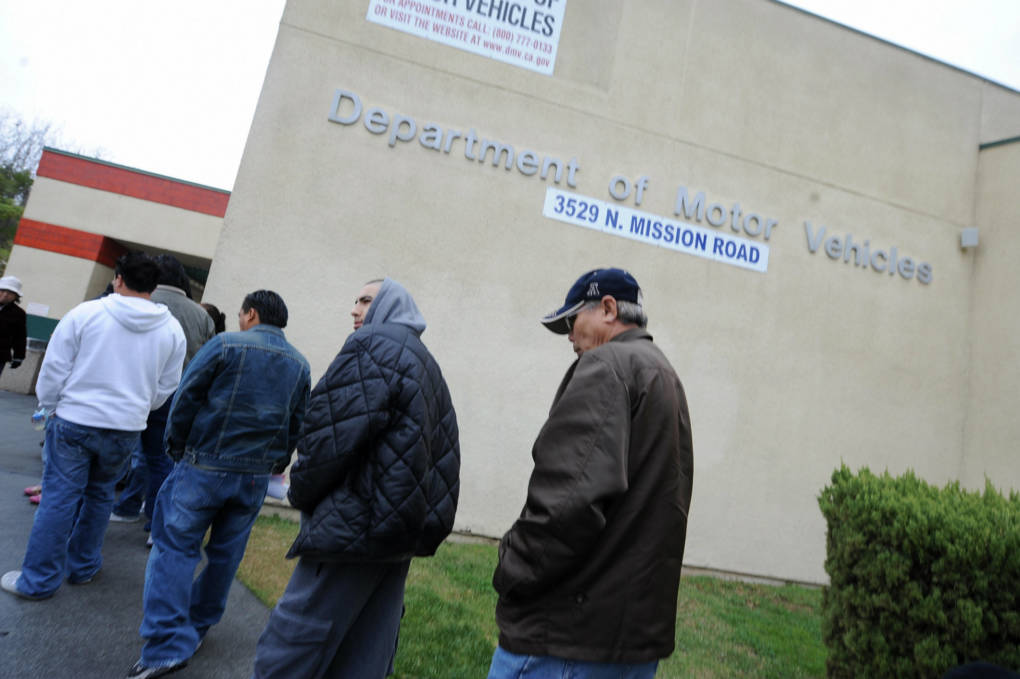
"caption": "People wait in line outside the state Department of Motor Vehicles (DMV) office in Los Angeles on Feb. 13, 2009. Lines at the state agency became even longer in 2018 after the rollout of the Real ID. ",
"description": "People wait in line outside the state Department of Motor Vehicles (DMV) office in Los Angeles on Feb. 13, 2009. Lines at the state agency became even longer in 2018 after the rollout of the Real ID. ",
"title": "California-DMV-Getty-84776394",
"credit": "Robyn Beck/AFP/Getty Images",
"status": "inherit",
"isLoading": false,
"fetchFailed": false
},
"news_11683218": {
"type": "attachments",
"id": "news_11683218",
"meta": {
"index": "attachments_1716263798",
"site": "news",
"id": "11683218",
"found": true
},
"parent": 11683178,
"imgSizes": {
"small": {
"file": "https://ww2.kqed.org/app/uploads/sites/10/2018/07/RS32064_Screen-Shot-2018-07-27-at-1.49.19-PM-qut-520x270.jpg",
"width": 520,
"mimeType": "image/jpeg",
"height": 270
},
"twentyfourteen-full-width": {
"file": "https://ww2.kqed.org/app/uploads/sites/10/2018/07/RS32064_Screen-Shot-2018-07-27-at-1.49.19-PM-qut-1038x576.jpg",
"width": 1038,
"mimeType": "image/jpeg",
"height": 576
},
"thumbnail": {
"file": "https://ww2.kqed.org/app/uploads/sites/10/2018/07/RS32064_Screen-Shot-2018-07-27-at-1.49.19-PM-qut-160x83.jpg",
"width": 160,
"mimeType": "image/jpeg",
"height": 83
},
"fd-sm": {
"file": "https://ww2.kqed.org/app/uploads/sites/10/2018/07/RS32064_Screen-Shot-2018-07-27-at-1.49.19-PM-qut-960x498.jpg",
"width": 960,
"mimeType": "image/jpeg",
"height": 498
},
"post-thumbnail": {
"file": "https://ww2.kqed.org/app/uploads/sites/10/2018/07/RS32064_Screen-Shot-2018-07-27-at-1.49.19-PM-qut-672x372.jpg",
"width": 672,
"mimeType": "image/jpeg",
"height": 372
},
"xsmall": {
"file": "https://ww2.kqed.org/app/uploads/sites/10/2018/07/RS32064_Screen-Shot-2018-07-27-at-1.49.19-PM-qut-375x194.jpg",
"width": 375,
"mimeType": "image/jpeg",
"height": 194
},
"kqedFullSize": {
"file": "https://ww2.kqed.org/app/uploads/sites/10/2018/07/RS32064_Screen-Shot-2018-07-27-at-1.49.19-PM-qut.jpg",
"width": 1288,
"height": 668
},
"large": {
"file": "https://ww2.kqed.org/app/uploads/sites/10/2018/07/RS32064_Screen-Shot-2018-07-27-at-1.49.19-PM-qut-1020x529.jpg",
"width": 1020,
"mimeType": "image/jpeg",
"height": 529
},
"xlarge": {
"file": "https://ww2.kqed.org/app/uploads/sites/10/2018/07/RS32064_Screen-Shot-2018-07-27-at-1.49.19-PM-qut-1180x612.jpg",
"width": 1180,
"mimeType": "image/jpeg",
"height": 612
},
"complete_open_graph": {
"file": "https://ww2.kqed.org/app/uploads/sites/10/2018/07/RS32064_Screen-Shot-2018-07-27-at-1.49.19-PM-qut-1200x622.jpg",
"width": 1200,
"mimeType": "image/jpeg",
"height": 622
},
"guest-author-50": {
"file": "https://ww2.kqed.org/app/uploads/sites/10/2018/07/RS32064_Screen-Shot-2018-07-27-at-1.49.19-PM-qut-50x50.jpg",
"width": 50,
"mimeType": "image/jpeg",
"height": 50
},
"guest-author-96": {
"file": "https://ww2.kqed.org/app/uploads/sites/10/2018/07/RS32064_Screen-Shot-2018-07-27-at-1.49.19-PM-qut-96x96.jpg",
"width": 96,
"mimeType": "image/jpeg",
"height": 96
},
"medium": {
"file": "https://ww2.kqed.org/app/uploads/sites/10/2018/07/RS32064_Screen-Shot-2018-07-27-at-1.49.19-PM-qut-800x415.jpg",
"width": 800,
"mimeType": "image/jpeg",
"height": 415
},
"guest-author-64": {
"file": "https://ww2.kqed.org/app/uploads/sites/10/2018/07/RS32064_Screen-Shot-2018-07-27-at-1.49.19-PM-qut-64x64.jpg",
"width": 64,
"mimeType": "image/jpeg",
"height": 64
},
"guest-author-32": {
"file": "https://ww2.kqed.org/app/uploads/sites/10/2018/07/RS32064_Screen-Shot-2018-07-27-at-1.49.19-PM-qut-32x32.jpg",
"width": 32,
"mimeType": "image/jpeg",
"height": 32
},
"fd-med": {
"file": "https://ww2.kqed.org/app/uploads/sites/10/2018/07/RS32064_Screen-Shot-2018-07-27-at-1.49.19-PM-qut-1180x612.jpg",
"width": 1180,
"mimeType": "image/jpeg",
"height": 612
},
"detail": {
"file": "https://ww2.kqed.org/app/uploads/sites/10/2018/07/RS32064_Screen-Shot-2018-07-27-at-1.49.19-PM-qut-150x150.jpg",
"width": 150,
"mimeType": "image/jpeg",
"height": 150
},
"guest-author-128": {
"file": "https://ww2.kqed.org/app/uploads/sites/10/2018/07/RS32064_Screen-Shot-2018-07-27-at-1.49.19-PM-qut-128x128.jpg",
"width": 128,
"mimeType": "image/jpeg",
"height": 128
},
"xxsmall": {
"file": "https://ww2.kqed.org/app/uploads/sites/10/2018/07/RS32064_Screen-Shot-2018-07-27-at-1.49.19-PM-qut-240x124.jpg",
"width": 240,
"mimeType": "image/jpeg",
"height": 124
}
},
"publishDate": 1532725424,
"modified": 1532725593,
"caption": "Are there regional preferences within the Bay Area that Six Rivers Brewing co-owner Meredith Maier can identify? Actually, yes. She says, \"We're selling a ton of Macadamia Nut Porter,\" in the South Bay, whereas beer drinkers in the Santa Cruz area prefer the more traditional Sasquatch Double IPA.",
"description": "Are there regional preferences within the Bay Area that Six Rivers Brewing co-owner Meredith Maier can identify? Actually, yes. She says, \"We're selling a ton of Macadamia Nut Porter,\" in the South Bay, whereas beer drinkers in the Santa Cruz area prefer the more traditional Sasquatch Double IPA.",
"title": "RS32064_Screen Shot 2018-07-27 at 1.49.19 PM-qut",
"credit": "Photo: Courtesy of Six Rivers Brewery",
"status": "inherit",
"isLoading": false,
"fetchFailed": false
},
"news_11675421": {
"type": "attachments",
"id": "news_11675421",
"meta": {
"index": "attachments_1716263798",
"site": "news",
"id": "11675421",
"found": true
},
"parent": 11675415,
"imgSizes": {
"small": {
"file": "https://ww2.kqed.org/app/uploads/sites/10/2018/06/world-cup-520x289.jpg",
"width": 520,
"mimeType": "image/jpeg",
"height": 289
},
"twentyfourteen-full-width": {
"file": "https://ww2.kqed.org/app/uploads/sites/10/2018/06/world-cup-1038x576.jpg",
"width": 1038,
"mimeType": "image/jpeg",
"height": 576
},
"thumbnail": {
"file": "https://ww2.kqed.org/app/uploads/sites/10/2018/06/world-cup-160x89.jpg",
"width": 160,
"mimeType": "image/jpeg",
"height": 89
},
"fd-sm": {
"file": "https://ww2.kqed.org/app/uploads/sites/10/2018/06/world-cup-960x533.jpg",
"width": 960,
"mimeType": "image/jpeg",
"height": 533
},
"post-thumbnail": {
"file": "https://ww2.kqed.org/app/uploads/sites/10/2018/06/world-cup-672x372.jpg",
"width": 672,
"mimeType": "image/jpeg",
"height": 372
},
"xsmall": {
"file": "https://ww2.kqed.org/app/uploads/sites/10/2018/06/world-cup-375x208.jpg",
"width": 375,
"mimeType": "image/jpeg",
"height": 208
},
"kqedFullSize": {
"file": "https://ww2.kqed.org/app/uploads/sites/10/2018/06/world-cup.jpg",
"width": 1080,
"height": 600
},
"large": {
"file": "https://ww2.kqed.org/app/uploads/sites/10/2018/06/world-cup-1020x567.jpg",
"width": 1020,
"mimeType": "image/jpeg",
"height": 567
},
"guest-author-50": {
"file": "https://ww2.kqed.org/app/uploads/sites/10/2018/06/world-cup-50x50.jpg",
"width": 50,
"mimeType": "image/jpeg",
"height": 50
},
"guest-author-96": {
"file": "https://ww2.kqed.org/app/uploads/sites/10/2018/06/world-cup-96x96.jpg",
"width": 96,
"mimeType": "image/jpeg",
"height": 96
},
"medium": {
"file": "https://ww2.kqed.org/app/uploads/sites/10/2018/06/world-cup-800x444.jpg",
"width": 800,
"mimeType": "image/jpeg",
"height": 444
},
"guest-author-64": {
"file": "https://ww2.kqed.org/app/uploads/sites/10/2018/06/world-cup-64x64.jpg",
"width": 64,
"mimeType": "image/jpeg",
"height": 64
},
"guest-author-32": {
"file": "https://ww2.kqed.org/app/uploads/sites/10/2018/06/world-cup-32x32.jpg",
"width": 32,
"mimeType": "image/jpeg",
"height": 32
},
"detail": {
"file": "https://ww2.kqed.org/app/uploads/sites/10/2018/06/world-cup-150x150.jpg",
"width": 150,
"mimeType": "image/jpeg",
"height": 150
},
"guest-author-128": {
"file": "https://ww2.kqed.org/app/uploads/sites/10/2018/06/world-cup-128x128.jpg",
"width": 128,
"mimeType": "image/jpeg",
"height": 128
},
"xxsmall": {
"file": "https://ww2.kqed.org/app/uploads/sites/10/2018/06/world-cup-240x133.jpg",
"width": 240,
"mimeType": "image/jpeg",
"height": 133
}
},
"publishDate": 1529256562,
"modified": 1529256618,
"caption": "The San Jose Earthquakes are showing all 64 games of the tournament at their stadium for free.",
"description": "The San Jose Earthquakes are showing all 64 games of the tournament at their stadium for free.",
"title": "world cup",
"credit": "Courtesy of the San Jose Earthquakes",
"status": "inherit",
"isLoading": false,
"fetchFailed": false
},
"news_11668297": {
"type": "attachments",
"id": "news_11668297",
"meta": {
"index": "attachments_1716263798",
"site": "news",
"id": "11668297",
"found": true
},
"parent": 11668265,
"imgSizes": {
"small": {
"file": "https://ww2.kqed.org/app/uploads/sites/10/2018/05/RS30925_Photo-Mar-08-9-47-30-AM-qut-520x390.jpg",
"width": 520,
"mimeType": "image/jpeg",
"height": 390
},
"twentyfourteen-full-width": {
"file": "https://ww2.kqed.org/app/uploads/sites/10/2018/05/RS30925_Photo-Mar-08-9-47-30-AM-qut-1038x576.jpg",
"width": 1038,
"mimeType": "image/jpeg",
"height": 576
},
"thumbnail": {
"file": "https://ww2.kqed.org/app/uploads/sites/10/2018/05/RS30925_Photo-Mar-08-9-47-30-AM-qut-160x120.jpg",
"width": 160,
"mimeType": "image/jpeg",
"height": 120
},
"fd-sm": {
"file": "https://ww2.kqed.org/app/uploads/sites/10/2018/05/RS30925_Photo-Mar-08-9-47-30-AM-qut-960x720.jpg",
"width": 960,
"mimeType": "image/jpeg",
"height": 720
},
"post-thumbnail": {
"file": "https://ww2.kqed.org/app/uploads/sites/10/2018/05/RS30925_Photo-Mar-08-9-47-30-AM-qut-672x372.jpg",
"width": 672,
"mimeType": "image/jpeg",
"height": 372
},
"xsmall": {
"file": "https://ww2.kqed.org/app/uploads/sites/10/2018/05/RS30925_Photo-Mar-08-9-47-30-AM-qut-375x281.jpg",
"width": 375,
"mimeType": "image/jpeg",
"height": 281
},
"kqedFullSize": {
"file": "https://ww2.kqed.org/app/uploads/sites/10/2018/05/RS30925_Photo-Mar-08-9-47-30-AM-qut.jpg",
"width": 1920,
"height": 1440
},
"large": {
"file": "https://ww2.kqed.org/app/uploads/sites/10/2018/05/RS30925_Photo-Mar-08-9-47-30-AM-qut-1020x765.jpg",
"width": 1020,
"mimeType": "image/jpeg",
"height": 765
},
"xlarge": {
"file": "https://ww2.kqed.org/app/uploads/sites/10/2018/05/RS30925_Photo-Mar-08-9-47-30-AM-qut-1180x885.jpg",
"width": 1180,
"mimeType": "image/jpeg",
"height": 885
},
"complete_open_graph": {
"file": "https://ww2.kqed.org/app/uploads/sites/10/2018/05/RS30925_Photo-Mar-08-9-47-30-AM-qut-1200x900.jpg",
"width": 1200,
"mimeType": "image/jpeg",
"height": 900
},
"guest-author-50": {
"file": "https://ww2.kqed.org/app/uploads/sites/10/2018/05/RS30925_Photo-Mar-08-9-47-30-AM-qut-50x50.jpg",
"width": 50,
"mimeType": "image/jpeg",
"height": 50
},
"guest-author-96": {
"file": "https://ww2.kqed.org/app/uploads/sites/10/2018/05/RS30925_Photo-Mar-08-9-47-30-AM-qut-96x96.jpg",
"width": 96,
"mimeType": "image/jpeg",
"height": 96
},
"medium": {
"file": "https://ww2.kqed.org/app/uploads/sites/10/2018/05/RS30925_Photo-Mar-08-9-47-30-AM-qut-800x600.jpg",
"width": 800,
"mimeType": "image/jpeg",
"height": 600
},
"guest-author-64": {
"file": "https://ww2.kqed.org/app/uploads/sites/10/2018/05/RS30925_Photo-Mar-08-9-47-30-AM-qut-64x64.jpg",
"width": 64,
"mimeType": "image/jpeg",
"height": 64
},
"guest-author-32": {
"file": "https://ww2.kqed.org/app/uploads/sites/10/2018/05/RS30925_Photo-Mar-08-9-47-30-AM-qut-32x32.jpg",
"width": 32,
"mimeType": "image/jpeg",
"height": 32
},
"fd-lrg": {
"file": "https://ww2.kqed.org/app/uploads/sites/10/2018/05/RS30925_Photo-Mar-08-9-47-30-AM-qut-1920x1440.jpg",
"width": 1920,
"mimeType": "image/jpeg",
"height": 1440
},
"fd-med": {
"file": "https://ww2.kqed.org/app/uploads/sites/10/2018/05/RS30925_Photo-Mar-08-9-47-30-AM-qut-1180x885.jpg",
"width": 1180,
"mimeType": "image/jpeg",
"height": 885
},
"full-width": {
"file": "https://ww2.kqed.org/app/uploads/sites/10/2018/05/RS30925_Photo-Mar-08-9-47-30-AM-qut-1920x1440.jpg",
"width": 1920,
"mimeType": "image/jpeg",
"height": 1440
},
"detail": {
"file": "https://ww2.kqed.org/app/uploads/sites/10/2018/05/RS30925_Photo-Mar-08-9-47-30-AM-qut-150x150.jpg",
"width": 150,
"mimeType": "image/jpeg",
"height": 150
},
"guest-author-128": {
"file": "https://ww2.kqed.org/app/uploads/sites/10/2018/05/RS30925_Photo-Mar-08-9-47-30-AM-qut-128x128.jpg",
"width": 128,
"mimeType": "image/jpeg",
"height": 128
},
"xxsmall": {
"file": "https://ww2.kqed.org/app/uploads/sites/10/2018/05/RS30925_Photo-Mar-08-9-47-30-AM-qut-240x180.jpg",
"width": 240,
"mimeType": "image/jpeg",
"height": 180
}
},
"publishDate": 1526338762,
"modified": 1526338782,
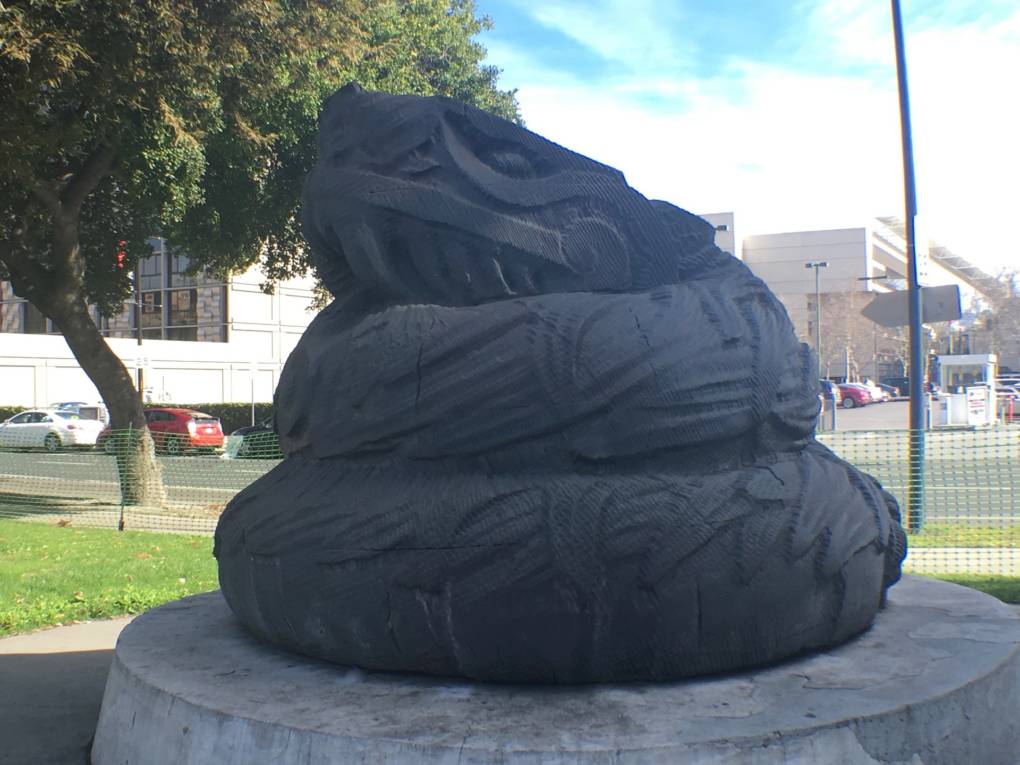
"caption": "\"Quetzalcoatl\" by Robert Graham in San Jose's Plaza de Cesar Chavez. The Aztec god is often depicted as a coiled snake, but people of all ages complain the sculpture looks like something else, something scatological in nature.",
"description": "\"Quetzalcoatl\" by Robert Graham in San Jose's Plaza de Cesar Chavez. The Aztec god is often depicted as a coiled snake, but people of all ages complain the sculpture looks like something else, something scatological in nature.",
"title": "RS30925_Photo Mar 08, 9 47 30 AM-qut",
"credit": "Rachael Myrow/KQED",
"status": "inherit",
"isLoading": false,
"fetchFailed": false
},
"news_11657870": {
"type": "attachments",
"id": "news_11657870",
"meta": {
"index": "attachments_1716263798",
"site": "news",
"id": "11657870",
"found": true
},
"parent": 11657866,
"imgSizes": {
"small": {
"file": "https://ww2.kqed.org/app/uploads/sites/10/2018/03/IMG_0073-520x347.jpg",
"width": 520,
"mimeType": "image/jpeg",
"height": 347
},
"twentyfourteen-full-width": {
"file": "https://ww2.kqed.org/app/uploads/sites/10/2018/03/IMG_0073-1038x576.jpg",
"width": 1038,
"mimeType": "image/jpeg",
"height": 576
},
"thumbnail": {
"file": "https://ww2.kqed.org/app/uploads/sites/10/2018/03/IMG_0073-160x107.jpg",
"width": 160,
"mimeType": "image/jpeg",
"height": 107
},
"fd-sm": {
"file": "https://ww2.kqed.org/app/uploads/sites/10/2018/03/IMG_0073-960x640.jpg",
"width": 960,
"mimeType": "image/jpeg",
"height": 640
},
"post-thumbnail": {
"file": "https://ww2.kqed.org/app/uploads/sites/10/2018/03/IMG_0073-672x372.jpg",
"width": 672,
"mimeType": "image/jpeg",
"height": 372
},
"xsmall": {
"file": "https://ww2.kqed.org/app/uploads/sites/10/2018/03/IMG_0073-375x250.jpg",
"width": 375,
"mimeType": "image/jpeg",
"height": 250
},
"kqedFullSize": {
"file": "https://ww2.kqed.org/app/uploads/sites/10/2018/03/IMG_0073-e1521994847644.jpg",
"width": 1920,
"height": 1280
},
"large": {
"file": "https://ww2.kqed.org/app/uploads/sites/10/2018/03/IMG_0073-1020x680.jpg",
"width": 1020,
"mimeType": "image/jpeg",
"height": 680
},
"xlarge": {
"file": "https://ww2.kqed.org/app/uploads/sites/10/2018/03/IMG_0073-1180x787.jpg",
"width": 1180,
"mimeType": "image/jpeg",
"height": 787
},
"guest-author-50": {
"file": "https://ww2.kqed.org/app/uploads/sites/10/2018/03/IMG_0073-50x50.jpg",
"width": 50,
"mimeType": "image/jpeg",
"height": 50
},
"guest-author-96": {
"file": "https://ww2.kqed.org/app/uploads/sites/10/2018/03/IMG_0073-96x96.jpg",
"width": 96,
"mimeType": "image/jpeg",
"height": 96
},
"medium": {
"file": "https://ww2.kqed.org/app/uploads/sites/10/2018/03/IMG_0073-800x533.jpg",
"width": 800,
"mimeType": "image/jpeg",
"height": 533
},
"guest-author-64": {
"file": "https://ww2.kqed.org/app/uploads/sites/10/2018/03/IMG_0073-64x64.jpg",
"width": 64,
"mimeType": "image/jpeg",
"height": 64
},
"guest-author-32": {
"file": "https://ww2.kqed.org/app/uploads/sites/10/2018/03/IMG_0073-32x32.jpg",
"width": 32,
"mimeType": "image/jpeg",
"height": 32
},
"fd-lrg": {
"file": "https://ww2.kqed.org/app/uploads/sites/10/2018/03/IMG_0073-1920x1280.jpg",
"width": 1920,
"mimeType": "image/jpeg",
"height": 1280
},
"fd-med": {
"file": "https://ww2.kqed.org/app/uploads/sites/10/2018/03/IMG_0073-1180x787.jpg",
"width": 1180,
"mimeType": "image/jpeg",
"height": 787
},
"full-width": {
"file": "https://ww2.kqed.org/app/uploads/sites/10/2018/03/IMG_0073-1920x1280.jpg",
"width": 1920,
"mimeType": "image/jpeg",
"height": 1280
},
"detail": {
"file": "https://ww2.kqed.org/app/uploads/sites/10/2018/03/IMG_0073-150x150.jpg",
"width": 150,
"mimeType": "image/jpeg",
"height": 150
},
"guest-author-128": {
"file": "https://ww2.kqed.org/app/uploads/sites/10/2018/03/IMG_0073-128x128.jpg",
"width": 128,
"mimeType": "image/jpeg",
"height": 128
},
"xxsmall": {
"file": "https://ww2.kqed.org/app/uploads/sites/10/2018/03/IMG_0073-240x160.jpg",
"width": 240,
"mimeType": "image/jpeg",
"height": 160
}
},
"publishDate": 1521994698,
"modified": 1521994854,
"caption": "Student organizers march at Lake Merritt as similar marches were happening around the world. ",
"description": "Student organizers march at Lake Merritt as similar marches popped up around the world. ",
"title": "IMG_0073",
"credit": "Sheraz Sadiq/KQED",
"status": "inherit",
"isLoading": false,
"fetchFailed": false
},
"news_11653941": {
"type": "attachments",
"id": "news_11653941",
"meta": {
"index": "attachments_1716263798",
"site": "news",
"id": "11653941",
"found": true
},
"parent": 11653708,
"imgSizes": {
"small": {
"file": "https://ww2.kqed.org/app/uploads/sites/10/2018/03/Le-family-picture-520x271.jpg",
"width": 520,
"mimeType": "image/jpeg",
"height": 271
},
"thumbnail": {
"file": "https://ww2.kqed.org/app/uploads/sites/10/2018/03/Le-family-picture-160x83.jpg",
"width": 160,
"mimeType": "image/jpeg",
"height": 83
},
"post-thumbnail": {
"file": "https://ww2.kqed.org/app/uploads/sites/10/2018/03/Le-family-picture-672x372.jpg",
"width": 672,
"mimeType": "image/jpeg",
"height": 372
},
"xsmall": {
"file": "https://ww2.kqed.org/app/uploads/sites/10/2018/03/Le-family-picture-375x196.jpg",
"width": 375,
"mimeType": "image/jpeg",
"height": 196
},
"kqedFullSize": {
"file": "https://ww2.kqed.org/app/uploads/sites/10/2018/03/Le-family-picture.jpg",
"width": 842,
"height": 439
},
"guest-author-50": {
"file": "https://ww2.kqed.org/app/uploads/sites/10/2018/03/Le-family-picture-50x50.jpg",
"width": 50,
"mimeType": "image/jpeg",
"height": 50
},
"guest-author-96": {
"file": "https://ww2.kqed.org/app/uploads/sites/10/2018/03/Le-family-picture-96x96.jpg",
"width": 96,
"mimeType": "image/jpeg",
"height": 96
},
"medium": {
"file": "https://ww2.kqed.org/app/uploads/sites/10/2018/03/Le-family-picture-800x417.jpg",
"width": 800,
"mimeType": "image/jpeg",
"height": 417
},
"guest-author-64": {
"file": "https://ww2.kqed.org/app/uploads/sites/10/2018/03/Le-family-picture-64x64.jpg",
"width": 64,
"mimeType": "image/jpeg",
"height": 64
},
"guest-author-32": {
"file": "https://ww2.kqed.org/app/uploads/sites/10/2018/03/Le-family-picture-32x32.jpg",
"width": 32,
"mimeType": "image/jpeg",
"height": 32
},
"detail": {
"file": "https://ww2.kqed.org/app/uploads/sites/10/2018/03/Le-family-picture-150x150.jpg",
"width": 150,
"mimeType": "image/jpeg",
"height": 150
},
"guest-author-128": {
"file": "https://ww2.kqed.org/app/uploads/sites/10/2018/03/Le-family-picture-128x128.jpg",
"width": 128,
"mimeType": "image/jpeg",
"height": 128
},
"xxsmall": {
"file": "https://ww2.kqed.org/app/uploads/sites/10/2018/03/Le-family-picture-240x125.jpg",
"width": 240,
"mimeType": "image/jpeg",
"height": 125
}
},
"publishDate": 1520279587,
"modified": 1520279900,
"caption": "The Le family from left to right: Khoa Dang Le, Thuong Xuan Le, Yvonne Mai Le and Lingh My Thi Nguyen.",
"description": "The Le family from left to right: Khoa Dang Le, Thuong Xuan Le, Yvonne Mai Le and Lingh My Thi Nguyen. ",
"title": "Le-family-picture",
"credit": "Harris Personal Injury Lawyers",
"status": "inherit",
"isLoading": false,
"fetchFailed": false
},
"news_11650867": {
"type": "attachments",
"id": "news_11650867",
"meta": {
"index": "attachments_1716263798",
"site": "news",
"id": "11650867",
"found": true
},
"parent": 11650863,
"imgSizes": {
"small": {
"file": "https://ww2.kqed.org/app/uploads/sites/10/2018/02/Image-uploaded-from-iOS-20-520x355.jpg",
"width": 520,
"mimeType": "image/jpeg",
"height": 355
},
"twentyfourteen-full-width": {
"file": "https://ww2.kqed.org/app/uploads/sites/10/2018/02/Image-uploaded-from-iOS-20-1038x576.jpg",
"width": 1038,
"mimeType": "image/jpeg",
"height": 576
},
"thumbnail": {
"file": "https://ww2.kqed.org/app/uploads/sites/10/2018/02/Image-uploaded-from-iOS-20-160x109.jpg",
"width": 160,
"mimeType": "image/jpeg",
"height": 109
},
"fd-sm": {
"file": "https://ww2.kqed.org/app/uploads/sites/10/2018/02/Image-uploaded-from-iOS-20-960x656.jpg",
"width": 960,
"mimeType": "image/jpeg",
"height": 656
},
"post-thumbnail": {
"file": "https://ww2.kqed.org/app/uploads/sites/10/2018/02/Image-uploaded-from-iOS-20-672x372.jpg",
"width": 672,
"mimeType": "image/jpeg",
"height": 372
},
"xsmall": {
"file": "https://ww2.kqed.org/app/uploads/sites/10/2018/02/Image-uploaded-from-iOS-20-375x256.jpg",
"width": 375,
"mimeType": "image/jpeg",
"height": 256
},
"kqedFullSize": {
"file": "https://ww2.kqed.org/app/uploads/sites/10/2018/02/Image-uploaded-from-iOS-20-e1518903806987.jpg",
"width": 1920,
"height": 1311
},
"large": {
"file": "https://ww2.kqed.org/app/uploads/sites/10/2018/02/Image-uploaded-from-iOS-20-1020x697.jpg",
"width": 1020,
"mimeType": "image/jpeg",
"height": 697
},
"xlarge": {
"file": "https://ww2.kqed.org/app/uploads/sites/10/2018/02/Image-uploaded-from-iOS-20-1180x806.jpg",
"width": 1180,
"mimeType": "image/jpeg",
"height": 806
},
"guest-author-50": {
"file": "https://ww2.kqed.org/app/uploads/sites/10/2018/02/Image-uploaded-from-iOS-20-50x50.jpg",
"width": 50,
"mimeType": "image/jpeg",
"height": 50
},
"guest-author-96": {
"file": "https://ww2.kqed.org/app/uploads/sites/10/2018/02/Image-uploaded-from-iOS-20-96x96.jpg",
"width": 96,
"mimeType": "image/jpeg",
"height": 96
},
"medium": {
"file": "https://ww2.kqed.org/app/uploads/sites/10/2018/02/Image-uploaded-from-iOS-20-800x546.jpg",
"width": 800,
"mimeType": "image/jpeg",
"height": 546
},
"guest-author-64": {
"file": "https://ww2.kqed.org/app/uploads/sites/10/2018/02/Image-uploaded-from-iOS-20-64x64.jpg",
"width": 64,
"mimeType": "image/jpeg",
"height": 64
},
"guest-author-32": {
"file": "https://ww2.kqed.org/app/uploads/sites/10/2018/02/Image-uploaded-from-iOS-20-32x32.jpg",
"width": 32,
"mimeType": "image/jpeg",
"height": 32
},
"fd-lrg": {
"file": "https://ww2.kqed.org/app/uploads/sites/10/2018/02/Image-uploaded-from-iOS-20-1920x1311.jpg",
"width": 1920,
"mimeType": "image/jpeg",
"height": 1311
},
"fd-med": {
"file": "https://ww2.kqed.org/app/uploads/sites/10/2018/02/Image-uploaded-from-iOS-20-1180x806.jpg",
"width": 1180,
"mimeType": "image/jpeg",
"height": 806
},
"full-width": {
"file": "https://ww2.kqed.org/app/uploads/sites/10/2018/02/Image-uploaded-from-iOS-20-1920x1311.jpg",
"width": 1920,
"mimeType": "image/jpeg",
"height": 1311
},
"detail": {
"file": "https://ww2.kqed.org/app/uploads/sites/10/2018/02/Image-uploaded-from-iOS-20-150x150.jpg",
"width": 150,
"mimeType": "image/jpeg",
"height": 150
},
"guest-author-128": {
"file": "https://ww2.kqed.org/app/uploads/sites/10/2018/02/Image-uploaded-from-iOS-20-128x128.jpg",
"width": 128,
"mimeType": "image/jpeg",
"height": 128
},
"xxsmall": {
"file": "https://ww2.kqed.org/app/uploads/sites/10/2018/02/Image-uploaded-from-iOS-20-240x164.jpg",
"width": 240,
"mimeType": "image/jpeg",
"height": 164
}
},
"publishDate": 1518903650,
"modified": 1518903918,
"caption": "The Tet Festival is being held in San Jose this weekend as part of local Vietnamese New Year celebrations. ",
"description": "The Tet Festival is being held in San Jose this weekend as part of local Vietnamese New Year celebrations. ",
"title": "Image uploaded from iOS (20)",
"credit": "Guy Marzorati/KQED",
"status": "inherit",
"isLoading": false,
"fetchFailed": false
},
"news_11649457": {
"type": "attachments",
"id": "news_11649457",
"meta": {
"index": "attachments_1716263798",
"site": "news",
"id": "11649457",
"found": true
},
"parent": 11649449,
"imgSizes": {
"small": {
"file": "https://ww2.kqed.org/app/uploads/sites/10/2018/02/RS29376_Screen-Shot-2018-02-11-at-5.51.10-PM-qut-520x336.jpg",
"width": 520,
"mimeType": "image/jpeg",
"height": 336
},
"twentyfourteen-full-width": {
"file": "https://ww2.kqed.org/app/uploads/sites/10/2018/02/RS29376_Screen-Shot-2018-02-11-at-5.51.10-PM-qut-1038x576.jpg",
"width": 1038,
"mimeType": "image/jpeg",
"height": 576
},
"thumbnail": {
"file": "https://ww2.kqed.org/app/uploads/sites/10/2018/02/RS29376_Screen-Shot-2018-02-11-at-5.51.10-PM-qut-160x103.jpg",
"width": 160,
"mimeType": "image/jpeg",
"height": 103
},
"fd-sm": {
"file": "https://ww2.kqed.org/app/uploads/sites/10/2018/02/RS29376_Screen-Shot-2018-02-11-at-5.51.10-PM-qut-960x620.jpg",
"width": 960,
"mimeType": "image/jpeg",
"height": 620
},
"post-thumbnail": {
"file": "https://ww2.kqed.org/app/uploads/sites/10/2018/02/RS29376_Screen-Shot-2018-02-11-at-5.51.10-PM-qut-672x372.jpg",
"width": 672,
"mimeType": "image/jpeg",
"height": 372
},
"xsmall": {
"file": "https://ww2.kqed.org/app/uploads/sites/10/2018/02/RS29376_Screen-Shot-2018-02-11-at-5.51.10-PM-qut-375x242.jpg",
"width": 375,
"mimeType": "image/jpeg",
"height": 242
},
"kqedFullSize": {
"file": "https://ww2.kqed.org/app/uploads/sites/10/2018/02/RS29376_Screen-Shot-2018-02-11-at-5.51.10-PM-qut.jpg",
"width": 1920,
"height": 1240
},
"large": {
"file": "https://ww2.kqed.org/app/uploads/sites/10/2018/02/RS29376_Screen-Shot-2018-02-11-at-5.51.10-PM-qut-1020x659.jpg",
"width": 1020,
"mimeType": "image/jpeg",
"height": 659
},
"xlarge": {
"file": "https://ww2.kqed.org/app/uploads/sites/10/2018/02/RS29376_Screen-Shot-2018-02-11-at-5.51.10-PM-qut-1180x762.jpg",
"width": 1180,
"mimeType": "image/jpeg",
"height": 762
},
"guest-author-50": {
"file": "https://ww2.kqed.org/app/uploads/sites/10/2018/02/RS29376_Screen-Shot-2018-02-11-at-5.51.10-PM-qut-50x50.jpg",
"width": 50,
"mimeType": "image/jpeg",
"height": 50
},
"guest-author-96": {
"file": "https://ww2.kqed.org/app/uploads/sites/10/2018/02/RS29376_Screen-Shot-2018-02-11-at-5.51.10-PM-qut-96x96.jpg",
"width": 96,
"mimeType": "image/jpeg",
"height": 96
},
"medium": {
"file": "https://ww2.kqed.org/app/uploads/sites/10/2018/02/RS29376_Screen-Shot-2018-02-11-at-5.51.10-PM-qut-800x517.jpg",
"width": 800,
"mimeType": "image/jpeg",
"height": 517
},
"guest-author-64": {
"file": "https://ww2.kqed.org/app/uploads/sites/10/2018/02/RS29376_Screen-Shot-2018-02-11-at-5.51.10-PM-qut-64x64.jpg",
"width": 64,
"mimeType": "image/jpeg",
"height": 64
},
"guest-author-32": {
"file": "https://ww2.kqed.org/app/uploads/sites/10/2018/02/RS29376_Screen-Shot-2018-02-11-at-5.51.10-PM-qut-32x32.jpg",
"width": 32,
"mimeType": "image/jpeg",
"height": 32
},
"fd-lrg": {
"file": "https://ww2.kqed.org/app/uploads/sites/10/2018/02/RS29376_Screen-Shot-2018-02-11-at-5.51.10-PM-qut-1920x1240.jpg",
"width": 1920,
"mimeType": "image/jpeg",
"height": 1240
},
"fd-med": {
"file": "https://ww2.kqed.org/app/uploads/sites/10/2018/02/RS29376_Screen-Shot-2018-02-11-at-5.51.10-PM-qut-1180x762.jpg",
"width": 1180,
"mimeType": "image/jpeg",
"height": 762
},
"full-width": {
"file": "https://ww2.kqed.org/app/uploads/sites/10/2018/02/RS29376_Screen-Shot-2018-02-11-at-5.51.10-PM-qut-1920x1240.jpg",
"width": 1920,
"mimeType": "image/jpeg",
"height": 1240
},
"detail": {
"file": "https://ww2.kqed.org/app/uploads/sites/10/2018/02/RS29376_Screen-Shot-2018-02-11-at-5.51.10-PM-qut-150x150.jpg",
"width": 150,
"mimeType": "image/jpeg",
"height": 150
},
"guest-author-128": {
"file": "https://ww2.kqed.org/app/uploads/sites/10/2018/02/RS29376_Screen-Shot-2018-02-11-at-5.51.10-PM-qut-128x128.jpg",
"width": 128,
"mimeType": "image/jpeg",
"height": 128
},
"xxsmall": {
"file": "https://ww2.kqed.org/app/uploads/sites/10/2018/02/RS29376_Screen-Shot-2018-02-11-at-5.51.10-PM-qut-240x155.jpg",
"width": 240,
"mimeType": "image/jpeg",
"height": 155
}
},
"publishDate": 1518400543,
"modified": 1518815666,
"caption": "A screen shot from a website set up by San Jose using the Balancing Act program to allow residents to try and balance the city's budget. There is also a mechanism for residents to provide input to the city on how they want city funds spent.",
"description": "A screen shot from a website set up by San Jose using the Balancing Act program to allow residents to try and balance the city's budget. There is also a mechanism for residents to provide input to the city on how they want city funds spent.",
"title": "RS29376_Screen Shot 2018-02-11 at 5.51.10 PM-qut",
"credit": "Balancing Act",
"status": "inherit",
"isLoading": false,
"fetchFailed": false
},
"news_11647064": {
"type": "attachments",
"id": "news_11647064",
"meta": {
"index": "attachments_1716263798",
"site": "news",
"id": "11647064",
"found": true
},
"parent": 11647017,
"imgSizes": {
"small": {
"file": "https://ww2.kqed.org/app/uploads/sites/10/2018/01/RS2634_calstatesanjose20120813-520x347.jpg",
"width": 520,
"mimeType": "image/jpeg",
"height": 347
},
"twentyfourteen-full-width": {
"file": "https://ww2.kqed.org/app/uploads/sites/10/2018/01/RS2634_calstatesanjose20120813-1038x576.jpg",
"width": 1038,
"mimeType": "image/jpeg",
"height": 576
},
"thumbnail": {
"file": "https://ww2.kqed.org/app/uploads/sites/10/2018/01/RS2634_calstatesanjose20120813-160x107.jpg",
"width": 160,
"mimeType": "image/jpeg",
"height": 107
},
"fd-sm": {
"file": "https://ww2.kqed.org/app/uploads/sites/10/2018/01/RS2634_calstatesanjose20120813-960x640.jpg",
"width": 960,
"mimeType": "image/jpeg",
"height": 640
},
"post-thumbnail": {
"file": "https://ww2.kqed.org/app/uploads/sites/10/2018/01/RS2634_calstatesanjose20120813-672x372.jpg",
"width": 672,
"mimeType": "image/jpeg",
"height": 372
},
"xsmall": {
"file": "https://ww2.kqed.org/app/uploads/sites/10/2018/01/RS2634_calstatesanjose20120813-375x250.jpg",
"width": 375,
"mimeType": "image/jpeg",
"height": 250
},
"kqedFullSize": {
"file": "https://ww2.kqed.org/app/uploads/sites/10/2018/01/RS2634_calstatesanjose20120813.jpg",
"width": 1109,
"height": 739
},
"large": {
"file": "https://ww2.kqed.org/app/uploads/sites/10/2018/01/RS2634_calstatesanjose20120813-1020x680.jpg",
"width": 1020,
"mimeType": "image/jpeg",
"height": 680
},
"guest-author-50": {
"file": "https://ww2.kqed.org/app/uploads/sites/10/2018/01/RS2634_calstatesanjose20120813-50x50.jpg",
"width": 50,
"mimeType": "image/jpeg",
"height": 50
},
"guest-author-96": {
"file": "https://ww2.kqed.org/app/uploads/sites/10/2018/01/RS2634_calstatesanjose20120813-96x96.jpg",
"width": 96,
"mimeType": "image/jpeg",
"height": 96
},
"medium": {
"file": "https://ww2.kqed.org/app/uploads/sites/10/2018/01/RS2634_calstatesanjose20120813-800x533.jpg",
"width": 800,
"mimeType": "image/jpeg",
"height": 533
},
"guest-author-64": {
"file": "https://ww2.kqed.org/app/uploads/sites/10/2018/01/RS2634_calstatesanjose20120813-64x64.jpg",
"width": 64,
"mimeType": "image/jpeg",
"height": 64
},
"guest-author-32": {
"file": "https://ww2.kqed.org/app/uploads/sites/10/2018/01/RS2634_calstatesanjose20120813-32x32.jpg",
"width": 32,
"mimeType": "image/jpeg",
"height": 32
},
"detail": {
"file": "https://ww2.kqed.org/app/uploads/sites/10/2018/01/RS2634_calstatesanjose20120813-150x150.jpg",
"width": 150,
"mimeType": "image/jpeg",
"height": 150
},
"guest-author-128": {
"file": "https://ww2.kqed.org/app/uploads/sites/10/2018/01/RS2634_calstatesanjose20120813-128x128.jpg",
"width": 128,
"mimeType": "image/jpeg",
"height": 128
},
"xxsmall": {
"file": "https://ww2.kqed.org/app/uploads/sites/10/2018/01/RS2634_calstatesanjose20120813-240x160.jpg",
"width": 240,
"mimeType": "image/jpeg",
"height": 160
}
},
"publishDate": 1517342354,
"modified": 1517350487,
"caption": "Twenty-eight percent of residents in San Jose don't have access to broadband internet. Four percent of residents aren't connected at all. ",
"description": "Twenty-eight percent of residents in San Jose don't have access to broadband internet. Four percent of residents aren't connected at all. ",
"title": "RS2634_calstatesanjose20120813",
"credit": "Tonya Mosley/KQED",
"status": "inherit",
"isLoading": false,
"fetchFailed": false
},
"news_11644282": {
"type": "attachments",
"id": "news_11644282",
"meta": {
"index": "attachments_1716263798",
"site": "news",
"id": "11644282",
"found": true
},
"parent": 11644244,
"imgSizes": {
"small": {
"file": "https://ww2.kqed.org/app/uploads/sites/10/2018/01/IMG_0199-520x393.jpg",
"width": 520,
"mimeType": "image/jpeg",
"height": 393
},
"twentyfourteen-full-width": {
"file": "https://ww2.kqed.org/app/uploads/sites/10/2018/01/IMG_0199-1038x576.jpg",
"width": 1038,
"mimeType": "image/jpeg",
"height": 576
},
"thumbnail": {
"file": "https://ww2.kqed.org/app/uploads/sites/10/2018/01/IMG_0199-160x121.jpg",
"width": 160,
"mimeType": "image/jpeg",
"height": 121
},
"fd-sm": {
"file": "https://ww2.kqed.org/app/uploads/sites/10/2018/01/IMG_0199-960x726.jpg",
"width": 960,
"mimeType": "image/jpeg",
"height": 726
},
"post-thumbnail": {
"file": "https://ww2.kqed.org/app/uploads/sites/10/2018/01/IMG_0199-672x372.jpg",
"width": 672,
"mimeType": "image/jpeg",
"height": 372
},
"xsmall": {
"file": "https://ww2.kqed.org/app/uploads/sites/10/2018/01/IMG_0199-375x284.jpg",
"width": 375,
"mimeType": "image/jpeg",
"height": 284
},
"kqedFullSize": {
"file": "https://ww2.kqed.org/app/uploads/sites/10/2018/01/IMG_0199-e1516916232423.jpg",
"width": 1920,
"height": 1452
},
"large": {
"file": "https://ww2.kqed.org/app/uploads/sites/10/2018/01/IMG_0199-1020x771.jpg",
"width": 1020,
"mimeType": "image/jpeg",
"height": 771
},
"xlarge": {
"file": "https://ww2.kqed.org/app/uploads/sites/10/2018/01/IMG_0199-1180x892.jpg",
"width": 1180,
"mimeType": "image/jpeg",
"height": 892
},
"guest-author-50": {
"file": "https://ww2.kqed.org/app/uploads/sites/10/2018/01/IMG_0199-50x50.jpg",
"width": 50,
"mimeType": "image/jpeg",
"height": 50
},
"guest-author-96": {
"file": "https://ww2.kqed.org/app/uploads/sites/10/2018/01/IMG_0199-96x96.jpg",
"width": 96,
"mimeType": "image/jpeg",
"height": 96
},
"medium": {
"file": "https://ww2.kqed.org/app/uploads/sites/10/2018/01/IMG_0199-800x605.jpg",
"width": 800,
"mimeType": "image/jpeg",
"height": 605
},
"guest-author-64": {
"file": "https://ww2.kqed.org/app/uploads/sites/10/2018/01/IMG_0199-64x64.jpg",
"width": 64,
"mimeType": "image/jpeg",
"height": 64
},
"guest-author-32": {
"file": "https://ww2.kqed.org/app/uploads/sites/10/2018/01/IMG_0199-32x32.jpg",
"width": 32,
"mimeType": "image/jpeg",
"height": 32
},
"fd-lrg": {
"file": "https://ww2.kqed.org/app/uploads/sites/10/2018/01/IMG_0199-1920x1452.jpg",
"width": 1920,
"mimeType": "image/jpeg",
"height": 1452
},
"fd-med": {
"file": "https://ww2.kqed.org/app/uploads/sites/10/2018/01/IMG_0199-1180x892.jpg",
"width": 1180,
"mimeType": "image/jpeg",
"height": 892
},
"full-width": {
"file": "https://ww2.kqed.org/app/uploads/sites/10/2018/01/IMG_0199-1920x1452.jpg",
"width": 1920,
"mimeType": "image/jpeg",
"height": 1452
},
"detail": {
"file": "https://ww2.kqed.org/app/uploads/sites/10/2018/01/IMG_0199-150x150.jpg",
"width": 150,
"mimeType": "image/jpeg",
"height": 150
},
"guest-author-128": {
"file": "https://ww2.kqed.org/app/uploads/sites/10/2018/01/IMG_0199-128x128.jpg",
"width": 128,
"mimeType": "image/jpeg",
"height": 128
},
"xxsmall": {
"file": "https://ww2.kqed.org/app/uploads/sites/10/2018/01/IMG_0199-240x182.jpg",
"width": 240,
"mimeType": "image/jpeg",
"height": 182
}
},
"publishDate": 1516913661,
"modified": 1516916273,
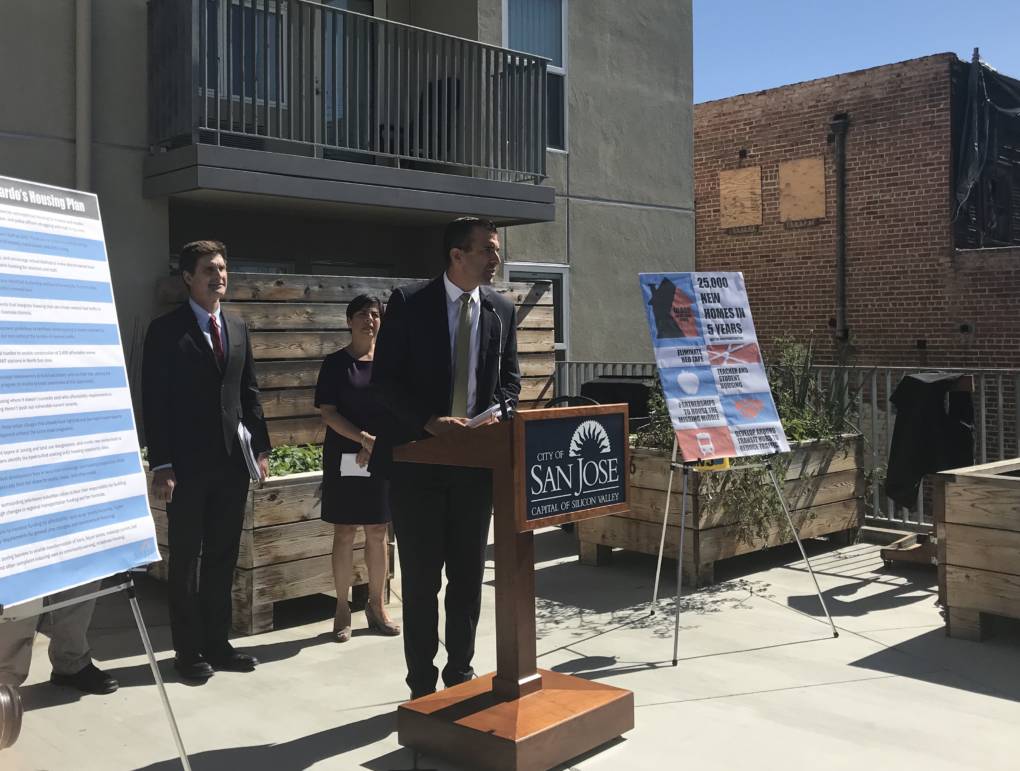
"caption": "San Jose Mayor Sam Liccardo speaks in September 2017.",
"description": null,
"title": "IMG_0199",
"credit": "Tonya Mosley/KQED",
"status": "inherit",
"isLoading": false,
"fetchFailed": false
},
"news_11643240": {
"type": "attachments",
"id": "news_11643240",
"meta": {
"index": "attachments_1716263798",
"site": "news",
"id": "11643240",
"found": true
},
"parent": 11643239,
"imgSizes": {
"small": {
"file": "https://ww2.kqed.org/app/uploads/sites/10/2018/01/WOMENS-MARCH_MARQUEE-520x293.jpg",
"width": 520,
"mimeType": "image/jpeg",
"height": 293
},
"twentyfourteen-full-width": {
"file": "https://ww2.kqed.org/app/uploads/sites/10/2018/01/WOMENS-MARCH_MARQUEE-1038x576.jpg",
"width": 1038,
"mimeType": "image/jpeg",
"height": 576
},
"thumbnail": {
"file": "https://ww2.kqed.org/app/uploads/sites/10/2018/01/WOMENS-MARCH_MARQUEE-160x90.jpg",
"width": 160,
"mimeType": "image/jpeg",
"height": 90
},
"fd-sm": {
"file": "https://ww2.kqed.org/app/uploads/sites/10/2018/01/WOMENS-MARCH_MARQUEE-960x540.jpg",
"width": 960,
"mimeType": "image/jpeg",
"height": 540
},
"post-thumbnail": {
"file": "https://ww2.kqed.org/app/uploads/sites/10/2018/01/WOMENS-MARCH_MARQUEE-672x372.jpg",
"width": 672,
"mimeType": "image/jpeg",
"height": 372
},
"xsmall": {
"file": "https://ww2.kqed.org/app/uploads/sites/10/2018/01/WOMENS-MARCH_MARQUEE-375x211.jpg",
"width": 375,
"mimeType": "image/jpeg",
"height": 211
},
"kqedFullSize": {
"file": "https://ww2.kqed.org/app/uploads/sites/10/2018/01/WOMENS-MARCH_MARQUEE.jpg",
"width": 1280,
"height": 720
},
"large": {
"file": "https://ww2.kqed.org/app/uploads/sites/10/2018/01/WOMENS-MARCH_MARQUEE-1020x574.jpg",
"width": 1020,
"mimeType": "image/jpeg",
"height": 574
},
"xlarge": {
"file": "https://ww2.kqed.org/app/uploads/sites/10/2018/01/WOMENS-MARCH_MARQUEE-1180x664.jpg",
"width": 1180,
"mimeType": "image/jpeg",
"height": 664
},
"guest-author-50": {
"file": "https://ww2.kqed.org/app/uploads/sites/10/2018/01/WOMENS-MARCH_MARQUEE-50x50.jpg",
"width": 50,
"mimeType": "image/jpeg",
"height": 50
},
"guest-author-96": {
"file": "https://ww2.kqed.org/app/uploads/sites/10/2018/01/WOMENS-MARCH_MARQUEE-96x96.jpg",
"width": 96,
"mimeType": "image/jpeg",
"height": 96
},
"medium": {
"file": "https://ww2.kqed.org/app/uploads/sites/10/2018/01/WOMENS-MARCH_MARQUEE-800x450.jpg",
"width": 800,
"mimeType": "image/jpeg",
"height": 450
},
"guest-author-64": {
"file": "https://ww2.kqed.org/app/uploads/sites/10/2018/01/WOMENS-MARCH_MARQUEE-64x64.jpg",
"width": 64,
"mimeType": "image/jpeg",
"height": 64
},
"guest-author-32": {
"file": "https://ww2.kqed.org/app/uploads/sites/10/2018/01/WOMENS-MARCH_MARQUEE-32x32.jpg",
"width": 32,
"mimeType": "image/jpeg",
"height": 32
},
"fd-med": {
"file": "https://ww2.kqed.org/app/uploads/sites/10/2018/01/WOMENS-MARCH_MARQUEE-1180x664.jpg",
"width": 1180,
"mimeType": "image/jpeg",
"height": 664
},
"detail": {
"file": "https://ww2.kqed.org/app/uploads/sites/10/2018/01/WOMENS-MARCH_MARQUEE-150x150.jpg",
"width": 150,
"mimeType": "image/jpeg",
"height": 150
},
"guest-author-128": {
"file": "https://ww2.kqed.org/app/uploads/sites/10/2018/01/WOMENS-MARCH_MARQUEE-128x128.jpg",
"width": 128,
"mimeType": "image/jpeg",
"height": 128
},
"xxsmall": {
"file": "https://ww2.kqed.org/app/uploads/sites/10/2018/01/WOMENS-MARCH_MARQUEE-240x135.jpg",
"width": 240,
"mimeType": "image/jpeg",
"height": 135
}
},
"publishDate": 1516414782,
"modified": 1516414782,
"caption": null,
"description": null,
"title": "WOMENS MARCH_MARQUEE",
"credit": null,
"status": "inherit",
"isLoading": false,
"fetchFailed": false
},
"news_11639783": {
"type": "attachments",
"id": "news_11639783",
"meta": {
"index": "attachments_1716263798",
"site": "news",
"id": "11639783",
"found": true
},
"parent": 11639774,
"imgSizes": {
"small": {
"file": "https://ww2.kqed.org/app/uploads/sites/10/2018/01/Buddys1-520x390.jpg",
"width": 520,
"mimeType": "image/jpeg",
"height": 390
},
"twentyfourteen-full-width": {
"file": "https://ww2.kqed.org/app/uploads/sites/10/2018/01/Buddys1-1038x576.jpg",
"width": 1038,
"mimeType": "image/jpeg",
"height": 576
},
"thumbnail": {
"file": "https://ww2.kqed.org/app/uploads/sites/10/2018/01/Buddys1-160x120.jpg",
"width": 160,
"mimeType": "image/jpeg",
"height": 120
},
"fd-sm": {
"file": "https://ww2.kqed.org/app/uploads/sites/10/2018/01/Buddys1-960x720.jpg",
"width": 960,
"mimeType": "image/jpeg",
"height": 720
},
"post-thumbnail": {
"file": "https://ww2.kqed.org/app/uploads/sites/10/2018/01/Buddys1-672x372.jpg",
"width": 672,
"mimeType": "image/jpeg",
"height": 372
},
"xsmall": {
"file": "https://ww2.kqed.org/app/uploads/sites/10/2018/01/Buddys1-375x281.jpg",
"width": 375,
"mimeType": "image/jpeg",
"height": 281
},
"kqedFullSize": {
"file": "https://ww2.kqed.org/app/uploads/sites/10/2018/01/Buddys1-e1514932590117.jpg",
"width": 1920,
"height": 1440
},
"large": {
"file": "https://ww2.kqed.org/app/uploads/sites/10/2018/01/Buddys1-1020x765.jpg",
"width": 1020,
"mimeType": "image/jpeg",
"height": 765
},
"xlarge": {
"file": "https://ww2.kqed.org/app/uploads/sites/10/2018/01/Buddys1-1180x885.jpg",
"width": 1180,
"mimeType": "image/jpeg",
"height": 885
},
"guest-author-50": {
"file": "https://ww2.kqed.org/app/uploads/sites/10/2018/01/Buddys1-50x50.jpg",
"width": 50,
"mimeType": "image/jpeg",
"height": 50
},
"guest-author-96": {
"file": "https://ww2.kqed.org/app/uploads/sites/10/2018/01/Buddys1-96x96.jpg",
"width": 96,
"mimeType": "image/jpeg",
"height": 96
},
"medium": {
"file": "https://ww2.kqed.org/app/uploads/sites/10/2018/01/Buddys1-800x600.jpg",
"width": 800,
"mimeType": "image/jpeg",
"height": 600
},
"guest-author-64": {
"file": "https://ww2.kqed.org/app/uploads/sites/10/2018/01/Buddys1-64x64.jpg",
"width": 64,
"mimeType": "image/jpeg",
"height": 64
},
"guest-author-32": {
"file": "https://ww2.kqed.org/app/uploads/sites/10/2018/01/Buddys1-32x32.jpg",
"width": 32,
"mimeType": "image/jpeg",
"height": 32
},
"fd-lrg": {
"file": "https://ww2.kqed.org/app/uploads/sites/10/2018/01/Buddys1-1920x1440.jpg",
"width": 1920,
"mimeType": "image/jpeg",
"height": 1440
},
"fd-med": {
"file": "https://ww2.kqed.org/app/uploads/sites/10/2018/01/Buddys1-1180x885.jpg",
"width": 1180,
"mimeType": "image/jpeg",
"height": 885
},
"full-width": {
"file": "https://ww2.kqed.org/app/uploads/sites/10/2018/01/Buddys1-1920x1440.jpg",
"width": 1920,
"mimeType": "image/jpeg",
"height": 1440
},
"detail": {
"file": "https://ww2.kqed.org/app/uploads/sites/10/2018/01/Buddys1-150x150.jpg",
"width": 150,
"mimeType": "image/jpeg",
"height": 150
},
"guest-author-128": {
"file": "https://ww2.kqed.org/app/uploads/sites/10/2018/01/Buddys1-128x128.jpg",
"width": 128,
"mimeType": "image/jpeg",
"height": 128
},
"xxsmall": {
"file": "https://ww2.kqed.org/app/uploads/sites/10/2018/01/Buddys1-240x180.jpg",
"width": 240,
"mimeType": "image/jpeg",
"height": 180
}
},
"publishDate": 1514922052,
"modified": 1514932583,
"caption": "Jars of cannabis sold at Buddy's Cannabis in San Jose.",
"description": "Jars of cannabis sold at Buddy's Cannabis in San Jose.",
"title": "Jars of cannabis sold at Buddy's Cannabis in San Jose, CA",
"credit": "Tonya Mosley/KQED",
"status": "inherit",
"isLoading": false,
"fetchFailed": false
}
},
"audioPlayerReducer": {
"postId": "stream_live",
"isPaused": true,
"isPlaying": false,
"pfsActive": false,
"pledgeModalIsOpen": true,
"playerDrawerIsOpen": false,
"liveAudioPlayStartedAt": 0,
"liveAudioPlayContext": ""
},
"authorsReducer": {
"byline_news_11675415": {
"type": "authors",
"id": "byline_news_11675415",
"meta": {
"override": true
},
"slug": "byline_news_11675415",
"name": "\u003cstrong>Josh Dubow\u003c/strong>\u003c/br>Associated Press Sports Writer",
"isLoading": false
},
"gmarzorati": {
"type": "authors",
"id": "227",
"meta": {
"index": "authors_1716337520",
"id": "227",
"found": true
},
"name": "Guy Marzorati",
"firstName": "Guy",
"lastName": "Marzorati",
"slug": "gmarzorati",
"email": "gmarzorati@KQED.org",
"display_author_email": true,
"staff_mastheads": [
"news"
],
"title": "Correspondent",
"bio": "Guy Marzorati is a correspondent on KQED's California Politics and Government Desk, based in San Jose. A graduate of Santa Clara University, Guy joined KQED in 2013. He reports on state and local politics and produces KQED's digital voter guide.",
"avatar": "https://secure.gravatar.com/avatar/e7038b8dbfd55b104369b76b1cd0b9de?s=600&d=blank&r=g",
"twitter": "guymarzorati",
"facebook": null,
"instagram": null,
"linkedin": null,
"sites": [
{
"site": "",
"roles": [
"editor"
]
},
{
"site": "news",
"roles": [
"editor"
]
},
{
"site": "science",
"roles": [
"editor"
]
},
{
"site": "forum",
"roles": [
"editor"
]
},
{
"site": "elections",
"roles": [
"editor"
]
},
{
"site": "liveblog",
"roles": [
"editor"
]
}
],
"headData": {
"title": "Guy Marzorati | KQED",
"description": "Correspondent",
"ogImgSrc": "https://secure.gravatar.com/avatar/e7038b8dbfd55b104369b76b1cd0b9de?s=600&d=blank&r=g",
"twImgSrc": "https://secure.gravatar.com/avatar/e7038b8dbfd55b104369b76b1cd0b9de?s=600&d=blank&r=g"
},
"isLoading": false,
"link": "/author/gmarzorati"
},
"kqed": {
"type": "authors",
"id": "236",
"meta": {
"index": "authors_1716337520",
"id": "236",
"found": true
},
"name": "KQED News Staff",
"firstName": "KQED News Staff",
"lastName": null,
"slug": "kqed",
"email": "faq@kqed.org",
"display_author_email": false,
"staff_mastheads": [],
"title": null,
"bio": null,
"avatar": "https://secure.gravatar.com/avatar/ef0e801a68c4c54afa9180db14084167?s=600&d=blank&r=g",
"twitter": null,
"facebook": null,
"instagram": null,
"linkedin": null,
"sites": [
{
"site": "arts",
"roles": [
"contributor"
]
},
{
"site": "news",
"roles": [
"editor"
]
},
{
"site": "futureofyou",
"roles": [
"author"
]
}
],
"headData": {
"title": "KQED News Staff | KQED",
"description": null,
"ogImgSrc": "https://secure.gravatar.com/avatar/ef0e801a68c4c54afa9180db14084167?s=600&d=blank&r=g",
"twImgSrc": "https://secure.gravatar.com/avatar/ef0e801a68c4c54afa9180db14084167?s=600&d=blank&r=g"
},
"isLoading": false,
"link": "/author/kqed"
},
"rachael-myrow": {
"type": "authors",
"id": "251",
"meta": {
"index": "authors_1716337520",
"id": "251",
"found": true
},
"name": "Rachael Myrow",
"firstName": "Rachael",
"lastName": "Myrow",
"slug": "rachael-myrow",
"email": "rmyrow@kqed.org",
"display_author_email": true,
"staff_mastheads": [
"news"
],
"title": "Senior Editor of KQED's Silicon Valley News Desk",
"bio": "• I write and edit stories about how Silicon Valley power and policies shape everyday life in California. I’m also passionate about making Bay Area history and culture more accessible to a broad public. • I’ve been a journalist for most of my life, starting in high school with The Franklin Press in Los Angeles, where I grew up. While earning my first degree in English at UC Berkeley, I got my start in public radio at KALX-FM. After completing a second degree in journalism at Cal, I landed my first professional job at Marketplace, then moved on to KPCC (now LAist), and then KQED, where I hosted The California Report for more than seven years. • My reporting has appeared on NPR, The World, WBUR’s \u003ci>Here & Now\u003c/i>, and the BBC. I also guest host for KQED’s \u003ci>Forum\u003c/i>, as well as the Commonwealth Club in San Francisco. • I speak periodically on media, democracy and technology issues, and do voiceover work for documentaries and educational video projects. • Outside of the studio, you'll find me hiking Bay Area trails and whipping up Insta-ready meals in my kitchen. • I do not accept gifts, money, or favors from anyone connected to my reporting, I don't pay people for information, and I do not support or donate to political causes. • I strive to treat the people I report on with fairness, honesty, and respect. I also recognize there are often multiple sides to a story and work to verify information through multiple sources and documentation. If I get something wrong, I correct it.",
"avatar": "https://secure.gravatar.com/avatar/3ed8a3c5f26025e4a805ba634cda8cd764906b97438a6d9ce216b044e340da4e?s=600&d=blank&r=g",
"twitter": "rachaelmyrow",
"bluesky": null,
"facebook": null,
"instagram": null,
"linkedin": "https://www.linkedin.com/in/rachaelmyrow/",
"sites": [
{
"site": "arts",
"roles": [
"administrator"
]
},
{
"site": "news",
"roles": [
"edit_others_posts",
"editor"
]
},
{
"site": "futureofyou",
"roles": [
"editor"
]
},
{
"site": "bayareabites",
"roles": [
"editor"
]
},
{
"site": "stateofhealth",
"roles": [
"editor"
]
},
{
"site": "science",
"roles": [
"editor"
]
},
{
"site": "food",
"roles": [
"editor"
]
},
{
"site": "forum",
"roles": [
"editor"
]
},
{
"site": "liveblog",
"roles": [
"author"
]
}
],
"headData": {
"title": "Rachael Myrow | KQED",
"description": "Senior Editor of KQED's Silicon Valley News Desk",
"ogImgSrc": "https://secure.gravatar.com/avatar/3ed8a3c5f26025e4a805ba634cda8cd764906b97438a6d9ce216b044e340da4e?s=600&d=blank&r=g",
"twImgSrc": "https://secure.gravatar.com/avatar/3ed8a3c5f26025e4a805ba634cda8cd764906b97438a6d9ce216b044e340da4e?s=600&d=blank&r=g"
},
"isLoading": false,
"link": "/author/rachael-myrow"
},
"tgoldberg": {
"type": "authors",
"id": "258",
"meta": {
"index": "authors_1716337520",
"id": "258",
"found": true
},
"name": "Ted Goldberg",
"firstName": "Ted",
"lastName": "Goldberg",
"slug": "tgoldberg",
"email": "tgoldberg@kqed.org",
"display_author_email": true,
"staff_mastheads": [
"news"
],
"title": "KQED Managing Editor, News and Newscasts",
"bio": "Ted Goldberg is Managing Editor of News and Newscasts at KQED. His main reporting beat is the Bay Area's oil refining industry.\r\n\r\nPrior to joining KQED in 2014, Ted worked at CBS News and WCBS AM in New York and Bay City News and KCBS Radio in San Francisco. He graduated from Oberlin College in Ohio in 1998.",
"avatar": "https://secure.gravatar.com/avatar/30ce2e4fe89135e104f89be2394d16225b9d36c121b5b3cb7651ce642978b96f?s=600&d=blank&r=g",
"twitter": "TedrickG",
"bluesky": null,
"facebook": null,
"instagram": null,
"linkedin": null,
"sites": [
{
"site": "news",
"roles": [
"editor"
]
},
{
"site": "science",
"roles": [
"editor"
]
}
],
"headData": {
"title": "Ted Goldberg | KQED",
"description": "KQED Managing Editor, News and Newscasts",
"ogImgSrc": "https://secure.gravatar.com/avatar/30ce2e4fe89135e104f89be2394d16225b9d36c121b5b3cb7651ce642978b96f?s=600&d=blank&r=g",
"twImgSrc": "https://secure.gravatar.com/avatar/30ce2e4fe89135e104f89be2394d16225b9d36c121b5b3cb7651ce642978b96f?s=600&d=blank&r=g"
},
"isLoading": false,
"link": "/author/tgoldberg"
},
"ajperry": {
"type": "authors",
"id": "11334",
"meta": {
"index": "authors_1716337520",
"id": "11334",
"found": true
},
"name": "Alyssa Jeong Perry",
"firstName": "Alyssa",
"lastName": "Perry",
"slug": "ajperry",
"email": "AlyssaPerry@KQED.org",
"display_author_email": false,
"staff_mastheads": [],
"title": "KQED Contributor",
"bio": "Alyssa Jeong Perry is a on-call reporter at KQED. She's had stories air on NPR and WBUR's \u003cem>Here & Now,\u003c/em> PRI's The World and WNYC's \u003cem>The Takeaway.\u003c/em> And her written stories have been published in \u003cem>The Guardian \u003c/em>and \u003cem>The Nation. \u003c/em> For her reporting on immigration, Alyssa was honored as a 2015 Ford Foundation fellow through International Center for Journalists and a 2016 Mark Felt fellow with the UC Berkeley's Investigative Reporting Program. She's also interned at \u003cem>Oregon Public Broadcasting \u003c/em>and has her masters in journalism from the UC Berkeley. Before diving deep into journalism, she lived in Korea for almost four years and traveled extensively through Central America and Asia.",
"avatar": "https://secure.gravatar.com/avatar/8601b3e2995177110a6b5beb3aaea2f3?s=600&d=blank&r=g",
"twitter": "alyssajperry",
"facebook": null,
"instagram": null,
"linkedin": null,
"sites": [
{
"site": "news",
"roles": [
"author"
]
}
],
"headData": {
"title": "Alyssa Jeong Perry | KQED",
"description": "KQED Contributor",
"ogImgSrc": "https://secure.gravatar.com/avatar/8601b3e2995177110a6b5beb3aaea2f3?s=600&d=blank&r=g",
"twImgSrc": "https://secure.gravatar.com/avatar/8601b3e2995177110a6b5beb3aaea2f3?s=600&d=blank&r=g"
},
"isLoading": false,
"link": "/author/ajperry"
},
"tmosley": {
"type": "authors",
"id": "11373",
"meta": {
"index": "authors_1716337520",
"id": "11373",
"found": true
},
"name": "Tonya Mosley",
"firstName": "Tonya",
"lastName": "Mosley",
"slug": "tmosley",
"email": "tmosley@kqed.org",
"display_author_email": false,
"staff_mastheads": [],
"title": "KQED Contributor",
"bio": "Tonya Mosley is a former Silicon Valley bureau chief for KQED. She served as the senior editor, leading a team of journalists covering the impacts of technology companies on the South Bay and society. Tonya is also a former host and reporter for KQED.\r\n\r\nPrior to KQED, Tonya served as a television reporter & anchor for several media outlets, including Al Jazeera America.\r\n\r\nIn 2015, Tonya was awarded a John S. Knight Journalism Fellowship at Stanford University where she co-created a workshop for journalists on the impacts of implicit bias, and co-wrote a Belgian/American experimental study on the effects of protest coverage.\r\n\r\nTonya has won several national awards for her work, most recently an Emmy Award in 2016 for her televised piece \"Beyond Ferguson,\" and a national Edward R. Murrow award for her public radio series \"Black in Seattle.\"\r\n\r\nYou can reach Tonya at: tmosley@kqed.org.",
"avatar": "https://secure.gravatar.com/avatar/0b2ea2bbfed6bafaacd21e9398c68e5e?s=600&d=blank&r=g",
"twitter": "tonyamosley",
"facebook": null,
"instagram": null,
"linkedin": null,
"sites": [
{
"site": "arts",
"roles": [
"editor"
]
},
{
"site": "news",
"roles": [
"subscriber"
]
},
{
"site": "about",
"roles": [
"author"
]
},
{
"site": "forum",
"roles": [
"author"
]
}
],
"headData": {
"title": "Tonya Mosley | KQED",
"description": "KQED Contributor",
"ogImgSrc": "https://secure.gravatar.com/avatar/0b2ea2bbfed6bafaacd21e9398c68e5e?s=600&d=blank&r=g",
"twImgSrc": "https://secure.gravatar.com/avatar/0b2ea2bbfed6bafaacd21e9398c68e5e?s=600&d=blank&r=g"
},
"isLoading": false,
"link": "/author/tmosley"
}
},
"pagesReducer": {
"news_tag_san-jose": {
"type": "terms",
"id": "news_18541",
"meta": {
"index": "terms_1716263798",
"site": "news",
"id": "18541",
"score": 8.005273
},
"featImg": null,
"name": "San Jose",
"description": null,
"taxonomy": "tag",
"headData": {
"twImgId": null,
"twTitle": null,
"ogTitle": null,
"ogImgId": null,
"twDescription": null,
"description": null,
"title": "San Jose Archives | KQED News",
"ogDescription": null
},
"ttid": 91,
"slug": "san-jose",
"isLoading": false,
"title": "San Jose",
"pageMeta": {
"site": "news",
"WpPageTemplate": "page-topic-editorial",
"currentPage": 36
},
"blocks": [
{
"blockName": "kqed/post-list",
"attrs": {
"layout": "cardArticle2",
"query": "posts/news?tag=san-jose",
"seeMore": false,
"paginated": true,
"page": 36
}
},
{
"blockName": "kqed/ad"
}
]
}
},
"pfsSessionReducer": {},
"postsReducer": {
"stream_live": {
"type": "live",
"id": "stream_live",
"audioUrl": "https://streams.kqed.org/kqedradio",
"title": "Live Stream",
"excerpt": "Live Stream information currently unavailable.",
"link": "/radio",
"featImg": "",
"label": {
"name": "KQED Live",
"link": "/"
}
},
"stream_kqedNewscast": {
"type": "posts",
"id": "stream_kqedNewscast",
"audioUrl": "https://www.kqed.org/.stream/anon/radio/RDnews/newscast.mp3?_=1",
"title": "KQED Newscast",
"featImg": "",
"label": {
"name": "88.5 FM",
"link": "/"
}
},
"news_11685674": {
"type": "posts",
"id": "news_11685674",
"meta": {
"index": "posts_1716263798",
"site": "news",
"id": "11685674",
"score": null,
"sort": [
1533771210000
]
},
"guestAuthors": [],
"slug": "long-lines-at-the-california-dmv-prompt-anguish-anger-and-calls-for-change",
"title": "Long Lines at California DMV Prompt Anguish, Anger and Calls for Change",
"publishDate": 1533771210,
"format": "audio",
"headTitle": "Long Lines at California DMV Prompt Anguish, Anger and Calls for Change | KQED",
"labelTerm": {
"term": 72,
"site": "news"
},
"content": "\u003cblockquote>\u003cp>California Peeps: Do you have a horror story about the wait to get something ever so simple accomplished at the DMV in the last six months? It took me 2½ hours, for instance, to register my car in February at the San Jose DMV. And I showed up right when it opened. The only appointments available online were a month or so out. Was your story worse? Please lemme know! (Researching for a KQED story.)\u003c/p>\u003c/blockquote>\n\u003cp>That was the Facebook post I put up earlier this summer as stories began to multiply about the ballooning lines at \u003ca href=\"https://www.dmv.ca.gov/portal/dmv\" target=\"_blank\" rel=\"noopener\">Department of Motor Vehicles\u003c/a> field offices across the state. Now, DMV visits have never been fun, but the agency acknowledges that wait times have gotten worse, starting around April of this year.\u003c/p>\n\u003cp>This week, DMV Director Jean Shiomoto has been speaking to state lawmakers about the hellaciously long lines, and attempting to fend off calls for a state audit, by publicizing a new set of measures the agency will be taking to shorten those lines.\u003c/p>\n\u003cp>“We want to do better and we will do better. Our customers deserve it,” Shiomoto said at an Assembly meeting Tuesday. Lawmakers have been airing their grievances publicly and sharing stories, like this retweet from San Mateo County Supervisor Warren Slocum by Assemblyman Phil Ting of San Francisco:\u003c/p>\n\u003cp>https://twitter.com/warrenslocum/status/1019661351306682368\u003c/p>\n\u003ch2>How bad it is\u003c/h2>\n\u003cp>When I started asking around for DMV horror stories, my Facebook feed was flooded with stories, and also smug advice from people urging the rest of us to make an appointment online, even though appointments are typically booked months out.\u003c/p>\n\u003cp>[ad fullwidth]\u003c/p>\n\u003cp>\u003cimg loading=\"lazy\" decoding=\"async\" class=\"aligncenter size-medium wp-image-11685687\" src=\"https://ww2.kqed.org/news/wp-content/uploads/sites/10/2018/08/Screen-Shot-2018-08-08-at-11.11.48-AM-800x127.png\" alt=\"\" width=\"800\" height=\"127\" srcset=\"https://cdn.kqed.org/wp-content/uploads/sites/10/2018/08/Screen-Shot-2018-08-08-at-11.11.48-AM-800x127.png 800w, https://cdn.kqed.org/wp-content/uploads/sites/10/2018/08/Screen-Shot-2018-08-08-at-11.11.48-AM-160x25.png 160w, https://cdn.kqed.org/wp-content/uploads/sites/10/2018/08/Screen-Shot-2018-08-08-at-11.11.48-AM-1020x162.png 1020w, https://cdn.kqed.org/wp-content/uploads/sites/10/2018/08/Screen-Shot-2018-08-08-at-11.11.48-AM-960x152.png 960w, https://cdn.kqed.org/wp-content/uploads/sites/10/2018/08/Screen-Shot-2018-08-08-at-11.11.48-AM-240x38.png 240w, https://cdn.kqed.org/wp-content/uploads/sites/10/2018/08/Screen-Shot-2018-08-08-at-11.11.48-AM-375x59.png 375w, https://cdn.kqed.org/wp-content/uploads/sites/10/2018/08/Screen-Shot-2018-08-08-at-11.11.48-AM-520x82.png 520w, https://cdn.kqed.org/wp-content/uploads/sites/10/2018/08/Screen-Shot-2018-08-08-at-11.11.48-AM.png 1136w\" sizes=\"(max-width: 800px) 100vw, 800px\">\u003cimg loading=\"lazy\" decoding=\"async\" class=\"aligncenter size-medium wp-image-11685688\" src=\"https://ww2.kqed.org/news/wp-content/uploads/sites/10/2018/08/Screen-Shot-2018-08-08-at-11.12.10-AM-800x125.png\" alt=\"\" width=\"800\" height=\"125\" srcset=\"https://cdn.kqed.org/wp-content/uploads/sites/10/2018/08/Screen-Shot-2018-08-08-at-11.12.10-AM-800x125.png 800w, https://cdn.kqed.org/wp-content/uploads/sites/10/2018/08/Screen-Shot-2018-08-08-at-11.12.10-AM-160x25.png 160w, https://cdn.kqed.org/wp-content/uploads/sites/10/2018/08/Screen-Shot-2018-08-08-at-11.12.10-AM-1020x159.png 1020w, https://cdn.kqed.org/wp-content/uploads/sites/10/2018/08/Screen-Shot-2018-08-08-at-11.12.10-AM-960x150.png 960w, https://cdn.kqed.org/wp-content/uploads/sites/10/2018/08/Screen-Shot-2018-08-08-at-11.12.10-AM-240x37.png 240w, https://cdn.kqed.org/wp-content/uploads/sites/10/2018/08/Screen-Shot-2018-08-08-at-11.12.10-AM-375x58.png 375w, https://cdn.kqed.org/wp-content/uploads/sites/10/2018/08/Screen-Shot-2018-08-08-at-11.12.10-AM-520x81.png 520w, https://cdn.kqed.org/wp-content/uploads/sites/10/2018/08/Screen-Shot-2018-08-08-at-11.12.10-AM.png 1142w\" sizes=\"(max-width: 800px) 100vw, 800px\">\u003cimg loading=\"lazy\" decoding=\"async\" class=\"aligncenter size-medium wp-image-11685707\" src=\"https://ww2.kqed.org/news/wp-content/uploads/sites/10/2018/08/Screen-Shot-2018-08-08-at-12.45.32-PM-800x181.png\" alt=\"\" width=\"800\" height=\"181\" srcset=\"https://cdn.kqed.org/wp-content/uploads/sites/10/2018/08/Screen-Shot-2018-08-08-at-12.45.32-PM-800x181.png 800w, https://cdn.kqed.org/wp-content/uploads/sites/10/2018/08/Screen-Shot-2018-08-08-at-12.45.32-PM-160x36.png 160w, https://cdn.kqed.org/wp-content/uploads/sites/10/2018/08/Screen-Shot-2018-08-08-at-12.45.32-PM-1020x231.png 1020w, https://cdn.kqed.org/wp-content/uploads/sites/10/2018/08/Screen-Shot-2018-08-08-at-12.45.32-PM-960x217.png 960w, https://cdn.kqed.org/wp-content/uploads/sites/10/2018/08/Screen-Shot-2018-08-08-at-12.45.32-PM-240x54.png 240w, https://cdn.kqed.org/wp-content/uploads/sites/10/2018/08/Screen-Shot-2018-08-08-at-12.45.32-PM-375x85.png 375w, https://cdn.kqed.org/wp-content/uploads/sites/10/2018/08/Screen-Shot-2018-08-08-at-12.45.32-PM-520x118.png 520w, https://cdn.kqed.org/wp-content/uploads/sites/10/2018/08/Screen-Shot-2018-08-08-at-12.45.32-PM.png 1130w\" sizes=\"(max-width: 800px) 100vw, 800px\">\u003c/p>\n\u003cp>The worst story came from \u003ca href=\"https://susanvalot.com\" target=\"_blank\" rel=\"noopener\">Susan Valot,\u003c/a> a freelance reporter who lives in Southern California. For the record, she knows you can make appointments online in advance. But like so many of us, she was too late getting her act together.\u003c/p>\n\u003cp>“I had to put myself at the mercy of the DMV because my driver’s license expired,” Valot says.\u003c/p>\n\u003cp>This was last fall, before the rollout of the \u003ca href=\"https://www.dmv.ca.gov/portal/wcm/connect/8e621ce2-f744-4333-a32f-04d5283766b7/REAL_ID_FactSheet.pdf?MOD=AJPERES\" target=\"_blank\" rel=\"noopener\">Real ID\u003c/a>, a driver’s license that can be used to board domestic flights starting in October 2020. The Real ID requires an in-person visit, and it’s the foremost reason for the current surge in wait times.\u003c/p>\n\u003cp>Even back then, Valot researched to find out which local DMV had the shortest lines, on what days and at what times. She waited only an hour to get a temporary license at the field office in San Pedro, not including the time it took her to park. Then, she waited for her permanent license to come in the mail, but weeks passed and the temporary license approached its expiration date.\u003c/p>\n\u003ch3>\n\u003caside class=\"alignright\">\n\u003ch3>Listen to The Bay\u003c/h3>\n\u003cp>\u003c/p>\n\u003cul>\n\u003cli>\u003ca href=\"https://www.kqed.org/news/11684797/how-the-dmv-got-worse\" target=\"_blank\" rel=\"noopener\">How the DMV Got Worse\u003c/a>\u003c/li>\n\u003c/ul>\n\u003c/aside>\n\u003c/h3>\u003cp>Finally, she called and talked to a sympathetic customer service representative, who informed Valot the system had no record of her application for a license, “and if you’re caught driving with an expired license, they might take your car away.”\u003c/p>\n\u003cp>Valot was dismayed, mortified and incensed.\u003c/p>\n\u003cp>“But I have the temporary license. I can prove that I applied for a license.” she told the man.\u003c/p>\n\u003cp>He replied, “I believe you, but nothing ever came through on our system. You have to go back down to the DMV and have \u003ci>them\u003c/i> fix it.”\u003c/p>\n\u003cp>The second trip to the San Pedro DMV took twice as long, and there again, the customer service representative was sympathetic. Valot said the woman told her: “There’s some kind of glitch in the system, and it doesn’t go through to the state, and the state knew about it.” The woman, whom Valot described as frustrated because it hadn’t been fixed, added, “Believe me, you’re not the first person this has happened to.”\u003c/p>\n\u003cp>Of course, if Valot now wants to get a driver’s license that’s a Real ID, she’d have to go back a third time.\u003c/p>\n\u003cp>“I have my passport, so I’m not going to put myself through that hell,” she says.\u003c/p>\n\u003cp>[youtube https://www.youtube.com/watch?v=KFbpgXY5jdg]\u003c/p>\n\u003ch2>The hacker’s perspective\u003c/h2>\n\u003cp>I asked Michelle Thong, co-founder of \u003ca href=\"https://www.codeforsanjose.com\" target=\"_blank\" rel=\"noopener\">Code for San Jose\u003c/a>, to join me at a local DMV. The group is one of more than 70 \u003ca href=\"https://www.codeforamerica.org\" target=\"_blank\" rel=\"noopener\">Code for America\u003c/a> chapters around the country made up of techies keen to volunteer their skills for the civic good.\u003cspan class=\"Apple-converted-space\"> \u003c/span>\u003c/p>\n\u003cp>“Many engineers and designers get a lot of satisfaction working on problems that make people’s lives better,” Thong says, explaining that civic hacking is more collaborative or complementary than confrontational. For example, she proudly points to a local renters’ rights website that Code for San Jose built recently: \u003ca href=\"http://rentersrightsguide.org\">Rentersrightsguide.org\u003c/a>.\u003c/p>\n\u003cp>It’s been years since Thong herself went to a DMV field office. \u003cem>She’s\u003c/em> had success with the DMV website. So we take a moment to observe the system most large field offices use.\u003c/p>\n\u003cp>There are actually two lines in operation. The first: to get in the door and have somebody confirm you have the proper paperwork to get your need met. The second: to get a number so you can wait to be called to a desk. Both of these waits can last hours.\u003c/p>\n\u003cp>Surely, I ask her, there’s a more efficient way to process all these people. Thong takes a moment. Her assessment seems obvious, \u003ci>once she says it\u003c/i>: Figure out who, exactly, is in that first line, so it can be shrunk.\u003c/p>\n\u003cp>“If it turns out a lot of people are coming in person when they don’t need to, then maybe it’s more of an educational campaign to catch people before they come in and add to the wait times for everyone else who really needs to be here,” Thong opines.\u003c/p>\n\u003ch2>The DMV has an action plan\u003c/h2>\n\u003cp>Perhaps not surprisingly, given the demand for testimony at the state Capitol, the DMV has just announced plans to reduce the number of reasons you have to come to a field office in person — like say, getting a duplicate driver’s license. Also, while there are a number of places you can go to use DMV Now self-service terminals to get your registration renewed, DMV spokeswoman Jessica Gonzalez says there will be more coming soon.\u003c/p>\n\u003cp>“We’re putting those into 10 additional field offices this month. We currently have them in 60 field offices. Later this year, we’re going to expand to 50 additional grocery stores. We’re already in 40 retail locations, so this’ll bring our total to 160 statewide,” Gonzalez says.\u003c/p>\n\u003cp>She adds there will be more self-service check-in kiosks, too, at field offices, “If you know that you have everything you need and you’re ready, you can head on over to that free-standing kiosk and check in and get your service number right then and there.”\u003c/p>\n\u003caside class=\"alignright\">\n\u003cul>\n\u003cli>\n\u003ca href=\"https://www.kqed.org/news/11685393/california-lawmakers-to-question-dmv-about-long-lines\" target=\"_blank\" rel=\"noopener\">State Lawmakers to Question DMV About Long Lines\u003c/a>\n\u003c/li>\n\u003c/ul>\n\u003c/aside>\n\u003cp>The DMV’s answer for the second line: text notifications “about 30 minutes or so before your number’s going to be called,” Gonzalez says. “So that way, you can go to the store, or do something else other than stand there and wait.”\u003c/p>\n\u003cp>This might kill what appears to be a new line of business for a California startup called\u003ca href=\"https://yogov.org/dmv/california/line-waiting-concierge/\" target=\"_blank\" rel=\"noopener\"> YoGov\u003c/a> that offers “live waiting concierge service,” as well as automated support booking a field office appointment online. The company has gotten a fair bit of media attention in recent months, but it is not working with the DMV’s cooperation or approval. Gonzalez says the agency is “investigating” YoGov, though she would not provide more details.\u003c/p>\n\u003cp>The agency recently opened 60 field offices on Saturday for a half-day. Now it promises to shift nearly 300 employees from DMV headquarters and other state agencies to field offices to help triage the longer lines.\u003c/p>\n\u003cp>[ad floatright]\u003c/p>\n\u003cp>The goal, DMV director Shiomoto told lawmakers, is to reduce wait times back to what the agency considers to be the norm: 15 minutes for customers with an appointment, 45 minutes for those without.\u003c/p>\n\n",
"blocks": [],
"excerpt": "New measures promise to reduce wait times. The agency has been overwhelmed in recent months at field offices across the state.",
"status": "publish",
"parent": 0,
"modified": 1729029168,
"stats": {
"hasAudio": false,
"hasVideo": true,
"hasChartOrMap": false,
"iframeSrcs": [],
"hasGoogleForm": false,
"hasGallery": false,
"hasHearkenModule": false,
"hasPolis": false,
"paragraphCount": 34,
"wordCount": 1416
},
"headData": {
"title": "Long Lines at California DMV Prompt Anguish, Anger and Calls for Change | KQED",
"description": "New measures promise to reduce wait times. The agency has been overwhelmed in recent months at field offices across the state.",
"ogTitle": "",
"ogDescription": "",
"ogImgId": "",
"twTitle": "",
"twDescription": "",
"twImgId": "",
"schema": {
"@context": "https://schema.org",
"@type": "NewsArticle",
"headline": "Long Lines at California DMV Prompt Anguish, Anger and Calls for Change",
"datePublished": "2018-08-08T16:33:30-07:00",
"dateModified": "2024-10-15T14:52:48-07:00",
"image": "https://cdn.kqed.org/wp-content/uploads/2020/02/KQED-OG-Image@1x.png",
"isAccessibleForFree": "True",
"publisher": {
"@type": "NewsMediaOrganization",
"@id": "https://www.kqed.org/#organization",
"name": "KQED",
"logo": "https://cdn.kqed.org/wp-content/uploads/2020/02/KQED-OG-Image@1x.png",
"url": "https://www.kqed.org",
"sameAs": [
"https://www.facebook.com/KQED",
"https://twitter.com/KQED",
"https://www.instagram.com/kqed/",
"https://www.tiktok.com/@kqedofficial",
"https://www.linkedin.com/company/kqed",
"https://www.youtube.com/channel/UCeC0IOo7i1P_61zVUWbJ4nw"
]
}
}
},
"audioUrl": "https://www.kqed.org/.stream/anon/radio/RDnews/2018/08/MyrowDisruptingDMVProblems.mp3",
"sticky": false,
"audioTrackLength": 244,
"path": "/news/11685674/long-lines-at-the-california-dmv-prompt-anguish-anger-and-calls-for-change",
"parsedContent": [
{
"type": "contentString",
"content": "\u003cdiv class=\"post-body\">\u003cp>\u003cblockquote>\u003cp>California Peeps: Do you have a horror story about the wait to get something ever so simple accomplished at the DMV in the last six months? It took me 2½ hours, for instance, to register my car in February at the San Jose DMV. And I showed up right when it opened. The only appointments available online were a month or so out. Was your story worse? Please lemme know! (Researching for a KQED story.)\u003c/p>\u003c/blockquote>\n\u003cp>That was the Facebook post I put up earlier this summer as stories began to multiply about the ballooning lines at \u003ca href=\"https://www.dmv.ca.gov/portal/dmv\" target=\"_blank\" rel=\"noopener\">Department of Motor Vehicles\u003c/a> field offices across the state. Now, DMV visits have never been fun, but the agency acknowledges that wait times have gotten worse, starting around April of this year.\u003c/p>\n\u003cp>This week, DMV Director Jean Shiomoto has been speaking to state lawmakers about the hellaciously long lines, and attempting to fend off calls for a state audit, by publicizing a new set of measures the agency will be taking to shorten those lines.\u003c/p>\n\u003cp>“We want to do better and we will do better. Our customers deserve it,” Shiomoto said at an Assembly meeting Tuesday. Lawmakers have been airing their grievances publicly and sharing stories, like this retweet from San Mateo County Supervisor Warren Slocum by Assemblyman Phil Ting of San Francisco:\u003c/p>\u003c/p>\u003c/div>",
"attributes": {
"named": {},
"numeric": []
}
},
{
"type": "component",
"content": "",
"name": "singleTwitterStatus",
"attributes": {
"named": {
"id": "1019661351306682368"
},
"numeric": []
}
},
{
"type": "contentString",
"content": "\u003cdiv class=\"post-body\">\u003cp>\n\u003ch2>How bad it is\u003c/h2>\n\u003cp>When I started asking around for DMV horror stories, my Facebook feed was flooded with stories, and also smug advice from people urging the rest of us to make an appointment online, even though appointments are typically booked months out.\u003c/p>\n\u003cp>\u003c/p>\u003c/div>",
"attributes": {
"named": {},
"numeric": []
}
},
{
"type": "component",
"content": "",
"name": "ad",
"attributes": {
"named": {
"label": "fullwidth"
},
"numeric": [
"fullwidth"
]
}
},
{
"type": "contentString",
"content": "\u003cdiv class=\"post-body\">\u003cp>\u003c/p>\n\u003cp>\u003cimg loading=\"lazy\" decoding=\"async\" class=\"aligncenter size-medium wp-image-11685687\" src=\"https://ww2.kqed.org/news/wp-content/uploads/sites/10/2018/08/Screen-Shot-2018-08-08-at-11.11.48-AM-800x127.png\" alt=\"\" width=\"800\" height=\"127\" srcset=\"https://cdn.kqed.org/wp-content/uploads/sites/10/2018/08/Screen-Shot-2018-08-08-at-11.11.48-AM-800x127.png 800w, https://cdn.kqed.org/wp-content/uploads/sites/10/2018/08/Screen-Shot-2018-08-08-at-11.11.48-AM-160x25.png 160w, https://cdn.kqed.org/wp-content/uploads/sites/10/2018/08/Screen-Shot-2018-08-08-at-11.11.48-AM-1020x162.png 1020w, https://cdn.kqed.org/wp-content/uploads/sites/10/2018/08/Screen-Shot-2018-08-08-at-11.11.48-AM-960x152.png 960w, https://cdn.kqed.org/wp-content/uploads/sites/10/2018/08/Screen-Shot-2018-08-08-at-11.11.48-AM-240x38.png 240w, https://cdn.kqed.org/wp-content/uploads/sites/10/2018/08/Screen-Shot-2018-08-08-at-11.11.48-AM-375x59.png 375w, https://cdn.kqed.org/wp-content/uploads/sites/10/2018/08/Screen-Shot-2018-08-08-at-11.11.48-AM-520x82.png 520w, https://cdn.kqed.org/wp-content/uploads/sites/10/2018/08/Screen-Shot-2018-08-08-at-11.11.48-AM.png 1136w\" sizes=\"(max-width: 800px) 100vw, 800px\">\u003cimg loading=\"lazy\" decoding=\"async\" class=\"aligncenter size-medium wp-image-11685688\" src=\"https://ww2.kqed.org/news/wp-content/uploads/sites/10/2018/08/Screen-Shot-2018-08-08-at-11.12.10-AM-800x125.png\" alt=\"\" width=\"800\" height=\"125\" srcset=\"https://cdn.kqed.org/wp-content/uploads/sites/10/2018/08/Screen-Shot-2018-08-08-at-11.12.10-AM-800x125.png 800w, https://cdn.kqed.org/wp-content/uploads/sites/10/2018/08/Screen-Shot-2018-08-08-at-11.12.10-AM-160x25.png 160w, https://cdn.kqed.org/wp-content/uploads/sites/10/2018/08/Screen-Shot-2018-08-08-at-11.12.10-AM-1020x159.png 1020w, https://cdn.kqed.org/wp-content/uploads/sites/10/2018/08/Screen-Shot-2018-08-08-at-11.12.10-AM-960x150.png 960w, https://cdn.kqed.org/wp-content/uploads/sites/10/2018/08/Screen-Shot-2018-08-08-at-11.12.10-AM-240x37.png 240w, https://cdn.kqed.org/wp-content/uploads/sites/10/2018/08/Screen-Shot-2018-08-08-at-11.12.10-AM-375x58.png 375w, https://cdn.kqed.org/wp-content/uploads/sites/10/2018/08/Screen-Shot-2018-08-08-at-11.12.10-AM-520x81.png 520w, https://cdn.kqed.org/wp-content/uploads/sites/10/2018/08/Screen-Shot-2018-08-08-at-11.12.10-AM.png 1142w\" sizes=\"(max-width: 800px) 100vw, 800px\">\u003cimg loading=\"lazy\" decoding=\"async\" class=\"aligncenter size-medium wp-image-11685707\" src=\"https://ww2.kqed.org/news/wp-content/uploads/sites/10/2018/08/Screen-Shot-2018-08-08-at-12.45.32-PM-800x181.png\" alt=\"\" width=\"800\" height=\"181\" srcset=\"https://cdn.kqed.org/wp-content/uploads/sites/10/2018/08/Screen-Shot-2018-08-08-at-12.45.32-PM-800x181.png 800w, https://cdn.kqed.org/wp-content/uploads/sites/10/2018/08/Screen-Shot-2018-08-08-at-12.45.32-PM-160x36.png 160w, https://cdn.kqed.org/wp-content/uploads/sites/10/2018/08/Screen-Shot-2018-08-08-at-12.45.32-PM-1020x231.png 1020w, https://cdn.kqed.org/wp-content/uploads/sites/10/2018/08/Screen-Shot-2018-08-08-at-12.45.32-PM-960x217.png 960w, https://cdn.kqed.org/wp-content/uploads/sites/10/2018/08/Screen-Shot-2018-08-08-at-12.45.32-PM-240x54.png 240w, https://cdn.kqed.org/wp-content/uploads/sites/10/2018/08/Screen-Shot-2018-08-08-at-12.45.32-PM-375x85.png 375w, https://cdn.kqed.org/wp-content/uploads/sites/10/2018/08/Screen-Shot-2018-08-08-at-12.45.32-PM-520x118.png 520w, https://cdn.kqed.org/wp-content/uploads/sites/10/2018/08/Screen-Shot-2018-08-08-at-12.45.32-PM.png 1130w\" sizes=\"(max-width: 800px) 100vw, 800px\">\u003c/p>\n\u003cp>The worst story came from \u003ca href=\"https://susanvalot.com\" target=\"_blank\" rel=\"noopener\">Susan Valot,\u003c/a> a freelance reporter who lives in Southern California. For the record, she knows you can make appointments online in advance. But like so many of us, she was too late getting her act together.\u003c/p>\n\u003cp>“I had to put myself at the mercy of the DMV because my driver’s license expired,” Valot says.\u003c/p>\n\u003cp>This was last fall, before the rollout of the \u003ca href=\"https://www.dmv.ca.gov/portal/wcm/connect/8e621ce2-f744-4333-a32f-04d5283766b7/REAL_ID_FactSheet.pdf?MOD=AJPERES\" target=\"_blank\" rel=\"noopener\">Real ID\u003c/a>, a driver’s license that can be used to board domestic flights starting in October 2020. The Real ID requires an in-person visit, and it’s the foremost reason for the current surge in wait times.\u003c/p>\n\u003cp>Even back then, Valot researched to find out which local DMV had the shortest lines, on what days and at what times. She waited only an hour to get a temporary license at the field office in San Pedro, not including the time it took her to park. Then, she waited for her permanent license to come in the mail, but weeks passed and the temporary license approached its expiration date.\u003c/p>\n\u003ch3>\n\u003caside class=\"alignright\">\n\u003ch3>Listen to The Bay\u003c/h3>\n\u003cp>\u003c/p>\n\u003cul>\n\u003cli>\u003ca href=\"https://www.kqed.org/news/11684797/how-the-dmv-got-worse\" target=\"_blank\" rel=\"noopener\">How the DMV Got Worse\u003c/a>\u003c/li>\n\u003c/ul>\n\u003c/aside>\n\u003c/h3>\u003cp>Finally, she called and talked to a sympathetic customer service representative, who informed Valot the system had no record of her application for a license, “and if you’re caught driving with an expired license, they might take your car away.”\u003c/p>\n\u003cp>Valot was dismayed, mortified and incensed.\u003c/p>\n\u003cp>“But I have the temporary license. I can prove that I applied for a license.” she told the man.\u003c/p>\n\u003cp>He replied, “I believe you, but nothing ever came through on our system. You have to go back down to the DMV and have \u003ci>them\u003c/i> fix it.”\u003c/p>\n\u003cp>The second trip to the San Pedro DMV took twice as long, and there again, the customer service representative was sympathetic. Valot said the woman told her: “There’s some kind of glitch in the system, and it doesn’t go through to the state, and the state knew about it.” The woman, whom Valot described as frustrated because it hadn’t been fixed, added, “Believe me, you’re not the first person this has happened to.”\u003c/p>\n\u003cp>Of course, if Valot now wants to get a driver’s license that’s a Real ID, she’d have to go back a third time.\u003c/p>\n\u003cp>“I have my passport, so I’m not going to put myself through that hell,” she says.\u003c/p>\n\u003cp>\u003c/p>\u003cp>\u003cspan class='utils-parseShortcode-shortcodes-__youtubeShortcode__embedYoutube'>\n \u003cspan class='utils-parseShortcode-shortcodes-__youtubeShortcode__embedYoutubeInside'>\n \u003ciframe\n loading='lazy'\n class='utils-parseShortcode-shortcodes-__youtubeShortcode__youtubePlayer'\n type='text/html'\n src='//www.youtube.com/embed/KFbpgXY5jdg'\n title='//www.youtube.com/embed/KFbpgXY5jdg'\n allowfullscreen='true'\n style='border:0;'>\u003c/iframe>\n \u003c/span>\n \u003c/span>\u003c/p>\u003cp>\u003c/p>\n\u003ch2>The hacker’s perspective\u003c/h2>\n\u003cp>I asked Michelle Thong, co-founder of \u003ca href=\"https://www.codeforsanjose.com\" target=\"_blank\" rel=\"noopener\">Code for San Jose\u003c/a>, to join me at a local DMV. The group is one of more than 70 \u003ca href=\"https://www.codeforamerica.org\" target=\"_blank\" rel=\"noopener\">Code for America\u003c/a> chapters around the country made up of techies keen to volunteer their skills for the civic good.\u003cspan class=\"Apple-converted-space\"> \u003c/span>\u003c/p>\n\u003cp>“Many engineers and designers get a lot of satisfaction working on problems that make people’s lives better,” Thong says, explaining that civic hacking is more collaborative or complementary than confrontational. For example, she proudly points to a local renters’ rights website that Code for San Jose built recently: \u003ca href=\"http://rentersrightsguide.org\">Rentersrightsguide.org\u003c/a>.\u003c/p>\n\u003cp>It’s been years since Thong herself went to a DMV field office. \u003cem>She’s\u003c/em> had success with the DMV website. So we take a moment to observe the system most large field offices use.\u003c/p>\n\u003cp>There are actually two lines in operation. The first: to get in the door and have somebody confirm you have the proper paperwork to get your need met. The second: to get a number so you can wait to be called to a desk. Both of these waits can last hours.\u003c/p>\n\u003cp>Surely, I ask her, there’s a more efficient way to process all these people. Thong takes a moment. Her assessment seems obvious, \u003ci>once she says it\u003c/i>: Figure out who, exactly, is in that first line, so it can be shrunk.\u003c/p>\n\u003cp>“If it turns out a lot of people are coming in person when they don’t need to, then maybe it’s more of an educational campaign to catch people before they come in and add to the wait times for everyone else who really needs to be here,” Thong opines.\u003c/p>\n\u003ch2>The DMV has an action plan\u003c/h2>\n\u003cp>Perhaps not surprisingly, given the demand for testimony at the state Capitol, the DMV has just announced plans to reduce the number of reasons you have to come to a field office in person — like say, getting a duplicate driver’s license. Also, while there are a number of places you can go to use DMV Now self-service terminals to get your registration renewed, DMV spokeswoman Jessica Gonzalez says there will be more coming soon.\u003c/p>\n\u003cp>“We’re putting those into 10 additional field offices this month. We currently have them in 60 field offices. Later this year, we’re going to expand to 50 additional grocery stores. We’re already in 40 retail locations, so this’ll bring our total to 160 statewide,” Gonzalez says.\u003c/p>\n\u003cp>She adds there will be more self-service check-in kiosks, too, at field offices, “If you know that you have everything you need and you’re ready, you can head on over to that free-standing kiosk and check in and get your service number right then and there.”\u003c/p>\n\u003caside class=\"alignright\">\n\u003cul>\n\u003cli>\n\u003ca href=\"https://www.kqed.org/news/11685393/california-lawmakers-to-question-dmv-about-long-lines\" target=\"_blank\" rel=\"noopener\">State Lawmakers to Question DMV About Long Lines\u003c/a>\n\u003c/li>\n\u003c/ul>\n\u003c/aside>\n\u003cp>The DMV’s answer for the second line: text notifications “about 30 minutes or so before your number’s going to be called,” Gonzalez says. “So that way, you can go to the store, or do something else other than stand there and wait.”\u003c/p>\n\u003cp>This might kill what appears to be a new line of business for a California startup called\u003ca href=\"https://yogov.org/dmv/california/line-waiting-concierge/\" target=\"_blank\" rel=\"noopener\"> YoGov\u003c/a> that offers “live waiting concierge service,” as well as automated support booking a field office appointment online. The company has gotten a fair bit of media attention in recent months, but it is not working with the DMV’s cooperation or approval. Gonzalez says the agency is “investigating” YoGov, though she would not provide more details.\u003c/p>\n\u003cp>The agency recently opened 60 field offices on Saturday for a half-day. Now it promises to shift nearly 300 employees from DMV headquarters and other state agencies to field offices to help triage the longer lines.\u003c/p>\n\u003cp>\u003c/p>\u003c/div>",
"attributes": {
"named": {},
"numeric": []
}
},
{
"type": "component",
"content": "",
"name": "ad",
"attributes": {
"named": {
"label": "floatright"
},
"numeric": [
"floatright"
]
}
},
{
"type": "contentString",
"content": "\u003cdiv class=\"post-body\">\u003cp>\u003c/p>\n\u003cp>The goal, DMV director Shiomoto told lawmakers, is to reduce wait times back to what the agency considers to be the norm: 15 minutes for customers with an appointment, 45 minutes for those without.\u003c/p>\n\n\u003c/div>\u003c/p>",
"attributes": {
"named": {},
"numeric": []
}
}
],
"link": "/news/11685674/long-lines-at-the-california-dmv-prompt-anguish-anger-and-calls-for-change",
"authors": [
"251"
],
"programs": [
"news_72"
],
"categories": [
"news_8",
"news_33520",
"news_248"
],
"tags": [
"news_17636",
"news_2011",
"news_18541",
"news_23395",
"news_1631"
],
"featImg": "news_11685759",
"label": "news_72"
},
"news_11683178": {
"type": "posts",
"id": "news_11683178",
"meta": {
"index": "posts_1716263798",
"site": "news",
"id": "11683178",
"score": null,
"sort": [
1532793859000
]
},
"parent": 0,
"labelTerm": {
"site": "news",
"term": 72
},
"blocks": [],
"publishDate": 1532793859,
"format": "audio",
"disqusTitle": "Push Past Your Comfort Zone With This Year's Silicon Valley Beer Week",
"title": "Push Past Your Comfort Zone With This Year's Silicon Valley Beer Week",
"headTitle": "The California Report | KQED News",
"content": "\u003cp>Many beer drinkers are stubbornly loyal to one brew, or maybe a short list of seasonal favorites. But if you’re in a spirit to try something new, check out this year’s \u003ca href=\"http://www.svbeerweek.com\" target=\"_blank\" rel=\"noopener\">Silicon Valley Beer Week\u003c/a>, which wraps up Sunday.\u003cspan class=\"Apple-converted-space\"> \u003c/span>\u003c/p>\n\u003cp>The region and the concept are generously defined to include food pairings, seminars, brewmaster dinners, and tap takeovers at a wide range of venues in Santa Clara, San Mateo and Alameda Counties.\u003c/p>\n\u003cp>Nick Veronin is the managing editor of \u003ca href=\"http://www.metrosiliconvalley.com\" target=\"_blank\" rel=\"noopener\">Metro Silicon Valley\u003c/a>, the force behind beer week. “I like talking to brewers and learning about the beer,” he says. \"I’ve come to appreciate over the years just how complex this process [of brewing] is.\"\u003c/p>\n\u003cp>The least you can do as a consumer is stretch your taste buds to try some of what those brewers are experimenting with. Here's a short list of ideas:\u003c/p>\n\u003ch2>Hazy\u003c/h2>\n\u003cfigure id=\"attachment_11683235\" class=\"wp-caption aligncenter\" style=\"max-width: 800px\">\u003cimg class=\"wp-image-11683235 size-medium\" src=\"https://ww2.kqed.org/news/wp-content/uploads/sites/10/2018/07/RS32065_IMG_6408-qut-800x800.jpg\" alt=\"IPAs with the appearance of unfiltered fruit juice are all the rage during what some call now the "haze craze." This one is Mountain Voice from San Diego-based Modern Times. KQED's Chloe Hinkson says "It was very tropical and smooth. I don't have much of a beer vocabulary, but I liked it."\" width=\"800\" height=\"800\" srcset=\"https://ww2.kqed.org/app/uploads/sites/10/2018/07/RS32065_IMG_6408-qut-800x800.jpg 800w, https://ww2.kqed.org/app/uploads/sites/10/2018/07/RS32065_IMG_6408-qut-160x160.jpg 160w, https://ww2.kqed.org/app/uploads/sites/10/2018/07/RS32065_IMG_6408-qut-1020x1020.jpg 1020w, https://ww2.kqed.org/app/uploads/sites/10/2018/07/RS32065_IMG_6408-qut-1200x1200.jpg 1200w, https://ww2.kqed.org/app/uploads/sites/10/2018/07/RS32065_IMG_6408-qut.jpg 1920w, https://ww2.kqed.org/app/uploads/sites/10/2018/07/RS32065_IMG_6408-qut-1180x1180.jpg 1180w, https://ww2.kqed.org/app/uploads/sites/10/2018/07/RS32065_IMG_6408-qut-960x960.jpg 960w, https://ww2.kqed.org/app/uploads/sites/10/2018/07/RS32065_IMG_6408-qut-240x240.jpg 240w, https://ww2.kqed.org/app/uploads/sites/10/2018/07/RS32065_IMG_6408-qut-375x375.jpg 375w, https://ww2.kqed.org/app/uploads/sites/10/2018/07/RS32065_IMG_6408-qut-520x520.jpg 520w, https://ww2.kqed.org/app/uploads/sites/10/2018/07/RS32065_IMG_6408-qut-32x32.jpg 32w, https://ww2.kqed.org/app/uploads/sites/10/2018/07/RS32065_IMG_6408-qut-50x50.jpg 50w, https://ww2.kqed.org/app/uploads/sites/10/2018/07/RS32065_IMG_6408-qut-64x64.jpg 64w, https://ww2.kqed.org/app/uploads/sites/10/2018/07/RS32065_IMG_6408-qut-96x96.jpg 96w, https://ww2.kqed.org/app/uploads/sites/10/2018/07/RS32065_IMG_6408-qut-128x128.jpg 128w, https://ww2.kqed.org/app/uploads/sites/10/2018/07/RS32065_IMG_6408-qut-150x150.jpg 150w\" sizes=\"(max-width: 800px) 100vw, 800px\">\u003cfigcaption class=\"wp-caption-text\">IPAs with the appearance of unfiltered fruit juice are all the rage during what some call now the \"haze craze.\" This one is Mountain Voice from San Diego-based Modern Times. KQED's Chloe Hinkson says \"It was very tropical and smooth. I don't have much of a beer vocabulary, but I liked it.\" \u003ccite>(Chloe Hinkson/KQED)\u003c/cite>\u003c/figcaption>\u003c/figure>\n\u003ch2>Sour\u003c/h2>\n\u003cfigure id=\"attachment_11683403\" class=\"wp-caption aligncenter\" style=\"max-width: 800px\">\u003cimg class=\"wp-image-11683403 size-medium\" src=\"https://ww2.kqed.org/news/wp-content/uploads/sites/10/2018/07/23594179_163510124388906_6706125282723495936_n-800x1000.jpg\" alt=\"Sour beer has an intentionally acidic, tart or sour taste. Common sour beer styles include: lambics, gueuze and Flanders red ale. Barrel Project Hibiscus Chamomile from Cali Craft Brewing Company in Walnut Creek.\" width=\"800\" height=\"1000\" srcset=\"https://ww2.kqed.org/app/uploads/sites/10/2018/07/23594179_163510124388906_6706125282723495936_n-800x1000.jpg 800w, https://ww2.kqed.org/app/uploads/sites/10/2018/07/23594179_163510124388906_6706125282723495936_n-160x200.jpg 160w, https://ww2.kqed.org/app/uploads/sites/10/2018/07/23594179_163510124388906_6706125282723495936_n-1020x1275.jpg 1020w, https://ww2.kqed.org/app/uploads/sites/10/2018/07/23594179_163510124388906_6706125282723495936_n-960x1200.jpg 960w, https://ww2.kqed.org/app/uploads/sites/10/2018/07/23594179_163510124388906_6706125282723495936_n-240x300.jpg 240w, https://ww2.kqed.org/app/uploads/sites/10/2018/07/23594179_163510124388906_6706125282723495936_n-375x469.jpg 375w, https://ww2.kqed.org/app/uploads/sites/10/2018/07/23594179_163510124388906_6706125282723495936_n-520x650.jpg 520w, https://ww2.kqed.org/app/uploads/sites/10/2018/07/23594179_163510124388906_6706125282723495936_n.jpg 1080w\" sizes=\"(max-width: 800px) 100vw, 800px\">\u003cfigcaption class=\"wp-caption-text\">Sour beer has an intentionally acidic, tart or sour taste. Common sour beer styles include: lambics, gueuze and Flanders red ale. Barrel Project Hibiscus Chamomile from Cali Craft Brewing Company in Walnut Creek. \u003ccite>(Photo: Courtesy of Calicraft Brewing Company)\u003c/cite>\u003c/figcaption>\u003c/figure>\n\u003ch2>\u003cstrong>Sweet\u003c/strong>\u003c/h2>\n\u003cfigure id=\"attachment_11683224\" class=\"wp-caption aligncenter\" style=\"max-width: 800px\">\u003cimg class=\"wp-image-11683224 size-medium\" src=\"https://ww2.kqed.org/news/wp-content/uploads/sites/10/2018/07/MacNut_BottleGlass-800x1201.jpg\" alt=\"Are there regional preferences within the Bay Area that Six Rivers Brewing co-owner Meredith Maier can identify? Actually, yes. She says, "We're selling a ton of Macadamia Nut Porter," in the South Bay, whereas beer drinkers in the Santa Cruz area prefer the more traditional Sasquatch Double IPA.\" width=\"800\" height=\"1201\" srcset=\"https://ww2.kqed.org/app/uploads/sites/10/2018/07/MacNut_BottleGlass-800x1200.jpg 800w, https://ww2.kqed.org/app/uploads/sites/10/2018/07/MacNut_BottleGlass-160x240.jpg 160w, https://ww2.kqed.org/app/uploads/sites/10/2018/07/MacNut_BottleGlass-1020x1531.jpg 1020w, https://ww2.kqed.org/app/uploads/sites/10/2018/07/MacNut_BottleGlass-1920x2881.jpg 1920w, https://ww2.kqed.org/app/uploads/sites/10/2018/07/MacNut_BottleGlass-1180x1771.jpg 1180w, https://ww2.kqed.org/app/uploads/sites/10/2018/07/MacNut_BottleGlass-960x1441.jpg 960w, https://ww2.kqed.org/app/uploads/sites/10/2018/07/MacNut_BottleGlass-240x360.jpg 240w, https://ww2.kqed.org/app/uploads/sites/10/2018/07/MacNut_BottleGlass-375x563.jpg 375w, https://ww2.kqed.org/app/uploads/sites/10/2018/07/MacNut_BottleGlass-520x780.jpg 520w, https://ww2.kqed.org/app/uploads/sites/10/2018/07/MacNut_BottleGlass.jpg 1999w\" sizes=\"(max-width: 800px) 100vw, 800px\">\u003cfigcaption class=\"wp-caption-text\">Are there regional preferences within the Bay Area that Six Rivers Brewing co-owner Meredith Maier can identify? Actually, yes. She says, \"We're selling a ton of Macadamia Nut Porter,\" in the South Bay, whereas beer drinkers in the Santa Cruz area prefer the more traditional Sasquatch Double IPA.\u003c/figcaption>\u003c/figure>\n\u003ch2>Glitter\u003c/h2>\n\u003cfigure id=\"attachment_11683404\" class=\"wp-caption aligncenter\" style=\"max-width: 720px\">\u003cimg class=\"wp-image-11683404 size-full\" src=\"https://ww2.kqed.org/news/wp-content/uploads/sites/10/2018/07/26870795_548656998838486_8762244316228747264_n.jpg\" alt=\"This is not, as I initially thought, a bunch of edible glitter bits sprinkled into beer. Instead, it looks a lot like shampoo, or a liquid bowling ball. The shine comes from a food-grade additive made from sugar, maltodextrin and mica-based pearlescent pigment.\" width=\"720\" height=\"720\" srcset=\"https://ww2.kqed.org/app/uploads/sites/10/2018/07/26870795_548656998838486_8762244316228747264_n.jpg 720w, https://ww2.kqed.org/app/uploads/sites/10/2018/07/26870795_548656998838486_8762244316228747264_n-160x160.jpg 160w, https://ww2.kqed.org/app/uploads/sites/10/2018/07/26870795_548656998838486_8762244316228747264_n-240x240.jpg 240w, https://ww2.kqed.org/app/uploads/sites/10/2018/07/26870795_548656998838486_8762244316228747264_n-375x375.jpg 375w, https://ww2.kqed.org/app/uploads/sites/10/2018/07/26870795_548656998838486_8762244316228747264_n-520x520.jpg 520w, https://ww2.kqed.org/app/uploads/sites/10/2018/07/26870795_548656998838486_8762244316228747264_n-32x32.jpg 32w, https://ww2.kqed.org/app/uploads/sites/10/2018/07/26870795_548656998838486_8762244316228747264_n-50x50.jpg 50w, https://ww2.kqed.org/app/uploads/sites/10/2018/07/26870795_548656998838486_8762244316228747264_n-64x64.jpg 64w, https://ww2.kqed.org/app/uploads/sites/10/2018/07/26870795_548656998838486_8762244316228747264_n-96x96.jpg 96w, https://ww2.kqed.org/app/uploads/sites/10/2018/07/26870795_548656998838486_8762244316228747264_n-128x128.jpg 128w, https://ww2.kqed.org/app/uploads/sites/10/2018/07/26870795_548656998838486_8762244316228747264_n-150x150.jpg 150w\" sizes=\"(max-width: 720px) 100vw, 720px\">\u003cfigcaption class=\"wp-caption-text\">This is not, as I initially thought, a bunch of edible glitter bits sprinkled into beer. Instead, it looks a lot like shampoo, or a liquid bowling ball. The shine comes from a food-grade additive made from sugar, maltodextrin and mica-based pearlescent pigment. \u003ccite>(Photo: Courtesy of Two Birds Brewing)\u003c/cite>\u003c/figcaption>\u003c/figure>\n\u003ch2>Not Really A Beer But Worth A Mention\u003c/h2>\n\u003cfigure id=\"attachment_11683205\" class=\"wp-caption aligncenter\" style=\"max-width: 800px\">\u003cimg class=\"size-medium wp-image-11683205\" src=\"https://ww2.kqed.org/news/wp-content/uploads/sites/10/2018/07/RS32062_Screen-Shot-2018-07-27-at-1.19.08-PM-qut-800x473.jpg\" alt=\"California's own Lagunitas Brewing Company has collaborated with CannaCraft's AbsoluteXtracts to produce a hopped, THC-infused sparkling water, available in a handful of dispensaries beginning July 30, 2018.\" width=\"800\" height=\"473\" srcset=\"https://ww2.kqed.org/app/uploads/sites/10/2018/07/RS32062_Screen-Shot-2018-07-27-at-1.19.08-PM-qut-800x473.jpg 800w, https://ww2.kqed.org/app/uploads/sites/10/2018/07/RS32062_Screen-Shot-2018-07-27-at-1.19.08-PM-qut-160x95.jpg 160w, https://ww2.kqed.org/app/uploads/sites/10/2018/07/RS32062_Screen-Shot-2018-07-27-at-1.19.08-PM-qut-1020x602.jpg 1020w, https://ww2.kqed.org/app/uploads/sites/10/2018/07/RS32062_Screen-Shot-2018-07-27-at-1.19.08-PM-qut-1200x709.jpg 1200w, https://ww2.kqed.org/app/uploads/sites/10/2018/07/RS32062_Screen-Shot-2018-07-27-at-1.19.08-PM-qut.jpg 1920w, https://ww2.kqed.org/app/uploads/sites/10/2018/07/RS32062_Screen-Shot-2018-07-27-at-1.19.08-PM-qut-1180x697.jpg 1180w, https://ww2.kqed.org/app/uploads/sites/10/2018/07/RS32062_Screen-Shot-2018-07-27-at-1.19.08-PM-qut-960x567.jpg 960w, https://ww2.kqed.org/app/uploads/sites/10/2018/07/RS32062_Screen-Shot-2018-07-27-at-1.19.08-PM-qut-240x142.jpg 240w, https://ww2.kqed.org/app/uploads/sites/10/2018/07/RS32062_Screen-Shot-2018-07-27-at-1.19.08-PM-qut-375x221.jpg 375w, https://ww2.kqed.org/app/uploads/sites/10/2018/07/RS32062_Screen-Shot-2018-07-27-at-1.19.08-PM-qut-520x307.jpg 520w\" sizes=\"(max-width: 800px) 100vw, 800px\">\u003cfigcaption class=\"wp-caption-text\">California's own Lagunitas Brewing Company has collaborated with CannaCraft's AbsoluteXtracts to produce a hopped, THC-infused sparkling water, available in a handful of dispensaries beginning July 30, 2018. \u003ccite>(Photo: Courtesy of Lagunitas Brewing Company)\u003c/cite>\u003c/figcaption>\u003c/figure>\n\u003cp>[ad fullwidth]\u003c/p>\u003cp>\u003c/p>\n",
"disqusIdentifier": "11683178 https://ww2.kqed.org/news/?p=11683178",
"disqusUrl": "https://ww2.kqed.org/news/2018/07/28/push-past-your-comfort-zone-with-this-years-silicon-valley-beer-week/",
"stats": {
"hasVideo": false,
"hasChartOrMap": false,
"hasAudio": false,
"hasPolis": false,
"wordCount": 406,
"hasGoogleForm": false,
"hasGallery": false,
"hasHearkenModule": false,
"iframeSrcs": [],
"paragraphCount": 6
},
"modified": 1532828447,
"excerpt": "Sweet, sour and murky: maybe you think you know what you like in a beer and there’s no upside to taking a risk. But where’s the fun in that? ",
"headData": {
"twImgId": "",
"twTitle": "",
"ogTitle": "",
"ogImgId": "",
"twDescription": "",
"description": "Sweet, sour and murky: maybe you think you know what you like in a beer and there’s no upside to taking a risk. But where’s the fun in that? ",
"title": "Push Past Your Comfort Zone With This Year's Silicon Valley Beer Week | KQED",
"ogDescription": "",
"schema": {
"@context": "https://schema.org",
"@type": "NewsArticle",
"headline": "Push Past Your Comfort Zone With This Year's Silicon Valley Beer Week",
"datePublished": "2018-07-28T09:04:19-07:00",
"dateModified": "2018-07-28T18:40:47-07:00",
"image": "https://cdn.kqed.org/wp-content/uploads/2020/02/KQED-OG-Image@1x.png",
"isAccessibleForFree": "True",
"publisher": {
"@type": "NewsMediaOrganization",
"@id": "https://www.kqed.org/#organization",
"name": "KQED",
"logo": "https://cdn.kqed.org/wp-content/uploads/2020/02/KQED-OG-Image@1x.png",
"url": "https://www.kqed.org",
"sameAs": [
"https://www.facebook.com/KQED",
"https://twitter.com/KQED",
"https://www.instagram.com/kqed/",
"https://www.tiktok.com/@kqedofficial",
"https://www.linkedin.com/company/kqed",
"https://www.youtube.com/channel/UCeC0IOo7i1P_61zVUWbJ4nw"
]
}
}
},
"guestAuthors": [],
"slug": "push-past-your-comfort-zone-with-this-years-silicon-valley-beer-week",
"status": "publish",
"audioUrl": "https://www.kqed.org/.stream/anon/radio/RDnews/2018/07/myrowbeerweekend.mp3",
"audioTrackLength": 116,
"path": "/news/11683178/push-past-your-comfort-zone-with-this-years-silicon-valley-beer-week",
"parsedContent": [
{
"type": "contentString",
"content": "\u003cdiv class=\"post-body\">\u003cp>\u003cp>Many beer drinkers are stubbornly loyal to one brew, or maybe a short list of seasonal favorites. But if you’re in a spirit to try something new, check out this year’s \u003ca href=\"http://www.svbeerweek.com\" target=\"_blank\" rel=\"noopener\">Silicon Valley Beer Week\u003c/a>, which wraps up Sunday.\u003cspan class=\"Apple-converted-space\"> \u003c/span>\u003c/p>\n\u003cp>The region and the concept are generously defined to include food pairings, seminars, brewmaster dinners, and tap takeovers at a wide range of venues in Santa Clara, San Mateo and Alameda Counties.\u003c/p>\n\u003cp>Nick Veronin is the managing editor of \u003ca href=\"http://www.metrosiliconvalley.com\" target=\"_blank\" rel=\"noopener\">Metro Silicon Valley\u003c/a>, the force behind beer week. “I like talking to brewers and learning about the beer,” he says. \"I’ve come to appreciate over the years just how complex this process [of brewing] is.\"\u003c/p>\n\u003cp>The least you can do as a consumer is stretch your taste buds to try some of what those brewers are experimenting with. Here's a short list of ideas:\u003c/p>\n\u003ch2>Hazy\u003c/h2>\n\u003cfigure id=\"attachment_11683235\" class=\"wp-caption aligncenter\" style=\"max-width: 800px\">\u003cimg class=\"wp-image-11683235 size-medium\" src=\"https://ww2.kqed.org/news/wp-content/uploads/sites/10/2018/07/RS32065_IMG_6408-qut-800x800.jpg\" alt=\"IPAs with the appearance of unfiltered fruit juice are all the rage during what some call now the "haze craze." This one is Mountain Voice from San Diego-based Modern Times. KQED's Chloe Hinkson says "It was very tropical and smooth. I don't have much of a beer vocabulary, but I liked it."\" width=\"800\" height=\"800\" srcset=\"https://ww2.kqed.org/app/uploads/sites/10/2018/07/RS32065_IMG_6408-qut-800x800.jpg 800w, https://ww2.kqed.org/app/uploads/sites/10/2018/07/RS32065_IMG_6408-qut-160x160.jpg 160w, https://ww2.kqed.org/app/uploads/sites/10/2018/07/RS32065_IMG_6408-qut-1020x1020.jpg 1020w, https://ww2.kqed.org/app/uploads/sites/10/2018/07/RS32065_IMG_6408-qut-1200x1200.jpg 1200w, https://ww2.kqed.org/app/uploads/sites/10/2018/07/RS32065_IMG_6408-qut.jpg 1920w, https://ww2.kqed.org/app/uploads/sites/10/2018/07/RS32065_IMG_6408-qut-1180x1180.jpg 1180w, https://ww2.kqed.org/app/uploads/sites/10/2018/07/RS32065_IMG_6408-qut-960x960.jpg 960w, https://ww2.kqed.org/app/uploads/sites/10/2018/07/RS32065_IMG_6408-qut-240x240.jpg 240w, https://ww2.kqed.org/app/uploads/sites/10/2018/07/RS32065_IMG_6408-qut-375x375.jpg 375w, https://ww2.kqed.org/app/uploads/sites/10/2018/07/RS32065_IMG_6408-qut-520x520.jpg 520w, https://ww2.kqed.org/app/uploads/sites/10/2018/07/RS32065_IMG_6408-qut-32x32.jpg 32w, https://ww2.kqed.org/app/uploads/sites/10/2018/07/RS32065_IMG_6408-qut-50x50.jpg 50w, https://ww2.kqed.org/app/uploads/sites/10/2018/07/RS32065_IMG_6408-qut-64x64.jpg 64w, https://ww2.kqed.org/app/uploads/sites/10/2018/07/RS32065_IMG_6408-qut-96x96.jpg 96w, https://ww2.kqed.org/app/uploads/sites/10/2018/07/RS32065_IMG_6408-qut-128x128.jpg 128w, https://ww2.kqed.org/app/uploads/sites/10/2018/07/RS32065_IMG_6408-qut-150x150.jpg 150w\" sizes=\"(max-width: 800px) 100vw, 800px\">\u003cfigcaption class=\"wp-caption-text\">IPAs with the appearance of unfiltered fruit juice are all the rage during what some call now the \"haze craze.\" This one is Mountain Voice from San Diego-based Modern Times. KQED's Chloe Hinkson says \"It was very tropical and smooth. I don't have much of a beer vocabulary, but I liked it.\" \u003ccite>(Chloe Hinkson/KQED)\u003c/cite>\u003c/figcaption>\u003c/figure>\n\u003ch2>Sour\u003c/h2>\n\u003cfigure id=\"attachment_11683403\" class=\"wp-caption aligncenter\" style=\"max-width: 800px\">\u003cimg class=\"wp-image-11683403 size-medium\" src=\"https://ww2.kqed.org/news/wp-content/uploads/sites/10/2018/07/23594179_163510124388906_6706125282723495936_n-800x1000.jpg\" alt=\"Sour beer has an intentionally acidic, tart or sour taste. Common sour beer styles include: lambics, gueuze and Flanders red ale. Barrel Project Hibiscus Chamomile from Cali Craft Brewing Company in Walnut Creek.\" width=\"800\" height=\"1000\" srcset=\"https://ww2.kqed.org/app/uploads/sites/10/2018/07/23594179_163510124388906_6706125282723495936_n-800x1000.jpg 800w, https://ww2.kqed.org/app/uploads/sites/10/2018/07/23594179_163510124388906_6706125282723495936_n-160x200.jpg 160w, https://ww2.kqed.org/app/uploads/sites/10/2018/07/23594179_163510124388906_6706125282723495936_n-1020x1275.jpg 1020w, https://ww2.kqed.org/app/uploads/sites/10/2018/07/23594179_163510124388906_6706125282723495936_n-960x1200.jpg 960w, https://ww2.kqed.org/app/uploads/sites/10/2018/07/23594179_163510124388906_6706125282723495936_n-240x300.jpg 240w, https://ww2.kqed.org/app/uploads/sites/10/2018/07/23594179_163510124388906_6706125282723495936_n-375x469.jpg 375w, https://ww2.kqed.org/app/uploads/sites/10/2018/07/23594179_163510124388906_6706125282723495936_n-520x650.jpg 520w, https://ww2.kqed.org/app/uploads/sites/10/2018/07/23594179_163510124388906_6706125282723495936_n.jpg 1080w\" sizes=\"(max-width: 800px) 100vw, 800px\">\u003cfigcaption class=\"wp-caption-text\">Sour beer has an intentionally acidic, tart or sour taste. Common sour beer styles include: lambics, gueuze and Flanders red ale. Barrel Project Hibiscus Chamomile from Cali Craft Brewing Company in Walnut Creek. \u003ccite>(Photo: Courtesy of Calicraft Brewing Company)\u003c/cite>\u003c/figcaption>\u003c/figure>\n\u003ch2>\u003cstrong>Sweet\u003c/strong>\u003c/h2>\n\u003cfigure id=\"attachment_11683224\" class=\"wp-caption aligncenter\" style=\"max-width: 800px\">\u003cimg class=\"wp-image-11683224 size-medium\" src=\"https://ww2.kqed.org/news/wp-content/uploads/sites/10/2018/07/MacNut_BottleGlass-800x1201.jpg\" alt=\"Are there regional preferences within the Bay Area that Six Rivers Brewing co-owner Meredith Maier can identify? Actually, yes. She says, "We're selling a ton of Macadamia Nut Porter," in the South Bay, whereas beer drinkers in the Santa Cruz area prefer the more traditional Sasquatch Double IPA.\" width=\"800\" height=\"1201\" srcset=\"https://ww2.kqed.org/app/uploads/sites/10/2018/07/MacNut_BottleGlass-800x1200.jpg 800w, https://ww2.kqed.org/app/uploads/sites/10/2018/07/MacNut_BottleGlass-160x240.jpg 160w, https://ww2.kqed.org/app/uploads/sites/10/2018/07/MacNut_BottleGlass-1020x1531.jpg 1020w, https://ww2.kqed.org/app/uploads/sites/10/2018/07/MacNut_BottleGlass-1920x2881.jpg 1920w, https://ww2.kqed.org/app/uploads/sites/10/2018/07/MacNut_BottleGlass-1180x1771.jpg 1180w, https://ww2.kqed.org/app/uploads/sites/10/2018/07/MacNut_BottleGlass-960x1441.jpg 960w, https://ww2.kqed.org/app/uploads/sites/10/2018/07/MacNut_BottleGlass-240x360.jpg 240w, https://ww2.kqed.org/app/uploads/sites/10/2018/07/MacNut_BottleGlass-375x563.jpg 375w, https://ww2.kqed.org/app/uploads/sites/10/2018/07/MacNut_BottleGlass-520x780.jpg 520w, https://ww2.kqed.org/app/uploads/sites/10/2018/07/MacNut_BottleGlass.jpg 1999w\" sizes=\"(max-width: 800px) 100vw, 800px\">\u003cfigcaption class=\"wp-caption-text\">Are there regional preferences within the Bay Area that Six Rivers Brewing co-owner Meredith Maier can identify? Actually, yes. She says, \"We're selling a ton of Macadamia Nut Porter,\" in the South Bay, whereas beer drinkers in the Santa Cruz area prefer the more traditional Sasquatch Double IPA.\u003c/figcaption>\u003c/figure>\n\u003ch2>Glitter\u003c/h2>\n\u003cfigure id=\"attachment_11683404\" class=\"wp-caption aligncenter\" style=\"max-width: 720px\">\u003cimg class=\"wp-image-11683404 size-full\" src=\"https://ww2.kqed.org/news/wp-content/uploads/sites/10/2018/07/26870795_548656998838486_8762244316228747264_n.jpg\" alt=\"This is not, as I initially thought, a bunch of edible glitter bits sprinkled into beer. Instead, it looks a lot like shampoo, or a liquid bowling ball. The shine comes from a food-grade additive made from sugar, maltodextrin and mica-based pearlescent pigment.\" width=\"720\" height=\"720\" srcset=\"https://ww2.kqed.org/app/uploads/sites/10/2018/07/26870795_548656998838486_8762244316228747264_n.jpg 720w, https://ww2.kqed.org/app/uploads/sites/10/2018/07/26870795_548656998838486_8762244316228747264_n-160x160.jpg 160w, https://ww2.kqed.org/app/uploads/sites/10/2018/07/26870795_548656998838486_8762244316228747264_n-240x240.jpg 240w, https://ww2.kqed.org/app/uploads/sites/10/2018/07/26870795_548656998838486_8762244316228747264_n-375x375.jpg 375w, https://ww2.kqed.org/app/uploads/sites/10/2018/07/26870795_548656998838486_8762244316228747264_n-520x520.jpg 520w, https://ww2.kqed.org/app/uploads/sites/10/2018/07/26870795_548656998838486_8762244316228747264_n-32x32.jpg 32w, https://ww2.kqed.org/app/uploads/sites/10/2018/07/26870795_548656998838486_8762244316228747264_n-50x50.jpg 50w, https://ww2.kqed.org/app/uploads/sites/10/2018/07/26870795_548656998838486_8762244316228747264_n-64x64.jpg 64w, https://ww2.kqed.org/app/uploads/sites/10/2018/07/26870795_548656998838486_8762244316228747264_n-96x96.jpg 96w, https://ww2.kqed.org/app/uploads/sites/10/2018/07/26870795_548656998838486_8762244316228747264_n-128x128.jpg 128w, https://ww2.kqed.org/app/uploads/sites/10/2018/07/26870795_548656998838486_8762244316228747264_n-150x150.jpg 150w\" sizes=\"(max-width: 720px) 100vw, 720px\">\u003cfigcaption class=\"wp-caption-text\">This is not, as I initially thought, a bunch of edible glitter bits sprinkled into beer. Instead, it looks a lot like shampoo, or a liquid bowling ball. The shine comes from a food-grade additive made from sugar, maltodextrin and mica-based pearlescent pigment. \u003ccite>(Photo: Courtesy of Two Birds Brewing)\u003c/cite>\u003c/figcaption>\u003c/figure>\n\u003ch2>Not Really A Beer But Worth A Mention\u003c/h2>\n\u003cfigure id=\"attachment_11683205\" class=\"wp-caption aligncenter\" style=\"max-width: 800px\">\u003cimg class=\"size-medium wp-image-11683205\" src=\"https://ww2.kqed.org/news/wp-content/uploads/sites/10/2018/07/RS32062_Screen-Shot-2018-07-27-at-1.19.08-PM-qut-800x473.jpg\" alt=\"California's own Lagunitas Brewing Company has collaborated with CannaCraft's AbsoluteXtracts to produce a hopped, THC-infused sparkling water, available in a handful of dispensaries beginning July 30, 2018.\" width=\"800\" height=\"473\" srcset=\"https://ww2.kqed.org/app/uploads/sites/10/2018/07/RS32062_Screen-Shot-2018-07-27-at-1.19.08-PM-qut-800x473.jpg 800w, https://ww2.kqed.org/app/uploads/sites/10/2018/07/RS32062_Screen-Shot-2018-07-27-at-1.19.08-PM-qut-160x95.jpg 160w, https://ww2.kqed.org/app/uploads/sites/10/2018/07/RS32062_Screen-Shot-2018-07-27-at-1.19.08-PM-qut-1020x602.jpg 1020w, https://ww2.kqed.org/app/uploads/sites/10/2018/07/RS32062_Screen-Shot-2018-07-27-at-1.19.08-PM-qut-1200x709.jpg 1200w, https://ww2.kqed.org/app/uploads/sites/10/2018/07/RS32062_Screen-Shot-2018-07-27-at-1.19.08-PM-qut.jpg 1920w, https://ww2.kqed.org/app/uploads/sites/10/2018/07/RS32062_Screen-Shot-2018-07-27-at-1.19.08-PM-qut-1180x697.jpg 1180w, https://ww2.kqed.org/app/uploads/sites/10/2018/07/RS32062_Screen-Shot-2018-07-27-at-1.19.08-PM-qut-960x567.jpg 960w, https://ww2.kqed.org/app/uploads/sites/10/2018/07/RS32062_Screen-Shot-2018-07-27-at-1.19.08-PM-qut-240x142.jpg 240w, https://ww2.kqed.org/app/uploads/sites/10/2018/07/RS32062_Screen-Shot-2018-07-27-at-1.19.08-PM-qut-375x221.jpg 375w, https://ww2.kqed.org/app/uploads/sites/10/2018/07/RS32062_Screen-Shot-2018-07-27-at-1.19.08-PM-qut-520x307.jpg 520w\" sizes=\"(max-width: 800px) 100vw, 800px\">\u003cfigcaption class=\"wp-caption-text\">California's own Lagunitas Brewing Company has collaborated with CannaCraft's AbsoluteXtracts to produce a hopped, THC-infused sparkling water, available in a handful of dispensaries beginning July 30, 2018. \u003ccite>(Photo: Courtesy of Lagunitas Brewing Company)\u003c/cite>\u003c/figcaption>\u003c/figure>\n\u003cp>\u003c/p>\u003c/div>",
"attributes": {
"named": {},
"numeric": []
}
},
{
"type": "component",
"content": "",
"name": "ad",
"attributes": {
"named": {
"label": "fullwidth"
},
"numeric": [
"fullwidth"
]
}
},
{
"type": "contentString",
"content": "\u003cdiv class=\"post-body\">\u003cp>\u003c/p>\u003cp>\u003c/p>\n\u003c/div>\u003c/p>",
"attributes": {
"named": {},
"numeric": []
}
}
],
"link": "/news/11683178/push-past-your-comfort-zone-with-this-years-silicon-valley-beer-week",
"authors": [
"251"
],
"programs": [
"news_72"
],
"categories": [
"news_223",
"news_8"
],
"tags": [
"news_21212",
"news_2011",
"news_18541"
],
"featImg": "news_11683218",
"label": "news_72"
},
"news_11675415": {
"type": "posts",
"id": "news_11675415",
"meta": {
"index": "posts_1716263798",
"site": "news",
"id": "11675415",
"score": null,
"sort": [
1529257931000
]
},
"guestAuthors": [],
"slug": "fans-turn-out-early-for-world-cup-party-in-san-jose",
"title": "Fans Turn Out Early for World Cup Party in San Jose",
"publishDate": 1529257931,
"format": "standard",
"headTitle": "Fans Turn Out Early for World Cup Party in San Jose | KQED",
"labelTerm": {},
"content": "\u003cp>David Habashy and his friends were set up in their chairs on the lawn at \u003ca href=\"https://www.sjearthquakes.com/worldcup\" rel=\"noopener\" target=\"_blank\">Avaya Stadium\u003c/a> well before the crack of dawn.\u003c/p>\n\u003cp>With his native Egypt set to play its first World Cup game in 28 years about 6,000 miles away in Russia, Habashy and five friends came to watch the game on the big screen at Avaya Stadium, the home of the MLS’ San Jose Earthquakes.\u003c/p>\n\u003cp>https://twitter.com/SJEarthquakes/status/1007963588651184130 \u003c/p>\n\u003cp>Even though the United States didn’t qualify for the World Cup and many of the games are played at odd hours on the West Coast because of the time difference from Russia, the Earthquakes are showing all 64 games of the tournament for free on their video screen — even those that start at 5 a.m. local time like the one Friday between Egypt and Uruguay.\u003c/p>\n\u003cp>“We were expecting a better atmosphere,” Habashy said. “That’s why we came here. But we’re going to make the best of it. We’re going to go crazy for every goal.”\u003c/p>\n\u003cp>[ad fullwidth]\u003c/p>\n\u003cp>Egypt didn’t end up scoring any in a 1-0 loss but Habashy and his friends were jumping around at every close chance for Egypt, big save and any airing of injured star Mohamed Salah on the screen.\u003c/p>\n\u003cp>They were among the about two dozen fans on the lawn on a crisp morning at the start of the match. The crowd grew to about 50 later in the first half with more fans coming later in the day for games at times when more people are awake.\u003c/p>\n\u003cp>https://twitter.com/SJEarthquakes/status/1007923926872150016 \u003c/p>\n\u003cp>There were several hundred fans on hand for the thrilling 11 a.m. game between powerhouses Spain and Portugal and the Earthquakes have already had more than 1,300 RSVPs for Sunday’s high-profile matchup between Mexico and defending champion Germany.\u003c/p>\n\u003cp>“You can’t beat the atmosphere of being on a large screen in a big environment,” said Portuguese fan Rui Silva, who came out with his wife, two kids and two nieces. “It’s kind of cool to have other fans there, too. It kind of gives you the feel that you’re at a game.”\u003c/p>\n\u003cp>The expected turnout for less enticing matches that start before the crack of dawn like the Egypt-Uruguay game are much smaller, with most who showed up either natives of one of the countries or die-hard soccer fans.\u003c/p>\n\u003cp>Rosemarie Pozzobon brought her family of four out to root on her native Uruguay. While her U.S.-born kids were disappointed the Americans didn’t qualify, the family was excited for this match.\u003c/p>\n\u003cp>They try to watch as many big games Uruguay plays in the World Cup, qualifying or Copa America that they can and leaped at the chance to do it in what they hoped would be a more festive environment than their couch at home.\u003c/p>\n\u003cp>“It’s fun to watch it with a crowd,” Pozzobon said. “Where is everybody?”\u003c/p>\n\u003cp>The game did draw a few curious onlookers, including John Fung, who stopped by with a few of his high school friends from Seattle who were on a trip to the Bay Area.\u003c/p>\n\u003cp>Fung described himself as a casual soccer fan who gets into the World Cup every four years. When he heard about the Earthquakes plans to show the games on a 44 foot by 24 foot video board, he figured it would be fun to come check it out.\u003c/p>\n\u003cp>“It’s a great setup,” Fung said. “There were actually more people than I thought there’d be for the 5 a.m. game.”\u003c/p>\n\u003cp>The Earthquakes had free coffee and doughnuts for the early arriving fans, as well as some games. They had more authentic food options later in the day, including Portuguese and Spanish fare, as well as face painting and video game stations.\u003c/p>\n\u003cp>Fans get passports when they arrive for their first game with stamps each time they show up. Coming for five games will win a Earthquakes merchandise item and fans get a ticket to an upcoming game with 10 stamps. Anyone who shows up for all 64 gets VIP treatment for a game against Seattle, including a postgame meet and greet with Earthquakes players.\u003c/p>\n\u003cp>One fan each day will also win a prize for being decked out in the most festive and supportive outfit for their team.\u003c/p>\n\u003cp>The Earthquakes held viewing parties around San Jose for the tournament four years ago but wanted to take advantage of their stadium that opened in 2015 this time around.\u003c/p>\n\u003cp>Other MLS teams are hosting their own viewing parties, including Real Salt Lake, which is airing some games at its practice facility. But the Earthquakes say they are the only team showing every game at their stadium.\u003c/p>\n\u003cp>\u003c/p>\n\u003cp>“We wanted to make the World Cup a big event and make it exciting no matter which teams are in it,” Earthquakes executive vice president Jed Mettee said. “The Bay Area is so diverse. There are people from so many backgrounds who will come out and support their country. Let’s do something for the community and bring people together around the biggest sporting event in the world.”\u003c/p>\n\n",
"blocks": [],
"excerpt": "The Earthquakes are showing all 64 games of the tournament at their stadium for free. ",
"status": "publish",
"parent": 0,
"modified": 1721116901,
"stats": {
"hasAudio": false,
"hasVideo": false,
"hasChartOrMap": false,
"iframeSrcs": [],
"hasGoogleForm": false,
"hasGallery": false,
"hasHearkenModule": false,
"hasPolis": false,
"paragraphCount": 23,
"wordCount": 901
},
"headData": {
"title": "Fans Turn Out Early for World Cup Party in San Jose | KQED",
"description": "The Earthquakes are showing all 64 games of the tournament at their stadium for free. ",
"ogTitle": "",
"ogDescription": "",
"ogImgId": "",
"twTitle": "",
"twDescription": "",
"twImgId": "",
"schema": {
"@context": "https://schema.org",
"@type": "NewsArticle",
"headline": "Fans Turn Out Early for World Cup Party in San Jose",
"datePublished": "2018-06-17T10:52:11-07:00",
"dateModified": "2024-07-16T01:01:41-07:00",
"image": "https://cdn.kqed.org/wp-content/uploads/2020/02/KQED-OG-Image@1x.png",
"isAccessibleForFree": "True",
"publisher": {
"@type": "NewsMediaOrganization",
"@id": "https://www.kqed.org/#organization",
"name": "KQED",
"logo": "https://cdn.kqed.org/wp-content/uploads/2020/02/KQED-OG-Image@1x.png",
"url": "https://www.kqed.org",
"sameAs": [
"https://www.facebook.com/KQED",
"https://twitter.com/KQED",
"https://www.instagram.com/kqed/",
"https://www.tiktok.com/@kqedofficial",
"https://www.linkedin.com/company/kqed",
"https://www.youtube.com/channel/UCeC0IOo7i1P_61zVUWbJ4nw"
]
}
}
},
"source": "Associated Press",
"sticky": false,
"nprByline": "\u003cstrong>Josh Dubow\u003c/strong>\u003c/br>Associated Press Sports Writer",
"path": "/news/11675415/fans-turn-out-early-for-world-cup-party-in-san-jose",
"audioTrackLength": null,
"parsedContent": [
{
"type": "contentString",
"content": "\u003cdiv class=\"post-body\">\u003cp>\u003cp>David Habashy and his friends were set up in their chairs on the lawn at \u003ca href=\"https://www.sjearthquakes.com/worldcup\" rel=\"noopener\" target=\"_blank\">Avaya Stadium\u003c/a> well before the crack of dawn.\u003c/p>\n\u003cp>With his native Egypt set to play its first World Cup game in 28 years about 6,000 miles away in Russia, Habashy and five friends came to watch the game on the big screen at Avaya Stadium, the home of the MLS’ San Jose Earthquakes.\u003c/p>\u003c/p>\u003c/div>",
"attributes": {
"named": {},
"numeric": []
}
},
{
"type": "component",
"content": "",
"name": "singleTwitterStatus",
"attributes": {
"named": {
"id": "1007963588651184130"
},
"numeric": []
}
},
{
"type": "contentString",
"content": "\u003cdiv class=\"post-body\">\u003cp> \u003c/p>\n\u003cp>Even though the United States didn’t qualify for the World Cup and many of the games are played at odd hours on the West Coast because of the time difference from Russia, the Earthquakes are showing all 64 games of the tournament for free on their video screen — even those that start at 5 a.m. local time like the one Friday between Egypt and Uruguay.\u003c/p>\n\u003cp>“We were expecting a better atmosphere,” Habashy said. “That’s why we came here. But we’re going to make the best of it. We’re going to go crazy for every goal.”\u003c/p>\n\u003cp>\u003c/p>\u003c/div>",
"attributes": {
"named": {},
"numeric": []
}
},
{
"type": "component",
"content": "",
"name": "ad",
"attributes": {
"named": {
"label": "fullwidth"
},
"numeric": [
"fullwidth"
]
}
},
{
"type": "contentString",
"content": "\u003cdiv class=\"post-body\">\u003cp>\u003c/p>\n\u003cp>Egypt didn’t end up scoring any in a 1-0 loss but Habashy and his friends were jumping around at every close chance for Egypt, big save and any airing of injured star Mohamed Salah on the screen.\u003c/p>\n\u003cp>They were among the about two dozen fans on the lawn on a crisp morning at the start of the match. The crowd grew to about 50 later in the first half with more fans coming later in the day for games at times when more people are awake.\u003c/p>\u003c/p>\u003c/div>",
"attributes": {
"named": {},
"numeric": []
}
},
{
"type": "component",
"content": "",
"name": "singleTwitterStatus",
"attributes": {
"named": {
"id": "1007923926872150016"
},
"numeric": []
}
},
{
"type": "contentString",
"content": "\u003cdiv class=\"post-body\">\u003cp> \u003c/p>\n\u003cp>There were several hundred fans on hand for the thrilling 11 a.m. game between powerhouses Spain and Portugal and the Earthquakes have already had more than 1,300 RSVPs for Sunday’s high-profile matchup between Mexico and defending champion Germany.\u003c/p>\n\u003cp>“You can’t beat the atmosphere of being on a large screen in a big environment,” said Portuguese fan Rui Silva, who came out with his wife, two kids and two nieces. “It’s kind of cool to have other fans there, too. It kind of gives you the feel that you’re at a game.”\u003c/p>\n\u003cp>The expected turnout for less enticing matches that start before the crack of dawn like the Egypt-Uruguay game are much smaller, with most who showed up either natives of one of the countries or die-hard soccer fans.\u003c/p>\n\u003cp>Rosemarie Pozzobon brought her family of four out to root on her native Uruguay. While her U.S.-born kids were disappointed the Americans didn’t qualify, the family was excited for this match.\u003c/p>\n\u003cp>They try to watch as many big games Uruguay plays in the World Cup, qualifying or Copa America that they can and leaped at the chance to do it in what they hoped would be a more festive environment than their couch at home.\u003c/p>\n\u003cp>“It’s fun to watch it with a crowd,” Pozzobon said. “Where is everybody?”\u003c/p>\n\u003cp>The game did draw a few curious onlookers, including John Fung, who stopped by with a few of his high school friends from Seattle who were on a trip to the Bay Area.\u003c/p>\n\u003cp>Fung described himself as a casual soccer fan who gets into the World Cup every four years. When he heard about the Earthquakes plans to show the games on a 44 foot by 24 foot video board, he figured it would be fun to come check it out.\u003c/p>\n\u003cp>“It’s a great setup,” Fung said. “There were actually more people than I thought there’d be for the 5 a.m. game.”\u003c/p>\n\u003cp>The Earthquakes had free coffee and doughnuts for the early arriving fans, as well as some games. They had more authentic food options later in the day, including Portuguese and Spanish fare, as well as face painting and video game stations.\u003c/p>\n\u003cp>Fans get passports when they arrive for their first game with stamps each time they show up. Coming for five games will win a Earthquakes merchandise item and fans get a ticket to an upcoming game with 10 stamps. Anyone who shows up for all 64 gets VIP treatment for a game against Seattle, including a postgame meet and greet with Earthquakes players.\u003c/p>\n\u003cp>One fan each day will also win a prize for being decked out in the most festive and supportive outfit for their team.\u003c/p>\n\u003cp>The Earthquakes held viewing parties around San Jose for the tournament four years ago but wanted to take advantage of their stadium that opened in 2015 this time around.\u003c/p>\n\u003cp>Other MLS teams are hosting their own viewing parties, including Real Salt Lake, which is airing some games at its practice facility. But the Earthquakes say they are the only team showing every game at their stadium.\u003c/p>\n\u003cp>\u003c/p>\n\u003cp>“We wanted to make the World Cup a big event and make it exciting no matter which teams are in it,” Earthquakes executive vice president Jed Mettee said. “The Bay Area is so diverse. There are people from so many backgrounds who will come out and support their country. Let’s do something for the community and bring people together around the biggest sporting event in the world.”\u003c/p>\n\n\u003c/div>\u003c/p>",
"attributes": {
"named": {},
"numeric": []
}
}
],
"link": "/news/11675415/fans-turn-out-early-for-world-cup-party-in-san-jose",
"authors": [
"byline_news_11675415"
],
"programs": [
"news_72"
],
"categories": [
"news_8",
"news_10"
],
"tags": [
"news_18541",
"news_999",
"news_34078",
"news_6464"
],
"featImg": "news_11675421",
"label": "source_news_11675415"
},
"news_11668265": {
"type": "posts",
"id": "news_11668265",
"meta": {
"index": "posts_1716263798",
"site": "news",
"id": "11668265",
"score": null,
"sort": [
1528365654000
]
},
"guestAuthors": [],
"slug": "the-serpent-statue-in-san-jose-that-people-think-is-something-else",
"title": "The Serpent Statue in San Jose That People Think Is Something Else",
"publishDate": 1528365654,
"format": "audio",
"headTitle": "The Serpent Statue in San Jose That People Think Is Something Else | KQED",
"labelTerm": {},
"content": "\u003cp>In recent years, there have been a lot of political battles over public sculptures, mostly because those sculptures lionize figures from a past we’re not so proud of anymore. But in San Jose, debate has bubbled for decades over a sculpture that was intended to celebrate the city’s Mexican-American heritage.\u003c/p>\n\u003cp>[baycuriouspodcastinfo]\u003c/p>\n\u003cp>It’s a coiled snake made of Plaster of Paris and colored a dull earthy black. The snake is prominently placed on the south end of the Plaza de Cesar Chavez, a place where San Jose locals come to party, protest and just hang out.\u003c/p>\n\u003cp>If you stand near the sculpture long enough, local children will walk by and do a double take, before asking their parents, “Is that … poop?”\u003c/p>\n\u003cp>“I probably heard this story before, but it hasn’t stick [sic] to me and I keep wondering what it means,” says Daniel Fonseca. He is an interior designer and musician originally from Columbia who has lived in downtown San Jose for 20 years.\u003c/p>\n\u003cfigure id=\"attachment_11668307\" class=\"wp-caption aligncenter\" style=\"max-width: 800px\">\u003cimg loading=\"lazy\" decoding=\"async\" class=\"size-medium wp-image-11668307\" src=\"https://ww2.kqed.org/news/wp-content/uploads/sites/10/2018/05/RS30926_Photo-Mar-08-9-43-06-AM-qut-800x450.jpg\" alt=\""Quetzalcoatl" by Robert Graham in San Jose's Plaza de Cesar Chavez, seen from behind.\" width=\"800\" height=\"450\" srcset=\"https://cdn.kqed.org/wp-content/uploads/sites/10/2018/05/RS30926_Photo-Mar-08-9-43-06-AM-qut-800x450.jpg 800w, https://cdn.kqed.org/wp-content/uploads/sites/10/2018/05/RS30926_Photo-Mar-08-9-43-06-AM-qut-160x90.jpg 160w, https://cdn.kqed.org/wp-content/uploads/sites/10/2018/05/RS30926_Photo-Mar-08-9-43-06-AM-qut-1020x574.jpg 1020w, https://cdn.kqed.org/wp-content/uploads/sites/10/2018/05/RS30926_Photo-Mar-08-9-43-06-AM-qut-1200x675.jpg 1200w, https://cdn.kqed.org/wp-content/uploads/sites/10/2018/05/RS30926_Photo-Mar-08-9-43-06-AM-qut.jpg 1920w, https://cdn.kqed.org/wp-content/uploads/sites/10/2018/05/RS30926_Photo-Mar-08-9-43-06-AM-qut-1180x664.jpg 1180w, https://cdn.kqed.org/wp-content/uploads/sites/10/2018/05/RS30926_Photo-Mar-08-9-43-06-AM-qut-960x540.jpg 960w, https://cdn.kqed.org/wp-content/uploads/sites/10/2018/05/RS30926_Photo-Mar-08-9-43-06-AM-qut-240x135.jpg 240w, https://cdn.kqed.org/wp-content/uploads/sites/10/2018/05/RS30926_Photo-Mar-08-9-43-06-AM-qut-375x211.jpg 375w, https://cdn.kqed.org/wp-content/uploads/sites/10/2018/05/RS30926_Photo-Mar-08-9-43-06-AM-qut-520x293.jpg 520w\" sizes=\"(max-width: 800px) 100vw, 800px\">\u003cfigcaption class=\"wp-caption-text\">“Quetzalcoatl” by Robert Graham in San Jose’s Plaza de Cesar Chavez, seen from behind. \u003ccite>(Rachael Myrow/KQED)\u003c/cite>\u003c/figcaption>\u003c/figure>\n\u003cp>“I have a little bit of sense. I mean, it’s related to the Mexican-American community, to the Aztec community, I want to think. But I never really stared at it and spend time with it and find out what the significance of it is,” says Fonseca.\u003c/p>\n\u003ch3>The Winged Serpent God\u003c/h3>\n\u003cp>The sculpture is of Quetzalcoatl (say que-tzal-coh-what-l), the Aztec god of wind and wisdom, commonly referred to as “the feathered serpent.” This iconic, dragonlike deity hails from Mesoamerican Teotihuacan, an ancient metropolis that once flourished northeast of modern-day Mexico City. Teotihuacan dominated the regional cultural landscape for centuries, and the art from Teotihuacan continues to resonate today throughout the Americas.\u003c/p>\n\u003cp>[ad fullwidth]\u003c/p>\n\u003cp>You’ve seen Quetzalcoatl or his name, whether you realize it or not, all over the place, including on some Aeromexico planes.\u003c/p>\n\u003cp>[youtube https://www.youtube.com/watch?v=YF745ZrUDys]\u003c/p>\n\u003cp>Quetzalcoatl also shows up as a colorful monster in video games, and there’s a chocolate bar by Bay Area confectioners Guittard that is named \u003ca href=\"https://www.guittard.com/our-chocolate/detail/quetzalcoatl-bittersweet-chocolate-72-cacao\" target=\"_blank\" rel=\"noopener\">Quetzalcoatl\u003c/a>. (I tasted one for research purposes, and it was good.)\u003c/p>\n\u003cp>In fact, there are so many gorgeous depictions of Quetzalcoatl many people wonder how a sculpture that invites laughter plopped down in San Jose.\u003c/p>\n\u003ch3>How It Came To Be\u003c/h3>\n\u003cp>There is a plaque by the base of this sculpture, but as we’ll explain shortly, it doesn’t really do a good job of describing the sculpture. Instead, we ask for the backstory from Scott Herhold, a retired columnist for the \u003ca href=\"https://www.mercurynews.com/author/scott-herhold/\" target=\"_blank\" rel=\"noopener\">Mercury News\u003c/a> who periodically conducts tours of the public art in downtown San Jose.\u003c/p>\n\u003cp>He tells us that, back in the 1980s, San Jose’s Redevelopment Agency wanted a statue to honor Thomas Fallon, the 10th mayor of San Jose.\u003c/p>\n\u003cp>“He was an adventurer, an Irishman, one of the first Anglo settlers here,” Herhold says. “In 1846, he raised the flag, the American flag. Remember, this was part of Mexico still. From that point on, of course, San Jose really has been Anglo rather than Mexican.”\u003c/p>\n\u003cp>Well, it’s been Anglo \u003cem>and\u003c/em> Mexican-American, but Anglos dominated San Jose’s civic narrative for more than 100 years. But by 1988, when artist Robert Glen was commissioned to create a tribute to the Anglo hero, attitudes had changed. The Redevelopment Agency got blowback from the Mexican-American community. A new committee was established to pick a new artist.\u003c/p>\n\u003cp>Herhold continues, “They eventually settled on a man by the name of \u003ca href=\"http://www.robertgraham-artist.com/biography/bio.html\" target=\"_blank\" rel=\"noopener\">Robert Graham\u003c/a>. Graham had originally designed some work for the Redevelopment Agency. He was also part Latino himself.”\u003c/p>\n\u003cp>The San Jose State alum was highly regarded nationwide. His sculptures are on view all over the United States, including a commanding bronze memorial to \u003cspan class=\"bold\">Duke Ellington in New York’s Central Park and \u003c/span>a couple diminutive nudes outside the Federal Building in San Jose.\u003c/p>\n\u003cfigure id=\"attachment_11668300\" class=\"wp-caption aligncenter\" style=\"max-width: 800px\">\u003cimg loading=\"lazy\" decoding=\"async\" class=\"size-medium wp-image-11668300\" src=\"https://ww2.kqed.org/news/wp-content/uploads/sites/10/2018/05/RS30924_Photo-Mar-12-12-59-55-PM-qut-800x600.jpg\" alt=\"Two bronze nudes by Robert Graham at the western entrance of the federal building at 300 S. First Street in San Jose.\" width=\"800\" height=\"600\" srcset=\"https://cdn.kqed.org/wp-content/uploads/sites/10/2018/05/RS30924_Photo-Mar-12-12-59-55-PM-qut-800x600.jpg 800w, https://cdn.kqed.org/wp-content/uploads/sites/10/2018/05/RS30924_Photo-Mar-12-12-59-55-PM-qut-160x120.jpg 160w, https://cdn.kqed.org/wp-content/uploads/sites/10/2018/05/RS30924_Photo-Mar-12-12-59-55-PM-qut-1020x765.jpg 1020w, https://cdn.kqed.org/wp-content/uploads/sites/10/2018/05/RS30924_Photo-Mar-12-12-59-55-PM-qut-1200x900.jpg 1200w, https://cdn.kqed.org/wp-content/uploads/sites/10/2018/05/RS30924_Photo-Mar-12-12-59-55-PM-qut.jpg 1920w, https://cdn.kqed.org/wp-content/uploads/sites/10/2018/05/RS30924_Photo-Mar-12-12-59-55-PM-qut-1180x885.jpg 1180w, https://cdn.kqed.org/wp-content/uploads/sites/10/2018/05/RS30924_Photo-Mar-12-12-59-55-PM-qut-960x720.jpg 960w, https://cdn.kqed.org/wp-content/uploads/sites/10/2018/05/RS30924_Photo-Mar-12-12-59-55-PM-qut-240x180.jpg 240w, https://cdn.kqed.org/wp-content/uploads/sites/10/2018/05/RS30924_Photo-Mar-12-12-59-55-PM-qut-375x281.jpg 375w, https://cdn.kqed.org/wp-content/uploads/sites/10/2018/05/RS30924_Photo-Mar-12-12-59-55-PM-qut-520x390.jpg 520w\" sizes=\"(max-width: 800px) 100vw, 800px\">\u003cfigcaption class=\"wp-caption-text\">Two bronze nudes by Robert Graham at the western entrance of the Federal Building on S. First Street in San Jose. \u003ccite>(Rachael Myrow/KQED)\u003c/cite>\u003c/figcaption>\u003c/figure>\n\u003cp>Graham’s first drawings of Quetzalcoatl were of a winged creature. “They liked it very much,” Herhold says, pausing for effect. “It came out differently than they thought.”\u003c/p>\n\u003cp>There is a plaque at the base of the sculpture, but it doesn’t describe what you’re looking at. It describes a concept that was killed. “The winged serpent showed him sort of upright, with the wings out. Think almost of a peacock. It had that kind of feel to it,” Herhold says.\u003c/p>\n\u003cp>About six weeks before the unveiling, he says, Graham told the Redevelopment Agency that his concept had changed. “It was just a change in his artist conception.”\u003c/p>\n\u003ch3>Conflicting Stories\u003c/h3>\n\u003cp>I should stop here and tell you that’s not what Blanca Alvarado remembers. The retired San Jose politician was on the committee that worked with Graham, and her story differs from Herhold’s.\u003c/p>\n\u003cp>“I think Scott and I need a little bit of time, and he needs a little more education, so that as he describes the piece on his tour, he’ll be better informed,” she says.\u003c/p>\n\u003cfigure id=\"attachment_11668278\" class=\"wp-caption aligncenter\" style=\"max-width: 800px\">\u003cimg loading=\"lazy\" decoding=\"async\" class=\"size-medium wp-image-11668278\" src=\"https://ww2.kqed.org/news/wp-content/uploads/sites/10/2018/05/file-13-800x491.jpg\" alt=\"The plaque at the base of the sculpture talks about the “plumed serpent,” but this is no plumed serpent. Confusing. Former Mercury News columnist Scott Herhold explains the plaque is referring to artist Robert Graham’s original concept. \" width=\"800\" height=\"491\" srcset=\"https://cdn.kqed.org/wp-content/uploads/sites/10/2018/05/file-13-800x491.jpg 800w, https://cdn.kqed.org/wp-content/uploads/sites/10/2018/05/file-13-160x98.jpg 160w, https://cdn.kqed.org/wp-content/uploads/sites/10/2018/05/file-13-1020x626.jpg 1020w, https://cdn.kqed.org/wp-content/uploads/sites/10/2018/05/file-13-1200x737.jpg 1200w, https://cdn.kqed.org/wp-content/uploads/sites/10/2018/05/file-13-1180x724.jpg 1180w, https://cdn.kqed.org/wp-content/uploads/sites/10/2018/05/file-13-960x589.jpg 960w, https://cdn.kqed.org/wp-content/uploads/sites/10/2018/05/file-13-240x147.jpg 240w, https://cdn.kqed.org/wp-content/uploads/sites/10/2018/05/file-13-375x230.jpg 375w, https://cdn.kqed.org/wp-content/uploads/sites/10/2018/05/file-13-520x319.jpg 520w, https://cdn.kqed.org/wp-content/uploads/sites/10/2018/05/file-13.jpg 1898w\" sizes=\"(max-width: 800px) 100vw, 800px\">\u003cfigcaption class=\"wp-caption-text\">The plaque at the base of the sculpture talks about the “plumed serpent,” but this is no plumed serpent. Confusing. Former Mercury News columnist Scott Herhold explains the plaque is referring to artist Robert Graham’s original concept. \u003ccite>(Photo: Courtesy of Michael Ogilvie)\u003c/cite>\u003c/figcaption>\u003c/figure>\n\u003cp>Alvarado says she also preferred Graham’s first, winged take on Quetzalcoatl. “It was quite elegant. It was a very, very beautiful piece.”\u003c/p>\n\u003cp>Alvarado says that Graham’s original sculpture was axed by the Redevelopment Agency. They worried that the domed pedestal he proposed would become an attractive place to sleep for homeless people.\u003c/p>\n\u003cp>“He was very frustrated by that objection. So he went to Mexico, and he stood there for three months at Teotihuacan, and he studied the stonework,” says Alvarado.\u003c/p>\n\u003cp>His second proposal stems directly from that study. The coiled, stylized rattlesnake version of Queztecoatl was a thing, is a thing. \u003cem>Coatl\u003c/em>, after all, means serpent in the Aztec language Nahuatl.\u003c/p>\n\u003cp>Graham made a small version of his final sculpture as a gift for Alvarado. She doesn’t know what material he used, but it’s green, the color of oxidized copper. It now sits in her backyard and it’s quite lovely.\u003c/p>\n\u003cfigure id=\"attachment_11668293\" class=\"wp-caption aligncenter\" style=\"max-width: 800px\">\u003cimg loading=\"lazy\" decoding=\"async\" class=\"wp-image-11668293 size-medium\" src=\"https://ww2.kqed.org/news/wp-content/uploads/sites/10/2018/05/RS30923_IMG_6491-2-qut-800x898.jpg\" alt=\"She doesn’t know what material he used but it’s green, the color of oxidized copper, and it’s quite lovely.\" width=\"800\" height=\"898\" srcset=\"https://cdn.kqed.org/wp-content/uploads/sites/10/2018/05/RS30923_IMG_6491-2-qut-800x898.jpg 800w, https://cdn.kqed.org/wp-content/uploads/sites/10/2018/05/RS30923_IMG_6491-2-qut-160x180.jpg 160w, https://cdn.kqed.org/wp-content/uploads/sites/10/2018/05/RS30923_IMG_6491-2-qut-1020x1145.jpg 1020w, https://cdn.kqed.org/wp-content/uploads/sites/10/2018/05/RS30923_IMG_6491-2-qut-1069x1200.jpg 1069w, https://cdn.kqed.org/wp-content/uploads/sites/10/2018/05/RS30923_IMG_6491-2-qut.jpg 1920w, https://cdn.kqed.org/wp-content/uploads/sites/10/2018/05/RS30923_IMG_6491-2-qut-1180x1324.jpg 1180w, https://cdn.kqed.org/wp-content/uploads/sites/10/2018/05/RS30923_IMG_6491-2-qut-960x1078.jpg 960w, https://cdn.kqed.org/wp-content/uploads/sites/10/2018/05/RS30923_IMG_6491-2-qut-240x269.jpg 240w, https://cdn.kqed.org/wp-content/uploads/sites/10/2018/05/RS30923_IMG_6491-2-qut-375x421.jpg 375w, https://cdn.kqed.org/wp-content/uploads/sites/10/2018/05/RS30923_IMG_6491-2-qut-520x584.jpg 520w\" sizes=\"(max-width: 800px) 100vw, 800px\">\u003cfigcaption class=\"wp-caption-text\">Blanca Alvarado doesn’t know what material was used but it’s green, the color of oxidized copper, and it’s quite lovely. \u003ccite>(Rachael Myrow/KQED)\u003c/cite>\u003c/figcaption>\u003c/figure>\n\u003cp>The thing is, Graham opted for his sculpture in the park to be that earthy black and, coiled as it is, it suggests something else. Intentionally so? That’s an open question.\u003c/p>\n\u003ch3>Graham’s (Possible) Revenge\u003c/h3>\n\u003cp>“I think it’s fundamentally an act of revenge,” Herhold says.\u003c/p>\n\u003cp>Is Herhold telling us Graham wanted revenge because his fabulous proposal for a winged serpent got the ax? No. Herhold thinks it’s revenge for an entirely different project.\u003c/p>\n\u003cp>“Robert Graham had designed, as I mentioned, some work for the Redevelopment Agenc\u003cspan style=\"color: #000000\">y. The initial idea was to build gateways on the four sides of the city. So one on the south, one on the north, one on the west and one on the e\u003c/span>ast. And the Redevelopment Agency showed the media some pictures of this, and the Mercury News in particular sort of said thumbs-down to this. This is a silly idea, these gateways. So Graham had to withdraw that idea. And the feeling, at least among the Redevelopment Agency people I know, was that this was his act of revenge for the loss of that earlier commission,” says Herhold.\u003c/p>\n\u003cp>[baycuriouspodcastinfo]\u003c/p>\n\u003cp>He has written about this in the \u003ca href=\"https://www.mercurynews.com/2017/10/16/quetzalcoatl-sculpture-back-in-the-public-eye/\" target=\"_blank\" rel=\"noopener\">Mercury News\u003c/a>.\u003c/p>\n\u003cp>How can he be so sure that the Quetzalcoatl sculpture is indeed an act of revenge?\u003c/p>\n\u003cp>Herhold acknowledges, “I don’t think you can be sure. Graham is now dead, and as far as I know, he never specifically said this was an act of revenge. But I can tell you the people that I know who were very well placed in the Redevelopment Agency, and even his mother, say this was his revenge.”\u003c/p>\n\u003cp>That prompts this response from our Bay Curious question asker Daniel Fonseca. “If it was an act of revenge, I think it was very well captured, you know, because that is the first reaction: poop!”\u003c/p>\n\u003cp>But then Fonseca adds, “There must be a way to elevate this sculpture, to not have ‘poop’ be the first thing that you think. Like add some gardens around. Something that will bring out its significance. It’s set on a pedestal, so even the pedestal could be painted. It clearly needs some work.”\u003c/p>\n\u003cp>On that score, at least, Blanca Alvarado agrees. “It needs some sprucing up,” she says.\u003c/p>\n\u003cp>The sculpture was recently power-washed, but that’s it for the foreseeable future, according to San Jose’s \u003ca href=\"http://www.sanjoseculture.org/Facilities/Facility/Details/Public-Art-Plumed-Serpent-Plaza-de-Csar--498\" target=\"_blank\" rel=\"noopener\">Office of Cultural Affairs, \u003c/a>which maintains the installation.\u003c/p>\n\u003cp>That said, Alvarado is a veteran political activist, and she says she’s fixing to get busy at City Hall, pushing for some imaginative improvement to San Jose’s Queztecoatl.\u003c/p>\n\u003cp>[ad floatright]\u003c/p>\n\u003cp>[baycuriousquestion]\u003c/p>\n\n",
"blocks": [],
"excerpt": "Is the Quetzalcoatl sculpture in San Jose the best tribute to the city's Mexican heritage? It's a matter of debate.",
"status": "publish",
"parent": 0,
"modified": 1721110501,
"stats": {
"hasAudio": false,
"hasVideo": true,
"hasChartOrMap": false,
"iframeSrcs": [],
"hasGoogleForm": false,
"hasGallery": false,
"hasHearkenModule": true,
"hasPolis": false,
"paragraphCount": 43,
"wordCount": 1620
},
"headData": {
"title": "The Serpent Statue in San Jose That People Think Is Something Else | KQED",
"description": "Is the Quetzalcoatl sculpture in San Jose the best tribute to the city's Mexican heritage? It's a matter of debate.",
"ogTitle": "",
"ogDescription": "",
"ogImgId": "",
"twTitle": "",
"twDescription": "",
"twImgId": "",
"schema": {
"@context": "https://schema.org",
"@type": "NewsArticle",
"headline": "The Serpent Statue in San Jose That People Think Is Something Else",
"datePublished": "2018-06-07T03:00:54-07:00",
"dateModified": "2024-07-15T23:15:01-07:00",
"image": "https://cdn.kqed.org/wp-content/uploads/2020/02/KQED-OG-Image@1x.png",
"isAccessibleForFree": "True",
"publisher": {
"@type": "NewsMediaOrganization",
"@id": "https://www.kqed.org/#organization",
"name": "KQED",
"logo": "https://cdn.kqed.org/wp-content/uploads/2020/02/KQED-OG-Image@1x.png",
"url": "https://www.kqed.org",
"sameAs": [
"https://www.facebook.com/KQED",
"https://twitter.com/KQED",
"https://www.instagram.com/kqed/",
"https://www.tiktok.com/@kqedofficial",
"https://www.linkedin.com/company/kqed",
"https://www.youtube.com/channel/UCeC0IOo7i1P_61zVUWbJ4nw"
]
}
}
},
"source": "Bay Curious",
"sourceUrl": "https://www.kqed.org/news/series/baycurious",
"sticky": false,
"path": "/news/11668265/the-serpent-statue-in-san-jose-that-people-think-is-something-else",
"audioTrackLength": null,
"parsedContent": [
{
"type": "contentString",
"content": "\u003cdiv class=\"post-body\">\u003cp>\u003cp>In recent years, there have been a lot of political battles over public sculptures, mostly because those sculptures lionize figures from a past we’re not so proud of anymore. But in San Jose, debate has bubbled for decades over a sculpture that was intended to celebrate the city’s Mexican-American heritage.\u003c/p>\n\u003cp>\u003c/p>\u003cp>\u003caside class=\"alignleft utils-parseShortcode-shortcodes-__bayCuriousPodcastShortcode__bayCurious\">\u003cimg src=https://cdn.kqed.org/wp-content/uploads/2023/02/bayCuriousLogo.png alt=\"Bay Curious Podcast\" loading=\"lazy\" />\n \u003ca href=\"/news/series/baycurious\">Bay Curious\u003c/a> is a podcast that answers your questions about the Bay Area.\n Subscribe on \u003ca href=\"https://itunes.apple.com/us/podcast/bay-curious/id1172473406\" target=\"_blank\" rel=\"noopener noreferrer\">Apple Podcasts\u003c/a>,\n \u003ca href=\"http://www.npr.org/podcasts/500557090/bay-curious\" target=\"_blank\" rel=\"noopener noreferrer\">NPR One\u003c/a> or your favorite podcast platform.\u003c/aside>\u003c/p>\u003cp>\u003c/p>\n\u003cp>It’s a coiled snake made of Plaster of Paris and colored a dull earthy black. The snake is prominently placed on the south end of the Plaza de Cesar Chavez, a place where San Jose locals come to party, protest and just hang out.\u003c/p>\n\u003cp>If you stand near the sculpture long enough, local children will walk by and do a double take, before asking their parents, “Is that … poop?”\u003c/p>\n\u003cp>“I probably heard this story before, but it hasn’t stick [sic] to me and I keep wondering what it means,” says Daniel Fonseca. He is an interior designer and musician originally from Columbia who has lived in downtown San Jose for 20 years.\u003c/p>\n\u003cfigure id=\"attachment_11668307\" class=\"wp-caption aligncenter\" style=\"max-width: 800px\">\u003cimg loading=\"lazy\" decoding=\"async\" class=\"size-medium wp-image-11668307\" src=\"https://ww2.kqed.org/news/wp-content/uploads/sites/10/2018/05/RS30926_Photo-Mar-08-9-43-06-AM-qut-800x450.jpg\" alt=\""Quetzalcoatl" by Robert Graham in San Jose's Plaza de Cesar Chavez, seen from behind.\" width=\"800\" height=\"450\" srcset=\"https://cdn.kqed.org/wp-content/uploads/sites/10/2018/05/RS30926_Photo-Mar-08-9-43-06-AM-qut-800x450.jpg 800w, https://cdn.kqed.org/wp-content/uploads/sites/10/2018/05/RS30926_Photo-Mar-08-9-43-06-AM-qut-160x90.jpg 160w, https://cdn.kqed.org/wp-content/uploads/sites/10/2018/05/RS30926_Photo-Mar-08-9-43-06-AM-qut-1020x574.jpg 1020w, https://cdn.kqed.org/wp-content/uploads/sites/10/2018/05/RS30926_Photo-Mar-08-9-43-06-AM-qut-1200x675.jpg 1200w, https://cdn.kqed.org/wp-content/uploads/sites/10/2018/05/RS30926_Photo-Mar-08-9-43-06-AM-qut.jpg 1920w, https://cdn.kqed.org/wp-content/uploads/sites/10/2018/05/RS30926_Photo-Mar-08-9-43-06-AM-qut-1180x664.jpg 1180w, https://cdn.kqed.org/wp-content/uploads/sites/10/2018/05/RS30926_Photo-Mar-08-9-43-06-AM-qut-960x540.jpg 960w, https://cdn.kqed.org/wp-content/uploads/sites/10/2018/05/RS30926_Photo-Mar-08-9-43-06-AM-qut-240x135.jpg 240w, https://cdn.kqed.org/wp-content/uploads/sites/10/2018/05/RS30926_Photo-Mar-08-9-43-06-AM-qut-375x211.jpg 375w, https://cdn.kqed.org/wp-content/uploads/sites/10/2018/05/RS30926_Photo-Mar-08-9-43-06-AM-qut-520x293.jpg 520w\" sizes=\"(max-width: 800px) 100vw, 800px\">\u003cfigcaption class=\"wp-caption-text\">“Quetzalcoatl” by Robert Graham in San Jose’s Plaza de Cesar Chavez, seen from behind. \u003ccite>(Rachael Myrow/KQED)\u003c/cite>\u003c/figcaption>\u003c/figure>\n\u003cp>“I have a little bit of sense. I mean, it’s related to the Mexican-American community, to the Aztec community, I want to think. But I never really stared at it and spend time with it and find out what the significance of it is,” says Fonseca.\u003c/p>\n\u003ch3>The Winged Serpent God\u003c/h3>\n\u003cp>The sculpture is of Quetzalcoatl (say que-tzal-coh-what-l), the Aztec god of wind and wisdom, commonly referred to as “the feathered serpent.” This iconic, dragonlike deity hails from Mesoamerican Teotihuacan, an ancient metropolis that once flourished northeast of modern-day Mexico City. Teotihuacan dominated the regional cultural landscape for centuries, and the art from Teotihuacan continues to resonate today throughout the Americas.\u003c/p>\n\u003cp>\u003c/p>\u003c/div>",
"attributes": {
"named": {},
"numeric": []
}
},
{
"type": "component",
"content": "",
"name": "ad",
"attributes": {
"named": {
"label": "fullwidth"
},
"numeric": [
"fullwidth"
]
}
},
{
"type": "contentString",
"content": "\u003cdiv class=\"post-body\">\u003cp>\u003c/p>\n\u003cp>You’ve seen Quetzalcoatl or his name, whether you realize it or not, all over the place, including on some Aeromexico planes.\u003c/p>\n\u003cp>\u003c/p>\u003cp>\u003cspan class='utils-parseShortcode-shortcodes-__youtubeShortcode__embedYoutube'>\n \u003cspan class='utils-parseShortcode-shortcodes-__youtubeShortcode__embedYoutubeInside'>\n \u003ciframe\n loading='lazy'\n class='utils-parseShortcode-shortcodes-__youtubeShortcode__youtubePlayer'\n type='text/html'\n src='//www.youtube.com/embed/YF745ZrUDys'\n title='//www.youtube.com/embed/YF745ZrUDys'\n allowfullscreen='true'\n style='border:0;'>\u003c/iframe>\n \u003c/span>\n \u003c/span>\u003c/p>\u003cp>\u003c/p>\n\u003cp>Quetzalcoatl also shows up as a colorful monster in video games, and there’s a chocolate bar by Bay Area confectioners Guittard that is named \u003ca href=\"https://www.guittard.com/our-chocolate/detail/quetzalcoatl-bittersweet-chocolate-72-cacao\" target=\"_blank\" rel=\"noopener\">Quetzalcoatl\u003c/a>. (I tasted one for research purposes, and it was good.)\u003c/p>\n\u003cp>In fact, there are so many gorgeous depictions of Quetzalcoatl many people wonder how a sculpture that invites laughter plopped down in San Jose.\u003c/p>\n\u003ch3>How It Came To Be\u003c/h3>\n\u003cp>There is a plaque by the base of this sculpture, but as we’ll explain shortly, it doesn’t really do a good job of describing the sculpture. Instead, we ask for the backstory from Scott Herhold, a retired columnist for the \u003ca href=\"https://www.mercurynews.com/author/scott-herhold/\" target=\"_blank\" rel=\"noopener\">Mercury News\u003c/a> who periodically conducts tours of the public art in downtown San Jose.\u003c/p>\n\u003cp>He tells us that, back in the 1980s, San Jose’s Redevelopment Agency wanted a statue to honor Thomas Fallon, the 10th mayor of San Jose.\u003c/p>\n\u003cp>“He was an adventurer, an Irishman, one of the first Anglo settlers here,” Herhold says. “In 1846, he raised the flag, the American flag. Remember, this was part of Mexico still. From that point on, of course, San Jose really has been Anglo rather than Mexican.”\u003c/p>\n\u003cp>Well, it’s been Anglo \u003cem>and\u003c/em> Mexican-American, but Anglos dominated San Jose’s civic narrative for more than 100 years. But by 1988, when artist Robert Glen was commissioned to create a tribute to the Anglo hero, attitudes had changed. The Redevelopment Agency got blowback from the Mexican-American community. A new committee was established to pick a new artist.\u003c/p>\n\u003cp>Herhold continues, “They eventually settled on a man by the name of \u003ca href=\"http://www.robertgraham-artist.com/biography/bio.html\" target=\"_blank\" rel=\"noopener\">Robert Graham\u003c/a>. Graham had originally designed some work for the Redevelopment Agency. He was also part Latino himself.”\u003c/p>\n\u003cp>The San Jose State alum was highly regarded nationwide. His sculptures are on view all over the United States, including a commanding bronze memorial to \u003cspan class=\"bold\">Duke Ellington in New York’s Central Park and \u003c/span>a couple diminutive nudes outside the Federal Building in San Jose.\u003c/p>\n\u003cfigure id=\"attachment_11668300\" class=\"wp-caption aligncenter\" style=\"max-width: 800px\">\u003cimg loading=\"lazy\" decoding=\"async\" class=\"size-medium wp-image-11668300\" src=\"https://ww2.kqed.org/news/wp-content/uploads/sites/10/2018/05/RS30924_Photo-Mar-12-12-59-55-PM-qut-800x600.jpg\" alt=\"Two bronze nudes by Robert Graham at the western entrance of the federal building at 300 S. First Street in San Jose.\" width=\"800\" height=\"600\" srcset=\"https://cdn.kqed.org/wp-content/uploads/sites/10/2018/05/RS30924_Photo-Mar-12-12-59-55-PM-qut-800x600.jpg 800w, https://cdn.kqed.org/wp-content/uploads/sites/10/2018/05/RS30924_Photo-Mar-12-12-59-55-PM-qut-160x120.jpg 160w, https://cdn.kqed.org/wp-content/uploads/sites/10/2018/05/RS30924_Photo-Mar-12-12-59-55-PM-qut-1020x765.jpg 1020w, https://cdn.kqed.org/wp-content/uploads/sites/10/2018/05/RS30924_Photo-Mar-12-12-59-55-PM-qut-1200x900.jpg 1200w, https://cdn.kqed.org/wp-content/uploads/sites/10/2018/05/RS30924_Photo-Mar-12-12-59-55-PM-qut.jpg 1920w, https://cdn.kqed.org/wp-content/uploads/sites/10/2018/05/RS30924_Photo-Mar-12-12-59-55-PM-qut-1180x885.jpg 1180w, https://cdn.kqed.org/wp-content/uploads/sites/10/2018/05/RS30924_Photo-Mar-12-12-59-55-PM-qut-960x720.jpg 960w, https://cdn.kqed.org/wp-content/uploads/sites/10/2018/05/RS30924_Photo-Mar-12-12-59-55-PM-qut-240x180.jpg 240w, https://cdn.kqed.org/wp-content/uploads/sites/10/2018/05/RS30924_Photo-Mar-12-12-59-55-PM-qut-375x281.jpg 375w, https://cdn.kqed.org/wp-content/uploads/sites/10/2018/05/RS30924_Photo-Mar-12-12-59-55-PM-qut-520x390.jpg 520w\" sizes=\"(max-width: 800px) 100vw, 800px\">\u003cfigcaption class=\"wp-caption-text\">Two bronze nudes by Robert Graham at the western entrance of the Federal Building on S. First Street in San Jose. \u003ccite>(Rachael Myrow/KQED)\u003c/cite>\u003c/figcaption>\u003c/figure>\n\u003cp>Graham’s first drawings of Quetzalcoatl were of a winged creature. “They liked it very much,” Herhold says, pausing for effect. “It came out differently than they thought.”\u003c/p>\n\u003cp>There is a plaque at the base of the sculpture, but it doesn’t describe what you’re looking at. It describes a concept that was killed. “The winged serpent showed him sort of upright, with the wings out. Think almost of a peacock. It had that kind of feel to it,” Herhold says.\u003c/p>\n\u003cp>About six weeks before the unveiling, he says, Graham told the Redevelopment Agency that his concept had changed. “It was just a change in his artist conception.”\u003c/p>\n\u003ch3>Conflicting Stories\u003c/h3>\n\u003cp>I should stop here and tell you that’s not what Blanca Alvarado remembers. The retired San Jose politician was on the committee that worked with Graham, and her story differs from Herhold’s.\u003c/p>\n\u003cp>“I think Scott and I need a little bit of time, and he needs a little more education, so that as he describes the piece on his tour, he’ll be better informed,” she says.\u003c/p>\n\u003cfigure id=\"attachment_11668278\" class=\"wp-caption aligncenter\" style=\"max-width: 800px\">\u003cimg loading=\"lazy\" decoding=\"async\" class=\"size-medium wp-image-11668278\" src=\"https://ww2.kqed.org/news/wp-content/uploads/sites/10/2018/05/file-13-800x491.jpg\" alt=\"The plaque at the base of the sculpture talks about the “plumed serpent,” but this is no plumed serpent. Confusing. Former Mercury News columnist Scott Herhold explains the plaque is referring to artist Robert Graham’s original concept. \" width=\"800\" height=\"491\" srcset=\"https://cdn.kqed.org/wp-content/uploads/sites/10/2018/05/file-13-800x491.jpg 800w, https://cdn.kqed.org/wp-content/uploads/sites/10/2018/05/file-13-160x98.jpg 160w, https://cdn.kqed.org/wp-content/uploads/sites/10/2018/05/file-13-1020x626.jpg 1020w, https://cdn.kqed.org/wp-content/uploads/sites/10/2018/05/file-13-1200x737.jpg 1200w, https://cdn.kqed.org/wp-content/uploads/sites/10/2018/05/file-13-1180x724.jpg 1180w, https://cdn.kqed.org/wp-content/uploads/sites/10/2018/05/file-13-960x589.jpg 960w, https://cdn.kqed.org/wp-content/uploads/sites/10/2018/05/file-13-240x147.jpg 240w, https://cdn.kqed.org/wp-content/uploads/sites/10/2018/05/file-13-375x230.jpg 375w, https://cdn.kqed.org/wp-content/uploads/sites/10/2018/05/file-13-520x319.jpg 520w, https://cdn.kqed.org/wp-content/uploads/sites/10/2018/05/file-13.jpg 1898w\" sizes=\"(max-width: 800px) 100vw, 800px\">\u003cfigcaption class=\"wp-caption-text\">The plaque at the base of the sculpture talks about the “plumed serpent,” but this is no plumed serpent. Confusing. Former Mercury News columnist Scott Herhold explains the plaque is referring to artist Robert Graham’s original concept. \u003ccite>(Photo: Courtesy of Michael Ogilvie)\u003c/cite>\u003c/figcaption>\u003c/figure>\n\u003cp>Alvarado says she also preferred Graham’s first, winged take on Quetzalcoatl. “It was quite elegant. It was a very, very beautiful piece.”\u003c/p>\n\u003cp>Alvarado says that Graham’s original sculpture was axed by the Redevelopment Agency. They worried that the domed pedestal he proposed would become an attractive place to sleep for homeless people.\u003c/p>\n\u003cp>“He was very frustrated by that objection. So he went to Mexico, and he stood there for three months at Teotihuacan, and he studied the stonework,” says Alvarado.\u003c/p>\n\u003cp>His second proposal stems directly from that study. The coiled, stylized rattlesnake version of Queztecoatl was a thing, is a thing. \u003cem>Coatl\u003c/em>, after all, means serpent in the Aztec language Nahuatl.\u003c/p>\n\u003cp>Graham made a small version of his final sculpture as a gift for Alvarado. She doesn’t know what material he used, but it’s green, the color of oxidized copper. It now sits in her backyard and it’s quite lovely.\u003c/p>\n\u003cfigure id=\"attachment_11668293\" class=\"wp-caption aligncenter\" style=\"max-width: 800px\">\u003cimg loading=\"lazy\" decoding=\"async\" class=\"wp-image-11668293 size-medium\" src=\"https://ww2.kqed.org/news/wp-content/uploads/sites/10/2018/05/RS30923_IMG_6491-2-qut-800x898.jpg\" alt=\"She doesn’t know what material he used but it’s green, the color of oxidized copper, and it’s quite lovely.\" width=\"800\" height=\"898\" srcset=\"https://cdn.kqed.org/wp-content/uploads/sites/10/2018/05/RS30923_IMG_6491-2-qut-800x898.jpg 800w, https://cdn.kqed.org/wp-content/uploads/sites/10/2018/05/RS30923_IMG_6491-2-qut-160x180.jpg 160w, https://cdn.kqed.org/wp-content/uploads/sites/10/2018/05/RS30923_IMG_6491-2-qut-1020x1145.jpg 1020w, https://cdn.kqed.org/wp-content/uploads/sites/10/2018/05/RS30923_IMG_6491-2-qut-1069x1200.jpg 1069w, https://cdn.kqed.org/wp-content/uploads/sites/10/2018/05/RS30923_IMG_6491-2-qut.jpg 1920w, https://cdn.kqed.org/wp-content/uploads/sites/10/2018/05/RS30923_IMG_6491-2-qut-1180x1324.jpg 1180w, https://cdn.kqed.org/wp-content/uploads/sites/10/2018/05/RS30923_IMG_6491-2-qut-960x1078.jpg 960w, https://cdn.kqed.org/wp-content/uploads/sites/10/2018/05/RS30923_IMG_6491-2-qut-240x269.jpg 240w, https://cdn.kqed.org/wp-content/uploads/sites/10/2018/05/RS30923_IMG_6491-2-qut-375x421.jpg 375w, https://cdn.kqed.org/wp-content/uploads/sites/10/2018/05/RS30923_IMG_6491-2-qut-520x584.jpg 520w\" sizes=\"(max-width: 800px) 100vw, 800px\">\u003cfigcaption class=\"wp-caption-text\">Blanca Alvarado doesn’t know what material was used but it’s green, the color of oxidized copper, and it’s quite lovely. \u003ccite>(Rachael Myrow/KQED)\u003c/cite>\u003c/figcaption>\u003c/figure>\n\u003cp>The thing is, Graham opted for his sculpture in the park to be that earthy black and, coiled as it is, it suggests something else. Intentionally so? That’s an open question.\u003c/p>\n\u003ch3>Graham’s (Possible) Revenge\u003c/h3>\n\u003cp>“I think it’s fundamentally an act of revenge,” Herhold says.\u003c/p>\n\u003cp>Is Herhold telling us Graham wanted revenge because his fabulous proposal for a winged serpent got the ax? No. Herhold thinks it’s revenge for an entirely different project.\u003c/p>\n\u003cp>“Robert Graham had designed, as I mentioned, some work for the Redevelopment Agenc\u003cspan style=\"color: #000000\">y. The initial idea was to build gateways on the four sides of the city. So one on the south, one on the north, one on the west and one on the e\u003c/span>ast. And the Redevelopment Agency showed the media some pictures of this, and the Mercury News in particular sort of said thumbs-down to this. This is a silly idea, these gateways. So Graham had to withdraw that idea. And the feeling, at least among the Redevelopment Agency people I know, was that this was his act of revenge for the loss of that earlier commission,” says Herhold.\u003c/p>\n\u003cp>\u003c/p>\u003cp>\u003caside class=\"alignleft utils-parseShortcode-shortcodes-__bayCuriousPodcastShortcode__bayCurious\">\u003cimg src=https://cdn.kqed.org/wp-content/uploads/2023/02/bayCuriousLogo.png alt=\"Bay Curious Podcast\" loading=\"lazy\" />\n \u003ca href=\"/news/series/baycurious\">Bay Curious\u003c/a> is a podcast that answers your questions about the Bay Area.\n Subscribe on \u003ca href=\"https://itunes.apple.com/us/podcast/bay-curious/id1172473406\" target=\"_blank\" rel=\"noopener noreferrer\">Apple Podcasts\u003c/a>,\n \u003ca href=\"http://www.npr.org/podcasts/500557090/bay-curious\" target=\"_blank\" rel=\"noopener noreferrer\">NPR One\u003c/a> or your favorite podcast platform.\u003c/aside>\u003c/p>\u003cp>\u003c/p>\n\u003cp>He has written about this in the \u003ca href=\"https://www.mercurynews.com/2017/10/16/quetzalcoatl-sculpture-back-in-the-public-eye/\" target=\"_blank\" rel=\"noopener\">Mercury News\u003c/a>.\u003c/p>\n\u003cp>How can he be so sure that the Quetzalcoatl sculpture is indeed an act of revenge?\u003c/p>\n\u003cp>Herhold acknowledges, “I don’t think you can be sure. Graham is now dead, and as far as I know, he never specifically said this was an act of revenge. But I can tell you the people that I know who were very well placed in the Redevelopment Agency, and even his mother, say this was his revenge.”\u003c/p>\n\u003cp>That prompts this response from our Bay Curious question asker Daniel Fonseca. “If it was an act of revenge, I think it was very well captured, you know, because that is the first reaction: poop!”\u003c/p>\n\u003cp>But then Fonseca adds, “There must be a way to elevate this sculpture, to not have ‘poop’ be the first thing that you think. Like add some gardens around. Something that will bring out its significance. It’s set on a pedestal, so even the pedestal could be painted. It clearly needs some work.”\u003c/p>\n\u003cp>On that score, at least, Blanca Alvarado agrees. “It needs some sprucing up,” she says.\u003c/p>\n\u003cp>The sculpture was recently power-washed, but that’s it for the foreseeable future, according to San Jose’s \u003ca href=\"http://www.sanjoseculture.org/Facilities/Facility/Details/Public-Art-Plumed-Serpent-Plaza-de-Csar--498\" target=\"_blank\" rel=\"noopener\">Office of Cultural Affairs, \u003c/a>which maintains the installation.\u003c/p>\n\u003cp>That said, Alvarado is a veteran political activist, and she says she’s fixing to get busy at City Hall, pushing for some imaginative improvement to San Jose’s Queztecoatl.\u003c/p>\n\u003cp>\u003c/p>\u003c/div>",
"attributes": {
"named": {},
"numeric": []
}
},
{
"type": "component",
"content": "",
"name": "ad",
"attributes": {
"named": {
"label": "floatright"
},
"numeric": [
"floatright"
]
}
},
{
"type": "contentString",
"content": "\u003cdiv class=\"post-body\">\u003cp>\u003c/p>\n\u003cp>\u003c/p>\u003c/div>",
"attributes": {
"named": {},
"numeric": []
}
},
{
"type": "component",
"content": "",
"name": "baycuriousquestion",
"attributes": {
"named": {
"label": ""
},
"numeric": []
}
},
{
"type": "contentString",
"content": "\u003cdiv class=\"post-body\">\u003cp>\u003c/p>\n\n\u003c/div>\u003c/p>",
"attributes": {
"named": {},
"numeric": []
}
}
],
"link": "/news/11668265/the-serpent-statue-in-san-jose-that-people-think-is-something-else",
"authors": [
"251"
],
"programs": [
"news_33523"
],
"series": [
"news_17986"
],
"categories": [
"news_223",
"news_8",
"news_33520"
],
"tags": [
"news_19133",
"news_18426",
"news_2011",
"news_18541"
],
"featImg": "news_11668297",
"label": "source_news_11668265"
},
"news_11657866": {
"type": "posts",
"id": "news_11657866",
"meta": {
"index": "posts_1716263798",
"site": "news",
"id": "11657866",
"score": null,
"sort": [
1522000524000
]
},
"parent": 0,
"labelTerm": {
"site": "news",
"term": 72
},
"blocks": [],
"publishDate": 1522000524,
"format": "image",
"disqusTitle": "PHOTOS: Bay Area Students Take a Stand at 'March for Our Lives' Protests",
"title": "PHOTOS: Bay Area Students Take a Stand at 'March for Our Lives' Protests",
"headTitle": "The California Report | KQED News",
"content": "\u003cp>Thousands of people attended the March for Our Lives events \u003ca href=\"https://www.kqed.org/news/11657553/march-for-our-lives-protests-fill-the-streets-of-over-a-dozen-bay-area-cities\" target=\"_blank\" rel=\"noopener\">in dozens of Bay Area cities yesterday\u003c/a>, calling for an end to gun violence.\u003c/p>\n\u003cp>Large marches took place in San Francisco, Oakland and San Jose, with smaller marches in other cities including Burlingame, Pacifica, San Mateo, Redwood City, Alameda, Richmond, San Leandro, Napa, Novato, Santa Rosa, Walnut Creek and Sonoma.\u003c/p>\n\u003cp>\"For me personally being able to uplift this finally and really begin to start having this conversation about gun reform is essential, especially in a place like Oakland,\" said Ivan Garcia, 15, who helped organize the Oakland march where crowds swarmed streets downtown.\u003c/p>\n\u003cp>People of all ages showed up in downtown San Jose too, but it was young people who led the march, walking through rain and calling for action instead of more thoughts and prayers. They asked for bans on semi-automatic and assault rifles and pushed for better mental healthcare and improved background checks.\u003c/p>\n\u003cp>Asmara Farah, 13, was among the youngest speakers. She says after many shootings, Parkland was the breaking point.\u003c/p>\n\u003cp>[ad fullwidth]\u003c/p>\n\u003cp>\"Right now the kids are getting politically active because we’re tired. We’re sick and tired of the joke that they’re playing in Washington,\" Farah said.\u003c/p>\n\u003cp>In San Francisco, volunteers staffed tables at Civic Center to register marchers to vote.\u003c/p>\n\u003cp>\"I think that this is an important moment for folks who are not registered and for high school students to even pre-register to continue their civic engagement,\" said Alison Goh, one of the volunteers.\u003c/p>\n\u003cfigure id=\"attachment_11657815\" class=\"wp-caption aligncenter\" style=\"max-width: 800px\">\u003ca href=\"https://ww2.kqed.org/news/wp-content/uploads/sites/10/2018/03/IMG_0019-1-e1521917203601.jpg\">\u003cimg class=\"wp-image-11657815 size-medium\" src=\"https://ww2.kqed.org/news/wp-content/uploads/sites/10/2018/03/IMG_0019-1-800x533.jpg\" alt=\"Students hold signs at the March for Our Lives protest in downtown Oakland. \" width=\"800\" height=\"533\">\u003c/a>\u003cfigcaption class=\"wp-caption-text\">\u003cstrong>Students hold signs at the March for Our Lives protest in downtown Oakland.\u003c/strong> \u003ccite>(Sheraz Sadiq/KQED)\u003c/cite>\u003c/figcaption>\u003c/figure>\n\u003cfigure id=\"attachment_11657872\" class=\"wp-caption aligncenter\" style=\"max-width: 800px\">\u003cimg class=\"size-medium wp-image-11657872\" src=\"https://ww2.kqed.org/news/wp-content/uploads/sites/10/2018/03/IMG_0082-800x533.jpg\" alt='\"We’re here to make change and hope that they hear voices. Because we are loud and they can’t keep their earplugs in forever,\" said Blu Gengo, 18, a senior at Oakland School for the Arts. ' width=\"800\" height=\"533\" srcset=\"https://ww2.kqed.org/app/uploads/sites/10/2018/03/IMG_0082-800x533.jpg 800w, https://ww2.kqed.org/app/uploads/sites/10/2018/03/IMG_0082-160x107.jpg 160w, https://ww2.kqed.org/app/uploads/sites/10/2018/03/IMG_0082-1020x680.jpg 1020w, https://ww2.kqed.org/app/uploads/sites/10/2018/03/IMG_0082-1920x1280.jpg 1920w, https://ww2.kqed.org/app/uploads/sites/10/2018/03/IMG_0082-1180x787.jpg 1180w, https://ww2.kqed.org/app/uploads/sites/10/2018/03/IMG_0082-960x640.jpg 960w, https://ww2.kqed.org/app/uploads/sites/10/2018/03/IMG_0082-240x160.jpg 240w, https://ww2.kqed.org/app/uploads/sites/10/2018/03/IMG_0082-375x250.jpg 375w, https://ww2.kqed.org/app/uploads/sites/10/2018/03/IMG_0082-520x347.jpg 520w\" sizes=\"(max-width: 800px) 100vw, 800px\">\u003cfigcaption class=\"wp-caption-text\">\u003cstrong>\"We’re here to make change and hope that they hear voices. Because we are loud and they can’t keep their earplugs in forever,\" said Blu Gengo, 18, a senior at Oakland School for the Arts.\u003c/strong> \u003ccite>(Sheraz Sadiq/KQED)\u003c/cite>\u003c/figcaption>\u003c/figure>\n\u003cfigure id=\"attachment_11657913\" class=\"wp-caption aligncenter\" style=\"max-width: 800px\">\u003ca href=\"https://ww2.kqed.org/news/wp-content/uploads/sites/10/2018/03/IMG_0074.jpg\">\u003cimg class=\"wp-image-11657913 size-medium\" src=\"https://ww2.kqed.org/news/wp-content/uploads/sites/10/2018/03/IMG_0074-800x533.jpg\" alt=\"Student organizers chant and march at Lake Merritt in Oakland.\" width=\"800\" height=\"533\" srcset=\"https://ww2.kqed.org/app/uploads/sites/10/2018/03/IMG_0074-800x533.jpg 800w, https://ww2.kqed.org/app/uploads/sites/10/2018/03/IMG_0074-160x107.jpg 160w, https://ww2.kqed.org/app/uploads/sites/10/2018/03/IMG_0074-1020x680.jpg 1020w, https://ww2.kqed.org/app/uploads/sites/10/2018/03/IMG_0074-1920x1280.jpg 1920w, https://ww2.kqed.org/app/uploads/sites/10/2018/03/IMG_0074-1180x787.jpg 1180w, https://ww2.kqed.org/app/uploads/sites/10/2018/03/IMG_0074-960x640.jpg 960w, https://ww2.kqed.org/app/uploads/sites/10/2018/03/IMG_0074-240x160.jpg 240w, https://ww2.kqed.org/app/uploads/sites/10/2018/03/IMG_0074-375x250.jpg 375w, https://ww2.kqed.org/app/uploads/sites/10/2018/03/IMG_0074-520x347.jpg 520w\" sizes=\"(max-width: 800px) 100vw, 800px\">\u003c/a>\u003cfigcaption class=\"wp-caption-text\">\u003cstrong>Student organizers chant and march at Lake Merritt in Oakland.\u003c/strong> \u003ccite>(Sheraz Sadiq/KQED)\u003c/cite>\u003c/figcaption>\u003c/figure>\n\u003cfigure id=\"attachment_11657873\" class=\"wp-caption aligncenter\" style=\"max-width: 800px\">\u003cimg class=\"size-medium wp-image-11657873\" src=\"https://ww2.kqed.org/news/wp-content/uploads/sites/10/2018/03/IMG_0084-800x533.jpg\" alt='“I’m here because I think it’s insane that I should ever have to question my right to be safe in my city and in my school,\" said Samuel Gatechew, 15, from Oakland Technical High School. ' width=\"800\" height=\"533\" srcset=\"https://ww2.kqed.org/app/uploads/sites/10/2018/03/IMG_0084-800x533.jpg 800w, https://ww2.kqed.org/app/uploads/sites/10/2018/03/IMG_0084-160x107.jpg 160w, https://ww2.kqed.org/app/uploads/sites/10/2018/03/IMG_0084-1020x680.jpg 1020w, https://ww2.kqed.org/app/uploads/sites/10/2018/03/IMG_0084-1920x1280.jpg 1920w, https://ww2.kqed.org/app/uploads/sites/10/2018/03/IMG_0084-1180x787.jpg 1180w, https://ww2.kqed.org/app/uploads/sites/10/2018/03/IMG_0084-960x640.jpg 960w, https://ww2.kqed.org/app/uploads/sites/10/2018/03/IMG_0084-240x160.jpg 240w, https://ww2.kqed.org/app/uploads/sites/10/2018/03/IMG_0084-375x250.jpg 375w, https://ww2.kqed.org/app/uploads/sites/10/2018/03/IMG_0084-520x347.jpg 520w\" sizes=\"(max-width: 800px) 100vw, 800px\">\u003cfigcaption class=\"wp-caption-text\">\u003cstrong>“I’m here because I think it’s insane that I should ever have to question my right to be safe in my city and in my school,\" said Samuel Gatechew, 15, from Oakland Technical High School.\u003c/strong> \u003ccite>(Sheraz Sadiq/KQED)\u003c/cite>\u003c/figcaption>\u003c/figure>\n\u003cfigure id=\"attachment_11657911\" class=\"wp-caption aligncenter\" style=\"max-width: 800px\">\u003ca href=\"https://ww2.kqed.org/news/wp-content/uploads/sites/10/2018/03/IMG_0077-e1522005251779.jpg\">\u003cimg class=\"wp-image-11657911 size-medium\" src=\"https://ww2.kqed.org/news/wp-content/uploads/sites/10/2018/03/IMG_0077-800x533.jpg\" alt=\"Teachers carried a sign as they marched toward Lake Merritt in Oakland.\" width=\"800\" height=\"533\">\u003c/a>\u003cfigcaption class=\"wp-caption-text\">\u003cstrong>Teachers carried a sign as they marched toward Lake Merritt in Oakland.\u003c/strong> \u003ccite>(Sheraz Sadiq/KQED)\u003c/cite>\u003c/figcaption>\u003c/figure>\n\u003cfigure id=\"attachment_11657878\" class=\"wp-caption aligncenter\" style=\"max-width: 800px\">\u003cimg class=\"size-medium wp-image-11657878\" src=\"https://ww2.kqed.org/news/wp-content/uploads/sites/10/2018/03/IMG_0065-1-800x533.jpg\" alt=\"Crowds filled streets in downtown Oakland as part of the March for Our Lives protest.\" width=\"800\" height=\"533\" srcset=\"https://ww2.kqed.org/app/uploads/sites/10/2018/03/IMG_0065-1-800x533.jpg 800w, https://ww2.kqed.org/app/uploads/sites/10/2018/03/IMG_0065-1-160x107.jpg 160w, https://ww2.kqed.org/app/uploads/sites/10/2018/03/IMG_0065-1-1020x680.jpg 1020w, https://ww2.kqed.org/app/uploads/sites/10/2018/03/IMG_0065-1-1920x1280.jpg 1920w, https://ww2.kqed.org/app/uploads/sites/10/2018/03/IMG_0065-1-1180x787.jpg 1180w, https://ww2.kqed.org/app/uploads/sites/10/2018/03/IMG_0065-1-960x640.jpg 960w, https://ww2.kqed.org/app/uploads/sites/10/2018/03/IMG_0065-1-240x160.jpg 240w, https://ww2.kqed.org/app/uploads/sites/10/2018/03/IMG_0065-1-375x250.jpg 375w, https://ww2.kqed.org/app/uploads/sites/10/2018/03/IMG_0065-1-520x347.jpg 520w\" sizes=\"(max-width: 800px) 100vw, 800px\">\u003cfigcaption class=\"wp-caption-text\">\u003cstrong>Crowds filled streets in downtown Oakland as part of the March for Our Lives protest.\u003c/strong> \u003ccite>(Sheraz Sadiq/KQED)\u003c/cite>\u003c/figcaption>\u003c/figure>\n\u003cfigure id=\"attachment_11657867\" class=\"wp-caption aligncenter\" style=\"max-width: 800px\">\u003cimg class=\"size-medium wp-image-11657867\" src=\"https://ww2.kqed.org/news/wp-content/uploads/sites/10/2018/03/Screen-Shot-2018-03-24-at-2.19.42-PM-1-800x599.png\" alt=\"Antoinette Adams of Daly City says she's marching in San Francisco because she wants to be a teacher one day and doesn't want guns in her future classroom. \" width=\"800\" height=\"599\" srcset=\"https://ww2.kqed.org/app/uploads/sites/10/2018/03/Screen-Shot-2018-03-24-at-2.19.42-PM-1-800x599.png 800w, https://ww2.kqed.org/app/uploads/sites/10/2018/03/Screen-Shot-2018-03-24-at-2.19.42-PM-1-160x120.png 160w, https://ww2.kqed.org/app/uploads/sites/10/2018/03/Screen-Shot-2018-03-24-at-2.19.42-PM-1-1020x764.png 1020w, https://ww2.kqed.org/app/uploads/sites/10/2018/03/Screen-Shot-2018-03-24-at-2.19.42-PM-1-1920x1439.png 1920w, https://ww2.kqed.org/app/uploads/sites/10/2018/03/Screen-Shot-2018-03-24-at-2.19.42-PM-1-1180x884.png 1180w, https://ww2.kqed.org/app/uploads/sites/10/2018/03/Screen-Shot-2018-03-24-at-2.19.42-PM-1-960x719.png 960w, https://ww2.kqed.org/app/uploads/sites/10/2018/03/Screen-Shot-2018-03-24-at-2.19.42-PM-1-240x180.png 240w, https://ww2.kqed.org/app/uploads/sites/10/2018/03/Screen-Shot-2018-03-24-at-2.19.42-PM-1-375x281.png 375w, https://ww2.kqed.org/app/uploads/sites/10/2018/03/Screen-Shot-2018-03-24-at-2.19.42-PM-1-520x390.png 520w, https://ww2.kqed.org/app/uploads/sites/10/2018/03/Screen-Shot-2018-03-24-at-2.19.42-PM-1.png 2042w\" sizes=\"(max-width: 800px) 100vw, 800px\">\u003cfigcaption class=\"wp-caption-text\">\u003cstrong>Antoinette Adams of Daly City says she's marching in San Francisco because she wants to be a teacher one day and doesn't want guns in her future classroom.\u003c/strong> \u003ccite>(Guy Mazorati/KQED)\u003c/cite>\u003c/figcaption>\u003c/figure>\n\u003cfigure id=\"attachment_11657879\" class=\"wp-caption aligncenter\" style=\"max-width: 800px\">\u003ca href=\"https://ww2.kqed.org/news/wp-content/uploads/sites/10/2018/03/IMG_0091.jpg\">\u003cimg class=\"wp-image-11657879 size-medium\" src=\"https://ww2.kqed.org/news/wp-content/uploads/sites/10/2018/03/IMG_0091-800x533.jpg\" alt=\"Students and adults milled in front of San Francisco city hall as part of the March for Our Lives demonstration.\" width=\"800\" height=\"533\" srcset=\"https://ww2.kqed.org/app/uploads/sites/10/2018/03/IMG_0091-800x533.jpg 800w, https://ww2.kqed.org/app/uploads/sites/10/2018/03/IMG_0091-160x107.jpg 160w, https://ww2.kqed.org/app/uploads/sites/10/2018/03/IMG_0091-1020x679.jpg 1020w, https://ww2.kqed.org/app/uploads/sites/10/2018/03/IMG_0091-1920x1279.jpg 1920w, https://ww2.kqed.org/app/uploads/sites/10/2018/03/IMG_0091-1180x786.jpg 1180w, https://ww2.kqed.org/app/uploads/sites/10/2018/03/IMG_0091-960x639.jpg 960w, https://ww2.kqed.org/app/uploads/sites/10/2018/03/IMG_0091-240x160.jpg 240w, https://ww2.kqed.org/app/uploads/sites/10/2018/03/IMG_0091-375x250.jpg 375w, https://ww2.kqed.org/app/uploads/sites/10/2018/03/IMG_0091-520x346.jpg 520w\" sizes=\"(max-width: 800px) 100vw, 800px\">\u003c/a>\u003cfigcaption class=\"wp-caption-text\">Students and adults milled in front of San Francisco city hall as part of the March for Our Lives demonstration. \u003ccite>(Guy Marzorati/KQED)\u003c/cite>\u003c/figcaption>\u003c/figure>\n\u003cfigure id=\"attachment_11657868\" class=\"wp-caption aligncenter\" style=\"max-width: 800px\">\u003cimg class=\"size-medium wp-image-11657868\" src=\"https://ww2.kqed.org/news/wp-content/uploads/sites/10/2018/03/Screen-Shot-2018-03-24-at-2.12.48-PM-e1521926149592-1-800x598.png\" alt=\"Volunteers Alison Goh and Jenny Tse register march participants to vote at the League of Women Voters booth in San Francisco's Civic Center Plaza.\" width=\"800\" height=\"598\" srcset=\"https://ww2.kqed.org/app/uploads/sites/10/2018/03/Screen-Shot-2018-03-24-at-2.12.48-PM-e1521926149592-1-800x598.png 800w, https://ww2.kqed.org/app/uploads/sites/10/2018/03/Screen-Shot-2018-03-24-at-2.12.48-PM-e1521926149592-1-160x120.png 160w, https://ww2.kqed.org/app/uploads/sites/10/2018/03/Screen-Shot-2018-03-24-at-2.12.48-PM-e1521926149592-1-1020x763.png 1020w, https://ww2.kqed.org/app/uploads/sites/10/2018/03/Screen-Shot-2018-03-24-at-2.12.48-PM-e1521926149592-1.png 1920w, https://ww2.kqed.org/app/uploads/sites/10/2018/03/Screen-Shot-2018-03-24-at-2.12.48-PM-e1521926149592-1-1180x883.png 1180w, https://ww2.kqed.org/app/uploads/sites/10/2018/03/Screen-Shot-2018-03-24-at-2.12.48-PM-e1521926149592-1-960x718.png 960w, https://ww2.kqed.org/app/uploads/sites/10/2018/03/Screen-Shot-2018-03-24-at-2.12.48-PM-e1521926149592-1-240x180.png 240w, https://ww2.kqed.org/app/uploads/sites/10/2018/03/Screen-Shot-2018-03-24-at-2.12.48-PM-e1521926149592-1-375x280.png 375w, https://ww2.kqed.org/app/uploads/sites/10/2018/03/Screen-Shot-2018-03-24-at-2.12.48-PM-e1521926149592-1-520x389.png 520w\" sizes=\"(max-width: 800px) 100vw, 800px\">\u003cfigcaption class=\"wp-caption-text\">\u003cstrong> Volunteers Alison Goh and Jenny Tse register march participants to vote at the League of Women Voters booth in San Francisco's Civic Center Plaza.\u003c/strong> \u003ccite>(Guy Mazorati/KQED)\u003c/cite>\u003c/figcaption>\u003c/figure>\n\u003cp>\u003c/p>\n\u003cp>https://twitter.com/GuyMarzorati/status/977646746540023808\u003c/p>\n\u003cfigure id=\"attachment_11657914\" class=\"wp-caption aligncenter\" style=\"max-width: 800px\">\u003ca href=\"https://ww2.kqed.org/news/wp-content/uploads/sites/10/2018/03/SJ-March-3.jpg\">\u003cimg class=\"wp-image-11657914 size-medium\" src=\"https://ww2.kqed.org/news/wp-content/uploads/sites/10/2018/03/SJ-March-3-800x600.jpg\" alt=\"Students lead a march through San Jose. Adults lined the route and cheered on the student organizers as they began their march from San Jose City Hall.\" width=\"800\" height=\"600\" srcset=\"https://ww2.kqed.org/app/uploads/sites/10/2018/03/SJ-March-3-800x600.jpg 800w, https://ww2.kqed.org/app/uploads/sites/10/2018/03/SJ-March-3-160x120.jpg 160w, https://ww2.kqed.org/app/uploads/sites/10/2018/03/SJ-March-3-1020x765.jpg 1020w, https://ww2.kqed.org/app/uploads/sites/10/2018/03/SJ-March-3-960x720.jpg 960w, https://ww2.kqed.org/app/uploads/sites/10/2018/03/SJ-March-3-240x180.jpg 240w, https://ww2.kqed.org/app/uploads/sites/10/2018/03/SJ-March-3-375x281.jpg 375w, https://ww2.kqed.org/app/uploads/sites/10/2018/03/SJ-March-3-520x390.jpg 520w, https://ww2.kqed.org/app/uploads/sites/10/2018/03/SJ-March-3.jpg 1024w\" sizes=\"(max-width: 800px) 100vw, 800px\">\u003c/a>\u003cfigcaption class=\"wp-caption-text\">\u003cstrong>Students lead a march through San Jose. Adults lined the route and cheered on the student organizers as they began their march from San Jose City Hall.\u003c/strong> \u003ccite>(Shia Levitt/KQED)\u003c/cite>\u003c/figcaption>\u003c/figure>\n\u003cfigure id=\"attachment_11657869\" class=\"wp-caption aligncenter\" style=\"max-width: 800px\">\u003cimg class=\"wp-image-11657869 size-medium\" src=\"https://ww2.kqed.org/news/wp-content/uploads/sites/10/2018/03/sanjosestudentedit-1-800x958.jpg\" alt=\"<strong>Asmara Farrah is a 7th grader at Grenada Islamic School in Santa Clara, CA and was one of the youngest speakers at the San Jose march. "I will vote soon, so they should just get ready," she said of politicians in Washington. "If they don't want to protect our lives, they should be getting their offices packed."</strong>\" width=\"800\" height=\"958\" srcset=\"https://ww2.kqed.org/app/uploads/sites/10/2018/03/sanjosestudentedit-1-800x958.jpg 800w, https://ww2.kqed.org/app/uploads/sites/10/2018/03/sanjosestudentedit-1-160x192.jpg 160w, https://ww2.kqed.org/app/uploads/sites/10/2018/03/sanjosestudentedit-1-1020x1222.jpg 1020w, https://ww2.kqed.org/app/uploads/sites/10/2018/03/sanjosestudentedit-1-1180x1414.jpg 1180w, https://ww2.kqed.org/app/uploads/sites/10/2018/03/sanjosestudentedit-1-960x1150.jpg 960w, https://ww2.kqed.org/app/uploads/sites/10/2018/03/sanjosestudentedit-1-240x288.jpg 240w, https://ww2.kqed.org/app/uploads/sites/10/2018/03/sanjosestudentedit-1-375x449.jpg 375w, https://ww2.kqed.org/app/uploads/sites/10/2018/03/sanjosestudentedit-1-520x623.jpg 520w, https://ww2.kqed.org/app/uploads/sites/10/2018/03/sanjosestudentedit-1.jpg 1536w\" sizes=\"(max-width: 800px) 100vw, 800px\">\u003cfigcaption class=\"wp-caption-text\">\u003cstrong>Asmara Farrah is a 7th grader at Grenada Islamic School in Santa Clara and was one of the youngest speakers at the San Jose march. \"I will vote soon, so they should just get ready,\" she said of politicians in Washington. \"If they don't want to protect our lives, they should be getting their offices packed.\"\u003c/strong> \u003ccite>(Shia Levitt/KQED)\u003c/cite>\u003c/figcaption>\u003c/figure>\n\u003cfigure id=\"attachment_11657918\" class=\"wp-caption aligncenter\" style=\"max-width: 800px\">\u003ca href=\"https://ww2.kqed.org/news/wp-content/uploads/sites/10/2018/03/San-Jose-March-2.jpg\">\u003cimg class=\"wp-image-11657918 size-medium\" src=\"https://ww2.kqed.org/news/wp-content/uploads/sites/10/2018/03/San-Jose-March-2-800x600.jpg\" alt=\"<strong>Eeshan Kumar, 18, is a senior at Prospect High School, made signs with the names of the victims of the shooting in Parkland, Florida, and handed them out at the rally in San Jose.</strong>\" width=\"800\" height=\"600\" srcset=\"https://ww2.kqed.org/app/uploads/sites/10/2018/03/San-Jose-March-2-800x600.jpg 800w, https://ww2.kqed.org/app/uploads/sites/10/2018/03/San-Jose-March-2-160x120.jpg 160w, https://ww2.kqed.org/app/uploads/sites/10/2018/03/San-Jose-March-2-1020x765.jpg 1020w, https://ww2.kqed.org/app/uploads/sites/10/2018/03/San-Jose-March-2-960x720.jpg 960w, https://ww2.kqed.org/app/uploads/sites/10/2018/03/San-Jose-March-2-240x180.jpg 240w, https://ww2.kqed.org/app/uploads/sites/10/2018/03/San-Jose-March-2-375x281.jpg 375w, https://ww2.kqed.org/app/uploads/sites/10/2018/03/San-Jose-March-2-520x390.jpg 520w, https://ww2.kqed.org/app/uploads/sites/10/2018/03/San-Jose-March-2.jpg 1024w\" sizes=\"(max-width: 800px) 100vw, 800px\">\u003c/a>\u003cfigcaption class=\"wp-caption-text\">\u003cstrong>Eeshan Kumar, 18, a senior at Prospect High School, made signs with the names of the victims of the shooting in Parkland, Florida, and handed them out at the rally in San Jose.\u003c/strong> \u003ccite>(Shia Levitt/KQED)\u003c/cite>\u003c/figcaption>\u003c/figure>\n\u003cfigure id=\"attachment_11657881\" class=\"wp-caption aligncenter\" style=\"max-width: 800px\">\u003cimg class=\"wp-image-11657881 size-medium\" src=\"https://ww2.kqed.org/news/wp-content/uploads/sites/10/2018/03/IMG_0035-800x621.jpg\" alt='<strong> “I’m here today to represent sanity and defend the constitution,\" said Don Grundmann, San Jose, holds a sign in support of the National Rifle Association at the Oakland March for Our Lives event.</strong>' width=\"800\" height=\"621\" srcset=\"https://ww2.kqed.org/app/uploads/sites/10/2018/03/IMG_0035-800x621.jpg 800w, https://ww2.kqed.org/app/uploads/sites/10/2018/03/IMG_0035-160x124.jpg 160w, https://ww2.kqed.org/app/uploads/sites/10/2018/03/IMG_0035-1020x792.jpg 1020w, https://ww2.kqed.org/app/uploads/sites/10/2018/03/IMG_0035-1920x1491.jpg 1920w, https://ww2.kqed.org/app/uploads/sites/10/2018/03/IMG_0035-1180x916.jpg 1180w, https://ww2.kqed.org/app/uploads/sites/10/2018/03/IMG_0035-960x746.jpg 960w, https://ww2.kqed.org/app/uploads/sites/10/2018/03/IMG_0035-240x186.jpg 240w, https://ww2.kqed.org/app/uploads/sites/10/2018/03/IMG_0035-375x291.jpg 375w, https://ww2.kqed.org/app/uploads/sites/10/2018/03/IMG_0035-520x404.jpg 520w\" sizes=\"(max-width: 800px) 100vw, 800px\">\u003cfigcaption class=\"wp-caption-text\">\u003cstrong> “I’m here today to represent sanity and defend the constitution,\" said Don Grundmann, San Jose, holds a sign in support of the National Rifle Association at the Oakland March for Our Lives event.\u003c/strong> \u003ccite>(Sheraz Sadiq/KQED)\u003c/cite>\u003c/figcaption>\u003c/figure>\n\u003cfigure id=\"attachment_11657882\" class=\"wp-caption aligncenter\" style=\"max-width: 800px\">\u003cimg class=\"size-medium wp-image-11657882\" src=\"https://ww2.kqed.org/news/wp-content/uploads/sites/10/2018/03/Image-uploaded-from-iOS-1-800x889.jpg\" alt=\"Kate Reed, 40, from Burlingame with her daughter at Washington Park in Burlingame. Hundreds of people turned out.\" width=\"800\" height=\"889\" srcset=\"https://ww2.kqed.org/app/uploads/sites/10/2018/03/Image-uploaded-from-iOS-1-800x889.jpg 800w, https://ww2.kqed.org/app/uploads/sites/10/2018/03/Image-uploaded-from-iOS-1-160x178.jpg 160w, https://ww2.kqed.org/app/uploads/sites/10/2018/03/Image-uploaded-from-iOS-1-1020x1134.jpg 1020w, https://ww2.kqed.org/app/uploads/sites/10/2018/03/Image-uploaded-from-iOS-1-1180x1312.jpg 1180w, https://ww2.kqed.org/app/uploads/sites/10/2018/03/Image-uploaded-from-iOS-1-960x1067.jpg 960w, https://ww2.kqed.org/app/uploads/sites/10/2018/03/Image-uploaded-from-iOS-1-240x267.jpg 240w, https://ww2.kqed.org/app/uploads/sites/10/2018/03/Image-uploaded-from-iOS-1-375x417.jpg 375w, https://ww2.kqed.org/app/uploads/sites/10/2018/03/Image-uploaded-from-iOS-1-520x578.jpg 520w, https://ww2.kqed.org/app/uploads/sites/10/2018/03/Image-uploaded-from-iOS-1.jpg 1737w\" sizes=\"(max-width: 800px) 100vw, 800px\">\u003cfigcaption class=\"wp-caption-text\">\u003cstrong>Kate Reed, 40, from Burlingame with her daughter at Washington Park in Burlingame. Hundreds of people turned out.\u003c/strong> \u003ccite>(Erika Kelly/KQED)\u003c/cite>\u003c/figcaption>\u003c/figure>\n\n",
"disqusIdentifier": "11657866 https://ww2.kqed.org/news/?p=11657866",
"disqusUrl": "https://ww2.kqed.org/news/2018/03/25/photos-bay-area-students-take-a-stand-at-march-for-our-lives-protests/",
"stats": {
"hasVideo": false,
"hasChartOrMap": false,
"hasAudio": false,
"hasPolis": false,
"wordCount": 679,
"hasGoogleForm": false,
"hasGallery": false,
"hasHearkenModule": false,
"iframeSrcs": [],
"paragraphCount": 10
},
"modified": 1522082223,
"excerpt": "Thousands of people attended the March for Our Lives events across the Bay Area yesterday, calling for an end to gun violence.",
"headData": {
"twImgId": "",
"twTitle": "",
"ogTitle": "",
"ogImgId": "",
"twDescription": "",
"description": "Thousands of people attended the March for Our Lives events across the Bay Area yesterday, calling for an end to gun violence.",
"title": "PHOTOS: Bay Area Students Take a Stand at 'March for Our Lives' Protests | KQED",
"ogDescription": "",
"schema": {
"@context": "https://schema.org",
"@type": "NewsArticle",
"headline": "PHOTOS: Bay Area Students Take a Stand at 'March for Our Lives' Protests",
"datePublished": "2018-03-25T10:55:24-07:00",
"dateModified": "2018-03-26T09:37:03-07:00",
"image": "https://cdn.kqed.org/wp-content/uploads/2020/02/KQED-OG-Image@1x.png",
"isAccessibleForFree": "True",
"publisher": {
"@type": "NewsMediaOrganization",
"@id": "https://www.kqed.org/#organization",
"name": "KQED",
"logo": "https://cdn.kqed.org/wp-content/uploads/2020/02/KQED-OG-Image@1x.png",
"url": "https://www.kqed.org",
"sameAs": [
"https://www.facebook.com/KQED",
"https://twitter.com/KQED",
"https://www.instagram.com/kqed/",
"https://www.tiktok.com/@kqedofficial",
"https://www.linkedin.com/company/kqed",
"https://www.youtube.com/channel/UCeC0IOo7i1P_61zVUWbJ4nw"
]
}
}
},
"guestAuthors": [],
"slug": "photos-bay-area-students-take-a-stand-at-march-for-our-lives-protests",
"status": "publish",
"path": "/news/11657866/photos-bay-area-students-take-a-stand-at-march-for-our-lives-protests",
"audioTrackLength": null,
"parsedContent": [
{
"type": "contentString",
"content": "\u003cdiv class=\"post-body\">\u003cp>\u003cp>Thousands of people attended the March for Our Lives events \u003ca href=\"https://www.kqed.org/news/11657553/march-for-our-lives-protests-fill-the-streets-of-over-a-dozen-bay-area-cities\" target=\"_blank\" rel=\"noopener\">in dozens of Bay Area cities yesterday\u003c/a>, calling for an end to gun violence.\u003c/p>\n\u003cp>Large marches took place in San Francisco, Oakland and San Jose, with smaller marches in other cities including Burlingame, Pacifica, San Mateo, Redwood City, Alameda, Richmond, San Leandro, Napa, Novato, Santa Rosa, Walnut Creek and Sonoma.\u003c/p>\n\u003cp>\"For me personally being able to uplift this finally and really begin to start having this conversation about gun reform is essential, especially in a place like Oakland,\" said Ivan Garcia, 15, who helped organize the Oakland march where crowds swarmed streets downtown.\u003c/p>\n\u003cp>People of all ages showed up in downtown San Jose too, but it was young people who led the march, walking through rain and calling for action instead of more thoughts and prayers. They asked for bans on semi-automatic and assault rifles and pushed for better mental healthcare and improved background checks.\u003c/p>\n\u003cp>Asmara Farah, 13, was among the youngest speakers. She says after many shootings, Parkland was the breaking point.\u003c/p>\n\u003cp>\u003c/p>\u003c/div>",
"attributes": {
"named": {},
"numeric": []
}
},
{
"type": "component",
"content": "",
"name": "ad",
"attributes": {
"named": {
"label": "fullwidth"
},
"numeric": [
"fullwidth"
]
}
},
{
"type": "contentString",
"content": "\u003cdiv class=\"post-body\">\u003cp>\u003c/p>\n\u003cp>\"Right now the kids are getting politically active because we’re tired. We’re sick and tired of the joke that they’re playing in Washington,\" Farah said.\u003c/p>\n\u003cp>In San Francisco, volunteers staffed tables at Civic Center to register marchers to vote.\u003c/p>\n\u003cp>\"I think that this is an important moment for folks who are not registered and for high school students to even pre-register to continue their civic engagement,\" said Alison Goh, one of the volunteers.\u003c/p>\n\u003cfigure id=\"attachment_11657815\" class=\"wp-caption aligncenter\" style=\"max-width: 800px\">\u003ca href=\"https://ww2.kqed.org/news/wp-content/uploads/sites/10/2018/03/IMG_0019-1-e1521917203601.jpg\">\u003cimg class=\"wp-image-11657815 size-medium\" src=\"https://ww2.kqed.org/news/wp-content/uploads/sites/10/2018/03/IMG_0019-1-800x533.jpg\" alt=\"Students hold signs at the March for Our Lives protest in downtown Oakland. \" width=\"800\" height=\"533\">\u003c/a>\u003cfigcaption class=\"wp-caption-text\">\u003cstrong>Students hold signs at the March for Our Lives protest in downtown Oakland.\u003c/strong> \u003ccite>(Sheraz Sadiq/KQED)\u003c/cite>\u003c/figcaption>\u003c/figure>\n\u003cfigure id=\"attachment_11657872\" class=\"wp-caption aligncenter\" style=\"max-width: 800px\">\u003cimg class=\"size-medium wp-image-11657872\" src=\"https://ww2.kqed.org/news/wp-content/uploads/sites/10/2018/03/IMG_0082-800x533.jpg\" alt='\"We’re here to make change and hope that they hear voices. Because we are loud and they can’t keep their earplugs in forever,\" said Blu Gengo, 18, a senior at Oakland School for the Arts. ' width=\"800\" height=\"533\" srcset=\"https://ww2.kqed.org/app/uploads/sites/10/2018/03/IMG_0082-800x533.jpg 800w, https://ww2.kqed.org/app/uploads/sites/10/2018/03/IMG_0082-160x107.jpg 160w, https://ww2.kqed.org/app/uploads/sites/10/2018/03/IMG_0082-1020x680.jpg 1020w, https://ww2.kqed.org/app/uploads/sites/10/2018/03/IMG_0082-1920x1280.jpg 1920w, https://ww2.kqed.org/app/uploads/sites/10/2018/03/IMG_0082-1180x787.jpg 1180w, https://ww2.kqed.org/app/uploads/sites/10/2018/03/IMG_0082-960x640.jpg 960w, https://ww2.kqed.org/app/uploads/sites/10/2018/03/IMG_0082-240x160.jpg 240w, https://ww2.kqed.org/app/uploads/sites/10/2018/03/IMG_0082-375x250.jpg 375w, https://ww2.kqed.org/app/uploads/sites/10/2018/03/IMG_0082-520x347.jpg 520w\" sizes=\"(max-width: 800px) 100vw, 800px\">\u003cfigcaption class=\"wp-caption-text\">\u003cstrong>\"We’re here to make change and hope that they hear voices. Because we are loud and they can’t keep their earplugs in forever,\" said Blu Gengo, 18, a senior at Oakland School for the Arts.\u003c/strong> \u003ccite>(Sheraz Sadiq/KQED)\u003c/cite>\u003c/figcaption>\u003c/figure>\n\u003cfigure id=\"attachment_11657913\" class=\"wp-caption aligncenter\" style=\"max-width: 800px\">\u003ca href=\"https://ww2.kqed.org/news/wp-content/uploads/sites/10/2018/03/IMG_0074.jpg\">\u003cimg class=\"wp-image-11657913 size-medium\" src=\"https://ww2.kqed.org/news/wp-content/uploads/sites/10/2018/03/IMG_0074-800x533.jpg\" alt=\"Student organizers chant and march at Lake Merritt in Oakland.\" width=\"800\" height=\"533\" srcset=\"https://ww2.kqed.org/app/uploads/sites/10/2018/03/IMG_0074-800x533.jpg 800w, https://ww2.kqed.org/app/uploads/sites/10/2018/03/IMG_0074-160x107.jpg 160w, https://ww2.kqed.org/app/uploads/sites/10/2018/03/IMG_0074-1020x680.jpg 1020w, https://ww2.kqed.org/app/uploads/sites/10/2018/03/IMG_0074-1920x1280.jpg 1920w, https://ww2.kqed.org/app/uploads/sites/10/2018/03/IMG_0074-1180x787.jpg 1180w, https://ww2.kqed.org/app/uploads/sites/10/2018/03/IMG_0074-960x640.jpg 960w, https://ww2.kqed.org/app/uploads/sites/10/2018/03/IMG_0074-240x160.jpg 240w, https://ww2.kqed.org/app/uploads/sites/10/2018/03/IMG_0074-375x250.jpg 375w, https://ww2.kqed.org/app/uploads/sites/10/2018/03/IMG_0074-520x347.jpg 520w\" sizes=\"(max-width: 800px) 100vw, 800px\">\u003c/a>\u003cfigcaption class=\"wp-caption-text\">\u003cstrong>Student organizers chant and march at Lake Merritt in Oakland.\u003c/strong> \u003ccite>(Sheraz Sadiq/KQED)\u003c/cite>\u003c/figcaption>\u003c/figure>\n\u003cfigure id=\"attachment_11657873\" class=\"wp-caption aligncenter\" style=\"max-width: 800px\">\u003cimg class=\"size-medium wp-image-11657873\" src=\"https://ww2.kqed.org/news/wp-content/uploads/sites/10/2018/03/IMG_0084-800x533.jpg\" alt='“I’m here because I think it’s insane that I should ever have to question my right to be safe in my city and in my school,\" said Samuel Gatechew, 15, from Oakland Technical High School. ' width=\"800\" height=\"533\" srcset=\"https://ww2.kqed.org/app/uploads/sites/10/2018/03/IMG_0084-800x533.jpg 800w, https://ww2.kqed.org/app/uploads/sites/10/2018/03/IMG_0084-160x107.jpg 160w, https://ww2.kqed.org/app/uploads/sites/10/2018/03/IMG_0084-1020x680.jpg 1020w, https://ww2.kqed.org/app/uploads/sites/10/2018/03/IMG_0084-1920x1280.jpg 1920w, https://ww2.kqed.org/app/uploads/sites/10/2018/03/IMG_0084-1180x787.jpg 1180w, https://ww2.kqed.org/app/uploads/sites/10/2018/03/IMG_0084-960x640.jpg 960w, https://ww2.kqed.org/app/uploads/sites/10/2018/03/IMG_0084-240x160.jpg 240w, https://ww2.kqed.org/app/uploads/sites/10/2018/03/IMG_0084-375x250.jpg 375w, https://ww2.kqed.org/app/uploads/sites/10/2018/03/IMG_0084-520x347.jpg 520w\" sizes=\"(max-width: 800px) 100vw, 800px\">\u003cfigcaption class=\"wp-caption-text\">\u003cstrong>“I’m here because I think it’s insane that I should ever have to question my right to be safe in my city and in my school,\" said Samuel Gatechew, 15, from Oakland Technical High School.\u003c/strong> \u003ccite>(Sheraz Sadiq/KQED)\u003c/cite>\u003c/figcaption>\u003c/figure>\n\u003cfigure id=\"attachment_11657911\" class=\"wp-caption aligncenter\" style=\"max-width: 800px\">\u003ca href=\"https://ww2.kqed.org/news/wp-content/uploads/sites/10/2018/03/IMG_0077-e1522005251779.jpg\">\u003cimg class=\"wp-image-11657911 size-medium\" src=\"https://ww2.kqed.org/news/wp-content/uploads/sites/10/2018/03/IMG_0077-800x533.jpg\" alt=\"Teachers carried a sign as they marched toward Lake Merritt in Oakland.\" width=\"800\" height=\"533\">\u003c/a>\u003cfigcaption class=\"wp-caption-text\">\u003cstrong>Teachers carried a sign as they marched toward Lake Merritt in Oakland.\u003c/strong> \u003ccite>(Sheraz Sadiq/KQED)\u003c/cite>\u003c/figcaption>\u003c/figure>\n\u003cfigure id=\"attachment_11657878\" class=\"wp-caption aligncenter\" style=\"max-width: 800px\">\u003cimg class=\"size-medium wp-image-11657878\" src=\"https://ww2.kqed.org/news/wp-content/uploads/sites/10/2018/03/IMG_0065-1-800x533.jpg\" alt=\"Crowds filled streets in downtown Oakland as part of the March for Our Lives protest.\" width=\"800\" height=\"533\" srcset=\"https://ww2.kqed.org/app/uploads/sites/10/2018/03/IMG_0065-1-800x533.jpg 800w, https://ww2.kqed.org/app/uploads/sites/10/2018/03/IMG_0065-1-160x107.jpg 160w, https://ww2.kqed.org/app/uploads/sites/10/2018/03/IMG_0065-1-1020x680.jpg 1020w, https://ww2.kqed.org/app/uploads/sites/10/2018/03/IMG_0065-1-1920x1280.jpg 1920w, https://ww2.kqed.org/app/uploads/sites/10/2018/03/IMG_0065-1-1180x787.jpg 1180w, https://ww2.kqed.org/app/uploads/sites/10/2018/03/IMG_0065-1-960x640.jpg 960w, https://ww2.kqed.org/app/uploads/sites/10/2018/03/IMG_0065-1-240x160.jpg 240w, https://ww2.kqed.org/app/uploads/sites/10/2018/03/IMG_0065-1-375x250.jpg 375w, https://ww2.kqed.org/app/uploads/sites/10/2018/03/IMG_0065-1-520x347.jpg 520w\" sizes=\"(max-width: 800px) 100vw, 800px\">\u003cfigcaption class=\"wp-caption-text\">\u003cstrong>Crowds filled streets in downtown Oakland as part of the March for Our Lives protest.\u003c/strong> \u003ccite>(Sheraz Sadiq/KQED)\u003c/cite>\u003c/figcaption>\u003c/figure>\n\u003cfigure id=\"attachment_11657867\" class=\"wp-caption aligncenter\" style=\"max-width: 800px\">\u003cimg class=\"size-medium wp-image-11657867\" src=\"https://ww2.kqed.org/news/wp-content/uploads/sites/10/2018/03/Screen-Shot-2018-03-24-at-2.19.42-PM-1-800x599.png\" alt=\"Antoinette Adams of Daly City says she's marching in San Francisco because she wants to be a teacher one day and doesn't want guns in her future classroom. \" width=\"800\" height=\"599\" srcset=\"https://ww2.kqed.org/app/uploads/sites/10/2018/03/Screen-Shot-2018-03-24-at-2.19.42-PM-1-800x599.png 800w, https://ww2.kqed.org/app/uploads/sites/10/2018/03/Screen-Shot-2018-03-24-at-2.19.42-PM-1-160x120.png 160w, https://ww2.kqed.org/app/uploads/sites/10/2018/03/Screen-Shot-2018-03-24-at-2.19.42-PM-1-1020x764.png 1020w, https://ww2.kqed.org/app/uploads/sites/10/2018/03/Screen-Shot-2018-03-24-at-2.19.42-PM-1-1920x1439.png 1920w, https://ww2.kqed.org/app/uploads/sites/10/2018/03/Screen-Shot-2018-03-24-at-2.19.42-PM-1-1180x884.png 1180w, https://ww2.kqed.org/app/uploads/sites/10/2018/03/Screen-Shot-2018-03-24-at-2.19.42-PM-1-960x719.png 960w, https://ww2.kqed.org/app/uploads/sites/10/2018/03/Screen-Shot-2018-03-24-at-2.19.42-PM-1-240x180.png 240w, https://ww2.kqed.org/app/uploads/sites/10/2018/03/Screen-Shot-2018-03-24-at-2.19.42-PM-1-375x281.png 375w, https://ww2.kqed.org/app/uploads/sites/10/2018/03/Screen-Shot-2018-03-24-at-2.19.42-PM-1-520x390.png 520w, https://ww2.kqed.org/app/uploads/sites/10/2018/03/Screen-Shot-2018-03-24-at-2.19.42-PM-1.png 2042w\" sizes=\"(max-width: 800px) 100vw, 800px\">\u003cfigcaption class=\"wp-caption-text\">\u003cstrong>Antoinette Adams of Daly City says she's marching in San Francisco because she wants to be a teacher one day and doesn't want guns in her future classroom.\u003c/strong> \u003ccite>(Guy Mazorati/KQED)\u003c/cite>\u003c/figcaption>\u003c/figure>\n\u003cfigure id=\"attachment_11657879\" class=\"wp-caption aligncenter\" style=\"max-width: 800px\">\u003ca href=\"https://ww2.kqed.org/news/wp-content/uploads/sites/10/2018/03/IMG_0091.jpg\">\u003cimg class=\"wp-image-11657879 size-medium\" src=\"https://ww2.kqed.org/news/wp-content/uploads/sites/10/2018/03/IMG_0091-800x533.jpg\" alt=\"Students and adults milled in front of San Francisco city hall as part of the March for Our Lives demonstration.\" width=\"800\" height=\"533\" srcset=\"https://ww2.kqed.org/app/uploads/sites/10/2018/03/IMG_0091-800x533.jpg 800w, https://ww2.kqed.org/app/uploads/sites/10/2018/03/IMG_0091-160x107.jpg 160w, https://ww2.kqed.org/app/uploads/sites/10/2018/03/IMG_0091-1020x679.jpg 1020w, https://ww2.kqed.org/app/uploads/sites/10/2018/03/IMG_0091-1920x1279.jpg 1920w, https://ww2.kqed.org/app/uploads/sites/10/2018/03/IMG_0091-1180x786.jpg 1180w, https://ww2.kqed.org/app/uploads/sites/10/2018/03/IMG_0091-960x639.jpg 960w, https://ww2.kqed.org/app/uploads/sites/10/2018/03/IMG_0091-240x160.jpg 240w, https://ww2.kqed.org/app/uploads/sites/10/2018/03/IMG_0091-375x250.jpg 375w, https://ww2.kqed.org/app/uploads/sites/10/2018/03/IMG_0091-520x346.jpg 520w\" sizes=\"(max-width: 800px) 100vw, 800px\">\u003c/a>\u003cfigcaption class=\"wp-caption-text\">Students and adults milled in front of San Francisco city hall as part of the March for Our Lives demonstration. \u003ccite>(Guy Marzorati/KQED)\u003c/cite>\u003c/figcaption>\u003c/figure>\n\u003cfigure id=\"attachment_11657868\" class=\"wp-caption aligncenter\" style=\"max-width: 800px\">\u003cimg class=\"size-medium wp-image-11657868\" src=\"https://ww2.kqed.org/news/wp-content/uploads/sites/10/2018/03/Screen-Shot-2018-03-24-at-2.12.48-PM-e1521926149592-1-800x598.png\" alt=\"Volunteers Alison Goh and Jenny Tse register march participants to vote at the League of Women Voters booth in San Francisco's Civic Center Plaza.\" width=\"800\" height=\"598\" srcset=\"https://ww2.kqed.org/app/uploads/sites/10/2018/03/Screen-Shot-2018-03-24-at-2.12.48-PM-e1521926149592-1-800x598.png 800w, https://ww2.kqed.org/app/uploads/sites/10/2018/03/Screen-Shot-2018-03-24-at-2.12.48-PM-e1521926149592-1-160x120.png 160w, https://ww2.kqed.org/app/uploads/sites/10/2018/03/Screen-Shot-2018-03-24-at-2.12.48-PM-e1521926149592-1-1020x763.png 1020w, https://ww2.kqed.org/app/uploads/sites/10/2018/03/Screen-Shot-2018-03-24-at-2.12.48-PM-e1521926149592-1.png 1920w, https://ww2.kqed.org/app/uploads/sites/10/2018/03/Screen-Shot-2018-03-24-at-2.12.48-PM-e1521926149592-1-1180x883.png 1180w, https://ww2.kqed.org/app/uploads/sites/10/2018/03/Screen-Shot-2018-03-24-at-2.12.48-PM-e1521926149592-1-960x718.png 960w, https://ww2.kqed.org/app/uploads/sites/10/2018/03/Screen-Shot-2018-03-24-at-2.12.48-PM-e1521926149592-1-240x180.png 240w, https://ww2.kqed.org/app/uploads/sites/10/2018/03/Screen-Shot-2018-03-24-at-2.12.48-PM-e1521926149592-1-375x280.png 375w, https://ww2.kqed.org/app/uploads/sites/10/2018/03/Screen-Shot-2018-03-24-at-2.12.48-PM-e1521926149592-1-520x389.png 520w\" sizes=\"(max-width: 800px) 100vw, 800px\">\u003cfigcaption class=\"wp-caption-text\">\u003cstrong> Volunteers Alison Goh and Jenny Tse register march participants to vote at the League of Women Voters booth in San Francisco's Civic Center Plaza.\u003c/strong> \u003ccite>(Guy Mazorati/KQED)\u003c/cite>\u003c/figcaption>\u003c/figure>\n\u003cp>\u003c/p>\u003c/p>\u003c/div>",
"attributes": {
"named": {},
"numeric": []
}
},
{
"type": "component",
"content": "",
"name": "singleTwitterStatus",
"attributes": {
"named": {
"id": "977646746540023808"
},
"numeric": []
}
},
{
"type": "contentString",
"content": "\u003cdiv class=\"post-body\">\u003cp>\n\u003cfigure id=\"attachment_11657914\" class=\"wp-caption aligncenter\" style=\"max-width: 800px\">\u003ca href=\"https://ww2.kqed.org/news/wp-content/uploads/sites/10/2018/03/SJ-March-3.jpg\">\u003cimg class=\"wp-image-11657914 size-medium\" src=\"https://ww2.kqed.org/news/wp-content/uploads/sites/10/2018/03/SJ-March-3-800x600.jpg\" alt=\"Students lead a march through San Jose. Adults lined the route and cheered on the student organizers as they began their march from San Jose City Hall.\" width=\"800\" height=\"600\" srcset=\"https://ww2.kqed.org/app/uploads/sites/10/2018/03/SJ-March-3-800x600.jpg 800w, https://ww2.kqed.org/app/uploads/sites/10/2018/03/SJ-March-3-160x120.jpg 160w, https://ww2.kqed.org/app/uploads/sites/10/2018/03/SJ-March-3-1020x765.jpg 1020w, https://ww2.kqed.org/app/uploads/sites/10/2018/03/SJ-March-3-960x720.jpg 960w, https://ww2.kqed.org/app/uploads/sites/10/2018/03/SJ-March-3-240x180.jpg 240w, https://ww2.kqed.org/app/uploads/sites/10/2018/03/SJ-March-3-375x281.jpg 375w, https://ww2.kqed.org/app/uploads/sites/10/2018/03/SJ-March-3-520x390.jpg 520w, https://ww2.kqed.org/app/uploads/sites/10/2018/03/SJ-March-3.jpg 1024w\" sizes=\"(max-width: 800px) 100vw, 800px\">\u003c/a>\u003cfigcaption class=\"wp-caption-text\">\u003cstrong>Students lead a march through San Jose. Adults lined the route and cheered on the student organizers as they began their march from San Jose City Hall.\u003c/strong> \u003ccite>(Shia Levitt/KQED)\u003c/cite>\u003c/figcaption>\u003c/figure>\n\u003cfigure id=\"attachment_11657869\" class=\"wp-caption aligncenter\" style=\"max-width: 800px\">\u003cimg class=\"wp-image-11657869 size-medium\" src=\"https://ww2.kqed.org/news/wp-content/uploads/sites/10/2018/03/sanjosestudentedit-1-800x958.jpg\" alt=\"<strong>Asmara Farrah is a 7th grader at Grenada Islamic School in Santa Clara, CA and was one of the youngest speakers at the San Jose march. "I will vote soon, so they should just get ready," she said of politicians in Washington. "If they don't want to protect our lives, they should be getting their offices packed."</strong>\" width=\"800\" height=\"958\" srcset=\"https://ww2.kqed.org/app/uploads/sites/10/2018/03/sanjosestudentedit-1-800x958.jpg 800w, https://ww2.kqed.org/app/uploads/sites/10/2018/03/sanjosestudentedit-1-160x192.jpg 160w, https://ww2.kqed.org/app/uploads/sites/10/2018/03/sanjosestudentedit-1-1020x1222.jpg 1020w, https://ww2.kqed.org/app/uploads/sites/10/2018/03/sanjosestudentedit-1-1180x1414.jpg 1180w, https://ww2.kqed.org/app/uploads/sites/10/2018/03/sanjosestudentedit-1-960x1150.jpg 960w, https://ww2.kqed.org/app/uploads/sites/10/2018/03/sanjosestudentedit-1-240x288.jpg 240w, https://ww2.kqed.org/app/uploads/sites/10/2018/03/sanjosestudentedit-1-375x449.jpg 375w, https://ww2.kqed.org/app/uploads/sites/10/2018/03/sanjosestudentedit-1-520x623.jpg 520w, https://ww2.kqed.org/app/uploads/sites/10/2018/03/sanjosestudentedit-1.jpg 1536w\" sizes=\"(max-width: 800px) 100vw, 800px\">\u003cfigcaption class=\"wp-caption-text\">\u003cstrong>Asmara Farrah is a 7th grader at Grenada Islamic School in Santa Clara and was one of the youngest speakers at the San Jose march. \"I will vote soon, so they should just get ready,\" she said of politicians in Washington. \"If they don't want to protect our lives, they should be getting their offices packed.\"\u003c/strong> \u003ccite>(Shia Levitt/KQED)\u003c/cite>\u003c/figcaption>\u003c/figure>\n\u003cfigure id=\"attachment_11657918\" class=\"wp-caption aligncenter\" style=\"max-width: 800px\">\u003ca href=\"https://ww2.kqed.org/news/wp-content/uploads/sites/10/2018/03/San-Jose-March-2.jpg\">\u003cimg class=\"wp-image-11657918 size-medium\" src=\"https://ww2.kqed.org/news/wp-content/uploads/sites/10/2018/03/San-Jose-March-2-800x600.jpg\" alt=\"<strong>Eeshan Kumar, 18, is a senior at Prospect High School, made signs with the names of the victims of the shooting in Parkland, Florida, and handed them out at the rally in San Jose.</strong>\" width=\"800\" height=\"600\" srcset=\"https://ww2.kqed.org/app/uploads/sites/10/2018/03/San-Jose-March-2-800x600.jpg 800w, https://ww2.kqed.org/app/uploads/sites/10/2018/03/San-Jose-March-2-160x120.jpg 160w, https://ww2.kqed.org/app/uploads/sites/10/2018/03/San-Jose-March-2-1020x765.jpg 1020w, https://ww2.kqed.org/app/uploads/sites/10/2018/03/San-Jose-March-2-960x720.jpg 960w, https://ww2.kqed.org/app/uploads/sites/10/2018/03/San-Jose-March-2-240x180.jpg 240w, https://ww2.kqed.org/app/uploads/sites/10/2018/03/San-Jose-March-2-375x281.jpg 375w, https://ww2.kqed.org/app/uploads/sites/10/2018/03/San-Jose-March-2-520x390.jpg 520w, https://ww2.kqed.org/app/uploads/sites/10/2018/03/San-Jose-March-2.jpg 1024w\" sizes=\"(max-width: 800px) 100vw, 800px\">\u003c/a>\u003cfigcaption class=\"wp-caption-text\">\u003cstrong>Eeshan Kumar, 18, a senior at Prospect High School, made signs with the names of the victims of the shooting in Parkland, Florida, and handed them out at the rally in San Jose.\u003c/strong> \u003ccite>(Shia Levitt/KQED)\u003c/cite>\u003c/figcaption>\u003c/figure>\n\u003cfigure id=\"attachment_11657881\" class=\"wp-caption aligncenter\" style=\"max-width: 800px\">\u003cimg class=\"wp-image-11657881 size-medium\" src=\"https://ww2.kqed.org/news/wp-content/uploads/sites/10/2018/03/IMG_0035-800x621.jpg\" alt='<strong> “I’m here today to represent sanity and defend the constitution,\" said Don Grundmann, San Jose, holds a sign in support of the National Rifle Association at the Oakland March for Our Lives event.</strong>' width=\"800\" height=\"621\" srcset=\"https://ww2.kqed.org/app/uploads/sites/10/2018/03/IMG_0035-800x621.jpg 800w, https://ww2.kqed.org/app/uploads/sites/10/2018/03/IMG_0035-160x124.jpg 160w, https://ww2.kqed.org/app/uploads/sites/10/2018/03/IMG_0035-1020x792.jpg 1020w, https://ww2.kqed.org/app/uploads/sites/10/2018/03/IMG_0035-1920x1491.jpg 1920w, https://ww2.kqed.org/app/uploads/sites/10/2018/03/IMG_0035-1180x916.jpg 1180w, https://ww2.kqed.org/app/uploads/sites/10/2018/03/IMG_0035-960x746.jpg 960w, https://ww2.kqed.org/app/uploads/sites/10/2018/03/IMG_0035-240x186.jpg 240w, https://ww2.kqed.org/app/uploads/sites/10/2018/03/IMG_0035-375x291.jpg 375w, https://ww2.kqed.org/app/uploads/sites/10/2018/03/IMG_0035-520x404.jpg 520w\" sizes=\"(max-width: 800px) 100vw, 800px\">\u003cfigcaption class=\"wp-caption-text\">\u003cstrong> “I’m here today to represent sanity and defend the constitution,\" said Don Grundmann, San Jose, holds a sign in support of the National Rifle Association at the Oakland March for Our Lives event.\u003c/strong> \u003ccite>(Sheraz Sadiq/KQED)\u003c/cite>\u003c/figcaption>\u003c/figure>\n\u003cfigure id=\"attachment_11657882\" class=\"wp-caption aligncenter\" style=\"max-width: 800px\">\u003cimg class=\"size-medium wp-image-11657882\" src=\"https://ww2.kqed.org/news/wp-content/uploads/sites/10/2018/03/Image-uploaded-from-iOS-1-800x889.jpg\" alt=\"Kate Reed, 40, from Burlingame with her daughter at Washington Park in Burlingame. Hundreds of people turned out.\" width=\"800\" height=\"889\" srcset=\"https://ww2.kqed.org/app/uploads/sites/10/2018/03/Image-uploaded-from-iOS-1-800x889.jpg 800w, https://ww2.kqed.org/app/uploads/sites/10/2018/03/Image-uploaded-from-iOS-1-160x178.jpg 160w, https://ww2.kqed.org/app/uploads/sites/10/2018/03/Image-uploaded-from-iOS-1-1020x1134.jpg 1020w, https://ww2.kqed.org/app/uploads/sites/10/2018/03/Image-uploaded-from-iOS-1-1180x1312.jpg 1180w, https://ww2.kqed.org/app/uploads/sites/10/2018/03/Image-uploaded-from-iOS-1-960x1067.jpg 960w, https://ww2.kqed.org/app/uploads/sites/10/2018/03/Image-uploaded-from-iOS-1-240x267.jpg 240w, https://ww2.kqed.org/app/uploads/sites/10/2018/03/Image-uploaded-from-iOS-1-375x417.jpg 375w, https://ww2.kqed.org/app/uploads/sites/10/2018/03/Image-uploaded-from-iOS-1-520x578.jpg 520w, https://ww2.kqed.org/app/uploads/sites/10/2018/03/Image-uploaded-from-iOS-1.jpg 1737w\" sizes=\"(max-width: 800px) 100vw, 800px\">\u003cfigcaption class=\"wp-caption-text\">\u003cstrong>Kate Reed, 40, from Burlingame with her daughter at Washington Park in Burlingame. Hundreds of people turned out.\u003c/strong> \u003ccite>(Erika Kelly/KQED)\u003c/cite>\u003c/figcaption>\u003c/figure>\n\n\u003c/div>\u003c/p>",
"attributes": {
"named": {},
"numeric": []
}
}
],
"link": "/news/11657866/photos-bay-area-students-take-a-stand-at-march-for-our-lives-protests",
"authors": [
"236"
],
"programs": [
"news_72"
],
"categories": [
"news_8"
],
"tags": [
"news_20006",
"news_19542",
"news_2795",
"news_22822",
"news_18",
"news_38",
"news_18541",
"news_17286"
],
"featImg": "news_11657870",
"label": "news_72"
},
"news_11653708": {
"type": "posts",
"id": "news_11653708",
"meta": {
"index": "posts_1716263798",
"site": "news",
"id": "11653708",
"score": null,
"sort": [
1520287206000
]
},
"parent": 0,
"labelTerm": {
"site": "news",
"term": 6944
},
"blocks": [],
"publishDate": 1520287206,
"format": "standard",
"disqusTitle": "Survivor of San Jose Fatal Fire Sues Owner Over Lack of Smoke Alarms",
"title": "Survivor of San Jose Fatal Fire Sues Owner Over Lack of Smoke Alarms",
"headTitle": "News Fix | KQED News",
"content": "\u003cp>A man who lost his wife and two kids in an apartment fire near San Jose State last November is suing the owner of the building that went up in flames, blaming them for his unit not having smoke alarms.\u003c/p>\n\u003cp>Khoa Dang Le filed a wrongful death and personal injury lawsuit in Santa Clara County Superior Court last month, seeking damages for the blaze at a duplex on South Ninth Street that killed his two children, Yvonne Mai Le, 14, a student at Gunderson High School, and Thuong Xuan Le, 21, an SJSU student, along with his wife, 48-year-old Lingh My Thi Nguyen.\u003c/p>\n\u003cp>Le's lawyer says the lawsuit is also aimed at drawing attention to safety concerns associated with low-income housing.\u003c/p>\n\u003cp>\"This is a community case for us,\" \u003ca href=\"https://harrispersonalinjury.com/\" target=\"_blank\" rel=\"noopener\">Ryan Harris\u003c/a> said in an interview.\u003c/p>\n\u003cp>\"We have low-rent apartments that, for whatever reason, codes that govern conditions of properties are either not paid attention to or purposefully avoided,\" Harris said.\u003c/p>\n\u003cp>[ad fullwidth]\u003c/p>\n\u003cp>The family was sleeping at 5 a.m. on Nov. 18 when the fire started. The older Le woke up to thick black smoke consuming the apartment. He woke up his family and tried to escape from the front door of the apartment, the suit states.\u003c/p>\n\u003cp>But his wife and two children fell unconscious, due to smoke inhalation. before they could escape.\u003c/p>\n\u003cp>Dang Le \"was narrowly rescued\" from a bedroom window. He suffered burns to over 70 percent of his body and was placed into a medically induced coma.\u003c/p>\n\u003cp>In early December he was still in that coma when his \u003ca href=\"https://www.mercurynews.com/2017/12/03/san-jose-fire-victims-family-bids-tearful-farewell-to-mom-two-kids/\" target=\"_blank\" rel=\"noopener\">family was laid to rest\u003c/a>.\u003c/p>\n\u003cp>The couple and their son had emigrated to the United States from Vietnam. The fire came several months after a fire at the Golden Wheel Mobile Home Park, a largely Vietnamese-American community, that killed three people.\u003c/p>\n\u003cp>In November, Councilman Tam Nguyen said the city's Vietnamese-American community was in shock from both fires. He said the fire prompted him to call for improvements in making the city's low-income and older housing stock more fire-safe.\u003c/p>\n\u003cp>San Jose fire investigators deemed the blaze an accident and say it started in the unit's kitchen. But they were unable to determine whether the blaze was ignited from cooking or an electrical problem because the area was so heavily burned, according to Fire Department Capt. Dan Vega.\u003c/p>\n\u003caside class=\"alignright\">\u003ca href=\"https://www.kqed.org/news/11632630/no-smoke-alarms-found-in-san-jose-apartment-where-fire-killed-three\">No Smoke Alarms Found in San Jose Apartment Where Fire Killed Three\u003c/a>\u003c/aside>\n\u003cp>Days after the blaze, fire officials revealed that arson investigators \u003ca href=\"https://ww2.kqed.org/news/2017/11/22/no-smoke-alarms-found-in-san-jose-apartment-where-fire-killed-three/\" target=\"_blank\" rel=\"noopener\">did not find smoke alarms\u003c/a> in the apartment. They found a pair of melted mounted rings for smoke detectors, but no alarms, according to Vega.\u003c/p>\n\u003cp>The lawsuit blames the building owners, who include Afroditi Andrews and a trust that shares her name, for the lack of alarms and, as a result, the deaths of three people.\u003c/p>\n\u003cp>\"The fire spread rapidly throughout the structure without any adequate safety devices to alert or warn plaintiffs of the spreading fire,\" the suit states.\u003c/p>\n\u003cp>\u003ca href=\"http://leginfo.legislature.ca.gov/faces/codes_displaySection.xhtml?lawCode=HSC§ionNum=13113.7\" target=\"_blank\" rel=\"noopener\">State law\u003c/a> requires smoke alarms -- or in some cases smoke detectors connected to a fire alarm system -- in all residential units.\u003c/p>\n\u003cp>Fire officials have emphasized for years that not having the devices can be deadly.\u003c/p>\n\u003caside class=\"alignright\">\u003ca href=\"https://www.kqed.org/news/10879002/no-smoke-detectors-in-mission-district-apartment-where-fire-killed-two\">No Smoke Detectors in Mission District Apartment Where Fire Killed Two\u003c/a>\u003c/aside>\n\u003cp>In 2015 a fire killed two members of a family in San Francisco's Mission district. A fire department \u003ca href=\"https://ww2.kqed.org/news/2016/02/26/no-smoke-detectors-in-mission-district-apartment-where-fire-killed-two/\" target=\"_blank\" rel=\"noopener\">investigation\u003c/a> found that their three-bedroom apartment lacked smoke detectors.\u003c/p>\n\u003cp>Andrews, reached by phone, declined to discuss the case. Her lawyer, Chris Beeman, has yet to return a request for comment.\u003c/p>\n\u003cp>Andrews' niece, Georgia Tsaboukos, who has acted as a representative for Andrews, said previously that the apartment was safe and had been inspected frequently by city officials.\u003c/p>\n\u003cp>In late November Tsaboukos said all four units in the building had smoke alarms.\u003c/p>\n\u003cp>\"Everything was up to code,\" Tsaboukos said.\u003c/p>\n\u003cp>The legal complaint disputes that.\u003c/p>\n\u003cp>\"Defendants consciously chose not to take such steps, which allowed defendants to save money and increase profits,\" the suit states.\u003c/p>\n\u003cp>Dang Le's lawyers say the building owners not only neglected to install smoke alarms but also that they \"had actual knowledge and were aware that the subject property was uninhabitable, was extremely dangerous, and presented grave risk of injury or death.\"\u003c/p>\n\u003cp>Fire officials have said their last check of the property, in June 2017, gave it a clean bill of health.\u003c/p>\n\u003cp>But a department spokesman acknowledged after the fire that it was unclear if the fire crew that inspected the building actually entered the unit where the blaze took place.\u003c/p>\n\u003cp>It's common for San Jose firefighters to check common areas of apartment buildings for fire safety violations but they don't always get inside individual units, Vega said.\u003c/p>\n\u003cp>\"We're going to gather more information as to whether or not a real inspection was performed,\" Harris said.\u003c/p>\n\u003cp>\u003c/p>\n\u003cp>The first court hearing on the suit is set for May 15.\u003c/p>\n\n",
"disqusIdentifier": "11653708 https://ww2.kqed.org/news/?p=11653708",
"disqusUrl": "https://ww2.kqed.org/news/2018/03/05/survivor-of-san-jose-fatal-fire-sues-owner-over-lack-of-smoke-alarms/",
"stats": {
"hasVideo": false,
"hasChartOrMap": false,
"hasAudio": false,
"hasPolis": false,
"wordCount": 823,
"hasGoogleForm": false,
"hasGallery": false,
"hasHearkenModule": false,
"iframeSrcs": [],
"paragraphCount": 32
},
"modified": 1520299561,
"excerpt": "A man who lost his wife and two kids in an apartment fire near San Jose State last November is suing the owner of the building.",
"headData": {
"twImgId": "",
"twTitle": "",
"ogTitle": "",
"ogImgId": "",
"twDescription": "",
"description": "A man who lost his wife and two kids in an apartment fire near San Jose State last November is suing the owner of the building.",
"title": "Survivor of San Jose Fatal Fire Sues Owner Over Lack of Smoke Alarms | KQED",
"ogDescription": "",
"schema": {
"@context": "https://schema.org",
"@type": "NewsArticle",
"headline": "Survivor of San Jose Fatal Fire Sues Owner Over Lack of Smoke Alarms",
"datePublished": "2018-03-05T14:00:06-08:00",
"dateModified": "2018-03-05T17:26:01-08:00",
"image": "https://cdn.kqed.org/wp-content/uploads/2020/02/KQED-OG-Image@1x.png",
"isAccessibleForFree": "True",
"publisher": {
"@type": "NewsMediaOrganization",
"@id": "https://www.kqed.org/#organization",
"name": "KQED",
"logo": "https://cdn.kqed.org/wp-content/uploads/2020/02/KQED-OG-Image@1x.png",
"url": "https://www.kqed.org",
"sameAs": [
"https://www.facebook.com/KQED",
"https://twitter.com/KQED",
"https://www.instagram.com/kqed/",
"https://www.tiktok.com/@kqedofficial",
"https://www.linkedin.com/company/kqed",
"https://www.youtube.com/channel/UCeC0IOo7i1P_61zVUWbJ4nw"
]
}
}
},
"guestAuthors": [],
"slug": "survivor-of-san-jose-fatal-fire-sues-owner-over-lack-of-smoke-alarms",
"status": "publish",
"path": "/news/11653708/survivor-of-san-jose-fatal-fire-sues-owner-over-lack-of-smoke-alarms",
"audioTrackLength": null,
"parsedContent": [
{
"type": "contentString",
"content": "\u003cdiv class=\"post-body\">\u003cp>\u003cp>A man who lost his wife and two kids in an apartment fire near San Jose State last November is suing the owner of the building that went up in flames, blaming them for his unit not having smoke alarms.\u003c/p>\n\u003cp>Khoa Dang Le filed a wrongful death and personal injury lawsuit in Santa Clara County Superior Court last month, seeking damages for the blaze at a duplex on South Ninth Street that killed his two children, Yvonne Mai Le, 14, a student at Gunderson High School, and Thuong Xuan Le, 21, an SJSU student, along with his wife, 48-year-old Lingh My Thi Nguyen.\u003c/p>\n\u003cp>Le's lawyer says the lawsuit is also aimed at drawing attention to safety concerns associated with low-income housing.\u003c/p>\n\u003cp>\"This is a community case for us,\" \u003ca href=\"https://harrispersonalinjury.com/\" target=\"_blank\" rel=\"noopener\">Ryan Harris\u003c/a> said in an interview.\u003c/p>\n\u003cp>\"We have low-rent apartments that, for whatever reason, codes that govern conditions of properties are either not paid attention to or purposefully avoided,\" Harris said.\u003c/p>\n\u003cp>\u003c/p>\u003c/div>",
"attributes": {
"named": {},
"numeric": []
}
},
{
"type": "component",
"content": "",
"name": "ad",
"attributes": {
"named": {
"label": "fullwidth"
},
"numeric": [
"fullwidth"
]
}
},
{
"type": "contentString",
"content": "\u003cdiv class=\"post-body\">\u003cp>\u003c/p>\n\u003cp>The family was sleeping at 5 a.m. on Nov. 18 when the fire started. The older Le woke up to thick black smoke consuming the apartment. He woke up his family and tried to escape from the front door of the apartment, the suit states.\u003c/p>\n\u003cp>But his wife and two children fell unconscious, due to smoke inhalation. before they could escape.\u003c/p>\n\u003cp>Dang Le \"was narrowly rescued\" from a bedroom window. He suffered burns to over 70 percent of his body and was placed into a medically induced coma.\u003c/p>\n\u003cp>In early December he was still in that coma when his \u003ca href=\"https://www.mercurynews.com/2017/12/03/san-jose-fire-victims-family-bids-tearful-farewell-to-mom-two-kids/\" target=\"_blank\" rel=\"noopener\">family was laid to rest\u003c/a>.\u003c/p>\n\u003cp>The couple and their son had emigrated to the United States from Vietnam. The fire came several months after a fire at the Golden Wheel Mobile Home Park, a largely Vietnamese-American community, that killed three people.\u003c/p>\n\u003cp>In November, Councilman Tam Nguyen said the city's Vietnamese-American community was in shock from both fires. He said the fire prompted him to call for improvements in making the city's low-income and older housing stock more fire-safe.\u003c/p>\n\u003cp>San Jose fire investigators deemed the blaze an accident and say it started in the unit's kitchen. But they were unable to determine whether the blaze was ignited from cooking or an electrical problem because the area was so heavily burned, according to Fire Department Capt. Dan Vega.\u003c/p>\n\u003caside class=\"alignright\">\u003ca href=\"https://www.kqed.org/news/11632630/no-smoke-alarms-found-in-san-jose-apartment-where-fire-killed-three\">No Smoke Alarms Found in San Jose Apartment Where Fire Killed Three\u003c/a>\u003c/aside>\n\u003cp>Days after the blaze, fire officials revealed that arson investigators \u003ca href=\"https://ww2.kqed.org/news/2017/11/22/no-smoke-alarms-found-in-san-jose-apartment-where-fire-killed-three/\" target=\"_blank\" rel=\"noopener\">did not find smoke alarms\u003c/a> in the apartment. They found a pair of melted mounted rings for smoke detectors, but no alarms, according to Vega.\u003c/p>\n\u003cp>The lawsuit blames the building owners, who include Afroditi Andrews and a trust that shares her name, for the lack of alarms and, as a result, the deaths of three people.\u003c/p>\n\u003cp>\"The fire spread rapidly throughout the structure without any adequate safety devices to alert or warn plaintiffs of the spreading fire,\" the suit states.\u003c/p>\n\u003cp>\u003ca href=\"http://leginfo.legislature.ca.gov/faces/codes_displaySection.xhtml?lawCode=HSC§ionNum=13113.7\" target=\"_blank\" rel=\"noopener\">State law\u003c/a> requires smoke alarms -- or in some cases smoke detectors connected to a fire alarm system -- in all residential units.\u003c/p>\n\u003cp>Fire officials have emphasized for years that not having the devices can be deadly.\u003c/p>\n\u003caside class=\"alignright\">\u003ca href=\"https://www.kqed.org/news/10879002/no-smoke-detectors-in-mission-district-apartment-where-fire-killed-two\">No Smoke Detectors in Mission District Apartment Where Fire Killed Two\u003c/a>\u003c/aside>\n\u003cp>In 2015 a fire killed two members of a family in San Francisco's Mission district. A fire department \u003ca href=\"https://ww2.kqed.org/news/2016/02/26/no-smoke-detectors-in-mission-district-apartment-where-fire-killed-two/\" target=\"_blank\" rel=\"noopener\">investigation\u003c/a> found that their three-bedroom apartment lacked smoke detectors.\u003c/p>\n\u003cp>Andrews, reached by phone, declined to discuss the case. Her lawyer, Chris Beeman, has yet to return a request for comment.\u003c/p>\n\u003cp>Andrews' niece, Georgia Tsaboukos, who has acted as a representative for Andrews, said previously that the apartment was safe and had been inspected frequently by city officials.\u003c/p>\n\u003cp>In late November Tsaboukos said all four units in the building had smoke alarms.\u003c/p>\n\u003cp>\"Everything was up to code,\" Tsaboukos said.\u003c/p>\n\u003cp>The legal complaint disputes that.\u003c/p>\n\u003cp>\"Defendants consciously chose not to take such steps, which allowed defendants to save money and increase profits,\" the suit states.\u003c/p>\n\u003cp>Dang Le's lawyers say the building owners not only neglected to install smoke alarms but also that they \"had actual knowledge and were aware that the subject property was uninhabitable, was extremely dangerous, and presented grave risk of injury or death.\"\u003c/p>\n\u003cp>Fire officials have said their last check of the property, in June 2017, gave it a clean bill of health.\u003c/p>\n\u003cp>But a department spokesman acknowledged after the fire that it was unclear if the fire crew that inspected the building actually entered the unit where the blaze took place.\u003c/p>\n\u003cp>It's common for San Jose firefighters to check common areas of apartment buildings for fire safety violations but they don't always get inside individual units, Vega said.\u003c/p>\n\u003cp>\"We're going to gather more information as to whether or not a real inspection was performed,\" Harris said.\u003c/p>\n\u003cp>\u003c/p>\n\u003cp>The first court hearing on the suit is set for May 15.\u003c/p>\n\n\u003c/div>\u003c/p>",
"attributes": {
"named": {},
"numeric": []
}
}
],
"link": "/news/11653708/survivor-of-san-jose-fatal-fire-sues-owner-over-lack-of-smoke-alarms",
"authors": [
"258"
],
"programs": [
"news_6944"
],
"categories": [
"news_457",
"news_6266",
"news_6188",
"news_8",
"news_13"
],
"tags": [
"news_212",
"news_18541"
],
"featImg": "news_11653941",
"label": "news_6944"
},
"news_11650863": {
"type": "posts",
"id": "news_11650863",
"meta": {
"index": "posts_1716263798",
"site": "news",
"id": "11650863",
"score": null,
"sort": [
1518916912000
]
},
"guestAuthors": [],
"slug": "photos-celebrating-the-vietnamese-new-year-in-san-jose",
"title": "PHOTOS: Celebrating the Vietnamese New Year in San Jose",
"publishDate": 1518916912,
"format": "audio",
"headTitle": "PHOTOS: Celebrating the Vietnamese New Year in San Jose | KQED",
"labelTerm": {
"term": 6944,
"site": "news"
},
"content": "\u003cp>Lunar New Year may have been yesterday, but celebrations ringing in the Year of the Dog are just getting started around the Bay Area.\u003c/p>\n\u003cp>This weekend, the \u003ca href=\"https://www.facebook.com/events/1642131902513298/\" target=\"_blank\" rel=\"noopener\">San Jose Tet Festival at the Eastridge Mall\u003c/a> celebrates the Vietnamese New Year.\u003c/p>\n\u003cp>\u003cspan style=\"font-weight: 400\">“The Tet festival is the most significant holiday in our culture,” said event organizer Tony Saemai. “It’s the equivalent of Christmas in America, in the sense that it’s time for family friends and loved ones.”\u003c/span>\u003c/p>\n\u003cp>https://twitter.com/GuyMarzorati/status/964974063062937600\u003c/p>\n\u003cp>The event is family-oriented and includes food, carnival rides and performances. A major attraction is the lion dance, which involves multiple performers coordinating in one costume. Red envelopes with cash are typically given out to children as a sign of good luck.\u003c/p>\n\u003cp>[ad fullwidth]\u003c/p>\n\u003cp>\u003cspan style=\"font-weight: 400\">“We don’t celebrate the American new year like we do the Vietnamese new year,” said Linda Tran, who came from Hayward with her two sons. “That’s with friends, this is more for family and friends.” \u003c/span>\u003c/p>\n\u003cp>https://twitter.com/GuyMarzorati/status/964980405714657280\u003c/p>\n\u003cp>\u003c/p>\n\u003cp>Because of the President’s Day holiday on Monday, organizers say they expect between 30,000 and 50,000 visitors this weekend.\u003c/p>\n\u003cfigure id=\"attachment_11650866\" class=\"wp-caption aligncenter\" style=\"max-width: 800px\">\u003cimg loading=\"lazy\" decoding=\"async\" class=\"size-medium wp-image-11650866\" src=\"https://ww2.kqed.org/news/wp-content/uploads/sites/10/2018/02/Image-uploaded-from-iOS-19-800x600.jpg\" alt=\"The San Jose Tet Festival featured performances. Above, a traditional Vietnamese dance symbolizing the mother-daughter relationship was put on by performers with Viet Entertainment. \" width=\"800\" height=\"600\" srcset=\"https://cdn.kqed.org/wp-content/uploads/sites/10/2018/02/Image-uploaded-from-iOS-19-800x600.jpg 800w, https://cdn.kqed.org/wp-content/uploads/sites/10/2018/02/Image-uploaded-from-iOS-19-160x120.jpg 160w, https://cdn.kqed.org/wp-content/uploads/sites/10/2018/02/Image-uploaded-from-iOS-19-1020x765.jpg 1020w, https://cdn.kqed.org/wp-content/uploads/sites/10/2018/02/Image-uploaded-from-iOS-19-1920x1440.jpg 1920w, https://cdn.kqed.org/wp-content/uploads/sites/10/2018/02/Image-uploaded-from-iOS-19-1180x885.jpg 1180w, https://cdn.kqed.org/wp-content/uploads/sites/10/2018/02/Image-uploaded-from-iOS-19-960x720.jpg 960w, https://cdn.kqed.org/wp-content/uploads/sites/10/2018/02/Image-uploaded-from-iOS-19-240x180.jpg 240w, https://cdn.kqed.org/wp-content/uploads/sites/10/2018/02/Image-uploaded-from-iOS-19-375x281.jpg 375w, https://cdn.kqed.org/wp-content/uploads/sites/10/2018/02/Image-uploaded-from-iOS-19-520x390.jpg 520w\" sizes=\"(max-width: 800px) 100vw, 800px\">\u003cfigcaption class=\"wp-caption-text\">The San Jose Tet Festival featured many performances. Above, a traditional Vietnamese dance symbolizing the mother-daughter relationship was put on by performers with Viet Entertainment. \u003ccite>(Guy Marzorati/KQED)\u003c/cite>\u003c/figcaption>\u003c/figure>\n\u003cfigure id=\"attachment_11650865\" class=\"wp-caption aligncenter\" style=\"max-width: 800px\">\u003cimg loading=\"lazy\" decoding=\"async\" class=\"size-medium wp-image-11650865\" src=\"https://ww2.kqed.org/news/wp-content/uploads/sites/10/2018/02/Image-uploaded-from-iOS-18-800x600.jpg\" alt=\"Lanterns were one of the many items being sold by vendors at the festival. \" width=\"800\" height=\"600\" srcset=\"https://cdn.kqed.org/wp-content/uploads/sites/10/2018/02/Image-uploaded-from-iOS-18-800x600.jpg 800w, https://cdn.kqed.org/wp-content/uploads/sites/10/2018/02/Image-uploaded-from-iOS-18-160x120.jpg 160w, https://cdn.kqed.org/wp-content/uploads/sites/10/2018/02/Image-uploaded-from-iOS-18-1020x765.jpg 1020w, https://cdn.kqed.org/wp-content/uploads/sites/10/2018/02/Image-uploaded-from-iOS-18-1920x1440.jpg 1920w, https://cdn.kqed.org/wp-content/uploads/sites/10/2018/02/Image-uploaded-from-iOS-18-1180x885.jpg 1180w, https://cdn.kqed.org/wp-content/uploads/sites/10/2018/02/Image-uploaded-from-iOS-18-960x720.jpg 960w, https://cdn.kqed.org/wp-content/uploads/sites/10/2018/02/Image-uploaded-from-iOS-18-240x180.jpg 240w, https://cdn.kqed.org/wp-content/uploads/sites/10/2018/02/Image-uploaded-from-iOS-18-375x281.jpg 375w, https://cdn.kqed.org/wp-content/uploads/sites/10/2018/02/Image-uploaded-from-iOS-18-520x390.jpg 520w\" sizes=\"(max-width: 800px) 100vw, 800px\">\u003cfigcaption class=\"wp-caption-text\">Lanterns were one of the many items being sold by vendors at the festival. \u003ccite>(Guy Marzorati/KQED)\u003c/cite>\u003c/figcaption>\u003c/figure>\n\u003cfigure id=\"attachment_11650864\" class=\"wp-caption aligncenter\" style=\"max-width: 800px\">\u003cimg loading=\"lazy\" decoding=\"async\" class=\"size-medium wp-image-11650864\" src=\"https://ww2.kqed.org/news/wp-content/uploads/sites/10/2018/02/Image-uploaded-from-iOS-17-800x600.jpg\" alt=\"Spin drums were being sold by a vendor at the Tet Festival. The New Year celebration is family-focused, so there were activities and items for people of all ages. \" width=\"800\" height=\"600\" srcset=\"https://cdn.kqed.org/wp-content/uploads/sites/10/2018/02/Image-uploaded-from-iOS-17-800x600.jpg 800w, https://cdn.kqed.org/wp-content/uploads/sites/10/2018/02/Image-uploaded-from-iOS-17-160x120.jpg 160w, https://cdn.kqed.org/wp-content/uploads/sites/10/2018/02/Image-uploaded-from-iOS-17-1020x765.jpg 1020w, https://cdn.kqed.org/wp-content/uploads/sites/10/2018/02/Image-uploaded-from-iOS-17-1920x1440.jpg 1920w, https://cdn.kqed.org/wp-content/uploads/sites/10/2018/02/Image-uploaded-from-iOS-17-1180x885.jpg 1180w, https://cdn.kqed.org/wp-content/uploads/sites/10/2018/02/Image-uploaded-from-iOS-17-960x720.jpg 960w, https://cdn.kqed.org/wp-content/uploads/sites/10/2018/02/Image-uploaded-from-iOS-17-240x180.jpg 240w, https://cdn.kqed.org/wp-content/uploads/sites/10/2018/02/Image-uploaded-from-iOS-17-375x281.jpg 375w, https://cdn.kqed.org/wp-content/uploads/sites/10/2018/02/Image-uploaded-from-iOS-17-520x390.jpg 520w\" sizes=\"(max-width: 800px) 100vw, 800px\">\u003cfigcaption class=\"wp-caption-text\">Spin drums were being sold by a vendor at the Tet Festival. The New Year celebration is family-focused, so there were activities and items for people of all ages. \u003ccite>(Guy Marzorati/KQED)\u003c/cite>\u003c/figcaption>\u003c/figure>\n\u003cfigure id=\"attachment_11650883\" class=\"wp-caption aligncenter\" style=\"max-width: 800px\">\u003cimg loading=\"lazy\" decoding=\"async\" class=\"size-medium wp-image-11650883\" src=\"https://ww2.kqed.org/news/wp-content/uploads/sites/10/2018/02/Image-uploaded-from-iOS-22-800x600.jpg\" alt=\"The lion dance and dragon dances was one of the highlights of the event, with multiple performers in each costume coordinating to move around the crowd. \" width=\"800\" height=\"600\" srcset=\"https://cdn.kqed.org/wp-content/uploads/sites/10/2018/02/Image-uploaded-from-iOS-22-800x600.jpg 800w, https://cdn.kqed.org/wp-content/uploads/sites/10/2018/02/Image-uploaded-from-iOS-22-160x120.jpg 160w, https://cdn.kqed.org/wp-content/uploads/sites/10/2018/02/Image-uploaded-from-iOS-22-1020x765.jpg 1020w, https://cdn.kqed.org/wp-content/uploads/sites/10/2018/02/Image-uploaded-from-iOS-22-1920x1440.jpg 1920w, https://cdn.kqed.org/wp-content/uploads/sites/10/2018/02/Image-uploaded-from-iOS-22-1180x885.jpg 1180w, https://cdn.kqed.org/wp-content/uploads/sites/10/2018/02/Image-uploaded-from-iOS-22-960x720.jpg 960w, https://cdn.kqed.org/wp-content/uploads/sites/10/2018/02/Image-uploaded-from-iOS-22-240x180.jpg 240w, https://cdn.kqed.org/wp-content/uploads/sites/10/2018/02/Image-uploaded-from-iOS-22-375x281.jpg 375w, https://cdn.kqed.org/wp-content/uploads/sites/10/2018/02/Image-uploaded-from-iOS-22-520x390.jpg 520w\" sizes=\"(max-width: 800px) 100vw, 800px\">\u003cfigcaption class=\"wp-caption-text\">The lion dance and dragon dances were one of the highlights of the event, with multiple performers in each costume coordinating to move around the crowd. \u003ccite>(Guy Marzorati/KQED)\u003c/cite>\u003c/figcaption>\u003c/figure>\n\u003cfigure id=\"attachment_11650868\" class=\"wp-caption aligncenter\" style=\"max-width: 800px\">\u003cimg loading=\"lazy\" decoding=\"async\" class=\"size-medium wp-image-11650868\" src=\"https://ww2.kqed.org/news/wp-content/uploads/sites/10/2018/02/Image-uploaded-from-iOS-21-800x600.jpg\" alt=\"The Miss Vietnam California contestants took to the stage at the Tet Festival. The organization is one of many that came together to put on this free community event. \" width=\"800\" height=\"600\" srcset=\"https://cdn.kqed.org/wp-content/uploads/sites/10/2018/02/Image-uploaded-from-iOS-21-800x600.jpg 800w, https://cdn.kqed.org/wp-content/uploads/sites/10/2018/02/Image-uploaded-from-iOS-21-160x120.jpg 160w, https://cdn.kqed.org/wp-content/uploads/sites/10/2018/02/Image-uploaded-from-iOS-21-1020x765.jpg 1020w, https://cdn.kqed.org/wp-content/uploads/sites/10/2018/02/Image-uploaded-from-iOS-21-1920x1440.jpg 1920w, https://cdn.kqed.org/wp-content/uploads/sites/10/2018/02/Image-uploaded-from-iOS-21-1180x885.jpg 1180w, https://cdn.kqed.org/wp-content/uploads/sites/10/2018/02/Image-uploaded-from-iOS-21-960x720.jpg 960w, https://cdn.kqed.org/wp-content/uploads/sites/10/2018/02/Image-uploaded-from-iOS-21-240x180.jpg 240w, https://cdn.kqed.org/wp-content/uploads/sites/10/2018/02/Image-uploaded-from-iOS-21-375x281.jpg 375w, https://cdn.kqed.org/wp-content/uploads/sites/10/2018/02/Image-uploaded-from-iOS-21-520x390.jpg 520w\" sizes=\"(max-width: 800px) 100vw, 800px\">\u003cfigcaption class=\"wp-caption-text\">The Miss Vietnam California contestants took to the stage at the Tet Festival. The organization is one of many that came together to put on this free community event. \u003ccite>(Guy Marzorati/KQED)\u003c/cite>\u003c/figcaption>\u003c/figure>\n\n",
"blocks": [],
"excerpt": "This weekend, the San Jose Tet Festival at the Eastridge Mall celebrates the Vietnamese New Year. ",
"status": "publish",
"parent": 0,
"modified": 1721153560,
"stats": {
"hasAudio": false,
"hasVideo": false,
"hasChartOrMap": false,
"iframeSrcs": [],
"hasGoogleForm": false,
"hasGallery": false,
"hasHearkenModule": false,
"hasPolis": false,
"paragraphCount": 8,
"wordCount": 347
},
"headData": {
"title": "PHOTOS: Celebrating the Vietnamese New Year in San Jose | KQED",
"description": "This weekend, the San Jose Tet Festival at the Eastridge Mall celebrates the Vietnamese New Year. ",
"ogTitle": "",
"ogDescription": "",
"ogImgId": "",
"twTitle": "",
"twDescription": "",
"twImgId": "",
"schema": {
"@context": "https://schema.org",
"@type": "NewsArticle",
"headline": "PHOTOS: Celebrating the Vietnamese New Year in San Jose",
"datePublished": "2018-02-17T17:21:52-08:00",
"dateModified": "2024-07-16T11:12:40-07:00",
"image": "https://cdn.kqed.org/wp-content/uploads/2020/02/KQED-OG-Image@1x.png",
"isAccessibleForFree": "True",
"publisher": {
"@type": "NewsMediaOrganization",
"@id": "https://www.kqed.org/#organization",
"name": "KQED",
"logo": "https://cdn.kqed.org/wp-content/uploads/2020/02/KQED-OG-Image@1x.png",
"url": "https://www.kqed.org",
"sameAs": [
"https://www.facebook.com/KQED",
"https://twitter.com/KQED",
"https://www.instagram.com/kqed/",
"https://www.tiktok.com/@kqedofficial",
"https://www.linkedin.com/company/kqed",
"https://www.youtube.com/channel/UCeC0IOo7i1P_61zVUWbJ4nw"
]
}
}
},
"audioUrl": "https://www.kqed.org/.stream/anon/radio/RDnews/2018/02/MarzoratiTet.mp3",
"sticky": false,
"path": "/news/11650863/photos-celebrating-the-vietnamese-new-year-in-san-jose",
"audioTrackLength": null,
"parsedContent": [
{
"type": "contentString",
"content": "\u003cdiv class=\"post-body\">\u003cp>\u003cp>Lunar New Year may have been yesterday, but celebrations ringing in the Year of the Dog are just getting started around the Bay Area.\u003c/p>\n\u003cp>This weekend, the \u003ca href=\"https://www.facebook.com/events/1642131902513298/\" target=\"_blank\" rel=\"noopener\">San Jose Tet Festival at the Eastridge Mall\u003c/a> celebrates the Vietnamese New Year.\u003c/p>\n\u003cp>\u003cspan style=\"font-weight: 400\">“The Tet festival is the most significant holiday in our culture,” said event organizer Tony Saemai. “It’s the equivalent of Christmas in America, in the sense that it’s time for family friends and loved ones.”\u003c/span>\u003c/p>\u003c/p>\u003c/div>",
"attributes": {
"named": {},
"numeric": []
}
},
{
"type": "component",
"content": "",
"name": "singleTwitterStatus",
"attributes": {
"named": {
"id": "964974063062937600"
},
"numeric": []
}
},
{
"type": "contentString",
"content": "\u003cdiv class=\"post-body\">\u003cp>\n\u003cp>The event is family-oriented and includes food, carnival rides and performances. A major attraction is the lion dance, which involves multiple performers coordinating in one costume. Red envelopes with cash are typically given out to children as a sign of good luck.\u003c/p>\n\u003cp>\u003c/p>\u003c/div>",
"attributes": {
"named": {},
"numeric": []
}
},
{
"type": "component",
"content": "",
"name": "ad",
"attributes": {
"named": {
"label": "fullwidth"
},
"numeric": [
"fullwidth"
]
}
},
{
"type": "contentString",
"content": "\u003cdiv class=\"post-body\">\u003cp>\u003c/p>\n\u003cp>\u003cspan style=\"font-weight: 400\">“We don’t celebrate the American new year like we do the Vietnamese new year,” said Linda Tran, who came from Hayward with her two sons. “That’s with friends, this is more for family and friends.” \u003c/span>\u003c/p>\u003c/p>\u003c/div>",
"attributes": {
"named": {},
"numeric": []
}
},
{
"type": "component",
"content": "",
"name": "singleTwitterStatus",
"attributes": {
"named": {
"id": "964980405714657280"
},
"numeric": []
}
},
{
"type": "contentString",
"content": "\u003cdiv class=\"post-body\">\u003cp>\n\u003cp>\u003c/p>\n\u003cp>Because of the President’s Day holiday on Monday, organizers say they expect between 30,000 and 50,000 visitors this weekend.\u003c/p>\n\u003cfigure id=\"attachment_11650866\" class=\"wp-caption aligncenter\" style=\"max-width: 800px\">\u003cimg loading=\"lazy\" decoding=\"async\" class=\"size-medium wp-image-11650866\" src=\"https://ww2.kqed.org/news/wp-content/uploads/sites/10/2018/02/Image-uploaded-from-iOS-19-800x600.jpg\" alt=\"The San Jose Tet Festival featured performances. Above, a traditional Vietnamese dance symbolizing the mother-daughter relationship was put on by performers with Viet Entertainment. \" width=\"800\" height=\"600\" srcset=\"https://cdn.kqed.org/wp-content/uploads/sites/10/2018/02/Image-uploaded-from-iOS-19-800x600.jpg 800w, https://cdn.kqed.org/wp-content/uploads/sites/10/2018/02/Image-uploaded-from-iOS-19-160x120.jpg 160w, https://cdn.kqed.org/wp-content/uploads/sites/10/2018/02/Image-uploaded-from-iOS-19-1020x765.jpg 1020w, https://cdn.kqed.org/wp-content/uploads/sites/10/2018/02/Image-uploaded-from-iOS-19-1920x1440.jpg 1920w, https://cdn.kqed.org/wp-content/uploads/sites/10/2018/02/Image-uploaded-from-iOS-19-1180x885.jpg 1180w, https://cdn.kqed.org/wp-content/uploads/sites/10/2018/02/Image-uploaded-from-iOS-19-960x720.jpg 960w, https://cdn.kqed.org/wp-content/uploads/sites/10/2018/02/Image-uploaded-from-iOS-19-240x180.jpg 240w, https://cdn.kqed.org/wp-content/uploads/sites/10/2018/02/Image-uploaded-from-iOS-19-375x281.jpg 375w, https://cdn.kqed.org/wp-content/uploads/sites/10/2018/02/Image-uploaded-from-iOS-19-520x390.jpg 520w\" sizes=\"(max-width: 800px) 100vw, 800px\">\u003cfigcaption class=\"wp-caption-text\">The San Jose Tet Festival featured many performances. Above, a traditional Vietnamese dance symbolizing the mother-daughter relationship was put on by performers with Viet Entertainment. \u003ccite>(Guy Marzorati/KQED)\u003c/cite>\u003c/figcaption>\u003c/figure>\n\u003cfigure id=\"attachment_11650865\" class=\"wp-caption aligncenter\" style=\"max-width: 800px\">\u003cimg loading=\"lazy\" decoding=\"async\" class=\"size-medium wp-image-11650865\" src=\"https://ww2.kqed.org/news/wp-content/uploads/sites/10/2018/02/Image-uploaded-from-iOS-18-800x600.jpg\" alt=\"Lanterns were one of the many items being sold by vendors at the festival. \" width=\"800\" height=\"600\" srcset=\"https://cdn.kqed.org/wp-content/uploads/sites/10/2018/02/Image-uploaded-from-iOS-18-800x600.jpg 800w, https://cdn.kqed.org/wp-content/uploads/sites/10/2018/02/Image-uploaded-from-iOS-18-160x120.jpg 160w, https://cdn.kqed.org/wp-content/uploads/sites/10/2018/02/Image-uploaded-from-iOS-18-1020x765.jpg 1020w, https://cdn.kqed.org/wp-content/uploads/sites/10/2018/02/Image-uploaded-from-iOS-18-1920x1440.jpg 1920w, https://cdn.kqed.org/wp-content/uploads/sites/10/2018/02/Image-uploaded-from-iOS-18-1180x885.jpg 1180w, https://cdn.kqed.org/wp-content/uploads/sites/10/2018/02/Image-uploaded-from-iOS-18-960x720.jpg 960w, https://cdn.kqed.org/wp-content/uploads/sites/10/2018/02/Image-uploaded-from-iOS-18-240x180.jpg 240w, https://cdn.kqed.org/wp-content/uploads/sites/10/2018/02/Image-uploaded-from-iOS-18-375x281.jpg 375w, https://cdn.kqed.org/wp-content/uploads/sites/10/2018/02/Image-uploaded-from-iOS-18-520x390.jpg 520w\" sizes=\"(max-width: 800px) 100vw, 800px\">\u003cfigcaption class=\"wp-caption-text\">Lanterns were one of the many items being sold by vendors at the festival. \u003ccite>(Guy Marzorati/KQED)\u003c/cite>\u003c/figcaption>\u003c/figure>\n\u003cfigure id=\"attachment_11650864\" class=\"wp-caption aligncenter\" style=\"max-width: 800px\">\u003cimg loading=\"lazy\" decoding=\"async\" class=\"size-medium wp-image-11650864\" src=\"https://ww2.kqed.org/news/wp-content/uploads/sites/10/2018/02/Image-uploaded-from-iOS-17-800x600.jpg\" alt=\"Spin drums were being sold by a vendor at the Tet Festival. The New Year celebration is family-focused, so there were activities and items for people of all ages. \" width=\"800\" height=\"600\" srcset=\"https://cdn.kqed.org/wp-content/uploads/sites/10/2018/02/Image-uploaded-from-iOS-17-800x600.jpg 800w, https://cdn.kqed.org/wp-content/uploads/sites/10/2018/02/Image-uploaded-from-iOS-17-160x120.jpg 160w, https://cdn.kqed.org/wp-content/uploads/sites/10/2018/02/Image-uploaded-from-iOS-17-1020x765.jpg 1020w, https://cdn.kqed.org/wp-content/uploads/sites/10/2018/02/Image-uploaded-from-iOS-17-1920x1440.jpg 1920w, https://cdn.kqed.org/wp-content/uploads/sites/10/2018/02/Image-uploaded-from-iOS-17-1180x885.jpg 1180w, https://cdn.kqed.org/wp-content/uploads/sites/10/2018/02/Image-uploaded-from-iOS-17-960x720.jpg 960w, https://cdn.kqed.org/wp-content/uploads/sites/10/2018/02/Image-uploaded-from-iOS-17-240x180.jpg 240w, https://cdn.kqed.org/wp-content/uploads/sites/10/2018/02/Image-uploaded-from-iOS-17-375x281.jpg 375w, https://cdn.kqed.org/wp-content/uploads/sites/10/2018/02/Image-uploaded-from-iOS-17-520x390.jpg 520w\" sizes=\"(max-width: 800px) 100vw, 800px\">\u003cfigcaption class=\"wp-caption-text\">Spin drums were being sold by a vendor at the Tet Festival. The New Year celebration is family-focused, so there were activities and items for people of all ages. \u003ccite>(Guy Marzorati/KQED)\u003c/cite>\u003c/figcaption>\u003c/figure>\n\u003cfigure id=\"attachment_11650883\" class=\"wp-caption aligncenter\" style=\"max-width: 800px\">\u003cimg loading=\"lazy\" decoding=\"async\" class=\"size-medium wp-image-11650883\" src=\"https://ww2.kqed.org/news/wp-content/uploads/sites/10/2018/02/Image-uploaded-from-iOS-22-800x600.jpg\" alt=\"The lion dance and dragon dances was one of the highlights of the event, with multiple performers in each costume coordinating to move around the crowd. \" width=\"800\" height=\"600\" srcset=\"https://cdn.kqed.org/wp-content/uploads/sites/10/2018/02/Image-uploaded-from-iOS-22-800x600.jpg 800w, https://cdn.kqed.org/wp-content/uploads/sites/10/2018/02/Image-uploaded-from-iOS-22-160x120.jpg 160w, https://cdn.kqed.org/wp-content/uploads/sites/10/2018/02/Image-uploaded-from-iOS-22-1020x765.jpg 1020w, https://cdn.kqed.org/wp-content/uploads/sites/10/2018/02/Image-uploaded-from-iOS-22-1920x1440.jpg 1920w, https://cdn.kqed.org/wp-content/uploads/sites/10/2018/02/Image-uploaded-from-iOS-22-1180x885.jpg 1180w, https://cdn.kqed.org/wp-content/uploads/sites/10/2018/02/Image-uploaded-from-iOS-22-960x720.jpg 960w, https://cdn.kqed.org/wp-content/uploads/sites/10/2018/02/Image-uploaded-from-iOS-22-240x180.jpg 240w, https://cdn.kqed.org/wp-content/uploads/sites/10/2018/02/Image-uploaded-from-iOS-22-375x281.jpg 375w, https://cdn.kqed.org/wp-content/uploads/sites/10/2018/02/Image-uploaded-from-iOS-22-520x390.jpg 520w\" sizes=\"(max-width: 800px) 100vw, 800px\">\u003cfigcaption class=\"wp-caption-text\">The lion dance and dragon dances were one of the highlights of the event, with multiple performers in each costume coordinating to move around the crowd. \u003ccite>(Guy Marzorati/KQED)\u003c/cite>\u003c/figcaption>\u003c/figure>\n\u003cfigure id=\"attachment_11650868\" class=\"wp-caption aligncenter\" style=\"max-width: 800px\">\u003cimg loading=\"lazy\" decoding=\"async\" class=\"size-medium wp-image-11650868\" src=\"https://ww2.kqed.org/news/wp-content/uploads/sites/10/2018/02/Image-uploaded-from-iOS-21-800x600.jpg\" alt=\"The Miss Vietnam California contestants took to the stage at the Tet Festival. The organization is one of many that came together to put on this free community event. \" width=\"800\" height=\"600\" srcset=\"https://cdn.kqed.org/wp-content/uploads/sites/10/2018/02/Image-uploaded-from-iOS-21-800x600.jpg 800w, https://cdn.kqed.org/wp-content/uploads/sites/10/2018/02/Image-uploaded-from-iOS-21-160x120.jpg 160w, https://cdn.kqed.org/wp-content/uploads/sites/10/2018/02/Image-uploaded-from-iOS-21-1020x765.jpg 1020w, https://cdn.kqed.org/wp-content/uploads/sites/10/2018/02/Image-uploaded-from-iOS-21-1920x1440.jpg 1920w, https://cdn.kqed.org/wp-content/uploads/sites/10/2018/02/Image-uploaded-from-iOS-21-1180x885.jpg 1180w, https://cdn.kqed.org/wp-content/uploads/sites/10/2018/02/Image-uploaded-from-iOS-21-960x720.jpg 960w, https://cdn.kqed.org/wp-content/uploads/sites/10/2018/02/Image-uploaded-from-iOS-21-240x180.jpg 240w, https://cdn.kqed.org/wp-content/uploads/sites/10/2018/02/Image-uploaded-from-iOS-21-375x281.jpg 375w, https://cdn.kqed.org/wp-content/uploads/sites/10/2018/02/Image-uploaded-from-iOS-21-520x390.jpg 520w\" sizes=\"(max-width: 800px) 100vw, 800px\">\u003cfigcaption class=\"wp-caption-text\">The Miss Vietnam California contestants took to the stage at the Tet Festival. The organization is one of many that came together to put on this free community event. \u003ccite>(Guy Marzorati/KQED)\u003c/cite>\u003c/figcaption>\u003c/figure>\n\n\u003c/div>\u003c/p>",
"attributes": {
"named": {},
"numeric": []
}
}
],
"link": "/news/11650863/photos-celebrating-the-vietnamese-new-year-in-san-jose",
"authors": [
"227"
],
"programs": [
"news_6944"
],
"categories": [
"news_223",
"news_8"
],
"tags": [
"news_22973",
"news_333",
"news_18541"
],
"featImg": "news_11650867",
"label": "news_6944"
},
"news_11649449": {
"type": "posts",
"id": "news_11649449",
"meta": {
"index": "posts_1716263798",
"site": "news",
"id": "11649449",
"score": null,
"sort": [
1518454716000
]
},
"guestAuthors": [],
"slug": "san-jose-lets-residents-try-their-hand-at-balancing-the-city-budget",
"title": "San Jose Lets Residents Try Their Hand at Balancing the City Budget",
"publishDate": 1518454716,
"format": "audio",
"headTitle": "San Jose Lets Residents Try Their Hand at Balancing the City Budget | KQED",
"labelTerm": {
"term": 6944,
"site": "news"
},
"content": "\u003cp>Think it’s hard putting together your personal budget? Try doing it for the largest city in the Bay Area.\u003c/p>\n\u003cp>San Jose has put together \u003ca href=\"http://sanjose.abalancingact.com/\" target=\"_blank\" rel=\"noopener\">a new website\u003c/a> where residents can try to balance the city’s budget for the upcoming year using a program called \u003ca href=\"http://abalancingact.com/about\" target=\"_blank\" rel=\"noopener\">Balancing Act\u003c/a>.\u003c/p>\n\u003cp>On the website, residents can see the city’s revenue streams (such as property and sales taxes) alongside what the city spends on things like public safety, parks and housing. They then have to try to decide what spending they would eliminate to balance the budget.\u003c/p>\n\u003cfigure id=\"attachment_11649458\" class=\"wp-caption alignright\" style=\"max-width: 800px\">\u003ca href=\"https://ww2.kqed.org/news/wp-content/uploads/sites/10/2018/02/RS29377_SJ-Budget-qut.jpg\">\u003cimg loading=\"lazy\" decoding=\"async\" class=\"size-medium wp-image-11649458\" src=\"https://ww2.kqed.org/news/wp-content/uploads/sites/10/2018/02/RS29377_SJ-Budget-qut-800x424.jpg\" alt=\"Residents using the Balancing Act website must decide what spending to cut in order to balance the budget.\" width=\"800\" height=\"424\" srcset=\"https://cdn.kqed.org/wp-content/uploads/sites/10/2018/02/RS29377_SJ-Budget-qut-800x424.jpg 800w, https://cdn.kqed.org/wp-content/uploads/sites/10/2018/02/RS29377_SJ-Budget-qut-160x85.jpg 160w, https://cdn.kqed.org/wp-content/uploads/sites/10/2018/02/RS29377_SJ-Budget-qut-1020x541.jpg 1020w, https://cdn.kqed.org/wp-content/uploads/sites/10/2018/02/RS29377_SJ-Budget-qut-1180x626.jpg 1180w, https://cdn.kqed.org/wp-content/uploads/sites/10/2018/02/RS29377_SJ-Budget-qut-960x509.jpg 960w, https://cdn.kqed.org/wp-content/uploads/sites/10/2018/02/RS29377_SJ-Budget-qut-240x127.jpg 240w, https://cdn.kqed.org/wp-content/uploads/sites/10/2018/02/RS29377_SJ-Budget-qut-375x199.jpg 375w, https://cdn.kqed.org/wp-content/uploads/sites/10/2018/02/RS29377_SJ-Budget-qut-520x276.jpg 520w, https://cdn.kqed.org/wp-content/uploads/sites/10/2018/02/RS29377_SJ-Budget-qut.jpg 1279w\" sizes=\"(max-width: 800px) 100vw, 800px\">\u003c/a>\u003cfigcaption class=\"wp-caption-text\">Residents using the Balancing Act website must decide what spending to cut in order to balance the budget. \u003ccite>(Balancing Act)\u003c/cite>\u003c/figcaption>\u003c/figure>\n\u003cp>Mayor Sam Liccardo said one of the issues the city faces when it comes to balancing the budget is that more residents live in the city than work there, reducing the taxes the city can bring in.\u003c/p>\n\u003cp>“We’re challenged here in San Jose because as a city with the worst jobs-to-housing balance of any major city in the country, we know we need more jobs in order to provide services,” Liccardo said at a community event on Saturday. “On the other hand, there a lot of folks who are pretty fed up with growth, and we understand why they are.”\u003c/p>\n\u003cp>[ad fullwidth]\u003c/p>\n\u003cp>Liccardo will lay out his priorities for the city’s 2018-19 city budget in mid-March, but before then he’s using this website to see where residents would like the city to focus its spending. Around 40 San Jose residents listened to Liccardo as he walked them through last year’s budget, explained the breakdown of city funds, and discussed some of the budget constraints at the Mayfair Community Center over the weekend.\u003c/p>\n\u003cfigure id=\"attachment_11649454\" class=\"wp-caption alignright\" style=\"max-width: 800px\">\u003ca href=\"https://ww2.kqed.org/news/wp-content/uploads/sites/10/2018/02/Image-uploaded-from-iOS-1-1.jpg\">\u003cimg loading=\"lazy\" decoding=\"async\" class=\"size-medium wp-image-11649454\" src=\"https://ww2.kqed.org/news/wp-content/uploads/sites/10/2018/02/Image-uploaded-from-iOS-1-1-800x600.jpg\" alt=\"San Jose Mayor Sam Liccardo directs residents to a new website where they can tell the city how they would build a city budget.\" width=\"800\" height=\"600\" srcset=\"https://cdn.kqed.org/wp-content/uploads/sites/10/2018/02/Image-uploaded-from-iOS-1-1-800x600.jpg 800w, https://cdn.kqed.org/wp-content/uploads/sites/10/2018/02/Image-uploaded-from-iOS-1-1-160x120.jpg 160w, https://cdn.kqed.org/wp-content/uploads/sites/10/2018/02/Image-uploaded-from-iOS-1-1-1020x765.jpg 1020w, https://cdn.kqed.org/wp-content/uploads/sites/10/2018/02/Image-uploaded-from-iOS-1-1-1920x1440.jpg 1920w, https://cdn.kqed.org/wp-content/uploads/sites/10/2018/02/Image-uploaded-from-iOS-1-1-1180x885.jpg 1180w, https://cdn.kqed.org/wp-content/uploads/sites/10/2018/02/Image-uploaded-from-iOS-1-1-960x720.jpg 960w, https://cdn.kqed.org/wp-content/uploads/sites/10/2018/02/Image-uploaded-from-iOS-1-1-240x180.jpg 240w, https://cdn.kqed.org/wp-content/uploads/sites/10/2018/02/Image-uploaded-from-iOS-1-1-375x281.jpg 375w, https://cdn.kqed.org/wp-content/uploads/sites/10/2018/02/Image-uploaded-from-iOS-1-1-520x390.jpg 520w\" sizes=\"(max-width: 800px) 100vw, 800px\">\u003c/a>\u003cfigcaption class=\"wp-caption-text\">San Jose Mayor Sam Liccardo directs residents to a new website where they can tell the city how they would build a city budget. \u003ccite>(Alyssa Jeong Perry/KQED)\u003c/cite>\u003c/figcaption>\u003c/figure>\n\u003cp>After his presentation, residents were on their own to craft their San Jose budget.\u003c/p>\n\u003cp>“I’m concerned about police funding. I know San Jose has had trouble with the police funding,” said South San Jose’s Kevin Kelleher. So he chose to give more money to police by cutting money for transportation, but he still ended up with a deficit of $3 million.\u003c/p>\n\u003cp>Liccardo says allowing residents to try to balance the budget themselves helps them understand the intricacies of running a city with restricted funding.\u003c/p>\n\u003cp>“We’re required to make trade-offs, as we do in life in our own personal budgets,” he said. “It’s important for us to really get a clear picture of priorities within that constrained budget rather than a wish list.”\u003c/p>\n\u003cp>When they’re done crafting their own San Jose budget online, residents can submit their proposals, giving Liccardo and his staff a picture of what the public would like to see done with city funds.\u003c/p>\n\u003cp>\u003c/p>\n\u003cp>“It’s helpful to enable us to understand whether what we think the community wants is really what the community wants,” Liccardo said.\u003c/p>\n\n",
"blocks": [],
"excerpt": "A new website allows residents to tell city leaders how they would like to see city funds spent.",
"status": "publish",
"parent": 0,
"modified": 1721102742,
"stats": {
"hasAudio": false,
"hasVideo": false,
"hasChartOrMap": false,
"iframeSrcs": [],
"hasGoogleForm": false,
"hasGallery": false,
"hasHearkenModule": false,
"hasPolis": false,
"paragraphCount": 14,
"wordCount": 533
},
"headData": {
"title": "San Jose Lets Residents Try Their Hand at Balancing the City Budget | KQED",
"description": "A new website allows residents to tell city leaders how they would like to see city funds spent.",
"ogTitle": "",
"ogDescription": "",
"ogImgId": "",
"twTitle": "",
"twDescription": "",
"twImgId": "",
"schema": {
"@context": "https://schema.org",
"@type": "NewsArticle",
"headline": "San Jose Lets Residents Try Their Hand at Balancing the City Budget",
"datePublished": "2018-02-12T08:58:36-08:00",
"dateModified": "2024-07-15T21:05:42-07:00",
"image": "https://cdn.kqed.org/wp-content/uploads/2020/02/KQED-OG-Image@1x.png",
"isAccessibleForFree": "True",
"publisher": {
"@type": "NewsMediaOrganization",
"@id": "https://www.kqed.org/#organization",
"name": "KQED",
"logo": "https://cdn.kqed.org/wp-content/uploads/2020/02/KQED-OG-Image@1x.png",
"url": "https://www.kqed.org",
"sameAs": [
"https://www.facebook.com/KQED",
"https://twitter.com/KQED",
"https://www.instagram.com/kqed/",
"https://www.tiktok.com/@kqedofficial",
"https://www.linkedin.com/company/kqed",
"https://www.youtube.com/channel/UCeC0IOo7i1P_61zVUWbJ4nw"
]
}
}
},
"audioUrl": "https://www.kqed.org/.stream/anon/radio/RDnews/2018/02/SanJoseBudget.mp3",
"sticky": false,
"path": "/news/11649449/san-jose-lets-residents-try-their-hand-at-balancing-the-city-budget",
"audioTrackLength": null,
"parsedContent": [
{
"type": "contentString",
"content": "\u003cdiv class=\"post-body\">\u003cp>\u003cp>Think it’s hard putting together your personal budget? Try doing it for the largest city in the Bay Area.\u003c/p>\n\u003cp>San Jose has put together \u003ca href=\"http://sanjose.abalancingact.com/\" target=\"_blank\" rel=\"noopener\">a new website\u003c/a> where residents can try to balance the city’s budget for the upcoming year using a program called \u003ca href=\"http://abalancingact.com/about\" target=\"_blank\" rel=\"noopener\">Balancing Act\u003c/a>.\u003c/p>\n\u003cp>On the website, residents can see the city’s revenue streams (such as property and sales taxes) alongside what the city spends on things like public safety, parks and housing. They then have to try to decide what spending they would eliminate to balance the budget.\u003c/p>\n\u003cfigure id=\"attachment_11649458\" class=\"wp-caption alignright\" style=\"max-width: 800px\">\u003ca href=\"https://ww2.kqed.org/news/wp-content/uploads/sites/10/2018/02/RS29377_SJ-Budget-qut.jpg\">\u003cimg loading=\"lazy\" decoding=\"async\" class=\"size-medium wp-image-11649458\" src=\"https://ww2.kqed.org/news/wp-content/uploads/sites/10/2018/02/RS29377_SJ-Budget-qut-800x424.jpg\" alt=\"Residents using the Balancing Act website must decide what spending to cut in order to balance the budget.\" width=\"800\" height=\"424\" srcset=\"https://cdn.kqed.org/wp-content/uploads/sites/10/2018/02/RS29377_SJ-Budget-qut-800x424.jpg 800w, https://cdn.kqed.org/wp-content/uploads/sites/10/2018/02/RS29377_SJ-Budget-qut-160x85.jpg 160w, https://cdn.kqed.org/wp-content/uploads/sites/10/2018/02/RS29377_SJ-Budget-qut-1020x541.jpg 1020w, https://cdn.kqed.org/wp-content/uploads/sites/10/2018/02/RS29377_SJ-Budget-qut-1180x626.jpg 1180w, https://cdn.kqed.org/wp-content/uploads/sites/10/2018/02/RS29377_SJ-Budget-qut-960x509.jpg 960w, https://cdn.kqed.org/wp-content/uploads/sites/10/2018/02/RS29377_SJ-Budget-qut-240x127.jpg 240w, https://cdn.kqed.org/wp-content/uploads/sites/10/2018/02/RS29377_SJ-Budget-qut-375x199.jpg 375w, https://cdn.kqed.org/wp-content/uploads/sites/10/2018/02/RS29377_SJ-Budget-qut-520x276.jpg 520w, https://cdn.kqed.org/wp-content/uploads/sites/10/2018/02/RS29377_SJ-Budget-qut.jpg 1279w\" sizes=\"(max-width: 800px) 100vw, 800px\">\u003c/a>\u003cfigcaption class=\"wp-caption-text\">Residents using the Balancing Act website must decide what spending to cut in order to balance the budget. \u003ccite>(Balancing Act)\u003c/cite>\u003c/figcaption>\u003c/figure>\n\u003cp>Mayor Sam Liccardo said one of the issues the city faces when it comes to balancing the budget is that more residents live in the city than work there, reducing the taxes the city can bring in.\u003c/p>\n\u003cp>“We’re challenged here in San Jose because as a city with the worst jobs-to-housing balance of any major city in the country, we know we need more jobs in order to provide services,” Liccardo said at a community event on Saturday. “On the other hand, there a lot of folks who are pretty fed up with growth, and we understand why they are.”\u003c/p>\n\u003cp>\u003c/p>\u003c/div>",
"attributes": {
"named": {},
"numeric": []
}
},
{
"type": "component",
"content": "",
"name": "ad",
"attributes": {
"named": {
"label": "fullwidth"
},
"numeric": [
"fullwidth"
]
}
},
{
"type": "contentString",
"content": "\u003cdiv class=\"post-body\">\u003cp>\u003c/p>\n\u003cp>Liccardo will lay out his priorities for the city’s 2018-19 city budget in mid-March, but before then he’s using this website to see where residents would like the city to focus its spending. Around 40 San Jose residents listened to Liccardo as he walked them through last year’s budget, explained the breakdown of city funds, and discussed some of the budget constraints at the Mayfair Community Center over the weekend.\u003c/p>\n\u003cfigure id=\"attachment_11649454\" class=\"wp-caption alignright\" style=\"max-width: 800px\">\u003ca href=\"https://ww2.kqed.org/news/wp-content/uploads/sites/10/2018/02/Image-uploaded-from-iOS-1-1.jpg\">\u003cimg loading=\"lazy\" decoding=\"async\" class=\"size-medium wp-image-11649454\" src=\"https://ww2.kqed.org/news/wp-content/uploads/sites/10/2018/02/Image-uploaded-from-iOS-1-1-800x600.jpg\" alt=\"San Jose Mayor Sam Liccardo directs residents to a new website where they can tell the city how they would build a city budget.\" width=\"800\" height=\"600\" srcset=\"https://cdn.kqed.org/wp-content/uploads/sites/10/2018/02/Image-uploaded-from-iOS-1-1-800x600.jpg 800w, https://cdn.kqed.org/wp-content/uploads/sites/10/2018/02/Image-uploaded-from-iOS-1-1-160x120.jpg 160w, https://cdn.kqed.org/wp-content/uploads/sites/10/2018/02/Image-uploaded-from-iOS-1-1-1020x765.jpg 1020w, https://cdn.kqed.org/wp-content/uploads/sites/10/2018/02/Image-uploaded-from-iOS-1-1-1920x1440.jpg 1920w, https://cdn.kqed.org/wp-content/uploads/sites/10/2018/02/Image-uploaded-from-iOS-1-1-1180x885.jpg 1180w, https://cdn.kqed.org/wp-content/uploads/sites/10/2018/02/Image-uploaded-from-iOS-1-1-960x720.jpg 960w, https://cdn.kqed.org/wp-content/uploads/sites/10/2018/02/Image-uploaded-from-iOS-1-1-240x180.jpg 240w, https://cdn.kqed.org/wp-content/uploads/sites/10/2018/02/Image-uploaded-from-iOS-1-1-375x281.jpg 375w, https://cdn.kqed.org/wp-content/uploads/sites/10/2018/02/Image-uploaded-from-iOS-1-1-520x390.jpg 520w\" sizes=\"(max-width: 800px) 100vw, 800px\">\u003c/a>\u003cfigcaption class=\"wp-caption-text\">San Jose Mayor Sam Liccardo directs residents to a new website where they can tell the city how they would build a city budget. \u003ccite>(Alyssa Jeong Perry/KQED)\u003c/cite>\u003c/figcaption>\u003c/figure>\n\u003cp>After his presentation, residents were on their own to craft their San Jose budget.\u003c/p>\n\u003cp>“I’m concerned about police funding. I know San Jose has had trouble with the police funding,” said South San Jose’s Kevin Kelleher. So he chose to give more money to police by cutting money for transportation, but he still ended up with a deficit of $3 million.\u003c/p>\n\u003cp>Liccardo says allowing residents to try to balance the budget themselves helps them understand the intricacies of running a city with restricted funding.\u003c/p>\n\u003cp>“We’re required to make trade-offs, as we do in life in our own personal budgets,” he said. “It’s important for us to really get a clear picture of priorities within that constrained budget rather than a wish list.”\u003c/p>\n\u003cp>When they’re done crafting their own San Jose budget online, residents can submit their proposals, giving Liccardo and his staff a picture of what the public would like to see done with city funds.\u003c/p>\n\u003cp>\u003c/p>\n\u003cp>“It’s helpful to enable us to understand whether what we think the community wants is really what the community wants,” Liccardo said.\u003c/p>\n\n\u003c/div>\u003c/p>",
"attributes": {
"named": {},
"numeric": []
}
}
],
"link": "/news/11649449/san-jose-lets-residents-try-their-hand-at-balancing-the-city-budget",
"authors": [
"11334"
],
"programs": [
"news_6944"
],
"categories": [
"news_1758",
"news_8",
"news_13"
],
"tags": [
"news_17968",
"news_6413",
"news_18541"
],
"featImg": "news_11649457",
"label": "news_6944"
},
"news_11647017": {
"type": "posts",
"id": "news_11647017",
"meta": {
"index": "posts_1716263798",
"site": "news",
"id": "11647017",
"score": null,
"sort": [
1517350888000
]
},
"guestAuthors": [],
"slug": "living-without-the-internet-in-the-heart-of-silicon-valley",
"title": "Living Without the Internet in the Heart of Silicon Valley",
"publishDate": 1517350888,
"format": "audio",
"headTitle": "Living Without the Internet in the Heart of Silicon Valley | KQED",
"labelTerm": {
"term": 72,
"site": "news"
},
"content": "\u003cp>Expanding broadband internet access to low-income communities has been a priority for San Jose Mayor Sam Liccardo for some time now. So it came as a surprise in late January when he \u003ca href=\"https://ww2.kqed.org/news/2018/01/25/san-jose-mayor-liccardo-resigns-from-fcc-broadband-advisory-board/\">quit\u003c/a> a Federal Communications Commission committee charged with improving access nationally.\u003c/p>\n\u003cp>“It’s apparent that ultimately the FCC is in the industry’s pocket and has no intention of doing anything to expand digital access,” Liccardo said shortly after the announcement.\u003c/p>\n\u003cp>While the internet is a driving force behind life in the Bay Area, for many low-income families in East San Jose, it’s still not easy to get online.\u003c/p>\n\u003cp>To get an idea of what this problem looks like, Gabriel Hernandez takes me for a walk through a neighborhood in East San Jose. Hernandez works for Somos Mayfair, a social service nonprofit.\u003c/p>\n\u003cp>“I guarantee if we went down this street, you’d probably find maybe five houses that have a computer in the house,” Hernandez said.\u003c/p>\n\u003cp>[ad fullwidth]\u003c/p>\n\u003cp>Most of the residents in this neighborhood are Latino and working class. Hernandez says that for those he works with, it’s hard to think about paying for the internet when they’re in survival mode.\u003c/p>\n\u003cp>“Families have to make those choices. Do I eat? Do I pay rent? Or do I pay the phone?” Hernandez says.\u003c/p>\n\u003cp>Luiz Mendoza, 51, lives in this neighborhood, in a rented room with four of her children. She fled a domestic violence situation and is raising all of her kids on a salary she earns as a child care worker. The family shares two cellphones — they don’t have a computer. This is a major pain for Mendoza’s 15-year-old daughter, Annette.\u003c/p>\n\u003cp>“Sometimes I need homework in email and sometimes I can’t get it because I don’t have Wi-Fi,” she says.\u003c/p>\n\u003cp>Annette uses a hot spot on her mother’s phone to get on the internet. But doing research or using Google Slides on a tiny phone screen is hard.\u003c/p>\n\u003cp>“Sometimes the hot spot is just really slow and doesn’t let you work on it, and so sometimes you just have to miss it,” she said.\u003c/p>\n\u003cp>Annette sometimes skips lunch to do her work in the school’s computer lab. She admits there are times when she just doesn’t do it at all.\u003c/p>\n\u003cp>Annette’s story is more common than we might realize, says Shireen Santosham, chief innovation officer for the city of San Jose.\u003c/p>\n\u003cp>“Seventy percent of homework is done online, so what you’re doing is cutting out opportunities for onramps for those children,” she says.\u003c/p>\n\u003cp>Santosham and her staff conducted a \u003ca href=\"https://ww2.kqed.org/news/wp-content/uploads/sites/10/2018/01/Digital20Inclusion20Report.pdf\" target=\"_blank\" rel=\"noopener\">study\u003c/a> with Stanford University and found that 28 percent of families living in the city don’t have access to broadband internet. Most of those families are living below the poverty line, making less than $15,000 a year. Santosham says they’re trying to combat this by bringing in more competition. AT&T and Comcast are the two main companies that provide internet service in the city.\u003c/p>\n\u003cp>“Getting more competition for the private sector to come in and lower prices and compete against each other, that will result in bringing down the cost and getting more people on the services,” Santosham says.\u003c/p>\n\u003cp>Last summer, Comcast launched a new service in San Jose for low-income families — offering internet for as low as $10 a month. The study found that for many families, $10 is still too much to pay. And some argue at this lowest tier the internet is so slow it’s sometimes useless.\u003c/p>\n\u003cfigure id=\"attachment_11647047\" class=\"wp-caption alignnone\" style=\"max-width: 800px\">\u003cimg loading=\"lazy\" decoding=\"async\" class=\"wp-image-11647047 size-medium\" src=\"https://ww2.kqed.org/news/wp-content/uploads/sites/10/2018/01/RamosFamily-800x600.jpg\" alt=\"\" width=\"800\" height=\"600\">\u003cfigcaption class=\"wp-caption-text\">Anthony Ramos with his mother, Rodio, and sister, Catherine, outside their home in East San Jose. Anthony says their internet access is so slow, it sometimes prohibits him from completing his homework. \u003ccite>(Tonya Mosley/KQED)\u003c/cite>\u003c/figcaption>\u003c/figure>\n\u003cp>This is the case for the Ramos family. They recently signed up for that low-cost internet service with Comcast, but 11-year-old Anthony Ramos says trying to work online with his classmates can be excruciating.\u003c/p>\n\u003cp>“Just a day ago they asked me to be in a group chat, but when I get on the internet it’s very slow,” he says.\u003c/p>\n\u003cp>Ramos says it can take several minutes for a page to load, so instead he uses the internet at school or a community center to do his homework.\u003c/p>\n\u003cp>“I do most of my social studies homework over there because my internet here is not that good,” he says.\u003c/p>\n\u003cp>Schools, libraries and community centers are good options, says the city. As part of a digital inclusion plan, the city is working on outreach efforts to let more people know about them. The city also wants to expand its free Wi-Fi network to places like East San Jose.\u003c/p>\n\u003cp>\u003c/p>\n\u003cp>All of this is to make certain that everyone who lives in the heart of Silicon Valley can be connected.\u003c/p>\n\n",
"blocks": [],
"excerpt": "San Jose conducted a study with Stanford University and found that 28 percent of residents in the city don't have access to broadband internet. Four percent of residents aren't connected at all.",
"status": "publish",
"parent": 0,
"modified": 1729029373,
"stats": {
"hasAudio": false,
"hasVideo": false,
"hasChartOrMap": false,
"iframeSrcs": [],
"hasGoogleForm": false,
"hasGallery": false,
"hasHearkenModule": false,
"hasPolis": false,
"paragraphCount": 25,
"wordCount": 854
},
"headData": {
"title": "Living Without the Internet in the Heart of Silicon Valley | KQED",
"description": "San Jose conducted a study with Stanford University and found that 28 percent of residents in the city don't have access to broadband internet. Four percent of residents aren't connected at all.",
"ogTitle": "",
"ogDescription": "",
"ogImgId": "",
"twTitle": "",
"twDescription": "",
"twImgId": "",
"schema": {
"@context": "https://schema.org",
"@type": "NewsArticle",
"headline": "Living Without the Internet in the Heart of Silicon Valley",
"datePublished": "2018-01-30T14:21:28-08:00",
"dateModified": "2024-10-15T14:56:13-07:00",
"image": "https://cdn.kqed.org/wp-content/uploads/2020/02/KQED-OG-Image@1x.png",
"isAccessibleForFree": "True",
"publisher": {
"@type": "NewsMediaOrganization",
"@id": "https://www.kqed.org/#organization",
"name": "KQED",
"logo": "https://cdn.kqed.org/wp-content/uploads/2020/02/KQED-OG-Image@1x.png",
"url": "https://www.kqed.org",
"sameAs": [
"https://www.facebook.com/KQED",
"https://twitter.com/KQED",
"https://www.instagram.com/kqed/",
"https://www.tiktok.com/@kqedofficial",
"https://www.linkedin.com/company/kqed",
"https://www.youtube.com/channel/UCeC0IOo7i1P_61zVUWbJ4nw"
]
}
}
},
"audioUrl": "https://www.kqed.org/.stream/anon/radio/RDnews/2018/01/MosleySJBroadband.mp3",
"sticky": false,
"path": "/news/11647017/living-without-the-internet-in-the-heart-of-silicon-valley",
"audioTrackLength": null,
"parsedContent": [
{
"type": "contentString",
"content": "\u003cdiv class=\"post-body\">\u003cp>\u003cp>Expanding broadband internet access to low-income communities has been a priority for San Jose Mayor Sam Liccardo for some time now. So it came as a surprise in late January when he \u003ca href=\"https://ww2.kqed.org/news/2018/01/25/san-jose-mayor-liccardo-resigns-from-fcc-broadband-advisory-board/\">quit\u003c/a> a Federal Communications Commission committee charged with improving access nationally.\u003c/p>\n\u003cp>“It’s apparent that ultimately the FCC is in the industry’s pocket and has no intention of doing anything to expand digital access,” Liccardo said shortly after the announcement.\u003c/p>\n\u003cp>While the internet is a driving force behind life in the Bay Area, for many low-income families in East San Jose, it’s still not easy to get online.\u003c/p>\n\u003cp>To get an idea of what this problem looks like, Gabriel Hernandez takes me for a walk through a neighborhood in East San Jose. Hernandez works for Somos Mayfair, a social service nonprofit.\u003c/p>\n\u003cp>“I guarantee if we went down this street, you’d probably find maybe five houses that have a computer in the house,” Hernandez said.\u003c/p>\n\u003cp>\u003c/p>\u003c/div>",
"attributes": {
"named": {},
"numeric": []
}
},
{
"type": "component",
"content": "",
"name": "ad",
"attributes": {
"named": {
"label": "fullwidth"
},
"numeric": [
"fullwidth"
]
}
},
{
"type": "contentString",
"content": "\u003cdiv class=\"post-body\">\u003cp>\u003c/p>\n\u003cp>Most of the residents in this neighborhood are Latino and working class. Hernandez says that for those he works with, it’s hard to think about paying for the internet when they’re in survival mode.\u003c/p>\n\u003cp>“Families have to make those choices. Do I eat? Do I pay rent? Or do I pay the phone?” Hernandez says.\u003c/p>\n\u003cp>Luiz Mendoza, 51, lives in this neighborhood, in a rented room with four of her children. She fled a domestic violence situation and is raising all of her kids on a salary she earns as a child care worker. The family shares two cellphones — they don’t have a computer. This is a major pain for Mendoza’s 15-year-old daughter, Annette.\u003c/p>\n\u003cp>“Sometimes I need homework in email and sometimes I can’t get it because I don’t have Wi-Fi,” she says.\u003c/p>\n\u003cp>Annette uses a hot spot on her mother’s phone to get on the internet. But doing research or using Google Slides on a tiny phone screen is hard.\u003c/p>\n\u003cp>“Sometimes the hot spot is just really slow and doesn’t let you work on it, and so sometimes you just have to miss it,” she said.\u003c/p>\n\u003cp>Annette sometimes skips lunch to do her work in the school’s computer lab. She admits there are times when she just doesn’t do it at all.\u003c/p>\n\u003cp>Annette’s story is more common than we might realize, says Shireen Santosham, chief innovation officer for the city of San Jose.\u003c/p>\n\u003cp>“Seventy percent of homework is done online, so what you’re doing is cutting out opportunities for onramps for those children,” she says.\u003c/p>\n\u003cp>Santosham and her staff conducted a \u003ca href=\"https://ww2.kqed.org/news/wp-content/uploads/sites/10/2018/01/Digital20Inclusion20Report.pdf\" target=\"_blank\" rel=\"noopener\">study\u003c/a> with Stanford University and found that 28 percent of families living in the city don’t have access to broadband internet. Most of those families are living below the poverty line, making less than $15,000 a year. Santosham says they’re trying to combat this by bringing in more competition. AT&T and Comcast are the two main companies that provide internet service in the city.\u003c/p>\n\u003cp>“Getting more competition for the private sector to come in and lower prices and compete against each other, that will result in bringing down the cost and getting more people on the services,” Santosham says.\u003c/p>\n\u003cp>Last summer, Comcast launched a new service in San Jose for low-income families — offering internet for as low as $10 a month. The study found that for many families, $10 is still too much to pay. And some argue at this lowest tier the internet is so slow it’s sometimes useless.\u003c/p>\n\u003cfigure id=\"attachment_11647047\" class=\"wp-caption alignnone\" style=\"max-width: 800px\">\u003cimg loading=\"lazy\" decoding=\"async\" class=\"wp-image-11647047 size-medium\" src=\"https://ww2.kqed.org/news/wp-content/uploads/sites/10/2018/01/RamosFamily-800x600.jpg\" alt=\"\" width=\"800\" height=\"600\">\u003cfigcaption class=\"wp-caption-text\">Anthony Ramos with his mother, Rodio, and sister, Catherine, outside their home in East San Jose. Anthony says their internet access is so slow, it sometimes prohibits him from completing his homework. \u003ccite>(Tonya Mosley/KQED)\u003c/cite>\u003c/figcaption>\u003c/figure>\n\u003cp>This is the case for the Ramos family. They recently signed up for that low-cost internet service with Comcast, but 11-year-old Anthony Ramos says trying to work online with his classmates can be excruciating.\u003c/p>\n\u003cp>“Just a day ago they asked me to be in a group chat, but when I get on the internet it’s very slow,” he says.\u003c/p>\n\u003cp>Ramos says it can take several minutes for a page to load, so instead he uses the internet at school or a community center to do his homework.\u003c/p>\n\u003cp>“I do most of my social studies homework over there because my internet here is not that good,” he says.\u003c/p>\n\u003cp>Schools, libraries and community centers are good options, says the city. As part of a digital inclusion plan, the city is working on outreach efforts to let more people know about them. The city also wants to expand its free Wi-Fi network to places like East San Jose.\u003c/p>\n\u003cp>\u003c/p>\n\u003cp>All of this is to make certain that everyone who lives in the heart of Silicon Valley can be connected.\u003c/p>\n\n\u003c/div>\u003c/p>",
"attributes": {
"named": {},
"numeric": []
}
}
],
"link": "/news/11647017/living-without-the-internet-in-the-heart-of-silicon-valley",
"authors": [
"11373"
],
"programs": [
"news_6944",
"news_72"
],
"categories": [
"news_1758",
"news_8",
"news_33520",
"news_248"
],
"tags": [
"news_22057",
"news_6413",
"news_18541",
"news_23371",
"news_1631",
"news_22396"
],
"featImg": "news_11647064",
"label": "news_72"
},
"news_11644244": {
"type": "posts",
"id": "news_11644244",
"meta": {
"index": "posts_1716263798",
"site": "news",
"id": "11644244",
"score": null,
"sort": [
1516920583000
]
},
"guestAuthors": [],
"slug": "san-jose-mayor-liccardo-resigns-from-fcc-broadband-advisory-board",
"title": "San Jose Mayor Liccardo Resigns From FCC Broadband Advisory Board",
"publishDate": 1516920583,
"format": "standard",
"headTitle": "San Jose Mayor Liccardo Resigns From FCC Broadband Advisory Board | KQED",
"labelTerm": {
"term": 72,
"site": "news"
},
"content": "\u003cp>San Jose Mayor Sam Liccardo has resigned from a Federal Communications Commission committee tasked with expanding access to broadband. In a \u003ca href=\"http://www.sanjoseca.gov/DocumentCenter/View/74464\" target=\"_blank\" rel=\"noopener noreferrer\"> letter\u003c/a> addressed to FCC Chairman Ajit Pai, Liccardo said the focus of the group “plainly prioritized industry interests.”\u003c/p>\n\u003cp>In the letter, Liccardo wrote, “I hoped to develop balanced, common-sense recommendations that will advance our goal of expanding broadband access across the country, particularly for the 34 million low-income and rural Americans who lack that access. Instead, after nine months of deliberation, the committee has made no progress toward a single proposal. Not a single one of the draft recommendations attempts to meaningfully identify any new or significant resources to promote digital inclusion.”\u003c/p>\n\u003cp>Liccardo said in an interview with KQED that he is still committed to establishing broadband access to everyone in San Jose, particularly among poor and minority communities.\u003c/p>\n\u003cp>“Certainly net neutrality was a fight worth fighting, and will continue to be here in Silicon Valley,” Liccardo said. “But this is even a bigger issue because this is about who gets access at all.”\u003c/p>\n\u003cp>According to a city of San Jose\u003ca href=\"https://ww2.kqed.org/news/wp-content/uploads/sites/10/2018/01/Digital20Inclusion20Report.pdf\" target=\"_blank\" rel=\"noopener noreferrer\"> Digital Inclusion Report\u003c/a> produced in partnership with Stanford University last fall, 28 percent of San Jose residents don’t have access to broadband at home. The majority of those without access cite cost as a major prohibitive factor.\u003c/p>\n\u003cfigure id=\"attachment_11644269\" class=\"wp-caption alignnone\" style=\"max-width: 800px\">\u003cimg loading=\"lazy\" decoding=\"async\" class=\"size-medium wp-image-11644269\" src=\"https://ww2.kqed.org/news/wp-content/uploads/sites/10/2018/01/Screen-Shot-2018-01-25-at-12.11.55-PM-800x410.png\" alt=\"\" width=\"800\" height=\"410\" srcset=\"https://cdn.kqed.org/wp-content/uploads/sites/10/2018/01/Screen-Shot-2018-01-25-at-12.11.55-PM-800x410.png 800w, https://cdn.kqed.org/wp-content/uploads/sites/10/2018/01/Screen-Shot-2018-01-25-at-12.11.55-PM-160x82.png 160w, https://cdn.kqed.org/wp-content/uploads/sites/10/2018/01/Screen-Shot-2018-01-25-at-12.11.55-PM-1020x523.png 1020w, https://cdn.kqed.org/wp-content/uploads/sites/10/2018/01/Screen-Shot-2018-01-25-at-12.11.55-PM-1180x605.png 1180w, https://cdn.kqed.org/wp-content/uploads/sites/10/2018/01/Screen-Shot-2018-01-25-at-12.11.55-PM-960x492.png 960w, https://cdn.kqed.org/wp-content/uploads/sites/10/2018/01/Screen-Shot-2018-01-25-at-12.11.55-PM-240x123.png 240w, https://cdn.kqed.org/wp-content/uploads/sites/10/2018/01/Screen-Shot-2018-01-25-at-12.11.55-PM-375x192.png 375w, https://cdn.kqed.org/wp-content/uploads/sites/10/2018/01/Screen-Shot-2018-01-25-at-12.11.55-PM-520x266.png 520w, https://cdn.kqed.org/wp-content/uploads/sites/10/2018/01/Screen-Shot-2018-01-25-at-12.11.55-PM.png 1259w\" sizes=\"(max-width: 800px) 100vw, 800px\">\u003cfigcaption class=\"wp-caption-text\">This map takes a look where wireline access is widespread. \u003ccite>(City of San Jose)\u003c/cite>\u003c/figcaption>\u003c/figure>\n\u003cp>“We are in the heart of Silicon Valley and it’s really a shame to see so many people who are not connected,” said Shireen Santosham, chief innovation officer for Liccardo’s office. “We have about 95,000 residents in San Jose that don’t have access to high-quality broadband. The majority of those are low-income folks, and a very high proportion of that is the Latino Hispanic community.”\u003c/p>\n\u003cp>[ad fullwidth]\u003c/p>\n\u003cp>San Jose is currently adopting what it calls a “collective impact” approach to providing affordable broadband access. One of the ideas involves negotiating with broadband providers to invest in wireline infrastructure throughout the city. According to a \u003ca href=\"https://www.sanjoseca.gov/DocumentCenter/View/71929\" target=\"_blank\" rel=\"noopener noreferrer\">report\u003c/a> by the city of San Jose in September 2017, high-quality fiber access was confined to just 2.7 percent of the city’s census tracts.\u003c/p>\n\u003cp>“Most cities are actually duopolies, so you have two dominant players providing broadband, and that is the case here in San Jose,” says Santosham. “Getting more competition, building the right incentives for the private sector to come in and lower prices and compete against each other, will result in bringing down the costs and getting more people on the services.”\u003c/p>\n\u003cp>In a\u003ca href=\"https://twitter.com/MClyburnFCC/status/956548287363977216\" target=\"_blank\" rel=\"noopener noreferrer\"> tweet,\u003c/a> FCC Commissioner Mignon Clyburn expressed disappointment about Liccardo’s resignation. “Disregarding an elected official representing one of the largest U.S. cities in the nation is unconscionable,” Clyburn wrote.\u003c/p>\n\u003cp>https://twitter.com/MClyburnFCC/status/956548287363977216\u003c/p>\n\u003cp>\u003c/p>\n\u003cp>\u003cem>Read San Jose Mayor Sam Liccardo’s letter below.\u003c/em>\u003cbr>\n[documentcloud url=\"https://www.documentcloud.org/documents/4360018-Liccardo-FCC-Committee-Resignation-Letter\" notes=\"true\" text=\"true\" search=\"true\" sidebar=\"true\" pdf=\"true\" responsive=\"true\" page=\"1\"]\u003c/p>\n\n",
"blocks": [],
"excerpt": "In a letter addressed to FCC Chairman Ajit Pai, Liccardo says the focus of the group \"plainly prioritized industry interests.\"\r\n",
"status": "publish",
"parent": 0,
"modified": 1729029379,
"stats": {
"hasAudio": false,
"hasVideo": false,
"hasChartOrMap": false,
"iframeSrcs": [],
"hasGoogleForm": false,
"hasGallery": false,
"hasHearkenModule": false,
"hasPolis": false,
"paragraphCount": 12,
"wordCount": 535
},
"headData": {
"title": "San Jose Mayor Liccardo Resigns From FCC Broadband Advisory Board | KQED",
"description": "In a letter addressed to FCC Chairman Ajit Pai, Liccardo says the focus of the group "plainly prioritized industry interests."\r\n",
"ogTitle": "",
"ogDescription": "",
"ogImgId": "",
"twTitle": "",
"twDescription": "",
"twImgId": "",
"schema": {
"@context": "https://schema.org",
"@type": "NewsArticle",
"headline": "San Jose Mayor Liccardo Resigns From FCC Broadband Advisory Board",
"datePublished": "2018-01-25T14:49:43-08:00",
"dateModified": "2024-10-15T14:56:19-07:00",
"image": "https://cdn.kqed.org/wp-content/uploads/2020/02/KQED-OG-Image@1x.png",
"isAccessibleForFree": "True",
"publisher": {
"@type": "NewsMediaOrganization",
"@id": "https://www.kqed.org/#organization",
"name": "KQED",
"logo": "https://cdn.kqed.org/wp-content/uploads/2020/02/KQED-OG-Image@1x.png",
"url": "https://www.kqed.org",
"sameAs": [
"https://www.facebook.com/KQED",
"https://twitter.com/KQED",
"https://www.instagram.com/kqed/",
"https://www.tiktok.com/@kqedofficial",
"https://www.linkedin.com/company/kqed",
"https://www.youtube.com/channel/UCeC0IOo7i1P_61zVUWbJ4nw"
]
}
}
},
"sticky": false,
"templateType": "standard",
"featuredImageType": "standard",
"path": "/news/11644244/san-jose-mayor-liccardo-resigns-from-fcc-broadband-advisory-board",
"audioTrackLength": null,
"parsedContent": [
{
"type": "contentString",
"content": "\u003cdiv class=\"post-body\">\u003cp>\u003cp>San Jose Mayor Sam Liccardo has resigned from a Federal Communications Commission committee tasked with expanding access to broadband. In a \u003ca href=\"http://www.sanjoseca.gov/DocumentCenter/View/74464\" target=\"_blank\" rel=\"noopener noreferrer\"> letter\u003c/a> addressed to FCC Chairman Ajit Pai, Liccardo said the focus of the group “plainly prioritized industry interests.”\u003c/p>\n\u003cp>In the letter, Liccardo wrote, “I hoped to develop balanced, common-sense recommendations that will advance our goal of expanding broadband access across the country, particularly for the 34 million low-income and rural Americans who lack that access. Instead, after nine months of deliberation, the committee has made no progress toward a single proposal. Not a single one of the draft recommendations attempts to meaningfully identify any new or significant resources to promote digital inclusion.”\u003c/p>\n\u003cp>Liccardo said in an interview with KQED that he is still committed to establishing broadband access to everyone in San Jose, particularly among poor and minority communities.\u003c/p>\n\u003cp>“Certainly net neutrality was a fight worth fighting, and will continue to be here in Silicon Valley,” Liccardo said. “But this is even a bigger issue because this is about who gets access at all.”\u003c/p>\n\u003cp>According to a city of San Jose\u003ca href=\"https://ww2.kqed.org/news/wp-content/uploads/sites/10/2018/01/Digital20Inclusion20Report.pdf\" target=\"_blank\" rel=\"noopener noreferrer\"> Digital Inclusion Report\u003c/a> produced in partnership with Stanford University last fall, 28 percent of San Jose residents don’t have access to broadband at home. The majority of those without access cite cost as a major prohibitive factor.\u003c/p>\n\u003cfigure id=\"attachment_11644269\" class=\"wp-caption alignnone\" style=\"max-width: 800px\">\u003cimg loading=\"lazy\" decoding=\"async\" class=\"size-medium wp-image-11644269\" src=\"https://ww2.kqed.org/news/wp-content/uploads/sites/10/2018/01/Screen-Shot-2018-01-25-at-12.11.55-PM-800x410.png\" alt=\"\" width=\"800\" height=\"410\" srcset=\"https://cdn.kqed.org/wp-content/uploads/sites/10/2018/01/Screen-Shot-2018-01-25-at-12.11.55-PM-800x410.png 800w, https://cdn.kqed.org/wp-content/uploads/sites/10/2018/01/Screen-Shot-2018-01-25-at-12.11.55-PM-160x82.png 160w, https://cdn.kqed.org/wp-content/uploads/sites/10/2018/01/Screen-Shot-2018-01-25-at-12.11.55-PM-1020x523.png 1020w, https://cdn.kqed.org/wp-content/uploads/sites/10/2018/01/Screen-Shot-2018-01-25-at-12.11.55-PM-1180x605.png 1180w, https://cdn.kqed.org/wp-content/uploads/sites/10/2018/01/Screen-Shot-2018-01-25-at-12.11.55-PM-960x492.png 960w, https://cdn.kqed.org/wp-content/uploads/sites/10/2018/01/Screen-Shot-2018-01-25-at-12.11.55-PM-240x123.png 240w, https://cdn.kqed.org/wp-content/uploads/sites/10/2018/01/Screen-Shot-2018-01-25-at-12.11.55-PM-375x192.png 375w, https://cdn.kqed.org/wp-content/uploads/sites/10/2018/01/Screen-Shot-2018-01-25-at-12.11.55-PM-520x266.png 520w, https://cdn.kqed.org/wp-content/uploads/sites/10/2018/01/Screen-Shot-2018-01-25-at-12.11.55-PM.png 1259w\" sizes=\"(max-width: 800px) 100vw, 800px\">\u003cfigcaption class=\"wp-caption-text\">This map takes a look where wireline access is widespread. \u003ccite>(City of San Jose)\u003c/cite>\u003c/figcaption>\u003c/figure>\n\u003cp>“We are in the heart of Silicon Valley and it’s really a shame to see so many people who are not connected,” said Shireen Santosham, chief innovation officer for Liccardo’s office. “We have about 95,000 residents in San Jose that don’t have access to high-quality broadband. The majority of those are low-income folks, and a very high proportion of that is the Latino Hispanic community.”\u003c/p>\n\u003cp>\u003c/p>\u003c/div>",
"attributes": {
"named": {},
"numeric": []
}
},
{
"type": "component",
"content": "",
"name": "ad",
"attributes": {
"named": {
"label": "fullwidth"
},
"numeric": [
"fullwidth"
]
}
},
{
"type": "contentString",
"content": "\u003cdiv class=\"post-body\">\u003cp>\u003c/p>\n\u003cp>San Jose is currently adopting what it calls a “collective impact” approach to providing affordable broadband access. One of the ideas involves negotiating with broadband providers to invest in wireline infrastructure throughout the city. According to a \u003ca href=\"https://www.sanjoseca.gov/DocumentCenter/View/71929\" target=\"_blank\" rel=\"noopener noreferrer\">report\u003c/a> by the city of San Jose in September 2017, high-quality fiber access was confined to just 2.7 percent of the city’s census tracts.\u003c/p>\n\u003cp>“Most cities are actually duopolies, so you have two dominant players providing broadband, and that is the case here in San Jose,” says Santosham. “Getting more competition, building the right incentives for the private sector to come in and lower prices and compete against each other, will result in bringing down the costs and getting more people on the services.”\u003c/p>\n\u003cp>In a\u003ca href=\"https://twitter.com/MClyburnFCC/status/956548287363977216\" target=\"_blank\" rel=\"noopener noreferrer\"> tweet,\u003c/a> FCC Commissioner Mignon Clyburn expressed disappointment about Liccardo’s resignation. “Disregarding an elected official representing one of the largest U.S. cities in the nation is unconscionable,” Clyburn wrote.\u003c/p>\u003c/p>\u003c/div>",
"attributes": {
"named": {},
"numeric": []
}
},
{
"type": "component",
"content": "",
"name": "singleTwitterStatus",
"attributes": {
"named": {
"id": "956548287363977216"
},
"numeric": []
}
},
{
"type": "contentString",
"content": "\u003cdiv class=\"post-body\">\u003cp>\n\u003cp>\u003c/p>\n\u003cp>\u003cem>Read San Jose Mayor Sam Liccardo’s letter below.\u003c/em>\u003cbr>\n\u003c/p>\u003c/div>",
"attributes": {
"named": {},
"numeric": []
}
},
{
"type": "component",
"content": "",
"name": "documentcloud",
"attributes": {
"named": {
"url": "https://www.documentcloud.org/documents/4360018-Liccardo-FCC-Committee-Resignation-Letter",
"notes": "true",
"text": "true",
"search": "true",
"sidebar": "true",
"pdf": "true",
"responsive": "true",
"page": "1",
"label": ""
},
"numeric": []
}
},
{
"type": "contentString",
"content": "\u003cdiv class=\"post-body\">\u003cp>\u003c/p>\n\n\u003c/div>\u003c/p>",
"attributes": {
"named": {},
"numeric": []
}
}
],
"link": "/news/11644244/san-jose-mayor-liccardo-resigns-from-fcc-broadband-advisory-board",
"authors": [
"11373"
],
"programs": [
"news_6944",
"news_72"
],
"categories": [
"news_8",
"news_33520",
"news_13",
"news_248"
],
"tags": [
"news_22447",
"news_17748",
"news_18541",
"news_23372",
"news_1631",
"news_22396"
],
"featImg": "news_11644282",
"label": "news_72"
},
"news_11643239": {
"type": "posts",
"id": "news_11643239",
"meta": {
"index": "posts_1716263798",
"site": "news",
"id": "11643239",
"score": null,
"sort": [
1516415006000
]
},
"guestAuthors": [],
"slug": "web-feature-first-anniversary-of-the-womens-march",
"title": "Web Feature: First Anniversary of the Women’s March",
"publishDate": 1516415006,
"format": "video",
"headTitle": "Web Feature: First Anniversary of the Women’s March | KQED",
"labelTerm": {
"term": 7052,
"site": "news"
},
"content": "\u003cp>\u003cspan style=\"font-weight: 400\">A year ago, millions of women gathered around the world for the Women’s March, rallying for women’s rights and protesting President Trump’s inauguration. One year later, as organizers plan anniversary events, we look at how women are stepping into the political arena and what their goals are.\u003c/span>\u003c/p>\n\u003cp>\u003cspan style=\"font-weight: 400\">Guests:\u003c/span>\u003c/p>\n\u003cul>\n\u003cli style=\"font-weight: 400\">\u003cspan style=\"font-weight: 400\">Chandra Brooks, Women’s March San Jose community adviser\u003c/span>\u003c/li>\n\u003cli style=\"font-weight: 400\">\u003cspan style=\"font-weight: 400\">Aimee Allison, Democracy in Color president\u003c/span>\u003c/li>\n\u003cli style=\"font-weight: 400\">\u003cspan style=\"font-weight: 400\">Andrea Dew Steele, Emerge America president and founder\u003c/span>\u003c/li>\n\u003c/ul>\n\u003cp>[ad fullwidth]\u003c/p>\u003cp>\u003c/p>\n",
"blocks": [],
"excerpt": null,
"status": "publish",
"parent": 0,
"modified": 1721113833,
"stats": {
"hasAudio": false,
"hasVideo": false,
"hasChartOrMap": false,
"iframeSrcs": [],
"hasGoogleForm": false,
"hasGallery": false,
"hasHearkenModule": false,
"hasPolis": false,
"paragraphCount": 4,
"wordCount": 80
},
"headData": {
"title": "Web Feature: First Anniversary of the Women’s March | KQED",
"description": "A year ago, millions of women gathered around the world for the Women’s March, rallying for women’s rights and protesting President Trump’s inauguration. One year later, as organizers plan anniversary events, we look at how women are stepping into the political arena and what their goals are. Guests: Chandra Brooks, Women’s March San Jose community",
"ogTitle": "",
"ogDescription": "",
"ogImgId": "",
"twTitle": "",
"twDescription": "",
"twImgId": "",
"schema": {
"@context": "https://schema.org",
"@type": "NewsArticle",
"headline": "Web Feature: First Anniversary of the Women’s March",
"datePublished": "2018-01-19T18:23:26-08:00",
"dateModified": "2024-07-16T00:10:33-07:00",
"image": "https://cdn.kqed.org/wp-content/uploads/2020/02/KQED-OG-Image@1x.png",
"isAccessibleForFree": "True",
"publisher": {
"@type": "NewsMediaOrganization",
"@id": "https://www.kqed.org/#organization",
"name": "KQED",
"logo": "https://cdn.kqed.org/wp-content/uploads/2020/02/KQED-OG-Image@1x.png",
"url": "https://www.kqed.org",
"sameAs": [
"https://www.facebook.com/KQED",
"https://twitter.com/KQED",
"https://www.instagram.com/kqed/",
"https://www.tiktok.com/@kqedofficial",
"https://www.linkedin.com/company/kqed",
"https://www.youtube.com/channel/UCeC0IOo7i1P_61zVUWbJ4nw"
]
}
}
},
"videoEmbed": "https://youtu.be/TCA_XoWGqho",
"sticky": false,
"path": "/news/11643239/web-feature-first-anniversary-of-the-womens-march",
"audioTrackLength": null,
"parsedContent": [
{
"type": "contentString",
"content": "\u003cdiv class=\"post-body\">\u003cp>\u003cp>\u003cspan style=\"font-weight: 400\">A year ago, millions of women gathered around the world for the Women’s March, rallying for women’s rights and protesting President Trump’s inauguration. One year later, as organizers plan anniversary events, we look at how women are stepping into the political arena and what their goals are.\u003c/span>\u003c/p>\n\u003cp>\u003cspan style=\"font-weight: 400\">Guests:\u003c/span>\u003c/p>\n\u003cul>\n\u003cli style=\"font-weight: 400\">\u003cspan style=\"font-weight: 400\">Chandra Brooks, Women’s March San Jose community adviser\u003c/span>\u003c/li>\n\u003cli style=\"font-weight: 400\">\u003cspan style=\"font-weight: 400\">Aimee Allison, Democracy in Color president\u003c/span>\u003c/li>\n\u003cli style=\"font-weight: 400\">\u003cspan style=\"font-weight: 400\">Andrea Dew Steele, Emerge America president and founder\u003c/span>\u003c/li>\n\u003c/ul>\n\u003cp>\u003c/p>\u003c/div>",
"attributes": {
"named": {},
"numeric": []
}
},
{
"type": "component",
"content": "",
"name": "ad",
"attributes": {
"named": {
"label": "fullwidth"
},
"numeric": [
"fullwidth"
]
}
},
{
"type": "contentString",
"content": "\u003cdiv class=\"post-body\">\u003cp>\u003c/p>\u003cp>\u003c/p>\n\u003c/div>\u003c/p>",
"attributes": {
"named": {},
"numeric": []
}
}
],
"link": "/news/11643239/web-feature-first-anniversary-of-the-womens-march",
"authors": [
"236"
],
"programs": [
"news_7052"
],
"categories": [
"news_18540",
"news_8",
"news_13"
],
"tags": [
"news_21962",
"news_17968",
"news_38",
"news_18541",
"news_1932",
"news_20357"
],
"featImg": "news_11643240",
"label": "news_7052"
},
"news_11639774": {
"type": "posts",
"id": "news_11639774",
"meta": {
"index": "posts_1716263798",
"site": "news",
"id": "11639774",
"score": null,
"sort": [
1514934558000
]
},
"guestAuthors": [],
"slug": "states-first-recreational-pot-licensee-confident-growth-will-continue",
"title": "State's First Recreational Pot Licensee Confident Growth Will Continue",
"publishDate": 1514934558,
"format": "audio",
"headTitle": "State’s First Recreational Pot Licensee Confident Growth Will Continue | KQED",
"labelTerm": {
"term": 72,
"site": "news"
},
"content": "\u003cp>On New Year’s Day, dozens of people stood in line at Buddy’s Cannabis in San Jose to buy marijuana for the first time legally.\u003c/p>\n\u003cp>Buddy’s was the first shop in California to receive a license to sell recreational marijuana. In the days leading up to Jan. 1, there was a flurry of activity in the inventory room as workers prepared for big crowds by weighing, measuring, labeling and packing cannabis in child-proof containers.\u003c/p>\n\u003cp>[contextly_sidebar id=”ORwlXWmJStjwMMBiBz97lz6jq9o7JotC”]\u003c/p>\n\u003cp>“There’s 14-gram jars, there are 3½-gram jars,” points out Matt Lucero, owner of Buddy’s Cannabis. For the last eight years he’s been selling medical marijuana in a nondescript industrial building in North San Jose.\u003c/p>\n\u003cp>“Folks who want to have safe access to cannabis, they know how to find us. The folks who are opposed to us never have to see us.”\u003c/p>\n\u003cfigure id=\"attachment_11639841\" class=\"wp-caption aligncenter\" style=\"max-width: 800px\">\u003cimg loading=\"lazy\" decoding=\"async\" class=\"size-medium wp-image-11639841\" src=\"https://ww2.kqed.org/news/wp-content/uploads/sites/10/2018/01/BuddysMain-800x588.jpg\" alt=\"An employee at Buddy's Cannabis in San Jose weighs, sorts and fills containers of cannabis for sale.\" width=\"800\" height=\"588\" srcset=\"https://cdn.kqed.org/wp-content/uploads/sites/10/2018/01/BuddysMain-800x588.jpg 800w, https://cdn.kqed.org/wp-content/uploads/sites/10/2018/01/BuddysMain-160x118.jpg 160w, https://cdn.kqed.org/wp-content/uploads/sites/10/2018/01/BuddysMain-1020x749.jpg 1020w, https://cdn.kqed.org/wp-content/uploads/sites/10/2018/01/BuddysMain.jpg 1920w, https://cdn.kqed.org/wp-content/uploads/sites/10/2018/01/BuddysMain-1180x867.jpg 1180w, https://cdn.kqed.org/wp-content/uploads/sites/10/2018/01/BuddysMain-960x705.jpg 960w, https://cdn.kqed.org/wp-content/uploads/sites/10/2018/01/BuddysMain-240x176.jpg 240w, https://cdn.kqed.org/wp-content/uploads/sites/10/2018/01/BuddysMain-375x275.jpg 375w, https://cdn.kqed.org/wp-content/uploads/sites/10/2018/01/BuddysMain-520x382.jpg 520w\" sizes=\"(max-width: 800px) 100vw, 800px\">\u003cfigcaption class=\"wp-caption-text\">An employee at Buddy’s Cannabis in San Jose weighs, sorts and fills containers of cannabis for sale. \u003ccite>(Tonya Mosley/KQED)\u003c/cite>\u003c/figcaption>\u003c/figure>\n\u003cp>In 2016, California voters approved Proposition 64, which allows adults over 21 to purchase marijuana for recreational use. It also established a process for licensing retail sales. The state’s blessing culminates a hard-fought journey to bring the industry out of the shadows of the black market.\u003c/p>\n\u003cp>[ad fullwidth]\u003c/p>\n\u003cp>Lucero learned through trial and error the social stigma around selling cannabis when he quit his job as a corporate attorney to open up a medical marijuana shop in Mountain View.\u003c/p>\n\u003cfigure id=\"attachment_11639851\" class=\"wp-caption aligncenter\" style=\"max-width: 800px\">\u003cimg loading=\"lazy\" decoding=\"async\" class=\"size-medium wp-image-11639851\" src=\"https://ww2.kqed.org/news/wp-content/uploads/sites/10/2018/01/BuddysExterior-800x683.jpg\" alt=\"Buddy's Cannabis owner Matt Lucero was a practicing attorney before he opened the marijuana dispensary.\" width=\"800\" height=\"683\" srcset=\"https://cdn.kqed.org/wp-content/uploads/sites/10/2018/01/BuddysExterior-800x683.jpg 800w, https://cdn.kqed.org/wp-content/uploads/sites/10/2018/01/BuddysExterior-160x137.jpg 160w, https://cdn.kqed.org/wp-content/uploads/sites/10/2018/01/BuddysExterior-1020x871.jpg 1020w, https://cdn.kqed.org/wp-content/uploads/sites/10/2018/01/BuddysExterior.jpg 1920w, https://cdn.kqed.org/wp-content/uploads/sites/10/2018/01/BuddysExterior-1180x1007.jpg 1180w, https://cdn.kqed.org/wp-content/uploads/sites/10/2018/01/BuddysExterior-960x820.jpg 960w, https://cdn.kqed.org/wp-content/uploads/sites/10/2018/01/BuddysExterior-240x205.jpg 240w, https://cdn.kqed.org/wp-content/uploads/sites/10/2018/01/BuddysExterior-375x320.jpg 375w, https://cdn.kqed.org/wp-content/uploads/sites/10/2018/01/BuddysExterior-520x444.jpg 520w\" sizes=\"(max-width: 800px) 100vw, 800px\">\u003cfigcaption class=\"wp-caption-text\">Buddy’s Cannabis owner Matt Lucero was a practicing attorney before he opened the marijuana dispensary. \u003ccite>(Tonya Mosley/KQED)\u003c/cite>\u003c/figcaption>\u003c/figure>\n\u003cp>“We were kicked out of town about three months after that. We went to Sunnyvale and we were there for about 10 days before being asked very forcefully to leave,” he says.\u003c/p>\n\u003cp>Lucero ended up in San Jose, one of the few cities at the time with established medical marijuana regulations.\u003c/p>\n\u003cp>“Well, this certainly is an ongoing social experiment. But I think right now we are continuing to build credibility with our community.”\u003c/p>\n\u003cfigure id=\"attachment_11639853\" class=\"wp-caption aligncenter\" style=\"max-width: 800px\">\u003cimg loading=\"lazy\" decoding=\"async\" class=\"size-medium wp-image-11639853\" src=\"https://ww2.kqed.org/news/wp-content/uploads/sites/10/2018/01/BuddysCounter-800x545.jpg\" alt=\"An employee helps a customer at Buddy's Cannabis in San Jose.\" width=\"800\" height=\"545\" srcset=\"https://cdn.kqed.org/wp-content/uploads/sites/10/2018/01/BuddysCounter-800x545.jpg 800w, https://cdn.kqed.org/wp-content/uploads/sites/10/2018/01/BuddysCounter-160x109.jpg 160w, https://cdn.kqed.org/wp-content/uploads/sites/10/2018/01/BuddysCounter-1020x695.jpg 1020w, https://cdn.kqed.org/wp-content/uploads/sites/10/2018/01/BuddysCounter.jpg 1920w, https://cdn.kqed.org/wp-content/uploads/sites/10/2018/01/BuddysCounter-1180x804.jpg 1180w, https://cdn.kqed.org/wp-content/uploads/sites/10/2018/01/BuddysCounter-960x655.jpg 960w, https://cdn.kqed.org/wp-content/uploads/sites/10/2018/01/BuddysCounter-240x164.jpg 240w, https://cdn.kqed.org/wp-content/uploads/sites/10/2018/01/BuddysCounter-375x256.jpg 375w, https://cdn.kqed.org/wp-content/uploads/sites/10/2018/01/BuddysCounter-520x355.jpg 520w\" sizes=\"(max-width: 800px) 100vw, 800px\">\u003cfigcaption class=\"wp-caption-text\">An employee helps a customer at Buddy’s Cannabis in San Jose. \u003ccite>(Tonya Mosley/KQED)\u003c/cite>\u003c/figcaption>\u003c/figure>\n\u003cp>Buddy’s and other recreational pot shops will be highly regulated. And customers’ purchases will be taxed, which means you can expect to pay more than the street version. But after all he has been through to get this business off the ground, Lucero believes the hardest part of it all is behind him.\u003c/p>\n\u003cp>“My estimate is that beginning Jan. 1 we’ll probably have an overnight increase about 30 percent in revenue.”\u003c/p>\n\u003cp>\u003c/p>\n\u003cp>He’s confident that growth will continue beyond the new year, enough to create more jobs and expand operations.\u003c/p>\n\n",
"blocks": [],
"excerpt": "The owner of Buddy's Cannabis in San Jose expects a 30 percent boost in revenue after Jan. 1, and continued growth after that.",
"status": "publish",
"parent": 0,
"modified": 1729029409,
"stats": {
"hasAudio": false,
"hasVideo": false,
"hasChartOrMap": false,
"iframeSrcs": [],
"hasGoogleForm": false,
"hasGallery": false,
"hasHearkenModule": false,
"hasPolis": false,
"paragraphCount": 15,
"wordCount": 477
},
"headData": {
"title": "State's First Recreational Pot Licensee Confident Growth Will Continue | KQED",
"description": "The owner of Buddy's Cannabis in San Jose expects a 30 percent boost in revenue after Jan. 1, and continued growth after that.",
"ogTitle": "",
"ogDescription": "",
"ogImgId": "",
"twTitle": "",
"twDescription": "",
"twImgId": "",
"schema": {
"@context": "https://schema.org",
"@type": "NewsArticle",
"headline": "State's First Recreational Pot Licensee Confident Growth Will Continue",
"datePublished": "2018-01-02T15:09:18-08:00",
"dateModified": "2024-10-15T14:56:49-07:00",
"image": "https://cdn.kqed.org/wp-content/uploads/2020/02/KQED-OG-Image@1x.png",
"isAccessibleForFree": "True",
"publisher": {
"@type": "NewsMediaOrganization",
"@id": "https://www.kqed.org/#organization",
"name": "KQED",
"logo": "https://cdn.kqed.org/wp-content/uploads/2020/02/KQED-OG-Image@1x.png",
"url": "https://www.kqed.org",
"sameAs": [
"https://www.facebook.com/KQED",
"https://twitter.com/KQED",
"https://www.instagram.com/kqed/",
"https://www.tiktok.com/@kqedofficial",
"https://www.linkedin.com/company/kqed",
"https://www.youtube.com/channel/UCeC0IOo7i1P_61zVUWbJ4nw"
]
}
}
},
"audioUrl": "https://www.kqed.org/.stream/anon/radio/tcr/2017/12/BuddysCannabisMosleyTCRAM171229.mp3",
"sticky": false,
"path": "/news/11639774/states-first-recreational-pot-licensee-confident-growth-will-continue",
"audioTrackLength": null,
"parsedContent": [
{
"type": "contentString",
"content": "\u003cdiv class=\"post-body\">\u003cp>\u003cp>On New Year’s Day, dozens of people stood in line at Buddy’s Cannabis in San Jose to buy marijuana for the first time legally.\u003c/p>\n\u003cp>Buddy’s was the first shop in California to receive a license to sell recreational marijuana. In the days leading up to Jan. 1, there was a flurry of activity in the inventory room as workers prepared for big crowds by weighing, measuring, labeling and packing cannabis in child-proof containers.\u003c/p>\n\u003cp>\u003c/p>\u003cp>\u003c/p>\u003cp>\u003c/p>\n\u003cp>“There’s 14-gram jars, there are 3½-gram jars,” points out Matt Lucero, owner of Buddy’s Cannabis. For the last eight years he’s been selling medical marijuana in a nondescript industrial building in North San Jose.\u003c/p>\n\u003cp>“Folks who want to have safe access to cannabis, they know how to find us. The folks who are opposed to us never have to see us.”\u003c/p>\n\u003cfigure id=\"attachment_11639841\" class=\"wp-caption aligncenter\" style=\"max-width: 800px\">\u003cimg loading=\"lazy\" decoding=\"async\" class=\"size-medium wp-image-11639841\" src=\"https://ww2.kqed.org/news/wp-content/uploads/sites/10/2018/01/BuddysMain-800x588.jpg\" alt=\"An employee at Buddy's Cannabis in San Jose weighs, sorts and fills containers of cannabis for sale.\" width=\"800\" height=\"588\" srcset=\"https://cdn.kqed.org/wp-content/uploads/sites/10/2018/01/BuddysMain-800x588.jpg 800w, https://cdn.kqed.org/wp-content/uploads/sites/10/2018/01/BuddysMain-160x118.jpg 160w, https://cdn.kqed.org/wp-content/uploads/sites/10/2018/01/BuddysMain-1020x749.jpg 1020w, https://cdn.kqed.org/wp-content/uploads/sites/10/2018/01/BuddysMain.jpg 1920w, https://cdn.kqed.org/wp-content/uploads/sites/10/2018/01/BuddysMain-1180x867.jpg 1180w, https://cdn.kqed.org/wp-content/uploads/sites/10/2018/01/BuddysMain-960x705.jpg 960w, https://cdn.kqed.org/wp-content/uploads/sites/10/2018/01/BuddysMain-240x176.jpg 240w, https://cdn.kqed.org/wp-content/uploads/sites/10/2018/01/BuddysMain-375x275.jpg 375w, https://cdn.kqed.org/wp-content/uploads/sites/10/2018/01/BuddysMain-520x382.jpg 520w\" sizes=\"(max-width: 800px) 100vw, 800px\">\u003cfigcaption class=\"wp-caption-text\">An employee at Buddy’s Cannabis in San Jose weighs, sorts and fills containers of cannabis for sale. \u003ccite>(Tonya Mosley/KQED)\u003c/cite>\u003c/figcaption>\u003c/figure>\n\u003cp>In 2016, California voters approved Proposition 64, which allows adults over 21 to purchase marijuana for recreational use. It also established a process for licensing retail sales. The state’s blessing culminates a hard-fought journey to bring the industry out of the shadows of the black market.\u003c/p>\n\u003cp>\u003c/p>\u003c/div>",
"attributes": {
"named": {},
"numeric": []
}
},
{
"type": "component",
"content": "",
"name": "ad",
"attributes": {
"named": {
"label": "fullwidth"
},
"numeric": [
"fullwidth"
]
}
},
{
"type": "contentString",
"content": "\u003cdiv class=\"post-body\">\u003cp>\u003c/p>\n\u003cp>Lucero learned through trial and error the social stigma around selling cannabis when he quit his job as a corporate attorney to open up a medical marijuana shop in Mountain View.\u003c/p>\n\u003cfigure id=\"attachment_11639851\" class=\"wp-caption aligncenter\" style=\"max-width: 800px\">\u003cimg loading=\"lazy\" decoding=\"async\" class=\"size-medium wp-image-11639851\" src=\"https://ww2.kqed.org/news/wp-content/uploads/sites/10/2018/01/BuddysExterior-800x683.jpg\" alt=\"Buddy's Cannabis owner Matt Lucero was a practicing attorney before he opened the marijuana dispensary.\" width=\"800\" height=\"683\" srcset=\"https://cdn.kqed.org/wp-content/uploads/sites/10/2018/01/BuddysExterior-800x683.jpg 800w, https://cdn.kqed.org/wp-content/uploads/sites/10/2018/01/BuddysExterior-160x137.jpg 160w, https://cdn.kqed.org/wp-content/uploads/sites/10/2018/01/BuddysExterior-1020x871.jpg 1020w, https://cdn.kqed.org/wp-content/uploads/sites/10/2018/01/BuddysExterior.jpg 1920w, https://cdn.kqed.org/wp-content/uploads/sites/10/2018/01/BuddysExterior-1180x1007.jpg 1180w, https://cdn.kqed.org/wp-content/uploads/sites/10/2018/01/BuddysExterior-960x820.jpg 960w, https://cdn.kqed.org/wp-content/uploads/sites/10/2018/01/BuddysExterior-240x205.jpg 240w, https://cdn.kqed.org/wp-content/uploads/sites/10/2018/01/BuddysExterior-375x320.jpg 375w, https://cdn.kqed.org/wp-content/uploads/sites/10/2018/01/BuddysExterior-520x444.jpg 520w\" sizes=\"(max-width: 800px) 100vw, 800px\">\u003cfigcaption class=\"wp-caption-text\">Buddy’s Cannabis owner Matt Lucero was a practicing attorney before he opened the marijuana dispensary. \u003ccite>(Tonya Mosley/KQED)\u003c/cite>\u003c/figcaption>\u003c/figure>\n\u003cp>“We were kicked out of town about three months after that. We went to Sunnyvale and we were there for about 10 days before being asked very forcefully to leave,” he says.\u003c/p>\n\u003cp>Lucero ended up in San Jose, one of the few cities at the time with established medical marijuana regulations.\u003c/p>\n\u003cp>“Well, this certainly is an ongoing social experiment. But I think right now we are continuing to build credibility with our community.”\u003c/p>\n\u003cfigure id=\"attachment_11639853\" class=\"wp-caption aligncenter\" style=\"max-width: 800px\">\u003cimg loading=\"lazy\" decoding=\"async\" class=\"size-medium wp-image-11639853\" src=\"https://ww2.kqed.org/news/wp-content/uploads/sites/10/2018/01/BuddysCounter-800x545.jpg\" alt=\"An employee helps a customer at Buddy's Cannabis in San Jose.\" width=\"800\" height=\"545\" srcset=\"https://cdn.kqed.org/wp-content/uploads/sites/10/2018/01/BuddysCounter-800x545.jpg 800w, https://cdn.kqed.org/wp-content/uploads/sites/10/2018/01/BuddysCounter-160x109.jpg 160w, https://cdn.kqed.org/wp-content/uploads/sites/10/2018/01/BuddysCounter-1020x695.jpg 1020w, https://cdn.kqed.org/wp-content/uploads/sites/10/2018/01/BuddysCounter.jpg 1920w, https://cdn.kqed.org/wp-content/uploads/sites/10/2018/01/BuddysCounter-1180x804.jpg 1180w, https://cdn.kqed.org/wp-content/uploads/sites/10/2018/01/BuddysCounter-960x655.jpg 960w, https://cdn.kqed.org/wp-content/uploads/sites/10/2018/01/BuddysCounter-240x164.jpg 240w, https://cdn.kqed.org/wp-content/uploads/sites/10/2018/01/BuddysCounter-375x256.jpg 375w, https://cdn.kqed.org/wp-content/uploads/sites/10/2018/01/BuddysCounter-520x355.jpg 520w\" sizes=\"(max-width: 800px) 100vw, 800px\">\u003cfigcaption class=\"wp-caption-text\">An employee helps a customer at Buddy’s Cannabis in San Jose. \u003ccite>(Tonya Mosley/KQED)\u003c/cite>\u003c/figcaption>\u003c/figure>\n\u003cp>Buddy’s and other recreational pot shops will be highly regulated. And customers’ purchases will be taxed, which means you can expect to pay more than the street version. But after all he has been through to get this business off the ground, Lucero believes the hardest part of it all is behind him.\u003c/p>\n\u003cp>“My estimate is that beginning Jan. 1 we’ll probably have an overnight increase about 30 percent in revenue.”\u003c/p>\n\u003cp>\u003c/p>\n\u003cp>He’s confident that growth will continue beyond the new year, enough to create more jobs and expand operations.\u003c/p>\n\n\u003c/div>\u003c/p>",
"attributes": {
"named": {},
"numeric": []
}
}
],
"link": "/news/11639774/states-first-recreational-pot-licensee-confident-growth-will-continue",
"authors": [
"11373"
],
"programs": [
"news_6944",
"news_72"
],
"categories": [
"news_1758",
"news_8",
"news_33520",
"news_248"
],
"tags": [
"news_17611",
"news_102",
"news_18541",
"news_1631",
"news_22396"
],
"featImg": "news_11639783",
"label": "news_72"
}
},
"podcastsReducer": {
"isFetching": false,
"fetchFailed": false,
"hasFetched": false,
"podcasts": {}
},
"radioProgramsReducer": {
"isFetching": false,
"fetchFailed": false,
"hasFetched": false,
"radioPrograms": {}
},
"radioSearchSegmentsReducer": {},
"programsReducer": {
"all-things-considered": {
"id": "all-things-considered",
"title": "All Things Considered",
"info": "Every weekday, \u003cem>All Things Considered\u003c/em> hosts Robert Siegel, Audie Cornish, Ari Shapiro, and Kelly McEvers present the program's trademark mix of news, interviews, commentaries, reviews, and offbeat features. Michel Martin hosts on the weekends.",
"airtime": "MON-FRI 1pm-2pm, 4:30pm-6:30pm\u003cbr />SAT-SUN 5pm-6pm",
"imageSrc": "https://cdn.kqed.org/wp-content/uploads/2024/04/All-Things-Considered-Podcast-Tile-360x360-1.jpg",
"officialWebsiteLink": "https://www.npr.org/programs/all-things-considered/",
"meta": {
"site": "news",
"source": "npr"
},
"link": "/radio/program/all-things-considered"
},
"american-suburb-podcast": {
"id": "american-suburb-podcast",
"title": "American Suburb: The Podcast",
"tagline": "The flip side of gentrification, told through one town",
"info": "Gentrification is changing cities across America, forcing people from neighborhoods they have long called home. Call them the displaced. Now those priced out of the Bay Area are looking for a better life in an unlikely place. American Suburb follows this migration to one California town along the Delta, 45 miles from San Francisco. But is this once sleepy suburb ready for them?",
"imageSrc": "https://cdn.kqed.org/wp-content/uploads/2024/04/American-Suburb-Podcast-Tile-703x703-1.jpg",
"officialWebsiteLink": "/news/series/american-suburb-podcast",
"meta": {
"site": "news",
"source": "kqed",
"order": 19
},
"link": "/news/series/american-suburb-podcast/",
"subscribe": {
"npr": "https://rpb3r.app.goo.gl/RBrW",
"apple": "https://itunes.apple.com/WebObjects/MZStore.woa/wa/viewPodcast?mt=2&id=1287748328",
"tuneIn": "https://tunein.com/radio/American-Suburb-p1086805/",
"rss": "https://ww2.kqed.org/news/series/american-suburb-podcast/feed/podcast",
"google": "https://podcasts.google.com/feed/aHR0cHM6Ly9mZWVkcy5tZWdhcGhvbmUuZm0vS1FJTkMzMDExODgxNjA5"
}
},
"baycurious": {
"id": "baycurious",
"title": "Bay Curious",
"tagline": "Exploring the Bay Area, one question at a time",
"info": "KQED’s new podcast, Bay Curious, gets to the bottom of the mysteries — both profound and peculiar — that give the Bay Area its unique identity. And we’ll do it with your help! You ask the questions. You decide what Bay Curious investigates. And you join us on the journey to find the answers.",
"imageSrc": "https://cdn.kqed.org/wp-content/uploads/2024/04/Bay-Curious-Podcast-Tile-703x703-1.jpg",
"imageAlt": "KQED Bay Curious",
"officialWebsiteLink": "/news/series/baycurious",
"meta": {
"site": "news",
"source": "kqed",
"order": 3
},
"link": "/podcasts/baycurious",
"subscribe": {
"apple": "https://podcasts.apple.com/us/podcast/bay-curious/id1172473406",
"npr": "https://www.npr.org/podcasts/500557090/bay-curious",
"rss": "https://ww2.kqed.org/news/category/bay-curious-podcast/feed/podcast",
"amazon": "https://music.amazon.com/podcasts/9a90d476-aa04-455d-9a4c-0871ed6216d4/bay-curious",
"stitcher": "https://www.stitcher.com/podcast/kqed/bay-curious",
"spotify": "https://open.spotify.com/show/6O76IdmhixfijmhTZLIJ8k"
}
},
"bbc-world-service": {
"id": "bbc-world-service",
"title": "BBC World Service",
"info": "The day's top stories from BBC News compiled twice daily in the week, once at weekends.",
"airtime": "MON-FRI 9pm-10pm, TUE-FRI 1am-2am",
"imageSrc": "https://cdn.kqed.org/wp-content/uploads/2024/04/BBC-World-Service-Podcast-Tile-360x360-1.jpg",
"officialWebsiteLink": "https://www.bbc.co.uk/sounds/play/live:bbc_world_service",
"meta": {
"site": "news",
"source": "BBC World Service"
},
"link": "/radio/program/bbc-world-service",
"subscribe": {
"apple": "https://itunes.apple.com/us/podcast/global-news-podcast/id135067274?mt=2",
"tuneIn": "https://tunein.com/radio/BBC-World-Service-p455581/",
"rss": "https://podcasts.files.bbci.co.uk/p02nq0gn.rss"
}
},
"californiareport": {
"id": "californiareport",
"title": "The California Report",
"tagline": "California, day by day",
"info": "KQED’s statewide radio news program providing daily coverage of issues, trends and public policy decisions.",
"imageSrc": "https://cdn.kqed.org/wp-content/uploads/2024/04/The-California-Report-Podcast-Tile-703x703-1.jpg",
"imageAlt": "KQED The California Report",
"officialWebsiteLink": "/californiareport",
"meta": {
"site": "news",
"source": "kqed",
"order": 8
},
"link": "/californiareport",
"subscribe": {
"apple": "https://podcasts.apple.com/us/podcast/kqeds-the-california-report/id79681292",
"amazon": "https://music.amazon.com/podcasts/26099305-72af-4542-9dde-ac1807fe36d5/kqed-s-the-california-report",
"npr": "https://www.npr.org/podcasts/432285393/the-california-report",
"stitcher": "https://www.stitcher.com/podcast/kqedfm-kqeds-the-california-report-podcast-8838",
"rss": "https://ww2.kqed.org/news/tag/tcram/feed/podcast"
}
},
"californiareportmagazine": {
"id": "californiareportmagazine",
"title": "The California Report Magazine",
"tagline": "Your state, your stories",
"info": "Every week, The California Report Magazine takes you on a road trip for the ears: to visit the places and meet the people who make California unique. The in-depth storytelling podcast from the California Report.",
"airtime": "FRI 4:30pm-5pm, 6:30pm-7pm, 11pm-11:30pm",
"imageSrc": "https://cdn.kqed.org/wp-content/uploads/2024/04/The-California-Report-Magazine-Podcast-Tile-703x703-1.jpg",
"imageAlt": "KQED The California Report Magazine",
"officialWebsiteLink": "/californiareportmagazine",
"meta": {
"site": "news",
"source": "kqed",
"order": 10
},
"link": "/californiareportmagazine",
"subscribe": {
"apple": "https://podcasts.apple.com/us/podcast/the-california-report-magazine/id1314750545",
"google": "https://podcasts.google.com/feed/aHR0cHM6Ly9mZWVkcy5tZWdhcGhvbmUuZm0vS1FJTkM3NjkwNjk1OTAz",
"npr": "https://www.npr.org/podcasts/564733126/the-california-report-magazine",
"stitcher": "https://www.stitcher.com/podcast/kqed/the-california-report-magazine",
"rss": "https://ww2.kqed.org/news/tag/tcrmag/feed/podcast"
}
},
"city-arts": {
"id": "city-arts",
"title": "City Arts & Lectures",
"info": "A one-hour radio program to hear celebrated writers, artists and thinkers address contemporary ideas and values, often discussing the creative process. Please note: tapes or transcripts are not available",
"imageSrc": "https://ww2.kqed.org/radio/wp-content/uploads/sites/50/2018/05/cityartsandlecture-300x300.jpg",
"officialWebsiteLink": "https://www.cityarts.net/",
"airtime": "SUN 1pm-2pm, TUE 10pm, WED 1am",
"meta": {
"site": "news",
"source": "City Arts & Lectures"
},
"link": "https://www.cityarts.net",
"subscribe": {
"tuneIn": "https://tunein.com/radio/City-Arts-and-Lectures-p692/",
"rss": "https://www.cityarts.net/feed/"
}
},
"closealltabs": {
"id": "closealltabs",
"title": "Close All Tabs",
"tagline": "Your irreverent guide to the trends redefining our world",
"info": "Close All Tabs breaks down how digital culture shapes our world through thoughtful insights and irreverent humor.",
"imageSrc": "https://cdn.kqed.org/wp-content/uploads/2025/02/CAT_2_Tile-scaled.jpg",
"imageAlt": "KQED Close All Tabs",
"officialWebsiteLink": "/podcasts/closealltabs",
"meta": {
"site": "news",
"source": "kqed",
"order": 1
},
"link": "/podcasts/closealltabs",
"subscribe": {
"apple": "https://podcasts.apple.com/us/podcast/close-all-tabs/id214663465",
"rss": "https://feeds.megaphone.fm/KQINC6993880386",
"amazon": "https://music.amazon.com/podcasts/92d9d4ac-67a3-4eed-b10a-fb45d45b1ef2/close-all-tabs",
"spotify": "https://open.spotify.com/show/6LAJFHnGK1pYXYzv6SIol6?si=deb0cae19813417c"
}
},
"code-switch-life-kit": {
"id": "code-switch-life-kit",
"title": "Code Switch / Life Kit",
"info": "\u003cem>Code Switch\u003c/em>, which listeners will hear in the first part of the hour, has fearless and much-needed conversations about race. Hosted by journalists of color, the show tackles the subject of race head-on, exploring how it impacts every part of society — from politics and pop culture to history, sports and more.\u003cbr />\u003cbr />\u003cem>Life Kit\u003c/em>, which will be in the second part of the hour, guides you through spaces and feelings no one prepares you for — from finances to mental health, from workplace microaggressions to imposter syndrome, from relationships to parenting. The show features experts with real world experience and shares their knowledge. Because everyone needs a little help being human.\u003cbr />\u003cbr />\u003ca href=\"https://www.npr.org/podcasts/510312/codeswitch\">\u003cem>Code Switch\u003c/em> offical site and podcast\u003c/a>\u003cbr />\u003ca href=\"https://www.npr.org/lifekit\">\u003cem>Life Kit\u003c/em> offical site and podcast\u003c/a>\u003cbr />",
"airtime": "SUN 9pm-10pm",
"imageSrc": "https://cdn.kqed.org/wp-content/uploads/2024/04/Code-Switch-Life-Kit-Podcast-Tile-360x360-1.jpg",
"meta": {
"site": "radio",
"source": "npr"
},
"link": "/radio/program/code-switch-life-kit",
"subscribe": {
"apple": "https://podcasts.apple.com/podcast/1112190608?mt=2&at=11l79Y&ct=nprdirectory",
"google": "https://podcasts.google.com/feed/aHR0cHM6Ly93d3cubnByLm9yZy9yc3MvcG9kY2FzdC5waHA_aWQ9NTEwMzEy",
"spotify": "https://open.spotify.com/show/3bExJ9JQpkwNhoHvaIIuyV",
"rss": "https://feeds.npr.org/510312/podcast.xml"
}
},
"commonwealth-club": {
"id": "commonwealth-club",
"title": "Commonwealth Club of California Podcast",
"info": "The Commonwealth Club of California is the nation's oldest and largest public affairs forum. As a non-partisan forum, The Club brings to the public airwaves diverse viewpoints on important topics. The Club's weekly radio broadcast - the oldest in the U.S., dating back to 1924 - is carried across the nation on public radio stations and is now podcasting. Our website archive features audio of our recent programs, as well as selected speeches from our long and distinguished history. This podcast feed is usually updated twice a week and is always un-edited.",
"airtime": "THU 10pm, FRI 1am",
"imageSrc": "https://cdn.kqed.org/wp-content/uploads/2024/04/Commonwealth-Club-Podcast-Tile-360x360-1.jpg",
"officialWebsiteLink": "https://www.commonwealthclub.org/podcasts",
"meta": {
"site": "news",
"source": "Commonwealth Club of California"
},
"link": "/radio/program/commonwealth-club",
"subscribe": {
"apple": "https://itunes.apple.com/us/podcast/commonwealth-club-of-california-podcast/id976334034?mt=2",
"google": "https://podcasts.google.com/feed/aHR0cDovL3d3dy5jb21tb253ZWFsdGhjbHViLm9yZy9hdWRpby9wb2RjYXN0L3dlZWtseS54bWw",
"tuneIn": "https://tunein.com/radio/Commonwealth-Club-of-California-p1060/"
}
},
"forum": {
"id": "forum",
"title": "Forum",
"tagline": "The conversation starts here",
"info": "KQED’s live call-in program discussing local, state, national and international issues, as well as in-depth interviews.",
"airtime": "MON-FRI 9am-11am, 10pm-11pm",
"imageSrc": "https://cdn.kqed.org/wp-content/uploads/2024/04/Forum-Podcast-Tile-703x703-1.jpg",
"imageAlt": "KQED Forum with Mina Kim and Alexis Madrigal",
"officialWebsiteLink": "/forum",
"meta": {
"site": "news",
"source": "kqed",
"order": 9
},
"link": "/forum",
"subscribe": {
"apple": "https://podcasts.apple.com/us/podcast/kqeds-forum/id73329719",
"google": "https://podcasts.google.com/feed/aHR0cHM6Ly9mZWVkcy5tZWdhcGhvbmUuZm0vS1FJTkM5NTU3MzgxNjMz",
"npr": "https://www.npr.org/podcasts/432307980/forum",
"stitcher": "https://www.stitcher.com/podcast/kqedfm-kqeds-forum-podcast",
"rss": "https://feeds.megaphone.fm/KQINC9557381633"
}
},
"freakonomics-radio": {
"id": "freakonomics-radio",
"title": "Freakonomics Radio",
"info": "Freakonomics Radio is a one-hour award-winning podcast and public-radio project hosted by Stephen Dubner, with co-author Steve Levitt as a regular guest. It is produced in partnership with WNYC.",
"imageSrc": "https://ww2.kqed.org/news/wp-content/uploads/sites/10/2018/05/freakonomicsRadio.png",
"officialWebsiteLink": "http://freakonomics.com/",
"airtime": "SUN 1am-2am, SAT 3pm-4pm",
"meta": {
"site": "radio",
"source": "WNYC"
},
"link": "/radio/program/freakonomics-radio",
"subscribe": {
"npr": "https://rpb3r.app.goo.gl/4s8b",
"apple": "https://itunes.apple.com/us/podcast/freakonomics-radio/id354668519",
"tuneIn": "https://tunein.com/podcasts/WNYC-Podcasts/Freakonomics-Radio-p272293/",
"rss": "https://feeds.feedburner.com/freakonomicsradio"
}
},
"fresh-air": {
"id": "fresh-air",
"title": "Fresh Air",
"info": "Hosted by Terry Gross, \u003cem>Fresh Air from WHYY\u003c/em> is the Peabody Award-winning weekday magazine of contemporary arts and issues. One of public radio's most popular programs, Fresh Air features intimate conversations with today's biggest luminaries.",
"airtime": "MON-FRI 7pm-8pm",
"imageSrc": "https://cdn.kqed.org/wp-content/uploads/2024/04/Fresh-Air-Podcast-Tile-360x360-1.jpg",
"officialWebsiteLink": "https://www.npr.org/programs/fresh-air/",
"meta": {
"site": "radio",
"source": "npr"
},
"link": "/radio/program/fresh-air",
"subscribe": {
"npr": "https://rpb3r.app.goo.gl/4s8b",
"apple": "https://itunes.apple.com/WebObjects/MZStore.woa/wa/viewPodcast?s=143441&mt=2&id=214089682&at=11l79Y&ct=nprdirectory",
"tuneIn": "https://tunein.com/radio/Fresh-Air-p17/",
"rss": "https://feeds.npr.org/381444908/podcast.xml"
}
},
"here-and-now": {
"id": "here-and-now",
"title": "Here & Now",
"info": "A live production of NPR and WBUR Boston, in collaboration with stations across the country, Here & Now reflects the fluid world of news as it's happening in the middle of the day, with timely, in-depth news, interviews and conversation. Hosted by Robin Young, Jeremy Hobson and Tonya Mosley.",
"airtime": "MON-THU 11am-12pm",
"imageSrc": "https://cdn.kqed.org/wp-content/uploads/2024/04/Here-And-Now-Podcast-Tile-360x360-1.jpg",
"officialWebsiteLink": "http://www.wbur.org/hereandnow",
"meta": {
"site": "news",
"source": "npr"
},
"link": "/radio/program/here-and-now",
"subsdcribe": {
"apple": "https://itunes.apple.com/WebObjects/MZStore.woa/wa/viewPodcast?mt=2&id=426698661",
"tuneIn": "https://tunein.com/radio/Here--Now-p211/",
"rss": "https://feeds.npr.org/510051/podcast.xml"
}
},
"hidden-brain": {
"id": "hidden-brain",
"title": "Hidden Brain",
"info": "Shankar Vedantam uses science and storytelling to reveal the unconscious patterns that drive human behavior, shape our choices and direct our relationships.",
"imageSrc": "https://ww2.kqed.org/radio/wp-content/uploads/sites/50/2018/05/hiddenbrain.jpg",
"officialWebsiteLink": "https://www.npr.org/series/423302056/hidden-brain",
"airtime": "SUN 7pm-8pm",
"meta": {
"site": "news",
"source": "NPR"
},
"link": "/radio/program/hidden-brain",
"subscribe": {
"apple": "https://itunes.apple.com/us/podcast/hidden-brain/id1028908750?mt=2",
"tuneIn": "https://tunein.com/podcasts/Science-Podcasts/Hidden-Brain-p787503/",
"rss": "https://feeds.npr.org/510308/podcast.xml"
}
},
"how-i-built-this": {
"id": "how-i-built-this",
"title": "How I Built This with Guy Raz",
"info": "Guy Raz dives into the stories behind some of the world's best known companies. How I Built This weaves a narrative journey about innovators, entrepreneurs and idealists—and the movements they built.",
"imageSrc": "https://ww2.kqed.org/news/wp-content/uploads/sites/10/2018/05/howIBuiltThis.png",
"officialWebsiteLink": "https://www.npr.org/podcasts/510313/how-i-built-this",
"airtime": "SUN 7:30pm-8pm",
"meta": {
"site": "news",
"source": "npr"
},
"link": "/radio/program/how-i-built-this",
"subscribe": {
"npr": "https://rpb3r.app.goo.gl/3zxy",
"apple": "https://itunes.apple.com/us/podcast/how-i-built-this-with-guy-raz/id1150510297?mt=2",
"tuneIn": "https://tunein.com/podcasts/Arts--Culture-Podcasts/How-I-Built-This-p910896/",
"rss": "https://feeds.npr.org/510313/podcast.xml"
}
},
"hyphenacion": {
"id": "hyphenacion",
"title": "Hyphenación",
"tagline": "Where conversation and cultura meet",
"info": "What kind of no sabo word is Hyphenación? For us, it’s about living within a hyphenation. Like being a third-gen Mexican-American from the Texas border now living that Bay Area Chicano life. Like Xorje! Each week we bring together a couple of hyphenated Latinos to talk all about personal life choices: family, careers, relationships, belonging … everything is on the table. ",
"imageSrc": "https://cdn.kqed.org/wp-content/uploads/2025/03/Hyphenacion_FinalAssets_PodcastTile.png",
"imageAlt": "KQED Hyphenación",
"officialWebsiteLink": "/podcasts/hyphenacion",
"meta": {
"site": "news",
"source": "kqed",
"order": 15
},
"link": "/podcasts/hyphenacion",
"subscribe": {
"apple": "https://podcasts.apple.com/us/podcast/hyphenaci%C3%B3n/id1191591838",
"spotify": "https://open.spotify.com/show/2p3Fifq96nw9BPcmFdIq0o?si=39209f7b25774f38",
"youtube": "https://www.youtube.com/c/kqedarts",
"amazon": "https://music.amazon.com/podcasts/6c3dd23c-93fb-4aab-97ba-1725fa6315f1/hyphenaci%C3%B3n",
"rss": "https://feeds.megaphone.fm/KQINC2275451163"
}
},
"jerrybrown": {
"id": "jerrybrown",
"title": "The Political Mind of Jerry Brown",
"tagline": "Lessons from a lifetime in politics",
"info": "The Political Mind of Jerry Brown brings listeners the wisdom of the former Governor, Mayor, and presidential candidate. Scott Shafer interviewed Brown for more than 40 hours, covering the former governor's life and half-century in the political game – and Brown has some lessons he'd like to share. ",
"imageSrc": "https://cdn.kqed.org/wp-content/uploads/2024/04/The-Political-Mind-of-Jerry-Brown-Podcast-Tile-703x703-1.jpg",
"imageAlt": "KQED The Political Mind of Jerry Brown",
"officialWebsiteLink": "/podcasts/jerrybrown",
"meta": {
"site": "news",
"source": "kqed",
"order": 18
},
"link": "/podcasts/jerrybrown",
"subscribe": {
"npr": "https://www.npr.org/podcasts/790253322/the-political-mind-of-jerry-brown",
"apple": "https://itunes.apple.com/us/podcast/id1492194549",
"rss": "https://ww2.kqed.org/news/series/jerrybrown/feed/podcast/",
"tuneIn": "http://tun.in/pjGcK",
"stitcher": "https://www.stitcher.com/podcast/kqed/the-political-mind-of-jerry-brown",
"spotify": "https://open.spotify.com/show/54C1dmuyFyKMFttY6X2j6r?si=K8SgRCoISNK6ZbjpXrX5-w",
"amazon": "https://music.amazon.com/podcasts/44420f75-3b0e-4301-ab3b-16da6b09e543/the-political-mind-of-jerry-brown"
}
},
"latino-usa": {
"id": "latino-usa",
"title": "Latino USA",
"airtime": "MON 1am-2am, SUN 6pm-7pm",
"info": "Latino USA, the radio journal of news and culture, is the only national, English-language radio program produced from a Latino perspective.",
"imageSrc": "https://ww2.kqed.org/radio/wp-content/uploads/sites/50/2018/04/latinoUsa.jpg",
"officialWebsiteLink": "http://latinousa.org/",
"meta": {
"site": "news",
"source": "npr"
},
"link": "/radio/program/latino-usa",
"subscribe": {
"npr": "https://rpb3r.app.goo.gl/xtTd",
"apple": "https://itunes.apple.com/WebObjects/MZStore.woa/wa/viewPodcast?s=143441&mt=2&id=79681317&at=11l79Y&ct=nprdirectory",
"tuneIn": "https://tunein.com/radio/Latino-USA-p621/",
"rss": "https://feeds.npr.org/510016/podcast.xml"
}
},
"marketplace": {
"id": "marketplace",
"title": "Marketplace",
"info": "Our flagship program, helmed by Kai Ryssdal, examines what the day in money delivered, through stories, conversations, newsworthy numbers and more. Updated Monday through Friday at about 3:30 p.m. PT.",
"airtime": "MON-FRI 4pm-4:30pm, MON-WED 6:30pm-7pm",
"imageSrc": "https://cdn.kqed.org/wp-content/uploads/2024/04/Marketplace-Podcast-Tile-360x360-1.jpg",
"officialWebsiteLink": "https://www.marketplace.org/",
"meta": {
"site": "news",
"source": "American Public Media"
},
"link": "/radio/program/marketplace",
"subscribe": {
"apple": "https://itunes.apple.com/WebObjects/MZStore.woa/wa/viewPodcast?s=143441&mt=2&id=201853034&at=11l79Y&ct=nprdirectory",
"tuneIn": "https://tunein.com/radio/APM-Marketplace-p88/",
"rss": "https://feeds.publicradio.org/public_feeds/marketplace-pm/rss/rss"
}
},
"masters-of-scale": {
"id": "masters-of-scale",
"title": "Masters of Scale",
"info": "Masters of Scale is an original podcast in which LinkedIn co-founder and Greylock Partner Reid Hoffman sets out to describe and prove theories that explain how great entrepreneurs take their companies from zero to a gazillion in ingenious fashion.",
"airtime": "Every other Wednesday June 12 through October 16 at 8pm (repeats Thursdays at 2am)",
"imageSrc": "https://cdn.kqed.org/wp-content/uploads/2024/04/Masters-of-Scale-Podcast-Tile-360x360-1.jpg",
"officialWebsiteLink": "https://mastersofscale.com/",
"meta": {
"site": "radio",
"source": "WaitWhat"
},
"link": "/radio/program/masters-of-scale",
"subscribe": {
"apple": "http://mastersofscale.app.link/",
"rss": "https://rss.art19.com/masters-of-scale"
}
},
"mindshift": {
"id": "mindshift",
"title": "MindShift",
"tagline": "A podcast about the future of learning and how we raise our kids",
"info": "The MindShift podcast explores the innovations in education that are shaping how kids learn. Hosts Ki Sung and Katrina Schwartz introduce listeners to educators, researchers, parents and students who are developing effective ways to improve how kids learn. We cover topics like how fed-up administrators are developing surprising tactics to deal with classroom disruptions; how listening to podcasts are helping kids develop reading skills; the consequences of overparenting; and why interdisciplinary learning can engage students on all ends of the traditional achievement spectrum. This podcast is part of the MindShift education site, a division of KQED News. KQED is an NPR/PBS member station based in San Francisco. You can also visit the MindShift website for episodes and supplemental blog posts or tweet us \u003ca href=\"https://twitter.com/MindShiftKQED\">@MindShiftKQED\u003c/a> or visit us at \u003ca href=\"/mindshift\">MindShift.KQED.org\u003c/a>",
"imageSrc": "https://cdn.kqed.org/wp-content/uploads/2024/04/Mindshift-Podcast-Tile-703x703-1.jpg",
"imageAlt": "KQED MindShift: How We Will Learn",
"officialWebsiteLink": "/mindshift/",
"meta": {
"site": "news",
"source": "kqed",
"order": 12
},
"link": "/podcasts/mindshift",
"subscribe": {
"apple": "https://podcasts.apple.com/us/podcast/mindshift-podcast/id1078765985",
"google": "https://podcasts.google.com/feed/aHR0cHM6Ly9mZWVkcy5tZWdhcGhvbmUuZm0vS1FJTkM1NzY0NjAwNDI5",
"npr": "https://www.npr.org/podcasts/464615685/mind-shift-podcast",
"stitcher": "https://www.stitcher.com/podcast/kqed/stories-teachers-share",
"spotify": "https://open.spotify.com/show/0MxSpNYZKNprFLCl7eEtyx"
}
},
"morning-edition": {
"id": "morning-edition",
"title": "Morning Edition",
"info": "\u003cem>Morning Edition\u003c/em> takes listeners around the country and the world with multi-faceted stories and commentaries every weekday. Hosts Steve Inskeep, David Greene and Rachel Martin bring you the latest breaking news and features to prepare you for the day.",
"airtime": "MON-FRI 3am-9am",
"imageSrc": "https://cdn.kqed.org/wp-content/uploads/2024/04/Morning-Edition-Podcast-Tile-360x360-1.jpg",
"officialWebsiteLink": "https://www.npr.org/programs/morning-edition/",
"meta": {
"site": "news",
"source": "npr"
},
"link": "/radio/program/morning-edition"
},
"onourwatch": {
"id": "onourwatch",
"title": "On Our Watch",
"tagline": "Deeply-reported investigative journalism",
"info": "For decades, the process for how police police themselves has been inconsistent – if not opaque. In some states, like California, these proceedings were completely hidden. After a new police transparency law unsealed scores of internal affairs files, our reporters set out to examine these cases and the shadow world of police discipline. On Our Watch brings listeners into the rooms where officers are questioned and witnesses are interrogated to find out who this system is really protecting. Is it the officers, or the public they've sworn to serve?",
"imageSrc": "https://cdn.kqed.org/wp-content/uploads/2024/04/On-Our-Watch-Podcast-Tile-703x703-1.jpg",
"imageAlt": "On Our Watch from NPR and KQED",
"officialWebsiteLink": "/podcasts/onourwatch",
"meta": {
"site": "news",
"source": "kqed",
"order": 11
},
"link": "/podcasts/onourwatch",
"subscribe": {
"apple": "https://podcasts.apple.com/podcast/id1567098962",
"google": "https://podcasts.google.com/feed/aHR0cHM6Ly9mZWVkcy5ucHIub3JnLzUxMDM2MC9wb2RjYXN0LnhtbD9zYz1nb29nbGVwb2RjYXN0cw",
"npr": "https://rpb3r.app.goo.gl/onourwatch",
"spotify": "https://open.spotify.com/show/0OLWoyizopu6tY1XiuX70x",
"tuneIn": "https://tunein.com/radio/On-Our-Watch-p1436229/",
"stitcher": "https://www.stitcher.com/show/on-our-watch",
"rss": "https://feeds.npr.org/510360/podcast.xml"
}
},
"on-the-media": {
"id": "on-the-media",
"title": "On The Media",
"info": "Our weekly podcast explores how the media 'sausage' is made, casts an incisive eye on fluctuations in the marketplace of ideas, and examines threats to the freedom of information and expression in America and abroad. For one hour a week, the show tries to lift the veil from the process of \"making media,\" especially news media, because it's through that lens that we see the world and the world sees us",
"airtime": "SUN 2pm-3pm, MON 12am-1am",
"imageSrc": "https://ww2.kqed.org/radio/wp-content/uploads/sites/50/2018/04/onTheMedia.png",
"officialWebsiteLink": "https://www.wnycstudios.org/shows/otm",
"meta": {
"site": "news",
"source": "wnyc"
},
"link": "/radio/program/on-the-media",
"subscribe": {
"apple": "https://itunes.apple.com/us/podcast/on-the-media/id73330715?mt=2",
"tuneIn": "https://tunein.com/radio/On-the-Media-p69/",
"rss": "http://feeds.wnyc.org/onthemedia"
}
},
"pbs-newshour": {
"id": "pbs-newshour",
"title": "PBS NewsHour",
"info": "Analysis, background reports and updates from the PBS NewsHour putting today's news in context.",
"airtime": "MON-FRI 3pm-4pm",
"imageSrc": "https://cdn.kqed.org/wp-content/uploads/2024/04/PBS-News-Hour-Podcast-Tile-360x360-1.jpg",
"officialWebsiteLink": "https://www.pbs.org/newshour/",
"meta": {
"site": "news",
"source": "pbs"
},
"link": "/radio/program/pbs-newshour",
"subscribe": {
"apple": "https://itunes.apple.com/us/podcast/pbs-newshour-full-show/id394432287?mt=2",
"tuneIn": "https://tunein.com/radio/PBS-NewsHour---Full-Show-p425698/",
"rss": "https://www.pbs.org/newshour/feeds/rss/podcasts/show"
}
},
"perspectives": {
"id": "perspectives",
"title": "Perspectives",
"tagline": "KQED's series of daily listener commentaries since 1991",
"info": "KQED's series of daily listener commentaries since 1991.",
"imageSrc": "https://cdn.kqed.org/wp-content/uploads/2025/01/Perspectives_Tile_Final.jpg",
"imageAlt": "KQED Perspectives",
"officialWebsiteLink": "/perspectives/",
"meta": {
"site": "radio",
"source": "kqed",
"order": 14
},
"link": "/perspectives",
"subscribe": {
"apple": "https://podcasts.apple.com/us/podcast/id73801135",
"npr": "https://www.npr.org/podcasts/432309616/perspectives",
"rss": "https://ww2.kqed.org/perspectives/category/perspectives/feed/",
"google": "https://podcasts.google.com/feed/aHR0cHM6Ly93dzIua3FlZC5vcmcvcGVyc3BlY3RpdmVzL2NhdGVnb3J5L3BlcnNwZWN0aXZlcy9mZWVkLw"
}
},
"planet-money": {
"id": "planet-money",
"title": "Planet Money",
"info": "The economy explained. Imagine you could call up a friend and say, Meet me at the bar and tell me what's going on with the economy. Now imagine that's actually a fun evening.",
"airtime": "SUN 3pm-4pm",
"imageSrc": "https://ww2.kqed.org/radio/wp-content/uploads/sites/50/2018/04/planetmoney.jpg",
"officialWebsiteLink": "https://www.npr.org/sections/money/",
"meta": {
"site": "news",
"source": "npr"
},
"link": "/radio/program/planet-money",
"subscribe": {
"npr": "https://rpb3r.app.goo.gl/M4f5",
"apple": "https://itunes.apple.com/us/podcast/planet-money/id290783428?mt=2",
"tuneIn": "https://tunein.com/podcasts/Business--Economics-Podcasts/Planet-Money-p164680/",
"rss": "https://feeds.npr.org/510289/podcast.xml"
}
},
"politicalbreakdown": {
"id": "politicalbreakdown",
"title": "Political Breakdown",
"tagline": "Politics from a personal perspective",
"info": "Political Breakdown is a new series that explores the political intersection of California and the nation. Each week hosts Scott Shafer and Marisa Lagos are joined with a new special guest to unpack politics -- with personality — and offer an insider’s glimpse at how politics happens.",
"airtime": "THU 6:30pm-7pm",
"imageSrc": "https://cdn.kqed.org/wp-content/uploads/2024/04/Political-Breakdown-2024-Podcast-Tile-703x703-1.jpg",
"imageAlt": "KQED Political Breakdown",
"officialWebsiteLink": "/podcasts/politicalbreakdown",
"meta": {
"site": "radio",
"source": "kqed",
"order": 5
},
"link": "/podcasts/politicalbreakdown",
"subscribe": {
"apple": "https://podcasts.apple.com/us/podcast/political-breakdown/id1327641087",
"amazon": "https://music.amazon.com/podcasts/e0c2d153-ad36-4c8d-901d-f1da6a724824/political-breakdown",
"npr": "https://www.npr.org/podcasts/572155894/political-breakdown",
"stitcher": "https://www.stitcher.com/podcast/kqed/political-breakdown",
"spotify": "https://open.spotify.com/show/07RVyIjIdk2WDuVehvBMoN",
"rss": "https://ww2.kqed.org/news/tag/political-breakdown/feed/podcast"
}
},
"possible": {
"id": "possible",
"title": "Possible",
"info": "Possible is hosted by entrepreneur Reid Hoffman and writer Aria Finger. Together in Possible, Hoffman and Finger lead enlightening discussions about building a brighter collective future. The show features interviews with visionary guests like Trevor Noah, Sam Altman and Janette Sadik-Khan. Possible paints an optimistic portrait of the world we can create through science, policy, business, art and our shared humanity. It asks: What if everything goes right for once? How can we get there? Each episode also includes a short fiction story generated by advanced AI GPT-4, serving as a thought-provoking springboard to speculate how humanity could leverage technology for good.",
"airtime": "SUN 2pm",
"imageSrc": "https://cdn.kqed.org/wp-content/uploads/2024/04/Possible-Podcast-Tile-360x360-1.jpg",
"officialWebsiteLink": "https://www.possible.fm/",
"meta": {
"site": "news",
"source": "Possible"
},
"link": "/radio/program/possible",
"subscribe": {
"apple": "https://podcasts.apple.com/us/podcast/possible/id1677184070",
"spotify": "https://open.spotify.com/show/730YpdUSNlMyPQwNnyjp4k"
}
},
"pri-the-world": {
"id": "pri-the-world",
"title": "PRI's The World: Latest Edition",
"info": "Each weekday, host Marco Werman and his team of producers bring you the world's most interesting stories in an hour of radio that reminds us just how small our planet really is.",
"airtime": "MON-FRI 2pm-3pm",
"imageSrc": "https://cdn.kqed.org/wp-content/uploads/2024/04/The-World-Podcast-Tile-360x360-1.jpg",
"officialWebsiteLink": "https://www.pri.org/programs/the-world",
"meta": {
"site": "news",
"source": "PRI"
},
"link": "/radio/program/pri-the-world",
"subscribe": {
"apple": "https://itunes.apple.com/us/podcast/pris-the-world-latest-edition/id278196007?mt=2",
"tuneIn": "https://tunein.com/podcasts/News--Politics-Podcasts/PRIs-The-World-p24/",
"rss": "http://feeds.feedburner.com/pri/theworld"
}
},
"radiolab": {
"id": "radiolab",
"title": "Radiolab",
"info": "A two-time Peabody Award-winner, Radiolab is an investigation told through sounds and stories, and centered around one big idea. In the Radiolab world, information sounds like music and science and culture collide. Hosted by Jad Abumrad and Robert Krulwich, the show is designed for listeners who demand skepticism, but appreciate wonder. WNYC Studios is the producer of other leading podcasts including Freakonomics Radio, Death, Sex & Money, On the Media and many more.",
"airtime": "SUN 12am-1am, SAT 2pm-3pm",
"imageSrc": "https://ww2.kqed.org/radio/wp-content/uploads/sites/50/2018/04/radiolab1400.png",
"officialWebsiteLink": "https://www.wnycstudios.org/shows/radiolab/",
"meta": {
"site": "science",
"source": "WNYC"
},
"link": "/radio/program/radiolab",
"subscribe": {
"apple": "https://itunes.apple.com/us/podcast/radiolab/id152249110?mt=2",
"tuneIn": "https://tunein.com/radio/RadioLab-p68032/",
"rss": "https://feeds.wnyc.org/radiolab"
}
},
"reveal": {
"id": "reveal",
"title": "Reveal",
"info": "Created by The Center for Investigative Reporting and PRX, Reveal is public radios first one-hour weekly radio show and podcast dedicated to investigative reporting. Credible, fact based and without a partisan agenda, Reveal combines the power and artistry of driveway moment storytelling with data-rich reporting on critically important issues. The result is stories that inform and inspire, arming our listeners with information to right injustices, hold the powerful accountable and improve lives.Reveal is hosted by Al Letson and showcases the award-winning work of CIR and newsrooms large and small across the nation. In a radio and podcast market crowded with choices, Reveal focuses on important and often surprising stories that illuminate the world for our listeners.",
"airtime": "SAT 4pm-5pm",
"imageSrc": "https://ww2.kqed.org/radio/wp-content/uploads/sites/50/2018/04/reveal300px.png",
"officialWebsiteLink": "https://www.revealnews.org/episodes/",
"meta": {
"site": "news",
"source": "npr"
},
"link": "/radio/program/reveal",
"subscribe": {
"apple": "https://itunes.apple.com/us/podcast/reveal/id886009669",
"tuneIn": "https://tunein.com/radio/Reveal-p679597/",
"rss": "http://feeds.revealradio.org/revealpodcast"
}
},
"rightnowish": {
"id": "rightnowish",
"title": "Rightnowish",
"tagline": "Art is where you find it",
"info": "Rightnowish digs into life in the Bay Area right now… ish. Journalist Pendarvis Harshaw takes us to galleries painted on the sides of liquor stores in West Oakland. We'll dance in warehouses in the Bayview, make smoothies with kids in South Berkeley, and listen to classical music in a 1984 Cutlass Supreme in Richmond. Every week, Pen talks to movers and shakers about how the Bay Area shapes what they create, and how they shape the place we call home.",
"imageSrc": "https://cdn.kqed.org/wp-content/uploads/2024/04/Rightnowish-Podcast-Tile-500x500-1.jpg",
"imageAlt": "KQED Rightnowish with Pendarvis Harshaw",
"officialWebsiteLink": "/podcasts/rightnowish",
"meta": {
"site": "arts",
"source": "kqed",
"order": 16
},
"link": "/podcasts/rightnowish",
"subscribe": {
"npr": "https://www.npr.org/podcasts/721590300/rightnowish",
"rss": "https://ww2.kqed.org/arts/programs/rightnowish/feed/podcast",
"apple": "https://podcasts.apple.com/us/podcast/rightnowish/id1482187648",
"stitcher": "https://www.stitcher.com/podcast/kqed/rightnowish",
"google": "https://podcasts.google.com/feed/aHR0cHM6Ly9mZWVkcy5tZWdhcGhvbmUuZm0vS1FJTkMxMjU5MTY3NDc4",
"spotify": "https://open.spotify.com/show/7kEJuafTzTVan7B78ttz1I"
}
},
"science-friday": {
"id": "science-friday",
"title": "Science Friday",
"info": "Science Friday is a weekly science talk show, broadcast live over public radio stations nationwide. Each week, the show focuses on science topics that are in the news and tries to bring an educated, balanced discussion to bear on the scientific issues at hand. Panels of expert guests join host Ira Flatow, a veteran science journalist, to discuss science and to take questions from listeners during the call-in portion of the program.",
"airtime": "FRI 11am-1pm",
"imageSrc": "https://cdn.kqed.org/wp-content/uploads/2024/04/Science-Friday-Podcast-Tile-360x360-1.jpg",
"officialWebsiteLink": "https://www.wnycstudios.org/shows/science-friday",
"meta": {
"site": "news",
"source": "npr"
},
"link": "/radio/program/science-friday",
"subscribe": {
"apple": "https://itunes.apple.com/WebObjects/MZStore.woa/wa/viewPodcast?s=143441&mt=2&id=73329284&at=11l79Y&ct=nprdirectory",
"tuneIn": "https://tunein.com/radio/Science-Friday-p394/",
"rss": "http://feeds.wnyc.org/science-friday"
}
},
"snap-judgment": {
"id": "snap-judgment",
"title": "Snap Judgment",
"tagline": "Real stories with killer beats",
"info": "The Snap Judgment radio show and podcast mixes real stories with killer beats to produce cinematic, dramatic radio. Snap's musical brand of storytelling dares listeners to see the world through the eyes of another. This is storytelling... with a BEAT!! Snap first aired on public radio stations nationwide in July 2010. Today, Snap Judgment airs on over 450 public radio stations and is brought to the airwaves by KQED & PRX.",
"airtime": "SAT 1pm-2pm, 9pm-10pm",
"imageSrc": "https://cdn.kqed.org/wp-content/uploads/2024/05/Snap-Judgment-Podcast-Tile-703x703-1.jpg",
"imageAlt": "KQED Snap Judgment",
"officialWebsiteLink": "https://snapjudgment.org",
"meta": {
"site": "arts",
"source": "kqed",
"order": 4
},
"link": "https://snapjudgment.org",
"subscribe": {
"apple": "https://podcasts.apple.com/us/podcast/snap-judgment/id283657561",
"npr": "https://www.npr.org/podcasts/449018144/snap-judgment",
"stitcher": "https://www.pandora.com/podcast/snap-judgment/PC:241?source=stitcher-sunset",
"spotify": "https://open.spotify.com/show/3Cct7ZWmxHNAtLgBTqjC5v",
"rss": "https://snap.feed.snapjudgment.org/"
}
},
"soldout": {
"id": "soldout",
"title": "SOLD OUT: Rethinking Housing in America",
"tagline": "A new future for housing",
"info": "Sold Out: Rethinking Housing in America",
"imageSrc": "https://cdn.kqed.org/wp-content/uploads/2024/04/Sold-Out-Podcast-Tile-703x703-1.jpg",
"imageAlt": "KQED Sold Out: Rethinking Housing in America",
"officialWebsiteLink": "/podcasts/soldout",
"meta": {
"site": "news",
"source": "kqed",
"order": 13
},
"link": "/podcasts/soldout",
"subscribe": {
"npr": "https://www.npr.org/podcasts/911586047/s-o-l-d-o-u-t-a-new-future-for-housing",
"apple": "https://podcasts.apple.com/us/podcast/introducing-sold-out-rethinking-housing-in-america/id1531354937",
"rss": "https://feeds.megaphone.fm/soldout",
"spotify": "https://open.spotify.com/show/38dTBSk2ISFoPiyYNoKn1X",
"stitcher": "https://www.stitcher.com/podcast/kqed/sold-out-rethinking-housing-in-america",
"tunein": "https://tunein.com/radio/SOLD-OUT-Rethinking-Housing-in-America-p1365871/"
}
},
"spooked": {
"id": "spooked",
"title": "Spooked",
"tagline": "True-life supernatural stories",
"info": "",
"imageSrc": "https://cdn.kqed.org/wp-content/uploads/2024/10/Spooked-Podcast-Tile-703x703-1.jpg",
"imageAlt": "KQED Spooked",
"officialWebsiteLink": "https://spookedpodcast.org/",
"meta": {
"site": "news",
"source": "kqed",
"order": 7
},
"link": "https://spookedpodcast.org/",
"subscribe": {
"apple": "https://podcasts.apple.com/us/podcast/spooked/id1279361017",
"npr": "https://www.npr.org/podcasts/549547848/snap-judgment-presents-spooked",
"spotify": "https://open.spotify.com/show/76571Rfl3m7PLJQZKQIGCT",
"rss": "https://feeds.simplecast.com/TBotaapn"
}
},
"tech-nation": {
"id": "tech-nation",
"title": "Tech Nation Radio Podcast",
"info": "Tech Nation is a weekly public radio program, hosted by Dr. Moira Gunn. Founded in 1993, it has grown from a simple interview show to a multi-faceted production, featuring conversations with noted technology and science leaders, and a weekly science and technology-related commentary.",
"airtime": "FRI 10pm",
"imageSrc": "https://cdn.kqed.org/wp-content/uploads/2024/04/Tech-Nation-Radio-Podcast-Tile-360x360-1.jpg",
"officialWebsiteLink": "http://technation.podomatic.com/",
"meta": {
"site": "science",
"source": "Tech Nation Media"
},
"link": "/radio/program/tech-nation",
"subscribe": {
"rss": "https://technation.podomatic.com/rss2.xml"
}
},
"ted-radio-hour": {
"id": "ted-radio-hour",
"title": "TED Radio Hour",
"info": "The TED Radio Hour is a journey through fascinating ideas, astonishing inventions, fresh approaches to old problems, and new ways to think and create.",
"airtime": "SUN 3pm-4pm, SAT 10pm-11pm",
"imageSrc": "https://ww2.kqed.org/radio/wp-content/uploads/sites/50/2018/04/tedRadioHour.jpg",
"officialWebsiteLink": "https://www.npr.org/programs/ted-radio-hour/?showDate=2018-06-22",
"meta": {
"site": "news",
"source": "npr"
},
"link": "/radio/program/ted-radio-hour",
"subscribe": {
"npr": "https://rpb3r.app.goo.gl/8vsS",
"apple": "https://itunes.apple.com/WebObjects/MZStore.woa/wa/viewPodcast?s=143441&mt=2&id=523121474&at=11l79Y&ct=nprdirectory",
"tuneIn": "https://tunein.com/radio/TED-Radio-Hour-p418021/",
"rss": "https://feeds.npr.org/510298/podcast.xml"
}
},
"thebay": {
"id": "thebay",
"title": "The Bay",
"tagline": "Local news to keep you rooted",
"info": "Host Devin Katayama walks you through the biggest story of the day with reporters and newsmakers.",
"imageSrc": "https://cdn.kqed.org/wp-content/uploads/2024/04/The-Bay-Podcast-Tile-703x703-1.jpg",
"imageAlt": "KQED The Bay",
"officialWebsiteLink": "/podcasts/thebay",
"meta": {
"site": "radio",
"source": "kqed",
"order": 2
},
"link": "/podcasts/thebay",
"subscribe": {
"apple": "https://podcasts.apple.com/us/podcast/the-bay/id1350043452",
"amazon": "https://music.amazon.com/podcasts/d800ea4c-7a2c-42f2-b861-edaf78a5db0b/the-bay",
"npr": "https://www.npr.org/podcasts/586725995/the-bay",
"stitcher": "https://www.stitcher.com/podcast/kqed/the-bay",
"spotify": "https://open.spotify.com/show/4BIKBKIujizLHlIlBNaAqQ",
"rss": "https://feeds.megaphone.fm/KQINC8259786327"
}
},
"thelatest": {
"id": "thelatest",
"title": "The Latest",
"tagline": "Trusted local news in real time",
"info": "",
"imageSrc": "https://cdn.kqed.org/wp-content/uploads/2025/05/The-Latest-2025-Podcast-Tile-703x703-1.jpg",
"imageAlt": "KQED The Latest",
"officialWebsiteLink": "/thelatest",
"meta": {
"site": "news",
"source": "kqed",
"order": 6
},
"link": "/thelatest",
"subscribe": {
"apple": "https://podcasts.apple.com/us/podcast/the-latest-from-kqed/id1197721799",
"npr": "https://www.npr.org/podcasts/1257949365/the-latest-from-k-q-e-d",
"spotify": "https://open.spotify.com/show/5KIIXMgM9GTi5AepwOYvIZ?si=bd3053fec7244dba",
"rss": "https://feeds.megaphone.fm/KQINC9137121918"
}
},
"theleap": {
"id": "theleap",
"title": "The Leap",
"tagline": "What if you closed your eyes, and jumped?",
"info": "Stories about people making dramatic, risky changes, told by award-winning public radio reporter Judy Campbell.",
"imageSrc": "https://cdn.kqed.org/wp-content/uploads/2024/04/The-Leap-Podcast-Tile-703x703-1.jpg",
"imageAlt": "KQED The Leap",
"officialWebsiteLink": "/podcasts/theleap",
"meta": {
"site": "news",
"source": "kqed",
"order": 17
},
"link": "/podcasts/theleap",
"subscribe": {
"apple": "https://podcasts.apple.com/us/podcast/the-leap/id1046668171",
"npr": "https://www.npr.org/podcasts/447248267/the-leap",
"stitcher": "https://www.stitcher.com/podcast/kqed/the-leap",
"spotify": "https://open.spotify.com/show/3sSlVHHzU0ytLwuGs1SD1U",
"rss": "https://ww2.kqed.org/news/programs/the-leap/feed/podcast"
}
},
"the-moth-radio-hour": {
"id": "the-moth-radio-hour",
"title": "The Moth Radio Hour",
"info": "Since its launch in 1997, The Moth has presented thousands of true stories, told live and without notes, to standing-room-only crowds worldwide. Moth storytellers stand alone, under a spotlight, with only a microphone and a roomful of strangers. The storyteller and the audience embark on a high-wire act of shared experience which is both terrifying and exhilarating. Since 2008, The Moth podcast has featured many of our favorite stories told live on Moth stages around the country. For information on all of our programs and live events, visit themoth.org.",
"airtime": "SAT 8pm-9pm and SUN 11am-12pm",
"imageSrc": "https://ww2.kqed.org/radio/wp-content/uploads/sites/50/2018/04/theMoth.jpg",
"officialWebsiteLink": "https://themoth.org/",
"meta": {
"site": "arts",
"source": "prx"
},
"link": "/radio/program/the-moth-radio-hour",
"subscribe": {
"apple": "https://itunes.apple.com/us/podcast/the-moth-podcast/id275699983?mt=2",
"tuneIn": "https://tunein.com/radio/The-Moth-p273888/",
"rss": "http://feeds.themoth.org/themothpodcast"
}
},
"the-new-yorker-radio-hour": {
"id": "the-new-yorker-radio-hour",
"title": "The New Yorker Radio Hour",
"info": "The New Yorker Radio Hour is a weekly program presented by the magazine's editor, David Remnick, and produced by WNYC Studios and The New Yorker. Each episode features a diverse mix of interviews, profiles, storytelling, and an occasional burst of humor inspired by the magazine, and shaped by its writers, artists, and editors. This isn't a radio version of a magazine, but something all its own, reflecting the rich possibilities of audio storytelling and conversation. Theme music for the show was composed and performed by Merrill Garbus of tUnE-YArDs.",
"airtime": "SAT 10am-11am",
"imageSrc": "https://cdn.kqed.org/wp-content/uploads/2024/04/The-New-Yorker-Podcast-Tile-360x360-1.jpg",
"officialWebsiteLink": "https://www.wnycstudios.org/shows/tnyradiohour",
"meta": {
"site": "arts",
"source": "WNYC"
},
"link": "/radio/program/the-new-yorker-radio-hour",
"subscribe": {
"apple": "https://itunes.apple.com/us/podcast/id1050430296",
"tuneIn": "https://tunein.com/podcasts/WNYC-Podcasts/New-Yorker-Radio-Hour-p803804/",
"rss": "https://feeds.feedburner.com/newyorkerradiohour"
}
},
"the-sam-sanders-show": {
"id": "the-sam-sanders-show",
"title": "The Sam Sanders Show",
"info": "One of public radio's most dynamic voices, Sam Sanders helped launch The NPR Politics Podcast and hosted NPR's hit show It's Been A Minute. Now, the award-winning host returns with something brand new, The Sam Sanders Show. Every week, Sam Sanders and friends dig into the culture that shapes our lives: what's driving the biggest trends, how artists really think, and even the memes you can't stop scrolling past. Sam is beloved for his way of unpacking the world and bringing you up close to fresh currents and engaging conversations. The Sam Sanders Show is smart, funny and always a good time.",
"airtime": "FRI 12-1pm AND SAT 11am-12pm",
"imageSrc": "https://cdn.kqed.org/wp-content/uploads/2025/11/The-Sam-Sanders-Show-Podcast-Tile-400x400-1.jpg",
"officialWebsiteLink": "https://www.kcrw.com/shows/the-sam-sanders-show/latest",
"meta": {
"site": "arts",
"source": "KCRW"
},
"link": "https://www.kcrw.com/shows/the-sam-sanders-show/latest",
"subscribe": {
"rss": "https://feed.cdnstream1.com/zjb/feed/download/ac/28/59/ac28594c-e1d0-4231-8728-61865cdc80e8.xml"
}
},
"the-splendid-table": {
"id": "the-splendid-table",
"title": "The Splendid Table",
"info": "\u003cem>The Splendid Table\u003c/em> hosts our nation's conversations about cooking, sustainability and food culture.",
"imageSrc": "https://cdn.kqed.org/wp-content/uploads/2024/04/The-Splendid-Table-Podcast-Tile-360x360-1.jpg",
"officialWebsiteLink": "https://www.splendidtable.org/",
"airtime": "SUN 10-11 pm",
"meta": {
"site": "radio",
"source": "npr"
},
"link": "/radio/program/the-splendid-table"
},
"this-american-life": {
"id": "this-american-life",
"title": "This American Life",
"info": "This American Life is a weekly public radio show, heard by 2.2 million people on more than 500 stations. Another 2.5 million people download the weekly podcast. It is hosted by Ira Glass, produced in collaboration with Chicago Public Media, delivered to stations by PRX The Public Radio Exchange, and has won all of the major broadcasting awards.",
"airtime": "SAT 12pm-1pm, 7pm-8pm",
"imageSrc": "https://ww2.kqed.org/radio/wp-content/uploads/sites/50/2018/04/thisAmericanLife.png",
"officialWebsiteLink": "https://www.thisamericanlife.org/",
"meta": {
"site": "news",
"source": "wbez"
},
"link": "/radio/program/this-american-life",
"subscribe": {
"apple": "https://itunes.apple.com/WebObjects/MZStore.woa/wa/viewPodcast?s=143441&mt=2&id=201671138&at=11l79Y&ct=nprdirectory",
"rss": "https://www.thisamericanlife.org/podcast/rss.xml"
}
},
"tinydeskradio": {
"id": "tinydeskradio",
"title": "Tiny Desk Radio",
"info": "We're bringing the best of Tiny Desk to the airwaves, only on public radio.",
"airtime": "SUN 8pm and SAT 9pm",
"imageSrc": "https://cdn.kqed.org/wp-content/uploads/2025/04/300x300-For-Member-Station-Logo-Tiny-Desk-Radio-@2x.png",
"officialWebsiteLink": "https://www.npr.org/series/g-s1-52030/tiny-desk-radio",
"meta": {
"site": "news",
"source": "npr"
},
"link": "/radio/program/tinydeskradio",
"subscribe": {
"rss": "https://feeds.npr.org/g-s1-52030/rss.xml"
}
},
"wait-wait-dont-tell-me": {
"id": "wait-wait-dont-tell-me",
"title": "Wait Wait... Don't Tell Me!",
"info": "Peter Sagal and Bill Kurtis host the weekly NPR News quiz show alongside some of the best and brightest news and entertainment personalities.",
"airtime": "SUN 10am-11am, SAT 11am-12pm, SAT 6pm-7pm",
"imageSrc": "https://cdn.kqed.org/wp-content/uploads/2024/04/Wait-Wait-Podcast-Tile-300x300-1.jpg",
"officialWebsiteLink": "https://www.npr.org/programs/wait-wait-dont-tell-me/",
"meta": {
"site": "news",
"source": "npr"
},
"link": "/radio/program/wait-wait-dont-tell-me",
"subscribe": {
"npr": "https://rpb3r.app.goo.gl/Xogv",
"apple": "https://itunes.apple.com/WebObjects/MZStore.woa/wa/viewPodcast?s=143441&mt=2&id=121493804&at=11l79Y&ct=nprdirectory",
"tuneIn": "https://tunein.com/radio/Wait-Wait-Dont-Tell-Me-p46/",
"rss": "https://feeds.npr.org/344098539/podcast.xml"
}
},
"weekend-edition-saturday": {
"id": "weekend-edition-saturday",
"title": "Weekend Edition Saturday",
"info": "Weekend Edition Saturday wraps up the week's news and offers a mix of analysis and features on a wide range of topics, including arts, sports, entertainment, and human interest stories. The two-hour program is hosted by NPR's Peabody Award-winning Scott Simon.",
"airtime": "SAT 5am-10am",
"imageSrc": "https://cdn.kqed.org/wp-content/uploads/2024/04/Weekend-Edition-Podcast-Tile-360x360-1.jpg",
"officialWebsiteLink": "https://www.npr.org/programs/weekend-edition-saturday/",
"meta": {
"site": "news",
"source": "npr"
},
"link": "/radio/program/weekend-edition-saturday"
},
"weekend-edition-sunday": {
"id": "weekend-edition-sunday",
"title": "Weekend Edition Sunday",
"info": "Weekend Edition Sunday features interviews with newsmakers, artists, scientists, politicians, musicians, writers, theologians and historians. The program has covered news events from Nelson Mandela's 1990 release from a South African prison to the capture of Saddam Hussein.",
"airtime": "SUN 5am-10am",
"imageSrc": "https://cdn.kqed.org/wp-content/uploads/2024/04/Weekend-Edition-Podcast-Tile-360x360-1.jpg",
"officialWebsiteLink": "https://www.npr.org/programs/weekend-edition-sunday/",
"meta": {
"site": "news",
"source": "npr"
},
"link": "/radio/program/weekend-edition-sunday"
}
},
"racesReducer": {},
"racesGenElectionReducer": {},
"racesGenElection2026Reducer": {},
"radioSchedulesReducer": {},
"listsReducer": {
"posts/news?tag=san-jose": {
"isFetching": false,
"latestQuery": {
"from": 420,
"size": 12
},
"vitalsOnly": false,
"totalRequested": 12,
"isLoading": false,
"isLoadingMore": true,
"total": {
"value": 687,
"relation": "eq"
},
"items": [
"news_11685674",
"news_11683178",
"news_11675415",
"news_11668265",
"news_11657866",
"news_11653708",
"news_11650863",
"news_11649449",
"news_11647017",
"news_11644244",
"news_11643239",
"news_11639774"
],
"complete": true
}
},
"recallGuideReducer": {
"intros": {},
"policy": {},
"candidates": {}
},
"savedArticleReducer": {
"articles": [],
"status": {}
},
"newslettersReducer": {
"isFetching": false,
"fetchFailed": false,
"hasFetched": false,
"newsletters": {},
"isSubscribing": false,
"isUnsubscribing": false,
"subscribedNewsletters": {}
},
"termsReducer": {
"about": {
"name": "About",
"type": "terms",
"id": "about",
"slug": "about",
"link": "/about",
"taxonomy": "site"
},
"arts": {
"name": "Arts & Culture",
"grouping": [
"arts",
"pop",
"trulyca"
],
"description": "KQED Arts provides daily in-depth coverage of the Bay Area's music, art, film, performing arts, literature and arts news, as well as cultural commentary and criticism.",
"type": "terms",
"id": "arts",
"slug": "arts",
"link": "/arts",
"taxonomy": "site"
},
"artschool": {
"name": "Art School",
"parent": "arts",
"type": "terms",
"id": "artschool",
"slug": "artschool",
"link": "/artschool",
"taxonomy": "site"
},
"bayareabites": {
"name": "KQED food",
"grouping": [
"food",
"bayareabites",
"checkplease"
],
"parent": "food",
"type": "terms",
"id": "bayareabites",
"slug": "bayareabites",
"link": "/food",
"taxonomy": "site"
},
"bayareahiphop": {
"name": "Bay Area Hiphop",
"type": "terms",
"id": "bayareahiphop",
"slug": "bayareahiphop",
"link": "/bayareahiphop",
"taxonomy": "site"
},
"campaign21": {
"name": "Campaign 21",
"type": "terms",
"id": "campaign21",
"slug": "campaign21",
"link": "/campaign21",
"taxonomy": "site"
},
"careers": {
"name": "Careers",
"type": "terms",
"id": "careers",
"slug": "careers",
"link": "/careers",
"taxonomy": "site"
},
"checkplease": {
"name": "KQED food",
"grouping": [
"food",
"bayareabites",
"checkplease"
],
"parent": "food",
"type": "terms",
"id": "checkplease",
"slug": "checkplease",
"link": "/food",
"taxonomy": "site"
},
"education": {
"name": "Education",
"grouping": [
"education"
],
"type": "terms",
"id": "education",
"slug": "education",
"link": "/education",
"taxonomy": "site"
},
"elections": {
"name": "Elections",
"type": "terms",
"id": "elections",
"slug": "elections",
"link": "/elections",
"taxonomy": "site"
},
"events": {
"name": "Events",
"type": "terms",
"id": "events",
"slug": "events",
"link": "/events",
"taxonomy": "site"
},
"event": {
"name": "Event",
"alias": "events",
"type": "terms",
"id": "event",
"slug": "event",
"link": "/event",
"taxonomy": "site"
},
"filmschoolshorts": {
"name": "Film School Shorts",
"type": "terms",
"id": "filmschoolshorts",
"slug": "filmschoolshorts",
"link": "/filmschoolshorts",
"taxonomy": "site"
},
"food": {
"name": "KQED food",
"grouping": [
"food",
"bayareabites",
"checkplease"
],
"type": "terms",
"id": "food",
"slug": "food",
"link": "/food",
"taxonomy": "site"
},
"forum": {
"name": "Forum",
"relatedContentQuery": "posts/forum?",
"parent": "news",
"type": "terms",
"id": "forum",
"slug": "forum",
"link": "/forum",
"taxonomy": "site"
},
"futureofyou": {
"name": "Future of You",
"grouping": [
"science",
"futureofyou"
],
"parent": "science",
"type": "terms",
"id": "futureofyou",
"slug": "futureofyou",
"link": "/futureofyou",
"taxonomy": "site"
},
"jpepinheart": {
"name": "KQED food",
"relatedContentQuery": "posts/food,bayareabites,checkplease",
"parent": "food",
"type": "terms",
"id": "jpepinheart",
"slug": "jpepinheart",
"link": "/food",
"taxonomy": "site"
},
"liveblog": {
"name": "Live Blog",
"type": "terms",
"id": "liveblog",
"slug": "liveblog",
"link": "/liveblog",
"taxonomy": "site"
},
"livetv": {
"name": "Live TV",
"parent": "tv",
"type": "terms",
"id": "livetv",
"slug": "livetv",
"link": "/livetv",
"taxonomy": "site"
},
"lowdown": {
"name": "The Lowdown",
"relatedContentQuery": "posts/lowdown?",
"parent": "news",
"type": "terms",
"id": "lowdown",
"slug": "lowdown",
"link": "/lowdown",
"taxonomy": "site"
},
"mindshift": {
"name": "Mindshift",
"parent": "news",
"description": "MindShift explores the future of education by highlighting the innovative – and sometimes counterintuitive – ways educators and parents are helping all children succeed.",
"type": "terms",
"id": "mindshift",
"slug": "mindshift",
"link": "/mindshift",
"taxonomy": "site"
},
"news": {
"name": "News",
"grouping": [
"news",
"forum"
],
"type": "terms",
"id": "news",
"slug": "news",
"link": "/news",
"taxonomy": "site"
},
"newsletters": {
"name": "newsletters",
"type": "terms",
"id": "newsletters",
"slug": "newsletters",
"link": "/newsletters",
"taxonomy": "site"
},
"perspectives": {
"name": "Perspectives",
"parent": "radio",
"type": "terms",
"id": "perspectives",
"slug": "perspectives",
"link": "/perspectives",
"taxonomy": "site"
},
"podcasts": {
"name": "Podcasts",
"type": "terms",
"id": "podcasts",
"slug": "podcasts",
"link": "/podcasts",
"taxonomy": "site"
},
"pop": {
"name": "Pop",
"parent": "arts",
"type": "terms",
"id": "pop",
"slug": "pop",
"link": "/pop",
"taxonomy": "site"
},
"pressroom": {
"name": "Pressroom",
"type": "terms",
"id": "pressroom",
"slug": "pressroom",
"link": "/pressroom",
"taxonomy": "site"
},
"quest": {
"name": "Quest",
"parent": "science",
"type": "terms",
"id": "quest",
"slug": "quest",
"link": "/quest",
"taxonomy": "site"
},
"radio": {
"name": "Radio",
"grouping": [
"forum",
"perspectives"
],
"description": "Listen to KQED Public Radio – home of Forum and The California Report – on 88.5 FM in San Francisco, 89.3 FM in Sacramento, 88.3 FM in Santa Rosa and 88.1 FM in Martinez.",
"type": "terms",
"id": "radio",
"slug": "radio",
"link": "/radio",
"taxonomy": "site"
},
"root": {
"name": "KQED",
"image": "https://ww2.kqed.org/app/uploads/2020/02/KQED-OG-Image@1x.png",
"imageWidth": 1200,
"imageHeight": 630,
"headData": {
"title": "KQED | News, Radio, Podcasts, TV | Public Media for Northern California",
"description": "KQED provides public radio, television, and independent reporting on issues that matter to the Bay Area. We’re the NPR and PBS member station for Northern California."
},
"type": "terms",
"id": "root",
"slug": "root",
"link": "/root",
"taxonomy": "site"
},
"science": {
"name": "Science",
"grouping": [
"science",
"futureofyou"
],
"description": "KQED Science brings you award-winning science and environment coverage from the Bay Area and beyond.",
"type": "terms",
"id": "science",
"slug": "science",
"link": "/science",
"taxonomy": "site"
},
"stateofhealth": {
"name": "State of Health",
"parent": "science",
"type": "terms",
"id": "stateofhealth",
"slug": "stateofhealth",
"link": "/stateofhealth",
"taxonomy": "site"
},
"support": {
"name": "Support",
"type": "terms",
"id": "support",
"slug": "support",
"link": "/support",
"taxonomy": "site"
},
"thedolist": {
"name": "The Do List",
"parent": "arts",
"type": "terms",
"id": "thedolist",
"slug": "thedolist",
"link": "/thedolist",
"taxonomy": "site"
},
"trulyca": {
"name": "Truly CA",
"grouping": [
"arts",
"pop",
"trulyca"
],
"parent": "arts",
"type": "terms",
"id": "trulyca",
"slug": "trulyca",
"link": "/trulyca",
"taxonomy": "site"
},
"tv": {
"name": "TV",
"type": "terms",
"id": "tv",
"slug": "tv",
"link": "/tv",
"taxonomy": "site"
},
"voterguide": {
"name": "Voter Guide",
"parent": "elections",
"alias": "elections",
"type": "terms",
"id": "voterguide",
"slug": "voterguide",
"link": "/voterguide",
"taxonomy": "site"
},
"guiaelectoral": {
"name": "Guia Electoral",
"parent": "elections",
"alias": "elections",
"type": "terms",
"id": "guiaelectoral",
"slug": "guiaelectoral",
"link": "/guiaelectoral",
"taxonomy": "site"
},
"news_tag_san-jose": {
"isLoading": true
},
"news_18541": {
"type": "terms",
"id": "news_18541",
"meta": {
"index": "terms_1716263798",
"site": "news",
"id": "18541",
"found": true
},
"relationships": {},
"featImg": null,
"name": "San Jose",
"description": null,
"taxonomy": "tag",
"headData": {
"twImgId": null,
"twTitle": null,
"ogTitle": null,
"ogImgId": null,
"twDescription": null,
"description": null,
"title": "San Jose Archives | KQED News",
"ogDescription": null
},
"ttid": 91,
"slug": "san-jose",
"isLoading": false,
"link": "/news/tag/san-jose"
},
"source_news_11675415": {
"type": "terms",
"id": "source_news_11675415",
"meta": {
"override": true
},
"name": "Associated Press",
"isLoading": false
},
"source_news_11668265": {
"type": "terms",
"id": "source_news_11668265",
"meta": {
"override": true
},
"name": "Bay Curious",
"link": "https://www.kqed.org/news/series/baycurious",
"isLoading": false
},
"news_72": {
"type": "terms",
"id": "news_72",
"meta": {
"index": "terms_1716263798",
"site": "news",
"id": "72",
"found": true
},
"relationships": {},
"featImg": "https://ww2.kqed.org/app/uploads/sites/10/2014/10/TCR-2-Logo-Web-Banners-03.png",
"name": "The California Report",
"description": null,
"taxonomy": "program",
"headData": {
"twImgId": null,
"twTitle": null,
"ogTitle": null,
"ogImgId": null,
"twDescription": null,
"description": null,
"title": "The California Report Archives | KQED News",
"ogDescription": null
},
"ttid": 6969,
"slug": "the-california-report",
"isLoading": false,
"link": "/news/program/the-california-report"
},
"news_8": {
"type": "terms",
"id": "news_8",
"meta": {
"index": "terms_1716263798",
"site": "news",
"id": "8",
"found": true
},
"relationships": {},
"featImg": null,
"name": "News",
"description": null,
"taxonomy": "category",
"headData": {
"twImgId": null,
"twTitle": null,
"ogTitle": null,
"ogImgId": null,
"twDescription": null,
"description": null,
"title": "News Archives | KQED News",
"ogDescription": null
},
"ttid": 8,
"slug": "news",
"isLoading": false,
"link": "/news/category/news"
},
"news_33520": {
"type": "terms",
"id": "news_33520",
"meta": {
"index": "terms_1716263798",
"site": "news",
"id": "33520",
"found": true
},
"relationships": {},
"featImg": null,
"name": "Podcast",
"description": null,
"taxonomy": "category",
"headData": {
"twImgId": null,
"twTitle": null,
"ogTitle": null,
"ogImgId": null,
"twDescription": null,
"description": null,
"title": "Podcast Archives | KQED News",
"ogDescription": null
},
"ttid": 33537,
"slug": "podcast",
"isLoading": false,
"link": "/news/category/podcast"
},
"news_248": {
"type": "terms",
"id": "news_248",
"meta": {
"index": "terms_1716263798",
"site": "news",
"id": "248",
"found": true
},
"relationships": {},
"featImg": null,
"name": "Technology",
"description": null,
"taxonomy": "category",
"headData": {
"twImgId": null,
"twTitle": null,
"ogTitle": null,
"ogImgId": null,
"twDescription": null,
"description": null,
"title": "Technology Archives | KQED News",
"ogDescription": null
},
"ttid": 256,
"slug": "technology",
"isLoading": false,
"link": "/news/category/technology"
},
"news_17636": {
"type": "terms",
"id": "news_17636",
"meta": {
"index": "terms_1716263798",
"site": "news",
"id": "17636",
"found": true
},
"relationships": {},
"featImg": null,
"name": "DMV",
"description": null,
"taxonomy": "tag",
"headData": {
"twImgId": null,
"twTitle": null,
"ogTitle": null,
"ogImgId": null,
"twDescription": null,
"description": null,
"title": "DMV Archives | KQED News",
"ogDescription": null
},
"ttid": 17670,
"slug": "dmv",
"isLoading": false,
"link": "/news/tag/dmv"
},
"news_2011": {
"type": "terms",
"id": "news_2011",
"meta": {
"index": "terms_1716263798",
"site": "news",
"id": "2011",
"found": true
},
"relationships": {},
"featImg": null,
"name": "Rachael Myrow",
"description": null,
"taxonomy": "tag",
"headData": {
"twImgId": null,
"twTitle": null,
"ogTitle": null,
"ogImgId": null,
"twDescription": null,
"description": null,
"title": "Rachael Myrow Archives | KQED News",
"ogDescription": null
},
"ttid": 2026,
"slug": "rachael-myrow-2",
"isLoading": false,
"link": "/news/tag/rachael-myrow-2"
},
"news_23395": {
"type": "terms",
"id": "news_23395",
"meta": {
"index": "terms_1716263798",
"site": "news",
"id": "23395",
"found": true
},
"relationships": {},
"featImg": null,
"name": "SVfeature",
"description": null,
"taxonomy": "tag",
"headData": {
"twImgId": null,
"twTitle": null,
"ogTitle": null,
"ogImgId": null,
"twDescription": null,
"description": null,
"title": "SVfeature Archives | KQED News",
"ogDescription": null
},
"ttid": 23412,
"slug": "svfeature",
"isLoading": false,
"link": "/news/tag/svfeature"
},
"news_1631": {
"type": "terms",
"id": "news_1631",
"meta": {
"index": "terms_1716263798",
"site": "news",
"id": "1631",
"found": true
},
"relationships": {},
"name": "Technology",
"slug": "technology",
"taxonomy": "tag",
"description": null,
"featImg": null,
"headData": {
"title": "Technology | KQED News",
"description": null,
"ogTitle": null,
"ogDescription": null,
"ogImgId": null,
"twTitle": null,
"twDescription": null,
"twImgId": null
},
"ttid": 1643,
"isLoading": false,
"link": "/news/tag/technology"
},
"news_223": {
"type": "terms",
"id": "news_223",
"meta": {
"index": "terms_1716263798",
"site": "news",
"id": "223",
"found": true
},
"relationships": {},
"featImg": null,
"name": "Arts and Culture",
"description": null,
"taxonomy": "category",
"headData": {
"twImgId": null,
"twTitle": null,
"ogTitle": null,
"ogImgId": null,
"twDescription": null,
"description": null,
"title": "Arts and Culture Archives | KQED News",
"ogDescription": null
},
"ttid": 231,
"slug": "arts-and-culture",
"isLoading": false,
"link": "/news/category/arts-and-culture"
},
"news_21212": {
"type": "terms",
"id": "news_21212",
"meta": {
"index": "terms_1716263798",
"site": "news",
"id": "21212",
"found": true
},
"relationships": {},
"featImg": null,
"name": "beer",
"description": null,
"taxonomy": "tag",
"headData": {
"twImgId": null,
"twTitle": null,
"ogTitle": null,
"ogImgId": null,
"twDescription": null,
"description": null,
"title": "beer Archives | KQED News",
"ogDescription": null
},
"ttid": 21229,
"slug": "beer",
"isLoading": false,
"link": "/news/tag/beer"
},
"news_10": {
"type": "terms",
"id": "news_10",
"meta": {
"index": "terms_1716263798",
"site": "news",
"id": "10",
"found": true
},
"relationships": {},
"featImg": null,
"name": "Sports",
"description": null,
"taxonomy": "category",
"headData": {
"twImgId": null,
"twTitle": null,
"ogTitle": null,
"ogImgId": null,
"twDescription": null,
"description": null,
"title": "Sports Archives | KQED News",
"ogDescription": null
},
"ttid": 10,
"slug": "sports",
"isLoading": false,
"link": "/news/category/sports"
},
"news_999": {
"type": "terms",
"id": "news_999",
"meta": {
"index": "terms_1716263798",
"site": "news",
"id": "999",
"found": true
},
"relationships": {},
"featImg": null,
"name": "San Jose Earthquakes",
"description": null,
"taxonomy": "tag",
"headData": {
"twImgId": null,
"twTitle": null,
"ogTitle": null,
"ogImgId": null,
"twDescription": null,
"description": null,
"title": "San Jose Earthquakes Archives | KQED News",
"ogDescription": null
},
"ttid": 1009,
"slug": "san-jose-earthquakes",
"isLoading": false,
"link": "/news/tag/san-jose-earthquakes"
},
"news_34078": {
"type": "terms",
"id": "news_34078",
"meta": {
"index": "terms_1716263798",
"site": "news",
"id": "34078",
"found": true
},
"relationships": {},
"featImg": null,
"name": "sports",
"description": null,
"taxonomy": "tag",
"headData": {
"twImgId": null,
"twTitle": null,
"ogTitle": null,
"ogImgId": null,
"twDescription": null,
"description": null,
"title": "sports Archives | KQED News",
"ogDescription": null
},
"ttid": 34095,
"slug": "sports",
"isLoading": false,
"link": "/news/tag/sports"
},
"news_6464": {
"type": "terms",
"id": "news_6464",
"meta": {
"index": "terms_1716263798",
"site": "news",
"id": "6464",
"found": true
},
"relationships": {},
"featImg": null,
"name": "World Cup",
"description": null,
"taxonomy": "tag",
"headData": {
"twImgId": null,
"twTitle": null,
"ogTitle": null,
"ogImgId": null,
"twDescription": null,
"description": null,
"title": "World Cup Archives | KQED News",
"ogDescription": null
},
"ttid": 6488,
"slug": "world-cup",
"isLoading": false,
"link": "/news/tag/world-cup"
},
"news_33523": {
"type": "terms",
"id": "news_33523",
"meta": {
"index": "terms_1716263798",
"site": "news",
"id": "33523",
"found": true
},
"relationships": {},
"featImg": null,
"name": "Bay Curious",
"description": null,
"taxonomy": "program",
"headData": {
"twImgId": null,
"twTitle": null,
"ogTitle": null,
"ogImgId": null,
"twDescription": null,
"description": null,
"title": "Bay Curious Archives | KQED News",
"ogDescription": null
},
"ttid": 33540,
"slug": "bay-curious",
"isLoading": false,
"link": "/news/program/bay-curious"
},
"news_17986": {
"type": "terms",
"id": "news_17986",
"meta": {
"index": "terms_1716263798",
"site": "news",
"id": "17986",
"found": true
},
"relationships": {},
"featImg": "https://ww2.kqed.org/app/uploads/sites/10/2016/11/BayCuriousLogoFinal01-e1493662037229.png",
"name": "Bay Curious",
"description": "\u003ch2>A podcast exploring the Bay Area one question at a time\u003c/h2>\r\n\r\n\u003caside>\r\n\u003cdiv style=\"width: 100%; padding-right: 20px;\">\r\n\r\nKQED’s \u003cstrong>Bay Curious\u003c/strong> gets to the bottom of the mysteries — both profound and peculiar — that give the Bay Area its unique identity. And we’ll do it with your help! You ask the questions. You decide what Bay Curious investigates. And you join us on the journey to find the answers.\r\n\u003cbr />\r\n\u003cspan class=\"alignleft\">\u003ca href=\"https://itunes.apple.com/us/podcast/id1172473406\">\u003cimg width=\"75px\" src=\"https://ww2.kqed.org/news/wp-content/uploads/sites/10/2016/11/DownloadOniTunes_100x100.png\">\u003c/a> \u003ca href=\"https://goo.gl/app/playmusic?ibi=com.google.PlayMusic&isi=691797987&ius=googleplaymusic&link=https://play.google.com/music/m/Ipi2mc5aqfen4nr2daayiziiyuy?t%3DBay_Curious\">\u003cimg width=\"75px\" src=\"https://ww2.kqed.org/news/wp-content/uploads/sites/10/2016/11/Google_Play_100x100.png\">\u003c/a>\u003c/span>\u003c/div>\r\n\u003c/aside> \r\n\u003ch2>What's your question?\u003c/h2>\r\n\u003cdiv id=\"huxq6\" class=\"curiosity-module\" data-pym-src=\"//modules.wearehearken.com/kqed/curiosity_modules/133\">\u003c/div>\r\n\u003cscript src=\"//assets.wearehearken.com/production/thirdparty/p.m.js\">\u003c/script>\r\n\u003ch2>Bay Curious monthly newsletter\u003c/h2>\r\nWe're launching it soon! \u003ca href=\"https://docs.google.com/forms/d/e/1FAIpQLSdEtzbyNbSQkRHCCAkKhoGiAl3Bd0zWxhk0ZseJ1KH_o_ZDjQ/viewform\" target=\"_blank\">Sign up\u003c/a> so you don't miss it when it drops.\r\n",
"taxonomy": "series",
"headData": {
"twImgId": null,
"twTitle": null,
"ogTitle": null,
"ogImgId": null,
"twDescription": null,
"description": "A podcast exploring the Bay Area one question at a time KQED’s Bay Curious gets to the bottom of the mysteries — both profound and peculiar — that give the Bay Area its unique identity. And we’ll do it with your help! You ask the questions. You decide what Bay Curious investigates. And you join us on the journey to find the answers. What's your question? Bay Curious monthly newsletter We're launching it soon! Sign up so you don't miss it when it drops.",
"title": "Bay Curious Archives | KQED News",
"ogDescription": null
},
"ttid": 18020,
"slug": "baycurious",
"isLoading": false,
"link": "/news/series/baycurious"
},
"news_19133": {
"type": "terms",
"id": "news_19133",
"meta": {
"index": "terms_1716263798",
"site": "news",
"id": "19133",
"found": true
},
"relationships": {},
"featImg": null,
"name": "Arts",
"description": null,
"taxonomy": "tag",
"headData": {
"twImgId": null,
"twTitle": null,
"ogTitle": null,
"ogImgId": null,
"twDescription": null,
"description": null,
"title": "Arts Archives | KQED News",
"ogDescription": null
},
"ttid": 19150,
"slug": "arts",
"isLoading": false,
"link": "/news/tag/arts"
},
"news_18426": {
"type": "terms",
"id": "news_18426",
"meta": {
"index": "terms_1716263798",
"site": "news",
"id": "18426",
"found": true
},
"relationships": {},
"featImg": null,
"name": "Bay Curious",
"description": null,
"taxonomy": "tag",
"headData": {
"twImgId": null,
"twTitle": null,
"ogTitle": null,
"ogImgId": null,
"twDescription": null,
"description": null,
"title": "Bay Curious Archives | KQED News",
"ogDescription": null
},
"ttid": 18460,
"slug": "bay-curious",
"isLoading": false,
"link": "/news/tag/bay-curious"
},
"news_20006": {
"type": "terms",
"id": "news_20006",
"meta": {
"index": "terms_1716263798",
"site": "news",
"id": "20006",
"found": true
},
"relationships": {},
"name": "Burlingame",
"slug": "burlingame",
"taxonomy": "tag",
"description": null,
"featImg": null,
"headData": {
"title": "Burlingame | KQED News",
"description": null,
"ogTitle": null,
"ogDescription": null,
"ogImgId": null,
"twTitle": null,
"twDescription": null,
"twImgId": null,
"metaRobotsNoIndex": "noindex"
},
"ttid": 20023,
"isLoading": false,
"link": "/news/tag/burlingame"
},
"news_19542": {
"type": "terms",
"id": "news_19542",
"meta": {
"index": "terms_1716263798",
"site": "news",
"id": "19542",
"found": true
},
"relationships": {},
"featImg": null,
"name": "featured",
"description": null,
"taxonomy": "tag",
"headData": {
"twImgId": null,
"twTitle": null,
"ogTitle": null,
"ogImgId": null,
"twDescription": null,
"description": null,
"title": "featured Archives | KQED News",
"ogDescription": null
},
"ttid": 19559,
"slug": "featured",
"isLoading": false,
"link": "/news/tag/featured"
},
"news_2795": {
"type": "terms",
"id": "news_2795",
"meta": {
"index": "terms_1716263798",
"site": "news",
"id": "2795",
"found": true
},
"relationships": {},
"featImg": null,
"name": "gun control",
"description": null,
"taxonomy": "tag",
"headData": {
"twImgId": null,
"twTitle": null,
"ogTitle": null,
"ogImgId": null,
"twDescription": null,
"description": null,
"title": "gun control Archives | KQED News",
"ogDescription": null
},
"ttid": 2813,
"slug": "gun-control",
"isLoading": false,
"link": "/news/tag/gun-control"
},
"news_22822": {
"type": "terms",
"id": "news_22822",
"meta": {
"index": "terms_1716263798",
"site": "news",
"id": "22822",
"found": true
},
"relationships": {},
"featImg": null,
"name": "March For Our Lives",
"description": null,
"taxonomy": "tag",
"headData": {
"twImgId": null,
"twTitle": null,
"ogTitle": null,
"ogImgId": null,
"twDescription": null,
"description": null,
"title": "March For Our Lives Archives | KQED News",
"ogDescription": null
},
"ttid": 22839,
"slug": "march-for-our-lives",
"isLoading": false,
"link": "/news/tag/march-for-our-lives"
},
"news_38": {
"type": "terms",
"id": "news_38",
"meta": {
"index": "terms_1716263798",
"site": "news",
"id": "38",
"found": true
},
"relationships": {},
"featImg": null,
"name": "San Francisco",
"description": null,
"taxonomy": "tag",
"headData": {
"twImgId": null,
"twTitle": null,
"ogTitle": null,
"ogImgId": null,
"twDescription": null,
"description": null,
"title": "San Francisco Archives | KQED News",
"ogDescription": null
},
"ttid": 58,
"slug": "san-francisco",
"isLoading": false,
"link": "/news/tag/san-francisco"
},
"news_17286": {
"type": "terms",
"id": "news_17286",
"meta": {
"index": "terms_1716263798",
"site": "news",
"id": "17286",
"found": true
},
"relationships": {},
"featImg": null,
"name": "tcr",
"description": null,
"taxonomy": "tag",
"headData": {
"twImgId": null,
"twTitle": null,
"ogTitle": null,
"ogImgId": null,
"twDescription": null,
"description": null,
"title": "tcr Archives | KQED News",
"ogDescription": null
},
"ttid": 17318,
"slug": "tcr",
"isLoading": false,
"link": "/news/tag/tcr"
},
"news_6944": {
"type": "terms",
"id": "news_6944",
"meta": {
"index": "terms_1716263798",
"site": "news",
"id": "6944",
"found": true
},
"relationships": {},
"featImg": "https://ww2.kqed.org/app/uploads/sites/10/2014/10/News-Fix-Logo-Web-Banners-04.png",
"name": "News Fix",
"description": null,
"taxonomy": "program",
"headData": {
"twImgId": null,
"twTitle": null,
"ogTitle": null,
"ogImgId": null,
"twDescription": null,
"description": "The News Fix is a daily news podcast from KQED that breaks down the latest headlines and provides in-depth analysis of the stories that matter to the Bay Area.",
"title": "News Fix - Daily Dose of Bay Area News | KQED",
"ogDescription": null
},
"ttid": 6968,
"slug": "news-fix",
"isLoading": false,
"link": "/news/program/news-fix"
},
"news_457": {
"type": "terms",
"id": "news_457",
"meta": {
"index": "terms_1716263798",
"site": "news",
"id": "457",
"found": true
},
"relationships": {},
"featImg": null,
"name": "Health",
"description": null,
"taxonomy": "category",
"headData": {
"twImgId": null,
"twTitle": null,
"ogTitle": null,
"ogImgId": null,
"twDescription": null,
"description": null,
"title": "Health Archives | KQED News",
"ogDescription": null
},
"ttid": 16998,
"slug": "health",
"isLoading": false,
"link": "/news/category/health"
},
"news_6266": {
"type": "terms",
"id": "news_6266",
"meta": {
"index": "terms_1716263798",
"site": "news",
"id": "6266",
"found": true
},
"relationships": {},
"featImg": null,
"name": "Housing",
"description": null,
"taxonomy": "category",
"headData": {
"twImgId": null,
"twTitle": null,
"ogTitle": null,
"ogImgId": null,
"twDescription": null,
"description": null,
"title": "Housing Archives | KQED News",
"ogDescription": null
},
"ttid": 6290,
"slug": "housing",
"isLoading": false,
"link": "/news/category/housing"
},
"news_6188": {
"type": "terms",
"id": "news_6188",
"meta": {
"index": "terms_1716263798",
"site": "news",
"id": "6188",
"found": true
},
"relationships": {},
"featImg": null,
"name": "Law and Justice",
"description": null,
"taxonomy": "category",
"headData": {
"twImgId": null,
"twTitle": null,
"ogTitle": null,
"ogImgId": null,
"twDescription": null,
"description": null,
"title": "Law and Justice Archives | KQED News",
"ogDescription": null
},
"ttid": 6212,
"slug": "law-and-justice",
"isLoading": false,
"link": "/news/category/law-and-justice"
},
"news_13": {
"type": "terms",
"id": "news_13",
"meta": {
"index": "terms_1716263798",
"site": "news",
"id": "13",
"found": true
},
"relationships": {},
"name": "Politics",
"slug": "politics",
"taxonomy": "category",
"description": null,
"featImg": null,
"headData": {
"title": "Politics | KQED News",
"description": null,
"ogTitle": null,
"ogDescription": null,
"ogImgId": null,
"twTitle": null,
"twDescription": null,
"twImgId": null
},
"ttid": 13,
"isLoading": false,
"link": "/news/category/politics"
},
"news_212": {
"type": "terms",
"id": "news_212",
"meta": {
"index": "terms_1716263798",
"site": "news",
"id": "212",
"found": true
},
"relationships": {},
"featImg": null,
"name": "Fire",
"description": null,
"taxonomy": "tag",
"headData": {
"twImgId": null,
"twTitle": null,
"ogTitle": null,
"ogImgId": null,
"twDescription": null,
"description": null,
"title": "Fire Archives | KQED News",
"ogDescription": null
},
"ttid": 220,
"slug": "fire",
"isLoading": false,
"link": "/news/tag/fire"
},
"news_22973": {
"type": "terms",
"id": "news_22973",
"meta": {
"index": "terms_1716263798",
"site": "news",
"id": "22973",
"found": true
},
"relationships": {},
"featImg": null,
"name": "culture",
"description": null,
"taxonomy": "tag",
"headData": {
"twImgId": null,
"twTitle": null,
"ogTitle": null,
"ogImgId": null,
"twDescription": null,
"description": null,
"title": "culture Archives | KQED News",
"ogDescription": null
},
"ttid": 22990,
"slug": "culture",
"isLoading": false,
"link": "/news/tag/culture"
},
"news_333": {
"type": "terms",
"id": "news_333",
"meta": {
"index": "terms_1716263798",
"site": "news",
"id": "333",
"found": true
},
"relationships": {},
"featImg": null,
"name": "Food",
"description": null,
"taxonomy": "tag",
"headData": {
"twImgId": null,
"twTitle": null,
"ogTitle": null,
"ogImgId": null,
"twDescription": null,
"description": null,
"title": "Food Archives | KQED News",
"ogDescription": null
},
"ttid": 341,
"slug": "food",
"isLoading": false,
"link": "/news/tag/food"
},
"news_1758": {
"type": "terms",
"id": "news_1758",
"meta": {
"index": "terms_1716263798",
"site": "news",
"id": "1758",
"found": true
},
"relationships": {},
"featImg": null,
"name": "Economy",
"description": null,
"taxonomy": "category",
"headData": {
"twImgId": null,
"twTitle": null,
"ogTitle": null,
"ogImgId": null,
"twDescription": null,
"description": "Full coverage of the economy",
"title": "Economy Archives | KQED News",
"ogDescription": null
},
"ttid": 2648,
"slug": "economy",
"isLoading": false,
"link": "/news/category/economy"
},
"news_17968": {
"type": "terms",
"id": "news_17968",
"meta": {
"index": "terms_1716263798",
"site": "news",
"id": "17968",
"found": true
},
"relationships": {},
"name": "Politics",
"slug": "politics",
"taxonomy": "tag",
"description": null,
"featImg": null,
"headData": {
"title": "Politics | KQED News",
"description": null,
"ogTitle": null,
"ogDescription": null,
"ogImgId": null,
"twTitle": null,
"twDescription": null,
"twImgId": null
},
"ttid": 18002,
"isLoading": false,
"link": "/news/tag/politics"
},
"news_6413": {
"type": "terms",
"id": "news_6413",
"meta": {
"index": "terms_1716263798",
"site": "news",
"id": "6413",
"found": true
},
"relationships": {},
"featImg": null,
"name": "Sam Liccardo",
"description": null,
"taxonomy": "tag",
"headData": {
"twImgId": null,
"twTitle": null,
"ogTitle": null,
"ogImgId": null,
"twDescription": null,
"description": null,
"title": "Sam Liccardo Archives | KQED News",
"ogDescription": null
},
"ttid": 6437,
"slug": "sam-liccardo",
"isLoading": false,
"link": "/news/tag/sam-liccardo"
},
"news_22057": {
"type": "terms",
"id": "news_22057",
"meta": {
"index": "terms_1716263798",
"site": "news",
"id": "22057",
"found": true
},
"relationships": {},
"featImg": null,
"name": "FCC",
"description": null,
"taxonomy": "tag",
"headData": {
"twImgId": null,
"twTitle": null,
"ogTitle": null,
"ogImgId": null,
"twDescription": null,
"description": null,
"title": "FCC Archives | KQED News",
"ogDescription": null
},
"ttid": 22074,
"slug": "fcc",
"isLoading": false,
"link": "/news/tag/fcc"
},
"news_23371": {
"type": "terms",
"id": "news_23371",
"meta": {
"index": "terms_1716263798",
"site": "news",
"id": "23371",
"found": true
},
"relationships": {},
"featImg": null,
"name": "SVinequality",
"description": null,
"taxonomy": "tag",
"headData": {
"twImgId": null,
"twTitle": null,
"ogTitle": null,
"ogImgId": null,
"twDescription": null,
"description": null,
"title": "SVinequality Archives | KQED News",
"ogDescription": null
},
"ttid": 23388,
"slug": "svinequality",
"isLoading": false,
"link": "/news/tag/svinequality"
},
"news_22396": {
"type": "terms",
"id": "news_22396",
"meta": {
"index": "terms_1716263798",
"site": "news",
"id": "22396",
"found": true
},
"relationships": {},
"featImg": null,
"name": "Tonya Mosley",
"description": null,
"taxonomy": "tag",
"headData": {
"twImgId": null,
"twTitle": null,
"ogTitle": null,
"ogImgId": null,
"twDescription": null,
"description": null,
"title": "Tonya Mosley Archives | KQED News",
"ogDescription": null
},
"ttid": 22413,
"slug": "tonya-mosley",
"isLoading": false,
"link": "/news/tag/tonya-mosley"
},
"news_22447": {
"type": "terms",
"id": "news_22447",
"meta": {
"index": "terms_1716263798",
"site": "news",
"id": "22447",
"found": true
},
"relationships": {},
"featImg": null,
"name": "digital divide",
"description": null,
"taxonomy": "tag",
"headData": {
"twImgId": null,
"twTitle": null,
"ogTitle": null,
"ogImgId": null,
"twDescription": null,
"description": null,
"title": "digital divide Archives | KQED News",
"ogDescription": null
},
"ttid": 22464,
"slug": "digital-divide",
"isLoading": false,
"link": "/news/tag/digital-divide"
},
"news_17748": {
"type": "terms",
"id": "news_17748",
"meta": {
"index": "terms_1716263798",
"site": "news",
"id": "17748",
"found": true
},
"relationships": {},
"featImg": null,
"name": "net neutrality",
"description": null,
"taxonomy": "tag",
"headData": {
"twImgId": null,
"twTitle": null,
"ogTitle": null,
"ogImgId": null,
"twDescription": null,
"description": null,
"title": "net neutrality Archives | KQED News",
"ogDescription": null
},
"ttid": 17782,
"slug": "net-neutrality",
"isLoading": false,
"link": "/news/tag/net-neutrality"
},
"news_23372": {
"type": "terms",
"id": "news_23372",
"meta": {
"index": "terms_1716263798",
"site": "news",
"id": "23372",
"found": true
},
"relationships": {},
"featImg": null,
"name": "SVaccountability",
"description": null,
"taxonomy": "tag",
"headData": {
"twImgId": null,
"twTitle": null,
"ogTitle": null,
"ogImgId": null,
"twDescription": null,
"description": null,
"title": "SVaccountability Archives | KQED News",
"ogDescription": null
},
"ttid": 23389,
"slug": "svaccountability",
"isLoading": false,
"link": "/news/tag/svaccountability"
},
"news_7052": {
"type": "terms",
"id": "news_7052",
"meta": {
"index": "terms_1716263798",
"site": "news",
"id": "7052",
"found": true
},
"relationships": {
"ogImgId": {
"data": {
"type": "attachments",
"id": "news_117396"
}
}
},
"featImg": "https://ww2.kqed.org/app/uploads/sites/10/2014/10/KQED-Newsroom-Logo-Web-Banners-051.png",
"name": "KQED Newsroom",
"description": null,
"taxonomy": "program",
"headData": {
"twImgId": null,
"twTitle": null,
"ogTitle": "KQED Newsroom",
"ogImgId": "news_117396",
"twDescription": null,
"description": "KQED Newsroom airs every Friday on KQED-9",
"title": "KQED Newsroom | KQED Arts",
"ogDescription": "KQED Newsroom is our weekly show highlighting the issues that matter most to the people of Northern California."
},
"ttid": 7078,
"slug": "kqed-newsroom",
"isLoading": false,
"link": "/news/program/kqed-newsroom"
},
"news_18540": {
"type": "terms",
"id": "news_18540",
"meta": {
"index": "terms_1716263798",
"site": "news",
"id": "18540",
"found": true
},
"relationships": {},
"featImg": null,
"name": "Education",
"description": null,
"taxonomy": "category",
"headData": {
"twImgId": null,
"twTitle": null,
"ogTitle": null,
"ogImgId": null,
"twDescription": null,
"description": null,
"title": "Education Archives | KQED News",
"ogDescription": null
},
"ttid": 2595,
"slug": "education",
"isLoading": false,
"link": "/news/category/education"
},
"news_21962": {
"type": "terms",
"id": "news_21962",
"meta": {
"index": "terms_1716263798",
"site": "news",
"id": "21962",
"found": true
},
"relationships": {},
"featImg": null,
"name": "aimee allison",
"description": null,
"taxonomy": "tag",
"headData": {
"twImgId": null,
"twTitle": null,
"ogTitle": null,
"ogImgId": null,
"twDescription": null,
"description": null,
"title": "aimee allison Archives | KQED News",
"ogDescription": null
},
"ttid": 21979,
"slug": "aimee-allison",
"isLoading": false,
"link": "/news/tag/aimee-allison"
},
"news_1932": {
"type": "terms",
"id": "news_1932",
"meta": {
"index": "terms_1716263798",
"site": "news",
"id": "1932",
"found": true
},
"relationships": {},
"featImg": null,
"name": "women in politics",
"description": null,
"taxonomy": "tag",
"headData": {
"twImgId": null,
"twTitle": null,
"ogTitle": null,
"ogImgId": null,
"twDescription": null,
"description": null,
"title": "women in politics Archives | KQED News",
"ogDescription": null
},
"ttid": 1947,
"slug": "women-in-politics",
"isLoading": false,
"link": "/news/tag/women-in-politics"
},
"news_20357": {
"type": "terms",
"id": "news_20357",
"meta": {
"index": "terms_1716263798",
"site": "news",
"id": "20357",
"found": true
},
"relationships": {},
"featImg": null,
"name": "women's march",
"description": null,
"taxonomy": "tag",
"headData": {
"twImgId": null,
"twTitle": null,
"ogTitle": null,
"ogImgId": null,
"twDescription": null,
"description": null,
"title": "women's march Archives | KQED News",
"ogDescription": null
},
"ttid": 20374,
"slug": "womens-march",
"isLoading": false,
"link": "/news/tag/womens-march"
},
"news_17611": {
"type": "terms",
"id": "news_17611",
"meta": {
"index": "terms_1716263798",
"site": "news",
"id": "17611",
"found": true
},
"relationships": {},
"featImg": null,
"name": "business",
"description": null,
"taxonomy": "tag",
"headData": {
"twImgId": null,
"twTitle": null,
"ogTitle": null,
"ogImgId": null,
"twDescription": null,
"description": null,
"title": "business Archives | KQED News",
"ogDescription": null
},
"ttid": 17645,
"slug": "business",
"isLoading": false,
"link": "/news/tag/business"
},
"news_102": {
"type": "terms",
"id": "news_102",
"meta": {
"index": "terms_1716263798",
"site": "news",
"id": "102",
"found": true
},
"relationships": {},
"featImg": null,
"name": "marijuana",
"description": null,
"taxonomy": "tag",
"headData": {
"twImgId": null,
"twTitle": null,
"ogTitle": null,
"ogImgId": null,
"twDescription": null,
"description": null,
"title": "marijuana Archives | KQED News",
"ogDescription": null
},
"ttid": 106,
"slug": "marijuana",
"isLoading": false,
"link": "/news/tag/marijuana"
}
},
"userPermissionsReducer": {
"wpLoggedIn": false
},
"eventsReducer": {},
"fssReducer": {},
"tvDailyScheduleReducer": {},
"tvWeeklyScheduleReducer": {},
"tvPrimetimeScheduleReducer": {},
"tvMonthlyScheduleReducer": {},
"userAccountReducer": {
"user": {
"email": null,
"emailStatus": "EMAIL_UNVALIDATED",
"loggedStatus": "LOGGED_OUT",
"loggingChecked": false,
"articles": [],
"firstName": null,
"lastName": null,
"phoneNumber": null,
"fetchingMembership": false,
"membershipError": false,
"memberships": [
{
"id": null,
"startDate": null,
"firstName": null,
"lastName": null,
"familyNumber": null,
"memberNumber": null,
"memberSince": null,
"expirationDate": null,
"pfsEligible": false,
"isSustaining": false,
"membershipLevel": "Prospect",
"membershipStatus": "Non Member",
"lastGiftDate": null,
"renewalDate": null,
"lastDonationAmount": null
}
]
},
"authModal": {
"isOpen": false,
"view": "LANDING_VIEW"
},
"error": null
},
"youthMediaReducer": {},
"checkPleaseReducer": {
"filterData": {
"region": {
"key": "Restaurant Region",
"filters": [
"Any Region"
]
},
"cuisine": {
"key": "Restaurant Cuisine",
"filters": [
"Any Cuisine"
]
}
},
"restaurantDataById": {},
"restaurantIdsSorted": [],
"error": null
},
"userAgentReducer": {
"userAgent": "Mozilla/5.0 AppleWebKit/537.36 (KHTML, like Gecko; compatible; ClaudeBot/1.0; +claudebot@anthropic.com)",
"isBot": true
},
"requestOutcomesReducer": {
"notFound": []
}
}