window.__IS_SSR__=true
window.__INITIAL_STATE__={
"attachmentsReducer": {
"audio_0": {
"type": "attachments",
"id": "audio_0",
"imgSizes": {
"kqedFullSize": {
"file": "https://ww2.kqed.org/news/wp-content/themes/KQED-unified/img/audio_bgs/background0.jpg"
}
}
},
"audio_1": {
"type": "attachments",
"id": "audio_1",
"imgSizes": {
"kqedFullSize": {
"file": "https://ww2.kqed.org/news/wp-content/themes/KQED-unified/img/audio_bgs/background1.jpg"
}
}
},
"audio_2": {
"type": "attachments",
"id": "audio_2",
"imgSizes": {
"kqedFullSize": {
"file": "https://ww2.kqed.org/news/wp-content/themes/KQED-unified/img/audio_bgs/background2.jpg"
}
}
},
"audio_3": {
"type": "attachments",
"id": "audio_3",
"imgSizes": {
"kqedFullSize": {
"file": "https://ww2.kqed.org/news/wp-content/themes/KQED-unified/img/audio_bgs/background3.jpg"
}
}
},
"audio_4": {
"type": "attachments",
"id": "audio_4",
"imgSizes": {
"kqedFullSize": {
"file": "https://ww2.kqed.org/news/wp-content/themes/KQED-unified/img/audio_bgs/background4.jpg"
}
}
},
"placeholder": {
"type": "attachments",
"id": "placeholder",
"imgSizes": {
"thumbnail": {
"file": "https://cdn.kqed.org/wp-content/uploads/2024/12/KQED-Default-Image-816638274-2000x1333-1-160x107.jpg",
"width": 160,
"height": 107,
"mimeType": "image/jpeg"
},
"medium": {
"file": "https://cdn.kqed.org/wp-content/uploads/2024/12/KQED-Default-Image-816638274-2000x1333-1-800x533.jpg",
"width": 800,
"height": 533,
"mimeType": "image/jpeg"
},
"medium_large": {
"file": "https://cdn.kqed.org/wp-content/uploads/2024/12/KQED-Default-Image-816638274-2000x1333-1-768x512.jpg",
"width": 768,
"height": 512,
"mimeType": "image/jpeg"
},
"large": {
"file": "https://cdn.kqed.org/wp-content/uploads/2024/12/KQED-Default-Image-816638274-2000x1333-1-1020x680.jpg",
"width": 1020,
"height": 680,
"mimeType": "image/jpeg"
},
"1536x1536": {
"file": "https://cdn.kqed.org/wp-content/uploads/2024/12/KQED-Default-Image-816638274-2000x1333-1-1536x1024.jpg",
"width": 1536,
"height": 1024,
"mimeType": "image/jpeg"
},
"fd-lrg": {
"file": "https://cdn.kqed.org/wp-content/uploads/2024/12/KQED-Default-Image-816638274-2000x1333-1-1536x1024.jpg",
"width": 1536,
"height": 1024,
"mimeType": "image/jpeg"
},
"fd-med": {
"file": "https://cdn.kqed.org/wp-content/uploads/2024/12/KQED-Default-Image-816638274-2000x1333-1-1020x680.jpg",
"width": 1020,
"height": 680,
"mimeType": "image/jpeg"
},
"fd-sm": {
"file": "https://cdn.kqed.org/wp-content/uploads/2024/12/KQED-Default-Image-816638274-2000x1333-1-800x533.jpg",
"width": 800,
"height": 533,
"mimeType": "image/jpeg"
},
"post-thumbnail": {
"file": "https://cdn.kqed.org/wp-content/uploads/2024/12/KQED-Default-Image-816638274-2000x1333-1-672x372.jpg",
"width": 672,
"height": 372,
"mimeType": "image/jpeg"
},
"twentyfourteen-full-width": {
"file": "https://cdn.kqed.org/wp-content/uploads/2024/12/KQED-Default-Image-816638274-2000x1333-1-1038x576.jpg",
"width": 1038,
"height": 576,
"mimeType": "image/jpeg"
},
"xxsmall": {
"file": "https://cdn.kqed.org/wp-content/uploads/2024/12/KQED-Default-Image-816638274-2000x1333-1-160x107.jpg",
"width": 160,
"height": 107,
"mimeType": "image/jpeg"
},
"xsmall": {
"file": "https://cdn.kqed.org/wp-content/uploads/2024/12/KQED-Default-Image-816638274-2000x1333-1-672x372.jpg",
"width": 672,
"height": 372,
"mimeType": "image/jpeg"
},
"small": {
"file": "https://cdn.kqed.org/wp-content/uploads/2024/12/KQED-Default-Image-816638274-2000x1333-1-672x372.jpg",
"width": 672,
"height": 372,
"mimeType": "image/jpeg"
},
"xlarge": {
"file": "https://cdn.kqed.org/wp-content/uploads/2024/12/KQED-Default-Image-816638274-2000x1333-1-1020x680.jpg",
"width": 1020,
"height": 680,
"mimeType": "image/jpeg"
},
"full-width": {
"file": "https://cdn.kqed.org/wp-content/uploads/2024/12/KQED-Default-Image-816638274-2000x1333-1-1920x1280.jpg",
"width": 1920,
"height": 1280,
"mimeType": "image/jpeg"
},
"guest-author-32": {
"file": "https://cdn.kqed.org/wp-content/uploads/2025/01/KQED-Default-Image-816638274-1333x1333-1-160x160.jpg",
"width": 32,
"height": 32,
"mimeType": "image/jpeg"
},
"guest-author-50": {
"file": "https://cdn.kqed.org/wp-content/uploads/2025/01/KQED-Default-Image-816638274-1333x1333-1-160x160.jpg",
"width": 50,
"height": 50,
"mimeType": "image/jpeg"
},
"guest-author-64": {
"file": "https://cdn.kqed.org/wp-content/uploads/2025/01/KQED-Default-Image-816638274-1333x1333-1-160x160.jpg",
"width": 64,
"height": 64,
"mimeType": "image/jpeg"
},
"guest-author-96": {
"file": "https://cdn.kqed.org/wp-content/uploads/2025/01/KQED-Default-Image-816638274-1333x1333-1-160x160.jpg",
"width": 96,
"height": 96,
"mimeType": "image/jpeg"
},
"guest-author-128": {
"file": "https://cdn.kqed.org/wp-content/uploads/2025/01/KQED-Default-Image-816638274-1333x1333-1-160x160.jpg",
"width": 128,
"height": 128,
"mimeType": "image/jpeg"
},
"detail": {
"file": "https://cdn.kqed.org/wp-content/uploads/2025/01/KQED-Default-Image-816638274-1333x1333-1-160x160.jpg",
"width": 160,
"height": 160,
"mimeType": "image/jpeg"
},
"kqedFullSize": {
"file": "https://cdn.kqed.org/wp-content/uploads/2024/12/KQED-Default-Image-816638274-2000x1333-1.jpg",
"width": 2000,
"height": 1333
}
}
},
"news_12014151": {
"type": "attachments",
"id": "news_12014151",
"meta": {
"index": "attachments_1716263798",
"site": "news",
"id": "12014151",
"found": true
},
"title": "20241112_WAVEORGAN_GC-3-KQED",
"publishDate": 1731457514,
"status": "inherit",
"parent": 0,
"modified": 1731457596,
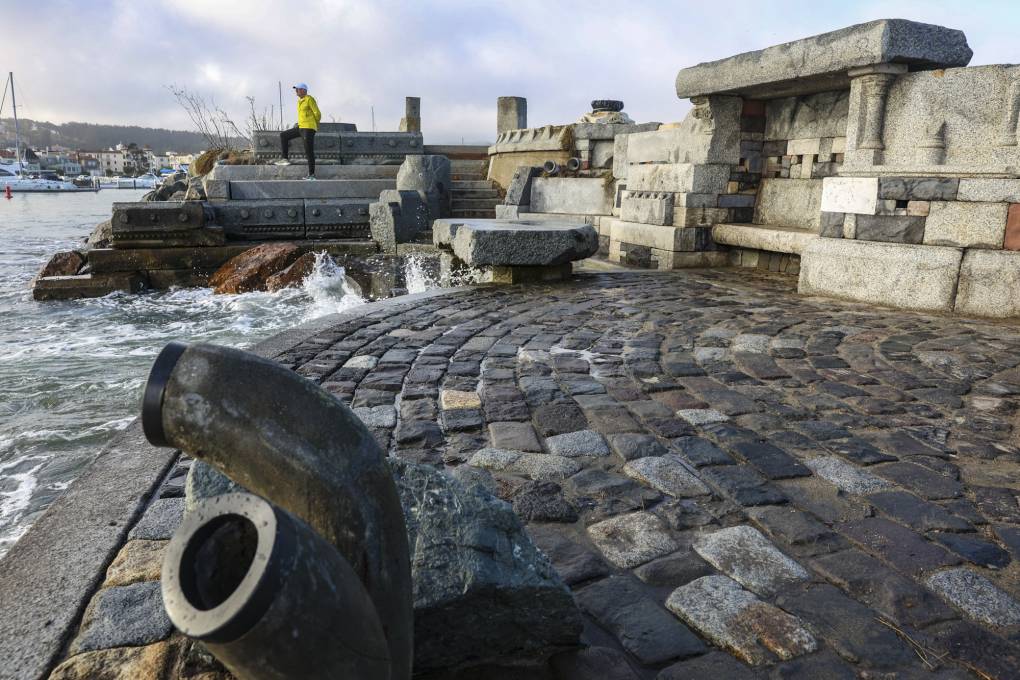
"caption": "The Wave Organ jetty, made of recycled materials including from a demolished cemetery and old street curbs, in San Francisco on Nov. 12, 2024.",
"credit": "Gina Castro/KQED",
"altTag": null,
"description": null,
"imgSizes": {
"medium": {
"file": "https://cdn.kqed.org/wp-content/uploads/sites/10/2024/11/20241112_WAVEORGAN_GC-3-KQED-800x533.jpg",
"width": 800,
"height": 533,
"mimeType": "image/jpeg"
},
"large": {
"file": "https://cdn.kqed.org/wp-content/uploads/sites/10/2024/11/20241112_WAVEORGAN_GC-3-KQED-1020x680.jpg",
"width": 1020,
"height": 680,
"mimeType": "image/jpeg"
},
"thumbnail": {
"file": "https://cdn.kqed.org/wp-content/uploads/sites/10/2024/11/20241112_WAVEORGAN_GC-3-KQED-160x107.jpg",
"width": 160,
"height": 107,
"mimeType": "image/jpeg"
},
"1536x1536": {
"file": "https://cdn.kqed.org/wp-content/uploads/sites/10/2024/11/20241112_WAVEORGAN_GC-3-KQED-1536x1024.jpg",
"width": 1536,
"height": 1024,
"mimeType": "image/jpeg"
},
"post-thumbnail": {
"file": "https://cdn.kqed.org/wp-content/uploads/sites/10/2024/11/20241112_WAVEORGAN_GC-3-KQED-672x372.jpg",
"width": 672,
"height": 372,
"mimeType": "image/jpeg"
},
"twentyfourteen-full-width": {
"file": "https://cdn.kqed.org/wp-content/uploads/sites/10/2024/11/20241112_WAVEORGAN_GC-3-KQED-1038x576.jpg",
"width": 1038,
"height": 576,
"mimeType": "image/jpeg"
},
"full-width": {
"file": "https://cdn.kqed.org/wp-content/uploads/sites/10/2024/11/20241112_WAVEORGAN_GC-3-KQED-1920x1280.jpg",
"width": 1920,
"height": 1280,
"mimeType": "image/jpeg"
},
"kqedFullSize": {
"file": "https://cdn.kqed.org/wp-content/uploads/sites/10/2024/11/20241112_WAVEORGAN_GC-3-KQED.jpg",
"width": 2000,
"height": 1333
}
},
"isLoading": false,
"fetchFailed": false
},
"news_12014768": {
"type": "attachments",
"id": "news_12014768",
"meta": {
"index": "attachments_1716263798",
"site": "news",
"id": "12014768",
"found": true
},
"title": "230922-ValenciaBikeway-003-BL_qed",
"publishDate": 1731717499,
"status": "inherit",
"parent": 12014765,
"modified": 1731717511,
"caption": "A bicyclist rides on the Valencia Street bike lane in San Francisco's Mission District on Sept. 22, 2023.",
"credit": "Beth LaBerge/KQED",
"altTag": null,
"description": null,
"imgSizes": {
"medium": {
"file": "https://cdn.kqed.org/wp-content/uploads/sites/10/2024/11/230922-ValenciaBikeway-003-BL_qed-800x533.jpg",
"width": 800,
"height": 533,
"mimeType": "image/jpeg"
},
"large": {
"file": "https://cdn.kqed.org/wp-content/uploads/sites/10/2024/11/230922-ValenciaBikeway-003-BL_qed-1020x680.jpg",
"width": 1020,
"height": 680,
"mimeType": "image/jpeg"
},
"thumbnail": {
"file": "https://cdn.kqed.org/wp-content/uploads/sites/10/2024/11/230922-ValenciaBikeway-003-BL_qed-160x107.jpg",
"width": 160,
"height": 107,
"mimeType": "image/jpeg"
},
"1536x1536": {
"file": "https://cdn.kqed.org/wp-content/uploads/sites/10/2024/11/230922-ValenciaBikeway-003-BL_qed-1536x1024.jpg",
"width": 1536,
"height": 1024,
"mimeType": "image/jpeg"
},
"post-thumbnail": {
"file": "https://cdn.kqed.org/wp-content/uploads/sites/10/2024/11/230922-ValenciaBikeway-003-BL_qed-672x372.jpg",
"width": 672,
"height": 372,
"mimeType": "image/jpeg"
},
"twentyfourteen-full-width": {
"file": "https://cdn.kqed.org/wp-content/uploads/sites/10/2024/11/230922-ValenciaBikeway-003-BL_qed-1038x576.jpg",
"width": 1038,
"height": 576,
"mimeType": "image/jpeg"
},
"full-width": {
"file": "https://cdn.kqed.org/wp-content/uploads/sites/10/2024/11/230922-ValenciaBikeway-003-BL_qed-1920x1280.jpg",
"width": 1920,
"height": 1280,
"mimeType": "image/jpeg"
},
"kqedFullSize": {
"file": "https://cdn.kqed.org/wp-content/uploads/sites/10/2024/11/230922-ValenciaBikeway-003-BL_qed.jpg",
"width": 2000,
"height": 1333
}
},
"isLoading": false,
"fetchFailed": false
},
"news_12014999": {
"type": "attachments",
"id": "news_12014999",
"meta": {
"index": "attachments_1716263798",
"site": "news",
"id": "12014999",
"found": true
},
"title": "03292023_kqed_marchrain 058_qed",
"publishDate": 1732046360,
"status": "inherit",
"parent": 0,
"modified": 1732046417,
"caption": "A pedestrian walks through a pillar of steam as they cross the street in downtown San Francisco on March 29, 2023. ",
"credit": "Kori Suzuki/KQED News",
"altTag": null,
"description": null,
"imgSizes": {
"medium": {
"file": "https://cdn.kqed.org/wp-content/uploads/sites/10/2024/11/03292023_kqed_marchrain-058_qed-800x532.jpg",
"width": 800,
"height": 532,
"mimeType": "image/jpeg"
},
"large": {
"file": "https://cdn.kqed.org/wp-content/uploads/sites/10/2024/11/03292023_kqed_marchrain-058_qed-1020x679.jpg",
"width": 1020,
"height": 679,
"mimeType": "image/jpeg"
},
"thumbnail": {
"file": "https://cdn.kqed.org/wp-content/uploads/sites/10/2024/11/03292023_kqed_marchrain-058_qed-160x106.jpg",
"width": 160,
"height": 106,
"mimeType": "image/jpeg"
},
"1536x1536": {
"file": "https://cdn.kqed.org/wp-content/uploads/sites/10/2024/11/03292023_kqed_marchrain-058_qed-1536x1022.jpg",
"width": 1536,
"height": 1022,
"mimeType": "image/jpeg"
},
"post-thumbnail": {
"file": "https://cdn.kqed.org/wp-content/uploads/sites/10/2024/11/03292023_kqed_marchrain-058_qed-672x372.jpg",
"width": 672,
"height": 372,
"mimeType": "image/jpeg"
},
"twentyfourteen-full-width": {
"file": "https://cdn.kqed.org/wp-content/uploads/sites/10/2024/11/03292023_kqed_marchrain-058_qed-1038x576.jpg",
"width": 1038,
"height": 576,
"mimeType": "image/jpeg"
},
"full-width": {
"file": "https://cdn.kqed.org/wp-content/uploads/sites/10/2024/11/03292023_kqed_marchrain-058_qed-1920x1278.jpg",
"width": 1920,
"height": 1278,
"mimeType": "image/jpeg"
},
"kqedFullSize": {
"file": "https://cdn.kqed.org/wp-content/uploads/sites/10/2024/11/03292023_kqed_marchrain-058_qed.jpg",
"width": 2000,
"height": 1331
}
},
"isLoading": false,
"fetchFailed": false
},
"news_11923342": {
"type": "attachments",
"id": "news_11923342",
"meta": {
"index": "attachments_1716263798",
"site": "news",
"id": "11923342",
"found": true
},
"title": "Drug related deaths are up on the West Coast",
"publishDate": 1661312825,
"status": "inherit",
"parent": 11923303,
"modified": 1731978560,
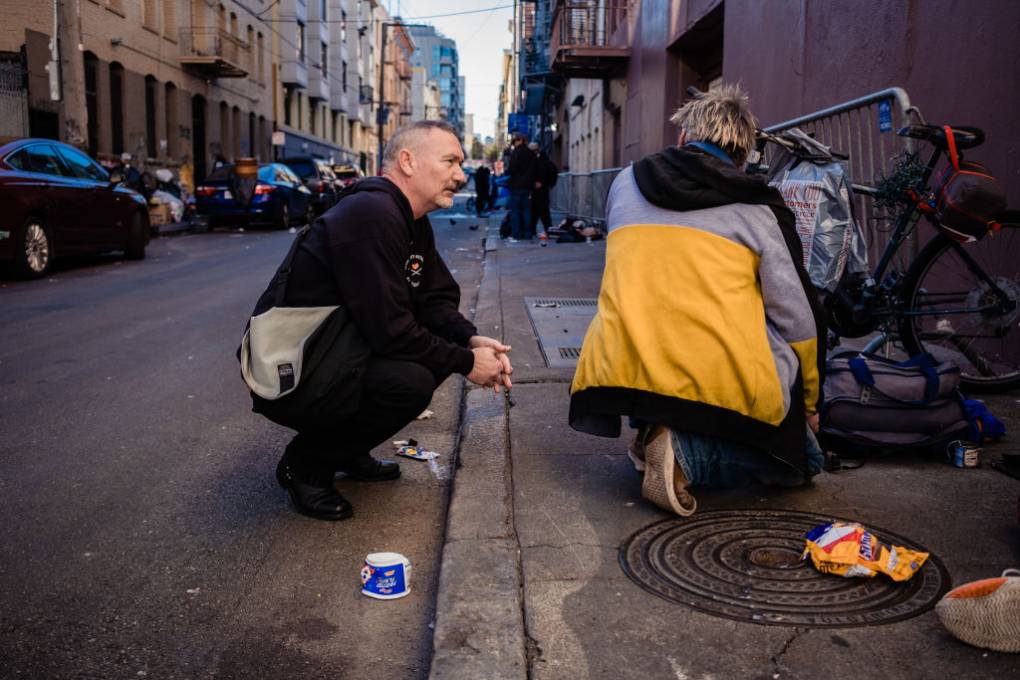
"caption": "Paul Harkin, director of harm reduction at GLIDE, hands out Narcan, fentanyl detection packets and tinfoil to drug users in an alley in San Francisco's Tenderloin neighborhood on Feb. 3, 2020.",
"credit": "Nick Otto for the Washington Post via Getty Images",
"altTag": "A man crouches down to speak to another person kneeling on the sidewalk in an alley.",
"description": null,
"imgSizes": {
"medium": {
"file": "https://cdn.kqed.org/wp-content/uploads/sites/10/2022/08/GettyImages-1201746556-800x534.jpg",
"width": 800,
"height": 534,
"mimeType": "image/jpeg"
},
"large": {
"file": "https://cdn.kqed.org/wp-content/uploads/sites/10/2022/08/GettyImages-1201746556-1020x680.jpg",
"width": 1020,
"height": 680,
"mimeType": "image/jpeg"
},
"thumbnail": {
"file": "https://cdn.kqed.org/wp-content/uploads/sites/10/2022/08/GettyImages-1201746556-160x107.jpg",
"width": 160,
"height": 107,
"mimeType": "image/jpeg"
},
"post-thumbnail": {
"file": "https://cdn.kqed.org/wp-content/uploads/sites/10/2022/08/GettyImages-1201746556-672x372.jpg",
"width": 672,
"height": 372,
"mimeType": "image/jpeg"
},
"twentyfourteen-full-width": {
"file": "https://cdn.kqed.org/wp-content/uploads/sites/10/2022/08/GettyImages-1201746556-1024x576.jpg",
"width": 1024,
"height": 576,
"mimeType": "image/jpeg"
},
"kqedFullSize": {
"file": "https://cdn.kqed.org/wp-content/uploads/sites/10/2022/08/GettyImages-1201746556.jpg",
"width": 1024,
"height": 683
}
},
"isLoading": false,
"fetchFailed": false
},
"news_12014759": {
"type": "attachments",
"id": "news_12014759",
"meta": {
"index": "attachments_1716263798",
"site": "news",
"id": "12014759",
"found": true
},
"title": "241108-LurieVictoryPresser-29-BL_qed",
"publishDate": 1731717025,
"status": "inherit",
"parent": 12014714,
"modified": 1731717058,
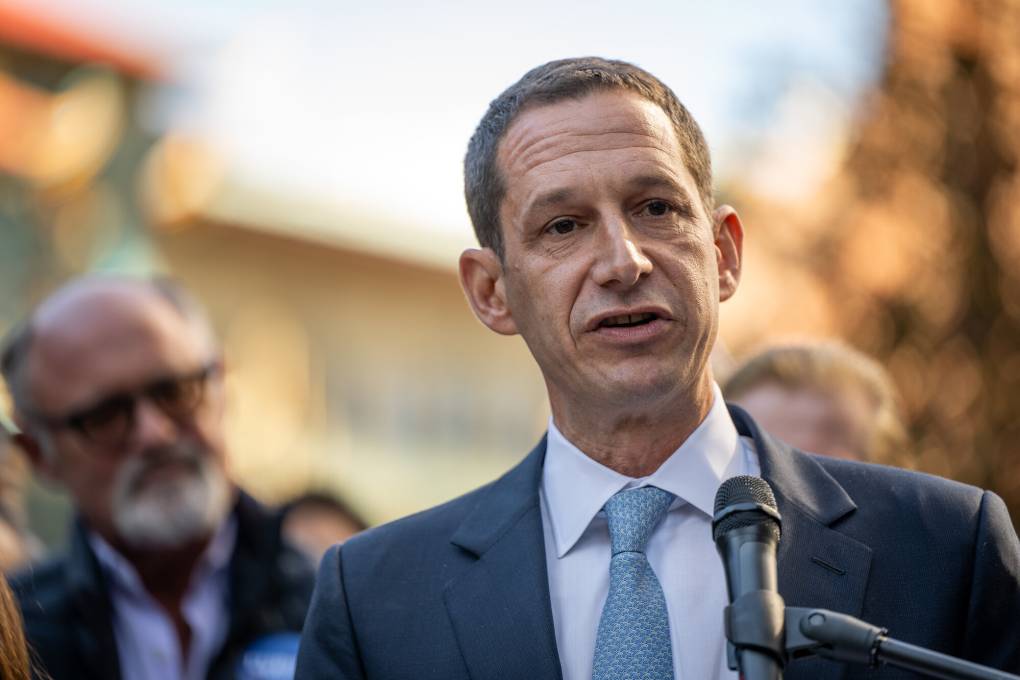
"caption": "San Francisco Mayor-elect Daniel Lurie gives an acceptance speech at St. Mary’s Square in San Francisco on Nov. 8, 2024.",
"credit": "Beth LaBerge/KQED",
"altTag": null,
"description": null,
"imgSizes": {
"medium": {
"file": "https://cdn.kqed.org/wp-content/uploads/sites/10/2024/11/241108-LurieVictoryPresser-29-BL_qed-800x533.jpg",
"width": 800,
"height": 533,
"mimeType": "image/jpeg"
},
"large": {
"file": "https://cdn.kqed.org/wp-content/uploads/sites/10/2024/11/241108-LurieVictoryPresser-29-BL_qed-1020x680.jpg",
"width": 1020,
"height": 680,
"mimeType": "image/jpeg"
},
"thumbnail": {
"file": "https://cdn.kqed.org/wp-content/uploads/sites/10/2024/11/241108-LurieVictoryPresser-29-BL_qed-160x107.jpg",
"width": 160,
"height": 107,
"mimeType": "image/jpeg"
},
"1536x1536": {
"file": "https://cdn.kqed.org/wp-content/uploads/sites/10/2024/11/241108-LurieVictoryPresser-29-BL_qed-1536x1024.jpg",
"width": 1536,
"height": 1024,
"mimeType": "image/jpeg"
},
"post-thumbnail": {
"file": "https://cdn.kqed.org/wp-content/uploads/sites/10/2024/11/241108-LurieVictoryPresser-29-BL_qed-672x372.jpg",
"width": 672,
"height": 372,
"mimeType": "image/jpeg"
},
"twentyfourteen-full-width": {
"file": "https://cdn.kqed.org/wp-content/uploads/sites/10/2024/11/241108-LurieVictoryPresser-29-BL_qed-1038x576.jpg",
"width": 1038,
"height": 576,
"mimeType": "image/jpeg"
},
"full-width": {
"file": "https://cdn.kqed.org/wp-content/uploads/sites/10/2024/11/241108-LurieVictoryPresser-29-BL_qed-1920x1280.jpg",
"width": 1920,
"height": 1280,
"mimeType": "image/jpeg"
},
"kqedFullSize": {
"file": "https://cdn.kqed.org/wp-content/uploads/sites/10/2024/11/241108-LurieVictoryPresser-29-BL_qed.jpg",
"width": 1999,
"height": 1333
}
},
"isLoading": false,
"fetchFailed": false
},
"news_12014347": {
"type": "attachments",
"id": "news_12014347",
"meta": {
"index": "attachments_1716263798",
"site": "news",
"id": "12014347",
"found": true
},
"title": "231017-LakeMercedRVs-020-BL_qed (1)",
"publishDate": 1731545882,
"status": "inherit",
"parent": 12014339,
"modified": 1731615927,
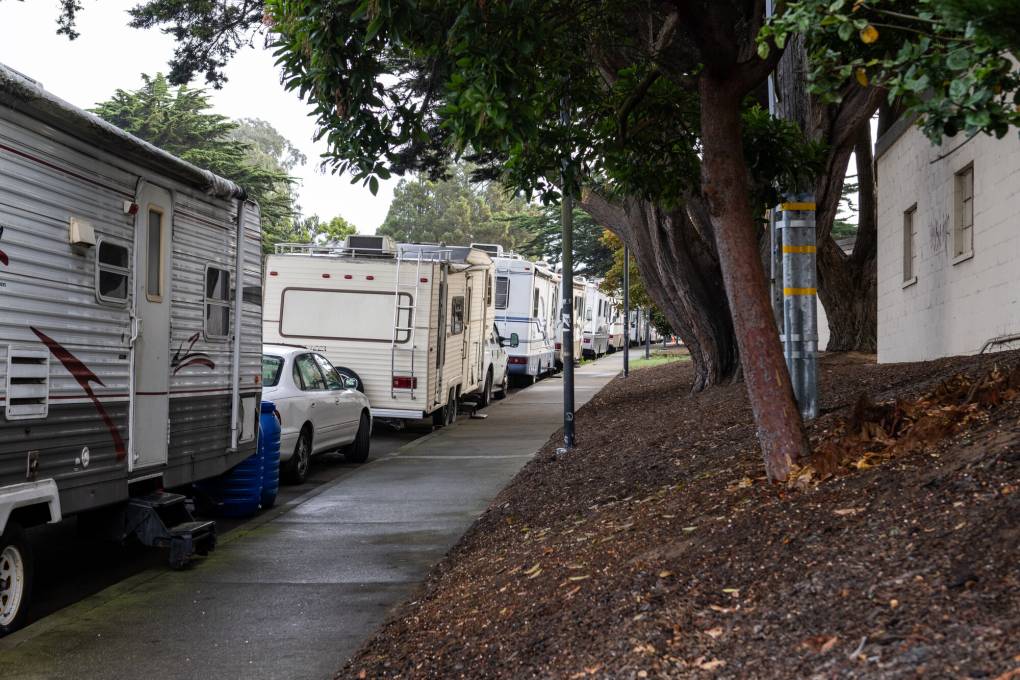
"caption": "RVs line Winston Drive in San Francisco on Oct. 17, 2023, near San Francisco State University.",
"credit": "Beth LaBerge/KQED",
"altTag": null,
"description": null,
"imgSizes": {
"medium": {
"file": "https://cdn.kqed.org/wp-content/uploads/sites/10/2024/11/231017-LakeMercedRVs-020-BL_qed-1-800x533.jpg",
"width": 800,
"height": 533,
"mimeType": "image/jpeg"
},
"large": {
"file": "https://cdn.kqed.org/wp-content/uploads/sites/10/2024/11/231017-LakeMercedRVs-020-BL_qed-1-1020x680.jpg",
"width": 1020,
"height": 680,
"mimeType": "image/jpeg"
},
"thumbnail": {
"file": "https://cdn.kqed.org/wp-content/uploads/sites/10/2024/11/231017-LakeMercedRVs-020-BL_qed-1-160x107.jpg",
"width": 160,
"height": 107,
"mimeType": "image/jpeg"
},
"1536x1536": {
"file": "https://cdn.kqed.org/wp-content/uploads/sites/10/2024/11/231017-LakeMercedRVs-020-BL_qed-1-1536x1024.jpg",
"width": 1536,
"height": 1024,
"mimeType": "image/jpeg"
},
"post-thumbnail": {
"file": "https://cdn.kqed.org/wp-content/uploads/sites/10/2024/11/231017-LakeMercedRVs-020-BL_qed-1-672x372.jpg",
"width": 672,
"height": 372,
"mimeType": "image/jpeg"
},
"twentyfourteen-full-width": {
"file": "https://cdn.kqed.org/wp-content/uploads/sites/10/2024/11/231017-LakeMercedRVs-020-BL_qed-1-1038x576.jpg",
"width": 1038,
"height": 576,
"mimeType": "image/jpeg"
},
"full-width": {
"file": "https://cdn.kqed.org/wp-content/uploads/sites/10/2024/11/231017-LakeMercedRVs-020-BL_qed-1-1920x1280.jpg",
"width": 1920,
"height": 1280,
"mimeType": "image/jpeg"
},
"kqedFullSize": {
"file": "https://cdn.kqed.org/wp-content/uploads/sites/10/2024/11/231017-LakeMercedRVs-020-BL_qed-1.jpg",
"width": 2000,
"height": 1333
}
},
"isLoading": false,
"fetchFailed": false
},
"news_12003092": {
"type": "attachments",
"id": "news_12003092",
"meta": {
"index": "attachments_1716263798",
"site": "news",
"id": "12003092",
"found": true
},
"title": "20240830-AAPIVOTERS-JY-004-KQED",
"publishDate": 1725483595,
"status": "inherit",
"parent": 12056059,
"modified": 1758136169,
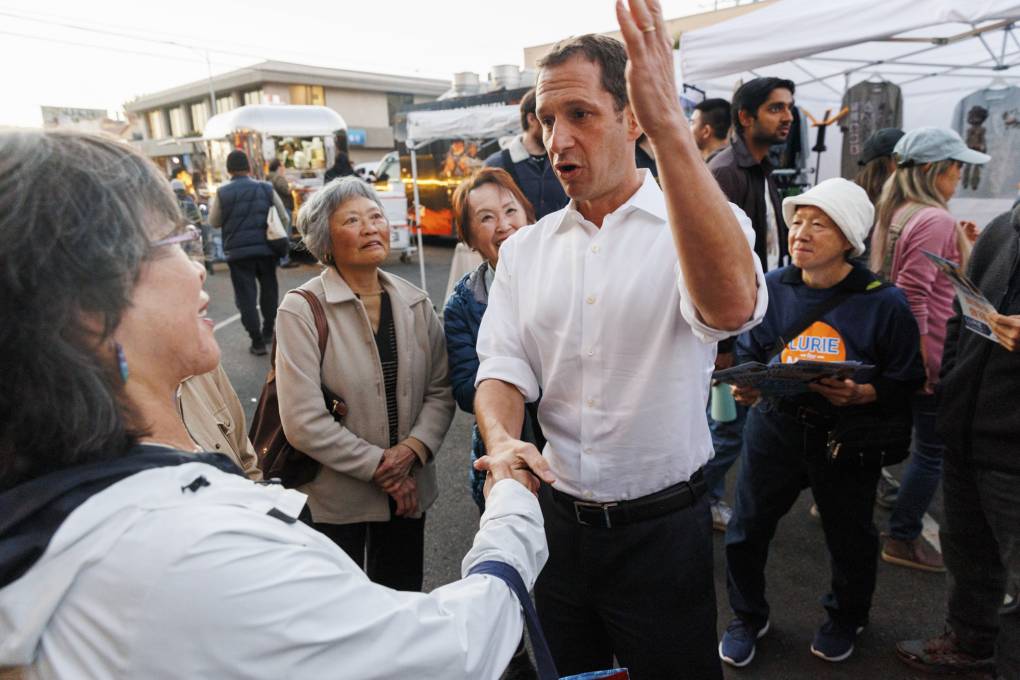
"caption": "Then-mayoral candidate Daniel Lurie shakes voter Diane Lee’s hand as he campaigns at the Sunset Night Market in San Francisco on Aug. 30, 2024.",
"credit": "Juliana Yamada for KQED",
"altTag": null,
"description": null,
"imgSizes": {
"medium": {
"file": "https://cdn.kqed.org/wp-content/uploads/sites/10/2024/09/20240830-AAPIVOTERS-JY-004-KQED-800x533.jpg",
"width": 800,
"height": 533,
"mimeType": "image/jpeg"
},
"large": {
"file": "https://cdn.kqed.org/wp-content/uploads/sites/10/2024/09/20240830-AAPIVOTERS-JY-004-KQED-1020x680.jpg",
"width": 1020,
"height": 680,
"mimeType": "image/jpeg"
},
"thumbnail": {
"file": "https://cdn.kqed.org/wp-content/uploads/sites/10/2024/09/20240830-AAPIVOTERS-JY-004-KQED-160x107.jpg",
"width": 160,
"height": 107,
"mimeType": "image/jpeg"
},
"1536x1536": {
"file": "https://cdn.kqed.org/wp-content/uploads/sites/10/2024/09/20240830-AAPIVOTERS-JY-004-KQED-1536x1024.jpg",
"width": 1536,
"height": 1024,
"mimeType": "image/jpeg"
},
"post-thumbnail": {
"file": "https://cdn.kqed.org/wp-content/uploads/sites/10/2024/09/20240830-AAPIVOTERS-JY-004-KQED-672x372.jpg",
"width": 672,
"height": 372,
"mimeType": "image/jpeg"
},
"twentyfourteen-full-width": {
"file": "https://cdn.kqed.org/wp-content/uploads/sites/10/2024/09/20240830-AAPIVOTERS-JY-004-KQED-1038x576.jpg",
"width": 1038,
"height": 576,
"mimeType": "image/jpeg"
},
"full-width": {
"file": "https://cdn.kqed.org/wp-content/uploads/sites/10/2024/09/20240830-AAPIVOTERS-JY-004-KQED-1920x1280.jpg",
"width": 1920,
"height": 1280,
"mimeType": "image/jpeg"
},
"kqedFullSize": {
"file": "https://cdn.kqed.org/wp-content/uploads/sites/10/2024/09/20240830-AAPIVOTERS-JY-004-KQED.jpg",
"width": 2000,
"height": 1333
}
},
"isLoading": false,
"fetchFailed": false
},
"news_12014173": {
"type": "attachments",
"id": "news_12014173",
"meta": {
"index": "attachments_1716263798",
"site": "news",
"id": "12014173",
"found": true
},
"title": "240903-OverdoseResponse-48-BL_qed (1)",
"publishDate": 1731461458,
"status": "inherit",
"parent": 12014134,
"modified": 1731461532,
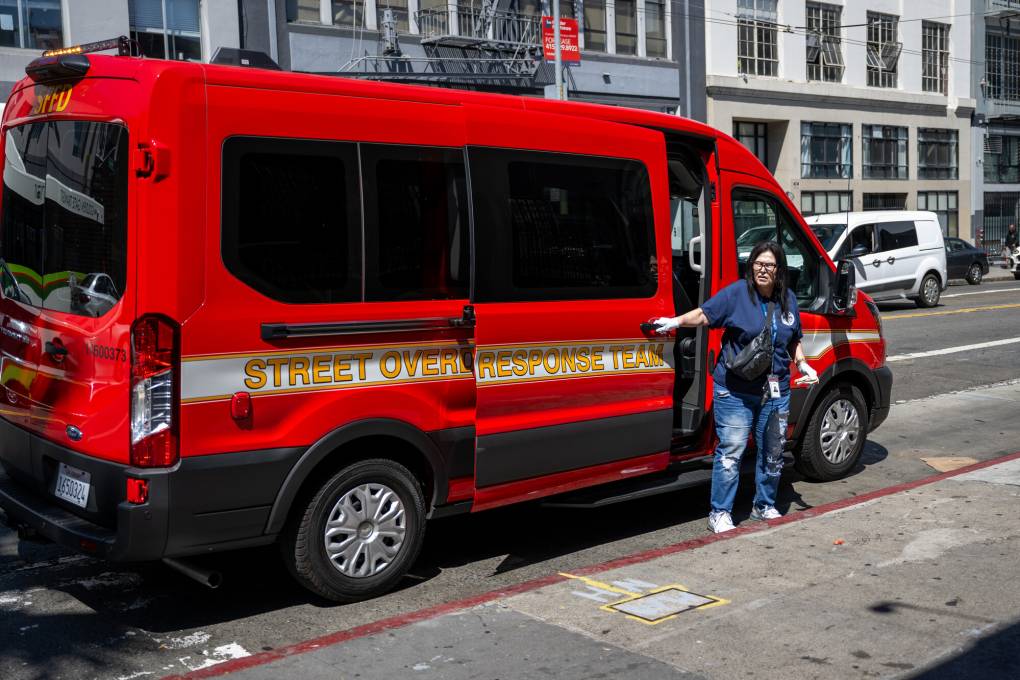
"caption": "Counselor Chantel Hernandez-Coleman, member of the Street Overdose Response Team, gets supplies from her van after speaking with two people sitting on the street in the South of Market neighborhood in San Francisco on Sept. 3, 2024.",
"credit": "Beth LaBerge/KQED",
"altTag": "A middle-aged woman stands in front of a red van labeled 'Street Overdose Response Team'",
"description": null,
"imgSizes": {
"medium": {
"file": "https://cdn.kqed.org/wp-content/uploads/sites/10/2024/11/240903-OverdoseResponse-48-BL_qed-1-800x533.jpg",
"width": 800,
"height": 533,
"mimeType": "image/jpeg"
},
"large": {
"file": "https://cdn.kqed.org/wp-content/uploads/sites/10/2024/11/240903-OverdoseResponse-48-BL_qed-1-1020x680.jpg",
"width": 1020,
"height": 680,
"mimeType": "image/jpeg"
},
"thumbnail": {
"file": "https://cdn.kqed.org/wp-content/uploads/sites/10/2024/11/240903-OverdoseResponse-48-BL_qed-1-160x107.jpg",
"width": 160,
"height": 107,
"mimeType": "image/jpeg"
},
"1536x1536": {
"file": "https://cdn.kqed.org/wp-content/uploads/sites/10/2024/11/240903-OverdoseResponse-48-BL_qed-1-1536x1024.jpg",
"width": 1536,
"height": 1024,
"mimeType": "image/jpeg"
},
"post-thumbnail": {
"file": "https://cdn.kqed.org/wp-content/uploads/sites/10/2024/11/240903-OverdoseResponse-48-BL_qed-1-672x372.jpg",
"width": 672,
"height": 372,
"mimeType": "image/jpeg"
},
"twentyfourteen-full-width": {
"file": "https://cdn.kqed.org/wp-content/uploads/sites/10/2024/11/240903-OverdoseResponse-48-BL_qed-1-1038x576.jpg",
"width": 1038,
"height": 576,
"mimeType": "image/jpeg"
},
"full-width": {
"file": "https://cdn.kqed.org/wp-content/uploads/sites/10/2024/11/240903-OverdoseResponse-48-BL_qed-1-1920x1280.jpg",
"width": 1920,
"height": 1280,
"mimeType": "image/jpeg"
},
"kqedFullSize": {
"file": "https://cdn.kqed.org/wp-content/uploads/sites/10/2024/11/240903-OverdoseResponse-48-BL_qed-1.jpg",
"width": 1999,
"height": 1333
}
},
"isLoading": false,
"fetchFailed": false
},
"news_11982792": {
"type": "attachments",
"id": "news_11982792",
"meta": {
"index": "attachments_1716263798",
"site": "news",
"id": "11982792",
"found": true
},
"title": "240412-OAKAIRPORT-027-BL-KQED",
"publishDate": 1712942276,
"status": "inherit",
"parent": 0,
"modified": 1731461196,
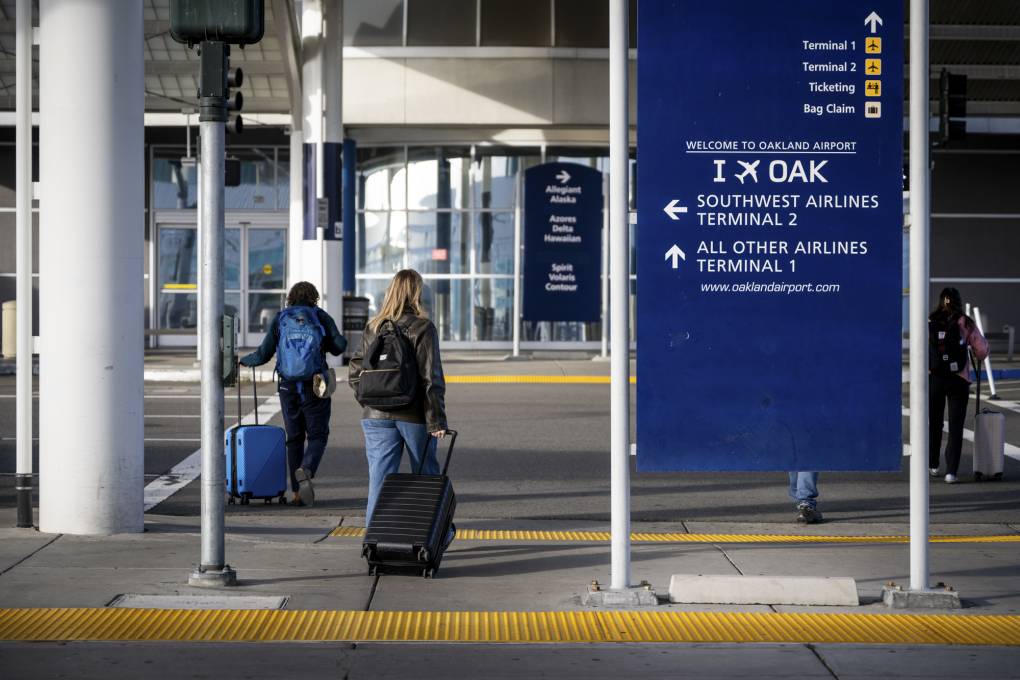
"caption": "Passengers enter the Oakland International Airport in Oakland on April 12, 2024.",
"credit": "Beth LaBerge/KQED",
"altTag": null,
"description": null,
"imgSizes": {
"medium": {
"file": "https://cdn.kqed.org/wp-content/uploads/sites/10/2024/04/240412-OAKAIRPORT-027-BL-KQED-800x533.jpg",
"width": 800,
"height": 533,
"mimeType": "image/jpeg"
},
"large": {
"file": "https://cdn.kqed.org/wp-content/uploads/sites/10/2024/04/240412-OAKAIRPORT-027-BL-KQED-1020x680.jpg",
"width": 1020,
"height": 680,
"mimeType": "image/jpeg"
},
"thumbnail": {
"file": "https://cdn.kqed.org/wp-content/uploads/sites/10/2024/04/240412-OAKAIRPORT-027-BL-KQED-160x107.jpg",
"width": 160,
"height": 107,
"mimeType": "image/jpeg"
},
"1536x1536": {
"file": "https://cdn.kqed.org/wp-content/uploads/sites/10/2024/04/240412-OAKAIRPORT-027-BL-KQED-1536x1024.jpg",
"width": 1536,
"height": 1024,
"mimeType": "image/jpeg"
},
"post-thumbnail": {
"file": "https://cdn.kqed.org/wp-content/uploads/sites/10/2024/04/240412-OAKAIRPORT-027-BL-KQED-672x372.jpg",
"width": 672,
"height": 372,
"mimeType": "image/jpeg"
},
"twentyfourteen-full-width": {
"file": "https://cdn.kqed.org/wp-content/uploads/sites/10/2024/04/240412-OAKAIRPORT-027-BL-KQED-1038x576.jpg",
"width": 1038,
"height": 576,
"mimeType": "image/jpeg"
},
"full-width": {
"file": "https://cdn.kqed.org/wp-content/uploads/sites/10/2024/04/240412-OAKAIRPORT-027-BL-KQED-1920x1280.jpg",
"width": 1920,
"height": 1280,
"mimeType": "image/jpeg"
},
"kqedFullSize": {
"file": "https://cdn.kqed.org/wp-content/uploads/sites/10/2024/04/240412-OAKAIRPORT-027-BL-KQED.jpg",
"width": 2000,
"height": 1333
}
},
"isLoading": false,
"fetchFailed": false
},
"news_11982523": {
"type": "attachments",
"id": "news_11982523",
"meta": {
"index": "attachments_1716263798",
"site": "news",
"id": "11982523",
"found": true
},
"title": "Connie Chan District 1 Supervisor",
"publishDate": 1712756324,
"status": "inherit",
"parent": 12059158,
"modified": 1759968397,
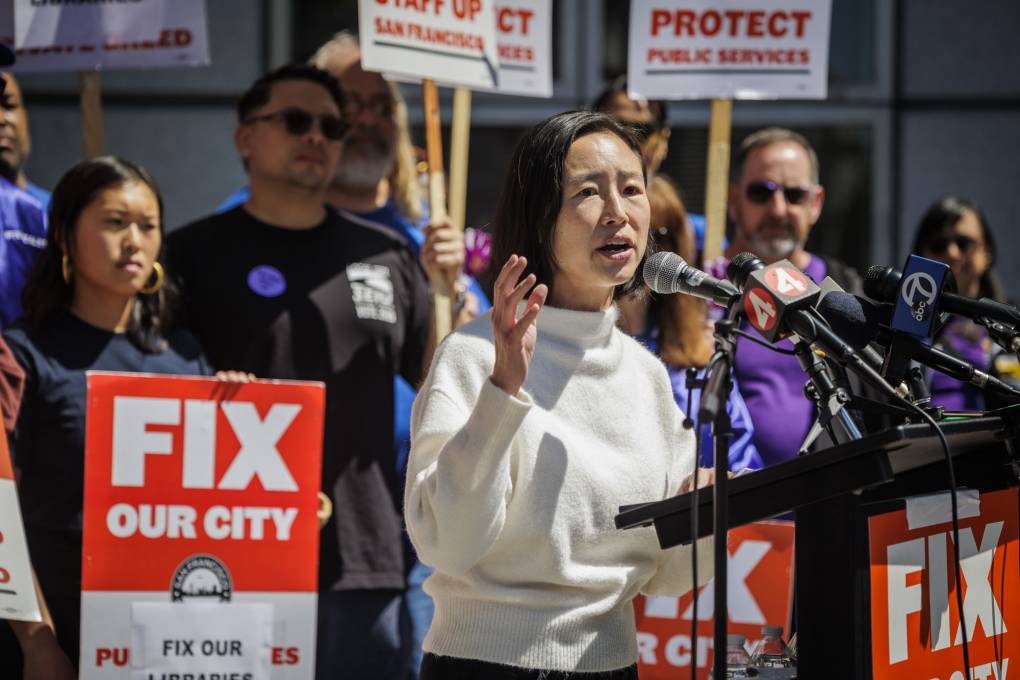
"caption": "District 1 Supervisor Connie Chan speaks at a rally in front of San Francisco's Main Library on Larkin Street on April 9, 2024.",
"credit": "Martin do Nascimento/KQED",
"altTag": null,
"description": null,
"imgSizes": {
"medium": {
"file": "https://cdn.kqed.org/wp-content/uploads/sites/10/2024/04/240409-SF-LIBRARY-RALLY-MD-19-KQED-4-800x533.jpg",
"width": 800,
"height": 533,
"mimeType": "image/jpeg"
},
"large": {
"file": "https://cdn.kqed.org/wp-content/uploads/sites/10/2024/04/240409-SF-LIBRARY-RALLY-MD-19-KQED-4-1020x680.jpg",
"width": 1020,
"height": 680,
"mimeType": "image/jpeg"
},
"thumbnail": {
"file": "https://cdn.kqed.org/wp-content/uploads/sites/10/2024/04/240409-SF-LIBRARY-RALLY-MD-19-KQED-4-160x107.jpg",
"width": 160,
"height": 107,
"mimeType": "image/jpeg"
},
"1536x1536": {
"file": "https://cdn.kqed.org/wp-content/uploads/sites/10/2024/04/240409-SF-LIBRARY-RALLY-MD-19-KQED-4-1536x1024.jpg",
"width": 1536,
"height": 1024,
"mimeType": "image/jpeg"
},
"post-thumbnail": {
"file": "https://cdn.kqed.org/wp-content/uploads/sites/10/2024/04/240409-SF-LIBRARY-RALLY-MD-19-KQED-4-672x372.jpg",
"width": 672,
"height": 372,
"mimeType": "image/jpeg"
},
"twentyfourteen-full-width": {
"file": "https://cdn.kqed.org/wp-content/uploads/sites/10/2024/04/240409-SF-LIBRARY-RALLY-MD-19-KQED-4-1038x576.jpg",
"width": 1038,
"height": 576,
"mimeType": "image/jpeg"
},
"full-width": {
"file": "https://cdn.kqed.org/wp-content/uploads/sites/10/2024/04/240409-SF-LIBRARY-RALLY-MD-19-KQED-4-1920x1280.jpg",
"width": 1920,
"height": 1280,
"mimeType": "image/jpeg"
},
"kqedFullSize": {
"file": "https://cdn.kqed.org/wp-content/uploads/sites/10/2024/04/240409-SF-LIBRARY-RALLY-MD-19-KQED-4.jpg",
"width": 2000,
"height": 1333
}
},
"isLoading": false,
"fetchFailed": false
},
"news_12013963": {
"type": "attachments",
"id": "news_12013963",
"meta": {
"index": "attachments_1716263798",
"site": "news",
"id": "12013963",
"found": true
},
"title": "240613-DeanPreston-40-BL_qed",
"publishDate": 1731348481,
"status": "inherit",
"parent": 12013950,
"modified": 1731348509,
"caption": "Supervisor Dean Preston poses for a portrait at a bus stop at McAllister and Divisadero in San Francisco on June 13, 2024.",
"credit": "Beth LaBerge/KQED",
"altTag": null,
"description": null,
"imgSizes": {
"medium": {
"file": "https://cdn.kqed.org/wp-content/uploads/sites/10/2024/11/240613-DeanPreston-40-BL_qed-800x533.jpg",
"width": 800,
"height": 533,
"mimeType": "image/jpeg"
},
"large": {
"file": "https://cdn.kqed.org/wp-content/uploads/sites/10/2024/11/240613-DeanPreston-40-BL_qed-1020x680.jpg",
"width": 1020,
"height": 680,
"mimeType": "image/jpeg"
},
"thumbnail": {
"file": "https://cdn.kqed.org/wp-content/uploads/sites/10/2024/11/240613-DeanPreston-40-BL_qed-160x107.jpg",
"width": 160,
"height": 107,
"mimeType": "image/jpeg"
},
"1536x1536": {
"file": "https://cdn.kqed.org/wp-content/uploads/sites/10/2024/11/240613-DeanPreston-40-BL_qed-1536x1024.jpg",
"width": 1536,
"height": 1024,
"mimeType": "image/jpeg"
},
"post-thumbnail": {
"file": "https://cdn.kqed.org/wp-content/uploads/sites/10/2024/11/240613-DeanPreston-40-BL_qed-672x372.jpg",
"width": 672,
"height": 372,
"mimeType": "image/jpeg"
},
"twentyfourteen-full-width": {
"file": "https://cdn.kqed.org/wp-content/uploads/sites/10/2024/11/240613-DeanPreston-40-BL_qed-1038x576.jpg",
"width": 1038,
"height": 576,
"mimeType": "image/jpeg"
},
"full-width": {
"file": "https://cdn.kqed.org/wp-content/uploads/sites/10/2024/11/240613-DeanPreston-40-BL_qed-1920x1280.jpg",
"width": 1920,
"height": 1280,
"mimeType": "image/jpeg"
},
"kqedFullSize": {
"file": "https://cdn.kqed.org/wp-content/uploads/sites/10/2024/11/240613-DeanPreston-40-BL_qed.jpg",
"width": 2000,
"height": 1333
}
},
"isLoading": false,
"fetchFailed": false
},
"news_12010448": {
"type": "attachments",
"id": "news_12010448",
"meta": {
"index": "attachments_1716263798",
"site": "news",
"id": "12010448",
"found": true
},
"title": "241021-SFUSD BREED STATE PRESSER-MD-05-KQED",
"publishDate": 1729540472,
"status": "inherit",
"parent": 0,
"modified": 1729551090,
"caption": "State Superintendent Tony Thurmond speaks at a press event in front of the SFUSD offices in San Francisco on Oct. 21, 2024.",
"credit": "Martin do Nascimento/KQED",
"altTag": null,
"description": null,
"imgSizes": {
"medium": {
"file": "https://cdn.kqed.org/wp-content/uploads/sites/10/2024/10/241021-SFUSD-BREED-STATE-PRESSER-MD-05-KQED-800x533.jpg",
"width": 800,
"height": 533,
"mimeType": "image/jpeg"
},
"large": {
"file": "https://cdn.kqed.org/wp-content/uploads/sites/10/2024/10/241021-SFUSD-BREED-STATE-PRESSER-MD-05-KQED-1020x680.jpg",
"width": 1020,
"height": 680,
"mimeType": "image/jpeg"
},
"thumbnail": {
"file": "https://cdn.kqed.org/wp-content/uploads/sites/10/2024/10/241021-SFUSD-BREED-STATE-PRESSER-MD-05-KQED-160x107.jpg",
"width": 160,
"height": 107,
"mimeType": "image/jpeg"
},
"1536x1536": {
"file": "https://cdn.kqed.org/wp-content/uploads/sites/10/2024/10/241021-SFUSD-BREED-STATE-PRESSER-MD-05-KQED-1536x1024.jpg",
"width": 1536,
"height": 1024,
"mimeType": "image/jpeg"
},
"post-thumbnail": {
"file": "https://cdn.kqed.org/wp-content/uploads/sites/10/2024/10/241021-SFUSD-BREED-STATE-PRESSER-MD-05-KQED-672x372.jpg",
"width": 672,
"height": 372,
"mimeType": "image/jpeg"
},
"twentyfourteen-full-width": {
"file": "https://cdn.kqed.org/wp-content/uploads/sites/10/2024/10/241021-SFUSD-BREED-STATE-PRESSER-MD-05-KQED-1038x576.jpg",
"width": 1038,
"height": 576,
"mimeType": "image/jpeg"
},
"full-width": {
"file": "https://cdn.kqed.org/wp-content/uploads/sites/10/2024/10/241021-SFUSD-BREED-STATE-PRESSER-MD-05-KQED-1920x1280.jpg",
"width": 1920,
"height": 1280,
"mimeType": "image/jpeg"
},
"kqedFullSize": {
"file": "https://cdn.kqed.org/wp-content/uploads/sites/10/2024/10/241021-SFUSD-BREED-STATE-PRESSER-MD-05-KQED.jpg",
"width": 2000,
"height": 1333
}
},
"isLoading": false,
"fetchFailed": false
}
},
"audioPlayerReducer": {
"postId": "stream_live",
"isPaused": true,
"isPlaying": false,
"pfsActive": false,
"pledgeModalIsOpen": true,
"playerDrawerIsOpen": false,
"liveAudioPlayStartedAt": 0,
"liveAudioPlayContext": ""
},
"authorsReducer": {
"byline_news_12015182": {
"type": "authors",
"id": "byline_news_12015182",
"meta": {
"override": true
},
"slug": "byline_news_12015182",
"name": "Ana De Almeida Amaral",
"isLoading": false
},
"danbrekke": {
"type": "authors",
"id": "222",
"meta": {
"index": "authors_1716337520",
"id": "222",
"found": true
},
"name": "Dan Brekke",
"firstName": "Dan",
"lastName": "Brekke",
"slug": "danbrekke",
"email": "dbrekke@kqed.org",
"display_author_email": true,
"staff_mastheads": [
"news",
"science"
],
"title": "KQED Editor and Reporter",
"bio": "Dan Brekke is a reporter and editor for KQED News, responsible for coverage of topics ranging from California water issues to the Bay Area's transportation challenges. In a newsroom career that began in Chicago in 1972, Dan has worked for \u003cem>The San Francisco Examiner,\u003c/em> Wired and TechTV and has been published in The New York Times, The New York Times Magazine, Business 2.0, Salon and elsewhere.\r\n\r\nSince joining KQED in 2007, Dan has reported, edited and produced both radio and online features and breaking news pieces. He has shared as both editor and reporter in four Society of Professional Journalists Norcal Excellence in Journalism awards and one Edward R. Murrow regional award. He was chosen for a spring 2017 residency at the Mesa Refuge to advance his research on California salmon.\r\n\r\nEmail Dan at: \u003ca href=\"mailto:dbrekke@kqed.org\">dbrekke@kqed.org\u003c/a>\r\n\r\n\u003cstrong>Twitter:\u003c/strong> \u003ca href=\"https://twitter.com/danbrekke\" rel=\"noopener noreferrer\">twitter.com/danbrekke\u003c/a>\r\n\u003cstrong>Facebook:\u003c/strong> \u003ca href=\"https://www.facebook.com/danbrekke\" rel=\"noopener noreferrer\">www.facebook.com/danbrekke\u003c/a>\r\n\u003cstrong>LinkedIn:\u003c/strong> \u003ca href=\"https://www.linkedin.com/in/danbrekke\" rel=\"noopener noreferrer\">www.linkedin.com/in/danbrekke\u003c/a>",
"avatar": "https://secure.gravatar.com/avatar/c8126230345efca3f7aa89b1a402be45?s=600&d=mm&r=g",
"twitter": "danbrekke",
"facebook": null,
"instagram": "https://www.instagram.com/dan.brekke/",
"linkedin": "https://www.linkedin.com/in/danbrekke/",
"sites": [
{
"site": "news",
"roles": [
"administrator",
"create_posts"
]
},
{
"site": "stateofhealth",
"roles": [
"editor"
]
},
{
"site": "science",
"roles": [
"editor"
]
},
{
"site": "quest",
"roles": [
"contributor"
]
},
{
"site": "food",
"roles": [
"contributor"
]
},
{
"site": "forum",
"roles": [
"contributor"
]
},
{
"site": "liveblog",
"roles": [
"editor"
]
}
],
"headData": {
"title": "Dan Brekke | KQED",
"description": "KQED Editor and Reporter",
"ogImgSrc": "https://secure.gravatar.com/avatar/c8126230345efca3f7aa89b1a402be45?s=600&d=mm&r=g",
"twImgSrc": "https://secure.gravatar.com/avatar/c8126230345efca3f7aa89b1a402be45?s=600&d=mm&r=g"
},
"isLoading": false,
"link": "/author/danbrekke"
},
"gmarzorati": {
"type": "authors",
"id": "227",
"meta": {
"index": "authors_1716337520",
"id": "227",
"found": true
},
"name": "Guy Marzorati",
"firstName": "Guy",
"lastName": "Marzorati",
"slug": "gmarzorati",
"email": "gmarzorati@KQED.org",
"display_author_email": true,
"staff_mastheads": [
"news"
],
"title": "Correspondent",
"bio": "Guy Marzorati is a correspondent on KQED's California Politics and Government Desk, based in San Jose. A graduate of Santa Clara University, Guy joined KQED in 2013. He reports on state and local politics and produces KQED's digital voter guide.",
"avatar": "https://secure.gravatar.com/avatar/e7038b8dbfd55b104369b76b1cd0b9de?s=600&d=blank&r=g",
"twitter": "guymarzorati",
"facebook": null,
"instagram": null,
"linkedin": null,
"sites": [
{
"site": "",
"roles": [
"editor"
]
},
{
"site": "news",
"roles": [
"editor"
]
},
{
"site": "science",
"roles": [
"editor"
]
},
{
"site": "forum",
"roles": [
"editor"
]
},
{
"site": "elections",
"roles": [
"editor"
]
},
{
"site": "liveblog",
"roles": [
"editor"
]
}
],
"headData": {
"title": "Guy Marzorati | KQED",
"description": "Correspondent",
"ogImgSrc": "https://secure.gravatar.com/avatar/e7038b8dbfd55b104369b76b1cd0b9de?s=600&d=blank&r=g",
"twImgSrc": "https://secure.gravatar.com/avatar/e7038b8dbfd55b104369b76b1cd0b9de?s=600&d=blank&r=g"
},
"isLoading": false,
"link": "/author/gmarzorati"
},
"vrancano": {
"type": "authors",
"id": "11276",
"meta": {
"index": "authors_1716337520",
"id": "11276",
"found": true
},
"name": "Vanessa Rancaño",
"firstName": "Vanessa",
"lastName": "Rancaño",
"slug": "vrancano",
"email": "vrancano@kqed.org",
"display_author_email": false,
"staff_mastheads": [
"news"
],
"title": "Reporter",
"bio": "Vanessa Rancaño is a features reporter for KQED. She’s also covered homelessness and education for the station and reported from the Central Valley. Her work has aired across public radio, from flagship national news shows to longform narrative podcasts. Before taking up a mic, she worked as a freelance print journalist. She’s been recognized with a number of national and regional awards. Vanessa grew up in California's Central Valley. She's a former NPR Kroc Fellow, and a graduate of the UC Berkeley Graduate School of Journalism.",
"avatar": "https://secure.gravatar.com/avatar/b3a383dfb0e7ee1c17568f2cf067904ab654d6e3de9743fc661f3c788ade1bed?s=600&d=blank&r=g",
"twitter": "vanessarancano",
"bluesky": null,
"facebook": null,
"instagram": null,
"linkedin": null,
"sites": [
{
"site": "arts",
"roles": [
"editor"
]
},
{
"site": "news",
"roles": [
"editor"
]
},
{
"site": "liveblog",
"roles": [
"contributor"
]
}
],
"headData": {
"title": "Vanessa Rancaño | KQED",
"description": "Reporter",
"ogImgSrc": "https://secure.gravatar.com/avatar/b3a383dfb0e7ee1c17568f2cf067904ab654d6e3de9743fc661f3c788ade1bed?s=600&d=blank&r=g",
"twImgSrc": "https://secure.gravatar.com/avatar/b3a383dfb0e7ee1c17568f2cf067904ab654d6e3de9743fc661f3c788ade1bed?s=600&d=blank&r=g"
},
"isLoading": false,
"link": "/author/vrancano"
},
"dcronin": {
"type": "authors",
"id": "11362",
"meta": {
"index": "authors_1716337520",
"id": "11362",
"found": true
},
"name": "Dana Cronin",
"firstName": "Dana",
"lastName": "Cronin",
"slug": "dcronin",
"email": "dcronin@KQED.org",
"display_author_email": true,
"staff_mastheads": [],
"title": "KQED Contributor",
"bio": "Dana Cronin is a reporter for KQED News. She loves writing stories about climate change, environmental issues, food and agriculture. She's reported across the country, from Colorado to Washington D.C. to Illinois, and has won numerous awards for her coverage. Her work is regularly featured on national broadcasts, including NPR’s Morning Edition, All Things Considered, PBS Newshour and Science Friday. She lives in Oakland and has an avocado tree in her back yard.",
"avatar": "https://secure.gravatar.com/avatar/bcf89e3455ff7235f96ab6fa7258dd95?s=600&d=blank&r=g",
"twitter": "DanaHCronin",
"facebook": null,
"instagram": null,
"linkedin": null,
"sites": [
{
"site": "arts",
"roles": [
"author"
]
},
{
"site": "news",
"roles": [
"editor"
]
},
{
"site": "science",
"roles": [
"author"
]
},
{
"site": "liveblog",
"roles": [
"author"
]
}
],
"headData": {
"title": "Dana Cronin | KQED",
"description": "KQED Contributor",
"ogImgSrc": "https://secure.gravatar.com/avatar/bcf89e3455ff7235f96ab6fa7258dd95?s=600&d=blank&r=g",
"twImgSrc": "https://secure.gravatar.com/avatar/bcf89e3455ff7235f96ab6fa7258dd95?s=600&d=blank&r=g"
},
"isLoading": false,
"link": "/author/dcronin"
},
"adahlstromeckman": {
"type": "authors",
"id": "11785",
"meta": {
"index": "authors_1716337520",
"id": "11785",
"found": true
},
"name": "Azul Dahlstrom-Eckman",
"firstName": "Azul",
"lastName": "Dahlstrom-Eckman",
"slug": "adahlstromeckman",
"email": "adahlstrom-eckman@kqed.org",
"display_author_email": true,
"staff_mastheads": [],
"title": "Reporter",
"bio": "Azul is a reporter for KQED focusing on transportation and features. He joined KQED in 2021 as an alumna of KALW's Audio Academy radio journalism training program.",
"avatar": "https://secure.gravatar.com/avatar/9cb750298435add7815a777f55bf1f46845c1386bb8452555c60a7b820b5aba3?s=600&d=blank&r=g",
"twitter": "@zuliemann",
"bluesky": "@azul415.bsky.social",
"facebook": null,
"instagram": null,
"linkedin": null,
"sites": [
{
"site": "arts",
"roles": [
"editor"
]
},
{
"site": "news",
"roles": [
"editor"
]
},
{
"site": "science",
"roles": [
"editor"
]
},
{
"site": "liveblog",
"roles": [
"author"
]
}
],
"headData": {
"title": "Azul Dahlstrom-Eckman | KQED",
"description": "Reporter",
"ogImgSrc": "https://secure.gravatar.com/avatar/9cb750298435add7815a777f55bf1f46845c1386bb8452555c60a7b820b5aba3?s=600&d=blank&r=g",
"twImgSrc": "https://secure.gravatar.com/avatar/9cb750298435add7815a777f55bf1f46845c1386bb8452555c60a7b820b5aba3?s=600&d=blank&r=g"
},
"isLoading": false,
"link": "/author/adahlstromeckman"
},
"apelit": {
"type": "authors",
"id": "11812",
"meta": {
"index": "authors_1716337520",
"id": "11812",
"found": true
},
"name": "Attila Pelit",
"firstName": "Attila",
"lastName": "Pelit",
"slug": "apelit",
"email": "apelit@kqed.org",
"display_author_email": false,
"staff_mastheads": [],
"title": "KQED Contributor",
"bio": null,
"avatar": "https://secure.gravatar.com/avatar/9b7b8a9e595d58a1f4d853f8608ae584?s=600&d=mm&r=g",
"twitter": null,
"facebook": null,
"instagram": null,
"linkedin": null,
"sites": [
{
"site": "news",
"roles": [
"editor"
]
},
{
"site": "science",
"roles": [
"editor"
]
},
{
"site": "elections",
"roles": [
"editor"
]
},
{
"site": "liveblog",
"roles": [
"editor"
]
}
],
"headData": {
"title": "Attila Pelit | KQED",
"description": "KQED Contributor",
"ogImgSrc": "https://secure.gravatar.com/avatar/9b7b8a9e595d58a1f4d853f8608ae584?s=600&d=mm&r=g",
"twImgSrc": "https://secure.gravatar.com/avatar/9b7b8a9e595d58a1f4d853f8608ae584?s=600&d=mm&r=g"
},
"isLoading": false,
"link": "/author/apelit"
},
"sjohnson": {
"type": "authors",
"id": "11840",
"meta": {
"index": "authors_1716337520",
"id": "11840",
"found": true
},
"name": "Sydney Johnson",
"firstName": "Sydney",
"lastName": "Johnson",
"slug": "sjohnson",
"email": "sjohnson@kqed.org",
"display_author_email": false,
"staff_mastheads": [
"news"
],
"title": "KQED Reporter",
"bio": "Sydney Johnson is a general assignment reporter at KQED. She previously reported on public health and city government at the San Francisco Examiner, and before that, she covered statewide education policy for EdSource. Her reporting has won multiple local, state and national awards. Sydney is a graduate of the University of California, Berkeley and lives in San Francisco.",
"avatar": "https://secure.gravatar.com/avatar/97855f2719b72ad6190b7c535fe642c8?s=600&d=blank&r=g",
"twitter": "sydneyfjohnson",
"facebook": null,
"instagram": null,
"linkedin": null,
"sites": [
{
"site": "news",
"roles": [
"editor"
]
}
],
"headData": {
"title": "Sydney Johnson | KQED",
"description": "KQED Reporter",
"ogImgSrc": "https://secure.gravatar.com/avatar/97855f2719b72ad6190b7c535fe642c8?s=600&d=blank&r=g",
"twImgSrc": "https://secure.gravatar.com/avatar/97855f2719b72ad6190b7c535fe642c8?s=600&d=blank&r=g"
},
"isLoading": false,
"link": "/author/sjohnson"
},
"kdebenedetti": {
"type": "authors",
"id": "11913",
"meta": {
"index": "authors_1716337520",
"id": "11913",
"found": true
},
"name": "Katie DeBenedetti",
"firstName": "Katie",
"lastName": "DeBenedetti",
"slug": "kdebenedetti",
"email": "kdebenedetti@kqed.org",
"display_author_email": false,
"staff_mastheads": [
"news",
"science"
],
"title": "KQED Contributor",
"bio": "Katie DeBenedetti is a digital reporter covering daily news for the Express Desk. Prior to joining KQED as a culture reporting intern in January 2024, she covered education and city government for the Napa Valley Register.",
"avatar": "https://secure.gravatar.com/avatar/6e31073cb8f7e4214ab03f42771d0f45?s=600&d=blank&r=g",
"twitter": null,
"facebook": null,
"instagram": null,
"linkedin": null,
"sites": [
{
"site": "news",
"roles": [
"author"
]
},
{
"site": "science",
"roles": [
"author"
]
},
{
"site": "liveblog",
"roles": [
"author"
]
}
],
"headData": {
"title": "Katie DeBenedetti | KQED",
"description": "KQED Contributor",
"ogImgSrc": "https://secure.gravatar.com/avatar/6e31073cb8f7e4214ab03f42771d0f45?s=600&d=blank&r=g",
"twImgSrc": "https://secure.gravatar.com/avatar/6e31073cb8f7e4214ab03f42771d0f45?s=600&d=blank&r=g"
},
"isLoading": false,
"link": "/author/kdebenedetti"
},
"gzada": {
"type": "authors",
"id": "11929",
"meta": {
"index": "authors_1716337520",
"id": "11929",
"found": true
},
"name": "Gilare Zada",
"firstName": "Gilare",
"lastName": "Zada",
"slug": "gzada",
"email": "gzada@kqed.org",
"display_author_email": true,
"staff_mastheads": [
"news"
],
"title": null,
"bio": "Gilare Zada is a Kurdish-American from San Diego, CA. Storytelling, fitness, and binge reading are some of her passions outside of news reporting. Her work has appeared in Mission Local, the Peninsula Press, the San Francisco Press Club, and more. She also writes as a class correspondent for the Stanford Magazine - go Card!",
"avatar": "https://secure.gravatar.com/avatar/33a75f2b947669a488a805edec3fbf3838c1cedaedda710e983770633b4d6a75?s=600&d=blank&r=g",
"twitter": null,
"bluesky": null,
"facebook": null,
"instagram": null,
"linkedin": null,
"sites": [
{
"site": "arts",
"roles": [
"editor"
]
},
{
"site": "news",
"roles": [
"administrator"
]
},
{
"site": "science",
"roles": [
"editor"
]
}
],
"headData": {
"title": "Gilare Zada | KQED",
"description": null,
"ogImgSrc": "https://secure.gravatar.com/avatar/33a75f2b947669a488a805edec3fbf3838c1cedaedda710e983770633b4d6a75?s=600&d=blank&r=g",
"twImgSrc": "https://secure.gravatar.com/avatar/33a75f2b947669a488a805edec3fbf3838c1cedaedda710e983770633b4d6a75?s=600&d=blank&r=g"
},
"isLoading": false,
"link": "/author/gzada"
}
},
"pagesReducer": {
"news_tag_san-francisco": {
"type": "terms",
"id": "news_38",
"meta": {
"index": "terms_1716263798",
"site": "news",
"id": "38",
"score": 6.7228813
},
"featImg": null,
"name": "San Francisco",
"description": null,
"taxonomy": "tag",
"headData": {
"twImgId": null,
"twTitle": null,
"ogTitle": null,
"ogImgId": null,
"twDescription": null,
"description": null,
"title": "San Francisco Archives | KQED News",
"ogDescription": null
},
"ttid": 58,
"slug": "san-francisco",
"isLoading": false,
"title": "San Francisco",
"pageMeta": {
"site": "news",
"WpPageTemplate": "page-topic-editorial",
"currentPage": 85
},
"blocks": [
{
"blockName": "kqed/post-list",
"attrs": {
"layout": "cardArticle2",
"query": "posts/news?tag=san-francisco",
"seeMore": false,
"paginated": true,
"page": 85
}
},
{
"blockName": "kqed/ad"
}
]
}
},
"pfsSessionReducer": {},
"postsReducer": {
"stream_live": {
"type": "live",
"id": "stream_live",
"audioUrl": "https://streams.kqed.org/kqedradio",
"title": "Live Stream",
"excerpt": "Live Stream information currently unavailable.",
"link": "/radio",
"featImg": "",
"label": {
"name": "KQED Live",
"link": "/"
}
},
"stream_kqedNewscast": {
"type": "posts",
"id": "stream_kqedNewscast",
"audioUrl": "https://www.kqed.org/.stream/anon/radio/RDnews/newscast.mp3?_=1",
"title": "KQED Newscast",
"featImg": "",
"label": {
"name": "88.5 FM",
"link": "/"
}
},
"news_12015182": {
"type": "posts",
"id": "news_12015182",
"meta": {
"index": "posts_1716263798",
"site": "news",
"id": "12015182",
"score": null,
"sort": [
1732186813000
]
},
"guestAuthors": [],
"slug": "san-franciscos-wave-organ-brings-sounds-of-the-bay-to-life",
"title": "San Francisco’s Wave Organ Brings Sounds of the Bay to Life",
"publishDate": 1732186813,
"format": "standard",
"headTitle": "San Francisco’s Wave Organ Brings Sounds of the Bay to Life | KQED",
"labelTerm": {
"term": 33523,
"site": "news"
},
"content": "\u003cp>\u003ca href=\"#episode-transcript\">View the full episode transcript\u003c/a>\u003c/p>\n\u003cp>Ever wondered what the San Francisco Bay sounds like beneath the water’s surface? The Wave Organ, a sound sculpture maintained by San Francisco’s Exploratorium, has 25 pipes that shoot down into the bay, creating a unique sonic experience for visitors above. You can find the sculpture, made of recycled granite, at the end of the man-made jetty across the street from the Palace of Fine Arts. There, you can put your ear to a pipe made of PVC and concrete to hear the “music” of the bay.\u003c/p>\n\u003cp>[baycuriouspodcastinfo]\u003c/p>\n\u003cp>The Wave Organ is nothing like the trumpeting organs in a church. The art installation stretches about 60 feet across and is made of rock slabs with different seating levels that visitors can climb on. The artists behind the sculpture chose to use recycled debris from the 1906 earthquake, and remnants of headstones leftover from century-old cemetery relocations.\u003c/p>\n\u003cp>As far as the sound the organ makes — you probably wouldn’t call it musical. This art piece features an orchestra of gurgles, splashes, and booms.\u003c/p>\n\u003cfigure id=\"attachment_12014153\" class=\"wp-caption alignnone\" style=\"max-width: 800px\">\u003cimg loading=\"lazy\" decoding=\"async\" class=\"size-medium wp-image-12014153\" src=\"https://cdn.kqed.org/wp-content/uploads/sites/10/2024/11/20241112_WAVEORGAN_GC-9-KQED-800x533.jpg\" alt=\"\" width=\"800\" height=\"533\" srcset=\"https://cdn.kqed.org/wp-content/uploads/sites/10/2024/11/20241112_WAVEORGAN_GC-9-KQED-800x533.jpg 800w, https://cdn.kqed.org/wp-content/uploads/sites/10/2024/11/20241112_WAVEORGAN_GC-9-KQED-1020x680.jpg 1020w, https://cdn.kqed.org/wp-content/uploads/sites/10/2024/11/20241112_WAVEORGAN_GC-9-KQED-160x107.jpg 160w, https://cdn.kqed.org/wp-content/uploads/sites/10/2024/11/20241112_WAVEORGAN_GC-9-KQED-1536x1024.jpg 1536w, https://cdn.kqed.org/wp-content/uploads/sites/10/2024/11/20241112_WAVEORGAN_GC-9-KQED-1920x1280.jpg 1920w, https://cdn.kqed.org/wp-content/uploads/sites/10/2024/11/20241112_WAVEORGAN_GC-9-KQED.jpg 2000w\" sizes=\"auto, (max-width: 800px) 100vw, 800px\">\u003cfigcaption class=\"wp-caption-text\">A plaque for the Wave Organ in San Francisco on Nov. 12, 2024. \u003ccite>(Gina Castro/KQED)\u003c/cite>\u003c/figcaption>\u003c/figure>\n\u003ch3>The Wave Organ’s origins\u003c/h3>\n\u003cp>Understanding the Wave Organ’s origins requires a little lesson in San Francisco art history.\u003c/p>\n\u003cp>[ad fullwidth]\u003c/p>\n\u003cp>This environmental sculpture was created in 1986 by artist Peter Richards in collaboration with master stonemason George Gonzalez.\u003c/p>\n\u003cp>Richards was inspired to create the Wave Organ after moving to San Francisco in 1970. He was fascinated by how the tides in the bay showed an intimate connection between the sea and the moon.\u003c/p>\n\u003cfigure id=\"attachment_12014150\" class=\"wp-caption alignnone\" style=\"max-width: 800px\">\u003cimg loading=\"lazy\" decoding=\"async\" class=\"size-medium wp-image-12014150\" src=\"https://cdn.kqed.org/wp-content/uploads/sites/10/2024/11/20241112_WAVEORGAN_GC-2-KQED-800x522.jpg\" alt=\"\" width=\"800\" height=\"522\" srcset=\"https://cdn.kqed.org/wp-content/uploads/sites/10/2024/11/20241112_WAVEORGAN_GC-2-KQED-800x522.jpg 800w, https://cdn.kqed.org/wp-content/uploads/sites/10/2024/11/20241112_WAVEORGAN_GC-2-KQED-1020x666.jpg 1020w, https://cdn.kqed.org/wp-content/uploads/sites/10/2024/11/20241112_WAVEORGAN_GC-2-KQED-160x104.jpg 160w, https://cdn.kqed.org/wp-content/uploads/sites/10/2024/11/20241112_WAVEORGAN_GC-2-KQED-1536x1002.jpg 1536w, https://cdn.kqed.org/wp-content/uploads/sites/10/2024/11/20241112_WAVEORGAN_GC-2-KQED-1920x1253.jpg 1920w, https://cdn.kqed.org/wp-content/uploads/sites/10/2024/11/20241112_WAVEORGAN_GC-2-KQED.jpg 2000w\" sizes=\"auto, (max-width: 800px) 100vw, 800px\">\u003cfigcaption class=\"wp-caption-text\">Water flows out of a pipe at the Wave Organ in San Francisco on Nov. 12, 2024. \u003ccite>(Gina Castro/KQED)\u003c/cite>\u003c/figcaption>\u003c/figure>\n\u003cp>“It was the first time I was near a place that had tides,” said Richards, a senior artist emeritus at the Exploratorium in San Francisco, about moving to the West Coast. “I was inherently curious about [tides] and how they worked.”\u003c/p>\n\u003cp>Richards was also inspired by artist Bill Fontana, who had recorded the sounds of pipes in a concrete dock in Sydney, Australia, in 1976. Fontana’s sonic art piece amplified and distorted bubbling and splashing sounds from the water. Richards was intrigued by the connection between physics and art to create the acoustic rhythm.\u003c/p>\n\u003cp>Richards wanted to see if he could do the same using San Francisco’s waters. So he took PVC pipes to the jetty in the city’s Marina district and began testing the sounds of different pipe configurations.\u003c/p>\n\u003cfigure id=\"attachment_12015192\" class=\"wp-caption alignnone\" style=\"max-width: 800px\">\u003cimg loading=\"lazy\" decoding=\"async\" class=\"wp-image-12015192 size-medium\" src=\"https://cdn.kqed.org/wp-content/uploads/sites/10/2024/11/conceptual-1-1-resize-800x547.jpg\" alt=\"\" width=\"800\" height=\"547\" srcset=\"https://cdn.kqed.org/wp-content/uploads/sites/10/2024/11/conceptual-1-1-resize-800x547.jpg 800w, https://cdn.kqed.org/wp-content/uploads/sites/10/2024/11/conceptual-1-1-resize-1020x697.jpg 1020w, https://cdn.kqed.org/wp-content/uploads/sites/10/2024/11/conceptual-1-1-resize-160x109.jpg 160w, https://cdn.kqed.org/wp-content/uploads/sites/10/2024/11/conceptual-1-1-resize-1536x1050.jpg 1536w, https://cdn.kqed.org/wp-content/uploads/sites/10/2024/11/conceptual-1-1-resize.jpg 2000w\" sizes=\"auto, (max-width: 800px) 100vw, 800px\">\u003cfigcaption class=\"wp-caption-text\">A conceptual design of the Wave Organ originally shared at the New Music ’81 Festival. (Courtesy of the Exploratorium)\u003c/figcaption>\u003c/figure>\n\u003cp>What he found was that the sound from the organ pipes changed depending on the water level within the pipe.\u003c/p>\n\u003ch3>How does it work?\u003c/h3>\n\u003cp>In the Wave Organ, each pipe creates a vibrating column of air that amplifies sounds produced by moving water. Certain sound frequencies created by the waves are amplified, depending on the length of the pipe and water level within it.\u003c/p>\n\u003cp>“At high tides, the air columns are shorter, so the sounds are higher,” Richards explains. “The low tides produce lower frequencies.”\u003c/p>\n\u003cfigure id=\"attachment_12014154\" class=\"wp-caption alignnone\" style=\"max-width: 800px\">\u003cimg loading=\"lazy\" decoding=\"async\" class=\"size-medium wp-image-12014154\" src=\"https://cdn.kqed.org/wp-content/uploads/sites/10/2024/11/20241112_WAVEORGAN_GC-12-KQED-800x533.jpg\" alt=\"\" width=\"800\" height=\"533\" srcset=\"https://cdn.kqed.org/wp-content/uploads/sites/10/2024/11/20241112_WAVEORGAN_GC-12-KQED-800x533.jpg 800w, https://cdn.kqed.org/wp-content/uploads/sites/10/2024/11/20241112_WAVEORGAN_GC-12-KQED-1020x680.jpg 1020w, https://cdn.kqed.org/wp-content/uploads/sites/10/2024/11/20241112_WAVEORGAN_GC-12-KQED-160x107.jpg 160w, https://cdn.kqed.org/wp-content/uploads/sites/10/2024/11/20241112_WAVEORGAN_GC-12-KQED-1536x1024.jpg 1536w, https://cdn.kqed.org/wp-content/uploads/sites/10/2024/11/20241112_WAVEORGAN_GC-12-KQED-1920x1280.jpg 1920w, https://cdn.kqed.org/wp-content/uploads/sites/10/2024/11/20241112_WAVEORGAN_GC-12-KQED.jpg 2000w\" sizes=\"auto, (max-width: 800px) 100vw, 800px\">\u003cfigcaption class=\"wp-caption-text\">Pipes made of PVC and concrete at the Wave Organ in San Francisco on Nov. 12, 2024. The installation has 25 organ pipes, which sound best during high tide. \u003ccite>(Gina Castro/KQED)\u003c/cite>\u003c/figcaption>\u003c/figure>\n\u003cp>Richards prototyped his design for the Wave Organ and presented a rudimentary version of the sculpture for the New Music ’81 Festival in San Francisco, a festival for experimental music and instruments.\u003c/p>\n\u003cp>After securing funding to create a permanent installation, Richards met fellow Bay Area-based stonemason George Gonzalez and invited him to be a collaborator on the project. Richard says that before he met Gonzalez, he had made models and drawings of what he imagined the final installation to look like, but Gonzalez brought an innovative vision and elevated the overall project.\u003c/p>\n\u003cp>“When we started working on it, the first thing we did was throw the drawings away and… just allow the stonework to determine what was needed. George [had an] amazing ability to look at this beautiful stonework and be able to put it together in a very clever and functional way,” said Richards.\u003c/p>\n\u003cp>In 1986, the Wave Organ opened to the public. Decades later, it is still a favorite spot for San Franciscans who stop by on their morning walks. It’s also a destination for tourists who want to get off the beaten path and a place for fishermen to cast their lines.\u003c/p>\n\u003cp>Craig Easley, a San Franciscan who visits the Wave Organ twice a week to fish, says, “Fish or no fish, this is heaven. It’s a little bit of paradise with a 360-degree view of the bay and the city that I love.”\u003c/p>\n\u003cp>The Wave Organ is free to visit. It’s one of the few Exploratorium exhibits that is located outside the walls of the museum.\u003c/p>\n\u003cp>[baycuriousquestion]\u003c/p>\n\u003ch2 id=\"episode-transcript\">Episode Transcript\u003c/h2>\n\u003cp>\u003cstrong>Olivia Allen-Price:\u003c/strong> During the early days of the COVID-19 pandemic, we all had our little escapes. Places away from the confines of our quarantined homes to get some fresh air … and remind us that despite the distance, the rest of the world still exists. After moving to San Francisco in 2020, Robbie Rock discovered his special spot: a public art installation called the Wave Organ. It’s at the very end of a jetty sitting out in the bay, across the way from The Palace of Fine Arts.\u003c/p>\n\u003cp>\u003cstrong>Robbie Rock:\u003c/strong> It’s just a really cool place to sit, watch the waves, and also to, like, hear the organ.\u003c/p>\n\u003cp>\u003cstrong>Olivia Allen-Price:\u003c/strong> The Wave organ is not like the massive trumpeting organs that you’ll find in a church. Its appearance and sounds are a bit less opulent, but the organ still produces a pretty grand orchestra of gurgles, hisses, and booms.\u003c/p>\n\u003cp>\u003cem>[distorted gurgling from the Wave Organ]\u003c/em>\u003c/p>\n\u003cp>\u003cstrong>Olivia Allen-Price:\u003c/strong> But after all of his visits, Robbie still never really knew what, exactly, he was listening to.\u003c/p>\n\u003cp>\u003cstrong>Robbie Rock:\u003c/strong> I just had so many questions about it. Why is it there, and how does it even work?\u003c/p>\n\u003cp>\u003cstrong>Olivia Allen-Price:\u003c/strong> And of course…\u003c/p>\n\u003cp>\u003cstrong>Robbie Rock:\u003c/strong> When is the best time to hear it?\u003c/p>\n\u003cp>\u003cstrong>Olivia Allen-Price:\u003c/strong> I’m Olivia Allen-Price. This is Bay Curious — the podcast that answers your questions about the San Francisco Bay Area. This week, we’re turning an ear to the waters of the bay.\u003c/p>\n\u003cp>Now, this episode is probably going to sound best with headphones, but if you’re listening on speakers, you might just want to crank it up. Stay with us.\u003c/p>\n\u003cp>\u003cem>[SPONSOR MESSAGE]\u003c/em>\u003c/p>\n\u003cp>\u003cstrong>Olivia Allen-Price:\u003c/strong> To learn more about this instrument that’s being played by the bay itself, we sent out Bay Curious intern, Ana De Almeida Amaral.\u003c/p>\n\u003cp>\u003cstrong>Ana De Almeida Amaral:\u003c/strong> Out in the Marina district of San Francisco, just off Marina Boulevard, a jetty stretches out into the bay — It’s a man-made stretch of land protecting the docks of St Francis Yacht Club. I went there on a windy morning to visit the Wave Organ. The Wave Organ is an art installation that is partially underwater at the edge of the jetty. It’s an environmental sculpture that interacts with the natural sounds of the waves to create a unique auditory experience.\u003c/p>\n\u003cp>\u003cem>[Ambient sound of the Wave Organ]\u003c/em>\u003c/p>\n\u003cp>\u003cstrong>Ana De Almeida Amaral:\u003c/strong> I called up Ken Finn, an educator at the Exploratorium, which is the interactive science and arts museum in San Francisco. The organ is one of the few exploratorium exhibits that is outside the walls of the museum, and it’s free! I asked Ken to show me around the Wave Organ for the first time.\u003c/p>\n\u003cp>\u003cstrong>Ken Finn:\u003c/strong> A personal favorite time to come out here…[laughs] when a storm is brewing.\u003c/p>\n\u003cp>\u003cstrong>Ana De Almeida Amaral:\u003c/strong> The Wave Organ is a really unique installation. It looks kind of like a Roman ruin — with various slabs of granite creating different viewing levels and stone stairs leading down to the water’s edge. The organ itself is all around the installation. There are 25 organ pipes that peek out like periscopes. And visitors can place their ear next to each pipe in order to hear what is going on underwater. As I climbed around the installation with Ken, we approached an organ pipe.\u003c/p>\n\u003cp>\u003cstrong>Ken Finn:\u003c/strong> Here’s one of the first pipes. And you can see now that the tide is low. You can almost trace it in its winding path down into the bay. I’m going to give it a listen here… Oh, nice.\u003c/p>\n\u003cp>\u003cstrong>Ana De Almeida Amaral:\u003c/strong> Then, it was my turn to listen….\u003c/p>\n\u003cp>\u003cem>[Distorted swishing sounds from the Wave Organ]\u003c/em>\u003c/p>\n\u003cp>\u003cstrong>Ana De Almeida Amaral:\u003c/strong> That’s beautiful!\u003c/p>\n\u003cp>\u003cstrong>Ana De Almeida Amaral:\u003c/strong> With the tide out, the lower water level exposes the length of the pipes. Some only reach out 3 or 4 feet into the bay, while others extend out deep into the water. Then, Ken points at a stone slab on the staircase.\u003c/p>\n\u003cp>\u003cstrong>Ken Finn:\u003c/strong> I like to call out that on some of these, you can see the leftover red paint, so you can tell there’s a red zone. So, some of these were old curb stones from parts of San Francisco.\u003c/p>\n\u003cp>\u003cstrong>Ana De Almeida Amaral:\u003c/strong> That’s because most of the stone slabs used to make the sculpture are recycled pieces of granite. The jetty was originally built using stone slabs from fallen buildings after the 1906 earthquake and headstone remnants from the cemetery relocations of the early 1900s. Many still had beautiful carvings and designs, and they were given a new life with the creation of the Wave Organ.\u003c/p>\n\u003cp>The Wave Organ was created by artist Peter Richards in collaboration with master stonemason, George Gonzalez. Peter Richards is now a senior artist emeritus at the Exploratorium, but back in 1970 he was a recent MFA graduate and new to San Francisco.\u003c/p>\n\u003cp>\u003cstrong>Peter Richards:\u003c/strong> It was the first time I was near a place that had tides. So, I was inherently curious about them and how they worked.\u003c/p>\n\u003cp>\u003cstrong>Ana De Almeida Amaral:\u003c/strong> He was enamored by the changing tides and the way they revealed an intimate connection between us — and the sun and the moon. He was also inspired by a recording he had heard from artist Bill Fontana — who had recorded the sounds of cylindrical pipes he found in a concrete dock in Sydney, Australia. Peter was drawn in by the rhythmic, distorted, and almost mesmerizing qualities of this audio portrait.\u003c/p>\n\u003cp>Here’s a little excerpt of that.\u003c/p>\n\u003cp>\u003cem>[Splashing sounds]\u003c/em>\u003c/p>\n\u003cp>\u003cstrong>Ana De Almeida Amaral:\u003c/strong> Peter wanted to see if he could intentionally create this phenomenon. So he took PVC pipes out onto the jetty just across from the Exploratorium, which at the time was housed at the Palace of Fine Arts. And he began testing the sounds of different pipe lengths and configurations. What he found was that the sound from the pipes changed depending on the water level within the pipe…\u003c/p>\n\u003cp>\u003cstrong>Peter Richards:\u003c/strong> So at High tides, the air columns are shorter, so the sounds are higher. And if you go to the low tide, it produces lower frequencies.\u003c/p>\n\u003cp>\u003cstrong>Ana De Almeida Amaral:\u003c/strong> The pipes function like a pan flute. In the Wave Organ, each pipe is a vibrating column of air that amplifies the sounds produced by the moving water. Certain sound frequencies created by the waves are amplified depending on the length of the pipe. And this is what creates a distorted orchestra of underwater sounds.\u003c/p>\n\u003cp>Once he made this discovery, Peter built a prototype of the Wave Organ for an experimental music festival in 1981. He constructed a rudimentary version at the same spot on the jetty.\u003c/p>\n\u003cp>\u003cstrong>Peter Richards:\u003c/strong> At that point, it was done very crudely. But we did mic it and run a telephone wire back to the Exploratorium.\u003c/p>\n\u003cp>\u003cstrong>Ana De Almeida Amaral:\u003c/strong> The telephone wire ran across Marina Boulevard and all the way to the Palace of Fine Arts.\u003c/p>\n\u003cp>\u003cstrong>Peter Richards:\u003c/strong> So we had the sounds from the Wave Organ sort of echoing through the museum.\u003c/p>\n\u003cp>\u003cem>[Sounds from the Wave Organ]\u003c/em>\u003c/p>\n\u003cp>\u003cstrong>Ana De Almeida Amaral:\u003c/strong> And visitors loved it!\u003c/p>\n\u003cp>\u003cstrong>Peter Richards:\u003c/strong> At that point the Director Frank Oppenheimer said, “Well, we’ve got to do something with this.” So that’s when I started working seriously on it.\u003c/p>\n\u003cp>\u003cstrong>Ana De Almeida Amaral:\u003c/strong> After working to secure funding, the Exploratorium was ready to break ground on a permanent installation. That is when Peter met George Gonzalez and invited him to be the stonemason on the project.\u003c/p>\n\u003cp>\u003cstrong>Peter Richards:\u003c/strong> During the conceptual development of the project, I had built some models, and I made a drawing of what I envisioned happening. And when we started working on it, the first thing we did is to throw the drawings away and put the model away and just allow the stonework to determine what was needed there. And there was George’s amazing ability to look at this beautiful stonework and be able to put it together in a very clever and functional way.\u003c/p>\n\u003cp>\u003cstrong>Ana De Almeida Amaral:\u003c/strong> With an attention to the beautifully carved granite slabs and to the tides… the Wave Organ rose from the rocks on the jetty in 1986. The Wave Organ is a magical integration of the natural and constructed world. It’s an art piece that sits at the center of many intersections — between the sea and moon and between science and art. And here, you get to be an audience to all of it. But before I left the Wave Organ, I had to ask Ken, the educator from the Exploratorium, the question we are all waiting for: When is the best time to hear the Wave Organ?\u003c/p>\n\u003cp>\u003cstrong>Ken Finn:\u003c/strong> Definitely check the tides. And I think that visiting the Wave Organ at high tide is the best time. And it’s definitely a lot more enjoyable to be there when the tide is high, and it’s making some tones that are much more easy for us to hear.\u003c/p>\n\u003cp>\u003cstrong>Ana De Almeida Amaral:\u003c/strong> But, in case you are not able to make it out to the Wave Organ at high tide — we’ll bring it to you. Here’s 30 seconds of oceanic art.\u003c/p>\n\u003cp>\u003cem>[Sounds from the Wave Organ]\u003c/em>\u003c/p>\n\u003cp>\u003cstrong>Olivia Allen-Price:\u003c/strong> That was KQED’s Ana De Almeida Amaral.\u003c/p>\n\u003cp>Thanks to Robbie Rock for asking the question and to Bill Fontana for letting us share a piece of his sonic art.\u003c/p>\n\u003cp>The Bay Curious team is taking a little breather next week, so we won’t have a new episode.\u003cbr>\nBut, we did create a kid-friendly Spotify playlist with some of our greatest hits from over the years. If you’ve got travel plans and need to fill some time — check it out! We’ll drop a link in our show notes. We’ll be back in your feeds on Dec. 5.\u003c/p>\n\u003cp>Gift-buying season is on the way, and I know, at least for some of you, it’s been here since Halloween, so I’d love to humbly suggest you consider giving the Bay Curious book this year. It’s chock full of history, culture, fun facts and more all about the San Francisco Bay Area. You can find it at most local bookstores and all the big online retailers. If audiobooks are more your jam, we’ve got one of those too. Learn more at \u003ca href=\"https://www.kqed.org/podcasts/baycurious\">KQED.org/BayCuriousBook\u003c/a>.\u003c/p>\n\u003cp>Bay Curious is made in San Francisco by Ana De Almeida Amaral, Amanda Font, Christopher Beale and me, Olivia Allen-Price.\u003c/p>\n\u003cp>With additional support from Jen Chien, Katie Sprenger, Maha Sanad, Chris Hambrick, Holly Kernan, Chris Egusa and the whole KQED family.\u003c/p>\n\u003cp>[ad floatright]\u003c/p>\n\u003cp>I’m Olivia Allen-Price. Have a wonderful week!\u003c/p>\n\n",
"blocks": [],
"excerpt": null,
"status": "publish",
"parent": 0,
"modified": 1758150988,
"stats": {
"hasAudio": false,
"hasVideo": false,
"hasChartOrMap": false,
"iframeSrcs": [],
"hasGoogleForm": false,
"hasGallery": false,
"hasHearkenModule": true,
"hasPolis": false,
"paragraphCount": 75,
"wordCount": 2724
},
"headData": {
"title": "San Francisco’s Wave Organ Brings Sounds of the Bay to Life | KQED",
"description": "View the full episode transcript Ever wondered what the San Francisco Bay sounds like beneath the water’s surface? The Wave Organ, a sound sculpture maintained by San Francisco’s Exploratorium, has 25 pipes that shoot down into the bay, creating a unique sonic experience for visitors above. You can find the sculpture, made of recycled granite, at the end of the man-made jetty across the street from the Palace of Fine Arts. There, you can put your ear to a pipe made of PVC and concrete to hear the “music” of the bay. The Wave Organ is nothing like the trumpeting",
"ogTitle": "",
"ogDescription": "",
"ogImgId": "",
"twTitle": "",
"twDescription": "",
"twImgId": "",
"schema": {
"@context": "https://schema.org",
"@type": "NewsArticle",
"headline": "San Francisco’s Wave Organ Brings Sounds of the Bay to Life",
"datePublished": "2024-11-21T03:00:13-08:00",
"dateModified": "2025-09-17T16:16:28-07:00",
"image": "https://cdn.kqed.org/wp-content/uploads/2020/02/KQED-OG-Image@1x.png",
"isAccessibleForFree": "True",
"publisher": {
"@type": "NewsMediaOrganization",
"@id": "https://www.kqed.org/#organization",
"name": "KQED",
"logo": "https://cdn.kqed.org/wp-content/uploads/2020/02/KQED-OG-Image@1x.png",
"url": "https://www.kqed.org",
"sameAs": [
"https://www.facebook.com/KQED",
"https://twitter.com/KQED",
"https://www.instagram.com/kqed/",
"https://www.tiktok.com/@kqedofficial",
"https://www.linkedin.com/company/kqed",
"https://www.youtube.com/channel/UCeC0IOo7i1P_61zVUWbJ4nw"
]
}
}
},
"primaryCategory": {
"termId": 29992,
"slug": "arts",
"name": "Arts"
},
"audioUrl": "https://www.podtrac.com/pts/redirect.mp3/pdst.fm/e/chrt.fm/track/G6C7C3/traffic.megaphone.fm/KQINC6570185477.mp3?updated=1732146698",
"sticky": false,
"nprByline": "Ana De Almeida Amaral",
"nprStoryId": "kqed-12015182",
"templateType": "standard",
"featuredImageType": "standard",
"excludeFromSiteSearch": "Include",
"showOnAuthorArchivePages": "No",
"articleAge": "0",
"path": "/news/12015182/san-franciscos-wave-organ-brings-sounds-of-the-bay-to-life",
"audioTrackLength": null,
"parsedContent": [
{
"type": "contentString",
"content": "\u003cdiv class=\"post-body\">\u003cp>\u003cp>\u003ca href=\"#episode-transcript\">View the full episode transcript\u003c/a>\u003c/p>\n\u003cp>Ever wondered what the San Francisco Bay sounds like beneath the water’s surface? The Wave Organ, a sound sculpture maintained by San Francisco’s Exploratorium, has 25 pipes that shoot down into the bay, creating a unique sonic experience for visitors above. You can find the sculpture, made of recycled granite, at the end of the man-made jetty across the street from the Palace of Fine Arts. There, you can put your ear to a pipe made of PVC and concrete to hear the “music” of the bay.\u003c/p>\n\u003cp>\u003c/p>\u003cp>\u003caside class=\"alignleft utils-parseShortcode-shortcodes-__bayCuriousPodcastShortcode__bayCurious\">\u003cimg src=https://cdn.kqed.org/wp-content/uploads/2023/02/bayCuriousLogo.png alt=\"Bay Curious Podcast\" loading=\"lazy\" />\n \u003ca href=\"/news/series/baycurious\">Bay Curious\u003c/a> is a podcast that answers your questions about the Bay Area.\n Subscribe on \u003ca href=\"https://itunes.apple.com/us/podcast/bay-curious/id1172473406\" target=\"_blank\" rel=\"noopener noreferrer\">Apple Podcasts\u003c/a>,\n \u003ca href=\"http://www.npr.org/podcasts/500557090/bay-curious\" target=\"_blank\" rel=\"noopener noreferrer\">NPR One\u003c/a> or your favorite podcast platform.\u003c/aside>\u003c/p>\u003cp>\u003c/p>\n\u003cp>The Wave Organ is nothing like the trumpeting organs in a church. The art installation stretches about 60 feet across and is made of rock slabs with different seating levels that visitors can climb on. The artists behind the sculpture chose to use recycled debris from the 1906 earthquake, and remnants of headstones leftover from century-old cemetery relocations.\u003c/p>\n\u003cp>As far as the sound the organ makes — you probably wouldn’t call it musical. This art piece features an orchestra of gurgles, splashes, and booms.\u003c/p>\n\u003cfigure id=\"attachment_12014153\" class=\"wp-caption alignnone\" style=\"max-width: 800px\">\u003cimg loading=\"lazy\" decoding=\"async\" class=\"size-medium wp-image-12014153\" src=\"https://cdn.kqed.org/wp-content/uploads/sites/10/2024/11/20241112_WAVEORGAN_GC-9-KQED-800x533.jpg\" alt=\"\" width=\"800\" height=\"533\" srcset=\"https://cdn.kqed.org/wp-content/uploads/sites/10/2024/11/20241112_WAVEORGAN_GC-9-KQED-800x533.jpg 800w, https://cdn.kqed.org/wp-content/uploads/sites/10/2024/11/20241112_WAVEORGAN_GC-9-KQED-1020x680.jpg 1020w, https://cdn.kqed.org/wp-content/uploads/sites/10/2024/11/20241112_WAVEORGAN_GC-9-KQED-160x107.jpg 160w, https://cdn.kqed.org/wp-content/uploads/sites/10/2024/11/20241112_WAVEORGAN_GC-9-KQED-1536x1024.jpg 1536w, https://cdn.kqed.org/wp-content/uploads/sites/10/2024/11/20241112_WAVEORGAN_GC-9-KQED-1920x1280.jpg 1920w, https://cdn.kqed.org/wp-content/uploads/sites/10/2024/11/20241112_WAVEORGAN_GC-9-KQED.jpg 2000w\" sizes=\"auto, (max-width: 800px) 100vw, 800px\">\u003cfigcaption class=\"wp-caption-text\">A plaque for the Wave Organ in San Francisco on Nov. 12, 2024. \u003ccite>(Gina Castro/KQED)\u003c/cite>\u003c/figcaption>\u003c/figure>\n\u003ch3>The Wave Organ’s origins\u003c/h3>\n\u003cp>Understanding the Wave Organ’s origins requires a little lesson in San Francisco art history.\u003c/p>\n\u003cp>\u003c/p>\u003c/div>",
"attributes": {
"named": {},
"numeric": []
}
},
{
"type": "component",
"content": "",
"name": "ad",
"attributes": {
"named": {
"label": "fullwidth"
},
"numeric": [
"fullwidth"
]
}
},
{
"type": "contentString",
"content": "\u003cdiv class=\"post-body\">\u003cp>\u003c/p>\n\u003cp>This environmental sculpture was created in 1986 by artist Peter Richards in collaboration with master stonemason George Gonzalez.\u003c/p>\n\u003cp>Richards was inspired to create the Wave Organ after moving to San Francisco in 1970. He was fascinated by how the tides in the bay showed an intimate connection between the sea and the moon.\u003c/p>\n\u003cfigure id=\"attachment_12014150\" class=\"wp-caption alignnone\" style=\"max-width: 800px\">\u003cimg loading=\"lazy\" decoding=\"async\" class=\"size-medium wp-image-12014150\" src=\"https://cdn.kqed.org/wp-content/uploads/sites/10/2024/11/20241112_WAVEORGAN_GC-2-KQED-800x522.jpg\" alt=\"\" width=\"800\" height=\"522\" srcset=\"https://cdn.kqed.org/wp-content/uploads/sites/10/2024/11/20241112_WAVEORGAN_GC-2-KQED-800x522.jpg 800w, https://cdn.kqed.org/wp-content/uploads/sites/10/2024/11/20241112_WAVEORGAN_GC-2-KQED-1020x666.jpg 1020w, https://cdn.kqed.org/wp-content/uploads/sites/10/2024/11/20241112_WAVEORGAN_GC-2-KQED-160x104.jpg 160w, https://cdn.kqed.org/wp-content/uploads/sites/10/2024/11/20241112_WAVEORGAN_GC-2-KQED-1536x1002.jpg 1536w, https://cdn.kqed.org/wp-content/uploads/sites/10/2024/11/20241112_WAVEORGAN_GC-2-KQED-1920x1253.jpg 1920w, https://cdn.kqed.org/wp-content/uploads/sites/10/2024/11/20241112_WAVEORGAN_GC-2-KQED.jpg 2000w\" sizes=\"auto, (max-width: 800px) 100vw, 800px\">\u003cfigcaption class=\"wp-caption-text\">Water flows out of a pipe at the Wave Organ in San Francisco on Nov. 12, 2024. \u003ccite>(Gina Castro/KQED)\u003c/cite>\u003c/figcaption>\u003c/figure>\n\u003cp>“It was the first time I was near a place that had tides,” said Richards, a senior artist emeritus at the Exploratorium in San Francisco, about moving to the West Coast. “I was inherently curious about [tides] and how they worked.”\u003c/p>\n\u003cp>Richards was also inspired by artist Bill Fontana, who had recorded the sounds of pipes in a concrete dock in Sydney, Australia, in 1976. Fontana’s sonic art piece amplified and distorted bubbling and splashing sounds from the water. Richards was intrigued by the connection between physics and art to create the acoustic rhythm.\u003c/p>\n\u003cp>Richards wanted to see if he could do the same using San Francisco’s waters. So he took PVC pipes to the jetty in the city’s Marina district and began testing the sounds of different pipe configurations.\u003c/p>\n\u003cfigure id=\"attachment_12015192\" class=\"wp-caption alignnone\" style=\"max-width: 800px\">\u003cimg loading=\"lazy\" decoding=\"async\" class=\"wp-image-12015192 size-medium\" src=\"https://cdn.kqed.org/wp-content/uploads/sites/10/2024/11/conceptual-1-1-resize-800x547.jpg\" alt=\"\" width=\"800\" height=\"547\" srcset=\"https://cdn.kqed.org/wp-content/uploads/sites/10/2024/11/conceptual-1-1-resize-800x547.jpg 800w, https://cdn.kqed.org/wp-content/uploads/sites/10/2024/11/conceptual-1-1-resize-1020x697.jpg 1020w, https://cdn.kqed.org/wp-content/uploads/sites/10/2024/11/conceptual-1-1-resize-160x109.jpg 160w, https://cdn.kqed.org/wp-content/uploads/sites/10/2024/11/conceptual-1-1-resize-1536x1050.jpg 1536w, https://cdn.kqed.org/wp-content/uploads/sites/10/2024/11/conceptual-1-1-resize.jpg 2000w\" sizes=\"auto, (max-width: 800px) 100vw, 800px\">\u003cfigcaption class=\"wp-caption-text\">A conceptual design of the Wave Organ originally shared at the New Music ’81 Festival. (Courtesy of the Exploratorium)\u003c/figcaption>\u003c/figure>\n\u003cp>What he found was that the sound from the organ pipes changed depending on the water level within the pipe.\u003c/p>\n\u003ch3>How does it work?\u003c/h3>\n\u003cp>In the Wave Organ, each pipe creates a vibrating column of air that amplifies sounds produced by moving water. Certain sound frequencies created by the waves are amplified, depending on the length of the pipe and water level within it.\u003c/p>\n\u003cp>“At high tides, the air columns are shorter, so the sounds are higher,” Richards explains. “The low tides produce lower frequencies.”\u003c/p>\n\u003cfigure id=\"attachment_12014154\" class=\"wp-caption alignnone\" style=\"max-width: 800px\">\u003cimg loading=\"lazy\" decoding=\"async\" class=\"size-medium wp-image-12014154\" src=\"https://cdn.kqed.org/wp-content/uploads/sites/10/2024/11/20241112_WAVEORGAN_GC-12-KQED-800x533.jpg\" alt=\"\" width=\"800\" height=\"533\" srcset=\"https://cdn.kqed.org/wp-content/uploads/sites/10/2024/11/20241112_WAVEORGAN_GC-12-KQED-800x533.jpg 800w, https://cdn.kqed.org/wp-content/uploads/sites/10/2024/11/20241112_WAVEORGAN_GC-12-KQED-1020x680.jpg 1020w, https://cdn.kqed.org/wp-content/uploads/sites/10/2024/11/20241112_WAVEORGAN_GC-12-KQED-160x107.jpg 160w, https://cdn.kqed.org/wp-content/uploads/sites/10/2024/11/20241112_WAVEORGAN_GC-12-KQED-1536x1024.jpg 1536w, https://cdn.kqed.org/wp-content/uploads/sites/10/2024/11/20241112_WAVEORGAN_GC-12-KQED-1920x1280.jpg 1920w, https://cdn.kqed.org/wp-content/uploads/sites/10/2024/11/20241112_WAVEORGAN_GC-12-KQED.jpg 2000w\" sizes=\"auto, (max-width: 800px) 100vw, 800px\">\u003cfigcaption class=\"wp-caption-text\">Pipes made of PVC and concrete at the Wave Organ in San Francisco on Nov. 12, 2024. The installation has 25 organ pipes, which sound best during high tide. \u003ccite>(Gina Castro/KQED)\u003c/cite>\u003c/figcaption>\u003c/figure>\n\u003cp>Richards prototyped his design for the Wave Organ and presented a rudimentary version of the sculpture for the New Music ’81 Festival in San Francisco, a festival for experimental music and instruments.\u003c/p>\n\u003cp>After securing funding to create a permanent installation, Richards met fellow Bay Area-based stonemason George Gonzalez and invited him to be a collaborator on the project. Richard says that before he met Gonzalez, he had made models and drawings of what he imagined the final installation to look like, but Gonzalez brought an innovative vision and elevated the overall project.\u003c/p>\n\u003cp>“When we started working on it, the first thing we did was throw the drawings away and… just allow the stonework to determine what was needed. George [had an] amazing ability to look at this beautiful stonework and be able to put it together in a very clever and functional way,” said Richards.\u003c/p>\n\u003cp>In 1986, the Wave Organ opened to the public. Decades later, it is still a favorite spot for San Franciscans who stop by on their morning walks. It’s also a destination for tourists who want to get off the beaten path and a place for fishermen to cast their lines.\u003c/p>\n\u003cp>Craig Easley, a San Franciscan who visits the Wave Organ twice a week to fish, says, “Fish or no fish, this is heaven. It’s a little bit of paradise with a 360-degree view of the bay and the city that I love.”\u003c/p>\n\u003cp>The Wave Organ is free to visit. It’s one of the few Exploratorium exhibits that is located outside the walls of the museum.\u003c/p>\n\u003cp>\u003c/p>\u003c/div>",
"attributes": {
"named": {},
"numeric": []
}
},
{
"type": "component",
"content": "",
"name": "baycuriousquestion",
"attributes": {
"named": {
"label": ""
},
"numeric": []
}
},
{
"type": "contentString",
"content": "\u003cdiv class=\"post-body\">\u003c/div>",
"attributes": {
"named": {},
"numeric": []
}
},
{
"type": "contentString",
"content": "\u003cdiv class=\"post-content post-body\">\u003ch2 id=\"episode-transcript\">Episode Transcript\u003c/h2>\n\u003cp>\u003cstrong>Olivia Allen-Price:\u003c/strong> During the early days of the COVID-19 pandemic, we all had our little escapes. Places away from the confines of our quarantined homes to get some fresh air … and remind us that despite the distance, the rest of the world still exists. After moving to San Francisco in 2020, Robbie Rock discovered his special spot: a public art installation called the Wave Organ. It’s at the very end of a jetty sitting out in the bay, across the way from The Palace of Fine Arts.\u003c/p>\n\u003cp>\u003cstrong>Robbie Rock:\u003c/strong> It’s just a really cool place to sit, watch the waves, and also to, like, hear the organ.\u003c/p>\n\u003cp>\u003cstrong>Olivia Allen-Price:\u003c/strong> The Wave organ is not like the massive trumpeting organs that you’ll find in a church. Its appearance and sounds are a bit less opulent, but the organ still produces a pretty grand orchestra of gurgles, hisses, and booms.\u003c/p>\n\u003cp>\u003cem>[distorted gurgling from the Wave Organ]\u003c/em>\u003c/p>\n\u003cp>\u003cstrong>Olivia Allen-Price:\u003c/strong> But after all of his visits, Robbie still never really knew what, exactly, he was listening to.\u003c/p>\n\u003cp>\u003cstrong>Robbie Rock:\u003c/strong> I just had so many questions about it. Why is it there, and how does it even work?\u003c/p>\n\u003cp>\u003cstrong>Olivia Allen-Price:\u003c/strong> And of course…\u003c/p>\n\u003cp>\u003cstrong>Robbie Rock:\u003c/strong> When is the best time to hear it?\u003c/p>\n\u003cp>\u003cstrong>Olivia Allen-Price:\u003c/strong> I’m Olivia Allen-Price. This is Bay Curious — the podcast that answers your questions about the San Francisco Bay Area. This week, we’re turning an ear to the waters of the bay.\u003c/p>\n\u003cp>Now, this episode is probably going to sound best with headphones, but if you’re listening on speakers, you might just want to crank it up. Stay with us.\u003c/p>\n\u003cp>\u003cem>[SPONSOR MESSAGE]\u003c/em>\u003c/p>\n\u003cp>\u003cstrong>Olivia Allen-Price:\u003c/strong> To learn more about this instrument that’s being played by the bay itself, we sent out Bay Curious intern, Ana De Almeida Amaral.\u003c/p>\n\u003cp>\u003cstrong>Ana De Almeida Amaral:\u003c/strong> Out in the Marina district of San Francisco, just off Marina Boulevard, a jetty stretches out into the bay — It’s a man-made stretch of land protecting the docks of St Francis Yacht Club. I went there on a windy morning to visit the Wave Organ. The Wave Organ is an art installation that is partially underwater at the edge of the jetty. It’s an environmental sculpture that interacts with the natural sounds of the waves to create a unique auditory experience.\u003c/p>\n\u003cp>\u003cem>[Ambient sound of the Wave Organ]\u003c/em>\u003c/p>\n\u003cp>\u003cstrong>Ana De Almeida Amaral:\u003c/strong> I called up Ken Finn, an educator at the Exploratorium, which is the interactive science and arts museum in San Francisco. The organ is one of the few exploratorium exhibits that is outside the walls of the museum, and it’s free! I asked Ken to show me around the Wave Organ for the first time.\u003c/p>\n\u003cp>\u003cstrong>Ken Finn:\u003c/strong> A personal favorite time to come out here…[laughs] when a storm is brewing.\u003c/p>\n\u003cp>\u003cstrong>Ana De Almeida Amaral:\u003c/strong> The Wave Organ is a really unique installation. It looks kind of like a Roman ruin — with various slabs of granite creating different viewing levels and stone stairs leading down to the water’s edge. The organ itself is all around the installation. There are 25 organ pipes that peek out like periscopes. And visitors can place their ear next to each pipe in order to hear what is going on underwater. As I climbed around the installation with Ken, we approached an organ pipe.\u003c/p>\n\u003cp>\u003cstrong>Ken Finn:\u003c/strong> Here’s one of the first pipes. And you can see now that the tide is low. You can almost trace it in its winding path down into the bay. I’m going to give it a listen here… Oh, nice.\u003c/p>\n\u003cp>\u003cstrong>Ana De Almeida Amaral:\u003c/strong> Then, it was my turn to listen….\u003c/p>\n\u003cp>\u003cem>[Distorted swishing sounds from the Wave Organ]\u003c/em>\u003c/p>\n\u003cp>\u003cstrong>Ana De Almeida Amaral:\u003c/strong> That’s beautiful!\u003c/p>\n\u003cp>\u003cstrong>Ana De Almeida Amaral:\u003c/strong> With the tide out, the lower water level exposes the length of the pipes. Some only reach out 3 or 4 feet into the bay, while others extend out deep into the water. Then, Ken points at a stone slab on the staircase.\u003c/p>\n\u003cp>\u003cstrong>Ken Finn:\u003c/strong> I like to call out that on some of these, you can see the leftover red paint, so you can tell there’s a red zone. So, some of these were old curb stones from parts of San Francisco.\u003c/p>\n\u003cp>\u003cstrong>Ana De Almeida Amaral:\u003c/strong> That’s because most of the stone slabs used to make the sculpture are recycled pieces of granite. The jetty was originally built using stone slabs from fallen buildings after the 1906 earthquake and headstone remnants from the cemetery relocations of the early 1900s. Many still had beautiful carvings and designs, and they were given a new life with the creation of the Wave Organ.\u003c/p>\n\u003cp>The Wave Organ was created by artist Peter Richards in collaboration with master stonemason, George Gonzalez. Peter Richards is now a senior artist emeritus at the Exploratorium, but back in 1970 he was a recent MFA graduate and new to San Francisco.\u003c/p>\n\u003cp>\u003cstrong>Peter Richards:\u003c/strong> It was the first time I was near a place that had tides. So, I was inherently curious about them and how they worked.\u003c/p>\n\u003cp>\u003cstrong>Ana De Almeida Amaral:\u003c/strong> He was enamored by the changing tides and the way they revealed an intimate connection between us — and the sun and the moon. He was also inspired by a recording he had heard from artist Bill Fontana — who had recorded the sounds of cylindrical pipes he found in a concrete dock in Sydney, Australia. Peter was drawn in by the rhythmic, distorted, and almost mesmerizing qualities of this audio portrait.\u003c/p>\n\u003cp>Here’s a little excerpt of that.\u003c/p>\n\u003cp>\u003cem>[Splashing sounds]\u003c/em>\u003c/p>\n\u003cp>\u003cstrong>Ana De Almeida Amaral:\u003c/strong> Peter wanted to see if he could intentionally create this phenomenon. So he took PVC pipes out onto the jetty just across from the Exploratorium, which at the time was housed at the Palace of Fine Arts. And he began testing the sounds of different pipe lengths and configurations. What he found was that the sound from the pipes changed depending on the water level within the pipe…\u003c/p>\n\u003cp>\u003cstrong>Peter Richards:\u003c/strong> So at High tides, the air columns are shorter, so the sounds are higher. And if you go to the low tide, it produces lower frequencies.\u003c/p>\n\u003cp>\u003cstrong>Ana De Almeida Amaral:\u003c/strong> The pipes function like a pan flute. In the Wave Organ, each pipe is a vibrating column of air that amplifies the sounds produced by the moving water. Certain sound frequencies created by the waves are amplified depending on the length of the pipe. And this is what creates a distorted orchestra of underwater sounds.\u003c/p>\n\u003cp>Once he made this discovery, Peter built a prototype of the Wave Organ for an experimental music festival in 1981. He constructed a rudimentary version at the same spot on the jetty.\u003c/p>\n\u003cp>\u003cstrong>Peter Richards:\u003c/strong> At that point, it was done very crudely. But we did mic it and run a telephone wire back to the Exploratorium.\u003c/p>\n\u003cp>\u003cstrong>Ana De Almeida Amaral:\u003c/strong> The telephone wire ran across Marina Boulevard and all the way to the Palace of Fine Arts.\u003c/p>\n\u003cp>\u003cstrong>Peter Richards:\u003c/strong> So we had the sounds from the Wave Organ sort of echoing through the museum.\u003c/p>\n\u003cp>\u003cem>[Sounds from the Wave Organ]\u003c/em>\u003c/p>\n\u003cp>\u003cstrong>Ana De Almeida Amaral:\u003c/strong> And visitors loved it!\u003c/p>\n\u003cp>\u003cstrong>Peter Richards:\u003c/strong> At that point the Director Frank Oppenheimer said, “Well, we’ve got to do something with this.” So that’s when I started working seriously on it.\u003c/p>\n\u003cp>\u003cstrong>Ana De Almeida Amaral:\u003c/strong> After working to secure funding, the Exploratorium was ready to break ground on a permanent installation. That is when Peter met George Gonzalez and invited him to be the stonemason on the project.\u003c/p>\n\u003cp>\u003cstrong>Peter Richards:\u003c/strong> During the conceptual development of the project, I had built some models, and I made a drawing of what I envisioned happening. And when we started working on it, the first thing we did is to throw the drawings away and put the model away and just allow the stonework to determine what was needed there. And there was George’s amazing ability to look at this beautiful stonework and be able to put it together in a very clever and functional way.\u003c/p>\n\u003cp>\u003cstrong>Ana De Almeida Amaral:\u003c/strong> With an attention to the beautifully carved granite slabs and to the tides… the Wave Organ rose from the rocks on the jetty in 1986. The Wave Organ is a magical integration of the natural and constructed world. It’s an art piece that sits at the center of many intersections — between the sea and moon and between science and art. And here, you get to be an audience to all of it. But before I left the Wave Organ, I had to ask Ken, the educator from the Exploratorium, the question we are all waiting for: When is the best time to hear the Wave Organ?\u003c/p>\n\u003cp>\u003cstrong>Ken Finn:\u003c/strong> Definitely check the tides. And I think that visiting the Wave Organ at high tide is the best time. And it’s definitely a lot more enjoyable to be there when the tide is high, and it’s making some tones that are much more easy for us to hear.\u003c/p>\n\u003cp>\u003cstrong>Ana De Almeida Amaral:\u003c/strong> But, in case you are not able to make it out to the Wave Organ at high tide — we’ll bring it to you. Here’s 30 seconds of oceanic art.\u003c/p>\n\u003cp>\u003cem>[Sounds from the Wave Organ]\u003c/em>\u003c/p>\n\u003cp>\u003cstrong>Olivia Allen-Price:\u003c/strong> That was KQED’s Ana De Almeida Amaral.\u003c/p>\n\u003cp>Thanks to Robbie Rock for asking the question and to Bill Fontana for letting us share a piece of his sonic art.\u003c/p>\n\u003cp>The Bay Curious team is taking a little breather next week, so we won’t have a new episode.\u003cbr>\nBut, we did create a kid-friendly Spotify playlist with some of our greatest hits from over the years. If you’ve got travel plans and need to fill some time — check it out! We’ll drop a link in our show notes. We’ll be back in your feeds on Dec. 5.\u003c/p>\n\u003cp>Gift-buying season is on the way, and I know, at least for some of you, it’s been here since Halloween, so I’d love to humbly suggest you consider giving the Bay Curious book this year. It’s chock full of history, culture, fun facts and more all about the San Francisco Bay Area. You can find it at most local bookstores and all the big online retailers. If audiobooks are more your jam, we’ve got one of those too. Learn more at \u003ca href=\"https://www.kqed.org/podcasts/baycurious\">KQED.org/BayCuriousBook\u003c/a>.\u003c/p>\n\u003cp>Bay Curious is made in San Francisco by Ana De Almeida Amaral, Amanda Font, Christopher Beale and me, Olivia Allen-Price.\u003c/p>\n\u003cp>With additional support from Jen Chien, Katie Sprenger, Maha Sanad, Chris Hambrick, Holly Kernan, Chris Egusa and the whole KQED family.\u003c/p>\n\u003cp>\u003c/p>\n\u003cp>I’m Olivia Allen-Price. Have a wonderful week!\u003c/p>\n\n\u003c/div>"
}
],
"link": "/news/12015182/san-franciscos-wave-organ-brings-sounds-of-the-bay-to-life",
"authors": [
"byline_news_12015182"
],
"programs": [
"news_33523"
],
"series": [
"news_17986"
],
"categories": [
"news_29992",
"news_223",
"news_31795",
"news_19906",
"news_28250",
"news_8",
"news_33520"
],
"tags": [
"news_18426",
"news_27626",
"news_1425",
"news_38",
"news_1861"
],
"featImg": "news_12014151",
"label": "news_33523"
},
"news_12014765": {
"type": "posts",
"id": "news_12014765",
"meta": {
"index": "posts_1716263798",
"site": "news",
"id": "12014765",
"score": null,
"sort": [
1732104058000
]
},
"guestAuthors": [],
"slug": "sfs-controversial-valencia-street-center-bike-lane-poised-for-redesign",
"title": "SF’s Controversial Valencia Street Center Bike Lane Will Be Removed",
"publishDate": 1732104058,
"format": "standard",
"headTitle": "SF’s Controversial Valencia Street Center Bike Lane Will Be Removed | KQED",
"labelTerm": {
"site": "news"
},
"content": "\u003cp>\u003cem>Updated at 4 a.m. Nov. 20\u003c/em>\u003c/p>\n\u003cp>The center-running bike lane pilot on San Francisco’s \u003ca href=\"https://www.kqed.org/news/tag/valencia-street\">Valencia Street\u003c/a> reached the end of the road, as the city’s Municipal Transportation Agency board voted unanimously to replace it with a side-running protected bike lane.\u003c/p>\n\u003cp>The Tuesday evening vote sets in motion \u003ca href=\"https://www.kqed.org/news/12005173/the-future-of-san-franciscos-valencia-street-and-what-oaklands-telegraph-ave-tells-us-about-it\">another round of dramatic changes\u003c/a> for one of San Francisco’s most popular corridors — a major bicycle route and a hub for nightlife dense with independent restaurants and businesses.\u003c/p>\n\u003cp>While the center bike lane, which rolled out last year, drew criticism from merchants as well as some cyclists, many of the dozens of San Franciscans who showed up for public comment at Tuesday’s meeting tried to persuade the board to keep it.\u003c/p>\n\u003cp>“I noticed that the moment I turned onto the Valencia Street center bike lane, the intensity of biking through city traffic subsided and I was able to ride with peace and safety, even calmly bringing my friends and loved ones along without worry,” Dylan Harris said.\u003c/p>\n\u003cp>[ad fullwidth]\u003c/p>\n\u003cp>Others commenters implored the SFMTA Board to make the change.\u003c/p>\n\u003cp>“The center lane brings cyclists through the neighborhood past small businesses, whereas protected side lanes mean it’s easy to see a small business and stop,” said Zach Lipton, a volunteer with the neighborhood group Friends of Valencia.\u003c/p>\n\u003cp>The side-running design calls for a bike lane that mostly runs alongside the sidewalk, with parking spots for cars placed farther out towards the street. This is what’s known as a “protected” bike lane, because parked cars separate people moving down the bike lane from traffic.\u003c/p>\n\u003cp>When the bike lane encounters one of the 21 curbside parklets located on the 8-block section between 15th and 23rd streets, it will \u003ca href=\"https://www.kqed.org/news/12003826/sfs-new-valencia-street-bike-lane-will-have-to-go-around-and-between-parklets\">curve around those parklets\u003c/a>, something SFMTA staff describe as “slaloming.” Three additional parklets will be “floated” away from the sidewalk, allowing the bike lane to continue in a straight line, but forcing people entering and exiting those parklets to cross the bike lane.\u003c/p>\n\u003cp>Left turns will continue to be banned on the section of Valencia under this plan, which also proposes a new prohibition on making a right turn at a red light, and adding posts and speed bumps around the edges of intersections to help protect pedestrians.\u003c/p>\n\u003cp>Despite the decision to scrap it, SFMTA maintains that the \u003ca href=\"https://westernite.org/western-district-awards/transportation-project-of-the-year/\">award-winning pilot\u003c/a> achieved its goals. A newly released 12-month evaluation of the pilot shows a reduction in vehicles double parking in the bike lane and a downward trend in traffic collisions, although the agency said collisions “are not drastically lower than pre-implementation conditions.” However, daily vehicle volume is down 14% from before the pilot, and pedestrian volume is down 8%.\u003c/p>\n\u003cfigure id=\"attachment_12001833\" class=\"wp-caption aligncenter\" style=\"max-width: 2000px\">\u003cimg loading=\"lazy\" decoding=\"async\" class=\"size-full wp-image-12001833\" src=\"https://cdn.kqed.org/wp-content/uploads/sites/10/2024/08/240823-VALENCIATELEGRAPHBIKELANES-11-BL-KQED.jpg\" alt=\"\" width=\"2000\" height=\"1333\" srcset=\"https://cdn.kqed.org/wp-content/uploads/sites/10/2024/08/240823-VALENCIATELEGRAPHBIKELANES-11-BL-KQED.jpg 2000w, https://cdn.kqed.org/wp-content/uploads/sites/10/2024/08/240823-VALENCIATELEGRAPHBIKELANES-11-BL-KQED-800x533.jpg 800w, https://cdn.kqed.org/wp-content/uploads/sites/10/2024/08/240823-VALENCIATELEGRAPHBIKELANES-11-BL-KQED-1020x680.jpg 1020w, https://cdn.kqed.org/wp-content/uploads/sites/10/2024/08/240823-VALENCIATELEGRAPHBIKELANES-11-BL-KQED-160x107.jpg 160w, https://cdn.kqed.org/wp-content/uploads/sites/10/2024/08/240823-VALENCIATELEGRAPHBIKELANES-11-BL-KQED-1536x1024.jpg 1536w, https://cdn.kqed.org/wp-content/uploads/sites/10/2024/08/240823-VALENCIATELEGRAPHBIKELANES-11-BL-KQED-1920x1280.jpg 1920w\" sizes=\"(max-width: 2000px) 100vw, 2000px\">\u003cfigcaption class=\"wp-caption-text\">Bicyclists ride on the Valencia Street center bike lane in San Francisco’s Mission District on Aug. 23, 2024. \u003ccite>(Beth LaBerge/KQED)\u003c/cite>\u003c/figcaption>\u003c/figure>\n\u003cp>Steve Heminger, an SFMTA board member, asked SFMTA’s Paul Stanis why staff was recommending the change when data indicated that the project was achieving its goals.\u003c/p>\n\u003cp>“Data tells one side of the story. There’s this whole non-data component, and that’s how people experience the street,” said Stanis, who gave examples of how the current design can cause backups when cars double park, or be startling to cyclists when cars illegally enter the center-running lane. “That doesn’t necessarily show up in any of our evaluation data.”\u003c/p>\n\u003cp>Last week, the Valencia Corridor Merchants Association said in a press release that it believes that the side-running bike lane could be an improvement, but the group found the new design equally problematic and said it could not endorse it.\u003c/p>\n\u003cp>“Our concerns are that all left-hand turns are still eliminated, nearly half of parking/loading spaces will be lost making it difficult and frustrating for customers to park, and pedestrians, deliveries, and cyclists will collide with each other in the lane,” reads the press release. “Inconsistency in how the SFMTA has treated Parklets and Shared Spaces not only reduces customer parking, but makes the experience unpredictable and confusing.”\u003c/p>\n\u003cp>SFMTA says the side-running design will remove 37% of the parking spaces in the current road design. That’s on top of 71 metered parking spots that were lost when \u003ca href=\"https://www.kqed.org/news/11962992/cyclists-and-businesses-reflect-on-2-months-with-the-valencia-street-bikeway\">the center-running design was installed\u003c/a>.\u003c/p>\n\u003cp>The San Francisco Bicycle Coalition supported the SFMTA’s move to begin designing a side-running protected bike lane in June, but wrote in a \u003ca href=\"https://sfbike.org/news/new-design-on-valencia-forces-compromise-for-everyone/?j=4723956&sfmc_sub=164117404&l=502_HTML&u=147234977&mid=7208971&jb=8004\">blog post\u003c/a> last week that it has “serious concerns” about SFMTA’s plans to have three floating parklets in the new design.\u003c/p>\n\u003cp>“Floating parklets introduce potentially dangerous conflicts between people biking and staff and customers who use the parklets. The mix of curbside and floating parklets is unpredictable and confusing, making the design less safe for everyone,” said SF Bicycle Coalition advocacy director Claire Amable at the meeting.\u003c/p>\n\u003cp>Floating parklets exist on a section of Telegraph Avenue in Oakland’s Temescal neighborhood, something SFMTA staff say they have \u003ca href=\"https://www.kqed.org/news/12003826/sfs-new-valencia-street-bike-lane-will-have-to-go-around-and-between-parklets\">studied\u003c/a> and point to as an example of success with floating parklets.[aside postID=news_12005173 hero='https://cdn.kqed.org/wp-content/uploads/sites/10/2024/08/240823-VALENCIATELEGRAPHBIKELANES-14-BL-KQED.jpg']\u003c/p>\n\u003cp>In August 2023, SFMTA began the Mid-Valencia pilot, which moved the traditional bike lane that ran alongside parked cars on either side of the street and placed it in the center of the road. The pilot also prohibited vehicles from making left and U-turns.\u003c/p>\n\u003cp>At the time, SFMTA leaders said the changes were meant to improve traffic safety on the corridor, improve access for businesses and promote the free movement of people and goods.\u003c/p>\n\u003cp>The bike lane split both the road and the community in two. Almost immediately, merchant groups on the street blamed the lane for a drop in sales, and some cyclists said the design was unsafe and unintuitive.\u003c/p>\n\u003cp>Unlike the center-running bike lane pilot, the side-running lane will be a permanent installation, with estimated costs of just over $1.2 million for design and construction. That doesn’t include an additional $900,000 that a staff report says is necessary to fund repaving of the center of the roadway, planters, landscaping and parklet reimbursement assistance for merchants, for which funding has not been identified.\u003c/p>\n\u003cp>Construction could begin as soon as January.\u003c/p>\n\u003cp>SFMTA Board Vice Chair Stephanie Cajina framed the center-running bike lane as an “experiment” and “learning moment” for the agency.\u003c/p>\n\u003cp>“We have to be very careful about experimenting in commercial corridors, specifically, and that requires a certain level of care that perhaps we did not perceive when we initially approved this particular item,” Cajina said.\u003c/p>\n\u003cp>Citing positive SFMTA data about the impacts of the project, and the positive public comment at the meeting, Cajina told SFMTA staff she hoped they would feel a “sense of agency” to implement another center-running bike lane on another corridor in the city in the future.\u003c/p>\n\u003cp>[ad floatright]\u003c/p>\n",
"blocks": [],
"excerpt": "The San Francisco pilot program will be removed after transit officials voted to replace it with a side-running bike lane. Construction could begin as soon as January.",
"status": "publish",
"parent": 0,
"modified": 1732076969,
"stats": {
"hasAudio": false,
"hasVideo": false,
"hasChartOrMap": false,
"iframeSrcs": [],
"hasGoogleForm": false,
"hasGallery": false,
"hasHearkenModule": false,
"hasPolis": false,
"paragraphCount": 29,
"wordCount": 1202
},
"headData": {
"title": "SF’s Controversial Valencia Street Center Bike Lane Will Be Removed | KQED",
"description": "The San Francisco pilot program will be removed after transit officials voted to replace it with a side-running bike lane. Construction could begin as soon as January.",
"ogTitle": "",
"ogDescription": "",
"ogImgId": "",
"twTitle": "",
"twDescription": "",
"twImgId": "",
"schema": {
"@context": "https://schema.org",
"@type": "NewsArticle",
"headline": "SF’s Controversial Valencia Street Center Bike Lane Will Be Removed",
"datePublished": "2024-11-20T04:00:58-08:00",
"dateModified": "2024-11-19T20:29:29-08:00",
"image": "https://cdn.kqed.org/wp-content/uploads/2020/02/KQED-OG-Image@1x.png",
"isAccessibleForFree": "True",
"publisher": {
"@type": "NewsMediaOrganization",
"@id": "https://www.kqed.org/#organization",
"name": "KQED",
"logo": "https://cdn.kqed.org/wp-content/uploads/2020/02/KQED-OG-Image@1x.png",
"url": "https://www.kqed.org",
"sameAs": [
"https://www.facebook.com/KQED",
"https://twitter.com/KQED",
"https://www.instagram.com/kqed/",
"https://www.tiktok.com/@kqedofficial",
"https://www.linkedin.com/company/kqed",
"https://www.youtube.com/channel/UCeC0IOo7i1P_61zVUWbJ4nw"
]
}
}
},
"sticky": false,
"nprStoryId": "kqed-12014765",
"excludeFromSiteSearch": "Include",
"articleAge": "0",
"path": "/news/12014765/sfs-controversial-valencia-street-center-bike-lane-poised-for-redesign",
"audioTrackLength": null,
"parsedContent": [
{
"type": "contentString",
"content": "\u003cdiv class=\"post-body\">\u003cp>\u003cp>\u003cem>Updated at 4 a.m. Nov. 20\u003c/em>\u003c/p>\n\u003cp>The center-running bike lane pilot on San Francisco’s \u003ca href=\"https://www.kqed.org/news/tag/valencia-street\">Valencia Street\u003c/a> reached the end of the road, as the city’s Municipal Transportation Agency board voted unanimously to replace it with a side-running protected bike lane.\u003c/p>\n\u003cp>The Tuesday evening vote sets in motion \u003ca href=\"https://www.kqed.org/news/12005173/the-future-of-san-franciscos-valencia-street-and-what-oaklands-telegraph-ave-tells-us-about-it\">another round of dramatic changes\u003c/a> for one of San Francisco’s most popular corridors — a major bicycle route and a hub for nightlife dense with independent restaurants and businesses.\u003c/p>\n\u003cp>While the center bike lane, which rolled out last year, drew criticism from merchants as well as some cyclists, many of the dozens of San Franciscans who showed up for public comment at Tuesday’s meeting tried to persuade the board to keep it.\u003c/p>\n\u003cp>“I noticed that the moment I turned onto the Valencia Street center bike lane, the intensity of biking through city traffic subsided and I was able to ride with peace and safety, even calmly bringing my friends and loved ones along without worry,” Dylan Harris said.\u003c/p>\n\u003cp>\u003c/p>\u003c/div>",
"attributes": {
"named": {},
"numeric": []
}
},
{
"type": "component",
"content": "",
"name": "ad",
"attributes": {
"named": {
"label": "fullwidth"
},
"numeric": [
"fullwidth"
]
}
},
{
"type": "contentString",
"content": "\u003cdiv class=\"post-body\">\u003cp>\u003c/p>\n\u003cp>Others commenters implored the SFMTA Board to make the change.\u003c/p>\n\u003cp>“The center lane brings cyclists through the neighborhood past small businesses, whereas protected side lanes mean it’s easy to see a small business and stop,” said Zach Lipton, a volunteer with the neighborhood group Friends of Valencia.\u003c/p>\n\u003cp>The side-running design calls for a bike lane that mostly runs alongside the sidewalk, with parking spots for cars placed farther out towards the street. This is what’s known as a “protected” bike lane, because parked cars separate people moving down the bike lane from traffic.\u003c/p>\n\u003cp>When the bike lane encounters one of the 21 curbside parklets located on the 8-block section between 15th and 23rd streets, it will \u003ca href=\"https://www.kqed.org/news/12003826/sfs-new-valencia-street-bike-lane-will-have-to-go-around-and-between-parklets\">curve around those parklets\u003c/a>, something SFMTA staff describe as “slaloming.” Three additional parklets will be “floated” away from the sidewalk, allowing the bike lane to continue in a straight line, but forcing people entering and exiting those parklets to cross the bike lane.\u003c/p>\n\u003cp>Left turns will continue to be banned on the section of Valencia under this plan, which also proposes a new prohibition on making a right turn at a red light, and adding posts and speed bumps around the edges of intersections to help protect pedestrians.\u003c/p>\n\u003cp>Despite the decision to scrap it, SFMTA maintains that the \u003ca href=\"https://westernite.org/western-district-awards/transportation-project-of-the-year/\">award-winning pilot\u003c/a> achieved its goals. A newly released 12-month evaluation of the pilot shows a reduction in vehicles double parking in the bike lane and a downward trend in traffic collisions, although the agency said collisions “are not drastically lower than pre-implementation conditions.” However, daily vehicle volume is down 14% from before the pilot, and pedestrian volume is down 8%.\u003c/p>\n\u003cfigure id=\"attachment_12001833\" class=\"wp-caption aligncenter\" style=\"max-width: 2000px\">\u003cimg loading=\"lazy\" decoding=\"async\" class=\"size-full wp-image-12001833\" src=\"https://cdn.kqed.org/wp-content/uploads/sites/10/2024/08/240823-VALENCIATELEGRAPHBIKELANES-11-BL-KQED.jpg\" alt=\"\" width=\"2000\" height=\"1333\" srcset=\"https://cdn.kqed.org/wp-content/uploads/sites/10/2024/08/240823-VALENCIATELEGRAPHBIKELANES-11-BL-KQED.jpg 2000w, https://cdn.kqed.org/wp-content/uploads/sites/10/2024/08/240823-VALENCIATELEGRAPHBIKELANES-11-BL-KQED-800x533.jpg 800w, https://cdn.kqed.org/wp-content/uploads/sites/10/2024/08/240823-VALENCIATELEGRAPHBIKELANES-11-BL-KQED-1020x680.jpg 1020w, https://cdn.kqed.org/wp-content/uploads/sites/10/2024/08/240823-VALENCIATELEGRAPHBIKELANES-11-BL-KQED-160x107.jpg 160w, https://cdn.kqed.org/wp-content/uploads/sites/10/2024/08/240823-VALENCIATELEGRAPHBIKELANES-11-BL-KQED-1536x1024.jpg 1536w, https://cdn.kqed.org/wp-content/uploads/sites/10/2024/08/240823-VALENCIATELEGRAPHBIKELANES-11-BL-KQED-1920x1280.jpg 1920w\" sizes=\"(max-width: 2000px) 100vw, 2000px\">\u003cfigcaption class=\"wp-caption-text\">Bicyclists ride on the Valencia Street center bike lane in San Francisco’s Mission District on Aug. 23, 2024. \u003ccite>(Beth LaBerge/KQED)\u003c/cite>\u003c/figcaption>\u003c/figure>\n\u003cp>Steve Heminger, an SFMTA board member, asked SFMTA’s Paul Stanis why staff was recommending the change when data indicated that the project was achieving its goals.\u003c/p>\n\u003cp>“Data tells one side of the story. There’s this whole non-data component, and that’s how people experience the street,” said Stanis, who gave examples of how the current design can cause backups when cars double park, or be startling to cyclists when cars illegally enter the center-running lane. “That doesn’t necessarily show up in any of our evaluation data.”\u003c/p>\n\u003cp>Last week, the Valencia Corridor Merchants Association said in a press release that it believes that the side-running bike lane could be an improvement, but the group found the new design equally problematic and said it could not endorse it.\u003c/p>\n\u003cp>“Our concerns are that all left-hand turns are still eliminated, nearly half of parking/loading spaces will be lost making it difficult and frustrating for customers to park, and pedestrians, deliveries, and cyclists will collide with each other in the lane,” reads the press release. “Inconsistency in how the SFMTA has treated Parklets and Shared Spaces not only reduces customer parking, but makes the experience unpredictable and confusing.”\u003c/p>\n\u003cp>SFMTA says the side-running design will remove 37% of the parking spaces in the current road design. That’s on top of 71 metered parking spots that were lost when \u003ca href=\"https://www.kqed.org/news/11962992/cyclists-and-businesses-reflect-on-2-months-with-the-valencia-street-bikeway\">the center-running design was installed\u003c/a>.\u003c/p>\n\u003cp>The San Francisco Bicycle Coalition supported the SFMTA’s move to begin designing a side-running protected bike lane in June, but wrote in a \u003ca href=\"https://sfbike.org/news/new-design-on-valencia-forces-compromise-for-everyone/?j=4723956&sfmc_sub=164117404&l=502_HTML&u=147234977&mid=7208971&jb=8004\">blog post\u003c/a> last week that it has “serious concerns” about SFMTA’s plans to have three floating parklets in the new design.\u003c/p>\n\u003cp>“Floating parklets introduce potentially dangerous conflicts between people biking and staff and customers who use the parklets. The mix of curbside and floating parklets is unpredictable and confusing, making the design less safe for everyone,” said SF Bicycle Coalition advocacy director Claire Amable at the meeting.\u003c/p>\n\u003cp>Floating parklets exist on a section of Telegraph Avenue in Oakland’s Temescal neighborhood, something SFMTA staff say they have \u003ca href=\"https://www.kqed.org/news/12003826/sfs-new-valencia-street-bike-lane-will-have-to-go-around-and-between-parklets\">studied\u003c/a> and point to as an example of success with floating parklets.\u003c/p>\u003c/div>",
"attributes": {
"named": {},
"numeric": []
}
},
{
"type": "component",
"content": "",
"name": "aside",
"attributes": {
"named": {
"postid": "news_12005173",
"hero": "https://cdn.kqed.org/wp-content/uploads/sites/10/2024/08/240823-VALENCIATELEGRAPHBIKELANES-14-BL-KQED.jpg",
"label": ""
},
"numeric": []
}
},
{
"type": "contentString",
"content": "\u003cdiv class=\"post-body\">\u003cp>\u003c/p>\n\u003cp>In August 2023, SFMTA began the Mid-Valencia pilot, which moved the traditional bike lane that ran alongside parked cars on either side of the street and placed it in the center of the road. The pilot also prohibited vehicles from making left and U-turns.\u003c/p>\n\u003cp>At the time, SFMTA leaders said the changes were meant to improve traffic safety on the corridor, improve access for businesses and promote the free movement of people and goods.\u003c/p>\n\u003cp>The bike lane split both the road and the community in two. Almost immediately, merchant groups on the street blamed the lane for a drop in sales, and some cyclists said the design was unsafe and unintuitive.\u003c/p>\n\u003cp>Unlike the center-running bike lane pilot, the side-running lane will be a permanent installation, with estimated costs of just over $1.2 million for design and construction. That doesn’t include an additional $900,000 that a staff report says is necessary to fund repaving of the center of the roadway, planters, landscaping and parklet reimbursement assistance for merchants, for which funding has not been identified.\u003c/p>\n\u003cp>Construction could begin as soon as January.\u003c/p>\n\u003cp>SFMTA Board Vice Chair Stephanie Cajina framed the center-running bike lane as an “experiment” and “learning moment” for the agency.\u003c/p>\n\u003cp>“We have to be very careful about experimenting in commercial corridors, specifically, and that requires a certain level of care that perhaps we did not perceive when we initially approved this particular item,” Cajina said.\u003c/p>\n\u003cp>Citing positive SFMTA data about the impacts of the project, and the positive public comment at the meeting, Cajina told SFMTA staff she hoped they would feel a “sense of agency” to implement another center-running bike lane on another corridor in the city in the future.\u003c/p>\n\u003cp>\u003c/p>\u003c/div>",
"attributes": {
"named": {},
"numeric": []
}
},
{
"type": "component",
"content": "",
"name": "ad",
"attributes": {
"named": {
"label": "floatright"
},
"numeric": [
"floatright"
]
}
},
{
"type": "contentString",
"content": "\u003cdiv class=\"post-body\">\u003cp>\u003c/p>\n\u003c/div>\u003c/p>",
"attributes": {
"named": {},
"numeric": []
}
}
],
"link": "/news/12014765/sfs-controversial-valencia-street-center-bike-lane-poised-for-redesign",
"authors": [
"11785"
],
"categories": [
"news_28250",
"news_8",
"news_1397"
],
"tags": [
"news_578",
"news_33270",
"news_18956",
"news_27626",
"news_22456",
"news_38",
"news_4096",
"news_1334",
"news_20517",
"news_33269"
],
"featImg": "news_12014768",
"label": "news"
},
"news_12014852": {
"type": "posts",
"id": "news_12014852",
"meta": {
"index": "posts_1716263798",
"site": "news",
"id": "12014852",
"score": null,
"sort": [
1732048016000
]
},
"guestAuthors": [],
"slug": "bay-area-5-days-rain-atmospheric-river-storm",
"title": "Bay Area Braces for 5 Days of Rain, Possible Flooding From Atmospheric River Storm",
"publishDate": 1732048016,
"format": "standard",
"headTitle": "Bay Area Braces for 5 Days of Rain, Possible Flooding From Atmospheric River Storm | KQED",
"labelTerm": {
"site": "news"
},
"content": "\u003cp>\u003cem>Updated 12:25 p.m. Tuesday\u003c/em>\u003c/p>\n\u003cp>After a dry fall, the Bay Area is bracing for heavy rain this week, raising the risk of flooding in parts of the North Bay and pushing much of Northern California ahead of its seasonal average rainfall for this time of year.\u003c/p>\n\u003cp>The season’s first \u003ca href=\"https://www.kqed.org/science/1935067/rivers-in-the-sky-what-you-need-to-know-about-atmospheric-river-storms\">atmospheric river\u003c/a> will arrive Tuesday night, bringing five days of fairly continuous rain to the Bay Area, according to National Weather Service meteorologist Nicole Sarment. The North Bay will be hit hardest and first, with Napa and Sonoma expected to get 4–6 inches of rain inland and 7 inches on the coast between Wednesday and Thursday night. Up to 10 inches could fall in areas north of Healdsburg.\u003c/p>\n\u003cp>San Francisco could also be hit with up to an inch and a half of rainfall during the first wave of the storm, which is made up of two low-pressure systems, according to Sarment.\u003c/p>\n\u003cp>She said that after the first sweeps through midweek, the second is expected to begin Friday and extend through the weekend, reaching farther south and inland.\u003c/p>\n\u003cp>[ad fullwidth]\u003c/p>\n\u003cp>Significant rainfall is again likely in the North Bay and San Francisco this weekend. Both regions are forecast to get about the same amount of rain as earlier in the week, if not slightly less. As the storm pushes south, it’s expected to lose steam, with total rainfall predictions under an inch in the South Bay, except for the Santa Cruz Mountains.\u003c/p>\n\u003cp>Despite early forecasts that flooding risk was low, a flood watch has been put in place in Napa, Sonoma and Marin counties for Wednesday through Friday morning. Dial Hoang, a meteorologist with the National Weather Service, said that risk will increase in the latter days of the storm since soil that has been dried during the summer season will become wetter.\u003c/p>\n\u003cp>“As we go through Wednesday and Thursday, the soils will begin to saturate and small creeks and streams will begin to fill up,” Hoang said. “So we really see the flooding concerns increase through Friday and the weekend, even after the intensity of the rain begins to drop off.”\u003c/p>\n\u003cp>The storm could set Northern California ahead of its seasonal rainfall average for mid-November — which had appeared unlikely after a \u003ca href=\"https://www.kqed.org/news/tag/weather\">drier-than-usual fall\u003c/a>.\u003c/p>\n\u003cp>“It would definitely put us above normal,” Sarment said.\u003c/p>\n\u003cp>San Francisco usually sees about 2.4 inches of rain by this point in the year but has only gotten about 0.6 inches since the water year began on Oct. 1. After the storm, the city is predicted to be at about 3.6 inches.\u003c/p>\n\u003cp>[aside postID=news_12014470 hero='https://cdn.kqed.org/wp-content/uploads/sites/10/2024/11/WhoopingCoughGetty-1020x680.jpg']\u003c/p>\n\u003cp>The North Bay could also shoot past its seasonal averages, which are about 3.5 inches in Sonoma and 1.7 inches in Napa.\u003c/p>\n\u003cp>“Our winter and our rainy season is definitely early here in Sonoma County,” said Jeff DuVall, the county’s director of emergency management.\u003c/p>\n\u003cp>While urban and small spring flooding could occur, officials do not expect major rivers like the Russian River to approach the monitor stage, at which preparations for potential flooding would be recommended.\u003c/p>\n\u003cp>San Francisco tends to see higher risk when rain falls at a rate above an inch at a time, making it unlikely this week will see flooding there, barring blocked drains or an unexpected road obstruction.\u003c/p>\n\u003cp>“I’m not trying to undercut what we’re expecting, but [that’s] the good news,” Sarment told KQED.\u003c/p>\n\u003cp>Still, people should prepare for rainy, windy conditions as much as they can. Sarment advised people to clean out gutters, identify any trees that might have loose branches or roots on their property, and secure outdoor furniture that could be blown away.\u003c/p>\n\u003cp>Once the storm starts, it’s important to look out for downed power lines that could be active and avoid driving into flooded areas.\u003c/p>\n\u003cp>“Honestly, it would just be a good weekend to stay home and just stay out of the way,” she said. “I’m sure there’ll be trees down, power lines down, and all that kind of stuff.”\u003c/p>\n\u003cp>\u003cem>KQED’s \u003ca href=\"https://www.kqed.org/author/eromero\">Ezra David Romero\u003c/a> contributed to this report.\u003c/em>\u003c/p>\n\u003cp>\u003c/p>\n",
"blocks": [],
"excerpt": "Heavy rainfall from the season’s first atmospheric river is forecast to turn Northern California’s dry fall into a wetter-than-average start to the rainy season.",
"status": "publish",
"parent": 0,
"modified": 1732051336,
"stats": {
"hasAudio": false,
"hasVideo": false,
"hasChartOrMap": false,
"iframeSrcs": [],
"hasGoogleForm": false,
"hasGallery": false,
"hasHearkenModule": false,
"hasPolis": false,
"paragraphCount": 23,
"wordCount": 726
},
"headData": {
"title": "Bay Area Braces for 5 Days of Rain, Possible Flooding From Atmospheric River Storm | KQED",
"description": "Heavy rainfall from the season’s first atmospheric river is forecast to turn Northern California’s dry fall into a wetter-than-average start to the rainy season.",
"ogTitle": "",
"ogDescription": "",
"ogImgId": "",
"twTitle": "",
"twDescription": "",
"twImgId": "",
"schema": {
"@context": "https://schema.org",
"@type": "NewsArticle",
"headline": "Bay Area Braces for 5 Days of Rain, Possible Flooding From Atmospheric River Storm",
"datePublished": "2024-11-19T12:26:56-08:00",
"dateModified": "2024-11-19T13:22:16-08:00",
"image": "https://cdn.kqed.org/wp-content/uploads/2020/02/KQED-OG-Image@1x.png",
"isAccessibleForFree": "True",
"publisher": {
"@type": "NewsMediaOrganization",
"@id": "https://www.kqed.org/#organization",
"name": "KQED",
"logo": "https://cdn.kqed.org/wp-content/uploads/2020/02/KQED-OG-Image@1x.png",
"url": "https://www.kqed.org",
"sameAs": [
"https://www.facebook.com/KQED",
"https://twitter.com/KQED",
"https://www.instagram.com/kqed/",
"https://www.tiktok.com/@kqedofficial",
"https://www.linkedin.com/company/kqed",
"https://www.youtube.com/channel/UCeC0IOo7i1P_61zVUWbJ4nw"
]
}
}
},
"sticky": false,
"nprStoryId": "kqed-12014852",
"excludeFromSiteSearch": "Include",
"articleAge": "0",
"path": "/news/12014852/bay-area-5-days-rain-atmospheric-river-storm",
"audioTrackLength": null,
"parsedContent": [
{
"type": "contentString",
"content": "\u003cdiv class=\"post-body\">\u003cp>\u003cp>\u003cem>Updated 12:25 p.m. Tuesday\u003c/em>\u003c/p>\n\u003cp>After a dry fall, the Bay Area is bracing for heavy rain this week, raising the risk of flooding in parts of the North Bay and pushing much of Northern California ahead of its seasonal average rainfall for this time of year.\u003c/p>\n\u003cp>The season’s first \u003ca href=\"https://www.kqed.org/science/1935067/rivers-in-the-sky-what-you-need-to-know-about-atmospheric-river-storms\">atmospheric river\u003c/a> will arrive Tuesday night, bringing five days of fairly continuous rain to the Bay Area, according to National Weather Service meteorologist Nicole Sarment. The North Bay will be hit hardest and first, with Napa and Sonoma expected to get 4–6 inches of rain inland and 7 inches on the coast between Wednesday and Thursday night. Up to 10 inches could fall in areas north of Healdsburg.\u003c/p>\n\u003cp>San Francisco could also be hit with up to an inch and a half of rainfall during the first wave of the storm, which is made up of two low-pressure systems, according to Sarment.\u003c/p>\n\u003cp>She said that after the first sweeps through midweek, the second is expected to begin Friday and extend through the weekend, reaching farther south and inland.\u003c/p>\n\u003cp>\u003c/p>\u003c/div>",
"attributes": {
"named": {},
"numeric": []
}
},
{
"type": "component",
"content": "",
"name": "ad",
"attributes": {
"named": {
"label": "fullwidth"
},
"numeric": [
"fullwidth"
]
}
},
{
"type": "contentString",
"content": "\u003cdiv class=\"post-body\">\u003cp>\u003c/p>\n\u003cp>Significant rainfall is again likely in the North Bay and San Francisco this weekend. Both regions are forecast to get about the same amount of rain as earlier in the week, if not slightly less. As the storm pushes south, it’s expected to lose steam, with total rainfall predictions under an inch in the South Bay, except for the Santa Cruz Mountains.\u003c/p>\n\u003cp>Despite early forecasts that flooding risk was low, a flood watch has been put in place in Napa, Sonoma and Marin counties for Wednesday through Friday morning. Dial Hoang, a meteorologist with the National Weather Service, said that risk will increase in the latter days of the storm since soil that has been dried during the summer season will become wetter.\u003c/p>\n\u003cp>“As we go through Wednesday and Thursday, the soils will begin to saturate and small creeks and streams will begin to fill up,” Hoang said. “So we really see the flooding concerns increase through Friday and the weekend, even after the intensity of the rain begins to drop off.”\u003c/p>\n\u003cp>The storm could set Northern California ahead of its seasonal rainfall average for mid-November — which had appeared unlikely after a \u003ca href=\"https://www.kqed.org/news/tag/weather\">drier-than-usual fall\u003c/a>.\u003c/p>\n\u003cp>“It would definitely put us above normal,” Sarment said.\u003c/p>\n\u003cp>San Francisco usually sees about 2.4 inches of rain by this point in the year but has only gotten about 0.6 inches since the water year began on Oct. 1. After the storm, the city is predicted to be at about 3.6 inches.\u003c/p>\n\u003cp>\u003c/p>\u003c/div>",
"attributes": {
"named": {},
"numeric": []
}
},
{
"type": "component",
"content": "",
"name": "aside",
"attributes": {
"named": {
"postid": "news_12014470",
"hero": "https://cdn.kqed.org/wp-content/uploads/sites/10/2024/11/WhoopingCoughGetty-1020x680.jpg",
"label": ""
},
"numeric": []
}
},
{
"type": "contentString",
"content": "\u003cdiv class=\"post-body\">\u003cp>\u003c/p>\n\u003cp>The North Bay could also shoot past its seasonal averages, which are about 3.5 inches in Sonoma and 1.7 inches in Napa.\u003c/p>\n\u003cp>“Our winter and our rainy season is definitely early here in Sonoma County,” said Jeff DuVall, the county’s director of emergency management.\u003c/p>\n\u003cp>While urban and small spring flooding could occur, officials do not expect major rivers like the Russian River to approach the monitor stage, at which preparations for potential flooding would be recommended.\u003c/p>\n\u003cp>San Francisco tends to see higher risk when rain falls at a rate above an inch at a time, making it unlikely this week will see flooding there, barring blocked drains or an unexpected road obstruction.\u003c/p>\n\u003cp>“I’m not trying to undercut what we’re expecting, but [that’s] the good news,” Sarment told KQED.\u003c/p>\n\u003cp>Still, people should prepare for rainy, windy conditions as much as they can. Sarment advised people to clean out gutters, identify any trees that might have loose branches or roots on their property, and secure outdoor furniture that could be blown away.\u003c/p>\n\u003cp>Once the storm starts, it’s important to look out for downed power lines that could be active and avoid driving into flooded areas.\u003c/p>\n\u003cp>“Honestly, it would just be a good weekend to stay home and just stay out of the way,” she said. “I’m sure there’ll be trees down, power lines down, and all that kind of stuff.”\u003c/p>\n\u003cp>\u003cem>KQED’s \u003ca href=\"https://www.kqed.org/author/eromero\">Ezra David Romero\u003c/a> contributed to this report.\u003c/em>\u003c/p>\n\u003cp>\u003c/p>\n\u003c/div>\u003c/p>",
"attributes": {
"named": {},
"numeric": []
}
}
],
"link": "/news/12014852/bay-area-5-days-rain-atmospheric-river-storm",
"authors": [
"11913"
],
"categories": [
"news_31795",
"news_34165",
"news_8"
],
"tags": [
"news_20061",
"news_1386",
"news_19204",
"news_27626",
"news_28199",
"news_34054",
"news_465",
"news_38",
"news_3187",
"news_3"
],
"featImg": "news_12014999",
"label": "news"
},
"news_12014887": {
"type": "posts",
"id": "news_12014887",
"meta": {
"index": "posts_1716263798",
"site": "news",
"id": "12014887",
"score": null,
"sort": [
1732032038000
]
},
"guestAuthors": [],
"slug": "sf-report-offers-zurich-style-overdose-prevention-plan",
"title": "‘A Culture Shift Needs to Happen’: SF Report Offers Zurich-Style Approach to Drug Crisis",
"publishDate": 1732032038,
"format": "standard",
"headTitle": "‘A Culture Shift Needs to Happen’: SF Report Offers Zurich-Style Approach to Drug Crisis | KQED",
"labelTerm": {
"site": "news"
},
"content": "\u003cp>One outgoing supervisor is calling on the city to harmonize public health and law enforcement’s approach to the \u003ca href=\"https://www.kqed.org/news/tag/overdose-crisis\">overdose crisis\u003c/a>.\u003c/p>\n\u003cp>Although overdose deaths have dipped 20% to date this year compared to 2023, San Francisco continues to face an epidemic-level drug overdose crisis. Supervisor Dean Preston, who lost his reelection bid earlier this month, released a report on Tuesday that offers a blueprint for how San Francisco can emulate an approach used in Zurich, Switzerland – one of San Francisco’s sister cities that similarly struggled with an opioid crisis in the 1990s, but has since become an international model for overdose prevention and reducing drug-related crimes.\u003c/p>\n\u003cp>“This is making sure the Department of Public Health, the Police Department, homeless services and others at the table are actually pursuing a unified approach, and we do not have anything like that in San Francisco right now,” Preston told KQED. “My hope is that this is a top priority for not only the new mayor but for incoming supervisors also.”\u003c/p>\n\u003cp>After implementing a “Four Pillars Strategy” that unites prevention, treatment, harm reduction and law enforcement, overdose deaths in Zurich decreased by 50% from 1991 to 2010, according to Stanford Social Innovation Review, along with a 65% decrease in HIV infections, and 80% decrease in new heroin users.\u003c/p>\n\u003cp>[ad fullwidth]\u003c/p>\n\u003cp>UCSF addiction expert Daniel Ciccarone has studied safe consumption sites in Zurich and around the globe. He said the report offers a “rational, clear-minded policy analysis that the city needs for this crisis.”\u003c/p>\n\u003cp>“The beauty of this report is it gives us an opportunity to look at evidence-based approaches and move the city forward,” he said. “There is no good ‘Plan B.’ Relying on police interventions is not sustainable, and bribing or threatening people into treatment does not work.”\u003c/p>\n\u003cp>Several differences could make implementation look different between San Francisco and Zurich, including that the Swiss city is about half the size of San Francisco, has a smaller homeless population, and has more medication-assisted treatment options legally available.\u003c/p>\n\u003cp>Inspired by the success in Zurich, Preston requested that the city’s Budget and Legislative Analyst office produce the report on how San Francisco might replicate that success.\u003c/p>\n\u003cfigure id=\"attachment_11997838\" class=\"wp-caption aligncenter\" style=\"max-width: 2000px\">\u003cimg loading=\"lazy\" decoding=\"async\" class=\"size-full wp-image-11997838\" src=\"https://cdn.kqed.org/wp-content/uploads/sites/10/2024/07/240613-DeanPreston-02-BL_qed.jpg\" alt=\"\" width=\"2000\" height=\"1333\" srcset=\"https://cdn.kqed.org/wp-content/uploads/sites/10/2024/07/240613-DeanPreston-02-BL_qed.jpg 2000w, https://cdn.kqed.org/wp-content/uploads/sites/10/2024/07/240613-DeanPreston-02-BL_qed-800x533.jpg 800w, https://cdn.kqed.org/wp-content/uploads/sites/10/2024/07/240613-DeanPreston-02-BL_qed-1020x680.jpg 1020w, https://cdn.kqed.org/wp-content/uploads/sites/10/2024/07/240613-DeanPreston-02-BL_qed-160x107.jpg 160w, https://cdn.kqed.org/wp-content/uploads/sites/10/2024/07/240613-DeanPreston-02-BL_qed-1536x1024.jpg 1536w, https://cdn.kqed.org/wp-content/uploads/sites/10/2024/07/240613-DeanPreston-02-BL_qed-1920x1280.jpg 1920w\" sizes=\"auto, (max-width: 2000px) 100vw, 2000px\">\u003cfigcaption class=\"wp-caption-text\">Supervisor Dean Preston speaks to a local resident at a bus stop at McAllister and Divisadero in San Francisco on June 13, 2024, while campaigning for reelection to the Board of Supervisors District 5. \u003ccite>(Beth LaBerge/KQED)\u003c/cite>\u003c/figcaption>\u003c/figure>\n\u003cp>“Do we need to do exactly everything that Zurich has done? No. But the defining feature of their Four Pillars approach is that all of these relevant departments are working on each pillar,” he said. “They don’t just work to put Band-Aids on a situation or reactive crisis response. They actually have both a short and long-term plan for success, and that’s what this city has really been lacking.”\u003c/p>\n\u003cp>At the top of the report’s recommendations is a call for all departments working on overdose issues to coordinate – a seemingly simple task but one that the city has struggled to achieve throughout the current overdose crisis. For example, when the city opened up a temporary overdose prevention center in 2022, police fined some drug users for carrying publicly-funded harm reduction supplies that were provided at the site.\u003c/p>\n\u003cp>Mayor-elect Daniel Lurie plans to initiate a state of emergency for the fentanyl crisis when he takes office in January, which Preston said could be an opportunity to implement the report’s recommendations.\u003c/p>\n\u003cp>However, it’s unclear exactly what the incoming mayor will do with the emergency powers. Lurie ran on a platform of increasing drug treatment availability, improving behavioral health interventions and creating more supportive housing, as well as using ankle monitors on first-time drug dealers.\u003c/p>\n\u003cp>“I am in the process of setting up a meeting with Mayor-elect Lurie to go over this,” Preston said. “A culture shift needs to happen, but it’s all doable. And one of the problems right now is we just are not pursuing a unified approach to solve this crisis.”\u003c/p>\n\u003cfigure id=\"attachment_11909488\" class=\"wp-caption aligncenter\" style=\"max-width: 1920px\">\u003cimg loading=\"lazy\" decoding=\"async\" class=\"size-full wp-image-11909488\" src=\"https://cdn.kqed.org/wp-content/uploads/sites/10/2022/03/RS53605_010_SanFrancisco_TLLinkageCenter_02082022-qut.jpg\" alt=\"\" width=\"1920\" height=\"1280\" srcset=\"https://cdn.kqed.org/wp-content/uploads/sites/10/2022/03/RS53605_010_SanFrancisco_TLLinkageCenter_02082022-qut.jpg 1920w, https://cdn.kqed.org/wp-content/uploads/sites/10/2022/03/RS53605_010_SanFrancisco_TLLinkageCenter_02082022-qut-800x533.jpg 800w, https://cdn.kqed.org/wp-content/uploads/sites/10/2022/03/RS53605_010_SanFrancisco_TLLinkageCenter_02082022-qut-1020x680.jpg 1020w, https://cdn.kqed.org/wp-content/uploads/sites/10/2022/03/RS53605_010_SanFrancisco_TLLinkageCenter_02082022-qut-160x107.jpg 160w, https://cdn.kqed.org/wp-content/uploads/sites/10/2022/03/RS53605_010_SanFrancisco_TLLinkageCenter_02082022-qut-1536x1024.jpg 1536w\" sizes=\"auto, (max-width: 1920px) 100vw, 1920px\">\u003cfigcaption class=\"wp-caption-text\">People wait in line to get into the Tenderloin Linkage Center in San Francisco on Feb. 8, 2022. \u003ccite>(Beth LaBerge)\u003c/cite>\u003c/figcaption>\u003c/figure>\n\u003cp>Lurie wouldn’t be the first to declare a state of emergency, which allows the city to bypass certain bureaucratic steps to release and direct urgently needed resources. In December 2021, Mayor London Breed declared an emergency in the Tenderloin, a neighborhood with the highest rate of overdose deaths in the city. It allowed Breed to call in federal law enforcement agencies to help slow the flow of fentanyl into the city and arrest drug dealers.\u003c/p>\n\u003cp>During her emergency order, the city temporarily opened up a safe consumption site in 2022, called the Tenderloin Center, a medically supervised space where drug users could get off the street and get free meals, showers and other basic necessities. More than 300 people visited the center daily, and health professionals reversed 100% of overdoses that occurred on-site.\u003c/p>\n\u003cp>The safe consumption site was intended to be temporary, and the city closed it after about 10 months following public criticism and scrutiny from local businesses who complained about long lines outside extending into United Nations Plaza.\u003c/p>\n\u003cp>That same year, San Francisco released an Overdose Prevention Plan that called for opening up replacement centers in more dispersed wellness hubs around the city. However, today, efforts to open such centers remain at a standstill and political willpower to make them happen has waned in anticipation of President Donald Trump’s second term.\u003c/p>\n\u003cp>[aside postID=news_12000161 hero='https://cdn.kqed.org/wp-content/uploads/sites/10/2024/08/021_SanFrancisco_StFrancisER_08262021_qed-1020x680.jpg']\u003c/p>\n\u003cp>The Budget and Legislative Analyst’s report also recommends that the city open up safe consumption sites and coordinate with law enforcement to help people move safely indoors and reduce drug use in public spaces.\u003c/p>\n\u003cp>Meanwhile, the report also calls for expanding medication-assisted treatment, like buprenorphine, which helps curb cravings and withdrawal symptoms for people struggling with opioid addiction. The city has increased access to this type of therapy by reducing barriers, such as providing medication treatment on demand to residents in permanent supportive housing and expanding the city’s behavioral health pharmacy hours.\u003c/p>\n\u003cp>“We’re starting to see more people accept treatment, whether it’s abstinence-based, buprenorphine or methadone,” Mayor London Breed told reporters at a Monday press conference about the city’s overdose response. “The people are out there doing the work and making sure that folks know it’s not a one-size-fits-all.”\u003c/p>\n\u003cp>According to the report, about 75% of Zurich residents with opioid addiction take medication for opioid use disorder. But in San Francisco, only about 25% of people struggling with opioid use disorder are connected to medication-assisted treatments, according to the BLA report.\u003c/p>\n\u003cp>That’s partly because many people struggling with opioid addiction may not know that the treatment options exist, said San Francisco resident Juliana Gurrola Nuño, who is now part of the city’s public health campaign \u003ca class=\"c-link\" href=\"https://www.kqed.org/news/12014134/sf-launches-media-campaign-to-promote-addiction-treatment-and-recovery-services\" target=\"_blank\" rel=\"noopener noreferrer\" data-stringify-link=\"https://www.kqed.org/news/12014134/sf-launches-media-campaign-to-promote-addiction-treatment-and-recovery-services\" data-sk=\"tooltip_parent\">promoting available drug treatment and stories of San Franciscans\u003c/a> who benefitted from recovery services.\u003c/p>\n\u003cp>“There are services available to help you start your recovery journey, even if it’s just taking the first small step. But not every person struggling with addiction knows about these resources,” she told reporters at the news conference. “I know that when I was in my addiction, I had no idea of any of these services. I want to change that.”\u003c/p>\n\u003cp>[ad floatright]\u003c/p>\n",
"blocks": [],
"excerpt": "To reduce overdose deaths, a report released Tuesday calls for stronger coordination among San Francisco’s law enforcement, public health and other agencies tackling the crisis.",
"status": "publish",
"parent": 0,
"modified": 1738095622,
"stats": {
"hasAudio": false,
"hasVideo": false,
"hasChartOrMap": false,
"iframeSrcs": [],
"hasGoogleForm": false,
"hasGallery": false,
"hasHearkenModule": false,
"hasPolis": false,
"paragraphCount": 26,
"wordCount": 1303
},
"headData": {
"title": "‘A Culture Shift Needs to Happen’: SF Report Offers Zurich-Style Approach to Drug Crisis | KQED",
"description": "To reduce overdose deaths, a report released Tuesday calls for stronger coordination among San Francisco’s law enforcement, public health and other agencies tackling the crisis.",
"ogTitle": "",
"ogDescription": "",
"ogImgId": "",
"twTitle": "",
"twDescription": "",
"twImgId": "",
"schema": {
"@context": "https://schema.org",
"@type": "NewsArticle",
"headline": "‘A Culture Shift Needs to Happen’: SF Report Offers Zurich-Style Approach to Drug Crisis",
"datePublished": "2024-11-19T08:00:38-08:00",
"dateModified": "2025-01-28T12:20:22-08:00",
"image": "https://cdn.kqed.org/wp-content/uploads/2020/02/KQED-OG-Image@1x.png",
"isAccessibleForFree": "True",
"publisher": {
"@type": "NewsMediaOrganization",
"@id": "https://www.kqed.org/#organization",
"name": "KQED",
"logo": "https://cdn.kqed.org/wp-content/uploads/2020/02/KQED-OG-Image@1x.png",
"url": "https://www.kqed.org",
"sameAs": [
"https://www.facebook.com/KQED",
"https://twitter.com/KQED",
"https://www.instagram.com/kqed/",
"https://www.tiktok.com/@kqedofficial",
"https://www.linkedin.com/company/kqed",
"https://www.youtube.com/channel/UCeC0IOo7i1P_61zVUWbJ4nw"
]
}
}
},
"sticky": false,
"nprStoryId": "kqed-12014887",
"excludeFromSiteSearch": "Include",
"articleAge": "0",
"path": "/news/12014887/sf-report-offers-zurich-style-overdose-prevention-plan",
"audioTrackLength": null,
"parsedContent": [
{
"type": "contentString",
"content": "\u003cdiv class=\"post-body\">\u003cp>\u003cp>One outgoing supervisor is calling on the city to harmonize public health and law enforcement’s approach to the \u003ca href=\"https://www.kqed.org/news/tag/overdose-crisis\">overdose crisis\u003c/a>.\u003c/p>\n\u003cp>Although overdose deaths have dipped 20% to date this year compared to 2023, San Francisco continues to face an epidemic-level drug overdose crisis. Supervisor Dean Preston, who lost his reelection bid earlier this month, released a report on Tuesday that offers a blueprint for how San Francisco can emulate an approach used in Zurich, Switzerland – one of San Francisco’s sister cities that similarly struggled with an opioid crisis in the 1990s, but has since become an international model for overdose prevention and reducing drug-related crimes.\u003c/p>\n\u003cp>“This is making sure the Department of Public Health, the Police Department, homeless services and others at the table are actually pursuing a unified approach, and we do not have anything like that in San Francisco right now,” Preston told KQED. “My hope is that this is a top priority for not only the new mayor but for incoming supervisors also.”\u003c/p>\n\u003cp>After implementing a “Four Pillars Strategy” that unites prevention, treatment, harm reduction and law enforcement, overdose deaths in Zurich decreased by 50% from 1991 to 2010, according to Stanford Social Innovation Review, along with a 65% decrease in HIV infections, and 80% decrease in new heroin users.\u003c/p>\n\u003cp>\u003c/p>\u003c/div>",
"attributes": {
"named": {},
"numeric": []
}
},
{
"type": "component",
"content": "",
"name": "ad",
"attributes": {
"named": {
"label": "fullwidth"
},
"numeric": [
"fullwidth"
]
}
},
{
"type": "contentString",
"content": "\u003cdiv class=\"post-body\">\u003cp>\u003c/p>\n\u003cp>UCSF addiction expert Daniel Ciccarone has studied safe consumption sites in Zurich and around the globe. He said the report offers a “rational, clear-minded policy analysis that the city needs for this crisis.”\u003c/p>\n\u003cp>“The beauty of this report is it gives us an opportunity to look at evidence-based approaches and move the city forward,” he said. “There is no good ‘Plan B.’ Relying on police interventions is not sustainable, and bribing or threatening people into treatment does not work.”\u003c/p>\n\u003cp>Several differences could make implementation look different between San Francisco and Zurich, including that the Swiss city is about half the size of San Francisco, has a smaller homeless population, and has more medication-assisted treatment options legally available.\u003c/p>\n\u003cp>Inspired by the success in Zurich, Preston requested that the city’s Budget and Legislative Analyst office produce the report on how San Francisco might replicate that success.\u003c/p>\n\u003cfigure id=\"attachment_11997838\" class=\"wp-caption aligncenter\" style=\"max-width: 2000px\">\u003cimg loading=\"lazy\" decoding=\"async\" class=\"size-full wp-image-11997838\" src=\"https://cdn.kqed.org/wp-content/uploads/sites/10/2024/07/240613-DeanPreston-02-BL_qed.jpg\" alt=\"\" width=\"2000\" height=\"1333\" srcset=\"https://cdn.kqed.org/wp-content/uploads/sites/10/2024/07/240613-DeanPreston-02-BL_qed.jpg 2000w, https://cdn.kqed.org/wp-content/uploads/sites/10/2024/07/240613-DeanPreston-02-BL_qed-800x533.jpg 800w, https://cdn.kqed.org/wp-content/uploads/sites/10/2024/07/240613-DeanPreston-02-BL_qed-1020x680.jpg 1020w, https://cdn.kqed.org/wp-content/uploads/sites/10/2024/07/240613-DeanPreston-02-BL_qed-160x107.jpg 160w, https://cdn.kqed.org/wp-content/uploads/sites/10/2024/07/240613-DeanPreston-02-BL_qed-1536x1024.jpg 1536w, https://cdn.kqed.org/wp-content/uploads/sites/10/2024/07/240613-DeanPreston-02-BL_qed-1920x1280.jpg 1920w\" sizes=\"auto, (max-width: 2000px) 100vw, 2000px\">\u003cfigcaption class=\"wp-caption-text\">Supervisor Dean Preston speaks to a local resident at a bus stop at McAllister and Divisadero in San Francisco on June 13, 2024, while campaigning for reelection to the Board of Supervisors District 5. \u003ccite>(Beth LaBerge/KQED)\u003c/cite>\u003c/figcaption>\u003c/figure>\n\u003cp>“Do we need to do exactly everything that Zurich has done? No. But the defining feature of their Four Pillars approach is that all of these relevant departments are working on each pillar,” he said. “They don’t just work to put Band-Aids on a situation or reactive crisis response. They actually have both a short and long-term plan for success, and that’s what this city has really been lacking.”\u003c/p>\n\u003cp>At the top of the report’s recommendations is a call for all departments working on overdose issues to coordinate – a seemingly simple task but one that the city has struggled to achieve throughout the current overdose crisis. For example, when the city opened up a temporary overdose prevention center in 2022, police fined some drug users for carrying publicly-funded harm reduction supplies that were provided at the site.\u003c/p>\n\u003cp>Mayor-elect Daniel Lurie plans to initiate a state of emergency for the fentanyl crisis when he takes office in January, which Preston said could be an opportunity to implement the report’s recommendations.\u003c/p>\n\u003cp>However, it’s unclear exactly what the incoming mayor will do with the emergency powers. Lurie ran on a platform of increasing drug treatment availability, improving behavioral health interventions and creating more supportive housing, as well as using ankle monitors on first-time drug dealers.\u003c/p>\n\u003cp>“I am in the process of setting up a meeting with Mayor-elect Lurie to go over this,” Preston said. “A culture shift needs to happen, but it’s all doable. And one of the problems right now is we just are not pursuing a unified approach to solve this crisis.”\u003c/p>\n\u003cfigure id=\"attachment_11909488\" class=\"wp-caption aligncenter\" style=\"max-width: 1920px\">\u003cimg loading=\"lazy\" decoding=\"async\" class=\"size-full wp-image-11909488\" src=\"https://cdn.kqed.org/wp-content/uploads/sites/10/2022/03/RS53605_010_SanFrancisco_TLLinkageCenter_02082022-qut.jpg\" alt=\"\" width=\"1920\" height=\"1280\" srcset=\"https://cdn.kqed.org/wp-content/uploads/sites/10/2022/03/RS53605_010_SanFrancisco_TLLinkageCenter_02082022-qut.jpg 1920w, https://cdn.kqed.org/wp-content/uploads/sites/10/2022/03/RS53605_010_SanFrancisco_TLLinkageCenter_02082022-qut-800x533.jpg 800w, https://cdn.kqed.org/wp-content/uploads/sites/10/2022/03/RS53605_010_SanFrancisco_TLLinkageCenter_02082022-qut-1020x680.jpg 1020w, https://cdn.kqed.org/wp-content/uploads/sites/10/2022/03/RS53605_010_SanFrancisco_TLLinkageCenter_02082022-qut-160x107.jpg 160w, https://cdn.kqed.org/wp-content/uploads/sites/10/2022/03/RS53605_010_SanFrancisco_TLLinkageCenter_02082022-qut-1536x1024.jpg 1536w\" sizes=\"auto, (max-width: 1920px) 100vw, 1920px\">\u003cfigcaption class=\"wp-caption-text\">People wait in line to get into the Tenderloin Linkage Center in San Francisco on Feb. 8, 2022. \u003ccite>(Beth LaBerge)\u003c/cite>\u003c/figcaption>\u003c/figure>\n\u003cp>Lurie wouldn’t be the first to declare a state of emergency, which allows the city to bypass certain bureaucratic steps to release and direct urgently needed resources. In December 2021, Mayor London Breed declared an emergency in the Tenderloin, a neighborhood with the highest rate of overdose deaths in the city. It allowed Breed to call in federal law enforcement agencies to help slow the flow of fentanyl into the city and arrest drug dealers.\u003c/p>\n\u003cp>During her emergency order, the city temporarily opened up a safe consumption site in 2022, called the Tenderloin Center, a medically supervised space where drug users could get off the street and get free meals, showers and other basic necessities. More than 300 people visited the center daily, and health professionals reversed 100% of overdoses that occurred on-site.\u003c/p>\n\u003cp>The safe consumption site was intended to be temporary, and the city closed it after about 10 months following public criticism and scrutiny from local businesses who complained about long lines outside extending into United Nations Plaza.\u003c/p>\n\u003cp>That same year, San Francisco released an Overdose Prevention Plan that called for opening up replacement centers in more dispersed wellness hubs around the city. However, today, efforts to open such centers remain at a standstill and political willpower to make them happen has waned in anticipation of President Donald Trump’s second term.\u003c/p>\n\u003cp>\u003c/p>\u003c/div>",
"attributes": {
"named": {},
"numeric": []
}
},
{
"type": "component",
"content": "",
"name": "aside",
"attributes": {
"named": {
"postid": "news_12000161",
"hero": "https://cdn.kqed.org/wp-content/uploads/sites/10/2024/08/021_SanFrancisco_StFrancisER_08262021_qed-1020x680.jpg",
"label": ""
},
"numeric": []
}
},
{
"type": "contentString",
"content": "\u003cdiv class=\"post-body\">\u003cp>\u003c/p>\n\u003cp>The Budget and Legislative Analyst’s report also recommends that the city open up safe consumption sites and coordinate with law enforcement to help people move safely indoors and reduce drug use in public spaces.\u003c/p>\n\u003cp>Meanwhile, the report also calls for expanding medication-assisted treatment, like buprenorphine, which helps curb cravings and withdrawal symptoms for people struggling with opioid addiction. The city has increased access to this type of therapy by reducing barriers, such as providing medication treatment on demand to residents in permanent supportive housing and expanding the city’s behavioral health pharmacy hours.\u003c/p>\n\u003cp>“We’re starting to see more people accept treatment, whether it’s abstinence-based, buprenorphine or methadone,” Mayor London Breed told reporters at a Monday press conference about the city’s overdose response. “The people are out there doing the work and making sure that folks know it’s not a one-size-fits-all.”\u003c/p>\n\u003cp>According to the report, about 75% of Zurich residents with opioid addiction take medication for opioid use disorder. But in San Francisco, only about 25% of people struggling with opioid use disorder are connected to medication-assisted treatments, according to the BLA report.\u003c/p>\n\u003cp>That’s partly because many people struggling with opioid addiction may not know that the treatment options exist, said San Francisco resident Juliana Gurrola Nuño, who is now part of the city’s public health campaign \u003ca class=\"c-link\" href=\"https://www.kqed.org/news/12014134/sf-launches-media-campaign-to-promote-addiction-treatment-and-recovery-services\" target=\"_blank\" rel=\"noopener noreferrer\" data-stringify-link=\"https://www.kqed.org/news/12014134/sf-launches-media-campaign-to-promote-addiction-treatment-and-recovery-services\" data-sk=\"tooltip_parent\">promoting available drug treatment and stories of San Franciscans\u003c/a> who benefitted from recovery services.\u003c/p>\n\u003cp>“There are services available to help you start your recovery journey, even if it’s just taking the first small step. But not every person struggling with addiction knows about these resources,” she told reporters at the news conference. “I know that when I was in my addiction, I had no idea of any of these services. I want to change that.”\u003c/p>\n\u003cp>\u003c/p>\u003c/div>",
"attributes": {
"named": {},
"numeric": []
}
},
{
"type": "component",
"content": "",
"name": "ad",
"attributes": {
"named": {
"label": "floatright"
},
"numeric": [
"floatright"
]
}
},
{
"type": "contentString",
"content": "\u003cdiv class=\"post-body\">\u003cp>\u003c/p>\n\u003c/div>\u003c/p>",
"attributes": {
"named": {},
"numeric": []
}
}
],
"link": "/news/12014887/sf-report-offers-zurich-style-overdose-prevention-plan",
"authors": [
"11840"
],
"categories": [
"news_31795",
"news_8",
"news_13"
],
"tags": [
"news_27045",
"news_32839",
"news_34377",
"news_22774",
"news_33046",
"news_29747",
"news_17968",
"news_38",
"news_196",
"news_922"
],
"featImg": "news_11923342",
"label": "news"
},
"news_12014714": {
"type": "posts",
"id": "news_12014714",
"meta": {
"index": "posts_1716263798",
"site": "news",
"id": "12014714",
"score": null,
"sort": [
1731949232000
]
},
"guestAuthors": [],
"slug": "san-francisco-mayor-elect-daniel-lurie-taps-openai-founder-transition-team",
"title": "San Francisco Mayor-Elect Daniel Lurie Taps OpenAI Founder for Transition Team",
"publishDate": 1731949232,
"format": "standard",
"headTitle": "San Francisco Mayor-Elect Daniel Lurie Taps OpenAI Founder for Transition Team | KQED",
"labelTerm": {
"site": "news"
},
"content": "\u003cp>San Francisco Mayor-elect \u003ca href=\"https://www.kqed.org/news/tag/daniel-lurie\">Daniel Lurie\u003c/a> is bringing on big names to help transition City Hall leadership, ranging from OpenAI founder Sam Altman to former Stockton Mayor Michael Tubbs.\u003c/p>\n\u003cp>A political newcomer who ran against what he called “City Hall insiders,” \u003ca href=\"https://www.kqed.org/news/12013464/daniel-lurie-clinches-victory-become-sfs-next-mayor-unseating-london-breed\">Lurie’s win\u003c/a> marked a shift for San Francisco leadership. The nonprofit founder and Levi Strauss heir was the only leading candidate with no government experience and campaigned on rooting out corruption and citywide issues like public safety, affordability and homelessness.\u003c/p>\n\u003cp>“I’m excited to introduce this talented and diverse team who will help guide our transition and lay the groundwork for the change San Franciscans demand,” Mayor-elect Lurie said in a statement. “Every one of these incredible leaders brings a track record of shaking up the status quo to deliver results.”\u003c/p>\n\u003cp>[ad fullwidth]\u003c/p>\n\u003cp>The team gives us a first look at what a Lurie administration might prioritize. They will advise the mayor-elect as he assembles his official leadership team and sketches out plans for his first 100 days in office.\u003c/p>\n\u003cp>Government and nonprofit veteran Sara Fenske Bahat, who helped steer 9/11 recovery projects in New York City, will lead the transition team. Until recently she served as the interim CEO of the Yerba Buena Center for the Arts, but \u003ca href=\"https://www.kqed.org/arts/13953653/ybca-ceo-resigns-after-pro-palestinian-protest-and-boycott\">resigned in March\u003c/a> in the wake of pro-Palestinian protests and calls to boycott the museum. To help navigate the city’s complex bureaucracy, Lurie recruited several seasoned city staffers, such as former City Controller Ben Rosenfield, retired SFPD Commander Paul Yep and former Fire Chief Joanne Hayes-White.\u003c/p>\n\u003cp>[aside postID=news_12014282 hero='https://cdn.kqed.org/wp-content/uploads/sites/10/2024/09/20240830-AAPIVOTERS-JY-004-KQED-1020x680.jpg']\u003c/p>\n\u003cp>Nancy Tung, San Francisco Democratic Party chair, also joined the team. Others on the team include José A. Quiñonez, CEO of Mission Asset Fund, attorney and former Chief of Staff to Gov. Gavin Newsom, Ann O’Leary, and Ned Segal, the former CFO at Twitter who co-chaired Lurie’s campaign.\u003c/p>\n\u003cp>On the campaign trail, Lurie promised voters he would usher in a new era of accountability in City Hall in the form of increased audits of nonprofits and other contracted work and tighter scrutiny for department heads.\u003c/p>\n\u003cp>“My transition co-chairs share my commitment to building an accountable, effective government to tackle the many challenges confronting our great city,” Lurie said.\u003c/p>\n\u003cp>He’ll face many of the same challenges incumbent Mayor London Breed did, including \u003ca href=\"https://www.kqed.org/news/11998404/breed-signs-15-9-billion-sf-budget-that-boosts-police-funding-cuts-from-public-health\">a nearly $800 million budget deficit\u003c/a> and the need to collaborate with the Board of Supervisors and other city agencies.\u003c/p>\n\u003cp>He’ll have the added challenge of leading the city during Donald Trump’s second term as President, something \u003ca href=\"https://www.kqed.org/news/12013186/san-franciscans-react-trumps-win\">city\u003c/a> and \u003ca href=\"https://www.kqed.org/news/12013395/newsom-calls-special-session-prepare-california-legal-fight-against-trump\">state leaders\u003c/a> have already started to gear up legal defenses for.\u003c/p>\n\u003cp>“I have serious disagreements with President Donald Trump,” \u003ca href=\"https://www.kqed.org/news/12013667/daniel-lurie-san-franciscos-next-mayor-what-will-that-look-like\">Lurie told a crowd of reporters earlier this month at his first press conference as mayor-elect\u003c/a>. “But I will never let those disagreements get in the way of addressing the problems facing San Francisco.”\u003c/p>\n\u003cp>\u003c/p>\n",
"blocks": [],
"excerpt": "Former Stockton Mayor Michael Tubbs, retired SFPD Commander Paul Yep and others join the list of advisers to transition the Levi Strauss heir into City Hall. ",
"status": "publish",
"parent": 0,
"modified": 1731952492,
"stats": {
"hasAudio": false,
"hasVideo": false,
"hasChartOrMap": false,
"iframeSrcs": [],
"hasGoogleForm": false,
"hasGallery": false,
"hasHearkenModule": false,
"hasPolis": false,
"paragraphCount": 14,
"wordCount": 529
},
"headData": {
"title": "San Francisco Mayor-Elect Daniel Lurie Taps OpenAI Founder for Transition Team | KQED",
"description": "Former Stockton Mayor Michael Tubbs, retired SFPD Commander Paul Yep and others join the list of advisers to transition the Levi Strauss heir into City Hall. ",
"ogTitle": "",
"ogDescription": "",
"ogImgId": "",
"twTitle": "",
"twDescription": "",
"twImgId": "",
"schema": {
"@context": "https://schema.org",
"@type": "NewsArticle",
"headline": "San Francisco Mayor-Elect Daniel Lurie Taps OpenAI Founder for Transition Team",
"datePublished": "2024-11-18T09:00:32-08:00",
"dateModified": "2024-11-18T09:54:52-08:00",
"image": "https://cdn.kqed.org/wp-content/uploads/2020/02/KQED-OG-Image@1x.png",
"isAccessibleForFree": "True",
"publisher": {
"@type": "NewsMediaOrganization",
"@id": "https://www.kqed.org/#organization",
"name": "KQED",
"logo": "https://cdn.kqed.org/wp-content/uploads/2020/02/KQED-OG-Image@1x.png",
"url": "https://www.kqed.org",
"sameAs": [
"https://www.facebook.com/KQED",
"https://twitter.com/KQED",
"https://www.instagram.com/kqed/",
"https://www.tiktok.com/@kqedofficial",
"https://www.linkedin.com/company/kqed",
"https://www.youtube.com/channel/UCeC0IOo7i1P_61zVUWbJ4nw"
]
}
}
},
"sticky": false,
"nprStoryId": "kqed-12014714",
"excludeFromSiteSearch": "Include",
"articleAge": "0",
"path": "/news/12014714/san-francisco-mayor-elect-daniel-lurie-taps-openai-founder-transition-team",
"audioTrackLength": null,
"parsedContent": [
{
"type": "contentString",
"content": "\u003cdiv class=\"post-body\">\u003cp>\u003cp>San Francisco Mayor-elect \u003ca href=\"https://www.kqed.org/news/tag/daniel-lurie\">Daniel Lurie\u003c/a> is bringing on big names to help transition City Hall leadership, ranging from OpenAI founder Sam Altman to former Stockton Mayor Michael Tubbs.\u003c/p>\n\u003cp>A political newcomer who ran against what he called “City Hall insiders,” \u003ca href=\"https://www.kqed.org/news/12013464/daniel-lurie-clinches-victory-become-sfs-next-mayor-unseating-london-breed\">Lurie’s win\u003c/a> marked a shift for San Francisco leadership. The nonprofit founder and Levi Strauss heir was the only leading candidate with no government experience and campaigned on rooting out corruption and citywide issues like public safety, affordability and homelessness.\u003c/p>\n\u003cp>“I’m excited to introduce this talented and diverse team who will help guide our transition and lay the groundwork for the change San Franciscans demand,” Mayor-elect Lurie said in a statement. “Every one of these incredible leaders brings a track record of shaking up the status quo to deliver results.”\u003c/p>\n\u003cp>\u003c/p>\u003c/div>",
"attributes": {
"named": {},
"numeric": []
}
},
{
"type": "component",
"content": "",
"name": "ad",
"attributes": {
"named": {
"label": "fullwidth"
},
"numeric": [
"fullwidth"
]
}
},
{
"type": "contentString",
"content": "\u003cdiv class=\"post-body\">\u003cp>\u003c/p>\n\u003cp>The team gives us a first look at what a Lurie administration might prioritize. They will advise the mayor-elect as he assembles his official leadership team and sketches out plans for his first 100 days in office.\u003c/p>\n\u003cp>Government and nonprofit veteran Sara Fenske Bahat, who helped steer 9/11 recovery projects in New York City, will lead the transition team. Until recently she served as the interim CEO of the Yerba Buena Center for the Arts, but \u003ca href=\"https://www.kqed.org/arts/13953653/ybca-ceo-resigns-after-pro-palestinian-protest-and-boycott\">resigned in March\u003c/a> in the wake of pro-Palestinian protests and calls to boycott the museum. To help navigate the city’s complex bureaucracy, Lurie recruited several seasoned city staffers, such as former City Controller Ben Rosenfield, retired SFPD Commander Paul Yep and former Fire Chief Joanne Hayes-White.\u003c/p>\n\u003cp>\u003c/p>\u003c/div>",
"attributes": {
"named": {},
"numeric": []
}
},
{
"type": "component",
"content": "",
"name": "aside",
"attributes": {
"named": {
"postid": "news_12014282",
"hero": "https://cdn.kqed.org/wp-content/uploads/sites/10/2024/09/20240830-AAPIVOTERS-JY-004-KQED-1020x680.jpg",
"label": ""
},
"numeric": []
}
},
{
"type": "contentString",
"content": "\u003cdiv class=\"post-body\">\u003cp>\u003c/p>\n\u003cp>Nancy Tung, San Francisco Democratic Party chair, also joined the team. Others on the team include José A. Quiñonez, CEO of Mission Asset Fund, attorney and former Chief of Staff to Gov. Gavin Newsom, Ann O’Leary, and Ned Segal, the former CFO at Twitter who co-chaired Lurie’s campaign.\u003c/p>\n\u003cp>On the campaign trail, Lurie promised voters he would usher in a new era of accountability in City Hall in the form of increased audits of nonprofits and other contracted work and tighter scrutiny for department heads.\u003c/p>\n\u003cp>“My transition co-chairs share my commitment to building an accountable, effective government to tackle the many challenges confronting our great city,” Lurie said.\u003c/p>\n\u003cp>He’ll face many of the same challenges incumbent Mayor London Breed did, including \u003ca href=\"https://www.kqed.org/news/11998404/breed-signs-15-9-billion-sf-budget-that-boosts-police-funding-cuts-from-public-health\">a nearly $800 million budget deficit\u003c/a> and the need to collaborate with the Board of Supervisors and other city agencies.\u003c/p>\n\u003cp>He’ll have the added challenge of leading the city during Donald Trump’s second term as President, something \u003ca href=\"https://www.kqed.org/news/12013186/san-franciscans-react-trumps-win\">city\u003c/a> and \u003ca href=\"https://www.kqed.org/news/12013395/newsom-calls-special-session-prepare-california-legal-fight-against-trump\">state leaders\u003c/a> have already started to gear up legal defenses for.\u003c/p>\n\u003cp>“I have serious disagreements with President Donald Trump,” \u003ca href=\"https://www.kqed.org/news/12013667/daniel-lurie-san-franciscos-next-mayor-what-will-that-look-like\">Lurie told a crowd of reporters earlier this month at his first press conference as mayor-elect\u003c/a>. “But I will never let those disagreements get in the way of addressing the problems facing San Francisco.”\u003c/p>\n\u003cp>\u003c/p>\n\u003c/div>\u003c/p>",
"attributes": {
"named": {},
"numeric": []
}
}
],
"link": "/news/12014714/san-francisco-mayor-elect-daniel-lurie-taps-openai-founder-transition-team",
"authors": [
"11840"
],
"categories": [
"news_31795",
"news_8",
"news_13"
],
"tags": [
"news_34055",
"news_32839",
"news_27626",
"news_34377",
"news_17005",
"news_20903",
"news_26778",
"news_33542",
"news_17968",
"news_33543",
"news_38",
"news_34371"
],
"featImg": "news_12014759",
"label": "news"
},
"news_12014339": {
"type": "posts",
"id": "news_12014339",
"meta": {
"index": "posts_1716263798",
"site": "news",
"id": "12014339",
"score": null,
"sort": [
1731615326000
]
},
"guestAuthors": [],
"slug": "sfs-overnight-rv-parking-ban-has-yet-to-be-enforced-as-advocates-try-to-reverse-it",
"title": "SF’s Overnight RV Parking Ban Has Yet to Be Enforced as Advocates Try to Reverse It",
"publishDate": 1731615326,
"format": "standard",
"headTitle": "SF’s Overnight RV Parking Ban Has Yet to Be Enforced as Advocates Try to Reverse It | KQED",
"labelTerm": {
"site": "news"
},
"content": "\u003cp>Advocates for unhoused San Franciscans are fighting back against an overnight RV parking ban that city transportation officials passed last month, leaving enforcement of the policy on hold.\u003c/p>\n\u003cp>The appeal, which the End Poverty Tows Coalition filed \u003ca href=\"https://sfgov.legistar.com/LegislationDetail.aspx?ID=7013291&GUID=88BA7974-12AC-489B-AA4B-9BBE62C7C372&Options=ID%7CText%7C&Search=241079\">with the Board of Supervisors on Oct. 29\u003c/a>, argues the ban is an unjust attack on residents who don’t have permanent housing.\u003c/p>\n\u003cp>“It’s really just not a good policy and not the correct approach,” said Eleana Binder, policy manager for GLIDE’s Center for Social Justice, who filed the appeal on behalf of the coalition. “Especially when we know that we haven’t sufficiently invested in safe parking sites or targeted outreach to people who are living in our views as it stands.”\u003c/p>\n\u003cp>In a first since the city enacted a \u003ca href=\"https://codelibrary.amlegal.com/codes/san_francisco/latest/sf_transportation/0-0-0-52039#JD_10.1\">process for reviewing\u003c/a> SF Municipal Transportation Authority decisions in 2018, the Board of Supervisors will hear the appeal and decide whether to reverse or affirm the parking policy. The new parking rules were set to go into effect on Nov. 1, but they’re on hold while the process plays out.\u003c/p>\n\u003cp>SFMTA did not respond to requests for comment on the appeal.\u003c/p>\n\u003cp>[ad fullwidth]\u003c/p>\n\u003cp>SFMTA’s board approved the parking rules change at a contentious Oct. 1 meeting, allowing the city to tow oversized vehicles if the people living in them turn down offers of shelter, housing or services. Current city law allows RVs to park overnight on certain streets, but under the new policy, large RVs and trailers parked between midnight and 6 a.m. on city streets where signage is posted could get towed. If someone lives inside, city workers would first have to offer shelter.\u003c/p>\n\u003cp>Mayor London Breed \u003ca href=\"https://www.sf.gov/news/mayor-london-breed-proposes-new-city-policy-address-oversized-vehicle-parking-across-san\">proposed the change\u003c/a> as part of her broader effort to crack down on visible homelessness.\u003c/p>\n\u003cp>The change comes as the number of people living in vehicles rises in the city. At last count, 9% of people experiencing homelessness in San Francisco lived in vehicles, up from 5% in 2022. Officials say the increase is driven in part by rising family homelessness.\u003c/p>\n\u003cp>In its appeal, the coalition — which includes Bay Area Legal Aid, Compass Family Services and the Coalition on Homelessness — argues the rule changes will result in “dire economic hardship for impoverished individuals and families who cannot afford the fees” and disproportionately affect women and families.\u003c/p>\n\u003cp>The group calls the protections included in the new policy “insufficient and ill-advised, noting there aren’t enough shelter beds even for those sleeping on the streets. “Individuals and families inhabiting RV’s should not be given access to shelter in front of those who are in worse situations,” it wrote in the appeal.\u003c/p>\n\u003cfigure id=\"attachment_11771351\" class=\"wp-caption aligncenter\" style=\"max-width: 1655px\">\u003cimg loading=\"lazy\" decoding=\"async\" class=\"size-full wp-image-11771351\" src=\"https://cdn.kqed.org/wp-content/uploads/sites/10/2019/08/RV-Balboa-Park-SF.jpg\" alt=\"An RV is parked in Balboa Park up the street from San Francisco's first proposed safe parking lot, where people living in their vehicles would be able to park legally and access services.\" width=\"1655\" height=\"1186\" srcset=\"https://cdn.kqed.org/wp-content/uploads/sites/10/2019/08/RV-Balboa-Park-SF.jpg 1655w, https://cdn.kqed.org/wp-content/uploads/sites/10/2019/08/RV-Balboa-Park-SF-160x115.jpg 160w, https://cdn.kqed.org/wp-content/uploads/sites/10/2019/08/RV-Balboa-Park-SF-800x573.jpg 800w, https://cdn.kqed.org/wp-content/uploads/sites/10/2019/08/RV-Balboa-Park-SF-1020x731.jpg 1020w, https://cdn.kqed.org/wp-content/uploads/sites/10/2019/08/RV-Balboa-Park-SF-1200x860.jpg 1200w\" sizes=\"auto, (max-width: 1655px) 100vw, 1655px\">\u003cfigcaption class=\"wp-caption-text\">An RV is parked in Balboa Park up the street from San Francisco’s first safe parking lot, where people living in their vehicles were able to park legally and access services. San Francisco ran the site from 2019 to 2021. \u003ccite>(Kate Wolffe/KQED)\u003c/cite>\u003c/figcaption>\u003c/figure>\n\u003cp>Earlier this summer, \u003ca href=\"https://www.kqed.org/news/12000285/unhoused-rv-families-return-to-winston-drive-after-eviction-from-s-f-zoo-road\">the city evicted\u003c/a> an RV community near Lake Merced made up primarily of Latino families established during the pandemic. The community, which included some 50 children, had been in talks with the city about finding a safe parking site for years. That never materialized, and the city began \u003ca href=\"https://www.kqed.org/news/11983146/san-franciscos-new-parking-rules-set-to-displace-rv-community-near-sf-state\">enforcing four-hour parking restrictions\u003c/a> in an effort to force out the RVs before eventually evicting them. Twenty families accepted offers of shelter and housing from the city.\u003c/p>\n\u003cp>The city currently operates a single-sanctioned RV parking site at Candlestick Point in the Bayview, but problems have dogged it since opening in 2022.\u003c/p>\n\u003cp>A local neighborhood group tried to block it with a lawsuit, the site’s residents have complained about the living conditions, and a report from the city’s \u003ca href=\"https://sfgov.legistar.com/View.ashx?M=F&ID=12320995&GUID=059EBD1F-2F09-42E5-816A-E23E32FD85CC\">Budget and Legislative Analyst\u003c/a> deemed it “by far the most expensive homeless response intervention” at an annual cost of $140,000 per RV. The site was intended to house 135 RVs, but PG&E delays establishing power to the site delayed the expansion, driving the high cost.[aside postID=news_12007425 hero='https://cdn.kqed.org/wp-content/uploads/sites/10/2023/10/231017-LakeMercedRVs-009-BL-KQED.jpg']\u003c/p>\n\u003cp>The future of the site is unclear, but the city \u003ca href=\"https://hsh.sfgov.org/wp-content/uploads/2024/08/RFP-150-Jerrold-Commons.pdf\">plans to open another sanctioned RV parking area\u003c/a> and tiny home community next year, with spots for 20 vehicles.\u003c/p>\n\u003cp>Department of Homelessness and Supportive Housing executive director Shireen McSpadden told the Homeless Oversight Commission in October that the agency is working on a broader RV strategy for the city.\u003c/p>\n\u003cp>But asked if there’s funding for a safe parking site on the city’s west side, Emily Cohen, deputy director for communications and legislative affairs for HSH, told commissioners that it’s limited. “I’m not sure it’s everything we would need to do it,” she said, adding that the city would continue looking for sites there and elsewhere “because we know there’s a lot of demand.”\u003c/p>\n\u003cp>The SFMTA decision review process requires the buy-in of five board members: Supervisors Ahsha Safaí, Aaron Peskin, Shamann Walton, Hillary Ronen and Dean Preston agreed to hear the coalition’s appeal.\u003c/p>\n\u003cp>The hearing is scheduled for the Dec. 10 board meeting, where the group appealing will have a chance to present its case, the SFMTA and other city departments will respond, and the public will have the chance to comment.\u003c/p>\n\u003cp>\u003c/p>\n\u003cp>Supervisors have 60 days from the day the appeal was filed to decide.\u003c/p>\n\n",
"blocks": [],
"excerpt": "A coalition of San Francisco advocacy groups filed an appeal with the Board of Supervisors, arguing the ban is an unjust attack on unhoused residents. The policy is on hold while the review process plays out.",
"status": "publish",
"parent": 0,
"modified": 1740528498,
"stats": {
"hasAudio": false,
"hasVideo": false,
"hasChartOrMap": false,
"iframeSrcs": [],
"hasGoogleForm": false,
"hasGallery": false,
"hasHearkenModule": false,
"hasPolis": false,
"paragraphCount": 21,
"wordCount": 936
},
"headData": {
"title": "SF’s Overnight RV Parking Ban Has Yet to Be Enforced as Advocates Try to Reverse It | KQED",
"description": "A coalition of San Francisco advocacy groups filed an appeal with the Board of Supervisors, arguing the ban is an unjust attack on unhoused residents. The policy is on hold while the review process plays out.",
"ogTitle": "",
"ogDescription": "",
"ogImgId": "",
"twTitle": "",
"twDescription": "",
"twImgId": "",
"schema": {
"@context": "https://schema.org",
"@type": "NewsArticle",
"headline": "SF’s Overnight RV Parking Ban Has Yet to Be Enforced as Advocates Try to Reverse It",
"datePublished": "2024-11-14T12:15:26-08:00",
"dateModified": "2025-02-25T16:08:18-08:00",
"image": "https://cdn.kqed.org/wp-content/uploads/2020/02/KQED-OG-Image@1x.png",
"isAccessibleForFree": "True",
"publisher": {
"@type": "NewsMediaOrganization",
"@id": "https://www.kqed.org/#organization",
"name": "KQED",
"logo": "https://cdn.kqed.org/wp-content/uploads/2020/02/KQED-OG-Image@1x.png",
"url": "https://www.kqed.org",
"sameAs": [
"https://www.facebook.com/KQED",
"https://twitter.com/KQED",
"https://www.instagram.com/kqed/",
"https://www.tiktok.com/@kqedofficial",
"https://www.linkedin.com/company/kqed",
"https://www.youtube.com/channel/UCeC0IOo7i1P_61zVUWbJ4nw"
]
}
}
},
"sticky": false,
"nprStoryId": "kqed-12014339",
"excludeFromSiteSearch": "Include",
"articleAge": "0",
"path": "/news/12014339/sfs-overnight-rv-parking-ban-has-yet-to-be-enforced-as-advocates-try-to-reverse-it",
"audioTrackLength": null,
"parsedContent": [
{
"type": "contentString",
"content": "\u003cdiv class=\"post-body\">\u003cp>\u003cp>Advocates for unhoused San Franciscans are fighting back against an overnight RV parking ban that city transportation officials passed last month, leaving enforcement of the policy on hold.\u003c/p>\n\u003cp>The appeal, which the End Poverty Tows Coalition filed \u003ca href=\"https://sfgov.legistar.com/LegislationDetail.aspx?ID=7013291&GUID=88BA7974-12AC-489B-AA4B-9BBE62C7C372&Options=ID%7CText%7C&Search=241079\">with the Board of Supervisors on Oct. 29\u003c/a>, argues the ban is an unjust attack on residents who don’t have permanent housing.\u003c/p>\n\u003cp>“It’s really just not a good policy and not the correct approach,” said Eleana Binder, policy manager for GLIDE’s Center for Social Justice, who filed the appeal on behalf of the coalition. “Especially when we know that we haven’t sufficiently invested in safe parking sites or targeted outreach to people who are living in our views as it stands.”\u003c/p>\n\u003cp>In a first since the city enacted a \u003ca href=\"https://codelibrary.amlegal.com/codes/san_francisco/latest/sf_transportation/0-0-0-52039#JD_10.1\">process for reviewing\u003c/a> SF Municipal Transportation Authority decisions in 2018, the Board of Supervisors will hear the appeal and decide whether to reverse or affirm the parking policy. The new parking rules were set to go into effect on Nov. 1, but they’re on hold while the process plays out.\u003c/p>\n\u003cp>SFMTA did not respond to requests for comment on the appeal.\u003c/p>\n\u003cp>\u003c/p>\u003c/div>",
"attributes": {
"named": {},
"numeric": []
}
},
{
"type": "component",
"content": "",
"name": "ad",
"attributes": {
"named": {
"label": "fullwidth"
},
"numeric": [
"fullwidth"
]
}
},
{
"type": "contentString",
"content": "\u003cdiv class=\"post-body\">\u003cp>\u003c/p>\n\u003cp>SFMTA’s board approved the parking rules change at a contentious Oct. 1 meeting, allowing the city to tow oversized vehicles if the people living in them turn down offers of shelter, housing or services. Current city law allows RVs to park overnight on certain streets, but under the new policy, large RVs and trailers parked between midnight and 6 a.m. on city streets where signage is posted could get towed. If someone lives inside, city workers would first have to offer shelter.\u003c/p>\n\u003cp>Mayor London Breed \u003ca href=\"https://www.sf.gov/news/mayor-london-breed-proposes-new-city-policy-address-oversized-vehicle-parking-across-san\">proposed the change\u003c/a> as part of her broader effort to crack down on visible homelessness.\u003c/p>\n\u003cp>The change comes as the number of people living in vehicles rises in the city. At last count, 9% of people experiencing homelessness in San Francisco lived in vehicles, up from 5% in 2022. Officials say the increase is driven in part by rising family homelessness.\u003c/p>\n\u003cp>In its appeal, the coalition — which includes Bay Area Legal Aid, Compass Family Services and the Coalition on Homelessness — argues the rule changes will result in “dire economic hardship for impoverished individuals and families who cannot afford the fees” and disproportionately affect women and families.\u003c/p>\n\u003cp>The group calls the protections included in the new policy “insufficient and ill-advised, noting there aren’t enough shelter beds even for those sleeping on the streets. “Individuals and families inhabiting RV’s should not be given access to shelter in front of those who are in worse situations,” it wrote in the appeal.\u003c/p>\n\u003cfigure id=\"attachment_11771351\" class=\"wp-caption aligncenter\" style=\"max-width: 1655px\">\u003cimg loading=\"lazy\" decoding=\"async\" class=\"size-full wp-image-11771351\" src=\"https://cdn.kqed.org/wp-content/uploads/sites/10/2019/08/RV-Balboa-Park-SF.jpg\" alt=\"An RV is parked in Balboa Park up the street from San Francisco's first proposed safe parking lot, where people living in their vehicles would be able to park legally and access services.\" width=\"1655\" height=\"1186\" srcset=\"https://cdn.kqed.org/wp-content/uploads/sites/10/2019/08/RV-Balboa-Park-SF.jpg 1655w, https://cdn.kqed.org/wp-content/uploads/sites/10/2019/08/RV-Balboa-Park-SF-160x115.jpg 160w, https://cdn.kqed.org/wp-content/uploads/sites/10/2019/08/RV-Balboa-Park-SF-800x573.jpg 800w, https://cdn.kqed.org/wp-content/uploads/sites/10/2019/08/RV-Balboa-Park-SF-1020x731.jpg 1020w, https://cdn.kqed.org/wp-content/uploads/sites/10/2019/08/RV-Balboa-Park-SF-1200x860.jpg 1200w\" sizes=\"auto, (max-width: 1655px) 100vw, 1655px\">\u003cfigcaption class=\"wp-caption-text\">An RV is parked in Balboa Park up the street from San Francisco’s first safe parking lot, where people living in their vehicles were able to park legally and access services. San Francisco ran the site from 2019 to 2021. \u003ccite>(Kate Wolffe/KQED)\u003c/cite>\u003c/figcaption>\u003c/figure>\n\u003cp>Earlier this summer, \u003ca href=\"https://www.kqed.org/news/12000285/unhoused-rv-families-return-to-winston-drive-after-eviction-from-s-f-zoo-road\">the city evicted\u003c/a> an RV community near Lake Merced made up primarily of Latino families established during the pandemic. The community, which included some 50 children, had been in talks with the city about finding a safe parking site for years. That never materialized, and the city began \u003ca href=\"https://www.kqed.org/news/11983146/san-franciscos-new-parking-rules-set-to-displace-rv-community-near-sf-state\">enforcing four-hour parking restrictions\u003c/a> in an effort to force out the RVs before eventually evicting them. Twenty families accepted offers of shelter and housing from the city.\u003c/p>\n\u003cp>The city currently operates a single-sanctioned RV parking site at Candlestick Point in the Bayview, but problems have dogged it since opening in 2022.\u003c/p>\n\u003cp>A local neighborhood group tried to block it with a lawsuit, the site’s residents have complained about the living conditions, and a report from the city’s \u003ca href=\"https://sfgov.legistar.com/View.ashx?M=F&ID=12320995&GUID=059EBD1F-2F09-42E5-816A-E23E32FD85CC\">Budget and Legislative Analyst\u003c/a> deemed it “by far the most expensive homeless response intervention” at an annual cost of $140,000 per RV. The site was intended to house 135 RVs, but PG&E delays establishing power to the site delayed the expansion, driving the high cost.\u003c/p>\u003c/div>",
"attributes": {
"named": {},
"numeric": []
}
},
{
"type": "component",
"content": "",
"name": "aside",
"attributes": {
"named": {
"postid": "news_12007425",
"hero": "https://cdn.kqed.org/wp-content/uploads/sites/10/2023/10/231017-LakeMercedRVs-009-BL-KQED.jpg",
"label": ""
},
"numeric": []
}
},
{
"type": "contentString",
"content": "\u003cdiv class=\"post-body\">\u003cp>\u003c/p>\n\u003cp>The future of the site is unclear, but the city \u003ca href=\"https://hsh.sfgov.org/wp-content/uploads/2024/08/RFP-150-Jerrold-Commons.pdf\">plans to open another sanctioned RV parking area\u003c/a> and tiny home community next year, with spots for 20 vehicles.\u003c/p>\n\u003cp>Department of Homelessness and Supportive Housing executive director Shireen McSpadden told the Homeless Oversight Commission in October that the agency is working on a broader RV strategy for the city.\u003c/p>\n\u003cp>But asked if there’s funding for a safe parking site on the city’s west side, Emily Cohen, deputy director for communications and legislative affairs for HSH, told commissioners that it’s limited. “I’m not sure it’s everything we would need to do it,” she said, adding that the city would continue looking for sites there and elsewhere “because we know there’s a lot of demand.”\u003c/p>\n\u003cp>The SFMTA decision review process requires the buy-in of five board members: Supervisors Ahsha Safaí, Aaron Peskin, Shamann Walton, Hillary Ronen and Dean Preston agreed to hear the coalition’s appeal.\u003c/p>\n\u003cp>The hearing is scheduled for the Dec. 10 board meeting, where the group appealing will have a chance to present its case, the SFMTA and other city departments will respond, and the public will have the chance to comment.\u003c/p>\n\u003cp>\u003c/p>\n\u003cp>Supervisors have 60 days from the day the appeal was filed to decide.\u003c/p>\n\n\u003c/div>\u003c/p>",
"attributes": {
"named": {},
"numeric": []
}
}
],
"link": "/news/12014339/sfs-overnight-rv-parking-ban-has-yet-to-be-enforced-as-advocates-try-to-reverse-it",
"authors": [
"11276"
],
"categories": [
"news_31795",
"news_6266",
"news_8"
],
"tags": [
"news_3921",
"news_1386",
"news_27626",
"news_21214",
"news_4020",
"news_1775",
"news_38",
"news_196",
"news_4096"
],
"featImg": "news_12014347",
"label": "news"
},
"news_12014282": {
"type": "posts",
"id": "news_12014282",
"meta": {
"index": "posts_1716263798",
"site": "news",
"id": "12014282",
"score": null,
"sort": [
1731598214000
]
},
"guestAuthors": [],
"slug": "bay-area-voters-embrace-political-outsiders-in-historic-mayoral-shake-ups",
"title": "Bay Area Voters Embrace Political Outsiders in Historic Mayoral Shake-ups",
"publishDate": 1731598214,
"format": "standard",
"headTitle": "Bay Area Voters Embrace Political Outsiders in Historic Mayoral Shake-ups | KQED",
"labelTerm": {
"site": "news"
},
"content": "\u003cp>Amid continued frustration over the cost of living, public safety and homelessness, voters in the Bay Area’s largest cities are \u003ca href=\"https://www.kqed.org/news/12013761/this-was-not-a-good-election-to-be-an-incumbent\">embracing mayoral candidates and campaigns that promise a shake-up at city hall\u003c/a> — putting aside concerns about experience and stability and embracing political outsiders in this year’s elections.\u003c/p>\n\u003cp>In San Francisco, nonprofit founder and philanthropist Daniel Lurie \u003ca href=\"https://www.kqed.org/news/12013464/daniel-lurie-clinches-victory-become-sfs-next-mayor-unseating-london-breed\">toppled incumbent mayor London Breed and bested a field of candidates\u003c/a> with decades of combined city hall experience. In San Jose, Mayor Matt Mahan \u003ca href=\"https://www.kqed.org/liveblog/election-2024#matt-mahan-sails-to-second-term-as-mayor-of-san-jose\">cruised to an early re-election in March\u003c/a>, riding the momentum of his own insurgent victory less than two years ago. And in Oakland, Mayor Sheng Thao \u003ca href=\"https://www.kqed.org/news/12012357/sheng-thao-accepts-defeat-in-contentious-oakland-mayoral-recall\">was removed from office after an unprecedented\u003c/a> recall election.\u003c/p>\n\u003cp>Candidates have long rode promises of change to victory, but in Mahan and Lurie, voters in the region’s two largest cities have chosen leaders with a historic lack of government experience who touted their outsider status as evidence of a fresh and independent perspective.\u003c/p>\n\u003cp>“Matt Mahan felt like an outsider, and I think Daniel Lurie does, too,” said Jim Wunderman, president and CEO of the business advocacy group the Bay Area Council and a former mayoral chief of staff in San Francisco. “I think their campaigns were sort of saying, ‘Things aren’t being run the way they could be, and I could do a better job, and I won’t be afraid to make the changes.’”\u003c/p>\n\u003cp>After his surprising victory in 2022, Mahan \u003ca href=\"https://www.kqed.org/news/11967395/san-jose-labor-groups-dont-like-mayor-matt-mahan-so-why-does-his-re-election-seem-assured\">faced no organized opposition in the mayoral contest held in March\u003c/a> after the city moved its mayoral elections to presidential years. \u003ca href=\"https://www.kqed.org/news/12013667/daniel-lurie-san-franciscos-next-mayor-what-will-that-look-like\">Lurie prevailed in a ranked-choice election, winning the most first-choice votes\u003c/a> and also drawing second-choice support from voters across San Francisco’s political spectrum.\u003c/p>\n\u003cp>[ad fullwidth]\u003c/p>\n\u003cp>This wave of political change in Bay Area cities could have profound impacts on city management, government transparency and local labor unions — especially those representing city workers. Some progressives worry that a new preference for upstart campaigns could challenge the traditional pipelines of power that allow candidates without access to large financial resources to build support while slowly moving up the ranks of local government.\u003c/p>\n\u003cp>Lurie, an heir to the Levi Strauss fortune, \u003ca href=\"https://www.kqed.org/news/12010904/whos-pouring-millions-into-san-franciscos-expensive-mayors-race\">benefited from record spending, much of it self-financed\u003c/a>, to become the city’s first mayor elected without any government experience since Jim Rolph in 1911. When Mahan won the mayorship in 2022, he did so after just two years on the city council — the least government experience of any mayor since San Jose voters began directly electing the position in 1966.\u003c/p>\n\u003cfigure id=\"attachment_11984099\" class=\"wp-caption aligncenter\" style=\"max-width: 2000px\">\u003cimg loading=\"lazy\" decoding=\"async\" class=\"size-full wp-image-11984099\" src=\"https://cdn.kqed.org/wp-content/uploads/sites/10/2024/04/San-Jose-License-Plate-Readers-08.jpg\" alt=\"A white middle aged man speaks into microphones wearing a blue suit and a white collared shirt with no tie.\" width=\"2000\" height=\"1333\" srcset=\"https://cdn.kqed.org/wp-content/uploads/sites/10/2024/04/San-Jose-License-Plate-Readers-08.jpg 2000w, https://cdn.kqed.org/wp-content/uploads/sites/10/2024/04/San-Jose-License-Plate-Readers-08-800x533.jpg 800w, https://cdn.kqed.org/wp-content/uploads/sites/10/2024/04/San-Jose-License-Plate-Readers-08-1020x680.jpg 1020w, https://cdn.kqed.org/wp-content/uploads/sites/10/2024/04/San-Jose-License-Plate-Readers-08-160x107.jpg 160w, https://cdn.kqed.org/wp-content/uploads/sites/10/2024/04/San-Jose-License-Plate-Readers-08-1536x1024.jpg 1536w, https://cdn.kqed.org/wp-content/uploads/sites/10/2024/04/San-Jose-License-Plate-Readers-08-1920x1280.jpg 1920w\" sizes=\"(max-width: 2000px) 100vw, 2000px\">\u003cfigcaption class=\"wp-caption-text\">San José Mayor Matt Mahan at the press conference on April 25, 2024. \u003ccite>(Joseph Geha/KQED)\u003c/cite>\u003c/figcaption>\u003c/figure>\n\u003cp>Both Mahan and Lurie were able to seize on voter discontent over widespread and highly visible homelessness, a rise in shoplifting and commercial burglaries and ongoing disruptions from the pandemic by blaming city hall “insiders.” They argued that their years of experience outside of government — Mahan as CEO of the civic engagement tech platform Brigade, Lurie as founder of the anti-poverty nonprofit Tipping Point Community — would allow them to engineer a culture shift within the municipal bureaucracy.\u003c/p>\n\u003cp>\u003ca href=\"https://www.kqed.org/news/12013667/daniel-lurie-san-franciscos-next-mayor-what-will-that-look-like\">At his victory press conference on Friday\u003c/a>, Lurie promised “a government centered on accountability, service and change” that would move past years of corruption scandals. It was a message with echoes of Mahan’s 2022 campaign call for “common sense, accountability and transparency.”\u003c/p>\n\u003cp>Neither candidate emerged completely independent of their cities’ existing power structures. Lurie grew up amid San Francisco’s financial elite, and his work with Tipping Point brought him close contact with city leaders trying to reduce homelessness. Mahan was backed by the incumbent mayor, Sam Liccardo, and the city’s powerful business community.\u003c/p>\n\u003cp>But Wunderman said voters viewed these political outsiders as better equipped to take a data-driven approach to reducing homelessness, crime and blight — and more likely to ask tough questions of city department heads.\u003c/p>\n\u003cp>“Like ‘Why do we have so many employees in the city? What are we getting from the work of these departments and the individuals in them?” Wunderman said. “‘What kind of management do we have in place?’’\u003c/p>\n\u003cp>Many of those questions could portend conflict with existing city employees and the unions that represent them.\u003c/p>\n\u003cp>Mahan has sparred with municipal worker unions since taking office, and he \u003ca href=\"https://www.kqed.org/news/11958290/san-jose-city-council-approves-agreements-with-unions-to-avoid-strike\">voted against a deal that raised wages and benefits for city employees\u003c/a> last year. Lurie’s relationship with labor is less defined. While he received the support of a few unions, most labor groups backed other candidates in the mayoral race.\u003c/p>\n\u003cp>IFPTE Local 21, which represents municipal workers across the Bay Area’s largest cities, has opposed Mahan and strongly supported Sheng Thao in Oakland. In San Francisco, they recommended only that voters leave former interim mayor Mark Farrell off of their ranked-choice ballots for mayor.\u003c/p>\n\u003cp>“It’s our fervent hope that Daniel Lurie’s administration is going to make it a priority to support the workers that actually make this city run,” said Bianca Polovina, president of IFPTE Local 21.\u003c/p>\n\u003cp>Polovina said the mayoral election results should not be read as a rebuke to organized labor — pointing to the success of a majority of IFPTE-endorsed candidates for supervisor and city council across the three cities.\u003c/p>\n\u003cp>[aside tag='politics' label='More Politics Coverage.']\u003c/p>\n\u003cp>“Working people across the San Francisco Bay Area are demanding bold leadership that prioritizes high-quality public services,” Polovina added. “Voters are pretty adamant that they want core essential services, they want clean streets, effective public transportation, and comprehensive public safety.”\u003c/p>\n\u003cp>Not only did Mahan and Lurie win without major backing from labor, incumbent elected officials across the political spectrum also opposed them. All of Mahan’s fellow city council members endorsed his 2022 opponent, Santa Clara County Supervisor Cindy Chavez, and not a single sitting San Francisco supervisor picked Lurie as their first choice for mayor.\u003c/p>\n\u003cp>Facing entrenched interests and the daunting task of introducing themselves to voters, Lurie’s personal wealth and Mahan’s Silicon Valley connections provided them with access to capital, argued Kimi Lee, executive director of Bay Rising, a coalition of progressive groups working to build political power among working-class voters of color.\u003c/p>\n\u003cp>“What we see is that there’s definitely an influence of corporations and billionaires and outside money and venture capitalists,” said Lee, who also noted the \u003ca href=\"https://www.kqed.org/news/11998651/a-hedge-fund-manager-is-funding-bid-to-oust-oaklands-mayor-and-its-not-his-first-recall\">outsized role of a single hedge-fund manager\u003c/a> in funding the Thao recall.\u003c/p>\n\u003cp>On the losing end of last week’s electoral upheaval were two incumbents, Thao and Breed, who had spent years working their way up the ranks of city government before breaking barriers as their city’s first Hmong-American and Black female mayors, respectively.\u003c/p>\n\u003cp>“I think there is still something there, where people overly criticize women, women of color,” said Lee. “They expect higher things from them — just more critical, saying they’re soft on crime…or saying that they’re not someone who can handle this job.”\u003c/p>\n\u003cp>Lurie’s lack of experience will be tested quickly, as he will face the immediate challenges of building an administration, establishing relationships within city hall and closing an ongoing budget deficit. After a rocky first year in office in which he was often on the losing end of high-profile votes, Mahan found his footing in 2024 — winning \u003ca href=\"https://www.kqed.org/news/11989926/san-jose-council-approves-budget-with-historic-shift-in-unhoused-spending\">unanimous support for his homeless housing plan\u003c/a>, emerging as a leading supporter of the \u003ca href=\"https://www.kqed.org/news/12012656/proposition-36-californias-newest-tough-on-crime-measure-appears-headed-for-victory\">new criminal sentencing law approved by California voters\u003c/a>, Proposition 36, and garnering 87% of the vote in his run for re-election.\u003c/p>\n\u003cp>[ad floatright]\u003c/p>\n\u003cp>The next test for insurgent campaigns will be in Oakland, where voters will likely pick a new mayor in a special election next spring. Any outsider running there will face a familiar historical obstacle: since the city returned to directly electing the position in the 1950s, every Oakland mayor has come into office with prior government experience.\u003c/p>\n\n",
"blocks": [],
"excerpt": "Insurgent campaigns for mayor such as Daniel Lurie in San Francisco and Matt Mahan in San Jose, along with a recall in Oakland, succeed with promises to upend city hall. ",
"status": "publish",
"parent": 0,
"modified": 1731609036,
"stats": {
"hasAudio": false,
"hasVideo": false,
"hasChartOrMap": false,
"iframeSrcs": [],
"hasGoogleForm": false,
"hasGallery": false,
"hasHearkenModule": false,
"hasPolis": false,
"paragraphCount": 28,
"wordCount": 1380
},
"headData": {
"title": "Bay Area Voters Embrace Political Outsiders in Historic Mayoral Shake-ups | KQED",
"description": "Insurgent campaigns for mayor such as Daniel Lurie in San Francisco and Matt Mahan in San Jose, along with a recall in Oakland, succeed with promises to upend city hall. ",
"ogTitle": "",
"ogDescription": "",
"ogImgId": "",
"twTitle": "",
"twDescription": "",
"twImgId": "",
"schema": {
"@context": "https://schema.org",
"@type": "NewsArticle",
"headline": "Bay Area Voters Embrace Political Outsiders in Historic Mayoral Shake-ups",
"datePublished": "2024-11-14T07:30:14-08:00",
"dateModified": "2024-11-14T10:30:36-08:00",
"image": "https://cdn.kqed.org/wp-content/uploads/2020/02/KQED-OG-Image@1x.png",
"isAccessibleForFree": "True",
"publisher": {
"@type": "NewsMediaOrganization",
"@id": "https://www.kqed.org/#organization",
"name": "KQED",
"logo": "https://cdn.kqed.org/wp-content/uploads/2020/02/KQED-OG-Image@1x.png",
"url": "https://www.kqed.org",
"sameAs": [
"https://www.facebook.com/KQED",
"https://twitter.com/KQED",
"https://www.instagram.com/kqed/",
"https://www.tiktok.com/@kqedofficial",
"https://www.linkedin.com/company/kqed",
"https://www.youtube.com/channel/UCeC0IOo7i1P_61zVUWbJ4nw"
]
}
}
},
"audioUrl": "https://traffic.omny.fm/d/clips/0af137ef-751e-4b19-a055-aaef00d2d578/ffca7e9f-6831-41c5-bcaf-aaef00f5a073/32956360-3a03-4d2a-bdb8-b22801148c60/audio.mp3?accessToken=eyJhbGciOiJIUzI1NiIsImtpZCI6IjlzYTZ6N20wdUVtT0VhcnZBUGdxVHciLCJ0eXAiOiJKV1QifQ.eyJjbGlwIjoiMzI5NTYzNjAtM2EwMy00ZDJhLWJkYjgtYjIyODAxMTQ4YzYwIiwiYWRzIjowfQ.7YcG_TsMGHHpILdJrbyWi4q5WwlB_7BrXYdHrsinIJI",
"sticky": false,
"nprStoryId": "kqed-12014282",
"excludeFromSiteSearch": "Include",
"articleAge": "0",
"path": "/news/12014282/bay-area-voters-embrace-political-outsiders-in-historic-mayoral-shake-ups",
"audioTrackLength": null,
"parsedContent": [
{
"type": "contentString",
"content": "\u003cdiv class=\"post-body\">\u003cp>\u003cp>Amid continued frustration over the cost of living, public safety and homelessness, voters in the Bay Area’s largest cities are \u003ca href=\"https://www.kqed.org/news/12013761/this-was-not-a-good-election-to-be-an-incumbent\">embracing mayoral candidates and campaigns that promise a shake-up at city hall\u003c/a> — putting aside concerns about experience and stability and embracing political outsiders in this year’s elections.\u003c/p>\n\u003cp>In San Francisco, nonprofit founder and philanthropist Daniel Lurie \u003ca href=\"https://www.kqed.org/news/12013464/daniel-lurie-clinches-victory-become-sfs-next-mayor-unseating-london-breed\">toppled incumbent mayor London Breed and bested a field of candidates\u003c/a> with decades of combined city hall experience. In San Jose, Mayor Matt Mahan \u003ca href=\"https://www.kqed.org/liveblog/election-2024#matt-mahan-sails-to-second-term-as-mayor-of-san-jose\">cruised to an early re-election in March\u003c/a>, riding the momentum of his own insurgent victory less than two years ago. And in Oakland, Mayor Sheng Thao \u003ca href=\"https://www.kqed.org/news/12012357/sheng-thao-accepts-defeat-in-contentious-oakland-mayoral-recall\">was removed from office after an unprecedented\u003c/a> recall election.\u003c/p>\n\u003cp>Candidates have long rode promises of change to victory, but in Mahan and Lurie, voters in the region’s two largest cities have chosen leaders with a historic lack of government experience who touted their outsider status as evidence of a fresh and independent perspective.\u003c/p>\n\u003cp>“Matt Mahan felt like an outsider, and I think Daniel Lurie does, too,” said Jim Wunderman, president and CEO of the business advocacy group the Bay Area Council and a former mayoral chief of staff in San Francisco. “I think their campaigns were sort of saying, ‘Things aren’t being run the way they could be, and I could do a better job, and I won’t be afraid to make the changes.’”\u003c/p>\n\u003cp>After his surprising victory in 2022, Mahan \u003ca href=\"https://www.kqed.org/news/11967395/san-jose-labor-groups-dont-like-mayor-matt-mahan-so-why-does-his-re-election-seem-assured\">faced no organized opposition in the mayoral contest held in March\u003c/a> after the city moved its mayoral elections to presidential years. \u003ca href=\"https://www.kqed.org/news/12013667/daniel-lurie-san-franciscos-next-mayor-what-will-that-look-like\">Lurie prevailed in a ranked-choice election, winning the most first-choice votes\u003c/a> and also drawing second-choice support from voters across San Francisco’s political spectrum.\u003c/p>\n\u003cp>\u003c/p>\u003c/div>",
"attributes": {
"named": {},
"numeric": []
}
},
{
"type": "component",
"content": "",
"name": "ad",
"attributes": {
"named": {
"label": "fullwidth"
},
"numeric": [
"fullwidth"
]
}
},
{
"type": "contentString",
"content": "\u003cdiv class=\"post-body\">\u003cp>\u003c/p>\n\u003cp>This wave of political change in Bay Area cities could have profound impacts on city management, government transparency and local labor unions — especially those representing city workers. Some progressives worry that a new preference for upstart campaigns could challenge the traditional pipelines of power that allow candidates without access to large financial resources to build support while slowly moving up the ranks of local government.\u003c/p>\n\u003cp>Lurie, an heir to the Levi Strauss fortune, \u003ca href=\"https://www.kqed.org/news/12010904/whos-pouring-millions-into-san-franciscos-expensive-mayors-race\">benefited from record spending, much of it self-financed\u003c/a>, to become the city’s first mayor elected without any government experience since Jim Rolph in 1911. When Mahan won the mayorship in 2022, he did so after just two years on the city council — the least government experience of any mayor since San Jose voters began directly electing the position in 1966.\u003c/p>\n\u003cfigure id=\"attachment_11984099\" class=\"wp-caption aligncenter\" style=\"max-width: 2000px\">\u003cimg loading=\"lazy\" decoding=\"async\" class=\"size-full wp-image-11984099\" src=\"https://cdn.kqed.org/wp-content/uploads/sites/10/2024/04/San-Jose-License-Plate-Readers-08.jpg\" alt=\"A white middle aged man speaks into microphones wearing a blue suit and a white collared shirt with no tie.\" width=\"2000\" height=\"1333\" srcset=\"https://cdn.kqed.org/wp-content/uploads/sites/10/2024/04/San-Jose-License-Plate-Readers-08.jpg 2000w, https://cdn.kqed.org/wp-content/uploads/sites/10/2024/04/San-Jose-License-Plate-Readers-08-800x533.jpg 800w, https://cdn.kqed.org/wp-content/uploads/sites/10/2024/04/San-Jose-License-Plate-Readers-08-1020x680.jpg 1020w, https://cdn.kqed.org/wp-content/uploads/sites/10/2024/04/San-Jose-License-Plate-Readers-08-160x107.jpg 160w, https://cdn.kqed.org/wp-content/uploads/sites/10/2024/04/San-Jose-License-Plate-Readers-08-1536x1024.jpg 1536w, https://cdn.kqed.org/wp-content/uploads/sites/10/2024/04/San-Jose-License-Plate-Readers-08-1920x1280.jpg 1920w\" sizes=\"(max-width: 2000px) 100vw, 2000px\">\u003cfigcaption class=\"wp-caption-text\">San José Mayor Matt Mahan at the press conference on April 25, 2024. \u003ccite>(Joseph Geha/KQED)\u003c/cite>\u003c/figcaption>\u003c/figure>\n\u003cp>Both Mahan and Lurie were able to seize on voter discontent over widespread and highly visible homelessness, a rise in shoplifting and commercial burglaries and ongoing disruptions from the pandemic by blaming city hall “insiders.” They argued that their years of experience outside of government — Mahan as CEO of the civic engagement tech platform Brigade, Lurie as founder of the anti-poverty nonprofit Tipping Point Community — would allow them to engineer a culture shift within the municipal bureaucracy.\u003c/p>\n\u003cp>\u003ca href=\"https://www.kqed.org/news/12013667/daniel-lurie-san-franciscos-next-mayor-what-will-that-look-like\">At his victory press conference on Friday\u003c/a>, Lurie promised “a government centered on accountability, service and change” that would move past years of corruption scandals. It was a message with echoes of Mahan’s 2022 campaign call for “common sense, accountability and transparency.”\u003c/p>\n\u003cp>Neither candidate emerged completely independent of their cities’ existing power structures. Lurie grew up amid San Francisco’s financial elite, and his work with Tipping Point brought him close contact with city leaders trying to reduce homelessness. Mahan was backed by the incumbent mayor, Sam Liccardo, and the city’s powerful business community.\u003c/p>\n\u003cp>But Wunderman said voters viewed these political outsiders as better equipped to take a data-driven approach to reducing homelessness, crime and blight — and more likely to ask tough questions of city department heads.\u003c/p>\n\u003cp>“Like ‘Why do we have so many employees in the city? What are we getting from the work of these departments and the individuals in them?” Wunderman said. “‘What kind of management do we have in place?’’\u003c/p>\n\u003cp>Many of those questions could portend conflict with existing city employees and the unions that represent them.\u003c/p>\n\u003cp>Mahan has sparred with municipal worker unions since taking office, and he \u003ca href=\"https://www.kqed.org/news/11958290/san-jose-city-council-approves-agreements-with-unions-to-avoid-strike\">voted against a deal that raised wages and benefits for city employees\u003c/a> last year. Lurie’s relationship with labor is less defined. While he received the support of a few unions, most labor groups backed other candidates in the mayoral race.\u003c/p>\n\u003cp>IFPTE Local 21, which represents municipal workers across the Bay Area’s largest cities, has opposed Mahan and strongly supported Sheng Thao in Oakland. In San Francisco, they recommended only that voters leave former interim mayor Mark Farrell off of their ranked-choice ballots for mayor.\u003c/p>\n\u003cp>“It’s our fervent hope that Daniel Lurie’s administration is going to make it a priority to support the workers that actually make this city run,” said Bianca Polovina, president of IFPTE Local 21.\u003c/p>\n\u003cp>Polovina said the mayoral election results should not be read as a rebuke to organized labor — pointing to the success of a majority of IFPTE-endorsed candidates for supervisor and city council across the three cities.\u003c/p>\n\u003cp>\u003c/p>\u003c/div>",
"attributes": {
"named": {},
"numeric": []
}
},
{
"type": "component",
"content": "",
"name": "aside",
"attributes": {
"named": {
"tag": "politics",
"label": "More Politics Coverage. "
},
"numeric": []
}
},
{
"type": "contentString",
"content": "\u003cdiv class=\"post-body\">\u003cp>\u003c/p>\n\u003cp>“Working people across the San Francisco Bay Area are demanding bold leadership that prioritizes high-quality public services,” Polovina added. “Voters are pretty adamant that they want core essential services, they want clean streets, effective public transportation, and comprehensive public safety.”\u003c/p>\n\u003cp>Not only did Mahan and Lurie win without major backing from labor, incumbent elected officials across the political spectrum also opposed them. All of Mahan’s fellow city council members endorsed his 2022 opponent, Santa Clara County Supervisor Cindy Chavez, and not a single sitting San Francisco supervisor picked Lurie as their first choice for mayor.\u003c/p>\n\u003cp>Facing entrenched interests and the daunting task of introducing themselves to voters, Lurie’s personal wealth and Mahan’s Silicon Valley connections provided them with access to capital, argued Kimi Lee, executive director of Bay Rising, a coalition of progressive groups working to build political power among working-class voters of color.\u003c/p>\n\u003cp>“What we see is that there’s definitely an influence of corporations and billionaires and outside money and venture capitalists,” said Lee, who also noted the \u003ca href=\"https://www.kqed.org/news/11998651/a-hedge-fund-manager-is-funding-bid-to-oust-oaklands-mayor-and-its-not-his-first-recall\">outsized role of a single hedge-fund manager\u003c/a> in funding the Thao recall.\u003c/p>\n\u003cp>On the losing end of last week’s electoral upheaval were two incumbents, Thao and Breed, who had spent years working their way up the ranks of city government before breaking barriers as their city’s first Hmong-American and Black female mayors, respectively.\u003c/p>\n\u003cp>“I think there is still something there, where people overly criticize women, women of color,” said Lee. “They expect higher things from them — just more critical, saying they’re soft on crime…or saying that they’re not someone who can handle this job.”\u003c/p>\n\u003cp>Lurie’s lack of experience will be tested quickly, as he will face the immediate challenges of building an administration, establishing relationships within city hall and closing an ongoing budget deficit. After a rocky first year in office in which he was often on the losing end of high-profile votes, Mahan found his footing in 2024 — winning \u003ca href=\"https://www.kqed.org/news/11989926/san-jose-council-approves-budget-with-historic-shift-in-unhoused-spending\">unanimous support for his homeless housing plan\u003c/a>, emerging as a leading supporter of the \u003ca href=\"https://www.kqed.org/news/12012656/proposition-36-californias-newest-tough-on-crime-measure-appears-headed-for-victory\">new criminal sentencing law approved by California voters\u003c/a>, Proposition 36, and garnering 87% of the vote in his run for re-election.\u003c/p>\n\u003cp>\u003c/p>\u003c/div>",
"attributes": {
"named": {},
"numeric": []
}
},
{
"type": "component",
"content": "",
"name": "ad",
"attributes": {
"named": {
"label": "floatright"
},
"numeric": [
"floatright"
]
}
},
{
"type": "contentString",
"content": "\u003cdiv class=\"post-body\">\u003cp>\u003c/p>\n\u003cp>The next test for insurgent campaigns will be in Oakland, where voters will likely pick a new mayor in a special election next spring. Any outsider running there will face a familiar historical obstacle: since the city returned to directly electing the position in the 1950s, every Oakland mayor has come into office with prior government experience.\u003c/p>\n\n\u003c/div>\u003c/p>",
"attributes": {
"named": {},
"numeric": []
}
}
],
"link": "/news/12014282/bay-area-voters-embrace-political-outsiders-in-historic-mayoral-shake-ups",
"authors": [
"227"
],
"categories": [
"news_28250",
"news_8",
"news_13"
],
"tags": [
"news_34055",
"news_32839",
"news_27626",
"news_4020",
"news_31197",
"news_34054",
"news_17968",
"news_22456",
"news_38",
"news_34371",
"news_18541",
"news_31962"
],
"featImg": "news_12003092",
"label": "news"
},
"news_12014134": {
"type": "posts",
"id": "news_12014134",
"meta": {
"index": "posts_1716263798",
"site": "news",
"id": "12014134",
"score": null,
"sort": [
1731461544000
]
},
"guestAuthors": [],
"slug": "sf-launches-media-campaign-to-promote-addiction-treatment-and-recovery-services",
"title": "SF Officials Launch Media Campaign Promoting Addiction Treatment and Recovery Services",
"publishDate": 1731461544,
"format": "standard",
"headTitle": "SF Officials Launch Media Campaign Promoting Addiction Treatment and Recovery Services | KQED",
"labelTerm": {
"site": "news"
},
"content": "\u003cp>San Francisco health officials on Tuesday launched a new media campaign to promote its ongoing drug treatment and recovery services as part of a larger effort to reduce overdose deaths and substance-use disorders.\u003c/p>\n\u003cp>The initiative, dubbed Living Proof, features videos and ads highlighting the stories of San Franciscans who have been in recovery for years after long struggles with substance abuse.\u003c/p>\n\u003cp>They serve as “living proof” that treatment can work, SF Department of Public Health Director Dr. Grant Colfax said at a press conference on Tuesday.\u003c/p>\n\u003cp>Campaign media will be displayed on billboards, Muni buses and social media platforms, as well as in Lyft rideshare vehicles. A heavy concentration of ads will be placed in the Tenderloin and South of Market neighborhoods, which have some of the city’s highest overdose rates, officials said.\u003c/p>\n\u003cp>Dominique McDowell is among the residents featured in the new campaign. Born and raised in the Bayview District, he began using crack cocaine at the age of 15. After eventually seeking addiction treatment, it took him about 14 years to get sober, he said.\u003c/p>\n\u003cp>[ad fullwidth]\u003c/p>\n\u003cp>“Since I’ve been in recovery, I could write a novel about the good things that happened to me,” said McDowell, who enrolled in City College of San Francisco and became the \u003ca href=\"https://www.linkedin.com/in/dominique-mcdowell-cas1-rlps-316b8641/\">director of addiction and recovery services\u003c/a> at Marin City Health and Wellness Center. “I finished college. I’ve held great jobs. It’s never too late to recover from addiction.”\u003c/p>\n\u003cp>The city \u003ca href=\"https://www.sf.gov/sites/default/files/2024-10/2024%2010_OCME%20Overdose%20Report.pdf\">reported 504 overdose deaths between January through September of this year\u003c/a>, 70% of them from fentanyl, a synthetic opioid that’s about 50 times stronger than heroin.\u003c/p>\n\u003cp>[aside label=\"more on the overdose crisis\" tag=\"overdose-crisis\"]“The purpose of this campaign is to educate people that treatment and support services are possible in San Francisco to help people with fentanyl addiction and other substance-use disorders,” Colfax said.\u003c/p>\n\u003cp>He noted that overdose deaths in San Francisco have been slowly declining – down by about 20% this year to date – as the city has expanded access to treatment programs.\u003c/p>\n\u003cp>The announcement follows the department’s recent efforts to promote life-saving opioid drug-treatment medications, such as \u003ca href=\"https://www.kqed.org/news/12000161/san-francisco-overdose-deaths-fall-to-lowest-level-since-pre-pandemic\">buprenorphine and methadone\u003c/a>.\u003c/p>\n\u003cp>Health officials on Tuesday also announced the launch of a separate initiative: a new, on-demand treatment program, open daily, aimed at connecting people suffering from substance-use disorders with medical professionals who can immediately prescribe buprenorphine.\u003c/p>\n\u003cp>Treatment options will be accessible in hospitals and 14 primary care clinics throughout the city, along with in permanent supportive housing programs, shelters and in jails.\u003c/p>\n\u003cp>The Living Proof ads will also highlight SFDPH’s Behavioral Health Access Line, a 24/7 call center to access the city’s substance use and mental health services.\u003c/p>\n\u003cp>“There are people in our community who don’t know where to go for help,” said Dr. Hillary Kunins, the department’s director of Behavioral Health Services. “So our goal with the Living Proof campaign is to give people the information, the hope and the direction.”\u003c/p>\n\u003cp>Supervisor Matt Dorsey on Tuesday described his own journey to sobriety after prolonged struggles with addiction. He said the campaign’s focus on real San Francisco residents in long-term recovery is paramount.\u003c/p>\n\u003cp>“It is something that I carry with me,” he said, noting the importance of “giving the recovery community a seat at the table.”\u003c/p>\n\u003cp>Juliana Gurrola Nuño and her partner Michael Alvarez, also featured in the media campaign, both struggled for years with serious opioid addictions and now help guide others to recovery.\u003c/p>\n\u003cp>\u003c/p>\n\u003cp>“Four years ago, we would have never imagined having a beautiful daughter or a nice home to live in,” said Alvarez, who is now a community health worker. “We want people who are using fentanyl or any other substance to know that there are a lot of opportunities to recover from drug addiction.”\u003c/p>\n\n",
"blocks": [],
"excerpt": "The new 'Living Proof' campaign features nine San Franciscans who are in recovery after participating in the city's drug treatment programs — part of the public health department's larger effort to reduce the number of fentanyl overdose deaths and further support recovery efforts.",
"status": "publish",
"parent": 0,
"modified": 1731463768,
"stats": {
"hasAudio": false,
"hasVideo": false,
"hasChartOrMap": false,
"iframeSrcs": [],
"hasGoogleForm": false,
"hasGallery": false,
"hasHearkenModule": false,
"hasPolis": false,
"paragraphCount": 20,
"wordCount": 675
},
"headData": {
"title": "SF Officials Launch Media Campaign Promoting Addiction Treatment and Recovery Services | KQED",
"description": "The new 'Living Proof' campaign features nine San Franciscans who are in recovery after participating in the city's drug treatment programs — part of the public health department's larger effort to reduce the number of fentanyl overdose deaths and further support recovery efforts.",
"ogTitle": "",
"ogDescription": "",
"ogImgId": "",
"twTitle": "",
"twDescription": "",
"twImgId": "",
"schema": {
"@context": "https://schema.org",
"@type": "NewsArticle",
"headline": "SF Officials Launch Media Campaign Promoting Addiction Treatment and Recovery Services",
"datePublished": "2024-11-12T17:32:24-08:00",
"dateModified": "2024-11-12T18:09:28-08:00",
"image": "https://cdn.kqed.org/wp-content/uploads/2020/02/KQED-OG-Image@1x.png",
"isAccessibleForFree": "True",
"publisher": {
"@type": "NewsMediaOrganization",
"@id": "https://www.kqed.org/#organization",
"name": "KQED",
"logo": "https://cdn.kqed.org/wp-content/uploads/2020/02/KQED-OG-Image@1x.png",
"url": "https://www.kqed.org",
"sameAs": [
"https://www.facebook.com/KQED",
"https://twitter.com/KQED",
"https://www.instagram.com/kqed/",
"https://www.tiktok.com/@kqedofficial",
"https://www.linkedin.com/company/kqed",
"https://www.youtube.com/channel/UCeC0IOo7i1P_61zVUWbJ4nw"
]
}
}
},
"sticky": false,
"nprStoryId": "kqed-12014134",
"excludeFromSiteSearch": "Include",
"articleAge": "0",
"path": "/news/12014134/sf-launches-media-campaign-to-promote-addiction-treatment-and-recovery-services",
"audioTrackLength": null,
"parsedContent": [
{
"type": "contentString",
"content": "\u003cdiv class=\"post-body\">\u003cp>\u003cp>San Francisco health officials on Tuesday launched a new media campaign to promote its ongoing drug treatment and recovery services as part of a larger effort to reduce overdose deaths and substance-use disorders.\u003c/p>\n\u003cp>The initiative, dubbed Living Proof, features videos and ads highlighting the stories of San Franciscans who have been in recovery for years after long struggles with substance abuse.\u003c/p>\n\u003cp>They serve as “living proof” that treatment can work, SF Department of Public Health Director Dr. Grant Colfax said at a press conference on Tuesday.\u003c/p>\n\u003cp>Campaign media will be displayed on billboards, Muni buses and social media platforms, as well as in Lyft rideshare vehicles. A heavy concentration of ads will be placed in the Tenderloin and South of Market neighborhoods, which have some of the city’s highest overdose rates, officials said.\u003c/p>\n\u003cp>Dominique McDowell is among the residents featured in the new campaign. Born and raised in the Bayview District, he began using crack cocaine at the age of 15. After eventually seeking addiction treatment, it took him about 14 years to get sober, he said.\u003c/p>\n\u003cp>\u003c/p>\u003c/div>",
"attributes": {
"named": {},
"numeric": []
}
},
{
"type": "component",
"content": "",
"name": "ad",
"attributes": {
"named": {
"label": "fullwidth"
},
"numeric": [
"fullwidth"
]
}
},
{
"type": "contentString",
"content": "\u003cdiv class=\"post-body\">\u003cp>\u003c/p>\n\u003cp>“Since I’ve been in recovery, I could write a novel about the good things that happened to me,” said McDowell, who enrolled in City College of San Francisco and became the \u003ca href=\"https://www.linkedin.com/in/dominique-mcdowell-cas1-rlps-316b8641/\">director of addiction and recovery services\u003c/a> at Marin City Health and Wellness Center. “I finished college. I’ve held great jobs. It’s never too late to recover from addiction.”\u003c/p>\n\u003cp>The city \u003ca href=\"https://www.sf.gov/sites/default/files/2024-10/2024%2010_OCME%20Overdose%20Report.pdf\">reported 504 overdose deaths between January through September of this year\u003c/a>, 70% of them from fentanyl, a synthetic opioid that’s about 50 times stronger than heroin.\u003c/p>\n\u003cp>\u003c/p>\u003c/div>",
"attributes": {
"named": {},
"numeric": []
}
},
{
"type": "component",
"content": "",
"name": "aside",
"attributes": {
"named": {
"label": "more on the overdose crisis ",
"tag": "overdose-crisis"
},
"numeric": []
}
},
{
"type": "contentString",
"content": "\u003cdiv class=\"post-body\">\u003cp>“The purpose of this campaign is to educate people that treatment and support services are possible in San Francisco to help people with fentanyl addiction and other substance-use disorders,” Colfax said.\u003c/p>\n\u003cp>He noted that overdose deaths in San Francisco have been slowly declining – down by about 20% this year to date – as the city has expanded access to treatment programs.\u003c/p>\n\u003cp>The announcement follows the department’s recent efforts to promote life-saving opioid drug-treatment medications, such as \u003ca href=\"https://www.kqed.org/news/12000161/san-francisco-overdose-deaths-fall-to-lowest-level-since-pre-pandemic\">buprenorphine and methadone\u003c/a>.\u003c/p>\n\u003cp>Health officials on Tuesday also announced the launch of a separate initiative: a new, on-demand treatment program, open daily, aimed at connecting people suffering from substance-use disorders with medical professionals who can immediately prescribe buprenorphine.\u003c/p>\n\u003cp>Treatment options will be accessible in hospitals and 14 primary care clinics throughout the city, along with in permanent supportive housing programs, shelters and in jails.\u003c/p>\n\u003cp>The Living Proof ads will also highlight SFDPH’s Behavioral Health Access Line, a 24/7 call center to access the city’s substance use and mental health services.\u003c/p>\n\u003cp>“There are people in our community who don’t know where to go for help,” said Dr. Hillary Kunins, the department’s director of Behavioral Health Services. “So our goal with the Living Proof campaign is to give people the information, the hope and the direction.”\u003c/p>\n\u003cp>Supervisor Matt Dorsey on Tuesday described his own journey to sobriety after prolonged struggles with addiction. He said the campaign’s focus on real San Francisco residents in long-term recovery is paramount.\u003c/p>\n\u003cp>“It is something that I carry with me,” he said, noting the importance of “giving the recovery community a seat at the table.”\u003c/p>\n\u003cp>Juliana Gurrola Nuño and her partner Michael Alvarez, also featured in the media campaign, both struggled for years with serious opioid addictions and now help guide others to recovery.\u003c/p>\n\u003cp>\u003c/p>\n\u003cp>“Four years ago, we would have never imagined having a beautiful daughter or a nice home to live in,” said Alvarez, who is now a community health worker. “We want people who are using fentanyl or any other substance to know that there are a lot of opportunities to recover from drug addiction.”\u003c/p>\n\n\u003c/div>\u003c/p>",
"attributes": {
"named": {},
"numeric": []
}
}
],
"link": "/news/12014134/sf-launches-media-campaign-to-promote-addiction-treatment-and-recovery-services",
"authors": [
"11929"
],
"categories": [
"news_8"
],
"tags": [
"news_25968",
"news_30249",
"news_23051",
"news_33046",
"news_38",
"news_33251"
],
"featImg": "news_12014173",
"label": "news"
},
"news_12014130": {
"type": "posts",
"id": "news_12014130",
"meta": {
"index": "posts_1716263798",
"site": "news",
"id": "12014130",
"score": null,
"sort": [
1731459981000
]
},
"guestAuthors": [],
"slug": "judge-blocks-oakland-from-using-san-francisco-bay-in-airport-name",
"title": "Judge Blocks Oakland From Using ‘San Francisco Bay’ in Airport Name",
"publishDate": 1731459981,
"format": "standard",
"headTitle": "Judge Blocks Oakland From Using ‘San Francisco Bay’ in Airport Name | KQED",
"labelTerm": {
"site": "news"
},
"content": "\u003cp>\u003cem>Updated 5:35 p.m. Tuesday\u003c/em>\u003c/p>\n\u003cp>U.S. Magistrate Judge Thomas Hixson issued a \u003ca href=\"https://s3.documentcloud.org/documents/25290393/ccsf-v-city-of-oakland-airport-name-dispute-241112.pdf\">preliminary injunction\u003c/a> on Tuesday that blocks \u003ca href=\"https://www.kqed.org/news/tag/oakland\">Oakland’s\u003c/a> use of the name “San Francisco Bay Oakland International Airport.”\u003c/p>\n\u003cp>\u003ca href=\"https://www.kqed.org/news/tag/san-francisco\">San Francisco\u003c/a> filed a \u003ca href=\"https://www.kqed.org/news/11983384/san-francisco-sues-oakland-over-plan-to-change-airport-name\">trademark infringement suit\u003c/a> against the Port of Oakland after the port adopted the new name earlier this year. In September, San Francisco sought an order to halt further use of the name.\u003c/p>\n\u003cp>In a 34-page ruling, Hixson agreed with San Francisco’s argument that the city would suffer irreparable harm if the Port of Oakland was allowed to continue to use the new name.\u003c/p>\n\u003cp>[ad fullwidth]\u003c/p>\n\u003cp>He wrote that while there’s little evidence travelers have confused the two airports since the renaming, Oakland officials had appropriated San Francisco’s trademark in a way that would falsely imply their relatively lightly-used airport is somehow affiliated with the much busier one just across the bay.\u003c/p>\n\u003cp>[aside postID=news_12014067 hero='https://cdn.kqed.org/wp-content/uploads/sites/10/2024/04/240409-SF-LIBRARY-RALLY-MD-19-KQED-4-1020x680.jpg']\u003c/p>\n\u003cp>“The port has taken San Francisco’s valuable mark and applied it to a smaller, less successful, and lower-rated airport,” Hixson wrote. “San Francisco’s mark is now literally in the name of the Oakland airport. This damages the goodwill and value of San Francisco’s Mark and deprives San Francisco of control over its mark.”\u003c/p>\n\u003cp>In a Zoom media briefing, San Francisco City Attorney called Hixson’s ruling “an important win for tourists and consumers and visitors and those who use our airport system.” He said the city has spent “hundreds of millions of dollars” building the “San Francisco International Airport” brand, which was first used in 1954.\u003c/p>\n\u003cp>“We’re happy that the court agreed that our brand should be legally protected from trademark infringement,” Chiu said.\u003c/p>\n\u003cp>Port of Oakland spokesman Robert Bernardo said in an emailed statement that the agency is reviewing the ruling “and considering all available options.”\u003c/p>\n\u003cp>The court order issued Tuesday does not end the legal dispute over “San Francisco Bay Oakland International Airport.” The preliminary injunction does block Oakland’s use of the new airport name and reflects the court’s judgment that San Francisco is likely to prevail in a full trial on its trademark infringement claims.\u003c/p>\n\u003cp>\u003c/p>\n",
"blocks": [],
"excerpt": "The court order does not end the legal dispute over the renaming of Oakland’s airport to San Francisco Bay Oakland International Airport.",
"status": "publish",
"parent": 0,
"modified": 1731465846,
"stats": {
"hasAudio": false,
"hasVideo": false,
"hasChartOrMap": false,
"iframeSrcs": [],
"hasGoogleForm": false,
"hasGallery": false,
"hasHearkenModule": false,
"hasPolis": false,
"paragraphCount": 13,
"wordCount": 411
},
"headData": {
"title": "Judge Blocks Oakland From Using ‘San Francisco Bay’ in Airport Name | KQED",
"description": "The court order does not end the legal dispute over the renaming of Oakland’s airport to San Francisco Bay Oakland International Airport.",
"ogTitle": "",
"ogDescription": "",
"ogImgId": "",
"twTitle": "",
"twDescription": "",
"twImgId": "",
"schema": {
"@context": "https://schema.org",
"@type": "NewsArticle",
"headline": "Judge Blocks Oakland From Using ‘San Francisco Bay’ in Airport Name",
"datePublished": "2024-11-12T17:06:21-08:00",
"dateModified": "2024-11-12T18:44:06-08:00",
"image": "https://cdn.kqed.org/wp-content/uploads/2020/02/KQED-OG-Image@1x.png",
"isAccessibleForFree": "True",
"publisher": {
"@type": "NewsMediaOrganization",
"@id": "https://www.kqed.org/#organization",
"name": "KQED",
"logo": "https://cdn.kqed.org/wp-content/uploads/2020/02/KQED-OG-Image@1x.png",
"url": "https://www.kqed.org",
"sameAs": [
"https://www.facebook.com/KQED",
"https://twitter.com/KQED",
"https://www.instagram.com/kqed/",
"https://www.tiktok.com/@kqedofficial",
"https://www.linkedin.com/company/kqed",
"https://www.youtube.com/channel/UCeC0IOo7i1P_61zVUWbJ4nw"
]
}
}
},
"sticky": false,
"nprStoryId": "kqed-12014130",
"excludeFromSiteSearch": "Include",
"articleAge": "0",
"path": "/news/12014130/judge-blocks-oakland-from-using-san-francisco-bay-in-airport-name",
"audioTrackLength": null,
"parsedContent": [
{
"type": "contentString",
"content": "\u003cdiv class=\"post-body\">\u003cp>\u003cp>\u003cem>Updated 5:35 p.m. Tuesday\u003c/em>\u003c/p>\n\u003cp>U.S. Magistrate Judge Thomas Hixson issued a \u003ca href=\"https://s3.documentcloud.org/documents/25290393/ccsf-v-city-of-oakland-airport-name-dispute-241112.pdf\">preliminary injunction\u003c/a> on Tuesday that blocks \u003ca href=\"https://www.kqed.org/news/tag/oakland\">Oakland’s\u003c/a> use of the name “San Francisco Bay Oakland International Airport.”\u003c/p>\n\u003cp>\u003ca href=\"https://www.kqed.org/news/tag/san-francisco\">San Francisco\u003c/a> filed a \u003ca href=\"https://www.kqed.org/news/11983384/san-francisco-sues-oakland-over-plan-to-change-airport-name\">trademark infringement suit\u003c/a> against the Port of Oakland after the port adopted the new name earlier this year. In September, San Francisco sought an order to halt further use of the name.\u003c/p>\n\u003cp>In a 34-page ruling, Hixson agreed with San Francisco’s argument that the city would suffer irreparable harm if the Port of Oakland was allowed to continue to use the new name.\u003c/p>\n\u003cp>\u003c/p>\u003c/div>",
"attributes": {
"named": {},
"numeric": []
}
},
{
"type": "component",
"content": "",
"name": "ad",
"attributes": {
"named": {
"label": "fullwidth"
},
"numeric": [
"fullwidth"
]
}
},
{
"type": "contentString",
"content": "\u003cdiv class=\"post-body\">\u003cp>\u003c/p>\n\u003cp>He wrote that while there’s little evidence travelers have confused the two airports since the renaming, Oakland officials had appropriated San Francisco’s trademark in a way that would falsely imply their relatively lightly-used airport is somehow affiliated with the much busier one just across the bay.\u003c/p>\n\u003cp>\u003c/p>\u003c/div>",
"attributes": {
"named": {},
"numeric": []
}
},
{
"type": "component",
"content": "",
"name": "aside",
"attributes": {
"named": {
"postid": "news_12014067",
"hero": "https://cdn.kqed.org/wp-content/uploads/sites/10/2024/04/240409-SF-LIBRARY-RALLY-MD-19-KQED-4-1020x680.jpg",
"label": ""
},
"numeric": []
}
},
{
"type": "contentString",
"content": "\u003cdiv class=\"post-body\">\u003cp>\u003c/p>\n\u003cp>“The port has taken San Francisco’s valuable mark and applied it to a smaller, less successful, and lower-rated airport,” Hixson wrote. “San Francisco’s mark is now literally in the name of the Oakland airport. This damages the goodwill and value of San Francisco’s Mark and deprives San Francisco of control over its mark.”\u003c/p>\n\u003cp>In a Zoom media briefing, San Francisco City Attorney called Hixson’s ruling “an important win for tourists and consumers and visitors and those who use our airport system.” He said the city has spent “hundreds of millions of dollars” building the “San Francisco International Airport” brand, which was first used in 1954.\u003c/p>\n\u003cp>“We’re happy that the court agreed that our brand should be legally protected from trademark infringement,” Chiu said.\u003c/p>\n\u003cp>Port of Oakland spokesman Robert Bernardo said in an emailed statement that the agency is reviewing the ruling “and considering all available options.”\u003c/p>\n\u003cp>The court order issued Tuesday does not end the legal dispute over “San Francisco Bay Oakland International Airport.” The preliminary injunction does block Oakland’s use of the new airport name and reflects the court’s judgment that San Francisco is likely to prevail in a full trial on its trademark infringement claims.\u003c/p>\n\u003cp>\u003c/p>\n\u003c/div>\u003c/p>",
"attributes": {
"named": {},
"numeric": []
}
}
],
"link": "/news/12014130/judge-blocks-oakland-from-using-san-francisco-bay-in-airport-name",
"authors": [
"222"
],
"categories": [
"news_31795",
"news_8",
"news_1397"
],
"tags": [
"news_167",
"news_34054",
"news_38",
"news_34758",
"news_20517"
],
"featImg": "news_11982792",
"label": "news"
},
"news_12014067": {
"type": "posts",
"id": "news_12014067",
"meta": {
"index": "posts_1716263798",
"site": "news",
"id": "12014067",
"score": null,
"sort": [
1731439624000
]
},
"guestAuthors": [],
"slug": "sf-supervisor-connie-chan-declares-win-close-race-over-moderate-challenger",
"title": "SF Supervisor Connie Chan Declares Win in Close Race Over More Moderate Challenger",
"publishDate": 1731439624,
"format": "standard",
"headTitle": "SF Supervisor Connie Chan Declares Win in Close Race Over More Moderate Challenger | KQED",
"labelTerm": {
"site": "news"
},
"content": "\u003cp>Supervisor Connie Chan is set to keep her seat in San Francisco’s District 1 after expanding a narrow lead over her opponent in a tight race that felt reminiscent of her election four years ago.\u003c/p>\n\u003cp>\u003cspan style=\"margin: 0px;padding: 0px\">Chan, who represents the Richmond District, \u003ca href=\"https://www.instagram.com/p/DCQKA9CSD3C/?hl=en&img_index=1\" target=\"_blank\" rel=\"noopener\">declared victory\u003c/a> on Monday after \u003ca href=\"https://www.kqed.org/elections/results/sanfrancisco/races#supervisor-district-1\" target=\"_blank\" rel=\"noopener\">updated vote tallies\u003c/a> showed her leading local business owner, Marjan Philhour, 51.7% to 48.2%.\u003c/span>\u003c/p>\n\u003cp>“Over the course of the last 8 months, I’ve talked to so many residents who care deeply about the future of our communities, and while we may have respectful disagreements on some issues, we came together understanding that we can work together to support our neighbors and neighborhoods,” Chan wrote in a statement.\u003c/p>\n\u003cp>[ad fullwidth]\u003c/p>\n\u003cp>The fight for the District 1 seat was shaping up to be a \u003ca href=\"https://www.kqed.org/news/11846505/progressive-democrat-connie-chan-pulls-ahead-in-sf-supervisor-race\">repeat of 2020\u003c/a> when Chan ultimately beat out Philhour by only 125 votes. Though Philhour was barely ahead on election night this year, the first update had the two tied, and Chan pulled further ahead in each subsequent update.\u003c/p>\n\u003cp>[aside label=\"Live 2024 Election Results\" link1='https://www.kqed.org/elections/results/sanfrancisco,San Francisco: Stay informed with the latest results for elected leaders and measures passed' hero=https://cdn.kqed.org/wp-content/uploads/sites/80/2024/10/Aside-Results-Local-Elections-San-Francisco-1200x1200-1.png]\u003c/p>\n\u003cp>Chan’s win breaks what one challenger called an \u003ca href=\"https://www.kqed.org/news/12013206/progressive-sf-supervisors-anti-incumbency-wave-early-election-returns\">“anti-incumbency wave”\u003c/a> that took out one of her progressive colleagues, Dean Preston, who \u003ca href=\"https://www.kqed.org/news/12013950/dean-preston-concedes-sf-district-5-race-to-bilal-mahmood-blasts-right-wing-pressure-groups\">conceded the District 5 race\u003c/a> to challenger Bilal Mahmood on Monday. District 7 Supervisor Myrna Melgar also managed to \u003ca href=\"https://missionlocal.org/2024/11/myrna-melgar-poised-to-win-re-election-remain-district-7-supervisor/\">hold onto her seat\u003c/a>, despite a close race.\u003c/p>\n\u003cp>The three incumbent supervisors faced challenges from candidates running to their right in an election that appears likely to\u003ca href=\"https://missionlocal.org/2024/11/s-f-board-of-supervisors-poised-to-lose-progressive-majority-for-first-time-in-5-years/\"> narrowly flip a progressive majority\u003c/a> on the Board of Supervisors. Collectively, the races racked up millions of dollars in spending, especially from \u003ca href=\"https://www.kqed.org/news/12012416/san-franciscos-elections-big-money-against-progressive-incumbents\">moderate political action groups\u003c/a> led by wealthy tech investors and real estate interests.\u003c/p>\n\u003cp>One of those groups is Grow SF, which was founded by two tech workers and funded by various Silicon Valley founders, some of whom donated personally to Philhour’s campaign. The group actively campaigned against Chan, raising nearly $82,000 in a colloquially-known effort to “Clear Out Connie Chan.”\u003c/p>\n\u003cp>Chan and Philhour shared various policy positions, including opposition to Proposition K, \u003ca href=\"https://www.kqed.org/science/1995077/yes-on-k-declares-victory-on-san-franciscos-proposition-k\">which voters ultimately approved\u003c/a>, and increased police staffing. However, the two differed on issues including affordable housing and homelessness.\u003c/p>\n\u003cp>\u003c/p>\n",
"blocks": [],
"excerpt": "Connie Chan will hold onto her seat on the San Francisco Board of Supervisors after once again narrowly beating her opponent, Marjan Philhour.",
"status": "publish",
"parent": 0,
"modified": 1731440726,
"stats": {
"hasAudio": false,
"hasVideo": false,
"hasChartOrMap": false,
"iframeSrcs": [],
"hasGoogleForm": false,
"hasGallery": false,
"hasHearkenModule": false,
"hasPolis": false,
"paragraphCount": 11,
"wordCount": 419
},
"headData": {
"title": "SF Supervisor Connie Chan Declares Win in Close Race Over More Moderate Challenger | KQED",
"description": "Connie Chan will hold onto her seat on the San Francisco Board of Supervisors after once again narrowly beating her opponent, Marjan Philhour.",
"ogTitle": "",
"ogDescription": "",
"ogImgId": "",
"twTitle": "",
"twDescription": "",
"twImgId": "",
"schema": {
"@context": "https://schema.org",
"@type": "NewsArticle",
"headline": "SF Supervisor Connie Chan Declares Win in Close Race Over More Moderate Challenger",
"datePublished": "2024-11-12T11:27:04-08:00",
"dateModified": "2024-11-12T11:45:26-08:00",
"image": "https://cdn.kqed.org/wp-content/uploads/2020/02/KQED-OG-Image@1x.png",
"isAccessibleForFree": "True",
"publisher": {
"@type": "NewsMediaOrganization",
"@id": "https://www.kqed.org/#organization",
"name": "KQED",
"logo": "https://cdn.kqed.org/wp-content/uploads/2020/02/KQED-OG-Image@1x.png",
"url": "https://www.kqed.org",
"sameAs": [
"https://www.facebook.com/KQED",
"https://twitter.com/KQED",
"https://www.instagram.com/kqed/",
"https://www.tiktok.com/@kqedofficial",
"https://www.linkedin.com/company/kqed",
"https://www.youtube.com/channel/UCeC0IOo7i1P_61zVUWbJ4nw"
]
}
}
},
"sticky": false,
"nprStoryId": "kqed-12014067",
"excludeFromSiteSearch": "Include",
"articleAge": "0",
"path": "/news/12014067/sf-supervisor-connie-chan-declares-win-close-race-over-moderate-challenger",
"audioTrackLength": null,
"parsedContent": [
{
"type": "contentString",
"content": "\u003cdiv class=\"post-body\">\u003cp>\u003cp>Supervisor Connie Chan is set to keep her seat in San Francisco’s District 1 after expanding a narrow lead over her opponent in a tight race that felt reminiscent of her election four years ago.\u003c/p>\n\u003cp>\u003cspan style=\"margin: 0px;padding: 0px\">Chan, who represents the Richmond District, \u003ca href=\"https://www.instagram.com/p/DCQKA9CSD3C/?hl=en&img_index=1\" target=\"_blank\" rel=\"noopener\">declared victory\u003c/a> on Monday after \u003ca href=\"https://www.kqed.org/elections/results/sanfrancisco/races#supervisor-district-1\" target=\"_blank\" rel=\"noopener\">updated vote tallies\u003c/a> showed her leading local business owner, Marjan Philhour, 51.7% to 48.2%.\u003c/span>\u003c/p>\n\u003cp>“Over the course of the last 8 months, I’ve talked to so many residents who care deeply about the future of our communities, and while we may have respectful disagreements on some issues, we came together understanding that we can work together to support our neighbors and neighborhoods,” Chan wrote in a statement.\u003c/p>\n\u003cp>\u003c/p>\u003c/div>",
"attributes": {
"named": {},
"numeric": []
}
},
{
"type": "component",
"content": "",
"name": "ad",
"attributes": {
"named": {
"label": "fullwidth"
},
"numeric": [
"fullwidth"
]
}
},
{
"type": "contentString",
"content": "\u003cdiv class=\"post-body\">\u003cp>\u003c/p>\n\u003cp>The fight for the District 1 seat was shaping up to be a \u003ca href=\"https://www.kqed.org/news/11846505/progressive-democrat-connie-chan-pulls-ahead-in-sf-supervisor-race\">repeat of 2020\u003c/a> when Chan ultimately beat out Philhour by only 125 votes. Though Philhour was barely ahead on election night this year, the first update had the two tied, and Chan pulled further ahead in each subsequent update.\u003c/p>\n\u003cp>\u003c/p>\u003c/div>",
"attributes": {
"named": {},
"numeric": []
}
},
{
"type": "component",
"content": "",
"name": "aside",
"attributes": {
"named": {
"label": "Live 2024 Election Results ",
"link1": "https://www.kqed.org/elections/results/sanfrancisco,San Francisco: Stay informed with the latest results for elected leaders and measures passed",
"hero": "https://cdn.kqed.org/wp-content/uploads/sites/80/2024/10/Aside-Results-Local-Elections-San-Francisco-1200x1200-1.png"
},
"numeric": []
}
},
{
"type": "contentString",
"content": "\u003cdiv class=\"post-body\">\u003cp>\u003c/p>\n\u003cp>Chan’s win breaks what one challenger called an \u003ca href=\"https://www.kqed.org/news/12013206/progressive-sf-supervisors-anti-incumbency-wave-early-election-returns\">“anti-incumbency wave”\u003c/a> that took out one of her progressive colleagues, Dean Preston, who \u003ca href=\"https://www.kqed.org/news/12013950/dean-preston-concedes-sf-district-5-race-to-bilal-mahmood-blasts-right-wing-pressure-groups\">conceded the District 5 race\u003c/a> to challenger Bilal Mahmood on Monday. District 7 Supervisor Myrna Melgar also managed to \u003ca href=\"https://missionlocal.org/2024/11/myrna-melgar-poised-to-win-re-election-remain-district-7-supervisor/\">hold onto her seat\u003c/a>, despite a close race.\u003c/p>\n\u003cp>The three incumbent supervisors faced challenges from candidates running to their right in an election that appears likely to\u003ca href=\"https://missionlocal.org/2024/11/s-f-board-of-supervisors-poised-to-lose-progressive-majority-for-first-time-in-5-years/\"> narrowly flip a progressive majority\u003c/a> on the Board of Supervisors. Collectively, the races racked up millions of dollars in spending, especially from \u003ca href=\"https://www.kqed.org/news/12012416/san-franciscos-elections-big-money-against-progressive-incumbents\">moderate political action groups\u003c/a> led by wealthy tech investors and real estate interests.\u003c/p>\n\u003cp>One of those groups is Grow SF, which was founded by two tech workers and funded by various Silicon Valley founders, some of whom donated personally to Philhour’s campaign. The group actively campaigned against Chan, raising nearly $82,000 in a colloquially-known effort to “Clear Out Connie Chan.”\u003c/p>\n\u003cp>Chan and Philhour shared various policy positions, including opposition to Proposition K, \u003ca href=\"https://www.kqed.org/science/1995077/yes-on-k-declares-victory-on-san-franciscos-proposition-k\">which voters ultimately approved\u003c/a>, and increased police staffing. However, the two differed on issues including affordable housing and homelessness.\u003c/p>\n\u003cp>\u003c/p>\n\u003c/div>\u003c/p>",
"attributes": {
"named": {},
"numeric": []
}
}
],
"link": "/news/12014067/sf-supervisor-connie-chan-declares-win-close-race-over-moderate-challenger",
"authors": [
"11362"
],
"categories": [
"news_31795",
"news_8",
"news_13"
],
"tags": [
"news_32839",
"news_34377",
"news_17968",
"news_38",
"news_196",
"news_168"
],
"featImg": "news_11982523",
"label": "news"
},
"news_12013950": {
"type": "posts",
"id": "news_12013950",
"meta": {
"index": "posts_1716263798",
"site": "news",
"id": "12013950",
"score": null,
"sort": [
1731357051000
]
},
"guestAuthors": [],
"slug": "dean-preston-concedes-sf-district-5-race-to-bilal-mahmood-blasts-right-wing-pressure-groups",
"title": "Dean Preston Concedes SF District 5 Race to Bilal Mahmood, Blasts 'Right-Wing Pressure Groups'",
"publishDate": 1731357051,
"format": "standard",
"headTitle": "Dean Preston Concedes SF District 5 Race to Bilal Mahmood, Blasts ‘Right-Wing Pressure Groups’ | KQED",
"labelTerm": {
"site": "news"
},
"content": "\u003cp>Supervisor Dean Preston, one of San Francisco’s most progressive politicians, has been pushed out of office, conceding the District 5 race to Bilal Mahmood.\u003c/p>\n\u003cp>The latest count in the ranked choice race from the San Francisco Department of Elections showed Mahmood with more than 5 percentage points ahead of Preston. Preston, a Democratic Socialist who was first elected supervisor in a special election in 2019 and then reelected in 2020, had had a slight lead in first-choice votes.\u003c/p>\n\u003cp>“I’m proud to stand up to the disinformation fueled by some of the wealthiest in our country, and I will continue to push back against the right-wing pressure groups that backed my opponents and spent seemingly unlimited funds in our district and throughout the city,” Preston wrote in his Sunday \u003ca href=\"https://www.instagram.com/p/DCNsEWuRCiu/?utm_source=ig_embed&ig_rid=794853f8-29a5-486a-9e19-bd407c6fa420\">concession message on Instagram\u003c/a>. “This city has been a beacon of hope for people, the bastion for progressive change, and we will continue to carry that torch.”\u003c/p>\n\u003cp>[ad fullwidth]\u003c/p>\n\u003cp>Big-money donors have played a big role in funding Preston’s opponents. Grow SF’s PAC raised nearly $300,000, which went into the “Dump Dean” campaign. It created a website listing 31 reasons to oppose Preston and commissioned billboards around the district blasting his housing record, saying he\u003ca href=\"https://www.kqed.org/news/11992055/san-francisco-supervisor-defends-housing-record-calling-lawsuit-a-publicity-stunt\"> blocks development\u003c/a> — although Preston has\u003ca href=\"https://www.kqed.org/news/11997837/yimby-lawsuit-over-sf-supervisor-dean-prestons-housing-record-is-thrown-out\"> staunchly defended\u003c/a> his pro-housing platform.\u003c/p>\n\u003cp>Some of the billboards expressed support for Mahmood, a tech entrepreneur who worked as a policy analyst in the Obama administration and is the director of climate action nonprofit, Electric Action. \u003cspan style=\"margin: 0px;padding: 0px\">Former \u003ca href=\"https://www.kqed.org/news/tag/london-breed\" target=\"_blank\" rel=\"noopener\">San Francisco Mayor London Breed\u003c/a> and \u003ca href=\"https://www.kqed.org/news/12013408/east-bay-to-congress-lateefah-simon-ready-fight-like-hell\" target=\"_blank\" rel=\"noopener\">U.S. Rep.-elect Lateefah Simon endorsed him\u003c/a>\u003c/span>.[aside label=\"Live 2024 Election Results\" link1='https://www.kqed.org/elections/results/sanfrancisco,San Francisco: Stay informed with the latest results for elected leaders and measures passed' hero=https://cdn.kqed.org/wp-content/uploads/sites/80/2024/10/Aside-Results-Local-Elections-San-Francisco-1200x1200-1.png]In a Monday interview with KQED, Mahmood said he was excited to serve District 5, which encompasses the Tenderloin, Western Addition, Fillmore and Hayes Valley.\u003c/p>\n\u003cp>“We campaigned on a message and a platform of leadership that not just says it’s progressive, but delivers results and progressive values,” he said.\u003c/p>\n\u003cp>Mahmood, who was supported by both the carpenters and building trades unions, said that in his first 100 days in office, he’ll be focused on streamlining housing development. He has suggested parallel permitting, which allows developers to pursue multiple permits at the same time instead of successively.\u003c/p>\n\u003cp>This is similar to a policy in San José that Mahmood said could cut down the average time it takes for permit approvals, which was about 450 days in 2022, according to a \u003ca href=\"https://www.sfchronicle.com/sf/article/housing-permits-san-francisco-17652633.php\">\u003cem>San Francisco Chronicle\u003c/em> investigation\u003c/a>.\u003c/p>\n\u003cp>As Trump returns to the White House with his eyes almost certainly \u003ca href=\"https://www.kqed.org/news/12013535/california-and-the-bay-area-took-on-trump-before-theyre-ready-to-do-it-again\">set on San Francisco\u003c/a> and California, Mahmood will be one of the relatively inexperienced legislators leading the city. Both he and \u003ca href=\"https://www.kqed.org/news/12013667/daniel-lurie-san-franciscos-next-mayor-what-will-that-look-like\">Mayor-elect Daniel Lurie\u003c/a> have never held office, and many veteran supervisors, like Aaron Peskin, Hillary Ronen and Preston, will no longer sit on the Board of Supervisors.\u003c/p>\n\u003cp>Mahmood has high hopes for the new leadership.\u003c/p>\n\u003cp>“The onus of responsibility will be on the new Board of Supervisors and the new mayor to show leadership,” he told KQED. “I think we have an opportunity now to present a new phase of pragmatic progressivism where we live up to our progressive values, where we ensure our neighbors are housed and our streets are safe and clean, but actually address those solutions.”\u003c/p>\n\u003cp>\u003c/p>\n",
"blocks": [],
"excerpt": "Although Preston won more first-choice votes, the city's ranked choice voting system eliminated other candidates in the race and left Mahmood with a 5 percentage point advantage as of Monday.",
"status": "publish",
"parent": 0,
"modified": 1731443349,
"stats": {
"hasAudio": false,
"hasVideo": false,
"hasChartOrMap": false,
"iframeSrcs": [],
"hasGoogleForm": false,
"hasGallery": false,
"hasHearkenModule": false,
"hasPolis": false,
"paragraphCount": 13,
"wordCount": 609
},
"headData": {
"title": "Dean Preston Concedes SF District 5 Race to Bilal Mahmood, Blasts 'Right-Wing Pressure Groups' | KQED",
"description": "Although Preston won more first-choice votes, the city's ranked choice voting system eliminated other candidates in the race and left Mahmood with a 5 percentage point advantage as of Monday.",
"ogTitle": "",
"ogDescription": "",
"ogImgId": "",
"twTitle": "",
"twDescription": "",
"twImgId": "",
"schema": {
"@context": "https://schema.org",
"@type": "NewsArticle",
"headline": "Dean Preston Concedes SF District 5 Race to Bilal Mahmood, Blasts 'Right-Wing Pressure Groups'",
"datePublished": "2024-11-11T12:30:51-08:00",
"dateModified": "2024-11-12T12:29:09-08:00",
"image": "https://cdn.kqed.org/wp-content/uploads/2020/02/KQED-OG-Image@1x.png",
"isAccessibleForFree": "True",
"publisher": {
"@type": "NewsMediaOrganization",
"@id": "https://www.kqed.org/#organization",
"name": "KQED",
"logo": "https://cdn.kqed.org/wp-content/uploads/2020/02/KQED-OG-Image@1x.png",
"url": "https://www.kqed.org",
"sameAs": [
"https://www.facebook.com/KQED",
"https://twitter.com/KQED",
"https://www.instagram.com/kqed/",
"https://www.tiktok.com/@kqedofficial",
"https://www.linkedin.com/company/kqed",
"https://www.youtube.com/channel/UCeC0IOo7i1P_61zVUWbJ4nw"
]
}
}
},
"sticky": false,
"nprStoryId": "kqed-12013950",
"excludeFromSiteSearch": "Include",
"showOnAuthorArchivePages": "No",
"articleAge": "0",
"path": "/news/12013950/dean-preston-concedes-sf-district-5-race-to-bilal-mahmood-blasts-right-wing-pressure-groups",
"audioTrackLength": null,
"parsedContent": [
{
"type": "contentString",
"content": "\u003cdiv class=\"post-body\">\u003cp>\u003cp>Supervisor Dean Preston, one of San Francisco’s most progressive politicians, has been pushed out of office, conceding the District 5 race to Bilal Mahmood.\u003c/p>\n\u003cp>The latest count in the ranked choice race from the San Francisco Department of Elections showed Mahmood with more than 5 percentage points ahead of Preston. Preston, a Democratic Socialist who was first elected supervisor in a special election in 2019 and then reelected in 2020, had had a slight lead in first-choice votes.\u003c/p>\n\u003cp>“I’m proud to stand up to the disinformation fueled by some of the wealthiest in our country, and I will continue to push back against the right-wing pressure groups that backed my opponents and spent seemingly unlimited funds in our district and throughout the city,” Preston wrote in his Sunday \u003ca href=\"https://www.instagram.com/p/DCNsEWuRCiu/?utm_source=ig_embed&ig_rid=794853f8-29a5-486a-9e19-bd407c6fa420\">concession message on Instagram\u003c/a>. “This city has been a beacon of hope for people, the bastion for progressive change, and we will continue to carry that torch.”\u003c/p>\n\u003cp>\u003c/p>\u003c/div>",
"attributes": {
"named": {},
"numeric": []
}
},
{
"type": "component",
"content": "",
"name": "ad",
"attributes": {
"named": {
"label": "fullwidth"
},
"numeric": [
"fullwidth"
]
}
},
{
"type": "contentString",
"content": "\u003cdiv class=\"post-body\">\u003cp>\u003c/p>\n\u003cp>Big-money donors have played a big role in funding Preston’s opponents. Grow SF’s PAC raised nearly $300,000, which went into the “Dump Dean” campaign. It created a website listing 31 reasons to oppose Preston and commissioned billboards around the district blasting his housing record, saying he\u003ca href=\"https://www.kqed.org/news/11992055/san-francisco-supervisor-defends-housing-record-calling-lawsuit-a-publicity-stunt\"> blocks development\u003c/a> — although Preston has\u003ca href=\"https://www.kqed.org/news/11997837/yimby-lawsuit-over-sf-supervisor-dean-prestons-housing-record-is-thrown-out\"> staunchly defended\u003c/a> his pro-housing platform.\u003c/p>\n\u003cp>Some of the billboards expressed support for Mahmood, a tech entrepreneur who worked as a policy analyst in the Obama administration and is the director of climate action nonprofit, Electric Action. \u003cspan style=\"margin: 0px;padding: 0px\">Former \u003ca href=\"https://www.kqed.org/news/tag/london-breed\" target=\"_blank\" rel=\"noopener\">San Francisco Mayor London Breed\u003c/a> and \u003ca href=\"https://www.kqed.org/news/12013408/east-bay-to-congress-lateefah-simon-ready-fight-like-hell\" target=\"_blank\" rel=\"noopener\">U.S. Rep.-elect Lateefah Simon endorsed him\u003c/a>\u003c/span>.\u003c/p>\u003c/div>",
"attributes": {
"named": {},
"numeric": []
}
},
{
"type": "component",
"content": "",
"name": "aside",
"attributes": {
"named": {
"label": "Live 2024 Election Results ",
"link1": "https://www.kqed.org/elections/results/sanfrancisco,San Francisco: Stay informed with the latest results for elected leaders and measures passed",
"hero": "https://cdn.kqed.org/wp-content/uploads/sites/80/2024/10/Aside-Results-Local-Elections-San-Francisco-1200x1200-1.png"
},
"numeric": []
}
},
{
"type": "contentString",
"content": "\u003cdiv class=\"post-body\">\u003cp>In a Monday interview with KQED, Mahmood said he was excited to serve District 5, which encompasses the Tenderloin, Western Addition, Fillmore and Hayes Valley.\u003c/p>\n\u003cp>“We campaigned on a message and a platform of leadership that not just says it’s progressive, but delivers results and progressive values,” he said.\u003c/p>\n\u003cp>Mahmood, who was supported by both the carpenters and building trades unions, said that in his first 100 days in office, he’ll be focused on streamlining housing development. He has suggested parallel permitting, which allows developers to pursue multiple permits at the same time instead of successively.\u003c/p>\n\u003cp>This is similar to a policy in San José that Mahmood said could cut down the average time it takes for permit approvals, which was about 450 days in 2022, according to a \u003ca href=\"https://www.sfchronicle.com/sf/article/housing-permits-san-francisco-17652633.php\">\u003cem>San Francisco Chronicle\u003c/em> investigation\u003c/a>.\u003c/p>\n\u003cp>As Trump returns to the White House with his eyes almost certainly \u003ca href=\"https://www.kqed.org/news/12013535/california-and-the-bay-area-took-on-trump-before-theyre-ready-to-do-it-again\">set on San Francisco\u003c/a> and California, Mahmood will be one of the relatively inexperienced legislators leading the city. Both he and \u003ca href=\"https://www.kqed.org/news/12013667/daniel-lurie-san-franciscos-next-mayor-what-will-that-look-like\">Mayor-elect Daniel Lurie\u003c/a> have never held office, and many veteran supervisors, like Aaron Peskin, Hillary Ronen and Preston, will no longer sit on the Board of Supervisors.\u003c/p>\n\u003cp>Mahmood has high hopes for the new leadership.\u003c/p>\n\u003cp>“The onus of responsibility will be on the new Board of Supervisors and the new mayor to show leadership,” he told KQED. “I think we have an opportunity now to present a new phase of pragmatic progressivism where we live up to our progressive values, where we ensure our neighbors are housed and our streets are safe and clean, but actually address those solutions.”\u003c/p>\n\u003cp>\u003c/p>\n\u003c/div>\u003c/p>",
"attributes": {
"named": {},
"numeric": []
}
}
],
"link": "/news/12013950/dean-preston-concedes-sf-district-5-race-to-bilal-mahmood-blasts-right-wing-pressure-groups",
"authors": [
"11913",
"11812"
],
"categories": [
"news_8",
"news_13"
],
"tags": [
"news_27045",
"news_38",
"news_168"
],
"featImg": "news_12013963",
"label": "news"
},
"news_12013686": {
"type": "posts",
"id": "news_12013686",
"meta": {
"index": "posts_1716263798",
"site": "news",
"id": "12013686",
"score": null,
"sort": [
1731355248000
]
},
"guestAuthors": [],
"slug": "california-schools-brace-for-possible-funding-cuts-under-trump",
"title": "California Schools Brace for Possible Funding Cuts Under Trump",
"publishDate": 1731355248,
"format": "standard",
"headTitle": "California Schools Brace for Possible Funding Cuts Under Trump | KQED",
"labelTerm": {
"site": "news"
},
"content": "\u003cp>\u003ca href=\"https://www.kqed.org/news/tag/donald-trump\">Donald Trump\u003c/a> said he would eliminate the Department of Education and cut funding to K–12 schools as he campaigned. He denounced efforts by the Biden administration to forgive student loans. Now that the former president has been reelected, his second term in office is almost certain to spell trouble for public education, including in \u003ca href=\"https://www.kqed.org/news/tag/california\">California\u003c/a>, home to the largest public school system in the country.\u003c/p>\n\u003cp>California education officials are already calling on President-elect Trump to protect public school funding but are preparing for the worst.\u003c/p>\n\u003cp>State Superintendent Tony Thurmond addressed concerns at a press conference on Friday, surrounded by teachers holding “Education is for everyone” and “Protect all students” signs.\u003c/p>\n\u003cp>[ad fullwidth]\u003c/p>\n\u003cp>“This is not a partisan issue,” he said. “This is an issue of continuing to assure that students have access to the resources that they are entitled to under the law. And we will continue to do that.”\u003c/p>\n\u003cp>If Trump follows through on his vow to abolish the Department of Education, California could face a nearly $8 billion loss in funding for public education. If that happens, Thurmond said he would call on the state Legislature and Gov. Gavin Newsom’s office to backfill that funding.\u003c/p>\n\u003cp>“We’ll see where things end up, but we are already prepared to take legislative action and steps to protect funding in education,” Thurmond said.\u003c/p>\n\u003cp>He said he’s already heard from educators worried about the threat to their most vulnerable students, including those from immigrant families, as well as those enrolled in special education programs.\u003c/p>\n\u003cp>“They said, ‘If the U.S. Department of Education is abolished, does that mean that we’re getting rid of special education services for California students?’ And let me be clear: We will not be ever getting rid of special education services in the great state of California,” he said.\u003c/p>\n\u003cp>During Trump’s first term, he rolled back many Obama-era protections for marginalized students, including students of color and transgender students. Then-Education Secretary Betsy DeVos rescinded Obama’s Title IX guidance for transgender students, which allowed them to use restrooms and locker rooms that matched their gender identity. Trump’s administration also tossed Obama-era civil rights efforts in schools, including a policy aimed at preventing schools from disproportionately disciplining students of color.\u003c/p>\n\u003cp>Not every education-related rollback was successful. For instance, \u003ca href=\"https://www.edweek.org/policy-politics/trump-budget-would-make-massive-cuts-to-ed-dept-but-boost-school-choice/2017/03\">Trump tried to cut funding\u003c/a> to the Department of Education by 13% and eliminate popular programs like after-school programs and teacher training, but a Republican-controlled Congress rejected those efforts.\u003c/p>\n\u003cp>Still, California educators are worried about the damage a second Trump presidency could do to their schools and students.\u003c/p>\n\u003cp>“We want to make sure we have a safe space for every student, regardless of their immigration status,” said Jeff Freitas, president of the California Federation of Teachers and a high school math teacher. “We want to make sure this is a safe space for every LGBTQ+ student.”\u003c/p>\n\u003cp>A decrease in funding would be especially troublesome in the Bay Area, where local school districts are already under financial strain.\u003c/p>\n\u003cp>San Francisco Unified School District is currently \u003ca href=\"https://www.kqed.org/news/12006395/sf-school-district-should-focus-on-budget-before-deciding-on-campus-closures-breed-says\">facing a massive budget deficit\u003c/a>, which has forced it to consider closing and merging some schools, causing outcry among parents, teachers and staff.\u003c/p>\n\u003cp>Oakland’s school district is also grappling with a big budget deficit of $174 million. On Friday, the district announced \u003cspan style=\"margin: 0px;padding: 0px\">it \u003ca href=\"https://www.kqed.org/news/12013739/oakland-school-board-spurns-campus-closures-plans-merge-some-schools-instead\" target=\"_blank\" rel=\"noopener\">plans\u003c/a>\u003c/span>\u003ca href=\"https://www.kqed.org/news/12013739/oakland-school-board-spurns-campus-closures-plans-merge-some-schools-instead\"> to merge 10 campuses\u003c/a> to reduce costs.[aside label=\"Related Stories\" postID=\"news_12013558,news_12013269,forum_2010101907754\"]“At a time when we’re facing a fiscal cliff for other reasons, losing $10 million here or $10 million there … it would be really serious for us,” said Sam Davis, outgoing president of the Oakland Unified School District board.\u003c/p>\n\u003cp>Federal funding accounts for about 7% of the district’s funding, according to Davis. That includes funding for Title I programs, which provide academic opportunities for lower-income students, as well as for special education programs.\u003c/p>\n\u003cp>The vast majority of the district’s funding, though, comes from the state. And Davis said he’s encouraged by Thurmond’s commitment to backfill funding should the federal dollars go away.\u003c/p>\n\u003cp>During Trump’s first term in office, Davis said the district didn’t face significant cuts despite Trump’s focus on education privatization.\u003c/p>\n\u003cp>“The last time around, what we saw was an incompetent administration and a lot of infighting, so they weren’t very effective at implementing their agenda,” he said.\u003c/p>\n\u003cp>This time, Davis said the guardrails have come off, and he’s worried about the extreme plans \u003ca href=\"https://www.kqed.org/news/11998288/what-is-project-2025-donald-trump-heritage-foundation-director-steps-down\">laid out in Project 2025\u003c/a>, for example.\u003c/p>\n\u003cp>Davis said he’s most concerned for the more vulnerable students in the district, especially those from immigrant families. Oakland has one of the highest proportional populations of students who have been in the U.S. for fewer than three years in the state, he said.\u003c/p>\n\u003cp>“We are committed to supporting our families through this difficult time,” he said. “I think we just need to be clear-eyed about the fight that we have on our hands over the next four years.”\u003c/p>\n\u003cp>\u003c/p>\n",
"blocks": [],
"excerpt": "On the campaign trail, Trump said he would eliminate the Department of Education, slash funding to K–12 education and roll back Title IX protections. Now, California education officials are preparing to protect against an administration they say will target the most vulnerable students. ",
"status": "publish",
"parent": 0,
"modified": 1731441642,
"stats": {
"hasAudio": false,
"hasVideo": false,
"hasChartOrMap": false,
"iframeSrcs": [],
"hasGoogleForm": false,
"hasGallery": false,
"hasHearkenModule": false,
"hasPolis": false,
"paragraphCount": 24,
"wordCount": 891
},
"headData": {
"title": "California Schools Brace for Possible Funding Cuts Under Trump | KQED",
"description": "On the campaign trail, Trump said he would eliminate the Department of Education, slash funding to K–12 education and roll back Title IX protections. Now, California education officials are preparing to protect against an administration they say will target the most vulnerable students. ",
"ogTitle": "",
"ogDescription": "",
"ogImgId": "",
"twTitle": "",
"twDescription": "",
"twImgId": "",
"schema": {
"@context": "https://schema.org",
"@type": "NewsArticle",
"headline": "California Schools Brace for Possible Funding Cuts Under Trump",
"datePublished": "2024-11-11T12:00:48-08:00",
"dateModified": "2024-11-12T12:00:42-08:00",
"image": "https://cdn.kqed.org/wp-content/uploads/2020/02/KQED-OG-Image@1x.png",
"isAccessibleForFree": "True",
"publisher": {
"@type": "NewsMediaOrganization",
"@id": "https://www.kqed.org/#organization",
"name": "KQED",
"logo": "https://cdn.kqed.org/wp-content/uploads/2020/02/KQED-OG-Image@1x.png",
"url": "https://www.kqed.org",
"sameAs": [
"https://www.facebook.com/KQED",
"https://twitter.com/KQED",
"https://www.instagram.com/kqed/",
"https://www.tiktok.com/@kqedofficial",
"https://www.linkedin.com/company/kqed",
"https://www.youtube.com/channel/UCeC0IOo7i1P_61zVUWbJ4nw"
]
}
}
},
"sticky": false,
"nprStoryId": "kqed-12013686",
"excludeFromSiteSearch": "Include",
"articleAge": "0",
"path": "/news/12013686/california-schools-brace-for-possible-funding-cuts-under-trump",
"audioTrackLength": null,
"parsedContent": [
{
"type": "contentString",
"content": "\u003cdiv class=\"post-body\">\u003cp>\u003cp>\u003ca href=\"https://www.kqed.org/news/tag/donald-trump\">Donald Trump\u003c/a> said he would eliminate the Department of Education and cut funding to K–12 schools as he campaigned. He denounced efforts by the Biden administration to forgive student loans. Now that the former president has been reelected, his second term in office is almost certain to spell trouble for public education, including in \u003ca href=\"https://www.kqed.org/news/tag/california\">California\u003c/a>, home to the largest public school system in the country.\u003c/p>\n\u003cp>California education officials are already calling on President-elect Trump to protect public school funding but are preparing for the worst.\u003c/p>\n\u003cp>State Superintendent Tony Thurmond addressed concerns at a press conference on Friday, surrounded by teachers holding “Education is for everyone” and “Protect all students” signs.\u003c/p>\n\u003cp>\u003c/p>\u003c/div>",
"attributes": {
"named": {},
"numeric": []
}
},
{
"type": "component",
"content": "",
"name": "ad",
"attributes": {
"named": {
"label": "fullwidth"
},
"numeric": [
"fullwidth"
]
}
},
{
"type": "contentString",
"content": "\u003cdiv class=\"post-body\">\u003cp>\u003c/p>\n\u003cp>“This is not a partisan issue,” he said. “This is an issue of continuing to assure that students have access to the resources that they are entitled to under the law. And we will continue to do that.”\u003c/p>\n\u003cp>If Trump follows through on his vow to abolish the Department of Education, California could face a nearly $8 billion loss in funding for public education. If that happens, Thurmond said he would call on the state Legislature and Gov. Gavin Newsom’s office to backfill that funding.\u003c/p>\n\u003cp>“We’ll see where things end up, but we are already prepared to take legislative action and steps to protect funding in education,” Thurmond said.\u003c/p>\n\u003cp>He said he’s already heard from educators worried about the threat to their most vulnerable students, including those from immigrant families, as well as those enrolled in special education programs.\u003c/p>\n\u003cp>“They said, ‘If the U.S. Department of Education is abolished, does that mean that we’re getting rid of special education services for California students?’ And let me be clear: We will not be ever getting rid of special education services in the great state of California,” he said.\u003c/p>\n\u003cp>During Trump’s first term, he rolled back many Obama-era protections for marginalized students, including students of color and transgender students. Then-Education Secretary Betsy DeVos rescinded Obama’s Title IX guidance for transgender students, which allowed them to use restrooms and locker rooms that matched their gender identity. Trump’s administration also tossed Obama-era civil rights efforts in schools, including a policy aimed at preventing schools from disproportionately disciplining students of color.\u003c/p>\n\u003cp>Not every education-related rollback was successful. For instance, \u003ca href=\"https://www.edweek.org/policy-politics/trump-budget-would-make-massive-cuts-to-ed-dept-but-boost-school-choice/2017/03\">Trump tried to cut funding\u003c/a> to the Department of Education by 13% and eliminate popular programs like after-school programs and teacher training, but a Republican-controlled Congress rejected those efforts.\u003c/p>\n\u003cp>Still, California educators are worried about the damage a second Trump presidency could do to their schools and students.\u003c/p>\n\u003cp>“We want to make sure we have a safe space for every student, regardless of their immigration status,” said Jeff Freitas, president of the California Federation of Teachers and a high school math teacher. “We want to make sure this is a safe space for every LGBTQ+ student.”\u003c/p>\n\u003cp>A decrease in funding would be especially troublesome in the Bay Area, where local school districts are already under financial strain.\u003c/p>\n\u003cp>San Francisco Unified School District is currently \u003ca href=\"https://www.kqed.org/news/12006395/sf-school-district-should-focus-on-budget-before-deciding-on-campus-closures-breed-says\">facing a massive budget deficit\u003c/a>, which has forced it to consider closing and merging some schools, causing outcry among parents, teachers and staff.\u003c/p>\n\u003cp>Oakland’s school district is also grappling with a big budget deficit of $174 million. On Friday, the district announced \u003cspan style=\"margin: 0px;padding: 0px\">it \u003ca href=\"https://www.kqed.org/news/12013739/oakland-school-board-spurns-campus-closures-plans-merge-some-schools-instead\" target=\"_blank\" rel=\"noopener\">plans\u003c/a>\u003c/span>\u003ca href=\"https://www.kqed.org/news/12013739/oakland-school-board-spurns-campus-closures-plans-merge-some-schools-instead\"> to merge 10 campuses\u003c/a> to reduce costs.\u003c/p>\u003c/div>",
"attributes": {
"named": {},
"numeric": []
}
},
{
"type": "component",
"content": "",
"name": "aside",
"attributes": {
"named": {
"label": "Related Stories ",
"postid": "news_12013558,news_12013269,forum_2010101907754"
},
"numeric": []
}
},
{
"type": "contentString",
"content": "\u003cdiv class=\"post-body\">\u003cp>“At a time when we’re facing a fiscal cliff for other reasons, losing $10 million here or $10 million there … it would be really serious for us,” said Sam Davis, outgoing president of the Oakland Unified School District board.\u003c/p>\n\u003cp>Federal funding accounts for about 7% of the district’s funding, according to Davis. That includes funding for Title I programs, which provide academic opportunities for lower-income students, as well as for special education programs.\u003c/p>\n\u003cp>The vast majority of the district’s funding, though, comes from the state. And Davis said he’s encouraged by Thurmond’s commitment to backfill funding should the federal dollars go away.\u003c/p>\n\u003cp>During Trump’s first term in office, Davis said the district didn’t face significant cuts despite Trump’s focus on education privatization.\u003c/p>\n\u003cp>“The last time around, what we saw was an incompetent administration and a lot of infighting, so they weren’t very effective at implementing their agenda,” he said.\u003c/p>\n\u003cp>This time, Davis said the guardrails have come off, and he’s worried about the extreme plans \u003ca href=\"https://www.kqed.org/news/11998288/what-is-project-2025-donald-trump-heritage-foundation-director-steps-down\">laid out in Project 2025\u003c/a>, for example.\u003c/p>\n\u003cp>Davis said he’s most concerned for the more vulnerable students in the district, especially those from immigrant families. Oakland has one of the highest proportional populations of students who have been in the U.S. for fewer than three years in the state, he said.\u003c/p>\n\u003cp>“We are committed to supporting our families through this difficult time,” he said. “I think we just need to be clear-eyed about the fight that we have on our hands over the next four years.”\u003c/p>\n\u003cp>\u003c/p>\n\u003c/div>\u003c/p>",
"attributes": {
"named": {},
"numeric": []
}
}
],
"link": "/news/12013686/california-schools-brace-for-possible-funding-cuts-under-trump",
"authors": [
"11362"
],
"categories": [
"news_18540",
"news_8",
"news_13"
],
"tags": [
"news_18538",
"news_25612",
"news_1323",
"news_20013",
"news_32839",
"news_27626",
"news_34377",
"news_17968",
"news_29111",
"news_38",
"news_23313",
"news_21567"
],
"featImg": "news_12010448",
"label": "news"
}
},
"podcastsReducer": {
"isFetching": false,
"fetchFailed": false,
"hasFetched": false,
"podcasts": {}
},
"radioProgramsReducer": {
"isFetching": false,
"fetchFailed": false,
"hasFetched": false,
"radioPrograms": {}
},
"radioSearchSegmentsReducer": {},
"programsReducer": {
"all-things-considered": {
"id": "all-things-considered",
"title": "All Things Considered",
"info": "Every weekday, \u003cem>All Things Considered\u003c/em> hosts Robert Siegel, Audie Cornish, Ari Shapiro, and Kelly McEvers present the program's trademark mix of news, interviews, commentaries, reviews, and offbeat features. Michel Martin hosts on the weekends.",
"airtime": "MON-FRI 1pm-2pm, 4:30pm-6:30pm\u003cbr />SAT-SUN 5pm-6pm",
"imageSrc": "https://cdn.kqed.org/wp-content/uploads/2024/04/All-Things-Considered-Podcast-Tile-360x360-1.jpg",
"officialWebsiteLink": "https://www.npr.org/programs/all-things-considered/",
"meta": {
"site": "news",
"source": "npr"
},
"link": "/radio/program/all-things-considered"
},
"american-suburb-podcast": {
"id": "american-suburb-podcast",
"title": "American Suburb: The Podcast",
"tagline": "The flip side of gentrification, told through one town",
"info": "Gentrification is changing cities across America, forcing people from neighborhoods they have long called home. Call them the displaced. Now those priced out of the Bay Area are looking for a better life in an unlikely place. American Suburb follows this migration to one California town along the Delta, 45 miles from San Francisco. But is this once sleepy suburb ready for them?",
"imageSrc": "https://cdn.kqed.org/wp-content/uploads/2024/04/American-Suburb-Podcast-Tile-703x703-1.jpg",
"officialWebsiteLink": "/news/series/american-suburb-podcast",
"meta": {
"site": "news",
"source": "kqed",
"order": 19
},
"link": "/news/series/american-suburb-podcast/",
"subscribe": {
"npr": "https://rpb3r.app.goo.gl/RBrW",
"apple": "https://itunes.apple.com/WebObjects/MZStore.woa/wa/viewPodcast?mt=2&id=1287748328",
"tuneIn": "https://tunein.com/radio/American-Suburb-p1086805/",
"rss": "https://ww2.kqed.org/news/series/american-suburb-podcast/feed/podcast",
"google": "https://podcasts.google.com/feed/aHR0cHM6Ly9mZWVkcy5tZWdhcGhvbmUuZm0vS1FJTkMzMDExODgxNjA5"
}
},
"baycurious": {
"id": "baycurious",
"title": "Bay Curious",
"tagline": "Exploring the Bay Area, one question at a time",
"info": "KQED’s new podcast, Bay Curious, gets to the bottom of the mysteries — both profound and peculiar — that give the Bay Area its unique identity. And we’ll do it with your help! You ask the questions. You decide what Bay Curious investigates. And you join us on the journey to find the answers.",
"imageSrc": "https://cdn.kqed.org/wp-content/uploads/2024/04/Bay-Curious-Podcast-Tile-703x703-1.jpg",
"imageAlt": "KQED Bay Curious",
"officialWebsiteLink": "/news/series/baycurious",
"meta": {
"site": "news",
"source": "kqed",
"order": 3
},
"link": "/podcasts/baycurious",
"subscribe": {
"apple": "https://podcasts.apple.com/us/podcast/bay-curious/id1172473406",
"npr": "https://www.npr.org/podcasts/500557090/bay-curious",
"rss": "https://ww2.kqed.org/news/category/bay-curious-podcast/feed/podcast",
"amazon": "https://music.amazon.com/podcasts/9a90d476-aa04-455d-9a4c-0871ed6216d4/bay-curious",
"stitcher": "https://www.stitcher.com/podcast/kqed/bay-curious",
"spotify": "https://open.spotify.com/show/6O76IdmhixfijmhTZLIJ8k"
}
},
"bbc-world-service": {
"id": "bbc-world-service",
"title": "BBC World Service",
"info": "The day's top stories from BBC News compiled twice daily in the week, once at weekends.",
"airtime": "MON-FRI 9pm-10pm, TUE-FRI 1am-2am",
"imageSrc": "https://cdn.kqed.org/wp-content/uploads/2024/04/BBC-World-Service-Podcast-Tile-360x360-1.jpg",
"officialWebsiteLink": "https://www.bbc.co.uk/sounds/play/live:bbc_world_service",
"meta": {
"site": "news",
"source": "BBC World Service"
},
"link": "/radio/program/bbc-world-service",
"subscribe": {
"apple": "https://itunes.apple.com/us/podcast/global-news-podcast/id135067274?mt=2",
"tuneIn": "https://tunein.com/radio/BBC-World-Service-p455581/",
"rss": "https://podcasts.files.bbci.co.uk/p02nq0gn.rss"
}
},
"californiareport": {
"id": "californiareport",
"title": "The California Report",
"tagline": "California, day by day",
"info": "KQED’s statewide radio news program providing daily coverage of issues, trends and public policy decisions.",
"imageSrc": "https://cdn.kqed.org/wp-content/uploads/2024/04/The-California-Report-Podcast-Tile-703x703-1.jpg",
"imageAlt": "KQED The California Report",
"officialWebsiteLink": "/californiareport",
"meta": {
"site": "news",
"source": "kqed",
"order": 8
},
"link": "/californiareport",
"subscribe": {
"apple": "https://podcasts.apple.com/us/podcast/kqeds-the-california-report/id79681292",
"amazon": "https://music.amazon.com/podcasts/26099305-72af-4542-9dde-ac1807fe36d5/kqed-s-the-california-report",
"npr": "https://www.npr.org/podcasts/432285393/the-california-report",
"stitcher": "https://www.stitcher.com/podcast/kqedfm-kqeds-the-california-report-podcast-8838",
"rss": "https://ww2.kqed.org/news/tag/tcram/feed/podcast"
}
},
"californiareportmagazine": {
"id": "californiareportmagazine",
"title": "The California Report Magazine",
"tagline": "Your state, your stories",
"info": "Every week, The California Report Magazine takes you on a road trip for the ears: to visit the places and meet the people who make California unique. The in-depth storytelling podcast from the California Report.",
"airtime": "FRI 4:30pm-5pm, 6:30pm-7pm, 11pm-11:30pm",
"imageSrc": "https://cdn.kqed.org/wp-content/uploads/2024/04/The-California-Report-Magazine-Podcast-Tile-703x703-1.jpg",
"imageAlt": "KQED The California Report Magazine",
"officialWebsiteLink": "/californiareportmagazine",
"meta": {
"site": "news",
"source": "kqed",
"order": 10
},
"link": "/californiareportmagazine",
"subscribe": {
"apple": "https://podcasts.apple.com/us/podcast/the-california-report-magazine/id1314750545",
"google": "https://podcasts.google.com/feed/aHR0cHM6Ly9mZWVkcy5tZWdhcGhvbmUuZm0vS1FJTkM3NjkwNjk1OTAz",
"npr": "https://www.npr.org/podcasts/564733126/the-california-report-magazine",
"stitcher": "https://www.stitcher.com/podcast/kqed/the-california-report-magazine",
"rss": "https://ww2.kqed.org/news/tag/tcrmag/feed/podcast"
}
},
"city-arts": {
"id": "city-arts",
"title": "City Arts & Lectures",
"info": "A one-hour radio program to hear celebrated writers, artists and thinkers address contemporary ideas and values, often discussing the creative process. Please note: tapes or transcripts are not available",
"imageSrc": "https://ww2.kqed.org/radio/wp-content/uploads/sites/50/2018/05/cityartsandlecture-300x300.jpg",
"officialWebsiteLink": "https://www.cityarts.net/",
"airtime": "SUN 1pm-2pm, TUE 10pm, WED 1am",
"meta": {
"site": "news",
"source": "City Arts & Lectures"
},
"link": "https://www.cityarts.net",
"subscribe": {
"tuneIn": "https://tunein.com/radio/City-Arts-and-Lectures-p692/",
"rss": "https://www.cityarts.net/feed/"
}
},
"closealltabs": {
"id": "closealltabs",
"title": "Close All Tabs",
"tagline": "Your irreverent guide to the trends redefining our world",
"info": "Close All Tabs breaks down how digital culture shapes our world through thoughtful insights and irreverent humor.",
"imageSrc": "https://cdn.kqed.org/wp-content/uploads/2025/02/CAT_2_Tile-scaled.jpg",
"imageAlt": "KQED Close All Tabs",
"officialWebsiteLink": "/podcasts/closealltabs",
"meta": {
"site": "news",
"source": "kqed",
"order": 1
},
"link": "/podcasts/closealltabs",
"subscribe": {
"apple": "https://podcasts.apple.com/us/podcast/close-all-tabs/id214663465",
"rss": "https://feeds.megaphone.fm/KQINC6993880386",
"amazon": "https://music.amazon.com/podcasts/92d9d4ac-67a3-4eed-b10a-fb45d45b1ef2/close-all-tabs",
"spotify": "https://open.spotify.com/show/6LAJFHnGK1pYXYzv6SIol6?si=deb0cae19813417c"
}
},
"code-switch-life-kit": {
"id": "code-switch-life-kit",
"title": "Code Switch / Life Kit",
"info": "\u003cem>Code Switch\u003c/em>, which listeners will hear in the first part of the hour, has fearless and much-needed conversations about race. Hosted by journalists of color, the show tackles the subject of race head-on, exploring how it impacts every part of society — from politics and pop culture to history, sports and more.\u003cbr />\u003cbr />\u003cem>Life Kit\u003c/em>, which will be in the second part of the hour, guides you through spaces and feelings no one prepares you for — from finances to mental health, from workplace microaggressions to imposter syndrome, from relationships to parenting. The show features experts with real world experience and shares their knowledge. Because everyone needs a little help being human.\u003cbr />\u003cbr />\u003ca href=\"https://www.npr.org/podcasts/510312/codeswitch\">\u003cem>Code Switch\u003c/em> offical site and podcast\u003c/a>\u003cbr />\u003ca href=\"https://www.npr.org/lifekit\">\u003cem>Life Kit\u003c/em> offical site and podcast\u003c/a>\u003cbr />",
"airtime": "SUN 9pm-10pm",
"imageSrc": "https://cdn.kqed.org/wp-content/uploads/2024/04/Code-Switch-Life-Kit-Podcast-Tile-360x360-1.jpg",
"meta": {
"site": "radio",
"source": "npr"
},
"link": "/radio/program/code-switch-life-kit",
"subscribe": {
"apple": "https://podcasts.apple.com/podcast/1112190608?mt=2&at=11l79Y&ct=nprdirectory",
"google": "https://podcasts.google.com/feed/aHR0cHM6Ly93d3cubnByLm9yZy9yc3MvcG9kY2FzdC5waHA_aWQ9NTEwMzEy",
"spotify": "https://open.spotify.com/show/3bExJ9JQpkwNhoHvaIIuyV",
"rss": "https://feeds.npr.org/510312/podcast.xml"
}
},
"commonwealth-club": {
"id": "commonwealth-club",
"title": "Commonwealth Club of California Podcast",
"info": "The Commonwealth Club of California is the nation's oldest and largest public affairs forum. As a non-partisan forum, The Club brings to the public airwaves diverse viewpoints on important topics. The Club's weekly radio broadcast - the oldest in the U.S., dating back to 1924 - is carried across the nation on public radio stations and is now podcasting. Our website archive features audio of our recent programs, as well as selected speeches from our long and distinguished history. This podcast feed is usually updated twice a week and is always un-edited.",
"airtime": "THU 10pm, FRI 1am",
"imageSrc": "https://cdn.kqed.org/wp-content/uploads/2024/04/Commonwealth-Club-Podcast-Tile-360x360-1.jpg",
"officialWebsiteLink": "https://www.commonwealthclub.org/podcasts",
"meta": {
"site": "news",
"source": "Commonwealth Club of California"
},
"link": "/radio/program/commonwealth-club",
"subscribe": {
"apple": "https://itunes.apple.com/us/podcast/commonwealth-club-of-california-podcast/id976334034?mt=2",
"google": "https://podcasts.google.com/feed/aHR0cDovL3d3dy5jb21tb253ZWFsdGhjbHViLm9yZy9hdWRpby9wb2RjYXN0L3dlZWtseS54bWw",
"tuneIn": "https://tunein.com/radio/Commonwealth-Club-of-California-p1060/"
}
},
"forum": {
"id": "forum",
"title": "Forum",
"tagline": "The conversation starts here",
"info": "KQED’s live call-in program discussing local, state, national and international issues, as well as in-depth interviews.",
"airtime": "MON-FRI 9am-11am, 10pm-11pm",
"imageSrc": "https://cdn.kqed.org/wp-content/uploads/2024/04/Forum-Podcast-Tile-703x703-1.jpg",
"imageAlt": "KQED Forum with Mina Kim and Alexis Madrigal",
"officialWebsiteLink": "/forum",
"meta": {
"site": "news",
"source": "kqed",
"order": 9
},
"link": "/forum",
"subscribe": {
"apple": "https://podcasts.apple.com/us/podcast/kqeds-forum/id73329719",
"google": "https://podcasts.google.com/feed/aHR0cHM6Ly9mZWVkcy5tZWdhcGhvbmUuZm0vS1FJTkM5NTU3MzgxNjMz",
"npr": "https://www.npr.org/podcasts/432307980/forum",
"stitcher": "https://www.stitcher.com/podcast/kqedfm-kqeds-forum-podcast",
"rss": "https://feeds.megaphone.fm/KQINC9557381633"
}
},
"freakonomics-radio": {
"id": "freakonomics-radio",
"title": "Freakonomics Radio",
"info": "Freakonomics Radio is a one-hour award-winning podcast and public-radio project hosted by Stephen Dubner, with co-author Steve Levitt as a regular guest. It is produced in partnership with WNYC.",
"imageSrc": "https://ww2.kqed.org/news/wp-content/uploads/sites/10/2018/05/freakonomicsRadio.png",
"officialWebsiteLink": "http://freakonomics.com/",
"airtime": "SUN 1am-2am, SAT 3pm-4pm",
"meta": {
"site": "radio",
"source": "WNYC"
},
"link": "/radio/program/freakonomics-radio",
"subscribe": {
"npr": "https://rpb3r.app.goo.gl/4s8b",
"apple": "https://itunes.apple.com/us/podcast/freakonomics-radio/id354668519",
"tuneIn": "https://tunein.com/podcasts/WNYC-Podcasts/Freakonomics-Radio-p272293/",
"rss": "https://feeds.feedburner.com/freakonomicsradio"
}
},
"fresh-air": {
"id": "fresh-air",
"title": "Fresh Air",
"info": "Hosted by Terry Gross, \u003cem>Fresh Air from WHYY\u003c/em> is the Peabody Award-winning weekday magazine of contemporary arts and issues. One of public radio's most popular programs, Fresh Air features intimate conversations with today's biggest luminaries.",
"airtime": "MON-FRI 7pm-8pm",
"imageSrc": "https://cdn.kqed.org/wp-content/uploads/2024/04/Fresh-Air-Podcast-Tile-360x360-1.jpg",
"officialWebsiteLink": "https://www.npr.org/programs/fresh-air/",
"meta": {
"site": "radio",
"source": "npr"
},
"link": "/radio/program/fresh-air",
"subscribe": {
"npr": "https://rpb3r.app.goo.gl/4s8b",
"apple": "https://itunes.apple.com/WebObjects/MZStore.woa/wa/viewPodcast?s=143441&mt=2&id=214089682&at=11l79Y&ct=nprdirectory",
"tuneIn": "https://tunein.com/radio/Fresh-Air-p17/",
"rss": "https://feeds.npr.org/381444908/podcast.xml"
}
},
"here-and-now": {
"id": "here-and-now",
"title": "Here & Now",
"info": "A live production of NPR and WBUR Boston, in collaboration with stations across the country, Here & Now reflects the fluid world of news as it's happening in the middle of the day, with timely, in-depth news, interviews and conversation. Hosted by Robin Young, Jeremy Hobson and Tonya Mosley.",
"airtime": "MON-THU 11am-12pm",
"imageSrc": "https://cdn.kqed.org/wp-content/uploads/2024/04/Here-And-Now-Podcast-Tile-360x360-1.jpg",
"officialWebsiteLink": "http://www.wbur.org/hereandnow",
"meta": {
"site": "news",
"source": "npr"
},
"link": "/radio/program/here-and-now",
"subsdcribe": {
"apple": "https://itunes.apple.com/WebObjects/MZStore.woa/wa/viewPodcast?mt=2&id=426698661",
"tuneIn": "https://tunein.com/radio/Here--Now-p211/",
"rss": "https://feeds.npr.org/510051/podcast.xml"
}
},
"hidden-brain": {
"id": "hidden-brain",
"title": "Hidden Brain",
"info": "Shankar Vedantam uses science and storytelling to reveal the unconscious patterns that drive human behavior, shape our choices and direct our relationships.",
"imageSrc": "https://ww2.kqed.org/radio/wp-content/uploads/sites/50/2018/05/hiddenbrain.jpg",
"officialWebsiteLink": "https://www.npr.org/series/423302056/hidden-brain",
"airtime": "SUN 7pm-8pm",
"meta": {
"site": "news",
"source": "NPR"
},
"link": "/radio/program/hidden-brain",
"subscribe": {
"apple": "https://itunes.apple.com/us/podcast/hidden-brain/id1028908750?mt=2",
"tuneIn": "https://tunein.com/podcasts/Science-Podcasts/Hidden-Brain-p787503/",
"rss": "https://feeds.npr.org/510308/podcast.xml"
}
},
"how-i-built-this": {
"id": "how-i-built-this",
"title": "How I Built This with Guy Raz",
"info": "Guy Raz dives into the stories behind some of the world's best known companies. How I Built This weaves a narrative journey about innovators, entrepreneurs and idealists—and the movements they built.",
"imageSrc": "https://ww2.kqed.org/news/wp-content/uploads/sites/10/2018/05/howIBuiltThis.png",
"officialWebsiteLink": "https://www.npr.org/podcasts/510313/how-i-built-this",
"airtime": "SUN 7:30pm-8pm",
"meta": {
"site": "news",
"source": "npr"
},
"link": "/radio/program/how-i-built-this",
"subscribe": {
"npr": "https://rpb3r.app.goo.gl/3zxy",
"apple": "https://itunes.apple.com/us/podcast/how-i-built-this-with-guy-raz/id1150510297?mt=2",
"tuneIn": "https://tunein.com/podcasts/Arts--Culture-Podcasts/How-I-Built-This-p910896/",
"rss": "https://feeds.npr.org/510313/podcast.xml"
}
},
"hyphenacion": {
"id": "hyphenacion",
"title": "Hyphenación",
"tagline": "Where conversation and cultura meet",
"info": "What kind of no sabo word is Hyphenación? For us, it’s about living within a hyphenation. Like being a third-gen Mexican-American from the Texas border now living that Bay Area Chicano life. Like Xorje! Each week we bring together a couple of hyphenated Latinos to talk all about personal life choices: family, careers, relationships, belonging … everything is on the table. ",
"imageSrc": "https://cdn.kqed.org/wp-content/uploads/2025/03/Hyphenacion_FinalAssets_PodcastTile.png",
"imageAlt": "KQED Hyphenación",
"officialWebsiteLink": "/podcasts/hyphenacion",
"meta": {
"site": "news",
"source": "kqed",
"order": 15
},
"link": "/podcasts/hyphenacion",
"subscribe": {
"apple": "https://podcasts.apple.com/us/podcast/hyphenaci%C3%B3n/id1191591838",
"spotify": "https://open.spotify.com/show/2p3Fifq96nw9BPcmFdIq0o?si=39209f7b25774f38",
"youtube": "https://www.youtube.com/c/kqedarts",
"amazon": "https://music.amazon.com/podcasts/6c3dd23c-93fb-4aab-97ba-1725fa6315f1/hyphenaci%C3%B3n",
"rss": "https://feeds.megaphone.fm/KQINC2275451163"
}
},
"jerrybrown": {
"id": "jerrybrown",
"title": "The Political Mind of Jerry Brown",
"tagline": "Lessons from a lifetime in politics",
"info": "The Political Mind of Jerry Brown brings listeners the wisdom of the former Governor, Mayor, and presidential candidate. Scott Shafer interviewed Brown for more than 40 hours, covering the former governor's life and half-century in the political game – and Brown has some lessons he'd like to share. ",
"imageSrc": "https://cdn.kqed.org/wp-content/uploads/2024/04/The-Political-Mind-of-Jerry-Brown-Podcast-Tile-703x703-1.jpg",
"imageAlt": "KQED The Political Mind of Jerry Brown",
"officialWebsiteLink": "/podcasts/jerrybrown",
"meta": {
"site": "news",
"source": "kqed",
"order": 18
},
"link": "/podcasts/jerrybrown",
"subscribe": {
"npr": "https://www.npr.org/podcasts/790253322/the-political-mind-of-jerry-brown",
"apple": "https://itunes.apple.com/us/podcast/id1492194549",
"rss": "https://ww2.kqed.org/news/series/jerrybrown/feed/podcast/",
"tuneIn": "http://tun.in/pjGcK",
"stitcher": "https://www.stitcher.com/podcast/kqed/the-political-mind-of-jerry-brown",
"spotify": "https://open.spotify.com/show/54C1dmuyFyKMFttY6X2j6r?si=K8SgRCoISNK6ZbjpXrX5-w",
"amazon": "https://music.amazon.com/podcasts/44420f75-3b0e-4301-ab3b-16da6b09e543/the-political-mind-of-jerry-brown"
}
},
"latino-usa": {
"id": "latino-usa",
"title": "Latino USA",
"airtime": "MON 1am-2am, SUN 6pm-7pm",
"info": "Latino USA, the radio journal of news and culture, is the only national, English-language radio program produced from a Latino perspective.",
"imageSrc": "https://ww2.kqed.org/radio/wp-content/uploads/sites/50/2018/04/latinoUsa.jpg",
"officialWebsiteLink": "http://latinousa.org/",
"meta": {
"site": "news",
"source": "npr"
},
"link": "/radio/program/latino-usa",
"subscribe": {
"npr": "https://rpb3r.app.goo.gl/xtTd",
"apple": "https://itunes.apple.com/WebObjects/MZStore.woa/wa/viewPodcast?s=143441&mt=2&id=79681317&at=11l79Y&ct=nprdirectory",
"tuneIn": "https://tunein.com/radio/Latino-USA-p621/",
"rss": "https://feeds.npr.org/510016/podcast.xml"
}
},
"marketplace": {
"id": "marketplace",
"title": "Marketplace",
"info": "Our flagship program, helmed by Kai Ryssdal, examines what the day in money delivered, through stories, conversations, newsworthy numbers and more. Updated Monday through Friday at about 3:30 p.m. PT.",
"airtime": "MON-FRI 4pm-4:30pm, MON-WED 6:30pm-7pm",
"imageSrc": "https://cdn.kqed.org/wp-content/uploads/2024/04/Marketplace-Podcast-Tile-360x360-1.jpg",
"officialWebsiteLink": "https://www.marketplace.org/",
"meta": {
"site": "news",
"source": "American Public Media"
},
"link": "/radio/program/marketplace",
"subscribe": {
"apple": "https://itunes.apple.com/WebObjects/MZStore.woa/wa/viewPodcast?s=143441&mt=2&id=201853034&at=11l79Y&ct=nprdirectory",
"tuneIn": "https://tunein.com/radio/APM-Marketplace-p88/",
"rss": "https://feeds.publicradio.org/public_feeds/marketplace-pm/rss/rss"
}
},
"masters-of-scale": {
"id": "masters-of-scale",
"title": "Masters of Scale",
"info": "Masters of Scale is an original podcast in which LinkedIn co-founder and Greylock Partner Reid Hoffman sets out to describe and prove theories that explain how great entrepreneurs take their companies from zero to a gazillion in ingenious fashion.",
"airtime": "Every other Wednesday June 12 through October 16 at 8pm (repeats Thursdays at 2am)",
"imageSrc": "https://cdn.kqed.org/wp-content/uploads/2024/04/Masters-of-Scale-Podcast-Tile-360x360-1.jpg",
"officialWebsiteLink": "https://mastersofscale.com/",
"meta": {
"site": "radio",
"source": "WaitWhat"
},
"link": "/radio/program/masters-of-scale",
"subscribe": {
"apple": "http://mastersofscale.app.link/",
"rss": "https://rss.art19.com/masters-of-scale"
}
},
"mindshift": {
"id": "mindshift",
"title": "MindShift",
"tagline": "A podcast about the future of learning and how we raise our kids",
"info": "The MindShift podcast explores the innovations in education that are shaping how kids learn. Hosts Ki Sung and Katrina Schwartz introduce listeners to educators, researchers, parents and students who are developing effective ways to improve how kids learn. We cover topics like how fed-up administrators are developing surprising tactics to deal with classroom disruptions; how listening to podcasts are helping kids develop reading skills; the consequences of overparenting; and why interdisciplinary learning can engage students on all ends of the traditional achievement spectrum. This podcast is part of the MindShift education site, a division of KQED News. KQED is an NPR/PBS member station based in San Francisco. You can also visit the MindShift website for episodes and supplemental blog posts or tweet us \u003ca href=\"https://twitter.com/MindShiftKQED\">@MindShiftKQED\u003c/a> or visit us at \u003ca href=\"/mindshift\">MindShift.KQED.org\u003c/a>",
"imageSrc": "https://cdn.kqed.org/wp-content/uploads/2024/04/Mindshift-Podcast-Tile-703x703-1.jpg",
"imageAlt": "KQED MindShift: How We Will Learn",
"officialWebsiteLink": "/mindshift/",
"meta": {
"site": "news",
"source": "kqed",
"order": 12
},
"link": "/podcasts/mindshift",
"subscribe": {
"apple": "https://podcasts.apple.com/us/podcast/mindshift-podcast/id1078765985",
"google": "https://podcasts.google.com/feed/aHR0cHM6Ly9mZWVkcy5tZWdhcGhvbmUuZm0vS1FJTkM1NzY0NjAwNDI5",
"npr": "https://www.npr.org/podcasts/464615685/mind-shift-podcast",
"stitcher": "https://www.stitcher.com/podcast/kqed/stories-teachers-share",
"spotify": "https://open.spotify.com/show/0MxSpNYZKNprFLCl7eEtyx"
}
},
"morning-edition": {
"id": "morning-edition",
"title": "Morning Edition",
"info": "\u003cem>Morning Edition\u003c/em> takes listeners around the country and the world with multi-faceted stories and commentaries every weekday. Hosts Steve Inskeep, David Greene and Rachel Martin bring you the latest breaking news and features to prepare you for the day.",
"airtime": "MON-FRI 3am-9am",
"imageSrc": "https://cdn.kqed.org/wp-content/uploads/2024/04/Morning-Edition-Podcast-Tile-360x360-1.jpg",
"officialWebsiteLink": "https://www.npr.org/programs/morning-edition/",
"meta": {
"site": "news",
"source": "npr"
},
"link": "/radio/program/morning-edition"
},
"onourwatch": {
"id": "onourwatch",
"title": "On Our Watch",
"tagline": "Deeply-reported investigative journalism",
"info": "For decades, the process for how police police themselves has been inconsistent – if not opaque. In some states, like California, these proceedings were completely hidden. After a new police transparency law unsealed scores of internal affairs files, our reporters set out to examine these cases and the shadow world of police discipline. On Our Watch brings listeners into the rooms where officers are questioned and witnesses are interrogated to find out who this system is really protecting. Is it the officers, or the public they've sworn to serve?",
"imageSrc": "https://cdn.kqed.org/wp-content/uploads/2024/04/On-Our-Watch-Podcast-Tile-703x703-1.jpg",
"imageAlt": "On Our Watch from NPR and KQED",
"officialWebsiteLink": "/podcasts/onourwatch",
"meta": {
"site": "news",
"source": "kqed",
"order": 11
},
"link": "/podcasts/onourwatch",
"subscribe": {
"apple": "https://podcasts.apple.com/podcast/id1567098962",
"google": "https://podcasts.google.com/feed/aHR0cHM6Ly9mZWVkcy5ucHIub3JnLzUxMDM2MC9wb2RjYXN0LnhtbD9zYz1nb29nbGVwb2RjYXN0cw",
"npr": "https://rpb3r.app.goo.gl/onourwatch",
"spotify": "https://open.spotify.com/show/0OLWoyizopu6tY1XiuX70x",
"tuneIn": "https://tunein.com/radio/On-Our-Watch-p1436229/",
"stitcher": "https://www.stitcher.com/show/on-our-watch",
"rss": "https://feeds.npr.org/510360/podcast.xml"
}
},
"on-the-media": {
"id": "on-the-media",
"title": "On The Media",
"info": "Our weekly podcast explores how the media 'sausage' is made, casts an incisive eye on fluctuations in the marketplace of ideas, and examines threats to the freedom of information and expression in America and abroad. For one hour a week, the show tries to lift the veil from the process of \"making media,\" especially news media, because it's through that lens that we see the world and the world sees us",
"airtime": "SUN 2pm-3pm, MON 12am-1am",
"imageSrc": "https://ww2.kqed.org/radio/wp-content/uploads/sites/50/2018/04/onTheMedia.png",
"officialWebsiteLink": "https://www.wnycstudios.org/shows/otm",
"meta": {
"site": "news",
"source": "wnyc"
},
"link": "/radio/program/on-the-media",
"subscribe": {
"apple": "https://itunes.apple.com/us/podcast/on-the-media/id73330715?mt=2",
"tuneIn": "https://tunein.com/radio/On-the-Media-p69/",
"rss": "http://feeds.wnyc.org/onthemedia"
}
},
"pbs-newshour": {
"id": "pbs-newshour",
"title": "PBS NewsHour",
"info": "Analysis, background reports and updates from the PBS NewsHour putting today's news in context.",
"airtime": "MON-FRI 3pm-4pm",
"imageSrc": "https://cdn.kqed.org/wp-content/uploads/2024/04/PBS-News-Hour-Podcast-Tile-360x360-1.jpg",
"officialWebsiteLink": "https://www.pbs.org/newshour/",
"meta": {
"site": "news",
"source": "pbs"
},
"link": "/radio/program/pbs-newshour",
"subscribe": {
"apple": "https://itunes.apple.com/us/podcast/pbs-newshour-full-show/id394432287?mt=2",
"tuneIn": "https://tunein.com/radio/PBS-NewsHour---Full-Show-p425698/",
"rss": "https://www.pbs.org/newshour/feeds/rss/podcasts/show"
}
},
"perspectives": {
"id": "perspectives",
"title": "Perspectives",
"tagline": "KQED's series of daily listener commentaries since 1991",
"info": "KQED's series of daily listener commentaries since 1991.",
"imageSrc": "https://cdn.kqed.org/wp-content/uploads/2025/01/Perspectives_Tile_Final.jpg",
"imageAlt": "KQED Perspectives",
"officialWebsiteLink": "/perspectives/",
"meta": {
"site": "radio",
"source": "kqed",
"order": 14
},
"link": "/perspectives",
"subscribe": {
"apple": "https://podcasts.apple.com/us/podcast/id73801135",
"npr": "https://www.npr.org/podcasts/432309616/perspectives",
"rss": "https://ww2.kqed.org/perspectives/category/perspectives/feed/",
"google": "https://podcasts.google.com/feed/aHR0cHM6Ly93dzIua3FlZC5vcmcvcGVyc3BlY3RpdmVzL2NhdGVnb3J5L3BlcnNwZWN0aXZlcy9mZWVkLw"
}
},
"planet-money": {
"id": "planet-money",
"title": "Planet Money",
"info": "The economy explained. Imagine you could call up a friend and say, Meet me at the bar and tell me what's going on with the economy. Now imagine that's actually a fun evening.",
"airtime": "SUN 3pm-4pm",
"imageSrc": "https://ww2.kqed.org/radio/wp-content/uploads/sites/50/2018/04/planetmoney.jpg",
"officialWebsiteLink": "https://www.npr.org/sections/money/",
"meta": {
"site": "news",
"source": "npr"
},
"link": "/radio/program/planet-money",
"subscribe": {
"npr": "https://rpb3r.app.goo.gl/M4f5",
"apple": "https://itunes.apple.com/us/podcast/planet-money/id290783428?mt=2",
"tuneIn": "https://tunein.com/podcasts/Business--Economics-Podcasts/Planet-Money-p164680/",
"rss": "https://feeds.npr.org/510289/podcast.xml"
}
},
"politicalbreakdown": {
"id": "politicalbreakdown",
"title": "Political Breakdown",
"tagline": "Politics from a personal perspective",
"info": "Political Breakdown is a new series that explores the political intersection of California and the nation. Each week hosts Scott Shafer and Marisa Lagos are joined with a new special guest to unpack politics -- with personality — and offer an insider’s glimpse at how politics happens.",
"airtime": "THU 6:30pm-7pm",
"imageSrc": "https://cdn.kqed.org/wp-content/uploads/2024/04/Political-Breakdown-2024-Podcast-Tile-703x703-1.jpg",
"imageAlt": "KQED Political Breakdown",
"officialWebsiteLink": "/podcasts/politicalbreakdown",
"meta": {
"site": "radio",
"source": "kqed",
"order": 5
},
"link": "/podcasts/politicalbreakdown",
"subscribe": {
"apple": "https://podcasts.apple.com/us/podcast/political-breakdown/id1327641087",
"amazon": "https://music.amazon.com/podcasts/e0c2d153-ad36-4c8d-901d-f1da6a724824/political-breakdown",
"npr": "https://www.npr.org/podcasts/572155894/political-breakdown",
"stitcher": "https://www.stitcher.com/podcast/kqed/political-breakdown",
"spotify": "https://open.spotify.com/show/07RVyIjIdk2WDuVehvBMoN",
"rss": "https://ww2.kqed.org/news/tag/political-breakdown/feed/podcast"
}
},
"possible": {
"id": "possible",
"title": "Possible",
"info": "Possible is hosted by entrepreneur Reid Hoffman and writer Aria Finger. Together in Possible, Hoffman and Finger lead enlightening discussions about building a brighter collective future. The show features interviews with visionary guests like Trevor Noah, Sam Altman and Janette Sadik-Khan. Possible paints an optimistic portrait of the world we can create through science, policy, business, art and our shared humanity. It asks: What if everything goes right for once? How can we get there? Each episode also includes a short fiction story generated by advanced AI GPT-4, serving as a thought-provoking springboard to speculate how humanity could leverage technology for good.",
"airtime": "SUN 2pm",
"imageSrc": "https://cdn.kqed.org/wp-content/uploads/2024/04/Possible-Podcast-Tile-360x360-1.jpg",
"officialWebsiteLink": "https://www.possible.fm/",
"meta": {
"site": "news",
"source": "Possible"
},
"link": "/radio/program/possible",
"subscribe": {
"apple": "https://podcasts.apple.com/us/podcast/possible/id1677184070",
"spotify": "https://open.spotify.com/show/730YpdUSNlMyPQwNnyjp4k"
}
},
"pri-the-world": {
"id": "pri-the-world",
"title": "PRI's The World: Latest Edition",
"info": "Each weekday, host Marco Werman and his team of producers bring you the world's most interesting stories in an hour of radio that reminds us just how small our planet really is.",
"airtime": "MON-FRI 2pm-3pm",
"imageSrc": "https://cdn.kqed.org/wp-content/uploads/2024/04/The-World-Podcast-Tile-360x360-1.jpg",
"officialWebsiteLink": "https://www.pri.org/programs/the-world",
"meta": {
"site": "news",
"source": "PRI"
},
"link": "/radio/program/pri-the-world",
"subscribe": {
"apple": "https://itunes.apple.com/us/podcast/pris-the-world-latest-edition/id278196007?mt=2",
"tuneIn": "https://tunein.com/podcasts/News--Politics-Podcasts/PRIs-The-World-p24/",
"rss": "http://feeds.feedburner.com/pri/theworld"
}
},
"radiolab": {
"id": "radiolab",
"title": "Radiolab",
"info": "A two-time Peabody Award-winner, Radiolab is an investigation told through sounds and stories, and centered around one big idea. In the Radiolab world, information sounds like music and science and culture collide. Hosted by Jad Abumrad and Robert Krulwich, the show is designed for listeners who demand skepticism, but appreciate wonder. WNYC Studios is the producer of other leading podcasts including Freakonomics Radio, Death, Sex & Money, On the Media and many more.",
"airtime": "SUN 12am-1am, SAT 2pm-3pm",
"imageSrc": "https://ww2.kqed.org/radio/wp-content/uploads/sites/50/2018/04/radiolab1400.png",
"officialWebsiteLink": "https://www.wnycstudios.org/shows/radiolab/",
"meta": {
"site": "science",
"source": "WNYC"
},
"link": "/radio/program/radiolab",
"subscribe": {
"apple": "https://itunes.apple.com/us/podcast/radiolab/id152249110?mt=2",
"tuneIn": "https://tunein.com/radio/RadioLab-p68032/",
"rss": "https://feeds.wnyc.org/radiolab"
}
},
"reveal": {
"id": "reveal",
"title": "Reveal",
"info": "Created by The Center for Investigative Reporting and PRX, Reveal is public radios first one-hour weekly radio show and podcast dedicated to investigative reporting. Credible, fact based and without a partisan agenda, Reveal combines the power and artistry of driveway moment storytelling with data-rich reporting on critically important issues. The result is stories that inform and inspire, arming our listeners with information to right injustices, hold the powerful accountable and improve lives.Reveal is hosted by Al Letson and showcases the award-winning work of CIR and newsrooms large and small across the nation. In a radio and podcast market crowded with choices, Reveal focuses on important and often surprising stories that illuminate the world for our listeners.",
"airtime": "SAT 4pm-5pm",
"imageSrc": "https://ww2.kqed.org/radio/wp-content/uploads/sites/50/2018/04/reveal300px.png",
"officialWebsiteLink": "https://www.revealnews.org/episodes/",
"meta": {
"site": "news",
"source": "npr"
},
"link": "/radio/program/reveal",
"subscribe": {
"apple": "https://itunes.apple.com/us/podcast/reveal/id886009669",
"tuneIn": "https://tunein.com/radio/Reveal-p679597/",
"rss": "http://feeds.revealradio.org/revealpodcast"
}
},
"rightnowish": {
"id": "rightnowish",
"title": "Rightnowish",
"tagline": "Art is where you find it",
"info": "Rightnowish digs into life in the Bay Area right now… ish. Journalist Pendarvis Harshaw takes us to galleries painted on the sides of liquor stores in West Oakland. We'll dance in warehouses in the Bayview, make smoothies with kids in South Berkeley, and listen to classical music in a 1984 Cutlass Supreme in Richmond. Every week, Pen talks to movers and shakers about how the Bay Area shapes what they create, and how they shape the place we call home.",
"imageSrc": "https://cdn.kqed.org/wp-content/uploads/2024/04/Rightnowish-Podcast-Tile-500x500-1.jpg",
"imageAlt": "KQED Rightnowish with Pendarvis Harshaw",
"officialWebsiteLink": "/podcasts/rightnowish",
"meta": {
"site": "arts",
"source": "kqed",
"order": 16
},
"link": "/podcasts/rightnowish",
"subscribe": {
"npr": "https://www.npr.org/podcasts/721590300/rightnowish",
"rss": "https://ww2.kqed.org/arts/programs/rightnowish/feed/podcast",
"apple": "https://podcasts.apple.com/us/podcast/rightnowish/id1482187648",
"stitcher": "https://www.stitcher.com/podcast/kqed/rightnowish",
"google": "https://podcasts.google.com/feed/aHR0cHM6Ly9mZWVkcy5tZWdhcGhvbmUuZm0vS1FJTkMxMjU5MTY3NDc4",
"spotify": "https://open.spotify.com/show/7kEJuafTzTVan7B78ttz1I"
}
},
"science-friday": {
"id": "science-friday",
"title": "Science Friday",
"info": "Science Friday is a weekly science talk show, broadcast live over public radio stations nationwide. Each week, the show focuses on science topics that are in the news and tries to bring an educated, balanced discussion to bear on the scientific issues at hand. Panels of expert guests join host Ira Flatow, a veteran science journalist, to discuss science and to take questions from listeners during the call-in portion of the program.",
"airtime": "FRI 11am-1pm",
"imageSrc": "https://cdn.kqed.org/wp-content/uploads/2024/04/Science-Friday-Podcast-Tile-360x360-1.jpg",
"officialWebsiteLink": "https://www.wnycstudios.org/shows/science-friday",
"meta": {
"site": "news",
"source": "npr"
},
"link": "/radio/program/science-friday",
"subscribe": {
"apple": "https://itunes.apple.com/WebObjects/MZStore.woa/wa/viewPodcast?s=143441&mt=2&id=73329284&at=11l79Y&ct=nprdirectory",
"tuneIn": "https://tunein.com/radio/Science-Friday-p394/",
"rss": "http://feeds.wnyc.org/science-friday"
}
},
"snap-judgment": {
"id": "snap-judgment",
"title": "Snap Judgment",
"tagline": "Real stories with killer beats",
"info": "The Snap Judgment radio show and podcast mixes real stories with killer beats to produce cinematic, dramatic radio. Snap's musical brand of storytelling dares listeners to see the world through the eyes of another. This is storytelling... with a BEAT!! Snap first aired on public radio stations nationwide in July 2010. Today, Snap Judgment airs on over 450 public radio stations and is brought to the airwaves by KQED & PRX.",
"airtime": "SAT 1pm-2pm, 9pm-10pm",
"imageSrc": "https://cdn.kqed.org/wp-content/uploads/2024/05/Snap-Judgment-Podcast-Tile-703x703-1.jpg",
"imageAlt": "KQED Snap Judgment",
"officialWebsiteLink": "https://snapjudgment.org",
"meta": {
"site": "arts",
"source": "kqed",
"order": 4
},
"link": "https://snapjudgment.org",
"subscribe": {
"apple": "https://podcasts.apple.com/us/podcast/snap-judgment/id283657561",
"npr": "https://www.npr.org/podcasts/449018144/snap-judgment",
"stitcher": "https://www.pandora.com/podcast/snap-judgment/PC:241?source=stitcher-sunset",
"spotify": "https://open.spotify.com/show/3Cct7ZWmxHNAtLgBTqjC5v",
"rss": "https://snap.feed.snapjudgment.org/"
}
},
"soldout": {
"id": "soldout",
"title": "SOLD OUT: Rethinking Housing in America",
"tagline": "A new future for housing",
"info": "Sold Out: Rethinking Housing in America",
"imageSrc": "https://cdn.kqed.org/wp-content/uploads/2024/04/Sold-Out-Podcast-Tile-703x703-1.jpg",
"imageAlt": "KQED Sold Out: Rethinking Housing in America",
"officialWebsiteLink": "/podcasts/soldout",
"meta": {
"site": "news",
"source": "kqed",
"order": 13
},
"link": "/podcasts/soldout",
"subscribe": {
"npr": "https://www.npr.org/podcasts/911586047/s-o-l-d-o-u-t-a-new-future-for-housing",
"apple": "https://podcasts.apple.com/us/podcast/introducing-sold-out-rethinking-housing-in-america/id1531354937",
"rss": "https://feeds.megaphone.fm/soldout",
"spotify": "https://open.spotify.com/show/38dTBSk2ISFoPiyYNoKn1X",
"stitcher": "https://www.stitcher.com/podcast/kqed/sold-out-rethinking-housing-in-america",
"tunein": "https://tunein.com/radio/SOLD-OUT-Rethinking-Housing-in-America-p1365871/"
}
},
"spooked": {
"id": "spooked",
"title": "Spooked",
"tagline": "True-life supernatural stories",
"info": "",
"imageSrc": "https://cdn.kqed.org/wp-content/uploads/2024/10/Spooked-Podcast-Tile-703x703-1.jpg",
"imageAlt": "KQED Spooked",
"officialWebsiteLink": "https://spookedpodcast.org/",
"meta": {
"site": "news",
"source": "kqed",
"order": 7
},
"link": "https://spookedpodcast.org/",
"subscribe": {
"apple": "https://podcasts.apple.com/us/podcast/spooked/id1279361017",
"npr": "https://www.npr.org/podcasts/549547848/snap-judgment-presents-spooked",
"spotify": "https://open.spotify.com/show/76571Rfl3m7PLJQZKQIGCT",
"rss": "https://feeds.simplecast.com/TBotaapn"
}
},
"tech-nation": {
"id": "tech-nation",
"title": "Tech Nation Radio Podcast",
"info": "Tech Nation is a weekly public radio program, hosted by Dr. Moira Gunn. Founded in 1993, it has grown from a simple interview show to a multi-faceted production, featuring conversations with noted technology and science leaders, and a weekly science and technology-related commentary.",
"airtime": "FRI 10pm",
"imageSrc": "https://cdn.kqed.org/wp-content/uploads/2024/04/Tech-Nation-Radio-Podcast-Tile-360x360-1.jpg",
"officialWebsiteLink": "http://technation.podomatic.com/",
"meta": {
"site": "science",
"source": "Tech Nation Media"
},
"link": "/radio/program/tech-nation",
"subscribe": {
"rss": "https://technation.podomatic.com/rss2.xml"
}
},
"ted-radio-hour": {
"id": "ted-radio-hour",
"title": "TED Radio Hour",
"info": "The TED Radio Hour is a journey through fascinating ideas, astonishing inventions, fresh approaches to old problems, and new ways to think and create.",
"airtime": "SUN 3pm-4pm, SAT 10pm-11pm",
"imageSrc": "https://ww2.kqed.org/radio/wp-content/uploads/sites/50/2018/04/tedRadioHour.jpg",
"officialWebsiteLink": "https://www.npr.org/programs/ted-radio-hour/?showDate=2018-06-22",
"meta": {
"site": "news",
"source": "npr"
},
"link": "/radio/program/ted-radio-hour",
"subscribe": {
"npr": "https://rpb3r.app.goo.gl/8vsS",
"apple": "https://itunes.apple.com/WebObjects/MZStore.woa/wa/viewPodcast?s=143441&mt=2&id=523121474&at=11l79Y&ct=nprdirectory",
"tuneIn": "https://tunein.com/radio/TED-Radio-Hour-p418021/",
"rss": "https://feeds.npr.org/510298/podcast.xml"
}
},
"thebay": {
"id": "thebay",
"title": "The Bay",
"tagline": "Local news to keep you rooted",
"info": "Host Devin Katayama walks you through the biggest story of the day with reporters and newsmakers.",
"imageSrc": "https://cdn.kqed.org/wp-content/uploads/2024/04/The-Bay-Podcast-Tile-703x703-1.jpg",
"imageAlt": "KQED The Bay",
"officialWebsiteLink": "/podcasts/thebay",
"meta": {
"site": "radio",
"source": "kqed",
"order": 2
},
"link": "/podcasts/thebay",
"subscribe": {
"apple": "https://podcasts.apple.com/us/podcast/the-bay/id1350043452",
"amazon": "https://music.amazon.com/podcasts/d800ea4c-7a2c-42f2-b861-edaf78a5db0b/the-bay",
"npr": "https://www.npr.org/podcasts/586725995/the-bay",
"stitcher": "https://www.stitcher.com/podcast/kqed/the-bay",
"spotify": "https://open.spotify.com/show/4BIKBKIujizLHlIlBNaAqQ",
"rss": "https://feeds.megaphone.fm/KQINC8259786327"
}
},
"thelatest": {
"id": "thelatest",
"title": "The Latest",
"tagline": "Trusted local news in real time",
"info": "",
"imageSrc": "https://cdn.kqed.org/wp-content/uploads/2025/05/The-Latest-2025-Podcast-Tile-703x703-1.jpg",
"imageAlt": "KQED The Latest",
"officialWebsiteLink": "/thelatest",
"meta": {
"site": "news",
"source": "kqed",
"order": 6
},
"link": "/thelatest",
"subscribe": {
"apple": "https://podcasts.apple.com/us/podcast/the-latest-from-kqed/id1197721799",
"npr": "https://www.npr.org/podcasts/1257949365/the-latest-from-k-q-e-d",
"spotify": "https://open.spotify.com/show/5KIIXMgM9GTi5AepwOYvIZ?si=bd3053fec7244dba",
"rss": "https://feeds.megaphone.fm/KQINC9137121918"
}
},
"theleap": {
"id": "theleap",
"title": "The Leap",
"tagline": "What if you closed your eyes, and jumped?",
"info": "Stories about people making dramatic, risky changes, told by award-winning public radio reporter Judy Campbell.",
"imageSrc": "https://cdn.kqed.org/wp-content/uploads/2024/04/The-Leap-Podcast-Tile-703x703-1.jpg",
"imageAlt": "KQED The Leap",
"officialWebsiteLink": "/podcasts/theleap",
"meta": {
"site": "news",
"source": "kqed",
"order": 17
},
"link": "/podcasts/theleap",
"subscribe": {
"apple": "https://podcasts.apple.com/us/podcast/the-leap/id1046668171",
"npr": "https://www.npr.org/podcasts/447248267/the-leap",
"stitcher": "https://www.stitcher.com/podcast/kqed/the-leap",
"spotify": "https://open.spotify.com/show/3sSlVHHzU0ytLwuGs1SD1U",
"rss": "https://ww2.kqed.org/news/programs/the-leap/feed/podcast"
}
},
"the-moth-radio-hour": {
"id": "the-moth-radio-hour",
"title": "The Moth Radio Hour",
"info": "Since its launch in 1997, The Moth has presented thousands of true stories, told live and without notes, to standing-room-only crowds worldwide. Moth storytellers stand alone, under a spotlight, with only a microphone and a roomful of strangers. The storyteller and the audience embark on a high-wire act of shared experience which is both terrifying and exhilarating. Since 2008, The Moth podcast has featured many of our favorite stories told live on Moth stages around the country. For information on all of our programs and live events, visit themoth.org.",
"airtime": "SAT 8pm-9pm and SUN 11am-12pm",
"imageSrc": "https://ww2.kqed.org/radio/wp-content/uploads/sites/50/2018/04/theMoth.jpg",
"officialWebsiteLink": "https://themoth.org/",
"meta": {
"site": "arts",
"source": "prx"
},
"link": "/radio/program/the-moth-radio-hour",
"subscribe": {
"apple": "https://itunes.apple.com/us/podcast/the-moth-podcast/id275699983?mt=2",
"tuneIn": "https://tunein.com/radio/The-Moth-p273888/",
"rss": "http://feeds.themoth.org/themothpodcast"
}
},
"the-new-yorker-radio-hour": {
"id": "the-new-yorker-radio-hour",
"title": "The New Yorker Radio Hour",
"info": "The New Yorker Radio Hour is a weekly program presented by the magazine's editor, David Remnick, and produced by WNYC Studios and The New Yorker. Each episode features a diverse mix of interviews, profiles, storytelling, and an occasional burst of humor inspired by the magazine, and shaped by its writers, artists, and editors. This isn't a radio version of a magazine, but something all its own, reflecting the rich possibilities of audio storytelling and conversation. Theme music for the show was composed and performed by Merrill Garbus of tUnE-YArDs.",
"airtime": "SAT 10am-11am",
"imageSrc": "https://cdn.kqed.org/wp-content/uploads/2024/04/The-New-Yorker-Podcast-Tile-360x360-1.jpg",
"officialWebsiteLink": "https://www.wnycstudios.org/shows/tnyradiohour",
"meta": {
"site": "arts",
"source": "WNYC"
},
"link": "/radio/program/the-new-yorker-radio-hour",
"subscribe": {
"apple": "https://itunes.apple.com/us/podcast/id1050430296",
"tuneIn": "https://tunein.com/podcasts/WNYC-Podcasts/New-Yorker-Radio-Hour-p803804/",
"rss": "https://feeds.feedburner.com/newyorkerradiohour"
}
},
"the-sam-sanders-show": {
"id": "the-sam-sanders-show",
"title": "The Sam Sanders Show",
"info": "One of public radio's most dynamic voices, Sam Sanders helped launch The NPR Politics Podcast and hosted NPR's hit show It's Been A Minute. Now, the award-winning host returns with something brand new, The Sam Sanders Show. Every week, Sam Sanders and friends dig into the culture that shapes our lives: what's driving the biggest trends, how artists really think, and even the memes you can't stop scrolling past. Sam is beloved for his way of unpacking the world and bringing you up close to fresh currents and engaging conversations. The Sam Sanders Show is smart, funny and always a good time.",
"airtime": "FRI 12-1pm AND SAT 11am-12pm",
"imageSrc": "https://cdn.kqed.org/wp-content/uploads/2025/11/The-Sam-Sanders-Show-Podcast-Tile-400x400-1.jpg",
"officialWebsiteLink": "https://www.kcrw.com/shows/the-sam-sanders-show/latest",
"meta": {
"site": "arts",
"source": "KCRW"
},
"link": "https://www.kcrw.com/shows/the-sam-sanders-show/latest",
"subscribe": {
"rss": "https://feed.cdnstream1.com/zjb/feed/download/ac/28/59/ac28594c-e1d0-4231-8728-61865cdc80e8.xml"
}
},
"the-splendid-table": {
"id": "the-splendid-table",
"title": "The Splendid Table",
"info": "\u003cem>The Splendid Table\u003c/em> hosts our nation's conversations about cooking, sustainability and food culture.",
"imageSrc": "https://cdn.kqed.org/wp-content/uploads/2024/04/The-Splendid-Table-Podcast-Tile-360x360-1.jpg",
"officialWebsiteLink": "https://www.splendidtable.org/",
"airtime": "SUN 10-11 pm",
"meta": {
"site": "radio",
"source": "npr"
},
"link": "/radio/program/the-splendid-table"
},
"this-american-life": {
"id": "this-american-life",
"title": "This American Life",
"info": "This American Life is a weekly public radio show, heard by 2.2 million people on more than 500 stations. Another 2.5 million people download the weekly podcast. It is hosted by Ira Glass, produced in collaboration with Chicago Public Media, delivered to stations by PRX The Public Radio Exchange, and has won all of the major broadcasting awards.",
"airtime": "SAT 12pm-1pm, 7pm-8pm",
"imageSrc": "https://ww2.kqed.org/radio/wp-content/uploads/sites/50/2018/04/thisAmericanLife.png",
"officialWebsiteLink": "https://www.thisamericanlife.org/",
"meta": {
"site": "news",
"source": "wbez"
},
"link": "/radio/program/this-american-life",
"subscribe": {
"apple": "https://itunes.apple.com/WebObjects/MZStore.woa/wa/viewPodcast?s=143441&mt=2&id=201671138&at=11l79Y&ct=nprdirectory",
"rss": "https://www.thisamericanlife.org/podcast/rss.xml"
}
},
"tinydeskradio": {
"id": "tinydeskradio",
"title": "Tiny Desk Radio",
"info": "We're bringing the best of Tiny Desk to the airwaves, only on public radio.",
"airtime": "SUN 8pm and SAT 9pm",
"imageSrc": "https://cdn.kqed.org/wp-content/uploads/2025/04/300x300-For-Member-Station-Logo-Tiny-Desk-Radio-@2x.png",
"officialWebsiteLink": "https://www.npr.org/series/g-s1-52030/tiny-desk-radio",
"meta": {
"site": "news",
"source": "npr"
},
"link": "/radio/program/tinydeskradio",
"subscribe": {
"rss": "https://feeds.npr.org/g-s1-52030/rss.xml"
}
},
"wait-wait-dont-tell-me": {
"id": "wait-wait-dont-tell-me",
"title": "Wait Wait... Don't Tell Me!",
"info": "Peter Sagal and Bill Kurtis host the weekly NPR News quiz show alongside some of the best and brightest news and entertainment personalities.",
"airtime": "SUN 10am-11am, SAT 11am-12pm, SAT 6pm-7pm",
"imageSrc": "https://cdn.kqed.org/wp-content/uploads/2024/04/Wait-Wait-Podcast-Tile-300x300-1.jpg",
"officialWebsiteLink": "https://www.npr.org/programs/wait-wait-dont-tell-me/",
"meta": {
"site": "news",
"source": "npr"
},
"link": "/radio/program/wait-wait-dont-tell-me",
"subscribe": {
"npr": "https://rpb3r.app.goo.gl/Xogv",
"apple": "https://itunes.apple.com/WebObjects/MZStore.woa/wa/viewPodcast?s=143441&mt=2&id=121493804&at=11l79Y&ct=nprdirectory",
"tuneIn": "https://tunein.com/radio/Wait-Wait-Dont-Tell-Me-p46/",
"rss": "https://feeds.npr.org/344098539/podcast.xml"
}
},
"weekend-edition-saturday": {
"id": "weekend-edition-saturday",
"title": "Weekend Edition Saturday",
"info": "Weekend Edition Saturday wraps up the week's news and offers a mix of analysis and features on a wide range of topics, including arts, sports, entertainment, and human interest stories. The two-hour program is hosted by NPR's Peabody Award-winning Scott Simon.",
"airtime": "SAT 5am-10am",
"imageSrc": "https://cdn.kqed.org/wp-content/uploads/2024/04/Weekend-Edition-Podcast-Tile-360x360-1.jpg",
"officialWebsiteLink": "https://www.npr.org/programs/weekend-edition-saturday/",
"meta": {
"site": "news",
"source": "npr"
},
"link": "/radio/program/weekend-edition-saturday"
},
"weekend-edition-sunday": {
"id": "weekend-edition-sunday",
"title": "Weekend Edition Sunday",
"info": "Weekend Edition Sunday features interviews with newsmakers, artists, scientists, politicians, musicians, writers, theologians and historians. The program has covered news events from Nelson Mandela's 1990 release from a South African prison to the capture of Saddam Hussein.",
"airtime": "SUN 5am-10am",
"imageSrc": "https://cdn.kqed.org/wp-content/uploads/2024/04/Weekend-Edition-Podcast-Tile-360x360-1.jpg",
"officialWebsiteLink": "https://www.npr.org/programs/weekend-edition-sunday/",
"meta": {
"site": "news",
"source": "npr"
},
"link": "/radio/program/weekend-edition-sunday"
}
},
"racesReducer": {},
"racesGenElectionReducer": {},
"racesGenElection2026Reducer": {},
"radioSchedulesReducer": {},
"listsReducer": {
"posts/news?tag=san-francisco": {
"isFetching": false,
"latestQuery": {
"from": 1008,
"size": 12
},
"vitalsOnly": false,
"totalRequested": 12,
"isLoading": false,
"isLoadingMore": true,
"total": {
"value": 3222,
"relation": "eq"
},
"items": [
"news_12015182",
"news_12014765",
"news_12014852",
"news_12014887",
"news_12014714",
"news_12014339",
"news_12014282",
"news_12014134",
"news_12014130",
"news_12014067",
"news_12013950",
"news_12013686"
],
"complete": true
}
},
"recallGuideReducer": {
"intros": {},
"policy": {},
"candidates": {}
},
"savedArticleReducer": {
"articles": [],
"status": {}
},
"newslettersReducer": {
"isFetching": false,
"fetchFailed": false,
"hasFetched": false,
"newsletters": {},
"isSubscribing": false,
"isUnsubscribing": false,
"subscribedNewsletters": {}
},
"termsReducer": {
"about": {
"name": "About",
"type": "terms",
"id": "about",
"slug": "about",
"link": "/about",
"taxonomy": "site"
},
"arts": {
"name": "Arts & Culture",
"grouping": [
"arts",
"pop",
"trulyca"
],
"description": "KQED Arts provides daily in-depth coverage of the Bay Area's music, art, film, performing arts, literature and arts news, as well as cultural commentary and criticism.",
"type": "terms",
"id": "arts",
"slug": "arts",
"link": "/arts",
"taxonomy": "site"
},
"artschool": {
"name": "Art School",
"parent": "arts",
"type": "terms",
"id": "artschool",
"slug": "artschool",
"link": "/artschool",
"taxonomy": "site"
},
"bayareabites": {
"name": "KQED food",
"grouping": [
"food",
"bayareabites",
"checkplease"
],
"parent": "food",
"type": "terms",
"id": "bayareabites",
"slug": "bayareabites",
"link": "/food",
"taxonomy": "site"
},
"bayareahiphop": {
"name": "Bay Area Hiphop",
"type": "terms",
"id": "bayareahiphop",
"slug": "bayareahiphop",
"link": "/bayareahiphop",
"taxonomy": "site"
},
"campaign21": {
"name": "Campaign 21",
"type": "terms",
"id": "campaign21",
"slug": "campaign21",
"link": "/campaign21",
"taxonomy": "site"
},
"careers": {
"name": "Careers",
"type": "terms",
"id": "careers",
"slug": "careers",
"link": "/careers",
"taxonomy": "site"
},
"checkplease": {
"name": "KQED food",
"grouping": [
"food",
"bayareabites",
"checkplease"
],
"parent": "food",
"type": "terms",
"id": "checkplease",
"slug": "checkplease",
"link": "/food",
"taxonomy": "site"
},
"education": {
"name": "Education",
"grouping": [
"education"
],
"type": "terms",
"id": "education",
"slug": "education",
"link": "/education",
"taxonomy": "site"
},
"elections": {
"name": "Elections",
"type": "terms",
"id": "elections",
"slug": "elections",
"link": "/elections",
"taxonomy": "site"
},
"events": {
"name": "Events",
"type": "terms",
"id": "events",
"slug": "events",
"link": "/events",
"taxonomy": "site"
},
"event": {
"name": "Event",
"alias": "events",
"type": "terms",
"id": "event",
"slug": "event",
"link": "/event",
"taxonomy": "site"
},
"filmschoolshorts": {
"name": "Film School Shorts",
"type": "terms",
"id": "filmschoolshorts",
"slug": "filmschoolshorts",
"link": "/filmschoolshorts",
"taxonomy": "site"
},
"food": {
"name": "KQED food",
"grouping": [
"food",
"bayareabites",
"checkplease"
],
"type": "terms",
"id": "food",
"slug": "food",
"link": "/food",
"taxonomy": "site"
},
"forum": {
"name": "Forum",
"relatedContentQuery": "posts/forum?",
"parent": "news",
"type": "terms",
"id": "forum",
"slug": "forum",
"link": "/forum",
"taxonomy": "site"
},
"futureofyou": {
"name": "Future of You",
"grouping": [
"science",
"futureofyou"
],
"parent": "science",
"type": "terms",
"id": "futureofyou",
"slug": "futureofyou",
"link": "/futureofyou",
"taxonomy": "site"
},
"jpepinheart": {
"name": "KQED food",
"relatedContentQuery": "posts/food,bayareabites,checkplease",
"parent": "food",
"type": "terms",
"id": "jpepinheart",
"slug": "jpepinheart",
"link": "/food",
"taxonomy": "site"
},
"liveblog": {
"name": "Live Blog",
"type": "terms",
"id": "liveblog",
"slug": "liveblog",
"link": "/liveblog",
"taxonomy": "site"
},
"livetv": {
"name": "Live TV",
"parent": "tv",
"type": "terms",
"id": "livetv",
"slug": "livetv",
"link": "/livetv",
"taxonomy": "site"
},
"lowdown": {
"name": "The Lowdown",
"relatedContentQuery": "posts/lowdown?",
"parent": "news",
"type": "terms",
"id": "lowdown",
"slug": "lowdown",
"link": "/lowdown",
"taxonomy": "site"
},
"mindshift": {
"name": "Mindshift",
"parent": "news",
"description": "MindShift explores the future of education by highlighting the innovative – and sometimes counterintuitive – ways educators and parents are helping all children succeed.",
"type": "terms",
"id": "mindshift",
"slug": "mindshift",
"link": "/mindshift",
"taxonomy": "site"
},
"news": {
"name": "News",
"grouping": [
"news",
"forum"
],
"type": "terms",
"id": "news",
"slug": "news",
"link": "/news",
"taxonomy": "site"
},
"newsletters": {
"name": "newsletters",
"type": "terms",
"id": "newsletters",
"slug": "newsletters",
"link": "/newsletters",
"taxonomy": "site"
},
"perspectives": {
"name": "Perspectives",
"parent": "radio",
"type": "terms",
"id": "perspectives",
"slug": "perspectives",
"link": "/perspectives",
"taxonomy": "site"
},
"podcasts": {
"name": "Podcasts",
"type": "terms",
"id": "podcasts",
"slug": "podcasts",
"link": "/podcasts",
"taxonomy": "site"
},
"pop": {
"name": "Pop",
"parent": "arts",
"type": "terms",
"id": "pop",
"slug": "pop",
"link": "/pop",
"taxonomy": "site"
},
"pressroom": {
"name": "Pressroom",
"type": "terms",
"id": "pressroom",
"slug": "pressroom",
"link": "/pressroom",
"taxonomy": "site"
},
"quest": {
"name": "Quest",
"parent": "science",
"type": "terms",
"id": "quest",
"slug": "quest",
"link": "/quest",
"taxonomy": "site"
},
"radio": {
"name": "Radio",
"grouping": [
"forum",
"perspectives"
],
"description": "Listen to KQED Public Radio – home of Forum and The California Report – on 88.5 FM in San Francisco, 89.3 FM in Sacramento, 88.3 FM in Santa Rosa and 88.1 FM in Martinez.",
"type": "terms",
"id": "radio",
"slug": "radio",
"link": "/radio",
"taxonomy": "site"
},
"root": {
"name": "KQED",
"image": "https://ww2.kqed.org/app/uploads/2020/02/KQED-OG-Image@1x.png",
"imageWidth": 1200,
"imageHeight": 630,
"headData": {
"title": "KQED | News, Radio, Podcasts, TV | Public Media for Northern California",
"description": "KQED provides public radio, television, and independent reporting on issues that matter to the Bay Area. We’re the NPR and PBS member station for Northern California."
},
"type": "terms",
"id": "root",
"slug": "root",
"link": "/root",
"taxonomy": "site"
},
"science": {
"name": "Science",
"grouping": [
"science",
"futureofyou"
],
"description": "KQED Science brings you award-winning science and environment coverage from the Bay Area and beyond.",
"type": "terms",
"id": "science",
"slug": "science",
"link": "/science",
"taxonomy": "site"
},
"stateofhealth": {
"name": "State of Health",
"parent": "science",
"type": "terms",
"id": "stateofhealth",
"slug": "stateofhealth",
"link": "/stateofhealth",
"taxonomy": "site"
},
"support": {
"name": "Support",
"type": "terms",
"id": "support",
"slug": "support",
"link": "/support",
"taxonomy": "site"
},
"thedolist": {
"name": "The Do List",
"parent": "arts",
"type": "terms",
"id": "thedolist",
"slug": "thedolist",
"link": "/thedolist",
"taxonomy": "site"
},
"trulyca": {
"name": "Truly CA",
"grouping": [
"arts",
"pop",
"trulyca"
],
"parent": "arts",
"type": "terms",
"id": "trulyca",
"slug": "trulyca",
"link": "/trulyca",
"taxonomy": "site"
},
"tv": {
"name": "TV",
"type": "terms",
"id": "tv",
"slug": "tv",
"link": "/tv",
"taxonomy": "site"
},
"voterguide": {
"name": "Voter Guide",
"parent": "elections",
"alias": "elections",
"type": "terms",
"id": "voterguide",
"slug": "voterguide",
"link": "/voterguide",
"taxonomy": "site"
},
"guiaelectoral": {
"name": "Guia Electoral",
"parent": "elections",
"alias": "elections",
"type": "terms",
"id": "guiaelectoral",
"slug": "guiaelectoral",
"link": "/guiaelectoral",
"taxonomy": "site"
},
"news_tag_san-francisco": {
"isLoading": true
},
"news_38": {
"type": "terms",
"id": "news_38",
"meta": {
"index": "terms_1716263798",
"site": "news",
"id": "38",
"found": true
},
"relationships": {},
"featImg": null,
"name": "San Francisco",
"description": null,
"taxonomy": "tag",
"headData": {
"twImgId": null,
"twTitle": null,
"ogTitle": null,
"ogImgId": null,
"twDescription": null,
"description": null,
"title": "San Francisco Archives | KQED News",
"ogDescription": null
},
"ttid": 58,
"slug": "san-francisco",
"isLoading": false,
"link": "/news/tag/san-francisco"
},
"news_33523": {
"type": "terms",
"id": "news_33523",
"meta": {
"index": "terms_1716263798",
"site": "news",
"id": "33523",
"found": true
},
"relationships": {},
"featImg": null,
"name": "Bay Curious",
"description": null,
"taxonomy": "program",
"headData": {
"twImgId": null,
"twTitle": null,
"ogTitle": null,
"ogImgId": null,
"twDescription": null,
"description": null,
"title": "Bay Curious Archives | KQED News",
"ogDescription": null
},
"ttid": 33540,
"slug": "bay-curious",
"isLoading": false,
"link": "/news/program/bay-curious"
},
"news_17986": {
"type": "terms",
"id": "news_17986",
"meta": {
"index": "terms_1716263798",
"site": "news",
"id": "17986",
"found": true
},
"relationships": {},
"featImg": "https://ww2.kqed.org/app/uploads/sites/10/2016/11/BayCuriousLogoFinal01-e1493662037229.png",
"name": "Bay Curious",
"description": "\u003ch2>A podcast exploring the Bay Area one question at a time\u003c/h2>\r\n\r\n\u003caside>\r\n\u003cdiv style=\"width: 100%; padding-right: 20px;\">\r\n\r\nKQED’s \u003cstrong>Bay Curious\u003c/strong> gets to the bottom of the mysteries — both profound and peculiar — that give the Bay Area its unique identity. And we’ll do it with your help! You ask the questions. You decide what Bay Curious investigates. And you join us on the journey to find the answers.\r\n\u003cbr />\r\n\u003cspan class=\"alignleft\">\u003ca href=\"https://itunes.apple.com/us/podcast/id1172473406\">\u003cimg width=\"75px\" src=\"https://ww2.kqed.org/news/wp-content/uploads/sites/10/2016/11/DownloadOniTunes_100x100.png\">\u003c/a> \u003ca href=\"https://goo.gl/app/playmusic?ibi=com.google.PlayMusic&isi=691797987&ius=googleplaymusic&link=https://play.google.com/music/m/Ipi2mc5aqfen4nr2daayiziiyuy?t%3DBay_Curious\">\u003cimg width=\"75px\" src=\"https://ww2.kqed.org/news/wp-content/uploads/sites/10/2016/11/Google_Play_100x100.png\">\u003c/a>\u003c/span>\u003c/div>\r\n\u003c/aside> \r\n\u003ch2>What's your question?\u003c/h2>\r\n\u003cdiv id=\"huxq6\" class=\"curiosity-module\" data-pym-src=\"//modules.wearehearken.com/kqed/curiosity_modules/133\">\u003c/div>\r\n\u003cscript src=\"//assets.wearehearken.com/production/thirdparty/p.m.js\">\u003c/script>\r\n\u003ch2>Bay Curious monthly newsletter\u003c/h2>\r\nWe're launching it soon! \u003ca href=\"https://docs.google.com/forms/d/e/1FAIpQLSdEtzbyNbSQkRHCCAkKhoGiAl3Bd0zWxhk0ZseJ1KH_o_ZDjQ/viewform\" target=\"_blank\">Sign up\u003c/a> so you don't miss it when it drops.\r\n",
"taxonomy": "series",
"headData": {
"twImgId": null,
"twTitle": null,
"ogTitle": null,
"ogImgId": null,
"twDescription": null,
"description": "A podcast exploring the Bay Area one question at a time KQED’s Bay Curious gets to the bottom of the mysteries — both profound and peculiar — that give the Bay Area its unique identity. And we’ll do it with your help! You ask the questions. You decide what Bay Curious investigates. And you join us on the journey to find the answers. What's your question? Bay Curious monthly newsletter We're launching it soon! Sign up so you don't miss it when it drops.",
"title": "Bay Curious Archives | KQED News",
"ogDescription": null
},
"ttid": 18020,
"slug": "baycurious",
"isLoading": false,
"link": "/news/series/baycurious"
},
"news_29992": {
"type": "terms",
"id": "news_29992",
"meta": {
"index": "terms_1716263798",
"site": "news",
"id": "29992",
"found": true
},
"relationships": {},
"featImg": null,
"name": "Arts",
"description": null,
"taxonomy": "category",
"headData": {
"twImgId": null,
"twTitle": null,
"ogTitle": null,
"ogImgId": null,
"twDescription": null,
"description": null,
"title": "Arts Archives | KQED News",
"ogDescription": null
},
"ttid": 30009,
"slug": "arts",
"isLoading": false,
"link": "/news/category/arts"
},
"news_223": {
"type": "terms",
"id": "news_223",
"meta": {
"index": "terms_1716263798",
"site": "news",
"id": "223",
"found": true
},
"relationships": {},
"featImg": null,
"name": "Arts and Culture",
"description": null,
"taxonomy": "category",
"headData": {
"twImgId": null,
"twTitle": null,
"ogTitle": null,
"ogImgId": null,
"twDescription": null,
"description": null,
"title": "Arts and Culture Archives | KQED News",
"ogDescription": null
},
"ttid": 231,
"slug": "arts-and-culture",
"isLoading": false,
"link": "/news/category/arts-and-culture"
},
"news_31795": {
"type": "terms",
"id": "news_31795",
"meta": {
"index": "terms_1716263798",
"site": "news",
"id": "31795",
"found": true
},
"relationships": {},
"featImg": null,
"name": "California",
"description": null,
"taxonomy": "category",
"headData": {
"twImgId": null,
"twTitle": null,
"ogTitle": null,
"ogImgId": null,
"twDescription": null,
"description": null,
"title": "California Archives | KQED News",
"ogDescription": null
},
"ttid": 31812,
"slug": "california",
"isLoading": false,
"link": "/news/category/california"
},
"news_19906": {
"type": "terms",
"id": "news_19906",
"meta": {
"index": "terms_1716263798",
"site": "news",
"id": "19906",
"found": true
},
"relationships": {},
"featImg": null,
"name": "Environment",
"description": null,
"taxonomy": "category",
"headData": {
"twImgId": null,
"twTitle": null,
"ogTitle": null,
"ogImgId": null,
"twDescription": null,
"description": null,
"title": "Environment Archives | KQED News",
"ogDescription": null
},
"ttid": 19923,
"slug": "environment",
"isLoading": false,
"link": "/news/category/environment"
},
"news_28250": {
"type": "terms",
"id": "news_28250",
"meta": {
"index": "terms_1716263798",
"site": "news",
"id": "28250",
"found": true
},
"relationships": {},
"featImg": null,
"name": "Local",
"description": null,
"taxonomy": "category",
"headData": {
"twImgId": null,
"twTitle": null,
"ogTitle": null,
"ogImgId": null,
"twDescription": null,
"description": null,
"title": "Local Archives | KQED News",
"ogDescription": null
},
"ttid": 28267,
"slug": "local",
"isLoading": false,
"link": "/news/category/local"
},
"news_8": {
"type": "terms",
"id": "news_8",
"meta": {
"index": "terms_1716263798",
"site": "news",
"id": "8",
"found": true
},
"relationships": {},
"featImg": null,
"name": "News",
"description": null,
"taxonomy": "category",
"headData": {
"twImgId": null,
"twTitle": null,
"ogTitle": null,
"ogImgId": null,
"twDescription": null,
"description": null,
"title": "News Archives | KQED News",
"ogDescription": null
},
"ttid": 8,
"slug": "news",
"isLoading": false,
"link": "/news/category/news"
},
"news_33520": {
"type": "terms",
"id": "news_33520",
"meta": {
"index": "terms_1716263798",
"site": "news",
"id": "33520",
"found": true
},
"relationships": {},
"featImg": null,
"name": "Podcast",
"description": null,
"taxonomy": "category",
"headData": {
"twImgId": null,
"twTitle": null,
"ogTitle": null,
"ogImgId": null,
"twDescription": null,
"description": null,
"title": "Podcast Archives | KQED News",
"ogDescription": null
},
"ttid": 33537,
"slug": "podcast",
"isLoading": false,
"link": "/news/category/podcast"
},
"news_18426": {
"type": "terms",
"id": "news_18426",
"meta": {
"index": "terms_1716263798",
"site": "news",
"id": "18426",
"found": true
},
"relationships": {},
"featImg": null,
"name": "Bay Curious",
"description": null,
"taxonomy": "tag",
"headData": {
"twImgId": null,
"twTitle": null,
"ogTitle": null,
"ogImgId": null,
"twDescription": null,
"description": null,
"title": "Bay Curious Archives | KQED News",
"ogDescription": null
},
"ttid": 18460,
"slug": "bay-curious",
"isLoading": false,
"link": "/news/tag/bay-curious"
},
"news_27626": {
"type": "terms",
"id": "news_27626",
"meta": {
"index": "terms_1716263798",
"site": "news",
"id": "27626",
"found": true
},
"relationships": {},
"featImg": null,
"name": "featured-news",
"description": null,
"taxonomy": "tag",
"headData": {
"twImgId": null,
"twTitle": null,
"ogTitle": null,
"ogImgId": null,
"twDescription": null,
"description": null,
"title": "featured-news Archives | KQED News",
"ogDescription": null
},
"ttid": 27643,
"slug": "featured-news",
"isLoading": false,
"link": "/news/tag/featured-news"
},
"news_1425": {
"type": "terms",
"id": "news_1425",
"meta": {
"index": "terms_1716263798",
"site": "news",
"id": "1425",
"found": true
},
"relationships": {},
"featImg": null,
"name": "music",
"description": null,
"taxonomy": "tag",
"headData": {
"twImgId": null,
"twTitle": null,
"ogTitle": null,
"ogImgId": null,
"twDescription": null,
"description": null,
"title": "music Archives | KQED News",
"ogDescription": null
},
"ttid": 1437,
"slug": "music",
"isLoading": false,
"link": "/news/tag/music"
},
"news_1861": {
"type": "terms",
"id": "news_1861",
"meta": {
"index": "terms_1716263798",
"site": "news",
"id": "1861",
"found": true
},
"relationships": {},
"featImg": null,
"name": "San Francisco Bay",
"description": null,
"taxonomy": "tag",
"headData": {
"twImgId": null,
"twTitle": null,
"ogTitle": null,
"ogImgId": null,
"twDescription": null,
"description": null,
"title": "San Francisco Bay Archives | KQED News",
"ogDescription": null
},
"ttid": 1876,
"slug": "san-francisco-bay",
"isLoading": false,
"link": "/news/tag/san-francisco-bay"
},
"news_33736": {
"type": "terms",
"id": "news_33736",
"meta": {
"index": "terms_1716263798",
"site": "news",
"id": "33736",
"found": true
},
"relationships": {},
"featImg": null,
"name": "Arts and Culture",
"description": null,
"taxonomy": "interest",
"headData": {
"twImgId": null,
"twTitle": null,
"ogTitle": null,
"ogImgId": null,
"twDescription": null,
"description": null,
"title": "Arts and Culture Archives | KQED News",
"ogDescription": null
},
"ttid": 33753,
"slug": "arts-and-culture",
"isLoading": false,
"link": "/news/interest/arts-and-culture"
},
"news_33738": {
"type": "terms",
"id": "news_33738",
"meta": {
"index": "terms_1716263798",
"site": "news",
"id": "33738",
"found": true
},
"relationships": {},
"featImg": null,
"name": "California",
"description": null,
"taxonomy": "interest",
"headData": {
"twImgId": null,
"twTitle": null,
"ogTitle": null,
"ogImgId": null,
"twDescription": null,
"description": null,
"title": "California Archives | KQED News",
"ogDescription": null
},
"ttid": 33755,
"slug": "california",
"isLoading": false,
"link": "/news/interest/california"
},
"news_33729": {
"type": "terms",
"id": "news_33729",
"meta": {
"index": "terms_1716263798",
"site": "news",
"id": "33729",
"found": true
},
"relationships": {},
"featImg": null,
"name": "San Francisco",
"description": null,
"taxonomy": "interest",
"headData": {
"twImgId": null,
"twTitle": null,
"ogTitle": null,
"ogImgId": null,
"twDescription": null,
"description": null,
"title": "San Francisco Archives | KQED News",
"ogDescription": null
},
"ttid": 33746,
"slug": "san-francisco",
"isLoading": false,
"link": "/news/interest/san-francisco"
},
"news_1397": {
"type": "terms",
"id": "news_1397",
"meta": {
"index": "terms_1716263798",
"site": "news",
"id": "1397",
"found": true
},
"relationships": {},
"featImg": null,
"name": "Transportation",
"description": null,
"taxonomy": "category",
"headData": {
"twImgId": null,
"twTitle": null,
"ogTitle": null,
"ogImgId": null,
"twDescription": null,
"description": null,
"title": "Transportation Archives | KQED News",
"ogDescription": null
},
"ttid": 1409,
"slug": "transportation",
"isLoading": false,
"link": "/news/category/transportation"
},
"news_578": {
"type": "terms",
"id": "news_578",
"meta": {
"index": "terms_1716263798",
"site": "news",
"id": "578",
"found": true
},
"relationships": {},
"featImg": null,
"name": "bicycles",
"description": null,
"taxonomy": "tag",
"headData": {
"twImgId": null,
"twTitle": null,
"ogTitle": null,
"ogImgId": null,
"twDescription": null,
"description": null,
"title": "bicycles Archives | KQED News",
"ogDescription": null
},
"ttid": 587,
"slug": "bicycles",
"isLoading": false,
"link": "/news/tag/bicycles"
},
"news_33270": {
"type": "terms",
"id": "news_33270",
"meta": {
"index": "terms_1716263798",
"site": "news",
"id": "33270",
"found": true
},
"relationships": {},
"featImg": null,
"name": "bike lanes",
"description": null,
"taxonomy": "tag",
"headData": {
"twImgId": null,
"twTitle": null,
"ogTitle": null,
"ogImgId": null,
"twDescription": null,
"description": null,
"title": "bike lanes Archives | KQED News",
"ogDescription": null
},
"ttid": 33287,
"slug": "bike-lanes",
"isLoading": false,
"link": "/news/tag/bike-lanes"
},
"news_18956": {
"type": "terms",
"id": "news_18956",
"meta": {
"index": "terms_1716263798",
"site": "news",
"id": "18956",
"found": true
},
"relationships": {},
"featImg": null,
"name": "bike safety",
"description": null,
"taxonomy": "tag",
"headData": {
"twImgId": null,
"twTitle": null,
"ogTitle": null,
"ogImgId": null,
"twDescription": null,
"description": null,
"title": "bike safety Archives | KQED News",
"ogDescription": null
},
"ttid": 18973,
"slug": "bike-safety",
"isLoading": false,
"link": "/news/tag/bike-safety"
},
"news_22456": {
"type": "terms",
"id": "news_22456",
"meta": {
"index": "terms_1716263798",
"site": "news",
"id": "22456",
"found": true
},
"relationships": {},
"featImg": null,
"name": "public safety",
"description": null,
"taxonomy": "tag",
"headData": {
"twImgId": null,
"twTitle": null,
"ogTitle": null,
"ogImgId": null,
"twDescription": null,
"description": null,
"title": "public safety Archives | KQED News",
"ogDescription": null
},
"ttid": 22473,
"slug": "public-safety",
"isLoading": false,
"link": "/news/tag/public-safety"
},
"news_4096": {
"type": "terms",
"id": "news_4096",
"meta": {
"index": "terms_1716263798",
"site": "news",
"id": "4096",
"found": true
},
"relationships": {},
"featImg": null,
"name": "San Francisco Municipal Transportation Agency",
"description": null,
"taxonomy": "tag",
"headData": {
"twImgId": null,
"twTitle": null,
"ogTitle": null,
"ogImgId": null,
"twDescription": null,
"description": null,
"title": "San Francisco Municipal Transportation Agency Archives | KQED News",
"ogDescription": null
},
"ttid": 4115,
"slug": "san-francisco-municipal-transportation-agency",
"isLoading": false,
"link": "/news/tag/san-francisco-municipal-transportation-agency"
},
"news_1334": {
"type": "terms",
"id": "news_1334",
"meta": {
"index": "terms_1716263798",
"site": "news",
"id": "1334",
"found": true
},
"relationships": {},
"featImg": null,
"name": "SFMTA",
"description": null,
"taxonomy": "tag",
"headData": {
"twImgId": null,
"twTitle": null,
"ogTitle": null,
"ogImgId": null,
"twDescription": null,
"description": null,
"title": "SFMTA Archives | KQED News",
"ogDescription": null
},
"ttid": 1346,
"slug": "sfmta",
"isLoading": false,
"link": "/news/tag/sfmta"
},
"news_20517": {
"type": "terms",
"id": "news_20517",
"meta": {
"index": "terms_1716263798",
"site": "news",
"id": "20517",
"found": true
},
"relationships": {},
"featImg": null,
"name": "transportation",
"description": null,
"taxonomy": "tag",
"headData": {
"twImgId": null,
"twTitle": null,
"ogTitle": null,
"ogImgId": null,
"twDescription": null,
"description": null,
"title": "transportation Archives | KQED News",
"ogDescription": null
},
"ttid": 20534,
"slug": "transportation",
"isLoading": false,
"link": "/news/tag/transportation"
},
"news_33269": {
"type": "terms",
"id": "news_33269",
"meta": {
"index": "terms_1716263798",
"site": "news",
"id": "33269",
"found": true
},
"relationships": {},
"featImg": null,
"name": "Valencia Street",
"description": null,
"taxonomy": "tag",
"headData": {
"twImgId": null,
"twTitle": null,
"ogTitle": null,
"ogImgId": null,
"twDescription": null,
"description": null,
"title": "Valencia Street Archives | KQED News",
"ogDescription": null
},
"ttid": 33286,
"slug": "valencia-street",
"isLoading": false,
"link": "/news/tag/valencia-street"
},
"news_33747": {
"type": "terms",
"id": "news_33747",
"meta": {
"index": "terms_1716263798",
"site": "news",
"id": "33747",
"found": true
},
"relationships": {},
"featImg": null,
"name": "Health",
"description": null,
"taxonomy": "interest",
"headData": {
"twImgId": null,
"twTitle": null,
"ogTitle": null,
"ogImgId": null,
"twDescription": null,
"description": null,
"title": "Health Archives | KQED News",
"ogDescription": null
},
"ttid": 33764,
"slug": "health",
"isLoading": false,
"link": "/news/interest/health"
},
"news_33733": {
"type": "terms",
"id": "news_33733",
"meta": {
"index": "terms_1716263798",
"site": "news",
"id": "33733",
"found": true
},
"relationships": {},
"featImg": null,
"name": "News",
"description": null,
"taxonomy": "interest",
"headData": {
"twImgId": null,
"twTitle": null,
"ogTitle": null,
"ogImgId": null,
"twDescription": null,
"description": null,
"title": "News Archives | KQED News",
"ogDescription": null
},
"ttid": 33750,
"slug": "news",
"isLoading": false,
"link": "/news/interest/news"
},
"news_34165": {
"type": "terms",
"id": "news_34165",
"meta": {
"index": "terms_1716263798",
"site": "news",
"id": "34165",
"found": true
},
"relationships": {},
"name": "Climate",
"slug": "climate",
"taxonomy": "category",
"description": null,
"featImg": null,
"headData": {
"title": "Climate Archives | KQED News",
"description": null,
"ogTitle": null,
"ogDescription": null,
"ogImgId": null,
"twTitle": null,
"twDescription": null,
"twImgId": null
},
"ttid": 34182,
"isLoading": false,
"link": "/news/category/climate"
},
"news_20061": {
"type": "terms",
"id": "news_20061",
"meta": {
"index": "terms_1716263798",
"site": "news",
"id": "20061",
"found": true
},
"relationships": {},
"featImg": null,
"name": "Atmospheric River",
"description": null,
"taxonomy": "tag",
"headData": {
"twImgId": null,
"twTitle": null,
"ogTitle": null,
"ogImgId": null,
"twDescription": null,
"description": null,
"title": "Atmospheric River Archives | KQED News",
"ogDescription": null
},
"ttid": 20078,
"slug": "atmospheric-river",
"isLoading": false,
"link": "/news/tag/atmospheric-river"
},
"news_1386": {
"type": "terms",
"id": "news_1386",
"meta": {
"index": "terms_1716263798",
"site": "news",
"id": "1386",
"found": true
},
"relationships": {},
"featImg": null,
"name": "Bay Area",
"description": null,
"taxonomy": "tag",
"headData": {
"twImgId": null,
"twTitle": null,
"ogTitle": null,
"ogImgId": null,
"twDescription": null,
"description": null,
"title": "Bay Area Archives | KQED News",
"ogDescription": null
},
"ttid": 1398,
"slug": "bay-area",
"isLoading": false,
"link": "/news/tag/bay-area"
},
"news_19204": {
"type": "terms",
"id": "news_19204",
"meta": {
"index": "terms_1716263798",
"site": "news",
"id": "19204",
"found": true
},
"relationships": {},
"featImg": null,
"name": "climate",
"description": null,
"taxonomy": "tag",
"headData": {
"twImgId": null,
"twTitle": null,
"ogTitle": null,
"ogImgId": null,
"twDescription": null,
"description": null,
"title": "climate Archives | KQED News",
"ogDescription": null
},
"ttid": 19221,
"slug": "climate",
"isLoading": false,
"link": "/news/tag/climate"
},
"news_28199": {
"type": "terms",
"id": "news_28199",
"meta": {
"index": "terms_1716263798",
"site": "news",
"id": "28199",
"found": true
},
"relationships": {},
"featImg": null,
"name": "featured-science",
"description": null,
"taxonomy": "tag",
"headData": {
"twImgId": null,
"twTitle": null,
"ogTitle": null,
"ogImgId": null,
"twDescription": null,
"description": null,
"title": "featured-science Archives | KQED News",
"ogDescription": null
},
"ttid": 28216,
"slug": "featured-science",
"isLoading": false,
"link": "/news/tag/featured-science"
},
"news_34054": {
"type": "terms",
"id": "news_34054",
"meta": {
"index": "terms_1716263798",
"site": "news",
"id": "34054",
"found": true
},
"relationships": {},
"featImg": null,
"name": "oakland",
"description": null,
"taxonomy": "tag",
"headData": {
"twImgId": null,
"twTitle": null,
"ogTitle": null,
"ogImgId": null,
"twDescription": null,
"description": null,
"title": "oakland Archives | KQED News",
"ogDescription": null
},
"ttid": 34071,
"slug": "oakland",
"isLoading": false,
"link": "/news/tag/oakland"
},
"news_465": {
"type": "terms",
"id": "news_465",
"meta": {
"index": "terms_1716263798",
"site": "news",
"id": "465",
"found": true
},
"relationships": {},
"featImg": null,
"name": "rain",
"description": null,
"taxonomy": "tag",
"headData": {
"twImgId": null,
"twTitle": null,
"ogTitle": null,
"ogImgId": null,
"twDescription": null,
"description": null,
"title": "rain Archives | KQED News",
"ogDescription": null
},
"ttid": 474,
"slug": "rain",
"isLoading": false,
"link": "/news/tag/rain"
},
"news_3187": {
"type": "terms",
"id": "news_3187",
"meta": {
"index": "terms_1716263798",
"site": "news",
"id": "3187",
"found": true
},
"relationships": {},
"featImg": null,
"name": "science",
"description": null,
"taxonomy": "tag",
"headData": {
"twImgId": null,
"twTitle": null,
"ogTitle": null,
"ogImgId": null,
"twDescription": null,
"description": null,
"title": "science Archives | KQED News",
"ogDescription": null
},
"ttid": 3205,
"slug": "science-2",
"isLoading": false,
"link": "/news/tag/science-2"
},
"news_3": {
"type": "terms",
"id": "news_3",
"meta": {
"index": "terms_1716263798",
"site": "news",
"id": "3",
"found": true
},
"relationships": {},
"featImg": null,
"name": "weather",
"description": null,
"taxonomy": "tag",
"headData": {
"twImgId": null,
"twTitle": null,
"ogTitle": null,
"ogImgId": null,
"twDescription": null,
"description": null,
"title": "weather Archives | KQED News",
"ogDescription": null
},
"ttid": 3,
"slug": "weather",
"isLoading": false,
"link": "/news/tag/weather"
},
"news_33750": {
"type": "terms",
"id": "news_33750",
"meta": {
"index": "terms_1716263798",
"site": "news",
"id": "33750",
"found": true
},
"relationships": {},
"featImg": null,
"name": "Climate",
"description": null,
"taxonomy": "interest",
"headData": {
"twImgId": null,
"twTitle": null,
"ogTitle": null,
"ogImgId": null,
"twDescription": null,
"description": null,
"title": "Climate Archives | KQED News",
"ogDescription": null
},
"ttid": 33767,
"slug": "climate",
"isLoading": false,
"link": "/news/interest/climate"
},
"news_13": {
"type": "terms",
"id": "news_13",
"meta": {
"index": "terms_1716263798",
"site": "news",
"id": "13",
"found": true
},
"relationships": {},
"name": "Politics",
"slug": "politics",
"taxonomy": "category",
"description": null,
"featImg": null,
"headData": {
"title": "Politics | KQED News",
"description": null,
"ogTitle": null,
"ogDescription": null,
"ogImgId": null,
"twTitle": null,
"twDescription": null,
"twImgId": null
},
"ttid": 13,
"isLoading": false,
"link": "/news/category/politics"
},
"news_27045": {
"type": "terms",
"id": "news_27045",
"meta": {
"index": "terms_1716263798",
"site": "news",
"id": "27045",
"found": true
},
"relationships": {},
"featImg": null,
"name": "Dean Preston",
"description": null,
"taxonomy": "tag",
"headData": {
"twImgId": null,
"twTitle": null,
"ogTitle": null,
"ogImgId": null,
"twDescription": null,
"description": null,
"title": "Dean Preston Archives | KQED News",
"ogDescription": null
},
"ttid": 27062,
"slug": "dean-preston",
"isLoading": false,
"link": "/news/tag/dean-preston"
},
"news_32839": {
"type": "terms",
"id": "news_32839",
"meta": {
"index": "terms_1716263798",
"site": "news",
"id": "32839",
"found": true
},
"relationships": {},
"featImg": null,
"name": "Election 2024",
"description": null,
"taxonomy": "tag",
"headData": {
"twImgId": null,
"twTitle": null,
"ogTitle": null,
"ogImgId": null,
"twDescription": null,
"description": null,
"title": "Election 2024 Archives | KQED News",
"ogDescription": null
},
"ttid": 32856,
"slug": "election-2024",
"isLoading": false,
"link": "/news/tag/election-2024"
},
"news_34377": {
"type": "terms",
"id": "news_34377",
"meta": {
"index": "terms_1716263798",
"site": "news",
"id": "34377",
"found": true
},
"relationships": {},
"name": "featured-politics",
"slug": "featured-politics",
"taxonomy": "tag",
"description": null,
"featImg": null,
"headData": {
"title": "featured-politics Archives | KQED News",
"description": null,
"ogTitle": null,
"ogDescription": null,
"ogImgId": null,
"twTitle": null,
"twDescription": null,
"twImgId": null
},
"ttid": 34394,
"isLoading": false,
"link": "/news/tag/featured-politics"
},
"news_22774": {
"type": "terms",
"id": "news_22774",
"meta": {
"index": "terms_1716263798",
"site": "news",
"id": "22774",
"found": true
},
"relationships": {},
"featImg": null,
"name": "opioids",
"description": null,
"taxonomy": "tag",
"headData": {
"twImgId": null,
"twTitle": null,
"ogTitle": null,
"ogImgId": null,
"twDescription": null,
"description": null,
"title": "opioids Archives | KQED News",
"ogDescription": null
},
"ttid": 22791,
"slug": "opioids",
"isLoading": false,
"link": "/news/tag/opioids"
},
"news_33046": {
"type": "terms",
"id": "news_33046",
"meta": {
"index": "terms_1716263798",
"site": "news",
"id": "33046",
"found": true
},
"relationships": {},
"featImg": null,
"name": "overdose crisis",
"description": null,
"taxonomy": "tag",
"headData": {
"twImgId": null,
"twTitle": null,
"ogTitle": null,
"ogImgId": null,
"twDescription": null,
"description": null,
"title": "overdose crisis Archives | KQED News",
"ogDescription": null
},
"ttid": 33063,
"slug": "overdose-crisis",
"isLoading": false,
"link": "/news/tag/overdose-crisis"
},
"news_29747": {
"type": "terms",
"id": "news_29747",
"meta": {
"index": "terms_1716263798",
"site": "news",
"id": "29747",
"found": true
},
"relationships": {},
"featImg": null,
"name": "overdose deaths",
"description": null,
"taxonomy": "tag",
"headData": {
"twImgId": null,
"twTitle": null,
"ogTitle": null,
"ogImgId": null,
"twDescription": null,
"description": null,
"title": "overdose deaths Archives | KQED News",
"ogDescription": null
},
"ttid": 29764,
"slug": "overdose-deaths",
"isLoading": false,
"link": "/news/tag/overdose-deaths"
},
"news_17968": {
"type": "terms",
"id": "news_17968",
"meta": {
"index": "terms_1716263798",
"site": "news",
"id": "17968",
"found": true
},
"relationships": {},
"name": "Politics",
"slug": "politics",
"taxonomy": "tag",
"description": null,
"featImg": null,
"headData": {
"title": "Politics | KQED News",
"description": null,
"ogTitle": null,
"ogDescription": null,
"ogImgId": null,
"twTitle": null,
"twDescription": null,
"twImgId": null
},
"ttid": 18002,
"isLoading": false,
"link": "/news/tag/politics"
},
"news_196": {
"type": "terms",
"id": "news_196",
"meta": {
"index": "terms_1716263798",
"site": "news",
"id": "196",
"found": true
},
"relationships": {},
"featImg": null,
"name": "San Francisco Board of Supervisors",
"description": null,
"taxonomy": "tag",
"headData": {
"twImgId": null,
"twTitle": null,
"ogTitle": null,
"ogImgId": null,
"twDescription": null,
"description": null,
"title": "San Francisco Board of Supervisors Archives | KQED News",
"ogDescription": null
},
"ttid": 204,
"slug": "san-francisco-board-of-supervisors",
"isLoading": false,
"link": "/news/tag/san-francisco-board-of-supervisors"
},
"news_922": {
"type": "terms",
"id": "news_922",
"meta": {
"index": "terms_1716263798",
"site": "news",
"id": "922",
"found": true
},
"relationships": {},
"featImg": null,
"name": "ucsf",
"description": null,
"taxonomy": "tag",
"headData": {
"twImgId": null,
"twTitle": null,
"ogTitle": null,
"ogImgId": null,
"twDescription": null,
"description": null,
"title": "ucsf Archives | KQED News",
"ogDescription": null
},
"ttid": 932,
"slug": "ucsf",
"isLoading": false,
"link": "/news/tag/ucsf"
},
"news_33734": {
"type": "terms",
"id": "news_33734",
"meta": {
"index": "terms_1716263798",
"site": "news",
"id": "33734",
"found": true
},
"relationships": {},
"featImg": null,
"name": "Local Politics",
"description": null,
"taxonomy": "interest",
"headData": {
"twImgId": null,
"twTitle": null,
"ogTitle": null,
"ogImgId": null,
"twDescription": null,
"description": null,
"title": "Local Politics Archives | KQED News",
"ogDescription": null
},
"ttid": 33751,
"slug": "local-politics",
"isLoading": false,
"link": "/news/interest/local-politics"
},
"news_34055": {
"type": "terms",
"id": "news_34055",
"meta": {
"index": "terms_1716263798",
"site": "news",
"id": "34055",
"found": true
},
"relationships": {},
"name": "Daniel Lurie",
"slug": "daniel-lurie",
"taxonomy": "tag",
"description": null,
"featImg": null,
"headData": {
"title": "Daniel Lurie | KQED News",
"description": null,
"ogTitle": null,
"ogDescription": null,
"ogImgId": null,
"twTitle": null,
"twDescription": null,
"twImgId": null
},
"ttid": 34072,
"isLoading": false,
"link": "/news/tag/daniel-lurie"
},
"news_17005": {
"type": "terms",
"id": "news_17005",
"meta": {
"index": "terms_1716263798",
"site": "news",
"id": "17005",
"found": true
},
"relationships": {},
"featImg": null,
"name": "Joanne Hayes-White",
"description": null,
"taxonomy": "tag",
"headData": {
"twImgId": null,
"twTitle": null,
"ogTitle": null,
"ogImgId": null,
"twDescription": null,
"description": null,
"title": "Joanne Hayes-White Archives | KQED News",
"ogDescription": null
},
"ttid": 17031,
"slug": "joanne-hayes-white",
"isLoading": false,
"link": "/news/tag/joanne-hayes-white"
},
"news_20903": {
"type": "terms",
"id": "news_20903",
"meta": {
"index": "terms_1716263798",
"site": "news",
"id": "20903",
"found": true
},
"relationships": {},
"featImg": null,
"name": "Michael Tubbs",
"description": null,
"taxonomy": "tag",
"headData": {
"twImgId": null,
"twTitle": null,
"ogTitle": null,
"ogImgId": null,
"twDescription": null,
"description": null,
"title": "Michael Tubbs Archives | KQED News",
"ogDescription": null
},
"ttid": 20920,
"slug": "michael-tubbs",
"isLoading": false,
"link": "/news/tag/michael-tubbs"
},
"news_26778": {
"type": "terms",
"id": "news_26778",
"meta": {
"index": "terms_1716263798",
"site": "news",
"id": "26778",
"found": true
},
"relationships": {},
"featImg": null,
"name": "nancy tung",
"description": null,
"taxonomy": "tag",
"headData": {
"twImgId": null,
"twTitle": null,
"ogTitle": null,
"ogImgId": null,
"twDescription": null,
"description": null,
"title": "nancy tung Archives | KQED News",
"ogDescription": null
},
"ttid": 26795,
"slug": "nancy-tung",
"isLoading": false,
"link": "/news/tag/nancy-tung"
},
"news_33542": {
"type": "terms",
"id": "news_33542",
"meta": {
"index": "terms_1716263798",
"site": "news",
"id": "33542",
"found": true
},
"relationships": {},
"featImg": null,
"name": "OpenAI",
"description": null,
"taxonomy": "tag",
"headData": {
"twImgId": null,
"twTitle": null,
"ogTitle": null,
"ogImgId": null,
"twDescription": null,
"description": null,
"title": "OpenAI Archives | KQED News",
"ogDescription": null
},
"ttid": 33559,
"slug": "openai",
"isLoading": false,
"link": "/news/tag/openai"
},
"news_33543": {
"type": "terms",
"id": "news_33543",
"meta": {
"index": "terms_1716263798",
"site": "news",
"id": "33543",
"found": true
},
"relationships": {},
"name": "Sam Altman",
"slug": "sam-altman",
"taxonomy": "tag",
"description": null,
"featImg": null,
"headData": {
"title": "Sam Altman | KQED News",
"description": null,
"ogTitle": null,
"ogDescription": null,
"ogImgId": null,
"twTitle": null,
"twDescription": null,
"twImgId": null,
"metaRobotsNoIndex": "noindex"
},
"ttid": 33560,
"isLoading": false,
"link": "/news/tag/sam-altman"
},
"news_34371": {
"type": "terms",
"id": "news_34371",
"meta": {
"index": "terms_1716263798",
"site": "news",
"id": "34371",
"found": true
},
"relationships": {},
"name": "San Francisco Mayor Election",
"slug": "san-francisco-mayor-election",
"taxonomy": "tag",
"description": null,
"featImg": null,
"headData": {
"title": "San Francisco Mayor Election Archives | KQED News",
"description": null,
"ogTitle": null,
"ogDescription": null,
"ogImgId": null,
"twTitle": null,
"twDescription": null,
"twImgId": null
},
"ttid": 34388,
"isLoading": false,
"link": "/news/tag/san-francisco-mayor-election"
},
"news_6266": {
"type": "terms",
"id": "news_6266",
"meta": {
"index": "terms_1716263798",
"site": "news",
"id": "6266",
"found": true
},
"relationships": {},
"featImg": null,
"name": "Housing",
"description": null,
"taxonomy": "category",
"headData": {
"twImgId": null,
"twTitle": null,
"ogTitle": null,
"ogImgId": null,
"twDescription": null,
"description": null,
"title": "Housing Archives | KQED News",
"ogDescription": null
},
"ttid": 6290,
"slug": "housing",
"isLoading": false,
"link": "/news/category/housing"
},
"news_3921": {
"type": "terms",
"id": "news_3921",
"meta": {
"index": "terms_1716263798",
"site": "news",
"id": "3921",
"found": true
},
"relationships": {},
"featImg": null,
"name": "affordable housing",
"description": null,
"taxonomy": "tag",
"headData": {
"twImgId": null,
"twTitle": null,
"ogTitle": null,
"ogImgId": null,
"twDescription": null,
"description": null,
"title": "affordable housing Archives | KQED News",
"ogDescription": null
},
"ttid": 3940,
"slug": "affordable-housing",
"isLoading": false,
"link": "/news/tag/affordable-housing"
},
"news_21214": {
"type": "terms",
"id": "news_21214",
"meta": {
"index": "terms_1716263798",
"site": "news",
"id": "21214",
"found": true
},
"relationships": {},
"featImg": null,
"name": "homeless encampments",
"description": null,
"taxonomy": "tag",
"headData": {
"twImgId": null,
"twTitle": null,
"ogTitle": null,
"ogImgId": null,
"twDescription": null,
"description": null,
"title": "homeless encampments Archives | KQED News",
"ogDescription": null
},
"ttid": 21231,
"slug": "homeless-encampments",
"isLoading": false,
"link": "/news/tag/homeless-encampments"
},
"news_4020": {
"type": "terms",
"id": "news_4020",
"meta": {
"index": "terms_1716263798",
"site": "news",
"id": "4020",
"found": true
},
"relationships": {},
"name": "Homelessness",
"slug": "homelessness",
"taxonomy": "tag",
"description": null,
"featImg": null,
"headData": {
"title": "Homelessness | KQED News",
"description": null,
"ogTitle": null,
"ogDescription": null,
"ogImgId": null,
"twTitle": null,
"twDescription": null,
"twImgId": null,
"metaRobotsNoIndex": "index"
},
"ttid": 4039,
"isLoading": false,
"link": "/news/tag/homelessness"
},
"news_1775": {
"type": "terms",
"id": "news_1775",
"meta": {
"index": "terms_1716263798",
"site": "news",
"id": "1775",
"found": true
},
"relationships": {},
"featImg": null,
"name": "housing",
"description": null,
"taxonomy": "tag",
"headData": {
"twImgId": null,
"twTitle": null,
"ogTitle": null,
"ogImgId": null,
"twDescription": null,
"description": null,
"title": "housing Archives | KQED News",
"ogDescription": null
},
"ttid": 1790,
"slug": "housing",
"isLoading": false,
"link": "/news/tag/housing"
},
"news_33739": {
"type": "terms",
"id": "news_33739",
"meta": {
"index": "terms_1716263798",
"site": "news",
"id": "33739",
"found": true
},
"relationships": {},
"featImg": null,
"name": "Housing",
"description": null,
"taxonomy": "interest",
"headData": {
"twImgId": null,
"twTitle": null,
"ogTitle": null,
"ogImgId": null,
"twDescription": null,
"description": null,
"title": "Housing Archives | KQED News",
"ogDescription": null
},
"ttid": 33756,
"slug": "housing",
"isLoading": false,
"link": "/news/interest/housing"
},
"news_31197": {
"type": "terms",
"id": "news_31197",
"meta": {
"index": "terms_1716263798",
"site": "news",
"id": "31197",
"found": true
},
"relationships": {},
"name": "Matt Mahan",
"slug": "matt-mahan",
"taxonomy": "tag",
"description": null,
"featImg": null,
"headData": {
"title": "Matt Mahan | KQED News",
"description": null,
"ogTitle": null,
"ogDescription": null,
"ogImgId": null,
"twTitle": null,
"twDescription": null,
"twImgId": null
},
"ttid": 31214,
"isLoading": false,
"link": "/news/tag/matt-mahan"
},
"news_18541": {
"type": "terms",
"id": "news_18541",
"meta": {
"index": "terms_1716263798",
"site": "news",
"id": "18541",
"found": true
},
"relationships": {},
"featImg": null,
"name": "San Jose",
"description": null,
"taxonomy": "tag",
"headData": {
"twImgId": null,
"twTitle": null,
"ogTitle": null,
"ogImgId": null,
"twDescription": null,
"description": null,
"title": "San Jose Archives | KQED News",
"ogDescription": null
},
"ttid": 91,
"slug": "san-jose",
"isLoading": false,
"link": "/news/tag/san-jose"
},
"news_31962": {
"type": "terms",
"id": "news_31962",
"meta": {
"index": "terms_1716263798",
"site": "news",
"id": "31962",
"found": true
},
"relationships": {},
"name": "Sheng Thao",
"slug": "sheng-thao",
"taxonomy": "tag",
"description": null,
"featImg": null,
"headData": {
"title": "Sheng Thao Archives | KQED News",
"description": null,
"ogTitle": null,
"ogDescription": null,
"ogImgId": null,
"twTitle": null,
"twDescription": null,
"twImgId": null
},
"ttid": 31979,
"isLoading": false,
"link": "/news/tag/sheng-thao"
},
"news_33741": {
"type": "terms",
"id": "news_33741",
"meta": {
"index": "terms_1716263798",
"site": "news",
"id": "33741",
"found": true
},
"relationships": {},
"featImg": null,
"name": "East Bay",
"description": null,
"taxonomy": "interest",
"headData": {
"twImgId": null,
"twTitle": null,
"ogTitle": null,
"ogImgId": null,
"twDescription": null,
"description": null,
"title": "East Bay Archives | KQED News",
"ogDescription": null
},
"ttid": 33758,
"slug": "east-bay",
"isLoading": false,
"link": "/news/interest/east-bay"
},
"news_33730": {
"type": "terms",
"id": "news_33730",
"meta": {
"index": "terms_1716263798",
"site": "news",
"id": "33730",
"found": true
},
"relationships": {},
"featImg": null,
"name": "Oakland",
"description": null,
"taxonomy": "interest",
"headData": {
"twImgId": null,
"twTitle": null,
"ogTitle": null,
"ogImgId": null,
"twDescription": null,
"description": null,
"title": "Oakland Archives | KQED News",
"ogDescription": null
},
"ttid": 33747,
"slug": "oakland",
"isLoading": false,
"link": "/news/interest/oakland"
},
"news_33731": {
"type": "terms",
"id": "news_33731",
"meta": {
"index": "terms_1716263798",
"site": "news",
"id": "33731",
"found": true
},
"relationships": {},
"featImg": null,
"name": "South Bay",
"description": null,
"taxonomy": "interest",
"headData": {
"twImgId": null,
"twTitle": null,
"ogTitle": null,
"ogImgId": null,
"twDescription": null,
"description": null,
"title": "South Bay Archives | KQED News",
"ogDescription": null
},
"ttid": 33748,
"slug": "south-bay",
"isLoading": false,
"link": "/news/interest/south-bay"
},
"news_25968": {
"type": "terms",
"id": "news_25968",
"meta": {
"index": "terms_1716263798",
"site": "news",
"id": "25968",
"found": true
},
"relationships": {},
"featImg": null,
"name": "drug addiction",
"description": null,
"taxonomy": "tag",
"headData": {
"twImgId": null,
"twTitle": null,
"ogTitle": null,
"ogImgId": null,
"twDescription": null,
"description": null,
"title": "drug addiction Archives | KQED News",
"ogDescription": null
},
"ttid": 25985,
"slug": "drug-addiction",
"isLoading": false,
"link": "/news/tag/drug-addiction"
},
"news_30249": {
"type": "terms",
"id": "news_30249",
"meta": {
"index": "terms_1716263798",
"site": "news",
"id": "30249",
"found": true
},
"relationships": {},
"featImg": null,
"name": "drug overdoses",
"description": null,
"taxonomy": "tag",
"headData": {
"twImgId": null,
"twTitle": null,
"ogTitle": null,
"ogImgId": null,
"twDescription": null,
"description": null,
"title": "drug overdoses Archives | KQED News",
"ogDescription": null
},
"ttid": 30266,
"slug": "drug-overdoses",
"isLoading": false,
"link": "/news/tag/drug-overdoses"
},
"news_23051": {
"type": "terms",
"id": "news_23051",
"meta": {
"index": "terms_1716263798",
"site": "news",
"id": "23051",
"found": true
},
"relationships": {},
"featImg": null,
"name": "fentanyl",
"description": null,
"taxonomy": "tag",
"headData": {
"twImgId": null,
"twTitle": null,
"ogTitle": null,
"ogImgId": null,
"twDescription": null,
"description": null,
"title": "fentanyl Archives | KQED News",
"ogDescription": null
},
"ttid": 23068,
"slug": "fentanyl",
"isLoading": false,
"link": "/news/tag/fentanyl"
},
"news_33251": {
"type": "terms",
"id": "news_33251",
"meta": {
"index": "terms_1716263798",
"site": "news",
"id": "33251",
"found": true
},
"relationships": {},
"featImg": null,
"name": "san francisco drug use",
"description": null,
"taxonomy": "tag",
"headData": {
"twImgId": null,
"twTitle": null,
"ogTitle": null,
"ogImgId": null,
"twDescription": null,
"description": null,
"title": "san francisco drug use Archives | KQED News",
"ogDescription": null
},
"ttid": 33268,
"slug": "san-francisco-drug-use",
"isLoading": false,
"link": "/news/tag/san-francisco-drug-use"
},
"news_167": {
"type": "terms",
"id": "news_167",
"meta": {
"index": "terms_1716263798",
"site": "news",
"id": "167",
"found": true
},
"relationships": {},
"featImg": null,
"name": "David Chiu",
"description": null,
"taxonomy": "tag",
"headData": {
"twImgId": null,
"twTitle": null,
"ogTitle": null,
"ogImgId": null,
"twDescription": null,
"description": null,
"title": "David Chiu Archives | KQED News",
"ogDescription": null
},
"ttid": 174,
"slug": "david-chiu",
"isLoading": false,
"link": "/news/tag/david-chiu"
},
"news_34758": {
"type": "terms",
"id": "news_34758",
"meta": {
"index": "terms_1716263798",
"site": "news",
"id": "34758",
"found": true
},
"relationships": {},
"name": "trademarks",
"slug": "trademarks",
"taxonomy": "tag",
"description": null,
"featImg": null,
"headData": {
"title": "trademarks | KQED News",
"description": null,
"ogTitle": null,
"ogDescription": null,
"ogImgId": null,
"twTitle": null,
"twDescription": null,
"twImgId": null,
"metaRobotsNoIndex": "noindex"
},
"ttid": 34775,
"isLoading": false,
"link": "/news/tag/trademarks"
},
"news_168": {
"type": "terms",
"id": "news_168",
"meta": {
"index": "terms_1716263798",
"site": "news",
"id": "168",
"found": true
},
"relationships": {},
"featImg": null,
"name": "San Francisco Supervisors",
"description": null,
"taxonomy": "tag",
"headData": {
"twImgId": null,
"twTitle": null,
"ogTitle": null,
"ogImgId": null,
"twDescription": null,
"description": null,
"title": "San Francisco Supervisors Archives | KQED News",
"ogDescription": null
},
"ttid": 175,
"slug": "san-francisco-supervisors",
"isLoading": false,
"link": "/news/tag/san-francisco-supervisors"
},
"news_18540": {
"type": "terms",
"id": "news_18540",
"meta": {
"index": "terms_1716263798",
"site": "news",
"id": "18540",
"found": true
},
"relationships": {},
"featImg": null,
"name": "Education",
"description": null,
"taxonomy": "category",
"headData": {
"twImgId": null,
"twTitle": null,
"ogTitle": null,
"ogImgId": null,
"twDescription": null,
"description": null,
"title": "Education Archives | KQED News",
"ogDescription": null
},
"ttid": 2595,
"slug": "education",
"isLoading": false,
"link": "/news/category/education"
},
"news_18538": {
"type": "terms",
"id": "news_18538",
"meta": {
"index": "terms_1716263798",
"site": "news",
"id": "18538",
"found": true
},
"relationships": {},
"featImg": null,
"name": "California",
"description": null,
"taxonomy": "tag",
"headData": {
"twImgId": null,
"twTitle": null,
"ogTitle": null,
"ogImgId": null,
"twDescription": null,
"description": null,
"title": "California Archives | KQED News",
"ogDescription": null
},
"ttid": 31,
"slug": "california",
"isLoading": false,
"link": "/news/tag/california"
},
"news_25612": {
"type": "terms",
"id": "news_25612",
"meta": {
"index": "terms_1716263798",
"site": "news",
"id": "25612",
"found": true
},
"relationships": {},
"featImg": null,
"name": "California Department of Education",
"description": null,
"taxonomy": "tag",
"headData": {
"twImgId": null,
"twTitle": null,
"ogTitle": null,
"ogImgId": null,
"twDescription": null,
"description": null,
"title": "California Department of Education Archives | KQED News",
"ogDescription": null
},
"ttid": 25629,
"slug": "california-department-of-education",
"isLoading": false,
"link": "/news/tag/california-department-of-education"
},
"news_1323": {
"type": "terms",
"id": "news_1323",
"meta": {
"index": "terms_1716263798",
"site": "news",
"id": "1323",
"found": true
},
"relationships": {},
"featImg": null,
"name": "Donald Trump",
"description": null,
"taxonomy": "tag",
"headData": {
"twImgId": null,
"twTitle": null,
"ogTitle": null,
"ogImgId": null,
"twDescription": null,
"description": null,
"title": "Donald Trump Archives | KQED News",
"ogDescription": null
},
"ttid": 1335,
"slug": "donald-trump",
"isLoading": false,
"link": "/news/tag/donald-trump"
},
"news_20013": {
"type": "terms",
"id": "news_20013",
"meta": {
"index": "terms_1716263798",
"site": "news",
"id": "20013",
"found": true
},
"relationships": {},
"featImg": null,
"name": "education",
"description": null,
"taxonomy": "tag",
"headData": {
"twImgId": null,
"twTitle": null,
"ogTitle": null,
"ogImgId": null,
"twDescription": null,
"description": null,
"title": "education Archives | KQED News",
"ogDescription": null
},
"ttid": 20030,
"slug": "education",
"isLoading": false,
"link": "/news/tag/education"
},
"news_29111": {
"type": "terms",
"id": "news_29111",
"meta": {
"index": "terms_1716263798",
"site": "news",
"id": "29111",
"found": true
},
"relationships": {},
"name": "Presidential Election",
"slug": "presidential-election",
"taxonomy": "tag",
"description": null,
"featImg": null,
"headData": {
"title": "Presidential Election Archives | KQED News",
"description": null,
"ogTitle": null,
"ogDescription": null,
"ogImgId": null,
"twTitle": null,
"twDescription": null,
"twImgId": null
},
"ttid": 29128,
"isLoading": false,
"link": "/news/tag/presidential-election"
},
"news_23313": {
"type": "terms",
"id": "news_23313",
"meta": {
"index": "terms_1716263798",
"site": "news",
"id": "23313",
"found": true
},
"relationships": {},
"featImg": null,
"name": "Tony Thurmond",
"description": null,
"taxonomy": "tag",
"headData": {
"twImgId": null,
"twTitle": null,
"ogTitle": null,
"ogImgId": null,
"twDescription": null,
"description": null,
"title": "Tony Thurmond Archives | KQED News",
"ogDescription": null
},
"ttid": 23330,
"slug": "tony-thurmond",
"isLoading": false,
"link": "/news/tag/tony-thurmond"
},
"news_21567": {
"type": "terms",
"id": "news_21567",
"meta": {
"index": "terms_1716263798",
"site": "news",
"id": "21567",
"found": true
},
"relationships": {},
"featImg": null,
"name": "U.S. Department of Education",
"description": null,
"taxonomy": "tag",
"headData": {
"twImgId": null,
"twTitle": null,
"ogTitle": null,
"ogImgId": null,
"twDescription": null,
"description": null,
"title": "U.S. Department of Education Archives | KQED News",
"ogDescription": null
},
"ttid": 21584,
"slug": "u-s-department-of-education",
"isLoading": false,
"link": "/news/tag/u-s-department-of-education"
},
"news_33746": {
"type": "terms",
"id": "news_33746",
"meta": {
"index": "terms_1716263798",
"site": "news",
"id": "33746",
"found": true
},
"relationships": {},
"featImg": null,
"name": "Education",
"description": null,
"taxonomy": "interest",
"headData": {
"twImgId": null,
"twTitle": null,
"ogTitle": null,
"ogImgId": null,
"twDescription": null,
"description": null,
"title": "Education Archives | KQED News",
"ogDescription": null
},
"ttid": 33763,
"slug": "education",
"isLoading": false,
"link": "/news/interest/education"
}
},
"userPermissionsReducer": {
"wpLoggedIn": false
},
"eventsReducer": {},
"fssReducer": {},
"tvDailyScheduleReducer": {},
"tvWeeklyScheduleReducer": {},
"tvPrimetimeScheduleReducer": {},
"tvMonthlyScheduleReducer": {},
"userAccountReducer": {
"user": {
"email": null,
"emailStatus": "EMAIL_UNVALIDATED",
"loggedStatus": "LOGGED_OUT",
"loggingChecked": false,
"articles": [],
"firstName": null,
"lastName": null,
"phoneNumber": null,
"fetchingMembership": false,
"membershipError": false,
"memberships": [
{
"id": null,
"startDate": null,
"firstName": null,
"lastName": null,
"familyNumber": null,
"memberNumber": null,
"memberSince": null,
"expirationDate": null,
"pfsEligible": false,
"isSustaining": false,
"membershipLevel": "Prospect",
"membershipStatus": "Non Member",
"lastGiftDate": null,
"renewalDate": null,
"lastDonationAmount": null
}
]
},
"authModal": {
"isOpen": false,
"view": "LANDING_VIEW"
},
"error": null
},
"youthMediaReducer": {},
"checkPleaseReducer": {
"filterData": {
"region": {
"key": "Restaurant Region",
"filters": [
"Any Region"
]
},
"cuisine": {
"key": "Restaurant Cuisine",
"filters": [
"Any Cuisine"
]
}
},
"restaurantDataById": {},
"restaurantIdsSorted": [],
"error": null
},
"userAgentReducer": {
"userAgent": "Mozilla/5.0 AppleWebKit/537.36 (KHTML, like Gecko; compatible; ClaudeBot/1.0; +claudebot@anthropic.com)",
"isBot": true
},
"requestOutcomesReducer": {
"notFound": []
}
}