window.__IS_SSR__=true
window.__INITIAL_STATE__={
"attachmentsReducer": {
"audio_0": {
"type": "attachments",
"id": "audio_0",
"imgSizes": {
"kqedFullSize": {
"file": "https://ww2.kqed.org/news/wp-content/themes/KQED-unified/img/audio_bgs/background0.jpg"
}
}
},
"audio_1": {
"type": "attachments",
"id": "audio_1",
"imgSizes": {
"kqedFullSize": {
"file": "https://ww2.kqed.org/news/wp-content/themes/KQED-unified/img/audio_bgs/background1.jpg"
}
}
},
"audio_2": {
"type": "attachments",
"id": "audio_2",
"imgSizes": {
"kqedFullSize": {
"file": "https://ww2.kqed.org/news/wp-content/themes/KQED-unified/img/audio_bgs/background2.jpg"
}
}
},
"audio_3": {
"type": "attachments",
"id": "audio_3",
"imgSizes": {
"kqedFullSize": {
"file": "https://ww2.kqed.org/news/wp-content/themes/KQED-unified/img/audio_bgs/background3.jpg"
}
}
},
"audio_4": {
"type": "attachments",
"id": "audio_4",
"imgSizes": {
"kqedFullSize": {
"file": "https://ww2.kqed.org/news/wp-content/themes/KQED-unified/img/audio_bgs/background4.jpg"
}
}
},
"placeholder": {
"type": "attachments",
"id": "placeholder",
"imgSizes": {
"thumbnail": {
"file": "https://cdn.kqed.org/wp-content/uploads/2024/12/KQED-Default-Image-816638274-2000x1333-1-160x107.jpg",
"width": 160,
"height": 107,
"mimeType": "image/jpeg"
},
"medium": {
"file": "https://cdn.kqed.org/wp-content/uploads/2024/12/KQED-Default-Image-816638274-2000x1333-1-800x533.jpg",
"width": 800,
"height": 533,
"mimeType": "image/jpeg"
},
"medium_large": {
"file": "https://cdn.kqed.org/wp-content/uploads/2024/12/KQED-Default-Image-816638274-2000x1333-1-768x512.jpg",
"width": 768,
"height": 512,
"mimeType": "image/jpeg"
},
"large": {
"file": "https://cdn.kqed.org/wp-content/uploads/2024/12/KQED-Default-Image-816638274-2000x1333-1-1020x680.jpg",
"width": 1020,
"height": 680,
"mimeType": "image/jpeg"
},
"1536x1536": {
"file": "https://cdn.kqed.org/wp-content/uploads/2024/12/KQED-Default-Image-816638274-2000x1333-1-1536x1024.jpg",
"width": 1536,
"height": 1024,
"mimeType": "image/jpeg"
},
"fd-lrg": {
"file": "https://cdn.kqed.org/wp-content/uploads/2024/12/KQED-Default-Image-816638274-2000x1333-1-1536x1024.jpg",
"width": 1536,
"height": 1024,
"mimeType": "image/jpeg"
},
"fd-med": {
"file": "https://cdn.kqed.org/wp-content/uploads/2024/12/KQED-Default-Image-816638274-2000x1333-1-1020x680.jpg",
"width": 1020,
"height": 680,
"mimeType": "image/jpeg"
},
"fd-sm": {
"file": "https://cdn.kqed.org/wp-content/uploads/2024/12/KQED-Default-Image-816638274-2000x1333-1-800x533.jpg",
"width": 800,
"height": 533,
"mimeType": "image/jpeg"
},
"post-thumbnail": {
"file": "https://cdn.kqed.org/wp-content/uploads/2024/12/KQED-Default-Image-816638274-2000x1333-1-672x372.jpg",
"width": 672,
"height": 372,
"mimeType": "image/jpeg"
},
"twentyfourteen-full-width": {
"file": "https://cdn.kqed.org/wp-content/uploads/2024/12/KQED-Default-Image-816638274-2000x1333-1-1038x576.jpg",
"width": 1038,
"height": 576,
"mimeType": "image/jpeg"
},
"xxsmall": {
"file": "https://cdn.kqed.org/wp-content/uploads/2024/12/KQED-Default-Image-816638274-2000x1333-1-160x107.jpg",
"width": 160,
"height": 107,
"mimeType": "image/jpeg"
},
"xsmall": {
"file": "https://cdn.kqed.org/wp-content/uploads/2024/12/KQED-Default-Image-816638274-2000x1333-1-672x372.jpg",
"width": 672,
"height": 372,
"mimeType": "image/jpeg"
},
"small": {
"file": "https://cdn.kqed.org/wp-content/uploads/2024/12/KQED-Default-Image-816638274-2000x1333-1-672x372.jpg",
"width": 672,
"height": 372,
"mimeType": "image/jpeg"
},
"xlarge": {
"file": "https://cdn.kqed.org/wp-content/uploads/2024/12/KQED-Default-Image-816638274-2000x1333-1-1020x680.jpg",
"width": 1020,
"height": 680,
"mimeType": "image/jpeg"
},
"full-width": {
"file": "https://cdn.kqed.org/wp-content/uploads/2024/12/KQED-Default-Image-816638274-2000x1333-1-1920x1280.jpg",
"width": 1920,
"height": 1280,
"mimeType": "image/jpeg"
},
"guest-author-32": {
"file": "https://cdn.kqed.org/wp-content/uploads/2025/01/KQED-Default-Image-816638274-1333x1333-1-160x160.jpg",
"width": 32,
"height": 32,
"mimeType": "image/jpeg"
},
"guest-author-50": {
"file": "https://cdn.kqed.org/wp-content/uploads/2025/01/KQED-Default-Image-816638274-1333x1333-1-160x160.jpg",
"width": 50,
"height": 50,
"mimeType": "image/jpeg"
},
"guest-author-64": {
"file": "https://cdn.kqed.org/wp-content/uploads/2025/01/KQED-Default-Image-816638274-1333x1333-1-160x160.jpg",
"width": 64,
"height": 64,
"mimeType": "image/jpeg"
},
"guest-author-96": {
"file": "https://cdn.kqed.org/wp-content/uploads/2025/01/KQED-Default-Image-816638274-1333x1333-1-160x160.jpg",
"width": 96,
"height": 96,
"mimeType": "image/jpeg"
},
"guest-author-128": {
"file": "https://cdn.kqed.org/wp-content/uploads/2025/01/KQED-Default-Image-816638274-1333x1333-1-160x160.jpg",
"width": 128,
"height": 128,
"mimeType": "image/jpeg"
},
"detail": {
"file": "https://cdn.kqed.org/wp-content/uploads/2025/01/KQED-Default-Image-816638274-1333x1333-1-160x160.jpg",
"width": 160,
"height": 160,
"mimeType": "image/jpeg"
},
"kqedFullSize": {
"file": "https://cdn.kqed.org/wp-content/uploads/2024/12/KQED-Default-Image-816638274-2000x1333-1.jpg",
"width": 2000,
"height": 1333
}
}
},
"news_12055181": {
"type": "attachments",
"id": "news_12055181",
"meta": {
"index": "attachments_1716263798",
"site": "news",
"id": "12055181",
"found": true
},
"title": "250908-ANGEL ISLAND COYOTE-01-KQED",
"publishDate": 1757362761,
"status": "inherit",
"parent": 0,
"modified": 1757366569,
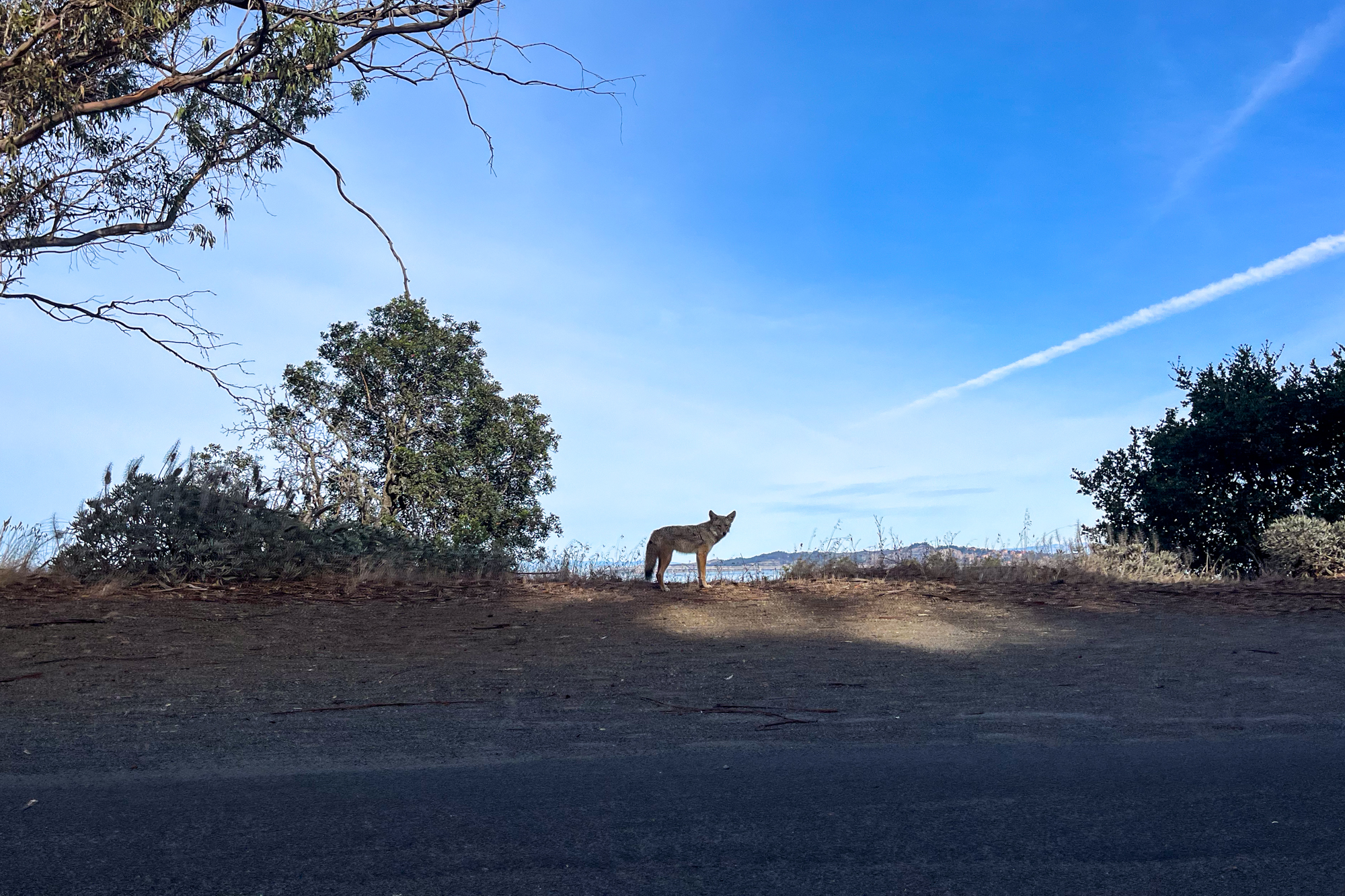
"caption": "A coyote on Angel Island on Nov. 16, 2024. Coyotes have been living on the island in the San Francisco Bay since 2017, state parks staff say. ",
"credit": "Courtesy of Casey Dexter-Lee/California State Parks",
"altTag": null,
"description": null,
"imgSizes": {
"thumbnail": {
"file": "https://cdn.kqed.org/wp-content/uploads/sites/10/2025/09/250908-ANGEL-ISLAND-COYOTE-01-KQED-160x107.jpg",
"width": 160,
"height": 107,
"mimeType": "image/jpeg"
},
"1536x1536": {
"file": "https://cdn.kqed.org/wp-content/uploads/sites/10/2025/09/250908-ANGEL-ISLAND-COYOTE-01-KQED-1536x1024.jpg",
"width": 1536,
"height": 1024,
"mimeType": "image/jpeg"
},
"post-thumbnail": {
"file": "https://cdn.kqed.org/wp-content/uploads/sites/10/2025/09/250908-ANGEL-ISLAND-COYOTE-01-KQED-672x372.jpg",
"width": 672,
"height": 372,
"mimeType": "image/jpeg"
},
"twentyfourteen-full-width": {
"file": "https://cdn.kqed.org/wp-content/uploads/sites/10/2025/09/250908-ANGEL-ISLAND-COYOTE-01-KQED-1038x576.jpg",
"width": 1038,
"height": 576,
"mimeType": "image/jpeg"
},
"kqedFullSize": {
"file": "https://cdn.kqed.org/wp-content/uploads/sites/10/2025/09/250908-ANGEL-ISLAND-COYOTE-01-KQED.jpg",
"width": 2000,
"height": 1333
}
},
"isLoading": false,
"fetchFailed": false
},
"news_12055199": {
"type": "attachments",
"id": "news_12055199",
"meta": {
"index": "attachments_1716263798",
"site": "news",
"id": "12055199",
"found": true
},
"title": "TransitFundingKQED3",
"publishDate": 1757365914,
"status": "inherit",
"parent": 12055129,
"modified": 1757365953,
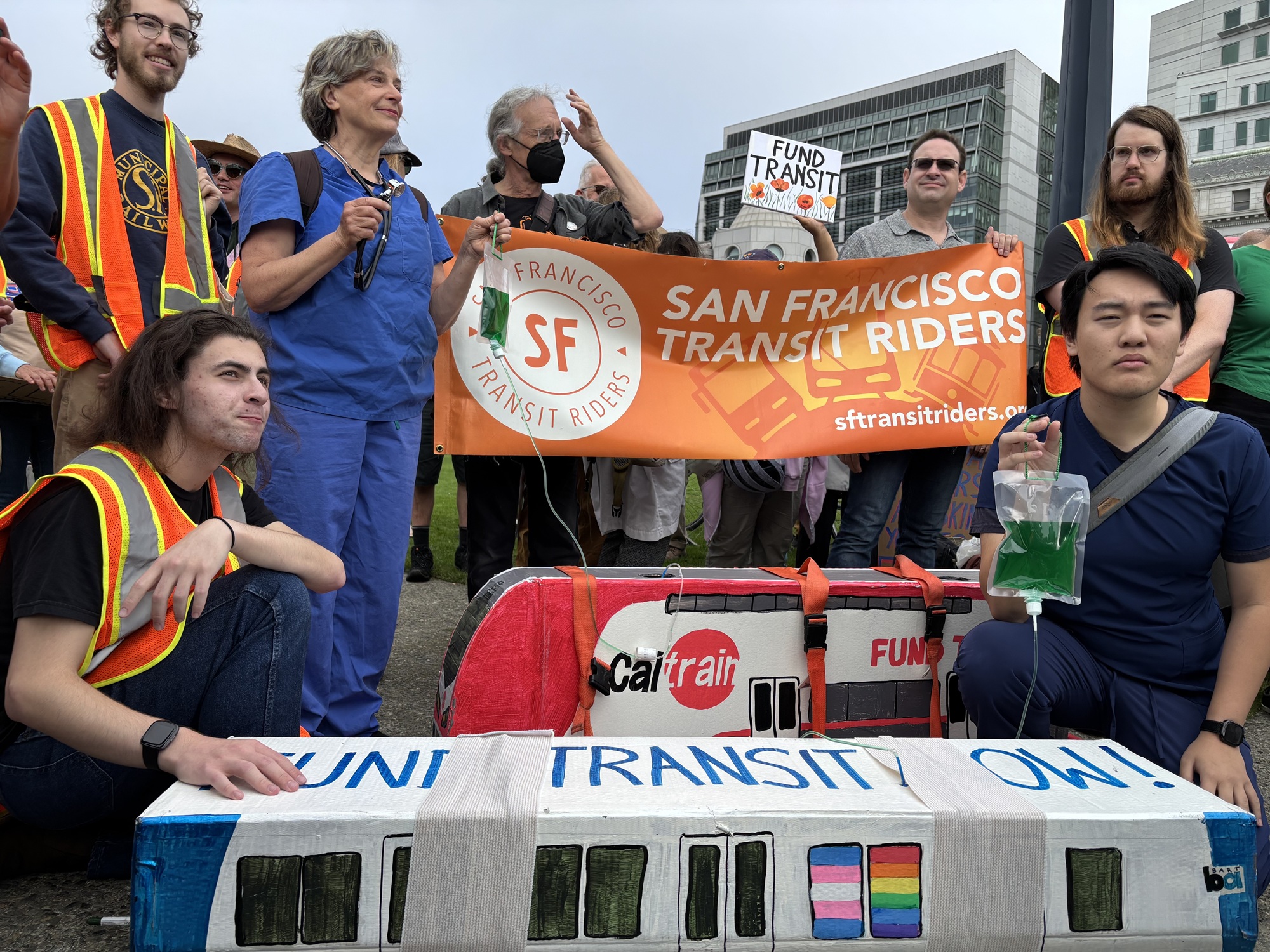
"caption": "More than a hundred people gathered at San Francisco’s Civic Center Plaza on Sept. 8, 2025, in support of an emergency state loan for Bay Area public transit agencies. ",
"credit": "Farida Jhabvala Romero/KQED",
"altTag": null,
"description": null,
"imgSizes": {
"thumbnail": {
"file": "https://cdn.kqed.org/wp-content/uploads/sites/10/2025/09/TransitFundingKQED3-160x120.jpg",
"width": 160,
"height": 120,
"mimeType": "image/jpeg"
},
"1536x1536": {
"file": "https://cdn.kqed.org/wp-content/uploads/sites/10/2025/09/TransitFundingKQED3-1536x1152.jpg",
"width": 1536,
"height": 1152,
"mimeType": "image/jpeg"
},
"post-thumbnail": {
"file": "https://cdn.kqed.org/wp-content/uploads/sites/10/2025/09/TransitFundingKQED3-672x372.jpg",
"width": 672,
"height": 372,
"mimeType": "image/jpeg"
},
"twentyfourteen-full-width": {
"file": "https://cdn.kqed.org/wp-content/uploads/sites/10/2025/09/TransitFundingKQED3-1038x576.jpg",
"width": 1038,
"height": 576,
"mimeType": "image/jpeg"
},
"kqedFullSize": {
"file": "https://cdn.kqed.org/wp-content/uploads/sites/10/2025/09/TransitFundingKQED3.jpg",
"width": 2000,
"height": 1500
}
},
"isLoading": false,
"fetchFailed": false
},
"news_12055033": {
"type": "attachments",
"id": "news_12055033",
"meta": {
"index": "attachments_1716263798",
"site": "news",
"id": "12055033",
"found": true
},
"title": "Political Conference",
"publishDate": 1757288796,
"status": "inherit",
"parent": 12055030,
"modified": 1757290732,
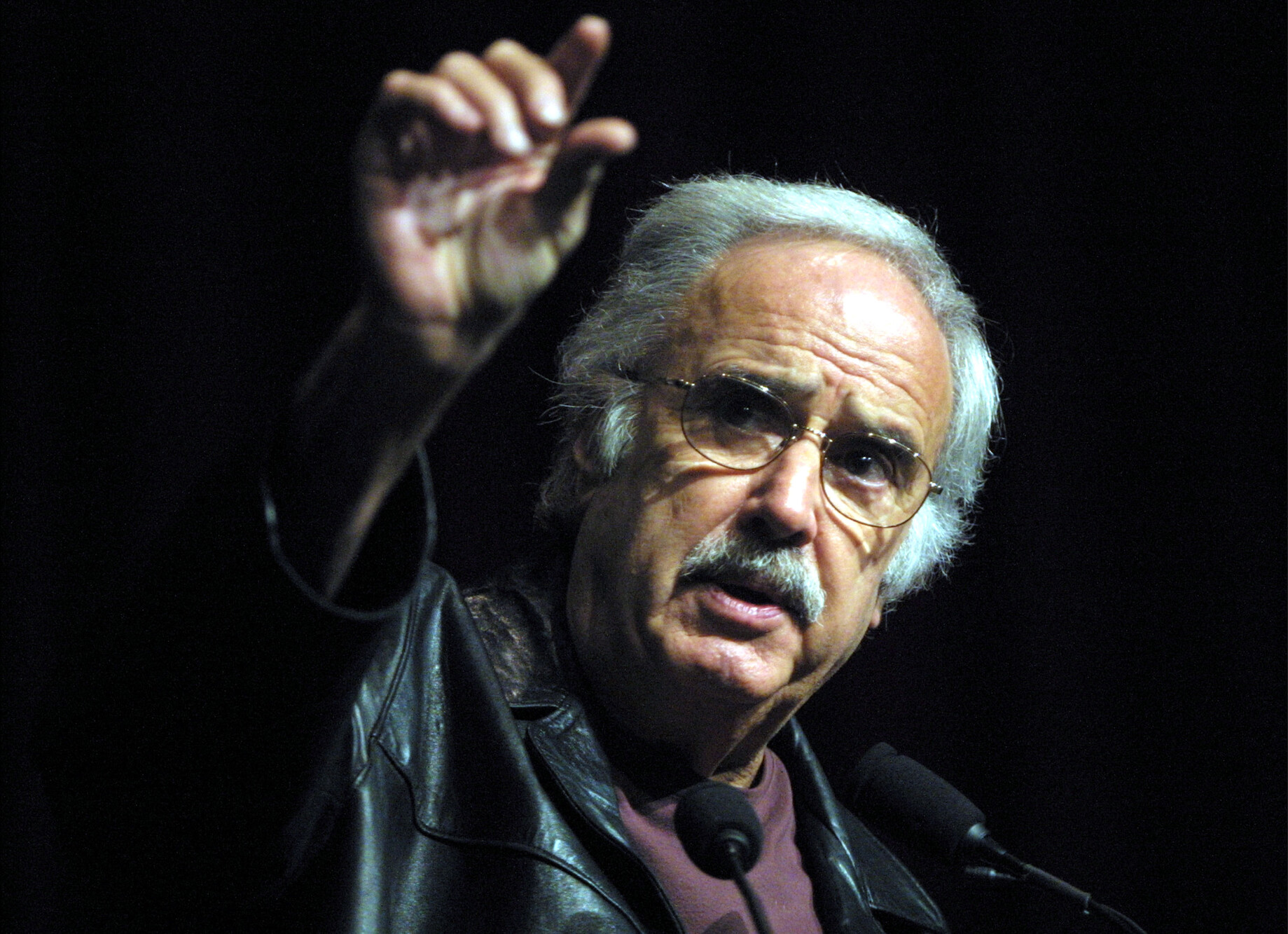
"caption": "401095 02: President Pro-tempore of the California State Senate, John Burton, speaks at a conference called, \"Our democracy after 9/11: can we save it?\" February 17, 2002 in Los Angeles, CA. The conference focused on the alleged lack of democracy in the U.S. after the terrorist attacks. (Photo by J. Emilio Flores/Getty Images)",
"credit": "J. Emilio Flores/Getty Images",
"altTag": "A closeup image of a white man with glasses pointing up.",
"description": null,
"imgSizes": {
"thumbnail": {
"file": "https://cdn.kqed.org/wp-content/uploads/sites/10/2025/09/GettyImages-903380_qed-160x116.jpg",
"width": 160,
"height": 116,
"mimeType": "image/jpeg"
},
"1536x1536": {
"file": "https://cdn.kqed.org/wp-content/uploads/sites/10/2025/09/GettyImages-903380_qed-1536x1113.jpg",
"width": 1536,
"height": 1113,
"mimeType": "image/jpeg"
},
"post-thumbnail": {
"file": "https://cdn.kqed.org/wp-content/uploads/sites/10/2025/09/GettyImages-903380_qed-672x372.jpg",
"width": 672,
"height": 372,
"mimeType": "image/jpeg"
},
"twentyfourteen-full-width": {
"file": "https://cdn.kqed.org/wp-content/uploads/sites/10/2025/09/GettyImages-903380_qed-1038x576.jpg",
"width": 1038,
"height": 576,
"mimeType": "image/jpeg"
},
"kqedFullSize": {
"file": "https://cdn.kqed.org/wp-content/uploads/sites/10/2025/09/GettyImages-903380_qed.jpg",
"width": 1839,
"height": 1333
}
},
"isLoading": false,
"fetchFailed": false
},
"news_12054621": {
"type": "attachments",
"id": "news_12054621",
"meta": {
"index": "attachments_1716263798",
"site": "news",
"id": "12054621",
"found": true
},
"title": "Sign at the entrance to the Barnes & Noble store in Midtown",
"publishDate": 1757008147,
"status": "inherit",
"parent": 12054603,
"modified": 1757008232,
"caption": "The entrance to the Barnes & Noble store in Midtown Manhattan in New York on June 9, 2025.",
"credit": "Erik McGregor/LightRocket via Getty Images",
"altTag": null,
"description": null,
"imgSizes": {
"thumbnail": {
"file": "https://cdn.kqed.org/wp-content/uploads/sites/10/2025/09/BarnesNobleGetty-160x107.jpg",
"width": 160,
"height": 107,
"mimeType": "image/jpeg"
},
"1536x1536": {
"file": "https://cdn.kqed.org/wp-content/uploads/sites/10/2025/09/BarnesNobleGetty-1536x1024.jpg",
"width": 1536,
"height": 1024,
"mimeType": "image/jpeg"
},
"post-thumbnail": {
"file": "https://cdn.kqed.org/wp-content/uploads/sites/10/2025/09/BarnesNobleGetty-672x372.jpg",
"width": 672,
"height": 372,
"mimeType": "image/jpeg"
},
"twentyfourteen-full-width": {
"file": "https://cdn.kqed.org/wp-content/uploads/sites/10/2025/09/BarnesNobleGetty-1038x576.jpg",
"width": 1038,
"height": 576,
"mimeType": "image/jpeg"
},
"kqedFullSize": {
"file": "https://cdn.kqed.org/wp-content/uploads/sites/10/2025/09/BarnesNobleGetty.jpg",
"width": 2000,
"height": 1333
}
},
"isLoading": false,
"fetchFailed": false
},
"news_12054818": {
"type": "attachments",
"id": "news_12054818",
"meta": {
"index": "attachments_1716263798",
"site": "news",
"id": "12054818",
"found": true
},
"title": "250905-bartoutage00435_TV_qed",
"publishDate": 1757095692,
"status": "inherit",
"parent": 12054754,
"modified": 1757095717,
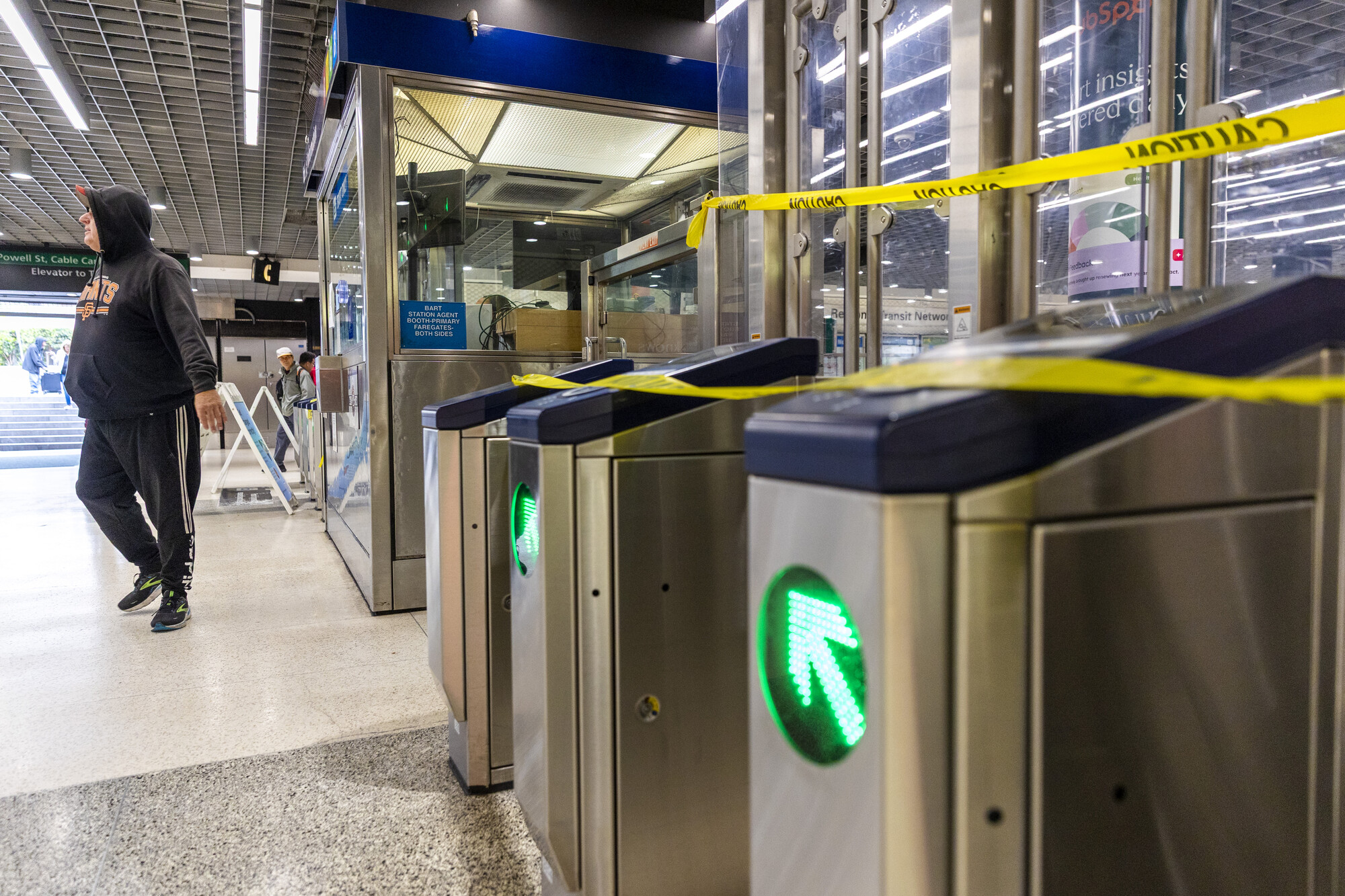
"caption": "A person walks away from Powell Bart station as it is not in service due to an electrical outage in San Francisco on Sept. 5, 2025.",
"credit": "Tâm Vũ/KQED",
"altTag": null,
"description": null,
"imgSizes": {
"thumbnail": {
"file": "https://cdn.kqed.org/wp-content/uploads/sites/10/2025/09/250905-bartoutage00435_TV_qed-160x107.jpg",
"width": 160,
"height": 107,
"mimeType": "image/jpeg"
},
"1536x1536": {
"file": "https://cdn.kqed.org/wp-content/uploads/sites/10/2025/09/250905-bartoutage00435_TV_qed-1536x1024.jpg",
"width": 1536,
"height": 1024,
"mimeType": "image/jpeg"
},
"post-thumbnail": {
"file": "https://cdn.kqed.org/wp-content/uploads/sites/10/2025/09/250905-bartoutage00435_TV_qed-672x372.jpg",
"width": 672,
"height": 372,
"mimeType": "image/jpeg"
},
"twentyfourteen-full-width": {
"file": "https://cdn.kqed.org/wp-content/uploads/sites/10/2025/09/250905-bartoutage00435_TV_qed-1038x576.jpg",
"width": 1038,
"height": 576,
"mimeType": "image/jpeg"
},
"kqedFullSize": {
"file": "https://cdn.kqed.org/wp-content/uploads/sites/10/2025/09/250905-bartoutage00435_TV_qed.jpg",
"width": 2000,
"height": 1333
}
},
"isLoading": false,
"fetchFailed": false
},
"news_12054696": {
"type": "attachments",
"id": "news_12054696",
"meta": {
"index": "attachments_1716263798",
"site": "news",
"id": "12054696",
"found": true
},
"title": "US-GOVERNMENT-FDA",
"publishDate": 1757022424,
"status": "inherit",
"parent": 12054619,
"modified": 1757026818,
"caption": "The logo of the U.S. Food and Drug Administration (FDA) is seen on a sign outside the agency's White Oak campus in Silver Spring, Maryland, on July 17, 2025. ",
"credit": "Issam Ahmed/AFP via Getty Images",
"altTag": null,
"description": null,
"imgSizes": {
"medium": {
"file": "https://cdn.kqed.org/wp-content/uploads/sites/10/2025/09/GettyImages-2224877034-2000x1333.jpg",
"width": 2000,
"height": 1333,
"mimeType": "image/jpeg"
},
"large": {
"file": "https://cdn.kqed.org/wp-content/uploads/sites/10/2025/09/GettyImages-2224877034-2000x1333.jpg",
"width": 2000,
"height": 1333,
"mimeType": "image/jpeg"
},
"thumbnail": {
"file": "https://cdn.kqed.org/wp-content/uploads/sites/10/2025/09/GettyImages-2224877034-160x107.jpg",
"width": 160,
"height": 107,
"mimeType": "image/jpeg"
},
"1536x1536": {
"file": "https://cdn.kqed.org/wp-content/uploads/sites/10/2025/09/GettyImages-2224877034-1536x1024.jpg",
"width": 1536,
"height": 1024,
"mimeType": "image/jpeg"
},
"2048x2048": {
"file": "https://cdn.kqed.org/wp-content/uploads/sites/10/2025/09/GettyImages-2224877034-2048x1365.jpg",
"width": 2048,
"height": 1365,
"mimeType": "image/jpeg"
},
"post-thumbnail": {
"file": "https://cdn.kqed.org/wp-content/uploads/sites/10/2025/09/GettyImages-2224877034-672x372.jpg",
"width": 672,
"height": 372,
"mimeType": "image/jpeg"
},
"twentyfourteen-full-width": {
"file": "https://cdn.kqed.org/wp-content/uploads/sites/10/2025/09/GettyImages-2224877034-1038x576.jpg",
"width": 1038,
"height": 576,
"mimeType": "image/jpeg"
},
"full-width": {
"file": "https://cdn.kqed.org/wp-content/uploads/sites/10/2025/09/GettyImages-2224877034-2000x1333.jpg",
"width": 2000,
"height": 1333,
"mimeType": "image/jpeg"
},
"kqedFullSize": {
"file": "https://cdn.kqed.org/wp-content/uploads/sites/10/2025/09/GettyImages-2224877034-scaled-e1757022450324.jpg",
"width": 2000,
"height": 1334
}
},
"isLoading": false,
"fetchFailed": false
},
"news_12042200": {
"type": "attachments",
"id": "news_12042200",
"meta": {
"index": "attachments_1716263798",
"site": "news",
"id": "12042200",
"found": true
},
"title": "008_KQED_630Sansome_02052020_1470_qed",
"publishDate": 1748630169,
"status": "inherit",
"parent": 12042197,
"modified": 1784932362,
"caption": "The U.S. Immigration & Customs Enforcement building at 630 Sansome St., in San Francisco, California, on Feb. 5, 2020.",
"credit": "Beth LaBerge/KQED",
"altTag": null,
"description": null,
"imgSizes": {
"medium": {
"file": "https://cdn.kqed.org/wp-content/uploads/sites/10/2025/05/008_KQED_630Sansome_02052020_1470_qed-800x533.jpg",
"width": 800,
"height": 533,
"mimeType": "image/jpeg"
},
"large": {
"file": "https://cdn.kqed.org/wp-content/uploads/sites/10/2025/05/008_KQED_630Sansome_02052020_1470_qed-1020x680.jpg",
"width": 1020,
"height": 680,
"mimeType": "image/jpeg"
},
"thumbnail": {
"file": "https://cdn.kqed.org/wp-content/uploads/sites/10/2025/05/008_KQED_630Sansome_02052020_1470_qed-160x107.jpg",
"width": 160,
"height": 107,
"mimeType": "image/jpeg"
},
"1536x1536": {
"file": "https://cdn.kqed.org/wp-content/uploads/sites/10/2025/05/008_KQED_630Sansome_02052020_1470_qed-1536x1024.jpg",
"width": 1536,
"height": 1024,
"mimeType": "image/jpeg"
},
"post-thumbnail": {
"file": "https://cdn.kqed.org/wp-content/uploads/sites/10/2025/05/008_KQED_630Sansome_02052020_1470_qed-672x372.jpg",
"width": 672,
"height": 372,
"mimeType": "image/jpeg"
},
"twentyfourteen-full-width": {
"file": "https://cdn.kqed.org/wp-content/uploads/sites/10/2025/05/008_KQED_630Sansome_02052020_1470_qed-1038x576.jpg",
"width": 1038,
"height": 576,
"mimeType": "image/jpeg"
},
"full-width": {
"file": "https://cdn.kqed.org/wp-content/uploads/sites/10/2025/05/008_KQED_630Sansome_02052020_1470_qed-1920x1280.jpg",
"width": 1920,
"height": 1280,
"mimeType": "image/jpeg"
},
"kqedFullSize": {
"file": "https://cdn.kqed.org/wp-content/uploads/sites/10/2025/05/008_KQED_630Sansome_02052020_1470_qed.jpg",
"width": 1999,
"height": 1333
}
},
"isLoading": false,
"fetchFailed": false
},
"news_12045496": {
"type": "attachments",
"id": "news_12045496",
"meta": {
"index": "attachments_1716263798",
"site": "news",
"id": "12045496",
"found": true
},
"title": "250620-TENDERLOIN INSTANT CAMERAS-50-KQED",
"publishDate": 1750681714,
"status": "inherit",
"parent": 0,
"modified": 1756489111,
"caption": "In an effort to present a different perspective on the San Francisco's Tenderloin neighborhood, KQED collaborated with 826 Valencia, Tenderloin Center to invite 28 students from grades two to five to document their lives using disposable cameras.",
"credit": "Mohammed Haidar Khaled",
"altTag": null,
"description": null,
"imgSizes": {
"thumbnail": {
"file": "https://cdn.kqed.org/wp-content/uploads/sites/10/2025/06/250620-TENDERLOIN-INSTANT-CAMERAS-50-KQED-160x106.jpg",
"width": 160,
"height": 106,
"mimeType": "image/jpeg"
},
"1536x1536": {
"file": "https://cdn.kqed.org/wp-content/uploads/sites/10/2025/06/250620-TENDERLOIN-INSTANT-CAMERAS-50-KQED-1536x1018.jpg",
"width": 1536,
"height": 1018,
"mimeType": "image/jpeg"
},
"post-thumbnail": {
"file": "https://cdn.kqed.org/wp-content/uploads/sites/10/2025/06/250620-TENDERLOIN-INSTANT-CAMERAS-50-KQED-672x372.jpg",
"width": 672,
"height": 372,
"mimeType": "image/jpeg"
},
"twentyfourteen-full-width": {
"file": "https://cdn.kqed.org/wp-content/uploads/sites/10/2025/06/250620-TENDERLOIN-INSTANT-CAMERAS-50-KQED-1038x576.jpg",
"width": 1038,
"height": 576,
"mimeType": "image/jpeg"
},
"kqedFullSize": {
"file": "https://cdn.kqed.org/wp-content/uploads/sites/10/2025/06/250620-TENDERLOIN-INSTANT-CAMERAS-50-KQED.jpg",
"width": 2000,
"height": 1326
}
},
"isLoading": false,
"fetchFailed": false
},
"news_11998856": {
"type": "attachments",
"id": "news_11998856",
"meta": {
"index": "attachments_1716263798",
"site": "news",
"id": "11998856",
"found": true
},
"title": "In this photo illustration, the ChatGPT logo is displayed on",
"publishDate": 1722890738,
"status": "inherit",
"parent": 11998817,
"modified": 1722890828,
"caption": "Several bills addressing generative artificial intelligence are moving through the state Legislature in California’s piecemeal approach to regulation.",
"credit": "Jaque Silva/SOPA Images/LightRocket via Getty Images",
"altTag": null,
"description": null,
"imgSizes": {
"medium": {
"file": "https://cdn.kqed.org/wp-content/uploads/sites/10/2024/08/ChatGPTGetty-800x533.jpg",
"width": 800,
"height": 533,
"mimeType": "image/jpeg"
},
"large": {
"file": "https://cdn.kqed.org/wp-content/uploads/sites/10/2024/08/ChatGPTGetty-1020x680.jpg",
"width": 1020,
"height": 680,
"mimeType": "image/jpeg"
},
"thumbnail": {
"file": "https://cdn.kqed.org/wp-content/uploads/sites/10/2024/08/ChatGPTGetty-160x107.jpg",
"width": 160,
"height": 107,
"mimeType": "image/jpeg"
},
"1536x1536": {
"file": "https://cdn.kqed.org/wp-content/uploads/sites/10/2024/08/ChatGPTGetty-1536x1024.jpg",
"width": 1536,
"height": 1024,
"mimeType": "image/jpeg"
},
"post-thumbnail": {
"file": "https://cdn.kqed.org/wp-content/uploads/sites/10/2024/08/ChatGPTGetty-672x372.jpg",
"width": 672,
"height": 372,
"mimeType": "image/jpeg"
},
"twentyfourteen-full-width": {
"file": "https://cdn.kqed.org/wp-content/uploads/sites/10/2024/08/ChatGPTGetty-1038x576.jpg",
"width": 1038,
"height": 576,
"mimeType": "image/jpeg"
},
"full-width": {
"file": "https://cdn.kqed.org/wp-content/uploads/sites/10/2024/08/ChatGPTGetty-1920x1280.jpg",
"width": 1920,
"height": 1280,
"mimeType": "image/jpeg"
},
"kqedFullSize": {
"file": "https://cdn.kqed.org/wp-content/uploads/sites/10/2024/08/ChatGPTGetty.jpg",
"width": 2000,
"height": 1333
}
},
"isLoading": false,
"fetchFailed": false
},
"news_12051869": {
"type": "attachments",
"id": "news_12051869",
"meta": {
"index": "attachments_1716263798",
"site": "news",
"id": "12051869",
"found": true
},
"title": "250418-SFUSD-04-BL_qed",
"publishDate": 1755024187,
"status": "inherit",
"parent": 12051862,
"modified": 1755024198,
"caption": "The San Francisco Unified School District Administrative Offices in San Francisco on April 18, 2025.",
"credit": "Beth LaBerge/KQED",
"altTag": null,
"description": null,
"imgSizes": {
"thumbnail": {
"file": "https://cdn.kqed.org/wp-content/uploads/sites/10/2025/08/250418-SFUSD-04-BL_qed-160x107.jpg",
"width": 160,
"height": 107,
"mimeType": "image/jpeg"
},
"1536x1536": {
"file": "https://cdn.kqed.org/wp-content/uploads/sites/10/2025/08/250418-SFUSD-04-BL_qed-1536x1024.jpg",
"width": 1536,
"height": 1024,
"mimeType": "image/jpeg"
},
"post-thumbnail": {
"file": "https://cdn.kqed.org/wp-content/uploads/sites/10/2025/08/250418-SFUSD-04-BL_qed-672x372.jpg",
"width": 672,
"height": 372,
"mimeType": "image/jpeg"
},
"twentyfourteen-full-width": {
"file": "https://cdn.kqed.org/wp-content/uploads/sites/10/2025/08/250418-SFUSD-04-BL_qed-1038x576.jpg",
"width": 1038,
"height": 576,
"mimeType": "image/jpeg"
},
"kqedFullSize": {
"file": "https://cdn.kqed.org/wp-content/uploads/sites/10/2025/08/250418-SFUSD-04-BL_qed.jpg",
"width": 2000,
"height": 1333
}
},
"isLoading": false,
"fetchFailed": false
},
"news_12035804": {
"type": "attachments",
"id": "news_12035804",
"meta": {
"index": "attachments_1716263798",
"site": "news",
"id": "12035804",
"found": true
},
"title": "20250412_SunsetDunesGrandOpening_GC-15_qed",
"publishDate": 1744501184,
"status": "inherit",
"parent": 12035795,
"modified": 1744501234,
"caption": "Supervisor Joel Engardio (center) participates in the ribbon cutting during the Sunset Dunes Park grand opening on the Upper Great Highway in San Francisco on April 12, 2025.",
"credit": "Gina Castro/KQED",
"altTag": null,
"description": null,
"imgSizes": {
"medium": {
"file": "https://cdn.kqed.org/wp-content/uploads/sites/10/2025/04/20250412_SunsetDunesGrandOpening_GC-15_qed-800x533.jpg",
"width": 800,
"height": 533,
"mimeType": "image/jpeg"
},
"large": {
"file": "https://cdn.kqed.org/wp-content/uploads/sites/10/2025/04/20250412_SunsetDunesGrandOpening_GC-15_qed-1020x680.jpg",
"width": 1020,
"height": 680,
"mimeType": "image/jpeg"
},
"thumbnail": {
"file": "https://cdn.kqed.org/wp-content/uploads/sites/10/2025/04/20250412_SunsetDunesGrandOpening_GC-15_qed-160x107.jpg",
"width": 160,
"height": 107,
"mimeType": "image/jpeg"
},
"1536x1536": {
"file": "https://cdn.kqed.org/wp-content/uploads/sites/10/2025/04/20250412_SunsetDunesGrandOpening_GC-15_qed-1536x1024.jpg",
"width": 1536,
"height": 1024,
"mimeType": "image/jpeg"
},
"post-thumbnail": {
"file": "https://cdn.kqed.org/wp-content/uploads/sites/10/2025/04/20250412_SunsetDunesGrandOpening_GC-15_qed-672x372.jpg",
"width": 672,
"height": 372,
"mimeType": "image/jpeg"
},
"twentyfourteen-full-width": {
"file": "https://cdn.kqed.org/wp-content/uploads/sites/10/2025/04/20250412_SunsetDunesGrandOpening_GC-15_qed-1038x576.jpg",
"width": 1038,
"height": 576,
"mimeType": "image/jpeg"
},
"full-width": {
"file": "https://cdn.kqed.org/wp-content/uploads/sites/10/2025/04/20250412_SunsetDunesGrandOpening_GC-15_qed-1920x1280.jpg",
"width": 1920,
"height": 1280,
"mimeType": "image/jpeg"
},
"kqedFullSize": {
"file": "https://cdn.kqed.org/wp-content/uploads/sites/10/2025/04/20250412_SunsetDunesGrandOpening_GC-15_qed.jpg",
"width": 2000,
"height": 1333
}
},
"isLoading": false,
"fetchFailed": false
},
"news_12053747": {
"type": "attachments",
"id": "news_12053747",
"meta": {
"index": "attachments_1716263798",
"site": "news",
"id": "12053747",
"found": true
},
"title": "250818-SFUSDFirstDay-20_qed",
"publishDate": 1756229825,
"status": "inherit",
"parent": 12053745,
"modified": 1756229850,
"caption": "Superintendent Maria Su speaks to students at Sanchez Elementary School on the first day of classes for the new school year in San Francisco on Aug. 18, 2025.",
"credit": "Beth LaBerge/KQED",
"altTag": null,
"description": null,
"imgSizes": {
"thumbnail": {
"file": "https://cdn.kqed.org/wp-content/uploads/sites/10/2025/08/250818-SFUSDFirstDay-20_qed-160x107.jpg",
"width": 160,
"height": 107,
"mimeType": "image/jpeg"
},
"1536x1536": {
"file": "https://cdn.kqed.org/wp-content/uploads/sites/10/2025/08/250818-SFUSDFirstDay-20_qed-1536x1024.jpg",
"width": 1536,
"height": 1024,
"mimeType": "image/jpeg"
},
"post-thumbnail": {
"file": "https://cdn.kqed.org/wp-content/uploads/sites/10/2025/08/250818-SFUSDFirstDay-20_qed-672x372.jpg",
"width": 672,
"height": 372,
"mimeType": "image/jpeg"
},
"twentyfourteen-full-width": {
"file": "https://cdn.kqed.org/wp-content/uploads/sites/10/2025/08/250818-SFUSDFirstDay-20_qed-1038x576.jpg",
"width": 1038,
"height": 576,
"mimeType": "image/jpeg"
},
"kqedFullSize": {
"file": "https://cdn.kqed.org/wp-content/uploads/sites/10/2025/08/250818-SFUSDFirstDay-20_qed.jpg",
"width": 1999,
"height": 1333
}
},
"isLoading": false,
"fetchFailed": false
}
},
"audioPlayerReducer": {
"postId": "stream_live",
"isPaused": true,
"isPlaying": false,
"pfsActive": false,
"pledgeModalIsOpen": true,
"playerDrawerIsOpen": false,
"liveAudioPlayStartedAt": 0,
"liveAudioPlayContext": ""
},
"authorsReducer": {
"byline_news_12054193": {
"type": "authors",
"id": "byline_news_12054193",
"meta": {
"override": true
},
"slug": "byline_news_12054193",
"name": "Cami Dominguez",
"isLoading": false
},
"otaylor": {
"type": "authors",
"id": "11770",
"meta": {
"index": "authors_1716337520",
"id": "11770",
"found": true
},
"name": "Otis R. Taylor Jr.",
"firstName": "Otis R.",
"lastName": "Taylor Jr.",
"slug": "otaylor",
"email": "otaylor@kqed.org",
"display_author_email": false,
"staff_mastheads": [
"news"
],
"title": "KQED Editor",
"bio": null,
"avatar": "https://secure.gravatar.com/avatar/fe73e14d4842ac8e1c03d57def2530f57f1c5b0ca7d4a987ccc5bd90956cb7c6?s=600&d=blank&r=g",
"twitter": "otisrtaylorjr",
"bluesky": null,
"facebook": null,
"instagram": null,
"linkedin": null,
"sites": [
{
"site": "arts",
"roles": [
"subscriber"
]
},
{
"site": "news",
"roles": [
"subscriber"
]
},
{
"site": "science",
"roles": [
"subscriber"
]
},
{
"site": "liveblog",
"roles": [
"subscriber"
]
}
],
"headData": {
"title": "Otis R. Taylor Jr. | KQED",
"description": "KQED Editor",
"ogImgSrc": "https://secure.gravatar.com/avatar/fe73e14d4842ac8e1c03d57def2530f57f1c5b0ca7d4a987ccc5bd90956cb7c6?s=600&d=blank&r=g",
"twImgSrc": "https://secure.gravatar.com/avatar/fe73e14d4842ac8e1c03d57def2530f57f1c5b0ca7d4a987ccc5bd90956cb7c6?s=600&d=blank&r=g"
},
"isLoading": false,
"link": "/author/otaylor"
},
"swhitney": {
"type": "authors",
"id": "11784",
"meta": {
"index": "authors_1716337520",
"id": "11784",
"found": true
},
"name": "Spencer Whitney",
"firstName": "Spencer",
"lastName": "Whitney",
"slug": "swhitney",
"email": "swhitney@kqed.org",
"display_author_email": false,
"staff_mastheads": [],
"title": "KQED Digital Editor",
"bio": "Spencer Whitney is currently a Digital Editor for KQED News. Prior to joining KQED News, Spencer worked as the Multimedia Editor at the Oakland Post and an Assistant Editor in the Editorial department at the San Francisco Chronicle. He attended Howard University as an undergraduate and interned with SiriusXM. He also attended UC Berkeley's Graduate School of Journalism and had the opportunity to write for the hyperlocal news sites Richmond Confidential and Oakland North.",
"avatar": "https://secure.gravatar.com/avatar/e33ff4fd8b8f0d2796f36472fb32607ca8fc46ef5e537dcfdbdee688d8ea5b80?s=600&d=mm&r=g",
"twitter": null,
"bluesky": null,
"facebook": null,
"instagram": null,
"linkedin": null,
"sites": [
{
"site": "arts",
"roles": [
"editor"
]
},
{
"site": "news",
"roles": [
"editor"
]
},
{
"site": "science",
"roles": [
"editor"
]
},
{
"site": "perspectives",
"roles": [
"editor"
]
}
],
"headData": {
"title": "Spencer Whitney | KQED",
"description": "KQED Digital Editor",
"ogImgSrc": "https://secure.gravatar.com/avatar/e33ff4fd8b8f0d2796f36472fb32607ca8fc46ef5e537dcfdbdee688d8ea5b80?s=600&d=mm&r=g",
"twImgSrc": "https://secure.gravatar.com/avatar/e33ff4fd8b8f0d2796f36472fb32607ca8fc46ef5e537dcfdbdee688d8ea5b80?s=600&d=mm&r=g"
},
"isLoading": false,
"link": "/author/swhitney"
},
"adahlstromeckman": {
"type": "authors",
"id": "11785",
"meta": {
"index": "authors_1716337520",
"id": "11785",
"found": true
},
"name": "Azul Dahlstrom-Eckman",
"firstName": "Azul",
"lastName": "Dahlstrom-Eckman",
"slug": "adahlstromeckman",
"email": "adahlstrom-eckman@kqed.org",
"display_author_email": true,
"staff_mastheads": [],
"title": "Reporter",
"bio": "Azul is a reporter for KQED focusing on transportation and features. He joined KQED in 2021 as an alumna of KALW's Audio Academy radio journalism training program.",
"avatar": "https://secure.gravatar.com/avatar/9cb750298435add7815a777f55bf1f46845c1386bb8452555c60a7b820b5aba3?s=600&d=blank&r=g",
"twitter": "@zuliemann",
"bluesky": "@azul415.bsky.social",
"facebook": null,
"instagram": null,
"linkedin": null,
"sites": [
{
"site": "arts",
"roles": [
"editor"
]
},
{
"site": "news",
"roles": [
"editor"
]
},
{
"site": "science",
"roles": [
"editor"
]
},
{
"site": "liveblog",
"roles": [
"author"
]
}
],
"headData": {
"title": "Azul Dahlstrom-Eckman | KQED",
"description": "Reporter",
"ogImgSrc": "https://secure.gravatar.com/avatar/9cb750298435add7815a777f55bf1f46845c1386bb8452555c60a7b820b5aba3?s=600&d=blank&r=g",
"twImgSrc": "https://secure.gravatar.com/avatar/9cb750298435add7815a777f55bf1f46845c1386bb8452555c60a7b820b5aba3?s=600&d=blank&r=g"
},
"isLoading": false,
"link": "/author/adahlstromeckman"
},
"ibloom": {
"type": "authors",
"id": "11805",
"meta": {
"index": "authors_1716337520",
"id": "11805",
"found": true
},
"name": "Izzy Bloom",
"firstName": "Izzy",
"lastName": "Bloom",
"slug": "ibloom",
"email": "ibloom@kqed.org",
"display_author_email": false,
"staff_mastheads": [],
"title": "KQED Reporter & Producer",
"bio": "Izzy is a reporter and producer on KQED's California Politics & Government Desk. She joined the desk in 2024 to produce Political Breakdown, covering local and national elections and attending the RNC and DNC in Milwaukee and Chicago. \r\n\r\nBefore that, Izzy was a producer on The California Report and reported long-form stories for The California Report Magazine. She was a finalist for the Third Coast/Richard H. Driehaus Foundation Competition and was awarded for her reporting on indigenous land back by the Society of Professional Journalists. Izzy received her master's in journalism from the University of California, Berkeley.",
"avatar": "https://secure.gravatar.com/avatar/cc4d272ca430783ee1a8efac470a6b1e0fdd082c3beb61da019801d0ff751c8c?s=600&d=blank&r=g",
"twitter": null,
"bluesky": null,
"facebook": null,
"instagram": null,
"linkedin": null,
"sites": [
{
"site": "news",
"roles": [
"editor"
]
},
{
"site": "perspectives",
"roles": [
"editor"
]
}
],
"headData": {
"title": "Izzy Bloom | KQED",
"description": "KQED Reporter & Producer",
"ogImgSrc": "https://secure.gravatar.com/avatar/cc4d272ca430783ee1a8efac470a6b1e0fdd082c3beb61da019801d0ff751c8c?s=600&d=blank&r=g",
"twImgSrc": "https://secure.gravatar.com/avatar/cc4d272ca430783ee1a8efac470a6b1e0fdd082c3beb61da019801d0ff751c8c?s=600&d=blank&r=g"
},
"isLoading": false,
"link": "/author/ibloom"
},
"sjohnson": {
"type": "authors",
"id": "11840",
"meta": {
"index": "authors_1716337520",
"id": "11840",
"found": true
},
"name": "Sydney Johnson",
"firstName": "Sydney",
"lastName": "Johnson",
"slug": "sjohnson",
"email": "sjohnson@kqed.org",
"display_author_email": false,
"staff_mastheads": [
"news"
],
"title": "KQED Reporter",
"bio": "Sydney Johnson is a general assignment reporter at KQED. She previously reported on public health and city government at the San Francisco Examiner, and before that, she covered statewide education policy for EdSource. Her reporting has won multiple local, state and national awards. Sydney is a graduate of the University of California, Berkeley and lives in San Francisco.",
"avatar": "https://secure.gravatar.com/avatar/97855f2719b72ad6190b7c535fe642c8?s=600&d=blank&r=g",
"twitter": "sydneyfjohnson",
"facebook": null,
"instagram": null,
"linkedin": null,
"sites": [
{
"site": "news",
"roles": [
"editor"
]
}
],
"headData": {
"title": "Sydney Johnson | KQED",
"description": "KQED Reporter",
"ogImgSrc": "https://secure.gravatar.com/avatar/97855f2719b72ad6190b7c535fe642c8?s=600&d=blank&r=g",
"twImgSrc": "https://secure.gravatar.com/avatar/97855f2719b72ad6190b7c535fe642c8?s=600&d=blank&r=g"
},
"isLoading": false,
"link": "/author/sjohnson"
},
"kdebenedetti": {
"type": "authors",
"id": "11913",
"meta": {
"index": "authors_1716337520",
"id": "11913",
"found": true
},
"name": "Katie DeBenedetti",
"firstName": "Katie",
"lastName": "DeBenedetti",
"slug": "kdebenedetti",
"email": "kdebenedetti@kqed.org",
"display_author_email": false,
"staff_mastheads": [
"news",
"science"
],
"title": "KQED Contributor",
"bio": "Katie DeBenedetti is a digital reporter covering daily news for the Express Desk. Prior to joining KQED as a culture reporting intern in January 2024, she covered education and city government for the Napa Valley Register.",
"avatar": "https://secure.gravatar.com/avatar/6e31073cb8f7e4214ab03f42771d0f45?s=600&d=blank&r=g",
"twitter": null,
"facebook": null,
"instagram": null,
"linkedin": null,
"sites": [
{
"site": "news",
"roles": [
"author"
]
},
{
"site": "science",
"roles": [
"author"
]
},
{
"site": "liveblog",
"roles": [
"author"
]
}
],
"headData": {
"title": "Katie DeBenedetti | KQED",
"description": "KQED Contributor",
"ogImgSrc": "https://secure.gravatar.com/avatar/6e31073cb8f7e4214ab03f42771d0f45?s=600&d=blank&r=g",
"twImgSrc": "https://secure.gravatar.com/avatar/6e31073cb8f7e4214ab03f42771d0f45?s=600&d=blank&r=g"
},
"isLoading": false,
"link": "/author/kdebenedetti"
},
"bkrans": {
"type": "authors",
"id": "11923",
"meta": {
"index": "authors_1716337520",
"id": "11923",
"found": true
},
"name": "Brian Krans",
"firstName": "Brian",
"lastName": "Krans",
"slug": "bkrans",
"email": "bkrans@kqed.org",
"display_author_email": false,
"staff_mastheads": [
"news"
],
"title": "KQED Contributing Reporter",
"bio": "Brian Krans is an award-winning local news and investigative reporter who has been proudly working as a general assignment reporter for KQED since August 2023. He lives in Richmond, where he also reports on air pollution for Richmondside. He is also a founding member of the Vallejo Sun.",
"avatar": "https://secure.gravatar.com/avatar/d1014d604089314a94807d2c4f2d3e06?s=600&d=blank&r=g",
"twitter": "citizenkrans",
"facebook": null,
"instagram": null,
"linkedin": null,
"sites": [
{
"site": "news",
"roles": [
"editor"
]
}
],
"headData": {
"title": "Brian Krans | KQED",
"description": "KQED Contributing Reporter",
"ogImgSrc": "https://secure.gravatar.com/avatar/d1014d604089314a94807d2c4f2d3e06?s=600&d=blank&r=g",
"twImgSrc": "https://secure.gravatar.com/avatar/d1014d604089314a94807d2c4f2d3e06?s=600&d=blank&r=g"
},
"isLoading": false,
"link": "/author/bkrans"
},
"emanoukian": {
"type": "authors",
"id": "11925",
"meta": {
"index": "authors_1716337520",
"id": "11925",
"found": true
},
"name": "Elize Manoukian",
"firstName": "Elize",
"lastName": "Manoukian",
"slug": "emanoukian",
"email": "emanoukian@KQED.org",
"display_author_email": false,
"staff_mastheads": [
"news"
],
"title": "Digital News Editor",
"bio": "Elize Manoukian is an award-winning audio producer and Senior Editor on the Express Desk, KQED's digital news platform. Her work has appeared on KPFA, Interlochen Public Radio, Oregon Public Broadcast, the New York Daily News, LA Times and the San Diego Union-Tribune.",
"avatar": "https://secure.gravatar.com/avatar/4525f1a8e46ccb30933b32653d9772064cfefe3fa655eb45b3b3a80341f6bdad?s=600&d=blank&r=g",
"twitter": null,
"bluesky": null,
"facebook": null,
"instagram": null,
"linkedin": null,
"sites": [
{
"site": "arts",
"roles": [
"editor"
]
},
{
"site": "news",
"roles": [
"editor"
]
},
{
"site": "science",
"roles": [
"editor"
]
}
],
"headData": {
"title": "Elize Manoukian | KQED",
"description": "Digital News Editor",
"ogImgSrc": "https://secure.gravatar.com/avatar/4525f1a8e46ccb30933b32653d9772064cfefe3fa655eb45b3b3a80341f6bdad?s=600&d=blank&r=g",
"twImgSrc": "https://secure.gravatar.com/avatar/4525f1a8e46ccb30933b32653d9772064cfefe3fa655eb45b3b3a80341f6bdad?s=600&d=blank&r=g"
},
"isLoading": false,
"link": "/author/emanoukian"
}
},
"pagesReducer": {
"news_tag_san-francisco": {
"type": "terms",
"id": "news_38",
"meta": {
"index": "terms_1716263798",
"site": "news",
"id": "38",
"score": 6.7229023
},
"featImg": null,
"name": "San Francisco",
"description": null,
"taxonomy": "tag",
"headData": {
"twImgId": null,
"twTitle": null,
"ogTitle": null,
"ogImgId": null,
"twDescription": null,
"description": null,
"title": "San Francisco Archives | KQED News",
"ogDescription": null
},
"ttid": 58,
"slug": "san-francisco",
"isLoading": false,
"title": "San Francisco",
"pageMeta": {
"site": "news",
"WpPageTemplate": "page-topic-editorial",
"currentPage": 50
},
"blocks": [
{
"blockName": "kqed/post-list",
"attrs": {
"layout": "cardArticle2",
"query": "posts/news?tag=san-francisco",
"seeMore": false,
"paginated": true,
"page": 50
}
},
{
"blockName": "kqed/ad"
}
]
}
},
"pfsSessionReducer": {},
"postsReducer": {
"stream_live": {
"type": "live",
"id": "stream_live",
"audioUrl": "https://streams.kqed.org/kqedradio",
"title": "Live Stream",
"excerpt": "Live Stream information currently unavailable.",
"link": "/radio",
"featImg": "",
"label": {
"name": "KQED Live",
"link": "/"
}
},
"stream_kqedNewscast": {
"type": "posts",
"id": "stream_kqedNewscast",
"audioUrl": "https://www.kqed.org/.stream/anon/radio/RDnews/newscast.mp3?_=1",
"title": "KQED Newscast",
"featImg": "",
"label": {
"name": "88.5 FM",
"link": "/"
}
},
"news_12055137": {
"type": "posts",
"id": "news_12055137",
"meta": {
"index": "posts_1716263798",
"site": "news",
"id": "12055137",
"score": null,
"sort": [
1757419259000
]
},
"guestAuthors": [],
"slug": "coyote-spotted-swimming-in-the-san-francisco-bay-to-angel-island",
"title": "Coyote Spotted Swimming in the San Francisco Bay to Angel Island",
"publishDate": 1757419259,
"format": "standard",
"headTitle": "Coyote Spotted Swimming in the San Francisco Bay to Angel Island | KQED",
"labelTerm": {
"site": "news"
},
"content": "\u003cp>On a recent Friday, as the morning clouds burned off over the San Francisco Bay, Bill Miller spotted an unexpected swimmer, heading away from Angel Island.\u003c/p>\n\u003cp>At first, he thought it was a seal or sea lion, paddling across the milelong Raccoon Strait between Angel Island and Tiburon.\u003c/p>\n\u003cp>“Then I realized it was a coyote,” said Miller, a California State Parks environmental scientist. “It was pretty exciting.”\u003c/p>\n\u003cp>[ad fullwidth]\u003c/p>\n\u003cp>Miller said he was running late that morning and almost missed his boat ride from Tiburon to check game cameras on Angel Island, as part of a study on animal population, diet and genetic relatedness.\u003c/p>\n\u003cp>“I’m going out there to look for coyotes on camera, and then here just to see one, swimming, it was pretty fun,” Miller said.\u003c/p>\n\u003cp>https://www.youtube.com/watch?v=FUR7A5WbC4Q\u003c/p>\n\u003cp>As the Parks’ boat motored past, Miller expressed concern for the coyote, with its pointy snout and ears lifted above the water, and wondered aloud if they should help it. Ultimately, staff decided not to interfere.\u003c/p>\n\u003cp>“I think I made the comment ‘We’ll give you a ride, buddy,’” Miller said. “But it was fine on its own.”\u003c/p>\n\u003cp>After making it about a quarter of a mile away, the coyote turned around and swam back into Angel Island’s Ayala Cove, before climbing the seawall and returning to shore.\u003c/p>\n\u003cp>Park interpreter Casey Dexter-Lee has been living and working on Angel Island for 25 years. She said scientists aren’t sure what motivates coyotes to swim in the bay.[aside postID=news_12046806 hero='https://cdn.kqed.org/wp-content/uploads/sites/10/2025/07/CoyotePresidioTrust1.jpg']“It is an uncommon sight,” she said. “For the most part, the coyotes are just taking short swims and either returning back to Angel Island — or if they’re starting on the Tiburon side, turning back to Tiburon. It’s very rare for one to go all the way across.”\u003c/p>\n\u003cp>Scientists believe that the first coyote to reach the island in 2017 swam the mile across the strait. Before then, Dexter-Lee said there’s no record of coyotes having ever lived there.\u003c/p>\n\u003cp>“There’s so far nothing in the archeological record,” she said. “[But] we intentionally don’t dig to try and preserve the history of the site.”\u003c/p>\n\u003cp>The first coyote lived on the island alone for a year and would exchange calls with coyotes across the strait in Tiburon.\u003c/p>\n\u003cp>“It’s possible that the second coyote came over intentionally because there was one coyote here,” Dexter-Lee said.\u003c/p>\n\u003cfigure id=\"attachment_12055182\" class=\"wp-caption aligncenter\" style=\"max-width: 2000px\">\u003ca href=\"https://cdn.kqed.org/wp-content/uploads/sites/10/2025/09/250908-ANGEL-ISLAND-COYOTE-02-KQED.jpg\">\u003cimg loading=\"lazy\" decoding=\"async\" class=\"size-full wp-image-12055182\" src=\"https://cdn.kqed.org/wp-content/uploads/sites/10/2025/09/250908-ANGEL-ISLAND-COYOTE-02-KQED.jpg\" alt=\"\" width=\"2000\" height=\"1333\" srcset=\"https://cdn.kqed.org/wp-content/uploads/sites/10/2025/09/250908-ANGEL-ISLAND-COYOTE-02-KQED.jpg 2000w, https://cdn.kqed.org/wp-content/uploads/sites/10/2025/09/250908-ANGEL-ISLAND-COYOTE-02-KQED-160x107.jpg 160w, https://cdn.kqed.org/wp-content/uploads/sites/10/2025/09/250908-ANGEL-ISLAND-COYOTE-02-KQED-1536x1024.jpg 1536w\" sizes=\"auto, (max-width: 2000px) 100vw, 2000px\">\u003c/a>\u003cfigcaption class=\"wp-caption-text\">A coyote swims near Angel Island on April 6, 2024. \u003ccite>(Courtesy of Casey Dexter-Lee/California State Parks)\u003c/cite>\u003c/figcaption>\u003c/figure>\n\u003cp>About a year after the second coyote’s arrival, Dexter-Lee said the first litter was sighted. She remembers seeing two coyote pups who had grown enough to leave the den. Today, the island is home to 14 coyote residents.\u003c/p>\n\u003cp>Since the coyotes arrived, scientists have noticed a shift in deer and raccoon behavior.\u003c/p>\n\u003cp>“Anecdotally, the island used to have a reputation for having a large raccoon problem, getting into the trash cans and interacting with campers,” Miller said. “But it seems like since we’ve had coyotes on the island, those sightings of raccoons have definitely gone down.”\u003c/p>\n\u003cp>The California Department of Fish and Wildlife estimates the current deer population on the island is around 50. But in the 1980s, the island hosted up to 300 deer — the state’s highest documented density of deer, according to \u003ca href=\"https://baynature.org/2024/11/19/coyotes-on-angel-island-hks/\">Bay Nature\u003c/a>.\u003c/p>\n\u003cp>Miller said that, at that time, the scientists had become concerned that the deer were too skinny and were impacting the island’s vegetation. Solutions like supplemental feeding, relocating the deer, contraceptives and even introducing coyotes onto the island were proposed. In the end, state parks decided to periodically cull the deer, which helped stabilize the population.\u003c/p>\n\u003cp>Several years later, the coyotes showed up.\u003c/p>\n\u003cp>Miller and other scientists from the California Department of Fish and Wildlife and UC Davis are now working on a five-year study about the impact of coyotes on the island’s ecosystem.\u003c/p>\n\u003cp>Dexter-Lee said coyotes tend to follow the same trails as people. Although coyotes generally are not dangerous to humans, she advises visitors who encounter the animals to raise their hands above their head to appear larger and then “tell the coyote” how they feel.\u003c/p>\n\u003cp>“You can say to the coyote, ‘Hey coyote, you’re too close, get away,’” Dexter-Lee said. “And not only does that let the coyote know that you’re a person, not something that they’re interested in, but also lets the people around you know that maybe you’re uncomfortable with the situation and they can help come over and shoo away the coyote.”\u003c/p>\n\u003cp>\u003c/p>\n",
"blocks": [],
"excerpt": "Coyotes have been living on the San Francisco Bay’s Angel Island since 2017, state parks staff say. ",
"status": "publish",
"parent": 0,
"modified": 1757378299,
"stats": {
"hasAudio": false,
"hasVideo": true,
"hasChartOrMap": false,
"iframeSrcs": [],
"hasGoogleForm": false,
"hasGallery": false,
"hasHearkenModule": false,
"hasPolis": false,
"paragraphCount": 24,
"wordCount": 843
},
"headData": {
"title": "Coyote Spotted Swimming in the San Francisco Bay to Angel Island | KQED",
"description": "Coyotes have been living on the San Francisco Bay’s Angel Island since 2017, state parks staff say. ",
"ogTitle": "",
"ogDescription": "",
"ogImgId": "",
"twTitle": "",
"twDescription": "",
"twImgId": "",
"schema": {
"@context": "https://schema.org",
"@type": "NewsArticle",
"headline": "Coyote Spotted Swimming in the San Francisco Bay to Angel Island",
"datePublished": "2025-09-09T05:00:59-07:00",
"dateModified": "2025-09-08T17:38:19-07:00",
"image": "https://cdn.kqed.org/wp-content/uploads/2020/02/KQED-OG-Image@1x.png",
"isAccessibleForFree": "True",
"publisher": {
"@type": "NewsMediaOrganization",
"@id": "https://www.kqed.org/#organization",
"name": "KQED",
"logo": "https://cdn.kqed.org/wp-content/uploads/2020/02/KQED-OG-Image@1x.png",
"url": "https://www.kqed.org",
"sameAs": [
"https://www.facebook.com/KQED",
"https://twitter.com/KQED",
"https://www.instagram.com/kqed/",
"https://www.tiktok.com/@kqedofficial",
"https://www.linkedin.com/company/kqed",
"https://www.youtube.com/channel/UCeC0IOo7i1P_61zVUWbJ4nw"
]
}
}
},
"primaryCategory": {
"termId": 28250,
"slug": "local",
"name": "Local"
},
"sticky": false,
"templateType": "standard",
"featuredImageType": "standard",
"excludeFromSiteSearch": "Include",
"articleAge": "0",
"path": "/news/12055137/coyote-spotted-swimming-in-the-san-francisco-bay-to-angel-island",
"audioTrackLength": null,
"parsedContent": [
{
"type": "contentString",
"content": "\u003cdiv class=\"post-body\">\u003cp>\u003cp>On a recent Friday, as the morning clouds burned off over the San Francisco Bay, Bill Miller spotted an unexpected swimmer, heading away from Angel Island.\u003c/p>\n\u003cp>At first, he thought it was a seal or sea lion, paddling across the milelong Raccoon Strait between Angel Island and Tiburon.\u003c/p>\n\u003cp>“Then I realized it was a coyote,” said Miller, a California State Parks environmental scientist. “It was pretty exciting.”\u003c/p>\n\u003cp>\u003c/p>\u003c/div>",
"attributes": {
"named": {},
"numeric": []
}
},
{
"type": "component",
"content": "",
"name": "ad",
"attributes": {
"named": {
"label": "fullwidth"
},
"numeric": [
"fullwidth"
]
}
},
{
"type": "contentString",
"content": "\u003cdiv class=\"post-body\">\u003cp>\u003c/p>\n\u003cp>Miller said he was running late that morning and almost missed his boat ride from Tiburon to check game cameras on Angel Island, as part of a study on animal population, diet and genetic relatedness.\u003c/p>\n\u003cp>“I’m going out there to look for coyotes on camera, and then here just to see one, swimming, it was pretty fun,” Miller said.\u003c/p>\u003c/p>\u003cp>\u003cspan class='utils-parseShortcode-shortcodes-__youtubeShortcode__embedYoutube'>\n \u003cspan class='utils-parseShortcode-shortcodes-__youtubeShortcode__embedYoutubeInside'>\n \u003ciframe\n loading='lazy'\n class='utils-parseShortcode-shortcodes-__youtubeShortcode__youtubePlayer'\n type='text/html'\n src='//www.youtube.com/embed/FUR7A5WbC4Q'\n title='//www.youtube.com/embed/FUR7A5WbC4Q'\n allowfullscreen='true'\n style='border:0;'>\u003c/iframe>\n \u003c/span>\n \u003c/span>\u003c/p>\u003cp>\u003cp>As the Parks’ boat motored past, Miller expressed concern for the coyote, with its pointy snout and ears lifted above the water, and wondered aloud if they should help it. Ultimately, staff decided not to interfere.\u003c/p>\n\u003cp>“I think I made the comment ‘We’ll give you a ride, buddy,’” Miller said. “But it was fine on its own.”\u003c/p>\n\u003cp>After making it about a quarter of a mile away, the coyote turned around and swam back into Angel Island’s Ayala Cove, before climbing the seawall and returning to shore.\u003c/p>\n\u003cp>Park interpreter Casey Dexter-Lee has been living and working on Angel Island for 25 years. She said scientists aren’t sure what motivates coyotes to swim in the bay.\u003c/p>\u003c/div>",
"attributes": {
"named": {},
"numeric": []
}
},
{
"type": "component",
"content": "",
"name": "aside",
"attributes": {
"named": {
"postid": "news_12046806",
"hero": "https://cdn.kqed.org/wp-content/uploads/sites/10/2025/07/CoyotePresidioTrust1.jpg",
"label": ""
},
"numeric": []
}
},
{
"type": "contentString",
"content": "\u003cdiv class=\"post-body\">\u003cp>“It is an uncommon sight,” she said. “For the most part, the coyotes are just taking short swims and either returning back to Angel Island — or if they’re starting on the Tiburon side, turning back to Tiburon. It’s very rare for one to go all the way across.”\u003c/p>\n\u003cp>Scientists believe that the first coyote to reach the island in 2017 swam the mile across the strait. Before then, Dexter-Lee said there’s no record of coyotes having ever lived there.\u003c/p>\n\u003cp>“There’s so far nothing in the archeological record,” she said. “[But] we intentionally don’t dig to try and preserve the history of the site.”\u003c/p>\n\u003cp>The first coyote lived on the island alone for a year and would exchange calls with coyotes across the strait in Tiburon.\u003c/p>\n\u003cp>“It’s possible that the second coyote came over intentionally because there was one coyote here,” Dexter-Lee said.\u003c/p>\n\u003cfigure id=\"attachment_12055182\" class=\"wp-caption aligncenter\" style=\"max-width: 2000px\">\u003ca href=\"https://cdn.kqed.org/wp-content/uploads/sites/10/2025/09/250908-ANGEL-ISLAND-COYOTE-02-KQED.jpg\">\u003cimg loading=\"lazy\" decoding=\"async\" class=\"size-full wp-image-12055182\" src=\"https://cdn.kqed.org/wp-content/uploads/sites/10/2025/09/250908-ANGEL-ISLAND-COYOTE-02-KQED.jpg\" alt=\"\" width=\"2000\" height=\"1333\" srcset=\"https://cdn.kqed.org/wp-content/uploads/sites/10/2025/09/250908-ANGEL-ISLAND-COYOTE-02-KQED.jpg 2000w, https://cdn.kqed.org/wp-content/uploads/sites/10/2025/09/250908-ANGEL-ISLAND-COYOTE-02-KQED-160x107.jpg 160w, https://cdn.kqed.org/wp-content/uploads/sites/10/2025/09/250908-ANGEL-ISLAND-COYOTE-02-KQED-1536x1024.jpg 1536w\" sizes=\"auto, (max-width: 2000px) 100vw, 2000px\">\u003c/a>\u003cfigcaption class=\"wp-caption-text\">A coyote swims near Angel Island on April 6, 2024. \u003ccite>(Courtesy of Casey Dexter-Lee/California State Parks)\u003c/cite>\u003c/figcaption>\u003c/figure>\n\u003cp>About a year after the second coyote’s arrival, Dexter-Lee said the first litter was sighted. She remembers seeing two coyote pups who had grown enough to leave the den. Today, the island is home to 14 coyote residents.\u003c/p>\n\u003cp>Since the coyotes arrived, scientists have noticed a shift in deer and raccoon behavior.\u003c/p>\n\u003cp>“Anecdotally, the island used to have a reputation for having a large raccoon problem, getting into the trash cans and interacting with campers,” Miller said. “But it seems like since we’ve had coyotes on the island, those sightings of raccoons have definitely gone down.”\u003c/p>\n\u003cp>The California Department of Fish and Wildlife estimates the current deer population on the island is around 50. But in the 1980s, the island hosted up to 300 deer — the state’s highest documented density of deer, according to \u003ca href=\"https://baynature.org/2024/11/19/coyotes-on-angel-island-hks/\">Bay Nature\u003c/a>.\u003c/p>\n\u003cp>Miller said that, at that time, the scientists had become concerned that the deer were too skinny and were impacting the island’s vegetation. Solutions like supplemental feeding, relocating the deer, contraceptives and even introducing coyotes onto the island were proposed. In the end, state parks decided to periodically cull the deer, which helped stabilize the population.\u003c/p>\n\u003cp>Several years later, the coyotes showed up.\u003c/p>\n\u003cp>Miller and other scientists from the California Department of Fish and Wildlife and UC Davis are now working on a five-year study about the impact of coyotes on the island’s ecosystem.\u003c/p>\n\u003cp>Dexter-Lee said coyotes tend to follow the same trails as people. Although coyotes generally are not dangerous to humans, she advises visitors who encounter the animals to raise their hands above their head to appear larger and then “tell the coyote” how they feel.\u003c/p>\n\u003cp>“You can say to the coyote, ‘Hey coyote, you’re too close, get away,’” Dexter-Lee said. “And not only does that let the coyote know that you’re a person, not something that they’re interested in, but also lets the people around you know that maybe you’re uncomfortable with the situation and they can help come over and shoo away the coyote.”\u003c/p>\n\u003cp>\u003c/p>\n\u003c/div>\u003c/p>",
"attributes": {
"named": {},
"numeric": []
}
}
],
"link": "/news/12055137/coyote-spotted-swimming-in-the-san-francisco-bay-to-angel-island",
"authors": [
"11805"
],
"categories": [
"news_31795",
"news_28250",
"news_8"
],
"tags": [
"news_28025",
"news_18132",
"news_34985",
"news_22456",
"news_38"
],
"featImg": "news_12055181",
"label": "news"
},
"news_12055129": {
"type": "posts",
"id": "news_12055129",
"meta": {
"index": "posts_1716263798",
"site": "news",
"id": "12055129",
"score": null,
"sort": [
1757366268000
]
},
"guestAuthors": [],
"slug": "riders-rally-to-keep-bay-area-transit-loan-running-on-time",
"title": "Riders Rally to Keep Bay Area Transit Loan Running on Time",
"publishDate": 1757366268,
"format": "standard",
"headTitle": "Riders Rally to Keep Bay Area Transit Loan Running on Time | KQED",
"labelTerm": {
"site": "news"
},
"content": "\u003cp>\u003ca href=\"https://www.kqed.org/news/tag/public-transit\">Public transit\u003c/a> riders in the Bay Area are used to the occasional delay, but news that sorely needed state funding could be running late has sent advocates into emergency mode.\u003c/p>\n\u003cp>Dressed as medical responders, activists carried mock transit vehicles on stretchers across San Francisco’s Civic Center Plaza on Monday to implore Gov. Gavin Newsom to deliver a promised $750 million loan. The money, meant to prevent looming service cuts at some of the Bay Area’s largest transit agencies, would bridge the gap until lawmakers can put a regional funding measure on the ballot.\u003c/p>\n\u003cp>“ This emergency loan would stave off imminent service cuts that would devastate working people, seniors, students, families and businesses,” said Carter Lavin, co-founder of the Transbay Coalition.\u003c/p>\n\u003cp>[ad fullwidth]\u003c/p>\n\u003cp>The rally came after state Sens. Scott Wiener, D-San Francisco, and Jesse Arreguín, D-Oakland, said \u003ca href=\"https://www.kqed.org/news/12054992/newsom-will-not-provide-stopgap-loan-to-prevent-cuts-to-bay-area-transit-lawmakers-say\">Saturday \u003c/a>that the California Department of Finance informed them that it would not finalize the loan before Friday’s legislative deadline.\u003c/p>\n\u003cp>“This failure by the Department of Finance is unacceptable,” the senators wrote in a press release.\u003c/p>\n\u003cp>But by Monday, Newsom’s office sought to dispel the notion that the loan would not be delivered.\u003c/p>\n\u003cfigure id=\"attachment_12055197\" class=\"wp-caption aligncenter\" style=\"max-width: 2000px\">\u003cimg loading=\"lazy\" decoding=\"async\" class=\"size-full wp-image-12055197\" src=\"https://cdn.kqed.org/wp-content/uploads/sites/10/2025/09/TransitFundingKQED2.jpg\" alt=\"\" width=\"2000\" height=\"1500\" srcset=\"https://cdn.kqed.org/wp-content/uploads/sites/10/2025/09/TransitFundingKQED2.jpg 2000w, https://cdn.kqed.org/wp-content/uploads/sites/10/2025/09/TransitFundingKQED2-160x120.jpg 160w, https://cdn.kqed.org/wp-content/uploads/sites/10/2025/09/TransitFundingKQED2-1536x1152.jpg 1536w\" sizes=\"auto, (max-width: 2000px) 100vw, 2000px\">\u003cfigcaption class=\"wp-caption-text\">State Sen. Scott Wiener addresses a rally at San Francisco Civic Center Plaza on Monday, Sept. 8, 2025. More than a hundred transit advocates and elected officials called for Gov. Gavin Newsom’s administration to sign off on a $750 million emergency loan for Bay Area transit agencies. \u003ccite>(Farida Jhabvala Romero/KQED)\u003c/cite>\u003c/figcaption>\u003c/figure>\n\u003cp>“We are working closely with all stakeholders on the parameters of a funding deal. Our shared goal is to agree on the terms of a deal by this fall,” the governor’s office said in a statement.\u003c/p>\n\u003cp>Newsom and state lawmakers agreed to \u003ca href=\"https://www.kqed.org/news/12043556/california-lawmakers-plan-would-help-bay-area-transit-avoid-fiscal-disaster-for-now\">the loan\u003c/a> earlier this summer, and it was included in the June budget passed by the Legislature. Since then, Wiener said he and others have been working with the Department of Finance to negotiate terms to implement the loan, and have submitted three different proposals to the department.\u003c/p>\n\u003cp>“They just kept saying no. But now they’ve said that this [latest] proposal is something that they can work with, which is great,” Wiener said. “ We’re working to take a strong step before we adjourn on Friday. We’ll keep working on it over the fall. This is really important, and we need to get it done.”[aside postID=news_12054754 hero='https://cdn.kqed.org/wp-content/uploads/sites/10/2025/09/250905-bartoutage00435_TV_qed.jpg']Bay Area transit agencies like BART, Muni, AC Transit and Caltrain are staring down immense budget deficits beginning in fiscal year 2026–27, as one-time state and federal funding related to the pandemic is exhausted, and ridership numbers fail to rebound to pre-pandemic levels.\u003c/p>\n\u003cp>The loan is intended as a stopgap measure to prevent service cuts between now and 2027, when funding from the potential regional tax measure would kick in.\u003c/p>\n\u003cp>That measure, \u003ca href=\"https://www.kqed.org/news/12039394/last-ditch-effort-fund-bay-area-transit-tries-pick-up-support\">SB 63\u003c/a>, would impose a 0.5% sales tax in Alameda, Contra Costa, San Mateo and Santa Clara counties, and a 1% sales tax in San Francisco County to fund local transit agencies. If passed by lawmakers, the bill would need to be approved by voters on the November 2026 ballot and would provide funding for 14 years.\u003c/p>\n\u003cp>Advocates caution that without both the loan and the regional tax measure, Bay Area public transit service would wither.\u003c/p>\n\u003cp>BART is facing a budget deficit of approximately $375 million in the 2027 fiscal year, the most severe of all the local transit agencies. Officials say that if SB 63 fails to pass, the agency could be forced to end weekend service, cut two lines entirely or end service at 9 p.m.\u003c/p>\n\u003cfigure id=\"attachment_12055202\" class=\"wp-caption aligncenter\" style=\"max-width: 2000px\">\u003cimg loading=\"lazy\" decoding=\"async\" class=\"size-full wp-image-12055202\" src=\"https://cdn.kqed.org/wp-content/uploads/sites/10/2025/09/TransitFundingKQED.jpg\" alt=\"\" width=\"2000\" height=\"1500\" srcset=\"https://cdn.kqed.org/wp-content/uploads/sites/10/2025/09/TransitFundingKQED.jpg 2000w, https://cdn.kqed.org/wp-content/uploads/sites/10/2025/09/TransitFundingKQED-160x120.jpg 160w, https://cdn.kqed.org/wp-content/uploads/sites/10/2025/09/TransitFundingKQED-1536x1152.jpg 1536w\" sizes=\"auto, (max-width: 2000px) 100vw, 2000px\">\u003cfigcaption class=\"wp-caption-text\">Activists and lawmakers are calling on Gov. Gavin Newsom to make good on a promised $750 million loan to prevent drastic service cuts to local transit next year. \u003ccite>(Farida Jhabvala Romero/KQED)\u003c/cite>\u003c/figcaption>\u003c/figure>\n\u003cp>BART has experienced \u003ca href=\"https://www.kqed.org/news/12054754/bart-outage-shuts-down-entire-system-for-2nd-time-in-months\">two \u003c/a>major systemwide outages this year, which snarled morning commutes and contributed to worse-than-usual traffic on Bay Area roads. Supporters of public transit warn this \u003ca href=\"https://www.kqed.org/news/12039472/bart-shuts-down-entire-train-service-due-to-computer-networking-problem\">could be a regular occurrence\u003c/a> if both the loan and the regional sales tax measure fail to materialize.\u003c/p>\n\u003cp>“ The Bay Area does not run without buses and trains. We saw this last week when, for just a couple hours, [BART] was down,” Assemblymember Matt Haney, D-San Francisco, said. “It brought the Bay nearly to gridlock. People couldn’t get to work, they couldn’t get to school.”\u003c/p>\n\u003cp>Wiener said the loan is needed by next spring, but he stressed that time is of the essence in getting it secured.\u003c/p>\n\u003cp>“Whether the loan gets finalized now or in a couple months, it doesn’t matter, but it needs to get finalized soon,” Wiener said. “ The transit agencies need to have confidence that the money is coming.”\u003c/p>\n\u003cp>He said he is “more optimistic now than I was a few days ago,” but “it’s still not guaranteed.”\u003c/p>\n\u003cp>\u003cem>KQED’s \u003ca href=\"https://www.kqed.org/author/fjhabvala\">Farida Jhabvala Romero\u003c/a> contributed to this report.\u003c/em>\u003c/p>\n\u003cp>\u003c/p>\n",
"blocks": [],
"excerpt": "Activists and lawmakers are calling on Gov. Gavin Newsom to make good on a promised $750 million loan to prevent drastic service cuts to local transit next year. ",
"status": "publish",
"parent": 0,
"modified": 1757369529,
"stats": {
"hasAudio": false,
"hasVideo": false,
"hasChartOrMap": false,
"iframeSrcs": [],
"hasGoogleForm": false,
"hasGallery": false,
"hasHearkenModule": false,
"hasPolis": false,
"paragraphCount": 21,
"wordCount": 881
},
"headData": {
"title": "Riders Rally to Keep Bay Area Transit Loan Running on Time | KQED",
"description": "Activists and lawmakers are calling on Gov. Gavin Newsom to make good on a promised $750 million loan to prevent drastic service cuts to local transit next year. ",
"ogTitle": "",
"ogDescription": "",
"ogImgId": "",
"twTitle": "",
"twDescription": "",
"twImgId": "",
"schema": {
"@context": "https://schema.org",
"@type": "NewsArticle",
"headline": "Riders Rally to Keep Bay Area Transit Loan Running on Time",
"datePublished": "2025-09-08T14:17:48-07:00",
"dateModified": "2025-09-08T15:12:09-07:00",
"image": "https://cdn.kqed.org/wp-content/uploads/2020/02/KQED-OG-Image@1x.png",
"isAccessibleForFree": "True",
"publisher": {
"@type": "NewsMediaOrganization",
"@id": "https://www.kqed.org/#organization",
"name": "KQED",
"logo": "https://cdn.kqed.org/wp-content/uploads/2020/02/KQED-OG-Image@1x.png",
"url": "https://www.kqed.org",
"sameAs": [
"https://www.facebook.com/KQED",
"https://twitter.com/KQED",
"https://www.instagram.com/kqed/",
"https://www.tiktok.com/@kqedofficial",
"https://www.linkedin.com/company/kqed",
"https://www.youtube.com/channel/UCeC0IOo7i1P_61zVUWbJ4nw"
]
}
}
},
"primaryCategory": {
"termId": 1397,
"slug": "transportation",
"name": "Transportation"
},
"sticky": false,
"nprStoryId": "kqed-12055129",
"templateType": "standard",
"featuredImageType": "standard",
"excludeFromSiteSearch": "Include",
"articleAge": "0",
"path": "/news/12055129/riders-rally-to-keep-bay-area-transit-loan-running-on-time",
"audioTrackLength": null,
"parsedContent": [
{
"type": "contentString",
"content": "\u003cdiv class=\"post-body\">\u003cp>\u003cp>\u003ca href=\"https://www.kqed.org/news/tag/public-transit\">Public transit\u003c/a> riders in the Bay Area are used to the occasional delay, but news that sorely needed state funding could be running late has sent advocates into emergency mode.\u003c/p>\n\u003cp>Dressed as medical responders, activists carried mock transit vehicles on stretchers across San Francisco’s Civic Center Plaza on Monday to implore Gov. Gavin Newsom to deliver a promised $750 million loan. The money, meant to prevent looming service cuts at some of the Bay Area’s largest transit agencies, would bridge the gap until lawmakers can put a regional funding measure on the ballot.\u003c/p>\n\u003cp>“ This emergency loan would stave off imminent service cuts that would devastate working people, seniors, students, families and businesses,” said Carter Lavin, co-founder of the Transbay Coalition.\u003c/p>\n\u003cp>\u003c/p>\u003c/div>",
"attributes": {
"named": {},
"numeric": []
}
},
{
"type": "component",
"content": "",
"name": "ad",
"attributes": {
"named": {
"label": "fullwidth"
},
"numeric": [
"fullwidth"
]
}
},
{
"type": "contentString",
"content": "\u003cdiv class=\"post-body\">\u003cp>\u003c/p>\n\u003cp>The rally came after state Sens. Scott Wiener, D-San Francisco, and Jesse Arreguín, D-Oakland, said \u003ca href=\"https://www.kqed.org/news/12054992/newsom-will-not-provide-stopgap-loan-to-prevent-cuts-to-bay-area-transit-lawmakers-say\">Saturday \u003c/a>that the California Department of Finance informed them that it would not finalize the loan before Friday’s legislative deadline.\u003c/p>\n\u003cp>“This failure by the Department of Finance is unacceptable,” the senators wrote in a press release.\u003c/p>\n\u003cp>But by Monday, Newsom’s office sought to dispel the notion that the loan would not be delivered.\u003c/p>\n\u003cfigure id=\"attachment_12055197\" class=\"wp-caption aligncenter\" style=\"max-width: 2000px\">\u003cimg loading=\"lazy\" decoding=\"async\" class=\"size-full wp-image-12055197\" src=\"https://cdn.kqed.org/wp-content/uploads/sites/10/2025/09/TransitFundingKQED2.jpg\" alt=\"\" width=\"2000\" height=\"1500\" srcset=\"https://cdn.kqed.org/wp-content/uploads/sites/10/2025/09/TransitFundingKQED2.jpg 2000w, https://cdn.kqed.org/wp-content/uploads/sites/10/2025/09/TransitFundingKQED2-160x120.jpg 160w, https://cdn.kqed.org/wp-content/uploads/sites/10/2025/09/TransitFundingKQED2-1536x1152.jpg 1536w\" sizes=\"auto, (max-width: 2000px) 100vw, 2000px\">\u003cfigcaption class=\"wp-caption-text\">State Sen. Scott Wiener addresses a rally at San Francisco Civic Center Plaza on Monday, Sept. 8, 2025. More than a hundred transit advocates and elected officials called for Gov. Gavin Newsom’s administration to sign off on a $750 million emergency loan for Bay Area transit agencies. \u003ccite>(Farida Jhabvala Romero/KQED)\u003c/cite>\u003c/figcaption>\u003c/figure>\n\u003cp>“We are working closely with all stakeholders on the parameters of a funding deal. Our shared goal is to agree on the terms of a deal by this fall,” the governor’s office said in a statement.\u003c/p>\n\u003cp>Newsom and state lawmakers agreed to \u003ca href=\"https://www.kqed.org/news/12043556/california-lawmakers-plan-would-help-bay-area-transit-avoid-fiscal-disaster-for-now\">the loan\u003c/a> earlier this summer, and it was included in the June budget passed by the Legislature. Since then, Wiener said he and others have been working with the Department of Finance to negotiate terms to implement the loan, and have submitted three different proposals to the department.\u003c/p>\n\u003cp>“They just kept saying no. But now they’ve said that this [latest] proposal is something that they can work with, which is great,” Wiener said. “ We’re working to take a strong step before we adjourn on Friday. We’ll keep working on it over the fall. This is really important, and we need to get it done.”\u003c/p>\u003c/div>",
"attributes": {
"named": {},
"numeric": []
}
},
{
"type": "component",
"content": "",
"name": "aside",
"attributes": {
"named": {
"postid": "news_12054754",
"hero": "https://cdn.kqed.org/wp-content/uploads/sites/10/2025/09/250905-bartoutage00435_TV_qed.jpg",
"label": ""
},
"numeric": []
}
},
{
"type": "contentString",
"content": "\u003cdiv class=\"post-body\">\u003cp>Bay Area transit agencies like BART, Muni, AC Transit and Caltrain are staring down immense budget deficits beginning in fiscal year 2026–27, as one-time state and federal funding related to the pandemic is exhausted, and ridership numbers fail to rebound to pre-pandemic levels.\u003c/p>\n\u003cp>The loan is intended as a stopgap measure to prevent service cuts between now and 2027, when funding from the potential regional tax measure would kick in.\u003c/p>\n\u003cp>That measure, \u003ca href=\"https://www.kqed.org/news/12039394/last-ditch-effort-fund-bay-area-transit-tries-pick-up-support\">SB 63\u003c/a>, would impose a 0.5% sales tax in Alameda, Contra Costa, San Mateo and Santa Clara counties, and a 1% sales tax in San Francisco County to fund local transit agencies. If passed by lawmakers, the bill would need to be approved by voters on the November 2026 ballot and would provide funding for 14 years.\u003c/p>\n\u003cp>Advocates caution that without both the loan and the regional tax measure, Bay Area public transit service would wither.\u003c/p>\n\u003cp>BART is facing a budget deficit of approximately $375 million in the 2027 fiscal year, the most severe of all the local transit agencies. Officials say that if SB 63 fails to pass, the agency could be forced to end weekend service, cut two lines entirely or end service at 9 p.m.\u003c/p>\n\u003cfigure id=\"attachment_12055202\" class=\"wp-caption aligncenter\" style=\"max-width: 2000px\">\u003cimg loading=\"lazy\" decoding=\"async\" class=\"size-full wp-image-12055202\" src=\"https://cdn.kqed.org/wp-content/uploads/sites/10/2025/09/TransitFundingKQED.jpg\" alt=\"\" width=\"2000\" height=\"1500\" srcset=\"https://cdn.kqed.org/wp-content/uploads/sites/10/2025/09/TransitFundingKQED.jpg 2000w, https://cdn.kqed.org/wp-content/uploads/sites/10/2025/09/TransitFundingKQED-160x120.jpg 160w, https://cdn.kqed.org/wp-content/uploads/sites/10/2025/09/TransitFundingKQED-1536x1152.jpg 1536w\" sizes=\"auto, (max-width: 2000px) 100vw, 2000px\">\u003cfigcaption class=\"wp-caption-text\">Activists and lawmakers are calling on Gov. Gavin Newsom to make good on a promised $750 million loan to prevent drastic service cuts to local transit next year. \u003ccite>(Farida Jhabvala Romero/KQED)\u003c/cite>\u003c/figcaption>\u003c/figure>\n\u003cp>BART has experienced \u003ca href=\"https://www.kqed.org/news/12054754/bart-outage-shuts-down-entire-system-for-2nd-time-in-months\">two \u003c/a>major systemwide outages this year, which snarled morning commutes and contributed to worse-than-usual traffic on Bay Area roads. Supporters of public transit warn this \u003ca href=\"https://www.kqed.org/news/12039472/bart-shuts-down-entire-train-service-due-to-computer-networking-problem\">could be a regular occurrence\u003c/a> if both the loan and the regional sales tax measure fail to materialize.\u003c/p>\n\u003cp>“ The Bay Area does not run without buses and trains. We saw this last week when, for just a couple hours, [BART] was down,” Assemblymember Matt Haney, D-San Francisco, said. “It brought the Bay nearly to gridlock. People couldn’t get to work, they couldn’t get to school.”\u003c/p>\n\u003cp>Wiener said the loan is needed by next spring, but he stressed that time is of the essence in getting it secured.\u003c/p>\n\u003cp>“Whether the loan gets finalized now or in a couple months, it doesn’t matter, but it needs to get finalized soon,” Wiener said. “ The transit agencies need to have confidence that the money is coming.”\u003c/p>\n\u003cp>He said he is “more optimistic now than I was a few days ago,” but “it’s still not guaranteed.”\u003c/p>\n\u003cp>\u003cem>KQED’s \u003ca href=\"https://www.kqed.org/author/fjhabvala\">Farida Jhabvala Romero\u003c/a> contributed to this report.\u003c/em>\u003c/p>\n\u003cp>\u003c/p>\n\u003c/div>\u003c/p>",
"attributes": {
"named": {},
"numeric": []
}
}
],
"link": "/news/12055129/riders-rally-to-keep-bay-area-transit-loan-running-on-time",
"authors": [
"11785"
],
"categories": [
"news_31795",
"news_28250",
"news_8",
"news_1397"
],
"tags": [
"news_269",
"news_1386",
"news_18538",
"news_21536",
"news_34388",
"news_16",
"news_1764",
"news_38",
"news_20517"
],
"featImg": "news_12055199",
"label": "news"
},
"news_12055030": {
"type": "posts",
"id": "news_12055030",
"meta": {
"index": "posts_1716263798",
"site": "news",
"id": "12055030",
"score": null,
"sort": [
1757290398000
]
},
"guestAuthors": [],
"slug": "lawmakers-praise-john-burton-for-shaping-generations-of-california-leaders",
"title": "Lawmakers Praise John Burton for Shaping Generations of California Leaders",
"publishDate": 1757290398,
"format": "standard",
"headTitle": "Lawmakers Praise John Burton for Shaping Generations of California Leaders | KQED",
"labelTerm": {
"site": "news"
},
"content": "\u003cp>The political rise of Willie Brown, Dianne Feinstein, Nancy Pelosi, Kamala Harris and countless others can be traced to two brothers: \u003ca href=\"https://www.kqed.org/news/12054886/john-burton-architect-of-california-democratic-machine-dies-at-92\">Phillip and John Burton\u003c/a>.\u003c/p>\n\u003cp>In the 1960s, the Burtons built what became known in San Francisco as “the Burton Machine,” a coalition of unions, religious leaders and community activists that perfected the art of winning elections.\u003c/p>\n\u003cp>Burton — a civil rights and environmental advocate who served in the state Assembly and Congress — died Sunday at 92. His death drew tributes from California lawmakers, many of whom credited the longtime San Francisco power broker with shaping their political paths and the state’s progressive agenda.\u003c/p>\n\u003cp>In a post on social media platform \u003ca href=\"https://x.com/CAgovernor/status/1964781417327743361\">X\u003c/a>, Gov. Gavin Newsom called Burton “a legendary powerhouse that breathed life into our party and fought for a better California for everyone — uniting Democrats across race, belief, and background.”\u003c/p>\n\u003cp>[ad fullwidth]\u003c/p>\n\u003cp>Over decades in Sacramento and Washington, D.C., Burton built a reputation for blunt, profanity-laced candor as he fought for labor unions and the working class. He was far from perfect, but he was known for championing ordinary people.\u003c/p>\n\u003cp>A staunch Democrat, he also crossed the aisle to work with Republican governors and legislators — many of whom he counted as friends in an era of a very different Republican Party.[aside postID=news_12054886 hero='https://cdn.kqed.org/wp-content/uploads/sites/10/2025/09/JohnBurtonGetty3.jpg']“He was firm in his commitment to working families, to poor people, and he was really a progressive warrior,” Rep. Nancy Pelosi, who Burton mentored, told KQED.\u003c/p>\n\u003cp>In a statement released earlier on Sunday, she lauded him as a progressive warrior and “ferocious champion for working families.”\u003c/p>\n\u003cp>“All who knew John knew that behind his profanity-laden language was a profound progressive vision for how to make real the promise of America,” Pelosi said in a statement. “And for more than three decades in the Congress, I was blessed to have John as a source of wise counsel, sound judgement and brash humor — and he always served as a constant reinvigoration of my inspiration to carry on the fight For The People.”\u003c/p>\n\u003cp>Born in Cincinnati, Ohio, Burton grew up in San Francisco with his brothers Phillip and Bob Burton. As John Burton climbed the ladder in California, Phil Burton became a powerhouse in Washington, D.C., mastering the art of reapportionment — using oddly drawn or gerrymandered districts to help elect Democrats.\u003c/p>\n\u003cfigure id=\"attachment_12055034\" class=\"wp-caption aligncenter\" style=\"max-width: 1992px\">\u003cimg loading=\"lazy\" decoding=\"async\" class=\"size-full wp-image-12055034\" src=\"https://cdn.kqed.org/wp-content/uploads/sites/10/2025/09/GettyImages-1415221422_qed.jpg\" alt=\"\" width=\"1992\" height=\"1333\" srcset=\"https://cdn.kqed.org/wp-content/uploads/sites/10/2025/09/GettyImages-1415221422_qed.jpg 1992w, https://cdn.kqed.org/wp-content/uploads/sites/10/2025/09/GettyImages-1415221422_qed-160x107.jpg 160w, https://cdn.kqed.org/wp-content/uploads/sites/10/2025/09/GettyImages-1415221422_qed-1536x1028.jpg 1536w\" sizes=\"auto, (max-width: 1992px) 100vw, 1992px\">\u003cfigcaption class=\"wp-caption-text\">Rep. John Burton pictured in his office, February 1980. \u003ccite>(Janet Fries/Getty Images)\u003c/cite>\u003c/figcaption>\u003c/figure>\n\u003cp>In 1974, amid the Watergate scandal, Burton was elected to represent San Francisco and part of Marin County in Congress. He served until 1982, when he stepped down to address his cocaine addiction.\u003c/p>\n\u003cp>In 1996, Burton won a state Senate seat, rising to become president pro tem until term limits forced him out in 2004. After leaving the Legislature, he chaired the California Democratic Party from 2009 until 2017. When Democrats opened a new Sacramento office in 2014, they named it the John L. Burton Democratic Headquarters in his honor.\u003c/p>\n\u003cp>“California has lost a giant,” state Senate President Pro Tem Mike McGuire wrote on \u003ca href=\"https://x.com/ilike_mike/status/1964757021221392433\">X\u003c/a>. “John Burton — who led the State Senate with passion and empowered a generation of Californians — never stopped fighting for the most vulnerable and he used his real political power to help those who needed it most.”[aside postID=news_12054630 hero='https://cdn.kqed.org/wp-content/uploads/sites/10/2025/09/GavinNewsomAP.jpg']Sen. Alex Padilla praised Burton for expanding health care access, strengthening worker protections and increasing funding for education.\u003c/p>\n\u003cp>“John was bluntly honest and never shied away from a fight if it meant protecting the vulnerable and giving a voice to the voiceless — a mission he carried on even after his political career by providing a pathway to a better life for thousands of foster youth and securing billions of dollars to invest in their success,” Padilla said in a statement.\u003c/p>\n\u003cp>Assembly Speaker Robert Rivas (D-Salinas) praised Burton for promoting Democratic values that shaped generations of politics and activism in the country.\u003c/p>\n\u003cp>“He leveraged California’s size and influence to do the most good across decades, from divestment in South Africa to supporting farmworkers to enshrining abortion rights in our Constitution,” Rivas said in a statement.\u003c/p>\n\u003cp>Local leaders also weighed in on Burton’s passing. San Francisco Mayor Daniel Lurie praised him for dedicating his life to public service.\u003c/p>\n\u003cp>“His legacy is woven into the fabric of our city and state—in the rights of workers, in protections for foster youth and the most vulnerable, and in the countless public servants he mentored,” he posted on \u003ca href=\"https://x.com/DanielLurie/status/1964772774024781835\">X\u003c/a>.\u003c/p>\n\u003cp>Oakland Mayor Barbara Lee called Burton her “dear friend.”\u003c/p>\n\u003cp>“For more than five decades, John fought for those without a voice — from foster children to farmworkers, from union members to the elderly,” Lee said on \u003ca href=\"https://x.com/BarbaraLee_CA/status/1964792717608976560\">X\u003c/a>. “His mentorship shaped generations of Democratic leaders, and his legacy is alive in every progressive victory in California.”\u003c/p>\n\u003cp>\u003c/p>\n",
"blocks": [],
"excerpt": "California lawmakers and political figures honor John Burton for mentoring leaders and leaving a lasting impact on the state’s progressive politics.",
"status": "publish",
"parent": 0,
"modified": 1757360278,
"stats": {
"hasAudio": false,
"hasVideo": false,
"hasChartOrMap": false,
"iframeSrcs": [],
"hasGoogleForm": false,
"hasGallery": false,
"hasHearkenModule": false,
"hasPolis": false,
"paragraphCount": 21,
"wordCount": 866
},
"headData": {
"title": "Lawmakers Praise John Burton for Shaping Generations of California Leaders | KQED",
"description": "California lawmakers and political figures honor John Burton for mentoring leaders and leaving a lasting impact on the state’s progressive politics.",
"ogTitle": "",
"ogDescription": "",
"ogImgId": "",
"twTitle": "",
"twDescription": "",
"twImgId": "",
"schema": {
"@context": "https://schema.org",
"@type": "NewsArticle",
"headline": "Lawmakers Praise John Burton for Shaping Generations of California Leaders",
"datePublished": "2025-09-07T17:13:18-07:00",
"dateModified": "2025-09-08T12:37:58-07:00",
"image": "https://cdn.kqed.org/wp-content/uploads/2020/02/KQED-OG-Image@1x.png",
"isAccessibleForFree": "True",
"publisher": {
"@type": "NewsMediaOrganization",
"@id": "https://www.kqed.org/#organization",
"name": "KQED",
"logo": "https://cdn.kqed.org/wp-content/uploads/2020/02/KQED-OG-Image@1x.png",
"url": "https://www.kqed.org",
"sameAs": [
"https://www.facebook.com/KQED",
"https://twitter.com/KQED",
"https://www.instagram.com/kqed/",
"https://www.tiktok.com/@kqedofficial",
"https://www.linkedin.com/company/kqed",
"https://www.youtube.com/channel/UCeC0IOo7i1P_61zVUWbJ4nw"
]
}
}
},
"primaryCategory": {
"termId": 8,
"slug": "news",
"name": "News"
},
"audioUrl": "https://traffic.omny.fm/d/clips/0af137ef-751e-4b19-a055-aaef00d2d578/ffca7e9f-6831-4[…]f-aaef00f5a073/a4eb3386-a6bb-4d52-b15d-b3520113251c/audio.mp3",
"sticky": false,
"nprStoryId": "kqed-12055030",
"templateType": "standard",
"featuredImageType": "standard",
"excludeFromSiteSearch": "Include",
"articleAge": "0",
"path": "/news/12055030/lawmakers-praise-john-burton-for-shaping-generations-of-california-leaders",
"audioTrackLength": null,
"parsedContent": [
{
"type": "contentString",
"content": "\u003cdiv class=\"post-body\">\u003cp>\u003cp>The political rise of Willie Brown, Dianne Feinstein, Nancy Pelosi, Kamala Harris and countless others can be traced to two brothers: \u003ca href=\"https://www.kqed.org/news/12054886/john-burton-architect-of-california-democratic-machine-dies-at-92\">Phillip and John Burton\u003c/a>.\u003c/p>\n\u003cp>In the 1960s, the Burtons built what became known in San Francisco as “the Burton Machine,” a coalition of unions, religious leaders and community activists that perfected the art of winning elections.\u003c/p>\n\u003cp>Burton — a civil rights and environmental advocate who served in the state Assembly and Congress — died Sunday at 92. His death drew tributes from California lawmakers, many of whom credited the longtime San Francisco power broker with shaping their political paths and the state’s progressive agenda.\u003c/p>\n\u003cp>In a post on social media platform \u003ca href=\"https://x.com/CAgovernor/status/1964781417327743361\">X\u003c/a>, Gov. Gavin Newsom called Burton “a legendary powerhouse that breathed life into our party and fought for a better California for everyone — uniting Democrats across race, belief, and background.”\u003c/p>\n\u003cp>\u003c/p>\u003c/div>",
"attributes": {
"named": {},
"numeric": []
}
},
{
"type": "component",
"content": "",
"name": "ad",
"attributes": {
"named": {
"label": "fullwidth"
},
"numeric": [
"fullwidth"
]
}
},
{
"type": "contentString",
"content": "\u003cdiv class=\"post-body\">\u003cp>\u003c/p>\n\u003cp>Over decades in Sacramento and Washington, D.C., Burton built a reputation for blunt, profanity-laced candor as he fought for labor unions and the working class. He was far from perfect, but he was known for championing ordinary people.\u003c/p>\n\u003cp>A staunch Democrat, he also crossed the aisle to work with Republican governors and legislators — many of whom he counted as friends in an era of a very different Republican Party.\u003c/p>\u003c/div>",
"attributes": {
"named": {},
"numeric": []
}
},
{
"type": "component",
"content": "",
"name": "aside",
"attributes": {
"named": {
"postid": "news_12054886",
"hero": "https://cdn.kqed.org/wp-content/uploads/sites/10/2025/09/JohnBurtonGetty3.jpg",
"label": ""
},
"numeric": []
}
},
{
"type": "contentString",
"content": "\u003cdiv class=\"post-body\">\u003cp>“He was firm in his commitment to working families, to poor people, and he was really a progressive warrior,” Rep. Nancy Pelosi, who Burton mentored, told KQED.\u003c/p>\n\u003cp>In a statement released earlier on Sunday, she lauded him as a progressive warrior and “ferocious champion for working families.”\u003c/p>\n\u003cp>“All who knew John knew that behind his profanity-laden language was a profound progressive vision for how to make real the promise of America,” Pelosi said in a statement. “And for more than three decades in the Congress, I was blessed to have John as a source of wise counsel, sound judgement and brash humor — and he always served as a constant reinvigoration of my inspiration to carry on the fight For The People.”\u003c/p>\n\u003cp>Born in Cincinnati, Ohio, Burton grew up in San Francisco with his brothers Phillip and Bob Burton. As John Burton climbed the ladder in California, Phil Burton became a powerhouse in Washington, D.C., mastering the art of reapportionment — using oddly drawn or gerrymandered districts to help elect Democrats.\u003c/p>\n\u003cfigure id=\"attachment_12055034\" class=\"wp-caption aligncenter\" style=\"max-width: 1992px\">\u003cimg loading=\"lazy\" decoding=\"async\" class=\"size-full wp-image-12055034\" src=\"https://cdn.kqed.org/wp-content/uploads/sites/10/2025/09/GettyImages-1415221422_qed.jpg\" alt=\"\" width=\"1992\" height=\"1333\" srcset=\"https://cdn.kqed.org/wp-content/uploads/sites/10/2025/09/GettyImages-1415221422_qed.jpg 1992w, https://cdn.kqed.org/wp-content/uploads/sites/10/2025/09/GettyImages-1415221422_qed-160x107.jpg 160w, https://cdn.kqed.org/wp-content/uploads/sites/10/2025/09/GettyImages-1415221422_qed-1536x1028.jpg 1536w\" sizes=\"auto, (max-width: 1992px) 100vw, 1992px\">\u003cfigcaption class=\"wp-caption-text\">Rep. John Burton pictured in his office, February 1980. \u003ccite>(Janet Fries/Getty Images)\u003c/cite>\u003c/figcaption>\u003c/figure>\n\u003cp>In 1974, amid the Watergate scandal, Burton was elected to represent San Francisco and part of Marin County in Congress. He served until 1982, when he stepped down to address his cocaine addiction.\u003c/p>\n\u003cp>In 1996, Burton won a state Senate seat, rising to become president pro tem until term limits forced him out in 2004. After leaving the Legislature, he chaired the California Democratic Party from 2009 until 2017. When Democrats opened a new Sacramento office in 2014, they named it the John L. Burton Democratic Headquarters in his honor.\u003c/p>\n\u003cp>“California has lost a giant,” state Senate President Pro Tem Mike McGuire wrote on \u003ca href=\"https://x.com/ilike_mike/status/1964757021221392433\">X\u003c/a>. “John Burton — who led the State Senate with passion and empowered a generation of Californians — never stopped fighting for the most vulnerable and he used his real political power to help those who needed it most.”\u003c/p>\u003c/div>",
"attributes": {
"named": {},
"numeric": []
}
},
{
"type": "component",
"content": "",
"name": "aside",
"attributes": {
"named": {
"postid": "news_12054630",
"hero": "https://cdn.kqed.org/wp-content/uploads/sites/10/2025/09/GavinNewsomAP.jpg",
"label": ""
},
"numeric": []
}
},
{
"type": "contentString",
"content": "\u003cdiv class=\"post-body\">\u003cp>Sen. Alex Padilla praised Burton for expanding health care access, strengthening worker protections and increasing funding for education.\u003c/p>\n\u003cp>“John was bluntly honest and never shied away from a fight if it meant protecting the vulnerable and giving a voice to the voiceless — a mission he carried on even after his political career by providing a pathway to a better life for thousands of foster youth and securing billions of dollars to invest in their success,” Padilla said in a statement.\u003c/p>\n\u003cp>Assembly Speaker Robert Rivas (D-Salinas) praised Burton for promoting Democratic values that shaped generations of politics and activism in the country.\u003c/p>\n\u003cp>“He leveraged California’s size and influence to do the most good across decades, from divestment in South Africa to supporting farmworkers to enshrining abortion rights in our Constitution,” Rivas said in a statement.\u003c/p>\n\u003cp>Local leaders also weighed in on Burton’s passing. San Francisco Mayor Daniel Lurie praised him for dedicating his life to public service.\u003c/p>\n\u003cp>“His legacy is woven into the fabric of our city and state—in the rights of workers, in protections for foster youth and the most vulnerable, and in the countless public servants he mentored,” he posted on \u003ca href=\"https://x.com/DanielLurie/status/1964772774024781835\">X\u003c/a>.\u003c/p>\n\u003cp>Oakland Mayor Barbara Lee called Burton her “dear friend.”\u003c/p>\n\u003cp>“For more than five decades, John fought for those without a voice — from foster children to farmworkers, from union members to the elderly,” Lee said on \u003ca href=\"https://x.com/BarbaraLee_CA/status/1964792717608976560\">X\u003c/a>. “His mentorship shaped generations of Democratic leaders, and his legacy is alive in every progressive victory in California.”\u003c/p>\n\u003cp>\u003c/p>\n\u003c/div>\u003c/p>",
"attributes": {
"named": {},
"numeric": []
}
}
],
"link": "/news/12055030/lawmakers-praise-john-burton-for-shaping-generations-of-california-leaders",
"authors": [
"11770",
"11784"
],
"categories": [
"news_31795",
"news_8",
"news_13"
],
"tags": [
"news_18538",
"news_17968",
"news_38"
],
"featImg": "news_12055033",
"label": "news"
},
"news_12054603": {
"type": "posts",
"id": "news_12054603",
"meta": {
"index": "posts_1716263798",
"site": "news",
"id": "12054603",
"score": null,
"sort": [
1757097366000
]
},
"guestAuthors": [],
"slug": "barnes-noble-buys-beloved-bay-area-chain-books-inc-for-3-25-million",
"title": "Barnes & Noble Buys Beloved Bay Area Chain Books Inc. for $3.25 Million",
"publishDate": 1757097366,
"format": "standard",
"headTitle": "Barnes & Noble Buys Beloved Bay Area Chain Books Inc. for $3.25 Million | KQED",
"labelTerm": {
"site": "news"
},
"content": "\u003cp>A longtime \u003ca href=\"https://www.kqed.org/news/tag/bay-area\">Bay Area\u003c/a> bookseller announced Wednesday that it would be acquired by bookstore giant Barnes & Noble, allowing it to keep its nine stores open after filing for bankruptcy earlier this year.\u003c/p>\n\u003cp>Books Inc., which has been a staple brick-and-morter bookstore in the Bay Area for more than 150 years, asked the U.S. Bankruptcy Court for the Northern District of California to approve its sale to BI Acquisition Co., a Barnes and Noble affiliate, for $3.25 million.\u003c/p>\n\u003cp>If the deal is approved, Books Inc. stores in San Francisco, the East Bay and on the Peninsula will get to keep their recognizable name, but have the resources of the larger corporation, according to CEO Andy Perham.\u003c/p>\n\u003cp>[ad fullwidth]\u003c/p>\n\u003cp>“This agreement will ensure that Book Inc.’s legacy will continue for the foreseeable future,” Perham said in a statement. “With Barnes & Noble’s deep resources and world-class support, Books Inc. will be able to quickly modernize its operations so we can focus on what we do best: connecting people with books, ideas and each other.”\u003c/p>\n\u003cp>Like many indie bookstores, Books Inc. has struggled to remain profitable as online booksellers like Amazon entered the market, offering faster delivery, lower prices and more convenience. In January, the company filed for Chapter 11 bankruptcy, citing revenue losses from rising operating costs and changing consumer habits during the COVID-19 pandemic, which shifted even more shopping online.\u003c/p>\n\u003cp>“Retail patterns have changed a lot since COVID,” said Vanessa Martini, who works as the head buyer for San Francisco’s Green Apple Books. “[Books Inc.] had locations like in places that were heavily dependent on commuting workers that don’t really shop in those areas anymore.”[aside postID=news_12051278 hero='https://cdn.kqed.org/wp-content/uploads/sites/10/2025/08/PhilzCoffeeGetty.jpg']Martini said she lives near the Books Inc. at Opera Plaza on Van Ness Avenue, which is “definitely an area that just simply sees fewer people coming in.”\u003c/p>\n\u003cp>She said the initial news that Books Inc. had filed for bankruptcy was “crushing,” but the announcement that it would be bought by Barnes & Noble felt more bittersweet.\u003c/p>\n\u003cp>“It is … disappointing to lose what was an indie bookstore to something that’s no longer indie,” she said, but added that the stores remaining open is a definite upside.\u003c/p>\n\u003cp>Another positive Martini sees in the deal is that Barnes & Noble is investing in the indie model — “they’re seeing where the money can actually be made,” she said.\u003c/p>\n\u003cp>In 2024, Barnes & Noble purchased Denver-based Tattered Cover’s book stores after it filed for Chapter 11 bankruptcy. The chain has also been opening smaller stores that feel more local and personable, Martini said.\u003c/p>\n\u003cp>“When you go into the newly opened Barnes & Noble that they are positioning, there are smaller footprints, they have much more obvious staff involvement, like handwritten shelf talkers, which didn’t used to be the case,” she told KQED. “They have front table displays that are definitely modeled after the indie selections.”\u003c/p>\n\u003cp>That’s because even as in-person book shopping declines, she said, indie bookstores offer a purchasing experience that’s different from Amazon, or even Barnes & Noble. At those neighborhood stores, she said, people are more often introduced to new authors or titles, and more likely to pick up a book in a genre they wouldn’t usually because it’s on one of their aesthetic display tables.\u003c/p>\n\u003cp>“What an indie bookstore does is [say] ‘OK, here’s the thing that you know about and have heard about, but here’s something else that you never would have picked up without somebody who’s plumbed through all of the thousands of pieces of publisher catalog copy to find the most interesting thing for you,’” Martini said. “The power of discovery is still what indie bookstores do best.”\u003c/p>\n\u003cp>\u003cem>KQED’s \u003c/em>\u003ca href=\"https://www.kqed.org/author/rachael-myrow\">\u003cem>Rachael Myrow\u003c/em>\u003c/a>\u003cem> contributed to this report. \u003c/em>\u003c/p>\n\u003cp>\u003c/p>\n",
"blocks": [],
"excerpt": "If the deal is approved, the book stores scattered across the Bay Area will get to keep their recognizable name, Books Inc. CEO Andy Perham said. ",
"status": "publish",
"parent": 0,
"modified": 1757101553,
"stats": {
"hasAudio": false,
"hasVideo": false,
"hasChartOrMap": false,
"iframeSrcs": [],
"hasGoogleForm": false,
"hasGallery": false,
"hasHearkenModule": false,
"hasPolis": false,
"paragraphCount": 16,
"wordCount": 699
},
"headData": {
"title": "Barnes & Noble Buys Beloved Bay Area Chain Books Inc. for $3.25 Million | KQED",
"description": "If the deal is approved, the book stores scattered across the Bay Area will get to keep their recognizable name, Books Inc. CEO Andy Perham said. ",
"ogTitle": "",
"ogDescription": "",
"ogImgId": "",
"twTitle": "",
"twDescription": "",
"twImgId": "",
"schema": {
"@context": "https://schema.org",
"@type": "NewsArticle",
"headline": "Barnes & Noble Buys Beloved Bay Area Chain Books Inc. for $3.25 Million",
"datePublished": "2025-09-05T11:36:06-07:00",
"dateModified": "2025-09-05T12:45:53-07:00",
"image": "https://cdn.kqed.org/wp-content/uploads/2020/02/KQED-OG-Image@1x.png",
"isAccessibleForFree": "True",
"publisher": {
"@type": "NewsMediaOrganization",
"@id": "https://www.kqed.org/#organization",
"name": "KQED",
"logo": "https://cdn.kqed.org/wp-content/uploads/2020/02/KQED-OG-Image@1x.png",
"url": "https://www.kqed.org",
"sameAs": [
"https://www.facebook.com/KQED",
"https://twitter.com/KQED",
"https://www.instagram.com/kqed/",
"https://www.tiktok.com/@kqedofficial",
"https://www.linkedin.com/company/kqed",
"https://www.youtube.com/channel/UCeC0IOo7i1P_61zVUWbJ4nw"
]
}
}
},
"primaryCategory": {
"termId": 28250,
"slug": "local",
"name": "Local"
},
"sticky": false,
"nprStoryId": "kqed-12054603",
"templateType": "standard",
"featuredImageType": "standard",
"excludeFromSiteSearch": "Include",
"articleAge": "0",
"path": "/news/12054603/barnes-noble-buys-beloved-bay-area-chain-books-inc-for-3-25-million",
"audioTrackLength": null,
"parsedContent": [
{
"type": "contentString",
"content": "\u003cdiv class=\"post-body\">\u003cp>\u003cp>A longtime \u003ca href=\"https://www.kqed.org/news/tag/bay-area\">Bay Area\u003c/a> bookseller announced Wednesday that it would be acquired by bookstore giant Barnes & Noble, allowing it to keep its nine stores open after filing for bankruptcy earlier this year.\u003c/p>\n\u003cp>Books Inc., which has been a staple brick-and-morter bookstore in the Bay Area for more than 150 years, asked the U.S. Bankruptcy Court for the Northern District of California to approve its sale to BI Acquisition Co., a Barnes and Noble affiliate, for $3.25 million.\u003c/p>\n\u003cp>If the deal is approved, Books Inc. stores in San Francisco, the East Bay and on the Peninsula will get to keep their recognizable name, but have the resources of the larger corporation, according to CEO Andy Perham.\u003c/p>\n\u003cp>\u003c/p>\u003c/div>",
"attributes": {
"named": {},
"numeric": []
}
},
{
"type": "component",
"content": "",
"name": "ad",
"attributes": {
"named": {
"label": "fullwidth"
},
"numeric": [
"fullwidth"
]
}
},
{
"type": "contentString",
"content": "\u003cdiv class=\"post-body\">\u003cp>\u003c/p>\n\u003cp>“This agreement will ensure that Book Inc.’s legacy will continue for the foreseeable future,” Perham said in a statement. “With Barnes & Noble’s deep resources and world-class support, Books Inc. will be able to quickly modernize its operations so we can focus on what we do best: connecting people with books, ideas and each other.”\u003c/p>\n\u003cp>Like many indie bookstores, Books Inc. has struggled to remain profitable as online booksellers like Amazon entered the market, offering faster delivery, lower prices and more convenience. In January, the company filed for Chapter 11 bankruptcy, citing revenue losses from rising operating costs and changing consumer habits during the COVID-19 pandemic, which shifted even more shopping online.\u003c/p>\n\u003cp>“Retail patterns have changed a lot since COVID,” said Vanessa Martini, who works as the head buyer for San Francisco’s Green Apple Books. “[Books Inc.] had locations like in places that were heavily dependent on commuting workers that don’t really shop in those areas anymore.”\u003c/p>\u003c/div>",
"attributes": {
"named": {},
"numeric": []
}
},
{
"type": "component",
"content": "",
"name": "aside",
"attributes": {
"named": {
"postid": "news_12051278",
"hero": "https://cdn.kqed.org/wp-content/uploads/sites/10/2025/08/PhilzCoffeeGetty.jpg",
"label": ""
},
"numeric": []
}
},
{
"type": "contentString",
"content": "\u003cdiv class=\"post-body\">\u003cp>Martini said she lives near the Books Inc. at Opera Plaza on Van Ness Avenue, which is “definitely an area that just simply sees fewer people coming in.”\u003c/p>\n\u003cp>She said the initial news that Books Inc. had filed for bankruptcy was “crushing,” but the announcement that it would be bought by Barnes & Noble felt more bittersweet.\u003c/p>\n\u003cp>“It is … disappointing to lose what was an indie bookstore to something that’s no longer indie,” she said, but added that the stores remaining open is a definite upside.\u003c/p>\n\u003cp>Another positive Martini sees in the deal is that Barnes & Noble is investing in the indie model — “they’re seeing where the money can actually be made,” she said.\u003c/p>\n\u003cp>In 2024, Barnes & Noble purchased Denver-based Tattered Cover’s book stores after it filed for Chapter 11 bankruptcy. The chain has also been opening smaller stores that feel more local and personable, Martini said.\u003c/p>\n\u003cp>“When you go into the newly opened Barnes & Noble that they are positioning, there are smaller footprints, they have much more obvious staff involvement, like handwritten shelf talkers, which didn’t used to be the case,” she told KQED. “They have front table displays that are definitely modeled after the indie selections.”\u003c/p>\n\u003cp>That’s because even as in-person book shopping declines, she said, indie bookstores offer a purchasing experience that’s different from Amazon, or even Barnes & Noble. At those neighborhood stores, she said, people are more often introduced to new authors or titles, and more likely to pick up a book in a genre they wouldn’t usually because it’s on one of their aesthetic display tables.\u003c/p>\n\u003cp>“What an indie bookstore does is [say] ‘OK, here’s the thing that you know about and have heard about, but here’s something else that you never would have picked up without somebody who’s plumbed through all of the thousands of pieces of publisher catalog copy to find the most interesting thing for you,’” Martini said. “The power of discovery is still what indie bookstores do best.”\u003c/p>\n\u003cp>\u003cem>KQED’s \u003c/em>\u003ca href=\"https://www.kqed.org/author/rachael-myrow\">\u003cem>Rachael Myrow\u003c/em>\u003c/a>\u003cem> contributed to this report. \u003c/em>\u003c/p>\n\u003cp>\u003c/p>\n\u003c/div>\u003c/p>",
"attributes": {
"named": {},
"numeric": []
}
}
],
"link": "/news/12054603/barnes-noble-buys-beloved-bay-area-chain-books-inc-for-3-25-million",
"authors": [
"11913"
],
"categories": [
"news_29992",
"news_34551",
"news_28250",
"news_8"
],
"tags": [
"news_1386",
"news_129",
"news_18880",
"news_35063",
"news_19904",
"news_38"
],
"featImg": "news_12054621",
"label": "news"
},
"news_12054754": {
"type": "posts",
"id": "news_12054754",
"meta": {
"index": "posts_1716263798",
"site": "news",
"id": "12054754",
"score": null,
"sort": [
1757086787000
]
},
"guestAuthors": [],
"slug": "bart-outage-shuts-down-entire-system-for-2nd-time-in-months",
"title": "BART Outage Is Over After Second Systemwide Meltdown in Months",
"publishDate": 1757086787,
"format": "standard",
"headTitle": "BART Outage Is Over After Second Systemwide Meltdown in Months | KQED",
"labelTerm": {
"site": "news"
},
"content": "\u003cp>\u003ca href=\"https://www.kqed.org/news/tag/bart\">BART\u003c/a> resumed all service just before noon Friday, ending an hourslong system shutdown that left thousands of commuters scrambling for alternative routes around the Bay Area during peak commute hours.\u003c/p>\n\u003cp>A limited number of trains operating within the East Bay resumed around 9:30 a.m., but it took hours longer to get trains running to and from San Francisco, as people who found themselves stranded waited for any answers.\u003c/p>\n\u003cp>“’I’m so tired,” said Shantay Clark, who was arriving at the shuttered station on Powell Street at 10 a.m. She had just finished an overnight shift at her security job and had planned to take BART home to the East Bay.\u003c/p>\n\u003cp>[ad fullwidth]\u003c/p>\n\u003cp>“I’m ready to get home because I have to come back to the city, and I’m just hoping that later on tonight, when it gets time for me to commute, that transportation is up and running,” she said.\u003c/p>\n\u003cp>“I’m exhausted, and to be honest, I shouldn’t say what I want to say, because I want a drink,” she continued.\u003c/p>\n\u003cfigure id=\"attachment_12054820\" class=\"wp-caption aligncenter\" style=\"max-width: 2000px\">\u003cimg loading=\"lazy\" decoding=\"async\" class=\"size-full wp-image-12054820\" src=\"https://cdn.kqed.org/wp-content/uploads/sites/10/2025/09/250905-BARTOutage-02-BL_qed.jpg\" alt=\"\" width=\"2000\" height=\"1333\" srcset=\"https://cdn.kqed.org/wp-content/uploads/sites/10/2025/09/250905-BARTOutage-02-BL_qed.jpg 2000w, https://cdn.kqed.org/wp-content/uploads/sites/10/2025/09/250905-BARTOutage-02-BL_qed-160x107.jpg 160w, https://cdn.kqed.org/wp-content/uploads/sites/10/2025/09/250905-BARTOutage-02-BL_qed-1536x1024.jpg 1536w\" sizes=\"auto, (max-width: 2000px) 100vw, 2000px\">\u003cfigcaption class=\"wp-caption-text\">BART employees advise passengers of the BART outage at the 24th Street BART station in San Francisco on Sept. 5, 2025. \u003ccite>(Beth LaBerge/KQED)\u003c/cite>\u003c/figcaption>\u003c/figure>\n\u003cp>The outage was the \u003ca href=\"https://www.kqed.org/news/12039472/bart-shuts-down-entire-train-service-due-to-computer-networking-problem\">second BART has experienced in recent months\u003c/a>, though the agency said it did not know if Friday’s issue was related to May’s.\u003c/p>\n\u003cp>The transit agency said that after conducting a network upgrade overnight, it had a computer equipment problem that prevented it from beginning service shortly before 5 a.m.\u003c/p>\n\u003cp>Throughout the morning, BART employees working at stations in San Francisco were directing riders headed to the East Bay to take a bus or the ferry, which was looking to expand capacity on regularly scheduled transbay trips and add additional trips on its Oakland route.[aside postID=news_12053738 hero='https://cdn.kqed.org/wp-content/uploads/sites/10/2025/08/250623-VTAWESTPORTAL-JG-4_qed.jpg']“The only way to get there, I was told, is that you have to go on a bus,” said Angelina Rivera, who was headed to the courthouse in Martinez. “I don’t know where the bus is, but you have to go on the bus. … It’s been a little crazy morning so far, just kind of wasting a little more time than expected.”\u003c/p>\n\u003cp>Arlene Gemmell was hoping to meet her sister, who was visiting from Oregon, in the East Bay before they headed over to their hometown in Mill Valley.\u003c/p>\n\u003cp>“It’s her last full day here,” she told KQED, adding that she would probably just head home. “I’m really let down, but sort of relieved too. I’m tired, so I don’t know, maybe we can do it tomorrow.”\u003c/p>\n\u003cp>The transit shutdown had rippling effects on other Bay Area commutes.\u003c/p>\n\u003cp>Muni said it experienced minor delays after an earlier \u003ca href=\"https://x.com/SFMTA_Muni/status/1963954623519375819\">warning\u003c/a> that its buses might run behind as its operators struggled to travel into the city, the transit agency \u003ca href=\"https://x.com/SFMTA_Muni/status/1963954623519375819\">said on social media\u003c/a>.\u003c/p>\n\u003cfigure id=\"attachment_12054821\" class=\"wp-caption aligncenter\" style=\"max-width: 2000px\">\u003cimg loading=\"lazy\" decoding=\"async\" class=\"size-full wp-image-12054821\" src=\"https://cdn.kqed.org/wp-content/uploads/sites/10/2025/09/250905-BARTOutage-03-BL_qed.jpg\" alt=\"\" width=\"2000\" height=\"1333\" srcset=\"https://cdn.kqed.org/wp-content/uploads/sites/10/2025/09/250905-BARTOutage-03-BL_qed.jpg 2000w, https://cdn.kqed.org/wp-content/uploads/sites/10/2025/09/250905-BARTOutage-03-BL_qed-160x107.jpg 160w, https://cdn.kqed.org/wp-content/uploads/sites/10/2025/09/250905-BARTOutage-03-BL_qed-1536x1024.jpg 1536w\" sizes=\"auto, (max-width: 2000px) 100vw, 2000px\">\u003cfigcaption class=\"wp-caption-text\">Tape blocks the entrance at the 24th Street BART station in San Francisco on Sept. 5, 2025, during an outage. \u003ccite>(Beth LaBerge/KQED)\u003c/cite>\u003c/figcaption>\u003c/figure>\n\u003cp>Traffic also backed up quickly on Bay Area freeways as more people opted to drive to or from San Francisco.\u003c/p>\n\u003cp>During May’s four-hour outage, traffic on the Bay Bridge backed up for miles as hundreds more cars traveled across than during the same time in previous weeks. The San Mateo-Hayward and Dumbarton bridges were similarly affected.\u003c/p>\n\u003cp>That outage was blamed on two network devices “that were not properly communicating to each other,” BART spokesperson Alicia Trost told KQED at the time.\u003c/p>\n\u003cfigure id=\"attachment_12054840\" class=\"wp-caption aligncenter\" style=\"max-width: 2000px\">\u003cimg loading=\"lazy\" decoding=\"async\" class=\"size-full wp-image-12054840\" src=\"https://cdn.kqed.org/wp-content/uploads/sites/10/2025/09/250905-BARTOutage-05-BL_qed.jpg\" alt=\"\" width=\"2000\" height=\"1333\" srcset=\"https://cdn.kqed.org/wp-content/uploads/sites/10/2025/09/250905-BARTOutage-05-BL_qed.jpg 2000w, https://cdn.kqed.org/wp-content/uploads/sites/10/2025/09/250905-BARTOutage-05-BL_qed-160x107.jpg 160w, https://cdn.kqed.org/wp-content/uploads/sites/10/2025/09/250905-BARTOutage-05-BL_qed-1536x1024.jpg 1536w\" sizes=\"auto, (max-width: 2000px) 100vw, 2000px\">\u003cfigcaption class=\"wp-caption-text\">A passenger looks for alternate routes during a BART outage at the 24th Street BART station in San Francisco on Sept. 5, 2025. \u003ccite>(Beth LaBerge/KQED)\u003c/cite>\u003c/figcaption>\u003c/figure>\n\u003cp>The two shutdowns are BART’s largest since 2019, and come as it and other Bay Area transit systems are lobbying the state Legislature to place a measure on November’s ballot that would fill a more than $1 billion hole left by state budget cuts.\u003c/p>\n\u003cp>The region’s transit operators were already struggling to recover from low ridership after the COVID-19 pandemic, and recent data shows they are facing a \u003ca href=\"https://www.kqed.org/news/12043556/california-lawmakers-plan-would-help-bay-area-transit-avoid-fiscal-disaster-for-now\">more than $3.7 billion combined deficit\u003c/a> over the next five years, most of which comes from BART and Muni.\u003c/p>\n\u003cp>BART has said that if it’s unable to patch the budget hole, it might have to cancel two of its five lines, shorten service hours or run less frequent trains.\u003c/p>\n\u003cp>\u003c/p>\n",
"blocks": [],
"excerpt": "BART resumed all service after trains were shut down for hours on Friday morning due to a computer issue following an overnight network upgrade, the Bay Area transit agency said.",
"status": "publish",
"parent": 0,
"modified": 1757102194,
"stats": {
"hasAudio": false,
"hasVideo": false,
"hasChartOrMap": false,
"iframeSrcs": [],
"hasGoogleForm": false,
"hasGallery": false,
"hasHearkenModule": false,
"hasPolis": false,
"paragraphCount": 20,
"wordCount": 791
},
"headData": {
"title": "BART Outage Is Over After Second Systemwide Meltdown in Months | KQED",
"description": "BART resumed all service after trains were shut down for hours on Friday morning due to a computer issue following an overnight network upgrade, the Bay Area transit agency said.",
"ogTitle": "",
"ogDescription": "",
"ogImgId": "",
"twTitle": "",
"twDescription": "",
"twImgId": "",
"schema": {
"@context": "https://schema.org",
"@type": "NewsArticle",
"headline": "BART Outage Is Over After Second Systemwide Meltdown in Months",
"datePublished": "2025-09-05T08:39:47-07:00",
"dateModified": "2025-09-05T12:56:34-07:00",
"image": "https://cdn.kqed.org/wp-content/uploads/2020/02/KQED-OG-Image@1x.png",
"isAccessibleForFree": "True",
"publisher": {
"@type": "NewsMediaOrganization",
"@id": "https://www.kqed.org/#organization",
"name": "KQED",
"logo": "https://cdn.kqed.org/wp-content/uploads/2020/02/KQED-OG-Image@1x.png",
"url": "https://www.kqed.org",
"sameAs": [
"https://www.facebook.com/KQED",
"https://twitter.com/KQED",
"https://www.instagram.com/kqed/",
"https://www.tiktok.com/@kqedofficial",
"https://www.linkedin.com/company/kqed",
"https://www.youtube.com/channel/UCeC0IOo7i1P_61zVUWbJ4nw"
]
}
}
},
"primaryCategory": {
"termId": 1397,
"slug": "transportation",
"name": "Transportation"
},
"sticky": false,
"nprStoryId": "kqed-12054754",
"templateType": "standard",
"featuredImageType": "standard",
"excludeFromSiteSearch": "Include",
"articleAge": "0",
"path": "/news/12054754/bart-outage-shuts-down-entire-system-for-2nd-time-in-months",
"audioTrackLength": null,
"parsedContent": [
{
"type": "contentString",
"content": "\u003cdiv class=\"post-body\">\u003cp>\u003cp>\u003ca href=\"https://www.kqed.org/news/tag/bart\">BART\u003c/a> resumed all service just before noon Friday, ending an hourslong system shutdown that left thousands of commuters scrambling for alternative routes around the Bay Area during peak commute hours.\u003c/p>\n\u003cp>A limited number of trains operating within the East Bay resumed around 9:30 a.m., but it took hours longer to get trains running to and from San Francisco, as people who found themselves stranded waited for any answers.\u003c/p>\n\u003cp>“’I’m so tired,” said Shantay Clark, who was arriving at the shuttered station on Powell Street at 10 a.m. She had just finished an overnight shift at her security job and had planned to take BART home to the East Bay.\u003c/p>\n\u003cp>\u003c/p>\u003c/div>",
"attributes": {
"named": {},
"numeric": []
}
},
{
"type": "component",
"content": "",
"name": "ad",
"attributes": {
"named": {
"label": "fullwidth"
},
"numeric": [
"fullwidth"
]
}
},
{
"type": "contentString",
"content": "\u003cdiv class=\"post-body\">\u003cp>\u003c/p>\n\u003cp>“I’m ready to get home because I have to come back to the city, and I’m just hoping that later on tonight, when it gets time for me to commute, that transportation is up and running,” she said.\u003c/p>\n\u003cp>“I’m exhausted, and to be honest, I shouldn’t say what I want to say, because I want a drink,” she continued.\u003c/p>\n\u003cfigure id=\"attachment_12054820\" class=\"wp-caption aligncenter\" style=\"max-width: 2000px\">\u003cimg loading=\"lazy\" decoding=\"async\" class=\"size-full wp-image-12054820\" src=\"https://cdn.kqed.org/wp-content/uploads/sites/10/2025/09/250905-BARTOutage-02-BL_qed.jpg\" alt=\"\" width=\"2000\" height=\"1333\" srcset=\"https://cdn.kqed.org/wp-content/uploads/sites/10/2025/09/250905-BARTOutage-02-BL_qed.jpg 2000w, https://cdn.kqed.org/wp-content/uploads/sites/10/2025/09/250905-BARTOutage-02-BL_qed-160x107.jpg 160w, https://cdn.kqed.org/wp-content/uploads/sites/10/2025/09/250905-BARTOutage-02-BL_qed-1536x1024.jpg 1536w\" sizes=\"auto, (max-width: 2000px) 100vw, 2000px\">\u003cfigcaption class=\"wp-caption-text\">BART employees advise passengers of the BART outage at the 24th Street BART station in San Francisco on Sept. 5, 2025. \u003ccite>(Beth LaBerge/KQED)\u003c/cite>\u003c/figcaption>\u003c/figure>\n\u003cp>The outage was the \u003ca href=\"https://www.kqed.org/news/12039472/bart-shuts-down-entire-train-service-due-to-computer-networking-problem\">second BART has experienced in recent months\u003c/a>, though the agency said it did not know if Friday’s issue was related to May’s.\u003c/p>\n\u003cp>The transit agency said that after conducting a network upgrade overnight, it had a computer equipment problem that prevented it from beginning service shortly before 5 a.m.\u003c/p>\n\u003cp>Throughout the morning, BART employees working at stations in San Francisco were directing riders headed to the East Bay to take a bus or the ferry, which was looking to expand capacity on regularly scheduled transbay trips and add additional trips on its Oakland route.\u003c/p>\u003c/div>",
"attributes": {
"named": {},
"numeric": []
}
},
{
"type": "component",
"content": "",
"name": "aside",
"attributes": {
"named": {
"postid": "news_12053738",
"hero": "https://cdn.kqed.org/wp-content/uploads/sites/10/2025/08/250623-VTAWESTPORTAL-JG-4_qed.jpg",
"label": ""
},
"numeric": []
}
},
{
"type": "contentString",
"content": "\u003cdiv class=\"post-body\">\u003cp>“The only way to get there, I was told, is that you have to go on a bus,” said Angelina Rivera, who was headed to the courthouse in Martinez. “I don’t know where the bus is, but you have to go on the bus. … It’s been a little crazy morning so far, just kind of wasting a little more time than expected.”\u003c/p>\n\u003cp>Arlene Gemmell was hoping to meet her sister, who was visiting from Oregon, in the East Bay before they headed over to their hometown in Mill Valley.\u003c/p>\n\u003cp>“It’s her last full day here,” she told KQED, adding that she would probably just head home. “I’m really let down, but sort of relieved too. I’m tired, so I don’t know, maybe we can do it tomorrow.”\u003c/p>\n\u003cp>The transit shutdown had rippling effects on other Bay Area commutes.\u003c/p>\n\u003cp>Muni said it experienced minor delays after an earlier \u003ca href=\"https://x.com/SFMTA_Muni/status/1963954623519375819\">warning\u003c/a> that its buses might run behind as its operators struggled to travel into the city, the transit agency \u003ca href=\"https://x.com/SFMTA_Muni/status/1963954623519375819\">said on social media\u003c/a>.\u003c/p>\n\u003cfigure id=\"attachment_12054821\" class=\"wp-caption aligncenter\" style=\"max-width: 2000px\">\u003cimg loading=\"lazy\" decoding=\"async\" class=\"size-full wp-image-12054821\" src=\"https://cdn.kqed.org/wp-content/uploads/sites/10/2025/09/250905-BARTOutage-03-BL_qed.jpg\" alt=\"\" width=\"2000\" height=\"1333\" srcset=\"https://cdn.kqed.org/wp-content/uploads/sites/10/2025/09/250905-BARTOutage-03-BL_qed.jpg 2000w, https://cdn.kqed.org/wp-content/uploads/sites/10/2025/09/250905-BARTOutage-03-BL_qed-160x107.jpg 160w, https://cdn.kqed.org/wp-content/uploads/sites/10/2025/09/250905-BARTOutage-03-BL_qed-1536x1024.jpg 1536w\" sizes=\"auto, (max-width: 2000px) 100vw, 2000px\">\u003cfigcaption class=\"wp-caption-text\">Tape blocks the entrance at the 24th Street BART station in San Francisco on Sept. 5, 2025, during an outage. \u003ccite>(Beth LaBerge/KQED)\u003c/cite>\u003c/figcaption>\u003c/figure>\n\u003cp>Traffic also backed up quickly on Bay Area freeways as more people opted to drive to or from San Francisco.\u003c/p>\n\u003cp>During May’s four-hour outage, traffic on the Bay Bridge backed up for miles as hundreds more cars traveled across than during the same time in previous weeks. The San Mateo-Hayward and Dumbarton bridges were similarly affected.\u003c/p>\n\u003cp>That outage was blamed on two network devices “that were not properly communicating to each other,” BART spokesperson Alicia Trost told KQED at the time.\u003c/p>\n\u003cfigure id=\"attachment_12054840\" class=\"wp-caption aligncenter\" style=\"max-width: 2000px\">\u003cimg loading=\"lazy\" decoding=\"async\" class=\"size-full wp-image-12054840\" src=\"https://cdn.kqed.org/wp-content/uploads/sites/10/2025/09/250905-BARTOutage-05-BL_qed.jpg\" alt=\"\" width=\"2000\" height=\"1333\" srcset=\"https://cdn.kqed.org/wp-content/uploads/sites/10/2025/09/250905-BARTOutage-05-BL_qed.jpg 2000w, https://cdn.kqed.org/wp-content/uploads/sites/10/2025/09/250905-BARTOutage-05-BL_qed-160x107.jpg 160w, https://cdn.kqed.org/wp-content/uploads/sites/10/2025/09/250905-BARTOutage-05-BL_qed-1536x1024.jpg 1536w\" sizes=\"auto, (max-width: 2000px) 100vw, 2000px\">\u003cfigcaption class=\"wp-caption-text\">A passenger looks for alternate routes during a BART outage at the 24th Street BART station in San Francisco on Sept. 5, 2025. \u003ccite>(Beth LaBerge/KQED)\u003c/cite>\u003c/figcaption>\u003c/figure>\n\u003cp>The two shutdowns are BART’s largest since 2019, and come as it and other Bay Area transit systems are lobbying the state Legislature to place a measure on November’s ballot that would fill a more than $1 billion hole left by state budget cuts.\u003c/p>\n\u003cp>The region’s transit operators were already struggling to recover from low ridership after the COVID-19 pandemic, and recent data shows they are facing a \u003ca href=\"https://www.kqed.org/news/12043556/california-lawmakers-plan-would-help-bay-area-transit-avoid-fiscal-disaster-for-now\">more than $3.7 billion combined deficit\u003c/a> over the next five years, most of which comes from BART and Muni.\u003c/p>\n\u003cp>BART has said that if it’s unable to patch the budget hole, it might have to cancel two of its five lines, shorten service hours or run less frequent trains.\u003c/p>\n\u003cp>\u003c/p>\n\u003c/div>\u003c/p>",
"attributes": {
"named": {},
"numeric": []
}
}
],
"link": "/news/12054754/bart-outage-shuts-down-entire-system-for-2nd-time-in-months",
"authors": [
"11913"
],
"categories": [
"news_31795",
"news_8",
"news_1397"
],
"tags": [
"news_269",
"news_27626",
"news_34054",
"news_38",
"news_18541",
"news_20517"
],
"featImg": "news_12054818",
"label": "news"
},
"news_12054619": {
"type": "posts",
"id": "news_12054619",
"meta": {
"index": "posts_1716263798",
"site": "news",
"id": "12054619",
"score": null,
"sort": [
1757026614000
]
},
"guestAuthors": [],
"slug": "sf-cats-death-highlights-the-dangers-of-raw-food-pet-diets-expert-says",
"title": "SF Cat’s Death Highlights the Dangers of Raw Food Pet Diets, Expert Says",
"publishDate": 1757026614,
"format": "standard",
"headTitle": "SF Cat’s Death Highlights the Dangers of Raw Food Pet Diets, Expert Says | KQED",
"labelTerm": {
"site": "news"
},
"content": "\u003cp>Federal health officials are warning pet owners that some raw cat food contaminated with a \u003ca href=\"https://www.kqed.org/news/tag/bird-flu\">variant of the bird flu\u003c/a> has been linked to the death of one pet cat in San Francisco.\u003c/p>\n\u003cp>The U.S. Food and Drug Administration \u003ca href=\"https://www.fda.gov/animal-veterinary/cvm-updates/fda-notifies-pet-owners-tests-show-h5n1-contamination-certain-lots-rawr-raw-cat-food-chicken-eats\">announced \u003c/a>Wednesday that certain batches of the \u003ca href=\"https://www.eatlikealion.com/collections/complete_meals/products/chicken-16-ounce-test-product?variant=41531226095797\">RAWR brand Raw Cat Food Chicken Eats\u003c/a> are responsible for one cat being euthanized in July after allegedly contracting avian flu, also known as bird flu.\u003c/p>\n\u003cp>The Raw Cat Food Chicken Eats is the company’s “most popular meal option, and a great introduction for novice raw feeders,” according to its website, which said the chickens are sourced in California. The food is sold frozen across the country and pet owners are instructed to allow the one-ounce “sliders” to thaw before feeding their cats.\u003c/p>\n\u003cp>[ad fullwidth]\u003c/p>\n\u003cp>The FDA said confirmed affected lots are CCS 25 077 with a sell-by date of Sept. 18, 2026, and CCS 25 093 with a sell-by date of Oct. 3, 2026.\u003c/p>\n\u003cp>Sabrina Simmons founded RAWR in 2010 in Oakland before moving production out to Grass Valley, California. She said in an undated \u003ca href=\"https://drive.google.com/file/d/1TFWY2aUaSErBzlhsBfl9zL0EOdJu54bU/view\">statement \u003c/a>on the company’s website that the food in question was removed from circulation “weeks ago,” and chided the FDA for not sharing information with them earlier throughout the process.\u003c/p>\n\u003cp>RAWR’s website said the company sends its chicken, turkey and duck out for testing for the avian flu, but its \u003ca href=\"https://www.eatlikealion.com/pages/test-results\">testing results\u003c/a> page was down Thursday.\u003c/p>\n\u003cp>The FDA said the raw chicken treats are responsible for the San Francisco cat’s death because laboratory testing of a food sample collected from the pet owner by employees of the San Francisco Department of Public Health showed the strain of the H5N1 virus found in its body is no longer circulating in the wild. It has also been found in other brands of raw poultry-based pet foods linked to other dead cats, according to the FDA.[aside postID=news_12054491 hero='https://cdn.kqed.org/wp-content/uploads/sites/10/2025/09/CAORWASHAP1.jpg']San Francisco public health officials said it was first notified of the bird flu in the cat on July 17, after it showed “respiratory and neurologic symptoms.” A local vet tested the cat for influenza A, which came back positive. The California Department of Public Health confirmed the infection on July 31.\u003c/p>\n\u003cp>SFDPH said there are no additional suspected or confirmed cases in San Francisco, no evidence of person-to-person transmission and the health risk to the general public remains low.\u003c/p>\n\u003cp>Jane Sykes, an epidemiology professor at the UC Davis School of Veterinary Medicine, said bird flu is particularly dangerous to cats because it’s neurotropic, meaning it affects the nervous system, causing symptoms beyond breathing difficulty. And it’s quickly deadly in two-thirds of infections in cats.\u003c/p>\n\u003cp>“They start showing signs of a fever, having trouble breathing and twitching or seizuring and then they’re dead within days of that happening, and there’s no treatment,” Sykes said. “That can also make cats look like they have rabies.”\u003c/p>\n\u003cp>The American Veterinary Medical Association said recent investigations have found that cats are most likely to be infected with the avian flu through unpasteurized milk and raw or undercooked meat, like poultry.\u003c/p>\n\u003cp>The FDA said that while no human cases of avian influenza have been found in humans through pet food, it does recommend that people wash their hands adequately after handling pet food.\u003c/p>\n\u003cp>While the FDA has issued a product safety alert, \u003ca href=\"https://www.fda.gov/safety/recalls-market-withdrawals-safety-alerts\">no recall has been announced\u003c/a> as of Thursday. RAWR recommends that people who are concerned about “potential” virus in their food to cook it to an internal temperature of 165 degrees Fahrenheit or return it for a full refund or exchange.\u003c/p>\n\u003cp>Sykes — a self-described “cat and dog person” — said while raw pet food diets are trendy, they can unnecessarily put a cat’s health at risk.\u003c/p>\n\u003cp>“The risk of infectious diseases in general can be reduced by feeding cats and dogs properly cooked meat, pasteurized dairy products or a commercial diet that’s been processed using high temperatures, which is most canned and dry pet food diets in large grocery or pet stores,” she said.\u003c/p>\n\u003cp>What’s more, Sykes said, is that cats are good “mixing pots” for viruses, so feeding them raw meat actually increases the risk of the bird flu virus mutating in a cat and then making it infectious to people.\u003c/p>\n\u003cp>“We’ve got this particular strain of influenza virus that seems to be very, if you like, promiscuous; it’s very good at mixing with other viruses,” Sykes said. “It’s a real worry that with feeding of raw food diets, that we’re going to increase the opportunity for one of these mixing events to occur that could generate a new virus that could be like one of these pandemic flu strains that basically does to humans what this virus does to cats.”\u003c/p>\n\u003cp>That’s particularly concerning, Sykes said, because bird flu is currently deadly in 67% of cats who show symptoms.\u003c/p>\n\u003cp>“Can you imagine if there was an influenza virus that had a more-than 67% mortality rate that got into people?” she said. “That would just be terrible if we were faced with a pandemic like that.”\u003c/p>\n\u003cp>\u003c/p>\n",
"blocks": [],
"excerpt": "The FDA linked the San Francisco cat’s death with bird flu, contracted from a California-based brand of raw pet food.",
"status": "publish",
"parent": 0,
"modified": 1757085923,
"stats": {
"hasAudio": false,
"hasVideo": false,
"hasChartOrMap": false,
"iframeSrcs": [],
"hasGoogleForm": false,
"hasGallery": false,
"hasHearkenModule": false,
"hasPolis": false,
"paragraphCount": 21,
"wordCount": 926
},
"headData": {
"title": "SF Cat’s Death Highlights the Dangers of Raw Food Pet Diets, Expert Says | KQED",
"description": "The FDA linked the San Francisco cat’s death with bird flu, contracted from a California-based brand of raw pet food.",
"ogTitle": "",
"ogDescription": "",
"ogImgId": "",
"twTitle": "",
"twDescription": "",
"twImgId": "",
"schema": {
"@context": "https://schema.org",
"@type": "NewsArticle",
"headline": "SF Cat’s Death Highlights the Dangers of Raw Food Pet Diets, Expert Says",
"datePublished": "2025-09-04T15:56:54-07:00",
"dateModified": "2025-09-05T08:25:23-07:00",
"image": "https://cdn.kqed.org/wp-content/uploads/2020/02/KQED-OG-Image@1x.png",
"isAccessibleForFree": "True",
"publisher": {
"@type": "NewsMediaOrganization",
"@id": "https://www.kqed.org/#organization",
"name": "KQED",
"logo": "https://cdn.kqed.org/wp-content/uploads/2020/02/KQED-OG-Image@1x.png",
"url": "https://www.kqed.org",
"sameAs": [
"https://www.facebook.com/KQED",
"https://twitter.com/KQED",
"https://www.instagram.com/kqed/",
"https://www.tiktok.com/@kqedofficial",
"https://www.linkedin.com/company/kqed",
"https://www.youtube.com/channel/UCeC0IOo7i1P_61zVUWbJ4nw"
]
}
}
},
"primaryCategory": {
"termId": 457,
"slug": "health",
"name": "Health"
},
"sticky": false,
"nprStoryId": "kqed-12054619",
"templateType": "standard",
"featuredImageType": "standard",
"excludeFromSiteSearch": "Include",
"articleAge": "0",
"path": "/news/12054619/sf-cats-death-highlights-the-dangers-of-raw-food-pet-diets-expert-says",
"audioTrackLength": null,
"parsedContent": [
{
"type": "contentString",
"content": "\u003cdiv class=\"post-body\">\u003cp>\u003cp>Federal health officials are warning pet owners that some raw cat food contaminated with a \u003ca href=\"https://www.kqed.org/news/tag/bird-flu\">variant of the bird flu\u003c/a> has been linked to the death of one pet cat in San Francisco.\u003c/p>\n\u003cp>The U.S. Food and Drug Administration \u003ca href=\"https://www.fda.gov/animal-veterinary/cvm-updates/fda-notifies-pet-owners-tests-show-h5n1-contamination-certain-lots-rawr-raw-cat-food-chicken-eats\">announced \u003c/a>Wednesday that certain batches of the \u003ca href=\"https://www.eatlikealion.com/collections/complete_meals/products/chicken-16-ounce-test-product?variant=41531226095797\">RAWR brand Raw Cat Food Chicken Eats\u003c/a> are responsible for one cat being euthanized in July after allegedly contracting avian flu, also known as bird flu.\u003c/p>\n\u003cp>The Raw Cat Food Chicken Eats is the company’s “most popular meal option, and a great introduction for novice raw feeders,” according to its website, which said the chickens are sourced in California. The food is sold frozen across the country and pet owners are instructed to allow the one-ounce “sliders” to thaw before feeding their cats.\u003c/p>\n\u003cp>\u003c/p>\u003c/div>",
"attributes": {
"named": {},
"numeric": []
}
},
{
"type": "component",
"content": "",
"name": "ad",
"attributes": {
"named": {
"label": "fullwidth"
},
"numeric": [
"fullwidth"
]
}
},
{
"type": "contentString",
"content": "\u003cdiv class=\"post-body\">\u003cp>\u003c/p>\n\u003cp>The FDA said confirmed affected lots are CCS 25 077 with a sell-by date of Sept. 18, 2026, and CCS 25 093 with a sell-by date of Oct. 3, 2026.\u003c/p>\n\u003cp>Sabrina Simmons founded RAWR in 2010 in Oakland before moving production out to Grass Valley, California. She said in an undated \u003ca href=\"https://drive.google.com/file/d/1TFWY2aUaSErBzlhsBfl9zL0EOdJu54bU/view\">statement \u003c/a>on the company’s website that the food in question was removed from circulation “weeks ago,” and chided the FDA for not sharing information with them earlier throughout the process.\u003c/p>\n\u003cp>RAWR’s website said the company sends its chicken, turkey and duck out for testing for the avian flu, but its \u003ca href=\"https://www.eatlikealion.com/pages/test-results\">testing results\u003c/a> page was down Thursday.\u003c/p>\n\u003cp>The FDA said the raw chicken treats are responsible for the San Francisco cat’s death because laboratory testing of a food sample collected from the pet owner by employees of the San Francisco Department of Public Health showed the strain of the H5N1 virus found in its body is no longer circulating in the wild. It has also been found in other brands of raw poultry-based pet foods linked to other dead cats, according to the FDA.\u003c/p>\u003c/div>",
"attributes": {
"named": {},
"numeric": []
}
},
{
"type": "component",
"content": "",
"name": "aside",
"attributes": {
"named": {
"postid": "news_12054491",
"hero": "https://cdn.kqed.org/wp-content/uploads/sites/10/2025/09/CAORWASHAP1.jpg",
"label": ""
},
"numeric": []
}
},
{
"type": "contentString",
"content": "\u003cdiv class=\"post-body\">\u003cp>San Francisco public health officials said it was first notified of the bird flu in the cat on July 17, after it showed “respiratory and neurologic symptoms.” A local vet tested the cat for influenza A, which came back positive. The California Department of Public Health confirmed the infection on July 31.\u003c/p>\n\u003cp>SFDPH said there are no additional suspected or confirmed cases in San Francisco, no evidence of person-to-person transmission and the health risk to the general public remains low.\u003c/p>\n\u003cp>Jane Sykes, an epidemiology professor at the UC Davis School of Veterinary Medicine, said bird flu is particularly dangerous to cats because it’s neurotropic, meaning it affects the nervous system, causing symptoms beyond breathing difficulty. And it’s quickly deadly in two-thirds of infections in cats.\u003c/p>\n\u003cp>“They start showing signs of a fever, having trouble breathing and twitching or seizuring and then they’re dead within days of that happening, and there’s no treatment,” Sykes said. “That can also make cats look like they have rabies.”\u003c/p>\n\u003cp>The American Veterinary Medical Association said recent investigations have found that cats are most likely to be infected with the avian flu through unpasteurized milk and raw or undercooked meat, like poultry.\u003c/p>\n\u003cp>The FDA said that while no human cases of avian influenza have been found in humans through pet food, it does recommend that people wash their hands adequately after handling pet food.\u003c/p>\n\u003cp>While the FDA has issued a product safety alert, \u003ca href=\"https://www.fda.gov/safety/recalls-market-withdrawals-safety-alerts\">no recall has been announced\u003c/a> as of Thursday. RAWR recommends that people who are concerned about “potential” virus in their food to cook it to an internal temperature of 165 degrees Fahrenheit or return it for a full refund or exchange.\u003c/p>\n\u003cp>Sykes — a self-described “cat and dog person” — said while raw pet food diets are trendy, they can unnecessarily put a cat’s health at risk.\u003c/p>\n\u003cp>“The risk of infectious diseases in general can be reduced by feeding cats and dogs properly cooked meat, pasteurized dairy products or a commercial diet that’s been processed using high temperatures, which is most canned and dry pet food diets in large grocery or pet stores,” she said.\u003c/p>\n\u003cp>What’s more, Sykes said, is that cats are good “mixing pots” for viruses, so feeding them raw meat actually increases the risk of the bird flu virus mutating in a cat and then making it infectious to people.\u003c/p>\n\u003cp>“We’ve got this particular strain of influenza virus that seems to be very, if you like, promiscuous; it’s very good at mixing with other viruses,” Sykes said. “It’s a real worry that with feeding of raw food diets, that we’re going to increase the opportunity for one of these mixing events to occur that could generate a new virus that could be like one of these pandemic flu strains that basically does to humans what this virus does to cats.”\u003c/p>\n\u003cp>That’s particularly concerning, Sykes said, because bird flu is currently deadly in 67% of cats who show symptoms.\u003c/p>\n\u003cp>“Can you imagine if there was an influenza virus that had a more-than 67% mortality rate that got into people?” she said. “That would just be terrible if we were faced with a pandemic like that.”\u003c/p>\n\u003cp>\u003c/p>\n\u003c/div>\u003c/p>",
"attributes": {
"named": {},
"numeric": []
}
}
],
"link": "/news/12054619/sf-cats-death-highlights-the-dangers-of-raw-food-pet-diets-expert-says",
"authors": [
"11923"
],
"categories": [
"news_31795",
"news_1758",
"news_457",
"news_28250",
"news_8",
"news_356"
],
"tags": [
"news_18132",
"news_18538",
"news_20402",
"news_18543",
"news_19960",
"news_38"
],
"featImg": "news_12054696",
"label": "news"
},
"news_12054620": {
"type": "posts",
"id": "news_12054620",
"meta": {
"index": "posts_1716263798",
"site": "news",
"id": "12054620",
"score": null,
"sort": [
1757020180000
]
},
"guestAuthors": [],
"slug": "despite-a-growing-case-backlog-trump-fires-6th-san-francisco-immigration-judge",
"title": "Despite a Growing Case Backlog, Trump Fires Sixth San Francisco Immigration Judge",
"publishDate": 1757020180,
"format": "standard",
"headTitle": "Despite a Growing Case Backlog, Trump Fires Sixth San Francisco Immigration Judge | KQED",
"labelTerm": {
"site": "news"
},
"content": "\u003cp>The Department of Justice this week fired a sixth\u003ca href=\"https://www.kqed.org/immigration\"> San Francisco immigration judge\u003c/a> since President Donald Trump took office. The firing appears to follow a pattern of targeting adjudicators likely to grant asylum or have spent their careers defending immigrants.\u003c/p>\n\u003cp>Judge Shira Levine, who was appointed to the city’s immigration court in October 2021, was terminated without cause by the Department of Justice this week, \u003ca href=\"https://www.nbcbayarea.com/investigations/sixth-san-francisco-immigration-judge-fired/3942782/\">NBC Bay Area first reported\u003c/a>.\u003c/p>\n\u003cp>According to Milli Atkinson, the director of the Immigrant Legal Defense Program with the Bar Association of San Francisco, Levine wasn’t given an explanation for her removal. But it wasn’t entirely out of the blue.\u003c/p>\n\u003cp>[ad fullwidth]\u003c/p>\n\u003cp>Since April, five other judges in the city’s immigration court have received similar termination messages, including Judges Chloe Dillon and Elisa Brasil, the two other judges in the city’s court who have the highest asylum grant rates, according to data collected by \u003ca href=\"https://tracreports.org/immigration/reports/judgereports/00876SFR/index.html\">Transaction Records Access Clearinghouse at Syracuse University\u003c/a>.\u003c/p>\n\u003cp>Dillon told KQED she learned she was fired through a three-sentence email on Aug. 22. She opened her inbox late that Friday, returning to her office after hearing oral arguments for a yearslong asylum hearing. She had already indicated how she would rule in the courtroom, and hoped to issue her decision by the end of the day.\u003c/p>\n\u003cfigure id=\"attachment_12048131\" class=\"wp-caption aligncenter\" style=\"max-width: 2000px\">\u003ca href=\"https://cdn.kqed.org/wp-content/uploads/sites/10/2025/07/250715-ImmigrationCourtProtests-16-BL_qed.jpg\">\u003cimg loading=\"lazy\" decoding=\"async\" src=\"https://cdn.kqed.org/wp-content/uploads/sites/10/2025/07/250715-ImmigrationCourtProtests-16-BL_qed.jpg\" alt=\"\" width=\"2000\" height=\"1333\" class=\"size-full wp-image-12048131\" srcset=\"https://cdn.kqed.org/wp-content/uploads/sites/10/2025/07/250715-ImmigrationCourtProtests-16-BL_qed.jpg 2000w, https://cdn.kqed.org/wp-content/uploads/sites/10/2025/07/250715-ImmigrationCourtProtests-16-BL_qed-160x107.jpg 160w, https://cdn.kqed.org/wp-content/uploads/sites/10/2025/07/250715-ImmigrationCourtProtests-16-BL_qed-1536x1024.jpg 1536w\" sizes=\"auto, (max-width: 2000px) 100vw, 2000px\">\u003c/a>\u003cfigcaption class=\"wp-caption-text\">Supporters rally outside the U.S. District Court in San Francisco on July 15, 2025, calling on ICE to release Bay Area organizer Guillermo Medina Reyes ahead of his preliminary injunction hearing. \u003ccite>(Beth LaBerge/KQED)\u003c/cite>\u003c/figcaption>\u003c/figure>\n\u003cp>Instead, she spent the next 90 minutes scrambling to collect all of her personal items, return all of her federal property and hand over her 6,000-docket case load without any idea who would pick it up.\u003c/p>\n\u003cp>Dillon said it didn’t come entirely as a shock that she was fired — despite the job safety she and other government workers might have had in the past, the Trump administration has treated federal workers as at-will employees. And, she said, there had been mass firings at immigration courts, especially among people who fit certain demographics.\u003c/p>\n\u003cp>She said many of the judges who have been fired were appointed during the Biden administration. People with experience representing immigrants, or with high asylum grant rates also appear to be targets.\u003c/p>\n\u003cp>“They are specifically targeting one end of the spectrum because they don’t like those results; they don’t think that people should be granted asylum essentially,” she said.\u003c/p>\n\u003cp>Five of the six dismissed judges have \u003ca href=\"https://tracreports.org/immigration/reports/judgereports/\">higher asylum-granting rates\u003c/a> than the national average and have spent at least part of their careers aiding immigrants in court.\u003c/p>\n\u003cp>“It appears to be completely ideologically based,” former San Francisco immigration judge Dana Leigh Marks said of the firings. “It’s making assumptions about people from their background, and it appears to be very results-oriented, targeted towards individuals who think more independently and are willing to listen to both sides when a case is presented to them rather than just accepting the government assertions.”\u003c/p>\n\u003cp>Levine granted asylum to more than 97% of the immigrants in her courtroom between fiscal years 2019 and 2024. Dillon granted 96.5% of people asylum. During that period, the national average hovered around 50%, falling to its lowest last October at just below 36%, according to \u003ca href=\"https://tracreports.org/reports/751/\">TRAC data\u003c/a>.[aside postID=news_12052975 hero='https://cdn.kqed.org/wp-content/uploads/sites/10/2025/08/250820-ICE-ACTIVITY-JCL-03-KQED.jpg']While the numbers don’t reflect that San Francisco asylum seekers are more likely to have representation and have to meet different standards than those in other states, experts said the Department of Justice is targeting judges who they believe are more likely to stray from U.S. prosecutors’ requests.\u003c/p>\n\u003cp>Marks said it appears that the DOJ is going after judges with backgrounds in immigrant advocacy rights, private practice or public interest law, while those who rose through the ranks as prosecutors for the Immigration and Customs Enforcement Division of the Department of Homeland Security have kept their appointments. She called the pattern “distressing.”\u003c/p>\n\u003cp>Before being appointed to the court in May 2023, Brasil worked as a private practice immigration attorney, litigating pro bono cases throughout her career. Levine spent more than five years as an immigration attorney at Centro Legal de la Raza and the Immigration Institute of the Bay Area in the East Bay. Dillon served as an attorney advisor at Los Angeles’ immigration court and another fired judge, Jami Vigil, previously worked as a court-appointed counsel for immigrant families for eight years.\u003c/p>\n\u003cp>When Marks was appointed in 1987, the federal court system was undergoing a transformation, she said.\u003c/p>\n\u003cp>Before the 1980s, many immigration judges were career Department of Homeland Security prosecutors who were “rewarded for their productivity” with a court appointment. But, “when I was recruited, and when others followed me, there was an effort to balance the court so that there were both immigration prosecutors and immigration defenders,” she told KQED.\u003c/p>\n\u003cp>Marks was the 68th person to be appointed as an immigration judge in the country. Now, there are more than 600, many of whom previously defended immigrants in the courts they now oversee.\u003c/p>\n\u003cp>“That’s much more appropriate with regard to reflecting public attitudes towards immigration and towards the knowledge base and sophistication and professionalism that the court was trying to achieve,” Marks said.\u003c/p>\n\u003cp>The recent changes, she fears, reflect backsliding within the system.\u003c/p>\n\u003cp>In August, the DOJ lowered the prerequisites to qualify for temporary judge positions, removing the requirement that candidates have prior immigration experience. The following week, the federal government authorized 600 military lawyers to serve as temporary immigration judges, NPR reported.\u003c/p>\n\u003cp>“Immigration law is routinely considered to be second in complexity to tax law,” Marks said. “To hire someone with no immigration law experience seems very, very unfair, counterproductive [and] undermining the integrity and respect that the immigration judge core deserves.\u003c/p>\n\u003cp>“I fear it will have lasting consequences. And none of them good.”\u003c/p>\n\u003cp>Even before the firings, U.S. immigration courts had growing case backlogs as ICE enforcement efforts ramped up under the Trump administration. New temporary judges who don’t understand the nuances of the immigration field, and don’t have time for training or mentorship, will likely work more slowly and could make more errors, Atkinson said.\u003c/p>\n\u003cp>Both she and Marks said this could extend already long wait times for court dates and increase the number of erroneous rulings that end up in appeals court.\u003c/p>\n\u003cp>Atkinson believes the changes could further deter asylum seekers from pursuing their cases if they cannot afford representation on appeal or understand the filing timeline to do so. Advocates have already been raising alarms that ICE agents are making previously unprecedented arrests in the halls of immigration courts and outside ICE field offices when people reported to mandatory hearings or check-in appointments, a move they say is meant to scare asylum seekers into missing these appointments and losing their case.\u003c/p>\n\u003cp>“Every barrier at every stage is going to mean more and more asylum seekers are going to be put at risk of being removed and deported because they didn’t have the opportunity to present their case in front of a fair and unbiased judge,” she told KQED.\u003c/p>\n\u003cp>[ad floatright]\u003c/p>\n",
"blocks": [],
"excerpt": "The firings appear to target San Francisco judges with a history granting asylum, or with careers defending immigrants’ rights.",
"status": "publish",
"parent": 0,
"modified": 1757027333,
"stats": {
"hasAudio": false,
"hasVideo": false,
"hasChartOrMap": false,
"iframeSrcs": [],
"hasGoogleForm": false,
"hasGallery": false,
"hasHearkenModule": false,
"hasPolis": false,
"paragraphCount": 28,
"wordCount": 1251
},
"headData": {
"title": "Despite a Growing Case Backlog, Trump Fires Sixth San Francisco Immigration Judge | KQED",
"description": "The firings appear to target San Francisco judges with a history granting asylum, or with careers defending immigrants’ rights.",
"ogTitle": "",
"ogDescription": "",
"ogImgId": "",
"twTitle": "",
"twDescription": "",
"twImgId": "",
"schema": {
"@context": "https://schema.org",
"@type": "NewsArticle",
"headline": "Despite a Growing Case Backlog, Trump Fires Sixth San Francisco Immigration Judge",
"datePublished": "2025-09-04T14:09:40-07:00",
"dateModified": "2025-09-04T16:08:53-07:00",
"image": "https://cdn.kqed.org/wp-content/uploads/2020/02/KQED-OG-Image@1x.png",
"isAccessibleForFree": "True",
"publisher": {
"@type": "NewsMediaOrganization",
"@id": "https://www.kqed.org/#organization",
"name": "KQED",
"logo": "https://cdn.kqed.org/wp-content/uploads/2020/02/KQED-OG-Image@1x.png",
"url": "https://www.kqed.org",
"sameAs": [
"https://www.facebook.com/KQED",
"https://twitter.com/KQED",
"https://www.instagram.com/kqed/",
"https://www.tiktok.com/@kqedofficial",
"https://www.linkedin.com/company/kqed",
"https://www.youtube.com/channel/UCeC0IOo7i1P_61zVUWbJ4nw"
]
}
}
},
"primaryCategory": {
"termId": 1169,
"slug": "immigration",
"name": "Immigration"
},
"sticky": false,
"nprStoryId": "kqed-12054620",
"templateType": "standard",
"featuredImageType": "standard",
"excludeFromSiteSearch": "Include",
"articleAge": "0",
"path": "/news/12054620/despite-a-growing-case-backlog-trump-fires-6th-san-francisco-immigration-judge",
"audioTrackLength": null,
"parsedContent": [
{
"type": "contentString",
"content": "\u003cdiv class=\"post-body\">\u003cp>\u003cp>The Department of Justice this week fired a sixth\u003ca href=\"https://www.kqed.org/immigration\"> San Francisco immigration judge\u003c/a> since President Donald Trump took office. The firing appears to follow a pattern of targeting adjudicators likely to grant asylum or have spent their careers defending immigrants.\u003c/p>\n\u003cp>Judge Shira Levine, who was appointed to the city’s immigration court in October 2021, was terminated without cause by the Department of Justice this week, \u003ca href=\"https://www.nbcbayarea.com/investigations/sixth-san-francisco-immigration-judge-fired/3942782/\">NBC Bay Area first reported\u003c/a>.\u003c/p>\n\u003cp>According to Milli Atkinson, the director of the Immigrant Legal Defense Program with the Bar Association of San Francisco, Levine wasn’t given an explanation for her removal. But it wasn’t entirely out of the blue.\u003c/p>\n\u003cp>\u003c/p>\u003c/div>",
"attributes": {
"named": {},
"numeric": []
}
},
{
"type": "component",
"content": "",
"name": "ad",
"attributes": {
"named": {
"label": "fullwidth"
},
"numeric": [
"fullwidth"
]
}
},
{
"type": "contentString",
"content": "\u003cdiv class=\"post-body\">\u003cp>\u003c/p>\n\u003cp>Since April, five other judges in the city’s immigration court have received similar termination messages, including Judges Chloe Dillon and Elisa Brasil, the two other judges in the city’s court who have the highest asylum grant rates, according to data collected by \u003ca href=\"https://tracreports.org/immigration/reports/judgereports/00876SFR/index.html\">Transaction Records Access Clearinghouse at Syracuse University\u003c/a>.\u003c/p>\n\u003cp>Dillon told KQED she learned she was fired through a three-sentence email on Aug. 22. She opened her inbox late that Friday, returning to her office after hearing oral arguments for a yearslong asylum hearing. She had already indicated how she would rule in the courtroom, and hoped to issue her decision by the end of the day.\u003c/p>\n\u003cfigure id=\"attachment_12048131\" class=\"wp-caption aligncenter\" style=\"max-width: 2000px\">\u003ca href=\"https://cdn.kqed.org/wp-content/uploads/sites/10/2025/07/250715-ImmigrationCourtProtests-16-BL_qed.jpg\">\u003cimg loading=\"lazy\" decoding=\"async\" src=\"https://cdn.kqed.org/wp-content/uploads/sites/10/2025/07/250715-ImmigrationCourtProtests-16-BL_qed.jpg\" alt=\"\" width=\"2000\" height=\"1333\" class=\"size-full wp-image-12048131\" srcset=\"https://cdn.kqed.org/wp-content/uploads/sites/10/2025/07/250715-ImmigrationCourtProtests-16-BL_qed.jpg 2000w, https://cdn.kqed.org/wp-content/uploads/sites/10/2025/07/250715-ImmigrationCourtProtests-16-BL_qed-160x107.jpg 160w, https://cdn.kqed.org/wp-content/uploads/sites/10/2025/07/250715-ImmigrationCourtProtests-16-BL_qed-1536x1024.jpg 1536w\" sizes=\"auto, (max-width: 2000px) 100vw, 2000px\">\u003c/a>\u003cfigcaption class=\"wp-caption-text\">Supporters rally outside the U.S. District Court in San Francisco on July 15, 2025, calling on ICE to release Bay Area organizer Guillermo Medina Reyes ahead of his preliminary injunction hearing. \u003ccite>(Beth LaBerge/KQED)\u003c/cite>\u003c/figcaption>\u003c/figure>\n\u003cp>Instead, she spent the next 90 minutes scrambling to collect all of her personal items, return all of her federal property and hand over her 6,000-docket case load without any idea who would pick it up.\u003c/p>\n\u003cp>Dillon said it didn’t come entirely as a shock that she was fired — despite the job safety she and other government workers might have had in the past, the Trump administration has treated federal workers as at-will employees. And, she said, there had been mass firings at immigration courts, especially among people who fit certain demographics.\u003c/p>\n\u003cp>She said many of the judges who have been fired were appointed during the Biden administration. People with experience representing immigrants, or with high asylum grant rates also appear to be targets.\u003c/p>\n\u003cp>“They are specifically targeting one end of the spectrum because they don’t like those results; they don’t think that people should be granted asylum essentially,” she said.\u003c/p>\n\u003cp>Five of the six dismissed judges have \u003ca href=\"https://tracreports.org/immigration/reports/judgereports/\">higher asylum-granting rates\u003c/a> than the national average and have spent at least part of their careers aiding immigrants in court.\u003c/p>\n\u003cp>“It appears to be completely ideologically based,” former San Francisco immigration judge Dana Leigh Marks said of the firings. “It’s making assumptions about people from their background, and it appears to be very results-oriented, targeted towards individuals who think more independently and are willing to listen to both sides when a case is presented to them rather than just accepting the government assertions.”\u003c/p>\n\u003cp>Levine granted asylum to more than 97% of the immigrants in her courtroom between fiscal years 2019 and 2024. Dillon granted 96.5% of people asylum. During that period, the national average hovered around 50%, falling to its lowest last October at just below 36%, according to \u003ca href=\"https://tracreports.org/reports/751/\">TRAC data\u003c/a>.\u003c/p>\u003c/div>",
"attributes": {
"named": {},
"numeric": []
}
},
{
"type": "component",
"content": "",
"name": "aside",
"attributes": {
"named": {
"postid": "news_12052975",
"hero": "https://cdn.kqed.org/wp-content/uploads/sites/10/2025/08/250820-ICE-ACTIVITY-JCL-03-KQED.jpg",
"label": ""
},
"numeric": []
}
},
{
"type": "contentString",
"content": "\u003cdiv class=\"post-body\">\u003cp>While the numbers don’t reflect that San Francisco asylum seekers are more likely to have representation and have to meet different standards than those in other states, experts said the Department of Justice is targeting judges who they believe are more likely to stray from U.S. prosecutors’ requests.\u003c/p>\n\u003cp>Marks said it appears that the DOJ is going after judges with backgrounds in immigrant advocacy rights, private practice or public interest law, while those who rose through the ranks as prosecutors for the Immigration and Customs Enforcement Division of the Department of Homeland Security have kept their appointments. She called the pattern “distressing.”\u003c/p>\n\u003cp>Before being appointed to the court in May 2023, Brasil worked as a private practice immigration attorney, litigating pro bono cases throughout her career. Levine spent more than five years as an immigration attorney at Centro Legal de la Raza and the Immigration Institute of the Bay Area in the East Bay. Dillon served as an attorney advisor at Los Angeles’ immigration court and another fired judge, Jami Vigil, previously worked as a court-appointed counsel for immigrant families for eight years.\u003c/p>\n\u003cp>When Marks was appointed in 1987, the federal court system was undergoing a transformation, she said.\u003c/p>\n\u003cp>Before the 1980s, many immigration judges were career Department of Homeland Security prosecutors who were “rewarded for their productivity” with a court appointment. But, “when I was recruited, and when others followed me, there was an effort to balance the court so that there were both immigration prosecutors and immigration defenders,” she told KQED.\u003c/p>\n\u003cp>Marks was the 68th person to be appointed as an immigration judge in the country. Now, there are more than 600, many of whom previously defended immigrants in the courts they now oversee.\u003c/p>\n\u003cp>“That’s much more appropriate with regard to reflecting public attitudes towards immigration and towards the knowledge base and sophistication and professionalism that the court was trying to achieve,” Marks said.\u003c/p>\n\u003cp>The recent changes, she fears, reflect backsliding within the system.\u003c/p>\n\u003cp>In August, the DOJ lowered the prerequisites to qualify for temporary judge positions, removing the requirement that candidates have prior immigration experience. The following week, the federal government authorized 600 military lawyers to serve as temporary immigration judges, NPR reported.\u003c/p>\n\u003cp>“Immigration law is routinely considered to be second in complexity to tax law,” Marks said. “To hire someone with no immigration law experience seems very, very unfair, counterproductive [and] undermining the integrity and respect that the immigration judge core deserves.\u003c/p>\n\u003cp>“I fear it will have lasting consequences. And none of them good.”\u003c/p>\n\u003cp>Even before the firings, U.S. immigration courts had growing case backlogs as ICE enforcement efforts ramped up under the Trump administration. New temporary judges who don’t understand the nuances of the immigration field, and don’t have time for training or mentorship, will likely work more slowly and could make more errors, Atkinson said.\u003c/p>\n\u003cp>Both she and Marks said this could extend already long wait times for court dates and increase the number of erroneous rulings that end up in appeals court.\u003c/p>\n\u003cp>Atkinson believes the changes could further deter asylum seekers from pursuing their cases if they cannot afford representation on appeal or understand the filing timeline to do so. Advocates have already been raising alarms that ICE agents are making previously unprecedented arrests in the halls of immigration courts and outside ICE field offices when people reported to mandatory hearings or check-in appointments, a move they say is meant to scare asylum seekers into missing these appointments and losing their case.\u003c/p>\n\u003cp>“Every barrier at every stage is going to mean more and more asylum seekers are going to be put at risk of being removed and deported because they didn’t have the opportunity to present their case in front of a fair and unbiased judge,” she told KQED.\u003c/p>\n\u003cp>\u003c/p>\u003c/div>",
"attributes": {
"named": {},
"numeric": []
}
},
{
"type": "component",
"content": "",
"name": "ad",
"attributes": {
"named": {
"label": "floatright"
},
"numeric": [
"floatright"
]
}
},
{
"type": "contentString",
"content": "\u003cdiv class=\"post-body\">\u003cp>\u003c/p>\n\u003c/div>\u003c/p>",
"attributes": {
"named": {},
"numeric": []
}
}
],
"link": "/news/12054620/despite-a-growing-case-backlog-trump-fires-6th-san-francisco-immigration-judge",
"authors": [
"11913"
],
"categories": [
"news_1169",
"news_6188",
"news_28250",
"news_8"
],
"tags": [
"news_1386",
"news_1323",
"news_17708",
"news_20202",
"news_35740",
"news_38",
"news_244"
],
"featImg": "news_12042200",
"label": "news"
},
"news_12054193": {
"type": "posts",
"id": "news_12054193",
"meta": {
"index": "posts_1716263798",
"site": "news",
"id": "12054193",
"score": null,
"sort": [
1756990833000
]
},
"guestAuthors": [],
"slug": "photos-capture-sfs-tenderloin-through-the-eyes-of-kids-who-live-there",
"title": "Photos Capture SF’s Tenderloin Through the Eyes of Kids Who Live There",
"publishDate": 1756990833,
"format": "audio",
"headTitle": "Photos Capture SF’s Tenderloin Through the Eyes of Kids Who Live There | KQED",
"labelTerm": {
"site": "news"
},
"content": "\u003cp>Mohammed Haidar Khaled, 9, is aware that he won’t be a child forever.\u003c/p>\n\u003cp>\u003ca href=\"https://www.kqed.org/news/tag/san-francisco\">San Francisco\u003c/a>’s Tenderloin neighborhood is Khaled’s home, where he was born and raised. But he knows that change is imminent.\u003c/p>\n\u003cp>Middle school is a school year away, which means he’ll go to school outside his neighborhood. And the Tenderloin has always been the center of his life.\u003c/p>\n\u003cp>“This represents [my] childhood,” Khaled said.\u003c/p>\n\u003cp>[ad fullwidth]\u003c/p>\n\u003cfigure id=\"attachment_12045492\" class=\"wp-caption aligncenter\" style=\"max-width: 2000px\">\u003cimg loading=\"lazy\" decoding=\"async\" class=\"wp-image-12045492 size-full\" src=\"https://cdn.kqed.org/wp-content/uploads/sites/10/2025/06/250620-TENDERLOIN-INSTANT-CAMERAS-46-KQED.jpg\" alt=\"\" width=\"2000\" height=\"1326\" srcset=\"https://cdn.kqed.org/wp-content/uploads/sites/10/2025/06/250620-TENDERLOIN-INSTANT-CAMERAS-46-KQED.jpg 2000w, https://cdn.kqed.org/wp-content/uploads/sites/10/2025/06/250620-TENDERLOIN-INSTANT-CAMERAS-46-KQED-160x106.jpg 160w, https://cdn.kqed.org/wp-content/uploads/sites/10/2025/06/250620-TENDERLOIN-INSTANT-CAMERAS-46-KQED-1536x1018.jpg 1536w\" sizes=\"auto, (max-width: 2000px) 100vw, 2000px\">\u003cfigcaption class=\"wp-caption-text\">A selfie Khaled made as part of the KQED / 826 Valencia project.\u003c/figcaption>\u003c/figure>\n\u003cp>“I took these pictures to remember stuff and myself and how young I was, and when I took this and how creative I was, so I can come back to it [when I’m] older and I can see what photos I took, and I’m like, ‘Oh my god, that was me when I took it a long time ago.’”\u003c/p>\n\u003cp>But Khaled’s perception of his beloved neighborhood is different from what the headlines about the Tenderloin say.\u003c/p>\n\u003cp>Often, news about the Tenderloin focuses on harsher realities — homelessness and open-air drug markets in the neighborhood. However, the Tenderloin is also home to approximately 3,500 children, according to the 2022 Census report.*\u003c/p>\n\u003cp>The children of the Tenderloin’s perspective is one that is not often heard and less often seen.\u003c/p>\n\u003cfigure id=\"attachment_12045503\" class=\"wp-caption aligncenter\" style=\"max-width: 2000px\">\u003cimg loading=\"lazy\" decoding=\"async\" class=\"wp-image-12045503 size-full\" src=\"https://cdn.kqed.org/wp-content/uploads/sites/10/2025/06/250620-TENDERLOIN-INSTANT-CAMERAS-57-KQED.jpg\" alt=\"\" width=\"2000\" height=\"1326\" srcset=\"https://cdn.kqed.org/wp-content/uploads/sites/10/2025/06/250620-TENDERLOIN-INSTANT-CAMERAS-57-KQED.jpg 2000w, https://cdn.kqed.org/wp-content/uploads/sites/10/2025/06/250620-TENDERLOIN-INSTANT-CAMERAS-57-KQED-160x106.jpg 160w, https://cdn.kqed.org/wp-content/uploads/sites/10/2025/06/250620-TENDERLOIN-INSTANT-CAMERAS-57-KQED-1536x1018.jpg 1536w\" sizes=\"auto, (max-width: 2000px) 100vw, 2000px\">\u003cfigcaption class=\"wp-caption-text\">(Salah Boursse)\u003c/figcaption>\u003c/figure>\n\u003cp>With a disposable camera in hand, Khaled took his camera to school, parks, home and other parts of his neighborhood.\u003c/p>\n\u003cp>But Khaled wasn’t the only one.\u003c/p>\n\u003cp>In an effort to present the perspective of a community that doesn’t frequently get a spotlight, KQED collaborated with 826 Valencia, Tenderloin Center, a nonprofit embedded in the neighborhood that focuses on helping kids build up their writing skills.\u003c/p>\n\u003cp>With the help of two after-school programs partnered with \u003ca href=\"https://www.826valencia.org/\">826 Valencia\u003c/a>, a cohort of 28 students from grades two to fifth were invited to participate in a project that asked them to document their lives in the Tenderloin. Each was provided a disposable camera for a week in May.\u003c/p>\n\u003cfigure id=\"attachment_12045494\" class=\"wp-caption aligncenter\" style=\"max-width: 2000px\">\u003cimg loading=\"lazy\" decoding=\"async\" class=\"wp-image-12045494 size-full\" src=\"https://cdn.kqed.org/wp-content/uploads/sites/10/2025/06/250620-TENDERLOIN-INSTANT-CAMERAS-48-KQED.jpg\" alt=\"\" width=\"2000\" height=\"1326\" srcset=\"https://cdn.kqed.org/wp-content/uploads/sites/10/2025/06/250620-TENDERLOIN-INSTANT-CAMERAS-48-KQED.jpg 2000w, https://cdn.kqed.org/wp-content/uploads/sites/10/2025/06/250620-TENDERLOIN-INSTANT-CAMERAS-48-KQED-160x106.jpg 160w, https://cdn.kqed.org/wp-content/uploads/sites/10/2025/06/250620-TENDERLOIN-INSTANT-CAMERAS-48-KQED-1536x1018.jpg 1536w\" sizes=\"auto, (max-width: 2000px) 100vw, 2000px\">\u003cfigcaption class=\"wp-caption-text\">(Mohammed Haidar Khaled)\u003c/figcaption>\u003c/figure>\n\u003cp>“All the memories of my childhood. I was born here, the exact same spot. This is the best because there’s a lot of Muslim people over here. There’s a lot of people from my country,” Khaled said. “Allah, I’m happy to be born in this community.”\u003c/p>\n\u003cp>See a selection of the students’ photos below.\u003c/p>\n\u003cfigure id=\"attachment_12045505\" class=\"wp-caption aligncenter\" style=\"max-width: 2000px\">\u003cimg loading=\"lazy\" decoding=\"async\" class=\"wp-image-12045505 size-full\" src=\"https://cdn.kqed.org/wp-content/uploads/sites/10/2025/06/250620-TENDERLOIN-INSTANT-CAMERAS-59-KQED.jpg\" alt=\"\" width=\"2000\" height=\"1326\" srcset=\"https://cdn.kqed.org/wp-content/uploads/sites/10/2025/06/250620-TENDERLOIN-INSTANT-CAMERAS-59-KQED.jpg 2000w, https://cdn.kqed.org/wp-content/uploads/sites/10/2025/06/250620-TENDERLOIN-INSTANT-CAMERAS-59-KQED-160x106.jpg 160w, https://cdn.kqed.org/wp-content/uploads/sites/10/2025/06/250620-TENDERLOIN-INSTANT-CAMERAS-59-KQED-1536x1018.jpg 1536w\" sizes=\"auto, (max-width: 2000px) 100vw, 2000px\">\u003cfigcaption class=\"wp-caption-text\">(Salah Boursse)\u003c/figcaption>\u003c/figure>\n\u003cfigure id=\"attachment_12045504\" class=\"wp-caption aligncenter\" style=\"max-width: 2000px\">\u003cimg loading=\"lazy\" decoding=\"async\" class=\"wp-image-12045504 size-full\" src=\"https://cdn.kqed.org/wp-content/uploads/sites/10/2025/06/250620-TENDERLOIN-INSTANT-CAMERAS-58-KQED.jpg\" alt=\"\" width=\"2000\" height=\"1326\" srcset=\"https://cdn.kqed.org/wp-content/uploads/sites/10/2025/06/250620-TENDERLOIN-INSTANT-CAMERAS-58-KQED.jpg 2000w, https://cdn.kqed.org/wp-content/uploads/sites/10/2025/06/250620-TENDERLOIN-INSTANT-CAMERAS-58-KQED-160x106.jpg 160w, https://cdn.kqed.org/wp-content/uploads/sites/10/2025/06/250620-TENDERLOIN-INSTANT-CAMERAS-58-KQED-1536x1018.jpg 1536w\" sizes=\"auto, (max-width: 2000px) 100vw, 2000px\">\u003cfigcaption class=\"wp-caption-text\">(Salah Boursse)\u003c/figcaption>\u003c/figure>\n\u003cfigure id=\"attachment_12045477\" class=\"wp-caption aligncenter\" style=\"max-width: 2000px\">\u003cimg loading=\"lazy\" decoding=\"async\" class=\"wp-image-12045477 size-full\" src=\"https://cdn.kqed.org/wp-content/uploads/sites/10/2025/06/250620-TENDERLOIN-INSTANT-CAMERAS-31-KQED.jpg\" alt=\"\" width=\"2000\" height=\"1326\" srcset=\"https://cdn.kqed.org/wp-content/uploads/sites/10/2025/06/250620-TENDERLOIN-INSTANT-CAMERAS-31-KQED.jpg 2000w, https://cdn.kqed.org/wp-content/uploads/sites/10/2025/06/250620-TENDERLOIN-INSTANT-CAMERAS-31-KQED-160x106.jpg 160w, https://cdn.kqed.org/wp-content/uploads/sites/10/2025/06/250620-TENDERLOIN-INSTANT-CAMERAS-31-KQED-1536x1018.jpg 1536w\" sizes=\"auto, (max-width: 2000px) 100vw, 2000px\">\u003cfigcaption class=\"wp-caption-text\">(Rayan Karim)\u003c/figcaption>\u003c/figure>\n\u003cfigure id=\"attachment_12046324\" class=\"wp-caption aligncenter\" style=\"max-width: 2000px\">\u003cimg loading=\"lazy\" decoding=\"async\" class=\"wp-image-12046324 size-full\" src=\"https://cdn.kqed.org/wp-content/uploads/sites/10/2025/06/250620-TENDERLOIN-INSTANT-CAMERAS-12-KQED.jpg\" alt=\"\" width=\"2000\" height=\"1326\" srcset=\"https://cdn.kqed.org/wp-content/uploads/sites/10/2025/06/250620-TENDERLOIN-INSTANT-CAMERAS-12-KQED.jpg 2000w, https://cdn.kqed.org/wp-content/uploads/sites/10/2025/06/250620-TENDERLOIN-INSTANT-CAMERAS-12-KQED-160x106.jpg 160w, https://cdn.kqed.org/wp-content/uploads/sites/10/2025/06/250620-TENDERLOIN-INSTANT-CAMERAS-12-KQED-1536x1018.jpg 1536w\" sizes=\"auto, (max-width: 2000px) 100vw, 2000px\">\u003cfigcaption class=\"wp-caption-text\">(Vianney Campos)\u003c/figcaption>\u003c/figure>\n\u003cfigure id=\"attachment_12046230\" class=\"wp-caption aligncenter\" style=\"max-width: 1573px\">\u003cimg loading=\"lazy\" decoding=\"async\" class=\"wp-image-12046230 size-full\" src=\"https://cdn.kqed.org/wp-content/uploads/sites/10/2025/06/KQED-Student-Photo-Writing-dragged-2-KQED-scaled.jpg\" alt=\"\" width=\"1573\" height=\"2560\" srcset=\"https://cdn.kqed.org/wp-content/uploads/sites/10/2025/06/KQED-Student-Photo-Writing-dragged-2-KQED-scaled.jpg 1573w, https://cdn.kqed.org/wp-content/uploads/sites/10/2025/06/KQED-Student-Photo-Writing-dragged-2-KQED-160x260.jpg 160w, https://cdn.kqed.org/wp-content/uploads/sites/10/2025/06/KQED-Student-Photo-Writing-dragged-2-KQED-944x1536.jpg 944w, https://cdn.kqed.org/wp-content/uploads/sites/10/2025/06/KQED-Student-Photo-Writing-dragged-2-KQED-1258x2048.jpg 1258w\" sizes=\"auto, (max-width: 1573px) 100vw, 1573px\">\u003cfigcaption class=\"wp-caption-text\">(Miguel Parra)\u003c/figcaption>\u003c/figure>\n\u003cfigure id=\"attachment_12045451\" class=\"wp-caption aligncenter\" style=\"max-width: 2000px\">\u003cimg loading=\"lazy\" decoding=\"async\" class=\"wp-image-12045451 size-full\" src=\"https://cdn.kqed.org/wp-content/uploads/sites/10/2025/06/250620-TENDERLOIN-INSTANT-CAMERAS-05-KQED.jpg\" alt=\"\" width=\"2000\" height=\"1326\" srcset=\"https://cdn.kqed.org/wp-content/uploads/sites/10/2025/06/250620-TENDERLOIN-INSTANT-CAMERAS-05-KQED.jpg 2000w, https://cdn.kqed.org/wp-content/uploads/sites/10/2025/06/250620-TENDERLOIN-INSTANT-CAMERAS-05-KQED-160x106.jpg 160w, https://cdn.kqed.org/wp-content/uploads/sites/10/2025/06/250620-TENDERLOIN-INSTANT-CAMERAS-05-KQED-1536x1018.jpg 1536w\" sizes=\"auto, (max-width: 2000px) 100vw, 2000px\">\u003cfigcaption class=\"wp-caption-text\">(Kathy Sosa Sam)\u003c/figcaption>\u003c/figure>\n\u003cfigure id=\"attachment_12046316\" class=\"wp-caption aligncenter\" style=\"max-width: 2493px\">\u003cimg loading=\"lazy\" decoding=\"async\" class=\"wp-image-12046316 size-full\" src=\"https://cdn.kqed.org/wp-content/uploads/sites/10/2025/06/TENDERLOIN-DISPOSABLES-Quad-1.jpg\" alt=\"\" width=\"2493\" height=\"1662\" srcset=\"https://cdn.kqed.org/wp-content/uploads/sites/10/2025/06/TENDERLOIN-DISPOSABLES-Quad-1.jpg 2493w, https://cdn.kqed.org/wp-content/uploads/sites/10/2025/06/TENDERLOIN-DISPOSABLES-Quad-1-2000x1333.jpg 2000w, https://cdn.kqed.org/wp-content/uploads/sites/10/2025/06/TENDERLOIN-DISPOSABLES-Quad-1-160x107.jpg 160w, https://cdn.kqed.org/wp-content/uploads/sites/10/2025/06/TENDERLOIN-DISPOSABLES-Quad-1-1536x1024.jpg 1536w, https://cdn.kqed.org/wp-content/uploads/sites/10/2025/06/TENDERLOIN-DISPOSABLES-Quad-1-2048x1365.jpg 2048w\" sizes=\"auto, (max-width: 2493px) 100vw, 2493px\">\u003cfigcaption class=\"wp-caption-text\">(Kathy Sosa Sam)\u003c/figcaption>\u003c/figure>\n\u003cfigure id=\"attachment_12045450\" class=\"wp-caption aligncenter\" style=\"max-width: 2000px\">\u003cimg loading=\"lazy\" decoding=\"async\" class=\"wp-image-12045450 size-full\" src=\"https://cdn.kqed.org/wp-content/uploads/sites/10/2025/06/250620-TENDERLOIN-INSTANT-CAMERAS-04-KQED.jpg\" alt=\"\" width=\"2000\" height=\"1326\" srcset=\"https://cdn.kqed.org/wp-content/uploads/sites/10/2025/06/250620-TENDERLOIN-INSTANT-CAMERAS-04-KQED.jpg 2000w, https://cdn.kqed.org/wp-content/uploads/sites/10/2025/06/250620-TENDERLOIN-INSTANT-CAMERAS-04-KQED-160x106.jpg 160w, https://cdn.kqed.org/wp-content/uploads/sites/10/2025/06/250620-TENDERLOIN-INSTANT-CAMERAS-04-KQED-1536x1018.jpg 1536w\" sizes=\"auto, (max-width: 2000px) 100vw, 2000px\">\u003cfigcaption class=\"wp-caption-text\">(Kathy Sosa Sam)\u003c/figcaption>\u003c/figure>\n\u003cfigure id=\"attachment_12046233\" class=\"wp-caption aligncenter\" style=\"max-width: 1932px\">\u003cimg loading=\"lazy\" decoding=\"async\" class=\"wp-image-12046233 size-full\" src=\"https://cdn.kqed.org/wp-content/uploads/sites/10/2025/06/KQED-Student-Photo-Writing-dragged-KQED.jpg\" alt=\"\" width=\"1932\" height=\"2500\" srcset=\"https://cdn.kqed.org/wp-content/uploads/sites/10/2025/06/KQED-Student-Photo-Writing-dragged-KQED.jpg 1932w, https://cdn.kqed.org/wp-content/uploads/sites/10/2025/06/KQED-Student-Photo-Writing-dragged-KQED-160x207.jpg 160w, https://cdn.kqed.org/wp-content/uploads/sites/10/2025/06/KQED-Student-Photo-Writing-dragged-KQED-1187x1536.jpg 1187w, https://cdn.kqed.org/wp-content/uploads/sites/10/2025/06/KQED-Student-Photo-Writing-dragged-KQED-1583x2048.jpg 1583w\" sizes=\"auto, (max-width: 1932px) 100vw, 1932px\">\u003cfigcaption class=\"wp-caption-text\">(Reema Alawdi)\u003c/figcaption>\u003c/figure>\n\u003cfigure id=\"attachment_12045473\" class=\"wp-caption aligncenter\" style=\"max-width: 2000px\">\u003cimg loading=\"lazy\" decoding=\"async\" class=\"wp-image-12045473 size-full\" src=\"https://cdn.kqed.org/wp-content/uploads/sites/10/2025/06/250620-TENDERLOIN-INSTANT-CAMERAS-27-KQED.jpg\" alt=\"\" width=\"2000\" height=\"1326\" srcset=\"https://cdn.kqed.org/wp-content/uploads/sites/10/2025/06/250620-TENDERLOIN-INSTANT-CAMERAS-27-KQED.jpg 2000w, https://cdn.kqed.org/wp-content/uploads/sites/10/2025/06/250620-TENDERLOIN-INSTANT-CAMERAS-27-KQED-160x106.jpg 160w, https://cdn.kqed.org/wp-content/uploads/sites/10/2025/06/250620-TENDERLOIN-INSTANT-CAMERAS-27-KQED-1536x1018.jpg 1536w\" sizes=\"auto, (max-width: 2000px) 100vw, 2000px\">\u003cfigcaption class=\"wp-caption-text\">(Reema Alawdi)\u003c/figcaption>\u003c/figure>\n\u003cfigure id=\"attachment_12047155\" class=\"wp-caption aligncenter\" style=\"max-width: 2500px\">\u003cimg loading=\"lazy\" decoding=\"async\" class=\"wp-image-12047155 size-full\" src=\"https://cdn.kqed.org/wp-content/uploads/sites/10/2025/07/250620-TENDERLOIN-INSTANT-CAMERAS-DIPTYCH-6-KQED.jpg\" alt=\"\" width=\"2500\" height=\"832\" srcset=\"https://cdn.kqed.org/wp-content/uploads/sites/10/2025/07/250620-TENDERLOIN-INSTANT-CAMERAS-DIPTYCH-6-KQED.jpg 2500w, https://cdn.kqed.org/wp-content/uploads/sites/10/2025/07/250620-TENDERLOIN-INSTANT-CAMERAS-DIPTYCH-6-KQED-2000x666.jpg 2000w, https://cdn.kqed.org/wp-content/uploads/sites/10/2025/07/250620-TENDERLOIN-INSTANT-CAMERAS-DIPTYCH-6-KQED-160x53.jpg 160w, https://cdn.kqed.org/wp-content/uploads/sites/10/2025/07/250620-TENDERLOIN-INSTANT-CAMERAS-DIPTYCH-6-KQED-1536x511.jpg 1536w, https://cdn.kqed.org/wp-content/uploads/sites/10/2025/07/250620-TENDERLOIN-INSTANT-CAMERAS-DIPTYCH-6-KQED-2048x682.jpg 2048w\" sizes=\"auto, (max-width: 2500px) 100vw, 2500px\">\u003cfigcaption class=\"wp-caption-text\">(Mohammed Haidar Khaled; Jhaydelin Castanon Juarez)\u003c/figcaption>\u003c/figure>\n\u003cfigure id=\"attachment_12045502\" class=\"wp-caption aligncenter\" style=\"max-width: 2000px\">\u003cimg loading=\"lazy\" decoding=\"async\" class=\"wp-image-12045502 size-full\" src=\"https://cdn.kqed.org/wp-content/uploads/sites/10/2025/06/250620-TENDERLOIN-INSTANT-CAMERAS-56-KQED.jpg\" alt=\"\" width=\"2000\" height=\"1326\" srcset=\"https://cdn.kqed.org/wp-content/uploads/sites/10/2025/06/250620-TENDERLOIN-INSTANT-CAMERAS-56-KQED.jpg 2000w, https://cdn.kqed.org/wp-content/uploads/sites/10/2025/06/250620-TENDERLOIN-INSTANT-CAMERAS-56-KQED-160x106.jpg 160w, https://cdn.kqed.org/wp-content/uploads/sites/10/2025/06/250620-TENDERLOIN-INSTANT-CAMERAS-56-KQED-1536x1018.jpg 1536w\" sizes=\"auto, (max-width: 2000px) 100vw, 2000px\">\u003cfigcaption class=\"wp-caption-text\">(Salah Boursse)\u003c/figcaption>\u003c/figure>\n\u003cfigure id=\"attachment_12047150\" class=\"wp-caption aligncenter\" style=\"max-width: 2000px\">\u003cimg loading=\"lazy\" decoding=\"async\" class=\"wp-image-12047150 size-full\" src=\"https://cdn.kqed.org/wp-content/uploads/sites/10/2025/07/000001290009_8-KQED.jpg\" alt=\"\" width=\"2000\" height=\"1326\" srcset=\"https://cdn.kqed.org/wp-content/uploads/sites/10/2025/07/000001290009_8-KQED.jpg 2000w, https://cdn.kqed.org/wp-content/uploads/sites/10/2025/07/000001290009_8-KQED-160x106.jpg 160w, https://cdn.kqed.org/wp-content/uploads/sites/10/2025/07/000001290009_8-KQED-1536x1018.jpg 1536w\" sizes=\"auto, (max-width: 2000px) 100vw, 2000px\">\u003cfigcaption class=\"wp-caption-text\">(Rayan Karim)\u003c/figcaption>\u003c/figure>\n\u003cfigure id=\"attachment_12047149\" class=\"wp-caption aligncenter\" style=\"max-width: 2000px\">\u003cimg loading=\"lazy\" decoding=\"async\" class=\"wp-image-12047149 size-full\" src=\"https://cdn.kqed.org/wp-content/uploads/sites/10/2025/07/000001280008_7A-KQED.jpg\" alt=\"\" width=\"2000\" height=\"1326\" srcset=\"https://cdn.kqed.org/wp-content/uploads/sites/10/2025/07/000001280008_7A-KQED.jpg 2000w, https://cdn.kqed.org/wp-content/uploads/sites/10/2025/07/000001280008_7A-KQED-160x106.jpg 160w, https://cdn.kqed.org/wp-content/uploads/sites/10/2025/07/000001280008_7A-KQED-1536x1018.jpg 1536w\" sizes=\"auto, (max-width: 2000px) 100vw, 2000px\">\u003cfigcaption class=\"wp-caption-text\">(Jhaydelin Castanon Juarez)\u003c/figcaption>\u003c/figure>\n\u003cfigure id=\"attachment_12046232\" class=\"wp-caption aligncenter\" style=\"max-width: 1575px\">\u003cimg loading=\"lazy\" decoding=\"async\" class=\"wp-image-12046232 size-full\" src=\"https://cdn.kqed.org/wp-content/uploads/sites/10/2025/06/KQED-Student-Photo-Writing-dragged-4-KQED-scaled.jpg\" alt=\"\" width=\"1575\" height=\"2560\" srcset=\"https://cdn.kqed.org/wp-content/uploads/sites/10/2025/06/KQED-Student-Photo-Writing-dragged-4-KQED-scaled.jpg 1575w, https://cdn.kqed.org/wp-content/uploads/sites/10/2025/06/KQED-Student-Photo-Writing-dragged-4-KQED-160x260.jpg 160w, https://cdn.kqed.org/wp-content/uploads/sites/10/2025/06/KQED-Student-Photo-Writing-dragged-4-KQED-945x1536.jpg 945w, https://cdn.kqed.org/wp-content/uploads/sites/10/2025/06/KQED-Student-Photo-Writing-dragged-4-KQED-1260x2048.jpg 1260w\" sizes=\"auto, (max-width: 1575px) 100vw, 1575px\">\u003cfigcaption class=\"wp-caption-text\">(Nsimba Fungula)\u003c/figcaption>\u003c/figure>\n\u003cfigure id=\"attachment_12045498\" class=\"wp-caption aligncenter\" style=\"max-width: 2000px\">\u003cimg loading=\"lazy\" decoding=\"async\" class=\"wp-image-12045498 size-full\" src=\"https://cdn.kqed.org/wp-content/uploads/sites/10/2025/06/250620-TENDERLOIN-INSTANT-CAMERAS-52-KQED.jpg\" alt=\"\" width=\"2000\" height=\"1326\" srcset=\"https://cdn.kqed.org/wp-content/uploads/sites/10/2025/06/250620-TENDERLOIN-INSTANT-CAMERAS-52-KQED.jpg 2000w, https://cdn.kqed.org/wp-content/uploads/sites/10/2025/06/250620-TENDERLOIN-INSTANT-CAMERAS-52-KQED-160x106.jpg 160w, https://cdn.kqed.org/wp-content/uploads/sites/10/2025/06/250620-TENDERLOIN-INSTANT-CAMERAS-52-KQED-1536x1018.jpg 1536w\" sizes=\"auto, (max-width: 2000px) 100vw, 2000px\">\u003cfigcaption class=\"wp-caption-text\">(Mohammed Haidar Khaled)\u003c/figcaption>\u003c/figure>\n\u003cfigure id=\"attachment_12047152\" class=\"wp-caption aligncenter\" style=\"max-width: 2000px\">\u003cimg loading=\"lazy\" decoding=\"async\" class=\"wp-image-12047152 size-full\" src=\"https://cdn.kqed.org/wp-content/uploads/sites/10/2025/07/000041270011_11-KQED.jpg\" alt=\"\" width=\"2000\" height=\"1326\" srcset=\"https://cdn.kqed.org/wp-content/uploads/sites/10/2025/07/000041270011_11-KQED.jpg 2000w, https://cdn.kqed.org/wp-content/uploads/sites/10/2025/07/000041270011_11-KQED-160x106.jpg 160w, https://cdn.kqed.org/wp-content/uploads/sites/10/2025/07/000041270011_11-KQED-1536x1018.jpg 1536w\" sizes=\"auto, (max-width: 2000px) 100vw, 2000px\">\u003cfigcaption class=\"wp-caption-text\">(Zi’Anna Jones)\u003c/figcaption>\u003c/figure>\n\u003cfigure id=\"attachment_12046320\" class=\"wp-caption aligncenter\" style=\"max-width: 2500px\">\u003cimg loading=\"lazy\" decoding=\"async\" class=\"wp-image-12046320 size-full\" src=\"https://cdn.kqed.org/wp-content/uploads/sites/10/2025/06/TENDERLOIN-DISPOSABLES-DIPTYCH-4.jpg\" alt=\"\" width=\"2500\" height=\"829\" srcset=\"https://cdn.kqed.org/wp-content/uploads/sites/10/2025/06/TENDERLOIN-DISPOSABLES-DIPTYCH-4.jpg 2500w, https://cdn.kqed.org/wp-content/uploads/sites/10/2025/06/TENDERLOIN-DISPOSABLES-DIPTYCH-4-2000x663.jpg 2000w, https://cdn.kqed.org/wp-content/uploads/sites/10/2025/06/TENDERLOIN-DISPOSABLES-DIPTYCH-4-160x53.jpg 160w, https://cdn.kqed.org/wp-content/uploads/sites/10/2025/06/TENDERLOIN-DISPOSABLES-DIPTYCH-4-1536x509.jpg 1536w, https://cdn.kqed.org/wp-content/uploads/sites/10/2025/06/TENDERLOIN-DISPOSABLES-DIPTYCH-4-2048x679.jpg 2048w\" sizes=\"auto, (max-width: 2500px) 100vw, 2500px\">\u003cfigcaption class=\"wp-caption-text\">(Jayden Nguyen; Jenna Paul-Gin)\u003c/figcaption>\u003c/figure>\n\u003cfigure id=\"attachment_12045480\" class=\"wp-caption aligncenter\" style=\"max-width: 2000px\">\u003cimg loading=\"lazy\" decoding=\"async\" class=\"wp-image-12045480 size-full\" src=\"https://cdn.kqed.org/wp-content/uploads/sites/10/2025/06/250620-TENDERLOIN-INSTANT-CAMERAS-34-KQED.jpg\" alt=\"\" width=\"2000\" height=\"1326\" srcset=\"https://cdn.kqed.org/wp-content/uploads/sites/10/2025/06/250620-TENDERLOIN-INSTANT-CAMERAS-34-KQED.jpg 2000w, https://cdn.kqed.org/wp-content/uploads/sites/10/2025/06/250620-TENDERLOIN-INSTANT-CAMERAS-34-KQED-160x106.jpg 160w, https://cdn.kqed.org/wp-content/uploads/sites/10/2025/06/250620-TENDERLOIN-INSTANT-CAMERAS-34-KQED-1536x1018.jpg 1536w\" sizes=\"auto, (max-width: 2000px) 100vw, 2000px\">\u003cfigcaption class=\"wp-caption-text\">(Jenna Paul-Gin)\u003c/figcaption>\u003c/figure>\n\u003cfigure id=\"attachment_12045454\" class=\"wp-caption aligncenter\" style=\"max-width: 2000px\">\u003cimg loading=\"lazy\" decoding=\"async\" class=\"wp-image-12045454 size-full\" src=\"https://cdn.kqed.org/wp-content/uploads/sites/10/2025/06/250620-TENDERLOIN-INSTANT-CAMERAS-08-KQED.jpg\" alt=\"\" width=\"2000\" height=\"1326\" srcset=\"https://cdn.kqed.org/wp-content/uploads/sites/10/2025/06/250620-TENDERLOIN-INSTANT-CAMERAS-08-KQED.jpg 2000w, https://cdn.kqed.org/wp-content/uploads/sites/10/2025/06/250620-TENDERLOIN-INSTANT-CAMERAS-08-KQED-160x106.jpg 160w, https://cdn.kqed.org/wp-content/uploads/sites/10/2025/06/250620-TENDERLOIN-INSTANT-CAMERAS-08-KQED-1536x1018.jpg 1536w\" sizes=\"auto, (max-width: 2000px) 100vw, 2000px\">\u003cfigcaption class=\"wp-caption-text\">(Vianney Campos)\u003c/figcaption>\u003c/figure>\n\u003cp class=\"p1\">\u003cem>*Correction: This story was updated to more accurately reflect the number of youths living in the Tenderloin.\u003c/em>\u003c/p>\n\u003cp>Cami Dominguez is currently a \u003ca href=\"https://fellowships.journalism.berkeley.edu/cafellows/2025-cohort-of-fellows-and-newsrooms/\">California Local News Fellow\u003c/a> with the \u003ca href=\"https://www.sfpublicpress.org/\">San Francisco Public Press\u003c/a>.\u003c/p>\n\u003cp>\u003c/p>\n",
"blocks": [],
"excerpt": "KQED partnered with San Francisco Tenderloin youth organizations to get a child’s perspective of their neighborhood. ",
"status": "publish",
"parent": 0,
"modified": 1757454841,
"stats": {
"hasAudio": false,
"hasVideo": false,
"hasChartOrMap": false,
"iframeSrcs": [],
"hasGoogleForm": false,
"hasGallery": false,
"hasHearkenModule": false,
"hasPolis": false,
"paragraphCount": 17,
"wordCount": 507
},
"headData": {
"title": "Photos Capture SF’s Tenderloin Through the Eyes of Kids Who Live There | KQED",
"description": "KQED partnered with San Francisco Tenderloin youth organizations to get a child’s perspective of their neighborhood. ",
"ogTitle": "",
"ogDescription": "",
"ogImgId": "",
"twTitle": "",
"twDescription": "",
"twImgId": "",
"schema": {
"@context": "https://schema.org",
"@type": "NewsArticle",
"headline": "Photos Capture SF’s Tenderloin Through the Eyes of Kids Who Live There",
"datePublished": "2025-09-04T06:00:33-07:00",
"dateModified": "2025-09-09T14:54:01-07:00",
"image": "https://cdn.kqed.org/wp-content/uploads/2020/02/KQED-OG-Image@1x.png",
"isAccessibleForFree": "True",
"publisher": {
"@type": "NewsMediaOrganization",
"@id": "https://www.kqed.org/#organization",
"name": "KQED",
"logo": "https://cdn.kqed.org/wp-content/uploads/2020/02/KQED-OG-Image@1x.png",
"url": "https://www.kqed.org",
"sameAs": [
"https://www.facebook.com/KQED",
"https://twitter.com/KQED",
"https://www.instagram.com/kqed/",
"https://www.tiktok.com/@kqedofficial",
"https://www.linkedin.com/company/kqed",
"https://www.youtube.com/channel/UCeC0IOo7i1P_61zVUWbJ4nw"
]
}
}
},
"primaryCategory": {
"termId": 28250,
"slug": "local",
"name": "Local"
},
"audioUrl": "https://traffic.omny.fm/d/clips/0af137ef-751e-4b19-a055-aaef00d2d578/ffca7e9f-6831-41c5-bcaf-aaef00f5a073/cb8982c0-8f36-466c-8780-b34e010cfd65/audio.mp3",
"sticky": false,
"nprByline": "Cami Dominguez",
"nprStoryId": "kqed-12054193",
"templateType": "standard",
"featuredImageType": "standard",
"excludeFromSiteSearch": "Include",
"showOnAuthorArchivePages": "No",
"articleAge": "0",
"path": "/news/12054193/photos-capture-sfs-tenderloin-through-the-eyes-of-kids-who-live-there",
"audioTrackLength": null,
"parsedContent": [
{
"type": "contentString",
"content": "\u003cdiv class=\"post-body\">\u003cp>\u003cp>Mohammed Haidar Khaled, 9, is aware that he won’t be a child forever.\u003c/p>\n\u003cp>\u003ca href=\"https://www.kqed.org/news/tag/san-francisco\">San Francisco\u003c/a>’s Tenderloin neighborhood is Khaled’s home, where he was born and raised. But he knows that change is imminent.\u003c/p>\n\u003cp>Middle school is a school year away, which means he’ll go to school outside his neighborhood. And the Tenderloin has always been the center of his life.\u003c/p>\n\u003cp>“This represents [my] childhood,” Khaled said.\u003c/p>\n\u003cp>\u003c/p>\u003c/div>",
"attributes": {
"named": {},
"numeric": []
}
},
{
"type": "component",
"content": "",
"name": "ad",
"attributes": {
"named": {
"label": "fullwidth"
},
"numeric": [
"fullwidth"
]
}
},
{
"type": "contentString",
"content": "\u003cdiv class=\"post-body\">\u003cp>\u003c/p>\n\u003cfigure id=\"attachment_12045492\" class=\"wp-caption aligncenter\" style=\"max-width: 2000px\">\u003cimg loading=\"lazy\" decoding=\"async\" class=\"wp-image-12045492 size-full\" src=\"https://cdn.kqed.org/wp-content/uploads/sites/10/2025/06/250620-TENDERLOIN-INSTANT-CAMERAS-46-KQED.jpg\" alt=\"\" width=\"2000\" height=\"1326\" srcset=\"https://cdn.kqed.org/wp-content/uploads/sites/10/2025/06/250620-TENDERLOIN-INSTANT-CAMERAS-46-KQED.jpg 2000w, https://cdn.kqed.org/wp-content/uploads/sites/10/2025/06/250620-TENDERLOIN-INSTANT-CAMERAS-46-KQED-160x106.jpg 160w, https://cdn.kqed.org/wp-content/uploads/sites/10/2025/06/250620-TENDERLOIN-INSTANT-CAMERAS-46-KQED-1536x1018.jpg 1536w\" sizes=\"auto, (max-width: 2000px) 100vw, 2000px\">\u003cfigcaption class=\"wp-caption-text\">A selfie Khaled made as part of the KQED / 826 Valencia project.\u003c/figcaption>\u003c/figure>\n\u003cp>“I took these pictures to remember stuff and myself and how young I was, and when I took this and how creative I was, so I can come back to it [when I’m] older and I can see what photos I took, and I’m like, ‘Oh my god, that was me when I took it a long time ago.’”\u003c/p>\n\u003cp>But Khaled’s perception of his beloved neighborhood is different from what the headlines about the Tenderloin say.\u003c/p>\n\u003cp>Often, news about the Tenderloin focuses on harsher realities — homelessness and open-air drug markets in the neighborhood. However, the Tenderloin is also home to approximately 3,500 children, according to the 2022 Census report.*\u003c/p>\n\u003cp>The children of the Tenderloin’s perspective is one that is not often heard and less often seen.\u003c/p>\n\u003cfigure id=\"attachment_12045503\" class=\"wp-caption aligncenter\" style=\"max-width: 2000px\">\u003cimg loading=\"lazy\" decoding=\"async\" class=\"wp-image-12045503 size-full\" src=\"https://cdn.kqed.org/wp-content/uploads/sites/10/2025/06/250620-TENDERLOIN-INSTANT-CAMERAS-57-KQED.jpg\" alt=\"\" width=\"2000\" height=\"1326\" srcset=\"https://cdn.kqed.org/wp-content/uploads/sites/10/2025/06/250620-TENDERLOIN-INSTANT-CAMERAS-57-KQED.jpg 2000w, https://cdn.kqed.org/wp-content/uploads/sites/10/2025/06/250620-TENDERLOIN-INSTANT-CAMERAS-57-KQED-160x106.jpg 160w, https://cdn.kqed.org/wp-content/uploads/sites/10/2025/06/250620-TENDERLOIN-INSTANT-CAMERAS-57-KQED-1536x1018.jpg 1536w\" sizes=\"auto, (max-width: 2000px) 100vw, 2000px\">\u003cfigcaption class=\"wp-caption-text\">(Salah Boursse)\u003c/figcaption>\u003c/figure>\n\u003cp>With a disposable camera in hand, Khaled took his camera to school, parks, home and other parts of his neighborhood.\u003c/p>\n\u003cp>But Khaled wasn’t the only one.\u003c/p>\n\u003cp>In an effort to present the perspective of a community that doesn’t frequently get a spotlight, KQED collaborated with 826 Valencia, Tenderloin Center, a nonprofit embedded in the neighborhood that focuses on helping kids build up their writing skills.\u003c/p>\n\u003cp>With the help of two after-school programs partnered with \u003ca href=\"https://www.826valencia.org/\">826 Valencia\u003c/a>, a cohort of 28 students from grades two to fifth were invited to participate in a project that asked them to document their lives in the Tenderloin. Each was provided a disposable camera for a week in May.\u003c/p>\n\u003cfigure id=\"attachment_12045494\" class=\"wp-caption aligncenter\" style=\"max-width: 2000px\">\u003cimg loading=\"lazy\" decoding=\"async\" class=\"wp-image-12045494 size-full\" src=\"https://cdn.kqed.org/wp-content/uploads/sites/10/2025/06/250620-TENDERLOIN-INSTANT-CAMERAS-48-KQED.jpg\" alt=\"\" width=\"2000\" height=\"1326\" srcset=\"https://cdn.kqed.org/wp-content/uploads/sites/10/2025/06/250620-TENDERLOIN-INSTANT-CAMERAS-48-KQED.jpg 2000w, https://cdn.kqed.org/wp-content/uploads/sites/10/2025/06/250620-TENDERLOIN-INSTANT-CAMERAS-48-KQED-160x106.jpg 160w, https://cdn.kqed.org/wp-content/uploads/sites/10/2025/06/250620-TENDERLOIN-INSTANT-CAMERAS-48-KQED-1536x1018.jpg 1536w\" sizes=\"auto, (max-width: 2000px) 100vw, 2000px\">\u003cfigcaption class=\"wp-caption-text\">(Mohammed Haidar Khaled)\u003c/figcaption>\u003c/figure>\n\u003cp>“All the memories of my childhood. I was born here, the exact same spot. This is the best because there’s a lot of Muslim people over here. There’s a lot of people from my country,” Khaled said. “Allah, I’m happy to be born in this community.”\u003c/p>\n\u003cp>See a selection of the students’ photos below.\u003c/p>\n\u003cfigure id=\"attachment_12045505\" class=\"wp-caption aligncenter\" style=\"max-width: 2000px\">\u003cimg loading=\"lazy\" decoding=\"async\" class=\"wp-image-12045505 size-full\" src=\"https://cdn.kqed.org/wp-content/uploads/sites/10/2025/06/250620-TENDERLOIN-INSTANT-CAMERAS-59-KQED.jpg\" alt=\"\" width=\"2000\" height=\"1326\" srcset=\"https://cdn.kqed.org/wp-content/uploads/sites/10/2025/06/250620-TENDERLOIN-INSTANT-CAMERAS-59-KQED.jpg 2000w, https://cdn.kqed.org/wp-content/uploads/sites/10/2025/06/250620-TENDERLOIN-INSTANT-CAMERAS-59-KQED-160x106.jpg 160w, https://cdn.kqed.org/wp-content/uploads/sites/10/2025/06/250620-TENDERLOIN-INSTANT-CAMERAS-59-KQED-1536x1018.jpg 1536w\" sizes=\"auto, (max-width: 2000px) 100vw, 2000px\">\u003cfigcaption class=\"wp-caption-text\">(Salah Boursse)\u003c/figcaption>\u003c/figure>\n\u003cfigure id=\"attachment_12045504\" class=\"wp-caption aligncenter\" style=\"max-width: 2000px\">\u003cimg loading=\"lazy\" decoding=\"async\" class=\"wp-image-12045504 size-full\" src=\"https://cdn.kqed.org/wp-content/uploads/sites/10/2025/06/250620-TENDERLOIN-INSTANT-CAMERAS-58-KQED.jpg\" alt=\"\" width=\"2000\" height=\"1326\" srcset=\"https://cdn.kqed.org/wp-content/uploads/sites/10/2025/06/250620-TENDERLOIN-INSTANT-CAMERAS-58-KQED.jpg 2000w, https://cdn.kqed.org/wp-content/uploads/sites/10/2025/06/250620-TENDERLOIN-INSTANT-CAMERAS-58-KQED-160x106.jpg 160w, https://cdn.kqed.org/wp-content/uploads/sites/10/2025/06/250620-TENDERLOIN-INSTANT-CAMERAS-58-KQED-1536x1018.jpg 1536w\" sizes=\"auto, (max-width: 2000px) 100vw, 2000px\">\u003cfigcaption class=\"wp-caption-text\">(Salah Boursse)\u003c/figcaption>\u003c/figure>\n\u003cfigure id=\"attachment_12045477\" class=\"wp-caption aligncenter\" style=\"max-width: 2000px\">\u003cimg loading=\"lazy\" decoding=\"async\" class=\"wp-image-12045477 size-full\" src=\"https://cdn.kqed.org/wp-content/uploads/sites/10/2025/06/250620-TENDERLOIN-INSTANT-CAMERAS-31-KQED.jpg\" alt=\"\" width=\"2000\" height=\"1326\" srcset=\"https://cdn.kqed.org/wp-content/uploads/sites/10/2025/06/250620-TENDERLOIN-INSTANT-CAMERAS-31-KQED.jpg 2000w, https://cdn.kqed.org/wp-content/uploads/sites/10/2025/06/250620-TENDERLOIN-INSTANT-CAMERAS-31-KQED-160x106.jpg 160w, https://cdn.kqed.org/wp-content/uploads/sites/10/2025/06/250620-TENDERLOIN-INSTANT-CAMERAS-31-KQED-1536x1018.jpg 1536w\" sizes=\"auto, (max-width: 2000px) 100vw, 2000px\">\u003cfigcaption class=\"wp-caption-text\">(Rayan Karim)\u003c/figcaption>\u003c/figure>\n\u003cfigure id=\"attachment_12046324\" class=\"wp-caption aligncenter\" style=\"max-width: 2000px\">\u003cimg loading=\"lazy\" decoding=\"async\" class=\"wp-image-12046324 size-full\" src=\"https://cdn.kqed.org/wp-content/uploads/sites/10/2025/06/250620-TENDERLOIN-INSTANT-CAMERAS-12-KQED.jpg\" alt=\"\" width=\"2000\" height=\"1326\" srcset=\"https://cdn.kqed.org/wp-content/uploads/sites/10/2025/06/250620-TENDERLOIN-INSTANT-CAMERAS-12-KQED.jpg 2000w, https://cdn.kqed.org/wp-content/uploads/sites/10/2025/06/250620-TENDERLOIN-INSTANT-CAMERAS-12-KQED-160x106.jpg 160w, https://cdn.kqed.org/wp-content/uploads/sites/10/2025/06/250620-TENDERLOIN-INSTANT-CAMERAS-12-KQED-1536x1018.jpg 1536w\" sizes=\"auto, (max-width: 2000px) 100vw, 2000px\">\u003cfigcaption class=\"wp-caption-text\">(Vianney Campos)\u003c/figcaption>\u003c/figure>\n\u003cfigure id=\"attachment_12046230\" class=\"wp-caption aligncenter\" style=\"max-width: 1573px\">\u003cimg loading=\"lazy\" decoding=\"async\" class=\"wp-image-12046230 size-full\" src=\"https://cdn.kqed.org/wp-content/uploads/sites/10/2025/06/KQED-Student-Photo-Writing-dragged-2-KQED-scaled.jpg\" alt=\"\" width=\"1573\" height=\"2560\" srcset=\"https://cdn.kqed.org/wp-content/uploads/sites/10/2025/06/KQED-Student-Photo-Writing-dragged-2-KQED-scaled.jpg 1573w, https://cdn.kqed.org/wp-content/uploads/sites/10/2025/06/KQED-Student-Photo-Writing-dragged-2-KQED-160x260.jpg 160w, https://cdn.kqed.org/wp-content/uploads/sites/10/2025/06/KQED-Student-Photo-Writing-dragged-2-KQED-944x1536.jpg 944w, https://cdn.kqed.org/wp-content/uploads/sites/10/2025/06/KQED-Student-Photo-Writing-dragged-2-KQED-1258x2048.jpg 1258w\" sizes=\"auto, (max-width: 1573px) 100vw, 1573px\">\u003cfigcaption class=\"wp-caption-text\">(Miguel Parra)\u003c/figcaption>\u003c/figure>\n\u003cfigure id=\"attachment_12045451\" class=\"wp-caption aligncenter\" style=\"max-width: 2000px\">\u003cimg loading=\"lazy\" decoding=\"async\" class=\"wp-image-12045451 size-full\" src=\"https://cdn.kqed.org/wp-content/uploads/sites/10/2025/06/250620-TENDERLOIN-INSTANT-CAMERAS-05-KQED.jpg\" alt=\"\" width=\"2000\" height=\"1326\" srcset=\"https://cdn.kqed.org/wp-content/uploads/sites/10/2025/06/250620-TENDERLOIN-INSTANT-CAMERAS-05-KQED.jpg 2000w, https://cdn.kqed.org/wp-content/uploads/sites/10/2025/06/250620-TENDERLOIN-INSTANT-CAMERAS-05-KQED-160x106.jpg 160w, https://cdn.kqed.org/wp-content/uploads/sites/10/2025/06/250620-TENDERLOIN-INSTANT-CAMERAS-05-KQED-1536x1018.jpg 1536w\" sizes=\"auto, (max-width: 2000px) 100vw, 2000px\">\u003cfigcaption class=\"wp-caption-text\">(Kathy Sosa Sam)\u003c/figcaption>\u003c/figure>\n\u003cfigure id=\"attachment_12046316\" class=\"wp-caption aligncenter\" style=\"max-width: 2493px\">\u003cimg loading=\"lazy\" decoding=\"async\" class=\"wp-image-12046316 size-full\" src=\"https://cdn.kqed.org/wp-content/uploads/sites/10/2025/06/TENDERLOIN-DISPOSABLES-Quad-1.jpg\" alt=\"\" width=\"2493\" height=\"1662\" srcset=\"https://cdn.kqed.org/wp-content/uploads/sites/10/2025/06/TENDERLOIN-DISPOSABLES-Quad-1.jpg 2493w, https://cdn.kqed.org/wp-content/uploads/sites/10/2025/06/TENDERLOIN-DISPOSABLES-Quad-1-2000x1333.jpg 2000w, https://cdn.kqed.org/wp-content/uploads/sites/10/2025/06/TENDERLOIN-DISPOSABLES-Quad-1-160x107.jpg 160w, https://cdn.kqed.org/wp-content/uploads/sites/10/2025/06/TENDERLOIN-DISPOSABLES-Quad-1-1536x1024.jpg 1536w, https://cdn.kqed.org/wp-content/uploads/sites/10/2025/06/TENDERLOIN-DISPOSABLES-Quad-1-2048x1365.jpg 2048w\" sizes=\"auto, (max-width: 2493px) 100vw, 2493px\">\u003cfigcaption class=\"wp-caption-text\">(Kathy Sosa Sam)\u003c/figcaption>\u003c/figure>\n\u003cfigure id=\"attachment_12045450\" class=\"wp-caption aligncenter\" style=\"max-width: 2000px\">\u003cimg loading=\"lazy\" decoding=\"async\" class=\"wp-image-12045450 size-full\" src=\"https://cdn.kqed.org/wp-content/uploads/sites/10/2025/06/250620-TENDERLOIN-INSTANT-CAMERAS-04-KQED.jpg\" alt=\"\" width=\"2000\" height=\"1326\" srcset=\"https://cdn.kqed.org/wp-content/uploads/sites/10/2025/06/250620-TENDERLOIN-INSTANT-CAMERAS-04-KQED.jpg 2000w, https://cdn.kqed.org/wp-content/uploads/sites/10/2025/06/250620-TENDERLOIN-INSTANT-CAMERAS-04-KQED-160x106.jpg 160w, https://cdn.kqed.org/wp-content/uploads/sites/10/2025/06/250620-TENDERLOIN-INSTANT-CAMERAS-04-KQED-1536x1018.jpg 1536w\" sizes=\"auto, (max-width: 2000px) 100vw, 2000px\">\u003cfigcaption class=\"wp-caption-text\">(Kathy Sosa Sam)\u003c/figcaption>\u003c/figure>\n\u003cfigure id=\"attachment_12046233\" class=\"wp-caption aligncenter\" style=\"max-width: 1932px\">\u003cimg loading=\"lazy\" decoding=\"async\" class=\"wp-image-12046233 size-full\" src=\"https://cdn.kqed.org/wp-content/uploads/sites/10/2025/06/KQED-Student-Photo-Writing-dragged-KQED.jpg\" alt=\"\" width=\"1932\" height=\"2500\" srcset=\"https://cdn.kqed.org/wp-content/uploads/sites/10/2025/06/KQED-Student-Photo-Writing-dragged-KQED.jpg 1932w, https://cdn.kqed.org/wp-content/uploads/sites/10/2025/06/KQED-Student-Photo-Writing-dragged-KQED-160x207.jpg 160w, https://cdn.kqed.org/wp-content/uploads/sites/10/2025/06/KQED-Student-Photo-Writing-dragged-KQED-1187x1536.jpg 1187w, https://cdn.kqed.org/wp-content/uploads/sites/10/2025/06/KQED-Student-Photo-Writing-dragged-KQED-1583x2048.jpg 1583w\" sizes=\"auto, (max-width: 1932px) 100vw, 1932px\">\u003cfigcaption class=\"wp-caption-text\">(Reema Alawdi)\u003c/figcaption>\u003c/figure>\n\u003cfigure id=\"attachment_12045473\" class=\"wp-caption aligncenter\" style=\"max-width: 2000px\">\u003cimg loading=\"lazy\" decoding=\"async\" class=\"wp-image-12045473 size-full\" src=\"https://cdn.kqed.org/wp-content/uploads/sites/10/2025/06/250620-TENDERLOIN-INSTANT-CAMERAS-27-KQED.jpg\" alt=\"\" width=\"2000\" height=\"1326\" srcset=\"https://cdn.kqed.org/wp-content/uploads/sites/10/2025/06/250620-TENDERLOIN-INSTANT-CAMERAS-27-KQED.jpg 2000w, https://cdn.kqed.org/wp-content/uploads/sites/10/2025/06/250620-TENDERLOIN-INSTANT-CAMERAS-27-KQED-160x106.jpg 160w, https://cdn.kqed.org/wp-content/uploads/sites/10/2025/06/250620-TENDERLOIN-INSTANT-CAMERAS-27-KQED-1536x1018.jpg 1536w\" sizes=\"auto, (max-width: 2000px) 100vw, 2000px\">\u003cfigcaption class=\"wp-caption-text\">(Reema Alawdi)\u003c/figcaption>\u003c/figure>\n\u003cfigure id=\"attachment_12047155\" class=\"wp-caption aligncenter\" style=\"max-width: 2500px\">\u003cimg loading=\"lazy\" decoding=\"async\" class=\"wp-image-12047155 size-full\" src=\"https://cdn.kqed.org/wp-content/uploads/sites/10/2025/07/250620-TENDERLOIN-INSTANT-CAMERAS-DIPTYCH-6-KQED.jpg\" alt=\"\" width=\"2500\" height=\"832\" srcset=\"https://cdn.kqed.org/wp-content/uploads/sites/10/2025/07/250620-TENDERLOIN-INSTANT-CAMERAS-DIPTYCH-6-KQED.jpg 2500w, https://cdn.kqed.org/wp-content/uploads/sites/10/2025/07/250620-TENDERLOIN-INSTANT-CAMERAS-DIPTYCH-6-KQED-2000x666.jpg 2000w, https://cdn.kqed.org/wp-content/uploads/sites/10/2025/07/250620-TENDERLOIN-INSTANT-CAMERAS-DIPTYCH-6-KQED-160x53.jpg 160w, https://cdn.kqed.org/wp-content/uploads/sites/10/2025/07/250620-TENDERLOIN-INSTANT-CAMERAS-DIPTYCH-6-KQED-1536x511.jpg 1536w, https://cdn.kqed.org/wp-content/uploads/sites/10/2025/07/250620-TENDERLOIN-INSTANT-CAMERAS-DIPTYCH-6-KQED-2048x682.jpg 2048w\" sizes=\"auto, (max-width: 2500px) 100vw, 2500px\">\u003cfigcaption class=\"wp-caption-text\">(Mohammed Haidar Khaled; Jhaydelin Castanon Juarez)\u003c/figcaption>\u003c/figure>\n\u003cfigure id=\"attachment_12045502\" class=\"wp-caption aligncenter\" style=\"max-width: 2000px\">\u003cimg loading=\"lazy\" decoding=\"async\" class=\"wp-image-12045502 size-full\" src=\"https://cdn.kqed.org/wp-content/uploads/sites/10/2025/06/250620-TENDERLOIN-INSTANT-CAMERAS-56-KQED.jpg\" alt=\"\" width=\"2000\" height=\"1326\" srcset=\"https://cdn.kqed.org/wp-content/uploads/sites/10/2025/06/250620-TENDERLOIN-INSTANT-CAMERAS-56-KQED.jpg 2000w, https://cdn.kqed.org/wp-content/uploads/sites/10/2025/06/250620-TENDERLOIN-INSTANT-CAMERAS-56-KQED-160x106.jpg 160w, https://cdn.kqed.org/wp-content/uploads/sites/10/2025/06/250620-TENDERLOIN-INSTANT-CAMERAS-56-KQED-1536x1018.jpg 1536w\" sizes=\"auto, (max-width: 2000px) 100vw, 2000px\">\u003cfigcaption class=\"wp-caption-text\">(Salah Boursse)\u003c/figcaption>\u003c/figure>\n\u003cfigure id=\"attachment_12047150\" class=\"wp-caption aligncenter\" style=\"max-width: 2000px\">\u003cimg loading=\"lazy\" decoding=\"async\" class=\"wp-image-12047150 size-full\" src=\"https://cdn.kqed.org/wp-content/uploads/sites/10/2025/07/000001290009_8-KQED.jpg\" alt=\"\" width=\"2000\" height=\"1326\" srcset=\"https://cdn.kqed.org/wp-content/uploads/sites/10/2025/07/000001290009_8-KQED.jpg 2000w, https://cdn.kqed.org/wp-content/uploads/sites/10/2025/07/000001290009_8-KQED-160x106.jpg 160w, https://cdn.kqed.org/wp-content/uploads/sites/10/2025/07/000001290009_8-KQED-1536x1018.jpg 1536w\" sizes=\"auto, (max-width: 2000px) 100vw, 2000px\">\u003cfigcaption class=\"wp-caption-text\">(Rayan Karim)\u003c/figcaption>\u003c/figure>\n\u003cfigure id=\"attachment_12047149\" class=\"wp-caption aligncenter\" style=\"max-width: 2000px\">\u003cimg loading=\"lazy\" decoding=\"async\" class=\"wp-image-12047149 size-full\" src=\"https://cdn.kqed.org/wp-content/uploads/sites/10/2025/07/000001280008_7A-KQED.jpg\" alt=\"\" width=\"2000\" height=\"1326\" srcset=\"https://cdn.kqed.org/wp-content/uploads/sites/10/2025/07/000001280008_7A-KQED.jpg 2000w, https://cdn.kqed.org/wp-content/uploads/sites/10/2025/07/000001280008_7A-KQED-160x106.jpg 160w, https://cdn.kqed.org/wp-content/uploads/sites/10/2025/07/000001280008_7A-KQED-1536x1018.jpg 1536w\" sizes=\"auto, (max-width: 2000px) 100vw, 2000px\">\u003cfigcaption class=\"wp-caption-text\">(Jhaydelin Castanon Juarez)\u003c/figcaption>\u003c/figure>\n\u003cfigure id=\"attachment_12046232\" class=\"wp-caption aligncenter\" style=\"max-width: 1575px\">\u003cimg loading=\"lazy\" decoding=\"async\" class=\"wp-image-12046232 size-full\" src=\"https://cdn.kqed.org/wp-content/uploads/sites/10/2025/06/KQED-Student-Photo-Writing-dragged-4-KQED-scaled.jpg\" alt=\"\" width=\"1575\" height=\"2560\" srcset=\"https://cdn.kqed.org/wp-content/uploads/sites/10/2025/06/KQED-Student-Photo-Writing-dragged-4-KQED-scaled.jpg 1575w, https://cdn.kqed.org/wp-content/uploads/sites/10/2025/06/KQED-Student-Photo-Writing-dragged-4-KQED-160x260.jpg 160w, https://cdn.kqed.org/wp-content/uploads/sites/10/2025/06/KQED-Student-Photo-Writing-dragged-4-KQED-945x1536.jpg 945w, https://cdn.kqed.org/wp-content/uploads/sites/10/2025/06/KQED-Student-Photo-Writing-dragged-4-KQED-1260x2048.jpg 1260w\" sizes=\"auto, (max-width: 1575px) 100vw, 1575px\">\u003cfigcaption class=\"wp-caption-text\">(Nsimba Fungula)\u003c/figcaption>\u003c/figure>\n\u003cfigure id=\"attachment_12045498\" class=\"wp-caption aligncenter\" style=\"max-width: 2000px\">\u003cimg loading=\"lazy\" decoding=\"async\" class=\"wp-image-12045498 size-full\" src=\"https://cdn.kqed.org/wp-content/uploads/sites/10/2025/06/250620-TENDERLOIN-INSTANT-CAMERAS-52-KQED.jpg\" alt=\"\" width=\"2000\" height=\"1326\" srcset=\"https://cdn.kqed.org/wp-content/uploads/sites/10/2025/06/250620-TENDERLOIN-INSTANT-CAMERAS-52-KQED.jpg 2000w, https://cdn.kqed.org/wp-content/uploads/sites/10/2025/06/250620-TENDERLOIN-INSTANT-CAMERAS-52-KQED-160x106.jpg 160w, https://cdn.kqed.org/wp-content/uploads/sites/10/2025/06/250620-TENDERLOIN-INSTANT-CAMERAS-52-KQED-1536x1018.jpg 1536w\" sizes=\"auto, (max-width: 2000px) 100vw, 2000px\">\u003cfigcaption class=\"wp-caption-text\">(Mohammed Haidar Khaled)\u003c/figcaption>\u003c/figure>\n\u003cfigure id=\"attachment_12047152\" class=\"wp-caption aligncenter\" style=\"max-width: 2000px\">\u003cimg loading=\"lazy\" decoding=\"async\" class=\"wp-image-12047152 size-full\" src=\"https://cdn.kqed.org/wp-content/uploads/sites/10/2025/07/000041270011_11-KQED.jpg\" alt=\"\" width=\"2000\" height=\"1326\" srcset=\"https://cdn.kqed.org/wp-content/uploads/sites/10/2025/07/000041270011_11-KQED.jpg 2000w, https://cdn.kqed.org/wp-content/uploads/sites/10/2025/07/000041270011_11-KQED-160x106.jpg 160w, https://cdn.kqed.org/wp-content/uploads/sites/10/2025/07/000041270011_11-KQED-1536x1018.jpg 1536w\" sizes=\"auto, (max-width: 2000px) 100vw, 2000px\">\u003cfigcaption class=\"wp-caption-text\">(Zi’Anna Jones)\u003c/figcaption>\u003c/figure>\n\u003cfigure id=\"attachment_12046320\" class=\"wp-caption aligncenter\" style=\"max-width: 2500px\">\u003cimg loading=\"lazy\" decoding=\"async\" class=\"wp-image-12046320 size-full\" src=\"https://cdn.kqed.org/wp-content/uploads/sites/10/2025/06/TENDERLOIN-DISPOSABLES-DIPTYCH-4.jpg\" alt=\"\" width=\"2500\" height=\"829\" srcset=\"https://cdn.kqed.org/wp-content/uploads/sites/10/2025/06/TENDERLOIN-DISPOSABLES-DIPTYCH-4.jpg 2500w, https://cdn.kqed.org/wp-content/uploads/sites/10/2025/06/TENDERLOIN-DISPOSABLES-DIPTYCH-4-2000x663.jpg 2000w, https://cdn.kqed.org/wp-content/uploads/sites/10/2025/06/TENDERLOIN-DISPOSABLES-DIPTYCH-4-160x53.jpg 160w, https://cdn.kqed.org/wp-content/uploads/sites/10/2025/06/TENDERLOIN-DISPOSABLES-DIPTYCH-4-1536x509.jpg 1536w, https://cdn.kqed.org/wp-content/uploads/sites/10/2025/06/TENDERLOIN-DISPOSABLES-DIPTYCH-4-2048x679.jpg 2048w\" sizes=\"auto, (max-width: 2500px) 100vw, 2500px\">\u003cfigcaption class=\"wp-caption-text\">(Jayden Nguyen; Jenna Paul-Gin)\u003c/figcaption>\u003c/figure>\n\u003cfigure id=\"attachment_12045480\" class=\"wp-caption aligncenter\" style=\"max-width: 2000px\">\u003cimg loading=\"lazy\" decoding=\"async\" class=\"wp-image-12045480 size-full\" src=\"https://cdn.kqed.org/wp-content/uploads/sites/10/2025/06/250620-TENDERLOIN-INSTANT-CAMERAS-34-KQED.jpg\" alt=\"\" width=\"2000\" height=\"1326\" srcset=\"https://cdn.kqed.org/wp-content/uploads/sites/10/2025/06/250620-TENDERLOIN-INSTANT-CAMERAS-34-KQED.jpg 2000w, https://cdn.kqed.org/wp-content/uploads/sites/10/2025/06/250620-TENDERLOIN-INSTANT-CAMERAS-34-KQED-160x106.jpg 160w, https://cdn.kqed.org/wp-content/uploads/sites/10/2025/06/250620-TENDERLOIN-INSTANT-CAMERAS-34-KQED-1536x1018.jpg 1536w\" sizes=\"auto, (max-width: 2000px) 100vw, 2000px\">\u003cfigcaption class=\"wp-caption-text\">(Jenna Paul-Gin)\u003c/figcaption>\u003c/figure>\n\u003cfigure id=\"attachment_12045454\" class=\"wp-caption aligncenter\" style=\"max-width: 2000px\">\u003cimg loading=\"lazy\" decoding=\"async\" class=\"wp-image-12045454 size-full\" src=\"https://cdn.kqed.org/wp-content/uploads/sites/10/2025/06/250620-TENDERLOIN-INSTANT-CAMERAS-08-KQED.jpg\" alt=\"\" width=\"2000\" height=\"1326\" srcset=\"https://cdn.kqed.org/wp-content/uploads/sites/10/2025/06/250620-TENDERLOIN-INSTANT-CAMERAS-08-KQED.jpg 2000w, https://cdn.kqed.org/wp-content/uploads/sites/10/2025/06/250620-TENDERLOIN-INSTANT-CAMERAS-08-KQED-160x106.jpg 160w, https://cdn.kqed.org/wp-content/uploads/sites/10/2025/06/250620-TENDERLOIN-INSTANT-CAMERAS-08-KQED-1536x1018.jpg 1536w\" sizes=\"auto, (max-width: 2000px) 100vw, 2000px\">\u003cfigcaption class=\"wp-caption-text\">(Vianney Campos)\u003c/figcaption>\u003c/figure>\n\u003cp class=\"p1\">\u003cem>*Correction: This story was updated to more accurately reflect the number of youths living in the Tenderloin.\u003c/em>\u003c/p>\n\u003cp>Cami Dominguez is currently a \u003ca href=\"https://fellowships.journalism.berkeley.edu/cafellows/2025-cohort-of-fellows-and-newsrooms/\">California Local News Fellow\u003c/a> with the \u003ca href=\"https://www.sfpublicpress.org/\">San Francisco Public Press\u003c/a>.\u003c/p>\n\u003cp>\u003c/p>\n\u003c/div>\u003c/p>",
"attributes": {
"named": {},
"numeric": []
}
}
],
"link": "/news/12054193/photos-capture-sfs-tenderloin-through-the-eyes-of-kids-who-live-there",
"authors": [
"byline_news_12054193"
],
"categories": [
"news_31795",
"news_6266",
"news_28250",
"news_8"
],
"tags": [
"news_2043",
"news_27626",
"news_1775",
"news_2672",
"news_38",
"news_3181"
],
"featImg": "news_12045496",
"label": "news"
},
"news_12054490": {
"type": "posts",
"id": "news_12054490",
"meta": {
"index": "posts_1716263798",
"site": "news",
"id": "12054490",
"score": null,
"sort": [
1756983611000
]
},
"guestAuthors": [],
"slug": "child-safety-groups-demand-mental-health-guardrails-after-california-teens-suicide-using-chatgpt",
"title": "Child Safety Groups Demand Mental Health Guardrails, After California Teen’s Suicide Using ChatGPT",
"publishDate": 1756983611,
"format": "standard",
"headTitle": "Child Safety Groups Demand Mental Health Guardrails, After California Teen’s Suicide Using ChatGPT | KQED",
"labelTerm": {
"site": "news"
},
"content": "\u003cp>\u003cem>If you or someone you know is struggling with thoughts of suicide, you can dial or text 988 and be connected to help.\u003cbr>\n\u003c/em>\u003cbr>\nWith its quick, often personable responses, \u003ca href=\"https://www.kqed.org/news/tag/chatgpt\">ChatGPT\u003c/a> can feel to some children more like an available friend than a language model engineered to guess its next word.\u003c/p>\n\u003cp>These blurred lines allow kids to go down “roads they should never go,” warn child safety advocates and tech policy groups, who have called for companies that design chatbots and artificial intelligence companions to take more responsibility for their program’s influence on youth.\u003c/p>\n\u003cp>This week, tech giant \u003ca href=\"https://openai.com/index/building-more-helpful-chatgpt-experiences-for-everyone/\">OpenAI\u003c/a> announced new safety measures for kids. The post didn’t mention 16-year-old Adam Raine, who, according to his parents, killed himself after discussing both his loneliness and plans to harm himself with ChatGPT.\u003c/p>\n\u003cp>[ad fullwidth]\u003c/p>\n\u003cp>According to a lawsuit filed in San Francisco on Aug. 26, Maria and Matt Raine allege that ChatGPT-4o cultivated a psychological dependence in their son by continually encouraging and validating “whatever [he] expressed, including his most harmful and self-destructive thoughts.”\u003c/p>\n\u003cp>“This is an area that calls out for thoughtful common-sense regulation and guardrails. And quite frankly, that the leaders of all the major AI companies need to address,” said Jim Steyer, founder and CEO of Common Sense Media, which advocates safe media use for children.\u003c/p>\n\u003cp>With more than \u003ca href=\"https://mashable.com/article/openai-how-many-people-use-chatgpt\">500 million\u003c/a> weekly ChatGPT users and more than 2.5 billion prompts per day, users are increasingly turning to the large language model for \u003ca href=\"https://www.kqed.org/news/12049674/from-god-to-grief-people-are-asking-ai-the-big-questions-once-reserved-for-clergy\">emotional support.\u003c/a>\u003c/p>\n\u003cp>Both digital assistants like ChatGPT, as well as AI companions like Character.Ai and Replika, told researchers posing as 13-year-olds about drinking and drug use, instructed them on how to conceal eating disorders and even composed a suicide letter to their parents if asked, according to \u003ca href=\"https://www.kqed.org/news/12038154/kids-talking-ai-companion-chatbots-stanford-researchers-say-thats-bad-idea\">research from Stanford University\u003c/a>.[aside postID=news_12053799 hero='https://cdn.kqed.org/wp-content/uploads/sites/10/2024/10/241009-OAKLAND-YOUTH-VOTE-MD-08-KQED-1020x680.jpg']Steyer said OpenAI has partnered with Common Sense Media and has taken the issue more seriously than Meta AI or X’s Grok. But he still recommended that young people under 18 — “AI natives” — be restricted from using chatbots for companionship or therapy, suggesting that enhanced controls may not go far enough.\u003c/p>\n\u003cp>“You can’t just think that parental controls are a be-all end-all solution. They’re hard to use, very easy to bypass for young people, and they put the burden on parents when, honestly, it should be on the tech companies to prevent these kinds of tragic situations,” Steyer said. “It’s more like a bandaid when what we need is a long-term cure.”\u003c/p>\n\u003cp>In a blog post on Tuesday, the company shared plans to make the chatbot safer for young people to use in recognition of the fact that “people turn to it in the most difficult of moments.” The changes are set to roll out within the next month, OpenAI said.\u003c/p>\n\u003cp>OpenAI did not immediately respond to a request for comment. But the planned updates promise to link parents’ and teens’ accounts, reroute sensitive conversations with youth and alert parents “when the system detects their teen is in a moment of acute distress.”\u003c/p>\n\u003cp>If a user expresses suicidal ideation, ChatGPT is trained to direct people to seek professional help, OpenAI stated in a\u003ca href=\"https://openai.com/index/helping-people-when-they-need-it-most/\"> post\u003c/a> last week. ChatGPT refers people to 988, the suicide and crisis hotline.\u003c/p>\n\u003cp>The program does not escalate reports of self-harm to law enforcement, “given the uniquely private nature of ChatGPT interactions.” Licensed psychotherapists aren’t universally mandated to report self-harm either, but they must intervene if the client is at immediate risk.\u003c/p>\n\u003cp>Common Sense Media is supporting legislation in California that would establish limits protecting children from AI and social media abuse. AB 56 would implement \u003ca href=\"https://www.kqed.org/news/12017249/california-bill-would-put-tobacco-like-warnings-social-media-apps\">social media warning labels \u003c/a>that clearly state the risks to children, not unlike the labels pasted on tobacco products.\u003c/p>\n\u003cfigure id=\"attachment_12054564\" class=\"wp-caption aligncenter\" style=\"max-width: 2000px\">\u003cimg loading=\"lazy\" decoding=\"async\" class=\"wp-image-12054564 size-full\" src=\"https://cdn.kqed.org/wp-content/uploads/sites/10/2025/09/Sam-Altman_chatpgt.jpg\" alt=\"\" width=\"2000\" height=\"1333\" srcset=\"https://cdn.kqed.org/wp-content/uploads/sites/10/2025/09/Sam-Altman_chatpgt.jpg 2000w, https://cdn.kqed.org/wp-content/uploads/sites/10/2025/09/Sam-Altman_chatpgt-160x107.jpg 160w, https://cdn.kqed.org/wp-content/uploads/sites/10/2025/09/Sam-Altman_chatpgt-1536x1024.jpg 1536w\" sizes=\"auto, (max-width: 2000px) 100vw, 2000px\">\u003cfigcaption class=\"wp-caption-text\">Samuel Altman, CEO of OpenAI, testifies before the Senate Judiciary Subcommittee on Privacy, Technology, and the Law May 16, 2023 in Washington, DC. \u003ccite>(Win McNamee/Getty Images)\u003c/cite>\u003c/figcaption>\u003c/figure>\n\u003cp>The bill was proposed by Attorney General Rob Bonta and Orinda Assemblymember Rebecca Bauer-Kahan, and is headed to Gov. Gavin Newsom’s desk for signing.\u003c/p>\n\u003cp>A second bill, AB1064, would ban AI chatbots from manipulating children into forming emotional attachments or harvesting their personal and biometric data.\u003c/p>\n\u003cp>State Sen. Josh Becker (D-Menlo Park) also introduced an AI bill to protect vulnerable users from chatbots’ harmful effects: \u003ca href=\"https://leginfo.legislature.ca.gov/faces/billNavClient.xhtml?bill_id=202520260SB243&firstNav=tracking\">SB 243\u003c/a> would require companion chatbots to frequently remind users that it isn’t a person, in order to reduce the risk of emotional manipulation or \u003ca href=\"https://www.kqed.org/news/12038154/kids-talking-ai-companion-chatbots-stanford-researchers-say-thats-bad-idea\">unhealthy attachment\u003c/a>.\u003c/p>\n\u003cp>Whether Newsom will support the bills, along with a flurry of other proposed AI-safety laws in Sacramento, remains to be seen. The governor told reporters in early August that he is trying to establish a middle ground that provides public safety guardrails without suppressing business: “We’ve led in AI innovation, and we’ve led in AI regulation, but we’re trying to find a balance.”\u003c/p>\n\u003cp>As Newsom eyes higher office, and the California governor’s race heats up, there’s been a surge in AI lobbying and political action committees from the industry, with a \u003ca href=\"https://www.wsj.com/politics/silicon-valley-launches-pro-ai-pacs-to-defend-industry-in-midterm-elections-287905b3?gaa_at=eafs&gaa_n=ASWzDAjaxxFIzEaiCnLuxtt5FYul1NMFgXzDPGeVaH0VKZedvoSLexjk_j2Gr_Q0ZKQ%3D&gaa_ts=68b063e0&gaa_sig=V93Si4VVkqKsN1H-aEXHbbUoyVrGdS9GECVqYESgBE7WTq_dVBNLHw5VIyH41lRNW0pQQRB3N7d0mV9v_EaR4Q%3D%3D\">report \u003c/a>last week from the \u003cem>Wall Street Journal\u003c/em> that Silicon Valley plans to pour $100 million into a network of organizations opposing AI regulation ahead of next year’s midterm elections.\u003c/p>\n\u003cp>But it may take more to convince Californians: seven in 10 state residents favor “strong laws to make AI fair” and believe voluntary rules “simply don’t go far enough,” according to recent\u003ca href=\"https://url.us.m.mimecastprotect.com/s/o-vjCADmygFVBPLwtGfgtGPCKp?domain=email.commoncause.org\"> polling by Tech Equity\u003c/a>. Meanwhile, 59% think “AI will most likely benefit the wealthiest households and corporations, not working people and the middle class.”\u003c/p>\n\u003cp>\u003cem>KQED’s \u003ca href=\"https://www.kqed.org/author/rachael-myrow\">Rachael Myrow\u003c/a> contributed to this report. \u003c/em>\u003c/p>\n\u003cp>\u003c/p>\n",
"blocks": [],
"excerpt": "Media safety advocates say minors shouldn’t be allowed to use artificial intelligence for companionship, and call for increased regulations in California. ",
"status": "publish",
"parent": 0,
"modified": 1757610610,
"stats": {
"hasAudio": false,
"hasVideo": false,
"hasChartOrMap": false,
"iframeSrcs": [],
"hasGoogleForm": false,
"hasGallery": false,
"hasHearkenModule": false,
"hasPolis": false,
"paragraphCount": 22,
"wordCount": 1021
},
"headData": {
"title": "Child Safety Groups Demand Mental Health Guardrails, After California Teen’s Suicide Using ChatGPT | KQED",
"description": "Media safety advocates say minors shouldn’t be allowed to use artificial intelligence for companionship, and call for increased regulations in California. ",
"ogTitle": "",
"ogDescription": "",
"ogImgId": "",
"twTitle": "",
"twDescription": "",
"twImgId": "",
"schema": {
"@context": "https://schema.org",
"@type": "NewsArticle",
"headline": "Child Safety Groups Demand Mental Health Guardrails, After California Teen’s Suicide Using ChatGPT",
"datePublished": "2025-09-04T04:00:11-07:00",
"dateModified": "2025-09-11T10:10:10-07:00",
"image": "https://cdn.kqed.org/wp-content/uploads/2020/02/KQED-OG-Image@1x.png",
"isAccessibleForFree": "True",
"publisher": {
"@type": "NewsMediaOrganization",
"@id": "https://www.kqed.org/#organization",
"name": "KQED",
"logo": "https://cdn.kqed.org/wp-content/uploads/2020/02/KQED-OG-Image@1x.png",
"url": "https://www.kqed.org",
"sameAs": [
"https://www.facebook.com/KQED",
"https://twitter.com/KQED",
"https://www.instagram.com/kqed/",
"https://www.tiktok.com/@kqedofficial",
"https://www.linkedin.com/company/kqed",
"https://www.youtube.com/channel/UCeC0IOo7i1P_61zVUWbJ4nw"
]
}
}
},
"primaryCategory": {
"termId": 248,
"slug": "technology",
"name": "Technology"
},
"audioUrl": "https://traffic.omny.fm/d/clips/0af137ef-751e-4b19-a055-aaef00d2d578/ffca7e9f-6831-41c5-bcaf-aaef00f5a073/ddeeed47-ed37-4e45-865e-b355010c5c6c/audio.mp3",
"sticky": false,
"nprStoryId": "kqed-12054490",
"templateType": "standard",
"featuredImageType": "standard",
"excludeFromSiteSearch": "Include",
"articleAge": "0",
"path": "/news/12054490/child-safety-groups-demand-mental-health-guardrails-after-california-teens-suicide-using-chatgpt",
"audioTrackLength": null,
"parsedContent": [
{
"type": "contentString",
"content": "\u003cdiv class=\"post-body\">\u003cp>\u003cp>\u003cem>If you or someone you know is struggling with thoughts of suicide, you can dial or text 988 and be connected to help.\u003cbr>\n\u003c/em>\u003cbr>\nWith its quick, often personable responses, \u003ca href=\"https://www.kqed.org/news/tag/chatgpt\">ChatGPT\u003c/a> can feel to some children more like an available friend than a language model engineered to guess its next word.\u003c/p>\n\u003cp>These blurred lines allow kids to go down “roads they should never go,” warn child safety advocates and tech policy groups, who have called for companies that design chatbots and artificial intelligence companions to take more responsibility for their program’s influence on youth.\u003c/p>\n\u003cp>This week, tech giant \u003ca href=\"https://openai.com/index/building-more-helpful-chatgpt-experiences-for-everyone/\">OpenAI\u003c/a> announced new safety measures for kids. The post didn’t mention 16-year-old Adam Raine, who, according to his parents, killed himself after discussing both his loneliness and plans to harm himself with ChatGPT.\u003c/p>\n\u003cp>\u003c/p>\u003c/div>",
"attributes": {
"named": {},
"numeric": []
}
},
{
"type": "component",
"content": "",
"name": "ad",
"attributes": {
"named": {
"label": "fullwidth"
},
"numeric": [
"fullwidth"
]
}
},
{
"type": "contentString",
"content": "\u003cdiv class=\"post-body\">\u003cp>\u003c/p>\n\u003cp>According to a lawsuit filed in San Francisco on Aug. 26, Maria and Matt Raine allege that ChatGPT-4o cultivated a psychological dependence in their son by continually encouraging and validating “whatever [he] expressed, including his most harmful and self-destructive thoughts.”\u003c/p>\n\u003cp>“This is an area that calls out for thoughtful common-sense regulation and guardrails. And quite frankly, that the leaders of all the major AI companies need to address,” said Jim Steyer, founder and CEO of Common Sense Media, which advocates safe media use for children.\u003c/p>\n\u003cp>With more than \u003ca href=\"https://mashable.com/article/openai-how-many-people-use-chatgpt\">500 million\u003c/a> weekly ChatGPT users and more than 2.5 billion prompts per day, users are increasingly turning to the large language model for \u003ca href=\"https://www.kqed.org/news/12049674/from-god-to-grief-people-are-asking-ai-the-big-questions-once-reserved-for-clergy\">emotional support.\u003c/a>\u003c/p>\n\u003cp>Both digital assistants like ChatGPT, as well as AI companions like Character.Ai and Replika, told researchers posing as 13-year-olds about drinking and drug use, instructed them on how to conceal eating disorders and even composed a suicide letter to their parents if asked, according to \u003ca href=\"https://www.kqed.org/news/12038154/kids-talking-ai-companion-chatbots-stanford-researchers-say-thats-bad-idea\">research from Stanford University\u003c/a>.\u003c/p>\u003c/div>",
"attributes": {
"named": {},
"numeric": []
}
},
{
"type": "component",
"content": "",
"name": "aside",
"attributes": {
"named": {
"postid": "news_12053799",
"hero": "https://cdn.kqed.org/wp-content/uploads/sites/10/2024/10/241009-OAKLAND-YOUTH-VOTE-MD-08-KQED-1020x680.jpg",
"label": ""
},
"numeric": []
}
},
{
"type": "contentString",
"content": "\u003cdiv class=\"post-body\">\u003cp>Steyer said OpenAI has partnered with Common Sense Media and has taken the issue more seriously than Meta AI or X’s Grok. But he still recommended that young people under 18 — “AI natives” — be restricted from using chatbots for companionship or therapy, suggesting that enhanced controls may not go far enough.\u003c/p>\n\u003cp>“You can’t just think that parental controls are a be-all end-all solution. They’re hard to use, very easy to bypass for young people, and they put the burden on parents when, honestly, it should be on the tech companies to prevent these kinds of tragic situations,” Steyer said. “It’s more like a bandaid when what we need is a long-term cure.”\u003c/p>\n\u003cp>In a blog post on Tuesday, the company shared plans to make the chatbot safer for young people to use in recognition of the fact that “people turn to it in the most difficult of moments.” The changes are set to roll out within the next month, OpenAI said.\u003c/p>\n\u003cp>OpenAI did not immediately respond to a request for comment. But the planned updates promise to link parents’ and teens’ accounts, reroute sensitive conversations with youth and alert parents “when the system detects their teen is in a moment of acute distress.”\u003c/p>\n\u003cp>If a user expresses suicidal ideation, ChatGPT is trained to direct people to seek professional help, OpenAI stated in a\u003ca href=\"https://openai.com/index/helping-people-when-they-need-it-most/\"> post\u003c/a> last week. ChatGPT refers people to 988, the suicide and crisis hotline.\u003c/p>\n\u003cp>The program does not escalate reports of self-harm to law enforcement, “given the uniquely private nature of ChatGPT interactions.” Licensed psychotherapists aren’t universally mandated to report self-harm either, but they must intervene if the client is at immediate risk.\u003c/p>\n\u003cp>Common Sense Media is supporting legislation in California that would establish limits protecting children from AI and social media abuse. AB 56 would implement \u003ca href=\"https://www.kqed.org/news/12017249/california-bill-would-put-tobacco-like-warnings-social-media-apps\">social media warning labels \u003c/a>that clearly state the risks to children, not unlike the labels pasted on tobacco products.\u003c/p>\n\u003cfigure id=\"attachment_12054564\" class=\"wp-caption aligncenter\" style=\"max-width: 2000px\">\u003cimg loading=\"lazy\" decoding=\"async\" class=\"wp-image-12054564 size-full\" src=\"https://cdn.kqed.org/wp-content/uploads/sites/10/2025/09/Sam-Altman_chatpgt.jpg\" alt=\"\" width=\"2000\" height=\"1333\" srcset=\"https://cdn.kqed.org/wp-content/uploads/sites/10/2025/09/Sam-Altman_chatpgt.jpg 2000w, https://cdn.kqed.org/wp-content/uploads/sites/10/2025/09/Sam-Altman_chatpgt-160x107.jpg 160w, https://cdn.kqed.org/wp-content/uploads/sites/10/2025/09/Sam-Altman_chatpgt-1536x1024.jpg 1536w\" sizes=\"auto, (max-width: 2000px) 100vw, 2000px\">\u003cfigcaption class=\"wp-caption-text\">Samuel Altman, CEO of OpenAI, testifies before the Senate Judiciary Subcommittee on Privacy, Technology, and the Law May 16, 2023 in Washington, DC. \u003ccite>(Win McNamee/Getty Images)\u003c/cite>\u003c/figcaption>\u003c/figure>\n\u003cp>The bill was proposed by Attorney General Rob Bonta and Orinda Assemblymember Rebecca Bauer-Kahan, and is headed to Gov. Gavin Newsom’s desk for signing.\u003c/p>\n\u003cp>A second bill, AB1064, would ban AI chatbots from manipulating children into forming emotional attachments or harvesting their personal and biometric data.\u003c/p>\n\u003cp>State Sen. Josh Becker (D-Menlo Park) also introduced an AI bill to protect vulnerable users from chatbots’ harmful effects: \u003ca href=\"https://leginfo.legislature.ca.gov/faces/billNavClient.xhtml?bill_id=202520260SB243&firstNav=tracking\">SB 243\u003c/a> would require companion chatbots to frequently remind users that it isn’t a person, in order to reduce the risk of emotional manipulation or \u003ca href=\"https://www.kqed.org/news/12038154/kids-talking-ai-companion-chatbots-stanford-researchers-say-thats-bad-idea\">unhealthy attachment\u003c/a>.\u003c/p>\n\u003cp>Whether Newsom will support the bills, along with a flurry of other proposed AI-safety laws in Sacramento, remains to be seen. The governor told reporters in early August that he is trying to establish a middle ground that provides public safety guardrails without suppressing business: “We’ve led in AI innovation, and we’ve led in AI regulation, but we’re trying to find a balance.”\u003c/p>\n\u003cp>As Newsom eyes higher office, and the California governor’s race heats up, there’s been a surge in AI lobbying and political action committees from the industry, with a \u003ca href=\"https://www.wsj.com/politics/silicon-valley-launches-pro-ai-pacs-to-defend-industry-in-midterm-elections-287905b3?gaa_at=eafs&gaa_n=ASWzDAjaxxFIzEaiCnLuxtt5FYul1NMFgXzDPGeVaH0VKZedvoSLexjk_j2Gr_Q0ZKQ%3D&gaa_ts=68b063e0&gaa_sig=V93Si4VVkqKsN1H-aEXHbbUoyVrGdS9GECVqYESgBE7WTq_dVBNLHw5VIyH41lRNW0pQQRB3N7d0mV9v_EaR4Q%3D%3D\">report \u003c/a>last week from the \u003cem>Wall Street Journal\u003c/em> that Silicon Valley plans to pour $100 million into a network of organizations opposing AI regulation ahead of next year’s midterm elections.\u003c/p>\n\u003cp>But it may take more to convince Californians: seven in 10 state residents favor “strong laws to make AI fair” and believe voluntary rules “simply don’t go far enough,” according to recent\u003ca href=\"https://url.us.m.mimecastprotect.com/s/o-vjCADmygFVBPLwtGfgtGPCKp?domain=email.commoncause.org\"> polling by Tech Equity\u003c/a>. Meanwhile, 59% think “AI will most likely benefit the wealthiest households and corporations, not working people and the middle class.”\u003c/p>\n\u003cp>\u003cem>KQED’s \u003ca href=\"https://www.kqed.org/author/rachael-myrow\">Rachael Myrow\u003c/a> contributed to this report. \u003c/em>\u003c/p>\n\u003cp>\u003c/p>\n\u003c/div>\u003c/p>",
"attributes": {
"named": {},
"numeric": []
}
}
],
"link": "/news/12054490/child-safety-groups-demand-mental-health-guardrails-after-california-teens-suicide-using-chatgpt",
"authors": [
"11925"
],
"categories": [
"news_31795",
"news_8",
"news_248"
],
"tags": [
"news_25184",
"news_32664",
"news_32668",
"news_27626",
"news_33542",
"news_689",
"news_38",
"news_34586",
"news_1631"
],
"featImg": "news_11998856",
"label": "news"
},
"news_12054363": {
"type": "posts",
"id": "news_12054363",
"meta": {
"index": "posts_1716263798",
"site": "news",
"id": "12054363",
"score": null,
"sort": [
1756839918000
]
},
"guestAuthors": [],
"slug": "ethnic-studies-debate-follows-students-into-san-francisco-classrooms",
"title": "Ethnic Studies Debate Follows Students Into San Francisco Classrooms",
"publishDate": 1756839918,
"format": "standard",
"headTitle": "Ethnic Studies Debate Follows Students Into San Francisco Classrooms | KQED",
"labelTerm": {
"site": "news"
},
"content": "\u003cp>When Samantha Aguirre’s ninth graders shuffled into \u003ca href=\"https://www.kqed.org/news/11830384/how-the-longest-student-strike-in-u-s-history-created-ethnic-studies\">ethnic studies\u003c/a> on the first day of school this fall, many had no idea of the drama and strife surrounding the course all summer — still looming in the background of Aguirre’s and many teachers’ minds.\u003c/p>\n\u003cp>She delivered her opening spiel, refined over a decade teaching the class in the San Francisco Unified School District, introducing herself to new students, establishing a welcoming environment and posing one of the year’s guiding questions: “What are race and ethnicities and how have they changed over time?”\u003c/p>\n\u003cp>Discussing that question has always been where Aguirre starts, she said. \u003ca href=\"https://www.kqed.org/news/12046122/sfusd-was-a-pioneer-in-ethnic-studies-now-the-program-could-be-put-on-pause\">Despite months of parent pushback\u003c/a> against ethnic studies, prompting a late-summer \u003ca href=\"https://www.kqed.org/news/12046580/sf-school-district-wont-cancel-ethnic-studies-but-pauses-its-homegrown-curriculum\">curriculum change\u003c/a> and new oversight regulations, she hasn’t had to alter much.\u003c/p>\n\u003cp>[ad fullwidth]\u003c/p>\n\u003cp>Since school let out in the spring, SFUSD’s ethnic studies course has come under major scrutiny after a cohort of parents, backed by local political groups and a national education organization, raised alarms that the curriculum in their children’s classrooms comes from a biased, “activist-driven” perspective.\u003c/p>\n\u003cp>Petitions cropped up to pause the class, parents created a \u003ca href=\"https://www.opt-out-toolkit-sfusd-ethnic-studies.com/\">toolkit to opt kids out\u003c/a> and media scrutiny intensified. In July, the district announced it would replace its pioneering homegrown curriculum with a third-party textbook for this year.\u003c/p>\n\u003cfigure id=\"attachment_12052662\" class=\"wp-caption aligncenter\" style=\"max-width: 2000px\">\u003cimg loading=\"lazy\" decoding=\"async\" class=\"wp-image-12052662 size-full\" src=\"https://cdn.kqed.org/wp-content/uploads/sites/10/2025/08/250818-SFUSDFIRSTDAY-03-KQED.jpg\" alt=\"\" width=\"2000\" height=\"1333\" srcset=\"https://cdn.kqed.org/wp-content/uploads/sites/10/2025/08/250818-SFUSDFIRSTDAY-03-KQED.jpg 2000w, https://cdn.kqed.org/wp-content/uploads/sites/10/2025/08/250818-SFUSDFIRSTDAY-03-KQED-160x107.jpg 160w, https://cdn.kqed.org/wp-content/uploads/sites/10/2025/08/250818-SFUSDFIRSTDAY-03-KQED-1536x1024.jpg 1536w\" sizes=\"auto, (max-width: 2000px) 100vw, 2000px\">\u003cfigcaption class=\"wp-caption-text\">Students at Sanchez Elementary School in San Francisco arrive for their first day of the school year on Aug. 18, 2025. \u003ccite>(Beth LaBerge/KQED)\u003c/cite>\u003c/figcaption>\u003c/figure>\n\u003cp>Despite the online chatter, fewer than 50 ninth graders chose not to take ethnic studies this fall, and the classrooms the other 3,800 freshmen entered looked much the same as in previous years.\u003c/p>\n\u003cp>When teachers began flipping through the new course materials in early August, Aguirre said she and other veterans reached an almost ironic understanding: “This textbook that’s been quote-unquote ‘vetted and approved’ is not radically different from what most of us have been teaching already,” she said.\u003c/p>\n\u003cp>The first unit of the new textbook, \u003ca href=\"https://gibbssmitheducation.com/diversity-studies/voices\">\u003cem>Voices: An Ethnic Studies Survey\u003c/em>\u003c/a> by Gibbs Smith Education, focuses on race and ethnicity, sharing many of the themes that SFUSD’s opening “Self and Stories” unit covered.\u003c/p>\n\u003cp>“[\u003cem>Voices\u003c/em>] talks a little bit about colonialism and constructs and eugenics and hierarchy and race. It defines what race is and how that varies from ethnicity, “ Aguirre said. “It talks a little bit about scientific racism and pseudoscientists of the past. These are all things that were in the SFUSD curriculum.”[aside postID=news_12046580 hero='https://cdn.kqed.org/wp-content/uploads/sites/10/2025/06/250421-SFUSDCentralCuts-06-BL_qed-1.jpg']SFUSD first piloted ethnic studies as an elective at some high schools in 2010, and expanded to all campuses in 2015. San Francisco’s Board of Education voted to make a yearlong ethnic studies course a graduation requirement beginning with students who entered ninth grade last year.\u003c/p>\n\u003cp>Since its inception, the course has been lauded as one of the district’s great successes. When announcing a new \u003ca href=\"https://www.kqed.org/news/11891396/new-california-law-will-require-ethnic-studies-class-for-high-schoolers\">state-wide ethnic studies requirement\u003c/a> in 2021, Gov. Gavin Newsom pointed to San Francisco’s class, citing \u003ca href=\"https://ed.stanford.edu/news/ninth-grade-ethnic-studies-helped-students-years-stanford-researchers-find\">Stanford University research\u003c/a> that showed it bolstered students’ attendance and graduation rates. Researchers from UC Irvine found that taking ethnic studies in ninth grade boosted the GPAs of SFUSD students throughout high school, especially among Black and Latino students.\u003c/p>\n\u003cp>But since the district’s course became a graduation requirement in 2024, it has faced intense criticism. Parents Defending Education, a national education group, published multiple reports last year accusing the class of bias and posted course documents it obtained through public records requests.\u003c/p>\n\u003cp>News articles cited one in-class activity \u003ca href=\"https://sfstandard.com/2025/05/30/sfusd-new-ethnic-studies-mandate/\">asking students to role-play as Israeli soldiers\u003c/a> putting Palestinians into refugee camps, and a slide deck comparing civil rights and other \u003ca href=\"https://www.sfchronicle.com/bayarea/article/sfusd-ethic-studies-school-20353723.php\">social movements to the Red Guards\u003c/a>, an often-violent youth movement supporting Mao Zedong during China’s cultural revolution in the 1960s.\u003c/p>\n\u003cp>Multiple ethnic studies teachers previously told KQED they had never seen those materials, much less used them in their classrooms. But the documents sparked a movement to pause the course, led by parents and aided by moderate political action groups like \u003ca href=\"https://www.sfblueprint.org/blog/ethnic-studies-is-yet-another-disastrous-misstep-for-our-public-school-district\">Blueprint for a Better San Francisco\u003c/a>.\u003c/p>\n\u003cfigure id=\"attachment_12052663\" class=\"wp-caption aligncenter\" style=\"max-width: 2000px\">\u003cimg loading=\"lazy\" decoding=\"async\" class=\"wp-image-12052663 size-full\" src=\"https://cdn.kqed.org/wp-content/uploads/sites/10/2025/08/250818-SFUSDFIRSTDAY-04-KQED.jpg\" alt=\"\" width=\"2000\" height=\"1333\" srcset=\"https://cdn.kqed.org/wp-content/uploads/sites/10/2025/08/250818-SFUSDFIRSTDAY-04-KQED.jpg 2000w, https://cdn.kqed.org/wp-content/uploads/sites/10/2025/08/250818-SFUSDFIRSTDAY-04-KQED-160x107.jpg 160w, https://cdn.kqed.org/wp-content/uploads/sites/10/2025/08/250818-SFUSDFIRSTDAY-04-KQED-1536x1024.jpg 1536w\" sizes=\"auto, (max-width: 2000px) 100vw, 2000px\">\u003cfigcaption class=\"wp-caption-text\">Superintendent Maria Su speaks to students at Sanchez Elementary School on the first day of classes for the new school year in San Francisco on Aug. 18, 2025. \u003ccite>(Beth LaBerge/KQED)\u003c/cite>\u003c/figcaption>\u003c/figure>\n\u003cp>They say ethnic studies should focus less on oppression, resistance and activism, and more on the histories of different ethnic groups. The new curriculum, however, changes little, according to Nikhil Laud, who heads the department.\u003c/p>\n\u003cp>“Things are taught in a bit of a different sequence than we’re used to teaching, but we’re not planets apart or continents apart, it’s like the next town over,” he said.\u003c/p>\n\u003cp>The course’s two guiding questions — “How have race and ethnicity shaped or been shaped by history, policy and beliefs?” and “How, if at all, are race and ethnicity significant today?” — remain the same.\u003c/p>\n\u003cp>That makes sense, he said, since SFUSD’s curriculum is one of the longest-standing in the state and served as a model for the state implementing a graduation requirement.[aside postID=news_11830384 hero='https://cdn.kqed.org/wp-content/uploads/sites/10/2020/07/1495678.750x-672x372.png']“Our course actually influenced a lot of the values and principles of the state model curriculum,” he told KQED.\u003c/p>\n\u003cp>Sarita Lavin, another ethnic studies educator, said she feels the \u003cem>Voice\u003c/em>s book has gaps, lacking sections on the LGBTQ+ movement, disability rights and women’s history.\u003c/p>\n\u003cp>“It has no mention of trans people or queer people or their struggles, which is pretty appalling considering the student populations we serve and the fact that we are in San Francisco, which has been a historic hub for queer resistance and rights,” she said.\u003c/p>\n\u003cp>The biggest change teachers face, though, is not the new curriculum itself.\u003c/p>\n\u003cp>“A lot of us are kind of afraid of a witch hunt,” Aguirre said. “It’s very disheartening that … [teachers] feel like they have to look over their shoulder. To question ‘Is this going to be objectionable? Am I going to get doxxed online?’”\u003c/p>\n\u003cp>She worries ethnic studies classes will be under a microscope this year, especially after the district implemented a new regulation last month governing when supplemental materials that aren’t from the approved curriculum can be used.\u003c/p>\n\u003cp>In August, Superintendent Maria Su announced that any outside documents teachers use in any class must go through the district’s review process. That protocol said teachers can use their judgment to decide when something is appropriate. If they are unsure, they must get approval from the superintendent or another designated top official.\u003c/p>\n\u003cp>Aguirre said when she and teachers asked for more concrete details about the vetting and complaint process, they were told little.\u003c/p>\n\u003cp>The district referred KQED to a \u003ca href=\"https://www.sfusd.edu/departments/curriculum-instruction/administrative-regulation-616111-supplemental-instructional-materials\">page on its website\u003c/a> that said if a teacher requests a consult, the superintendent’s designee will assess the new material’s “educational value, relevance, appropriateness, and alignment with District criteria.”\u003c/p>\n\u003cp>SFUSD also said parents can request feedback forms from school principals.\u003c/p>\n\u003cp>She said she was told to continue sharing curriculum with her department head and campus administrators — which teachers already do — but it did little to ease the anxiety of new and non-tenured teachers.\u003c/p>\n\u003cp>Lavin said she fears that using unapproved supplements could lead to discipline or removal.\u003c/p>\n\u003cp>“What we’re seeing realistically is that people who are not educational professionals are having a voice over the people who are educational professionals,” Lavin said. “People who are not education professionals are determining what is allowed for your students to learn in a classroom space.\u003c/p>\n\u003cp>“This is a very dangerous precedent to set.”\u003c/p>\n\u003cp>[ad floatright]\u003c/p>\n",
"blocks": [],
"excerpt": "San Francisco Unified’s ethnic studies program, once hailed as a national model, is now at the center of heated parent opposition, new curriculum oversight and rising teacher fears about censorship.",
"status": "publish",
"parent": 0,
"modified": 1759505810,
"stats": {
"hasAudio": false,
"hasVideo": false,
"hasChartOrMap": false,
"iframeSrcs": [],
"hasGoogleForm": false,
"hasGallery": false,
"hasHearkenModule": false,
"hasPolis": false,
"paragraphCount": 32,
"wordCount": 1358
},
"headData": {
"title": "Ethnic Studies Debate Follows Students Into San Francisco Classrooms | KQED",
"description": "San Francisco Unified’s ethnic studies program, once hailed as a national model, is now at the center of heated parent opposition, new curriculum oversight and rising teacher fears about censorship.",
"ogTitle": "",
"ogDescription": "",
"ogImgId": "",
"twTitle": "",
"twDescription": "",
"twImgId": "",
"schema": {
"@context": "https://schema.org",
"@type": "NewsArticle",
"headline": "Ethnic Studies Debate Follows Students Into San Francisco Classrooms",
"datePublished": "2025-09-02T12:05:18-07:00",
"dateModified": "2025-10-03T08:36:50-07:00",
"image": "https://cdn.kqed.org/wp-content/uploads/2020/02/KQED-OG-Image@1x.png",
"isAccessibleForFree": "True",
"publisher": {
"@type": "NewsMediaOrganization",
"@id": "https://www.kqed.org/#organization",
"name": "KQED",
"logo": "https://cdn.kqed.org/wp-content/uploads/2020/02/KQED-OG-Image@1x.png",
"url": "https://www.kqed.org",
"sameAs": [
"https://www.facebook.com/KQED",
"https://twitter.com/KQED",
"https://www.instagram.com/kqed/",
"https://www.tiktok.com/@kqedofficial",
"https://www.linkedin.com/company/kqed",
"https://www.youtube.com/channel/UCeC0IOo7i1P_61zVUWbJ4nw"
]
}
}
},
"primaryCategory": {
"termId": 8,
"slug": "news",
"name": "News"
},
"audioUrl": "https://traffic.omny.fm/d/clips/0af137ef-751e-4b19-a055-aaef00d2d578/ffca7e9f-6831-41c5-bcaf-aaef00f5a073/8e6946ca-8dfc-45d7-a2c7-b35c010b273a/audio.mp3",
"sticky": false,
"nprStoryId": "kqed-12054363",
"templateType": "standard",
"featuredImageType": "standard",
"excludeFromSiteSearch": "Include",
"articleAge": "0",
"path": "/news/12054363/ethnic-studies-debate-follows-students-into-san-francisco-classrooms",
"audioTrackLength": null,
"parsedContent": [
{
"type": "contentString",
"content": "\u003cdiv class=\"post-body\">\u003cp>\u003cp>When Samantha Aguirre’s ninth graders shuffled into \u003ca href=\"https://www.kqed.org/news/11830384/how-the-longest-student-strike-in-u-s-history-created-ethnic-studies\">ethnic studies\u003c/a> on the first day of school this fall, many had no idea of the drama and strife surrounding the course all summer — still looming in the background of Aguirre’s and many teachers’ minds.\u003c/p>\n\u003cp>She delivered her opening spiel, refined over a decade teaching the class in the San Francisco Unified School District, introducing herself to new students, establishing a welcoming environment and posing one of the year’s guiding questions: “What are race and ethnicities and how have they changed over time?”\u003c/p>\n\u003cp>Discussing that question has always been where Aguirre starts, she said. \u003ca href=\"https://www.kqed.org/news/12046122/sfusd-was-a-pioneer-in-ethnic-studies-now-the-program-could-be-put-on-pause\">Despite months of parent pushback\u003c/a> against ethnic studies, prompting a late-summer \u003ca href=\"https://www.kqed.org/news/12046580/sf-school-district-wont-cancel-ethnic-studies-but-pauses-its-homegrown-curriculum\">curriculum change\u003c/a> and new oversight regulations, she hasn’t had to alter much.\u003c/p>\n\u003cp>\u003c/p>\u003c/div>",
"attributes": {
"named": {},
"numeric": []
}
},
{
"type": "component",
"content": "",
"name": "ad",
"attributes": {
"named": {
"label": "fullwidth"
},
"numeric": [
"fullwidth"
]
}
},
{
"type": "contentString",
"content": "\u003cdiv class=\"post-body\">\u003cp>\u003c/p>\n\u003cp>Since school let out in the spring, SFUSD’s ethnic studies course has come under major scrutiny after a cohort of parents, backed by local political groups and a national education organization, raised alarms that the curriculum in their children’s classrooms comes from a biased, “activist-driven” perspective.\u003c/p>\n\u003cp>Petitions cropped up to pause the class, parents created a \u003ca href=\"https://www.opt-out-toolkit-sfusd-ethnic-studies.com/\">toolkit to opt kids out\u003c/a> and media scrutiny intensified. In July, the district announced it would replace its pioneering homegrown curriculum with a third-party textbook for this year.\u003c/p>\n\u003cfigure id=\"attachment_12052662\" class=\"wp-caption aligncenter\" style=\"max-width: 2000px\">\u003cimg loading=\"lazy\" decoding=\"async\" class=\"wp-image-12052662 size-full\" src=\"https://cdn.kqed.org/wp-content/uploads/sites/10/2025/08/250818-SFUSDFIRSTDAY-03-KQED.jpg\" alt=\"\" width=\"2000\" height=\"1333\" srcset=\"https://cdn.kqed.org/wp-content/uploads/sites/10/2025/08/250818-SFUSDFIRSTDAY-03-KQED.jpg 2000w, https://cdn.kqed.org/wp-content/uploads/sites/10/2025/08/250818-SFUSDFIRSTDAY-03-KQED-160x107.jpg 160w, https://cdn.kqed.org/wp-content/uploads/sites/10/2025/08/250818-SFUSDFIRSTDAY-03-KQED-1536x1024.jpg 1536w\" sizes=\"auto, (max-width: 2000px) 100vw, 2000px\">\u003cfigcaption class=\"wp-caption-text\">Students at Sanchez Elementary School in San Francisco arrive for their first day of the school year on Aug. 18, 2025. \u003ccite>(Beth LaBerge/KQED)\u003c/cite>\u003c/figcaption>\u003c/figure>\n\u003cp>Despite the online chatter, fewer than 50 ninth graders chose not to take ethnic studies this fall, and the classrooms the other 3,800 freshmen entered looked much the same as in previous years.\u003c/p>\n\u003cp>When teachers began flipping through the new course materials in early August, Aguirre said she and other veterans reached an almost ironic understanding: “This textbook that’s been quote-unquote ‘vetted and approved’ is not radically different from what most of us have been teaching already,” she said.\u003c/p>\n\u003cp>The first unit of the new textbook, \u003ca href=\"https://gibbssmitheducation.com/diversity-studies/voices\">\u003cem>Voices: An Ethnic Studies Survey\u003c/em>\u003c/a> by Gibbs Smith Education, focuses on race and ethnicity, sharing many of the themes that SFUSD’s opening “Self and Stories” unit covered.\u003c/p>\n\u003cp>“[\u003cem>Voices\u003c/em>] talks a little bit about colonialism and constructs and eugenics and hierarchy and race. It defines what race is and how that varies from ethnicity, “ Aguirre said. “It talks a little bit about scientific racism and pseudoscientists of the past. These are all things that were in the SFUSD curriculum.”\u003c/p>\u003c/div>",
"attributes": {
"named": {},
"numeric": []
}
},
{
"type": "component",
"content": "",
"name": "aside",
"attributes": {
"named": {
"postid": "news_12046580",
"hero": "https://cdn.kqed.org/wp-content/uploads/sites/10/2025/06/250421-SFUSDCentralCuts-06-BL_qed-1.jpg",
"label": ""
},
"numeric": []
}
},
{
"type": "contentString",
"content": "\u003cdiv class=\"post-body\">\u003cp>SFUSD first piloted ethnic studies as an elective at some high schools in 2010, and expanded to all campuses in 2015. San Francisco’s Board of Education voted to make a yearlong ethnic studies course a graduation requirement beginning with students who entered ninth grade last year.\u003c/p>\n\u003cp>Since its inception, the course has been lauded as one of the district’s great successes. When announcing a new \u003ca href=\"https://www.kqed.org/news/11891396/new-california-law-will-require-ethnic-studies-class-for-high-schoolers\">state-wide ethnic studies requirement\u003c/a> in 2021, Gov. Gavin Newsom pointed to San Francisco’s class, citing \u003ca href=\"https://ed.stanford.edu/news/ninth-grade-ethnic-studies-helped-students-years-stanford-researchers-find\">Stanford University research\u003c/a> that showed it bolstered students’ attendance and graduation rates. Researchers from UC Irvine found that taking ethnic studies in ninth grade boosted the GPAs of SFUSD students throughout high school, especially among Black and Latino students.\u003c/p>\n\u003cp>But since the district’s course became a graduation requirement in 2024, it has faced intense criticism. Parents Defending Education, a national education group, published multiple reports last year accusing the class of bias and posted course documents it obtained through public records requests.\u003c/p>\n\u003cp>News articles cited one in-class activity \u003ca href=\"https://sfstandard.com/2025/05/30/sfusd-new-ethnic-studies-mandate/\">asking students to role-play as Israeli soldiers\u003c/a> putting Palestinians into refugee camps, and a slide deck comparing civil rights and other \u003ca href=\"https://www.sfchronicle.com/bayarea/article/sfusd-ethic-studies-school-20353723.php\">social movements to the Red Guards\u003c/a>, an often-violent youth movement supporting Mao Zedong during China’s cultural revolution in the 1960s.\u003c/p>\n\u003cp>Multiple ethnic studies teachers previously told KQED they had never seen those materials, much less used them in their classrooms. But the documents sparked a movement to pause the course, led by parents and aided by moderate political action groups like \u003ca href=\"https://www.sfblueprint.org/blog/ethnic-studies-is-yet-another-disastrous-misstep-for-our-public-school-district\">Blueprint for a Better San Francisco\u003c/a>.\u003c/p>\n\u003cfigure id=\"attachment_12052663\" class=\"wp-caption aligncenter\" style=\"max-width: 2000px\">\u003cimg loading=\"lazy\" decoding=\"async\" class=\"wp-image-12052663 size-full\" src=\"https://cdn.kqed.org/wp-content/uploads/sites/10/2025/08/250818-SFUSDFIRSTDAY-04-KQED.jpg\" alt=\"\" width=\"2000\" height=\"1333\" srcset=\"https://cdn.kqed.org/wp-content/uploads/sites/10/2025/08/250818-SFUSDFIRSTDAY-04-KQED.jpg 2000w, https://cdn.kqed.org/wp-content/uploads/sites/10/2025/08/250818-SFUSDFIRSTDAY-04-KQED-160x107.jpg 160w, https://cdn.kqed.org/wp-content/uploads/sites/10/2025/08/250818-SFUSDFIRSTDAY-04-KQED-1536x1024.jpg 1536w\" sizes=\"auto, (max-width: 2000px) 100vw, 2000px\">\u003cfigcaption class=\"wp-caption-text\">Superintendent Maria Su speaks to students at Sanchez Elementary School on the first day of classes for the new school year in San Francisco on Aug. 18, 2025. \u003ccite>(Beth LaBerge/KQED)\u003c/cite>\u003c/figcaption>\u003c/figure>\n\u003cp>They say ethnic studies should focus less on oppression, resistance and activism, and more on the histories of different ethnic groups. The new curriculum, however, changes little, according to Nikhil Laud, who heads the department.\u003c/p>\n\u003cp>“Things are taught in a bit of a different sequence than we’re used to teaching, but we’re not planets apart or continents apart, it’s like the next town over,” he said.\u003c/p>\n\u003cp>The course’s two guiding questions — “How have race and ethnicity shaped or been shaped by history, policy and beliefs?” and “How, if at all, are race and ethnicity significant today?” — remain the same.\u003c/p>\n\u003cp>That makes sense, he said, since SFUSD’s curriculum is one of the longest-standing in the state and served as a model for the state implementing a graduation requirement.\u003c/p>\u003c/div>",
"attributes": {
"named": {},
"numeric": []
}
},
{
"type": "component",
"content": "",
"name": "aside",
"attributes": {
"named": {
"postid": "news_11830384",
"hero": "https://cdn.kqed.org/wp-content/uploads/sites/10/2020/07/1495678.750x-672x372.png",
"label": ""
},
"numeric": []
}
},
{
"type": "contentString",
"content": "\u003cdiv class=\"post-body\">\u003cp>“Our course actually influenced a lot of the values and principles of the state model curriculum,” he told KQED.\u003c/p>\n\u003cp>Sarita Lavin, another ethnic studies educator, said she feels the \u003cem>Voice\u003c/em>s book has gaps, lacking sections on the LGBTQ+ movement, disability rights and women’s history.\u003c/p>\n\u003cp>“It has no mention of trans people or queer people or their struggles, which is pretty appalling considering the student populations we serve and the fact that we are in San Francisco, which has been a historic hub for queer resistance and rights,” she said.\u003c/p>\n\u003cp>The biggest change teachers face, though, is not the new curriculum itself.\u003c/p>\n\u003cp>“A lot of us are kind of afraid of a witch hunt,” Aguirre said. “It’s very disheartening that … [teachers] feel like they have to look over their shoulder. To question ‘Is this going to be objectionable? Am I going to get doxxed online?’”\u003c/p>\n\u003cp>She worries ethnic studies classes will be under a microscope this year, especially after the district implemented a new regulation last month governing when supplemental materials that aren’t from the approved curriculum can be used.\u003c/p>\n\u003cp>In August, Superintendent Maria Su announced that any outside documents teachers use in any class must go through the district’s review process. That protocol said teachers can use their judgment to decide when something is appropriate. If they are unsure, they must get approval from the superintendent or another designated top official.\u003c/p>\n\u003cp>Aguirre said when she and teachers asked for more concrete details about the vetting and complaint process, they were told little.\u003c/p>\n\u003cp>The district referred KQED to a \u003ca href=\"https://www.sfusd.edu/departments/curriculum-instruction/administrative-regulation-616111-supplemental-instructional-materials\">page on its website\u003c/a> that said if a teacher requests a consult, the superintendent’s designee will assess the new material’s “educational value, relevance, appropriateness, and alignment with District criteria.”\u003c/p>\n\u003cp>SFUSD also said parents can request feedback forms from school principals.\u003c/p>\n\u003cp>She said she was told to continue sharing curriculum with her department head and campus administrators — which teachers already do — but it did little to ease the anxiety of new and non-tenured teachers.\u003c/p>\n\u003cp>Lavin said she fears that using unapproved supplements could lead to discipline or removal.\u003c/p>\n\u003cp>“What we’re seeing realistically is that people who are not educational professionals are having a voice over the people who are educational professionals,” Lavin said. “People who are not education professionals are determining what is allowed for your students to learn in a classroom space.\u003c/p>\n\u003cp>“This is a very dangerous precedent to set.”\u003c/p>\n\u003cp>\u003c/p>\u003c/div>",
"attributes": {
"named": {},
"numeric": []
}
},
{
"type": "component",
"content": "",
"name": "ad",
"attributes": {
"named": {
"label": "floatright"
},
"numeric": [
"floatright"
]
}
},
{
"type": "contentString",
"content": "\u003cdiv class=\"post-body\">\u003cp>\u003c/p>\n\u003c/div>\u003c/p>",
"attributes": {
"named": {},
"numeric": []
}
}
],
"link": "/news/12054363/ethnic-studies-debate-follows-students-into-san-francisco-classrooms",
"authors": [
"11913"
],
"categories": [
"news_18540",
"news_28250",
"news_8"
],
"tags": [
"news_1386",
"news_20013",
"news_19203",
"news_38",
"news_3946",
"news_1290"
],
"featImg": "news_12051869",
"label": "news"
},
"news_12053978": {
"type": "posts",
"id": "news_12053978",
"meta": {
"index": "posts_1716263798",
"site": "news",
"id": "12053978",
"score": null,
"sort": [
1756389646000
]
},
"guestAuthors": [],
"slug": "california-recall-fever-hits-san-franciscos-quiet-westside",
"title": "California Recall Fever Hits San Francisco’s Quiet Westside",
"publishDate": 1756389646,
"format": "standard",
"headTitle": "California Recall Fever Hits San Francisco’s Quiet Westside | KQED",
"labelTerm": {},
"content": "\u003cp>\u003cem>\u003cstrong>[This column was reported for Political Breakdown, a bimonthly newsletter offering analysis and context on Bay Area and California political news. \u003ca href=\"https://www.kqed.org/newsletters/political-breakdown\">Click here to subscribe\u003c/a>.]\u003c/strong>\u003c/em>\u003c/p>\n\u003cp>A \u003ca href=\"https://www.kqed.org/news/12035795/sunset-dunes-san-franciscos-controversial-new-park-officially-opens\">beachside park\u003c/a> in San Francisco’s quiet Sunset neighborhood has kicked up a political sandstorm. Now, voters in the city’s westside district have to \u003ca href=\"https://www.kqed.org/news/12042017/recall-against-sf-supervisor-joel-engardio-heads-to-the-ballot\">answer the question\u003c/a>: Should Joel Engardio be removed from the Board of Supervisors?\u003c/p>\n\u003cp>Ballots have gone out to about \u003ca href=\"https://www.kqed.org/news/12041124/sunset-residents-weigh-recall-of-supervisor-engardio-over-great-highway-closure\">50,000 District 4 voters\u003c/a>. Preliminary results will be posted on election day, Sept. 16, with vote-counting continuing until the election is certified no later than Oct. 16.\u003c/p>\n\u003cp>[ad fullwidth]\u003c/p>\n\u003cp>Engardio has pulled in significant cash, particularly from moderate Democrats, and support from both YIMBYs and environmentalists who argue the road was doomed anyway — it’s literally falling into the ocean due to coastal erosion.\u003c/p>\n\u003cp>Still, experts told me Engardio faces an uphill battle against local drivers furious over longer commute times and progressives targeting Engardio’s support from billionaire donors.\u003c/p>\n\u003cp>“If you get on a recall ballot, the odds are against you,” said Jason McDaniel, a political science professor at San Francisco State University.\u003c/p>\n\u003cp>Engardio won his seat in 2022. The recall only needs a simple majority to succeed. And in what will likely be a low-turnout special election, it’s often the angriest voters who show up.\u003c/p>\n\u003cfigure id=\"attachment_12040913\" class=\"wp-caption aligncenter\" style=\"max-width: 2000px\">\u003cimg loading=\"lazy\" decoding=\"async\" class=\"size-full wp-image-12040913\" src=\"https://cdn.kqed.org/wp-content/uploads/sites/10/2025/05/SunsetDunesGetty.jpg\" alt=\"\" width=\"2000\" height=\"1333\" srcset=\"https://cdn.kqed.org/wp-content/uploads/sites/10/2025/05/SunsetDunesGetty.jpg 2000w, https://cdn.kqed.org/wp-content/uploads/sites/10/2025/05/SunsetDunesGetty-800x533.jpg 800w, https://cdn.kqed.org/wp-content/uploads/sites/10/2025/05/SunsetDunesGetty-1020x680.jpg 1020w, https://cdn.kqed.org/wp-content/uploads/sites/10/2025/05/SunsetDunesGetty-160x107.jpg 160w, https://cdn.kqed.org/wp-content/uploads/sites/10/2025/05/SunsetDunesGetty-1536x1024.jpg 1536w, https://cdn.kqed.org/wp-content/uploads/sites/10/2025/05/SunsetDunesGetty-1920x1280.jpg 1920w\" sizes=\"auto, (max-width: 2000px) 100vw, 2000px\">\u003cfigcaption class=\"wp-caption-text\">Visitors are seen during the grand opening of the Sunset Dunes Park along the former Upper Great Highway, in San Francisco, on April 12, 2025. \u003ccite>(Stephen Lam/San Francisco Chronicle via Getty Images)\u003c/cite>\u003c/figcaption>\u003c/figure>\n\u003cp>Engardio’s supporters and opponents have mixed ideologies and motivations, unlike other recent recall elections like the one \u003ca href=\"https://www.kqed.org/news/11977536/newsom-vows-to-take-latest-recall-effort-very-very-seriously\">targeting Gov. Gavin Newsom\u003c/a>, who drew clear political lines between his detractors.\u003c/p>\n\u003cp>“I don’t think (Engardio’s) recall breaks down on ideology lines very much at all,” McDaniel said. “This recall is about access to something that is popular citywide amongst a lot of people, but in this particular district, it is not.”[aside postID=news_12042017 hero='https://cdn.kqed.org/wp-content/uploads/sites/10/2025/05/20250412_SUNSETDUNESGRANDOPENING_GC-11-KQED.jpg']If Engardio is recalled, Mayor Daniel Lurie will appoint a temporary replacement to represent District 4 until the next election in June 2026. If the recall fails, Engardio serves out his term.\u003c/p>\n\u003cp>Engardio faced criticism for supporting Proposition K, a 2024 ballot measure that closed the upper portion of the Upper Great Highway to cars. The strip of highway between Lincoln Way and Sloat Boulevard is now an oceanfront park, called Sunset Dunes.\u003c/p>\n\u003cp>His stance has attracted donations from wealthy tech executives like Yelp CEO Jeremy Stoppleman and Ripple chairman Chris Larsen. Bike and recreation enthusiasts across the city have also rallied in person to support the park.\u003c/p>\n\u003cp>But in his own district? Not so much. While many people across the city voted to approve Proposition K, the majority of residents in the Sunset opposed it. The pro-recall camp has raised only a fraction of money compared to Engardio’s campaign, but upset Sunset residents are still fighting the road closure in conversations with neighbors, online forums and in \u003ca href=\"https://missionlocal.org/2025/03/prop-k-opponents-to-sue-city-five-supervisors-over-great-highway-closure/\">court\u003c/a>.\u003c/p>\n\u003cp>“I think people out there just kind of have the mentality, like ‘Leave me alone. I just want to live my lifestyle here,’” said political consultant David Ho, who grew up in the Sunset. “Most people have multiple cars, they have intergenerational households. But how do you balance that with the needs of an evolving urban city?”\u003c/p>\n\u003cfigure id=\"attachment_12035824\" class=\"wp-caption aligncenter\" style=\"max-width: 2000px\">\u003cimg loading=\"lazy\" decoding=\"async\" class=\"size-full wp-image-12035824\" src=\"https://cdn.kqed.org/wp-content/uploads/sites/10/2025/04/20250412_SunsetDunesGrandOpening_GC-18_qed.jpg\" alt=\"\" width=\"2000\" height=\"1333\" srcset=\"https://cdn.kqed.org/wp-content/uploads/sites/10/2025/04/20250412_SunsetDunesGrandOpening_GC-18_qed.jpg 2000w, https://cdn.kqed.org/wp-content/uploads/sites/10/2025/04/20250412_SunsetDunesGrandOpening_GC-18_qed-800x533.jpg 800w, https://cdn.kqed.org/wp-content/uploads/sites/10/2025/04/20250412_SunsetDunesGrandOpening_GC-18_qed-1020x680.jpg 1020w, https://cdn.kqed.org/wp-content/uploads/sites/10/2025/04/20250412_SunsetDunesGrandOpening_GC-18_qed-160x107.jpg 160w, https://cdn.kqed.org/wp-content/uploads/sites/10/2025/04/20250412_SunsetDunesGrandOpening_GC-18_qed-1536x1024.jpg 1536w, https://cdn.kqed.org/wp-content/uploads/sites/10/2025/04/20250412_SunsetDunesGrandOpening_GC-18_qed-1920x1280.jpg 1920w\" sizes=\"auto, (max-width: 2000px) 100vw, 2000px\">\u003cfigcaption class=\"wp-caption-text\">Children play on a tree branch at the Sunset Dunes Park grand opening on the Upper Great Highway in San Francisco on April 12, 2025. \u003ccite>(Gina Castro/KQED)\u003c/cite>\u003c/figcaption>\u003c/figure>\n\u003cp>Some of Engardio’s supporters in the Sunset told KQED they like his positions on increased policing and clearing homeless encampments. He’s also nabbed endorsements from officials, including five of his fellow supervisors, state Sen. Scott Wiener and San Francisco Sheriff Paul Miyamoto.\u003c/p>\n\u003cp>But Engardio still hasn’t secured an endorsement from Lurie, who opposed Proposition K.\u003c/p>\n\u003cp>“He needed full-throated support from Mayor Lurie and others in leadership in San Francisco. And I don’t think he’s gotten it as much as he needs,” McDaniel said. “I think that reflects a political calculation; Lurie does not want to be connected to this issue.”\u003c/p>\n\u003cp>Engardio himself gained political prominence by supporting earlier recalls — against District Attorney Chesa Boudin and several school board members. He previously told KQED that while he stands by his decision to create the park, he also believes in residents’ right to recall.\u003c/p>\n\u003cp>But, importantly, recalling Engardio will not immediately reopen the Upper Great Highway to cars. That would require a future ballot measure to undo Proposition K, Supervisor Connie Chan has said she might explore such a measure if the recall succeeds.\u003c/p>\n\u003cp>It’s unclear who Lurie might appoint if Engardio is removed. But political observers say someone open to revisiting the highway closure is likely.\u003c/p>\n\u003cp>“The mayor is under a lot of pressure to appoint a moderate Chinese, or conservative Chinese American, who’s at least going to say, ‘I agree with Connie Chan. Let’s bring back the ballot measure and let the voters decide,’” Ho said.\u003c/p>\n\u003cp>\u003c/p>\n",
"blocks": [],
"excerpt": "San Francisco District 4 voters are deciding whether to recall Supervisor Joel Engardio over the controversial Upper Great Highway closure, a decision that could reshape local politics and coastal park access.",
"status": "publish",
"parent": 0,
"modified": 1756343779,
"stats": {
"hasAudio": false,
"hasVideo": false,
"hasChartOrMap": false,
"iframeSrcs": [],
"hasGoogleForm": false,
"hasGallery": false,
"hasHearkenModule": false,
"hasPolis": false,
"paragraphCount": 22,
"wordCount": 896
},
"headData": {
"title": "California Recall Fever Hits San Francisco’s Quiet Westside | KQED",
"description": "San Francisco District 4 voters are deciding whether to recall Supervisor Joel Engardio over the controversial Upper Great Highway closure, a decision that could reshape local politics and coastal park access.",
"ogTitle": "",
"ogDescription": "",
"ogImgId": "",
"twTitle": "",
"twDescription": "",
"twImgId": "",
"schema": {
"@context": "https://schema.org",
"@type": "NewsArticle",
"headline": "California Recall Fever Hits San Francisco’s Quiet Westside",
"datePublished": "2025-08-28T07:00:46-07:00",
"dateModified": "2025-08-27T18:16:19-07:00",
"image": "https://cdn.kqed.org/wp-content/uploads/2020/02/KQED-OG-Image@1x.png",
"isAccessibleForFree": "True",
"publisher": {
"@type": "NewsMediaOrganization",
"@id": "https://www.kqed.org/#organization",
"name": "KQED",
"logo": "https://cdn.kqed.org/wp-content/uploads/2020/02/KQED-OG-Image@1x.png",
"url": "https://www.kqed.org",
"sameAs": [
"https://www.facebook.com/KQED",
"https://twitter.com/KQED",
"https://www.instagram.com/kqed/",
"https://www.tiktok.com/@kqedofficial",
"https://www.linkedin.com/company/kqed",
"https://www.youtube.com/channel/UCeC0IOo7i1P_61zVUWbJ4nw"
]
}
}
},
"primaryCategory": {
"termId": 8,
"slug": "news",
"name": "News"
},
"source": "COMMENTARY",
"sticky": false,
"templateType": "standard",
"featuredImageType": "standard",
"excludeFromSiteSearch": "Include",
"articleAge": "0",
"path": "/news/12053978/california-recall-fever-hits-san-franciscos-quiet-westside",
"audioTrackLength": null,
"parsedContent": [
{
"type": "contentString",
"content": "\u003cdiv class=\"post-body\">\u003cp>\u003cp>\u003cem>\u003cstrong>[This column was reported for Political Breakdown, a bimonthly newsletter offering analysis and context on Bay Area and California political news. \u003ca href=\"https://www.kqed.org/newsletters/political-breakdown\">Click here to subscribe\u003c/a>.]\u003c/strong>\u003c/em>\u003c/p>\n\u003cp>A \u003ca href=\"https://www.kqed.org/news/12035795/sunset-dunes-san-franciscos-controversial-new-park-officially-opens\">beachside park\u003c/a> in San Francisco’s quiet Sunset neighborhood has kicked up a political sandstorm. Now, voters in the city’s westside district have to \u003ca href=\"https://www.kqed.org/news/12042017/recall-against-sf-supervisor-joel-engardio-heads-to-the-ballot\">answer the question\u003c/a>: Should Joel Engardio be removed from the Board of Supervisors?\u003c/p>\n\u003cp>Ballots have gone out to about \u003ca href=\"https://www.kqed.org/news/12041124/sunset-residents-weigh-recall-of-supervisor-engardio-over-great-highway-closure\">50,000 District 4 voters\u003c/a>. Preliminary results will be posted on election day, Sept. 16, with vote-counting continuing until the election is certified no later than Oct. 16.\u003c/p>\n\u003cp>\u003c/p>\u003c/div>",
"attributes": {
"named": {},
"numeric": []
}
},
{
"type": "component",
"content": "",
"name": "ad",
"attributes": {
"named": {
"label": "fullwidth"
},
"numeric": [
"fullwidth"
]
}
},
{
"type": "contentString",
"content": "\u003cdiv class=\"post-body\">\u003cp>\u003c/p>\n\u003cp>Engardio has pulled in significant cash, particularly from moderate Democrats, and support from both YIMBYs and environmentalists who argue the road was doomed anyway — it’s literally falling into the ocean due to coastal erosion.\u003c/p>\n\u003cp>Still, experts told me Engardio faces an uphill battle against local drivers furious over longer commute times and progressives targeting Engardio’s support from billionaire donors.\u003c/p>\n\u003cp>“If you get on a recall ballot, the odds are against you,” said Jason McDaniel, a political science professor at San Francisco State University.\u003c/p>\n\u003cp>Engardio won his seat in 2022. The recall only needs a simple majority to succeed. And in what will likely be a low-turnout special election, it’s often the angriest voters who show up.\u003c/p>\n\u003cfigure id=\"attachment_12040913\" class=\"wp-caption aligncenter\" style=\"max-width: 2000px\">\u003cimg loading=\"lazy\" decoding=\"async\" class=\"size-full wp-image-12040913\" src=\"https://cdn.kqed.org/wp-content/uploads/sites/10/2025/05/SunsetDunesGetty.jpg\" alt=\"\" width=\"2000\" height=\"1333\" srcset=\"https://cdn.kqed.org/wp-content/uploads/sites/10/2025/05/SunsetDunesGetty.jpg 2000w, https://cdn.kqed.org/wp-content/uploads/sites/10/2025/05/SunsetDunesGetty-800x533.jpg 800w, https://cdn.kqed.org/wp-content/uploads/sites/10/2025/05/SunsetDunesGetty-1020x680.jpg 1020w, https://cdn.kqed.org/wp-content/uploads/sites/10/2025/05/SunsetDunesGetty-160x107.jpg 160w, https://cdn.kqed.org/wp-content/uploads/sites/10/2025/05/SunsetDunesGetty-1536x1024.jpg 1536w, https://cdn.kqed.org/wp-content/uploads/sites/10/2025/05/SunsetDunesGetty-1920x1280.jpg 1920w\" sizes=\"auto, (max-width: 2000px) 100vw, 2000px\">\u003cfigcaption class=\"wp-caption-text\">Visitors are seen during the grand opening of the Sunset Dunes Park along the former Upper Great Highway, in San Francisco, on April 12, 2025. \u003ccite>(Stephen Lam/San Francisco Chronicle via Getty Images)\u003c/cite>\u003c/figcaption>\u003c/figure>\n\u003cp>Engardio’s supporters and opponents have mixed ideologies and motivations, unlike other recent recall elections like the one \u003ca href=\"https://www.kqed.org/news/11977536/newsom-vows-to-take-latest-recall-effort-very-very-seriously\">targeting Gov. Gavin Newsom\u003c/a>, who drew clear political lines between his detractors.\u003c/p>\n\u003cp>“I don’t think (Engardio’s) recall breaks down on ideology lines very much at all,” McDaniel said. “This recall is about access to something that is popular citywide amongst a lot of people, but in this particular district, it is not.”\u003c/p>\u003c/div>",
"attributes": {
"named": {},
"numeric": []
}
},
{
"type": "component",
"content": "",
"name": "aside",
"attributes": {
"named": {
"postid": "news_12042017",
"hero": "https://cdn.kqed.org/wp-content/uploads/sites/10/2025/05/20250412_SUNSETDUNESGRANDOPENING_GC-11-KQED.jpg",
"label": ""
},
"numeric": []
}
},
{
"type": "contentString",
"content": "\u003cdiv class=\"post-body\">\u003cp>If Engardio is recalled, Mayor Daniel Lurie will appoint a temporary replacement to represent District 4 until the next election in June 2026. If the recall fails, Engardio serves out his term.\u003c/p>\n\u003cp>Engardio faced criticism for supporting Proposition K, a 2024 ballot measure that closed the upper portion of the Upper Great Highway to cars. The strip of highway between Lincoln Way and Sloat Boulevard is now an oceanfront park, called Sunset Dunes.\u003c/p>\n\u003cp>His stance has attracted donations from wealthy tech executives like Yelp CEO Jeremy Stoppleman and Ripple chairman Chris Larsen. Bike and recreation enthusiasts across the city have also rallied in person to support the park.\u003c/p>\n\u003cp>But in his own district? Not so much. While many people across the city voted to approve Proposition K, the majority of residents in the Sunset opposed it. The pro-recall camp has raised only a fraction of money compared to Engardio’s campaign, but upset Sunset residents are still fighting the road closure in conversations with neighbors, online forums and in \u003ca href=\"https://missionlocal.org/2025/03/prop-k-opponents-to-sue-city-five-supervisors-over-great-highway-closure/\">court\u003c/a>.\u003c/p>\n\u003cp>“I think people out there just kind of have the mentality, like ‘Leave me alone. I just want to live my lifestyle here,’” said political consultant David Ho, who grew up in the Sunset. “Most people have multiple cars, they have intergenerational households. But how do you balance that with the needs of an evolving urban city?”\u003c/p>\n\u003cfigure id=\"attachment_12035824\" class=\"wp-caption aligncenter\" style=\"max-width: 2000px\">\u003cimg loading=\"lazy\" decoding=\"async\" class=\"size-full wp-image-12035824\" src=\"https://cdn.kqed.org/wp-content/uploads/sites/10/2025/04/20250412_SunsetDunesGrandOpening_GC-18_qed.jpg\" alt=\"\" width=\"2000\" height=\"1333\" srcset=\"https://cdn.kqed.org/wp-content/uploads/sites/10/2025/04/20250412_SunsetDunesGrandOpening_GC-18_qed.jpg 2000w, https://cdn.kqed.org/wp-content/uploads/sites/10/2025/04/20250412_SunsetDunesGrandOpening_GC-18_qed-800x533.jpg 800w, https://cdn.kqed.org/wp-content/uploads/sites/10/2025/04/20250412_SunsetDunesGrandOpening_GC-18_qed-1020x680.jpg 1020w, https://cdn.kqed.org/wp-content/uploads/sites/10/2025/04/20250412_SunsetDunesGrandOpening_GC-18_qed-160x107.jpg 160w, https://cdn.kqed.org/wp-content/uploads/sites/10/2025/04/20250412_SunsetDunesGrandOpening_GC-18_qed-1536x1024.jpg 1536w, https://cdn.kqed.org/wp-content/uploads/sites/10/2025/04/20250412_SunsetDunesGrandOpening_GC-18_qed-1920x1280.jpg 1920w\" sizes=\"auto, (max-width: 2000px) 100vw, 2000px\">\u003cfigcaption class=\"wp-caption-text\">Children play on a tree branch at the Sunset Dunes Park grand opening on the Upper Great Highway in San Francisco on April 12, 2025. \u003ccite>(Gina Castro/KQED)\u003c/cite>\u003c/figcaption>\u003c/figure>\n\u003cp>Some of Engardio’s supporters in the Sunset told KQED they like his positions on increased policing and clearing homeless encampments. He’s also nabbed endorsements from officials, including five of his fellow supervisors, state Sen. Scott Wiener and San Francisco Sheriff Paul Miyamoto.\u003c/p>\n\u003cp>But Engardio still hasn’t secured an endorsement from Lurie, who opposed Proposition K.\u003c/p>\n\u003cp>“He needed full-throated support from Mayor Lurie and others in leadership in San Francisco. And I don’t think he’s gotten it as much as he needs,” McDaniel said. “I think that reflects a political calculation; Lurie does not want to be connected to this issue.”\u003c/p>\n\u003cp>Engardio himself gained political prominence by supporting earlier recalls — against District Attorney Chesa Boudin and several school board members. He previously told KQED that while he stands by his decision to create the park, he also believes in residents’ right to recall.\u003c/p>\n\u003cp>But, importantly, recalling Engardio will not immediately reopen the Upper Great Highway to cars. That would require a future ballot measure to undo Proposition K, Supervisor Connie Chan has said she might explore such a measure if the recall succeeds.\u003c/p>\n\u003cp>It’s unclear who Lurie might appoint if Engardio is removed. But political observers say someone open to revisiting the highway closure is likely.\u003c/p>\n\u003cp>“The mayor is under a lot of pressure to appoint a moderate Chinese, or conservative Chinese American, who’s at least going to say, ‘I agree with Connie Chan. Let’s bring back the ballot measure and let the voters decide,’” Ho said.\u003c/p>\n\u003cp>\u003c/p>\n\u003c/div>\u003c/p>",
"attributes": {
"named": {},
"numeric": []
}
}
],
"link": "/news/12053978/california-recall-fever-hits-san-franciscos-quiet-westside",
"authors": [
"11840"
],
"categories": [
"news_31795",
"news_8",
"news_13"
],
"tags": [
"news_27626",
"news_34377",
"news_31578",
"news_29647",
"news_38",
"news_196"
],
"featImg": "news_12035804",
"label": "source_news_12053978"
},
"news_12053745": {
"type": "posts",
"id": "news_12053745",
"meta": {
"index": "posts_1716263798",
"site": "news",
"id": "12053745",
"score": null,
"sort": [
1756314065000
]
},
"guestAuthors": [],
"slug": "sf-school-board-to-vote-on-new-mandarin-charter-school-facing-likely-rejection",
"title": "SF School Board Unanimously Denies Mandarin Immersion Charter",
"publishDate": 1756314065,
"format": "standard",
"headTitle": "SF School Board Unanimously Denies Mandarin Immersion Charter | KQED",
"labelTerm": {
"site": "news"
},
"content": "\u003cp>\u003cem>Updated 10 a.m. Wednesday\u003c/em>\u003c/p>\n\u003cp>\u003ca href=\"https://www.kqed.org/news/tag/san-francisco\">San Francisco\u003c/a>’s school board unanimously rejected a petition on Tuesday to open a kindergarten-through-eighth-grade Mandarin Immersion school in the city next fall, citing concerns with the parent-led effort’s educational model and the new school’s financial impact on the cash-strapped district.\u003c/p>\n\u003cp>After two hours of debate, the board voted 7-0 to deny the charter, following the recommendation of \u003ca href=\"https://www.kqed.org/news/tag/sfusd\">San Francisco Unified School District\u003c/a> staff, which said they didn’t believe the plan was “workable.”\u003c/p>\n\u003cp>In addition to concerns about the educational model and feasibility of the plan, staff also wrote in a report earlier this month that the school could siphon away funding the district can’t stand to lose.\u003c/p>\n\u003cp>[ad fullwidth]\u003c/p>\n\u003cp>“At full scale, Dragon Gate Academy would serve approximately 396 students and could lead to a loss of funding in excess of $5 million annually,” the report reads. “SFUSD … is not positioned to absorb the impact of the proposed charter school.”\u003c/p>\n\u003cp>The rejection isn’t the end of the road for the charter petitioners — they can still appeal to the state, and seem prepared to do so. Here’s what’s happened in the saga so far and what could be coming next.\u003c/p>\n\u003cfigure id=\"attachment_12036911\" class=\"wp-caption aligncenter\" style=\"max-width: 2000px\">\u003cimg loading=\"lazy\" decoding=\"async\" class=\"size-full wp-image-12036911\" src=\"https://cdn.kqed.org/wp-content/uploads/sites/10/2025/04/250418-SFUSD-06-BL-KQED.jpg\" alt=\"\" width=\"2000\" height=\"1333\" srcset=\"https://cdn.kqed.org/wp-content/uploads/sites/10/2025/04/250418-SFUSD-06-BL-KQED.jpg 2000w, https://cdn.kqed.org/wp-content/uploads/sites/10/2025/04/250418-SFUSD-06-BL-KQED-800x533.jpg 800w, https://cdn.kqed.org/wp-content/uploads/sites/10/2025/04/250418-SFUSD-06-BL-KQED-1020x680.jpg 1020w, https://cdn.kqed.org/wp-content/uploads/sites/10/2025/04/250418-SFUSD-06-BL-KQED-160x107.jpg 160w, https://cdn.kqed.org/wp-content/uploads/sites/10/2025/04/250418-SFUSD-06-BL-KQED-1536x1024.jpg 1536w, https://cdn.kqed.org/wp-content/uploads/sites/10/2025/04/250418-SFUSD-06-BL-KQED-1920x1280.jpg 1920w\" sizes=\"auto, (max-width: 2000px) 100vw, 2000px\">\u003cfigcaption class=\"wp-caption-text\">The San Francisco Unified School District Administrative Offices in San Francisco on April 18, 2025. \u003ccite>(Beth LaBerge/KQED)\u003c/cite>\u003c/figcaption>\u003c/figure>\n\u003cp>\u003cstrong>Catch up fast:\u003c/strong> In June, a group of parents, led by Brian Hollinger, submitted a petition to the San Francisco Board of Education, seeking a charter to open and operate \u003ca href=\"https://www.dragongateacademy.org/\">Dragon Gate Academy\u003c/a> starting next fall.\u003c/p>\n\u003cp>The proposal argued that SFUSD has long lacked enough seats in Mandarin immersion classrooms and that the current model, which separates elementary and middle school students, makes commuting a challenge for families. Currently, the district offers just 66 seats across two elementary schools to incoming kindergarteners each year, with two-thirds reserved for native speakers.\u003c/p>\n\u003cp>The new school would nearly double that number in the next five years, opening to an estimated 154 students in grades K-4 next fall and expanding to 396 students in K-8 by the 2030-2031 school year.[aside postID=news_12048313 hero='https://cdn.kqed.org/wp-content/uploads/sites/10/2025/07/SanFranciscoK8SchoolGetty.jpg']The new school would teach students in both English and Mandarin, introducing some Cantonese “as a cultural feature” in fourth grade.\u003c/p>\n\u003cp>\u003cstrong>What’s new: \u003c/strong>The school board held a public hearing to gauge support for the school in July, and issued a scathing staff report panning the application on Aug. 11.\u003c/p>\n\u003cp>That report urged the school board to deny the charter, citing concerns with its proposed methods to measure student achievement, ensure proper staffing, recruit a diverse student body and support special education students.\u003c/p>\n\u003cp>While Dragon Gate’s petition has about 200 signatures from parents of elementary-age children, the report also questions how broad their reach is.\u003c/p>\n\u003cp>“It appears at most 16 members of the public, including some of the named petitioners, voiced support for the charter school,” at the public hearing, the report says. “Staff do not consider 16 members of the public as representing significant community support.”\u003c/p>\n\u003cp>During Tuesday’s meeting, Hollinger said that some of the criticisms felt hypocritical because they stemmed from policies modeled by the district. He defended the school’s proposal and questioned whether some board members’ preconceived opinions of charter schools.\u003c/p>\n\u003cfigure id=\"attachment_12053776\" class=\"wp-caption aligncenter\" style=\"max-width: 1999px\">\u003cimg loading=\"lazy\" decoding=\"async\" class=\"size-full wp-image-12053776\" src=\"https://cdn.kqed.org/wp-content/uploads/sites/10/2025/08/250818-SFUSDFirstDay-01_qed.jpg\" alt=\"\" width=\"1999\" height=\"1333\" srcset=\"https://cdn.kqed.org/wp-content/uploads/sites/10/2025/08/250818-SFUSDFirstDay-01_qed.jpg 1999w, https://cdn.kqed.org/wp-content/uploads/sites/10/2025/08/250818-SFUSDFirstDay-01_qed-160x107.jpg 160w, https://cdn.kqed.org/wp-content/uploads/sites/10/2025/08/250818-SFUSDFirstDay-01_qed-1536x1024.jpg 1536w\" sizes=\"auto, (max-width: 1999px) 100vw, 1999px\">\u003cfigcaption class=\"wp-caption-text\">Students at Sanchez Elementary School in San Francisco arrive for their first day of the school year on Aug. 18, 2025. \u003ccite>(Beth LaBerge/KQED)\u003c/cite>\u003c/figcaption>\u003c/figure>\n\u003cp>\u003cstrong>The context: \u003c/strong>In the months since Dragon Gate submitted its proposal, SFUSD also unexpectedly announced plans to \u003ca href=\"https://www.kqed.org/news/12048313/san-francisco-unified-plans-new-mandarin-immersion-school-amid-charter-push\">launch its own K-8 Mandarin immersion school\u003c/a> by 2027, aided by an anonymous benefactor and led by former principal Liana Szeto.\u003c/p>\n\u003cp>Superintendent Maria Su said the move was part of her effort to expand specialized programs to meet a growing need for language immersion education and attract families to the district, but Hollinger believes the announcement was a direct response to Dragon Gate.\u003c/p>\n\u003cp>“They say imitation is the greatest form of flattery,” he said last week, speaking with reporters outside the district’s headquarters.\u003c/p>\n\u003cp>Some experts agree the district’s plan could strengthen the argument to deny the petition, but Hollinger said the news only energized his group.\u003c/p>\n\u003cp>“We didn’t slow down, we just felt incredibly validated,” he said.\u003c/p>\n\u003cp>\u003cstrong>What’s next: \u003c/strong>Charter school petitioners have a robust appeals process in California, and Dragon Gate is expected to take advantage of it now that the board has denied its proposal.\u003c/p>\n\u003cp>Under most jurisdictions, Dragon Gate would be required to appeal to a county board of education that oversees the petitioned school district, but since the school board in San Francisco — as a city and county — oversees both SFUSD and the county office of education, there is no independent county board.\u003c/p>\n\u003cp>Dragon Gate can appeal directly to the state Board of Education, which typically reviews charters as a last resort and can only reverse a local decision if it was erroneous or unreasonable. In this case, however, the state board will review the petition independently and decide whether to approve the school.\u003c/p>\n\u003cp>That could work in Dragon Gate’s favor, since the state board has historically been more likely to grant charters than local boards.\u003c/p>\n\u003cp>If Dragon Gate is approved by the state board of education, it would technically be the school’s oversight. But that doesn’t mean SFUSD would be off the hook financially — the district’s estimate that Dragon Gate could increase costs and intensify competition for students and staff still stands.\u003c/p>\n\u003cp>\u003c/p>\n",
"blocks": [],
"excerpt": "The board cited concerns about the school’s educational model, financial impact and limited community support, though petitioners can still appeal to the state.",
"status": "publish",
"parent": 0,
"modified": 1756314837,
"stats": {
"hasAudio": false,
"hasVideo": false,
"hasChartOrMap": false,
"iframeSrcs": [],
"hasGoogleForm": false,
"hasGallery": false,
"hasHearkenModule": false,
"hasPolis": false,
"paragraphCount": 26,
"wordCount": 971
},
"headData": {
"title": "SF School Board Unanimously Denies Mandarin Immersion Charter | KQED",
"description": "The board cited concerns about the school’s educational model, financial impact and limited community support, though petitioners can still appeal to the state.",
"ogTitle": "",
"ogDescription": "",
"ogImgId": "",
"twTitle": "",
"twDescription": "",
"twImgId": "",
"schema": {
"@context": "https://schema.org",
"@type": "NewsArticle",
"headline": "SF School Board Unanimously Denies Mandarin Immersion Charter",
"datePublished": "2025-08-27T10:01:05-07:00",
"dateModified": "2025-08-27T10:13:57-07:00",
"image": "https://cdn.kqed.org/wp-content/uploads/2020/02/KQED-OG-Image@1x.png",
"isAccessibleForFree": "True",
"publisher": {
"@type": "NewsMediaOrganization",
"@id": "https://www.kqed.org/#organization",
"name": "KQED",
"logo": "https://cdn.kqed.org/wp-content/uploads/2020/02/KQED-OG-Image@1x.png",
"url": "https://www.kqed.org",
"sameAs": [
"https://www.facebook.com/KQED",
"https://twitter.com/KQED",
"https://www.instagram.com/kqed/",
"https://www.tiktok.com/@kqedofficial",
"https://www.linkedin.com/company/kqed",
"https://www.youtube.com/channel/UCeC0IOo7i1P_61zVUWbJ4nw"
]
}
}
},
"primaryCategory": {
"termId": 8,
"slug": "news",
"name": "News"
},
"sticky": false,
"nprStoryId": "kqed-12053745",
"templateType": "standard",
"featuredImageType": "standard",
"excludeFromSiteSearch": "Include",
"articleAge": "0",
"path": "/news/12053745/sf-school-board-to-vote-on-new-mandarin-charter-school-facing-likely-rejection",
"audioTrackLength": null,
"parsedContent": [
{
"type": "contentString",
"content": "\u003cdiv class=\"post-body\">\u003cp>\u003cp>\u003cem>Updated 10 a.m. Wednesday\u003c/em>\u003c/p>\n\u003cp>\u003ca href=\"https://www.kqed.org/news/tag/san-francisco\">San Francisco\u003c/a>’s school board unanimously rejected a petition on Tuesday to open a kindergarten-through-eighth-grade Mandarin Immersion school in the city next fall, citing concerns with the parent-led effort’s educational model and the new school’s financial impact on the cash-strapped district.\u003c/p>\n\u003cp>After two hours of debate, the board voted 7-0 to deny the charter, following the recommendation of \u003ca href=\"https://www.kqed.org/news/tag/sfusd\">San Francisco Unified School District\u003c/a> staff, which said they didn’t believe the plan was “workable.”\u003c/p>\n\u003cp>In addition to concerns about the educational model and feasibility of the plan, staff also wrote in a report earlier this month that the school could siphon away funding the district can’t stand to lose.\u003c/p>\n\u003cp>\u003c/p>\u003c/div>",
"attributes": {
"named": {},
"numeric": []
}
},
{
"type": "component",
"content": "",
"name": "ad",
"attributes": {
"named": {
"label": "fullwidth"
},
"numeric": [
"fullwidth"
]
}
},
{
"type": "contentString",
"content": "\u003cdiv class=\"post-body\">\u003cp>\u003c/p>\n\u003cp>“At full scale, Dragon Gate Academy would serve approximately 396 students and could lead to a loss of funding in excess of $5 million annually,” the report reads. “SFUSD … is not positioned to absorb the impact of the proposed charter school.”\u003c/p>\n\u003cp>The rejection isn’t the end of the road for the charter petitioners — they can still appeal to the state, and seem prepared to do so. Here’s what’s happened in the saga so far and what could be coming next.\u003c/p>\n\u003cfigure id=\"attachment_12036911\" class=\"wp-caption aligncenter\" style=\"max-width: 2000px\">\u003cimg loading=\"lazy\" decoding=\"async\" class=\"size-full wp-image-12036911\" src=\"https://cdn.kqed.org/wp-content/uploads/sites/10/2025/04/250418-SFUSD-06-BL-KQED.jpg\" alt=\"\" width=\"2000\" height=\"1333\" srcset=\"https://cdn.kqed.org/wp-content/uploads/sites/10/2025/04/250418-SFUSD-06-BL-KQED.jpg 2000w, https://cdn.kqed.org/wp-content/uploads/sites/10/2025/04/250418-SFUSD-06-BL-KQED-800x533.jpg 800w, https://cdn.kqed.org/wp-content/uploads/sites/10/2025/04/250418-SFUSD-06-BL-KQED-1020x680.jpg 1020w, https://cdn.kqed.org/wp-content/uploads/sites/10/2025/04/250418-SFUSD-06-BL-KQED-160x107.jpg 160w, https://cdn.kqed.org/wp-content/uploads/sites/10/2025/04/250418-SFUSD-06-BL-KQED-1536x1024.jpg 1536w, https://cdn.kqed.org/wp-content/uploads/sites/10/2025/04/250418-SFUSD-06-BL-KQED-1920x1280.jpg 1920w\" sizes=\"auto, (max-width: 2000px) 100vw, 2000px\">\u003cfigcaption class=\"wp-caption-text\">The San Francisco Unified School District Administrative Offices in San Francisco on April 18, 2025. \u003ccite>(Beth LaBerge/KQED)\u003c/cite>\u003c/figcaption>\u003c/figure>\n\u003cp>\u003cstrong>Catch up fast:\u003c/strong> In June, a group of parents, led by Brian Hollinger, submitted a petition to the San Francisco Board of Education, seeking a charter to open and operate \u003ca href=\"https://www.dragongateacademy.org/\">Dragon Gate Academy\u003c/a> starting next fall.\u003c/p>\n\u003cp>The proposal argued that SFUSD has long lacked enough seats in Mandarin immersion classrooms and that the current model, which separates elementary and middle school students, makes commuting a challenge for families. Currently, the district offers just 66 seats across two elementary schools to incoming kindergarteners each year, with two-thirds reserved for native speakers.\u003c/p>\n\u003cp>The new school would nearly double that number in the next five years, opening to an estimated 154 students in grades K-4 next fall and expanding to 396 students in K-8 by the 2030-2031 school year.\u003c/p>\u003c/div>",
"attributes": {
"named": {},
"numeric": []
}
},
{
"type": "component",
"content": "",
"name": "aside",
"attributes": {
"named": {
"postid": "news_12048313",
"hero": "https://cdn.kqed.org/wp-content/uploads/sites/10/2025/07/SanFranciscoK8SchoolGetty.jpg",
"label": ""
},
"numeric": []
}
},
{
"type": "contentString",
"content": "\u003cdiv class=\"post-body\">\u003cp>The new school would teach students in both English and Mandarin, introducing some Cantonese “as a cultural feature” in fourth grade.\u003c/p>\n\u003cp>\u003cstrong>What’s new: \u003c/strong>The school board held a public hearing to gauge support for the school in July, and issued a scathing staff report panning the application on Aug. 11.\u003c/p>\n\u003cp>That report urged the school board to deny the charter, citing concerns with its proposed methods to measure student achievement, ensure proper staffing, recruit a diverse student body and support special education students.\u003c/p>\n\u003cp>While Dragon Gate’s petition has about 200 signatures from parents of elementary-age children, the report also questions how broad their reach is.\u003c/p>\n\u003cp>“It appears at most 16 members of the public, including some of the named petitioners, voiced support for the charter school,” at the public hearing, the report says. “Staff do not consider 16 members of the public as representing significant community support.”\u003c/p>\n\u003cp>During Tuesday’s meeting, Hollinger said that some of the criticisms felt hypocritical because they stemmed from policies modeled by the district. He defended the school’s proposal and questioned whether some board members’ preconceived opinions of charter schools.\u003c/p>\n\u003cfigure id=\"attachment_12053776\" class=\"wp-caption aligncenter\" style=\"max-width: 1999px\">\u003cimg loading=\"lazy\" decoding=\"async\" class=\"size-full wp-image-12053776\" src=\"https://cdn.kqed.org/wp-content/uploads/sites/10/2025/08/250818-SFUSDFirstDay-01_qed.jpg\" alt=\"\" width=\"1999\" height=\"1333\" srcset=\"https://cdn.kqed.org/wp-content/uploads/sites/10/2025/08/250818-SFUSDFirstDay-01_qed.jpg 1999w, https://cdn.kqed.org/wp-content/uploads/sites/10/2025/08/250818-SFUSDFirstDay-01_qed-160x107.jpg 160w, https://cdn.kqed.org/wp-content/uploads/sites/10/2025/08/250818-SFUSDFirstDay-01_qed-1536x1024.jpg 1536w\" sizes=\"auto, (max-width: 1999px) 100vw, 1999px\">\u003cfigcaption class=\"wp-caption-text\">Students at Sanchez Elementary School in San Francisco arrive for their first day of the school year on Aug. 18, 2025. \u003ccite>(Beth LaBerge/KQED)\u003c/cite>\u003c/figcaption>\u003c/figure>\n\u003cp>\u003cstrong>The context: \u003c/strong>In the months since Dragon Gate submitted its proposal, SFUSD also unexpectedly announced plans to \u003ca href=\"https://www.kqed.org/news/12048313/san-francisco-unified-plans-new-mandarin-immersion-school-amid-charter-push\">launch its own K-8 Mandarin immersion school\u003c/a> by 2027, aided by an anonymous benefactor and led by former principal Liana Szeto.\u003c/p>\n\u003cp>Superintendent Maria Su said the move was part of her effort to expand specialized programs to meet a growing need for language immersion education and attract families to the district, but Hollinger believes the announcement was a direct response to Dragon Gate.\u003c/p>\n\u003cp>“They say imitation is the greatest form of flattery,” he said last week, speaking with reporters outside the district’s headquarters.\u003c/p>\n\u003cp>Some experts agree the district’s plan could strengthen the argument to deny the petition, but Hollinger said the news only energized his group.\u003c/p>\n\u003cp>“We didn’t slow down, we just felt incredibly validated,” he said.\u003c/p>\n\u003cp>\u003cstrong>What’s next: \u003c/strong>Charter school petitioners have a robust appeals process in California, and Dragon Gate is expected to take advantage of it now that the board has denied its proposal.\u003c/p>\n\u003cp>Under most jurisdictions, Dragon Gate would be required to appeal to a county board of education that oversees the petitioned school district, but since the school board in San Francisco — as a city and county — oversees both SFUSD and the county office of education, there is no independent county board.\u003c/p>\n\u003cp>Dragon Gate can appeal directly to the state Board of Education, which typically reviews charters as a last resort and can only reverse a local decision if it was erroneous or unreasonable. In this case, however, the state board will review the petition independently and decide whether to approve the school.\u003c/p>\n\u003cp>That could work in Dragon Gate’s favor, since the state board has historically been more likely to grant charters than local boards.\u003c/p>\n\u003cp>If Dragon Gate is approved by the state board of education, it would technically be the school’s oversight. But that doesn’t mean SFUSD would be off the hook financially — the district’s estimate that Dragon Gate could increase costs and intensify competition for students and staff still stands.\u003c/p>\n\u003cp>\u003c/p>\n\u003c/div>\u003c/p>",
"attributes": {
"named": {},
"numeric": []
}
}
],
"link": "/news/12053745/sf-school-board-to-vote-on-new-mandarin-charter-school-facing-likely-rejection",
"authors": [
"11913"
],
"categories": [
"news_18540",
"news_28250",
"news_8"
],
"tags": [
"news_22973",
"news_20013",
"news_23393",
"news_38",
"news_3946",
"news_1290"
],
"featImg": "news_12053747",
"label": "news"
}
},
"podcastsReducer": {
"isFetching": false,
"fetchFailed": false,
"hasFetched": false,
"podcasts": {}
},
"radioProgramsReducer": {
"isFetching": false,
"fetchFailed": false,
"hasFetched": false,
"radioPrograms": {}
},
"radioSearchSegmentsReducer": {},
"programsReducer": {
"all-things-considered": {
"id": "all-things-considered",
"title": "All Things Considered",
"info": "Every weekday, \u003cem>All Things Considered\u003c/em> hosts Robert Siegel, Audie Cornish, Ari Shapiro, and Kelly McEvers present the program's trademark mix of news, interviews, commentaries, reviews, and offbeat features. Michel Martin hosts on the weekends.",
"airtime": "MON-FRI 1pm-2pm, 4:30pm-6:30pm\u003cbr />SAT-SUN 5pm-6pm",
"imageSrc": "https://cdn.kqed.org/wp-content/uploads/2024/04/All-Things-Considered-Podcast-Tile-360x360-1.jpg",
"officialWebsiteLink": "https://www.npr.org/programs/all-things-considered/",
"meta": {
"site": "news",
"source": "npr"
},
"link": "/radio/program/all-things-considered"
},
"american-suburb-podcast": {
"id": "american-suburb-podcast",
"title": "American Suburb: The Podcast",
"tagline": "The flip side of gentrification, told through one town",
"info": "Gentrification is changing cities across America, forcing people from neighborhoods they have long called home. Call them the displaced. Now those priced out of the Bay Area are looking for a better life in an unlikely place. American Suburb follows this migration to one California town along the Delta, 45 miles from San Francisco. But is this once sleepy suburb ready for them?",
"imageSrc": "https://cdn.kqed.org/wp-content/uploads/2024/04/American-Suburb-Podcast-Tile-703x703-1.jpg",
"officialWebsiteLink": "/news/series/american-suburb-podcast",
"meta": {
"site": "news",
"source": "kqed",
"order": 19
},
"link": "/news/series/american-suburb-podcast/",
"subscribe": {
"npr": "https://rpb3r.app.goo.gl/RBrW",
"apple": "https://itunes.apple.com/WebObjects/MZStore.woa/wa/viewPodcast?mt=2&id=1287748328",
"tuneIn": "https://tunein.com/radio/American-Suburb-p1086805/",
"rss": "https://ww2.kqed.org/news/series/american-suburb-podcast/feed/podcast",
"google": "https://podcasts.google.com/feed/aHR0cHM6Ly9mZWVkcy5tZWdhcGhvbmUuZm0vS1FJTkMzMDExODgxNjA5"
}
},
"baycurious": {
"id": "baycurious",
"title": "Bay Curious",
"tagline": "Exploring the Bay Area, one question at a time",
"info": "KQED’s new podcast, Bay Curious, gets to the bottom of the mysteries — both profound and peculiar — that give the Bay Area its unique identity. And we’ll do it with your help! You ask the questions. You decide what Bay Curious investigates. And you join us on the journey to find the answers.",
"imageSrc": "https://cdn.kqed.org/wp-content/uploads/2024/04/Bay-Curious-Podcast-Tile-703x703-1.jpg",
"imageAlt": "KQED Bay Curious",
"officialWebsiteLink": "/news/series/baycurious",
"meta": {
"site": "news",
"source": "kqed",
"order": 3
},
"link": "/podcasts/baycurious",
"subscribe": {
"apple": "https://podcasts.apple.com/us/podcast/bay-curious/id1172473406",
"npr": "https://www.npr.org/podcasts/500557090/bay-curious",
"rss": "https://ww2.kqed.org/news/category/bay-curious-podcast/feed/podcast",
"amazon": "https://music.amazon.com/podcasts/9a90d476-aa04-455d-9a4c-0871ed6216d4/bay-curious",
"stitcher": "https://www.stitcher.com/podcast/kqed/bay-curious",
"spotify": "https://open.spotify.com/show/6O76IdmhixfijmhTZLIJ8k"
}
},
"bbc-world-service": {
"id": "bbc-world-service",
"title": "BBC World Service",
"info": "The day's top stories from BBC News compiled twice daily in the week, once at weekends.",
"airtime": "MON-FRI 9pm-10pm, TUE-FRI 1am-2am",
"imageSrc": "https://cdn.kqed.org/wp-content/uploads/2024/04/BBC-World-Service-Podcast-Tile-360x360-1.jpg",
"officialWebsiteLink": "https://www.bbc.co.uk/sounds/play/live:bbc_world_service",
"meta": {
"site": "news",
"source": "BBC World Service"
},
"link": "/radio/program/bbc-world-service",
"subscribe": {
"apple": "https://itunes.apple.com/us/podcast/global-news-podcast/id135067274?mt=2",
"tuneIn": "https://tunein.com/radio/BBC-World-Service-p455581/",
"rss": "https://podcasts.files.bbci.co.uk/p02nq0gn.rss"
}
},
"californiareport": {
"id": "californiareport",
"title": "The California Report",
"tagline": "California, day by day",
"info": "KQED’s statewide radio news program providing daily coverage of issues, trends and public policy decisions.",
"imageSrc": "https://cdn.kqed.org/wp-content/uploads/2024/04/The-California-Report-Podcast-Tile-703x703-1.jpg",
"imageAlt": "KQED The California Report",
"officialWebsiteLink": "/californiareport",
"meta": {
"site": "news",
"source": "kqed",
"order": 8
},
"link": "/californiareport",
"subscribe": {
"apple": "https://podcasts.apple.com/us/podcast/kqeds-the-california-report/id79681292",
"amazon": "https://music.amazon.com/podcasts/26099305-72af-4542-9dde-ac1807fe36d5/kqed-s-the-california-report",
"npr": "https://www.npr.org/podcasts/432285393/the-california-report",
"stitcher": "https://www.stitcher.com/podcast/kqedfm-kqeds-the-california-report-podcast-8838",
"rss": "https://ww2.kqed.org/news/tag/tcram/feed/podcast"
}
},
"californiareportmagazine": {
"id": "californiareportmagazine",
"title": "The California Report Magazine",
"tagline": "Your state, your stories",
"info": "Every week, The California Report Magazine takes you on a road trip for the ears: to visit the places and meet the people who make California unique. The in-depth storytelling podcast from the California Report.",
"airtime": "FRI 4:30pm-5pm, 6:30pm-7pm, 11pm-11:30pm",
"imageSrc": "https://cdn.kqed.org/wp-content/uploads/2024/04/The-California-Report-Magazine-Podcast-Tile-703x703-1.jpg",
"imageAlt": "KQED The California Report Magazine",
"officialWebsiteLink": "/californiareportmagazine",
"meta": {
"site": "news",
"source": "kqed",
"order": 10
},
"link": "/californiareportmagazine",
"subscribe": {
"apple": "https://podcasts.apple.com/us/podcast/the-california-report-magazine/id1314750545",
"google": "https://podcasts.google.com/feed/aHR0cHM6Ly9mZWVkcy5tZWdhcGhvbmUuZm0vS1FJTkM3NjkwNjk1OTAz",
"npr": "https://www.npr.org/podcasts/564733126/the-california-report-magazine",
"stitcher": "https://www.stitcher.com/podcast/kqed/the-california-report-magazine",
"rss": "https://ww2.kqed.org/news/tag/tcrmag/feed/podcast"
}
},
"city-arts": {
"id": "city-arts",
"title": "City Arts & Lectures",
"info": "A one-hour radio program to hear celebrated writers, artists and thinkers address contemporary ideas and values, often discussing the creative process. Please note: tapes or transcripts are not available",
"imageSrc": "https://ww2.kqed.org/radio/wp-content/uploads/sites/50/2018/05/cityartsandlecture-300x300.jpg",
"officialWebsiteLink": "https://www.cityarts.net/",
"airtime": "SUN 1pm-2pm, TUE 10pm, WED 1am",
"meta": {
"site": "news",
"source": "City Arts & Lectures"
},
"link": "https://www.cityarts.net",
"subscribe": {
"tuneIn": "https://tunein.com/radio/City-Arts-and-Lectures-p692/",
"rss": "https://www.cityarts.net/feed/"
}
},
"closealltabs": {
"id": "closealltabs",
"title": "Close All Tabs",
"tagline": "Your irreverent guide to the trends redefining our world",
"info": "Close All Tabs breaks down how digital culture shapes our world through thoughtful insights and irreverent humor.",
"imageSrc": "https://cdn.kqed.org/wp-content/uploads/2025/02/CAT_2_Tile-scaled.jpg",
"imageAlt": "KQED Close All Tabs",
"officialWebsiteLink": "/podcasts/closealltabs",
"meta": {
"site": "news",
"source": "kqed",
"order": 1
},
"link": "/podcasts/closealltabs",
"subscribe": {
"apple": "https://podcasts.apple.com/us/podcast/close-all-tabs/id214663465",
"rss": "https://feeds.megaphone.fm/KQINC6993880386",
"amazon": "https://music.amazon.com/podcasts/92d9d4ac-67a3-4eed-b10a-fb45d45b1ef2/close-all-tabs",
"spotify": "https://open.spotify.com/show/6LAJFHnGK1pYXYzv6SIol6?si=deb0cae19813417c"
}
},
"code-switch-life-kit": {
"id": "code-switch-life-kit",
"title": "Code Switch / Life Kit",
"info": "\u003cem>Code Switch\u003c/em>, which listeners will hear in the first part of the hour, has fearless and much-needed conversations about race. Hosted by journalists of color, the show tackles the subject of race head-on, exploring how it impacts every part of society — from politics and pop culture to history, sports and more.\u003cbr />\u003cbr />\u003cem>Life Kit\u003c/em>, which will be in the second part of the hour, guides you through spaces and feelings no one prepares you for — from finances to mental health, from workplace microaggressions to imposter syndrome, from relationships to parenting. The show features experts with real world experience and shares their knowledge. Because everyone needs a little help being human.\u003cbr />\u003cbr />\u003ca href=\"https://www.npr.org/podcasts/510312/codeswitch\">\u003cem>Code Switch\u003c/em> offical site and podcast\u003c/a>\u003cbr />\u003ca href=\"https://www.npr.org/lifekit\">\u003cem>Life Kit\u003c/em> offical site and podcast\u003c/a>\u003cbr />",
"airtime": "SUN 9pm-10pm",
"imageSrc": "https://cdn.kqed.org/wp-content/uploads/2024/04/Code-Switch-Life-Kit-Podcast-Tile-360x360-1.jpg",
"meta": {
"site": "radio",
"source": "npr"
},
"link": "/radio/program/code-switch-life-kit",
"subscribe": {
"apple": "https://podcasts.apple.com/podcast/1112190608?mt=2&at=11l79Y&ct=nprdirectory",
"google": "https://podcasts.google.com/feed/aHR0cHM6Ly93d3cubnByLm9yZy9yc3MvcG9kY2FzdC5waHA_aWQ9NTEwMzEy",
"spotify": "https://open.spotify.com/show/3bExJ9JQpkwNhoHvaIIuyV",
"rss": "https://feeds.npr.org/510312/podcast.xml"
}
},
"commonwealth-club": {
"id": "commonwealth-club",
"title": "Commonwealth Club of California Podcast",
"info": "The Commonwealth Club of California is the nation's oldest and largest public affairs forum. As a non-partisan forum, The Club brings to the public airwaves diverse viewpoints on important topics. The Club's weekly radio broadcast - the oldest in the U.S., dating back to 1924 - is carried across the nation on public radio stations and is now podcasting. Our website archive features audio of our recent programs, as well as selected speeches from our long and distinguished history. This podcast feed is usually updated twice a week and is always un-edited.",
"airtime": "THU 10pm, FRI 1am",
"imageSrc": "https://cdn.kqed.org/wp-content/uploads/2024/04/Commonwealth-Club-Podcast-Tile-360x360-1.jpg",
"officialWebsiteLink": "https://www.commonwealthclub.org/podcasts",
"meta": {
"site": "news",
"source": "Commonwealth Club of California"
},
"link": "/radio/program/commonwealth-club",
"subscribe": {
"apple": "https://itunes.apple.com/us/podcast/commonwealth-club-of-california-podcast/id976334034?mt=2",
"google": "https://podcasts.google.com/feed/aHR0cDovL3d3dy5jb21tb253ZWFsdGhjbHViLm9yZy9hdWRpby9wb2RjYXN0L3dlZWtseS54bWw",
"tuneIn": "https://tunein.com/radio/Commonwealth-Club-of-California-p1060/"
}
},
"forum": {
"id": "forum",
"title": "Forum",
"tagline": "The conversation starts here",
"info": "KQED’s live call-in program discussing local, state, national and international issues, as well as in-depth interviews.",
"airtime": "MON-FRI 9am-11am, 10pm-11pm",
"imageSrc": "https://cdn.kqed.org/wp-content/uploads/2024/04/Forum-Podcast-Tile-703x703-1.jpg",
"imageAlt": "KQED Forum with Mina Kim and Alexis Madrigal",
"officialWebsiteLink": "/forum",
"meta": {
"site": "news",
"source": "kqed",
"order": 9
},
"link": "/forum",
"subscribe": {
"apple": "https://podcasts.apple.com/us/podcast/kqeds-forum/id73329719",
"google": "https://podcasts.google.com/feed/aHR0cHM6Ly9mZWVkcy5tZWdhcGhvbmUuZm0vS1FJTkM5NTU3MzgxNjMz",
"npr": "https://www.npr.org/podcasts/432307980/forum",
"stitcher": "https://www.stitcher.com/podcast/kqedfm-kqeds-forum-podcast",
"rss": "https://feeds.megaphone.fm/KQINC9557381633"
}
},
"freakonomics-radio": {
"id": "freakonomics-radio",
"title": "Freakonomics Radio",
"info": "Freakonomics Radio is a one-hour award-winning podcast and public-radio project hosted by Stephen Dubner, with co-author Steve Levitt as a regular guest. It is produced in partnership with WNYC.",
"imageSrc": "https://ww2.kqed.org/news/wp-content/uploads/sites/10/2018/05/freakonomicsRadio.png",
"officialWebsiteLink": "http://freakonomics.com/",
"airtime": "SUN 1am-2am, SAT 3pm-4pm",
"meta": {
"site": "radio",
"source": "WNYC"
},
"link": "/radio/program/freakonomics-radio",
"subscribe": {
"npr": "https://rpb3r.app.goo.gl/4s8b",
"apple": "https://itunes.apple.com/us/podcast/freakonomics-radio/id354668519",
"tuneIn": "https://tunein.com/podcasts/WNYC-Podcasts/Freakonomics-Radio-p272293/",
"rss": "https://feeds.feedburner.com/freakonomicsradio"
}
},
"fresh-air": {
"id": "fresh-air",
"title": "Fresh Air",
"info": "Hosted by Terry Gross, \u003cem>Fresh Air from WHYY\u003c/em> is the Peabody Award-winning weekday magazine of contemporary arts and issues. One of public radio's most popular programs, Fresh Air features intimate conversations with today's biggest luminaries.",
"airtime": "MON-FRI 7pm-8pm",
"imageSrc": "https://cdn.kqed.org/wp-content/uploads/2024/04/Fresh-Air-Podcast-Tile-360x360-1.jpg",
"officialWebsiteLink": "https://www.npr.org/programs/fresh-air/",
"meta": {
"site": "radio",
"source": "npr"
},
"link": "/radio/program/fresh-air",
"subscribe": {
"npr": "https://rpb3r.app.goo.gl/4s8b",
"apple": "https://itunes.apple.com/WebObjects/MZStore.woa/wa/viewPodcast?s=143441&mt=2&id=214089682&at=11l79Y&ct=nprdirectory",
"tuneIn": "https://tunein.com/radio/Fresh-Air-p17/",
"rss": "https://feeds.npr.org/381444908/podcast.xml"
}
},
"here-and-now": {
"id": "here-and-now",
"title": "Here & Now",
"info": "A live production of NPR and WBUR Boston, in collaboration with stations across the country, Here & Now reflects the fluid world of news as it's happening in the middle of the day, with timely, in-depth news, interviews and conversation. Hosted by Robin Young, Jeremy Hobson and Tonya Mosley.",
"airtime": "MON-THU 11am-12pm",
"imageSrc": "https://cdn.kqed.org/wp-content/uploads/2024/04/Here-And-Now-Podcast-Tile-360x360-1.jpg",
"officialWebsiteLink": "http://www.wbur.org/hereandnow",
"meta": {
"site": "news",
"source": "npr"
},
"link": "/radio/program/here-and-now",
"subsdcribe": {
"apple": "https://itunes.apple.com/WebObjects/MZStore.woa/wa/viewPodcast?mt=2&id=426698661",
"tuneIn": "https://tunein.com/radio/Here--Now-p211/",
"rss": "https://feeds.npr.org/510051/podcast.xml"
}
},
"hidden-brain": {
"id": "hidden-brain",
"title": "Hidden Brain",
"info": "Shankar Vedantam uses science and storytelling to reveal the unconscious patterns that drive human behavior, shape our choices and direct our relationships.",
"imageSrc": "https://ww2.kqed.org/radio/wp-content/uploads/sites/50/2018/05/hiddenbrain.jpg",
"officialWebsiteLink": "https://www.npr.org/series/423302056/hidden-brain",
"airtime": "SUN 7pm-8pm",
"meta": {
"site": "news",
"source": "NPR"
},
"link": "/radio/program/hidden-brain",
"subscribe": {
"apple": "https://itunes.apple.com/us/podcast/hidden-brain/id1028908750?mt=2",
"tuneIn": "https://tunein.com/podcasts/Science-Podcasts/Hidden-Brain-p787503/",
"rss": "https://feeds.npr.org/510308/podcast.xml"
}
},
"how-i-built-this": {
"id": "how-i-built-this",
"title": "How I Built This with Guy Raz",
"info": "Guy Raz dives into the stories behind some of the world's best known companies. How I Built This weaves a narrative journey about innovators, entrepreneurs and idealists—and the movements they built.",
"imageSrc": "https://ww2.kqed.org/news/wp-content/uploads/sites/10/2018/05/howIBuiltThis.png",
"officialWebsiteLink": "https://www.npr.org/podcasts/510313/how-i-built-this",
"airtime": "SUN 7:30pm-8pm",
"meta": {
"site": "news",
"source": "npr"
},
"link": "/radio/program/how-i-built-this",
"subscribe": {
"npr": "https://rpb3r.app.goo.gl/3zxy",
"apple": "https://itunes.apple.com/us/podcast/how-i-built-this-with-guy-raz/id1150510297?mt=2",
"tuneIn": "https://tunein.com/podcasts/Arts--Culture-Podcasts/How-I-Built-This-p910896/",
"rss": "https://feeds.npr.org/510313/podcast.xml"
}
},
"hyphenacion": {
"id": "hyphenacion",
"title": "Hyphenación",
"tagline": "Where conversation and cultura meet",
"info": "What kind of no sabo word is Hyphenación? For us, it’s about living within a hyphenation. Like being a third-gen Mexican-American from the Texas border now living that Bay Area Chicano life. Like Xorje! Each week we bring together a couple of hyphenated Latinos to talk all about personal life choices: family, careers, relationships, belonging … everything is on the table. ",
"imageSrc": "https://cdn.kqed.org/wp-content/uploads/2025/03/Hyphenacion_FinalAssets_PodcastTile.png",
"imageAlt": "KQED Hyphenación",
"officialWebsiteLink": "/podcasts/hyphenacion",
"meta": {
"site": "news",
"source": "kqed",
"order": 15
},
"link": "/podcasts/hyphenacion",
"subscribe": {
"apple": "https://podcasts.apple.com/us/podcast/hyphenaci%C3%B3n/id1191591838",
"spotify": "https://open.spotify.com/show/2p3Fifq96nw9BPcmFdIq0o?si=39209f7b25774f38",
"youtube": "https://www.youtube.com/c/kqedarts",
"amazon": "https://music.amazon.com/podcasts/6c3dd23c-93fb-4aab-97ba-1725fa6315f1/hyphenaci%C3%B3n",
"rss": "https://feeds.megaphone.fm/KQINC2275451163"
}
},
"jerrybrown": {
"id": "jerrybrown",
"title": "The Political Mind of Jerry Brown",
"tagline": "Lessons from a lifetime in politics",
"info": "The Political Mind of Jerry Brown brings listeners the wisdom of the former Governor, Mayor, and presidential candidate. Scott Shafer interviewed Brown for more than 40 hours, covering the former governor's life and half-century in the political game – and Brown has some lessons he'd like to share. ",
"imageSrc": "https://cdn.kqed.org/wp-content/uploads/2024/04/The-Political-Mind-of-Jerry-Brown-Podcast-Tile-703x703-1.jpg",
"imageAlt": "KQED The Political Mind of Jerry Brown",
"officialWebsiteLink": "/podcasts/jerrybrown",
"meta": {
"site": "news",
"source": "kqed",
"order": 18
},
"link": "/podcasts/jerrybrown",
"subscribe": {
"npr": "https://www.npr.org/podcasts/790253322/the-political-mind-of-jerry-brown",
"apple": "https://itunes.apple.com/us/podcast/id1492194549",
"rss": "https://ww2.kqed.org/news/series/jerrybrown/feed/podcast/",
"tuneIn": "http://tun.in/pjGcK",
"stitcher": "https://www.stitcher.com/podcast/kqed/the-political-mind-of-jerry-brown",
"spotify": "https://open.spotify.com/show/54C1dmuyFyKMFttY6X2j6r?si=K8SgRCoISNK6ZbjpXrX5-w",
"amazon": "https://music.amazon.com/podcasts/44420f75-3b0e-4301-ab3b-16da6b09e543/the-political-mind-of-jerry-brown"
}
},
"latino-usa": {
"id": "latino-usa",
"title": "Latino USA",
"airtime": "MON 1am-2am, SUN 6pm-7pm",
"info": "Latino USA, the radio journal of news and culture, is the only national, English-language radio program produced from a Latino perspective.",
"imageSrc": "https://ww2.kqed.org/radio/wp-content/uploads/sites/50/2018/04/latinoUsa.jpg",
"officialWebsiteLink": "http://latinousa.org/",
"meta": {
"site": "news",
"source": "npr"
},
"link": "/radio/program/latino-usa",
"subscribe": {
"npr": "https://rpb3r.app.goo.gl/xtTd",
"apple": "https://itunes.apple.com/WebObjects/MZStore.woa/wa/viewPodcast?s=143441&mt=2&id=79681317&at=11l79Y&ct=nprdirectory",
"tuneIn": "https://tunein.com/radio/Latino-USA-p621/",
"rss": "https://feeds.npr.org/510016/podcast.xml"
}
},
"marketplace": {
"id": "marketplace",
"title": "Marketplace",
"info": "Our flagship program, helmed by Kai Ryssdal, examines what the day in money delivered, through stories, conversations, newsworthy numbers and more. Updated Monday through Friday at about 3:30 p.m. PT.",
"airtime": "MON-FRI 4pm-4:30pm, MON-WED 6:30pm-7pm",
"imageSrc": "https://cdn.kqed.org/wp-content/uploads/2024/04/Marketplace-Podcast-Tile-360x360-1.jpg",
"officialWebsiteLink": "https://www.marketplace.org/",
"meta": {
"site": "news",
"source": "American Public Media"
},
"link": "/radio/program/marketplace",
"subscribe": {
"apple": "https://itunes.apple.com/WebObjects/MZStore.woa/wa/viewPodcast?s=143441&mt=2&id=201853034&at=11l79Y&ct=nprdirectory",
"tuneIn": "https://tunein.com/radio/APM-Marketplace-p88/",
"rss": "https://feeds.publicradio.org/public_feeds/marketplace-pm/rss/rss"
}
},
"masters-of-scale": {
"id": "masters-of-scale",
"title": "Masters of Scale",
"info": "Masters of Scale is an original podcast in which LinkedIn co-founder and Greylock Partner Reid Hoffman sets out to describe and prove theories that explain how great entrepreneurs take their companies from zero to a gazillion in ingenious fashion.",
"airtime": "Every other Wednesday June 12 through October 16 at 8pm (repeats Thursdays at 2am)",
"imageSrc": "https://cdn.kqed.org/wp-content/uploads/2024/04/Masters-of-Scale-Podcast-Tile-360x360-1.jpg",
"officialWebsiteLink": "https://mastersofscale.com/",
"meta": {
"site": "radio",
"source": "WaitWhat"
},
"link": "/radio/program/masters-of-scale",
"subscribe": {
"apple": "http://mastersofscale.app.link/",
"rss": "https://rss.art19.com/masters-of-scale"
}
},
"mindshift": {
"id": "mindshift",
"title": "MindShift",
"tagline": "A podcast about the future of learning and how we raise our kids",
"info": "The MindShift podcast explores the innovations in education that are shaping how kids learn. Hosts Ki Sung and Katrina Schwartz introduce listeners to educators, researchers, parents and students who are developing effective ways to improve how kids learn. We cover topics like how fed-up administrators are developing surprising tactics to deal with classroom disruptions; how listening to podcasts are helping kids develop reading skills; the consequences of overparenting; and why interdisciplinary learning can engage students on all ends of the traditional achievement spectrum. This podcast is part of the MindShift education site, a division of KQED News. KQED is an NPR/PBS member station based in San Francisco. You can also visit the MindShift website for episodes and supplemental blog posts or tweet us \u003ca href=\"https://twitter.com/MindShiftKQED\">@MindShiftKQED\u003c/a> or visit us at \u003ca href=\"/mindshift\">MindShift.KQED.org\u003c/a>",
"imageSrc": "https://cdn.kqed.org/wp-content/uploads/2024/04/Mindshift-Podcast-Tile-703x703-1.jpg",
"imageAlt": "KQED MindShift: How We Will Learn",
"officialWebsiteLink": "/mindshift/",
"meta": {
"site": "news",
"source": "kqed",
"order": 12
},
"link": "/podcasts/mindshift",
"subscribe": {
"apple": "https://podcasts.apple.com/us/podcast/mindshift-podcast/id1078765985",
"google": "https://podcasts.google.com/feed/aHR0cHM6Ly9mZWVkcy5tZWdhcGhvbmUuZm0vS1FJTkM1NzY0NjAwNDI5",
"npr": "https://www.npr.org/podcasts/464615685/mind-shift-podcast",
"stitcher": "https://www.stitcher.com/podcast/kqed/stories-teachers-share",
"spotify": "https://open.spotify.com/show/0MxSpNYZKNprFLCl7eEtyx"
}
},
"morning-edition": {
"id": "morning-edition",
"title": "Morning Edition",
"info": "\u003cem>Morning Edition\u003c/em> takes listeners around the country and the world with multi-faceted stories and commentaries every weekday. Hosts Steve Inskeep, David Greene and Rachel Martin bring you the latest breaking news and features to prepare you for the day.",
"airtime": "MON-FRI 3am-9am",
"imageSrc": "https://cdn.kqed.org/wp-content/uploads/2024/04/Morning-Edition-Podcast-Tile-360x360-1.jpg",
"officialWebsiteLink": "https://www.npr.org/programs/morning-edition/",
"meta": {
"site": "news",
"source": "npr"
},
"link": "/radio/program/morning-edition"
},
"onourwatch": {
"id": "onourwatch",
"title": "On Our Watch",
"tagline": "Deeply-reported investigative journalism",
"info": "For decades, the process for how police police themselves has been inconsistent – if not opaque. In some states, like California, these proceedings were completely hidden. After a new police transparency law unsealed scores of internal affairs files, our reporters set out to examine these cases and the shadow world of police discipline. On Our Watch brings listeners into the rooms where officers are questioned and witnesses are interrogated to find out who this system is really protecting. Is it the officers, or the public they've sworn to serve?",
"imageSrc": "https://cdn.kqed.org/wp-content/uploads/2024/04/On-Our-Watch-Podcast-Tile-703x703-1.jpg",
"imageAlt": "On Our Watch from NPR and KQED",
"officialWebsiteLink": "/podcasts/onourwatch",
"meta": {
"site": "news",
"source": "kqed",
"order": 11
},
"link": "/podcasts/onourwatch",
"subscribe": {
"apple": "https://podcasts.apple.com/podcast/id1567098962",
"google": "https://podcasts.google.com/feed/aHR0cHM6Ly9mZWVkcy5ucHIub3JnLzUxMDM2MC9wb2RjYXN0LnhtbD9zYz1nb29nbGVwb2RjYXN0cw",
"npr": "https://rpb3r.app.goo.gl/onourwatch",
"spotify": "https://open.spotify.com/show/0OLWoyizopu6tY1XiuX70x",
"tuneIn": "https://tunein.com/radio/On-Our-Watch-p1436229/",
"stitcher": "https://www.stitcher.com/show/on-our-watch",
"rss": "https://feeds.npr.org/510360/podcast.xml"
}
},
"on-the-media": {
"id": "on-the-media",
"title": "On The Media",
"info": "Our weekly podcast explores how the media 'sausage' is made, casts an incisive eye on fluctuations in the marketplace of ideas, and examines threats to the freedom of information and expression in America and abroad. For one hour a week, the show tries to lift the veil from the process of \"making media,\" especially news media, because it's through that lens that we see the world and the world sees us",
"airtime": "SUN 2pm-3pm, MON 12am-1am",
"imageSrc": "https://ww2.kqed.org/radio/wp-content/uploads/sites/50/2018/04/onTheMedia.png",
"officialWebsiteLink": "https://www.wnycstudios.org/shows/otm",
"meta": {
"site": "news",
"source": "wnyc"
},
"link": "/radio/program/on-the-media",
"subscribe": {
"apple": "https://itunes.apple.com/us/podcast/on-the-media/id73330715?mt=2",
"tuneIn": "https://tunein.com/radio/On-the-Media-p69/",
"rss": "http://feeds.wnyc.org/onthemedia"
}
},
"pbs-newshour": {
"id": "pbs-newshour",
"title": "PBS NewsHour",
"info": "Analysis, background reports and updates from the PBS NewsHour putting today's news in context.",
"airtime": "MON-FRI 3pm-4pm",
"imageSrc": "https://cdn.kqed.org/wp-content/uploads/2024/04/PBS-News-Hour-Podcast-Tile-360x360-1.jpg",
"officialWebsiteLink": "https://www.pbs.org/newshour/",
"meta": {
"site": "news",
"source": "pbs"
},
"link": "/radio/program/pbs-newshour",
"subscribe": {
"apple": "https://itunes.apple.com/us/podcast/pbs-newshour-full-show/id394432287?mt=2",
"tuneIn": "https://tunein.com/radio/PBS-NewsHour---Full-Show-p425698/",
"rss": "https://www.pbs.org/newshour/feeds/rss/podcasts/show"
}
},
"perspectives": {
"id": "perspectives",
"title": "Perspectives",
"tagline": "KQED's series of daily listener commentaries since 1991",
"info": "KQED's series of daily listener commentaries since 1991.",
"imageSrc": "https://cdn.kqed.org/wp-content/uploads/2025/01/Perspectives_Tile_Final.jpg",
"imageAlt": "KQED Perspectives",
"officialWebsiteLink": "/perspectives/",
"meta": {
"site": "radio",
"source": "kqed",
"order": 14
},
"link": "/perspectives",
"subscribe": {
"apple": "https://podcasts.apple.com/us/podcast/id73801135",
"npr": "https://www.npr.org/podcasts/432309616/perspectives",
"rss": "https://ww2.kqed.org/perspectives/category/perspectives/feed/",
"google": "https://podcasts.google.com/feed/aHR0cHM6Ly93dzIua3FlZC5vcmcvcGVyc3BlY3RpdmVzL2NhdGVnb3J5L3BlcnNwZWN0aXZlcy9mZWVkLw"
}
},
"planet-money": {
"id": "planet-money",
"title": "Planet Money",
"info": "The economy explained. Imagine you could call up a friend and say, Meet me at the bar and tell me what's going on with the economy. Now imagine that's actually a fun evening.",
"airtime": "SUN 3pm-4pm",
"imageSrc": "https://ww2.kqed.org/radio/wp-content/uploads/sites/50/2018/04/planetmoney.jpg",
"officialWebsiteLink": "https://www.npr.org/sections/money/",
"meta": {
"site": "news",
"source": "npr"
},
"link": "/radio/program/planet-money",
"subscribe": {
"npr": "https://rpb3r.app.goo.gl/M4f5",
"apple": "https://itunes.apple.com/us/podcast/planet-money/id290783428?mt=2",
"tuneIn": "https://tunein.com/podcasts/Business--Economics-Podcasts/Planet-Money-p164680/",
"rss": "https://feeds.npr.org/510289/podcast.xml"
}
},
"politicalbreakdown": {
"id": "politicalbreakdown",
"title": "Political Breakdown",
"tagline": "Politics from a personal perspective",
"info": "Political Breakdown is a new series that explores the political intersection of California and the nation. Each week hosts Scott Shafer and Marisa Lagos are joined with a new special guest to unpack politics -- with personality — and offer an insider’s glimpse at how politics happens.",
"airtime": "THU 6:30pm-7pm",
"imageSrc": "https://cdn.kqed.org/wp-content/uploads/2024/04/Political-Breakdown-2024-Podcast-Tile-703x703-1.jpg",
"imageAlt": "KQED Political Breakdown",
"officialWebsiteLink": "/podcasts/politicalbreakdown",
"meta": {
"site": "radio",
"source": "kqed",
"order": 5
},
"link": "/podcasts/politicalbreakdown",
"subscribe": {
"apple": "https://podcasts.apple.com/us/podcast/political-breakdown/id1327641087",
"amazon": "https://music.amazon.com/podcasts/e0c2d153-ad36-4c8d-901d-f1da6a724824/political-breakdown",
"npr": "https://www.npr.org/podcasts/572155894/political-breakdown",
"stitcher": "https://www.stitcher.com/podcast/kqed/political-breakdown",
"spotify": "https://open.spotify.com/show/07RVyIjIdk2WDuVehvBMoN",
"rss": "https://ww2.kqed.org/news/tag/political-breakdown/feed/podcast"
}
},
"possible": {
"id": "possible",
"title": "Possible",
"info": "Possible is hosted by entrepreneur Reid Hoffman and writer Aria Finger. Together in Possible, Hoffman and Finger lead enlightening discussions about building a brighter collective future. The show features interviews with visionary guests like Trevor Noah, Sam Altman and Janette Sadik-Khan. Possible paints an optimistic portrait of the world we can create through science, policy, business, art and our shared humanity. It asks: What if everything goes right for once? How can we get there? Each episode also includes a short fiction story generated by advanced AI GPT-4, serving as a thought-provoking springboard to speculate how humanity could leverage technology for good.",
"airtime": "SUN 2pm",
"imageSrc": "https://cdn.kqed.org/wp-content/uploads/2024/04/Possible-Podcast-Tile-360x360-1.jpg",
"officialWebsiteLink": "https://www.possible.fm/",
"meta": {
"site": "news",
"source": "Possible"
},
"link": "/radio/program/possible",
"subscribe": {
"apple": "https://podcasts.apple.com/us/podcast/possible/id1677184070",
"spotify": "https://open.spotify.com/show/730YpdUSNlMyPQwNnyjp4k"
}
},
"pri-the-world": {
"id": "pri-the-world",
"title": "PRI's The World: Latest Edition",
"info": "Each weekday, host Marco Werman and his team of producers bring you the world's most interesting stories in an hour of radio that reminds us just how small our planet really is.",
"airtime": "MON-FRI 2pm-3pm",
"imageSrc": "https://cdn.kqed.org/wp-content/uploads/2024/04/The-World-Podcast-Tile-360x360-1.jpg",
"officialWebsiteLink": "https://www.pri.org/programs/the-world",
"meta": {
"site": "news",
"source": "PRI"
},
"link": "/radio/program/pri-the-world",
"subscribe": {
"apple": "https://itunes.apple.com/us/podcast/pris-the-world-latest-edition/id278196007?mt=2",
"tuneIn": "https://tunein.com/podcasts/News--Politics-Podcasts/PRIs-The-World-p24/",
"rss": "http://feeds.feedburner.com/pri/theworld"
}
},
"radiolab": {
"id": "radiolab",
"title": "Radiolab",
"info": "A two-time Peabody Award-winner, Radiolab is an investigation told through sounds and stories, and centered around one big idea. In the Radiolab world, information sounds like music and science and culture collide. Hosted by Jad Abumrad and Robert Krulwich, the show is designed for listeners who demand skepticism, but appreciate wonder. WNYC Studios is the producer of other leading podcasts including Freakonomics Radio, Death, Sex & Money, On the Media and many more.",
"airtime": "SUN 12am-1am, SAT 2pm-3pm",
"imageSrc": "https://ww2.kqed.org/radio/wp-content/uploads/sites/50/2018/04/radiolab1400.png",
"officialWebsiteLink": "https://www.wnycstudios.org/shows/radiolab/",
"meta": {
"site": "science",
"source": "WNYC"
},
"link": "/radio/program/radiolab",
"subscribe": {
"apple": "https://itunes.apple.com/us/podcast/radiolab/id152249110?mt=2",
"tuneIn": "https://tunein.com/radio/RadioLab-p68032/",
"rss": "https://feeds.wnyc.org/radiolab"
}
},
"reveal": {
"id": "reveal",
"title": "Reveal",
"info": "Created by The Center for Investigative Reporting and PRX, Reveal is public radios first one-hour weekly radio show and podcast dedicated to investigative reporting. Credible, fact based and without a partisan agenda, Reveal combines the power and artistry of driveway moment storytelling with data-rich reporting on critically important issues. The result is stories that inform and inspire, arming our listeners with information to right injustices, hold the powerful accountable and improve lives.Reveal is hosted by Al Letson and showcases the award-winning work of CIR and newsrooms large and small across the nation. In a radio and podcast market crowded with choices, Reveal focuses on important and often surprising stories that illuminate the world for our listeners.",
"airtime": "SAT 4pm-5pm",
"imageSrc": "https://ww2.kqed.org/radio/wp-content/uploads/sites/50/2018/04/reveal300px.png",
"officialWebsiteLink": "https://www.revealnews.org/episodes/",
"meta": {
"site": "news",
"source": "npr"
},
"link": "/radio/program/reveal",
"subscribe": {
"apple": "https://itunes.apple.com/us/podcast/reveal/id886009669",
"tuneIn": "https://tunein.com/radio/Reveal-p679597/",
"rss": "http://feeds.revealradio.org/revealpodcast"
}
},
"rightnowish": {
"id": "rightnowish",
"title": "Rightnowish",
"tagline": "Art is where you find it",
"info": "Rightnowish digs into life in the Bay Area right now… ish. Journalist Pendarvis Harshaw takes us to galleries painted on the sides of liquor stores in West Oakland. We'll dance in warehouses in the Bayview, make smoothies with kids in South Berkeley, and listen to classical music in a 1984 Cutlass Supreme in Richmond. Every week, Pen talks to movers and shakers about how the Bay Area shapes what they create, and how they shape the place we call home.",
"imageSrc": "https://cdn.kqed.org/wp-content/uploads/2024/04/Rightnowish-Podcast-Tile-500x500-1.jpg",
"imageAlt": "KQED Rightnowish with Pendarvis Harshaw",
"officialWebsiteLink": "/podcasts/rightnowish",
"meta": {
"site": "arts",
"source": "kqed",
"order": 16
},
"link": "/podcasts/rightnowish",
"subscribe": {
"npr": "https://www.npr.org/podcasts/721590300/rightnowish",
"rss": "https://ww2.kqed.org/arts/programs/rightnowish/feed/podcast",
"apple": "https://podcasts.apple.com/us/podcast/rightnowish/id1482187648",
"stitcher": "https://www.stitcher.com/podcast/kqed/rightnowish",
"google": "https://podcasts.google.com/feed/aHR0cHM6Ly9mZWVkcy5tZWdhcGhvbmUuZm0vS1FJTkMxMjU5MTY3NDc4",
"spotify": "https://open.spotify.com/show/7kEJuafTzTVan7B78ttz1I"
}
},
"science-friday": {
"id": "science-friday",
"title": "Science Friday",
"info": "Science Friday is a weekly science talk show, broadcast live over public radio stations nationwide. Each week, the show focuses on science topics that are in the news and tries to bring an educated, balanced discussion to bear on the scientific issues at hand. Panels of expert guests join host Ira Flatow, a veteran science journalist, to discuss science and to take questions from listeners during the call-in portion of the program.",
"airtime": "FRI 11am-1pm",
"imageSrc": "https://cdn.kqed.org/wp-content/uploads/2024/04/Science-Friday-Podcast-Tile-360x360-1.jpg",
"officialWebsiteLink": "https://www.wnycstudios.org/shows/science-friday",
"meta": {
"site": "news",
"source": "npr"
},
"link": "/radio/program/science-friday",
"subscribe": {
"apple": "https://itunes.apple.com/WebObjects/MZStore.woa/wa/viewPodcast?s=143441&mt=2&id=73329284&at=11l79Y&ct=nprdirectory",
"tuneIn": "https://tunein.com/radio/Science-Friday-p394/",
"rss": "http://feeds.wnyc.org/science-friday"
}
},
"snap-judgment": {
"id": "snap-judgment",
"title": "Snap Judgment",
"tagline": "Real stories with killer beats",
"info": "The Snap Judgment radio show and podcast mixes real stories with killer beats to produce cinematic, dramatic radio. Snap's musical brand of storytelling dares listeners to see the world through the eyes of another. This is storytelling... with a BEAT!! Snap first aired on public radio stations nationwide in July 2010. Today, Snap Judgment airs on over 450 public radio stations and is brought to the airwaves by KQED & PRX.",
"airtime": "SAT 1pm-2pm, 9pm-10pm",
"imageSrc": "https://cdn.kqed.org/wp-content/uploads/2024/05/Snap-Judgment-Podcast-Tile-703x703-1.jpg",
"imageAlt": "KQED Snap Judgment",
"officialWebsiteLink": "https://snapjudgment.org",
"meta": {
"site": "arts",
"source": "kqed",
"order": 4
},
"link": "https://snapjudgment.org",
"subscribe": {
"apple": "https://podcasts.apple.com/us/podcast/snap-judgment/id283657561",
"npr": "https://www.npr.org/podcasts/449018144/snap-judgment",
"stitcher": "https://www.pandora.com/podcast/snap-judgment/PC:241?source=stitcher-sunset",
"spotify": "https://open.spotify.com/show/3Cct7ZWmxHNAtLgBTqjC5v",
"rss": "https://snap.feed.snapjudgment.org/"
}
},
"soldout": {
"id": "soldout",
"title": "SOLD OUT: Rethinking Housing in America",
"tagline": "A new future for housing",
"info": "Sold Out: Rethinking Housing in America",
"imageSrc": "https://cdn.kqed.org/wp-content/uploads/2024/04/Sold-Out-Podcast-Tile-703x703-1.jpg",
"imageAlt": "KQED Sold Out: Rethinking Housing in America",
"officialWebsiteLink": "/podcasts/soldout",
"meta": {
"site": "news",
"source": "kqed",
"order": 13
},
"link": "/podcasts/soldout",
"subscribe": {
"npr": "https://www.npr.org/podcasts/911586047/s-o-l-d-o-u-t-a-new-future-for-housing",
"apple": "https://podcasts.apple.com/us/podcast/introducing-sold-out-rethinking-housing-in-america/id1531354937",
"rss": "https://feeds.megaphone.fm/soldout",
"spotify": "https://open.spotify.com/show/38dTBSk2ISFoPiyYNoKn1X",
"stitcher": "https://www.stitcher.com/podcast/kqed/sold-out-rethinking-housing-in-america",
"tunein": "https://tunein.com/radio/SOLD-OUT-Rethinking-Housing-in-America-p1365871/"
}
},
"spooked": {
"id": "spooked",
"title": "Spooked",
"tagline": "True-life supernatural stories",
"info": "",
"imageSrc": "https://cdn.kqed.org/wp-content/uploads/2024/10/Spooked-Podcast-Tile-703x703-1.jpg",
"imageAlt": "KQED Spooked",
"officialWebsiteLink": "https://spookedpodcast.org/",
"meta": {
"site": "news",
"source": "kqed",
"order": 7
},
"link": "https://spookedpodcast.org/",
"subscribe": {
"apple": "https://podcasts.apple.com/us/podcast/spooked/id1279361017",
"npr": "https://www.npr.org/podcasts/549547848/snap-judgment-presents-spooked",
"spotify": "https://open.spotify.com/show/76571Rfl3m7PLJQZKQIGCT",
"rss": "https://feeds.simplecast.com/TBotaapn"
}
},
"tech-nation": {
"id": "tech-nation",
"title": "Tech Nation Radio Podcast",
"info": "Tech Nation is a weekly public radio program, hosted by Dr. Moira Gunn. Founded in 1993, it has grown from a simple interview show to a multi-faceted production, featuring conversations with noted technology and science leaders, and a weekly science and technology-related commentary.",
"airtime": "FRI 10pm",
"imageSrc": "https://cdn.kqed.org/wp-content/uploads/2024/04/Tech-Nation-Radio-Podcast-Tile-360x360-1.jpg",
"officialWebsiteLink": "http://technation.podomatic.com/",
"meta": {
"site": "science",
"source": "Tech Nation Media"
},
"link": "/radio/program/tech-nation",
"subscribe": {
"rss": "https://technation.podomatic.com/rss2.xml"
}
},
"ted-radio-hour": {
"id": "ted-radio-hour",
"title": "TED Radio Hour",
"info": "The TED Radio Hour is a journey through fascinating ideas, astonishing inventions, fresh approaches to old problems, and new ways to think and create.",
"airtime": "SUN 3pm-4pm, SAT 10pm-11pm",
"imageSrc": "https://ww2.kqed.org/radio/wp-content/uploads/sites/50/2018/04/tedRadioHour.jpg",
"officialWebsiteLink": "https://www.npr.org/programs/ted-radio-hour/?showDate=2018-06-22",
"meta": {
"site": "news",
"source": "npr"
},
"link": "/radio/program/ted-radio-hour",
"subscribe": {
"npr": "https://rpb3r.app.goo.gl/8vsS",
"apple": "https://itunes.apple.com/WebObjects/MZStore.woa/wa/viewPodcast?s=143441&mt=2&id=523121474&at=11l79Y&ct=nprdirectory",
"tuneIn": "https://tunein.com/radio/TED-Radio-Hour-p418021/",
"rss": "https://feeds.npr.org/510298/podcast.xml"
}
},
"thebay": {
"id": "thebay",
"title": "The Bay",
"tagline": "Local news to keep you rooted",
"info": "Host Devin Katayama walks you through the biggest story of the day with reporters and newsmakers.",
"imageSrc": "https://cdn.kqed.org/wp-content/uploads/2024/04/The-Bay-Podcast-Tile-703x703-1.jpg",
"imageAlt": "KQED The Bay",
"officialWebsiteLink": "/podcasts/thebay",
"meta": {
"site": "radio",
"source": "kqed",
"order": 2
},
"link": "/podcasts/thebay",
"subscribe": {
"apple": "https://podcasts.apple.com/us/podcast/the-bay/id1350043452",
"amazon": "https://music.amazon.com/podcasts/d800ea4c-7a2c-42f2-b861-edaf78a5db0b/the-bay",
"npr": "https://www.npr.org/podcasts/586725995/the-bay",
"stitcher": "https://www.stitcher.com/podcast/kqed/the-bay",
"spotify": "https://open.spotify.com/show/4BIKBKIujizLHlIlBNaAqQ",
"rss": "https://feeds.megaphone.fm/KQINC8259786327"
}
},
"thelatest": {
"id": "thelatest",
"title": "The Latest",
"tagline": "Trusted local news in real time",
"info": "",
"imageSrc": "https://cdn.kqed.org/wp-content/uploads/2025/05/The-Latest-2025-Podcast-Tile-703x703-1.jpg",
"imageAlt": "KQED The Latest",
"officialWebsiteLink": "/thelatest",
"meta": {
"site": "news",
"source": "kqed",
"order": 6
},
"link": "/thelatest",
"subscribe": {
"apple": "https://podcasts.apple.com/us/podcast/the-latest-from-kqed/id1197721799",
"npr": "https://www.npr.org/podcasts/1257949365/the-latest-from-k-q-e-d",
"spotify": "https://open.spotify.com/show/5KIIXMgM9GTi5AepwOYvIZ?si=bd3053fec7244dba",
"rss": "https://feeds.megaphone.fm/KQINC9137121918"
}
},
"theleap": {
"id": "theleap",
"title": "The Leap",
"tagline": "What if you closed your eyes, and jumped?",
"info": "Stories about people making dramatic, risky changes, told by award-winning public radio reporter Judy Campbell.",
"imageSrc": "https://cdn.kqed.org/wp-content/uploads/2024/04/The-Leap-Podcast-Tile-703x703-1.jpg",
"imageAlt": "KQED The Leap",
"officialWebsiteLink": "/podcasts/theleap",
"meta": {
"site": "news",
"source": "kqed",
"order": 17
},
"link": "/podcasts/theleap",
"subscribe": {
"apple": "https://podcasts.apple.com/us/podcast/the-leap/id1046668171",
"npr": "https://www.npr.org/podcasts/447248267/the-leap",
"stitcher": "https://www.stitcher.com/podcast/kqed/the-leap",
"spotify": "https://open.spotify.com/show/3sSlVHHzU0ytLwuGs1SD1U",
"rss": "https://ww2.kqed.org/news/programs/the-leap/feed/podcast"
}
},
"the-moth-radio-hour": {
"id": "the-moth-radio-hour",
"title": "The Moth Radio Hour",
"info": "Since its launch in 1997, The Moth has presented thousands of true stories, told live and without notes, to standing-room-only crowds worldwide. Moth storytellers stand alone, under a spotlight, with only a microphone and a roomful of strangers. The storyteller and the audience embark on a high-wire act of shared experience which is both terrifying and exhilarating. Since 2008, The Moth podcast has featured many of our favorite stories told live on Moth stages around the country. For information on all of our programs and live events, visit themoth.org.",
"airtime": "SAT 8pm-9pm and SUN 11am-12pm",
"imageSrc": "https://ww2.kqed.org/radio/wp-content/uploads/sites/50/2018/04/theMoth.jpg",
"officialWebsiteLink": "https://themoth.org/",
"meta": {
"site": "arts",
"source": "prx"
},
"link": "/radio/program/the-moth-radio-hour",
"subscribe": {
"apple": "https://itunes.apple.com/us/podcast/the-moth-podcast/id275699983?mt=2",
"tuneIn": "https://tunein.com/radio/The-Moth-p273888/",
"rss": "http://feeds.themoth.org/themothpodcast"
}
},
"the-new-yorker-radio-hour": {
"id": "the-new-yorker-radio-hour",
"title": "The New Yorker Radio Hour",
"info": "The New Yorker Radio Hour is a weekly program presented by the magazine's editor, David Remnick, and produced by WNYC Studios and The New Yorker. Each episode features a diverse mix of interviews, profiles, storytelling, and an occasional burst of humor inspired by the magazine, and shaped by its writers, artists, and editors. This isn't a radio version of a magazine, but something all its own, reflecting the rich possibilities of audio storytelling and conversation. Theme music for the show was composed and performed by Merrill Garbus of tUnE-YArDs.",
"airtime": "SAT 10am-11am",
"imageSrc": "https://cdn.kqed.org/wp-content/uploads/2024/04/The-New-Yorker-Podcast-Tile-360x360-1.jpg",
"officialWebsiteLink": "https://www.wnycstudios.org/shows/tnyradiohour",
"meta": {
"site": "arts",
"source": "WNYC"
},
"link": "/radio/program/the-new-yorker-radio-hour",
"subscribe": {
"apple": "https://itunes.apple.com/us/podcast/id1050430296",
"tuneIn": "https://tunein.com/podcasts/WNYC-Podcasts/New-Yorker-Radio-Hour-p803804/",
"rss": "https://feeds.feedburner.com/newyorkerradiohour"
}
},
"the-sam-sanders-show": {
"id": "the-sam-sanders-show",
"title": "The Sam Sanders Show",
"info": "One of public radio's most dynamic voices, Sam Sanders helped launch The NPR Politics Podcast and hosted NPR's hit show It's Been A Minute. Now, the award-winning host returns with something brand new, The Sam Sanders Show. Every week, Sam Sanders and friends dig into the culture that shapes our lives: what's driving the biggest trends, how artists really think, and even the memes you can't stop scrolling past. Sam is beloved for his way of unpacking the world and bringing you up close to fresh currents and engaging conversations. The Sam Sanders Show is smart, funny and always a good time.",
"airtime": "FRI 12-1pm AND SAT 11am-12pm",
"imageSrc": "https://cdn.kqed.org/wp-content/uploads/2025/11/The-Sam-Sanders-Show-Podcast-Tile-400x400-1.jpg",
"officialWebsiteLink": "https://www.kcrw.com/shows/the-sam-sanders-show/latest",
"meta": {
"site": "arts",
"source": "KCRW"
},
"link": "https://www.kcrw.com/shows/the-sam-sanders-show/latest",
"subscribe": {
"rss": "https://feed.cdnstream1.com/zjb/feed/download/ac/28/59/ac28594c-e1d0-4231-8728-61865cdc80e8.xml"
}
},
"the-splendid-table": {
"id": "the-splendid-table",
"title": "The Splendid Table",
"info": "\u003cem>The Splendid Table\u003c/em> hosts our nation's conversations about cooking, sustainability and food culture.",
"imageSrc": "https://cdn.kqed.org/wp-content/uploads/2024/04/The-Splendid-Table-Podcast-Tile-360x360-1.jpg",
"officialWebsiteLink": "https://www.splendidtable.org/",
"airtime": "SUN 10-11 pm",
"meta": {
"site": "radio",
"source": "npr"
},
"link": "/radio/program/the-splendid-table"
},
"this-american-life": {
"id": "this-american-life",
"title": "This American Life",
"info": "This American Life is a weekly public radio show, heard by 2.2 million people on more than 500 stations. Another 2.5 million people download the weekly podcast. It is hosted by Ira Glass, produced in collaboration with Chicago Public Media, delivered to stations by PRX The Public Radio Exchange, and has won all of the major broadcasting awards.",
"airtime": "SAT 12pm-1pm, 7pm-8pm",
"imageSrc": "https://ww2.kqed.org/radio/wp-content/uploads/sites/50/2018/04/thisAmericanLife.png",
"officialWebsiteLink": "https://www.thisamericanlife.org/",
"meta": {
"site": "news",
"source": "wbez"
},
"link": "/radio/program/this-american-life",
"subscribe": {
"apple": "https://itunes.apple.com/WebObjects/MZStore.woa/wa/viewPodcast?s=143441&mt=2&id=201671138&at=11l79Y&ct=nprdirectory",
"rss": "https://www.thisamericanlife.org/podcast/rss.xml"
}
},
"tinydeskradio": {
"id": "tinydeskradio",
"title": "Tiny Desk Radio",
"info": "We're bringing the best of Tiny Desk to the airwaves, only on public radio.",
"airtime": "SUN 8pm and SAT 9pm",
"imageSrc": "https://cdn.kqed.org/wp-content/uploads/2025/04/300x300-For-Member-Station-Logo-Tiny-Desk-Radio-@2x.png",
"officialWebsiteLink": "https://www.npr.org/series/g-s1-52030/tiny-desk-radio",
"meta": {
"site": "news",
"source": "npr"
},
"link": "/radio/program/tinydeskradio",
"subscribe": {
"rss": "https://feeds.npr.org/g-s1-52030/rss.xml"
}
},
"wait-wait-dont-tell-me": {
"id": "wait-wait-dont-tell-me",
"title": "Wait Wait... Don't Tell Me!",
"info": "Peter Sagal and Bill Kurtis host the weekly NPR News quiz show alongside some of the best and brightest news and entertainment personalities.",
"airtime": "SUN 10am-11am, SAT 11am-12pm, SAT 6pm-7pm",
"imageSrc": "https://cdn.kqed.org/wp-content/uploads/2024/04/Wait-Wait-Podcast-Tile-300x300-1.jpg",
"officialWebsiteLink": "https://www.npr.org/programs/wait-wait-dont-tell-me/",
"meta": {
"site": "news",
"source": "npr"
},
"link": "/radio/program/wait-wait-dont-tell-me",
"subscribe": {
"npr": "https://rpb3r.app.goo.gl/Xogv",
"apple": "https://itunes.apple.com/WebObjects/MZStore.woa/wa/viewPodcast?s=143441&mt=2&id=121493804&at=11l79Y&ct=nprdirectory",
"tuneIn": "https://tunein.com/radio/Wait-Wait-Dont-Tell-Me-p46/",
"rss": "https://feeds.npr.org/344098539/podcast.xml"
}
},
"weekend-edition-saturday": {
"id": "weekend-edition-saturday",
"title": "Weekend Edition Saturday",
"info": "Weekend Edition Saturday wraps up the week's news and offers a mix of analysis and features on a wide range of topics, including arts, sports, entertainment, and human interest stories. The two-hour program is hosted by NPR's Peabody Award-winning Scott Simon.",
"airtime": "SAT 5am-10am",
"imageSrc": "https://cdn.kqed.org/wp-content/uploads/2024/04/Weekend-Edition-Podcast-Tile-360x360-1.jpg",
"officialWebsiteLink": "https://www.npr.org/programs/weekend-edition-saturday/",
"meta": {
"site": "news",
"source": "npr"
},
"link": "/radio/program/weekend-edition-saturday"
},
"weekend-edition-sunday": {
"id": "weekend-edition-sunday",
"title": "Weekend Edition Sunday",
"info": "Weekend Edition Sunday features interviews with newsmakers, artists, scientists, politicians, musicians, writers, theologians and historians. The program has covered news events from Nelson Mandela's 1990 release from a South African prison to the capture of Saddam Hussein.",
"airtime": "SUN 5am-10am",
"imageSrc": "https://cdn.kqed.org/wp-content/uploads/2024/04/Weekend-Edition-Podcast-Tile-360x360-1.jpg",
"officialWebsiteLink": "https://www.npr.org/programs/weekend-edition-sunday/",
"meta": {
"site": "news",
"source": "npr"
},
"link": "/radio/program/weekend-edition-sunday"
}
},
"racesReducer": {},
"racesGenElectionReducer": {},
"racesGenElection2026Reducer": {},
"radioSchedulesReducer": {},
"listsReducer": {
"posts/news?tag=san-francisco": {
"isFetching": false,
"latestQuery": {
"from": 588,
"size": 12
},
"vitalsOnly": false,
"totalRequested": 12,
"isLoading": false,
"isLoadingMore": true,
"total": {
"value": 3221,
"relation": "eq"
},
"items": [
"news_12055137",
"news_12055129",
"news_12055030",
"news_12054603",
"news_12054754",
"news_12054619",
"news_12054620",
"news_12054193",
"news_12054490",
"news_12054363",
"news_12053978",
"news_12053745"
],
"complete": true
}
},
"recallGuideReducer": {
"intros": {},
"policy": {},
"candidates": {}
},
"savedArticleReducer": {
"articles": [],
"status": {}
},
"newslettersReducer": {
"isFetching": false,
"fetchFailed": false,
"hasFetched": false,
"newsletters": {},
"isSubscribing": false,
"isUnsubscribing": false,
"subscribedNewsletters": {}
},
"termsReducer": {
"about": {
"name": "About",
"type": "terms",
"id": "about",
"slug": "about",
"link": "/about",
"taxonomy": "site"
},
"arts": {
"name": "Arts & Culture",
"grouping": [
"arts",
"pop",
"trulyca"
],
"description": "KQED Arts provides daily in-depth coverage of the Bay Area's music, art, film, performing arts, literature and arts news, as well as cultural commentary and criticism.",
"type": "terms",
"id": "arts",
"slug": "arts",
"link": "/arts",
"taxonomy": "site"
},
"artschool": {
"name": "Art School",
"parent": "arts",
"type": "terms",
"id": "artschool",
"slug": "artschool",
"link": "/artschool",
"taxonomy": "site"
},
"bayareabites": {
"name": "KQED food",
"grouping": [
"food",
"bayareabites",
"checkplease"
],
"parent": "food",
"type": "terms",
"id": "bayareabites",
"slug": "bayareabites",
"link": "/food",
"taxonomy": "site"
},
"bayareahiphop": {
"name": "Bay Area Hiphop",
"type": "terms",
"id": "bayareahiphop",
"slug": "bayareahiphop",
"link": "/bayareahiphop",
"taxonomy": "site"
},
"campaign21": {
"name": "Campaign 21",
"type": "terms",
"id": "campaign21",
"slug": "campaign21",
"link": "/campaign21",
"taxonomy": "site"
},
"careers": {
"name": "Careers",
"type": "terms",
"id": "careers",
"slug": "careers",
"link": "/careers",
"taxonomy": "site"
},
"checkplease": {
"name": "KQED food",
"grouping": [
"food",
"bayareabites",
"checkplease"
],
"parent": "food",
"type": "terms",
"id": "checkplease",
"slug": "checkplease",
"link": "/food",
"taxonomy": "site"
},
"education": {
"name": "Education",
"grouping": [
"education"
],
"type": "terms",
"id": "education",
"slug": "education",
"link": "/education",
"taxonomy": "site"
},
"elections": {
"name": "Elections",
"type": "terms",
"id": "elections",
"slug": "elections",
"link": "/elections",
"taxonomy": "site"
},
"events": {
"name": "Events",
"type": "terms",
"id": "events",
"slug": "events",
"link": "/events",
"taxonomy": "site"
},
"event": {
"name": "Event",
"alias": "events",
"type": "terms",
"id": "event",
"slug": "event",
"link": "/event",
"taxonomy": "site"
},
"filmschoolshorts": {
"name": "Film School Shorts",
"type": "terms",
"id": "filmschoolshorts",
"slug": "filmschoolshorts",
"link": "/filmschoolshorts",
"taxonomy": "site"
},
"food": {
"name": "KQED food",
"grouping": [
"food",
"bayareabites",
"checkplease"
],
"type": "terms",
"id": "food",
"slug": "food",
"link": "/food",
"taxonomy": "site"
},
"forum": {
"name": "Forum",
"relatedContentQuery": "posts/forum?",
"parent": "news",
"type": "terms",
"id": "forum",
"slug": "forum",
"link": "/forum",
"taxonomy": "site"
},
"futureofyou": {
"name": "Future of You",
"grouping": [
"science",
"futureofyou"
],
"parent": "science",
"type": "terms",
"id": "futureofyou",
"slug": "futureofyou",
"link": "/futureofyou",
"taxonomy": "site"
},
"jpepinheart": {
"name": "KQED food",
"relatedContentQuery": "posts/food,bayareabites,checkplease",
"parent": "food",
"type": "terms",
"id": "jpepinheart",
"slug": "jpepinheart",
"link": "/food",
"taxonomy": "site"
},
"liveblog": {
"name": "Live Blog",
"type": "terms",
"id": "liveblog",
"slug": "liveblog",
"link": "/liveblog",
"taxonomy": "site"
},
"livetv": {
"name": "Live TV",
"parent": "tv",
"type": "terms",
"id": "livetv",
"slug": "livetv",
"link": "/livetv",
"taxonomy": "site"
},
"lowdown": {
"name": "The Lowdown",
"relatedContentQuery": "posts/lowdown?",
"parent": "news",
"type": "terms",
"id": "lowdown",
"slug": "lowdown",
"link": "/lowdown",
"taxonomy": "site"
},
"mindshift": {
"name": "Mindshift",
"parent": "news",
"description": "MindShift explores the future of education by highlighting the innovative – and sometimes counterintuitive – ways educators and parents are helping all children succeed.",
"type": "terms",
"id": "mindshift",
"slug": "mindshift",
"link": "/mindshift",
"taxonomy": "site"
},
"news": {
"name": "News",
"grouping": [
"news",
"forum"
],
"type": "terms",
"id": "news",
"slug": "news",
"link": "/news",
"taxonomy": "site"
},
"newsletters": {
"name": "newsletters",
"type": "terms",
"id": "newsletters",
"slug": "newsletters",
"link": "/newsletters",
"taxonomy": "site"
},
"perspectives": {
"name": "Perspectives",
"parent": "radio",
"type": "terms",
"id": "perspectives",
"slug": "perspectives",
"link": "/perspectives",
"taxonomy": "site"
},
"podcasts": {
"name": "Podcasts",
"type": "terms",
"id": "podcasts",
"slug": "podcasts",
"link": "/podcasts",
"taxonomy": "site"
},
"pop": {
"name": "Pop",
"parent": "arts",
"type": "terms",
"id": "pop",
"slug": "pop",
"link": "/pop",
"taxonomy": "site"
},
"pressroom": {
"name": "Pressroom",
"type": "terms",
"id": "pressroom",
"slug": "pressroom",
"link": "/pressroom",
"taxonomy": "site"
},
"quest": {
"name": "Quest",
"parent": "science",
"type": "terms",
"id": "quest",
"slug": "quest",
"link": "/quest",
"taxonomy": "site"
},
"radio": {
"name": "Radio",
"grouping": [
"forum",
"perspectives"
],
"description": "Listen to KQED Public Radio – home of Forum and The California Report – on 88.5 FM in San Francisco, 89.3 FM in Sacramento, 88.3 FM in Santa Rosa and 88.1 FM in Martinez.",
"type": "terms",
"id": "radio",
"slug": "radio",
"link": "/radio",
"taxonomy": "site"
},
"root": {
"name": "KQED",
"image": "https://ww2.kqed.org/app/uploads/2020/02/KQED-OG-Image@1x.png",
"imageWidth": 1200,
"imageHeight": 630,
"headData": {
"title": "KQED | News, Radio, Podcasts, TV | Public Media for Northern California",
"description": "KQED provides public radio, television, and independent reporting on issues that matter to the Bay Area. We’re the NPR and PBS member station for Northern California."
},
"type": "terms",
"id": "root",
"slug": "root",
"link": "/root",
"taxonomy": "site"
},
"science": {
"name": "Science",
"grouping": [
"science",
"futureofyou"
],
"description": "KQED Science brings you award-winning science and environment coverage from the Bay Area and beyond.",
"type": "terms",
"id": "science",
"slug": "science",
"link": "/science",
"taxonomy": "site"
},
"stateofhealth": {
"name": "State of Health",
"parent": "science",
"type": "terms",
"id": "stateofhealth",
"slug": "stateofhealth",
"link": "/stateofhealth",
"taxonomy": "site"
},
"support": {
"name": "Support",
"type": "terms",
"id": "support",
"slug": "support",
"link": "/support",
"taxonomy": "site"
},
"thedolist": {
"name": "The Do List",
"parent": "arts",
"type": "terms",
"id": "thedolist",
"slug": "thedolist",
"link": "/thedolist",
"taxonomy": "site"
},
"trulyca": {
"name": "Truly CA",
"grouping": [
"arts",
"pop",
"trulyca"
],
"parent": "arts",
"type": "terms",
"id": "trulyca",
"slug": "trulyca",
"link": "/trulyca",
"taxonomy": "site"
},
"tv": {
"name": "TV",
"type": "terms",
"id": "tv",
"slug": "tv",
"link": "/tv",
"taxonomy": "site"
},
"voterguide": {
"name": "Voter Guide",
"parent": "elections",
"alias": "elections",
"type": "terms",
"id": "voterguide",
"slug": "voterguide",
"link": "/voterguide",
"taxonomy": "site"
},
"guiaelectoral": {
"name": "Guia Electoral",
"parent": "elections",
"alias": "elections",
"type": "terms",
"id": "guiaelectoral",
"slug": "guiaelectoral",
"link": "/guiaelectoral",
"taxonomy": "site"
},
"news_tag_san-francisco": {
"isLoading": true
},
"news_38": {
"type": "terms",
"id": "news_38",
"meta": {
"index": "terms_1716263798",
"site": "news",
"id": "38",
"found": true
},
"relationships": {},
"featImg": null,
"name": "San Francisco",
"description": null,
"taxonomy": "tag",
"headData": {
"twImgId": null,
"twTitle": null,
"ogTitle": null,
"ogImgId": null,
"twDescription": null,
"description": null,
"title": "San Francisco Archives | KQED News",
"ogDescription": null
},
"ttid": 58,
"slug": "san-francisco",
"isLoading": false,
"link": "/news/tag/san-francisco"
},
"source_news_12053978": {
"type": "terms",
"id": "source_news_12053978",
"meta": {
"override": true
},
"name": "COMMENTARY",
"isLoading": false
},
"news_31795": {
"type": "terms",
"id": "news_31795",
"meta": {
"index": "terms_1716263798",
"site": "news",
"id": "31795",
"found": true
},
"relationships": {},
"featImg": null,
"name": "California",
"description": null,
"taxonomy": "category",
"headData": {
"twImgId": null,
"twTitle": null,
"ogTitle": null,
"ogImgId": null,
"twDescription": null,
"description": null,
"title": "California Archives | KQED News",
"ogDescription": null
},
"ttid": 31812,
"slug": "california",
"isLoading": false,
"link": "/news/category/california"
},
"news_28250": {
"type": "terms",
"id": "news_28250",
"meta": {
"index": "terms_1716263798",
"site": "news",
"id": "28250",
"found": true
},
"relationships": {},
"featImg": null,
"name": "Local",
"description": null,
"taxonomy": "category",
"headData": {
"twImgId": null,
"twTitle": null,
"ogTitle": null,
"ogImgId": null,
"twDescription": null,
"description": null,
"title": "Local Archives | KQED News",
"ogDescription": null
},
"ttid": 28267,
"slug": "local",
"isLoading": false,
"link": "/news/category/local"
},
"news_8": {
"type": "terms",
"id": "news_8",
"meta": {
"index": "terms_1716263798",
"site": "news",
"id": "8",
"found": true
},
"relationships": {},
"featImg": null,
"name": "News",
"description": null,
"taxonomy": "category",
"headData": {
"twImgId": null,
"twTitle": null,
"ogTitle": null,
"ogImgId": null,
"twDescription": null,
"description": null,
"title": "News Archives | KQED News",
"ogDescription": null
},
"ttid": 8,
"slug": "news",
"isLoading": false,
"link": "/news/category/news"
},
"news_28025": {
"type": "terms",
"id": "news_28025",
"meta": {
"index": "terms_1716263798",
"site": "news",
"id": "28025",
"found": true
},
"relationships": {},
"featImg": null,
"name": "Angel Island",
"description": null,
"taxonomy": "tag",
"headData": {
"twImgId": null,
"twTitle": null,
"ogTitle": null,
"ogImgId": null,
"twDescription": null,
"description": null,
"title": "Angel Island Archives | KQED News",
"ogDescription": null
},
"ttid": 28042,
"slug": "angel-island",
"isLoading": false,
"link": "/news/tag/angel-island"
},
"news_18132": {
"type": "terms",
"id": "news_18132",
"meta": {
"index": "terms_1716263798",
"site": "news",
"id": "18132",
"found": true
},
"relationships": {},
"featImg": null,
"name": "animals",
"description": null,
"taxonomy": "tag",
"headData": {
"twImgId": null,
"twTitle": null,
"ogTitle": null,
"ogImgId": null,
"twDescription": null,
"description": null,
"title": "animals Archives | KQED News",
"ogDescription": null
},
"ttid": 18166,
"slug": "animals",
"isLoading": false,
"link": "/news/tag/animals"
},
"news_34985": {
"type": "terms",
"id": "news_34985",
"meta": {
"index": "terms_1716263798",
"site": "news",
"id": "34985",
"found": true
},
"relationships": {},
"name": "coyotes",
"slug": "coyotes",
"taxonomy": "tag",
"description": null,
"featImg": null,
"headData": {
"title": "coyotes | KQED News",
"description": null,
"ogTitle": null,
"ogDescription": null,
"ogImgId": null,
"twTitle": null,
"twDescription": null,
"twImgId": null
},
"ttid": 35002,
"isLoading": false,
"link": "/news/tag/coyotes"
},
"news_22456": {
"type": "terms",
"id": "news_22456",
"meta": {
"index": "terms_1716263798",
"site": "news",
"id": "22456",
"found": true
},
"relationships": {},
"featImg": null,
"name": "public safety",
"description": null,
"taxonomy": "tag",
"headData": {
"twImgId": null,
"twTitle": null,
"ogTitle": null,
"ogImgId": null,
"twDescription": null,
"description": null,
"title": "public safety Archives | KQED News",
"ogDescription": null
},
"ttid": 22473,
"slug": "public-safety",
"isLoading": false,
"link": "/news/tag/public-safety"
},
"news_33733": {
"type": "terms",
"id": "news_33733",
"meta": {
"index": "terms_1716263798",
"site": "news",
"id": "33733",
"found": true
},
"relationships": {},
"featImg": null,
"name": "News",
"description": null,
"taxonomy": "interest",
"headData": {
"twImgId": null,
"twTitle": null,
"ogTitle": null,
"ogImgId": null,
"twDescription": null,
"description": null,
"title": "News Archives | KQED News",
"ogDescription": null
},
"ttid": 33750,
"slug": "news",
"isLoading": false,
"link": "/news/interest/news"
},
"news_33729": {
"type": "terms",
"id": "news_33729",
"meta": {
"index": "terms_1716263798",
"site": "news",
"id": "33729",
"found": true
},
"relationships": {},
"featImg": null,
"name": "San Francisco",
"description": null,
"taxonomy": "interest",
"headData": {
"twImgId": null,
"twTitle": null,
"ogTitle": null,
"ogImgId": null,
"twDescription": null,
"description": null,
"title": "San Francisco Archives | KQED News",
"ogDescription": null
},
"ttid": 33746,
"slug": "san-francisco",
"isLoading": false,
"link": "/news/interest/san-francisco"
},
"news_1397": {
"type": "terms",
"id": "news_1397",
"meta": {
"index": "terms_1716263798",
"site": "news",
"id": "1397",
"found": true
},
"relationships": {},
"featImg": null,
"name": "Transportation",
"description": null,
"taxonomy": "category",
"headData": {
"twImgId": null,
"twTitle": null,
"ogTitle": null,
"ogImgId": null,
"twDescription": null,
"description": null,
"title": "Transportation Archives | KQED News",
"ogDescription": null
},
"ttid": 1409,
"slug": "transportation",
"isLoading": false,
"link": "/news/category/transportation"
},
"news_269": {
"type": "terms",
"id": "news_269",
"meta": {
"index": "terms_1716263798",
"site": "news",
"id": "269",
"found": true
},
"relationships": {},
"featImg": null,
"name": "BART",
"description": null,
"taxonomy": "tag",
"headData": {
"twImgId": null,
"twTitle": null,
"ogTitle": null,
"ogImgId": null,
"twDescription": null,
"description": null,
"title": "BART Archives | KQED News",
"ogDescription": null
},
"ttid": 277,
"slug": "bart",
"isLoading": false,
"link": "/news/tag/bart"
},
"news_1386": {
"type": "terms",
"id": "news_1386",
"meta": {
"index": "terms_1716263798",
"site": "news",
"id": "1386",
"found": true
},
"relationships": {},
"featImg": null,
"name": "Bay Area",
"description": null,
"taxonomy": "tag",
"headData": {
"twImgId": null,
"twTitle": null,
"ogTitle": null,
"ogImgId": null,
"twDescription": null,
"description": null,
"title": "Bay Area Archives | KQED News",
"ogDescription": null
},
"ttid": 1398,
"slug": "bay-area",
"isLoading": false,
"link": "/news/tag/bay-area"
},
"news_18538": {
"type": "terms",
"id": "news_18538",
"meta": {
"index": "terms_1716263798",
"site": "news",
"id": "18538",
"found": true
},
"relationships": {},
"featImg": null,
"name": "California",
"description": null,
"taxonomy": "tag",
"headData": {
"twImgId": null,
"twTitle": null,
"ogTitle": null,
"ogImgId": null,
"twDescription": null,
"description": null,
"title": "California Archives | KQED News",
"ogDescription": null
},
"ttid": 31,
"slug": "california",
"isLoading": false,
"link": "/news/tag/california"
},
"news_21536": {
"type": "terms",
"id": "news_21536",
"meta": {
"index": "terms_1716263798",
"site": "news",
"id": "21536",
"found": true
},
"relationships": {},
"featImg": null,
"name": "Civic Center",
"description": null,
"taxonomy": "tag",
"headData": {
"twImgId": null,
"twTitle": null,
"ogTitle": null,
"ogImgId": null,
"twDescription": null,
"description": null,
"title": "Civic Center Archives | KQED News",
"ogDescription": null
},
"ttid": 21553,
"slug": "civic-center",
"isLoading": false,
"link": "/news/tag/civic-center"
},
"news_34388": {
"type": "terms",
"id": "news_34388",
"meta": {
"index": "terms_1716263798",
"site": "news",
"id": "34388",
"found": true
},
"relationships": {},
"name": "funding",
"slug": "funding",
"taxonomy": "tag",
"description": null,
"featImg": null,
"headData": {
"title": "funding Archives | KQED News",
"description": null,
"ogTitle": null,
"ogDescription": null,
"ogImgId": null,
"twTitle": null,
"twDescription": null,
"twImgId": null
},
"ttid": 34405,
"isLoading": false,
"link": "/news/tag/funding"
},
"news_16": {
"type": "terms",
"id": "news_16",
"meta": {
"index": "terms_1716263798",
"site": "news",
"id": "16",
"found": true
},
"relationships": {},
"featImg": null,
"name": "Gavin Newsom",
"description": null,
"taxonomy": "tag",
"headData": {
"twImgId": null,
"twTitle": null,
"ogTitle": null,
"ogImgId": null,
"twDescription": null,
"description": null,
"title": "Gavin Newsom Archives | KQED News",
"ogDescription": null
},
"ttid": 16,
"slug": "gavin-newsom",
"isLoading": false,
"link": "/news/tag/gavin-newsom"
},
"news_1764": {
"type": "terms",
"id": "news_1764",
"meta": {
"index": "terms_1716263798",
"site": "news",
"id": "1764",
"found": true
},
"relationships": {},
"featImg": null,
"name": "public transit",
"description": null,
"taxonomy": "tag",
"headData": {
"twImgId": null,
"twTitle": null,
"ogTitle": null,
"ogImgId": null,
"twDescription": null,
"description": null,
"title": "public transit Archives | KQED News",
"ogDescription": null
},
"ttid": 1777,
"slug": "public-transit",
"isLoading": false,
"link": "/news/tag/public-transit"
},
"news_20517": {
"type": "terms",
"id": "news_20517",
"meta": {
"index": "terms_1716263798",
"site": "news",
"id": "20517",
"found": true
},
"relationships": {},
"featImg": null,
"name": "transportation",
"description": null,
"taxonomy": "tag",
"headData": {
"twImgId": null,
"twTitle": null,
"ogTitle": null,
"ogImgId": null,
"twDescription": null,
"description": null,
"title": "transportation Archives | KQED News",
"ogDescription": null
},
"ttid": 20534,
"slug": "transportation",
"isLoading": false,
"link": "/news/tag/transportation"
},
"news_13": {
"type": "terms",
"id": "news_13",
"meta": {
"index": "terms_1716263798",
"site": "news",
"id": "13",
"found": true
},
"relationships": {},
"name": "Politics",
"slug": "politics",
"taxonomy": "category",
"description": null,
"featImg": null,
"headData": {
"title": "Politics | KQED News",
"description": null,
"ogTitle": null,
"ogDescription": null,
"ogImgId": null,
"twTitle": null,
"twDescription": null,
"twImgId": null
},
"ttid": 13,
"isLoading": false,
"link": "/news/category/politics"
},
"news_17968": {
"type": "terms",
"id": "news_17968",
"meta": {
"index": "terms_1716263798",
"site": "news",
"id": "17968",
"found": true
},
"relationships": {},
"name": "Politics",
"slug": "politics",
"taxonomy": "tag",
"description": null,
"featImg": null,
"headData": {
"title": "Politics | KQED News",
"description": null,
"ogTitle": null,
"ogDescription": null,
"ogImgId": null,
"twTitle": null,
"twDescription": null,
"twImgId": null
},
"ttid": 18002,
"isLoading": false,
"link": "/news/tag/politics"
},
"news_33738": {
"type": "terms",
"id": "news_33738",
"meta": {
"index": "terms_1716263798",
"site": "news",
"id": "33738",
"found": true
},
"relationships": {},
"featImg": null,
"name": "California",
"description": null,
"taxonomy": "interest",
"headData": {
"twImgId": null,
"twTitle": null,
"ogTitle": null,
"ogImgId": null,
"twDescription": null,
"description": null,
"title": "California Archives | KQED News",
"ogDescription": null
},
"ttid": 33755,
"slug": "california",
"isLoading": false,
"link": "/news/interest/california"
},
"news_29992": {
"type": "terms",
"id": "news_29992",
"meta": {
"index": "terms_1716263798",
"site": "news",
"id": "29992",
"found": true
},
"relationships": {},
"featImg": null,
"name": "Arts",
"description": null,
"taxonomy": "category",
"headData": {
"twImgId": null,
"twTitle": null,
"ogTitle": null,
"ogImgId": null,
"twDescription": null,
"description": null,
"title": "Arts Archives | KQED News",
"ogDescription": null
},
"ttid": 30009,
"slug": "arts",
"isLoading": false,
"link": "/news/category/arts"
},
"news_34551": {
"type": "terms",
"id": "news_34551",
"meta": {
"index": "terms_1716263798",
"site": "news",
"id": "34551",
"found": true
},
"relationships": {},
"name": "Labor",
"slug": "labor",
"taxonomy": "category",
"description": "We examine worker safety, workplace regulation, employment trends and union organizing.",
"featImg": null,
"headData": {
"title": "Labor | KQED News",
"description": "We examine worker safety, workplace regulation, employment trends and union organizing.",
"ogTitle": null,
"ogDescription": null,
"ogImgId": null,
"twTitle": null,
"twDescription": null,
"twImgId": null
},
"ttid": 34568,
"isLoading": false,
"link": "/news/category/labor"
},
"news_129": {
"type": "terms",
"id": "news_129",
"meta": {
"index": "terms_1716263798",
"site": "news",
"id": "129",
"found": true
},
"relationships": {},
"featImg": null,
"name": "Berkeley",
"description": null,
"taxonomy": "tag",
"headData": {
"twImgId": null,
"twTitle": null,
"ogTitle": null,
"ogImgId": null,
"twDescription": null,
"description": null,
"title": "Berkeley Archives | KQED News",
"ogDescription": null
},
"ttid": 133,
"slug": "berkeley",
"isLoading": false,
"link": "/news/tag/berkeley"
},
"news_18880": {
"type": "terms",
"id": "news_18880",
"meta": {
"index": "terms_1716263798",
"site": "news",
"id": "18880",
"found": true
},
"relationships": {},
"featImg": null,
"name": "books",
"description": null,
"taxonomy": "tag",
"headData": {
"twImgId": null,
"twTitle": null,
"ogTitle": null,
"ogImgId": null,
"twDescription": null,
"description": null,
"title": "books Archives | KQED News",
"ogDescription": null
},
"ttid": 18897,
"slug": "books",
"isLoading": false,
"link": "/news/tag/books"
},
"news_35063": {
"type": "terms",
"id": "news_35063",
"meta": {
"index": "terms_1716263798",
"site": "news",
"id": "35063",
"found": true
},
"relationships": {},
"name": "federal funding",
"slug": "federal-funding",
"taxonomy": "tag",
"description": null,
"featImg": null,
"headData": {
"title": "federal funding | KQED News",
"description": null,
"ogTitle": null,
"ogDescription": null,
"ogImgId": null,
"twTitle": null,
"twDescription": null,
"twImgId": null
},
"ttid": 35080,
"isLoading": false,
"link": "/news/tag/federal-funding"
},
"news_19904": {
"type": "terms",
"id": "news_19904",
"meta": {
"index": "terms_1716263798",
"site": "news",
"id": "19904",
"found": true
},
"relationships": {},
"name": "Labor",
"slug": "labor",
"taxonomy": "tag",
"description": null,
"featImg": null,
"headData": {
"title": "Labor | KQED News",
"description": null,
"ogTitle": null,
"ogDescription": null,
"ogImgId": null,
"twTitle": null,
"twDescription": null,
"twImgId": null
},
"ttid": 19921,
"isLoading": false,
"link": "/news/tag/labor"
},
"news_33742": {
"type": "terms",
"id": "news_33742",
"meta": {
"index": "terms_1716263798",
"site": "news",
"id": "33742",
"found": true
},
"relationships": {},
"featImg": null,
"name": "Berkeley",
"description": null,
"taxonomy": "interest",
"headData": {
"twImgId": null,
"twTitle": null,
"ogTitle": null,
"ogImgId": null,
"twDescription": null,
"description": null,
"title": "Berkeley Archives | KQED News",
"ogDescription": null
},
"ttid": 33759,
"slug": "berkeley",
"isLoading": false,
"link": "/news/interest/berkeley"
},
"news_27626": {
"type": "terms",
"id": "news_27626",
"meta": {
"index": "terms_1716263798",
"site": "news",
"id": "27626",
"found": true
},
"relationships": {},
"featImg": null,
"name": "featured-news",
"description": null,
"taxonomy": "tag",
"headData": {
"twImgId": null,
"twTitle": null,
"ogTitle": null,
"ogImgId": null,
"twDescription": null,
"description": null,
"title": "featured-news Archives | KQED News",
"ogDescription": null
},
"ttid": 27643,
"slug": "featured-news",
"isLoading": false,
"link": "/news/tag/featured-news"
},
"news_34054": {
"type": "terms",
"id": "news_34054",
"meta": {
"index": "terms_1716263798",
"site": "news",
"id": "34054",
"found": true
},
"relationships": {},
"featImg": null,
"name": "oakland",
"description": null,
"taxonomy": "tag",
"headData": {
"twImgId": null,
"twTitle": null,
"ogTitle": null,
"ogImgId": null,
"twDescription": null,
"description": null,
"title": "oakland Archives | KQED News",
"ogDescription": null
},
"ttid": 34071,
"slug": "oakland",
"isLoading": false,
"link": "/news/tag/oakland"
},
"news_18541": {
"type": "terms",
"id": "news_18541",
"meta": {
"index": "terms_1716263798",
"site": "news",
"id": "18541",
"found": true
},
"relationships": {},
"featImg": null,
"name": "San Jose",
"description": null,
"taxonomy": "tag",
"headData": {
"twImgId": null,
"twTitle": null,
"ogTitle": null,
"ogImgId": null,
"twDescription": null,
"description": null,
"title": "San Jose Archives | KQED News",
"ogDescription": null
},
"ttid": 91,
"slug": "san-jose",
"isLoading": false,
"link": "/news/tag/san-jose"
},
"news_33730": {
"type": "terms",
"id": "news_33730",
"meta": {
"index": "terms_1716263798",
"site": "news",
"id": "33730",
"found": true
},
"relationships": {},
"featImg": null,
"name": "Oakland",
"description": null,
"taxonomy": "interest",
"headData": {
"twImgId": null,
"twTitle": null,
"ogTitle": null,
"ogImgId": null,
"twDescription": null,
"description": null,
"title": "Oakland Archives | KQED News",
"ogDescription": null
},
"ttid": 33747,
"slug": "oakland",
"isLoading": false,
"link": "/news/interest/oakland"
},
"news_33731": {
"type": "terms",
"id": "news_33731",
"meta": {
"index": "terms_1716263798",
"site": "news",
"id": "33731",
"found": true
},
"relationships": {},
"featImg": null,
"name": "South Bay",
"description": null,
"taxonomy": "interest",
"headData": {
"twImgId": null,
"twTitle": null,
"ogTitle": null,
"ogImgId": null,
"twDescription": null,
"description": null,
"title": "South Bay Archives | KQED News",
"ogDescription": null
},
"ttid": 33748,
"slug": "south-bay",
"isLoading": false,
"link": "/news/interest/south-bay"
},
"news_1758": {
"type": "terms",
"id": "news_1758",
"meta": {
"index": "terms_1716263798",
"site": "news",
"id": "1758",
"found": true
},
"relationships": {},
"featImg": null,
"name": "Economy",
"description": null,
"taxonomy": "category",
"headData": {
"twImgId": null,
"twTitle": null,
"ogTitle": null,
"ogImgId": null,
"twDescription": null,
"description": "Full coverage of the economy",
"title": "Economy Archives | KQED News",
"ogDescription": null
},
"ttid": 2648,
"slug": "economy",
"isLoading": false,
"link": "/news/category/economy"
},
"news_457": {
"type": "terms",
"id": "news_457",
"meta": {
"index": "terms_1716263798",
"site": "news",
"id": "457",
"found": true
},
"relationships": {},
"featImg": null,
"name": "Health",
"description": null,
"taxonomy": "category",
"headData": {
"twImgId": null,
"twTitle": null,
"ogTitle": null,
"ogImgId": null,
"twDescription": null,
"description": null,
"title": "Health Archives | KQED News",
"ogDescription": null
},
"ttid": 16998,
"slug": "health",
"isLoading": false,
"link": "/news/category/health"
},
"news_356": {
"type": "terms",
"id": "news_356",
"meta": {
"index": "terms_1716263798",
"site": "news",
"id": "356",
"found": true
},
"relationships": {},
"featImg": null,
"name": "Science",
"description": null,
"taxonomy": "category",
"headData": {
"twImgId": null,
"twTitle": null,
"ogTitle": null,
"ogImgId": null,
"twDescription": null,
"description": null,
"title": "Science Archives | KQED News",
"ogDescription": null
},
"ttid": 364,
"slug": "science",
"isLoading": false,
"link": "/news/category/science"
},
"news_20402": {
"type": "terms",
"id": "news_20402",
"meta": {
"index": "terms_1716263798",
"site": "news",
"id": "20402",
"found": true
},
"relationships": {},
"featImg": null,
"name": "FDA",
"description": null,
"taxonomy": "tag",
"headData": {
"twImgId": null,
"twTitle": null,
"ogTitle": null,
"ogImgId": null,
"twDescription": null,
"description": null,
"title": "FDA Archives | KQED News",
"ogDescription": null
},
"ttid": 20419,
"slug": "fda",
"isLoading": false,
"link": "/news/tag/fda"
},
"news_18543": {
"type": "terms",
"id": "news_18543",
"meta": {
"index": "terms_1716263798",
"site": "news",
"id": "18543",
"found": true
},
"relationships": {},
"featImg": null,
"name": "Health",
"description": null,
"taxonomy": "tag",
"headData": {
"twImgId": null,
"twTitle": null,
"ogTitle": null,
"ogImgId": null,
"twDescription": null,
"description": null,
"title": "Health Archives | KQED News",
"ogDescription": null
},
"ttid": 466,
"slug": "health",
"isLoading": false,
"link": "/news/tag/health"
},
"news_19960": {
"type": "terms",
"id": "news_19960",
"meta": {
"index": "terms_1716263798",
"site": "news",
"id": "19960",
"found": true
},
"relationships": {},
"featImg": null,
"name": "public health",
"description": null,
"taxonomy": "tag",
"headData": {
"twImgId": null,
"twTitle": null,
"ogTitle": null,
"ogImgId": null,
"twDescription": null,
"description": null,
"title": "public health Archives | KQED News",
"ogDescription": null
},
"ttid": 19977,
"slug": "public-health",
"isLoading": false,
"link": "/news/tag/public-health"
},
"news_33747": {
"type": "terms",
"id": "news_33747",
"meta": {
"index": "terms_1716263798",
"site": "news",
"id": "33747",
"found": true
},
"relationships": {},
"featImg": null,
"name": "Health",
"description": null,
"taxonomy": "interest",
"headData": {
"twImgId": null,
"twTitle": null,
"ogTitle": null,
"ogImgId": null,
"twDescription": null,
"description": null,
"title": "Health Archives | KQED News",
"ogDescription": null
},
"ttid": 33764,
"slug": "health",
"isLoading": false,
"link": "/news/interest/health"
},
"news_1169": {
"type": "terms",
"id": "news_1169",
"meta": {
"index": "terms_1716263798",
"site": "news",
"id": "1169",
"found": true
},
"relationships": {},
"featImg": null,
"name": "Immigration",
"description": null,
"taxonomy": "category",
"headData": {
"twImgId": null,
"twTitle": null,
"ogTitle": null,
"ogImgId": null,
"twDescription": null,
"description": null,
"title": "Immigration Archives | KQED News",
"ogDescription": null
},
"ttid": 1180,
"slug": "immigration",
"isLoading": false,
"link": "/news/category/immigration"
},
"news_6188": {
"type": "terms",
"id": "news_6188",
"meta": {
"index": "terms_1716263798",
"site": "news",
"id": "6188",
"found": true
},
"relationships": {},
"featImg": null,
"name": "Law and Justice",
"description": null,
"taxonomy": "category",
"headData": {
"twImgId": null,
"twTitle": null,
"ogTitle": null,
"ogImgId": null,
"twDescription": null,
"description": null,
"title": "Law and Justice Archives | KQED News",
"ogDescription": null
},
"ttid": 6212,
"slug": "law-and-justice",
"isLoading": false,
"link": "/news/category/law-and-justice"
},
"news_1323": {
"type": "terms",
"id": "news_1323",
"meta": {
"index": "terms_1716263798",
"site": "news",
"id": "1323",
"found": true
},
"relationships": {},
"featImg": null,
"name": "Donald Trump",
"description": null,
"taxonomy": "tag",
"headData": {
"twImgId": null,
"twTitle": null,
"ogTitle": null,
"ogImgId": null,
"twDescription": null,
"description": null,
"title": "Donald Trump Archives | KQED News",
"ogDescription": null
},
"ttid": 1335,
"slug": "donald-trump",
"isLoading": false,
"link": "/news/tag/donald-trump"
},
"news_17708": {
"type": "terms",
"id": "news_17708",
"meta": {
"index": "terms_1716263798",
"site": "news",
"id": "17708",
"found": true
},
"relationships": {},
"featImg": null,
"name": "immigrants",
"description": null,
"taxonomy": "tag",
"headData": {
"twImgId": null,
"twTitle": null,
"ogTitle": null,
"ogImgId": null,
"twDescription": null,
"description": null,
"title": "immigrants Archives | KQED News",
"ogDescription": null
},
"ttid": 17742,
"slug": "immigrants",
"isLoading": false,
"link": "/news/tag/immigrants"
},
"news_20202": {
"type": "terms",
"id": "news_20202",
"meta": {
"index": "terms_1716263798",
"site": "news",
"id": "20202",
"found": true
},
"relationships": {},
"featImg": null,
"name": "immigration",
"description": null,
"taxonomy": "tag",
"headData": {
"twImgId": null,
"twTitle": null,
"ogTitle": null,
"ogImgId": null,
"twDescription": null,
"description": null,
"title": "immigration Archives | KQED News",
"ogDescription": null
},
"ttid": 20219,
"slug": "immigration",
"isLoading": false,
"link": "/news/tag/immigration"
},
"news_35740": {
"type": "terms",
"id": "news_35740",
"meta": {
"index": "terms_1716263798",
"site": "news",
"id": "35740",
"found": true
},
"relationships": {},
"name": "immigration court",
"slug": "immigration-court",
"taxonomy": "tag",
"description": null,
"featImg": null,
"headData": {
"title": "immigration court | KQED News",
"description": null,
"ogTitle": null,
"ogDescription": null,
"ogImgId": null,
"twTitle": null,
"twDescription": null,
"twImgId": null
},
"ttid": 35757,
"isLoading": false,
"link": "/news/tag/immigration-court"
},
"news_244": {
"type": "terms",
"id": "news_244",
"meta": {
"index": "terms_1716263798",
"site": "news",
"id": "244",
"found": true
},
"relationships": {},
"featImg": null,
"name": "undocumented immigrants",
"description": null,
"taxonomy": "tag",
"headData": {
"twImgId": null,
"twTitle": null,
"ogTitle": null,
"ogImgId": null,
"twDescription": null,
"description": null,
"title": "undocumented immigrants Archives | KQED News",
"ogDescription": null
},
"ttid": 252,
"slug": "undocumented-immigrants",
"isLoading": false,
"link": "/news/tag/undocumented-immigrants"
},
"news_33748": {
"type": "terms",
"id": "news_33748",
"meta": {
"index": "terms_1716263798",
"site": "news",
"id": "33748",
"found": true
},
"relationships": {},
"featImg": null,
"name": "Immigration",
"description": null,
"taxonomy": "interest",
"headData": {
"twImgId": null,
"twTitle": null,
"ogTitle": null,
"ogImgId": null,
"twDescription": null,
"description": null,
"title": "Immigration Archives | KQED News",
"ogDescription": null
},
"ttid": 33765,
"slug": "immigration",
"isLoading": false,
"link": "/news/interest/immigration"
},
"news_6266": {
"type": "terms",
"id": "news_6266",
"meta": {
"index": "terms_1716263798",
"site": "news",
"id": "6266",
"found": true
},
"relationships": {},
"featImg": null,
"name": "Housing",
"description": null,
"taxonomy": "category",
"headData": {
"twImgId": null,
"twTitle": null,
"ogTitle": null,
"ogImgId": null,
"twDescription": null,
"description": null,
"title": "Housing Archives | KQED News",
"ogDescription": null
},
"ttid": 6290,
"slug": "housing",
"isLoading": false,
"link": "/news/category/housing"
},
"news_2043": {
"type": "terms",
"id": "news_2043",
"meta": {
"index": "terms_1716263798",
"site": "news",
"id": "2043",
"found": true
},
"relationships": {},
"featImg": null,
"name": "children",
"description": null,
"taxonomy": "tag",
"headData": {
"twImgId": null,
"twTitle": null,
"ogTitle": null,
"ogImgId": null,
"twDescription": null,
"description": null,
"title": "children Archives | KQED News",
"ogDescription": null
},
"ttid": 2058,
"slug": "children",
"isLoading": false,
"link": "/news/tag/children"
},
"news_1775": {
"type": "terms",
"id": "news_1775",
"meta": {
"index": "terms_1716263798",
"site": "news",
"id": "1775",
"found": true
},
"relationships": {},
"featImg": null,
"name": "housing",
"description": null,
"taxonomy": "tag",
"headData": {
"twImgId": null,
"twTitle": null,
"ogTitle": null,
"ogImgId": null,
"twDescription": null,
"description": null,
"title": "housing Archives | KQED News",
"ogDescription": null
},
"ttid": 1790,
"slug": "housing",
"isLoading": false,
"link": "/news/tag/housing"
},
"news_2672": {
"type": "terms",
"id": "news_2672",
"meta": {
"index": "terms_1716263798",
"site": "news",
"id": "2672",
"found": true
},
"relationships": {},
"featImg": null,
"name": "Photography",
"description": "Witness the Bay Area through captivating images and compelling narratives. Explore the latest visually-driven storytelling by KQED and immerse yourself in the heart of our community.",
"taxonomy": "tag",
"headData": {
"twImgId": null,
"twTitle": null,
"ogTitle": null,
"ogImgId": null,
"twDescription": null,
"description": "Witness the Bay Area through captivating images and compelling narratives. Explore the latest visually-driven storytelling by KQED and immerse yourself in the heart of our community.",
"title": "Photography Archives | KQED News",
"ogDescription": null
},
"ttid": 2689,
"slug": "photography",
"isLoading": false,
"link": "/news/tag/photography"
},
"news_3181": {
"type": "terms",
"id": "news_3181",
"meta": {
"index": "terms_1716263798",
"site": "news",
"id": "3181",
"found": true
},
"relationships": {},
"featImg": null,
"name": "Tenderloin",
"description": null,
"taxonomy": "tag",
"headData": {
"twImgId": null,
"twTitle": null,
"ogTitle": null,
"ogImgId": null,
"twDescription": null,
"description": null,
"title": "Tenderloin Archives | KQED News",
"ogDescription": null
},
"ttid": 3199,
"slug": "tenderloin",
"isLoading": false,
"link": "/news/tag/tenderloin"
},
"news_33739": {
"type": "terms",
"id": "news_33739",
"meta": {
"index": "terms_1716263798",
"site": "news",
"id": "33739",
"found": true
},
"relationships": {},
"featImg": null,
"name": "Housing",
"description": null,
"taxonomy": "interest",
"headData": {
"twImgId": null,
"twTitle": null,
"ogTitle": null,
"ogImgId": null,
"twDescription": null,
"description": null,
"title": "Housing Archives | KQED News",
"ogDescription": null
},
"ttid": 33756,
"slug": "housing",
"isLoading": false,
"link": "/news/interest/housing"
},
"news_248": {
"type": "terms",
"id": "news_248",
"meta": {
"index": "terms_1716263798",
"site": "news",
"id": "248",
"found": true
},
"relationships": {},
"featImg": null,
"name": "Technology",
"description": null,
"taxonomy": "category",
"headData": {
"twImgId": null,
"twTitle": null,
"ogTitle": null,
"ogImgId": null,
"twDescription": null,
"description": null,
"title": "Technology Archives | KQED News",
"ogDescription": null
},
"ttid": 256,
"slug": "technology",
"isLoading": false,
"link": "/news/category/technology"
},
"news_25184": {
"type": "terms",
"id": "news_25184",
"meta": {
"index": "terms_1716263798",
"site": "news",
"id": "25184",
"found": true
},
"relationships": {},
"featImg": null,
"name": "AI",
"description": null,
"taxonomy": "tag",
"headData": {
"twImgId": null,
"twTitle": null,
"ogTitle": null,
"ogImgId": null,
"twDescription": null,
"description": null,
"title": "AI Archives | KQED News",
"ogDescription": null
},
"ttid": 25201,
"slug": "ai",
"isLoading": false,
"link": "/news/tag/ai"
},
"news_32664": {
"type": "terms",
"id": "news_32664",
"meta": {
"index": "terms_1716263798",
"site": "news",
"id": "32664",
"found": true
},
"relationships": {},
"name": "AI software",
"slug": "ai-software",
"taxonomy": "tag",
"description": null,
"featImg": null,
"headData": {
"title": "AI software | KQED News",
"description": null,
"ogTitle": null,
"ogDescription": null,
"ogImgId": null,
"twTitle": null,
"twDescription": null,
"twImgId": null
},
"ttid": 32681,
"isLoading": false,
"link": "/news/tag/ai-software"
},
"news_32668": {
"type": "terms",
"id": "news_32668",
"meta": {
"index": "terms_1716263798",
"site": "news",
"id": "32668",
"found": true
},
"relationships": {},
"featImg": null,
"name": "ChatGPT",
"description": null,
"taxonomy": "tag",
"headData": {
"twImgId": null,
"twTitle": null,
"ogTitle": null,
"ogImgId": null,
"twDescription": null,
"description": null,
"title": "ChatGPT Archives | KQED News",
"ogDescription": null
},
"ttid": 32685,
"slug": "chatgpt",
"isLoading": false,
"link": "/news/tag/chatgpt"
},
"news_33542": {
"type": "terms",
"id": "news_33542",
"meta": {
"index": "terms_1716263798",
"site": "news",
"id": "33542",
"found": true
},
"relationships": {},
"featImg": null,
"name": "OpenAI",
"description": null,
"taxonomy": "tag",
"headData": {
"twImgId": null,
"twTitle": null,
"ogTitle": null,
"ogImgId": null,
"twDescription": null,
"description": null,
"title": "OpenAI Archives | KQED News",
"ogDescription": null
},
"ttid": 33559,
"slug": "openai",
"isLoading": false,
"link": "/news/tag/openai"
},
"news_689": {
"type": "terms",
"id": "news_689",
"meta": {
"index": "terms_1716263798",
"site": "news",
"id": "689",
"found": true
},
"relationships": {},
"featImg": null,
"name": "Parenting",
"description": null,
"taxonomy": "tag",
"headData": {
"twImgId": null,
"twTitle": null,
"ogTitle": null,
"ogImgId": null,
"twDescription": null,
"description": null,
"title": "Parenting Archives | KQED News",
"ogDescription": null
},
"ttid": 698,
"slug": "parenting",
"isLoading": false,
"link": "/news/tag/parenting"
},
"news_34586": {
"type": "terms",
"id": "news_34586",
"meta": {
"index": "terms_1716263798",
"site": "news",
"id": "34586",
"found": true
},
"relationships": {},
"name": "Silicon Valley",
"slug": "silicon-valley",
"taxonomy": "tag",
"description": null,
"featImg": null,
"headData": {
"title": "Silicon Valley | KQED News",
"description": null,
"ogTitle": null,
"ogDescription": null,
"ogImgId": null,
"twTitle": null,
"twDescription": null,
"twImgId": null
},
"ttid": 34603,
"isLoading": false,
"link": "/news/tag/silicon-valley"
},
"news_1631": {
"type": "terms",
"id": "news_1631",
"meta": {
"index": "terms_1716263798",
"site": "news",
"id": "1631",
"found": true
},
"relationships": {},
"name": "Technology",
"slug": "technology",
"taxonomy": "tag",
"description": null,
"featImg": null,
"headData": {
"title": "Technology | KQED News",
"description": null,
"ogTitle": null,
"ogDescription": null,
"ogImgId": null,
"twTitle": null,
"twDescription": null,
"twImgId": null
},
"ttid": 1643,
"isLoading": false,
"link": "/news/tag/technology"
},
"news_33732": {
"type": "terms",
"id": "news_33732",
"meta": {
"index": "terms_1716263798",
"site": "news",
"id": "33732",
"found": true
},
"relationships": {},
"featImg": null,
"name": "Technology",
"description": null,
"taxonomy": "interest",
"headData": {
"twImgId": null,
"twTitle": null,
"ogTitle": null,
"ogImgId": null,
"twDescription": null,
"description": null,
"title": "Technology Archives | KQED News",
"ogDescription": null
},
"ttid": 33749,
"slug": "technology",
"isLoading": false,
"link": "/news/interest/technology"
},
"news_18540": {
"type": "terms",
"id": "news_18540",
"meta": {
"index": "terms_1716263798",
"site": "news",
"id": "18540",
"found": true
},
"relationships": {},
"featImg": null,
"name": "Education",
"description": null,
"taxonomy": "category",
"headData": {
"twImgId": null,
"twTitle": null,
"ogTitle": null,
"ogImgId": null,
"twDescription": null,
"description": null,
"title": "Education Archives | KQED News",
"ogDescription": null
},
"ttid": 2595,
"slug": "education",
"isLoading": false,
"link": "/news/category/education"
},
"news_20013": {
"type": "terms",
"id": "news_20013",
"meta": {
"index": "terms_1716263798",
"site": "news",
"id": "20013",
"found": true
},
"relationships": {},
"featImg": null,
"name": "education",
"description": null,
"taxonomy": "tag",
"headData": {
"twImgId": null,
"twTitle": null,
"ogTitle": null,
"ogImgId": null,
"twDescription": null,
"description": null,
"title": "education Archives | KQED News",
"ogDescription": null
},
"ttid": 20030,
"slug": "education",
"isLoading": false,
"link": "/news/tag/education"
},
"news_19203": {
"type": "terms",
"id": "news_19203",
"meta": {
"index": "terms_1716263798",
"site": "news",
"id": "19203",
"found": true
},
"relationships": {},
"featImg": null,
"name": "ethnic studies",
"description": null,
"taxonomy": "tag",
"headData": {
"twImgId": null,
"twTitle": null,
"ogTitle": null,
"ogImgId": null,
"twDescription": null,
"description": null,
"title": "ethnic studies Archives | KQED News",
"ogDescription": null
},
"ttid": 19220,
"slug": "ethnic-studies",
"isLoading": false,
"link": "/news/tag/ethnic-studies"
},
"news_3946": {
"type": "terms",
"id": "news_3946",
"meta": {
"index": "terms_1716263798",
"site": "news",
"id": "3946",
"found": true
},
"relationships": {},
"featImg": null,
"name": "San Francisco Unified School District",
"description": null,
"taxonomy": "tag",
"headData": {
"twImgId": null,
"twTitle": null,
"ogTitle": null,
"ogImgId": null,
"twDescription": null,
"description": null,
"title": "San Francisco Unified School District Archives | KQED News",
"ogDescription": null
},
"ttid": 3965,
"slug": "san-francisco-unified-school-district",
"isLoading": false,
"link": "/news/tag/san-francisco-unified-school-district"
},
"news_1290": {
"type": "terms",
"id": "news_1290",
"meta": {
"index": "terms_1716263798",
"site": "news",
"id": "1290",
"found": true
},
"relationships": {},
"featImg": null,
"name": "SFUSD",
"description": null,
"taxonomy": "tag",
"headData": {
"twImgId": null,
"twTitle": null,
"ogTitle": null,
"ogImgId": null,
"twDescription": null,
"description": null,
"title": "SFUSD Archives | KQED News",
"ogDescription": null
},
"ttid": 1302,
"slug": "sfusd",
"isLoading": false,
"link": "/news/tag/sfusd"
},
"news_33746": {
"type": "terms",
"id": "news_33746",
"meta": {
"index": "terms_1716263798",
"site": "news",
"id": "33746",
"found": true
},
"relationships": {},
"featImg": null,
"name": "Education",
"description": null,
"taxonomy": "interest",
"headData": {
"twImgId": null,
"twTitle": null,
"ogTitle": null,
"ogImgId": null,
"twDescription": null,
"description": null,
"title": "Education Archives | KQED News",
"ogDescription": null
},
"ttid": 33763,
"slug": "education",
"isLoading": false,
"link": "/news/interest/education"
},
"news_34377": {
"type": "terms",
"id": "news_34377",
"meta": {
"index": "terms_1716263798",
"site": "news",
"id": "34377",
"found": true
},
"relationships": {},
"name": "featured-politics",
"slug": "featured-politics",
"taxonomy": "tag",
"description": null,
"featImg": null,
"headData": {
"title": "featured-politics Archives | KQED News",
"description": null,
"ogTitle": null,
"ogDescription": null,
"ogImgId": null,
"twTitle": null,
"twDescription": null,
"twImgId": null
},
"ttid": 34394,
"isLoading": false,
"link": "/news/tag/featured-politics"
},
"news_31578": {
"type": "terms",
"id": "news_31578",
"meta": {
"index": "terms_1716263798",
"site": "news",
"id": "31578",
"found": true
},
"relationships": {},
"featImg": null,
"name": "Joel Engardio",
"description": null,
"taxonomy": "tag",
"headData": {
"twImgId": null,
"twTitle": null,
"ogTitle": null,
"ogImgId": null,
"twDescription": null,
"description": null,
"title": "Joel Engardio Archives | KQED News",
"ogDescription": null
},
"ttid": 31595,
"slug": "joel-engardio",
"isLoading": false,
"link": "/news/tag/joel-engardio"
},
"news_29647": {
"type": "terms",
"id": "news_29647",
"meta": {
"index": "terms_1716263798",
"site": "news",
"id": "29647",
"found": true
},
"relationships": {},
"featImg": null,
"name": "Recall election",
"description": null,
"taxonomy": "tag",
"headData": {
"twImgId": null,
"twTitle": null,
"ogTitle": null,
"ogImgId": null,
"twDescription": null,
"description": null,
"title": "Recall election Archives | KQED News",
"ogDescription": null
},
"ttid": 29664,
"slug": "recall-election",
"isLoading": false,
"link": "/news/tag/recall-election"
},
"news_196": {
"type": "terms",
"id": "news_196",
"meta": {
"index": "terms_1716263798",
"site": "news",
"id": "196",
"found": true
},
"relationships": {},
"featImg": null,
"name": "San Francisco Board of Supervisors",
"description": null,
"taxonomy": "tag",
"headData": {
"twImgId": null,
"twTitle": null,
"ogTitle": null,
"ogImgId": null,
"twDescription": null,
"description": null,
"title": "San Francisco Board of Supervisors Archives | KQED News",
"ogDescription": null
},
"ttid": 204,
"slug": "san-francisco-board-of-supervisors",
"isLoading": false,
"link": "/news/tag/san-francisco-board-of-supervisors"
},
"news_33734": {
"type": "terms",
"id": "news_33734",
"meta": {
"index": "terms_1716263798",
"site": "news",
"id": "33734",
"found": true
},
"relationships": {},
"featImg": null,
"name": "Local Politics",
"description": null,
"taxonomy": "interest",
"headData": {
"twImgId": null,
"twTitle": null,
"ogTitle": null,
"ogImgId": null,
"twDescription": null,
"description": null,
"title": "Local Politics Archives | KQED News",
"ogDescription": null
},
"ttid": 33751,
"slug": "local-politics",
"isLoading": false,
"link": "/news/interest/local-politics"
},
"news_22973": {
"type": "terms",
"id": "news_22973",
"meta": {
"index": "terms_1716263798",
"site": "news",
"id": "22973",
"found": true
},
"relationships": {},
"featImg": null,
"name": "culture",
"description": null,
"taxonomy": "tag",
"headData": {
"twImgId": null,
"twTitle": null,
"ogTitle": null,
"ogImgId": null,
"twDescription": null,
"description": null,
"title": "culture Archives | KQED News",
"ogDescription": null
},
"ttid": 22990,
"slug": "culture",
"isLoading": false,
"link": "/news/tag/culture"
},
"news_23393": {
"type": "terms",
"id": "news_23393",
"meta": {
"index": "terms_1716263798",
"site": "news",
"id": "23393",
"found": true
},
"relationships": {},
"name": "language",
"slug": "language",
"taxonomy": "tag",
"description": null,
"featImg": null,
"headData": {
"title": "language | KQED News",
"description": null,
"ogTitle": null,
"ogDescription": null,
"ogImgId": null,
"twTitle": null,
"twDescription": null,
"twImgId": null,
"metaRobotsNoIndex": "noindex"
},
"ttid": 23410,
"isLoading": false,
"link": "/news/tag/language"
}
},
"userPermissionsReducer": {
"wpLoggedIn": false
},
"eventsReducer": {},
"fssReducer": {},
"tvDailyScheduleReducer": {},
"tvWeeklyScheduleReducer": {},
"tvPrimetimeScheduleReducer": {},
"tvMonthlyScheduleReducer": {},
"userAccountReducer": {
"user": {
"email": null,
"emailStatus": "EMAIL_UNVALIDATED",
"loggedStatus": "LOGGED_OUT",
"loggingChecked": false,
"articles": [],
"firstName": null,
"lastName": null,
"phoneNumber": null,
"fetchingMembership": false,
"membershipError": false,
"memberships": [
{
"id": null,
"startDate": null,
"firstName": null,
"lastName": null,
"familyNumber": null,
"memberNumber": null,
"memberSince": null,
"expirationDate": null,
"pfsEligible": false,
"isSustaining": false,
"membershipLevel": "Prospect",
"membershipStatus": "Non Member",
"lastGiftDate": null,
"renewalDate": null,
"lastDonationAmount": null
}
]
},
"authModal": {
"isOpen": false,
"view": "LANDING_VIEW"
},
"error": null
},
"youthMediaReducer": {},
"checkPleaseReducer": {
"filterData": {
"region": {
"key": "Restaurant Region",
"filters": [
"Any Region"
]
},
"cuisine": {
"key": "Restaurant Cuisine",
"filters": [
"Any Cuisine"
]
}
},
"restaurantDataById": {},
"restaurantIdsSorted": [],
"error": null
},
"userAgentReducer": {
"userAgent": "Mozilla/5.0 AppleWebKit/537.36 (KHTML, like Gecko; compatible; ClaudeBot/1.0; +claudebot@anthropic.com)",
"isBot": true
},
"requestOutcomesReducer": {
"notFound": []
}
}