window.__IS_SSR__=true
window.__INITIAL_STATE__={
"attachmentsReducer": {
"audio_0": {
"type": "attachments",
"id": "audio_0",
"imgSizes": {
"kqedFullSize": {
"file": "https://ww2.kqed.org/news/wp-content/themes/KQED-unified/img/audio_bgs/background0.jpg"
}
}
},
"audio_1": {
"type": "attachments",
"id": "audio_1",
"imgSizes": {
"kqedFullSize": {
"file": "https://ww2.kqed.org/news/wp-content/themes/KQED-unified/img/audio_bgs/background1.jpg"
}
}
},
"audio_2": {
"type": "attachments",
"id": "audio_2",
"imgSizes": {
"kqedFullSize": {
"file": "https://ww2.kqed.org/news/wp-content/themes/KQED-unified/img/audio_bgs/background2.jpg"
}
}
},
"audio_3": {
"type": "attachments",
"id": "audio_3",
"imgSizes": {
"kqedFullSize": {
"file": "https://ww2.kqed.org/news/wp-content/themes/KQED-unified/img/audio_bgs/background3.jpg"
}
}
},
"audio_4": {
"type": "attachments",
"id": "audio_4",
"imgSizes": {
"kqedFullSize": {
"file": "https://ww2.kqed.org/news/wp-content/themes/KQED-unified/img/audio_bgs/background4.jpg"
}
}
},
"placeholder": {
"type": "attachments",
"id": "placeholder",
"imgSizes": {
"thumbnail": {
"file": "https://cdn.kqed.org/wp-content/uploads/2024/12/KQED-Default-Image-816638274-2000x1333-1-160x107.jpg",
"width": 160,
"height": 107,
"mimeType": "image/jpeg"
},
"medium": {
"file": "https://cdn.kqed.org/wp-content/uploads/2024/12/KQED-Default-Image-816638274-2000x1333-1-800x533.jpg",
"width": 800,
"height": 533,
"mimeType": "image/jpeg"
},
"medium_large": {
"file": "https://cdn.kqed.org/wp-content/uploads/2024/12/KQED-Default-Image-816638274-2000x1333-1-768x512.jpg",
"width": 768,
"height": 512,
"mimeType": "image/jpeg"
},
"large": {
"file": "https://cdn.kqed.org/wp-content/uploads/2024/12/KQED-Default-Image-816638274-2000x1333-1-1020x680.jpg",
"width": 1020,
"height": 680,
"mimeType": "image/jpeg"
},
"1536x1536": {
"file": "https://cdn.kqed.org/wp-content/uploads/2024/12/KQED-Default-Image-816638274-2000x1333-1-1536x1024.jpg",
"width": 1536,
"height": 1024,
"mimeType": "image/jpeg"
},
"fd-lrg": {
"file": "https://cdn.kqed.org/wp-content/uploads/2024/12/KQED-Default-Image-816638274-2000x1333-1-1536x1024.jpg",
"width": 1536,
"height": 1024,
"mimeType": "image/jpeg"
},
"fd-med": {
"file": "https://cdn.kqed.org/wp-content/uploads/2024/12/KQED-Default-Image-816638274-2000x1333-1-1020x680.jpg",
"width": 1020,
"height": 680,
"mimeType": "image/jpeg"
},
"fd-sm": {
"file": "https://cdn.kqed.org/wp-content/uploads/2024/12/KQED-Default-Image-816638274-2000x1333-1-800x533.jpg",
"width": 800,
"height": 533,
"mimeType": "image/jpeg"
},
"post-thumbnail": {
"file": "https://cdn.kqed.org/wp-content/uploads/2024/12/KQED-Default-Image-816638274-2000x1333-1-672x372.jpg",
"width": 672,
"height": 372,
"mimeType": "image/jpeg"
},
"twentyfourteen-full-width": {
"file": "https://cdn.kqed.org/wp-content/uploads/2024/12/KQED-Default-Image-816638274-2000x1333-1-1038x576.jpg",
"width": 1038,
"height": 576,
"mimeType": "image/jpeg"
},
"xxsmall": {
"file": "https://cdn.kqed.org/wp-content/uploads/2024/12/KQED-Default-Image-816638274-2000x1333-1-160x107.jpg",
"width": 160,
"height": 107,
"mimeType": "image/jpeg"
},
"xsmall": {
"file": "https://cdn.kqed.org/wp-content/uploads/2024/12/KQED-Default-Image-816638274-2000x1333-1-672x372.jpg",
"width": 672,
"height": 372,
"mimeType": "image/jpeg"
},
"small": {
"file": "https://cdn.kqed.org/wp-content/uploads/2024/12/KQED-Default-Image-816638274-2000x1333-1-672x372.jpg",
"width": 672,
"height": 372,
"mimeType": "image/jpeg"
},
"xlarge": {
"file": "https://cdn.kqed.org/wp-content/uploads/2024/12/KQED-Default-Image-816638274-2000x1333-1-1020x680.jpg",
"width": 1020,
"height": 680,
"mimeType": "image/jpeg"
},
"full-width": {
"file": "https://cdn.kqed.org/wp-content/uploads/2024/12/KQED-Default-Image-816638274-2000x1333-1-1920x1280.jpg",
"width": 1920,
"height": 1280,
"mimeType": "image/jpeg"
},
"guest-author-32": {
"file": "https://cdn.kqed.org/wp-content/uploads/2025/01/KQED-Default-Image-816638274-1333x1333-1-160x160.jpg",
"width": 32,
"height": 32,
"mimeType": "image/jpeg"
},
"guest-author-50": {
"file": "https://cdn.kqed.org/wp-content/uploads/2025/01/KQED-Default-Image-816638274-1333x1333-1-160x160.jpg",
"width": 50,
"height": 50,
"mimeType": "image/jpeg"
},
"guest-author-64": {
"file": "https://cdn.kqed.org/wp-content/uploads/2025/01/KQED-Default-Image-816638274-1333x1333-1-160x160.jpg",
"width": 64,
"height": 64,
"mimeType": "image/jpeg"
},
"guest-author-96": {
"file": "https://cdn.kqed.org/wp-content/uploads/2025/01/KQED-Default-Image-816638274-1333x1333-1-160x160.jpg",
"width": 96,
"height": 96,
"mimeType": "image/jpeg"
},
"guest-author-128": {
"file": "https://cdn.kqed.org/wp-content/uploads/2025/01/KQED-Default-Image-816638274-1333x1333-1-160x160.jpg",
"width": 128,
"height": 128,
"mimeType": "image/jpeg"
},
"detail": {
"file": "https://cdn.kqed.org/wp-content/uploads/2025/01/KQED-Default-Image-816638274-1333x1333-1-160x160.jpg",
"width": 160,
"height": 160,
"mimeType": "image/jpeg"
},
"kqedFullSize": {
"file": "https://cdn.kqed.org/wp-content/uploads/2024/12/KQED-Default-Image-816638274-2000x1333-1.jpg",
"width": 2000,
"height": 1333
}
}
},
"news_12044826": {
"type": "attachments",
"id": "news_12044826",
"meta": {
"index": "attachments_1716263798",
"site": "news",
"id": "12044826",
"found": true
},
"title": "Protests Erupt In L.A. County Sparked By Federal Immigration Raids",
"publishDate": 1750202502,
"status": "inherit",
"parent": 12044637,
"modified": 1757026443,
"caption": "A police officer holds a less lethal rifle as protesters confront California National Guard soldiers and police outside of a federal building, as protests continue in Los Angeles following three days of clashes with police after a series of immigration raids on June 9, 2025. ",
"credit": "David McNew/Getty Images",
"altTag": null,
"description": null,
"imgSizes": {
"medium": {
"file": "https://cdn.kqed.org/wp-content/uploads/sites/10/2025/06/GettyImages-2219434485-2000x1333.jpg",
"width": 2000,
"height": 1333,
"mimeType": "image/jpeg"
},
"large": {
"file": "https://cdn.kqed.org/wp-content/uploads/sites/10/2025/06/GettyImages-2219434485-2000x1333.jpg",
"width": 2000,
"height": 1333,
"mimeType": "image/jpeg"
},
"thumbnail": {
"file": "https://cdn.kqed.org/wp-content/uploads/sites/10/2025/06/GettyImages-2219434485-160x107.jpg",
"width": 160,
"height": 107,
"mimeType": "image/jpeg"
},
"1536x1536": {
"file": "https://cdn.kqed.org/wp-content/uploads/sites/10/2025/06/GettyImages-2219434485-1536x1024.jpg",
"width": 1536,
"height": 1024,
"mimeType": "image/jpeg"
},
"2048x2048": {
"file": "https://cdn.kqed.org/wp-content/uploads/sites/10/2025/06/GettyImages-2219434485-2048x1365.jpg",
"width": 2048,
"height": 1365,
"mimeType": "image/jpeg"
},
"post-thumbnail": {
"file": "https://cdn.kqed.org/wp-content/uploads/sites/10/2025/06/GettyImages-2219434485-672x372.jpg",
"width": 672,
"height": 372,
"mimeType": "image/jpeg"
},
"twentyfourteen-full-width": {
"file": "https://cdn.kqed.org/wp-content/uploads/sites/10/2025/06/GettyImages-2219434485-1038x576.jpg",
"width": 1038,
"height": 576,
"mimeType": "image/jpeg"
},
"full-width": {
"file": "https://cdn.kqed.org/wp-content/uploads/sites/10/2025/06/GettyImages-2219434485-2000x1333.jpg",
"width": 2000,
"height": 1333,
"mimeType": "image/jpeg"
},
"kqedFullSize": {
"file": "https://cdn.kqed.org/wp-content/uploads/sites/10/2025/06/GettyImages-2219434485-scaled-e1753393070287.jpg",
"width": 2000,
"height": 1334
}
},
"isLoading": false,
"fetchFailed": false
},
"news_12046361": {
"type": "attachments",
"id": "news_12046361",
"meta": {
"index": "attachments_1716263798",
"site": "news",
"id": "12046361",
"found": true
},
"title": "250421-SFUSDCentralCuts-06-BL_qed (1)",
"publishDate": 1751052877,
"status": "inherit",
"parent": 12046122,
"modified": 1751052886,
"caption": "San Francisco Unified School District Superintendent Dr. Maria Su speaks during a press conference at the school district offices in San Francisco on April 21, 2025.",
"credit": "Beth LaBerge/KQED",
"altTag": null,
"description": null,
"imgSizes": {
"thumbnail": {
"file": "https://cdn.kqed.org/wp-content/uploads/sites/10/2025/06/250421-SFUSDCentralCuts-06-BL_qed-1-160x107.jpg",
"width": 160,
"height": 107,
"mimeType": "image/jpeg"
},
"1536x1536": {
"file": "https://cdn.kqed.org/wp-content/uploads/sites/10/2025/06/250421-SFUSDCentralCuts-06-BL_qed-1-1536x1024.jpg",
"width": 1536,
"height": 1024,
"mimeType": "image/jpeg"
},
"post-thumbnail": {
"file": "https://cdn.kqed.org/wp-content/uploads/sites/10/2025/06/250421-SFUSDCentralCuts-06-BL_qed-1-672x372.jpg",
"width": 672,
"height": 372,
"mimeType": "image/jpeg"
},
"twentyfourteen-full-width": {
"file": "https://cdn.kqed.org/wp-content/uploads/sites/10/2025/06/250421-SFUSDCentralCuts-06-BL_qed-1-1038x576.jpg",
"width": 1038,
"height": 576,
"mimeType": "image/jpeg"
},
"kqedFullSize": {
"file": "https://cdn.kqed.org/wp-content/uploads/sites/10/2025/06/250421-SFUSDCentralCuts-06-BL_qed-1.jpg",
"width": 1999,
"height": 1333
}
},
"isLoading": false,
"fetchFailed": false
},
"news_12066268": {
"type": "attachments",
"id": "news_12066268",
"meta": {
"index": "attachments_1716263798",
"site": "news",
"id": "12066268",
"found": true
},
"title": "OpenAIProtestKQED2",
"publishDate": 1764962340,
"status": "inherit",
"parent": 12066171,
"modified": 1764969095,
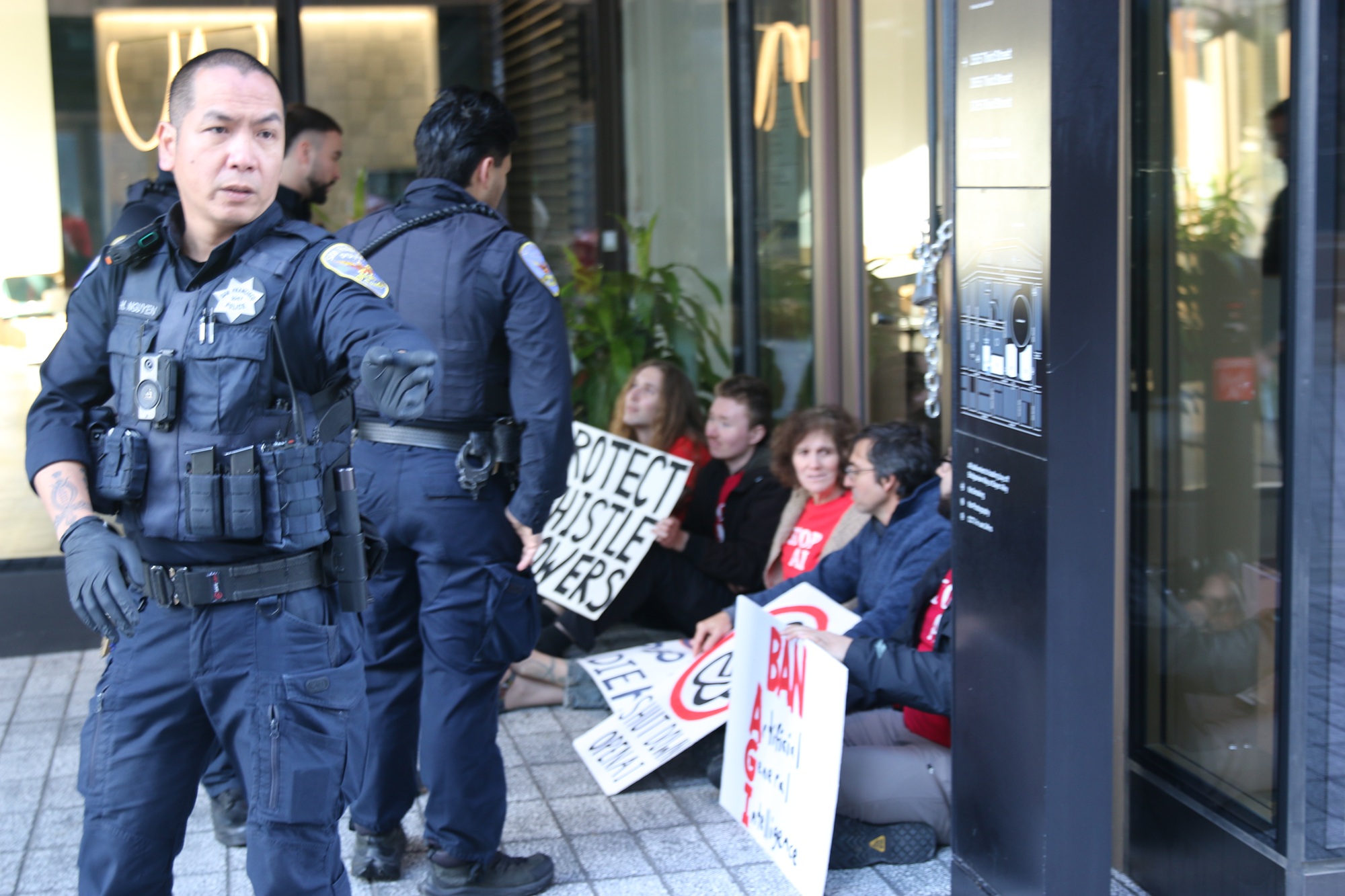
"caption": "San Francisco police command protestors and reporters to stand back as they detain members of Stop AI after they chained shut the front doors of OpenAI's San Francisco headquarters on Feb. 22, 2025. Several of the group members are awaiting trial on trespassing and disrupting a business.",
"credit": "Brian Krans/KQED",
"altTag": null,
"description": null,
"imgSizes": {
"thumbnail": {
"file": "https://cdn.kqed.org/wp-content/uploads/sites/10/2025/12/OpenAIProtestKQED2-160x107.jpg",
"width": 160,
"height": 107,
"mimeType": "image/jpeg"
},
"1536x1536": {
"file": "https://cdn.kqed.org/wp-content/uploads/sites/10/2025/12/OpenAIProtestKQED2-1536x1024.jpg",
"width": 1536,
"height": 1024,
"mimeType": "image/jpeg"
},
"post-thumbnail": {
"file": "https://cdn.kqed.org/wp-content/uploads/sites/10/2025/12/OpenAIProtestKQED2-672x372.jpg",
"width": 672,
"height": 372,
"mimeType": "image/jpeg"
},
"twentyfourteen-full-width": {
"file": "https://cdn.kqed.org/wp-content/uploads/sites/10/2025/12/OpenAIProtestKQED2-1038x576.jpg",
"width": 1038,
"height": 576,
"mimeType": "image/jpeg"
},
"npr-cds-wide": {
"file": "https://cdn.kqed.org/wp-content/uploads/sites/10/2025/12/OpenAIProtestKQED2-1200x675.jpg",
"width": 1200,
"height": 675,
"mimeType": "image/jpeg"
},
"kqedFullSize": {
"file": "https://cdn.kqed.org/wp-content/uploads/sites/10/2025/12/OpenAIProtestKQED2.jpg",
"width": 2000,
"height": 1333
}
},
"isLoading": false,
"fetchFailed": false
},
"news_11935568": {
"type": "attachments",
"id": "news_11935568",
"meta": {
"index": "attachments_1716263798",
"site": "news",
"id": "11935568",
"found": true
},
"parent": 11935500,
"imgSizes": {
"twentyfourteen-full-width": {
"file": "https://cdn.kqed.org/wp-content/uploads/sites/10/2022/12/RS46625_009_SanFrancisco_Hospital_01142021-qut-1038x576.jpg",
"width": 1038,
"mimeType": "image/jpeg",
"height": 576
},
"thumbnail": {
"file": "https://cdn.kqed.org/wp-content/uploads/sites/10/2022/12/RS46625_009_SanFrancisco_Hospital_01142021-qut-160x107.jpg",
"width": 160,
"mimeType": "image/jpeg",
"height": 107
},
"post-thumbnail": {
"file": "https://cdn.kqed.org/wp-content/uploads/sites/10/2022/12/RS46625_009_SanFrancisco_Hospital_01142021-qut-672x372.jpg",
"width": 672,
"mimeType": "image/jpeg",
"height": 372
},
"kqedFullSize": {
"file": "https://cdn.kqed.org/wp-content/uploads/sites/10/2022/12/RS46625_009_SanFrancisco_Hospital_01142021-qut.jpg",
"width": 1920,
"height": 1280
},
"large": {
"file": "https://cdn.kqed.org/wp-content/uploads/sites/10/2022/12/RS46625_009_SanFrancisco_Hospital_01142021-qut-1020x680.jpg",
"width": 1020,
"mimeType": "image/jpeg",
"height": 680
},
"1536x1536": {
"file": "https://cdn.kqed.org/wp-content/uploads/sites/10/2022/12/RS46625_009_SanFrancisco_Hospital_01142021-qut-1536x1024.jpg",
"width": 1536,
"mimeType": "image/jpeg",
"height": 1024
},
"medium": {
"file": "https://cdn.kqed.org/wp-content/uploads/sites/10/2022/12/RS46625_009_SanFrancisco_Hospital_01142021-qut-800x533.jpg",
"width": 800,
"mimeType": "image/jpeg",
"height": 533
}
},
"publishDate": 1671224046,
"modified": 1703727902,
"caption": "A San Francisco Fire Department ambulance leaves the Zuckerberg San Francisco General Hospital on Jan. 14, 2021. ",
"description": null,
"title": "RS46625_009_SanFrancisco_Hospital_01142021-qut",
"credit": "Beth LaBerge/KQED",
"status": "inherit",
"altTag": "An ambulance outside of a hospital.",
"isLoading": false,
"fetchFailed": false
},
"news_12059581": {
"type": "attachments",
"id": "news_12059581",
"meta": {
"index": "attachments_1716263798",
"site": "news",
"id": "12059581",
"found": true
},
"title": "20240827_SFUSDProtest_GC-5_qed",
"publishDate": 1760136595,
"status": "inherit",
"parent": 12059537,
"modified": 1760136618,
"caption": "Individuals cheer during an emergency rally and press conference, held by the United Educators of San Francisco, demanding fully staffed schools, outside of the San Francisco Unified School District offices, on Aug. 27, 2024.",
"credit": "Gina Castro/KQED",
"altTag": null,
"description": null,
"imgSizes": {
"thumbnail": {
"file": "https://cdn.kqed.org/wp-content/uploads/sites/10/2025/10/20240827_SFUSDProtest_GC-5_qed-160x109.jpg",
"width": 160,
"height": 109,
"mimeType": "image/jpeg"
},
"1536x1536": {
"file": "https://cdn.kqed.org/wp-content/uploads/sites/10/2025/10/20240827_SFUSDProtest_GC-5_qed-1536x1048.jpg",
"width": 1536,
"height": 1048,
"mimeType": "image/jpeg"
},
"post-thumbnail": {
"file": "https://cdn.kqed.org/wp-content/uploads/sites/10/2025/10/20240827_SFUSDProtest_GC-5_qed-672x372.jpg",
"width": 672,
"height": 372,
"mimeType": "image/jpeg"
},
"twentyfourteen-full-width": {
"file": "https://cdn.kqed.org/wp-content/uploads/sites/10/2025/10/20240827_SFUSDProtest_GC-5_qed-1038x576.jpg",
"width": 1038,
"height": 576,
"mimeType": "image/jpeg"
},
"kqedFullSize": {
"file": "https://cdn.kqed.org/wp-content/uploads/sites/10/2025/10/20240827_SFUSDProtest_GC-5_qed.jpg",
"width": 1953,
"height": 1333
}
},
"isLoading": false,
"fetchFailed": false
},
"news_12066135": {
"type": "attachments",
"id": "news_12066135",
"meta": {
"index": "attachments_1716263798",
"site": "news",
"id": "12066135",
"found": true
},
"title": "DerrickLewKQED1",
"publishDate": 1764879822,
"status": "inherit",
"parent": 12066073,
"modified": 1764879869,
"caption": "Incoming San Francisco Police Chief Derrick Lew speaks at a press conference at the Hall of Justice on Dec. 4, 2025",
"credit": "Sydney Johnson/KQED",
"altTag": null,
"description": null,
"imgSizes": {
"thumbnail": {
"file": "https://cdn.kqed.org/wp-content/uploads/sites/10/2025/12/DerrickLewKQED1-160x120.jpg",
"width": 160,
"height": 120,
"mimeType": "image/jpeg"
},
"1536x1536": {
"file": "https://cdn.kqed.org/wp-content/uploads/sites/10/2025/12/DerrickLewKQED1-1536x1152.jpg",
"width": 1536,
"height": 1152,
"mimeType": "image/jpeg"
},
"post-thumbnail": {
"file": "https://cdn.kqed.org/wp-content/uploads/sites/10/2025/12/DerrickLewKQED1-672x372.jpg",
"width": 672,
"height": 372,
"mimeType": "image/jpeg"
},
"twentyfourteen-full-width": {
"file": "https://cdn.kqed.org/wp-content/uploads/sites/10/2025/12/DerrickLewKQED1-1038x576.jpg",
"width": 1038,
"height": 576,
"mimeType": "image/jpeg"
},
"npr-cds-wide": {
"file": "https://cdn.kqed.org/wp-content/uploads/sites/10/2025/12/DerrickLewKQED1-1200x675.jpg",
"width": 1200,
"height": 675,
"mimeType": "image/jpeg"
},
"kqedFullSize": {
"file": "https://cdn.kqed.org/wp-content/uploads/sites/10/2025/12/DerrickLewKQED1.jpg",
"width": 2000,
"height": 1500
}
},
"isLoading": false,
"fetchFailed": false
},
"news_12060399": {
"type": "attachments",
"id": "news_12060399",
"meta": {
"index": "attachments_1716263798",
"site": "news",
"id": "12060399",
"found": true
},
"title": "251016-NIMITZHOUSE-38-BL-KQED",
"publishDate": 1760734604,
"status": "inherit",
"parent": 0,
"modified": 1760734636,
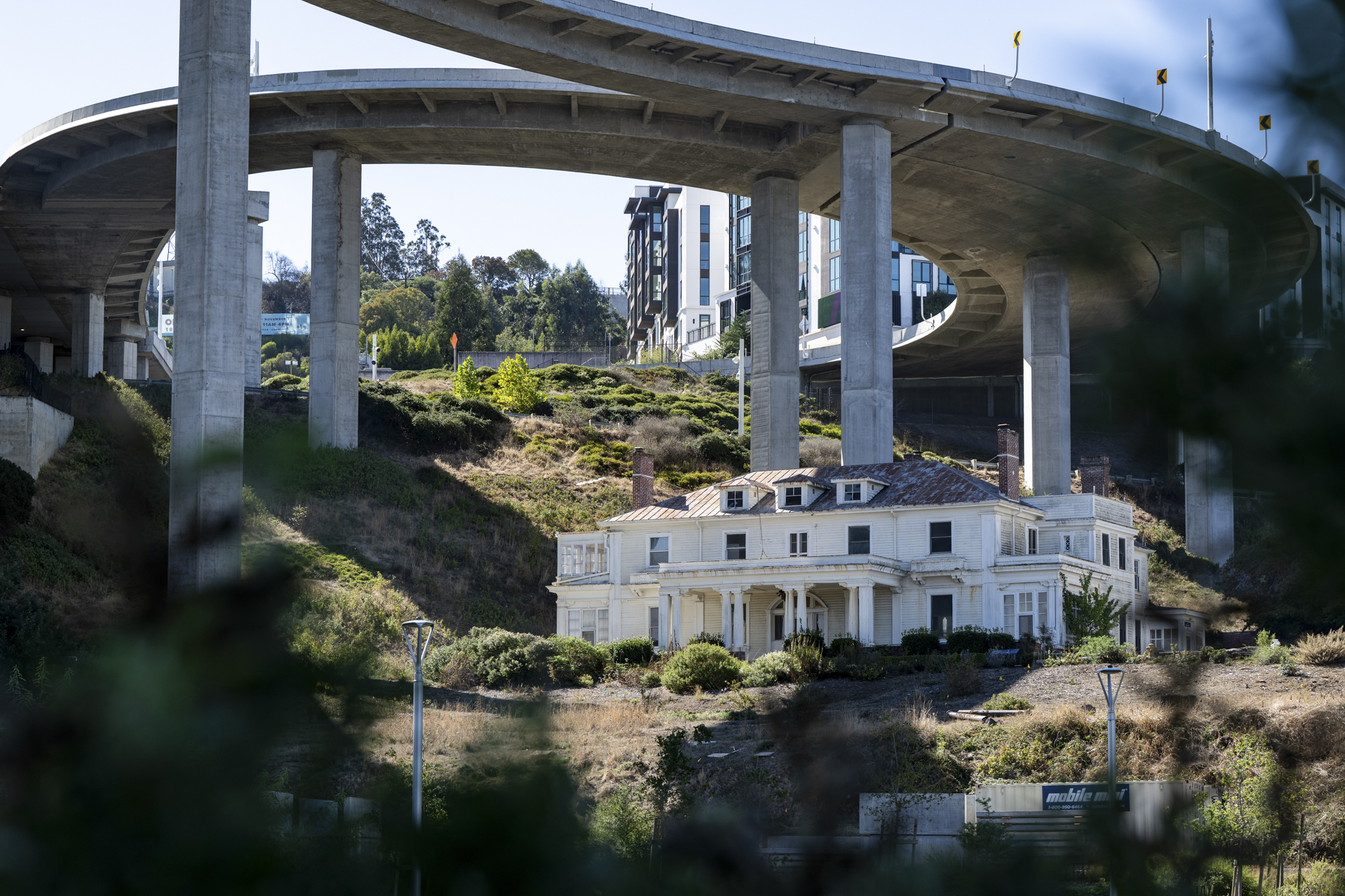
"caption": "The Nimitz House on Yerba Buena Island in San Francisco on Oct. 16, 2025, was built around 1900 as part of the Naval Training Station and later became the home of Fleet Admiral Chester Nimitz during the final years of his life.",
"credit": "Beth LaBerge/KQED",
"altTag": null,
"description": null,
"imgSizes": {
"thumbnail": {
"file": "https://cdn.kqed.org/wp-content/uploads/sites/10/2025/10/251016-NIMITZHOUSE-38-BL-KQED-160x107.jpg",
"width": 160,
"height": 107,
"mimeType": "image/jpeg"
},
"1536x1536": {
"file": "https://cdn.kqed.org/wp-content/uploads/sites/10/2025/10/251016-NIMITZHOUSE-38-BL-KQED-1536x1024.jpg",
"width": 1536,
"height": 1024,
"mimeType": "image/jpeg"
},
"post-thumbnail": {
"file": "https://cdn.kqed.org/wp-content/uploads/sites/10/2025/10/251016-NIMITZHOUSE-38-BL-KQED-672x372.jpg",
"width": 672,
"height": 372,
"mimeType": "image/jpeg"
},
"twentyfourteen-full-width": {
"file": "https://cdn.kqed.org/wp-content/uploads/sites/10/2025/10/251016-NIMITZHOUSE-38-BL-KQED-1038x576.jpg",
"width": 1038,
"height": 576,
"mimeType": "image/jpeg"
},
"kqedFullSize": {
"file": "https://cdn.kqed.org/wp-content/uploads/sites/10/2025/10/251016-NIMITZHOUSE-38-BL-KQED.jpg",
"width": 2000,
"height": 1333
}
},
"isLoading": false,
"fetchFailed": false
},
"news_12004750": {
"type": "attachments",
"id": "news_12004750",
"meta": {
"index": "attachments_1716263798",
"site": "news",
"id": "12004750",
"found": true
},
"title": "San Francisco downtown street",
"publishDate": 1726261449,
"status": "inherit",
"parent": 12004742,
"modified": 1726261591,
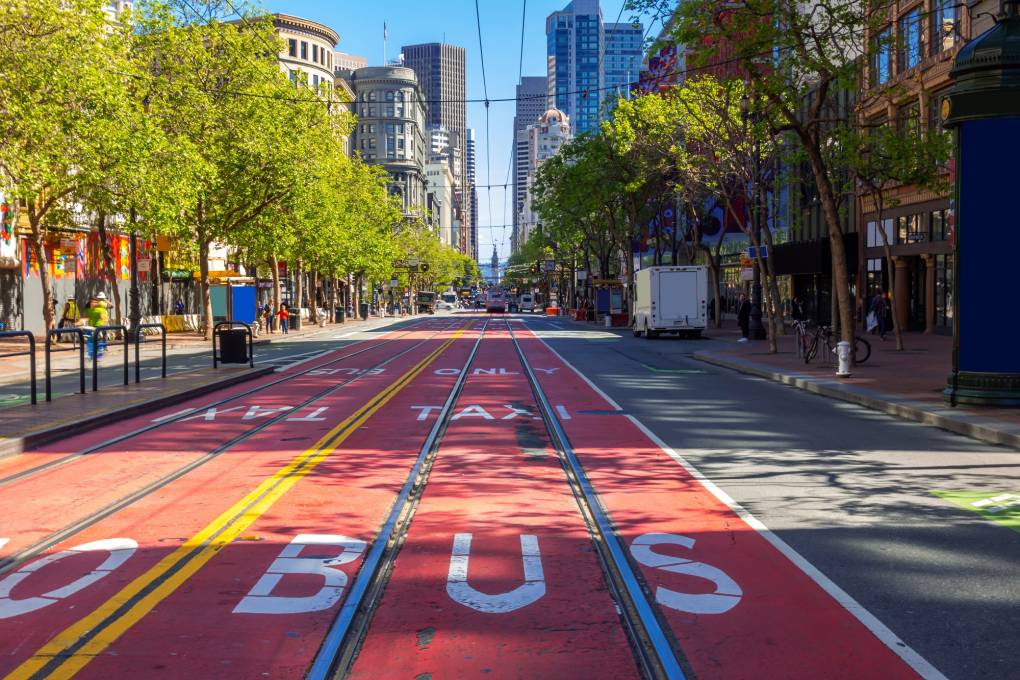
"caption": "Powell and Market streets in downtown San Francisco. ",
"credit": "Vichie81/Getty Images",
"altTag": null,
"description": null,
"imgSizes": {
"medium": {
"file": "https://cdn.kqed.org/wp-content/uploads/sites/10/2024/09/DowntownSFGetty1-800x533.jpg",
"width": 800,
"height": 533,
"mimeType": "image/jpeg"
},
"large": {
"file": "https://cdn.kqed.org/wp-content/uploads/sites/10/2024/09/DowntownSFGetty1-1020x680.jpg",
"width": 1020,
"height": 680,
"mimeType": "image/jpeg"
},
"thumbnail": {
"file": "https://cdn.kqed.org/wp-content/uploads/sites/10/2024/09/DowntownSFGetty1-160x107.jpg",
"width": 160,
"height": 107,
"mimeType": "image/jpeg"
},
"1536x1536": {
"file": "https://cdn.kqed.org/wp-content/uploads/sites/10/2024/09/DowntownSFGetty1-1536x1024.jpg",
"width": 1536,
"height": 1024,
"mimeType": "image/jpeg"
},
"post-thumbnail": {
"file": "https://cdn.kqed.org/wp-content/uploads/sites/10/2024/09/DowntownSFGetty1-672x372.jpg",
"width": 672,
"height": 372,
"mimeType": "image/jpeg"
},
"twentyfourteen-full-width": {
"file": "https://cdn.kqed.org/wp-content/uploads/sites/10/2024/09/DowntownSFGetty1-1038x576.jpg",
"width": 1038,
"height": 576,
"mimeType": "image/jpeg"
},
"full-width": {
"file": "https://cdn.kqed.org/wp-content/uploads/sites/10/2024/09/DowntownSFGetty1-1920x1280.jpg",
"width": 1920,
"height": 1280,
"mimeType": "image/jpeg"
},
"kqedFullSize": {
"file": "https://cdn.kqed.org/wp-content/uploads/sites/10/2024/09/DowntownSFGetty1.jpg",
"width": 2000,
"height": 1333
}
},
"isLoading": false,
"fetchFailed": false
},
"news_12058982": {
"type": "attachments",
"id": "news_12058982",
"meta": {
"index": "attachments_1716263798",
"site": "news",
"id": "12058982",
"found": true
},
"title": "251002-DRCOLOR_00168_TV-KQED",
"publishDate": 1759868987,
"status": "inherit",
"parent": 0,
"modified": 1760040948,
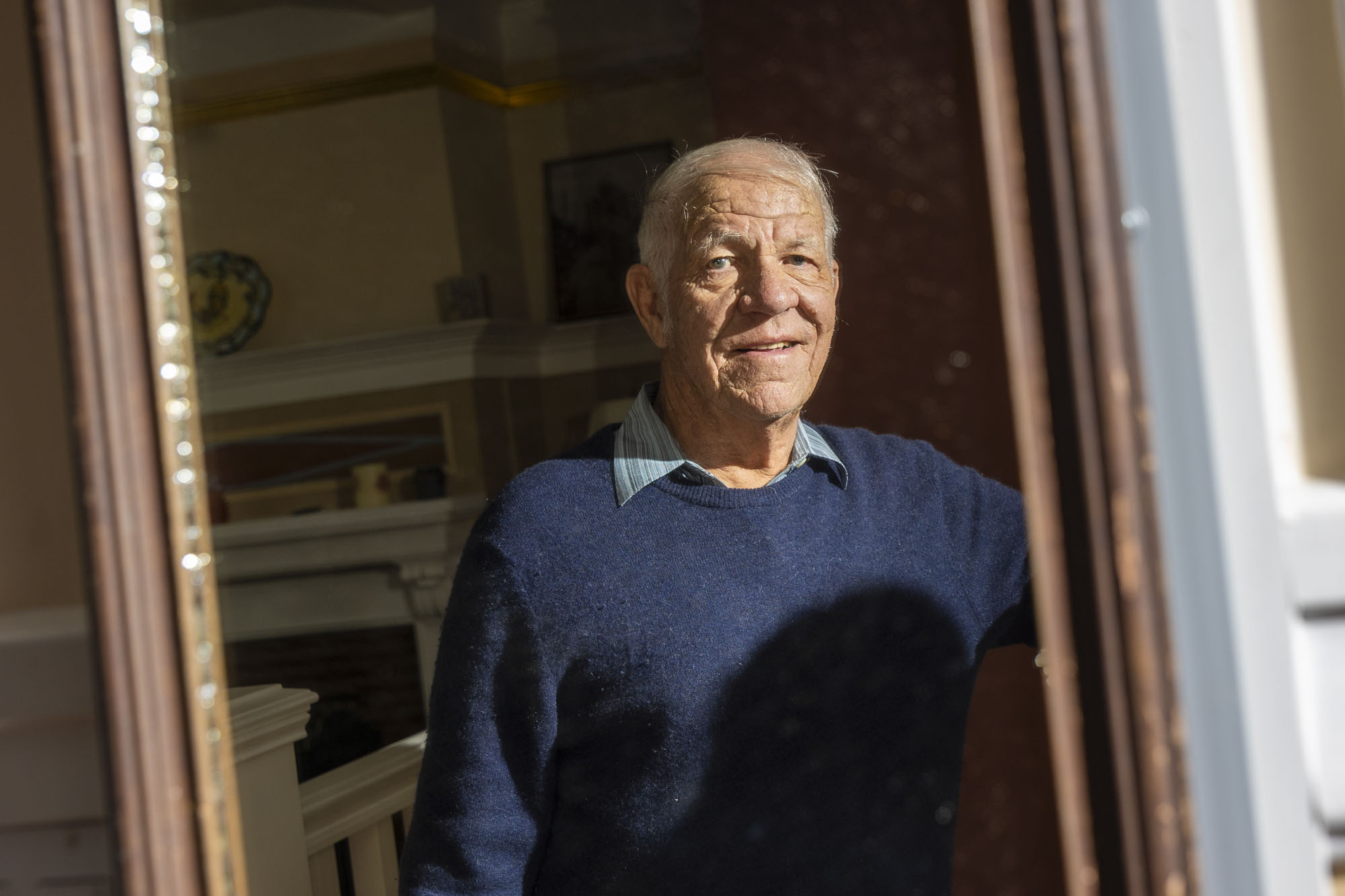
"caption": "Bob Buckter poses for a portrait in his home in the Mission district in San Francisco on Oct. 2, 2025. Buckter, aka Dr. Color, has designed and painted more than 23,000 homes in San Francisco and other projects in the city and beyond.",
"credit": "Tâm Vũ/KQED",
"altTag": null,
"description": null,
"imgSizes": {
"thumbnail": {
"file": "https://cdn.kqed.org/wp-content/uploads/sites/10/2025/10/251002-DRCOLOR_00168_TV-KQED-160x107.jpg",
"width": 160,
"height": 107,
"mimeType": "image/jpeg"
},
"1536x1536": {
"file": "https://cdn.kqed.org/wp-content/uploads/sites/10/2025/10/251002-DRCOLOR_00168_TV-KQED-1536x1024.jpg",
"width": 1536,
"height": 1024,
"mimeType": "image/jpeg"
},
"post-thumbnail": {
"file": "https://cdn.kqed.org/wp-content/uploads/sites/10/2025/10/251002-DRCOLOR_00168_TV-KQED-672x372.jpg",
"width": 672,
"height": 372,
"mimeType": "image/jpeg"
},
"twentyfourteen-full-width": {
"file": "https://cdn.kqed.org/wp-content/uploads/sites/10/2025/10/251002-DRCOLOR_00168_TV-KQED-1038x576.jpg",
"width": 1038,
"height": 576,
"mimeType": "image/jpeg"
},
"kqedFullSize": {
"file": "https://cdn.kqed.org/wp-content/uploads/sites/10/2025/10/251002-DRCOLOR_00168_TV-KQED.jpg",
"width": 2000,
"height": 1333
}
},
"isLoading": false,
"fetchFailed": false
},
"news_12065897": {
"type": "attachments",
"id": "news_12065897",
"meta": {
"index": "attachments_1716263798",
"site": "news",
"id": "12065897",
"found": true
},
"title": "080924_SF-Sweep_MO_CM_15",
"publishDate": 1764786767,
"status": "inherit",
"parent": 12065893,
"modified": 1764786785,
"caption": "Michael Johnson takes down his tent in downtown San Francisco with the help of activists on Aug. 9, 2024. ",
"credit": "Photo by Manuel Orbegozo for CalMatters",
"altTag": null,
"description": null,
"imgSizes": {
"thumbnail": {
"file": "https://cdn.kqed.org/wp-content/uploads/sites/10/2025/12/080924_SF-Sweep_MO_CM_15-160x107.jpeg",
"width": 160,
"height": 107,
"mimeType": "image/jpeg"
},
"1536x1536": {
"file": "https://cdn.kqed.org/wp-content/uploads/sites/10/2025/12/080924_SF-Sweep_MO_CM_15-1536x1024.jpeg",
"width": 1536,
"height": 1024,
"mimeType": "image/jpeg"
},
"post-thumbnail": {
"file": "https://cdn.kqed.org/wp-content/uploads/sites/10/2025/12/080924_SF-Sweep_MO_CM_15-672x372.jpeg",
"width": 672,
"height": 372,
"mimeType": "image/jpeg"
},
"twentyfourteen-full-width": {
"file": "https://cdn.kqed.org/wp-content/uploads/sites/10/2025/12/080924_SF-Sweep_MO_CM_15-1038x576.jpeg",
"width": 1038,
"height": 576,
"mimeType": "image/jpeg"
},
"npr-cds-wide": {
"file": "https://cdn.kqed.org/wp-content/uploads/sites/10/2025/12/080924_SF-Sweep_MO_CM_15-1200x675.jpeg",
"width": 1200,
"height": 675,
"mimeType": "image/jpeg"
},
"kqedFullSize": {
"file": "https://cdn.kqed.org/wp-content/uploads/sites/10/2025/12/080924_SF-Sweep_MO_CM_15.jpeg",
"width": 2000,
"height": 1333
}
},
"isLoading": false,
"fetchFailed": false
},
"news_12064590": {
"type": "attachments",
"id": "news_12064590",
"meta": {
"index": "attachments_1716263798",
"site": "news",
"id": "12064590",
"found": true
},
"title": "241219-BayBridgeCables-04_qed",
"publishDate": 1763492379,
"status": "inherit",
"parent": 0,
"modified": 1763492388,
"caption": "Crews build a walkway next to the suspension cables of the Bay Bridge to inspect the cables on the bridge’s western span on Dec. 19, 2024. The process involves opening the cables to assess the condition of thousands of thin steel strands inside. This work is part of an effort to ensure the bridge’s long-term safety and durability, as the steel cables are inspected for corrosion and other potential issues.",
"credit": "Beth LaBerge/KQED",
"altTag": null,
"description": null,
"imgSizes": {
"thumbnail": {
"file": "https://cdn.kqed.org/wp-content/uploads/sites/10/2025/11/241219-BayBridgeCables-04_qed-160x107.jpg",
"width": 160,
"height": 107,
"mimeType": "image/jpeg"
},
"1536x1536": {
"file": "https://cdn.kqed.org/wp-content/uploads/sites/10/2025/11/241219-BayBridgeCables-04_qed-1536x1024.jpg",
"width": 1536,
"height": 1024,
"mimeType": "image/jpeg"
},
"post-thumbnail": {
"file": "https://cdn.kqed.org/wp-content/uploads/sites/10/2025/11/241219-BayBridgeCables-04_qed-672x372.jpg",
"width": 672,
"height": 372,
"mimeType": "image/jpeg"
},
"twentyfourteen-full-width": {
"file": "https://cdn.kqed.org/wp-content/uploads/sites/10/2025/11/241219-BayBridgeCables-04_qed-1038x576.jpg",
"width": 1038,
"height": 576,
"mimeType": "image/jpeg"
},
"npr-cds-wide": {
"file": "https://cdn.kqed.org/wp-content/uploads/sites/10/2025/11/241219-BayBridgeCables-04_qed-1200x675.jpg",
"width": 1200,
"height": 675,
"mimeType": "image/jpeg"
},
"kqedFullSize": {
"file": "https://cdn.kqed.org/wp-content/uploads/sites/10/2025/11/241219-BayBridgeCables-04_qed.jpg",
"width": 2000,
"height": 1333
}
},
"isLoading": false,
"fetchFailed": false
},
"news_12034409": {
"type": "attachments",
"id": "news_12034409",
"meta": {
"index": "attachments_1716263798",
"site": "news",
"id": "12034409",
"found": true
},
"title": "Houses line a street in San Francisco’s Sunset District on March 25, 2025.",
"publishDate": 1743702595,
"status": "inherit",
"parent": 12033966,
"modified": 1743705463,
"caption": "Houses line a street in San Francisco’s Sunset District on March 25, 2025.",
"credit": "Beth LaBerge/KQED",
"altTag": null,
"description": null,
"imgSizes": {
"medium": {
"file": "https://cdn.kqed.org/wp-content/uploads/sites/10/2025/04/250325-ApartmentsonWestside-06-BL_qed-800x533.jpg",
"width": 800,
"height": 533,
"mimeType": "image/jpeg"
},
"large": {
"file": "https://cdn.kqed.org/wp-content/uploads/sites/10/2025/04/250325-ApartmentsonWestside-06-BL_qed-1020x680.jpg",
"width": 1020,
"height": 680,
"mimeType": "image/jpeg"
},
"thumbnail": {
"file": "https://cdn.kqed.org/wp-content/uploads/sites/10/2025/04/250325-ApartmentsonWestside-06-BL_qed-160x107.jpg",
"width": 160,
"height": 107,
"mimeType": "image/jpeg"
},
"1536x1536": {
"file": "https://cdn.kqed.org/wp-content/uploads/sites/10/2025/04/250325-ApartmentsonWestside-06-BL_qed-1536x1024.jpg",
"width": 1536,
"height": 1024,
"mimeType": "image/jpeg"
},
"post-thumbnail": {
"file": "https://cdn.kqed.org/wp-content/uploads/sites/10/2025/04/250325-ApartmentsonWestside-06-BL_qed-672x372.jpg",
"width": 672,
"height": 372,
"mimeType": "image/jpeg"
},
"twentyfourteen-full-width": {
"file": "https://cdn.kqed.org/wp-content/uploads/sites/10/2025/04/250325-ApartmentsonWestside-06-BL_qed-1038x576.jpg",
"width": 1038,
"height": 576,
"mimeType": "image/jpeg"
},
"full-width": {
"file": "https://cdn.kqed.org/wp-content/uploads/sites/10/2025/04/250325-ApartmentsonWestside-06-BL_qed-1920x1280.jpg",
"width": 1920,
"height": 1280,
"mimeType": "image/jpeg"
},
"kqedFullSize": {
"file": "https://cdn.kqed.org/wp-content/uploads/sites/10/2025/04/250325-ApartmentsonWestside-06-BL_qed.jpg",
"width": 1999,
"height": 1333
}
},
"isLoading": false,
"fetchFailed": false
}
},
"audioPlayerReducer": {
"postId": "stream_live",
"isPaused": true,
"isPlaying": false,
"pfsActive": false,
"pledgeModalIsOpen": true,
"playerDrawerIsOpen": false,
"liveAudioPlayStartedAt": 0,
"liveAudioPlayContext": ""
},
"authorsReducer": {
"byline_news_12065893": {
"type": "authors",
"id": "byline_news_12065893",
"meta": {
"override": true
},
"slug": "byline_news_12065893",
"name": "Marissa Kendall, CalMatters",
"isLoading": false
},
"danbrekke": {
"type": "authors",
"id": "222",
"meta": {
"index": "authors_1716337520",
"id": "222",
"found": true
},
"name": "Dan Brekke",
"firstName": "Dan",
"lastName": "Brekke",
"slug": "danbrekke",
"email": "dbrekke@kqed.org",
"display_author_email": true,
"staff_mastheads": [
"news",
"science"
],
"title": "KQED Editor and Reporter",
"bio": "Dan Brekke is a reporter and editor for KQED News, responsible for coverage of topics ranging from California water issues to the Bay Area's transportation challenges. In a newsroom career that began in Chicago in 1972, Dan has worked for \u003cem>The San Francisco Examiner,\u003c/em> Wired and TechTV and has been published in The New York Times, The New York Times Magazine, Business 2.0, Salon and elsewhere.\r\n\r\nSince joining KQED in 2007, Dan has reported, edited and produced both radio and online features and breaking news pieces. He has shared as both editor and reporter in four Society of Professional Journalists Norcal Excellence in Journalism awards and one Edward R. Murrow regional award. He was chosen for a spring 2017 residency at the Mesa Refuge to advance his research on California salmon.\r\n\r\nEmail Dan at: \u003ca href=\"mailto:dbrekke@kqed.org\">dbrekke@kqed.org\u003c/a>\r\n\r\n\u003cstrong>Twitter:\u003c/strong> \u003ca href=\"https://twitter.com/danbrekke\" rel=\"noopener noreferrer\">twitter.com/danbrekke\u003c/a>\r\n\u003cstrong>Facebook:\u003c/strong> \u003ca href=\"https://www.facebook.com/danbrekke\" rel=\"noopener noreferrer\">www.facebook.com/danbrekke\u003c/a>\r\n\u003cstrong>LinkedIn:\u003c/strong> \u003ca href=\"https://www.linkedin.com/in/danbrekke\" rel=\"noopener noreferrer\">www.linkedin.com/in/danbrekke\u003c/a>",
"avatar": "https://secure.gravatar.com/avatar/c8126230345efca3f7aa89b1a402be45?s=600&d=mm&r=g",
"twitter": "danbrekke",
"facebook": null,
"instagram": "https://www.instagram.com/dan.brekke/",
"linkedin": "https://www.linkedin.com/in/danbrekke/",
"sites": [
{
"site": "news",
"roles": [
"administrator",
"create_posts"
]
},
{
"site": "stateofhealth",
"roles": [
"editor"
]
},
{
"site": "science",
"roles": [
"editor"
]
},
{
"site": "quest",
"roles": [
"contributor"
]
},
{
"site": "food",
"roles": [
"contributor"
]
},
{
"site": "forum",
"roles": [
"contributor"
]
},
{
"site": "liveblog",
"roles": [
"editor"
]
}
],
"headData": {
"title": "Dan Brekke | KQED",
"description": "KQED Editor and Reporter",
"ogImgSrc": "https://secure.gravatar.com/avatar/c8126230345efca3f7aa89b1a402be45?s=600&d=mm&r=g",
"twImgSrc": "https://secure.gravatar.com/avatar/c8126230345efca3f7aa89b1a402be45?s=600&d=mm&r=g"
},
"isLoading": false,
"link": "/author/danbrekke"
},
"jsmall": {
"type": "authors",
"id": "6625",
"meta": {
"index": "authors_1716337520",
"id": "6625",
"found": true
},
"name": "Julie Small",
"firstName": "Julie",
"lastName": "Small",
"slug": "jsmall",
"email": "jsmall@kqed.org",
"display_author_email": true,
"staff_mastheads": [
"news"
],
"title": "KQED Contributor",
"bio": "Julie Small reports on criminal justice and immigration.\r\n\r\nShe was part of a team at KQED awarded a regional 2019 Edward R. Murrow award for continuing coverage of the Trump Administration's family separation policy.\r\n\r\nThe Society for Professional Journalists recognized Julie's 2018 \u003ca href=\"https://www.kqed.org/news/11636262/the-officer-tased-him-31-times-the-sheriff-called-his-death-an-accident\">reporting\u003c/a> on the San Joaquin County Sheriff's \u003ca href=\"https://www.kqed.org/news/11634689/autopsy-doctors-sheriff-overrode-death-findings-to-protect-law-enforcement\">interference\u003c/a> in death investigations with an Excellence in Journalism Award for Ongoing Coverage.\r\n\r\nJulie's\u003ca href=\"https://www.kqed.org/news/11039666/two-mentally-ill-inmates-died-one-month-in-santa-clara\"> reporting\u003c/a> with Lisa Pickoff-White on the treatment of mentally ill offenders in California jails earned a 2017 regional Edward R. Murrow Award for news reporting and an investigative reporting award from the SPJ of Northern California.\r\n\r\nBefore joining KQED, Julie covered government and politics in Sacramento for Southern California Public Radio (SCPR). Her 2010 \u003ca href=\"https://www.scpr.org/specials/prisonmedical/\">series\u003c/a> on lapses in California’s prison medical care also won a regional Edward R. Murrow Award for investigative reporting and a Golden Mic Award from the RTNDA of Southern California.\r\n\r\nJulie began her career in journalism in 2000 as the deputy foreign editor for public radio's \u003cem>Marketplace, \u003c/em>while earning her master's degree in journalism from USC’s Annenberg School of Communication.",
"avatar": "https://secure.gravatar.com/avatar/4baedf201468df97be97c2a9dd7585d0?s=600&d=blank&r=g",
"twitter": "@SmallRadio2",
"facebook": null,
"instagram": null,
"linkedin": null,
"sites": [
{
"site": "news",
"roles": [
"editor"
]
},
{
"site": "stateofhealth",
"roles": [
"author"
]
},
{
"site": "science",
"roles": [
"author"
]
}
],
"headData": {
"title": "Julie Small | KQED",
"description": "KQED Contributor",
"ogImgSrc": "https://secure.gravatar.com/avatar/4baedf201468df97be97c2a9dd7585d0?s=600&d=blank&r=g",
"twImgSrc": "https://secure.gravatar.com/avatar/4baedf201468df97be97c2a9dd7585d0?s=600&d=blank&r=g"
},
"isLoading": false,
"link": "/author/jsmall"
},
"sjohnson": {
"type": "authors",
"id": "11840",
"meta": {
"index": "authors_1716337520",
"id": "11840",
"found": true
},
"name": "Sydney Johnson",
"firstName": "Sydney",
"lastName": "Johnson",
"slug": "sjohnson",
"email": "sjohnson@kqed.org",
"display_author_email": false,
"staff_mastheads": [
"news"
],
"title": "KQED Reporter",
"bio": "Sydney Johnson is a general assignment reporter at KQED. She previously reported on public health and city government at the San Francisco Examiner, and before that, she covered statewide education policy for EdSource. Her reporting has won multiple local, state and national awards. Sydney is a graduate of the University of California, Berkeley and lives in San Francisco.",
"avatar": "https://secure.gravatar.com/avatar/97855f2719b72ad6190b7c535fe642c8?s=600&d=blank&r=g",
"twitter": "sydneyfjohnson",
"facebook": null,
"instagram": null,
"linkedin": null,
"sites": [
{
"site": "news",
"roles": [
"editor"
]
}
],
"headData": {
"title": "Sydney Johnson | KQED",
"description": "KQED Reporter",
"ogImgSrc": "https://secure.gravatar.com/avatar/97855f2719b72ad6190b7c535fe642c8?s=600&d=blank&r=g",
"twImgSrc": "https://secure.gravatar.com/avatar/97855f2719b72ad6190b7c535fe642c8?s=600&d=blank&r=g"
},
"isLoading": false,
"link": "/author/sjohnson"
},
"kdebenedetti": {
"type": "authors",
"id": "11913",
"meta": {
"index": "authors_1716337520",
"id": "11913",
"found": true
},
"name": "Katie DeBenedetti",
"firstName": "Katie",
"lastName": "DeBenedetti",
"slug": "kdebenedetti",
"email": "kdebenedetti@kqed.org",
"display_author_email": false,
"staff_mastheads": [
"news",
"science"
],
"title": "KQED Contributor",
"bio": "Katie DeBenedetti is a digital reporter covering daily news for the Express Desk. Prior to joining KQED as a culture reporting intern in January 2024, she covered education and city government for the Napa Valley Register.",
"avatar": "https://secure.gravatar.com/avatar/6e31073cb8f7e4214ab03f42771d0f45?s=600&d=blank&r=g",
"twitter": null,
"facebook": null,
"instagram": null,
"linkedin": null,
"sites": [
{
"site": "news",
"roles": [
"author"
]
},
{
"site": "science",
"roles": [
"author"
]
},
{
"site": "liveblog",
"roles": [
"author"
]
}
],
"headData": {
"title": "Katie DeBenedetti | KQED",
"description": "KQED Contributor",
"ogImgSrc": "https://secure.gravatar.com/avatar/6e31073cb8f7e4214ab03f42771d0f45?s=600&d=blank&r=g",
"twImgSrc": "https://secure.gravatar.com/avatar/6e31073cb8f7e4214ab03f42771d0f45?s=600&d=blank&r=g"
},
"isLoading": false,
"link": "/author/kdebenedetti"
},
"bkrans": {
"type": "authors",
"id": "11923",
"meta": {
"index": "authors_1716337520",
"id": "11923",
"found": true
},
"name": "Brian Krans",
"firstName": "Brian",
"lastName": "Krans",
"slug": "bkrans",
"email": "bkrans@kqed.org",
"display_author_email": false,
"staff_mastheads": [
"news"
],
"title": "KQED Contributing Reporter",
"bio": "Brian Krans is an award-winning local news and investigative reporter who has been proudly working as a general assignment reporter for KQED since August 2023. He lives in Richmond, where he also reports on air pollution for Richmondside. He is also a founding member of the Vallejo Sun.",
"avatar": "https://secure.gravatar.com/avatar/d1014d604089314a94807d2c4f2d3e06?s=600&d=blank&r=g",
"twitter": "citizenkrans",
"facebook": null,
"instagram": null,
"linkedin": null,
"sites": [
{
"site": "news",
"roles": [
"editor"
]
}
],
"headData": {
"title": "Brian Krans | KQED",
"description": "KQED Contributing Reporter",
"ogImgSrc": "https://secure.gravatar.com/avatar/d1014d604089314a94807d2c4f2d3e06?s=600&d=blank&r=g",
"twImgSrc": "https://secure.gravatar.com/avatar/d1014d604089314a94807d2c4f2d3e06?s=600&d=blank&r=g"
},
"isLoading": false,
"link": "/author/bkrans"
},
"gglueck": {
"type": "authors",
"id": "11946",
"meta": {
"index": "authors_1716337520",
"id": "11946",
"found": true
},
"name": "Gabriela Glueck",
"firstName": "Gabriela",
"lastName": "Glueck",
"slug": "gglueck",
"email": "gglueck@kqed.org",
"display_author_email": false,
"staff_mastheads": [
"news"
],
"title": "KQED Contributor",
"bio": null,
"avatar": "https://secure.gravatar.com/avatar/ec62b7e3f7727ce1070cc7046dde80271d1e63cf2178d6194f68bb8d1440f841?s=600&d=blank&r=g",
"twitter": null,
"bluesky": null,
"facebook": null,
"instagram": null,
"linkedin": null,
"sites": [
{
"site": "news",
"roles": [
"editor"
]
}
],
"headData": {
"title": "Gabriela Glueck | KQED",
"description": "KQED Contributor",
"ogImgSrc": "https://secure.gravatar.com/avatar/ec62b7e3f7727ce1070cc7046dde80271d1e63cf2178d6194f68bb8d1440f841?s=600&d=blank&r=g",
"twImgSrc": "https://secure.gravatar.com/avatar/ec62b7e3f7727ce1070cc7046dde80271d1e63cf2178d6194f68bb8d1440f841?s=600&d=blank&r=g"
},
"isLoading": false,
"link": "/author/gglueck"
}
},
"pagesReducer": {
"news_tag_san-francisco": {
"type": "terms",
"id": "news_38",
"meta": {
"index": "terms_1716263798",
"site": "news",
"id": "38",
"score": 6.7229023
},
"featImg": null,
"name": "San Francisco",
"description": null,
"taxonomy": "tag",
"headData": {
"twImgId": null,
"twTitle": null,
"ogTitle": null,
"ogImgId": null,
"twDescription": null,
"description": null,
"title": "San Francisco Archives | KQED News",
"ogDescription": null
},
"ttid": 58,
"slug": "san-francisco",
"isLoading": false,
"title": "San Francisco",
"pageMeta": {
"site": "news",
"WpPageTemplate": "page-topic-editorial",
"currentPage": 38
},
"blocks": [
{
"blockName": "kqed/post-list",
"attrs": {
"layout": "cardArticle2",
"query": "posts/news?tag=san-francisco",
"seeMore": false,
"paginated": true,
"page": 38
}
},
{
"blockName": "kqed/ad"
}
]
}
},
"pfsSessionReducer": {},
"postsReducer": {
"stream_live": {
"type": "live",
"id": "stream_live",
"audioUrl": "https://streams.kqed.org/kqedradio",
"title": "Live Stream",
"excerpt": "Live Stream information currently unavailable.",
"link": "/radio",
"featImg": "",
"label": {
"name": "KQED Live",
"link": "/"
}
},
"stream_kqedNewscast": {
"type": "posts",
"id": "stream_kqedNewscast",
"audioUrl": "https://www.kqed.org/.stream/anon/radio/RDnews/newscast.mp3?_=1",
"title": "KQED Newscast",
"featImg": "",
"label": {
"name": "88.5 FM",
"link": "/"
}
},
"news_12066202": {
"type": "posts",
"id": "news_12066202",
"meta": {
"index": "posts_1716263798",
"site": "news",
"id": "12066202",
"score": null,
"sort": [
1764984516000
]
},
"guestAuthors": [],
"slug": "california-renews-push-to-bring-national-guard-back-under-newsoms-command",
"title": "California Renews Push to Bring National Guard Back Under Newsom’s Command",
"publishDate": 1764984516,
"format": "standard",
"headTitle": "California Renews Push to Bring National Guard Back Under Newsom’s Command | KQED",
"labelTerm": {
"site": "news"
},
"content": "\u003cp>Lawyers for California and for the Trump administration returned to court on Friday to argue whether the president has the authority to extend the federal deployment of \u003ca href=\"https://www.kqed.org/news/12051954/judge-to-rule-whether-trumps-use-of-troops-in-la-violated-federal-law\">more than 300 members of the state’s National Guard\u003c/a> indefinitely.\u003c/p>\n\u003cp>In a U.S. District Court in San Francisco, Judge Charles Breyer spent the better part of an hour-and-a-half-long hearing asking the U.S. attorney to cite specific evidence to support the decision to federalize state troops during protests against immigration enforcement in Los Angeles.\u003c/p>\n\u003cp>“What evidence is there?” Breyer repeatedly asked Deputy Assistant Attorney General Eric Hamilton, who alleged threats to federal personnel and property.\u003c/p>\n\u003cp>[ad fullwidth]\u003c/p>\n\u003cp>Breyer then asked the U.S. attorney whether there are any checks on the president’s power to determine the length of a deployment.\u003c/p>\n\u003cp>“Is it your view that the president can keep troops federalized indefinitely without any judicial review?” Breyer asked.\u003c/p>\n\u003cp>https://www.youtube.com/watch?v=fV4Fyi2qwrU\u003c/p>\n\u003cp>“Yes,” Hamilton answered.\u003c/p>\n\u003cp>“In other words, like diamonds, it’s forever, right?” Breyer pressed. “As long as the president believes in his discretion that justifies the federalization of the National Guard, it’s forever.”\u003c/p>\n\u003cp>California challenged President Donald Trump’s ongoing deployment in a renewed \u003ca href=\"https://oag.ca.gov/news/press-releases/new-filing-attorney-general-bonta-and-governor-newsom-ask-court-block-renewed\">motion\u003c/a> in September, after the president extended the federalization of 300 troops through the November election, and again through Feb. 2.\u003c/p>\n\u003cp>“The federal government has taken the remarkable position that they can make decisions about the deployment of the National Guard, including here,” Bonta said after the hearing. “And judges can do nothing about it, that there is no check, that there is no balance, that there is no coequal branch of government called the judiciary to review their decision.”\u003c/p>\n\u003cp>Breyer did not immediately issue a ruling on Friday, but said one would come soon.\u003c/p>\n\u003cp>The judge previously ruled that the use of \u003ca href=\"https://www.kqed.org/news/12054322/judge-rules-trump-violated-law-by-sending-troops-to-los-angeles\">state troops \u003c/a>violated the Constitution and the Posse Comitatus Act and ordered the administration to cease using them for policing activities. However, because federal appeals court judges \u003ca href=\"https://storage.courtlistener.com/recap/gov.uscourts.ca9.33862d2f-fcee-484b-82e0-2aefd5de7aaa/gov.uscourts.ca9.33862d2f-fcee-484b-82e0-2aefd5de7aaa.7.0.pdf\">granted\u003c/a> the government’s request for a stay, the order never took effect.[aside postID=news_12060875 hero='https://cdn.kqed.org/wp-content/uploads/sites/10/2025/10/NationalGuardGetty.jpg']Defense Secretary Pete Hegseth initially federalized 4000 National Guard troops and more than 700 Marines to Los Angeles in early June.\u003c/p>\n\u003cp>“Violent protests threaten the security of and significant damage to Federal immigration detention facilities and other Federal property,” Trump said in a June 7 memo. “To the extent that protests or acts of violence directly inhibit the execution of the laws, they constitute a form of rebellion.”\u003c/p>\n\u003cp>The necessity of that deployment has been the center of a see-sawing legal battle between California and the Trump administration, and has become the model for mobilizations throughout the country.\u003c/p>\n\u003cp>In October, the Trump administration redeployed 214 California National Guard troops to Portland, an action ultimately prevented by \u003ca href=\"https://www.kqed.org/news/12059205/sf-appeals-court-appears-reluctant-to-block-trumps-national-guard-deployment-to-portland\">a federal judge in Oregon\u003c/a>. Those guards remained outside the city at a base until November, when the president released them from their mission. At this time, the troops are in the process of demobilizing at Fort Hood, Texas, according to a spokesperson for Northern Command, but are still under the federal government’s command.\u003c/p>\n\u003cp>The 100 troops in Los Angeles “remain staged at various locations” according to the U.S. government’s \u003ca href=\"https://cdn.kqed.org/wp-content/uploads/sites/10/2025/12/214.pdf\">court filings\u003c/a>, “to provide rapid response protection support to federal facilities, functions, and personnel.”\u003c/p>\n\u003cp>The state’s argument also drew attention to an \u003ca href=\"https://cdn.kqed.org/wp-content/uploads/sites/10/2025/12/212-2.pdf\">Aug. 25 presidential order\u003c/a> instructing “the Secretary of Defense [to] ensure the availability of a standing National Guard quick reaction force that shall be resourced, trained, and available for rapid nationwide deployment.”\u003c/p>\n\u003cp>As the administration’s justification for the initial mobilization in Los Angeles remained the subject of fierce national debate over the limits of presidential power, California argued that the continued federalization of the 100 troops could no longer be rationalized by any measure.\u003c/p>\n\u003cp>“The lack of any violence or other justifying events in Los Angeles and Defendants’ choice to remove most of those troops from Los Angeles confirms it,” Bonta asserted in \u003ca href=\"https://cdn.kqed.org/wp-content/uploads/sites/10/2025/12/Renewed-Motion.pdf\">court filings\u003c/a> urging the court to “enjoin any continued federalization and deployment of National Guard troops in and around Los Angeles, and end this unlawful federalization now.”\u003c/p>\n\u003cp>California has also argued that the Trump administration’s federalization of the state’s National Guard has become a blueprint in a war against blue states and cities.\u003c/p>\n\u003cp>“Defendants began to implement in other parts of the country the model of military occupation that began in Los Angeles,” attorneys wrote in court filings.\u003c/p>\n\u003cp>It remained unclear, however, what effect a ruling on California’s renewed motion would have, given other cases challenging the federalization of state’s national guard moving through the courts. That includes Trump v. Illinois, which is on the emergency docket before the U.S. Supreme Court.\u003c/p>\n\u003cp>After the hearing, Bonta said that all of the cases currently moving through the courts focus on the same component of the law that allows the president to deploy the National Guard if there’s an inability to execute the federal law with the regular forces.\u003c/p>\n\u003cp>“And that’s what the U.S. Supreme Court is going to look at, at least the aspect of what are regular forces and how you’re supposed to analyze that issue,” Bonta said.\u003c/p>\n\u003cp>\u003cem>KQED’s Amanda Hernandez contributed to this report. \u003c/em>\u003c/p>\n\u003cp>\u003c/p>\n",
"blocks": [],
"excerpt": "California Attorney General Rob Bonta said the state’s National Guard is not President Donald Trump’s “royal guard.” \r\n",
"status": "publish",
"parent": 0,
"modified": 1765232322,
"stats": {
"hasAudio": false,
"hasVideo": true,
"hasChartOrMap": false,
"iframeSrcs": [],
"hasGoogleForm": false,
"hasGallery": false,
"hasHearkenModule": false,
"hasPolis": false,
"paragraphCount": 26,
"wordCount": 948
},
"headData": {
"title": "California Renews Push to Bring National Guard Back Under Newsom’s Command | KQED",
"description": "California Attorney General Rob Bonta said the state’s National Guard is not President Donald Trump’s “royal guard.” \r\n",
"ogTitle": "",
"ogDescription": "",
"ogImgId": "",
"twTitle": "",
"twDescription": "",
"twImgId": "",
"schema": {
"@context": "https://schema.org",
"@type": "NewsArticle",
"headline": "California Renews Push to Bring National Guard Back Under Newsom’s Command",
"datePublished": "2025-12-05T17:28:36-08:00",
"dateModified": "2025-12-08T14:18:42-08:00",
"image": "https://cdn.kqed.org/wp-content/uploads/2020/02/KQED-OG-Image@1x.png",
"isAccessibleForFree": "True",
"publisher": {
"@type": "NewsMediaOrganization",
"@id": "https://www.kqed.org/#organization",
"name": "KQED",
"logo": "https://cdn.kqed.org/wp-content/uploads/2020/02/KQED-OG-Image@1x.png",
"url": "https://www.kqed.org",
"sameAs": [
"https://www.facebook.com/KQED",
"https://twitter.com/KQED",
"https://www.instagram.com/kqed/",
"https://www.tiktok.com/@kqedofficial",
"https://www.linkedin.com/company/kqed",
"https://www.youtube.com/channel/UCeC0IOo7i1P_61zVUWbJ4nw"
]
}
}
},
"primaryCategory": {
"termId": 31795,
"slug": "california",
"name": "California"
},
"sticky": false,
"nprStoryId": "kqed-12066202",
"templateType": "standard",
"featuredImageType": "standard",
"excludeFromSiteSearch": "Include",
"articleAge": "0",
"path": "/news/12066202/california-renews-push-to-bring-national-guard-back-under-newsoms-command",
"audioTrackLength": null,
"parsedContent": [
{
"type": "contentString",
"content": "\u003cdiv class=\"post-body\">\u003cp>\u003cp>Lawyers for California and for the Trump administration returned to court on Friday to argue whether the president has the authority to extend the federal deployment of \u003ca href=\"https://www.kqed.org/news/12051954/judge-to-rule-whether-trumps-use-of-troops-in-la-violated-federal-law\">more than 300 members of the state’s National Guard\u003c/a> indefinitely.\u003c/p>\n\u003cp>In a U.S. District Court in San Francisco, Judge Charles Breyer spent the better part of an hour-and-a-half-long hearing asking the U.S. attorney to cite specific evidence to support the decision to federalize state troops during protests against immigration enforcement in Los Angeles.\u003c/p>\n\u003cp>“What evidence is there?” Breyer repeatedly asked Deputy Assistant Attorney General Eric Hamilton, who alleged threats to federal personnel and property.\u003c/p>\n\u003cp>\u003c/p>\u003c/div>",
"attributes": {
"named": {},
"numeric": []
}
},
{
"type": "component",
"content": "",
"name": "ad",
"attributes": {
"named": {
"label": "fullwidth"
},
"numeric": [
"fullwidth"
]
}
},
{
"type": "contentString",
"content": "\u003cdiv class=\"post-body\">\u003cp>\u003c/p>\n\u003cp>Breyer then asked the U.S. attorney whether there are any checks on the president’s power to determine the length of a deployment.\u003c/p>\n\u003cp>“Is it your view that the president can keep troops federalized indefinitely without any judicial review?” Breyer asked.\u003c/p>\u003c/p>\u003cp>\u003cspan class='utils-parseShortcode-shortcodes-__youtubeShortcode__embedYoutube'>\n \u003cspan class='utils-parseShortcode-shortcodes-__youtubeShortcode__embedYoutubeInside'>\n \u003ciframe\n loading='lazy'\n class='utils-parseShortcode-shortcodes-__youtubeShortcode__youtubePlayer'\n type='text/html'\n src='//www.youtube.com/embed/fV4Fyi2qwrU'\n title='//www.youtube.com/embed/fV4Fyi2qwrU'\n allowfullscreen='true'\n style='border:0;'>\u003c/iframe>\n \u003c/span>\n \u003c/span>\u003c/p>\u003cp>\u003cp>“Yes,” Hamilton answered.\u003c/p>\n\u003cp>“In other words, like diamonds, it’s forever, right?” Breyer pressed. “As long as the president believes in his discretion that justifies the federalization of the National Guard, it’s forever.”\u003c/p>\n\u003cp>California challenged President Donald Trump’s ongoing deployment in a renewed \u003ca href=\"https://oag.ca.gov/news/press-releases/new-filing-attorney-general-bonta-and-governor-newsom-ask-court-block-renewed\">motion\u003c/a> in September, after the president extended the federalization of 300 troops through the November election, and again through Feb. 2.\u003c/p>\n\u003cp>“The federal government has taken the remarkable position that they can make decisions about the deployment of the National Guard, including here,” Bonta said after the hearing. “And judges can do nothing about it, that there is no check, that there is no balance, that there is no coequal branch of government called the judiciary to review their decision.”\u003c/p>\n\u003cp>Breyer did not immediately issue a ruling on Friday, but said one would come soon.\u003c/p>\n\u003cp>The judge previously ruled that the use of \u003ca href=\"https://www.kqed.org/news/12054322/judge-rules-trump-violated-law-by-sending-troops-to-los-angeles\">state troops \u003c/a>violated the Constitution and the Posse Comitatus Act and ordered the administration to cease using them for policing activities. However, because federal appeals court judges \u003ca href=\"https://storage.courtlistener.com/recap/gov.uscourts.ca9.33862d2f-fcee-484b-82e0-2aefd5de7aaa/gov.uscourts.ca9.33862d2f-fcee-484b-82e0-2aefd5de7aaa.7.0.pdf\">granted\u003c/a> the government’s request for a stay, the order never took effect.\u003c/p>\u003c/div>",
"attributes": {
"named": {},
"numeric": []
}
},
{
"type": "component",
"content": "",
"name": "aside",
"attributes": {
"named": {
"postid": "news_12060875",
"hero": "https://cdn.kqed.org/wp-content/uploads/sites/10/2025/10/NationalGuardGetty.jpg",
"label": ""
},
"numeric": []
}
},
{
"type": "contentString",
"content": "\u003cdiv class=\"post-body\">\u003cp>Defense Secretary Pete Hegseth initially federalized 4000 National Guard troops and more than 700 Marines to Los Angeles in early June.\u003c/p>\n\u003cp>“Violent protests threaten the security of and significant damage to Federal immigration detention facilities and other Federal property,” Trump said in a June 7 memo. “To the extent that protests or acts of violence directly inhibit the execution of the laws, they constitute a form of rebellion.”\u003c/p>\n\u003cp>The necessity of that deployment has been the center of a see-sawing legal battle between California and the Trump administration, and has become the model for mobilizations throughout the country.\u003c/p>\n\u003cp>In October, the Trump administration redeployed 214 California National Guard troops to Portland, an action ultimately prevented by \u003ca href=\"https://www.kqed.org/news/12059205/sf-appeals-court-appears-reluctant-to-block-trumps-national-guard-deployment-to-portland\">a federal judge in Oregon\u003c/a>. Those guards remained outside the city at a base until November, when the president released them from their mission. At this time, the troops are in the process of demobilizing at Fort Hood, Texas, according to a spokesperson for Northern Command, but are still under the federal government’s command.\u003c/p>\n\u003cp>The 100 troops in Los Angeles “remain staged at various locations” according to the U.S. government’s \u003ca href=\"https://cdn.kqed.org/wp-content/uploads/sites/10/2025/12/214.pdf\">court filings\u003c/a>, “to provide rapid response protection support to federal facilities, functions, and personnel.”\u003c/p>\n\u003cp>The state’s argument also drew attention to an \u003ca href=\"https://cdn.kqed.org/wp-content/uploads/sites/10/2025/12/212-2.pdf\">Aug. 25 presidential order\u003c/a> instructing “the Secretary of Defense [to] ensure the availability of a standing National Guard quick reaction force that shall be resourced, trained, and available for rapid nationwide deployment.”\u003c/p>\n\u003cp>As the administration’s justification for the initial mobilization in Los Angeles remained the subject of fierce national debate over the limits of presidential power, California argued that the continued federalization of the 100 troops could no longer be rationalized by any measure.\u003c/p>\n\u003cp>“The lack of any violence or other justifying events in Los Angeles and Defendants’ choice to remove most of those troops from Los Angeles confirms it,” Bonta asserted in \u003ca href=\"https://cdn.kqed.org/wp-content/uploads/sites/10/2025/12/Renewed-Motion.pdf\">court filings\u003c/a> urging the court to “enjoin any continued federalization and deployment of National Guard troops in and around Los Angeles, and end this unlawful federalization now.”\u003c/p>\n\u003cp>California has also argued that the Trump administration’s federalization of the state’s National Guard has become a blueprint in a war against blue states and cities.\u003c/p>\n\u003cp>“Defendants began to implement in other parts of the country the model of military occupation that began in Los Angeles,” attorneys wrote in court filings.\u003c/p>\n\u003cp>It remained unclear, however, what effect a ruling on California’s renewed motion would have, given other cases challenging the federalization of state’s national guard moving through the courts. That includes Trump v. Illinois, which is on the emergency docket before the U.S. Supreme Court.\u003c/p>\n\u003cp>After the hearing, Bonta said that all of the cases currently moving through the courts focus on the same component of the law that allows the president to deploy the National Guard if there’s an inability to execute the federal law with the regular forces.\u003c/p>\n\u003cp>“And that’s what the U.S. Supreme Court is going to look at, at least the aspect of what are regular forces and how you’re supposed to analyze that issue,” Bonta said.\u003c/p>\n\u003cp>\u003cem>KQED’s Amanda Hernandez contributed to this report. \u003c/em>\u003c/p>\n\u003cp>\u003c/p>\n\u003c/div>\u003c/p>",
"attributes": {
"named": {},
"numeric": []
}
}
],
"link": "/news/12066202/california-renews-push-to-bring-national-guard-back-under-newsoms-command",
"authors": [
"6625"
],
"categories": [
"news_31795",
"news_1169",
"news_6188",
"news_8",
"news_13"
],
"tags": [
"news_1386",
"news_18538",
"news_20098",
"news_1323",
"news_27626",
"news_34377",
"news_4",
"news_79",
"news_17968",
"news_38"
],
"featImg": "news_12044826",
"label": "news"
},
"news_12066271": {
"type": "posts",
"id": "news_12066271",
"meta": {
"index": "posts_1716263798",
"site": "news",
"id": "12066271",
"score": null,
"sort": [
1764978950000
]
},
"guestAuthors": [],
"slug": "sfusd-has-overspent-for-years-major-cuts-could-have-it-on-the-path-to-stability",
"title": "SFUSD Has Overspent for Years. Major Cuts Could Have It on the Path to Stability",
"publishDate": 1764978950,
"format": "standard",
"headTitle": "SFUSD Has Overspent for Years. Major Cuts Could Have It on the Path to Stability | KQED",
"labelTerm": {
"site": "news"
},
"content": "\u003cp>San Francisco’s school district plans to make \u003ca href=\"https://www.kqed.org/news/12044768/sf-school-district-unveils-balanced-budget-after-cutting-over-110-million-in-spending\">more than $100 million in budget cuts\u003c/a> for the second year in a row to stave off a \u003ca href=\"https://www.kqed.org/news/12059537/as-deficit-looms-sf-public-school-teachers-threaten-strike-over-fair-contracts\">massive deficit\u003c/a> and aim to end a yearslong pattern of overspending, district officials said Friday.\u003c/p>\n\u003cp>The move, however, won’t come without pain for families and staff, and it could be threatened by ongoing labor negotiations with district teachers, who \u003ca href=\"https://www.kqed.org/news/12066097/sfusd-teachers-overwhelmingly-vote-to-authorize-the-first-strike-in-49-years\">escalated their threat to strike\u003c/a> this week.\u003c/p>\n\u003cp>“Our fiscal stabilization plan is working, and we are moving towards stability for our school district,” Superintendent Maria Su said Friday. “However, we are still struggling in really tough times. We still need to make additional reductions.\u003c/p>\n\u003cp>[ad fullwidth]\u003c/p>\n\u003cp>“These reductions will not be taken lightly,” she continued.\u003c/p>\n\u003cp>The San Francisco Unified School District plans to present $102 million in budget cuts this year, as it faces projected funding shortfalls of $51 million for next year, and $32 million and $19 million for the following two years, Su said. Insight into where those cuts will focus could come as soon as Dec. 16, when staff will present an update to their multi-year fiscal stabilization plan to the school board.\u003c/p>\n\u003cp>The first year of the plan, which was implemented for the current school year, included $114 million in ongoing expenditure reductions through an employee buyout initiative for hundreds of late-career educators, a strict campus staffing model and layoffs of administrative employees in the central office.\u003c/p>\n\u003cfigure id=\"attachment_12053776\" class=\"wp-caption aligncenter\" style=\"max-width: 1999px\">\u003cimg loading=\"lazy\" decoding=\"async\" class=\"size-full wp-image-12053776\" src=\"https://cdn.kqed.org/wp-content/uploads/sites/10/2025/08/250818-SFUSDFirstDay-01_qed.jpg\" alt=\"\" width=\"1999\" height=\"1333\" srcset=\"https://cdn.kqed.org/wp-content/uploads/sites/10/2025/08/250818-SFUSDFirstDay-01_qed.jpg 1999w, https://cdn.kqed.org/wp-content/uploads/sites/10/2025/08/250818-SFUSDFirstDay-01_qed-160x107.jpg 160w, https://cdn.kqed.org/wp-content/uploads/sites/10/2025/08/250818-SFUSDFirstDay-01_qed-1536x1024.jpg 1536w\" sizes=\"auto, (max-width: 1999px) 100vw, 1999px\">\u003cfigcaption class=\"wp-caption-text\">Students at Sanchez Elementary School in San Francisco arrive for their first day of the school year on Aug. 18, 2025. \u003ccite>(Beth LaBerge/KQED)\u003c/cite>\u003c/figcaption>\u003c/figure>\n\u003cp>Su has warned that making more cuts on top of those could be harder, but she said her team heard a resounding message from families at town halls across the district this fall: End the cycle of cutting services year after year.\u003c/p>\n\u003cp>“There’s a strong desire for us to be stable,” Su told KQED. “It’s not fair to students, it’s not fair to parents, [and] certainly not fair to our staff, where we cannot even guarantee the basic stability of a job or the basic stability of a student knowing that their teacher is going to be in their school.”\u003c/p>\n\u003cp>Making these budget reductions, she said, is necessary to achieve stability.\u003c/p>\n\u003cp>The district’s cuts last year put it in a position to move out of a “negative” budget certification from the state, which indicates that financial advisors don’t believe it will be able to pay its bills over the coming two years. Now, the district expects a “qualified” certification, which indicates that it might be able to meet its financial obligations.[aside postID=news_12066097 hero='https://cdn.kqed.org/wp-content/uploads/sites/10/2025/10/20240827_SFUSDProtest_GC-5_qed.jpg']“Today is good news. Achieving qualified certification is a critical step towards exiting state oversight and fully regaining local control,” school board president Phil Kim said.\u003c/p>\n\u003cp>Under that certification, the district would still be subject to financial oversight, but Su said it’s a step toward a “positive” certification, which would allow it to operate independent of the state for the \u003ca href=\"https://go.boarddocs.com/ca/sfusd/Board.nsf/files/C7JF2N82A0CD/%24file/21%20-%2009.15%20CDE%20Letter%20re%20San%20Francisco%20COE%20%26%20USD%202021-22%20Budget.pdf\">first time since 2021\u003c/a>.\u003c/p>\n\u003cp>Su said the district hopes to reach that level as soon as March, but by the end of the academic year at the latest.\u003c/p>\n\u003cp>That plan could be threatened, though, by ongoing labor tensions between SFUSD and United Educators of San Francisco, which represents 6,500 district educators.\u003c/p>\n\u003cp>A strike authorization vote held by UESF overwhelmingly passed on Wednesday, the first of two votes needed to authorize a work stoppage, after nine months of unfruitful negotiations over their 2025-2027 contract.\u003c/p>\n\u003cp>The union can now call for a strike vote at any time, but it will have to complete a two-step mediation process before teachers are legally allowed to walk off the job.\u003c/p>\n\u003cp>The parties declared an impasse in October and are now in the second mediated negotiation phase, called “fact-finding.” They’ll present arguments to a panel of state-appointed mediators later this month, and that panel will issue non-binding compromise recommendations. SFUSD will be able to make a final offer to the union before educators can legally go on strike.\u003c/p>\n\u003cfigure id=\"attachment_12051869\" class=\"wp-caption aligncenter\" style=\"max-width: 2000px\">\u003cimg loading=\"lazy\" decoding=\"async\" class=\"size-full wp-image-12051869\" src=\"https://cdn.kqed.org/wp-content/uploads/sites/10/2025/08/250418-SFUSD-04-BL_qed.jpg\" alt=\"\" width=\"2000\" height=\"1333\" srcset=\"https://cdn.kqed.org/wp-content/uploads/sites/10/2025/08/250418-SFUSD-04-BL_qed.jpg 2000w, https://cdn.kqed.org/wp-content/uploads/sites/10/2025/08/250418-SFUSD-04-BL_qed-160x107.jpg 160w, https://cdn.kqed.org/wp-content/uploads/sites/10/2025/08/250418-SFUSD-04-BL_qed-1536x1024.jpg 1536w\" sizes=\"auto, (max-width: 2000px) 100vw, 2000px\">\u003cfigcaption class=\"wp-caption-text\">The San Francisco Unified School District Administrative Offices in San Francisco on April 18, 2025. \u003ccite>(Beth LaBerge/KQED)\u003c/cite>\u003c/figcaption>\u003c/figure>\n\u003cp>While the union is demanding a raise, fully paid health care coverage for dependents and a new special education staffing model, the board said it isn’t in a position to offer the union more money.\u003c/p>\n\u003cp>“The board truly wants to honor all of the hard work and meaningful work that our educators are doing to serve our students every single day. We just cannot give them money that we do not have,” school board vice president Jaime Huling said.\u003c/p>\n\u003cp>“We will and have offered them everything that we can afford,” she continued.\u003c/p>\n\u003cp>In October, SFUSD offered UESF a 2% raise in exchange for concessions on its other demands, and at the expense of some existing contract provisions, including a sabbatical program for veteran educators and extra preparation periods for advanced placement teachers.\u003c/p>\n\u003cp>Union leaders said the results of this week’s vote — which was passed by 99.3% of members who voted — indicate that they’re willing to strike if their demands aren’t met.\u003c/p>\n\u003cp>If teachers strike, it would be the first in nearly 50 years in the city.\u003c/p>\n\u003cp>“Right now, we hope district management is really looking at where they’re at in negotiations and preparing to bring us things that could be a potential agreement,” said Nathalie Hrizi, one of UESF’s bargaining coordinators. “No one wants to strike, but we are willing to.”\u003c/p>\n\u003cp>\u003c/p>\n",
"blocks": [],
"excerpt": "The San Francisco school district plans to make more than $100 million in budget cuts for the second year in a row, but the move could be threatened by ongoing labor negotiations.",
"status": "publish",
"parent": 0,
"modified": 1764979233,
"stats": {
"hasAudio": false,
"hasVideo": false,
"hasChartOrMap": false,
"iframeSrcs": [],
"hasGoogleForm": false,
"hasGallery": false,
"hasHearkenModule": false,
"hasPolis": false,
"paragraphCount": 25,
"wordCount": 987
},
"headData": {
"title": "SFUSD Has Overspent for Years. Major Cuts Could Have It on the Path to Stability | KQED",
"description": "The San Francisco school district plans to make more than $100 million in budget cuts for the second year in a row, but the move could be threatened by ongoing labor negotiations.",
"ogTitle": "",
"ogDescription": "",
"ogImgId": "",
"twTitle": "",
"twDescription": "",
"twImgId": "",
"schema": {
"@context": "https://schema.org",
"@type": "NewsArticle",
"headline": "SFUSD Has Overspent for Years. Major Cuts Could Have It on the Path to Stability",
"datePublished": "2025-12-05T15:55:50-08:00",
"dateModified": "2025-12-05T16:00:33-08:00",
"image": "https://cdn.kqed.org/wp-content/uploads/2020/02/KQED-OG-Image@1x.png",
"isAccessibleForFree": "True",
"publisher": {
"@type": "NewsMediaOrganization",
"@id": "https://www.kqed.org/#organization",
"name": "KQED",
"logo": "https://cdn.kqed.org/wp-content/uploads/2020/02/KQED-OG-Image@1x.png",
"url": "https://www.kqed.org",
"sameAs": [
"https://www.facebook.com/KQED",
"https://twitter.com/KQED",
"https://www.instagram.com/kqed/",
"https://www.tiktok.com/@kqedofficial",
"https://www.linkedin.com/company/kqed",
"https://www.youtube.com/channel/UCeC0IOo7i1P_61zVUWbJ4nw"
]
}
}
},
"primaryCategory": {
"termId": 18540,
"slug": "education",
"name": "Education"
},
"sticky": false,
"nprStoryId": "kqed-12066271",
"templateType": "standard",
"featuredImageType": "standard",
"excludeFromSiteSearch": "Include",
"articleAge": "0",
"path": "/news/12066271/sfusd-has-overspent-for-years-major-cuts-could-have-it-on-the-path-to-stability",
"audioTrackLength": null,
"parsedContent": [
{
"type": "contentString",
"content": "\u003cdiv class=\"post-body\">\u003cp>\u003cp>San Francisco’s school district plans to make \u003ca href=\"https://www.kqed.org/news/12044768/sf-school-district-unveils-balanced-budget-after-cutting-over-110-million-in-spending\">more than $100 million in budget cuts\u003c/a> for the second year in a row to stave off a \u003ca href=\"https://www.kqed.org/news/12059537/as-deficit-looms-sf-public-school-teachers-threaten-strike-over-fair-contracts\">massive deficit\u003c/a> and aim to end a yearslong pattern of overspending, district officials said Friday.\u003c/p>\n\u003cp>The move, however, won’t come without pain for families and staff, and it could be threatened by ongoing labor negotiations with district teachers, who \u003ca href=\"https://www.kqed.org/news/12066097/sfusd-teachers-overwhelmingly-vote-to-authorize-the-first-strike-in-49-years\">escalated their threat to strike\u003c/a> this week.\u003c/p>\n\u003cp>“Our fiscal stabilization plan is working, and we are moving towards stability for our school district,” Superintendent Maria Su said Friday. “However, we are still struggling in really tough times. We still need to make additional reductions.\u003c/p>\n\u003cp>\u003c/p>\u003c/div>",
"attributes": {
"named": {},
"numeric": []
}
},
{
"type": "component",
"content": "",
"name": "ad",
"attributes": {
"named": {
"label": "fullwidth"
},
"numeric": [
"fullwidth"
]
}
},
{
"type": "contentString",
"content": "\u003cdiv class=\"post-body\">\u003cp>\u003c/p>\n\u003cp>“These reductions will not be taken lightly,” she continued.\u003c/p>\n\u003cp>The San Francisco Unified School District plans to present $102 million in budget cuts this year, as it faces projected funding shortfalls of $51 million for next year, and $32 million and $19 million for the following two years, Su said. Insight into where those cuts will focus could come as soon as Dec. 16, when staff will present an update to their multi-year fiscal stabilization plan to the school board.\u003c/p>\n\u003cp>The first year of the plan, which was implemented for the current school year, included $114 million in ongoing expenditure reductions through an employee buyout initiative for hundreds of late-career educators, a strict campus staffing model and layoffs of administrative employees in the central office.\u003c/p>\n\u003cfigure id=\"attachment_12053776\" class=\"wp-caption aligncenter\" style=\"max-width: 1999px\">\u003cimg loading=\"lazy\" decoding=\"async\" class=\"size-full wp-image-12053776\" src=\"https://cdn.kqed.org/wp-content/uploads/sites/10/2025/08/250818-SFUSDFirstDay-01_qed.jpg\" alt=\"\" width=\"1999\" height=\"1333\" srcset=\"https://cdn.kqed.org/wp-content/uploads/sites/10/2025/08/250818-SFUSDFirstDay-01_qed.jpg 1999w, https://cdn.kqed.org/wp-content/uploads/sites/10/2025/08/250818-SFUSDFirstDay-01_qed-160x107.jpg 160w, https://cdn.kqed.org/wp-content/uploads/sites/10/2025/08/250818-SFUSDFirstDay-01_qed-1536x1024.jpg 1536w\" sizes=\"auto, (max-width: 1999px) 100vw, 1999px\">\u003cfigcaption class=\"wp-caption-text\">Students at Sanchez Elementary School in San Francisco arrive for their first day of the school year on Aug. 18, 2025. \u003ccite>(Beth LaBerge/KQED)\u003c/cite>\u003c/figcaption>\u003c/figure>\n\u003cp>Su has warned that making more cuts on top of those could be harder, but she said her team heard a resounding message from families at town halls across the district this fall: End the cycle of cutting services year after year.\u003c/p>\n\u003cp>“There’s a strong desire for us to be stable,” Su told KQED. “It’s not fair to students, it’s not fair to parents, [and] certainly not fair to our staff, where we cannot even guarantee the basic stability of a job or the basic stability of a student knowing that their teacher is going to be in their school.”\u003c/p>\n\u003cp>Making these budget reductions, she said, is necessary to achieve stability.\u003c/p>\n\u003cp>The district’s cuts last year put it in a position to move out of a “negative” budget certification from the state, which indicates that financial advisors don’t believe it will be able to pay its bills over the coming two years. Now, the district expects a “qualified” certification, which indicates that it might be able to meet its financial obligations.\u003c/p>\u003c/div>",
"attributes": {
"named": {},
"numeric": []
}
},
{
"type": "component",
"content": "",
"name": "aside",
"attributes": {
"named": {
"postid": "news_12066097",
"hero": "https://cdn.kqed.org/wp-content/uploads/sites/10/2025/10/20240827_SFUSDProtest_GC-5_qed.jpg",
"label": ""
},
"numeric": []
}
},
{
"type": "contentString",
"content": "\u003cdiv class=\"post-body\">\u003cp>“Today is good news. Achieving qualified certification is a critical step towards exiting state oversight and fully regaining local control,” school board president Phil Kim said.\u003c/p>\n\u003cp>Under that certification, the district would still be subject to financial oversight, but Su said it’s a step toward a “positive” certification, which would allow it to operate independent of the state for the \u003ca href=\"https://go.boarddocs.com/ca/sfusd/Board.nsf/files/C7JF2N82A0CD/%24file/21%20-%2009.15%20CDE%20Letter%20re%20San%20Francisco%20COE%20%26%20USD%202021-22%20Budget.pdf\">first time since 2021\u003c/a>.\u003c/p>\n\u003cp>Su said the district hopes to reach that level as soon as March, but by the end of the academic year at the latest.\u003c/p>\n\u003cp>That plan could be threatened, though, by ongoing labor tensions between SFUSD and United Educators of San Francisco, which represents 6,500 district educators.\u003c/p>\n\u003cp>A strike authorization vote held by UESF overwhelmingly passed on Wednesday, the first of two votes needed to authorize a work stoppage, after nine months of unfruitful negotiations over their 2025-2027 contract.\u003c/p>\n\u003cp>The union can now call for a strike vote at any time, but it will have to complete a two-step mediation process before teachers are legally allowed to walk off the job.\u003c/p>\n\u003cp>The parties declared an impasse in October and are now in the second mediated negotiation phase, called “fact-finding.” They’ll present arguments to a panel of state-appointed mediators later this month, and that panel will issue non-binding compromise recommendations. SFUSD will be able to make a final offer to the union before educators can legally go on strike.\u003c/p>\n\u003cfigure id=\"attachment_12051869\" class=\"wp-caption aligncenter\" style=\"max-width: 2000px\">\u003cimg loading=\"lazy\" decoding=\"async\" class=\"size-full wp-image-12051869\" src=\"https://cdn.kqed.org/wp-content/uploads/sites/10/2025/08/250418-SFUSD-04-BL_qed.jpg\" alt=\"\" width=\"2000\" height=\"1333\" srcset=\"https://cdn.kqed.org/wp-content/uploads/sites/10/2025/08/250418-SFUSD-04-BL_qed.jpg 2000w, https://cdn.kqed.org/wp-content/uploads/sites/10/2025/08/250418-SFUSD-04-BL_qed-160x107.jpg 160w, https://cdn.kqed.org/wp-content/uploads/sites/10/2025/08/250418-SFUSD-04-BL_qed-1536x1024.jpg 1536w\" sizes=\"auto, (max-width: 2000px) 100vw, 2000px\">\u003cfigcaption class=\"wp-caption-text\">The San Francisco Unified School District Administrative Offices in San Francisco on April 18, 2025. \u003ccite>(Beth LaBerge/KQED)\u003c/cite>\u003c/figcaption>\u003c/figure>\n\u003cp>While the union is demanding a raise, fully paid health care coverage for dependents and a new special education staffing model, the board said it isn’t in a position to offer the union more money.\u003c/p>\n\u003cp>“The board truly wants to honor all of the hard work and meaningful work that our educators are doing to serve our students every single day. We just cannot give them money that we do not have,” school board vice president Jaime Huling said.\u003c/p>\n\u003cp>“We will and have offered them everything that we can afford,” she continued.\u003c/p>\n\u003cp>In October, SFUSD offered UESF a 2% raise in exchange for concessions on its other demands, and at the expense of some existing contract provisions, including a sabbatical program for veteran educators and extra preparation periods for advanced placement teachers.\u003c/p>\n\u003cp>Union leaders said the results of this week’s vote — which was passed by 99.3% of members who voted — indicate that they’re willing to strike if their demands aren’t met.\u003c/p>\n\u003cp>If teachers strike, it would be the first in nearly 50 years in the city.\u003c/p>\n\u003cp>“Right now, we hope district management is really looking at where they’re at in negotiations and preparing to bring us things that could be a potential agreement,” said Nathalie Hrizi, one of UESF’s bargaining coordinators. “No one wants to strike, but we are willing to.”\u003c/p>\n\u003cp>\u003c/p>\n\u003c/div>\u003c/p>",
"attributes": {
"named": {},
"numeric": []
}
}
],
"link": "/news/12066271/sfusd-has-overspent-for-years-major-cuts-could-have-it-on-the-path-to-stability",
"authors": [
"11913"
],
"categories": [
"news_18540",
"news_28250",
"news_8"
],
"tags": [
"news_3854",
"news_20013",
"news_38",
"news_29330",
"news_3946",
"news_1290"
],
"featImg": "news_12046361",
"label": "news"
},
"news_12066171": {
"type": "posts",
"id": "news_12066171",
"meta": {
"index": "posts_1716263798",
"site": "news",
"id": "12066171",
"score": null,
"sort": [
1764973629000
]
},
"guestAuthors": [],
"slug": "openai-critic-arrested-for-sf-protest-ahead-of-activist-groups-criminal-trial",
"title": "OpenAI Critic Arrested for SF Protest Ahead of Activist Group’s Criminal Trial",
"publishDate": 1764973629,
"format": "standard",
"headTitle": "OpenAI Critic Arrested for SF Protest Ahead of Activist Group’s Criminal Trial | KQED",
"labelTerm": {
"site": "news"
},
"content": "\u003cp>A member of a Bay Area group that says they are trying to prevent artificial intelligence from ending humanity was again arrested while protesting outside \u003ca href=\"https://www.kqed.org/news/tag/openai\">OpenAI\u003c/a>’s San Francisco headquarters Thursday in apparent violation of a court order.\u003c/p>\n\u003cp>Guido Reichstadter was booked into San Francisco County Jail on Thursday evening, records show, for allegedly violating a judge’s order that barred him from the premises following his previous arrest with members of Stop AI. The group \u003ca href=\"https://www.yahoo.com/news/articles/openais-sam-altman-served-subpoena-141003524.html\">made national headlines\u003c/a> last month when a member of their defense team served a subpoena to OpenAI CEO Sam Altman while he was onstage at San Francisco’s Sydney Goldstein Theater with Golden State Warriors head coach Steve Kerr.\u003c/p>\n\u003cp>“Every day is an opportunity to collectively reclaim our integrity and our sanity — to draw the line which says this far and no farther, to end the race to superintelligence — but these days are dwindling rapidly and we do not know which day will be the last before that opportunity is lost to us forever,” Reichstadter \u003ca href=\"https://x.com/wolflovesmelon/status/1996584982396211543\">posted on X\u003c/a> Wednesday while announcing he was planning to continue to protest OpenAI.\u003c/p>\n\u003cp>[ad fullwidth]\u003c/p>\n\u003cp>Reichstadter and Stop AI co-founder Sam Kirchner — along with co-defendant Wynd Kaufmyn — are awaiting trial for trespassing and other charges related to their continued protests outside OpenAI’s offices starting last year.\u003c/p>\n\u003cp>Attorneys for Altman have attempted to have his subpoena to testify at the criminal trial thrown out, but on Nov. 21, Judge Maria E. Evangelista ruled that that decision should be made by the judge who will be presiding over the trial.\u003c/p>\n\u003cp>Although the trial was set to start Friday, it was pushed back to Jan. 29. Records show Reichstadter remained in San Francisco County Jail without bond as of Friday.\u003c/p>\n\u003cfigure id=\"attachment_12066267\" class=\"wp-caption aligncenter\" style=\"max-width: 2560px\">\u003cimg loading=\"lazy\" decoding=\"async\" class=\"size-full wp-image-12066267\" src=\"https://cdn.kqed.org/wp-content/uploads/sites/10/2025/12/IMG_1391-scaled.jpg\" alt=\"\" width=\"2560\" height=\"1707\" srcset=\"https://cdn.kqed.org/wp-content/uploads/sites/10/2025/12/IMG_1391-scaled.jpg 2560w, https://cdn.kqed.org/wp-content/uploads/sites/10/2025/12/IMG_1391-2000x1333.jpg 2000w, https://cdn.kqed.org/wp-content/uploads/sites/10/2025/12/IMG_1391-160x107.jpg 160w, https://cdn.kqed.org/wp-content/uploads/sites/10/2025/12/IMG_1391-1536x1024.jpg 1536w, https://cdn.kqed.org/wp-content/uploads/sites/10/2025/12/IMG_1391-2048x1365.jpg 2048w\" sizes=\"auto, (max-width: 2560px) 100vw, 2560px\">\u003cfigcaption class=\"wp-caption-text\">Stop AI co-founder Sam Kirchner speaks into a bullhorn outside OpenAI’s headquarters in San Francisco on Feb. 22, 2025. A bench warrant has been issued for Kirchner, who did not appear for a court appearance for trespassing and other charges late last month. Kirchner recently separated from the group. \u003ccite>(Brian Krans/KQED)\u003c/cite>\u003c/figcaption>\u003c/figure>\n\u003cp>Also on Nov. 21, Evangelista issued a bench warrant for Kirchner’s arrest when he failed to show for a court hearing. That same day, OpenAI’s offices were locked down following threats authorities believed to have come from Kirchner, as \u003ca href=\"https://www.wired.com/story/openai-office-lockdown-threat-san-francisco/?_sp=8f666012-7ff2-4d29-8dc9-047bbae3c137.1764640349753\">first reported by Wired\u003c/a>.\u003c/p>\n\u003cp>On Nov. 22, Stop AI \u003ca href=\"https://x.com/StopAI_Info/status/1992286218802073981\">posted on social media\u003c/a> that Kirchner assaulted a fellow member of the group. The attack and statements he made caused them to “fear that he might procure a weapon that he could use against employees of companies pursuing artificial superintelligence,” the post said, adding they still care about Kirchner.\u003c/p>\n\u003cp>Kirchner has since \u003ca href=\"https://x.com/No_AGI_/status/1991833980795326712\">posted on social media\u003c/a> that he is no longer associated with Stop AI.\u003c/p>\n\u003cp>The three co-defendants readily admit they prevented business operations at OpenAI as charged. Rather than setting out to prove their innocence, they said they were taking their misdemeanor charges to court to further raise awareness of their cause. They, among others who express extreme caution around the current development of AI, say there could soon be a point of no return between human intelligence and the artificial intelligence it is rapidly developing and deploying.[aside postID=news_12058013 hero='https://cdn.kqed.org/wp-content/uploads/sites/10/2025/08/GavinNewsomAISF2.jpg']“The actions that we took from October to February – nonviolently blocking the doors of OpenAI — have gotten attention around the world,” Reichstadter said. “They are the reason why Sam Altman was served a subpoena to appear to testify to the fact that he is consciously endangering the existence of humanity.”\u003c/p>\n\u003cp>OpenAI did not respond to requests for comment. An attorney representing Altman, Gabriel Bronshteyn, declined to comment.\u003c/p>\n\u003cp>In a statement, Stop AI said the trial “will be the first time in human history where a jury of normal people are asked about the extinction threat that AI poses to humanity.”\u003c/p>\n\u003cp>Stop AI consists mostly of a small group of people who once lived together in a house in West Oakland. Reichstadter said he left his two teenage children in Miami to move to Oakland to join the fight against the development of potentially harmful AI, while Kirchner — a former electrical engineering tech and neuroscience student — moved from Seattle to found Stop AI in the Bay Area last year. Kaufmyn spent more than 40 years teaching computer sciences at City College of San Francisco.\u003c/p>\n\u003cp>Stop AI members often cite Nobel laureate and “godfather of AI” Geoffrey Hinton, who has said there’s a 20% chance that forms of AI currently being developed could “\u003ca href=\"https://www.cnbc.com/2025/06/17/ai-godfather-geoffrey-hinton-theres-a-chance-that-ai-could-displace-humans.html\">wipe us out\u003c/a>.”\u003c/p>\n\u003cp>Of specific concern is artificial general intelligence, which OpenAI is trying to develop and defines as “AI systems that are generally smarter than humans.” \u003ca href=\"https://www.ibm.com/think/topics/artificial-general-intelligence\">Other definitions\u003c/a> suggest it applies to the moment when AI learns to solve problems beyond the limitations it has today.\u003c/p>\n\u003cfigure id=\"attachment_12066178\" class=\"wp-caption aligncenter\" style=\"max-width: 2000px\">\u003cimg loading=\"lazy\" decoding=\"async\" class=\"size-full wp-image-12066178\" src=\"https://cdn.kqed.org/wp-content/uploads/sites/10/2025/12/250310-TRUMP-SF-MD-05_qed.jpg\" alt=\"\" width=\"2000\" height=\"1333\" srcset=\"https://cdn.kqed.org/wp-content/uploads/sites/10/2025/12/250310-TRUMP-SF-MD-05_qed.jpg 2000w, https://cdn.kqed.org/wp-content/uploads/sites/10/2025/12/250310-TRUMP-SF-MD-05_qed-160x107.jpg 160w, https://cdn.kqed.org/wp-content/uploads/sites/10/2025/12/250310-TRUMP-SF-MD-05_qed-1536x1024.jpg 1536w\" sizes=\"auto, (max-width: 2000px) 100vw, 2000px\">\u003cfigcaption class=\"wp-caption-text\">San Francisco Mayor Daniel Lurie speaks at the opening of the new OpenAI headquarters in Mission Bay in San Francisco on March 10, 2025. \u003ccite>(Martin do Nascimento/KQED)\u003c/cite>\u003c/figcaption>\u003c/figure>\n\u003cp>While OpenAI says it is developing AGI so it “benefits all of humanity,” Stop AI wants the government to shut it down immediately.\u003c/p>\n\u003cp>“There is no way to prove that something smarter than us will stay safe forever and won’t eventually want something that will lead to our extinction, similar to how we’ve caused the extinction of many less intelligent species, and that’s the risk here,” Kirchner said in an interview at a protest outside OpenAI in February. “They don’t have proof that it will stay safe forever. They’re literally building Skynet in there.”\u003c/p>\n\u003cp>Even while already facing charges from protests in 2024, Stop AI members continued to protest OpenAI, including in February when they chained the doors to the company’s headquarters on 3rd Street near Chase Center and sat in front of the doors until police removed some of them from the premises.\u003c/p>\n\u003cp>“We’re gonna lock the doors now to this company,” Kirchner said through a bullhorn. “This company should not exist if it’s trying to build something that they admit could kill us all. So we’re gonna put our bodies on the line and try to prevent them from building that AGI system. And we invite everyone who thinks that what they’re doing is not OK to join us in this act of civil disobedience.”\u003c/p>\n\u003cp>The protest occurred on a Saturday, when OpenAI’s offices were closed.[aside postID=news_12063401 hero='https://cdn.kqed.org/wp-content/uploads/sites/10/2025/11/OpenAiLawsuitsGetty.jpg']“What’s going on in this business is not a legitimate business. It’s a threat to all of us. We have a right to protect the ones we love. We have a right to protect our own lives. We have the right of necessity to take nonviolent direct action to stop an imminent threat to our lives,” Reichstadter said before putting a steel chain through the handles of the front door of the OpenAI offices and locking it.\u003c/p>\n\u003cp>Soon, he and others sat in front of the door as San Francisco police arrived and detained several people, including Reichstadter and Kaufmyn.\u003c/p>\n\u003cp>Ahead of the court hearing on Nov. 21, Kaufmyn and Reichstadter spoke at a press conference about their concerns around AI, its use in war and its potential dangers to future generations.\u003c/p>\n\u003cp>“There’s so many reasons to be concerned about AI, but when I went to these presentations, I learned that the fate of humanity, the existence of every human life on Earth, is at stake, and the time frame is much closer than you would think,” Kaufmyn said.\u003c/p>\n\u003cp>Kaufmyn said she’s not afraid to go to jail for protesting OpenAI if it benefits humanity.\u003c/p>\n\u003cp>“We fully believe there is a credible risk of human extinction within the next one to three years,” Kaufmyn said. “Imagine if you believed that, as I do, as my co-defendants do, what would you do? We — with heavy hearts and fear — decided that we need to do everything we can to stop this.”\u003c/p>\n\u003cp>Reichstadter said he’s away from his children because he wants to guarantee them a future.\u003c/p>\n\u003cp>“We are being pushed towards the edge of a cliff by the reckless actions of these companies, and no one knows how close that edge is,” he said. “It’s our responsibility — everyone who understands this threat — to take direct nonviolent action immediately to end the race to super intelligence, the suicide race, which these companies are leading humanity to.”\u003c/p>\n\u003cp>[ad floatright]\u003c/p>\n",
"blocks": [],
"excerpt": "Guido Reichstadter was booked into jail for allegedly violating a judge’s order that barred him from OpenAI’s premises. He and other members of Stop AI are awaiting trial for their repeated protests.",
"status": "publish",
"parent": 0,
"modified": 1764974683,
"stats": {
"hasAudio": false,
"hasVideo": false,
"hasChartOrMap": false,
"iframeSrcs": [],
"hasGoogleForm": false,
"hasGallery": false,
"hasHearkenModule": false,
"hasPolis": false,
"paragraphCount": 29,
"wordCount": 1504
},
"headData": {
"title": "OpenAI Critic Arrested for SF Protest Ahead of Activist Group’s Criminal Trial | KQED",
"description": "Guido Reichstadter was booked into jail for allegedly violating a judge’s order that barred him from OpenAI’s premises. He and other members of Stop AI are awaiting trial for their repeated protests.",
"ogTitle": "",
"ogDescription": "",
"ogImgId": "",
"twTitle": "",
"twDescription": "",
"twImgId": "",
"schema": {
"@context": "https://schema.org",
"@type": "NewsArticle",
"headline": "OpenAI Critic Arrested for SF Protest Ahead of Activist Group’s Criminal Trial",
"datePublished": "2025-12-05T14:27:09-08:00",
"dateModified": "2025-12-05T14:44:43-08:00",
"image": "https://cdn.kqed.org/wp-content/uploads/2020/02/KQED-OG-Image@1x.png",
"isAccessibleForFree": "True",
"publisher": {
"@type": "NewsMediaOrganization",
"@id": "https://www.kqed.org/#organization",
"name": "KQED",
"logo": "https://cdn.kqed.org/wp-content/uploads/2020/02/KQED-OG-Image@1x.png",
"url": "https://www.kqed.org",
"sameAs": [
"https://www.facebook.com/KQED",
"https://twitter.com/KQED",
"https://www.instagram.com/kqed/",
"https://www.tiktok.com/@kqedofficial",
"https://www.linkedin.com/company/kqed",
"https://www.youtube.com/channel/UCeC0IOo7i1P_61zVUWbJ4nw"
]
}
}
},
"primaryCategory": {
"termId": 34167,
"slug": "criminal-justice",
"name": "Criminal Justice"
},
"sticky": false,
"nprStoryId": "kqed-12066171",
"templateType": "standard",
"featuredImageType": "standard",
"excludeFromSiteSearch": "Include",
"articleAge": "0",
"path": "/news/12066171/openai-critic-arrested-for-sf-protest-ahead-of-activist-groups-criminal-trial",
"audioTrackLength": null,
"parsedContent": [
{
"type": "contentString",
"content": "\u003cdiv class=\"post-body\">\u003cp>\u003cp>A member of a Bay Area group that says they are trying to prevent artificial intelligence from ending humanity was again arrested while protesting outside \u003ca href=\"https://www.kqed.org/news/tag/openai\">OpenAI\u003c/a>’s San Francisco headquarters Thursday in apparent violation of a court order.\u003c/p>\n\u003cp>Guido Reichstadter was booked into San Francisco County Jail on Thursday evening, records show, for allegedly violating a judge’s order that barred him from the premises following his previous arrest with members of Stop AI. The group \u003ca href=\"https://www.yahoo.com/news/articles/openais-sam-altman-served-subpoena-141003524.html\">made national headlines\u003c/a> last month when a member of their defense team served a subpoena to OpenAI CEO Sam Altman while he was onstage at San Francisco’s Sydney Goldstein Theater with Golden State Warriors head coach Steve Kerr.\u003c/p>\n\u003cp>“Every day is an opportunity to collectively reclaim our integrity and our sanity — to draw the line which says this far and no farther, to end the race to superintelligence — but these days are dwindling rapidly and we do not know which day will be the last before that opportunity is lost to us forever,” Reichstadter \u003ca href=\"https://x.com/wolflovesmelon/status/1996584982396211543\">posted on X\u003c/a> Wednesday while announcing he was planning to continue to protest OpenAI.\u003c/p>\n\u003cp>\u003c/p>\u003c/div>",
"attributes": {
"named": {},
"numeric": []
}
},
{
"type": "component",
"content": "",
"name": "ad",
"attributes": {
"named": {
"label": "fullwidth"
},
"numeric": [
"fullwidth"
]
}
},
{
"type": "contentString",
"content": "\u003cdiv class=\"post-body\">\u003cp>\u003c/p>\n\u003cp>Reichstadter and Stop AI co-founder Sam Kirchner — along with co-defendant Wynd Kaufmyn — are awaiting trial for trespassing and other charges related to their continued protests outside OpenAI’s offices starting last year.\u003c/p>\n\u003cp>Attorneys for Altman have attempted to have his subpoena to testify at the criminal trial thrown out, but on Nov. 21, Judge Maria E. Evangelista ruled that that decision should be made by the judge who will be presiding over the trial.\u003c/p>\n\u003cp>Although the trial was set to start Friday, it was pushed back to Jan. 29. Records show Reichstadter remained in San Francisco County Jail without bond as of Friday.\u003c/p>\n\u003cfigure id=\"attachment_12066267\" class=\"wp-caption aligncenter\" style=\"max-width: 2560px\">\u003cimg loading=\"lazy\" decoding=\"async\" class=\"size-full wp-image-12066267\" src=\"https://cdn.kqed.org/wp-content/uploads/sites/10/2025/12/IMG_1391-scaled.jpg\" alt=\"\" width=\"2560\" height=\"1707\" srcset=\"https://cdn.kqed.org/wp-content/uploads/sites/10/2025/12/IMG_1391-scaled.jpg 2560w, https://cdn.kqed.org/wp-content/uploads/sites/10/2025/12/IMG_1391-2000x1333.jpg 2000w, https://cdn.kqed.org/wp-content/uploads/sites/10/2025/12/IMG_1391-160x107.jpg 160w, https://cdn.kqed.org/wp-content/uploads/sites/10/2025/12/IMG_1391-1536x1024.jpg 1536w, https://cdn.kqed.org/wp-content/uploads/sites/10/2025/12/IMG_1391-2048x1365.jpg 2048w\" sizes=\"auto, (max-width: 2560px) 100vw, 2560px\">\u003cfigcaption class=\"wp-caption-text\">Stop AI co-founder Sam Kirchner speaks into a bullhorn outside OpenAI’s headquarters in San Francisco on Feb. 22, 2025. A bench warrant has been issued for Kirchner, who did not appear for a court appearance for trespassing and other charges late last month. Kirchner recently separated from the group. \u003ccite>(Brian Krans/KQED)\u003c/cite>\u003c/figcaption>\u003c/figure>\n\u003cp>Also on Nov. 21, Evangelista issued a bench warrant for Kirchner’s arrest when he failed to show for a court hearing. That same day, OpenAI’s offices were locked down following threats authorities believed to have come from Kirchner, as \u003ca href=\"https://www.wired.com/story/openai-office-lockdown-threat-san-francisco/?_sp=8f666012-7ff2-4d29-8dc9-047bbae3c137.1764640349753\">first reported by Wired\u003c/a>.\u003c/p>\n\u003cp>On Nov. 22, Stop AI \u003ca href=\"https://x.com/StopAI_Info/status/1992286218802073981\">posted on social media\u003c/a> that Kirchner assaulted a fellow member of the group. The attack and statements he made caused them to “fear that he might procure a weapon that he could use against employees of companies pursuing artificial superintelligence,” the post said, adding they still care about Kirchner.\u003c/p>\n\u003cp>Kirchner has since \u003ca href=\"https://x.com/No_AGI_/status/1991833980795326712\">posted on social media\u003c/a> that he is no longer associated with Stop AI.\u003c/p>\n\u003cp>The three co-defendants readily admit they prevented business operations at OpenAI as charged. Rather than setting out to prove their innocence, they said they were taking their misdemeanor charges to court to further raise awareness of their cause. They, among others who express extreme caution around the current development of AI, say there could soon be a point of no return between human intelligence and the artificial intelligence it is rapidly developing and deploying.\u003c/p>\u003c/div>",
"attributes": {
"named": {},
"numeric": []
}
},
{
"type": "component",
"content": "",
"name": "aside",
"attributes": {
"named": {
"postid": "news_12058013",
"hero": "https://cdn.kqed.org/wp-content/uploads/sites/10/2025/08/GavinNewsomAISF2.jpg",
"label": ""
},
"numeric": []
}
},
{
"type": "contentString",
"content": "\u003cdiv class=\"post-body\">\u003cp>“The actions that we took from October to February – nonviolently blocking the doors of OpenAI — have gotten attention around the world,” Reichstadter said. “They are the reason why Sam Altman was served a subpoena to appear to testify to the fact that he is consciously endangering the existence of humanity.”\u003c/p>\n\u003cp>OpenAI did not respond to requests for comment. An attorney representing Altman, Gabriel Bronshteyn, declined to comment.\u003c/p>\n\u003cp>In a statement, Stop AI said the trial “will be the first time in human history where a jury of normal people are asked about the extinction threat that AI poses to humanity.”\u003c/p>\n\u003cp>Stop AI consists mostly of a small group of people who once lived together in a house in West Oakland. Reichstadter said he left his two teenage children in Miami to move to Oakland to join the fight against the development of potentially harmful AI, while Kirchner — a former electrical engineering tech and neuroscience student — moved from Seattle to found Stop AI in the Bay Area last year. Kaufmyn spent more than 40 years teaching computer sciences at City College of San Francisco.\u003c/p>\n\u003cp>Stop AI members often cite Nobel laureate and “godfather of AI” Geoffrey Hinton, who has said there’s a 20% chance that forms of AI currently being developed could “\u003ca href=\"https://www.cnbc.com/2025/06/17/ai-godfather-geoffrey-hinton-theres-a-chance-that-ai-could-displace-humans.html\">wipe us out\u003c/a>.”\u003c/p>\n\u003cp>Of specific concern is artificial general intelligence, which OpenAI is trying to develop and defines as “AI systems that are generally smarter than humans.” \u003ca href=\"https://www.ibm.com/think/topics/artificial-general-intelligence\">Other definitions\u003c/a> suggest it applies to the moment when AI learns to solve problems beyond the limitations it has today.\u003c/p>\n\u003cfigure id=\"attachment_12066178\" class=\"wp-caption aligncenter\" style=\"max-width: 2000px\">\u003cimg loading=\"lazy\" decoding=\"async\" class=\"size-full wp-image-12066178\" src=\"https://cdn.kqed.org/wp-content/uploads/sites/10/2025/12/250310-TRUMP-SF-MD-05_qed.jpg\" alt=\"\" width=\"2000\" height=\"1333\" srcset=\"https://cdn.kqed.org/wp-content/uploads/sites/10/2025/12/250310-TRUMP-SF-MD-05_qed.jpg 2000w, https://cdn.kqed.org/wp-content/uploads/sites/10/2025/12/250310-TRUMP-SF-MD-05_qed-160x107.jpg 160w, https://cdn.kqed.org/wp-content/uploads/sites/10/2025/12/250310-TRUMP-SF-MD-05_qed-1536x1024.jpg 1536w\" sizes=\"auto, (max-width: 2000px) 100vw, 2000px\">\u003cfigcaption class=\"wp-caption-text\">San Francisco Mayor Daniel Lurie speaks at the opening of the new OpenAI headquarters in Mission Bay in San Francisco on March 10, 2025. \u003ccite>(Martin do Nascimento/KQED)\u003c/cite>\u003c/figcaption>\u003c/figure>\n\u003cp>While OpenAI says it is developing AGI so it “benefits all of humanity,” Stop AI wants the government to shut it down immediately.\u003c/p>\n\u003cp>“There is no way to prove that something smarter than us will stay safe forever and won’t eventually want something that will lead to our extinction, similar to how we’ve caused the extinction of many less intelligent species, and that’s the risk here,” Kirchner said in an interview at a protest outside OpenAI in February. “They don’t have proof that it will stay safe forever. They’re literally building Skynet in there.”\u003c/p>\n\u003cp>Even while already facing charges from protests in 2024, Stop AI members continued to protest OpenAI, including in February when they chained the doors to the company’s headquarters on 3rd Street near Chase Center and sat in front of the doors until police removed some of them from the premises.\u003c/p>\n\u003cp>“We’re gonna lock the doors now to this company,” Kirchner said through a bullhorn. “This company should not exist if it’s trying to build something that they admit could kill us all. So we’re gonna put our bodies on the line and try to prevent them from building that AGI system. And we invite everyone who thinks that what they’re doing is not OK to join us in this act of civil disobedience.”\u003c/p>\n\u003cp>The protest occurred on a Saturday, when OpenAI’s offices were closed.\u003c/p>\u003c/div>",
"attributes": {
"named": {},
"numeric": []
}
},
{
"type": "component",
"content": "",
"name": "aside",
"attributes": {
"named": {
"postid": "news_12063401",
"hero": "https://cdn.kqed.org/wp-content/uploads/sites/10/2025/11/OpenAiLawsuitsGetty.jpg",
"label": ""
},
"numeric": []
}
},
{
"type": "contentString",
"content": "\u003cdiv class=\"post-body\">\u003cp>“What’s going on in this business is not a legitimate business. It’s a threat to all of us. We have a right to protect the ones we love. We have a right to protect our own lives. We have the right of necessity to take nonviolent direct action to stop an imminent threat to our lives,” Reichstadter said before putting a steel chain through the handles of the front door of the OpenAI offices and locking it.\u003c/p>\n\u003cp>Soon, he and others sat in front of the door as San Francisco police arrived and detained several people, including Reichstadter and Kaufmyn.\u003c/p>\n\u003cp>Ahead of the court hearing on Nov. 21, Kaufmyn and Reichstadter spoke at a press conference about their concerns around AI, its use in war and its potential dangers to future generations.\u003c/p>\n\u003cp>“There’s so many reasons to be concerned about AI, but when I went to these presentations, I learned that the fate of humanity, the existence of every human life on Earth, is at stake, and the time frame is much closer than you would think,” Kaufmyn said.\u003c/p>\n\u003cp>Kaufmyn said she’s not afraid to go to jail for protesting OpenAI if it benefits humanity.\u003c/p>\n\u003cp>“We fully believe there is a credible risk of human extinction within the next one to three years,” Kaufmyn said. “Imagine if you believed that, as I do, as my co-defendants do, what would you do? We — with heavy hearts and fear — decided that we need to do everything we can to stop this.”\u003c/p>\n\u003cp>Reichstadter said he’s away from his children because he wants to guarantee them a future.\u003c/p>\n\u003cp>“We are being pushed towards the edge of a cliff by the reckless actions of these companies, and no one knows how close that edge is,” he said. “It’s our responsibility — everyone who understands this threat — to take direct nonviolent action immediately to end the race to super intelligence, the suicide race, which these companies are leading humanity to.”\u003c/p>\n\u003cp>\u003c/p>\u003c/div>",
"attributes": {
"named": {},
"numeric": []
}
},
{
"type": "component",
"content": "",
"name": "ad",
"attributes": {
"named": {
"label": "floatright"
},
"numeric": [
"floatright"
]
}
},
{
"type": "contentString",
"content": "\u003cdiv class=\"post-body\">\u003cp>\u003c/p>\n\u003c/div>\u003c/p>",
"attributes": {
"named": {},
"numeric": []
}
}
],
"link": "/news/12066171/openai-critic-arrested-for-sf-protest-ahead-of-activist-groups-criminal-trial",
"authors": [
"11923"
],
"categories": [
"news_31795",
"news_34167",
"news_6188",
"news_28250",
"news_8",
"news_248"
],
"tags": [
"news_25184",
"news_32664",
"news_34755",
"news_18538",
"news_32668",
"news_19954",
"news_35758",
"news_33542",
"news_38",
"news_34586",
"news_1631"
],
"featImg": "news_12066268",
"label": "news"
},
"news_12066248": {
"type": "posts",
"id": "news_12066248",
"meta": {
"index": "posts_1716263798",
"site": "news",
"id": "12066248",
"score": null,
"sort": [
1764956699000
]
},
"guestAuthors": [],
"slug": "stabbing-at-san-francisco-general-hospital-leaves-social-worker-in-critical-condition",
"title": "Stabbing at San Francisco General Hospital Leaves Social Worker in Critical Condition",
"publishDate": 1764956699,
"format": "standard",
"headTitle": "Stabbing at San Francisco General Hospital Leaves Social Worker in Critical Condition | KQED",
"labelTerm": {
"site": "news"
},
"content": "\u003cp>A social worker at \u003ca href=\"https://www.kqed.org/news/tag/san-francisco-general-hospital\">San Francisco General Hospital\u003c/a> is in critical condition after being stabbed repeatedly by a patient Thursday afternoon, according to the San Francisco Sheriff’s Department.\u003c/p>\n\u003cp>A 35-year-old patient who was at the medical center for an appointment had reportedly threatened a doctor before stabbing the 31-year-old social worker multiple times in the neck and shoulder, sheriff’s officials said.\u003c/p>\n\u003cp>[ad fullwidth]\u003c/p>\n\u003cp>He was arrested at the scene and taken into custody. Deputies recovered a five-inch kitchen knife they believe he used in the attack.\u003c/p>\n\u003cp>The Sheriff’s Department said additional security personnel were called around 1:30 p.m. to the sixth floor of San Francisco General Hospital after a doctor received threats from a patient in Ward 86, an HIV resource and treatment center.[aside postID=science_1996726 hero='https://cdn.kqed.org/wp-content/uploads/sites/35/2025/03/20250310_DANI-GOLOMB_DMB_00070-KQED-1020x680.jpg']Officials said they were providing security at the door when they heard a disturbance in the hallway. A deputy found the suspect attacking the social worker, intervened and restrained the man.\u003c/p>\n\u003cp>Medical staff on site performed CPR and lifesaving care to the social worker before they were taken to an operating room. As of Thursday evening, the victim was still receiving care.\u003c/p>\n\u003cp>Their condition as of Friday is unknown. UCSF, which is a partner at Ward 86 and San Francisco General, did not immediately respond to a request for comment.\u003c/p>\n\u003cp>“It’s deeply upsetting to have a frontline worker injured while doing their job serving our city,” Mayor Daniel Lurie said in a statement. “Our social workers spend every day helping struggling San Franciscans — they should never have to fear for their safety while doing that work.\u003c/p>\n\u003cp>“We will stay vigilant and ensure our hospitals are safe for everyone,” he continued.\u003c/p>\n\u003cp>\u003cem>This is a developing story, and it will be updated.\u003c/em>\u003c/p>\n\u003cp>\u003c/p>\n",
"blocks": [],
"excerpt": "A patient who was at the hospital for an appointment had reportedly threatened a doctor before stabbing the social worker repeatedly in the neck, according to the San Francisco Sheriff’s Department.",
"status": "publish",
"parent": 0,
"modified": 1764957713,
"stats": {
"hasAudio": false,
"hasVideo": false,
"hasChartOrMap": false,
"iframeSrcs": [],
"hasGoogleForm": false,
"hasGallery": false,
"hasHearkenModule": false,
"hasPolis": false,
"paragraphCount": 11,
"wordCount": 325
},
"headData": {
"title": "Stabbing at San Francisco General Hospital Leaves Social Worker in Critical Condition | KQED",
"description": "A patient who was at the hospital for an appointment had reportedly threatened a doctor before stabbing the social worker repeatedly in the neck, according to the San Francisco Sheriff’s Department.",
"ogTitle": "",
"ogDescription": "",
"ogImgId": "",
"twTitle": "",
"twDescription": "",
"twImgId": "",
"schema": {
"@context": "https://schema.org",
"@type": "NewsArticle",
"headline": "Stabbing at San Francisco General Hospital Leaves Social Worker in Critical Condition",
"datePublished": "2025-12-05T09:44:59-08:00",
"dateModified": "2025-12-05T10:01:53-08:00",
"image": "https://cdn.kqed.org/wp-content/uploads/2020/02/KQED-OG-Image@1x.png",
"isAccessibleForFree": "True",
"publisher": {
"@type": "NewsMediaOrganization",
"@id": "https://www.kqed.org/#organization",
"name": "KQED",
"logo": "https://cdn.kqed.org/wp-content/uploads/2020/02/KQED-OG-Image@1x.png",
"url": "https://www.kqed.org",
"sameAs": [
"https://www.facebook.com/KQED",
"https://twitter.com/KQED",
"https://www.instagram.com/kqed/",
"https://www.tiktok.com/@kqedofficial",
"https://www.linkedin.com/company/kqed",
"https://www.youtube.com/channel/UCeC0IOo7i1P_61zVUWbJ4nw"
]
}
}
},
"primaryCategory": {
"termId": 34167,
"slug": "criminal-justice",
"name": "Criminal Justice"
},
"sticky": false,
"nprStoryId": "kqed-12066248",
"templateType": "standard",
"featuredImageType": "standard",
"excludeFromSiteSearch": "Include",
"articleAge": "0",
"path": "/news/12066248/stabbing-at-san-francisco-general-hospital-leaves-social-worker-in-critical-condition",
"audioTrackLength": null,
"parsedContent": [
{
"type": "contentString",
"content": "\u003cdiv class=\"post-body\">\u003cp>\u003cp>A social worker at \u003ca href=\"https://www.kqed.org/news/tag/san-francisco-general-hospital\">San Francisco General Hospital\u003c/a> is in critical condition after being stabbed repeatedly by a patient Thursday afternoon, according to the San Francisco Sheriff’s Department.\u003c/p>\n\u003cp>A 35-year-old patient who was at the medical center for an appointment had reportedly threatened a doctor before stabbing the 31-year-old social worker multiple times in the neck and shoulder, sheriff’s officials said.\u003c/p>\n\u003cp>\u003c/p>\u003c/div>",
"attributes": {
"named": {},
"numeric": []
}
},
{
"type": "component",
"content": "",
"name": "ad",
"attributes": {
"named": {
"label": "fullwidth"
},
"numeric": [
"fullwidth"
]
}
},
{
"type": "contentString",
"content": "\u003cdiv class=\"post-body\">\u003cp>\u003c/p>\n\u003cp>He was arrested at the scene and taken into custody. Deputies recovered a five-inch kitchen knife they believe he used in the attack.\u003c/p>\n\u003cp>The Sheriff’s Department said additional security personnel were called around 1:30 p.m. to the sixth floor of San Francisco General Hospital after a doctor received threats from a patient in Ward 86, an HIV resource and treatment center.\u003c/p>\u003c/div>",
"attributes": {
"named": {},
"numeric": []
}
},
{
"type": "component",
"content": "",
"name": "aside",
"attributes": {
"named": {
"postid": "science_1996726",
"hero": "https://cdn.kqed.org/wp-content/uploads/sites/35/2025/03/20250310_DANI-GOLOMB_DMB_00070-KQED-1020x680.jpg",
"label": ""
},
"numeric": []
}
},
{
"type": "contentString",
"content": "\u003cdiv class=\"post-body\">\u003cp>Officials said they were providing security at the door when they heard a disturbance in the hallway. A deputy found the suspect attacking the social worker, intervened and restrained the man.\u003c/p>\n\u003cp>Medical staff on site performed CPR and lifesaving care to the social worker before they were taken to an operating room. As of Thursday evening, the victim was still receiving care.\u003c/p>\n\u003cp>Their condition as of Friday is unknown. UCSF, which is a partner at Ward 86 and San Francisco General, did not immediately respond to a request for comment.\u003c/p>\n\u003cp>“It’s deeply upsetting to have a frontline worker injured while doing their job serving our city,” Mayor Daniel Lurie said in a statement. “Our social workers spend every day helping struggling San Franciscans — they should never have to fear for their safety while doing that work.\u003c/p>\n\u003cp>“We will stay vigilant and ensure our hospitals are safe for everyone,” he continued.\u003c/p>\n\u003cp>\u003cem>This is a developing story, and it will be updated.\u003c/em>\u003c/p>\n\u003cp>\u003c/p>\n\u003c/div>\u003c/p>",
"attributes": {
"named": {},
"numeric": []
}
}
],
"link": "/news/12066248/stabbing-at-san-francisco-general-hospital-leaves-social-worker-in-critical-condition",
"authors": [
"11913"
],
"categories": [
"news_34167",
"news_34551",
"news_28250",
"news_8"
],
"tags": [
"news_17725",
"news_24939",
"news_19904",
"news_22456",
"news_38",
"news_20220"
],
"featImg": "news_11935568",
"label": "news"
},
"news_12066097": {
"type": "posts",
"id": "news_12066097",
"meta": {
"index": "posts_1716263798",
"site": "news",
"id": "12066097",
"score": null,
"sort": [
1764877337000
]
},
"guestAuthors": [],
"slug": "sfusd-teachers-overwhelmingly-vote-to-authorize-the-first-strike-in-49-years",
"title": "SFUSD Teachers Overwhelmingly Pass Strike Authorization Vote",
"publishDate": 1764877337,
"format": "standard",
"headTitle": "SFUSD Teachers Overwhelmingly Pass Strike Authorization Vote | KQED",
"labelTerm": {
"site": "news"
},
"content": "\u003cp>After months of unresolved contract negotiations, San Francisco educators overwhelmingly passed a \u003ca href=\"https://www.kqed.org/news/12065524/san-francisco-teachers-take-key-step-toward-strike\">strike authorization vote Wednesday\u003c/a>, the first of two needed to approve a work stoppage across the city’s public schools.\u003c/p>\n\u003cp>During a five-hour vote at Balboa High School on Wednesday, 99.3% of United Educators of San Francisco members who cast their ballots chose to give the union’s bargaining team permission to call a strike vote at any time as they continue to work with the San Francisco Unified School District and third-party mediators to reach a contract deal for this year and next.\u003c/p>\n\u003cp>If the union does call and pass a strike vote, the district’s more than 6,000 educators could launch their first teacher strike in nearly 50 years.\u003c/p>\n\u003cp>[ad fullwidth]\u003c/p>\n\u003cp>“When our members come out for this vote … it gives us direction where we should be headed next. And it should be a very clear sign that our members are on the same page,” UESF President Cassondra Curiel said, ahead of Wednesday’s vote. “As a union, we have to do what our members say, and that’s what’s happening. They’re saying continue to push, and so we have to move forward with this escalation.”\u003c/p>\n\u003cp>Educators are currently working under a contract that expired in June.\u003c/p>\n\u003cp>UESF has asked for a 9% raise for teachers and 14% raise for non-certificated staff over two years. They also asked for up to 100% health care benefit coverage and a new special education staffing model, among other demands.\u003c/p>\n\u003cfigure id=\"attachment_12025666\" class=\"wp-caption aligncenter\" style=\"max-width: 2000px\">\u003cimg loading=\"lazy\" decoding=\"async\" class=\"wp-image-12025666 size-full\" src=\"https://cdn.kqed.org/wp-content/uploads/sites/10/2025/02/250204-WeCantWait-13-BL.jpg\" alt=\"\" width=\"2000\" height=\"1333\" srcset=\"https://cdn.kqed.org/wp-content/uploads/sites/10/2025/02/250204-WeCantWait-13-BL.jpg 2000w, https://cdn.kqed.org/wp-content/uploads/sites/10/2025/02/250204-WeCantWait-13-BL-800x533.jpg 800w, https://cdn.kqed.org/wp-content/uploads/sites/10/2025/02/250204-WeCantWait-13-BL-1020x680.jpg 1020w, https://cdn.kqed.org/wp-content/uploads/sites/10/2025/02/250204-WeCantWait-13-BL-160x107.jpg 160w, https://cdn.kqed.org/wp-content/uploads/sites/10/2025/02/250204-WeCantWait-13-BL-1536x1024.jpg 1536w, https://cdn.kqed.org/wp-content/uploads/sites/10/2025/02/250204-WeCantWait-13-BL-1920x1280.jpg 1920w\" sizes=\"auto, (max-width: 2000px) 100vw, 2000px\">\u003cfigcaption class=\"wp-caption-text\">Cassondra Curiel, president of United Educators of San Francisco, speaks during a press conference at Buena Vista Horace Mann K-8 Community School in San Francisco’s Mission District on Feb. 4, 2025. \u003ccite>(Beth LaBerge/KQED)\u003c/cite>\u003c/figcaption>\u003c/figure>\n\u003cp>“Our members feel very, very strongly … and are willing to move toward collective action if necessary,” Nathalie Hrizi, who is coordinating UESF’s bargaining, said of Wednesday’s results. “There is willingness to strike over these issues if we have to.”\u003c/p>\n\u003cp>Union leaders say months of bargaining that began in March have been fruitless: In October, UESF and SFUSD declared an impasse and entered a mediation process after the union rejected a proposal from the district that offered educators a 2% wage hike if they agreed to concede on many of their other demands — including the increased health care benefit contributions and special education staffing model.\u003c/p>\n\u003cp>Union leaders said the pay increase would have meant discontinuing other previous contract stipulations, like a sabbatical program for veteran teachers and extra preparation periods for advanced placement teachers.\u003c/p>\n\u003cp>Curiel said that the union moved to end mediation after getting the impression that the district didn’t plan to make any additional offers in the weeks after their mediation session. Now, they’ll move to the final bargaining step before a strike, an independent fact-finding process conducted by a third-party panel. After a hearing later this month, the group will issue non-binding recommendations for a compromise deal.[aside postID=news_12065732 hero='https://cdn.kqed.org/wp-content/uploads/sites/10/2025/07/250723-WEST-CO-CO-ICE-MD-04-KQED.jpg']SFUSD has said it remains committed to reaching an agreement with the union, but is currently under stringent fiscal oversight by the state and in the second year of a two-year budget stabilization plan requiring hundreds of millions in ongoing expense reductions.\u003c/p>\n\u003cp>Last year, the district made major personnel and service reductions to cut $114 million from its budget, and according to early recommendations \u003ca href=\"https://missionlocal.org/2025/12/sfusd-schools-budget-cuts/\">obtained by \u003cem>Mission Local\u003c/em>\u003c/a>, the district could present plans later this month to cut another $113 million next year.\u003c/p>\n\u003cp>Spokesperson Laura Dudnick noted that in 2023, SFUSD awarded historic $9,000 raises to all UESF members.\u003c/p>\n\u003cp>“Right now, the state of California holds the authority to override any decision by the San Francisco Board of Education if it believes that decision could compromise the district’s financial stability,” Dudnick said in a statement. “We are facing another round of major budget cuts for the 2026-27 school year, and difficult decisions are ahead. Balancing the budget is a core step toward exiting state oversight.”\u003c/p>\n\u003cp>The tension echoes labor \u003ca href=\"https://www.kqed.org/news/12065732/west-contra-costa-teachers-are-set-to-strike-across-the-bay-area-more-could-follow\">negotiations in districts across the Bay Area\u003c/a>, where educators say their wages have fallen behind the cost of living and school districts have passed rising health care costs along to them, cutting deeper into their earnings.\u003c/p>\n\u003cfigure id=\"attachment_12065383\" class=\"wp-caption aligncenter\" style=\"max-width: 2000px\">\u003cimg loading=\"lazy\" decoding=\"async\" class=\"size-full wp-image-12065383\" src=\"https://cdn.kqed.org/wp-content/uploads/sites/10/2025/11/240508-Berkeley-High-File-MD-02_qed.jpg\" alt=\"\" width=\"2000\" height=\"1333\" srcset=\"https://cdn.kqed.org/wp-content/uploads/sites/10/2025/11/240508-Berkeley-High-File-MD-02_qed.jpg 2000w, https://cdn.kqed.org/wp-content/uploads/sites/10/2025/11/240508-Berkeley-High-File-MD-02_qed-160x107.jpg 160w, https://cdn.kqed.org/wp-content/uploads/sites/10/2025/11/240508-Berkeley-High-File-MD-02_qed-1536x1024.jpg 1536w\" sizes=\"auto, (max-width: 2000px) 100vw, 2000px\">\u003cfigcaption class=\"wp-caption-text\">Berkeley High School in Berkeley on May 8, 2024. \u003ccite>(Martin do Nascimento/KQED)\u003c/cite>\u003c/figcaption>\u003c/figure>\n\u003cp>\u003ca href=\"https://www.kqed.org/news/12065732/west-contra-costa-teachers-are-set-to-strike-across-the-bay-area-more-could-follow\">West Contra Costa County Unified School District’s teachers\u003c/a> launched their first-ever labor strike Thursday, and Berkeley Unified School District’s union declared an impasse in negotiations with their district last month.\u003c/p>\n\u003cp>Curiel said come January, San Francisco teachers with more than one dependent could have to put $1,550 per pay cycle toward health insurance.\u003c/p>\n\u003cp>Wednesday’s result authorizes the union bargaining team to call for a strike vote at any time, though they can’t legally go on strike until the fact-finding panel issues its report in the coming weeks.\u003c/p>\n\u003cp>After the district and union receive the panel’s recommendations, the district will be able to make a final contract offer.\u003c/p>\n\u003cp>“Right now, we hope district management is really looking at where they’re at in negotiations and preparing to bring us things that could be a potential agreement,” Hrizi said. “No one wants to strike, but we are willing to [in order] to win the necessary things we’re fighting for.”\u003c/p>\n\u003cp>\u003c/p>\n",
"blocks": [],
"excerpt": "After months of tense negotiations with San Francisco’s public school district, teachers took a major step toward a strike Wednesday. ",
"status": "publish",
"parent": 0,
"modified": 1764891788,
"stats": {
"hasAudio": false,
"hasVideo": false,
"hasChartOrMap": false,
"iframeSrcs": [],
"hasGoogleForm": false,
"hasGallery": false,
"hasHearkenModule": false,
"hasPolis": false,
"paragraphCount": 21,
"wordCount": 950
},
"headData": {
"title": "SFUSD Teachers Overwhelmingly Pass Strike Authorization Vote | KQED",
"description": "After months of tense negotiations with San Francisco’s public school district, teachers took a major step toward a strike Wednesday. ",
"ogTitle": "",
"ogDescription": "",
"ogImgId": "",
"twTitle": "",
"twDescription": "",
"twImgId": "",
"schema": {
"@context": "https://schema.org",
"@type": "NewsArticle",
"headline": "SFUSD Teachers Overwhelmingly Pass Strike Authorization Vote",
"datePublished": "2025-12-04T11:42:17-08:00",
"dateModified": "2025-12-04T15:43:08-08:00",
"image": "https://cdn.kqed.org/wp-content/uploads/2020/02/KQED-OG-Image@1x.png",
"isAccessibleForFree": "True",
"publisher": {
"@type": "NewsMediaOrganization",
"@id": "https://www.kqed.org/#organization",
"name": "KQED",
"logo": "https://cdn.kqed.org/wp-content/uploads/2020/02/KQED-OG-Image@1x.png",
"url": "https://www.kqed.org",
"sameAs": [
"https://www.facebook.com/KQED",
"https://twitter.com/KQED",
"https://www.instagram.com/kqed/",
"https://www.tiktok.com/@kqedofficial",
"https://www.linkedin.com/company/kqed",
"https://www.youtube.com/channel/UCeC0IOo7i1P_61zVUWbJ4nw"
]
}
}
},
"primaryCategory": {
"termId": 34551,
"slug": "labor",
"name": "Labor"
},
"sticky": false,
"nprStoryId": "kqed-12066097",
"templateType": "standard",
"featuredImageType": "standard",
"excludeFromSiteSearch": "Include",
"articleAge": "0",
"path": "/news/12066097/sfusd-teachers-overwhelmingly-vote-to-authorize-the-first-strike-in-49-years",
"audioTrackLength": null,
"parsedContent": [
{
"type": "contentString",
"content": "\u003cdiv class=\"post-body\">\u003cp>\u003cp>After months of unresolved contract negotiations, San Francisco educators overwhelmingly passed a \u003ca href=\"https://www.kqed.org/news/12065524/san-francisco-teachers-take-key-step-toward-strike\">strike authorization vote Wednesday\u003c/a>, the first of two needed to approve a work stoppage across the city’s public schools.\u003c/p>\n\u003cp>During a five-hour vote at Balboa High School on Wednesday, 99.3% of United Educators of San Francisco members who cast their ballots chose to give the union’s bargaining team permission to call a strike vote at any time as they continue to work with the San Francisco Unified School District and third-party mediators to reach a contract deal for this year and next.\u003c/p>\n\u003cp>If the union does call and pass a strike vote, the district’s more than 6,000 educators could launch their first teacher strike in nearly 50 years.\u003c/p>\n\u003cp>\u003c/p>\u003c/div>",
"attributes": {
"named": {},
"numeric": []
}
},
{
"type": "component",
"content": "",
"name": "ad",
"attributes": {
"named": {
"label": "fullwidth"
},
"numeric": [
"fullwidth"
]
}
},
{
"type": "contentString",
"content": "\u003cdiv class=\"post-body\">\u003cp>\u003c/p>\n\u003cp>“When our members come out for this vote … it gives us direction where we should be headed next. And it should be a very clear sign that our members are on the same page,” UESF President Cassondra Curiel said, ahead of Wednesday’s vote. “As a union, we have to do what our members say, and that’s what’s happening. They’re saying continue to push, and so we have to move forward with this escalation.”\u003c/p>\n\u003cp>Educators are currently working under a contract that expired in June.\u003c/p>\n\u003cp>UESF has asked for a 9% raise for teachers and 14% raise for non-certificated staff over two years. They also asked for up to 100% health care benefit coverage and a new special education staffing model, among other demands.\u003c/p>\n\u003cfigure id=\"attachment_12025666\" class=\"wp-caption aligncenter\" style=\"max-width: 2000px\">\u003cimg loading=\"lazy\" decoding=\"async\" class=\"wp-image-12025666 size-full\" src=\"https://cdn.kqed.org/wp-content/uploads/sites/10/2025/02/250204-WeCantWait-13-BL.jpg\" alt=\"\" width=\"2000\" height=\"1333\" srcset=\"https://cdn.kqed.org/wp-content/uploads/sites/10/2025/02/250204-WeCantWait-13-BL.jpg 2000w, https://cdn.kqed.org/wp-content/uploads/sites/10/2025/02/250204-WeCantWait-13-BL-800x533.jpg 800w, https://cdn.kqed.org/wp-content/uploads/sites/10/2025/02/250204-WeCantWait-13-BL-1020x680.jpg 1020w, https://cdn.kqed.org/wp-content/uploads/sites/10/2025/02/250204-WeCantWait-13-BL-160x107.jpg 160w, https://cdn.kqed.org/wp-content/uploads/sites/10/2025/02/250204-WeCantWait-13-BL-1536x1024.jpg 1536w, https://cdn.kqed.org/wp-content/uploads/sites/10/2025/02/250204-WeCantWait-13-BL-1920x1280.jpg 1920w\" sizes=\"auto, (max-width: 2000px) 100vw, 2000px\">\u003cfigcaption class=\"wp-caption-text\">Cassondra Curiel, president of United Educators of San Francisco, speaks during a press conference at Buena Vista Horace Mann K-8 Community School in San Francisco’s Mission District on Feb. 4, 2025. \u003ccite>(Beth LaBerge/KQED)\u003c/cite>\u003c/figcaption>\u003c/figure>\n\u003cp>“Our members feel very, very strongly … and are willing to move toward collective action if necessary,” Nathalie Hrizi, who is coordinating UESF’s bargaining, said of Wednesday’s results. “There is willingness to strike over these issues if we have to.”\u003c/p>\n\u003cp>Union leaders say months of bargaining that began in March have been fruitless: In October, UESF and SFUSD declared an impasse and entered a mediation process after the union rejected a proposal from the district that offered educators a 2% wage hike if they agreed to concede on many of their other demands — including the increased health care benefit contributions and special education staffing model.\u003c/p>\n\u003cp>Union leaders said the pay increase would have meant discontinuing other previous contract stipulations, like a sabbatical program for veteran teachers and extra preparation periods for advanced placement teachers.\u003c/p>\n\u003cp>Curiel said that the union moved to end mediation after getting the impression that the district didn’t plan to make any additional offers in the weeks after their mediation session. Now, they’ll move to the final bargaining step before a strike, an independent fact-finding process conducted by a third-party panel. After a hearing later this month, the group will issue non-binding recommendations for a compromise deal.\u003c/p>\u003c/div>",
"attributes": {
"named": {},
"numeric": []
}
},
{
"type": "component",
"content": "",
"name": "aside",
"attributes": {
"named": {
"postid": "news_12065732",
"hero": "https://cdn.kqed.org/wp-content/uploads/sites/10/2025/07/250723-WEST-CO-CO-ICE-MD-04-KQED.jpg",
"label": ""
},
"numeric": []
}
},
{
"type": "contentString",
"content": "\u003cdiv class=\"post-body\">\u003cp>SFUSD has said it remains committed to reaching an agreement with the union, but is currently under stringent fiscal oversight by the state and in the second year of a two-year budget stabilization plan requiring hundreds of millions in ongoing expense reductions.\u003c/p>\n\u003cp>Last year, the district made major personnel and service reductions to cut $114 million from its budget, and according to early recommendations \u003ca href=\"https://missionlocal.org/2025/12/sfusd-schools-budget-cuts/\">obtained by \u003cem>Mission Local\u003c/em>\u003c/a>, the district could present plans later this month to cut another $113 million next year.\u003c/p>\n\u003cp>Spokesperson Laura Dudnick noted that in 2023, SFUSD awarded historic $9,000 raises to all UESF members.\u003c/p>\n\u003cp>“Right now, the state of California holds the authority to override any decision by the San Francisco Board of Education if it believes that decision could compromise the district’s financial stability,” Dudnick said in a statement. “We are facing another round of major budget cuts for the 2026-27 school year, and difficult decisions are ahead. Balancing the budget is a core step toward exiting state oversight.”\u003c/p>\n\u003cp>The tension echoes labor \u003ca href=\"https://www.kqed.org/news/12065732/west-contra-costa-teachers-are-set-to-strike-across-the-bay-area-more-could-follow\">negotiations in districts across the Bay Area\u003c/a>, where educators say their wages have fallen behind the cost of living and school districts have passed rising health care costs along to them, cutting deeper into their earnings.\u003c/p>\n\u003cfigure id=\"attachment_12065383\" class=\"wp-caption aligncenter\" style=\"max-width: 2000px\">\u003cimg loading=\"lazy\" decoding=\"async\" class=\"size-full wp-image-12065383\" src=\"https://cdn.kqed.org/wp-content/uploads/sites/10/2025/11/240508-Berkeley-High-File-MD-02_qed.jpg\" alt=\"\" width=\"2000\" height=\"1333\" srcset=\"https://cdn.kqed.org/wp-content/uploads/sites/10/2025/11/240508-Berkeley-High-File-MD-02_qed.jpg 2000w, https://cdn.kqed.org/wp-content/uploads/sites/10/2025/11/240508-Berkeley-High-File-MD-02_qed-160x107.jpg 160w, https://cdn.kqed.org/wp-content/uploads/sites/10/2025/11/240508-Berkeley-High-File-MD-02_qed-1536x1024.jpg 1536w\" sizes=\"auto, (max-width: 2000px) 100vw, 2000px\">\u003cfigcaption class=\"wp-caption-text\">Berkeley High School in Berkeley on May 8, 2024. \u003ccite>(Martin do Nascimento/KQED)\u003c/cite>\u003c/figcaption>\u003c/figure>\n\u003cp>\u003ca href=\"https://www.kqed.org/news/12065732/west-contra-costa-teachers-are-set-to-strike-across-the-bay-area-more-could-follow\">West Contra Costa County Unified School District’s teachers\u003c/a> launched their first-ever labor strike Thursday, and Berkeley Unified School District’s union declared an impasse in negotiations with their district last month.\u003c/p>\n\u003cp>Curiel said come January, San Francisco teachers with more than one dependent could have to put $1,550 per pay cycle toward health insurance.\u003c/p>\n\u003cp>Wednesday’s result authorizes the union bargaining team to call for a strike vote at any time, though they can’t legally go on strike until the fact-finding panel issues its report in the coming weeks.\u003c/p>\n\u003cp>After the district and union receive the panel’s recommendations, the district will be able to make a final contract offer.\u003c/p>\n\u003cp>“Right now, we hope district management is really looking at where they’re at in negotiations and preparing to bring us things that could be a potential agreement,” Hrizi said. “No one wants to strike, but we are willing to [in order] to win the necessary things we’re fighting for.”\u003c/p>\n\u003cp>\u003c/p>\n\u003c/div>\u003c/p>",
"attributes": {
"named": {},
"numeric": []
}
}
],
"link": "/news/12066097/sfusd-teachers-overwhelmingly-vote-to-authorize-the-first-strike-in-49-years",
"authors": [
"11913"
],
"categories": [
"news_18540",
"news_34551",
"news_28250",
"news_8"
],
"tags": [
"news_1386",
"news_20013",
"news_27626",
"news_19904",
"news_24590",
"news_38",
"news_33375",
"news_3946",
"news_1290",
"news_24807",
"news_30789"
],
"featImg": "news_12059581",
"label": "news"
},
"news_12066073": {
"type": "posts",
"id": "news_12066073",
"meta": {
"index": "posts_1716263798",
"site": "news",
"id": "12066073",
"score": null,
"sort": [
1764871715000
]
},
"guestAuthors": [],
"slug": "san-franciscos-new-police-chief-is-derrick-lew",
"title": "San Francisco’s New Police Chief Is Derrick Lew",
"publishDate": 1764871715,
"format": "standard",
"headTitle": "San Francisco’s New Police Chief Is Derrick Lew | KQED",
"labelTerm": {
"site": "news"
},
"content": "\u003cp>\u003ca href=\"https://www.kqed.org/news/tag/san-francisco\">San Francisco\u003c/a> Mayor Daniel Lurie has selected San Francisco Police Department veteran Derrick Lew as chief of police, replacing \u003ca href=\"https://www.kqed.org/news/12020118/lurie-names-sf-first-chief-public-safety-tapping-former-police-commander\">interim Chief Paul Yep\u003c/a>.\u003c/p>\n\u003cp>Lew’s appointment of the San Francisco native comes as the city has struggled to fully staff its police force. But it also comes as crime rates in the city have plummeted in recent years, following a challenging pandemic period where multiple crimes against Asian Americans put community members on edge. The 52-year-old has served various roles in the department for nearly two decades and now will steer the city’s public safety efforts.\u003c/p>\n\u003cp>“It is the honor of a lifetime to lead the San Francisco Police Department — the gold standard in policing,” Lew said in a statement. “I have tremendous admiration for the men and women of this department, who risk their lives every day to protect our city. We are safer because of them.”\u003c/p>\n\u003cp>[ad fullwidth]\u003c/p>\n\u003cp>Lew has worked at the city’s Ingleside, Bayview and Mission police stations and later became captain of the Ingleside station in 2022. He was later promoted to commander and ran the city’s Drug Market Agency Coordinating Center, an effort started by former Mayor London Breed to bring together various city agencies to tackle outdoor drug dealing.\u003c/p>\n\u003cp>Most recently, he led the city’s Field Operations Bureau and served as deputy chief under Yep.\u003c/p>\n\u003cp>“He has shown remarkable leadership throughout his career across multiple units in our department,” Yep said in a statement. “The hard-working men and women of this department will have support at the highest levels as public safety continues to improve in San Francisco.”\u003c/p>\n\u003cfigure id=\"attachment_12066139\" class=\"wp-caption aligncenter\" style=\"max-width: 2000px\">\u003cimg loading=\"lazy\" decoding=\"async\" class=\"size-full wp-image-12066139\" src=\"https://cdn.kqed.org/wp-content/uploads/sites/10/2025/12/DerrickLewKQED2.jpg\" alt=\"\" width=\"2000\" height=\"1500\" srcset=\"https://cdn.kqed.org/wp-content/uploads/sites/10/2025/12/DerrickLewKQED2.jpg 2000w, https://cdn.kqed.org/wp-content/uploads/sites/10/2025/12/DerrickLewKQED2-160x120.jpg 160w, https://cdn.kqed.org/wp-content/uploads/sites/10/2025/12/DerrickLewKQED2-1536x1152.jpg 1536w\" sizes=\"auto, (max-width: 2000px) 100vw, 2000px\">\u003cfigcaption class=\"wp-caption-text\">Incoming Police Chief Derrick Lew (left) and Mayor Daniel Lurie (right) during at a press conference outside the Hall of Justice in San Francisco on Dec. 4, 2025.\u003c/figcaption>\u003c/figure>\n\u003cp>Yep has worked closely with Lurie’s administration since his early days on the campaign trail, and was selected as his Chief of Public Safety before serving as interim chief.\u003c/p>\n\u003cp>“Derrick Lew has been shaped by this city, earning his stripes on the street and earning trust in communities across the city. He knows this city, he knows this department, and he knows the communities we serve,” Lurie said in a statement. “Public safety is my top priority, and it will always be my top priority. Everything we’re trying to achieve as a city depends on people feeling safe in our neighborhoods, in our businesses, and on our streets and transit.”\u003c/p>\n\u003cp>Lurie picked Lew from a list of candidates put forward by the Police Commission, which oversees the department. The city and the commission worked with the search firm Ralph Andersen & Associates to conduct a nationwide search, and ultimately landed on Lew, who commissioners and representatives from the police union said is well regarded within the department.[aside postID=news_12065576 hero='https://cdn.kqed.org/wp-content/uploads/sites/10/2025/12/251201-NEWSFSUPERVISOR-12-BL-KQED.jpg']“The SFPOA is elated with Mayor Lurie’s choice in Derek Lew becoming the next chief of police for this great city,” said Louis Wong, president of the San Francisco Police Officers Association. “Chief Lew is well respected.”\u003c/p>\n\u003cp>Police Commissioner Kevin Benedicto told KQED that he hopes the new chief will stay laser-focused on continuing the decline in violent and property crime, as well as internal department accountability and reform.\u003c/p>\n\u003cp>“His service record in the department is quite exemplary. He was awarded the medal of valor earlier in his career and has a lot of respect among the rank and file,” Benedicto said. “He’s committed to a fully staffed department, as are all of the commissioners.”\u003c/p>\n\u003cp>The \u003ca href=\"https://www.sfchronicle.com/bayarea/article/derrick-lew-police-chief-21197383.php\">\u003cem>San Francisco Chronicle\u003c/em>\u003c/a> reported that the new police chief was part of a shootout in 2006 involving a gunman who had just killed two people. Lew’s partner at the time shot and killed the suspect, who was later identified as Charles Breed, the cousin of former Mayor London Breed. Breed has not publicly weighed in on the selection of Lew as chief.\u003c/p>\n\u003cp>Lew will be the first permanent police chief since \u003ca href=\"https://www.kqed.org/news/12039092/san-franciscos-police-chief-stepping-down\">former Chief Bill Scott stepped down\u003c/a> earlier this year. Both the department and the Police Officers Association will now be led by Asian American men, as is the city’s Sheriff’s Department, currently led by Paul Miyamoto.\u003c/p>\n\u003cp>“Lew is the right leader at the right time,” said Rex Tabora, Executive Director of the Asian Pacific American Community Center, in a statement. “During a tragic incident involving an individual in crisis, he personally reached out to ensure my staff and clients were safe and informed. His care, steady leadership, and commitment to the community were clear then—and they are exactly what will guide the department forward now.”\u003c/p>\n\u003cp>Lew will step into a well-resourced department whose budget has grown to $840 million. The city also voted in March 2024 to allow police to use enhanced technology, including drones, and has cut down on reporting requirements for officers.\u003c/p>\n\u003cp>“As chief, I will continue acting with urgency to get more officers into the department, to attack the drug crisis, to improve street conditions, and to ensure San Francisco remains one of the safest cities in the country,” Lew said.\u003c/p>\n\u003cp>\u003c/p>\n",
"blocks": [],
"excerpt": "Mayor Daniel Lurie appointed incoming Chief Lew on Wednesday, replacing interim Chief Paul Yep. \r\n",
"status": "publish",
"parent": 0,
"modified": 1764890022,
"stats": {
"hasAudio": false,
"hasVideo": false,
"hasChartOrMap": false,
"iframeSrcs": [],
"hasGoogleForm": false,
"hasGallery": false,
"hasHearkenModule": false,
"hasPolis": false,
"paragraphCount": 18,
"wordCount": 909
},
"headData": {
"title": "San Francisco’s New Police Chief Is Derrick Lew | KQED",
"description": "Mayor Daniel Lurie appointed incoming Chief Lew on Wednesday, replacing interim Chief Paul Yep. \r\n",
"ogTitle": "",
"ogDescription": "",
"ogImgId": "",
"twTitle": "",
"twDescription": "",
"twImgId": "",
"schema": {
"@context": "https://schema.org",
"@type": "NewsArticle",
"headline": "San Francisco’s New Police Chief Is Derrick Lew",
"datePublished": "2025-12-04T10:08:35-08:00",
"dateModified": "2025-12-04T15:13:42-08:00",
"image": "https://cdn.kqed.org/wp-content/uploads/2020/02/KQED-OG-Image@1x.png",
"isAccessibleForFree": "True",
"publisher": {
"@type": "NewsMediaOrganization",
"@id": "https://www.kqed.org/#organization",
"name": "KQED",
"logo": "https://cdn.kqed.org/wp-content/uploads/2020/02/KQED-OG-Image@1x.png",
"url": "https://www.kqed.org",
"sameAs": [
"https://www.facebook.com/KQED",
"https://twitter.com/KQED",
"https://www.instagram.com/kqed/",
"https://www.tiktok.com/@kqedofficial",
"https://www.linkedin.com/company/kqed",
"https://www.youtube.com/channel/UCeC0IOo7i1P_61zVUWbJ4nw"
]
}
}
},
"primaryCategory": {
"termId": 8,
"slug": "news",
"name": "News"
},
"sticky": false,
"nprStoryId": "kqed-12066073",
"templateType": "standard",
"featuredImageType": "standard",
"excludeFromSiteSearch": "Include",
"articleAge": "0",
"path": "/news/12066073/san-franciscos-new-police-chief-is-derrick-lew",
"audioTrackLength": null,
"parsedContent": [
{
"type": "contentString",
"content": "\u003cdiv class=\"post-body\">\u003cp>\u003cp>\u003ca href=\"https://www.kqed.org/news/tag/san-francisco\">San Francisco\u003c/a> Mayor Daniel Lurie has selected San Francisco Police Department veteran Derrick Lew as chief of police, replacing \u003ca href=\"https://www.kqed.org/news/12020118/lurie-names-sf-first-chief-public-safety-tapping-former-police-commander\">interim Chief Paul Yep\u003c/a>.\u003c/p>\n\u003cp>Lew’s appointment of the San Francisco native comes as the city has struggled to fully staff its police force. But it also comes as crime rates in the city have plummeted in recent years, following a challenging pandemic period where multiple crimes against Asian Americans put community members on edge. The 52-year-old has served various roles in the department for nearly two decades and now will steer the city’s public safety efforts.\u003c/p>\n\u003cp>“It is the honor of a lifetime to lead the San Francisco Police Department — the gold standard in policing,” Lew said in a statement. “I have tremendous admiration for the men and women of this department, who risk their lives every day to protect our city. We are safer because of them.”\u003c/p>\n\u003cp>\u003c/p>\u003c/div>",
"attributes": {
"named": {},
"numeric": []
}
},
{
"type": "component",
"content": "",
"name": "ad",
"attributes": {
"named": {
"label": "fullwidth"
},
"numeric": [
"fullwidth"
]
}
},
{
"type": "contentString",
"content": "\u003cdiv class=\"post-body\">\u003cp>\u003c/p>\n\u003cp>Lew has worked at the city’s Ingleside, Bayview and Mission police stations and later became captain of the Ingleside station in 2022. He was later promoted to commander and ran the city’s Drug Market Agency Coordinating Center, an effort started by former Mayor London Breed to bring together various city agencies to tackle outdoor drug dealing.\u003c/p>\n\u003cp>Most recently, he led the city’s Field Operations Bureau and served as deputy chief under Yep.\u003c/p>\n\u003cp>“He has shown remarkable leadership throughout his career across multiple units in our department,” Yep said in a statement. “The hard-working men and women of this department will have support at the highest levels as public safety continues to improve in San Francisco.”\u003c/p>\n\u003cfigure id=\"attachment_12066139\" class=\"wp-caption aligncenter\" style=\"max-width: 2000px\">\u003cimg loading=\"lazy\" decoding=\"async\" class=\"size-full wp-image-12066139\" src=\"https://cdn.kqed.org/wp-content/uploads/sites/10/2025/12/DerrickLewKQED2.jpg\" alt=\"\" width=\"2000\" height=\"1500\" srcset=\"https://cdn.kqed.org/wp-content/uploads/sites/10/2025/12/DerrickLewKQED2.jpg 2000w, https://cdn.kqed.org/wp-content/uploads/sites/10/2025/12/DerrickLewKQED2-160x120.jpg 160w, https://cdn.kqed.org/wp-content/uploads/sites/10/2025/12/DerrickLewKQED2-1536x1152.jpg 1536w\" sizes=\"auto, (max-width: 2000px) 100vw, 2000px\">\u003cfigcaption class=\"wp-caption-text\">Incoming Police Chief Derrick Lew (left) and Mayor Daniel Lurie (right) during at a press conference outside the Hall of Justice in San Francisco on Dec. 4, 2025.\u003c/figcaption>\u003c/figure>\n\u003cp>Yep has worked closely with Lurie’s administration since his early days on the campaign trail, and was selected as his Chief of Public Safety before serving as interim chief.\u003c/p>\n\u003cp>“Derrick Lew has been shaped by this city, earning his stripes on the street and earning trust in communities across the city. He knows this city, he knows this department, and he knows the communities we serve,” Lurie said in a statement. “Public safety is my top priority, and it will always be my top priority. Everything we’re trying to achieve as a city depends on people feeling safe in our neighborhoods, in our businesses, and on our streets and transit.”\u003c/p>\n\u003cp>Lurie picked Lew from a list of candidates put forward by the Police Commission, which oversees the department. The city and the commission worked with the search firm Ralph Andersen & Associates to conduct a nationwide search, and ultimately landed on Lew, who commissioners and representatives from the police union said is well regarded within the department.\u003c/p>\u003c/div>",
"attributes": {
"named": {},
"numeric": []
}
},
{
"type": "component",
"content": "",
"name": "aside",
"attributes": {
"named": {
"postid": "news_12065576",
"hero": "https://cdn.kqed.org/wp-content/uploads/sites/10/2025/12/251201-NEWSFSUPERVISOR-12-BL-KQED.jpg",
"label": ""
},
"numeric": []
}
},
{
"type": "contentString",
"content": "\u003cdiv class=\"post-body\">\u003cp>“The SFPOA is elated with Mayor Lurie’s choice in Derek Lew becoming the next chief of police for this great city,” said Louis Wong, president of the San Francisco Police Officers Association. “Chief Lew is well respected.”\u003c/p>\n\u003cp>Police Commissioner Kevin Benedicto told KQED that he hopes the new chief will stay laser-focused on continuing the decline in violent and property crime, as well as internal department accountability and reform.\u003c/p>\n\u003cp>“His service record in the department is quite exemplary. He was awarded the medal of valor earlier in his career and has a lot of respect among the rank and file,” Benedicto said. “He’s committed to a fully staffed department, as are all of the commissioners.”\u003c/p>\n\u003cp>The \u003ca href=\"https://www.sfchronicle.com/bayarea/article/derrick-lew-police-chief-21197383.php\">\u003cem>San Francisco Chronicle\u003c/em>\u003c/a> reported that the new police chief was part of a shootout in 2006 involving a gunman who had just killed two people. Lew’s partner at the time shot and killed the suspect, who was later identified as Charles Breed, the cousin of former Mayor London Breed. Breed has not publicly weighed in on the selection of Lew as chief.\u003c/p>\n\u003cp>Lew will be the first permanent police chief since \u003ca href=\"https://www.kqed.org/news/12039092/san-franciscos-police-chief-stepping-down\">former Chief Bill Scott stepped down\u003c/a> earlier this year. Both the department and the Police Officers Association will now be led by Asian American men, as is the city’s Sheriff’s Department, currently led by Paul Miyamoto.\u003c/p>\n\u003cp>“Lew is the right leader at the right time,” said Rex Tabora, Executive Director of the Asian Pacific American Community Center, in a statement. “During a tragic incident involving an individual in crisis, he personally reached out to ensure my staff and clients were safe and informed. His care, steady leadership, and commitment to the community were clear then—and they are exactly what will guide the department forward now.”\u003c/p>\n\u003cp>Lew will step into a well-resourced department whose budget has grown to $840 million. The city also voted in March 2024 to allow police to use enhanced technology, including drones, and has cut down on reporting requirements for officers.\u003c/p>\n\u003cp>“As chief, I will continue acting with urgency to get more officers into the department, to attack the drug crisis, to improve street conditions, and to ensure San Francisco remains one of the safest cities in the country,” Lew said.\u003c/p>\n\u003cp>\u003c/p>\n\u003c/div>\u003c/p>",
"attributes": {
"named": {},
"numeric": []
}
}
],
"link": "/news/12066073/san-franciscos-new-police-chief-is-derrick-lew",
"authors": [
"11840"
],
"categories": [
"news_34551",
"news_6188",
"news_28250",
"news_8",
"news_13"
],
"tags": [
"news_19954",
"news_17968",
"news_38",
"news_545",
"news_20331"
],
"featImg": "news_12066135",
"label": "news"
},
"news_12065901": {
"type": "posts",
"id": "news_12065901",
"meta": {
"index": "posts_1716263798",
"site": "news",
"id": "12065901",
"score": null,
"sort": [
1764846056000
]
},
"guestAuthors": [],
"slug": "theres-a-grand-historic-house-hiding-under-the-bay-bridge",
"title": "There’s a Grand Historic House Hiding Under the Bay Bridge",
"publishDate": 1764846056,
"format": "standard",
"headTitle": "There’s a Grand Historic House Hiding Under the Bay Bridge | KQED",
"labelTerm": {},
"content": "\u003cp>\u003ca href=\"#episode-transcript\">\u003ci>View the full episode transcript.\u003c/i>\u003c/a>\u003c/p>\n\u003cp>If you’ve ever driven across the San Francisco-Oakland Bay Bridge, you’ve passed right over one of the Bay Area’s most historic houses — probably without realizing it. Take the Yerba Buena Island exit and after a few winding turns, you’ll come upon a surprisingly nice group of homes.\u003c/p>\n\u003cp>The houses in question are multi-storied, perched on a sloping green hillside. It’s a grand scene, a collection of white columns framing stately front porches, windows adorned with delicate lattice work, and sweeping views of the Bay. Although one house stands out from the rest: the Nimitz House.\u003c/p>\n\u003cp>More formally known as Quarters One, the Nimitz House is a relic of the island’s military past. Built in the early 1900s, the home was once the official residence for the top commanding officer on base. Compare old photos with the house today, and you’ll see how much has changed.\u003c/p>\n\u003cp>[ad fullwidth]\u003c/p>\n\u003cp>The most dramatic shift is the Bay Bridge itself — the rebuilt eastern span towers over the grand home, creating a cacophony of car noise. Years of disuse have also stripped the house of some of its original shine.\u003c/p>\n\u003cp>“It’s just such an anomaly there,” said Bay Curious listener Ben Kaiser. “It just does not belong… it [looks] like a toy house placed under a bridge. [It’s] truly visually confusing.”\u003c/p>\n\u003cfigure id=\"attachment_12060394\" class=\"wp-caption aligncenter\" style=\"max-width: 2000px\">\u003ca href=\"https://cdn.kqed.org/wp-content/uploads/sites/10/2025/10/251016-NIMITZHOUSE-27-BL-KQED.jpg\">\u003cimg loading=\"lazy\" decoding=\"async\" class=\"size-full wp-image-12060394\" src=\"https://cdn.kqed.org/wp-content/uploads/sites/10/2025/10/251016-NIMITZHOUSE-27-BL-KQED.jpg\" alt=\"\" width=\"2000\" height=\"1333\" srcset=\"https://cdn.kqed.org/wp-content/uploads/sites/10/2025/10/251016-NIMITZHOUSE-27-BL-KQED.jpg 2000w, https://cdn.kqed.org/wp-content/uploads/sites/10/2025/10/251016-NIMITZHOUSE-27-BL-KQED-160x107.jpg 160w, https://cdn.kqed.org/wp-content/uploads/sites/10/2025/10/251016-NIMITZHOUSE-27-BL-KQED-1536x1024.jpg 1536w\" sizes=\"auto, (max-width: 2000px) 100vw, 2000px\">\u003c/a>\u003cfigcaption class=\"wp-caption-text\">Windows look out onto the Bay and the Bay Bridge at the Nimitz House on Yerba Buena Island in San Francisco on Oct. 16, 2025. Built around 1900 as part of the Naval Training Station, the home later served as the residence of Fleet Admiral Chester Nimitz during the final years of his life. \u003ccite>(Beth LaBerge/KQED)\u003c/cite>\u003c/figcaption>\u003c/figure>\n\u003cp>Kaiser wants to know nearly everything about the history of this house that led to its surreal placement. Who was Nimitz and why is this house named for him? How did it end up tucked beneath the bridge? And what plans are there for it in the future?\u003c/p>\n\u003ch2>Who is Nimitz?\u003c/h2>\n\u003cp>For retired Rear Admiral John Bitoff, a mention of Nimitz takes him straight back to his childhood. Growing up in Brooklyn during World War II, Bitoff was captivated by Fleet Admiral Chester W. Nimitz, whose leadership in the Pacific made him a household name.\u003c/p>\n\u003cp>“My father was a big newspaper junkie,” Bitoff remembered, “there were always these front page photographs of the war in the Pacific and the pictures of Admiral Nimitz and Admiral Spruance. And so I just ate that up.”[aside postID=news_12063643 hero='https://cdn.kqed.org/wp-content/uploads/sites/10/2025/11/251008-GirlintheFishbowl-01-BL.jpg']\u003c/p>\n\u003cp>Before World War II, Nimitz taught Naval Science at Berkeley and helped start the Naval Reserve Officer Training Corps (NROTC) program. He grew fond of the area and later returned to retire. When his health deteriorated, the Navy offered him a home in Quarters One.\u003c/p>\n\u003cp>“That’s how he became the occupant of that grand home and lived out his last days,” Bitoff said.\u003c/p>\n\u003cp>Years later, Bitoff would live there himself — as part of his own Naval career. “It seemed like it was deemed to happen,” Bitoff said, “that I would find myself living in those very Quarters.”\u003c/p>\n\u003cp>He was inspired to preserve the Admiral’s legacy. During his time there, Bitoff said he tracked down Nimitz’s old paperboy, hosted the Admiral’s daughter for dinner, and interviewed the last remaining firefighter on the island who remembered Nimitz. Bitoff and his wife, Maureen, even refurbished Nimitz’s desk.\u003c/p>\n\u003cp>“[We] put it back in the library, in the very same spot where Nimitz had it, where he could look out the window,” Bitoff said.\u003c/p>\n\u003cfigure id=\"attachment_12060954\" class=\"wp-caption aligncenter\" style=\"max-width: 2000px\">\u003ca href=\"https://cdn.kqed.org/wp-content/uploads/sites/10/2025/10/251021-NIMITZHOUSE-10-BL_QED-KQED.jpg\">\u003cimg loading=\"lazy\" decoding=\"async\" class=\"size-full wp-image-12060954\" src=\"https://cdn.kqed.org/wp-content/uploads/sites/10/2025/10/251021-NIMITZHOUSE-10-BL_QED-KQED.jpg\" alt=\"\" width=\"2000\" height=\"1333\" srcset=\"https://cdn.kqed.org/wp-content/uploads/sites/10/2025/10/251021-NIMITZHOUSE-10-BL_QED-KQED.jpg 2000w, https://cdn.kqed.org/wp-content/uploads/sites/10/2025/10/251021-NIMITZHOUSE-10-BL_QED-KQED-160x107.jpg 160w, https://cdn.kqed.org/wp-content/uploads/sites/10/2025/10/251021-NIMITZHOUSE-10-BL_QED-KQED-1536x1024.jpg 1536w\" sizes=\"auto, (max-width: 2000px) 100vw, 2000px\">\u003c/a>\u003cfigcaption class=\"wp-caption-text\">Ret. Rear Admiral John Bitoff sits in the living room of his home in San Francisco on Oct. 21, 2025. \u003ccite>(Beth LaBerge/KQED)\u003c/cite>\u003c/figcaption>\u003c/figure>\n\u003cp>But the idyllic chapter was short-lived. In 1991, Bitoff retired and a few years later the base shut down entirely. It was swept up in a nationwide Base Realignment and Closure (BRAC) effort, meant to reign in military spending after the Cold War. \u003ca href=\"https://www.kqed.org/news/12022479/why-are-there-so-many-abandoned-military-bases-in-the-bay-area\">More than 30 major bases in California closed, including Treasure Island in 1997.\u003c/a>\u003c/p>\n\u003cp>It was the end of an era for the Nimitz House.\u003c/p>\n\u003ch2>The Nimitz House in Limbo\u003c/h2>\n\u003cp>“I knew that when the military closes down its bases, it’s not very good about maintaining historical edifices,” Bitoff said. “They basically don’t have the wherewithal to do it.”\u003c/p>\n\u003cp>He was worried about what would happen to the house he’d come to love. His wife, Maureen, worked to get the residence listed as a historic site, but the designation offered little practical protection. Most of the former base was turned over to the city of San Francisco, and the newly created Treasure Island Development Authority (TIDA) took over long-term oversight.\u003c/p>\n\u003cfigure id=\"attachment_12066230\" class=\"wp-caption aligncenter\" style=\"max-width: 2500px\">\u003ca href=\"https://cdn.kqed.org/wp-content/uploads/sites/10/2025/12/Side-by-side-Downpage-4.jpg\">\u003cimg loading=\"lazy\" decoding=\"async\" class=\"size-full wp-image-12066230\" src=\"https://cdn.kqed.org/wp-content/uploads/sites/10/2025/12/Side-by-side-Downpage-4.jpg\" alt=\"\" width=\"2500\" height=\"833\" srcset=\"https://cdn.kqed.org/wp-content/uploads/sites/10/2025/12/Side-by-side-Downpage-4.jpg 2500w, https://cdn.kqed.org/wp-content/uploads/sites/10/2025/12/Side-by-side-Downpage-4-2000x666.jpg 2000w, https://cdn.kqed.org/wp-content/uploads/sites/10/2025/12/Side-by-side-Downpage-4-160x53.jpg 160w, https://cdn.kqed.org/wp-content/uploads/sites/10/2025/12/Side-by-side-Downpage-4-1536x512.jpg 1536w, https://cdn.kqed.org/wp-content/uploads/sites/10/2025/12/Side-by-side-Downpage-4-2048x682.jpg 2048w\" sizes=\"auto, (max-width: 2500px) 100vw, 2500px\">\u003c/a>\u003cfigcaption class=\"wp-caption-text\">Left: Quarters One, also known as the Nimitz House, stands in all its glory. Right: The interior of the Nimitz House on Yerba Buena Island in San Francisco on Oct. 16, 2025. Built around 1900 as part of the Naval Training Station, the home later served as the residence of Fleet Admiral Chester Nimitz during the final years of his life. \u003ccite>(Library of Congress, Beth LaBerge/KQED)\u003c/cite>\u003c/figcaption>\u003c/figure>\n\u003cfigure id=\"attachment_12066231\" class=\"wp-caption aligncenter\" style=\"max-width: 2500px\">\u003ca href=\"https://cdn.kqed.org/wp-content/uploads/sites/10/2025/12/Side-by-side-Downpage-3.jpg\">\u003cimg loading=\"lazy\" decoding=\"async\" class=\"wp-image-12066231 size-full\" src=\"https://cdn.kqed.org/wp-content/uploads/sites/10/2025/12/Side-by-side-Downpage-3.jpg\" alt=\"\" width=\"2500\" height=\"833\" srcset=\"https://cdn.kqed.org/wp-content/uploads/sites/10/2025/12/Side-by-side-Downpage-3.jpg 2500w, https://cdn.kqed.org/wp-content/uploads/sites/10/2025/12/Side-by-side-Downpage-3-2000x666.jpg 2000w, https://cdn.kqed.org/wp-content/uploads/sites/10/2025/12/Side-by-side-Downpage-3-160x53.jpg 160w, https://cdn.kqed.org/wp-content/uploads/sites/10/2025/12/Side-by-side-Downpage-3-1536x512.jpg 1536w, https://cdn.kqed.org/wp-content/uploads/sites/10/2025/12/Side-by-side-Downpage-3-2048x682.jpg 2048w\" sizes=\"auto, (max-width: 2500px) 100vw, 2500px\">\u003c/a>\u003cfigcaption class=\"wp-caption-text\">Left: The interior of the Nimitz House on Yerba Buena Island in San Francisco shows signs of decay on Oct. 16, 2025. Built around 1900 as part of the Naval Training Station, the home later served as the residence of Fleet Admiral Chester Nimitz during the final years of his life. Right: Ret. Rear Admiral John Bitoff holds a photo of the Nimitz House, where he lived with his wife from 1989 to 1992, at his home in San Francisco on Oct. 21, 2025. \u003ccite>(Beth LaBerge/KQED)\u003c/cite>\u003c/figcaption>\u003c/figure>\n\u003cdiv class=\"mceTemp\">\u003c/div>\n\u003cp>Peter Summerville, a long-time TIDA employee, says the Nimitz House comes with a series of challenges that make reuse difficult. Its exposed location in the middle of the bay means it takes a beating from the weather, and its historic designation makes upgrades difficult. “[There are limits] in terms of how much you can adjust the building,” Summerville said.\u003c/p>\n\u003cp>Today, the city handles basic maintenance, but long-term plans for the house — and the entire district — are still being worked out. Summerville says possibilities include a series of restaurants, an artists colony or an educational space. \u003ca href=\"https://www.kqed.org/news/12023708/surprising-ways-former-bay-area-military-bases-are-transforming-and-why-it-takes-so-long\">Realizing those possibilities, however, could take a long time.\u003c/a>\u003c/p>\n\u003cp>“I mean, I share [Bitoff’s] chagrin that maybe something didn’t happen way back when the city first took over to kind of keep the ball rolling with those buildings,” Summerville said. “But again, it’s just sort of an example of the challenge of a public agency maintaining a building.”\u003c/p>\n\u003ch2>The Bridge Becomes a Backdrop\u003c/h2>\n\u003cp>One of the biggest obstacles to reusing the house for anything productive is the presence of the bridge. The 1989 Loma Prieta earthquake — \u003ca href=\"https://www.youtube.com/watch?v=4ERvsmnTb6w\">which caused a section of the old upper deck to collapse\u003c/a> — made rebuilding a must.\u003c/p>\n\u003cp>When planners debated where the new span should land on Yerba Buena Island, conflict quickly ensued. Nearly everyone had something at stake, including the Coast Guard, East Bay MUD, the Port of Oakland, the Navy and the City of San Francisco.[aside postID=news_12062909 hero='https://cdn.kqed.org/wp-content/uploads/sites/10/2025/11/Ocean-Spray_3.jpg']With thousands of commuters still using the old bridge while the new one was being built, the question was: Should the new span connect to the island south of the old bridge or north of it?\u003c/p>\n\u003cp>“So, the city, and I believe particularly the mayor’s office at the time, put up a strenuous defense of the southern alignment,” Summerville said. This alignment would veer clear of the Nimitz House.\u003c/p>\n\u003cp>“The city saw this district as a great opportunity for reuse of these historic properties and to sort of bring them back to their original shine,” he said. A handful of state lawmakers and the Navy agreed.\u003c/p>\n\u003cp>Despite those objections, the more northern alignment won out. Competing interests from other agencies plus Caltrans’ own arguments over earthquake safety sealed the deal. The new span now towers over the Nimitz House, adding a constant buzz of traffic to an otherwise tranquil setting.\u003c/p>\n\u003cp>“It destroyed much of the ambience, and certainly destroyed the gardens and the buildings surrounding it,” Bitoff said.\u003c/p>\n\u003cp>Bitoff sees the Nimitz House story as a lesson in forgotten history. The Bay Area was once a major military hub, but as time passed, that connection faded. “I don’t think it was done intentionally, I just think it was just what happens when people forget,” Bitoff said.\u003c/p>\n\u003cp>[baycuriousquestion]\u003c/p>\n\u003ch2 id=\"episode-transcript\">Episode Transcript\u003c/h2>\n\u003cp>\u003cb>Olivia Allen-Price:\u003c/b>\u003cspan style=\"font-weight: 400\"> Hello, hello! I’m Olivia Allen-Price, back in the Bay Curious host’s seat after a 6 month maternity leave. For those who know me – pfew! I have missed this job, and you. And if you’ve started listening while I was gone – welcome! I’m so glad you’re here. Listen at the end for more update on me, but for now on the with show…\u003c/span>\u003c/p>\n\u003cp>\u003cspan style=\"font-weight: 400\">Something that I learned recently is every time you cross the Bay Bridge, you’re passing over one of the Bay Area’s most historic houses. We’re talking so close… that if you got out of your car on the bridge – \u003c/span>\u003ci>\u003cspan style=\"font-weight: 400\">not recommended\u003c/span>\u003c/i>\u003cspan style=\"font-weight: 400\"> – you could toss a rock and hit the home’s roof, a few hundred feet below. \u003c/span>\u003c/p>\n\u003cp>\u003cb>Ben Kaiser: \u003c/b>\u003cspan style=\"font-weight: 400\">Even today, the mansion is stunning, even in its slow demise.\u003c/span>\u003c/p>\n\u003cp>\u003cb>Olivia Allen-Price: \u003c/b>\u003cspan style=\"font-weight: 400\">That’s Ben Kaiser, this week’s question asker. The house he’s talking about is an odd sight to say the least: a once glorious mansion, tucked right beneath the Bay bridge’s eastern span.\u003c/span>\u003c/p>\n\u003cp>\u003cspan style=\"font-weight: 400\">There are a handful of grand old white houses grouped together in a little neighborhood of sorts. They’re multi-story with white columns framing stately front porches…. windows adorned with delicate lattice work. And the location could be primo… perched on the sloping green hillside of Yerba Buena island….looking out at the East Bay hills.\u003c/span>\u003c/p>\n\u003cp>\u003cspan style=\"font-weight: 400\">It’s an impressive scene… although there’s one house that stands out from the rest.\u003c/span>\u003c/p>\n\u003cp>\u003cb>Ben Kaiser:\u003c/b>\u003cspan style=\"font-weight: 400\"> It was called Nimitz house. It was called quarters one. It was, it was built in 1900 and played a certain role, I guess, in the naval efforts of World War Two.\u003c/span>\u003c/p>\n\u003cp>\u003cb>Olivia Allen-Price: \u003c/b>\u003cspan style=\"font-weight: 400\">While none of these homes are small, this ‘Quarters One’ is notably more imposing than the rest. It’s a stately mansion – complete with multiple bedrooms and baths – and it’s a vestige from the Island’s military past. \u003c/span>\u003c/p>\n\u003cp>\u003cspan style=\"font-weight: 400\">These days though, the house tells a different story — one of peeling plaster, water damage, disrepair.\u003c/span>\u003c/p>\n\u003cp>\u003cspan style=\"font-weight: 400\">And since 2013, there’s been a new visual addition to the background: the rebuilt eastern span of the Bay Bridge.\u003c/span>\u003c/p>\n\u003cp>\u003cb>Ben Kaiser: \u003c/b>\u003cspan style=\"font-weight: 400\">It’s this contrast in old with the house, and new with the bridge, and big with the house, but massive with the bridge.\u003c/span>\u003c/p>\n\u003cp>\u003cb>Olivia Allen-Price: \u003c/b>\u003cspan style=\"font-weight: 400\">It’s a contrast indicative of an fascinating/captivating/intriguing history, one that Ben wants to know nearly everything about.\u003c/span>\u003c/p>\n\u003cp>\u003cb>Ben Kaiser:\u003c/b>\u003cspan style=\"font-weight: 400\"> I want to know its role in the Navy before it was renamed Nimitz house. I want to know about life after Nimitz passed away. But more than anything, I want to know what the future of it is.\u003c/span>\u003c/p>\n\u003cp>\u003cb>Olivia Allen-Price: \u003c/b>\u003cspan style=\"font-weight: 400\">This week on Bay Curious we’re stepping inside the Nimitz house. (Yes, the same Nimitz with a freeway named after him.)\u003c/span>\u003c/p>\n\u003cp>\u003cspan style=\"font-weight: 400\">We’ll learn more about the house’s namesake and meet a retired Navy officer who used to live there. Then we’ll turn to the bridge.\u003c/span>\u003c/p>\n\u003cp>\u003ci>\u003cspan style=\"font-weight: 400\">Sponsor Break\u003c/span>\u003c/i>\u003c/p>\n\u003cp>\u003cb>Olivia Allen-Price:\u003c/b>\u003cspan style=\"font-weight: 400\"> For much of the 20th century, Yerba Buena Island was part of the Navy’s West Coast operations. Quarters one – later known as the Nimitz house – was the official residence for the top/commanding officer on base.\u003c/span>\u003c/p>\n\u003cp>\u003cspan style=\"font-weight: 400\">Over the years, many Naval officers have called the house home. To start our story, Bay Curious reporter Gabriela Glueck met up with one of them – someone who can’t quite let go of the history.\u003c/span>\u003c/p>\n\u003cp>\u003cb>Gabriela Glueck:\u003c/b>\u003cspan style=\"font-weight: 400\"> Chances are, someone else lived in your house before you did.\u003c/span>\u003c/p>\n\u003cp>\u003cspan style=\"font-weight: 400\">If you look closely, maybe you can see traces of them. \u003c/span>\u003c/p>\n\u003cp>\u003cspan style=\"font-weight: 400\">When it comes to the Nimitz house, RADM John Bitoff has spent a lot of time thinking about the man who came before him: Fleet Admiral Chester W. Nimitz.\u003c/span>\u003c/p>\n\u003cp>\u003cb>John Bitoff:\u003c/b>\u003cspan style=\"font-weight: 400\"> I would find myself\u003c/span> \u003cspan style=\"font-weight: 400\">sitting there and thinking I wonder what happened here.\u003c/span>\u003c/p>\n\u003cp>\u003cb>Gabriela Glueck: \u003c/b>\u003cspan style=\"font-weight: 400\">Nimitz was a legendary WWII Naval Commander and John’s childhood hero.\u003c/span>\u003c/p>\n\u003cp>\u003cb>Archival war tape:\u003c/b>\u003cspan style=\"font-weight: 400\"> The Nimitz story is not simply an account of an outstanding Naval officer who rose to a position of greatness and honour. It is also the chronicle of our modern Navy, its coming of age and its greatest triumphs in the epic struggle of the Pacific during World War II.\u003c/span>\u003c/p>\n\u003cp>\u003cb>Gabriela Glueck: \u003c/b>\u003cspan style=\"font-weight: 400\">As a kid growing up in Brooklyn at the onset of the War, John watched this ‘epic struggle’ play out in real time. When the Japanese attacked Pearl harbor, drawing the United States into war, John saw the uptick of ships going in and out of the Brooklyn Navy Yard.\u003c/span>\u003c/p>\n\u003cp>\u003cb>Archival war tape:\u003c/b>\u003cspan style=\"font-weight: 400\"> The flames had hardly died before Chester Nimitz was called from a desk in Washington to take command of the Pacific Fleet. It was a dark time and a formidable task. It would take a man of vast experience and vigour to get victory out of wreckage and chaos. It would take a Nimitz.\u003c/span>\u003c/p>\n\u003cp>\u003cb>Gabriela Glueck: \u003c/b>\u003cspan style=\"font-weight: 400\">With the United States officially at war, many Americans turned their focus to Europe. But John was preoccupied with the Pacific front and the Naval commander at its center.\u003c/span>\u003c/p>\n\u003cp>\u003cb>John Bitoff:\u003c/b>\u003cspan style=\"font-weight: 400\"> Well, my father was a big newspaper junkie and so there were always these front page photographs of the war in the Pacific and the pictures of Admiral Nimitz and Admiral Spruance. I just ate that up. \u003c/span>\u003c/p>\n\u003cp>\u003cb>Gabriela Glueck: \u003c/b>\u003cspan style=\"font-weight: 400\">It’s hard to say how exactly we settle on a childhood hero — a mix of context, timing, and awe. But for John it was Nimitz.\u003c/span>\u003c/p>\n\u003cp>\u003cspan style=\"font-weight: 400\">In 1945, Japan’s formal surrender was signed in Tokyo Bay, the end of World War II.\u003c/span>\u003c/p>\n\u003cp>\u003cspan style=\"font-weight: 400\">By then Nimitz was a Fleet Admiral, holding the Navy’s highest rank. After the war, he became Chief of Naval operations.\u003c/span>\u003c/p>\n\u003cp>\u003cspan style=\"font-weight: 400\">Then, in 1947, he retired.\u003c/span>\u003c/p>\n\u003cp>\u003cb>John Bitoff:\u003c/b>\u003cspan style=\"font-weight: 400\"> And so when he retired, they decided to buy a house in Berkeley.\u003c/span>\u003c/p>\n\u003cp>\u003cb>Gabriela Glueck: \u003c/b>\u003cspan style=\"font-weight: 400\">Nimitz had taught Naval Sciences there, before the war, and he’d also helped start the school’s ROTC unit. He wanted to spend his golden years there.\u003c/span>\u003c/p>\n\u003cp>\u003cspan style=\"font-weight: 400\">But when it comes to five star admirals, as John puts it, you never really retire from the Navy. So when Nimitz’s health started to deteriorate in his late 70s, the Navy stepped in.\u003c/span>\u003c/p>\n\u003cp>\u003cb>John Bitoff:\u003c/b>\u003cspan style=\"font-weight: 400\"> So we can provide you with a staff, a driver and a house staff, but you must live in public quarters. We cannot do that in a private home. They said, “You can have any set of quarters the Navy has.’ And Nimitz said, “Well, How about quarters one on Yerba Buena? And so they moved him over there. \u003c/span>\u003c/p>\n\u003cp>\u003cb>Gabriela Glueck: \u003c/b>\u003cspan style=\"font-weight: 400\">Yerba Buena Island had been an important part of the Navy’s West Coast operations since the early 1900s. And during WWII, it fell under the jurisdiction of the Treasure Island Naval Station, serving as headquarters for the 12th Naval District. \u003c/span>\u003c/p>\n\u003cp>\u003cspan style=\"font-weight: 400\">Quarters one – where Nimitz was headed – was a fitting home for a legendary admiral.\u003c/span>\u003c/p>\n\u003cp>\u003cb>John Bitoff: \u003c/b>\u003cspan style=\"font-weight: 400\">That’s how he became the occupant of that grand home and lived out his last days.\u003c/span>\u003c/p>\n\u003cp>\u003cb>Gabriela Glueck: \u003c/b>\u003cspan style=\"font-weight: 400\">When Nimitz passed away in 1966 — four days before his 81st birthday — he was laid to rest at the Golden Gate National Cemetery. If you’d looked to the sky at the end of that service, you’d have seen a 70 plane flyover and heard the military bugle song of Taps floating through the crisp winter air\u003c/span>\u003c/p>\n\u003cp>\u003ci>\u003cspan style=\"font-weight: 400\">Sounds of Taps playing\u003c/span>\u003c/i>\u003c/p>\n\u003cp>\u003cb>Gabriela Glueck: \u003c/b>\u003cspan style=\"font-weight: 400\">It’s no surprise then, that the home he died in took on his name.\u003c/span>\u003c/p>\n\u003cp>\u003cspan style=\"font-weight: 400\">Ok, fast forward about 20 years. It’s 1989 now. Many a naval officer have come and gone from the Nimitz house and a new Rear Admiral is about to move in.\u003c/span>\u003c/p>\n\u003cp>\u003cspan style=\"font-weight: 400\">His name? John Bitoff. No longer a boy from Brooklyn but a Navy man in his own right, at the end of a long career.\u003c/span>\u003c/p>\n\u003cp>\u003cspan style=\"font-weight: 400\">As part of his final duty station, *John was assigned to the Nimitz house.\u003c/span>\u003c/p>\n\u003cp>\u003cb>John Bitoff:\u003c/b>\u003cspan style=\"font-weight: 400\"> And so I was absolutely astonished. It seemed like it was deemed to be. That I would find myself living in those very in those very quarters.\u003c/span>\u003c/p>\n\u003cp>\u003cb>Gabriela Glueck: \u003c/b>\u003cspan style=\"font-weight: 400\">For John, it was a marvelous place to live.\u003c/span>\u003c/p>\n\u003cp>\u003cb>John Bitoff:\u003c/b>\u003cspan style=\"font-weight: 400\"> It had a grand porch leading up to the quarters, and it looked out onto a garden, a rose garden in the back that a double door let out, and steps led out to where they held receptions, there was a goldfish pond there. It was just absolutely gorgeous.\u003c/span>\u003c/p>\n\u003cp>\u003cb>Gabriela Glueck: \u003c/b>\u003cspan style=\"font-weight: 400\">With Nimitz history surrounding him, John thought he’d take the opportunity to learn more about the Fleet Admiral. To kick off a sort of oral history project.\u003c/span>\u003c/p>\n\u003cp>\u003cb>John Bitoff:\u003c/b>\u003cspan style=\"font-weight: 400\"> I had heard that he used to go down to the firehouse on Yerba Buena Island and have a cup of coffee with the firemen, firefighters and and then at Christmas time, he was known to bring down chocolate chip cookies they cooked and he would share with the firefighters. And so I found out that the last remaining firefighter was retiring in a very short period of time. So I met with him.\u003c/span>\u003c/p>\n\u003cp>\u003cb>Gabriela Glueck: \u003c/b>\u003cspan style=\"font-weight: 400\">And John and his wife also made efforts to restore the home to the way it was in the Nimitz days to honor the Fleet Admiral’s legacy. \u003c/span>\u003c/p>\n\u003cp>\u003cspan style=\"font-weight: 400\">They refurbished Nimitz’s desk and — using a photograph as reference — put it back in the library. \u003c/span>\u003c/p>\n\u003cp>\u003cb>John Bitoff:\u003c/b>\u003cspan style=\"font-weight: 400\"> In the very same spot where Nimitz had it, where he could look out the window\u003c/span>\u003c/p>\n\u003cp>\u003cb>Gabriela Glueck: \u003c/b>\u003cspan style=\"font-weight: 400\">When John retired in 1991, he moved out of the Nimitz house.\u003c/span>\u003c/p>\n\u003cp>\u003cb>John Bitoff:\u003c/b>\u003cspan style=\"font-weight: 400\"> I was replaced by two other admirals. And then the whole Navy establishment was was part of the Base Realignment, and it was closed. All Navy activities were closed.\u003c/span>\u003c/p>\n\u003cp>\u003cb>Gabriela Glueck: \u003c/b>\u003cspan style=\"font-weight: 400\">With the Cold War winding down, the US was looking to tighten its defense budget. And the base closure process — which ramped up in the 90s — was a big part of that effort.\u003c/span>\u003c/p>\n\u003cp>\u003cspan style=\"font-weight: 400\">These series of cuts hit California hard. More than 30 major bases shut down.\u003c/span>\u003c/p>\n\u003cp>\u003cspan style=\"font-weight: 400\">For John, the Treasure Island closure in 1997 was particularly worrisome.\u003c/span>\u003c/p>\n\u003cp>\u003cb>John Bitoff:\u003c/b>\u003cspan style=\"font-weight: 400\"> I knew that when the military closes down its bases, it’s not very good about maintaining historical edifices, and they basically don’t, don’t, they don’t have the wherewithal to do it.\u003c/span>\u003c/p>\n\u003cp>\u003cb>Gabriela Glueck: \u003c/b>\u003cspan style=\"font-weight: 400\">While John’s wife managed to get the residence listed as a *historic site… most of the former base was ultimately turned over to the city of San Francisco. \u003c/span>\u003c/p>\n\u003cp>\u003cb>John Bitoff:\u003c/b>\u003cspan style=\"font-weight: 400\"> I was very concerned, because I love that House, and it is such a historic residence. If the walls could speak, they’d be a history lesson.\u003c/span>\u003c/p>\n\u003cp>\u003cb>Gabriela Glueck: \u003c/b>\u003cspan style=\"font-weight: 400\">And soon enough, a new agency was created to oversee the base’s reuse and development. It’s called the Treasure Island Development Authority or TIDA.\u003c/span>\u003c/p>\n\u003cp>\u003cspan style=\"font-weight: 400\">Peter Summerville has worked at TIDA for over 20 years and says if he’s got the time, he’ll sometimes take his lunch break on the front porch of the Nimitz house.\u003c/span>\u003c/p>\n\u003cp>\u003cspan style=\"font-weight: 400\">Although – he admits – these days with the bridge there, it’s kind of loud.\u003c/span>\u003c/p>\n\u003cp>\u003ci>\u003cspan style=\"font-weight: 400\">Sounds of loud traffic\u003c/span>\u003c/i>\u003c/p>\n\u003cp>\u003cb>Gabriela Glueck: \u003c/b>\u003cspan style=\"font-weight: 400\">I met up with him at the house to take a tour.\u003c/span>\u003c/p>\n\u003cp>\u003cspan style=\"font-weight: 400\">Standing on the front porch, the first thing you notice about the place – after the bridge noise – is the many signs of weathering on the old home.\u003c/span>\u003c/p>\n\u003cp>\u003cb>Peter Summerville:\u003c/b>\u003cspan style=\"font-weight: 400\"> I think it’s a very challenging site. Exposure wise, definitely, we see that a lot, which is all our public infrastructure, that out here, we’re right in the middle of the bay, and it takes a beating.\u003c/span>\u003c/p>\n\u003cp>\u003cb>Gabriela Glueck: \u003c/b>\u003cspan style=\"font-weight: 400\">The old porch ceiling fan is warped, the wooden blades drooping now.\u003c/span>\u003c/p>\n\u003cp>\u003cb>Gabriela Glueck (in scene): \u003c/b>\u003cspan style=\"font-weight: 400\">Should we go inside? \u003c/span>\u003c/p>\n\u003cp>\u003cb>Peter Summerville:\u003c/b>\u003cspan style=\"font-weight: 400\"> Go inside? And I’m proud of myself. They actually brought the keys. One of my tricks I’m good at is getting places and forgetting my keys.\u003c/span>\u003c/p>\n\u003cp>\u003cb>Gabriela Glueck: \u003c/b>\u003cspan style=\"font-weight: 400\">The slamming sounds you’re hearing now are from the door. After years of little use it’s jammed and Peter has to use all his body weight to open it.\u003c/span>\u003c/p>\n\u003cp>\u003ci>\u003cspan style=\"font-weight: 400\">Sounds of kicking at a door\u003c/span>\u003c/i>\u003c/p>\n\u003cp>\u003cb>Peter Summerville:\u003c/b>\u003cspan style=\"font-weight: 400\"> It’s coming. It’s coming. I just don’t have anything to kick them. Oh, my goodness.\u003c/span>\u003c/p>\n\u003cp>\u003ci>\u003cspan style=\"font-weight: 400\">Traffic sounds fade away\u003c/span>\u003c/i>\u003c/p>\n\u003cp>\u003cb>Gabriela Glueck: \u003c/b>\u003cspan style=\"font-weight: 400\">When you get inside, the air feels… still… save for a few floating spider webs.\u003c/span>\u003c/p>\n\u003cp>\u003cb>Kiah: \u003c/b>We have beautiful hardwood floors, and then big, kind of big open spaces, big doorways, tall ceilings that really you can hear the echo of it.\u003c/p>\n\u003cp>\u003cb>Gabriela Glueck: \u003c/b>\u003cspan style=\"font-weight: 400\">That’s Kiah McCarley, \u003c/span>\u003cspan style=\"font-weight: 400\">she works with Peter. \u003c/span>\u003cspan style=\"font-weight: 400\">Compared to him, she’s new to the agency and it’s her first time in the house too.\u003c/span>\u003c/p>\n\u003cp>\u003cspan style=\"font-weight: 400\">And it’s a sight to behold.\u003c/span>\u003c/p>\n\u003cp>\u003cb>Gabriela Glueck: What has happened on the ceiling?\u003c/b>\u003c/p>\n\u003cp>\u003cb>Kiah McCarley: Yeah, it looks like we’re having some the paint or plaster come off the ceiling. A little bit of time damage, maybe a little bit of water damage.\u003c/b>\u003c/p>\n\u003cp>\u003cb>Gabriela Glueck: \u003c/b>\u003cspan style=\"font-weight: 400\">There are speckles of black mold creeping up some of the walls, but other rooms look to be in pretty good shape. \u003c/span>\u003c/p>\n\u003cp>\u003cspan style=\"font-weight: 400\">After everything John’s told me about the house, I have to admit it’s a little bit shocking to see. And when I ask Peter about the city of San Francisco’s plans for the space, he gives me a kind of open-ended answer.\u003c/span>\u003c/p>\n\u003cp>\u003cb>Peter Summerville:\u003c/b>\u003cspan style=\"font-weight: 400\"> The long term plans for the house and for its kind of overall district are still being developed. They’ll ultimately be some sort of that kind of public use, either a collective reuse of the whole district, as, you know, a series of restaurants and bed and breakfasts, or an artists colony, or, you know, a variety of different things, or maybe their individual uses in each of the buildings. \u003c/span>\u003c/p>\n\u003cp>\u003cb>Gabriela Glueck: \u003c/b>\u003cspan style=\"font-weight: 400\">Or maybe, he says, they’ll let an educational institution come in and use some leftover military houses for studios or classrooms.\u003c/span>\u003c/p>\n\u003cp>\u003cspan style=\"font-weight: 400\">But right now, they’re focused on basic repairs. Although Peter says the home’s historic designation complicates things. \u003c/span>\u003c/p>\n\u003cp>\u003cb>Peter Summerville:\u003c/b>\u003cspan style=\"font-weight: 400\"> All the improvements that you have to make in their systems, architecturally, all of that has to be done very sensitively, and is limited in terms of how much you can adjust the building as well. So even bringing the buildings up to kind of modern standards for practical reuse going forward is a challenge. \u003c/span>\u003c/p>\n\u003cp>\u003cb>Gabriela Glueck: \u003c/b>\u003cspan style=\"font-weight: 400\">Heading into the main room, I notice pieces of broken glass all over the floor. \u003c/span>\u003c/p>\n\u003cp>\u003cspan style=\"font-weight: 400\">Turn the corner, and a beautiful, airy, sun room.\u003c/span>\u003c/p>\n\u003cp>\u003cspan style=\"font-weight: 400\">Head across the hallway and you’ll see an antique looking elevator next to the staircase.\u003c/span>\u003c/p>\n\u003cp>\u003cb>Peter Summerville:\u003c/b>\u003cspan style=\"font-weight: 400\"> Yeah, this is definitely some can do. Can do Navy engineering.\u003c/span>\u003c/p>\n\u003cp>\u003cb>Gabriela Glueck: \u003c/b>\u003cspan style=\"font-weight: 400\">It’s a house full of contrast. Outside, the same is true.\u003c/span>\u003c/p>\n\u003cp>\u003cb>Gabriela Glueck (in scene):\u003c/b>\u003cspan style=\"font-weight: 400\"> It’s kind of funny right now, out the window, you can see, what would you call that? Like, the legs of the bridge.\u003c/span>\u003c/p>\n\u003cp>\u003cb>Peter Summerville:\u003c/b>\u003cspan style=\"font-weight: 400\"> This window is really just like a portrait of the bridge.\u003c/span>\u003c/p>\n\u003cp>\u003cb>Gabriela Glueck: \u003c/b>\u003cspan style=\"font-weight: 400\">Back when John lived here, the window was mostly a portrait of the Bay. The Bay Bridge existed, true, but it used to touch down on another point of the island.\u003c/span>\u003c/p>\n\u003cp>\u003cspan style=\"font-weight: 400\">So, what happened?\u003c/span>\u003c/p>\n\u003cp>\u003cb>Archival tape:\u003c/b>\u003cspan style=\"font-weight: 400\"> On Tuesday, October 17 1989 at 17:04 Pacific Daylight Time, a strong motion earthquake emanated from a location south southeast of San Francisco, near Loma Prieta in the Santa Cruz mountain range.\u003c/span>\u003c/p>\n\u003cp>\u003cb>Gabriela Glueck:\u003c/b>\u003cspan style=\"font-weight: 400\">The 6.9 magnitude quake was the strongest shock to hit the area since the 1906 earthquake\u003c/span>\u003c/p>\n\u003cp>\u003cspan style=\"font-weight: 400\">63 people were killed, and thousands more injured.\u003c/span>\u003cb> \u003c/b>\u003c/p>\n\u003cp>\u003ci>\u003cspan style=\"font-weight: 400\">Sounds of emergency response radio and crackling\u003c/span>\u003c/i>\u003c/p>\n\u003cp>\u003cspan style=\"font-weight: 400\">Drivers on the Bay Bridge watched as a section of the upper deck collapsed, falling onto the lower deck, trapping many and ultimately killing one motorist.\u003c/span>\u003c/p>\n\u003cp>\u003cb>Peter Summerville:\u003c/b>\u003cspan style=\"font-weight: 400\"> After that, as the years went on Caltrans, which owns the bridge. Caltrans and the state toll bridge authority determined that the Eastern span of the Bay Bridge needed to be replaced.\u003c/span>\u003c/p>\n\u003cp>\u003cb>Gabriela Glueck: \u003c/b>\u003cspan style=\"font-weight: 400\">There were plenty of opinions about what the new span should look like. \u003c/span>\u003c/p>\n\u003cp>\u003cspan style=\"font-weight: 400\">The Oakland Tribune commented:\u003c/span>\u003c/p>\n\u003cp>\u003cb>Voice Over reading newspaper clipping: \u003c/b>\u003cspan style=\"font-weight: 400\">Let’s make this a splendid front door to the East Bay….the bridges spanning San Francisco Bay are a world-class attraction that have made our Bay Area a living postcard. Let’s keep them picture perfect.\u003c/span>\u003c/p>\n\u003cp>\u003cb>Gabriela Glueck: \u003c/b>\u003cspan style=\"font-weight: 400\">But one of the fiercest debates wasn’t about design at all. It was about location. Thousands of commuters were still using the old bridge, while the new one was being built. So the question was, where should the new bridge connect to Yerba Buena Island? Should it land south of the old bridge, or north of it?\u003c/span>\u003c/p>\n\u003cp>\u003cspan style=\"font-weight: 400\">The question became known as the alignment debate.\u003c/span>\u003c/p>\n\u003cp>\u003cspan style=\"font-weight: 400\">Nearly everyone felt they had something at stake. The Coast Guard, the East Bay MUD, the Port of Oakland, the Navy, the City of San Francisco, just to name a few.\u003c/span>\u003c/p>\n\u003cp>\u003cb>Peter Summerville: \u003c/b>\u003cspan style=\"font-weight: 400\">So the city, and I believe, particularly the mayor’s office at the time, put up a strenuous defense of, you know, the southern alignment. \u003c/span>\u003c/p>\n\u003cp>\u003cb>Gabriela Glueck: \u003c/b>\u003cspan style=\"font-weight: 400\">That’s the one that would have steered clear of the Nimitz house.\u003c/span>\u003c/p>\n\u003cp>\u003cb>Peter Summerville:\u003c/b>\u003cspan style=\"font-weight: 400\"> The city saw this district as sort of a great opportunity for reuse of these historic properties and to sort of bring them back to their, you know, original shine.\u003c/span>\u003c/p>\n\u003cp>\u003cb>Gabriela Glueck: \u003c/b>\u003cspan style=\"font-weight: 400\">A handful of state lawmakers and the Navy agreed\u003c/span>\u003cspan style=\"font-weight: 400\">. \u003c/span>\u003cspan style=\"font-weight: 400\">But despite those objections the northern alignment won out. Competing interests from other agencies plus Caltrans own arguments over earthquake safety sealed the deal. Even the grand promise of the Nimitz house couldn’t tip the scales.\u003c/span>\u003c/p>\n\u003cp>\u003cb>Peter Summerville:\u003c/b>\u003cspan style=\"font-weight: 400\"> And that’s sort of the alignment that we have today. The new bridge is up. You know, it just sort of is what it is in our world.\u003c/span>\u003c/p>\n\u003cp>\u003cb>Gabriela Glueck: \u003c/b>\u003cspan style=\"font-weight: 400\">The bridge construction project dragged on for decades. And by the time the new eastern span opened in 2013, it cost billions more than the original estimate.\u003c/span>\u003c/p>\n\u003cp>\u003cspan style=\"font-weight: 400\">For the Nimitz house, the Bridge’s impact was just as dramatic.\u003c/span>\u003c/p>\n\u003cp>\u003cb>John Bitoff:\u003c/b>\u003cspan style=\"font-weight: 400\"> Much of the ambience, and certainly destroyed the gardens and the buildings surrounding it.\u003c/span>\u003c/p>\n\u003cp>\u003cb>Gabriela Glueck: \u003c/b>\u003cspan style=\"font-weight: 400\">What was once a stately home with sweeping views now sits in the shadow of concrete columns surrounded by the constant drone of traffic.\u003c/span>\u003c/p>\n\u003cp>\u003cb>John Bitoff:\u003c/b>\u003cspan style=\"font-weight: 400\"> I really don’t like going over there because the area is so changed. I was very saddened by it, and I didn’t want to go back again. The last time I went down to the quarters\u003c/span> \u003cspan style=\"font-weight: 400\">the house was in a terrible state of disrepair, and I made up my mind I didn’t want to go back there again, because it was ruining my memory.\u003c/span>\u003c/p>\n\u003cp>\u003cb>Gabriela Glueck: \u003c/b>\u003cspan style=\"font-weight: 400\">For John, visiting the house now stirs up this very particular kind of feeling. It’s like driving by your childhood home — a place that’s meant so much to you — except it’s not yours anymore. The porch is different, the tree out front is gone, the lawn is overgrown. It’s your old house but not really.\u003c/span>\u003c/p>\n\u003cp>\u003cb>John Bitoff:\u003c/b>\u003cspan style=\"font-weight: 400\"> That’s precisely how I felt. You know, they say you can never go home, that’s the old saying, you can never go home. Well, that’s true in this case.\u003c/span>\u003c/p>\n\u003cp>\u003cb>Gabriela Glueck: \u003c/b>\u003cspan style=\"font-weight: 400\">One thing is for sure, if the once grand Nimitz house is ever going to have a new future as an artist colony, a history museum, or anything else.\u003c/span>\u003c/p>\n\u003cp>\u003ci>\u003cspan style=\"font-weight: 400\">Sounds of traffic on the bridge\u003c/span>\u003c/i>\u003c/p>\n\u003cp>\u003cb>Gabriela Glueck: \u003c/b>\u003cspan style=\"font-weight: 400\">Soundproofing is going to be a must.\u003c/span>\u003c/p>\n\u003cp>\u003ci>\u003cspan style=\"font-weight: 400\">Car horn squeals\u003c/span>\u003c/i>\u003c/p>\n\u003cp>\u003cb>Olivia Allen-Price:\u003c/b> That was reporter and producer Gabriela Glueck. Who, I want to give a special shout out to. Gabi filled in as producer on Bay Curious for the six months while I was out and did an incredible job. The team will miss her creativity, impeccable taste in music and infectious passion about whatever story she was working on. Luckily, she’ll continue to report for Bay Curious, so stay tuned for more from Gabi.\u003c/p>\n\u003cp>I also gotta give some flowers to Katrina Schwartz, who has been editing and hosting these past six months. It is truly a gift to be able to walk away from something you love as much as I love this show and know that it’s in the very best hands. Thank you Katrina – and I’m so happy to be working alongside you – and audio engineer extraordinaire, Christopher Beale – every day again.\u003c/p>\n\u003cp>Baby sounds…\u003c/p>\n\u003cp>Let me introduce you all to Clark, who was born in May. We call him our smiley guy because he cannot help but smile at you whenever you make eye contact. It was so special to get to spend these early months of his life with him, day in and day out. It’s a time of my life I know I’ll remember forever.\u003c/p>\n\u003cp>Bay Curious is made in San Francisco at member-supported KQED. If you’re not a member, join us! Whether with a one-time donation or a monthly membership – it all helps. KQED.org/donate is the place to go.\u003c/p>\n\u003cp>Our show is produced by Katrina Schwartz, Christopher Beale, Gabriela Glueck and me, Olivia Allen-Price.\u003c/p>\n\u003cp>Extra Support from Maha Sanad, Katie Sprenger, Jen Chien,Ethan Toven-Lindsey and everyone on team KQED.\u003c/p>\n\u003cp>Some members of the KQED podcast team are represented by The Screen Actors Guild, American Federation of Television and Radio Artists. San Francisco Northern California Local.\u003c/p>\n\u003cp>I’m Olivia Allen-Price. See ya next week!\u003c/p>\n\u003cp>[ad floatright]\u003c/p>\n",
"blocks": [],
"excerpt": "Hidden under the eastern span of the Bay Bridge on Yerba Buena Island is a historic mansion with links to the San Francisco Bay Area’s military past.\r\n",
"status": "publish",
"parent": 0,
"modified": 1765485304,
"stats": {
"hasAudio": false,
"hasVideo": false,
"hasChartOrMap": false,
"iframeSrcs": [],
"hasGoogleForm": false,
"hasGallery": false,
"hasHearkenModule": true,
"hasPolis": false,
"paragraphCount": 164,
"wordCount": 5335
},
"headData": {
"title": "There’s a Grand Historic House Hiding Under the Bay Bridge | KQED",
"description": "Hidden under the eastern span of the Bay Bridge on Yerba Buena Island is a historic mansion with links to the San Francisco Bay Area’s military past.\r\n",
"ogTitle": "",
"ogDescription": "",
"ogImgId": "",
"twTitle": "",
"twDescription": "",
"twImgId": "",
"schema": {
"@context": "https://schema.org",
"@type": "NewsArticle",
"headline": "There’s a Grand Historic House Hiding Under the Bay Bridge",
"datePublished": "2025-12-04T03:00:56-08:00",
"dateModified": "2025-12-11T12:35:04-08:00",
"image": "https://cdn.kqed.org/wp-content/uploads/2020/02/KQED-OG-Image@1x.png",
"isAccessibleForFree": "True",
"publisher": {
"@type": "NewsMediaOrganization",
"@id": "https://www.kqed.org/#organization",
"name": "KQED",
"logo": "https://cdn.kqed.org/wp-content/uploads/2020/02/KQED-OG-Image@1x.png",
"url": "https://www.kqed.org",
"sameAs": [
"https://www.facebook.com/KQED",
"https://twitter.com/KQED",
"https://www.instagram.com/kqed/",
"https://www.tiktok.com/@kqedofficial",
"https://www.linkedin.com/company/kqed",
"https://www.youtube.com/channel/UCeC0IOo7i1P_61zVUWbJ4nw"
]
}
}
},
"primaryCategory": {
"termId": 33520,
"slug": "podcast",
"name": "Podcast"
},
"source": "Bay Curious",
"sourceUrl": "https://www.kqed.org/podcasts/baycurious",
"audioUrl": "https://dcs-spotify.megaphone.fm/KQINC5813295016.mp3?key=9b3b8befe5d7e02f7b66e67e3055a4da&request_event_id=925e41f4-24f6-4650-a915-18c01dd3cd62&session_id=925e41f4-24f6-4650-a915-18c01dd3cd62&timetoken=1764724755_4D5487E904820B5A27F8C319B437E4B2",
"sticky": false,
"templateType": "standard",
"featuredImageType": "standard",
"excludeFromSiteSearch": "Include",
"articleAge": "0",
"path": "/news/12065901/theres-a-grand-historic-house-hiding-under-the-bay-bridge",
"audioTrackLength": null,
"parsedContent": [
{
"type": "contentString",
"content": "\u003cdiv class=\"post-body\">\u003cp>\u003cp>\u003ca href=\"#episode-transcript\">\u003ci>View the full episode transcript.\u003c/i>\u003c/a>\u003c/p>\n\u003cp>If you’ve ever driven across the San Francisco-Oakland Bay Bridge, you’ve passed right over one of the Bay Area’s most historic houses — probably without realizing it. Take the Yerba Buena Island exit and after a few winding turns, you’ll come upon a surprisingly nice group of homes.\u003c/p>\n\u003cp>The houses in question are multi-storied, perched on a sloping green hillside. It’s a grand scene, a collection of white columns framing stately front porches, windows adorned with delicate lattice work, and sweeping views of the Bay. Although one house stands out from the rest: the Nimitz House.\u003c/p>\n\u003cp>More formally known as Quarters One, the Nimitz House is a relic of the island’s military past. Built in the early 1900s, the home was once the official residence for the top commanding officer on base. Compare old photos with the house today, and you’ll see how much has changed.\u003c/p>\n\u003cp>\u003c/p>\u003c/div>",
"attributes": {
"named": {},
"numeric": []
}
},
{
"type": "component",
"content": "",
"name": "ad",
"attributes": {
"named": {
"label": "fullwidth"
},
"numeric": [
"fullwidth"
]
}
},
{
"type": "contentString",
"content": "\u003cdiv class=\"post-body\">\u003cp>\u003c/p>\n\u003cp>The most dramatic shift is the Bay Bridge itself — the rebuilt eastern span towers over the grand home, creating a cacophony of car noise. Years of disuse have also stripped the house of some of its original shine.\u003c/p>\n\u003cp>“It’s just such an anomaly there,” said Bay Curious listener Ben Kaiser. “It just does not belong… it [looks] like a toy house placed under a bridge. [It’s] truly visually confusing.”\u003c/p>\n\u003cfigure id=\"attachment_12060394\" class=\"wp-caption aligncenter\" style=\"max-width: 2000px\">\u003ca href=\"https://cdn.kqed.org/wp-content/uploads/sites/10/2025/10/251016-NIMITZHOUSE-27-BL-KQED.jpg\">\u003cimg loading=\"lazy\" decoding=\"async\" class=\"size-full wp-image-12060394\" src=\"https://cdn.kqed.org/wp-content/uploads/sites/10/2025/10/251016-NIMITZHOUSE-27-BL-KQED.jpg\" alt=\"\" width=\"2000\" height=\"1333\" srcset=\"https://cdn.kqed.org/wp-content/uploads/sites/10/2025/10/251016-NIMITZHOUSE-27-BL-KQED.jpg 2000w, https://cdn.kqed.org/wp-content/uploads/sites/10/2025/10/251016-NIMITZHOUSE-27-BL-KQED-160x107.jpg 160w, https://cdn.kqed.org/wp-content/uploads/sites/10/2025/10/251016-NIMITZHOUSE-27-BL-KQED-1536x1024.jpg 1536w\" sizes=\"auto, (max-width: 2000px) 100vw, 2000px\">\u003c/a>\u003cfigcaption class=\"wp-caption-text\">Windows look out onto the Bay and the Bay Bridge at the Nimitz House on Yerba Buena Island in San Francisco on Oct. 16, 2025. Built around 1900 as part of the Naval Training Station, the home later served as the residence of Fleet Admiral Chester Nimitz during the final years of his life. \u003ccite>(Beth LaBerge/KQED)\u003c/cite>\u003c/figcaption>\u003c/figure>\n\u003cp>Kaiser wants to know nearly everything about the history of this house that led to its surreal placement. Who was Nimitz and why is this house named for him? How did it end up tucked beneath the bridge? And what plans are there for it in the future?\u003c/p>\n\u003ch2>Who is Nimitz?\u003c/h2>\n\u003cp>For retired Rear Admiral John Bitoff, a mention of Nimitz takes him straight back to his childhood. Growing up in Brooklyn during World War II, Bitoff was captivated by Fleet Admiral Chester W. Nimitz, whose leadership in the Pacific made him a household name.\u003c/p>\n\u003cp>“My father was a big newspaper junkie,” Bitoff remembered, “there were always these front page photographs of the war in the Pacific and the pictures of Admiral Nimitz and Admiral Spruance. And so I just ate that up.”\u003c/p>\u003c/div>",
"attributes": {
"named": {},
"numeric": []
}
},
{
"type": "component",
"content": "",
"name": "aside",
"attributes": {
"named": {
"postid": "news_12063643",
"hero": "https://cdn.kqed.org/wp-content/uploads/sites/10/2025/11/251008-GirlintheFishbowl-01-BL.jpg",
"label": ""
},
"numeric": []
}
},
{
"type": "contentString",
"content": "\u003cdiv class=\"post-body\">\u003cp>\u003c/p>\n\u003cp>Before World War II, Nimitz taught Naval Science at Berkeley and helped start the Naval Reserve Officer Training Corps (NROTC) program. He grew fond of the area and later returned to retire. When his health deteriorated, the Navy offered him a home in Quarters One.\u003c/p>\n\u003cp>“That’s how he became the occupant of that grand home and lived out his last days,” Bitoff said.\u003c/p>\n\u003cp>Years later, Bitoff would live there himself — as part of his own Naval career. “It seemed like it was deemed to happen,” Bitoff said, “that I would find myself living in those very Quarters.”\u003c/p>\n\u003cp>He was inspired to preserve the Admiral’s legacy. During his time there, Bitoff said he tracked down Nimitz’s old paperboy, hosted the Admiral’s daughter for dinner, and interviewed the last remaining firefighter on the island who remembered Nimitz. Bitoff and his wife, Maureen, even refurbished Nimitz’s desk.\u003c/p>\n\u003cp>“[We] put it back in the library, in the very same spot where Nimitz had it, where he could look out the window,” Bitoff said.\u003c/p>\n\u003cfigure id=\"attachment_12060954\" class=\"wp-caption aligncenter\" style=\"max-width: 2000px\">\u003ca href=\"https://cdn.kqed.org/wp-content/uploads/sites/10/2025/10/251021-NIMITZHOUSE-10-BL_QED-KQED.jpg\">\u003cimg loading=\"lazy\" decoding=\"async\" class=\"size-full wp-image-12060954\" src=\"https://cdn.kqed.org/wp-content/uploads/sites/10/2025/10/251021-NIMITZHOUSE-10-BL_QED-KQED.jpg\" alt=\"\" width=\"2000\" height=\"1333\" srcset=\"https://cdn.kqed.org/wp-content/uploads/sites/10/2025/10/251021-NIMITZHOUSE-10-BL_QED-KQED.jpg 2000w, https://cdn.kqed.org/wp-content/uploads/sites/10/2025/10/251021-NIMITZHOUSE-10-BL_QED-KQED-160x107.jpg 160w, https://cdn.kqed.org/wp-content/uploads/sites/10/2025/10/251021-NIMITZHOUSE-10-BL_QED-KQED-1536x1024.jpg 1536w\" sizes=\"auto, (max-width: 2000px) 100vw, 2000px\">\u003c/a>\u003cfigcaption class=\"wp-caption-text\">Ret. Rear Admiral John Bitoff sits in the living room of his home in San Francisco on Oct. 21, 2025. \u003ccite>(Beth LaBerge/KQED)\u003c/cite>\u003c/figcaption>\u003c/figure>\n\u003cp>But the idyllic chapter was short-lived. In 1991, Bitoff retired and a few years later the base shut down entirely. It was swept up in a nationwide Base Realignment and Closure (BRAC) effort, meant to reign in military spending after the Cold War. \u003ca href=\"https://www.kqed.org/news/12022479/why-are-there-so-many-abandoned-military-bases-in-the-bay-area\">More than 30 major bases in California closed, including Treasure Island in 1997.\u003c/a>\u003c/p>\n\u003cp>It was the end of an era for the Nimitz House.\u003c/p>\n\u003ch2>The Nimitz House in Limbo\u003c/h2>\n\u003cp>“I knew that when the military closes down its bases, it’s not very good about maintaining historical edifices,” Bitoff said. “They basically don’t have the wherewithal to do it.”\u003c/p>\n\u003cp>He was worried about what would happen to the house he’d come to love. His wife, Maureen, worked to get the residence listed as a historic site, but the designation offered little practical protection. Most of the former base was turned over to the city of San Francisco, and the newly created Treasure Island Development Authority (TIDA) took over long-term oversight.\u003c/p>\n\u003cfigure id=\"attachment_12066230\" class=\"wp-caption aligncenter\" style=\"max-width: 2500px\">\u003ca href=\"https://cdn.kqed.org/wp-content/uploads/sites/10/2025/12/Side-by-side-Downpage-4.jpg\">\u003cimg loading=\"lazy\" decoding=\"async\" class=\"size-full wp-image-12066230\" src=\"https://cdn.kqed.org/wp-content/uploads/sites/10/2025/12/Side-by-side-Downpage-4.jpg\" alt=\"\" width=\"2500\" height=\"833\" srcset=\"https://cdn.kqed.org/wp-content/uploads/sites/10/2025/12/Side-by-side-Downpage-4.jpg 2500w, https://cdn.kqed.org/wp-content/uploads/sites/10/2025/12/Side-by-side-Downpage-4-2000x666.jpg 2000w, https://cdn.kqed.org/wp-content/uploads/sites/10/2025/12/Side-by-side-Downpage-4-160x53.jpg 160w, https://cdn.kqed.org/wp-content/uploads/sites/10/2025/12/Side-by-side-Downpage-4-1536x512.jpg 1536w, https://cdn.kqed.org/wp-content/uploads/sites/10/2025/12/Side-by-side-Downpage-4-2048x682.jpg 2048w\" sizes=\"auto, (max-width: 2500px) 100vw, 2500px\">\u003c/a>\u003cfigcaption class=\"wp-caption-text\">Left: Quarters One, also known as the Nimitz House, stands in all its glory. Right: The interior of the Nimitz House on Yerba Buena Island in San Francisco on Oct. 16, 2025. Built around 1900 as part of the Naval Training Station, the home later served as the residence of Fleet Admiral Chester Nimitz during the final years of his life. \u003ccite>(Library of Congress, Beth LaBerge/KQED)\u003c/cite>\u003c/figcaption>\u003c/figure>\n\u003cfigure id=\"attachment_12066231\" class=\"wp-caption aligncenter\" style=\"max-width: 2500px\">\u003ca href=\"https://cdn.kqed.org/wp-content/uploads/sites/10/2025/12/Side-by-side-Downpage-3.jpg\">\u003cimg loading=\"lazy\" decoding=\"async\" class=\"wp-image-12066231 size-full\" src=\"https://cdn.kqed.org/wp-content/uploads/sites/10/2025/12/Side-by-side-Downpage-3.jpg\" alt=\"\" width=\"2500\" height=\"833\" srcset=\"https://cdn.kqed.org/wp-content/uploads/sites/10/2025/12/Side-by-side-Downpage-3.jpg 2500w, https://cdn.kqed.org/wp-content/uploads/sites/10/2025/12/Side-by-side-Downpage-3-2000x666.jpg 2000w, https://cdn.kqed.org/wp-content/uploads/sites/10/2025/12/Side-by-side-Downpage-3-160x53.jpg 160w, https://cdn.kqed.org/wp-content/uploads/sites/10/2025/12/Side-by-side-Downpage-3-1536x512.jpg 1536w, https://cdn.kqed.org/wp-content/uploads/sites/10/2025/12/Side-by-side-Downpage-3-2048x682.jpg 2048w\" sizes=\"auto, (max-width: 2500px) 100vw, 2500px\">\u003c/a>\u003cfigcaption class=\"wp-caption-text\">Left: The interior of the Nimitz House on Yerba Buena Island in San Francisco shows signs of decay on Oct. 16, 2025. Built around 1900 as part of the Naval Training Station, the home later served as the residence of Fleet Admiral Chester Nimitz during the final years of his life. Right: Ret. Rear Admiral John Bitoff holds a photo of the Nimitz House, where he lived with his wife from 1989 to 1992, at his home in San Francisco on Oct. 21, 2025. \u003ccite>(Beth LaBerge/KQED)\u003c/cite>\u003c/figcaption>\u003c/figure>\n\u003cdiv class=\"mceTemp\">\u003c/div>\n\u003cp>Peter Summerville, a long-time TIDA employee, says the Nimitz House comes with a series of challenges that make reuse difficult. Its exposed location in the middle of the bay means it takes a beating from the weather, and its historic designation makes upgrades difficult. “[There are limits] in terms of how much you can adjust the building,” Summerville said.\u003c/p>\n\u003cp>Today, the city handles basic maintenance, but long-term plans for the house — and the entire district — are still being worked out. Summerville says possibilities include a series of restaurants, an artists colony or an educational space. \u003ca href=\"https://www.kqed.org/news/12023708/surprising-ways-former-bay-area-military-bases-are-transforming-and-why-it-takes-so-long\">Realizing those possibilities, however, could take a long time.\u003c/a>\u003c/p>\n\u003cp>“I mean, I share [Bitoff’s] chagrin that maybe something didn’t happen way back when the city first took over to kind of keep the ball rolling with those buildings,” Summerville said. “But again, it’s just sort of an example of the challenge of a public agency maintaining a building.”\u003c/p>\n\u003ch2>The Bridge Becomes a Backdrop\u003c/h2>\n\u003cp>One of the biggest obstacles to reusing the house for anything productive is the presence of the bridge. The 1989 Loma Prieta earthquake — \u003ca href=\"https://www.youtube.com/watch?v=4ERvsmnTb6w\">which caused a section of the old upper deck to collapse\u003c/a> — made rebuilding a must.\u003c/p>\n\u003cp>When planners debated where the new span should land on Yerba Buena Island, conflict quickly ensued. Nearly everyone had something at stake, including the Coast Guard, East Bay MUD, the Port of Oakland, the Navy and the City of San Francisco.\u003c/p>\u003c/div>",
"attributes": {
"named": {},
"numeric": []
}
},
{
"type": "component",
"content": "",
"name": "aside",
"attributes": {
"named": {
"postid": "news_12062909",
"hero": "https://cdn.kqed.org/wp-content/uploads/sites/10/2025/11/Ocean-Spray_3.jpg",
"label": ""
},
"numeric": []
}
},
{
"type": "contentString",
"content": "\u003cdiv class=\"post-body\">\u003cp>With thousands of commuters still using the old bridge while the new one was being built, the question was: Should the new span connect to the island south of the old bridge or north of it?\u003c/p>\n\u003cp>“So, the city, and I believe particularly the mayor’s office at the time, put up a strenuous defense of the southern alignment,” Summerville said. This alignment would veer clear of the Nimitz House.\u003c/p>\n\u003cp>“The city saw this district as a great opportunity for reuse of these historic properties and to sort of bring them back to their original shine,” he said. A handful of state lawmakers and the Navy agreed.\u003c/p>\n\u003cp>Despite those objections, the more northern alignment won out. Competing interests from other agencies plus Caltrans’ own arguments over earthquake safety sealed the deal. The new span now towers over the Nimitz House, adding a constant buzz of traffic to an otherwise tranquil setting.\u003c/p>\n\u003cp>“It destroyed much of the ambience, and certainly destroyed the gardens and the buildings surrounding it,” Bitoff said.\u003c/p>\n\u003cp>Bitoff sees the Nimitz House story as a lesson in forgotten history. The Bay Area was once a major military hub, but as time passed, that connection faded. “I don’t think it was done intentionally, I just think it was just what happens when people forget,” Bitoff said.\u003c/p>\n\u003cp>\u003c/p>\u003c/div>",
"attributes": {
"named": {},
"numeric": []
}
},
{
"type": "component",
"content": "",
"name": "baycuriousquestion",
"attributes": {
"named": {
"label": ""
},
"numeric": []
}
},
{
"type": "contentString",
"content": "\u003cdiv class=\"post-body\">\u003c/div>",
"attributes": {
"named": {},
"numeric": []
}
},
{
"type": "contentString",
"content": "\u003cdiv class=\"post-content post-body\">\u003ch2 id=\"episode-transcript\">Episode Transcript\u003c/h2>\n\u003cp>\u003cb>Olivia Allen-Price:\u003c/b>\u003cspan style=\"font-weight: 400\"> Hello, hello! I’m Olivia Allen-Price, back in the Bay Curious host’s seat after a 6 month maternity leave. For those who know me – pfew! I have missed this job, and you. And if you’ve started listening while I was gone – welcome! I’m so glad you’re here. Listen at the end for more update on me, but for now on the with show…\u003c/span>\u003c/p>\n\u003cp>\u003cspan style=\"font-weight: 400\">Something that I learned recently is every time you cross the Bay Bridge, you’re passing over one of the Bay Area’s most historic houses. We’re talking so close… that if you got out of your car on the bridge – \u003c/span>\u003ci>\u003cspan style=\"font-weight: 400\">not recommended\u003c/span>\u003c/i>\u003cspan style=\"font-weight: 400\"> – you could toss a rock and hit the home’s roof, a few hundred feet below. \u003c/span>\u003c/p>\n\u003cp>\u003cb>Ben Kaiser: \u003c/b>\u003cspan style=\"font-weight: 400\">Even today, the mansion is stunning, even in its slow demise.\u003c/span>\u003c/p>\n\u003cp>\u003cb>Olivia Allen-Price: \u003c/b>\u003cspan style=\"font-weight: 400\">That’s Ben Kaiser, this week’s question asker. The house he’s talking about is an odd sight to say the least: a once glorious mansion, tucked right beneath the Bay bridge’s eastern span.\u003c/span>\u003c/p>\n\u003cp>\u003cspan style=\"font-weight: 400\">There are a handful of grand old white houses grouped together in a little neighborhood of sorts. They’re multi-story with white columns framing stately front porches…. windows adorned with delicate lattice work. And the location could be primo… perched on the sloping green hillside of Yerba Buena island….looking out at the East Bay hills.\u003c/span>\u003c/p>\n\u003cp>\u003cspan style=\"font-weight: 400\">It’s an impressive scene… although there’s one house that stands out from the rest.\u003c/span>\u003c/p>\n\u003cp>\u003cb>Ben Kaiser:\u003c/b>\u003cspan style=\"font-weight: 400\"> It was called Nimitz house. It was called quarters one. It was, it was built in 1900 and played a certain role, I guess, in the naval efforts of World War Two.\u003c/span>\u003c/p>\n\u003cp>\u003cb>Olivia Allen-Price: \u003c/b>\u003cspan style=\"font-weight: 400\">While none of these homes are small, this ‘Quarters One’ is notably more imposing than the rest. It’s a stately mansion – complete with multiple bedrooms and baths – and it’s a vestige from the Island’s military past. \u003c/span>\u003c/p>\n\u003cp>\u003cspan style=\"font-weight: 400\">These days though, the house tells a different story — one of peeling plaster, water damage, disrepair.\u003c/span>\u003c/p>\n\u003cp>\u003cspan style=\"font-weight: 400\">And since 2013, there’s been a new visual addition to the background: the rebuilt eastern span of the Bay Bridge.\u003c/span>\u003c/p>\n\u003cp>\u003cb>Ben Kaiser: \u003c/b>\u003cspan style=\"font-weight: 400\">It’s this contrast in old with the house, and new with the bridge, and big with the house, but massive with the bridge.\u003c/span>\u003c/p>\n\u003cp>\u003cb>Olivia Allen-Price: \u003c/b>\u003cspan style=\"font-weight: 400\">It’s a contrast indicative of an fascinating/captivating/intriguing history, one that Ben wants to know nearly everything about.\u003c/span>\u003c/p>\n\u003cp>\u003cb>Ben Kaiser:\u003c/b>\u003cspan style=\"font-weight: 400\"> I want to know its role in the Navy before it was renamed Nimitz house. I want to know about life after Nimitz passed away. But more than anything, I want to know what the future of it is.\u003c/span>\u003c/p>\n\u003cp>\u003cb>Olivia Allen-Price: \u003c/b>\u003cspan style=\"font-weight: 400\">This week on Bay Curious we’re stepping inside the Nimitz house. (Yes, the same Nimitz with a freeway named after him.)\u003c/span>\u003c/p>\n\u003cp>\u003cspan style=\"font-weight: 400\">We’ll learn more about the house’s namesake and meet a retired Navy officer who used to live there. Then we’ll turn to the bridge.\u003c/span>\u003c/p>\n\u003cp>\u003ci>\u003cspan style=\"font-weight: 400\">Sponsor Break\u003c/span>\u003c/i>\u003c/p>\n\u003cp>\u003cb>Olivia Allen-Price:\u003c/b>\u003cspan style=\"font-weight: 400\"> For much of the 20th century, Yerba Buena Island was part of the Navy’s West Coast operations. Quarters one – later known as the Nimitz house – was the official residence for the top/commanding officer on base.\u003c/span>\u003c/p>\n\u003cp>\u003cspan style=\"font-weight: 400\">Over the years, many Naval officers have called the house home. To start our story, Bay Curious reporter Gabriela Glueck met up with one of them – someone who can’t quite let go of the history.\u003c/span>\u003c/p>\n\u003cp>\u003cb>Gabriela Glueck:\u003c/b>\u003cspan style=\"font-weight: 400\"> Chances are, someone else lived in your house before you did.\u003c/span>\u003c/p>\n\u003cp>\u003cspan style=\"font-weight: 400\">If you look closely, maybe you can see traces of them. \u003c/span>\u003c/p>\n\u003cp>\u003cspan style=\"font-weight: 400\">When it comes to the Nimitz house, RADM John Bitoff has spent a lot of time thinking about the man who came before him: Fleet Admiral Chester W. Nimitz.\u003c/span>\u003c/p>\n\u003cp>\u003cb>John Bitoff:\u003c/b>\u003cspan style=\"font-weight: 400\"> I would find myself\u003c/span> \u003cspan style=\"font-weight: 400\">sitting there and thinking I wonder what happened here.\u003c/span>\u003c/p>\n\u003cp>\u003cb>Gabriela Glueck: \u003c/b>\u003cspan style=\"font-weight: 400\">Nimitz was a legendary WWII Naval Commander and John’s childhood hero.\u003c/span>\u003c/p>\n\u003cp>\u003cb>Archival war tape:\u003c/b>\u003cspan style=\"font-weight: 400\"> The Nimitz story is not simply an account of an outstanding Naval officer who rose to a position of greatness and honour. It is also the chronicle of our modern Navy, its coming of age and its greatest triumphs in the epic struggle of the Pacific during World War II.\u003c/span>\u003c/p>\n\u003cp>\u003cb>Gabriela Glueck: \u003c/b>\u003cspan style=\"font-weight: 400\">As a kid growing up in Brooklyn at the onset of the War, John watched this ‘epic struggle’ play out in real time. When the Japanese attacked Pearl harbor, drawing the United States into war, John saw the uptick of ships going in and out of the Brooklyn Navy Yard.\u003c/span>\u003c/p>\n\u003cp>\u003cb>Archival war tape:\u003c/b>\u003cspan style=\"font-weight: 400\"> The flames had hardly died before Chester Nimitz was called from a desk in Washington to take command of the Pacific Fleet. It was a dark time and a formidable task. It would take a man of vast experience and vigour to get victory out of wreckage and chaos. It would take a Nimitz.\u003c/span>\u003c/p>\n\u003cp>\u003cb>Gabriela Glueck: \u003c/b>\u003cspan style=\"font-weight: 400\">With the United States officially at war, many Americans turned their focus to Europe. But John was preoccupied with the Pacific front and the Naval commander at its center.\u003c/span>\u003c/p>\n\u003cp>\u003cb>John Bitoff:\u003c/b>\u003cspan style=\"font-weight: 400\"> Well, my father was a big newspaper junkie and so there were always these front page photographs of the war in the Pacific and the pictures of Admiral Nimitz and Admiral Spruance. I just ate that up. \u003c/span>\u003c/p>\n\u003cp>\u003cb>Gabriela Glueck: \u003c/b>\u003cspan style=\"font-weight: 400\">It’s hard to say how exactly we settle on a childhood hero — a mix of context, timing, and awe. But for John it was Nimitz.\u003c/span>\u003c/p>\n\u003cp>\u003cspan style=\"font-weight: 400\">In 1945, Japan’s formal surrender was signed in Tokyo Bay, the end of World War II.\u003c/span>\u003c/p>\n\u003cp>\u003cspan style=\"font-weight: 400\">By then Nimitz was a Fleet Admiral, holding the Navy’s highest rank. After the war, he became Chief of Naval operations.\u003c/span>\u003c/p>\n\u003cp>\u003cspan style=\"font-weight: 400\">Then, in 1947, he retired.\u003c/span>\u003c/p>\n\u003cp>\u003cb>John Bitoff:\u003c/b>\u003cspan style=\"font-weight: 400\"> And so when he retired, they decided to buy a house in Berkeley.\u003c/span>\u003c/p>\n\u003cp>\u003cb>Gabriela Glueck: \u003c/b>\u003cspan style=\"font-weight: 400\">Nimitz had taught Naval Sciences there, before the war, and he’d also helped start the school’s ROTC unit. He wanted to spend his golden years there.\u003c/span>\u003c/p>\n\u003cp>\u003cspan style=\"font-weight: 400\">But when it comes to five star admirals, as John puts it, you never really retire from the Navy. So when Nimitz’s health started to deteriorate in his late 70s, the Navy stepped in.\u003c/span>\u003c/p>\n\u003cp>\u003cb>John Bitoff:\u003c/b>\u003cspan style=\"font-weight: 400\"> So we can provide you with a staff, a driver and a house staff, but you must live in public quarters. We cannot do that in a private home. They said, “You can have any set of quarters the Navy has.’ And Nimitz said, “Well, How about quarters one on Yerba Buena? And so they moved him over there. \u003c/span>\u003c/p>\n\u003cp>\u003cb>Gabriela Glueck: \u003c/b>\u003cspan style=\"font-weight: 400\">Yerba Buena Island had been an important part of the Navy’s West Coast operations since the early 1900s. And during WWII, it fell under the jurisdiction of the Treasure Island Naval Station, serving as headquarters for the 12th Naval District. \u003c/span>\u003c/p>\n\u003cp>\u003cspan style=\"font-weight: 400\">Quarters one – where Nimitz was headed – was a fitting home for a legendary admiral.\u003c/span>\u003c/p>\n\u003cp>\u003cb>John Bitoff: \u003c/b>\u003cspan style=\"font-weight: 400\">That’s how he became the occupant of that grand home and lived out his last days.\u003c/span>\u003c/p>\n\u003cp>\u003cb>Gabriela Glueck: \u003c/b>\u003cspan style=\"font-weight: 400\">When Nimitz passed away in 1966 — four days before his 81st birthday — he was laid to rest at the Golden Gate National Cemetery. If you’d looked to the sky at the end of that service, you’d have seen a 70 plane flyover and heard the military bugle song of Taps floating through the crisp winter air\u003c/span>\u003c/p>\n\u003cp>\u003ci>\u003cspan style=\"font-weight: 400\">Sounds of Taps playing\u003c/span>\u003c/i>\u003c/p>\n\u003cp>\u003cb>Gabriela Glueck: \u003c/b>\u003cspan style=\"font-weight: 400\">It’s no surprise then, that the home he died in took on his name.\u003c/span>\u003c/p>\n\u003cp>\u003cspan style=\"font-weight: 400\">Ok, fast forward about 20 years. It’s 1989 now. Many a naval officer have come and gone from the Nimitz house and a new Rear Admiral is about to move in.\u003c/span>\u003c/p>\n\u003cp>\u003cspan style=\"font-weight: 400\">His name? John Bitoff. No longer a boy from Brooklyn but a Navy man in his own right, at the end of a long career.\u003c/span>\u003c/p>\n\u003cp>\u003cspan style=\"font-weight: 400\">As part of his final duty station, *John was assigned to the Nimitz house.\u003c/span>\u003c/p>\n\u003cp>\u003cb>John Bitoff:\u003c/b>\u003cspan style=\"font-weight: 400\"> And so I was absolutely astonished. It seemed like it was deemed to be. That I would find myself living in those very in those very quarters.\u003c/span>\u003c/p>\n\u003cp>\u003cb>Gabriela Glueck: \u003c/b>\u003cspan style=\"font-weight: 400\">For John, it was a marvelous place to live.\u003c/span>\u003c/p>\n\u003cp>\u003cb>John Bitoff:\u003c/b>\u003cspan style=\"font-weight: 400\"> It had a grand porch leading up to the quarters, and it looked out onto a garden, a rose garden in the back that a double door let out, and steps led out to where they held receptions, there was a goldfish pond there. It was just absolutely gorgeous.\u003c/span>\u003c/p>\n\u003cp>\u003cb>Gabriela Glueck: \u003c/b>\u003cspan style=\"font-weight: 400\">With Nimitz history surrounding him, John thought he’d take the opportunity to learn more about the Fleet Admiral. To kick off a sort of oral history project.\u003c/span>\u003c/p>\n\u003cp>\u003cb>John Bitoff:\u003c/b>\u003cspan style=\"font-weight: 400\"> I had heard that he used to go down to the firehouse on Yerba Buena Island and have a cup of coffee with the firemen, firefighters and and then at Christmas time, he was known to bring down chocolate chip cookies they cooked and he would share with the firefighters. And so I found out that the last remaining firefighter was retiring in a very short period of time. So I met with him.\u003c/span>\u003c/p>\n\u003cp>\u003cb>Gabriela Glueck: \u003c/b>\u003cspan style=\"font-weight: 400\">And John and his wife also made efforts to restore the home to the way it was in the Nimitz days to honor the Fleet Admiral’s legacy. \u003c/span>\u003c/p>\n\u003cp>\u003cspan style=\"font-weight: 400\">They refurbished Nimitz’s desk and — using a photograph as reference — put it back in the library. \u003c/span>\u003c/p>\n\u003cp>\u003cb>John Bitoff:\u003c/b>\u003cspan style=\"font-weight: 400\"> In the very same spot where Nimitz had it, where he could look out the window\u003c/span>\u003c/p>\n\u003cp>\u003cb>Gabriela Glueck: \u003c/b>\u003cspan style=\"font-weight: 400\">When John retired in 1991, he moved out of the Nimitz house.\u003c/span>\u003c/p>\n\u003cp>\u003cb>John Bitoff:\u003c/b>\u003cspan style=\"font-weight: 400\"> I was replaced by two other admirals. And then the whole Navy establishment was was part of the Base Realignment, and it was closed. All Navy activities were closed.\u003c/span>\u003c/p>\n\u003cp>\u003cb>Gabriela Glueck: \u003c/b>\u003cspan style=\"font-weight: 400\">With the Cold War winding down, the US was looking to tighten its defense budget. And the base closure process — which ramped up in the 90s — was a big part of that effort.\u003c/span>\u003c/p>\n\u003cp>\u003cspan style=\"font-weight: 400\">These series of cuts hit California hard. More than 30 major bases shut down.\u003c/span>\u003c/p>\n\u003cp>\u003cspan style=\"font-weight: 400\">For John, the Treasure Island closure in 1997 was particularly worrisome.\u003c/span>\u003c/p>\n\u003cp>\u003cb>John Bitoff:\u003c/b>\u003cspan style=\"font-weight: 400\"> I knew that when the military closes down its bases, it’s not very good about maintaining historical edifices, and they basically don’t, don’t, they don’t have the wherewithal to do it.\u003c/span>\u003c/p>\n\u003cp>\u003cb>Gabriela Glueck: \u003c/b>\u003cspan style=\"font-weight: 400\">While John’s wife managed to get the residence listed as a *historic site… most of the former base was ultimately turned over to the city of San Francisco. \u003c/span>\u003c/p>\n\u003cp>\u003cb>John Bitoff:\u003c/b>\u003cspan style=\"font-weight: 400\"> I was very concerned, because I love that House, and it is such a historic residence. If the walls could speak, they’d be a history lesson.\u003c/span>\u003c/p>\n\u003cp>\u003cb>Gabriela Glueck: \u003c/b>\u003cspan style=\"font-weight: 400\">And soon enough, a new agency was created to oversee the base’s reuse and development. It’s called the Treasure Island Development Authority or TIDA.\u003c/span>\u003c/p>\n\u003cp>\u003cspan style=\"font-weight: 400\">Peter Summerville has worked at TIDA for over 20 years and says if he’s got the time, he’ll sometimes take his lunch break on the front porch of the Nimitz house.\u003c/span>\u003c/p>\n\u003cp>\u003cspan style=\"font-weight: 400\">Although – he admits – these days with the bridge there, it’s kind of loud.\u003c/span>\u003c/p>\n\u003cp>\u003ci>\u003cspan style=\"font-weight: 400\">Sounds of loud traffic\u003c/span>\u003c/i>\u003c/p>\n\u003cp>\u003cb>Gabriela Glueck: \u003c/b>\u003cspan style=\"font-weight: 400\">I met up with him at the house to take a tour.\u003c/span>\u003c/p>\n\u003cp>\u003cspan style=\"font-weight: 400\">Standing on the front porch, the first thing you notice about the place – after the bridge noise – is the many signs of weathering on the old home.\u003c/span>\u003c/p>\n\u003cp>\u003cb>Peter Summerville:\u003c/b>\u003cspan style=\"font-weight: 400\"> I think it’s a very challenging site. Exposure wise, definitely, we see that a lot, which is all our public infrastructure, that out here, we’re right in the middle of the bay, and it takes a beating.\u003c/span>\u003c/p>\n\u003cp>\u003cb>Gabriela Glueck: \u003c/b>\u003cspan style=\"font-weight: 400\">The old porch ceiling fan is warped, the wooden blades drooping now.\u003c/span>\u003c/p>\n\u003cp>\u003cb>Gabriela Glueck (in scene): \u003c/b>\u003cspan style=\"font-weight: 400\">Should we go inside? \u003c/span>\u003c/p>\n\u003cp>\u003cb>Peter Summerville:\u003c/b>\u003cspan style=\"font-weight: 400\"> Go inside? And I’m proud of myself. They actually brought the keys. One of my tricks I’m good at is getting places and forgetting my keys.\u003c/span>\u003c/p>\n\u003cp>\u003cb>Gabriela Glueck: \u003c/b>\u003cspan style=\"font-weight: 400\">The slamming sounds you’re hearing now are from the door. After years of little use it’s jammed and Peter has to use all his body weight to open it.\u003c/span>\u003c/p>\n\u003cp>\u003ci>\u003cspan style=\"font-weight: 400\">Sounds of kicking at a door\u003c/span>\u003c/i>\u003c/p>\n\u003cp>\u003cb>Peter Summerville:\u003c/b>\u003cspan style=\"font-weight: 400\"> It’s coming. It’s coming. I just don’t have anything to kick them. Oh, my goodness.\u003c/span>\u003c/p>\n\u003cp>\u003ci>\u003cspan style=\"font-weight: 400\">Traffic sounds fade away\u003c/span>\u003c/i>\u003c/p>\n\u003cp>\u003cb>Gabriela Glueck: \u003c/b>\u003cspan style=\"font-weight: 400\">When you get inside, the air feels… still… save for a few floating spider webs.\u003c/span>\u003c/p>\n\u003cp>\u003cb>Kiah: \u003c/b>We have beautiful hardwood floors, and then big, kind of big open spaces, big doorways, tall ceilings that really you can hear the echo of it.\u003c/p>\n\u003cp>\u003cb>Gabriela Glueck: \u003c/b>\u003cspan style=\"font-weight: 400\">That’s Kiah McCarley, \u003c/span>\u003cspan style=\"font-weight: 400\">she works with Peter. \u003c/span>\u003cspan style=\"font-weight: 400\">Compared to him, she’s new to the agency and it’s her first time in the house too.\u003c/span>\u003c/p>\n\u003cp>\u003cspan style=\"font-weight: 400\">And it’s a sight to behold.\u003c/span>\u003c/p>\n\u003cp>\u003cb>Gabriela Glueck: What has happened on the ceiling?\u003c/b>\u003c/p>\n\u003cp>\u003cb>Kiah McCarley: Yeah, it looks like we’re having some the paint or plaster come off the ceiling. A little bit of time damage, maybe a little bit of water damage.\u003c/b>\u003c/p>\n\u003cp>\u003cb>Gabriela Glueck: \u003c/b>\u003cspan style=\"font-weight: 400\">There are speckles of black mold creeping up some of the walls, but other rooms look to be in pretty good shape. \u003c/span>\u003c/p>\n\u003cp>\u003cspan style=\"font-weight: 400\">After everything John’s told me about the house, I have to admit it’s a little bit shocking to see. And when I ask Peter about the city of San Francisco’s plans for the space, he gives me a kind of open-ended answer.\u003c/span>\u003c/p>\n\u003cp>\u003cb>Peter Summerville:\u003c/b>\u003cspan style=\"font-weight: 400\"> The long term plans for the house and for its kind of overall district are still being developed. They’ll ultimately be some sort of that kind of public use, either a collective reuse of the whole district, as, you know, a series of restaurants and bed and breakfasts, or an artists colony, or, you know, a variety of different things, or maybe their individual uses in each of the buildings. \u003c/span>\u003c/p>\n\u003cp>\u003cb>Gabriela Glueck: \u003c/b>\u003cspan style=\"font-weight: 400\">Or maybe, he says, they’ll let an educational institution come in and use some leftover military houses for studios or classrooms.\u003c/span>\u003c/p>\n\u003cp>\u003cspan style=\"font-weight: 400\">But right now, they’re focused on basic repairs. Although Peter says the home’s historic designation complicates things. \u003c/span>\u003c/p>\n\u003cp>\u003cb>Peter Summerville:\u003c/b>\u003cspan style=\"font-weight: 400\"> All the improvements that you have to make in their systems, architecturally, all of that has to be done very sensitively, and is limited in terms of how much you can adjust the building as well. So even bringing the buildings up to kind of modern standards for practical reuse going forward is a challenge. \u003c/span>\u003c/p>\n\u003cp>\u003cb>Gabriela Glueck: \u003c/b>\u003cspan style=\"font-weight: 400\">Heading into the main room, I notice pieces of broken glass all over the floor. \u003c/span>\u003c/p>\n\u003cp>\u003cspan style=\"font-weight: 400\">Turn the corner, and a beautiful, airy, sun room.\u003c/span>\u003c/p>\n\u003cp>\u003cspan style=\"font-weight: 400\">Head across the hallway and you’ll see an antique looking elevator next to the staircase.\u003c/span>\u003c/p>\n\u003cp>\u003cb>Peter Summerville:\u003c/b>\u003cspan style=\"font-weight: 400\"> Yeah, this is definitely some can do. Can do Navy engineering.\u003c/span>\u003c/p>\n\u003cp>\u003cb>Gabriela Glueck: \u003c/b>\u003cspan style=\"font-weight: 400\">It’s a house full of contrast. Outside, the same is true.\u003c/span>\u003c/p>\n\u003cp>\u003cb>Gabriela Glueck (in scene):\u003c/b>\u003cspan style=\"font-weight: 400\"> It’s kind of funny right now, out the window, you can see, what would you call that? Like, the legs of the bridge.\u003c/span>\u003c/p>\n\u003cp>\u003cb>Peter Summerville:\u003c/b>\u003cspan style=\"font-weight: 400\"> This window is really just like a portrait of the bridge.\u003c/span>\u003c/p>\n\u003cp>\u003cb>Gabriela Glueck: \u003c/b>\u003cspan style=\"font-weight: 400\">Back when John lived here, the window was mostly a portrait of the Bay. The Bay Bridge existed, true, but it used to touch down on another point of the island.\u003c/span>\u003c/p>\n\u003cp>\u003cspan style=\"font-weight: 400\">So, what happened?\u003c/span>\u003c/p>\n\u003cp>\u003cb>Archival tape:\u003c/b>\u003cspan style=\"font-weight: 400\"> On Tuesday, October 17 1989 at 17:04 Pacific Daylight Time, a strong motion earthquake emanated from a location south southeast of San Francisco, near Loma Prieta in the Santa Cruz mountain range.\u003c/span>\u003c/p>\n\u003cp>\u003cb>Gabriela Glueck:\u003c/b>\u003cspan style=\"font-weight: 400\">The 6.9 magnitude quake was the strongest shock to hit the area since the 1906 earthquake\u003c/span>\u003c/p>\n\u003cp>\u003cspan style=\"font-weight: 400\">63 people were killed, and thousands more injured.\u003c/span>\u003cb> \u003c/b>\u003c/p>\n\u003cp>\u003ci>\u003cspan style=\"font-weight: 400\">Sounds of emergency response radio and crackling\u003c/span>\u003c/i>\u003c/p>\n\u003cp>\u003cspan style=\"font-weight: 400\">Drivers on the Bay Bridge watched as a section of the upper deck collapsed, falling onto the lower deck, trapping many and ultimately killing one motorist.\u003c/span>\u003c/p>\n\u003cp>\u003cb>Peter Summerville:\u003c/b>\u003cspan style=\"font-weight: 400\"> After that, as the years went on Caltrans, which owns the bridge. Caltrans and the state toll bridge authority determined that the Eastern span of the Bay Bridge needed to be replaced.\u003c/span>\u003c/p>\n\u003cp>\u003cb>Gabriela Glueck: \u003c/b>\u003cspan style=\"font-weight: 400\">There were plenty of opinions about what the new span should look like. \u003c/span>\u003c/p>\n\u003cp>\u003cspan style=\"font-weight: 400\">The Oakland Tribune commented:\u003c/span>\u003c/p>\n\u003cp>\u003cb>Voice Over reading newspaper clipping: \u003c/b>\u003cspan style=\"font-weight: 400\">Let’s make this a splendid front door to the East Bay….the bridges spanning San Francisco Bay are a world-class attraction that have made our Bay Area a living postcard. Let’s keep them picture perfect.\u003c/span>\u003c/p>\n\u003cp>\u003cb>Gabriela Glueck: \u003c/b>\u003cspan style=\"font-weight: 400\">But one of the fiercest debates wasn’t about design at all. It was about location. Thousands of commuters were still using the old bridge, while the new one was being built. So the question was, where should the new bridge connect to Yerba Buena Island? Should it land south of the old bridge, or north of it?\u003c/span>\u003c/p>\n\u003cp>\u003cspan style=\"font-weight: 400\">The question became known as the alignment debate.\u003c/span>\u003c/p>\n\u003cp>\u003cspan style=\"font-weight: 400\">Nearly everyone felt they had something at stake. The Coast Guard, the East Bay MUD, the Port of Oakland, the Navy, the City of San Francisco, just to name a few.\u003c/span>\u003c/p>\n\u003cp>\u003cb>Peter Summerville: \u003c/b>\u003cspan style=\"font-weight: 400\">So the city, and I believe, particularly the mayor’s office at the time, put up a strenuous defense of, you know, the southern alignment. \u003c/span>\u003c/p>\n\u003cp>\u003cb>Gabriela Glueck: \u003c/b>\u003cspan style=\"font-weight: 400\">That’s the one that would have steered clear of the Nimitz house.\u003c/span>\u003c/p>\n\u003cp>\u003cb>Peter Summerville:\u003c/b>\u003cspan style=\"font-weight: 400\"> The city saw this district as sort of a great opportunity for reuse of these historic properties and to sort of bring them back to their, you know, original shine.\u003c/span>\u003c/p>\n\u003cp>\u003cb>Gabriela Glueck: \u003c/b>\u003cspan style=\"font-weight: 400\">A handful of state lawmakers and the Navy agreed\u003c/span>\u003cspan style=\"font-weight: 400\">. \u003c/span>\u003cspan style=\"font-weight: 400\">But despite those objections the northern alignment won out. Competing interests from other agencies plus Caltrans own arguments over earthquake safety sealed the deal. Even the grand promise of the Nimitz house couldn’t tip the scales.\u003c/span>\u003c/p>\n\u003cp>\u003cb>Peter Summerville:\u003c/b>\u003cspan style=\"font-weight: 400\"> And that’s sort of the alignment that we have today. The new bridge is up. You know, it just sort of is what it is in our world.\u003c/span>\u003c/p>\n\u003cp>\u003cb>Gabriela Glueck: \u003c/b>\u003cspan style=\"font-weight: 400\">The bridge construction project dragged on for decades. And by the time the new eastern span opened in 2013, it cost billions more than the original estimate.\u003c/span>\u003c/p>\n\u003cp>\u003cspan style=\"font-weight: 400\">For the Nimitz house, the Bridge’s impact was just as dramatic.\u003c/span>\u003c/p>\n\u003cp>\u003cb>John Bitoff:\u003c/b>\u003cspan style=\"font-weight: 400\"> Much of the ambience, and certainly destroyed the gardens and the buildings surrounding it.\u003c/span>\u003c/p>\n\u003cp>\u003cb>Gabriela Glueck: \u003c/b>\u003cspan style=\"font-weight: 400\">What was once a stately home with sweeping views now sits in the shadow of concrete columns surrounded by the constant drone of traffic.\u003c/span>\u003c/p>\n\u003cp>\u003cb>John Bitoff:\u003c/b>\u003cspan style=\"font-weight: 400\"> I really don’t like going over there because the area is so changed. I was very saddened by it, and I didn’t want to go back again. The last time I went down to the quarters\u003c/span> \u003cspan style=\"font-weight: 400\">the house was in a terrible state of disrepair, and I made up my mind I didn’t want to go back there again, because it was ruining my memory.\u003c/span>\u003c/p>\n\u003cp>\u003cb>Gabriela Glueck: \u003c/b>\u003cspan style=\"font-weight: 400\">For John, visiting the house now stirs up this very particular kind of feeling. It’s like driving by your childhood home — a place that’s meant so much to you — except it’s not yours anymore. The porch is different, the tree out front is gone, the lawn is overgrown. It’s your old house but not really.\u003c/span>\u003c/p>\n\u003cp>\u003cb>John Bitoff:\u003c/b>\u003cspan style=\"font-weight: 400\"> That’s precisely how I felt. You know, they say you can never go home, that’s the old saying, you can never go home. Well, that’s true in this case.\u003c/span>\u003c/p>\n\u003cp>\u003cb>Gabriela Glueck: \u003c/b>\u003cspan style=\"font-weight: 400\">One thing is for sure, if the once grand Nimitz house is ever going to have a new future as an artist colony, a history museum, or anything else.\u003c/span>\u003c/p>\n\u003cp>\u003ci>\u003cspan style=\"font-weight: 400\">Sounds of traffic on the bridge\u003c/span>\u003c/i>\u003c/p>\n\u003cp>\u003cb>Gabriela Glueck: \u003c/b>\u003cspan style=\"font-weight: 400\">Soundproofing is going to be a must.\u003c/span>\u003c/p>\n\u003cp>\u003ci>\u003cspan style=\"font-weight: 400\">Car horn squeals\u003c/span>\u003c/i>\u003c/p>\n\u003cp>\u003cb>Olivia Allen-Price:\u003c/b> That was reporter and producer Gabriela Glueck. Who, I want to give a special shout out to. Gabi filled in as producer on Bay Curious for the six months while I was out and did an incredible job. The team will miss her creativity, impeccable taste in music and infectious passion about whatever story she was working on. Luckily, she’ll continue to report for Bay Curious, so stay tuned for more from Gabi.\u003c/p>\n\u003cp>I also gotta give some flowers to Katrina Schwartz, who has been editing and hosting these past six months. It is truly a gift to be able to walk away from something you love as much as I love this show and know that it’s in the very best hands. Thank you Katrina – and I’m so happy to be working alongside you – and audio engineer extraordinaire, Christopher Beale – every day again.\u003c/p>\n\u003cp>Baby sounds…\u003c/p>\n\u003cp>Let me introduce you all to Clark, who was born in May. We call him our smiley guy because he cannot help but smile at you whenever you make eye contact. It was so special to get to spend these early months of his life with him, day in and day out. It’s a time of my life I know I’ll remember forever.\u003c/p>\n\u003cp>Bay Curious is made in San Francisco at member-supported KQED. If you’re not a member, join us! Whether with a one-time donation or a monthly membership – it all helps. KQED.org/donate is the place to go.\u003c/p>\n\u003cp>Our show is produced by Katrina Schwartz, Christopher Beale, Gabriela Glueck and me, Olivia Allen-Price.\u003c/p>\n\u003cp>Extra Support from Maha Sanad, Katie Sprenger, Jen Chien,Ethan Toven-Lindsey and everyone on team KQED.\u003c/p>\n\u003cp>Some members of the KQED podcast team are represented by The Screen Actors Guild, American Federation of Television and Radio Artists. San Francisco Northern California Local.\u003c/p>\n\u003cp>I’m Olivia Allen-Price. See ya next week!\u003c/p>\n\u003cp>\u003c/p>\n\u003c/div>"
}
],
"link": "/news/12065901/theres-a-grand-historic-house-hiding-under-the-bay-bridge",
"authors": [
"11946"
],
"programs": [
"news_33523",
"news_34552"
],
"series": [
"news_17986"
],
"categories": [
"news_28250",
"news_8",
"news_33520"
],
"tags": [
"news_3631",
"news_18426",
"news_17611",
"news_18538",
"news_1198",
"news_2672",
"news_28426",
"news_38",
"news_25372"
],
"featImg": "news_12060399",
"label": "source_news_12065901"
},
"news_12065918": {
"type": "posts",
"id": "news_12065918",
"meta": {
"index": "posts_1716263798",
"site": "news",
"id": "12065918",
"score": null,
"sort": [
1764810273000
]
},
"guestAuthors": [],
"slug": "waymo-uber-lyft-to-expand-on-sfs-market-street-despite-pushback-from-transit-groups",
"title": "Waymo, Uber, Lyft to Expand on SF’s Market Street, Despite Pushback From Transit Groups",
"publishDate": 1764810273,
"format": "standard",
"headTitle": "Waymo, Uber, Lyft to Expand on SF’s Market Street, Despite Pushback From Transit Groups | KQED",
"labelTerm": {
"site": "news"
},
"content": "\u003cp>Ride-hailing companies will be allowed to serve riders on San Francisco’s Market Street 24 hours a day starting later this month, despite pleas from safe streets activists \u003ca href=\"https://www.kqed.org/news/12053305/advocates-warn-of-dangerous-and-chaotic-market-st-as-it-reopens-to-some-cars\">to return to a car-free roadway\u003c/a>.\u003c/p>\n\u003cp>Waymo and select Uber and Lyft vehicles are set to enter the third and final phase of a pilot program to allow the companies to drop off and pick up passengers on the road that’s been shuttered to cars since 2020, San Francisco Municipal Transportation Agency Director Julie Kirschbaum told the organization’s Board of Directors Tuesday.\u003c/p>\n\u003cp>“So far, activity has been fairly limited, and importantly, there have been no detrimental outcomes to our key transportation metrics,” Kirschbaum said. “Based on their findings, I believe this is a good time to shift to the next stage.”\u003c/p>\n\u003cp>[ad fullwidth]\u003c/p>\n\u003cp>In August, the city allowed Waymo, Lyft and Uber Black cars to begin dropping off and picking up riders at seven loading bays along a two-mile stretch of Market Street during limited hours, in accordance with city policy.\u003c/p>\n\u003cp>The commercial vehicles have not been legally obligated to stay off the road under SFMTA traffic regulations, though \u003ca href=\"https://www.kqed.org/news/12035348/mayor-lurie-allows-waymo-on-sfs-car-free-market-street\">Waymo confirmed in April that it had\u003c/a> voluntarily refrained from operating there until the summer.\u003c/p>\n\u003cfigure id=\"attachment_12053385\" class=\"wp-caption aligncenter\" style=\"max-width: 2000px\">\u003cimg loading=\"lazy\" decoding=\"async\" class=\"size-full wp-image-12053385\" src=\"https://cdn.kqed.org/wp-content/uploads/sites/10/2025/08/IMG_0527_qed.jpg\" alt=\"\" width=\"2000\" height=\"1333\" srcset=\"https://cdn.kqed.org/wp-content/uploads/sites/10/2025/08/IMG_0527_qed.jpg 2000w, https://cdn.kqed.org/wp-content/uploads/sites/10/2025/08/IMG_0527_qed-160x107.jpg 160w, https://cdn.kqed.org/wp-content/uploads/sites/10/2025/08/IMG_0527_qed-1536x1024.jpg 1536w\" sizes=\"auto, (max-width: 2000px) 100vw, 2000px\">\u003cfigcaption class=\"wp-caption-text\">An Uber and Lyft driver drops off a customer in San Francisco’s downtown neighborhood on Aug. 31, 2015. \u003ccite>(Ericka Cruz Guevarra/KQED)\u003c/cite>\u003c/figcaption>\u003c/figure>\n\u003cp>Market Street had been completely car-free since January 2020, after more than a decade of advocacy from biking, pedestrian and transit supporters. The move was part of the citywide “Better Market Street” \u003ca href=\"https://bettermarketstreetsf.org/about.html\">proposal\u003c/a>, which aimed to transform the city’s central roadway to “connect the City’s Civic Center with cultural, social, convention, tourism, and retail destinations.”\u003c/p>\n\u003cp>But Mayor Daniel Lurie has said that reopening Market Street to some ride-hailing cars was key to his plan for downtown revitalization.\u003c/p>\n\u003cp>“The Market Street corridor is key to our city’s recovery, and by thoughtfully expanding transportation options, we are going to bring residents and visitors back to enjoy everything Market Street has to offer,” he said in a statement when the pilot launched in August. “We are identifying the tools to get people back to our theaters, hotels, and restaurants, and drive San Francisco’s comeback.”\u003c/p>\n\u003cp>For the past three months, Waymo has been allowed to pick up and drop off passengers at seven locations between Fifth and Eighth streets between 9 a.m. and 4 p.m., and overnight from 7 p.m. to 6 a.m. They’ve had permission to drive on the strip between Van Ness Avenue and Steuart Street.[aside postID=news_12063805 hero='https://cdn.kqed.org/wp-content/uploads/sites/10/2025/11/WaymoSFGetty.jpg']Uber and Lyft Black — or premium line — cars have been allowed to operate at those same locations during the evening and night hours, from 7 p.m. to 6 a.m.\u003c/p>\n\u003cp>So far, Jenny Delumo with SFMTA’s Streets Division said there’s been virtually no impact on travel time along Market, and no decrease in Muni ridership or bike use. She did note, however, that some bikers and pedestrians have raised concerns about the vehicles’ return.\u003c/p>\n\u003cp>Kirschbaum said that SFMTA will continue monitoring impacts as companies scale up their operations. The agency plans to return to the board of directors in mid-2026 with a full evaluation of the pilot program and recommendations for future vehicle access.\u003c/p>\n\u003cp>While the Mid Market Community Benefits District, a nonprofit that promotes local businesses, praised the rideshare expansion and asked SFMTA to reopen Market Street to all traffic, safe street advocacy groups are pushing for the city to reverse course.\u003c/p>\n\u003cp>San Francisco Bicycle Coalition Executive Director Christopher White said the organization’s thousand members are feeling the impact of a more crowded roadway during public comment at SFMTA’s meeting on Tuesday. He also questioned the value of opening the road, claiming that the ride-hailing apps have continued to avoid drop-offs and pick-ups because the seven loading bays are often full.\u003c/p>\n\u003cfigure id=\"attachment_11944379\" class=\"wp-caption aligncenter\" style=\"max-width: 2000px\">\u003cimg loading=\"lazy\" decoding=\"async\" class=\"wp-image-11944379 size-full\" src=\"https://cdn.kqed.org/wp-content/uploads/sites/10/2023/03/RS16535_IMG_0443.JPG-scaled-e1764810192572.jpg\" alt=\"A closeup shot of a black vehicle with a pink Lyft sticker and a black and white Uber sticker on the left side of its windshield. The vehicle sits idle, waiting to pick up a customer.\" width=\"2000\" height=\"1334\">\u003cfigcaption class=\"wp-caption-text\">San Francisco Transit officials greenlit an expansion of rideshare operations to 24-hour-a-day service on San Francisco’s downtown Market Street. \u003ccite>(Ericka Cruz Guevarra/KQED)\u003c/cite>\u003c/figcaption>\u003c/figure>\n\u003cp>At the same time, though, he said the expansion has led to “more private vehicles illegally driving on Market Street.\u003c/p>\n\u003cp>“And who can blame them, when to all appearances, Market Street is back open to cars?” White said.\u003c/p>\n\u003cp>Walk SF Executive Director Jodie Medeiros urged SFMTA to adopt its own community advisory committee’s motion, presented last month, to close the loophole in city policy that allows commercial vehicles to operate. The committee recommended limiting commercial operations to just goods deliveries to businesses.\u003c/p>\n\u003cp>“We can’t go back to a dangerous and chaotic Market Street,” she said. “More autonomous vehicle companies, including Tesla, are coming to San Francisco streets and will bring thousands more trips every day. And they’ll want, or just take, the access that Waymo is getting now.\u003c/p>\n\u003cp>“If it becomes a dangerous, congested mess again, it is going to seriously harm transit service and safety, and it certainly will not help the economic recovery of downtown,” she continued.\u003c/p>\n\u003cp>\u003c/p>\n",
"blocks": [],
"excerpt": "San Francisco Transit officials greenlit an expansion of rideshare operations to 24-hour-a-day service on San Francisco’s downtown Market Street. ",
"status": "publish",
"parent": 0,
"modified": 1764814397,
"stats": {
"hasAudio": false,
"hasVideo": false,
"hasChartOrMap": false,
"iframeSrcs": [],
"hasGoogleForm": false,
"hasGallery": false,
"hasHearkenModule": false,
"hasPolis": false,
"paragraphCount": 20,
"wordCount": 902
},
"headData": {
"title": "Waymo, Uber, Lyft to Expand on SF’s Market Street, Despite Pushback From Transit Groups | KQED",
"description": "San Francisco Transit officials greenlit an expansion of rideshare operations to 24-hour-a-day service on San Francisco’s downtown Market Street. ",
"ogTitle": "",
"ogDescription": "",
"ogImgId": "",
"twTitle": "",
"twDescription": "",
"twImgId": "",
"schema": {
"@context": "https://schema.org",
"@type": "NewsArticle",
"headline": "Waymo, Uber, Lyft to Expand on SF’s Market Street, Despite Pushback From Transit Groups",
"datePublished": "2025-12-03T17:04:33-08:00",
"dateModified": "2025-12-03T18:13:17-08:00",
"image": "https://cdn.kqed.org/wp-content/uploads/2020/02/KQED-OG-Image@1x.png",
"isAccessibleForFree": "True",
"publisher": {
"@type": "NewsMediaOrganization",
"@id": "https://www.kqed.org/#organization",
"name": "KQED",
"logo": "https://cdn.kqed.org/wp-content/uploads/2020/02/KQED-OG-Image@1x.png",
"url": "https://www.kqed.org",
"sameAs": [
"https://www.facebook.com/KQED",
"https://twitter.com/KQED",
"https://www.instagram.com/kqed/",
"https://www.tiktok.com/@kqedofficial",
"https://www.linkedin.com/company/kqed",
"https://www.youtube.com/channel/UCeC0IOo7i1P_61zVUWbJ4nw"
]
}
}
},
"primaryCategory": {
"termId": 1397,
"slug": "transportation",
"name": "Transportation"
},
"sticky": false,
"nprStoryId": "kqed-12065918",
"templateType": "standard",
"featuredImageType": "standard",
"excludeFromSiteSearch": "Include",
"articleAge": "0",
"path": "/news/12065918/waymo-uber-lyft-to-expand-on-sfs-market-street-despite-pushback-from-transit-groups",
"audioTrackLength": null,
"parsedContent": [
{
"type": "contentString",
"content": "\u003cdiv class=\"post-body\">\u003cp>\u003cp>Ride-hailing companies will be allowed to serve riders on San Francisco’s Market Street 24 hours a day starting later this month, despite pleas from safe streets activists \u003ca href=\"https://www.kqed.org/news/12053305/advocates-warn-of-dangerous-and-chaotic-market-st-as-it-reopens-to-some-cars\">to return to a car-free roadway\u003c/a>.\u003c/p>\n\u003cp>Waymo and select Uber and Lyft vehicles are set to enter the third and final phase of a pilot program to allow the companies to drop off and pick up passengers on the road that’s been shuttered to cars since 2020, San Francisco Municipal Transportation Agency Director Julie Kirschbaum told the organization’s Board of Directors Tuesday.\u003c/p>\n\u003cp>“So far, activity has been fairly limited, and importantly, there have been no detrimental outcomes to our key transportation metrics,” Kirschbaum said. “Based on their findings, I believe this is a good time to shift to the next stage.”\u003c/p>\n\u003cp>\u003c/p>\u003c/div>",
"attributes": {
"named": {},
"numeric": []
}
},
{
"type": "component",
"content": "",
"name": "ad",
"attributes": {
"named": {
"label": "fullwidth"
},
"numeric": [
"fullwidth"
]
}
},
{
"type": "contentString",
"content": "\u003cdiv class=\"post-body\">\u003cp>\u003c/p>\n\u003cp>In August, the city allowed Waymo, Lyft and Uber Black cars to begin dropping off and picking up riders at seven loading bays along a two-mile stretch of Market Street during limited hours, in accordance with city policy.\u003c/p>\n\u003cp>The commercial vehicles have not been legally obligated to stay off the road under SFMTA traffic regulations, though \u003ca href=\"https://www.kqed.org/news/12035348/mayor-lurie-allows-waymo-on-sfs-car-free-market-street\">Waymo confirmed in April that it had\u003c/a> voluntarily refrained from operating there until the summer.\u003c/p>\n\u003cfigure id=\"attachment_12053385\" class=\"wp-caption aligncenter\" style=\"max-width: 2000px\">\u003cimg loading=\"lazy\" decoding=\"async\" class=\"size-full wp-image-12053385\" src=\"https://cdn.kqed.org/wp-content/uploads/sites/10/2025/08/IMG_0527_qed.jpg\" alt=\"\" width=\"2000\" height=\"1333\" srcset=\"https://cdn.kqed.org/wp-content/uploads/sites/10/2025/08/IMG_0527_qed.jpg 2000w, https://cdn.kqed.org/wp-content/uploads/sites/10/2025/08/IMG_0527_qed-160x107.jpg 160w, https://cdn.kqed.org/wp-content/uploads/sites/10/2025/08/IMG_0527_qed-1536x1024.jpg 1536w\" sizes=\"auto, (max-width: 2000px) 100vw, 2000px\">\u003cfigcaption class=\"wp-caption-text\">An Uber and Lyft driver drops off a customer in San Francisco’s downtown neighborhood on Aug. 31, 2015. \u003ccite>(Ericka Cruz Guevarra/KQED)\u003c/cite>\u003c/figcaption>\u003c/figure>\n\u003cp>Market Street had been completely car-free since January 2020, after more than a decade of advocacy from biking, pedestrian and transit supporters. The move was part of the citywide “Better Market Street” \u003ca href=\"https://bettermarketstreetsf.org/about.html\">proposal\u003c/a>, which aimed to transform the city’s central roadway to “connect the City’s Civic Center with cultural, social, convention, tourism, and retail destinations.”\u003c/p>\n\u003cp>But Mayor Daniel Lurie has said that reopening Market Street to some ride-hailing cars was key to his plan for downtown revitalization.\u003c/p>\n\u003cp>“The Market Street corridor is key to our city’s recovery, and by thoughtfully expanding transportation options, we are going to bring residents and visitors back to enjoy everything Market Street has to offer,” he said in a statement when the pilot launched in August. “We are identifying the tools to get people back to our theaters, hotels, and restaurants, and drive San Francisco’s comeback.”\u003c/p>\n\u003cp>For the past three months, Waymo has been allowed to pick up and drop off passengers at seven locations between Fifth and Eighth streets between 9 a.m. and 4 p.m., and overnight from 7 p.m. to 6 a.m. They’ve had permission to drive on the strip between Van Ness Avenue and Steuart Street.\u003c/p>\u003c/div>",
"attributes": {
"named": {},
"numeric": []
}
},
{
"type": "component",
"content": "",
"name": "aside",
"attributes": {
"named": {
"postid": "news_12063805",
"hero": "https://cdn.kqed.org/wp-content/uploads/sites/10/2025/11/WaymoSFGetty.jpg",
"label": ""
},
"numeric": []
}
},
{
"type": "contentString",
"content": "\u003cdiv class=\"post-body\">\u003cp>Uber and Lyft Black — or premium line — cars have been allowed to operate at those same locations during the evening and night hours, from 7 p.m. to 6 a.m.\u003c/p>\n\u003cp>So far, Jenny Delumo with SFMTA’s Streets Division said there’s been virtually no impact on travel time along Market, and no decrease in Muni ridership or bike use. She did note, however, that some bikers and pedestrians have raised concerns about the vehicles’ return.\u003c/p>\n\u003cp>Kirschbaum said that SFMTA will continue monitoring impacts as companies scale up their operations. The agency plans to return to the board of directors in mid-2026 with a full evaluation of the pilot program and recommendations for future vehicle access.\u003c/p>\n\u003cp>While the Mid Market Community Benefits District, a nonprofit that promotes local businesses, praised the rideshare expansion and asked SFMTA to reopen Market Street to all traffic, safe street advocacy groups are pushing for the city to reverse course.\u003c/p>\n\u003cp>San Francisco Bicycle Coalition Executive Director Christopher White said the organization’s thousand members are feeling the impact of a more crowded roadway during public comment at SFMTA’s meeting on Tuesday. He also questioned the value of opening the road, claiming that the ride-hailing apps have continued to avoid drop-offs and pick-ups because the seven loading bays are often full.\u003c/p>\n\u003cfigure id=\"attachment_11944379\" class=\"wp-caption aligncenter\" style=\"max-width: 2000px\">\u003cimg loading=\"lazy\" decoding=\"async\" class=\"wp-image-11944379 size-full\" src=\"https://cdn.kqed.org/wp-content/uploads/sites/10/2023/03/RS16535_IMG_0443.JPG-scaled-e1764810192572.jpg\" alt=\"A closeup shot of a black vehicle with a pink Lyft sticker and a black and white Uber sticker on the left side of its windshield. The vehicle sits idle, waiting to pick up a customer.\" width=\"2000\" height=\"1334\">\u003cfigcaption class=\"wp-caption-text\">San Francisco Transit officials greenlit an expansion of rideshare operations to 24-hour-a-day service on San Francisco’s downtown Market Street. \u003ccite>(Ericka Cruz Guevarra/KQED)\u003c/cite>\u003c/figcaption>\u003c/figure>\n\u003cp>At the same time, though, he said the expansion has led to “more private vehicles illegally driving on Market Street.\u003c/p>\n\u003cp>“And who can blame them, when to all appearances, Market Street is back open to cars?” White said.\u003c/p>\n\u003cp>Walk SF Executive Director Jodie Medeiros urged SFMTA to adopt its own community advisory committee’s motion, presented last month, to close the loophole in city policy that allows commercial vehicles to operate. The committee recommended limiting commercial operations to just goods deliveries to businesses.\u003c/p>\n\u003cp>“We can’t go back to a dangerous and chaotic Market Street,” she said. “More autonomous vehicle companies, including Tesla, are coming to San Francisco streets and will bring thousands more trips every day. And they’ll want, or just take, the access that Waymo is getting now.\u003c/p>\n\u003cp>“If it becomes a dangerous, congested mess again, it is going to seriously harm transit service and safety, and it certainly will not help the economic recovery of downtown,” she continued.\u003c/p>\n\u003cp>\u003c/p>\n\u003c/div>\u003c/p>",
"attributes": {
"named": {},
"numeric": []
}
}
],
"link": "/news/12065918/waymo-uber-lyft-to-expand-on-sfs-market-street-despite-pushback-from-transit-groups",
"authors": [
"11913"
],
"categories": [
"news_28250",
"news_8",
"news_248",
"news_1397"
],
"tags": [
"news_34043",
"news_33010",
"news_4524",
"news_17660",
"news_5535",
"news_22456",
"news_23667",
"news_4756",
"news_25675",
"news_4658",
"news_33028",
"news_38",
"news_92",
"news_20517",
"news_4523",
"news_20576"
],
"featImg": "news_12004750",
"label": "news"
},
"news_12059299": {
"type": "posts",
"id": "news_12059299",
"meta": {
"index": "posts_1716263798",
"site": "news",
"id": "12059299",
"score": null,
"sort": [
1764791431000
]
},
"guestAuthors": [],
"slug": "hes-painted-thousands-of-san-franciscos-iconic-victorian-homes-meet-dr-color",
"title": "He’s Painted Thousands of San Francisco’s Iconic Victorian Homes. Meet Dr. Color",
"publishDate": 1764791431,
"format": "standard",
"headTitle": "He’s Painted Thousands of San Francisco’s Iconic Victorian Homes. Meet Dr. Color | KQED",
"labelTerm": {
"site": "news"
},
"content": "\u003cp>A hot pink nail salon. A yellow taqueria. A periwinkle Edwardian with red trim.\u003c/p>\n\u003cp>Block after block along \u003ca href=\"https://www.kqed.org/news/tag/san-francisco\">San Francisco\u003c/a>’s bustling 24th Street, architectural gems mimic the vibrant papel picado strung up in windowfronts across the historic \u003ca href=\"https://www.kqed.org/news/tag/mission-district\">Mission District\u003c/a> corridor.\u003c/p>\n\u003cp>Less eye-catching, however, are the small signs affixed to the sides of these buildings, an understated acknowledgment of the man who painted thousands of technicolor buildings and helped shape the city’s iconic skyline in the process: Bob Buckter, better known as Dr. Color.\u003c/p>\n\u003cp>[ad fullwidth]\u003c/p>\n\u003cp>San Francisco is widely known for its colorful architectural landscape, particularly the rainbow of Victorians dotting its hillsides. Much of it can be attributed to Buckter, who has painted and consulted on color design for tens of thousands of Victorian homes, churches, commercial buildings and more for nearly 60 years.\u003c/p>\n\u003cp>“There’s another job with my sign on it,” Buckter said on a recent fall afternoon, gesturing to the left as he drove down 24th Street in his royal blue pickup truck, a license plate that reads “DRCOLOR” on the back bumper.\u003c/p>\n\u003cp>“The guy wanted the wildest pink I could come up with, and there it is,” Buckter said.\u003c/p>\n\u003cfigure id=\"attachment_12059298\" class=\"wp-caption aligncenter\" style=\"max-width: 2000px\">\u003cimg loading=\"lazy\" decoding=\"async\" class=\"size-full wp-image-12059298\" src=\"https://cdn.kqed.org/wp-content/uploads/sites/10/2025/10/251008-drcolor_01283_TV_qed.jpg\" alt=\"\" width=\"2000\" height=\"1333\" srcset=\"https://cdn.kqed.org/wp-content/uploads/sites/10/2025/10/251008-drcolor_01283_TV_qed.jpg 2000w, https://cdn.kqed.org/wp-content/uploads/sites/10/2025/10/251008-drcolor_01283_TV_qed-160x107.jpg 160w, https://cdn.kqed.org/wp-content/uploads/sites/10/2025/10/251008-drcolor_01283_TV_qed-1536x1024.jpg 1536w\" sizes=\"auto, (max-width: 2000px) 100vw, 2000px\">\u003cfigcaption class=\"wp-caption-text\">A building painted by Bob Buckter, also known as Dr. Color, is seen at 1102 Treat Ave., in San Francisco’s Mission District on Oct. 8, 2025. Buckter has designed and painted more than 23,000 homes, along with other projects in San Francisco and beyond. \u003ccite>(Tâm Vũ/KQED)\u003c/cite>\u003c/figcaption>\u003c/figure>\n\u003cp>The 78-year-old’s work uses different colors to highlight the ornate details of a building’s facade, generating the polychromatic architectural backdrop that draws so many people to the City by the Bay.\u003c/p>\n\u003cp>“San Francisco is the leader of the identity of Victorian architecture across the West Coast. I would probably venture to say even across the nation,” said Clark Thenhaus, associate professor of architecture at California College of the Arts in San Francisco.\u003c/p>\n\u003cp>Victorian-style architecture in the United States was first popularized on the East Coast, where these homes were constructed with natural materials like stone and brick, giving them more neutral earth-tone colors, like softer grays and browns.[aside postID=news_12057037 hero='https://cdn.kqed.org/wp-content/uploads/sites/10/2025/09/250904_K-ONDA-SEPTEMBER-NAIL-ARTIST-_GH-2-KQED.jpg']As the style moved toward the West Coast, timber became the primary building material for Victorians. Wood exterior made a better canvas for paint, and soon the multicolored facades could be found across California, from Santa Cruz to Nevada City in the Sierra foothills and Eureka along the coast in Humboldt County.\u003c/p>\n\u003cp>“What you find is actually a whole new way of thinking about color, because now it’s not derivative of a specific material. It’s actually applied to something,” Thenhaus said. “That’s when you start to see the Victorians kind of change their clothing from this earthen material to something that’s much more vibrant and bright.”\u003c/p>\n\u003cp>Buckter started painting houses in the 1970s after graduating from San Francisco State University with a degree in social sciences and a minor in business, cultivating his passion at the cusp of the city’s psychedelic era. After doing a couple of paint jobs for a friend, he placed an ad in a local newspaper offering house painting services to earn some extra cash while pursuing a career in real estate.\u003c/p>\n\u003cp>He never completed any formal art or color theory training, but after he landed his first home painting gig, clients kept coming. After retiring from painting homes himself in his thirties, color consulting became his full-time work.\u003c/p>\n\u003cfigure id=\"attachment_12058967\" class=\"wp-caption aligncenter\" style=\"max-width: 2500px\">\u003cimg loading=\"lazy\" decoding=\"async\" class=\"size-full wp-image-12058967\" src=\"https://cdn.kqed.org/wp-content/uploads/sites/10/2025/10/251002-drcolor_DIPTYCH-01_TV.jpg\" alt=\"\" width=\"2500\" height=\"840\" srcset=\"https://cdn.kqed.org/wp-content/uploads/sites/10/2025/10/251002-drcolor_DIPTYCH-01_TV.jpg 2500w, https://cdn.kqed.org/wp-content/uploads/sites/10/2025/10/251002-drcolor_DIPTYCH-01_TV-2000x672.jpg 2000w, https://cdn.kqed.org/wp-content/uploads/sites/10/2025/10/251002-drcolor_DIPTYCH-01_TV-160x54.jpg 160w, https://cdn.kqed.org/wp-content/uploads/sites/10/2025/10/251002-drcolor_DIPTYCH-01_TV-1536x516.jpg 1536w, https://cdn.kqed.org/wp-content/uploads/sites/10/2025/10/251002-drcolor_DIPTYCH-01_TV-2048x688.jpg 2048w\" sizes=\"auto, (max-width: 2500px) 100vw, 2500px\">\u003cfigcaption class=\"wp-caption-text\">A home Bob Buckler painted is located in the Dolores Heights neighborhood in San Francisco on Oct. 2, 2025. \u003ccite>(Tâm Vũ/KQED)\u003c/cite>\u003c/figcaption>\u003c/figure>\n\u003cp>“I just learned everything the hard way,” Buckter said. “I made sure people would be happy, even when I was trying new things, and I learned a lot doing that.”\u003c/p>\n\u003cp>Maria Diaz Bobillo, who lives in a yellow accessory dwelling unit that Buckter designed across from Dolores Park, chose the unit specifically for its sunny hues.\u003c/p>\n\u003cp>“A friend sent me the Craigslist ad, and she was like, ‘It speaks to you, it has your colors,” she said. “It has this deep yellow, and I had friends who used to call me Yellow Maria because my whole wardrobe was yellow. It was meant to be, you know? And it’s very beautiful.”\u003c/p>\n\u003cp>In front of her cottage stands another one of Buckter’s jewels, a three-story Victorian that features 11 colors in total. A yellow and gold face with blue, green and purple trimmings, plus a stained glass feature next to the front staircase.\u003c/p>\n\u003cfigure id=\"attachment_12059318\" class=\"wp-caption aligncenter\" style=\"max-width: 2000px\">\u003cimg loading=\"lazy\" decoding=\"async\" class=\"size-full wp-image-12059318\" src=\"https://cdn.kqed.org/wp-content/uploads/sites/10/2025/10/251002-drcolor_00466_TV_qed.jpg\" alt=\"\" width=\"2000\" height=\"1333\" srcset=\"https://cdn.kqed.org/wp-content/uploads/sites/10/2025/10/251002-drcolor_00466_TV_qed.jpg 2000w, https://cdn.kqed.org/wp-content/uploads/sites/10/2025/10/251002-drcolor_00466_TV_qed-160x107.jpg 160w, https://cdn.kqed.org/wp-content/uploads/sites/10/2025/10/251002-drcolor_00466_TV_qed-1536x1024.jpg 1536w\" sizes=\"auto, (max-width: 2000px) 100vw, 2000px\">\u003cfigcaption class=\"wp-caption-text\">A molding design adorned with gold leaf, a decorative style specialized by Bob Buckter, stands in the Dolores Heights neighborhood on Oct. 2, 2025. \u003ccite>(Tâm Vũ/KQED)\u003c/cite>\u003c/figcaption>\u003c/figure>\n\u003cp>“This is a big part of my life, this building,” Buckter said, using a green laser pointer to identify elements of the design.\u003c/p>\n\u003cp>Dr. Color himself lived in the building before moving to his current residence, a periwinkle Edwardian with gold leaf finish on Vermont Street. And he remembers every detail that went into both homes.\u003c/p>\n\u003cp>“I rigged this whole thing with my own scaffolding, you know, a plank that goes all the way across with hooks and ropes, and I did all the work up there myself,” he said, pointing to a hand-stenciled ribbon feature lining the top of his yellow building at Dolores Park.\u003c/p>\n\u003cp>Buckter rattled off memories of living there, like hot tub ragers on the roof overlooking the city’s skyline. “Lots of parties, and before all those buildings were built, this had a view of the Bay Bridge,” he said, pointing to Salesforce Tower in the distance. “Now you can’t see it, but what am I going to do? Just enjoy it, I guess.”\u003c/p>\n\u003cfigure id=\"attachment_12058968\" class=\"wp-caption aligncenter\" style=\"max-width: 2500px\">\u003cimg loading=\"lazy\" decoding=\"async\" class=\"size-full wp-image-12058968\" src=\"https://cdn.kqed.org/wp-content/uploads/sites/10/2025/10/251002-drcolor_DIPTYCH-02_TV.jpg\" alt=\"\" width=\"2500\" height=\"840\" srcset=\"https://cdn.kqed.org/wp-content/uploads/sites/10/2025/10/251002-drcolor_DIPTYCH-02_TV.jpg 2500w, https://cdn.kqed.org/wp-content/uploads/sites/10/2025/10/251002-drcolor_DIPTYCH-02_TV-2000x672.jpg 2000w, https://cdn.kqed.org/wp-content/uploads/sites/10/2025/10/251002-drcolor_DIPTYCH-02_TV-160x54.jpg 160w, https://cdn.kqed.org/wp-content/uploads/sites/10/2025/10/251002-drcolor_DIPTYCH-02_TV-1536x516.jpg 1536w, https://cdn.kqed.org/wp-content/uploads/sites/10/2025/10/251002-drcolor_DIPTYCH-02_TV-2048x688.jpg 2048w\" sizes=\"auto, (max-width: 2500px) 100vw, 2500px\">\u003cfigcaption class=\"wp-caption-text\">Bob Buckler’s home is located in the Mission District in San Francisco on Oct. 2, 2025. \u003ccite>(Tâm Vũ/KQED)\u003c/cite>\u003c/figcaption>\u003c/figure>\n\u003cp>For many years, Buckter, a second-generation San Franciscan who was born in the Mission District and grew up in the Sunset District, worked right alongside the painting crew on scaffolds, highlighting all the nooks and crannies with multiple colors that make it impossible not to stop and stare.\u003c/p>\n\u003cp>They never had a major accident, but they did take a few chances.\u003c/p>\n\u003cp>“One day, one of the guys that put the hooks up on the building for the plants said, ‘Hey, there’s a bunch of marijuana on this roof drying out. Send me up a brown paper bag.’ So I sent that up, we smoked it and this stuff was out of this world,” he laughed. “In retrospect, it might’ve been mixed with some bad stuff, but the good thing is everyone is still alive and healthy. So we had a lot of fun.”\u003c/p>\n\u003cp>Several artists and other “colorists” began experimenting with home exterior colors in the 1960s, inspiring one another’s work. Buckter himself did the color for two of the best-known Victorians on Steiner Street overlooking Alamo Square Park, called the “Painted Ladies,” but those have since been repainted. His work is mentioned throughout the 1978 book, \u003cem>Painted Ladies – San Francisco’s Resplendent Victorians\u003c/em>, which coined the term.\u003c/p>\n\u003cfigure id=\"attachment_12058963\" class=\"wp-caption aligncenter\" style=\"max-width: 2000px\">\u003cimg loading=\"lazy\" decoding=\"async\" class=\"wp-image-12058963 size-full\" src=\"https://cdn.kqed.org/wp-content/uploads/sites/10/2025/10/251002-DRCOLOR_00228_TV-KQED.jpg\" alt=\"\" width=\"2000\" height=\"1333\" srcset=\"https://cdn.kqed.org/wp-content/uploads/sites/10/2025/10/251002-DRCOLOR_00228_TV-KQED.jpg 2000w, https://cdn.kqed.org/wp-content/uploads/sites/10/2025/10/251002-DRCOLOR_00228_TV-KQED-160x107.jpg 160w, https://cdn.kqed.org/wp-content/uploads/sites/10/2025/10/251002-DRCOLOR_00228_TV-KQED-1536x1024.jpg 1536w\" sizes=\"auto, (max-width: 2000px) 100vw, 2000px\">\u003cfigcaption class=\"wp-caption-text\">Bob Buckter’s color swatches for a new project sit on his desk in his home in the Mission District in San Francisco on Oct. 2, 2025. \u003ccite>(Tâm Vũ/KQED)\u003c/cite>\u003c/figcaption>\u003c/figure>\n\u003cp>These days, Buckter primarily provides color consulting services where he’ll advise clients on palettes and types of paint for homes and businesses across the country.\u003c/p>\n\u003cp>He recently released his own book, which he said is his first and last, on all of the signature work he’s done in the city and beyond.\u003c/p>\n\u003cp>“I’m still doing commercial and industrial work; however, my labor of love and what I really enjoy best is historic homes,” Buckter said.\u003c/p>\n\u003cp>Victorians are more than just a pretty sidewalk attraction, though, Thenhaus said. They represent eras of history, social movements and changes across the city at large.\u003c/p>\n\u003cp>In the 1960s and ’70s, “most of the Victorians were more like a commune back in the day. These were like sex, drug and rock ‘n’ roll places. There were a lot of people living there, and they were inexpensive at that time,” Thenhaus said.\u003c/p>\n\u003cfigure id=\"attachment_12059296\" class=\"wp-caption aligncenter\" style=\"max-width: 2000px\">\u003cimg loading=\"lazy\" decoding=\"async\" class=\"size-full wp-image-12059296\" src=\"https://cdn.kqed.org/wp-content/uploads/sites/10/2025/10/251008-drcolor_01126_TV_qed.jpg\" alt=\"\" width=\"2000\" height=\"1333\" srcset=\"https://cdn.kqed.org/wp-content/uploads/sites/10/2025/10/251008-drcolor_01126_TV_qed.jpg 2000w, https://cdn.kqed.org/wp-content/uploads/sites/10/2025/10/251008-drcolor_01126_TV_qed-160x107.jpg 160w, https://cdn.kqed.org/wp-content/uploads/sites/10/2025/10/251008-drcolor_01126_TV_qed-1536x1024.jpg 1536w\" sizes=\"auto, (max-width: 2000px) 100vw, 2000px\">\u003cfigcaption class=\"wp-caption-text\">A building Bob Buckter painted is located in the Mission District at 3033 24th Street in San Francisco on Oct. 8, 2025. \u003ccite>(Tâm Vũ/KQED)\u003c/cite>\u003c/figcaption>\u003c/figure>\n\u003cp>Former homes of groups like the Cockettes, an avant-garde theater and drag group, or the Grateful Dead, still draw crowds of tourists to this day. The groovy ethos of those eras inspired their colors, but they were also a visual tool of the counter-cultural and civil rights movements of their time.\u003c/p>\n\u003cp>Brightly colored Victorians in the Castro, for example, signaled safe spaces for thousands of gay men who moved to San Francisco during World War II, after being discharged and denied G.I. benefits from the U.S. military due to their sexuality.\u003c/p>\n\u003cp>These homes also serve as a marker of some of the city’s darker histories, like the numerous Victorian homes that were placed on trucks and physically moved out of the historically African American Fillmore District and into other neighborhoods like Pacific Heights around the 1970s, displacing thousands of Black residents.\u003c/p>\n\u003cp>Today, efforts to preserve the city’s Victorian image in some ways belie the history that made them so culturally significant.\u003c/p>\n\u003cp>“They’re often now the most expensive real estate in the city, and often they are single-family homes or carved up into apartments,” Thenhaus said. “In a way, it is just preserving an image of them, but not necessarily with the kind of counter-cultural revolution that came with what led to them being so brightly painted and ornate.”\u003c/p>\n\u003cfigure id=\"attachment_12058966\" class=\"wp-caption aligncenter\" style=\"max-width: 2000px\">\u003cimg loading=\"lazy\" decoding=\"async\" class=\"size-full wp-image-12058966\" src=\"https://cdn.kqed.org/wp-content/uploads/sites/10/2025/10/251002-DRCOLOR_00383_TV-KQED.jpg\" alt=\"\" width=\"2000\" height=\"1333\" srcset=\"https://cdn.kqed.org/wp-content/uploads/sites/10/2025/10/251002-DRCOLOR_00383_TV-KQED.jpg 2000w, https://cdn.kqed.org/wp-content/uploads/sites/10/2025/10/251002-DRCOLOR_00383_TV-KQED-160x107.jpg 160w, https://cdn.kqed.org/wp-content/uploads/sites/10/2025/10/251002-DRCOLOR_00383_TV-KQED-1536x1024.jpg 1536w\" sizes=\"auto, (max-width: 2000px) 100vw, 2000px\">\u003cfigcaption class=\"wp-caption-text\">A home Bob Buckler painted is located in the Dolores Heights neighborhood in San Francisco on Oct. 2, 2025. \u003ccite>(Tâm Vũ/KQED)\u003c/cite>\u003c/figcaption>\u003c/figure>\n\u003cp>As the city faces a pressing housing crisis, pouring money, time and effort into preserving Victorians strikes some as out of line with residents’ more utilitarian need for shelter.\u003c/p>\n\u003cp>“You have this real conflict of what is the priority from a city planning standpoint: the imageability of the city and its popular appeal for tourism to see these houses juxtaposed by the growing need for more housing, probably better housing, and ways of thinking about the kind of equitable structure of the housing market,” Thenhaus said.\u003c/p>\n\u003cp>Nevertheless, Victorians have stood tall throughout the city’s many boom and bust cycles. Clients still come to Dr. Color with their own ideas and preferences, and he steers people toward combinations he thinks will bring out the best of the building’s architecture, drawing on elements of the surrounding area and environment.\u003c/p>\n\u003cp>Color fads also come and go. One trend you won’t see Buckter getting enthusiastic over is monochrome, such as the all-black or all-white Victorians some homeowners are going with these days.\u003c/p>\n\u003cfigure id=\"attachment_12059320\" class=\"wp-caption aligncenter\" style=\"max-width: 2000px\">\u003cimg loading=\"lazy\" decoding=\"async\" class=\"size-full wp-image-12059320\" src=\"https://cdn.kqed.org/wp-content/uploads/sites/10/2025/10/251008-drcolor_01180_TV_qed.jpg\" alt=\"\" width=\"2000\" height=\"1333\" srcset=\"https://cdn.kqed.org/wp-content/uploads/sites/10/2025/10/251008-drcolor_01180_TV_qed.jpg 2000w, https://cdn.kqed.org/wp-content/uploads/sites/10/2025/10/251008-drcolor_01180_TV_qed-160x107.jpg 160w, https://cdn.kqed.org/wp-content/uploads/sites/10/2025/10/251008-drcolor_01180_TV_qed-1536x1024.jpg 1536w\" sizes=\"auto, (max-width: 2000px) 100vw, 2000px\">\u003cfigcaption class=\"wp-caption-text\">A building Bob Buckter painted is located in the Mission District at 3033 24th St., in San Francisco, on Oct. 8, 2025. \u003ccite>(Tâm Vũ/KQED)\u003c/cite>\u003c/figcaption>\u003c/figure>\n\u003cp>“In my opinion, that is an ignorant approach to decorating your facade, because the owners are ignoring the architecture. They aren’t paying attention to what the building has. I do,” he said.\u003c/p>\n\u003cp>Thenhaus said the single-color approach is part of a wider trend in fashion, a sort of “clean girl” aesthetic that’s crept into architecture and design. But it also harkens back to some of the city’s earliest Victorian homes, like the Queen Annes erected in San Francisco after the Gold Rush, which were often painted all white to cover up their wooden exterior.\u003c/p>\n\u003cp>“We’ve seen it where a lot of fashion went to a kind of monochrome. I don’t know that I read it at this point anyway as being a political statement or reaction or anything like that,” the architecture professor said. “My take on it is it’s actually a way of differentiating from the plethora of colors out there, like, here’s an all-black, here’s an all-white.”\u003c/p>\n\u003cp>Buckter has had more freedom to be creative in San Francisco than he would in many other places. City officials say they rarely step in to regulate a building’s color. Some exceptions include if a building is a designated landmark or located in certain areas like the Jackson Square Historic District, downtown’s conservation district or the Northeast Waterfront Historic District.\u003c/p>\n\u003cfigure id=\"attachment_12058964\" class=\"wp-caption aligncenter\" style=\"max-width: 2000px\">\u003cimg loading=\"lazy\" decoding=\"async\" class=\"size-full wp-image-12058964\" src=\"https://cdn.kqed.org/wp-content/uploads/sites/10/2025/10/251002-DRCOLOR_00257_TV-KQED.jpg\" alt=\"\" width=\"2000\" height=\"1333\" srcset=\"https://cdn.kqed.org/wp-content/uploads/sites/10/2025/10/251002-DRCOLOR_00257_TV-KQED.jpg 2000w, https://cdn.kqed.org/wp-content/uploads/sites/10/2025/10/251002-DRCOLOR_00257_TV-KQED-160x107.jpg 160w, https://cdn.kqed.org/wp-content/uploads/sites/10/2025/10/251002-DRCOLOR_00257_TV-KQED-1536x1024.jpg 1536w\" sizes=\"auto, (max-width: 2000px) 100vw, 2000px\">\u003cfigcaption class=\"wp-caption-text\">Bob Buckter poses for a portrait at his home in the Mission District in San Francisco on Oct. 2, 2025. \u003ccite>(Tâm Vũ/KQED)\u003c/cite>\u003c/figcaption>\u003c/figure>\n\u003cp>Buckter is well known around town. When this reporter contacted the Planning Department for information on color regulations, the response was immediate.\u003c/p>\n\u003cp>“You wouldn’t be talking about Bob Buckter by any chance, would you? Only asking because his name is the one that came to mind,” Daniel Sider, chief of staff for San Francisco Planning, wrote in an email to KQED. “I’m familiar with him because — to be totally honest — my HOA hired him when we repainted my building.”\u003c/p>\n\u003cp>Sider’s building went with a sky blue face with white, beige and navy blue details — Dr. Color’s personal favorites.\u003c/p>\n\u003cp>“I like blue,” Buckter said. “My truck is blue and I’ve got a couple old Mercedes-Benz collector cars that are also blue and gray.”\u003c/p>\n\u003cp>But most anything goes for Dr. Color, if it’s what the client wants. His approach and inspiration, he said, “is to have people happy about what I’m doing, something they personally like, and that will appeal to the widest range of people so they can look up and see something that is in very good taste.”\u003c/p>\n\u003cp>[ad floatright]\u003c/p>\n",
"blocks": [],
"excerpt": "Bob Buckter has contributed to the city’s colorful architectural backdrop for decades, and continues to draw people to the City by the Bay.",
"status": "publish",
"parent": 0,
"modified": 1764791416,
"stats": {
"hasAudio": false,
"hasVideo": false,
"hasChartOrMap": false,
"iframeSrcs": [],
"hasGoogleForm": false,
"hasGallery": false,
"hasHearkenModule": false,
"hasPolis": false,
"paragraphCount": 49,
"wordCount": 2453
},
"headData": {
"title": "He’s Painted Thousands of San Francisco’s Iconic Victorian Homes. Meet Dr. Color | KQED",
"description": "Bob Buckter has contributed to the city’s colorful architectural backdrop for decades, and continues to draw people to the City by the Bay.",
"ogTitle": "",
"ogDescription": "",
"ogImgId": "",
"twTitle": "",
"twDescription": "",
"twImgId": "",
"schema": {
"@context": "https://schema.org",
"@type": "NewsArticle",
"headline": "He’s Painted Thousands of San Francisco’s Iconic Victorian Homes. Meet Dr. Color",
"datePublished": "2025-12-03T11:50:31-08:00",
"dateModified": "2025-12-03T11:50:16-08:00",
"image": "https://cdn.kqed.org/wp-content/uploads/2020/02/KQED-OG-Image@1x.png",
"isAccessibleForFree": "True",
"publisher": {
"@type": "NewsMediaOrganization",
"@id": "https://www.kqed.org/#organization",
"name": "KQED",
"logo": "https://cdn.kqed.org/wp-content/uploads/2020/02/KQED-OG-Image@1x.png",
"url": "https://www.kqed.org",
"sameAs": [
"https://www.facebook.com/KQED",
"https://twitter.com/KQED",
"https://www.instagram.com/kqed/",
"https://www.tiktok.com/@kqedofficial",
"https://www.linkedin.com/company/kqed",
"https://www.youtube.com/channel/UCeC0IOo7i1P_61zVUWbJ4nw"
]
}
}
},
"primaryCategory": {
"termId": 29992,
"slug": "arts",
"name": "Arts"
},
"audioUrl": "https://traffic.omny.fm/d/clips/0af137ef-751e-4b19-a055-aaef00d2d578/ffca7e9f-6831-41c5-bcaf-aaef00f5a073/ab4b7e37-1928-4489-959d-b3a8011e6c89/audio.mp3",
"sticky": false,
"nprStoryId": "kqed-12059299",
"templateType": "standard",
"featuredImageType": "standard",
"excludeFromSiteSearch": "Include",
"articleAge": "0",
"path": "/news/12059299/hes-painted-thousands-of-san-franciscos-iconic-victorian-homes-meet-dr-color",
"audioTrackLength": null,
"parsedContent": [
{
"type": "contentString",
"content": "\u003cdiv class=\"post-body\">\u003cp>\u003cp>A hot pink nail salon. A yellow taqueria. A periwinkle Edwardian with red trim.\u003c/p>\n\u003cp>Block after block along \u003ca href=\"https://www.kqed.org/news/tag/san-francisco\">San Francisco\u003c/a>’s bustling 24th Street, architectural gems mimic the vibrant papel picado strung up in windowfronts across the historic \u003ca href=\"https://www.kqed.org/news/tag/mission-district\">Mission District\u003c/a> corridor.\u003c/p>\n\u003cp>Less eye-catching, however, are the small signs affixed to the sides of these buildings, an understated acknowledgment of the man who painted thousands of technicolor buildings and helped shape the city’s iconic skyline in the process: Bob Buckter, better known as Dr. Color.\u003c/p>\n\u003cp>\u003c/p>\u003c/div>",
"attributes": {
"named": {},
"numeric": []
}
},
{
"type": "component",
"content": "",
"name": "ad",
"attributes": {
"named": {
"label": "fullwidth"
},
"numeric": [
"fullwidth"
]
}
},
{
"type": "contentString",
"content": "\u003cdiv class=\"post-body\">\u003cp>\u003c/p>\n\u003cp>San Francisco is widely known for its colorful architectural landscape, particularly the rainbow of Victorians dotting its hillsides. Much of it can be attributed to Buckter, who has painted and consulted on color design for tens of thousands of Victorian homes, churches, commercial buildings and more for nearly 60 years.\u003c/p>\n\u003cp>“There’s another job with my sign on it,” Buckter said on a recent fall afternoon, gesturing to the left as he drove down 24th Street in his royal blue pickup truck, a license plate that reads “DRCOLOR” on the back bumper.\u003c/p>\n\u003cp>“The guy wanted the wildest pink I could come up with, and there it is,” Buckter said.\u003c/p>\n\u003cfigure id=\"attachment_12059298\" class=\"wp-caption aligncenter\" style=\"max-width: 2000px\">\u003cimg loading=\"lazy\" decoding=\"async\" class=\"size-full wp-image-12059298\" src=\"https://cdn.kqed.org/wp-content/uploads/sites/10/2025/10/251008-drcolor_01283_TV_qed.jpg\" alt=\"\" width=\"2000\" height=\"1333\" srcset=\"https://cdn.kqed.org/wp-content/uploads/sites/10/2025/10/251008-drcolor_01283_TV_qed.jpg 2000w, https://cdn.kqed.org/wp-content/uploads/sites/10/2025/10/251008-drcolor_01283_TV_qed-160x107.jpg 160w, https://cdn.kqed.org/wp-content/uploads/sites/10/2025/10/251008-drcolor_01283_TV_qed-1536x1024.jpg 1536w\" sizes=\"auto, (max-width: 2000px) 100vw, 2000px\">\u003cfigcaption class=\"wp-caption-text\">A building painted by Bob Buckter, also known as Dr. Color, is seen at 1102 Treat Ave., in San Francisco’s Mission District on Oct. 8, 2025. Buckter has designed and painted more than 23,000 homes, along with other projects in San Francisco and beyond. \u003ccite>(Tâm Vũ/KQED)\u003c/cite>\u003c/figcaption>\u003c/figure>\n\u003cp>The 78-year-old’s work uses different colors to highlight the ornate details of a building’s facade, generating the polychromatic architectural backdrop that draws so many people to the City by the Bay.\u003c/p>\n\u003cp>“San Francisco is the leader of the identity of Victorian architecture across the West Coast. I would probably venture to say even across the nation,” said Clark Thenhaus, associate professor of architecture at California College of the Arts in San Francisco.\u003c/p>\n\u003cp>Victorian-style architecture in the United States was first popularized on the East Coast, where these homes were constructed with natural materials like stone and brick, giving them more neutral earth-tone colors, like softer grays and browns.\u003c/p>\u003c/div>",
"attributes": {
"named": {},
"numeric": []
}
},
{
"type": "component",
"content": "",
"name": "aside",
"attributes": {
"named": {
"postid": "news_12057037",
"hero": "https://cdn.kqed.org/wp-content/uploads/sites/10/2025/09/250904_K-ONDA-SEPTEMBER-NAIL-ARTIST-_GH-2-KQED.jpg",
"label": ""
},
"numeric": []
}
},
{
"type": "contentString",
"content": "\u003cdiv class=\"post-body\">\u003cp>As the style moved toward the West Coast, timber became the primary building material for Victorians. Wood exterior made a better canvas for paint, and soon the multicolored facades could be found across California, from Santa Cruz to Nevada City in the Sierra foothills and Eureka along the coast in Humboldt County.\u003c/p>\n\u003cp>“What you find is actually a whole new way of thinking about color, because now it’s not derivative of a specific material. It’s actually applied to something,” Thenhaus said. “That’s when you start to see the Victorians kind of change their clothing from this earthen material to something that’s much more vibrant and bright.”\u003c/p>\n\u003cp>Buckter started painting houses in the 1970s after graduating from San Francisco State University with a degree in social sciences and a minor in business, cultivating his passion at the cusp of the city’s psychedelic era. After doing a couple of paint jobs for a friend, he placed an ad in a local newspaper offering house painting services to earn some extra cash while pursuing a career in real estate.\u003c/p>\n\u003cp>He never completed any formal art or color theory training, but after he landed his first home painting gig, clients kept coming. After retiring from painting homes himself in his thirties, color consulting became his full-time work.\u003c/p>\n\u003cfigure id=\"attachment_12058967\" class=\"wp-caption aligncenter\" style=\"max-width: 2500px\">\u003cimg loading=\"lazy\" decoding=\"async\" class=\"size-full wp-image-12058967\" src=\"https://cdn.kqed.org/wp-content/uploads/sites/10/2025/10/251002-drcolor_DIPTYCH-01_TV.jpg\" alt=\"\" width=\"2500\" height=\"840\" srcset=\"https://cdn.kqed.org/wp-content/uploads/sites/10/2025/10/251002-drcolor_DIPTYCH-01_TV.jpg 2500w, https://cdn.kqed.org/wp-content/uploads/sites/10/2025/10/251002-drcolor_DIPTYCH-01_TV-2000x672.jpg 2000w, https://cdn.kqed.org/wp-content/uploads/sites/10/2025/10/251002-drcolor_DIPTYCH-01_TV-160x54.jpg 160w, https://cdn.kqed.org/wp-content/uploads/sites/10/2025/10/251002-drcolor_DIPTYCH-01_TV-1536x516.jpg 1536w, https://cdn.kqed.org/wp-content/uploads/sites/10/2025/10/251002-drcolor_DIPTYCH-01_TV-2048x688.jpg 2048w\" sizes=\"auto, (max-width: 2500px) 100vw, 2500px\">\u003cfigcaption class=\"wp-caption-text\">A home Bob Buckler painted is located in the Dolores Heights neighborhood in San Francisco on Oct. 2, 2025. \u003ccite>(Tâm Vũ/KQED)\u003c/cite>\u003c/figcaption>\u003c/figure>\n\u003cp>“I just learned everything the hard way,” Buckter said. “I made sure people would be happy, even when I was trying new things, and I learned a lot doing that.”\u003c/p>\n\u003cp>Maria Diaz Bobillo, who lives in a yellow accessory dwelling unit that Buckter designed across from Dolores Park, chose the unit specifically for its sunny hues.\u003c/p>\n\u003cp>“A friend sent me the Craigslist ad, and she was like, ‘It speaks to you, it has your colors,” she said. “It has this deep yellow, and I had friends who used to call me Yellow Maria because my whole wardrobe was yellow. It was meant to be, you know? And it’s very beautiful.”\u003c/p>\n\u003cp>In front of her cottage stands another one of Buckter’s jewels, a three-story Victorian that features 11 colors in total. A yellow and gold face with blue, green and purple trimmings, plus a stained glass feature next to the front staircase.\u003c/p>\n\u003cfigure id=\"attachment_12059318\" class=\"wp-caption aligncenter\" style=\"max-width: 2000px\">\u003cimg loading=\"lazy\" decoding=\"async\" class=\"size-full wp-image-12059318\" src=\"https://cdn.kqed.org/wp-content/uploads/sites/10/2025/10/251002-drcolor_00466_TV_qed.jpg\" alt=\"\" width=\"2000\" height=\"1333\" srcset=\"https://cdn.kqed.org/wp-content/uploads/sites/10/2025/10/251002-drcolor_00466_TV_qed.jpg 2000w, https://cdn.kqed.org/wp-content/uploads/sites/10/2025/10/251002-drcolor_00466_TV_qed-160x107.jpg 160w, https://cdn.kqed.org/wp-content/uploads/sites/10/2025/10/251002-drcolor_00466_TV_qed-1536x1024.jpg 1536w\" sizes=\"auto, (max-width: 2000px) 100vw, 2000px\">\u003cfigcaption class=\"wp-caption-text\">A molding design adorned with gold leaf, a decorative style specialized by Bob Buckter, stands in the Dolores Heights neighborhood on Oct. 2, 2025. \u003ccite>(Tâm Vũ/KQED)\u003c/cite>\u003c/figcaption>\u003c/figure>\n\u003cp>“This is a big part of my life, this building,” Buckter said, using a green laser pointer to identify elements of the design.\u003c/p>\n\u003cp>Dr. Color himself lived in the building before moving to his current residence, a periwinkle Edwardian with gold leaf finish on Vermont Street. And he remembers every detail that went into both homes.\u003c/p>\n\u003cp>“I rigged this whole thing with my own scaffolding, you know, a plank that goes all the way across with hooks and ropes, and I did all the work up there myself,” he said, pointing to a hand-stenciled ribbon feature lining the top of his yellow building at Dolores Park.\u003c/p>\n\u003cp>Buckter rattled off memories of living there, like hot tub ragers on the roof overlooking the city’s skyline. “Lots of parties, and before all those buildings were built, this had a view of the Bay Bridge,” he said, pointing to Salesforce Tower in the distance. “Now you can’t see it, but what am I going to do? Just enjoy it, I guess.”\u003c/p>\n\u003cfigure id=\"attachment_12058968\" class=\"wp-caption aligncenter\" style=\"max-width: 2500px\">\u003cimg loading=\"lazy\" decoding=\"async\" class=\"size-full wp-image-12058968\" src=\"https://cdn.kqed.org/wp-content/uploads/sites/10/2025/10/251002-drcolor_DIPTYCH-02_TV.jpg\" alt=\"\" width=\"2500\" height=\"840\" srcset=\"https://cdn.kqed.org/wp-content/uploads/sites/10/2025/10/251002-drcolor_DIPTYCH-02_TV.jpg 2500w, https://cdn.kqed.org/wp-content/uploads/sites/10/2025/10/251002-drcolor_DIPTYCH-02_TV-2000x672.jpg 2000w, https://cdn.kqed.org/wp-content/uploads/sites/10/2025/10/251002-drcolor_DIPTYCH-02_TV-160x54.jpg 160w, https://cdn.kqed.org/wp-content/uploads/sites/10/2025/10/251002-drcolor_DIPTYCH-02_TV-1536x516.jpg 1536w, https://cdn.kqed.org/wp-content/uploads/sites/10/2025/10/251002-drcolor_DIPTYCH-02_TV-2048x688.jpg 2048w\" sizes=\"auto, (max-width: 2500px) 100vw, 2500px\">\u003cfigcaption class=\"wp-caption-text\">Bob Buckler’s home is located in the Mission District in San Francisco on Oct. 2, 2025. \u003ccite>(Tâm Vũ/KQED)\u003c/cite>\u003c/figcaption>\u003c/figure>\n\u003cp>For many years, Buckter, a second-generation San Franciscan who was born in the Mission District and grew up in the Sunset District, worked right alongside the painting crew on scaffolds, highlighting all the nooks and crannies with multiple colors that make it impossible not to stop and stare.\u003c/p>\n\u003cp>They never had a major accident, but they did take a few chances.\u003c/p>\n\u003cp>“One day, one of the guys that put the hooks up on the building for the plants said, ‘Hey, there’s a bunch of marijuana on this roof drying out. Send me up a brown paper bag.’ So I sent that up, we smoked it and this stuff was out of this world,” he laughed. “In retrospect, it might’ve been mixed with some bad stuff, but the good thing is everyone is still alive and healthy. So we had a lot of fun.”\u003c/p>\n\u003cp>Several artists and other “colorists” began experimenting with home exterior colors in the 1960s, inspiring one another’s work. Buckter himself did the color for two of the best-known Victorians on Steiner Street overlooking Alamo Square Park, called the “Painted Ladies,” but those have since been repainted. His work is mentioned throughout the 1978 book, \u003cem>Painted Ladies – San Francisco’s Resplendent Victorians\u003c/em>, which coined the term.\u003c/p>\n\u003cfigure id=\"attachment_12058963\" class=\"wp-caption aligncenter\" style=\"max-width: 2000px\">\u003cimg loading=\"lazy\" decoding=\"async\" class=\"wp-image-12058963 size-full\" src=\"https://cdn.kqed.org/wp-content/uploads/sites/10/2025/10/251002-DRCOLOR_00228_TV-KQED.jpg\" alt=\"\" width=\"2000\" height=\"1333\" srcset=\"https://cdn.kqed.org/wp-content/uploads/sites/10/2025/10/251002-DRCOLOR_00228_TV-KQED.jpg 2000w, https://cdn.kqed.org/wp-content/uploads/sites/10/2025/10/251002-DRCOLOR_00228_TV-KQED-160x107.jpg 160w, https://cdn.kqed.org/wp-content/uploads/sites/10/2025/10/251002-DRCOLOR_00228_TV-KQED-1536x1024.jpg 1536w\" sizes=\"auto, (max-width: 2000px) 100vw, 2000px\">\u003cfigcaption class=\"wp-caption-text\">Bob Buckter’s color swatches for a new project sit on his desk in his home in the Mission District in San Francisco on Oct. 2, 2025. \u003ccite>(Tâm Vũ/KQED)\u003c/cite>\u003c/figcaption>\u003c/figure>\n\u003cp>These days, Buckter primarily provides color consulting services where he’ll advise clients on palettes and types of paint for homes and businesses across the country.\u003c/p>\n\u003cp>He recently released his own book, which he said is his first and last, on all of the signature work he’s done in the city and beyond.\u003c/p>\n\u003cp>“I’m still doing commercial and industrial work; however, my labor of love and what I really enjoy best is historic homes,” Buckter said.\u003c/p>\n\u003cp>Victorians are more than just a pretty sidewalk attraction, though, Thenhaus said. They represent eras of history, social movements and changes across the city at large.\u003c/p>\n\u003cp>In the 1960s and ’70s, “most of the Victorians were more like a commune back in the day. These were like sex, drug and rock ‘n’ roll places. There were a lot of people living there, and they were inexpensive at that time,” Thenhaus said.\u003c/p>\n\u003cfigure id=\"attachment_12059296\" class=\"wp-caption aligncenter\" style=\"max-width: 2000px\">\u003cimg loading=\"lazy\" decoding=\"async\" class=\"size-full wp-image-12059296\" src=\"https://cdn.kqed.org/wp-content/uploads/sites/10/2025/10/251008-drcolor_01126_TV_qed.jpg\" alt=\"\" width=\"2000\" height=\"1333\" srcset=\"https://cdn.kqed.org/wp-content/uploads/sites/10/2025/10/251008-drcolor_01126_TV_qed.jpg 2000w, https://cdn.kqed.org/wp-content/uploads/sites/10/2025/10/251008-drcolor_01126_TV_qed-160x107.jpg 160w, https://cdn.kqed.org/wp-content/uploads/sites/10/2025/10/251008-drcolor_01126_TV_qed-1536x1024.jpg 1536w\" sizes=\"auto, (max-width: 2000px) 100vw, 2000px\">\u003cfigcaption class=\"wp-caption-text\">A building Bob Buckter painted is located in the Mission District at 3033 24th Street in San Francisco on Oct. 8, 2025. \u003ccite>(Tâm Vũ/KQED)\u003c/cite>\u003c/figcaption>\u003c/figure>\n\u003cp>Former homes of groups like the Cockettes, an avant-garde theater and drag group, or the Grateful Dead, still draw crowds of tourists to this day. The groovy ethos of those eras inspired their colors, but they were also a visual tool of the counter-cultural and civil rights movements of their time.\u003c/p>\n\u003cp>Brightly colored Victorians in the Castro, for example, signaled safe spaces for thousands of gay men who moved to San Francisco during World War II, after being discharged and denied G.I. benefits from the U.S. military due to their sexuality.\u003c/p>\n\u003cp>These homes also serve as a marker of some of the city’s darker histories, like the numerous Victorian homes that were placed on trucks and physically moved out of the historically African American Fillmore District and into other neighborhoods like Pacific Heights around the 1970s, displacing thousands of Black residents.\u003c/p>\n\u003cp>Today, efforts to preserve the city’s Victorian image in some ways belie the history that made them so culturally significant.\u003c/p>\n\u003cp>“They’re often now the most expensive real estate in the city, and often they are single-family homes or carved up into apartments,” Thenhaus said. “In a way, it is just preserving an image of them, but not necessarily with the kind of counter-cultural revolution that came with what led to them being so brightly painted and ornate.”\u003c/p>\n\u003cfigure id=\"attachment_12058966\" class=\"wp-caption aligncenter\" style=\"max-width: 2000px\">\u003cimg loading=\"lazy\" decoding=\"async\" class=\"size-full wp-image-12058966\" src=\"https://cdn.kqed.org/wp-content/uploads/sites/10/2025/10/251002-DRCOLOR_00383_TV-KQED.jpg\" alt=\"\" width=\"2000\" height=\"1333\" srcset=\"https://cdn.kqed.org/wp-content/uploads/sites/10/2025/10/251002-DRCOLOR_00383_TV-KQED.jpg 2000w, https://cdn.kqed.org/wp-content/uploads/sites/10/2025/10/251002-DRCOLOR_00383_TV-KQED-160x107.jpg 160w, https://cdn.kqed.org/wp-content/uploads/sites/10/2025/10/251002-DRCOLOR_00383_TV-KQED-1536x1024.jpg 1536w\" sizes=\"auto, (max-width: 2000px) 100vw, 2000px\">\u003cfigcaption class=\"wp-caption-text\">A home Bob Buckler painted is located in the Dolores Heights neighborhood in San Francisco on Oct. 2, 2025. \u003ccite>(Tâm Vũ/KQED)\u003c/cite>\u003c/figcaption>\u003c/figure>\n\u003cp>As the city faces a pressing housing crisis, pouring money, time and effort into preserving Victorians strikes some as out of line with residents’ more utilitarian need for shelter.\u003c/p>\n\u003cp>“You have this real conflict of what is the priority from a city planning standpoint: the imageability of the city and its popular appeal for tourism to see these houses juxtaposed by the growing need for more housing, probably better housing, and ways of thinking about the kind of equitable structure of the housing market,” Thenhaus said.\u003c/p>\n\u003cp>Nevertheless, Victorians have stood tall throughout the city’s many boom and bust cycles. Clients still come to Dr. Color with their own ideas and preferences, and he steers people toward combinations he thinks will bring out the best of the building’s architecture, drawing on elements of the surrounding area and environment.\u003c/p>\n\u003cp>Color fads also come and go. One trend you won’t see Buckter getting enthusiastic over is monochrome, such as the all-black or all-white Victorians some homeowners are going with these days.\u003c/p>\n\u003cfigure id=\"attachment_12059320\" class=\"wp-caption aligncenter\" style=\"max-width: 2000px\">\u003cimg loading=\"lazy\" decoding=\"async\" class=\"size-full wp-image-12059320\" src=\"https://cdn.kqed.org/wp-content/uploads/sites/10/2025/10/251008-drcolor_01180_TV_qed.jpg\" alt=\"\" width=\"2000\" height=\"1333\" srcset=\"https://cdn.kqed.org/wp-content/uploads/sites/10/2025/10/251008-drcolor_01180_TV_qed.jpg 2000w, https://cdn.kqed.org/wp-content/uploads/sites/10/2025/10/251008-drcolor_01180_TV_qed-160x107.jpg 160w, https://cdn.kqed.org/wp-content/uploads/sites/10/2025/10/251008-drcolor_01180_TV_qed-1536x1024.jpg 1536w\" sizes=\"auto, (max-width: 2000px) 100vw, 2000px\">\u003cfigcaption class=\"wp-caption-text\">A building Bob Buckter painted is located in the Mission District at 3033 24th St., in San Francisco, on Oct. 8, 2025. \u003ccite>(Tâm Vũ/KQED)\u003c/cite>\u003c/figcaption>\u003c/figure>\n\u003cp>“In my opinion, that is an ignorant approach to decorating your facade, because the owners are ignoring the architecture. They aren’t paying attention to what the building has. I do,” he said.\u003c/p>\n\u003cp>Thenhaus said the single-color approach is part of a wider trend in fashion, a sort of “clean girl” aesthetic that’s crept into architecture and design. But it also harkens back to some of the city’s earliest Victorian homes, like the Queen Annes erected in San Francisco after the Gold Rush, which were often painted all white to cover up their wooden exterior.\u003c/p>\n\u003cp>“We’ve seen it where a lot of fashion went to a kind of monochrome. I don’t know that I read it at this point anyway as being a political statement or reaction or anything like that,” the architecture professor said. “My take on it is it’s actually a way of differentiating from the plethora of colors out there, like, here’s an all-black, here’s an all-white.”\u003c/p>\n\u003cp>Buckter has had more freedom to be creative in San Francisco than he would in many other places. City officials say they rarely step in to regulate a building’s color. Some exceptions include if a building is a designated landmark or located in certain areas like the Jackson Square Historic District, downtown’s conservation district or the Northeast Waterfront Historic District.\u003c/p>\n\u003cfigure id=\"attachment_12058964\" class=\"wp-caption aligncenter\" style=\"max-width: 2000px\">\u003cimg loading=\"lazy\" decoding=\"async\" class=\"size-full wp-image-12058964\" src=\"https://cdn.kqed.org/wp-content/uploads/sites/10/2025/10/251002-DRCOLOR_00257_TV-KQED.jpg\" alt=\"\" width=\"2000\" height=\"1333\" srcset=\"https://cdn.kqed.org/wp-content/uploads/sites/10/2025/10/251002-DRCOLOR_00257_TV-KQED.jpg 2000w, https://cdn.kqed.org/wp-content/uploads/sites/10/2025/10/251002-DRCOLOR_00257_TV-KQED-160x107.jpg 160w, https://cdn.kqed.org/wp-content/uploads/sites/10/2025/10/251002-DRCOLOR_00257_TV-KQED-1536x1024.jpg 1536w\" sizes=\"auto, (max-width: 2000px) 100vw, 2000px\">\u003cfigcaption class=\"wp-caption-text\">Bob Buckter poses for a portrait at his home in the Mission District in San Francisco on Oct. 2, 2025. \u003ccite>(Tâm Vũ/KQED)\u003c/cite>\u003c/figcaption>\u003c/figure>\n\u003cp>Buckter is well known around town. When this reporter contacted the Planning Department for information on color regulations, the response was immediate.\u003c/p>\n\u003cp>“You wouldn’t be talking about Bob Buckter by any chance, would you? Only asking because his name is the one that came to mind,” Daniel Sider, chief of staff for San Francisco Planning, wrote in an email to KQED. “I’m familiar with him because — to be totally honest — my HOA hired him when we repainted my building.”\u003c/p>\n\u003cp>Sider’s building went with a sky blue face with white, beige and navy blue details — Dr. Color’s personal favorites.\u003c/p>\n\u003cp>“I like blue,” Buckter said. “My truck is blue and I’ve got a couple old Mercedes-Benz collector cars that are also blue and gray.”\u003c/p>\n\u003cp>But most anything goes for Dr. Color, if it’s what the client wants. His approach and inspiration, he said, “is to have people happy about what I’m doing, something they personally like, and that will appeal to the widest range of people so they can look up and see something that is in very good taste.”\u003c/p>\n\u003cp>\u003c/p>\u003c/div>",
"attributes": {
"named": {},
"numeric": []
}
},
{
"type": "component",
"content": "",
"name": "ad",
"attributes": {
"named": {
"label": "floatright"
},
"numeric": [
"floatright"
]
}
},
{
"type": "contentString",
"content": "\u003cdiv class=\"post-body\">\u003cp>\u003c/p>\n\u003c/div>\u003c/p>",
"attributes": {
"named": {},
"numeric": []
}
}
],
"link": "/news/12059299/hes-painted-thousands-of-san-franciscos-iconic-victorian-homes-meet-dr-color",
"authors": [
"11840"
],
"categories": [
"news_29992",
"news_223",
"news_31795",
"news_6266",
"news_28250",
"news_8"
],
"tags": [
"news_17657",
"news_19133",
"news_32662",
"news_1386",
"news_27626",
"news_1775",
"news_5270",
"news_2672",
"news_38",
"news_6627"
],
"featImg": "news_12058982",
"label": "news"
},
"news_12065893": {
"type": "posts",
"id": "news_12065893",
"meta": {
"index": "posts_1716263798",
"site": "news",
"id": "12065893",
"score": null,
"sort": [
1764787175000
]
},
"guestAuthors": [],
"slug": "lawsuits-challenge-trump-administrations-radical-homeless-policy-changes",
"title": "Lawsuits Challenge Trump Administration’s Radical Homeless Policy Changes",
"publishDate": 1764787175,
"format": "standard",
"headTitle": "Lawsuits Challenge Trump Administration’s Radical Homeless Policy Changes | KQED",
"labelTerm": {},
"content": "\u003cp>\u003cem>This story was originally published by \u003ca href=\"https://calmatters.org/\">CalMatters\u003c/a>. \u003ca href=\"https://calmatters.org/subscribe-to-calmatters/\">Sign up\u003c/a> for their newsletters.\u003c/em>\u003c/p>\n\u003cp>Two recently filed lawsuits accuse the U.S. Department of Housing and Urban Development of illegally going over Congress’ head to make massive changes to the way \u003ca href=\"https://www.kqed.org/housing\">federal homelessness funds\u003c/a> are distributed.\u003c/p>\n\u003cp>“HUD’s new grant rules would effectively defund permanent supportive housing and rapid rehousing programs across the nation, eliminating proven tools that help residents exit homelessness sustainably,” Santa Clara County Counsel Tony LoPresti said in a statement. “This is another instance of the Trump administration prioritizing its political agenda above the needs of our most vulnerable community members.”\u003c/p>\n\u003cp>[ad fullwidth]\u003c/p>\n\u003cp>Santa Clara County and San Francisco \u003ca href=\"https://democracyforward.org/wp-content/uploads/2025/12/NAEH-v-HUD-25-cv-636-Complaint-with-civil-cover-sheet-and-summons.pdf\">sued the Trump administration\u003c/a> this week, in conjunction with the National Alliance to End Homelessness and the National Low Income Housing Coalition. A \u003ca href=\"https://oag.ca.gov/system/files/attachments/press-docs/001_Cmplt.pdf\">separate lawsuit\u003c/a> was filed last week by Gov. Gavin Newsom’s administration and a handful of other states. It marked the 47th time California sued the Trump administration in 44 weeks.\u003c/p>\n\u003cp>Now, homeless service providers are waiting anxiously to see how the litigation plays out and wondering if the impending legal battle will further delay the money they desperately need.\u003c/p>\n\u003cfigure id=\"attachment_11954915\" class=\"wp-caption aligncenter\" style=\"max-width: 1200px\">\u003ca href=\"https://cdn.kqed.org/wp-content/uploads/sites/10/2023/07/CalMattersUnhousedLA02.jpg\">\u003cimg loading=\"lazy\" decoding=\"async\" class=\"size-full wp-image-11954915\" src=\"https://cdn.kqed.org/wp-content/uploads/sites/10/2023/07/CalMattersUnhousedLA02.jpg\" alt=\"A unhoused encampment is seen in Los Angeles. There are tents, belongings scattered and stacked, RVs in the background, a random shopping cart, and more. Many blue tarps cover the tops of the encampment area.\" width=\"1200\" height=\"800\" srcset=\"https://cdn.kqed.org/wp-content/uploads/sites/10/2023/07/CalMattersUnhousedLA02.jpg 1200w, https://cdn.kqed.org/wp-content/uploads/sites/10/2023/07/CalMattersUnhousedLA02-800x533.jpg 800w, https://cdn.kqed.org/wp-content/uploads/sites/10/2023/07/CalMattersUnhousedLA02-1020x680.jpg 1020w, https://cdn.kqed.org/wp-content/uploads/sites/10/2023/07/CalMattersUnhousedLA02-160x107.jpg 160w\" sizes=\"auto, (max-width: 1200px) 100vw, 1200px\">\u003c/a>\u003cfigcaption class=\"wp-caption-text\">An encampment, in Los Angeles on June 20, 2023. \u003ccite>(Julie A Hotz/CalMatters)\u003c/cite>\u003c/figcaption>\u003c/figure>\n\u003cp>“It’s just the matter of how long it’s going to take that concerns me,” said Robert Ratner, director of Santa Cruz County’s Housing for Health, which coordinates the county’s homelessness response. “Because while we’re waiting for these issues to get resolved, we have programs that are going to run out of money to support people.”\u003c/p>\n\u003cp>The Department of Housing and Urban Development did not respond to a request for comment.\u003c/p>\n\u003cp>In a statement last month, HUD Secretary Scott Turner said the changes are aimed at “stopping the Biden-era slush fund that fueled the homelessness crisis, shut out faith-based providers simply because of their values, and incentivized never-ending government dependency.”\u003c/p>\n\u003cp>At issue are \u003ca href=\"https://calmatters.org/newsletter/trump-homeless-funds-cuts/\">changes\u003c/a> the Trump administration made to its funding policy last month. Jurisdictions applying for a piece of about $4 billion in federal homelessness funds now can’t spend more than 30% of that money on permanent housing — a significant decrease. Los Angeles County, for example, currently spends more than 80% on permanent housing. Instead, the federal government wants localities to prioritize emergency shelter and temporary housing programs that require participants to be sober or participate in treatment.\u003c/p>\n\u003cp>While shelters offer a temporary respite from the streets, permanent housing can end someone’s homelessness. For years, the federal government has prioritized funding permanent housing using the “housing first” method — a strategy that moves people into housing as quickly as possible, without requiring them to first get sober or agree to addiction treatment. Veering away from both of those principles marks a major policy shift.[aside postID=news_12065708 hero='https://cdn.kqed.org/wp-content/uploads/sites/10/2025/04/250325-ApartmentsonWestside-06-BL_qed-1020x680.jpg']Last year, California communities won more than $683 million in federal homelessness funds through what is called the Continuum of Care program. About 90% of that went to permanent housing projects, which currently house tens of thousands of Californians, according to Newsom. The new rule threatens to put those people back out onto the street, he said in a \u003ca href=\"https://www.gov.ca.gov/2025/11/25/governor-newsom-sues-trump-administration-for-cruel-cuts-to-homeless-housing-funding-that-will-hurt-families/\">news release\u003c/a>.\u003c/p>\n\u003cp>The new policy also prohibits the use of federal funds for diversity and inclusion efforts, support of transgender clients, and use of “harm reduction” strategies that seek to reduce overdose deaths by helping people in active addiction use drugs more safely. And it gives preference for projects in cities, counties and states that ban homeless encampments.\u003c/p>\n\u003cp>Both lawsuits allege that the Trump administration’s funding changes violate the Administrative Procedure Act and the Constitution by defying the rules Congress set out for distributing the funds. Congress authorized a two-year grant cycle in 2024, meaning local jurisdictions wouldn’t have to reapply for funds in 2025. The Trump administration flouted that decision when it suddenly forced jurisdictions to reapply, the lawsuits allege.\u003c/p>\n\u003cp>The lawsuits also claim the administration didn’t go through proper protocol before enacting the changes to its funding strategy, which would have included giving cities and counties more time to comply with the new rules, and allowing stakeholders to comment on the changes.\u003c/p>\n\u003cp>In Santa Cruz County, Ratner is of two minds about the lawsuits. On one hand, he believes the abrupt way the Trump administration rolled out the funding changes was “very inappropriate.” But he worries a lengthy court battle could tie up funds his county needs to pay people’s rents.\u003c/p>\n\u003cp>The National Alliance to End Homelessness \u003ca href=\"https://calmatters.org/housing/homelessness/2025/09/ca-homelessness-funding-population/\">sued the Trump administration\u003c/a> over similar allegations tied to a smaller, $75 million pot of homelessness funding in September. A judge \u003ca href=\"https://endhomelessness.org/media/court-blocks-trump-vance-administrations-unlawful-housing-grant-restrictions/\">sided with the Alliance\u003c/a>, and temporarily barred the federal government from distributing those funds. But now that money is frozen, unable to help unhoused residents as the case moves forward.\u003c/p>\n\u003cfigure>\n\u003cblockquote>\u003cp>“While we’re waiting for these issues to get resolved, we have programs that are going to run out of money to support people.”\u003c/p>\n\u003cp>\u003ccite>Robert Ratner, director, Housing for Health\u003c/cite>\u003c/p>\u003c/blockquote>\n\u003c/figure>\n\u003cp>Ratner worries that could happen again in this case. Santa Cruz County is set to start hitting serious financial problems as soon as February, Ratner said. That’s when a $1.2 million supportive housing grant, which currently houses about 50 people in different apartments around the county, is set to expire.\u003c/p>\n\u003cp>The Trump administration doesn’t expect to start awarding Continuum of Care money until May. It’s unclear how the lawsuits will affect that timeline.\u003c/p>\n\u003cp>In the meantime, Ratner and other homeless service providers are trying to remain optimistic.\u003c/p>\n\u003cp>“At this point, we don’t know how long the litigation process will take, but we’re hopeful it leads to a more workable path forward,” Sacramento Steps Forward CEO Lisa Bates said in a statement. “Of course, any delay in federal funding would have real impacts on communities across the country, including ours, to operate shelters, rapid rehousing, permanent supportive housing, and essential system coordination.”\u003c/p>\n\u003cp>\u003cem>This article was \u003ca href=\"https://calmatters.org/housing/homelessness/2025/12/homelessness-funding-lawsuits/\">originally published on CalMatters\u003c/a> and was republished under the \u003ca href=\"https://creativecommons.org/licenses/by-nc-nd/4.0/\">Creative Commons Attribution-NonCommercial-NoDerivatives\u003c/a> license.\u003c/em>\u003c/p>\n\u003cp>[ad floatright]\u003c/p>\n",
"blocks": [],
"excerpt": "Gov. Gavin Newsom, Santa Clara County and San Francisco are suing the Trump administration over a huge shift in homelessness policy.\r\n\r\n",
"status": "publish",
"parent": 0,
"modified": 1764787175,
"stats": {
"hasAudio": false,
"hasVideo": false,
"hasChartOrMap": false,
"iframeSrcs": [],
"hasGoogleForm": false,
"hasGallery": false,
"hasHearkenModule": false,
"hasPolis": false,
"paragraphCount": 24,
"wordCount": 1075
},
"headData": {
"title": "Lawsuits Challenge Trump Administration’s Radical Homeless Policy Changes | KQED",
"description": "Gov. Gavin Newsom, Santa Clara County and San Francisco are suing the Trump administration over a huge shift in homelessness policy.\r\n\r\n",
"ogTitle": "",
"ogDescription": "",
"ogImgId": "",
"twTitle": "",
"twDescription": "",
"twImgId": "",
"schema": {
"@context": "https://schema.org",
"@type": "NewsArticle",
"headline": "Lawsuits Challenge Trump Administration’s Radical Homeless Policy Changes",
"datePublished": "2025-12-03T10:39:35-08:00",
"dateModified": "2025-12-03T10:39:35-08:00",
"image": "https://cdn.kqed.org/wp-content/uploads/2020/02/KQED-OG-Image@1x.png",
"isAccessibleForFree": "True",
"publisher": {
"@type": "NewsMediaOrganization",
"@id": "https://www.kqed.org/#organization",
"name": "KQED",
"logo": "https://cdn.kqed.org/wp-content/uploads/2020/02/KQED-OG-Image@1x.png",
"url": "https://www.kqed.org",
"sameAs": [
"https://www.facebook.com/KQED",
"https://twitter.com/KQED",
"https://www.instagram.com/kqed/",
"https://www.tiktok.com/@kqedofficial",
"https://www.linkedin.com/company/kqed",
"https://www.youtube.com/channel/UCeC0IOo7i1P_61zVUWbJ4nw"
]
}
}
},
"primaryCategory": {
"termId": 6266,
"slug": "housing",
"name": "Housing"
},
"source": "CalMatters",
"sourceUrl": "https://calmatters.org/",
"sticky": false,
"nprByline": "Marissa Kendall, CalMatters",
"nprStoryId": "kqed-12065893",
"templateType": "standard",
"featuredImageType": "standard",
"excludeFromSiteSearch": "Include",
"showOnAuthorArchivePages": "No",
"articleAge": "0",
"path": "/news/12065893/lawsuits-challenge-trump-administrations-radical-homeless-policy-changes",
"audioTrackLength": null,
"parsedContent": [
{
"type": "contentString",
"content": "\u003cdiv class=\"post-body\">\u003cp>\u003cp>\u003cem>This story was originally published by \u003ca href=\"https://calmatters.org/\">CalMatters\u003c/a>. \u003ca href=\"https://calmatters.org/subscribe-to-calmatters/\">Sign up\u003c/a> for their newsletters.\u003c/em>\u003c/p>\n\u003cp>Two recently filed lawsuits accuse the U.S. Department of Housing and Urban Development of illegally going over Congress’ head to make massive changes to the way \u003ca href=\"https://www.kqed.org/housing\">federal homelessness funds\u003c/a> are distributed.\u003c/p>\n\u003cp>“HUD’s new grant rules would effectively defund permanent supportive housing and rapid rehousing programs across the nation, eliminating proven tools that help residents exit homelessness sustainably,” Santa Clara County Counsel Tony LoPresti said in a statement. “This is another instance of the Trump administration prioritizing its political agenda above the needs of our most vulnerable community members.”\u003c/p>\n\u003cp>\u003c/p>\u003c/div>",
"attributes": {
"named": {},
"numeric": []
}
},
{
"type": "component",
"content": "",
"name": "ad",
"attributes": {
"named": {
"label": "fullwidth"
},
"numeric": [
"fullwidth"
]
}
},
{
"type": "contentString",
"content": "\u003cdiv class=\"post-body\">\u003cp>\u003c/p>\n\u003cp>Santa Clara County and San Francisco \u003ca href=\"https://democracyforward.org/wp-content/uploads/2025/12/NAEH-v-HUD-25-cv-636-Complaint-with-civil-cover-sheet-and-summons.pdf\">sued the Trump administration\u003c/a> this week, in conjunction with the National Alliance to End Homelessness and the National Low Income Housing Coalition. A \u003ca href=\"https://oag.ca.gov/system/files/attachments/press-docs/001_Cmplt.pdf\">separate lawsuit\u003c/a> was filed last week by Gov. Gavin Newsom’s administration and a handful of other states. It marked the 47th time California sued the Trump administration in 44 weeks.\u003c/p>\n\u003cp>Now, homeless service providers are waiting anxiously to see how the litigation plays out and wondering if the impending legal battle will further delay the money they desperately need.\u003c/p>\n\u003cfigure id=\"attachment_11954915\" class=\"wp-caption aligncenter\" style=\"max-width: 1200px\">\u003ca href=\"https://cdn.kqed.org/wp-content/uploads/sites/10/2023/07/CalMattersUnhousedLA02.jpg\">\u003cimg loading=\"lazy\" decoding=\"async\" class=\"size-full wp-image-11954915\" src=\"https://cdn.kqed.org/wp-content/uploads/sites/10/2023/07/CalMattersUnhousedLA02.jpg\" alt=\"A unhoused encampment is seen in Los Angeles. There are tents, belongings scattered and stacked, RVs in the background, a random shopping cart, and more. Many blue tarps cover the tops of the encampment area.\" width=\"1200\" height=\"800\" srcset=\"https://cdn.kqed.org/wp-content/uploads/sites/10/2023/07/CalMattersUnhousedLA02.jpg 1200w, https://cdn.kqed.org/wp-content/uploads/sites/10/2023/07/CalMattersUnhousedLA02-800x533.jpg 800w, https://cdn.kqed.org/wp-content/uploads/sites/10/2023/07/CalMattersUnhousedLA02-1020x680.jpg 1020w, https://cdn.kqed.org/wp-content/uploads/sites/10/2023/07/CalMattersUnhousedLA02-160x107.jpg 160w\" sizes=\"auto, (max-width: 1200px) 100vw, 1200px\">\u003c/a>\u003cfigcaption class=\"wp-caption-text\">An encampment, in Los Angeles on June 20, 2023. \u003ccite>(Julie A Hotz/CalMatters)\u003c/cite>\u003c/figcaption>\u003c/figure>\n\u003cp>“It’s just the matter of how long it’s going to take that concerns me,” said Robert Ratner, director of Santa Cruz County’s Housing for Health, which coordinates the county’s homelessness response. “Because while we’re waiting for these issues to get resolved, we have programs that are going to run out of money to support people.”\u003c/p>\n\u003cp>The Department of Housing and Urban Development did not respond to a request for comment.\u003c/p>\n\u003cp>In a statement last month, HUD Secretary Scott Turner said the changes are aimed at “stopping the Biden-era slush fund that fueled the homelessness crisis, shut out faith-based providers simply because of their values, and incentivized never-ending government dependency.”\u003c/p>\n\u003cp>At issue are \u003ca href=\"https://calmatters.org/newsletter/trump-homeless-funds-cuts/\">changes\u003c/a> the Trump administration made to its funding policy last month. Jurisdictions applying for a piece of about $4 billion in federal homelessness funds now can’t spend more than 30% of that money on permanent housing — a significant decrease. Los Angeles County, for example, currently spends more than 80% on permanent housing. Instead, the federal government wants localities to prioritize emergency shelter and temporary housing programs that require participants to be sober or participate in treatment.\u003c/p>\n\u003cp>While shelters offer a temporary respite from the streets, permanent housing can end someone’s homelessness. For years, the federal government has prioritized funding permanent housing using the “housing first” method — a strategy that moves people into housing as quickly as possible, without requiring them to first get sober or agree to addiction treatment. Veering away from both of those principles marks a major policy shift.\u003c/p>\u003c/div>",
"attributes": {
"named": {},
"numeric": []
}
},
{
"type": "component",
"content": "",
"name": "aside",
"attributes": {
"named": {
"postid": "news_12065708",
"hero": "https://cdn.kqed.org/wp-content/uploads/sites/10/2025/04/250325-ApartmentsonWestside-06-BL_qed-1020x680.jpg",
"label": ""
},
"numeric": []
}
},
{
"type": "contentString",
"content": "\u003cdiv class=\"post-body\">\u003cp>Last year, California communities won more than $683 million in federal homelessness funds through what is called the Continuum of Care program. About 90% of that went to permanent housing projects, which currently house tens of thousands of Californians, according to Newsom. The new rule threatens to put those people back out onto the street, he said in a \u003ca href=\"https://www.gov.ca.gov/2025/11/25/governor-newsom-sues-trump-administration-for-cruel-cuts-to-homeless-housing-funding-that-will-hurt-families/\">news release\u003c/a>.\u003c/p>\n\u003cp>The new policy also prohibits the use of federal funds for diversity and inclusion efforts, support of transgender clients, and use of “harm reduction” strategies that seek to reduce overdose deaths by helping people in active addiction use drugs more safely. And it gives preference for projects in cities, counties and states that ban homeless encampments.\u003c/p>\n\u003cp>Both lawsuits allege that the Trump administration’s funding changes violate the Administrative Procedure Act and the Constitution by defying the rules Congress set out for distributing the funds. Congress authorized a two-year grant cycle in 2024, meaning local jurisdictions wouldn’t have to reapply for funds in 2025. The Trump administration flouted that decision when it suddenly forced jurisdictions to reapply, the lawsuits allege.\u003c/p>\n\u003cp>The lawsuits also claim the administration didn’t go through proper protocol before enacting the changes to its funding strategy, which would have included giving cities and counties more time to comply with the new rules, and allowing stakeholders to comment on the changes.\u003c/p>\n\u003cp>In Santa Cruz County, Ratner is of two minds about the lawsuits. On one hand, he believes the abrupt way the Trump administration rolled out the funding changes was “very inappropriate.” But he worries a lengthy court battle could tie up funds his county needs to pay people’s rents.\u003c/p>\n\u003cp>The National Alliance to End Homelessness \u003ca href=\"https://calmatters.org/housing/homelessness/2025/09/ca-homelessness-funding-population/\">sued the Trump administration\u003c/a> over similar allegations tied to a smaller, $75 million pot of homelessness funding in September. A judge \u003ca href=\"https://endhomelessness.org/media/court-blocks-trump-vance-administrations-unlawful-housing-grant-restrictions/\">sided with the Alliance\u003c/a>, and temporarily barred the federal government from distributing those funds. But now that money is frozen, unable to help unhoused residents as the case moves forward.\u003c/p>\n\u003cfigure>\n\u003cblockquote>\u003cp>“While we’re waiting for these issues to get resolved, we have programs that are going to run out of money to support people.”\u003c/p>\n\u003cp>\u003ccite>Robert Ratner, director, Housing for Health\u003c/cite>\u003c/p>\u003c/blockquote>\n\u003c/figure>\n\u003cp>Ratner worries that could happen again in this case. Santa Cruz County is set to start hitting serious financial problems as soon as February, Ratner said. That’s when a $1.2 million supportive housing grant, which currently houses about 50 people in different apartments around the county, is set to expire.\u003c/p>\n\u003cp>The Trump administration doesn’t expect to start awarding Continuum of Care money until May. It’s unclear how the lawsuits will affect that timeline.\u003c/p>\n\u003cp>In the meantime, Ratner and other homeless service providers are trying to remain optimistic.\u003c/p>\n\u003cp>“At this point, we don’t know how long the litigation process will take, but we’re hopeful it leads to a more workable path forward,” Sacramento Steps Forward CEO Lisa Bates said in a statement. “Of course, any delay in federal funding would have real impacts on communities across the country, including ours, to operate shelters, rapid rehousing, permanent supportive housing, and essential system coordination.”\u003c/p>\n\u003cp>\u003cem>This article was \u003ca href=\"https://calmatters.org/housing/homelessness/2025/12/homelessness-funding-lawsuits/\">originally published on CalMatters\u003c/a> and was republished under the \u003ca href=\"https://creativecommons.org/licenses/by-nc-nd/4.0/\">Creative Commons Attribution-NonCommercial-NoDerivatives\u003c/a> license.\u003c/em>\u003c/p>\n\u003cp>\u003c/p>\u003c/div>",
"attributes": {
"named": {},
"numeric": []
}
},
{
"type": "component",
"content": "",
"name": "ad",
"attributes": {
"named": {
"label": "floatright"
},
"numeric": [
"floatright"
]
}
},
{
"type": "contentString",
"content": "\u003cdiv class=\"post-body\">\u003cp>\u003c/p>\n\u003c/div>\u003c/p>",
"attributes": {
"named": {},
"numeric": []
}
}
],
"link": "/news/12065893/lawsuits-challenge-trump-administrations-radical-homeless-policy-changes",
"authors": [
"byline_news_12065893"
],
"categories": [
"news_31795",
"news_6266",
"news_8"
],
"tags": [
"news_18538",
"news_22772",
"news_1323",
"news_16",
"news_18543",
"news_1775",
"news_38",
"news_18188"
],
"featImg": "news_12065897",
"label": "source_news_12065893"
},
"news_12065655": {
"type": "posts",
"id": "news_12065655",
"meta": {
"index": "posts_1716263798",
"site": "news",
"id": "12065655",
"score": null,
"sort": [
1764763232000
]
},
"guestAuthors": [],
"slug": "the-bay-bridge-nearing-age-90-gets-a-physical",
"title": "The Bay Bridge, Nearing Age 90, Gets a Physical",
"publishDate": 1764763232,
"format": "standard",
"headTitle": "The Bay Bridge, Nearing Age 90, Gets a Physical | KQED",
"labelTerm": {
"site": "news"
},
"content": "\u003cp>For most of the past year, \u003ca href=\"https://www.kqed.org/news/tag/caltrans\">Caltrans\u003c/a> contractors have conducted a far-from-routine physical on an 89-year-old patient: the monumental western span of the \u003ca href=\"https://www.kqed.org/news/tag/bay-bridge\">San Francisco-Oakland Bay Bridge\u003c/a>.\u003c/p>\n\u003cp>In a process completed in September, engineers opened up the massive main cables that support the bridge’s double-deck roadway between Yerba Buena Island and San Francisco’s Rincon Hill to check on conditions inside. The results from that exam are due by early next year.\u003c/p>\n\u003cp>The last time crews looked inside the cables was in 2003, during a major seismic upgrade project. The Metropolitan Transportation Commission said this year’s checkup was the first systematic \u003ca href=\"https://mtc.ca.gov/news/bay-bridge-work-focuses-suspension-cables\">investigation \u003c/a>of the 25-inch diameter cables since the Bay Bridge was completed in 1936.\u003c/p>\n\u003cp>[ad fullwidth]\u003c/p>\n\u003cp>To Bart Ney, the chief spokesperson for the Caltrans office that covers the Bay Area, the Bay Bridge is one of the engineering wonders of the world. During a late-night visit to the bridge earlier this year, he recited some of the features that make the bridge unique.\u003c/p>\n\u003cp>“You’re standing on a very special bridge,” Ney said, during a stop on the upper deck. He pointed out that the western side of the bridge is actually \u003cem>two \u003c/em>spans, each of which ties into a humongous center anchorage that, he noted, “has more concrete in it than the Empire State Building.”\u003c/p>\n\u003cfigure id=\"attachment_12064387\" class=\"wp-caption aligncenter\" style=\"max-width: 2000px\">\u003ca href=\"https://cdn.kqed.org/wp-content/uploads/sites/10/2025/11/251117-Bay-Bridge-Cables-03-KQED.jpg\">\u003cimg loading=\"lazy\" decoding=\"async\" class=\"size-full wp-image-12064387\" src=\"https://cdn.kqed.org/wp-content/uploads/sites/10/2025/11/251117-Bay-Bridge-Cables-03-KQED.jpg\" alt=\"\" width=\"2000\" height=\"1334\" srcset=\"https://cdn.kqed.org/wp-content/uploads/sites/10/2025/11/251117-Bay-Bridge-Cables-03-KQED.jpg 2000w, https://cdn.kqed.org/wp-content/uploads/sites/10/2025/11/251117-Bay-Bridge-Cables-03-KQED-160x107.jpg 160w, https://cdn.kqed.org/wp-content/uploads/sites/10/2025/11/251117-Bay-Bridge-Cables-03-KQED-1536x1025.jpg 1536w\" sizes=\"auto, (max-width: 2000px) 100vw, 2000px\">\u003c/a>\u003cfigcaption class=\"wp-caption-text\">Workers opened the main cables on the San Francisco-Oakland Bay Bridge to inspect the more than 17,000 individual wires that make up each of the main cables for the first time since the bridge was built 90 years ago. \u003ccite>(Courtesy of Metropolitan Transportation Commission)\u003c/cite>\u003c/figcaption>\u003c/figure>\n\u003cfigure id=\"attachment_12025258\" class=\"wp-caption aligncenter\" style=\"max-width: 1403px\">\u003ca href=\"https://cdn.kqed.org/wp-content/uploads/sites/10/2025/02/I0035379A_duo.jpg\">\u003cimg loading=\"lazy\" decoding=\"async\" class=\"size-full wp-image-12025258\" src=\"https://cdn.kqed.org/wp-content/uploads/sites/10/2025/02/I0035379A_duo.jpg\" alt=\"\" width=\"1403\" height=\"865\" srcset=\"https://cdn.kqed.org/wp-content/uploads/sites/10/2025/02/I0035379A_duo.jpg 1403w, https://cdn.kqed.org/wp-content/uploads/sites/10/2025/02/I0035379A_duo-800x493.jpg 800w, https://cdn.kqed.org/wp-content/uploads/sites/10/2025/02/I0035379A_duo-1020x629.jpg 1020w, https://cdn.kqed.org/wp-content/uploads/sites/10/2025/02/I0035379A_duo-160x99.jpg 160w\" sizes=\"auto, (max-width: 1403px) 100vw, 1403px\">\u003c/a>\u003cfigcaption class=\"wp-caption-text\">(left) Hand-wrapping the south cable span of the San Francisco-Oakland Bay Bridge, circa September 1936. (right) The south cable saddle during construction of the San Francisco-Oakland Bay Bridge, circa November 1935. \u003ccite>(Courtesy of UC Berkeley, Bancroft Library)\u003c/cite>\u003c/figcaption>\u003c/figure>\n\u003cp>Beginning last fall, ironworkers and engineers moved along the main cables, removing the outer housing at select locations to expose the tightly packed bundles of galvanized steel wire inside.\u003c/p>\n\u003cp>“What we’re doing out here is we’re taking a look at the main cables that actually hold the deck up that you drive on,” Ney said. “And so, at 10 different locations, we’re going inside the cable, we’re opening it up, and we’re testing the steel inside of it.”\u003c/p>\n\u003cp>Each cable consists of more than 17,000 wires that were spun into place, bound together, tightly compressed and painted with a special protective paste before the outer housing was installed.\u003c/p>\n\u003cfigure id=\"attachment_12019920\" class=\"wp-caption aligncenter\" style=\"max-width: 2000px\">\u003ca href=\"https://cdn.kqed.org/wp-content/uploads/sites/10/2024/12/241219-BayBridgeCables-12.jpg\">\u003cimg loading=\"lazy\" decoding=\"async\" class=\"size-full wp-image-12019920\" src=\"https://cdn.kqed.org/wp-content/uploads/sites/10/2024/12/241219-BayBridgeCables-12.jpg\" alt=\"\" width=\"2000\" height=\"1333\" srcset=\"https://cdn.kqed.org/wp-content/uploads/sites/10/2024/12/241219-BayBridgeCables-12.jpg 2000w, https://cdn.kqed.org/wp-content/uploads/sites/10/2024/12/241219-BayBridgeCables-12-800x533.jpg 800w, https://cdn.kqed.org/wp-content/uploads/sites/10/2024/12/241219-BayBridgeCables-12-1020x680.jpg 1020w, https://cdn.kqed.org/wp-content/uploads/sites/10/2024/12/241219-BayBridgeCables-12-160x107.jpg 160w, https://cdn.kqed.org/wp-content/uploads/sites/10/2024/12/241219-BayBridgeCables-12-1536x1024.jpg 1536w, https://cdn.kqed.org/wp-content/uploads/sites/10/2024/12/241219-BayBridgeCables-12-1920x1280.jpg 1920w\" sizes=\"auto, (max-width: 2000px) 100vw, 2000px\">\u003c/a>\u003cfigcaption class=\"wp-caption-text\">The suspension cables of the Bay Bridge on the bridge’s western span on Dec. 19, 2024. Crews work to open the suspension cables to assess the condition of thousands of thin steel strands inside. This work is part of an effort to ensure the bridge’s long-term safety and durability, as the steel cables are inspected for corrosion and other issues. \u003ccite>(Beth LaBerge/KQED)\u003c/cite>\u003c/figcaption>\u003c/figure>\n\u003cp>At each of the 10 testing locations, workers used hammers and mallets to drive large wedges into the tightly packed bundle of wires. Engineers gave the wire a visual inspection, snipped out short sections for laboratory testing and then spliced those cut strands back together. The inspection also studied how air moves through the interior of the cables — a concern given the bridge’s constant exposure to humidity and salt.\u003c/p>\n\u003cp>Caltrans and the Bay Area Toll Authority, the regional agency that oversees the Bay Area’s state-owned bridges, will use that information to decide whether to install a dehumidifying system to help protect the cables.\u003c/p>\n\u003cp>As part of this project, crews also replaced a half dozen of the vertical suspender ropes that help support the western spans’ road decks. Ney said the ropes to be replaced were identified by engineers with Caltrans’ structural maintenance inspection team as part of an evaluation conducted every two years.\u003c/p>\n\u003cp>\u003c/p>\n",
"blocks": [],
"excerpt": "Caltrans crews opened up the main suspension cables on bridge's western span to see how they've stood up to decades of high humidity and salt air. \r\n",
"status": "publish",
"parent": 0,
"modified": 1767637742,
"stats": {
"hasAudio": false,
"hasVideo": false,
"hasChartOrMap": false,
"iframeSrcs": [],
"hasGoogleForm": false,
"hasGallery": false,
"hasHearkenModule": false,
"hasPolis": false,
"paragraphCount": 13,
"wordCount": 674
},
"headData": {
"title": "The Bay Bridge, Nearing Age 90, Gets a Physical | KQED",
"description": "Caltrans crews opened up the main suspension cables on bridge's western span to see how they've stood up to decades of high humidity and salt air. \r\n",
"ogTitle": "",
"ogDescription": "",
"ogImgId": "",
"twTitle": "",
"twDescription": "",
"twImgId": "",
"schema": {
"@context": "https://schema.org",
"@type": "NewsArticle",
"headline": "The Bay Bridge, Nearing Age 90, Gets a Physical",
"datePublished": "2025-12-03T04:00:32-08:00",
"dateModified": "2026-01-05T10:29:02-08:00",
"image": "https://cdn.kqed.org/wp-content/uploads/2020/02/KQED-OG-Image@1x.png",
"isAccessibleForFree": "True",
"publisher": {
"@type": "NewsMediaOrganization",
"@id": "https://www.kqed.org/#organization",
"name": "KQED",
"logo": "https://cdn.kqed.org/wp-content/uploads/2020/02/KQED-OG-Image@1x.png",
"url": "https://www.kqed.org",
"sameAs": [
"https://www.facebook.com/KQED",
"https://twitter.com/KQED",
"https://www.instagram.com/kqed/",
"https://www.tiktok.com/@kqedofficial",
"https://www.linkedin.com/company/kqed",
"https://www.youtube.com/channel/UCeC0IOo7i1P_61zVUWbJ4nw"
]
}
}
},
"primaryCategory": {
"termId": 1397,
"slug": "transportation",
"name": "Transportation"
},
"audioUrl": "https://traffic.omny.fm/d/clips/0af137ef-751e-4b19-a055-aaef00d2d578/ffca7e9f-6831-41c5-bcaf-aaef00f5a073/7f27ee0a-b9bf-49b4-8e5d-b3c9011e472d/audio.mp3",
"sticky": false,
"nprStoryId": "kqed-12065655",
"templateType": "standard",
"featuredImageType": "standard",
"excludeFromSiteSearch": "Include",
"articleAge": "0",
"path": "/news/12065655/the-bay-bridge-nearing-age-90-gets-a-physical",
"audioTrackLength": null,
"parsedContent": [
{
"type": "contentString",
"content": "\u003cdiv class=\"post-body\">\u003cp>\u003cp>For most of the past year, \u003ca href=\"https://www.kqed.org/news/tag/caltrans\">Caltrans\u003c/a> contractors have conducted a far-from-routine physical on an 89-year-old patient: the monumental western span of the \u003ca href=\"https://www.kqed.org/news/tag/bay-bridge\">San Francisco-Oakland Bay Bridge\u003c/a>.\u003c/p>\n\u003cp>In a process completed in September, engineers opened up the massive main cables that support the bridge’s double-deck roadway between Yerba Buena Island and San Francisco’s Rincon Hill to check on conditions inside. The results from that exam are due by early next year.\u003c/p>\n\u003cp>The last time crews looked inside the cables was in 2003, during a major seismic upgrade project. The Metropolitan Transportation Commission said this year’s checkup was the first systematic \u003ca href=\"https://mtc.ca.gov/news/bay-bridge-work-focuses-suspension-cables\">investigation \u003c/a>of the 25-inch diameter cables since the Bay Bridge was completed in 1936.\u003c/p>\n\u003cp>\u003c/p>\u003c/div>",
"attributes": {
"named": {},
"numeric": []
}
},
{
"type": "component",
"content": "",
"name": "ad",
"attributes": {
"named": {
"label": "fullwidth"
},
"numeric": [
"fullwidth"
]
}
},
{
"type": "contentString",
"content": "\u003cdiv class=\"post-body\">\u003cp>\u003c/p>\n\u003cp>To Bart Ney, the chief spokesperson for the Caltrans office that covers the Bay Area, the Bay Bridge is one of the engineering wonders of the world. During a late-night visit to the bridge earlier this year, he recited some of the features that make the bridge unique.\u003c/p>\n\u003cp>“You’re standing on a very special bridge,” Ney said, during a stop on the upper deck. He pointed out that the western side of the bridge is actually \u003cem>two \u003c/em>spans, each of which ties into a humongous center anchorage that, he noted, “has more concrete in it than the Empire State Building.”\u003c/p>\n\u003cfigure id=\"attachment_12064387\" class=\"wp-caption aligncenter\" style=\"max-width: 2000px\">\u003ca href=\"https://cdn.kqed.org/wp-content/uploads/sites/10/2025/11/251117-Bay-Bridge-Cables-03-KQED.jpg\">\u003cimg loading=\"lazy\" decoding=\"async\" class=\"size-full wp-image-12064387\" src=\"https://cdn.kqed.org/wp-content/uploads/sites/10/2025/11/251117-Bay-Bridge-Cables-03-KQED.jpg\" alt=\"\" width=\"2000\" height=\"1334\" srcset=\"https://cdn.kqed.org/wp-content/uploads/sites/10/2025/11/251117-Bay-Bridge-Cables-03-KQED.jpg 2000w, https://cdn.kqed.org/wp-content/uploads/sites/10/2025/11/251117-Bay-Bridge-Cables-03-KQED-160x107.jpg 160w, https://cdn.kqed.org/wp-content/uploads/sites/10/2025/11/251117-Bay-Bridge-Cables-03-KQED-1536x1025.jpg 1536w\" sizes=\"auto, (max-width: 2000px) 100vw, 2000px\">\u003c/a>\u003cfigcaption class=\"wp-caption-text\">Workers opened the main cables on the San Francisco-Oakland Bay Bridge to inspect the more than 17,000 individual wires that make up each of the main cables for the first time since the bridge was built 90 years ago. \u003ccite>(Courtesy of Metropolitan Transportation Commission)\u003c/cite>\u003c/figcaption>\u003c/figure>\n\u003cfigure id=\"attachment_12025258\" class=\"wp-caption aligncenter\" style=\"max-width: 1403px\">\u003ca href=\"https://cdn.kqed.org/wp-content/uploads/sites/10/2025/02/I0035379A_duo.jpg\">\u003cimg loading=\"lazy\" decoding=\"async\" class=\"size-full wp-image-12025258\" src=\"https://cdn.kqed.org/wp-content/uploads/sites/10/2025/02/I0035379A_duo.jpg\" alt=\"\" width=\"1403\" height=\"865\" srcset=\"https://cdn.kqed.org/wp-content/uploads/sites/10/2025/02/I0035379A_duo.jpg 1403w, https://cdn.kqed.org/wp-content/uploads/sites/10/2025/02/I0035379A_duo-800x493.jpg 800w, https://cdn.kqed.org/wp-content/uploads/sites/10/2025/02/I0035379A_duo-1020x629.jpg 1020w, https://cdn.kqed.org/wp-content/uploads/sites/10/2025/02/I0035379A_duo-160x99.jpg 160w\" sizes=\"auto, (max-width: 1403px) 100vw, 1403px\">\u003c/a>\u003cfigcaption class=\"wp-caption-text\">(left) Hand-wrapping the south cable span of the San Francisco-Oakland Bay Bridge, circa September 1936. (right) The south cable saddle during construction of the San Francisco-Oakland Bay Bridge, circa November 1935. \u003ccite>(Courtesy of UC Berkeley, Bancroft Library)\u003c/cite>\u003c/figcaption>\u003c/figure>\n\u003cp>Beginning last fall, ironworkers and engineers moved along the main cables, removing the outer housing at select locations to expose the tightly packed bundles of galvanized steel wire inside.\u003c/p>\n\u003cp>“What we’re doing out here is we’re taking a look at the main cables that actually hold the deck up that you drive on,” Ney said. “And so, at 10 different locations, we’re going inside the cable, we’re opening it up, and we’re testing the steel inside of it.”\u003c/p>\n\u003cp>Each cable consists of more than 17,000 wires that were spun into place, bound together, tightly compressed and painted with a special protective paste before the outer housing was installed.\u003c/p>\n\u003cfigure id=\"attachment_12019920\" class=\"wp-caption aligncenter\" style=\"max-width: 2000px\">\u003ca href=\"https://cdn.kqed.org/wp-content/uploads/sites/10/2024/12/241219-BayBridgeCables-12.jpg\">\u003cimg loading=\"lazy\" decoding=\"async\" class=\"size-full wp-image-12019920\" src=\"https://cdn.kqed.org/wp-content/uploads/sites/10/2024/12/241219-BayBridgeCables-12.jpg\" alt=\"\" width=\"2000\" height=\"1333\" srcset=\"https://cdn.kqed.org/wp-content/uploads/sites/10/2024/12/241219-BayBridgeCables-12.jpg 2000w, https://cdn.kqed.org/wp-content/uploads/sites/10/2024/12/241219-BayBridgeCables-12-800x533.jpg 800w, https://cdn.kqed.org/wp-content/uploads/sites/10/2024/12/241219-BayBridgeCables-12-1020x680.jpg 1020w, https://cdn.kqed.org/wp-content/uploads/sites/10/2024/12/241219-BayBridgeCables-12-160x107.jpg 160w, https://cdn.kqed.org/wp-content/uploads/sites/10/2024/12/241219-BayBridgeCables-12-1536x1024.jpg 1536w, https://cdn.kqed.org/wp-content/uploads/sites/10/2024/12/241219-BayBridgeCables-12-1920x1280.jpg 1920w\" sizes=\"auto, (max-width: 2000px) 100vw, 2000px\">\u003c/a>\u003cfigcaption class=\"wp-caption-text\">The suspension cables of the Bay Bridge on the bridge’s western span on Dec. 19, 2024. Crews work to open the suspension cables to assess the condition of thousands of thin steel strands inside. This work is part of an effort to ensure the bridge’s long-term safety and durability, as the steel cables are inspected for corrosion and other issues. \u003ccite>(Beth LaBerge/KQED)\u003c/cite>\u003c/figcaption>\u003c/figure>\n\u003cp>At each of the 10 testing locations, workers used hammers and mallets to drive large wedges into the tightly packed bundle of wires. Engineers gave the wire a visual inspection, snipped out short sections for laboratory testing and then spliced those cut strands back together. The inspection also studied how air moves through the interior of the cables — a concern given the bridge’s constant exposure to humidity and salt.\u003c/p>\n\u003cp>Caltrans and the Bay Area Toll Authority, the regional agency that oversees the Bay Area’s state-owned bridges, will use that information to decide whether to install a dehumidifying system to help protect the cables.\u003c/p>\n\u003cp>As part of this project, crews also replaced a half dozen of the vertical suspender ropes that help support the western spans’ road decks. Ney said the ropes to be replaced were identified by engineers with Caltrans’ structural maintenance inspection team as part of an evaluation conducted every two years.\u003c/p>\n\u003cp>\u003c/p>\n\u003c/div>\u003c/p>",
"attributes": {
"named": {},
"numeric": []
}
}
],
"link": "/news/12065655/the-bay-bridge-nearing-age-90-gets-a-physical",
"authors": [
"222"
],
"categories": [
"news_31795",
"news_19906",
"news_8",
"news_13",
"news_1397"
],
"tags": [
"news_1386",
"news_231",
"news_18538",
"news_943",
"news_27626",
"news_20008",
"news_34054",
"news_22456",
"news_38",
"news_20517"
],
"featImg": "news_12064590",
"label": "news"
},
"news_12065708": {
"type": "posts",
"id": "news_12065708",
"meta": {
"index": "posts_1716263798",
"site": "news",
"id": "12065708",
"score": null,
"sort": [
1764726099000
]
},
"guestAuthors": [],
"slug": "san-francisco-supervisors-pass-rezoning-plan-making-way-for-taller-denser-housing",
"title": "San Francisco Supervisors Pass Rezoning Plan, Making Way for Taller, Denser Housing",
"publishDate": 1764726099,
"format": "standard",
"headTitle": "San Francisco Supervisors Pass Rezoning Plan, Making Way for Taller, Denser Housing | KQED",
"labelTerm": {
"site": "news"
},
"content": "\u003cp>\u003ca href=\"https://www.kqed.org/news/tag/san-francisco\">San Francisco\u003c/a> will allow taller and more dense buildings in some residential and commercial corridors after the Board of Supervisors approved the mayor’s \u003ca href=\"https://www.kqed.org/news/12065204/everything-you-need-to-know-about-san-franciscos-family-zoning-plan\">Family Zoning Plan\u003c/a> on Tuesday.\u003c/p>\n\u003cp>The controversial plan aims to create capacity for 36,000 new units, particularly in the quiet and residential neighborhoods on the \u003ca href=\"https://www.kqed.org/news/12033966/sfs-single-family-home-neighborhoods-apartments-65-story-towers-downtown\">west and north sides of the city\u003c/a>, which have \u003ca href=\"https://www.kqed.org/news/12065615/san-franciscos-north-and-westside-residents-sound-off-on-housing-plan\">resisted major housing changes\u003c/a> for decades. It comes as the state is mandating that the city make way for new homes to keep up with population changes and affordability challenges.\u003c/p>\n\u003cp>“Too many families and young people are wondering if they’ll be able to stay in the city they call home,” Mayor Daniel Lurie said in a statement. “Our Family Zoning plan will help us add housing, protect small businesses, and maintain the character of the neighborhoods that make San Francisco so special.”\u003c/p>\n\u003cp>[ad fullwidth]\u003c/p>\n\u003cp>The Family Zoning Plan passed 7–4, with supervisors Rafael Mandelman, Bilal Mahmood, Myrna Melgar, Danny Sauter, Matt Dorsey, Stephen Sherrill and Alan Wong voting yes; Supervisors Jackie Fielder, Chyanne Chen, Connie Chan and Shamann Walton voted no.\u003c/p>\n\u003cp>The rezoning initiative is one of the first-term mayor’s key legislative tests as a political newcomer. It had widespread support from Yes In My Backyard (YIMBY) advocates, the San Francisco Chamber of Commerce, San Francisco Apartment Association, the urban policy nonprofit SPUR and the Bay Area Council, who stress the need for more housing to boost affordability for future generations.\u003c/p>\n\u003cp>A one-bedroom in the city now rents for more than $3,200 a month, according to \u003ca href=\"https://www.zillow.com/rental-manager/market-trends/san-francisco-ca/?bedrooms=1\">Zillow\u003c/a>, more than twice the \u003ca href=\"https://www.zillow.com/rental-manager/market-trends/united-states/?bedrooms=1\">national average\u003c/a>.\u003c/p>\n\u003cfigure id=\"attachment_12062182\" class=\"wp-caption aligncenter\" style=\"max-width: 2000px\">\u003cimg loading=\"lazy\" decoding=\"async\" class=\"size-full wp-image-12062182\" src=\"https://cdn.kqed.org/wp-content/uploads/sites/10/2025/10/250519-AffordableHousingFile-13-BL_qed-1.jpg\" alt=\"\" width=\"2000\" height=\"1333\" srcset=\"https://cdn.kqed.org/wp-content/uploads/sites/10/2025/10/250519-AffordableHousingFile-13-BL_qed-1.jpg 2000w, https://cdn.kqed.org/wp-content/uploads/sites/10/2025/10/250519-AffordableHousingFile-13-BL_qed-1-160x107.jpg 160w, https://cdn.kqed.org/wp-content/uploads/sites/10/2025/10/250519-AffordableHousingFile-13-BL_qed-1-1536x1024.jpg 1536w\" sizes=\"auto, (max-width: 2000px) 100vw, 2000px\">\u003cfigcaption class=\"wp-caption-text\">Construction is underway on an affordable housing apartment building at 2550 Irving St. in San Francisco’s Sunset District on May 19, 2025. \u003ccite>(Beth LaBerge/KQED)\u003c/cite>\u003c/figcaption>\u003c/figure>\n\u003cp>“The Family Zoning Plan reflects a city that welcomes families, builds for the future, and supports neighborhoods where everyone can afford to stay and put down roots,” said Graeme Joeck, director of advocacy for Abundant San Francisco, in a statement. The pro-housing group has been cultivating support for the plan for months, including at house parties, picnics and flyering on sidewalks.\u003c/p>\n\u003cp>But critics of the plan, including neighborhood groups and tenants’ rights activists, point out that it does little to actually produce affordable housing, and contend it invites real estate speculation that risks pushing out low-income families and small businesses while disrupting neighborhood charm.\u003c/p>\n\u003cp>“This does not solve the affordability crisis that we have in San Francisco,” said Chen, who represents the Excelsior neighborhood. “We shouldn’t have to be reminded of the harm that redevelopment did to communities in the past.”[aside postID=news_12065204 hero='https://cdn.kqed.org/wp-content/uploads/sites/10/2025/06/250519-AffordableHousingFile-10-BL_qed-1020x680.jpg']Richard Toshiyuki Drury, an environmental attorney, submitted a letter to the Board on behalf of the local group Neighborhoods United ahead of Tuesday’s vote.\u003c/p>\n\u003cp>“The rezone opens up thousands of rent-controlled units for high-density, market-rate development, virtually ensuring that thousands of low-income residents will be displaced to make way for luxury housing,” it read.\u003c/p>\n\u003cp>Other groups said the city isn’t offering enough resources for businesses that could be forced to relocate or close because of new development.\u003c/p>\n\u003cp>“If a small business were to call the Office of Small Business today with a request for assistance from a non-renewal of their lease, there are no immediate grants or loans available through the envisioned construction mitigation fund,” said Nick Parker, owner of Mercury Cafe and a board member of the progressive business coalition Small Business Forward, in a statement.\u003c/p>\n\u003cp>Analyses of the plan suggest mixed results for the \u003ca href=\"https://www.kqed.org/news/12062042/report-projects-weak-housing-production-under-san-francisco-zoning-plan-over-next-20-years\">actual amount of housing\u003c/a> the plan might lead to, due to economic constraints and costs. Supervisors at Tuesday’s meeting acknowledged that rezoning alone won’t fix the city’s housing problems and said that funding and enhanced financing mechanisms are equally essential to opening new units.\u003c/p>\n\u003cp>Over the last few months, supervisors have put forward amendments to the plan in an effort to limit displacement, protect small businesses and \u003ca href=\"https://www.kqed.org/news/12057448/on-sfs-west-side-a-push-to-protect-historic-landmarks-amid-plans-for-more-housing\">local landmarks\u003c/a>, and alleviate other concerns residents have raised in community forums.\u003c/p>\n\u003cfigure id=\"attachment_12059031\" class=\"wp-caption aligncenter\" style=\"max-width: 2000px\">\u003cimg loading=\"lazy\" decoding=\"async\" class=\"size-full wp-image-12059031\" src=\"https://cdn.kqed.org/wp-content/uploads/sites/10/2025/10/251007_Urban-Alchemy-Rally_-2_qed.jpg\" alt=\"\" width=\"2000\" height=\"1333\" srcset=\"https://cdn.kqed.org/wp-content/uploads/sites/10/2025/10/251007_Urban-Alchemy-Rally_-2_qed.jpg 2000w, https://cdn.kqed.org/wp-content/uploads/sites/10/2025/10/251007_Urban-Alchemy-Rally_-2_qed-160x107.jpg 160w, https://cdn.kqed.org/wp-content/uploads/sites/10/2025/10/251007_Urban-Alchemy-Rally_-2_qed-1536x1024.jpg 1536w\" sizes=\"auto, (max-width: 2000px) 100vw, 2000px\">\u003cfigcaption class=\"wp-caption-text\">Mayor Daniel Lurie speaks at a rally on the steps of City Hall in San Francisco on Oct. 7, 2025. \u003ccite>(Gustavo Hernandez/KQED)\u003c/cite>\u003c/figcaption>\u003c/figure>\n\u003cp>“For months, my team and I have worked with the supervisors and communities across the city to make sure this plan meets our state obligations in a way that works for our neighborhoods,” Lurie said. “I am grateful to all the residents and leaders who came to those events, shared their feedback, and helped us strengthen this plan.”\u003c/p>\n\u003cp>Supervisor Melgar’s proposal to exempt buildings with three or more rent-controlled units from demolition was included in the plan passed on Tuesday. The exemption will shield about 80,000 rent control units from demolition. Some rent-controlled units could still potentially be bulldozed to make way for denser development, but that would first require approval from the Planning Commission.\u003c/p>\n\u003cp>“The southeast side of the city, including the Mission District, has seen vastly more market-rate development than well-resourced parts of San Francisco,” said Fielder, whose district includes the Mission. “In the Mission District, this has meant the displacement of around 12,000 Latinos.”\u003c/p>\n\u003cp>Chan, who represents the Richmond District, made a last-minute push on Tuesday for an amendment to protect all rent-controlled units from demolition, but it failed to pass by a 7–4 margin. Supervisors opposing the change said it risked putting the plan out of compliance with the state by removing units from the plan.\u003c/p>\n\u003cfigure id=\"attachment_11960805\" class=\"wp-caption aligncenter\" style=\"max-width: 2000px\">\u003cimg loading=\"lazy\" decoding=\"async\" class=\"size-full wp-image-11960805\" src=\"https://cdn.kqed.org/wp-content/uploads/sites/10/2023/09/230907-RightToReturn-25-BL-KQED.jpg\" alt=\"\" width=\"2000\" height=\"1333\" srcset=\"https://cdn.kqed.org/wp-content/uploads/sites/10/2023/09/230907-RightToReturn-25-BL-KQED.jpg 2000w, https://cdn.kqed.org/wp-content/uploads/sites/10/2023/09/230907-RightToReturn-25-BL-KQED-800x533.jpg 800w, https://cdn.kqed.org/wp-content/uploads/sites/10/2023/09/230907-RightToReturn-25-BL-KQED-1020x680.jpg 1020w, https://cdn.kqed.org/wp-content/uploads/sites/10/2023/09/230907-RightToReturn-25-BL-KQED-160x107.jpg 160w, https://cdn.kqed.org/wp-content/uploads/sites/10/2023/09/230907-RightToReturn-25-BL-KQED-1536x1024.jpg 1536w, https://cdn.kqed.org/wp-content/uploads/sites/10/2023/09/230907-RightToReturn-25-BL-KQED-1920x1280.jpg 1920w\" sizes=\"auto, (max-width: 2000px) 100vw, 2000px\">\u003cfigcaption class=\"wp-caption-text\">People and vehicles cross the intersection of Geary Boulevard and Webster Street in San Francisco on Sept. 7, 2023. \u003ccite>(Beth LaBerge/KQED)\u003c/cite>\u003c/figcaption>\u003c/figure>\n\u003cp>“I’m disappointed where we are at,” Chan said at Tuesday’s meeting. “I’m disappointed that we are not choosing the path to negotiate or frankly even fight some of these [state] mandates.”\u003c/p>\n\u003cp>In 1978, San Francisco downzoned swaths of the city to limit housing construction on the west side while concentrating most new development to east-side neighborhoods like South of Market and the Mission.\u003c/p>\n\u003cp>The new plan changes zoning rules for about 96,000 parcels, but does not upzone universally across the city. It enables moderate height increases of two to four additional stories, primarily near transit lines or other commercial corridors on the west side. It also allows for high rises between 12 and 65 stories on select major thoroughfares, such as Van Ness Avenue, Market Street and Geary Boulevard.\u003c/p>\n\u003cp>“I have always been supportive of bringing more housing options to my district,” Melgar said. “The west and north side of the city built very little housing … In this rezoning, we are building a more equitable and accessible tomorrow.”[aside postID=news_12065615 hero='https://cdn.kqed.org/wp-content/uploads/sites/10/2025/12/251201-SF-Rezoning-Vibe-Check-MD-01.jpg']City officials were facing a state mandate to pass the rezoning plan by Jan. 31, 2026. Overall, the city must add 82,062 additional housing units for different income levels by 2031. That total can include the roughly 43,000 units that are approved and at various stages of development.\u003c/p>\n\u003cp>State law also requires at least 15% of new homes to be affordable, which is a family of four earning less than $156,650 in San Francisco, according to income limits set by the state.\u003c/p>\n\u003cp>But if the city fails to pass a rezoning plan, the state could withhold funding for housing and other public services, and could also remove local decision-making around development projects.\u003c/p>\n\u003cp>Throughout the meeting, supervisors across the political spectrum acknowledged the importance of remaining in compliance with the state and supported incentivizing housing development that keeps families in the city and makes room for more.\u003c/p>\n\u003cp>“Do we choose to pull up the ladder behind us because we already have our slice of San Francisco?” said Sauter, who represents North Beach.\u003c/p>\n\u003cp>Wong, the 38-year-old Sunset District resident who was appointed by Lurie as the District 4 representative to the Board of Supervisors on Monday following the ousting of former Supervisor Joel Engardio, said he will consider introducing legislation that could address some residents’ concerns, but that he supports the plan because it allows the city to maintain local control over the housing-production process.\u003c/p>\n\u003cp>“If we don’t offer our own solution, Sacramento will dictate zoning for us, and we will lose local control, which is unacceptable,” Wong said. “At the same time, it is my commitment to follow through with trailing legislation and potential amendments as I gather feedback as I begin my term as supervisor for this district.”\u003c/p>\n\u003cp>[ad floatright]\u003c/p>\n",
"blocks": [],
"excerpt": "The Family Zoning Plan aims to create capacity for 36,000 new units, particularly in the quiet and residential neighborhoods on the west and north sides of the city.",
"status": "publish",
"parent": 0,
"modified": 1764781955,
"stats": {
"hasAudio": false,
"hasVideo": false,
"hasChartOrMap": false,
"iframeSrcs": [],
"hasGoogleForm": false,
"hasGallery": false,
"hasHearkenModule": false,
"hasPolis": false,
"paragraphCount": 30,
"wordCount": 1509
},
"headData": {
"title": "San Francisco Supervisors Pass Rezoning Plan, Making Way for Taller, Denser Housing | KQED",
"description": "The Family Zoning Plan aims to create capacity for 36,000 new units, particularly in the quiet and residential neighborhoods on the west and north sides of the city.",
"ogTitle": "",
"ogDescription": "",
"ogImgId": "",
"twTitle": "",
"twDescription": "",
"twImgId": "",
"schema": {
"@context": "https://schema.org",
"@type": "NewsArticle",
"headline": "San Francisco Supervisors Pass Rezoning Plan, Making Way for Taller, Denser Housing",
"datePublished": "2025-12-02T17:41:39-08:00",
"dateModified": "2025-12-03T09:12:35-08:00",
"image": "https://cdn.kqed.org/wp-content/uploads/2020/02/KQED-OG-Image@1x.png",
"isAccessibleForFree": "True",
"publisher": {
"@type": "NewsMediaOrganization",
"@id": "https://www.kqed.org/#organization",
"name": "KQED",
"logo": "https://cdn.kqed.org/wp-content/uploads/2020/02/KQED-OG-Image@1x.png",
"url": "https://www.kqed.org",
"sameAs": [
"https://www.facebook.com/KQED",
"https://twitter.com/KQED",
"https://www.instagram.com/kqed/",
"https://www.tiktok.com/@kqedofficial",
"https://www.linkedin.com/company/kqed",
"https://www.youtube.com/channel/UCeC0IOo7i1P_61zVUWbJ4nw"
]
}
}
},
"primaryCategory": {
"termId": 6266,
"slug": "housing",
"name": "Housing"
},
"sticky": false,
"nprStoryId": "kqed-12065708",
"templateType": "standard",
"featuredImageType": "standard",
"excludeFromSiteSearch": "Include",
"articleAge": "0",
"path": "/news/12065708/san-francisco-supervisors-pass-rezoning-plan-making-way-for-taller-denser-housing",
"audioTrackLength": null,
"parsedContent": [
{
"type": "contentString",
"content": "\u003cdiv class=\"post-body\">\u003cp>\u003cp>\u003ca href=\"https://www.kqed.org/news/tag/san-francisco\">San Francisco\u003c/a> will allow taller and more dense buildings in some residential and commercial corridors after the Board of Supervisors approved the mayor’s \u003ca href=\"https://www.kqed.org/news/12065204/everything-you-need-to-know-about-san-franciscos-family-zoning-plan\">Family Zoning Plan\u003c/a> on Tuesday.\u003c/p>\n\u003cp>The controversial plan aims to create capacity for 36,000 new units, particularly in the quiet and residential neighborhoods on the \u003ca href=\"https://www.kqed.org/news/12033966/sfs-single-family-home-neighborhoods-apartments-65-story-towers-downtown\">west and north sides of the city\u003c/a>, which have \u003ca href=\"https://www.kqed.org/news/12065615/san-franciscos-north-and-westside-residents-sound-off-on-housing-plan\">resisted major housing changes\u003c/a> for decades. It comes as the state is mandating that the city make way for new homes to keep up with population changes and affordability challenges.\u003c/p>\n\u003cp>“Too many families and young people are wondering if they’ll be able to stay in the city they call home,” Mayor Daniel Lurie said in a statement. “Our Family Zoning plan will help us add housing, protect small businesses, and maintain the character of the neighborhoods that make San Francisco so special.”\u003c/p>\n\u003cp>\u003c/p>\u003c/div>",
"attributes": {
"named": {},
"numeric": []
}
},
{
"type": "component",
"content": "",
"name": "ad",
"attributes": {
"named": {
"label": "fullwidth"
},
"numeric": [
"fullwidth"
]
}
},
{
"type": "contentString",
"content": "\u003cdiv class=\"post-body\">\u003cp>\u003c/p>\n\u003cp>The Family Zoning Plan passed 7–4, with supervisors Rafael Mandelman, Bilal Mahmood, Myrna Melgar, Danny Sauter, Matt Dorsey, Stephen Sherrill and Alan Wong voting yes; Supervisors Jackie Fielder, Chyanne Chen, Connie Chan and Shamann Walton voted no.\u003c/p>\n\u003cp>The rezoning initiative is one of the first-term mayor’s key legislative tests as a political newcomer. It had widespread support from Yes In My Backyard (YIMBY) advocates, the San Francisco Chamber of Commerce, San Francisco Apartment Association, the urban policy nonprofit SPUR and the Bay Area Council, who stress the need for more housing to boost affordability for future generations.\u003c/p>\n\u003cp>A one-bedroom in the city now rents for more than $3,200 a month, according to \u003ca href=\"https://www.zillow.com/rental-manager/market-trends/san-francisco-ca/?bedrooms=1\">Zillow\u003c/a>, more than twice the \u003ca href=\"https://www.zillow.com/rental-manager/market-trends/united-states/?bedrooms=1\">national average\u003c/a>.\u003c/p>\n\u003cfigure id=\"attachment_12062182\" class=\"wp-caption aligncenter\" style=\"max-width: 2000px\">\u003cimg loading=\"lazy\" decoding=\"async\" class=\"size-full wp-image-12062182\" src=\"https://cdn.kqed.org/wp-content/uploads/sites/10/2025/10/250519-AffordableHousingFile-13-BL_qed-1.jpg\" alt=\"\" width=\"2000\" height=\"1333\" srcset=\"https://cdn.kqed.org/wp-content/uploads/sites/10/2025/10/250519-AffordableHousingFile-13-BL_qed-1.jpg 2000w, https://cdn.kqed.org/wp-content/uploads/sites/10/2025/10/250519-AffordableHousingFile-13-BL_qed-1-160x107.jpg 160w, https://cdn.kqed.org/wp-content/uploads/sites/10/2025/10/250519-AffordableHousingFile-13-BL_qed-1-1536x1024.jpg 1536w\" sizes=\"auto, (max-width: 2000px) 100vw, 2000px\">\u003cfigcaption class=\"wp-caption-text\">Construction is underway on an affordable housing apartment building at 2550 Irving St. in San Francisco’s Sunset District on May 19, 2025. \u003ccite>(Beth LaBerge/KQED)\u003c/cite>\u003c/figcaption>\u003c/figure>\n\u003cp>“The Family Zoning Plan reflects a city that welcomes families, builds for the future, and supports neighborhoods where everyone can afford to stay and put down roots,” said Graeme Joeck, director of advocacy for Abundant San Francisco, in a statement. The pro-housing group has been cultivating support for the plan for months, including at house parties, picnics and flyering on sidewalks.\u003c/p>\n\u003cp>But critics of the plan, including neighborhood groups and tenants’ rights activists, point out that it does little to actually produce affordable housing, and contend it invites real estate speculation that risks pushing out low-income families and small businesses while disrupting neighborhood charm.\u003c/p>\n\u003cp>“This does not solve the affordability crisis that we have in San Francisco,” said Chen, who represents the Excelsior neighborhood. “We shouldn’t have to be reminded of the harm that redevelopment did to communities in the past.”\u003c/p>\u003c/div>",
"attributes": {
"named": {},
"numeric": []
}
},
{
"type": "component",
"content": "",
"name": "aside",
"attributes": {
"named": {
"postid": "news_12065204",
"hero": "https://cdn.kqed.org/wp-content/uploads/sites/10/2025/06/250519-AffordableHousingFile-10-BL_qed-1020x680.jpg",
"label": ""
},
"numeric": []
}
},
{
"type": "contentString",
"content": "\u003cdiv class=\"post-body\">\u003cp>Richard Toshiyuki Drury, an environmental attorney, submitted a letter to the Board on behalf of the local group Neighborhoods United ahead of Tuesday’s vote.\u003c/p>\n\u003cp>“The rezone opens up thousands of rent-controlled units for high-density, market-rate development, virtually ensuring that thousands of low-income residents will be displaced to make way for luxury housing,” it read.\u003c/p>\n\u003cp>Other groups said the city isn’t offering enough resources for businesses that could be forced to relocate or close because of new development.\u003c/p>\n\u003cp>“If a small business were to call the Office of Small Business today with a request for assistance from a non-renewal of their lease, there are no immediate grants or loans available through the envisioned construction mitigation fund,” said Nick Parker, owner of Mercury Cafe and a board member of the progressive business coalition Small Business Forward, in a statement.\u003c/p>\n\u003cp>Analyses of the plan suggest mixed results for the \u003ca href=\"https://www.kqed.org/news/12062042/report-projects-weak-housing-production-under-san-francisco-zoning-plan-over-next-20-years\">actual amount of housing\u003c/a> the plan might lead to, due to economic constraints and costs. Supervisors at Tuesday’s meeting acknowledged that rezoning alone won’t fix the city’s housing problems and said that funding and enhanced financing mechanisms are equally essential to opening new units.\u003c/p>\n\u003cp>Over the last few months, supervisors have put forward amendments to the plan in an effort to limit displacement, protect small businesses and \u003ca href=\"https://www.kqed.org/news/12057448/on-sfs-west-side-a-push-to-protect-historic-landmarks-amid-plans-for-more-housing\">local landmarks\u003c/a>, and alleviate other concerns residents have raised in community forums.\u003c/p>\n\u003cfigure id=\"attachment_12059031\" class=\"wp-caption aligncenter\" style=\"max-width: 2000px\">\u003cimg loading=\"lazy\" decoding=\"async\" class=\"size-full wp-image-12059031\" src=\"https://cdn.kqed.org/wp-content/uploads/sites/10/2025/10/251007_Urban-Alchemy-Rally_-2_qed.jpg\" alt=\"\" width=\"2000\" height=\"1333\" srcset=\"https://cdn.kqed.org/wp-content/uploads/sites/10/2025/10/251007_Urban-Alchemy-Rally_-2_qed.jpg 2000w, https://cdn.kqed.org/wp-content/uploads/sites/10/2025/10/251007_Urban-Alchemy-Rally_-2_qed-160x107.jpg 160w, https://cdn.kqed.org/wp-content/uploads/sites/10/2025/10/251007_Urban-Alchemy-Rally_-2_qed-1536x1024.jpg 1536w\" sizes=\"auto, (max-width: 2000px) 100vw, 2000px\">\u003cfigcaption class=\"wp-caption-text\">Mayor Daniel Lurie speaks at a rally on the steps of City Hall in San Francisco on Oct. 7, 2025. \u003ccite>(Gustavo Hernandez/KQED)\u003c/cite>\u003c/figcaption>\u003c/figure>\n\u003cp>“For months, my team and I have worked with the supervisors and communities across the city to make sure this plan meets our state obligations in a way that works for our neighborhoods,” Lurie said. “I am grateful to all the residents and leaders who came to those events, shared their feedback, and helped us strengthen this plan.”\u003c/p>\n\u003cp>Supervisor Melgar’s proposal to exempt buildings with three or more rent-controlled units from demolition was included in the plan passed on Tuesday. The exemption will shield about 80,000 rent control units from demolition. Some rent-controlled units could still potentially be bulldozed to make way for denser development, but that would first require approval from the Planning Commission.\u003c/p>\n\u003cp>“The southeast side of the city, including the Mission District, has seen vastly more market-rate development than well-resourced parts of San Francisco,” said Fielder, whose district includes the Mission. “In the Mission District, this has meant the displacement of around 12,000 Latinos.”\u003c/p>\n\u003cp>Chan, who represents the Richmond District, made a last-minute push on Tuesday for an amendment to protect all rent-controlled units from demolition, but it failed to pass by a 7–4 margin. Supervisors opposing the change said it risked putting the plan out of compliance with the state by removing units from the plan.\u003c/p>\n\u003cfigure id=\"attachment_11960805\" class=\"wp-caption aligncenter\" style=\"max-width: 2000px\">\u003cimg loading=\"lazy\" decoding=\"async\" class=\"size-full wp-image-11960805\" src=\"https://cdn.kqed.org/wp-content/uploads/sites/10/2023/09/230907-RightToReturn-25-BL-KQED.jpg\" alt=\"\" width=\"2000\" height=\"1333\" srcset=\"https://cdn.kqed.org/wp-content/uploads/sites/10/2023/09/230907-RightToReturn-25-BL-KQED.jpg 2000w, https://cdn.kqed.org/wp-content/uploads/sites/10/2023/09/230907-RightToReturn-25-BL-KQED-800x533.jpg 800w, https://cdn.kqed.org/wp-content/uploads/sites/10/2023/09/230907-RightToReturn-25-BL-KQED-1020x680.jpg 1020w, https://cdn.kqed.org/wp-content/uploads/sites/10/2023/09/230907-RightToReturn-25-BL-KQED-160x107.jpg 160w, https://cdn.kqed.org/wp-content/uploads/sites/10/2023/09/230907-RightToReturn-25-BL-KQED-1536x1024.jpg 1536w, https://cdn.kqed.org/wp-content/uploads/sites/10/2023/09/230907-RightToReturn-25-BL-KQED-1920x1280.jpg 1920w\" sizes=\"auto, (max-width: 2000px) 100vw, 2000px\">\u003cfigcaption class=\"wp-caption-text\">People and vehicles cross the intersection of Geary Boulevard and Webster Street in San Francisco on Sept. 7, 2023. \u003ccite>(Beth LaBerge/KQED)\u003c/cite>\u003c/figcaption>\u003c/figure>\n\u003cp>“I’m disappointed where we are at,” Chan said at Tuesday’s meeting. “I’m disappointed that we are not choosing the path to negotiate or frankly even fight some of these [state] mandates.”\u003c/p>\n\u003cp>In 1978, San Francisco downzoned swaths of the city to limit housing construction on the west side while concentrating most new development to east-side neighborhoods like South of Market and the Mission.\u003c/p>\n\u003cp>The new plan changes zoning rules for about 96,000 parcels, but does not upzone universally across the city. It enables moderate height increases of two to four additional stories, primarily near transit lines or other commercial corridors on the west side. It also allows for high rises between 12 and 65 stories on select major thoroughfares, such as Van Ness Avenue, Market Street and Geary Boulevard.\u003c/p>\n\u003cp>“I have always been supportive of bringing more housing options to my district,” Melgar said. “The west and north side of the city built very little housing … In this rezoning, we are building a more equitable and accessible tomorrow.”\u003c/p>\u003c/div>",
"attributes": {
"named": {},
"numeric": []
}
},
{
"type": "component",
"content": "",
"name": "aside",
"attributes": {
"named": {
"postid": "news_12065615",
"hero": "https://cdn.kqed.org/wp-content/uploads/sites/10/2025/12/251201-SF-Rezoning-Vibe-Check-MD-01.jpg",
"label": ""
},
"numeric": []
}
},
{
"type": "contentString",
"content": "\u003cdiv class=\"post-body\">\u003cp>City officials were facing a state mandate to pass the rezoning plan by Jan. 31, 2026. Overall, the city must add 82,062 additional housing units for different income levels by 2031. That total can include the roughly 43,000 units that are approved and at various stages of development.\u003c/p>\n\u003cp>State law also requires at least 15% of new homes to be affordable, which is a family of four earning less than $156,650 in San Francisco, according to income limits set by the state.\u003c/p>\n\u003cp>But if the city fails to pass a rezoning plan, the state could withhold funding for housing and other public services, and could also remove local decision-making around development projects.\u003c/p>\n\u003cp>Throughout the meeting, supervisors across the political spectrum acknowledged the importance of remaining in compliance with the state and supported incentivizing housing development that keeps families in the city and makes room for more.\u003c/p>\n\u003cp>“Do we choose to pull up the ladder behind us because we already have our slice of San Francisco?” said Sauter, who represents North Beach.\u003c/p>\n\u003cp>Wong, the 38-year-old Sunset District resident who was appointed by Lurie as the District 4 representative to the Board of Supervisors on Monday following the ousting of former Supervisor Joel Engardio, said he will consider introducing legislation that could address some residents’ concerns, but that he supports the plan because it allows the city to maintain local control over the housing-production process.\u003c/p>\n\u003cp>“If we don’t offer our own solution, Sacramento will dictate zoning for us, and we will lose local control, which is unacceptable,” Wong said. “At the same time, it is my commitment to follow through with trailing legislation and potential amendments as I gather feedback as I begin my term as supervisor for this district.”\u003c/p>\n\u003cp>\u003c/p>\u003c/div>",
"attributes": {
"named": {},
"numeric": []
}
},
{
"type": "component",
"content": "",
"name": "ad",
"attributes": {
"named": {
"label": "floatright"
},
"numeric": [
"floatright"
]
}
},
{
"type": "contentString",
"content": "\u003cdiv class=\"post-body\">\u003cp>\u003c/p>\n\u003c/div>\u003c/p>",
"attributes": {
"named": {},
"numeric": []
}
}
],
"link": "/news/12065708/san-francisco-supervisors-pass-rezoning-plan-making-way-for-taller-denser-housing",
"authors": [
"11840"
],
"categories": [
"news_6266",
"news_28250",
"news_8",
"news_13"
],
"tags": [
"news_3921",
"news_34055",
"news_21863",
"news_27626",
"news_34377",
"news_1775",
"news_17968",
"news_38"
],
"featImg": "news_12034409",
"label": "news"
}
},
"podcastsReducer": {
"isFetching": false,
"fetchFailed": false,
"hasFetched": false,
"podcasts": {}
},
"radioProgramsReducer": {
"isFetching": false,
"fetchFailed": false,
"hasFetched": false,
"radioPrograms": {}
},
"radioSearchSegmentsReducer": {},
"programsReducer": {
"all-things-considered": {
"id": "all-things-considered",
"title": "All Things Considered",
"info": "Every weekday, \u003cem>All Things Considered\u003c/em> hosts Robert Siegel, Audie Cornish, Ari Shapiro, and Kelly McEvers present the program's trademark mix of news, interviews, commentaries, reviews, and offbeat features. Michel Martin hosts on the weekends.",
"airtime": "MON-FRI 1pm-2pm, 4:30pm-6:30pm\u003cbr />SAT-SUN 5pm-6pm",
"imageSrc": "https://cdn.kqed.org/wp-content/uploads/2024/04/All-Things-Considered-Podcast-Tile-360x360-1.jpg",
"officialWebsiteLink": "https://www.npr.org/programs/all-things-considered/",
"meta": {
"site": "news",
"source": "npr"
},
"link": "/radio/program/all-things-considered"
},
"american-suburb-podcast": {
"id": "american-suburb-podcast",
"title": "American Suburb: The Podcast",
"tagline": "The flip side of gentrification, told through one town",
"info": "Gentrification is changing cities across America, forcing people from neighborhoods they have long called home. Call them the displaced. Now those priced out of the Bay Area are looking for a better life in an unlikely place. American Suburb follows this migration to one California town along the Delta, 45 miles from San Francisco. But is this once sleepy suburb ready for them?",
"imageSrc": "https://cdn.kqed.org/wp-content/uploads/2024/04/American-Suburb-Podcast-Tile-703x703-1.jpg",
"officialWebsiteLink": "/news/series/american-suburb-podcast",
"meta": {
"site": "news",
"source": "kqed",
"order": 19
},
"link": "/news/series/american-suburb-podcast/",
"subscribe": {
"npr": "https://rpb3r.app.goo.gl/RBrW",
"apple": "https://itunes.apple.com/WebObjects/MZStore.woa/wa/viewPodcast?mt=2&id=1287748328",
"tuneIn": "https://tunein.com/radio/American-Suburb-p1086805/",
"rss": "https://ww2.kqed.org/news/series/american-suburb-podcast/feed/podcast",
"google": "https://podcasts.google.com/feed/aHR0cHM6Ly9mZWVkcy5tZWdhcGhvbmUuZm0vS1FJTkMzMDExODgxNjA5"
}
},
"baycurious": {
"id": "baycurious",
"title": "Bay Curious",
"tagline": "Exploring the Bay Area, one question at a time",
"info": "KQED’s new podcast, Bay Curious, gets to the bottom of the mysteries — both profound and peculiar — that give the Bay Area its unique identity. And we’ll do it with your help! You ask the questions. You decide what Bay Curious investigates. And you join us on the journey to find the answers.",
"imageSrc": "https://cdn.kqed.org/wp-content/uploads/2024/04/Bay-Curious-Podcast-Tile-703x703-1.jpg",
"imageAlt": "KQED Bay Curious",
"officialWebsiteLink": "/news/series/baycurious",
"meta": {
"site": "news",
"source": "kqed",
"order": 3
},
"link": "/podcasts/baycurious",
"subscribe": {
"apple": "https://podcasts.apple.com/us/podcast/bay-curious/id1172473406",
"npr": "https://www.npr.org/podcasts/500557090/bay-curious",
"rss": "https://ww2.kqed.org/news/category/bay-curious-podcast/feed/podcast",
"amazon": "https://music.amazon.com/podcasts/9a90d476-aa04-455d-9a4c-0871ed6216d4/bay-curious",
"stitcher": "https://www.stitcher.com/podcast/kqed/bay-curious",
"spotify": "https://open.spotify.com/show/6O76IdmhixfijmhTZLIJ8k"
}
},
"bbc-world-service": {
"id": "bbc-world-service",
"title": "BBC World Service",
"info": "The day's top stories from BBC News compiled twice daily in the week, once at weekends.",
"airtime": "MON-FRI 9pm-10pm, TUE-FRI 1am-2am",
"imageSrc": "https://cdn.kqed.org/wp-content/uploads/2024/04/BBC-World-Service-Podcast-Tile-360x360-1.jpg",
"officialWebsiteLink": "https://www.bbc.co.uk/sounds/play/live:bbc_world_service",
"meta": {
"site": "news",
"source": "BBC World Service"
},
"link": "/radio/program/bbc-world-service",
"subscribe": {
"apple": "https://itunes.apple.com/us/podcast/global-news-podcast/id135067274?mt=2",
"tuneIn": "https://tunein.com/radio/BBC-World-Service-p455581/",
"rss": "https://podcasts.files.bbci.co.uk/p02nq0gn.rss"
}
},
"californiareport": {
"id": "californiareport",
"title": "The California Report",
"tagline": "California, day by day",
"info": "KQED’s statewide radio news program providing daily coverage of issues, trends and public policy decisions.",
"imageSrc": "https://cdn.kqed.org/wp-content/uploads/2024/04/The-California-Report-Podcast-Tile-703x703-1.jpg",
"imageAlt": "KQED The California Report",
"officialWebsiteLink": "/californiareport",
"meta": {
"site": "news",
"source": "kqed",
"order": 8
},
"link": "/californiareport",
"subscribe": {
"apple": "https://podcasts.apple.com/us/podcast/kqeds-the-california-report/id79681292",
"amazon": "https://music.amazon.com/podcasts/26099305-72af-4542-9dde-ac1807fe36d5/kqed-s-the-california-report",
"npr": "https://www.npr.org/podcasts/432285393/the-california-report",
"stitcher": "https://www.stitcher.com/podcast/kqedfm-kqeds-the-california-report-podcast-8838",
"rss": "https://ww2.kqed.org/news/tag/tcram/feed/podcast"
}
},
"californiareportmagazine": {
"id": "californiareportmagazine",
"title": "The California Report Magazine",
"tagline": "Your state, your stories",
"info": "Every week, The California Report Magazine takes you on a road trip for the ears: to visit the places and meet the people who make California unique. The in-depth storytelling podcast from the California Report.",
"airtime": "FRI 4:30pm-5pm, 6:30pm-7pm, 11pm-11:30pm",
"imageSrc": "https://cdn.kqed.org/wp-content/uploads/2024/04/The-California-Report-Magazine-Podcast-Tile-703x703-1.jpg",
"imageAlt": "KQED The California Report Magazine",
"officialWebsiteLink": "/californiareportmagazine",
"meta": {
"site": "news",
"source": "kqed",
"order": 10
},
"link": "/californiareportmagazine",
"subscribe": {
"apple": "https://podcasts.apple.com/us/podcast/the-california-report-magazine/id1314750545",
"google": "https://podcasts.google.com/feed/aHR0cHM6Ly9mZWVkcy5tZWdhcGhvbmUuZm0vS1FJTkM3NjkwNjk1OTAz",
"npr": "https://www.npr.org/podcasts/564733126/the-california-report-magazine",
"stitcher": "https://www.stitcher.com/podcast/kqed/the-california-report-magazine",
"rss": "https://ww2.kqed.org/news/tag/tcrmag/feed/podcast"
}
},
"city-arts": {
"id": "city-arts",
"title": "City Arts & Lectures",
"info": "A one-hour radio program to hear celebrated writers, artists and thinkers address contemporary ideas and values, often discussing the creative process. Please note: tapes or transcripts are not available",
"imageSrc": "https://ww2.kqed.org/radio/wp-content/uploads/sites/50/2018/05/cityartsandlecture-300x300.jpg",
"officialWebsiteLink": "https://www.cityarts.net/",
"airtime": "SUN 1pm-2pm, TUE 10pm, WED 1am",
"meta": {
"site": "news",
"source": "City Arts & Lectures"
},
"link": "https://www.cityarts.net",
"subscribe": {
"tuneIn": "https://tunein.com/radio/City-Arts-and-Lectures-p692/",
"rss": "https://www.cityarts.net/feed/"
}
},
"closealltabs": {
"id": "closealltabs",
"title": "Close All Tabs",
"tagline": "Your irreverent guide to the trends redefining our world",
"info": "Close All Tabs breaks down how digital culture shapes our world through thoughtful insights and irreverent humor.",
"imageSrc": "https://cdn.kqed.org/wp-content/uploads/2025/02/CAT_2_Tile-scaled.jpg",
"imageAlt": "KQED Close All Tabs",
"officialWebsiteLink": "/podcasts/closealltabs",
"meta": {
"site": "news",
"source": "kqed",
"order": 1
},
"link": "/podcasts/closealltabs",
"subscribe": {
"apple": "https://podcasts.apple.com/us/podcast/close-all-tabs/id214663465",
"rss": "https://feeds.megaphone.fm/KQINC6993880386",
"amazon": "https://music.amazon.com/podcasts/92d9d4ac-67a3-4eed-b10a-fb45d45b1ef2/close-all-tabs",
"spotify": "https://open.spotify.com/show/6LAJFHnGK1pYXYzv6SIol6?si=deb0cae19813417c"
}
},
"code-switch-life-kit": {
"id": "code-switch-life-kit",
"title": "Code Switch / Life Kit",
"info": "\u003cem>Code Switch\u003c/em>, which listeners will hear in the first part of the hour, has fearless and much-needed conversations about race. Hosted by journalists of color, the show tackles the subject of race head-on, exploring how it impacts every part of society — from politics and pop culture to history, sports and more.\u003cbr />\u003cbr />\u003cem>Life Kit\u003c/em>, which will be in the second part of the hour, guides you through spaces and feelings no one prepares you for — from finances to mental health, from workplace microaggressions to imposter syndrome, from relationships to parenting. The show features experts with real world experience and shares their knowledge. Because everyone needs a little help being human.\u003cbr />\u003cbr />\u003ca href=\"https://www.npr.org/podcasts/510312/codeswitch\">\u003cem>Code Switch\u003c/em> offical site and podcast\u003c/a>\u003cbr />\u003ca href=\"https://www.npr.org/lifekit\">\u003cem>Life Kit\u003c/em> offical site and podcast\u003c/a>\u003cbr />",
"airtime": "SUN 9pm-10pm",
"imageSrc": "https://cdn.kqed.org/wp-content/uploads/2024/04/Code-Switch-Life-Kit-Podcast-Tile-360x360-1.jpg",
"meta": {
"site": "radio",
"source": "npr"
},
"link": "/radio/program/code-switch-life-kit",
"subscribe": {
"apple": "https://podcasts.apple.com/podcast/1112190608?mt=2&at=11l79Y&ct=nprdirectory",
"google": "https://podcasts.google.com/feed/aHR0cHM6Ly93d3cubnByLm9yZy9yc3MvcG9kY2FzdC5waHA_aWQ9NTEwMzEy",
"spotify": "https://open.spotify.com/show/3bExJ9JQpkwNhoHvaIIuyV",
"rss": "https://feeds.npr.org/510312/podcast.xml"
}
},
"commonwealth-club": {
"id": "commonwealth-club",
"title": "Commonwealth Club of California Podcast",
"info": "The Commonwealth Club of California is the nation's oldest and largest public affairs forum. As a non-partisan forum, The Club brings to the public airwaves diverse viewpoints on important topics. The Club's weekly radio broadcast - the oldest in the U.S., dating back to 1924 - is carried across the nation on public radio stations and is now podcasting. Our website archive features audio of our recent programs, as well as selected speeches from our long and distinguished history. This podcast feed is usually updated twice a week and is always un-edited.",
"airtime": "THU 10pm, FRI 1am",
"imageSrc": "https://cdn.kqed.org/wp-content/uploads/2024/04/Commonwealth-Club-Podcast-Tile-360x360-1.jpg",
"officialWebsiteLink": "https://www.commonwealthclub.org/podcasts",
"meta": {
"site": "news",
"source": "Commonwealth Club of California"
},
"link": "/radio/program/commonwealth-club",
"subscribe": {
"apple": "https://itunes.apple.com/us/podcast/commonwealth-club-of-california-podcast/id976334034?mt=2",
"google": "https://podcasts.google.com/feed/aHR0cDovL3d3dy5jb21tb253ZWFsdGhjbHViLm9yZy9hdWRpby9wb2RjYXN0L3dlZWtseS54bWw",
"tuneIn": "https://tunein.com/radio/Commonwealth-Club-of-California-p1060/"
}
},
"forum": {
"id": "forum",
"title": "Forum",
"tagline": "The conversation starts here",
"info": "KQED’s live call-in program discussing local, state, national and international issues, as well as in-depth interviews.",
"airtime": "MON-FRI 9am-11am, 10pm-11pm",
"imageSrc": "https://cdn.kqed.org/wp-content/uploads/2024/04/Forum-Podcast-Tile-703x703-1.jpg",
"imageAlt": "KQED Forum with Mina Kim and Alexis Madrigal",
"officialWebsiteLink": "/forum",
"meta": {
"site": "news",
"source": "kqed",
"order": 9
},
"link": "/forum",
"subscribe": {
"apple": "https://podcasts.apple.com/us/podcast/kqeds-forum/id73329719",
"google": "https://podcasts.google.com/feed/aHR0cHM6Ly9mZWVkcy5tZWdhcGhvbmUuZm0vS1FJTkM5NTU3MzgxNjMz",
"npr": "https://www.npr.org/podcasts/432307980/forum",
"stitcher": "https://www.stitcher.com/podcast/kqedfm-kqeds-forum-podcast",
"rss": "https://feeds.megaphone.fm/KQINC9557381633"
}
},
"freakonomics-radio": {
"id": "freakonomics-radio",
"title": "Freakonomics Radio",
"info": "Freakonomics Radio is a one-hour award-winning podcast and public-radio project hosted by Stephen Dubner, with co-author Steve Levitt as a regular guest. It is produced in partnership with WNYC.",
"imageSrc": "https://ww2.kqed.org/news/wp-content/uploads/sites/10/2018/05/freakonomicsRadio.png",
"officialWebsiteLink": "http://freakonomics.com/",
"airtime": "SUN 1am-2am, SAT 3pm-4pm",
"meta": {
"site": "radio",
"source": "WNYC"
},
"link": "/radio/program/freakonomics-radio",
"subscribe": {
"npr": "https://rpb3r.app.goo.gl/4s8b",
"apple": "https://itunes.apple.com/us/podcast/freakonomics-radio/id354668519",
"tuneIn": "https://tunein.com/podcasts/WNYC-Podcasts/Freakonomics-Radio-p272293/",
"rss": "https://feeds.feedburner.com/freakonomicsradio"
}
},
"fresh-air": {
"id": "fresh-air",
"title": "Fresh Air",
"info": "Hosted by Terry Gross, \u003cem>Fresh Air from WHYY\u003c/em> is the Peabody Award-winning weekday magazine of contemporary arts and issues. One of public radio's most popular programs, Fresh Air features intimate conversations with today's biggest luminaries.",
"airtime": "MON-FRI 7pm-8pm",
"imageSrc": "https://cdn.kqed.org/wp-content/uploads/2024/04/Fresh-Air-Podcast-Tile-360x360-1.jpg",
"officialWebsiteLink": "https://www.npr.org/programs/fresh-air/",
"meta": {
"site": "radio",
"source": "npr"
},
"link": "/radio/program/fresh-air",
"subscribe": {
"npr": "https://rpb3r.app.goo.gl/4s8b",
"apple": "https://itunes.apple.com/WebObjects/MZStore.woa/wa/viewPodcast?s=143441&mt=2&id=214089682&at=11l79Y&ct=nprdirectory",
"tuneIn": "https://tunein.com/radio/Fresh-Air-p17/",
"rss": "https://feeds.npr.org/381444908/podcast.xml"
}
},
"here-and-now": {
"id": "here-and-now",
"title": "Here & Now",
"info": "A live production of NPR and WBUR Boston, in collaboration with stations across the country, Here & Now reflects the fluid world of news as it's happening in the middle of the day, with timely, in-depth news, interviews and conversation. Hosted by Robin Young, Jeremy Hobson and Tonya Mosley.",
"airtime": "MON-THU 11am-12pm",
"imageSrc": "https://cdn.kqed.org/wp-content/uploads/2024/04/Here-And-Now-Podcast-Tile-360x360-1.jpg",
"officialWebsiteLink": "http://www.wbur.org/hereandnow",
"meta": {
"site": "news",
"source": "npr"
},
"link": "/radio/program/here-and-now",
"subsdcribe": {
"apple": "https://itunes.apple.com/WebObjects/MZStore.woa/wa/viewPodcast?mt=2&id=426698661",
"tuneIn": "https://tunein.com/radio/Here--Now-p211/",
"rss": "https://feeds.npr.org/510051/podcast.xml"
}
},
"hidden-brain": {
"id": "hidden-brain",
"title": "Hidden Brain",
"info": "Shankar Vedantam uses science and storytelling to reveal the unconscious patterns that drive human behavior, shape our choices and direct our relationships.",
"imageSrc": "https://ww2.kqed.org/radio/wp-content/uploads/sites/50/2018/05/hiddenbrain.jpg",
"officialWebsiteLink": "https://www.npr.org/series/423302056/hidden-brain",
"airtime": "SUN 7pm-8pm",
"meta": {
"site": "news",
"source": "NPR"
},
"link": "/radio/program/hidden-brain",
"subscribe": {
"apple": "https://itunes.apple.com/us/podcast/hidden-brain/id1028908750?mt=2",
"tuneIn": "https://tunein.com/podcasts/Science-Podcasts/Hidden-Brain-p787503/",
"rss": "https://feeds.npr.org/510308/podcast.xml"
}
},
"how-i-built-this": {
"id": "how-i-built-this",
"title": "How I Built This with Guy Raz",
"info": "Guy Raz dives into the stories behind some of the world's best known companies. How I Built This weaves a narrative journey about innovators, entrepreneurs and idealists—and the movements they built.",
"imageSrc": "https://ww2.kqed.org/news/wp-content/uploads/sites/10/2018/05/howIBuiltThis.png",
"officialWebsiteLink": "https://www.npr.org/podcasts/510313/how-i-built-this",
"airtime": "SUN 7:30pm-8pm",
"meta": {
"site": "news",
"source": "npr"
},
"link": "/radio/program/how-i-built-this",
"subscribe": {
"npr": "https://rpb3r.app.goo.gl/3zxy",
"apple": "https://itunes.apple.com/us/podcast/how-i-built-this-with-guy-raz/id1150510297?mt=2",
"tuneIn": "https://tunein.com/podcasts/Arts--Culture-Podcasts/How-I-Built-This-p910896/",
"rss": "https://feeds.npr.org/510313/podcast.xml"
}
},
"hyphenacion": {
"id": "hyphenacion",
"title": "Hyphenación",
"tagline": "Where conversation and cultura meet",
"info": "What kind of no sabo word is Hyphenación? For us, it’s about living within a hyphenation. Like being a third-gen Mexican-American from the Texas border now living that Bay Area Chicano life. Like Xorje! Each week we bring together a couple of hyphenated Latinos to talk all about personal life choices: family, careers, relationships, belonging … everything is on the table. ",
"imageSrc": "https://cdn.kqed.org/wp-content/uploads/2025/03/Hyphenacion_FinalAssets_PodcastTile.png",
"imageAlt": "KQED Hyphenación",
"officialWebsiteLink": "/podcasts/hyphenacion",
"meta": {
"site": "news",
"source": "kqed",
"order": 15
},
"link": "/podcasts/hyphenacion",
"subscribe": {
"apple": "https://podcasts.apple.com/us/podcast/hyphenaci%C3%B3n/id1191591838",
"spotify": "https://open.spotify.com/show/2p3Fifq96nw9BPcmFdIq0o?si=39209f7b25774f38",
"youtube": "https://www.youtube.com/c/kqedarts",
"amazon": "https://music.amazon.com/podcasts/6c3dd23c-93fb-4aab-97ba-1725fa6315f1/hyphenaci%C3%B3n",
"rss": "https://feeds.megaphone.fm/KQINC2275451163"
}
},
"jerrybrown": {
"id": "jerrybrown",
"title": "The Political Mind of Jerry Brown",
"tagline": "Lessons from a lifetime in politics",
"info": "The Political Mind of Jerry Brown brings listeners the wisdom of the former Governor, Mayor, and presidential candidate. Scott Shafer interviewed Brown for more than 40 hours, covering the former governor's life and half-century in the political game – and Brown has some lessons he'd like to share. ",
"imageSrc": "https://cdn.kqed.org/wp-content/uploads/2024/04/The-Political-Mind-of-Jerry-Brown-Podcast-Tile-703x703-1.jpg",
"imageAlt": "KQED The Political Mind of Jerry Brown",
"officialWebsiteLink": "/podcasts/jerrybrown",
"meta": {
"site": "news",
"source": "kqed",
"order": 18
},
"link": "/podcasts/jerrybrown",
"subscribe": {
"npr": "https://www.npr.org/podcasts/790253322/the-political-mind-of-jerry-brown",
"apple": "https://itunes.apple.com/us/podcast/id1492194549",
"rss": "https://ww2.kqed.org/news/series/jerrybrown/feed/podcast/",
"tuneIn": "http://tun.in/pjGcK",
"stitcher": "https://www.stitcher.com/podcast/kqed/the-political-mind-of-jerry-brown",
"spotify": "https://open.spotify.com/show/54C1dmuyFyKMFttY6X2j6r?si=K8SgRCoISNK6ZbjpXrX5-w",
"amazon": "https://music.amazon.com/podcasts/44420f75-3b0e-4301-ab3b-16da6b09e543/the-political-mind-of-jerry-brown"
}
},
"latino-usa": {
"id": "latino-usa",
"title": "Latino USA",
"airtime": "MON 1am-2am, SUN 6pm-7pm",
"info": "Latino USA, the radio journal of news and culture, is the only national, English-language radio program produced from a Latino perspective.",
"imageSrc": "https://ww2.kqed.org/radio/wp-content/uploads/sites/50/2018/04/latinoUsa.jpg",
"officialWebsiteLink": "http://latinousa.org/",
"meta": {
"site": "news",
"source": "npr"
},
"link": "/radio/program/latino-usa",
"subscribe": {
"npr": "https://rpb3r.app.goo.gl/xtTd",
"apple": "https://itunes.apple.com/WebObjects/MZStore.woa/wa/viewPodcast?s=143441&mt=2&id=79681317&at=11l79Y&ct=nprdirectory",
"tuneIn": "https://tunein.com/radio/Latino-USA-p621/",
"rss": "https://feeds.npr.org/510016/podcast.xml"
}
},
"marketplace": {
"id": "marketplace",
"title": "Marketplace",
"info": "Our flagship program, helmed by Kai Ryssdal, examines what the day in money delivered, through stories, conversations, newsworthy numbers and more. Updated Monday through Friday at about 3:30 p.m. PT.",
"airtime": "MON-FRI 4pm-4:30pm, MON-WED 6:30pm-7pm",
"imageSrc": "https://cdn.kqed.org/wp-content/uploads/2024/04/Marketplace-Podcast-Tile-360x360-1.jpg",
"officialWebsiteLink": "https://www.marketplace.org/",
"meta": {
"site": "news",
"source": "American Public Media"
},
"link": "/radio/program/marketplace",
"subscribe": {
"apple": "https://itunes.apple.com/WebObjects/MZStore.woa/wa/viewPodcast?s=143441&mt=2&id=201853034&at=11l79Y&ct=nprdirectory",
"tuneIn": "https://tunein.com/radio/APM-Marketplace-p88/",
"rss": "https://feeds.publicradio.org/public_feeds/marketplace-pm/rss/rss"
}
},
"masters-of-scale": {
"id": "masters-of-scale",
"title": "Masters of Scale",
"info": "Masters of Scale is an original podcast in which LinkedIn co-founder and Greylock Partner Reid Hoffman sets out to describe and prove theories that explain how great entrepreneurs take their companies from zero to a gazillion in ingenious fashion.",
"airtime": "Every other Wednesday June 12 through October 16 at 8pm (repeats Thursdays at 2am)",
"imageSrc": "https://cdn.kqed.org/wp-content/uploads/2024/04/Masters-of-Scale-Podcast-Tile-360x360-1.jpg",
"officialWebsiteLink": "https://mastersofscale.com/",
"meta": {
"site": "radio",
"source": "WaitWhat"
},
"link": "/radio/program/masters-of-scale",
"subscribe": {
"apple": "http://mastersofscale.app.link/",
"rss": "https://rss.art19.com/masters-of-scale"
}
},
"mindshift": {
"id": "mindshift",
"title": "MindShift",
"tagline": "A podcast about the future of learning and how we raise our kids",
"info": "The MindShift podcast explores the innovations in education that are shaping how kids learn. Hosts Ki Sung and Katrina Schwartz introduce listeners to educators, researchers, parents and students who are developing effective ways to improve how kids learn. We cover topics like how fed-up administrators are developing surprising tactics to deal with classroom disruptions; how listening to podcasts are helping kids develop reading skills; the consequences of overparenting; and why interdisciplinary learning can engage students on all ends of the traditional achievement spectrum. This podcast is part of the MindShift education site, a division of KQED News. KQED is an NPR/PBS member station based in San Francisco. You can also visit the MindShift website for episodes and supplemental blog posts or tweet us \u003ca href=\"https://twitter.com/MindShiftKQED\">@MindShiftKQED\u003c/a> or visit us at \u003ca href=\"/mindshift\">MindShift.KQED.org\u003c/a>",
"imageSrc": "https://cdn.kqed.org/wp-content/uploads/2024/04/Mindshift-Podcast-Tile-703x703-1.jpg",
"imageAlt": "KQED MindShift: How We Will Learn",
"officialWebsiteLink": "/mindshift/",
"meta": {
"site": "news",
"source": "kqed",
"order": 12
},
"link": "/podcasts/mindshift",
"subscribe": {
"apple": "https://podcasts.apple.com/us/podcast/mindshift-podcast/id1078765985",
"google": "https://podcasts.google.com/feed/aHR0cHM6Ly9mZWVkcy5tZWdhcGhvbmUuZm0vS1FJTkM1NzY0NjAwNDI5",
"npr": "https://www.npr.org/podcasts/464615685/mind-shift-podcast",
"stitcher": "https://www.stitcher.com/podcast/kqed/stories-teachers-share",
"spotify": "https://open.spotify.com/show/0MxSpNYZKNprFLCl7eEtyx"
}
},
"morning-edition": {
"id": "morning-edition",
"title": "Morning Edition",
"info": "\u003cem>Morning Edition\u003c/em> takes listeners around the country and the world with multi-faceted stories and commentaries every weekday. Hosts Steve Inskeep, David Greene and Rachel Martin bring you the latest breaking news and features to prepare you for the day.",
"airtime": "MON-FRI 3am-9am",
"imageSrc": "https://cdn.kqed.org/wp-content/uploads/2024/04/Morning-Edition-Podcast-Tile-360x360-1.jpg",
"officialWebsiteLink": "https://www.npr.org/programs/morning-edition/",
"meta": {
"site": "news",
"source": "npr"
},
"link": "/radio/program/morning-edition"
},
"onourwatch": {
"id": "onourwatch",
"title": "On Our Watch",
"tagline": "Deeply-reported investigative journalism",
"info": "For decades, the process for how police police themselves has been inconsistent – if not opaque. In some states, like California, these proceedings were completely hidden. After a new police transparency law unsealed scores of internal affairs files, our reporters set out to examine these cases and the shadow world of police discipline. On Our Watch brings listeners into the rooms where officers are questioned and witnesses are interrogated to find out who this system is really protecting. Is it the officers, or the public they've sworn to serve?",
"imageSrc": "https://cdn.kqed.org/wp-content/uploads/2024/04/On-Our-Watch-Podcast-Tile-703x703-1.jpg",
"imageAlt": "On Our Watch from NPR and KQED",
"officialWebsiteLink": "/podcasts/onourwatch",
"meta": {
"site": "news",
"source": "kqed",
"order": 11
},
"link": "/podcasts/onourwatch",
"subscribe": {
"apple": "https://podcasts.apple.com/podcast/id1567098962",
"google": "https://podcasts.google.com/feed/aHR0cHM6Ly9mZWVkcy5ucHIub3JnLzUxMDM2MC9wb2RjYXN0LnhtbD9zYz1nb29nbGVwb2RjYXN0cw",
"npr": "https://rpb3r.app.goo.gl/onourwatch",
"spotify": "https://open.spotify.com/show/0OLWoyizopu6tY1XiuX70x",
"tuneIn": "https://tunein.com/radio/On-Our-Watch-p1436229/",
"stitcher": "https://www.stitcher.com/show/on-our-watch",
"rss": "https://feeds.npr.org/510360/podcast.xml"
}
},
"on-the-media": {
"id": "on-the-media",
"title": "On The Media",
"info": "Our weekly podcast explores how the media 'sausage' is made, casts an incisive eye on fluctuations in the marketplace of ideas, and examines threats to the freedom of information and expression in America and abroad. For one hour a week, the show tries to lift the veil from the process of \"making media,\" especially news media, because it's through that lens that we see the world and the world sees us",
"airtime": "SUN 2pm-3pm, MON 12am-1am",
"imageSrc": "https://ww2.kqed.org/radio/wp-content/uploads/sites/50/2018/04/onTheMedia.png",
"officialWebsiteLink": "https://www.wnycstudios.org/shows/otm",
"meta": {
"site": "news",
"source": "wnyc"
},
"link": "/radio/program/on-the-media",
"subscribe": {
"apple": "https://itunes.apple.com/us/podcast/on-the-media/id73330715?mt=2",
"tuneIn": "https://tunein.com/radio/On-the-Media-p69/",
"rss": "http://feeds.wnyc.org/onthemedia"
}
},
"pbs-newshour": {
"id": "pbs-newshour",
"title": "PBS NewsHour",
"info": "Analysis, background reports and updates from the PBS NewsHour putting today's news in context.",
"airtime": "MON-FRI 3pm-4pm",
"imageSrc": "https://cdn.kqed.org/wp-content/uploads/2024/04/PBS-News-Hour-Podcast-Tile-360x360-1.jpg",
"officialWebsiteLink": "https://www.pbs.org/newshour/",
"meta": {
"site": "news",
"source": "pbs"
},
"link": "/radio/program/pbs-newshour",
"subscribe": {
"apple": "https://itunes.apple.com/us/podcast/pbs-newshour-full-show/id394432287?mt=2",
"tuneIn": "https://tunein.com/radio/PBS-NewsHour---Full-Show-p425698/",
"rss": "https://www.pbs.org/newshour/feeds/rss/podcasts/show"
}
},
"perspectives": {
"id": "perspectives",
"title": "Perspectives",
"tagline": "KQED's series of daily listener commentaries since 1991",
"info": "KQED's series of daily listener commentaries since 1991.",
"imageSrc": "https://cdn.kqed.org/wp-content/uploads/2025/01/Perspectives_Tile_Final.jpg",
"imageAlt": "KQED Perspectives",
"officialWebsiteLink": "/perspectives/",
"meta": {
"site": "radio",
"source": "kqed",
"order": 14
},
"link": "/perspectives",
"subscribe": {
"apple": "https://podcasts.apple.com/us/podcast/id73801135",
"npr": "https://www.npr.org/podcasts/432309616/perspectives",
"rss": "https://ww2.kqed.org/perspectives/category/perspectives/feed/",
"google": "https://podcasts.google.com/feed/aHR0cHM6Ly93dzIua3FlZC5vcmcvcGVyc3BlY3RpdmVzL2NhdGVnb3J5L3BlcnNwZWN0aXZlcy9mZWVkLw"
}
},
"planet-money": {
"id": "planet-money",
"title": "Planet Money",
"info": "The economy explained. Imagine you could call up a friend and say, Meet me at the bar and tell me what's going on with the economy. Now imagine that's actually a fun evening.",
"airtime": "SUN 3pm-4pm",
"imageSrc": "https://ww2.kqed.org/radio/wp-content/uploads/sites/50/2018/04/planetmoney.jpg",
"officialWebsiteLink": "https://www.npr.org/sections/money/",
"meta": {
"site": "news",
"source": "npr"
},
"link": "/radio/program/planet-money",
"subscribe": {
"npr": "https://rpb3r.app.goo.gl/M4f5",
"apple": "https://itunes.apple.com/us/podcast/planet-money/id290783428?mt=2",
"tuneIn": "https://tunein.com/podcasts/Business--Economics-Podcasts/Planet-Money-p164680/",
"rss": "https://feeds.npr.org/510289/podcast.xml"
}
},
"politicalbreakdown": {
"id": "politicalbreakdown",
"title": "Political Breakdown",
"tagline": "Politics from a personal perspective",
"info": "Political Breakdown is a new series that explores the political intersection of California and the nation. Each week hosts Scott Shafer and Marisa Lagos are joined with a new special guest to unpack politics -- with personality — and offer an insider’s glimpse at how politics happens.",
"airtime": "THU 6:30pm-7pm",
"imageSrc": "https://cdn.kqed.org/wp-content/uploads/2024/04/Political-Breakdown-2024-Podcast-Tile-703x703-1.jpg",
"imageAlt": "KQED Political Breakdown",
"officialWebsiteLink": "/podcasts/politicalbreakdown",
"meta": {
"site": "radio",
"source": "kqed",
"order": 5
},
"link": "/podcasts/politicalbreakdown",
"subscribe": {
"apple": "https://podcasts.apple.com/us/podcast/political-breakdown/id1327641087",
"amazon": "https://music.amazon.com/podcasts/e0c2d153-ad36-4c8d-901d-f1da6a724824/political-breakdown",
"npr": "https://www.npr.org/podcasts/572155894/political-breakdown",
"stitcher": "https://www.stitcher.com/podcast/kqed/political-breakdown",
"spotify": "https://open.spotify.com/show/07RVyIjIdk2WDuVehvBMoN",
"rss": "https://ww2.kqed.org/news/tag/political-breakdown/feed/podcast"
}
},
"possible": {
"id": "possible",
"title": "Possible",
"info": "Possible is hosted by entrepreneur Reid Hoffman and writer Aria Finger. Together in Possible, Hoffman and Finger lead enlightening discussions about building a brighter collective future. The show features interviews with visionary guests like Trevor Noah, Sam Altman and Janette Sadik-Khan. Possible paints an optimistic portrait of the world we can create through science, policy, business, art and our shared humanity. It asks: What if everything goes right for once? How can we get there? Each episode also includes a short fiction story generated by advanced AI GPT-4, serving as a thought-provoking springboard to speculate how humanity could leverage technology for good.",
"airtime": "SUN 2pm",
"imageSrc": "https://cdn.kqed.org/wp-content/uploads/2024/04/Possible-Podcast-Tile-360x360-1.jpg",
"officialWebsiteLink": "https://www.possible.fm/",
"meta": {
"site": "news",
"source": "Possible"
},
"link": "/radio/program/possible",
"subscribe": {
"apple": "https://podcasts.apple.com/us/podcast/possible/id1677184070",
"spotify": "https://open.spotify.com/show/730YpdUSNlMyPQwNnyjp4k"
}
},
"pri-the-world": {
"id": "pri-the-world",
"title": "PRI's The World: Latest Edition",
"info": "Each weekday, host Marco Werman and his team of producers bring you the world's most interesting stories in an hour of radio that reminds us just how small our planet really is.",
"airtime": "MON-FRI 2pm-3pm",
"imageSrc": "https://cdn.kqed.org/wp-content/uploads/2024/04/The-World-Podcast-Tile-360x360-1.jpg",
"officialWebsiteLink": "https://www.pri.org/programs/the-world",
"meta": {
"site": "news",
"source": "PRI"
},
"link": "/radio/program/pri-the-world",
"subscribe": {
"apple": "https://itunes.apple.com/us/podcast/pris-the-world-latest-edition/id278196007?mt=2",
"tuneIn": "https://tunein.com/podcasts/News--Politics-Podcasts/PRIs-The-World-p24/",
"rss": "http://feeds.feedburner.com/pri/theworld"
}
},
"radiolab": {
"id": "radiolab",
"title": "Radiolab",
"info": "A two-time Peabody Award-winner, Radiolab is an investigation told through sounds and stories, and centered around one big idea. In the Radiolab world, information sounds like music and science and culture collide. Hosted by Jad Abumrad and Robert Krulwich, the show is designed for listeners who demand skepticism, but appreciate wonder. WNYC Studios is the producer of other leading podcasts including Freakonomics Radio, Death, Sex & Money, On the Media and many more.",
"airtime": "SUN 12am-1am, SAT 2pm-3pm",
"imageSrc": "https://ww2.kqed.org/radio/wp-content/uploads/sites/50/2018/04/radiolab1400.png",
"officialWebsiteLink": "https://www.wnycstudios.org/shows/radiolab/",
"meta": {
"site": "science",
"source": "WNYC"
},
"link": "/radio/program/radiolab",
"subscribe": {
"apple": "https://itunes.apple.com/us/podcast/radiolab/id152249110?mt=2",
"tuneIn": "https://tunein.com/radio/RadioLab-p68032/",
"rss": "https://feeds.wnyc.org/radiolab"
}
},
"reveal": {
"id": "reveal",
"title": "Reveal",
"info": "Created by The Center for Investigative Reporting and PRX, Reveal is public radios first one-hour weekly radio show and podcast dedicated to investigative reporting. Credible, fact based and without a partisan agenda, Reveal combines the power and artistry of driveway moment storytelling with data-rich reporting on critically important issues. The result is stories that inform and inspire, arming our listeners with information to right injustices, hold the powerful accountable and improve lives.Reveal is hosted by Al Letson and showcases the award-winning work of CIR and newsrooms large and small across the nation. In a radio and podcast market crowded with choices, Reveal focuses on important and often surprising stories that illuminate the world for our listeners.",
"airtime": "SAT 4pm-5pm",
"imageSrc": "https://ww2.kqed.org/radio/wp-content/uploads/sites/50/2018/04/reveal300px.png",
"officialWebsiteLink": "https://www.revealnews.org/episodes/",
"meta": {
"site": "news",
"source": "npr"
},
"link": "/radio/program/reveal",
"subscribe": {
"apple": "https://itunes.apple.com/us/podcast/reveal/id886009669",
"tuneIn": "https://tunein.com/radio/Reveal-p679597/",
"rss": "http://feeds.revealradio.org/revealpodcast"
}
},
"rightnowish": {
"id": "rightnowish",
"title": "Rightnowish",
"tagline": "Art is where you find it",
"info": "Rightnowish digs into life in the Bay Area right now… ish. Journalist Pendarvis Harshaw takes us to galleries painted on the sides of liquor stores in West Oakland. We'll dance in warehouses in the Bayview, make smoothies with kids in South Berkeley, and listen to classical music in a 1984 Cutlass Supreme in Richmond. Every week, Pen talks to movers and shakers about how the Bay Area shapes what they create, and how they shape the place we call home.",
"imageSrc": "https://cdn.kqed.org/wp-content/uploads/2024/04/Rightnowish-Podcast-Tile-500x500-1.jpg",
"imageAlt": "KQED Rightnowish with Pendarvis Harshaw",
"officialWebsiteLink": "/podcasts/rightnowish",
"meta": {
"site": "arts",
"source": "kqed",
"order": 16
},
"link": "/podcasts/rightnowish",
"subscribe": {
"npr": "https://www.npr.org/podcasts/721590300/rightnowish",
"rss": "https://ww2.kqed.org/arts/programs/rightnowish/feed/podcast",
"apple": "https://podcasts.apple.com/us/podcast/rightnowish/id1482187648",
"stitcher": "https://www.stitcher.com/podcast/kqed/rightnowish",
"google": "https://podcasts.google.com/feed/aHR0cHM6Ly9mZWVkcy5tZWdhcGhvbmUuZm0vS1FJTkMxMjU5MTY3NDc4",
"spotify": "https://open.spotify.com/show/7kEJuafTzTVan7B78ttz1I"
}
},
"science-friday": {
"id": "science-friday",
"title": "Science Friday",
"info": "Science Friday is a weekly science talk show, broadcast live over public radio stations nationwide. Each week, the show focuses on science topics that are in the news and tries to bring an educated, balanced discussion to bear on the scientific issues at hand. Panels of expert guests join host Ira Flatow, a veteran science journalist, to discuss science and to take questions from listeners during the call-in portion of the program.",
"airtime": "FRI 11am-1pm",
"imageSrc": "https://cdn.kqed.org/wp-content/uploads/2024/04/Science-Friday-Podcast-Tile-360x360-1.jpg",
"officialWebsiteLink": "https://www.wnycstudios.org/shows/science-friday",
"meta": {
"site": "news",
"source": "npr"
},
"link": "/radio/program/science-friday",
"subscribe": {
"apple": "https://itunes.apple.com/WebObjects/MZStore.woa/wa/viewPodcast?s=143441&mt=2&id=73329284&at=11l79Y&ct=nprdirectory",
"tuneIn": "https://tunein.com/radio/Science-Friday-p394/",
"rss": "http://feeds.wnyc.org/science-friday"
}
},
"snap-judgment": {
"id": "snap-judgment",
"title": "Snap Judgment",
"tagline": "Real stories with killer beats",
"info": "The Snap Judgment radio show and podcast mixes real stories with killer beats to produce cinematic, dramatic radio. Snap's musical brand of storytelling dares listeners to see the world through the eyes of another. This is storytelling... with a BEAT!! Snap first aired on public radio stations nationwide in July 2010. Today, Snap Judgment airs on over 450 public radio stations and is brought to the airwaves by KQED & PRX.",
"airtime": "SAT 1pm-2pm, 9pm-10pm",
"imageSrc": "https://cdn.kqed.org/wp-content/uploads/2024/05/Snap-Judgment-Podcast-Tile-703x703-1.jpg",
"imageAlt": "KQED Snap Judgment",
"officialWebsiteLink": "https://snapjudgment.org",
"meta": {
"site": "arts",
"source": "kqed",
"order": 4
},
"link": "https://snapjudgment.org",
"subscribe": {
"apple": "https://podcasts.apple.com/us/podcast/snap-judgment/id283657561",
"npr": "https://www.npr.org/podcasts/449018144/snap-judgment",
"stitcher": "https://www.pandora.com/podcast/snap-judgment/PC:241?source=stitcher-sunset",
"spotify": "https://open.spotify.com/show/3Cct7ZWmxHNAtLgBTqjC5v",
"rss": "https://snap.feed.snapjudgment.org/"
}
},
"soldout": {
"id": "soldout",
"title": "SOLD OUT: Rethinking Housing in America",
"tagline": "A new future for housing",
"info": "Sold Out: Rethinking Housing in America",
"imageSrc": "https://cdn.kqed.org/wp-content/uploads/2024/04/Sold-Out-Podcast-Tile-703x703-1.jpg",
"imageAlt": "KQED Sold Out: Rethinking Housing in America",
"officialWebsiteLink": "/podcasts/soldout",
"meta": {
"site": "news",
"source": "kqed",
"order": 13
},
"link": "/podcasts/soldout",
"subscribe": {
"npr": "https://www.npr.org/podcasts/911586047/s-o-l-d-o-u-t-a-new-future-for-housing",
"apple": "https://podcasts.apple.com/us/podcast/introducing-sold-out-rethinking-housing-in-america/id1531354937",
"rss": "https://feeds.megaphone.fm/soldout",
"spotify": "https://open.spotify.com/show/38dTBSk2ISFoPiyYNoKn1X",
"stitcher": "https://www.stitcher.com/podcast/kqed/sold-out-rethinking-housing-in-america",
"tunein": "https://tunein.com/radio/SOLD-OUT-Rethinking-Housing-in-America-p1365871/"
}
},
"spooked": {
"id": "spooked",
"title": "Spooked",
"tagline": "True-life supernatural stories",
"info": "",
"imageSrc": "https://cdn.kqed.org/wp-content/uploads/2024/10/Spooked-Podcast-Tile-703x703-1.jpg",
"imageAlt": "KQED Spooked",
"officialWebsiteLink": "https://spookedpodcast.org/",
"meta": {
"site": "news",
"source": "kqed",
"order": 7
},
"link": "https://spookedpodcast.org/",
"subscribe": {
"apple": "https://podcasts.apple.com/us/podcast/spooked/id1279361017",
"npr": "https://www.npr.org/podcasts/549547848/snap-judgment-presents-spooked",
"spotify": "https://open.spotify.com/show/76571Rfl3m7PLJQZKQIGCT",
"rss": "https://feeds.simplecast.com/TBotaapn"
}
},
"tech-nation": {
"id": "tech-nation",
"title": "Tech Nation Radio Podcast",
"info": "Tech Nation is a weekly public radio program, hosted by Dr. Moira Gunn. Founded in 1993, it has grown from a simple interview show to a multi-faceted production, featuring conversations with noted technology and science leaders, and a weekly science and technology-related commentary.",
"airtime": "FRI 10pm",
"imageSrc": "https://cdn.kqed.org/wp-content/uploads/2024/04/Tech-Nation-Radio-Podcast-Tile-360x360-1.jpg",
"officialWebsiteLink": "http://technation.podomatic.com/",
"meta": {
"site": "science",
"source": "Tech Nation Media"
},
"link": "/radio/program/tech-nation",
"subscribe": {
"rss": "https://technation.podomatic.com/rss2.xml"
}
},
"ted-radio-hour": {
"id": "ted-radio-hour",
"title": "TED Radio Hour",
"info": "The TED Radio Hour is a journey through fascinating ideas, astonishing inventions, fresh approaches to old problems, and new ways to think and create.",
"airtime": "SUN 3pm-4pm, SAT 10pm-11pm",
"imageSrc": "https://ww2.kqed.org/radio/wp-content/uploads/sites/50/2018/04/tedRadioHour.jpg",
"officialWebsiteLink": "https://www.npr.org/programs/ted-radio-hour/?showDate=2018-06-22",
"meta": {
"site": "news",
"source": "npr"
},
"link": "/radio/program/ted-radio-hour",
"subscribe": {
"npr": "https://rpb3r.app.goo.gl/8vsS",
"apple": "https://itunes.apple.com/WebObjects/MZStore.woa/wa/viewPodcast?s=143441&mt=2&id=523121474&at=11l79Y&ct=nprdirectory",
"tuneIn": "https://tunein.com/radio/TED-Radio-Hour-p418021/",
"rss": "https://feeds.npr.org/510298/podcast.xml"
}
},
"thebay": {
"id": "thebay",
"title": "The Bay",
"tagline": "Local news to keep you rooted",
"info": "Host Devin Katayama walks you through the biggest story of the day with reporters and newsmakers.",
"imageSrc": "https://cdn.kqed.org/wp-content/uploads/2024/04/The-Bay-Podcast-Tile-703x703-1.jpg",
"imageAlt": "KQED The Bay",
"officialWebsiteLink": "/podcasts/thebay",
"meta": {
"site": "radio",
"source": "kqed",
"order": 2
},
"link": "/podcasts/thebay",
"subscribe": {
"apple": "https://podcasts.apple.com/us/podcast/the-bay/id1350043452",
"amazon": "https://music.amazon.com/podcasts/d800ea4c-7a2c-42f2-b861-edaf78a5db0b/the-bay",
"npr": "https://www.npr.org/podcasts/586725995/the-bay",
"stitcher": "https://www.stitcher.com/podcast/kqed/the-bay",
"spotify": "https://open.spotify.com/show/4BIKBKIujizLHlIlBNaAqQ",
"rss": "https://feeds.megaphone.fm/KQINC8259786327"
}
},
"thelatest": {
"id": "thelatest",
"title": "The Latest",
"tagline": "Trusted local news in real time",
"info": "",
"imageSrc": "https://cdn.kqed.org/wp-content/uploads/2025/05/The-Latest-2025-Podcast-Tile-703x703-1.jpg",
"imageAlt": "KQED The Latest",
"officialWebsiteLink": "/thelatest",
"meta": {
"site": "news",
"source": "kqed",
"order": 6
},
"link": "/thelatest",
"subscribe": {
"apple": "https://podcasts.apple.com/us/podcast/the-latest-from-kqed/id1197721799",
"npr": "https://www.npr.org/podcasts/1257949365/the-latest-from-k-q-e-d",
"spotify": "https://open.spotify.com/show/5KIIXMgM9GTi5AepwOYvIZ?si=bd3053fec7244dba",
"rss": "https://feeds.megaphone.fm/KQINC9137121918"
}
},
"theleap": {
"id": "theleap",
"title": "The Leap",
"tagline": "What if you closed your eyes, and jumped?",
"info": "Stories about people making dramatic, risky changes, told by award-winning public radio reporter Judy Campbell.",
"imageSrc": "https://cdn.kqed.org/wp-content/uploads/2024/04/The-Leap-Podcast-Tile-703x703-1.jpg",
"imageAlt": "KQED The Leap",
"officialWebsiteLink": "/podcasts/theleap",
"meta": {
"site": "news",
"source": "kqed",
"order": 17
},
"link": "/podcasts/theleap",
"subscribe": {
"apple": "https://podcasts.apple.com/us/podcast/the-leap/id1046668171",
"npr": "https://www.npr.org/podcasts/447248267/the-leap",
"stitcher": "https://www.stitcher.com/podcast/kqed/the-leap",
"spotify": "https://open.spotify.com/show/3sSlVHHzU0ytLwuGs1SD1U",
"rss": "https://ww2.kqed.org/news/programs/the-leap/feed/podcast"
}
},
"the-moth-radio-hour": {
"id": "the-moth-radio-hour",
"title": "The Moth Radio Hour",
"info": "Since its launch in 1997, The Moth has presented thousands of true stories, told live and without notes, to standing-room-only crowds worldwide. Moth storytellers stand alone, under a spotlight, with only a microphone and a roomful of strangers. The storyteller and the audience embark on a high-wire act of shared experience which is both terrifying and exhilarating. Since 2008, The Moth podcast has featured many of our favorite stories told live on Moth stages around the country. For information on all of our programs and live events, visit themoth.org.",
"airtime": "SAT 8pm-9pm and SUN 11am-12pm",
"imageSrc": "https://ww2.kqed.org/radio/wp-content/uploads/sites/50/2018/04/theMoth.jpg",
"officialWebsiteLink": "https://themoth.org/",
"meta": {
"site": "arts",
"source": "prx"
},
"link": "/radio/program/the-moth-radio-hour",
"subscribe": {
"apple": "https://itunes.apple.com/us/podcast/the-moth-podcast/id275699983?mt=2",
"tuneIn": "https://tunein.com/radio/The-Moth-p273888/",
"rss": "http://feeds.themoth.org/themothpodcast"
}
},
"the-new-yorker-radio-hour": {
"id": "the-new-yorker-radio-hour",
"title": "The New Yorker Radio Hour",
"info": "The New Yorker Radio Hour is a weekly program presented by the magazine's editor, David Remnick, and produced by WNYC Studios and The New Yorker. Each episode features a diverse mix of interviews, profiles, storytelling, and an occasional burst of humor inspired by the magazine, and shaped by its writers, artists, and editors. This isn't a radio version of a magazine, but something all its own, reflecting the rich possibilities of audio storytelling and conversation. Theme music for the show was composed and performed by Merrill Garbus of tUnE-YArDs.",
"airtime": "SAT 10am-11am",
"imageSrc": "https://cdn.kqed.org/wp-content/uploads/2024/04/The-New-Yorker-Podcast-Tile-360x360-1.jpg",
"officialWebsiteLink": "https://www.wnycstudios.org/shows/tnyradiohour",
"meta": {
"site": "arts",
"source": "WNYC"
},
"link": "/radio/program/the-new-yorker-radio-hour",
"subscribe": {
"apple": "https://itunes.apple.com/us/podcast/id1050430296",
"tuneIn": "https://tunein.com/podcasts/WNYC-Podcasts/New-Yorker-Radio-Hour-p803804/",
"rss": "https://feeds.feedburner.com/newyorkerradiohour"
}
},
"the-sam-sanders-show": {
"id": "the-sam-sanders-show",
"title": "The Sam Sanders Show",
"info": "One of public radio's most dynamic voices, Sam Sanders helped launch The NPR Politics Podcast and hosted NPR's hit show It's Been A Minute. Now, the award-winning host returns with something brand new, The Sam Sanders Show. Every week, Sam Sanders and friends dig into the culture that shapes our lives: what's driving the biggest trends, how artists really think, and even the memes you can't stop scrolling past. Sam is beloved for his way of unpacking the world and bringing you up close to fresh currents and engaging conversations. The Sam Sanders Show is smart, funny and always a good time.",
"airtime": "FRI 12-1pm AND SAT 11am-12pm",
"imageSrc": "https://cdn.kqed.org/wp-content/uploads/2025/11/The-Sam-Sanders-Show-Podcast-Tile-400x400-1.jpg",
"officialWebsiteLink": "https://www.kcrw.com/shows/the-sam-sanders-show/latest",
"meta": {
"site": "arts",
"source": "KCRW"
},
"link": "https://www.kcrw.com/shows/the-sam-sanders-show/latest",
"subscribe": {
"rss": "https://feed.cdnstream1.com/zjb/feed/download/ac/28/59/ac28594c-e1d0-4231-8728-61865cdc80e8.xml"
}
},
"the-splendid-table": {
"id": "the-splendid-table",
"title": "The Splendid Table",
"info": "\u003cem>The Splendid Table\u003c/em> hosts our nation's conversations about cooking, sustainability and food culture.",
"imageSrc": "https://cdn.kqed.org/wp-content/uploads/2024/04/The-Splendid-Table-Podcast-Tile-360x360-1.jpg",
"officialWebsiteLink": "https://www.splendidtable.org/",
"airtime": "SUN 10-11 pm",
"meta": {
"site": "radio",
"source": "npr"
},
"link": "/radio/program/the-splendid-table"
},
"this-american-life": {
"id": "this-american-life",
"title": "This American Life",
"info": "This American Life is a weekly public radio show, heard by 2.2 million people on more than 500 stations. Another 2.5 million people download the weekly podcast. It is hosted by Ira Glass, produced in collaboration with Chicago Public Media, delivered to stations by PRX The Public Radio Exchange, and has won all of the major broadcasting awards.",
"airtime": "SAT 12pm-1pm, 7pm-8pm",
"imageSrc": "https://ww2.kqed.org/radio/wp-content/uploads/sites/50/2018/04/thisAmericanLife.png",
"officialWebsiteLink": "https://www.thisamericanlife.org/",
"meta": {
"site": "news",
"source": "wbez"
},
"link": "/radio/program/this-american-life",
"subscribe": {
"apple": "https://itunes.apple.com/WebObjects/MZStore.woa/wa/viewPodcast?s=143441&mt=2&id=201671138&at=11l79Y&ct=nprdirectory",
"rss": "https://www.thisamericanlife.org/podcast/rss.xml"
}
},
"tinydeskradio": {
"id": "tinydeskradio",
"title": "Tiny Desk Radio",
"info": "We're bringing the best of Tiny Desk to the airwaves, only on public radio.",
"airtime": "SUN 8pm and SAT 9pm",
"imageSrc": "https://cdn.kqed.org/wp-content/uploads/2025/04/300x300-For-Member-Station-Logo-Tiny-Desk-Radio-@2x.png",
"officialWebsiteLink": "https://www.npr.org/series/g-s1-52030/tiny-desk-radio",
"meta": {
"site": "news",
"source": "npr"
},
"link": "/radio/program/tinydeskradio",
"subscribe": {
"rss": "https://feeds.npr.org/g-s1-52030/rss.xml"
}
},
"wait-wait-dont-tell-me": {
"id": "wait-wait-dont-tell-me",
"title": "Wait Wait... Don't Tell Me!",
"info": "Peter Sagal and Bill Kurtis host the weekly NPR News quiz show alongside some of the best and brightest news and entertainment personalities.",
"airtime": "SUN 10am-11am, SAT 11am-12pm, SAT 6pm-7pm",
"imageSrc": "https://cdn.kqed.org/wp-content/uploads/2024/04/Wait-Wait-Podcast-Tile-300x300-1.jpg",
"officialWebsiteLink": "https://www.npr.org/programs/wait-wait-dont-tell-me/",
"meta": {
"site": "news",
"source": "npr"
},
"link": "/radio/program/wait-wait-dont-tell-me",
"subscribe": {
"npr": "https://rpb3r.app.goo.gl/Xogv",
"apple": "https://itunes.apple.com/WebObjects/MZStore.woa/wa/viewPodcast?s=143441&mt=2&id=121493804&at=11l79Y&ct=nprdirectory",
"tuneIn": "https://tunein.com/radio/Wait-Wait-Dont-Tell-Me-p46/",
"rss": "https://feeds.npr.org/344098539/podcast.xml"
}
},
"weekend-edition-saturday": {
"id": "weekend-edition-saturday",
"title": "Weekend Edition Saturday",
"info": "Weekend Edition Saturday wraps up the week's news and offers a mix of analysis and features on a wide range of topics, including arts, sports, entertainment, and human interest stories. The two-hour program is hosted by NPR's Peabody Award-winning Scott Simon.",
"airtime": "SAT 5am-10am",
"imageSrc": "https://cdn.kqed.org/wp-content/uploads/2024/04/Weekend-Edition-Podcast-Tile-360x360-1.jpg",
"officialWebsiteLink": "https://www.npr.org/programs/weekend-edition-saturday/",
"meta": {
"site": "news",
"source": "npr"
},
"link": "/radio/program/weekend-edition-saturday"
},
"weekend-edition-sunday": {
"id": "weekend-edition-sunday",
"title": "Weekend Edition Sunday",
"info": "Weekend Edition Sunday features interviews with newsmakers, artists, scientists, politicians, musicians, writers, theologians and historians. The program has covered news events from Nelson Mandela's 1990 release from a South African prison to the capture of Saddam Hussein.",
"airtime": "SUN 5am-10am",
"imageSrc": "https://cdn.kqed.org/wp-content/uploads/2024/04/Weekend-Edition-Podcast-Tile-360x360-1.jpg",
"officialWebsiteLink": "https://www.npr.org/programs/weekend-edition-sunday/",
"meta": {
"site": "news",
"source": "npr"
},
"link": "/radio/program/weekend-edition-sunday"
}
},
"racesReducer": {},
"racesGenElectionReducer": {},
"racesGenElection2026Reducer": {},
"radioSchedulesReducer": {},
"listsReducer": {
"posts/news?tag=san-francisco": {
"isFetching": false,
"latestQuery": {
"from": 444,
"size": 12
},
"vitalsOnly": false,
"totalRequested": 12,
"isLoading": false,
"isLoadingMore": true,
"total": {
"value": 3221,
"relation": "eq"
},
"items": [
"news_12066202",
"news_12066271",
"news_12066171",
"news_12066248",
"news_12066097",
"news_12066073",
"news_12065901",
"news_12065918",
"news_12059299",
"news_12065893",
"news_12065655",
"news_12065708"
],
"complete": true
}
},
"recallGuideReducer": {
"intros": {},
"policy": {},
"candidates": {}
},
"savedArticleReducer": {
"articles": [],
"status": {}
},
"newslettersReducer": {
"isFetching": false,
"fetchFailed": false,
"hasFetched": false,
"newsletters": {},
"isSubscribing": false,
"isUnsubscribing": false,
"subscribedNewsletters": {}
},
"termsReducer": {
"about": {
"name": "About",
"type": "terms",
"id": "about",
"slug": "about",
"link": "/about",
"taxonomy": "site"
},
"arts": {
"name": "Arts & Culture",
"grouping": [
"arts",
"pop",
"trulyca"
],
"description": "KQED Arts provides daily in-depth coverage of the Bay Area's music, art, film, performing arts, literature and arts news, as well as cultural commentary and criticism.",
"type": "terms",
"id": "arts",
"slug": "arts",
"link": "/arts",
"taxonomy": "site"
},
"artschool": {
"name": "Art School",
"parent": "arts",
"type": "terms",
"id": "artschool",
"slug": "artschool",
"link": "/artschool",
"taxonomy": "site"
},
"bayareabites": {
"name": "KQED food",
"grouping": [
"food",
"bayareabites",
"checkplease"
],
"parent": "food",
"type": "terms",
"id": "bayareabites",
"slug": "bayareabites",
"link": "/food",
"taxonomy": "site"
},
"bayareahiphop": {
"name": "Bay Area Hiphop",
"type": "terms",
"id": "bayareahiphop",
"slug": "bayareahiphop",
"link": "/bayareahiphop",
"taxonomy": "site"
},
"campaign21": {
"name": "Campaign 21",
"type": "terms",
"id": "campaign21",
"slug": "campaign21",
"link": "/campaign21",
"taxonomy": "site"
},
"careers": {
"name": "Careers",
"type": "terms",
"id": "careers",
"slug": "careers",
"link": "/careers",
"taxonomy": "site"
},
"checkplease": {
"name": "KQED food",
"grouping": [
"food",
"bayareabites",
"checkplease"
],
"parent": "food",
"type": "terms",
"id": "checkplease",
"slug": "checkplease",
"link": "/food",
"taxonomy": "site"
},
"education": {
"name": "Education",
"grouping": [
"education"
],
"type": "terms",
"id": "education",
"slug": "education",
"link": "/education",
"taxonomy": "site"
},
"elections": {
"name": "Elections",
"type": "terms",
"id": "elections",
"slug": "elections",
"link": "/elections",
"taxonomy": "site"
},
"events": {
"name": "Events",
"type": "terms",
"id": "events",
"slug": "events",
"link": "/events",
"taxonomy": "site"
},
"event": {
"name": "Event",
"alias": "events",
"type": "terms",
"id": "event",
"slug": "event",
"link": "/event",
"taxonomy": "site"
},
"filmschoolshorts": {
"name": "Film School Shorts",
"type": "terms",
"id": "filmschoolshorts",
"slug": "filmschoolshorts",
"link": "/filmschoolshorts",
"taxonomy": "site"
},
"food": {
"name": "KQED food",
"grouping": [
"food",
"bayareabites",
"checkplease"
],
"type": "terms",
"id": "food",
"slug": "food",
"link": "/food",
"taxonomy": "site"
},
"forum": {
"name": "Forum",
"relatedContentQuery": "posts/forum?",
"parent": "news",
"type": "terms",
"id": "forum",
"slug": "forum",
"link": "/forum",
"taxonomy": "site"
},
"futureofyou": {
"name": "Future of You",
"grouping": [
"science",
"futureofyou"
],
"parent": "science",
"type": "terms",
"id": "futureofyou",
"slug": "futureofyou",
"link": "/futureofyou",
"taxonomy": "site"
},
"jpepinheart": {
"name": "KQED food",
"relatedContentQuery": "posts/food,bayareabites,checkplease",
"parent": "food",
"type": "terms",
"id": "jpepinheart",
"slug": "jpepinheart",
"link": "/food",
"taxonomy": "site"
},
"liveblog": {
"name": "Live Blog",
"type": "terms",
"id": "liveblog",
"slug": "liveblog",
"link": "/liveblog",
"taxonomy": "site"
},
"livetv": {
"name": "Live TV",
"parent": "tv",
"type": "terms",
"id": "livetv",
"slug": "livetv",
"link": "/livetv",
"taxonomy": "site"
},
"lowdown": {
"name": "The Lowdown",
"relatedContentQuery": "posts/lowdown?",
"parent": "news",
"type": "terms",
"id": "lowdown",
"slug": "lowdown",
"link": "/lowdown",
"taxonomy": "site"
},
"mindshift": {
"name": "Mindshift",
"parent": "news",
"description": "MindShift explores the future of education by highlighting the innovative – and sometimes counterintuitive – ways educators and parents are helping all children succeed.",
"type": "terms",
"id": "mindshift",
"slug": "mindshift",
"link": "/mindshift",
"taxonomy": "site"
},
"news": {
"name": "News",
"grouping": [
"news",
"forum"
],
"type": "terms",
"id": "news",
"slug": "news",
"link": "/news",
"taxonomy": "site"
},
"newsletters": {
"name": "newsletters",
"type": "terms",
"id": "newsletters",
"slug": "newsletters",
"link": "/newsletters",
"taxonomy": "site"
},
"perspectives": {
"name": "Perspectives",
"parent": "radio",
"type": "terms",
"id": "perspectives",
"slug": "perspectives",
"link": "/perspectives",
"taxonomy": "site"
},
"podcasts": {
"name": "Podcasts",
"type": "terms",
"id": "podcasts",
"slug": "podcasts",
"link": "/podcasts",
"taxonomy": "site"
},
"pop": {
"name": "Pop",
"parent": "arts",
"type": "terms",
"id": "pop",
"slug": "pop",
"link": "/pop",
"taxonomy": "site"
},
"pressroom": {
"name": "Pressroom",
"type": "terms",
"id": "pressroom",
"slug": "pressroom",
"link": "/pressroom",
"taxonomy": "site"
},
"quest": {
"name": "Quest",
"parent": "science",
"type": "terms",
"id": "quest",
"slug": "quest",
"link": "/quest",
"taxonomy": "site"
},
"radio": {
"name": "Radio",
"grouping": [
"forum",
"perspectives"
],
"description": "Listen to KQED Public Radio – home of Forum and The California Report – on 88.5 FM in San Francisco, 89.3 FM in Sacramento, 88.3 FM in Santa Rosa and 88.1 FM in Martinez.",
"type": "terms",
"id": "radio",
"slug": "radio",
"link": "/radio",
"taxonomy": "site"
},
"root": {
"name": "KQED",
"image": "https://ww2.kqed.org/app/uploads/2020/02/KQED-OG-Image@1x.png",
"imageWidth": 1200,
"imageHeight": 630,
"headData": {
"title": "KQED | News, Radio, Podcasts, TV | Public Media for Northern California",
"description": "KQED provides public radio, television, and independent reporting on issues that matter to the Bay Area. We’re the NPR and PBS member station for Northern California."
},
"type": "terms",
"id": "root",
"slug": "root",
"link": "/root",
"taxonomy": "site"
},
"science": {
"name": "Science",
"grouping": [
"science",
"futureofyou"
],
"description": "KQED Science brings you award-winning science and environment coverage from the Bay Area and beyond.",
"type": "terms",
"id": "science",
"slug": "science",
"link": "/science",
"taxonomy": "site"
},
"stateofhealth": {
"name": "State of Health",
"parent": "science",
"type": "terms",
"id": "stateofhealth",
"slug": "stateofhealth",
"link": "/stateofhealth",
"taxonomy": "site"
},
"support": {
"name": "Support",
"type": "terms",
"id": "support",
"slug": "support",
"link": "/support",
"taxonomy": "site"
},
"thedolist": {
"name": "The Do List",
"parent": "arts",
"type": "terms",
"id": "thedolist",
"slug": "thedolist",
"link": "/thedolist",
"taxonomy": "site"
},
"trulyca": {
"name": "Truly CA",
"grouping": [
"arts",
"pop",
"trulyca"
],
"parent": "arts",
"type": "terms",
"id": "trulyca",
"slug": "trulyca",
"link": "/trulyca",
"taxonomy": "site"
},
"tv": {
"name": "TV",
"type": "terms",
"id": "tv",
"slug": "tv",
"link": "/tv",
"taxonomy": "site"
},
"voterguide": {
"name": "Voter Guide",
"parent": "elections",
"alias": "elections",
"type": "terms",
"id": "voterguide",
"slug": "voterguide",
"link": "/voterguide",
"taxonomy": "site"
},
"guiaelectoral": {
"name": "Guia Electoral",
"parent": "elections",
"alias": "elections",
"type": "terms",
"id": "guiaelectoral",
"slug": "guiaelectoral",
"link": "/guiaelectoral",
"taxonomy": "site"
},
"news_tag_san-francisco": {
"isLoading": true
},
"news_38": {
"type": "terms",
"id": "news_38",
"meta": {
"index": "terms_1716263798",
"site": "news",
"id": "38",
"found": true
},
"relationships": {},
"featImg": null,
"name": "San Francisco",
"description": null,
"taxonomy": "tag",
"headData": {
"twImgId": null,
"twTitle": null,
"ogTitle": null,
"ogImgId": null,
"twDescription": null,
"description": null,
"title": "San Francisco Archives | KQED News",
"ogDescription": null
},
"ttid": 58,
"slug": "san-francisco",
"isLoading": false,
"link": "/news/tag/san-francisco"
},
"source_news_12065901": {
"type": "terms",
"id": "source_news_12065901",
"meta": {
"override": true
},
"name": "Bay Curious",
"link": "https://www.kqed.org/podcasts/baycurious",
"isLoading": false
},
"source_news_12065893": {
"type": "terms",
"id": "source_news_12065893",
"meta": {
"override": true
},
"name": "CalMatters",
"link": "https://calmatters.org/",
"isLoading": false
},
"news_31795": {
"type": "terms",
"id": "news_31795",
"meta": {
"index": "terms_1716263798",
"site": "news",
"id": "31795",
"found": true
},
"relationships": {},
"featImg": null,
"name": "California",
"description": null,
"taxonomy": "category",
"headData": {
"twImgId": null,
"twTitle": null,
"ogTitle": null,
"ogImgId": null,
"twDescription": null,
"description": null,
"title": "California Archives | KQED News",
"ogDescription": null
},
"ttid": 31812,
"slug": "california",
"isLoading": false,
"link": "/news/category/california"
},
"news_1169": {
"type": "terms",
"id": "news_1169",
"meta": {
"index": "terms_1716263798",
"site": "news",
"id": "1169",
"found": true
},
"relationships": {},
"featImg": null,
"name": "Immigration",
"description": null,
"taxonomy": "category",
"headData": {
"twImgId": null,
"twTitle": null,
"ogTitle": null,
"ogImgId": null,
"twDescription": null,
"description": null,
"title": "Immigration Archives | KQED News",
"ogDescription": null
},
"ttid": 1180,
"slug": "immigration",
"isLoading": false,
"link": "/news/category/immigration"
},
"news_6188": {
"type": "terms",
"id": "news_6188",
"meta": {
"index": "terms_1716263798",
"site": "news",
"id": "6188",
"found": true
},
"relationships": {},
"featImg": null,
"name": "Law and Justice",
"description": null,
"taxonomy": "category",
"headData": {
"twImgId": null,
"twTitle": null,
"ogTitle": null,
"ogImgId": null,
"twDescription": null,
"description": null,
"title": "Law and Justice Archives | KQED News",
"ogDescription": null
},
"ttid": 6212,
"slug": "law-and-justice",
"isLoading": false,
"link": "/news/category/law-and-justice"
},
"news_8": {
"type": "terms",
"id": "news_8",
"meta": {
"index": "terms_1716263798",
"site": "news",
"id": "8",
"found": true
},
"relationships": {},
"featImg": null,
"name": "News",
"description": null,
"taxonomy": "category",
"headData": {
"twImgId": null,
"twTitle": null,
"ogTitle": null,
"ogImgId": null,
"twDescription": null,
"description": null,
"title": "News Archives | KQED News",
"ogDescription": null
},
"ttid": 8,
"slug": "news",
"isLoading": false,
"link": "/news/category/news"
},
"news_13": {
"type": "terms",
"id": "news_13",
"meta": {
"index": "terms_1716263798",
"site": "news",
"id": "13",
"found": true
},
"relationships": {},
"name": "Politics",
"slug": "politics",
"taxonomy": "category",
"description": null,
"featImg": null,
"headData": {
"title": "Politics | KQED News",
"description": null,
"ogTitle": null,
"ogDescription": null,
"ogImgId": null,
"twTitle": null,
"twDescription": null,
"twImgId": null
},
"ttid": 13,
"isLoading": false,
"link": "/news/category/politics"
},
"news_1386": {
"type": "terms",
"id": "news_1386",
"meta": {
"index": "terms_1716263798",
"site": "news",
"id": "1386",
"found": true
},
"relationships": {},
"featImg": null,
"name": "Bay Area",
"description": null,
"taxonomy": "tag",
"headData": {
"twImgId": null,
"twTitle": null,
"ogTitle": null,
"ogImgId": null,
"twDescription": null,
"description": null,
"title": "Bay Area Archives | KQED News",
"ogDescription": null
},
"ttid": 1398,
"slug": "bay-area",
"isLoading": false,
"link": "/news/tag/bay-area"
},
"news_18538": {
"type": "terms",
"id": "news_18538",
"meta": {
"index": "terms_1716263798",
"site": "news",
"id": "18538",
"found": true
},
"relationships": {},
"featImg": null,
"name": "California",
"description": null,
"taxonomy": "tag",
"headData": {
"twImgId": null,
"twTitle": null,
"ogTitle": null,
"ogImgId": null,
"twDescription": null,
"description": null,
"title": "California Archives | KQED News",
"ogDescription": null
},
"ttid": 31,
"slug": "california",
"isLoading": false,
"link": "/news/tag/california"
},
"news_20098": {
"type": "terms",
"id": "news_20098",
"meta": {
"index": "terms_1716263798",
"site": "news",
"id": "20098",
"found": true
},
"relationships": {},
"featImg": null,
"name": "California National Guard",
"description": null,
"taxonomy": "tag",
"headData": {
"twImgId": null,
"twTitle": null,
"ogTitle": null,
"ogImgId": null,
"twDescription": null,
"description": null,
"title": "California National Guard Archives | KQED News",
"ogDescription": null
},
"ttid": 20115,
"slug": "california-national-guard",
"isLoading": false,
"link": "/news/tag/california-national-guard"
},
"news_1323": {
"type": "terms",
"id": "news_1323",
"meta": {
"index": "terms_1716263798",
"site": "news",
"id": "1323",
"found": true
},
"relationships": {},
"featImg": null,
"name": "Donald Trump",
"description": null,
"taxonomy": "tag",
"headData": {
"twImgId": null,
"twTitle": null,
"ogTitle": null,
"ogImgId": null,
"twDescription": null,
"description": null,
"title": "Donald Trump Archives | KQED News",
"ogDescription": null
},
"ttid": 1335,
"slug": "donald-trump",
"isLoading": false,
"link": "/news/tag/donald-trump"
},
"news_27626": {
"type": "terms",
"id": "news_27626",
"meta": {
"index": "terms_1716263798",
"site": "news",
"id": "27626",
"found": true
},
"relationships": {},
"featImg": null,
"name": "featured-news",
"description": null,
"taxonomy": "tag",
"headData": {
"twImgId": null,
"twTitle": null,
"ogTitle": null,
"ogImgId": null,
"twDescription": null,
"description": null,
"title": "featured-news Archives | KQED News",
"ogDescription": null
},
"ttid": 27643,
"slug": "featured-news",
"isLoading": false,
"link": "/news/tag/featured-news"
},
"news_34377": {
"type": "terms",
"id": "news_34377",
"meta": {
"index": "terms_1716263798",
"site": "news",
"id": "34377",
"found": true
},
"relationships": {},
"name": "featured-politics",
"slug": "featured-politics",
"taxonomy": "tag",
"description": null,
"featImg": null,
"headData": {
"title": "featured-politics Archives | KQED News",
"description": null,
"ogTitle": null,
"ogDescription": null,
"ogImgId": null,
"twTitle": null,
"twDescription": null,
"twImgId": null
},
"ttid": 34394,
"isLoading": false,
"link": "/news/tag/featured-politics"
},
"news_4": {
"type": "terms",
"id": "news_4",
"meta": {
"index": "terms_1716263798",
"site": "news",
"id": "4",
"found": true
},
"relationships": {},
"featImg": null,
"name": "los angeles",
"description": null,
"taxonomy": "tag",
"headData": {
"twImgId": null,
"twTitle": null,
"ogTitle": null,
"ogImgId": null,
"twDescription": null,
"description": null,
"title": "los angeles Archives | KQED News",
"ogDescription": null
},
"ttid": 4,
"slug": "los-angeles",
"isLoading": false,
"link": "/news/tag/los-angeles"
},
"news_79": {
"type": "terms",
"id": "news_79",
"meta": {
"index": "terms_1716263798",
"site": "news",
"id": "79",
"found": true
},
"relationships": {},
"featImg": null,
"name": "National Guard",
"description": null,
"taxonomy": "tag",
"headData": {
"twImgId": null,
"twTitle": null,
"ogTitle": null,
"ogImgId": null,
"twDescription": null,
"description": null,
"title": "National Guard Archives | KQED News",
"ogDescription": null
},
"ttid": 80,
"slug": "national-guard",
"isLoading": false,
"link": "/news/tag/national-guard"
},
"news_17968": {
"type": "terms",
"id": "news_17968",
"meta": {
"index": "terms_1716263798",
"site": "news",
"id": "17968",
"found": true
},
"relationships": {},
"name": "Politics",
"slug": "politics",
"taxonomy": "tag",
"description": null,
"featImg": null,
"headData": {
"title": "Politics | KQED News",
"description": null,
"ogTitle": null,
"ogDescription": null,
"ogImgId": null,
"twTitle": null,
"twDescription": null,
"twImgId": null
},
"ttid": 18002,
"isLoading": false,
"link": "/news/tag/politics"
},
"news_33748": {
"type": "terms",
"id": "news_33748",
"meta": {
"index": "terms_1716263798",
"site": "news",
"id": "33748",
"found": true
},
"relationships": {},
"featImg": null,
"name": "Immigration",
"description": null,
"taxonomy": "interest",
"headData": {
"twImgId": null,
"twTitle": null,
"ogTitle": null,
"ogImgId": null,
"twDescription": null,
"description": null,
"title": "Immigration Archives | KQED News",
"ogDescription": null
},
"ttid": 33765,
"slug": "immigration",
"isLoading": false,
"link": "/news/interest/immigration"
},
"news_33734": {
"type": "terms",
"id": "news_33734",
"meta": {
"index": "terms_1716263798",
"site": "news",
"id": "33734",
"found": true
},
"relationships": {},
"featImg": null,
"name": "Local Politics",
"description": null,
"taxonomy": "interest",
"headData": {
"twImgId": null,
"twTitle": null,
"ogTitle": null,
"ogImgId": null,
"twDescription": null,
"description": null,
"title": "Local Politics Archives | KQED News",
"ogDescription": null
},
"ttid": 33751,
"slug": "local-politics",
"isLoading": false,
"link": "/news/interest/local-politics"
},
"news_33733": {
"type": "terms",
"id": "news_33733",
"meta": {
"index": "terms_1716263798",
"site": "news",
"id": "33733",
"found": true
},
"relationships": {},
"featImg": null,
"name": "News",
"description": null,
"taxonomy": "interest",
"headData": {
"twImgId": null,
"twTitle": null,
"ogTitle": null,
"ogImgId": null,
"twDescription": null,
"description": null,
"title": "News Archives | KQED News",
"ogDescription": null
},
"ttid": 33750,
"slug": "news",
"isLoading": false,
"link": "/news/interest/news"
},
"news_18540": {
"type": "terms",
"id": "news_18540",
"meta": {
"index": "terms_1716263798",
"site": "news",
"id": "18540",
"found": true
},
"relationships": {},
"featImg": null,
"name": "Education",
"description": null,
"taxonomy": "category",
"headData": {
"twImgId": null,
"twTitle": null,
"ogTitle": null,
"ogImgId": null,
"twDescription": null,
"description": null,
"title": "Education Archives | KQED News",
"ogDescription": null
},
"ttid": 2595,
"slug": "education",
"isLoading": false,
"link": "/news/category/education"
},
"news_28250": {
"type": "terms",
"id": "news_28250",
"meta": {
"index": "terms_1716263798",
"site": "news",
"id": "28250",
"found": true
},
"relationships": {},
"featImg": null,
"name": "Local",
"description": null,
"taxonomy": "category",
"headData": {
"twImgId": null,
"twTitle": null,
"ogTitle": null,
"ogImgId": null,
"twDescription": null,
"description": null,
"title": "Local Archives | KQED News",
"ogDescription": null
},
"ttid": 28267,
"slug": "local",
"isLoading": false,
"link": "/news/category/local"
},
"news_3854": {
"type": "terms",
"id": "news_3854",
"meta": {
"index": "terms_1716263798",
"site": "news",
"id": "3854",
"found": true
},
"relationships": {},
"featImg": null,
"name": "budget cuts",
"description": null,
"taxonomy": "tag",
"headData": {
"twImgId": null,
"twTitle": null,
"ogTitle": null,
"ogImgId": null,
"twDescription": null,
"description": null,
"title": "budget cuts Archives | KQED News",
"ogDescription": null
},
"ttid": 3873,
"slug": "budget-cuts",
"isLoading": false,
"link": "/news/tag/budget-cuts"
},
"news_20013": {
"type": "terms",
"id": "news_20013",
"meta": {
"index": "terms_1716263798",
"site": "news",
"id": "20013",
"found": true
},
"relationships": {},
"featImg": null,
"name": "education",
"description": null,
"taxonomy": "tag",
"headData": {
"twImgId": null,
"twTitle": null,
"ogTitle": null,
"ogImgId": null,
"twDescription": null,
"description": null,
"title": "education Archives | KQED News",
"ogDescription": null
},
"ttid": 20030,
"slug": "education",
"isLoading": false,
"link": "/news/tag/education"
},
"news_29330": {
"type": "terms",
"id": "news_29330",
"meta": {
"index": "terms_1716263798",
"site": "news",
"id": "29330",
"found": true
},
"relationships": {},
"featImg": null,
"name": "San Francisco Board of Education",
"description": null,
"taxonomy": "tag",
"headData": {
"twImgId": null,
"twTitle": null,
"ogTitle": null,
"ogImgId": null,
"twDescription": null,
"description": null,
"title": "San Francisco Board of Education Archives | KQED News",
"ogDescription": null
},
"ttid": 29347,
"slug": "san-francisco-board-of-education",
"isLoading": false,
"link": "/news/tag/san-francisco-board-of-education"
},
"news_3946": {
"type": "terms",
"id": "news_3946",
"meta": {
"index": "terms_1716263798",
"site": "news",
"id": "3946",
"found": true
},
"relationships": {},
"featImg": null,
"name": "San Francisco Unified School District",
"description": null,
"taxonomy": "tag",
"headData": {
"twImgId": null,
"twTitle": null,
"ogTitle": null,
"ogImgId": null,
"twDescription": null,
"description": null,
"title": "San Francisco Unified School District Archives | KQED News",
"ogDescription": null
},
"ttid": 3965,
"slug": "san-francisco-unified-school-district",
"isLoading": false,
"link": "/news/tag/san-francisco-unified-school-district"
},
"news_1290": {
"type": "terms",
"id": "news_1290",
"meta": {
"index": "terms_1716263798",
"site": "news",
"id": "1290",
"found": true
},
"relationships": {},
"featImg": null,
"name": "SFUSD",
"description": null,
"taxonomy": "tag",
"headData": {
"twImgId": null,
"twTitle": null,
"ogTitle": null,
"ogImgId": null,
"twDescription": null,
"description": null,
"title": "SFUSD Archives | KQED News",
"ogDescription": null
},
"ttid": 1302,
"slug": "sfusd",
"isLoading": false,
"link": "/news/tag/sfusd"
},
"news_33746": {
"type": "terms",
"id": "news_33746",
"meta": {
"index": "terms_1716263798",
"site": "news",
"id": "33746",
"found": true
},
"relationships": {},
"featImg": null,
"name": "Education",
"description": null,
"taxonomy": "interest",
"headData": {
"twImgId": null,
"twTitle": null,
"ogTitle": null,
"ogImgId": null,
"twDescription": null,
"description": null,
"title": "Education Archives | KQED News",
"ogDescription": null
},
"ttid": 33763,
"slug": "education",
"isLoading": false,
"link": "/news/interest/education"
},
"news_33729": {
"type": "terms",
"id": "news_33729",
"meta": {
"index": "terms_1716263798",
"site": "news",
"id": "33729",
"found": true
},
"relationships": {},
"featImg": null,
"name": "San Francisco",
"description": null,
"taxonomy": "interest",
"headData": {
"twImgId": null,
"twTitle": null,
"ogTitle": null,
"ogImgId": null,
"twDescription": null,
"description": null,
"title": "San Francisco Archives | KQED News",
"ogDescription": null
},
"ttid": 33746,
"slug": "san-francisco",
"isLoading": false,
"link": "/news/interest/san-francisco"
},
"news_34167": {
"type": "terms",
"id": "news_34167",
"meta": {
"index": "terms_1716263798",
"site": "news",
"id": "34167",
"found": true
},
"relationships": {},
"name": "Criminal Justice",
"slug": "criminal-justice",
"taxonomy": "category",
"description": null,
"featImg": null,
"headData": {
"title": "Criminal Justice Archives | KQED News",
"description": null,
"ogTitle": null,
"ogDescription": null,
"ogImgId": null,
"twTitle": null,
"twDescription": null,
"twImgId": null
},
"ttid": 34184,
"isLoading": false,
"link": "/news/category/criminal-justice"
},
"news_248": {
"type": "terms",
"id": "news_248",
"meta": {
"index": "terms_1716263798",
"site": "news",
"id": "248",
"found": true
},
"relationships": {},
"featImg": null,
"name": "Technology",
"description": null,
"taxonomy": "category",
"headData": {
"twImgId": null,
"twTitle": null,
"ogTitle": null,
"ogImgId": null,
"twDescription": null,
"description": null,
"title": "Technology Archives | KQED News",
"ogDescription": null
},
"ttid": 256,
"slug": "technology",
"isLoading": false,
"link": "/news/category/technology"
},
"news_25184": {
"type": "terms",
"id": "news_25184",
"meta": {
"index": "terms_1716263798",
"site": "news",
"id": "25184",
"found": true
},
"relationships": {},
"featImg": null,
"name": "AI",
"description": null,
"taxonomy": "tag",
"headData": {
"twImgId": null,
"twTitle": null,
"ogTitle": null,
"ogImgId": null,
"twDescription": null,
"description": null,
"title": "AI Archives | KQED News",
"ogDescription": null
},
"ttid": 25201,
"slug": "ai",
"isLoading": false,
"link": "/news/tag/ai"
},
"news_32664": {
"type": "terms",
"id": "news_32664",
"meta": {
"index": "terms_1716263798",
"site": "news",
"id": "32664",
"found": true
},
"relationships": {},
"name": "AI software",
"slug": "ai-software",
"taxonomy": "tag",
"description": null,
"featImg": null,
"headData": {
"title": "AI software | KQED News",
"description": null,
"ogTitle": null,
"ogDescription": null,
"ogImgId": null,
"twTitle": null,
"twDescription": null,
"twImgId": null
},
"ttid": 32681,
"isLoading": false,
"link": "/news/tag/ai-software"
},
"news_34755": {
"type": "terms",
"id": "news_34755",
"meta": {
"index": "terms_1716263798",
"site": "news",
"id": "34755",
"found": true
},
"relationships": {},
"name": "artificial intelligence",
"slug": "artificial-intelligence",
"taxonomy": "tag",
"description": null,
"featImg": null,
"headData": {
"title": "artificial intelligence | KQED News",
"description": null,
"ogTitle": null,
"ogDescription": null,
"ogImgId": null,
"twTitle": null,
"twDescription": null,
"twImgId": null
},
"ttid": 34772,
"isLoading": false,
"link": "/news/tag/artificial-intelligence"
},
"news_32668": {
"type": "terms",
"id": "news_32668",
"meta": {
"index": "terms_1716263798",
"site": "news",
"id": "32668",
"found": true
},
"relationships": {},
"featImg": null,
"name": "ChatGPT",
"description": null,
"taxonomy": "tag",
"headData": {
"twImgId": null,
"twTitle": null,
"ogTitle": null,
"ogImgId": null,
"twDescription": null,
"description": null,
"title": "ChatGPT Archives | KQED News",
"ogDescription": null
},
"ttid": 32685,
"slug": "chatgpt",
"isLoading": false,
"link": "/news/tag/chatgpt"
},
"news_19954": {
"type": "terms",
"id": "news_19954",
"meta": {
"index": "terms_1716263798",
"site": "news",
"id": "19954",
"found": true
},
"relationships": {},
"featImg": null,
"name": "Law and Justice",
"description": null,
"taxonomy": "tag",
"headData": {
"twImgId": null,
"twTitle": null,
"ogTitle": null,
"ogImgId": null,
"twDescription": null,
"description": null,
"title": "Law and Justice Archives | KQED News",
"ogDescription": null
},
"ttid": 19971,
"slug": "law-and-justice",
"isLoading": false,
"link": "/news/tag/law-and-justice"
},
"news_35758": {
"type": "terms",
"id": "news_35758",
"meta": {
"index": "terms_1716263798",
"site": "news",
"id": "35758",
"found": true
},
"relationships": {},
"name": "Open AI",
"slug": "open-ai",
"taxonomy": "tag",
"description": null,
"featImg": null,
"headData": {
"title": "Open AI | KQED News",
"description": null,
"ogTitle": null,
"ogDescription": null,
"ogImgId": null,
"twTitle": null,
"twDescription": null,
"twImgId": null
},
"ttid": 35775,
"isLoading": false,
"link": "/news/tag/open-ai"
},
"news_33542": {
"type": "terms",
"id": "news_33542",
"meta": {
"index": "terms_1716263798",
"site": "news",
"id": "33542",
"found": true
},
"relationships": {},
"featImg": null,
"name": "OpenAI",
"description": null,
"taxonomy": "tag",
"headData": {
"twImgId": null,
"twTitle": null,
"ogTitle": null,
"ogImgId": null,
"twDescription": null,
"description": null,
"title": "OpenAI Archives | KQED News",
"ogDescription": null
},
"ttid": 33559,
"slug": "openai",
"isLoading": false,
"link": "/news/tag/openai"
},
"news_34586": {
"type": "terms",
"id": "news_34586",
"meta": {
"index": "terms_1716263798",
"site": "news",
"id": "34586",
"found": true
},
"relationships": {},
"name": "Silicon Valley",
"slug": "silicon-valley",
"taxonomy": "tag",
"description": null,
"featImg": null,
"headData": {
"title": "Silicon Valley | KQED News",
"description": null,
"ogTitle": null,
"ogDescription": null,
"ogImgId": null,
"twTitle": null,
"twDescription": null,
"twImgId": null
},
"ttid": 34603,
"isLoading": false,
"link": "/news/tag/silicon-valley"
},
"news_1631": {
"type": "terms",
"id": "news_1631",
"meta": {
"index": "terms_1716263798",
"site": "news",
"id": "1631",
"found": true
},
"relationships": {},
"name": "Technology",
"slug": "technology",
"taxonomy": "tag",
"description": null,
"featImg": null,
"headData": {
"title": "Technology | KQED News",
"description": null,
"ogTitle": null,
"ogDescription": null,
"ogImgId": null,
"twTitle": null,
"twDescription": null,
"twImgId": null
},
"ttid": 1643,
"isLoading": false,
"link": "/news/tag/technology"
},
"news_33732": {
"type": "terms",
"id": "news_33732",
"meta": {
"index": "terms_1716263798",
"site": "news",
"id": "33732",
"found": true
},
"relationships": {},
"featImg": null,
"name": "Technology",
"description": null,
"taxonomy": "interest",
"headData": {
"twImgId": null,
"twTitle": null,
"ogTitle": null,
"ogImgId": null,
"twDescription": null,
"description": null,
"title": "Technology Archives | KQED News",
"ogDescription": null
},
"ttid": 33749,
"slug": "technology",
"isLoading": false,
"link": "/news/interest/technology"
},
"news_34551": {
"type": "terms",
"id": "news_34551",
"meta": {
"index": "terms_1716263798",
"site": "news",
"id": "34551",
"found": true
},
"relationships": {},
"name": "Labor",
"slug": "labor",
"taxonomy": "category",
"description": "We examine worker safety, workplace regulation, employment trends and union organizing.",
"featImg": null,
"headData": {
"title": "Labor | KQED News",
"description": "We examine worker safety, workplace regulation, employment trends and union organizing.",
"ogTitle": null,
"ogDescription": null,
"ogImgId": null,
"twTitle": null,
"twDescription": null,
"twImgId": null
},
"ttid": 34568,
"isLoading": false,
"link": "/news/category/labor"
},
"news_17725": {
"type": "terms",
"id": "news_17725",
"meta": {
"index": "terms_1716263798",
"site": "news",
"id": "17725",
"found": true
},
"relationships": {},
"featImg": null,
"name": "criminal justice",
"description": null,
"taxonomy": "tag",
"headData": {
"twImgId": null,
"twTitle": null,
"ogTitle": null,
"ogImgId": null,
"twDescription": null,
"description": null,
"title": "criminal justice Archives | KQED News",
"ogDescription": null
},
"ttid": 17759,
"slug": "criminal-justice",
"isLoading": false,
"link": "/news/tag/criminal-justice"
},
"news_24939": {
"type": "terms",
"id": "news_24939",
"meta": {
"index": "terms_1716263798",
"site": "news",
"id": "24939",
"found": true
},
"relationships": {},
"featImg": null,
"name": "health care workers",
"description": null,
"taxonomy": "tag",
"headData": {
"twImgId": null,
"twTitle": null,
"ogTitle": null,
"ogImgId": null,
"twDescription": null,
"description": null,
"title": "health care workers Archives | KQED News",
"ogDescription": null
},
"ttid": 24956,
"slug": "health-care-workers",
"isLoading": false,
"link": "/news/tag/health-care-workers"
},
"news_19904": {
"type": "terms",
"id": "news_19904",
"meta": {
"index": "terms_1716263798",
"site": "news",
"id": "19904",
"found": true
},
"relationships": {},
"name": "Labor",
"slug": "labor",
"taxonomy": "tag",
"description": null,
"featImg": null,
"headData": {
"title": "Labor | KQED News",
"description": null,
"ogTitle": null,
"ogDescription": null,
"ogImgId": null,
"twTitle": null,
"twDescription": null,
"twImgId": null
},
"ttid": 19921,
"isLoading": false,
"link": "/news/tag/labor"
},
"news_22456": {
"type": "terms",
"id": "news_22456",
"meta": {
"index": "terms_1716263798",
"site": "news",
"id": "22456",
"found": true
},
"relationships": {},
"featImg": null,
"name": "public safety",
"description": null,
"taxonomy": "tag",
"headData": {
"twImgId": null,
"twTitle": null,
"ogTitle": null,
"ogImgId": null,
"twDescription": null,
"description": null,
"title": "public safety Archives | KQED News",
"ogDescription": null
},
"ttid": 22473,
"slug": "public-safety",
"isLoading": false,
"link": "/news/tag/public-safety"
},
"news_20220": {
"type": "terms",
"id": "news_20220",
"meta": {
"index": "terms_1716263798",
"site": "news",
"id": "20220",
"found": true
},
"relationships": {},
"featImg": null,
"name": "San Francisco General Hospital",
"description": null,
"taxonomy": "tag",
"headData": {
"twImgId": null,
"twTitle": null,
"ogTitle": null,
"ogImgId": null,
"twDescription": null,
"description": null,
"title": "San Francisco General Hospital Archives | KQED News",
"ogDescription": null
},
"ttid": 20237,
"slug": "san-francisco-general-hospital",
"isLoading": false,
"link": "/news/tag/san-francisco-general-hospital"
},
"news_33745": {
"type": "terms",
"id": "news_33745",
"meta": {
"index": "terms_1716263798",
"site": "news",
"id": "33745",
"found": true
},
"relationships": {},
"featImg": null,
"name": "Criminal Justice",
"description": null,
"taxonomy": "interest",
"headData": {
"twImgId": null,
"twTitle": null,
"ogTitle": null,
"ogImgId": null,
"twDescription": null,
"description": null,
"title": "Criminal Justice Archives | KQED News",
"ogDescription": null
},
"ttid": 33762,
"slug": "criminal-justice",
"isLoading": false,
"link": "/news/interest/criminal-justice"
},
"news_24590": {
"type": "terms",
"id": "news_24590",
"meta": {
"index": "terms_1716263798",
"site": "news",
"id": "24590",
"found": true
},
"relationships": {},
"featImg": null,
"name": "labor strikes",
"description": null,
"taxonomy": "tag",
"headData": {
"twImgId": null,
"twTitle": null,
"ogTitle": null,
"ogImgId": null,
"twDescription": null,
"description": null,
"title": "labor strikes Archives | KQED News",
"ogDescription": null
},
"ttid": 24607,
"slug": "labor-strikes",
"isLoading": false,
"link": "/news/tag/labor-strikes"
},
"news_33375": {
"type": "terms",
"id": "news_33375",
"meta": {
"index": "terms_1716263798",
"site": "news",
"id": "33375",
"found": true
},
"relationships": {},
"featImg": null,
"name": "san francisco teachers' union",
"description": null,
"taxonomy": "tag",
"headData": {
"twImgId": null,
"twTitle": null,
"ogTitle": null,
"ogImgId": null,
"twDescription": null,
"description": null,
"title": "san francisco teachers' union Archives | KQED News",
"ogDescription": null
},
"ttid": 33392,
"slug": "san-francisco-teachers-union",
"isLoading": false,
"link": "/news/tag/san-francisco-teachers-union"
},
"news_24807": {
"type": "terms",
"id": "news_24807",
"meta": {
"index": "terms_1716263798",
"site": "news",
"id": "24807",
"found": true
},
"relationships": {},
"featImg": null,
"name": "teachers strike",
"description": null,
"taxonomy": "tag",
"headData": {
"twImgId": null,
"twTitle": null,
"ogTitle": null,
"ogImgId": null,
"twDescription": null,
"description": null,
"title": "teachers strike Archives | KQED News",
"ogDescription": null
},
"ttid": 24824,
"slug": "teachers-strike",
"isLoading": false,
"link": "/news/tag/teachers-strike"
},
"news_30789": {
"type": "terms",
"id": "news_30789",
"meta": {
"index": "terms_1716263798",
"site": "news",
"id": "30789",
"found": true
},
"relationships": {},
"featImg": null,
"name": "United Educators of San Francisco",
"description": null,
"taxonomy": "tag",
"headData": {
"twImgId": null,
"twTitle": null,
"ogTitle": null,
"ogImgId": null,
"twDescription": null,
"description": null,
"title": "United Educators of San Francisco Archives | KQED News",
"ogDescription": null
},
"ttid": 30806,
"slug": "united-educators-of-san-francisco",
"isLoading": false,
"link": "/news/tag/united-educators-of-san-francisco"
},
"news_545": {
"type": "terms",
"id": "news_545",
"meta": {
"index": "terms_1716263798",
"site": "news",
"id": "545",
"found": true
},
"relationships": {},
"featImg": null,
"name": "San Francisco Police Department",
"description": null,
"taxonomy": "tag",
"headData": {
"twImgId": null,
"twTitle": null,
"ogTitle": null,
"ogImgId": null,
"twDescription": null,
"description": null,
"title": "San Francisco Police Department Archives | KQED News",
"ogDescription": null
},
"ttid": 554,
"slug": "san-francisco-police-department",
"isLoading": false,
"link": "/news/tag/san-francisco-police-department"
},
"news_20331": {
"type": "terms",
"id": "news_20331",
"meta": {
"index": "terms_1716263798",
"site": "news",
"id": "20331",
"found": true
},
"relationships": {},
"featImg": null,
"name": "SFPD",
"description": null,
"taxonomy": "tag",
"headData": {
"twImgId": null,
"twTitle": null,
"ogTitle": null,
"ogImgId": null,
"twDescription": null,
"description": null,
"title": "SFPD Archives | KQED News",
"ogDescription": null
},
"ttid": 20348,
"slug": "sfpd",
"isLoading": false,
"link": "/news/tag/sfpd"
},
"news_33523": {
"type": "terms",
"id": "news_33523",
"meta": {
"index": "terms_1716263798",
"site": "news",
"id": "33523",
"found": true
},
"relationships": {},
"featImg": null,
"name": "Bay Curious",
"description": null,
"taxonomy": "program",
"headData": {
"twImgId": null,
"twTitle": null,
"ogTitle": null,
"ogImgId": null,
"twDescription": null,
"description": null,
"title": "Bay Curious Archives | KQED News",
"ogDescription": null
},
"ttid": 33540,
"slug": "bay-curious",
"isLoading": false,
"link": "/news/program/bay-curious"
},
"news_34552": {
"type": "terms",
"id": "news_34552",
"meta": {
"index": "terms_1716263798",
"site": "news",
"id": "34552",
"found": true
},
"relationships": {},
"name": "baycurious",
"slug": "baycurious",
"taxonomy": "program",
"description": null,
"featImg": null,
"headData": {
"title": "baycurious | KQED News",
"description": null,
"ogTitle": null,
"ogDescription": null,
"ogImgId": null,
"twTitle": null,
"twDescription": null,
"twImgId": null
},
"ttid": 34569,
"isLoading": false,
"link": "/news/program/baycurious"
},
"news_17986": {
"type": "terms",
"id": "news_17986",
"meta": {
"index": "terms_1716263798",
"site": "news",
"id": "17986",
"found": true
},
"relationships": {},
"featImg": "https://ww2.kqed.org/app/uploads/sites/10/2016/11/BayCuriousLogoFinal01-e1493662037229.png",
"name": "Bay Curious",
"description": "\u003ch2>A podcast exploring the Bay Area one question at a time\u003c/h2>\r\n\r\n\u003caside>\r\n\u003cdiv style=\"width: 100%; padding-right: 20px;\">\r\n\r\nKQED’s \u003cstrong>Bay Curious\u003c/strong> gets to the bottom of the mysteries — both profound and peculiar — that give the Bay Area its unique identity. And we’ll do it with your help! You ask the questions. You decide what Bay Curious investigates. And you join us on the journey to find the answers.\r\n\u003cbr />\r\n\u003cspan class=\"alignleft\">\u003ca href=\"https://itunes.apple.com/us/podcast/id1172473406\">\u003cimg width=\"75px\" src=\"https://ww2.kqed.org/news/wp-content/uploads/sites/10/2016/11/DownloadOniTunes_100x100.png\">\u003c/a> \u003ca href=\"https://goo.gl/app/playmusic?ibi=com.google.PlayMusic&isi=691797987&ius=googleplaymusic&link=https://play.google.com/music/m/Ipi2mc5aqfen4nr2daayiziiyuy?t%3DBay_Curious\">\u003cimg width=\"75px\" src=\"https://ww2.kqed.org/news/wp-content/uploads/sites/10/2016/11/Google_Play_100x100.png\">\u003c/a>\u003c/span>\u003c/div>\r\n\u003c/aside> \r\n\u003ch2>What's your question?\u003c/h2>\r\n\u003cdiv id=\"huxq6\" class=\"curiosity-module\" data-pym-src=\"//modules.wearehearken.com/kqed/curiosity_modules/133\">\u003c/div>\r\n\u003cscript src=\"//assets.wearehearken.com/production/thirdparty/p.m.js\">\u003c/script>\r\n\u003ch2>Bay Curious monthly newsletter\u003c/h2>\r\nWe're launching it soon! \u003ca href=\"https://docs.google.com/forms/d/e/1FAIpQLSdEtzbyNbSQkRHCCAkKhoGiAl3Bd0zWxhk0ZseJ1KH_o_ZDjQ/viewform\" target=\"_blank\">Sign up\u003c/a> so you don't miss it when it drops.\r\n",
"taxonomy": "series",
"headData": {
"twImgId": null,
"twTitle": null,
"ogTitle": null,
"ogImgId": null,
"twDescription": null,
"description": "A podcast exploring the Bay Area one question at a time KQED’s Bay Curious gets to the bottom of the mysteries — both profound and peculiar — that give the Bay Area its unique identity. And we’ll do it with your help! You ask the questions. You decide what Bay Curious investigates. And you join us on the journey to find the answers. What's your question? Bay Curious monthly newsletter We're launching it soon! Sign up so you don't miss it when it drops.",
"title": "Bay Curious Archives | KQED News",
"ogDescription": null
},
"ttid": 18020,
"slug": "baycurious",
"isLoading": false,
"link": "/news/series/baycurious"
},
"news_33520": {
"type": "terms",
"id": "news_33520",
"meta": {
"index": "terms_1716263798",
"site": "news",
"id": "33520",
"found": true
},
"relationships": {},
"featImg": null,
"name": "Podcast",
"description": null,
"taxonomy": "category",
"headData": {
"twImgId": null,
"twTitle": null,
"ogTitle": null,
"ogImgId": null,
"twDescription": null,
"description": null,
"title": "Podcast Archives | KQED News",
"ogDescription": null
},
"ttid": 33537,
"slug": "podcast",
"isLoading": false,
"link": "/news/category/podcast"
},
"news_3631": {
"type": "terms",
"id": "news_3631",
"meta": {
"index": "terms_1716263798",
"site": "news",
"id": "3631",
"found": true
},
"relationships": {},
"featImg": null,
"name": "Bay Area History",
"description": null,
"taxonomy": "tag",
"headData": {
"twImgId": null,
"twTitle": null,
"ogTitle": null,
"ogImgId": null,
"twDescription": null,
"description": null,
"title": "Bay Area History Archives | KQED News",
"ogDescription": null
},
"ttid": 3649,
"slug": "bay-area-history",
"isLoading": false,
"link": "/news/tag/bay-area-history"
},
"news_18426": {
"type": "terms",
"id": "news_18426",
"meta": {
"index": "terms_1716263798",
"site": "news",
"id": "18426",
"found": true
},
"relationships": {},
"featImg": null,
"name": "Bay Curious",
"description": null,
"taxonomy": "tag",
"headData": {
"twImgId": null,
"twTitle": null,
"ogTitle": null,
"ogImgId": null,
"twDescription": null,
"description": null,
"title": "Bay Curious Archives | KQED News",
"ogDescription": null
},
"ttid": 18460,
"slug": "bay-curious",
"isLoading": false,
"link": "/news/tag/bay-curious"
},
"news_17611": {
"type": "terms",
"id": "news_17611",
"meta": {
"index": "terms_1716263798",
"site": "news",
"id": "17611",
"found": true
},
"relationships": {},
"featImg": null,
"name": "business",
"description": null,
"taxonomy": "tag",
"headData": {
"twImgId": null,
"twTitle": null,
"ogTitle": null,
"ogImgId": null,
"twDescription": null,
"description": null,
"title": "business Archives | KQED News",
"ogDescription": null
},
"ttid": 17645,
"slug": "business",
"isLoading": false,
"link": "/news/tag/business"
},
"news_1198": {
"type": "terms",
"id": "news_1198",
"meta": {
"index": "terms_1716263798",
"site": "news",
"id": "1198",
"found": true
},
"relationships": {},
"featImg": null,
"name": "North Beach",
"description": null,
"taxonomy": "tag",
"headData": {
"twImgId": null,
"twTitle": null,
"ogTitle": null,
"ogImgId": null,
"twDescription": null,
"description": null,
"title": "North Beach Archives | KQED News",
"ogDescription": null
},
"ttid": 1210,
"slug": "north-beach",
"isLoading": false,
"link": "/news/tag/north-beach"
},
"news_2672": {
"type": "terms",
"id": "news_2672",
"meta": {
"index": "terms_1716263798",
"site": "news",
"id": "2672",
"found": true
},
"relationships": {},
"featImg": null,
"name": "Photography",
"description": "Witness the Bay Area through captivating images and compelling narratives. Explore the latest visually-driven storytelling by KQED and immerse yourself in the heart of our community.",
"taxonomy": "tag",
"headData": {
"twImgId": null,
"twTitle": null,
"ogTitle": null,
"ogImgId": null,
"twDescription": null,
"description": "Witness the Bay Area through captivating images and compelling narratives. Explore the latest visually-driven storytelling by KQED and immerse yourself in the heart of our community.",
"title": "Photography Archives | KQED News",
"ogDescription": null
},
"ttid": 2689,
"slug": "photography",
"isLoading": false,
"link": "/news/tag/photography"
},
"news_28426": {
"type": "terms",
"id": "news_28426",
"meta": {
"index": "terms_1716263798",
"site": "news",
"id": "28426",
"found": true
},
"relationships": {},
"featImg": null,
"name": "podcast",
"description": null,
"taxonomy": "tag",
"headData": {
"twImgId": null,
"twTitle": null,
"ogTitle": null,
"ogImgId": null,
"twDescription": null,
"description": null,
"title": "podcast Archives | KQED News",
"ogDescription": null
},
"ttid": 28443,
"slug": "podcast",
"isLoading": false,
"link": "/news/tag/podcast"
},
"news_25372": {
"type": "terms",
"id": "news_25372",
"meta": {
"index": "terms_1716263798",
"site": "news",
"id": "25372",
"found": true
},
"relationships": {},
"featImg": null,
"name": "zoning",
"description": null,
"taxonomy": "tag",
"headData": {
"twImgId": null,
"twTitle": null,
"ogTitle": null,
"ogImgId": null,
"twDescription": null,
"description": null,
"title": "zoning Archives | KQED News",
"ogDescription": null
},
"ttid": 25389,
"slug": "zoning",
"isLoading": false,
"link": "/news/tag/zoning"
},
"news_33736": {
"type": "terms",
"id": "news_33736",
"meta": {
"index": "terms_1716263798",
"site": "news",
"id": "33736",
"found": true
},
"relationships": {},
"featImg": null,
"name": "Arts and Culture",
"description": null,
"taxonomy": "interest",
"headData": {
"twImgId": null,
"twTitle": null,
"ogTitle": null,
"ogImgId": null,
"twDescription": null,
"description": null,
"title": "Arts and Culture Archives | KQED News",
"ogDescription": null
},
"ttid": 33753,
"slug": "arts-and-culture",
"isLoading": false,
"link": "/news/interest/arts-and-culture"
},
"news_33738": {
"type": "terms",
"id": "news_33738",
"meta": {
"index": "terms_1716263798",
"site": "news",
"id": "33738",
"found": true
},
"relationships": {},
"featImg": null,
"name": "California",
"description": null,
"taxonomy": "interest",
"headData": {
"twImgId": null,
"twTitle": null,
"ogTitle": null,
"ogImgId": null,
"twDescription": null,
"description": null,
"title": "California Archives | KQED News",
"ogDescription": null
},
"ttid": 33755,
"slug": "california",
"isLoading": false,
"link": "/news/interest/california"
},
"news_1397": {
"type": "terms",
"id": "news_1397",
"meta": {
"index": "terms_1716263798",
"site": "news",
"id": "1397",
"found": true
},
"relationships": {},
"featImg": null,
"name": "Transportation",
"description": null,
"taxonomy": "category",
"headData": {
"twImgId": null,
"twTitle": null,
"ogTitle": null,
"ogImgId": null,
"twDescription": null,
"description": null,
"title": "Transportation Archives | KQED News",
"ogDescription": null
},
"ttid": 1409,
"slug": "transportation",
"isLoading": false,
"link": "/news/category/transportation"
},
"news_34043": {
"type": "terms",
"id": "news_34043",
"meta": {
"index": "terms_1716263798",
"site": "news",
"id": "34043",
"found": true
},
"relationships": {},
"featImg": null,
"name": "autonomous vehicles",
"description": null,
"taxonomy": "tag",
"headData": {
"twImgId": null,
"twTitle": null,
"ogTitle": null,
"ogImgId": null,
"twDescription": null,
"description": null,
"title": "autonomous vehicles Archives | KQED News",
"ogDescription": null
},
"ttid": 34060,
"slug": "autonomous-vehicles",
"isLoading": false,
"link": "/news/tag/autonomous-vehicles"
},
"news_33010": {
"type": "terms",
"id": "news_33010",
"meta": {
"index": "terms_1716263798",
"site": "news",
"id": "33010",
"found": true
},
"relationships": {},
"featImg": null,
"name": "driverless taxis",
"description": null,
"taxonomy": "tag",
"headData": {
"twImgId": null,
"twTitle": null,
"ogTitle": null,
"ogImgId": null,
"twDescription": null,
"description": null,
"title": "driverless taxis Archives | KQED News",
"ogDescription": null
},
"ttid": 33027,
"slug": "driverless-taxis",
"isLoading": false,
"link": "/news/tag/driverless-taxis"
},
"news_4524": {
"type": "terms",
"id": "news_4524",
"meta": {
"index": "terms_1716263798",
"site": "news",
"id": "4524",
"found": true
},
"relationships": {},
"featImg": null,
"name": "Lyft",
"description": null,
"taxonomy": "tag",
"headData": {
"twImgId": null,
"twTitle": null,
"ogTitle": null,
"ogImgId": null,
"twDescription": null,
"description": null,
"title": "Lyft Archives | KQED News",
"ogDescription": null
},
"ttid": 4543,
"slug": "lyft",
"isLoading": false,
"link": "/news/tag/lyft"
},
"news_17660": {
"type": "terms",
"id": "news_17660",
"meta": {
"index": "terms_1716263798",
"site": "news",
"id": "17660",
"found": true
},
"relationships": {},
"featImg": null,
"name": "Market Street",
"description": null,
"taxonomy": "tag",
"headData": {
"twImgId": null,
"twTitle": null,
"ogTitle": null,
"ogImgId": null,
"twDescription": null,
"description": null,
"title": "Market Street Archives | KQED News",
"ogDescription": null
},
"ttid": 17694,
"slug": "market-street",
"isLoading": false,
"link": "/news/tag/market-street"
},
"news_5535": {
"type": "terms",
"id": "news_5535",
"meta": {
"index": "terms_1716263798",
"site": "news",
"id": "5535",
"found": true
},
"relationships": {},
"featImg": null,
"name": "pedestrian safety",
"description": null,
"taxonomy": "tag",
"headData": {
"twImgId": null,
"twTitle": null,
"ogTitle": null,
"ogImgId": null,
"twDescription": null,
"description": null,
"title": "pedestrian safety Archives | KQED News",
"ogDescription": null
},
"ttid": 5558,
"slug": "pedestrian-safety",
"isLoading": false,
"link": "/news/tag/pedestrian-safety"
},
"news_23667": {
"type": "terms",
"id": "news_23667",
"meta": {
"index": "terms_1716263798",
"site": "news",
"id": "23667",
"found": true
},
"relationships": {},
"featImg": null,
"name": "ride-hailing",
"description": null,
"taxonomy": "tag",
"headData": {
"twImgId": null,
"twTitle": null,
"ogTitle": null,
"ogImgId": null,
"twDescription": null,
"description": null,
"title": "ride-hailing Archives | KQED News",
"ogDescription": null
},
"ttid": 23684,
"slug": "ride-hailing",
"isLoading": false,
"link": "/news/tag/ride-hailing"
},
"news_4756": {
"type": "terms",
"id": "news_4756",
"meta": {
"index": "terms_1716263798",
"site": "news",
"id": "4756",
"found": true
},
"relationships": {},
"featImg": null,
"name": "ride-sharing",
"description": null,
"taxonomy": "tag",
"headData": {
"twImgId": null,
"twTitle": null,
"ogTitle": null,
"ogImgId": null,
"twDescription": null,
"description": null,
"title": "ride-sharing Archives | KQED News",
"ogDescription": null
},
"ttid": 4775,
"slug": "ride-sharing",
"isLoading": false,
"link": "/news/tag/ride-sharing"
},
"news_25675": {
"type": "terms",
"id": "news_25675",
"meta": {
"index": "terms_1716263798",
"site": "news",
"id": "25675",
"found": true
},
"relationships": {},
"featImg": null,
"name": "rideshare",
"description": null,
"taxonomy": "tag",
"headData": {
"twImgId": null,
"twTitle": null,
"ogTitle": null,
"ogImgId": null,
"twDescription": null,
"description": null,
"title": "rideshare Archives | KQED News",
"ogDescription": null
},
"ttid": 25692,
"slug": "rideshare",
"isLoading": false,
"link": "/news/tag/rideshare"
},
"news_4658": {
"type": "terms",
"id": "news_4658",
"meta": {
"index": "terms_1716263798",
"site": "news",
"id": "4658",
"found": true
},
"relationships": {},
"featImg": null,
"name": "ridesharing",
"description": null,
"taxonomy": "tag",
"headData": {
"twImgId": null,
"twTitle": null,
"ogTitle": null,
"ogImgId": null,
"twDescription": null,
"description": null,
"title": "ridesharing Archives | KQED News",
"ogDescription": null
},
"ttid": 4677,
"slug": "ridesharing",
"isLoading": false,
"link": "/news/tag/ridesharing"
},
"news_33028": {
"type": "terms",
"id": "news_33028",
"meta": {
"index": "terms_1716263798",
"site": "news",
"id": "33028",
"found": true
},
"relationships": {},
"featImg": null,
"name": "robotaxis",
"description": null,
"taxonomy": "tag",
"headData": {
"twImgId": null,
"twTitle": null,
"ogTitle": null,
"ogImgId": null,
"twDescription": null,
"description": null,
"title": "robotaxis Archives | KQED News",
"ogDescription": null
},
"ttid": 33045,
"slug": "robotaxis",
"isLoading": false,
"link": "/news/tag/robotaxis"
},
"news_92": {
"type": "terms",
"id": "news_92",
"meta": {
"index": "terms_1716263798",
"site": "news",
"id": "92",
"found": true
},
"relationships": {},
"featImg": null,
"name": "traffic",
"description": null,
"taxonomy": "tag",
"headData": {
"twImgId": null,
"twTitle": null,
"ogTitle": null,
"ogImgId": null,
"twDescription": null,
"description": null,
"title": "traffic Archives | KQED News",
"ogDescription": null
},
"ttid": 95,
"slug": "traffic",
"isLoading": false,
"link": "/news/tag/traffic"
},
"news_20517": {
"type": "terms",
"id": "news_20517",
"meta": {
"index": "terms_1716263798",
"site": "news",
"id": "20517",
"found": true
},
"relationships": {},
"featImg": null,
"name": "transportation",
"description": null,
"taxonomy": "tag",
"headData": {
"twImgId": null,
"twTitle": null,
"ogTitle": null,
"ogImgId": null,
"twDescription": null,
"description": null,
"title": "transportation Archives | KQED News",
"ogDescription": null
},
"ttid": 20534,
"slug": "transportation",
"isLoading": false,
"link": "/news/tag/transportation"
},
"news_4523": {
"type": "terms",
"id": "news_4523",
"meta": {
"index": "terms_1716263798",
"site": "news",
"id": "4523",
"found": true
},
"relationships": {},
"featImg": null,
"name": "Uber",
"description": null,
"taxonomy": "tag",
"headData": {
"twImgId": null,
"twTitle": null,
"ogTitle": null,
"ogImgId": null,
"twDescription": null,
"description": null,
"title": "Uber Archives | KQED News",
"ogDescription": null
},
"ttid": 4542,
"slug": "uber",
"isLoading": false,
"link": "/news/tag/uber"
},
"news_20576": {
"type": "terms",
"id": "news_20576",
"meta": {
"index": "terms_1716263798",
"site": "news",
"id": "20576",
"found": true
},
"relationships": {},
"featImg": null,
"name": "Waymo",
"description": null,
"taxonomy": "tag",
"headData": {
"twImgId": null,
"twTitle": null,
"ogTitle": null,
"ogImgId": null,
"twDescription": null,
"description": null,
"title": "Waymo Archives | KQED News",
"ogDescription": null
},
"ttid": 20593,
"slug": "waymo",
"isLoading": false,
"link": "/news/tag/waymo"
},
"news_29992": {
"type": "terms",
"id": "news_29992",
"meta": {
"index": "terms_1716263798",
"site": "news",
"id": "29992",
"found": true
},
"relationships": {},
"featImg": null,
"name": "Arts",
"description": null,
"taxonomy": "category",
"headData": {
"twImgId": null,
"twTitle": null,
"ogTitle": null,
"ogImgId": null,
"twDescription": null,
"description": null,
"title": "Arts Archives | KQED News",
"ogDescription": null
},
"ttid": 30009,
"slug": "arts",
"isLoading": false,
"link": "/news/category/arts"
},
"news_223": {
"type": "terms",
"id": "news_223",
"meta": {
"index": "terms_1716263798",
"site": "news",
"id": "223",
"found": true
},
"relationships": {},
"featImg": null,
"name": "Arts and Culture",
"description": null,
"taxonomy": "category",
"headData": {
"twImgId": null,
"twTitle": null,
"ogTitle": null,
"ogImgId": null,
"twDescription": null,
"description": null,
"title": "Arts and Culture Archives | KQED News",
"ogDescription": null
},
"ttid": 231,
"slug": "arts-and-culture",
"isLoading": false,
"link": "/news/category/arts-and-culture"
},
"news_6266": {
"type": "terms",
"id": "news_6266",
"meta": {
"index": "terms_1716263798",
"site": "news",
"id": "6266",
"found": true
},
"relationships": {},
"featImg": null,
"name": "Housing",
"description": null,
"taxonomy": "category",
"headData": {
"twImgId": null,
"twTitle": null,
"ogTitle": null,
"ogImgId": null,
"twDescription": null,
"description": null,
"title": "Housing Archives | KQED News",
"ogDescription": null
},
"ttid": 6290,
"slug": "housing",
"isLoading": false,
"link": "/news/category/housing"
},
"news_17657": {
"type": "terms",
"id": "news_17657",
"meta": {
"index": "terms_1716263798",
"site": "news",
"id": "17657",
"found": true
},
"relationships": {},
"featImg": null,
"name": "architecture",
"description": null,
"taxonomy": "tag",
"headData": {
"twImgId": null,
"twTitle": null,
"ogTitle": null,
"ogImgId": null,
"twDescription": null,
"description": null,
"title": "architecture Archives | KQED News",
"ogDescription": null
},
"ttid": 17691,
"slug": "architecture",
"isLoading": false,
"link": "/news/tag/architecture"
},
"news_19133": {
"type": "terms",
"id": "news_19133",
"meta": {
"index": "terms_1716263798",
"site": "news",
"id": "19133",
"found": true
},
"relationships": {},
"featImg": null,
"name": "Arts",
"description": null,
"taxonomy": "tag",
"headData": {
"twImgId": null,
"twTitle": null,
"ogTitle": null,
"ogImgId": null,
"twDescription": null,
"description": null,
"title": "Arts Archives | KQED News",
"ogDescription": null
},
"ttid": 19150,
"slug": "arts",
"isLoading": false,
"link": "/news/tag/arts"
},
"news_32662": {
"type": "terms",
"id": "news_32662",
"meta": {
"index": "terms_1716263798",
"site": "news",
"id": "32662",
"found": true
},
"relationships": {},
"featImg": null,
"name": "arts and culture",
"description": null,
"taxonomy": "tag",
"headData": {
"twImgId": null,
"twTitle": null,
"ogTitle": null,
"ogImgId": null,
"twDescription": null,
"description": null,
"title": "arts and culture Archives | KQED News",
"ogDescription": null
},
"ttid": 32679,
"slug": "arts-and-culture",
"isLoading": false,
"link": "/news/tag/arts-and-culture"
},
"news_1775": {
"type": "terms",
"id": "news_1775",
"meta": {
"index": "terms_1716263798",
"site": "news",
"id": "1775",
"found": true
},
"relationships": {},
"featImg": null,
"name": "housing",
"description": null,
"taxonomy": "tag",
"headData": {
"twImgId": null,
"twTitle": null,
"ogTitle": null,
"ogImgId": null,
"twDescription": null,
"description": null,
"title": "housing Archives | KQED News",
"ogDescription": null
},
"ttid": 1790,
"slug": "housing",
"isLoading": false,
"link": "/news/tag/housing"
},
"news_5270": {
"type": "terms",
"id": "news_5270",
"meta": {
"index": "terms_1716263798",
"site": "news",
"id": "5270",
"found": true
},
"relationships": {},
"featImg": null,
"name": "Mission District",
"description": null,
"taxonomy": "tag",
"headData": {
"twImgId": null,
"twTitle": null,
"ogTitle": null,
"ogImgId": null,
"twDescription": null,
"description": null,
"title": "Mission District Archives | KQED News",
"ogDescription": null
},
"ttid": 5292,
"slug": "mission-district",
"isLoading": false,
"link": "/news/tag/mission-district"
},
"news_6627": {
"type": "terms",
"id": "news_6627",
"meta": {
"index": "terms_1716263798",
"site": "news",
"id": "6627",
"found": true
},
"relationships": {},
"featImg": null,
"name": "San Francisco history",
"description": null,
"taxonomy": "tag",
"headData": {
"twImgId": null,
"twTitle": null,
"ogTitle": null,
"ogImgId": null,
"twDescription": null,
"description": null,
"title": "San Francisco history Archives | KQED News",
"ogDescription": null
},
"ttid": 6651,
"slug": "san-francisco-history",
"isLoading": false,
"link": "/news/tag/san-francisco-history"
},
"news_22772": {
"type": "terms",
"id": "news_22772",
"meta": {
"index": "terms_1716263798",
"site": "news",
"id": "22772",
"found": true
},
"relationships": {},
"featImg": null,
"name": "CALmatters",
"description": null,
"taxonomy": "tag",
"headData": {
"twImgId": null,
"twTitle": null,
"ogTitle": null,
"ogImgId": null,
"twDescription": null,
"description": null,
"title": "CALmatters Archives | KQED News",
"ogDescription": null
},
"ttid": 22789,
"slug": "calmatters",
"isLoading": false,
"link": "/news/tag/calmatters"
},
"news_16": {
"type": "terms",
"id": "news_16",
"meta": {
"index": "terms_1716263798",
"site": "news",
"id": "16",
"found": true
},
"relationships": {},
"featImg": null,
"name": "Gavin Newsom",
"description": null,
"taxonomy": "tag",
"headData": {
"twImgId": null,
"twTitle": null,
"ogTitle": null,
"ogImgId": null,
"twDescription": null,
"description": null,
"title": "Gavin Newsom Archives | KQED News",
"ogDescription": null
},
"ttid": 16,
"slug": "gavin-newsom",
"isLoading": false,
"link": "/news/tag/gavin-newsom"
},
"news_18543": {
"type": "terms",
"id": "news_18543",
"meta": {
"index": "terms_1716263798",
"site": "news",
"id": "18543",
"found": true
},
"relationships": {},
"featImg": null,
"name": "Health",
"description": null,
"taxonomy": "tag",
"headData": {
"twImgId": null,
"twTitle": null,
"ogTitle": null,
"ogImgId": null,
"twDescription": null,
"description": null,
"title": "Health Archives | KQED News",
"ogDescription": null
},
"ttid": 466,
"slug": "health",
"isLoading": false,
"link": "/news/tag/health"
},
"news_18188": {
"type": "terms",
"id": "news_18188",
"meta": {
"index": "terms_1716263798",
"site": "news",
"id": "18188",
"found": true
},
"relationships": {},
"featImg": null,
"name": "Santa Clara County",
"description": null,
"taxonomy": "tag",
"headData": {
"twImgId": null,
"twTitle": null,
"ogTitle": null,
"ogImgId": null,
"twDescription": null,
"description": null,
"title": "Santa Clara County Archives | KQED News",
"ogDescription": null
},
"ttid": 18222,
"slug": "santa-clara-county",
"isLoading": false,
"link": "/news/tag/santa-clara-county"
},
"news_33739": {
"type": "terms",
"id": "news_33739",
"meta": {
"index": "terms_1716263798",
"site": "news",
"id": "33739",
"found": true
},
"relationships": {},
"featImg": null,
"name": "Housing",
"description": null,
"taxonomy": "interest",
"headData": {
"twImgId": null,
"twTitle": null,
"ogTitle": null,
"ogImgId": null,
"twDescription": null,
"description": null,
"title": "Housing Archives | KQED News",
"ogDescription": null
},
"ttid": 33756,
"slug": "housing",
"isLoading": false,
"link": "/news/interest/housing"
},
"news_19906": {
"type": "terms",
"id": "news_19906",
"meta": {
"index": "terms_1716263798",
"site": "news",
"id": "19906",
"found": true
},
"relationships": {},
"featImg": null,
"name": "Environment",
"description": null,
"taxonomy": "category",
"headData": {
"twImgId": null,
"twTitle": null,
"ogTitle": null,
"ogImgId": null,
"twDescription": null,
"description": null,
"title": "Environment Archives | KQED News",
"ogDescription": null
},
"ttid": 19923,
"slug": "environment",
"isLoading": false,
"link": "/news/category/environment"
},
"news_231": {
"type": "terms",
"id": "news_231",
"meta": {
"index": "terms_1716263798",
"site": "news",
"id": "231",
"found": true
},
"relationships": {},
"featImg": null,
"name": "Bay Bridge",
"description": null,
"taxonomy": "tag",
"headData": {
"twImgId": null,
"twTitle": null,
"ogTitle": null,
"ogImgId": null,
"twDescription": null,
"description": null,
"title": "Bay Bridge Archives | KQED News",
"ogDescription": null
},
"ttid": 239,
"slug": "bay-bridge",
"isLoading": false,
"link": "/news/tag/bay-bridge"
},
"news_943": {
"type": "terms",
"id": "news_943",
"meta": {
"index": "terms_1716263798",
"site": "news",
"id": "943",
"found": true
},
"relationships": {},
"featImg": null,
"name": "Caltrans",
"description": null,
"taxonomy": "tag",
"headData": {
"twImgId": null,
"twTitle": null,
"ogTitle": null,
"ogImgId": null,
"twDescription": null,
"description": null,
"title": "Caltrans Archives | KQED News",
"ogDescription": null
},
"ttid": 953,
"slug": "caltrans",
"isLoading": false,
"link": "/news/tag/caltrans"
},
"news_20008": {
"type": "terms",
"id": "news_20008",
"meta": {
"index": "terms_1716263798",
"site": "news",
"id": "20008",
"found": true
},
"relationships": {},
"featImg": null,
"name": "Metropolitan Transportation Commission",
"description": null,
"taxonomy": "tag",
"headData": {
"twImgId": null,
"twTitle": null,
"ogTitle": null,
"ogImgId": null,
"twDescription": null,
"description": null,
"title": "Metropolitan Transportation Commission Archives | KQED News",
"ogDescription": null
},
"ttid": 20025,
"slug": "metropolitan-transportation-commission",
"isLoading": false,
"link": "/news/tag/metropolitan-transportation-commission"
},
"news_34054": {
"type": "terms",
"id": "news_34054",
"meta": {
"index": "terms_1716263798",
"site": "news",
"id": "34054",
"found": true
},
"relationships": {},
"featImg": null,
"name": "oakland",
"description": null,
"taxonomy": "tag",
"headData": {
"twImgId": null,
"twTitle": null,
"ogTitle": null,
"ogImgId": null,
"twDescription": null,
"description": null,
"title": "oakland Archives | KQED News",
"ogDescription": null
},
"ttid": 34071,
"slug": "oakland",
"isLoading": false,
"link": "/news/tag/oakland"
},
"news_33741": {
"type": "terms",
"id": "news_33741",
"meta": {
"index": "terms_1716263798",
"site": "news",
"id": "33741",
"found": true
},
"relationships": {},
"featImg": null,
"name": "East Bay",
"description": null,
"taxonomy": "interest",
"headData": {
"twImgId": null,
"twTitle": null,
"ogTitle": null,
"ogImgId": null,
"twDescription": null,
"description": null,
"title": "East Bay Archives | KQED News",
"ogDescription": null
},
"ttid": 33758,
"slug": "east-bay",
"isLoading": false,
"link": "/news/interest/east-bay"
},
"news_3921": {
"type": "terms",
"id": "news_3921",
"meta": {
"index": "terms_1716263798",
"site": "news",
"id": "3921",
"found": true
},
"relationships": {},
"featImg": null,
"name": "affordable housing",
"description": null,
"taxonomy": "tag",
"headData": {
"twImgId": null,
"twTitle": null,
"ogTitle": null,
"ogImgId": null,
"twDescription": null,
"description": null,
"title": "affordable housing Archives | KQED News",
"ogDescription": null
},
"ttid": 3940,
"slug": "affordable-housing",
"isLoading": false,
"link": "/news/tag/affordable-housing"
},
"news_34055": {
"type": "terms",
"id": "news_34055",
"meta": {
"index": "terms_1716263798",
"site": "news",
"id": "34055",
"found": true
},
"relationships": {},
"name": "Daniel Lurie",
"slug": "daniel-lurie",
"taxonomy": "tag",
"description": null,
"featImg": null,
"headData": {
"title": "Daniel Lurie | KQED News",
"description": null,
"ogTitle": null,
"ogDescription": null,
"ogImgId": null,
"twTitle": null,
"twDescription": null,
"twImgId": null
},
"ttid": 34072,
"isLoading": false,
"link": "/news/tag/daniel-lurie"
},
"news_21863": {
"type": "terms",
"id": "news_21863",
"meta": {
"index": "terms_1716263798",
"site": "news",
"id": "21863",
"found": true
},
"relationships": {},
"featImg": null,
"name": "development",
"description": null,
"taxonomy": "tag",
"headData": {
"twImgId": null,
"twTitle": null,
"ogTitle": null,
"ogImgId": null,
"twDescription": null,
"description": null,
"title": "development Archives | KQED News",
"ogDescription": null
},
"ttid": 21880,
"slug": "development",
"isLoading": false,
"link": "/news/tag/development"
}
},
"userPermissionsReducer": {
"wpLoggedIn": false
},
"eventsReducer": {},
"fssReducer": {},
"tvDailyScheduleReducer": {},
"tvWeeklyScheduleReducer": {},
"tvPrimetimeScheduleReducer": {},
"tvMonthlyScheduleReducer": {},
"userAccountReducer": {
"user": {
"email": null,
"emailStatus": "EMAIL_UNVALIDATED",
"loggedStatus": "LOGGED_OUT",
"loggingChecked": false,
"articles": [],
"firstName": null,
"lastName": null,
"phoneNumber": null,
"fetchingMembership": false,
"membershipError": false,
"memberships": [
{
"id": null,
"startDate": null,
"firstName": null,
"lastName": null,
"familyNumber": null,
"memberNumber": null,
"memberSince": null,
"expirationDate": null,
"pfsEligible": false,
"isSustaining": false,
"membershipLevel": "Prospect",
"membershipStatus": "Non Member",
"lastGiftDate": null,
"renewalDate": null,
"lastDonationAmount": null
}
]
},
"authModal": {
"isOpen": false,
"view": "LANDING_VIEW"
},
"error": null
},
"youthMediaReducer": {},
"checkPleaseReducer": {
"filterData": {
"region": {
"key": "Restaurant Region",
"filters": [
"Any Region"
]
},
"cuisine": {
"key": "Restaurant Cuisine",
"filters": [
"Any Cuisine"
]
}
},
"restaurantDataById": {},
"restaurantIdsSorted": [],
"error": null
},
"userAgentReducer": {
"userAgent": "Mozilla/5.0 AppleWebKit/537.36 (KHTML, like Gecko; compatible; ClaudeBot/1.0; +claudebot@anthropic.com)",
"isBot": true
},
"requestOutcomesReducer": {
"notFound": []
}
}