window.__IS_SSR__=true
window.__INITIAL_STATE__={
"attachmentsReducer": {
"audio_0": {
"type": "attachments",
"id": "audio_0",
"imgSizes": {
"kqedFullSize": {
"file": "https://ww2.kqed.org/news/wp-content/themes/KQED-unified/img/audio_bgs/background0.jpg"
}
}
},
"audio_1": {
"type": "attachments",
"id": "audio_1",
"imgSizes": {
"kqedFullSize": {
"file": "https://ww2.kqed.org/news/wp-content/themes/KQED-unified/img/audio_bgs/background1.jpg"
}
}
},
"audio_2": {
"type": "attachments",
"id": "audio_2",
"imgSizes": {
"kqedFullSize": {
"file": "https://ww2.kqed.org/news/wp-content/themes/KQED-unified/img/audio_bgs/background2.jpg"
}
}
},
"audio_3": {
"type": "attachments",
"id": "audio_3",
"imgSizes": {
"kqedFullSize": {
"file": "https://ww2.kqed.org/news/wp-content/themes/KQED-unified/img/audio_bgs/background3.jpg"
}
}
},
"audio_4": {
"type": "attachments",
"id": "audio_4",
"imgSizes": {
"kqedFullSize": {
"file": "https://ww2.kqed.org/news/wp-content/themes/KQED-unified/img/audio_bgs/background4.jpg"
}
}
},
"placeholder": {
"type": "attachments",
"id": "placeholder",
"imgSizes": {
"thumbnail": {
"file": "https://cdn.kqed.org/wp-content/uploads/2024/12/KQED-Default-Image-816638274-2000x1333-1-160x107.jpg",
"width": 160,
"height": 107,
"mimeType": "image/jpeg"
},
"medium": {
"file": "https://cdn.kqed.org/wp-content/uploads/2024/12/KQED-Default-Image-816638274-2000x1333-1-800x533.jpg",
"width": 800,
"height": 533,
"mimeType": "image/jpeg"
},
"medium_large": {
"file": "https://cdn.kqed.org/wp-content/uploads/2024/12/KQED-Default-Image-816638274-2000x1333-1-768x512.jpg",
"width": 768,
"height": 512,
"mimeType": "image/jpeg"
},
"large": {
"file": "https://cdn.kqed.org/wp-content/uploads/2024/12/KQED-Default-Image-816638274-2000x1333-1-1020x680.jpg",
"width": 1020,
"height": 680,
"mimeType": "image/jpeg"
},
"1536x1536": {
"file": "https://cdn.kqed.org/wp-content/uploads/2024/12/KQED-Default-Image-816638274-2000x1333-1-1536x1024.jpg",
"width": 1536,
"height": 1024,
"mimeType": "image/jpeg"
},
"fd-lrg": {
"file": "https://cdn.kqed.org/wp-content/uploads/2024/12/KQED-Default-Image-816638274-2000x1333-1-1536x1024.jpg",
"width": 1536,
"height": 1024,
"mimeType": "image/jpeg"
},
"fd-med": {
"file": "https://cdn.kqed.org/wp-content/uploads/2024/12/KQED-Default-Image-816638274-2000x1333-1-1020x680.jpg",
"width": 1020,
"height": 680,
"mimeType": "image/jpeg"
},
"fd-sm": {
"file": "https://cdn.kqed.org/wp-content/uploads/2024/12/KQED-Default-Image-816638274-2000x1333-1-800x533.jpg",
"width": 800,
"height": 533,
"mimeType": "image/jpeg"
},
"post-thumbnail": {
"file": "https://cdn.kqed.org/wp-content/uploads/2024/12/KQED-Default-Image-816638274-2000x1333-1-672x372.jpg",
"width": 672,
"height": 372,
"mimeType": "image/jpeg"
},
"twentyfourteen-full-width": {
"file": "https://cdn.kqed.org/wp-content/uploads/2024/12/KQED-Default-Image-816638274-2000x1333-1-1038x576.jpg",
"width": 1038,
"height": 576,
"mimeType": "image/jpeg"
},
"xxsmall": {
"file": "https://cdn.kqed.org/wp-content/uploads/2024/12/KQED-Default-Image-816638274-2000x1333-1-160x107.jpg",
"width": 160,
"height": 107,
"mimeType": "image/jpeg"
},
"xsmall": {
"file": "https://cdn.kqed.org/wp-content/uploads/2024/12/KQED-Default-Image-816638274-2000x1333-1-672x372.jpg",
"width": 672,
"height": 372,
"mimeType": "image/jpeg"
},
"small": {
"file": "https://cdn.kqed.org/wp-content/uploads/2024/12/KQED-Default-Image-816638274-2000x1333-1-672x372.jpg",
"width": 672,
"height": 372,
"mimeType": "image/jpeg"
},
"xlarge": {
"file": "https://cdn.kqed.org/wp-content/uploads/2024/12/KQED-Default-Image-816638274-2000x1333-1-1020x680.jpg",
"width": 1020,
"height": 680,
"mimeType": "image/jpeg"
},
"full-width": {
"file": "https://cdn.kqed.org/wp-content/uploads/2024/12/KQED-Default-Image-816638274-2000x1333-1-1920x1280.jpg",
"width": 1920,
"height": 1280,
"mimeType": "image/jpeg"
},
"guest-author-32": {
"file": "https://cdn.kqed.org/wp-content/uploads/2025/01/KQED-Default-Image-816638274-1333x1333-1-160x160.jpg",
"width": 32,
"height": 32,
"mimeType": "image/jpeg"
},
"guest-author-50": {
"file": "https://cdn.kqed.org/wp-content/uploads/2025/01/KQED-Default-Image-816638274-1333x1333-1-160x160.jpg",
"width": 50,
"height": 50,
"mimeType": "image/jpeg"
},
"guest-author-64": {
"file": "https://cdn.kqed.org/wp-content/uploads/2025/01/KQED-Default-Image-816638274-1333x1333-1-160x160.jpg",
"width": 64,
"height": 64,
"mimeType": "image/jpeg"
},
"guest-author-96": {
"file": "https://cdn.kqed.org/wp-content/uploads/2025/01/KQED-Default-Image-816638274-1333x1333-1-160x160.jpg",
"width": 96,
"height": 96,
"mimeType": "image/jpeg"
},
"guest-author-128": {
"file": "https://cdn.kqed.org/wp-content/uploads/2025/01/KQED-Default-Image-816638274-1333x1333-1-160x160.jpg",
"width": 128,
"height": 128,
"mimeType": "image/jpeg"
},
"detail": {
"file": "https://cdn.kqed.org/wp-content/uploads/2025/01/KQED-Default-Image-816638274-1333x1333-1-160x160.jpg",
"width": 160,
"height": 160,
"mimeType": "image/jpeg"
},
"kqedFullSize": {
"file": "https://cdn.kqed.org/wp-content/uploads/2024/12/KQED-Default-Image-816638274-2000x1333-1.jpg",
"width": 2000,
"height": 1333
}
}
},
"news_11000240": {
"type": "attachments",
"id": "news_11000240",
"meta": {
"index": "attachments_1716263798",
"site": "news",
"id": "11000240",
"found": true
},
"parent": 10999954,
"imgSizes": {
"twentyfourteen-full-width": {
"file": "https://ww2.kqed.org/app/uploads/sites/10/2016/06/homeless_share_04_1920-1038x576.jpg",
"width": 1038,
"mimeType": "image/jpeg",
"height": 576
},
"thumbnail": {
"file": "https://ww2.kqed.org/app/uploads/sites/10/2016/06/homeless_share_04_1920-400x267.jpg",
"width": 400,
"mimeType": "image/jpeg",
"height": 267
},
"fd-sm": {
"file": "https://ww2.kqed.org/app/uploads/sites/10/2016/06/homeless_share_04_1920-960x640.jpg",
"width": 960,
"mimeType": "image/jpeg",
"height": 640
},
"post-thumbnail": {
"file": "https://ww2.kqed.org/app/uploads/sites/10/2016/06/homeless_share_04_1920-672x372.jpg",
"width": 672,
"mimeType": "image/jpeg",
"height": 372
},
"kqedFullSize": {
"file": "https://ww2.kqed.org/app/uploads/sites/10/2016/06/homeless_share_04_1920.jpg",
"width": 1920,
"height": 1280
},
"large": {
"file": "https://ww2.kqed.org/app/uploads/sites/10/2016/06/homeless_share_04_1920-1920x1280.jpg",
"width": 1920,
"mimeType": "image/jpeg",
"height": 1280
},
"guest-author-50": {
"file": "https://ww2.kqed.org/app/uploads/sites/10/2016/06/homeless_share_04_1920-50x50.jpg",
"width": 50,
"mimeType": "image/jpeg",
"height": 50
},
"guest-author-96": {
"file": "https://ww2.kqed.org/app/uploads/sites/10/2016/06/homeless_share_04_1920-96x96.jpg",
"width": 96,
"mimeType": "image/jpeg",
"height": 96
},
"medium": {
"file": "https://ww2.kqed.org/app/uploads/sites/10/2016/06/homeless_share_04_1920-800x533.jpg",
"width": 800,
"mimeType": "image/jpeg",
"height": 533
},
"guest-author-64": {
"file": "https://ww2.kqed.org/app/uploads/sites/10/2016/06/homeless_share_04_1920-64x64.jpg",
"width": 64,
"mimeType": "image/jpeg",
"height": 64
},
"guest-author-32": {
"file": "https://ww2.kqed.org/app/uploads/sites/10/2016/06/homeless_share_04_1920-32x32.jpg",
"width": 32,
"mimeType": "image/jpeg",
"height": 32
},
"jmtc-small-thumb": {
"file": "https://ww2.kqed.org/app/uploads/sites/10/2016/06/homeless_share_04_1920-280x150.jpg",
"width": 280,
"mimeType": "image/jpeg",
"height": 150
},
"fd-lrg": {
"file": "https://ww2.kqed.org/app/uploads/sites/10/2016/06/homeless_share_04_1920-1920x1280.jpg",
"width": 1920,
"mimeType": "image/jpeg",
"height": 1280
},
"fd-med": {
"file": "https://ww2.kqed.org/app/uploads/sites/10/2016/06/homeless_share_04_1920-1180x787.jpg",
"width": 1180,
"mimeType": "image/jpeg",
"height": 787
},
"detail": {
"file": "https://ww2.kqed.org/app/uploads/sites/10/2016/06/homeless_share_04_1920-150x150.jpg",
"width": 150,
"mimeType": "image/jpeg",
"height": 150
},
"guest-author-128": {
"file": "https://ww2.kqed.org/app/uploads/sites/10/2016/06/homeless_share_04_1920-128x128.jpg",
"width": 128,
"mimeType": "image/jpeg",
"height": 128
}
},
"publishDate": 1466812505,
"modified": 1466814345,
"caption": "A San Francisco homeless man drags his tent down the sidewalk on 13th Street between Bryant and Harrison as the San Francisco Public Works Department's \"alley crew\" begins cleaning an encampment Wednesday, July 1, 2015. The alley crew visits homeless encampments on a daily basis to disinfect the ground and haul away refuse.",
"description": null,
"title": "homeless_share_04_1920",
"credit": "Loren Elliott/San Francisco Chronicle",
"status": "inherit",
"isLoading": false,
"fetchFailed": false
},
"news_10991386": {
"type": "attachments",
"id": "news_10991386",
"meta": {
"index": "attachments_1716263798",
"site": "news",
"id": "10991386",
"found": true
},
"parent": 10991124,
"imgSizes": {
"twentyfourteen-full-width": {
"file": "https://ww2.kqed.org/app/uploads/sites/10/2016/06/RS19855__MG_0561-qut-1038x576.jpg",
"width": 1038,
"mimeType": "image/jpeg",
"height": 576
},
"thumbnail": {
"file": "https://ww2.kqed.org/app/uploads/sites/10/2016/06/RS19855__MG_0561-qut-400x560.jpg",
"width": 400,
"mimeType": "image/jpeg",
"height": 560
},
"fd-sm": {
"file": "https://ww2.kqed.org/app/uploads/sites/10/2016/06/RS19855__MG_0561-qut-960x1344.jpg",
"width": 960,
"mimeType": "image/jpeg",
"height": 1344
},
"post-thumbnail": {
"file": "https://ww2.kqed.org/app/uploads/sites/10/2016/06/RS19855__MG_0561-qut-672x372.jpg",
"width": 672,
"mimeType": "image/jpeg",
"height": 372
},
"kqedFullSize": {
"file": "https://ww2.kqed.org/app/uploads/sites/10/2016/06/RS19855__MG_0561-qut.jpg",
"width": 1920,
"height": 2688
},
"large": {
"file": "https://ww2.kqed.org/app/uploads/sites/10/2016/06/RS19855__MG_0561-qut-1920x2688.jpg",
"width": 1920,
"mimeType": "image/jpeg",
"height": 2688
},
"guest-author-50": {
"file": "https://ww2.kqed.org/app/uploads/sites/10/2016/06/RS19855__MG_0561-qut-50x50.jpg",
"width": 50,
"mimeType": "image/jpeg",
"height": 50
},
"guest-author-96": {
"file": "https://ww2.kqed.org/app/uploads/sites/10/2016/06/RS19855__MG_0561-qut-96x96.jpg",
"width": 96,
"mimeType": "image/jpeg",
"height": 96
},
"medium": {
"file": "https://ww2.kqed.org/app/uploads/sites/10/2016/06/RS19855__MG_0561-qut-800x1120.jpg",
"width": 800,
"mimeType": "image/jpeg",
"height": 1120
},
"guest-author-64": {
"file": "https://ww2.kqed.org/app/uploads/sites/10/2016/06/RS19855__MG_0561-qut-64x64.jpg",
"width": 64,
"mimeType": "image/jpeg",
"height": 64
},
"guest-author-32": {
"file": "https://ww2.kqed.org/app/uploads/sites/10/2016/06/RS19855__MG_0561-qut-32x32.jpg",
"width": 32,
"mimeType": "image/jpeg",
"height": 32
},
"jmtc-small-thumb": {
"file": "https://ww2.kqed.org/app/uploads/sites/10/2016/06/RS19855__MG_0561-qut-280x150.jpg",
"width": 280,
"mimeType": "image/jpeg",
"height": 150
},
"fd-lrg": {
"file": "https://ww2.kqed.org/app/uploads/sites/10/2016/06/RS19855__MG_0561-qut-1920x2688.jpg",
"width": 1920,
"mimeType": "image/jpeg",
"height": 2688
},
"fd-med": {
"file": "https://ww2.kqed.org/app/uploads/sites/10/2016/06/RS19855__MG_0561-qut-1180x1652.jpg",
"width": 1180,
"mimeType": "image/jpeg",
"height": 1652
},
"detail": {
"file": "https://ww2.kqed.org/app/uploads/sites/10/2016/06/RS19855__MG_0561-qut-150x150.jpg",
"width": 150,
"mimeType": "image/jpeg",
"height": 150
},
"guest-author-128": {
"file": "https://ww2.kqed.org/app/uploads/sites/10/2016/06/RS19855__MG_0561-qut-128x128.jpg",
"width": 128,
"mimeType": "image/jpeg",
"height": 128
}
},
"publishDate": 1466116809,
"modified": 1466808638,
"caption": "In early June, Kristie Fairchild (right) hugs her client, Diane Tomasello, who was homeless and had lost her front teeth. About a year ago, Fairchild and the North Beach Citizens staff helped Tomasello find housing and replace her missing teeth.",
"description": null,
"title": "RS19855__MG_0561-qut",
"credit": "Deborah Svoboda/KQED",
"status": "inherit",
"isLoading": false,
"fetchFailed": false
},
"news_117502": {
"type": "attachments",
"id": "news_117502",
"meta": {
"index": "attachments_1716263798",
"site": "news",
"id": "117502",
"found": true
},
"parent": 117481,
"imgSizes": {
"kqedFullSize": {
"file": "https://ww2.kqed.org/app/uploads/sites/10/2013/11/Muni-bus-e1383854574750.jpg",
"width": 640,
"height": 380
}
},
"publishDate": 1383846916,
"modified": 1467070245,
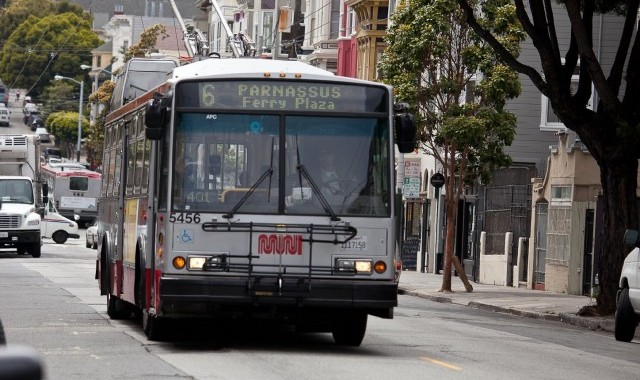
"caption": "The Municipal Railway's 6-Parnassus trolley coach makes its way through San Francisco.",
"description": "The Municipal Railway's 6-Parnassus trolley coach makes its way through San Francisco.",
"title": "Muni bus",
"credit": "Deborah Svoboda/KQED",
"status": "inherit",
"isLoading": false,
"fetchFailed": false
},
"news_10998016": {
"type": "attachments",
"id": "news_10998016",
"meta": {
"index": "attachments_1716263798",
"site": "news",
"id": "10998016",
"found": true
},
"parent": 10997967,
"imgSizes": {
"twentyfourteen-full-width": {
"file": "https://ww2.kqed.org/app/uploads/sites/10/2016/06/tohaveandhavenot_1-1038x576.jpg",
"width": 1038,
"mimeType": "image/jpeg",
"height": 576
},
"thumbnail": {
"file": "https://ww2.kqed.org/app/uploads/sites/10/2016/06/tohaveandhavenot_1-400x225.jpg",
"width": 400,
"mimeType": "image/jpeg",
"height": 225
},
"fd-sm": {
"file": "https://ww2.kqed.org/app/uploads/sites/10/2016/06/tohaveandhavenot_1-960x540.jpg",
"width": 960,
"mimeType": "image/jpeg",
"height": 540
},
"post-thumbnail": {
"file": "https://ww2.kqed.org/app/uploads/sites/10/2016/06/tohaveandhavenot_1-672x372.jpg",
"width": 672,
"mimeType": "image/jpeg",
"height": 372
},
"kqedFullSize": {
"file": "https://ww2.kqed.org/app/uploads/sites/10/2016/06/tohaveandhavenot_1.jpg",
"width": 1920,
"height": 1080
},
"large": {
"file": "https://ww2.kqed.org/app/uploads/sites/10/2016/06/tohaveandhavenot_1-1920x1080.jpg",
"width": 1920,
"mimeType": "image/jpeg",
"height": 1080
},
"guest-author-50": {
"file": "https://ww2.kqed.org/app/uploads/sites/10/2016/06/tohaveandhavenot_1-50x50.jpg",
"width": 50,
"mimeType": "image/jpeg",
"height": 50
},
"guest-author-96": {
"file": "https://ww2.kqed.org/app/uploads/sites/10/2016/06/tohaveandhavenot_1-96x96.jpg",
"width": 96,
"mimeType": "image/jpeg",
"height": 96
},
"medium": {
"file": "https://ww2.kqed.org/app/uploads/sites/10/2016/06/tohaveandhavenot_1-800x450.jpg",
"width": 800,
"mimeType": "image/jpeg",
"height": 450
},
"guest-author-64": {
"file": "https://ww2.kqed.org/app/uploads/sites/10/2016/06/tohaveandhavenot_1-64x64.jpg",
"width": 64,
"mimeType": "image/jpeg",
"height": 64
},
"guest-author-32": {
"file": "https://ww2.kqed.org/app/uploads/sites/10/2016/06/tohaveandhavenot_1-32x32.jpg",
"width": 32,
"mimeType": "image/jpeg",
"height": 32
},
"jmtc-small-thumb": {
"file": "https://ww2.kqed.org/app/uploads/sites/10/2016/06/tohaveandhavenot_1-280x150.jpg",
"width": 280,
"mimeType": "image/jpeg",
"height": 150
},
"fd-lrg": {
"file": "https://ww2.kqed.org/app/uploads/sites/10/2016/06/tohaveandhavenot_1-1920x1080.jpg",
"width": 1920,
"mimeType": "image/jpeg",
"height": 1080
},
"fd-med": {
"file": "https://ww2.kqed.org/app/uploads/sites/10/2016/06/tohaveandhavenot_1-1180x664.jpg",
"width": 1180,
"mimeType": "image/jpeg",
"height": 664
},
"detail": {
"file": "https://ww2.kqed.org/app/uploads/sites/10/2016/06/tohaveandhavenot_1-150x150.jpg",
"width": 150,
"mimeType": "image/jpeg",
"height": 150
},
"guest-author-128": {
"file": "https://ww2.kqed.org/app/uploads/sites/10/2016/06/tohaveandhavenot_1-128x128.jpg",
"width": 128,
"mimeType": "image/jpeg",
"height": 128
}
},
"publishDate": 1466622924,
"modified": 1466622949,
"caption": "A still from the 1983 KQED documentary, \"To Have and Have Not.\"",
"description": null,
"title": "tohaveandhavenot_1",
"credit": "KQED",
"status": "inherit",
"isLoading": false,
"fetchFailed": false
},
"news_11000143": {
"type": "attachments",
"id": "news_11000143",
"meta": {
"index": "attachments_1716263798",
"site": "news",
"id": "11000143",
"found": true
},
"parent": 10999942,
"imgSizes": {
"twentyfourteen-full-width": {
"file": "https://ww2.kqed.org/app/uploads/sites/10/2016/06/homeless_share_05_1920-1038x576.jpg",
"width": 1038,
"mimeType": "image/jpeg",
"height": 576
},
"thumbnail": {
"file": "https://ww2.kqed.org/app/uploads/sites/10/2016/06/homeless_share_05_1920-400x267.jpg",
"width": 400,
"mimeType": "image/jpeg",
"height": 267
},
"fd-sm": {
"file": "https://ww2.kqed.org/app/uploads/sites/10/2016/06/homeless_share_05_1920-960x640.jpg",
"width": 960,
"mimeType": "image/jpeg",
"height": 640
},
"post-thumbnail": {
"file": "https://ww2.kqed.org/app/uploads/sites/10/2016/06/homeless_share_05_1920-672x372.jpg",
"width": 672,
"mimeType": "image/jpeg",
"height": 372
},
"kqedFullSize": {
"file": "https://ww2.kqed.org/app/uploads/sites/10/2016/06/homeless_share_05_1920.jpg",
"width": 1920,
"height": 1280
},
"large": {
"file": "https://ww2.kqed.org/app/uploads/sites/10/2016/06/homeless_share_05_1920-1920x1280.jpg",
"width": 1920,
"mimeType": "image/jpeg",
"height": 1280
},
"guest-author-50": {
"file": "https://ww2.kqed.org/app/uploads/sites/10/2016/06/homeless_share_05_1920-50x50.jpg",
"width": 50,
"mimeType": "image/jpeg",
"height": 50
},
"guest-author-96": {
"file": "https://ww2.kqed.org/app/uploads/sites/10/2016/06/homeless_share_05_1920-96x96.jpg",
"width": 96,
"mimeType": "image/jpeg",
"height": 96
},
"medium": {
"file": "https://ww2.kqed.org/app/uploads/sites/10/2016/06/homeless_share_05_1920-800x533.jpg",
"width": 800,
"mimeType": "image/jpeg",
"height": 533
},
"guest-author-64": {
"file": "https://ww2.kqed.org/app/uploads/sites/10/2016/06/homeless_share_05_1920-64x64.jpg",
"width": 64,
"mimeType": "image/jpeg",
"height": 64
},
"guest-author-32": {
"file": "https://ww2.kqed.org/app/uploads/sites/10/2016/06/homeless_share_05_1920-32x32.jpg",
"width": 32,
"mimeType": "image/jpeg",
"height": 32
},
"jmtc-small-thumb": {
"file": "https://ww2.kqed.org/app/uploads/sites/10/2016/06/homeless_share_05_1920-280x150.jpg",
"width": 280,
"mimeType": "image/jpeg",
"height": 150
},
"fd-lrg": {
"file": "https://ww2.kqed.org/app/uploads/sites/10/2016/06/homeless_share_05_1920-1920x1280.jpg",
"width": 1920,
"mimeType": "image/jpeg",
"height": 1280
},
"fd-med": {
"file": "https://ww2.kqed.org/app/uploads/sites/10/2016/06/homeless_share_05_1920-1180x787.jpg",
"width": 1180,
"mimeType": "image/jpeg",
"height": 787
},
"detail": {
"file": "https://ww2.kqed.org/app/uploads/sites/10/2016/06/homeless_share_05_1920-150x150.jpg",
"width": 150,
"mimeType": "image/jpeg",
"height": 150
},
"guest-author-128": {
"file": "https://ww2.kqed.org/app/uploads/sites/10/2016/06/homeless_share_05_1920-128x128.jpg",
"width": 128,
"mimeType": "image/jpeg",
"height": 128
}
},
"publishDate": 1466805678,
"modified": 1466810854,
"caption": "A person is seen sleeping on the ground at Civic Center Plaza in front of City Hall in San Francisco, CA, Thursday, January 9, 2014.",
"description": null,
"title": "homeless_share_05_1920",
"credit": "Michael Short/Special to the San Francisco Chronicle",
"status": "inherit",
"isLoading": false,
"fetchFailed": false
},
"news_10998909": {
"type": "attachments",
"id": "news_10998909",
"meta": {
"index": "attachments_1716263798",
"site": "news",
"id": "10998909",
"found": true
},
"parent": 10998873,
"imgSizes": {
"twentyfourteen-full-width": {
"file": "https://ww2.kqed.org/app/uploads/sites/10/2016/06/cyclistkilled-e1466699050669-1038x576.jpg",
"width": 1038,
"mimeType": "image/jpeg",
"height": 576
},
"thumbnail": {
"file": "https://ww2.kqed.org/app/uploads/sites/10/2016/06/cyclistkilled-e1466699050669-400x245.jpg",
"width": 400,
"mimeType": "image/jpeg",
"height": 245
},
"fd-sm": {
"file": "https://ww2.kqed.org/app/uploads/sites/10/2016/06/cyclistkilled-e1466699050669-960x588.jpg",
"width": 960,
"mimeType": "image/jpeg",
"height": 588
},
"post-thumbnail": {
"file": "https://ww2.kqed.org/app/uploads/sites/10/2016/06/cyclistkilled-e1466699050669-672x372.jpg",
"width": 672,
"mimeType": "image/jpeg",
"height": 372
},
"kqedFullSize": {
"file": "https://ww2.kqed.org/app/uploads/sites/10/2016/06/cyclistkilled-e1466699050669.jpg",
"width": 1200,
"height": 735
},
"guest-author-50": {
"file": "https://ww2.kqed.org/app/uploads/sites/10/2016/06/cyclistkilled-e1466699050669-50x50.jpg",
"width": 50,
"mimeType": "image/jpeg",
"height": 50
},
"guest-author-96": {
"file": "https://ww2.kqed.org/app/uploads/sites/10/2016/06/cyclistkilled-e1466699050669-96x96.jpg",
"width": 96,
"mimeType": "image/jpeg",
"height": 96
},
"medium": {
"file": "https://ww2.kqed.org/app/uploads/sites/10/2016/06/cyclistkilled-e1466699050669-800x490.jpg",
"width": 800,
"mimeType": "image/jpeg",
"height": 490
},
"guest-author-64": {
"file": "https://ww2.kqed.org/app/uploads/sites/10/2016/06/cyclistkilled-e1466699050669-64x64.jpg",
"width": 64,
"mimeType": "image/jpeg",
"height": 64
},
"guest-author-32": {
"file": "https://ww2.kqed.org/app/uploads/sites/10/2016/06/cyclistkilled-e1466699050669-32x32.jpg",
"width": 32,
"mimeType": "image/jpeg",
"height": 32
},
"jmtc-small-thumb": {
"file": "https://ww2.kqed.org/app/uploads/sites/10/2016/06/cyclistkilled-e1466699050669-280x150.jpg",
"width": 280,
"mimeType": "image/jpeg",
"height": 150
},
"fd-med": {
"file": "https://ww2.kqed.org/app/uploads/sites/10/2016/06/cyclistkilled-e1466699050669-1180x723.jpg",
"width": 1180,
"mimeType": "image/jpeg",
"height": 723
},
"detail": {
"file": "https://ww2.kqed.org/app/uploads/sites/10/2016/06/cyclistkilled-e1466699050669-150x150.jpg",
"width": 150,
"mimeType": "image/jpeg",
"height": 150
},
"guest-author-128": {
"file": "https://ww2.kqed.org/app/uploads/sites/10/2016/06/cyclistkilled-e1466699050669-128x128.jpg",
"width": 128,
"mimeType": "image/jpeg",
"height": 128
}
},
"publishDate": 1466698754,
"modified": 1466699004,
"caption": "San Francisco police at the scene of a fatal hit-and-run collision Wednesday evening in which a woman riding her bike through Golden Gate Park was struck and killed.",
"description": null,
"title": "Cyclist Killed-Golden Gate Park",
"credit": "\u003ca href=\"https://twitter.com/abc7newsbayarea/status/745982683709267968\" target=\"_blank\">ABC7 Bay Area\u003c/a>via Twitter",
"status": "inherit",
"isLoading": false,
"fetchFailed": false
},
"news_10882725": {
"type": "attachments",
"id": "news_10882725",
"meta": {
"index": "attachments_1716263798",
"site": "news",
"id": "10882725",
"found": true
},
"parent": 10882685,
"imgSizes": {
"twentyfourteen-full-width": {
"file": "https://ww2.kqed.org/app/uploads/sites/10/2016/03/divisionstreeta-1038x576.jpg",
"width": 1038,
"mimeType": "image/jpeg",
"height": 576
},
"thumbnail": {
"file": "https://ww2.kqed.org/app/uploads/sites/10/2016/03/divisionstreeta-400x262.jpg",
"width": 400,
"mimeType": "image/jpeg",
"height": 262
},
"fd-sm": {
"file": "https://ww2.kqed.org/app/uploads/sites/10/2016/03/divisionstreeta-960x628.jpg",
"width": 960,
"mimeType": "image/jpeg",
"height": 628
},
"post-thumbnail": {
"file": "https://ww2.kqed.org/app/uploads/sites/10/2016/03/divisionstreeta-672x372.jpg",
"width": 672,
"mimeType": "image/jpeg",
"height": 372
},
"kqedFullSize": {
"file": "https://ww2.kqed.org/app/uploads/sites/10/2016/03/divisionstreeta.jpg",
"width": 1920,
"height": 1256
},
"large": {
"file": "https://ww2.kqed.org/app/uploads/sites/10/2016/03/divisionstreeta-1920x1256.jpg",
"width": 1920,
"mimeType": "image/jpeg",
"height": 1256
},
"guest-author-96": {
"file": "https://ww2.kqed.org/app/uploads/sites/10/2016/03/divisionstreeta-96x96.jpg",
"width": 96,
"mimeType": "image/jpeg",
"height": 96
},
"medium": {
"file": "https://ww2.kqed.org/app/uploads/sites/10/2016/03/divisionstreeta-800x523.jpg",
"width": 800,
"mimeType": "image/jpeg",
"height": 523
},
"guest-author-64": {
"file": "https://ww2.kqed.org/app/uploads/sites/10/2016/03/divisionstreeta-64x64.jpg",
"width": 64,
"mimeType": "image/jpeg",
"height": 64
},
"guest-author-32": {
"file": "https://ww2.kqed.org/app/uploads/sites/10/2016/03/divisionstreeta-32x32.jpg",
"width": 32,
"mimeType": "image/jpeg",
"height": 32
},
"jmtc-small-thumb": {
"file": "https://ww2.kqed.org/app/uploads/sites/10/2016/03/divisionstreeta-280x150.jpg",
"width": 280,
"mimeType": "image/jpeg",
"height": 150
},
"fd-lrg": {
"file": "https://ww2.kqed.org/app/uploads/sites/10/2016/03/divisionstreeta-1920x1256.jpg",
"width": 1920,
"mimeType": "image/jpeg",
"height": 1256
},
"fd-med": {
"file": "https://ww2.kqed.org/app/uploads/sites/10/2016/03/divisionstreeta-1180x772.jpg",
"width": 1180,
"mimeType": "image/jpeg",
"height": 772
},
"detail": {
"file": "https://ww2.kqed.org/app/uploads/sites/10/2016/03/divisionstreeta-75x75.jpg",
"width": 75,
"mimeType": "image/jpeg",
"height": 75
},
"guest-author-128": {
"file": "https://ww2.kqed.org/app/uploads/sites/10/2016/03/divisionstreeta-128x128.jpg",
"width": 128,
"mimeType": "image/jpeg",
"height": 128
}
},
"publishDate": 1456846810,
"modified": 1456846983,
"caption": "Part of the Division Street tent camp, near Harrison and 12th streets, pictured on Feb. 25. ",
"description": null,
"title": "Division Street Tents",
"credit": "Dan Brekke/KQED",
"status": "inherit",
"isLoading": false,
"fetchFailed": false
},
"news_10990281": {
"type": "attachments",
"id": "news_10990281",
"meta": {
"index": "attachments_1716263798",
"site": "news",
"id": "10990281",
"found": true
},
"parent": 10990279,
"imgSizes": {
"jmtc-small-thumb": {
"file": "https://ww2.kqed.org/app/uploads/sites/10/2016/06/RS5337_KQEDprop8castro_01-280x150.jpg",
"width": 280,
"mimeType": "image/jpeg",
"height": 150
},
"thumbnail": {
"file": "https://ww2.kqed.org/app/uploads/sites/10/2016/06/RS5337_KQEDprop8castro_01-400x279.jpg",
"width": 400,
"mimeType": "image/jpeg",
"height": 279
},
"post-thumbnail": {
"file": "https://ww2.kqed.org/app/uploads/sites/10/2016/06/RS5337_KQEDprop8castro_01-672x372.jpg",
"width": 672,
"mimeType": "image/jpeg",
"height": 372
},
"kqedFullSize": {
"file": "https://ww2.kqed.org/app/uploads/sites/10/2016/06/RS5337_KQEDprop8castro_01.jpg",
"width": 720,
"height": 503
},
"guest-author-50": {
"file": "https://ww2.kqed.org/app/uploads/sites/10/2016/06/RS5337_KQEDprop8castro_01-50x50.jpg",
"width": 50,
"mimeType": "image/jpeg",
"height": 50
},
"guest-author-96": {
"file": "https://ww2.kqed.org/app/uploads/sites/10/2016/06/RS5337_KQEDprop8castro_01-96x96.jpg",
"width": 96,
"mimeType": "image/jpeg",
"height": 96
},
"guest-author-64": {
"file": "https://ww2.kqed.org/app/uploads/sites/10/2016/06/RS5337_KQEDprop8castro_01-64x64.jpg",
"width": 64,
"mimeType": "image/jpeg",
"height": 64
},
"detail": {
"file": "https://ww2.kqed.org/app/uploads/sites/10/2016/06/RS5337_KQEDprop8castro_01-150x150.jpg",
"width": 150,
"mimeType": "image/jpeg",
"height": 150
},
"guest-author-32": {
"file": "https://ww2.kqed.org/app/uploads/sites/10/2016/06/RS5337_KQEDprop8castro_01-32x32.jpg",
"width": 32,
"mimeType": "image/jpeg",
"height": 32
},
"guest-author-128": {
"file": "https://ww2.kqed.org/app/uploads/sites/10/2016/06/RS5337_KQEDprop8castro_01-128x128.jpg",
"width": 128,
"mimeType": "image/jpeg",
"height": 128
}
},
"publishDate": 1466035387,
"modified": 1466095871,
"caption": "A 2013 celebration of U.S. Supreme Court ruling that struck down California's ban on same-sex marriage.",
"description": null,
"title": "Rainbow Flag-Gay Rights",
"credit": "Darlene Bouchard",
"status": "inherit",
"isLoading": false,
"fetchFailed": false
},
"news_10989227": {
"type": "attachments",
"id": "news_10989227",
"meta": {
"index": "attachments_1716263798",
"site": "news",
"id": "10989227",
"found": true
},
"parent": 10989209,
"imgSizes": {
"twentyfourteen-full-width": {
"file": "https://ww2.kqed.org/app/uploads/sites/10/2016/06/image-1-1038x576.jpeg",
"width": 1038,
"mimeType": "image/jpeg",
"height": 576
},
"thumbnail": {
"file": "https://ww2.kqed.org/app/uploads/sites/10/2016/06/image-1-400x294.jpeg",
"width": 400,
"mimeType": "image/jpeg",
"height": 294
},
"fd-sm": {
"file": "https://ww2.kqed.org/app/uploads/sites/10/2016/06/image-1-960x706.jpeg",
"width": 960,
"mimeType": "image/jpeg",
"height": 706
},
"post-thumbnail": {
"file": "https://ww2.kqed.org/app/uploads/sites/10/2016/06/image-1-672x372.jpeg",
"width": 672,
"mimeType": "image/jpeg",
"height": 372
},
"kqedFullSize": {
"file": "https://ww2.kqed.org/app/uploads/sites/10/2016/06/image-1.jpeg",
"width": 2169,
"height": 1595
},
"large": {
"file": "https://ww2.kqed.org/app/uploads/sites/10/2016/06/image-1-1920x1412.jpeg",
"width": 1920,
"mimeType": "image/jpeg",
"height": 1412
},
"guest-author-50": {
"file": "https://ww2.kqed.org/app/uploads/sites/10/2016/06/image-1-50x50.jpeg",
"width": 50,
"mimeType": "image/jpeg",
"height": 50
},
"guest-author-96": {
"file": "https://ww2.kqed.org/app/uploads/sites/10/2016/06/image-1-96x96.jpeg",
"width": 96,
"mimeType": "image/jpeg",
"height": 96
},
"medium": {
"file": "https://ww2.kqed.org/app/uploads/sites/10/2016/06/image-1-800x588.jpeg",
"width": 800,
"mimeType": "image/jpeg",
"height": 588
},
"guest-author-64": {
"file": "https://ww2.kqed.org/app/uploads/sites/10/2016/06/image-1-64x64.jpeg",
"width": 64,
"mimeType": "image/jpeg",
"height": 64
},
"guest-author-32": {
"file": "https://ww2.kqed.org/app/uploads/sites/10/2016/06/image-1-32x32.jpeg",
"width": 32,
"mimeType": "image/jpeg",
"height": 32
},
"jmtc-small-thumb": {
"file": "https://ww2.kqed.org/app/uploads/sites/10/2016/06/image-1-280x150.jpeg",
"width": 280,
"mimeType": "image/jpeg",
"height": 150
},
"fd-lrg": {
"file": "https://ww2.kqed.org/app/uploads/sites/10/2016/06/image-1-1920x1412.jpeg",
"width": 1920,
"mimeType": "image/jpeg",
"height": 1412
},
"fd-med": {
"file": "https://ww2.kqed.org/app/uploads/sites/10/2016/06/image-1-1180x868.jpeg",
"width": 1180,
"mimeType": "image/jpeg",
"height": 868
},
"detail": {
"file": "https://ww2.kqed.org/app/uploads/sites/10/2016/06/image-1-150x150.jpeg",
"width": 150,
"mimeType": "image/jpeg",
"height": 150
},
"guest-author-128": {
"file": "https://ww2.kqed.org/app/uploads/sites/10/2016/06/image-1-128x128.jpeg",
"width": 128,
"mimeType": "image/jpeg",
"height": 128
}
},
"publishDate": 1465950192,
"modified": 1465950266,
"caption": "City officials hope black boxes in most city vehicles will help reduce collisions. ",
"description": null,
"title": "image",
"credit": "Bryan Goebel/KQED",
"status": "inherit",
"isLoading": false,
"fetchFailed": false
},
"news_10931265": {
"type": "attachments",
"id": "news_10931265",
"meta": {
"index": "attachments_1716263798",
"site": "news",
"id": "10931265",
"found": true
},
"parent": 10931264,
"imgSizes": {
"jmtc-small-thumb": {
"file": "https://ww2.kqed.org/app/uploads/sites/10/2016/04/missionstreet-280x150.jpg",
"width": 280,
"mimeType": "image/jpeg",
"height": 150
},
"thumbnail": {
"file": "https://ww2.kqed.org/app/uploads/sites/10/2016/04/missionstreet-400x267.jpg",
"width": 400,
"mimeType": "image/jpeg",
"height": 267
},
"post-thumbnail": {
"file": "https://ww2.kqed.org/app/uploads/sites/10/2016/04/missionstreet-640x372.jpg",
"width": 640,
"mimeType": "image/jpeg",
"height": 372
},
"kqedFullSize": {
"file": "https://ww2.kqed.org/app/uploads/sites/10/2016/04/missionstreet.jpg",
"width": 640,
"height": 427
},
"guest-author-96": {
"file": "https://ww2.kqed.org/app/uploads/sites/10/2016/04/missionstreet-96x96.jpg",
"width": 96,
"mimeType": "image/jpeg",
"height": 96
},
"guest-author-64": {
"file": "https://ww2.kqed.org/app/uploads/sites/10/2016/04/missionstreet-64x64.jpg",
"width": 64,
"mimeType": "image/jpeg",
"height": 64
},
"detail": {
"file": "https://ww2.kqed.org/app/uploads/sites/10/2016/04/missionstreet-75x75.jpg",
"width": 75,
"mimeType": "image/jpeg",
"height": 75
},
"guest-author-32": {
"file": "https://ww2.kqed.org/app/uploads/sites/10/2016/04/missionstreet-32x32.jpg",
"width": 32,
"mimeType": "image/jpeg",
"height": 32
},
"guest-author-128": {
"file": "https://ww2.kqed.org/app/uploads/sites/10/2016/04/missionstreet-128x128.jpg",
"width": 128,
"mimeType": "image/jpeg",
"height": 128
}
},
"publishDate": 1460845726,
"modified": 1462483610,
"caption": "Mission Street, between 18th and 19th streets, part of the stretch that is being reconfigured to speed up Muni bus service. ",
"description": null,
"title": "Mission Street",
"credit": "Lola M. Chavez/Mission Local ",
"status": "inherit",
"isLoading": false,
"fetchFailed": false
},
"news_10984846": {
"type": "attachments",
"id": "news_10984846",
"meta": {
"index": "attachments_1716263798",
"site": "news",
"id": "10984846",
"found": true
},
"parent": 10984844,
"imgSizes": {
"twentyfourteen-full-width": {
"file": "https://ww2.kqed.org/app/uploads/sites/10/2016/06/1979mission-1038x576.jpg",
"width": 1038,
"mimeType": "image/jpeg",
"height": 576
},
"thumbnail": {
"file": "https://ww2.kqed.org/app/uploads/sites/10/2016/06/1979mission-400x300.jpg",
"width": 400,
"mimeType": "image/jpeg",
"height": 300
},
"fd-sm": {
"file": "https://ww2.kqed.org/app/uploads/sites/10/2016/06/1979mission-960x720.jpg",
"width": 960,
"mimeType": "image/jpeg",
"height": 720
},
"post-thumbnail": {
"file": "https://ww2.kqed.org/app/uploads/sites/10/2016/06/1979mission-672x372.jpg",
"width": 672,
"mimeType": "image/jpeg",
"height": 372
},
"kqedFullSize": {
"file": "https://ww2.kqed.org/app/uploads/sites/10/2016/06/1979mission-e1465570610886.jpg",
"width": 1920,
"height": 1440
},
"large": {
"file": "https://ww2.kqed.org/app/uploads/sites/10/2016/06/1979mission-1920x1440.jpg",
"width": 1920,
"mimeType": "image/jpeg",
"height": 1440
},
"guest-author-50": {
"file": "https://ww2.kqed.org/app/uploads/sites/10/2016/06/1979mission-50x50.jpg",
"width": 50,
"mimeType": "image/jpeg",
"height": 50
},
"guest-author-96": {
"file": "https://ww2.kqed.org/app/uploads/sites/10/2016/06/1979mission-96x96.jpg",
"width": 96,
"mimeType": "image/jpeg",
"height": 96
},
"medium": {
"file": "https://ww2.kqed.org/app/uploads/sites/10/2016/06/1979mission-800x600.jpg",
"width": 800,
"mimeType": "image/jpeg",
"height": 600
},
"guest-author-64": {
"file": "https://ww2.kqed.org/app/uploads/sites/10/2016/06/1979mission-64x64.jpg",
"width": 64,
"mimeType": "image/jpeg",
"height": 64
},
"guest-author-32": {
"file": "https://ww2.kqed.org/app/uploads/sites/10/2016/06/1979mission-32x32.jpg",
"width": 32,
"mimeType": "image/jpeg",
"height": 32
},
"jmtc-small-thumb": {
"file": "https://ww2.kqed.org/app/uploads/sites/10/2016/06/1979mission-280x150.jpg",
"width": 280,
"mimeType": "image/jpeg",
"height": 150
},
"fd-lrg": {
"file": "https://ww2.kqed.org/app/uploads/sites/10/2016/06/1979mission-1920x1440.jpg",
"width": 1920,
"mimeType": "image/jpeg",
"height": 1440
},
"fd-med": {
"file": "https://ww2.kqed.org/app/uploads/sites/10/2016/06/1979mission-1180x885.jpg",
"width": 1180,
"mimeType": "image/jpeg",
"height": 885
},
"detail": {
"file": "https://ww2.kqed.org/app/uploads/sites/10/2016/06/1979mission-150x150.jpg",
"width": 150,
"mimeType": "image/jpeg",
"height": 150
},
"guest-author-128": {
"file": "https://ww2.kqed.org/app/uploads/sites/10/2016/06/1979mission-128x128.jpg",
"width": 128,
"mimeType": "image/jpeg",
"height": 128
}
},
"publishDate": 1465570510,
"modified": 1465570600,
"caption": "A rendering of part of the 1979 Mission St. project, dubbed 'the Monster in the Mission' by affordable housing activists.",
"description": null,
"title": "1979 Mission St.",
"credit": "Maximus-BP",
"status": "inherit",
"isLoading": false,
"fetchFailed": false
},
"news_10981799": {
"type": "attachments",
"id": "news_10981799",
"meta": {
"index": "attachments_1716263798",
"site": "news",
"id": "10981799",
"found": true
},
"parent": 10981797,
"imgSizes": {
"twentyfourteen-full-width": {
"file": "https://ww2.kqed.org/app/uploads/sites/10/2016/06/RS19760_GettyImages-513221080-qut-1038x576.jpg",
"width": 1038,
"mimeType": "image/jpeg",
"height": 576
},
"thumbnail": {
"file": "https://ww2.kqed.org/app/uploads/sites/10/2016/06/RS19760_GettyImages-513221080-qut-400x267.jpg",
"width": 400,
"mimeType": "image/jpeg",
"height": 267
},
"fd-sm": {
"file": "https://ww2.kqed.org/app/uploads/sites/10/2016/06/RS19760_GettyImages-513221080-qut-960x640.jpg",
"width": 960,
"mimeType": "image/jpeg",
"height": 640
},
"post-thumbnail": {
"file": "https://ww2.kqed.org/app/uploads/sites/10/2016/06/RS19760_GettyImages-513221080-qut-672x372.jpg",
"width": 672,
"mimeType": "image/jpeg",
"height": 372
},
"kqedFullSize": {
"file": "https://ww2.kqed.org/app/uploads/sites/10/2016/06/RS19760_GettyImages-513221080-qut.jpg",
"width": 1920,
"height": 1280
},
"large": {
"file": "https://ww2.kqed.org/app/uploads/sites/10/2016/06/RS19760_GettyImages-513221080-qut-1920x1280.jpg",
"width": 1920,
"mimeType": "image/jpeg",
"height": 1280
},
"guest-author-50": {
"file": "https://ww2.kqed.org/app/uploads/sites/10/2016/06/RS19760_GettyImages-513221080-qut-50x50.jpg",
"width": 50,
"mimeType": "image/jpeg",
"height": 50
},
"guest-author-96": {
"file": "https://ww2.kqed.org/app/uploads/sites/10/2016/06/RS19760_GettyImages-513221080-qut-96x96.jpg",
"width": 96,
"mimeType": "image/jpeg",
"height": 96
},
"medium": {
"file": "https://ww2.kqed.org/app/uploads/sites/10/2016/06/RS19760_GettyImages-513221080-qut-800x533.jpg",
"width": 800,
"mimeType": "image/jpeg",
"height": 533
},
"guest-author-64": {
"file": "https://ww2.kqed.org/app/uploads/sites/10/2016/06/RS19760_GettyImages-513221080-qut-64x64.jpg",
"width": 64,
"mimeType": "image/jpeg",
"height": 64
},
"guest-author-32": {
"file": "https://ww2.kqed.org/app/uploads/sites/10/2016/06/RS19760_GettyImages-513221080-qut-32x32.jpg",
"width": 32,
"mimeType": "image/jpeg",
"height": 32
},
"jmtc-small-thumb": {
"file": "https://ww2.kqed.org/app/uploads/sites/10/2016/06/RS19760_GettyImages-513221080-qut-280x150.jpg",
"width": 280,
"mimeType": "image/jpeg",
"height": 150
},
"fd-lrg": {
"file": "https://ww2.kqed.org/app/uploads/sites/10/2016/06/RS19760_GettyImages-513221080-qut-1920x1280.jpg",
"width": 1920,
"mimeType": "image/jpeg",
"height": 1280
},
"fd-med": {
"file": "https://ww2.kqed.org/app/uploads/sites/10/2016/06/RS19760_GettyImages-513221080-qut-1180x787.jpg",
"width": 1180,
"mimeType": "image/jpeg",
"height": 787
},
"detail": {
"file": "https://ww2.kqed.org/app/uploads/sites/10/2016/06/RS19760_GettyImages-513221080-qut-150x150.jpg",
"width": 150,
"mimeType": "image/jpeg",
"height": 150
},
"guest-author-128": {
"file": "https://ww2.kqed.org/app/uploads/sites/10/2016/06/RS19760_GettyImages-513221080-qut-128x128.jpg",
"width": 128,
"mimeType": "image/jpeg",
"height": 128
}
},
"publishDate": 1465351726,
"modified": 1465351773,
"caption": null,
"description": null,
"title": "RS19760_GettyImages-513221080-qut",
"credit": "Erich Schlegel/Getty Images",
"status": "inherit",
"isLoading": false,
"fetchFailed": false
}
},
"audioPlayerReducer": {
"postId": "stream_live",
"isPaused": true,
"isPlaying": false,
"pfsActive": false,
"pledgeModalIsOpen": true,
"playerDrawerIsOpen": false,
"liveAudioPlayStartedAt": 0,
"liveAudioPlayContext": ""
},
"authorsReducer": {
"byline_news_10999954": {
"type": "authors",
"id": "byline_news_10999954",
"meta": {
"override": true
},
"slug": "byline_news_10999954",
"name": "\u003cstrong>\u003ca href=\"http://www.sfchronicle.com/author/joaquin-palomino/\">Joaquin Palomino\u003c/a>\u003cbr />\u003ca href=''>San Francisco Chronicle\u003c/a>\u003c/strong>",
"isLoading": false
},
"byline_news_10997967": {
"type": "authors",
"id": "byline_news_10997967",
"meta": {
"override": true
},
"slug": "byline_news_10997967",
"name": "Stephen Talbot",
"isLoading": false
},
"byline_news_10999942": {
"type": "authors",
"id": "byline_news_10999942",
"meta": {
"override": true
},
"slug": "byline_news_10999942",
"name": "\u003cstrong>\u003ca href=\"http://www.sfchronicle.com/author/kevin-fagan/\">Kevin Fagan\u003c/a>\u003cbr />\u003ca href=\"http://www.sfchronicle.com/\">San Francisco Chronicle\u003c/a>\u003c/strong>",
"isLoading": false
},
"byline_news_10990279": {
"type": "authors",
"id": "byline_news_10990279",
"meta": {
"override": true
},
"slug": "byline_news_10990279",
"name": "\u003cstrong>Sonja Hutson\u003cbr />",
"isLoading": false
},
"byline_news_10989883": {
"type": "authors",
"id": "byline_news_10989883",
"meta": {
"override": true
},
"slug": "byline_news_10989883",
"name": "\u003cstrong>\u003ca href=\"http://missionlocal.org/author/lauraw/\" target=\"_blank\">Laura Wenus\u003c/a>\u003cbr />Mission Local\u003c/strong>",
"isLoading": false
},
"byline_news_10984844": {
"type": "authors",
"id": "byline_news_10984844",
"meta": {
"override": true
},
"slug": "byline_news_10984844",
"name": "\u003cstrong>\u003ca href=\"http://missionlocal.org/author/joer/\" target=\"_blank\">Joe Rivano Barros\u003c/a>\u003cbr />Mission Local\u003c/strong>",
"isLoading": false
},
"smartin": {
"type": "authors",
"id": "89",
"meta": {
"index": "authors_1716337520",
"id": "89",
"found": true
},
"name": "Stephanie Martin Taylor",
"firstName": "Stephanie Martin",
"lastName": "Taylor",
"slug": "smartin",
"email": "smartin@kqed.org",
"display_author_email": false,
"staff_mastheads": [],
"title": null,
"bio": "Stephanie Martin is a radio news reporter and anchor, and an occasional host of the \u003cem>KQED Newsroom \u003c/em>television program. While she currently focuses on housing and development issues, she has also reported on topics ranging from state and local politics to religion to arts and culture.\r\n\r\nPrior to joining KQED in 2005, Stephanie was an anchor and reporter for WFDD, the NPR affiliate in Winston-Salem, NC. She also spent several years as a television anchor, reporter and producer at various stations around the country.\r\n\r\nStephanie has received numerous awards for her reporting, including two National Headliner Awards, the Religion Newswriters Association's Best Radio Reporting Award and honors from the Associated Press and the Radio and Television Digital News Association. A series she produced from Iraq in 2005 earned a Best of Radio Award from the Society of Professional Journalists.\r\n\r\nStephanie received a graduate degree in Journalism from Columbia University. As an undergraduate at Colgate University, she worked and studied in Paris and Dijon, France, and spent a summer interning in the White House Press Office.\r\n\r\nStephanie grew up in Dallas, TX, and now lives with her husband in San Francisco.",
"avatar": "https://secure.gravatar.com/avatar/9fd3f8e9af01e14afde39822c19646e0?s=600&d=blank&r=g",
"twitter": "SMartinTaylor",
"facebook": null,
"instagram": null,
"linkedin": null,
"sites": [
{
"site": "arts",
"roles": [
"Contributor",
"subscriber"
]
},
{
"site": "news",
"roles": [
"subscriber"
]
},
{
"site": "stateofhealth",
"roles": [
"subscriber"
]
}
],
"headData": {
"title": "Stephanie Martin Taylor | KQED",
"description": null,
"ogImgSrc": "https://secure.gravatar.com/avatar/9fd3f8e9af01e14afde39822c19646e0?s=600&d=blank&r=g",
"twImgSrc": "https://secure.gravatar.com/avatar/9fd3f8e9af01e14afde39822c19646e0?s=600&d=blank&r=g"
},
"isLoading": false,
"link": "/author/smartin"
},
"bgoebel": {
"type": "authors",
"id": "214",
"meta": {
"index": "authors_1716337520",
"id": "214",
"found": true
},
"name": "Bryan Goebel",
"firstName": "Bryan",
"lastName": "Goebel",
"slug": "bgoebel",
"email": "bgoebel@kqed.org",
"display_author_email": false,
"staff_mastheads": [],
"title": null,
"bio": "Bryan Goebel is a reporter focused on transportation and housing issues. He was previously the editor of Streetsblog San Francisco, and an anchor/editor at KCBS Radio. He's a lifelong Californian and has also worked at radio stations in Barstow, Redding and Sacramento.",
"avatar": "https://secure.gravatar.com/avatar/7fdd6b065bfe9a23a71bcfa80848df88?s=600&d=blank&r=g",
"twitter": "velobry",
"facebook": null,
"instagram": null,
"linkedin": null,
"sites": [
{
"site": "news",
"roles": [
"subscriber"
]
},
{
"site": "stateofhealth",
"roles": [
"subscriber"
]
}
],
"headData": {
"title": "Bryan Goebel | KQED",
"description": null,
"ogImgSrc": "https://secure.gravatar.com/avatar/7fdd6b065bfe9a23a71bcfa80848df88?s=600&d=blank&r=g",
"twImgSrc": "https://secure.gravatar.com/avatar/7fdd6b065bfe9a23a71bcfa80848df88?s=600&d=blank&r=g"
},
"isLoading": false,
"link": "/author/bgoebel"
},
"danbrekke": {
"type": "authors",
"id": "222",
"meta": {
"index": "authors_1716337520",
"id": "222",
"found": true
},
"name": "Dan Brekke",
"firstName": "Dan",
"lastName": "Brekke",
"slug": "danbrekke",
"email": "dbrekke@kqed.org",
"display_author_email": true,
"staff_mastheads": [
"news",
"science"
],
"title": "KQED Editor and Reporter",
"bio": "Dan Brekke is a reporter and editor for KQED News, responsible for coverage of topics ranging from California water issues to the Bay Area's transportation challenges. In a newsroom career that began in Chicago in 1972, Dan has worked for \u003cem>The San Francisco Examiner,\u003c/em> Wired and TechTV and has been published in The New York Times, The New York Times Magazine, Business 2.0, Salon and elsewhere.\r\n\r\nSince joining KQED in 2007, Dan has reported, edited and produced both radio and online features and breaking news pieces. He has shared as both editor and reporter in four Society of Professional Journalists Norcal Excellence in Journalism awards and one Edward R. Murrow regional award. He was chosen for a spring 2017 residency at the Mesa Refuge to advance his research on California salmon.\r\n\r\nEmail Dan at: \u003ca href=\"mailto:dbrekke@kqed.org\">dbrekke@kqed.org\u003c/a>\r\n\r\n\u003cstrong>Twitter:\u003c/strong> \u003ca href=\"https://twitter.com/danbrekke\" rel=\"noopener noreferrer\">twitter.com/danbrekke\u003c/a>\r\n\u003cstrong>Facebook:\u003c/strong> \u003ca href=\"https://www.facebook.com/danbrekke\" rel=\"noopener noreferrer\">www.facebook.com/danbrekke\u003c/a>\r\n\u003cstrong>LinkedIn:\u003c/strong> \u003ca href=\"https://www.linkedin.com/in/danbrekke\" rel=\"noopener noreferrer\">www.linkedin.com/in/danbrekke\u003c/a>",
"avatar": "https://secure.gravatar.com/avatar/8f1f0d2a978fb3b23426c922c7e2af558fa36905b49c4ce76a97dc3c72d27226?s=600&d=mm&r=g",
"twitter": "danbrekke",
"bluesky": null,
"facebook": null,
"instagram": "https://www.instagram.com/dan.brekke/",
"linkedin": "https://www.linkedin.com/in/danbrekke/",
"sites": [
{
"site": "news",
"roles": [
"administrator",
"create_posts"
]
},
{
"site": "stateofhealth",
"roles": [
"editor"
]
},
{
"site": "science",
"roles": [
"editor"
]
},
{
"site": "quest",
"roles": [
"contributor"
]
},
{
"site": "food",
"roles": [
"contributor"
]
},
{
"site": "forum",
"roles": [
"contributor"
]
},
{
"site": "elections",
"roles": [
"editor"
]
},
{
"site": "liveblog",
"roles": [
"editor"
]
}
],
"headData": {
"title": "Dan Brekke | KQED",
"description": "KQED Editor and Reporter",
"ogImgSrc": "https://secure.gravatar.com/avatar/8f1f0d2a978fb3b23426c922c7e2af558fa36905b49c4ce76a97dc3c72d27226?s=600&d=mm&r=g",
"twImgSrc": "https://secure.gravatar.com/avatar/8f1f0d2a978fb3b23426c922c7e2af558fa36905b49c4ce76a97dc3c72d27226?s=600&d=mm&r=g"
},
"isLoading": false,
"link": "/author/danbrekke"
},
"kqednewsstaffandwires": {
"type": "authors",
"id": "237",
"meta": {
"index": "authors_1716337520",
"id": "237",
"found": true
},
"name": "KQED News Staff and Wires",
"firstName": "KQED News Staff and Wires",
"lastName": null,
"slug": "kqednewsstaffandwires",
"email": "onlinenewsstaff@kqed.org",
"display_author_email": false,
"staff_mastheads": [],
"title": null,
"bio": null,
"avatar": "https://secure.gravatar.com/avatar/72295af8ebbfbd19a4948f5271285664?s=600&d=blank&r=g",
"twitter": null,
"facebook": null,
"instagram": null,
"linkedin": null,
"sites": [
{
"site": "arts",
"roles": [
"contributor"
]
},
{
"site": "news",
"roles": [
"contributor"
]
},
{
"site": "lowdown",
"roles": [
"author"
]
},
{
"site": "stateofhealth",
"roles": [
"contributor"
]
},
{
"site": "food",
"roles": [
"author"
]
}
],
"headData": {
"title": "KQED News Staff and Wires | KQED",
"description": null,
"ogImgSrc": "https://secure.gravatar.com/avatar/72295af8ebbfbd19a4948f5271285664?s=600&d=blank&r=g",
"twImgSrc": "https://secure.gravatar.com/avatar/72295af8ebbfbd19a4948f5271285664?s=600&d=blank&r=g"
},
"isLoading": false,
"link": "/author/kqednewsstaffandwires"
},
"tgoldberg": {
"type": "authors",
"id": "258",
"meta": {
"index": "authors_1716337520",
"id": "258",
"found": true
},
"name": "Ted Goldberg",
"firstName": "Ted",
"lastName": "Goldberg",
"slug": "tgoldberg",
"email": "tgoldberg@kqed.org",
"display_author_email": true,
"staff_mastheads": [
"news"
],
"title": "KQED Managing Editor, News and Newscasts",
"bio": "Ted Goldberg is Managing Editor of News and Newscasts at KQED. His main reporting beat is the Bay Area's oil refining industry.\r\n\r\nPrior to joining KQED in 2014, Ted worked at CBS News and WCBS AM in New York and Bay City News and KCBS Radio in San Francisco. He graduated from Oberlin College in Ohio in 1998.",
"avatar": "https://secure.gravatar.com/avatar/30ce2e4fe89135e104f89be2394d16225b9d36c121b5b3cb7651ce642978b96f?s=600&d=blank&r=g",
"twitter": "TedrickG",
"bluesky": null,
"facebook": null,
"instagram": null,
"linkedin": null,
"sites": [
{
"site": "news",
"roles": [
"editor"
]
},
{
"site": "science",
"roles": [
"editor"
]
}
],
"headData": {
"title": "Ted Goldberg | KQED",
"description": "KQED Managing Editor, News and Newscasts",
"ogImgSrc": "https://secure.gravatar.com/avatar/30ce2e4fe89135e104f89be2394d16225b9d36c121b5b3cb7651ce642978b96f?s=600&d=blank&r=g",
"twImgSrc": "https://secure.gravatar.com/avatar/30ce2e4fe89135e104f89be2394d16225b9d36c121b5b3cb7651ce642978b96f?s=600&d=blank&r=g"
},
"isLoading": false,
"link": "/author/tgoldberg"
},
"rlevi": {
"type": "authors",
"id": "11260",
"meta": {
"index": "authors_1716337520",
"id": "11260",
"found": true
},
"name": "Ryan Levi",
"firstName": "Ryan",
"lastName": "Levi",
"slug": "rlevi",
"email": "rlevi@KQED.org",
"display_author_email": false,
"staff_mastheads": [],
"title": "KQED Contributor",
"bio": "Ryan Levi was a reporter and podcast producer at KQED News from 2016-2019. He worked on \u003ca href=\"https://www.kqed.org/news/series/baycurious\">Bay Curious\u003c/a>, \u003ca href=\"https://www.kqed.org/news/tag/the-bay/\">The Bay, \u003c/a>and \u003ca href=\"https://podcasts.apple.com/us/podcast/the-california-report-magazine/id1314750545\">The California Report Magazine\u003c/a>, as well as hosting and producing the weekly \u003ca href=\"https://www.kqed.org/news/program/qedup/\">Q'ed Up podcast. \u003c/a>He also helped inaugurate KQED's weekend news coverage in 2017 as one of two original digital producers. Ryan holds degrees in multimedia journalism and Spanish from the University of Missouri.",
"avatar": "https://secure.gravatar.com/avatar/4cb2ddd028ac8807d1adf09609c5555d?s=600&d=blank&r=g",
"twitter": "ryan_levi",
"facebook": null,
"instagram": null,
"linkedin": null,
"sites": [
{
"site": "arts",
"roles": [
"editor"
]
},
{
"site": "news",
"roles": [
"subscriber"
]
},
{
"site": "stateofhealth",
"roles": [
"editor"
]
},
{
"site": "science",
"roles": [
"editor"
]
},
{
"site": "forum",
"roles": [
"administrator"
]
},
{
"site": "perspectives",
"roles": [
"administrator"
]
}
],
"headData": {
"title": "Ryan Levi | KQED",
"description": "KQED Contributor",
"ogImgSrc": "https://secure.gravatar.com/avatar/4cb2ddd028ac8807d1adf09609c5555d?s=600&d=blank&r=g",
"twImgSrc": "https://secure.gravatar.com/avatar/4cb2ddd028ac8807d1adf09609c5555d?s=600&d=blank&r=g"
},
"isLoading": false,
"link": "/author/rlevi"
}
},
"pagesReducer": {
"news_tag_san-francisco": {
"type": "terms",
"id": "news_38",
"meta": {
"index": "terms_1716263798",
"site": "news",
"id": "38",
"score": 6.726884
},
"featImg": null,
"name": "San Francisco",
"description": null,
"taxonomy": "tag",
"headData": {
"twImgId": null,
"twTitle": null,
"ogTitle": null,
"ogImgId": null,
"twDescription": null,
"description": null,
"title": "San Francisco Archives | KQED News",
"ogDescription": null
},
"ttid": 58,
"slug": "san-francisco",
"isLoading": false,
"title": "San Francisco",
"pageMeta": {
"site": "news",
"WpPageTemplate": "page-topic-editorial",
"currentPage": 180
},
"blocks": [
{
"blockName": "kqed/post-list",
"attrs": {
"layout": "cardArticle2",
"query": "posts/news?tag=san-francisco",
"seeMore": false,
"paginated": true,
"page": 180
}
},
{
"blockName": "kqed/ad"
}
]
}
},
"pfsSessionReducer": {},
"postsReducer": {
"stream_live": {
"type": "live",
"id": "stream_live",
"audioUrl": "https://hls.kqed.org/hls/kqed_app/playlist.m3u8",
"title": "Live Stream",
"excerpt": "Live Stream information currently unavailable.",
"link": "/radio",
"featImg": "",
"label": {
"name": "KQED Live",
"link": "/"
}
},
"stream_kqedNewscast": {
"type": "posts",
"id": "stream_kqedNewscast",
"audioUrl": "https://www.kqed.org/.stream/anon/radio/RDnews/newscast.mp3?_=1",
"title": "KQED Newscast",
"featImg": "",
"label": {
"name": "88.5 FM",
"link": "/"
}
},
"news_10999954": {
"type": "posts",
"id": "news_10999954",
"meta": {
"index": "posts_1716263798",
"site": "news",
"id": "10999954",
"score": null,
"sort": [
1467120627000
]
},
"parent": 0,
"labelTerm": {},
"blocks": [],
"publishDate": 1467120627,
"format": "standard",
"disqusTitle": "How Many Are Homeless? A Question With Many Answers",
"title": "How Many Are Homeless? A Question With Many Answers",
"headTitle": "SF Homeless Project | The California Report | KQED News",
"content": "\u003cp>How many people are homeless in San Francisco?\u003c/p>\n\u003cp>That question is the basis for the most frequent Google search in the city regarding homelessness. The answer, though, is elusive.\u003c/p>\n\u003cp>Multiple government agencies have attempted to calculate the scope of homelessness, but accurately measuring it or its social and economic impacts is difficult, if not impossible. Homelessness can take many forms and is often a temporary status, making it hard to reliably track.\u003c/p>\n\u003caside class=\"aligncenter\">\n\u003cstrong>Homelessness is a complex issue. \u003ca href=\"http://ww2.kqed.org/news/series/sf-homeless-project\" target=\"_blank\">Learn more >>\u003c/a>\u003c/strong>\n\u003cp>\u003ca href=\"http://ww2.kqed.org/news/series/sf-homeless-project\" target=\"_blank\">\u003cimg src=\"http://ww2.kqed.org/news/wp-content/uploads/sites/10/2016/06/sfproject3-800x240.jpg\" alt=\"sfproject3\" width=\"800\" height=\"240\" class=\"aligncenter size-medium wp-image-11004769\" srcset=\"https://ww2.kqed.org/app/uploads/sites/10/2016/06/sfproject3.jpg 800w, https://ww2.kqed.org/app/uploads/sites/10/2016/06/sfproject3-400x120.jpg 400w\" sizes=\"(max-width: 800px) 100vw, 800px\">\u003c/a>\u003c/p>\u003c/aside>\n\u003cp>The city hopes to build a more comprehensive information system, making it easier to count and provide assistance to homeless people. Currently, however, estimates on the number of people living on San Francisco’s streets — and the costs associated with them — vary dramatically.\u003c/p>\n\u003cp>The figure 6,686 is the most widely circulated approximation of those who are homeless in the city. That number comes from a count made on a single night in January 2015, when volunteers fanned out across San Francisco and identified people who appeared to be sleeping on the streets, in parks, in cars, or anywhere else not meant for human habitation.\u003c/p>\n\u003cp>[ad fullwidth]\u003c/p>\n\u003cp>Those staying in a temporary shelter that evening were also counted to come up with the final estimate.\u003c/p>\n\u003cp>The biennial survey -- conducted in cities across the country at the behest of the federal Department of Housing and Urban Development -- provides the only consistent and uniform data enumerating street people. The information from those counts influences everything from federal funding for homeless services to newspaper headlines to discussions at City Hall. But they stem from an imprecise science.\u003c/p>\n\u003cp>\u003ca href=\"http://ww2.kqed.org/news/wp-content/uploads/sites/10/2016/06/homeless_data_web.jpg\">\u003cimg class=\"aligncenter size-full wp-image-11002534\" src=\"http://ww2.kqed.org/news/wp-content/uploads/sites/10/2016/06/homeless_data_web.jpg\" alt=\"homeless_data_web\" width=\"568\" height=\"1145\" srcset=\"https://ww2.kqed.org/app/uploads/sites/10/2016/06/homeless_data_web.jpg 568w, https://ww2.kqed.org/app/uploads/sites/10/2016/06/homeless_data_web-400x806.jpg 400w\" sizes=\"(max-width: 568px) 100vw, 568px\">\u003c/a>\u003c/p>\n\u003cp>In some cities, including San Francisco, volunteers are told not to speak with the people they’re counting for safety reasons, forcing them to rely on visual cues. Some, like a person curled up in a sleeping bag on the street, are pretty clear. Others, like someone pushing a cart full of recyclables, are less definitive.\u003c/p>\n\u003cp>“It’s a big undercount, because they just look at someone and assume a housing status,” said Jennifer Friedenbach, executive director of the San Francisco advocacy group Coalition to End Homelessness.\u003c/p>\n\u003cp>The HUD survey also excludes people in jail, in hospitals, sleeping on a friend’s couch or waiting for a shelter bed, as well as individuals who evaded the canvassers. The thousands of formerly homeless residing in permanent supportive housing -- which offers a suite of services along with an apartment room for life -- are also excluded from the figure.\u003c/p>\n\u003cp>“It’s not perfect, but it’s a good snapshot in time of the homeless,” said Eduardo Cabrera, a spokesman for HUD who participated in San Francisco’s most recent survey. “At this point, it’s the best tool we have to measure the extent of homelessness.”\u003c/p>\n\u003cfigure id=\"attachment_11000275\" class=\"wp-caption aligncenter\" style=\"max-width: 800px\">\u003cimg class=\"size-medium wp-image-11000275\" src=\"http://ww2.kqed.org/news/wp-content/uploads/sites/10/2016/06/homeless_share_03_1671-800x533.jpg\" alt=\"A homeless person sleeps on Market St. in San Francisco.\" width=\"800\" height=\"533\" srcset=\"https://ww2.kqed.org/app/uploads/sites/10/2016/06/homeless_share_03_1671-800x533.jpg 800w, https://ww2.kqed.org/app/uploads/sites/10/2016/06/homeless_share_03_1671-400x267.jpg 400w, https://ww2.kqed.org/app/uploads/sites/10/2016/06/homeless_share_03_1671-1180x787.jpg 1180w, https://ww2.kqed.org/app/uploads/sites/10/2016/06/homeless_share_03_1671-960x640.jpg 960w, https://ww2.kqed.org/app/uploads/sites/10/2016/06/homeless_share_03_1671.jpg 1671w\" sizes=\"(max-width: 800px) 100vw, 800px\">\u003cfigcaption class=\"wp-caption-text\">A homeless person sleeps on Market St. in San Francisco. \u003ccite>(Michael Macor/San Francisco Chronicle)\u003c/cite>\u003c/figcaption>\u003c/figure>\n\u003cp>\u003cstrong>9,975 Homeless in the City?\u003c/strong>\u003c/p>\n\u003cp>San Francisco’s Department of Public Health maintains a robust database that accounts for every homeless person that uses medical, mental health or substance abuse services in the city.\u003c/p>\n\u003cp>Unlike the HUD count, which takes place over just a few hours, Public Health’s database, called the Coordinated Care Management System, tracks people who have experienced homelessness at any point during an entire fiscal year.\u003c/p>\n\u003cp>“It’s better for getting a sense of how many people in a community are touched by homelessness over a longer time span,” said Barry Lee, a Penn State sociology professor familiar with similar tracking systems. “By its nature, homelessness is episodic, it’s fluid.”\u003c/p>\n\u003cp>In fiscal 2014-15, Public Health’s CCMS reported 9,975 homeless individuals in the city, a figure nearly 50 percent higher than the biennial homeless count’s estimate (32 percent higher when including the supplemental youth count). The database, which provides a detailed breakdown of the health conditions and demographics of the people it tracks, paints a stark picture.\u003c/p>\n\u003cp>In the 2014-15 fiscal year:\u003c/p>\n\u003cul>\n\u003cli>More than half of the homeless people in CCMS had a history of depression or psychoses.\u003c/li>\n\u003cli>Roughly 60 percent had, at some point, abused drugs or alcohol.\u003c/li>\n\u003cli>A third had been intermittently homeless for longer than a decade, up from 9 percent in 2007. Nearly half of those individuals were African American. Just 6 percent of the city’s general population is black.\u003c/li>\n\u003cli>The number of homeless people age 60 or older jumped 30 percent, from 856 individuals in 2007 to 1,103 last year.\u003c/li>\n\u003cli>79 homeless people died in 2014-15. As of April, 87 homeless individuals had died in 2015-16, with three months left in the fiscal year.\u003c/li>\n\u003cli>Homeless people cost the city more than $150 million in emergency health care last year, including ambulance rides, emergency room visits, placements in sobering centers and other services. A relatively small number accrued significantly high care costs.\u003c/li>\n\u003cli>The 1,320 homeless people needing the most aid required $108 million in emergency medical and mental health services last year -- or roughly $80,000 on average -- accounting for nearly a quarter of all such costs in San Francisco.\u003c/li>\n\u003c/ul>\n\u003cp>“They’re a very vulnerable, very sick, and very high-cost group,” said Maria X. Martinez, a Public Health director who helps oversee CCMS. “They’re the people you’re stepping over on the streets.”\u003c/p>\n\u003cp>Public Health’s information system has helped San Francisco target and track its most needy residents, but it has a practical limitation: It only captures those using medical, mental health or substance abuse services.\u003c/p>\n\u003cp>Younger street people, who are typically healthier, are under-represented, according to Friedenbach. The more than 2,000 schoolchildren living without a stable home, according to the San Francisco Unified School District, are also probably missing from the database.\u003c/p>\n\u003cp>Friedenbach estimates there are closer to 13,000 homeless people in the city over the course of an entire year.\u003c/p>\n\u003cfigure id=\"attachment_11000277\" class=\"wp-caption aligncenter\" style=\"max-width: 800px\">\u003cimg class=\"size-medium wp-image-11000277\" src=\"http://ww2.kqed.org/news/wp-content/uploads/sites/10/2016/06/homeless_share_02_1920-800x480.jpg\" alt=\"A homeless man, uses a pew to catch up on some sleep recently at St. Boniface Catholic church. The highly-regarded Gubbio project at St. Boniface church in San Francisco's Tenderloin community is facing hard times. Nearly 100 homeless men and women, who are now able to sleep in the pews and use the church bathroom, are being forced back onto the streets early next week due to shortened hours and a lack of funding. \" width=\"800\" height=\"480\" srcset=\"https://ww2.kqed.org/app/uploads/sites/10/2016/06/homeless_share_02_1920-800x480.jpg 800w, https://ww2.kqed.org/app/uploads/sites/10/2016/06/homeless_share_02_1920-400x240.jpg 400w, https://ww2.kqed.org/app/uploads/sites/10/2016/06/homeless_share_02_1920.jpg 1920w, https://ww2.kqed.org/app/uploads/sites/10/2016/06/homeless_share_02_1920-1180x707.jpg 1180w, https://ww2.kqed.org/app/uploads/sites/10/2016/06/homeless_share_02_1920-960x576.jpg 960w\" sizes=\"(max-width: 800px) 100vw, 800px\">\u003cfigcaption class=\"wp-caption-text\">A homeless man, uses a pew to catch up on some sleep recently at St. Boniface Catholic church. The highly-regarded Gubbio project at St. Boniface church in San Francisco's Tenderloin community is facing hard times. Nearly 100 homeless men and women, who are now able to sleep in the pews and use the church bathroom, are being forced back onto the streets early next week due to shortened hours and a lack of funding. \u003ccite>(Brant Ward/San Francisco Chronicle)\u003c/cite>\u003c/figcaption>\u003c/figure>\n\u003cp>\u003cstrong>Growing or Shrinking?\u003c/strong>\u003c/p>\n\u003cp>While Public Health’s database shows the homeless population is getting older, sicker, and spending more time on the streets, it also suggests there are now fewer of them in San Francisco. In 2007, the city health department recorded nearly 12,000 homeless individuals.\u003c/p>\n\u003cp>The data run counter to the point-in-time estimates. Both HUD and the biennial count show the number of homeless, particularly those without shelter, has grown over the past decade -- a trend that matches public perception in the city.\u003c/p>\n\u003cp>“I’ve been here 26 years, and the homeless problem is worse than it has ever been,” said Candace Combs, a massage studio owner and president of the Mission Creek Merchants Association. “When I walk by these encampments, as a woman, it doesn’t feel safe.”\u003c/p>\n\u003cp>Combs isn’t the only person concerned about the growing number of tarps and tents on the sidewalks; there has been a surge in 311 complaints regarding encampments in recent years.\u003c/p>\n\u003cp>In 2013, the city’s 311 line recorded 898 encampment-related grievances, or between two and three per day, according to a Chronicle analysis. As of mid-May this year, there had been 6,982 complaints about homeless camps, or more than 50 per day. (Andy Maimoni, deputy director of 311, attributed some of the growth to a new category for homeless camps added to the mobile app in October.)\u003c/p>\n\u003cp>311 complaints, of course, don’t measure the number of homeless people, but public sentiment. The spike in such grievances may not reflect a growing homeless population, just a more visible one.\u003c/p>\n\u003cp>“There used to a be a lot of marginal space, but that has become valuable real estate in a lot of places,” Lee, of Penn State, said, referring not just to the situation in San Francisco, but many parts of the nation. “You might be seeing more people out and about, but it could be because they have nowhere else to go.”\u003c/p>\n\u003cfigure id=\"attachment_11000285\" class=\"wp-caption aligncenter\" style=\"max-width: 800px\">\u003cimg class=\"size-medium wp-image-11000285\" src=\"http://ww2.kqed.org/news/wp-content/uploads/sites/10/2016/06/homeless_share_08_1500-800x511.jpg\" alt=\"A homeless man shows his rings he has collected over the past 5 years. He spends his days sitting in the branches of an Australian Tea Tree reading books and taking with passers by in Golden Gate Park. \" width=\"800\" height=\"511\" srcset=\"https://ww2.kqed.org/app/uploads/sites/10/2016/06/homeless_share_08_1500-800x511.jpg 800w, https://ww2.kqed.org/app/uploads/sites/10/2016/06/homeless_share_08_1500-400x256.jpg 400w, https://ww2.kqed.org/app/uploads/sites/10/2016/06/homeless_share_08_1500-1180x754.jpg 1180w, https://ww2.kqed.org/app/uploads/sites/10/2016/06/homeless_share_08_1500-960x614.jpg 960w, https://ww2.kqed.org/app/uploads/sites/10/2016/06/homeless_share_08_1500.jpg 1500w\" sizes=\"(max-width: 800px) 100vw, 800px\">\u003cfigcaption class=\"wp-caption-text\">A homeless man shows his rings he has collected over the past 5 years. He spends his days sitting in the branches of an Australian Tea Tree reading books and taking with passers by in Golden Gate Park. \u003ccite>(Michael Macor/San Francisco Chronicle)\u003c/cite>\u003c/figcaption>\u003c/figure>\n\u003cp>\u003cstrong>Creating a Better System\u003c/strong>\u003c/p>\n\u003cp>The difficulty of accurately tracking how many people are homeless isn’t unique to San Francisco. Due to its often transient and temporary nature, it’s virtually impossible to make a precise count of homeless individuals.\u003c/p>\n\u003cp>“I don’t think any city will ever say, ‘We feel confident that we have counted every single homeless person,’” said Nan Roman, president of National Alliance to End Homelessness in Washington, D.C. “But you can get close, you can get the dimensions, and if you’re consistent in the count methodology, you can measure progress from year to year.”\u003c/p>\n\u003cp>Currently, San Francisco doesn’t have a single information network to track homeless people, but rather a number of separate databases managed by different service providers. Jeff Kositsky, director of San Francisco’s new Department of Homelessness and Supportive Housing, hopes to solve that problem.\u003c/p>\n\u003cp>Kositsky plans to unite the disparate homeless information systems, including the Department of Public Health’s CCMS, allowing the city to better track its neediest residents and connect them to appropriate services -- whether that’s housing, a shelter bed or medical care.\u003c/p>\n\u003cp>Putting all services under one roof should not only make it easier for the city to track the number of people living on the streets, it should also make it simpler for homeless people to access care.\u003c/p>\n\u003cp>“If you’re homeless, you may need to be assessed three, four different times, answering the same questions each time; it’s unfair, inefficient and not respectful of people we’re trying to serve,” Kositsky said. “Clients have to get into many different lines to access services, and we’re going to ask them to get into one line.”\u003c/p>\n\u003cp>Kositsky anticipates the new homeless system will be partially running by next October, and fully functional by the fall of 2018.\u003c/p>\n\u003cp>\u003cem>Joaquin Palomino is a San Francisco Chronicle staff writer. Email: jpalomino@sfchronicle.com Twitter: @JoaquinPalomino\u003c/em>\u003c/p>\n\u003cp>[ad floatright]\u003c/p>\n\u003cp>\u003cem>About this project: This week, the Chronicle joins more than 70 other news organizations to focus San Francisco’s attention on the seemingly intractable problem of homelessness in our city. Videos, interactive graphics, and coverage from other media can be found online at sfchronicle.com/homeless and sfhomelessproject.com, and on Twitter at @bayareahomeless. Join the online conversation at #sfhomelessproject.\u003c/em>\u003c/p>\n\n",
"disqusIdentifier": "10999954 http://ww2.kqed.org/news/?p=10999954",
"disqusUrl": "https://ww2.kqed.org/news/2016/06/28/how-many-are-homeless-a-question-with-many-answers/",
"stats": {
"hasVideo": false,
"hasChartOrMap": false,
"hasAudio": false,
"hasPolis": false,
"wordCount": 1876,
"hasGoogleForm": false,
"hasGallery": false,
"hasHearkenModule": false,
"iframeSrcs": [],
"paragraphCount": 43
},
"modified": 1467237646,
"excerpt": "That question is the basis for the most frequent Google search in the city regarding homelessness. The answer, though, is elusive.",
"headData": {
"twImgId": "",
"twTitle": "",
"ogTitle": "",
"ogImgId": "",
"twDescription": "",
"description": "That question is the basis for the most frequent Google search in the city regarding homelessness. The answer, though, is elusive.",
"title": "How Many Are Homeless? A Question With Many Answers | KQED",
"ogDescription": "",
"schema": {
"@context": "https://schema.org",
"@type": "NewsArticle",
"headline": "How Many Are Homeless? A Question With Many Answers",
"datePublished": "2016-06-28T06:30:27-07:00",
"dateModified": "2016-06-29T15:00:46-07:00",
"image": "https://cdn.kqed.org/wp-content/uploads/2020/02/KQED-OG-Image@1x.png",
"isAccessibleForFree": "True",
"publisher": {
"@type": "NewsMediaOrganization",
"@id": "https://www.kqed.org/#organization",
"name": "KQED",
"logo": "https://cdn.kqed.org/wp-content/uploads/2020/02/KQED-OG-Image@1x.png",
"url": "https://www.kqed.org",
"sameAs": [
"https://www.facebook.com/KQED",
"https://twitter.com/KQED",
"https://www.instagram.com/kqed/",
"https://www.tiktok.com/@kqedofficial",
"https://www.linkedin.com/company/kqed",
"https://www.youtube.com/channel/UCeC0IOo7i1P_61zVUWbJ4nw"
]
}
}
},
"guestAuthors": [],
"slug": "how-many-are-homeless-a-question-with-many-answers",
"status": "publish",
"sourceUrl": "http://www.sfchronicle.com/",
"nprByline": "\u003cstrong>\u003ca href=\"http://www.sfchronicle.com/author/joaquin-palomino/\">Joaquin Palomino\u003c/a>\u003cbr />\u003ca href=''>San Francisco Chronicle\u003c/a>\u003c/strong>",
"source": "San Francisco Chronicle",
"path": "/news/10999954/how-many-are-homeless-a-question-with-many-answers",
"audioTrackLength": null,
"parsedContent": [
{
"type": "contentString",
"content": "\u003cdiv class=\"post-body\">\u003cp>\u003cp>How many people are homeless in San Francisco?\u003c/p>\n\u003cp>That question is the basis for the most frequent Google search in the city regarding homelessness. The answer, though, is elusive.\u003c/p>\n\u003cp>Multiple government agencies have attempted to calculate the scope of homelessness, but accurately measuring it or its social and economic impacts is difficult, if not impossible. Homelessness can take many forms and is often a temporary status, making it hard to reliably track.\u003c/p>\n\u003caside class=\"aligncenter\">\n\u003cstrong>Homelessness is a complex issue. \u003ca href=\"http://ww2.kqed.org/news/series/sf-homeless-project\" target=\"_blank\">Learn more >>\u003c/a>\u003c/strong>\n\u003cp>\u003ca href=\"http://ww2.kqed.org/news/series/sf-homeless-project\" target=\"_blank\">\u003cimg src=\"http://ww2.kqed.org/news/wp-content/uploads/sites/10/2016/06/sfproject3-800x240.jpg\" alt=\"sfproject3\" width=\"800\" height=\"240\" class=\"aligncenter size-medium wp-image-11004769\" srcset=\"https://ww2.kqed.org/app/uploads/sites/10/2016/06/sfproject3.jpg 800w, https://ww2.kqed.org/app/uploads/sites/10/2016/06/sfproject3-400x120.jpg 400w\" sizes=\"(max-width: 800px) 100vw, 800px\">\u003c/a>\u003c/p>\u003c/aside>\n\u003cp>The city hopes to build a more comprehensive information system, making it easier to count and provide assistance to homeless people. Currently, however, estimates on the number of people living on San Francisco’s streets — and the costs associated with them — vary dramatically.\u003c/p>\n\u003cp>The figure 6,686 is the most widely circulated approximation of those who are homeless in the city. That number comes from a count made on a single night in January 2015, when volunteers fanned out across San Francisco and identified people who appeared to be sleeping on the streets, in parks, in cars, or anywhere else not meant for human habitation.\u003c/p>\n\u003cp>\u003c/p>\u003c/div>",
"attributes": {
"named": {},
"numeric": []
}
},
{
"type": "component",
"content": "",
"name": "ad",
"attributes": {
"named": {
"label": "fullwidth"
},
"numeric": [
"fullwidth"
]
}
},
{
"type": "contentString",
"content": "\u003cdiv class=\"post-body\">\u003cp>\u003c/p>\n\u003cp>Those staying in a temporary shelter that evening were also counted to come up with the final estimate.\u003c/p>\n\u003cp>The biennial survey -- conducted in cities across the country at the behest of the federal Department of Housing and Urban Development -- provides the only consistent and uniform data enumerating street people. The information from those counts influences everything from federal funding for homeless services to newspaper headlines to discussions at City Hall. But they stem from an imprecise science.\u003c/p>\n\u003cp>\u003ca href=\"http://ww2.kqed.org/news/wp-content/uploads/sites/10/2016/06/homeless_data_web.jpg\">\u003cimg class=\"aligncenter size-full wp-image-11002534\" src=\"http://ww2.kqed.org/news/wp-content/uploads/sites/10/2016/06/homeless_data_web.jpg\" alt=\"homeless_data_web\" width=\"568\" height=\"1145\" srcset=\"https://ww2.kqed.org/app/uploads/sites/10/2016/06/homeless_data_web.jpg 568w, https://ww2.kqed.org/app/uploads/sites/10/2016/06/homeless_data_web-400x806.jpg 400w\" sizes=\"(max-width: 568px) 100vw, 568px\">\u003c/a>\u003c/p>\n\u003cp>In some cities, including San Francisco, volunteers are told not to speak with the people they’re counting for safety reasons, forcing them to rely on visual cues. Some, like a person curled up in a sleeping bag on the street, are pretty clear. Others, like someone pushing a cart full of recyclables, are less definitive.\u003c/p>\n\u003cp>“It’s a big undercount, because they just look at someone and assume a housing status,” said Jennifer Friedenbach, executive director of the San Francisco advocacy group Coalition to End Homelessness.\u003c/p>\n\u003cp>The HUD survey also excludes people in jail, in hospitals, sleeping on a friend’s couch or waiting for a shelter bed, as well as individuals who evaded the canvassers. The thousands of formerly homeless residing in permanent supportive housing -- which offers a suite of services along with an apartment room for life -- are also excluded from the figure.\u003c/p>\n\u003cp>“It’s not perfect, but it’s a good snapshot in time of the homeless,” said Eduardo Cabrera, a spokesman for HUD who participated in San Francisco’s most recent survey. “At this point, it’s the best tool we have to measure the extent of homelessness.”\u003c/p>\n\u003cfigure id=\"attachment_11000275\" class=\"wp-caption aligncenter\" style=\"max-width: 800px\">\u003cimg class=\"size-medium wp-image-11000275\" src=\"http://ww2.kqed.org/news/wp-content/uploads/sites/10/2016/06/homeless_share_03_1671-800x533.jpg\" alt=\"A homeless person sleeps on Market St. in San Francisco.\" width=\"800\" height=\"533\" srcset=\"https://ww2.kqed.org/app/uploads/sites/10/2016/06/homeless_share_03_1671-800x533.jpg 800w, https://ww2.kqed.org/app/uploads/sites/10/2016/06/homeless_share_03_1671-400x267.jpg 400w, https://ww2.kqed.org/app/uploads/sites/10/2016/06/homeless_share_03_1671-1180x787.jpg 1180w, https://ww2.kqed.org/app/uploads/sites/10/2016/06/homeless_share_03_1671-960x640.jpg 960w, https://ww2.kqed.org/app/uploads/sites/10/2016/06/homeless_share_03_1671.jpg 1671w\" sizes=\"(max-width: 800px) 100vw, 800px\">\u003cfigcaption class=\"wp-caption-text\">A homeless person sleeps on Market St. in San Francisco. \u003ccite>(Michael Macor/San Francisco Chronicle)\u003c/cite>\u003c/figcaption>\u003c/figure>\n\u003cp>\u003cstrong>9,975 Homeless in the City?\u003c/strong>\u003c/p>\n\u003cp>San Francisco’s Department of Public Health maintains a robust database that accounts for every homeless person that uses medical, mental health or substance abuse services in the city.\u003c/p>\n\u003cp>Unlike the HUD count, which takes place over just a few hours, Public Health’s database, called the Coordinated Care Management System, tracks people who have experienced homelessness at any point during an entire fiscal year.\u003c/p>\n\u003cp>“It’s better for getting a sense of how many people in a community are touched by homelessness over a longer time span,” said Barry Lee, a Penn State sociology professor familiar with similar tracking systems. “By its nature, homelessness is episodic, it’s fluid.”\u003c/p>\n\u003cp>In fiscal 2014-15, Public Health’s CCMS reported 9,975 homeless individuals in the city, a figure nearly 50 percent higher than the biennial homeless count’s estimate (32 percent higher when including the supplemental youth count). The database, which provides a detailed breakdown of the health conditions and demographics of the people it tracks, paints a stark picture.\u003c/p>\n\u003cp>In the 2014-15 fiscal year:\u003c/p>\n\u003cul>\n\u003cli>More than half of the homeless people in CCMS had a history of depression or psychoses.\u003c/li>\n\u003cli>Roughly 60 percent had, at some point, abused drugs or alcohol.\u003c/li>\n\u003cli>A third had been intermittently homeless for longer than a decade, up from 9 percent in 2007. Nearly half of those individuals were African American. Just 6 percent of the city’s general population is black.\u003c/li>\n\u003cli>The number of homeless people age 60 or older jumped 30 percent, from 856 individuals in 2007 to 1,103 last year.\u003c/li>\n\u003cli>79 homeless people died in 2014-15. As of April, 87 homeless individuals had died in 2015-16, with three months left in the fiscal year.\u003c/li>\n\u003cli>Homeless people cost the city more than $150 million in emergency health care last year, including ambulance rides, emergency room visits, placements in sobering centers and other services. A relatively small number accrued significantly high care costs.\u003c/li>\n\u003cli>The 1,320 homeless people needing the most aid required $108 million in emergency medical and mental health services last year -- or roughly $80,000 on average -- accounting for nearly a quarter of all such costs in San Francisco.\u003c/li>\n\u003c/ul>\n\u003cp>“They’re a very vulnerable, very sick, and very high-cost group,” said Maria X. Martinez, a Public Health director who helps oversee CCMS. “They’re the people you’re stepping over on the streets.”\u003c/p>\n\u003cp>Public Health’s information system has helped San Francisco target and track its most needy residents, but it has a practical limitation: It only captures those using medical, mental health or substance abuse services.\u003c/p>\n\u003cp>Younger street people, who are typically healthier, are under-represented, according to Friedenbach. The more than 2,000 schoolchildren living without a stable home, according to the San Francisco Unified School District, are also probably missing from the database.\u003c/p>\n\u003cp>Friedenbach estimates there are closer to 13,000 homeless people in the city over the course of an entire year.\u003c/p>\n\u003cfigure id=\"attachment_11000277\" class=\"wp-caption aligncenter\" style=\"max-width: 800px\">\u003cimg class=\"size-medium wp-image-11000277\" src=\"http://ww2.kqed.org/news/wp-content/uploads/sites/10/2016/06/homeless_share_02_1920-800x480.jpg\" alt=\"A homeless man, uses a pew to catch up on some sleep recently at St. Boniface Catholic church. The highly-regarded Gubbio project at St. Boniface church in San Francisco's Tenderloin community is facing hard times. Nearly 100 homeless men and women, who are now able to sleep in the pews and use the church bathroom, are being forced back onto the streets early next week due to shortened hours and a lack of funding. \" width=\"800\" height=\"480\" srcset=\"https://ww2.kqed.org/app/uploads/sites/10/2016/06/homeless_share_02_1920-800x480.jpg 800w, https://ww2.kqed.org/app/uploads/sites/10/2016/06/homeless_share_02_1920-400x240.jpg 400w, https://ww2.kqed.org/app/uploads/sites/10/2016/06/homeless_share_02_1920.jpg 1920w, https://ww2.kqed.org/app/uploads/sites/10/2016/06/homeless_share_02_1920-1180x707.jpg 1180w, https://ww2.kqed.org/app/uploads/sites/10/2016/06/homeless_share_02_1920-960x576.jpg 960w\" sizes=\"(max-width: 800px) 100vw, 800px\">\u003cfigcaption class=\"wp-caption-text\">A homeless man, uses a pew to catch up on some sleep recently at St. Boniface Catholic church. The highly-regarded Gubbio project at St. Boniface church in San Francisco's Tenderloin community is facing hard times. Nearly 100 homeless men and women, who are now able to sleep in the pews and use the church bathroom, are being forced back onto the streets early next week due to shortened hours and a lack of funding. \u003ccite>(Brant Ward/San Francisco Chronicle)\u003c/cite>\u003c/figcaption>\u003c/figure>\n\u003cp>\u003cstrong>Growing or Shrinking?\u003c/strong>\u003c/p>\n\u003cp>While Public Health’s database shows the homeless population is getting older, sicker, and spending more time on the streets, it also suggests there are now fewer of them in San Francisco. In 2007, the city health department recorded nearly 12,000 homeless individuals.\u003c/p>\n\u003cp>The data run counter to the point-in-time estimates. Both HUD and the biennial count show the number of homeless, particularly those without shelter, has grown over the past decade -- a trend that matches public perception in the city.\u003c/p>\n\u003cp>“I’ve been here 26 years, and the homeless problem is worse than it has ever been,” said Candace Combs, a massage studio owner and president of the Mission Creek Merchants Association. “When I walk by these encampments, as a woman, it doesn’t feel safe.”\u003c/p>\n\u003cp>Combs isn’t the only person concerned about the growing number of tarps and tents on the sidewalks; there has been a surge in 311 complaints regarding encampments in recent years.\u003c/p>\n\u003cp>In 2013, the city’s 311 line recorded 898 encampment-related grievances, or between two and three per day, according to a Chronicle analysis. As of mid-May this year, there had been 6,982 complaints about homeless camps, or more than 50 per day. (Andy Maimoni, deputy director of 311, attributed some of the growth to a new category for homeless camps added to the mobile app in October.)\u003c/p>\n\u003cp>311 complaints, of course, don’t measure the number of homeless people, but public sentiment. The spike in such grievances may not reflect a growing homeless population, just a more visible one.\u003c/p>\n\u003cp>“There used to a be a lot of marginal space, but that has become valuable real estate in a lot of places,” Lee, of Penn State, said, referring not just to the situation in San Francisco, but many parts of the nation. “You might be seeing more people out and about, but it could be because they have nowhere else to go.”\u003c/p>\n\u003cfigure id=\"attachment_11000285\" class=\"wp-caption aligncenter\" style=\"max-width: 800px\">\u003cimg class=\"size-medium wp-image-11000285\" src=\"http://ww2.kqed.org/news/wp-content/uploads/sites/10/2016/06/homeless_share_08_1500-800x511.jpg\" alt=\"A homeless man shows his rings he has collected over the past 5 years. He spends his days sitting in the branches of an Australian Tea Tree reading books and taking with passers by in Golden Gate Park. \" width=\"800\" height=\"511\" srcset=\"https://ww2.kqed.org/app/uploads/sites/10/2016/06/homeless_share_08_1500-800x511.jpg 800w, https://ww2.kqed.org/app/uploads/sites/10/2016/06/homeless_share_08_1500-400x256.jpg 400w, https://ww2.kqed.org/app/uploads/sites/10/2016/06/homeless_share_08_1500-1180x754.jpg 1180w, https://ww2.kqed.org/app/uploads/sites/10/2016/06/homeless_share_08_1500-960x614.jpg 960w, https://ww2.kqed.org/app/uploads/sites/10/2016/06/homeless_share_08_1500.jpg 1500w\" sizes=\"(max-width: 800px) 100vw, 800px\">\u003cfigcaption class=\"wp-caption-text\">A homeless man shows his rings he has collected over the past 5 years. He spends his days sitting in the branches of an Australian Tea Tree reading books and taking with passers by in Golden Gate Park. \u003ccite>(Michael Macor/San Francisco Chronicle)\u003c/cite>\u003c/figcaption>\u003c/figure>\n\u003cp>\u003cstrong>Creating a Better System\u003c/strong>\u003c/p>\n\u003cp>The difficulty of accurately tracking how many people are homeless isn’t unique to San Francisco. Due to its often transient and temporary nature, it’s virtually impossible to make a precise count of homeless individuals.\u003c/p>\n\u003cp>“I don’t think any city will ever say, ‘We feel confident that we have counted every single homeless person,’” said Nan Roman, president of National Alliance to End Homelessness in Washington, D.C. “But you can get close, you can get the dimensions, and if you’re consistent in the count methodology, you can measure progress from year to year.”\u003c/p>\n\u003cp>Currently, San Francisco doesn’t have a single information network to track homeless people, but rather a number of separate databases managed by different service providers. Jeff Kositsky, director of San Francisco’s new Department of Homelessness and Supportive Housing, hopes to solve that problem.\u003c/p>\n\u003cp>Kositsky plans to unite the disparate homeless information systems, including the Department of Public Health’s CCMS, allowing the city to better track its neediest residents and connect them to appropriate services -- whether that’s housing, a shelter bed or medical care.\u003c/p>\n\u003cp>Putting all services under one roof should not only make it easier for the city to track the number of people living on the streets, it should also make it simpler for homeless people to access care.\u003c/p>\n\u003cp>“If you’re homeless, you may need to be assessed three, four different times, answering the same questions each time; it’s unfair, inefficient and not respectful of people we’re trying to serve,” Kositsky said. “Clients have to get into many different lines to access services, and we’re going to ask them to get into one line.”\u003c/p>\n\u003cp>Kositsky anticipates the new homeless system will be partially running by next October, and fully functional by the fall of 2018.\u003c/p>\n\u003cp>\u003cem>Joaquin Palomino is a San Francisco Chronicle staff writer. Email: jpalomino@sfchronicle.com Twitter: @JoaquinPalomino\u003c/em>\u003c/p>\n\u003cp>\u003c/p>\u003c/div>",
"attributes": {
"named": {},
"numeric": []
}
},
{
"type": "component",
"content": "",
"name": "ad",
"attributes": {
"named": {
"label": "floatright"
},
"numeric": [
"floatright"
]
}
},
{
"type": "contentString",
"content": "\u003cdiv class=\"post-body\">\u003cp>\u003c/p>\n\u003cp>\u003cem>About this project: This week, the Chronicle joins more than 70 other news organizations to focus San Francisco’s attention on the seemingly intractable problem of homelessness in our city. Videos, interactive graphics, and coverage from other media can be found online at sfchronicle.com/homeless and sfhomelessproject.com, and on Twitter at @bayareahomeless. Join the online conversation at #sfhomelessproject.\u003c/em>\u003c/p>\n\n\u003c/div>\u003c/p>",
"attributes": {
"named": {},
"numeric": []
}
}
],
"link": "/news/10999954/how-many-are-homeless-a-question-with-many-answers",
"authors": [
"byline_news_10999954"
],
"programs": [
"news_6944",
"news_72"
],
"series": [
"news_19491"
],
"categories": [
"news_6266",
"news_8"
],
"tags": [
"news_19542",
"news_4020",
"news_38"
],
"affiliates": [
"news_18117"
],
"featImg": "news_11000240",
"label": "source_news_10999954"
},
"news_10991124": {
"type": "posts",
"id": "news_10991124",
"meta": {
"index": "posts_1716263798",
"site": "news",
"id": "10991124",
"score": null,
"sort": [
1467120611000
]
},
"parent": 0,
"labelTerm": {
"site": "news",
"term": 72
},
"blocks": [],
"publishDate": 1467120611,
"format": "standard",
"disqusTitle": "Persistence, Community Support Help S.F. Neighborhood Fight Homelessness",
"title": "Persistence, Community Support Help S.F. Neighborhood Fight Homelessness",
"headTitle": "SF Homeless Project | The California Report | KQED News",
"content": "\u003cp>Private chef Marc Vogel cooks for wealthy clients around the world, and he just returned home from a very long trip to Mali and Turkey. But despite his jet lag, he's dropping off a bag of old clothes at a San Francisco neighborhood homeless resource center called \u003ca href=\"http://northbeachcitizens.org\">North Beach Citizens\u003c/a>.\u003c/p>\n\u003cp>\"I have my assistant go through the house, and I take it over because everybody here can use it,\" Vogel says. He also occasionally cooks at the center's annual fundraiser, an Italian-style dinner hosted by the center's famous founder, film director Francis Ford Coppola. (Until recently, Coppola cooked the meatballs himself.)\u003c/p>\n\u003cp>\"Say what you want about Coppola,\" gushes Vogel. \"At least he's making it happen!\"\u003c/p>\n\u003cp>[soundcloud url=\"https://api.soundcloud.com/tracks/271265472\" params=\"color=ff5500&auto_play=false&hide_related=false&show_comments=true&show_user=true&show_reposts=false\" width=\"100%\" height=\"166\" iframe=\"true\" /]\u003c/p>\n\u003cp>As San Francisco struggles for solutions to homelessness, North Beach Citizens is viewed by many homeless advocates as a success story, and one that could be replicated in other communities.\u003c/p>\n\u003cp>[ad fullwidth]\u003c/p>\n\u003cp>\"They do really good work. I think they're a beautiful part of that community,\" says Jennifer Friedenbach, executive director of the \u003ca href=\"http://www.cohsf.org/\" target=\"_blank\">Coalition on Homelessness\u003c/a>. \"We certainly have a lot of money in San Francisco and a lot of private donors that could invest in (replicating) this.\"\u003c/p>\n\u003cp>Coppola founded the center about 15 years ago to help the homeless people he encountered on his daily walks through the neighborhood. It is currently housed in a former porn theater on a busy stretch of Kearny Street that includes pizza restaurants, strip clubs, residents and tourists.\u003c/p>\n\u003cfigure id=\"attachment_10991441\" class=\"wp-caption alignnone\" style=\"max-width: 800px\">\u003cimg class=\"wp-image-10991441 size-medium\" src=\"http://ww2.kqed.org/news/wp-content/uploads/sites/10/2016/06/RS19858__MG_0649-qut-800x533.jpg\" alt=\"Hideaki Hirama reads the paper and eats his breakfast at the North Beach Citizens center.\" width=\"800\" height=\"533\" srcset=\"https://ww2.kqed.org/app/uploads/sites/10/2016/06/RS19858__MG_0649-qut-800x533.jpg 800w, https://ww2.kqed.org/app/uploads/sites/10/2016/06/RS19858__MG_0649-qut-400x267.jpg 400w, https://ww2.kqed.org/app/uploads/sites/10/2016/06/RS19858__MG_0649-qut.jpg 1920w, https://ww2.kqed.org/app/uploads/sites/10/2016/06/RS19858__MG_0649-qut-1180x787.jpg 1180w, https://ww2.kqed.org/app/uploads/sites/10/2016/06/RS19858__MG_0649-qut-960x640.jpg 960w\" sizes=\"(max-width: 800px) 100vw, 800px\">\u003cfigcaption class=\"wp-caption-text\">Hideaki Hirama reads the paper and eats his breakfast at the North Beach Citizens center. \u003ccite>(Deborah Svoboda/KQED)\u003c/cite>\u003c/figcaption>\u003c/figure>\n\u003cp>\"It's a community,\" says Kristie Fairchild, a former ceramics artist who Coppola tapped to be the center's executive director. During morning drop-in hours, clients chat quietly as they sip coffee and eat pizza focaccia donated from a \u003ca href=\"http://www.sfgate.com/bayarea/nativeson/article/Liguria-Bakery-in-North-Beach-makes-focaccia-2368406.php\">local bakery\u003c/a>.\u003c/p>\n\u003cp>\"It's a really sweet atmosphere -- a gentle, enjoyable kind of coffee shop environment,\" Fairchild says.\u003c/p>\n\u003caside class=\"aligncenter\">\n\u003cstrong>Homelessness is a complex issue. \u003ca href=\"http://ww2.kqed.org/news/series/sf-homeless-project\" target=\"_blank\">Learn more >>\u003c/a>\u003c/strong>\n\u003cp>\u003ca href=\"http://ww2.kqed.org/news/series/sf-homeless-project\" target=\"_blank\">\u003cimg src=\"http://ww2.kqed.org/news/wp-content/uploads/sites/10/2016/06/sfproject3-800x240.jpg\" alt=\"sfproject3\" width=\"800\" height=\"240\" class=\"aligncenter size-medium wp-image-11004769\" srcset=\"https://ww2.kqed.org/app/uploads/sites/10/2016/06/sfproject3.jpg 800w, https://ww2.kqed.org/app/uploads/sites/10/2016/06/sfproject3-400x120.jpg 400w\" sizes=\"(max-width: 800px) 100vw, 800px\">\u003c/a>\u003c/p>\u003c/aside>\n\u003cp>Against this backdrop, North Beach Citizens offers intensive case management to anyone ready to do what it takes to get off the street. The solutions are as individual as the people themselves.\u003c/p>\n\u003cp>Take Michael Kelly, 46, who's been homeless for about 15 years. Kelly wants to reconnect with his family. One of Fairchild's community partners, a group called \u003ca href=\"http://www.miraclemessages.org/\">Miracle Messages\u003c/a>, is helping him do that.\u003c/p>\n\u003cp>\"They got me in contact with my mom after 10 years on Mother's Day. She freaked out!\" says Kelly. \"Now I have my sister's number. I haven't talked to her in 15 years.\"\u003c/p>\n\u003cp>For others, North Beach Citizens \u003cem>is\u003c/em> family. Larry Prescott, 75, comes here almost every week to check in with Fairchild and other caseworkers. A few years ago, he was evicted from his apartment and wound up homeless, sleeping on the streets.\u003c/p>\n\u003cp>\"Because of my age, Kristie took really good care of me. And she put me up in a hotel,\" Prescott says.\u003c/p>\n\u003cp>Now he lives in a single-room-occupancy hotel in the Mission District, and he says caseworkers are helping him navigate public housing waiting lists.\u003c/p>\n\u003cp>\"It's a great program,\" Prescott says. \"A lot of these people you see here, any other program would tell them, 'Take a hike.' So, I'm a lucky guy.' \"\u003c/p>\n\u003cfigure id=\"attachment_10991446\" class=\"wp-caption alignleft\" style=\"max-width: 800px\">\u003cimg class=\"size-medium wp-image-10991446\" src=\"http://ww2.kqed.org/news/wp-content/uploads/sites/10/2016/06/RS19857__MG_0640-qut-800x533.jpg\" alt=\"A client waits to be let in to North Beach Citizens during morning drop-in hours. June 8, 2016\" width=\"800\" height=\"533\" srcset=\"https://ww2.kqed.org/app/uploads/sites/10/2016/06/RS19857__MG_0640-qut-800x533.jpg 800w, https://ww2.kqed.org/app/uploads/sites/10/2016/06/RS19857__MG_0640-qut-400x267.jpg 400w, https://ww2.kqed.org/app/uploads/sites/10/2016/06/RS19857__MG_0640-qut.jpg 1920w, https://ww2.kqed.org/app/uploads/sites/10/2016/06/RS19857__MG_0640-qut-1180x787.jpg 1180w, https://ww2.kqed.org/app/uploads/sites/10/2016/06/RS19857__MG_0640-qut-960x640.jpg 960w\" sizes=\"(max-width: 800px) 100vw, 800px\">\u003cfigcaption class=\"wp-caption-text\">A client waits to be let in to North Beach Citizens during morning drop-in hours. \u003ccite>(Deborah Svoboda/KQED)\u003c/cite>\u003c/figcaption>\u003c/figure>\n\u003cp>There are currently about 75 people enrolled in North Beach Citizens' \u003ca href=\"http://www.northbeachcitizens.org/core-program/\">core program\u003c/a>. Twenty are homeless, and the rest are in some type of temporary or permanent housing. Fairchild says that since 2005, her staff has helped more than 300 people out of homelessness.\u003c/p>\n\u003cp>She concedes the resource center is one of a kind in some ways. Having a celebrity benefactor like Coppola certainly helped. And while many nonprofits in San Francisco are losing their facilities because of the city's hot real estate market, North Beach Citizens' building was purchased for them by an anonymous donor.\u003c/p>\n\u003cp>But Fairchild says that with a little creativity, other neighborhoods could adopt the model even without these advantages.\u003c/p>\n\u003cp>\"He doesn't give us a dime anymore,\" Fairchild says. Coppola always believed that once North Beach Citizens was up and running, it would need to \"sink or swim\" on its own. \"It's my board of directors that engages the community to support us,\" she says.\u003c/p>\n\u003cp>Fairchild says key ingredients needed to replicate the program include a caring staff that knows the neighborhood, a welcoming physical space where clients can engage with caseworkers and one another, and -- perhaps most importantly -- community buy-in.\u003c/p>\n\u003cp>\"We're not doing this in a vacuum,\" she says. \"In North Beach, I think people understand what we're doing here benefits the community because we're getting people off the streets.\"\u003c/p>\n\u003cp>\"It's a solid thing,\" says David Hlopak, a tech executive who lives in the neighborhood. \"I mean, of all the charities that I've seen out there, it's like the rubber hits the road and the money and the resources you donate to it get used.\"\u003c/p>\n\u003cp>Sam Dodge, who directs the mayor's Office of HOPE (Housing Opportunity, Partnerships & Engagement), agrees that a program like this \"takes some funds. It's a lot to maintain. It's hard to find places. But it's not \u003cem>that\u003c/em> hard. There are places in every neighborhood that can welcome this.\"\u003c/p>\n\u003cp>Fairchild says she can't help everyone who lands on her doorstep. The program has strict rules, and some people aren't ready or able to follow them.\u003c/p>\n\u003cp>\u003c/p>\n\u003cp>But she doesn't get discouraged. She only wishes more San Francisco communities would leverage their wealth and talent to make ending homelessness a neighborhood priority.\u003c/p>\n\n",
"disqusIdentifier": "10991124 http://ww2.kqed.org/news/?p=10991124",
"disqusUrl": "https://ww2.kqed.org/news/2016/06/28/persistence-community-support-help-san-francisco-neighborhood-fight-homelessness/",
"stats": {
"hasVideo": false,
"hasChartOrMap": false,
"hasAudio": false,
"hasPolis": false,
"wordCount": 991,
"hasGoogleForm": false,
"hasGallery": false,
"hasHearkenModule": false,
"iframeSrcs": [],
"paragraphCount": 29
},
"modified": 1467237764,
"excerpt": "In North Beach, a neighborhood nonprofit works to solve homelessness -- one person at a time.",
"headData": {
"twImgId": "",
"twTitle": "",
"ogTitle": "",
"ogImgId": "",
"twDescription": "",
"description": "In North Beach, a neighborhood nonprofit works to solve homelessness -- one person at a time.",
"title": "Persistence, Community Support Help S.F. Neighborhood Fight Homelessness | KQED",
"ogDescription": "",
"schema": {
"@context": "https://schema.org",
"@type": "NewsArticle",
"headline": "Persistence, Community Support Help S.F. Neighborhood Fight Homelessness",
"datePublished": "2016-06-28T06:30:11-07:00",
"dateModified": "2016-06-29T15:02:44-07:00",
"image": "https://cdn.kqed.org/wp-content/uploads/2020/02/KQED-OG-Image@1x.png",
"isAccessibleForFree": "True",
"publisher": {
"@type": "NewsMediaOrganization",
"@id": "https://www.kqed.org/#organization",
"name": "KQED",
"logo": "https://cdn.kqed.org/wp-content/uploads/2020/02/KQED-OG-Image@1x.png",
"url": "https://www.kqed.org",
"sameAs": [
"https://www.facebook.com/KQED",
"https://twitter.com/KQED",
"https://www.instagram.com/kqed/",
"https://www.tiktok.com/@kqedofficial",
"https://www.linkedin.com/company/kqed",
"https://www.youtube.com/channel/UCeC0IOo7i1P_61zVUWbJ4nw"
]
}
}
},
"guestAuthors": [],
"slug": "persistence-community-support-help-san-francisco-neighborhood-fight-homelessness",
"status": "publish",
"path": "/news/10991124/persistence-community-support-help-san-francisco-neighborhood-fight-homelessness",
"audioTrackLength": null,
"parsedContent": [
{
"type": "contentString",
"content": "\u003cdiv class=\"post-body\">\u003cp>\u003cp>Private chef Marc Vogel cooks for wealthy clients around the world, and he just returned home from a very long trip to Mali and Turkey. But despite his jet lag, he's dropping off a bag of old clothes at a San Francisco neighborhood homeless resource center called \u003ca href=\"http://northbeachcitizens.org\">North Beach Citizens\u003c/a>.\u003c/p>\n\u003cp>\"I have my assistant go through the house, and I take it over because everybody here can use it,\" Vogel says. He also occasionally cooks at the center's annual fundraiser, an Italian-style dinner hosted by the center's famous founder, film director Francis Ford Coppola. (Until recently, Coppola cooked the meatballs himself.)\u003c/p>\n\u003cp>\"Say what you want about Coppola,\" gushes Vogel. \"At least he's making it happen!\"\u003c/p>\n\u003cp>\u003c/p>\u003cp>\u003cdiv class='utils-parseShortcode-shortcodes-__shortcodes__shortcodeWrapper'>\n \u003ciframe width='100%' height='166'\n scrolling='no' frameborder='no'\n src='https://w.soundcloud.com/player/?url=https://api.soundcloud.com/tracks/271265472&visual=true&color=ff5500&auto_play=false&hide_related=false&show_comments=true&show_user=true&show_reposts=false'\n title='https://api.soundcloud.com/tracks/271265472'>\n \u003c/iframe>\n \u003c/div>\u003c/p>\u003cp>\u003c/p>\n\u003cp>As San Francisco struggles for solutions to homelessness, North Beach Citizens is viewed by many homeless advocates as a success story, and one that could be replicated in other communities.\u003c/p>\n\u003cp>\u003c/p>\u003c/div>",
"attributes": {
"named": {},
"numeric": []
}
},
{
"type": "component",
"content": "",
"name": "ad",
"attributes": {
"named": {
"label": "fullwidth"
},
"numeric": [
"fullwidth"
]
}
},
{
"type": "contentString",
"content": "\u003cdiv class=\"post-body\">\u003cp>\u003c/p>\n\u003cp>\"They do really good work. I think they're a beautiful part of that community,\" says Jennifer Friedenbach, executive director of the \u003ca href=\"http://www.cohsf.org/\" target=\"_blank\">Coalition on Homelessness\u003c/a>. \"We certainly have a lot of money in San Francisco and a lot of private donors that could invest in (replicating) this.\"\u003c/p>\n\u003cp>Coppola founded the center about 15 years ago to help the homeless people he encountered on his daily walks through the neighborhood. It is currently housed in a former porn theater on a busy stretch of Kearny Street that includes pizza restaurants, strip clubs, residents and tourists.\u003c/p>\n\u003cfigure id=\"attachment_10991441\" class=\"wp-caption alignnone\" style=\"max-width: 800px\">\u003cimg class=\"wp-image-10991441 size-medium\" src=\"http://ww2.kqed.org/news/wp-content/uploads/sites/10/2016/06/RS19858__MG_0649-qut-800x533.jpg\" alt=\"Hideaki Hirama reads the paper and eats his breakfast at the North Beach Citizens center.\" width=\"800\" height=\"533\" srcset=\"https://ww2.kqed.org/app/uploads/sites/10/2016/06/RS19858__MG_0649-qut-800x533.jpg 800w, https://ww2.kqed.org/app/uploads/sites/10/2016/06/RS19858__MG_0649-qut-400x267.jpg 400w, https://ww2.kqed.org/app/uploads/sites/10/2016/06/RS19858__MG_0649-qut.jpg 1920w, https://ww2.kqed.org/app/uploads/sites/10/2016/06/RS19858__MG_0649-qut-1180x787.jpg 1180w, https://ww2.kqed.org/app/uploads/sites/10/2016/06/RS19858__MG_0649-qut-960x640.jpg 960w\" sizes=\"(max-width: 800px) 100vw, 800px\">\u003cfigcaption class=\"wp-caption-text\">Hideaki Hirama reads the paper and eats his breakfast at the North Beach Citizens center. \u003ccite>(Deborah Svoboda/KQED)\u003c/cite>\u003c/figcaption>\u003c/figure>\n\u003cp>\"It's a community,\" says Kristie Fairchild, a former ceramics artist who Coppola tapped to be the center's executive director. During morning drop-in hours, clients chat quietly as they sip coffee and eat pizza focaccia donated from a \u003ca href=\"http://www.sfgate.com/bayarea/nativeson/article/Liguria-Bakery-in-North-Beach-makes-focaccia-2368406.php\">local bakery\u003c/a>.\u003c/p>\n\u003cp>\"It's a really sweet atmosphere -- a gentle, enjoyable kind of coffee shop environment,\" Fairchild says.\u003c/p>\n\u003caside class=\"aligncenter\">\n\u003cstrong>Homelessness is a complex issue. \u003ca href=\"http://ww2.kqed.org/news/series/sf-homeless-project\" target=\"_blank\">Learn more >>\u003c/a>\u003c/strong>\n\u003cp>\u003ca href=\"http://ww2.kqed.org/news/series/sf-homeless-project\" target=\"_blank\">\u003cimg src=\"http://ww2.kqed.org/news/wp-content/uploads/sites/10/2016/06/sfproject3-800x240.jpg\" alt=\"sfproject3\" width=\"800\" height=\"240\" class=\"aligncenter size-medium wp-image-11004769\" srcset=\"https://ww2.kqed.org/app/uploads/sites/10/2016/06/sfproject3.jpg 800w, https://ww2.kqed.org/app/uploads/sites/10/2016/06/sfproject3-400x120.jpg 400w\" sizes=\"(max-width: 800px) 100vw, 800px\">\u003c/a>\u003c/p>\u003c/aside>\n\u003cp>Against this backdrop, North Beach Citizens offers intensive case management to anyone ready to do what it takes to get off the street. The solutions are as individual as the people themselves.\u003c/p>\n\u003cp>Take Michael Kelly, 46, who's been homeless for about 15 years. Kelly wants to reconnect with his family. One of Fairchild's community partners, a group called \u003ca href=\"http://www.miraclemessages.org/\">Miracle Messages\u003c/a>, is helping him do that.\u003c/p>\n\u003cp>\"They got me in contact with my mom after 10 years on Mother's Day. She freaked out!\" says Kelly. \"Now I have my sister's number. I haven't talked to her in 15 years.\"\u003c/p>\n\u003cp>For others, North Beach Citizens \u003cem>is\u003c/em> family. Larry Prescott, 75, comes here almost every week to check in with Fairchild and other caseworkers. A few years ago, he was evicted from his apartment and wound up homeless, sleeping on the streets.\u003c/p>\n\u003cp>\"Because of my age, Kristie took really good care of me. And she put me up in a hotel,\" Prescott says.\u003c/p>\n\u003cp>Now he lives in a single-room-occupancy hotel in the Mission District, and he says caseworkers are helping him navigate public housing waiting lists.\u003c/p>\n\u003cp>\"It's a great program,\" Prescott says. \"A lot of these people you see here, any other program would tell them, 'Take a hike.' So, I'm a lucky guy.' \"\u003c/p>\n\u003cfigure id=\"attachment_10991446\" class=\"wp-caption alignleft\" style=\"max-width: 800px\">\u003cimg class=\"size-medium wp-image-10991446\" src=\"http://ww2.kqed.org/news/wp-content/uploads/sites/10/2016/06/RS19857__MG_0640-qut-800x533.jpg\" alt=\"A client waits to be let in to North Beach Citizens during morning drop-in hours. June 8, 2016\" width=\"800\" height=\"533\" srcset=\"https://ww2.kqed.org/app/uploads/sites/10/2016/06/RS19857__MG_0640-qut-800x533.jpg 800w, https://ww2.kqed.org/app/uploads/sites/10/2016/06/RS19857__MG_0640-qut-400x267.jpg 400w, https://ww2.kqed.org/app/uploads/sites/10/2016/06/RS19857__MG_0640-qut.jpg 1920w, https://ww2.kqed.org/app/uploads/sites/10/2016/06/RS19857__MG_0640-qut-1180x787.jpg 1180w, https://ww2.kqed.org/app/uploads/sites/10/2016/06/RS19857__MG_0640-qut-960x640.jpg 960w\" sizes=\"(max-width: 800px) 100vw, 800px\">\u003cfigcaption class=\"wp-caption-text\">A client waits to be let in to North Beach Citizens during morning drop-in hours. \u003ccite>(Deborah Svoboda/KQED)\u003c/cite>\u003c/figcaption>\u003c/figure>\n\u003cp>There are currently about 75 people enrolled in North Beach Citizens' \u003ca href=\"http://www.northbeachcitizens.org/core-program/\">core program\u003c/a>. Twenty are homeless, and the rest are in some type of temporary or permanent housing. Fairchild says that since 2005, her staff has helped more than 300 people out of homelessness.\u003c/p>\n\u003cp>She concedes the resource center is one of a kind in some ways. Having a celebrity benefactor like Coppola certainly helped. And while many nonprofits in San Francisco are losing their facilities because of the city's hot real estate market, North Beach Citizens' building was purchased for them by an anonymous donor.\u003c/p>\n\u003cp>But Fairchild says that with a little creativity, other neighborhoods could adopt the model even without these advantages.\u003c/p>\n\u003cp>\"He doesn't give us a dime anymore,\" Fairchild says. Coppola always believed that once North Beach Citizens was up and running, it would need to \"sink or swim\" on its own. \"It's my board of directors that engages the community to support us,\" she says.\u003c/p>\n\u003cp>Fairchild says key ingredients needed to replicate the program include a caring staff that knows the neighborhood, a welcoming physical space where clients can engage with caseworkers and one another, and -- perhaps most importantly -- community buy-in.\u003c/p>\n\u003cp>\"We're not doing this in a vacuum,\" she says. \"In North Beach, I think people understand what we're doing here benefits the community because we're getting people off the streets.\"\u003c/p>\n\u003cp>\"It's a solid thing,\" says David Hlopak, a tech executive who lives in the neighborhood. \"I mean, of all the charities that I've seen out there, it's like the rubber hits the road and the money and the resources you donate to it get used.\"\u003c/p>\n\u003cp>Sam Dodge, who directs the mayor's Office of HOPE (Housing Opportunity, Partnerships & Engagement), agrees that a program like this \"takes some funds. It's a lot to maintain. It's hard to find places. But it's not \u003cem>that\u003c/em> hard. There are places in every neighborhood that can welcome this.\"\u003c/p>\n\u003cp>Fairchild says she can't help everyone who lands on her doorstep. The program has strict rules, and some people aren't ready or able to follow them.\u003c/p>\n\u003cp>\u003c/p>\n\u003cp>But she doesn't get discouraged. She only wishes more San Francisco communities would leverage their wealth and talent to make ending homelessness a neighborhood priority.\u003c/p>\n\n\u003c/div>\u003c/p>",
"attributes": {
"named": {},
"numeric": []
}
}
],
"link": "/news/10991124/persistence-community-support-help-san-francisco-neighborhood-fight-homelessness",
"authors": [
"89"
],
"programs": [
"news_6944",
"news_72"
],
"series": [
"news_19491"
],
"categories": [
"news_6266",
"news_8"
],
"tags": [
"news_4020",
"news_38"
],
"featImg": "news_10991386",
"label": "news_72"
},
"news_11002352": {
"type": "posts",
"id": "news_11002352",
"meta": {
"index": "posts_1716263798",
"site": "news",
"id": "11002352",
"score": null,
"sort": [
1467067209000
]
},
"parent": 0,
"labelTerm": {
"site": "news",
"term": 6944
},
"blocks": [],
"publishDate": 1467067209,
"format": "standard",
"disqusTitle": "Muni Will Leave Its Old-Fashioned Transfers Behind",
"title": "Muni Will Leave Its Old-Fashioned Transfers Behind",
"headTitle": "News Fix | KQED News",
"content": "\u003cp>\u003cem>Updated at 10:30am, Tuesday.\u003cbr>\n\u003c/em>\u003c/p>\n\u003cp>San Francisco's transit agency plans to spend more than $22 million to install more than 1,000 new fareboxes on the city's buses, trolley coaches, light-rail vehicles and historic streetcars.\u003c/p>\n\u003cp>The move will do away with the \u003ca href=\"http://www.munidiaries.com/2012/06/04/transfers-tell-stories-of-muni-history/\" target=\"_blank\">paper transfers\u003c/a> that riders have used since the Municipal Railway's inception more than a century ago. Muni says the new system will be more convenient for the tens of thousands of passengers who still pay cash to ride the system.\u003c/p>\n\u003cp>In the future bus drivers will no longer rip transfers from packets and riders wouldn't need to guess precisely when they expire.\u003c/p>\n\u003cp>\"This new receipt, which is provided to a customer in real time, shows exactly how much time they have and will help resolve any confusion that exists today,\" Muni spokesman Paul Rose said Monday.\u003c/p>\n\u003cp>[ad fullwidth]\u003c/p>\n\u003cp>The Municipal Transportation Agency's Board of Directors voted unanimously Tuesday to approve a \u003ca href=\"https://www.sfmta.com/sites/default/files/agendaitems/2016/6-28-16%20Item%2011%20Contract%20-%20fareboxes.pdf\">five-year contract\u003c/a> with Illinois-based SPX Genfare for the fareboxes and their installation.\u003c/p>\n\u003cp>Muni's current fareboxes were installed a quarter of a century ago. Although the fareboxes were refurbished in 2008, Muni officials say the devices are nearing the end of their useful lives.\u003c/p>\n\u003cp>The changes will not affect the growing number of Muni riders who use Clipper cards. Around 45 percent of the agency's passengers use the card that most other local transit systems take, Rose said. But between 12 percent and 14 percent of Muni riders still pay with cash.\u003c/p>\n\u003cp>Rider advocates say the system needs to move faster toward a digital fare system.\u003c/p>\n\u003cp>\"In other cities around the world, those transit systems were able to transition riders off of cash,\" said Mark Ballew, a board member of transit advocacy group \u003ca href=\"http://www.rescuemuni.org/\" target=\"_blank\">Rescue Muni\u003c/a>.\u003c/p>\n\u003cp>Last year the agency launched a service that allows passengers to buy and use tickets using their smartphones. Ballew said Clipper and the new service, \u003ca href=\"https://www.sfmta.com/getting-around/transit/munimobile\" target=\"_blank\">MuniMobile\u003c/a>, are the kinds of programs that decrease boarding times.\u003c/p>\n\u003cp>\"With digital payment systems ... riders can pay and board on both doors, increasing Muni's ability to deliver service,\" Ballew said in an email.\u003c/p>\n\u003cp>The new fareboxes will mean the paper packets that operators use to hand out 90-minute transfers would disappear. Union officials who represent Muni operators have complained in the past that the packets place drivers in danger, Rose said. In some cases people have stolen the books \u003ca href=\"http://www.sfgate.com/bayarea/article/Enjoy-em-while-you-can-Muni-getting-rid-of-6462937.php\">when drivers aren't looking\u003c/a>.\u003c/p>\n\u003cp>The machines will also help transit planners learn more about the demographics of some of their passengers. Muni officials say the fareboxes will provide better revenue data and help them learn which riders take certain bus and light-rail lines.\u003c/p>\n\u003cp>\"These new fareboxes will be able to show who's still paying with cash on specific routes,\" Rose said. \"We'll be able to see how much people are paying, where they are in their route, what routes they're taking and this will help us communicate with our riders more efficiently.\"\u003c/p>\n\u003cp>\u003c/p>\n\u003cp>Now that the contract has been approved by the SFMTA board, the Board of Supervisors is expected to vote on it next month. If the supes approve, the agency plans to start a public awareness campaign about the new fareboxes in September.\u003c/p>\n\n",
"disqusIdentifier": "11002352 http://ww2.kqed.org/news/?p=11002352",
"disqusUrl": "https://ww2.kqed.org/news/2016/06/27/muni-gets-ready-to-leave-its-old-fashioned-transfers-behind/",
"stats": {
"hasVideo": false,
"hasChartOrMap": false,
"hasAudio": false,
"hasPolis": false,
"wordCount": 544,
"hasGoogleForm": false,
"hasGallery": false,
"hasHearkenModule": false,
"iframeSrcs": [],
"paragraphCount": 18
},
"modified": 1467135163,
"excerpt": "The move would do away with the paper transfers the San Francisco transit agency has used for more than a century.",
"headData": {
"twImgId": "",
"twTitle": "",
"ogTitle": "",
"ogImgId": "",
"twDescription": "",
"description": "The move would do away with the paper transfers the San Francisco transit agency has used for more than a century.",
"title": "Muni Will Leave Its Old-Fashioned Transfers Behind | KQED",
"ogDescription": "",
"schema": {
"@context": "https://schema.org",
"@type": "NewsArticle",
"headline": "Muni Will Leave Its Old-Fashioned Transfers Behind",
"datePublished": "2016-06-27T15:40:09-07:00",
"dateModified": "2016-06-28T10:32:43-07:00",
"image": "https://cdn.kqed.org/wp-content/uploads/2020/02/KQED-OG-Image@1x.png",
"isAccessibleForFree": "True",
"publisher": {
"@type": "NewsMediaOrganization",
"@id": "https://www.kqed.org/#organization",
"name": "KQED",
"logo": "https://cdn.kqed.org/wp-content/uploads/2020/02/KQED-OG-Image@1x.png",
"url": "https://www.kqed.org",
"sameAs": [
"https://www.facebook.com/KQED",
"https://twitter.com/KQED",
"https://www.instagram.com/kqed/",
"https://www.tiktok.com/@kqedofficial",
"https://www.linkedin.com/company/kqed",
"https://www.youtube.com/channel/UCeC0IOo7i1P_61zVUWbJ4nw"
]
}
}
},
"guestAuthors": [],
"slug": "muni-gets-ready-to-leave-its-old-fashioned-transfers-behind",
"status": "publish",
"customPermalink": "2016/06/27/san-francisco-muni-to-change-transfer-system/",
"path": "/news/11002352/muni-gets-ready-to-leave-its-old-fashioned-transfers-behind",
"audioTrackLength": null,
"parsedContent": [
{
"type": "contentString",
"content": "\u003cdiv class=\"post-body\">\u003cp>\u003cp>\u003cem>Updated at 10:30am, Tuesday.\u003cbr>\n\u003c/em>\u003c/p>\n\u003cp>San Francisco's transit agency plans to spend more than $22 million to install more than 1,000 new fareboxes on the city's buses, trolley coaches, light-rail vehicles and historic streetcars.\u003c/p>\n\u003cp>The move will do away with the \u003ca href=\"http://www.munidiaries.com/2012/06/04/transfers-tell-stories-of-muni-history/\" target=\"_blank\">paper transfers\u003c/a> that riders have used since the Municipal Railway's inception more than a century ago. Muni says the new system will be more convenient for the tens of thousands of passengers who still pay cash to ride the system.\u003c/p>\n\u003cp>In the future bus drivers will no longer rip transfers from packets and riders wouldn't need to guess precisely when they expire.\u003c/p>\n\u003cp>\"This new receipt, which is provided to a customer in real time, shows exactly how much time they have and will help resolve any confusion that exists today,\" Muni spokesman Paul Rose said Monday.\u003c/p>\n\u003cp>\u003c/p>\u003c/div>",
"attributes": {
"named": {},
"numeric": []
}
},
{
"type": "component",
"content": "",
"name": "ad",
"attributes": {
"named": {
"label": "fullwidth"
},
"numeric": [
"fullwidth"
]
}
},
{
"type": "contentString",
"content": "\u003cdiv class=\"post-body\">\u003cp>\u003c/p>\n\u003cp>The Municipal Transportation Agency's Board of Directors voted unanimously Tuesday to approve a \u003ca href=\"https://www.sfmta.com/sites/default/files/agendaitems/2016/6-28-16%20Item%2011%20Contract%20-%20fareboxes.pdf\">five-year contract\u003c/a> with Illinois-based SPX Genfare for the fareboxes and their installation.\u003c/p>\n\u003cp>Muni's current fareboxes were installed a quarter of a century ago. Although the fareboxes were refurbished in 2008, Muni officials say the devices are nearing the end of their useful lives.\u003c/p>\n\u003cp>The changes will not affect the growing number of Muni riders who use Clipper cards. Around 45 percent of the agency's passengers use the card that most other local transit systems take, Rose said. But between 12 percent and 14 percent of Muni riders still pay with cash.\u003c/p>\n\u003cp>Rider advocates say the system needs to move faster toward a digital fare system.\u003c/p>\n\u003cp>\"In other cities around the world, those transit systems were able to transition riders off of cash,\" said Mark Ballew, a board member of transit advocacy group \u003ca href=\"http://www.rescuemuni.org/\" target=\"_blank\">Rescue Muni\u003c/a>.\u003c/p>\n\u003cp>Last year the agency launched a service that allows passengers to buy and use tickets using their smartphones. Ballew said Clipper and the new service, \u003ca href=\"https://www.sfmta.com/getting-around/transit/munimobile\" target=\"_blank\">MuniMobile\u003c/a>, are the kinds of programs that decrease boarding times.\u003c/p>\n\u003cp>\"With digital payment systems ... riders can pay and board on both doors, increasing Muni's ability to deliver service,\" Ballew said in an email.\u003c/p>\n\u003cp>The new fareboxes will mean the paper packets that operators use to hand out 90-minute transfers would disappear. Union officials who represent Muni operators have complained in the past that the packets place drivers in danger, Rose said. In some cases people have stolen the books \u003ca href=\"http://www.sfgate.com/bayarea/article/Enjoy-em-while-you-can-Muni-getting-rid-of-6462937.php\">when drivers aren't looking\u003c/a>.\u003c/p>\n\u003cp>The machines will also help transit planners learn more about the demographics of some of their passengers. Muni officials say the fareboxes will provide better revenue data and help them learn which riders take certain bus and light-rail lines.\u003c/p>\n\u003cp>\"These new fareboxes will be able to show who's still paying with cash on specific routes,\" Rose said. \"We'll be able to see how much people are paying, where they are in their route, what routes they're taking and this will help us communicate with our riders more efficiently.\"\u003c/p>\n\u003cp>\u003c/p>\n\u003cp>Now that the contract has been approved by the SFMTA board, the Board of Supervisors is expected to vote on it next month. If the supes approve, the agency plans to start a public awareness campaign about the new fareboxes in September.\u003c/p>\n\n\u003c/div>\u003c/p>",
"attributes": {
"named": {},
"numeric": []
}
}
],
"link": "/news/11002352/muni-gets-ready-to-leave-its-old-fashioned-transfers-behind",
"authors": [
"258"
],
"programs": [
"news_6944"
],
"categories": [
"news_8",
"news_1397"
],
"tags": [
"news_320",
"news_38"
],
"featImg": "news_117502",
"label": "news_6944"
},
"news_10997967": {
"type": "posts",
"id": "news_10997967",
"meta": {
"index": "posts_1716263798",
"site": "news",
"id": "10997967",
"score": null,
"sort": [
1467039605000
]
},
"parent": 0,
"labelTerm": {
"site": "news",
"term": 6944
},
"blocks": [],
"publishDate": 1467039605,
"format": "video",
"disqusTitle": "'To Have and Have Not': The Early Days of Bay Area Homelessness",
"title": "'To Have and Have Not': The Early Days of Bay Area Homelessness",
"headTitle": "SF Homeless Project | News Fix | KQED News",
"content": "\u003cp>Once upon a time there were no homeless people in San Francisco. Or California. Or the country, for that matter. Really. At least not in the way we have come to define “the homeless.”\u003c/p>\n\u003cp>I remember when I first saw homeless people on the streets of San Francisco. It was fall of 1982 and I was producing a local documentary for KQED called “To Have and Have Not” about the growing gap between rich and poor in San Francisco.\u003c/p>\n\u003caside class=\"pullquote alignright\">Recession, unemployment, cutbacks in federal support and a breakdown in mental health services -- all this formed a perfect storm.\u003c/aside>\n\u003cp>Sound familiar?\u003c/p>\n\u003cp>In the Tenderloin and other run-down corners of the city, my TV crew and I began to notice and speak with people who told us they had nowhere to live. I’d been renting a place in the city for five years. I was accustomed to a few panhandlers downtown, winos and derelicts in the Tenderloin, some runaways in the Haight. But this was different.\u003c/p>\n\u003cp>Suddenly, St. Anthony’s Dining Hall was swamped with people needing a free meal. Emergency shelters were overrun. At night, people huddled in storefronts in the rain.\u003c/p>\n\u003caside class=\"aligncenter\">\n\u003cstrong>Homelessness is a complex issue. \u003ca href=\"http://ww2.kqed.org/news/series/sf-homeless-project\" target=\"_blank\">Learn more >>\u003c/a>\u003c/strong>\n\u003cp>\u003ca href=\"http://ww2.kqed.org/news/series/sf-homeless-project\" target=\"_blank\">\u003cimg src=\"http://ww2.kqed.org/news/wp-content/uploads/sites/10/2016/06/sfproject3-800x240.jpg\" alt=\"sfproject3\" width=\"800\" height=\"240\" class=\"aligncenter size-medium wp-image-11004769\" srcset=\"https://ww2.kqed.org/app/uploads/sites/10/2016/06/sfproject3.jpg 800w, https://ww2.kqed.org/app/uploads/sites/10/2016/06/sfproject3-400x120.jpg 400w\" sizes=\"(max-width: 800px) 100vw, 800px\">\u003c/a>\u003c/p>\u003c/aside>\n\u003cp>“We’re seeing more and more women and children,” Clare Doyle, the director of a Catholic-run soup kitchen in the Mission, told us. “More families. More children who come in here by themselves, sometimes with jars saying, ‘Can I have some soup to take home to my mom?’ ”\u003c/p>\n\u003cfigure id=\"attachment_10998213\" class=\"wp-caption alignright\" style=\"max-width: 640px\">\u003cimg class=\"wp-image-10998213 size-large\" src=\"http://ww2.kqed.org/news/wp-content/uploads/sites/10/2016/06/tohaveandhavenot-1920x1080.jpg\" alt=\"tohaveandhavenot\" width=\"640\" height=\"360\" srcset=\"https://ww2.kqed.org/app/uploads/sites/10/2016/06/tohaveandhavenot.jpg 1920w, https://ww2.kqed.org/app/uploads/sites/10/2016/06/tohaveandhavenot-400x225.jpg 400w, https://ww2.kqed.org/app/uploads/sites/10/2016/06/tohaveandhavenot-800x450.jpg 800w, https://ww2.kqed.org/app/uploads/sites/10/2016/06/tohaveandhavenot-1180x664.jpg 1180w, https://ww2.kqed.org/app/uploads/sites/10/2016/06/tohaveandhavenot-960x540.jpg 960w\" sizes=\"(max-width: 640px) 100vw, 640px\">\u003cfigcaption class=\"wp-caption-text\">A still from the 1983 KQED documentary. (KQED)\u003c/figcaption>\u003c/figure>\n\u003cp>This was shocking and it was new. Homeless people in San Francisco. No one was sure how many, but emergency shelters were taking in close to a thousand, while many more eked out a life in the alleys and the parks.\u003c/p>\n\u003cp>[ad fullwidth]\u003c/p>\n\u003cp>Why was this happening?\u003c/p>\n\u003cp>For one thing, we were in the middle of a recession. Twelve million people were unemployed across the country, 1.5 million in California, and 150,000 in the Bay Area. Manufacturing plants were shutting down, people were hurting. It was the beginning of what we now know as “the de-industrialization of America.”\u003c/p>\n\u003cp>Newsweek declared it “The Hard-Luck Christmas of ’82,” saying “with 12 million unemployed and 2 million homeless, private charity cannot make up for federal cutbacks.”\u003c/p>\n\u003cp>And that was the other reason: cutbacks. Under President Ronald Reagan, who was elected in 1980, the government had slashed federal housing subsidies and poverty programs, including food stamps. Low-cost housing was vanishing, especially in cities like San Francisco, where the housing market was already tight and expensive.\u003c/p>\n\u003cfigure id=\"attachment_10998258\" class=\"wp-caption alignright\" style=\"max-width: 1418px\">\u003cimg class=\"size-full wp-image-10998258\" src=\"http://ww2.kqed.org/news/wp-content/uploads/sites/10/2016/06/tohaveandhavenot_1-2.jpg\" alt='A still from the 1983 KQED documentary, \"To Have and Have Not.\"' width=\"1418\" height=\"1080\" srcset=\"https://ww2.kqed.org/app/uploads/sites/10/2016/06/tohaveandhavenot_1-2.jpg 1418w, https://ww2.kqed.org/app/uploads/sites/10/2016/06/tohaveandhavenot_1-2-400x305.jpg 400w, https://ww2.kqed.org/app/uploads/sites/10/2016/06/tohaveandhavenot_1-2-800x609.jpg 800w, https://ww2.kqed.org/app/uploads/sites/10/2016/06/tohaveandhavenot_1-2-1180x899.jpg 1180w, https://ww2.kqed.org/app/uploads/sites/10/2016/06/tohaveandhavenot_1-2-960x731.jpg 960w\" sizes=\"(max-width: 1418px) 100vw, 1418px\">\u003cfigcaption class=\"wp-caption-text\">A still from the 1983 KQED documentary, \"To Have and Have Not.\" \u003ccite>(KQED)\u003c/cite>\u003c/figcaption>\u003c/figure>\n\u003cp>There was at least one more cause of this new homeless calamity: the closing of mental health hospitals without creating an adequate safety net of neighborhood clinics and support services. This process had begun in the '70s but deepened every year. “We have a lot more people with emotional problems,” Doyle told us at her shelter in the Mission. “A lot of people who have been dumped out of the mental health system literally with a handful of Thorazine and dumped on the streets.”\u003c/p>\n\u003cp>Recession, unemployment, cutbacks in federal support for housing and the poor, and a breakdown in mental health services -- all this formed a perfect storm, and the victims were people we began to call “the homeless.”\u003c/p>\n\u003cp>It wasn’t as bad as the Great Depression of the 1930s, when a third of the country was unemployed, and sprawling camps of the hungry and desperate – “Hoovervilles” – emerged everywhere from New York’s Central Park to downtown L.A.\u003c/p>\n\u003cp>But in some ways it had a nastier edge. The homeless in San Francisco in the early 1980s lived in the midst of recession-proof wealth. They were surrounded by those with old Pacific Heights money and the new prosperity of Silicon Valley entrepreneurs and venture capitalists. In Los Gatos, a Ferrari dealer told me he was experiencing record sales. Sometimes customers forked over $80,000 in cash for a new sports car.\u003c/p>\n\u003cp>In my lifetime, which began in the postwar prosperity of the ’50s and '60s, this “tale of two cities” clash was the beginning of the long era of “income inequality” that has so divided our country.\u003c/p>\n\u003cp>[gallery type=\"rectangular\" ids=\"10998256,10998255\"]\u003c/p>\n\u003cp>There are scenes in “To Have and Have Not” of homeless people and their advocates starting to organize and march on City Hall to demand and receive emergency shelter. There’s also a skirmish in which police drag off some homeless men who refused to leave the temporary sanctuary of a broken-down Muni bus.\u003c/p>\n\u003cp>In many ways, this is still what’s happening, still the way we treat the homeless: provide services, which are ample but never enough, tolerate a certain level of suffering on the streets, and resort to criminal prosecution and even police shootings when someone feels threatened.\u003c/p>\n\u003cp>Thirty-four years after I first saw and filmed homeless people in the City of St. Francis, I never expected to see this crisis still festering, still unresolved. And I have the same thought I had back then: We are a resilient, democratic, prosperous society, but at what point does a city, a country, become so economically divided that it tears itself apart?\u003c/p>\n\u003cp>\u003c/p>\n\u003cp>\u003cem>Stephen Talbot was a staff reporter and producer at KQED-TV from 1980 to 1989. He went on to become a producer for the PBS series \"Frontline,\" but has returned to KQED over the years to produce documentaries like “The Celebrity and the City” about Jerry Brown as mayor of Oakland and the show \u003ca href=\"http://www.pbs.org/soundtracks/\">“Sound Tracks: Music Without Borders.”\u003c/a> He just completed senior producing an independent documentary in Indianapolis called \u003ca href=\"https://www.facebook.com/underthebridgedoc/\" target=\"_blank\">“Under the Bridge: The Criminalization of Homelessness.”\u003c/a> Talbot now works for \u003ca href=\"http://itvs.org/\">ITVS\u003c/a>, the San Francisco-based nonprofit that runs the documentary series \"Independent Lens.\"\u003c/em>\u003c/p>\n\n",
"disqusIdentifier": "10997967 http://ww2.kqed.org/news/?p=10997967",
"disqusUrl": "https://ww2.kqed.org/news/2016/06/27/to-have-and-have-not-a-look-back-at-the-early-days-of-the-bay-areas-homeless-problem/",
"stats": {
"hasVideo": false,
"hasChartOrMap": false,
"hasAudio": false,
"hasPolis": false,
"wordCount": 1028,
"hasGoogleForm": false,
"hasGallery": true,
"hasHearkenModule": false,
"iframeSrcs": [],
"paragraphCount": 24
},
"modified": 1467240132,
"excerpt": "The 1983 KQED documentary explored the growing gap between rich and poor in San Francisco. Sound familiar?",
"headData": {
"twImgId": "",
"twTitle": "",
"ogTitle": "",
"ogImgId": "",
"twDescription": "",
"description": "The 1983 KQED documentary explored the growing gap between rich and poor in San Francisco. Sound familiar?",
"title": "'To Have and Have Not': The Early Days of Bay Area Homelessness | KQED",
"ogDescription": "",
"schema": {
"@context": "https://schema.org",
"@type": "NewsArticle",
"headline": "'To Have and Have Not': The Early Days of Bay Area Homelessness",
"datePublished": "2016-06-27T08:00:05-07:00",
"dateModified": "2016-06-29T15:42:12-07:00",
"image": "https://cdn.kqed.org/wp-content/uploads/2020/02/KQED-OG-Image@1x.png",
"isAccessibleForFree": "True",
"publisher": {
"@type": "NewsMediaOrganization",
"@id": "https://www.kqed.org/#organization",
"name": "KQED",
"logo": "https://cdn.kqed.org/wp-content/uploads/2020/02/KQED-OG-Image@1x.png",
"url": "https://www.kqed.org",
"sameAs": [
"https://www.facebook.com/KQED",
"https://twitter.com/KQED",
"https://www.instagram.com/kqed/",
"https://www.tiktok.com/@kqedofficial",
"https://www.linkedin.com/company/kqed",
"https://www.youtube.com/channel/UCeC0IOo7i1P_61zVUWbJ4nw"
]
}
}
},
"guestAuthors": [],
"slug": "to-have-and-have-not-a-look-back-at-the-early-days-of-the-bay-areas-homeless-problem",
"status": "publish",
"videoEmbed": "https://youtu.be/HAsf-1BHwQQ",
"nprByline": "Stephen Talbot",
"path": "/news/10997967/to-have-and-have-not-a-look-back-at-the-early-days-of-the-bay-areas-homeless-problem",
"audioTrackLength": null,
"parsedContent": [
{
"type": "contentString",
"content": "\u003cdiv class=\"post-body\">\u003cp>\u003cp>Once upon a time there were no homeless people in San Francisco. Or California. Or the country, for that matter. Really. At least not in the way we have come to define “the homeless.”\u003c/p>\n\u003cp>I remember when I first saw homeless people on the streets of San Francisco. It was fall of 1982 and I was producing a local documentary for KQED called “To Have and Have Not” about the growing gap between rich and poor in San Francisco.\u003c/p>\n\u003caside class=\"pullquote alignright\">Recession, unemployment, cutbacks in federal support and a breakdown in mental health services -- all this formed a perfect storm.\u003c/aside>\n\u003cp>Sound familiar?\u003c/p>\n\u003cp>In the Tenderloin and other run-down corners of the city, my TV crew and I began to notice and speak with people who told us they had nowhere to live. I’d been renting a place in the city for five years. I was accustomed to a few panhandlers downtown, winos and derelicts in the Tenderloin, some runaways in the Haight. But this was different.\u003c/p>\n\u003cp>Suddenly, St. Anthony’s Dining Hall was swamped with people needing a free meal. Emergency shelters were overrun. At night, people huddled in storefronts in the rain.\u003c/p>\n\u003caside class=\"aligncenter\">\n\u003cstrong>Homelessness is a complex issue. \u003ca href=\"http://ww2.kqed.org/news/series/sf-homeless-project\" target=\"_blank\">Learn more >>\u003c/a>\u003c/strong>\n\u003cp>\u003ca href=\"http://ww2.kqed.org/news/series/sf-homeless-project\" target=\"_blank\">\u003cimg src=\"http://ww2.kqed.org/news/wp-content/uploads/sites/10/2016/06/sfproject3-800x240.jpg\" alt=\"sfproject3\" width=\"800\" height=\"240\" class=\"aligncenter size-medium wp-image-11004769\" srcset=\"https://ww2.kqed.org/app/uploads/sites/10/2016/06/sfproject3.jpg 800w, https://ww2.kqed.org/app/uploads/sites/10/2016/06/sfproject3-400x120.jpg 400w\" sizes=\"(max-width: 800px) 100vw, 800px\">\u003c/a>\u003c/p>\u003c/aside>\n\u003cp>“We’re seeing more and more women and children,” Clare Doyle, the director of a Catholic-run soup kitchen in the Mission, told us. “More families. More children who come in here by themselves, sometimes with jars saying, ‘Can I have some soup to take home to my mom?’ ”\u003c/p>\n\u003cfigure id=\"attachment_10998213\" class=\"wp-caption alignright\" style=\"max-width: 640px\">\u003cimg class=\"wp-image-10998213 size-large\" src=\"http://ww2.kqed.org/news/wp-content/uploads/sites/10/2016/06/tohaveandhavenot-1920x1080.jpg\" alt=\"tohaveandhavenot\" width=\"640\" height=\"360\" srcset=\"https://ww2.kqed.org/app/uploads/sites/10/2016/06/tohaveandhavenot.jpg 1920w, https://ww2.kqed.org/app/uploads/sites/10/2016/06/tohaveandhavenot-400x225.jpg 400w, https://ww2.kqed.org/app/uploads/sites/10/2016/06/tohaveandhavenot-800x450.jpg 800w, https://ww2.kqed.org/app/uploads/sites/10/2016/06/tohaveandhavenot-1180x664.jpg 1180w, https://ww2.kqed.org/app/uploads/sites/10/2016/06/tohaveandhavenot-960x540.jpg 960w\" sizes=\"(max-width: 640px) 100vw, 640px\">\u003cfigcaption class=\"wp-caption-text\">A still from the 1983 KQED documentary. (KQED)\u003c/figcaption>\u003c/figure>\n\u003cp>This was shocking and it was new. Homeless people in San Francisco. No one was sure how many, but emergency shelters were taking in close to a thousand, while many more eked out a life in the alleys and the parks.\u003c/p>\n\u003cp>\u003c/p>\u003c/div>",
"attributes": {
"named": {},
"numeric": []
}
},
{
"type": "component",
"content": "",
"name": "ad",
"attributes": {
"named": {
"label": "fullwidth"
},
"numeric": [
"fullwidth"
]
}
},
{
"type": "contentString",
"content": "\u003cdiv class=\"post-body\">\u003cp>\u003c/p>\n\u003cp>Why was this happening?\u003c/p>\n\u003cp>For one thing, we were in the middle of a recession. Twelve million people were unemployed across the country, 1.5 million in California, and 150,000 in the Bay Area. Manufacturing plants were shutting down, people were hurting. It was the beginning of what we now know as “the de-industrialization of America.”\u003c/p>\n\u003cp>Newsweek declared it “The Hard-Luck Christmas of ’82,” saying “with 12 million unemployed and 2 million homeless, private charity cannot make up for federal cutbacks.”\u003c/p>\n\u003cp>And that was the other reason: cutbacks. Under President Ronald Reagan, who was elected in 1980, the government had slashed federal housing subsidies and poverty programs, including food stamps. Low-cost housing was vanishing, especially in cities like San Francisco, where the housing market was already tight and expensive.\u003c/p>\n\u003cfigure id=\"attachment_10998258\" class=\"wp-caption alignright\" style=\"max-width: 1418px\">\u003cimg class=\"size-full wp-image-10998258\" src=\"http://ww2.kqed.org/news/wp-content/uploads/sites/10/2016/06/tohaveandhavenot_1-2.jpg\" alt='A still from the 1983 KQED documentary, \"To Have and Have Not.\"' width=\"1418\" height=\"1080\" srcset=\"https://ww2.kqed.org/app/uploads/sites/10/2016/06/tohaveandhavenot_1-2.jpg 1418w, https://ww2.kqed.org/app/uploads/sites/10/2016/06/tohaveandhavenot_1-2-400x305.jpg 400w, https://ww2.kqed.org/app/uploads/sites/10/2016/06/tohaveandhavenot_1-2-800x609.jpg 800w, https://ww2.kqed.org/app/uploads/sites/10/2016/06/tohaveandhavenot_1-2-1180x899.jpg 1180w, https://ww2.kqed.org/app/uploads/sites/10/2016/06/tohaveandhavenot_1-2-960x731.jpg 960w\" sizes=\"(max-width: 1418px) 100vw, 1418px\">\u003cfigcaption class=\"wp-caption-text\">A still from the 1983 KQED documentary, \"To Have and Have Not.\" \u003ccite>(KQED)\u003c/cite>\u003c/figcaption>\u003c/figure>\n\u003cp>There was at least one more cause of this new homeless calamity: the closing of mental health hospitals without creating an adequate safety net of neighborhood clinics and support services. This process had begun in the '70s but deepened every year. “We have a lot more people with emotional problems,” Doyle told us at her shelter in the Mission. “A lot of people who have been dumped out of the mental health system literally with a handful of Thorazine and dumped on the streets.”\u003c/p>\n\u003cp>Recession, unemployment, cutbacks in federal support for housing and the poor, and a breakdown in mental health services -- all this formed a perfect storm, and the victims were people we began to call “the homeless.”\u003c/p>\n\u003cp>It wasn’t as bad as the Great Depression of the 1930s, when a third of the country was unemployed, and sprawling camps of the hungry and desperate – “Hoovervilles” – emerged everywhere from New York’s Central Park to downtown L.A.\u003c/p>\n\u003cp>But in some ways it had a nastier edge. The homeless in San Francisco in the early 1980s lived in the midst of recession-proof wealth. They were surrounded by those with old Pacific Heights money and the new prosperity of Silicon Valley entrepreneurs and venture capitalists. In Los Gatos, a Ferrari dealer told me he was experiencing record sales. Sometimes customers forked over $80,000 in cash for a new sports car.\u003c/p>\n\u003cp>In my lifetime, which began in the postwar prosperity of the ’50s and '60s, this “tale of two cities” clash was the beginning of the long era of “income inequality” that has so divided our country.\u003c/p>\n\u003cp>\u003c/p>\u003c/div>",
"attributes": {
"named": {},
"numeric": []
}
},
{
"type": "component",
"content": "",
"name": "gallery",
"attributes": {
"named": {
"type": "rectangular",
"ids": "10998256,10998255",
"label": ""
},
"numeric": []
}
},
{
"type": "contentString",
"content": "\u003cdiv class=\"post-body\">\u003cp>\u003c/p>\n\u003cp>There are scenes in “To Have and Have Not” of homeless people and their advocates starting to organize and march on City Hall to demand and receive emergency shelter. There’s also a skirmish in which police drag off some homeless men who refused to leave the temporary sanctuary of a broken-down Muni bus.\u003c/p>\n\u003cp>In many ways, this is still what’s happening, still the way we treat the homeless: provide services, which are ample but never enough, tolerate a certain level of suffering on the streets, and resort to criminal prosecution and even police shootings when someone feels threatened.\u003c/p>\n\u003cp>Thirty-four years after I first saw and filmed homeless people in the City of St. Francis, I never expected to see this crisis still festering, still unresolved. And I have the same thought I had back then: We are a resilient, democratic, prosperous society, but at what point does a city, a country, become so economically divided that it tears itself apart?\u003c/p>\n\u003cp>\u003c/p>\n\u003cp>\u003cem>Stephen Talbot was a staff reporter and producer at KQED-TV from 1980 to 1989. He went on to become a producer for the PBS series \"Frontline,\" but has returned to KQED over the years to produce documentaries like “The Celebrity and the City” about Jerry Brown as mayor of Oakland and the show \u003ca href=\"http://www.pbs.org/soundtracks/\">“Sound Tracks: Music Without Borders.”\u003c/a> He just completed senior producing an independent documentary in Indianapolis called \u003ca href=\"https://www.facebook.com/underthebridgedoc/\" target=\"_blank\">“Under the Bridge: The Criminalization of Homelessness.”\u003c/a> Talbot now works for \u003ca href=\"http://itvs.org/\">ITVS\u003c/a>, the San Francisco-based nonprofit that runs the documentary series \"Independent Lens.\"\u003c/em>\u003c/p>\n\n\u003c/div>\u003c/p>",
"attributes": {
"named": {},
"numeric": []
}
}
],
"link": "/news/10997967/to-have-and-have-not-a-look-back-at-the-early-days-of-the-bay-areas-homeless-problem",
"authors": [
"byline_news_10997967"
],
"programs": [
"news_6944"
],
"series": [
"news_19491"
],
"categories": [
"news_6266",
"news_8"
],
"tags": [
"news_4020",
"news_38",
"news_150"
],
"featImg": "news_10998016",
"label": "news_6944"
},
"news_10999942": {
"type": "posts",
"id": "news_10999942",
"meta": {
"index": "posts_1716263798",
"site": "news",
"id": "10999942",
"score": null,
"sort": [
1467034200000
]
},
"parent": 0,
"labelTerm": {},
"blocks": [],
"publishDate": 1467034200,
"format": "standard",
"disqusTitle": "S.F. Homeless Problem Looks the Same as It Did 20 Years Ago",
"title": "S.F. Homeless Problem Looks the Same as It Did 20 Years Ago",
"headTitle": "SF Homeless Project | The California Report | KQED News",
"content": "\u003cp>Fifty years ago, the destitute figures who dotted America’s streets were called winos and hobos, and in San Francisco they mainly stuck to Third Street’s Skid Row.\u003c/p>\n\u003cp>Then, with the end of the Vietnam War, battle-shocked veterans began filling urban alleyways. The 1980s brought Reaganomics’ decimation of federal social and housing programs, and a cascade of the poor and mentally ill landed on the streets.\u003c/p>\n\u003cp>By the end of that decade, a new term had entered the lexicon of San Francisco and the rest of the nation: homeless.\u003c/p>\n\u003cp>[soundcloud url=\"https://api.soundcloud.com/tracks/271154169\" params=\"color=ff5500&auto_play=false&hide_related=false&show_comments=true&show_user=true&show_reposts=false\" width=\"100%\" height=\"166\" iframe=\"true\" /]\u003c/p>\n\u003cp>Today, despite the efforts of six mayoral administrations dating back to Dianne Feinstein, homelessness is stamped into the city so deeply it has become a defining characteristic.\u003c/p>\n\u003cp>[ad fullwidth]\u003c/p>\n\u003cp>San Francisco initially responded by providing temporary, spartan shelters. Now, it permanently houses thousands of people salvaged from the streets through multimillion-dollar residential and counseling programs. But still, the city remains home to sprawling tent cities, junkies squatting on blankets shooting heroin, and all manner of anguished destitute people and beggars holding out hands.\u003c/p>\n\u003caside class=\"aligncenter\">\n\u003cstrong>Homelessness is a complex issue. \u003ca href=\"http://ww2.kqed.org/news/series/sf-homeless-project\" target=\"_blank\">Learn more >>\u003c/a>\u003c/strong>\n\u003cp>\u003ca href=\"http://ww2.kqed.org/news/series/sf-homeless-project\" target=\"_blank\">\u003cimg src=\"http://ww2.kqed.org/news/wp-content/uploads/sites/10/2016/06/sfproject3-800x240.jpg\" alt=\"sfproject3\" width=\"800\" height=\"240\" class=\"aligncenter size-medium wp-image-11004769\" srcset=\"https://ww2.kqed.org/app/uploads/sites/10/2016/06/sfproject3.jpg 800w, https://ww2.kqed.org/app/uploads/sites/10/2016/06/sfproject3-400x120.jpg 400w\" sizes=\"(max-width: 800px) 100vw, 800px\">\u003c/a>\u003c/p>\u003c/aside>\n\u003cp>The city’s last official one-day count, in 2015, put the adult homeless population at 6,686. But another city survey puts the total closer to 10,000, and many officials and advocates for homeless people say the number may be higher.\u003c/p>\n\u003cp>Whatever the case, homelessness in San Francisco doesn’t look much different than it did 10 years ago. Or 20.\u003c/p>\n\u003cp>Money has always been part of the problem -- no matter how much the city has spent, it has never been enough. But homelessness has also persisted because of a lack of focus and because good intentions have fallen short.\u003c/p>\n\u003cfigure id=\"attachment_11000154\" class=\"wp-caption aligncenter\" style=\"max-width: 800px\">\u003cimg class=\"size-medium wp-image-11000154\" src=\"http://ww2.kqed.org/news/wp-content/uploads/sites/10/2016/06/homeless_share_01_1920-800x541.jpg\" alt=\"A homeless woman from the encampment on 5th Street near the Bay Bridge entrance laid in the sidewalk and street Tuesday March 3, 2015. Homeless encampments are still prevalent in San Francisco, Calif. and their locations are becoming more apparent.\" width=\"800\" height=\"541\" srcset=\"https://ww2.kqed.org/app/uploads/sites/10/2016/06/homeless_share_01_1920-800x541.jpg 800w, https://ww2.kqed.org/app/uploads/sites/10/2016/06/homeless_share_01_1920-400x270.jpg 400w, https://ww2.kqed.org/app/uploads/sites/10/2016/06/homeless_share_01_1920.jpg 1920w, https://ww2.kqed.org/app/uploads/sites/10/2016/06/homeless_share_01_1920-1180x798.jpg 1180w, https://ww2.kqed.org/app/uploads/sites/10/2016/06/homeless_share_01_1920-960x649.jpg 960w\" sizes=\"(max-width: 800px) 100vw, 800px\">\u003cfigcaption class=\"wp-caption-text\">A homeless woman from the encampment on 5th Street near the Bay Bridge entrance laid in the sidewalk and street Tuesday March 3, 2015. Homeless encampments are still prevalent in San Francisco, Calif. and their locations are becoming more apparent. \u003ccite>(Brant Ward/San Francisco Chronicle)\u003c/cite>\u003c/figcaption>\u003c/figure>\n\u003cp>\u003cstrong>Shelters Weren’t Answer\u003c/strong>\u003c/p>\n\u003cp>In the mid-1980s, as a growing number of street people began living out of shopping carts downtown, Mayor Feinstein joined the rest of the country in adopting the shelter-bed-and-a-sandwich approach. Offer a place of respite, the thought was, and they can turn it around.\u003c/p>\n\u003cp>It didn’t work.\u003c/p>\n\u003cp>Cities from San Francisco to New York learned that without dealing with the underlying factors that cause the most acutely troubled people to lose their housing -- mental illness, substance abuse, disabilities and joblessness -- temporary shelters accomplish little. That realization led to another: Doing more than just providing a cot for the night is incredibly expensive.\u003c/p>\n\u003cp>San Francisco has been a national leader in getting people off the streets and into housing where they receive the counseling services they need. Since 2004, it has put more than 22,000 people under roofs. But it now spends $241 million a year on homeless programs -- more than double the budget for the city Recreation and Park Department.\u003c/p>\n\u003cp>Such spending can seem like sand shoveled into a tide. Workers at the eight city departments and 76 private and nonprofit organizations who devote themselves to restoring street-ravaged lives say there has been a lot of progress, but no end of frustration and criticism.\u003c/p>\n\u003cp>“Sometimes I shake my head and think, ‘What are we trying to do here?’” Mayor Ed Lee said one day as he watched a homeless camp being disassembled and its inhabitants moved into the city’s one-stop Navigation Center of homeless housing services.\u003c/p>\n\u003cp>“We’re trying everything we can,” Lee said. “It takes time. It is not easy.”\u003c/p>\n\u003cp>\u003cstrong>‘Why Can’t They Do More?’\u003c/strong>\u003c/p>\n\u003cp>Khalid Abdul-Rahim, who works as a security guard along the Embarcadero, regularly has to shoo homeless people away from Justin Herman Plaza.\u003c/p>\n\u003cp>“They do new shelters like that Navigation Center, but why can’t they do more real housing permanently?” he asked one rainy night last winter as he watched three people shiver under thin blankets in a bus shelter. “I had one guy pull a fork on me to stab me once out here. I see people all the time hungry, sleeping outside, miserable. How can this be in a city this rich? It’s about humanity. Shouldn’t be this way.”\u003c/p>\n\u003cp>Few understand the misery of homelessness better than Daniel Pledger. Born and raised in San Francisco, he’s been without a roof off and on for many of his 65 years -- a notable exception being when he played bass in the locally popular punk band Seizure in the 1970s and ’80s.\u003c/p>\n\u003cp>Pledger has spent most of the past year sleeping on the streets around Potrero Hill. He kicked heroin five years ago, but his struggles with alcohol have gotten him evicted from one place after another.\u003c/p>\n\u003cp>“I used to have a wife,” he said recently, sitting on a Tenderloin sidewalk with a Hefty bag full of his clothes. “I had a place to live.\u003c/p>\n\u003cp>“Now I am the invisible man. People walk right by me. I have to get control of this demon -- of the booze -- but there are a lot of guys like me out here. Have they given up on us?”\u003c/p>\n\u003cp>\u003cstrong>First Innovation\u003c/strong>\u003c/p>\n\u003cp>Mayor Art Agnos took the first step in San Francisco to move beyond overnight shelters. In the late 1980s, he created two large complexes with not just beds, but also mental health and substance-abuse counselors on site -- what have come to be called supportive services. He envisioned a program that would direct street people from there into permanent housing.\u003c/p>\n\u003cp>But there wasn’t enough housing available. As Agnos struggled to ramp up his plans, a colony of homeless people in front of City Hall grew into the hundreds and was derisively dubbed “Camp Agnos.”\u003c/p>\n\u003cp>In July 1990, Agnos finally ordered police to sweep out the Civic Center squatters, abandoning his promise to transition them inside. Yet the stench of civic ineffectiveness had set in. The homelessness issue Agnos had taken on with such hope sank his bid for re-election.\u003c/p>\n\u003cp>Today, the shelter-counseling complexes that Agnos created are mere shelters -- and he remains frustrated.\u003c/p>\n\u003cp>“We do know what to do, but we haven’t had the conviction or the commitment to make it happen,” Agnos said. “We could end homelessness as a commonplace occurrence in American cities if we adopted the same kind of commitment we did in addressing World War II: if we treat it like we want to win.\u003c/p>\n\u003cp>“But until the public and the politicians who serve them say we are going to win this, we won’t. There is a bright spot here and there, and bleakness in everything else.”\u003c/p>\n\u003cp>The man who succeeded Agnos as mayor, former Police Chief Frank Jordan, changed tactics, using police as outreach workers as well as enforcers. Under his Matrix program, their job was to clear the streets of homeless camps and aggressive panhandlers and steer them into housing and counseling programs.\u003c/p>\n\u003cp>But again, there weren’t enough programs to handle the thousands of indigents on the streets. And enlisting police as social workers drew ceaseless attacks from the city’s progressives, torpedoing Jordan’s re-election bid as well.\u003c/p>\n\u003cp>Mayor Willie Brown followed with efforts at supportive housing, but ultimately -- and famously -- declared the homeless problem unsolvable.\u003c/p>\n\u003cp>His successor, Gavin Newsom, took the most aggressive stance yet toward tackling the issue. In 2004, he announced a 10-year plan to end chronic homelessness.\u003c/p>\n\u003cp>While it failed to reach that goal, it did result in moving 22,000 homeless people off the streets into either housing or onto buses headed home. And in the past few years, the majority of the city’s destitute military veterans -- many suffering post-traumatic stress from as far back as the 1970s -- have been moved indoors, thanks in part to a national effort led by the U.S. Department of Veterans Affairs.\u003c/p>\n\u003cp>And yet the city’s streets look the same today.\u003c/p>\n\u003cp>“There’s a mythology that you can, quote unquote, end homelessness at any moment,” Newsom said in 2014. “But there are new people coming in, suffering through the cycles of their lives. It’s the manifestation of complete, abject failure as a society. We’ll never solve this at City Hall.”\u003c/p>\n\u003cp>Former Supervisor Angela Alioto, who was in charge of crafting the 10-year plan, says it failed because it didn’t create enough counseling and engagement, not just for street people, but for those already housed -- some of whom still panhandle, making the homeless landscape look even worse than it is.\u003c/p>\n\u003cp>“You have to do housing, what I call ‘minute clinics’ for health and counseling in every building, and get the homeless involved in things that make them feel good about themselves -- volunteer work, charity, whatever,” Alioto said recently as she handed out dollar bills to a couple of panhandlers in North Beach. “It’s about dignity. Housing is not the end, it’s the beginning, if you really want to get everyone off the streets.”\u003c/p>\n\u003cfigure id=\"attachment_11000156\" class=\"wp-caption aligncenter\" style=\"max-width: 800px\">\u003cimg class=\"size-medium wp-image-11000156\" src=\"http://ww2.kqed.org/news/wp-content/uploads/sites/10/2016/06/homeless_share_06_1920-800x581.jpg\" alt=\"A homeless panhandler plied his trade as traffic came off the freeway near 13th Street Wednesday July 15, 2015. Although San Francisco housed over 3,000 homeless people in the last two years, the overall homeless count stubbornly remains about the same. \" width=\"800\" height=\"581\" srcset=\"https://ww2.kqed.org/app/uploads/sites/10/2016/06/homeless_share_06_1920-800x581.jpg 800w, https://ww2.kqed.org/app/uploads/sites/10/2016/06/homeless_share_06_1920-400x290.jpg 400w, https://ww2.kqed.org/app/uploads/sites/10/2016/06/homeless_share_06_1920.jpg 1920w, https://ww2.kqed.org/app/uploads/sites/10/2016/06/homeless_share_06_1920-1180x857.jpg 1180w, https://ww2.kqed.org/app/uploads/sites/10/2016/06/homeless_share_06_1920-960x697.jpg 960w\" sizes=\"(max-width: 800px) 100vw, 800px\">\u003cfigcaption class=\"wp-caption-text\">A homeless panhandler plied his trade as traffic came off the freeway near 13th Street Wednesday July 15, 2015. Although San Francisco housed over 3,000 homeless people in the last two years, the overall homeless count stubbornly remains about the same. \u003ccite>(Brant Ward/San Francisco Chronicle)\u003c/cite>\u003c/figcaption>\u003c/figure>\n\u003cp>\u003cstrong>Different Types of Homeless\u003c/strong>\u003c/p>\n\u003cp>What became clear over all the years is that the city’s homeless population is anything but homogeneous.\u003c/p>\n\u003cp>Today, there are about 1,300 homeless people in San Francisco in either individual or family shelters, and another 1,500 in jail, transitional housing, hospitals or otherwise indoors. Some 3,500 are estimated to be “unsheltered,” and about half of those make up the hard-core street population -- the most obvious, most troubled and most expensive homeless people in the city to care for.\u003c/p>\n\u003cp>Estimates by San Francisco officials and by the Silicon Valley Economic Roundtable are that each of those chronic cases costs about $80,000 a year in police, jail, ambulance and other tabs. By contrast, it costs about $20,000 a year to keep a person in a supportive environment -- the permanent housing where on-site mental therapists, substance abuse counselors and other social workers can help keep a person off the streets.\u003c/p>\n\u003cp>Many chronically homeless people crowd into the Tenderloin, where soup kitchens, rehab clinics and poverty-aid organizations are centered. Homeless drug addicts have spread into areas where their dealers are easiest to find: heroin in the Mission District, methamphetamine around Division Street, crack in the Tenderloin.\u003c/p>\n\u003cp>\u003cstrong>Mental Illness\u003c/strong>\u003c/p>\n\u003cp>Perhaps the most heart-rending subpopulation is made up of the mentally ill. Here, good intentions are at the heart of how San Francisco’s streets became an open-air mental ward, with deranged people railing at telephone poles or passersby, or muttering to themselves for hours.\u003c/p>\n\u003cp>Back in the 1960s and ’70s, state-run mental institutions, where troubled people were once committed against their will, came to be seen by advocates as a means of violating individuals’ rights. Closing them saved money.\u003c/p>\n\u003cp>With their demise, the plan, supported by both conservatives and liberals, was for community-based centers across the country to help people instead -- but those were underfunded. The result: A growing population of mentally ill people were turned loose to fend for themselves.\u003c/p>\n\u003cp>Today, it’s estimated that a third or more of homeless people in San Francisco and nationally suffer from mental illness. The city would need hundreds of new psychiatric-care beds to get them off the sidewalks -- the current inventory of fewer than 1,000 is not nearly enough.\u003c/p>\n\u003cp>But even if it created those beds, getting people into them is difficult. Unless they are judged a danger to themselves or others, the mentally ill can’t be forced into care.\u003c/p>\n\u003cp>One example: Tatiana and Oksana, Ukrainian immigrants who speak little English and give no last name. Believed to be mother and daughter, they’ve been on the streets for at least a decade, with brief stints in emergency housing.\u003c/p>\n\u003cp>The pair pose no threat as they push their heaped shopping cart through downtown and the Mission, sleeping in doorways and glancing suspiciously at everyone who passes by, so they can’t be compelled to leave the streets. Any conversation with them veers quickly, wildly off track.\u003c/p>\n\u003cp>Two social workers, barred by state privacy rules from being identified, interviewed them several times. They concluded that Tatiana is in her 50s and Oksana is in her 30s, and that they are probably mentally ill or impaired. For three years, social workers have tried to get them to give their required permission for psychiatric care -- but the pair won’t commit.\u003c/p>\n\u003cp>\u003cstrong>Afraid of the ‘Russkies’\u003c/strong>\u003c/p>\n\u003cp>The two women have repeatedly told The Chronicle through Ukrainian interpreters they don’t need help.\u003c/p>\n\u003cp>“We’re afraid of everyone, afraid we’ll be sent back to the old country,” Tatiana said. “Russians want us to leave the city, they are bad, they are everywhere, but we won’t go. We’re not homeless. We are just on the street. We will not go inside where the Russkies can get us.”\u003c/p>\n\u003cp>Mental health programs weren’t the only ones bludgeoned by budget cuts. Federal housing aid and social programs were slashed by as much as 80 percent in the 1980s, and state and local governments couldn’t catch up. Many of the people who wound up homeless that decade have never left the street, pushing the average age among the street population to 58.\u003c/p>\n\u003cp>\u003cstrong>Millions in Poverty\u003c/strong>\u003c/p>\n\u003cp>Today, with the minimum wage supplying about half or less of the buying power it did in 1980 and about 30 percent of Americans living at or near poverty level, there is a continual flow of people becoming homeless, said Peter Edelman, a Georgetown University law professor specializing in poverty.\u003c/p>\n\u003cp>“We never even replaced the affordable-housing support that was destroyed in the 1980s, so if you want to solve homelessness, you need to not have so much poverty,” Edelman said. “What we’ve got is a problem of homelessness created because we haven’t done what we should have in the first place, so now we have to handle it in the second place -- with techniques like supportive housing.”\u003c/p>\n\u003cp>That’s one area in which San Francisco, with among the highest rents and greatest gulfs between rich and poor in the country, is actually a leader in innovation.\u003c/p>\n\u003cp>Over the past decade, the city has refined a system of sending outreach counselors into the street to persuade the chronically indigent to accept housing, shelter, employment or medical help -- and then move into permanent supportive housing before they can wander off again. In the past 12 years, San Francisco has put about 12,000 people into such housing.\u003c/p>\n\u003cp>The trouble is that the city is at least 2,500 supportive-housing units short of what it needs to clear the streets of the most expensive and visible chronically homeless people -- about 1,500 of them -- and to stay ahead of the incoming chronic population every year. But that’s not insurmountable.\u003c/p>\n\u003cp>The situation could be dramatically improved through new private-public funding models, cheaper forms of modular housing, and streamlining techniques for helping people move out of supportive housing after they’ve been stabilized.\u003c/p>\n\u003cp>If the city’s shelters were expanded by hundreds of beds, and fashioned more along the lines of the 15-month-old Navigation Center, they could finally become the routing tools into housing that Agnos envisioned a quarter-century ago. The center at Mission and 16th streets takes in street campers with their partners, pets and gear and surrounds them with case managers to help them get their lives together quickly. The city is already heading that way: A second center is scheduled to open at Market and 12th streets this week, and the Board of Supervisors has voted to open five more Navigation Centers over the next two years.\u003c/p>\n\u003cp>With the city’s establishment of a new Department of Homelessness and Supportive Housing, streamlining city services for street people under one roof into a more direct focus on housing and counseling, San Francisco has its best opportunity in years to clear the streets.\u003c/p>\n\u003cp>“We know how to do what we need to do,” said Jeff Kositsky, head of the new department. “The approach now is the same -- we just have to be creative.”\u003c/p>\n\u003cp>\u003cstrong>Bit of Optimism\u003c/strong>\u003c/p>\n\u003cp>Jennifer Friedenbach, whose Coalition on Homelessness advocacy group has spent decades pushing the city to create more housing and services for the indigent, is skeptically optimistic.\u003c/p>\n\u003cp>Even though Matrix is in the trash bin of history and police leaders insist cracking down isn’t the way to solve homelessness, Friedenbach said, the city still puts too much emphasis on breaking up camps whose residents have nowhere good to go and issuing tickets for quality-of-life violations like sitting on sidewalks.\u003c/p>\n\u003cp>\u003cstrong>‘Wasting Money’\u003c/strong>\u003c/p>\n\u003cp>A city report in May that found taxpayers spend $20 million a year enforcing such laws quantifies the futility of the effort, she said. To Friedenbach, ticketing street people boils down to just two things: “San Francisco is either ruining homeless people’s lives and wasting money, or harassing homeless people and wasting money.\u003c/p>\n\u003cp>“With little to show for it, it is time for a new approach,” she said. For Friedenbach, “new” actually means ramping up old concepts -- more efficiently.\u003c/p>\n\u003cp>“It’s about money,” she said. “We need a sustained revenue source to double the housing units for homeless people, and to do prevention to keep people in their homes and to not become homeless to begin with.\u003c/p>\n\u003cp>“It’s not that complicated,” she said. “I think in San Francisco, people are ready to do something different. But then, I’ve seen that before.”\u003c/p>\n\u003cp>\u003cem>Kevin Fagan is a San Francisco Chronicle staff writer. Email: kfagan@sfchronicle.com Twitter: @KevinChron\u003c/em>\u003c/p>\n\u003cp>[ad floatright]\u003c/p>\n\u003cp>\u003cem>About this project: This week, the Chronicle will join more than 70 other news organizations to focus San Francisco’s attention on the seemingly intractable problem of homelessness in our city. The S.F. Homeless Project aims to explore possible solutions that might ease, if not end, the suffering of so many thousands of unfortunate people living on our streets, and improve the quality of life for all residents. The project’s primary day of coverage is June 29, but the Chronicle will publish stories and editorials all week. Videos, interactive graphics, and coverage from other media can be found online at \u003ca href=\"http://sfchronicle.com/homeless\">sfchronicle.com/homeless\u003c/a> and \u003ca href=\"http://medium.com/sfhomelessproject\">sfhomelessproject\u003c/a>.com, and on Twitter at @bayareahomeless. Join the online conversation at #sfhomelessproject.\u003c/em>\u003c/p>\n\n",
"disqusIdentifier": "10999942 http://ww2.kqed.org/news/?p=10999942",
"disqusUrl": "https://ww2.kqed.org/news/2016/06/27/endless-efforts-meager-results/",
"stats": {
"hasVideo": false,
"hasChartOrMap": false,
"hasAudio": false,
"hasPolis": false,
"wordCount": 3260,
"hasGoogleForm": false,
"hasGallery": false,
"hasHearkenModule": false,
"iframeSrcs": [],
"paragraphCount": 81
},
"modified": 1467240202,
"excerpt": "San Francisco's long struggle to cope with the legions of destitute people living on its streets has yielded little.",
"headData": {
"twImgId": "",
"twTitle": "",
"ogTitle": "",
"ogImgId": "",
"twDescription": "",
"description": "San Francisco's long struggle to cope with the legions of destitute people living on its streets has yielded little.",
"title": "S.F. Homeless Problem Looks the Same as It Did 20 Years Ago | KQED",
"ogDescription": "",
"schema": {
"@context": "https://schema.org",
"@type": "NewsArticle",
"headline": "S.F. Homeless Problem Looks the Same as It Did 20 Years Ago",
"datePublished": "2016-06-27T06:30:00-07:00",
"dateModified": "2016-06-29T15:43:22-07:00",
"image": "https://cdn.kqed.org/wp-content/uploads/2020/02/KQED-OG-Image@1x.png",
"isAccessibleForFree": "True",
"publisher": {
"@type": "NewsMediaOrganization",
"@id": "https://www.kqed.org/#organization",
"name": "KQED",
"logo": "https://cdn.kqed.org/wp-content/uploads/2020/02/KQED-OG-Image@1x.png",
"url": "https://www.kqed.org",
"sameAs": [
"https://www.facebook.com/KQED",
"https://twitter.com/KQED",
"https://www.instagram.com/kqed/",
"https://www.tiktok.com/@kqedofficial",
"https://www.linkedin.com/company/kqed",
"https://www.youtube.com/channel/UCeC0IOo7i1P_61zVUWbJ4nw"
]
}
}
},
"guestAuthors": [],
"slug": "endless-efforts-meager-results",
"status": "publish",
"sourceUrl": "http://www.sfchronicle.com/",
"nprByline": "\u003cstrong>\u003ca href=\"http://www.sfchronicle.com/author/kevin-fagan/\">Kevin Fagan\u003c/a>\u003cbr />\u003ca href=\"http://www.sfchronicle.com/\">San Francisco Chronicle\u003c/a>\u003c/strong>",
"source": "San Francisco Chronicle",
"path": "/news/10999942/endless-efforts-meager-results",
"audioTrackLength": null,
"parsedContent": [
{
"type": "contentString",
"content": "\u003cdiv class=\"post-body\">\u003cp>\u003cp>Fifty years ago, the destitute figures who dotted America’s streets were called winos and hobos, and in San Francisco they mainly stuck to Third Street’s Skid Row.\u003c/p>\n\u003cp>Then, with the end of the Vietnam War, battle-shocked veterans began filling urban alleyways. The 1980s brought Reaganomics’ decimation of federal social and housing programs, and a cascade of the poor and mentally ill landed on the streets.\u003c/p>\n\u003cp>By the end of that decade, a new term had entered the lexicon of San Francisco and the rest of the nation: homeless.\u003c/p>\n\u003cp>\u003c/p>\u003cp>\u003cdiv class='utils-parseShortcode-shortcodes-__shortcodes__shortcodeWrapper'>\n \u003ciframe width='100%' height='166'\n scrolling='no' frameborder='no'\n src='https://w.soundcloud.com/player/?url=https://api.soundcloud.com/tracks/271154169&visual=true&color=ff5500&auto_play=false&hide_related=false&show_comments=true&show_user=true&show_reposts=false'\n title='https://api.soundcloud.com/tracks/271154169'>\n \u003c/iframe>\n \u003c/div>\u003c/p>\u003cp>\u003c/p>\n\u003cp>Today, despite the efforts of six mayoral administrations dating back to Dianne Feinstein, homelessness is stamped into the city so deeply it has become a defining characteristic.\u003c/p>\n\u003cp>\u003c/p>\u003c/div>",
"attributes": {
"named": {},
"numeric": []
}
},
{
"type": "component",
"content": "",
"name": "ad",
"attributes": {
"named": {
"label": "fullwidth"
},
"numeric": [
"fullwidth"
]
}
},
{
"type": "contentString",
"content": "\u003cdiv class=\"post-body\">\u003cp>\u003c/p>\n\u003cp>San Francisco initially responded by providing temporary, spartan shelters. Now, it permanently houses thousands of people salvaged from the streets through multimillion-dollar residential and counseling programs. But still, the city remains home to sprawling tent cities, junkies squatting on blankets shooting heroin, and all manner of anguished destitute people and beggars holding out hands.\u003c/p>\n\u003caside class=\"aligncenter\">\n\u003cstrong>Homelessness is a complex issue. \u003ca href=\"http://ww2.kqed.org/news/series/sf-homeless-project\" target=\"_blank\">Learn more >>\u003c/a>\u003c/strong>\n\u003cp>\u003ca href=\"http://ww2.kqed.org/news/series/sf-homeless-project\" target=\"_blank\">\u003cimg src=\"http://ww2.kqed.org/news/wp-content/uploads/sites/10/2016/06/sfproject3-800x240.jpg\" alt=\"sfproject3\" width=\"800\" height=\"240\" class=\"aligncenter size-medium wp-image-11004769\" srcset=\"https://ww2.kqed.org/app/uploads/sites/10/2016/06/sfproject3.jpg 800w, https://ww2.kqed.org/app/uploads/sites/10/2016/06/sfproject3-400x120.jpg 400w\" sizes=\"(max-width: 800px) 100vw, 800px\">\u003c/a>\u003c/p>\u003c/aside>\n\u003cp>The city’s last official one-day count, in 2015, put the adult homeless population at 6,686. But another city survey puts the total closer to 10,000, and many officials and advocates for homeless people say the number may be higher.\u003c/p>\n\u003cp>Whatever the case, homelessness in San Francisco doesn’t look much different than it did 10 years ago. Or 20.\u003c/p>\n\u003cp>Money has always been part of the problem -- no matter how much the city has spent, it has never been enough. But homelessness has also persisted because of a lack of focus and because good intentions have fallen short.\u003c/p>\n\u003cfigure id=\"attachment_11000154\" class=\"wp-caption aligncenter\" style=\"max-width: 800px\">\u003cimg class=\"size-medium wp-image-11000154\" src=\"http://ww2.kqed.org/news/wp-content/uploads/sites/10/2016/06/homeless_share_01_1920-800x541.jpg\" alt=\"A homeless woman from the encampment on 5th Street near the Bay Bridge entrance laid in the sidewalk and street Tuesday March 3, 2015. Homeless encampments are still prevalent in San Francisco, Calif. and their locations are becoming more apparent.\" width=\"800\" height=\"541\" srcset=\"https://ww2.kqed.org/app/uploads/sites/10/2016/06/homeless_share_01_1920-800x541.jpg 800w, https://ww2.kqed.org/app/uploads/sites/10/2016/06/homeless_share_01_1920-400x270.jpg 400w, https://ww2.kqed.org/app/uploads/sites/10/2016/06/homeless_share_01_1920.jpg 1920w, https://ww2.kqed.org/app/uploads/sites/10/2016/06/homeless_share_01_1920-1180x798.jpg 1180w, https://ww2.kqed.org/app/uploads/sites/10/2016/06/homeless_share_01_1920-960x649.jpg 960w\" sizes=\"(max-width: 800px) 100vw, 800px\">\u003cfigcaption class=\"wp-caption-text\">A homeless woman from the encampment on 5th Street near the Bay Bridge entrance laid in the sidewalk and street Tuesday March 3, 2015. Homeless encampments are still prevalent in San Francisco, Calif. and their locations are becoming more apparent. \u003ccite>(Brant Ward/San Francisco Chronicle)\u003c/cite>\u003c/figcaption>\u003c/figure>\n\u003cp>\u003cstrong>Shelters Weren’t Answer\u003c/strong>\u003c/p>\n\u003cp>In the mid-1980s, as a growing number of street people began living out of shopping carts downtown, Mayor Feinstein joined the rest of the country in adopting the shelter-bed-and-a-sandwich approach. Offer a place of respite, the thought was, and they can turn it around.\u003c/p>\n\u003cp>It didn’t work.\u003c/p>\n\u003cp>Cities from San Francisco to New York learned that without dealing with the underlying factors that cause the most acutely troubled people to lose their housing -- mental illness, substance abuse, disabilities and joblessness -- temporary shelters accomplish little. That realization led to another: Doing more than just providing a cot for the night is incredibly expensive.\u003c/p>\n\u003cp>San Francisco has been a national leader in getting people off the streets and into housing where they receive the counseling services they need. Since 2004, it has put more than 22,000 people under roofs. But it now spends $241 million a year on homeless programs -- more than double the budget for the city Recreation and Park Department.\u003c/p>\n\u003cp>Such spending can seem like sand shoveled into a tide. Workers at the eight city departments and 76 private and nonprofit organizations who devote themselves to restoring street-ravaged lives say there has been a lot of progress, but no end of frustration and criticism.\u003c/p>\n\u003cp>“Sometimes I shake my head and think, ‘What are we trying to do here?’” Mayor Ed Lee said one day as he watched a homeless camp being disassembled and its inhabitants moved into the city’s one-stop Navigation Center of homeless housing services.\u003c/p>\n\u003cp>“We’re trying everything we can,” Lee said. “It takes time. It is not easy.”\u003c/p>\n\u003cp>\u003cstrong>‘Why Can’t They Do More?’\u003c/strong>\u003c/p>\n\u003cp>Khalid Abdul-Rahim, who works as a security guard along the Embarcadero, regularly has to shoo homeless people away from Justin Herman Plaza.\u003c/p>\n\u003cp>“They do new shelters like that Navigation Center, but why can’t they do more real housing permanently?” he asked one rainy night last winter as he watched three people shiver under thin blankets in a bus shelter. “I had one guy pull a fork on me to stab me once out here. I see people all the time hungry, sleeping outside, miserable. How can this be in a city this rich? It’s about humanity. Shouldn’t be this way.”\u003c/p>\n\u003cp>Few understand the misery of homelessness better than Daniel Pledger. Born and raised in San Francisco, he’s been without a roof off and on for many of his 65 years -- a notable exception being when he played bass in the locally popular punk band Seizure in the 1970s and ’80s.\u003c/p>\n\u003cp>Pledger has spent most of the past year sleeping on the streets around Potrero Hill. He kicked heroin five years ago, but his struggles with alcohol have gotten him evicted from one place after another.\u003c/p>\n\u003cp>“I used to have a wife,” he said recently, sitting on a Tenderloin sidewalk with a Hefty bag full of his clothes. “I had a place to live.\u003c/p>\n\u003cp>“Now I am the invisible man. People walk right by me. I have to get control of this demon -- of the booze -- but there are a lot of guys like me out here. Have they given up on us?”\u003c/p>\n\u003cp>\u003cstrong>First Innovation\u003c/strong>\u003c/p>\n\u003cp>Mayor Art Agnos took the first step in San Francisco to move beyond overnight shelters. In the late 1980s, he created two large complexes with not just beds, but also mental health and substance-abuse counselors on site -- what have come to be called supportive services. He envisioned a program that would direct street people from there into permanent housing.\u003c/p>\n\u003cp>But there wasn’t enough housing available. As Agnos struggled to ramp up his plans, a colony of homeless people in front of City Hall grew into the hundreds and was derisively dubbed “Camp Agnos.”\u003c/p>\n\u003cp>In July 1990, Agnos finally ordered police to sweep out the Civic Center squatters, abandoning his promise to transition them inside. Yet the stench of civic ineffectiveness had set in. The homelessness issue Agnos had taken on with such hope sank his bid for re-election.\u003c/p>\n\u003cp>Today, the shelter-counseling complexes that Agnos created are mere shelters -- and he remains frustrated.\u003c/p>\n\u003cp>“We do know what to do, but we haven’t had the conviction or the commitment to make it happen,” Agnos said. “We could end homelessness as a commonplace occurrence in American cities if we adopted the same kind of commitment we did in addressing World War II: if we treat it like we want to win.\u003c/p>\n\u003cp>“But until the public and the politicians who serve them say we are going to win this, we won’t. There is a bright spot here and there, and bleakness in everything else.”\u003c/p>\n\u003cp>The man who succeeded Agnos as mayor, former Police Chief Frank Jordan, changed tactics, using police as outreach workers as well as enforcers. Under his Matrix program, their job was to clear the streets of homeless camps and aggressive panhandlers and steer them into housing and counseling programs.\u003c/p>\n\u003cp>But again, there weren’t enough programs to handle the thousands of indigents on the streets. And enlisting police as social workers drew ceaseless attacks from the city’s progressives, torpedoing Jordan’s re-election bid as well.\u003c/p>\n\u003cp>Mayor Willie Brown followed with efforts at supportive housing, but ultimately -- and famously -- declared the homeless problem unsolvable.\u003c/p>\n\u003cp>His successor, Gavin Newsom, took the most aggressive stance yet toward tackling the issue. In 2004, he announced a 10-year plan to end chronic homelessness.\u003c/p>\n\u003cp>While it failed to reach that goal, it did result in moving 22,000 homeless people off the streets into either housing or onto buses headed home. And in the past few years, the majority of the city’s destitute military veterans -- many suffering post-traumatic stress from as far back as the 1970s -- have been moved indoors, thanks in part to a national effort led by the U.S. Department of Veterans Affairs.\u003c/p>\n\u003cp>And yet the city’s streets look the same today.\u003c/p>\n\u003cp>“There’s a mythology that you can, quote unquote, end homelessness at any moment,” Newsom said in 2014. “But there are new people coming in, suffering through the cycles of their lives. It’s the manifestation of complete, abject failure as a society. We’ll never solve this at City Hall.”\u003c/p>\n\u003cp>Former Supervisor Angela Alioto, who was in charge of crafting the 10-year plan, says it failed because it didn’t create enough counseling and engagement, not just for street people, but for those already housed -- some of whom still panhandle, making the homeless landscape look even worse than it is.\u003c/p>\n\u003cp>“You have to do housing, what I call ‘minute clinics’ for health and counseling in every building, and get the homeless involved in things that make them feel good about themselves -- volunteer work, charity, whatever,” Alioto said recently as she handed out dollar bills to a couple of panhandlers in North Beach. “It’s about dignity. Housing is not the end, it’s the beginning, if you really want to get everyone off the streets.”\u003c/p>\n\u003cfigure id=\"attachment_11000156\" class=\"wp-caption aligncenter\" style=\"max-width: 800px\">\u003cimg class=\"size-medium wp-image-11000156\" src=\"http://ww2.kqed.org/news/wp-content/uploads/sites/10/2016/06/homeless_share_06_1920-800x581.jpg\" alt=\"A homeless panhandler plied his trade as traffic came off the freeway near 13th Street Wednesday July 15, 2015. Although San Francisco housed over 3,000 homeless people in the last two years, the overall homeless count stubbornly remains about the same. \" width=\"800\" height=\"581\" srcset=\"https://ww2.kqed.org/app/uploads/sites/10/2016/06/homeless_share_06_1920-800x581.jpg 800w, https://ww2.kqed.org/app/uploads/sites/10/2016/06/homeless_share_06_1920-400x290.jpg 400w, https://ww2.kqed.org/app/uploads/sites/10/2016/06/homeless_share_06_1920.jpg 1920w, https://ww2.kqed.org/app/uploads/sites/10/2016/06/homeless_share_06_1920-1180x857.jpg 1180w, https://ww2.kqed.org/app/uploads/sites/10/2016/06/homeless_share_06_1920-960x697.jpg 960w\" sizes=\"(max-width: 800px) 100vw, 800px\">\u003cfigcaption class=\"wp-caption-text\">A homeless panhandler plied his trade as traffic came off the freeway near 13th Street Wednesday July 15, 2015. Although San Francisco housed over 3,000 homeless people in the last two years, the overall homeless count stubbornly remains about the same. \u003ccite>(Brant Ward/San Francisco Chronicle)\u003c/cite>\u003c/figcaption>\u003c/figure>\n\u003cp>\u003cstrong>Different Types of Homeless\u003c/strong>\u003c/p>\n\u003cp>What became clear over all the years is that the city’s homeless population is anything but homogeneous.\u003c/p>\n\u003cp>Today, there are about 1,300 homeless people in San Francisco in either individual or family shelters, and another 1,500 in jail, transitional housing, hospitals or otherwise indoors. Some 3,500 are estimated to be “unsheltered,” and about half of those make up the hard-core street population -- the most obvious, most troubled and most expensive homeless people in the city to care for.\u003c/p>\n\u003cp>Estimates by San Francisco officials and by the Silicon Valley Economic Roundtable are that each of those chronic cases costs about $80,000 a year in police, jail, ambulance and other tabs. By contrast, it costs about $20,000 a year to keep a person in a supportive environment -- the permanent housing where on-site mental therapists, substance abuse counselors and other social workers can help keep a person off the streets.\u003c/p>\n\u003cp>Many chronically homeless people crowd into the Tenderloin, where soup kitchens, rehab clinics and poverty-aid organizations are centered. Homeless drug addicts have spread into areas where their dealers are easiest to find: heroin in the Mission District, methamphetamine around Division Street, crack in the Tenderloin.\u003c/p>\n\u003cp>\u003cstrong>Mental Illness\u003c/strong>\u003c/p>\n\u003cp>Perhaps the most heart-rending subpopulation is made up of the mentally ill. Here, good intentions are at the heart of how San Francisco’s streets became an open-air mental ward, with deranged people railing at telephone poles or passersby, or muttering to themselves for hours.\u003c/p>\n\u003cp>Back in the 1960s and ’70s, state-run mental institutions, where troubled people were once committed against their will, came to be seen by advocates as a means of violating individuals’ rights. Closing them saved money.\u003c/p>\n\u003cp>With their demise, the plan, supported by both conservatives and liberals, was for community-based centers across the country to help people instead -- but those were underfunded. The result: A growing population of mentally ill people were turned loose to fend for themselves.\u003c/p>\n\u003cp>Today, it’s estimated that a third or more of homeless people in San Francisco and nationally suffer from mental illness. The city would need hundreds of new psychiatric-care beds to get them off the sidewalks -- the current inventory of fewer than 1,000 is not nearly enough.\u003c/p>\n\u003cp>But even if it created those beds, getting people into them is difficult. Unless they are judged a danger to themselves or others, the mentally ill can’t be forced into care.\u003c/p>\n\u003cp>One example: Tatiana and Oksana, Ukrainian immigrants who speak little English and give no last name. Believed to be mother and daughter, they’ve been on the streets for at least a decade, with brief stints in emergency housing.\u003c/p>\n\u003cp>The pair pose no threat as they push their heaped shopping cart through downtown and the Mission, sleeping in doorways and glancing suspiciously at everyone who passes by, so they can’t be compelled to leave the streets. Any conversation with them veers quickly, wildly off track.\u003c/p>\n\u003cp>Two social workers, barred by state privacy rules from being identified, interviewed them several times. They concluded that Tatiana is in her 50s and Oksana is in her 30s, and that they are probably mentally ill or impaired. For three years, social workers have tried to get them to give their required permission for psychiatric care -- but the pair won’t commit.\u003c/p>\n\u003cp>\u003cstrong>Afraid of the ‘Russkies’\u003c/strong>\u003c/p>\n\u003cp>The two women have repeatedly told The Chronicle through Ukrainian interpreters they don’t need help.\u003c/p>\n\u003cp>“We’re afraid of everyone, afraid we’ll be sent back to the old country,” Tatiana said. “Russians want us to leave the city, they are bad, they are everywhere, but we won’t go. We’re not homeless. We are just on the street. We will not go inside where the Russkies can get us.”\u003c/p>\n\u003cp>Mental health programs weren’t the only ones bludgeoned by budget cuts. Federal housing aid and social programs were slashed by as much as 80 percent in the 1980s, and state and local governments couldn’t catch up. Many of the people who wound up homeless that decade have never left the street, pushing the average age among the street population to 58.\u003c/p>\n\u003cp>\u003cstrong>Millions in Poverty\u003c/strong>\u003c/p>\n\u003cp>Today, with the minimum wage supplying about half or less of the buying power it did in 1980 and about 30 percent of Americans living at or near poverty level, there is a continual flow of people becoming homeless, said Peter Edelman, a Georgetown University law professor specializing in poverty.\u003c/p>\n\u003cp>“We never even replaced the affordable-housing support that was destroyed in the 1980s, so if you want to solve homelessness, you need to not have so much poverty,” Edelman said. “What we’ve got is a problem of homelessness created because we haven’t done what we should have in the first place, so now we have to handle it in the second place -- with techniques like supportive housing.”\u003c/p>\n\u003cp>That’s one area in which San Francisco, with among the highest rents and greatest gulfs between rich and poor in the country, is actually a leader in innovation.\u003c/p>\n\u003cp>Over the past decade, the city has refined a system of sending outreach counselors into the street to persuade the chronically indigent to accept housing, shelter, employment or medical help -- and then move into permanent supportive housing before they can wander off again. In the past 12 years, San Francisco has put about 12,000 people into such housing.\u003c/p>\n\u003cp>The trouble is that the city is at least 2,500 supportive-housing units short of what it needs to clear the streets of the most expensive and visible chronically homeless people -- about 1,500 of them -- and to stay ahead of the incoming chronic population every year. But that’s not insurmountable.\u003c/p>\n\u003cp>The situation could be dramatically improved through new private-public funding models, cheaper forms of modular housing, and streamlining techniques for helping people move out of supportive housing after they’ve been stabilized.\u003c/p>\n\u003cp>If the city’s shelters were expanded by hundreds of beds, and fashioned more along the lines of the 15-month-old Navigation Center, they could finally become the routing tools into housing that Agnos envisioned a quarter-century ago. The center at Mission and 16th streets takes in street campers with their partners, pets and gear and surrounds them with case managers to help them get their lives together quickly. The city is already heading that way: A second center is scheduled to open at Market and 12th streets this week, and the Board of Supervisors has voted to open five more Navigation Centers over the next two years.\u003c/p>\n\u003cp>With the city’s establishment of a new Department of Homelessness and Supportive Housing, streamlining city services for street people under one roof into a more direct focus on housing and counseling, San Francisco has its best opportunity in years to clear the streets.\u003c/p>\n\u003cp>“We know how to do what we need to do,” said Jeff Kositsky, head of the new department. “The approach now is the same -- we just have to be creative.”\u003c/p>\n\u003cp>\u003cstrong>Bit of Optimism\u003c/strong>\u003c/p>\n\u003cp>Jennifer Friedenbach, whose Coalition on Homelessness advocacy group has spent decades pushing the city to create more housing and services for the indigent, is skeptically optimistic.\u003c/p>\n\u003cp>Even though Matrix is in the trash bin of history and police leaders insist cracking down isn’t the way to solve homelessness, Friedenbach said, the city still puts too much emphasis on breaking up camps whose residents have nowhere good to go and issuing tickets for quality-of-life violations like sitting on sidewalks.\u003c/p>\n\u003cp>\u003cstrong>‘Wasting Money’\u003c/strong>\u003c/p>\n\u003cp>A city report in May that found taxpayers spend $20 million a year enforcing such laws quantifies the futility of the effort, she said. To Friedenbach, ticketing street people boils down to just two things: “San Francisco is either ruining homeless people’s lives and wasting money, or harassing homeless people and wasting money.\u003c/p>\n\u003cp>“With little to show for it, it is time for a new approach,” she said. For Friedenbach, “new” actually means ramping up old concepts -- more efficiently.\u003c/p>\n\u003cp>“It’s about money,” she said. “We need a sustained revenue source to double the housing units for homeless people, and to do prevention to keep people in their homes and to not become homeless to begin with.\u003c/p>\n\u003cp>“It’s not that complicated,” she said. “I think in San Francisco, people are ready to do something different. But then, I’ve seen that before.”\u003c/p>\n\u003cp>\u003cem>Kevin Fagan is a San Francisco Chronicle staff writer. Email: kfagan@sfchronicle.com Twitter: @KevinChron\u003c/em>\u003c/p>\n\u003cp>\u003c/p>\u003c/div>",
"attributes": {
"named": {},
"numeric": []
}
},
{
"type": "component",
"content": "",
"name": "ad",
"attributes": {
"named": {
"label": "floatright"
},
"numeric": [
"floatright"
]
}
},
{
"type": "contentString",
"content": "\u003cdiv class=\"post-body\">\u003cp>\u003c/p>\n\u003cp>\u003cem>About this project: This week, the Chronicle will join more than 70 other news organizations to focus San Francisco’s attention on the seemingly intractable problem of homelessness in our city. The S.F. Homeless Project aims to explore possible solutions that might ease, if not end, the suffering of so many thousands of unfortunate people living on our streets, and improve the quality of life for all residents. The project’s primary day of coverage is June 29, but the Chronicle will publish stories and editorials all week. Videos, interactive graphics, and coverage from other media can be found online at \u003ca href=\"http://sfchronicle.com/homeless\">sfchronicle.com/homeless\u003c/a> and \u003ca href=\"http://medium.com/sfhomelessproject\">sfhomelessproject\u003c/a>.com, and on Twitter at @bayareahomeless. Join the online conversation at #sfhomelessproject.\u003c/em>\u003c/p>\n\n\u003c/div>\u003c/p>",
"attributes": {
"named": {},
"numeric": []
}
}
],
"link": "/news/10999942/endless-efforts-meager-results",
"authors": [
"byline_news_10999942"
],
"programs": [
"news_6944",
"news_72"
],
"series": [
"news_19491"
],
"categories": [
"news_6266"
],
"tags": [
"news_19542",
"news_4020",
"news_38"
],
"affiliates": [
"news_18117"
],
"featImg": "news_11000143",
"label": "source_news_10999942"
},
"news_10998873": {
"type": "posts",
"id": "news_10998873",
"meta": {
"index": "posts_1716263798",
"site": "news",
"id": "10998873",
"score": null,
"sort": [
1466699126000
]
},
"parent": 0,
"labelTerm": {
"site": "news",
"term": 6944
},
"blocks": [],
"publishDate": 1466699126,
"format": "standard",
"disqusTitle": "S.F. Bike Advocates Blast Mayor for 'Hollow Words' After 2 Cyclists Die in Collisions",
"title": "S.F. Bike Advocates Blast Mayor for 'Hollow Words' After 2 Cyclists Die in Collisions",
"headTitle": "News Fix | KQED News",
"content": "\u003cp>\u003cstrong>Updated, 3 p.m. Thursday:\u003c/strong>\u003c/p>\n\u003cp>San Francisco Mayor Ed Lee expressed anger about \"illegal, irresponsible, outrageous\" motorist behavior that resulted in the hit-and-run deaths of two cyclists on city streets Wednesday evening -- a statement bicycle safety advocates criticized as \"hollow words\" that aren't being backed up with effective action.\u003c/p>\n\u003cp>The two women killed Wednesday -- \u003ca href=\"https://medium.com/improving-our-cities/a-list-of-people-killed-while-riding-a-bicycle-in-san-francisco-1456bbd017d9#.wum4jo542\" target=\"_blank\">listed unofficially\u003c/a> as the 14th and 15th cyclists to be struck and killed on San Francisco streets since 2011 -- died in collisions in Golden Gate Park and South of Market. In the second case, passers-by reportedly detained the driver believed to be involved in the crash. (More details on the fatalities \u003ca href=\"#hitrundeaths\">below\u003c/a>.)\u003c/p>\n\u003cp>The Golden Gate Park victim was identified as Heather Miller, 41. The woman killed at Seventh and Howard was Katherine Slattery, 26. Both were San Francisco residents. Here's \u003ca href=\"http://www.sfgate.com/bayarea/article/Two-bicyclists-killed-in-separate-SF-hit-and-run-8321105.php\" target=\"_blank\">the San Francisco Chronicle's account\u003c/a> of how the fatal episodes unfolded:\u003c/p>\n\u003cblockquote>\u003cp>Miller was killed around 6 p.m. Wednesday while bicycling east on JFK Drive in Golden Gate Park. Police said a man driving a stolen white Honda in the westbound direction hit her when he veered into the opposite lane while attempting to speed around slower cars.\u003c/p>\n\u003cp>The driver of the Honda fled the scene, officials said. The vehicle was later found abandoned at the Anglers Lodge in Golden Gate Park. Authorities said the car had been reported stolen and that they are in communication with the registered owner. They were still searching for the suspect Thursday afternoon.\u003c/p>\n\u003cp>Just before 8:30 p.m., Slattery was killed when a man in a black BMW SUV headed west on Howard Street sped through a red light and struck her as she was pedaling north on Seventh Street, police said.\u003c/p>\n\u003cp>That driver continued on to a gas station at Ninth and Howard streets, where he hit a parked vehicle and stopped, officials said.\u003c/p>\n\u003cp>A citizen spotted the driver and made him to stay at the scene until police arrived and took him into custody. Officials do not believe drugs or alcohol were involved. The driver ... was arrested on suspicion of felony hit-and-run and vehicular manslaughter.\u003c/p>\u003c/blockquote>\n\u003cp>Police have identified the driver as Farrukh Mushtaq, 32, of San Francisco. \u003c/p>\n\u003cp>[ad fullwidth]\u003c/p>\n\u003cp>In a Thursday morning press conference at San Francisco Municipal Transportation Agency headquarters, Lee called the incidents \"the consequences of total irresponsibility. We cannot have that in our city.\"\u003c/p>\n\u003cp>He said the city's \u003ca href=\"http://visionzerosf.org/\" target=\"_blank\">Vision Zero\u003c/a> program to eliminate traffic deaths is showing progress and vowed to work along with groups representing pedestrians, cyclists and seniors to get the city to \"come together even stronger to reinforce the standards of using our streets appropriately.\"\u003c/p>\n\u003cp>Lee returned repeatedly to the suggestion that individuals driving on city streets are not behaving responsibly.\u003c/p>\n\u003cp>\"As much as we are doing to educate the public, whether it's through signage, through education, we have to also do a level of enforcement to hold these individuals accountable and make sure that they are using our streets safely,\" Lee said. \"These are totally avoidable tragedies. Totally avoidable.\"\u003c/p>\n\u003cp>Chris Cassidy, the communications director for the San Francisco Bicycle Coalition, called the Wednesday night fatalities \"an unprecedented night of tragedy for people biking in San Francisco.\"\u003c/p>\n\u003cp>But he added that Lee's remarks fail to address the ongoing death toll, which \u003ca href=\"http://sfgov.org/scorecards/traffic-fatalities\" target=\"_blank\">according to city statistics\u003c/a> includes 110 pedestrians killed in traffic collisions since July 2010.\u003c/p>\n\u003cp>\"I think what we heard this morning from city leaders was hollow words without any detail,\" Cassidy said. \"The people of San Francisco deserve safer streets. That's the end of the discussion. They deserved them yesterday, and they deserve urgent steps and specific plans today by city leaders to deliver safer streets as soon as humanly possible.\"\u003c/p>\n\u003cp>The bike coalition noted that the sites of Wednesday fatalities, on John F. Kennedy Drive in Golden Gate Park and at Seventh and Howard streets South of Market, are located in high-injury corridors identified by the San Francisco Department of Public Health. The coalition and other street safety advocates have called for the creation of more protected bike lanes -- lanes that are physically separated from motorized traffic -- to help prevent collisions.\u003c/p>\n\u003cp>\"We need to see protected bike lanes across San Francisco,\" Cassidy said. \"We need to see them on JFK Drive, where they could have prevented the fatality that occurred yesterday. We need to see them in SoMa, which is a neighborhood crisscrossed by high-injury corridors.\"\u003c/p>\n\u003cp>The coalition released a list of more than 60 streets identified as high-injury corridors that the city has no immediate plans to make safer.\u003c/p>\n\u003cp>SFMTA chief Ed Reiskin appeared at Lee's press conference and agreed that the city's most dangerous locations and the causes of most accidents are well known.\u003c/p>\n\u003cp>\"We know why they're happening, we know where they're happening, and we know what things we can do to make them least likely to happen,\" Reiskin said.\u003c/p>\n\u003cp>He said that change is coming to the most hazardous locales -- including Seventh and Howard, where one of Thursday's victims was killed by a driver who reportedly ran a red light.\u003c/p>\n\u003cp>Reiskin said that crosswalks were recently upgraded to make pedestrians more visible to drivers and that traffic signals have been mounted on long arms across the intersection where motorists can see them more easily.\u003c/p>\n\u003cp>\"Last night's episode showed design alone isn't sufficient if somebody is speeding through the streets and disobeying the laws,\" Reiskin said.\u003c/p>\n\u003cp>\u003ca id=\"hitrundeaths\">\u003c/a>\u003cbr>\n\u003cstrong>\u003cbr>\nOriginal post:\u003c/strong>\u003c/p>\n\u003cp>San Francisco police are investigating two hit-and-run collisions on Wednesday evening in which motorists struck and killed cyclists, then fled.\u003c/p>\n\u003cp>NBC Bay Area reports details of \u003ca href=\"http://www.nbcbayarea.com/news/local/Female-Cyclist-Killed-in-Hit-and-Run-in-Golden-Gate-Park-384063951.html\" target=\"_blank\">the first incident\u003c/a>, which took place about 6 p.m. on John F. Kennedy Drive near 30th Avenue. A woman riding her bike there was struck by a white Honda Fit:\u003c/p>\n\u003cblockquote>\u003cp>Witnesses said the vehicle was traveling about 50-60 mph when it crossed over into oncoming traffic to pass another vehicle and hit the bicycle head-on.\u003c/p>\n\u003cp>\"I heard an impact, and I look and see the woman who had just passed us fly up, and I saw the bike fly the other direction,\" said Timmory Johnson.\u003c/p>\n\u003cp>Witnesses said the driver slowed momentarily after the impact then took off in a hurry.\u003c/p>\n\u003cp>The woman, in her 20s, was not responsive at the scene, despite the efforts of emergency crews to revive her. She was taken to a hospital, where she was pronounced dead.\u003c/p>\n\u003cp>The vehicle, which had paper dealership plates, was found a few blocks away with a shattered windshield. Police said at least two people were in the vehicle, and they are searching for a second vehicle that may lead them to the person or persons responsible.\u003c/p>\u003c/blockquote>\n\u003cp>The second fatal collision occurred about 8:30 p.m. at Seventh and Howard streets in the SoMa neighborhood. In that incident, witnesses said, a driver ran a red light, struck a female cyclist, and drove on.\u003c/p>\n\u003cp>Police say they were able to locate and arrest the driver, apparently after other cyclists spotted the male driver just blocks west of the collision scene.\u003c/p>\n\u003cp>According to \u003ca href=\"https://www.reddit.com/r/sanfrancisco/comments/4pfjey/i_caught_a_driver_fleeing_a_hit_and_run_on_howard/\" target=\"_blank\">a post\u003c/a> on Reddit's San Francisco subreddit, the driver was seen trying to walk away from his vehicle after a second collision, this time with another vehicle:\u003c/p>\n\u003cblockquote>\u003cp>I saw a man flee a car with airbags opened and signs of a fresh accident, as the car hit into another car. Called 911 and tried to get the attention of other driving passerbys that paused but kept going. As the guy tried to blend in with others on the street, I chased him down with another pedestrian and demanded he sit and wait for the police, he obliged. Definitely not sober. F'ing guy killed someone due to his recklessness. Witnesses said he blew through a red light when he struck the girl. His car told the same story.\u003c/p>\u003c/blockquote>\n\u003cp>Neither the woman killed in Golden Gate Park nor the one killed South of Market had been identified as of early Thursday. According to \u003ca href=\"https://medium.com/improving-our-cities/a-list-of-people-killed-while-riding-a-bicycle-in-san-francisco-1456bbd017d9#.wum4jo542\" target=\"_blank\">an unofficial list\u003c/a> of cyclists killed in San Francisco (h/t \u003ca href=\"https://twitter.com/HoodlineSF\" target=\"_blank\">HoodlineSF\u003c/a>), Wednesday's fatalities were the 14th and 15th since 2011.\u003c/p>\n\u003cp>[ad floatright]\u003c/p>\n\u003cp>The cyclists died the same day the Police Department was publicizing an effort to crack down on motorists who fail to yield to pedestrians on the streets. \u003ca href=\"https://twitter.com/SFPD\" target=\"_blank\">@SFPD tweeted\u003c/a> that 32 drivers were cited Wednesday morning.\u003c/p>\n\n",
"disqusIdentifier": "10998873 http://ww2.kqed.org/news/?p=10998873",
"disqusUrl": "https://ww2.kqed.org/news/2016/06/23/two-san-francisco-cyclists-killed-in-hit-and-run-crashes/",
"stats": {
"hasVideo": false,
"hasChartOrMap": false,
"hasAudio": false,
"hasPolis": false,
"wordCount": 1400,
"hasGoogleForm": false,
"hasGallery": false,
"hasHearkenModule": false,
"iframeSrcs": [],
"paragraphCount": 41
},
"modified": 1469227606,
"excerpt": "Drivers fled both accidents -- one in Golden Gate Park and another in SoMa. ",
"headData": {
"twImgId": "",
"twTitle": "",
"ogTitle": "",
"ogImgId": "",
"twDescription": "",
"description": "Drivers fled both accidents -- one in Golden Gate Park and another in SoMa. ",
"title": "S.F. Bike Advocates Blast Mayor for 'Hollow Words' After 2 Cyclists Die in Collisions | KQED",
"ogDescription": "",
"schema": {
"@context": "https://schema.org",
"@type": "NewsArticle",
"headline": "S.F. Bike Advocates Blast Mayor for 'Hollow Words' After 2 Cyclists Die in Collisions",
"datePublished": "2016-06-23T09:25:26-07:00",
"dateModified": "2016-07-22T15:46:46-07:00",
"image": "https://cdn.kqed.org/wp-content/uploads/2020/02/KQED-OG-Image@1x.png",
"isAccessibleForFree": "True",
"publisher": {
"@type": "NewsMediaOrganization",
"@id": "https://www.kqed.org/#organization",
"name": "KQED",
"logo": "https://cdn.kqed.org/wp-content/uploads/2020/02/KQED-OG-Image@1x.png",
"url": "https://www.kqed.org",
"sameAs": [
"https://www.facebook.com/KQED",
"https://twitter.com/KQED",
"https://www.instagram.com/kqed/",
"https://www.tiktok.com/@kqedofficial",
"https://www.linkedin.com/company/kqed",
"https://www.youtube.com/channel/UCeC0IOo7i1P_61zVUWbJ4nw"
]
}
}
},
"guestAuthors": [],
"slug": "two-san-francisco-cyclists-killed-in-hit-and-run-crashes",
"status": "publish",
"path": "/news/10998873/two-san-francisco-cyclists-killed-in-hit-and-run-crashes",
"audioTrackLength": null,
"parsedContent": [
{
"type": "contentString",
"content": "\u003cdiv class=\"post-body\">\u003cp>\u003cp>\u003cstrong>Updated, 3 p.m. Thursday:\u003c/strong>\u003c/p>\n\u003cp>San Francisco Mayor Ed Lee expressed anger about \"illegal, irresponsible, outrageous\" motorist behavior that resulted in the hit-and-run deaths of two cyclists on city streets Wednesday evening -- a statement bicycle safety advocates criticized as \"hollow words\" that aren't being backed up with effective action.\u003c/p>\n\u003cp>The two women killed Wednesday -- \u003ca href=\"https://medium.com/improving-our-cities/a-list-of-people-killed-while-riding-a-bicycle-in-san-francisco-1456bbd017d9#.wum4jo542\" target=\"_blank\">listed unofficially\u003c/a> as the 14th and 15th cyclists to be struck and killed on San Francisco streets since 2011 -- died in collisions in Golden Gate Park and South of Market. In the second case, passers-by reportedly detained the driver believed to be involved in the crash. (More details on the fatalities \u003ca href=\"#hitrundeaths\">below\u003c/a>.)\u003c/p>\n\u003cp>The Golden Gate Park victim was identified as Heather Miller, 41. The woman killed at Seventh and Howard was Katherine Slattery, 26. Both were San Francisco residents. Here's \u003ca href=\"http://www.sfgate.com/bayarea/article/Two-bicyclists-killed-in-separate-SF-hit-and-run-8321105.php\" target=\"_blank\">the San Francisco Chronicle's account\u003c/a> of how the fatal episodes unfolded:\u003c/p>\n\u003cblockquote>\u003cp>Miller was killed around 6 p.m. Wednesday while bicycling east on JFK Drive in Golden Gate Park. Police said a man driving a stolen white Honda in the westbound direction hit her when he veered into the opposite lane while attempting to speed around slower cars.\u003c/p>\n\u003cp>The driver of the Honda fled the scene, officials said. The vehicle was later found abandoned at the Anglers Lodge in Golden Gate Park. Authorities said the car had been reported stolen and that they are in communication with the registered owner. They were still searching for the suspect Thursday afternoon.\u003c/p>\n\u003cp>Just before 8:30 p.m., Slattery was killed when a man in a black BMW SUV headed west on Howard Street sped through a red light and struck her as she was pedaling north on Seventh Street, police said.\u003c/p>\n\u003cp>That driver continued on to a gas station at Ninth and Howard streets, where he hit a parked vehicle and stopped, officials said.\u003c/p>\n\u003cp>A citizen spotted the driver and made him to stay at the scene until police arrived and took him into custody. Officials do not believe drugs or alcohol were involved. The driver ... was arrested on suspicion of felony hit-and-run and vehicular manslaughter.\u003c/p>\u003c/blockquote>\n\u003cp>Police have identified the driver as Farrukh Mushtaq, 32, of San Francisco. \u003c/p>\n\u003cp>\u003c/p>\u003c/div>",
"attributes": {
"named": {},
"numeric": []
}
},
{
"type": "component",
"content": "",
"name": "ad",
"attributes": {
"named": {
"label": "fullwidth"
},
"numeric": [
"fullwidth"
]
}
},
{
"type": "contentString",
"content": "\u003cdiv class=\"post-body\">\u003cp>\u003c/p>\n\u003cp>In a Thursday morning press conference at San Francisco Municipal Transportation Agency headquarters, Lee called the incidents \"the consequences of total irresponsibility. We cannot have that in our city.\"\u003c/p>\n\u003cp>He said the city's \u003ca href=\"http://visionzerosf.org/\" target=\"_blank\">Vision Zero\u003c/a> program to eliminate traffic deaths is showing progress and vowed to work along with groups representing pedestrians, cyclists and seniors to get the city to \"come together even stronger to reinforce the standards of using our streets appropriately.\"\u003c/p>\n\u003cp>Lee returned repeatedly to the suggestion that individuals driving on city streets are not behaving responsibly.\u003c/p>\n\u003cp>\"As much as we are doing to educate the public, whether it's through signage, through education, we have to also do a level of enforcement to hold these individuals accountable and make sure that they are using our streets safely,\" Lee said. \"These are totally avoidable tragedies. Totally avoidable.\"\u003c/p>\n\u003cp>Chris Cassidy, the communications director for the San Francisco Bicycle Coalition, called the Wednesday night fatalities \"an unprecedented night of tragedy for people biking in San Francisco.\"\u003c/p>\n\u003cp>But he added that Lee's remarks fail to address the ongoing death toll, which \u003ca href=\"http://sfgov.org/scorecards/traffic-fatalities\" target=\"_blank\">according to city statistics\u003c/a> includes 110 pedestrians killed in traffic collisions since July 2010.\u003c/p>\n\u003cp>\"I think what we heard this morning from city leaders was hollow words without any detail,\" Cassidy said. \"The people of San Francisco deserve safer streets. That's the end of the discussion. They deserved them yesterday, and they deserve urgent steps and specific plans today by city leaders to deliver safer streets as soon as humanly possible.\"\u003c/p>\n\u003cp>The bike coalition noted that the sites of Wednesday fatalities, on John F. Kennedy Drive in Golden Gate Park and at Seventh and Howard streets South of Market, are located in high-injury corridors identified by the San Francisco Department of Public Health. The coalition and other street safety advocates have called for the creation of more protected bike lanes -- lanes that are physically separated from motorized traffic -- to help prevent collisions.\u003c/p>\n\u003cp>\"We need to see protected bike lanes across San Francisco,\" Cassidy said. \"We need to see them on JFK Drive, where they could have prevented the fatality that occurred yesterday. We need to see them in SoMa, which is a neighborhood crisscrossed by high-injury corridors.\"\u003c/p>\n\u003cp>The coalition released a list of more than 60 streets identified as high-injury corridors that the city has no immediate plans to make safer.\u003c/p>\n\u003cp>SFMTA chief Ed Reiskin appeared at Lee's press conference and agreed that the city's most dangerous locations and the causes of most accidents are well known.\u003c/p>\n\u003cp>\"We know why they're happening, we know where they're happening, and we know what things we can do to make them least likely to happen,\" Reiskin said.\u003c/p>\n\u003cp>He said that change is coming to the most hazardous locales -- including Seventh and Howard, where one of Thursday's victims was killed by a driver who reportedly ran a red light.\u003c/p>\n\u003cp>Reiskin said that crosswalks were recently upgraded to make pedestrians more visible to drivers and that traffic signals have been mounted on long arms across the intersection where motorists can see them more easily.\u003c/p>\n\u003cp>\"Last night's episode showed design alone isn't sufficient if somebody is speeding through the streets and disobeying the laws,\" Reiskin said.\u003c/p>\n\u003cp>\u003ca id=\"hitrundeaths\">\u003c/a>\u003cbr>\n\u003cstrong>\u003cbr>\nOriginal post:\u003c/strong>\u003c/p>\n\u003cp>San Francisco police are investigating two hit-and-run collisions on Wednesday evening in which motorists struck and killed cyclists, then fled.\u003c/p>\n\u003cp>NBC Bay Area reports details of \u003ca href=\"http://www.nbcbayarea.com/news/local/Female-Cyclist-Killed-in-Hit-and-Run-in-Golden-Gate-Park-384063951.html\" target=\"_blank\">the first incident\u003c/a>, which took place about 6 p.m. on John F. Kennedy Drive near 30th Avenue. A woman riding her bike there was struck by a white Honda Fit:\u003c/p>\n\u003cblockquote>\u003cp>Witnesses said the vehicle was traveling about 50-60 mph when it crossed over into oncoming traffic to pass another vehicle and hit the bicycle head-on.\u003c/p>\n\u003cp>\"I heard an impact, and I look and see the woman who had just passed us fly up, and I saw the bike fly the other direction,\" said Timmory Johnson.\u003c/p>\n\u003cp>Witnesses said the driver slowed momentarily after the impact then took off in a hurry.\u003c/p>\n\u003cp>The woman, in her 20s, was not responsive at the scene, despite the efforts of emergency crews to revive her. She was taken to a hospital, where she was pronounced dead.\u003c/p>\n\u003cp>The vehicle, which had paper dealership plates, was found a few blocks away with a shattered windshield. Police said at least two people were in the vehicle, and they are searching for a second vehicle that may lead them to the person or persons responsible.\u003c/p>\u003c/blockquote>\n\u003cp>The second fatal collision occurred about 8:30 p.m. at Seventh and Howard streets in the SoMa neighborhood. In that incident, witnesses said, a driver ran a red light, struck a female cyclist, and drove on.\u003c/p>\n\u003cp>Police say they were able to locate and arrest the driver, apparently after other cyclists spotted the male driver just blocks west of the collision scene.\u003c/p>\n\u003cp>According to \u003ca href=\"https://www.reddit.com/r/sanfrancisco/comments/4pfjey/i_caught_a_driver_fleeing_a_hit_and_run_on_howard/\" target=\"_blank\">a post\u003c/a> on Reddit's San Francisco subreddit, the driver was seen trying to walk away from his vehicle after a second collision, this time with another vehicle:\u003c/p>\n\u003cblockquote>\u003cp>I saw a man flee a car with airbags opened and signs of a fresh accident, as the car hit into another car. Called 911 and tried to get the attention of other driving passerbys that paused but kept going. As the guy tried to blend in with others on the street, I chased him down with another pedestrian and demanded he sit and wait for the police, he obliged. Definitely not sober. F'ing guy killed someone due to his recklessness. Witnesses said he blew through a red light when he struck the girl. His car told the same story.\u003c/p>\u003c/blockquote>\n\u003cp>Neither the woman killed in Golden Gate Park nor the one killed South of Market had been identified as of early Thursday. According to \u003ca href=\"https://medium.com/improving-our-cities/a-list-of-people-killed-while-riding-a-bicycle-in-san-francisco-1456bbd017d9#.wum4jo542\" target=\"_blank\">an unofficial list\u003c/a> of cyclists killed in San Francisco (h/t \u003ca href=\"https://twitter.com/HoodlineSF\" target=\"_blank\">HoodlineSF\u003c/a>), Wednesday's fatalities were the 14th and 15th since 2011.\u003c/p>\n\u003cp>\u003c/p>\u003c/div>",
"attributes": {
"named": {},
"numeric": []
}
},
{
"type": "component",
"content": "",
"name": "ad",
"attributes": {
"named": {
"label": "floatright"
},
"numeric": [
"floatright"
]
}
},
{
"type": "contentString",
"content": "\u003cdiv class=\"post-body\">\u003cp>\u003c/p>\n\u003cp>The cyclists died the same day the Police Department was publicizing an effort to crack down on motorists who fail to yield to pedestrians on the streets. \u003ca href=\"https://twitter.com/SFPD\" target=\"_blank\">@SFPD tweeted\u003c/a> that 32 drivers were cited Wednesday morning.\u003c/p>\n\n\u003c/div>\u003c/p>",
"attributes": {
"named": {},
"numeric": []
}
}
],
"link": "/news/10998873/two-san-francisco-cyclists-killed-in-hit-and-run-crashes",
"authors": [
"222",
"11260"
],
"programs": [
"news_6944"
],
"categories": [
"news_6188",
"news_1397"
],
"tags": [
"news_18555",
"news_19542",
"news_38"
],
"featImg": "news_10998909",
"label": "news_6944"
},
"news_10997722": {
"type": "posts",
"id": "news_10997722",
"meta": {
"index": "posts_1716263798",
"site": "news",
"id": "10997722",
"score": null,
"sort": [
1466607996000
]
},
"parent": 0,
"labelTerm": {
"site": "news",
"term": 6944
},
"blocks": [],
"publishDate": 1466607996,
"format": "standard",
"disqusTitle": "San Franciscans to Vote on 'Housing Not Tents' Homelessness Measure",
"title": "San Franciscans to Vote on 'Housing Not Tents' Homelessness Measure",
"headTitle": "SF Homeless Project | News Fix | KQED News",
"content": "\u003cp>We're sure you remember San Francisco's great \u003ca href=\"http://ww2.kqed.org/news/2016/03/01/s-f-clearing-homeless-holdouts-from-division-street-neighborhood\" target=\"_blank\">homeless tent sweep of 2016\u003c/a>.\u003c/p>\n\u003cp>Earlier this year, city officials decided \u003ca href=\"http://ww2.kqed.org/news/2016/01/25/s-f-supervisor-scott-wiener-city-needs-fast-response-to-homeless-tent-camps\" target=\"_blank\">they'd had it\u003c/a> with the growing presence of tent encampments along \u003ca href=\"http://ww2.kqed.org/news/2016/03/01/life-on-division-street-i-never-thought-it-would-be-part-of-my-walk?utm_source=twitter&utm_medium=socialmedia&utm_campaign=kqedmain\" target=\"_blank\">Division Street\u003c/a>, beneath the elevated 101 freeway, and forced the street dwellers to move.\u003c/p>\n\u003caside class=\"aligncenter\">\u003cstrong>Homelessness is a complex issue. \u003ca href=\"http://ww2.kqed.org/news/series/sf-homeless-project\" target=\"_blank\">Learn more >>\u003c/a>\u003c/strong>\u003ca href=\"http://ww2.kqed.org/news/series/sf-homeless-project\" target=\"_blank\">\u003cimg class=\"aligncenter size-medium wp-image-11004769\" src=\"http://ww2.kqed.org/news/wp-content/uploads/sites/10/2016/06/sfproject3-800x240.jpg\" alt=\"sfproject3\" width=\"800\" height=\"240\" srcset=\"https://ww2.kqed.org/app/uploads/sites/10/2016/06/sfproject3.jpg 800w, https://ww2.kqed.org/app/uploads/sites/10/2016/06/sfproject3-400x120.jpg 400w\" sizes=\"(max-width: 800px) 100vw, 800px\">\u003c/a>\n\u003c/aside>\n\u003cp>While some of the people living in tents went to \u003ca href=\"https://ww2.kqed.org/news/2016/03/04/a-visit-to-pier-80-s-f-s-temporary-homeless-shelter-in-remote-corner-of-city\" target=\"_blank\">a temporary shelter\u003c/a> at Pier 80, most of the tent residents appear to have merely carried their belongings to new locations, as they have for years.\u003c/p>\n\u003cp>So now comes the next step in the city's campaign to make the tents vanish.\u003c/p>\n\u003cp>On Tuesday, Supervisor Mark Farrell submitted a \"\u003ca href=\"http://www.sfbos.org/index.aspx?page=19368\" target=\"_blank\">Housing Not Tents\u003c/a>\" measure for the November ballot that will make it easier for public officials to clear camps from the streets.\u003c/p>\n\u003cp>[ad fullwidth]\u003c/p>\n\u003cp>\"The laws that are on the books are not directly applicable to our tent encampments right now,\" said Farrell, whose District 2 includes Pacific Heights, Sea Cliff and the Marina. \"They are used -- our police code is used, and blocking the right-of-way laws are used -- to really enforce the encampments and make sure they don't grow, but this is something that we wanted to make very specific.\"\u003c/p>\n\u003cp>The measure would permit the city to remove tents, provided it offers specific shelter or housing opportunities to the people living there. A tent camp could also be removed if a resident participates in the city's \u003ca href=\"http://www.sfhsa.org/79.htm\" target=\"_blank\">Homeward Bound\u003c/a> program -- an initiative under which the city pays for bus tickets for homeless residents who have out-of-town family or friends willing to take them in.\u003c/p>\n\u003cp>The \"Housing Not Tents\" proposal would require the city to give 24 hours' notice that it intends to remove an encampment. It would also require the city to store camp residents' belongings for 90 days after a removal.\u003c/p>\n\u003cp>In announcing the ballot measure, Farrell disputed the notion that allowing people to live in tents is a compassionate option for people who can't or won't find other housing.\u003c/p>\n\u003cp>\"The reality is nobody is getting healthier, nobody is getting better,\" he said.\u003c/p>\n\u003cp>Farrell placed the initiative on the ballot with the backing of fellow Board of Supervisors moderates Scott Wiener, Katy Tang and Malia Cohen.\u003c/p>\n\u003cp>Supervisor John Avalos, a member of the board's progressive majority, blasted the measure Tuesday and accused Farrell and allies of playing politics with homelessness.\u003c/p>\n\u003cp>“There are not enough shelter beds for all the people living in encampments,” Avalos \u003ca href=\"http://www.sfgate.com/politics/article/Tent-city-law-headed-to-ballot-in-SF-8316714.php\" target=\"_blank\">told the San Francisco Chronicle\u003c/a>. “We all know it. So why this legislation? It’s a fallacy, and they are just politicizing the ballot in a desperate move to give moderates some issue to campaign on in November.”\u003c/p>\n\u003cp>\u003c/p>\n\u003cp>Instead of clearing the camps, which house an undetermined number of the city's \u003ca href=\"http://www.sfgate.com/bayarea/article/S-F-homeless-population-getting-sicker-older-6387308.php\" target=\"_blank\">roughly 6,700 homeless residents\u003c/a>, Avalos and some advocates for the homeless would like the city to provide basic services for them.\u003cbr>\n\u003cem>\u003cbr>\nKQED's Stephanie Martin Taylor contributed to this post.\u003c/em>\u003c/p>\n\n",
"disqusIdentifier": "10997722 http://ww2.kqed.org/news/?p=10997722",
"disqusUrl": "https://ww2.kqed.org/news/2016/06/22/san-francisco-to-vote-on-housing-not-tents-homelessness-measure/",
"stats": {
"hasVideo": false,
"hasChartOrMap": false,
"hasAudio": false,
"hasPolis": false,
"wordCount": 506,
"hasGoogleForm": false,
"hasGallery": false,
"hasHearkenModule": false,
"iframeSrcs": [],
"paragraphCount": 16
},
"modified": 1468865306,
"excerpt": "Supervisor Mark Farrell, backed by board moderates, places measure on November ballot. ",
"headData": {
"twImgId": "",
"twTitle": "",
"ogTitle": "",
"ogImgId": "",
"twDescription": "",
"description": "Supervisor Mark Farrell, backed by board moderates, places measure on November ballot. ",
"title": "San Franciscans to Vote on 'Housing Not Tents' Homelessness Measure | KQED",
"ogDescription": "",
"schema": {
"@context": "https://schema.org",
"@type": "NewsArticle",
"headline": "San Franciscans to Vote on 'Housing Not Tents' Homelessness Measure",
"datePublished": "2016-06-22T08:06:36-07:00",
"dateModified": "2016-07-18T11:08:26-07:00",
"image": "https://cdn.kqed.org/wp-content/uploads/2020/02/KQED-OG-Image@1x.png",
"isAccessibleForFree": "True",
"publisher": {
"@type": "NewsMediaOrganization",
"@id": "https://www.kqed.org/#organization",
"name": "KQED",
"logo": "https://cdn.kqed.org/wp-content/uploads/2020/02/KQED-OG-Image@1x.png",
"url": "https://www.kqed.org",
"sameAs": [
"https://www.facebook.com/KQED",
"https://twitter.com/KQED",
"https://www.instagram.com/kqed/",
"https://www.tiktok.com/@kqedofficial",
"https://www.linkedin.com/company/kqed",
"https://www.youtube.com/channel/UCeC0IOo7i1P_61zVUWbJ4nw"
]
}
}
},
"guestAuthors": [],
"slug": "san-francisco-to-vote-on-housing-not-tents-homelessness-measure",
"status": "publish",
"path": "/news/10997722/san-francisco-to-vote-on-housing-not-tents-homelessness-measure",
"audioTrackLength": null,
"parsedContent": [
{
"type": "contentString",
"content": "\u003cdiv class=\"post-body\">\u003cp>\u003cp>We're sure you remember San Francisco's great \u003ca href=\"http://ww2.kqed.org/news/2016/03/01/s-f-clearing-homeless-holdouts-from-division-street-neighborhood\" target=\"_blank\">homeless tent sweep of 2016\u003c/a>.\u003c/p>\n\u003cp>Earlier this year, city officials decided \u003ca href=\"http://ww2.kqed.org/news/2016/01/25/s-f-supervisor-scott-wiener-city-needs-fast-response-to-homeless-tent-camps\" target=\"_blank\">they'd had it\u003c/a> with the growing presence of tent encampments along \u003ca href=\"http://ww2.kqed.org/news/2016/03/01/life-on-division-street-i-never-thought-it-would-be-part-of-my-walk?utm_source=twitter&utm_medium=socialmedia&utm_campaign=kqedmain\" target=\"_blank\">Division Street\u003c/a>, beneath the elevated 101 freeway, and forced the street dwellers to move.\u003c/p>\n\u003caside class=\"aligncenter\">\u003cstrong>Homelessness is a complex issue. \u003ca href=\"http://ww2.kqed.org/news/series/sf-homeless-project\" target=\"_blank\">Learn more >>\u003c/a>\u003c/strong>\u003ca href=\"http://ww2.kqed.org/news/series/sf-homeless-project\" target=\"_blank\">\u003cimg class=\"aligncenter size-medium wp-image-11004769\" src=\"http://ww2.kqed.org/news/wp-content/uploads/sites/10/2016/06/sfproject3-800x240.jpg\" alt=\"sfproject3\" width=\"800\" height=\"240\" srcset=\"https://ww2.kqed.org/app/uploads/sites/10/2016/06/sfproject3.jpg 800w, https://ww2.kqed.org/app/uploads/sites/10/2016/06/sfproject3-400x120.jpg 400w\" sizes=\"(max-width: 800px) 100vw, 800px\">\u003c/a>\n\u003c/aside>\n\u003cp>While some of the people living in tents went to \u003ca href=\"https://ww2.kqed.org/news/2016/03/04/a-visit-to-pier-80-s-f-s-temporary-homeless-shelter-in-remote-corner-of-city\" target=\"_blank\">a temporary shelter\u003c/a> at Pier 80, most of the tent residents appear to have merely carried their belongings to new locations, as they have for years.\u003c/p>\n\u003cp>So now comes the next step in the city's campaign to make the tents vanish.\u003c/p>\n\u003cp>On Tuesday, Supervisor Mark Farrell submitted a \"\u003ca href=\"http://www.sfbos.org/index.aspx?page=19368\" target=\"_blank\">Housing Not Tents\u003c/a>\" measure for the November ballot that will make it easier for public officials to clear camps from the streets.\u003c/p>\n\u003cp>\u003c/p>\u003c/div>",
"attributes": {
"named": {},
"numeric": []
}
},
{
"type": "component",
"content": "",
"name": "ad",
"attributes": {
"named": {
"label": "fullwidth"
},
"numeric": [
"fullwidth"
]
}
},
{
"type": "contentString",
"content": "\u003cdiv class=\"post-body\">\u003cp>\u003c/p>\n\u003cp>\"The laws that are on the books are not directly applicable to our tent encampments right now,\" said Farrell, whose District 2 includes Pacific Heights, Sea Cliff and the Marina. \"They are used -- our police code is used, and blocking the right-of-way laws are used -- to really enforce the encampments and make sure they don't grow, but this is something that we wanted to make very specific.\"\u003c/p>\n\u003cp>The measure would permit the city to remove tents, provided it offers specific shelter or housing opportunities to the people living there. A tent camp could also be removed if a resident participates in the city's \u003ca href=\"http://www.sfhsa.org/79.htm\" target=\"_blank\">Homeward Bound\u003c/a> program -- an initiative under which the city pays for bus tickets for homeless residents who have out-of-town family or friends willing to take them in.\u003c/p>\n\u003cp>The \"Housing Not Tents\" proposal would require the city to give 24 hours' notice that it intends to remove an encampment. It would also require the city to store camp residents' belongings for 90 days after a removal.\u003c/p>\n\u003cp>In announcing the ballot measure, Farrell disputed the notion that allowing people to live in tents is a compassionate option for people who can't or won't find other housing.\u003c/p>\n\u003cp>\"The reality is nobody is getting healthier, nobody is getting better,\" he said.\u003c/p>\n\u003cp>Farrell placed the initiative on the ballot with the backing of fellow Board of Supervisors moderates Scott Wiener, Katy Tang and Malia Cohen.\u003c/p>\n\u003cp>Supervisor John Avalos, a member of the board's progressive majority, blasted the measure Tuesday and accused Farrell and allies of playing politics with homelessness.\u003c/p>\n\u003cp>“There are not enough shelter beds for all the people living in encampments,” Avalos \u003ca href=\"http://www.sfgate.com/politics/article/Tent-city-law-headed-to-ballot-in-SF-8316714.php\" target=\"_blank\">told the San Francisco Chronicle\u003c/a>. “We all know it. So why this legislation? It’s a fallacy, and they are just politicizing the ballot in a desperate move to give moderates some issue to campaign on in November.”\u003c/p>\n\u003cp>\u003c/p>\n\u003cp>Instead of clearing the camps, which house an undetermined number of the city's \u003ca href=\"http://www.sfgate.com/bayarea/article/S-F-homeless-population-getting-sicker-older-6387308.php\" target=\"_blank\">roughly 6,700 homeless residents\u003c/a>, Avalos and some advocates for the homeless would like the city to provide basic services for them.\u003cbr>\n\u003cem>\u003cbr>\nKQED's Stephanie Martin Taylor contributed to this post.\u003c/em>\u003c/p>\n\n\u003c/div>\u003c/p>",
"attributes": {
"named": {},
"numeric": []
}
}
],
"link": "/news/10997722/san-francisco-to-vote-on-housing-not-tents-homelessness-measure",
"authors": [
"222"
],
"programs": [
"news_6944"
],
"series": [
"news_19101",
"news_19491"
],
"categories": [
"news_6266"
],
"tags": [
"news_19542",
"news_4020",
"news_38"
],
"featImg": "news_10882725",
"label": "news_6944"
},
"news_10990279": {
"type": "posts",
"id": "news_10990279",
"meta": {
"index": "posts_1716263798",
"site": "news",
"id": "10990279",
"score": null,
"sort": [
1466096399000
]
},
"parent": 0,
"labelTerm": {
"site": "news",
"term": 6944
},
"blocks": [],
"publishDate": 1466096399,
"format": "standard",
"disqusTitle": "San Francisco Creates Position Dedicated to Transgender Issues",
"title": "San Francisco Creates Position Dedicated to Transgender Issues",
"headTitle": "News Fix | KQED News",
"content": "\u003cp>San Francisco has become what's believed to be the first city in the country to create a position dedicated to transgender issues.\u003c/p>\n\u003cp>Mayor Ed Lee announced Thursday morning that Theresa Sparks will be appointed to the newly created post of senior adviser for transgender initiatives.\u003c/p>\n\u003cp>“We should be adding more protections to prevent discrimination against lesbian, gay, bisexual and transgender communities in the United States, not taking them away,” Lee said in a statement.\u003c/p>\n\u003cp>The move comes amid a larger national battle over the rights of transgender individuals.\u003c/p>\n\u003cp>Several weeks ago, 11 states filed a lawsuit against the Obama administration over its directive that public schools allow students to use the bathroom that corresponds to their gender identity. That came after North Carolina passed a law requiring people to use restrooms that correspond to the gender of their birth certificate.\u003c/p>\n\u003cp>[ad fullwidth]\u003c/p>\n\u003cp>\"San Francisco must lead the fight against this inequity,” Lee said.\u003c/p>\n\u003cp>Sparks will be charged with creating and implementing policies to help the transgender community in San Francisco.\u003c/p>\n\u003cp>In an interview she said the new position will help lead the way for transgender rights across the nation.\u003c/p>\n\u003cp>“It recognizes San Francisco in a leadership role in this community,” Sparks said. “We've been in that position for many years, but this really, really puts it on the front burner.”\u003c/p>\n\u003cp>Sparks currently serves as the executive director of the city's \u003ca href=\"http://sf-hrc.org/agency-overview\">Human Rights Commission\u003c/a> and was previously the president of the city’s Police Commission. In 2010 she lost a bid to become city's first transgender member of the Board of Supervisors.\u003c/p>\n\u003cp>One of her first tasks will be to look at where the city lacks in services that could help transgender people. Sparks says she wants to expand violence prevention programs and trauma counseling.\u003c/p>\n\u003cp>“The transgender community, and to a certain extent the LGBT community, are filled with people who are experiencing severe trauma based on violence, based on current events, based on discrimination and based on bias,” Sparks said.\u003c/p>\n\u003cp>Rebecca Rolfe, the executive director of the city's \u003ca href=\"http://www.sfcenter.org/\">LGBT Community Center,\u003c/a> said Sparks is ready to take on the new job.\u003c/p>\n\u003cp>“She is very well situated to be able to both understand what the critical needs are and then be able to work within the city system to figure out the most effective and impactful way to get those needs addressed,” Rolfe said.\u003c/p>\n\u003cp>The position is believed to be the first of its kind, according to the Washington, D.C.-based National Center for Transgender Equality.\u003c/p>\n\u003cp>\u003c/p>\n\u003cp>Sparks starts her new job on July 1 and will earn around $187,000 a year, the same salary she receives at the Human Rights Commission.\u003c/p>\n\n",
"disqusIdentifier": "10990279 http://ww2.kqed.org/news/?p=10990279",
"disqusUrl": "https://ww2.kqed.org/news/2016/06/16/san-francisco-creates-position-dedicated-to-transgender-issues/",
"stats": {
"hasVideo": false,
"hasChartOrMap": false,
"hasAudio": false,
"hasPolis": false,
"wordCount": 460,
"hasGoogleForm": false,
"hasGallery": false,
"hasHearkenModule": false,
"iframeSrcs": [],
"paragraphCount": 18
},
"modified": 1466115781,
"excerpt": "Mayor appoints head of city's Human Rights Commission to position that will focus on equity issues. ",
"headData": {
"twImgId": "",
"twTitle": "",
"ogTitle": "",
"ogImgId": "",
"twDescription": "",
"description": "Mayor appoints head of city's Human Rights Commission to position that will focus on equity issues. ",
"title": "San Francisco Creates Position Dedicated to Transgender Issues | KQED",
"ogDescription": "",
"schema": {
"@context": "https://schema.org",
"@type": "NewsArticle",
"headline": "San Francisco Creates Position Dedicated to Transgender Issues",
"datePublished": "2016-06-16T09:59:59-07:00",
"dateModified": "2016-06-16T15:23:01-07:00",
"image": "https://cdn.kqed.org/wp-content/uploads/2020/02/KQED-OG-Image@1x.png",
"isAccessibleForFree": "True",
"publisher": {
"@type": "NewsMediaOrganization",
"@id": "https://www.kqed.org/#organization",
"name": "KQED",
"logo": "https://cdn.kqed.org/wp-content/uploads/2020/02/KQED-OG-Image@1x.png",
"url": "https://www.kqed.org",
"sameAs": [
"https://www.facebook.com/KQED",
"https://twitter.com/KQED",
"https://www.instagram.com/kqed/",
"https://www.tiktok.com/@kqedofficial",
"https://www.linkedin.com/company/kqed",
"https://www.youtube.com/channel/UCeC0IOo7i1P_61zVUWbJ4nw"
]
}
}
},
"guestAuthors": [],
"slug": "san-francisco-creates-position-dedicated-to-transgender-issues",
"status": "publish",
"nprByline": "\u003cstrong>Sonja Hutson\u003cbr />",
"path": "/news/10990279/san-francisco-creates-position-dedicated-to-transgender-issues",
"audioTrackLength": null,
"parsedContent": [
{
"type": "contentString",
"content": "\u003cdiv class=\"post-body\">\u003cp>\u003cp>San Francisco has become what's believed to be the first city in the country to create a position dedicated to transgender issues.\u003c/p>\n\u003cp>Mayor Ed Lee announced Thursday morning that Theresa Sparks will be appointed to the newly created post of senior adviser for transgender initiatives.\u003c/p>\n\u003cp>“We should be adding more protections to prevent discrimination against lesbian, gay, bisexual and transgender communities in the United States, not taking them away,” Lee said in a statement.\u003c/p>\n\u003cp>The move comes amid a larger national battle over the rights of transgender individuals.\u003c/p>\n\u003cp>Several weeks ago, 11 states filed a lawsuit against the Obama administration over its directive that public schools allow students to use the bathroom that corresponds to their gender identity. That came after North Carolina passed a law requiring people to use restrooms that correspond to the gender of their birth certificate.\u003c/p>\n\u003cp>\u003c/p>\u003c/div>",
"attributes": {
"named": {},
"numeric": []
}
},
{
"type": "component",
"content": "",
"name": "ad",
"attributes": {
"named": {
"label": "fullwidth"
},
"numeric": [
"fullwidth"
]
}
},
{
"type": "contentString",
"content": "\u003cdiv class=\"post-body\">\u003cp>\u003c/p>\n\u003cp>\"San Francisco must lead the fight against this inequity,” Lee said.\u003c/p>\n\u003cp>Sparks will be charged with creating and implementing policies to help the transgender community in San Francisco.\u003c/p>\n\u003cp>In an interview she said the new position will help lead the way for transgender rights across the nation.\u003c/p>\n\u003cp>“It recognizes San Francisco in a leadership role in this community,” Sparks said. “We've been in that position for many years, but this really, really puts it on the front burner.”\u003c/p>\n\u003cp>Sparks currently serves as the executive director of the city's \u003ca href=\"http://sf-hrc.org/agency-overview\">Human Rights Commission\u003c/a> and was previously the president of the city’s Police Commission. In 2010 she lost a bid to become city's first transgender member of the Board of Supervisors.\u003c/p>\n\u003cp>One of her first tasks will be to look at where the city lacks in services that could help transgender people. Sparks says she wants to expand violence prevention programs and trauma counseling.\u003c/p>\n\u003cp>“The transgender community, and to a certain extent the LGBT community, are filled with people who are experiencing severe trauma based on violence, based on current events, based on discrimination and based on bias,” Sparks said.\u003c/p>\n\u003cp>Rebecca Rolfe, the executive director of the city's \u003ca href=\"http://www.sfcenter.org/\">LGBT Community Center,\u003c/a> said Sparks is ready to take on the new job.\u003c/p>\n\u003cp>“She is very well situated to be able to both understand what the critical needs are and then be able to work within the city system to figure out the most effective and impactful way to get those needs addressed,” Rolfe said.\u003c/p>\n\u003cp>The position is believed to be the first of its kind, according to the Washington, D.C.-based National Center for Transgender Equality.\u003c/p>\n\u003cp>\u003c/p>\n\u003cp>Sparks starts her new job on July 1 and will earn around $187,000 a year, the same salary she receives at the Human Rights Commission.\u003c/p>\n\n\u003c/div>\u003c/p>",
"attributes": {
"named": {},
"numeric": []
}
}
],
"link": "/news/10990279/san-francisco-creates-position-dedicated-to-transgender-issues",
"authors": [
"byline_news_10990279"
],
"programs": [
"news_6944"
],
"categories": [
"news_8"
],
"tags": [
"news_38",
"news_2486"
],
"featImg": "news_10990281",
"label": "news_6944"
},
"news_10989209": {
"type": "posts",
"id": "news_10989209",
"meta": {
"index": "posts_1716263798",
"site": "news",
"id": "10989209",
"score": null,
"sort": [
1466030459000
]
},
"parent": 0,
"labelTerm": {
"site": "news",
"term": 6944
},
"blocks": [],
"publishDate": 1466030459,
"format": "standard",
"disqusTitle": "San Francisco Will Now Require Black Boxes in Most City Vehicles",
"title": "San Francisco Will Now Require Black Boxes in Most City Vehicles",
"headTitle": "News Fix | KQED News",
"content": "\u003cp>San Francisco supervisors have passed legislation that will require about 80 percent of the city's vehicle fleet to carry black boxes to record data that it's hoped will make city workers more accountable for their driving behavior. \u003c/p>\n\u003cp>The ordinance by Supervisor Norman Yee, passed unanimously Tuesday, comes in the wake of some high-profile fatal collisions involving city vehicles or vehicles that are contracted with the city. \u003c/p>\n\u003cp>They include \u003ca href=\"http://www.sfexaminer.com/signage-coming-to-site-where-pedestrian-was-fatally-struck/\" target=\"_blank\">the recent death\u003c/a> of 38-year-old Thu Phan, who was killed trying to cross Market Street in her wheelchair. Just last week, 86-year-old Lurilla Harris was \u003ca href=\"http://www.sfgate.com/bayarea/article/86-year-old-woman-IDd-as-person-killed-by-SF-8001024.php?cmpid=twitter-tablet\" target=\"_blank\">killed by a paratransit driver\u003c/a> in a city-contracted vehicle. \u003c/p>\n\u003cp>At a City Hall press conference on Tuesday, Yee explained his passion for the issue comes from his own traumatic experience of being hit by a driver while walking. He fought back tears as he recalled the day after Christmas in 2006 when he was critically injured.\u003c/p>\n\u003cp>\"Not only did they think I would not live, but they thought I would never walk again,\" said Yee, who recovered but still occasionally deals with pain and cramps. \"It didn't just impact me, but it impacted my family, my friends and everybody around me.\" \u003c/p>\n\u003cp>[ad fullwidth]\u003c/p>\n\u003cp>Telematics technology, according to Yee and safe-streets advocates, has been helpful in dramatically reducing collisions in cities such as London and New York, by changing driver behavior. The San Francisco Municipal Transportation Agency installed similar technology in its buses in 2010, resulting in a 50 percent reduction in collisions. \u003c/p>\n\u003cp>\"Crashes are not accidents. They are predictable and preventable, and we know that we have the tools in the toolbox to prevent these crashes from happening in the first place. This is one such tool,\" said Nicole Ferrara, the executive director of Walk San Francisco. \u003c/p>\n\u003cp>Yee pointed to a city legislative analyst report that found San Francisco paid out nearly $77 million in city vehicle-related legal claims over a five-year period ending last year. The telemetics system, which will cost the city $1.3 million to install and $1.8 million to maintain annually, will help to save lives and money, Yee and safe-streets advocates said. \u003c/p>\n\u003cp>City Administrator Noami Kelly said the data will help city officials improve driver training, identify neighborhoods where the most collisions are happening, and whether a street needs to be redesigned or whether there's a pattern with the design of a vehicle. \u003c/p>\n\u003cp>\"It's a privilege to drive a city vehicle, and if you have that privilege you need to drive it safely, and so it's a reminder that we need to be responsible with our fleet,\" Kelly said. \u003c/p>\n\u003cp>Eventually, Yee and Kelly, who is overseeing the program, would like to expand the technology to use sensors and other tools that could help vehicles detect pedestrians, in blind spots, for example.\u003c/p>\n\u003cp>About 30 percent of the city's 8,000-vehicle fleet currently has the tracking technology. The legislation, however, does not cover law enforcement vehicles, but Yee and Kelly say they are in discussions with law enforcement officials and their unions to address concerns. \u003c/p>\n\u003cp>The legislation also does not cover vehicles contracted with the city, but Yee is currently working to address that with future legislation. \u003c/p>\n\u003cp>In addition, Kelly said she plans to roll out a new online driver training program for city workers later this year. City workers can face a range of disciplinary action for driving dangerously, Kelly said, from a letter of reprimand to being fired.\u003c/p>\n\u003cp>Yee said his legislation will mean that when it comes to city workers \"we will know what you're doing, will know where you're going, and we will know how fast you're going.\" \u003c/p>\n\u003cp>\u003c/p>\n\u003cp>The legislation is part of the city's Vision Zero efforts to achieve zero traffic deaths by 2024. \u003c/p>\n\n",
"disqusIdentifier": "10989209 http://ww2.kqed.org/news/?p=10989209",
"disqusUrl": "https://ww2.kqed.org/news/2016/06/15/san-francisco-will-now-require-black-boxes-in-most-city-vehicles/",
"stats": {
"hasVideo": false,
"hasChartOrMap": false,
"hasAudio": false,
"hasPolis": false,
"wordCount": 638,
"hasGoogleForm": false,
"hasGallery": false,
"hasHearkenModule": false,
"iframeSrcs": [],
"paragraphCount": 18
},
"modified": 1466180102,
"excerpt": "About 80 percent of city's 8,000 vehicles will get the tracking technology. ",
"headData": {
"twImgId": "",
"twTitle": "",
"ogTitle": "",
"ogImgId": "",
"twDescription": "",
"description": "About 80 percent of city's 8,000 vehicles will get the tracking technology. ",
"title": "San Francisco Will Now Require Black Boxes in Most City Vehicles | KQED",
"ogDescription": "",
"schema": {
"@context": "https://schema.org",
"@type": "NewsArticle",
"headline": "San Francisco Will Now Require Black Boxes in Most City Vehicles",
"datePublished": "2016-06-15T15:40:59-07:00",
"dateModified": "2016-06-17T09:15:02-07:00",
"image": "https://cdn.kqed.org/wp-content/uploads/2020/02/KQED-OG-Image@1x.png",
"isAccessibleForFree": "True",
"publisher": {
"@type": "NewsMediaOrganization",
"@id": "https://www.kqed.org/#organization",
"name": "KQED",
"logo": "https://cdn.kqed.org/wp-content/uploads/2020/02/KQED-OG-Image@1x.png",
"url": "https://www.kqed.org",
"sameAs": [
"https://www.facebook.com/KQED",
"https://twitter.com/KQED",
"https://www.instagram.com/kqed/",
"https://www.tiktok.com/@kqedofficial",
"https://www.linkedin.com/company/kqed",
"https://www.youtube.com/channel/UCeC0IOo7i1P_61zVUWbJ4nw"
]
}
}
},
"guestAuthors": [],
"slug": "san-francisco-will-now-require-black-boxes-in-most-city-vehicles",
"status": "publish",
"path": "/news/10989209/san-francisco-will-now-require-black-boxes-in-most-city-vehicles",
"audioTrackLength": null,
"parsedContent": [
{
"type": "contentString",
"content": "\u003cdiv class=\"post-body\">\u003cp>\u003cp>San Francisco supervisors have passed legislation that will require about 80 percent of the city's vehicle fleet to carry black boxes to record data that it's hoped will make city workers more accountable for their driving behavior. \u003c/p>\n\u003cp>The ordinance by Supervisor Norman Yee, passed unanimously Tuesday, comes in the wake of some high-profile fatal collisions involving city vehicles or vehicles that are contracted with the city. \u003c/p>\n\u003cp>They include \u003ca href=\"http://www.sfexaminer.com/signage-coming-to-site-where-pedestrian-was-fatally-struck/\" target=\"_blank\">the recent death\u003c/a> of 38-year-old Thu Phan, who was killed trying to cross Market Street in her wheelchair. Just last week, 86-year-old Lurilla Harris was \u003ca href=\"http://www.sfgate.com/bayarea/article/86-year-old-woman-IDd-as-person-killed-by-SF-8001024.php?cmpid=twitter-tablet\" target=\"_blank\">killed by a paratransit driver\u003c/a> in a city-contracted vehicle. \u003c/p>\n\u003cp>At a City Hall press conference on Tuesday, Yee explained his passion for the issue comes from his own traumatic experience of being hit by a driver while walking. He fought back tears as he recalled the day after Christmas in 2006 when he was critically injured.\u003c/p>\n\u003cp>\"Not only did they think I would not live, but they thought I would never walk again,\" said Yee, who recovered but still occasionally deals with pain and cramps. \"It didn't just impact me, but it impacted my family, my friends and everybody around me.\" \u003c/p>\n\u003cp>\u003c/p>\u003c/div>",
"attributes": {
"named": {},
"numeric": []
}
},
{
"type": "component",
"content": "",
"name": "ad",
"attributes": {
"named": {
"label": "fullwidth"
},
"numeric": [
"fullwidth"
]
}
},
{
"type": "contentString",
"content": "\u003cdiv class=\"post-body\">\u003cp>\u003c/p>\n\u003cp>Telematics technology, according to Yee and safe-streets advocates, has been helpful in dramatically reducing collisions in cities such as London and New York, by changing driver behavior. The San Francisco Municipal Transportation Agency installed similar technology in its buses in 2010, resulting in a 50 percent reduction in collisions. \u003c/p>\n\u003cp>\"Crashes are not accidents. They are predictable and preventable, and we know that we have the tools in the toolbox to prevent these crashes from happening in the first place. This is one such tool,\" said Nicole Ferrara, the executive director of Walk San Francisco. \u003c/p>\n\u003cp>Yee pointed to a city legislative analyst report that found San Francisco paid out nearly $77 million in city vehicle-related legal claims over a five-year period ending last year. The telemetics system, which will cost the city $1.3 million to install and $1.8 million to maintain annually, will help to save lives and money, Yee and safe-streets advocates said. \u003c/p>\n\u003cp>City Administrator Noami Kelly said the data will help city officials improve driver training, identify neighborhoods where the most collisions are happening, and whether a street needs to be redesigned or whether there's a pattern with the design of a vehicle. \u003c/p>\n\u003cp>\"It's a privilege to drive a city vehicle, and if you have that privilege you need to drive it safely, and so it's a reminder that we need to be responsible with our fleet,\" Kelly said. \u003c/p>\n\u003cp>Eventually, Yee and Kelly, who is overseeing the program, would like to expand the technology to use sensors and other tools that could help vehicles detect pedestrians, in blind spots, for example.\u003c/p>\n\u003cp>About 30 percent of the city's 8,000-vehicle fleet currently has the tracking technology. The legislation, however, does not cover law enforcement vehicles, but Yee and Kelly say they are in discussions with law enforcement officials and their unions to address concerns. \u003c/p>\n\u003cp>The legislation also does not cover vehicles contracted with the city, but Yee is currently working to address that with future legislation. \u003c/p>\n\u003cp>In addition, Kelly said she plans to roll out a new online driver training program for city workers later this year. City workers can face a range of disciplinary action for driving dangerously, Kelly said, from a letter of reprimand to being fired.\u003c/p>\n\u003cp>Yee said his legislation will mean that when it comes to city workers \"we will know what you're doing, will know where you're going, and we will know how fast you're going.\" \u003c/p>\n\u003cp>\u003c/p>\n\u003cp>The legislation is part of the city's Vision Zero efforts to achieve zero traffic deaths by 2024. \u003c/p>\n\n\u003c/div>\u003c/p>",
"attributes": {
"named": {},
"numeric": []
}
}
],
"link": "/news/10989209/san-francisco-will-now-require-black-boxes-in-most-city-vehicles",
"authors": [
"214"
],
"programs": [
"news_6944"
],
"categories": [
"news_8",
"news_1397"
],
"tags": [
"news_38"
],
"featImg": "news_10989227",
"label": "news_6944"
},
"news_10989883": {
"type": "posts",
"id": "news_10989883",
"meta": {
"index": "posts_1716263798",
"site": "news",
"id": "10989883",
"score": null,
"sort": [
1466010134000
]
},
"guestAuthors": [],
"slug": "community-meeting-set-to-discuss-mission-street-red-carpet",
"title": "Community Meeting Set to Discuss Mission Street 'Red Carpet'",
"publishDate": 1466010134,
"format": "standard",
"headTitle": "Community Meeting Set to Discuss Mission Street ‘Red Carpet’ | KQED",
"labelTerm": {
"term": 6944,
"site": "news"
},
"content": "\u003cp>The San Francisco Municipal Transit Agency has scheduled a community meeting for 6 p.m. on June 20 at the Mission Cultural Center to discuss the effects of the transit-only lanes and turn restrictions implemented along the Mission Street corridor from 14th Street to 30th Street, which have drawn major backlash from drivers and businesses who say access to the street has become much more difficult since the implementation of the changes.\u003c/p>\n\u003cp>Businesses along the street have reported revenue losses since the change and blame a reduction of parking spaces, though the Transit Authority reports an overall increase in parking spaces along the corridor due to the removal of bus stops. Some transit riders are dismayed with those removals, citing an additional burden on seniors and transit riders with disabilities.\u003c/p>\n\u003cp>Supervisor David Campos has been leading an effort to find a compromise agreeable to all users of the street after negative feedback began pouring in to the impending changes. Several stakeholder meetings, closed to the press, have been held to discuss the effects of the changes.\u003c/p>\n\u003cp>“While I wholeheartedly support the goal of improving Muni reliability and speed, I want to make sure that the project works for everyone and takes into account the unique aspects of the Mission,” Campos said in a written statement.\u003c/p>\n\u003cp>Residents and business owners have continued to advocate for changes to the new system, and the advocacy group San Francisco Transit Riders has defended the changes. Meanwhile, the Transportation Authority says the transit-only lanes have improved Muni service and brought down collisions.\u003c/p>\n\u003cp>[ad fullwidth]\u003c/p>\n\u003cp>\u003c/p>\n\u003cp>\u003cem>Read the full story at Mission Local:\u003c/em>\u003cbr>\n\u003cstrong>\u003ca href=\"https://ww2.kqed.org/news/2016/06/15/da-blocks-brock-turner-judge-from-hearing-new-sex-assault-case\" target=\"_blank\" rel=\"noopener\">Community Meeting Set to Discuss Mission Street ‘Red Carpet’\u003c/a>\u003c/strong>\u003c/p>\n\n",
"blocks": [],
"excerpt": "S.F. transportation planners to hear from residents, businesses who say lane changes have created problems.",
"status": "publish",
"parent": 0,
"modified": 1721108708,
"stats": {
"hasAudio": false,
"hasVideo": false,
"hasChartOrMap": false,
"iframeSrcs": [],
"hasGoogleForm": false,
"hasGallery": false,
"hasHearkenModule": false,
"hasPolis": false,
"paragraphCount": 8,
"wordCount": 281
},
"headData": {
"title": "Community Meeting Set to Discuss Mission Street 'Red Carpet' | KQED",
"description": "S.F. transportation planners to hear from residents, businesses who say lane changes have created problems.",
"ogTitle": "",
"ogDescription": "",
"ogImgId": "",
"twTitle": "",
"twDescription": "",
"twImgId": "",
"schema": {
"@context": "https://schema.org",
"@type": "NewsArticle",
"headline": "Community Meeting Set to Discuss Mission Street 'Red Carpet'",
"datePublished": "2016-06-15T10:02:14-07:00",
"dateModified": "2024-07-15T22:45:08-07:00",
"image": "https://cdn.kqed.org/wp-content/uploads/2020/02/KQED-OG-Image@1x.png",
"isAccessibleForFree": "True",
"publisher": {
"@type": "NewsMediaOrganization",
"@id": "https://www.kqed.org/#organization",
"name": "KQED",
"logo": "https://cdn.kqed.org/wp-content/uploads/2020/02/KQED-OG-Image@1x.png",
"url": "https://www.kqed.org",
"sameAs": [
"https://www.facebook.com/KQED",
"https://twitter.com/KQED",
"https://www.instagram.com/kqed/",
"https://www.tiktok.com/@kqedofficial",
"https://www.linkedin.com/company/kqed",
"https://www.youtube.com/channel/UCeC0IOo7i1P_61zVUWbJ4nw"
]
}
}
},
"sticky": false,
"nprByline": "\u003cstrong>\u003ca href=\"http://missionlocal.org/author/lauraw/\" target=\"_blank\">Laura Wenus\u003c/a>\u003cbr />Mission Local\u003c/strong>",
"path": "/news/10989883/community-meeting-set-to-discuss-mission-street-red-carpet",
"audioTrackLength": null,
"parsedContent": [
{
"type": "contentString",
"content": "\u003cdiv class=\"post-body\">\u003cp>\u003cp>The San Francisco Municipal Transit Agency has scheduled a community meeting for 6 p.m. on June 20 at the Mission Cultural Center to discuss the effects of the transit-only lanes and turn restrictions implemented along the Mission Street corridor from 14th Street to 30th Street, which have drawn major backlash from drivers and businesses who say access to the street has become much more difficult since the implementation of the changes.\u003c/p>\n\u003cp>Businesses along the street have reported revenue losses since the change and blame a reduction of parking spaces, though the Transit Authority reports an overall increase in parking spaces along the corridor due to the removal of bus stops. Some transit riders are dismayed with those removals, citing an additional burden on seniors and transit riders with disabilities.\u003c/p>\n\u003cp>Supervisor David Campos has been leading an effort to find a compromise agreeable to all users of the street after negative feedback began pouring in to the impending changes. Several stakeholder meetings, closed to the press, have been held to discuss the effects of the changes.\u003c/p>\n\u003cp>“While I wholeheartedly support the goal of improving Muni reliability and speed, I want to make sure that the project works for everyone and takes into account the unique aspects of the Mission,” Campos said in a written statement.\u003c/p>\n\u003cp>Residents and business owners have continued to advocate for changes to the new system, and the advocacy group San Francisco Transit Riders has defended the changes. Meanwhile, the Transportation Authority says the transit-only lanes have improved Muni service and brought down collisions.\u003c/p>\n\u003cp>\u003c/p>\u003c/div>",
"attributes": {
"named": {},
"numeric": []
}
},
{
"type": "component",
"content": "",
"name": "ad",
"attributes": {
"named": {
"label": "fullwidth"
},
"numeric": [
"fullwidth"
]
}
},
{
"type": "contentString",
"content": "\u003cdiv class=\"post-body\">\u003cp>\u003c/p>\n\u003cp>\u003c/p>\n\u003cp>\u003cem>Read the full story at Mission Local:\u003c/em>\u003cbr>\n\u003cstrong>\u003ca href=\"https://ww2.kqed.org/news/2016/06/15/da-blocks-brock-turner-judge-from-hearing-new-sex-assault-case\" target=\"_blank\" rel=\"noopener\">Community Meeting Set to Discuss Mission Street ‘Red Carpet’\u003c/a>\u003c/strong>\u003c/p>\n\n\u003c/div>\u003c/p>",
"attributes": {
"named": {},
"numeric": []
}
}
],
"link": "/news/10989883/community-meeting-set-to-discuss-mission-street-red-carpet",
"authors": [
"byline_news_10989883"
],
"programs": [
"news_6944"
],
"categories": [
"news_8",
"news_1397"
],
"tags": [
"news_3986",
"news_320",
"news_38"
],
"affiliates": [
"news_6439"
],
"featImg": "news_10931265",
"label": "news_6944"
},
"news_10984844": {
"type": "posts",
"id": "news_10984844",
"meta": {
"index": "posts_1716263798",
"site": "news",
"id": "10984844",
"score": null,
"sort": [
1465570797000
]
},
"parent": 0,
"labelTerm": {
"site": "news",
"term": 6944
},
"blocks": [],
"publishDate": 1465570797,
"format": "standard",
"disqusTitle": "The 'Monster' Is Back: Updated Proposal for Project at 16th and Mission",
"title": "The 'Monster' Is Back: Updated Proposal for Project at 16th and Mission",
"headTitle": "News Fix | KQED News",
"content": "\u003cp>The 16th Street BART Plaza where Spanish-speaking preachers blare sermons from portable amps and plaza regulars spend their days on benches in front of Burger King and Walgreens may soon transform into a square of glass towers, market-rate apartments and an expanded marketplace — if a recently resurrected housing project can defeat community opposition.\u003c/p>\n\u003cp>If it’s approved, the 10-story, 380-unit project at 16th and Mission would be the largest housing project built in the Mission District, just ahead of the 335-unit development at 2000–2070 Bryant St. that was approved by the Planning Commission last week and achieved a significant 41 percent of affordable housing.\u003c/p>\n\u003cp>The controversial development at the northeast corner of 16th and Mission — dubbed the “Monster in the Mission” by activists -- had the first of many public meetings on Thursday.\u003c/p>\n\u003cp>The hearing at City Hall came just days after a lawsuit between the developer and the owners of the site that delayed the project for months was settled for an undisclosed amount, clearing a major hurdle for the development.\u003c/p>\n\u003cp>Still, the project faces heated opposition from affordable housing activists.\u003c/p>\n\u003cp>[ad fullwidth]\u003c/p>\n\u003cp>“We’ve been saying all along, and we’re going to keep saying as we’re moving forward, that we want 100 percent affordable housing,” said Chirag Bhakta, a member of the Plaza 16 Coalition that was formed in 2013 to oppose the project. “If anyone wants to build at Plaza 16, they will have to build a 100 percent affordable housing site.”\u003c/p>\n\u003cp>As proposed now, the project is split into three buildings: One north of the 16th and Mission intersection would replace the Walgreens there with a six- to 10-story residential tower; a second east of the intersection would raze a Burger King, the Hwa Lei produce Market, the Mission Hunan Restaurant, and the City Club dive bar for another seven-to-10-story residential building; and the last on Capp Street north of 16th would replace a parking lot with a four–to-five-story residential complex.\u003c/p>\n\u003cp>\u003c/p>\n\u003cp>\u003cem>Read the full story at Mission Local:\u003c/em>\u003cbr>\n\u003cstrong>\u003ca href=\"http://missionlocal.org/2016/06/major-housing-project-at-16th-st-bart-restarts/\" target=\"_blank\">Major Housing Project at 16th Street BART Restarts\u003c/a>\u003c/strong>\u003c/p>\n\n",
"disqusIdentifier": "10984844 http://ww2.kqed.org/news/?p=10984844",
"disqusUrl": "https://ww2.kqed.org/news/2016/06/10/the-monster-is-back-updated-proposal-for-project-at-16th-and-mission/",
"stats": {
"hasVideo": false,
"hasChartOrMap": false,
"hasAudio": false,
"hasPolis": false,
"wordCount": 368,
"hasGoogleForm": false,
"hasGallery": false,
"hasHearkenModule": false,
"iframeSrcs": [],
"paragraphCount": 10
},
"modified": 1465597382,
"excerpt": "Plan gets hearing after settlement of legal dispute between developer and property owner. ",
"headData": {
"twImgId": "",
"twTitle": "",
"ogTitle": "",
"ogImgId": "",
"twDescription": "",
"description": "Plan gets hearing after settlement of legal dispute between developer and property owner. ",
"title": "The 'Monster' Is Back: Updated Proposal for Project at 16th and Mission | KQED",
"ogDescription": "",
"schema": {
"@context": "https://schema.org",
"@type": "NewsArticle",
"headline": "The 'Monster' Is Back: Updated Proposal for Project at 16th and Mission",
"datePublished": "2016-06-10T07:59:57-07:00",
"dateModified": "2016-06-10T15:23:02-07:00",
"image": "https://cdn.kqed.org/wp-content/uploads/2020/02/KQED-OG-Image@1x.png",
"isAccessibleForFree": "True",
"publisher": {
"@type": "NewsMediaOrganization",
"@id": "https://www.kqed.org/#organization",
"name": "KQED",
"logo": "https://cdn.kqed.org/wp-content/uploads/2020/02/KQED-OG-Image@1x.png",
"url": "https://www.kqed.org",
"sameAs": [
"https://www.facebook.com/KQED",
"https://twitter.com/KQED",
"https://www.instagram.com/kqed/",
"https://www.tiktok.com/@kqedofficial",
"https://www.linkedin.com/company/kqed",
"https://www.youtube.com/channel/UCeC0IOo7i1P_61zVUWbJ4nw"
]
}
}
},
"guestAuthors": [],
"slug": "the-monster-is-back-updated-proposal-for-project-at-16th-and-mission",
"status": "publish",
"nprByline": "\u003cstrong>\u003ca href=\"http://missionlocal.org/author/joer/\" target=\"_blank\">Joe Rivano Barros\u003c/a>\u003cbr />Mission Local\u003c/strong>",
"path": "/news/10984844/the-monster-is-back-updated-proposal-for-project-at-16th-and-mission",
"audioTrackLength": null,
"parsedContent": [
{
"type": "contentString",
"content": "\u003cdiv class=\"post-body\">\u003cp>\u003cp>The 16th Street BART Plaza where Spanish-speaking preachers blare sermons from portable amps and plaza regulars spend their days on benches in front of Burger King and Walgreens may soon transform into a square of glass towers, market-rate apartments and an expanded marketplace — if a recently resurrected housing project can defeat community opposition.\u003c/p>\n\u003cp>If it’s approved, the 10-story, 380-unit project at 16th and Mission would be the largest housing project built in the Mission District, just ahead of the 335-unit development at 2000–2070 Bryant St. that was approved by the Planning Commission last week and achieved a significant 41 percent of affordable housing.\u003c/p>\n\u003cp>The controversial development at the northeast corner of 16th and Mission — dubbed the “Monster in the Mission” by activists -- had the first of many public meetings on Thursday.\u003c/p>\n\u003cp>The hearing at City Hall came just days after a lawsuit between the developer and the owners of the site that delayed the project for months was settled for an undisclosed amount, clearing a major hurdle for the development.\u003c/p>\n\u003cp>Still, the project faces heated opposition from affordable housing activists.\u003c/p>\n\u003cp>\u003c/p>\u003c/div>",
"attributes": {
"named": {},
"numeric": []
}
},
{
"type": "component",
"content": "",
"name": "ad",
"attributes": {
"named": {
"label": "fullwidth"
},
"numeric": [
"fullwidth"
]
}
},
{
"type": "contentString",
"content": "\u003cdiv class=\"post-body\">\u003cp>\u003c/p>\n\u003cp>“We’ve been saying all along, and we’re going to keep saying as we’re moving forward, that we want 100 percent affordable housing,” said Chirag Bhakta, a member of the Plaza 16 Coalition that was formed in 2013 to oppose the project. “If anyone wants to build at Plaza 16, they will have to build a 100 percent affordable housing site.”\u003c/p>\n\u003cp>As proposed now, the project is split into three buildings: One north of the 16th and Mission intersection would replace the Walgreens there with a six- to 10-story residential tower; a second east of the intersection would raze a Burger King, the Hwa Lei produce Market, the Mission Hunan Restaurant, and the City Club dive bar for another seven-to-10-story residential building; and the last on Capp Street north of 16th would replace a parking lot with a four–to-five-story residential complex.\u003c/p>\n\u003cp>\u003c/p>\n\u003cp>\u003cem>Read the full story at Mission Local:\u003c/em>\u003cbr>\n\u003cstrong>\u003ca href=\"http://missionlocal.org/2016/06/major-housing-project-at-16th-st-bart-restarts/\" target=\"_blank\">Major Housing Project at 16th Street BART Restarts\u003c/a>\u003c/strong>\u003c/p>\n\n\u003c/div>\u003c/p>",
"attributes": {
"named": {},
"numeric": []
}
}
],
"link": "/news/10984844/the-monster-is-back-updated-proposal-for-project-at-16th-and-mission",
"authors": [
"byline_news_10984844"
],
"programs": [
"news_6944"
],
"categories": [
"news_6266"
],
"tags": [
"news_5270",
"news_38"
],
"featImg": "news_10984846",
"label": "news_6944"
},
"news_10981797": {
"type": "posts",
"id": "news_10981797",
"meta": {
"index": "posts_1716263798",
"site": "news",
"id": "10981797",
"score": null,
"sort": [
1465355041000
]
},
"parent": 0,
"labelTerm": {
"site": "news",
"term": 72
},
"blocks": [],
"publishDate": 1465355041,
"format": "standard",
"disqusTitle": "California 2016 Primary Results",
"title": "California 2016 Primary Results",
"headTitle": "The California Report | KQED News",
"content": null,
"disqusIdentifier": "10981797 http://ww2.kqed.org/news/?p=10981797",
"disqusUrl": "https://ww2.kqed.org/news/2016/06/07/california-2016-primary-results/",
"stats": {
"hasVideo": false,
"hasChartOrMap": false,
"hasAudio": false,
"hasPolis": false,
"wordCount": 0,
"hasGoogleForm": false,
"hasGallery": false,
"hasHearkenModule": false,
"iframeSrcs": [],
"paragraphCount": 0
},
"modified": 1475284534,
"excerpt": "Find election results from presidential candidates down to local measures.",
"headData": {
"twImgId": "",
"twTitle": "",
"ogTitle": "",
"ogImgId": "",
"twDescription": "",
"description": "Find election results from presidential candidates down to local measures.",
"title": "California 2016 Primary Results | KQED",
"ogDescription": "",
"schema": {
"@context": "https://schema.org",
"@type": "NewsArticle",
"headline": "California 2016 Primary Results",
"datePublished": "2016-06-07T20:04:01-07:00",
"dateModified": "2016-09-30T18:15:34-07:00",
"image": "https://cdn.kqed.org/wp-content/uploads/2020/02/KQED-OG-Image@1x.png",
"isAccessibleForFree": "True",
"publisher": {
"@type": "NewsMediaOrganization",
"@id": "https://www.kqed.org/#organization",
"name": "KQED",
"logo": "https://cdn.kqed.org/wp-content/uploads/2020/02/KQED-OG-Image@1x.png",
"url": "https://www.kqed.org",
"sameAs": [
"https://www.facebook.com/KQED",
"https://twitter.com/KQED",
"https://www.instagram.com/kqed/",
"https://www.tiktok.com/@kqedofficial",
"https://www.linkedin.com/company/kqed",
"https://www.youtube.com/channel/UCeC0IOo7i1P_61zVUWbJ4nw"
]
}
}
},
"guestAuthors": [],
"slug": "california-2016-primary-results",
"status": "publish",
"customPermalink": "2016/06/07/california-2016-primary-results/",
"path": "/news/10981797/california-2016-primary-results",
"audioTrackLength": null,
"link": "/news/10981797/california-2016-primary-results",
"authors": [
"237"
],
"programs": [
"news_6944",
"news_72"
],
"categories": [
"news_8",
"news_13"
],
"tags": [
"news_18848",
"news_19442",
"news_1467",
"news_1323",
"news_19542",
"news_1866",
"news_61",
"news_18116",
"news_3729",
"news_6565",
"news_6238",
"news_38",
"news_551",
"news_18188",
"news_4981",
"news_17041",
"news_19379",
"news_19319",
"news_2027"
],
"featImg": "news_10981799",
"label": "news_72"
}
},
"podcastsReducer": {
"isFetching": false,
"fetchFailed": false,
"hasFetched": false,
"podcasts": {}
},
"radioProgramsReducer": {
"isFetching": false,
"fetchFailed": false,
"hasFetched": false,
"radioPrograms": {}
},
"radioSearchSegmentsReducer": {},
"programsReducer": {
"all-things-considered": {
"id": "all-things-considered",
"title": "All Things Considered",
"info": "Every weekday, \u003cem>All Things Considered\u003c/em> hosts Robert Siegel, Audie Cornish, Ari Shapiro, and Kelly McEvers present the program's trademark mix of news, interviews, commentaries, reviews, and offbeat features. Michel Martin hosts on the weekends.",
"airtime": "MON-FRI 1pm-2pm, 4:30pm-6:30pm\u003cbr />SAT-SUN 5pm-6pm",
"imageSrc": "https://cdn.kqed.org/wp-content/uploads/2024/04/All-Things-Considered-Podcast-Tile-360x360-1.jpg",
"officialWebsiteLink": "https://www.npr.org/programs/all-things-considered/",
"meta": {
"site": "news",
"source": "npr"
},
"link": "/radio/program/all-things-considered"
},
"american-suburb-podcast": {
"id": "american-suburb-podcast",
"title": "American Suburb: The Podcast",
"tagline": "The flip side of gentrification, told through one town",
"info": "Gentrification is changing cities across America, forcing people from neighborhoods they have long called home. Call them the displaced. Now those priced out of the Bay Area are looking for a better life in an unlikely place. American Suburb follows this migration to one California town along the Delta, 45 miles from San Francisco. But is this once sleepy suburb ready for them?",
"imageSrc": "https://cdn.kqed.org/wp-content/uploads/2024/04/American-Suburb-Podcast-Tile-703x703-1.jpg",
"officialWebsiteLink": "/news/series/american-suburb-podcast",
"meta": {
"site": "news",
"source": "kqed",
"order": 19
},
"link": "/news/series/american-suburb-podcast/",
"subscribe": {
"npr": "https://rpb3r.app.goo.gl/RBrW",
"apple": "https://itunes.apple.com/WebObjects/MZStore.woa/wa/viewPodcast?mt=2&id=1287748328",
"tuneIn": "https://tunein.com/radio/American-Suburb-p1086805/",
"rss": "https://ww2.kqed.org/news/series/american-suburb-podcast/feed/podcast",
"google": "https://podcasts.google.com/feed/aHR0cHM6Ly9mZWVkcy5tZWdhcGhvbmUuZm0vS1FJTkMzMDExODgxNjA5"
}
},
"baycurious": {
"id": "baycurious",
"title": "Bay Curious",
"tagline": "Exploring the Bay Area, one question at a time",
"info": "KQED’s new podcast, Bay Curious, gets to the bottom of the mysteries — both profound and peculiar — that give the Bay Area its unique identity. And we’ll do it with your help! You ask the questions. You decide what Bay Curious investigates. And you join us on the journey to find the answers.",
"imageSrc": "https://cdn.kqed.org/wp-content/uploads/2024/04/Bay-Curious-Podcast-Tile-703x703-1.jpg",
"imageAlt": "KQED Bay Curious",
"officialWebsiteLink": "/news/series/baycurious",
"meta": {
"site": "news",
"source": "kqed",
"order": 3
},
"link": "/podcasts/baycurious",
"subscribe": {
"apple": "https://podcasts.apple.com/us/podcast/bay-curious/id1172473406",
"npr": "https://www.npr.org/podcasts/500557090/bay-curious",
"rss": "https://ww2.kqed.org/news/category/bay-curious-podcast/feed/podcast",
"amazon": "https://music.amazon.com/podcasts/9a90d476-aa04-455d-9a4c-0871ed6216d4/bay-curious",
"stitcher": "https://www.stitcher.com/podcast/kqed/bay-curious",
"spotify": "https://open.spotify.com/show/6O76IdmhixfijmhTZLIJ8k"
}
},
"bbc-world-service": {
"id": "bbc-world-service",
"title": "BBC World Service",
"info": "The day's top stories from BBC News compiled twice daily in the week, once at weekends.",
"airtime": "MON-FRI 9pm-10pm, TUE-FRI 1am-2am",
"imageSrc": "https://cdn.kqed.org/wp-content/uploads/2024/04/BBC-World-Service-Podcast-Tile-360x360-1.jpg",
"officialWebsiteLink": "https://www.bbc.co.uk/sounds/play/live:bbc_world_service",
"meta": {
"site": "news",
"source": "BBC World Service"
},
"link": "/radio/program/bbc-world-service",
"subscribe": {
"apple": "https://itunes.apple.com/us/podcast/global-news-podcast/id135067274?mt=2",
"tuneIn": "https://tunein.com/radio/BBC-World-Service-p455581/",
"rss": "https://podcasts.files.bbci.co.uk/p02nq0gn.rss"
}
},
"californiareport": {
"id": "californiareport",
"title": "The California Report",
"tagline": "California, day by day",
"info": "KQED’s statewide radio news program providing daily coverage of issues, trends and public policy decisions.",
"imageSrc": "https://cdn.kqed.org/wp-content/uploads/2024/04/The-California-Report-Podcast-Tile-703x703-1.jpg",
"imageAlt": "KQED The California Report",
"officialWebsiteLink": "/californiareport",
"meta": {
"site": "news",
"source": "kqed",
"order": 8
},
"link": "/californiareport",
"subscribe": {
"apple": "https://podcasts.apple.com/us/podcast/kqeds-the-california-report/id79681292",
"amazon": "https://music.amazon.com/podcasts/26099305-72af-4542-9dde-ac1807fe36d5/kqed-s-the-california-report",
"npr": "https://www.npr.org/podcasts/432285393/the-california-report",
"stitcher": "https://www.stitcher.com/podcast/kqedfm-kqeds-the-california-report-podcast-8838",
"rss": "https://ww2.kqed.org/news/tag/tcram/feed/podcast"
}
},
"californiareportmagazine": {
"id": "californiareportmagazine",
"title": "The California Report Magazine",
"tagline": "Your state, your stories",
"info": "Every week, The California Report Magazine takes you on a road trip for the ears: to visit the places and meet the people who make California unique. The in-depth storytelling podcast from the California Report.",
"airtime": "FRI 4:30pm-5pm, 6:30pm-7pm, 11pm-11:30pm",
"imageSrc": "https://cdn.kqed.org/wp-content/uploads/2024/04/The-California-Report-Magazine-Podcast-Tile-703x703-1.jpg",
"imageAlt": "KQED The California Report Magazine",
"officialWebsiteLink": "/californiareportmagazine",
"meta": {
"site": "news",
"source": "kqed",
"order": 10
},
"link": "/californiareportmagazine",
"subscribe": {
"apple": "https://podcasts.apple.com/us/podcast/the-california-report-magazine/id1314750545",
"google": "https://podcasts.google.com/feed/aHR0cHM6Ly9mZWVkcy5tZWdhcGhvbmUuZm0vS1FJTkM3NjkwNjk1OTAz",
"npr": "https://www.npr.org/podcasts/564733126/the-california-report-magazine",
"stitcher": "https://www.stitcher.com/podcast/kqed/the-california-report-magazine",
"rss": "https://ww2.kqed.org/news/tag/tcrmag/feed/podcast"
}
},
"city-arts": {
"id": "city-arts",
"title": "City Arts & Lectures",
"info": "A one-hour radio program to hear celebrated writers, artists and thinkers address contemporary ideas and values, often discussing the creative process. Please note: tapes or transcripts are not available",
"imageSrc": "https://ww2.kqed.org/radio/wp-content/uploads/sites/50/2018/05/cityartsandlecture-300x300.jpg",
"officialWebsiteLink": "https://www.cityarts.net/",
"airtime": "SUN 1pm-2pm, TUE 10pm, WED 1am",
"meta": {
"site": "news",
"source": "City Arts & Lectures"
},
"link": "https://www.cityarts.net",
"subscribe": {
"tuneIn": "https://tunein.com/radio/City-Arts-and-Lectures-p692/",
"rss": "https://www.cityarts.net/feed/"
}
},
"closealltabs": {
"id": "closealltabs",
"title": "Close All Tabs",
"tagline": "Your irreverent guide to the trends redefining our world",
"info": "Close All Tabs breaks down how digital culture shapes our world through thoughtful insights and irreverent humor.",
"imageSrc": "https://cdn.kqed.org/wp-content/uploads/2025/02/CAT_2_Tile-scaled.jpg",
"imageAlt": "KQED Close All Tabs",
"officialWebsiteLink": "/podcasts/closealltabs",
"meta": {
"site": "news",
"source": "kqed",
"order": 1
},
"link": "/podcasts/closealltabs",
"subscribe": {
"apple": "https://podcasts.apple.com/us/podcast/close-all-tabs/id214663465",
"rss": "https://feeds.megaphone.fm/KQINC6993880386",
"amazon": "https://music.amazon.com/podcasts/92d9d4ac-67a3-4eed-b10a-fb45d45b1ef2/close-all-tabs",
"spotify": "https://open.spotify.com/show/6LAJFHnGK1pYXYzv6SIol6?si=deb0cae19813417c"
}
},
"code-switch-life-kit": {
"id": "code-switch-life-kit",
"title": "Code Switch / Life Kit",
"info": "\u003cem>Code Switch\u003c/em>, which listeners will hear in the first part of the hour, has fearless and much-needed conversations about race. Hosted by journalists of color, the show tackles the subject of race head-on, exploring how it impacts every part of society — from politics and pop culture to history, sports and more.\u003cbr />\u003cbr />\u003cem>Life Kit\u003c/em>, which will be in the second part of the hour, guides you through spaces and feelings no one prepares you for — from finances to mental health, from workplace microaggressions to imposter syndrome, from relationships to parenting. The show features experts with real world experience and shares their knowledge. Because everyone needs a little help being human.\u003cbr />\u003cbr />\u003ca href=\"https://www.npr.org/podcasts/510312/codeswitch\">\u003cem>Code Switch\u003c/em> offical site and podcast\u003c/a>\u003cbr />\u003ca href=\"https://www.npr.org/lifekit\">\u003cem>Life Kit\u003c/em> offical site and podcast\u003c/a>\u003cbr />",
"airtime": "SUN 9pm-10pm",
"imageSrc": "https://cdn.kqed.org/wp-content/uploads/2024/04/Code-Switch-Life-Kit-Podcast-Tile-360x360-1.jpg",
"meta": {
"site": "radio",
"source": "npr"
},
"link": "/radio/program/code-switch-life-kit",
"subscribe": {
"apple": "https://podcasts.apple.com/podcast/1112190608?mt=2&at=11l79Y&ct=nprdirectory",
"google": "https://podcasts.google.com/feed/aHR0cHM6Ly93d3cubnByLm9yZy9yc3MvcG9kY2FzdC5waHA_aWQ9NTEwMzEy",
"spotify": "https://open.spotify.com/show/3bExJ9JQpkwNhoHvaIIuyV",
"rss": "https://feeds.npr.org/510312/podcast.xml"
}
},
"commonwealth-club": {
"id": "commonwealth-club",
"title": "Commonwealth Club of California Podcast",
"info": "The Commonwealth Club of California is the nation's oldest and largest public affairs forum. As a non-partisan forum, The Club brings to the public airwaves diverse viewpoints on important topics. The Club's weekly radio broadcast - the oldest in the U.S., dating back to 1924 - is carried across the nation on public radio stations and is now podcasting. Our website archive features audio of our recent programs, as well as selected speeches from our long and distinguished history. This podcast feed is usually updated twice a week and is always un-edited.",
"airtime": "THU 10pm, FRI 1am",
"imageSrc": "https://cdn.kqed.org/wp-content/uploads/2024/04/Commonwealth-Club-Podcast-Tile-360x360-1.jpg",
"officialWebsiteLink": "https://www.commonwealthclub.org/podcasts",
"meta": {
"site": "news",
"source": "Commonwealth Club of California"
},
"link": "/radio/program/commonwealth-club",
"subscribe": {
"apple": "https://itunes.apple.com/us/podcast/commonwealth-club-of-california-podcast/id976334034?mt=2",
"google": "https://podcasts.google.com/feed/aHR0cDovL3d3dy5jb21tb253ZWFsdGhjbHViLm9yZy9hdWRpby9wb2RjYXN0L3dlZWtseS54bWw",
"tuneIn": "https://tunein.com/radio/Commonwealth-Club-of-California-p1060/"
}
},
"forum": {
"id": "forum",
"title": "Forum",
"tagline": "The conversation starts here",
"info": "KQED’s live call-in program discussing local, state, national and international issues, as well as in-depth interviews.",
"airtime": "MON-FRI 9am-11am, 10pm-11pm",
"imageSrc": "https://cdn.kqed.org/wp-content/uploads/2024/04/Forum-Podcast-Tile-703x703-1.jpg",
"imageAlt": "KQED Forum with Mina Kim and Alexis Madrigal",
"officialWebsiteLink": "/forum",
"meta": {
"site": "news",
"source": "kqed",
"order": 9
},
"link": "/forum",
"subscribe": {
"apple": "https://podcasts.apple.com/us/podcast/kqeds-forum/id73329719",
"google": "https://podcasts.google.com/feed/aHR0cHM6Ly9mZWVkcy5tZWdhcGhvbmUuZm0vS1FJTkM5NTU3MzgxNjMz",
"npr": "https://www.npr.org/podcasts/432307980/forum",
"stitcher": "https://www.stitcher.com/podcast/kqedfm-kqeds-forum-podcast",
"rss": "https://feeds.megaphone.fm/KQINC9557381633"
}
},
"freakonomics-radio": {
"id": "freakonomics-radio",
"title": "Freakonomics Radio",
"info": "Freakonomics Radio is a one-hour award-winning podcast and public-radio project hosted by Stephen Dubner, with co-author Steve Levitt as a regular guest. It is produced in partnership with WNYC.",
"imageSrc": "https://ww2.kqed.org/news/wp-content/uploads/sites/10/2018/05/freakonomicsRadio.png",
"officialWebsiteLink": "http://freakonomics.com/",
"airtime": "SUN 1am-2am, SAT 3pm-4pm",
"meta": {
"site": "radio",
"source": "WNYC"
},
"link": "/radio/program/freakonomics-radio",
"subscribe": {
"npr": "https://rpb3r.app.goo.gl/4s8b",
"apple": "https://itunes.apple.com/us/podcast/freakonomics-radio/id354668519",
"tuneIn": "https://tunein.com/podcasts/WNYC-Podcasts/Freakonomics-Radio-p272293/",
"rss": "https://feeds.feedburner.com/freakonomicsradio"
}
},
"fresh-air": {
"id": "fresh-air",
"title": "Fresh Air",
"info": "Hosted by Terry Gross, \u003cem>Fresh Air from WHYY\u003c/em> is the Peabody Award-winning weekday magazine of contemporary arts and issues. One of public radio's most popular programs, Fresh Air features intimate conversations with today's biggest luminaries.",
"airtime": "MON-FRI 7pm-8pm",
"imageSrc": "https://cdn.kqed.org/wp-content/uploads/2024/04/Fresh-Air-Podcast-Tile-360x360-1.jpg",
"officialWebsiteLink": "https://www.npr.org/programs/fresh-air/",
"meta": {
"site": "radio",
"source": "npr"
},
"link": "/radio/program/fresh-air",
"subscribe": {
"npr": "https://rpb3r.app.goo.gl/4s8b",
"apple": "https://itunes.apple.com/WebObjects/MZStore.woa/wa/viewPodcast?s=143441&mt=2&id=214089682&at=11l79Y&ct=nprdirectory",
"tuneIn": "https://tunein.com/radio/Fresh-Air-p17/",
"rss": "https://feeds.npr.org/381444908/podcast.xml"
}
},
"here-and-now": {
"id": "here-and-now",
"title": "Here & Now",
"info": "A live production of NPR and WBUR Boston, in collaboration with stations across the country, Here & Now reflects the fluid world of news as it's happening in the middle of the day, with timely, in-depth news, interviews and conversation. Hosted by Robin Young, Jeremy Hobson and Tonya Mosley.",
"airtime": "MON-THU 11am-12pm",
"imageSrc": "https://cdn.kqed.org/wp-content/uploads/2024/04/Here-And-Now-Podcast-Tile-360x360-1.jpg",
"officialWebsiteLink": "http://www.wbur.org/hereandnow",
"meta": {
"site": "news",
"source": "npr"
},
"link": "/radio/program/here-and-now",
"subsdcribe": {
"apple": "https://itunes.apple.com/WebObjects/MZStore.woa/wa/viewPodcast?mt=2&id=426698661",
"tuneIn": "https://tunein.com/radio/Here--Now-p211/",
"rss": "https://feeds.npr.org/510051/podcast.xml"
}
},
"hidden-brain": {
"id": "hidden-brain",
"title": "Hidden Brain",
"info": "Shankar Vedantam uses science and storytelling to reveal the unconscious patterns that drive human behavior, shape our choices and direct our relationships.",
"imageSrc": "https://ww2.kqed.org/radio/wp-content/uploads/sites/50/2018/05/hiddenbrain.jpg",
"officialWebsiteLink": "https://www.npr.org/series/423302056/hidden-brain",
"airtime": "SUN 7pm-8pm",
"meta": {
"site": "news",
"source": "NPR"
},
"link": "/radio/program/hidden-brain",
"subscribe": {
"apple": "https://itunes.apple.com/us/podcast/hidden-brain/id1028908750?mt=2",
"tuneIn": "https://tunein.com/podcasts/Science-Podcasts/Hidden-Brain-p787503/",
"rss": "https://feeds.npr.org/510308/podcast.xml"
}
},
"how-i-built-this": {
"id": "how-i-built-this",
"title": "How I Built This with Guy Raz",
"info": "Guy Raz dives into the stories behind some of the world's best known companies. How I Built This weaves a narrative journey about innovators, entrepreneurs and idealists—and the movements they built.",
"imageSrc": "https://ww2.kqed.org/news/wp-content/uploads/sites/10/2018/05/howIBuiltThis.png",
"officialWebsiteLink": "https://www.npr.org/podcasts/510313/how-i-built-this",
"airtime": "SUN 7:30pm-8pm",
"meta": {
"site": "news",
"source": "npr"
},
"link": "/radio/program/how-i-built-this",
"subscribe": {
"npr": "https://rpb3r.app.goo.gl/3zxy",
"apple": "https://itunes.apple.com/us/podcast/how-i-built-this-with-guy-raz/id1150510297?mt=2",
"tuneIn": "https://tunein.com/podcasts/Arts--Culture-Podcasts/How-I-Built-This-p910896/",
"rss": "https://feeds.npr.org/510313/podcast.xml"
}
},
"hyphenacion": {
"id": "hyphenacion",
"title": "Hyphenación",
"tagline": "Where conversation and cultura meet",
"info": "What kind of no sabo word is Hyphenación? For us, it’s about living within a hyphenation. Like being a third-gen Mexican-American from the Texas border now living that Bay Area Chicano life. Like Xorje! Each week we bring together a couple of hyphenated Latinos to talk all about personal life choices: family, careers, relationships, belonging … everything is on the table. ",
"imageSrc": "https://cdn.kqed.org/wp-content/uploads/2025/03/Hyphenacion_FinalAssets_PodcastTile.png",
"imageAlt": "KQED Hyphenación",
"officialWebsiteLink": "/podcasts/hyphenacion",
"meta": {
"site": "news",
"source": "kqed",
"order": 15
},
"link": "/podcasts/hyphenacion",
"subscribe": {
"apple": "https://podcasts.apple.com/us/podcast/hyphenaci%C3%B3n/id1191591838",
"spotify": "https://open.spotify.com/show/2p3Fifq96nw9BPcmFdIq0o?si=39209f7b25774f38",
"youtube": "https://www.youtube.com/c/kqedarts",
"amazon": "https://music.amazon.com/podcasts/6c3dd23c-93fb-4aab-97ba-1725fa6315f1/hyphenaci%C3%B3n",
"rss": "https://feeds.megaphone.fm/KQINC2275451163"
}
},
"jerrybrown": {
"id": "jerrybrown",
"title": "The Political Mind of Jerry Brown",
"tagline": "Lessons from a lifetime in politics",
"info": "The Political Mind of Jerry Brown brings listeners the wisdom of the former Governor, Mayor, and presidential candidate. Scott Shafer interviewed Brown for more than 40 hours, covering the former governor's life and half-century in the political game – and Brown has some lessons he'd like to share. ",
"imageSrc": "https://cdn.kqed.org/wp-content/uploads/2024/04/The-Political-Mind-of-Jerry-Brown-Podcast-Tile-703x703-1.jpg",
"imageAlt": "KQED The Political Mind of Jerry Brown",
"officialWebsiteLink": "/podcasts/jerrybrown",
"meta": {
"site": "news",
"source": "kqed",
"order": 18
},
"link": "/podcasts/jerrybrown",
"subscribe": {
"npr": "https://www.npr.org/podcasts/790253322/the-political-mind-of-jerry-brown",
"apple": "https://itunes.apple.com/us/podcast/id1492194549",
"rss": "https://ww2.kqed.org/news/series/jerrybrown/feed/podcast/",
"tuneIn": "http://tun.in/pjGcK",
"stitcher": "https://www.stitcher.com/podcast/kqed/the-political-mind-of-jerry-brown",
"spotify": "https://open.spotify.com/show/54C1dmuyFyKMFttY6X2j6r?si=K8SgRCoISNK6ZbjpXrX5-w",
"amazon": "https://music.amazon.com/podcasts/44420f75-3b0e-4301-ab3b-16da6b09e543/the-political-mind-of-jerry-brown"
}
},
"latino-usa": {
"id": "latino-usa",
"title": "Latino USA",
"airtime": "MON 1am-2am, SUN 6pm-7pm",
"info": "Latino USA, the radio journal of news and culture, is the only national, English-language radio program produced from a Latino perspective.",
"imageSrc": "https://ww2.kqed.org/radio/wp-content/uploads/sites/50/2018/04/latinoUsa.jpg",
"officialWebsiteLink": "http://latinousa.org/",
"meta": {
"site": "news",
"source": "npr"
},
"link": "/radio/program/latino-usa",
"subscribe": {
"npr": "https://rpb3r.app.goo.gl/xtTd",
"apple": "https://itunes.apple.com/WebObjects/MZStore.woa/wa/viewPodcast?s=143441&mt=2&id=79681317&at=11l79Y&ct=nprdirectory",
"tuneIn": "https://tunein.com/radio/Latino-USA-p621/",
"rss": "https://feeds.npr.org/510016/podcast.xml"
}
},
"marketplace": {
"id": "marketplace",
"title": "Marketplace",
"info": "Our flagship program, helmed by Kai Ryssdal, examines what the day in money delivered, through stories, conversations, newsworthy numbers and more. Updated Monday through Friday at about 3:30 p.m. PT.",
"airtime": "MON-FRI 4pm-4:30pm, MON-WED 6:30pm-7pm",
"imageSrc": "https://cdn.kqed.org/wp-content/uploads/2024/04/Marketplace-Podcast-Tile-360x360-1.jpg",
"officialWebsiteLink": "https://www.marketplace.org/",
"meta": {
"site": "news",
"source": "American Public Media"
},
"link": "/radio/program/marketplace",
"subscribe": {
"apple": "https://itunes.apple.com/WebObjects/MZStore.woa/wa/viewPodcast?s=143441&mt=2&id=201853034&at=11l79Y&ct=nprdirectory",
"tuneIn": "https://tunein.com/radio/APM-Marketplace-p88/",
"rss": "https://feeds.publicradio.org/public_feeds/marketplace-pm/rss/rss"
}
},
"masters-of-scale": {
"id": "masters-of-scale",
"title": "Masters of Scale",
"info": "Masters of Scale is an original podcast in which LinkedIn co-founder and Greylock Partner Reid Hoffman sets out to describe and prove theories that explain how great entrepreneurs take their companies from zero to a gazillion in ingenious fashion.",
"airtime": "Every other Wednesday June 12 through October 16 at 8pm (repeats Thursdays at 2am)",
"imageSrc": "https://cdn.kqed.org/wp-content/uploads/2024/04/Masters-of-Scale-Podcast-Tile-360x360-1.jpg",
"officialWebsiteLink": "https://mastersofscale.com/",
"meta": {
"site": "radio",
"source": "WaitWhat"
},
"link": "/radio/program/masters-of-scale",
"subscribe": {
"apple": "http://mastersofscale.app.link/",
"rss": "https://rss.art19.com/masters-of-scale"
}
},
"mindshift": {
"id": "mindshift",
"title": "MindShift",
"tagline": "A podcast about the future of learning and how we raise our kids",
"info": "The MindShift podcast explores the innovations in education that are shaping how kids learn. Hosts Ki Sung and Katrina Schwartz introduce listeners to educators, researchers, parents and students who are developing effective ways to improve how kids learn. We cover topics like how fed-up administrators are developing surprising tactics to deal with classroom disruptions; how listening to podcasts are helping kids develop reading skills; the consequences of overparenting; and why interdisciplinary learning can engage students on all ends of the traditional achievement spectrum. This podcast is part of the MindShift education site, a division of KQED News. KQED is an NPR/PBS member station based in San Francisco. You can also visit the MindShift website for episodes and supplemental blog posts or tweet us \u003ca href=\"https://twitter.com/MindShiftKQED\">@MindShiftKQED\u003c/a> or visit us at \u003ca href=\"/mindshift\">MindShift.KQED.org\u003c/a>",
"imageSrc": "https://cdn.kqed.org/wp-content/uploads/2024/04/Mindshift-Podcast-Tile-703x703-1.jpg",
"imageAlt": "KQED MindShift: How We Will Learn",
"officialWebsiteLink": "/mindshift/",
"meta": {
"site": "news",
"source": "kqed",
"order": 12
},
"link": "/podcasts/mindshift",
"subscribe": {
"apple": "https://podcasts.apple.com/us/podcast/mindshift-podcast/id1078765985",
"google": "https://podcasts.google.com/feed/aHR0cHM6Ly9mZWVkcy5tZWdhcGhvbmUuZm0vS1FJTkM1NzY0NjAwNDI5",
"npr": "https://www.npr.org/podcasts/464615685/mind-shift-podcast",
"stitcher": "https://www.stitcher.com/podcast/kqed/stories-teachers-share",
"spotify": "https://open.spotify.com/show/0MxSpNYZKNprFLCl7eEtyx"
}
},
"morning-edition": {
"id": "morning-edition",
"title": "Morning Edition",
"info": "\u003cem>Morning Edition\u003c/em> takes listeners around the country and the world with multi-faceted stories and commentaries every weekday. Hosts Steve Inskeep, David Greene and Rachel Martin bring you the latest breaking news and features to prepare you for the day.",
"airtime": "MON-FRI 3am-9am",
"imageSrc": "https://cdn.kqed.org/wp-content/uploads/2024/04/Morning-Edition-Podcast-Tile-360x360-1.jpg",
"officialWebsiteLink": "https://www.npr.org/programs/morning-edition/",
"meta": {
"site": "news",
"source": "npr"
},
"link": "/radio/program/morning-edition"
},
"onourwatch": {
"id": "onourwatch",
"title": "On Our Watch",
"tagline": "Deeply-reported investigative journalism",
"info": "For decades, the process for how police police themselves has been inconsistent – if not opaque. In some states, like California, these proceedings were completely hidden. After a new police transparency law unsealed scores of internal affairs files, our reporters set out to examine these cases and the shadow world of police discipline. On Our Watch brings listeners into the rooms where officers are questioned and witnesses are interrogated to find out who this system is really protecting. Is it the officers, or the public they've sworn to serve?",
"imageSrc": "https://cdn.kqed.org/wp-content/uploads/2024/04/On-Our-Watch-Podcast-Tile-703x703-1.jpg",
"imageAlt": "On Our Watch from NPR and KQED",
"officialWebsiteLink": "/podcasts/onourwatch",
"meta": {
"site": "news",
"source": "kqed",
"order": 11
},
"link": "/podcasts/onourwatch",
"subscribe": {
"apple": "https://podcasts.apple.com/podcast/id1567098962",
"google": "https://podcasts.google.com/feed/aHR0cHM6Ly9mZWVkcy5ucHIub3JnLzUxMDM2MC9wb2RjYXN0LnhtbD9zYz1nb29nbGVwb2RjYXN0cw",
"npr": "https://rpb3r.app.goo.gl/onourwatch",
"spotify": "https://open.spotify.com/show/0OLWoyizopu6tY1XiuX70x",
"tuneIn": "https://tunein.com/radio/On-Our-Watch-p1436229/",
"stitcher": "https://www.stitcher.com/show/on-our-watch",
"rss": "https://feeds.npr.org/510360/podcast.xml"
}
},
"on-the-media": {
"id": "on-the-media",
"title": "On The Media",
"info": "Our weekly podcast explores how the media 'sausage' is made, casts an incisive eye on fluctuations in the marketplace of ideas, and examines threats to the freedom of information and expression in America and abroad. For one hour a week, the show tries to lift the veil from the process of \"making media,\" especially news media, because it's through that lens that we see the world and the world sees us",
"airtime": "SUN 2pm-3pm, MON 12am-1am",
"imageSrc": "https://ww2.kqed.org/radio/wp-content/uploads/sites/50/2018/04/onTheMedia.png",
"officialWebsiteLink": "https://www.wnycstudios.org/shows/otm",
"meta": {
"site": "news",
"source": "wnyc"
},
"link": "/radio/program/on-the-media",
"subscribe": {
"apple": "https://itunes.apple.com/us/podcast/on-the-media/id73330715?mt=2",
"tuneIn": "https://tunein.com/radio/On-the-Media-p69/",
"rss": "http://feeds.wnyc.org/onthemedia"
}
},
"pbs-newshour": {
"id": "pbs-newshour",
"title": "PBS NewsHour",
"info": "Analysis, background reports and updates from the PBS NewsHour putting today's news in context.",
"airtime": "MON-FRI 3pm-4pm",
"imageSrc": "https://cdn.kqed.org/wp-content/uploads/2024/04/PBS-News-Hour-Podcast-Tile-360x360-1.jpg",
"officialWebsiteLink": "https://www.pbs.org/newshour/",
"meta": {
"site": "news",
"source": "pbs"
},
"link": "/radio/program/pbs-newshour",
"subscribe": {
"apple": "https://itunes.apple.com/us/podcast/pbs-newshour-full-show/id394432287?mt=2",
"tuneIn": "https://tunein.com/radio/PBS-NewsHour---Full-Show-p425698/",
"rss": "https://www.pbs.org/newshour/feeds/rss/podcasts/show"
}
},
"perspectives": {
"id": "perspectives",
"title": "Perspectives",
"tagline": "KQED's series of daily listener commentaries since 1991",
"info": "KQED's series of daily listener commentaries since 1991.",
"imageSrc": "https://cdn.kqed.org/wp-content/uploads/2025/01/Perspectives_Tile_Final.jpg",
"imageAlt": "KQED Perspectives",
"officialWebsiteLink": "/perspectives/",
"meta": {
"site": "radio",
"source": "kqed",
"order": 14
},
"link": "/perspectives",
"subscribe": {
"apple": "https://podcasts.apple.com/us/podcast/id73801135",
"npr": "https://www.npr.org/podcasts/432309616/perspectives",
"rss": "https://ww2.kqed.org/perspectives/category/perspectives/feed/",
"google": "https://podcasts.google.com/feed/aHR0cHM6Ly93dzIua3FlZC5vcmcvcGVyc3BlY3RpdmVzL2NhdGVnb3J5L3BlcnNwZWN0aXZlcy9mZWVkLw"
}
},
"planet-money": {
"id": "planet-money",
"title": "Planet Money",
"info": "The economy explained. Imagine you could call up a friend and say, Meet me at the bar and tell me what's going on with the economy. Now imagine that's actually a fun evening.",
"airtime": "SUN 3pm-4pm",
"imageSrc": "https://ww2.kqed.org/radio/wp-content/uploads/sites/50/2018/04/planetmoney.jpg",
"officialWebsiteLink": "https://www.npr.org/sections/money/",
"meta": {
"site": "news",
"source": "npr"
},
"link": "/radio/program/planet-money",
"subscribe": {
"npr": "https://rpb3r.app.goo.gl/M4f5",
"apple": "https://itunes.apple.com/us/podcast/planet-money/id290783428?mt=2",
"tuneIn": "https://tunein.com/podcasts/Business--Economics-Podcasts/Planet-Money-p164680/",
"rss": "https://feeds.npr.org/510289/podcast.xml"
}
},
"politicalbreakdown": {
"id": "politicalbreakdown",
"title": "Political Breakdown",
"tagline": "Politics from a personal perspective",
"info": "Political Breakdown is a new series that explores the political intersection of California and the nation. Each week hosts Scott Shafer and Marisa Lagos are joined with a new special guest to unpack politics -- with personality — and offer an insider’s glimpse at how politics happens.",
"airtime": "THU 6:30pm-7pm",
"imageSrc": "https://cdn.kqed.org/wp-content/uploads/2024/04/Political-Breakdown-2024-Podcast-Tile-703x703-1.jpg",
"imageAlt": "KQED Political Breakdown",
"officialWebsiteLink": "/podcasts/politicalbreakdown",
"meta": {
"site": "radio",
"source": "kqed",
"order": 5
},
"link": "/podcasts/politicalbreakdown",
"subscribe": {
"apple": "https://podcasts.apple.com/us/podcast/political-breakdown/id1327641087",
"amazon": "https://music.amazon.com/podcasts/e0c2d153-ad36-4c8d-901d-f1da6a724824/political-breakdown",
"npr": "https://www.npr.org/podcasts/572155894/political-breakdown",
"stitcher": "https://www.stitcher.com/podcast/kqed/political-breakdown",
"spotify": "https://open.spotify.com/show/07RVyIjIdk2WDuVehvBMoN",
"rss": "https://ww2.kqed.org/news/tag/political-breakdown/feed/podcast"
}
},
"possible": {
"id": "possible",
"title": "Possible",
"info": "Possible is hosted by entrepreneur Reid Hoffman and writer Aria Finger. Together in Possible, Hoffman and Finger lead enlightening discussions about building a brighter collective future. The show features interviews with visionary guests like Trevor Noah, Sam Altman and Janette Sadik-Khan. Possible paints an optimistic portrait of the world we can create through science, policy, business, art and our shared humanity. It asks: What if everything goes right for once? How can we get there? Each episode also includes a short fiction story generated by advanced AI GPT-4, serving as a thought-provoking springboard to speculate how humanity could leverage technology for good.",
"airtime": "SUN 2pm",
"imageSrc": "https://cdn.kqed.org/wp-content/uploads/2024/04/Possible-Podcast-Tile-360x360-1.jpg",
"officialWebsiteLink": "https://www.possible.fm/",
"meta": {
"site": "news",
"source": "Possible"
},
"link": "/radio/program/possible",
"subscribe": {
"apple": "https://podcasts.apple.com/us/podcast/possible/id1677184070",
"spotify": "https://open.spotify.com/show/730YpdUSNlMyPQwNnyjp4k"
}
},
"pri-the-world": {
"id": "pri-the-world",
"title": "PRI's The World: Latest Edition",
"info": "Each weekday, host Marco Werman and his team of producers bring you the world's most interesting stories in an hour of radio that reminds us just how small our planet really is.",
"airtime": "MON-FRI 2pm-3pm",
"imageSrc": "https://cdn.kqed.org/wp-content/uploads/2024/04/The-World-Podcast-Tile-360x360-1.jpg",
"officialWebsiteLink": "https://www.pri.org/programs/the-world",
"meta": {
"site": "news",
"source": "PRI"
},
"link": "/radio/program/pri-the-world",
"subscribe": {
"apple": "https://itunes.apple.com/us/podcast/pris-the-world-latest-edition/id278196007?mt=2",
"tuneIn": "https://tunein.com/podcasts/News--Politics-Podcasts/PRIs-The-World-p24/",
"rss": "http://feeds.feedburner.com/pri/theworld"
}
},
"radiolab": {
"id": "radiolab",
"title": "Radiolab",
"info": "A two-time Peabody Award-winner, Radiolab is an investigation told through sounds and stories, and centered around one big idea. In the Radiolab world, information sounds like music and science and culture collide. Hosted by Jad Abumrad and Robert Krulwich, the show is designed for listeners who demand skepticism, but appreciate wonder. WNYC Studios is the producer of other leading podcasts including Freakonomics Radio, Death, Sex & Money, On the Media and many more.",
"airtime": "SUN 12am-1am, SAT 2pm-3pm",
"imageSrc": "https://ww2.kqed.org/radio/wp-content/uploads/sites/50/2018/04/radiolab1400.png",
"officialWebsiteLink": "https://www.wnycstudios.org/shows/radiolab/",
"meta": {
"site": "science",
"source": "WNYC"
},
"link": "/radio/program/radiolab",
"subscribe": {
"apple": "https://itunes.apple.com/us/podcast/radiolab/id152249110?mt=2",
"tuneIn": "https://tunein.com/radio/RadioLab-p68032/",
"rss": "https://feeds.wnyc.org/radiolab"
}
},
"reveal": {
"id": "reveal",
"title": "Reveal",
"info": "Created by The Center for Investigative Reporting and PRX, Reveal is public radios first one-hour weekly radio show and podcast dedicated to investigative reporting. Credible, fact based and without a partisan agenda, Reveal combines the power and artistry of driveway moment storytelling with data-rich reporting on critically important issues. The result is stories that inform and inspire, arming our listeners with information to right injustices, hold the powerful accountable and improve lives.Reveal is hosted by Al Letson and showcases the award-winning work of CIR and newsrooms large and small across the nation. In a radio and podcast market crowded with choices, Reveal focuses on important and often surprising stories that illuminate the world for our listeners.",
"airtime": "SAT 4pm-5pm",
"imageSrc": "https://ww2.kqed.org/radio/wp-content/uploads/sites/50/2018/04/reveal300px.png",
"officialWebsiteLink": "https://www.revealnews.org/episodes/",
"meta": {
"site": "news",
"source": "npr"
},
"link": "/radio/program/reveal",
"subscribe": {
"apple": "https://itunes.apple.com/us/podcast/reveal/id886009669",
"tuneIn": "https://tunein.com/radio/Reveal-p679597/",
"rss": "http://feeds.revealradio.org/revealpodcast"
}
},
"rightnowish": {
"id": "rightnowish",
"title": "Rightnowish",
"tagline": "Art is where you find it",
"info": "Rightnowish digs into life in the Bay Area right now… ish. Journalist Pendarvis Harshaw takes us to galleries painted on the sides of liquor stores in West Oakland. We'll dance in warehouses in the Bayview, make smoothies with kids in South Berkeley, and listen to classical music in a 1984 Cutlass Supreme in Richmond. Every week, Pen talks to movers and shakers about how the Bay Area shapes what they create, and how they shape the place we call home.",
"imageSrc": "https://cdn.kqed.org/wp-content/uploads/2024/04/Rightnowish-Podcast-Tile-500x500-1.jpg",
"imageAlt": "KQED Rightnowish with Pendarvis Harshaw",
"officialWebsiteLink": "/podcasts/rightnowish",
"meta": {
"site": "arts",
"source": "kqed",
"order": 16
},
"link": "/podcasts/rightnowish",
"subscribe": {
"npr": "https://www.npr.org/podcasts/721590300/rightnowish",
"rss": "https://ww2.kqed.org/arts/programs/rightnowish/feed/podcast",
"apple": "https://podcasts.apple.com/us/podcast/rightnowish/id1482187648",
"stitcher": "https://www.stitcher.com/podcast/kqed/rightnowish",
"google": "https://podcasts.google.com/feed/aHR0cHM6Ly9mZWVkcy5tZWdhcGhvbmUuZm0vS1FJTkMxMjU5MTY3NDc4",
"spotify": "https://open.spotify.com/show/7kEJuafTzTVan7B78ttz1I"
}
},
"science-friday": {
"id": "science-friday",
"title": "Science Friday",
"info": "Science Friday is a weekly science talk show, broadcast live over public radio stations nationwide. Each week, the show focuses on science topics that are in the news and tries to bring an educated, balanced discussion to bear on the scientific issues at hand. Panels of expert guests join host Ira Flatow, a veteran science journalist, to discuss science and to take questions from listeners during the call-in portion of the program.",
"airtime": "FRI 11am-1pm",
"imageSrc": "https://cdn.kqed.org/wp-content/uploads/2024/04/Science-Friday-Podcast-Tile-360x360-1.jpg",
"officialWebsiteLink": "https://www.wnycstudios.org/shows/science-friday",
"meta": {
"site": "news",
"source": "npr"
},
"link": "/radio/program/science-friday",
"subscribe": {
"apple": "https://itunes.apple.com/WebObjects/MZStore.woa/wa/viewPodcast?s=143441&mt=2&id=73329284&at=11l79Y&ct=nprdirectory",
"tuneIn": "https://tunein.com/radio/Science-Friday-p394/",
"rss": "http://feeds.wnyc.org/science-friday"
}
},
"snap-judgment": {
"id": "snap-judgment",
"title": "Snap Judgment",
"tagline": "Real stories with killer beats",
"info": "The Snap Judgment radio show and podcast mixes real stories with killer beats to produce cinematic, dramatic radio. Snap's musical brand of storytelling dares listeners to see the world through the eyes of another. This is storytelling... with a BEAT!! Snap first aired on public radio stations nationwide in July 2010. Today, Snap Judgment airs on over 450 public radio stations and is brought to the airwaves by KQED & PRX.",
"airtime": "SAT 1pm-2pm, 9pm-10pm",
"imageSrc": "https://cdn.kqed.org/wp-content/uploads/2024/05/Snap-Judgment-Podcast-Tile-703x703-1.jpg",
"imageAlt": "KQED Snap Judgment",
"officialWebsiteLink": "https://snapjudgment.org",
"meta": {
"site": "arts",
"source": "kqed",
"order": 4
},
"link": "https://snapjudgment.org",
"subscribe": {
"apple": "https://podcasts.apple.com/us/podcast/snap-judgment/id283657561",
"npr": "https://www.npr.org/podcasts/449018144/snap-judgment",
"stitcher": "https://www.pandora.com/podcast/snap-judgment/PC:241?source=stitcher-sunset",
"spotify": "https://open.spotify.com/show/3Cct7ZWmxHNAtLgBTqjC5v",
"rss": "https://snap.feed.snapjudgment.org/"
}
},
"soldout": {
"id": "soldout",
"title": "SOLD OUT: Rethinking Housing in America",
"tagline": "A new future for housing",
"info": "Sold Out: Rethinking Housing in America",
"imageSrc": "https://cdn.kqed.org/wp-content/uploads/2024/04/Sold-Out-Podcast-Tile-703x703-1.jpg",
"imageAlt": "KQED Sold Out: Rethinking Housing in America",
"officialWebsiteLink": "/podcasts/soldout",
"meta": {
"site": "news",
"source": "kqed",
"order": 13
},
"link": "/podcasts/soldout",
"subscribe": {
"npr": "https://www.npr.org/podcasts/911586047/s-o-l-d-o-u-t-a-new-future-for-housing",
"apple": "https://podcasts.apple.com/us/podcast/introducing-sold-out-rethinking-housing-in-america/id1531354937",
"rss": "https://feeds.megaphone.fm/soldout",
"spotify": "https://open.spotify.com/show/38dTBSk2ISFoPiyYNoKn1X",
"stitcher": "https://www.stitcher.com/podcast/kqed/sold-out-rethinking-housing-in-america",
"tunein": "https://tunein.com/radio/SOLD-OUT-Rethinking-Housing-in-America-p1365871/"
}
},
"spooked": {
"id": "spooked",
"title": "Spooked",
"tagline": "True-life supernatural stories",
"info": "",
"imageSrc": "https://cdn.kqed.org/wp-content/uploads/2024/10/Spooked-Podcast-Tile-703x703-1.jpg",
"imageAlt": "KQED Spooked",
"officialWebsiteLink": "https://spookedpodcast.org/",
"meta": {
"site": "news",
"source": "kqed",
"order": 7
},
"link": "https://spookedpodcast.org/",
"subscribe": {
"apple": "https://podcasts.apple.com/us/podcast/spooked/id1279361017",
"npr": "https://www.npr.org/podcasts/549547848/snap-judgment-presents-spooked",
"spotify": "https://open.spotify.com/show/76571Rfl3m7PLJQZKQIGCT",
"rss": "https://feeds.simplecast.com/TBotaapn"
}
},
"tech-nation": {
"id": "tech-nation",
"title": "Tech Nation Radio Podcast",
"info": "Tech Nation is a weekly public radio program, hosted by Dr. Moira Gunn. Founded in 1993, it has grown from a simple interview show to a multi-faceted production, featuring conversations with noted technology and science leaders, and a weekly science and technology-related commentary.",
"airtime": "FRI 10pm",
"imageSrc": "https://cdn.kqed.org/wp-content/uploads/2024/04/Tech-Nation-Radio-Podcast-Tile-360x360-1.jpg",
"officialWebsiteLink": "http://technation.podomatic.com/",
"meta": {
"site": "science",
"source": "Tech Nation Media"
},
"link": "/radio/program/tech-nation",
"subscribe": {
"rss": "https://technation.podomatic.com/rss2.xml"
}
},
"ted-radio-hour": {
"id": "ted-radio-hour",
"title": "TED Radio Hour",
"info": "The TED Radio Hour is a journey through fascinating ideas, astonishing inventions, fresh approaches to old problems, and new ways to think and create.",
"airtime": "SUN 3pm-4pm, SAT 10pm-11pm",
"imageSrc": "https://ww2.kqed.org/radio/wp-content/uploads/sites/50/2018/04/tedRadioHour.jpg",
"officialWebsiteLink": "https://www.npr.org/programs/ted-radio-hour/?showDate=2018-06-22",
"meta": {
"site": "news",
"source": "npr"
},
"link": "/radio/program/ted-radio-hour",
"subscribe": {
"npr": "https://rpb3r.app.goo.gl/8vsS",
"apple": "https://itunes.apple.com/WebObjects/MZStore.woa/wa/viewPodcast?s=143441&mt=2&id=523121474&at=11l79Y&ct=nprdirectory",
"tuneIn": "https://tunein.com/radio/TED-Radio-Hour-p418021/",
"rss": "https://feeds.npr.org/510298/podcast.xml"
}
},
"thebay": {
"id": "thebay",
"title": "The Bay",
"tagline": "Local news to keep you rooted",
"info": "Host Devin Katayama walks you through the biggest story of the day with reporters and newsmakers.",
"imageSrc": "https://cdn.kqed.org/wp-content/uploads/2024/04/The-Bay-Podcast-Tile-703x703-1.jpg",
"imageAlt": "KQED The Bay",
"officialWebsiteLink": "/podcasts/thebay",
"meta": {
"site": "radio",
"source": "kqed",
"order": 2
},
"link": "/podcasts/thebay",
"subscribe": {
"apple": "https://podcasts.apple.com/us/podcast/the-bay/id1350043452",
"amazon": "https://music.amazon.com/podcasts/d800ea4c-7a2c-42f2-b861-edaf78a5db0b/the-bay",
"npr": "https://www.npr.org/podcasts/586725995/the-bay",
"stitcher": "https://www.stitcher.com/podcast/kqed/the-bay",
"spotify": "https://open.spotify.com/show/4BIKBKIujizLHlIlBNaAqQ",
"rss": "https://feeds.megaphone.fm/KQINC8259786327"
}
},
"thelatest": {
"id": "thelatest",
"title": "The Latest",
"tagline": "Trusted local news in real time",
"info": "",
"imageSrc": "https://cdn.kqed.org/wp-content/uploads/2025/05/The-Latest-2025-Podcast-Tile-703x703-1.jpg",
"imageAlt": "KQED The Latest",
"officialWebsiteLink": "/thelatest",
"meta": {
"site": "news",
"source": "kqed",
"order": 6
},
"link": "/thelatest",
"subscribe": {
"apple": "https://podcasts.apple.com/us/podcast/the-latest-from-kqed/id1197721799",
"npr": "https://www.npr.org/podcasts/1257949365/the-latest-from-k-q-e-d",
"spotify": "https://open.spotify.com/show/5KIIXMgM9GTi5AepwOYvIZ?si=bd3053fec7244dba",
"rss": "https://feeds.megaphone.fm/KQINC9137121918"
}
},
"theleap": {
"id": "theleap",
"title": "The Leap",
"tagline": "What if you closed your eyes, and jumped?",
"info": "Stories about people making dramatic, risky changes, told by award-winning public radio reporter Judy Campbell.",
"imageSrc": "https://cdn.kqed.org/wp-content/uploads/2024/04/The-Leap-Podcast-Tile-703x703-1.jpg",
"imageAlt": "KQED The Leap",
"officialWebsiteLink": "/podcasts/theleap",
"meta": {
"site": "news",
"source": "kqed",
"order": 17
},
"link": "/podcasts/theleap",
"subscribe": {
"apple": "https://podcasts.apple.com/us/podcast/the-leap/id1046668171",
"npr": "https://www.npr.org/podcasts/447248267/the-leap",
"stitcher": "https://www.stitcher.com/podcast/kqed/the-leap",
"spotify": "https://open.spotify.com/show/3sSlVHHzU0ytLwuGs1SD1U",
"rss": "https://ww2.kqed.org/news/programs/the-leap/feed/podcast"
}
},
"the-moth-radio-hour": {
"id": "the-moth-radio-hour",
"title": "The Moth Radio Hour",
"info": "Since its launch in 1997, The Moth has presented thousands of true stories, told live and without notes, to standing-room-only crowds worldwide. Moth storytellers stand alone, under a spotlight, with only a microphone and a roomful of strangers. The storyteller and the audience embark on a high-wire act of shared experience which is both terrifying and exhilarating. Since 2008, The Moth podcast has featured many of our favorite stories told live on Moth stages around the country. For information on all of our programs and live events, visit themoth.org.",
"airtime": "SAT 8pm-9pm and SUN 11am-12pm",
"imageSrc": "https://ww2.kqed.org/radio/wp-content/uploads/sites/50/2018/04/theMoth.jpg",
"officialWebsiteLink": "https://themoth.org/",
"meta": {
"site": "arts",
"source": "prx"
},
"link": "/radio/program/the-moth-radio-hour",
"subscribe": {
"apple": "https://itunes.apple.com/us/podcast/the-moth-podcast/id275699983?mt=2",
"tuneIn": "https://tunein.com/radio/The-Moth-p273888/",
"rss": "http://feeds.themoth.org/themothpodcast"
}
},
"the-new-yorker-radio-hour": {
"id": "the-new-yorker-radio-hour",
"title": "The New Yorker Radio Hour",
"info": "The New Yorker Radio Hour is a weekly program presented by the magazine's editor, David Remnick, and produced by WNYC Studios and The New Yorker. Each episode features a diverse mix of interviews, profiles, storytelling, and an occasional burst of humor inspired by the magazine, and shaped by its writers, artists, and editors. This isn't a radio version of a magazine, but something all its own, reflecting the rich possibilities of audio storytelling and conversation. Theme music for the show was composed and performed by Merrill Garbus of tUnE-YArDs.",
"airtime": "SAT 10am-11am",
"imageSrc": "https://cdn.kqed.org/wp-content/uploads/2024/04/The-New-Yorker-Podcast-Tile-360x360-1.jpg",
"officialWebsiteLink": "https://www.wnycstudios.org/shows/tnyradiohour",
"meta": {
"site": "arts",
"source": "WNYC"
},
"link": "/radio/program/the-new-yorker-radio-hour",
"subscribe": {
"apple": "https://itunes.apple.com/us/podcast/id1050430296",
"tuneIn": "https://tunein.com/podcasts/WNYC-Podcasts/New-Yorker-Radio-Hour-p803804/",
"rss": "https://feeds.feedburner.com/newyorkerradiohour"
}
},
"the-sam-sanders-show": {
"id": "the-sam-sanders-show",
"title": "The Sam Sanders Show",
"info": "One of public radio's most dynamic voices, Sam Sanders helped launch The NPR Politics Podcast and hosted NPR's hit show It's Been A Minute. Now, the award-winning host returns with something brand new, The Sam Sanders Show. Every week, Sam Sanders and friends dig into the culture that shapes our lives: what's driving the biggest trends, how artists really think, and even the memes you can't stop scrolling past. Sam is beloved for his way of unpacking the world and bringing you up close to fresh currents and engaging conversations. The Sam Sanders Show is smart, funny and always a good time.",
"airtime": "FRI 12-1pm AND SAT 11am-12pm",
"imageSrc": "https://cdn.kqed.org/wp-content/uploads/2025/11/The-Sam-Sanders-Show-Podcast-Tile-400x400-1.jpg",
"officialWebsiteLink": "https://www.kcrw.com/shows/the-sam-sanders-show/latest",
"meta": {
"site": "arts",
"source": "KCRW"
},
"link": "https://www.kcrw.com/shows/the-sam-sanders-show/latest",
"subscribe": {
"rss": "https://feed.cdnstream1.com/zjb/feed/download/ac/28/59/ac28594c-e1d0-4231-8728-61865cdc80e8.xml"
}
},
"the-splendid-table": {
"id": "the-splendid-table",
"title": "The Splendid Table",
"info": "\u003cem>The Splendid Table\u003c/em> hosts our nation's conversations about cooking, sustainability and food culture.",
"imageSrc": "https://cdn.kqed.org/wp-content/uploads/2024/04/The-Splendid-Table-Podcast-Tile-360x360-1.jpg",
"officialWebsiteLink": "https://www.splendidtable.org/",
"airtime": "SUN 10-11 pm",
"meta": {
"site": "radio",
"source": "npr"
},
"link": "/radio/program/the-splendid-table"
},
"this-american-life": {
"id": "this-american-life",
"title": "This American Life",
"info": "This American Life is a weekly public radio show, heard by 2.2 million people on more than 500 stations. Another 2.5 million people download the weekly podcast. It is hosted by Ira Glass, produced in collaboration with Chicago Public Media, delivered to stations by PRX The Public Radio Exchange, and has won all of the major broadcasting awards.",
"airtime": "SAT 12pm-1pm, 7pm-8pm",
"imageSrc": "https://ww2.kqed.org/radio/wp-content/uploads/sites/50/2018/04/thisAmericanLife.png",
"officialWebsiteLink": "https://www.thisamericanlife.org/",
"meta": {
"site": "news",
"source": "wbez"
},
"link": "/radio/program/this-american-life",
"subscribe": {
"apple": "https://itunes.apple.com/WebObjects/MZStore.woa/wa/viewPodcast?s=143441&mt=2&id=201671138&at=11l79Y&ct=nprdirectory",
"rss": "https://www.thisamericanlife.org/podcast/rss.xml"
}
},
"tinydeskradio": {
"id": "tinydeskradio",
"title": "Tiny Desk Radio",
"info": "We're bringing the best of Tiny Desk to the airwaves, only on public radio.",
"airtime": "SUN 8pm and SAT 9pm",
"imageSrc": "https://cdn.kqed.org/wp-content/uploads/2025/04/300x300-For-Member-Station-Logo-Tiny-Desk-Radio-@2x.png",
"officialWebsiteLink": "https://www.npr.org/series/g-s1-52030/tiny-desk-radio",
"meta": {
"site": "news",
"source": "npr"
},
"link": "/radio/program/tinydeskradio",
"subscribe": {
"rss": "https://feeds.npr.org/g-s1-52030/rss.xml"
}
},
"wait-wait-dont-tell-me": {
"id": "wait-wait-dont-tell-me",
"title": "Wait Wait... Don't Tell Me!",
"info": "Peter Sagal and Bill Kurtis host the weekly NPR News quiz show alongside some of the best and brightest news and entertainment personalities.",
"airtime": "SUN 10am-11am, SAT 11am-12pm, SAT 6pm-7pm",
"imageSrc": "https://cdn.kqed.org/wp-content/uploads/2024/04/Wait-Wait-Podcast-Tile-300x300-1.jpg",
"officialWebsiteLink": "https://www.npr.org/programs/wait-wait-dont-tell-me/",
"meta": {
"site": "news",
"source": "npr"
},
"link": "/radio/program/wait-wait-dont-tell-me",
"subscribe": {
"npr": "https://rpb3r.app.goo.gl/Xogv",
"apple": "https://itunes.apple.com/WebObjects/MZStore.woa/wa/viewPodcast?s=143441&mt=2&id=121493804&at=11l79Y&ct=nprdirectory",
"tuneIn": "https://tunein.com/radio/Wait-Wait-Dont-Tell-Me-p46/",
"rss": "https://feeds.npr.org/344098539/podcast.xml"
}
},
"weekend-edition-saturday": {
"id": "weekend-edition-saturday",
"title": "Weekend Edition Saturday",
"info": "Weekend Edition Saturday wraps up the week's news and offers a mix of analysis and features on a wide range of topics, including arts, sports, entertainment, and human interest stories. The two-hour program is hosted by NPR's Peabody Award-winning Scott Simon.",
"airtime": "SAT 5am-10am",
"imageSrc": "https://cdn.kqed.org/wp-content/uploads/2024/04/Weekend-Edition-Podcast-Tile-360x360-1.jpg",
"officialWebsiteLink": "https://www.npr.org/programs/weekend-edition-saturday/",
"meta": {
"site": "news",
"source": "npr"
},
"link": "/radio/program/weekend-edition-saturday"
},
"weekend-edition-sunday": {
"id": "weekend-edition-sunday",
"title": "Weekend Edition Sunday",
"info": "Weekend Edition Sunday features interviews with newsmakers, artists, scientists, politicians, musicians, writers, theologians and historians. The program has covered news events from Nelson Mandela's 1990 release from a South African prison to the capture of Saddam Hussein.",
"airtime": "SUN 5am-10am",
"imageSrc": "https://cdn.kqed.org/wp-content/uploads/2024/04/Weekend-Edition-Podcast-Tile-360x360-1.jpg",
"officialWebsiteLink": "https://www.npr.org/programs/weekend-edition-sunday/",
"meta": {
"site": "news",
"source": "npr"
},
"link": "/radio/program/weekend-edition-sunday"
}
},
"racesReducer": {},
"racesGenElectionReducer": {},
"racesGenElection2026Reducer": {},
"racesGeneralEl2026Reducer": {},
"radioSchedulesReducer": {},
"listsReducer": {
"posts/news?tag=san-francisco": {
"isFetching": false,
"latestQuery": {
"from": 2148,
"size": 12
},
"vitalsOnly": false,
"totalRequested": 12,
"isLoading": false,
"isLoadingMore": true,
"total": {
"value": 3313,
"relation": "eq"
},
"items": [
"news_10999954",
"news_10991124",
"news_11002352",
"news_10997967",
"news_10999942",
"news_10998873",
"news_10997722",
"news_10990279",
"news_10989209",
"news_10989883",
"news_10984844",
"news_10981797"
],
"complete": true
}
},
"recallGuideReducer": {
"intros": {},
"policy": {},
"candidates": {}
},
"savedArticleReducer": {
"articles": [],
"status": {}
},
"newslettersReducer": {
"isFetching": false,
"fetchFailed": false,
"hasFetched": false,
"newsletters": {},
"isSubscribing": false,
"isUnsubscribing": false,
"subscribedNewsletters": {}
},
"termsReducer": {
"about": {
"name": "About",
"type": "terms",
"id": "about",
"slug": "about",
"link": "/about",
"taxonomy": "site"
},
"arts": {
"name": "Arts & Culture",
"grouping": [
"arts",
"pop",
"trulyca"
],
"description": "KQED Arts provides daily in-depth coverage of the Bay Area's music, art, film, performing arts, literature and arts news, as well as cultural commentary and criticism.",
"type": "terms",
"id": "arts",
"slug": "arts",
"link": "/arts",
"taxonomy": "site"
},
"artschool": {
"name": "Art School",
"parent": "arts",
"type": "terms",
"id": "artschool",
"slug": "artschool",
"link": "/artschool",
"taxonomy": "site"
},
"bayareabites": {
"name": "KQED food",
"grouping": [
"food",
"bayareabites",
"checkplease"
],
"parent": "food",
"type": "terms",
"id": "bayareabites",
"slug": "bayareabites",
"link": "/food",
"taxonomy": "site"
},
"bayareahiphop": {
"name": "Bay Area Hiphop",
"type": "terms",
"id": "bayareahiphop",
"slug": "bayareahiphop",
"link": "/bayareahiphop",
"taxonomy": "site"
},
"campaign21": {
"name": "Campaign 21",
"type": "terms",
"id": "campaign21",
"slug": "campaign21",
"link": "/campaign21",
"taxonomy": "site"
},
"careers": {
"name": "Careers",
"type": "terms",
"id": "careers",
"slug": "careers",
"link": "/careers",
"taxonomy": "site"
},
"checkplease": {
"name": "KQED food",
"grouping": [
"food",
"bayareabites",
"checkplease"
],
"parent": "food",
"type": "terms",
"id": "checkplease",
"slug": "checkplease",
"link": "/food",
"taxonomy": "site"
},
"education": {
"name": "Education",
"grouping": [
"education"
],
"type": "terms",
"id": "education",
"slug": "education",
"link": "/education",
"taxonomy": "site"
},
"elections": {
"name": "Elections",
"type": "terms",
"id": "elections",
"slug": "elections",
"link": "/elections",
"taxonomy": "site"
},
"events": {
"name": "Events",
"type": "terms",
"id": "events",
"slug": "events",
"link": "/events",
"taxonomy": "site"
},
"event": {
"name": "Event",
"alias": "events",
"type": "terms",
"id": "event",
"slug": "event",
"link": "/event",
"taxonomy": "site"
},
"filmschoolshorts": {
"name": "Film School Shorts",
"type": "terms",
"id": "filmschoolshorts",
"slug": "filmschoolshorts",
"link": "/filmschoolshorts",
"taxonomy": "site"
},
"food": {
"name": "KQED food",
"grouping": [
"food",
"bayareabites",
"checkplease"
],
"type": "terms",
"id": "food",
"slug": "food",
"link": "/food",
"taxonomy": "site"
},
"forum": {
"name": "Forum",
"relatedContentQuery": "posts/forum?",
"parent": "news",
"type": "terms",
"id": "forum",
"slug": "forum",
"link": "/forum",
"taxonomy": "site"
},
"futureofyou": {
"name": "Future of You",
"grouping": [
"science",
"futureofyou"
],
"parent": "science",
"type": "terms",
"id": "futureofyou",
"slug": "futureofyou",
"link": "/futureofyou",
"taxonomy": "site"
},
"jpepinheart": {
"name": "KQED food",
"relatedContentQuery": "posts/food,bayareabites,checkplease",
"parent": "food",
"type": "terms",
"id": "jpepinheart",
"slug": "jpepinheart",
"link": "/food",
"taxonomy": "site"
},
"liveblog": {
"name": "Live Blog",
"type": "terms",
"id": "liveblog",
"slug": "liveblog",
"link": "/liveblog",
"taxonomy": "site"
},
"livetv": {
"name": "Live TV",
"parent": "tv",
"type": "terms",
"id": "livetv",
"slug": "livetv",
"link": "/livetv",
"taxonomy": "site"
},
"lowdown": {
"name": "The Lowdown",
"relatedContentQuery": "posts/lowdown?",
"parent": "news",
"type": "terms",
"id": "lowdown",
"slug": "lowdown",
"link": "/lowdown",
"taxonomy": "site"
},
"mindshift": {
"name": "Mindshift",
"parent": "news",
"description": "MindShift explores the future of education by highlighting the innovative – and sometimes counterintuitive – ways educators and parents are helping all children succeed.",
"type": "terms",
"id": "mindshift",
"slug": "mindshift",
"link": "/mindshift",
"taxonomy": "site"
},
"news": {
"name": "News",
"grouping": [
"news",
"forum"
],
"type": "terms",
"id": "news",
"slug": "news",
"link": "/news",
"taxonomy": "site"
},
"newsletters": {
"name": "newsletters",
"type": "terms",
"id": "newsletters",
"slug": "newsletters",
"link": "/newsletters",
"taxonomy": "site"
},
"perspectives": {
"name": "Perspectives",
"parent": "radio",
"type": "terms",
"id": "perspectives",
"slug": "perspectives",
"link": "/perspectives",
"taxonomy": "site"
},
"podcasts": {
"name": "Podcasts",
"type": "terms",
"id": "podcasts",
"slug": "podcasts",
"link": "/podcasts",
"taxonomy": "site"
},
"pop": {
"name": "Pop",
"parent": "arts",
"type": "terms",
"id": "pop",
"slug": "pop",
"link": "/pop",
"taxonomy": "site"
},
"pressroom": {
"name": "Pressroom",
"type": "terms",
"id": "pressroom",
"slug": "pressroom",
"link": "/pressroom",
"taxonomy": "site"
},
"quest": {
"name": "Quest",
"parent": "science",
"type": "terms",
"id": "quest",
"slug": "quest",
"link": "/quest",
"taxonomy": "site"
},
"radio": {
"name": "Radio",
"grouping": [
"forum",
"perspectives"
],
"description": "Listen to KQED Public Radio – home of Forum and The California Report – on 88.5 FM in San Francisco, 89.3 FM in Sacramento, 88.3 FM in Santa Rosa and 88.1 FM in Martinez.",
"type": "terms",
"id": "radio",
"slug": "radio",
"link": "/radio",
"taxonomy": "site"
},
"root": {
"name": "KQED",
"image": "https://ww2.kqed.org/app/uploads/2020/02/KQED-OG-Image@1x.png",
"imageWidth": 1200,
"imageHeight": 630,
"headData": {
"title": "KQED | News, Radio, Podcasts, TV | Public Media for Northern California",
"description": "KQED provides public radio, television, and independent reporting on issues that matter to the Bay Area. We’re the NPR and PBS member station for Northern California."
},
"type": "terms",
"id": "root",
"slug": "root",
"link": "/root",
"taxonomy": "site"
},
"science": {
"name": "Science",
"grouping": [
"science",
"futureofyou"
],
"description": "KQED Science brings you award-winning science and environment coverage from the Bay Area and beyond.",
"type": "terms",
"id": "science",
"slug": "science",
"link": "/science",
"taxonomy": "site"
},
"stateofhealth": {
"name": "State of Health",
"parent": "science",
"type": "terms",
"id": "stateofhealth",
"slug": "stateofhealth",
"link": "/stateofhealth",
"taxonomy": "site"
},
"support": {
"name": "Support",
"type": "terms",
"id": "support",
"slug": "support",
"link": "/support",
"taxonomy": "site"
},
"thedolist": {
"name": "The Do List",
"parent": "arts",
"type": "terms",
"id": "thedolist",
"slug": "thedolist",
"link": "/thedolist",
"taxonomy": "site"
},
"trulyca": {
"name": "Truly CA",
"grouping": [
"arts",
"pop",
"trulyca"
],
"parent": "arts",
"type": "terms",
"id": "trulyca",
"slug": "trulyca",
"link": "/trulyca",
"taxonomy": "site"
},
"tv": {
"name": "TV",
"type": "terms",
"id": "tv",
"slug": "tv",
"link": "/tv",
"taxonomy": "site"
},
"voterguide": {
"name": "Voter Guide",
"parent": "elections",
"alias": "elections",
"type": "terms",
"id": "voterguide",
"slug": "voterguide",
"link": "/voterguide",
"taxonomy": "site"
},
"guiaelectoral": {
"name": "Guia Electoral",
"parent": "elections",
"alias": "elections",
"type": "terms",
"id": "guiaelectoral",
"slug": "guiaelectoral",
"link": "/guiaelectoral",
"taxonomy": "site"
},
"news_tag_san-francisco": {
"isLoading": true
},
"news_38": {
"type": "terms",
"id": "news_38",
"meta": {
"index": "terms_1716263798",
"site": "news",
"id": "38",
"found": true
},
"relationships": {},
"featImg": null,
"name": "San Francisco",
"description": null,
"taxonomy": "tag",
"headData": {
"twImgId": null,
"twTitle": null,
"ogTitle": null,
"ogImgId": null,
"twDescription": null,
"description": null,
"title": "San Francisco Archives | KQED News",
"ogDescription": null
},
"ttid": 58,
"slug": "san-francisco",
"isLoading": false,
"link": "/news/tag/san-francisco"
},
"source_news_10999954": {
"type": "terms",
"id": "source_news_10999954",
"meta": {
"override": true
},
"name": "San Francisco Chronicle",
"link": "http://www.sfchronicle.com/",
"isLoading": false
},
"source_news_10999942": {
"type": "terms",
"id": "source_news_10999942",
"meta": {
"override": true
},
"name": "San Francisco Chronicle",
"link": "http://www.sfchronicle.com/",
"isLoading": false
},
"news_6944": {
"type": "terms",
"id": "news_6944",
"meta": {
"index": "terms_1716263798",
"site": "news",
"id": "6944",
"found": true
},
"relationships": {},
"featImg": "https://ww2.kqed.org/app/uploads/sites/10/2014/10/News-Fix-Logo-Web-Banners-04.png",
"name": "News Fix",
"description": null,
"taxonomy": "program",
"headData": {
"twImgId": null,
"twTitle": null,
"ogTitle": null,
"ogImgId": null,
"twDescription": null,
"description": "The News Fix is a daily news podcast from KQED that breaks down the latest headlines and provides in-depth analysis of the stories that matter to the Bay Area.",
"title": "News Fix - Daily Dose of Bay Area News | KQED",
"ogDescription": null
},
"ttid": 6968,
"slug": "news-fix",
"isLoading": false,
"link": "/news/program/news-fix"
},
"news_72": {
"type": "terms",
"id": "news_72",
"meta": {
"index": "terms_1716263798",
"site": "news",
"id": "72",
"found": true
},
"relationships": {},
"featImg": "https://ww2.kqed.org/app/uploads/sites/10/2014/10/TCR-2-Logo-Web-Banners-03.png",
"name": "The California Report",
"description": null,
"taxonomy": "program",
"headData": {
"twImgId": null,
"twTitle": null,
"ogTitle": null,
"ogImgId": null,
"twDescription": null,
"description": null,
"title": "The California Report Archives | KQED News",
"ogDescription": null
},
"ttid": 6969,
"slug": "the-california-report",
"isLoading": false,
"link": "/news/program/the-california-report"
},
"news_19491": {
"type": "terms",
"id": "news_19491",
"meta": {
"index": "terms_1716263798",
"site": "news",
"id": "19491",
"found": true
},
"relationships": {},
"featImg": "https://ww2.kqed.org/app/uploads/sites/10/2016/06/SFHomeless_long_Horizontal-02-e1467163328567.png",
"name": "SF Homeless Project",
"description": "Thousands of people are homeless in San Francisco, and even more throughout the Bay Area. Despite years of concern and millions of dollars of investment, the problem persists.\r\n\r\nWho are the people who live on the streets and on the edge of homelessness? Why have we failed to create lasting change? And are there solutions that offer hope for the future? \u003cstrong>As part of a collaboration with dozens of Bay Area news organizations, KQED is exploring these questions, and more.\u003c/strong>",
"taxonomy": "series",
"headData": {
"twImgId": null,
"twTitle": null,
"ogTitle": null,
"ogImgId": null,
"twDescription": null,
"description": "KQED's SF Homeless Project is an in-depth look at homelessness in SF. We explore the causes, the challenges, and the efforts being made to address this crisis.",
"title": "SF Homeless Project: Diving into Homelessness in SF | KQED",
"ogDescription": null
},
"ttid": 19508,
"slug": "sf-homeless-project",
"isLoading": false,
"link": "/news/series/sf-homeless-project"
},
"news_6266": {
"type": "terms",
"id": "news_6266",
"meta": {
"index": "terms_1716263798",
"site": "news",
"id": "6266",
"found": true
},
"relationships": {},
"featImg": null,
"name": "Housing",
"description": null,
"taxonomy": "category",
"headData": {
"twImgId": null,
"twTitle": null,
"ogTitle": null,
"ogImgId": null,
"twDescription": null,
"description": null,
"title": "Housing Archives | KQED News",
"ogDescription": null
},
"ttid": 6290,
"slug": "housing",
"isLoading": false,
"link": "/news/category/housing"
},
"news_8": {
"type": "terms",
"id": "news_8",
"meta": {
"index": "terms_1716263798",
"site": "news",
"id": "8",
"found": true
},
"relationships": {},
"featImg": null,
"name": "News",
"description": null,
"taxonomy": "category",
"headData": {
"twImgId": null,
"twTitle": null,
"ogTitle": null,
"ogImgId": null,
"twDescription": null,
"description": null,
"title": "News Archives | KQED News",
"ogDescription": null
},
"ttid": 8,
"slug": "news",
"isLoading": false,
"link": "/news/category/news"
},
"news_19542": {
"type": "terms",
"id": "news_19542",
"meta": {
"index": "terms_1716263798",
"site": "news",
"id": "19542",
"found": true
},
"relationships": {},
"featImg": null,
"name": "featured",
"description": null,
"taxonomy": "tag",
"headData": {
"twImgId": null,
"twTitle": null,
"ogTitle": null,
"ogImgId": null,
"twDescription": null,
"description": null,
"title": "featured Archives | KQED News",
"ogDescription": null
},
"ttid": 19559,
"slug": "featured",
"isLoading": false,
"link": "/news/tag/featured"
},
"news_4020": {
"type": "terms",
"id": "news_4020",
"meta": {
"index": "terms_1716263798",
"site": "news",
"id": "4020",
"found": true
},
"relationships": {},
"name": "Homelessness",
"slug": "homelessness",
"taxonomy": "tag",
"description": null,
"featImg": null,
"headData": {
"title": "Homelessness | KQED News",
"description": null,
"ogTitle": null,
"ogDescription": null,
"ogImgId": null,
"twTitle": null,
"twDescription": null,
"twImgId": null,
"metaRobotsNoIndex": "index"
},
"ttid": 4039,
"isLoading": false,
"link": "/news/tag/homelessness"
},
"news_18117": {
"type": "terms",
"id": "news_18117",
"meta": {
"index": "terms_1716263798",
"site": "news",
"id": "18117",
"found": true
},
"relationships": {},
"featImg": null,
"name": "San Francisco Chronicle",
"description": null,
"taxonomy": "affiliate",
"headData": {
"twImgId": null,
"twTitle": null,
"ogTitle": null,
"ogImgId": null,
"twDescription": null,
"description": null,
"title": "San Francisco Chronicle Archives | KQED Arts",
"ogDescription": null
},
"ttid": 18151,
"slug": "san-francisco-chronicle",
"isLoading": false,
"link": "/news/affiliate/san-francisco-chronicle"
},
"news_1397": {
"type": "terms",
"id": "news_1397",
"meta": {
"index": "terms_1716263798",
"site": "news",
"id": "1397",
"found": true
},
"relationships": {},
"featImg": null,
"name": "Transportation",
"description": null,
"taxonomy": "category",
"headData": {
"twImgId": null,
"twTitle": null,
"ogTitle": null,
"ogImgId": null,
"twDescription": null,
"description": null,
"title": "Transportation Archives | KQED News",
"ogDescription": null
},
"ttid": 1409,
"slug": "transportation",
"isLoading": false,
"link": "/news/category/transportation"
},
"news_320": {
"type": "terms",
"id": "news_320",
"meta": {
"index": "terms_1716263798",
"site": "news",
"id": "320",
"found": true
},
"relationships": {},
"featImg": null,
"name": "Muni",
"description": null,
"taxonomy": "tag",
"headData": {
"twImgId": null,
"twTitle": null,
"ogTitle": null,
"ogImgId": null,
"twDescription": null,
"description": null,
"title": "Muni Archives | KQED News",
"ogDescription": null
},
"ttid": 328,
"slug": "muni",
"isLoading": false,
"link": "/news/tag/muni"
},
"news_150": {
"type": "terms",
"id": "news_150",
"meta": {
"index": "terms_1716263798",
"site": "news",
"id": "150",
"found": true
},
"relationships": {},
"featImg": null,
"name": "video",
"description": null,
"taxonomy": "tag",
"headData": {
"twImgId": null,
"twTitle": null,
"ogTitle": null,
"ogImgId": null,
"twDescription": null,
"description": null,
"title": "video Archives | KQED News",
"ogDescription": null
},
"ttid": 157,
"slug": "video",
"isLoading": false,
"link": "/news/tag/video"
},
"news_6188": {
"type": "terms",
"id": "news_6188",
"meta": {
"index": "terms_1716263798",
"site": "news",
"id": "6188",
"found": true
},
"relationships": {},
"featImg": null,
"name": "Law and Justice",
"description": null,
"taxonomy": "category",
"headData": {
"twImgId": null,
"twTitle": null,
"ogTitle": null,
"ogImgId": null,
"twDescription": null,
"description": null,
"title": "Law and Justice Archives | KQED News",
"ogDescription": null
},
"ttid": 6212,
"slug": "law-and-justice",
"isLoading": false,
"link": "/news/category/law-and-justice"
},
"news_18555": {
"type": "terms",
"id": "news_18555",
"meta": {
"index": "terms_1716263798",
"site": "news",
"id": "18555",
"found": true
},
"relationships": {},
"featImg": null,
"name": "cycling",
"description": null,
"taxonomy": "tag",
"headData": {
"twImgId": null,
"twTitle": null,
"ogTitle": null,
"ogImgId": null,
"twDescription": null,
"description": null,
"title": "cycling Archives | KQED News",
"ogDescription": null
},
"ttid": 18572,
"slug": "cycling",
"isLoading": false,
"link": "/news/tag/cycling"
},
"news_19101": {
"type": "terms",
"id": "news_19101",
"meta": {
"index": "terms_1716263798",
"site": "news",
"id": "19101",
"found": true
},
"relationships": {},
"featImg": "https://ww2.kqed.org/app/uploads/sites/10/2016/04/election2016_hor.png",
"name": "Election 2016",
"description": null,
"taxonomy": "series",
"headData": {
"twImgId": null,
"twTitle": null,
"ogTitle": null,
"ogImgId": null,
"twDescription": null,
"description": null,
"title": "Election 2016 Archives | KQED News",
"ogDescription": null
},
"ttid": 19118,
"slug": "election-2016",
"isLoading": false,
"link": "/news/series/election-2016"
},
"news_2486": {
"type": "terms",
"id": "news_2486",
"meta": {
"index": "terms_1716263798",
"site": "news",
"id": "2486",
"found": true
},
"relationships": {},
"featImg": null,
"name": "transgender",
"description": null,
"taxonomy": "tag",
"headData": {
"twImgId": null,
"twTitle": null,
"ogTitle": null,
"ogImgId": null,
"twDescription": null,
"description": null,
"title": "transgender Archives | KQED News",
"ogDescription": null
},
"ttid": 2501,
"slug": "transgender",
"isLoading": false,
"link": "/news/tag/transgender"
},
"news_3986": {
"type": "terms",
"id": "news_3986",
"meta": {
"index": "terms_1716263798",
"site": "news",
"id": "3986",
"found": true
},
"relationships": {},
"featImg": null,
"name": "Mission",
"description": null,
"taxonomy": "tag",
"headData": {
"twImgId": null,
"twTitle": null,
"ogTitle": null,
"ogImgId": null,
"twDescription": null,
"description": null,
"title": "Mission Archives | KQED News",
"ogDescription": null
},
"ttid": 4005,
"slug": "mission",
"isLoading": false,
"link": "/news/tag/mission"
},
"news_6439": {
"type": "terms",
"id": "news_6439",
"meta": {
"index": "terms_1716263798",
"site": "news",
"id": "6439",
"found": true
},
"relationships": {},
"featImg": null,
"name": "Mission Local",
"description": null,
"taxonomy": "affiliate",
"headData": {
"twImgId": null,
"twTitle": null,
"ogTitle": null,
"ogImgId": null,
"twDescription": null,
"description": null,
"title": "Mission Local Archives | KQED Arts",
"ogDescription": null
},
"ttid": 7087,
"slug": "mission-local",
"isLoading": false,
"link": "/news/affiliate/mission-local"
},
"news_5270": {
"type": "terms",
"id": "news_5270",
"meta": {
"index": "terms_1716263798",
"site": "news",
"id": "5270",
"found": true
},
"relationships": {},
"featImg": null,
"name": "Mission District",
"description": null,
"taxonomy": "tag",
"headData": {
"twImgId": null,
"twTitle": null,
"ogTitle": null,
"ogImgId": null,
"twDescription": null,
"description": null,
"title": "Mission District Archives | KQED News",
"ogDescription": null
},
"ttid": 5292,
"slug": "mission-district",
"isLoading": false,
"link": "/news/tag/mission-district"
},
"news_13": {
"type": "terms",
"id": "news_13",
"meta": {
"index": "terms_1716263798",
"site": "news",
"id": "13",
"found": true
},
"relationships": {},
"name": "Politics",
"slug": "politics",
"taxonomy": "category",
"description": null,
"featImg": null,
"headData": {
"title": "Politics | KQED News",
"description": null,
"ogTitle": null,
"ogDescription": null,
"ogImgId": null,
"twTitle": null,
"twDescription": null,
"twImgId": null
},
"ttid": 13,
"isLoading": false,
"link": "/news/category/politics"
},
"news_18848": {
"type": "terms",
"id": "news_18848",
"meta": {
"index": "terms_1716263798",
"site": "news",
"id": "18848",
"found": true
},
"relationships": {},
"featImg": null,
"name": "Alameda",
"description": null,
"taxonomy": "tag",
"headData": {
"twImgId": null,
"twTitle": null,
"ogTitle": null,
"ogImgId": null,
"twDescription": null,
"description": null,
"title": "Alameda Archives | KQED News",
"ogDescription": null
},
"ttid": 18865,
"slug": "alameda",
"isLoading": false,
"link": "/news/tag/alameda"
},
"news_19442": {
"type": "terms",
"id": "news_19442",
"meta": {
"index": "terms_1716263798",
"site": "news",
"id": "19442",
"found": true
},
"relationships": {},
"featImg": null,
"name": "Bernie Sanders",
"description": null,
"taxonomy": "tag",
"headData": {
"twImgId": null,
"twTitle": null,
"ogTitle": null,
"ogImgId": null,
"twDescription": null,
"description": null,
"title": "Bernie Sanders Archives | KQED News",
"ogDescription": null
},
"ttid": 19459,
"slug": "bernie-sanders",
"isLoading": false,
"link": "/news/tag/bernie-sanders"
},
"news_1467": {
"type": "terms",
"id": "news_1467",
"meta": {
"index": "terms_1716263798",
"site": "news",
"id": "1467",
"found": true
},
"relationships": {},
"featImg": null,
"name": "Contra Costa County",
"description": null,
"taxonomy": "tag",
"headData": {
"twImgId": null,
"twTitle": null,
"ogTitle": null,
"ogImgId": null,
"twDescription": null,
"description": null,
"title": "Contra Costa County Archives | KQED News",
"ogDescription": null
},
"ttid": 1479,
"slug": "contra-costa-county",
"isLoading": false,
"link": "/news/tag/contra-costa-county"
},
"news_1323": {
"type": "terms",
"id": "news_1323",
"meta": {
"index": "terms_1716263798",
"site": "news",
"id": "1323",
"found": true
},
"relationships": {},
"featImg": null,
"name": "Donald Trump",
"description": null,
"taxonomy": "tag",
"headData": {
"twImgId": null,
"twTitle": null,
"ogTitle": null,
"ogImgId": null,
"twDescription": null,
"description": null,
"title": "Donald Trump Archives | KQED News",
"ogDescription": null
},
"ttid": 1335,
"slug": "donald-trump",
"isLoading": false,
"link": "/news/tag/donald-trump"
},
"news_1866": {
"type": "terms",
"id": "news_1866",
"meta": {
"index": "terms_1716263798",
"site": "news",
"id": "1866",
"found": true
},
"relationships": {},
"featImg": null,
"name": "Hillary Clinton",
"description": null,
"taxonomy": "tag",
"headData": {
"twImgId": null,
"twTitle": null,
"ogTitle": null,
"ogImgId": null,
"twDescription": null,
"description": null,
"title": "Hillary Clinton Archives | KQED News",
"ogDescription": null
},
"ttid": 1881,
"slug": "hillary-clinton",
"isLoading": false,
"link": "/news/tag/hillary-clinton"
},
"news_61": {
"type": "terms",
"id": "news_61",
"meta": {
"index": "terms_1716263798",
"site": "news",
"id": "61",
"found": true
},
"relationships": {},
"name": "Kamala Harris",
"slug": "kamala-harris",
"taxonomy": "tag",
"description": "Browse all our stories on Vice President Kamala Harris, including archive coverage of her accomplishments — and controversies — during her time in Bay Area and California politics before 2020.\r\n\r\nThe Oakland-born, Berkeley-raised Harris was San Francisco district attorney from 2004–10, California attorney general from 2011–17 and United States senator for California from 2017–21. In 2020, she became the first woman, the first Black woman and the first South Asian woman to be elected to vice president.",
"featImg": null,
"headData": {
"title": "Kamala Harris Archives | KQED News",
"description": "Browse all our stories on Vice President Kamala Harris, including archive coverage of her accomplishments — and controversies — during her time in Bay Area and California politics before 2020. The Oakland-born, Berkeley-raised Harris was San Francisco district attorney from 2004–10, California attorney general from 2011–17 and United States senator for California from 2017–21. In 2020, she became the first woman, the first Black woman and the first South Asian woman to be elected to vice president.",
"ogTitle": null,
"ogDescription": null,
"ogImgId": null,
"twTitle": null,
"twDescription": null,
"twImgId": null
},
"ttid": 62,
"isLoading": false,
"link": "/news/tag/kamala-harris"
},
"news_18116": {
"type": "terms",
"id": "news_18116",
"meta": {
"index": "terms_1716263798",
"site": "news",
"id": "18116",
"found": true
},
"relationships": {},
"featImg": null,
"name": "Loretta Sanchez",
"description": null,
"taxonomy": "tag",
"headData": {
"twImgId": null,
"twTitle": null,
"ogTitle": null,
"ogImgId": null,
"twDescription": null,
"description": null,
"title": "Loretta Sanchez Archives | KQED News",
"ogDescription": null
},
"ttid": 18150,
"slug": "loretta-sanchez",
"isLoading": false,
"link": "/news/tag/loretta-sanchez"
},
"news_3729": {
"type": "terms",
"id": "news_3729",
"meta": {
"index": "terms_1716263798",
"site": "news",
"id": "3729",
"found": true
},
"relationships": {},
"featImg": null,
"name": "Marin County",
"description": null,
"taxonomy": "tag",
"headData": {
"twImgId": null,
"twTitle": null,
"ogTitle": null,
"ogImgId": null,
"twDescription": null,
"description": null,
"title": "Marin County Archives | KQED News",
"ogDescription": null
},
"ttid": 3747,
"slug": "marin-county",
"isLoading": false,
"link": "/news/tag/marin-county"
},
"news_6565": {
"type": "terms",
"id": "news_6565",
"meta": {
"index": "terms_1716263798",
"site": "news",
"id": "6565",
"found": true
},
"relationships": {},
"featImg": null,
"name": "Napa County",
"description": null,
"taxonomy": "tag",
"headData": {
"twImgId": null,
"twTitle": null,
"ogTitle": null,
"ogImgId": null,
"twDescription": null,
"description": null,
"title": "Napa County Archives | KQED News",
"ogDescription": null
},
"ttid": 6589,
"slug": "napa-county",
"isLoading": false,
"link": "/news/tag/napa-county"
},
"news_6238": {
"type": "terms",
"id": "news_6238",
"meta": {
"index": "terms_1716263798",
"site": "news",
"id": "6238",
"found": true
},
"relationships": {},
"featImg": null,
"name": "Ro Khanna",
"description": null,
"taxonomy": "tag",
"headData": {
"twImgId": null,
"twTitle": null,
"ogTitle": null,
"ogImgId": null,
"twDescription": null,
"description": null,
"title": "Ro Khanna Archives | KQED News",
"ogDescription": null
},
"ttid": 6262,
"slug": "ro-khanna",
"isLoading": false,
"link": "/news/tag/ro-khanna"
},
"news_551": {
"type": "terms",
"id": "news_551",
"meta": {
"index": "terms_1716263798",
"site": "news",
"id": "551",
"found": true
},
"relationships": {},
"featImg": null,
"name": "San Mateo County",
"description": null,
"taxonomy": "tag",
"headData": {
"twImgId": null,
"twTitle": null,
"ogTitle": null,
"ogImgId": null,
"twDescription": null,
"description": null,
"title": "San Mateo County Archives | KQED News",
"ogDescription": null
},
"ttid": 560,
"slug": "san-mateo-county",
"isLoading": false,
"link": "/news/tag/san-mateo-county"
},
"news_18188": {
"type": "terms",
"id": "news_18188",
"meta": {
"index": "terms_1716263798",
"site": "news",
"id": "18188",
"found": true
},
"relationships": {},
"featImg": null,
"name": "Santa Clara County",
"description": null,
"taxonomy": "tag",
"headData": {
"twImgId": null,
"twTitle": null,
"ogTitle": null,
"ogImgId": null,
"twDescription": null,
"description": null,
"title": "Santa Clara County Archives | KQED News",
"ogDescription": null
},
"ttid": 18222,
"slug": "santa-clara-county",
"isLoading": false,
"link": "/news/tag/santa-clara-county"
},
"news_4981": {
"type": "terms",
"id": "news_4981",
"meta": {
"index": "terms_1716263798",
"site": "news",
"id": "4981",
"found": true
},
"relationships": {},
"featImg": null,
"name": "Sonoma County",
"description": null,
"taxonomy": "tag",
"headData": {
"twImgId": null,
"twTitle": null,
"ogTitle": null,
"ogImgId": null,
"twDescription": null,
"description": null,
"title": "Sonoma County Archives | KQED News",
"ogDescription": null
},
"ttid": 5000,
"slug": "sonoma-county",
"isLoading": false,
"link": "/news/tag/sonoma-county"
},
"news_17041": {
"type": "terms",
"id": "news_17041",
"meta": {
"index": "terms_1716263798",
"site": "news",
"id": "17041",
"found": true
},
"relationships": {},
"featImg": null,
"name": "the-california-report-featured",
"description": null,
"taxonomy": "tag",
"headData": {
"twImgId": null,
"twTitle": null,
"ogTitle": null,
"ogImgId": null,
"twDescription": null,
"description": null,
"title": "the-california-report-featured Archives | KQED News",
"ogDescription": null
},
"ttid": 17067,
"slug": "the-california-report-featured",
"isLoading": false,
"link": "/news/tag/the-california-report-featured"
},
"news_19379": {
"type": "terms",
"id": "news_19379",
"meta": {
"index": "terms_1716263798",
"site": "news",
"id": "19379",
"found": true
},
"relationships": {},
"featImg": null,
"name": "U.S. Senate race",
"description": null,
"taxonomy": "tag",
"headData": {
"twImgId": null,
"twTitle": null,
"ogTitle": null,
"ogImgId": null,
"twDescription": null,
"description": null,
"title": "U.S. Senate race Archives | KQED News",
"ogDescription": null
},
"ttid": 19396,
"slug": "u-s-senate-race",
"isLoading": false,
"link": "/news/tag/u-s-senate-race"
},
"news_19319": {
"type": "terms",
"id": "news_19319",
"meta": {
"index": "terms_1716263798",
"site": "news",
"id": "19319",
"found": true
},
"relationships": {},
"featImg": null,
"name": "vote-by-mail",
"description": null,
"taxonomy": "tag",
"headData": {
"twImgId": null,
"twTitle": null,
"ogTitle": null,
"ogImgId": null,
"twDescription": null,
"description": null,
"title": "vote-by-mail Archives | KQED News",
"ogDescription": null
},
"ttid": 19336,
"slug": "vote-by-mail",
"isLoading": false,
"link": "/news/tag/vote-by-mail"
},
"news_2027": {
"type": "terms",
"id": "news_2027",
"meta": {
"index": "terms_1716263798",
"site": "news",
"id": "2027",
"found": true
},
"relationships": {},
"featImg": null,
"name": "voting",
"description": null,
"taxonomy": "tag",
"headData": {
"twImgId": null,
"twTitle": null,
"ogTitle": null,
"ogImgId": null,
"twDescription": null,
"description": null,
"title": "voting Archives | KQED News",
"ogDescription": null
},
"ttid": 2042,
"slug": "voting",
"isLoading": false,
"link": "/news/tag/voting"
}
},
"userPermissionsReducer": {
"wpLoggedIn": false
},
"eventsReducer": {},
"fssReducer": {},
"tvDailyScheduleReducer": {},
"tvWeeklyScheduleReducer": {},
"tvPrimetimeScheduleReducer": {},
"tvMonthlyScheduleReducer": {},
"userAccountReducer": {
"user": {
"email": null,
"emailStatus": "EMAIL_UNVALIDATED",
"loggedStatus": "LOGGED_OUT",
"loggingChecked": false,
"articles": [],
"firstName": null,
"lastName": null,
"phoneNumber": null,
"fetchingMembership": false,
"membershipError": false,
"memberships": [
{
"id": null,
"startDate": null,
"firstName": null,
"lastName": null,
"familyNumber": null,
"memberNumber": null,
"memberSince": null,
"expirationDate": null,
"pfsEligible": false,
"isSustaining": false,
"membershipLevel": "Prospect",
"membershipStatus": "Non Member",
"lastGiftDate": null,
"renewalDate": null,
"lastDonationAmount": null
}
]
},
"authModal": {
"isOpen": false,
"view": "LANDING_VIEW"
},
"error": null
},
"youthMediaReducer": {},
"checkPleaseReducer": {
"filterData": {
"region": {
"key": "Restaurant Region",
"filters": [
"Any Region"
]
},
"cuisine": {
"key": "Restaurant Cuisine",
"filters": [
"Any Cuisine"
]
}
},
"restaurantDataById": {},
"restaurantIdsSorted": [],
"error": null
},
"userAgentReducer": {
"userAgent": "Mozilla/5.0 AppleWebKit/537.36 (KHTML, like Gecko; compatible; ClaudeBot/1.0; +claudebot@anthropic.com)",
"isBot": true
},
"requestOutcomesReducer": {
"notFound": []
},
"navPromosReducer": {
"isFetching": false,
"fetchFailed": false,
"hasFetched": true,
"promos": {
"news": {
"name": "2026 Voter Guide",
"link": "/voterguide",
"imageURL": "https://cdn.kqed.org/wp-content/uploads/2026/10/Nav-News-Nov2026ElectionCoverage@2x-7bd4aad4.png",
"description": "Get informed in minutes with our Voter Guide for California’s November 3 election."
},
"podcasts-radio": {},
"video-tv": {},
"events": {},
"support": {}
}
}
}