window.__IS_SSR__=true
window.__INITIAL_STATE__={
"attachmentsReducer": {
"audio_0": {
"type": "attachments",
"id": "audio_0",
"imgSizes": {
"kqedFullSize": {
"file": "https://ww2.kqed.org/news/wp-content/themes/KQED-unified/img/audio_bgs/background0.jpg"
}
}
},
"audio_1": {
"type": "attachments",
"id": "audio_1",
"imgSizes": {
"kqedFullSize": {
"file": "https://ww2.kqed.org/news/wp-content/themes/KQED-unified/img/audio_bgs/background1.jpg"
}
}
},
"audio_2": {
"type": "attachments",
"id": "audio_2",
"imgSizes": {
"kqedFullSize": {
"file": "https://ww2.kqed.org/news/wp-content/themes/KQED-unified/img/audio_bgs/background2.jpg"
}
}
},
"audio_3": {
"type": "attachments",
"id": "audio_3",
"imgSizes": {
"kqedFullSize": {
"file": "https://ww2.kqed.org/news/wp-content/themes/KQED-unified/img/audio_bgs/background3.jpg"
}
}
},
"audio_4": {
"type": "attachments",
"id": "audio_4",
"imgSizes": {
"kqedFullSize": {
"file": "https://ww2.kqed.org/news/wp-content/themes/KQED-unified/img/audio_bgs/background4.jpg"
}
}
},
"placeholder": {
"type": "attachments",
"id": "placeholder",
"imgSizes": {
"thumbnail": {
"file": "https://cdn.kqed.org/wp-content/uploads/2024/12/KQED-Default-Image-816638274-2000x1333-1-160x107.jpg",
"width": 160,
"height": 107,
"mimeType": "image/jpeg"
},
"medium": {
"file": "https://cdn.kqed.org/wp-content/uploads/2024/12/KQED-Default-Image-816638274-2000x1333-1-800x533.jpg",
"width": 800,
"height": 533,
"mimeType": "image/jpeg"
},
"medium_large": {
"file": "https://cdn.kqed.org/wp-content/uploads/2024/12/KQED-Default-Image-816638274-2000x1333-1-768x512.jpg",
"width": 768,
"height": 512,
"mimeType": "image/jpeg"
},
"large": {
"file": "https://cdn.kqed.org/wp-content/uploads/2024/12/KQED-Default-Image-816638274-2000x1333-1-1020x680.jpg",
"width": 1020,
"height": 680,
"mimeType": "image/jpeg"
},
"1536x1536": {
"file": "https://cdn.kqed.org/wp-content/uploads/2024/12/KQED-Default-Image-816638274-2000x1333-1-1536x1024.jpg",
"width": 1536,
"height": 1024,
"mimeType": "image/jpeg"
},
"fd-lrg": {
"file": "https://cdn.kqed.org/wp-content/uploads/2024/12/KQED-Default-Image-816638274-2000x1333-1-1536x1024.jpg",
"width": 1536,
"height": 1024,
"mimeType": "image/jpeg"
},
"fd-med": {
"file": "https://cdn.kqed.org/wp-content/uploads/2024/12/KQED-Default-Image-816638274-2000x1333-1-1020x680.jpg",
"width": 1020,
"height": 680,
"mimeType": "image/jpeg"
},
"fd-sm": {
"file": "https://cdn.kqed.org/wp-content/uploads/2024/12/KQED-Default-Image-816638274-2000x1333-1-800x533.jpg",
"width": 800,
"height": 533,
"mimeType": "image/jpeg"
},
"post-thumbnail": {
"file": "https://cdn.kqed.org/wp-content/uploads/2024/12/KQED-Default-Image-816638274-2000x1333-1-672x372.jpg",
"width": 672,
"height": 372,
"mimeType": "image/jpeg"
},
"twentyfourteen-full-width": {
"file": "https://cdn.kqed.org/wp-content/uploads/2024/12/KQED-Default-Image-816638274-2000x1333-1-1038x576.jpg",
"width": 1038,
"height": 576,
"mimeType": "image/jpeg"
},
"xxsmall": {
"file": "https://cdn.kqed.org/wp-content/uploads/2024/12/KQED-Default-Image-816638274-2000x1333-1-160x107.jpg",
"width": 160,
"height": 107,
"mimeType": "image/jpeg"
},
"xsmall": {
"file": "https://cdn.kqed.org/wp-content/uploads/2024/12/KQED-Default-Image-816638274-2000x1333-1-672x372.jpg",
"width": 672,
"height": 372,
"mimeType": "image/jpeg"
},
"small": {
"file": "https://cdn.kqed.org/wp-content/uploads/2024/12/KQED-Default-Image-816638274-2000x1333-1-672x372.jpg",
"width": 672,
"height": 372,
"mimeType": "image/jpeg"
},
"xlarge": {
"file": "https://cdn.kqed.org/wp-content/uploads/2024/12/KQED-Default-Image-816638274-2000x1333-1-1020x680.jpg",
"width": 1020,
"height": 680,
"mimeType": "image/jpeg"
},
"full-width": {
"file": "https://cdn.kqed.org/wp-content/uploads/2024/12/KQED-Default-Image-816638274-2000x1333-1-1920x1280.jpg",
"width": 1920,
"height": 1280,
"mimeType": "image/jpeg"
},
"guest-author-32": {
"file": "https://cdn.kqed.org/wp-content/uploads/2025/01/KQED-Default-Image-816638274-1333x1333-1-160x160.jpg",
"width": 32,
"height": 32,
"mimeType": "image/jpeg"
},
"guest-author-50": {
"file": "https://cdn.kqed.org/wp-content/uploads/2025/01/KQED-Default-Image-816638274-1333x1333-1-160x160.jpg",
"width": 50,
"height": 50,
"mimeType": "image/jpeg"
},
"guest-author-64": {
"file": "https://cdn.kqed.org/wp-content/uploads/2025/01/KQED-Default-Image-816638274-1333x1333-1-160x160.jpg",
"width": 64,
"height": 64,
"mimeType": "image/jpeg"
},
"guest-author-96": {
"file": "https://cdn.kqed.org/wp-content/uploads/2025/01/KQED-Default-Image-816638274-1333x1333-1-160x160.jpg",
"width": 96,
"height": 96,
"mimeType": "image/jpeg"
},
"guest-author-128": {
"file": "https://cdn.kqed.org/wp-content/uploads/2025/01/KQED-Default-Image-816638274-1333x1333-1-160x160.jpg",
"width": 128,
"height": 128,
"mimeType": "image/jpeg"
},
"detail": {
"file": "https://cdn.kqed.org/wp-content/uploads/2025/01/KQED-Default-Image-816638274-1333x1333-1-160x160.jpg",
"width": 160,
"height": 160,
"mimeType": "image/jpeg"
},
"kqedFullSize": {
"file": "https://cdn.kqed.org/wp-content/uploads/2024/12/KQED-Default-Image-816638274-2000x1333-1.jpg",
"width": 2000,
"height": 1333
}
}
},
"news_11945648": {
"type": "attachments",
"id": "news_11945648",
"meta": {
"index": "attachments_1716263798",
"site": "news",
"id": "11945648",
"found": true
},
"parent": 11945533,
"imgSizes": {
"twentyfourteen-full-width": {
"file": "https://ww2.kqed.org/app/uploads/sites/10/2023/04/RS64115_012_KQED_InternetArchiveOffices_03242023-qut-1038x576.jpg",
"width": 1038,
"mimeType": "image/jpeg",
"height": 576
},
"thumbnail": {
"file": "https://ww2.kqed.org/app/uploads/sites/10/2023/04/RS64115_012_KQED_InternetArchiveOffices_03242023-qut-160x107.jpg",
"width": 160,
"mimeType": "image/jpeg",
"height": 107
},
"post-thumbnail": {
"file": "https://ww2.kqed.org/app/uploads/sites/10/2023/04/RS64115_012_KQED_InternetArchiveOffices_03242023-qut-672x372.jpg",
"width": 672,
"mimeType": "image/jpeg",
"height": 372
},
"kqedFullSize": {
"file": "https://ww2.kqed.org/app/uploads/sites/10/2023/04/RS64115_012_KQED_InternetArchiveOffices_03242023-qut.jpg",
"width": 1920,
"height": 1280
},
"large": {
"file": "https://ww2.kqed.org/app/uploads/sites/10/2023/04/RS64115_012_KQED_InternetArchiveOffices_03242023-qut-1020x680.jpg",
"width": 1020,
"mimeType": "image/jpeg",
"height": 680
},
"1536x1536": {
"file": "https://ww2.kqed.org/app/uploads/sites/10/2023/04/RS64115_012_KQED_InternetArchiveOffices_03242023-qut-1536x1024.jpg",
"width": 1536,
"mimeType": "image/jpeg",
"height": 1024
},
"medium": {
"file": "https://ww2.kqed.org/app/uploads/sites/10/2023/04/RS64115_012_KQED_InternetArchiveOffices_03242023-qut-800x533.jpg",
"width": 800,
"mimeType": "image/jpeg",
"height": 533
}
},
"publishDate": 1680635149,
"modified": 1680636124,
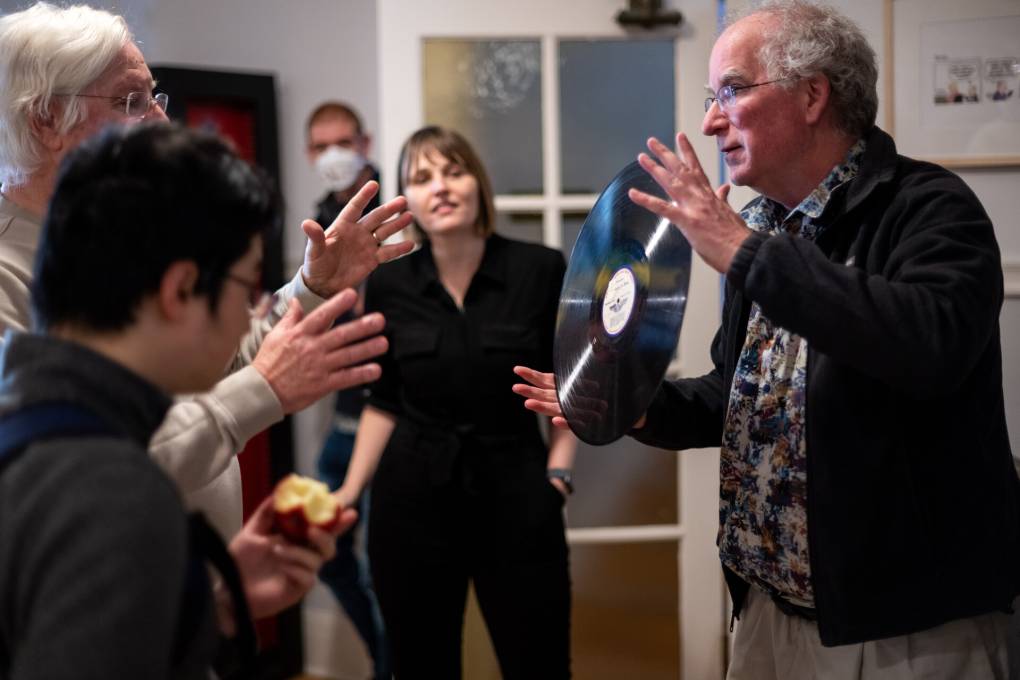
"caption": "Internet Archive founder Brewster Kahle (right) speaks to guests, volunteers and staff at one of the Archive's public lunches at its location in San Francisco's Richmond District on March 24.",
"description": null,
"title": "RS64115_012_KQED_InternetArchiveOffices_03242023-qut",
"credit": "Beth LaBerge/KQED",
"status": "inherit",
"altTag": "A middle-aged white man wearing glasses and an intense expression holds up a vinyl record while engaging in what appears to be an intense conversation with another man who is gesturing with his hands, while in the distance a white woman wearing a black dress looks on - others whose faces aren't visible are gathered around",
"isLoading": false,
"fetchFailed": false
},
"news_11945501": {
"type": "attachments",
"id": "news_11945501",
"meta": {
"index": "attachments_1716263798",
"site": "news",
"id": "11945501",
"found": true
},
"parent": 0,
"imgSizes": {
"twentyfourteen-full-width": {
"file": "https://ww2.kqed.org/app/uploads/sites/10/2023/04/RS63872_012_KQED_SOMABuprenorphineDelivery_03232023-qut-1038x576.jpg",
"width": 1038,
"mimeType": "image/jpeg",
"height": 576
},
"thumbnail": {
"file": "https://ww2.kqed.org/app/uploads/sites/10/2023/04/RS63872_012_KQED_SOMABuprenorphineDelivery_03232023-qut-160x107.jpg",
"width": 160,
"mimeType": "image/jpeg",
"height": 107
},
"post-thumbnail": {
"file": "https://ww2.kqed.org/app/uploads/sites/10/2023/04/RS63872_012_KQED_SOMABuprenorphineDelivery_03232023-qut-672x372.jpg",
"width": 672,
"mimeType": "image/jpeg",
"height": 372
},
"kqedFullSize": {
"file": "https://ww2.kqed.org/app/uploads/sites/10/2023/04/RS63872_012_KQED_SOMABuprenorphineDelivery_03232023-qut.jpg",
"width": 1920,
"height": 1280
},
"large": {
"file": "https://ww2.kqed.org/app/uploads/sites/10/2023/04/RS63872_012_KQED_SOMABuprenorphineDelivery_03232023-qut-1020x680.jpg",
"width": 1020,
"mimeType": "image/jpeg",
"height": 680
},
"1536x1536": {
"file": "https://ww2.kqed.org/app/uploads/sites/10/2023/04/RS63872_012_KQED_SOMABuprenorphineDelivery_03232023-qut-1536x1024.jpg",
"width": 1536,
"mimeType": "image/jpeg",
"height": 1024
},
"medium": {
"file": "https://ww2.kqed.org/app/uploads/sites/10/2023/04/RS63872_012_KQED_SOMABuprenorphineDelivery_03232023-qut-800x533.jpg",
"width": 800,
"mimeType": "image/jpeg",
"height": 533
}
},
"publishDate": 1680547614,
"modified": 1680566860,
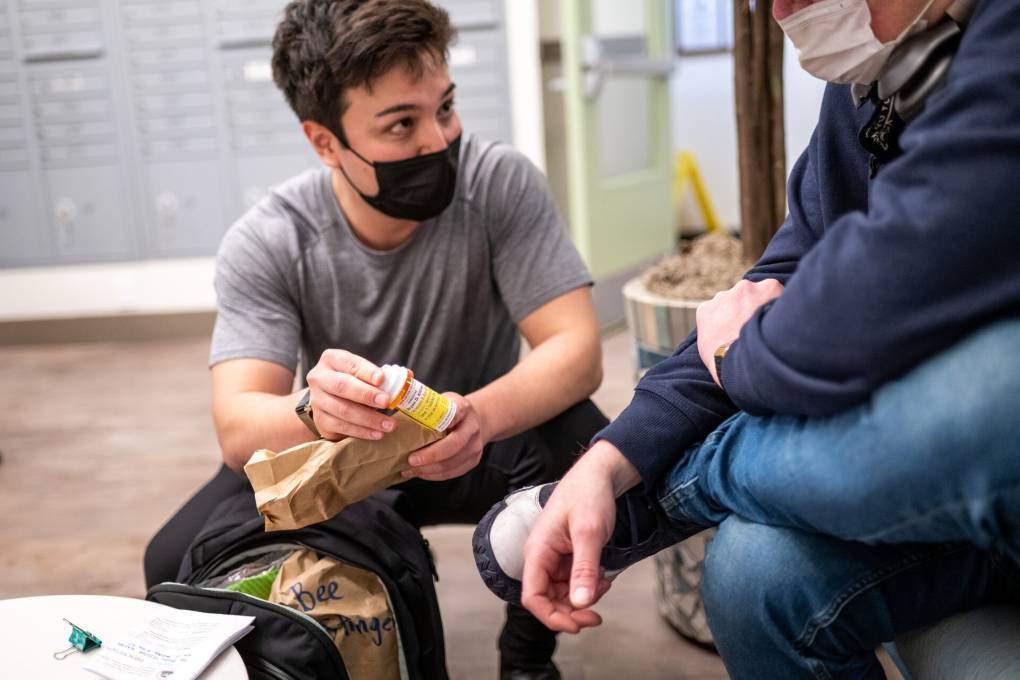
"caption": "Damian Peterson, a psychiatric clinical pharmacist with the San Francisco Department of Public Health, speaks with Bryon Killilea in the SOMA neighborhood of San Francisco while delivering buprenorphine medication on March 23, 2023.",
"description": null,
"title": "RS63872_012_KQED_SOMABuprenorphineDelivery_03232023-qut",
"credit": "Beth LaBerge/KQED",
"status": "inherit",
"altTag": "A man wearing a gray T-shirt, black face mask kneels down with an orange medication bottle in hand as he looks up at a patient who is sitting in a chair wearing a navy sweater and jeans.",
"isLoading": false,
"fetchFailed": false
},
"news_11943646": {
"type": "attachments",
"id": "news_11943646",
"meta": {
"index": "attachments_1716263798",
"site": "news",
"id": "11943646",
"found": true
},
"parent": 11943615,
"imgSizes": {
"twentyfourteen-full-width": {
"file": "https://ww2.kqed.org/app/uploads/sites/10/2023/03/RS62784_011_KQED_CCSFCantoneseClass_02082023-qut-1038x576.jpg",
"width": 1038,
"mimeType": "image/jpeg",
"height": 576
},
"thumbnail": {
"file": "https://ww2.kqed.org/app/uploads/sites/10/2023/03/RS62784_011_KQED_CCSFCantoneseClass_02082023-qut-160x107.jpg",
"width": 160,
"mimeType": "image/jpeg",
"height": 107
},
"post-thumbnail": {
"file": "https://ww2.kqed.org/app/uploads/sites/10/2023/03/RS62784_011_KQED_CCSFCantoneseClass_02082023-qut-672x372.jpg",
"width": 672,
"mimeType": "image/jpeg",
"height": 372
},
"kqedFullSize": {
"file": "https://ww2.kqed.org/app/uploads/sites/10/2023/03/RS62784_011_KQED_CCSFCantoneseClass_02082023-qut.jpg",
"width": 1920,
"height": 1280
},
"large": {
"file": "https://ww2.kqed.org/app/uploads/sites/10/2023/03/RS62784_011_KQED_CCSFCantoneseClass_02082023-qut-1020x680.jpg",
"width": 1020,
"mimeType": "image/jpeg",
"height": 680
},
"1536x1536": {
"file": "https://ww2.kqed.org/app/uploads/sites/10/2023/03/RS62784_011_KQED_CCSFCantoneseClass_02082023-qut-1536x1024.jpg",
"width": 1536,
"mimeType": "image/jpeg",
"height": 1024
},
"medium": {
"file": "https://ww2.kqed.org/app/uploads/sites/10/2023/03/RS62784_011_KQED_CCSFCantoneseClass_02082023-qut-800x533.jpg",
"width": 800,
"mimeType": "image/jpeg",
"height": 533
}
},
"publishDate": 1678920187,
"modified": 1679096011,
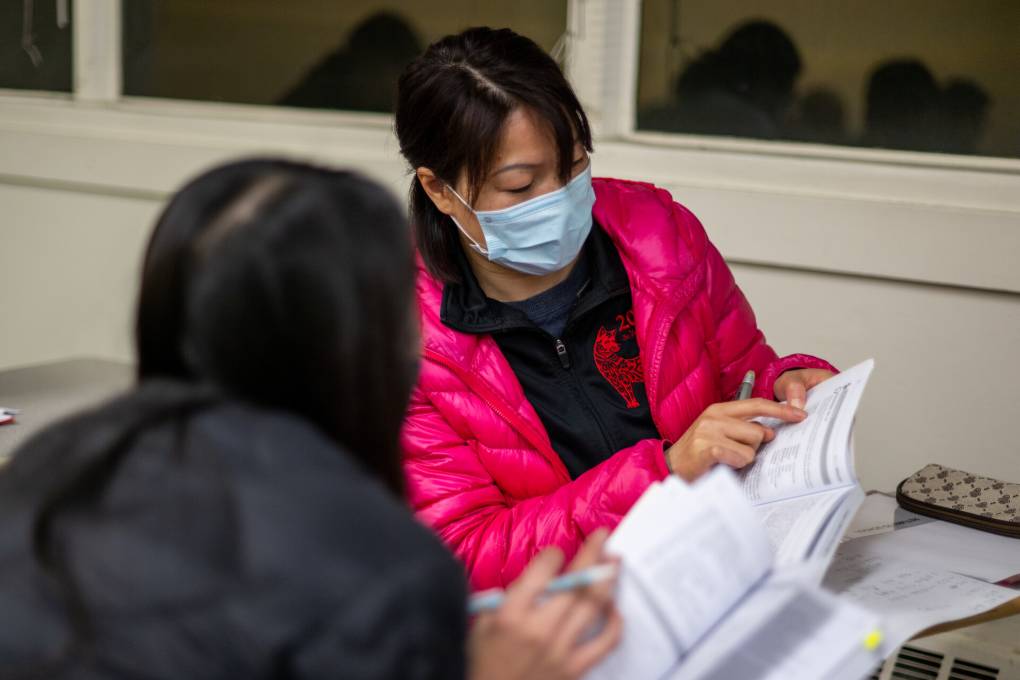
"caption": "Students work on an assignment during a Cantonese language class taught by Professor Grace Yu at City College of San Francisco on Feb. 8, 2023.",
"description": null,
"title": "RS62784_011_KQED_CCSFCantoneseClass_02082023-qut",
"credit": "Beth LaBerge/KQED",
"status": "inherit",
"altTag": "An Asian woman wearing a face mask and a hot pink coat sits at a desk and points to an open book while another student whose face is not visible looks on",
"isLoading": false,
"fetchFailed": false
},
"news_11944294": {
"type": "attachments",
"id": "news_11944294",
"meta": {
"index": "attachments_1716263798",
"site": "news",
"id": "11944294",
"found": true
},
"parent": 11944282,
"imgSizes": {
"twentyfourteen-full-width": {
"file": "https://ww2.kqed.org/app/uploads/sites/10/2023/03/RS63528_015_KQED_GubbioProjectLydiaBransten_03092023-qut-1536x1024-1-1038x576.jpeg",
"width": 1038,
"mimeType": "image/jpeg",
"height": 576
},
"thumbnail": {
"file": "https://ww2.kqed.org/app/uploads/sites/10/2023/03/RS63528_015_KQED_GubbioProjectLydiaBransten_03092023-qut-1536x1024-1-160x107.jpeg",
"width": 160,
"mimeType": "image/jpeg",
"height": 107
},
"post-thumbnail": {
"file": "https://ww2.kqed.org/app/uploads/sites/10/2023/03/RS63528_015_KQED_GubbioProjectLydiaBransten_03092023-qut-1536x1024-1-672x372.jpeg",
"width": 672,
"mimeType": "image/jpeg",
"height": 372
},
"kqedFullSize": {
"file": "https://ww2.kqed.org/app/uploads/sites/10/2023/03/RS63528_015_KQED_GubbioProjectLydiaBransten_03092023-qut-1536x1024-1.jpeg",
"width": 1536,
"height": 1024
},
"large": {
"file": "https://ww2.kqed.org/app/uploads/sites/10/2023/03/RS63528_015_KQED_GubbioProjectLydiaBransten_03092023-qut-1536x1024-1-1020x680.jpeg",
"width": 1020,
"mimeType": "image/jpeg",
"height": 680
},
"medium": {
"file": "https://ww2.kqed.org/app/uploads/sites/10/2023/03/RS63528_015_KQED_GubbioProjectLydiaBransten_03092023-qut-1536x1024-1-800x533.jpeg",
"width": 800,
"mimeType": "image/jpeg",
"height": 533
}
},
"publishDate": 1679442980,
"modified": 1679444340,
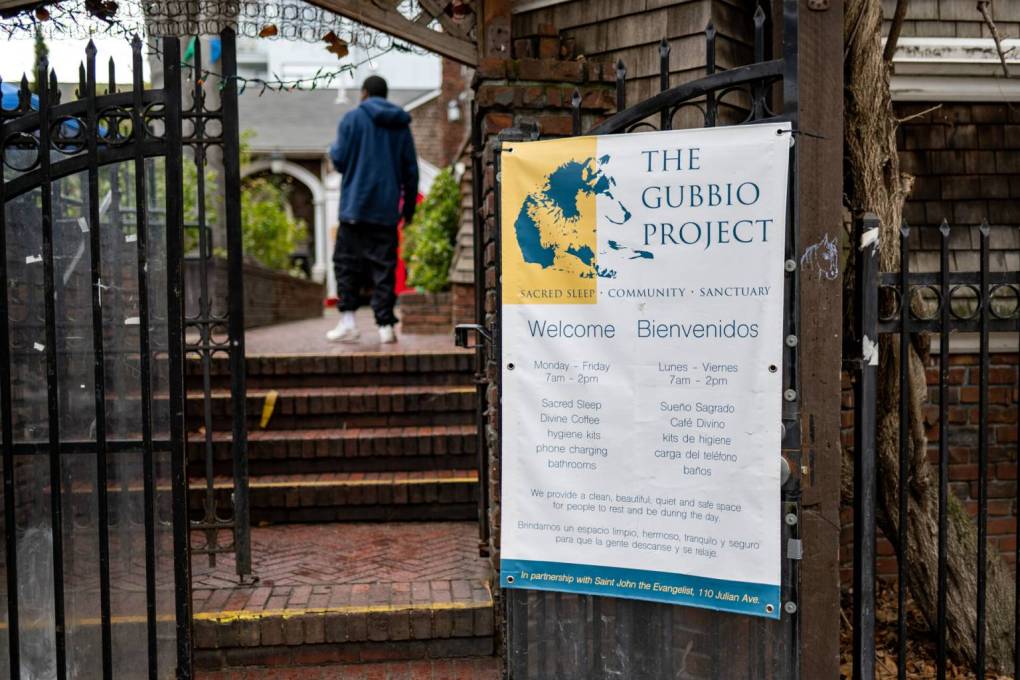
"caption": "The Gubbio Project, a nonprofit offering services for unhoused people, hopes to open a safe-consumption site in the Mission District.",
"description": null,
"title": "RS63528_015_KQED_GubbioProjectLydiaBransten_03092023-qut-1536x1024",
"credit": "Beth LaBerge/KQED",
"status": "inherit",
"altTag": "A figure stands atop brick steps in what appears to be a courtyard beyond a metal gateway with a sign reading 'Gubbio Project' on the metal gate",
"isLoading": false,
"fetchFailed": false
},
"news_11943700": {
"type": "attachments",
"id": "news_11943700",
"meta": {
"index": "attachments_1716263798",
"site": "news",
"id": "11943700",
"found": true
},
"parent": 11943688,
"imgSizes": {
"twentyfourteen-full-width": {
"file": "https://ww2.kqed.org/app/uploads/sites/10/2023/03/maceo-may-san-francisco-ca-construction-aug-2022-984x576.jpeg",
"width": 984,
"mimeType": "image/jpeg",
"height": 576
},
"thumbnail": {
"file": "https://ww2.kqed.org/app/uploads/sites/10/2023/03/maceo-may-san-francisco-ca-construction-aug-2022-160x107.jpeg",
"width": 160,
"mimeType": "image/jpeg",
"height": 107
},
"post-thumbnail": {
"file": "https://ww2.kqed.org/app/uploads/sites/10/2023/03/maceo-may-san-francisco-ca-construction-aug-2022-672x372.jpeg",
"width": 672,
"mimeType": "image/jpeg",
"height": 372
},
"kqedFullSize": {
"file": "https://ww2.kqed.org/app/uploads/sites/10/2023/03/maceo-may-san-francisco-ca-construction-aug-2022.jpeg",
"width": 984,
"height": 656
},
"medium": {
"file": "https://ww2.kqed.org/app/uploads/sites/10/2023/03/maceo-may-san-francisco-ca-construction-aug-2022-800x533.jpeg",
"width": 800,
"mimeType": "image/jpeg",
"height": 533
}
},
"publishDate": 1678938842,
"modified": 1678996884,
"caption": "The Maceo May Apartments, an affordable housing project on Treasure Island, while still under construction in August 2022. The project was partly funded by a loan from Silicon Valley Bank.",
"description": null,
"title": "maceo-may-san-francisco-ca-construction-aug-2022",
"credit": "Courtesy of Apartments.com",
"status": "inherit",
"altTag": "An aerial view of a large apartment building still under construction.",
"isLoading": false,
"fetchFailed": false
},
"news_11943325": {
"type": "attachments",
"id": "news_11943325",
"meta": {
"index": "attachments_1716263798",
"site": "news",
"id": "11943325",
"found": true
},
"parent": 11943309,
"imgSizes": {
"twentyfourteen-full-width": {
"file": "https://ww2.kqed.org/app/uploads/sites/10/2023/03/RS63526_011_KQED_GubbioProjectLydiaBransten_03092023-qut-1038x576.jpg",
"width": 1038,
"mimeType": "image/jpeg",
"height": 576
},
"thumbnail": {
"file": "https://ww2.kqed.org/app/uploads/sites/10/2023/03/RS63526_011_KQED_GubbioProjectLydiaBransten_03092023-qut-160x107.jpg",
"width": 160,
"mimeType": "image/jpeg",
"height": 107
},
"post-thumbnail": {
"file": "https://ww2.kqed.org/app/uploads/sites/10/2023/03/RS63526_011_KQED_GubbioProjectLydiaBransten_03092023-qut-672x372.jpg",
"width": 672,
"mimeType": "image/jpeg",
"height": 372
},
"kqedFullSize": {
"file": "https://ww2.kqed.org/app/uploads/sites/10/2023/03/RS63526_011_KQED_GubbioProjectLydiaBransten_03092023-qut.jpg",
"width": 1920,
"height": 1280
},
"large": {
"file": "https://ww2.kqed.org/app/uploads/sites/10/2023/03/RS63526_011_KQED_GubbioProjectLydiaBransten_03092023-qut-1020x680.jpg",
"width": 1020,
"mimeType": "image/jpeg",
"height": 680
},
"1536x1536": {
"file": "https://ww2.kqed.org/app/uploads/sites/10/2023/03/RS63526_011_KQED_GubbioProjectLydiaBransten_03092023-qut-1536x1024.jpg",
"width": 1536,
"mimeType": "image/jpeg",
"height": 1024
},
"medium": {
"file": "https://ww2.kqed.org/app/uploads/sites/10/2023/03/RS63526_011_KQED_GubbioProjectLydiaBransten_03092023-qut-800x533.jpg",
"width": 800,
"mimeType": "image/jpeg",
"height": 533
}
},
"publishDate": 1678559939,
"modified": 1678562509,
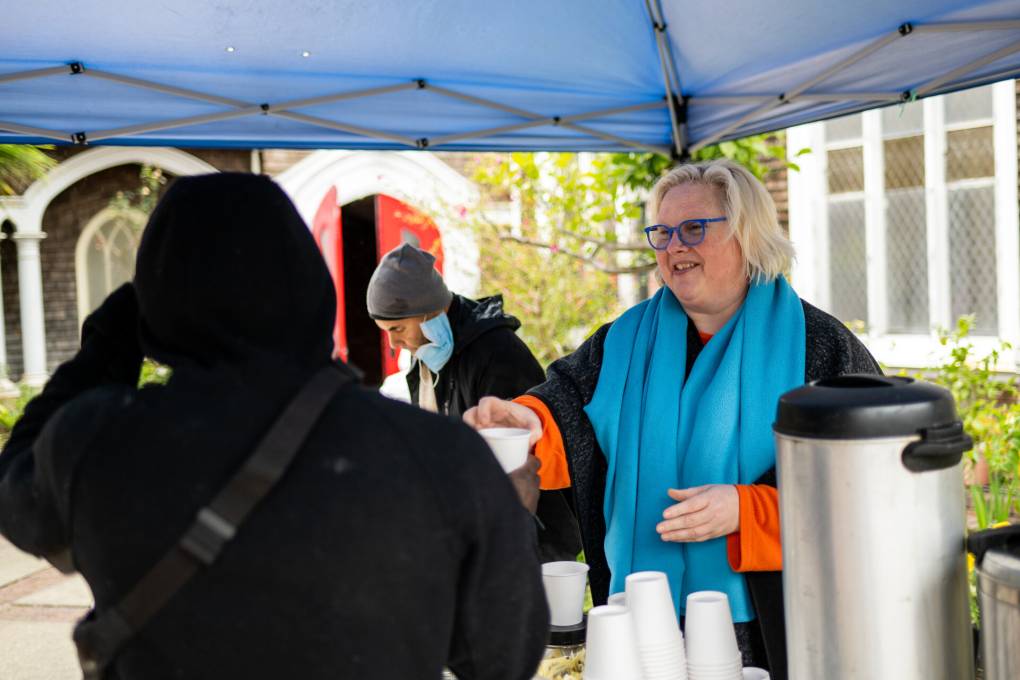
"caption": "Lydia Bransten serves free coffee at the Gubbio Project, a nonprofit offering services for unhoused people, in San Francisco on March 9, 2023.",
"description": null,
"title": "RS63526_011_KQED_GubbioProjectLydiaBransten_03092023-qut",
"credit": "Beth LaBerge/KQED",
"status": "inherit",
"altTag": "An older white woman with a blue shawl smiles as she hands a white cup to a person with a hoodie seen from behind, under a tent with another person in the background.",
"isLoading": false,
"fetchFailed": false
},
"news_11942686": {
"type": "attachments",
"id": "news_11942686",
"meta": {
"index": "attachments_1716263798",
"site": "news",
"id": "11942686",
"found": true
},
"parent": 0,
"imgSizes": {
"twentyfourteen-full-width": {
"file": "https://ww2.kqed.org/app/uploads/sites/10/2023/03/RS63455_003_KQED_KeitaONeilRally_03062023-qut-1038x576.jpg",
"width": 1038,
"mimeType": "image/jpeg",
"height": 576
},
"thumbnail": {
"file": "https://ww2.kqed.org/app/uploads/sites/10/2023/03/RS63455_003_KQED_KeitaONeilRally_03062023-qut-160x107.jpg",
"width": 160,
"mimeType": "image/jpeg",
"height": 107
},
"post-thumbnail": {
"file": "https://ww2.kqed.org/app/uploads/sites/10/2023/03/RS63455_003_KQED_KeitaONeilRally_03062023-qut-672x372.jpg",
"width": 672,
"mimeType": "image/jpeg",
"height": 372
},
"kqedFullSize": {
"file": "https://ww2.kqed.org/app/uploads/sites/10/2023/03/RS63455_003_KQED_KeitaONeilRally_03062023-qut.jpg",
"width": 1920,
"height": 1280
},
"large": {
"file": "https://ww2.kqed.org/app/uploads/sites/10/2023/03/RS63455_003_KQED_KeitaONeilRally_03062023-qut-1020x680.jpg",
"width": 1020,
"mimeType": "image/jpeg",
"height": 680
},
"1536x1536": {
"file": "https://ww2.kqed.org/app/uploads/sites/10/2023/03/RS63455_003_KQED_KeitaONeilRally_03062023-qut-1536x1024.jpg",
"width": 1536,
"mimeType": "image/jpeg",
"height": 1024
},
"medium": {
"file": "https://ww2.kqed.org/app/uploads/sites/10/2023/03/RS63455_003_KQED_KeitaONeilRally_03062023-qut-800x533.jpg",
"width": 800,
"mimeType": "image/jpeg",
"height": 533
}
},
"publishDate": 1678140430,
"modified": 1678153720,
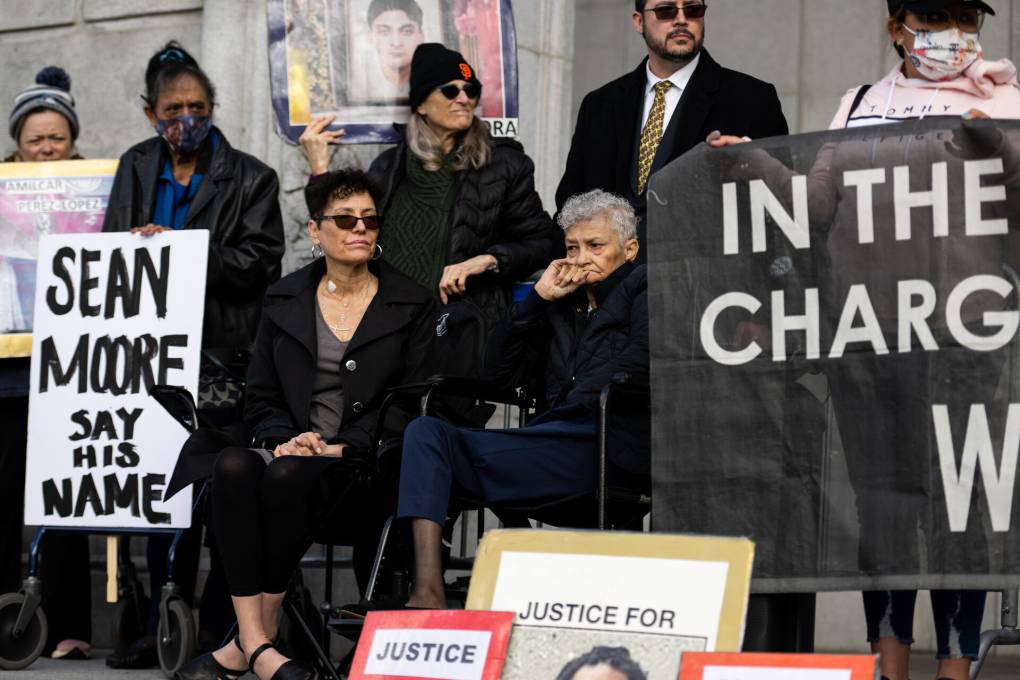
"caption": "Judy O'Neil (center), mother of Keita O'Neil, and her sister, April Green, sit outside the State of California offices in San Francisco on March 6, 2023, during a rally calling on Attorney General Rob Bonta to prosecute the former SFPD officer who killed Keita O'Neil.",
"description": null,
"title": "RS63455_003_KQED_KeitaONeilRally_03062023-qut",
"credit": "Beth LaBerge/KQED",
"status": "inherit",
"altTag": "Various people sit on the top of the steps leading to a courthouse with signs and photos, in center is April Green and Judy O'Neill",
"isLoading": false,
"fetchFailed": false
},
"news_11942385": {
"type": "attachments",
"id": "news_11942385",
"meta": {
"index": "attachments_1716263798",
"site": "news",
"id": "11942385",
"found": true
},
"title": "010_KQED_SFUSDSchoolBus_03022023",
"publishDate": 1677802386,
"status": "inherit",
"parent": 11942379,
"modified": 1771453781,
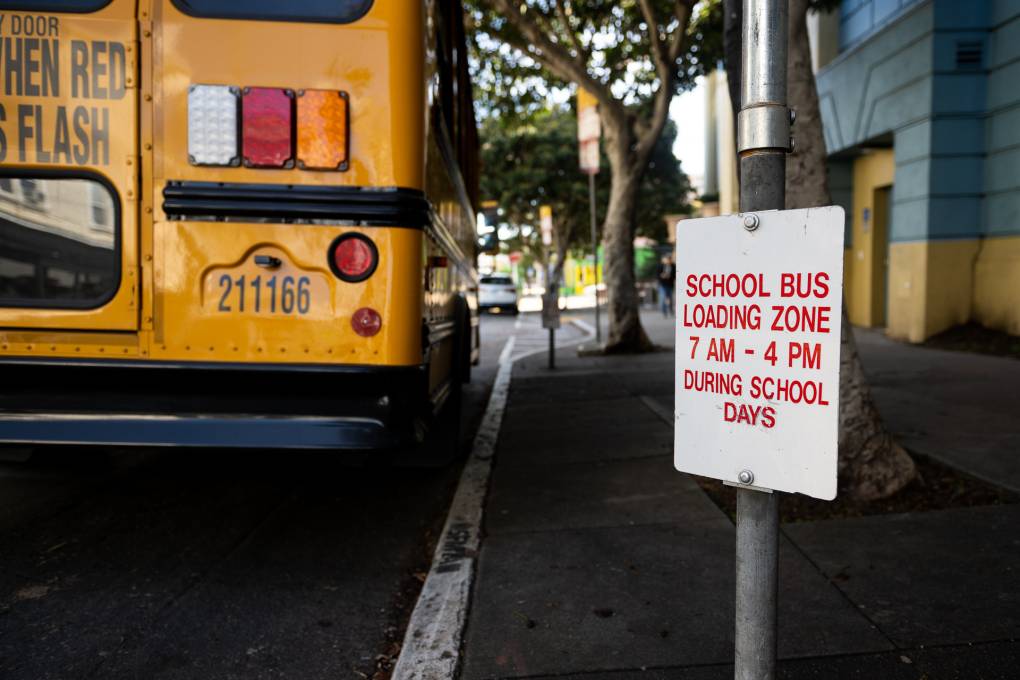
"caption": "A school bus is parked outside Buena Vista Horace Mann K–8, part of the San Francisco Unified School District, in San Francisco on March 2, 2023. ",
"credit": "Beth LaBerge/KQED",
"altTag": "A school bus parked on a street next to a sign that reads \"school bus loading zone.\"",
"description": null,
"imgSizes": {
"medium": {
"file": "https://cdn.kqed.org/wp-content/uploads/sites/10/2023/03/010_KQED_SFUSDSchoolBus_03022023-800x533.jpg",
"width": 800,
"height": 533,
"mimeType": "image/jpeg"
},
"large": {
"file": "https://cdn.kqed.org/wp-content/uploads/sites/10/2023/03/010_KQED_SFUSDSchoolBus_03022023-1020x680.jpg",
"width": 1020,
"height": 680,
"mimeType": "image/jpeg"
},
"thumbnail": {
"file": "https://cdn.kqed.org/wp-content/uploads/sites/10/2023/03/010_KQED_SFUSDSchoolBus_03022023-160x107.jpg",
"width": 160,
"height": 107,
"mimeType": "image/jpeg"
},
"1536x1536": {
"file": "https://cdn.kqed.org/wp-content/uploads/sites/10/2023/03/010_KQED_SFUSDSchoolBus_03022023-1536x1024.jpg",
"width": 1536,
"height": 1024,
"mimeType": "image/jpeg"
},
"post-thumbnail": {
"file": "https://cdn.kqed.org/wp-content/uploads/sites/10/2023/03/010_KQED_SFUSDSchoolBus_03022023-672x372.jpg",
"width": 672,
"height": 372,
"mimeType": "image/jpeg"
},
"twentyfourteen-full-width": {
"file": "https://cdn.kqed.org/wp-content/uploads/sites/10/2023/03/010_KQED_SFUSDSchoolBus_03022023-1038x576.jpg",
"width": 1038,
"height": 576,
"mimeType": "image/jpeg"
},
"kqedFullSize": {
"file": "https://cdn.kqed.org/wp-content/uploads/sites/10/2023/03/010_KQED_SFUSDSchoolBus_03022023.jpg",
"width": 1920,
"height": 1280
}
},
"isLoading": false,
"fetchFailed": false
},
"news_11942243": {
"type": "attachments",
"id": "news_11942243",
"meta": {
"index": "attachments_1716263798",
"site": "news",
"id": "11942243",
"found": true
},
"parent": 11942239,
"imgSizes": {
"twentyfourteen-full-width": {
"file": "https://ww2.kqed.org/app/uploads/sites/10/2023/03/004_KQED_KeitaONeilRallySF_03012023-1038x576.jpg",
"width": 1038,
"mimeType": "image/jpeg",
"height": 576
},
"thumbnail": {
"file": "https://ww2.kqed.org/app/uploads/sites/10/2023/03/004_KQED_KeitaONeilRallySF_03012023-160x107.jpg",
"width": 160,
"mimeType": "image/jpeg",
"height": 107
},
"post-thumbnail": {
"file": "https://ww2.kqed.org/app/uploads/sites/10/2023/03/004_KQED_KeitaONeilRallySF_03012023-672x372.jpg",
"width": 672,
"mimeType": "image/jpeg",
"height": 372
},
"kqedFullSize": {
"file": "https://ww2.kqed.org/app/uploads/sites/10/2023/03/004_KQED_KeitaONeilRallySF_03012023.jpg",
"width": 1920,
"height": 1280
},
"large": {
"file": "https://ww2.kqed.org/app/uploads/sites/10/2023/03/004_KQED_KeitaONeilRallySF_03012023-1020x680.jpg",
"width": 1020,
"mimeType": "image/jpeg",
"height": 680
},
"1536x1536": {
"file": "https://ww2.kqed.org/app/uploads/sites/10/2023/03/004_KQED_KeitaONeilRallySF_03012023-1536x1024.jpg",
"width": 1536,
"mimeType": "image/jpeg",
"height": 1024
},
"medium": {
"file": "https://ww2.kqed.org/app/uploads/sites/10/2023/03/004_KQED_KeitaONeilRallySF_03012023-800x533.jpg",
"width": 800,
"mimeType": "image/jpeg",
"height": 533
}
},
"publishDate": 1677703949,
"modified": 1677714788,
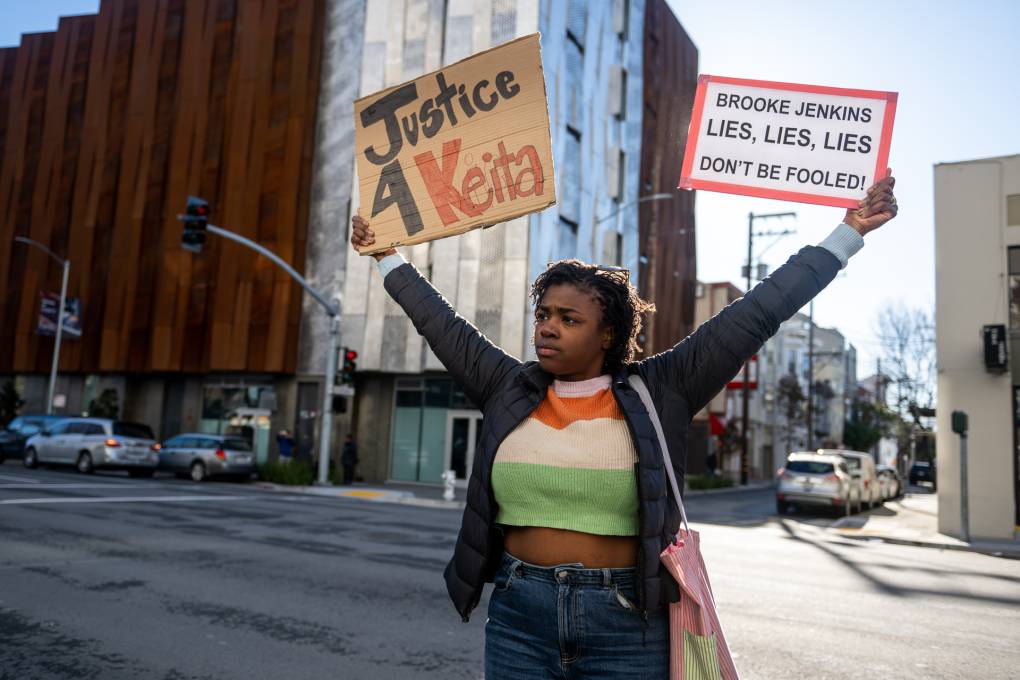
"caption": "Kaylah Williams May holds signs while listening to a speaker during a rally for Keita O'Neil outside the Hall of Justice at 850 Bryant Street in San Francisco on March 1, 2023.",
"description": null,
"title": "004_KQED_KeitaONeilRallySF_03012023",
"credit": "Beth LaBerge/KQED",
"status": "inherit",
"altTag": "Kaylah Williams May holds signs while listening to a speaker during a rally for Keita O'Neil outside the Hall of Justice at 850 Bryant Street in San Francisco on March 1, 2023.",
"isLoading": false,
"fetchFailed": false
},
"news_11942182": {
"type": "attachments",
"id": "news_11942182",
"meta": {
"index": "attachments_1716263798",
"site": "news",
"id": "11942182",
"found": true
},
"parent": 11942106,
"imgSizes": {
"twentyfourteen-full-width": {
"file": "https://ww2.kqed.org/app/uploads/sites/10/2023/02/RS46906_010_SanJose_AntiEvictionProtest_01272021-qut-1038x576.jpg",
"width": 1038,
"mimeType": "image/jpeg",
"height": 576
},
"thumbnail": {
"file": "https://ww2.kqed.org/app/uploads/sites/10/2023/02/RS46906_010_SanJose_AntiEvictionProtest_01272021-qut-160x107.jpg",
"width": 160,
"mimeType": "image/jpeg",
"height": 107
},
"post-thumbnail": {
"file": "https://ww2.kqed.org/app/uploads/sites/10/2023/02/RS46906_010_SanJose_AntiEvictionProtest_01272021-qut-672x372.jpg",
"width": 672,
"mimeType": "image/jpeg",
"height": 372
},
"kqedFullSize": {
"file": "https://ww2.kqed.org/app/uploads/sites/10/2023/02/RS46906_010_SanJose_AntiEvictionProtest_01272021-qut.jpg",
"width": 1920,
"height": 1280
},
"large": {
"file": "https://ww2.kqed.org/app/uploads/sites/10/2023/02/RS46906_010_SanJose_AntiEvictionProtest_01272021-qut-1020x680.jpg",
"width": 1020,
"mimeType": "image/jpeg",
"height": 680
},
"1536x1536": {
"file": "https://ww2.kqed.org/app/uploads/sites/10/2023/02/RS46906_010_SanJose_AntiEvictionProtest_01272021-qut-1536x1024.jpg",
"width": 1536,
"mimeType": "image/jpeg",
"height": 1024
},
"medium": {
"file": "https://ww2.kqed.org/app/uploads/sites/10/2023/02/RS46906_010_SanJose_AntiEvictionProtest_01272021-qut-800x533.jpg",
"width": 800,
"mimeType": "image/jpeg",
"height": 533
}
},
"publishDate": 1677633410,
"modified": 1677633452,
"caption": "An anti-eviction protester stands in front of Santa Clara County Superior Court on Jan. 27, 2021, during a demonstration calling for stronger statewide eviction protections.",
"description": null,
"title": "RS46906_010_SanJose_AntiEvictionProtest_01272021-qut",
"credit": "Beth LaBerge/KQED",
"status": "inherit",
"altTag": "A protester holds up a sign that says \"Stop Evictions, Cancel Rent.\"",
"isLoading": false,
"fetchFailed": false
},
"news_11941587": {
"type": "attachments",
"id": "news_11941587",
"meta": {
"index": "attachments_1716263798",
"site": "news",
"id": "11941587",
"found": true
},
"parent": 11941576,
"imgSizes": {
"twentyfourteen-full-width": {
"file": "https://ww2.kqed.org/app/uploads/sites/10/2023/02/GettyImages-1321285046-1038x576.jpg",
"width": 1038,
"mimeType": "image/jpeg",
"height": 576
},
"thumbnail": {
"file": "https://ww2.kqed.org/app/uploads/sites/10/2023/02/GettyImages-1321285046-160x99.jpg",
"width": 160,
"mimeType": "image/jpeg",
"height": 99
},
"post-thumbnail": {
"file": "https://ww2.kqed.org/app/uploads/sites/10/2023/02/GettyImages-1321285046-672x372.jpg",
"width": 672,
"mimeType": "image/jpeg",
"height": 372
},
"kqedFullSize": {
"file": "https://ww2.kqed.org/app/uploads/sites/10/2023/02/GettyImages-1321285046.jpg",
"width": 2218,
"height": 1376
},
"2048x2048": {
"file": "https://ww2.kqed.org/app/uploads/sites/10/2023/02/GettyImages-1321285046-2048x1271.jpg",
"width": 2048,
"mimeType": "image/jpeg",
"height": 1271
},
"large": {
"file": "https://ww2.kqed.org/app/uploads/sites/10/2023/02/GettyImages-1321285046-1020x633.jpg",
"width": 1020,
"mimeType": "image/jpeg",
"height": 633
},
"1536x1536": {
"file": "https://ww2.kqed.org/app/uploads/sites/10/2023/02/GettyImages-1321285046-1536x953.jpg",
"width": 1536,
"mimeType": "image/jpeg",
"height": 953
},
"full-width": {
"file": "https://ww2.kqed.org/app/uploads/sites/10/2023/02/GettyImages-1321285046-1920x1191.jpg",
"width": 1920,
"mimeType": "image/jpeg",
"height": 1191
},
"medium": {
"file": "https://ww2.kqed.org/app/uploads/sites/10/2023/02/GettyImages-1321285046-800x496.jpg",
"width": 800,
"mimeType": "image/jpeg",
"height": 496
}
},
"publishDate": 1677109116,
"modified": 1677200353,
"caption": "Police confiscate bicycles and arrest bikers during a Critical Mass ride, July 25, 1997.",
"description": null,
"title": "July 25, 1997: Police confiscate bicycles and arrest bikers during a 1997 Critical Mass ride.",
"credit": "Lance Iversen/The San Francisco Chronicle via Getty Images",
"status": "inherit",
"altTag": "Police officers throw bicycles into the back of a truck in downtown San Francisco.",
"isLoading": false,
"fetchFailed": false
},
"news_11923342": {
"type": "attachments",
"id": "news_11923342",
"meta": {
"index": "attachments_1716263798",
"site": "news",
"id": "11923342",
"found": true
},
"title": "Drug related deaths are up on the West Coast",
"publishDate": 1661312825,
"status": "inherit",
"parent": 11923303,
"modified": 1731978560,
"caption": "Paul Harkin, director of harm reduction at GLIDE, hands out Narcan, fentanyl detection packets and tinfoil to drug users in an alley in San Francisco's Tenderloin neighborhood on Feb. 3, 2020.",
"credit": "Nick Otto for the Washington Post via Getty Images",
"altTag": "A man crouches down to speak to another person kneeling on the sidewalk in an alley.",
"description": null,
"imgSizes": {
"medium": {
"file": "https://cdn.kqed.org/wp-content/uploads/sites/10/2022/08/GettyImages-1201746556-800x534.jpg",
"width": 800,
"height": 534,
"mimeType": "image/jpeg"
},
"large": {
"file": "https://cdn.kqed.org/wp-content/uploads/sites/10/2022/08/GettyImages-1201746556-1020x680.jpg",
"width": 1020,
"height": 680,
"mimeType": "image/jpeg"
},
"thumbnail": {
"file": "https://cdn.kqed.org/wp-content/uploads/sites/10/2022/08/GettyImages-1201746556-160x107.jpg",
"width": 160,
"height": 107,
"mimeType": "image/jpeg"
},
"post-thumbnail": {
"file": "https://cdn.kqed.org/wp-content/uploads/sites/10/2022/08/GettyImages-1201746556-672x372.jpg",
"width": 672,
"height": 372,
"mimeType": "image/jpeg"
},
"twentyfourteen-full-width": {
"file": "https://cdn.kqed.org/wp-content/uploads/sites/10/2022/08/GettyImages-1201746556-1024x576.jpg",
"width": 1024,
"height": 576,
"mimeType": "image/jpeg"
},
"kqedFullSize": {
"file": "https://cdn.kqed.org/wp-content/uploads/sites/10/2022/08/GettyImages-1201746556.jpg",
"width": 1024,
"height": 683
}
},
"isLoading": false,
"fetchFailed": false
}
},
"audioPlayerReducer": {
"postId": "stream_live",
"isPaused": true,
"isPlaying": false,
"pfsActive": false,
"pledgeModalIsOpen": true,
"playerDrawerIsOpen": false,
"liveAudioPlayStartedAt": 0,
"liveAudioPlayContext": ""
},
"authorsReducer": {
"byline_news_11943615": {
"type": "authors",
"id": "byline_news_11943615",
"meta": {
"override": true
},
"slug": "byline_news_11943615",
"name": "\u003ca href=\"https://twitter.com/kate_selig\">Kate Selig\u003c/a>",
"isLoading": false
},
"vrancano": {
"type": "authors",
"id": "11276",
"meta": {
"index": "authors_1716337520",
"id": "11276",
"found": true
},
"name": "Vanessa Rancaño",
"firstName": "Vanessa",
"lastName": "Rancaño",
"slug": "vrancano",
"email": "vrancano@kqed.org",
"display_author_email": false,
"staff_mastheads": [
"news"
],
"title": "Reporter",
"bio": "Vanessa Rancaño is a features reporter for KQED. She’s also covered homelessness and education for the station and reported from the Central Valley. Her work has aired across public radio, from flagship national news shows to longform narrative podcasts. Before taking up a mic, she worked as a freelance print journalist. She’s been recognized with a number of national and regional awards. Vanessa grew up in California's Central Valley. She's a former NPR Kroc Fellow, and a graduate of the UC Berkeley Graduate School of Journalism.",
"avatar": "https://secure.gravatar.com/avatar/b3a383dfb0e7ee1c17568f2cf067904ab654d6e3de9743fc661f3c788ade1bed?s=600&d=blank&r=g",
"twitter": "vanessarancano",
"bluesky": null,
"facebook": null,
"instagram": null,
"linkedin": null,
"sites": [
{
"site": "arts",
"roles": [
"editor"
]
},
{
"site": "news",
"roles": [
"editor"
]
},
{
"site": "liveblog",
"roles": [
"contributor"
]
}
],
"headData": {
"title": "Vanessa Rancaño | KQED",
"description": "Reporter",
"ogImgSrc": "https://secure.gravatar.com/avatar/b3a383dfb0e7ee1c17568f2cf067904ab654d6e3de9743fc661f3c788ade1bed?s=600&d=blank&r=g",
"twImgSrc": "https://secure.gravatar.com/avatar/b3a383dfb0e7ee1c17568f2cf067904ab654d6e3de9743fc661f3c788ade1bed?s=600&d=blank&r=g"
},
"isLoading": false,
"link": "/author/vrancano"
},
"adahlstromeckman": {
"type": "authors",
"id": "11785",
"meta": {
"index": "authors_1716337520",
"id": "11785",
"found": true
},
"name": "Azul Dahlstrom-Eckman",
"firstName": "Azul",
"lastName": "Dahlstrom-Eckman",
"slug": "adahlstromeckman",
"email": "adahlstrom-eckman@kqed.org",
"display_author_email": true,
"staff_mastheads": [],
"title": "Reporter",
"bio": "Azul is a reporter for KQED focusing on transportation and features. He joined KQED in 2021 as an alumna of KALW's Audio Academy radio journalism training program.",
"avatar": "https://secure.gravatar.com/avatar/9cb750298435add7815a777f55bf1f46845c1386bb8452555c60a7b820b5aba3?s=600&d=blank&r=g",
"twitter": "@zuliemann",
"bluesky": "@azul415.bsky.social",
"facebook": null,
"instagram": null,
"linkedin": null,
"sites": [
{
"site": "arts",
"roles": [
"editor"
]
},
{
"site": "news",
"roles": [
"editor"
]
},
{
"site": "science",
"roles": [
"editor"
]
},
{
"site": "liveblog",
"roles": [
"author"
]
}
],
"headData": {
"title": "Azul Dahlstrom-Eckman | KQED",
"description": "Reporter",
"ogImgSrc": "https://secure.gravatar.com/avatar/9cb750298435add7815a777f55bf1f46845c1386bb8452555c60a7b820b5aba3?s=600&d=blank&r=g",
"twImgSrc": "https://secure.gravatar.com/avatar/9cb750298435add7815a777f55bf1f46845c1386bb8452555c60a7b820b5aba3?s=600&d=blank&r=g"
},
"isLoading": false,
"link": "/author/adahlstromeckman"
},
"sjohnson": {
"type": "authors",
"id": "11840",
"meta": {
"index": "authors_1716337520",
"id": "11840",
"found": true
},
"name": "Sydney Johnson",
"firstName": "Sydney",
"lastName": "Johnson",
"slug": "sjohnson",
"email": "sjohnson@kqed.org",
"display_author_email": false,
"staff_mastheads": [
"news"
],
"title": "KQED Reporter",
"bio": "Sydney Johnson is a general assignment reporter at KQED. She previously reported on public health and city government at the San Francisco Examiner, and before that, she covered statewide education policy for EdSource. Her reporting has won multiple local, state and national awards. Sydney is a graduate of the University of California, Berkeley and lives in San Francisco.",
"avatar": "https://secure.gravatar.com/avatar/97855f2719b72ad6190b7c535fe642c8?s=600&d=blank&r=g",
"twitter": "sydneyfjohnson",
"facebook": null,
"instagram": null,
"linkedin": null,
"sites": [
{
"site": "news",
"roles": [
"editor"
]
}
],
"headData": {
"title": "Sydney Johnson | KQED",
"description": "KQED Reporter",
"ogImgSrc": "https://secure.gravatar.com/avatar/97855f2719b72ad6190b7c535fe642c8?s=600&d=blank&r=g",
"twImgSrc": "https://secure.gravatar.com/avatar/97855f2719b72ad6190b7c535fe642c8?s=600&d=blank&r=g"
},
"isLoading": false,
"link": "/author/sjohnson"
}
},
"pagesReducer": {
"news_tag_san-francisco": {
"type": "terms",
"id": "news_38",
"meta": {
"index": "terms_1716263798",
"site": "news",
"id": "38",
"score": 6.7230043
},
"featImg": null,
"name": "San Francisco",
"description": null,
"taxonomy": "tag",
"headData": {
"twImgId": null,
"twTitle": null,
"ogTitle": null,
"ogImgId": null,
"twDescription": null,
"description": null,
"title": "San Francisco Archives | KQED News",
"ogDescription": null
},
"ttid": 58,
"slug": "san-francisco",
"isLoading": false,
"title": "San Francisco",
"pageMeta": {
"site": "news",
"WpPageTemplate": "page-topic-editorial",
"currentPage": 118
},
"blocks": [
{
"blockName": "kqed/post-list",
"attrs": {
"layout": "cardArticle2",
"query": "posts/news?tag=san-francisco",
"seeMore": false,
"paginated": true,
"page": 118
}
},
{
"blockName": "kqed/ad"
}
]
}
},
"pfsSessionReducer": {},
"postsReducer": {
"stream_live": {
"type": "live",
"id": "stream_live",
"audioUrl": "https://streams.kqed.org/kqedradio",
"title": "Live Stream",
"excerpt": "Live Stream information currently unavailable.",
"link": "/radio",
"featImg": "",
"label": {
"name": "KQED Live",
"link": "/"
}
},
"stream_kqedNewscast": {
"type": "posts",
"id": "stream_kqedNewscast",
"audioUrl": "https://www.kqed.org/.stream/anon/radio/RDnews/newscast.mp3?_=1",
"title": "KQED Newscast",
"featImg": "",
"label": {
"name": "88.5 FM",
"link": "/"
}
},
"news_11945533": {
"type": "posts",
"id": "news_11945533",
"meta": {
"index": "posts_1716263798",
"site": "news",
"id": "11945533",
"score": null,
"sort": [
1680699710000
]
},
"guestAuthors": [],
"slug": "sf-based-internet-archive-is-fighting-a-ruling-that-could-change-the-future-of-digital-libraries",
"title": "SF-Based Internet Archive Is Fighting a Ruling That Could Change the Future of Digital Libraries",
"publishDate": 1680699710,
"format": "standard",
"headTitle": "SF-Based Internet Archive Is Fighting a Ruling That Could Change the Future of Digital Libraries | KQED",
"labelTerm": {
"site": "news"
},
"content": "\u003cp>[dropcap]F[/dropcap]or 26 years, a San Francisco-based digital library has stood in stark opposition to today’s commercial information ecosystem, hallmarked by paywalled periodicals, pricey books and advertisement-driven media.\u003c/p>\n\u003cp>Inside the Internet Archive’s massive warehouse, with towers of books new and old, it begins to sink in just how ambitious the nonprofit organization’s mission is: to preserve millions of texts and lend them freely online.\u003c/p>\n\u003cp>But the library’s philosophy is now being tried in court, as a \u003ca href=\"https://arstechnica.com/tech-policy/2023/03/publishers-beat-internet-archive-as-judge-rules-e-book-lending-violates-copyright/\">ruling in a major lawsuit against the Internet Archive\u003c/a> not only threatens to remove many of the free books from the Internet Archive’s website, but also could set the tone for digital libraries across the country.\u003c/p>\n\u003cp>“The idea was to try to fulfill the dream of the internet, of a universal library, and of universal access to all knowledge. A digital Library of Alexandria,” Brewster Kahle, founder and digital librarian for the Internet Archive, told KQED, referencing one of the world’s \u003ca href=\"https://time.com/5912689/library-of-alexandria-burning/\">earliest and most storied libraries\u003c/a>. “The San Francisco Public Library, the Burlingame Public Library and many libraries around the Bay Area donate books when they don’t need them anymore to the Internet Archive rather than, say, landfill.”\u003c/p>\n\u003cp>[ad fullwidth]\u003c/p>\n\u003cp>E-book lending is used across libraries and publishing houses, and often libraries will license those digital books from publishers. Through its \u003ca href=\"https://archive.org/details/ol_data\">Open Library\u003c/a>, the Internet Archive maintains that it uses a model known as “controlled digital lending,” where a library owns a book, scans it digitally and loans the digital copy to one user at a time.\u003c/p>\n\u003cp>But in March 2020, when physical libraries were closed due to the pandemic and students were learning from home, the Internet Archive temporarily removed waitlists so anyone could access the books online, calling the initiative the National Emergency Library.\u003c/p>\n\u003cfigure id=\"attachment_11945692\" class=\"wp-caption aligncenter\" style=\"max-width: 1920px\">\u003cimg loading=\"lazy\" decoding=\"async\" class=\"size-full wp-image-11945692\" src=\"https://ww2.kqed.org/app/uploads/sites/10/2023/04/021_KQED_InternetArchiveWarehouse_03302023.jpg\" alt=\"An older white man with grey-white hair wearing a dark sweater reaches out to close a grey metallic door as huge cardboard boxes labeled as containing books sit in the background\" width=\"1920\" height=\"1280\" srcset=\"https://cdn.kqed.org/wp-content/uploads/sites/10/2023/04/021_KQED_InternetArchiveWarehouse_03302023.jpg 1920w, https://cdn.kqed.org/wp-content/uploads/sites/10/2023/04/021_KQED_InternetArchiveWarehouse_03302023-800x533.jpg 800w, https://cdn.kqed.org/wp-content/uploads/sites/10/2023/04/021_KQED_InternetArchiveWarehouse_03302023-1020x680.jpg 1020w, https://cdn.kqed.org/wp-content/uploads/sites/10/2023/04/021_KQED_InternetArchiveWarehouse_03302023-160x107.jpg 160w, https://cdn.kqed.org/wp-content/uploads/sites/10/2023/04/021_KQED_InternetArchiveWarehouse_03302023-1536x1024.jpg 1536w\" sizes=\"(max-width: 1920px) 100vw, 1920px\">\u003cfigcaption class=\"wp-caption-text\">Brewster Kahle closes a storage container with books labeled from “Allen County Public Library’’ at an Internet Archive storage facility in Richmond on March 30. \u003ccite>(Beth LaBerge/KQED)\u003c/cite>\u003c/figcaption>\u003c/figure>\n\u003cp>The Archive stopped the program and returned to its regular lending practices in June 2020, the same month that Hachette Book Group and other major publishers hit the Internet Archive with a multimillion-dollar lawsuit alleging copyright infringement.\u003c/p>\n\u003cp>This month, a federal judge in New York sided with the publishers, which include Penguin Random House, Wiley and HarperCollins, ruling that the Internet Archive violated copyright infringement laws through both the Open Library and the National Emergency Library.\u003c/p>\n\u003cp>[pullquote size=\"medium\" align=\"right\" citation=\"Brewster Kahle, Internet Archive founder\"]‘The publishers demanded that we destroy millions of digitized books and stop lending, and they sued us for tens of millions of dollars. That was the publishers’ response when libraries closed, was to sue libraries.’[/pullquote]In its \u003ca href=\"https://www.eff.org/document/complaint-50\">lawsuit\u003c/a>, Hachette Group argued that the Internet Archive “badly misleads the public and boldly misappropriates the goodwill that libraries enjoy and have legitimately earned.”\u003c/p>\n\u003cp>The publishers specifically complained about \u003ca href=\"https://storage.courtlistener.com/recap/gov.uscourts.nysd.537900/gov.uscourts.nysd.537900.1.1.pdf\">127 books not under public domain (PDF)\u003c/a> that are stored and offered freely on the Archive, by authors such as Sylvia Plath, Jon Krakauer, Toni Morrison, Malcolm Gladwell, C.S. Lewis and J.D. Salinger.\u003c/p>\n\u003cp>Publishers say Open Library flouts licensing fees libraries are supposed to pay them. But because libraries already paid licensing fees for the print books that the Internet Archive scans as part of the Open Library project, the nonprofit asserts that their one-to-one lending system constitutes fair use.\u003c/p>\n\u003cp>“IA’s fair use defense rests on the notion that lawfully acquiring a copyrighted print book entitles the recipient to make an unauthorized copy and distribute it in place of the print book, so long as it does not simultaneously lend the print book,” the Southern District of New York Judge John Koeltl \u003ca href=\"https://storage.courtlistener.com/recap/gov.uscourts.nysd.537900/gov.uscourts.nysd.537900.188.0.pdf\">stated in his ruling (PDF)\u003c/a>. “But no case or legal principle supports that notion. Every authority points the other direction.”\u003c/p>\n\u003cfigure id=\"attachment_11945701\" class=\"wp-caption aligncenter\" style=\"max-width: 1920px\">\u003cimg loading=\"lazy\" decoding=\"async\" class=\"size-full wp-image-11945701\" src=\"https://ww2.kqed.org/app/uploads/sites/10/2023/04/018_KQED_InternetArchiveWarehouse_03302023.jpg\" alt=\"A man in the distance stands in a walkway between two huge walls of grey storage containers stacked on top of each other inside what appears to be a massive warehouse\" width=\"1920\" height=\"1280\" srcset=\"https://cdn.kqed.org/wp-content/uploads/sites/10/2023/04/018_KQED_InternetArchiveWarehouse_03302023.jpg 1920w, https://cdn.kqed.org/wp-content/uploads/sites/10/2023/04/018_KQED_InternetArchiveWarehouse_03302023-800x533.jpg 800w, https://cdn.kqed.org/wp-content/uploads/sites/10/2023/04/018_KQED_InternetArchiveWarehouse_03302023-1020x680.jpg 1020w, https://cdn.kqed.org/wp-content/uploads/sites/10/2023/04/018_KQED_InternetArchiveWarehouse_03302023-160x107.jpg 160w, https://cdn.kqed.org/wp-content/uploads/sites/10/2023/04/018_KQED_InternetArchiveWarehouse_03302023-1536x1024.jpg 1536w\" sizes=\"(max-width: 1920px) 100vw, 1920px\">\u003cfigcaption class=\"wp-caption-text\">Matthew Soper, physical warehouse manager and archivist, walks alongside storage containers at the Internet Archive storage facility in Richmond on March 30. \u003ccite>(Beth LaBerge/KQED)\u003c/cite>\u003c/figcaption>\u003c/figure>\n\u003cp>The fight is not over, though. The Archive, with support from its fandom of technologists, librarians, researchers, authors and digital rights activists, \u003ca href=\"http://blog.archive.org/2023/03/25/the-fight-continues/\">plans to appeal the ruling\u003c/a>.\u003c/p>\n\u003cp>“The publishers demanded that we destroy millions of digitized books and stop lending, and they sued us for tens of millions of dollars. That was the publishers’ response when libraries closed, was to sue libraries,” said Kahle. “I don’t think it was very good behavior. In fact, it’s horrendous.”\u003c/p>\n\u003ch2>Built in the Bay\u003c/h2>\n\u003cp>The Archive is rooted in the Bay Area, spiritually with its high-tech-meets-open-access ethos, and physically, in the form of a Greek-columned, former Christian Science church-turned media museum in San Francisco’s Richmond District.\u003c/p>\n\u003cfigure id=\"attachment_11945689\" class=\"wp-caption aligncenter\" style=\"max-width: 1920px\">\u003cimg loading=\"lazy\" decoding=\"async\" class=\"size-full wp-image-11945689\" src=\"https://ww2.kqed.org/app/uploads/sites/10/2023/04/054_KQED_InternetArchiveOffices_03242023.jpg\" alt=\"Close-up photo of a shiny metallic plaque with text on it below a columned icon which is the symbol of the Internet Archive\" width=\"1920\" height=\"1280\" srcset=\"https://cdn.kqed.org/wp-content/uploads/sites/10/2023/04/054_KQED_InternetArchiveOffices_03242023.jpg 1920w, https://cdn.kqed.org/wp-content/uploads/sites/10/2023/04/054_KQED_InternetArchiveOffices_03242023-800x533.jpg 800w, https://cdn.kqed.org/wp-content/uploads/sites/10/2023/04/054_KQED_InternetArchiveOffices_03242023-1020x680.jpg 1020w, https://cdn.kqed.org/wp-content/uploads/sites/10/2023/04/054_KQED_InternetArchiveOffices_03242023-160x107.jpg 160w, https://cdn.kqed.org/wp-content/uploads/sites/10/2023/04/054_KQED_InternetArchiveOffices_03242023-1536x1024.jpg 1536w\" sizes=\"(max-width: 1920px) 100vw, 1920px\">\u003cfigcaption class=\"wp-caption-text\">A sign at the Internet Archive’s offices in San Francisco reads, ‘Universal access to all knowledge.’ \u003ccite>(Beth LaBerge/KQED)\u003c/cite>\u003c/figcaption>\u003c/figure>\n\u003cp>Inside its warehouse in the city of Richmond, just across the bay, rows of shipping containers hold meticulously organized boxes of books donated from places like the California State Library, the University of Florida, UC Riverside, the San Francisco Public Library and many other institutions the Archive helps to digitize books for.\u003c/p>\n\u003cp>The collection also includes an entire section of books that are banned, as well as books that legislators across the U.S. are actively attempting to ban. Nationwide, attempts to ban books nearly doubled from 2021 to 2022, reaching the highest point ever recorded at \u003ca href=\"https://www.ala.org/news/press-releases/2023/03/record-book-bans-2022\">1,269 demands to censor library books and resources in 2022\u003c/a>, according to an analysis by the American Library Association, which began tracking the data nearly 20 years ago.\u003c/p>\n\u003cfigure id=\"attachment_11945707\" class=\"wp-caption aligncenter\" style=\"max-width: 1920px\">\u003cimg loading=\"lazy\" decoding=\"async\" class=\"size-full wp-image-11945707\" src=\"https://ww2.kqed.org/app/uploads/sites/10/2023/04/016_KQED_InternetArchiveOffices_03242023.jpg\" alt=\"Someone wearing a bright orange hoodie sits at an archiving station holding an open book and facing a computer screen\" width=\"1920\" height=\"1280\" srcset=\"https://cdn.kqed.org/wp-content/uploads/sites/10/2023/04/016_KQED_InternetArchiveOffices_03242023.jpg 1920w, https://cdn.kqed.org/wp-content/uploads/sites/10/2023/04/016_KQED_InternetArchiveOffices_03242023-800x533.jpg 800w, https://cdn.kqed.org/wp-content/uploads/sites/10/2023/04/016_KQED_InternetArchiveOffices_03242023-1020x680.jpg 1020w, https://cdn.kqed.org/wp-content/uploads/sites/10/2023/04/016_KQED_InternetArchiveOffices_03242023-160x107.jpg 160w, https://cdn.kqed.org/wp-content/uploads/sites/10/2023/04/016_KQED_InternetArchiveOffices_03242023-1536x1024.jpg 1536w\" sizes=\"(max-width: 1920px) 100vw, 1920px\">\u003cfigcaption class=\"wp-caption-text\">Eliza Zhang scans books at the Internet Archive offices in San Francisco. \u003ccite>(Beth LaBerge/KQED)\u003c/cite>\u003c/figcaption>\u003c/figure>\n\u003cp>On any given day, staff with the Archive can be found tucked away at its San Francisco-based library scanning physical books, many of which are donated by local public libraries and university libraries, as well as individuals.\u003c/p>\n\u003cp>Amsterdam-based novelist Bette Adriaanse has used the Internet Archive for her work and was a fan from afar until she visited the Archive’s Richmond District location on a recent sunny Friday afternoon, when it hosts lunches open to the community.\u003c/p>\n\u003cp>“I was looking for this very obscure book on art and I couldn’t find it anywhere, not in libraries or bookstores. And then I found it on the Archive and I read it online and borrowed it,” said Adriaanse. “Since then I’ve been borrowing books from them that I can’t find in the library. And if I want to buy a book to support a book, I buy it.”\u003c/p>\n\u003cfigure id=\"attachment_11945695\" class=\"wp-caption aligncenter\" style=\"max-width: 1920px\">\u003cimg loading=\"lazy\" decoding=\"async\" class=\"size-full wp-image-11945695\" src=\"https://ww2.kqed.org/app/uploads/sites/10/2023/04/021_KQED_InternetArchiveOffices_03242023.jpg\" alt=\"A white woman with short brown hair stands facing a middle-aged white man, both smiling and engaged in conversation, with an old time record player in the background within a corridor which appears to be lined with vinyl records\" width=\"1920\" height=\"1280\" srcset=\"https://cdn.kqed.org/wp-content/uploads/sites/10/2023/04/021_KQED_InternetArchiveOffices_03242023.jpg 1920w, https://cdn.kqed.org/wp-content/uploads/sites/10/2023/04/021_KQED_InternetArchiveOffices_03242023-800x533.jpg 800w, https://cdn.kqed.org/wp-content/uploads/sites/10/2023/04/021_KQED_InternetArchiveOffices_03242023-1020x680.jpg 1020w, https://cdn.kqed.org/wp-content/uploads/sites/10/2023/04/021_KQED_InternetArchiveOffices_03242023-160x107.jpg 160w, https://cdn.kqed.org/wp-content/uploads/sites/10/2023/04/021_KQED_InternetArchiveOffices_03242023-1536x1024.jpg 1536w\" sizes=\"(max-width: 1920px) 100vw, 1920px\">\u003cfigcaption class=\"wp-caption-text\">Brewster Kahle shows Amsterdam-based novelist Bette Adriaanse an early record player at the Internet Archive offices in San Francisco. \u003ccite>(Beth LaBerge/KQED)\u003c/cite>\u003c/figcaption>\u003c/figure>\n\u003cp>She was among about two dozen people who stopped by the Archive recently for its Friday lunches, during which Kahle is often around providing tours. On this particular Friday, the tour group was made up of fans visiting from out of the country, filmmakers, academics, archival vigilantes who scan the internet for websites to save, and video game designers in town for a conference.\u003c/p>\n\u003cp>In black socks with no shoes, Kahle dazzled the group with stories of the early internet days in the Archive’s common space. Then he laced up for a tour to the main attraction, a stained-glass chapel bordered with 3-foot-tall figures of people who are part of the Archive’s history and present.\u003c/p>\n\u003cfigure id=\"attachment_11945697\" class=\"wp-caption aligncenter\" style=\"max-width: 1920px\">\u003cimg loading=\"lazy\" decoding=\"async\" class=\"size-full wp-image-11945697\" src=\"https://ww2.kqed.org/app/uploads/sites/10/2023/04/042_KQED_InternetArchiveOffices_03242023.jpg\" alt=\"A photo of what appear to be dozens of clay figurines which are delicately painted and apparently standing near church pews\" width=\"1920\" height=\"1280\" srcset=\"https://cdn.kqed.org/wp-content/uploads/sites/10/2023/04/042_KQED_InternetArchiveOffices_03242023.jpg 1920w, https://cdn.kqed.org/wp-content/uploads/sites/10/2023/04/042_KQED_InternetArchiveOffices_03242023-800x533.jpg 800w, https://cdn.kqed.org/wp-content/uploads/sites/10/2023/04/042_KQED_InternetArchiveOffices_03242023-1020x680.jpg 1020w, https://cdn.kqed.org/wp-content/uploads/sites/10/2023/04/042_KQED_InternetArchiveOffices_03242023-160x107.jpg 160w, https://cdn.kqed.org/wp-content/uploads/sites/10/2023/04/042_KQED_InternetArchiveOffices_03242023-1536x1024.jpg 1536w\" sizes=\"(max-width: 1920px) 100vw, 1920px\">\u003cfigcaption class=\"wp-caption-text\">Statues of the Internet Archive staff, including founder Brewster Kahle, line church pews at the former church-turned-offices in San Francisco. Kahle explained that his idea was to create Terracotta Archivists after he saw the Terracotta Army in China. If you work for the Internet Archive for three years, a statue of you is made. \u003ccite>(Beth LaBerge/KQED)\u003c/cite>\u003c/figcaption>\u003c/figure>\n\u003cp>At the pulpit there’s a tower of computer screens scrolling through bygone pages of the earliest days of the internet. The Internet Archive also runs the \u003ca href=\"https://archive.org/web/\">Wayback Machine\u003c/a>, a digital archive of more than 800 billion webpages and counting, ranging from early ’90s blogs to news websites and Donald Trump’s tweets.\u003c/p>\n\u003cp>Behind the rows of pews, a giant server studded with lights that flash every time something is uploaded to the Archive twinkles like a technologic starry sky.\u003c/p>\n\u003cp>Local musician and filmmaker Rohit Rao regularly works out of the space, which offers free public Wi-Fi.\u003c/p>\n\u003cp>“I was drawn to it for nostalgia at first. But more recently, I’ve been uploading my films to the Archive. I had a bunch of these hard drives with films on there and I wanted to store them online,” said Rao, hunched over a keyboard in the Archive’s living room. “Lately, they’ve been giving me space to work. I might track my entire record here if they’re cool with it.”\u003c/p>\n\u003ch2>The future of digital libraries\u003c/h2>\n\u003cp>Whichever way the Archive’s appeal in the publishers’ lawsuit ultimately goes, some librarians and authors say it could set the stage for what book lending looks like in an increasingly digital era.\u003c/p>\n\u003cp>Some books could altogether disappear, advocates of the Archive say.\u003c/p>\n\u003cp>Laura Gibbs, who taught folklore and mythology online for the University of Oklahoma for more than 20 years, frequently used the Archive with her students. In more recent years, she has been dedicated to uploading and preserving some of the rare texts she works with, which are often hard to access elsewhere.\u003c/p>\n\u003cp>“This completely changed my research, and I do all my reading via the Internet Archive now,” said Gibbs, who was on the tour. “It just feels like the most important thing I’ve ever done. This is the future of education.”\u003c/p>\n\u003cfigure id=\"attachment_11945699\" class=\"wp-caption aligncenter\" style=\"max-width: 1920px\">\u003cimg loading=\"lazy\" decoding=\"async\" class=\"size-full wp-image-11945699\" src=\"https://ww2.kqed.org/app/uploads/sites/10/2023/04/031_KQED_InternetArchiveOffices_03242023.jpg\" alt=\"A middle-aged white woman with glasses and grey hair stands in front of what appears to be a large shelving unit full of memorabilia in a large, clean, well lit room\" width=\"1920\" height=\"1280\" srcset=\"https://cdn.kqed.org/wp-content/uploads/sites/10/2023/04/031_KQED_InternetArchiveOffices_03242023.jpg 1920w, https://cdn.kqed.org/wp-content/uploads/sites/10/2023/04/031_KQED_InternetArchiveOffices_03242023-800x533.jpg 800w, https://cdn.kqed.org/wp-content/uploads/sites/10/2023/04/031_KQED_InternetArchiveOffices_03242023-1020x680.jpg 1020w, https://cdn.kqed.org/wp-content/uploads/sites/10/2023/04/031_KQED_InternetArchiveOffices_03242023-160x107.jpg 160w, https://cdn.kqed.org/wp-content/uploads/sites/10/2023/04/031_KQED_InternetArchiveOffices_03242023-1536x1024.jpg 1536w\" sizes=\"(max-width: 1920px) 100vw, 1920px\">\u003cfigcaption class=\"wp-caption-text\">Laura Gibbs looks at memorabilia at the Internet Archive offices in San Francisco. \u003ccite>(Beth LaBerge/KQED)\u003c/cite>\u003c/figcaption>\u003c/figure>\n\u003cp>Controlled digital lending “enables many authors to reach more readers than they could otherwise, and authors like our members who write to be read would not be served if fewer readers could access their books,” the \u003ca href=\"https://www.authorsalliance.org/about/\">Authors Alliance\u003c/a> wrote in response to the recent ruling. The Alliance is a broad coalition of librarians, writers, academics and copyright attorneys who advocate for wider public access to books and knowledge.\u003c/p>\n\u003cp>The Internet Archive case also arrives as more libraries are digitizing their books to meet new customer demands and technological shifts.\u003c/p>\n\u003cp>“The argument that the Internet Archive isn’t a library is wrong. If this argument is accepted, the results would jeopardize the future development of digital libraries nationwide. The Internet Archive is the most significant specialized library to emerge in decades,” \u003ca href=\"https://www.insidehighered.com/views/2023/03/17/librarians-should-stand-internet-archive-opinion\">a group of eight librarians from MIT, UC Berkeley and other prominent institutions recently wrote in an op-ed for Inside Higher Education\u003c/a>.\u003c/p>\n\u003cfigure id=\"attachment_11945709\" class=\"wp-caption aligncenter\" style=\"max-width: 1920px\">\u003cimg loading=\"lazy\" decoding=\"async\" class=\"size-full wp-image-11945709\" src=\"https://ww2.kqed.org/app/uploads/sites/10/2023/04/004_KQED_InternetArchiveOffices_03242023.jpg\" alt=\"A middle aged white man standing up gestures intensely as he speaks with the backs of audience members listening blurred in the foreground\" width=\"1920\" height=\"1280\" srcset=\"https://cdn.kqed.org/wp-content/uploads/sites/10/2023/04/004_KQED_InternetArchiveOffices_03242023.jpg 1920w, https://cdn.kqed.org/wp-content/uploads/sites/10/2023/04/004_KQED_InternetArchiveOffices_03242023-800x533.jpg 800w, https://cdn.kqed.org/wp-content/uploads/sites/10/2023/04/004_KQED_InternetArchiveOffices_03242023-1020x680.jpg 1020w, https://cdn.kqed.org/wp-content/uploads/sites/10/2023/04/004_KQED_InternetArchiveOffices_03242023-160x107.jpg 160w, https://cdn.kqed.org/wp-content/uploads/sites/10/2023/04/004_KQED_InternetArchiveOffices_03242023-1536x1024.jpg 1536w\" sizes=\"(max-width: 1920px) 100vw, 1920px\">\u003cfigcaption class=\"wp-caption-text\">Brewster Kahle speaks to guests, volunteers and staff at the Internet Archive offices in San Francisco on March 24. \u003ccite>(Beth LaBerge/KQED)\u003c/cite>\u003c/figcaption>\u003c/figure>\n\u003cp>The Internet Archive says that it is, in fact, a modern-day library, pointing out that it has received government dollars earmarked for libraries, including from \u003ca href=\"https://www.fcc.gov/consumers/guides/universal-service-program-schools-and-libraries-e-rate\">the federal E-Rate program\u003c/a>, which provides funds and discounts on internet connection for schools and libraries.\u003c/p>\n\u003cp>Authors like Adriaanse understand the tough reality of making it financially as a writer, and that publishers need to make money to stay afloat.\u003c/p>\n\u003cp>But she was pleasantly surprised to find her own books on the Archive, as well as other free digital lending services at her local Dutch library system during the pandemic for people who didn’t have a library card.\u003c/p>\n\u003cp>“I got a lot more readers, so that tells you there are a lot of people out there who want to read but don’t have a library card or money to buy books,” Adriaanse said. “It is inspiring. It makes me think we can have universal access to knowledge.”\u003c/p>\n\u003cp>[ad floatright]\u003c/p>\n",
"blocks": [],
"excerpt": "A judge recently ruled in favor of publishers in a lawsuit against San Francisco-based Internet Archive, demanding the nonprofit's online library remove e-books. The Archive will appeal.",
"status": "publish",
"parent": 0,
"modified": 1729027534,
"stats": {
"hasAudio": false,
"hasVideo": false,
"hasChartOrMap": false,
"iframeSrcs": [],
"hasGoogleForm": false,
"hasGallery": false,
"hasHearkenModule": false,
"hasPolis": false,
"paragraphCount": 39,
"wordCount": 2043
},
"headData": {
"title": "SF-Based Internet Archive Is Fighting a Ruling That Could Change the Future of Digital Libraries | KQED",
"description": "A judge recently ruled in favor of publishers in a lawsuit against San Francisco-based Internet Archive, demanding the nonprofit's online library remove e-books. The Archive will appeal.",
"ogTitle": "",
"ogDescription": "",
"ogImgId": "",
"twTitle": "",
"twDescription": "",
"twImgId": "",
"schema": {
"@context": "https://schema.org",
"@type": "NewsArticle",
"headline": "SF-Based Internet Archive Is Fighting a Ruling That Could Change the Future of Digital Libraries",
"datePublished": "2023-04-05T06:01:50-07:00",
"dateModified": "2024-10-15T14:25:34-07:00",
"image": "https://cdn.kqed.org/wp-content/uploads/2020/02/KQED-OG-Image@1x.png",
"isAccessibleForFree": "True",
"publisher": {
"@type": "NewsMediaOrganization",
"@id": "https://www.kqed.org/#organization",
"name": "KQED",
"logo": "https://cdn.kqed.org/wp-content/uploads/2020/02/KQED-OG-Image@1x.png",
"url": "https://www.kqed.org",
"sameAs": [
"https://www.facebook.com/KQED",
"https://twitter.com/KQED",
"https://www.instagram.com/kqed/",
"https://www.tiktok.com/@kqedofficial",
"https://www.linkedin.com/company/kqed",
"https://www.youtube.com/channel/UCeC0IOo7i1P_61zVUWbJ4nw"
]
}
}
},
"sticky": false,
"excludeFromSiteSearch": "Include",
"articleAge": "0",
"path": "/news/11945533/sf-based-internet-archive-is-fighting-a-ruling-that-could-change-the-future-of-digital-libraries",
"audioTrackLength": null,
"parsedContent": [
{
"type": "contentString",
"content": "\u003cdiv class=\"post-body\">\u003cp>\u003cp>\u003c/p>\u003cp>\u003cspan class=\"utils-parseShortcode-shortcodes-__dropcapShortcode__dropcap\">F\u003c/span>\u003c/p>\u003cp>or 26 years, a San Francisco-based digital library has stood in stark opposition to today’s commercial information ecosystem, hallmarked by paywalled periodicals, pricey books and advertisement-driven media.\u003c/p>\n\u003cp>Inside the Internet Archive’s massive warehouse, with towers of books new and old, it begins to sink in just how ambitious the nonprofit organization’s mission is: to preserve millions of texts and lend them freely online.\u003c/p>\n\u003cp>But the library’s philosophy is now being tried in court, as a \u003ca href=\"https://arstechnica.com/tech-policy/2023/03/publishers-beat-internet-archive-as-judge-rules-e-book-lending-violates-copyright/\">ruling in a major lawsuit against the Internet Archive\u003c/a> not only threatens to remove many of the free books from the Internet Archive’s website, but also could set the tone for digital libraries across the country.\u003c/p>\n\u003cp>“The idea was to try to fulfill the dream of the internet, of a universal library, and of universal access to all knowledge. A digital Library of Alexandria,” Brewster Kahle, founder and digital librarian for the Internet Archive, told KQED, referencing one of the world’s \u003ca href=\"https://time.com/5912689/library-of-alexandria-burning/\">earliest and most storied libraries\u003c/a>. “The San Francisco Public Library, the Burlingame Public Library and many libraries around the Bay Area donate books when they don’t need them anymore to the Internet Archive rather than, say, landfill.”\u003c/p>\n\u003cp>\u003c/p>\u003c/div>",
"attributes": {
"named": {},
"numeric": []
}
},
{
"type": "component",
"content": "",
"name": "ad",
"attributes": {
"named": {
"label": "fullwidth"
},
"numeric": [
"fullwidth"
]
}
},
{
"type": "contentString",
"content": "\u003cdiv class=\"post-body\">\u003cp>\u003c/p>\n\u003cp>E-book lending is used across libraries and publishing houses, and often libraries will license those digital books from publishers. Through its \u003ca href=\"https://archive.org/details/ol_data\">Open Library\u003c/a>, the Internet Archive maintains that it uses a model known as “controlled digital lending,” where a library owns a book, scans it digitally and loans the digital copy to one user at a time.\u003c/p>\n\u003cp>But in March 2020, when physical libraries were closed due to the pandemic and students were learning from home, the Internet Archive temporarily removed waitlists so anyone could access the books online, calling the initiative the National Emergency Library.\u003c/p>\n\u003cfigure id=\"attachment_11945692\" class=\"wp-caption aligncenter\" style=\"max-width: 1920px\">\u003cimg loading=\"lazy\" decoding=\"async\" class=\"size-full wp-image-11945692\" src=\"https://ww2.kqed.org/app/uploads/sites/10/2023/04/021_KQED_InternetArchiveWarehouse_03302023.jpg\" alt=\"An older white man with grey-white hair wearing a dark sweater reaches out to close a grey metallic door as huge cardboard boxes labeled as containing books sit in the background\" width=\"1920\" height=\"1280\" srcset=\"https://cdn.kqed.org/wp-content/uploads/sites/10/2023/04/021_KQED_InternetArchiveWarehouse_03302023.jpg 1920w, https://cdn.kqed.org/wp-content/uploads/sites/10/2023/04/021_KQED_InternetArchiveWarehouse_03302023-800x533.jpg 800w, https://cdn.kqed.org/wp-content/uploads/sites/10/2023/04/021_KQED_InternetArchiveWarehouse_03302023-1020x680.jpg 1020w, https://cdn.kqed.org/wp-content/uploads/sites/10/2023/04/021_KQED_InternetArchiveWarehouse_03302023-160x107.jpg 160w, https://cdn.kqed.org/wp-content/uploads/sites/10/2023/04/021_KQED_InternetArchiveWarehouse_03302023-1536x1024.jpg 1536w\" sizes=\"(max-width: 1920px) 100vw, 1920px\">\u003cfigcaption class=\"wp-caption-text\">Brewster Kahle closes a storage container with books labeled from “Allen County Public Library’’ at an Internet Archive storage facility in Richmond on March 30. \u003ccite>(Beth LaBerge/KQED)\u003c/cite>\u003c/figcaption>\u003c/figure>\n\u003cp>The Archive stopped the program and returned to its regular lending practices in June 2020, the same month that Hachette Book Group and other major publishers hit the Internet Archive with a multimillion-dollar lawsuit alleging copyright infringement.\u003c/p>\n\u003cp>This month, a federal judge in New York sided with the publishers, which include Penguin Random House, Wiley and HarperCollins, ruling that the Internet Archive violated copyright infringement laws through both the Open Library and the National Emergency Library.\u003c/p>\n\u003cp>\u003c/p>\u003c/div>",
"attributes": {
"named": {},
"numeric": []
}
},
{
"type": "component",
"content": "‘The publishers demanded that we destroy millions of digitized books and stop lending, and they sued us for tens of millions of dollars. That was the publishers’ response when libraries closed, was to sue libraries.’",
"name": "pullquote",
"attributes": {
"named": {
"size": "medium",
"align": "right",
"citation": "Brewster Kahle, Internet Archive founder",
"label": ""
},
"numeric": []
}
},
{
"type": "contentString",
"content": "\u003cdiv class=\"post-body\">\u003cp>In its \u003ca href=\"https://www.eff.org/document/complaint-50\">lawsuit\u003c/a>, Hachette Group argued that the Internet Archive “badly misleads the public and boldly misappropriates the goodwill that libraries enjoy and have legitimately earned.”\u003c/p>\n\u003cp>The publishers specifically complained about \u003ca href=\"https://storage.courtlistener.com/recap/gov.uscourts.nysd.537900/gov.uscourts.nysd.537900.1.1.pdf\">127 books not under public domain (PDF)\u003c/a> that are stored and offered freely on the Archive, by authors such as Sylvia Plath, Jon Krakauer, Toni Morrison, Malcolm Gladwell, C.S. Lewis and J.D. Salinger.\u003c/p>\n\u003cp>Publishers say Open Library flouts licensing fees libraries are supposed to pay them. But because libraries already paid licensing fees for the print books that the Internet Archive scans as part of the Open Library project, the nonprofit asserts that their one-to-one lending system constitutes fair use.\u003c/p>\n\u003cp>“IA’s fair use defense rests on the notion that lawfully acquiring a copyrighted print book entitles the recipient to make an unauthorized copy and distribute it in place of the print book, so long as it does not simultaneously lend the print book,” the Southern District of New York Judge John Koeltl \u003ca href=\"https://storage.courtlistener.com/recap/gov.uscourts.nysd.537900/gov.uscourts.nysd.537900.188.0.pdf\">stated in his ruling (PDF)\u003c/a>. “But no case or legal principle supports that notion. Every authority points the other direction.”\u003c/p>\n\u003cfigure id=\"attachment_11945701\" class=\"wp-caption aligncenter\" style=\"max-width: 1920px\">\u003cimg loading=\"lazy\" decoding=\"async\" class=\"size-full wp-image-11945701\" src=\"https://ww2.kqed.org/app/uploads/sites/10/2023/04/018_KQED_InternetArchiveWarehouse_03302023.jpg\" alt=\"A man in the distance stands in a walkway between two huge walls of grey storage containers stacked on top of each other inside what appears to be a massive warehouse\" width=\"1920\" height=\"1280\" srcset=\"https://cdn.kqed.org/wp-content/uploads/sites/10/2023/04/018_KQED_InternetArchiveWarehouse_03302023.jpg 1920w, https://cdn.kqed.org/wp-content/uploads/sites/10/2023/04/018_KQED_InternetArchiveWarehouse_03302023-800x533.jpg 800w, https://cdn.kqed.org/wp-content/uploads/sites/10/2023/04/018_KQED_InternetArchiveWarehouse_03302023-1020x680.jpg 1020w, https://cdn.kqed.org/wp-content/uploads/sites/10/2023/04/018_KQED_InternetArchiveWarehouse_03302023-160x107.jpg 160w, https://cdn.kqed.org/wp-content/uploads/sites/10/2023/04/018_KQED_InternetArchiveWarehouse_03302023-1536x1024.jpg 1536w\" sizes=\"(max-width: 1920px) 100vw, 1920px\">\u003cfigcaption class=\"wp-caption-text\">Matthew Soper, physical warehouse manager and archivist, walks alongside storage containers at the Internet Archive storage facility in Richmond on March 30. \u003ccite>(Beth LaBerge/KQED)\u003c/cite>\u003c/figcaption>\u003c/figure>\n\u003cp>The fight is not over, though. The Archive, with support from its fandom of technologists, librarians, researchers, authors and digital rights activists, \u003ca href=\"http://blog.archive.org/2023/03/25/the-fight-continues/\">plans to appeal the ruling\u003c/a>.\u003c/p>\n\u003cp>“The publishers demanded that we destroy millions of digitized books and stop lending, and they sued us for tens of millions of dollars. That was the publishers’ response when libraries closed, was to sue libraries,” said Kahle. “I don’t think it was very good behavior. In fact, it’s horrendous.”\u003c/p>\n\u003ch2>Built in the Bay\u003c/h2>\n\u003cp>The Archive is rooted in the Bay Area, spiritually with its high-tech-meets-open-access ethos, and physically, in the form of a Greek-columned, former Christian Science church-turned media museum in San Francisco’s Richmond District.\u003c/p>\n\u003cfigure id=\"attachment_11945689\" class=\"wp-caption aligncenter\" style=\"max-width: 1920px\">\u003cimg loading=\"lazy\" decoding=\"async\" class=\"size-full wp-image-11945689\" src=\"https://ww2.kqed.org/app/uploads/sites/10/2023/04/054_KQED_InternetArchiveOffices_03242023.jpg\" alt=\"Close-up photo of a shiny metallic plaque with text on it below a columned icon which is the symbol of the Internet Archive\" width=\"1920\" height=\"1280\" srcset=\"https://cdn.kqed.org/wp-content/uploads/sites/10/2023/04/054_KQED_InternetArchiveOffices_03242023.jpg 1920w, https://cdn.kqed.org/wp-content/uploads/sites/10/2023/04/054_KQED_InternetArchiveOffices_03242023-800x533.jpg 800w, https://cdn.kqed.org/wp-content/uploads/sites/10/2023/04/054_KQED_InternetArchiveOffices_03242023-1020x680.jpg 1020w, https://cdn.kqed.org/wp-content/uploads/sites/10/2023/04/054_KQED_InternetArchiveOffices_03242023-160x107.jpg 160w, https://cdn.kqed.org/wp-content/uploads/sites/10/2023/04/054_KQED_InternetArchiveOffices_03242023-1536x1024.jpg 1536w\" sizes=\"(max-width: 1920px) 100vw, 1920px\">\u003cfigcaption class=\"wp-caption-text\">A sign at the Internet Archive’s offices in San Francisco reads, ‘Universal access to all knowledge.’ \u003ccite>(Beth LaBerge/KQED)\u003c/cite>\u003c/figcaption>\u003c/figure>\n\u003cp>Inside its warehouse in the city of Richmond, just across the bay, rows of shipping containers hold meticulously organized boxes of books donated from places like the California State Library, the University of Florida, UC Riverside, the San Francisco Public Library and many other institutions the Archive helps to digitize books for.\u003c/p>\n\u003cp>The collection also includes an entire section of books that are banned, as well as books that legislators across the U.S. are actively attempting to ban. Nationwide, attempts to ban books nearly doubled from 2021 to 2022, reaching the highest point ever recorded at \u003ca href=\"https://www.ala.org/news/press-releases/2023/03/record-book-bans-2022\">1,269 demands to censor library books and resources in 2022\u003c/a>, according to an analysis by the American Library Association, which began tracking the data nearly 20 years ago.\u003c/p>\n\u003cfigure id=\"attachment_11945707\" class=\"wp-caption aligncenter\" style=\"max-width: 1920px\">\u003cimg loading=\"lazy\" decoding=\"async\" class=\"size-full wp-image-11945707\" src=\"https://ww2.kqed.org/app/uploads/sites/10/2023/04/016_KQED_InternetArchiveOffices_03242023.jpg\" alt=\"Someone wearing a bright orange hoodie sits at an archiving station holding an open book and facing a computer screen\" width=\"1920\" height=\"1280\" srcset=\"https://cdn.kqed.org/wp-content/uploads/sites/10/2023/04/016_KQED_InternetArchiveOffices_03242023.jpg 1920w, https://cdn.kqed.org/wp-content/uploads/sites/10/2023/04/016_KQED_InternetArchiveOffices_03242023-800x533.jpg 800w, https://cdn.kqed.org/wp-content/uploads/sites/10/2023/04/016_KQED_InternetArchiveOffices_03242023-1020x680.jpg 1020w, https://cdn.kqed.org/wp-content/uploads/sites/10/2023/04/016_KQED_InternetArchiveOffices_03242023-160x107.jpg 160w, https://cdn.kqed.org/wp-content/uploads/sites/10/2023/04/016_KQED_InternetArchiveOffices_03242023-1536x1024.jpg 1536w\" sizes=\"(max-width: 1920px) 100vw, 1920px\">\u003cfigcaption class=\"wp-caption-text\">Eliza Zhang scans books at the Internet Archive offices in San Francisco. \u003ccite>(Beth LaBerge/KQED)\u003c/cite>\u003c/figcaption>\u003c/figure>\n\u003cp>On any given day, staff with the Archive can be found tucked away at its San Francisco-based library scanning physical books, many of which are donated by local public libraries and university libraries, as well as individuals.\u003c/p>\n\u003cp>Amsterdam-based novelist Bette Adriaanse has used the Internet Archive for her work and was a fan from afar until she visited the Archive’s Richmond District location on a recent sunny Friday afternoon, when it hosts lunches open to the community.\u003c/p>\n\u003cp>“I was looking for this very obscure book on art and I couldn’t find it anywhere, not in libraries or bookstores. And then I found it on the Archive and I read it online and borrowed it,” said Adriaanse. “Since then I’ve been borrowing books from them that I can’t find in the library. And if I want to buy a book to support a book, I buy it.”\u003c/p>\n\u003cfigure id=\"attachment_11945695\" class=\"wp-caption aligncenter\" style=\"max-width: 1920px\">\u003cimg loading=\"lazy\" decoding=\"async\" class=\"size-full wp-image-11945695\" src=\"https://ww2.kqed.org/app/uploads/sites/10/2023/04/021_KQED_InternetArchiveOffices_03242023.jpg\" alt=\"A white woman with short brown hair stands facing a middle-aged white man, both smiling and engaged in conversation, with an old time record player in the background within a corridor which appears to be lined with vinyl records\" width=\"1920\" height=\"1280\" srcset=\"https://cdn.kqed.org/wp-content/uploads/sites/10/2023/04/021_KQED_InternetArchiveOffices_03242023.jpg 1920w, https://cdn.kqed.org/wp-content/uploads/sites/10/2023/04/021_KQED_InternetArchiveOffices_03242023-800x533.jpg 800w, https://cdn.kqed.org/wp-content/uploads/sites/10/2023/04/021_KQED_InternetArchiveOffices_03242023-1020x680.jpg 1020w, https://cdn.kqed.org/wp-content/uploads/sites/10/2023/04/021_KQED_InternetArchiveOffices_03242023-160x107.jpg 160w, https://cdn.kqed.org/wp-content/uploads/sites/10/2023/04/021_KQED_InternetArchiveOffices_03242023-1536x1024.jpg 1536w\" sizes=\"(max-width: 1920px) 100vw, 1920px\">\u003cfigcaption class=\"wp-caption-text\">Brewster Kahle shows Amsterdam-based novelist Bette Adriaanse an early record player at the Internet Archive offices in San Francisco. \u003ccite>(Beth LaBerge/KQED)\u003c/cite>\u003c/figcaption>\u003c/figure>\n\u003cp>She was among about two dozen people who stopped by the Archive recently for its Friday lunches, during which Kahle is often around providing tours. On this particular Friday, the tour group was made up of fans visiting from out of the country, filmmakers, academics, archival vigilantes who scan the internet for websites to save, and video game designers in town for a conference.\u003c/p>\n\u003cp>In black socks with no shoes, Kahle dazzled the group with stories of the early internet days in the Archive’s common space. Then he laced up for a tour to the main attraction, a stained-glass chapel bordered with 3-foot-tall figures of people who are part of the Archive’s history and present.\u003c/p>\n\u003cfigure id=\"attachment_11945697\" class=\"wp-caption aligncenter\" style=\"max-width: 1920px\">\u003cimg loading=\"lazy\" decoding=\"async\" class=\"size-full wp-image-11945697\" src=\"https://ww2.kqed.org/app/uploads/sites/10/2023/04/042_KQED_InternetArchiveOffices_03242023.jpg\" alt=\"A photo of what appear to be dozens of clay figurines which are delicately painted and apparently standing near church pews\" width=\"1920\" height=\"1280\" srcset=\"https://cdn.kqed.org/wp-content/uploads/sites/10/2023/04/042_KQED_InternetArchiveOffices_03242023.jpg 1920w, https://cdn.kqed.org/wp-content/uploads/sites/10/2023/04/042_KQED_InternetArchiveOffices_03242023-800x533.jpg 800w, https://cdn.kqed.org/wp-content/uploads/sites/10/2023/04/042_KQED_InternetArchiveOffices_03242023-1020x680.jpg 1020w, https://cdn.kqed.org/wp-content/uploads/sites/10/2023/04/042_KQED_InternetArchiveOffices_03242023-160x107.jpg 160w, https://cdn.kqed.org/wp-content/uploads/sites/10/2023/04/042_KQED_InternetArchiveOffices_03242023-1536x1024.jpg 1536w\" sizes=\"(max-width: 1920px) 100vw, 1920px\">\u003cfigcaption class=\"wp-caption-text\">Statues of the Internet Archive staff, including founder Brewster Kahle, line church pews at the former church-turned-offices in San Francisco. Kahle explained that his idea was to create Terracotta Archivists after he saw the Terracotta Army in China. If you work for the Internet Archive for three years, a statue of you is made. \u003ccite>(Beth LaBerge/KQED)\u003c/cite>\u003c/figcaption>\u003c/figure>\n\u003cp>At the pulpit there’s a tower of computer screens scrolling through bygone pages of the earliest days of the internet. The Internet Archive also runs the \u003ca href=\"https://archive.org/web/\">Wayback Machine\u003c/a>, a digital archive of more than 800 billion webpages and counting, ranging from early ’90s blogs to news websites and Donald Trump’s tweets.\u003c/p>\n\u003cp>Behind the rows of pews, a giant server studded with lights that flash every time something is uploaded to the Archive twinkles like a technologic starry sky.\u003c/p>\n\u003cp>Local musician and filmmaker Rohit Rao regularly works out of the space, which offers free public Wi-Fi.\u003c/p>\n\u003cp>“I was drawn to it for nostalgia at first. But more recently, I’ve been uploading my films to the Archive. I had a bunch of these hard drives with films on there and I wanted to store them online,” said Rao, hunched over a keyboard in the Archive’s living room. “Lately, they’ve been giving me space to work. I might track my entire record here if they’re cool with it.”\u003c/p>\n\u003ch2>The future of digital libraries\u003c/h2>\n\u003cp>Whichever way the Archive’s appeal in the publishers’ lawsuit ultimately goes, some librarians and authors say it could set the stage for what book lending looks like in an increasingly digital era.\u003c/p>\n\u003cp>Some books could altogether disappear, advocates of the Archive say.\u003c/p>\n\u003cp>Laura Gibbs, who taught folklore and mythology online for the University of Oklahoma for more than 20 years, frequently used the Archive with her students. In more recent years, she has been dedicated to uploading and preserving some of the rare texts she works with, which are often hard to access elsewhere.\u003c/p>\n\u003cp>“This completely changed my research, and I do all my reading via the Internet Archive now,” said Gibbs, who was on the tour. “It just feels like the most important thing I’ve ever done. This is the future of education.”\u003c/p>\n\u003cfigure id=\"attachment_11945699\" class=\"wp-caption aligncenter\" style=\"max-width: 1920px\">\u003cimg loading=\"lazy\" decoding=\"async\" class=\"size-full wp-image-11945699\" src=\"https://ww2.kqed.org/app/uploads/sites/10/2023/04/031_KQED_InternetArchiveOffices_03242023.jpg\" alt=\"A middle-aged white woman with glasses and grey hair stands in front of what appears to be a large shelving unit full of memorabilia in a large, clean, well lit room\" width=\"1920\" height=\"1280\" srcset=\"https://cdn.kqed.org/wp-content/uploads/sites/10/2023/04/031_KQED_InternetArchiveOffices_03242023.jpg 1920w, https://cdn.kqed.org/wp-content/uploads/sites/10/2023/04/031_KQED_InternetArchiveOffices_03242023-800x533.jpg 800w, https://cdn.kqed.org/wp-content/uploads/sites/10/2023/04/031_KQED_InternetArchiveOffices_03242023-1020x680.jpg 1020w, https://cdn.kqed.org/wp-content/uploads/sites/10/2023/04/031_KQED_InternetArchiveOffices_03242023-160x107.jpg 160w, https://cdn.kqed.org/wp-content/uploads/sites/10/2023/04/031_KQED_InternetArchiveOffices_03242023-1536x1024.jpg 1536w\" sizes=\"(max-width: 1920px) 100vw, 1920px\">\u003cfigcaption class=\"wp-caption-text\">Laura Gibbs looks at memorabilia at the Internet Archive offices in San Francisco. \u003ccite>(Beth LaBerge/KQED)\u003c/cite>\u003c/figcaption>\u003c/figure>\n\u003cp>Controlled digital lending “enables many authors to reach more readers than they could otherwise, and authors like our members who write to be read would not be served if fewer readers could access their books,” the \u003ca href=\"https://www.authorsalliance.org/about/\">Authors Alliance\u003c/a> wrote in response to the recent ruling. The Alliance is a broad coalition of librarians, writers, academics and copyright attorneys who advocate for wider public access to books and knowledge.\u003c/p>\n\u003cp>The Internet Archive case also arrives as more libraries are digitizing their books to meet new customer demands and technological shifts.\u003c/p>\n\u003cp>“The argument that the Internet Archive isn’t a library is wrong. If this argument is accepted, the results would jeopardize the future development of digital libraries nationwide. The Internet Archive is the most significant specialized library to emerge in decades,” \u003ca href=\"https://www.insidehighered.com/views/2023/03/17/librarians-should-stand-internet-archive-opinion\">a group of eight librarians from MIT, UC Berkeley and other prominent institutions recently wrote in an op-ed for Inside Higher Education\u003c/a>.\u003c/p>\n\u003cfigure id=\"attachment_11945709\" class=\"wp-caption aligncenter\" style=\"max-width: 1920px\">\u003cimg loading=\"lazy\" decoding=\"async\" class=\"size-full wp-image-11945709\" src=\"https://ww2.kqed.org/app/uploads/sites/10/2023/04/004_KQED_InternetArchiveOffices_03242023.jpg\" alt=\"A middle aged white man standing up gestures intensely as he speaks with the backs of audience members listening blurred in the foreground\" width=\"1920\" height=\"1280\" srcset=\"https://cdn.kqed.org/wp-content/uploads/sites/10/2023/04/004_KQED_InternetArchiveOffices_03242023.jpg 1920w, https://cdn.kqed.org/wp-content/uploads/sites/10/2023/04/004_KQED_InternetArchiveOffices_03242023-800x533.jpg 800w, https://cdn.kqed.org/wp-content/uploads/sites/10/2023/04/004_KQED_InternetArchiveOffices_03242023-1020x680.jpg 1020w, https://cdn.kqed.org/wp-content/uploads/sites/10/2023/04/004_KQED_InternetArchiveOffices_03242023-160x107.jpg 160w, https://cdn.kqed.org/wp-content/uploads/sites/10/2023/04/004_KQED_InternetArchiveOffices_03242023-1536x1024.jpg 1536w\" sizes=\"(max-width: 1920px) 100vw, 1920px\">\u003cfigcaption class=\"wp-caption-text\">Brewster Kahle speaks to guests, volunteers and staff at the Internet Archive offices in San Francisco on March 24. \u003ccite>(Beth LaBerge/KQED)\u003c/cite>\u003c/figcaption>\u003c/figure>\n\u003cp>The Internet Archive says that it is, in fact, a modern-day library, pointing out that it has received government dollars earmarked for libraries, including from \u003ca href=\"https://www.fcc.gov/consumers/guides/universal-service-program-schools-and-libraries-e-rate\">the federal E-Rate program\u003c/a>, which provides funds and discounts on internet connection for schools and libraries.\u003c/p>\n\u003cp>Authors like Adriaanse understand the tough reality of making it financially as a writer, and that publishers need to make money to stay afloat.\u003c/p>\n\u003cp>But she was pleasantly surprised to find her own books on the Archive, as well as other free digital lending services at her local Dutch library system during the pandemic for people who didn’t have a library card.\u003c/p>\n\u003cp>“I got a lot more readers, so that tells you there are a lot of people out there who want to read but don’t have a library card or money to buy books,” Adriaanse said. “It is inspiring. It makes me think we can have universal access to knowledge.”\u003c/p>\n\u003cp>\u003c/p>\u003c/div>",
"attributes": {
"named": {},
"numeric": []
}
},
{
"type": "component",
"content": "",
"name": "ad",
"attributes": {
"named": {
"label": "floatright"
},
"numeric": [
"floatright"
]
}
},
{
"type": "contentString",
"content": "\u003cdiv class=\"post-body\">\u003cp>\u003c/p>\n\u003c/div>\u003c/p>",
"attributes": {
"named": {},
"numeric": []
}
}
],
"link": "/news/11945533/sf-based-internet-archive-is-fighting-a-ruling-that-could-change-the-future-of-digital-libraries",
"authors": [
"11840"
],
"categories": [
"news_223",
"news_8",
"news_248"
],
"tags": [
"news_18880",
"news_27626",
"news_18179",
"news_28147",
"news_579",
"news_38",
"news_1631"
],
"featImg": "news_11945648",
"label": "news"
},
"news_11945418": {
"type": "posts",
"id": "news_11945418",
"meta": {
"index": "posts_1716263798",
"site": "news",
"id": "11945418",
"score": null,
"sort": [
1680613242000
]
},
"guestAuthors": [],
"slug": "san-francisco-has-doubled-participants-of-this-opioid-treatment-heres-why",
"title": "San Francisco Has Doubled Participants of This Opioid Treatment. Here's Why",
"publishDate": 1680613242,
"format": "standard",
"headTitle": "San Francisco Has Doubled Participants of This Opioid Treatment. Here’s Why | KQED",
"labelTerm": {
"site": "news"
},
"content": "\u003cp>The first time Alyssa Ibarra tried to get suboxone, a medication proven to treat opioid use disorder, she bought it from someone off the street.\u003c/p>\n\u003cp>After an ankle injury in 2014, she started using Vicodin and Percocet recreationally and later developed an addiction to opioids after experiencing postpartum depression.\u003c/p>\n\u003cp>“When I tried to stop, I remember just feeling really hopeless,” Ibarra said. “I didn’t even think, ‘I’m having withdrawals.’ I just thought it was the postpartum.”\u003c/p>\n\u003cfigure id=\"attachment_11945552\" class=\"wp-caption aligncenter\" style=\"max-width: 1920px\">\u003cimg loading=\"lazy\" decoding=\"async\" class=\"size-full wp-image-11945552\" src=\"https://ww2.kqed.org/app/uploads/sites/10/2023/04/RS64058_020_KQED_OBICBuprenorphineClinic_03292023-qut.jpg\" alt=\"A woman with blond hair and gold, hoop earrings wears a white blouse and tan zip-up hoodie. She is looking at her counselor who sits across from her with her back toward the camera.\" width=\"1920\" height=\"1280\" srcset=\"https://cdn.kqed.org/wp-content/uploads/sites/10/2023/04/RS64058_020_KQED_OBICBuprenorphineClinic_03292023-qut.jpg 1920w, https://cdn.kqed.org/wp-content/uploads/sites/10/2023/04/RS64058_020_KQED_OBICBuprenorphineClinic_03292023-qut-800x533.jpg 800w, https://cdn.kqed.org/wp-content/uploads/sites/10/2023/04/RS64058_020_KQED_OBICBuprenorphineClinic_03292023-qut-1020x680.jpg 1020w, https://cdn.kqed.org/wp-content/uploads/sites/10/2023/04/RS64058_020_KQED_OBICBuprenorphineClinic_03292023-qut-160x107.jpg 160w, https://cdn.kqed.org/wp-content/uploads/sites/10/2023/04/RS64058_020_KQED_OBICBuprenorphineClinic_03292023-qut-1536x1024.jpg 1536w\" sizes=\"auto, (max-width: 1920px) 100vw, 1920px\">\u003cfigcaption class=\"wp-caption-text\">Nurse Practitioner Paulette Walton (left) speaks with patient Alyssa Ibarra at the Outpatient Buprenorphine Induction Clinic (OBIC) at Community Behavioral Health Services in San Francisco on March 29, 2023. \u003ccite>(Beth LaBerge/KQED)\u003c/cite>\u003c/figcaption>\u003c/figure>\n\u003cp>Until recently, medications for opioid use disorder, like methadone, suboxone or buprenorphine, a generic form of suboxone, have been so tightly regulated that \u003ca href=\"https://jamanetwork.com/journals/jamanetworkopen/fullarticle/2790432\">only about 27% of Americans with opioid use disorder have been able to access medication-assisted treatment\u003c/a>, according to a 2022 study by doctors at Rutgers and Columbia universities.\u003c/p>\n\u003cp>At the same time, \u003ca href=\"https://sf.gov/sites/default/files/2023-03/2023%2003_OCME%20Overdose%20Report.pdf\">overdose deaths have increased locally (PDF)\u003c/a> and across the U.S., \u003ca href=\"https://nida.nih.gov/research-topics/trends-statistics/overdose-death-rates#:~:text=More%20than%20106%2C000%20persons%20in,drugs%20from%201999%20to%202021.\">killing nearly 107,000 people nationally in 2021\u003c/a>, largely driven by synthetic opioids such as fentanyl, which is up to 100 times more powerful than morphine.\u003c/p>\n\u003cp>But local public health professionals and federal drug regulators are beginning to address the gap in access to medication-based treatment, so people like Ibarra can get the safe access they need faster.\u003c/p>\n\u003cfigure id=\"attachment_11945503\" class=\"wp-caption aligncenter\" style=\"max-width: 1920px\">\u003cimg loading=\"lazy\" decoding=\"async\" class=\"size-full wp-image-11945503\" src=\"https://ww2.kqed.org/app/uploads/sites/10/2023/04/RS64046_005_KQED_OBICBuprenorphineClinic_03292023-qut.jpg\" alt=\"Two women wearing medical lanyards read over some files in a yellow folder together inside a medical clinic office.\" width=\"1920\" height=\"1280\" srcset=\"https://cdn.kqed.org/wp-content/uploads/sites/10/2023/04/RS64046_005_KQED_OBICBuprenorphineClinic_03292023-qut.jpg 1920w, https://cdn.kqed.org/wp-content/uploads/sites/10/2023/04/RS64046_005_KQED_OBICBuprenorphineClinic_03292023-qut-800x533.jpg 800w, https://cdn.kqed.org/wp-content/uploads/sites/10/2023/04/RS64046_005_KQED_OBICBuprenorphineClinic_03292023-qut-1020x680.jpg 1020w, https://cdn.kqed.org/wp-content/uploads/sites/10/2023/04/RS64046_005_KQED_OBICBuprenorphineClinic_03292023-qut-160x107.jpg 160w, https://cdn.kqed.org/wp-content/uploads/sites/10/2023/04/RS64046_005_KQED_OBICBuprenorphineClinic_03292023-qut-1536x1024.jpg 1536w\" sizes=\"auto, (max-width: 1920px) 100vw, 1920px\">\u003cfigcaption class=\"wp-caption-text\">Dr. Christine Soran (left) and Nurse Practitioner Paulette Walton work at OBIC on March 29, 2023. \u003ccite>(Beth LaBerge/KQED)\u003c/cite>\u003c/figcaption>\u003c/figure>\n\u003cp>“When someone needs it in the moment, they need it in that moment. They can’t wait months for an appointment,” said Dr. Christine Soran, medical director for \u003ca href=\"https://dsaam.org/obic/\">San Francisco’s public Outpatient Buprenorphine Induction Clinic\u003c/a>. “The city is putting resources behind it, and almost every medical provider I talk to is on board with this kind of treatment.”\u003c/p>\n\u003cp>In San Francisco, the number of people who receive buprenorphine has doubled since 2013, according to data from the Department of Public Health, with a 53% increase in the past five years. Ibarra is part of that group.\u003c/p>\n\u003cp>[aside label='More Stories on Health' tag='health']\u003c/p>\n\u003cp>The increase is largely driven by two changes: The \u003ca href=\"https://www.whitehouse.gov/ondcp/briefing-room/2023/01/25/white-house-hosts-event-to-mark-removal-of-barriers-to-addiction-treatment/\">federal government loosening its dispensing regulations\u003c/a>, and San Francisco public health officials seizing the opportunity to expand medication-assisted treatment services.\u003c/p>\n\u003cp>In December 2022, President Biden signed the bipartisan Consolidated Appropriations Act of 2023, which removed a federal requirement known as the X-waiver, which blocked some medical professionals from prescribing buprenorphine for opioid use disorder.\u003c/p>\n\u003cp>\u003ca href=\"https://www.ncbi.nlm.nih.gov/pmc/articles/PMC8529309/#:~:text=As%20of%202020%2C%20less%20than,enforcement%20administration%2DX%20waiver%20courses.\">As of 2020, only 5% of U.S. physicians had approval to prescribe buprenorphine or suboxone\u003c/a>, according to a 2021 study conducted by emergency room physicians across the country and backed by the Foundation for Opioid Response Efforts, which funds research on solutions to the overdose crisis.\u003c/p>\n\u003cp>Under the X-waiver, the U.S. Drug Enforcement Agency required any clinician who wanted to prescribe buprenorphine to undergo certification training, unlike most non-addiction-related medication treatments where doctors can decide what works best for the patient.\u003c/p>\n\u003cp>[ad fullwidth]\u003c/p>\n\u003cp>Now, more doctors, pharmacists and even first responders are able to prescribe buprenorphine to people who can benefit from it.\u003c/p>\n\u003cp>During the pandemic, the San Francisco Department of Public Health started delivering medications to people living in permanent supportive housing buildings and single-room occupancy hotels, where a large portion of the city’s overdose deaths have occurred.\u003c/p>\n\u003cp>Now, every Wednesday and Thursday, Damian Peterson, a psychiatric clinical pharmacist at the Department of Public Health, fills his backpack with patients’ prescriptions, plus the overdose reversal medicine Narcan, and other supplies that patients may request to help cut down on drug-use harms.\u003c/p>\n\u003cfigure id=\"attachment_11945500\" class=\"wp-caption aligncenter\" style=\"max-width: 1920px\">\u003cimg loading=\"lazy\" decoding=\"async\" class=\"size-full wp-image-11945500\" src=\"https://ww2.kqed.org/app/uploads/sites/10/2023/04/RS63865_001_KQED_SOMABuprenorphineDelivery_03232023-qut.jpg\" alt=\"A black backpack is unzipped, revealing its contents inside, which includes hypodermic needles, medical supplies and opioid treatment medications.\" width=\"1920\" height=\"1280\" srcset=\"https://cdn.kqed.org/wp-content/uploads/sites/10/2023/04/RS63865_001_KQED_SOMABuprenorphineDelivery_03232023-qut.jpg 1920w, https://cdn.kqed.org/wp-content/uploads/sites/10/2023/04/RS63865_001_KQED_SOMABuprenorphineDelivery_03232023-qut-800x533.jpg 800w, https://cdn.kqed.org/wp-content/uploads/sites/10/2023/04/RS63865_001_KQED_SOMABuprenorphineDelivery_03232023-qut-1020x680.jpg 1020w, https://cdn.kqed.org/wp-content/uploads/sites/10/2023/04/RS63865_001_KQED_SOMABuprenorphineDelivery_03232023-qut-160x107.jpg 160w, https://cdn.kqed.org/wp-content/uploads/sites/10/2023/04/RS63865_001_KQED_SOMABuprenorphineDelivery_03232023-qut-1536x1024.jpg 1536w\" sizes=\"auto, (max-width: 1920px) 100vw, 1920px\">\u003cfigcaption class=\"wp-caption-text\">Damian Peterson, a psychiatric clinical pharmacist with the San Francisco Department of Public Health, packs his backpack with harm-reduction supplies before making deliveries to SROs and permanent supportive housing in San Francisco on March 23, 2023. \u003ccite>(Beth LaBerge/KQED)\u003c/cite>\u003c/figcaption>\u003c/figure>\n\u003cp>Peterson said he regularly visits 19 buildings, mostly in the Tenderloin and SoMa neighborhoods, and reaches about 70 clients.\u003c/p>\n\u003cp>On a recent Thursday, he took off by foot around 1 p.m. to deliver buprenorphine to Bryon Killilea, who lives in the Dudley building on 6th Street. The two have been meeting there about once a week for the past five months.\u003c/p>\n\u003cfigure id=\"attachment_11945502\" class=\"wp-caption aligncenter\" style=\"max-width: 1920px\">\u003cimg loading=\"lazy\" decoding=\"async\" class=\"size-full wp-image-11945502\" src=\"https://ww2.kqed.org/app/uploads/sites/10/2023/04/RS63877_015_KQED_SOMABuprenorphineDelivery_03232023-qut.jpg\" alt=\"A man's hands hold a laminated flyer that reads, "Interested in Suboxone (Buprenorphine)? Text 628.233.0684."\" width=\"1920\" height=\"1280\" srcset=\"https://cdn.kqed.org/wp-content/uploads/sites/10/2023/04/RS63877_015_KQED_SOMABuprenorphineDelivery_03232023-qut.jpg 1920w, https://cdn.kqed.org/wp-content/uploads/sites/10/2023/04/RS63877_015_KQED_SOMABuprenorphineDelivery_03232023-qut-800x533.jpg 800w, https://cdn.kqed.org/wp-content/uploads/sites/10/2023/04/RS63877_015_KQED_SOMABuprenorphineDelivery_03232023-qut-1020x680.jpg 1020w, https://cdn.kqed.org/wp-content/uploads/sites/10/2023/04/RS63877_015_KQED_SOMABuprenorphineDelivery_03232023-qut-160x107.jpg 160w, https://cdn.kqed.org/wp-content/uploads/sites/10/2023/04/RS63877_015_KQED_SOMABuprenorphineDelivery_03232023-qut-1536x1024.jpg 1536w\" sizes=\"auto, (max-width: 1920px) 100vw, 1920px\">\u003cfigcaption class=\"wp-caption-text\">Damian Peterson holds a sign about delivery of buprenorphine that is posted in an apartment building in San Francisco’s SoMa neighborhood, on March 23, 2023. \u003ccite>(Beth LaBerge/KQED)\u003c/cite>\u003c/figcaption>\u003c/figure>\n\u003cp>“Around here, the pharmacies are ridiculous,” Killilea said. He used fentanyl on and off for about 15 years, he said, and said the delivery program for buprenorphine was much easier than his experience with retail pharmacies.[pullquote size=\"medium\" align=\"right\" citation=\"Bryon Killilea, San Francisco resident and OBIC participant\"]‘I’m just feeling more normal, not as antsy. I recommended it to a couple of my neighbors. I think this is a good thing.’[/pullquote]“They had a flyer out here and I came out and talked to them,” he said. “The hassles of going to places on BART, or needing to go every day, this sounded like a better option to have it delivered, and time-wise, it just worked out. And they were really nice.”\u003c/p>\n\u003cp>The time he’s gotten back has allowed him to spend more time with his 10-year-old son.\u003c/p>\n\u003cp>“I’m just feeling more normal, not as antsy,” Killilea said about how buprenorphine has helped him cut back on fentanyl. “I recommended it to a couple of my neighbors. I think this is a good thing.”\u003c/p>\n\u003cp>The U.S. is, in a way, now playing catchup with other countries that have made medication-assisted drug treatment widely accessible for decades.\u003c/p>\n\u003cfigure id=\"attachment_11945506\" class=\"wp-caption aligncenter\" style=\"max-width: 1920px\">\u003cimg loading=\"lazy\" decoding=\"async\" class=\"size-full wp-image-11945506\" src=\"https://ww2.kqed.org/app/uploads/sites/10/2023/04/RS64059_024_KQED_OBICBuprenorphineClinic_03292023-qut.jpg\" alt=\"Buprenorphine and Naloxone orange tablets are measured on a blue surface inside a medical clinic. The bottle is white with black and orange letters.\" width=\"1920\" height=\"1280\" srcset=\"https://cdn.kqed.org/wp-content/uploads/sites/10/2023/04/RS64059_024_KQED_OBICBuprenorphineClinic_03292023-qut.jpg 1920w, https://cdn.kqed.org/wp-content/uploads/sites/10/2023/04/RS64059_024_KQED_OBICBuprenorphineClinic_03292023-qut-800x533.jpg 800w, https://cdn.kqed.org/wp-content/uploads/sites/10/2023/04/RS64059_024_KQED_OBICBuprenorphineClinic_03292023-qut-1020x680.jpg 1020w, https://cdn.kqed.org/wp-content/uploads/sites/10/2023/04/RS64059_024_KQED_OBICBuprenorphineClinic_03292023-qut-160x107.jpg 160w, https://cdn.kqed.org/wp-content/uploads/sites/10/2023/04/RS64059_024_KQED_OBICBuprenorphineClinic_03292023-qut-1536x1024.jpg 1536w\" sizes=\"auto, (max-width: 1920px) 100vw, 1920px\">\u003cfigcaption class=\"wp-caption-text\">Buprenorphine and Naloxone tablets at the Community Behavioral Health Services pharmacy in San Francisco on March 29, 2023. \u003ccite>(Beth LaBerge/KQED)\u003c/cite>\u003c/figcaption>\u003c/figure>\n\u003cp>\u003ca href=\"https://pubmed.ncbi.nlm.nih.gov/17915074/\">In France, all registered doctors have had the ability to prescribe buprenorphine since 1995\u003c/a>; the French government changed its dispensing policy after the heroin epidemic devastated the country in the ’80s and ’90s, and \u003ca href=\"https://pubmed.ncbi.nlm.nih.gov/15204673/\">the policy change led to a 10-fold increase in patients being treated with buprenorphine\u003c/a>, according to one 2004 study analyzing the policy shift.\u003c/p>\n\u003cp>Within four years of opening up access to buprenorphine, opioid overdose rates in France declined 79%, the study found.[aside postID=news_11944267 hero='https://ww2.kqed.org/app/uploads/sites/10/2023/03/RS51826_068_Oakland_HighlandHospitalBridgeProgram_10062021-qut-1020x680.jpg']San Francisco hopes to see similar success. But there are some major differences in the U.S. drug supply today from the time of the heroin epidemic here, in the 1980s and ’90s; the local illicit drug supply has become more dangerous with the introduction of fentanyl, which began ramping up in San Francisco around 2018.\u003c/p>\n\u003cp>Fentanyl is 50 times stronger than heroin and commonly used in medical settings for pain and after surgeries. Due to its unique chemical structure, it reaches opioid receptors in the brain faster than heroin or morphine. And its high potency makes it stick to fat molecules in the body longer than other opioids, which in turn can make it even more difficult to treat opioid withdrawal.\u003c/p>\n\u003cp>That means first responders and public health professionals will have to act more quickly when someone is ready for treatment.\u003c/p>\n\u003cp>Starting April 1, San Francisco Fire Department personnel began assessing people prior to taking them to the hospital, and administering buprenorphine after an overdose or if someone is experiencing withdrawal, and consents.[pullquote size=\"medium\" align=\"right\" citation=\"San Francisco Mayor London Breed\"]‘Expanding access to life-saving medication is a critical part of our work to prevent overdoses.’[/pullquote]“Expanding access to life-saving medication is a critical part of our work to prevent overdoses,” Mayor London Breed said in a press release. “By giving our emergency responders the training and ability to deliver buprenorphine in the field, we can reach more people more quickly.”\u003c/p>\n\u003cp>While medication can address some of the physiological parts of opioid addiction, addressing other issues such as trauma, isolation and access to resources like food and housing are inextricably linked to recovery.\u003c/p>\n\u003cp>“Patients tend to be more successful if they feel like they have input on their recovery and what that looks like,” said Paulette Walton, a nurse practitioner at Outpatient Buprenorphine Induction Clinic (OBIC), shortly before meeting with a patient on a recent afternoon.\u003c/p>\n\u003cfigure id=\"attachment_11945507\" class=\"wp-caption aligncenter\" style=\"max-width: 1920px\">\u003cimg loading=\"lazy\" decoding=\"async\" class=\"size-full wp-image-11945507\" src=\"https://ww2.kqed.org/app/uploads/sites/10/2023/04/RS64067_015_KQED_OBICBuprenorphineClinic_03292023-qut.jpg\" alt=\"One medical professional with a black blazer and blue blouse is sitting down as she speaks to a patient who sits across from her. The patient is wearing a white scarf and tan blouse as she smiles back at the medical professional inside the OBIC Clinic in San Francisco.\" width=\"1920\" height=\"1280\" srcset=\"https://cdn.kqed.org/wp-content/uploads/sites/10/2023/04/RS64067_015_KQED_OBICBuprenorphineClinic_03292023-qut.jpg 1920w, https://cdn.kqed.org/wp-content/uploads/sites/10/2023/04/RS64067_015_KQED_OBICBuprenorphineClinic_03292023-qut-800x533.jpg 800w, https://cdn.kqed.org/wp-content/uploads/sites/10/2023/04/RS64067_015_KQED_OBICBuprenorphineClinic_03292023-qut-1020x680.jpg 1020w, https://cdn.kqed.org/wp-content/uploads/sites/10/2023/04/RS64067_015_KQED_OBICBuprenorphineClinic_03292023-qut-160x107.jpg 160w, https://cdn.kqed.org/wp-content/uploads/sites/10/2023/04/RS64067_015_KQED_OBICBuprenorphineClinic_03292023-qut-1536x1024.jpg 1536w\" sizes=\"auto, (max-width: 1920px) 100vw, 1920px\">\u003cfigcaption class=\"wp-caption-text\">Nurse Practitioner Paulette Walton (left) speaks with patient Alyssa Ibarra at OBIC in San Francisco on March 29, 2023. \u003ccite>(Beth LaBerge/KQED)\u003c/cite>\u003c/figcaption>\u003c/figure>\n\u003cp>Ibarra started coming to OBIC in the summer of 2021 after experiencing an addiction to Percocet, and briefly using heroin. For the last two years, she has regularly visited the clinic for her medication and counseling.\u003c/p>\n\u003cp>Ibarra said the stabilization this has led to has changed her life. She returned to work as a hairstylist and was promoted to manager. She’s parenting her young daughter. She’s dating again.[pullquote size=\"medium\" align=\"right\" citation=\"Alyssa Ibarra, San Francisco resident and OBIC participant\"]‘They sit here and talk to me. They remember things about me. They say, ‘I’m proud of you.’ It’s the support that I get here that I don’t get at home.’[/pullquote]“They think rock bottom is literally losing everything,” Ibarra said. “But for me, rock bottom was just that the first thing I think about waking up now, just opening my eyes, I was reaching to grab my pills. And that was scary by itself.”\u003c/p>\n\u003cp>Ibarra’s recovery is ongoing. Currently, she’s thinking about changing her daily suboxone pill to a monthly, long-acting injectable. And she will continue to see her doctor at the clinic, where she said she’s found a care team that works for her.\u003c/p>\n\u003cp>“They sit here and talk to me. They remember things about me,” Ibarra said. “They say, ‘I’m proud of you.’ It’s the support that I get here that I don’t get at home.”\u003c/p>\n\u003cp>[ad floatright]\u003c/p>\n",
"blocks": [],
"excerpt": "San Francisco doubles down on medication-assisted treatment for opioid addiction as the city faces an uptick in overdose deaths.",
"status": "publish",
"parent": 0,
"modified": 1738095936,
"stats": {
"hasAudio": false,
"hasVideo": false,
"hasChartOrMap": false,
"iframeSrcs": [],
"hasGoogleForm": false,
"hasGallery": false,
"hasHearkenModule": false,
"hasPolis": false,
"paragraphCount": 35,
"wordCount": 1730
},
"headData": {
"title": "San Francisco Has Doubled Participants of This Opioid Treatment. Here's Why | KQED",
"description": "San Francisco doubles down on medication-assisted treatment for opioid addiction as the city faces an uptick in overdose deaths.",
"ogTitle": "",
"ogDescription": "",
"ogImgId": "",
"twTitle": "",
"twDescription": "",
"twImgId": "",
"schema": {
"@context": "https://schema.org",
"@type": "NewsArticle",
"headline": "San Francisco Has Doubled Participants of This Opioid Treatment. Here's Why",
"datePublished": "2023-04-04T06:00:42-07:00",
"dateModified": "2025-01-28T12:25:36-08:00",
"image": "https://cdn.kqed.org/wp-content/uploads/2020/02/KQED-OG-Image@1x.png",
"isAccessibleForFree": "True",
"publisher": {
"@type": "NewsMediaOrganization",
"@id": "https://www.kqed.org/#organization",
"name": "KQED",
"logo": "https://cdn.kqed.org/wp-content/uploads/2020/02/KQED-OG-Image@1x.png",
"url": "https://www.kqed.org",
"sameAs": [
"https://www.facebook.com/KQED",
"https://twitter.com/KQED",
"https://www.instagram.com/kqed/",
"https://www.tiktok.com/@kqedofficial",
"https://www.linkedin.com/company/kqed",
"https://www.youtube.com/channel/UCeC0IOo7i1P_61zVUWbJ4nw"
]
}
}
},
"sticky": false,
"excludeFromSiteSearch": "Include",
"articleAge": "0",
"path": "/news/11945418/san-francisco-has-doubled-participants-of-this-opioid-treatment-heres-why",
"audioTrackLength": null,
"parsedContent": [
{
"type": "contentString",
"content": "\u003cdiv class=\"post-body\">\u003cp>\u003cp>The first time Alyssa Ibarra tried to get suboxone, a medication proven to treat opioid use disorder, she bought it from someone off the street.\u003c/p>\n\u003cp>After an ankle injury in 2014, she started using Vicodin and Percocet recreationally and later developed an addiction to opioids after experiencing postpartum depression.\u003c/p>\n\u003cp>“When I tried to stop, I remember just feeling really hopeless,” Ibarra said. “I didn’t even think, ‘I’m having withdrawals.’ I just thought it was the postpartum.”\u003c/p>\n\u003cfigure id=\"attachment_11945552\" class=\"wp-caption aligncenter\" style=\"max-width: 1920px\">\u003cimg loading=\"lazy\" decoding=\"async\" class=\"size-full wp-image-11945552\" src=\"https://ww2.kqed.org/app/uploads/sites/10/2023/04/RS64058_020_KQED_OBICBuprenorphineClinic_03292023-qut.jpg\" alt=\"A woman with blond hair and gold, hoop earrings wears a white blouse and tan zip-up hoodie. She is looking at her counselor who sits across from her with her back toward the camera.\" width=\"1920\" height=\"1280\" srcset=\"https://cdn.kqed.org/wp-content/uploads/sites/10/2023/04/RS64058_020_KQED_OBICBuprenorphineClinic_03292023-qut.jpg 1920w, https://cdn.kqed.org/wp-content/uploads/sites/10/2023/04/RS64058_020_KQED_OBICBuprenorphineClinic_03292023-qut-800x533.jpg 800w, https://cdn.kqed.org/wp-content/uploads/sites/10/2023/04/RS64058_020_KQED_OBICBuprenorphineClinic_03292023-qut-1020x680.jpg 1020w, https://cdn.kqed.org/wp-content/uploads/sites/10/2023/04/RS64058_020_KQED_OBICBuprenorphineClinic_03292023-qut-160x107.jpg 160w, https://cdn.kqed.org/wp-content/uploads/sites/10/2023/04/RS64058_020_KQED_OBICBuprenorphineClinic_03292023-qut-1536x1024.jpg 1536w\" sizes=\"auto, (max-width: 1920px) 100vw, 1920px\">\u003cfigcaption class=\"wp-caption-text\">Nurse Practitioner Paulette Walton (left) speaks with patient Alyssa Ibarra at the Outpatient Buprenorphine Induction Clinic (OBIC) at Community Behavioral Health Services in San Francisco on March 29, 2023. \u003ccite>(Beth LaBerge/KQED)\u003c/cite>\u003c/figcaption>\u003c/figure>\n\u003cp>Until recently, medications for opioid use disorder, like methadone, suboxone or buprenorphine, a generic form of suboxone, have been so tightly regulated that \u003ca href=\"https://jamanetwork.com/journals/jamanetworkopen/fullarticle/2790432\">only about 27% of Americans with opioid use disorder have been able to access medication-assisted treatment\u003c/a>, according to a 2022 study by doctors at Rutgers and Columbia universities.\u003c/p>\n\u003cp>At the same time, \u003ca href=\"https://sf.gov/sites/default/files/2023-03/2023%2003_OCME%20Overdose%20Report.pdf\">overdose deaths have increased locally (PDF)\u003c/a> and across the U.S., \u003ca href=\"https://nida.nih.gov/research-topics/trends-statistics/overdose-death-rates#:~:text=More%20than%20106%2C000%20persons%20in,drugs%20from%201999%20to%202021.\">killing nearly 107,000 people nationally in 2021\u003c/a>, largely driven by synthetic opioids such as fentanyl, which is up to 100 times more powerful than morphine.\u003c/p>\n\u003cp>But local public health professionals and federal drug regulators are beginning to address the gap in access to medication-based treatment, so people like Ibarra can get the safe access they need faster.\u003c/p>\n\u003cfigure id=\"attachment_11945503\" class=\"wp-caption aligncenter\" style=\"max-width: 1920px\">\u003cimg loading=\"lazy\" decoding=\"async\" class=\"size-full wp-image-11945503\" src=\"https://ww2.kqed.org/app/uploads/sites/10/2023/04/RS64046_005_KQED_OBICBuprenorphineClinic_03292023-qut.jpg\" alt=\"Two women wearing medical lanyards read over some files in a yellow folder together inside a medical clinic office.\" width=\"1920\" height=\"1280\" srcset=\"https://cdn.kqed.org/wp-content/uploads/sites/10/2023/04/RS64046_005_KQED_OBICBuprenorphineClinic_03292023-qut.jpg 1920w, https://cdn.kqed.org/wp-content/uploads/sites/10/2023/04/RS64046_005_KQED_OBICBuprenorphineClinic_03292023-qut-800x533.jpg 800w, https://cdn.kqed.org/wp-content/uploads/sites/10/2023/04/RS64046_005_KQED_OBICBuprenorphineClinic_03292023-qut-1020x680.jpg 1020w, https://cdn.kqed.org/wp-content/uploads/sites/10/2023/04/RS64046_005_KQED_OBICBuprenorphineClinic_03292023-qut-160x107.jpg 160w, https://cdn.kqed.org/wp-content/uploads/sites/10/2023/04/RS64046_005_KQED_OBICBuprenorphineClinic_03292023-qut-1536x1024.jpg 1536w\" sizes=\"auto, (max-width: 1920px) 100vw, 1920px\">\u003cfigcaption class=\"wp-caption-text\">Dr. Christine Soran (left) and Nurse Practitioner Paulette Walton work at OBIC on March 29, 2023. \u003ccite>(Beth LaBerge/KQED)\u003c/cite>\u003c/figcaption>\u003c/figure>\n\u003cp>“When someone needs it in the moment, they need it in that moment. They can’t wait months for an appointment,” said Dr. Christine Soran, medical director for \u003ca href=\"https://dsaam.org/obic/\">San Francisco’s public Outpatient Buprenorphine Induction Clinic\u003c/a>. “The city is putting resources behind it, and almost every medical provider I talk to is on board with this kind of treatment.”\u003c/p>\n\u003cp>In San Francisco, the number of people who receive buprenorphine has doubled since 2013, according to data from the Department of Public Health, with a 53% increase in the past five years. Ibarra is part of that group.\u003c/p>\n\u003cp>\u003c/p>\u003c/div>",
"attributes": {
"named": {},
"numeric": []
}
},
{
"type": "component",
"content": "",
"name": "aside",
"attributes": {
"named": {
"label": "More Stories on Health ",
"tag": "health"
},
"numeric": []
}
},
{
"type": "contentString",
"content": "\u003cdiv class=\"post-body\">\u003cp>\u003c/p>\n\u003cp>The increase is largely driven by two changes: The \u003ca href=\"https://www.whitehouse.gov/ondcp/briefing-room/2023/01/25/white-house-hosts-event-to-mark-removal-of-barriers-to-addiction-treatment/\">federal government loosening its dispensing regulations\u003c/a>, and San Francisco public health officials seizing the opportunity to expand medication-assisted treatment services.\u003c/p>\n\u003cp>In December 2022, President Biden signed the bipartisan Consolidated Appropriations Act of 2023, which removed a federal requirement known as the X-waiver, which blocked some medical professionals from prescribing buprenorphine for opioid use disorder.\u003c/p>\n\u003cp>\u003ca href=\"https://www.ncbi.nlm.nih.gov/pmc/articles/PMC8529309/#:~:text=As%20of%202020%2C%20less%20than,enforcement%20administration%2DX%20waiver%20courses.\">As of 2020, only 5% of U.S. physicians had approval to prescribe buprenorphine or suboxone\u003c/a>, according to a 2021 study conducted by emergency room physicians across the country and backed by the Foundation for Opioid Response Efforts, which funds research on solutions to the overdose crisis.\u003c/p>\n\u003cp>Under the X-waiver, the U.S. Drug Enforcement Agency required any clinician who wanted to prescribe buprenorphine to undergo certification training, unlike most non-addiction-related medication treatments where doctors can decide what works best for the patient.\u003c/p>\n\u003cp>\u003c/p>\u003c/div>",
"attributes": {
"named": {},
"numeric": []
}
},
{
"type": "component",
"content": "",
"name": "ad",
"attributes": {
"named": {
"label": "fullwidth"
},
"numeric": [
"fullwidth"
]
}
},
{
"type": "contentString",
"content": "\u003cdiv class=\"post-body\">\u003cp>\u003c/p>\n\u003cp>Now, more doctors, pharmacists and even first responders are able to prescribe buprenorphine to people who can benefit from it.\u003c/p>\n\u003cp>During the pandemic, the San Francisco Department of Public Health started delivering medications to people living in permanent supportive housing buildings and single-room occupancy hotels, where a large portion of the city’s overdose deaths have occurred.\u003c/p>\n\u003cp>Now, every Wednesday and Thursday, Damian Peterson, a psychiatric clinical pharmacist at the Department of Public Health, fills his backpack with patients’ prescriptions, plus the overdose reversal medicine Narcan, and other supplies that patients may request to help cut down on drug-use harms.\u003c/p>\n\u003cfigure id=\"attachment_11945500\" class=\"wp-caption aligncenter\" style=\"max-width: 1920px\">\u003cimg loading=\"lazy\" decoding=\"async\" class=\"size-full wp-image-11945500\" src=\"https://ww2.kqed.org/app/uploads/sites/10/2023/04/RS63865_001_KQED_SOMABuprenorphineDelivery_03232023-qut.jpg\" alt=\"A black backpack is unzipped, revealing its contents inside, which includes hypodermic needles, medical supplies and opioid treatment medications.\" width=\"1920\" height=\"1280\" srcset=\"https://cdn.kqed.org/wp-content/uploads/sites/10/2023/04/RS63865_001_KQED_SOMABuprenorphineDelivery_03232023-qut.jpg 1920w, https://cdn.kqed.org/wp-content/uploads/sites/10/2023/04/RS63865_001_KQED_SOMABuprenorphineDelivery_03232023-qut-800x533.jpg 800w, https://cdn.kqed.org/wp-content/uploads/sites/10/2023/04/RS63865_001_KQED_SOMABuprenorphineDelivery_03232023-qut-1020x680.jpg 1020w, https://cdn.kqed.org/wp-content/uploads/sites/10/2023/04/RS63865_001_KQED_SOMABuprenorphineDelivery_03232023-qut-160x107.jpg 160w, https://cdn.kqed.org/wp-content/uploads/sites/10/2023/04/RS63865_001_KQED_SOMABuprenorphineDelivery_03232023-qut-1536x1024.jpg 1536w\" sizes=\"auto, (max-width: 1920px) 100vw, 1920px\">\u003cfigcaption class=\"wp-caption-text\">Damian Peterson, a psychiatric clinical pharmacist with the San Francisco Department of Public Health, packs his backpack with harm-reduction supplies before making deliveries to SROs and permanent supportive housing in San Francisco on March 23, 2023. \u003ccite>(Beth LaBerge/KQED)\u003c/cite>\u003c/figcaption>\u003c/figure>\n\u003cp>Peterson said he regularly visits 19 buildings, mostly in the Tenderloin and SoMa neighborhoods, and reaches about 70 clients.\u003c/p>\n\u003cp>On a recent Thursday, he took off by foot around 1 p.m. to deliver buprenorphine to Bryon Killilea, who lives in the Dudley building on 6th Street. The two have been meeting there about once a week for the past five months.\u003c/p>\n\u003cfigure id=\"attachment_11945502\" class=\"wp-caption aligncenter\" style=\"max-width: 1920px\">\u003cimg loading=\"lazy\" decoding=\"async\" class=\"size-full wp-image-11945502\" src=\"https://ww2.kqed.org/app/uploads/sites/10/2023/04/RS63877_015_KQED_SOMABuprenorphineDelivery_03232023-qut.jpg\" alt=\"A man's hands hold a laminated flyer that reads, "Interested in Suboxone (Buprenorphine)? Text 628.233.0684."\" width=\"1920\" height=\"1280\" srcset=\"https://cdn.kqed.org/wp-content/uploads/sites/10/2023/04/RS63877_015_KQED_SOMABuprenorphineDelivery_03232023-qut.jpg 1920w, https://cdn.kqed.org/wp-content/uploads/sites/10/2023/04/RS63877_015_KQED_SOMABuprenorphineDelivery_03232023-qut-800x533.jpg 800w, https://cdn.kqed.org/wp-content/uploads/sites/10/2023/04/RS63877_015_KQED_SOMABuprenorphineDelivery_03232023-qut-1020x680.jpg 1020w, https://cdn.kqed.org/wp-content/uploads/sites/10/2023/04/RS63877_015_KQED_SOMABuprenorphineDelivery_03232023-qut-160x107.jpg 160w, https://cdn.kqed.org/wp-content/uploads/sites/10/2023/04/RS63877_015_KQED_SOMABuprenorphineDelivery_03232023-qut-1536x1024.jpg 1536w\" sizes=\"auto, (max-width: 1920px) 100vw, 1920px\">\u003cfigcaption class=\"wp-caption-text\">Damian Peterson holds a sign about delivery of buprenorphine that is posted in an apartment building in San Francisco’s SoMa neighborhood, on March 23, 2023. \u003ccite>(Beth LaBerge/KQED)\u003c/cite>\u003c/figcaption>\u003c/figure>\n\u003cp>“Around here, the pharmacies are ridiculous,” Killilea said. He used fentanyl on and off for about 15 years, he said, and said the delivery program for buprenorphine was much easier than his experience with retail pharmacies.\u003c/p>\u003c/div>",
"attributes": {
"named": {},
"numeric": []
}
},
{
"type": "component",
"content": "‘I’m just feeling more normal, not as antsy. I recommended it to a couple of my neighbors. I think this is a good thing.’",
"name": "pullquote",
"attributes": {
"named": {
"size": "medium",
"align": "right",
"citation": "Bryon Killilea, San Francisco resident and OBIC participant",
"label": ""
},
"numeric": []
}
},
{
"type": "contentString",
"content": "\u003cdiv class=\"post-body\">\u003cp>“They had a flyer out here and I came out and talked to them,” he said. “The hassles of going to places on BART, or needing to go every day, this sounded like a better option to have it delivered, and time-wise, it just worked out. And they were really nice.”\u003c/p>\n\u003cp>The time he’s gotten back has allowed him to spend more time with his 10-year-old son.\u003c/p>\n\u003cp>“I’m just feeling more normal, not as antsy,” Killilea said about how buprenorphine has helped him cut back on fentanyl. “I recommended it to a couple of my neighbors. I think this is a good thing.”\u003c/p>\n\u003cp>The U.S. is, in a way, now playing catchup with other countries that have made medication-assisted drug treatment widely accessible for decades.\u003c/p>\n\u003cfigure id=\"attachment_11945506\" class=\"wp-caption aligncenter\" style=\"max-width: 1920px\">\u003cimg loading=\"lazy\" decoding=\"async\" class=\"size-full wp-image-11945506\" src=\"https://ww2.kqed.org/app/uploads/sites/10/2023/04/RS64059_024_KQED_OBICBuprenorphineClinic_03292023-qut.jpg\" alt=\"Buprenorphine and Naloxone orange tablets are measured on a blue surface inside a medical clinic. The bottle is white with black and orange letters.\" width=\"1920\" height=\"1280\" srcset=\"https://cdn.kqed.org/wp-content/uploads/sites/10/2023/04/RS64059_024_KQED_OBICBuprenorphineClinic_03292023-qut.jpg 1920w, https://cdn.kqed.org/wp-content/uploads/sites/10/2023/04/RS64059_024_KQED_OBICBuprenorphineClinic_03292023-qut-800x533.jpg 800w, https://cdn.kqed.org/wp-content/uploads/sites/10/2023/04/RS64059_024_KQED_OBICBuprenorphineClinic_03292023-qut-1020x680.jpg 1020w, https://cdn.kqed.org/wp-content/uploads/sites/10/2023/04/RS64059_024_KQED_OBICBuprenorphineClinic_03292023-qut-160x107.jpg 160w, https://cdn.kqed.org/wp-content/uploads/sites/10/2023/04/RS64059_024_KQED_OBICBuprenorphineClinic_03292023-qut-1536x1024.jpg 1536w\" sizes=\"auto, (max-width: 1920px) 100vw, 1920px\">\u003cfigcaption class=\"wp-caption-text\">Buprenorphine and Naloxone tablets at the Community Behavioral Health Services pharmacy in San Francisco on March 29, 2023. \u003ccite>(Beth LaBerge/KQED)\u003c/cite>\u003c/figcaption>\u003c/figure>\n\u003cp>\u003ca href=\"https://pubmed.ncbi.nlm.nih.gov/17915074/\">In France, all registered doctors have had the ability to prescribe buprenorphine since 1995\u003c/a>; the French government changed its dispensing policy after the heroin epidemic devastated the country in the ’80s and ’90s, and \u003ca href=\"https://pubmed.ncbi.nlm.nih.gov/15204673/\">the policy change led to a 10-fold increase in patients being treated with buprenorphine\u003c/a>, according to one 2004 study analyzing the policy shift.\u003c/p>\n\u003cp>Within four years of opening up access to buprenorphine, opioid overdose rates in France declined 79%, the study found.\u003c/p>\u003c/div>",
"attributes": {
"named": {},
"numeric": []
}
},
{
"type": "component",
"content": "",
"name": "aside",
"attributes": {
"named": {
"postid": "news_11944267",
"hero": "https://ww2.kqed.org/app/uploads/sites/10/2023/03/RS51826_068_Oakland_HighlandHospitalBridgeProgram_10062021-qut-1020x680.jpg",
"label": ""
},
"numeric": []
}
},
{
"type": "contentString",
"content": "\u003cdiv class=\"post-body\">\u003cp>San Francisco hopes to see similar success. But there are some major differences in the U.S. drug supply today from the time of the heroin epidemic here, in the 1980s and ’90s; the local illicit drug supply has become more dangerous with the introduction of fentanyl, which began ramping up in San Francisco around 2018.\u003c/p>\n\u003cp>Fentanyl is 50 times stronger than heroin and commonly used in medical settings for pain and after surgeries. Due to its unique chemical structure, it reaches opioid receptors in the brain faster than heroin or morphine. And its high potency makes it stick to fat molecules in the body longer than other opioids, which in turn can make it even more difficult to treat opioid withdrawal.\u003c/p>\n\u003cp>That means first responders and public health professionals will have to act more quickly when someone is ready for treatment.\u003c/p>\n\u003cp>Starting April 1, San Francisco Fire Department personnel began assessing people prior to taking them to the hospital, and administering buprenorphine after an overdose or if someone is experiencing withdrawal, and consents.\u003c/p>\u003c/div>",
"attributes": {
"named": {},
"numeric": []
}
},
{
"type": "component",
"content": "‘Expanding access to life-saving medication is a critical part of our work to prevent overdoses.’",
"name": "pullquote",
"attributes": {
"named": {
"size": "medium",
"align": "right",
"citation": "San Francisco Mayor London Breed",
"label": ""
},
"numeric": []
}
},
{
"type": "contentString",
"content": "\u003cdiv class=\"post-body\">\u003cp>“Expanding access to life-saving medication is a critical part of our work to prevent overdoses,” Mayor London Breed said in a press release. “By giving our emergency responders the training and ability to deliver buprenorphine in the field, we can reach more people more quickly.”\u003c/p>\n\u003cp>While medication can address some of the physiological parts of opioid addiction, addressing other issues such as trauma, isolation and access to resources like food and housing are inextricably linked to recovery.\u003c/p>\n\u003cp>“Patients tend to be more successful if they feel like they have input on their recovery and what that looks like,” said Paulette Walton, a nurse practitioner at Outpatient Buprenorphine Induction Clinic (OBIC), shortly before meeting with a patient on a recent afternoon.\u003c/p>\n\u003cfigure id=\"attachment_11945507\" class=\"wp-caption aligncenter\" style=\"max-width: 1920px\">\u003cimg loading=\"lazy\" decoding=\"async\" class=\"size-full wp-image-11945507\" src=\"https://ww2.kqed.org/app/uploads/sites/10/2023/04/RS64067_015_KQED_OBICBuprenorphineClinic_03292023-qut.jpg\" alt=\"One medical professional with a black blazer and blue blouse is sitting down as she speaks to a patient who sits across from her. The patient is wearing a white scarf and tan blouse as she smiles back at the medical professional inside the OBIC Clinic in San Francisco.\" width=\"1920\" height=\"1280\" srcset=\"https://cdn.kqed.org/wp-content/uploads/sites/10/2023/04/RS64067_015_KQED_OBICBuprenorphineClinic_03292023-qut.jpg 1920w, https://cdn.kqed.org/wp-content/uploads/sites/10/2023/04/RS64067_015_KQED_OBICBuprenorphineClinic_03292023-qut-800x533.jpg 800w, https://cdn.kqed.org/wp-content/uploads/sites/10/2023/04/RS64067_015_KQED_OBICBuprenorphineClinic_03292023-qut-1020x680.jpg 1020w, https://cdn.kqed.org/wp-content/uploads/sites/10/2023/04/RS64067_015_KQED_OBICBuprenorphineClinic_03292023-qut-160x107.jpg 160w, https://cdn.kqed.org/wp-content/uploads/sites/10/2023/04/RS64067_015_KQED_OBICBuprenorphineClinic_03292023-qut-1536x1024.jpg 1536w\" sizes=\"auto, (max-width: 1920px) 100vw, 1920px\">\u003cfigcaption class=\"wp-caption-text\">Nurse Practitioner Paulette Walton (left) speaks with patient Alyssa Ibarra at OBIC in San Francisco on March 29, 2023. \u003ccite>(Beth LaBerge/KQED)\u003c/cite>\u003c/figcaption>\u003c/figure>\n\u003cp>Ibarra started coming to OBIC in the summer of 2021 after experiencing an addiction to Percocet, and briefly using heroin. For the last two years, she has regularly visited the clinic for her medication and counseling.\u003c/p>\n\u003cp>Ibarra said the stabilization this has led to has changed her life. She returned to work as a hairstylist and was promoted to manager. She’s parenting her young daughter. She’s dating again.\u003c/p>\u003c/div>",
"attributes": {
"named": {},
"numeric": []
}
},
{
"type": "component",
"content": "‘They sit here and talk to me. They remember things about me. They say, ‘I’m proud of you.’ It’s the support that I get here that I don’t get at home.’",
"name": "pullquote",
"attributes": {
"named": {
"size": "medium",
"align": "right",
"citation": "Alyssa Ibarra, San Francisco resident and OBIC participant",
"label": ""
},
"numeric": []
}
},
{
"type": "contentString",
"content": "\u003cdiv class=\"post-body\">\u003cp>“They think rock bottom is literally losing everything,” Ibarra said. “But for me, rock bottom was just that the first thing I think about waking up now, just opening my eyes, I was reaching to grab my pills. And that was scary by itself.”\u003c/p>\n\u003cp>Ibarra’s recovery is ongoing. Currently, she’s thinking about changing her daily suboxone pill to a monthly, long-acting injectable. And she will continue to see her doctor at the clinic, where she said she’s found a care team that works for her.\u003c/p>\n\u003cp>“They sit here and talk to me. They remember things about me,” Ibarra said. “They say, ‘I’m proud of you.’ It’s the support that I get here that I don’t get at home.”\u003c/p>\n\u003cp>\u003c/p>\u003c/div>",
"attributes": {
"named": {},
"numeric": []
}
},
{
"type": "component",
"content": "",
"name": "ad",
"attributes": {
"named": {
"label": "floatright"
},
"numeric": [
"floatright"
]
}
},
{
"type": "contentString",
"content": "\u003cdiv class=\"post-body\">\u003cp>\u003c/p>\n\u003c/div>\u003c/p>",
"attributes": {
"named": {},
"numeric": []
}
}
],
"link": "/news/11945418/san-francisco-has-doubled-participants-of-this-opioid-treatment-heres-why",
"authors": [
"11840"
],
"categories": [
"news_457",
"news_8"
],
"tags": [
"news_21434",
"news_28991",
"news_23292",
"news_25968",
"news_25959",
"news_27626",
"news_22774",
"news_22661",
"news_29747",
"news_38"
],
"featImg": "news_11945501",
"label": "news"
},
"news_11943615": {
"type": "posts",
"id": "news_11943615",
"meta": {
"index": "posts_1716263798",
"site": "news",
"id": "11943615",
"score": null,
"sort": [
1679490116000
]
},
"guestAuthors": [],
"slug": "a-life-and-death-difference-essential-workers-push-for-cantonese-language-access-in-san-francisco",
"title": "'A Life-and-Death Difference': Essential Workers Push for Cantonese Language Access in San Francisco",
"publishDate": 1679490116,
"format": "standard",
"headTitle": "‘A Life-and-Death Difference’: Essential Workers Push for Cantonese Language Access in San Francisco | KQED",
"labelTerm": {
"site": "news"
},
"content": "\u003cp>[dropcap]O[/dropcap]n Wednesday evenings, about 35 students crowd into Grace Yu’s classroom at City College of San Francisco to study Cantonese late into the night.\u003c/p>\n\u003cp>These aren’t your average 20-something college kids. Many of the students in Yu’s oversubscribed classes — both of her two Cantonese courses this semester have full waitlists — are essential workers hoping to apply their newfound skills to their careers.\u003c/p>\n\u003cp>In San Francisco, a city where about one-tenth of the population speaks Cantonese, essential workers are beginning to realize that their ability to communicate in Cantonese can have life-or-death consequences.\u003c/p>\n\u003cp>The city employs some of the workers in Yu’s class as first responders, but there also are medical professionals, social service providers and community volunteers who are learning the language to better serve Cantonese-speaking residents.\u003c/p>\n\u003cp>“I see being able to speak Cantonese as not only about cultural preservation, but also making sure that people can receive essential services in a language they understand,” said Julia Quon, a doula and nursing student who took Yu’s class, referencing concerns that the language’s future is threatened by the Chinese government’s campaign to promote Mandarin and by younger generations losing the language.\u003c/p>\n\u003cp>[ad fullwidth]\u003c/p>\n\u003cp>When her Cantonese-speaking patients at San Francisco General Hospital see her walk in, Quon said, they breathe a “huge sigh of relief.”\u003c/p>\n\u003cp>Cantonese, a regional Chinese language spoken by over 80 million people across the world, is the most-spoken Chinese language in the Bay Area, and it is spoken at even higher rates in San Francisco.\u003c/p>\n\u003cp>“San Francisco is the Cantonese capital of America,” said Alan Wong, president of City College’s Board of Trustees.\u003c/p>\n\u003cp>But there are limited opportunities to learn the language later in life in San Francisco, which in turn diminishes the hiring pool of essential workers who can speak Cantonese. High school students in the public school district hoping to earn world language credits in Chinese only have the option of taking Mandarin. And City College, the only higher education institution in the city that offers Cantonese, has reduced the numbers of teachers in its program over the years.\u003c/p>\n\u003cfigure id=\"attachment_11943629\" class=\"wp-caption aligncenter\" style=\"max-width: 1920px\">\u003cimg loading=\"lazy\" decoding=\"async\" class=\"size-full wp-image-11943629\" src=\"https://ww2.kqed.org/app/uploads/sites/10/2023/03/RS62791_016_KQED_CCSFCantoneseClass_02082023-qut.jpg\" alt=\"Middle-aged Asian woman wearing a blue and red zip-up top smiles as she stands behind a desk in a classroom with a white board behind her\" width=\"1920\" height=\"1280\" srcset=\"https://cdn.kqed.org/wp-content/uploads/sites/10/2023/03/RS62791_016_KQED_CCSFCantoneseClass_02082023-qut.jpg 1920w, https://cdn.kqed.org/wp-content/uploads/sites/10/2023/03/RS62791_016_KQED_CCSFCantoneseClass_02082023-qut-800x533.jpg 800w, https://cdn.kqed.org/wp-content/uploads/sites/10/2023/03/RS62791_016_KQED_CCSFCantoneseClass_02082023-qut-1020x680.jpg 1020w, https://cdn.kqed.org/wp-content/uploads/sites/10/2023/03/RS62791_016_KQED_CCSFCantoneseClass_02082023-qut-160x107.jpg 160w, https://cdn.kqed.org/wp-content/uploads/sites/10/2023/03/RS62791_016_KQED_CCSFCantoneseClass_02082023-qut-1536x1024.jpg 1536w\" sizes=\"(max-width: 1920px) 100vw, 1920px\">\u003cfigcaption class=\"wp-caption-text\">Professor Grace Yu poses for a portrait during a break from teaching a Cantonese class at City College of San Francisco. \u003ccite>(Beth LaBerge/KQED)\u003c/cite>\u003c/figcaption>\u003c/figure>\n\u003cp>Puppy Valentine, a student in Yu’s class, said learning Cantonese creates a better rapport with many of the people she sees in her capacity as a community health supervisor at St. Anthony’s Medical Clinic, which provides a broad range of safety-net services to San Franciscans in need.\u003c/p>\n\u003cp>“Even when you’re not doing the best job with the language, people can tell you’re trying,” Valentine said.\u003c/p>\n\u003cp>Jonathan Sit, co-founder of the Chinatown Volunteer Coalition, said he regularly steps in to serve as an interpreter, both in person and over the phone, for Chinatown residents seeking the help of first responders.\u003c/p>\n\u003cp>He keeps an eye out when he’s outside for people who may be in need of assistance: “I’ll walk by, show them the card that we’re volunteering for the CVC and say, ‘Hey, I’m just checking in to see if everything’s OK. I can translate in Cantonese. Do you need any help?’”\u003c/p>\n\u003cp>Raymond Wong, who works with Sit, said his experience has made clear the importance of Cantonese, and he’s signed up for one of Yu’s classes to deepen his vocabulary as a result.\u003c/p>\n\u003cp>“Hire, educate and provide resources,” he said, ticking off steps the city could take to ensure better language access. “We need to ensure our community feels safe and protected.”\u003c/p>\n\u003ch2>A life-and-death community need\u003c/h2>\n\u003cp>When Yu first began teaching at City College, there was a team of Cantonese instructors. Now, she is the only one remaining. In 2021, administrators threatened to cut the program, but community members, led by Save Cantonese, an advocacy group that Quon co-founded, \u003ca href=\"https://www.kqed.org/news/11872330/my-heart-dropped-ccsf-students-rally-to-protest-cuts-that-threaten-to-transform-college\">rallied to preserve it\u003c/a>.\u003c/p>\n\u003cfigure id=\"attachment_11943624\" class=\"wp-caption aligncenter\" style=\"max-width: 1920px\">\u003cimg loading=\"lazy\" decoding=\"async\" class=\"size-full wp-image-11943624\" src=\"https://ww2.kqed.org/app/uploads/sites/10/2023/03/RS48914_015_SanFrancisco_CCSFRally_05062021-qut.jpg\" alt=\"Asian woman wearing a colorful red shirt and a red-and-gold facemask holds a microphone with hand-made signs in the background reading Save Cantonese at CCSF\" width=\"1920\" height=\"1278\" srcset=\"https://cdn.kqed.org/wp-content/uploads/sites/10/2023/03/RS48914_015_SanFrancisco_CCSFRally_05062021-qut.jpg 1920w, https://cdn.kqed.org/wp-content/uploads/sites/10/2023/03/RS48914_015_SanFrancisco_CCSFRally_05062021-qut-800x533.jpg 800w, https://cdn.kqed.org/wp-content/uploads/sites/10/2023/03/RS48914_015_SanFrancisco_CCSFRally_05062021-qut-1020x679.jpg 1020w, https://cdn.kqed.org/wp-content/uploads/sites/10/2023/03/RS48914_015_SanFrancisco_CCSFRally_05062021-qut-160x107.jpg 160w, https://cdn.kqed.org/wp-content/uploads/sites/10/2023/03/RS48914_015_SanFrancisco_CCSFRally_05062021-qut-1536x1022.jpg 1536w\" sizes=\"(max-width: 1920px) 100vw, 1920px\">\u003cfigcaption class=\"wp-caption-text\">Julia Quon, a former student in Grace Yu’s Cantonese class who organized Save Cantonese at CCSF with her fellow classmates, speaks at a Fight for City College rally outside Mission High School in San Francisco on May 6, 2021. \u003ccite>(Beth LaBerge/KQED)\u003c/cite>\u003c/figcaption>\u003c/figure>\n\u003cp>Shawn Lee, policy director for Save Cantonese, said there is a clear community need for these classes, especially specialized courses, such as one focusing on medical terms. “Even knowing how to talk about preexisting conditions and allergies are the things that can make a life-and-death difference,” he said.\u003c/p>\n\u003cp>Recent high-profile incidents in the city — including hateful attacks against members of Asian American and Pacific Islander communities — have also intensified calls to ensure that essential workers can provide services in Cantonese.\u003c/p>\n\u003cp>[pullquote size=\"medium\" align=\"right\" citation=\"Russell Jeung, co-founder of Stop AAPI Hate, SFSU Asian American studies professor\"]‘These are dramatic cases … But I also know lots of cases where people don’t call 911 because they don’t know how to speak to dispatchers, or they don’t seek out health care because they don’t understand the doctors.’[/pullquote]Some \u003ca href=\"https://www.scmp.com/lifestyle/arts-culture/article/3161691/learning-cantonese-shouldnt-just-be-about-cultural\">commentators have pointed out that first responders’ inability to speak Cantonese may have impacted their capacity to help Xiao Zhen Xie\u003c/a>, an older woman who \u003ca href=\"https://www.npr.org/2021/03/24/980760622/asian-grandmother-who-smacked-her-attacker-with-a-board-donates-nearly-1-million\">fought off an attacker with a wooden board\u003c/a> in March 2021.\u003c/p>\n\u003cp>In another incident in May 2021, \u003ca href=\"https://www.kron4.com/news/bay-area/district-attorney-chesa-boudin-joins-effort-to-find-missing-84-year-old-woman/\">84-year-old Jean Chang Kan Fung was reported missing\u003c/a> after she didn’t return home from a walk. Nearly two weeks later, her body was discovered on a beach in Pacifica, though it wasn’t confirmed as hers for months. It turned out that \u003ca href=\"https://48hills.org/2021/09/the-mystery-of-jean-chang-kan-fung-84-dead-after-an-encounter-with-chp/\">California Highway Patrol officers had encountered Fung the day she went missing\u003c/a> — they picked her up after responding to 911 calls about a person walking on a highway, then gave her a ride to a Safeway miles from her home. Chesa Boudin, who was then the district attorney, suggested that a “communication breakdown” had taken place, as Fung spoke only Taishanese and Cantonese.\u003c/p>\n\u003cp>“We don’t know where the communication went wrong,” \u003ca href=\"https://www.kron4.com/news/bay-area/district-attorney-chesa-boudin-joins-effort-to-find-missing-84-year-old-woman/\">Boudin said at a press conference about the incident\u003c/a>. “But we know she didn’t get a ride home. She didn’t get a ride close to her home … I think all of us feel that, had there been more language access, perhaps this devastating situation could have been avoided.”\u003c/p>\n\u003cp>A spokesperson for the San Francisco Police Department said he was not aware of an issue of translation in the department’s response to the first woman, and he wrote that a certified Cantonese-speaking officer assisted the victim in the initial investigation. The California Highway Patrol, which responded to the latter incident, did not respond to a request for comment.\u003c/p>\n\u003cp>“These are dramatic cases,” said Russell Jeung, an Asian American studies professor at San Francisco State University. “But I also know lots of cases where people don’t call 911 because they don’t know how to speak to dispatchers, or they don’t seek out health care because they don’t understand the doctors.”\u003c/p>\n\u003cp>Jeung, who co-founded \u003ca href=\"https://stopaapihate.org/about/\">Stop AAPI Hate\u003c/a>, a coalition that tracks and responds to hate incidents, added that the March and May 2021 incidents came at an “inflection point” where there was a heightened awareness among Asian Americans and Pacific Islanders of attacks. (Jeung is no longer with the coalition.)\u003c/p>\n\u003cp>He said institutions’ failure to provide access to services in an appropriate language constitutes a form of hate.\u003c/p>\n\u003cp>“This type of cultural insensitivity is a problem,” he said. “Addressing racism involves both addressing the hate incidents but also the broader, institutionalized forms of hate.”\u003c/p>\n\u003ch2>‘We can be a source of comfort’\u003c/h2>\n\u003cp>Stop AAPI Hate has received 942 reports of hate incidents in the last year in San Francisco, with 63% of those incidents being reported by Chinese respondents, according to data provided by the group.\u003c/p>\n\u003cp>Some essential workers pointed to such incidents as the motivation for their efforts to learn or use Cantonese on their jobs, as well as first-hand experiences with language access.\u003c/p>\n\u003cp>Christine Chow, a student in Yu’s class who works as a medical assistant at a Daly City dermatology clinic, said she thinks of a Cantonese-speaking patient who visits the clinic after picking up his prescriptions to have his medications explained to him, even though pharmacies in California are required to provide services in languages other than English.\u003c/p>\n\u003cp>“We can be a source of comfort for patients when we can provide that help,” Chow said.\u003c/p>\n\u003cfigure id=\"attachment_11943652\" class=\"wp-caption aligncenter\" style=\"max-width: 1920px\">\u003cimg loading=\"lazy\" decoding=\"async\" class=\"size-full wp-image-11943652\" src=\"https://ww2.kqed.org/app/uploads/sites/10/2023/03/RS62786_009_KQED_CCSFCantoneseClass_02082023-qut.jpg\" alt=\"Wide shot of numerous students who appear to be of varying race and age sitting at desks in a classroom with books open, speaking to each other\" width=\"1920\" height=\"1280\" srcset=\"https://cdn.kqed.org/wp-content/uploads/sites/10/2023/03/RS62786_009_KQED_CCSFCantoneseClass_02082023-qut.jpg 1920w, https://cdn.kqed.org/wp-content/uploads/sites/10/2023/03/RS62786_009_KQED_CCSFCantoneseClass_02082023-qut-800x533.jpg 800w, https://cdn.kqed.org/wp-content/uploads/sites/10/2023/03/RS62786_009_KQED_CCSFCantoneseClass_02082023-qut-1020x680.jpg 1020w, https://cdn.kqed.org/wp-content/uploads/sites/10/2023/03/RS62786_009_KQED_CCSFCantoneseClass_02082023-qut-160x107.jpg 160w, https://cdn.kqed.org/wp-content/uploads/sites/10/2023/03/RS62786_009_KQED_CCSFCantoneseClass_02082023-qut-1536x1024.jpg 1536w\" sizes=\"(max-width: 1920px) 100vw, 1920px\">\u003cfigcaption class=\"wp-caption-text\">Students work on an assignment during a Cantonese language class taught by Professor Grace Yu at City College of San Francisco. \u003ccite>(Beth LaBerge/KQED)\u003c/cite>\u003c/figcaption>\u003c/figure>\n\u003cp>Wong, the City College trustee, cited an incident at a San Francisco hospital where he stepped in to interpret for an older Chinese woman as the motivation for his advocacy.\u003c/p>\n\u003cp>He recalled walking down a hallway when the woman flagged him down. She had a “big purple eye,” Wong said, and she told him that she had been punched on a bus. According to Wong, she told him that when police officers arrived, they were unable to communicate with her, and she was further unable to communicate with staff at the hospital.\u003c/p>\n\u003cp>“Whenever I think about the importance of having a Cantonese education, I think about her,” he said.\u003c/p>\n\u003ch2>‘We still have a long way to go’\u003c/h2>\n\u003cp>Jeung, the San Francisco State University professor, added that in some regards, San Francisco is ahead of other cities in providing language access as a result of its Language Access Ordinance, one of the strongest local language laws in the country.\u003c/p>\n\u003cp>The law requires that all city departments that serve the public provide “fair language access” and establishes a reporting process for departments and residents to determine whether the city is following the law. But Jeung said there is still a question of how well the law is implemented.\u003c/p>\n\u003cp>“The fact that the community continues to cry out for these types of services shows that we still have a long way to go in implementing these types of policies,” Jeung said.\u003c/p>\n\u003cp>The question of language access is important to city officials, added Mason Lee, spokesperson for Mayor London Breed, citing the law.\u003c/p>\n\u003cp>“The system is not perfect, but everyone who works for the city knows how much we value being multilingual,” Lee said.\u003c/p>\n\u003cfigure id=\"attachment_11943635\" class=\"wp-caption aligncenter\" style=\"max-width: 1920px\">\u003cimg loading=\"lazy\" decoding=\"async\" class=\"size-full wp-image-11943635\" src=\"https://ww2.kqed.org/app/uploads/sites/10/2023/03/RS62790_015_KQED_CCSFCantoneseClass_02082023-qut.jpg\" alt=\"Two men wearing facemasks, one who appears to be Asian and one who appears to be white, face each other and hold school books while seated in a classroom setting\" width=\"1920\" height=\"1280\" srcset=\"https://cdn.kqed.org/wp-content/uploads/sites/10/2023/03/RS62790_015_KQED_CCSFCantoneseClass_02082023-qut.jpg 1920w, https://cdn.kqed.org/wp-content/uploads/sites/10/2023/03/RS62790_015_KQED_CCSFCantoneseClass_02082023-qut-800x533.jpg 800w, https://cdn.kqed.org/wp-content/uploads/sites/10/2023/03/RS62790_015_KQED_CCSFCantoneseClass_02082023-qut-1020x680.jpg 1020w, https://cdn.kqed.org/wp-content/uploads/sites/10/2023/03/RS62790_015_KQED_CCSFCantoneseClass_02082023-qut-160x107.jpg 160w, https://cdn.kqed.org/wp-content/uploads/sites/10/2023/03/RS62790_015_KQED_CCSFCantoneseClass_02082023-qut-1536x1024.jpg 1536w\" sizes=\"(max-width: 1920px) 100vw, 1920px\">\u003cfigcaption class=\"wp-caption-text\">Students work together to complete an assignment during Grace Yu’s Cantonese language class at City College of San Francisco. \u003ccite>(Beth LaBerge/KQED)\u003c/cite>\u003c/figcaption>\u003c/figure>\n\u003cp>Some first responders employed by the city are also working to improve language access. According to spokespeople for the fire and police departments, about 4% of fire department employees and 6% of police department employees speak Cantonese.\u003c/p>\n\u003cp>Stan Lee, a San Francisco firefighter who leads the Asian Firefighters Association, said Cantonese language skills are already underrepresented in the department, and new Chinese hires are often born in the U.S. or come to the department from outside the city, making them less likely to speak Cantonese.\u003c/p>\n\u003cp>Lee added that not having appropriate language skills can be dangerous when responding to calls. He gave the example of a firefighter being unable to understand what medications a victim is taking: “That could be a life-or-death situation,” he said.\u003c/p>\n\u003cp>San Francisco Police Department Sergeant Culbert Chu, who leads the department’s Asian Peace Officers Association, added that in emergency situations, dispatchers prioritize sending first responders who can speak the appropriate language, and when that is not possible, responders are able to use the LanguageLine app, an on-demand interpreting service.\u003c/p>\n\u003cp>Chu noted that all four Chinatown beat officers can speak some amount of Cantonese, and he has worked on community outreach in Chinatown, such as by providing residents with the phone numbers of Cantonese-speaking officers.\u003c/p>\n\u003cp>“When they hear us speaking [Cantonese], it puts them at ease,” he said. “It makes people more comfortable talking to us about what happened.”\u003c/p>\n\u003cp>Curran Gong, a police officer who works with Chu, added, “The more Cantonese speakers, the better.”\u003c/p>\n\u003cp>[ad floatright]\u003c/p>\n\u003cp>\u003cem>This story was produced with support from the Bay Area chapter of the Asian American Journalists Association (AAJA) and Comcast California’s Rising With the Tides fellowship, a storytelling project aimed at amplifying Asian American Pacific Islander stories and voices.\u003c/em>\u003c/p>\n\n",
"blocks": [],
"excerpt": "San Francisco may be the Cantonese capital of the US, but there are limited opportunities to learn the language, which in turn diminishes the hiring pool of essential workers who can speak it.",
"status": "publish",
"parent": 0,
"modified": 1721146344,
"stats": {
"hasAudio": false,
"hasVideo": false,
"hasChartOrMap": false,
"iframeSrcs": [],
"hasGoogleForm": false,
"hasGallery": false,
"hasHearkenModule": false,
"hasPolis": false,
"paragraphCount": 48,
"wordCount": 2151
},
"headData": {
"title": "'A Life-and-Death Difference': Essential Workers Push for Cantonese Language Access in San Francisco | KQED",
"description": "San Francisco may be the Cantonese capital of the US, but there are limited opportunities to learn the language, which in turn diminishes the hiring pool of essential workers who can speak it.",
"ogTitle": "",
"ogDescription": "",
"ogImgId": "",
"twTitle": "",
"twDescription": "",
"twImgId": "",
"schema": {
"@context": "https://schema.org",
"@type": "NewsArticle",
"headline": "'A Life-and-Death Difference': Essential Workers Push for Cantonese Language Access in San Francisco",
"datePublished": "2023-03-22T06:01:56-07:00",
"dateModified": "2024-07-16T09:12:24-07:00",
"image": "https://cdn.kqed.org/wp-content/uploads/2020/02/KQED-OG-Image@1x.png",
"isAccessibleForFree": "True",
"publisher": {
"@type": "NewsMediaOrganization",
"@id": "https://www.kqed.org/#organization",
"name": "KQED",
"logo": "https://cdn.kqed.org/wp-content/uploads/2020/02/KQED-OG-Image@1x.png",
"url": "https://www.kqed.org",
"sameAs": [
"https://www.facebook.com/KQED",
"https://twitter.com/KQED",
"https://www.instagram.com/kqed/",
"https://www.tiktok.com/@kqedofficial",
"https://www.linkedin.com/company/kqed",
"https://www.youtube.com/channel/UCeC0IOo7i1P_61zVUWbJ4nw"
]
}
}
},
"sticky": false,
"nprByline": "\u003ca href=\"https://twitter.com/kate_selig\">Kate Selig\u003c/a>",
"excludeFromSiteSearch": "Include",
"showOnAuthorArchivePages": "No",
"articleAge": "0",
"path": "/news/11943615/a-life-and-death-difference-essential-workers-push-for-cantonese-language-access-in-san-francisco",
"audioTrackLength": null,
"parsedContent": [
{
"type": "contentString",
"content": "\u003cdiv class=\"post-body\">\u003cp>\u003cp>\u003c/p>\u003cp>\u003cspan class=\"utils-parseShortcode-shortcodes-__dropcapShortcode__dropcap\">O\u003c/span>\u003c/p>\u003cp>n Wednesday evenings, about 35 students crowd into Grace Yu’s classroom at City College of San Francisco to study Cantonese late into the night.\u003c/p>\n\u003cp>These aren’t your average 20-something college kids. Many of the students in Yu’s oversubscribed classes — both of her two Cantonese courses this semester have full waitlists — are essential workers hoping to apply their newfound skills to their careers.\u003c/p>\n\u003cp>In San Francisco, a city where about one-tenth of the population speaks Cantonese, essential workers are beginning to realize that their ability to communicate in Cantonese can have life-or-death consequences.\u003c/p>\n\u003cp>The city employs some of the workers in Yu’s class as first responders, but there also are medical professionals, social service providers and community volunteers who are learning the language to better serve Cantonese-speaking residents.\u003c/p>\n\u003cp>“I see being able to speak Cantonese as not only about cultural preservation, but also making sure that people can receive essential services in a language they understand,” said Julia Quon, a doula and nursing student who took Yu’s class, referencing concerns that the language’s future is threatened by the Chinese government’s campaign to promote Mandarin and by younger generations losing the language.\u003c/p>\n\u003cp>\u003c/p>\u003c/div>",
"attributes": {
"named": {},
"numeric": []
}
},
{
"type": "component",
"content": "",
"name": "ad",
"attributes": {
"named": {
"label": "fullwidth"
},
"numeric": [
"fullwidth"
]
}
},
{
"type": "contentString",
"content": "\u003cdiv class=\"post-body\">\u003cp>\u003c/p>\n\u003cp>When her Cantonese-speaking patients at San Francisco General Hospital see her walk in, Quon said, they breathe a “huge sigh of relief.”\u003c/p>\n\u003cp>Cantonese, a regional Chinese language spoken by over 80 million people across the world, is the most-spoken Chinese language in the Bay Area, and it is spoken at even higher rates in San Francisco.\u003c/p>\n\u003cp>“San Francisco is the Cantonese capital of America,” said Alan Wong, president of City College’s Board of Trustees.\u003c/p>\n\u003cp>But there are limited opportunities to learn the language later in life in San Francisco, which in turn diminishes the hiring pool of essential workers who can speak Cantonese. High school students in the public school district hoping to earn world language credits in Chinese only have the option of taking Mandarin. And City College, the only higher education institution in the city that offers Cantonese, has reduced the numbers of teachers in its program over the years.\u003c/p>\n\u003cfigure id=\"attachment_11943629\" class=\"wp-caption aligncenter\" style=\"max-width: 1920px\">\u003cimg loading=\"lazy\" decoding=\"async\" class=\"size-full wp-image-11943629\" src=\"https://ww2.kqed.org/app/uploads/sites/10/2023/03/RS62791_016_KQED_CCSFCantoneseClass_02082023-qut.jpg\" alt=\"Middle-aged Asian woman wearing a blue and red zip-up top smiles as she stands behind a desk in a classroom with a white board behind her\" width=\"1920\" height=\"1280\" srcset=\"https://cdn.kqed.org/wp-content/uploads/sites/10/2023/03/RS62791_016_KQED_CCSFCantoneseClass_02082023-qut.jpg 1920w, https://cdn.kqed.org/wp-content/uploads/sites/10/2023/03/RS62791_016_KQED_CCSFCantoneseClass_02082023-qut-800x533.jpg 800w, https://cdn.kqed.org/wp-content/uploads/sites/10/2023/03/RS62791_016_KQED_CCSFCantoneseClass_02082023-qut-1020x680.jpg 1020w, https://cdn.kqed.org/wp-content/uploads/sites/10/2023/03/RS62791_016_KQED_CCSFCantoneseClass_02082023-qut-160x107.jpg 160w, https://cdn.kqed.org/wp-content/uploads/sites/10/2023/03/RS62791_016_KQED_CCSFCantoneseClass_02082023-qut-1536x1024.jpg 1536w\" sizes=\"(max-width: 1920px) 100vw, 1920px\">\u003cfigcaption class=\"wp-caption-text\">Professor Grace Yu poses for a portrait during a break from teaching a Cantonese class at City College of San Francisco. \u003ccite>(Beth LaBerge/KQED)\u003c/cite>\u003c/figcaption>\u003c/figure>\n\u003cp>Puppy Valentine, a student in Yu’s class, said learning Cantonese creates a better rapport with many of the people she sees in her capacity as a community health supervisor at St. Anthony’s Medical Clinic, which provides a broad range of safety-net services to San Franciscans in need.\u003c/p>\n\u003cp>“Even when you’re not doing the best job with the language, people can tell you’re trying,” Valentine said.\u003c/p>\n\u003cp>Jonathan Sit, co-founder of the Chinatown Volunteer Coalition, said he regularly steps in to serve as an interpreter, both in person and over the phone, for Chinatown residents seeking the help of first responders.\u003c/p>\n\u003cp>He keeps an eye out when he’s outside for people who may be in need of assistance: “I’ll walk by, show them the card that we’re volunteering for the CVC and say, ‘Hey, I’m just checking in to see if everything’s OK. I can translate in Cantonese. Do you need any help?’”\u003c/p>\n\u003cp>Raymond Wong, who works with Sit, said his experience has made clear the importance of Cantonese, and he’s signed up for one of Yu’s classes to deepen his vocabulary as a result.\u003c/p>\n\u003cp>“Hire, educate and provide resources,” he said, ticking off steps the city could take to ensure better language access. “We need to ensure our community feels safe and protected.”\u003c/p>\n\u003ch2>A life-and-death community need\u003c/h2>\n\u003cp>When Yu first began teaching at City College, there was a team of Cantonese instructors. Now, she is the only one remaining. In 2021, administrators threatened to cut the program, but community members, led by Save Cantonese, an advocacy group that Quon co-founded, \u003ca href=\"https://www.kqed.org/news/11872330/my-heart-dropped-ccsf-students-rally-to-protest-cuts-that-threaten-to-transform-college\">rallied to preserve it\u003c/a>.\u003c/p>\n\u003cfigure id=\"attachment_11943624\" class=\"wp-caption aligncenter\" style=\"max-width: 1920px\">\u003cimg loading=\"lazy\" decoding=\"async\" class=\"size-full wp-image-11943624\" src=\"https://ww2.kqed.org/app/uploads/sites/10/2023/03/RS48914_015_SanFrancisco_CCSFRally_05062021-qut.jpg\" alt=\"Asian woman wearing a colorful red shirt and a red-and-gold facemask holds a microphone with hand-made signs in the background reading Save Cantonese at CCSF\" width=\"1920\" height=\"1278\" srcset=\"https://cdn.kqed.org/wp-content/uploads/sites/10/2023/03/RS48914_015_SanFrancisco_CCSFRally_05062021-qut.jpg 1920w, https://cdn.kqed.org/wp-content/uploads/sites/10/2023/03/RS48914_015_SanFrancisco_CCSFRally_05062021-qut-800x533.jpg 800w, https://cdn.kqed.org/wp-content/uploads/sites/10/2023/03/RS48914_015_SanFrancisco_CCSFRally_05062021-qut-1020x679.jpg 1020w, https://cdn.kqed.org/wp-content/uploads/sites/10/2023/03/RS48914_015_SanFrancisco_CCSFRally_05062021-qut-160x107.jpg 160w, https://cdn.kqed.org/wp-content/uploads/sites/10/2023/03/RS48914_015_SanFrancisco_CCSFRally_05062021-qut-1536x1022.jpg 1536w\" sizes=\"(max-width: 1920px) 100vw, 1920px\">\u003cfigcaption class=\"wp-caption-text\">Julia Quon, a former student in Grace Yu’s Cantonese class who organized Save Cantonese at CCSF with her fellow classmates, speaks at a Fight for City College rally outside Mission High School in San Francisco on May 6, 2021. \u003ccite>(Beth LaBerge/KQED)\u003c/cite>\u003c/figcaption>\u003c/figure>\n\u003cp>Shawn Lee, policy director for Save Cantonese, said there is a clear community need for these classes, especially specialized courses, such as one focusing on medical terms. “Even knowing how to talk about preexisting conditions and allergies are the things that can make a life-and-death difference,” he said.\u003c/p>\n\u003cp>Recent high-profile incidents in the city — including hateful attacks against members of Asian American and Pacific Islander communities — have also intensified calls to ensure that essential workers can provide services in Cantonese.\u003c/p>\n\u003cp>\u003c/p>\u003c/div>",
"attributes": {
"named": {},
"numeric": []
}
},
{
"type": "component",
"content": "‘These are dramatic cases … But I also know lots of cases where people don’t call 911 because they don’t know how to speak to dispatchers, or they don’t seek out health care because they don’t understand the doctors.’",
"name": "pullquote",
"attributes": {
"named": {
"size": "medium",
"align": "right",
"citation": "Russell Jeung, co-founder of Stop AAPI Hate, SFSU Asian American studies professor",
"label": ""
},
"numeric": []
}
},
{
"type": "contentString",
"content": "\u003cdiv class=\"post-body\">\u003cp>Some \u003ca href=\"https://www.scmp.com/lifestyle/arts-culture/article/3161691/learning-cantonese-shouldnt-just-be-about-cultural\">commentators have pointed out that first responders’ inability to speak Cantonese may have impacted their capacity to help Xiao Zhen Xie\u003c/a>, an older woman who \u003ca href=\"https://www.npr.org/2021/03/24/980760622/asian-grandmother-who-smacked-her-attacker-with-a-board-donates-nearly-1-million\">fought off an attacker with a wooden board\u003c/a> in March 2021.\u003c/p>\n\u003cp>In another incident in May 2021, \u003ca href=\"https://www.kron4.com/news/bay-area/district-attorney-chesa-boudin-joins-effort-to-find-missing-84-year-old-woman/\">84-year-old Jean Chang Kan Fung was reported missing\u003c/a> after she didn’t return home from a walk. Nearly two weeks later, her body was discovered on a beach in Pacifica, though it wasn’t confirmed as hers for months. It turned out that \u003ca href=\"https://48hills.org/2021/09/the-mystery-of-jean-chang-kan-fung-84-dead-after-an-encounter-with-chp/\">California Highway Patrol officers had encountered Fung the day she went missing\u003c/a> — they picked her up after responding to 911 calls about a person walking on a highway, then gave her a ride to a Safeway miles from her home. Chesa Boudin, who was then the district attorney, suggested that a “communication breakdown” had taken place, as Fung spoke only Taishanese and Cantonese.\u003c/p>\n\u003cp>“We don’t know where the communication went wrong,” \u003ca href=\"https://www.kron4.com/news/bay-area/district-attorney-chesa-boudin-joins-effort-to-find-missing-84-year-old-woman/\">Boudin said at a press conference about the incident\u003c/a>. “But we know she didn’t get a ride home. She didn’t get a ride close to her home … I think all of us feel that, had there been more language access, perhaps this devastating situation could have been avoided.”\u003c/p>\n\u003cp>A spokesperson for the San Francisco Police Department said he was not aware of an issue of translation in the department’s response to the first woman, and he wrote that a certified Cantonese-speaking officer assisted the victim in the initial investigation. The California Highway Patrol, which responded to the latter incident, did not respond to a request for comment.\u003c/p>\n\u003cp>“These are dramatic cases,” said Russell Jeung, an Asian American studies professor at San Francisco State University. “But I also know lots of cases where people don’t call 911 because they don’t know how to speak to dispatchers, or they don’t seek out health care because they don’t understand the doctors.”\u003c/p>\n\u003cp>Jeung, who co-founded \u003ca href=\"https://stopaapihate.org/about/\">Stop AAPI Hate\u003c/a>, a coalition that tracks and responds to hate incidents, added that the March and May 2021 incidents came at an “inflection point” where there was a heightened awareness among Asian Americans and Pacific Islanders of attacks. (Jeung is no longer with the coalition.)\u003c/p>\n\u003cp>He said institutions’ failure to provide access to services in an appropriate language constitutes a form of hate.\u003c/p>\n\u003cp>“This type of cultural insensitivity is a problem,” he said. “Addressing racism involves both addressing the hate incidents but also the broader, institutionalized forms of hate.”\u003c/p>\n\u003ch2>‘We can be a source of comfort’\u003c/h2>\n\u003cp>Stop AAPI Hate has received 942 reports of hate incidents in the last year in San Francisco, with 63% of those incidents being reported by Chinese respondents, according to data provided by the group.\u003c/p>\n\u003cp>Some essential workers pointed to such incidents as the motivation for their efforts to learn or use Cantonese on their jobs, as well as first-hand experiences with language access.\u003c/p>\n\u003cp>Christine Chow, a student in Yu’s class who works as a medical assistant at a Daly City dermatology clinic, said she thinks of a Cantonese-speaking patient who visits the clinic after picking up his prescriptions to have his medications explained to him, even though pharmacies in California are required to provide services in languages other than English.\u003c/p>\n\u003cp>“We can be a source of comfort for patients when we can provide that help,” Chow said.\u003c/p>\n\u003cfigure id=\"attachment_11943652\" class=\"wp-caption aligncenter\" style=\"max-width: 1920px\">\u003cimg loading=\"lazy\" decoding=\"async\" class=\"size-full wp-image-11943652\" src=\"https://ww2.kqed.org/app/uploads/sites/10/2023/03/RS62786_009_KQED_CCSFCantoneseClass_02082023-qut.jpg\" alt=\"Wide shot of numerous students who appear to be of varying race and age sitting at desks in a classroom with books open, speaking to each other\" width=\"1920\" height=\"1280\" srcset=\"https://cdn.kqed.org/wp-content/uploads/sites/10/2023/03/RS62786_009_KQED_CCSFCantoneseClass_02082023-qut.jpg 1920w, https://cdn.kqed.org/wp-content/uploads/sites/10/2023/03/RS62786_009_KQED_CCSFCantoneseClass_02082023-qut-800x533.jpg 800w, https://cdn.kqed.org/wp-content/uploads/sites/10/2023/03/RS62786_009_KQED_CCSFCantoneseClass_02082023-qut-1020x680.jpg 1020w, https://cdn.kqed.org/wp-content/uploads/sites/10/2023/03/RS62786_009_KQED_CCSFCantoneseClass_02082023-qut-160x107.jpg 160w, https://cdn.kqed.org/wp-content/uploads/sites/10/2023/03/RS62786_009_KQED_CCSFCantoneseClass_02082023-qut-1536x1024.jpg 1536w\" sizes=\"(max-width: 1920px) 100vw, 1920px\">\u003cfigcaption class=\"wp-caption-text\">Students work on an assignment during a Cantonese language class taught by Professor Grace Yu at City College of San Francisco. \u003ccite>(Beth LaBerge/KQED)\u003c/cite>\u003c/figcaption>\u003c/figure>\n\u003cp>Wong, the City College trustee, cited an incident at a San Francisco hospital where he stepped in to interpret for an older Chinese woman as the motivation for his advocacy.\u003c/p>\n\u003cp>He recalled walking down a hallway when the woman flagged him down. She had a “big purple eye,” Wong said, and she told him that she had been punched on a bus. According to Wong, she told him that when police officers arrived, they were unable to communicate with her, and she was further unable to communicate with staff at the hospital.\u003c/p>\n\u003cp>“Whenever I think about the importance of having a Cantonese education, I think about her,” he said.\u003c/p>\n\u003ch2>‘We still have a long way to go’\u003c/h2>\n\u003cp>Jeung, the San Francisco State University professor, added that in some regards, San Francisco is ahead of other cities in providing language access as a result of its Language Access Ordinance, one of the strongest local language laws in the country.\u003c/p>\n\u003cp>The law requires that all city departments that serve the public provide “fair language access” and establishes a reporting process for departments and residents to determine whether the city is following the law. But Jeung said there is still a question of how well the law is implemented.\u003c/p>\n\u003cp>“The fact that the community continues to cry out for these types of services shows that we still have a long way to go in implementing these types of policies,” Jeung said.\u003c/p>\n\u003cp>The question of language access is important to city officials, added Mason Lee, spokesperson for Mayor London Breed, citing the law.\u003c/p>\n\u003cp>“The system is not perfect, but everyone who works for the city knows how much we value being multilingual,” Lee said.\u003c/p>\n\u003cfigure id=\"attachment_11943635\" class=\"wp-caption aligncenter\" style=\"max-width: 1920px\">\u003cimg loading=\"lazy\" decoding=\"async\" class=\"size-full wp-image-11943635\" src=\"https://ww2.kqed.org/app/uploads/sites/10/2023/03/RS62790_015_KQED_CCSFCantoneseClass_02082023-qut.jpg\" alt=\"Two men wearing facemasks, one who appears to be Asian and one who appears to be white, face each other and hold school books while seated in a classroom setting\" width=\"1920\" height=\"1280\" srcset=\"https://cdn.kqed.org/wp-content/uploads/sites/10/2023/03/RS62790_015_KQED_CCSFCantoneseClass_02082023-qut.jpg 1920w, https://cdn.kqed.org/wp-content/uploads/sites/10/2023/03/RS62790_015_KQED_CCSFCantoneseClass_02082023-qut-800x533.jpg 800w, https://cdn.kqed.org/wp-content/uploads/sites/10/2023/03/RS62790_015_KQED_CCSFCantoneseClass_02082023-qut-1020x680.jpg 1020w, https://cdn.kqed.org/wp-content/uploads/sites/10/2023/03/RS62790_015_KQED_CCSFCantoneseClass_02082023-qut-160x107.jpg 160w, https://cdn.kqed.org/wp-content/uploads/sites/10/2023/03/RS62790_015_KQED_CCSFCantoneseClass_02082023-qut-1536x1024.jpg 1536w\" sizes=\"(max-width: 1920px) 100vw, 1920px\">\u003cfigcaption class=\"wp-caption-text\">Students work together to complete an assignment during Grace Yu’s Cantonese language class at City College of San Francisco. \u003ccite>(Beth LaBerge/KQED)\u003c/cite>\u003c/figcaption>\u003c/figure>\n\u003cp>Some first responders employed by the city are also working to improve language access. According to spokespeople for the fire and police departments, about 4% of fire department employees and 6% of police department employees speak Cantonese.\u003c/p>\n\u003cp>Stan Lee, a San Francisco firefighter who leads the Asian Firefighters Association, said Cantonese language skills are already underrepresented in the department, and new Chinese hires are often born in the U.S. or come to the department from outside the city, making them less likely to speak Cantonese.\u003c/p>\n\u003cp>Lee added that not having appropriate language skills can be dangerous when responding to calls. He gave the example of a firefighter being unable to understand what medications a victim is taking: “That could be a life-or-death situation,” he said.\u003c/p>\n\u003cp>San Francisco Police Department Sergeant Culbert Chu, who leads the department’s Asian Peace Officers Association, added that in emergency situations, dispatchers prioritize sending first responders who can speak the appropriate language, and when that is not possible, responders are able to use the LanguageLine app, an on-demand interpreting service.\u003c/p>\n\u003cp>Chu noted that all four Chinatown beat officers can speak some amount of Cantonese, and he has worked on community outreach in Chinatown, such as by providing residents with the phone numbers of Cantonese-speaking officers.\u003c/p>\n\u003cp>“When they hear us speaking [Cantonese], it puts them at ease,” he said. “It makes people more comfortable talking to us about what happened.”\u003c/p>\n\u003cp>Curran Gong, a police officer who works with Chu, added, “The more Cantonese speakers, the better.”\u003c/p>\n\u003cp>\u003c/p>\u003c/div>",
"attributes": {
"named": {},
"numeric": []
}
},
{
"type": "component",
"content": "",
"name": "ad",
"attributes": {
"named": {
"label": "floatright"
},
"numeric": [
"floatright"
]
}
},
{
"type": "contentString",
"content": "\u003cdiv class=\"post-body\">\u003cp>\u003c/p>\n\u003cp>\u003cem>This story was produced with support from the Bay Area chapter of the Asian American Journalists Association (AAJA) and Comcast California’s Rising With the Tides fellowship, a storytelling project aimed at amplifying Asian American Pacific Islander stories and voices.\u003c/em>\u003c/p>\n\n\u003c/div>\u003c/p>",
"attributes": {
"named": {},
"numeric": []
}
}
],
"link": "/news/11943615/a-life-and-death-difference-essential-workers-push-for-cantonese-language-access-in-san-francisco",
"authors": [
"byline_news_11943615"
],
"categories": [
"news_18540",
"news_8"
],
"tags": [
"news_29437",
"news_20013",
"news_27626",
"news_23393",
"news_38",
"news_29159"
],
"featImg": "news_11943646",
"label": "news"
},
"news_11944282": {
"type": "posts",
"id": "news_11944282",
"meta": {
"index": "posts_1716263798",
"site": "news",
"id": "11944282",
"score": null,
"sort": [
1679444602000
]
},
"guestAuthors": [],
"slug": "san-francisco-will-allow-city-officials-to-fundraise-for-safe-consumption-sites",
"title": "San Francisco Will Allow City Officials to Fundraise for Safe-Consumption Sites",
"publishDate": 1679444602,
"format": "standard",
"headTitle": "San Francisco Will Allow City Officials to Fundraise for Safe-Consumption Sites | KQED",
"labelTerm": {
"site": "news"
},
"content": "\u003cp>San Francisco leaders are making an exception to their own ethics policy so city officials can solicit donations for safe-consumption sites.\u003c/p>\n\u003cp>The Board of Supervisors passed a resolution on Tuesday that allows Mayor London Breed, her officers and officials at the Department of Public Health to seek out donations for nonprofits, which would then use the private funds to operate safe-consumption sites, where medical staff can supervise people using drugs and respond if there is an overdose.\u003c/p>\n\u003cp>The vote allows city leaders to bypass an ethics policy put in place after a \u003ca href=\"https://sfstandard.com/politics/city-hall/after-nuru-scandal-sf-anti-corruption-proposal-seeks-to-prevent-bribes-cloaked-as-donations/\">recent corruption scandal surrounding the Department of Public Works\u003c/a>. Today, city leaders are largely prohibited from soliciting behested payments, which include donations made by individuals, foundations or companies at the request of a public official, either to a city department or nonprofit.\u003c/p>\n\u003cp>Supporters of the \u003ca href=\"https://sfgov.legistar.com/View.ashx?M=F&ID=11602593&GUID=162FF29F-60F8-457A-8D1C-B3E56D2921F2\">resolution (PDF)\u003c/a> said in a previous hearing that the opioid epidemic is dire, and that directing private donations to nonprofits that will operate safe-consumption sites is an appropriate reason to seek a waiver for the anti-corruption law.\u003c/p>\n\u003cp>The waiver lasts for six months, after which supervisors could potentially reapply for the waiver.\u003c/p>\n\u003cp>[ad fullwidth]\u003c/p>\n\u003cp>Watchdogs on the city’s ethics commission did not comment on the specific proposal, but said the rules are in place to uphold good governance and that waivers are permitted.\u003c/p>\n\u003cp>“The prohibition on soliciting behested payments is an important pillar of the city’s ethics rules. These rules help ensure that government decisions are made on the merits and that special interests can’t use charitable donations to curry favor with public officials,” Michael Canning, policy and legislative affairs manager for the San Francisco Ethics Commission, told KQED. “Any waivers issued for these rules should be carefully considered, serve the public interest, and not create an appearance of impropriety in the eyes of the public.”\u003c/p>\n\u003cp>San Francisco officials are largely in agreement that safe-consumption sites are a tool they want to employ to help reduce overdose deaths. Currently, \u003ca href=\"https://www.kqed.org/news/11943309/sf-supervisors-carve-path-for-privately-run-safe-consumption-sites-but-can-nonprofits-fund-them-alone\">the city is poised to replicate a model used in New York City\u003c/a>, which has two operating safe-consumption sites privately paid for and operated by nonprofits.\u003c/p>\n\u003cp>[aside postID=news_11943309 hero='https://ww2.kqed.org/app/uploads/sites/10/2023/03/RS63526_011_KQED_GubbioProjectLydiaBransten_03092023-qut-1020x680.jpg']But because safe-consumption sites are still illegal at the state and federal levels, funding them remains a puzzle.\u003c/p>\n\u003cp>This year, San Francisco passed a local policy that would allow the city to move forward with a funding model similar to that in New York.\u003c/p>\n\u003cp>Still, the nonprofits eager to run the services said funding them alone will be difficult. The two sites in New York City, operated by a nonprofit called OnPoint NYC, cost around $1.4 million annually, OnPoint’s executive director Sam Rivera previously stated.\u003c/p>\n\u003cp>The privately run sites in New York provide a calm and sterile indoor space for people with substance use disorders to use drugs in a safer environment and potentially get connected to treatment, city officials who visited told KQED. The program boasts that staff have intervened in 819 overdoses and that zero overdose deaths have occurred there. Mayor Eric Adams has said he wants more of them.\u003c/p>\n\u003cp>There are nearly 200 safe-consumption sites operating around the world, including in Canada, Australia, Norway, Portugal and Spain, and they have had success at keeping drug users alive and reversing opioid overdoses with a medication called naloxone. Also at the sites, patients can typically access a variety of services, such as showers and meals, or sign up for housing and other health programs.\u003c/p>\n\u003cp>San Francisco also ran a safe-consumption site in 2022, as part of Mayor London Breed’s emergency initiative for \u003ca href=\"https://sf.gov/sites/default/files/2023-03/2022_OCME%20Overdose%20Report_0.pdf\">the Tenderloin neighborhood, where a large portion of overdoses in San Francisco have occurred (PDF)\u003c/a>, according to data from the Office of the Chief Medical Examiner.\u003c/p>\n\u003cp>But, Breed ordered that the Department of Public Health shut down the facility after 11 months of operating, stating then that it was never intended to be permanently located at United Nations Plaza, a bustling corridor of businesses, residences, government buildings and public events.\u003c/p>\n\u003cp>\u003c/p>\n\u003cp>Many overdose prevention advocates criticized how there was little support for the hundreds of daily visitors at the Tenderloin Center once it abruptly closed. Overdose deaths in the months following slightly increased in San Francisco, according to medical examiner data.\u003c/p>\n\n",
"blocks": [],
"excerpt": "San Francisco supervisors approved a waiver on Tuesday to ethics rules that prohibit city officials from soliciting donations.",
"status": "publish",
"parent": 0,
"modified": 1738095938,
"stats": {
"hasAudio": false,
"hasVideo": false,
"hasChartOrMap": false,
"iframeSrcs": [],
"hasGoogleForm": false,
"hasGallery": false,
"hasHearkenModule": false,
"hasPolis": false,
"paragraphCount": 18,
"wordCount": 737
},
"headData": {
"title": "San Francisco Will Allow City Officials to Fundraise for Safe-Consumption Sites | KQED",
"description": "San Francisco supervisors approved a waiver on Tuesday to ethics rules that prohibit city officials from soliciting donations.",
"ogTitle": "",
"ogDescription": "",
"ogImgId": "",
"twTitle": "",
"twDescription": "",
"twImgId": "",
"schema": {
"@context": "https://schema.org",
"@type": "NewsArticle",
"headline": "San Francisco Will Allow City Officials to Fundraise for Safe-Consumption Sites",
"datePublished": "2023-03-21T17:23:22-07:00",
"dateModified": "2025-01-28T12:25:38-08:00",
"image": "https://cdn.kqed.org/wp-content/uploads/2020/02/KQED-OG-Image@1x.png",
"isAccessibleForFree": "True",
"publisher": {
"@type": "NewsMediaOrganization",
"@id": "https://www.kqed.org/#organization",
"name": "KQED",
"logo": "https://cdn.kqed.org/wp-content/uploads/2020/02/KQED-OG-Image@1x.png",
"url": "https://www.kqed.org",
"sameAs": [
"https://www.facebook.com/KQED",
"https://twitter.com/KQED",
"https://www.instagram.com/kqed/",
"https://www.tiktok.com/@kqedofficial",
"https://www.linkedin.com/company/kqed",
"https://www.youtube.com/channel/UCeC0IOo7i1P_61zVUWbJ4nw"
]
}
}
},
"sticky": false,
"excludeFromSiteSearch": "Include",
"articleAge": "0",
"path": "/news/11944282/san-francisco-will-allow-city-officials-to-fundraise-for-safe-consumption-sites",
"audioTrackLength": null,
"parsedContent": [
{
"type": "contentString",
"content": "\u003cdiv class=\"post-body\">\u003cp>\u003cp>San Francisco leaders are making an exception to their own ethics policy so city officials can solicit donations for safe-consumption sites.\u003c/p>\n\u003cp>The Board of Supervisors passed a resolution on Tuesday that allows Mayor London Breed, her officers and officials at the Department of Public Health to seek out donations for nonprofits, which would then use the private funds to operate safe-consumption sites, where medical staff can supervise people using drugs and respond if there is an overdose.\u003c/p>\n\u003cp>The vote allows city leaders to bypass an ethics policy put in place after a \u003ca href=\"https://sfstandard.com/politics/city-hall/after-nuru-scandal-sf-anti-corruption-proposal-seeks-to-prevent-bribes-cloaked-as-donations/\">recent corruption scandal surrounding the Department of Public Works\u003c/a>. Today, city leaders are largely prohibited from soliciting behested payments, which include donations made by individuals, foundations or companies at the request of a public official, either to a city department or nonprofit.\u003c/p>\n\u003cp>Supporters of the \u003ca href=\"https://sfgov.legistar.com/View.ashx?M=F&ID=11602593&GUID=162FF29F-60F8-457A-8D1C-B3E56D2921F2\">resolution (PDF)\u003c/a> said in a previous hearing that the opioid epidemic is dire, and that directing private donations to nonprofits that will operate safe-consumption sites is an appropriate reason to seek a waiver for the anti-corruption law.\u003c/p>\n\u003cp>The waiver lasts for six months, after which supervisors could potentially reapply for the waiver.\u003c/p>\n\u003cp>\u003c/p>\u003c/div>",
"attributes": {
"named": {},
"numeric": []
}
},
{
"type": "component",
"content": "",
"name": "ad",
"attributes": {
"named": {
"label": "fullwidth"
},
"numeric": [
"fullwidth"
]
}
},
{
"type": "contentString",
"content": "\u003cdiv class=\"post-body\">\u003cp>\u003c/p>\n\u003cp>Watchdogs on the city’s ethics commission did not comment on the specific proposal, but said the rules are in place to uphold good governance and that waivers are permitted.\u003c/p>\n\u003cp>“The prohibition on soliciting behested payments is an important pillar of the city’s ethics rules. These rules help ensure that government decisions are made on the merits and that special interests can’t use charitable donations to curry favor with public officials,” Michael Canning, policy and legislative affairs manager for the San Francisco Ethics Commission, told KQED. “Any waivers issued for these rules should be carefully considered, serve the public interest, and not create an appearance of impropriety in the eyes of the public.”\u003c/p>\n\u003cp>San Francisco officials are largely in agreement that safe-consumption sites are a tool they want to employ to help reduce overdose deaths. Currently, \u003ca href=\"https://www.kqed.org/news/11943309/sf-supervisors-carve-path-for-privately-run-safe-consumption-sites-but-can-nonprofits-fund-them-alone\">the city is poised to replicate a model used in New York City\u003c/a>, which has two operating safe-consumption sites privately paid for and operated by nonprofits.\u003c/p>\n\u003cp>\u003c/p>\u003c/div>",
"attributes": {
"named": {},
"numeric": []
}
},
{
"type": "component",
"content": "",
"name": "aside",
"attributes": {
"named": {
"postid": "news_11943309",
"hero": "https://ww2.kqed.org/app/uploads/sites/10/2023/03/RS63526_011_KQED_GubbioProjectLydiaBransten_03092023-qut-1020x680.jpg",
"label": ""
},
"numeric": []
}
},
{
"type": "contentString",
"content": "\u003cdiv class=\"post-body\">\u003cp>But because safe-consumption sites are still illegal at the state and federal levels, funding them remains a puzzle.\u003c/p>\n\u003cp>This year, San Francisco passed a local policy that would allow the city to move forward with a funding model similar to that in New York.\u003c/p>\n\u003cp>Still, the nonprofits eager to run the services said funding them alone will be difficult. The two sites in New York City, operated by a nonprofit called OnPoint NYC, cost around $1.4 million annually, OnPoint’s executive director Sam Rivera previously stated.\u003c/p>\n\u003cp>The privately run sites in New York provide a calm and sterile indoor space for people with substance use disorders to use drugs in a safer environment and potentially get connected to treatment, city officials who visited told KQED. The program boasts that staff have intervened in 819 overdoses and that zero overdose deaths have occurred there. Mayor Eric Adams has said he wants more of them.\u003c/p>\n\u003cp>There are nearly 200 safe-consumption sites operating around the world, including in Canada, Australia, Norway, Portugal and Spain, and they have had success at keeping drug users alive and reversing opioid overdoses with a medication called naloxone. Also at the sites, patients can typically access a variety of services, such as showers and meals, or sign up for housing and other health programs.\u003c/p>\n\u003cp>San Francisco also ran a safe-consumption site in 2022, as part of Mayor London Breed’s emergency initiative for \u003ca href=\"https://sf.gov/sites/default/files/2023-03/2022_OCME%20Overdose%20Report_0.pdf\">the Tenderloin neighborhood, where a large portion of overdoses in San Francisco have occurred (PDF)\u003c/a>, according to data from the Office of the Chief Medical Examiner.\u003c/p>\n\u003cp>But, Breed ordered that the Department of Public Health shut down the facility after 11 months of operating, stating then that it was never intended to be permanently located at United Nations Plaza, a bustling corridor of businesses, residences, government buildings and public events.\u003c/p>\n\u003cp>\u003c/p>\n\u003cp>Many overdose prevention advocates criticized how there was little support for the hundreds of daily visitors at the Tenderloin Center once it abruptly closed. Overdose deaths in the months following slightly increased in San Francisco, according to medical examiner data.\u003c/p>\n\n\u003c/div>\u003c/p>",
"attributes": {
"named": {},
"numeric": []
}
}
],
"link": "/news/11944282/san-francisco-will-allow-city-officials-to-fundraise-for-safe-consumption-sites",
"authors": [
"11840"
],
"categories": [
"news_457",
"news_8",
"news_13"
],
"tags": [
"news_25703",
"news_18543",
"news_22774",
"news_17968",
"news_38",
"news_168"
],
"featImg": "news_11944294",
"label": "news"
},
"news_11943688": {
"type": "posts",
"id": "news_11943688",
"meta": {
"index": "posts_1716263798",
"site": "news",
"id": "11943688",
"score": null,
"sort": [
1679007507000
]
},
"guestAuthors": [],
"slug": "map-bay-area-affordable-housing-projects-impacted-by-silicon-valley-banks-collapse",
"title": "MAP: Bay Area Affordable Housing Projects Impacted by Silicon Valley Bank's Collapse",
"publishDate": 1679007507,
"format": "standard",
"headTitle": "MAP: Bay Area Affordable Housing Projects Impacted by Silicon Valley Bank’s Collapse | KQED",
"labelTerm": {
"site": "news"
},
"content": "\u003cp>The \u003ca href=\"https://www.pbs.org/newshour/economy/why-silicon-valley-bank-and-signature-bank-failed-so-fast#:~:text=Customers%20of%20SVB%20were%20withdrawing,%242%20billion%20in%20new%20capital.\">recent downfall of Silicon Valley Bank (SVB)\u003c/a> has a number of major Bay Area affordable housing developers scrambling to find new lending options for projects that are desperately needed to address the region’s housing crisis.\u003c/p>\n\u003cp>KQED has so far identified 11 in-process or recently completed affordable housing projects in several Bay Area cities — comprising more than 1,000 units — dependent on loans from SVB, the Santa Clara-based lender that failed on Friday following a social media-fueled bank run.\u003c/p>\n\u003cp>“When we woke up Friday, it was like, ‘What do you mean SVB is going away?’” said Linda Mandolini, president of Eden Housing, an affordable housing developer with projects across the Bay Area, including three funded with SVB loans. Eden was also prepared to secure a loan with SVB for a new project later this spring, just as federal officials seized the bank’s $209 billion in assets.\u003c/p>\n\u003cp>SVB has loaned or invested nearly $2 billion to fund affordable housing projects in the Bay Area, according to its website.\u003c/p>\n\u003cp>“All of our financing is tied to time,” said Mandolini. “We don’t want to stop the projects.”\u003c/p>\n\u003cp>\u003ca href=\"https://money.usnews.com/banking/articles/how-the-fdic-protects-your-money-after-a-bank-run\">Since the Federal Deposit Insurance Corporation (FDIC) stepped in Friday\u003c/a>, Mandolini said, she has been assured that lines of credit from SVB will continue for projects already under construction — including the $42 million in loans SVB originally agreed to. But she said the bank’s collapse leaves many unanswered questions — even for Eden’s already completed projects — like how much of the more than $50 million the bank promised in continued financing will now actually be available.\u003c/p>\n\u003cp>\u003c!-- iframe plugin v.4.3 wordpress.org/plugins/iframe/ -->\u003cbr>\n\u003ciframe loading=\"lazy\" title=\"Bay Area Affordable Housing Developments With SVB Loans/Equity\" aria-label=\"Map\" id=\"datawrapper-chart-sp8pw\" src=\"https://datawrapper.dwcdn.net/sp8pw/9/\" scrolling=\"no\" frameborder=\"0\" style=\"border: none;\" width=\"750\" height=\"750\" data-external=\"1\" class=\"iframe-class\">\u003c/iframe>\u003c/p>\n\u003cp>In San Francisco, at least five affordable housing projects at varying stages of development, comprising nearly 500 units, were largely funded by SVB loans and are now at risk. They include the 104-unit Maceo May development on Treasure Island, and the 135-unit Shirley Chisholm Village in the Outer Sunset.\u003c/p>\n\u003cp>The city, in partnership with Mercy Housing, was also preparing to finalize a loan contract with Silicon Valley Bank last week for the Kelsey Civic Center, a proposed 112-unit affordable housing development directly across the street from City Hall.\u003c/p>\n\u003cp>San Francisco officials say they are now seeking alternative lending and financing options.\u003c/p>\n\u003cp>“We are keeping an eye on other lenders that have worked with project sponsors on affordable housing,” said Anne Stanley, a spokesperson for the Mayor’s Office of Housing and Community Development. “Right now we are just trying to make sure the next step doesn’t result in any additional delays and new construction loans are consistent.”\u003c/p>\n\u003cp>Timing is everything in housing construction. The longer it takes to secure new deals, the more costs developers and housing providers absorb.[aside label=\"related coverage\" tag=\"affordable-housing\"]“I’m very concerned. Anything that causes a delay or might disrupt financing or increase costs is a problem,” said state Sen. Scott Wiener (D-San Francisco), who has called on San Francisco and the state to rapidly ramp up affordable housing construction. “We don’t know what’s going to happen to these projects.”\u003c/p>\n\u003cp>Earlier this week, San Francisco Supervisor Ahsha Safaí sent a letter to San Francisco’s treasurer and other key city leaders requesting a report on the fiscal impact of the bank’s collapse on the city’s affordable housing projects and its retirement fund for public employees.\u003c/p>\n\u003cp>“This is on the top of everyone’s mind. It impacts our local economy in so many ways and this is something we need to take seriously and do everything we can,” he told KQED. “The response has been swift and strong, and I appreciate how the feds and Treasury are reacting to ensure depositors. We just have to monitor this and be as cautious and aware as possible.”\u003c/p>\n\u003cp>Despite the roller-coaster week, Mandolini of Eden Housing said she remained optimistic about finding a new lender for the affected projects without an interruption in the construction process.\u003c/p>\n\u003cp>“Because there is such a huge shortage of housing, banks feel this is a good place to achieve their community objectives,” she said. “It’s good, steady business for the banks. It’s not super glam but it’s good community-based business.”[ad fullwidth]\u003c/p>\n\u003cp>\u003c/p>\n",
"blocks": [],
"excerpt": "Developers of at least 11 in-process or recently completed affordable housing projects in the Bay Area are scrambling to find new lending options in the wake of the bank's collapse.\r\n",
"status": "publish",
"parent": 0,
"modified": 1740181957,
"stats": {
"hasAudio": false,
"hasVideo": false,
"hasChartOrMap": true,
"iframeSrcs": [
"https://datawrapper.dwcdn.net/sp8pw/9/"
],
"hasGoogleForm": false,
"hasGallery": false,
"hasHearkenModule": false,
"hasPolis": false,
"paragraphCount": 17,
"wordCount": 749
},
"headData": {
"title": "MAP: Bay Area Affordable Housing Projects Impacted by Silicon Valley Bank's Collapse | KQED",
"description": "Developers of at least 11 in-process or recently completed affordable housing projects in the Bay Area are scrambling to find new lending options in the wake of the bank's collapse.\r\n",
"ogTitle": "",
"ogDescription": "",
"ogImgId": "",
"twTitle": "",
"twDescription": "",
"twImgId": "",
"schema": {
"@context": "https://schema.org",
"@type": "NewsArticle",
"headline": "MAP: Bay Area Affordable Housing Projects Impacted by Silicon Valley Bank's Collapse",
"datePublished": "2023-03-16T15:58:27-07:00",
"dateModified": "2025-02-21T15:52:37-08:00",
"image": "https://cdn.kqed.org/wp-content/uploads/2020/02/KQED-OG-Image@1x.png",
"isAccessibleForFree": "True",
"publisher": {
"@type": "NewsMediaOrganization",
"@id": "https://www.kqed.org/#organization",
"name": "KQED",
"logo": "https://cdn.kqed.org/wp-content/uploads/2020/02/KQED-OG-Image@1x.png",
"url": "https://www.kqed.org",
"sameAs": [
"https://www.facebook.com/KQED",
"https://twitter.com/KQED",
"https://www.instagram.com/kqed/",
"https://www.tiktok.com/@kqedofficial",
"https://www.linkedin.com/company/kqed",
"https://www.youtube.com/channel/UCeC0IOo7i1P_61zVUWbJ4nw"
]
}
}
},
"sticky": false,
"excludeFromSiteSearch": "Include",
"articleAge": "0",
"path": "/news/11943688/map-bay-area-affordable-housing-projects-impacted-by-silicon-valley-banks-collapse",
"audioTrackLength": null,
"parsedContent": [
{
"type": "contentString",
"content": "\u003cdiv class=\"post-body\">\u003cp>\u003cp>The \u003ca href=\"https://www.pbs.org/newshour/economy/why-silicon-valley-bank-and-signature-bank-failed-so-fast#:~:text=Customers%20of%20SVB%20were%20withdrawing,%242%20billion%20in%20new%20capital.\">recent downfall of Silicon Valley Bank (SVB)\u003c/a> has a number of major Bay Area affordable housing developers scrambling to find new lending options for projects that are desperately needed to address the region’s housing crisis.\u003c/p>\n\u003cp>KQED has so far identified 11 in-process or recently completed affordable housing projects in several Bay Area cities — comprising more than 1,000 units — dependent on loans from SVB, the Santa Clara-based lender that failed on Friday following a social media-fueled bank run.\u003c/p>\n\u003cp>“When we woke up Friday, it was like, ‘What do you mean SVB is going away?’” said Linda Mandolini, president of Eden Housing, an affordable housing developer with projects across the Bay Area, including three funded with SVB loans. Eden was also prepared to secure a loan with SVB for a new project later this spring, just as federal officials seized the bank’s $209 billion in assets.\u003c/p>\n\u003cp>SVB has loaned or invested nearly $2 billion to fund affordable housing projects in the Bay Area, according to its website.\u003c/p>\n\u003cp>“All of our financing is tied to time,” said Mandolini. “We don’t want to stop the projects.”\u003c/p>\n\u003cp>\u003ca href=\"https://money.usnews.com/banking/articles/how-the-fdic-protects-your-money-after-a-bank-run\">Since the Federal Deposit Insurance Corporation (FDIC) stepped in Friday\u003c/a>, Mandolini said, she has been assured that lines of credit from SVB will continue for projects already under construction — including the $42 million in loans SVB originally agreed to. But she said the bank’s collapse leaves many unanswered questions — even for Eden’s already completed projects — like how much of the more than $50 million the bank promised in continued financing will now actually be available.\u003c/p>\n\u003cp>\u003c!-- iframe plugin v.4.3 wordpress.org/plugins/iframe/ -->\u003cbr>\n\u003ciframe loading=\"lazy\" title=\"Bay Area Affordable Housing Developments With SVB Loans/Equity\" aria-label=\"Map\" id=\"datawrapper-chart-sp8pw\" src=\"https://datawrapper.dwcdn.net/sp8pw/9/\" scrolling=\"no\" frameborder=\"0\" style=\"border: none;\" width=\"750\" height=\"750\" data-external=\"1\" class=\"iframe-class\">\u003c/iframe>\u003c/p>\n\u003cp>In San Francisco, at least five affordable housing projects at varying stages of development, comprising nearly 500 units, were largely funded by SVB loans and are now at risk. They include the 104-unit Maceo May development on Treasure Island, and the 135-unit Shirley Chisholm Village in the Outer Sunset.\u003c/p>\n\u003cp>The city, in partnership with Mercy Housing, was also preparing to finalize a loan contract with Silicon Valley Bank last week for the Kelsey Civic Center, a proposed 112-unit affordable housing development directly across the street from City Hall.\u003c/p>\n\u003cp>San Francisco officials say they are now seeking alternative lending and financing options.\u003c/p>\n\u003cp>“We are keeping an eye on other lenders that have worked with project sponsors on affordable housing,” said Anne Stanley, a spokesperson for the Mayor’s Office of Housing and Community Development. “Right now we are just trying to make sure the next step doesn’t result in any additional delays and new construction loans are consistent.”\u003c/p>\n\u003cp>Timing is everything in housing construction. The longer it takes to secure new deals, the more costs developers and housing providers absorb.\u003c/p>\u003c/div>",
"attributes": {
"named": {},
"numeric": []
}
},
{
"type": "component",
"content": "",
"name": "aside",
"attributes": {
"named": {
"label": "related coverage ",
"tag": "affordable-housing"
},
"numeric": []
}
},
{
"type": "contentString",
"content": "\u003cdiv class=\"post-body\">\u003cp>“I’m very concerned. Anything that causes a delay or might disrupt financing or increase costs is a problem,” said state Sen. Scott Wiener (D-San Francisco), who has called on San Francisco and the state to rapidly ramp up affordable housing construction. “We don’t know what’s going to happen to these projects.”\u003c/p>\n\u003cp>Earlier this week, San Francisco Supervisor Ahsha Safaí sent a letter to San Francisco’s treasurer and other key city leaders requesting a report on the fiscal impact of the bank’s collapse on the city’s affordable housing projects and its retirement fund for public employees.\u003c/p>\n\u003cp>“This is on the top of everyone’s mind. It impacts our local economy in so many ways and this is something we need to take seriously and do everything we can,” he told KQED. “The response has been swift and strong, and I appreciate how the feds and Treasury are reacting to ensure depositors. We just have to monitor this and be as cautious and aware as possible.”\u003c/p>\n\u003cp>Despite the roller-coaster week, Mandolini of Eden Housing said she remained optimistic about finding a new lender for the affected projects without an interruption in the construction process.\u003c/p>\n\u003cp>“Because there is such a huge shortage of housing, banks feel this is a good place to achieve their community objectives,” she said. “It’s good, steady business for the banks. It’s not super glam but it’s good community-based business.”\u003c/p>\u003c/div>",
"attributes": {
"named": {},
"numeric": []
}
},
{
"type": "component",
"content": "",
"name": "ad",
"attributes": {
"named": {
"label": "fullwidth"
},
"numeric": [
"fullwidth"
]
}
},
{
"type": "contentString",
"content": "\u003cdiv class=\"post-body\">\u003cp>\u003c/p>\n\u003cp>\u003c/p>\n\u003c/div>\u003c/p>",
"attributes": {
"named": {},
"numeric": []
}
}
],
"link": "/news/11943688/map-bay-area-affordable-housing-projects-impacted-by-silicon-valley-banks-collapse",
"authors": [
"11840"
],
"categories": [
"news_6266",
"news_8",
"news_248"
],
"tags": [
"news_3921",
"news_24805",
"news_69",
"news_1775",
"news_38",
"news_18541",
"news_1631",
"news_273"
],
"featImg": "news_11943700",
"label": "news"
},
"news_11943309": {
"type": "posts",
"id": "news_11943309",
"meta": {
"index": "posts_1716263798",
"site": "news",
"id": "11943309",
"score": null,
"sort": [
1678905611000
]
},
"guestAuthors": [],
"slug": "sf-supervisors-carve-path-for-privately-run-safe-consumption-sites-but-can-nonprofits-fund-them-alone",
"title": "To Open Safe Consumption Sites, San Francisco Seeks Private Donations for Nonprofits",
"publishDate": 1678905611,
"format": "standard",
"headTitle": "To Open Safe Consumption Sites, San Francisco Seeks Private Donations for Nonprofits | KQED",
"labelTerm": {
"site": "news"
},
"content": "\u003cp>\u003cstrong>Update, 11:30 a.m. Wednesday:\u003c/strong> A \u003ca href=\"https://sfgov.legistar.com/View.ashx?M=F&ID=11602593&GUID=162FF29F-60F8-457A-8D1C-B3E56D2921F2\">proposal (PDF)\u003c/a> moved forward on Wednesday that could allow San Francisco Mayor London Breed and the city’s Department of Public Health to solicit donations that nonprofits and other private organizations could utilize to operate safe consumption sites, facilities where people can smoke or inject drugs in a medically supervised setting.\u003c/p>\n\u003cp>The proposal would waive a \u003ca href=\"https://sfethics.org/guidance/city-officers/behested-payments#:~:text=As%20adopted%2C%20Ordinance%20No.,behested%20payment%20from%20interested%20parties.\">new governmental rule\u003c/a>, put in place after a \u003ca href=\"https://sfstandard.com/politics/city-hall/after-nuru-scandal-sf-anti-corruption-proposal-seeks-to-prevent-bribes-cloaked-as-donations/\">recent corruption scandal between Public Works staff and the garbage collector Recology\u003c/a>, that restricts city employees from seeking private donations. The funds would go directly to the nonprofits themselves.\u003c/p>\n\u003cp>The city’s budget and finance committee unanimously passed the proposal. The full Board of Supervisors must still review and approve the waiver before it will go into effect.\u003c/p>\n\u003cp>“This is an area where it is appropriate to solicit private donations to help pay for this, and it’s important,” said Supervisor Rafael Mandelman.\u003c/p>\n\u003cp>If passed, it would be the second time the Board of Supervisors has made an exception to the behested payments ordinance. The first waiver occurred in January, when \u003ca href=\"https://sanfrancisco.granicus.com/player/clip/42901?view_id=10&redirect=true&h=4fbaf9f2f6d72d7db92e818682e147e7\">supervisors unanimously approved an exception to solicit donations for Civic Bridge\u003c/a>, a 16-week cohort-based program that allows private businesses to work on innovation projects for the city.\u003c/p>\n\u003cp>“We are grateful to have the Board of Supervisors understand the importance of supervised consumption sites,” a member of the Safer Inside coalition, an overdose prevention advocacy group, said during public comment at the committee meeting Wednesday. “We need to do everything we can to allow for opening these as soon as possible, and this resolution represents one more step towards making that a reality.”\u003c/p>\n\u003cp>\u003cstrong>Original story: \u003c/strong>San Francisco supervisors this week unanimously approved a measure allowing nonprofits and other private organizations to open and operate safe consumption sites, where users can smoke or inject high-potency drugs under close medical supervision. No such sites currently exist in the city since the closure of the Tenderloin Center in December.\u003c/p>\n\u003cp>But without a guaranteed funding source, the timeline for when the first “overdose prevention centers,” as they’re known, might open is still largely unclear. Under the legislation, nonprofits will have to cobble together the sizable amount of funding needed to run the sites, which by one recent estimate could each end up costing well over $1 million a year.\u003c/p>\n\u003cp>“There is opening up a site, and then there’s opening up a site and doing it the right way with the best achievable outcomes because it’s well-funded,” said Lydia Bransten, executive director of the Gubbio Project, which hopes to open a site in the Mission District by the summer. “And we want to open a site that is adequately funded so we can have a skilled team of people, proper equipment and environment.”\u003c/p>\n\u003cfigure id=\"attachment_11943326\" class=\"wp-caption aligncenter\" style=\"max-width: 800px\">\u003cimg loading=\"lazy\" decoding=\"async\" class=\"size-medium wp-image-11943326\" src=\"https://ww2.kqed.org/app/uploads/sites/10/2023/03/RS63528_015_KQED_GubbioProjectLydiaBransten_03092023-qut-800x533.jpg\" alt='A sign that says \"the Gubbio project\" hangs on a metal gate that leads through to some steps and a courtyard where someone is walking.' width=\"800\" height=\"533\" srcset=\"https://cdn.kqed.org/wp-content/uploads/sites/10/2023/03/RS63528_015_KQED_GubbioProjectLydiaBransten_03092023-qut-800x533.jpg 800w, https://cdn.kqed.org/wp-content/uploads/sites/10/2023/03/RS63528_015_KQED_GubbioProjectLydiaBransten_03092023-qut-1020x680.jpg 1020w, https://cdn.kqed.org/wp-content/uploads/sites/10/2023/03/RS63528_015_KQED_GubbioProjectLydiaBransten_03092023-qut-160x107.jpg 160w, https://cdn.kqed.org/wp-content/uploads/sites/10/2023/03/RS63528_015_KQED_GubbioProjectLydiaBransten_03092023-qut-1536x1024.jpg 1536w, https://cdn.kqed.org/wp-content/uploads/sites/10/2023/03/RS63528_015_KQED_GubbioProjectLydiaBransten_03092023-qut.jpg 1920w\" sizes=\"(max-width: 800px) 100vw, 800px\">\u003cfigcaption class=\"wp-caption-text\">A sign for the Gubbio Project, a nonprofit offering services for unhoused people, hangs on the front gate in San Francisco on March 9, 2023. \u003ccite>(Beth LaBerge/KQED)\u003c/cite>\u003c/figcaption>\u003c/figure>\n\u003cp>Bransten’s vision hinges largely on whether city leaders will allow cash-strapped groups like hers to dip into the $120 million windfall San Francisco recently amassed from \u003ca href=\"https://www.sfcityattorney.org/2022/08/10/san-francisco-wins-landmark-opioid-trial-against-walgreens/\">successful opioid-related lawsuits against pharmacies and drug manufacturers\u003c/a>. The city, however, has yet to commit to making that money available, given the inherent legal concerns: The sites are still technically prohibited under state and federal law.\u003c/p>\n\u003cp>Without access to that, some public health advocates worry that most nonprofits won’t have the resources to quickly open and run the sites, which they argue are desperately needed to tackle the city’s ongoing overdose crisis.\u003c/p>\n\u003cp>[ad fullwidth]\u003c/p>\n\u003cp>Since 2020, \u003ca href=\"https://sf.gov/resource/2020/ocme-accidental-overdose-reports\">more than 2,000 people in the city have died of drug overdoses\u003c/a>, according to San Francisco’s Office of the Chief Medical Examiner.\u003c/p>\n\u003cp>“We are way over time for this,” said Supervisor Hillary Ronen, who introduced the ordinance in January, with the backing of Mayor London Breed.\u003c/p>\n\u003cp>Bransten, Ronen and other supporters of safe consumption sites are now urging that the city release the funds, which are specifically earmarked for overdose prevention.\u003c/p>\n\u003cp>“The key to open these doors is in the city attorney’s pocket,” Bransten added.\u003c/p>\n\u003cp>Safe consumption sites are foremost aimed at keeping chronic users alive and connecting them with rehabilitation services. Although the sites have operated for years — with mostly positive results — in Canada, Australia and multiple European countries, the concept has stoked intense controversy in the United States, and been largely left out of the overdose-prevention strategy playbook.\u003c/p>\n\u003cfigure id=\"attachment_11943327\" class=\"wp-caption aligncenter\" style=\"max-width: 800px\">\u003cimg loading=\"lazy\" decoding=\"async\" class=\"size-medium wp-image-11943327\" src=\"https://ww2.kqed.org/app/uploads/sites/10/2023/03/RS63516_001_KQED_GubbioProjectLydiaBransten_03092023-qut-800x533.jpg\" alt=\"A white older woman with a blue shawl smiles while conversing with a smiling man in his 40s with a camouflage jacket and a green beanie inside a church with sun streaming through stained glass windows behind them.\" width=\"800\" height=\"533\" srcset=\"https://cdn.kqed.org/wp-content/uploads/sites/10/2023/03/RS63516_001_KQED_GubbioProjectLydiaBransten_03092023-qut-800x533.jpg 800w, https://cdn.kqed.org/wp-content/uploads/sites/10/2023/03/RS63516_001_KQED_GubbioProjectLydiaBransten_03092023-qut-1020x680.jpg 1020w, https://cdn.kqed.org/wp-content/uploads/sites/10/2023/03/RS63516_001_KQED_GubbioProjectLydiaBransten_03092023-qut-160x107.jpg 160w, https://cdn.kqed.org/wp-content/uploads/sites/10/2023/03/RS63516_001_KQED_GubbioProjectLydiaBransten_03092023-qut-1536x1024.jpg 1536w, https://cdn.kqed.org/wp-content/uploads/sites/10/2023/03/RS63516_001_KQED_GubbioProjectLydiaBransten_03092023-qut.jpg 1920w\" sizes=\"(max-width: 800px) 100vw, 800px\">\u003cfigcaption class=\"wp-caption-text\">Lydia Bransten talks with a colleague in the sleeping area at the Gubbio Project, a nonprofit offering services for unhoused people in San Francisco on March 9, 2023. \u003ccite>(Beth LaBerge/KQED)\u003c/cite>\u003c/figcaption>\u003c/figure>\n\u003cp>San Francisco’s new legislation sanctioning the sites comes just over a year after the city opened the short-lived Tenderloin Center in United Nations Plaza, its first full-scale, publicly funded safe consumption site. The hub offered meals, showers, laundry and social services, along with spaces where visitors could inject or inhale illicit drugs under the supervision of staff members equipped with naloxone, a nasal spray used to reverse opioid overdoses.\u003c/p>\n\u003cp>\u003ca href=\"https://sf.gov/data/reducing-fatal-and-non-fatal-overdoses-tenderloin#overdoses-reversed-at-the-tenderloin-center\">More than 330 overdoses were reversed during the site’s 11 months of operation\u003c/a>, according to city data, and zero overdose deaths occurred on-site.[pullquote align=\"right\" size=\"medium\" citation=\"Lydia Bransten, executive director, Gubbio Project\"]‘There is opening up a site, and then there’s opening up a site and doing it the right way with the best achievable outcomes because it’s well-funded.’[/pullquote]Despite that achievement, many people remained wary of the drug use happening inside the site. Critics, including a number of nearby businesses, complained the site was too centrally located, and said that the hundreds of people who lined up outside every day waiting for services caused major disruptions in the neighborhood.\u003c/p>\n\u003cp>The program, some argued, also lacked coordination with law enforcement, which they say was needed to keep drug dealers from swarming the area and to stop patients from consuming drugs outside with site-provided paraphernalia immediately after walking out the door.\u003c/p>\n\u003cp>In June, just months after Breed heralded the new program as a key part of her state-of-emergency initiatives in the Tenderloin, the mayor announced — to the dismay of advocates — that \u003ca href=\"https://sfstandard.com/public-health/controversial-tenderloin-center-to-shutter-in-december/\">the site would be shuttered by the end of the year\u003c/a>, arguing it was never intended to be a permanent location.\u003c/p>\n\u003cp>\u003ca href=\"https://sf.gov/news/san-francisco-takes-step-allow-privately-funded-overdose-prevention-sites-open\">The current legislation\u003c/a> allows San Francisco to open safe consumption sites that are run and funded by private groups, partially shielding the city from the potential legal repercussions of operating programs that violate federal law.\u003c/p>\n\u003cp>And rather than a single central site location, like the Tenderloin Center, the new approach would create multiple smaller “\u003ca href=\"https://sf.gov/news/san-francisco-releases-roadmap-reduce-drug-overdoses-and-promote-wellness-and-recovery-people\">wellness hubs\u003c/a>” in various neighborhoods throughout the city, each equipped with safe consumption services and other resources.[aside label=\"Related Stories\" postID=\"news_11934281,news_11915870,news_11904277\"]City Attorney David Chiu, whose office litigated the major opioid trials, said he supports the nonprofit operating model outlined in the new legislation, but has yet to sign off on allocating the funds for the sites without clear federal guidelines and approvals.\u003c/p>\n\u003cp>“Our office continues to monitor any developments in the law, and we eagerly await anticipated guidelines from the federal government on how local governments can operate overdose prevention programs in compliance with federal law,” Chiu said in an email. While the Biden administration has expressed some interest and support for the sites, it has yet to formally sanction them, he noted.\u003c/p>\n\u003cp>Chiu said he hopes those involved “can focus less on the things we can’t do that unnecessarily increase risk and instead focus on the things we can do to make this a reality in San Francisco.”\u003c/p>\n\u003cp>Meanwhile, other city departments are seeking ways to privately fundraise for the sites. On March 15, the city’s Budget and Finance Committee will vote on an item that would make an exception to the city’s \u003ca href=\"https://sfethics.org/guidance/city-officers/behested-payments\">behested payments rule\u003c/a> and allow the mayor’s office and the Department of Public Health to solicit donations for the sites.\u003c/p>\n\u003cp>Bransten joined Ronen and fellow Supervisor Matt Dorsey last week on a tour of a pair of \u003ca href=\"https://onpointnyc.org/\">safe consumption sites in New York City\u003c/a> — the only two currently operating in the entire country. The trip also included a visit to meet with the attorney general in \u003ca href=\"https://preventoverdoseri.org/overdose-prevention-centers/\">Rhode Island\u003c/a>, which in 2021 became the first state to authorize safe consumption services, but has yet to open any centers.\u003c/p>\n\u003cfigure id=\"attachment_11943330\" class=\"wp-caption aligncenter\" style=\"max-width: 800px\">\u003cimg loading=\"lazy\" decoding=\"async\" class=\"size-medium wp-image-11943330\" src=\"https://ww2.kqed.org/app/uploads/sites/10/2023/03/GettyImages-1243750473-800x534.jpg\" alt=\"A white man in a blue suit with a red tie speaking behind a dais with a microphone and a San Francisco Police emblem with an African American woman with shoulder length hair and a blue dress listening on.\" width=\"800\" height=\"534\" srcset=\"https://cdn.kqed.org/wp-content/uploads/sites/10/2023/03/GettyImages-1243750473-800x534.jpg 800w, https://cdn.kqed.org/wp-content/uploads/sites/10/2023/03/GettyImages-1243750473-1020x680.jpg 1020w, https://cdn.kqed.org/wp-content/uploads/sites/10/2023/03/GettyImages-1243750473-160x107.jpg 160w, https://cdn.kqed.org/wp-content/uploads/sites/10/2023/03/GettyImages-1243750473.jpg 1024w\" sizes=\"(max-width: 800px) 100vw, 800px\">\u003cfigcaption class=\"wp-caption-text\">San Francisco Supervisor Matt Dorsey, with Mayor London Breed, delivers remarks on the city’s strategies to confront open-air drug dealing at police headquarters in San Francisco, on Oct. 5, 2022. \u003ccite>(Tayfun Coskun/Anadolu Agency via Getty Images)\u003c/cite>\u003c/figcaption>\u003c/figure>\n\u003cp>“It was an amazing experience and honestly I was choked up the entire time,” said Bransten of the New York sites, called OnPoint, which are also run and funded by private groups. She described them as offering a calm, clean and welcoming environment where patients appeared to be well-cared-for.\u003c/p>\n\u003cp>Nearly 400 overdoses were averted in OnPoint’s first year of operation, and there were no recorded overdose deaths at the sites, according to city officials. New York \u003ca href=\"https://www.nyc.gov/office-of-the-mayor/news/575-22/mayor-eric-adams-takes-action-curb-opioid-overdoses-expanding-access-tools-test-for\">Mayor Eric Adams has expressed support of expanding the model\u003c/a>.\u003c/p>\n\u003cp>Dorsey, who supports directing some of San Francisco’s settlement dollars to safe consumption sites, noted that the two sites in New York also appeared to have brokered a strong relationship with law enforcement, which helped maintain safety and order in the surrounding communities.\u003c/p>\n\u003cp>“They are a good neighbor. This is not a neighborhood nuisance at all. It’s Exhibit A for how to do this right,” Dorsey, who has spoken publicly about his own experiences with substance use disorder, said of the New York sites.\u003c/p>\n\u003cp>“San Francisco is a lightning rod in American politics. It can be scary to be in a position where the feds are coming after you,” Dorsey added. “But I’ve seen our city attorney act boldly and aggressively for righteous causes. I think we are in another one of those moments, and I’m hoping there is a creative solution.”\u003c/p>\n\u003cp>\u003cem>This story was originally published on March 11.\u003c/em>\u003c/p>\n\u003cp>[ad floatright]\u003c/p>\n",
"blocks": [],
"excerpt": "Running an overdose prevention center could cost well over $1 million a year. And while new legislation clears the path for legal operation in the city, whether nonprofits will have the funding is another matter.",
"status": "publish",
"parent": 0,
"modified": 1726005035,
"stats": {
"hasAudio": false,
"hasVideo": false,
"hasChartOrMap": false,
"iframeSrcs": [],
"hasGoogleForm": false,
"hasGallery": false,
"hasHearkenModule": false,
"hasPolis": false,
"paragraphCount": 34,
"wordCount": 1755
},
"headData": {
"title": "To Open Safe Consumption Sites, San Francisco Seeks Private Donations for Nonprofits | KQED",
"description": "Running an overdose prevention center could cost well over $1 million a year. And while new legislation clears the path for legal operation in the city, whether nonprofits will have the funding is another matter.",
"ogTitle": "",
"ogDescription": "",
"ogImgId": "",
"twTitle": "",
"twDescription": "",
"twImgId": "",
"schema": {
"@context": "https://schema.org",
"@type": "NewsArticle",
"headline": "To Open Safe Consumption Sites, San Francisco Seeks Private Donations for Nonprofits",
"datePublished": "2023-03-15T11:40:11-07:00",
"dateModified": "2024-09-10T14:50:35-07:00",
"image": "https://cdn.kqed.org/wp-content/uploads/2020/02/KQED-OG-Image@1x.png",
"isAccessibleForFree": "True",
"publisher": {
"@type": "NewsMediaOrganization",
"@id": "https://www.kqed.org/#organization",
"name": "KQED",
"logo": "https://cdn.kqed.org/wp-content/uploads/2020/02/KQED-OG-Image@1x.png",
"url": "https://www.kqed.org",
"sameAs": [
"https://www.facebook.com/KQED",
"https://twitter.com/KQED",
"https://www.instagram.com/kqed/",
"https://www.tiktok.com/@kqedofficial",
"https://www.linkedin.com/company/kqed",
"https://www.youtube.com/channel/UCeC0IOo7i1P_61zVUWbJ4nw"
]
}
}
},
"sticky": false,
"excludeFromSiteSearch": "Include",
"articleAge": "0",
"path": "/news/11943309/sf-supervisors-carve-path-for-privately-run-safe-consumption-sites-but-can-nonprofits-fund-them-alone",
"audioTrackLength": null,
"parsedContent": [
{
"type": "contentString",
"content": "\u003cdiv class=\"post-body\">\u003cp>\u003cp>\u003cstrong>Update, 11:30 a.m. Wednesday:\u003c/strong> A \u003ca href=\"https://sfgov.legistar.com/View.ashx?M=F&ID=11602593&GUID=162FF29F-60F8-457A-8D1C-B3E56D2921F2\">proposal (PDF)\u003c/a> moved forward on Wednesday that could allow San Francisco Mayor London Breed and the city’s Department of Public Health to solicit donations that nonprofits and other private organizations could utilize to operate safe consumption sites, facilities where people can smoke or inject drugs in a medically supervised setting.\u003c/p>\n\u003cp>The proposal would waive a \u003ca href=\"https://sfethics.org/guidance/city-officers/behested-payments#:~:text=As%20adopted%2C%20Ordinance%20No.,behested%20payment%20from%20interested%20parties.\">new governmental rule\u003c/a>, put in place after a \u003ca href=\"https://sfstandard.com/politics/city-hall/after-nuru-scandal-sf-anti-corruption-proposal-seeks-to-prevent-bribes-cloaked-as-donations/\">recent corruption scandal between Public Works staff and the garbage collector Recology\u003c/a>, that restricts city employees from seeking private donations. The funds would go directly to the nonprofits themselves.\u003c/p>\n\u003cp>The city’s budget and finance committee unanimously passed the proposal. The full Board of Supervisors must still review and approve the waiver before it will go into effect.\u003c/p>\n\u003cp>“This is an area where it is appropriate to solicit private donations to help pay for this, and it’s important,” said Supervisor Rafael Mandelman.\u003c/p>\n\u003cp>If passed, it would be the second time the Board of Supervisors has made an exception to the behested payments ordinance. The first waiver occurred in January, when \u003ca href=\"https://sanfrancisco.granicus.com/player/clip/42901?view_id=10&redirect=true&h=4fbaf9f2f6d72d7db92e818682e147e7\">supervisors unanimously approved an exception to solicit donations for Civic Bridge\u003c/a>, a 16-week cohort-based program that allows private businesses to work on innovation projects for the city.\u003c/p>\n\u003cp>“We are grateful to have the Board of Supervisors understand the importance of supervised consumption sites,” a member of the Safer Inside coalition, an overdose prevention advocacy group, said during public comment at the committee meeting Wednesday. “We need to do everything we can to allow for opening these as soon as possible, and this resolution represents one more step towards making that a reality.”\u003c/p>\n\u003cp>\u003cstrong>Original story: \u003c/strong>San Francisco supervisors this week unanimously approved a measure allowing nonprofits and other private organizations to open and operate safe consumption sites, where users can smoke or inject high-potency drugs under close medical supervision. No such sites currently exist in the city since the closure of the Tenderloin Center in December.\u003c/p>\n\u003cp>But without a guaranteed funding source, the timeline for when the first “overdose prevention centers,” as they’re known, might open is still largely unclear. Under the legislation, nonprofits will have to cobble together the sizable amount of funding needed to run the sites, which by one recent estimate could each end up costing well over $1 million a year.\u003c/p>\n\u003cp>“There is opening up a site, and then there’s opening up a site and doing it the right way with the best achievable outcomes because it’s well-funded,” said Lydia Bransten, executive director of the Gubbio Project, which hopes to open a site in the Mission District by the summer. “And we want to open a site that is adequately funded so we can have a skilled team of people, proper equipment and environment.”\u003c/p>\n\u003cfigure id=\"attachment_11943326\" class=\"wp-caption aligncenter\" style=\"max-width: 800px\">\u003cimg loading=\"lazy\" decoding=\"async\" class=\"size-medium wp-image-11943326\" src=\"https://ww2.kqed.org/app/uploads/sites/10/2023/03/RS63528_015_KQED_GubbioProjectLydiaBransten_03092023-qut-800x533.jpg\" alt='A sign that says \"the Gubbio project\" hangs on a metal gate that leads through to some steps and a courtyard where someone is walking.' width=\"800\" height=\"533\" srcset=\"https://cdn.kqed.org/wp-content/uploads/sites/10/2023/03/RS63528_015_KQED_GubbioProjectLydiaBransten_03092023-qut-800x533.jpg 800w, https://cdn.kqed.org/wp-content/uploads/sites/10/2023/03/RS63528_015_KQED_GubbioProjectLydiaBransten_03092023-qut-1020x680.jpg 1020w, https://cdn.kqed.org/wp-content/uploads/sites/10/2023/03/RS63528_015_KQED_GubbioProjectLydiaBransten_03092023-qut-160x107.jpg 160w, https://cdn.kqed.org/wp-content/uploads/sites/10/2023/03/RS63528_015_KQED_GubbioProjectLydiaBransten_03092023-qut-1536x1024.jpg 1536w, https://cdn.kqed.org/wp-content/uploads/sites/10/2023/03/RS63528_015_KQED_GubbioProjectLydiaBransten_03092023-qut.jpg 1920w\" sizes=\"(max-width: 800px) 100vw, 800px\">\u003cfigcaption class=\"wp-caption-text\">A sign for the Gubbio Project, a nonprofit offering services for unhoused people, hangs on the front gate in San Francisco on March 9, 2023. \u003ccite>(Beth LaBerge/KQED)\u003c/cite>\u003c/figcaption>\u003c/figure>\n\u003cp>Bransten’s vision hinges largely on whether city leaders will allow cash-strapped groups like hers to dip into the $120 million windfall San Francisco recently amassed from \u003ca href=\"https://www.sfcityattorney.org/2022/08/10/san-francisco-wins-landmark-opioid-trial-against-walgreens/\">successful opioid-related lawsuits against pharmacies and drug manufacturers\u003c/a>. The city, however, has yet to commit to making that money available, given the inherent legal concerns: The sites are still technically prohibited under state and federal law.\u003c/p>\n\u003cp>Without access to that, some public health advocates worry that most nonprofits won’t have the resources to quickly open and run the sites, which they argue are desperately needed to tackle the city’s ongoing overdose crisis.\u003c/p>\n\u003cp>\u003c/p>\u003c/div>",
"attributes": {
"named": {},
"numeric": []
}
},
{
"type": "component",
"content": "",
"name": "ad",
"attributes": {
"named": {
"label": "fullwidth"
},
"numeric": [
"fullwidth"
]
}
},
{
"type": "contentString",
"content": "\u003cdiv class=\"post-body\">\u003cp>\u003c/p>\n\u003cp>Since 2020, \u003ca href=\"https://sf.gov/resource/2020/ocme-accidental-overdose-reports\">more than 2,000 people in the city have died of drug overdoses\u003c/a>, according to San Francisco’s Office of the Chief Medical Examiner.\u003c/p>\n\u003cp>“We are way over time for this,” said Supervisor Hillary Ronen, who introduced the ordinance in January, with the backing of Mayor London Breed.\u003c/p>\n\u003cp>Bransten, Ronen and other supporters of safe consumption sites are now urging that the city release the funds, which are specifically earmarked for overdose prevention.\u003c/p>\n\u003cp>“The key to open these doors is in the city attorney’s pocket,” Bransten added.\u003c/p>\n\u003cp>Safe consumption sites are foremost aimed at keeping chronic users alive and connecting them with rehabilitation services. Although the sites have operated for years — with mostly positive results — in Canada, Australia and multiple European countries, the concept has stoked intense controversy in the United States, and been largely left out of the overdose-prevention strategy playbook.\u003c/p>\n\u003cfigure id=\"attachment_11943327\" class=\"wp-caption aligncenter\" style=\"max-width: 800px\">\u003cimg loading=\"lazy\" decoding=\"async\" class=\"size-medium wp-image-11943327\" src=\"https://ww2.kqed.org/app/uploads/sites/10/2023/03/RS63516_001_KQED_GubbioProjectLydiaBransten_03092023-qut-800x533.jpg\" alt=\"A white older woman with a blue shawl smiles while conversing with a smiling man in his 40s with a camouflage jacket and a green beanie inside a church with sun streaming through stained glass windows behind them.\" width=\"800\" height=\"533\" srcset=\"https://cdn.kqed.org/wp-content/uploads/sites/10/2023/03/RS63516_001_KQED_GubbioProjectLydiaBransten_03092023-qut-800x533.jpg 800w, https://cdn.kqed.org/wp-content/uploads/sites/10/2023/03/RS63516_001_KQED_GubbioProjectLydiaBransten_03092023-qut-1020x680.jpg 1020w, https://cdn.kqed.org/wp-content/uploads/sites/10/2023/03/RS63516_001_KQED_GubbioProjectLydiaBransten_03092023-qut-160x107.jpg 160w, https://cdn.kqed.org/wp-content/uploads/sites/10/2023/03/RS63516_001_KQED_GubbioProjectLydiaBransten_03092023-qut-1536x1024.jpg 1536w, https://cdn.kqed.org/wp-content/uploads/sites/10/2023/03/RS63516_001_KQED_GubbioProjectLydiaBransten_03092023-qut.jpg 1920w\" sizes=\"(max-width: 800px) 100vw, 800px\">\u003cfigcaption class=\"wp-caption-text\">Lydia Bransten talks with a colleague in the sleeping area at the Gubbio Project, a nonprofit offering services for unhoused people in San Francisco on March 9, 2023. \u003ccite>(Beth LaBerge/KQED)\u003c/cite>\u003c/figcaption>\u003c/figure>\n\u003cp>San Francisco’s new legislation sanctioning the sites comes just over a year after the city opened the short-lived Tenderloin Center in United Nations Plaza, its first full-scale, publicly funded safe consumption site. The hub offered meals, showers, laundry and social services, along with spaces where visitors could inject or inhale illicit drugs under the supervision of staff members equipped with naloxone, a nasal spray used to reverse opioid overdoses.\u003c/p>\n\u003cp>\u003ca href=\"https://sf.gov/data/reducing-fatal-and-non-fatal-overdoses-tenderloin#overdoses-reversed-at-the-tenderloin-center\">More than 330 overdoses were reversed during the site’s 11 months of operation\u003c/a>, according to city data, and zero overdose deaths occurred on-site.\u003c/p>\u003c/div>",
"attributes": {
"named": {},
"numeric": []
}
},
{
"type": "component",
"content": "‘There is opening up a site, and then there’s opening up a site and doing it the right way with the best achievable outcomes because it’s well-funded.’",
"name": "pullquote",
"attributes": {
"named": {
"align": "right",
"size": "medium",
"citation": "Lydia Bransten, executive director, Gubbio Project",
"label": ""
},
"numeric": []
}
},
{
"type": "contentString",
"content": "\u003cdiv class=\"post-body\">\u003cp>Despite that achievement, many people remained wary of the drug use happening inside the site. Critics, including a number of nearby businesses, complained the site was too centrally located, and said that the hundreds of people who lined up outside every day waiting for services caused major disruptions in the neighborhood.\u003c/p>\n\u003cp>The program, some argued, also lacked coordination with law enforcement, which they say was needed to keep drug dealers from swarming the area and to stop patients from consuming drugs outside with site-provided paraphernalia immediately after walking out the door.\u003c/p>\n\u003cp>In June, just months after Breed heralded the new program as a key part of her state-of-emergency initiatives in the Tenderloin, the mayor announced — to the dismay of advocates — that \u003ca href=\"https://sfstandard.com/public-health/controversial-tenderloin-center-to-shutter-in-december/\">the site would be shuttered by the end of the year\u003c/a>, arguing it was never intended to be a permanent location.\u003c/p>\n\u003cp>\u003ca href=\"https://sf.gov/news/san-francisco-takes-step-allow-privately-funded-overdose-prevention-sites-open\">The current legislation\u003c/a> allows San Francisco to open safe consumption sites that are run and funded by private groups, partially shielding the city from the potential legal repercussions of operating programs that violate federal law.\u003c/p>\n\u003cp>And rather than a single central site location, like the Tenderloin Center, the new approach would create multiple smaller “\u003ca href=\"https://sf.gov/news/san-francisco-releases-roadmap-reduce-drug-overdoses-and-promote-wellness-and-recovery-people\">wellness hubs\u003c/a>” in various neighborhoods throughout the city, each equipped with safe consumption services and other resources.\u003c/p>\u003c/div>",
"attributes": {
"named": {},
"numeric": []
}
},
{
"type": "component",
"content": "",
"name": "aside",
"attributes": {
"named": {
"label": "Related Stories ",
"postid": "news_11934281,news_11915870,news_11904277"
},
"numeric": []
}
},
{
"type": "contentString",
"content": "\u003cdiv class=\"post-body\">\u003cp>City Attorney David Chiu, whose office litigated the major opioid trials, said he supports the nonprofit operating model outlined in the new legislation, but has yet to sign off on allocating the funds for the sites without clear federal guidelines and approvals.\u003c/p>\n\u003cp>“Our office continues to monitor any developments in the law, and we eagerly await anticipated guidelines from the federal government on how local governments can operate overdose prevention programs in compliance with federal law,” Chiu said in an email. While the Biden administration has expressed some interest and support for the sites, it has yet to formally sanction them, he noted.\u003c/p>\n\u003cp>Chiu said he hopes those involved “can focus less on the things we can’t do that unnecessarily increase risk and instead focus on the things we can do to make this a reality in San Francisco.”\u003c/p>\n\u003cp>Meanwhile, other city departments are seeking ways to privately fundraise for the sites. On March 15, the city’s Budget and Finance Committee will vote on an item that would make an exception to the city’s \u003ca href=\"https://sfethics.org/guidance/city-officers/behested-payments\">behested payments rule\u003c/a> and allow the mayor’s office and the Department of Public Health to solicit donations for the sites.\u003c/p>\n\u003cp>Bransten joined Ronen and fellow Supervisor Matt Dorsey last week on a tour of a pair of \u003ca href=\"https://onpointnyc.org/\">safe consumption sites in New York City\u003c/a> — the only two currently operating in the entire country. The trip also included a visit to meet with the attorney general in \u003ca href=\"https://preventoverdoseri.org/overdose-prevention-centers/\">Rhode Island\u003c/a>, which in 2021 became the first state to authorize safe consumption services, but has yet to open any centers.\u003c/p>\n\u003cfigure id=\"attachment_11943330\" class=\"wp-caption aligncenter\" style=\"max-width: 800px\">\u003cimg loading=\"lazy\" decoding=\"async\" class=\"size-medium wp-image-11943330\" src=\"https://ww2.kqed.org/app/uploads/sites/10/2023/03/GettyImages-1243750473-800x534.jpg\" alt=\"A white man in a blue suit with a red tie speaking behind a dais with a microphone and a San Francisco Police emblem with an African American woman with shoulder length hair and a blue dress listening on.\" width=\"800\" height=\"534\" srcset=\"https://cdn.kqed.org/wp-content/uploads/sites/10/2023/03/GettyImages-1243750473-800x534.jpg 800w, https://cdn.kqed.org/wp-content/uploads/sites/10/2023/03/GettyImages-1243750473-1020x680.jpg 1020w, https://cdn.kqed.org/wp-content/uploads/sites/10/2023/03/GettyImages-1243750473-160x107.jpg 160w, https://cdn.kqed.org/wp-content/uploads/sites/10/2023/03/GettyImages-1243750473.jpg 1024w\" sizes=\"(max-width: 800px) 100vw, 800px\">\u003cfigcaption class=\"wp-caption-text\">San Francisco Supervisor Matt Dorsey, with Mayor London Breed, delivers remarks on the city’s strategies to confront open-air drug dealing at police headquarters in San Francisco, on Oct. 5, 2022. \u003ccite>(Tayfun Coskun/Anadolu Agency via Getty Images)\u003c/cite>\u003c/figcaption>\u003c/figure>\n\u003cp>“It was an amazing experience and honestly I was choked up the entire time,” said Bransten of the New York sites, called OnPoint, which are also run and funded by private groups. She described them as offering a calm, clean and welcoming environment where patients appeared to be well-cared-for.\u003c/p>\n\u003cp>Nearly 400 overdoses were averted in OnPoint’s first year of operation, and there were no recorded overdose deaths at the sites, according to city officials. New York \u003ca href=\"https://www.nyc.gov/office-of-the-mayor/news/575-22/mayor-eric-adams-takes-action-curb-opioid-overdoses-expanding-access-tools-test-for\">Mayor Eric Adams has expressed support of expanding the model\u003c/a>.\u003c/p>\n\u003cp>Dorsey, who supports directing some of San Francisco’s settlement dollars to safe consumption sites, noted that the two sites in New York also appeared to have brokered a strong relationship with law enforcement, which helped maintain safety and order in the surrounding communities.\u003c/p>\n\u003cp>“They are a good neighbor. This is not a neighborhood nuisance at all. It’s Exhibit A for how to do this right,” Dorsey, who has spoken publicly about his own experiences with substance use disorder, said of the New York sites.\u003c/p>\n\u003cp>“San Francisco is a lightning rod in American politics. It can be scary to be in a position where the feds are coming after you,” Dorsey added. “But I’ve seen our city attorney act boldly and aggressively for righteous causes. I think we are in another one of those moments, and I’m hoping there is a creative solution.”\u003c/p>\n\u003cp>\u003cem>This story was originally published on March 11.\u003c/em>\u003c/p>\n\u003cp>\u003c/p>\u003c/div>",
"attributes": {
"named": {},
"numeric": []
}
},
{
"type": "component",
"content": "",
"name": "ad",
"attributes": {
"named": {
"label": "floatright"
},
"numeric": [
"floatright"
]
}
},
{
"type": "contentString",
"content": "\u003cdiv class=\"post-body\">\u003cp>\u003c/p>\n\u003c/div>\u003c/p>",
"attributes": {
"named": {},
"numeric": []
}
}
],
"link": "/news/11943309/sf-supervisors-carve-path-for-privately-run-safe-consumption-sites-but-can-nonprofits-fund-them-alone",
"authors": [
"11840"
],
"categories": [
"news_457",
"news_8"
],
"tags": [
"news_18543",
"news_17968",
"news_38"
],
"featImg": "news_11943325",
"label": "news"
},
"news_11942654": {
"type": "posts",
"id": "news_11942654",
"meta": {
"index": "posts_1716263798",
"site": "news",
"id": "11942654",
"score": null,
"sort": [
1678154676000
]
},
"guestAuthors": [],
"slug": "demonstrators-demand-state-take-up-keita-oneil-homicide-case-ahead-of-tuesday-deadline",
"title": "Demonstrators Demand State Take Up Keita O'Neil Homicide Case Ahead of Tuesday Deadline",
"publishDate": 1678154676,
"format": "standard",
"headTitle": "Demonstrators Demand State Take Up Keita O’Neil Homicide Case Ahead of Tuesday Deadline | KQED",
"labelTerm": {
"site": "news"
},
"content": "\u003cp>Demonstrators outside California Attorney General Rob Bonta’s San Francisco office on Monday called on him to take up a historic prosecution of a city police officer charged with shooting and killing a carjacking suspect, Keita O’Neil.\u003c/p>\n\u003cp>The family of O’Neil, who were at the rally, said they were meeting with Bonta this afternoon as part of their push to sustain the first-ever prosecution of a San Francisco police officer, the man who killed O’Neil.\u003c/p>\n\u003cfigure id=\"attachment_11942690\" class=\"wp-caption alignnone\" style=\"max-width: 800px\">\u003cimg loading=\"lazy\" decoding=\"async\" class=\"size-medium wp-image-11942690\" src=\"https://ww2.kqed.org/app/uploads/sites/10/2023/03/RS63466_016_KQED_KeitaONeilRally_03062023-qut-800x533.jpg\" alt=\"A woman speaks into a microphone with people standing around her and a court building behind her.\" width=\"800\" height=\"533\" srcset=\"https://cdn.kqed.org/wp-content/uploads/sites/10/2023/03/RS63466_016_KQED_KeitaONeilRally_03062023-qut-800x533.jpg 800w, https://cdn.kqed.org/wp-content/uploads/sites/10/2023/03/RS63466_016_KQED_KeitaONeilRally_03062023-qut-1020x680.jpg 1020w, https://cdn.kqed.org/wp-content/uploads/sites/10/2023/03/RS63466_016_KQED_KeitaONeilRally_03062023-qut-160x107.jpg 160w, https://cdn.kqed.org/wp-content/uploads/sites/10/2023/03/RS63466_016_KQED_KeitaONeilRally_03062023-qut-1536x1024.jpg 1536w, https://cdn.kqed.org/wp-content/uploads/sites/10/2023/03/RS63466_016_KQED_KeitaONeilRally_03062023-qut.jpg 1920w\" sizes=\"(max-width: 800px) 100vw, 800px\">\u003cfigcaption class=\"wp-caption-text\">April Green, aunt of Keita O’Neil, speaks outside the Supreme Court of California building in San Francisco on March 6, 2023, during a rally calling on state Attorney General Rob Bonta to prosecute the former SFPD officer who killed Keita O’Neil. Judy O’Neil, mother of Keita O’Neil and sister of Green, sits beside her. \u003ccite>(Beth LaBerge/KQED)\u003c/cite>\u003c/figcaption>\u003c/figure>\n\u003cp>O’Neil’s aunt, April Green, spoke on the steps of the state Supreme Court in San Francisco earlier today, saying, “At this point, Rob Bonta is our only hope. I’m hoping when he leaves that he will see the case from our perspective, but also to give the case time.”\u003c/p>\n\u003cp>\u003cspan style=\"font-weight: 400\">Charges against Christopher Samayoa, a former San Francisco police officer charged with shooting and killing O’Neil, will be officially dismissed on Tuesday, unless Bonta agrees to take up the case.\u003c/span>\u003c/p>\n\u003cfigure id=\"attachment_11942689\" class=\"wp-caption alignnone\" style=\"max-width: 800px\">\u003cimg loading=\"lazy\" decoding=\"async\" class=\"size-medium wp-image-11942689\" src=\"https://ww2.kqed.org/app/uploads/sites/10/2023/03/RS63464_012_KQED_KeitaONeilRally_03062023-qut-800x533.jpg\" alt='People gathered outside a court building holding banners, with a large banner in foreground that reads \"Evict Brooke Jenkins\"' width=\"800\" height=\"533\" srcset=\"https://cdn.kqed.org/wp-content/uploads/sites/10/2023/03/RS63464_012_KQED_KeitaONeilRally_03062023-qut-800x533.jpg 800w, https://cdn.kqed.org/wp-content/uploads/sites/10/2023/03/RS63464_012_KQED_KeitaONeilRally_03062023-qut-1020x680.jpg 1020w, https://cdn.kqed.org/wp-content/uploads/sites/10/2023/03/RS63464_012_KQED_KeitaONeilRally_03062023-qut-160x107.jpg 160w, https://cdn.kqed.org/wp-content/uploads/sites/10/2023/03/RS63464_012_KQED_KeitaONeilRally_03062023-qut-1536x1024.jpg 1536w, https://cdn.kqed.org/wp-content/uploads/sites/10/2023/03/RS63464_012_KQED_KeitaONeilRally_03062023-qut.jpg 1920w\" sizes=\"(max-width: 800px) 100vw, 800px\">\u003cfigcaption class=\"wp-caption-text\">Family, friends and activists gather on the steps of the Supreme Court of California building in San Francisco on March 6, 2023. \u003ccite>(Beth LaBerge/KQED)\u003c/cite>\u003c/figcaption>\u003c/figure>\n\u003cp>The case was most recently in the hands of San Francisco District Attorney Brooke Jenkins. Last month, Jenkins moved to dismiss charges against Samayoa brought by her predecessor, Chesa Boudin, about three years after the incident.\u003c/p>\n\u003cp>On March 1, a judge ordered a one-week delay on the dismissal decision after a heartfelt plea from Green. The reprieve was intended to give Bonta additional time to review and decide on the case.[aside label=\"Related Stories\" postID=\"news_11942239,news_11940624\"]Video footage shows Samayoa, who was in his fourth day of a field training program, shooting O’Neil during a police chase in December 2017, after O’Neil allegedly stole a California Lottery van.\u003c/p>\n\u003cp>Samayoa is shown firing his weapon through a patrol car window and hitting O’Neil, a 42-year-old Black man, as he tries to escape on foot. Samayoa was subsequently fired.\u003c/p>\n\u003cp>Boudin, who was recalled from office last summer, charged Samayoa with multiple counts of manslaughter and assault, marking the first homicide prosecution in San Francisco history against a police officer for an on-duty killing.\u003c/p>\n\u003cp>Jenkins, however, has chosen to dismiss the case, arguing in a Feb. 8 letter to Bonta that Boudin wrongly pursued manslaughter charges against Samayoa for “political reasons and not in the interest of justice.”\u003c/p>\n\u003cfigure id=\"attachment_11942688\" class=\"wp-caption alignnone\" style=\"max-width: 800px\">\u003cimg loading=\"lazy\" decoding=\"async\" class=\"wp-image-11942688 size-medium\" src=\"https://ww2.kqed.org/app/uploads/sites/10/2023/03/RS63458_006_KQED_KeitaONeilRally_03062023-qut-800x533.jpg\" alt='An older Black woman, wearing a blue and purple cloth mask pulled to her chin, and wearing a long black trench coat and a bright blue blouse, speaks into a microphone, holding a sign that says \"Sean Moore.\" The wooden doors of the building and gold text on a transom window above them are blurred in the background.' width=\"800\" height=\"533\" srcset=\"https://cdn.kqed.org/wp-content/uploads/sites/10/2023/03/RS63458_006_KQED_KeitaONeilRally_03062023-qut-800x533.jpg 800w, https://cdn.kqed.org/wp-content/uploads/sites/10/2023/03/RS63458_006_KQED_KeitaONeilRally_03062023-qut-1020x680.jpg 1020w, https://cdn.kqed.org/wp-content/uploads/sites/10/2023/03/RS63458_006_KQED_KeitaONeilRally_03062023-qut-160x107.jpg 160w, https://cdn.kqed.org/wp-content/uploads/sites/10/2023/03/RS63458_006_KQED_KeitaONeilRally_03062023-qut-1536x1024.jpg 1536w, https://cdn.kqed.org/wp-content/uploads/sites/10/2023/03/RS63458_006_KQED_KeitaONeilRally_03062023-qut.jpg 1920w\" sizes=\"(max-width: 800px) 100vw, 800px\">\u003cfigcaption class=\"wp-caption-text\">Cleo Moore, whose son, Sean Moore, was shot by San Francisco police in 2017, attends a rally in support of the family of Keita O’Neil as well as her own son outside the Supreme Court of California building in San Francisco on March 6, 2023. \u003ccite>(Beth LaBerge/KQED)\u003c/cite>\u003c/figcaption>\u003c/figure>\n\u003cp>Jenkins also said her office had “discovered an internal conflict in the case that impacts our ability to handle the matter,” referring to opposing statements from the attorney in Boudin’s office who initially handled the case and the DA investigator who signed the arrest warrant.\u003c/p>\n\u003cp>In a letter sent on Feb. 28, Bonta’s office disagreed that there was a conflict preventing Jenkins from taking up the case in her jurisdiction.\u003c/p>\n\u003cp>Prosecuting Samayoa would be a historic move for Bonta, who made promises to ramp up police accountability when stepping into office.\u003c/p>\n\u003cp>“We need to rebuild trust between law enforcement and communities. And I believe that law enforcement are invaluable parts of our communities and that the vast majority want to build and earn that trust,” Bonta said in his swearing-in ceremony in 2021. “Accountability is part of that trust.”\u003c/p>\n\u003cfigure id=\"attachment_11942691\" class=\"wp-caption alignnone\" style=\"max-width: 800px\">\u003cimg loading=\"lazy\" decoding=\"async\" class=\"wp-image-11942691 size-medium\" src=\"https://ww2.kqed.org/app/uploads/sites/10/2023/03/RS63475_023_KQED_KeitaONeilRally_03062023-qut-800x533.jpg\" alt='A younger African American woman, with shoulder-length black hair and a white blouse beneath a black cardigan, speaks into a microphone she holds, standing behind a large black banner that reads in white text, \"In the name of [out of frame] charge the killer.\"' width=\"800\" height=\"533\" srcset=\"https://cdn.kqed.org/wp-content/uploads/sites/10/2023/03/RS63475_023_KQED_KeitaONeilRally_03062023-qut-800x533.jpg 800w, https://cdn.kqed.org/wp-content/uploads/sites/10/2023/03/RS63475_023_KQED_KeitaONeilRally_03062023-qut-1020x680.jpg 1020w, https://cdn.kqed.org/wp-content/uploads/sites/10/2023/03/RS63475_023_KQED_KeitaONeilRally_03062023-qut-160x107.jpg 160w, https://cdn.kqed.org/wp-content/uploads/sites/10/2023/03/RS63475_023_KQED_KeitaONeilRally_03062023-qut-1536x1024.jpg 1536w, https://cdn.kqed.org/wp-content/uploads/sites/10/2023/03/RS63475_023_KQED_KeitaONeilRally_03062023-qut.jpg 1920w\" sizes=\"(max-width: 800px) 100vw, 800px\">\u003cfigcaption class=\"wp-caption-text\">Kaylah Williams May speaks on the steps of the Supreme Court of California building in San Francisco on March 6, 2023. \u003ccite>(Beth LaBerge/KQED)\u003c/cite>\u003c/figcaption>\u003c/figure>\n\u003cp>\u003cem>\u003cem>Correction (March 7): The original version of this story incorrectly stated that Attorney General Rob Bonta would have nine days to take up the homicide case against former SFPD officer Christopher Samayoa before the statute of limitations expires. In fact, Bonta has until Tuesday (March 7) to decide whether to take it. If he does not do so, the case will be dismissed.\u003c/em>\u003c/em>\u003c/p>\n\u003cp>\u003cem>KQED’s Sara Hossaini and Beth LaBerge contributed to this story.\u003c/em>\u003c/p>\n\u003cp>[ad fullwidth]\u003c/p>\n\u003cp>\u003c/p>\n",
"blocks": [],
"excerpt": "A judge delayed San Francisco District Attorney Brooke Jenkins' move to dismiss a homicide case against a former SFPD officer who killed Keita O'Neil to March 7. Now, a day before the deadline, a rally is being held to urge state Attorney General Rob Bonta to take up the case.",
"status": "publish",
"parent": 0,
"modified": 1727136963,
"stats": {
"hasAudio": false,
"hasVideo": false,
"hasChartOrMap": false,
"iframeSrcs": [],
"hasGoogleForm": false,
"hasGallery": false,
"hasHearkenModule": false,
"hasPolis": false,
"paragraphCount": 17,
"wordCount": 782
},
"headData": {
"title": "Demonstrators Demand State Take Up Keita O'Neil Homicide Case Ahead of Tuesday Deadline | KQED",
"description": "A judge delayed San Francisco District Attorney Brooke Jenkins' move to dismiss a homicide case against a former SFPD officer who killed Keita O'Neil to March 7. Now, a day before the deadline, a rally is being held to urge state Attorney General Rob Bonta to take up the case.",
"ogTitle": "",
"ogDescription": "",
"ogImgId": "",
"twTitle": "",
"twDescription": "",
"twImgId": "",
"schema": {
"@context": "https://schema.org",
"@type": "NewsArticle",
"headline": "Demonstrators Demand State Take Up Keita O'Neil Homicide Case Ahead of Tuesday Deadline",
"datePublished": "2023-03-06T18:04:36-08:00",
"dateModified": "2024-09-23T17:16:03-07:00",
"image": "https://cdn.kqed.org/wp-content/uploads/2020/02/KQED-OG-Image@1x.png",
"isAccessibleForFree": "True",
"publisher": {
"@type": "NewsMediaOrganization",
"@id": "https://www.kqed.org/#organization",
"name": "KQED",
"logo": "https://cdn.kqed.org/wp-content/uploads/2020/02/KQED-OG-Image@1x.png",
"url": "https://www.kqed.org",
"sameAs": [
"https://www.facebook.com/KQED",
"https://twitter.com/KQED",
"https://www.instagram.com/kqed/",
"https://www.tiktok.com/@kqedofficial",
"https://www.linkedin.com/company/kqed",
"https://www.youtube.com/channel/UCeC0IOo7i1P_61zVUWbJ4nw"
]
}
}
},
"sticky": false,
"excludeFromSiteSearch": "Include",
"articleAge": "0",
"path": "/news/11942654/demonstrators-demand-state-take-up-keita-oneil-homicide-case-ahead-of-tuesday-deadline",
"audioTrackLength": null,
"parsedContent": [
{
"type": "contentString",
"content": "\u003cdiv class=\"post-body\">\u003cp>\u003cp>Demonstrators outside California Attorney General Rob Bonta’s San Francisco office on Monday called on him to take up a historic prosecution of a city police officer charged with shooting and killing a carjacking suspect, Keita O’Neil.\u003c/p>\n\u003cp>The family of O’Neil, who were at the rally, said they were meeting with Bonta this afternoon as part of their push to sustain the first-ever prosecution of a San Francisco police officer, the man who killed O’Neil.\u003c/p>\n\u003cfigure id=\"attachment_11942690\" class=\"wp-caption alignnone\" style=\"max-width: 800px\">\u003cimg loading=\"lazy\" decoding=\"async\" class=\"size-medium wp-image-11942690\" src=\"https://ww2.kqed.org/app/uploads/sites/10/2023/03/RS63466_016_KQED_KeitaONeilRally_03062023-qut-800x533.jpg\" alt=\"A woman speaks into a microphone with people standing around her and a court building behind her.\" width=\"800\" height=\"533\" srcset=\"https://cdn.kqed.org/wp-content/uploads/sites/10/2023/03/RS63466_016_KQED_KeitaONeilRally_03062023-qut-800x533.jpg 800w, https://cdn.kqed.org/wp-content/uploads/sites/10/2023/03/RS63466_016_KQED_KeitaONeilRally_03062023-qut-1020x680.jpg 1020w, https://cdn.kqed.org/wp-content/uploads/sites/10/2023/03/RS63466_016_KQED_KeitaONeilRally_03062023-qut-160x107.jpg 160w, https://cdn.kqed.org/wp-content/uploads/sites/10/2023/03/RS63466_016_KQED_KeitaONeilRally_03062023-qut-1536x1024.jpg 1536w, https://cdn.kqed.org/wp-content/uploads/sites/10/2023/03/RS63466_016_KQED_KeitaONeilRally_03062023-qut.jpg 1920w\" sizes=\"(max-width: 800px) 100vw, 800px\">\u003cfigcaption class=\"wp-caption-text\">April Green, aunt of Keita O’Neil, speaks outside the Supreme Court of California building in San Francisco on March 6, 2023, during a rally calling on state Attorney General Rob Bonta to prosecute the former SFPD officer who killed Keita O’Neil. Judy O’Neil, mother of Keita O’Neil and sister of Green, sits beside her. \u003ccite>(Beth LaBerge/KQED)\u003c/cite>\u003c/figcaption>\u003c/figure>\n\u003cp>O’Neil’s aunt, April Green, spoke on the steps of the state Supreme Court in San Francisco earlier today, saying, “At this point, Rob Bonta is our only hope. I’m hoping when he leaves that he will see the case from our perspective, but also to give the case time.”\u003c/p>\n\u003cp>\u003cspan style=\"font-weight: 400\">Charges against Christopher Samayoa, a former San Francisco police officer charged with shooting and killing O’Neil, will be officially dismissed on Tuesday, unless Bonta agrees to take up the case.\u003c/span>\u003c/p>\n\u003cfigure id=\"attachment_11942689\" class=\"wp-caption alignnone\" style=\"max-width: 800px\">\u003cimg loading=\"lazy\" decoding=\"async\" class=\"size-medium wp-image-11942689\" src=\"https://ww2.kqed.org/app/uploads/sites/10/2023/03/RS63464_012_KQED_KeitaONeilRally_03062023-qut-800x533.jpg\" alt='People gathered outside a court building holding banners, with a large banner in foreground that reads \"Evict Brooke Jenkins\"' width=\"800\" height=\"533\" srcset=\"https://cdn.kqed.org/wp-content/uploads/sites/10/2023/03/RS63464_012_KQED_KeitaONeilRally_03062023-qut-800x533.jpg 800w, https://cdn.kqed.org/wp-content/uploads/sites/10/2023/03/RS63464_012_KQED_KeitaONeilRally_03062023-qut-1020x680.jpg 1020w, https://cdn.kqed.org/wp-content/uploads/sites/10/2023/03/RS63464_012_KQED_KeitaONeilRally_03062023-qut-160x107.jpg 160w, https://cdn.kqed.org/wp-content/uploads/sites/10/2023/03/RS63464_012_KQED_KeitaONeilRally_03062023-qut-1536x1024.jpg 1536w, https://cdn.kqed.org/wp-content/uploads/sites/10/2023/03/RS63464_012_KQED_KeitaONeilRally_03062023-qut.jpg 1920w\" sizes=\"(max-width: 800px) 100vw, 800px\">\u003cfigcaption class=\"wp-caption-text\">Family, friends and activists gather on the steps of the Supreme Court of California building in San Francisco on March 6, 2023. \u003ccite>(Beth LaBerge/KQED)\u003c/cite>\u003c/figcaption>\u003c/figure>\n\u003cp>The case was most recently in the hands of San Francisco District Attorney Brooke Jenkins. Last month, Jenkins moved to dismiss charges against Samayoa brought by her predecessor, Chesa Boudin, about three years after the incident.\u003c/p>\n\u003cp>On March 1, a judge ordered a one-week delay on the dismissal decision after a heartfelt plea from Green. The reprieve was intended to give Bonta additional time to review and decide on the case.\u003c/p>\u003c/div>",
"attributes": {
"named": {},
"numeric": []
}
},
{
"type": "component",
"content": "",
"name": "aside",
"attributes": {
"named": {
"label": "Related Stories ",
"postid": "news_11942239,news_11940624"
},
"numeric": []
}
},
{
"type": "contentString",
"content": "\u003cdiv class=\"post-body\">\u003cp>Video footage shows Samayoa, who was in his fourth day of a field training program, shooting O’Neil during a police chase in December 2017, after O’Neil allegedly stole a California Lottery van.\u003c/p>\n\u003cp>Samayoa is shown firing his weapon through a patrol car window and hitting O’Neil, a 42-year-old Black man, as he tries to escape on foot. Samayoa was subsequently fired.\u003c/p>\n\u003cp>Boudin, who was recalled from office last summer, charged Samayoa with multiple counts of manslaughter and assault, marking the first homicide prosecution in San Francisco history against a police officer for an on-duty killing.\u003c/p>\n\u003cp>Jenkins, however, has chosen to dismiss the case, arguing in a Feb. 8 letter to Bonta that Boudin wrongly pursued manslaughter charges against Samayoa for “political reasons and not in the interest of justice.”\u003c/p>\n\u003cfigure id=\"attachment_11942688\" class=\"wp-caption alignnone\" style=\"max-width: 800px\">\u003cimg loading=\"lazy\" decoding=\"async\" class=\"wp-image-11942688 size-medium\" src=\"https://ww2.kqed.org/app/uploads/sites/10/2023/03/RS63458_006_KQED_KeitaONeilRally_03062023-qut-800x533.jpg\" alt='An older Black woman, wearing a blue and purple cloth mask pulled to her chin, and wearing a long black trench coat and a bright blue blouse, speaks into a microphone, holding a sign that says \"Sean Moore.\" The wooden doors of the building and gold text on a transom window above them are blurred in the background.' width=\"800\" height=\"533\" srcset=\"https://cdn.kqed.org/wp-content/uploads/sites/10/2023/03/RS63458_006_KQED_KeitaONeilRally_03062023-qut-800x533.jpg 800w, https://cdn.kqed.org/wp-content/uploads/sites/10/2023/03/RS63458_006_KQED_KeitaONeilRally_03062023-qut-1020x680.jpg 1020w, https://cdn.kqed.org/wp-content/uploads/sites/10/2023/03/RS63458_006_KQED_KeitaONeilRally_03062023-qut-160x107.jpg 160w, https://cdn.kqed.org/wp-content/uploads/sites/10/2023/03/RS63458_006_KQED_KeitaONeilRally_03062023-qut-1536x1024.jpg 1536w, https://cdn.kqed.org/wp-content/uploads/sites/10/2023/03/RS63458_006_KQED_KeitaONeilRally_03062023-qut.jpg 1920w\" sizes=\"(max-width: 800px) 100vw, 800px\">\u003cfigcaption class=\"wp-caption-text\">Cleo Moore, whose son, Sean Moore, was shot by San Francisco police in 2017, attends a rally in support of the family of Keita O’Neil as well as her own son outside the Supreme Court of California building in San Francisco on March 6, 2023. \u003ccite>(Beth LaBerge/KQED)\u003c/cite>\u003c/figcaption>\u003c/figure>\n\u003cp>Jenkins also said her office had “discovered an internal conflict in the case that impacts our ability to handle the matter,” referring to opposing statements from the attorney in Boudin’s office who initially handled the case and the DA investigator who signed the arrest warrant.\u003c/p>\n\u003cp>In a letter sent on Feb. 28, Bonta’s office disagreed that there was a conflict preventing Jenkins from taking up the case in her jurisdiction.\u003c/p>\n\u003cp>Prosecuting Samayoa would be a historic move for Bonta, who made promises to ramp up police accountability when stepping into office.\u003c/p>\n\u003cp>“We need to rebuild trust between law enforcement and communities. And I believe that law enforcement are invaluable parts of our communities and that the vast majority want to build and earn that trust,” Bonta said in his swearing-in ceremony in 2021. “Accountability is part of that trust.”\u003c/p>\n\u003cfigure id=\"attachment_11942691\" class=\"wp-caption alignnone\" style=\"max-width: 800px\">\u003cimg loading=\"lazy\" decoding=\"async\" class=\"wp-image-11942691 size-medium\" src=\"https://ww2.kqed.org/app/uploads/sites/10/2023/03/RS63475_023_KQED_KeitaONeilRally_03062023-qut-800x533.jpg\" alt='A younger African American woman, with shoulder-length black hair and a white blouse beneath a black cardigan, speaks into a microphone she holds, standing behind a large black banner that reads in white text, \"In the name of [out of frame] charge the killer.\"' width=\"800\" height=\"533\" srcset=\"https://cdn.kqed.org/wp-content/uploads/sites/10/2023/03/RS63475_023_KQED_KeitaONeilRally_03062023-qut-800x533.jpg 800w, https://cdn.kqed.org/wp-content/uploads/sites/10/2023/03/RS63475_023_KQED_KeitaONeilRally_03062023-qut-1020x680.jpg 1020w, https://cdn.kqed.org/wp-content/uploads/sites/10/2023/03/RS63475_023_KQED_KeitaONeilRally_03062023-qut-160x107.jpg 160w, https://cdn.kqed.org/wp-content/uploads/sites/10/2023/03/RS63475_023_KQED_KeitaONeilRally_03062023-qut-1536x1024.jpg 1536w, https://cdn.kqed.org/wp-content/uploads/sites/10/2023/03/RS63475_023_KQED_KeitaONeilRally_03062023-qut.jpg 1920w\" sizes=\"(max-width: 800px) 100vw, 800px\">\u003cfigcaption class=\"wp-caption-text\">Kaylah Williams May speaks on the steps of the Supreme Court of California building in San Francisco on March 6, 2023. \u003ccite>(Beth LaBerge/KQED)\u003c/cite>\u003c/figcaption>\u003c/figure>\n\u003cp>\u003cem>\u003cem>Correction (March 7): The original version of this story incorrectly stated that Attorney General Rob Bonta would have nine days to take up the homicide case against former SFPD officer Christopher Samayoa before the statute of limitations expires. In fact, Bonta has until Tuesday (March 7) to decide whether to take it. If he does not do so, the case will be dismissed.\u003c/em>\u003c/em>\u003c/p>\n\u003cp>\u003cem>KQED’s Sara Hossaini and Beth LaBerge contributed to this story.\u003c/em>\u003c/p>\n\u003cp>\u003c/p>\u003c/div>",
"attributes": {
"named": {},
"numeric": []
}
},
{
"type": "component",
"content": "",
"name": "ad",
"attributes": {
"named": {
"label": "fullwidth"
},
"numeric": [
"fullwidth"
]
}
},
{
"type": "contentString",
"content": "\u003cdiv class=\"post-body\">\u003cp>\u003c/p>\n\u003cp>\u003c/p>\n\u003c/div>\u003c/p>",
"attributes": {
"named": {},
"numeric": []
}
}
],
"link": "/news/11942654/demonstrators-demand-state-take-up-keita-oneil-homicide-case-ahead-of-tuesday-deadline",
"authors": [
"11840"
],
"categories": [
"news_6188",
"news_8"
],
"tags": [
"news_31298",
"news_21479",
"news_31765",
"news_17968",
"news_3674",
"news_38"
],
"featImg": "news_11942686",
"label": "news"
},
"news_11942379": {
"type": "posts",
"id": "news_11942379",
"meta": {
"index": "posts_1716263798",
"site": "news",
"id": "11942379",
"score": null,
"sort": [
1677807424000
]
},
"parent": 0,
"labelTerm": {
"site": "news"
},
"blocks": [],
"publishDate": 1677807424,
"format": "standard",
"title": "San Francisco Unified Faces $5.4 Million Legal Battle Over Bus Bills During School Closures",
"headTitle": "KQED News",
"content": "\u003cp>The San Francisco Unified School District’s former school bus provider is suing the district for $5.4 million for payments it claims the district failed to make during the 2020–21 school year when students were participating in distance learning.\u003c/p>\n\u003cp>The latest dispute, which is not the first between the private transportation company First Student Inc. and SFUSD, comes as both businesses and school districts across the country are scrambling to recover from losses during the pandemic.\u003c/p>\n\u003cp>“This case is a corporate shakedown of our public school district by the largest bus company in the United States,” said Nancy Harris, attorney representing SFUSD, during opening statements for the jury trial. “The terms of the contract provide that the school district agreed to pay First Student only when drivers employed by First Student drove students in buses owned by First Student to and from schools and other points.”\u003c/p>\n\u003cp>Ohio-based First Student is the country’s largest school bus transportation service provider and worked with San Francisco Unified for 40 years before the two organizations cut ties during the pandemic.\u003c/p>\n\u003cp>While there’s no disagreement that buses weren’t running their usual routes during the 2020–21 school year, representatives for First Student allege that the district owes them money for non-transportation services, such as bus maintenance and vehicle insurance. The company invoiced SFUSD for $5.4 million for those additional costs in the fall of 2021.[pullquote align=\"right\" size=\"medium\" citation=\"Nancy Harris, attorney representing SFUSD\"]'This case is a corporate shakedown of our public school district by the largest bus company in the United States.'[/pullquote]In response to First Student's lawsuit, SFUSD filed a cross-complaint for breach of contract, bad faith and violations of the California False Claims Act.\u003c/p>\n\u003cp>The school district maintains that under the 2020–21 school year contract, they were not obligated to pay for services because buses were not transporting students during the city’s shelter-in-place order.\u003c/p>\n\u003cp>In an email sent to KQED, the district also alleged that the company “submitted false invoices claiming that hundreds of buses and drivers were deployed on the road in August and September 2020, at a time when students were learning remotely,” according to Laura Dudnick, spokesperson for SFUSD.\u003c/p>\n\u003cp>“When that did not work, [First Student] demanded that the school district cover its overhead costs. This strategy was part of its nationwide pressure campaign against school districts to increase its revenue, when school districts like SFUSD struggled with budget deficits and were focused on students,” Dudnick wrote.\u003c/p>\n\u003cp>[ad fullwidth]\u003c/p>\n\u003cp>In court testimony Thursday, Paul Osland, who was president of First Student during the pandemic, denied pressuring any district into payments during the pandemic, and suggested his company was simply upholding its end of a contract that started in 2015.\u003c/p>\n\u003cp>Osland asserts that First Student charges for a full program, meaning not only transportation services, but also the operating expenses such as vehicle insurance, bus technology and regular maintenance that is required by California Highway Patrol to keep the buses in operation.\u003c/p>\n\u003cp>COVID “impacted all of us, but it sure as heck impacted our business,” said Osland in court on Thursday. Osland, who is now retired, previously ran transportation services for Chicago Public Schools. “Of course this is not a shakedown. It was an initiative in everyone’s interest.”\u003c/p>\n\u003cp>[pullquote align=\"right\" size=\"medium\" citation=\"Paul Osland, former president, First Student\"]'Of course this is not a shakedown. It was an initiative in everyone's interest.'[/pullquote]\u003c/p>\n\u003cp>Harris, the attorney for SFUSD, underscored a section of the contract that anticipated school closures.\u003c/p>\n\u003cp>“The district shall not be obligated to accept or pay for services, herein to be furnished by the contractor, on those days when by the direction of the Superintendent, the district schools are closed to ensure the health and safety of the pupils or for any other lawful reason. The district agrees to notify the contractor, not later than 5:30 a.m., on days of such school closures,” the contract reads.\u003c/p>\n\u003cp>Osland, however, said he thinks that portion of the contract would only apply to short-term closures like snow days or fire days, not months-long disruptions. No such distinction is made either way in the contract.\u003c/p>\n\u003cp>First Student works with around 1,000 districts across the U.S. and Canada. The company provides yellow school bus transportation to and from schools for general education, students with disabilities and individualized education plans, field trip services and charter bus services.\u003c/p>\n\u003cp>In a statement to KQED, the company said it filed the lawsuit “because of bad faith and broken promises by SFUSD.”\u003c/p>\n\u003cp>“SFUSD made a choice to stop paying for the many services that SFUSD required under the bus contract, including the more than 230 yellow school buses dedicated to SFUSD that First Student kept in position throughout the pandemic,” the statement read.\u003c/p>\n\u003cp>“First Student stood by its business partner, fulfilling its obligations to maintain operational readiness to ensure it was ready to transport students as soon as schools reopened. And when they did, First Student was ready when SFUSD called. Over an eight-month period, First Student submitted discounted invoices, but SFUSD paid nothing. SFUSD had encumbered funds available, and even issued a purchase order, but it made a choice not to pay. That is not just or fair, and for that reason, we expect to prevail in court.”\u003c/p>\n\u003cp>After 40 years of service, SFUSD cut ties with First Student during the pandemic, and the district in July 2021 awarded school transportation to app-based start-up Zūm in a $150 million five-year contract.\u003c/p>\n\u003cp>At the time of the deal, the district estimated the new provider would save the district about $3 million annually, according to \u003ca href=\"https://techcrunch.com/2021/07/29/zum-wins-150m-from-san-francisco-schools-to-modernize-and-electrify-student-transport/\">a report from TechCrunch\u003c/a>.\u003c/p>\n\u003cp>In 2021, First Student sued Zūm, whose consultant had recently left a high position with First Student. First Student alleged the employee downloaded the competing bid from its company while joining Zūm. That case is set to begin trial August 14.\u003c/p>\n\u003cp>First Student also filed an appeal against SFUSD’s process and decision to contract with Zūm. The court denied that appeal from First Student in 2022.\u003c/p>\n\u003cp>\u003cem>Editor's note: This story has been updated to include a statement from First Student. This story also has been corrected, to accurately reflect the status of First Student's lawsuit against Zūm, which is scheduled to begin trial Aug. 14. \u003c/em>\u003c/p>\n\u003cp>[ad floatright]\u003c/p>\n",
"stats": {
"hasVideo": false,
"hasChartOrMap": false,
"hasAudio": false,
"hasPolis": false,
"wordCount": 1112,
"hasGoogleForm": false,
"hasGallery": false,
"hasHearkenModule": false,
"iframeSrcs": [],
"paragraphCount": 26
},
"modified": 1678482360,
"excerpt": "First Student, the country's largest school bus transportation service provider, is looking to recoup $5.4 million from SFUSD, but district officials say the charges are unwarranted.",
"headData": {
"twImgId": "",
"twTitle": "",
"ogTitle": "",
"ogImgId": "",
"twDescription": "",
"description": "First Student, the country's largest school bus transportation service provider, is looking to recoup $5.4 million from SFUSD, but district officials say the charges are unwarranted.",
"title": "San Francisco Unified Faces $5.4 Million Legal Battle Over Bus Bills During School Closures | KQED",
"ogDescription": "",
"schema": {
"@context": "https://schema.org",
"@type": "NewsArticle",
"headline": "San Francisco Unified Faces $5.4 Million Legal Battle Over Bus Bills During School Closures",
"datePublished": "2023-03-02T17:37:04-08:00",
"dateModified": "2023-03-10T13:06:00-08:00",
"image": "https://cdn.kqed.org/wp-content/uploads/2020/02/KQED-OG-Image@1x.png",
"isAccessibleForFree": "True",
"publisher": {
"@type": "NewsMediaOrganization",
"@id": "https://www.kqed.org/#organization",
"name": "KQED",
"logo": "https://cdn.kqed.org/wp-content/uploads/2020/02/KQED-OG-Image@1x.png",
"url": "https://www.kqed.org",
"sameAs": [
"https://www.facebook.com/KQED",
"https://twitter.com/KQED",
"https://www.instagram.com/kqed/",
"https://www.tiktok.com/@kqedofficial",
"https://www.linkedin.com/company/kqed",
"https://www.youtube.com/channel/UCeC0IOo7i1P_61zVUWbJ4nw"
]
}
}
},
"guestAuthors": [],
"slug": "san-francisco-unified-faces-5-4-million-legal-battle-over-bus-bills-during-school-closures",
"status": "publish",
"excludeFromSiteSearch": "Include",
"articleAge": "0",
"path": "/news/11942379/san-francisco-unified-faces-5-4-million-legal-battle-over-bus-bills-during-school-closures",
"audioTrackLength": null,
"parsedContent": [
{
"type": "contentString",
"content": "\u003cdiv class=\"post-body\">\u003cp>\u003cp>The San Francisco Unified School District’s former school bus provider is suing the district for $5.4 million for payments it claims the district failed to make during the 2020–21 school year when students were participating in distance learning.\u003c/p>\n\u003cp>The latest dispute, which is not the first between the private transportation company First Student Inc. and SFUSD, comes as both businesses and school districts across the country are scrambling to recover from losses during the pandemic.\u003c/p>\n\u003cp>“This case is a corporate shakedown of our public school district by the largest bus company in the United States,” said Nancy Harris, attorney representing SFUSD, during opening statements for the jury trial. “The terms of the contract provide that the school district agreed to pay First Student only when drivers employed by First Student drove students in buses owned by First Student to and from schools and other points.”\u003c/p>\n\u003cp>Ohio-based First Student is the country’s largest school bus transportation service provider and worked with San Francisco Unified for 40 years before the two organizations cut ties during the pandemic.\u003c/p>\n\u003cp>While there’s no disagreement that buses weren’t running their usual routes during the 2020–21 school year, representatives for First Student allege that the district owes them money for non-transportation services, such as bus maintenance and vehicle insurance. The company invoiced SFUSD for $5.4 million for those additional costs in the fall of 2021.\u003c/p>\u003c/div>",
"attributes": {
"named": {},
"numeric": []
}
},
{
"type": "component",
"content": "'This case is a corporate shakedown of our public school district by the largest bus company in the United States.'",
"name": "pullquote",
"attributes": {
"named": {
"align": "right",
"size": "medium",
"citation": "Nancy Harris, attorney representing SFUSD",
"label": ""
},
"numeric": []
}
},
{
"type": "contentString",
"content": "\u003cdiv class=\"post-body\">\u003cp>In response to First Student's lawsuit, SFUSD filed a cross-complaint for breach of contract, bad faith and violations of the California False Claims Act.\u003c/p>\n\u003cp>The school district maintains that under the 2020–21 school year contract, they were not obligated to pay for services because buses were not transporting students during the city’s shelter-in-place order.\u003c/p>\n\u003cp>In an email sent to KQED, the district also alleged that the company “submitted false invoices claiming that hundreds of buses and drivers were deployed on the road in August and September 2020, at a time when students were learning remotely,” according to Laura Dudnick, spokesperson for SFUSD.\u003c/p>\n\u003cp>“When that did not work, [First Student] demanded that the school district cover its overhead costs. This strategy was part of its nationwide pressure campaign against school districts to increase its revenue, when school districts like SFUSD struggled with budget deficits and were focused on students,” Dudnick wrote.\u003c/p>\n\u003cp>\u003c/p>\u003c/div>",
"attributes": {
"named": {},
"numeric": []
}
},
{
"type": "component",
"content": "",
"name": "ad",
"attributes": {
"named": {
"label": "fullwidth"
},
"numeric": [
"fullwidth"
]
}
},
{
"type": "contentString",
"content": "\u003cdiv class=\"post-body\">\u003cp>\u003c/p>\n\u003cp>In court testimony Thursday, Paul Osland, who was president of First Student during the pandemic, denied pressuring any district into payments during the pandemic, and suggested his company was simply upholding its end of a contract that started in 2015.\u003c/p>\n\u003cp>Osland asserts that First Student charges for a full program, meaning not only transportation services, but also the operating expenses such as vehicle insurance, bus technology and regular maintenance that is required by California Highway Patrol to keep the buses in operation.\u003c/p>\n\u003cp>COVID “impacted all of us, but it sure as heck impacted our business,” said Osland in court on Thursday. Osland, who is now retired, previously ran transportation services for Chicago Public Schools. “Of course this is not a shakedown. It was an initiative in everyone’s interest.”\u003c/p>\n\u003cp>\u003c/p>\u003c/div>",
"attributes": {
"named": {},
"numeric": []
}
},
{
"type": "component",
"content": "'Of course this is not a shakedown. It was an initiative in everyone's interest.'",
"name": "pullquote",
"attributes": {
"named": {
"align": "right",
"size": "medium",
"citation": "Paul Osland, former president, First Student",
"label": ""
},
"numeric": []
}
},
{
"type": "contentString",
"content": "\u003cdiv class=\"post-body\">\u003cp>\u003c/p>\n\u003cp>Harris, the attorney for SFUSD, underscored a section of the contract that anticipated school closures.\u003c/p>\n\u003cp>“The district shall not be obligated to accept or pay for services, herein to be furnished by the contractor, on those days when by the direction of the Superintendent, the district schools are closed to ensure the health and safety of the pupils or for any other lawful reason. The district agrees to notify the contractor, not later than 5:30 a.m., on days of such school closures,” the contract reads.\u003c/p>\n\u003cp>Osland, however, said he thinks that portion of the contract would only apply to short-term closures like snow days or fire days, not months-long disruptions. No such distinction is made either way in the contract.\u003c/p>\n\u003cp>First Student works with around 1,000 districts across the U.S. and Canada. The company provides yellow school bus transportation to and from schools for general education, students with disabilities and individualized education plans, field trip services and charter bus services.\u003c/p>\n\u003cp>In a statement to KQED, the company said it filed the lawsuit “because of bad faith and broken promises by SFUSD.”\u003c/p>\n\u003cp>“SFUSD made a choice to stop paying for the many services that SFUSD required under the bus contract, including the more than 230 yellow school buses dedicated to SFUSD that First Student kept in position throughout the pandemic,” the statement read.\u003c/p>\n\u003cp>“First Student stood by its business partner, fulfilling its obligations to maintain operational readiness to ensure it was ready to transport students as soon as schools reopened. And when they did, First Student was ready when SFUSD called. Over an eight-month period, First Student submitted discounted invoices, but SFUSD paid nothing. SFUSD had encumbered funds available, and even issued a purchase order, but it made a choice not to pay. That is not just or fair, and for that reason, we expect to prevail in court.”\u003c/p>\n\u003cp>After 40 years of service, SFUSD cut ties with First Student during the pandemic, and the district in July 2021 awarded school transportation to app-based start-up Zūm in a $150 million five-year contract.\u003c/p>\n\u003cp>At the time of the deal, the district estimated the new provider would save the district about $3 million annually, according to \u003ca href=\"https://techcrunch.com/2021/07/29/zum-wins-150m-from-san-francisco-schools-to-modernize-and-electrify-student-transport/\">a report from TechCrunch\u003c/a>.\u003c/p>\n\u003cp>In 2021, First Student sued Zūm, whose consultant had recently left a high position with First Student. First Student alleged the employee downloaded the competing bid from its company while joining Zūm. That case is set to begin trial August 14.\u003c/p>\n\u003cp>First Student also filed an appeal against SFUSD’s process and decision to contract with Zūm. The court denied that appeal from First Student in 2022.\u003c/p>\n\u003cp>\u003cem>Editor's note: This story has been updated to include a statement from First Student. This story also has been corrected, to accurately reflect the status of First Student's lawsuit against Zūm, which is scheduled to begin trial Aug. 14. \u003c/em>\u003c/p>\n\u003cp>\u003c/p>\u003c/div>",
"attributes": {
"named": {},
"numeric": []
}
},
{
"type": "component",
"content": "",
"name": "ad",
"attributes": {
"named": {
"label": "floatright"
},
"numeric": [
"floatright"
]
}
},
{
"type": "contentString",
"content": "\u003cdiv class=\"post-body\">\u003cp>\u003c/p>\n\u003c/div>\u003c/p>",
"attributes": {
"named": {},
"numeric": []
}
}
],
"link": "/news/11942379/san-francisco-unified-faces-5-4-million-legal-battle-over-bus-bills-during-school-closures",
"authors": [
"11840"
],
"categories": [
"news_18540",
"news_8",
"news_1397"
],
"tags": [
"news_20013",
"news_32473",
"news_38",
"news_3946",
"news_32475",
"news_1290",
"news_32474"
],
"featImg": "news_11942385",
"label": "news"
},
"news_11942239": {
"type": "posts",
"id": "news_11942239",
"meta": {
"index": "posts_1716263798",
"site": "news",
"id": "11942239",
"score": null,
"sort": [
1677715211000
]
},
"guestAuthors": [],
"slug": "judge-delays-sf-das-move-to-dismiss-homicide-case-against-officer-who-killed-keita-oneil",
"title": "Judge Delays SF DA's Move to Dismiss Homicide Case Against Officer Who Killed Keita O'Neil",
"publishDate": 1677715211,
"format": "standard",
"headTitle": "Judge Delays SF DA’s Move to Dismiss Homicide Case Against Officer Who Killed Keita O’Neil | KQED",
"labelTerm": {
"site": "news"
},
"content": "\u003cp>A judge on Wednesday delayed a motion from San Francisco’s district attorney to dismiss the historic prosecution of a city police officer charged with shooting and killing a carjacking suspect.\u003c/p>\n\u003cp>The one-week delay is intended to give California Attorney General Rob Bonta additional time to determine whether to pursue the case against the officer.\u003c/p>\n\u003cp>[aside label=\"related coverage\" tag=\"keita-oneil\"]“My hope is that the attorney general will give this case fresh eyes,” said San Francisco County Superior Court Judge Loretta Giorgi at a hearing on Wednesday.\u003c/p>\n\u003cp>If Bonta does not pursue the case or request an extension by March 7, charges against Christopher Samayoa, a former San Francisco police officer, will officially be dismissed.\u003c/p>\n\u003cp>The delay comes in response to San Francisco District Attorney Brooke Jenkins’ move last month to dismiss charges against Samayoa, who killed Keita O’Neil during a police chase in December 2017, after O’Neil allegedly stole a California Lottery van.\u003c/p>\n\u003cp>Samayoa, who was in his fourth day of a field training program, is shown on body camera firing his weapon through the window of his patrol car and hitting O’Neil, a 42-year-old Black man, as he tried to escape on foot. Samayoa was subsequently fired.\u003c/p>\n\u003cp>Nearly three years after the incident, Chesa Boudin, Jenkins’ predecessor who was recalled from office last summer, charged Samayoa with multiple counts of manslaughter and assault, marking the first homicide prosecution in San Francisco history against a police officer for an on-duty killing.\u003c/p>\n\u003cp>In a Feb. 8 letter to Bonta, Jenkins argued that Boudin wrongly pursued manslaughter charges against Samayoa for “political reasons and not in the interest of justice.” She said her office had also “discovered an internal conflict in the case that impacts our ability to handle the matter,” referring to opposing statements from the attorney in Boudin’s office who initially handled the case and the DA investigator who signed the arrest warrant.\u003c/p>\n\u003cp>The judge announced her decision to delay the dismissal after hearing a heartfelt plea from O’Neil’s aunt, April Green, who told reporters she hopes to meet with Bonta during the stay order.\u003c/p>\n\u003cfigure id=\"attachment_11942244\" class=\"wp-caption alignnone\" style=\"max-width: 1920px\">\u003ca href=\"https://ww2.kqed.org/app/uploads/sites/10/2023/03/014_KQED_KeitaONeilRallySF_03012023.jpg\">\u003cimg loading=\"lazy\" decoding=\"async\" class=\"wp-image-11942244 size-full\" src=\"https://ww2.kqed.org/app/uploads/sites/10/2023/03/014_KQED_KeitaONeilRallySF_03012023.jpg\" alt=\"A middle-aged woman with light, freckled skin and short dark hair is seated in a wheelchair holding a microphone, next to a photo of a Black man with long black locs. The woman wears a beige leather jacket and a patterned matching blouse, with gold earrings and a necklace.\" width=\"1920\" height=\"1280\" srcset=\"https://cdn.kqed.org/wp-content/uploads/sites/10/2023/03/014_KQED_KeitaONeilRallySF_03012023.jpg 1920w, https://cdn.kqed.org/wp-content/uploads/sites/10/2023/03/014_KQED_KeitaONeilRallySF_03012023-800x533.jpg 800w, https://cdn.kqed.org/wp-content/uploads/sites/10/2023/03/014_KQED_KeitaONeilRallySF_03012023-1020x680.jpg 1020w, https://cdn.kqed.org/wp-content/uploads/sites/10/2023/03/014_KQED_KeitaONeilRallySF_03012023-160x107.jpg 160w, https://cdn.kqed.org/wp-content/uploads/sites/10/2023/03/014_KQED_KeitaONeilRallySF_03012023-1536x1024.jpg 1536w\" sizes=\"(max-width: 1920px) 100vw, 1920px\">\u003c/a>\u003cfigcaption class=\"wp-caption-text\">April Green, aunt of Keita O’Neil, speaks at a rally for her nephew outside the Hall of Justice in San Francisco on March 1, 2023. \u003ccite>(Beth LaBerge/ KQED)\u003c/cite>\u003c/figcaption>\u003c/figure>\n\u003cp>“My family has been through so much. My sister suffers every day. She lost her child,” Green said, noting that O’Neil’s mother has dementia. “All we need is some time. My nephew’s case is still alive. It’s still breathing.”\u003c/p>\n\u003cp>Separate from the pending criminal case, the city of San Francisco in 2021 paid O’Neil’s family $2.5 million to settle a civil lawsuit.\u003c/p>\n\u003cp>Green’s attorney also sent Bonta a letter last month, asking his office to take over the case.\u003c/p>\n\u003cp>Both letters — from Jenkins and Green — cite Assembly Bill 1506, which puts all officer-involved shootings resulting in the death of an unarmed person within the purview of the state Department of Justice.\u003c/p>\n\u003cp>In a statement on Wednesday, Jenkins said she respects the court’s decision to give Bonta’s office more time to review the case, noting her staff had already transferred the entire file to them.\u003c/p>\n\u003cp>“We are not opposing that decision. We understand the complexity of this case … and welcome their independent review,” she said.\u003c/p>\n\u003cp>“A fair prosecution of this case from our office is not possible because the facts and laws do not support prosecution,” Jenkins added. “The prior administration’s desire to make history blinded them; they chose to press on for personal political gain. They went to extraordinary lengths to ‘find a path,’ where there was none.”\u003c/p>\n\u003cp>Outside the courthouse, dozens of community members gathered to protest the dismissal with signs and chants in support of O’Neil and his family.\u003c/p>\n\u003cp>“The idea that the district attorney’s office is going to effectively immunize every San Francisco police officer for anything they do up to and including murder is outrageous, and folks are right to be out here protesting in the street,” said San Francisco Supervisor Dean Preston, who joined protesters on Wednesday.\u003c/p>\n\u003cfigure id=\"attachment_11942282\" class=\"wp-caption alignnone\" style=\"max-width: 1920px\">\u003ca href=\"https://ww2.kqed.org/app/uploads/sites/10/2023/03/025_KQED_KeitaONeilRallySF_03012023.jpg\">\u003cimg loading=\"lazy\" decoding=\"async\" class=\"wp-image-11942282 size-full\" src=\"https://ww2.kqed.org/app/uploads/sites/10/2023/03/025_KQED_KeitaONeilRallySF_03012023.jpg\" alt=\"Protesters holding signs march on the street behind an 'SFPD' barricade. It is a sunny day and their shadows are long beside them.\" width=\"1920\" height=\"1280\" srcset=\"https://cdn.kqed.org/wp-content/uploads/sites/10/2023/03/025_KQED_KeitaONeilRallySF_03012023.jpg 1920w, https://cdn.kqed.org/wp-content/uploads/sites/10/2023/03/025_KQED_KeitaONeilRallySF_03012023-800x533.jpg 800w, https://cdn.kqed.org/wp-content/uploads/sites/10/2023/03/025_KQED_KeitaONeilRallySF_03012023-1020x680.jpg 1020w, https://cdn.kqed.org/wp-content/uploads/sites/10/2023/03/025_KQED_KeitaONeilRallySF_03012023-160x107.jpg 160w, https://cdn.kqed.org/wp-content/uploads/sites/10/2023/03/025_KQED_KeitaONeilRallySF_03012023-1536x1024.jpg 1536w\" sizes=\"(max-width: 1920px) 100vw, 1920px\">\u003c/a>\u003cfigcaption class=\"wp-caption-text\">Demonstrators march outside San Francisco’s Hall of Justice on March 1, 2023, protesting the district attorney’s effort to dismiss charges against the police officer who killed Keita O’Neil in 2017. \u003ccite>(Beth LaBerge/KQED)\u003c/cite>\u003c/figcaption>\u003c/figure>\n\u003cp>At his confirmation hearing in 2021, Bonta pledged to ramp up police accountability and chart a new path for reform, in a shift from his predecessor, Xavier Becerra, who largely avoided prosecuting police officers charged with shooting unarmed civilians.\u003c/p>\n\u003cp>“A Black man was murdered. And he’s caught up in a political football,” Green said at Wednesday’s rally outside the courthouse. “This is my nephew, but it’s also about the future of how our Black and Brown men interact with police.”\u003c/p>\n\u003cp>In a response letter sent this week to Green and Jenkins, Bonta pushed back on the district attorney’s conflict-of-interest assertion.\u003c/p>\n\u003cp>“That some personnel within the District Attorney’s office may have different opinions about the case does not give rise to a recusal conflict mandating the Attorney General assume responsibility for the prosecution,” Bonta said.\u003c/p>\n\u003cp>[ad fullwidth]\u003c/p>\n\u003cp>\u003c/p>\n",
"blocks": [],
"excerpt": "The court's six-day stay buys California's attorney general more time to decide whether to pursue the historic case, the city's first homicide prosecution of an on-duty officer.",
"status": "publish",
"parent": 0,
"modified": 1727136970,
"stats": {
"hasAudio": false,
"hasVideo": false,
"hasChartOrMap": false,
"iframeSrcs": [],
"hasGoogleForm": false,
"hasGallery": false,
"hasHearkenModule": false,
"hasPolis": false,
"paragraphCount": 24,
"wordCount": 931
},
"headData": {
"title": "Judge Delays SF DA's Move to Dismiss Homicide Case Against Officer Who Killed Keita O'Neil | KQED",
"description": "The court's six-day stay buys California's attorney general more time to decide whether to pursue the historic case, the city's first homicide prosecution of an on-duty officer.",
"ogTitle": "",
"ogDescription": "",
"ogImgId": "",
"twTitle": "",
"twDescription": "",
"twImgId": "",
"schema": {
"@context": "https://schema.org",
"@type": "NewsArticle",
"headline": "Judge Delays SF DA's Move to Dismiss Homicide Case Against Officer Who Killed Keita O'Neil",
"datePublished": "2023-03-01T16:00:11-08:00",
"dateModified": "2024-09-23T17:16:10-07:00",
"image": "https://cdn.kqed.org/wp-content/uploads/2020/02/KQED-OG-Image@1x.png",
"isAccessibleForFree": "True",
"publisher": {
"@type": "NewsMediaOrganization",
"@id": "https://www.kqed.org/#organization",
"name": "KQED",
"logo": "https://cdn.kqed.org/wp-content/uploads/2020/02/KQED-OG-Image@1x.png",
"url": "https://www.kqed.org",
"sameAs": [
"https://www.facebook.com/KQED",
"https://twitter.com/KQED",
"https://www.instagram.com/kqed/",
"https://www.tiktok.com/@kqedofficial",
"https://www.linkedin.com/company/kqed",
"https://www.youtube.com/channel/UCeC0IOo7i1P_61zVUWbJ4nw"
]
}
}
},
"sticky": false,
"excludeFromSiteSearch": "Include",
"articleAge": "0",
"path": "/news/11942239/judge-delays-sf-das-move-to-dismiss-homicide-case-against-officer-who-killed-keita-oneil",
"audioTrackLength": null,
"parsedContent": [
{
"type": "contentString",
"content": "\u003cdiv class=\"post-body\">\u003cp>\u003cp>A judge on Wednesday delayed a motion from San Francisco’s district attorney to dismiss the historic prosecution of a city police officer charged with shooting and killing a carjacking suspect.\u003c/p>\n\u003cp>The one-week delay is intended to give California Attorney General Rob Bonta additional time to determine whether to pursue the case against the officer.\u003c/p>\n\u003cp>\u003c/p>\u003c/div>",
"attributes": {
"named": {},
"numeric": []
}
},
{
"type": "component",
"content": "",
"name": "aside",
"attributes": {
"named": {
"label": "related coverage ",
"tag": "keita-oneil"
},
"numeric": []
}
},
{
"type": "contentString",
"content": "\u003cdiv class=\"post-body\">\u003cp>“My hope is that the attorney general will give this case fresh eyes,” said San Francisco County Superior Court Judge Loretta Giorgi at a hearing on Wednesday.\u003c/p>\n\u003cp>If Bonta does not pursue the case or request an extension by March 7, charges against Christopher Samayoa, a former San Francisco police officer, will officially be dismissed.\u003c/p>\n\u003cp>The delay comes in response to San Francisco District Attorney Brooke Jenkins’ move last month to dismiss charges against Samayoa, who killed Keita O’Neil during a police chase in December 2017, after O’Neil allegedly stole a California Lottery van.\u003c/p>\n\u003cp>Samayoa, who was in his fourth day of a field training program, is shown on body camera firing his weapon through the window of his patrol car and hitting O’Neil, a 42-year-old Black man, as he tried to escape on foot. Samayoa was subsequently fired.\u003c/p>\n\u003cp>Nearly three years after the incident, Chesa Boudin, Jenkins’ predecessor who was recalled from office last summer, charged Samayoa with multiple counts of manslaughter and assault, marking the first homicide prosecution in San Francisco history against a police officer for an on-duty killing.\u003c/p>\n\u003cp>In a Feb. 8 letter to Bonta, Jenkins argued that Boudin wrongly pursued manslaughter charges against Samayoa for “political reasons and not in the interest of justice.” She said her office had also “discovered an internal conflict in the case that impacts our ability to handle the matter,” referring to opposing statements from the attorney in Boudin’s office who initially handled the case and the DA investigator who signed the arrest warrant.\u003c/p>\n\u003cp>The judge announced her decision to delay the dismissal after hearing a heartfelt plea from O’Neil’s aunt, April Green, who told reporters she hopes to meet with Bonta during the stay order.\u003c/p>\n\u003cfigure id=\"attachment_11942244\" class=\"wp-caption alignnone\" style=\"max-width: 1920px\">\u003ca href=\"https://ww2.kqed.org/app/uploads/sites/10/2023/03/014_KQED_KeitaONeilRallySF_03012023.jpg\">\u003cimg loading=\"lazy\" decoding=\"async\" class=\"wp-image-11942244 size-full\" src=\"https://ww2.kqed.org/app/uploads/sites/10/2023/03/014_KQED_KeitaONeilRallySF_03012023.jpg\" alt=\"A middle-aged woman with light, freckled skin and short dark hair is seated in a wheelchair holding a microphone, next to a photo of a Black man with long black locs. The woman wears a beige leather jacket and a patterned matching blouse, with gold earrings and a necklace.\" width=\"1920\" height=\"1280\" srcset=\"https://cdn.kqed.org/wp-content/uploads/sites/10/2023/03/014_KQED_KeitaONeilRallySF_03012023.jpg 1920w, https://cdn.kqed.org/wp-content/uploads/sites/10/2023/03/014_KQED_KeitaONeilRallySF_03012023-800x533.jpg 800w, https://cdn.kqed.org/wp-content/uploads/sites/10/2023/03/014_KQED_KeitaONeilRallySF_03012023-1020x680.jpg 1020w, https://cdn.kqed.org/wp-content/uploads/sites/10/2023/03/014_KQED_KeitaONeilRallySF_03012023-160x107.jpg 160w, https://cdn.kqed.org/wp-content/uploads/sites/10/2023/03/014_KQED_KeitaONeilRallySF_03012023-1536x1024.jpg 1536w\" sizes=\"(max-width: 1920px) 100vw, 1920px\">\u003c/a>\u003cfigcaption class=\"wp-caption-text\">April Green, aunt of Keita O’Neil, speaks at a rally for her nephew outside the Hall of Justice in San Francisco on March 1, 2023. \u003ccite>(Beth LaBerge/ KQED)\u003c/cite>\u003c/figcaption>\u003c/figure>\n\u003cp>“My family has been through so much. My sister suffers every day. She lost her child,” Green said, noting that O’Neil’s mother has dementia. “All we need is some time. My nephew’s case is still alive. It’s still breathing.”\u003c/p>\n\u003cp>Separate from the pending criminal case, the city of San Francisco in 2021 paid O’Neil’s family $2.5 million to settle a civil lawsuit.\u003c/p>\n\u003cp>Green’s attorney also sent Bonta a letter last month, asking his office to take over the case.\u003c/p>\n\u003cp>Both letters — from Jenkins and Green — cite Assembly Bill 1506, which puts all officer-involved shootings resulting in the death of an unarmed person within the purview of the state Department of Justice.\u003c/p>\n\u003cp>In a statement on Wednesday, Jenkins said she respects the court’s decision to give Bonta’s office more time to review the case, noting her staff had already transferred the entire file to them.\u003c/p>\n\u003cp>“We are not opposing that decision. We understand the complexity of this case … and welcome their independent review,” she said.\u003c/p>\n\u003cp>“A fair prosecution of this case from our office is not possible because the facts and laws do not support prosecution,” Jenkins added. “The prior administration’s desire to make history blinded them; they chose to press on for personal political gain. They went to extraordinary lengths to ‘find a path,’ where there was none.”\u003c/p>\n\u003cp>Outside the courthouse, dozens of community members gathered to protest the dismissal with signs and chants in support of O’Neil and his family.\u003c/p>\n\u003cp>“The idea that the district attorney’s office is going to effectively immunize every San Francisco police officer for anything they do up to and including murder is outrageous, and folks are right to be out here protesting in the street,” said San Francisco Supervisor Dean Preston, who joined protesters on Wednesday.\u003c/p>\n\u003cfigure id=\"attachment_11942282\" class=\"wp-caption alignnone\" style=\"max-width: 1920px\">\u003ca href=\"https://ww2.kqed.org/app/uploads/sites/10/2023/03/025_KQED_KeitaONeilRallySF_03012023.jpg\">\u003cimg loading=\"lazy\" decoding=\"async\" class=\"wp-image-11942282 size-full\" src=\"https://ww2.kqed.org/app/uploads/sites/10/2023/03/025_KQED_KeitaONeilRallySF_03012023.jpg\" alt=\"Protesters holding signs march on the street behind an 'SFPD' barricade. It is a sunny day and their shadows are long beside them.\" width=\"1920\" height=\"1280\" srcset=\"https://cdn.kqed.org/wp-content/uploads/sites/10/2023/03/025_KQED_KeitaONeilRallySF_03012023.jpg 1920w, https://cdn.kqed.org/wp-content/uploads/sites/10/2023/03/025_KQED_KeitaONeilRallySF_03012023-800x533.jpg 800w, https://cdn.kqed.org/wp-content/uploads/sites/10/2023/03/025_KQED_KeitaONeilRallySF_03012023-1020x680.jpg 1020w, https://cdn.kqed.org/wp-content/uploads/sites/10/2023/03/025_KQED_KeitaONeilRallySF_03012023-160x107.jpg 160w, https://cdn.kqed.org/wp-content/uploads/sites/10/2023/03/025_KQED_KeitaONeilRallySF_03012023-1536x1024.jpg 1536w\" sizes=\"(max-width: 1920px) 100vw, 1920px\">\u003c/a>\u003cfigcaption class=\"wp-caption-text\">Demonstrators march outside San Francisco’s Hall of Justice on March 1, 2023, protesting the district attorney’s effort to dismiss charges against the police officer who killed Keita O’Neil in 2017. \u003ccite>(Beth LaBerge/KQED)\u003c/cite>\u003c/figcaption>\u003c/figure>\n\u003cp>At his confirmation hearing in 2021, Bonta pledged to ramp up police accountability and chart a new path for reform, in a shift from his predecessor, Xavier Becerra, who largely avoided prosecuting police officers charged with shooting unarmed civilians.\u003c/p>\n\u003cp>“A Black man was murdered. And he’s caught up in a political football,” Green said at Wednesday’s rally outside the courthouse. “This is my nephew, but it’s also about the future of how our Black and Brown men interact with police.”\u003c/p>\n\u003cp>In a response letter sent this week to Green and Jenkins, Bonta pushed back on the district attorney’s conflict-of-interest assertion.\u003c/p>\n\u003cp>“That some personnel within the District Attorney’s office may have different opinions about the case does not give rise to a recusal conflict mandating the Attorney General assume responsibility for the prosecution,” Bonta said.\u003c/p>\n\u003cp>\u003c/p>\u003c/div>",
"attributes": {
"named": {},
"numeric": []
}
},
{
"type": "component",
"content": "",
"name": "ad",
"attributes": {
"named": {
"label": "fullwidth"
},
"numeric": [
"fullwidth"
]
}
},
{
"type": "contentString",
"content": "\u003cdiv class=\"post-body\">\u003cp>\u003c/p>\n\u003cp>\u003c/p>\n\u003c/div>\u003c/p>",
"attributes": {
"named": {},
"numeric": []
}
}
],
"link": "/news/11942239/judge-delays-sf-das-move-to-dismiss-homicide-case-against-officer-who-killed-keita-oneil",
"authors": [
"11840"
],
"categories": [
"news_34167",
"news_8"
],
"tags": [
"news_31298",
"news_24162",
"news_17725",
"news_28847",
"news_28780",
"news_17968",
"news_28211",
"news_3674",
"news_38",
"news_559"
],
"featImg": "news_11942243",
"label": "news"
},
"news_11942106": {
"type": "posts",
"id": "news_11942106",
"meta": {
"index": "posts_1716263798",
"site": "news",
"id": "11942106",
"score": null,
"sort": [
1677690414000
]
},
"guestAuthors": [],
"slug": "as-bay-area-eviction-moratoriums-expire-local-lawmakers-scramble",
"title": "As Bay Area Eviction Moratoriums Expire, Local Lawmakers Scramble",
"publishDate": 1677690414,
"format": "standard",
"headTitle": "As Bay Area Eviction Moratoriums Expire, Local Lawmakers Scramble | KQED",
"labelTerm": {
"site": "news"
},
"content": "\u003cp>George Wu is willing to die to end Alameda County’s eviction ban.\u003c/p>\n\u003cp>The San Leandro property owner launched a hunger strike Sunday to protest the moratorium, which he blames for $120,000 and counting in unpaid rent. Wu plans to camp out in front of the county administration building day and night, through cold and rain, until lawmakers lift the ban.\u003c/p>\n\u003cp>“I need the rent to feed my family,” said Wu, whose triplex is his primary source of income. “I will continue there until the government listens to my story and until they have a new fair policy.”\u003c/p>\n\u003cp>While COVID eviction protections are long expired in most cities and counties around the state, Alameda County is one of three Bay Area counties holding out — but not for much longer. \u003ca href=\"https://covid-19.acgov.org/covid19-assets/docs/press/press-release-2023.02.28.pdf\">The county’s local COVID-19 public health emergency expired Tuesday (PDF)\u003c/a>, the same day as the state’s. With it gone, the county’s eviction moratorium will sunset in 60 days.\u003c/p>\n\u003cp>Tenants in Solano County, another Bay Area county with a moratorium in place, will lose their pandemic-era protections in 90 days. And in San Francisco, there’s no end date yet, but advocates speculate that will come in the summer.\u003c/p>\n\u003cp>[ad fullwidth]\u003c/p>\n\u003cp>That has lawmakers and advocates in the three counties scrambling to put in place new policies to stem a wave of evictions they fear will follow, while property owners who desperately want out from under the bans are pushing back.\u003c/p>\n\u003cp>Wu wants Alameda County to fully reimburse landlords for lost rent and end its moratorium immediately. But local officials there have cautioned against an abrupt end to these pandemic-era protections.[pullquote size='medium' align='right' citation=\"Nate Miley, president, Alameda County Board of Supervisors\"]‘We know there’s going to be an eviction tsunami. I feel the board, because we’ve put ourselves in this hole, we also have an obligation to help vulnerable populations. We need to figure out how we’re going to mitigate the damage that we’ve caused.’[/pullquote]\u003c/p>\n\u003cp>“We know there’s going to be an eviction tsunami,” said Alameda County Board of Supervisors President Nate Miley, who aims to develop a program to support tenants and landlords coming out of the moratorium. He sees it as causing harm to both landlords and tenants who’ve racked up debt. “I feel the board, because we’ve put ourselves in this hole, we also have an obligation to help vulnerable populations. We need to figure out how we’re going to mitigate the damage that we’ve caused.”\u003c/p>\n\u003cp>In Sonoma County, where the local eviction moratorium ended in September of last year, attorney Sunny Noh of Legal Aid of Sonoma County said that surge of evictions never came.\u003c/p>\n\u003cp>“We expected kind of a tidal wave of cases, and that’s not what we saw,” Noh said. Instead, she said they’ve seen a gradual increase, which they expect will ultimately top pre-pandemic eviction numbers.\u003c/p>\n\u003cp>The moratorium reduced evictions by two-thirds compared to pre-pandemic numbers, said Margaret DeMatteo, housing policy attorney for Legal Aid of Sonoma County.\u003c/p>\n\u003cp>According to DeMatteo’s analysis of court data, in 2019, there were 932 unlawful detainers in the county. In 2021, the only full year covered by the moratorium, the figure dropped to 332. In 2022, with the moratorium in effect through September, numbers rebounded to 786. The figures don’t account for illegal evictions or notices that lead people to move before an eviction goes to court.\u003c/p>\n\u003cp>“That’s our workforce. Those are vulnerable populations,” she said. “My takeaway is that the county has a lot of power to stabilize the community and improve the ability for our workforce to remain and our seniors and people with disabilities.”\u003c/p>\n\u003cp>Leaders in Alameda and San Francisco counties are weighing their options to lessen the blow of losing eviction protections for tenants, but it hasn’t come without pushback.\u003c/p>\n\u003cp>San Leandro City Councilmember Celina Reynes’ recent proposal to extend the city’s eviction moratorium was met with a threat, wishing for her to have a miscarriage and get hit by a car, according to a social media post she shared with KQED. But \u003ca href=\"https://sanleandro.legistar.com/MeetingDetail.aspx?ID=1060044&GUID=D7E045C3-8D7C-4AAD-A2D2-8681EE919B4B&Options=info%7C&Search=\">last week city leaders backed her plan\u003c/a>, shielding renters affected by COVID from evictions through February 2024. Tenants must be able to prove that their inability to pay is due to the pandemic to qualify.\u003c/p>\n\u003cp>“It’s a very narrow ordinance, but what it’s doing is protecting some of our residents who are most vulnerable to displacement and homelessness,” Reynes said, noting the city doesn’t have rent stabilization or just cause eviction protections in place. “It gives us time to work on more permanent solutions for both tenants and housing providers in our city.”\u003c/p>\n\u003cp>[aside postID=news_11920788,news_11919866 label='Related Coverage']San Leandro isn’t the first city to enact tougher renter protections in the wake of temporary COVID measures lapsing. These solutions have proliferated across the state over the past couple of years as cities adopted or strengthened rent control and just cause eviction laws, \u003ca href=\"https://www.oaklandca.gov/topics/understanding-evictions-in-oakland\">which limit evictions to those a city deems reasonable\u003c/a>, like failure to pay rent, significantly damaging a unit or violating the lease after receiving a written notice to stop. In the Bay Area, Antioch, Richmond and Oakland all increased protections last year.\u003c/p>\n\u003cp>“People are going back to the toolkit of policies that we’ve been advocating for years,” said Shanti Singh, communications and legislative director for Tenants Together.\u003c/p>\n\u003cp>In San Francisco, where Singh is based, there are already strong rules in place to protect tenants. What she hopes to see before the moratorium lifts is a new infusion of funding for city programs that offer \u003ca href=\"https://sf.gov/renthelp\">emergency rent relief\u003c/a> and \u003ca href=\"https://evictiondefense.org/services/right-to-counsel/#:~:text=The%20%E2%80%9CNo%20Eviction%20without%20Representation%20Act%E2%80%9D%20requires%20that%20all%20eligible,to%20Counsel%20program%20(TRC).\">provide attorneys for tenants facing eviction\u003c/a>. As for a policy solution, advocates in the city say they’re just beginning to think about what a phaseout of the eviction moratorium should look like.\u003c/p>\n\u003cp>In Berkeley, the city council adopted \u003ca href=\"https://berkeleyca.gov/city-council-special-eagenda-february-27-2023\">a proposal to stretch the city’s moratorium for an additional 60 days\u003c/a> after the end of the local emergency. The plan would create a transition period through the end of August during which only certain kinds of evictions would be allowed, including some due to an owner moving back into the property, those due to health and safety issues and those for nonpayment, unless a tenant has proof the delay is related to the pandemic.\u003c/p>\n\u003cp>“We just can’t end this right now. We have to have a plan,” Berkeley Mayor Jesse Arreguín said, adding that the proposal is meant to prevent people from becoming homeless. “We don’t need thousands more people on the streets just because we didn’t give them the time and the space and the resources to be able to pay back the rent that they owe.”\u003c/p>\n\u003cp>He’s also asking for another $300,000 for the city’s COVID rent relief program, which now has a waitlist of six tenants seeking a total of $44,142.86, according to the resolution. He expects demand to grow when the eviction ban lifts.[pullquote size='medium' align='right' citation=\"Berkeley Mayor Jesse Arreguín\"]‘We just can’t end this right now. We have to have a plan. We don’t need thousands more people on the streets just because we didn’t give them the time and the space and the resources to be able to pay back the rent that they owe.’[/pullquote]In Oakland, City Council President Nikki Fortunato Bas is working on a plan to phase the city’s moratorium out. She said she’s listening to input from both tenants and small property owners as she drafts the proposal.\u003c/p>\n\u003cp>“I am hopeful that we will craft a proposal that helps provide housing security to tenants and balances the concerns of small property owners,” she said in an email.\u003c/p>\n\u003cp>As lawmakers consider ways to ease out of the bans, landlords are pushing to take back greater control over their properties.\u003c/p>\n\u003cp>“These elected officials set these tenants up for failure by allowing them to continue to accumulate debt,” said Krista Gulbransen, executive director of the Berkeley Property Owners Association, “but they’re never, ever going to be able to pay [it] back.”\u003c/p>\n\u003cp>The association recently surveyed members and found the average respondent had at least two units with tenants who hadn’t been paying rent for an extended period of time. The amount of debt ranged from $1,000 to north of $80,000, with an average of about $30,000 that wasn’t covered by rent relief funds.\u003c/p>\n\u003cp>As Gulbransen sees it, the best solution is to require cities to cover any remaining debt through its rent relief program.\u003c/p>\n\u003cp>“That really is the only thing that’s going to keep tenants housed,” she said. [pullquote size='medium' align='right' citation=\"Krista Gulbransen, executive director, Berkeley Property Owners Association\"]‘These elected officials set these tenants up for failure by allowing them to continue to accumulate debt.’[/pullquote]Miley, the Alameda County Board of Supervisors president, has asked county staff to look into resources available to support the transition out of the moratorium.\u003c/p>\n\u003cp>“We need to come up with programs that are going to help work with landlords and tenants to ameliorate and hopefully bring about some type of compromise,” he said, “so that we don’t have the level of evictions that are anticipated.”\u003c/p>\n\u003cp>While the county may not have the money to make landlords whole, Miley said he’d like to see it cover a portion of the debt.\u003c/p>\n\u003cp>Leah Simon-Weisberg, legal director for the Alliance of Californians for Community Empowerment Institute, wants local leaders to think bigger. Housing affordability in California was a crisis before the pandemic. And, she said it’s still a crisis for millions of families in the state.\u003c/p>\n\u003cp>[ad floatright]\u003c/p>\n\u003cp>“The real question is, what do we do for the folks who can’t pay for their housing on minimum wage, who can’t have three jobs now because there aren’t three jobs to have?” she said. “We’ve now returned to our regularly scheduled housing crisis.”\u003c/p>\n\n",
"blocks": [],
"excerpt": "Lawmakers in the three Bay Area counties that still have eviction moratoriums want to stem what they fear will be a wave of evictions. Property owners who desperately want out from under the bans are pushing back.",
"status": "publish",
"parent": 0,
"modified": 1721134947,
"stats": {
"hasAudio": false,
"hasVideo": false,
"hasChartOrMap": false,
"iframeSrcs": [],
"hasGoogleForm": false,
"hasGallery": false,
"hasHearkenModule": false,
"hasPolis": false,
"paragraphCount": 34,
"wordCount": 1788
},
"headData": {
"title": "As Bay Area Eviction Moratoriums Expire, Local Lawmakers Scramble | KQED",
"description": "Lawmakers in the three Bay Area counties that still have eviction moratoriums want to stem what they fear will be a wave of evictions. Property owners who desperately want out from under the bans are pushing back.",
"ogTitle": "",
"ogDescription": "",
"ogImgId": "",
"twTitle": "",
"twDescription": "",
"twImgId": "",
"schema": {
"@context": "https://schema.org",
"@type": "NewsArticle",
"headline": "As Bay Area Eviction Moratoriums Expire, Local Lawmakers Scramble",
"datePublished": "2023-03-01T09:06:54-08:00",
"dateModified": "2024-07-16T06:02:27-07:00",
"image": "https://cdn.kqed.org/wp-content/uploads/2020/02/KQED-OG-Image@1x.png",
"isAccessibleForFree": "True",
"publisher": {
"@type": "NewsMediaOrganization",
"@id": "https://www.kqed.org/#organization",
"name": "KQED",
"logo": "https://cdn.kqed.org/wp-content/uploads/2020/02/KQED-OG-Image@1x.png",
"url": "https://www.kqed.org",
"sameAs": [
"https://www.facebook.com/KQED",
"https://twitter.com/KQED",
"https://www.instagram.com/kqed/",
"https://www.tiktok.com/@kqedofficial",
"https://www.linkedin.com/company/kqed",
"https://www.youtube.com/channel/UCeC0IOo7i1P_61zVUWbJ4nw"
]
}
}
},
"sticky": false,
"excludeFromSiteSearch": "Include",
"articleAge": "0",
"path": "/news/11942106/as-bay-area-eviction-moratoriums-expire-local-lawmakers-scramble",
"audioTrackLength": null,
"parsedContent": [
{
"type": "contentString",
"content": "\u003cdiv class=\"post-body\">\u003cp>\u003cp>George Wu is willing to die to end Alameda County’s eviction ban.\u003c/p>\n\u003cp>The San Leandro property owner launched a hunger strike Sunday to protest the moratorium, which he blames for $120,000 and counting in unpaid rent. Wu plans to camp out in front of the county administration building day and night, through cold and rain, until lawmakers lift the ban.\u003c/p>\n\u003cp>“I need the rent to feed my family,” said Wu, whose triplex is his primary source of income. “I will continue there until the government listens to my story and until they have a new fair policy.”\u003c/p>\n\u003cp>While COVID eviction protections are long expired in most cities and counties around the state, Alameda County is one of three Bay Area counties holding out — but not for much longer. \u003ca href=\"https://covid-19.acgov.org/covid19-assets/docs/press/press-release-2023.02.28.pdf\">The county’s local COVID-19 public health emergency expired Tuesday (PDF)\u003c/a>, the same day as the state’s. With it gone, the county’s eviction moratorium will sunset in 60 days.\u003c/p>\n\u003cp>Tenants in Solano County, another Bay Area county with a moratorium in place, will lose their pandemic-era protections in 90 days. And in San Francisco, there’s no end date yet, but advocates speculate that will come in the summer.\u003c/p>\n\u003cp>\u003c/p>\u003c/div>",
"attributes": {
"named": {},
"numeric": []
}
},
{
"type": "component",
"content": "",
"name": "ad",
"attributes": {
"named": {
"label": "fullwidth"
},
"numeric": [
"fullwidth"
]
}
},
{
"type": "contentString",
"content": "\u003cdiv class=\"post-body\">\u003cp>\u003c/p>\n\u003cp>That has lawmakers and advocates in the three counties scrambling to put in place new policies to stem a wave of evictions they fear will follow, while property owners who desperately want out from under the bans are pushing back.\u003c/p>\n\u003cp>Wu wants Alameda County to fully reimburse landlords for lost rent and end its moratorium immediately. But local officials there have cautioned against an abrupt end to these pandemic-era protections.\u003c/p>\u003c/div>",
"attributes": {
"named": {},
"numeric": []
}
},
{
"type": "component",
"content": "‘We know there’s going to be an eviction tsunami. I feel the board, because we’ve put ourselves in this hole, we also have an obligation to help vulnerable populations. We need to figure out how we’re going to mitigate the damage that we’ve caused.’",
"name": "pullquote",
"attributes": {
"named": {
"size": "medium",
"align": "right",
"citation": "Nate Miley, president, Alameda County Board of Supervisors",
"label": ""
},
"numeric": []
}
},
{
"type": "contentString",
"content": "\u003cdiv class=\"post-body\">\u003cp>\u003c/p>\n\u003cp>“We know there’s going to be an eviction tsunami,” said Alameda County Board of Supervisors President Nate Miley, who aims to develop a program to support tenants and landlords coming out of the moratorium. He sees it as causing harm to both landlords and tenants who’ve racked up debt. “I feel the board, because we’ve put ourselves in this hole, we also have an obligation to help vulnerable populations. We need to figure out how we’re going to mitigate the damage that we’ve caused.”\u003c/p>\n\u003cp>In Sonoma County, where the local eviction moratorium ended in September of last year, attorney Sunny Noh of Legal Aid of Sonoma County said that surge of evictions never came.\u003c/p>\n\u003cp>“We expected kind of a tidal wave of cases, and that’s not what we saw,” Noh said. Instead, she said they’ve seen a gradual increase, which they expect will ultimately top pre-pandemic eviction numbers.\u003c/p>\n\u003cp>The moratorium reduced evictions by two-thirds compared to pre-pandemic numbers, said Margaret DeMatteo, housing policy attorney for Legal Aid of Sonoma County.\u003c/p>\n\u003cp>According to DeMatteo’s analysis of court data, in 2019, there were 932 unlawful detainers in the county. In 2021, the only full year covered by the moratorium, the figure dropped to 332. In 2022, with the moratorium in effect through September, numbers rebounded to 786. The figures don’t account for illegal evictions or notices that lead people to move before an eviction goes to court.\u003c/p>\n\u003cp>“That’s our workforce. Those are vulnerable populations,” she said. “My takeaway is that the county has a lot of power to stabilize the community and improve the ability for our workforce to remain and our seniors and people with disabilities.”\u003c/p>\n\u003cp>Leaders in Alameda and San Francisco counties are weighing their options to lessen the blow of losing eviction protections for tenants, but it hasn’t come without pushback.\u003c/p>\n\u003cp>San Leandro City Councilmember Celina Reynes’ recent proposal to extend the city’s eviction moratorium was met with a threat, wishing for her to have a miscarriage and get hit by a car, according to a social media post she shared with KQED. But \u003ca href=\"https://sanleandro.legistar.com/MeetingDetail.aspx?ID=1060044&GUID=D7E045C3-8D7C-4AAD-A2D2-8681EE919B4B&Options=info%7C&Search=\">last week city leaders backed her plan\u003c/a>, shielding renters affected by COVID from evictions through February 2024. Tenants must be able to prove that their inability to pay is due to the pandemic to qualify.\u003c/p>\n\u003cp>“It’s a very narrow ordinance, but what it’s doing is protecting some of our residents who are most vulnerable to displacement and homelessness,” Reynes said, noting the city doesn’t have rent stabilization or just cause eviction protections in place. “It gives us time to work on more permanent solutions for both tenants and housing providers in our city.”\u003c/p>\n\u003cp>\u003c/p>\u003c/div>",
"attributes": {
"named": {},
"numeric": []
}
},
{
"type": "component",
"content": "",
"name": "aside",
"attributes": {
"named": {
"postid": "news_11920788,news_11919866",
"label": "Related Coverage "
},
"numeric": []
}
},
{
"type": "contentString",
"content": "\u003cdiv class=\"post-body\">\u003cp>San Leandro isn’t the first city to enact tougher renter protections in the wake of temporary COVID measures lapsing. These solutions have proliferated across the state over the past couple of years as cities adopted or strengthened rent control and just cause eviction laws, \u003ca href=\"https://www.oaklandca.gov/topics/understanding-evictions-in-oakland\">which limit evictions to those a city deems reasonable\u003c/a>, like failure to pay rent, significantly damaging a unit or violating the lease after receiving a written notice to stop. In the Bay Area, Antioch, Richmond and Oakland all increased protections last year.\u003c/p>\n\u003cp>“People are going back to the toolkit of policies that we’ve been advocating for years,” said Shanti Singh, communications and legislative director for Tenants Together.\u003c/p>\n\u003cp>In San Francisco, where Singh is based, there are already strong rules in place to protect tenants. What she hopes to see before the moratorium lifts is a new infusion of funding for city programs that offer \u003ca href=\"https://sf.gov/renthelp\">emergency rent relief\u003c/a> and \u003ca href=\"https://evictiondefense.org/services/right-to-counsel/#:~:text=The%20%E2%80%9CNo%20Eviction%20without%20Representation%20Act%E2%80%9D%20requires%20that%20all%20eligible,to%20Counsel%20program%20(TRC).\">provide attorneys for tenants facing eviction\u003c/a>. As for a policy solution, advocates in the city say they’re just beginning to think about what a phaseout of the eviction moratorium should look like.\u003c/p>\n\u003cp>In Berkeley, the city council adopted \u003ca href=\"https://berkeleyca.gov/city-council-special-eagenda-february-27-2023\">a proposal to stretch the city’s moratorium for an additional 60 days\u003c/a> after the end of the local emergency. The plan would create a transition period through the end of August during which only certain kinds of evictions would be allowed, including some due to an owner moving back into the property, those due to health and safety issues and those for nonpayment, unless a tenant has proof the delay is related to the pandemic.\u003c/p>\n\u003cp>“We just can’t end this right now. We have to have a plan,” Berkeley Mayor Jesse Arreguín said, adding that the proposal is meant to prevent people from becoming homeless. “We don’t need thousands more people on the streets just because we didn’t give them the time and the space and the resources to be able to pay back the rent that they owe.”\u003c/p>\n\u003cp>He’s also asking for another $300,000 for the city’s COVID rent relief program, which now has a waitlist of six tenants seeking a total of $44,142.86, according to the resolution. He expects demand to grow when the eviction ban lifts.\u003c/p>\u003c/div>",
"attributes": {
"named": {},
"numeric": []
}
},
{
"type": "component",
"content": "‘We just can’t end this right now. We have to have a plan. We don’t need thousands more people on the streets just because we didn’t give them the time and the space and the resources to be able to pay back the rent that they owe.’",
"name": "pullquote",
"attributes": {
"named": {
"size": "medium",
"align": "right",
"citation": "Berkeley Mayor Jesse Arreguín",
"label": ""
},
"numeric": []
}
},
{
"type": "contentString",
"content": "\u003cdiv class=\"post-body\">\u003cp>In Oakland, City Council President Nikki Fortunato Bas is working on a plan to phase the city’s moratorium out. She said she’s listening to input from both tenants and small property owners as she drafts the proposal.\u003c/p>\n\u003cp>“I am hopeful that we will craft a proposal that helps provide housing security to tenants and balances the concerns of small property owners,” she said in an email.\u003c/p>\n\u003cp>As lawmakers consider ways to ease out of the bans, landlords are pushing to take back greater control over their properties.\u003c/p>\n\u003cp>“These elected officials set these tenants up for failure by allowing them to continue to accumulate debt,” said Krista Gulbransen, executive director of the Berkeley Property Owners Association, “but they’re never, ever going to be able to pay [it] back.”\u003c/p>\n\u003cp>The association recently surveyed members and found the average respondent had at least two units with tenants who hadn’t been paying rent for an extended period of time. The amount of debt ranged from $1,000 to north of $80,000, with an average of about $30,000 that wasn’t covered by rent relief funds.\u003c/p>\n\u003cp>As Gulbransen sees it, the best solution is to require cities to cover any remaining debt through its rent relief program.\u003c/p>\n\u003cp>“That really is the only thing that’s going to keep tenants housed,” she said. \u003c/p>\u003c/div>",
"attributes": {
"named": {},
"numeric": []
}
},
{
"type": "component",
"content": "‘These elected officials set these tenants up for failure by allowing them to continue to accumulate debt.’",
"name": "pullquote",
"attributes": {
"named": {
"size": "medium",
"align": "right",
"citation": "Krista Gulbransen, executive director, Berkeley Property Owners Association",
"label": ""
},
"numeric": []
}
},
{
"type": "contentString",
"content": "\u003cdiv class=\"post-body\">\u003cp>Miley, the Alameda County Board of Supervisors president, has asked county staff to look into resources available to support the transition out of the moratorium.\u003c/p>\n\u003cp>“We need to come up with programs that are going to help work with landlords and tenants to ameliorate and hopefully bring about some type of compromise,” he said, “so that we don’t have the level of evictions that are anticipated.”\u003c/p>\n\u003cp>While the county may not have the money to make landlords whole, Miley said he’d like to see it cover a portion of the debt.\u003c/p>\n\u003cp>Leah Simon-Weisberg, legal director for the Alliance of Californians for Community Empowerment Institute, wants local leaders to think bigger. Housing affordability in California was a crisis before the pandemic. And, she said it’s still a crisis for millions of families in the state.\u003c/p>\n\u003cp>\u003c/p>\u003c/div>",
"attributes": {
"named": {},
"numeric": []
}
},
{
"type": "component",
"content": "",
"name": "ad",
"attributes": {
"named": {
"label": "floatright"
},
"numeric": [
"floatright"
]
}
},
{
"type": "contentString",
"content": "\u003cdiv class=\"post-body\">\u003cp>\u003c/p>\n\u003cp>“The real question is, what do we do for the folks who can’t pay for their housing on minimum wage, who can’t have three jobs now because there aren’t three jobs to have?” she said. “We’ve now returned to our regularly scheduled housing crisis.”\u003c/p>\n\n\u003c/div>\u003c/p>",
"attributes": {
"named": {},
"numeric": []
}
}
],
"link": "/news/11942106/as-bay-area-eviction-moratoriums-expire-local-lawmakers-scramble",
"authors": [
"11276"
],
"categories": [
"news_6266",
"news_8"
],
"tags": [
"news_260",
"news_27989",
"news_27701",
"news_1775",
"news_38",
"news_23938"
],
"featImg": "news_11942182",
"label": "news"
},
"news_11941576": {
"type": "posts",
"id": "news_11941576",
"meta": {
"index": "posts_1716263798",
"site": "news",
"id": "11941576",
"score": null,
"sort": [
1677150016000
]
},
"parent": 0,
"labelTerm": {},
"blocks": [],
"publishDate": 1677150016,
"format": "audio",
"title": "The Night That Changed San Francisco Cycling Forever",
"headTitle": "The Night That Changed San Francisco Cycling Forever | KQED",
"content": "\u003cp>\u003ca href=\"http://bit.ly/3xMsmE9\">\u003cem>Read a transcript of this episode.\u003c/em>\u003c/a>\u003c/p>\n\u003cp>Look around San Francisco’s streets today, and you’ll see all sorts of infrastructure designed to make bicycling in the city safer. Lime-green bike lanes crisscross the city’s roads, barriers discourage drivers from entering bike lanes, and designated routes and slow streets let riders get away from cars more easily. In 2021, San Franciscans made 4.7 million trips on bicycles, and the city boasts more than 463 miles of bike lanes, paths and trails.\u003c/p>\n\u003cp>But just 30 years ago, none of this existed. There were just a few bike lanes, no slow streets and not nearly as many people on bikes.\u003c/p>\n\u003cp>“There was literally no place where the bicycle was accepted to be on the road. Every square inch of the width of Market Street was full with motorized vehicles, buses or streetcars,” said Chris Carlsson, author and historian.\u003c/p>\n\u003cp>[baycuriouspodcastinfo]\u003c/p>\n\u003cp>In the late ’80s and early ’90s, Carlsson would commute down Market Street to an office on Rincon Hill, right by the Bay Bridge.\u003c/p>\n\u003cp>“There was a lot of abuse hurled at you, verbally mostly. But there would also occasionally be the aggressive motorist who would actually try to cut you off or bump you off the road,” said Carlsson.\u003c/p>\n\u003cp>Other cyclists who rode during that time remember the situation similarly.\u003c/p>\n\u003cp>“You weren’t allowed to bicycle in San Francisco in the early ’90s,” said Hugh D’Andrade, a friend and collaborator of Carlsson’s. “I mean, you certainly could do it, it was legal, but you were taking your life into your own hands.”\u003c/p>\n\u003cp>[ad fullwidth]\u003c/p>\n\u003cp>One night, on the last Friday of the month in September of 1992, Carlsson and a group of friends decided to take action. They planned to gather at Embarcadero Plaza, right by the Ferry Building in downtown San Francisco, and ride home together. They called the ride “The Commute Clot.”\u003c/p>\n\u003cp>“We were asserting our right to the streets, essentially. One of the slogans that came out that period was that we’re not blocking traffic, we are traffic. So if you’re sick of being treated like crap on the streets of the city, show up for this thing and ride home in a group. About 50 people showed up,” said Carlsson.\u003c/p>\n\u003cp>They ended up riding southwest along Market Street to Zeitgeist, a bar in the mission. Carlsson said the experience was euphoric. The group made plans to do another Commute Clot the next month.\u003c/p>\n\u003cp>This was the beginning of what became known as \u003ca href=\"https://www.sfcriticalmass.org/\">Critical Mass\u003c/a> — a group bicycling event that is often referred to as an “organized coincidence” or a “leaderless phenomenon.” That’s because for the last 30 years the ride has met at Embarcadero Plaza on the last Friday of every month and flooded the city with hundreds, sometimes thousands, of cyclists riding together in one or sometimes multiple dense packs, despite the fact that it has no leadership, no formal organization and no planned route. It’s also spread outside of San Francisco. Chris Carlsson estimates more than 350 cities across the world hold Critical Mass rides.\u003c/p>\n\u003cp>The ride also played a pivotal role in the evolution of the city’s robust bicycle network. But Critical Mass didn’t do it alone. In the early ’90s, right when Critical Mass was getting its start, the \u003ca href=\"https://sfbike.org/\">San Francisco Bicycle Coalition\u003c/a> also was forming.\u003c/p>\n\u003ch2>Working together, separately\u003c/h2>\n\u003cp>Today the bicycle coalition is a political organizing powerhouse that advocates for safer cycling and alternative transportation policy in San Francisco. But back then, it was a nascent nonprofit meeting in the back of a Chinese restaurant called The Pot and Pan in the Inner Sunset.\u003c/p>\n\u003cp>“The people who made decisions were whoever showed up,” said Dave Snyder, who was elected as the coalition’s first executive director in 1991. “They elected me executive director with a salary of $0 to help get the organization started.”\u003c/p>\n\u003cp>Critical Mass and the bicycle coalition have similar goals: raising awareness and making the streets safer for people on bicycles. But they couldn’t be more different in how they work toward that. While Critical Mass is simply an event — a raw, unmediated expression of the frustration cyclists feel at being second-class citizens on the city’s streets — the bicycle coalition is a more policy-focused group with its eyes set on changing things from within City Hall.\u003c/p>\n\u003cp>“I think the bicycle coalition has always been a mainstream group representing the average person who would like to ride a bike on the streets but can’t because they’re not safe enough,” said Snyder.\u003c/p>\n\u003cp>Chris Carlsson went to one of the early bicycle coalition meetings in August 1992, and tried to get them to endorse his idea for the Commute Clot.\u003c/p>\n\u003cp>“We decided that we would not endorse it, but we would tell people about it. That it wasn’t something that we [could] control, but that it was an important cultural event. So we would make sure everybody knew about it, but that would be the extent of our involvement,” said Snyder. “When you’re a nonprofit that has a legal responsibility, you don’t want to take any responsibility for a ride that you can’t control.”\u003c/p>\n\u003cfigure id=\"attachment_11941590\" class=\"wp-caption aligncenter\" style=\"max-width: 800px\">\u003ca href=\"https://ww2.kqed.org/app/uploads/sites/10/2023/02/GettyImages-1321312454.jpg\">\u003cimg decoding=\"async\" loading=\"lazy\" class=\"size-medium wp-image-11941590\" src=\"https://ww2.kqed.org/app/uploads/sites/10/2023/02/GettyImages-1321312454-800x479.jpg\" alt=\"A group of cyclists happily riding through San Francisco streets together. \" width=\"800\" height=\"479\" srcset=\"https://ww2.kqed.org/app/uploads/sites/10/2023/02/GettyImages-1321312454-800x479.jpg 800w, https://ww2.kqed.org/app/uploads/sites/10/2023/02/GettyImages-1321312454-1020x610.jpg 1020w, https://ww2.kqed.org/app/uploads/sites/10/2023/02/GettyImages-1321312454-160x96.jpg 160w, https://ww2.kqed.org/app/uploads/sites/10/2023/02/GettyImages-1321312454-1536x919.jpg 1536w, https://ww2.kqed.org/app/uploads/sites/10/2023/02/GettyImages-1321312454-2048x1225.jpg 2048w, https://ww2.kqed.org/app/uploads/sites/10/2023/02/GettyImages-1321312454-1920x1149.jpg 1920w\" sizes=\"(max-width: 800px) 100vw, 800px\">\u003c/a>\u003cfigcaption class=\"wp-caption-text\">Critical Mass participants bike from Justin Herman Plaza to Candlestick Park in one of the earliest bicycle rides on the city’s streets, May 27, 1994. \u003ccite>(Photo By Lea Suzuki/The San Francisco Chronicle via Getty Images)\u003c/cite>\u003c/figcaption>\u003c/figure>\n\u003cp>Even though the coalition said no, Critical Mass began picking up steam. By the mid-’90s, thousands of people would participate in Critical Mass rides every month. Carlsson says one reason for the growth of the ride was that anyone could make the ride what they wanted it to be.\u003c/p>\n\u003cp>“So you didn’t have to adopt a dogma, either political or religious. You could just come and you really only needed to be interested in riding your bike,” said Carlsson. “Then you have the actual euphoric experience of riding through the streets in a group of bicycles. It changes the auditory environment, it changes the olfactory environment, everything is different. It’s really a surprise the first time you do it.”\u003c/p>\n\u003ch2>Tension grows\u003c/h2>\n\u003cp>But the cold reality of being stopped by those bikes in Friday rush-hour traffic as Critical Mass passed by was not as serene an experience for people in cars and buses. Imagine trying to drive home on a Friday night, and in addition to the normal traffic, thousands of bicyclists are streaming in front of you. You’re stopped at an intersection and watching as the traffic light goes from green to red to green again, and you don’t go anywhere.\u003c/p>\n\u003cp>Critical Mass rides sometimes involve a practice called “corking,” where a group of riders stand at an intersection and block traffic while the rest of the ride passes. Depending on the size of the ride, drivers can be held up for around 15 or 20 minutes. In the early days of Critical Mass, the San Francisco Police Department would actually assist the ride in blocking traffic while the bicyclists passed.\u003c/p>\n\u003cp>As Critical Mass grew in size through the years, so did the amount of time drivers were obligated to wait for the mass. People got frustrated. Drivers would try to push through the mass, screaming at cyclists while they attempted to inch their car through the intersections. Cyclists would respond by yelling back, or pounding on a car hood. Sometimes these interactions became physically violent.\u003c/p>\n\u003cp>Critical Mass soon gained a reputation for being aggressive and antagonistic. Carlsson says he thinks the ride was often portrayed unfairly in the media.\u003c/p>\n\u003cp>“The idea that we went out attacking cars … that never happens in Critical Mass. People might respond to a car that is trying to run them over by hitting them, or smashing windows on some occasions. That’s happened. But not unprovoked. It’s always been because a motorist loses it and decides they can just ram through the bikes with their car,” said Carlsson.\u003c/p>\n\u003cp>The cyclists thought of themselves as part of traffic, not causing it. The thinking: When traffic is caused by cars, it’s normal. When it’s caused by bicycles, it’s treated as something to be stopped. “I’m sorry for the inconvenience, but what about all the other times you’re inconvenienced and you just think that’s normal?” said Carlsson. [baycuriousbug]\u003c/p>\n\u003cp>Carlsson pushes back against the idea that Critical Mass was about a sort of class war between people on bikes and people in cars. Rather, he says, it was intended to be celebratory and invitational. They wanted people in the cars to join them.\u003c/p>\n\u003cp>“People in their cars are just like us. We’re just like them. We’re in a car on another day, we just don’t want to admit it,” said Carlsson.\u003c/p>\n\u003ch2>Cutting a deal\u003c/h2>\n\u003cp>Things took a turn when Willie Brown was elected mayor of San Francisco in 1996.\u003c/p>\n\u003cp>“I became mayor, and I said, ‘That is not subject to acceptance, period. You violate the law by running red lights, disrupting the streets. You are subject to be prosecuted,'” said Brown in an interview with KQED in January 2023. “So I went to war with them.”\u003c/p>\n\u003cp>Brown wanted Critical Mass to leave at a later time and follow a police-approved route.\u003c/p>\n\u003cp>“They disrupted the whole goddamn town,” Brown recalled.\u003c/p>\n\u003cp>He tasked City Supervisor Michael Yaki with trying to bring Critical Mass to heel. The bicycle coalition took notice.\u003c/p>\n\u003cp>Dave Snyder, then executive director of the bicycle coalition, got a call from a friend who worked in public relations.\u003c/p>\n\u003cp>“He said, ‘Hey, Dave, they’re talking about Critical Mass and bicyclists in the paper every day, and they never mentioned the Bicycle Coalition.’ And I said, ‘Yeah, isn’t that great?’ And there was silence on the other end. He goes, ‘No, no, that’s not great. You need help.’ And he worked with us to talk about how we could take advantage of all this attention to promote our agenda,” recalled Snyder.\u003c/p>\n\u003cp>Since Critical Mass didn’t have any formal leadership, Supervisor Yaki reached out to the next logical choice: the San Francisco Bicycle Coalition.\u003c/p>\n\u003cp>For years, the coalition had been pressing for bike lanes on some of the city’s biggest thoroughfares, but Snyder said the plan was just gathering dust. All of a sudden, they had leverage, and hearings on those bike lanes were on the table.\u003c/p>\n\u003cp>In exchange for holding hearings on building some of the first bike lanes in the city, Supervisor Yaki asked the bicycle coalition to make sure Critical Mass would leave later and follow a police-approved route.\u003c/p>\n\u003cp>“The bicycle coalition people said, ‘Well, yeah, we can tell them that, but they’re not gonna listen,’” said Snyder. “And I think they thought we were being coy, that we were telling him that because we wanted to keep an official arm’s-length distance. But we weren’t being coy. They did not listen to us, and we knew that would be the case.”\u003c/p>\n\u003cfigure id=\"attachment_11941591\" class=\"wp-caption aligncenter\" style=\"max-width: 800px\">\u003ca href=\"https://ww2.kqed.org/app/uploads/sites/10/2023/02/Screen-Shot-2023-02-22-at-1.21.46-PM.png\">\u003cimg decoding=\"async\" loading=\"lazy\" class=\"size-medium wp-image-11941591\" src=\"https://ww2.kqed.org/app/uploads/sites/10/2023/02/Screen-Shot-2023-02-22-at-1.21.46-PM-800x514.png\" alt=\"\" width=\"800\" height=\"514\" srcset=\"https://ww2.kqed.org/app/uploads/sites/10/2023/02/Screen-Shot-2023-02-22-at-1.21.46-PM-800x514.png 800w, https://ww2.kqed.org/app/uploads/sites/10/2023/02/Screen-Shot-2023-02-22-at-1.21.46-PM-160x103.png 160w, https://ww2.kqed.org/app/uploads/sites/10/2023/02/Screen-Shot-2023-02-22-at-1.21.46-PM.png 987w\" sizes=\"(max-width: 800px) 100vw, 800px\">\u003c/a>\u003cfigcaption class=\"wp-caption-text\">Cyclists ride through the streets as part of a Critical Mass event on July 25, 1997. \u003ccite>(Courtesy of Ted White)\u003c/cite>\u003c/figcaption>\u003c/figure>\n\u003cp>The city didn’t realize that nobody, not even the bike coalition, had power over the mass. But the coalition did get their meetings, and those bike lanes eventually did get built.\u003c/p>\n\u003cp>Snyder was surprised. “One of the aides to Willie Brown was talking with me about the hearings that they were holding, and I asked her, ‘So what’s changed? Two years ago, I couldn’t get a hearing on any of this stuff,’” said Snyder. “And she just laughed and she said, ‘5,000 people in the streets, Dave. That’s what changed.’”\u003c/p>\n\u003cp>Carlsson remembers when Yaki announced that the city had reached a deal with the Bicycle Coalition. “It just meant nothing to us. We knew you’re gonna have no effect on anything other than potentially producing some serious chaos. And there was major chaos that night,” said Carlsson.\u003c/p>\n\u003cp>It set the stage for the most chaotic and violent night in San Francisco Critical Mass history.\u003c/p>\n\u003ch2>July ’97\u003c/h2>\n\u003cp>On July 25, 1997, it’s estimated that 5,000 cyclists showed up at Embarcadero Plaza for the ride. Besides the unusually large number of riders, something else was different that night: The police had set up a public-address system. Police Capt. Dennis Martel spoke to the crowd, trying to project his voice above a chorus of boos from the cyclists, imploring them to follow the police-approved route, which was published in newspapers days before.\u003c/p>\n\u003cp>Then-Mayor Willie Brown also addressed the crowd. He, too, was met with jeers. Suffice to say, nobody followed the police-approved route that night. The cyclists felt indignant that the police were trying to co-opt their ride.\u003c/p>\n\u003cfigure id=\"attachment_11941594\" class=\"wp-caption aligncenter\" style=\"max-width: 800px\">\u003ca href=\"https://ww2.kqed.org/app/uploads/sites/10/2023/02/Screen-Shot-2023-02-22-at-1.20.23-PM.png\">\u003cimg decoding=\"async\" loading=\"lazy\" class=\"wp-image-11941594 size-medium\" src=\"https://ww2.kqed.org/app/uploads/sites/10/2023/02/Screen-Shot-2023-02-22-at-1.20.23-PM-800x510.png\" alt=\"An African American man wearing a suit and black fedora makes an announcement into a microphone. \" width=\"800\" height=\"510\" srcset=\"https://ww2.kqed.org/app/uploads/sites/10/2023/02/Screen-Shot-2023-02-22-at-1.20.23-PM-800x510.png 800w, https://ww2.kqed.org/app/uploads/sites/10/2023/02/Screen-Shot-2023-02-22-at-1.20.23-PM-160x102.png 160w, https://ww2.kqed.org/app/uploads/sites/10/2023/02/Screen-Shot-2023-02-22-at-1.20.23-PM.png 985w\" sizes=\"(max-width: 800px) 100vw, 800px\">\u003c/a>\u003cfigcaption class=\"wp-caption-text\">San Francisco’s then-mayor, Willie Brown, addresses a a crowd of thousands of cyclists on July 25, 1997. \u003ccite>(Courtesy of Ted White)\u003c/cite>\u003c/figcaption>\u003c/figure>\n\u003cp>“All the bicyclists are booing [Brown] and he is really pissed. You could tell he’s really pissed. And he walks off the little stage they have and apparently he tells the cops, ‘Shut it down.’ And so they tried and they couldn’t because there was just too many cyclists and everybody just went in every direction,” remembered Carlsson.\u003c/p>\n\u003cp>Dave Snyder recalls the night as being utterly wild.\u003c/p>\n\u003cp>“Five thousand people divided into 10 groups of 500 on average. Massive clogs of bicycles were all over downtown. It completely messed with traffic in downtown San Francisco for a couple of hours on that Friday,” recalled Snyder.\u003c/p>\n\u003cp>Footage of the night from the bicycle documentary \u003cem>\u003ca href=\"https://www.youtube.com/watch?v=Lpsdy24xbLY&t=2394s\">We Are Traffic\u003c/a>\u003c/em> shows police mounted on motorcycles declaring the event an unlawful assembly and threatening to ticket and arrest cyclists and impound their bikes.\u003c/p>\n\u003cp>A \u003cem>San Francisco Chronicle\u003c/em> article describing the night of July 25, 1997, reads sort of like a war report:\u003c/p>\n\u003cblockquote>\n\u003cp style=\"text-align: left\">\u003cem>At 8:35 p.m. at Sacramento and Montgomery streets, police formed a skirmish line of a dozen officers with a backup of several dozen more. As the first of the cyclists were put into arrest wagons, a crowd of more than 150 bikers chanted, ‘Let them go.’\u003c/em>\u003c/p>\n\u003cp>\u003cem>At Fifth and Howard, a rider said that a motorist deliberately swerved into him, flattening the rear wheel of his bike. At the same corner, police said a cyclist reached into the driver’s side of a stopped vehicle and socked the man behind the wheel.\u003c/em>\u003c/p>\n\u003cp>\u003cem>Near Civic Center, an officer ticketed cyclist John Bruno for running a red light — and then warned him, ‘If I were you, I’d get out of here. It’s out of control.’\u003c/em>\u003c/p>\u003c/blockquote>\n\u003cfigure id=\"attachment_11941595\" class=\"wp-caption aligncenter\" style=\"max-width: 800px\">\u003ca href=\"https://ww2.kqed.org/app/uploads/sites/10/2023/02/Screen-Shot-2023-02-22-at-1.25.40-PM.png\">\u003cimg decoding=\"async\" loading=\"lazy\" class=\"wp-image-11941595 size-medium\" src=\"https://ww2.kqed.org/app/uploads/sites/10/2023/02/Screen-Shot-2023-02-22-at-1.25.40-PM-800x533.png\" alt=\"\" width=\"800\" height=\"533\" srcset=\"https://ww2.kqed.org/app/uploads/sites/10/2023/02/Screen-Shot-2023-02-22-at-1.25.40-PM-800x533.png 800w, https://ww2.kqed.org/app/uploads/sites/10/2023/02/Screen-Shot-2023-02-22-at-1.25.40-PM-160x107.png 160w, https://ww2.kqed.org/app/uploads/sites/10/2023/02/Screen-Shot-2023-02-22-at-1.25.40-PM.png 983w\" sizes=\"(max-width: 800px) 100vw, 800px\">\u003c/a>\u003cfigcaption class=\"wp-caption-text\">A San Francisco police officer kneels on the neck of a cyclist while making an arrest during a Critical Mass event on July 25, 1997. \u003ccite>(Courtesy of Ted White)\u003c/cite>\u003c/figcaption>\u003c/figure>\n\u003cp>One scene from that night includes a police officer kneeling on the neck of a woman, as the crowd shouts for them to stop.\u003c/p>\n\u003cp>At another intersection, the police encircled about 100 cyclists and conducted a mass arrest. People were booked on charges of failure to disperse, unlawful assembly and blocking traffic, but none of them were convicted. One cyclist who was arrested that night later sued and won against the city for illegally declaring an unlawful assembly and arbitrarily arresting the cyclists.\u003c/p>\n\u003cp>When the dust settled, it was clear that San Francisco’s cycling community was demanding change — and they would not be ignored or suppressed any longer.\u003c/p>\n\u003ch2>Reimagining San Francisco’s streets\u003c/h2>\n\u003cp>Even though the bicycle coalition worked hard to distance itself from Critical Mass, it ended up being one of the greatest beneficiaries from the chaos of July 1997.\u003c/p>\n\u003cp>“A few months after the July 1997 ride, I was in the elevator with Willie Brown in City Hall and I said, ‘Mr. Mayor, our membership has grown 50% since you cracked down on Critical Mass. I haven’t had a chance to thank you for that! Thank you, Mr. Mayor.’ And he laughed and said, ‘You’re welcome.’”\u003c/p>\n\u003cp>The events of July 25, 1997, drew attention to the issues the coalition had been fighting for for years, and showed there was a large, passionate electorate that wanted safer streets in the city.\u003c/p>\n\u003cp>“It just drew attention to the issue like nothing else could,” said Snyder.\u003c/p>\n\u003cp>It was the start of the reimagining of San Francisco’s streets.\u003c/p>\n\u003cfigure id=\"attachment_11941586\" class=\"wp-caption aligncenter\" style=\"max-width: 800px\">\u003ca href=\"https://ww2.kqed.org/app/uploads/sites/10/2023/02/RS58943_R0005712-qut.jpg\">\u003cimg decoding=\"async\" loading=\"lazy\" class=\"size-medium wp-image-11941586\" src=\"https://ww2.kqed.org/app/uploads/sites/10/2023/02/RS58943_R0005712-qut-800x533.jpg\" alt=\"Bicyclists zoom by in bikes lanes going both directions along San Francisco's Embarcadero at sunset.\" width=\"800\" height=\"533\" srcset=\"https://ww2.kqed.org/app/uploads/sites/10/2023/02/RS58943_R0005712-qut-800x533.jpg 800w, https://ww2.kqed.org/app/uploads/sites/10/2023/02/RS58943_R0005712-qut-1020x680.jpg 1020w, https://ww2.kqed.org/app/uploads/sites/10/2023/02/RS58943_R0005712-qut-160x107.jpg 160w, https://ww2.kqed.org/app/uploads/sites/10/2023/02/RS58943_R0005712-qut-1536x1024.jpg 1536w, https://ww2.kqed.org/app/uploads/sites/10/2023/02/RS58943_R0005712-qut.jpg 1920w\" sizes=\"(max-width: 800px) 100vw, 800px\">\u003c/a>\u003cfigcaption class=\"wp-caption-text\">San Francisco’s Critical Mass, a mass bicycle ride that takes place on the last Friday of each month, celebrates its 30th anniversary on Sept. 30, 2022, in San Francisco. \u003ccite>(Aryk Copley/KQED)\u003c/cite>\u003c/figcaption>\u003c/figure>\n\u003cp>“Valencia Street was the first example where the city traffic engineers took out a traffic lane to put in a bike lane and traffic wasn’t completely messed up. They called it the ‘Valencia epiphany.’ Truly, within the [San Francisco Municipal Transportation Agency], that’s what they called it. With the support of the bicycle coalition and some key members of the Board of Supervisors, they started doing it all over the city,” said Snyder.[aside postID=news_11927460 hero='https://ww2.kqed.org/app/uploads/sites/10/2022/10/RS58902_DSC07979-qut-1020x680.jpg']Paradoxically, the decentralized, brash and confrontational Critical Mass gave rise to the political organizing machine that is the San Francisco Bicycle Coalition we know today, and the maze of bike lanes that snake their way around the city.\u003c/p>\n\u003cp>“That wouldn’t have been possible if you hadn’t had a mass seizure in the streets by bicyclists for years and years on end every last Friday of the month. And it started in San Francisco and it’s grown throughout the world,” said Carlsson.\u003c/p>\n\u003cp>Today, Critical Mass in San Francisco is far less well-attended, even for the 30th anniversary ride, where hundreds, not thousands, of people showed up. It still has no leaders, and many of the original riders stopped going years ago. Carlsson calls it a zombie ride — it just exists on its own.\u003c/p>\n\u003cfigure id=\"attachment_11941596\" class=\"wp-caption aligncenter\" style=\"max-width: 800px\">\u003ca href=\"https://ww2.kqed.org/app/uploads/sites/10/2023/02/RS58897_DSC07955-qut-1.jpg\">\u003cimg decoding=\"async\" loading=\"lazy\" class=\"size-medium wp-image-11941596\" src=\"https://ww2.kqed.org/app/uploads/sites/10/2023/02/RS58897_DSC07955-qut-1-800x533.jpg\" alt=\"A man with a wide-brimmed hat, sunglasses, and a suit sits astride his custom bicycle constructed of a playground-style spring horse mounted to a BMX bike.\" width=\"800\" height=\"533\" srcset=\"https://ww2.kqed.org/app/uploads/sites/10/2023/02/RS58897_DSC07955-qut-1-800x533.jpg 800w, https://ww2.kqed.org/app/uploads/sites/10/2023/02/RS58897_DSC07955-qut-1-1020x680.jpg 1020w, https://ww2.kqed.org/app/uploads/sites/10/2023/02/RS58897_DSC07955-qut-1-160x107.jpg 160w, https://ww2.kqed.org/app/uploads/sites/10/2023/02/RS58897_DSC07955-qut-1-1536x1024.jpg 1536w, https://ww2.kqed.org/app/uploads/sites/10/2023/02/RS58897_DSC07955-qut-1.jpg 1920w\" sizes=\"(max-width: 800px) 100vw, 800px\">\u003c/a>\u003cfigcaption class=\"wp-caption-text\">Cyclist Slim Buick sits astride his custom bike on the 30th anniversary of Critical Mass on Sept. 30, 2022, in San Francisco. \u003ccite>(Aryk Copley/KQED)\u003c/cite>\u003c/figcaption>\u003c/figure>\n\u003ch2>Group rides today\u003c/h2>\n\u003cp>Since Carlsson and his friends rode home together in 1992, there has been an explosion of group rides in the Bay Area. \u003ca href=\"https://twitter.com/ebbikeparty\">East Bay Bike Party\u003c/a> and \u003ca href=\"http://www.sjbikeparty.org/\">San José Bike Party\u003c/a> are similar to Critical Mass, only with more rules. The bike party stops at red lights, posts their route beforehand, and have designated stopping and regrouping areas so people can meet back up with the ride if they get separated. These regrouping areas are also often sites for dance parties among the thumping sound systems and flashing lights people adorn their bikes with.\u003c/p>\n\u003cp>In Richmond, \u003ca href=\"https://www.richcityrides.org/\">Rich City Rides\u003c/a> is focused on promoting healthy and active lifestyles in the city through cycling. They’re also working to bring everyone to an activity that is often seen as being overwhelmingly white and male.\u003c/p>\n\u003cfigure id=\"attachment_11941600\" class=\"wp-caption aligncenter\" style=\"max-width: 800px\">\u003ca href=\"https://ww2.kqed.org/app/uploads/sites/10/2023/02/IMG_2152-scaled.jpg\">\u003cimg decoding=\"async\" loading=\"lazy\" class=\"size-medium wp-image-11941600\" src=\"https://ww2.kqed.org/app/uploads/sites/10/2023/02/IMG_2152-800x722.jpg\" alt=\"A group of people pose with their bicycles, one person holds theirs aloft. \" width=\"800\" height=\"722\" srcset=\"https://ww2.kqed.org/app/uploads/sites/10/2023/02/IMG_2152-800x722.jpg 800w, https://ww2.kqed.org/app/uploads/sites/10/2023/02/IMG_2152-1020x920.jpg 1020w, https://ww2.kqed.org/app/uploads/sites/10/2023/02/IMG_2152-160x144.jpg 160w, https://ww2.kqed.org/app/uploads/sites/10/2023/02/IMG_2152-1536x1386.jpg 1536w, https://ww2.kqed.org/app/uploads/sites/10/2023/02/IMG_2152-2048x1848.jpg 2048w, https://ww2.kqed.org/app/uploads/sites/10/2023/02/IMG_2152-1920x1732.jpg 1920w\" sizes=\"(max-width: 800px) 100vw, 800px\">\u003c/a>\u003cfigcaption class=\"wp-caption-text\">Riders gather at the Richmond BART Plaza for a ride commemorating the third anniversary of a bike lane pilot on the Richmond-San Rafael bridge, organized by Rich City Rides. \u003ccite>(Azul Dahlstrom-Eckman/KQED)\u003c/cite>\u003c/figcaption>\u003c/figure>\n\u003cp>“We focus intentionally on making sure that minorities are welcome and feel comfortable when they are at our space or at our activities in general,” said Dani Lanis, project manager with Rich City Rides. “There’s no aggression whatsoever. In fact, it’s all about inclusion, inclusivity and making sure that everybody feels comfortable, including kids.”\u003c/p>\n\u003cp>Rich City Rides also hosts a Black wellness hub, which has talking circles for the community, like Black Men Tea Talk Tuesday and Black Women Wellness Wednesday.\u003c/p>\n\u003cp>Lanis says that Rich City Rides will tailor their route according to the needs of the slowest or least experienced person on the ride. “We have little ones with us often, and so we could have a whole plan for where to ride on a day, and five minutes before we take off, if a bunch of 7-year-olds show up, we will totally change the route because all of our routes are dictated on who is the slowest person in the ride.”\u003c/p>\n\u003cp>At a recent ride celebrating the third anniversary of a bike-lane pilot program on the Richmond-San Rafael bridge, Candace Peters of Oakland said it’s exactly that type of atmosphere that brought her out for her first ride across the bridge.\u003c/p>\n\u003cp>“This group doing it brought me out and motivated me to do it, so I probably wouldn’t do it by myself. I feel like I won’t get lost, I feel like I won’t get confused, I feel like if anything goes wrong, I can have help. I can kind of see what it’s like, and so when I want to do it by myself, I’m already aware of what I’m getting into and what I need to do and how to get there and how to get back,” said Peters.\u003c/p>\n\u003cp>Gesturing toward a bubble machine mounted onto the rack of a nearby bicycle, she added, “Bubbles make bike rides more fun.”\u003c/p>\n\u003ch2>Cycling in the Bay Area today\u003c/h2>\n\u003cp>Recent events thrust the issues Critical Mass originally organized around back into the spotlight. Earlier this month, people in cars intentionally attacked cyclists in a string of incidents over a single weekend. People in cars would open their doors into cyclists while they were riding, causing them to crash. Two people were seriously injured. Many of these people were on their way to or leaving the East Bay Bike Party. The \u003ca href=\"https://oaklandside.org/2023/02/22/bay-area-cyclists-attacked-solidarity-ride-roll-out-crew/\">Oaklandside\u003c/a> reported there were 16 incidents of people being attacked that weekend, and that over 800 people turned out for a solidarity ride the following weekend.\u003c/p>\n\u003cp>This has led people in the Bay Area cycling community to renew calls for more protections for cyclists — like protected bike lanes — continuing the work that Critical Mass and the bicycle coalition started 30 years ago.\u003c/p>\n\u003cp>[baycuriousquestion]\u003c/p>\n\u003cp>[ad floatright]\u003c/p>\n",
"stats": {
"hasVideo": false,
"hasChartOrMap": false,
"hasAudio": false,
"hasPolis": false,
"wordCount": 3866,
"hasGoogleForm": false,
"hasGallery": false,
"hasHearkenModule": true,
"iframeSrcs": [],
"paragraphCount": 78
},
"modified": 1700531679,
"excerpt": "San Francisco wasn't always such a bike-friendly city. At least, not until the '90s, when two groups working without coordination made cyclists hard for the city to ignore. ",
"headData": {
"twImgId": "",
"twTitle": "",
"ogTitle": "",
"ogImgId": "",
"twDescription": "",
"description": "San Francisco wasn't always such a bike-friendly city. At least, not until the '90s, when two groups working without coordination made cyclists hard for the city to ignore. ",
"title": "The Night That Changed San Francisco Cycling Forever | KQED",
"ogDescription": "",
"schema": {
"@context": "https://schema.org",
"@type": "NewsArticle",
"headline": "The Night That Changed San Francisco Cycling Forever",
"datePublished": "2023-02-23T03:00:16-08:00",
"dateModified": "2023-11-20T17:54:39-08:00",
"image": "https://cdn.kqed.org/wp-content/uploads/2020/02/KQED-OG-Image@1x.png",
"isAccessibleForFree": "True",
"publisher": {
"@type": "NewsMediaOrganization",
"@id": "https://www.kqed.org/#organization",
"name": "KQED",
"logo": "https://cdn.kqed.org/wp-content/uploads/2020/02/KQED-OG-Image@1x.png",
"url": "https://www.kqed.org",
"sameAs": [
"https://www.facebook.com/KQED",
"https://twitter.com/KQED",
"https://www.instagram.com/kqed/",
"https://www.tiktok.com/@kqedofficial",
"https://www.linkedin.com/company/kqed",
"https://www.youtube.com/channel/UCeC0IOo7i1P_61zVUWbJ4nw"
]
}
}
},
"guestAuthors": [],
"slug": "the-night-that-changed-san-francisco-cycling-forever",
"status": "publish",
"sourceUrl": "https://baycurious.org/",
"audioUrl": "https://www.podtrac.com/pts/redirect.mp3/chrt.fm/track/EBCBFA/traffic.megaphone.fm/KQINC5398337761.mp3?updated=1677106958",
"excludeFromSiteSearch": "Include",
"source": "Bay Curious",
"articleAge": "0",
"path": "/news/11941576/the-night-that-changed-san-francisco-cycling-forever",
"audioTrackLength": null,
"parsedContent": [
{
"type": "contentString",
"content": "\u003cdiv class=\"post-body\">\u003cp>\u003cp>\u003ca href=\"http://bit.ly/3xMsmE9\">\u003cem>Read a transcript of this episode.\u003c/em>\u003c/a>\u003c/p>\n\u003cp>Look around San Francisco’s streets today, and you’ll see all sorts of infrastructure designed to make bicycling in the city safer. Lime-green bike lanes crisscross the city’s roads, barriers discourage drivers from entering bike lanes, and designated routes and slow streets let riders get away from cars more easily. In 2021, San Franciscans made 4.7 million trips on bicycles, and the city boasts more than 463 miles of bike lanes, paths and trails.\u003c/p>\n\u003cp>But just 30 years ago, none of this existed. There were just a few bike lanes, no slow streets and not nearly as many people on bikes.\u003c/p>\n\u003cp>“There was literally no place where the bicycle was accepted to be on the road. Every square inch of the width of Market Street was full with motorized vehicles, buses or streetcars,” said Chris Carlsson, author and historian.\u003c/p>\n\u003cp>\u003c/p>\u003cp>\u003caside class=\"alignleft utils-parseShortcode-shortcodes-__bayCuriousPodcastShortcode__bayCurious\">\u003cimg src=https://cdn.kqed.org/wp-content/uploads/2023/02/bayCuriousLogo.png alt=\"Bay Curious Podcast\" loading=\"lazy\" />\n \u003ca href=\"/news/series/baycurious\">Bay Curious\u003c/a> is a podcast that answers your questions about the Bay Area.\n Subscribe on \u003ca href=\"https://itunes.apple.com/us/podcast/bay-curious/id1172473406\" target=\"_blank\" rel=\"noopener noreferrer\">Apple Podcasts\u003c/a>,\n \u003ca href=\"http://www.npr.org/podcasts/500557090/bay-curious\" target=\"_blank\" rel=\"noopener noreferrer\">NPR One\u003c/a> or your favorite podcast platform.\u003c/aside>\u003c/p>\u003cp>\u003c/p>\n\u003cp>In the late ’80s and early ’90s, Carlsson would commute down Market Street to an office on Rincon Hill, right by the Bay Bridge.\u003c/p>\n\u003cp>“There was a lot of abuse hurled at you, verbally mostly. But there would also occasionally be the aggressive motorist who would actually try to cut you off or bump you off the road,” said Carlsson.\u003c/p>\n\u003cp>Other cyclists who rode during that time remember the situation similarly.\u003c/p>\n\u003cp>“You weren’t allowed to bicycle in San Francisco in the early ’90s,” said Hugh D’Andrade, a friend and collaborator of Carlsson’s. “I mean, you certainly could do it, it was legal, but you were taking your life into your own hands.”\u003c/p>\n\u003cp>\u003c/p>\u003c/div>",
"attributes": {
"named": {},
"numeric": []
}
},
{
"type": "component",
"content": "",
"name": "ad",
"attributes": {
"named": {
"label": "fullwidth"
},
"numeric": [
"fullwidth"
]
}
},
{
"type": "contentString",
"content": "\u003cdiv class=\"post-body\">\u003cp>\u003c/p>\n\u003cp>One night, on the last Friday of the month in September of 1992, Carlsson and a group of friends decided to take action. They planned to gather at Embarcadero Plaza, right by the Ferry Building in downtown San Francisco, and ride home together. They called the ride “The Commute Clot.”\u003c/p>\n\u003cp>“We were asserting our right to the streets, essentially. One of the slogans that came out that period was that we’re not blocking traffic, we are traffic. So if you’re sick of being treated like crap on the streets of the city, show up for this thing and ride home in a group. About 50 people showed up,” said Carlsson.\u003c/p>\n\u003cp>They ended up riding southwest along Market Street to Zeitgeist, a bar in the mission. Carlsson said the experience was euphoric. The group made plans to do another Commute Clot the next month.\u003c/p>\n\u003cp>This was the beginning of what became known as \u003ca href=\"https://www.sfcriticalmass.org/\">Critical Mass\u003c/a> — a group bicycling event that is often referred to as an “organized coincidence” or a “leaderless phenomenon.” That’s because for the last 30 years the ride has met at Embarcadero Plaza on the last Friday of every month and flooded the city with hundreds, sometimes thousands, of cyclists riding together in one or sometimes multiple dense packs, despite the fact that it has no leadership, no formal organization and no planned route. It’s also spread outside of San Francisco. Chris Carlsson estimates more than 350 cities across the world hold Critical Mass rides.\u003c/p>\n\u003cp>The ride also played a pivotal role in the evolution of the city’s robust bicycle network. But Critical Mass didn’t do it alone. In the early ’90s, right when Critical Mass was getting its start, the \u003ca href=\"https://sfbike.org/\">San Francisco Bicycle Coalition\u003c/a> also was forming.\u003c/p>\n\u003ch2>Working together, separately\u003c/h2>\n\u003cp>Today the bicycle coalition is a political organizing powerhouse that advocates for safer cycling and alternative transportation policy in San Francisco. But back then, it was a nascent nonprofit meeting in the back of a Chinese restaurant called The Pot and Pan in the Inner Sunset.\u003c/p>\n\u003cp>“The people who made decisions were whoever showed up,” said Dave Snyder, who was elected as the coalition’s first executive director in 1991. “They elected me executive director with a salary of $0 to help get the organization started.”\u003c/p>\n\u003cp>Critical Mass and the bicycle coalition have similar goals: raising awareness and making the streets safer for people on bicycles. But they couldn’t be more different in how they work toward that. While Critical Mass is simply an event — a raw, unmediated expression of the frustration cyclists feel at being second-class citizens on the city’s streets — the bicycle coalition is a more policy-focused group with its eyes set on changing things from within City Hall.\u003c/p>\n\u003cp>“I think the bicycle coalition has always been a mainstream group representing the average person who would like to ride a bike on the streets but can’t because they’re not safe enough,” said Snyder.\u003c/p>\n\u003cp>Chris Carlsson went to one of the early bicycle coalition meetings in August 1992, and tried to get them to endorse his idea for the Commute Clot.\u003c/p>\n\u003cp>“We decided that we would not endorse it, but we would tell people about it. That it wasn’t something that we [could] control, but that it was an important cultural event. So we would make sure everybody knew about it, but that would be the extent of our involvement,” said Snyder. “When you’re a nonprofit that has a legal responsibility, you don’t want to take any responsibility for a ride that you can’t control.”\u003c/p>\n\u003cfigure id=\"attachment_11941590\" class=\"wp-caption aligncenter\" style=\"max-width: 800px\">\u003ca href=\"https://ww2.kqed.org/app/uploads/sites/10/2023/02/GettyImages-1321312454.jpg\">\u003cimg decoding=\"async\" loading=\"lazy\" class=\"size-medium wp-image-11941590\" src=\"https://ww2.kqed.org/app/uploads/sites/10/2023/02/GettyImages-1321312454-800x479.jpg\" alt=\"A group of cyclists happily riding through San Francisco streets together. \" width=\"800\" height=\"479\" srcset=\"https://ww2.kqed.org/app/uploads/sites/10/2023/02/GettyImages-1321312454-800x479.jpg 800w, https://ww2.kqed.org/app/uploads/sites/10/2023/02/GettyImages-1321312454-1020x610.jpg 1020w, https://ww2.kqed.org/app/uploads/sites/10/2023/02/GettyImages-1321312454-160x96.jpg 160w, https://ww2.kqed.org/app/uploads/sites/10/2023/02/GettyImages-1321312454-1536x919.jpg 1536w, https://ww2.kqed.org/app/uploads/sites/10/2023/02/GettyImages-1321312454-2048x1225.jpg 2048w, https://ww2.kqed.org/app/uploads/sites/10/2023/02/GettyImages-1321312454-1920x1149.jpg 1920w\" sizes=\"(max-width: 800px) 100vw, 800px\">\u003c/a>\u003cfigcaption class=\"wp-caption-text\">Critical Mass participants bike from Justin Herman Plaza to Candlestick Park in one of the earliest bicycle rides on the city’s streets, May 27, 1994. \u003ccite>(Photo By Lea Suzuki/The San Francisco Chronicle via Getty Images)\u003c/cite>\u003c/figcaption>\u003c/figure>\n\u003cp>Even though the coalition said no, Critical Mass began picking up steam. By the mid-’90s, thousands of people would participate in Critical Mass rides every month. Carlsson says one reason for the growth of the ride was that anyone could make the ride what they wanted it to be.\u003c/p>\n\u003cp>“So you didn’t have to adopt a dogma, either political or religious. You could just come and you really only needed to be interested in riding your bike,” said Carlsson. “Then you have the actual euphoric experience of riding through the streets in a group of bicycles. It changes the auditory environment, it changes the olfactory environment, everything is different. It’s really a surprise the first time you do it.”\u003c/p>\n\u003ch2>Tension grows\u003c/h2>\n\u003cp>But the cold reality of being stopped by those bikes in Friday rush-hour traffic as Critical Mass passed by was not as serene an experience for people in cars and buses. Imagine trying to drive home on a Friday night, and in addition to the normal traffic, thousands of bicyclists are streaming in front of you. You’re stopped at an intersection and watching as the traffic light goes from green to red to green again, and you don’t go anywhere.\u003c/p>\n\u003cp>Critical Mass rides sometimes involve a practice called “corking,” where a group of riders stand at an intersection and block traffic while the rest of the ride passes. Depending on the size of the ride, drivers can be held up for around 15 or 20 minutes. In the early days of Critical Mass, the San Francisco Police Department would actually assist the ride in blocking traffic while the bicyclists passed.\u003c/p>\n\u003cp>As Critical Mass grew in size through the years, so did the amount of time drivers were obligated to wait for the mass. People got frustrated. Drivers would try to push through the mass, screaming at cyclists while they attempted to inch their car through the intersections. Cyclists would respond by yelling back, or pounding on a car hood. Sometimes these interactions became physically violent.\u003c/p>\n\u003cp>Critical Mass soon gained a reputation for being aggressive and antagonistic. Carlsson says he thinks the ride was often portrayed unfairly in the media.\u003c/p>\n\u003cp>“The idea that we went out attacking cars … that never happens in Critical Mass. People might respond to a car that is trying to run them over by hitting them, or smashing windows on some occasions. That’s happened. But not unprovoked. It’s always been because a motorist loses it and decides they can just ram through the bikes with their car,” said Carlsson.\u003c/p>\n\u003cp>The cyclists thought of themselves as part of traffic, not causing it. The thinking: When traffic is caused by cars, it’s normal. When it’s caused by bicycles, it’s treated as something to be stopped. “I’m sorry for the inconvenience, but what about all the other times you’re inconvenienced and you just think that’s normal?” said Carlsson. \u003c/p>\u003cp>\u003caside class=\"alignleft utils-parseShortcode-shortcodes-__bayCuriousPodcastShortcode__bayCurious\">\u003cimg src=https://cdn.kqed.org/wp-content/uploads/2023/02/bayCuriousLogo.png alt=\"Bay Curious Podcast\" loading=\"lazy\" />\n What do you wonder about the Bay Area, its culture or people that you want KQED to investigate?\n \u003ca href=\"/news/series/baycurious\">Ask Bay Curious.\u003c/a>\u003c/aside>\u003c/p>\u003cp>\u003c/p>\n\u003cp>Carlsson pushes back against the idea that Critical Mass was about a sort of class war between people on bikes and people in cars. Rather, he says, it was intended to be celebratory and invitational. They wanted people in the cars to join them.\u003c/p>\n\u003cp>“People in their cars are just like us. We’re just like them. We’re in a car on another day, we just don’t want to admit it,” said Carlsson.\u003c/p>\n\u003ch2>Cutting a deal\u003c/h2>\n\u003cp>Things took a turn when Willie Brown was elected mayor of San Francisco in 1996.\u003c/p>\n\u003cp>“I became mayor, and I said, ‘That is not subject to acceptance, period. You violate the law by running red lights, disrupting the streets. You are subject to be prosecuted,'” said Brown in an interview with KQED in January 2023. “So I went to war with them.”\u003c/p>\n\u003cp>Brown wanted Critical Mass to leave at a later time and follow a police-approved route.\u003c/p>\n\u003cp>“They disrupted the whole goddamn town,” Brown recalled.\u003c/p>\n\u003cp>He tasked City Supervisor Michael Yaki with trying to bring Critical Mass to heel. The bicycle coalition took notice.\u003c/p>\n\u003cp>Dave Snyder, then executive director of the bicycle coalition, got a call from a friend who worked in public relations.\u003c/p>\n\u003cp>“He said, ‘Hey, Dave, they’re talking about Critical Mass and bicyclists in the paper every day, and they never mentioned the Bicycle Coalition.’ And I said, ‘Yeah, isn’t that great?’ And there was silence on the other end. He goes, ‘No, no, that’s not great. You need help.’ And he worked with us to talk about how we could take advantage of all this attention to promote our agenda,” recalled Snyder.\u003c/p>\n\u003cp>Since Critical Mass didn’t have any formal leadership, Supervisor Yaki reached out to the next logical choice: the San Francisco Bicycle Coalition.\u003c/p>\n\u003cp>For years, the coalition had been pressing for bike lanes on some of the city’s biggest thoroughfares, but Snyder said the plan was just gathering dust. All of a sudden, they had leverage, and hearings on those bike lanes were on the table.\u003c/p>\n\u003cp>In exchange for holding hearings on building some of the first bike lanes in the city, Supervisor Yaki asked the bicycle coalition to make sure Critical Mass would leave later and follow a police-approved route.\u003c/p>\n\u003cp>“The bicycle coalition people said, ‘Well, yeah, we can tell them that, but they’re not gonna listen,’” said Snyder. “And I think they thought we were being coy, that we were telling him that because we wanted to keep an official arm’s-length distance. But we weren’t being coy. They did not listen to us, and we knew that would be the case.”\u003c/p>\n\u003cfigure id=\"attachment_11941591\" class=\"wp-caption aligncenter\" style=\"max-width: 800px\">\u003ca href=\"https://ww2.kqed.org/app/uploads/sites/10/2023/02/Screen-Shot-2023-02-22-at-1.21.46-PM.png\">\u003cimg decoding=\"async\" loading=\"lazy\" class=\"size-medium wp-image-11941591\" src=\"https://ww2.kqed.org/app/uploads/sites/10/2023/02/Screen-Shot-2023-02-22-at-1.21.46-PM-800x514.png\" alt=\"\" width=\"800\" height=\"514\" srcset=\"https://ww2.kqed.org/app/uploads/sites/10/2023/02/Screen-Shot-2023-02-22-at-1.21.46-PM-800x514.png 800w, https://ww2.kqed.org/app/uploads/sites/10/2023/02/Screen-Shot-2023-02-22-at-1.21.46-PM-160x103.png 160w, https://ww2.kqed.org/app/uploads/sites/10/2023/02/Screen-Shot-2023-02-22-at-1.21.46-PM.png 987w\" sizes=\"(max-width: 800px) 100vw, 800px\">\u003c/a>\u003cfigcaption class=\"wp-caption-text\">Cyclists ride through the streets as part of a Critical Mass event on July 25, 1997. \u003ccite>(Courtesy of Ted White)\u003c/cite>\u003c/figcaption>\u003c/figure>\n\u003cp>The city didn’t realize that nobody, not even the bike coalition, had power over the mass. But the coalition did get their meetings, and those bike lanes eventually did get built.\u003c/p>\n\u003cp>Snyder was surprised. “One of the aides to Willie Brown was talking with me about the hearings that they were holding, and I asked her, ‘So what’s changed? Two years ago, I couldn’t get a hearing on any of this stuff,’” said Snyder. “And she just laughed and she said, ‘5,000 people in the streets, Dave. That’s what changed.’”\u003c/p>\n\u003cp>Carlsson remembers when Yaki announced that the city had reached a deal with the Bicycle Coalition. “It just meant nothing to us. We knew you’re gonna have no effect on anything other than potentially producing some serious chaos. And there was major chaos that night,” said Carlsson.\u003c/p>\n\u003cp>It set the stage for the most chaotic and violent night in San Francisco Critical Mass history.\u003c/p>\n\u003ch2>July ’97\u003c/h2>\n\u003cp>On July 25, 1997, it’s estimated that 5,000 cyclists showed up at Embarcadero Plaza for the ride. Besides the unusually large number of riders, something else was different that night: The police had set up a public-address system. Police Capt. Dennis Martel spoke to the crowd, trying to project his voice above a chorus of boos from the cyclists, imploring them to follow the police-approved route, which was published in newspapers days before.\u003c/p>\n\u003cp>Then-Mayor Willie Brown also addressed the crowd. He, too, was met with jeers. Suffice to say, nobody followed the police-approved route that night. The cyclists felt indignant that the police were trying to co-opt their ride.\u003c/p>\n\u003cfigure id=\"attachment_11941594\" class=\"wp-caption aligncenter\" style=\"max-width: 800px\">\u003ca href=\"https://ww2.kqed.org/app/uploads/sites/10/2023/02/Screen-Shot-2023-02-22-at-1.20.23-PM.png\">\u003cimg decoding=\"async\" loading=\"lazy\" class=\"wp-image-11941594 size-medium\" src=\"https://ww2.kqed.org/app/uploads/sites/10/2023/02/Screen-Shot-2023-02-22-at-1.20.23-PM-800x510.png\" alt=\"An African American man wearing a suit and black fedora makes an announcement into a microphone. \" width=\"800\" height=\"510\" srcset=\"https://ww2.kqed.org/app/uploads/sites/10/2023/02/Screen-Shot-2023-02-22-at-1.20.23-PM-800x510.png 800w, https://ww2.kqed.org/app/uploads/sites/10/2023/02/Screen-Shot-2023-02-22-at-1.20.23-PM-160x102.png 160w, https://ww2.kqed.org/app/uploads/sites/10/2023/02/Screen-Shot-2023-02-22-at-1.20.23-PM.png 985w\" sizes=\"(max-width: 800px) 100vw, 800px\">\u003c/a>\u003cfigcaption class=\"wp-caption-text\">San Francisco’s then-mayor, Willie Brown, addresses a a crowd of thousands of cyclists on July 25, 1997. \u003ccite>(Courtesy of Ted White)\u003c/cite>\u003c/figcaption>\u003c/figure>\n\u003cp>“All the bicyclists are booing [Brown] and he is really pissed. You could tell he’s really pissed. And he walks off the little stage they have and apparently he tells the cops, ‘Shut it down.’ And so they tried and they couldn’t because there was just too many cyclists and everybody just went in every direction,” remembered Carlsson.\u003c/p>\n\u003cp>Dave Snyder recalls the night as being utterly wild.\u003c/p>\n\u003cp>“Five thousand people divided into 10 groups of 500 on average. Massive clogs of bicycles were all over downtown. It completely messed with traffic in downtown San Francisco for a couple of hours on that Friday,” recalled Snyder.\u003c/p>\n\u003cp>Footage of the night from the bicycle documentary \u003cem>\u003ca href=\"https://www.youtube.com/watch?v=Lpsdy24xbLY&t=2394s\">We Are Traffic\u003c/a>\u003c/em> shows police mounted on motorcycles declaring the event an unlawful assembly and threatening to ticket and arrest cyclists and impound their bikes.\u003c/p>\n\u003cp>A \u003cem>San Francisco Chronicle\u003c/em> article describing the night of July 25, 1997, reads sort of like a war report:\u003c/p>\n\u003cblockquote>\n\u003cp style=\"text-align: left\">\u003cem>At 8:35 p.m. at Sacramento and Montgomery streets, police formed a skirmish line of a dozen officers with a backup of several dozen more. As the first of the cyclists were put into arrest wagons, a crowd of more than 150 bikers chanted, ‘Let them go.’\u003c/em>\u003c/p>\n\u003cp>\u003cem>At Fifth and Howard, a rider said that a motorist deliberately swerved into him, flattening the rear wheel of his bike. At the same corner, police said a cyclist reached into the driver’s side of a stopped vehicle and socked the man behind the wheel.\u003c/em>\u003c/p>\n\u003cp>\u003cem>Near Civic Center, an officer ticketed cyclist John Bruno for running a red light — and then warned him, ‘If I were you, I’d get out of here. It’s out of control.’\u003c/em>\u003c/p>\u003c/blockquote>\n\u003cfigure id=\"attachment_11941595\" class=\"wp-caption aligncenter\" style=\"max-width: 800px\">\u003ca href=\"https://ww2.kqed.org/app/uploads/sites/10/2023/02/Screen-Shot-2023-02-22-at-1.25.40-PM.png\">\u003cimg decoding=\"async\" loading=\"lazy\" class=\"wp-image-11941595 size-medium\" src=\"https://ww2.kqed.org/app/uploads/sites/10/2023/02/Screen-Shot-2023-02-22-at-1.25.40-PM-800x533.png\" alt=\"\" width=\"800\" height=\"533\" srcset=\"https://ww2.kqed.org/app/uploads/sites/10/2023/02/Screen-Shot-2023-02-22-at-1.25.40-PM-800x533.png 800w, https://ww2.kqed.org/app/uploads/sites/10/2023/02/Screen-Shot-2023-02-22-at-1.25.40-PM-160x107.png 160w, https://ww2.kqed.org/app/uploads/sites/10/2023/02/Screen-Shot-2023-02-22-at-1.25.40-PM.png 983w\" sizes=\"(max-width: 800px) 100vw, 800px\">\u003c/a>\u003cfigcaption class=\"wp-caption-text\">A San Francisco police officer kneels on the neck of a cyclist while making an arrest during a Critical Mass event on July 25, 1997. \u003ccite>(Courtesy of Ted White)\u003c/cite>\u003c/figcaption>\u003c/figure>\n\u003cp>One scene from that night includes a police officer kneeling on the neck of a woman, as the crowd shouts for them to stop.\u003c/p>\n\u003cp>At another intersection, the police encircled about 100 cyclists and conducted a mass arrest. People were booked on charges of failure to disperse, unlawful assembly and blocking traffic, but none of them were convicted. One cyclist who was arrested that night later sued and won against the city for illegally declaring an unlawful assembly and arbitrarily arresting the cyclists.\u003c/p>\n\u003cp>When the dust settled, it was clear that San Francisco’s cycling community was demanding change — and they would not be ignored or suppressed any longer.\u003c/p>\n\u003ch2>Reimagining San Francisco’s streets\u003c/h2>\n\u003cp>Even though the bicycle coalition worked hard to distance itself from Critical Mass, it ended up being one of the greatest beneficiaries from the chaos of July 1997.\u003c/p>\n\u003cp>“A few months after the July 1997 ride, I was in the elevator with Willie Brown in City Hall and I said, ‘Mr. Mayor, our membership has grown 50% since you cracked down on Critical Mass. I haven’t had a chance to thank you for that! Thank you, Mr. Mayor.’ And he laughed and said, ‘You’re welcome.’”\u003c/p>\n\u003cp>The events of July 25, 1997, drew attention to the issues the coalition had been fighting for for years, and showed there was a large, passionate electorate that wanted safer streets in the city.\u003c/p>\n\u003cp>“It just drew attention to the issue like nothing else could,” said Snyder.\u003c/p>\n\u003cp>It was the start of the reimagining of San Francisco’s streets.\u003c/p>\n\u003cfigure id=\"attachment_11941586\" class=\"wp-caption aligncenter\" style=\"max-width: 800px\">\u003ca href=\"https://ww2.kqed.org/app/uploads/sites/10/2023/02/RS58943_R0005712-qut.jpg\">\u003cimg decoding=\"async\" loading=\"lazy\" class=\"size-medium wp-image-11941586\" src=\"https://ww2.kqed.org/app/uploads/sites/10/2023/02/RS58943_R0005712-qut-800x533.jpg\" alt=\"Bicyclists zoom by in bikes lanes going both directions along San Francisco's Embarcadero at sunset.\" width=\"800\" height=\"533\" srcset=\"https://ww2.kqed.org/app/uploads/sites/10/2023/02/RS58943_R0005712-qut-800x533.jpg 800w, https://ww2.kqed.org/app/uploads/sites/10/2023/02/RS58943_R0005712-qut-1020x680.jpg 1020w, https://ww2.kqed.org/app/uploads/sites/10/2023/02/RS58943_R0005712-qut-160x107.jpg 160w, https://ww2.kqed.org/app/uploads/sites/10/2023/02/RS58943_R0005712-qut-1536x1024.jpg 1536w, https://ww2.kqed.org/app/uploads/sites/10/2023/02/RS58943_R0005712-qut.jpg 1920w\" sizes=\"(max-width: 800px) 100vw, 800px\">\u003c/a>\u003cfigcaption class=\"wp-caption-text\">San Francisco’s Critical Mass, a mass bicycle ride that takes place on the last Friday of each month, celebrates its 30th anniversary on Sept. 30, 2022, in San Francisco. \u003ccite>(Aryk Copley/KQED)\u003c/cite>\u003c/figcaption>\u003c/figure>\n\u003cp>“Valencia Street was the first example where the city traffic engineers took out a traffic lane to put in a bike lane and traffic wasn’t completely messed up. They called it the ‘Valencia epiphany.’ Truly, within the [San Francisco Municipal Transportation Agency], that’s what they called it. With the support of the bicycle coalition and some key members of the Board of Supervisors, they started doing it all over the city,” said Snyder.\u003c/p>\u003c/div>",
"attributes": {
"named": {},
"numeric": []
}
},
{
"type": "component",
"content": "",
"name": "aside",
"attributes": {
"named": {
"postid": "news_11927460",
"hero": "https://ww2.kqed.org/app/uploads/sites/10/2022/10/RS58902_DSC07979-qut-1020x680.jpg",
"label": ""
},
"numeric": []
}
},
{
"type": "contentString",
"content": "\u003cdiv class=\"post-body\">\u003cp>Paradoxically, the decentralized, brash and confrontational Critical Mass gave rise to the political organizing machine that is the San Francisco Bicycle Coalition we know today, and the maze of bike lanes that snake their way around the city.\u003c/p>\n\u003cp>“That wouldn’t have been possible if you hadn’t had a mass seizure in the streets by bicyclists for years and years on end every last Friday of the month. And it started in San Francisco and it’s grown throughout the world,” said Carlsson.\u003c/p>\n\u003cp>Today, Critical Mass in San Francisco is far less well-attended, even for the 30th anniversary ride, where hundreds, not thousands, of people showed up. It still has no leaders, and many of the original riders stopped going years ago. Carlsson calls it a zombie ride — it just exists on its own.\u003c/p>\n\u003cfigure id=\"attachment_11941596\" class=\"wp-caption aligncenter\" style=\"max-width: 800px\">\u003ca href=\"https://ww2.kqed.org/app/uploads/sites/10/2023/02/RS58897_DSC07955-qut-1.jpg\">\u003cimg decoding=\"async\" loading=\"lazy\" class=\"size-medium wp-image-11941596\" src=\"https://ww2.kqed.org/app/uploads/sites/10/2023/02/RS58897_DSC07955-qut-1-800x533.jpg\" alt=\"A man with a wide-brimmed hat, sunglasses, and a suit sits astride his custom bicycle constructed of a playground-style spring horse mounted to a BMX bike.\" width=\"800\" height=\"533\" srcset=\"https://ww2.kqed.org/app/uploads/sites/10/2023/02/RS58897_DSC07955-qut-1-800x533.jpg 800w, https://ww2.kqed.org/app/uploads/sites/10/2023/02/RS58897_DSC07955-qut-1-1020x680.jpg 1020w, https://ww2.kqed.org/app/uploads/sites/10/2023/02/RS58897_DSC07955-qut-1-160x107.jpg 160w, https://ww2.kqed.org/app/uploads/sites/10/2023/02/RS58897_DSC07955-qut-1-1536x1024.jpg 1536w, https://ww2.kqed.org/app/uploads/sites/10/2023/02/RS58897_DSC07955-qut-1.jpg 1920w\" sizes=\"(max-width: 800px) 100vw, 800px\">\u003c/a>\u003cfigcaption class=\"wp-caption-text\">Cyclist Slim Buick sits astride his custom bike on the 30th anniversary of Critical Mass on Sept. 30, 2022, in San Francisco. \u003ccite>(Aryk Copley/KQED)\u003c/cite>\u003c/figcaption>\u003c/figure>\n\u003ch2>Group rides today\u003c/h2>\n\u003cp>Since Carlsson and his friends rode home together in 1992, there has been an explosion of group rides in the Bay Area. \u003ca href=\"https://twitter.com/ebbikeparty\">East Bay Bike Party\u003c/a> and \u003ca href=\"http://www.sjbikeparty.org/\">San José Bike Party\u003c/a> are similar to Critical Mass, only with more rules. The bike party stops at red lights, posts their route beforehand, and have designated stopping and regrouping areas so people can meet back up with the ride if they get separated. These regrouping areas are also often sites for dance parties among the thumping sound systems and flashing lights people adorn their bikes with.\u003c/p>\n\u003cp>In Richmond, \u003ca href=\"https://www.richcityrides.org/\">Rich City Rides\u003c/a> is focused on promoting healthy and active lifestyles in the city through cycling. They’re also working to bring everyone to an activity that is often seen as being overwhelmingly white and male.\u003c/p>\n\u003cfigure id=\"attachment_11941600\" class=\"wp-caption aligncenter\" style=\"max-width: 800px\">\u003ca href=\"https://ww2.kqed.org/app/uploads/sites/10/2023/02/IMG_2152-scaled.jpg\">\u003cimg decoding=\"async\" loading=\"lazy\" class=\"size-medium wp-image-11941600\" src=\"https://ww2.kqed.org/app/uploads/sites/10/2023/02/IMG_2152-800x722.jpg\" alt=\"A group of people pose with their bicycles, one person holds theirs aloft. \" width=\"800\" height=\"722\" srcset=\"https://ww2.kqed.org/app/uploads/sites/10/2023/02/IMG_2152-800x722.jpg 800w, https://ww2.kqed.org/app/uploads/sites/10/2023/02/IMG_2152-1020x920.jpg 1020w, https://ww2.kqed.org/app/uploads/sites/10/2023/02/IMG_2152-160x144.jpg 160w, https://ww2.kqed.org/app/uploads/sites/10/2023/02/IMG_2152-1536x1386.jpg 1536w, https://ww2.kqed.org/app/uploads/sites/10/2023/02/IMG_2152-2048x1848.jpg 2048w, https://ww2.kqed.org/app/uploads/sites/10/2023/02/IMG_2152-1920x1732.jpg 1920w\" sizes=\"(max-width: 800px) 100vw, 800px\">\u003c/a>\u003cfigcaption class=\"wp-caption-text\">Riders gather at the Richmond BART Plaza for a ride commemorating the third anniversary of a bike lane pilot on the Richmond-San Rafael bridge, organized by Rich City Rides. \u003ccite>(Azul Dahlstrom-Eckman/KQED)\u003c/cite>\u003c/figcaption>\u003c/figure>\n\u003cp>“We focus intentionally on making sure that minorities are welcome and feel comfortable when they are at our space or at our activities in general,” said Dani Lanis, project manager with Rich City Rides. “There’s no aggression whatsoever. In fact, it’s all about inclusion, inclusivity and making sure that everybody feels comfortable, including kids.”\u003c/p>\n\u003cp>Rich City Rides also hosts a Black wellness hub, which has talking circles for the community, like Black Men Tea Talk Tuesday and Black Women Wellness Wednesday.\u003c/p>\n\u003cp>Lanis says that Rich City Rides will tailor their route according to the needs of the slowest or least experienced person on the ride. “We have little ones with us often, and so we could have a whole plan for where to ride on a day, and five minutes before we take off, if a bunch of 7-year-olds show up, we will totally change the route because all of our routes are dictated on who is the slowest person in the ride.”\u003c/p>\n\u003cp>At a recent ride celebrating the third anniversary of a bike-lane pilot program on the Richmond-San Rafael bridge, Candace Peters of Oakland said it’s exactly that type of atmosphere that brought her out for her first ride across the bridge.\u003c/p>\n\u003cp>“This group doing it brought me out and motivated me to do it, so I probably wouldn’t do it by myself. I feel like I won’t get lost, I feel like I won’t get confused, I feel like if anything goes wrong, I can have help. I can kind of see what it’s like, and so when I want to do it by myself, I’m already aware of what I’m getting into and what I need to do and how to get there and how to get back,” said Peters.\u003c/p>\n\u003cp>Gesturing toward a bubble machine mounted onto the rack of a nearby bicycle, she added, “Bubbles make bike rides more fun.”\u003c/p>\n\u003ch2>Cycling in the Bay Area today\u003c/h2>\n\u003cp>Recent events thrust the issues Critical Mass originally organized around back into the spotlight. Earlier this month, people in cars intentionally attacked cyclists in a string of incidents over a single weekend. People in cars would open their doors into cyclists while they were riding, causing them to crash. Two people were seriously injured. Many of these people were on their way to or leaving the East Bay Bike Party. The \u003ca href=\"https://oaklandside.org/2023/02/22/bay-area-cyclists-attacked-solidarity-ride-roll-out-crew/\">Oaklandside\u003c/a> reported there were 16 incidents of people being attacked that weekend, and that over 800 people turned out for a solidarity ride the following weekend.\u003c/p>\n\u003cp>This has led people in the Bay Area cycling community to renew calls for more protections for cyclists — like protected bike lanes — continuing the work that Critical Mass and the bicycle coalition started 30 years ago.\u003c/p>\n\u003cp>\u003c/p>\u003c/div>",
"attributes": {
"named": {},
"numeric": []
}
},
{
"type": "component",
"content": "",
"name": "baycuriousquestion",
"attributes": {
"named": {
"label": ""
},
"numeric": []
}
},
{
"type": "contentString",
"content": "\u003cdiv class=\"post-body\">\u003cp>\u003c/p>\n\u003cp>\u003c/p>\u003c/div>",
"attributes": {
"named": {},
"numeric": []
}
},
{
"type": "component",
"content": "",
"name": "ad",
"attributes": {
"named": {
"label": "floatright"
},
"numeric": [
"floatright"
]
}
},
{
"type": "contentString",
"content": "\u003cdiv class=\"post-body\">\u003cp>\u003c/p>\n\u003c/div>\u003c/p>",
"attributes": {
"named": {},
"numeric": []
}
}
],
"link": "/news/11941576/the-night-that-changed-san-francisco-cycling-forever",
"authors": [
"11785"
],
"programs": [
"news_33523"
],
"series": [
"news_17986"
],
"categories": [
"news_8",
"news_33520"
],
"tags": [
"news_2851",
"news_3233",
"news_18555",
"news_27626",
"news_6652",
"news_38",
"news_3238"
],
"featImg": "news_11941587",
"label": "source_news_11941576"
},
"news_11941201": {
"type": "posts",
"id": "news_11941201",
"meta": {
"index": "posts_1716263798",
"site": "news",
"id": "11941201",
"score": null,
"sort": [
1676579507000
]
},
"guestAuthors": [],
"slug": "dangerous-animal-tranquilizer-found-in-san-francisco-street-drug-supply",
"title": "Dangerous 'Tranq' Animal Tranquilizer Found in San Francisco Street Drug Supply",
"publishDate": 1676579507,
"format": "standard",
"headTitle": "Dangerous ‘Tranq’ Animal Tranquilizer Found in San Francisco Street Drug Supply | KQED",
"labelTerm": {
"site": "news"
},
"content": "\u003cp>Low levels of a dangerous animal tranquilizer were found in the bodies of four people in San Francisco who died of drug overdoses in December and January, health officials announced on Thursday.\u003c/p>\n\u003cp>It marks the first time that xylazine, commonly known as “Tranq,” has been detected in San Francisco’s street drug supply, further complicating efforts to tackle the Bay Area’s mounting opioid crisis.\u003c/p>\n\u003cp>“This is a concern because we have seen that xylazine, which has been present in the East Coast drug supply now for several years, can cause significant illness and disability among people who have used the drug repeatedly,” said Dr. Jeffrey Hom, a drug treatment expert at the San Francisco Department of Public Health.\u003c/p>\n\u003cp>Frequent xylazine use can lead to physiologic dependence and withdrawal symptoms, Hom said. Chronic injection of the drug has also been associated with severe, necrotic skin lesions, often requiring advanced wound care and, in extreme cases, amputation.\u003c/p>\n\u003cp>Although not FDA-approved for use in humans, the veterinary sedative is sometimes mixed with fentanyl, heroin and other street opioids to heighten or prolong their effects. It can be smoked, snorted or injected. And unlike with fentanyl, there are no testing strips available for users to identify it.\u003c/p>\n\u003cp>“At this point in time, we don’t believe that it’s widely prevalent. We have not heard the same extent of reports of wounds or xylazine intoxication,” Hom said. “But we are concerned about it and working to increase our surveillance for it.”[aside label=\"related coverage\" tag=\"opioid-crisis\"]San Francisco, however, has only recently started to test for xylazine, and health officials called the recent identification “concerning.”\u003c/p>\n\u003cp>“These facts suggest that the drug may not yet be widespread, but SFDPH and its City and community partners are working to learn more, share information and prepare street response teams to recognize the impacts of xylazine and respond appropriately,” officials said in a press release on Thursday.\u003c/p>\n\u003cp>In each of the four overdose cases in which xylazine was found, fentanyl was also present. Preliminary data from San Francisco’s Office of the Chief Medical Examiner, which tested the four bodies, indicates that fentanyl, the primary driver of the overdose crisis in the city, \u003ca href=\"https://sf.gov/resource/2020/ocme-accidental-overdose-reports\">accounted for 72% of all overdose deaths last year\u003c/a>.\u003c/p>\n\u003cp>The tranquilizer has been found for years in other cities hit hard by the opioid crisis, \u003ca href=\"https://www.nytimes.com/2023/01/07/health/fentanyl-xylazine-drug.html\">including Philadelphia\u003c/a>, its “epicenter nationally,” according to Hom, who previously led a substance-use prevention unit in that city’s public health department.\u003c/p>\n\u003cp>Philadelphia health officials first detected xylazine around 2014, following the arrival of fentanyl, Hom said. Fentanyl, by contrast, \u003ca href=\"https://www.kqed.org/news/11766169/san-francisco-fentanyl-deaths-up-almost-150\">began dominating San Francisco’s drug supply\u003c/a> around 2018.\u003c/p>\n\u003cp>“The East Coast saw the arrival of fentanyl a few years before we did here in San Francisco, and they saw xylazine a few years after fentanyl,” Hom said. “Given we are now seeing large amounts of fentanyl in our drug supply, this is about the time that we might see xylazine.”\u003c/p>\n\u003cp>Xylazine intoxication may resemble an opioid overdose, such as slowed breathing and reduced heart rate. But xylazine is not an opioid, so naloxone — the medication used to reverse opioid overdoses — is largely ineffective as an emergency treatment.\u003c/p>\n\u003cp>However, medical experts say naloxone should still be administered during a suspected xylazine overdose because of the high likelihood that fentanyl is also present.\u003c/p>\n\u003cp>“People who are trained in naloxone should be reminded that the goal of an overdose reversal is to restore breathing, not to necessarily restore full consciousness,” health officials said.\u003c/p>\n\u003cp>[ad fullwidth]\u003c/p>\n\u003cp>\u003c/p>\n",
"blocks": [],
"excerpt": "This marks the first time that xylazine, also known as 'Tranq,' has been detected in San Francisco's illicit drug supply, further complicating efforts to tackle the Bay Area's mounting opioid crisis.",
"status": "publish",
"parent": 0,
"modified": 1738095951,
"stats": {
"hasAudio": false,
"hasVideo": false,
"hasChartOrMap": false,
"iframeSrcs": [],
"hasGoogleForm": false,
"hasGallery": false,
"hasHearkenModule": false,
"hasPolis": false,
"paragraphCount": 16,
"wordCount": 617
},
"headData": {
"title": "Dangerous 'Tranq' Animal Tranquilizer Found in San Francisco Street Drug Supply | KQED",
"description": "This marks the first time that xylazine, also known as 'Tranq,' has been detected in San Francisco's illicit drug supply, further complicating efforts to tackle the Bay Area's mounting opioid crisis.",
"ogTitle": "",
"ogDescription": "",
"ogImgId": "",
"twTitle": "",
"twDescription": "",
"twImgId": "",
"schema": {
"@context": "https://schema.org",
"@type": "NewsArticle",
"headline": "Dangerous 'Tranq' Animal Tranquilizer Found in San Francisco Street Drug Supply",
"datePublished": "2023-02-16T12:31:47-08:00",
"dateModified": "2025-01-28T12:25:51-08:00",
"image": "https://cdn.kqed.org/wp-content/uploads/2020/02/KQED-OG-Image@1x.png",
"isAccessibleForFree": "True",
"publisher": {
"@type": "NewsMediaOrganization",
"@id": "https://www.kqed.org/#organization",
"name": "KQED",
"logo": "https://cdn.kqed.org/wp-content/uploads/2020/02/KQED-OG-Image@1x.png",
"url": "https://www.kqed.org",
"sameAs": [
"https://www.facebook.com/KQED",
"https://twitter.com/KQED",
"https://www.instagram.com/kqed/",
"https://www.tiktok.com/@kqedofficial",
"https://www.linkedin.com/company/kqed",
"https://www.youtube.com/channel/UCeC0IOo7i1P_61zVUWbJ4nw"
]
}
}
},
"sticky": false,
"excludeFromSiteSearch": "Include",
"articleAge": "0",
"path": "/news/11941201/dangerous-animal-tranquilizer-found-in-san-francisco-street-drug-supply",
"audioTrackLength": null,
"parsedContent": [
{
"type": "contentString",
"content": "\u003cdiv class=\"post-body\">\u003cp>\u003cp>Low levels of a dangerous animal tranquilizer were found in the bodies of four people in San Francisco who died of drug overdoses in December and January, health officials announced on Thursday.\u003c/p>\n\u003cp>It marks the first time that xylazine, commonly known as “Tranq,” has been detected in San Francisco’s street drug supply, further complicating efforts to tackle the Bay Area’s mounting opioid crisis.\u003c/p>\n\u003cp>“This is a concern because we have seen that xylazine, which has been present in the East Coast drug supply now for several years, can cause significant illness and disability among people who have used the drug repeatedly,” said Dr. Jeffrey Hom, a drug treatment expert at the San Francisco Department of Public Health.\u003c/p>\n\u003cp>Frequent xylazine use can lead to physiologic dependence and withdrawal symptoms, Hom said. Chronic injection of the drug has also been associated with severe, necrotic skin lesions, often requiring advanced wound care and, in extreme cases, amputation.\u003c/p>\n\u003cp>Although not FDA-approved for use in humans, the veterinary sedative is sometimes mixed with fentanyl, heroin and other street opioids to heighten or prolong their effects. It can be smoked, snorted or injected. And unlike with fentanyl, there are no testing strips available for users to identify it.\u003c/p>\n\u003cp>“At this point in time, we don’t believe that it’s widely prevalent. We have not heard the same extent of reports of wounds or xylazine intoxication,” Hom said. “But we are concerned about it and working to increase our surveillance for it.”\u003c/p>\u003c/div>",
"attributes": {
"named": {},
"numeric": []
}
},
{
"type": "component",
"content": "",
"name": "aside",
"attributes": {
"named": {
"label": "related coverage ",
"tag": "opioid-crisis"
},
"numeric": []
}
},
{
"type": "contentString",
"content": "\u003cdiv class=\"post-body\">\u003cp>San Francisco, however, has only recently started to test for xylazine, and health officials called the recent identification “concerning.”\u003c/p>\n\u003cp>“These facts suggest that the drug may not yet be widespread, but SFDPH and its City and community partners are working to learn more, share information and prepare street response teams to recognize the impacts of xylazine and respond appropriately,” officials said in a press release on Thursday.\u003c/p>\n\u003cp>In each of the four overdose cases in which xylazine was found, fentanyl was also present. Preliminary data from San Francisco’s Office of the Chief Medical Examiner, which tested the four bodies, indicates that fentanyl, the primary driver of the overdose crisis in the city, \u003ca href=\"https://sf.gov/resource/2020/ocme-accidental-overdose-reports\">accounted for 72% of all overdose deaths last year\u003c/a>.\u003c/p>\n\u003cp>The tranquilizer has been found for years in other cities hit hard by the opioid crisis, \u003ca href=\"https://www.nytimes.com/2023/01/07/health/fentanyl-xylazine-drug.html\">including Philadelphia\u003c/a>, its “epicenter nationally,” according to Hom, who previously led a substance-use prevention unit in that city’s public health department.\u003c/p>\n\u003cp>Philadelphia health officials first detected xylazine around 2014, following the arrival of fentanyl, Hom said. Fentanyl, by contrast, \u003ca href=\"https://www.kqed.org/news/11766169/san-francisco-fentanyl-deaths-up-almost-150\">began dominating San Francisco’s drug supply\u003c/a> around 2018.\u003c/p>\n\u003cp>“The East Coast saw the arrival of fentanyl a few years before we did here in San Francisco, and they saw xylazine a few years after fentanyl,” Hom said. “Given we are now seeing large amounts of fentanyl in our drug supply, this is about the time that we might see xylazine.”\u003c/p>\n\u003cp>Xylazine intoxication may resemble an opioid overdose, such as slowed breathing and reduced heart rate. But xylazine is not an opioid, so naloxone — the medication used to reverse opioid overdoses — is largely ineffective as an emergency treatment.\u003c/p>\n\u003cp>However, medical experts say naloxone should still be administered during a suspected xylazine overdose because of the high likelihood that fentanyl is also present.\u003c/p>\n\u003cp>“People who are trained in naloxone should be reminded that the goal of an overdose reversal is to restore breathing, not to necessarily restore full consciousness,” health officials said.\u003c/p>\n\u003cp>\u003c/p>\u003c/div>",
"attributes": {
"named": {},
"numeric": []
}
},
{
"type": "component",
"content": "",
"name": "ad",
"attributes": {
"named": {
"label": "fullwidth"
},
"numeric": [
"fullwidth"
]
}
},
{
"type": "contentString",
"content": "\u003cdiv class=\"post-body\">\u003cp>\u003c/p>\n\u003cp>\u003c/p>\n\u003c/div>\u003c/p>",
"attributes": {
"named": {},
"numeric": []
}
}
],
"link": "/news/11941201/dangerous-animal-tranquilizer-found-in-san-francisco-street-drug-supply",
"authors": [
"11840"
],
"categories": [
"news_457",
"news_8"
],
"tags": [
"news_23051",
"news_22774",
"news_19960",
"news_38"
],
"featImg": "news_11923342",
"label": "news"
}
},
"podcastsReducer": {
"isFetching": false,
"fetchFailed": false,
"hasFetched": false,
"podcasts": {}
},
"radioProgramsReducer": {
"isFetching": false,
"fetchFailed": false,
"hasFetched": false,
"radioPrograms": {}
},
"radioSearchSegmentsReducer": {},
"programsReducer": {
"all-things-considered": {
"id": "all-things-considered",
"title": "All Things Considered",
"info": "Every weekday, \u003cem>All Things Considered\u003c/em> hosts Robert Siegel, Audie Cornish, Ari Shapiro, and Kelly McEvers present the program's trademark mix of news, interviews, commentaries, reviews, and offbeat features. Michel Martin hosts on the weekends.",
"airtime": "MON-FRI 1pm-2pm, 4:30pm-6:30pm\u003cbr />SAT-SUN 5pm-6pm",
"imageSrc": "https://cdn.kqed.org/wp-content/uploads/2024/04/All-Things-Considered-Podcast-Tile-360x360-1.jpg",
"officialWebsiteLink": "https://www.npr.org/programs/all-things-considered/",
"meta": {
"site": "news",
"source": "npr"
},
"link": "/radio/program/all-things-considered"
},
"american-suburb-podcast": {
"id": "american-suburb-podcast",
"title": "American Suburb: The Podcast",
"tagline": "The flip side of gentrification, told through one town",
"info": "Gentrification is changing cities across America, forcing people from neighborhoods they have long called home. Call them the displaced. Now those priced out of the Bay Area are looking for a better life in an unlikely place. American Suburb follows this migration to one California town along the Delta, 45 miles from San Francisco. But is this once sleepy suburb ready for them?",
"imageSrc": "https://cdn.kqed.org/wp-content/uploads/2024/04/American-Suburb-Podcast-Tile-703x703-1.jpg",
"officialWebsiteLink": "/news/series/american-suburb-podcast",
"meta": {
"site": "news",
"source": "kqed",
"order": 19
},
"link": "/news/series/american-suburb-podcast/",
"subscribe": {
"npr": "https://rpb3r.app.goo.gl/RBrW",
"apple": "https://itunes.apple.com/WebObjects/MZStore.woa/wa/viewPodcast?mt=2&id=1287748328",
"tuneIn": "https://tunein.com/radio/American-Suburb-p1086805/",
"rss": "https://ww2.kqed.org/news/series/american-suburb-podcast/feed/podcast",
"google": "https://podcasts.google.com/feed/aHR0cHM6Ly9mZWVkcy5tZWdhcGhvbmUuZm0vS1FJTkMzMDExODgxNjA5"
}
},
"baycurious": {
"id": "baycurious",
"title": "Bay Curious",
"tagline": "Exploring the Bay Area, one question at a time",
"info": "KQED’s new podcast, Bay Curious, gets to the bottom of the mysteries — both profound and peculiar — that give the Bay Area its unique identity. And we’ll do it with your help! You ask the questions. You decide what Bay Curious investigates. And you join us on the journey to find the answers.",
"imageSrc": "https://cdn.kqed.org/wp-content/uploads/2024/04/Bay-Curious-Podcast-Tile-703x703-1.jpg",
"imageAlt": "KQED Bay Curious",
"officialWebsiteLink": "/news/series/baycurious",
"meta": {
"site": "news",
"source": "kqed",
"order": 3
},
"link": "/podcasts/baycurious",
"subscribe": {
"apple": "https://podcasts.apple.com/us/podcast/bay-curious/id1172473406",
"npr": "https://www.npr.org/podcasts/500557090/bay-curious",
"rss": "https://ww2.kqed.org/news/category/bay-curious-podcast/feed/podcast",
"amazon": "https://music.amazon.com/podcasts/9a90d476-aa04-455d-9a4c-0871ed6216d4/bay-curious",
"stitcher": "https://www.stitcher.com/podcast/kqed/bay-curious",
"spotify": "https://open.spotify.com/show/6O76IdmhixfijmhTZLIJ8k"
}
},
"bbc-world-service": {
"id": "bbc-world-service",
"title": "BBC World Service",
"info": "The day's top stories from BBC News compiled twice daily in the week, once at weekends.",
"airtime": "MON-FRI 9pm-10pm, TUE-FRI 1am-2am",
"imageSrc": "https://cdn.kqed.org/wp-content/uploads/2024/04/BBC-World-Service-Podcast-Tile-360x360-1.jpg",
"officialWebsiteLink": "https://www.bbc.co.uk/sounds/play/live:bbc_world_service",
"meta": {
"site": "news",
"source": "BBC World Service"
},
"link": "/radio/program/bbc-world-service",
"subscribe": {
"apple": "https://itunes.apple.com/us/podcast/global-news-podcast/id135067274?mt=2",
"tuneIn": "https://tunein.com/radio/BBC-World-Service-p455581/",
"rss": "https://podcasts.files.bbci.co.uk/p02nq0gn.rss"
}
},
"californiareport": {
"id": "californiareport",
"title": "The California Report",
"tagline": "California, day by day",
"info": "KQED’s statewide radio news program providing daily coverage of issues, trends and public policy decisions.",
"imageSrc": "https://cdn.kqed.org/wp-content/uploads/2024/04/The-California-Report-Podcast-Tile-703x703-1.jpg",
"imageAlt": "KQED The California Report",
"officialWebsiteLink": "/californiareport",
"meta": {
"site": "news",
"source": "kqed",
"order": 8
},
"link": "/californiareport",
"subscribe": {
"apple": "https://podcasts.apple.com/us/podcast/kqeds-the-california-report/id79681292",
"amazon": "https://music.amazon.com/podcasts/26099305-72af-4542-9dde-ac1807fe36d5/kqed-s-the-california-report",
"npr": "https://www.npr.org/podcasts/432285393/the-california-report",
"stitcher": "https://www.stitcher.com/podcast/kqedfm-kqeds-the-california-report-podcast-8838",
"rss": "https://ww2.kqed.org/news/tag/tcram/feed/podcast"
}
},
"californiareportmagazine": {
"id": "californiareportmagazine",
"title": "The California Report Magazine",
"tagline": "Your state, your stories",
"info": "Every week, The California Report Magazine takes you on a road trip for the ears: to visit the places and meet the people who make California unique. The in-depth storytelling podcast from the California Report.",
"airtime": "FRI 4:30pm-5pm, 6:30pm-7pm, 11pm-11:30pm",
"imageSrc": "https://cdn.kqed.org/wp-content/uploads/2024/04/The-California-Report-Magazine-Podcast-Tile-703x703-1.jpg",
"imageAlt": "KQED The California Report Magazine",
"officialWebsiteLink": "/californiareportmagazine",
"meta": {
"site": "news",
"source": "kqed",
"order": 10
},
"link": "/californiareportmagazine",
"subscribe": {
"apple": "https://podcasts.apple.com/us/podcast/the-california-report-magazine/id1314750545",
"google": "https://podcasts.google.com/feed/aHR0cHM6Ly9mZWVkcy5tZWdhcGhvbmUuZm0vS1FJTkM3NjkwNjk1OTAz",
"npr": "https://www.npr.org/podcasts/564733126/the-california-report-magazine",
"stitcher": "https://www.stitcher.com/podcast/kqed/the-california-report-magazine",
"rss": "https://ww2.kqed.org/news/tag/tcrmag/feed/podcast"
}
},
"city-arts": {
"id": "city-arts",
"title": "City Arts & Lectures",
"info": "A one-hour radio program to hear celebrated writers, artists and thinkers address contemporary ideas and values, often discussing the creative process. Please note: tapes or transcripts are not available",
"imageSrc": "https://ww2.kqed.org/radio/wp-content/uploads/sites/50/2018/05/cityartsandlecture-300x300.jpg",
"officialWebsiteLink": "https://www.cityarts.net/",
"airtime": "SUN 1pm-2pm, TUE 10pm, WED 1am",
"meta": {
"site": "news",
"source": "City Arts & Lectures"
},
"link": "https://www.cityarts.net",
"subscribe": {
"tuneIn": "https://tunein.com/radio/City-Arts-and-Lectures-p692/",
"rss": "https://www.cityarts.net/feed/"
}
},
"closealltabs": {
"id": "closealltabs",
"title": "Close All Tabs",
"tagline": "Your irreverent guide to the trends redefining our world",
"info": "Close All Tabs breaks down how digital culture shapes our world through thoughtful insights and irreverent humor.",
"imageSrc": "https://cdn.kqed.org/wp-content/uploads/2025/02/CAT_2_Tile-scaled.jpg",
"imageAlt": "KQED Close All Tabs",
"officialWebsiteLink": "/podcasts/closealltabs",
"meta": {
"site": "news",
"source": "kqed",
"order": 1
},
"link": "/podcasts/closealltabs",
"subscribe": {
"apple": "https://podcasts.apple.com/us/podcast/close-all-tabs/id214663465",
"rss": "https://feeds.megaphone.fm/KQINC6993880386",
"amazon": "https://music.amazon.com/podcasts/92d9d4ac-67a3-4eed-b10a-fb45d45b1ef2/close-all-tabs",
"spotify": "https://open.spotify.com/show/6LAJFHnGK1pYXYzv6SIol6?si=deb0cae19813417c"
}
},
"code-switch-life-kit": {
"id": "code-switch-life-kit",
"title": "Code Switch / Life Kit",
"info": "\u003cem>Code Switch\u003c/em>, which listeners will hear in the first part of the hour, has fearless and much-needed conversations about race. Hosted by journalists of color, the show tackles the subject of race head-on, exploring how it impacts every part of society — from politics and pop culture to history, sports and more.\u003cbr />\u003cbr />\u003cem>Life Kit\u003c/em>, which will be in the second part of the hour, guides you through spaces and feelings no one prepares you for — from finances to mental health, from workplace microaggressions to imposter syndrome, from relationships to parenting. The show features experts with real world experience and shares their knowledge. Because everyone needs a little help being human.\u003cbr />\u003cbr />\u003ca href=\"https://www.npr.org/podcasts/510312/codeswitch\">\u003cem>Code Switch\u003c/em> offical site and podcast\u003c/a>\u003cbr />\u003ca href=\"https://www.npr.org/lifekit\">\u003cem>Life Kit\u003c/em> offical site and podcast\u003c/a>\u003cbr />",
"airtime": "SUN 9pm-10pm",
"imageSrc": "https://cdn.kqed.org/wp-content/uploads/2024/04/Code-Switch-Life-Kit-Podcast-Tile-360x360-1.jpg",
"meta": {
"site": "radio",
"source": "npr"
},
"link": "/radio/program/code-switch-life-kit",
"subscribe": {
"apple": "https://podcasts.apple.com/podcast/1112190608?mt=2&at=11l79Y&ct=nprdirectory",
"google": "https://podcasts.google.com/feed/aHR0cHM6Ly93d3cubnByLm9yZy9yc3MvcG9kY2FzdC5waHA_aWQ9NTEwMzEy",
"spotify": "https://open.spotify.com/show/3bExJ9JQpkwNhoHvaIIuyV",
"rss": "https://feeds.npr.org/510312/podcast.xml"
}
},
"commonwealth-club": {
"id": "commonwealth-club",
"title": "Commonwealth Club of California Podcast",
"info": "The Commonwealth Club of California is the nation's oldest and largest public affairs forum. As a non-partisan forum, The Club brings to the public airwaves diverse viewpoints on important topics. The Club's weekly radio broadcast - the oldest in the U.S., dating back to 1924 - is carried across the nation on public radio stations and is now podcasting. Our website archive features audio of our recent programs, as well as selected speeches from our long and distinguished history. This podcast feed is usually updated twice a week and is always un-edited.",
"airtime": "THU 10pm, FRI 1am",
"imageSrc": "https://cdn.kqed.org/wp-content/uploads/2024/04/Commonwealth-Club-Podcast-Tile-360x360-1.jpg",
"officialWebsiteLink": "https://www.commonwealthclub.org/podcasts",
"meta": {
"site": "news",
"source": "Commonwealth Club of California"
},
"link": "/radio/program/commonwealth-club",
"subscribe": {
"apple": "https://itunes.apple.com/us/podcast/commonwealth-club-of-california-podcast/id976334034?mt=2",
"google": "https://podcasts.google.com/feed/aHR0cDovL3d3dy5jb21tb253ZWFsdGhjbHViLm9yZy9hdWRpby9wb2RjYXN0L3dlZWtseS54bWw",
"tuneIn": "https://tunein.com/radio/Commonwealth-Club-of-California-p1060/"
}
},
"forum": {
"id": "forum",
"title": "Forum",
"tagline": "The conversation starts here",
"info": "KQED’s live call-in program discussing local, state, national and international issues, as well as in-depth interviews.",
"airtime": "MON-FRI 9am-11am, 10pm-11pm",
"imageSrc": "https://cdn.kqed.org/wp-content/uploads/2024/04/Forum-Podcast-Tile-703x703-1.jpg",
"imageAlt": "KQED Forum with Mina Kim and Alexis Madrigal",
"officialWebsiteLink": "/forum",
"meta": {
"site": "news",
"source": "kqed",
"order": 9
},
"link": "/forum",
"subscribe": {
"apple": "https://podcasts.apple.com/us/podcast/kqeds-forum/id73329719",
"google": "https://podcasts.google.com/feed/aHR0cHM6Ly9mZWVkcy5tZWdhcGhvbmUuZm0vS1FJTkM5NTU3MzgxNjMz",
"npr": "https://www.npr.org/podcasts/432307980/forum",
"stitcher": "https://www.stitcher.com/podcast/kqedfm-kqeds-forum-podcast",
"rss": "https://feeds.megaphone.fm/KQINC9557381633"
}
},
"freakonomics-radio": {
"id": "freakonomics-radio",
"title": "Freakonomics Radio",
"info": "Freakonomics Radio is a one-hour award-winning podcast and public-radio project hosted by Stephen Dubner, with co-author Steve Levitt as a regular guest. It is produced in partnership with WNYC.",
"imageSrc": "https://ww2.kqed.org/news/wp-content/uploads/sites/10/2018/05/freakonomicsRadio.png",
"officialWebsiteLink": "http://freakonomics.com/",
"airtime": "SUN 1am-2am, SAT 3pm-4pm",
"meta": {
"site": "radio",
"source": "WNYC"
},
"link": "/radio/program/freakonomics-radio",
"subscribe": {
"npr": "https://rpb3r.app.goo.gl/4s8b",
"apple": "https://itunes.apple.com/us/podcast/freakonomics-radio/id354668519",
"tuneIn": "https://tunein.com/podcasts/WNYC-Podcasts/Freakonomics-Radio-p272293/",
"rss": "https://feeds.feedburner.com/freakonomicsradio"
}
},
"fresh-air": {
"id": "fresh-air",
"title": "Fresh Air",
"info": "Hosted by Terry Gross, \u003cem>Fresh Air from WHYY\u003c/em> is the Peabody Award-winning weekday magazine of contemporary arts and issues. One of public radio's most popular programs, Fresh Air features intimate conversations with today's biggest luminaries.",
"airtime": "MON-FRI 7pm-8pm",
"imageSrc": "https://cdn.kqed.org/wp-content/uploads/2024/04/Fresh-Air-Podcast-Tile-360x360-1.jpg",
"officialWebsiteLink": "https://www.npr.org/programs/fresh-air/",
"meta": {
"site": "radio",
"source": "npr"
},
"link": "/radio/program/fresh-air",
"subscribe": {
"npr": "https://rpb3r.app.goo.gl/4s8b",
"apple": "https://itunes.apple.com/WebObjects/MZStore.woa/wa/viewPodcast?s=143441&mt=2&id=214089682&at=11l79Y&ct=nprdirectory",
"tuneIn": "https://tunein.com/radio/Fresh-Air-p17/",
"rss": "https://feeds.npr.org/381444908/podcast.xml"
}
},
"here-and-now": {
"id": "here-and-now",
"title": "Here & Now",
"info": "A live production of NPR and WBUR Boston, in collaboration with stations across the country, Here & Now reflects the fluid world of news as it's happening in the middle of the day, with timely, in-depth news, interviews and conversation. Hosted by Robin Young, Jeremy Hobson and Tonya Mosley.",
"airtime": "MON-THU 11am-12pm",
"imageSrc": "https://cdn.kqed.org/wp-content/uploads/2024/04/Here-And-Now-Podcast-Tile-360x360-1.jpg",
"officialWebsiteLink": "http://www.wbur.org/hereandnow",
"meta": {
"site": "news",
"source": "npr"
},
"link": "/radio/program/here-and-now",
"subsdcribe": {
"apple": "https://itunes.apple.com/WebObjects/MZStore.woa/wa/viewPodcast?mt=2&id=426698661",
"tuneIn": "https://tunein.com/radio/Here--Now-p211/",
"rss": "https://feeds.npr.org/510051/podcast.xml"
}
},
"hidden-brain": {
"id": "hidden-brain",
"title": "Hidden Brain",
"info": "Shankar Vedantam uses science and storytelling to reveal the unconscious patterns that drive human behavior, shape our choices and direct our relationships.",
"imageSrc": "https://ww2.kqed.org/radio/wp-content/uploads/sites/50/2018/05/hiddenbrain.jpg",
"officialWebsiteLink": "https://www.npr.org/series/423302056/hidden-brain",
"airtime": "SUN 7pm-8pm",
"meta": {
"site": "news",
"source": "NPR"
},
"link": "/radio/program/hidden-brain",
"subscribe": {
"apple": "https://itunes.apple.com/us/podcast/hidden-brain/id1028908750?mt=2",
"tuneIn": "https://tunein.com/podcasts/Science-Podcasts/Hidden-Brain-p787503/",
"rss": "https://feeds.npr.org/510308/podcast.xml"
}
},
"how-i-built-this": {
"id": "how-i-built-this",
"title": "How I Built This with Guy Raz",
"info": "Guy Raz dives into the stories behind some of the world's best known companies. How I Built This weaves a narrative journey about innovators, entrepreneurs and idealists—and the movements they built.",
"imageSrc": "https://ww2.kqed.org/news/wp-content/uploads/sites/10/2018/05/howIBuiltThis.png",
"officialWebsiteLink": "https://www.npr.org/podcasts/510313/how-i-built-this",
"airtime": "SUN 7:30pm-8pm",
"meta": {
"site": "news",
"source": "npr"
},
"link": "/radio/program/how-i-built-this",
"subscribe": {
"npr": "https://rpb3r.app.goo.gl/3zxy",
"apple": "https://itunes.apple.com/us/podcast/how-i-built-this-with-guy-raz/id1150510297?mt=2",
"tuneIn": "https://tunein.com/podcasts/Arts--Culture-Podcasts/How-I-Built-This-p910896/",
"rss": "https://feeds.npr.org/510313/podcast.xml"
}
},
"hyphenacion": {
"id": "hyphenacion",
"title": "Hyphenación",
"tagline": "Where conversation and cultura meet",
"info": "What kind of no sabo word is Hyphenación? For us, it’s about living within a hyphenation. Like being a third-gen Mexican-American from the Texas border now living that Bay Area Chicano life. Like Xorje! Each week we bring together a couple of hyphenated Latinos to talk all about personal life choices: family, careers, relationships, belonging … everything is on the table. ",
"imageSrc": "https://cdn.kqed.org/wp-content/uploads/2025/03/Hyphenacion_FinalAssets_PodcastTile.png",
"imageAlt": "KQED Hyphenación",
"officialWebsiteLink": "/podcasts/hyphenacion",
"meta": {
"site": "news",
"source": "kqed",
"order": 15
},
"link": "/podcasts/hyphenacion",
"subscribe": {
"apple": "https://podcasts.apple.com/us/podcast/hyphenaci%C3%B3n/id1191591838",
"spotify": "https://open.spotify.com/show/2p3Fifq96nw9BPcmFdIq0o?si=39209f7b25774f38",
"youtube": "https://www.youtube.com/c/kqedarts",
"amazon": "https://music.amazon.com/podcasts/6c3dd23c-93fb-4aab-97ba-1725fa6315f1/hyphenaci%C3%B3n",
"rss": "https://feeds.megaphone.fm/KQINC2275451163"
}
},
"jerrybrown": {
"id": "jerrybrown",
"title": "The Political Mind of Jerry Brown",
"tagline": "Lessons from a lifetime in politics",
"info": "The Political Mind of Jerry Brown brings listeners the wisdom of the former Governor, Mayor, and presidential candidate. Scott Shafer interviewed Brown for more than 40 hours, covering the former governor's life and half-century in the political game – and Brown has some lessons he'd like to share. ",
"imageSrc": "https://cdn.kqed.org/wp-content/uploads/2024/04/The-Political-Mind-of-Jerry-Brown-Podcast-Tile-703x703-1.jpg",
"imageAlt": "KQED The Political Mind of Jerry Brown",
"officialWebsiteLink": "/podcasts/jerrybrown",
"meta": {
"site": "news",
"source": "kqed",
"order": 18
},
"link": "/podcasts/jerrybrown",
"subscribe": {
"npr": "https://www.npr.org/podcasts/790253322/the-political-mind-of-jerry-brown",
"apple": "https://itunes.apple.com/us/podcast/id1492194549",
"rss": "https://ww2.kqed.org/news/series/jerrybrown/feed/podcast/",
"tuneIn": "http://tun.in/pjGcK",
"stitcher": "https://www.stitcher.com/podcast/kqed/the-political-mind-of-jerry-brown",
"spotify": "https://open.spotify.com/show/54C1dmuyFyKMFttY6X2j6r?si=K8SgRCoISNK6ZbjpXrX5-w",
"amazon": "https://music.amazon.com/podcasts/44420f75-3b0e-4301-ab3b-16da6b09e543/the-political-mind-of-jerry-brown"
}
},
"latino-usa": {
"id": "latino-usa",
"title": "Latino USA",
"airtime": "MON 1am-2am, SUN 6pm-7pm",
"info": "Latino USA, the radio journal of news and culture, is the only national, English-language radio program produced from a Latino perspective.",
"imageSrc": "https://ww2.kqed.org/radio/wp-content/uploads/sites/50/2018/04/latinoUsa.jpg",
"officialWebsiteLink": "http://latinousa.org/",
"meta": {
"site": "news",
"source": "npr"
},
"link": "/radio/program/latino-usa",
"subscribe": {
"npr": "https://rpb3r.app.goo.gl/xtTd",
"apple": "https://itunes.apple.com/WebObjects/MZStore.woa/wa/viewPodcast?s=143441&mt=2&id=79681317&at=11l79Y&ct=nprdirectory",
"tuneIn": "https://tunein.com/radio/Latino-USA-p621/",
"rss": "https://feeds.npr.org/510016/podcast.xml"
}
},
"marketplace": {
"id": "marketplace",
"title": "Marketplace",
"info": "Our flagship program, helmed by Kai Ryssdal, examines what the day in money delivered, through stories, conversations, newsworthy numbers and more. Updated Monday through Friday at about 3:30 p.m. PT.",
"airtime": "MON-FRI 4pm-4:30pm, MON-WED 6:30pm-7pm",
"imageSrc": "https://cdn.kqed.org/wp-content/uploads/2024/04/Marketplace-Podcast-Tile-360x360-1.jpg",
"officialWebsiteLink": "https://www.marketplace.org/",
"meta": {
"site": "news",
"source": "American Public Media"
},
"link": "/radio/program/marketplace",
"subscribe": {
"apple": "https://itunes.apple.com/WebObjects/MZStore.woa/wa/viewPodcast?s=143441&mt=2&id=201853034&at=11l79Y&ct=nprdirectory",
"tuneIn": "https://tunein.com/radio/APM-Marketplace-p88/",
"rss": "https://feeds.publicradio.org/public_feeds/marketplace-pm/rss/rss"
}
},
"masters-of-scale": {
"id": "masters-of-scale",
"title": "Masters of Scale",
"info": "Masters of Scale is an original podcast in which LinkedIn co-founder and Greylock Partner Reid Hoffman sets out to describe and prove theories that explain how great entrepreneurs take their companies from zero to a gazillion in ingenious fashion.",
"airtime": "Every other Wednesday June 12 through October 16 at 8pm (repeats Thursdays at 2am)",
"imageSrc": "https://cdn.kqed.org/wp-content/uploads/2024/04/Masters-of-Scale-Podcast-Tile-360x360-1.jpg",
"officialWebsiteLink": "https://mastersofscale.com/",
"meta": {
"site": "radio",
"source": "WaitWhat"
},
"link": "/radio/program/masters-of-scale",
"subscribe": {
"apple": "http://mastersofscale.app.link/",
"rss": "https://rss.art19.com/masters-of-scale"
}
},
"mindshift": {
"id": "mindshift",
"title": "MindShift",
"tagline": "A podcast about the future of learning and how we raise our kids",
"info": "The MindShift podcast explores the innovations in education that are shaping how kids learn. Hosts Ki Sung and Katrina Schwartz introduce listeners to educators, researchers, parents and students who are developing effective ways to improve how kids learn. We cover topics like how fed-up administrators are developing surprising tactics to deal with classroom disruptions; how listening to podcasts are helping kids develop reading skills; the consequences of overparenting; and why interdisciplinary learning can engage students on all ends of the traditional achievement spectrum. This podcast is part of the MindShift education site, a division of KQED News. KQED is an NPR/PBS member station based in San Francisco. You can also visit the MindShift website for episodes and supplemental blog posts or tweet us \u003ca href=\"https://twitter.com/MindShiftKQED\">@MindShiftKQED\u003c/a> or visit us at \u003ca href=\"/mindshift\">MindShift.KQED.org\u003c/a>",
"imageSrc": "https://cdn.kqed.org/wp-content/uploads/2024/04/Mindshift-Podcast-Tile-703x703-1.jpg",
"imageAlt": "KQED MindShift: How We Will Learn",
"officialWebsiteLink": "/mindshift/",
"meta": {
"site": "news",
"source": "kqed",
"order": 12
},
"link": "/podcasts/mindshift",
"subscribe": {
"apple": "https://podcasts.apple.com/us/podcast/mindshift-podcast/id1078765985",
"google": "https://podcasts.google.com/feed/aHR0cHM6Ly9mZWVkcy5tZWdhcGhvbmUuZm0vS1FJTkM1NzY0NjAwNDI5",
"npr": "https://www.npr.org/podcasts/464615685/mind-shift-podcast",
"stitcher": "https://www.stitcher.com/podcast/kqed/stories-teachers-share",
"spotify": "https://open.spotify.com/show/0MxSpNYZKNprFLCl7eEtyx"
}
},
"morning-edition": {
"id": "morning-edition",
"title": "Morning Edition",
"info": "\u003cem>Morning Edition\u003c/em> takes listeners around the country and the world with multi-faceted stories and commentaries every weekday. Hosts Steve Inskeep, David Greene and Rachel Martin bring you the latest breaking news and features to prepare you for the day.",
"airtime": "MON-FRI 3am-9am",
"imageSrc": "https://cdn.kqed.org/wp-content/uploads/2024/04/Morning-Edition-Podcast-Tile-360x360-1.jpg",
"officialWebsiteLink": "https://www.npr.org/programs/morning-edition/",
"meta": {
"site": "news",
"source": "npr"
},
"link": "/radio/program/morning-edition"
},
"onourwatch": {
"id": "onourwatch",
"title": "On Our Watch",
"tagline": "Deeply-reported investigative journalism",
"info": "For decades, the process for how police police themselves has been inconsistent – if not opaque. In some states, like California, these proceedings were completely hidden. After a new police transparency law unsealed scores of internal affairs files, our reporters set out to examine these cases and the shadow world of police discipline. On Our Watch brings listeners into the rooms where officers are questioned and witnesses are interrogated to find out who this system is really protecting. Is it the officers, or the public they've sworn to serve?",
"imageSrc": "https://cdn.kqed.org/wp-content/uploads/2024/04/On-Our-Watch-Podcast-Tile-703x703-1.jpg",
"imageAlt": "On Our Watch from NPR and KQED",
"officialWebsiteLink": "/podcasts/onourwatch",
"meta": {
"site": "news",
"source": "kqed",
"order": 11
},
"link": "/podcasts/onourwatch",
"subscribe": {
"apple": "https://podcasts.apple.com/podcast/id1567098962",
"google": "https://podcasts.google.com/feed/aHR0cHM6Ly9mZWVkcy5ucHIub3JnLzUxMDM2MC9wb2RjYXN0LnhtbD9zYz1nb29nbGVwb2RjYXN0cw",
"npr": "https://rpb3r.app.goo.gl/onourwatch",
"spotify": "https://open.spotify.com/show/0OLWoyizopu6tY1XiuX70x",
"tuneIn": "https://tunein.com/radio/On-Our-Watch-p1436229/",
"stitcher": "https://www.stitcher.com/show/on-our-watch",
"rss": "https://feeds.npr.org/510360/podcast.xml"
}
},
"on-the-media": {
"id": "on-the-media",
"title": "On The Media",
"info": "Our weekly podcast explores how the media 'sausage' is made, casts an incisive eye on fluctuations in the marketplace of ideas, and examines threats to the freedom of information and expression in America and abroad. For one hour a week, the show tries to lift the veil from the process of \"making media,\" especially news media, because it's through that lens that we see the world and the world sees us",
"airtime": "SUN 2pm-3pm, MON 12am-1am",
"imageSrc": "https://ww2.kqed.org/radio/wp-content/uploads/sites/50/2018/04/onTheMedia.png",
"officialWebsiteLink": "https://www.wnycstudios.org/shows/otm",
"meta": {
"site": "news",
"source": "wnyc"
},
"link": "/radio/program/on-the-media",
"subscribe": {
"apple": "https://itunes.apple.com/us/podcast/on-the-media/id73330715?mt=2",
"tuneIn": "https://tunein.com/radio/On-the-Media-p69/",
"rss": "http://feeds.wnyc.org/onthemedia"
}
},
"pbs-newshour": {
"id": "pbs-newshour",
"title": "PBS NewsHour",
"info": "Analysis, background reports and updates from the PBS NewsHour putting today's news in context.",
"airtime": "MON-FRI 3pm-4pm",
"imageSrc": "https://cdn.kqed.org/wp-content/uploads/2024/04/PBS-News-Hour-Podcast-Tile-360x360-1.jpg",
"officialWebsiteLink": "https://www.pbs.org/newshour/",
"meta": {
"site": "news",
"source": "pbs"
},
"link": "/radio/program/pbs-newshour",
"subscribe": {
"apple": "https://itunes.apple.com/us/podcast/pbs-newshour-full-show/id394432287?mt=2",
"tuneIn": "https://tunein.com/radio/PBS-NewsHour---Full-Show-p425698/",
"rss": "https://www.pbs.org/newshour/feeds/rss/podcasts/show"
}
},
"perspectives": {
"id": "perspectives",
"title": "Perspectives",
"tagline": "KQED's series of daily listener commentaries since 1991",
"info": "KQED's series of daily listener commentaries since 1991.",
"imageSrc": "https://cdn.kqed.org/wp-content/uploads/2025/01/Perspectives_Tile_Final.jpg",
"imageAlt": "KQED Perspectives",
"officialWebsiteLink": "/perspectives/",
"meta": {
"site": "radio",
"source": "kqed",
"order": 14
},
"link": "/perspectives",
"subscribe": {
"apple": "https://podcasts.apple.com/us/podcast/id73801135",
"npr": "https://www.npr.org/podcasts/432309616/perspectives",
"rss": "https://ww2.kqed.org/perspectives/category/perspectives/feed/",
"google": "https://podcasts.google.com/feed/aHR0cHM6Ly93dzIua3FlZC5vcmcvcGVyc3BlY3RpdmVzL2NhdGVnb3J5L3BlcnNwZWN0aXZlcy9mZWVkLw"
}
},
"planet-money": {
"id": "planet-money",
"title": "Planet Money",
"info": "The economy explained. Imagine you could call up a friend and say, Meet me at the bar and tell me what's going on with the economy. Now imagine that's actually a fun evening.",
"airtime": "SUN 3pm-4pm",
"imageSrc": "https://ww2.kqed.org/radio/wp-content/uploads/sites/50/2018/04/planetmoney.jpg",
"officialWebsiteLink": "https://www.npr.org/sections/money/",
"meta": {
"site": "news",
"source": "npr"
},
"link": "/radio/program/planet-money",
"subscribe": {
"npr": "https://rpb3r.app.goo.gl/M4f5",
"apple": "https://itunes.apple.com/us/podcast/planet-money/id290783428?mt=2",
"tuneIn": "https://tunein.com/podcasts/Business--Economics-Podcasts/Planet-Money-p164680/",
"rss": "https://feeds.npr.org/510289/podcast.xml"
}
},
"politicalbreakdown": {
"id": "politicalbreakdown",
"title": "Political Breakdown",
"tagline": "Politics from a personal perspective",
"info": "Political Breakdown is a new series that explores the political intersection of California and the nation. Each week hosts Scott Shafer and Marisa Lagos are joined with a new special guest to unpack politics -- with personality — and offer an insider’s glimpse at how politics happens.",
"airtime": "THU 6:30pm-7pm",
"imageSrc": "https://cdn.kqed.org/wp-content/uploads/2024/04/Political-Breakdown-2024-Podcast-Tile-703x703-1.jpg",
"imageAlt": "KQED Political Breakdown",
"officialWebsiteLink": "/podcasts/politicalbreakdown",
"meta": {
"site": "radio",
"source": "kqed",
"order": 5
},
"link": "/podcasts/politicalbreakdown",
"subscribe": {
"apple": "https://podcasts.apple.com/us/podcast/political-breakdown/id1327641087",
"amazon": "https://music.amazon.com/podcasts/e0c2d153-ad36-4c8d-901d-f1da6a724824/political-breakdown",
"npr": "https://www.npr.org/podcasts/572155894/political-breakdown",
"stitcher": "https://www.stitcher.com/podcast/kqed/political-breakdown",
"spotify": "https://open.spotify.com/show/07RVyIjIdk2WDuVehvBMoN",
"rss": "https://ww2.kqed.org/news/tag/political-breakdown/feed/podcast"
}
},
"possible": {
"id": "possible",
"title": "Possible",
"info": "Possible is hosted by entrepreneur Reid Hoffman and writer Aria Finger. Together in Possible, Hoffman and Finger lead enlightening discussions about building a brighter collective future. The show features interviews with visionary guests like Trevor Noah, Sam Altman and Janette Sadik-Khan. Possible paints an optimistic portrait of the world we can create through science, policy, business, art and our shared humanity. It asks: What if everything goes right for once? How can we get there? Each episode also includes a short fiction story generated by advanced AI GPT-4, serving as a thought-provoking springboard to speculate how humanity could leverage technology for good.",
"airtime": "SUN 2pm",
"imageSrc": "https://cdn.kqed.org/wp-content/uploads/2024/04/Possible-Podcast-Tile-360x360-1.jpg",
"officialWebsiteLink": "https://www.possible.fm/",
"meta": {
"site": "news",
"source": "Possible"
},
"link": "/radio/program/possible",
"subscribe": {
"apple": "https://podcasts.apple.com/us/podcast/possible/id1677184070",
"spotify": "https://open.spotify.com/show/730YpdUSNlMyPQwNnyjp4k"
}
},
"pri-the-world": {
"id": "pri-the-world",
"title": "PRI's The World: Latest Edition",
"info": "Each weekday, host Marco Werman and his team of producers bring you the world's most interesting stories in an hour of radio that reminds us just how small our planet really is.",
"airtime": "MON-FRI 2pm-3pm",
"imageSrc": "https://cdn.kqed.org/wp-content/uploads/2024/04/The-World-Podcast-Tile-360x360-1.jpg",
"officialWebsiteLink": "https://www.pri.org/programs/the-world",
"meta": {
"site": "news",
"source": "PRI"
},
"link": "/radio/program/pri-the-world",
"subscribe": {
"apple": "https://itunes.apple.com/us/podcast/pris-the-world-latest-edition/id278196007?mt=2",
"tuneIn": "https://tunein.com/podcasts/News--Politics-Podcasts/PRIs-The-World-p24/",
"rss": "http://feeds.feedburner.com/pri/theworld"
}
},
"radiolab": {
"id": "radiolab",
"title": "Radiolab",
"info": "A two-time Peabody Award-winner, Radiolab is an investigation told through sounds and stories, and centered around one big idea. In the Radiolab world, information sounds like music and science and culture collide. Hosted by Jad Abumrad and Robert Krulwich, the show is designed for listeners who demand skepticism, but appreciate wonder. WNYC Studios is the producer of other leading podcasts including Freakonomics Radio, Death, Sex & Money, On the Media and many more.",
"airtime": "SUN 12am-1am, SAT 2pm-3pm",
"imageSrc": "https://ww2.kqed.org/radio/wp-content/uploads/sites/50/2018/04/radiolab1400.png",
"officialWebsiteLink": "https://www.wnycstudios.org/shows/radiolab/",
"meta": {
"site": "science",
"source": "WNYC"
},
"link": "/radio/program/radiolab",
"subscribe": {
"apple": "https://itunes.apple.com/us/podcast/radiolab/id152249110?mt=2",
"tuneIn": "https://tunein.com/radio/RadioLab-p68032/",
"rss": "https://feeds.wnyc.org/radiolab"
}
},
"reveal": {
"id": "reveal",
"title": "Reveal",
"info": "Created by The Center for Investigative Reporting and PRX, Reveal is public radios first one-hour weekly radio show and podcast dedicated to investigative reporting. Credible, fact based and without a partisan agenda, Reveal combines the power and artistry of driveway moment storytelling with data-rich reporting on critically important issues. The result is stories that inform and inspire, arming our listeners with information to right injustices, hold the powerful accountable and improve lives.Reveal is hosted by Al Letson and showcases the award-winning work of CIR and newsrooms large and small across the nation. In a radio and podcast market crowded with choices, Reveal focuses on important and often surprising stories that illuminate the world for our listeners.",
"airtime": "SAT 4pm-5pm",
"imageSrc": "https://ww2.kqed.org/radio/wp-content/uploads/sites/50/2018/04/reveal300px.png",
"officialWebsiteLink": "https://www.revealnews.org/episodes/",
"meta": {
"site": "news",
"source": "npr"
},
"link": "/radio/program/reveal",
"subscribe": {
"apple": "https://itunes.apple.com/us/podcast/reveal/id886009669",
"tuneIn": "https://tunein.com/radio/Reveal-p679597/",
"rss": "http://feeds.revealradio.org/revealpodcast"
}
},
"rightnowish": {
"id": "rightnowish",
"title": "Rightnowish",
"tagline": "Art is where you find it",
"info": "Rightnowish digs into life in the Bay Area right now… ish. Journalist Pendarvis Harshaw takes us to galleries painted on the sides of liquor stores in West Oakland. We'll dance in warehouses in the Bayview, make smoothies with kids in South Berkeley, and listen to classical music in a 1984 Cutlass Supreme in Richmond. Every week, Pen talks to movers and shakers about how the Bay Area shapes what they create, and how they shape the place we call home.",
"imageSrc": "https://cdn.kqed.org/wp-content/uploads/2024/04/Rightnowish-Podcast-Tile-500x500-1.jpg",
"imageAlt": "KQED Rightnowish with Pendarvis Harshaw",
"officialWebsiteLink": "/podcasts/rightnowish",
"meta": {
"site": "arts",
"source": "kqed",
"order": 16
},
"link": "/podcasts/rightnowish",
"subscribe": {
"npr": "https://www.npr.org/podcasts/721590300/rightnowish",
"rss": "https://ww2.kqed.org/arts/programs/rightnowish/feed/podcast",
"apple": "https://podcasts.apple.com/us/podcast/rightnowish/id1482187648",
"stitcher": "https://www.stitcher.com/podcast/kqed/rightnowish",
"google": "https://podcasts.google.com/feed/aHR0cHM6Ly9mZWVkcy5tZWdhcGhvbmUuZm0vS1FJTkMxMjU5MTY3NDc4",
"spotify": "https://open.spotify.com/show/7kEJuafTzTVan7B78ttz1I"
}
},
"science-friday": {
"id": "science-friday",
"title": "Science Friday",
"info": "Science Friday is a weekly science talk show, broadcast live over public radio stations nationwide. Each week, the show focuses on science topics that are in the news and tries to bring an educated, balanced discussion to bear on the scientific issues at hand. Panels of expert guests join host Ira Flatow, a veteran science journalist, to discuss science and to take questions from listeners during the call-in portion of the program.",
"airtime": "FRI 11am-1pm",
"imageSrc": "https://cdn.kqed.org/wp-content/uploads/2024/04/Science-Friday-Podcast-Tile-360x360-1.jpg",
"officialWebsiteLink": "https://www.wnycstudios.org/shows/science-friday",
"meta": {
"site": "news",
"source": "npr"
},
"link": "/radio/program/science-friday",
"subscribe": {
"apple": "https://itunes.apple.com/WebObjects/MZStore.woa/wa/viewPodcast?s=143441&mt=2&id=73329284&at=11l79Y&ct=nprdirectory",
"tuneIn": "https://tunein.com/radio/Science-Friday-p394/",
"rss": "http://feeds.wnyc.org/science-friday"
}
},
"snap-judgment": {
"id": "snap-judgment",
"title": "Snap Judgment",
"tagline": "Real stories with killer beats",
"info": "The Snap Judgment radio show and podcast mixes real stories with killer beats to produce cinematic, dramatic radio. Snap's musical brand of storytelling dares listeners to see the world through the eyes of another. This is storytelling... with a BEAT!! Snap first aired on public radio stations nationwide in July 2010. Today, Snap Judgment airs on over 450 public radio stations and is brought to the airwaves by KQED & PRX.",
"airtime": "SAT 1pm-2pm, 9pm-10pm",
"imageSrc": "https://cdn.kqed.org/wp-content/uploads/2024/05/Snap-Judgment-Podcast-Tile-703x703-1.jpg",
"imageAlt": "KQED Snap Judgment",
"officialWebsiteLink": "https://snapjudgment.org",
"meta": {
"site": "arts",
"source": "kqed",
"order": 4
},
"link": "https://snapjudgment.org",
"subscribe": {
"apple": "https://podcasts.apple.com/us/podcast/snap-judgment/id283657561",
"npr": "https://www.npr.org/podcasts/449018144/snap-judgment",
"stitcher": "https://www.pandora.com/podcast/snap-judgment/PC:241?source=stitcher-sunset",
"spotify": "https://open.spotify.com/show/3Cct7ZWmxHNAtLgBTqjC5v",
"rss": "https://snap.feed.snapjudgment.org/"
}
},
"soldout": {
"id": "soldout",
"title": "SOLD OUT: Rethinking Housing in America",
"tagline": "A new future for housing",
"info": "Sold Out: Rethinking Housing in America",
"imageSrc": "https://cdn.kqed.org/wp-content/uploads/2024/04/Sold-Out-Podcast-Tile-703x703-1.jpg",
"imageAlt": "KQED Sold Out: Rethinking Housing in America",
"officialWebsiteLink": "/podcasts/soldout",
"meta": {
"site": "news",
"source": "kqed",
"order": 13
},
"link": "/podcasts/soldout",
"subscribe": {
"npr": "https://www.npr.org/podcasts/911586047/s-o-l-d-o-u-t-a-new-future-for-housing",
"apple": "https://podcasts.apple.com/us/podcast/introducing-sold-out-rethinking-housing-in-america/id1531354937",
"rss": "https://feeds.megaphone.fm/soldout",
"spotify": "https://open.spotify.com/show/38dTBSk2ISFoPiyYNoKn1X",
"stitcher": "https://www.stitcher.com/podcast/kqed/sold-out-rethinking-housing-in-america",
"tunein": "https://tunein.com/radio/SOLD-OUT-Rethinking-Housing-in-America-p1365871/"
}
},
"spooked": {
"id": "spooked",
"title": "Spooked",
"tagline": "True-life supernatural stories",
"info": "",
"imageSrc": "https://cdn.kqed.org/wp-content/uploads/2024/10/Spooked-Podcast-Tile-703x703-1.jpg",
"imageAlt": "KQED Spooked",
"officialWebsiteLink": "https://spookedpodcast.org/",
"meta": {
"site": "news",
"source": "kqed",
"order": 7
},
"link": "https://spookedpodcast.org/",
"subscribe": {
"apple": "https://podcasts.apple.com/us/podcast/spooked/id1279361017",
"npr": "https://www.npr.org/podcasts/549547848/snap-judgment-presents-spooked",
"spotify": "https://open.spotify.com/show/76571Rfl3m7PLJQZKQIGCT",
"rss": "https://feeds.simplecast.com/TBotaapn"
}
},
"tech-nation": {
"id": "tech-nation",
"title": "Tech Nation Radio Podcast",
"info": "Tech Nation is a weekly public radio program, hosted by Dr. Moira Gunn. Founded in 1993, it has grown from a simple interview show to a multi-faceted production, featuring conversations with noted technology and science leaders, and a weekly science and technology-related commentary.",
"airtime": "FRI 10pm",
"imageSrc": "https://cdn.kqed.org/wp-content/uploads/2024/04/Tech-Nation-Radio-Podcast-Tile-360x360-1.jpg",
"officialWebsiteLink": "http://technation.podomatic.com/",
"meta": {
"site": "science",
"source": "Tech Nation Media"
},
"link": "/radio/program/tech-nation",
"subscribe": {
"rss": "https://technation.podomatic.com/rss2.xml"
}
},
"ted-radio-hour": {
"id": "ted-radio-hour",
"title": "TED Radio Hour",
"info": "The TED Radio Hour is a journey through fascinating ideas, astonishing inventions, fresh approaches to old problems, and new ways to think and create.",
"airtime": "SUN 3pm-4pm, SAT 10pm-11pm",
"imageSrc": "https://ww2.kqed.org/radio/wp-content/uploads/sites/50/2018/04/tedRadioHour.jpg",
"officialWebsiteLink": "https://www.npr.org/programs/ted-radio-hour/?showDate=2018-06-22",
"meta": {
"site": "news",
"source": "npr"
},
"link": "/radio/program/ted-radio-hour",
"subscribe": {
"npr": "https://rpb3r.app.goo.gl/8vsS",
"apple": "https://itunes.apple.com/WebObjects/MZStore.woa/wa/viewPodcast?s=143441&mt=2&id=523121474&at=11l79Y&ct=nprdirectory",
"tuneIn": "https://tunein.com/radio/TED-Radio-Hour-p418021/",
"rss": "https://feeds.npr.org/510298/podcast.xml"
}
},
"thebay": {
"id": "thebay",
"title": "The Bay",
"tagline": "Local news to keep you rooted",
"info": "Host Devin Katayama walks you through the biggest story of the day with reporters and newsmakers.",
"imageSrc": "https://cdn.kqed.org/wp-content/uploads/2024/04/The-Bay-Podcast-Tile-703x703-1.jpg",
"imageAlt": "KQED The Bay",
"officialWebsiteLink": "/podcasts/thebay",
"meta": {
"site": "radio",
"source": "kqed",
"order": 2
},
"link": "/podcasts/thebay",
"subscribe": {
"apple": "https://podcasts.apple.com/us/podcast/the-bay/id1350043452",
"amazon": "https://music.amazon.com/podcasts/d800ea4c-7a2c-42f2-b861-edaf78a5db0b/the-bay",
"npr": "https://www.npr.org/podcasts/586725995/the-bay",
"stitcher": "https://www.stitcher.com/podcast/kqed/the-bay",
"spotify": "https://open.spotify.com/show/4BIKBKIujizLHlIlBNaAqQ",
"rss": "https://feeds.megaphone.fm/KQINC8259786327"
}
},
"thelatest": {
"id": "thelatest",
"title": "The Latest",
"tagline": "Trusted local news in real time",
"info": "",
"imageSrc": "https://cdn.kqed.org/wp-content/uploads/2025/05/The-Latest-2025-Podcast-Tile-703x703-1.jpg",
"imageAlt": "KQED The Latest",
"officialWebsiteLink": "/thelatest",
"meta": {
"site": "news",
"source": "kqed",
"order": 6
},
"link": "/thelatest",
"subscribe": {
"apple": "https://podcasts.apple.com/us/podcast/the-latest-from-kqed/id1197721799",
"npr": "https://www.npr.org/podcasts/1257949365/the-latest-from-k-q-e-d",
"spotify": "https://open.spotify.com/show/5KIIXMgM9GTi5AepwOYvIZ?si=bd3053fec7244dba",
"rss": "https://feeds.megaphone.fm/KQINC9137121918"
}
},
"theleap": {
"id": "theleap",
"title": "The Leap",
"tagline": "What if you closed your eyes, and jumped?",
"info": "Stories about people making dramatic, risky changes, told by award-winning public radio reporter Judy Campbell.",
"imageSrc": "https://cdn.kqed.org/wp-content/uploads/2024/04/The-Leap-Podcast-Tile-703x703-1.jpg",
"imageAlt": "KQED The Leap",
"officialWebsiteLink": "/podcasts/theleap",
"meta": {
"site": "news",
"source": "kqed",
"order": 17
},
"link": "/podcasts/theleap",
"subscribe": {
"apple": "https://podcasts.apple.com/us/podcast/the-leap/id1046668171",
"npr": "https://www.npr.org/podcasts/447248267/the-leap",
"stitcher": "https://www.stitcher.com/podcast/kqed/the-leap",
"spotify": "https://open.spotify.com/show/3sSlVHHzU0ytLwuGs1SD1U",
"rss": "https://ww2.kqed.org/news/programs/the-leap/feed/podcast"
}
},
"the-moth-radio-hour": {
"id": "the-moth-radio-hour",
"title": "The Moth Radio Hour",
"info": "Since its launch in 1997, The Moth has presented thousands of true stories, told live and without notes, to standing-room-only crowds worldwide. Moth storytellers stand alone, under a spotlight, with only a microphone and a roomful of strangers. The storyteller and the audience embark on a high-wire act of shared experience which is both terrifying and exhilarating. Since 2008, The Moth podcast has featured many of our favorite stories told live on Moth stages around the country. For information on all of our programs and live events, visit themoth.org.",
"airtime": "SAT 8pm-9pm and SUN 11am-12pm",
"imageSrc": "https://ww2.kqed.org/radio/wp-content/uploads/sites/50/2018/04/theMoth.jpg",
"officialWebsiteLink": "https://themoth.org/",
"meta": {
"site": "arts",
"source": "prx"
},
"link": "/radio/program/the-moth-radio-hour",
"subscribe": {
"apple": "https://itunes.apple.com/us/podcast/the-moth-podcast/id275699983?mt=2",
"tuneIn": "https://tunein.com/radio/The-Moth-p273888/",
"rss": "http://feeds.themoth.org/themothpodcast"
}
},
"the-new-yorker-radio-hour": {
"id": "the-new-yorker-radio-hour",
"title": "The New Yorker Radio Hour",
"info": "The New Yorker Radio Hour is a weekly program presented by the magazine's editor, David Remnick, and produced by WNYC Studios and The New Yorker. Each episode features a diverse mix of interviews, profiles, storytelling, and an occasional burst of humor inspired by the magazine, and shaped by its writers, artists, and editors. This isn't a radio version of a magazine, but something all its own, reflecting the rich possibilities of audio storytelling and conversation. Theme music for the show was composed and performed by Merrill Garbus of tUnE-YArDs.",
"airtime": "SAT 10am-11am",
"imageSrc": "https://cdn.kqed.org/wp-content/uploads/2024/04/The-New-Yorker-Podcast-Tile-360x360-1.jpg",
"officialWebsiteLink": "https://www.wnycstudios.org/shows/tnyradiohour",
"meta": {
"site": "arts",
"source": "WNYC"
},
"link": "/radio/program/the-new-yorker-radio-hour",
"subscribe": {
"apple": "https://itunes.apple.com/us/podcast/id1050430296",
"tuneIn": "https://tunein.com/podcasts/WNYC-Podcasts/New-Yorker-Radio-Hour-p803804/",
"rss": "https://feeds.feedburner.com/newyorkerradiohour"
}
},
"the-sam-sanders-show": {
"id": "the-sam-sanders-show",
"title": "The Sam Sanders Show",
"info": "One of public radio's most dynamic voices, Sam Sanders helped launch The NPR Politics Podcast and hosted NPR's hit show It's Been A Minute. Now, the award-winning host returns with something brand new, The Sam Sanders Show. Every week, Sam Sanders and friends dig into the culture that shapes our lives: what's driving the biggest trends, how artists really think, and even the memes you can't stop scrolling past. Sam is beloved for his way of unpacking the world and bringing you up close to fresh currents and engaging conversations. The Sam Sanders Show is smart, funny and always a good time.",
"airtime": "FRI 12-1pm AND SAT 11am-12pm",
"imageSrc": "https://cdn.kqed.org/wp-content/uploads/2025/11/The-Sam-Sanders-Show-Podcast-Tile-400x400-1.jpg",
"officialWebsiteLink": "https://www.kcrw.com/shows/the-sam-sanders-show/latest",
"meta": {
"site": "arts",
"source": "KCRW"
},
"link": "https://www.kcrw.com/shows/the-sam-sanders-show/latest",
"subscribe": {
"rss": "https://feed.cdnstream1.com/zjb/feed/download/ac/28/59/ac28594c-e1d0-4231-8728-61865cdc80e8.xml"
}
},
"the-splendid-table": {
"id": "the-splendid-table",
"title": "The Splendid Table",
"info": "\u003cem>The Splendid Table\u003c/em> hosts our nation's conversations about cooking, sustainability and food culture.",
"imageSrc": "https://cdn.kqed.org/wp-content/uploads/2024/04/The-Splendid-Table-Podcast-Tile-360x360-1.jpg",
"officialWebsiteLink": "https://www.splendidtable.org/",
"airtime": "SUN 10-11 pm",
"meta": {
"site": "radio",
"source": "npr"
},
"link": "/radio/program/the-splendid-table"
},
"this-american-life": {
"id": "this-american-life",
"title": "This American Life",
"info": "This American Life is a weekly public radio show, heard by 2.2 million people on more than 500 stations. Another 2.5 million people download the weekly podcast. It is hosted by Ira Glass, produced in collaboration with Chicago Public Media, delivered to stations by PRX The Public Radio Exchange, and has won all of the major broadcasting awards.",
"airtime": "SAT 12pm-1pm, 7pm-8pm",
"imageSrc": "https://ww2.kqed.org/radio/wp-content/uploads/sites/50/2018/04/thisAmericanLife.png",
"officialWebsiteLink": "https://www.thisamericanlife.org/",
"meta": {
"site": "news",
"source": "wbez"
},
"link": "/radio/program/this-american-life",
"subscribe": {
"apple": "https://itunes.apple.com/WebObjects/MZStore.woa/wa/viewPodcast?s=143441&mt=2&id=201671138&at=11l79Y&ct=nprdirectory",
"rss": "https://www.thisamericanlife.org/podcast/rss.xml"
}
},
"tinydeskradio": {
"id": "tinydeskradio",
"title": "Tiny Desk Radio",
"info": "We're bringing the best of Tiny Desk to the airwaves, only on public radio.",
"airtime": "SUN 8pm and SAT 9pm",
"imageSrc": "https://cdn.kqed.org/wp-content/uploads/2025/04/300x300-For-Member-Station-Logo-Tiny-Desk-Radio-@2x.png",
"officialWebsiteLink": "https://www.npr.org/series/g-s1-52030/tiny-desk-radio",
"meta": {
"site": "news",
"source": "npr"
},
"link": "/radio/program/tinydeskradio",
"subscribe": {
"rss": "https://feeds.npr.org/g-s1-52030/rss.xml"
}
},
"wait-wait-dont-tell-me": {
"id": "wait-wait-dont-tell-me",
"title": "Wait Wait... Don't Tell Me!",
"info": "Peter Sagal and Bill Kurtis host the weekly NPR News quiz show alongside some of the best and brightest news and entertainment personalities.",
"airtime": "SUN 10am-11am, SAT 11am-12pm, SAT 6pm-7pm",
"imageSrc": "https://cdn.kqed.org/wp-content/uploads/2024/04/Wait-Wait-Podcast-Tile-300x300-1.jpg",
"officialWebsiteLink": "https://www.npr.org/programs/wait-wait-dont-tell-me/",
"meta": {
"site": "news",
"source": "npr"
},
"link": "/radio/program/wait-wait-dont-tell-me",
"subscribe": {
"npr": "https://rpb3r.app.goo.gl/Xogv",
"apple": "https://itunes.apple.com/WebObjects/MZStore.woa/wa/viewPodcast?s=143441&mt=2&id=121493804&at=11l79Y&ct=nprdirectory",
"tuneIn": "https://tunein.com/radio/Wait-Wait-Dont-Tell-Me-p46/",
"rss": "https://feeds.npr.org/344098539/podcast.xml"
}
},
"weekend-edition-saturday": {
"id": "weekend-edition-saturday",
"title": "Weekend Edition Saturday",
"info": "Weekend Edition Saturday wraps up the week's news and offers a mix of analysis and features on a wide range of topics, including arts, sports, entertainment, and human interest stories. The two-hour program is hosted by NPR's Peabody Award-winning Scott Simon.",
"airtime": "SAT 5am-10am",
"imageSrc": "https://cdn.kqed.org/wp-content/uploads/2024/04/Weekend-Edition-Podcast-Tile-360x360-1.jpg",
"officialWebsiteLink": "https://www.npr.org/programs/weekend-edition-saturday/",
"meta": {
"site": "news",
"source": "npr"
},
"link": "/radio/program/weekend-edition-saturday"
},
"weekend-edition-sunday": {
"id": "weekend-edition-sunday",
"title": "Weekend Edition Sunday",
"info": "Weekend Edition Sunday features interviews with newsmakers, artists, scientists, politicians, musicians, writers, theologians and historians. The program has covered news events from Nelson Mandela's 1990 release from a South African prison to the capture of Saddam Hussein.",
"airtime": "SUN 5am-10am",
"imageSrc": "https://cdn.kqed.org/wp-content/uploads/2024/04/Weekend-Edition-Podcast-Tile-360x360-1.jpg",
"officialWebsiteLink": "https://www.npr.org/programs/weekend-edition-sunday/",
"meta": {
"site": "news",
"source": "npr"
},
"link": "/radio/program/weekend-edition-sunday"
}
},
"racesReducer": {},
"racesGenElectionReducer": {},
"racesGenElection2026Reducer": {},
"radioSchedulesReducer": {},
"listsReducer": {
"posts/news?tag=san-francisco": {
"isFetching": false,
"latestQuery": {
"from": 1404,
"size": 12
},
"vitalsOnly": false,
"totalRequested": 12,
"isLoading": false,
"isLoadingMore": true,
"total": {
"value": 3223,
"relation": "eq"
},
"items": [
"news_11945533",
"news_11945418",
"news_11943615",
"news_11944282",
"news_11943688",
"news_11943309",
"news_11942654",
"news_11942379",
"news_11942239",
"news_11942106",
"news_11941576",
"news_11941201"
],
"complete": true
}
},
"recallGuideReducer": {
"intros": {},
"policy": {},
"candidates": {}
},
"savedArticleReducer": {
"articles": [],
"status": {}
},
"newslettersReducer": {
"isFetching": false,
"fetchFailed": false,
"hasFetched": false,
"newsletters": {},
"isSubscribing": false,
"isUnsubscribing": false,
"subscribedNewsletters": {}
},
"termsReducer": {
"about": {
"name": "About",
"type": "terms",
"id": "about",
"slug": "about",
"link": "/about",
"taxonomy": "site"
},
"arts": {
"name": "Arts & Culture",
"grouping": [
"arts",
"pop",
"trulyca"
],
"description": "KQED Arts provides daily in-depth coverage of the Bay Area's music, art, film, performing arts, literature and arts news, as well as cultural commentary and criticism.",
"type": "terms",
"id": "arts",
"slug": "arts",
"link": "/arts",
"taxonomy": "site"
},
"artschool": {
"name": "Art School",
"parent": "arts",
"type": "terms",
"id": "artschool",
"slug": "artschool",
"link": "/artschool",
"taxonomy": "site"
},
"bayareabites": {
"name": "KQED food",
"grouping": [
"food",
"bayareabites",
"checkplease"
],
"parent": "food",
"type": "terms",
"id": "bayareabites",
"slug": "bayareabites",
"link": "/food",
"taxonomy": "site"
},
"bayareahiphop": {
"name": "Bay Area Hiphop",
"type": "terms",
"id": "bayareahiphop",
"slug": "bayareahiphop",
"link": "/bayareahiphop",
"taxonomy": "site"
},
"campaign21": {
"name": "Campaign 21",
"type": "terms",
"id": "campaign21",
"slug": "campaign21",
"link": "/campaign21",
"taxonomy": "site"
},
"careers": {
"name": "Careers",
"type": "terms",
"id": "careers",
"slug": "careers",
"link": "/careers",
"taxonomy": "site"
},
"checkplease": {
"name": "KQED food",
"grouping": [
"food",
"bayareabites",
"checkplease"
],
"parent": "food",
"type": "terms",
"id": "checkplease",
"slug": "checkplease",
"link": "/food",
"taxonomy": "site"
},
"education": {
"name": "Education",
"grouping": [
"education"
],
"type": "terms",
"id": "education",
"slug": "education",
"link": "/education",
"taxonomy": "site"
},
"elections": {
"name": "Elections",
"type": "terms",
"id": "elections",
"slug": "elections",
"link": "/elections",
"taxonomy": "site"
},
"events": {
"name": "Events",
"type": "terms",
"id": "events",
"slug": "events",
"link": "/events",
"taxonomy": "site"
},
"event": {
"name": "Event",
"alias": "events",
"type": "terms",
"id": "event",
"slug": "event",
"link": "/event",
"taxonomy": "site"
},
"filmschoolshorts": {
"name": "Film School Shorts",
"type": "terms",
"id": "filmschoolshorts",
"slug": "filmschoolshorts",
"link": "/filmschoolshorts",
"taxonomy": "site"
},
"food": {
"name": "KQED food",
"grouping": [
"food",
"bayareabites",
"checkplease"
],
"type": "terms",
"id": "food",
"slug": "food",
"link": "/food",
"taxonomy": "site"
},
"forum": {
"name": "Forum",
"relatedContentQuery": "posts/forum?",
"parent": "news",
"type": "terms",
"id": "forum",
"slug": "forum",
"link": "/forum",
"taxonomy": "site"
},
"futureofyou": {
"name": "Future of You",
"grouping": [
"science",
"futureofyou"
],
"parent": "science",
"type": "terms",
"id": "futureofyou",
"slug": "futureofyou",
"link": "/futureofyou",
"taxonomy": "site"
},
"jpepinheart": {
"name": "KQED food",
"relatedContentQuery": "posts/food,bayareabites,checkplease",
"parent": "food",
"type": "terms",
"id": "jpepinheart",
"slug": "jpepinheart",
"link": "/food",
"taxonomy": "site"
},
"liveblog": {
"name": "Live Blog",
"type": "terms",
"id": "liveblog",
"slug": "liveblog",
"link": "/liveblog",
"taxonomy": "site"
},
"livetv": {
"name": "Live TV",
"parent": "tv",
"type": "terms",
"id": "livetv",
"slug": "livetv",
"link": "/livetv",
"taxonomy": "site"
},
"lowdown": {
"name": "The Lowdown",
"relatedContentQuery": "posts/lowdown?",
"parent": "news",
"type": "terms",
"id": "lowdown",
"slug": "lowdown",
"link": "/lowdown",
"taxonomy": "site"
},
"mindshift": {
"name": "Mindshift",
"parent": "news",
"description": "MindShift explores the future of education by highlighting the innovative – and sometimes counterintuitive – ways educators and parents are helping all children succeed.",
"type": "terms",
"id": "mindshift",
"slug": "mindshift",
"link": "/mindshift",
"taxonomy": "site"
},
"news": {
"name": "News",
"grouping": [
"news",
"forum"
],
"type": "terms",
"id": "news",
"slug": "news",
"link": "/news",
"taxonomy": "site"
},
"newsletters": {
"name": "newsletters",
"type": "terms",
"id": "newsletters",
"slug": "newsletters",
"link": "/newsletters",
"taxonomy": "site"
},
"perspectives": {
"name": "Perspectives",
"parent": "radio",
"type": "terms",
"id": "perspectives",
"slug": "perspectives",
"link": "/perspectives",
"taxonomy": "site"
},
"podcasts": {
"name": "Podcasts",
"type": "terms",
"id": "podcasts",
"slug": "podcasts",
"link": "/podcasts",
"taxonomy": "site"
},
"pop": {
"name": "Pop",
"parent": "arts",
"type": "terms",
"id": "pop",
"slug": "pop",
"link": "/pop",
"taxonomy": "site"
},
"pressroom": {
"name": "Pressroom",
"type": "terms",
"id": "pressroom",
"slug": "pressroom",
"link": "/pressroom",
"taxonomy": "site"
},
"quest": {
"name": "Quest",
"parent": "science",
"type": "terms",
"id": "quest",
"slug": "quest",
"link": "/quest",
"taxonomy": "site"
},
"radio": {
"name": "Radio",
"grouping": [
"forum",
"perspectives"
],
"description": "Listen to KQED Public Radio – home of Forum and The California Report – on 88.5 FM in San Francisco, 89.3 FM in Sacramento, 88.3 FM in Santa Rosa and 88.1 FM in Martinez.",
"type": "terms",
"id": "radio",
"slug": "radio",
"link": "/radio",
"taxonomy": "site"
},
"root": {
"name": "KQED",
"image": "https://ww2.kqed.org/app/uploads/2020/02/KQED-OG-Image@1x.png",
"imageWidth": 1200,
"imageHeight": 630,
"headData": {
"title": "KQED | News, Radio, Podcasts, TV | Public Media for Northern California",
"description": "KQED provides public radio, television, and independent reporting on issues that matter to the Bay Area. We’re the NPR and PBS member station for Northern California."
},
"type": "terms",
"id": "root",
"slug": "root",
"link": "/root",
"taxonomy": "site"
},
"science": {
"name": "Science",
"grouping": [
"science",
"futureofyou"
],
"description": "KQED Science brings you award-winning science and environment coverage from the Bay Area and beyond.",
"type": "terms",
"id": "science",
"slug": "science",
"link": "/science",
"taxonomy": "site"
},
"stateofhealth": {
"name": "State of Health",
"parent": "science",
"type": "terms",
"id": "stateofhealth",
"slug": "stateofhealth",
"link": "/stateofhealth",
"taxonomy": "site"
},
"support": {
"name": "Support",
"type": "terms",
"id": "support",
"slug": "support",
"link": "/support",
"taxonomy": "site"
},
"thedolist": {
"name": "The Do List",
"parent": "arts",
"type": "terms",
"id": "thedolist",
"slug": "thedolist",
"link": "/thedolist",
"taxonomy": "site"
},
"trulyca": {
"name": "Truly CA",
"grouping": [
"arts",
"pop",
"trulyca"
],
"parent": "arts",
"type": "terms",
"id": "trulyca",
"slug": "trulyca",
"link": "/trulyca",
"taxonomy": "site"
},
"tv": {
"name": "TV",
"type": "terms",
"id": "tv",
"slug": "tv",
"link": "/tv",
"taxonomy": "site"
},
"voterguide": {
"name": "Voter Guide",
"parent": "elections",
"alias": "elections",
"type": "terms",
"id": "voterguide",
"slug": "voterguide",
"link": "/voterguide",
"taxonomy": "site"
},
"guiaelectoral": {
"name": "Guia Electoral",
"parent": "elections",
"alias": "elections",
"type": "terms",
"id": "guiaelectoral",
"slug": "guiaelectoral",
"link": "/guiaelectoral",
"taxonomy": "site"
},
"news_tag_san-francisco": {
"isLoading": true
},
"news_38": {
"type": "terms",
"id": "news_38",
"meta": {
"index": "terms_1716263798",
"site": "news",
"id": "38",
"found": true
},
"relationships": {},
"featImg": null,
"name": "San Francisco",
"description": null,
"taxonomy": "tag",
"headData": {
"twImgId": null,
"twTitle": null,
"ogTitle": null,
"ogImgId": null,
"twDescription": null,
"description": null,
"title": "San Francisco Archives | KQED News",
"ogDescription": null
},
"ttid": 58,
"slug": "san-francisco",
"isLoading": false,
"link": "/news/tag/san-francisco"
},
"source_news_11941576": {
"type": "terms",
"id": "source_news_11941576",
"meta": {
"override": true
},
"name": "Bay Curious",
"link": "https://baycurious.org/",
"isLoading": false
},
"news_223": {
"type": "terms",
"id": "news_223",
"meta": {
"index": "terms_1716263798",
"site": "news",
"id": "223",
"found": true
},
"relationships": {},
"featImg": null,
"name": "Arts and Culture",
"description": null,
"taxonomy": "category",
"headData": {
"twImgId": null,
"twTitle": null,
"ogTitle": null,
"ogImgId": null,
"twDescription": null,
"description": null,
"title": "Arts and Culture Archives | KQED News",
"ogDescription": null
},
"ttid": 231,
"slug": "arts-and-culture",
"isLoading": false,
"link": "/news/category/arts-and-culture"
},
"news_8": {
"type": "terms",
"id": "news_8",
"meta": {
"index": "terms_1716263798",
"site": "news",
"id": "8",
"found": true
},
"relationships": {},
"featImg": null,
"name": "News",
"description": null,
"taxonomy": "category",
"headData": {
"twImgId": null,
"twTitle": null,
"ogTitle": null,
"ogImgId": null,
"twDescription": null,
"description": null,
"title": "News Archives | KQED News",
"ogDescription": null
},
"ttid": 8,
"slug": "news",
"isLoading": false,
"link": "/news/category/news"
},
"news_248": {
"type": "terms",
"id": "news_248",
"meta": {
"index": "terms_1716263798",
"site": "news",
"id": "248",
"found": true
},
"relationships": {},
"featImg": null,
"name": "Technology",
"description": null,
"taxonomy": "category",
"headData": {
"twImgId": null,
"twTitle": null,
"ogTitle": null,
"ogImgId": null,
"twDescription": null,
"description": null,
"title": "Technology Archives | KQED News",
"ogDescription": null
},
"ttid": 256,
"slug": "technology",
"isLoading": false,
"link": "/news/category/technology"
},
"news_18880": {
"type": "terms",
"id": "news_18880",
"meta": {
"index": "terms_1716263798",
"site": "news",
"id": "18880",
"found": true
},
"relationships": {},
"featImg": null,
"name": "books",
"description": null,
"taxonomy": "tag",
"headData": {
"twImgId": null,
"twTitle": null,
"ogTitle": null,
"ogImgId": null,
"twDescription": null,
"description": null,
"title": "books Archives | KQED News",
"ogDescription": null
},
"ttid": 18897,
"slug": "books",
"isLoading": false,
"link": "/news/tag/books"
},
"news_27626": {
"type": "terms",
"id": "news_27626",
"meta": {
"index": "terms_1716263798",
"site": "news",
"id": "27626",
"found": true
},
"relationships": {},
"featImg": null,
"name": "featured-news",
"description": null,
"taxonomy": "tag",
"headData": {
"twImgId": null,
"twTitle": null,
"ogTitle": null,
"ogImgId": null,
"twDescription": null,
"description": null,
"title": "featured-news Archives | KQED News",
"ogDescription": null
},
"ttid": 27643,
"slug": "featured-news",
"isLoading": false,
"link": "/news/tag/featured-news"
},
"news_18179": {
"type": "terms",
"id": "news_18179",
"meta": {
"index": "terms_1716263798",
"site": "news",
"id": "18179",
"found": true
},
"relationships": {},
"featImg": null,
"name": "libraries",
"description": null,
"taxonomy": "tag",
"headData": {
"twImgId": null,
"twTitle": null,
"ogTitle": null,
"ogImgId": null,
"twDescription": null,
"description": null,
"title": "libraries Archives | KQED News",
"ogDescription": null
},
"ttid": 18213,
"slug": "libraries",
"isLoading": false,
"link": "/news/tag/libraries"
},
"news_28147": {
"type": "terms",
"id": "news_28147",
"meta": {
"index": "terms_1716263798",
"site": "news",
"id": "28147",
"found": true
},
"relationships": {},
"featImg": null,
"name": "library",
"description": null,
"taxonomy": "tag",
"headData": {
"twImgId": null,
"twTitle": null,
"ogTitle": null,
"ogImgId": null,
"twDescription": null,
"description": null,
"title": "library Archives | KQED News",
"ogDescription": null
},
"ttid": 28164,
"slug": "library",
"isLoading": false,
"link": "/news/tag/library"
},
"news_579": {
"type": "terms",
"id": "news_579",
"meta": {
"index": "terms_1716263798",
"site": "news",
"id": "579",
"found": true
},
"relationships": {},
"featImg": null,
"name": "Richmond",
"description": null,
"taxonomy": "tag",
"headData": {
"twImgId": null,
"twTitle": null,
"ogTitle": null,
"ogImgId": null,
"twDescription": null,
"description": null,
"title": "Richmond Archives | KQED News",
"ogDescription": null
},
"ttid": 2717,
"slug": "richmond",
"isLoading": false,
"link": "/news/tag/richmond"
},
"news_1631": {
"type": "terms",
"id": "news_1631",
"meta": {
"index": "terms_1716263798",
"site": "news",
"id": "1631",
"found": true
},
"relationships": {},
"name": "Technology",
"slug": "technology",
"taxonomy": "tag",
"description": null,
"featImg": null,
"headData": {
"title": "Technology | KQED News",
"description": null,
"ogTitle": null,
"ogDescription": null,
"ogImgId": null,
"twTitle": null,
"twDescription": null,
"twImgId": null
},
"ttid": 1643,
"isLoading": false,
"link": "/news/tag/technology"
},
"news_457": {
"type": "terms",
"id": "news_457",
"meta": {
"index": "terms_1716263798",
"site": "news",
"id": "457",
"found": true
},
"relationships": {},
"featImg": null,
"name": "Health",
"description": null,
"taxonomy": "category",
"headData": {
"twImgId": null,
"twTitle": null,
"ogTitle": null,
"ogImgId": null,
"twDescription": null,
"description": null,
"title": "Health Archives | KQED News",
"ogDescription": null
},
"ttid": 16998,
"slug": "health",
"isLoading": false,
"link": "/news/category/health"
},
"news_21434": {
"type": "terms",
"id": "news_21434",
"meta": {
"index": "terms_1716263798",
"site": "news",
"id": "21434",
"found": true
},
"relationships": {},
"featImg": null,
"name": "addiction",
"description": null,
"taxonomy": "tag",
"headData": {
"twImgId": null,
"twTitle": null,
"ogTitle": null,
"ogImgId": null,
"twDescription": null,
"description": null,
"title": "addiction Archives | KQED News",
"ogDescription": null
},
"ttid": 21451,
"slug": "addiction",
"isLoading": false,
"link": "/news/tag/addiction"
},
"news_28991": {
"type": "terms",
"id": "news_28991",
"meta": {
"index": "terms_1716263798",
"site": "news",
"id": "28991",
"found": true
},
"relationships": {},
"featImg": null,
"name": "addiction treatment",
"description": null,
"taxonomy": "tag",
"headData": {
"twImgId": null,
"twTitle": null,
"ogTitle": null,
"ogImgId": null,
"twDescription": null,
"description": null,
"title": "addiction treatment Archives | KQED News",
"ogDescription": null
},
"ttid": 29008,
"slug": "addiction-treatment",
"isLoading": false,
"link": "/news/tag/addiction-treatment"
},
"news_23292": {
"type": "terms",
"id": "news_23292",
"meta": {
"index": "terms_1716263798",
"site": "news",
"id": "23292",
"found": true
},
"relationships": {},
"name": "Buprenorphine",
"slug": "buprenorphine",
"taxonomy": "tag",
"description": null,
"featImg": null,
"headData": {
"title": "Buprenorphine | KQED News",
"description": null,
"ogTitle": null,
"ogDescription": null,
"ogImgId": null,
"twTitle": null,
"twDescription": null,
"twImgId": null,
"metaRobotsNoIndex": "noindex"
},
"ttid": 23309,
"isLoading": false,
"link": "/news/tag/buprenorphine"
},
"news_25968": {
"type": "terms",
"id": "news_25968",
"meta": {
"index": "terms_1716263798",
"site": "news",
"id": "25968",
"found": true
},
"relationships": {},
"featImg": null,
"name": "drug addiction",
"description": null,
"taxonomy": "tag",
"headData": {
"twImgId": null,
"twTitle": null,
"ogTitle": null,
"ogImgId": null,
"twDescription": null,
"description": null,
"title": "drug addiction Archives | KQED News",
"ogDescription": null
},
"ttid": 25985,
"slug": "drug-addiction",
"isLoading": false,
"link": "/news/tag/drug-addiction"
},
"news_25959": {
"type": "terms",
"id": "news_25959",
"meta": {
"index": "terms_1716263798",
"site": "news",
"id": "25959",
"found": true
},
"relationships": {},
"featImg": null,
"name": "drug treatment",
"description": null,
"taxonomy": "tag",
"headData": {
"twImgId": null,
"twTitle": null,
"ogTitle": null,
"ogImgId": null,
"twDescription": null,
"description": null,
"title": "drug treatment Archives | KQED News",
"ogDescription": null
},
"ttid": 25976,
"slug": "drug-treatment",
"isLoading": false,
"link": "/news/tag/drug-treatment"
},
"news_22774": {
"type": "terms",
"id": "news_22774",
"meta": {
"index": "terms_1716263798",
"site": "news",
"id": "22774",
"found": true
},
"relationships": {},
"featImg": null,
"name": "opioids",
"description": null,
"taxonomy": "tag",
"headData": {
"twImgId": null,
"twTitle": null,
"ogTitle": null,
"ogImgId": null,
"twDescription": null,
"description": null,
"title": "opioids Archives | KQED News",
"ogDescription": null
},
"ttid": 22791,
"slug": "opioids",
"isLoading": false,
"link": "/news/tag/opioids"
},
"news_22661": {
"type": "terms",
"id": "news_22661",
"meta": {
"index": "terms_1716263798",
"site": "news",
"id": "22661",
"found": true
},
"relationships": {},
"featImg": null,
"name": "overdose",
"description": null,
"taxonomy": "tag",
"headData": {
"twImgId": null,
"twTitle": null,
"ogTitle": null,
"ogImgId": null,
"twDescription": null,
"description": null,
"title": "overdose Archives | KQED News",
"ogDescription": null
},
"ttid": 22678,
"slug": "overdose",
"isLoading": false,
"link": "/news/tag/overdose"
},
"news_29747": {
"type": "terms",
"id": "news_29747",
"meta": {
"index": "terms_1716263798",
"site": "news",
"id": "29747",
"found": true
},
"relationships": {},
"featImg": null,
"name": "overdose deaths",
"description": null,
"taxonomy": "tag",
"headData": {
"twImgId": null,
"twTitle": null,
"ogTitle": null,
"ogImgId": null,
"twDescription": null,
"description": null,
"title": "overdose deaths Archives | KQED News",
"ogDescription": null
},
"ttid": 29764,
"slug": "overdose-deaths",
"isLoading": false,
"link": "/news/tag/overdose-deaths"
},
"news_18540": {
"type": "terms",
"id": "news_18540",
"meta": {
"index": "terms_1716263798",
"site": "news",
"id": "18540",
"found": true
},
"relationships": {},
"featImg": null,
"name": "Education",
"description": null,
"taxonomy": "category",
"headData": {
"twImgId": null,
"twTitle": null,
"ogTitle": null,
"ogImgId": null,
"twDescription": null,
"description": null,
"title": "Education Archives | KQED News",
"ogDescription": null
},
"ttid": 2595,
"slug": "education",
"isLoading": false,
"link": "/news/category/education"
},
"news_29437": {
"type": "terms",
"id": "news_29437",
"meta": {
"index": "terms_1716263798",
"site": "news",
"id": "29437",
"found": true
},
"relationships": {},
"name": "ccsf",
"slug": "ccsf",
"taxonomy": "tag",
"description": null,
"featImg": null,
"headData": {
"title": "ccsf | KQED News",
"description": null,
"ogTitle": null,
"ogDescription": null,
"ogImgId": null,
"twTitle": null,
"twDescription": null,
"twImgId": null,
"metaRobotsNoIndex": "noindex"
},
"ttid": 29454,
"isLoading": false,
"link": "/news/tag/ccsf"
},
"news_20013": {
"type": "terms",
"id": "news_20013",
"meta": {
"index": "terms_1716263798",
"site": "news",
"id": "20013",
"found": true
},
"relationships": {},
"featImg": null,
"name": "education",
"description": null,
"taxonomy": "tag",
"headData": {
"twImgId": null,
"twTitle": null,
"ogTitle": null,
"ogImgId": null,
"twDescription": null,
"description": null,
"title": "education Archives | KQED News",
"ogDescription": null
},
"ttid": 20030,
"slug": "education",
"isLoading": false,
"link": "/news/tag/education"
},
"news_23393": {
"type": "terms",
"id": "news_23393",
"meta": {
"index": "terms_1716263798",
"site": "news",
"id": "23393",
"found": true
},
"relationships": {},
"name": "language",
"slug": "language",
"taxonomy": "tag",
"description": null,
"featImg": null,
"headData": {
"title": "language | KQED News",
"description": null,
"ogTitle": null,
"ogDescription": null,
"ogImgId": null,
"twTitle": null,
"twDescription": null,
"twImgId": null,
"metaRobotsNoIndex": "noindex"
},
"ttid": 23410,
"isLoading": false,
"link": "/news/tag/language"
},
"news_29159": {
"type": "terms",
"id": "news_29159",
"meta": {
"index": "terms_1716263798",
"site": "news",
"id": "29159",
"found": true
},
"relationships": {},
"featImg": null,
"name": "stop aapi hate",
"description": null,
"taxonomy": "tag",
"headData": {
"twImgId": null,
"twTitle": null,
"ogTitle": null,
"ogImgId": null,
"twDescription": null,
"description": null,
"title": "stop aapi hate Archives | KQED News",
"ogDescription": null
},
"ttid": 29176,
"slug": "stop-aapi-hate",
"isLoading": false,
"link": "/news/tag/stop-aapi-hate"
},
"news_13": {
"type": "terms",
"id": "news_13",
"meta": {
"index": "terms_1716263798",
"site": "news",
"id": "13",
"found": true
},
"relationships": {},
"name": "Politics",
"slug": "politics",
"taxonomy": "category",
"description": null,
"featImg": null,
"headData": {
"title": "Politics | KQED News",
"description": null,
"ogTitle": null,
"ogDescription": null,
"ogImgId": null,
"twTitle": null,
"twDescription": null,
"twImgId": null
},
"ttid": 13,
"isLoading": false,
"link": "/news/category/politics"
},
"news_25703": {
"type": "terms",
"id": "news_25703",
"meta": {
"index": "terms_1716263798",
"site": "news",
"id": "25703",
"found": true
},
"relationships": {},
"featImg": null,
"name": "drug abuse",
"description": null,
"taxonomy": "tag",
"headData": {
"twImgId": null,
"twTitle": null,
"ogTitle": null,
"ogImgId": null,
"twDescription": null,
"description": null,
"title": "drug abuse Archives | KQED News",
"ogDescription": null
},
"ttid": 25720,
"slug": "drug-abuse",
"isLoading": false,
"link": "/news/tag/drug-abuse"
},
"news_18543": {
"type": "terms",
"id": "news_18543",
"meta": {
"index": "terms_1716263798",
"site": "news",
"id": "18543",
"found": true
},
"relationships": {},
"featImg": null,
"name": "Health",
"description": null,
"taxonomy": "tag",
"headData": {
"twImgId": null,
"twTitle": null,
"ogTitle": null,
"ogImgId": null,
"twDescription": null,
"description": null,
"title": "Health Archives | KQED News",
"ogDescription": null
},
"ttid": 466,
"slug": "health",
"isLoading": false,
"link": "/news/tag/health"
},
"news_17968": {
"type": "terms",
"id": "news_17968",
"meta": {
"index": "terms_1716263798",
"site": "news",
"id": "17968",
"found": true
},
"relationships": {},
"name": "Politics",
"slug": "politics",
"taxonomy": "tag",
"description": null,
"featImg": null,
"headData": {
"title": "Politics | KQED News",
"description": null,
"ogTitle": null,
"ogDescription": null,
"ogImgId": null,
"twTitle": null,
"twDescription": null,
"twImgId": null
},
"ttid": 18002,
"isLoading": false,
"link": "/news/tag/politics"
},
"news_168": {
"type": "terms",
"id": "news_168",
"meta": {
"index": "terms_1716263798",
"site": "news",
"id": "168",
"found": true
},
"relationships": {},
"featImg": null,
"name": "San Francisco Supervisors",
"description": null,
"taxonomy": "tag",
"headData": {
"twImgId": null,
"twTitle": null,
"ogTitle": null,
"ogImgId": null,
"twDescription": null,
"description": null,
"title": "San Francisco Supervisors Archives | KQED News",
"ogDescription": null
},
"ttid": 175,
"slug": "san-francisco-supervisors",
"isLoading": false,
"link": "/news/tag/san-francisco-supervisors"
},
"news_6266": {
"type": "terms",
"id": "news_6266",
"meta": {
"index": "terms_1716263798",
"site": "news",
"id": "6266",
"found": true
},
"relationships": {},
"featImg": null,
"name": "Housing",
"description": null,
"taxonomy": "category",
"headData": {
"twImgId": null,
"twTitle": null,
"ogTitle": null,
"ogImgId": null,
"twDescription": null,
"description": null,
"title": "Housing Archives | KQED News",
"ogDescription": null
},
"ttid": 6290,
"slug": "housing",
"isLoading": false,
"link": "/news/category/housing"
},
"news_3921": {
"type": "terms",
"id": "news_3921",
"meta": {
"index": "terms_1716263798",
"site": "news",
"id": "3921",
"found": true
},
"relationships": {},
"featImg": null,
"name": "affordable housing",
"description": null,
"taxonomy": "tag",
"headData": {
"twImgId": null,
"twTitle": null,
"ogTitle": null,
"ogImgId": null,
"twDescription": null,
"description": null,
"title": "affordable housing Archives | KQED News",
"ogDescription": null
},
"ttid": 3940,
"slug": "affordable-housing",
"isLoading": false,
"link": "/news/tag/affordable-housing"
},
"news_24805": {
"type": "terms",
"id": "news_24805",
"meta": {
"index": "terms_1716263798",
"site": "news",
"id": "24805",
"found": true
},
"relationships": {},
"featImg": null,
"name": "affordable housing crisis",
"description": null,
"taxonomy": "tag",
"headData": {
"twImgId": null,
"twTitle": null,
"ogTitle": null,
"ogImgId": null,
"twDescription": null,
"description": null,
"title": "affordable housing crisis Archives | KQED News",
"ogDescription": null
},
"ttid": 24822,
"slug": "affordable-housing-crisis",
"isLoading": false,
"link": "/news/tag/affordable-housing-crisis"
},
"news_69": {
"type": "terms",
"id": "news_69",
"meta": {
"index": "terms_1716263798",
"site": "news",
"id": "69",
"found": true
},
"relationships": {},
"name": "Banks",
"slug": "banks",
"taxonomy": "tag",
"description": null,
"featImg": null,
"headData": {
"title": "Banks | KQED News",
"description": null,
"ogTitle": null,
"ogDescription": null,
"ogImgId": null,
"twTitle": null,
"twDescription": null,
"twImgId": null
},
"ttid": 70,
"isLoading": false,
"link": "/news/tag/banks"
},
"news_1775": {
"type": "terms",
"id": "news_1775",
"meta": {
"index": "terms_1716263798",
"site": "news",
"id": "1775",
"found": true
},
"relationships": {},
"featImg": null,
"name": "housing",
"description": null,
"taxonomy": "tag",
"headData": {
"twImgId": null,
"twTitle": null,
"ogTitle": null,
"ogImgId": null,
"twDescription": null,
"description": null,
"title": "housing Archives | KQED News",
"ogDescription": null
},
"ttid": 1790,
"slug": "housing",
"isLoading": false,
"link": "/news/tag/housing"
},
"news_18541": {
"type": "terms",
"id": "news_18541",
"meta": {
"index": "terms_1716263798",
"site": "news",
"id": "18541",
"found": true
},
"relationships": {},
"featImg": null,
"name": "San Jose",
"description": null,
"taxonomy": "tag",
"headData": {
"twImgId": null,
"twTitle": null,
"ogTitle": null,
"ogImgId": null,
"twDescription": null,
"description": null,
"title": "San Jose Archives | KQED News",
"ogDescription": null
},
"ttid": 91,
"slug": "san-jose",
"isLoading": false,
"link": "/news/tag/san-jose"
},
"news_273": {
"type": "terms",
"id": "news_273",
"meta": {
"index": "terms_1716263798",
"site": "news",
"id": "273",
"found": true
},
"relationships": {},
"featImg": null,
"name": "Vallejo",
"description": null,
"taxonomy": "tag",
"headData": {
"twImgId": null,
"twTitle": null,
"ogTitle": null,
"ogImgId": null,
"twDescription": null,
"description": null,
"title": "Vallejo Archives | KQED News",
"ogDescription": null
},
"ttid": 281,
"slug": "vallejo",
"isLoading": false,
"link": "/news/tag/vallejo"
},
"news_6188": {
"type": "terms",
"id": "news_6188",
"meta": {
"index": "terms_1716263798",
"site": "news",
"id": "6188",
"found": true
},
"relationships": {},
"featImg": null,
"name": "Law and Justice",
"description": null,
"taxonomy": "category",
"headData": {
"twImgId": null,
"twTitle": null,
"ogTitle": null,
"ogImgId": null,
"twDescription": null,
"description": null,
"title": "Law and Justice Archives | KQED News",
"ogDescription": null
},
"ttid": 6212,
"slug": "law-and-justice",
"isLoading": false,
"link": "/news/category/law-and-justice"
},
"news_31298": {
"type": "terms",
"id": "news_31298",
"meta": {
"index": "terms_1716263798",
"site": "news",
"id": "31298",
"found": true
},
"relationships": {},
"name": "Brooke Jenkins",
"slug": "brooke-jenkins",
"taxonomy": "tag",
"description": null,
"featImg": null,
"headData": {
"title": "Brooke Jenkins | KQED News",
"description": null,
"ogTitle": null,
"ogDescription": null,
"ogImgId": null,
"twTitle": null,
"twDescription": null,
"twImgId": null,
"metaRobotsNoIndex": "index"
},
"ttid": 31315,
"isLoading": false,
"link": "/news/tag/brooke-jenkins"
},
"news_21479": {
"type": "terms",
"id": "news_21479",
"meta": {
"index": "terms_1716263798",
"site": "news",
"id": "21479",
"found": true
},
"relationships": {},
"featImg": null,
"name": "District Attorney",
"description": null,
"taxonomy": "tag",
"headData": {
"twImgId": null,
"twTitle": null,
"ogTitle": null,
"ogImgId": null,
"twDescription": null,
"description": null,
"title": "District Attorney Archives | KQED News",
"ogDescription": null
},
"ttid": 21496,
"slug": "district-attorney",
"isLoading": false,
"link": "/news/tag/district-attorney"
},
"news_31765": {
"type": "terms",
"id": "news_31765",
"meta": {
"index": "terms_1716263798",
"site": "news",
"id": "31765",
"found": true
},
"relationships": {},
"name": "Keita O'Neill",
"slug": "keita-oneill",
"taxonomy": "tag",
"description": null,
"featImg": null,
"headData": {
"title": "Keita O'Neill | KQED News",
"description": null,
"ogTitle": null,
"ogDescription": null,
"ogImgId": null,
"twTitle": null,
"twDescription": null,
"twImgId": null,
"metaRobotsNoIndex": "noindex"
},
"ttid": 31782,
"isLoading": false,
"link": "/news/tag/keita-oneill"
},
"news_3674": {
"type": "terms",
"id": "news_3674",
"meta": {
"index": "terms_1716263798",
"site": "news",
"id": "3674",
"found": true
},
"relationships": {},
"featImg": null,
"name": "Rob Bonta",
"description": null,
"taxonomy": "tag",
"headData": {
"twImgId": null,
"twTitle": null,
"ogTitle": null,
"ogImgId": null,
"twDescription": null,
"description": null,
"title": "Rob Bonta Archives | KQED News",
"ogDescription": null
},
"ttid": 3692,
"slug": "rob-bonta",
"isLoading": false,
"link": "/news/tag/rob-bonta"
},
"news_1397": {
"type": "terms",
"id": "news_1397",
"meta": {
"index": "terms_1716263798",
"site": "news",
"id": "1397",
"found": true
},
"relationships": {},
"featImg": null,
"name": "Transportation",
"description": null,
"taxonomy": "category",
"headData": {
"twImgId": null,
"twTitle": null,
"ogTitle": null,
"ogImgId": null,
"twDescription": null,
"description": null,
"title": "Transportation Archives | KQED News",
"ogDescription": null
},
"ttid": 1409,
"slug": "transportation",
"isLoading": false,
"link": "/news/category/transportation"
},
"news_32473": {
"type": "terms",
"id": "news_32473",
"meta": {
"index": "terms_1716263798",
"site": "news",
"id": "32473",
"found": true
},
"relationships": {},
"name": "First Student",
"slug": "first-student",
"taxonomy": "tag",
"description": null,
"featImg": null,
"headData": {
"title": "First Student | KQED News",
"description": null,
"ogTitle": null,
"ogDescription": null,
"ogImgId": null,
"twTitle": null,
"twDescription": null,
"twImgId": null,
"metaRobotsNoIndex": "noindex"
},
"ttid": 32490,
"isLoading": false,
"link": "/news/tag/first-student"
},
"news_3946": {
"type": "terms",
"id": "news_3946",
"meta": {
"index": "terms_1716263798",
"site": "news",
"id": "3946",
"found": true
},
"relationships": {},
"featImg": null,
"name": "San Francisco Unified School District",
"description": null,
"taxonomy": "tag",
"headData": {
"twImgId": null,
"twTitle": null,
"ogTitle": null,
"ogImgId": null,
"twDescription": null,
"description": null,
"title": "San Francisco Unified School District Archives | KQED News",
"ogDescription": null
},
"ttid": 3965,
"slug": "san-francisco-unified-school-district",
"isLoading": false,
"link": "/news/tag/san-francisco-unified-school-district"
},
"news_1290": {
"type": "terms",
"id": "news_1290",
"meta": {
"index": "terms_1716263798",
"site": "news",
"id": "1290",
"found": true
},
"relationships": {},
"featImg": null,
"name": "SFUSD",
"description": null,
"taxonomy": "tag",
"headData": {
"twImgId": null,
"twTitle": null,
"ogTitle": null,
"ogImgId": null,
"twDescription": null,
"description": null,
"title": "SFUSD Archives | KQED News",
"ogDescription": null
},
"ttid": 1302,
"slug": "sfusd",
"isLoading": false,
"link": "/news/tag/sfusd"
},
"news_34167": {
"type": "terms",
"id": "news_34167",
"meta": {
"index": "terms_1716263798",
"site": "news",
"id": "34167",
"found": true
},
"relationships": {},
"name": "Criminal Justice",
"slug": "criminal-justice",
"taxonomy": "category",
"description": null,
"featImg": null,
"headData": {
"title": "Criminal Justice Archives | KQED News",
"description": null,
"ogTitle": null,
"ogDescription": null,
"ogImgId": null,
"twTitle": null,
"twDescription": null,
"twImgId": null
},
"ttid": 34184,
"isLoading": false,
"link": "/news/category/criminal-justice"
},
"news_24162": {
"type": "terms",
"id": "news_24162",
"meta": {
"index": "terms_1716263798",
"site": "news",
"id": "24162",
"found": true
},
"relationships": {},
"featImg": null,
"name": "Chesa Boudin",
"description": null,
"taxonomy": "tag",
"headData": {
"twImgId": null,
"twTitle": null,
"ogTitle": null,
"ogImgId": null,
"twDescription": null,
"description": null,
"title": "Chesa Boudin Archives | KQED News",
"ogDescription": null
},
"ttid": 24179,
"slug": "chesa-boudin",
"isLoading": false,
"link": "/news/tag/chesa-boudin"
},
"news_17725": {
"type": "terms",
"id": "news_17725",
"meta": {
"index": "terms_1716263798",
"site": "news",
"id": "17725",
"found": true
},
"relationships": {},
"featImg": null,
"name": "criminal justice",
"description": null,
"taxonomy": "tag",
"headData": {
"twImgId": null,
"twTitle": null,
"ogTitle": null,
"ogImgId": null,
"twDescription": null,
"description": null,
"title": "criminal justice Archives | KQED News",
"ogDescription": null
},
"ttid": 17759,
"slug": "criminal-justice",
"isLoading": false,
"link": "/news/tag/criminal-justice"
},
"news_28847": {
"type": "terms",
"id": "news_28847",
"meta": {
"index": "terms_1716263798",
"site": "news",
"id": "28847",
"found": true
},
"relationships": {},
"name": "Keita O’Neil",
"slug": "keita-oneil",
"taxonomy": "tag",
"description": null,
"featImg": null,
"headData": {
"title": "Keita O’Neil | KQED News",
"description": null,
"ogTitle": null,
"ogDescription": null,
"ogImgId": null,
"twTitle": null,
"twDescription": null,
"twImgId": null,
"metaRobotsNoIndex": "noindex"
},
"ttid": 28864,
"isLoading": false,
"link": "/news/tag/keita-oneil"
},
"news_28780": {
"type": "terms",
"id": "news_28780",
"meta": {
"index": "terms_1716263798",
"site": "news",
"id": "28780",
"found": true
},
"relationships": {},
"featImg": null,
"name": "police accountability",
"description": null,
"taxonomy": "tag",
"headData": {
"twImgId": null,
"twTitle": null,
"ogTitle": null,
"ogImgId": null,
"twDescription": null,
"description": null,
"title": "police accountability Archives | KQED News",
"ogDescription": null
},
"ttid": 28797,
"slug": "police-accountability",
"isLoading": false,
"link": "/news/tag/police-accountability"
},
"news_28211": {
"type": "terms",
"id": "news_28211",
"meta": {
"index": "terms_1716263798",
"site": "news",
"id": "28211",
"found": true
},
"relationships": {},
"featImg": null,
"name": "racial justice",
"description": null,
"taxonomy": "tag",
"headData": {
"twImgId": null,
"twTitle": null,
"ogTitle": null,
"ogImgId": null,
"twDescription": null,
"description": null,
"title": "racial justice Archives | KQED News",
"ogDescription": null
},
"ttid": 28228,
"slug": "racial-justice",
"isLoading": false,
"link": "/news/tag/racial-justice"
},
"news_559": {
"type": "terms",
"id": "news_559",
"meta": {
"index": "terms_1716263798",
"site": "news",
"id": "559",
"found": true
},
"relationships": {},
"featImg": null,
"name": "San Francisco District Attorney",
"description": null,
"taxonomy": "tag",
"headData": {
"twImgId": null,
"twTitle": null,
"ogTitle": null,
"ogImgId": null,
"twDescription": null,
"description": null,
"title": "San Francisco District Attorney Archives | KQED News",
"ogDescription": null
},
"ttid": 568,
"slug": "san-francisco-district-attorney",
"isLoading": false,
"link": "/news/tag/san-francisco-district-attorney"
},
"news_260": {
"type": "terms",
"id": "news_260",
"meta": {
"index": "terms_1716263798",
"site": "news",
"id": "260",
"found": true
},
"relationships": {},
"featImg": null,
"name": "Alameda County",
"description": null,
"taxonomy": "tag",
"headData": {
"twImgId": null,
"twTitle": null,
"ogTitle": null,
"ogImgId": null,
"twDescription": null,
"description": null,
"title": "Alameda County Archives | KQED News",
"ogDescription": null
},
"ttid": 268,
"slug": "alameda-county",
"isLoading": false,
"link": "/news/tag/alameda-county"
},
"news_27989": {
"type": "terms",
"id": "news_27989",
"meta": {
"index": "terms_1716263798",
"site": "news",
"id": "27989",
"found": true
},
"relationships": {},
"featImg": null,
"name": "covid",
"description": null,
"taxonomy": "tag",
"headData": {
"twImgId": null,
"twTitle": null,
"ogTitle": null,
"ogImgId": null,
"twDescription": null,
"description": null,
"title": "covid Archives | KQED News",
"ogDescription": null
},
"ttid": 28006,
"slug": "covid",
"isLoading": false,
"link": "/news/tag/covid"
},
"news_27701": {
"type": "terms",
"id": "news_27701",
"meta": {
"index": "terms_1716263798",
"site": "news",
"id": "27701",
"found": true
},
"relationships": {},
"featImg": null,
"name": "eviction moratorium",
"description": null,
"taxonomy": "tag",
"headData": {
"twImgId": null,
"twTitle": null,
"ogTitle": null,
"ogImgId": null,
"twDescription": null,
"description": null,
"title": "eviction moratorium Archives | KQED News",
"ogDescription": null
},
"ttid": 27718,
"slug": "eviction-moratorium",
"isLoading": false,
"link": "/news/tag/eviction-moratorium"
},
"news_23938": {
"type": "terms",
"id": "news_23938",
"meta": {
"index": "terms_1716263798",
"site": "news",
"id": "23938",
"found": true
},
"relationships": {},
"featImg": null,
"name": "Solano County",
"description": null,
"taxonomy": "tag",
"headData": {
"twImgId": null,
"twTitle": null,
"ogTitle": null,
"ogImgId": null,
"twDescription": null,
"description": null,
"title": "Solano County Archives | KQED News",
"ogDescription": null
},
"ttid": 23955,
"slug": "solano-county",
"isLoading": false,
"link": "/news/tag/solano-county"
},
"news_33523": {
"type": "terms",
"id": "news_33523",
"meta": {
"index": "terms_1716263798",
"site": "news",
"id": "33523",
"found": true
},
"relationships": {},
"featImg": null,
"name": "Bay Curious",
"description": null,
"taxonomy": "program",
"headData": {
"twImgId": null,
"twTitle": null,
"ogTitle": null,
"ogImgId": null,
"twDescription": null,
"description": null,
"title": "Bay Curious Archives | KQED News",
"ogDescription": null
},
"ttid": 33540,
"slug": "bay-curious",
"isLoading": false,
"link": "/news/program/bay-curious"
},
"news_17986": {
"type": "terms",
"id": "news_17986",
"meta": {
"index": "terms_1716263798",
"site": "news",
"id": "17986",
"found": true
},
"relationships": {},
"featImg": "https://ww2.kqed.org/app/uploads/sites/10/2016/11/BayCuriousLogoFinal01-e1493662037229.png",
"name": "Bay Curious",
"description": "\u003ch2>A podcast exploring the Bay Area one question at a time\u003c/h2>\r\n\r\n\u003caside>\r\n\u003cdiv style=\"width: 100%; padding-right: 20px;\">\r\n\r\nKQED’s \u003cstrong>Bay Curious\u003c/strong> gets to the bottom of the mysteries — both profound and peculiar — that give the Bay Area its unique identity. And we’ll do it with your help! You ask the questions. You decide what Bay Curious investigates. And you join us on the journey to find the answers.\r\n\u003cbr />\r\n\u003cspan class=\"alignleft\">\u003ca href=\"https://itunes.apple.com/us/podcast/id1172473406\">\u003cimg width=\"75px\" src=\"https://ww2.kqed.org/news/wp-content/uploads/sites/10/2016/11/DownloadOniTunes_100x100.png\">\u003c/a> \u003ca href=\"https://goo.gl/app/playmusic?ibi=com.google.PlayMusic&isi=691797987&ius=googleplaymusic&link=https://play.google.com/music/m/Ipi2mc5aqfen4nr2daayiziiyuy?t%3DBay_Curious\">\u003cimg width=\"75px\" src=\"https://ww2.kqed.org/news/wp-content/uploads/sites/10/2016/11/Google_Play_100x100.png\">\u003c/a>\u003c/span>\u003c/div>\r\n\u003c/aside> \r\n\u003ch2>What's your question?\u003c/h2>\r\n\u003cdiv id=\"huxq6\" class=\"curiosity-module\" data-pym-src=\"//modules.wearehearken.com/kqed/curiosity_modules/133\">\u003c/div>\r\n\u003cscript src=\"//assets.wearehearken.com/production/thirdparty/p.m.js\">\u003c/script>\r\n\u003ch2>Bay Curious monthly newsletter\u003c/h2>\r\nWe're launching it soon! \u003ca href=\"https://docs.google.com/forms/d/e/1FAIpQLSdEtzbyNbSQkRHCCAkKhoGiAl3Bd0zWxhk0ZseJ1KH_o_ZDjQ/viewform\" target=\"_blank\">Sign up\u003c/a> so you don't miss it when it drops.\r\n",
"taxonomy": "series",
"headData": {
"twImgId": null,
"twTitle": null,
"ogTitle": null,
"ogImgId": null,
"twDescription": null,
"description": "A podcast exploring the Bay Area one question at a time KQED’s Bay Curious gets to the bottom of the mysteries — both profound and peculiar — that give the Bay Area its unique identity. And we’ll do it with your help! You ask the questions. You decide what Bay Curious investigates. And you join us on the journey to find the answers. What's your question? Bay Curious monthly newsletter We're launching it soon! Sign up so you don't miss it when it drops.",
"title": "Bay Curious Archives | KQED News",
"ogDescription": null
},
"ttid": 18020,
"slug": "baycurious",
"isLoading": false,
"link": "/news/series/baycurious"
},
"news_33520": {
"type": "terms",
"id": "news_33520",
"meta": {
"index": "terms_1716263798",
"site": "news",
"id": "33520",
"found": true
},
"relationships": {},
"featImg": null,
"name": "Podcast",
"description": null,
"taxonomy": "category",
"headData": {
"twImgId": null,
"twTitle": null,
"ogTitle": null,
"ogImgId": null,
"twDescription": null,
"description": null,
"title": "Podcast Archives | KQED News",
"ogDescription": null
},
"ttid": 33537,
"slug": "podcast",
"isLoading": false,
"link": "/news/category/podcast"
},
"news_2851": {
"type": "terms",
"id": "news_2851",
"meta": {
"index": "terms_1716263798",
"site": "news",
"id": "2851",
"found": true
},
"relationships": {},
"featImg": null,
"name": "bicycling",
"description": null,
"taxonomy": "tag",
"headData": {
"twImgId": null,
"twTitle": null,
"ogTitle": null,
"ogImgId": null,
"twDescription": null,
"description": null,
"title": "bicycling Archives | KQED News",
"ogDescription": null
},
"ttid": 2869,
"slug": "bicycling",
"isLoading": false,
"link": "/news/tag/bicycling"
},
"news_3233": {
"type": "terms",
"id": "news_3233",
"meta": {
"index": "terms_1716263798",
"site": "news",
"id": "3233",
"found": true
},
"relationships": {},
"name": "Critical Mass",
"slug": "critical-mass",
"taxonomy": "tag",
"description": null,
"featImg": null,
"headData": {
"title": "Critical Mass | KQED News",
"description": null,
"ogTitle": null,
"ogDescription": null,
"ogImgId": null,
"twTitle": null,
"twDescription": null,
"twImgId": null,
"metaRobotsNoIndex": "noindex"
},
"ttid": 3251,
"isLoading": false,
"link": "/news/tag/critical-mass"
},
"news_18555": {
"type": "terms",
"id": "news_18555",
"meta": {
"index": "terms_1716263798",
"site": "news",
"id": "18555",
"found": true
},
"relationships": {},
"featImg": null,
"name": "cycling",
"description": null,
"taxonomy": "tag",
"headData": {
"twImgId": null,
"twTitle": null,
"ogTitle": null,
"ogImgId": null,
"twDescription": null,
"description": null,
"title": "cycling Archives | KQED News",
"ogDescription": null
},
"ttid": 18572,
"slug": "cycling",
"isLoading": false,
"link": "/news/tag/cycling"
},
"news_3238": {
"type": "terms",
"id": "news_3238",
"meta": {
"index": "terms_1716263798",
"site": "news",
"id": "3238",
"found": true
},
"relationships": {},
"featImg": null,
"name": "San Francisco Bicycle Coalition",
"description": null,
"taxonomy": "tag",
"headData": {
"twImgId": null,
"twTitle": null,
"ogTitle": null,
"ogImgId": null,
"twDescription": null,
"description": null,
"title": "San Francisco Bicycle Coalition Archives | KQED News",
"ogDescription": null
},
"ttid": 3256,
"slug": "san-francisco-bicycle-coalition",
"isLoading": false,
"link": "/news/tag/san-francisco-bicycle-coalition"
},
"news_23051": {
"type": "terms",
"id": "news_23051",
"meta": {
"index": "terms_1716263798",
"site": "news",
"id": "23051",
"found": true
},
"relationships": {},
"featImg": null,
"name": "fentanyl",
"description": null,
"taxonomy": "tag",
"headData": {
"twImgId": null,
"twTitle": null,
"ogTitle": null,
"ogImgId": null,
"twDescription": null,
"description": null,
"title": "fentanyl Archives | KQED News",
"ogDescription": null
},
"ttid": 23068,
"slug": "fentanyl",
"isLoading": false,
"link": "/news/tag/fentanyl"
},
"news_19960": {
"type": "terms",
"id": "news_19960",
"meta": {
"index": "terms_1716263798",
"site": "news",
"id": "19960",
"found": true
},
"relationships": {},
"featImg": null,
"name": "public health",
"description": null,
"taxonomy": "tag",
"headData": {
"twImgId": null,
"twTitle": null,
"ogTitle": null,
"ogImgId": null,
"twDescription": null,
"description": null,
"title": "public health Archives | KQED News",
"ogDescription": null
},
"ttid": 19977,
"slug": "public-health",
"isLoading": false,
"link": "/news/tag/public-health"
}
},
"userPermissionsReducer": {
"wpLoggedIn": false
},
"eventsReducer": {},
"fssReducer": {},
"tvDailyScheduleReducer": {},
"tvWeeklyScheduleReducer": {},
"tvPrimetimeScheduleReducer": {},
"tvMonthlyScheduleReducer": {},
"userAccountReducer": {
"user": {
"email": null,
"emailStatus": "EMAIL_UNVALIDATED",
"loggedStatus": "LOGGED_OUT",
"loggingChecked": false,
"articles": [],
"firstName": null,
"lastName": null,
"phoneNumber": null,
"fetchingMembership": false,
"membershipError": false,
"memberships": [
{
"id": null,
"startDate": null,
"firstName": null,
"lastName": null,
"familyNumber": null,
"memberNumber": null,
"memberSince": null,
"expirationDate": null,
"pfsEligible": false,
"isSustaining": false,
"membershipLevel": "Prospect",
"membershipStatus": "Non Member",
"lastGiftDate": null,
"renewalDate": null,
"lastDonationAmount": null
}
]
},
"authModal": {
"isOpen": false,
"view": "LANDING_VIEW"
},
"error": null
},
"youthMediaReducer": {},
"checkPleaseReducer": {
"filterData": {
"region": {
"key": "Restaurant Region",
"filters": [
"Any Region"
]
},
"cuisine": {
"key": "Restaurant Cuisine",
"filters": [
"Any Cuisine"
]
}
},
"restaurantDataById": {},
"restaurantIdsSorted": [],
"error": null
},
"userAgentReducer": {
"userAgent": "Mozilla/5.0 AppleWebKit/537.36 (KHTML, like Gecko; compatible; ClaudeBot/1.0; +claudebot@anthropic.com)",
"isBot": true
},
"requestOutcomesReducer": {
"notFound": []
}
}