window.__IS_SSR__=true
window.__INITIAL_STATE__={
"attachmentsReducer": {
"audio_0": {
"type": "attachments",
"id": "audio_0",
"imgSizes": {
"kqedFullSize": {
"file": "https://ww2.kqed.org/news/wp-content/themes/KQED-unified/img/audio_bgs/background0.jpg"
}
}
},
"audio_1": {
"type": "attachments",
"id": "audio_1",
"imgSizes": {
"kqedFullSize": {
"file": "https://ww2.kqed.org/news/wp-content/themes/KQED-unified/img/audio_bgs/background1.jpg"
}
}
},
"audio_2": {
"type": "attachments",
"id": "audio_2",
"imgSizes": {
"kqedFullSize": {
"file": "https://ww2.kqed.org/news/wp-content/themes/KQED-unified/img/audio_bgs/background2.jpg"
}
}
},
"audio_3": {
"type": "attachments",
"id": "audio_3",
"imgSizes": {
"kqedFullSize": {
"file": "https://ww2.kqed.org/news/wp-content/themes/KQED-unified/img/audio_bgs/background3.jpg"
}
}
},
"audio_4": {
"type": "attachments",
"id": "audio_4",
"imgSizes": {
"kqedFullSize": {
"file": "https://ww2.kqed.org/news/wp-content/themes/KQED-unified/img/audio_bgs/background4.jpg"
}
}
},
"placeholder": {
"type": "attachments",
"id": "placeholder",
"imgSizes": {
"thumbnail": {
"file": "https://cdn.kqed.org/wp-content/uploads/2024/12/KQED-Default-Image-816638274-2000x1333-1-160x107.jpg",
"width": 160,
"height": 107,
"mimeType": "image/jpeg"
},
"medium": {
"file": "https://cdn.kqed.org/wp-content/uploads/2024/12/KQED-Default-Image-816638274-2000x1333-1-800x533.jpg",
"width": 800,
"height": 533,
"mimeType": "image/jpeg"
},
"medium_large": {
"file": "https://cdn.kqed.org/wp-content/uploads/2024/12/KQED-Default-Image-816638274-2000x1333-1-768x512.jpg",
"width": 768,
"height": 512,
"mimeType": "image/jpeg"
},
"large": {
"file": "https://cdn.kqed.org/wp-content/uploads/2024/12/KQED-Default-Image-816638274-2000x1333-1-1020x680.jpg",
"width": 1020,
"height": 680,
"mimeType": "image/jpeg"
},
"1536x1536": {
"file": "https://cdn.kqed.org/wp-content/uploads/2024/12/KQED-Default-Image-816638274-2000x1333-1-1536x1024.jpg",
"width": 1536,
"height": 1024,
"mimeType": "image/jpeg"
},
"fd-lrg": {
"file": "https://cdn.kqed.org/wp-content/uploads/2024/12/KQED-Default-Image-816638274-2000x1333-1-1536x1024.jpg",
"width": 1536,
"height": 1024,
"mimeType": "image/jpeg"
},
"fd-med": {
"file": "https://cdn.kqed.org/wp-content/uploads/2024/12/KQED-Default-Image-816638274-2000x1333-1-1020x680.jpg",
"width": 1020,
"height": 680,
"mimeType": "image/jpeg"
},
"fd-sm": {
"file": "https://cdn.kqed.org/wp-content/uploads/2024/12/KQED-Default-Image-816638274-2000x1333-1-800x533.jpg",
"width": 800,
"height": 533,
"mimeType": "image/jpeg"
},
"post-thumbnail": {
"file": "https://cdn.kqed.org/wp-content/uploads/2024/12/KQED-Default-Image-816638274-2000x1333-1-672x372.jpg",
"width": 672,
"height": 372,
"mimeType": "image/jpeg"
},
"twentyfourteen-full-width": {
"file": "https://cdn.kqed.org/wp-content/uploads/2024/12/KQED-Default-Image-816638274-2000x1333-1-1038x576.jpg",
"width": 1038,
"height": 576,
"mimeType": "image/jpeg"
},
"xxsmall": {
"file": "https://cdn.kqed.org/wp-content/uploads/2024/12/KQED-Default-Image-816638274-2000x1333-1-160x107.jpg",
"width": 160,
"height": 107,
"mimeType": "image/jpeg"
},
"xsmall": {
"file": "https://cdn.kqed.org/wp-content/uploads/2024/12/KQED-Default-Image-816638274-2000x1333-1-672x372.jpg",
"width": 672,
"height": 372,
"mimeType": "image/jpeg"
},
"small": {
"file": "https://cdn.kqed.org/wp-content/uploads/2024/12/KQED-Default-Image-816638274-2000x1333-1-672x372.jpg",
"width": 672,
"height": 372,
"mimeType": "image/jpeg"
},
"xlarge": {
"file": "https://cdn.kqed.org/wp-content/uploads/2024/12/KQED-Default-Image-816638274-2000x1333-1-1020x680.jpg",
"width": 1020,
"height": 680,
"mimeType": "image/jpeg"
},
"full-width": {
"file": "https://cdn.kqed.org/wp-content/uploads/2024/12/KQED-Default-Image-816638274-2000x1333-1-1920x1280.jpg",
"width": 1920,
"height": 1280,
"mimeType": "image/jpeg"
},
"guest-author-32": {
"file": "https://cdn.kqed.org/wp-content/uploads/2025/01/KQED-Default-Image-816638274-1333x1333-1-160x160.jpg",
"width": 32,
"height": 32,
"mimeType": "image/jpeg"
},
"guest-author-50": {
"file": "https://cdn.kqed.org/wp-content/uploads/2025/01/KQED-Default-Image-816638274-1333x1333-1-160x160.jpg",
"width": 50,
"height": 50,
"mimeType": "image/jpeg"
},
"guest-author-64": {
"file": "https://cdn.kqed.org/wp-content/uploads/2025/01/KQED-Default-Image-816638274-1333x1333-1-160x160.jpg",
"width": 64,
"height": 64,
"mimeType": "image/jpeg"
},
"guest-author-96": {
"file": "https://cdn.kqed.org/wp-content/uploads/2025/01/KQED-Default-Image-816638274-1333x1333-1-160x160.jpg",
"width": 96,
"height": 96,
"mimeType": "image/jpeg"
},
"guest-author-128": {
"file": "https://cdn.kqed.org/wp-content/uploads/2025/01/KQED-Default-Image-816638274-1333x1333-1-160x160.jpg",
"width": 128,
"height": 128,
"mimeType": "image/jpeg"
},
"detail": {
"file": "https://cdn.kqed.org/wp-content/uploads/2025/01/KQED-Default-Image-816638274-1333x1333-1-160x160.jpg",
"width": 160,
"height": 160,
"mimeType": "image/jpeg"
},
"kqedFullSize": {
"file": "https://cdn.kqed.org/wp-content/uploads/2024/12/KQED-Default-Image-816638274-2000x1333-1.jpg",
"width": 2000,
"height": 1333
}
}
},
"news_11948785": {
"type": "attachments",
"id": "news_11948785",
"meta": {
"index": "attachments_1716263798",
"site": "news",
"id": "11948785",
"found": true
},
"parent": 11948690,
"imgSizes": {
"twentyfourteen-full-width": {
"file": "https://ww2.kqed.org/app/uploads/sites/10/2030/05/RS64791_015_KQED_LaBombaPreschool_04202023-1-1038x576.jpg",
"width": 1038,
"mimeType": "image/jpeg",
"height": 576
},
"thumbnail": {
"file": "https://ww2.kqed.org/app/uploads/sites/10/2030/05/RS64791_015_KQED_LaBombaPreschool_04202023-1-160x107.jpg",
"width": 160,
"mimeType": "image/jpeg",
"height": 107
},
"post-thumbnail": {
"file": "https://ww2.kqed.org/app/uploads/sites/10/2030/05/RS64791_015_KQED_LaBombaPreschool_04202023-1-672x372.jpg",
"width": 672,
"mimeType": "image/jpeg",
"height": 372
},
"kqedFullSize": {
"file": "https://ww2.kqed.org/app/uploads/sites/10/2030/05/RS64791_015_KQED_LaBombaPreschool_04202023-1-scaled.jpg",
"width": 2560,
"height": 1707
},
"2048x2048": {
"file": "https://ww2.kqed.org/app/uploads/sites/10/2030/05/RS64791_015_KQED_LaBombaPreschool_04202023-1-2048x1365.jpg",
"width": 2048,
"mimeType": "image/jpeg",
"height": 1365
},
"large": {
"file": "https://ww2.kqed.org/app/uploads/sites/10/2030/05/RS64791_015_KQED_LaBombaPreschool_04202023-1-1020x680.jpg",
"width": 1020,
"mimeType": "image/jpeg",
"height": 680
},
"1536x1536": {
"file": "https://ww2.kqed.org/app/uploads/sites/10/2030/05/RS64791_015_KQED_LaBombaPreschool_04202023-1-1536x1024.jpg",
"width": 1536,
"mimeType": "image/jpeg",
"height": 1024
},
"full-width": {
"file": "https://ww2.kqed.org/app/uploads/sites/10/2030/05/RS64791_015_KQED_LaBombaPreschool_04202023-1-1920x1280.jpg",
"width": 1920,
"mimeType": "image/jpeg",
"height": 1280
},
"medium": {
"file": "https://ww2.kqed.org/app/uploads/sites/10/2030/05/RS64791_015_KQED_LaBombaPreschool_04202023-1-800x533.jpg",
"width": 800,
"mimeType": "image/jpeg",
"height": 533
}
},
"publishDate": 1683570862,
"modified": 1683570951,
"caption": "Teacher Martha Guarnizo reads a book with her students in the backyard at La Bamba daycare in San Francisco on April 20, 2023.",
"description": null,
"title": "RS64791_015_KQED_LaBombaPreschool_04202023 (1)",
"credit": "Beth LaBerge/KQED",
"status": "inherit",
"altTag": "A teacher reads to children gathered around her.",
"isLoading": false,
"fetchFailed": false
},
"news_11948978": {
"type": "attachments",
"id": "news_11948978",
"meta": {
"index": "attachments_1716263798",
"site": "news",
"id": "11948978",
"found": true
},
"parent": 11948964,
"imgSizes": {
"twentyfourteen-full-width": {
"file": "https://ww2.kqed.org/app/uploads/sites/10/2023/05/RS65167_002_KQED_WalgreensBankoBrown_05092023-qut-1038x576.jpg",
"width": 1038,
"mimeType": "image/jpeg",
"height": 576
},
"thumbnail": {
"file": "https://ww2.kqed.org/app/uploads/sites/10/2023/05/RS65167_002_KQED_WalgreensBankoBrown_05092023-qut-160x107.jpg",
"width": 160,
"mimeType": "image/jpeg",
"height": 107
},
"post-thumbnail": {
"file": "https://ww2.kqed.org/app/uploads/sites/10/2023/05/RS65167_002_KQED_WalgreensBankoBrown_05092023-qut-672x372.jpg",
"width": 672,
"mimeType": "image/jpeg",
"height": 372
},
"kqedFullSize": {
"file": "https://ww2.kqed.org/app/uploads/sites/10/2023/05/RS65167_002_KQED_WalgreensBankoBrown_05092023-qut.jpg",
"width": 1920,
"height": 1280
},
"large": {
"file": "https://ww2.kqed.org/app/uploads/sites/10/2023/05/RS65167_002_KQED_WalgreensBankoBrown_05092023-qut-1020x680.jpg",
"width": 1020,
"mimeType": "image/jpeg",
"height": 680
},
"1536x1536": {
"file": "https://ww2.kqed.org/app/uploads/sites/10/2023/05/RS65167_002_KQED_WalgreensBankoBrown_05092023-qut-1536x1024.jpg",
"width": 1536,
"mimeType": "image/jpeg",
"height": 1024
},
"medium": {
"file": "https://ww2.kqed.org/app/uploads/sites/10/2023/05/RS65167_002_KQED_WalgreensBankoBrown_05092023-qut-800x533.jpg",
"width": 800,
"mimeType": "image/jpeg",
"height": 533
}
},
"publishDate": 1683678607,
"modified": 1683687145,
"caption": "A poster with a photo of Banko Brown reads, 'Gone But Never Forgotten,' on a fence outside the Walgreens in downtown San Francisco where he was shot and killed by a store security guard on April 27.",
"description": null,
"title": "RS65167_002_KQED_WalgreensBankoBrown_05092023-qut",
"credit": "Beth LaBerge/KQED",
"status": "inherit",
"altTag": "white handmade poster with a circular pasted-on photo of a smiling Black man that reads 'BANKO'",
"isLoading": false,
"fetchFailed": false
},
"news_11948437": {
"type": "attachments",
"id": "news_11948437",
"meta": {
"index": "attachments_1716263798",
"site": "news",
"id": "11948437",
"found": true
},
"parent": 11948421,
"imgSizes": {
"twentyfourteen-full-width": {
"file": "https://ww2.kqed.org/app/uploads/sites/10/2023/05/GettyImages-1389567151-1024x576.jpg",
"width": 1024,
"mimeType": "image/jpeg",
"height": 576
},
"thumbnail": {
"file": "https://ww2.kqed.org/app/uploads/sites/10/2023/05/GettyImages-1389567151-160x106.jpg",
"width": 160,
"mimeType": "image/jpeg",
"height": 106
},
"post-thumbnail": {
"file": "https://ww2.kqed.org/app/uploads/sites/10/2023/05/GettyImages-1389567151-672x372.jpg",
"width": 672,
"mimeType": "image/jpeg",
"height": 372
},
"kqedFullSize": {
"file": "https://ww2.kqed.org/app/uploads/sites/10/2023/05/GettyImages-1389567151.jpg",
"width": 1024,
"height": 676
},
"large": {
"file": "https://ww2.kqed.org/app/uploads/sites/10/2023/05/GettyImages-1389567151-1020x673.jpg",
"width": 1020,
"mimeType": "image/jpeg",
"height": 673
},
"medium": {
"file": "https://ww2.kqed.org/app/uploads/sites/10/2023/05/GettyImages-1389567151-800x528.jpg",
"width": 800,
"mimeType": "image/jpeg",
"height": 528
}
},
"publishDate": 1683158886,
"modified": 1683160006,
"caption": "San Francisco police officers look on near a controversial billboard that warns against fentanyl on April 4, 2022, in San Francisco.",
"description": null,
"title": "Controversial Billboards Around San Francisco Serve As PSA For Lethal Fentanyl Laced Drugs",
"credit": "Justin Sullivan/Getty Images",
"status": "inherit",
"altTag": "Three police officers with a billboard on a building in the background.",
"isLoading": false,
"fetchFailed": false
},
"news_11948106": {
"type": "attachments",
"id": "news_11948106",
"meta": {
"index": "attachments_1716263798",
"site": "news",
"id": "11948106",
"found": true
},
"parent": 0,
"imgSizes": {
"twentyfourteen-full-width": {
"file": "https://ww2.kqed.org/app/uploads/sites/10/2023/04/RS28905_GettyImages-678967-qut-1038x576.jpg",
"width": 1038,
"mimeType": "image/jpeg",
"height": 576
},
"thumbnail": {
"file": "https://ww2.kqed.org/app/uploads/sites/10/2023/04/RS28905_GettyImages-678967-qut-160x110.jpg",
"width": 160,
"mimeType": "image/jpeg",
"height": 110
},
"post-thumbnail": {
"file": "https://ww2.kqed.org/app/uploads/sites/10/2023/04/RS28905_GettyImages-678967-qut-672x372.jpg",
"width": 672,
"mimeType": "image/jpeg",
"height": 372
},
"kqedFullSize": {
"file": "https://ww2.kqed.org/app/uploads/sites/10/2023/04/RS28905_GettyImages-678967-qut.jpg",
"width": 1920,
"height": 1320
},
"large": {
"file": "https://ww2.kqed.org/app/uploads/sites/10/2023/04/RS28905_GettyImages-678967-qut-1020x701.jpg",
"width": 1020,
"mimeType": "image/jpeg",
"height": 701
},
"1536x1536": {
"file": "https://ww2.kqed.org/app/uploads/sites/10/2023/04/RS28905_GettyImages-678967-qut-1536x1056.jpg",
"width": 1536,
"mimeType": "image/jpeg",
"height": 1056
},
"medium": {
"file": "https://ww2.kqed.org/app/uploads/sites/10/2023/04/RS28905_GettyImages-678967-qut-800x550.jpg",
"width": 800,
"mimeType": "image/jpeg",
"height": 550
}
},
"publishDate": 1682724819,
"modified": 1682730769,
"caption": "A California Highway Patrol car stands guard at the Golden Gate Bridge toll plaza on Nov. 2, 2001, in San Francisco. Gov. Gavin Newsom is utilizing the CHP and the National Guard to fight the city's fentanyl crisis.",
"description": null,
"title": "Golden Gate Bridge Security",
"credit": "Justin Sullivan/Getty Images",
"status": "inherit",
"altTag": "A black and white California High Patrol vehicle is parked near the Golden Gate Bridge in San Francisco. A gray car passes through the toll bridge.",
"isLoading": false,
"fetchFailed": false
},
"news_11947868": {
"type": "attachments",
"id": "news_11947868",
"meta": {
"index": "attachments_1716263798",
"site": "news",
"id": "11947868",
"found": true
},
"parent": 11947732,
"imgSizes": {
"twentyfourteen-full-width": {
"file": "https://ww2.kqed.org/app/uploads/sites/10/2023/04/collage_horizontal-sm-1038x576.jpg",
"width": 1038,
"mimeType": "image/jpeg",
"height": 576
},
"thumbnail": {
"file": "https://ww2.kqed.org/app/uploads/sites/10/2023/04/collage_horizontal-sm-160x105.jpg",
"width": 160,
"mimeType": "image/jpeg",
"height": 105
},
"post-thumbnail": {
"file": "https://ww2.kqed.org/app/uploads/sites/10/2023/04/collage_horizontal-sm-672x372.jpg",
"width": 672,
"mimeType": "image/jpeg",
"height": 372
},
"kqedFullSize": {
"file": "https://ww2.kqed.org/app/uploads/sites/10/2023/04/collage_horizontal-sm.jpg",
"width": 1920,
"height": 1255
},
"large": {
"file": "https://ww2.kqed.org/app/uploads/sites/10/2023/04/collage_horizontal-sm-1020x667.jpg",
"width": 1020,
"mimeType": "image/jpeg",
"height": 667
},
"1536x1536": {
"file": "https://ww2.kqed.org/app/uploads/sites/10/2023/04/collage_horizontal-sm-1536x1004.jpg",
"width": 1536,
"mimeType": "image/jpeg",
"height": 1004
},
"medium": {
"file": "https://ww2.kqed.org/app/uploads/sites/10/2023/04/collage_horizontal-sm-800x523.jpg",
"width": 800,
"mimeType": "image/jpeg",
"height": 523
}
},
"publishDate": 1682614153,
"modified": 1682637187,
"caption": "Listeners from around California sent in photos of themselves with their families to show off their particular brand of mixed-race identity.",
"description": null,
"title": "collage_horizontal-sm",
"credit": "Graphic by Kelly Ma/KQED",
"status": "inherit",
"altTag": "A collage of family photos showing mixed race families has a rainbow tint over it. At the top reads: \"Mixed! Stories of Mixed Race Californians.\"",
"isLoading": false,
"fetchFailed": false
},
"news_11947462": {
"type": "attachments",
"id": "news_11947462",
"meta": {
"index": "attachments_1716263798",
"site": "news",
"id": "11947462",
"found": true
},
"parent": 11953672,
"imgSizes": {
"twentyfourteen-full-width": {
"file": "https://ww2.kqed.org/app/uploads/sites/10/2023/04/RS64551_011_KQED_MothershipHarmReduction_04112023-qut-1038x576.jpg",
"width": 1038,
"mimeType": "image/jpeg",
"height": 576
},
"thumbnail": {
"file": "https://ww2.kqed.org/app/uploads/sites/10/2023/04/RS64551_011_KQED_MothershipHarmReduction_04112023-qut-160x107.jpg",
"width": 160,
"mimeType": "image/jpeg",
"height": 107
},
"post-thumbnail": {
"file": "https://ww2.kqed.org/app/uploads/sites/10/2023/04/RS64551_011_KQED_MothershipHarmReduction_04112023-qut-672x372.jpg",
"width": 672,
"mimeType": "image/jpeg",
"height": 372
},
"kqedFullSize": {
"file": "https://ww2.kqed.org/app/uploads/sites/10/2023/04/RS64551_011_KQED_MothershipHarmReduction_04112023-qut.jpg",
"width": 1920,
"height": 1280
},
"large": {
"file": "https://ww2.kqed.org/app/uploads/sites/10/2023/04/RS64551_011_KQED_MothershipHarmReduction_04112023-qut-1020x680.jpg",
"width": 1020,
"mimeType": "image/jpeg",
"height": 680
},
"1536x1536": {
"file": "https://ww2.kqed.org/app/uploads/sites/10/2023/04/RS64551_011_KQED_MothershipHarmReduction_04112023-qut-1536x1024.jpg",
"width": 1536,
"mimeType": "image/jpeg",
"height": 1024
},
"medium": {
"file": "https://ww2.kqed.org/app/uploads/sites/10/2023/04/RS64551_011_KQED_MothershipHarmReduction_04112023-qut-800x533.jpg",
"width": 800,
"mimeType": "image/jpeg",
"height": 533
}
},
"publishDate": 1682364349,
"modified": 1687395869,
"caption": "A harm-reduction box created by Josh Yule hangs on the wall at Mothership bar in San Francisco on April 11, 2023. The boxes include Narcan and instructions on how to administer it, along with fentanyl test strips.",
"description": null,
"title": "RS64551_011_KQED_MothershipHarmReduction_04112023-qut",
"credit": "Beth LaBerge/KQED",
"status": "inherit",
"altTag": "A wooden box hanging on a bar wall is open, with medication, cups, instructions inside.",
"isLoading": false,
"fetchFailed": false
},
"news_11947385": {
"type": "attachments",
"id": "news_11947385",
"meta": {
"index": "attachments_1716263798",
"site": "news",
"id": "11947385",
"found": true
},
"parent": 11947380,
"imgSizes": {
"twentyfourteen-full-width": {
"file": "https://ww2.kqed.org/app/uploads/sites/10/2023/04/Rally2-1038x576.jpg",
"width": 1038,
"mimeType": "image/jpeg",
"height": 576
},
"thumbnail": {
"file": "https://ww2.kqed.org/app/uploads/sites/10/2023/04/Rally2-160x59.jpg",
"width": 160,
"mimeType": "image/jpeg",
"height": 59
},
"post-thumbnail": {
"file": "https://ww2.kqed.org/app/uploads/sites/10/2023/04/Rally2-672x372.jpg",
"width": 672,
"mimeType": "image/jpeg",
"height": 372
},
"kqedFullSize": {
"file": "https://ww2.kqed.org/app/uploads/sites/10/2023/04/Rally2.jpg",
"width": 1867,
"height": 687
},
"large": {
"file": "https://ww2.kqed.org/app/uploads/sites/10/2023/04/Rally2-1020x375.jpg",
"width": 1020,
"mimeType": "image/jpeg",
"height": 375
},
"1536x1536": {
"file": "https://ww2.kqed.org/app/uploads/sites/10/2023/04/Rally2-1536x565.jpg",
"width": 1536,
"mimeType": "image/jpeg",
"height": 565
},
"medium": {
"file": "https://ww2.kqed.org/app/uploads/sites/10/2023/04/Rally2-800x294.jpg",
"width": 800,
"mimeType": "image/jpeg",
"height": 294
}
},
"publishDate": 1682216967,
"modified": 1682218284,
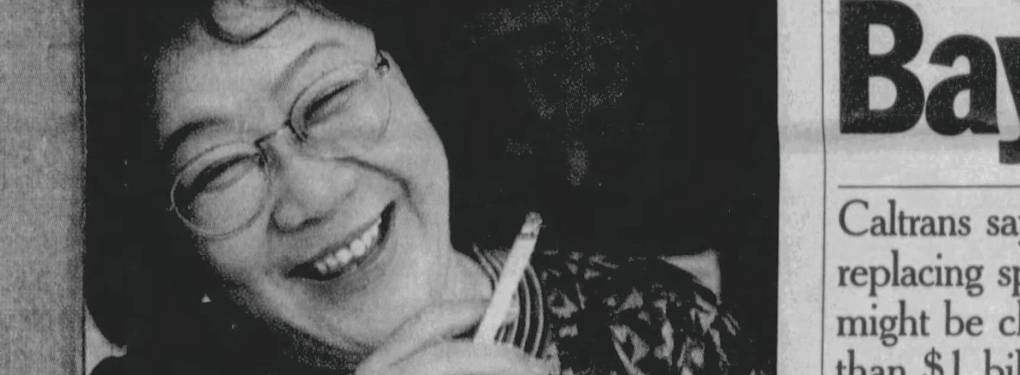
"caption": "A newspaper clipping of Rose Pak in a snippet from the film 'Rally.'",
"description": null,
"title": "Rally2",
"credit": "Courtesy Rally",
"status": "inherit",
"altTag": "A newspaper clipping with a Chinese woman smiling as she holds a cigarette in her fingers.",
"isLoading": false,
"fetchFailed": false
},
"news_11947185": {
"type": "attachments",
"id": "news_11947185",
"meta": {
"index": "attachments_1716263798",
"site": "news",
"id": "11947185",
"found": true
},
"parent": 11947169,
"imgSizes": {
"twentyfourteen-full-width": {
"file": "https://ww2.kqed.org/app/uploads/sites/10/2023/04/001_InternetArchiveRally_04082023__V8A0423-1038x576.jpg",
"width": 1038,
"mimeType": "image/jpeg",
"height": 576
},
"thumbnail": {
"file": "https://ww2.kqed.org/app/uploads/sites/10/2023/04/001_InternetArchiveRally_04082023__V8A0423-160x107.jpg",
"width": 160,
"mimeType": "image/jpeg",
"height": 107
},
"post-thumbnail": {
"file": "https://ww2.kqed.org/app/uploads/sites/10/2023/04/001_InternetArchiveRally_04082023__V8A0423-672x372.jpg",
"width": 672,
"mimeType": "image/jpeg",
"height": 372
},
"kqedFullSize": {
"file": "https://ww2.kqed.org/app/uploads/sites/10/2023/04/001_InternetArchiveRally_04082023__V8A0423.jpg",
"width": 1920,
"height": 1280
},
"large": {
"file": "https://ww2.kqed.org/app/uploads/sites/10/2023/04/001_InternetArchiveRally_04082023__V8A0423-1020x680.jpg",
"width": 1020,
"mimeType": "image/jpeg",
"height": 680
},
"1536x1536": {
"file": "https://ww2.kqed.org/app/uploads/sites/10/2023/04/001_InternetArchiveRally_04082023__V8A0423-1536x1024.jpg",
"width": 1536,
"mimeType": "image/jpeg",
"height": 1024
},
"medium": {
"file": "https://ww2.kqed.org/app/uploads/sites/10/2023/04/001_InternetArchiveRally_04082023__V8A0423-800x533.jpg",
"width": 800,
"mimeType": "image/jpeg",
"height": 533
}
},
"publishDate": 1681946507,
"modified": 1681948894,
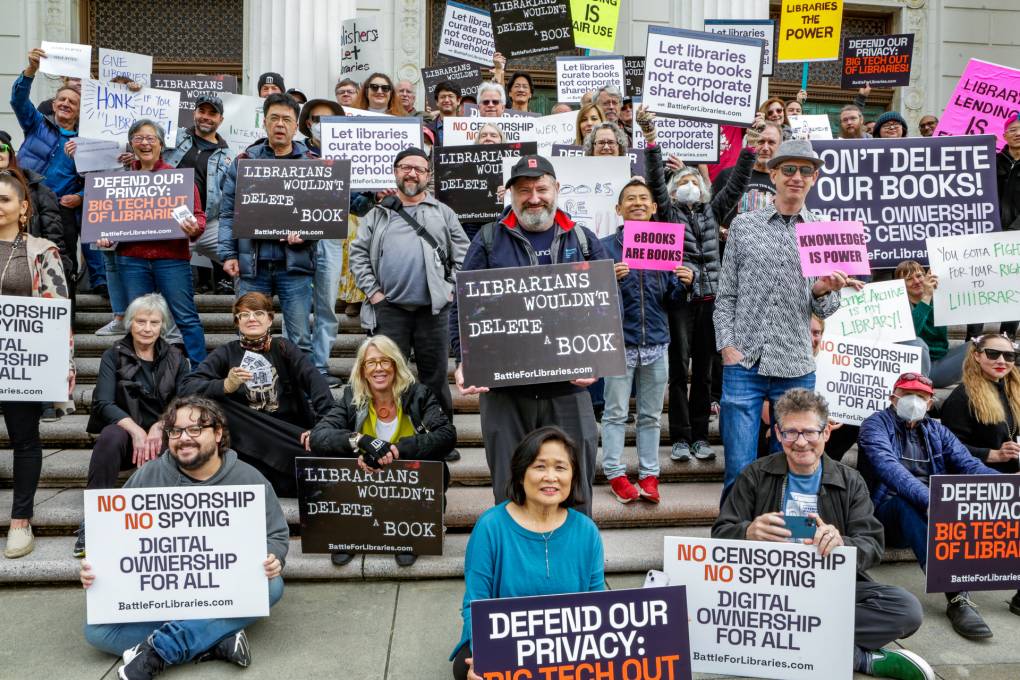
"caption": "Dozens of supporters rallied outside the Internet Archive's San Francisco library on April 8 to defend the nonprofit's free e-book lending project.",
"description": null,
"title": "001_InternetArchiveRally_04082023__V8A0423",
"credit": "S. Smith Patrick/Courtesy Internet Archive",
"status": "inherit",
"altTag": "A group of about 40 people stand on steps in front of a building holding numerous signs, a prominent one reading 'librarians wouldn't delete a book'",
"isLoading": false,
"fetchFailed": false
},
"news_11946369": {
"type": "attachments",
"id": "news_11946369",
"meta": {
"index": "attachments_1716263798",
"site": "news",
"id": "11946369",
"found": true
},
"parent": 0,
"imgSizes": {
"twentyfourteen-full-width": {
"file": "https://ww2.kqed.org/app/uploads/sites/10/2023/04/GettyImages-1244429062-1038x576.jpg",
"width": 1038,
"mimeType": "image/jpeg",
"height": 576
},
"thumbnail": {
"file": "https://ww2.kqed.org/app/uploads/sites/10/2023/04/GettyImages-1244429062-160x107.jpg",
"width": 160,
"mimeType": "image/jpeg",
"height": 107
},
"post-thumbnail": {
"file": "https://ww2.kqed.org/app/uploads/sites/10/2023/04/GettyImages-1244429062-672x372.jpg",
"width": 672,
"mimeType": "image/jpeg",
"height": 372
},
"kqedFullSize": {
"file": "https://ww2.kqed.org/app/uploads/sites/10/2023/04/GettyImages-1244429062-scaled.jpg",
"width": 2560,
"height": 1707
},
"2048x2048": {
"file": "https://ww2.kqed.org/app/uploads/sites/10/2023/04/GettyImages-1244429062-2048x1365.jpg",
"width": 2048,
"mimeType": "image/jpeg",
"height": 1365
},
"large": {
"file": "https://ww2.kqed.org/app/uploads/sites/10/2023/04/GettyImages-1244429062-1020x680.jpg",
"width": 1020,
"mimeType": "image/jpeg",
"height": 680
},
"1536x1536": {
"file": "https://ww2.kqed.org/app/uploads/sites/10/2023/04/GettyImages-1244429062-1536x1024.jpg",
"width": 1536,
"mimeType": "image/jpeg",
"height": 1024
},
"full-width": {
"file": "https://ww2.kqed.org/app/uploads/sites/10/2023/04/GettyImages-1244429062-1920x1280.jpg",
"width": 1920,
"mimeType": "image/jpeg",
"height": 1280
},
"medium": {
"file": "https://ww2.kqed.org/app/uploads/sites/10/2023/04/GettyImages-1244429062-800x533.jpg",
"width": 800,
"mimeType": "image/jpeg",
"height": 533
}
},
"publishDate": 1681241582,
"modified": 1681325225,
"caption": "CVS Health said it agreed to pay approximately $5 billion over 10 years to 'resolve all opioid lawsuits and claims' against the pharmacy by states and cities, including San Francisco. Walmart is also slated to pay the city up to $6.8 million over the next six years.",
"description": null,
"title": "US-HEALTH-DRUGS-OPIOIDS",
"credit": "Brendan Smialowski/AFP via Getty Images",
"status": "inherit",
"altTag": "A red sign for CVS Pharmacy is displayed on the outside of its building. A person's legs are seen walking toward the entrance.",
"isLoading": false,
"fetchFailed": false
},
"news_11946400": {
"type": "attachments",
"id": "news_11946400",
"meta": {
"index": "attachments_1716263798",
"site": "news",
"id": "11946400",
"found": true
},
"parent": 11946395,
"imgSizes": {
"twentyfourteen-full-width": {
"file": "https://ww2.kqed.org/app/uploads/sites/10/2023/04/GettyImages-969771406-1024x576.jpg",
"width": 1024,
"mimeType": "image/jpeg",
"height": 576
},
"thumbnail": {
"file": "https://ww2.kqed.org/app/uploads/sites/10/2023/04/GettyImages-969771406-160x104.jpg",
"width": 160,
"mimeType": "image/jpeg",
"height": 104
},
"post-thumbnail": {
"file": "https://ww2.kqed.org/app/uploads/sites/10/2023/04/GettyImages-969771406-672x372.jpg",
"width": 672,
"mimeType": "image/jpeg",
"height": 372
},
"kqedFullSize": {
"file": "https://ww2.kqed.org/app/uploads/sites/10/2023/04/GettyImages-969771406.jpg",
"width": 1024,
"height": 664
},
"large": {
"file": "https://ww2.kqed.org/app/uploads/sites/10/2023/04/GettyImages-969771406-1020x661.jpg",
"width": 1020,
"mimeType": "image/jpeg",
"height": 661
},
"medium": {
"file": "https://ww2.kqed.org/app/uploads/sites/10/2023/04/GettyImages-969771406-800x519.jpg",
"width": 800,
"mimeType": "image/jpeg",
"height": 519
}
},
"publishDate": 1681254226,
"modified": 1681254255,
"caption": "A patient displays his Suboxone prescription following his appointment at the Substance Use Disorders Bridge Clinic at Massachusetts General Hospital in Boston on April 27, 2018. The patient takes Suboxone, a medicine that contains buprenorphine and naloxone, to treat his substance use disorder. He said he had been addicted to Opioids for 10 years but has been drug free since he started taking Suboxone nearly 2 years ago.",
"description": null,
"title": "Treating Drug Addiction With Drugs",
"credit": "Craig F. Walker/The Boston Globe via Getty Images",
"status": "inherit",
"altTag": null,
"isLoading": false,
"fetchFailed": false
},
"news_11946132": {
"type": "attachments",
"id": "news_11946132",
"meta": {
"index": "attachments_1716263798",
"site": "news",
"id": "11946132",
"found": true
},
"parent": 0,
"imgSizes": {
"twentyfourteen-full-width": {
"file": "https://ww2.kqed.org/app/uploads/sites/10/2023/04/D7A7080-1038x576.jpg",
"width": 1038,
"mimeType": "image/jpeg",
"height": 576
},
"thumbnail": {
"file": "https://ww2.kqed.org/app/uploads/sites/10/2023/04/D7A7080-160x107.jpg",
"width": 160,
"mimeType": "image/jpeg",
"height": 107
},
"post-thumbnail": {
"file": "https://ww2.kqed.org/app/uploads/sites/10/2023/04/D7A7080-672x372.jpg",
"width": 672,
"mimeType": "image/jpeg",
"height": 372
},
"kqedFullSize": {
"file": "https://ww2.kqed.org/app/uploads/sites/10/2023/04/D7A7080.jpg",
"width": 1620,
"height": 1080
},
"large": {
"file": "https://ww2.kqed.org/app/uploads/sites/10/2023/04/D7A7080-1020x680.jpg",
"width": 1020,
"mimeType": "image/jpeg",
"height": 680
},
"1536x1536": {
"file": "https://ww2.kqed.org/app/uploads/sites/10/2023/04/D7A7080-1536x1024.jpg",
"width": 1536,
"mimeType": "image/jpeg",
"height": 1024
},
"medium": {
"file": "https://ww2.kqed.org/app/uploads/sites/10/2023/04/D7A7080-800x533.jpg",
"width": 800,
"mimeType": "image/jpeg",
"height": 533
}
},
"publishDate": 1681001427,
"modified": 1681150259,
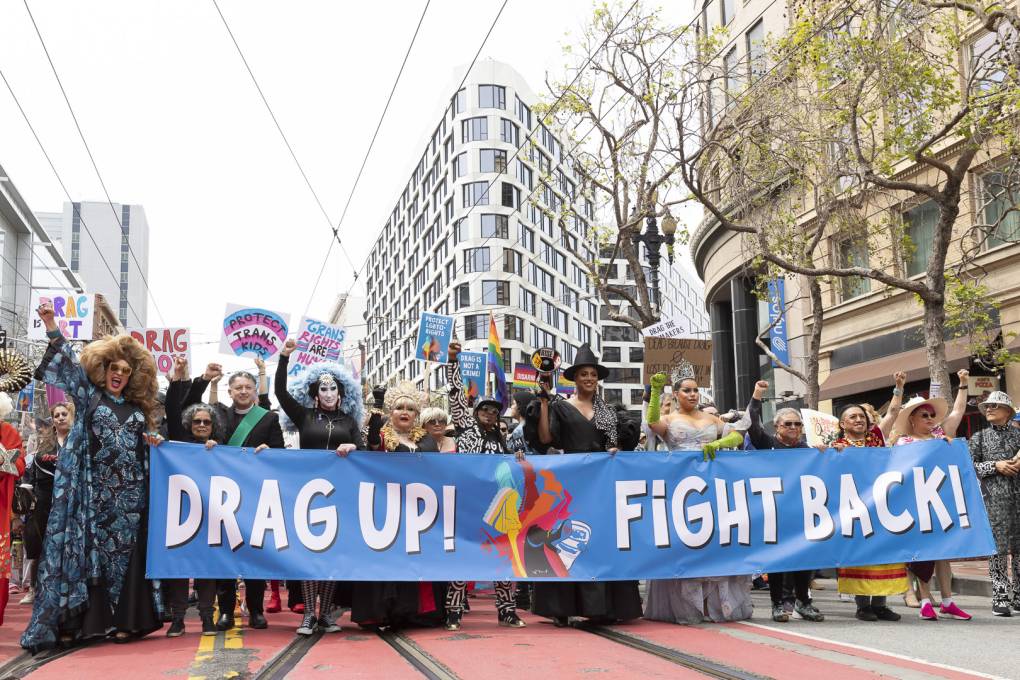
"caption": "The 'Drag Up! Fight Back!' organizers and friends lead the march to Union Square in San Francisco on Saturday, April 8, 2023.",
"description": "The Drag Up! Fight Back! organizers and friends lead the march to Union Square in San Francisco on Saturday, April 8, 2023.",
"title": "The Drag Up! Fight Back! organizers and friends lead the march to Union Square in San Francisco on Saturday, April 8, 2023.",
"credit": "Estefany Gonzalez/KQED",
"status": "inherit",
"altTag": "A crowd of people hold a banner that reads \"Drag Up! Fight Back!\"",
"isLoading": false,
"fetchFailed": false
},
"news_11945937": {
"type": "attachments",
"id": "news_11945937",
"meta": {
"index": "attachments_1716263798",
"site": "news",
"id": "11945937",
"found": true
},
"parent": 0,
"imgSizes": {
"twentyfourteen-full-width": {
"file": "https://ww2.kqed.org/app/uploads/sites/10/2023/04/RS40420_GettyImages-492064822-qut-1038x576.jpg",
"width": 1038,
"mimeType": "image/jpeg",
"height": 576
},
"thumbnail": {
"file": "https://ww2.kqed.org/app/uploads/sites/10/2023/04/RS40420_GettyImages-492064822-qut-160x94.jpg",
"width": 160,
"mimeType": "image/jpeg",
"height": 94
},
"post-thumbnail": {
"file": "https://ww2.kqed.org/app/uploads/sites/10/2023/04/RS40420_GettyImages-492064822-qut-672x372.jpg",
"width": 672,
"mimeType": "image/jpeg",
"height": 372
},
"kqedFullSize": {
"file": "https://ww2.kqed.org/app/uploads/sites/10/2023/04/RS40420_GettyImages-492064822-qut.jpg",
"width": 1920,
"height": 1133
},
"large": {
"file": "https://ww2.kqed.org/app/uploads/sites/10/2023/04/RS40420_GettyImages-492064822-qut-1020x602.jpg",
"width": 1020,
"mimeType": "image/jpeg",
"height": 602
},
"1536x1536": {
"file": "https://ww2.kqed.org/app/uploads/sites/10/2023/04/RS40420_GettyImages-492064822-qut-1536x906.jpg",
"width": 1536,
"mimeType": "image/jpeg",
"height": 906
},
"medium": {
"file": "https://ww2.kqed.org/app/uploads/sites/10/2023/04/RS40420_GettyImages-492064822-qut-800x472.jpg",
"width": 800,
"mimeType": "image/jpeg",
"height": 472
}
},
"publishDate": 1680818865,
"modified": 1680825353,
"caption": "Treasure Island and the Bay Bridge are seen in San Francisco on Oct. 9, 2015.",
"description": null,
"title": "US-AERIAL-SAN FRANCISCO",
"credit": "Josh Edelson/AFP via Getty Images",
"status": "inherit",
"altTag": "A view of Treasure Island from up above with blue water surrounding it and the Bay Bridge in the background.",
"isLoading": false,
"fetchFailed": false
}
},
"audioPlayerReducer": {
"postId": "stream_live",
"isPaused": true,
"isPlaying": false,
"pfsActive": false,
"pledgeModalIsOpen": true,
"playerDrawerIsOpen": false,
"liveAudioPlayStartedAt": 0,
"liveAudioPlayContext": ""
},
"authorsReducer": {
"dmarks": {
"type": "authors",
"id": "182",
"meta": {
"index": "authors_1716337520",
"id": "182",
"found": true
},
"name": "David Marks",
"firstName": "David",
"lastName": "Marks",
"slug": "dmarks",
"email": "dmarks@kqed.org",
"display_author_email": false,
"staff_mastheads": [],
"title": "KQED Editor",
"bio": "David Marks is a senior digital editor for KQED News. \u003c/a>Reach him at dmarks@kqed.org.",
"avatar": "https://secure.gravatar.com/avatar/b88bd6227ce6cb96ae33fefaf42b2a29?s=600&d=mm&r=g",
"twitter": "divadskram",
"facebook": null,
"instagram": null,
"linkedin": null,
"sites": [
{
"site": "news",
"roles": []
},
{
"site": "science",
"roles": []
},
{
"site": "perspectives",
"roles": []
},
{
"site": "liveblog",
"roles": []
}
],
"headData": {
"title": "David Marks | KQED",
"description": "KQED Editor",
"ogImgSrc": "https://secure.gravatar.com/avatar/b88bd6227ce6cb96ae33fefaf42b2a29?s=600&d=mm&r=g",
"twImgSrc": "https://secure.gravatar.com/avatar/b88bd6227ce6cb96ae33fefaf42b2a29?s=600&d=mm&r=g"
},
"isLoading": false,
"link": "/author/dmarks"
},
"kqed": {
"type": "authors",
"id": "236",
"meta": {
"index": "authors_1716337520",
"id": "236",
"found": true
},
"name": "KQED News Staff",
"firstName": "KQED News Staff",
"lastName": null,
"slug": "kqed",
"email": "faq@kqed.org",
"display_author_email": false,
"staff_mastheads": [],
"title": null,
"bio": null,
"avatar": "https://secure.gravatar.com/avatar/ef0e801a68c4c54afa9180db14084167?s=600&d=blank&r=g",
"twitter": null,
"facebook": null,
"instagram": null,
"linkedin": null,
"sites": [
{
"site": "arts",
"roles": [
"contributor"
]
},
{
"site": "news",
"roles": [
"editor"
]
},
{
"site": "futureofyou",
"roles": [
"author"
]
}
],
"headData": {
"title": "KQED News Staff | KQED",
"description": null,
"ogImgSrc": "https://secure.gravatar.com/avatar/ef0e801a68c4c54afa9180db14084167?s=600&d=blank&r=g",
"twImgSrc": "https://secure.gravatar.com/avatar/ef0e801a68c4c54afa9180db14084167?s=600&d=blank&r=g"
},
"isLoading": false,
"link": "/author/kqed"
},
"ecruzguevarra": {
"type": "authors",
"id": "8654",
"meta": {
"index": "authors_1716337520",
"id": "8654",
"found": true
},
"name": "Ericka Cruz Guevarra",
"firstName": "Ericka",
"lastName": "Cruz Guevarra",
"slug": "ecruzguevarra",
"email": "ecruzguevarra@kqed.org",
"display_author_email": true,
"staff_mastheads": [
"news"
],
"title": "Producer, The Bay Podcast",
"bio": "Ericka Cruz Guevarra is host of \u003ca href=\"https://www.kqed.org/podcasts/thebay\">\u003cem>The Bay\u003c/em>\u003c/a> podcast at KQED. Before host, she was the show’s producer. Her work in that capacity includes a three-part reported series on policing in Vallejo, which won a 2020 excellence in journalism award from the Society of Professional Journalists. Ericka has worked as a breaking news reporter at Oregon Public Broadcasting, helped produce the Code Switch podcast, and was KQED’s inaugural Raul Ramirez Diversity Fund intern. She’s also an alumna of NPR’s Next Generation Radio program. Send her an email if you have strong feelings about whether Fairfield and Suisun City are the Bay. Ericka is represented by SAG-AFTRA.",
"avatar": "https://secure.gravatar.com/avatar/accefc1de4bafc7e234b69bcb9b6f6536c130fd84709bc3069ef11a78787e1bb?s=600&d=blank&r=g",
"twitter": "NotoriousECG",
"bluesky": null,
"facebook": null,
"instagram": null,
"linkedin": null,
"sites": [
{
"site": "arts",
"roles": [
"subscriber"
]
},
{
"site": "news",
"roles": [
"editor",
"manage_categories"
]
},
{
"site": "futureofyou",
"roles": [
"subscriber"
]
},
{
"site": "stateofhealth",
"roles": [
"subscriber"
]
},
{
"site": "science",
"roles": [
"editor"
]
},
{
"site": "forum",
"roles": [
"subscriber"
]
}
],
"headData": {
"title": "Ericka Cruz Guevarra | KQED",
"description": "Producer, The Bay Podcast",
"ogImgSrc": "https://secure.gravatar.com/avatar/accefc1de4bafc7e234b69bcb9b6f6536c130fd84709bc3069ef11a78787e1bb?s=600&d=blank&r=g",
"twImgSrc": "https://secure.gravatar.com/avatar/accefc1de4bafc7e234b69bcb9b6f6536c130fd84709bc3069ef11a78787e1bb?s=600&d=blank&r=g"
},
"isLoading": false,
"link": "/author/ecruzguevarra"
},
"lesleymcclurg": {
"type": "authors",
"id": "11229",
"meta": {
"index": "authors_1716337520",
"id": "11229",
"found": true
},
"name": "Lesley McClurg",
"firstName": "Lesley",
"lastName": "McClurg",
"slug": "lesleymcclurg",
"email": "lmcclurg@KQED.org",
"display_author_email": false,
"staff_mastheads": [
"news",
"science"
],
"title": "KQED Health Correspondent",
"bio": "Lesley McClurg is a health correspondent and fill-in host whose work is regularly rebroadcast on NPR and PBS programs. She’s earned multiple regional Emmy awards, a national and a regional Edward R. Murrow award, and was named Best Beat Reporter by the Association of Health Care Journalists. The Society of Professional Journalists has recognized her work several times, and the Society of Environmental Journalists spotlighted her coverage of California’s historic drought.\r\n\r\nBefore joining KQED in 2016, Lesley covered food and sustainability for Capital Public Radio, environmental issues for Colorado Public Radio, and reported for KUOW and KCTS 9 in Seattle. Away from the newsroom, she loves skiing with her daughter, mountain biking with her partner, and playing with Ollie, the family’s goldendoodle. On deadline, she runs almost entirely on chocolate chips.\r\n\r\n ",
"avatar": "https://secure.gravatar.com/avatar/bab49e972ea10c774fe0f5e29dba1722b158f7c0d58a360923d1389d380b2978?s=600&d=blank&r=g",
"twitter": "lesleywmcclurg",
"bluesky": null,
"facebook": null,
"instagram": null,
"linkedin": null,
"sites": [
{
"site": "arts",
"roles": [
"author"
]
},
{
"site": "news",
"roles": [
"editor"
]
},
{
"site": "futureofyou",
"roles": [
"editor"
]
},
{
"site": "stateofhealth",
"roles": [
"author"
]
},
{
"site": "science",
"roles": [
"editor"
]
},
{
"site": "quest",
"roles": [
"subscriber"
]
},
{
"site": "forum",
"roles": [
"administrator"
]
},
{
"site": "liveblog",
"roles": [
"author"
]
}
],
"headData": {
"title": "Lesley McClurg | KQED",
"description": "KQED Health Correspondent",
"ogImgSrc": "https://secure.gravatar.com/avatar/bab49e972ea10c774fe0f5e29dba1722b158f7c0d58a360923d1389d380b2978?s=600&d=blank&r=g",
"twImgSrc": "https://secure.gravatar.com/avatar/bab49e972ea10c774fe0f5e29dba1722b158f7c0d58a360923d1389d380b2978?s=600&d=blank&r=g"
},
"isLoading": false,
"link": "/author/lesleymcclurg"
},
"hmcdede": {
"type": "authors",
"id": "11635",
"meta": {
"index": "authors_1716337520",
"id": "11635",
"found": true
},
"name": "Holly McDede",
"firstName": "Holly",
"lastName": "McDede",
"slug": "hmcdede",
"email": "hmcdede@KQED.org",
"display_author_email": false,
"staff_mastheads": [],
"title": "KQED Contributor",
"bio": null,
"avatar": "https://secure.gravatar.com/avatar/999d9bf31bb3a2f0511932d99526cb3e?s=600&d=blank&r=g",
"twitter": null,
"facebook": null,
"instagram": null,
"linkedin": null,
"sites": [
{
"site": "arts",
"roles": [
"editor"
]
},
{
"site": "news",
"roles": [
"edit_others_posts",
"editor"
]
},
{
"site": "science",
"roles": [
"editor"
]
},
{
"site": "forum",
"roles": [
"editor"
]
},
{
"site": "perspectives",
"roles": [
"administrator"
]
}
],
"headData": {
"title": "Holly McDede | KQED",
"description": "KQED Contributor",
"ogImgSrc": "https://secure.gravatar.com/avatar/999d9bf31bb3a2f0511932d99526cb3e?s=600&d=blank&r=g",
"twImgSrc": "https://secure.gravatar.com/avatar/999d9bf31bb3a2f0511932d99526cb3e?s=600&d=blank&r=g"
},
"isLoading": false,
"link": "/author/hmcdede"
},
"amontecillo": {
"type": "authors",
"id": "11649",
"meta": {
"index": "authors_1716337520",
"id": "11649",
"found": true
},
"name": "Alan Montecillo",
"firstName": "Alan",
"lastName": "Montecillo",
"slug": "amontecillo",
"email": "amontecillo@kqed.org",
"display_author_email": false,
"staff_mastheads": [
"news"
],
"title": "KQED Contributor",
"bio": "Alan Montecillo is the senior editor of \u003cem>\u003ca href=\"http://kqed.org/thebay\">The Bay\u003c/a>, \u003c/em> KQED's local news podcast. Before moving to the Bay Area, he worked as a senior talk show producer for WILL in Champaign-Urbana, Illinois and at Oregon Public Broadcasting in Portland, Oregon. He has won journalism awards from the Society of Professional Journalists Northern California, the Public Media Journalists Association, The Signal Awards, and has also received a regional Edward R. Murrow award. Alan is a Filipino American from Hong Kong and a graduate of Reed College.",
"avatar": "https://secure.gravatar.com/avatar/268f53a2066899ea9efdd8a5900218b17c822d9862cbc9326cccec53ef41d349?s=600&d=blank&r=g",
"twitter": "alanmontecillo",
"bluesky": null,
"facebook": null,
"instagram": null,
"linkedin": null,
"sites": [
{
"site": "",
"roles": [
"editor"
]
},
{
"site": "news",
"roles": [
"editor",
"manage_categories"
]
}
],
"headData": {
"title": "Alan Montecillo | KQED",
"description": "KQED Contributor",
"ogImgSrc": "https://secure.gravatar.com/avatar/268f53a2066899ea9efdd8a5900218b17c822d9862cbc9326cccec53ef41d349?s=600&d=blank&r=g",
"twImgSrc": "https://secure.gravatar.com/avatar/268f53a2066899ea9efdd8a5900218b17c822d9862cbc9326cccec53ef41d349?s=600&d=blank&r=g"
},
"isLoading": false,
"link": "/author/amontecillo"
},
"ebaldassari": {
"type": "authors",
"id": "11652",
"meta": {
"index": "authors_1716337520",
"id": "11652",
"found": true
},
"name": "Erin Baldassari",
"firstName": "Erin",
"lastName": "Baldassari",
"slug": "ebaldassari",
"email": "ebaldassari@KQED.org",
"display_author_email": true,
"staff_mastheads": [
"news"
],
"title": "Staff Writer",
"bio": "Erin Baldassari covers housing for KQED. She's a former print journalist and most recently worked as the transportation reporter for the \u003cem>Mercury News\u003c/em> and \u003cem>East Bay Times. \u003c/em>There, she focused on how the Bay Area’s housing shortage has changed the way people move around the region. She also served on the \u003cem>East Bay Times\u003c/em>’ 2017 Pulitzer Prize-winning team for coverage of the Ghost Ship Fire in Oakland. Prior to that, Erin worked as a breaking news and general assignment reporter for a variety of outlets in the Bay Area and the greater Boston area. A Tufts University alumna, Erin grew up in the foothills of the Sierra Nevada mountains and in Sonoma County. She is a life-long KQED listener.",
"avatar": "https://secure.gravatar.com/avatar/5e95cad64a8ca08288082212e199d2b0cbeb4fd8e8ef5339395f361032bbe005?s=600&d=blank&r=g",
"twitter": "e_baldi",
"bluesky": null,
"facebook": null,
"instagram": null,
"linkedin": null,
"sites": [
{
"site": "news",
"roles": [
"edit_others_posts",
"editor"
]
},
{
"site": "science",
"roles": [
"editor"
]
},
{
"site": "liveblog",
"roles": [
"editor"
]
}
],
"headData": {
"title": "Erin Baldassari | KQED",
"description": "Staff Writer",
"ogImgSrc": "https://secure.gravatar.com/avatar/5e95cad64a8ca08288082212e199d2b0cbeb4fd8e8ef5339395f361032bbe005?s=600&d=blank&r=g",
"twImgSrc": "https://secure.gravatar.com/avatar/5e95cad64a8ca08288082212e199d2b0cbeb4fd8e8ef5339395f361032bbe005?s=600&d=blank&r=g"
},
"isLoading": false,
"link": "/author/ebaldassari"
},
"jrodriguez": {
"type": "authors",
"id": "11690",
"meta": {
"index": "authors_1716337520",
"id": "11690",
"found": true
},
"name": "Joe Fitzgerald Rodriguez",
"firstName": "Joe",
"lastName": "Fitzgerald Rodriguez",
"slug": "jrodriguez",
"email": "jrodriguez@kqed.org",
"display_author_email": true,
"staff_mastheads": [
"news"
],
"title": "Reporter and Producer",
"bio": "Joe Fitzgerald Rodriguez is a reporter and digital producer for KQED covering politics. Joe most recently wrote for the \u003cem>San Francisco Examiner\u003c/em> as a political columnist covering The City. He was raised in San Francisco and has spent his reporting career in his beloved, foggy, city by the bay. Joe was 12-years-old when he conducted his first interview in journalism, grilling former San Francisco Mayor Willie Brown for the Marina Middle School newspaper, \u003cem>The Penguin Press, \u003c/em>and he continues to report on the San Francisco Bay Area to this day.",
"avatar": "https://secure.gravatar.com/avatar/2247beb0564c1e9c62228d5649d2edac?s=600&d=blank&r=g",
"twitter": "FitztheReporter",
"facebook": null,
"instagram": "https://www.instagram.com/fitzthereporter/",
"linkedin": null,
"sites": [
{
"site": "",
"roles": [
"editor"
]
},
{
"site": "arts",
"roles": [
"editor"
]
},
{
"site": "news",
"roles": [
"editor"
]
},
{
"site": "science",
"roles": [
"editor"
]
},
{
"site": "elections",
"roles": [
"editor"
]
},
{
"site": "liveblog",
"roles": [
"editor"
]
}
],
"headData": {
"title": "Joe Fitzgerald Rodriguez | KQED",
"description": "Reporter and Producer",
"ogImgSrc": "https://secure.gravatar.com/avatar/2247beb0564c1e9c62228d5649d2edac?s=600&d=blank&r=g",
"twImgSrc": "https://secure.gravatar.com/avatar/2247beb0564c1e9c62228d5649d2edac?s=600&d=blank&r=g"
},
"isLoading": false,
"link": "/author/jrodriguez"
},
"mesquinca": {
"type": "authors",
"id": "11802",
"meta": {
"index": "authors_1716337520",
"id": "11802",
"found": true
},
"name": "Maria Esquinca",
"firstName": "Maria",
"lastName": "Esquinca",
"slug": "mesquinca",
"email": "mesquinca@kqed.org",
"display_author_email": false,
"staff_mastheads": [],
"title": "Producer, The Bay",
"bio": "María Esquinca is a producer of The Bay. Before that, she was a New York Women’s Foundation IGNITE Fellow at Latino USA. She worked at Radio Bilingue where she covered the San Joaquin Valley. Maria has interned at WLRN, News 21, The New York Times Student Journalism Institute and at Crain’s Detroit Business as a Dow Jones News Fund Business Reporting Intern. She is an MFA graduate from the University of Miami. In 2017, she graduated from the Walter Cronkite School of Journalism and Mass Communication with a Master of Mass Communication. A fronteriza, she was born in Ciudad Juárez, Chihuahua, Mexico and grew up in El Paso, Texas.",
"avatar": "https://secure.gravatar.com/avatar/77cedba18aae91da775038ba06dcd8d0?s=600&d=blank&r=g",
"twitter": "@m_esquinca",
"facebook": null,
"instagram": null,
"linkedin": null,
"sites": [
{
"site": "news",
"roles": []
}
],
"headData": {
"title": "Maria Esquinca | KQED",
"description": "Producer, The Bay",
"ogImgSrc": "https://secure.gravatar.com/avatar/77cedba18aae91da775038ba06dcd8d0?s=600&d=blank&r=g",
"twImgSrc": "https://secure.gravatar.com/avatar/77cedba18aae91da775038ba06dcd8d0?s=600&d=blank&r=g"
},
"isLoading": false,
"link": "/author/mesquinca"
},
"daisynguyen": {
"type": "authors",
"id": "11829",
"meta": {
"index": "authors_1716337520",
"id": "11829",
"found": true
},
"name": "Daisy Nguyen",
"firstName": "Daisy",
"lastName": "Nguyen",
"slug": "daisynguyen",
"email": "daisynguyen@kqed.org",
"display_author_email": true,
"staff_mastheads": [
"news"
],
"title": "KQED Contributor",
"bio": "I have covered early childhood education and child care for KQED since 2022. I focus on policies aimed at increasing access to early care and education and how they shape individual lives. I've been a journalist for more than two decades, with most of that time devoted to covering breaking news throughout California for The Associated Press. I grew up in San Francisco and studied at UC Davis and Columbia University's Graduate School of Journalism. I live in Oakland with my husband and two kids.",
"avatar": "https://secure.gravatar.com/avatar/2da2127c27f7143b53ebd419800fd55f?s=600&d=blank&r=g",
"twitter": null,
"facebook": null,
"instagram": null,
"linkedin": "https://www.linkedin.com/in/daisynguyen/",
"sites": [
{
"site": "news",
"roles": [
"author"
]
},
{
"site": "liveblog",
"roles": [
"author"
]
}
],
"headData": {
"title": "Daisy Nguyen | KQED",
"description": "KQED Contributor",
"ogImgSrc": "https://secure.gravatar.com/avatar/2da2127c27f7143b53ebd419800fd55f?s=600&d=blank&r=g",
"twImgSrc": "https://secure.gravatar.com/avatar/2da2127c27f7143b53ebd419800fd55f?s=600&d=blank&r=g"
},
"isLoading": false,
"link": "/author/daisynguyen"
},
"sjohnson": {
"type": "authors",
"id": "11840",
"meta": {
"index": "authors_1716337520",
"id": "11840",
"found": true
},
"name": "Sydney Johnson",
"firstName": "Sydney",
"lastName": "Johnson",
"slug": "sjohnson",
"email": "sjohnson@kqed.org",
"display_author_email": false,
"staff_mastheads": [
"news"
],
"title": "KQED Reporter",
"bio": "Sydney Johnson is a general assignment reporter at KQED. She previously reported on public health and city government at the San Francisco Examiner, and before that, she covered statewide education policy for EdSource. Her reporting has won multiple local, state and national awards. Sydney is a graduate of the University of California, Berkeley and lives in San Francisco.",
"avatar": "https://secure.gravatar.com/avatar/97855f2719b72ad6190b7c535fe642c8?s=600&d=blank&r=g",
"twitter": "sydneyfjohnson",
"facebook": null,
"instagram": null,
"linkedin": null,
"sites": [
{
"site": "news",
"roles": [
"editor"
]
}
],
"headData": {
"title": "Sydney Johnson | KQED",
"description": "KQED Reporter",
"ogImgSrc": "https://secure.gravatar.com/avatar/97855f2719b72ad6190b7c535fe642c8?s=600&d=blank&r=g",
"twImgSrc": "https://secure.gravatar.com/avatar/97855f2719b72ad6190b7c535fe642c8?s=600&d=blank&r=g"
},
"isLoading": false,
"link": "/author/sjohnson"
}
},
"pagesReducer": {
"news_tag_san-francisco": {
"type": "terms",
"id": "news_38",
"meta": {
"index": "terms_1716263798",
"site": "news",
"id": "38",
"score": 6.7230043
},
"featImg": null,
"name": "San Francisco",
"description": null,
"taxonomy": "tag",
"headData": {
"twImgId": null,
"twTitle": null,
"ogTitle": null,
"ogImgId": null,
"twDescription": null,
"description": null,
"title": "San Francisco Archives | KQED News",
"ogDescription": null
},
"ttid": 58,
"slug": "san-francisco",
"isLoading": false,
"title": "San Francisco",
"pageMeta": {
"site": "news",
"WpPageTemplate": "page-topic-editorial",
"currentPage": 117
},
"blocks": [
{
"blockName": "kqed/post-list",
"attrs": {
"layout": "cardArticle2",
"query": "posts/news?tag=san-francisco",
"seeMore": false,
"paginated": true,
"page": 117
}
},
{
"blockName": "kqed/ad"
}
]
}
},
"pfsSessionReducer": {},
"postsReducer": {
"stream_live": {
"type": "live",
"id": "stream_live",
"audioUrl": "https://streams.kqed.org/kqedradio",
"title": "Live Stream",
"excerpt": "Live Stream information currently unavailable.",
"link": "/radio",
"featImg": "",
"label": {
"name": "KQED Live",
"link": "/"
}
},
"stream_kqedNewscast": {
"type": "posts",
"id": "stream_kqedNewscast",
"audioUrl": "https://www.kqed.org/.stream/anon/radio/RDnews/newscast.mp3?_=1",
"title": "KQED Newscast",
"featImg": "",
"label": {
"name": "88.5 FM",
"link": "/"
}
},
"news_11949357": {
"type": "posts",
"id": "news_11949357",
"meta": {
"index": "posts_1716263798",
"site": "news",
"id": "11949357",
"score": null,
"sort": [
1684144829000
]
},
"parent": 0,
"labelTerm": {},
"blocks": [],
"publishDate": 1684144829,
"format": "audio",
"title": "Child Care is Getting More Affordable in S.F.",
"headTitle": "Child Care is Getting More Affordable in S.F. | KQED",
"content": "\u003cp>\u003cspan style=\"font-weight: 400\">Child care is too expensive and inaccessible for kids and families. \u003c/span>\u003cspan style=\"font-weight: 400\">That’s why in 2018, San Francisco voters approved Baby Prop. C, a tax on commercial landlords that would be used to \u003c/span>\u003cspan style=\"font-weight: 400\">expand access to child care, particularly for lower and middle-income families, and to help pay early educators a living wage.\u003c/span>\u003c/p>\n\u003cp>\u003cspan style=\"font-weight: 400\">After being held up in court battles spearheaded by taxpayer and business groups, money from the tax finally began trickling down to families and providers last year. And while there are still challenges to making child care accessible, this investment appears to be paying off.\u003c/span>\u003c/p>\n\u003cp>\u003ca href=\"https://drive.google.com/file/d/1zw47TENpaA9I55kmqKoC4euQ_GpY2GdL/view?usp=share_link\">\u003cem>Episode transcript\u003c/em>\u003c/a>\u003c/p>\n\u003cp>\u003cspan style=\"font-weight: 400\">\u003cstrong>Guest\u003c/strong>: Daisy Nguyen, reporter covering early childhood education and care for KQED\u003c/span>\u003c/p>\n\u003cdiv class=\"card card--enclosed grey\">\n\u003cp id=\"embed-code\" class=\"inconsolata\">\n\u003c!-- iframe plugin v.4.3 wordpress.org/plugins/iframe/ -->\u003cbr>\n\u003ciframe loading=\"lazy\" frameborder=\"0\" height=\"200\" scrolling=\"no\" src=\"https://playlist.megaphone.fm/?e=KQINC4619541485&light=true\" width=\"100%\" class=\"iframe-class\">\u003c/iframe>\n\u003c/p>\n\u003c/div>\n\u003cp>[ad fullwidth]\u003c/p>\u003cp>\u003c/p>\n",
"stats": {
"hasVideo": false,
"hasChartOrMap": false,
"hasAudio": true,
"hasPolis": false,
"wordCount": 117,
"hasGoogleForm": false,
"hasGallery": false,
"hasHearkenModule": false,
"iframeSrcs": [],
"paragraphCount": 6
},
"modified": 1700682618,
"excerpt": "A 2018 ballot measure to fund child care in S.F. appears to be paying off so far.",
"headData": {
"twImgId": "",
"twTitle": "",
"ogTitle": "",
"ogImgId": "",
"twDescription": "",
"description": "A 2018 ballot measure to fund child care in S.F. appears to be paying off so far.",
"title": "Child Care is Getting More Affordable in S.F. | KQED",
"ogDescription": "",
"schema": {
"@context": "https://schema.org",
"@type": "NewsArticle",
"headline": "Child Care is Getting More Affordable in S.F.",
"datePublished": "2023-05-15T03:00:29-07:00",
"dateModified": "2023-11-22T11:50:18-08:00",
"image": "https://cdn.kqed.org/wp-content/uploads/2020/02/KQED-OG-Image@1x.png",
"isAccessibleForFree": "True",
"publisher": {
"@type": "NewsMediaOrganization",
"@id": "https://www.kqed.org/#organization",
"name": "KQED",
"logo": "https://cdn.kqed.org/wp-content/uploads/2020/02/KQED-OG-Image@1x.png",
"url": "https://www.kqed.org",
"sameAs": [
"https://www.facebook.com/KQED",
"https://twitter.com/KQED",
"https://www.instagram.com/kqed/",
"https://www.tiktok.com/@kqedofficial",
"https://www.linkedin.com/company/kqed",
"https://www.youtube.com/channel/UCeC0IOo7i1P_61zVUWbJ4nw"
]
}
}
},
"guestAuthors": [],
"slug": "child-care-accessibility-is-improving-in-s-f-thanks-to-a-local-tax",
"status": "publish",
"sourceUrl": "https://www.kqed.org/podcasts/thebay",
"audioUrl": "https://www.podtrac.com/pts/redirect.mp3/chrt.fm/track/A511B8/traffic.megaphone.fm/KQINC4619541485.mp3?updated=1683927869",
"excludeFromSiteSearch": "Include",
"source": "The Bay",
"articleAge": "0",
"path": "/news/11949357/child-care-accessibility-is-improving-in-s-f-thanks-to-a-local-tax",
"audioTrackLength": null,
"parsedContent": [
{
"type": "contentString",
"content": "\u003cdiv class=\"post-body\">\u003cp>\u003cp>\u003cspan style=\"font-weight: 400\">Child care is too expensive and inaccessible for kids and families. \u003c/span>\u003cspan style=\"font-weight: 400\">That’s why in 2018, San Francisco voters approved Baby Prop. C, a tax on commercial landlords that would be used to \u003c/span>\u003cspan style=\"font-weight: 400\">expand access to child care, particularly for lower and middle-income families, and to help pay early educators a living wage.\u003c/span>\u003c/p>\n\u003cp>\u003cspan style=\"font-weight: 400\">After being held up in court battles spearheaded by taxpayer and business groups, money from the tax finally began trickling down to families and providers last year. And while there are still challenges to making child care accessible, this investment appears to be paying off.\u003c/span>\u003c/p>\n\u003cp>\u003ca href=\"https://drive.google.com/file/d/1zw47TENpaA9I55kmqKoC4euQ_GpY2GdL/view?usp=share_link\">\u003cem>Episode transcript\u003c/em>\u003c/a>\u003c/p>\n\u003cp>\u003cspan style=\"font-weight: 400\">\u003cstrong>Guest\u003c/strong>: Daisy Nguyen, reporter covering early childhood education and care for KQED\u003c/span>\u003c/p>\n\u003cdiv class=\"card card--enclosed grey\">\n\u003cp id=\"embed-code\" class=\"inconsolata\">\n\u003c!-- iframe plugin v.4.3 wordpress.org/plugins/iframe/ -->\u003cbr>\n\u003ciframe loading=\"lazy\" frameborder=\"0\" height=\"200\" scrolling=\"no\" src=\"https://playlist.megaphone.fm/?e=KQINC4619541485&light=true\" width=\"100%\" class=\"iframe-class\">\u003c/iframe>\n\u003c/p>\n\u003c/div>\n\u003cp>\u003c/p>\u003c/div>",
"attributes": {
"named": {},
"numeric": []
}
},
{
"type": "component",
"content": "",
"name": "ad",
"attributes": {
"named": {
"label": "fullwidth"
},
"numeric": [
"fullwidth"
]
}
},
{
"type": "contentString",
"content": "\u003cdiv class=\"post-body\">\u003cp>\u003c/p>\u003cp>\u003c/p>\n\u003c/div>\u003c/p>",
"attributes": {
"named": {},
"numeric": []
}
}
],
"link": "/news/11949357/child-care-accessibility-is-improving-in-s-f-thanks-to-a-local-tax",
"authors": [
"8654",
"11829",
"11802",
"11649"
],
"programs": [
"news_28779"
],
"categories": [
"news_8",
"news_33520"
],
"tags": [
"news_20754",
"news_38",
"news_22598"
],
"featImg": "news_11948785",
"label": "source_news_11949357"
},
"news_11948964": {
"type": "posts",
"id": "news_11948964",
"meta": {
"index": "posts_1716263798",
"site": "news",
"id": "11948964",
"score": null,
"sort": [
1683678828000
]
},
"parent": 0,
"labelTerm": {
"site": "news"
},
"blocks": [],
"publishDate": 1683678828,
"format": "standard",
"title": "San Francisco Supervisors Pass Resolution Urging Release of Video in Banko Brown Killing",
"headTitle": "San Francisco Supervisors Pass Resolution Urging Release of Video in Banko Brown Killing | KQED",
"content": "\u003cp>San Francisco supervisors on Tuesday evening unanimously passed a resolution urging District Attorney Brooke Jenkins to release police reports, witness accounts and video footage related to the killing of Banko Brown, a 24-year-old Black transgender man who was shot and killed outside a Market Street Walgreens by a store security guard on April 27.\u003c/p>\n\u003cp>On May 1, Jenkins \u003ca href=\"https://www.sfchronicle.com/crime/article/sf-walgreens-fatal-shooting-da-drops-charges-18000633.php\">declined to file charges against Michael Earl-Wayne Anthony\u003c/a>, the security guard who shot Brown, saying Anthony had acted in self-defense. But after public outcry over the decision grew following \u003ca href=\"https://missionlocal.org/2023/05/banko-brown-unarmed-michael-earl-wayne-anthony-jenkins-release-evidence/\">confirmation from law enforcement that Brown was not armed\u003c/a> and reporting indicating Anthony had followed Brown outside and shot him in the chest after ejecting him from the store, as \u003ca href=\"https://missionlocal.org/2023/05/walgreens-banko-brown-michael-earl-wayne-anthony-video/\">one witness told Mission Local\u003c/a>, Jenkins changed course on May 8, stating that the investigation is ongoing and she has not ruled out filing charges.\u003c/p>\n\u003cp>The Board of Supervisors voted on the nonbinding resolution that urges Jenkins and the San Francisco Police Department to release more information. City residents made impassioned pleas for the release of videos during public comment at the supervisors’ meeting, before the vote.\u003c/p>\n\u003cp>[pullquote size=\"medium\" align=\"right\" citation=\"Tory, San Francisco resident at Tuesday's Board of Supervisors meeting\"]‘Being hungry is not a crime. Being homeless is not a crime. Being Black is not a crime … Release the tapes.’[/pullquote]“Please, please insist this DA show the evidence. It’s time for her to stop rationalizing inappropriate behavior,” said Yulanda Williams, vice president of the San Francisco chapter of the NAACP. “I’ve been a police officer for 32 years. I’m now retired. I never would have thought to use my gun on someone stealing some type of merchandise out of a store.”\u003c/p>\n\u003cp>“Being hungry is not a crime. Being homeless is not a crime. Being Black is not a crime,” said Tory, a resident of San Francisco’s Western Addition neighborhood. “We want to see the tapes immediately. Release the tapes and justice for Banko Brown.”\u003c/p>\n\u003cp>Another public commenter referenced intense recent \u003ca href=\"https://www.nytimes.com/2023/04/05/technology/cash-app-founder-stabbed-san-francisco.html\">regional and national coverage\u003c/a> of a different San Francisco killing, that of Cash App creator Bob Lee.\u003c/p>\n\u003cp>“I’m here for the same reason everyone else is here … Banko Brown’s case is just as important as the Cash App case,” said Jalen Clark, who added that his sister had worked with Brown. “My people are important … This is not just a situation here in San Francisco, this is all over the U.S. and we need to start somewhere. Why not right here, right now?”\u003c/p>\n\u003cp>Board of Supervisors President Aaron Peskin on Tuesday evening said the resolution to urge the release of evidence in the “beyond tragic” situation was one that united the city’s progressive and moderate factions. He also refuted allegations made by Jenkins that the resolution interferes with an active investigation.\u003c/p>\n\u003cp>[ad fullwidth]\u003c/p>\n\u003cp>Last week, Supervisor Shamann Walton wrote a letter of inquiry to Jenkins requesting that she reevaluate the case. Jenkins fired back in a letter to Walton on Monday saying his comments could disrupt the investigation and a fair judicial process.\u003c/p>\n\u003cp>“I disagree with the District Attorney’s opinions and have been informed by our Deputy City Attorney that my request has no interference with the investigation and it is not at all unethical,” wrote Walton. “Videos are released all the time during investigations and in some cases even required. We are asking for transparency around the killing of Banko Brown and release of this video will most certainly help with that transparency. I hope the district attorney will reconsider her decision.”\u003c/p>\n\u003cp>On Tuesday evening, Walton said supporters of Brown “still need to organize” to put pressure on the District Attorney’s Office and on Walgreens to release footage of Brown’s shooting.\u003c/p>\n\u003cp>“Somebody has to give us that video,” he said. “If there was evidence on that video that led to the assessment from the DA, everybody should have the opportunity to view that video.”\u003c/p>\n\u003cp>Brown, who is said to have been unhoused at the time of his death, died shortly after Anthony shot him. Peskin, who called for the case to be reopened, told the \u003cem>San Francisco Chronicle\u003c/em> that Brown had allegedly stolen $14 worth of candy from the pharmacy before Anthony opened fire.\u003c/p>\n\u003cp>[aside postID=arts_13928870 hero='https://ww2.kqed.org/app/uploads/sites/2/2023/05/008_KQED_WalgreensBankoBrown_05092023-1020x680.jpg']The tragedy is not uncommon in the United States, where gun-related deaths have increased 23% since 2019, according to data from the Centers for Disease Control and Prevention. While the majority of those deaths are suicide, \u003ca href=\"https://www.pewresearch.org/short-reads/2023/04/26/what-the-data-says-about-gun-deaths-in-the-u-s/\">gun murders in particular increased 45% from 2019 to 2021\u003c/a>.\u003c/p>\n\u003cp>\u003ca href=\"https://bjs.ojp.gov/content/pub/pdf/vvsogi1720.pdf\">People who are transgender are 2.5 times more likely to face violence than people who align with the gender they were assigned at birth (PDF)\u003c/a>, according to 2022 data from the U.S. Department of Justice. Trans youth are also disproportionately likely to be unhoused, with \u003ca href=\"https://www.thetrevorproject.org/wp-content/uploads/2022/02/Trevor-Project-Homelessness-Report.pdf\">nearly 40% saying they have experienced homelessness at some point in their lives (PDF)\u003c/a>, according to a 2021 national survey from The Trevor Project.\u003c/p>\n\u003cp>The killing has since sparked outrage from Brown’s family, Bay Area community members and advocates for the transgender community around the country. A memorial to Brown’s life now sits outside the Walgreens on Market Street.\u003c/p>\n\u003cp>The killing also has ignited debate over whether security guards should carry guns. Supervisor Dean Preston on Tuesday also announced legislation that would limit use of guns by security guards and using lethal force for shoplifting.\u003c/p>\n\u003cp>“We also need to take some action and make sure this never happens again,” the District 5 supervisor said in a \u003ca href=\"https://twitter.com/DeanPreston/status/1656023543333933057\">video posted to social media\u003c/a> on Tuesday. “Human life is more important than property.”\u003c/p>\n\u003cp>Jenkins said that releasing the information prematurely could “compromise” the investigation. She said the charging decision on May 1 was made to comply with a law that requires charges to be filed for suspects who are in custody within 72 hours.\u003c/p>\n\u003cp>“I hear and understand the concerns from people calling for transparency, but releasing any evidence before the investigation is complete could compromise the investigation and is unethical,” Jenkins said in a press release. “I have asked SFPD investigators to locate and interview additional witnesses and gather additional evidence. A final charging decision will be made when the investigation is complete.”\u003c/p>\n\u003cp>In her letter to Walton, Jenkins personally called out the supervisor for pointing out that Brown was Black, but not acknowledging that the Walgreens security guard is also Black. She stated how “many historic injustices that our community has faced can be traced back to politically motivated prosecutions.”\u003c/p>\n\u003cfigure id=\"attachment_11948982\" class=\"wp-caption aligncenter\" style=\"max-width: 1920px\">\u003cimg decoding=\"async\" loading=\"lazy\" class=\"size-full wp-image-11948982\" src=\"https://ww2.kqed.org/app/uploads/sites/10/2023/05/RS65169_005_KQED_WalgreensBankoBrown_05092023-qut.jpg\" alt=\"candles, photos and posters sit against a chain link fence in the background as the blurry feet of a pedestrian walk past in the foreground\" width=\"1920\" height=\"1280\" srcset=\"https://ww2.kqed.org/app/uploads/sites/10/2023/05/RS65169_005_KQED_WalgreensBankoBrown_05092023-qut.jpg 1920w, https://ww2.kqed.org/app/uploads/sites/10/2023/05/RS65169_005_KQED_WalgreensBankoBrown_05092023-qut-800x533.jpg 800w, https://ww2.kqed.org/app/uploads/sites/10/2023/05/RS65169_005_KQED_WalgreensBankoBrown_05092023-qut-1020x680.jpg 1020w, https://ww2.kqed.org/app/uploads/sites/10/2023/05/RS65169_005_KQED_WalgreensBankoBrown_05092023-qut-160x107.jpg 160w, https://ww2.kqed.org/app/uploads/sites/10/2023/05/RS65169_005_KQED_WalgreensBankoBrown_05092023-qut-1536x1024.jpg 1536w\" sizes=\"(max-width: 1920px) 100vw, 1920px\">\u003cfigcaption class=\"wp-caption-text\">A person walks past a memorial for Banko Brown on May 9, outside the Market Street Walgreens in downtown San Francisco where Brown was killed. \u003ccite>(Beth LaBerge/KQED)\u003c/cite>\u003c/figcaption>\u003c/figure>\n\u003cp>Meanwhile, other government officials and legal experts have pushed back on Jenkins’ decision not to release evidence in the case, as well as her earlier decision not to prosecute the security guard for shooting and killing someone over alleged shoplifting.\u003c/p>\n\u003cp>“In recent days, a steady stream of information has become public regarding the shooting death of Banko Brown, resulting in significant public doubt about the security guard’s claim of self-defense,” said state Sen. Scott Wiener. “This shooting has caused profound and growing concern in the community, particularly among Black and transgender San Franciscans. Transparency with the public is critical.”\u003c/p>\n\u003cp>“If the police camera videos are not released … we are going to be in a very dangerous situation here,” Supervisor Hillary Ronen said at the Board of Supervisors meeting Tuesday.\u003c/p>\n\u003cp>If the district attorney does not press any charges, Jenkins said, her office “will publicly release a comprehensive report that provides a full accounting of the evidence reviewed and how the decision was made because I understand the public’s need for a higher degree of transparency in this case.”\u003c/p>\n\u003cp>If charges are filed, she said, she would not directly release the information to the press, but rather it would be presented in an open courtroom during legal proceedings.\u003c/p>\n\u003cp>“It is my duty to follow the law and the evidence wherever it leads, and do everything in our power to advance justice and healing in our communities,” Jenkins said.\u003c/p>\n\u003cp>A vigil for Banko Brown at 825 Market Street is planned for Tuesday evening after the Board of Supervisors hearing.\u003c/p>\n\u003cp>\u003cem>KQED’s Joe Fitzgerald Rodriguez and Christopher Alam contributed to this story.\u003c/em>\u003c/p>\n\u003cp>\u003cem>This story has been updated.\u003c/em>\u003c/p>\n\u003cp>[ad floatright]\u003c/p>\n",
"stats": {
"hasVideo": false,
"hasChartOrMap": false,
"hasAudio": false,
"hasPolis": false,
"wordCount": 1481,
"hasGoogleForm": false,
"hasGallery": false,
"hasHearkenModule": false,
"iframeSrcs": [],
"paragraphCount": 32
},
"modified": 1683762726,
"excerpt": "District Attorney Brooke Jenkins has said the investigation is ongoing and that she hasn't ruled out filing charges.",
"headData": {
"twImgId": "",
"twTitle": "",
"ogTitle": "",
"ogImgId": "",
"twDescription": "",
"description": "District Attorney Brooke Jenkins has said the investigation is ongoing and that she hasn't ruled out filing charges.",
"title": "San Francisco Supervisors Pass Resolution Urging Release of Video in Banko Brown Killing | KQED",
"ogDescription": "",
"schema": {
"@context": "https://schema.org",
"@type": "NewsArticle",
"headline": "San Francisco Supervisors Pass Resolution Urging Release of Video in Banko Brown Killing",
"datePublished": "2023-05-09T17:33:48-07:00",
"dateModified": "2023-05-10T16:52:06-07:00",
"image": "https://cdn.kqed.org/wp-content/uploads/2020/02/KQED-OG-Image@1x.png",
"isAccessibleForFree": "True",
"publisher": {
"@type": "NewsMediaOrganization",
"@id": "https://www.kqed.org/#organization",
"name": "KQED",
"logo": "https://cdn.kqed.org/wp-content/uploads/2020/02/KQED-OG-Image@1x.png",
"url": "https://www.kqed.org",
"sameAs": [
"https://www.facebook.com/KQED",
"https://twitter.com/KQED",
"https://www.instagram.com/kqed/",
"https://www.tiktok.com/@kqedofficial",
"https://www.linkedin.com/company/kqed",
"https://www.youtube.com/channel/UCeC0IOo7i1P_61zVUWbJ4nw"
]
}
}
},
"guestAuthors": [],
"slug": "san-francisco-supervisors-raise-pressure-on-da-to-release-video-of-banko-brown-killing",
"status": "publish",
"excludeFromSiteSearch": "Include",
"articleAge": "0",
"path": "/news/11948964/san-francisco-supervisors-raise-pressure-on-da-to-release-video-of-banko-brown-killing",
"audioTrackLength": null,
"parsedContent": [
{
"type": "contentString",
"content": "\u003cdiv class=\"post-body\">\u003cp>\u003cp>San Francisco supervisors on Tuesday evening unanimously passed a resolution urging District Attorney Brooke Jenkins to release police reports, witness accounts and video footage related to the killing of Banko Brown, a 24-year-old Black transgender man who was shot and killed outside a Market Street Walgreens by a store security guard on April 27.\u003c/p>\n\u003cp>On May 1, Jenkins \u003ca href=\"https://www.sfchronicle.com/crime/article/sf-walgreens-fatal-shooting-da-drops-charges-18000633.php\">declined to file charges against Michael Earl-Wayne Anthony\u003c/a>, the security guard who shot Brown, saying Anthony had acted in self-defense. But after public outcry over the decision grew following \u003ca href=\"https://missionlocal.org/2023/05/banko-brown-unarmed-michael-earl-wayne-anthony-jenkins-release-evidence/\">confirmation from law enforcement that Brown was not armed\u003c/a> and reporting indicating Anthony had followed Brown outside and shot him in the chest after ejecting him from the store, as \u003ca href=\"https://missionlocal.org/2023/05/walgreens-banko-brown-michael-earl-wayne-anthony-video/\">one witness told Mission Local\u003c/a>, Jenkins changed course on May 8, stating that the investigation is ongoing and she has not ruled out filing charges.\u003c/p>\n\u003cp>The Board of Supervisors voted on the nonbinding resolution that urges Jenkins and the San Francisco Police Department to release more information. City residents made impassioned pleas for the release of videos during public comment at the supervisors’ meeting, before the vote.\u003c/p>\n\u003cp>\u003c/p>\u003c/div>",
"attributes": {
"named": {},
"numeric": []
}
},
{
"type": "component",
"content": "‘Being hungry is not a crime. Being homeless is not a crime. Being Black is not a crime … Release the tapes.’",
"name": "pullquote",
"attributes": {
"named": {
"size": "medium",
"align": "right",
"citation": "Tory, San Francisco resident at Tuesday's Board of Supervisors meeting",
"label": ""
},
"numeric": []
}
},
{
"type": "contentString",
"content": "\u003cdiv class=\"post-body\">\u003cp>“Please, please insist this DA show the evidence. It’s time for her to stop rationalizing inappropriate behavior,” said Yulanda Williams, vice president of the San Francisco chapter of the NAACP. “I’ve been a police officer for 32 years. I’m now retired. I never would have thought to use my gun on someone stealing some type of merchandise out of a store.”\u003c/p>\n\u003cp>“Being hungry is not a crime. Being homeless is not a crime. Being Black is not a crime,” said Tory, a resident of San Francisco’s Western Addition neighborhood. “We want to see the tapes immediately. Release the tapes and justice for Banko Brown.”\u003c/p>\n\u003cp>Another public commenter referenced intense recent \u003ca href=\"https://www.nytimes.com/2023/04/05/technology/cash-app-founder-stabbed-san-francisco.html\">regional and national coverage\u003c/a> of a different San Francisco killing, that of Cash App creator Bob Lee.\u003c/p>\n\u003cp>“I’m here for the same reason everyone else is here … Banko Brown’s case is just as important as the Cash App case,” said Jalen Clark, who added that his sister had worked with Brown. “My people are important … This is not just a situation here in San Francisco, this is all over the U.S. and we need to start somewhere. Why not right here, right now?”\u003c/p>\n\u003cp>Board of Supervisors President Aaron Peskin on Tuesday evening said the resolution to urge the release of evidence in the “beyond tragic” situation was one that united the city’s progressive and moderate factions. He also refuted allegations made by Jenkins that the resolution interferes with an active investigation.\u003c/p>\n\u003cp>\u003c/p>\u003c/div>",
"attributes": {
"named": {},
"numeric": []
}
},
{
"type": "component",
"content": "",
"name": "ad",
"attributes": {
"named": {
"label": "fullwidth"
},
"numeric": [
"fullwidth"
]
}
},
{
"type": "contentString",
"content": "\u003cdiv class=\"post-body\">\u003cp>\u003c/p>\n\u003cp>Last week, Supervisor Shamann Walton wrote a letter of inquiry to Jenkins requesting that she reevaluate the case. Jenkins fired back in a letter to Walton on Monday saying his comments could disrupt the investigation and a fair judicial process.\u003c/p>\n\u003cp>“I disagree with the District Attorney’s opinions and have been informed by our Deputy City Attorney that my request has no interference with the investigation and it is not at all unethical,” wrote Walton. “Videos are released all the time during investigations and in some cases even required. We are asking for transparency around the killing of Banko Brown and release of this video will most certainly help with that transparency. I hope the district attorney will reconsider her decision.”\u003c/p>\n\u003cp>On Tuesday evening, Walton said supporters of Brown “still need to organize” to put pressure on the District Attorney’s Office and on Walgreens to release footage of Brown’s shooting.\u003c/p>\n\u003cp>“Somebody has to give us that video,” he said. “If there was evidence on that video that led to the assessment from the DA, everybody should have the opportunity to view that video.”\u003c/p>\n\u003cp>Brown, who is said to have been unhoused at the time of his death, died shortly after Anthony shot him. Peskin, who called for the case to be reopened, told the \u003cem>San Francisco Chronicle\u003c/em> that Brown had allegedly stolen $14 worth of candy from the pharmacy before Anthony opened fire.\u003c/p>\n\u003cp>\u003c/p>\u003c/div>",
"attributes": {
"named": {},
"numeric": []
}
},
{
"type": "component",
"content": "",
"name": "aside",
"attributes": {
"named": {
"postid": "arts_13928870",
"hero": "https://ww2.kqed.org/app/uploads/sites/2/2023/05/008_KQED_WalgreensBankoBrown_05092023-1020x680.jpg",
"label": ""
},
"numeric": []
}
},
{
"type": "contentString",
"content": "\u003cdiv class=\"post-body\">\u003cp>The tragedy is not uncommon in the United States, where gun-related deaths have increased 23% since 2019, according to data from the Centers for Disease Control and Prevention. While the majority of those deaths are suicide, \u003ca href=\"https://www.pewresearch.org/short-reads/2023/04/26/what-the-data-says-about-gun-deaths-in-the-u-s/\">gun murders in particular increased 45% from 2019 to 2021\u003c/a>.\u003c/p>\n\u003cp>\u003ca href=\"https://bjs.ojp.gov/content/pub/pdf/vvsogi1720.pdf\">People who are transgender are 2.5 times more likely to face violence than people who align with the gender they were assigned at birth (PDF)\u003c/a>, according to 2022 data from the U.S. Department of Justice. Trans youth are also disproportionately likely to be unhoused, with \u003ca href=\"https://www.thetrevorproject.org/wp-content/uploads/2022/02/Trevor-Project-Homelessness-Report.pdf\">nearly 40% saying they have experienced homelessness at some point in their lives (PDF)\u003c/a>, according to a 2021 national survey from The Trevor Project.\u003c/p>\n\u003cp>The killing has since sparked outrage from Brown’s family, Bay Area community members and advocates for the transgender community around the country. A memorial to Brown’s life now sits outside the Walgreens on Market Street.\u003c/p>\n\u003cp>The killing also has ignited debate over whether security guards should carry guns. Supervisor Dean Preston on Tuesday also announced legislation that would limit use of guns by security guards and using lethal force for shoplifting.\u003c/p>\n\u003cp>“We also need to take some action and make sure this never happens again,” the District 5 supervisor said in a \u003ca href=\"https://twitter.com/DeanPreston/status/1656023543333933057\">video posted to social media\u003c/a> on Tuesday. “Human life is more important than property.”\u003c/p>\n\u003cp>Jenkins said that releasing the information prematurely could “compromise” the investigation. She said the charging decision on May 1 was made to comply with a law that requires charges to be filed for suspects who are in custody within 72 hours.\u003c/p>\n\u003cp>“I hear and understand the concerns from people calling for transparency, but releasing any evidence before the investigation is complete could compromise the investigation and is unethical,” Jenkins said in a press release. “I have asked SFPD investigators to locate and interview additional witnesses and gather additional evidence. A final charging decision will be made when the investigation is complete.”\u003c/p>\n\u003cp>In her letter to Walton, Jenkins personally called out the supervisor for pointing out that Brown was Black, but not acknowledging that the Walgreens security guard is also Black. She stated how “many historic injustices that our community has faced can be traced back to politically motivated prosecutions.”\u003c/p>\n\u003cfigure id=\"attachment_11948982\" class=\"wp-caption aligncenter\" style=\"max-width: 1920px\">\u003cimg decoding=\"async\" loading=\"lazy\" class=\"size-full wp-image-11948982\" src=\"https://ww2.kqed.org/app/uploads/sites/10/2023/05/RS65169_005_KQED_WalgreensBankoBrown_05092023-qut.jpg\" alt=\"candles, photos and posters sit against a chain link fence in the background as the blurry feet of a pedestrian walk past in the foreground\" width=\"1920\" height=\"1280\" srcset=\"https://ww2.kqed.org/app/uploads/sites/10/2023/05/RS65169_005_KQED_WalgreensBankoBrown_05092023-qut.jpg 1920w, https://ww2.kqed.org/app/uploads/sites/10/2023/05/RS65169_005_KQED_WalgreensBankoBrown_05092023-qut-800x533.jpg 800w, https://ww2.kqed.org/app/uploads/sites/10/2023/05/RS65169_005_KQED_WalgreensBankoBrown_05092023-qut-1020x680.jpg 1020w, https://ww2.kqed.org/app/uploads/sites/10/2023/05/RS65169_005_KQED_WalgreensBankoBrown_05092023-qut-160x107.jpg 160w, https://ww2.kqed.org/app/uploads/sites/10/2023/05/RS65169_005_KQED_WalgreensBankoBrown_05092023-qut-1536x1024.jpg 1536w\" sizes=\"(max-width: 1920px) 100vw, 1920px\">\u003cfigcaption class=\"wp-caption-text\">A person walks past a memorial for Banko Brown on May 9, outside the Market Street Walgreens in downtown San Francisco where Brown was killed. \u003ccite>(Beth LaBerge/KQED)\u003c/cite>\u003c/figcaption>\u003c/figure>\n\u003cp>Meanwhile, other government officials and legal experts have pushed back on Jenkins’ decision not to release evidence in the case, as well as her earlier decision not to prosecute the security guard for shooting and killing someone over alleged shoplifting.\u003c/p>\n\u003cp>“In recent days, a steady stream of information has become public regarding the shooting death of Banko Brown, resulting in significant public doubt about the security guard’s claim of self-defense,” said state Sen. Scott Wiener. “This shooting has caused profound and growing concern in the community, particularly among Black and transgender San Franciscans. Transparency with the public is critical.”\u003c/p>\n\u003cp>“If the police camera videos are not released … we are going to be in a very dangerous situation here,” Supervisor Hillary Ronen said at the Board of Supervisors meeting Tuesday.\u003c/p>\n\u003cp>If the district attorney does not press any charges, Jenkins said, her office “will publicly release a comprehensive report that provides a full accounting of the evidence reviewed and how the decision was made because I understand the public’s need for a higher degree of transparency in this case.”\u003c/p>\n\u003cp>If charges are filed, she said, she would not directly release the information to the press, but rather it would be presented in an open courtroom during legal proceedings.\u003c/p>\n\u003cp>“It is my duty to follow the law and the evidence wherever it leads, and do everything in our power to advance justice and healing in our communities,” Jenkins said.\u003c/p>\n\u003cp>A vigil for Banko Brown at 825 Market Street is planned for Tuesday evening after the Board of Supervisors hearing.\u003c/p>\n\u003cp>\u003cem>KQED’s Joe Fitzgerald Rodriguez and Christopher Alam contributed to this story.\u003c/em>\u003c/p>\n\u003cp>\u003cem>This story has been updated.\u003c/em>\u003c/p>\n\u003cp>\u003c/p>\u003c/div>",
"attributes": {
"named": {},
"numeric": []
}
},
{
"type": "component",
"content": "",
"name": "ad",
"attributes": {
"named": {
"label": "floatright"
},
"numeric": [
"floatright"
]
}
},
{
"type": "contentString",
"content": "\u003cdiv class=\"post-body\">\u003cp>\u003c/p>\n\u003c/div>\u003c/p>",
"attributes": {
"named": {},
"numeric": []
}
}
],
"link": "/news/11948964/san-francisco-supervisors-raise-pressure-on-da-to-release-video-of-banko-brown-killing",
"authors": [
"11840",
"182"
],
"categories": [
"news_6188",
"news_8",
"news_13"
],
"tags": [
"news_32718",
"news_31298",
"news_17725",
"news_27626",
"news_32719",
"news_17968",
"news_38",
"news_28121",
"news_2211"
],
"featImg": "news_11948978",
"label": "news"
},
"news_11948421": {
"type": "posts",
"id": "news_11948421",
"meta": {
"index": "posts_1716263798",
"site": "news",
"id": "11948421",
"score": null,
"sort": [
1683201643000
]
},
"guestAuthors": [],
"slug": "newsoms-plan-to-crack-down-on-fentanyl-in-san-francisco-could-cause-more-harm-than-good-some-addiction-experts-say",
"title": "Newsom's Plan to Crack Down on Fentanyl in San Francisco Could Cause More Harm Than Good, Some Addiction Experts Say",
"publishDate": 1683201643,
"format": "standard",
"headTitle": "Newsom’s Plan to Crack Down on Fentanyl in San Francisco Could Cause More Harm Than Good, Some Addiction Experts Say | KQED",
"labelTerm": {
"site": "news"
},
"content": "\u003cp>Gov. Gavin Newsom and Mayor London Breed are doubling down on law enforcement to get a grip on drug-related challenges in San Francisco’s city core.\u003c/p>\n\u003cp>Addiction experts, however, say that the city and state’s latest effort repeats tough-on-crime tactics and rhetoric that have not succeeded in curbing drug dealing in the long run, and at times have led to spikes in overdose deaths when the intervention ends.\u003c/p>\n\u003cp>“Unfortunately, these crackdowns on the drug supply don’t work as well as we want them to,” said Daniel Ciccarone, professor in addiction medicine at UCSF. “When we say we want to crack down on the supply and get more people into treatment, if you don’t do that carefully, the only thing you do is add to stigma and barriers to treatment. That is what the evidence shows.”\u003c/p>\n\u003cp>Increased police presence could initially deter drug use and dealing. Officials did not state how long the operation would last, however, and that could also lead to other unintended consequences, said Vitka Eisen, CEO of the nonprofit HealthRight 360.\u003c/p>\n\u003cp>“When you increase enforcement on the street and pressure the supply side, what often results is much more chaotic drug use patterns in which people are more desperate to get drugs, prices go up, they use in a less safe way,” Eisen said. “So one of the unintended consequences of increased enforcement is increased overdoses.”[aside postID=news_11948062 hero='https://ww2.kqed.org/app/uploads/sites/10/2023/04/RS28905_GettyImages-678967-qut-1020x701.jpg']Starting May 1, Newsom is sending additional California Highway Patrol officers into the Tenderloin and South of Market neighborhoods, where the majority of overdose deaths have occurred in recent years. There are currently 75 CHP officers assigned to the area, and that could go up to 84, according to CHP officials. Fourteen members of the California National Guard will also work to train San Francisco police in identifying and responding to potential trafficking cases.\u003c/p>\n\u003cp>Newsom and Breed stated that their focus in San Francisco is around drug dealers and traffickers, not drug users themselves. But there is often overlap in those populations, according to addiction researchers.\u003c/p>\n\u003cp>“There is a false dichotomy here in terms of people who are drug merchants and people who are using drugs. You know, it can often be the same people. The people who use drugs might actually be selling or trading drugs as well,” said Alex Kral, an epidemiologist at the independent nonprofit research institute RTI International. “If you’re simply doing an intervention to try to remove people who sell drugs, you’re actually also hurting people who use drugs.”\u003c/p>\n\u003cp>Both experts point to how, earlier this year, overdose rates in San Francisco rapidly increased shortly following the closure of the Tenderloin Center, a drop-in social services center and safe consumption site that operated for 11 months. Trained \u003ca href=\"https://sf.gov/data/reducing-fatal-and-non-fatal-overdoses-tenderloin#overdoses-reversed-at-the-tenderloin-center\">staff at the facility reversed 333 overdoses in 11 months\u003c/a> before the facility closed, according to city data.\u003c/p>\n\u003cp>The Tenderloin Center opened in January 2022 as part of a wider intervention for the neighborhood that aimed to curb outdoor drug dealing and use, clean city sidewalks, get more people into drug treatment and reduce overdose deaths. The temporary emergency operation lasted 90 days and the center stayed open for 11 months.\u003c/p>\n\u003cp>“Without a replacement (for the Tenderloin Center), and then to instead focus on policing people, it’s no surprise to me that there are more overdoses this year than last year,” Kral said. “There’s no surprise to me that things will get worse with this approach.”\u003c/p>\n\u003ch2>Residents say help is needed\u003c/h2>\n\u003cp>Newsom’s intervention comes alongside serious concerns about safety in the Tenderloin and in SoMa and complaints about street conditions that some feel are out of control. Residents who spoke to KQED said they are desperate for solutions.\u003c/p>\n\u003cp>Jacob Thornton, 32, lives at Trinity Place in SoMa and said he has been held up at knifepoint twice outside his building. He supports the additional law enforcement resources coming into the neighborhood.[pullquote align=\"right\" size=\"medium\" citation=\"Vitka Eisen, CEO, HealthRight 360\"]‘[O]ne of the unintended consequences of increased enforcement is increased overdoses.’[/pullquote]“The police recommendation to me when I got a knife pulled on me was to not walk outside and not be on the sidewalk. I mean, wow,” said Thornton outside his building on May 1, the day the latest operation was set to begin. “I have not seen any National Guard yet, but I’m very excited for them to come if they are coming, because this block in particular is just absolutely wild and no one seems to do anything about it.”\u003c/p>\n\u003cp>Haley Hampton splits her time between her home in the city of Richmond, where her kids and grandmother live, and a room on Jones Street in the Tenderloin to be closer to her son, who was recently released from prison.\u003c/p>\n\u003cp>She too welcomed the additional attention to the neighborhood, but was skeptical that it would lead to lasting change.\u003c/p>\n\u003cp>“I’m out here every night making sure that no one is in the corner overdosing or drowning from their alcohol,” she said. Sending in CHP “can make a difference only if they include the community that it wants to change. People have their vices, but we don’t give them a chance.”\u003c/p>\n\u003cp>Hampton regularly shows friends and neighbors in the area how to administer Narcan, a naloxone nasal spray that can reverse an opioid overdose, and said that the community has learned to look out for itself.\u003c/p>\n\u003cp>“One needs to take only a 20-minute stroll in the Tenderloin to know there’s something amiss. And I understand the political and administrative and even civic call for law and order,” said Ciccarone. “But the drug supply is unbelievably resilient in America. You try to curtail it like a snake and you cut off its head, but it just grows two heads.”\u003c/p>\n\u003ch2>How other places are responding to fentanyl\u003c/h2>\n\u003cp>Places outside California are now trying strategies to reduce the demand for illicit drugs. Canada, which is also grappling with fentanyl, opened ATM-like machines that can dispense safe amounts of opioids in controlled settings, for example.\u003c/p>\n\u003cp>The machines helped reduce overdose deaths and drug dealing by regulating what is in the supply, and by limiting the demand for users to buy drugs illegally. The Canadian government in 2021 \u003ca href=\"https://www.canada.ca/en/health-canada/news/2021/03/government-of-canada-supports-expansion-of-innovative-safer-supply-project-to-operate-in-four-cities-across-canada.html\">expanded the service program to four cities\u003c/a>.\u003c/p>\n\u003cp>[ad fullwidth]\u003c/p>\n\u003cp>More than 200 safe consumption sites also operate globally in more than a dozen countries, including France, Denmark, Canada, Australia, Switzerland and others. The facilities offer a space where people can use drugs and trained staff can reverse an overdose if it occurs, while also connecting people with other health and social services.\u003c/p>\n\u003cp>New York City has found early success with reversing overdoses and reducing public drug use by operating two safe consumption sites at a private nonprofit called OnPoint NYC.\u003c/p>\n\u003cp>In 2020, Rhode Island became the first state to legalize supervised drug consumption services, and now has a state-approved plan to open a site in Providence in early 2024. The state has allocated $2.6 million from opioid settlement funds to pay for the first year of operation.\u003c/p>\n\u003cp>In San Francisco, Breed has said she supports opening safe consumption sites and has support from the Board of Supervisors. But last year, Gov. Gavin Newsom vetoed legislation that would have allowed sites to operate on a pilot basis in San Francisco, Los Angeles and Oakland.\u003c/p>\n\u003cp>San Francisco plans to move forward with opening a safe consumption site nonetheless, using a model borrowed from New York City, where a nonprofit pays for and operates the overdose prevention services.[pullquote align=\"right\" size=\"medium\" citation=\"Alex Kral, epidemiologist, RTI International\"]‘Do you want to spend your money on jails … or do you want to spend your money on these sites that can actually help people?’[/pullquote]But those efforts have hit delays because the nonprofits that want to provide safe consumption say they can’t afford to do so without help from the city. San Francisco has a projected $130 million in funding coming in through settlements with pharmacies, drug manufacturers and distributors for their role in the overdose crisis, and the money is earmarked specifically for overdose prevention, such as purchasing and distributing Narcan.\u003c/p>\n\u003cp>City Attorney David Chiu has not yet agreed to use the funds for supervised consumption sites.\u003c/p>\n\u003cp>“Not only is the U.S. not up to international standards on overdose prevention, but San Francisco and California as a whole are not up to national standards,” Ciccarone said, referring to the steps that some states are taking to address fentanyl overdoses and street-level problems related to drugs.\u003c/p>\n\u003cp>In the meantime, \u003ca href=\"https://www.sfexaminer.com/news/can-a-new-san-francisco-drug-testing-program-help-keep-users-safe/article_f289ddaa-4a53-11ed-a8ae-879e236a7de2.html\">San Francisco has been piloting a drug testing program\u003c/a>, but on a small scale. The idea is to offer people a chance to test what is in their supply and open conversations about safer use and even treatment. The city has also ramped up distribution of Narcan.\u003c/p>\n\u003cp>“What we need here is leadership, not complaining and pointing fingers and draconian responses. We need courage, which combines both the heart-centered approach and bold stances that are not same old, same old,” he said. “That doesn’t work in the fentanyl epidemic.”\u003c/p>\n\u003ch2>A rock and a hard place\u003c/h2>\n\u003cp>The California Legislature is currently debating nearly 30 bills introduced this year that aim to combat the fentanyl crisis as overdose deaths statewide have also ticked up. Some of the bills seek to ramp up prison sentences for fentanyl dealers, while others focus on education and prevention.\u003c/p>\n\u003cp>Supervisor Matt Dorsey, who represents the SoMa neighborhood, has repeatedly called for increased police presence to deter drug use and dealing.[aside label=\"Related Stories\" postID=\"news_11947448,science_1982214,news_11945418\"]“San Francisco is on the precipice of a potentially catastrophic police staffing shortage, and there are too many public safety problems we’ll be helpless to solve if we don’t start solving SFPD’s understaffing crisis first,” Dorsey stated earlier this year when \u003ca href=\"https://sfbos.org/sites/default/files/23.01.23_Dorsey%20pushes%20police%20recruitment%20bonus%20matching%20policy%20to%20avoid%20%E2%80%98catastrophic%E2%80%99%20SFPD%20staffing%20shortage.pdf\">advocating for police recruitment bonuses (PDF)\u003c/a>.\u003c/p>\n\u003cp>San Francisco Public Defender Mano Raju said he fears that would lead to negative outcomes similar to the crack cocaine and heroin epidemics.\u003c/p>\n\u003cp>“We know from 50 years of the war on drugs that the people who are likely to be targeted by any forthcoming operations will be in low-income and Black and Brown communities, including those who have been trafficked or coerced into the drug trade under threat to themselves and their families,” Raju said in a press release after the new plan was announced.\u003c/p>\n\u003cp>Providing housing and places where people can leave the street for safer settings to use drugs can be closer to the win-win politicians are looking for, Kral said.\u003c/p>\n\u003cp>There’s an economic incentive, too, Kral added. His research on local public health and public safety spending estimates that \u003ca href=\"https://www.rti.org/impact/cost-benefit-analysis-opening-safe-consumption-site-san-francisco\">the city could save a minimum of $2.6 million\u003c/a> if it were to offer places where people could use drugs more safely and out of the public.\u003c/p>\n\u003cp>“Do you want to spend your money on jails,” he said, “or do you want to spend your money on these sites that can actually help people?”\u003c/p>\n\u003cp>[ad floatright]\u003c/p>\n",
"blocks": [],
"excerpt": "'There is a false dichotomy here in terms of people who are drug merchants and people who are using drugs,' said independent researcher Alex Kral. 'You know, it can often be the same people.'",
"status": "publish",
"parent": 0,
"modified": 1721146287,
"stats": {
"hasAudio": false,
"hasVideo": false,
"hasChartOrMap": false,
"iframeSrcs": [],
"hasGoogleForm": false,
"hasGallery": false,
"hasHearkenModule": false,
"hasPolis": false,
"paragraphCount": 37,
"wordCount": 1942
},
"headData": {
"title": "Newsom's Plan to Crack Down on Fentanyl in San Francisco Could Cause More Harm Than Good, Some Addiction Experts Say | KQED",
"description": "'There is a false dichotomy here in terms of people who are drug merchants and people who are using drugs,' said independent researcher Alex Kral. 'You know, it can often be the same people.'",
"ogTitle": "",
"ogDescription": "",
"ogImgId": "",
"twTitle": "",
"twDescription": "",
"twImgId": "",
"schema": {
"@context": "https://schema.org",
"@type": "NewsArticle",
"headline": "Newsom's Plan to Crack Down on Fentanyl in San Francisco Could Cause More Harm Than Good, Some Addiction Experts Say",
"datePublished": "2023-05-04T05:00:43-07:00",
"dateModified": "2024-07-16T09:11:27-07:00",
"image": "https://cdn.kqed.org/wp-content/uploads/2020/02/KQED-OG-Image@1x.png",
"isAccessibleForFree": "True",
"publisher": {
"@type": "NewsMediaOrganization",
"@id": "https://www.kqed.org/#organization",
"name": "KQED",
"logo": "https://cdn.kqed.org/wp-content/uploads/2020/02/KQED-OG-Image@1x.png",
"url": "https://www.kqed.org",
"sameAs": [
"https://www.facebook.com/KQED",
"https://twitter.com/KQED",
"https://www.instagram.com/kqed/",
"https://www.tiktok.com/@kqedofficial",
"https://www.linkedin.com/company/kqed",
"https://www.youtube.com/channel/UCeC0IOo7i1P_61zVUWbJ4nw"
]
}
}
},
"sticky": false,
"excludeFromSiteSearch": "Include",
"articleAge": "0",
"path": "/news/11948421/newsoms-plan-to-crack-down-on-fentanyl-in-san-francisco-could-cause-more-harm-than-good-some-addiction-experts-say",
"audioTrackLength": null,
"parsedContent": [
{
"type": "contentString",
"content": "\u003cdiv class=\"post-body\">\u003cp>\u003cp>Gov. Gavin Newsom and Mayor London Breed are doubling down on law enforcement to get a grip on drug-related challenges in San Francisco’s city core.\u003c/p>\n\u003cp>Addiction experts, however, say that the city and state’s latest effort repeats tough-on-crime tactics and rhetoric that have not succeeded in curbing drug dealing in the long run, and at times have led to spikes in overdose deaths when the intervention ends.\u003c/p>\n\u003cp>“Unfortunately, these crackdowns on the drug supply don’t work as well as we want them to,” said Daniel Ciccarone, professor in addiction medicine at UCSF. “When we say we want to crack down on the supply and get more people into treatment, if you don’t do that carefully, the only thing you do is add to stigma and barriers to treatment. That is what the evidence shows.”\u003c/p>\n\u003cp>Increased police presence could initially deter drug use and dealing. Officials did not state how long the operation would last, however, and that could also lead to other unintended consequences, said Vitka Eisen, CEO of the nonprofit HealthRight 360.\u003c/p>\n\u003cp>“When you increase enforcement on the street and pressure the supply side, what often results is much more chaotic drug use patterns in which people are more desperate to get drugs, prices go up, they use in a less safe way,” Eisen said. “So one of the unintended consequences of increased enforcement is increased overdoses.”\u003c/p>\u003c/div>",
"attributes": {
"named": {},
"numeric": []
}
},
{
"type": "component",
"content": "",
"name": "aside",
"attributes": {
"named": {
"postid": "news_11948062",
"hero": "https://ww2.kqed.org/app/uploads/sites/10/2023/04/RS28905_GettyImages-678967-qut-1020x701.jpg",
"label": ""
},
"numeric": []
}
},
{
"type": "contentString",
"content": "\u003cdiv class=\"post-body\">\u003cp>Starting May 1, Newsom is sending additional California Highway Patrol officers into the Tenderloin and South of Market neighborhoods, where the majority of overdose deaths have occurred in recent years. There are currently 75 CHP officers assigned to the area, and that could go up to 84, according to CHP officials. Fourteen members of the California National Guard will also work to train San Francisco police in identifying and responding to potential trafficking cases.\u003c/p>\n\u003cp>Newsom and Breed stated that their focus in San Francisco is around drug dealers and traffickers, not drug users themselves. But there is often overlap in those populations, according to addiction researchers.\u003c/p>\n\u003cp>“There is a false dichotomy here in terms of people who are drug merchants and people who are using drugs. You know, it can often be the same people. The people who use drugs might actually be selling or trading drugs as well,” said Alex Kral, an epidemiologist at the independent nonprofit research institute RTI International. “If you’re simply doing an intervention to try to remove people who sell drugs, you’re actually also hurting people who use drugs.”\u003c/p>\n\u003cp>Both experts point to how, earlier this year, overdose rates in San Francisco rapidly increased shortly following the closure of the Tenderloin Center, a drop-in social services center and safe consumption site that operated for 11 months. Trained \u003ca href=\"https://sf.gov/data/reducing-fatal-and-non-fatal-overdoses-tenderloin#overdoses-reversed-at-the-tenderloin-center\">staff at the facility reversed 333 overdoses in 11 months\u003c/a> before the facility closed, according to city data.\u003c/p>\n\u003cp>The Tenderloin Center opened in January 2022 as part of a wider intervention for the neighborhood that aimed to curb outdoor drug dealing and use, clean city sidewalks, get more people into drug treatment and reduce overdose deaths. The temporary emergency operation lasted 90 days and the center stayed open for 11 months.\u003c/p>\n\u003cp>“Without a replacement (for the Tenderloin Center), and then to instead focus on policing people, it’s no surprise to me that there are more overdoses this year than last year,” Kral said. “There’s no surprise to me that things will get worse with this approach.”\u003c/p>\n\u003ch2>Residents say help is needed\u003c/h2>\n\u003cp>Newsom’s intervention comes alongside serious concerns about safety in the Tenderloin and in SoMa and complaints about street conditions that some feel are out of control. Residents who spoke to KQED said they are desperate for solutions.\u003c/p>\n\u003cp>Jacob Thornton, 32, lives at Trinity Place in SoMa and said he has been held up at knifepoint twice outside his building. He supports the additional law enforcement resources coming into the neighborhood.\u003c/p>\u003c/div>",
"attributes": {
"named": {},
"numeric": []
}
},
{
"type": "component",
"content": "‘[O]ne of the unintended consequences of increased enforcement is increased overdoses.’",
"name": "pullquote",
"attributes": {
"named": {
"align": "right",
"size": "medium",
"citation": "Vitka Eisen, CEO, HealthRight 360",
"label": ""
},
"numeric": []
}
},
{
"type": "contentString",
"content": "\u003cdiv class=\"post-body\">\u003cp>“The police recommendation to me when I got a knife pulled on me was to not walk outside and not be on the sidewalk. I mean, wow,” said Thornton outside his building on May 1, the day the latest operation was set to begin. “I have not seen any National Guard yet, but I’m very excited for them to come if they are coming, because this block in particular is just absolutely wild and no one seems to do anything about it.”\u003c/p>\n\u003cp>Haley Hampton splits her time between her home in the city of Richmond, where her kids and grandmother live, and a room on Jones Street in the Tenderloin to be closer to her son, who was recently released from prison.\u003c/p>\n\u003cp>She too welcomed the additional attention to the neighborhood, but was skeptical that it would lead to lasting change.\u003c/p>\n\u003cp>“I’m out here every night making sure that no one is in the corner overdosing or drowning from their alcohol,” she said. Sending in CHP “can make a difference only if they include the community that it wants to change. People have their vices, but we don’t give them a chance.”\u003c/p>\n\u003cp>Hampton regularly shows friends and neighbors in the area how to administer Narcan, a naloxone nasal spray that can reverse an opioid overdose, and said that the community has learned to look out for itself.\u003c/p>\n\u003cp>“One needs to take only a 20-minute stroll in the Tenderloin to know there’s something amiss. And I understand the political and administrative and even civic call for law and order,” said Ciccarone. “But the drug supply is unbelievably resilient in America. You try to curtail it like a snake and you cut off its head, but it just grows two heads.”\u003c/p>\n\u003ch2>How other places are responding to fentanyl\u003c/h2>\n\u003cp>Places outside California are now trying strategies to reduce the demand for illicit drugs. Canada, which is also grappling with fentanyl, opened ATM-like machines that can dispense safe amounts of opioids in controlled settings, for example.\u003c/p>\n\u003cp>The machines helped reduce overdose deaths and drug dealing by regulating what is in the supply, and by limiting the demand for users to buy drugs illegally. The Canadian government in 2021 \u003ca href=\"https://www.canada.ca/en/health-canada/news/2021/03/government-of-canada-supports-expansion-of-innovative-safer-supply-project-to-operate-in-four-cities-across-canada.html\">expanded the service program to four cities\u003c/a>.\u003c/p>\n\u003cp>\u003c/p>\u003c/div>",
"attributes": {
"named": {},
"numeric": []
}
},
{
"type": "component",
"content": "",
"name": "ad",
"attributes": {
"named": {
"label": "fullwidth"
},
"numeric": [
"fullwidth"
]
}
},
{
"type": "contentString",
"content": "\u003cdiv class=\"post-body\">\u003cp>\u003c/p>\n\u003cp>More than 200 safe consumption sites also operate globally in more than a dozen countries, including France, Denmark, Canada, Australia, Switzerland and others. The facilities offer a space where people can use drugs and trained staff can reverse an overdose if it occurs, while also connecting people with other health and social services.\u003c/p>\n\u003cp>New York City has found early success with reversing overdoses and reducing public drug use by operating two safe consumption sites at a private nonprofit called OnPoint NYC.\u003c/p>\n\u003cp>In 2020, Rhode Island became the first state to legalize supervised drug consumption services, and now has a state-approved plan to open a site in Providence in early 2024. The state has allocated $2.6 million from opioid settlement funds to pay for the first year of operation.\u003c/p>\n\u003cp>In San Francisco, Breed has said she supports opening safe consumption sites and has support from the Board of Supervisors. But last year, Gov. Gavin Newsom vetoed legislation that would have allowed sites to operate on a pilot basis in San Francisco, Los Angeles and Oakland.\u003c/p>\n\u003cp>San Francisco plans to move forward with opening a safe consumption site nonetheless, using a model borrowed from New York City, where a nonprofit pays for and operates the overdose prevention services.\u003c/p>\u003c/div>",
"attributes": {
"named": {},
"numeric": []
}
},
{
"type": "component",
"content": "‘Do you want to spend your money on jails … or do you want to spend your money on these sites that can actually help people?’",
"name": "pullquote",
"attributes": {
"named": {
"align": "right",
"size": "medium",
"citation": "Alex Kral, epidemiologist, RTI International",
"label": ""
},
"numeric": []
}
},
{
"type": "contentString",
"content": "\u003cdiv class=\"post-body\">\u003cp>But those efforts have hit delays because the nonprofits that want to provide safe consumption say they can’t afford to do so without help from the city. San Francisco has a projected $130 million in funding coming in through settlements with pharmacies, drug manufacturers and distributors for their role in the overdose crisis, and the money is earmarked specifically for overdose prevention, such as purchasing and distributing Narcan.\u003c/p>\n\u003cp>City Attorney David Chiu has not yet agreed to use the funds for supervised consumption sites.\u003c/p>\n\u003cp>“Not only is the U.S. not up to international standards on overdose prevention, but San Francisco and California as a whole are not up to national standards,” Ciccarone said, referring to the steps that some states are taking to address fentanyl overdoses and street-level problems related to drugs.\u003c/p>\n\u003cp>In the meantime, \u003ca href=\"https://www.sfexaminer.com/news/can-a-new-san-francisco-drug-testing-program-help-keep-users-safe/article_f289ddaa-4a53-11ed-a8ae-879e236a7de2.html\">San Francisco has been piloting a drug testing program\u003c/a>, but on a small scale. The idea is to offer people a chance to test what is in their supply and open conversations about safer use and even treatment. The city has also ramped up distribution of Narcan.\u003c/p>\n\u003cp>“What we need here is leadership, not complaining and pointing fingers and draconian responses. We need courage, which combines both the heart-centered approach and bold stances that are not same old, same old,” he said. “That doesn’t work in the fentanyl epidemic.”\u003c/p>\n\u003ch2>A rock and a hard place\u003c/h2>\n\u003cp>The California Legislature is currently debating nearly 30 bills introduced this year that aim to combat the fentanyl crisis as overdose deaths statewide have also ticked up. Some of the bills seek to ramp up prison sentences for fentanyl dealers, while others focus on education and prevention.\u003c/p>\n\u003cp>Supervisor Matt Dorsey, who represents the SoMa neighborhood, has repeatedly called for increased police presence to deter drug use and dealing.\u003c/p>\u003c/div>",
"attributes": {
"named": {},
"numeric": []
}
},
{
"type": "component",
"content": "",
"name": "aside",
"attributes": {
"named": {
"label": "Related Stories ",
"postid": "news_11947448,science_1982214,news_11945418"
},
"numeric": []
}
},
{
"type": "contentString",
"content": "\u003cdiv class=\"post-body\">\u003cp>“San Francisco is on the precipice of a potentially catastrophic police staffing shortage, and there are too many public safety problems we’ll be helpless to solve if we don’t start solving SFPD’s understaffing crisis first,” Dorsey stated earlier this year when \u003ca href=\"https://sfbos.org/sites/default/files/23.01.23_Dorsey%20pushes%20police%20recruitment%20bonus%20matching%20policy%20to%20avoid%20%E2%80%98catastrophic%E2%80%99%20SFPD%20staffing%20shortage.pdf\">advocating for police recruitment bonuses (PDF)\u003c/a>.\u003c/p>\n\u003cp>San Francisco Public Defender Mano Raju said he fears that would lead to negative outcomes similar to the crack cocaine and heroin epidemics.\u003c/p>\n\u003cp>“We know from 50 years of the war on drugs that the people who are likely to be targeted by any forthcoming operations will be in low-income and Black and Brown communities, including those who have been trafficked or coerced into the drug trade under threat to themselves and their families,” Raju said in a press release after the new plan was announced.\u003c/p>\n\u003cp>Providing housing and places where people can leave the street for safer settings to use drugs can be closer to the win-win politicians are looking for, Kral said.\u003c/p>\n\u003cp>There’s an economic incentive, too, Kral added. His research on local public health and public safety spending estimates that \u003ca href=\"https://www.rti.org/impact/cost-benefit-analysis-opening-safe-consumption-site-san-francisco\">the city could save a minimum of $2.6 million\u003c/a> if it were to offer places where people could use drugs more safely and out of the public.\u003c/p>\n\u003cp>“Do you want to spend your money on jails,” he said, “or do you want to spend your money on these sites that can actually help people?”\u003c/p>\n\u003cp>\u003c/p>\u003c/div>",
"attributes": {
"named": {},
"numeric": []
}
},
{
"type": "component",
"content": "",
"name": "ad",
"attributes": {
"named": {
"label": "floatright"
},
"numeric": [
"floatright"
]
}
},
{
"type": "contentString",
"content": "\u003cdiv class=\"post-body\">\u003cp>\u003c/p>\n\u003c/div>\u003c/p>",
"attributes": {
"named": {},
"numeric": []
}
}
],
"link": "/news/11948421/newsoms-plan-to-crack-down-on-fentanyl-in-san-francisco-could-cause-more-harm-than-good-some-addiction-experts-say",
"authors": [
"11840"
],
"categories": [
"news_457",
"news_8"
],
"tags": [
"news_26003",
"news_27626",
"news_23051",
"news_29524",
"news_16",
"news_6931",
"news_29747",
"news_17968",
"news_38",
"news_6544",
"news_3181"
],
"featImg": "news_11948437",
"label": "news"
},
"news_11948062": {
"type": "posts",
"id": "news_11948062",
"meta": {
"index": "posts_1716263798",
"site": "news",
"id": "11948062",
"score": null,
"sort": [
1682726271000
]
},
"guestAuthors": [],
"slug": "newsom-taps-chp-national-guard-to-fight-san-franciscos-fentanyl-crisis",
"title": "Newsom Taps California Highway Patrol, National Guard to Fight San Francisco’s Fentanyl Crisis",
"publishDate": 1682726271,
"format": "standard",
"headTitle": "Newsom Taps California Highway Patrol, National Guard to Fight San Francisco’s Fentanyl Crisis | KQED",
"labelTerm": {
"site": "news"
},
"content": "\u003cp>A new team of officers from the California Highway Patrol and the California National Guard will step in to train and assist San Francisco Police in \u003ca href=\"https://www.kqed.org/news/11947448/there-to-save-a-life-san-francisco-bars-fight-fentanyl-overdoses-with-narcan\">disrupting fentanyl\u003c/a> dealing and trafficking, Gov. Gavin Newsom announced Friday.\u003c/p>\n\u003cp>The mobilization comes as overdose rates in the city have increased 41% across \u003ca href=\"https://sf.gov/sites/default/files/2023-04/2023%2004_OCME%20Overdose%20Report_0.pdf\">the first three months of this year (PDF)\u003c/a> compared with \u003ca href=\"https://sf.gov/sites/default/files/2023-03/2022_OCME%20Overdose%20Report_0.pdf\">the same time period in 2022 (PDF)\u003c/a>, when the city was operating a supervised consumption site. Trained staff at \u003ca href=\"https://sf.gov/data/reducing-fatal-and-non-fatal-overdoses-tenderloin#overdoses-reversed-at-the-tenderloin-center\">the facility reversed 333 overdoses in 11 months\u003c/a> before the facility closed, according to city data.\u003c/p>\n\u003cp>“Those who traffic drugs, guns, and human beings are not welcome in our communities,” said Newsom in a press release. “That’s why we’re launching this operation. This is not about criminalizing people struggling with substance use — this is about taking down the prominent poison peddlers and their connected crime rings that prey on the most vulnerable, and harm our residents. While it’s true that San Francisco is safer than many cities its size, we cannot let rampant crime continue.”\u003c/p>\n\u003cfigure id=\"attachment_11948099\" class=\"wp-caption aligncenter\" style=\"max-width: 1920px\">\u003cimg loading=\"lazy\" decoding=\"async\" class=\"size-full wp-image-11948099\" src=\"https://ww2.kqed.org/app/uploads/sites/10/2023/04/RS31296_GettyImages-968048630-qut.jpg\" alt=\"A photo of a politician in a navy blue suit with navy and white tie, stands speaking from a podium with the U.S. and California state flags behind him.\" width=\"1920\" height=\"1280\" srcset=\"https://cdn.kqed.org/wp-content/uploads/sites/10/2023/04/RS31296_GettyImages-968048630-qut.jpg 1920w, https://cdn.kqed.org/wp-content/uploads/sites/10/2023/04/RS31296_GettyImages-968048630-qut-800x533.jpg 800w, https://cdn.kqed.org/wp-content/uploads/sites/10/2023/04/RS31296_GettyImages-968048630-qut-1020x680.jpg 1020w, https://cdn.kqed.org/wp-content/uploads/sites/10/2023/04/RS31296_GettyImages-968048630-qut-160x107.jpg 160w, https://cdn.kqed.org/wp-content/uploads/sites/10/2023/04/RS31296_GettyImages-968048630-qut-1536x1024.jpg 1536w\" sizes=\"auto, (max-width: 1920px) 100vw, 1920px\">\u003cfigcaption class=\"wp-caption-text\">Gov. Gavin Newsom announced on Friday, April 28, 2023, that a new team of officers from the California Highway Patrol and the California National Guard will step in to train and assist San Francisco police in disrupting fentanyl dealing and trafficking. \u003ccite>(Justin Sullivan/Getty Images)\u003c/cite>\u003c/figcaption>\u003c/figure>\n\u003cp>Starting May 1, CHP officers will help investigate opioid trafficking cases and train local police in identifying intoxicated drivers, city officials said on Friday. The effort will have a particular focus on the Tenderloin neighborhood, where the majority of overdose deaths have occurred this year.\u003c/p>\n\u003cp>Additional CHP units will also patrol hot spots for drug dealing in the city “as workload allows,” according to the press release about the plan. So far, 75 CHP officers have been stationed in the San Francisco area, CHP Commissioner Sean Duryee told reporters at a press conference on Friday. He said he expects that number to increase to 84 in the coming weeks.\u003c/p>\n\u003cp>[ad fullwidth]\u003c/p>\n\u003cp>Meanwhile, 14 members of the California National Guard (Cal Guard) will work remotely with SFPD on non-patrol operations such as improving administrative systems and responses to drug-related crime.\u003c/p>\n\u003cp>Since January, San Francisco police have made more than 300 arrests for possession with intent to sell and seized 150% more fentanyl in the first three months of 2023 compared to 2022, according to the mayor’s office. On Tuesday, District Attorney Brooke Jenkins announced multiple charges against a 23-year-old arrested for carrying 11 pounds of fentanyl, an opioid about 50 times more potent than heroin.\u003c/p>\n\u003cp>Fentanyl has been involved in the vast majority of recent overdose deaths in San Francisco, data from the Office of the Medical Examiner shows.\u003c/p>\n\u003cp>Officials on Friday did not state what the long-term plan for the intervention would entail, but seemed aware of how \u003ca href=\"https://sfstandard.com/politics/city-hall/analysis-political-history-haunts-mayor-breed-as-she-attempts-another-tenderloin-cleanup/\">similar crackdown efforts\u003c/a> in the neighborhood in the past and even \u003ca href=\"https://sfstandard.com/criminal-justice/da-jenkins-threatens-drug-dealers-with-more-jail-time-harsher-penalties-as-sf-fentanyl-crackdown-expands/\">more recently\u003c/a> have \u003ca href=\"https://www.sfchronicle.com/sf/article/drug-overdose-deaths-2023-17904060.php#:~:text=Quarterly%20accidental%20overdose%20deaths%20in%20San%20Francisco&text=Deaths%20reached%20a%20peak%20of,in%20Quarter%201%20of%202023.&text=Fentanyl%2Drelated-,The%20numbers%20are%20preliminary%20and%20subject%20to,more%20death%20investigations%20are%20completed.\">not shown success at slowing down sales, public drug use or overdose deaths\u003c/a> in the long run.\u003c/p>\n\u003cp>[aside label='More Stories on Fentanyl' tag='fentanyl']\u003c/p>\n\u003cp>“When we deploy large amounts of officers, the problem tends to go away while we are there,” said San Francisco Police Chief Bill Scott. “The last thing we want to do is clean the streets up for a week, a month, then everyone goes back to what they were doing again.”\u003c/p>\n\u003cp>The California Department of Justice and the San Francisco District Attorney’s Office, both of which have called for tougher enforcement around drug dealing as public scrutiny over the overdose crisis mounts, are also supportive of the plan.\u003c/p>\n\u003cp>“The fentanyl crisis is impacting our residents, workers, and businesses, and it requires all of us working together to disrupt the flow of drugs in San Francisco while also making sure we have treatment for those struggling with addiction,” San Francisco Mayor London Breed said in a press release.\u003c/p>\n\u003cp>“This will send a strong message to those who are perpetrating these crimes,” she later said at Friday’s press conference.[pullquote size=\"medium\" align=\"right\" citation=\"San Francisco Mayor London Breed\"]‘The fentanyl crisis is impacting our residents, workers, and businesses, and it requires all of us working together to disrupt the flow of drugs in San Francisco while also making sure we have treatment for those struggling with addiction.’[/pullquote]The proclamation Friday was reminiscent of Breed’s bold claim in 2021 that the city would crack down on the “bulls— that has destroyed our city,” which she said in \u003ca href=\"https://www.cbsnews.com/sanfrancisco/news/mayor-london-breed-declares-state-of-emergency-in-san-franciscos-troubled-tenderloin/\">announcing an emergency plan\u003c/a> to address the drug and overdose crisis in the Tenderloin.\u003c/p>\n\u003cp>That effort brought together multiple city agencies to ramp up enforcement of dealing, clear sidewalks and offer new public health responses to drug use such as opening what became a supervised consumption site called the Tenderloin Center.\u003c/p>\n\u003cp>The facility closed at the end of 2022, a few months after Newsom vetoed legislation that would have allowed San Francisco, Los Angeles and Oakland to pilot safe consumption sites. Breed said the plan was only meant to be temporary and, on Friday, added the center “didn’t quite work out.”\u003c/p>\n\u003cfigure id=\"attachment_11948101\" class=\"wp-caption aligncenter\" style=\"max-width: 1920px\">\u003cimg loading=\"lazy\" decoding=\"async\" class=\"size-full wp-image-11948101\" src=\"https://ww2.kqed.org/app/uploads/sites/10/2023/04/RS53605_010_SanFrancisco_TLLinkageCenter_02082022-qut.jpg\" alt='A blue and yellow sign reads, \"Tenderloin Linkage Center Entrance.\"' width=\"1920\" height=\"1280\" srcset=\"https://cdn.kqed.org/wp-content/uploads/sites/10/2023/04/RS53605_010_SanFrancisco_TLLinkageCenter_02082022-qut.jpg 1920w, https://cdn.kqed.org/wp-content/uploads/sites/10/2023/04/RS53605_010_SanFrancisco_TLLinkageCenter_02082022-qut-800x533.jpg 800w, https://cdn.kqed.org/wp-content/uploads/sites/10/2023/04/RS53605_010_SanFrancisco_TLLinkageCenter_02082022-qut-1020x680.jpg 1020w, https://cdn.kqed.org/wp-content/uploads/sites/10/2023/04/RS53605_010_SanFrancisco_TLLinkageCenter_02082022-qut-160x107.jpg 160w, https://cdn.kqed.org/wp-content/uploads/sites/10/2023/04/RS53605_010_SanFrancisco_TLLinkageCenter_02082022-qut-1536x1024.jpg 1536w\" sizes=\"auto, (max-width: 1920px) 100vw, 1920px\">\u003cfigcaption class=\"wp-caption-text\">Residents wait in line to get into the Tenderloin Linkage Center (also known as the Tenderloin Center), a now-defunct safe consumption site in San Francisco, on Feb. 8, 2022. \u003ccite>(Beth LaBerge/KQED)\u003c/cite>\u003c/figcaption>\u003c/figure>\n\u003cp>After the closing of the Tenderloin Center and the emergency plan’s winding down, overdose rates have again increased in 2023, data from the Office of the Medical Examiner shows.\u003c/p>\n\u003cp>Meanwhile, public safety advocates applauded the governor’s decision to increase law enforcement around the issue, at a time when the \u003ca href=\"https://missionlocal.org/2023/03/police-staffing-crisis-san-francisco/\">San Francisco Police Department is struggling\u003c/a> to recruit and retain a full workforce.\u003c/p>\n\u003cp>“Just the mere presence of our officers we believe will help deter and disrupt criminal activity,” Duryee said.\u003c/p>\n\u003cp>Newsom said that his plan “will not seek to criminalize those struggling with substance use and instead focus on disrupting the supply fueling the fentanyl crisis by holding drug suppliers and traffickers accountable,” according to a press release on the plan.\u003c/p>\n\u003cp>But addiction experts and advocates for people who use drugs say the move could nonetheless have unintended consequences, and negatively affect people who struggle with addiction and lack access to housing, health care or other support systems.[pullquote size=\"medium\" align=\"right\" citation=\"Dan Ciccarone, professor, UCSF\"]‘The outcome they want is to disturb the fentanyl supply. But usually these events are short-lived, and when they go away, the drug supply rebounds.’[/pullquote]“The outcome they want is to disturb the fentanyl supply. But usually these events are short-lived, and when they go away, the drug supply rebounds,” said Dan Ciccarone, professor and expert in addiction at UCSF. “When that happens, people die. People reduce their tolerance during the prohibition and go back to normal use when the supply rebounds and overdose rates shoot up.”\u003c/p>\n\u003cp>Reporters on Friday asked Breed whether she shared concerns from some community members that the federal support and stricter law enforcement approach could replicate some of the devastation of the war on drugs, which \u003ca href=\"https://ldi.upenn.edu/our-work/research-updates/the-war-on-drugs-as-structural-racism/\">fueled overrepresentation\u003c/a> of Black and Latino people imprisoned for drug-related crimes.\u003c/p>\n\u003cp>“I have more concerns about the number of people who are dying of drug overdoses and the families and people struggling in their neighborhoods,” Breed responded. “I want the streets to be safe … and part of that includes all of the great programs we are doing, but there has to be accountability attached to this.”\u003c/p>\n\u003cp>[ad floatright]\u003c/p>\n",
"blocks": [],
"excerpt": "Gov. Gavin Newsom’s approach has divided addiction experts and public safety advocates who share a similar goal in reducing drug-related violence and overdose deaths.",
"status": "publish",
"parent": 0,
"modified": 1738095931,
"stats": {
"hasAudio": false,
"hasVideo": false,
"hasChartOrMap": false,
"iframeSrcs": [],
"hasGoogleForm": false,
"hasGallery": false,
"hasHearkenModule": false,
"hasPolis": false,
"paragraphCount": 25,
"wordCount": 1299
},
"headData": {
"title": "Newsom Taps California Highway Patrol, National Guard to Fight San Francisco’s Fentanyl Crisis | KQED",
"description": "Gov. Gavin Newsom’s approach has divided addiction experts and public safety advocates who share a similar goal in reducing drug-related violence and overdose deaths.",
"ogTitle": "",
"ogDescription": "",
"ogImgId": "",
"twTitle": "",
"twDescription": "",
"twImgId": "",
"schema": {
"@context": "https://schema.org",
"@type": "NewsArticle",
"headline": "Newsom Taps California Highway Patrol, National Guard to Fight San Francisco’s Fentanyl Crisis",
"datePublished": "2023-04-28T16:57:51-07:00",
"dateModified": "2025-01-28T12:25:31-08:00",
"image": "https://cdn.kqed.org/wp-content/uploads/2020/02/KQED-OG-Image@1x.png",
"isAccessibleForFree": "True",
"publisher": {
"@type": "NewsMediaOrganization",
"@id": "https://www.kqed.org/#organization",
"name": "KQED",
"logo": "https://cdn.kqed.org/wp-content/uploads/2020/02/KQED-OG-Image@1x.png",
"url": "https://www.kqed.org",
"sameAs": [
"https://www.facebook.com/KQED",
"https://twitter.com/KQED",
"https://www.instagram.com/kqed/",
"https://www.tiktok.com/@kqedofficial",
"https://www.linkedin.com/company/kqed",
"https://www.youtube.com/channel/UCeC0IOo7i1P_61zVUWbJ4nw"
]
}
}
},
"sticky": false,
"excludeFromSiteSearch": "Include",
"articleAge": "0",
"path": "/news/11948062/newsom-taps-chp-national-guard-to-fight-san-franciscos-fentanyl-crisis",
"audioTrackLength": null,
"parsedContent": [
{
"type": "contentString",
"content": "\u003cdiv class=\"post-body\">\u003cp>\u003cp>A new team of officers from the California Highway Patrol and the California National Guard will step in to train and assist San Francisco Police in \u003ca href=\"https://www.kqed.org/news/11947448/there-to-save-a-life-san-francisco-bars-fight-fentanyl-overdoses-with-narcan\">disrupting fentanyl\u003c/a> dealing and trafficking, Gov. Gavin Newsom announced Friday.\u003c/p>\n\u003cp>The mobilization comes as overdose rates in the city have increased 41% across \u003ca href=\"https://sf.gov/sites/default/files/2023-04/2023%2004_OCME%20Overdose%20Report_0.pdf\">the first three months of this year (PDF)\u003c/a> compared with \u003ca href=\"https://sf.gov/sites/default/files/2023-03/2022_OCME%20Overdose%20Report_0.pdf\">the same time period in 2022 (PDF)\u003c/a>, when the city was operating a supervised consumption site. Trained staff at \u003ca href=\"https://sf.gov/data/reducing-fatal-and-non-fatal-overdoses-tenderloin#overdoses-reversed-at-the-tenderloin-center\">the facility reversed 333 overdoses in 11 months\u003c/a> before the facility closed, according to city data.\u003c/p>\n\u003cp>“Those who traffic drugs, guns, and human beings are not welcome in our communities,” said Newsom in a press release. “That’s why we’re launching this operation. This is not about criminalizing people struggling with substance use — this is about taking down the prominent poison peddlers and their connected crime rings that prey on the most vulnerable, and harm our residents. While it’s true that San Francisco is safer than many cities its size, we cannot let rampant crime continue.”\u003c/p>\n\u003cfigure id=\"attachment_11948099\" class=\"wp-caption aligncenter\" style=\"max-width: 1920px\">\u003cimg loading=\"lazy\" decoding=\"async\" class=\"size-full wp-image-11948099\" src=\"https://ww2.kqed.org/app/uploads/sites/10/2023/04/RS31296_GettyImages-968048630-qut.jpg\" alt=\"A photo of a politician in a navy blue suit with navy and white tie, stands speaking from a podium with the U.S. and California state flags behind him.\" width=\"1920\" height=\"1280\" srcset=\"https://cdn.kqed.org/wp-content/uploads/sites/10/2023/04/RS31296_GettyImages-968048630-qut.jpg 1920w, https://cdn.kqed.org/wp-content/uploads/sites/10/2023/04/RS31296_GettyImages-968048630-qut-800x533.jpg 800w, https://cdn.kqed.org/wp-content/uploads/sites/10/2023/04/RS31296_GettyImages-968048630-qut-1020x680.jpg 1020w, https://cdn.kqed.org/wp-content/uploads/sites/10/2023/04/RS31296_GettyImages-968048630-qut-160x107.jpg 160w, https://cdn.kqed.org/wp-content/uploads/sites/10/2023/04/RS31296_GettyImages-968048630-qut-1536x1024.jpg 1536w\" sizes=\"auto, (max-width: 1920px) 100vw, 1920px\">\u003cfigcaption class=\"wp-caption-text\">Gov. Gavin Newsom announced on Friday, April 28, 2023, that a new team of officers from the California Highway Patrol and the California National Guard will step in to train and assist San Francisco police in disrupting fentanyl dealing and trafficking. \u003ccite>(Justin Sullivan/Getty Images)\u003c/cite>\u003c/figcaption>\u003c/figure>\n\u003cp>Starting May 1, CHP officers will help investigate opioid trafficking cases and train local police in identifying intoxicated drivers, city officials said on Friday. The effort will have a particular focus on the Tenderloin neighborhood, where the majority of overdose deaths have occurred this year.\u003c/p>\n\u003cp>Additional CHP units will also patrol hot spots for drug dealing in the city “as workload allows,” according to the press release about the plan. So far, 75 CHP officers have been stationed in the San Francisco area, CHP Commissioner Sean Duryee told reporters at a press conference on Friday. He said he expects that number to increase to 84 in the coming weeks.\u003c/p>\n\u003cp>\u003c/p>\u003c/div>",
"attributes": {
"named": {},
"numeric": []
}
},
{
"type": "component",
"content": "",
"name": "ad",
"attributes": {
"named": {
"label": "fullwidth"
},
"numeric": [
"fullwidth"
]
}
},
{
"type": "contentString",
"content": "\u003cdiv class=\"post-body\">\u003cp>\u003c/p>\n\u003cp>Meanwhile, 14 members of the California National Guard (Cal Guard) will work remotely with SFPD on non-patrol operations such as improving administrative systems and responses to drug-related crime.\u003c/p>\n\u003cp>Since January, San Francisco police have made more than 300 arrests for possession with intent to sell and seized 150% more fentanyl in the first three months of 2023 compared to 2022, according to the mayor’s office. On Tuesday, District Attorney Brooke Jenkins announced multiple charges against a 23-year-old arrested for carrying 11 pounds of fentanyl, an opioid about 50 times more potent than heroin.\u003c/p>\n\u003cp>Fentanyl has been involved in the vast majority of recent overdose deaths in San Francisco, data from the Office of the Medical Examiner shows.\u003c/p>\n\u003cp>Officials on Friday did not state what the long-term plan for the intervention would entail, but seemed aware of how \u003ca href=\"https://sfstandard.com/politics/city-hall/analysis-political-history-haunts-mayor-breed-as-she-attempts-another-tenderloin-cleanup/\">similar crackdown efforts\u003c/a> in the neighborhood in the past and even \u003ca href=\"https://sfstandard.com/criminal-justice/da-jenkins-threatens-drug-dealers-with-more-jail-time-harsher-penalties-as-sf-fentanyl-crackdown-expands/\">more recently\u003c/a> have \u003ca href=\"https://www.sfchronicle.com/sf/article/drug-overdose-deaths-2023-17904060.php#:~:text=Quarterly%20accidental%20overdose%20deaths%20in%20San%20Francisco&text=Deaths%20reached%20a%20peak%20of,in%20Quarter%201%20of%202023.&text=Fentanyl%2Drelated-,The%20numbers%20are%20preliminary%20and%20subject%20to,more%20death%20investigations%20are%20completed.\">not shown success at slowing down sales, public drug use or overdose deaths\u003c/a> in the long run.\u003c/p>\n\u003cp>\u003c/p>\u003c/div>",
"attributes": {
"named": {},
"numeric": []
}
},
{
"type": "component",
"content": "",
"name": "aside",
"attributes": {
"named": {
"label": "More Stories on Fentanyl ",
"tag": "fentanyl"
},
"numeric": []
}
},
{
"type": "contentString",
"content": "\u003cdiv class=\"post-body\">\u003cp>\u003c/p>\n\u003cp>“When we deploy large amounts of officers, the problem tends to go away while we are there,” said San Francisco Police Chief Bill Scott. “The last thing we want to do is clean the streets up for a week, a month, then everyone goes back to what they were doing again.”\u003c/p>\n\u003cp>The California Department of Justice and the San Francisco District Attorney’s Office, both of which have called for tougher enforcement around drug dealing as public scrutiny over the overdose crisis mounts, are also supportive of the plan.\u003c/p>\n\u003cp>“The fentanyl crisis is impacting our residents, workers, and businesses, and it requires all of us working together to disrupt the flow of drugs in San Francisco while also making sure we have treatment for those struggling with addiction,” San Francisco Mayor London Breed said in a press release.\u003c/p>\n\u003cp>“This will send a strong message to those who are perpetrating these crimes,” she later said at Friday’s press conference.\u003c/p>\u003c/div>",
"attributes": {
"named": {},
"numeric": []
}
},
{
"type": "component",
"content": "‘The fentanyl crisis is impacting our residents, workers, and businesses, and it requires all of us working together to disrupt the flow of drugs in San Francisco while also making sure we have treatment for those struggling with addiction.’",
"name": "pullquote",
"attributes": {
"named": {
"size": "medium",
"align": "right",
"citation": "San Francisco Mayor London Breed",
"label": ""
},
"numeric": []
}
},
{
"type": "contentString",
"content": "\u003cdiv class=\"post-body\">\u003cp>The proclamation Friday was reminiscent of Breed’s bold claim in 2021 that the city would crack down on the “bulls— that has destroyed our city,” which she said in \u003ca href=\"https://www.cbsnews.com/sanfrancisco/news/mayor-london-breed-declares-state-of-emergency-in-san-franciscos-troubled-tenderloin/\">announcing an emergency plan\u003c/a> to address the drug and overdose crisis in the Tenderloin.\u003c/p>\n\u003cp>That effort brought together multiple city agencies to ramp up enforcement of dealing, clear sidewalks and offer new public health responses to drug use such as opening what became a supervised consumption site called the Tenderloin Center.\u003c/p>\n\u003cp>The facility closed at the end of 2022, a few months after Newsom vetoed legislation that would have allowed San Francisco, Los Angeles and Oakland to pilot safe consumption sites. Breed said the plan was only meant to be temporary and, on Friday, added the center “didn’t quite work out.”\u003c/p>\n\u003cfigure id=\"attachment_11948101\" class=\"wp-caption aligncenter\" style=\"max-width: 1920px\">\u003cimg loading=\"lazy\" decoding=\"async\" class=\"size-full wp-image-11948101\" src=\"https://ww2.kqed.org/app/uploads/sites/10/2023/04/RS53605_010_SanFrancisco_TLLinkageCenter_02082022-qut.jpg\" alt='A blue and yellow sign reads, \"Tenderloin Linkage Center Entrance.\"' width=\"1920\" height=\"1280\" srcset=\"https://cdn.kqed.org/wp-content/uploads/sites/10/2023/04/RS53605_010_SanFrancisco_TLLinkageCenter_02082022-qut.jpg 1920w, https://cdn.kqed.org/wp-content/uploads/sites/10/2023/04/RS53605_010_SanFrancisco_TLLinkageCenter_02082022-qut-800x533.jpg 800w, https://cdn.kqed.org/wp-content/uploads/sites/10/2023/04/RS53605_010_SanFrancisco_TLLinkageCenter_02082022-qut-1020x680.jpg 1020w, https://cdn.kqed.org/wp-content/uploads/sites/10/2023/04/RS53605_010_SanFrancisco_TLLinkageCenter_02082022-qut-160x107.jpg 160w, https://cdn.kqed.org/wp-content/uploads/sites/10/2023/04/RS53605_010_SanFrancisco_TLLinkageCenter_02082022-qut-1536x1024.jpg 1536w\" sizes=\"auto, (max-width: 1920px) 100vw, 1920px\">\u003cfigcaption class=\"wp-caption-text\">Residents wait in line to get into the Tenderloin Linkage Center (also known as the Tenderloin Center), a now-defunct safe consumption site in San Francisco, on Feb. 8, 2022. \u003ccite>(Beth LaBerge/KQED)\u003c/cite>\u003c/figcaption>\u003c/figure>\n\u003cp>After the closing of the Tenderloin Center and the emergency plan’s winding down, overdose rates have again increased in 2023, data from the Office of the Medical Examiner shows.\u003c/p>\n\u003cp>Meanwhile, public safety advocates applauded the governor’s decision to increase law enforcement around the issue, at a time when the \u003ca href=\"https://missionlocal.org/2023/03/police-staffing-crisis-san-francisco/\">San Francisco Police Department is struggling\u003c/a> to recruit and retain a full workforce.\u003c/p>\n\u003cp>“Just the mere presence of our officers we believe will help deter and disrupt criminal activity,” Duryee said.\u003c/p>\n\u003cp>Newsom said that his plan “will not seek to criminalize those struggling with substance use and instead focus on disrupting the supply fueling the fentanyl crisis by holding drug suppliers and traffickers accountable,” according to a press release on the plan.\u003c/p>\n\u003cp>But addiction experts and advocates for people who use drugs say the move could nonetheless have unintended consequences, and negatively affect people who struggle with addiction and lack access to housing, health care or other support systems.\u003c/p>\u003c/div>",
"attributes": {
"named": {},
"numeric": []
}
},
{
"type": "component",
"content": "‘The outcome they want is to disturb the fentanyl supply. But usually these events are short-lived, and when they go away, the drug supply rebounds.’",
"name": "pullquote",
"attributes": {
"named": {
"size": "medium",
"align": "right",
"citation": "Dan Ciccarone, professor, UCSF",
"label": ""
},
"numeric": []
}
},
{
"type": "contentString",
"content": "\u003cdiv class=\"post-body\">\u003cp>“The outcome they want is to disturb the fentanyl supply. But usually these events are short-lived, and when they go away, the drug supply rebounds,” said Dan Ciccarone, professor and expert in addiction at UCSF. “When that happens, people die. People reduce their tolerance during the prohibition and go back to normal use when the supply rebounds and overdose rates shoot up.”\u003c/p>\n\u003cp>Reporters on Friday asked Breed whether she shared concerns from some community members that the federal support and stricter law enforcement approach could replicate some of the devastation of the war on drugs, which \u003ca href=\"https://ldi.upenn.edu/our-work/research-updates/the-war-on-drugs-as-structural-racism/\">fueled overrepresentation\u003c/a> of Black and Latino people imprisoned for drug-related crimes.\u003c/p>\n\u003cp>“I have more concerns about the number of people who are dying of drug overdoses and the families and people struggling in their neighborhoods,” Breed responded. “I want the streets to be safe … and part of that includes all of the great programs we are doing, but there has to be accountability attached to this.”\u003c/p>\n\u003cp>\u003c/p>\u003c/div>",
"attributes": {
"named": {},
"numeric": []
}
},
{
"type": "component",
"content": "",
"name": "ad",
"attributes": {
"named": {
"label": "floatright"
},
"numeric": [
"floatright"
]
}
},
{
"type": "contentString",
"content": "\u003cdiv class=\"post-body\">\u003cp>\u003c/p>\n\u003c/div>\u003c/p>",
"attributes": {
"named": {},
"numeric": []
}
}
],
"link": "/news/11948062/newsom-taps-chp-national-guard-to-fight-san-franciscos-fentanyl-crisis",
"authors": [
"11840"
],
"categories": [
"news_34167",
"news_457",
"news_8"
],
"tags": [
"news_31298",
"news_18538",
"news_21546",
"news_20098",
"news_17725",
"news_25968",
"news_26003",
"news_25959",
"news_23051",
"news_29524",
"news_16",
"news_18543",
"news_6931",
"news_22774",
"news_29747",
"news_38",
"news_545"
],
"featImg": "news_11948106",
"label": "news"
},
"news_11947732": {
"type": "posts",
"id": "news_11947732",
"meta": {
"index": "posts_1716263798",
"site": "news",
"id": "11947732",
"score": null,
"sort": [
1682703355000
]
},
"guestAuthors": [],
"slug": "kqed-asked-about-your-experiences-growing-up-mixed-race-heres-what-you-told-us",
"title": "KQED Asked About Your Experiences Growing Up Mixed Race. Here's What You Told Us",
"publishDate": 1682703355,
"format": "standard",
"headTitle": "KQED Asked About Your Experiences Growing Up Mixed Race. Here’s What You Told Us | KQED",
"labelTerm": {
"term": 26731,
"site": "news"
},
"content": "\u003cp>For the past eight weeks, the California Report Magazine has \u003ca href=\"https://www.kqed.org/mixedrace\">featured the voices of a diverse array of mixed-race Californians\u003c/a>. Musicians, teachers, activists, parents and teenagers described the joy of belonging to multiple ethnic groups and their ability to bridge divides because of their identities. But, they also shared feelings of loneliness and isolation, of not “being enough.” Now, we hear from members of KQED’s audience about their experiences, focusing on the question: “What’s something only fellow mixed folks understand about growing up mixed?”\u003c/p>\n\u003ch2>Katie Andresen, San Francisco\u003c/h2>\n\u003cp>I tend to start my story of being multiracial with my hair. Growing up, it was the thing that defined me. In contrast to my classmates, who possessed a mostly straight assortment of blonds, browns and black, my hair sprung from the base of my head outwards and had a mind of its own. It was difficult to manage and never really sat the same way (many tears were shed as my mother combed my hair), despite the exact same methodology of styling. Multiple friends told me that they could pick me out from across the playground by recognizing my halo of curls that stood out in the sea of straight hair. Still, as I would learn later, my hair was considered the “good” type of hair — not overly kinky or coily.\u003c/p>\n\u003cfigure id=\"attachment_11947741\" class=\"wp-caption aligncenter\" style=\"max-width: 1920px\">\u003cimg loading=\"lazy\" decoding=\"async\" class=\"size-full wp-image-11947741\" src=\"https://ww2.kqed.org/app/uploads/sites/10/2023/04/TCRMAGKatieAndresen.jpg\" alt=\"A woman smiles from a gray sofa. She has long, curly brown hair and a friendly face. She wears a gold necklace and a black, sleeveless dress. A happy, green house plant is positioned behind her and the light shines brightly on her face.\" width=\"1920\" height=\"2400\" srcset=\"https://cdn.kqed.org/wp-content/uploads/sites/10/2023/04/TCRMAGKatieAndresen.jpg 1920w, https://cdn.kqed.org/wp-content/uploads/sites/10/2023/04/TCRMAGKatieAndresen-800x1000.jpg 800w, https://cdn.kqed.org/wp-content/uploads/sites/10/2023/04/TCRMAGKatieAndresen-1020x1275.jpg 1020w, https://cdn.kqed.org/wp-content/uploads/sites/10/2023/04/TCRMAGKatieAndresen-160x200.jpg 160w, https://cdn.kqed.org/wp-content/uploads/sites/10/2023/04/TCRMAGKatieAndresen-1229x1536.jpg 1229w, https://cdn.kqed.org/wp-content/uploads/sites/10/2023/04/TCRMAGKatieAndresen-1638x2048.jpg 1638w\" sizes=\"(max-width: 1920px) 100vw, 1920px\">\u003cfigcaption class=\"wp-caption-text\">Katie Andresen is the host of the podcast Mixed Kid Chronicles. \u003ccite>(Courtesy Israel Alemu)\u003c/cite>\u003c/figcaption>\u003c/figure>\n\u003cp>It would take many years later to realize that my combination of curly hair and light skin was confounding to many. I learned how to navigate the question of “What are you?” as a lesson in geography. Most people in California hadn’t heard of the small island country my mom was from called Cabo Verde. My dad, a white Californian, had a less exciting origin story, but was still an important factor for people getting an answer to their initial question. Years later, I would realize that question wasn’t about me. It was a reflection of how race in the U.S. is constructed as a binary — you are this or that. There is no in between.\u003c/p>\n\u003cp>I was too white for the Black folks and too Black for the white folks. Or rather — it took too much explanation to both groups with whom I was supposed to be part of that I did, indeed, belong. It didn’t help that I routinely got mistaken as Latina. A series of conversations with both multiracial friends and strangers got me thinking; we all had similar salient experiences.\u003c/p>\n\u003cfigure id=\"attachment_11947742\" class=\"wp-caption aligncenter\" style=\"max-width: 1152px\">\u003cimg loading=\"lazy\" decoding=\"async\" class=\"size-full wp-image-11947742\" src=\"https://ww2.kqed.org/app/uploads/sites/10/2023/04/TCRMAGKatieAndresen02.jpg\" alt=\"A family portrait of a father, mother and their two children: a son and a daughter, posing in front of a body of water. The photo looks old with a tan patina to it.\" width=\"1152\" height=\"1152\" srcset=\"https://cdn.kqed.org/wp-content/uploads/sites/10/2023/04/TCRMAGKatieAndresen02.jpg 1152w, https://cdn.kqed.org/wp-content/uploads/sites/10/2023/04/TCRMAGKatieAndresen02-800x800.jpg 800w, https://cdn.kqed.org/wp-content/uploads/sites/10/2023/04/TCRMAGKatieAndresen02-1020x1020.jpg 1020w, https://cdn.kqed.org/wp-content/uploads/sites/10/2023/04/TCRMAGKatieAndresen02-160x160.jpg 160w\" sizes=\"(max-width: 1152px) 100vw, 1152px\">\u003cfigcaption class=\"wp-caption-text\">Katie Andresen (far right) with her parents and brother. \u003ccite>(Courtesy Katie Andresen)\u003c/cite>\u003c/figcaption>\u003c/figure>\n\u003cp>We all had answered the question “What are you?” a million times. We all had people approach us, speaking another language because they assumed we had a different racial affiliation. Outside of these one-on-one conversations, I didn’t see a place for a wider discussion of these topics. I also didn’t see a place to have an honest conversation about how structures of race and racism shaped these perceptions. I started \u003ca href=\"https://www.mixedkidchronicles.com/\">Mixed Kid Chronicles\u003c/a> to create that space for conversation.\u003c/p>\n\u003cp>[pullquote size=\"medium\" align=\"right\" citation=\"Katie Andresen, San Francisco\"]‘I don’t want to be put in a box. I am multiracial. I am Black. I am a woman. I am from California. I am proud to be a product of the people and communities that have raised me.’[/pullquote]\u003c/p>\n\u003cp>Through this dialogue, I’ve learned that white people are generally very uncomfortable discussing race, while people of color can’t escape it. I’ve learned in discussing race, you have to be comfortable making mistakes and learning from those mistakes. I’ve learned that race is different depending on which country you’re in. I’ve learned my power in bridging gaps because of my dual heritage. I also know I’ll never experience racism like my darker-skinned family members and individuals. Most of all, I’ve learned that no one’s experience is quite the same, and despite points of salience, we should allow room for those points of divergence.\u003c/p>\n\u003cp>Ultimately, I enjoy unpacking the messy, complex world of race. It is a construct built by structures of power to enforce a certain world order. Questioning it, stretching it and testing it is the only way to find yourself in this world. I don’t want to be put in a box. I am multiracial. I am Black. I am a woman. I am from California. I am proud to be a product of the people and communities that have raised me.\u003c/p>\n\u003cp>[ad fullwidth]\u003c/p>\n\u003ch2>Andrew Jabara, Tustin\u003c/h2>\n\u003cp>I’m Chinese and Lebanese, born and raised in Orange County, California. I’m fond of saying that “my Chinese side is my American side” because we’ve been in California since the 1800s, making me a fifth-generation Chinese American (Mom, Grandpa and Great-Grandma were all born in California). My Lebanese side is my “immigrant” side — Baba moved from Beirut to California to finish med school and seek opportunity.\u003c/p>\n\u003cfigure id=\"attachment_11947739\" class=\"wp-caption aligncenter\" style=\"max-width: 1920px\">\u003cimg loading=\"lazy\" decoding=\"async\" class=\"size-full wp-image-11947739\" src=\"https://ww2.kqed.org/app/uploads/sites/10/2023/04/TCRMAGAndrewJabara01.jpg\" alt=\"A cute baby is seen sitting barefoot on a white, leather sofa. He wears black and gold, traditional Lebanese garb.\" width=\"1920\" height=\"2560\" srcset=\"https://cdn.kqed.org/wp-content/uploads/sites/10/2023/04/TCRMAGAndrewJabara01.jpg 1920w, https://cdn.kqed.org/wp-content/uploads/sites/10/2023/04/TCRMAGAndrewJabara01-800x1067.jpg 800w, https://cdn.kqed.org/wp-content/uploads/sites/10/2023/04/TCRMAGAndrewJabara01-1020x1360.jpg 1020w, https://cdn.kqed.org/wp-content/uploads/sites/10/2023/04/TCRMAGAndrewJabara01-160x213.jpg 160w, https://cdn.kqed.org/wp-content/uploads/sites/10/2023/04/TCRMAGAndrewJabara01-1152x1536.jpg 1152w, https://cdn.kqed.org/wp-content/uploads/sites/10/2023/04/TCRMAGAndrewJabara01-1536x2048.jpg 1536w\" sizes=\"(max-width: 1920px) 100vw, 1920px\">\u003cfigcaption class=\"wp-caption-text\">Andrew Jabara as a baby in traditional Lebanese garb in 1997. \u003ccite>(Courtesy Andrew Jabara)\u003c/cite>\u003c/figcaption>\u003c/figure>\n\u003cp>Beside my younger brother, I didn’t know anyone quite like me growing up. Sure, I knew other Chinese American kids, but their parents emigrated from China in the 1990s, not the 1890s. Arab American identity at the turn of the 21st century meant defending pride in my heritage against a barrage of slurs and threats. English was my first language; I never learned Cantonese, and I barely knew any Levantine Arabic. At home, we made a variety of American staple dishes, but also folded pot stickers and wontons, cooked coosa rice and tabbouleh, turned leftover Thanksgiving turkey bones into jook, or packed a pita and lebni sandwich for lunch. We celebrated Chinese New Year and played Lebanese egg games on Easter. From a young age, even if I didn’t have the words to express it, my background made me aware of the wealth of cultures beyond homogeneous suburbia, how they were interwoven within me, and how they could intersect in the world at large.\u003c/p>\n\u003ch2>Sonia Dholakia, Atherton\u003c/h2>\n\u003cp>I’m Indian on my dad’s side and white on my mom’s. I remember going to Benihana’s with my mom when I was in elementary school and starting a conversation with the woman sitting adjacent to us. She turned to my mom and asked, “And your husband is … ,” trailing off and waiting for her to complete the sentence. In that moment, I realized that being mixed was not the norm.\u003c/p>\n\u003cfigure id=\"attachment_11947743\" class=\"wp-caption aligncenter\" style=\"max-width: 1920px\">\u003cimg loading=\"lazy\" decoding=\"async\" class=\"size-full wp-image-11947743\" src=\"https://ww2.kqed.org/app/uploads/sites/10/2023/04/TCRMAGSoniaDholakia01.jpg\" alt=\"A smiling family of five sit on an outdoor planter with chubby, green bushes behind them. From left to right: A bald dad with glasses sits next to his daughter with long, brown hair and jeans. She, sits next to her brother who smiles holding a happy tan dog with floppy ears. He is seated next to his mother with blond hair and a gray, scoop-neck blouse.\" width=\"1920\" height=\"1280\" srcset=\"https://cdn.kqed.org/wp-content/uploads/sites/10/2023/04/TCRMAGSoniaDholakia01.jpg 1920w, https://cdn.kqed.org/wp-content/uploads/sites/10/2023/04/TCRMAGSoniaDholakia01-800x533.jpg 800w, https://cdn.kqed.org/wp-content/uploads/sites/10/2023/04/TCRMAGSoniaDholakia01-1020x680.jpg 1020w, https://cdn.kqed.org/wp-content/uploads/sites/10/2023/04/TCRMAGSoniaDholakia01-160x107.jpg 160w, https://cdn.kqed.org/wp-content/uploads/sites/10/2023/04/TCRMAGSoniaDholakia01-1536x1024.jpg 1536w\" sizes=\"(max-width: 1920px) 100vw, 1920px\">\u003cfigcaption class=\"wp-caption-text\">Sonia Dholakia (center left) is a student at Menlo School in Atherton. \u003ccite>(Courtesy Sonia Dholakia)\u003c/cite>\u003c/figcaption>\u003c/figure>\n\u003cp>Since then, being mixed has become a crucial part of my identity. I’ve been able to celebrate two very different cultures, enjoying both Diwali and Christmas traditions, but I also faced rejection from both sides of my identity. I often feel too white for my Indian friends, but too Indian for my white friends. I used to feel like I didn’t belong anywhere, like I was living in the middle.[pullquote size=\"medium\" align=\"right\" citation=\"Sonia Dholakia, Atherton\"]‘I often feel too white for my Indian friends, but too Indian for my white friends. I used to feel like I didn’t belong anywhere, like I was living in the middle.’[/pullquote]I knew there were other mixed kids at my school, but I didn’t have a place to share my experience and to learn from theirs. This upset me, and I created an affinity group for mixed students like myself. It has been so rewarding to have a place where I know I can be my true self and others can be theirs. At our first meeting, we all answered the question, “When did you first realize you were mixed?” Hearing everyone’s honest, vulnerable answers, I knew we had created that safe community I sought.\u003c/p>\n\u003ch2>Chanda Stacker-Chung, Oakland\u003c/h2>\n\u003cp>As a mixed kid, you can always feel the stares. Eyes would travel from me to my mom, to my dad, and then back down to me when I’d walk alongside my mom and dad. To this day, “What are you?” remains the most popular question I receive from strangers and acquaintances alike.\u003c/p>\n\u003cfigure id=\"attachment_11947740\" class=\"wp-caption aligncenter\" style=\"max-width: 1884px\">\u003cimg loading=\"lazy\" decoding=\"async\" class=\"size-full wp-image-11947740\" src=\"https://ww2.kqed.org/app/uploads/sites/10/2023/04/TCRMAGChandaStackerChung01.jpg\" alt=\"A family is pictured sitting inside a restaurant setting. A grandmother, two parental figures, and their young daughter all smile for the camera. The daughter wears a royal blue college graduation sash around her shoulders.\" width=\"1884\" height=\"1250\" srcset=\"https://cdn.kqed.org/wp-content/uploads/sites/10/2023/04/TCRMAGChandaStackerChung01.jpg 1884w, https://cdn.kqed.org/wp-content/uploads/sites/10/2023/04/TCRMAGChandaStackerChung01-800x531.jpg 800w, https://cdn.kqed.org/wp-content/uploads/sites/10/2023/04/TCRMAGChandaStackerChung01-1020x677.jpg 1020w, https://cdn.kqed.org/wp-content/uploads/sites/10/2023/04/TCRMAGChandaStackerChung01-160x106.jpg 160w, https://cdn.kqed.org/wp-content/uploads/sites/10/2023/04/TCRMAGChandaStackerChung01-1536x1019.jpg 1536w\" sizes=\"(max-width: 1884px) 100vw, 1884px\">\u003cfigcaption class=\"wp-caption-text\">Chanda Stacker-Chung (far right) with her grandmother and parents celebrating her college graduation. \u003ccite>(Courtesy Chanda Stacker-Chung)\u003c/cite>\u003c/figcaption>\u003c/figure>\n\u003cp>When I was a child, I always answered by telling people that I was Black and Filipino. Somewhere down the line, I started answering that I was half Black and half Filipino. I never realized how my language in identifying myself (from saying I was Black and Filipino to saying I was half Black and half Filipino) was influenced by others around me. Perhaps it was an attempt to preemptively answer the clarifying questions that always seemed to follow: “Oh, so you’re half-and-half?”[pullquote size=\"medium\" align=\"right\" citation=\"Chanda Stacker-Chung, Oakland\"]‘To this day, ‘What are you?’ remains the most popular question I receive from strangers and acquaintances alike.’[/pullquote]At my father’s funeral in 2020, the hearse driver observed my blended family and was curious who he had the honor of driving to the service. “My dad,” I said. He followed up wanting to know more about my background. So I shared that I was half Black and half Filipino. He stopped me and said, “Now, wait a minute, you’re not half of anything.” I’ve been conscious of my language ever since.\u003c/p>\n\u003ch2>Leo Bersamina, North Bay\u003c/h2>\n\u003cp>I grew up with a German/French mother and a Mexican/Filipino dad in the ’60s and ’70s. After my father left when I was 4 years old, my mom raised us kids on her own until the age of 8. Even growing up in liberal San Francisco, we would get a lot of looks as a family with my mom being white with five brown kids. This continued when my white stepdad married my mother, but as I got older, it mattered less to me. Eventually, a few other mixed-race families moved into our community, which made me feel more connected and confident.\u003c/p>\n\u003cfigure id=\"attachment_11947764\" class=\"wp-caption aligncenter\" style=\"max-width: 768px\">\u003cimg loading=\"lazy\" decoding=\"async\" class=\"size-full wp-image-11947764\" src=\"https://ww2.kqed.org/app/uploads/sites/10/2023/04/TCRMAGLeoBersamina01.jpg\" alt=\"A man with a bright, yellow, long-sleeved shirt smiles in front of a multicolored, funky-patterned mural. He stands with his hands on his hips.\" width=\"768\" height=\"1024\" srcset=\"https://cdn.kqed.org/wp-content/uploads/sites/10/2023/04/TCRMAGLeoBersamina01.jpg 768w, https://cdn.kqed.org/wp-content/uploads/sites/10/2023/04/TCRMAGLeoBersamina01-160x213.jpg 160w\" sizes=\"(max-width: 768px) 100vw, 768px\">\u003cfigcaption class=\"wp-caption-text\">Artist Leo Bersamina in front of his mural on the side of the Adobe Founders Tower in downtown San José. \u003ccite>(Courtesy Leo Bersamina)\u003c/cite>\u003c/figcaption>\u003c/figure>\n\u003cp>While it continues to be a confusing issue for me to choose an identity, I try to work through it in my art practice by celebrating all of my ancestral influences through the ideas I process visually.\u003c/p>\n\u003cp>I recently created \u003ca href=\"https://blog.adobe.com/en/publish/2022/09/29/behind-the-brush-celebrating-art-community-leo-bersamina\">a large mural in San José for Adobe Inc.\u003c/a> that relates to the idea of being mixed. This project was a great way for me to convey what I have been feeling my whole life: that being mixed has been a rich experience.[pullquote size=\"medium\" align=\"right\" citation=\"Leo Bersamina, North Bay\"]‘Even growing up in liberal San Francisco, we would get a lot of looks as a family with my mom being white with five brown kids.’[/pullquote]One aggravating aspect of being mixed is that most of the government forms are too limiting. While some have gotten a little better in regard to me choosing an identity, it is still a pretty difficult issue for me, as the questions about identity are mostly heavy-handed with not enough nuance. I often find myself having to choose “other” as an answer, which doesn’t feel right.\u003c/p>\n\u003cp>As a college professor, being mixed has helped me make connections with many of my students, connections that may not have been available to me if I had not been of a mixed race. It has allowed me to have multidimensional perspectives that I can share with many students, creating a rich learning environment in my classes. Overall, it has been a blessing for me to have a mixed background. I feel comfortable with many types of people, and can relate to many types of perspectives. A bonus is that I often find myself at home whenever I travel to Latin America, Asia, Polynesia and Europe.\u003c/p>\n\u003ch2>Maya Sisneros, Oakland\u003c/h2>\n\u003cp>I’m of Chinese and Mexican descent. I believe the mixed-race category is often romanticized and rendered unique, even though mixed-race people have been around since the early days of colonialism. It’s a complicated identity that, in pop discourse, we’ve often conflated with a fantasy of racial progress and multicultural harmony.\u003c/p>\n\u003cfigure id=\"attachment_11947766\" class=\"wp-caption aligncenter\" style=\"max-width: 1920px\">\u003cimg loading=\"lazy\" decoding=\"async\" class=\"size-full wp-image-11947766\" src=\"https://ww2.kqed.org/app/uploads/sites/10/2023/04/TCRMAGMayaSisneros01.jpg\" alt=\"Two sisters wear large, straw sun hats and smile for the camera.\" width=\"1920\" height=\"1440\" srcset=\"https://cdn.kqed.org/wp-content/uploads/sites/10/2023/04/TCRMAGMayaSisneros01.jpg 1920w, https://cdn.kqed.org/wp-content/uploads/sites/10/2023/04/TCRMAGMayaSisneros01-800x600.jpg 800w, https://cdn.kqed.org/wp-content/uploads/sites/10/2023/04/TCRMAGMayaSisneros01-1020x765.jpg 1020w, https://cdn.kqed.org/wp-content/uploads/sites/10/2023/04/TCRMAGMayaSisneros01-160x120.jpg 160w, https://cdn.kqed.org/wp-content/uploads/sites/10/2023/04/TCRMAGMayaSisneros01-1536x1152.jpg 1536w\" sizes=\"(max-width: 1920px) 100vw, 1920px\">\u003cfigcaption class=\"wp-caption-text\">Maya Sisneros (left) with her sister. \u003ccite>(Courtesy Maya Sisneros)\u003c/cite>\u003c/figcaption>\u003c/figure>\n\u003cp>One thing we don’t talk about enough that complicates the mixed-race umbrella is white privilege. Mixed-race people with a white parent get a significant amount of privilege because of their whiteness. Even if they don’t look white, they still benefit from other aspects of white privilege. People who are mixed minorities don’t have that same access to white privilege, and tend to have a very different lived experience.[pullquote size=\"medium\" align=\"right\" citation=\"Maya Sisneros, Oakland\"]‘I believe the mixed-race category is often romanticized and rendered unique, even though mixed-race people have been around since the early days of colonialism.’[/pullquote]What many mixed-race people do share are questions of belonging, and not being “x” enough. But are these shared experiences of “not belonging” or “belonging to both” substantial enough to characterize a unified identity? Maybe instead of an identity, it’s a shared orientation, a unique position to make more choices around your relationship to your racial and ethnic identity. I’m always interested in reforming the question “Who are you?” to asking instead, “What choices are you making around your identity?”\u003c/p>\n\u003cp>I’d love to see KQED complicate the narrative around mixed-race people as unique, by exploring the limits of today’s pop discourse around mixed people or by exploring the history of how the mixed-race identity became popularized and how this affects the distribution of race-based resources.\u003c/p>\n\u003ch2>Alexa Senter, Contra Costa County\u003c/h2>\n\u003cp>One thing that sticks out from growing up mixed is that look from random elders. I grew up with a lot of narratives about my family’s identities. On my mom’s side, I heard about her maternal grandmother’s hidden Native American roots and my grandpa’s strict German uncles who didn’t approve of children playing when they could be working. On my dad’s side, the narrative was always “somos españoles” because one distant grandfather arrived in California with the first wave of colonizers and missionaries.\u003c/p>\n\u003cp>While my grandma, who quietly claimed “Indian” heritage, looked much different than the rest of our family, I came to believe that she likely appropriated Native identity to establish some kind of belonging and ownership in the American West after migrating to Washington from Tennessee during WWI.\u003c/p>\n\u003cfigure id=\"attachment_11947762\" class=\"wp-caption aligncenter\" style=\"max-width: 1920px\">\u003cimg loading=\"lazy\" decoding=\"async\" class=\"size-full wp-image-11947762\" src=\"https://ww2.kqed.org/app/uploads/sites/10/2023/04/TCRMAGAlexaSenter01.jpg\" alt=\"A family of three is pictured inside a clothing store with T-shirts hanging in the background. To the left, a father wears a black bicycle helmet with tropical shirt. In the center, an older daughter wears an army green hat with blue tank top as she smiles. To her right, her mother wears a black tank top and smiles hugging her daughter.\" width=\"1920\" height=\"1445\" srcset=\"https://cdn.kqed.org/wp-content/uploads/sites/10/2023/04/TCRMAGAlexaSenter01.jpg 1920w, https://cdn.kqed.org/wp-content/uploads/sites/10/2023/04/TCRMAGAlexaSenter01-800x602.jpg 800w, https://cdn.kqed.org/wp-content/uploads/sites/10/2023/04/TCRMAGAlexaSenter01-1020x768.jpg 1020w, https://cdn.kqed.org/wp-content/uploads/sites/10/2023/04/TCRMAGAlexaSenter01-160x120.jpg 160w, https://cdn.kqed.org/wp-content/uploads/sites/10/2023/04/TCRMAGAlexaSenter01-1536x1156.jpg 1536w\" sizes=\"(max-width: 1920px) 100vw, 1920px\">\u003cfigcaption class=\"wp-caption-text\">Alexa Senter with her parents, Art and Carol. \u003ccite>(Courtesy Alexa Senter)\u003c/cite>\u003c/figcaption>\u003c/figure>\n\u003cp>Since my family is small and most of my elders have passed, I have always gotten so excited when strangers (usually older women) share a sly smile and speak to me in Spanish. And, while that excitement is usually quickly replaced by panic about my mediocre language skills, the joy of being seen helps balance out the “What are you?” and “Why do you talk like a white girl?” questions that I generally got from my peers. My first job here in the Bay Area had me doing a lot of promotional events in the South Bay. On multiple occasions, older South Asian aunties would approach me with incredible warmth and sometimes even ask me about my Indian heritage. I’d respond with happiness from just feeling included and say something along the lines of, “Oh, I am kind of a mutt but I am not South Asian, as far as I know.”[pullquote size=\"medium\" align=\"right\" citation=\"Alexa Senter, Contra Costa County\"]‘Since my family is small and most of my elders have passed, I have always gotten so excited when strangers (usually older women) share a sly smile and speak to me in Spanish.’[/pullquote]Since losing both my parents, I have spent a lot of my 30s digging deeper into the family archives and even exploring genetic testing to fill in the gaps in my knowledge. Family trees and genetic testing confirmed that my dad’s Spanish identity was, in reality, mostly Indigenous Mexican heritage. I also now know that those aunties I met in San José were on to something that none of my family realized. That grandma who claimed to be Indian? It turns out she was indeed Indian … just not the American kind. The aunties always know.\u003c/p>\n\u003ch2>Ariane Li, San Francisco\u003c/h2>\n\u003cp>Being mixed gives you the benefit of being able to engage with multiple cultures as part of your heritage. I’m Karen on my mom’s side (ethnic group from Myanmar) and Chinese/white on my dad’s side. I get to celebrate all the Western holidays like Christmas, Easter, etc., as well as Eastern holidays like Lunar New Year. I feel particularly lucky because all sides of my family like each other and enjoy celebrating with each other.\u003c/p>\n\u003cfigure id=\"attachment_11947763\" class=\"wp-caption aligncenter\" style=\"max-width: 1440px\">\u003cimg loading=\"lazy\" decoding=\"async\" class=\"size-full wp-image-11947763\" src=\"https://ww2.kqed.org/app/uploads/sites/10/2023/04/TCRMAGArianeLi01.jpg\" alt=\"A family of eight stand smiling outside of a house. There are two males and six females pictured.\" width=\"1440\" height=\"1080\" srcset=\"https://cdn.kqed.org/wp-content/uploads/sites/10/2023/04/TCRMAGArianeLi01.jpg 1440w, https://cdn.kqed.org/wp-content/uploads/sites/10/2023/04/TCRMAGArianeLi01-800x600.jpg 800w, https://cdn.kqed.org/wp-content/uploads/sites/10/2023/04/TCRMAGArianeLi01-1020x765.jpg 1020w, https://cdn.kqed.org/wp-content/uploads/sites/10/2023/04/TCRMAGArianeLi01-160x120.jpg 160w\" sizes=\"(max-width: 1440px) 100vw, 1440px\">\u003cfigcaption class=\"wp-caption-text\">Ariane Li (far right) and her cousins at Thanksgiving. \u003ccite>(Courtesy Ariane Li)\u003c/cite>\u003c/figcaption>\u003c/figure>\n\u003cp>Nobody can tell you what you are or are not. If and when you do get bullied or put down by other people for being mixed, it’s not just white people who do this, other people of color will absolutely put you down for being mixed, probably because it makes them feel better and more secure about their own identities. But people will judge you for engaging in a culture you’re part of if you don’t look (Asian, Latino, Black, etc.) enough to belong. Mixed people tend to get caught in the crossfire of calling out cultural appropriation, especially if they’re white passing. I think most mixed people have learned to give others the benefit of the doubt before calling out cultural appropriation because that other person wearing a kimono or using cultural slang might also be mixed.[pullquote size=\"medium\" align=\"right\" citation=\"Ariane Li, San Francisco\"]‘Talking about growing up mixed is an easy way for mixed people to relate to each other, especially when they know the other person isn’t going to judge them for it.’[/pullquote]You also learn to recognize other mixed people really quickly. Talking about growing up mixed is an easy way for mixed people to relate to each other, especially when they know the other person isn’t going to judge them for it. I’ve been able to turn my mixed-ness into a fun guessing game when meeting new people because they always want to know what you are, but, being part of a minority ethnic group from a semi-obscure country in Southeast Asia, most people don’t know to guess “Karen.” I think if some people grow up with more connection to one culture early in life, they’ll try to reconnect with other parts of their identity when they’re older. For me, personally, I grew up surrounded mostly by the white side of my family. Now that I’m an adult, I try to connect more with the Chinese/Southeast Asian side by incorporating things from those cultures into my creative projects.\u003c/p>\n\u003ch2>Maria T. Allocco, Oakland\u003c/h2>\n\u003cp>I never saw myself reflected in the world: this is something mixed-race people know. To never read a children’s book written for someone like you. To never see yourself in any school material. To never watch a film with actors who look like you. I never saw myself reflected in the collective reality. As a mixed-race Korean and Italian writer, I learned to trust and represent my own experience.\u003c/p>\n\u003cfigure id=\"attachment_11947765\" class=\"wp-caption aligncenter\" style=\"max-width: 1920px\">\u003cimg loading=\"lazy\" decoding=\"async\" class=\"size-full wp-image-11947765\" src=\"https://ww2.kqed.org/app/uploads/sites/10/2023/04/TCRMAGMariaAllocco01.jpg\" alt=\"Two grandparents stand with their young granddaughter amid green trees and a pond of water. A ceramic statue of a saint is also in the background. The photo is old and has a classic patina to it.\" width=\"1920\" height=\"2560\" srcset=\"https://cdn.kqed.org/wp-content/uploads/sites/10/2023/04/TCRMAGMariaAllocco01.jpg 1920w, https://cdn.kqed.org/wp-content/uploads/sites/10/2023/04/TCRMAGMariaAllocco01-800x1067.jpg 800w, https://cdn.kqed.org/wp-content/uploads/sites/10/2023/04/TCRMAGMariaAllocco01-1020x1360.jpg 1020w, https://cdn.kqed.org/wp-content/uploads/sites/10/2023/04/TCRMAGMariaAllocco01-160x213.jpg 160w, https://cdn.kqed.org/wp-content/uploads/sites/10/2023/04/TCRMAGMariaAllocco01-1152x1536.jpg 1152w, https://cdn.kqed.org/wp-content/uploads/sites/10/2023/04/TCRMAGMariaAllocco01-1536x2048.jpg 1536w\" sizes=\"(max-width: 1920px) 100vw, 1920px\">\u003cfigcaption class=\"wp-caption-text\">Maria Allocco with her grandparents. \u003ccite>(Courtesy Maria Allocco)\u003c/cite>\u003c/figcaption>\u003c/figure>\n\u003cp>The first time I felt what I imagine monoracial people may feel in the presence of other monoracial people like themselves was in a room full of only other mixed-race people at Oakland’s East Bay Meditation Center. In 2012, Michele Benzamin-Miki facilitated an all mixed-race meditation workshop.[pullquote size=\"medium\" align=\"right\" citation=\"Maria Allocco, Oakland\"]‘The love mixed-race people have for our parents and extended families inspires and often requires multiple understandings. We carry them with us throughout our lives.’[/pullquote]My body received a mutual understanding. We shared a foundation of experiences and affirmed them for one another. Afterwards, I co-founded a mixed-race meditation group at the EBMC with four other mixed-race people. My wish was for others to also experience conscious community.\u003c/p>\n\u003cp>The love mixed-race people have for our parents and extended families inspires and often requires multiple understandings. We carry them with us throughout our lives.\u003c/p>\n\u003cp>[ad floatright]\u003c/p>\n",
"blocks": [],
"excerpt": "Listeners throughout California reflect on their personal experiences growing up mixed race.",
"status": "publish",
"parent": 0,
"modified": 1721158277,
"stats": {
"hasAudio": false,
"hasVideo": false,
"hasChartOrMap": false,
"iframeSrcs": [],
"hasGoogleForm": false,
"hasGallery": false,
"hasHearkenModule": false,
"hasPolis": false,
"paragraphCount": 31,
"wordCount": 3616
},
"headData": {
"title": "KQED Asked About Your Experiences Growing Up Mixed Race. Here's What You Told Us | KQED",
"description": "Listeners throughout California reflect on their personal experiences growing up mixed race.",
"ogTitle": "",
"ogDescription": "",
"ogImgId": "",
"twTitle": "",
"twDescription": "",
"twImgId": "",
"schema": {
"@context": "https://schema.org",
"@type": "NewsArticle",
"headline": "KQED Asked About Your Experiences Growing Up Mixed Race. Here's What You Told Us",
"datePublished": "2023-04-28T10:35:55-07:00",
"dateModified": "2024-07-16T12:31:17-07:00",
"image": "https://cdn.kqed.org/wp-content/uploads/2020/02/KQED-OG-Image@1x.png",
"isAccessibleForFree": "True",
"publisher": {
"@type": "NewsMediaOrganization",
"@id": "https://www.kqed.org/#organization",
"name": "KQED",
"logo": "https://cdn.kqed.org/wp-content/uploads/2020/02/KQED-OG-Image@1x.png",
"url": "https://www.kqed.org",
"sameAs": [
"https://www.facebook.com/KQED",
"https://twitter.com/KQED",
"https://www.instagram.com/kqed/",
"https://www.tiktok.com/@kqedofficial",
"https://www.linkedin.com/company/kqed",
"https://www.youtube.com/channel/UCeC0IOo7i1P_61zVUWbJ4nw"
]
}
}
},
"sticky": false,
"excludeFromSiteSearch": "Include",
"articleAge": "0",
"path": "/news/11947732/kqed-asked-about-your-experiences-growing-up-mixed-race-heres-what-you-told-us",
"audioTrackLength": null,
"parsedContent": [
{
"type": "contentString",
"content": "\u003cdiv class=\"post-body\">\u003cp>\u003cp>For the past eight weeks, the California Report Magazine has \u003ca href=\"https://www.kqed.org/mixedrace\">featured the voices of a diverse array of mixed-race Californians\u003c/a>. Musicians, teachers, activists, parents and teenagers described the joy of belonging to multiple ethnic groups and their ability to bridge divides because of their identities. But, they also shared feelings of loneliness and isolation, of not “being enough.” Now, we hear from members of KQED’s audience about their experiences, focusing on the question: “What’s something only fellow mixed folks understand about growing up mixed?”\u003c/p>\n\u003ch2>Katie Andresen, San Francisco\u003c/h2>\n\u003cp>I tend to start my story of being multiracial with my hair. Growing up, it was the thing that defined me. In contrast to my classmates, who possessed a mostly straight assortment of blonds, browns and black, my hair sprung from the base of my head outwards and had a mind of its own. It was difficult to manage and never really sat the same way (many tears were shed as my mother combed my hair), despite the exact same methodology of styling. Multiple friends told me that they could pick me out from across the playground by recognizing my halo of curls that stood out in the sea of straight hair. Still, as I would learn later, my hair was considered the “good” type of hair — not overly kinky or coily.\u003c/p>\n\u003cfigure id=\"attachment_11947741\" class=\"wp-caption aligncenter\" style=\"max-width: 1920px\">\u003cimg loading=\"lazy\" decoding=\"async\" class=\"size-full wp-image-11947741\" src=\"https://ww2.kqed.org/app/uploads/sites/10/2023/04/TCRMAGKatieAndresen.jpg\" alt=\"A woman smiles from a gray sofa. She has long, curly brown hair and a friendly face. She wears a gold necklace and a black, sleeveless dress. A happy, green house plant is positioned behind her and the light shines brightly on her face.\" width=\"1920\" height=\"2400\" srcset=\"https://cdn.kqed.org/wp-content/uploads/sites/10/2023/04/TCRMAGKatieAndresen.jpg 1920w, https://cdn.kqed.org/wp-content/uploads/sites/10/2023/04/TCRMAGKatieAndresen-800x1000.jpg 800w, https://cdn.kqed.org/wp-content/uploads/sites/10/2023/04/TCRMAGKatieAndresen-1020x1275.jpg 1020w, https://cdn.kqed.org/wp-content/uploads/sites/10/2023/04/TCRMAGKatieAndresen-160x200.jpg 160w, https://cdn.kqed.org/wp-content/uploads/sites/10/2023/04/TCRMAGKatieAndresen-1229x1536.jpg 1229w, https://cdn.kqed.org/wp-content/uploads/sites/10/2023/04/TCRMAGKatieAndresen-1638x2048.jpg 1638w\" sizes=\"(max-width: 1920px) 100vw, 1920px\">\u003cfigcaption class=\"wp-caption-text\">Katie Andresen is the host of the podcast Mixed Kid Chronicles. \u003ccite>(Courtesy Israel Alemu)\u003c/cite>\u003c/figcaption>\u003c/figure>\n\u003cp>It would take many years later to realize that my combination of curly hair and light skin was confounding to many. I learned how to navigate the question of “What are you?” as a lesson in geography. Most people in California hadn’t heard of the small island country my mom was from called Cabo Verde. My dad, a white Californian, had a less exciting origin story, but was still an important factor for people getting an answer to their initial question. Years later, I would realize that question wasn’t about me. It was a reflection of how race in the U.S. is constructed as a binary — you are this or that. There is no in between.\u003c/p>\n\u003cp>I was too white for the Black folks and too Black for the white folks. Or rather — it took too much explanation to both groups with whom I was supposed to be part of that I did, indeed, belong. It didn’t help that I routinely got mistaken as Latina. A series of conversations with both multiracial friends and strangers got me thinking; we all had similar salient experiences.\u003c/p>\n\u003cfigure id=\"attachment_11947742\" class=\"wp-caption aligncenter\" style=\"max-width: 1152px\">\u003cimg loading=\"lazy\" decoding=\"async\" class=\"size-full wp-image-11947742\" src=\"https://ww2.kqed.org/app/uploads/sites/10/2023/04/TCRMAGKatieAndresen02.jpg\" alt=\"A family portrait of a father, mother and their two children: a son and a daughter, posing in front of a body of water. The photo looks old with a tan patina to it.\" width=\"1152\" height=\"1152\" srcset=\"https://cdn.kqed.org/wp-content/uploads/sites/10/2023/04/TCRMAGKatieAndresen02.jpg 1152w, https://cdn.kqed.org/wp-content/uploads/sites/10/2023/04/TCRMAGKatieAndresen02-800x800.jpg 800w, https://cdn.kqed.org/wp-content/uploads/sites/10/2023/04/TCRMAGKatieAndresen02-1020x1020.jpg 1020w, https://cdn.kqed.org/wp-content/uploads/sites/10/2023/04/TCRMAGKatieAndresen02-160x160.jpg 160w\" sizes=\"(max-width: 1152px) 100vw, 1152px\">\u003cfigcaption class=\"wp-caption-text\">Katie Andresen (far right) with her parents and brother. \u003ccite>(Courtesy Katie Andresen)\u003c/cite>\u003c/figcaption>\u003c/figure>\n\u003cp>We all had answered the question “What are you?” a million times. We all had people approach us, speaking another language because they assumed we had a different racial affiliation. Outside of these one-on-one conversations, I didn’t see a place for a wider discussion of these topics. I also didn’t see a place to have an honest conversation about how structures of race and racism shaped these perceptions. I started \u003ca href=\"https://www.mixedkidchronicles.com/\">Mixed Kid Chronicles\u003c/a> to create that space for conversation.\u003c/p>\n\u003cp>\u003c/p>\u003c/div>",
"attributes": {
"named": {},
"numeric": []
}
},
{
"type": "component",
"content": "‘I don’t want to be put in a box. I am multiracial. I am Black. I am a woman. I am from California. I am proud to be a product of the people and communities that have raised me.’",
"name": "pullquote",
"attributes": {
"named": {
"size": "medium",
"align": "right",
"citation": "Katie Andresen, San Francisco",
"label": ""
},
"numeric": []
}
},
{
"type": "contentString",
"content": "\u003cdiv class=\"post-body\">\u003cp>\u003c/p>\n\u003cp>Through this dialogue, I’ve learned that white people are generally very uncomfortable discussing race, while people of color can’t escape it. I’ve learned in discussing race, you have to be comfortable making mistakes and learning from those mistakes. I’ve learned that race is different depending on which country you’re in. I’ve learned my power in bridging gaps because of my dual heritage. I also know I’ll never experience racism like my darker-skinned family members and individuals. Most of all, I’ve learned that no one’s experience is quite the same, and despite points of salience, we should allow room for those points of divergence.\u003c/p>\n\u003cp>Ultimately, I enjoy unpacking the messy, complex world of race. It is a construct built by structures of power to enforce a certain world order. Questioning it, stretching it and testing it is the only way to find yourself in this world. I don’t want to be put in a box. I am multiracial. I am Black. I am a woman. I am from California. I am proud to be a product of the people and communities that have raised me.\u003c/p>\n\u003cp>\u003c/p>\u003c/div>",
"attributes": {
"named": {},
"numeric": []
}
},
{
"type": "component",
"content": "",
"name": "ad",
"attributes": {
"named": {
"label": "fullwidth"
},
"numeric": [
"fullwidth"
]
}
},
{
"type": "contentString",
"content": "\u003cdiv class=\"post-body\">\u003cp>\u003c/p>\n\u003ch2>Andrew Jabara, Tustin\u003c/h2>\n\u003cp>I’m Chinese and Lebanese, born and raised in Orange County, California. I’m fond of saying that “my Chinese side is my American side” because we’ve been in California since the 1800s, making me a fifth-generation Chinese American (Mom, Grandpa and Great-Grandma were all born in California). My Lebanese side is my “immigrant” side — Baba moved from Beirut to California to finish med school and seek opportunity.\u003c/p>\n\u003cfigure id=\"attachment_11947739\" class=\"wp-caption aligncenter\" style=\"max-width: 1920px\">\u003cimg loading=\"lazy\" decoding=\"async\" class=\"size-full wp-image-11947739\" src=\"https://ww2.kqed.org/app/uploads/sites/10/2023/04/TCRMAGAndrewJabara01.jpg\" alt=\"A cute baby is seen sitting barefoot on a white, leather sofa. He wears black and gold, traditional Lebanese garb.\" width=\"1920\" height=\"2560\" srcset=\"https://cdn.kqed.org/wp-content/uploads/sites/10/2023/04/TCRMAGAndrewJabara01.jpg 1920w, https://cdn.kqed.org/wp-content/uploads/sites/10/2023/04/TCRMAGAndrewJabara01-800x1067.jpg 800w, https://cdn.kqed.org/wp-content/uploads/sites/10/2023/04/TCRMAGAndrewJabara01-1020x1360.jpg 1020w, https://cdn.kqed.org/wp-content/uploads/sites/10/2023/04/TCRMAGAndrewJabara01-160x213.jpg 160w, https://cdn.kqed.org/wp-content/uploads/sites/10/2023/04/TCRMAGAndrewJabara01-1152x1536.jpg 1152w, https://cdn.kqed.org/wp-content/uploads/sites/10/2023/04/TCRMAGAndrewJabara01-1536x2048.jpg 1536w\" sizes=\"(max-width: 1920px) 100vw, 1920px\">\u003cfigcaption class=\"wp-caption-text\">Andrew Jabara as a baby in traditional Lebanese garb in 1997. \u003ccite>(Courtesy Andrew Jabara)\u003c/cite>\u003c/figcaption>\u003c/figure>\n\u003cp>Beside my younger brother, I didn’t know anyone quite like me growing up. Sure, I knew other Chinese American kids, but their parents emigrated from China in the 1990s, not the 1890s. Arab American identity at the turn of the 21st century meant defending pride in my heritage against a barrage of slurs and threats. English was my first language; I never learned Cantonese, and I barely knew any Levantine Arabic. At home, we made a variety of American staple dishes, but also folded pot stickers and wontons, cooked coosa rice and tabbouleh, turned leftover Thanksgiving turkey bones into jook, or packed a pita and lebni sandwich for lunch. We celebrated Chinese New Year and played Lebanese egg games on Easter. From a young age, even if I didn’t have the words to express it, my background made me aware of the wealth of cultures beyond homogeneous suburbia, how they were interwoven within me, and how they could intersect in the world at large.\u003c/p>\n\u003ch2>Sonia Dholakia, Atherton\u003c/h2>\n\u003cp>I’m Indian on my dad’s side and white on my mom’s. I remember going to Benihana’s with my mom when I was in elementary school and starting a conversation with the woman sitting adjacent to us. She turned to my mom and asked, “And your husband is … ,” trailing off and waiting for her to complete the sentence. In that moment, I realized that being mixed was not the norm.\u003c/p>\n\u003cfigure id=\"attachment_11947743\" class=\"wp-caption aligncenter\" style=\"max-width: 1920px\">\u003cimg loading=\"lazy\" decoding=\"async\" class=\"size-full wp-image-11947743\" src=\"https://ww2.kqed.org/app/uploads/sites/10/2023/04/TCRMAGSoniaDholakia01.jpg\" alt=\"A smiling family of five sit on an outdoor planter with chubby, green bushes behind them. From left to right: A bald dad with glasses sits next to his daughter with long, brown hair and jeans. She, sits next to her brother who smiles holding a happy tan dog with floppy ears. He is seated next to his mother with blond hair and a gray, scoop-neck blouse.\" width=\"1920\" height=\"1280\" srcset=\"https://cdn.kqed.org/wp-content/uploads/sites/10/2023/04/TCRMAGSoniaDholakia01.jpg 1920w, https://cdn.kqed.org/wp-content/uploads/sites/10/2023/04/TCRMAGSoniaDholakia01-800x533.jpg 800w, https://cdn.kqed.org/wp-content/uploads/sites/10/2023/04/TCRMAGSoniaDholakia01-1020x680.jpg 1020w, https://cdn.kqed.org/wp-content/uploads/sites/10/2023/04/TCRMAGSoniaDholakia01-160x107.jpg 160w, https://cdn.kqed.org/wp-content/uploads/sites/10/2023/04/TCRMAGSoniaDholakia01-1536x1024.jpg 1536w\" sizes=\"(max-width: 1920px) 100vw, 1920px\">\u003cfigcaption class=\"wp-caption-text\">Sonia Dholakia (center left) is a student at Menlo School in Atherton. \u003ccite>(Courtesy Sonia Dholakia)\u003c/cite>\u003c/figcaption>\u003c/figure>\n\u003cp>Since then, being mixed has become a crucial part of my identity. I’ve been able to celebrate two very different cultures, enjoying both Diwali and Christmas traditions, but I also faced rejection from both sides of my identity. I often feel too white for my Indian friends, but too Indian for my white friends. I used to feel like I didn’t belong anywhere, like I was living in the middle.\u003c/p>\u003c/div>",
"attributes": {
"named": {},
"numeric": []
}
},
{
"type": "component",
"content": "‘I often feel too white for my Indian friends, but too Indian for my white friends. I used to feel like I didn’t belong anywhere, like I was living in the middle.’",
"name": "pullquote",
"attributes": {
"named": {
"size": "medium",
"align": "right",
"citation": "Sonia Dholakia, Atherton",
"label": ""
},
"numeric": []
}
},
{
"type": "contentString",
"content": "\u003cdiv class=\"post-body\">\u003cp>I knew there were other mixed kids at my school, but I didn’t have a place to share my experience and to learn from theirs. This upset me, and I created an affinity group for mixed students like myself. It has been so rewarding to have a place where I know I can be my true self and others can be theirs. At our first meeting, we all answered the question, “When did you first realize you were mixed?” Hearing everyone’s honest, vulnerable answers, I knew we had created that safe community I sought.\u003c/p>\n\u003ch2>Chanda Stacker-Chung, Oakland\u003c/h2>\n\u003cp>As a mixed kid, you can always feel the stares. Eyes would travel from me to my mom, to my dad, and then back down to me when I’d walk alongside my mom and dad. To this day, “What are you?” remains the most popular question I receive from strangers and acquaintances alike.\u003c/p>\n\u003cfigure id=\"attachment_11947740\" class=\"wp-caption aligncenter\" style=\"max-width: 1884px\">\u003cimg loading=\"lazy\" decoding=\"async\" class=\"size-full wp-image-11947740\" src=\"https://ww2.kqed.org/app/uploads/sites/10/2023/04/TCRMAGChandaStackerChung01.jpg\" alt=\"A family is pictured sitting inside a restaurant setting. A grandmother, two parental figures, and their young daughter all smile for the camera. The daughter wears a royal blue college graduation sash around her shoulders.\" width=\"1884\" height=\"1250\" srcset=\"https://cdn.kqed.org/wp-content/uploads/sites/10/2023/04/TCRMAGChandaStackerChung01.jpg 1884w, https://cdn.kqed.org/wp-content/uploads/sites/10/2023/04/TCRMAGChandaStackerChung01-800x531.jpg 800w, https://cdn.kqed.org/wp-content/uploads/sites/10/2023/04/TCRMAGChandaStackerChung01-1020x677.jpg 1020w, https://cdn.kqed.org/wp-content/uploads/sites/10/2023/04/TCRMAGChandaStackerChung01-160x106.jpg 160w, https://cdn.kqed.org/wp-content/uploads/sites/10/2023/04/TCRMAGChandaStackerChung01-1536x1019.jpg 1536w\" sizes=\"(max-width: 1884px) 100vw, 1884px\">\u003cfigcaption class=\"wp-caption-text\">Chanda Stacker-Chung (far right) with her grandmother and parents celebrating her college graduation. \u003ccite>(Courtesy Chanda Stacker-Chung)\u003c/cite>\u003c/figcaption>\u003c/figure>\n\u003cp>When I was a child, I always answered by telling people that I was Black and Filipino. Somewhere down the line, I started answering that I was half Black and half Filipino. I never realized how my language in identifying myself (from saying I was Black and Filipino to saying I was half Black and half Filipino) was influenced by others around me. Perhaps it was an attempt to preemptively answer the clarifying questions that always seemed to follow: “Oh, so you’re half-and-half?”\u003c/p>\u003c/div>",
"attributes": {
"named": {},
"numeric": []
}
},
{
"type": "component",
"content": "‘To this day, ‘What are you?’ remains the most popular question I receive from strangers and acquaintances alike.’",
"name": "pullquote",
"attributes": {
"named": {
"size": "medium",
"align": "right",
"citation": "Chanda Stacker-Chung, Oakland",
"label": ""
},
"numeric": []
}
},
{
"type": "contentString",
"content": "\u003cdiv class=\"post-body\">\u003cp>At my father’s funeral in 2020, the hearse driver observed my blended family and was curious who he had the honor of driving to the service. “My dad,” I said. He followed up wanting to know more about my background. So I shared that I was half Black and half Filipino. He stopped me and said, “Now, wait a minute, you’re not half of anything.” I’ve been conscious of my language ever since.\u003c/p>\n\u003ch2>Leo Bersamina, North Bay\u003c/h2>\n\u003cp>I grew up with a German/French mother and a Mexican/Filipino dad in the ’60s and ’70s. After my father left when I was 4 years old, my mom raised us kids on her own until the age of 8. Even growing up in liberal San Francisco, we would get a lot of looks as a family with my mom being white with five brown kids. This continued when my white stepdad married my mother, but as I got older, it mattered less to me. Eventually, a few other mixed-race families moved into our community, which made me feel more connected and confident.\u003c/p>\n\u003cfigure id=\"attachment_11947764\" class=\"wp-caption aligncenter\" style=\"max-width: 768px\">\u003cimg loading=\"lazy\" decoding=\"async\" class=\"size-full wp-image-11947764\" src=\"https://ww2.kqed.org/app/uploads/sites/10/2023/04/TCRMAGLeoBersamina01.jpg\" alt=\"A man with a bright, yellow, long-sleeved shirt smiles in front of a multicolored, funky-patterned mural. He stands with his hands on his hips.\" width=\"768\" height=\"1024\" srcset=\"https://cdn.kqed.org/wp-content/uploads/sites/10/2023/04/TCRMAGLeoBersamina01.jpg 768w, https://cdn.kqed.org/wp-content/uploads/sites/10/2023/04/TCRMAGLeoBersamina01-160x213.jpg 160w\" sizes=\"(max-width: 768px) 100vw, 768px\">\u003cfigcaption class=\"wp-caption-text\">Artist Leo Bersamina in front of his mural on the side of the Adobe Founders Tower in downtown San José. \u003ccite>(Courtesy Leo Bersamina)\u003c/cite>\u003c/figcaption>\u003c/figure>\n\u003cp>While it continues to be a confusing issue for me to choose an identity, I try to work through it in my art practice by celebrating all of my ancestral influences through the ideas I process visually.\u003c/p>\n\u003cp>I recently created \u003ca href=\"https://blog.adobe.com/en/publish/2022/09/29/behind-the-brush-celebrating-art-community-leo-bersamina\">a large mural in San José for Adobe Inc.\u003c/a> that relates to the idea of being mixed. This project was a great way for me to convey what I have been feeling my whole life: that being mixed has been a rich experience.\u003c/p>\u003c/div>",
"attributes": {
"named": {},
"numeric": []
}
},
{
"type": "component",
"content": "‘Even growing up in liberal San Francisco, we would get a lot of looks as a family with my mom being white with five brown kids.’",
"name": "pullquote",
"attributes": {
"named": {
"size": "medium",
"align": "right",
"citation": "Leo Bersamina, North Bay",
"label": ""
},
"numeric": []
}
},
{
"type": "contentString",
"content": "\u003cdiv class=\"post-body\">\u003cp>One aggravating aspect of being mixed is that most of the government forms are too limiting. While some have gotten a little better in regard to me choosing an identity, it is still a pretty difficult issue for me, as the questions about identity are mostly heavy-handed with not enough nuance. I often find myself having to choose “other” as an answer, which doesn’t feel right.\u003c/p>\n\u003cp>As a college professor, being mixed has helped me make connections with many of my students, connections that may not have been available to me if I had not been of a mixed race. It has allowed me to have multidimensional perspectives that I can share with many students, creating a rich learning environment in my classes. Overall, it has been a blessing for me to have a mixed background. I feel comfortable with many types of people, and can relate to many types of perspectives. A bonus is that I often find myself at home whenever I travel to Latin America, Asia, Polynesia and Europe.\u003c/p>\n\u003ch2>Maya Sisneros, Oakland\u003c/h2>\n\u003cp>I’m of Chinese and Mexican descent. I believe the mixed-race category is often romanticized and rendered unique, even though mixed-race people have been around since the early days of colonialism. It’s a complicated identity that, in pop discourse, we’ve often conflated with a fantasy of racial progress and multicultural harmony.\u003c/p>\n\u003cfigure id=\"attachment_11947766\" class=\"wp-caption aligncenter\" style=\"max-width: 1920px\">\u003cimg loading=\"lazy\" decoding=\"async\" class=\"size-full wp-image-11947766\" src=\"https://ww2.kqed.org/app/uploads/sites/10/2023/04/TCRMAGMayaSisneros01.jpg\" alt=\"Two sisters wear large, straw sun hats and smile for the camera.\" width=\"1920\" height=\"1440\" srcset=\"https://cdn.kqed.org/wp-content/uploads/sites/10/2023/04/TCRMAGMayaSisneros01.jpg 1920w, https://cdn.kqed.org/wp-content/uploads/sites/10/2023/04/TCRMAGMayaSisneros01-800x600.jpg 800w, https://cdn.kqed.org/wp-content/uploads/sites/10/2023/04/TCRMAGMayaSisneros01-1020x765.jpg 1020w, https://cdn.kqed.org/wp-content/uploads/sites/10/2023/04/TCRMAGMayaSisneros01-160x120.jpg 160w, https://cdn.kqed.org/wp-content/uploads/sites/10/2023/04/TCRMAGMayaSisneros01-1536x1152.jpg 1536w\" sizes=\"(max-width: 1920px) 100vw, 1920px\">\u003cfigcaption class=\"wp-caption-text\">Maya Sisneros (left) with her sister. \u003ccite>(Courtesy Maya Sisneros)\u003c/cite>\u003c/figcaption>\u003c/figure>\n\u003cp>One thing we don’t talk about enough that complicates the mixed-race umbrella is white privilege. Mixed-race people with a white parent get a significant amount of privilege because of their whiteness. Even if they don’t look white, they still benefit from other aspects of white privilege. People who are mixed minorities don’t have that same access to white privilege, and tend to have a very different lived experience.\u003c/p>\u003c/div>",
"attributes": {
"named": {},
"numeric": []
}
},
{
"type": "component",
"content": "‘I believe the mixed-race category is often romanticized and rendered unique, even though mixed-race people have been around since the early days of colonialism.’",
"name": "pullquote",
"attributes": {
"named": {
"size": "medium",
"align": "right",
"citation": "Maya Sisneros, Oakland",
"label": ""
},
"numeric": []
}
},
{
"type": "contentString",
"content": "\u003cdiv class=\"post-body\">\u003cp>What many mixed-race people do share are questions of belonging, and not being “x” enough. But are these shared experiences of “not belonging” or “belonging to both” substantial enough to characterize a unified identity? Maybe instead of an identity, it’s a shared orientation, a unique position to make more choices around your relationship to your racial and ethnic identity. I’m always interested in reforming the question “Who are you?” to asking instead, “What choices are you making around your identity?”\u003c/p>\n\u003cp>I’d love to see KQED complicate the narrative around mixed-race people as unique, by exploring the limits of today’s pop discourse around mixed people or by exploring the history of how the mixed-race identity became popularized and how this affects the distribution of race-based resources.\u003c/p>\n\u003ch2>Alexa Senter, Contra Costa County\u003c/h2>\n\u003cp>One thing that sticks out from growing up mixed is that look from random elders. I grew up with a lot of narratives about my family’s identities. On my mom’s side, I heard about her maternal grandmother’s hidden Native American roots and my grandpa’s strict German uncles who didn’t approve of children playing when they could be working. On my dad’s side, the narrative was always “somos españoles” because one distant grandfather arrived in California with the first wave of colonizers and missionaries.\u003c/p>\n\u003cp>While my grandma, who quietly claimed “Indian” heritage, looked much different than the rest of our family, I came to believe that she likely appropriated Native identity to establish some kind of belonging and ownership in the American West after migrating to Washington from Tennessee during WWI.\u003c/p>\n\u003cfigure id=\"attachment_11947762\" class=\"wp-caption aligncenter\" style=\"max-width: 1920px\">\u003cimg loading=\"lazy\" decoding=\"async\" class=\"size-full wp-image-11947762\" src=\"https://ww2.kqed.org/app/uploads/sites/10/2023/04/TCRMAGAlexaSenter01.jpg\" alt=\"A family of three is pictured inside a clothing store with T-shirts hanging in the background. To the left, a father wears a black bicycle helmet with tropical shirt. In the center, an older daughter wears an army green hat with blue tank top as she smiles. To her right, her mother wears a black tank top and smiles hugging her daughter.\" width=\"1920\" height=\"1445\" srcset=\"https://cdn.kqed.org/wp-content/uploads/sites/10/2023/04/TCRMAGAlexaSenter01.jpg 1920w, https://cdn.kqed.org/wp-content/uploads/sites/10/2023/04/TCRMAGAlexaSenter01-800x602.jpg 800w, https://cdn.kqed.org/wp-content/uploads/sites/10/2023/04/TCRMAGAlexaSenter01-1020x768.jpg 1020w, https://cdn.kqed.org/wp-content/uploads/sites/10/2023/04/TCRMAGAlexaSenter01-160x120.jpg 160w, https://cdn.kqed.org/wp-content/uploads/sites/10/2023/04/TCRMAGAlexaSenter01-1536x1156.jpg 1536w\" sizes=\"(max-width: 1920px) 100vw, 1920px\">\u003cfigcaption class=\"wp-caption-text\">Alexa Senter with her parents, Art and Carol. \u003ccite>(Courtesy Alexa Senter)\u003c/cite>\u003c/figcaption>\u003c/figure>\n\u003cp>Since my family is small and most of my elders have passed, I have always gotten so excited when strangers (usually older women) share a sly smile and speak to me in Spanish. And, while that excitement is usually quickly replaced by panic about my mediocre language skills, the joy of being seen helps balance out the “What are you?” and “Why do you talk like a white girl?” questions that I generally got from my peers. My first job here in the Bay Area had me doing a lot of promotional events in the South Bay. On multiple occasions, older South Asian aunties would approach me with incredible warmth and sometimes even ask me about my Indian heritage. I’d respond with happiness from just feeling included and say something along the lines of, “Oh, I am kind of a mutt but I am not South Asian, as far as I know.”\u003c/p>\u003c/div>",
"attributes": {
"named": {},
"numeric": []
}
},
{
"type": "component",
"content": "‘Since my family is small and most of my elders have passed, I have always gotten so excited when strangers (usually older women) share a sly smile and speak to me in Spanish.’",
"name": "pullquote",
"attributes": {
"named": {
"size": "medium",
"align": "right",
"citation": "Alexa Senter, Contra Costa County",
"label": ""
},
"numeric": []
}
},
{
"type": "contentString",
"content": "\u003cdiv class=\"post-body\">\u003cp>Since losing both my parents, I have spent a lot of my 30s digging deeper into the family archives and even exploring genetic testing to fill in the gaps in my knowledge. Family trees and genetic testing confirmed that my dad’s Spanish identity was, in reality, mostly Indigenous Mexican heritage. I also now know that those aunties I met in San José were on to something that none of my family realized. That grandma who claimed to be Indian? It turns out she was indeed Indian … just not the American kind. The aunties always know.\u003c/p>\n\u003ch2>Ariane Li, San Francisco\u003c/h2>\n\u003cp>Being mixed gives you the benefit of being able to engage with multiple cultures as part of your heritage. I’m Karen on my mom’s side (ethnic group from Myanmar) and Chinese/white on my dad’s side. I get to celebrate all the Western holidays like Christmas, Easter, etc., as well as Eastern holidays like Lunar New Year. I feel particularly lucky because all sides of my family like each other and enjoy celebrating with each other.\u003c/p>\n\u003cfigure id=\"attachment_11947763\" class=\"wp-caption aligncenter\" style=\"max-width: 1440px\">\u003cimg loading=\"lazy\" decoding=\"async\" class=\"size-full wp-image-11947763\" src=\"https://ww2.kqed.org/app/uploads/sites/10/2023/04/TCRMAGArianeLi01.jpg\" alt=\"A family of eight stand smiling outside of a house. There are two males and six females pictured.\" width=\"1440\" height=\"1080\" srcset=\"https://cdn.kqed.org/wp-content/uploads/sites/10/2023/04/TCRMAGArianeLi01.jpg 1440w, https://cdn.kqed.org/wp-content/uploads/sites/10/2023/04/TCRMAGArianeLi01-800x600.jpg 800w, https://cdn.kqed.org/wp-content/uploads/sites/10/2023/04/TCRMAGArianeLi01-1020x765.jpg 1020w, https://cdn.kqed.org/wp-content/uploads/sites/10/2023/04/TCRMAGArianeLi01-160x120.jpg 160w\" sizes=\"(max-width: 1440px) 100vw, 1440px\">\u003cfigcaption class=\"wp-caption-text\">Ariane Li (far right) and her cousins at Thanksgiving. \u003ccite>(Courtesy Ariane Li)\u003c/cite>\u003c/figcaption>\u003c/figure>\n\u003cp>Nobody can tell you what you are or are not. If and when you do get bullied or put down by other people for being mixed, it’s not just white people who do this, other people of color will absolutely put you down for being mixed, probably because it makes them feel better and more secure about their own identities. But people will judge you for engaging in a culture you’re part of if you don’t look (Asian, Latino, Black, etc.) enough to belong. Mixed people tend to get caught in the crossfire of calling out cultural appropriation, especially if they’re white passing. I think most mixed people have learned to give others the benefit of the doubt before calling out cultural appropriation because that other person wearing a kimono or using cultural slang might also be mixed.\u003c/p>\u003c/div>",
"attributes": {
"named": {},
"numeric": []
}
},
{
"type": "component",
"content": "‘Talking about growing up mixed is an easy way for mixed people to relate to each other, especially when they know the other person isn’t going to judge them for it.’",
"name": "pullquote",
"attributes": {
"named": {
"size": "medium",
"align": "right",
"citation": "Ariane Li, San Francisco",
"label": ""
},
"numeric": []
}
},
{
"type": "contentString",
"content": "\u003cdiv class=\"post-body\">\u003cp>You also learn to recognize other mixed people really quickly. Talking about growing up mixed is an easy way for mixed people to relate to each other, especially when they know the other person isn’t going to judge them for it. I’ve been able to turn my mixed-ness into a fun guessing game when meeting new people because they always want to know what you are, but, being part of a minority ethnic group from a semi-obscure country in Southeast Asia, most people don’t know to guess “Karen.” I think if some people grow up with more connection to one culture early in life, they’ll try to reconnect with other parts of their identity when they’re older. For me, personally, I grew up surrounded mostly by the white side of my family. Now that I’m an adult, I try to connect more with the Chinese/Southeast Asian side by incorporating things from those cultures into my creative projects.\u003c/p>\n\u003ch2>Maria T. Allocco, Oakland\u003c/h2>\n\u003cp>I never saw myself reflected in the world: this is something mixed-race people know. To never read a children’s book written for someone like you. To never see yourself in any school material. To never watch a film with actors who look like you. I never saw myself reflected in the collective reality. As a mixed-race Korean and Italian writer, I learned to trust and represent my own experience.\u003c/p>\n\u003cfigure id=\"attachment_11947765\" class=\"wp-caption aligncenter\" style=\"max-width: 1920px\">\u003cimg loading=\"lazy\" decoding=\"async\" class=\"size-full wp-image-11947765\" src=\"https://ww2.kqed.org/app/uploads/sites/10/2023/04/TCRMAGMariaAllocco01.jpg\" alt=\"Two grandparents stand with their young granddaughter amid green trees and a pond of water. A ceramic statue of a saint is also in the background. The photo is old and has a classic patina to it.\" width=\"1920\" height=\"2560\" srcset=\"https://cdn.kqed.org/wp-content/uploads/sites/10/2023/04/TCRMAGMariaAllocco01.jpg 1920w, https://cdn.kqed.org/wp-content/uploads/sites/10/2023/04/TCRMAGMariaAllocco01-800x1067.jpg 800w, https://cdn.kqed.org/wp-content/uploads/sites/10/2023/04/TCRMAGMariaAllocco01-1020x1360.jpg 1020w, https://cdn.kqed.org/wp-content/uploads/sites/10/2023/04/TCRMAGMariaAllocco01-160x213.jpg 160w, https://cdn.kqed.org/wp-content/uploads/sites/10/2023/04/TCRMAGMariaAllocco01-1152x1536.jpg 1152w, https://cdn.kqed.org/wp-content/uploads/sites/10/2023/04/TCRMAGMariaAllocco01-1536x2048.jpg 1536w\" sizes=\"(max-width: 1920px) 100vw, 1920px\">\u003cfigcaption class=\"wp-caption-text\">Maria Allocco with her grandparents. \u003ccite>(Courtesy Maria Allocco)\u003c/cite>\u003c/figcaption>\u003c/figure>\n\u003cp>The first time I felt what I imagine monoracial people may feel in the presence of other monoracial people like themselves was in a room full of only other mixed-race people at Oakland’s East Bay Meditation Center. In 2012, Michele Benzamin-Miki facilitated an all mixed-race meditation workshop.\u003c/p>\u003c/div>",
"attributes": {
"named": {},
"numeric": []
}
},
{
"type": "component",
"content": "‘The love mixed-race people have for our parents and extended families inspires and often requires multiple understandings. We carry them with us throughout our lives.’",
"name": "pullquote",
"attributes": {
"named": {
"size": "medium",
"align": "right",
"citation": "Maria Allocco, Oakland",
"label": ""
},
"numeric": []
}
},
{
"type": "contentString",
"content": "\u003cdiv class=\"post-body\">\u003cp>My body received a mutual understanding. We shared a foundation of experiences and affirmed them for one another. Afterwards, I co-founded a mixed-race meditation group at the EBMC with four other mixed-race people. My wish was for others to also experience conscious community.\u003c/p>\n\u003cp>The love mixed-race people have for our parents and extended families inspires and often requires multiple understandings. We carry them with us throughout our lives.\u003c/p>\n\u003cp>\u003c/p>\u003c/div>",
"attributes": {
"named": {},
"numeric": []
}
},
{
"type": "component",
"content": "",
"name": "ad",
"attributes": {
"named": {
"label": "floatright"
},
"numeric": [
"floatright"
]
}
},
{
"type": "contentString",
"content": "\u003cdiv class=\"post-body\">\u003cp>\u003c/p>\n\u003c/div>\u003c/p>",
"attributes": {
"named": {},
"numeric": []
}
}
],
"link": "/news/11947732/kqed-asked-about-your-experiences-growing-up-mixed-race-heres-what-you-told-us",
"authors": [
"236"
],
"programs": [
"news_72",
"news_26731"
],
"categories": [
"news_8"
],
"tags": [
"news_19133",
"news_18538",
"news_1467",
"news_22973",
"news_17687",
"news_20013",
"news_21405",
"news_28093",
"news_28092",
"news_6615",
"news_18371",
"news_20219",
"news_38"
],
"featImg": "news_11947868",
"label": "news_26731"
},
"news_11947448": {
"type": "posts",
"id": "news_11947448",
"meta": {
"index": "posts_1716263798",
"site": "news",
"id": "11947448",
"score": null,
"sort": [
1682373085000
]
},
"guestAuthors": [],
"slug": "there-to-save-a-life-san-francisco-bars-fight-fentanyl-overdoses-with-narcan",
"title": "'There to Save a Life': San Francisco Bars Fight Fentanyl Overdoses With Narcan",
"publishDate": 1682373085,
"format": "standard",
"headTitle": "‘There to Save a Life’: San Francisco Bars Fight Fentanyl Overdoses With Narcan | KQED",
"labelTerm": {
"site": "news"
},
"content": "\u003cp>Tika Hall was at a music show in San Francisco’s Mission District in February when around 10 p.m. someone yelled out, “Does anyone have Narcan?”\u003c/p>\n\u003cp>Hall, who is an artist, a musician and a longtime San Francisco resident, understood this meant someone had overdosed, and that their survival could depend on finding Narcan, a naloxone nasal spray that reverses opioid overdoses.\u003c/p>\n\u003cp>Hall and a friend ran to the nearest bar, one of the few places still open that might carry it.\u003c/p>\n\u003cp>“When I go into crisis mode, I get a lizard brain, and I was like, ‘What we have to do is go get this thing,’” Hall said.\u003c/p>\n\u003cp>When the first bar did not have Narcan, they tried the next one, The Eagle, which did. The bartender gave them the medicine, no questions asked, and the Narcan was used to revive the person who had overdosed.\u003c/p>\n\u003cfigure id=\"attachment_11947461\" class=\"wp-caption alignnone\" style=\"max-width: 1920px\">\u003cimg loading=\"lazy\" decoding=\"async\" class=\"size-full wp-image-11947461\" src=\"https://ww2.kqed.org/app/uploads/sites/10/2023/04/RS64549_006_KQED_MothershipHarmReduction_04112023-qut.jpg\" alt=\"A closed white box with a pink asterisk logo hangs on a wall in a dimly lit bar with a bar counter further back and a bartender and two patrons.\" width=\"1920\" height=\"1280\" srcset=\"https://cdn.kqed.org/wp-content/uploads/sites/10/2023/04/RS64549_006_KQED_MothershipHarmReduction_04112023-qut.jpg 1920w, https://cdn.kqed.org/wp-content/uploads/sites/10/2023/04/RS64549_006_KQED_MothershipHarmReduction_04112023-qut-800x533.jpg 800w, https://cdn.kqed.org/wp-content/uploads/sites/10/2023/04/RS64549_006_KQED_MothershipHarmReduction_04112023-qut-1020x680.jpg 1020w, https://cdn.kqed.org/wp-content/uploads/sites/10/2023/04/RS64549_006_KQED_MothershipHarmReduction_04112023-qut-160x107.jpg 160w, https://cdn.kqed.org/wp-content/uploads/sites/10/2023/04/RS64549_006_KQED_MothershipHarmReduction_04112023-qut-1536x1024.jpg 1536w\" sizes=\"(max-width: 1920px) 100vw, 1920px\">\u003cfigcaption class=\"wp-caption-text\">A harm-reduction box created by Josh Yule hangs on the wall at Mothership bar in San Francisco on April 11, 2023. \u003ccite>(Beth LaBerge/KQED)\u003c/cite>\u003c/figcaption>\u003c/figure>\n\u003cp>“If this had happened somewhere there wasn’t a bar that had Narcan nearby, or if this had happened during the day when a bar wasn’t open, I don’t know what would have happened,” Hall said.\u003c/p>\n\u003cp>Now Hall carries Narcan with her everywhere, and the incident underscores the importance of making the antidote available for the public in places like bars. \u003ca href=\"https://sf.gov/sites/default/files/2023-04/2023%2004_OCME%20Overdose%20Report_0.pdf\">Two hundred people have fatally overdosed in San Francisco in the first three months of this year (PDF)\u003c/a>, and nationwide there has been a steep \u003ca href=\"https://apnews.com/article/health-opioids-synthetic-government-and-politics-8f64b776b82d6e8bc2e324b732e4b6e2\">rise in accidental overdoses\u003c/a>, as other illicit drugs — like cocaine and methamphetamines — have been increasingly \u003ca href=\"https://www.npr.org/2021/07/05/1013203805/party-drugs-are-being-increasingly-laced-with-fentanyl\">laced with fentanyl\u003c/a>.\u003c/p>\n\u003cp>Bay Area bar owners, staff and advocates are taking the initiative to keep patrons and the community safe. The nonprofit \u003ca href=\"https://fentcheck.org/\">FentCheck\u003c/a> brings Narcan and fentanyl test strips to bars and other community spaces, and bars are stocking the life-saving medication, as well as hosting trainings on how to administer it. Those promoting harm reduction in the nightlife community say the effort has also opened up a necessary conversation about the risks and realities of drug use.\u003c/p>\n\u003ch2>Harm-reduction boxes offer ‘a beacon for conversation’\u003c/h2>\n\u003cp>That push to reduce stigma and save lives is why Josh Yule has been building harm-reduction boxes and delivering them to bars since December. The bright, medical-white boxes contain Narcan; a neon pink, three-step guide to administering it; and fentanyl test strips.\u003c/p>\n\u003cp>Yule, a former bartender at The Knockout who still books shows there, makes the boxes at a friend’s woodshop in San Leandro. Nine San Francisco establishments house the boxes so far, including The Knockout, The Phone Booth, The Make Out Room and Mothership.\u003c/p>\n\u003cfigure id=\"attachment_11947458\" class=\"wp-caption alignnone\" style=\"max-width: 1920px\">\u003cimg loading=\"lazy\" decoding=\"async\" class=\"size-full wp-image-11947458\" src=\"https://ww2.kqed.org/app/uploads/sites/10/2023/04/RS62179_002_KQED_KnockoutNarcanTraining_12152022-qut.jpg\" alt=\"A white man with glasses looks at the camera as he gestures toward three white boxes with asterisk logos on them lined up next to each other in a bar.\" width=\"1920\" height=\"1280\" srcset=\"https://cdn.kqed.org/wp-content/uploads/sites/10/2023/04/RS62179_002_KQED_KnockoutNarcanTraining_12152022-qut.jpg 1920w, https://cdn.kqed.org/wp-content/uploads/sites/10/2023/04/RS62179_002_KQED_KnockoutNarcanTraining_12152022-qut-800x533.jpg 800w, https://cdn.kqed.org/wp-content/uploads/sites/10/2023/04/RS62179_002_KQED_KnockoutNarcanTraining_12152022-qut-1020x680.jpg 1020w, https://cdn.kqed.org/wp-content/uploads/sites/10/2023/04/RS62179_002_KQED_KnockoutNarcanTraining_12152022-qut-160x107.jpg 160w, https://cdn.kqed.org/wp-content/uploads/sites/10/2023/04/RS62179_002_KQED_KnockoutNarcanTraining_12152022-qut-1536x1024.jpg 1536w\" sizes=\"(max-width: 1920px) 100vw, 1920px\">\u003cfigcaption class=\"wp-caption-text\">Josh Yule shows a group of bar employees gathered for a Narcan training session the harm-reduction boxes he hopes to distribute to other Bay Area bars, at The Knockout in San Francisco on Dec. 15, 2022. \u003ccite>(Beth LaBerge/KQED)\u003c/cite>\u003c/figcaption>\u003c/figure>\n\u003cp>Each box is dedicated to Yule’s mother, Roberta Damron, who fatally overdosed on fentanyl in 2021. He signs the inside doors of the boxes “For Mom.”\u003c/p>\n\u003cp>“It is there to save a life. First and foremost, that’s what it does,” Yule said. “But it’s also there so people can talk to one another. People can feel safe that they know it’s there.”\u003c/p>\n\u003cp>Yule said his mother’s death, at age 66, was a shock. His mother was religious, straightlaced and hilarious.\u003c/p>\n\u003cp>“She was awesome,” Yule said.\u003c/p>\n\u003cp>He remembered how, when he was in middle school, his mom tore down a poster in his room of Sid Vicious, the bassist for The Sex Pistols who died of a drug overdose.\u003c/p>\n\u003cp>“She would be really embarrassed that this is how she passed away. I just know that. And I think about that often,” Yule said. “I never really understood what was going on. Maybe I didn’t really want to understand. I’m still figuring that one out.”\u003c/p>\n\u003cp>Yule had been studying graphic design at California College of the Arts, when he decided to pour his energy into work focused on destigmatizing opioid use disorders.\u003c/p>\n\u003cfigure id=\"attachment_11947463\" class=\"wp-caption alignnone\" style=\"max-width: 1920px\">\u003cimg loading=\"lazy\" decoding=\"async\" class=\"size-full wp-image-11947463\" src=\"https://ww2.kqed.org/app/uploads/sites/10/2023/04/RS64677_004_KQED_JoshYuleMomPhotos_04212023-qut.jpg\" alt=\"Two hands holding a few photos, with a mother and child in the topmost photo.\" width=\"1920\" height=\"1280\" srcset=\"https://cdn.kqed.org/wp-content/uploads/sites/10/2023/04/RS64677_004_KQED_JoshYuleMomPhotos_04212023-qut.jpg 1920w, https://cdn.kqed.org/wp-content/uploads/sites/10/2023/04/RS64677_004_KQED_JoshYuleMomPhotos_04212023-qut-800x533.jpg 800w, https://cdn.kqed.org/wp-content/uploads/sites/10/2023/04/RS64677_004_KQED_JoshYuleMomPhotos_04212023-qut-1020x680.jpg 1020w, https://cdn.kqed.org/wp-content/uploads/sites/10/2023/04/RS64677_004_KQED_JoshYuleMomPhotos_04212023-qut-160x107.jpg 160w, https://cdn.kqed.org/wp-content/uploads/sites/10/2023/04/RS64677_004_KQED_JoshYuleMomPhotos_04212023-qut-1536x1024.jpg 1536w\" sizes=\"(max-width: 1920px) 100vw, 1920px\">\u003cfigcaption class=\"wp-caption-text\">Josh Yule looks through the few photos he has of his mother, at his home in San Francisco on April 21, 2023. \u003ccite>(Beth LaBerge/KQED)\u003c/cite>\u003c/figcaption>\u003c/figure>\n\u003cp>He designed posters and stickers, but also wanted to create something physical that could become a “beacon for conversation.” The harm-reduction boxes became his thesis project.\u003c/p>\n\u003cp>Before his mother’s death, Yule had also lost two friends to fatal overdoses.\u003c/p>\n\u003cp>“We should be destigmatizing this disorder. It’s the only way to get anywhere. We’re just taking baby steps,” Yule said. “I wish that there was something that beckoned me to talk to my friend, or something I had seen. Maybe he would still be around. Maybe I would have put two and two together about my mom.”\u003c/p>\n\u003ch2>Bar staff train and prepare for emergencies\u003c/h2>\n\u003cp>Then, last winter, bar staff and community members were pushed to action after a string of near fatal overdoses in Mission District bars. Anita Ellis, a bartender at The Phone Booth and Pop’s Bar, organized a training for any interested bartenders in learning about Narcan as well as fentanyl test strips.\u003c/p>\n\u003cfigure id=\"attachment_11947611\" class=\"wp-caption aligncenter\" style=\"max-width: 1920px\">\u003cimg loading=\"lazy\" decoding=\"async\" src=\"https://ww2.kqed.org/app/uploads/sites/10/2023/04/RS64686_007_KQED_HarmReductionPhoneBooth_04172023-qut.jpg\" alt=\"A white woman stands behind a dimly lit bar as an older white man with a white beard speaks smilingly to her\" width=\"1920\" height=\"1280\" class=\"size-full wp-image-11947611\" srcset=\"https://cdn.kqed.org/wp-content/uploads/sites/10/2023/04/RS64686_007_KQED_HarmReductionPhoneBooth_04172023-qut.jpg 1920w, https://cdn.kqed.org/wp-content/uploads/sites/10/2023/04/RS64686_007_KQED_HarmReductionPhoneBooth_04172023-qut-800x533.jpg 800w, https://cdn.kqed.org/wp-content/uploads/sites/10/2023/04/RS64686_007_KQED_HarmReductionPhoneBooth_04172023-qut-1020x680.jpg 1020w, https://cdn.kqed.org/wp-content/uploads/sites/10/2023/04/RS64686_007_KQED_HarmReductionPhoneBooth_04172023-qut-160x107.jpg 160w, https://cdn.kqed.org/wp-content/uploads/sites/10/2023/04/RS64686_007_KQED_HarmReductionPhoneBooth_04172023-qut-1536x1024.jpg 1536w\" sizes=\"(max-width: 1920px) 100vw, 1920px\">\u003cfigcaption class=\"wp-caption-text\">A harm reduction box made by Josh Yule and painted by artist Chelsea Wong hangs at the end of the bar at the Phone Booth while Anita Ellis bartends. \u003ccite>(Beth LaBerge/KQED)\u003c/cite>\u003c/figcaption>\u003c/figure>\n\u003cp>At least 50 people showed up at The Knockout for the December training, many more than a similar training Ellis had organized years before.\u003c/p>\n\u003cp>“I felt a lot of community spirit, this feeling of, ‘Let’s take care of one another.’” Ellis said. “The idea of somebody losing their life because they want to do a little blow in the bathroom because it’s their birthday or whatever occasion, or no occasion at all, I find that to be ludicrous. That shouldn’t be happening.”\u003c/p>\n\u003cp>Yule talked about the harm-reduction boxes during the event, and about 20 people signed up for them. He’s still working through that list, and more people have signed up since then. He’s also looking to expand to restaurants, and hopes to gain enough traction that the city or state takes over to continue the effort.\u003c/p>\n\u003cfigure id=\"attachment_11947609\" class=\"wp-caption aligncenter\" style=\"max-width: 1920px\">\u003cimg loading=\"lazy\" decoding=\"async\" src=\"https://ww2.kqed.org/app/uploads/sites/10/2023/04/RS64693_018_KQED_KnockoutNarcanTraining_12152022-qut.jpg\" alt=\"People stand and listen at a bar\" width=\"1920\" height=\"1280\" class=\"size-full wp-image-11947609\" srcset=\"https://cdn.kqed.org/wp-content/uploads/sites/10/2023/04/RS64693_018_KQED_KnockoutNarcanTraining_12152022-qut.jpg 1920w, https://cdn.kqed.org/wp-content/uploads/sites/10/2023/04/RS64693_018_KQED_KnockoutNarcanTraining_12152022-qut-800x533.jpg 800w, https://cdn.kqed.org/wp-content/uploads/sites/10/2023/04/RS64693_018_KQED_KnockoutNarcanTraining_12152022-qut-1020x680.jpg 1020w, https://cdn.kqed.org/wp-content/uploads/sites/10/2023/04/RS64693_018_KQED_KnockoutNarcanTraining_12152022-qut-160x107.jpg 160w, https://cdn.kqed.org/wp-content/uploads/sites/10/2023/04/RS64693_018_KQED_KnockoutNarcanTraining_12152022-qut-1536x1024.jpg 1536w\" sizes=\"(max-width: 1920px) 100vw, 1920px\">\u003cfigcaption class=\"wp-caption-text\">A group of bar employees gathered for a Narcan training session listen to Josh Yule discuss harm reduction boxes he created to help prevent fentanyl overdoses in bars at The Knockout in San Francisco on Dec. 15, 2022. \u003ccite>(Beth LaBerge/KQED)\u003c/cite>\u003c/figcaption>\u003c/figure>\n\u003cp>Joanna Lioce, staff manager at Vesuvio Cafe in North Beach, picked up one of the harm-reduction boxes during that training. Years before, in response to overdoses in the alley outside the bar, Vesuvio staff were trained in administering Narcan. Lioce was able to reverse an overdose in the alleyway with Narcan.\u003c/p>\n\u003cp>“It’s like anything — if you see someone fall in a pool and you can get out and save them, you’re going to do it,” Lioce said.\u003c/p>\n\u003cp>She says Narcan is essential for bars in the age of fentanyl, like carrying a fire extinguisher.\u003c/p>\n\u003cp>Yule’s boxes alert patrons that Narcan is available in emergencies.\u003c/p>\n\u003cp>“We all kind of sound like grandmas now. Like, at least me and my friends are like, ‘Back in my day, you could buy cocaine in the Tenderloin and didn’t even have to worry about it.’ Now it’s like, ‘No, you can’t do anything like that,’” Lioce said.\u003c/p>\n\u003cfigure id=\"attachment_11947459\" class=\"wp-caption alignnone\" style=\"max-width: 1920px\">\u003cimg loading=\"lazy\" decoding=\"async\" class=\"size-full wp-image-11947459\" src=\"https://ww2.kqed.org/app/uploads/sites/10/2023/04/RS62181_012_KQED_KnockoutNarcanTraining_12152022-qut.jpg\" alt=\"A white man with glasses and a sweater opens a white wooden box with "How to Administer Naloxone" written in red on the inside of the box lid, as two women look on from the man's left.\" width=\"1920\" height=\"1280\" srcset=\"https://cdn.kqed.org/wp-content/uploads/sites/10/2023/04/RS62181_012_KQED_KnockoutNarcanTraining_12152022-qut.jpg 1920w, https://cdn.kqed.org/wp-content/uploads/sites/10/2023/04/RS62181_012_KQED_KnockoutNarcanTraining_12152022-qut-800x533.jpg 800w, https://cdn.kqed.org/wp-content/uploads/sites/10/2023/04/RS62181_012_KQED_KnockoutNarcanTraining_12152022-qut-1020x680.jpg 1020w, https://cdn.kqed.org/wp-content/uploads/sites/10/2023/04/RS62181_012_KQED_KnockoutNarcanTraining_12152022-qut-160x107.jpg 160w, https://cdn.kqed.org/wp-content/uploads/sites/10/2023/04/RS62181_012_KQED_KnockoutNarcanTraining_12152022-qut-1536x1024.jpg 1536w\" sizes=\"(max-width: 1920px) 100vw, 1920px\">\u003cfigcaption class=\"wp-caption-text\">Josh Yule shows local bar employee Joanna Lioce a harm-reduction box he created to help prevent fentanyl overdoses, after a Narcan training session at The Knockout in San Francisco on Dec. 15, 2022. \u003ccite>(Beth LaBerge/KQED)\u003c/cite>\u003c/figcaption>\u003c/figure>\n\u003cp>But there are still barriers to accessing Narcan for free, and Yule said one of the biggest challenges in completing his project was figuring out where to get Narcan. Now he goes to the city’s Community Behavioral Health Services pharmacy, where the public can get Narcan for free.\u003c/p>\n\u003ch2>A potential policy solution, and barriers in supply\u003c/h2>\n\u003cp>A bill from Assemblymember Matt Haney, \u003ca href=\"https://legiscan.com/CA/text/AB24/2023#:~:text=California%20Assembly%20Bill%2024&text=Bill%20Title%3A%20Emergency%20response%3A%20opioid%20antagonist%20kits.&text=An%20act%20to%20add%20Chapter,Code%2C%20relating%20to%20emergency%20response\">Assembly Bill 24\u003c/a>, could require libraries, gas stations, residential hotels and bars in areas hardest hit by drug overdoses to carry Narcan, or face $100 fines.\u003c/p>\n\u003cp>“There is enough Narcan to put in all of these establishments and also get into the hands of organizations who work directly with people who are using drugs. They really need to be in both places,” Haney said in an interview. “And we have to stop nickel-and-diming this if we are going to save lives.”[aside label=\"Related Stories\" postID=\"news_11944267,science_1982214,news_11945418\"]In a statement, San Francisco Entertainment Commission Senior Analyst Dylan Rice said the commission is identifying policy, supply chain and consumer price considerations that would make it possible to achieve a vision for Narcan to be available behind every bar in San Francisco.\u003c/p>\n\u003cp>Some harm reduction advocates remain worried about resources. Laura Guzman, acting executive director of the National Harm Reduction Coalition, said their organization primarily distributes overdose reversal medication to syringe exchange programs that serve residents most vulnerable to overdoses.\u003c/p>\n\u003cp>“In San Francisco, we are still waiting to see if there will be additional allocation of naloxone that we could be distributing throughout all of the supportive housing, shelters, etcetera,” Guzman said. “There hasn’t been in San Francisco or in the state yet an amplification of naloxone access.”\u003c/p>\n\u003cp>Gov. Gavin Newsom has pledged \u003ca href=\"https://www.kqed.org/news/11944267/newsom-doubles-down-on-naloxone-distribution-in-new-master-plan-to-curb-overdose-deaths\">$79 million to go toward distributing Narcan\u003c/a>.\u003c/p>\n\u003cp>The medication could also become available over the counter later this year, though the manufacturer has said it could cost as much as $50 per kit, \u003ca href=\"https://www.washingtonpost.com/health/2023/04/20/narcan-price-over-the-counter/\">a price tag advocates say puts it out of reach for people who need it most\u003c/a>.\u003c/p>\n\u003cp>[ad fullwidth]\u003c/p>\n\u003cp>Laura Thomas, director of HIV and harm reduction policy at the San Francisco AIDS Foundation who also sits on the San Francisco Entertainment Commission, said she wants to see a day where all venues have Narcan, but is also concerned about diverting scarce resources. She said the AIDS Foundation uses its own organizational funds to buy Narcan because it does not get enough supplies from the state.\u003c/p>\n\u003cp>“And that is a huge problem because we are distributing Narcan to people who are the most likely to be at the scene of an overdose and the most likely to reverse an overdose,” Thomas said.\u003c/p>\n\u003ch2>The community continues to educate each other\u003c/h2>\n\u003cp>If you’re looking to access Narcan or learn how to use it, you could also try \u003ca href=\"https://www.sfoasis.com/princess\">Princess\u003c/a>, the weekly Saturday night dance party and drag spectacular at Oasis.[pullquote align=\"right\" size=\"medium\" citation=\"Anita Ellis, bartender\"]‘The idea of somebody losing their life because they want to do a little blow in the bathroom … That shouldn’t be happening.’[/pullquote]Virtually every weekend for about 18 months, Cary Escovedo has offered overdose prevention education during the show, usually for about five minutes after intermission. Escovedo, whose drag name is Kochina Rude and who co-hosts the event with Lisa Frankenstein, has partnered with the \u003ca href=\"https://harmreduction.org/our-work/action/dope-project-san-francisco/\">Drug Overdose Prevention and Education\u003c/a> Project on the effort, and distributes about 24 doses of Narcan per show.\u003c/p>\n\u003cp>She starts off by asking the audience if they know what Narcan is, and then outlines a scenario that could happen in any club where a hypothetical person is found unresponsive.\u003c/p>\n\u003cp>In the scenario, friends call 911, administer Narcan and provide rescue breathing.\u003c/p>\n\u003cp>When the overdose is reversed, the audience cheers. Kochina Rude ends on a high note, focusing on how queer people are in a unique position to take care of each other.\u003c/p>\n\u003cp>“Because historically we have had to do so out of necessity,” she said.\u003c/p>\n\u003cfigure id=\"attachment_11947483\" class=\"wp-caption alignnone\" style=\"max-width: 1920px\">\u003cimg loading=\"lazy\" decoding=\"async\" class=\"size-full wp-image-11947483\" src=\"https://ww2.kqed.org/app/uploads/sites/10/2023/04/RS62150_020_KQED_HarmReductionBoxes_12072022-qut.jpg\" alt=\"Two white men with glasses talk over a white box in process of completion in a furniture store with carpentry equipment around them.\" width=\"1920\" height=\"1280\" srcset=\"https://cdn.kqed.org/wp-content/uploads/sites/10/2023/04/RS62150_020_KQED_HarmReductionBoxes_12072022-qut.jpg 1920w, https://cdn.kqed.org/wp-content/uploads/sites/10/2023/04/RS62150_020_KQED_HarmReductionBoxes_12072022-qut-800x533.jpg 800w, https://cdn.kqed.org/wp-content/uploads/sites/10/2023/04/RS62150_020_KQED_HarmReductionBoxes_12072022-qut-1020x680.jpg 1020w, https://cdn.kqed.org/wp-content/uploads/sites/10/2023/04/RS62150_020_KQED_HarmReductionBoxes_12072022-qut-160x107.jpg 160w, https://cdn.kqed.org/wp-content/uploads/sites/10/2023/04/RS62150_020_KQED_HarmReductionBoxes_12072022-qut-1536x1024.jpg 1536w\" sizes=\"(max-width: 1920px) 100vw, 1920px\">\u003cfigcaption class=\"wp-caption-text\">Josh Yule (left) and Jeremiah Nielsen work to make harm-reduction boxes at the Oakland handmade furniture manufacturing shop Jeremiah Collection, on Dec. 7, 2022. \u003ccite>(Beth LaBerge/KQED)\u003c/cite>\u003c/figcaption>\u003c/figure>\n\u003cp>Even if some bar owners may want to pretend drug use does not happen, bartenders can still come to Kochina Rude and access Narcan on their own, she said. During the weekly shows, she reminds the audience that they should not be scared to act.\u003c/p>\n\u003cp>“By taking this Narcan today, you now are serving as a community first responder in the event of an overdose, wherever you are,” she tells the audience. “And it can happen anytime and anywhere.”\u003c/p>\n\u003cp>[ad floatright]\u003c/p>\n",
"blocks": [],
"excerpt": "With the fentanyl epidemic showing no signs of abating, bar staff and nonprofits are pushing for Narcan to be widely available in bars as they train and prepare for a spike in fatal opioid overdoses on the San Francisco nightlife scene.",
"status": "publish",
"parent": 0,
"modified": 1726004980,
"stats": {
"hasAudio": false,
"hasVideo": false,
"hasChartOrMap": false,
"iframeSrcs": [],
"hasGoogleForm": false,
"hasGallery": false,
"hasHearkenModule": false,
"hasPolis": false,
"paragraphCount": 47,
"wordCount": 2152
},
"headData": {
"title": "'There to Save a Life': San Francisco Bars Fight Fentanyl Overdoses With Narcan | KQED",
"description": "With the fentanyl epidemic showing no signs of abating, bar staff and nonprofits are pushing for Narcan to be widely available in bars as they train and prepare for a spike in fatal opioid overdoses on the San Francisco nightlife scene.",
"ogTitle": "",
"ogDescription": "",
"ogImgId": "",
"twTitle": "",
"twDescription": "",
"twImgId": "",
"schema": {
"@context": "https://schema.org",
"@type": "NewsArticle",
"headline": "'There to Save a Life': San Francisco Bars Fight Fentanyl Overdoses With Narcan",
"datePublished": "2023-04-24T14:51:25-07:00",
"dateModified": "2024-09-10T14:49:40-07:00",
"image": "https://cdn.kqed.org/wp-content/uploads/2020/02/KQED-OG-Image@1x.png",
"isAccessibleForFree": "True",
"publisher": {
"@type": "NewsMediaOrganization",
"@id": "https://www.kqed.org/#organization",
"name": "KQED",
"logo": "https://cdn.kqed.org/wp-content/uploads/2020/02/KQED-OG-Image@1x.png",
"url": "https://www.kqed.org",
"sameAs": [
"https://www.facebook.com/KQED",
"https://twitter.com/KQED",
"https://www.instagram.com/kqed/",
"https://www.tiktok.com/@kqedofficial",
"https://www.linkedin.com/company/kqed",
"https://www.youtube.com/channel/UCeC0IOo7i1P_61zVUWbJ4nw"
]
}
}
},
"sticky": false,
"excludeFromSiteSearch": "Include",
"articleAge": "0",
"path": "/news/11947448/there-to-save-a-life-san-francisco-bars-fight-fentanyl-overdoses-with-narcan",
"audioTrackLength": null,
"parsedContent": [
{
"type": "contentString",
"content": "\u003cdiv class=\"post-body\">\u003cp>\u003cp>Tika Hall was at a music show in San Francisco’s Mission District in February when around 10 p.m. someone yelled out, “Does anyone have Narcan?”\u003c/p>\n\u003cp>Hall, who is an artist, a musician and a longtime San Francisco resident, understood this meant someone had overdosed, and that their survival could depend on finding Narcan, a naloxone nasal spray that reverses opioid overdoses.\u003c/p>\n\u003cp>Hall and a friend ran to the nearest bar, one of the few places still open that might carry it.\u003c/p>\n\u003cp>“When I go into crisis mode, I get a lizard brain, and I was like, ‘What we have to do is go get this thing,’” Hall said.\u003c/p>\n\u003cp>When the first bar did not have Narcan, they tried the next one, The Eagle, which did. The bartender gave them the medicine, no questions asked, and the Narcan was used to revive the person who had overdosed.\u003c/p>\n\u003cfigure id=\"attachment_11947461\" class=\"wp-caption alignnone\" style=\"max-width: 1920px\">\u003cimg loading=\"lazy\" decoding=\"async\" class=\"size-full wp-image-11947461\" src=\"https://ww2.kqed.org/app/uploads/sites/10/2023/04/RS64549_006_KQED_MothershipHarmReduction_04112023-qut.jpg\" alt=\"A closed white box with a pink asterisk logo hangs on a wall in a dimly lit bar with a bar counter further back and a bartender and two patrons.\" width=\"1920\" height=\"1280\" srcset=\"https://cdn.kqed.org/wp-content/uploads/sites/10/2023/04/RS64549_006_KQED_MothershipHarmReduction_04112023-qut.jpg 1920w, https://cdn.kqed.org/wp-content/uploads/sites/10/2023/04/RS64549_006_KQED_MothershipHarmReduction_04112023-qut-800x533.jpg 800w, https://cdn.kqed.org/wp-content/uploads/sites/10/2023/04/RS64549_006_KQED_MothershipHarmReduction_04112023-qut-1020x680.jpg 1020w, https://cdn.kqed.org/wp-content/uploads/sites/10/2023/04/RS64549_006_KQED_MothershipHarmReduction_04112023-qut-160x107.jpg 160w, https://cdn.kqed.org/wp-content/uploads/sites/10/2023/04/RS64549_006_KQED_MothershipHarmReduction_04112023-qut-1536x1024.jpg 1536w\" sizes=\"(max-width: 1920px) 100vw, 1920px\">\u003cfigcaption class=\"wp-caption-text\">A harm-reduction box created by Josh Yule hangs on the wall at Mothership bar in San Francisco on April 11, 2023. \u003ccite>(Beth LaBerge/KQED)\u003c/cite>\u003c/figcaption>\u003c/figure>\n\u003cp>“If this had happened somewhere there wasn’t a bar that had Narcan nearby, or if this had happened during the day when a bar wasn’t open, I don’t know what would have happened,” Hall said.\u003c/p>\n\u003cp>Now Hall carries Narcan with her everywhere, and the incident underscores the importance of making the antidote available for the public in places like bars. \u003ca href=\"https://sf.gov/sites/default/files/2023-04/2023%2004_OCME%20Overdose%20Report_0.pdf\">Two hundred people have fatally overdosed in San Francisco in the first three months of this year (PDF)\u003c/a>, and nationwide there has been a steep \u003ca href=\"https://apnews.com/article/health-opioids-synthetic-government-and-politics-8f64b776b82d6e8bc2e324b732e4b6e2\">rise in accidental overdoses\u003c/a>, as other illicit drugs — like cocaine and methamphetamines — have been increasingly \u003ca href=\"https://www.npr.org/2021/07/05/1013203805/party-drugs-are-being-increasingly-laced-with-fentanyl\">laced with fentanyl\u003c/a>.\u003c/p>\n\u003cp>Bay Area bar owners, staff and advocates are taking the initiative to keep patrons and the community safe. The nonprofit \u003ca href=\"https://fentcheck.org/\">FentCheck\u003c/a> brings Narcan and fentanyl test strips to bars and other community spaces, and bars are stocking the life-saving medication, as well as hosting trainings on how to administer it. Those promoting harm reduction in the nightlife community say the effort has also opened up a necessary conversation about the risks and realities of drug use.\u003c/p>\n\u003ch2>Harm-reduction boxes offer ‘a beacon for conversation’\u003c/h2>\n\u003cp>That push to reduce stigma and save lives is why Josh Yule has been building harm-reduction boxes and delivering them to bars since December. The bright, medical-white boxes contain Narcan; a neon pink, three-step guide to administering it; and fentanyl test strips.\u003c/p>\n\u003cp>Yule, a former bartender at The Knockout who still books shows there, makes the boxes at a friend’s woodshop in San Leandro. Nine San Francisco establishments house the boxes so far, including The Knockout, The Phone Booth, The Make Out Room and Mothership.\u003c/p>\n\u003cfigure id=\"attachment_11947458\" class=\"wp-caption alignnone\" style=\"max-width: 1920px\">\u003cimg loading=\"lazy\" decoding=\"async\" class=\"size-full wp-image-11947458\" src=\"https://ww2.kqed.org/app/uploads/sites/10/2023/04/RS62179_002_KQED_KnockoutNarcanTraining_12152022-qut.jpg\" alt=\"A white man with glasses looks at the camera as he gestures toward three white boxes with asterisk logos on them lined up next to each other in a bar.\" width=\"1920\" height=\"1280\" srcset=\"https://cdn.kqed.org/wp-content/uploads/sites/10/2023/04/RS62179_002_KQED_KnockoutNarcanTraining_12152022-qut.jpg 1920w, https://cdn.kqed.org/wp-content/uploads/sites/10/2023/04/RS62179_002_KQED_KnockoutNarcanTraining_12152022-qut-800x533.jpg 800w, https://cdn.kqed.org/wp-content/uploads/sites/10/2023/04/RS62179_002_KQED_KnockoutNarcanTraining_12152022-qut-1020x680.jpg 1020w, https://cdn.kqed.org/wp-content/uploads/sites/10/2023/04/RS62179_002_KQED_KnockoutNarcanTraining_12152022-qut-160x107.jpg 160w, https://cdn.kqed.org/wp-content/uploads/sites/10/2023/04/RS62179_002_KQED_KnockoutNarcanTraining_12152022-qut-1536x1024.jpg 1536w\" sizes=\"(max-width: 1920px) 100vw, 1920px\">\u003cfigcaption class=\"wp-caption-text\">Josh Yule shows a group of bar employees gathered for a Narcan training session the harm-reduction boxes he hopes to distribute to other Bay Area bars, at The Knockout in San Francisco on Dec. 15, 2022. \u003ccite>(Beth LaBerge/KQED)\u003c/cite>\u003c/figcaption>\u003c/figure>\n\u003cp>Each box is dedicated to Yule’s mother, Roberta Damron, who fatally overdosed on fentanyl in 2021. He signs the inside doors of the boxes “For Mom.”\u003c/p>\n\u003cp>“It is there to save a life. First and foremost, that’s what it does,” Yule said. “But it’s also there so people can talk to one another. People can feel safe that they know it’s there.”\u003c/p>\n\u003cp>Yule said his mother’s death, at age 66, was a shock. His mother was religious, straightlaced and hilarious.\u003c/p>\n\u003cp>“She was awesome,” Yule said.\u003c/p>\n\u003cp>He remembered how, when he was in middle school, his mom tore down a poster in his room of Sid Vicious, the bassist for The Sex Pistols who died of a drug overdose.\u003c/p>\n\u003cp>“She would be really embarrassed that this is how she passed away. I just know that. And I think about that often,” Yule said. “I never really understood what was going on. Maybe I didn’t really want to understand. I’m still figuring that one out.”\u003c/p>\n\u003cp>Yule had been studying graphic design at California College of the Arts, when he decided to pour his energy into work focused on destigmatizing opioid use disorders.\u003c/p>\n\u003cfigure id=\"attachment_11947463\" class=\"wp-caption alignnone\" style=\"max-width: 1920px\">\u003cimg loading=\"lazy\" decoding=\"async\" class=\"size-full wp-image-11947463\" src=\"https://ww2.kqed.org/app/uploads/sites/10/2023/04/RS64677_004_KQED_JoshYuleMomPhotos_04212023-qut.jpg\" alt=\"Two hands holding a few photos, with a mother and child in the topmost photo.\" width=\"1920\" height=\"1280\" srcset=\"https://cdn.kqed.org/wp-content/uploads/sites/10/2023/04/RS64677_004_KQED_JoshYuleMomPhotos_04212023-qut.jpg 1920w, https://cdn.kqed.org/wp-content/uploads/sites/10/2023/04/RS64677_004_KQED_JoshYuleMomPhotos_04212023-qut-800x533.jpg 800w, https://cdn.kqed.org/wp-content/uploads/sites/10/2023/04/RS64677_004_KQED_JoshYuleMomPhotos_04212023-qut-1020x680.jpg 1020w, https://cdn.kqed.org/wp-content/uploads/sites/10/2023/04/RS64677_004_KQED_JoshYuleMomPhotos_04212023-qut-160x107.jpg 160w, https://cdn.kqed.org/wp-content/uploads/sites/10/2023/04/RS64677_004_KQED_JoshYuleMomPhotos_04212023-qut-1536x1024.jpg 1536w\" sizes=\"(max-width: 1920px) 100vw, 1920px\">\u003cfigcaption class=\"wp-caption-text\">Josh Yule looks through the few photos he has of his mother, at his home in San Francisco on April 21, 2023. \u003ccite>(Beth LaBerge/KQED)\u003c/cite>\u003c/figcaption>\u003c/figure>\n\u003cp>He designed posters and stickers, but also wanted to create something physical that could become a “beacon for conversation.” The harm-reduction boxes became his thesis project.\u003c/p>\n\u003cp>Before his mother’s death, Yule had also lost two friends to fatal overdoses.\u003c/p>\n\u003cp>“We should be destigmatizing this disorder. It’s the only way to get anywhere. We’re just taking baby steps,” Yule said. “I wish that there was something that beckoned me to talk to my friend, or something I had seen. Maybe he would still be around. Maybe I would have put two and two together about my mom.”\u003c/p>\n\u003ch2>Bar staff train and prepare for emergencies\u003c/h2>\n\u003cp>Then, last winter, bar staff and community members were pushed to action after a string of near fatal overdoses in Mission District bars. Anita Ellis, a bartender at The Phone Booth and Pop’s Bar, organized a training for any interested bartenders in learning about Narcan as well as fentanyl test strips.\u003c/p>\n\u003cfigure id=\"attachment_11947611\" class=\"wp-caption aligncenter\" style=\"max-width: 1920px\">\u003cimg loading=\"lazy\" decoding=\"async\" src=\"https://ww2.kqed.org/app/uploads/sites/10/2023/04/RS64686_007_KQED_HarmReductionPhoneBooth_04172023-qut.jpg\" alt=\"A white woman stands behind a dimly lit bar as an older white man with a white beard speaks smilingly to her\" width=\"1920\" height=\"1280\" class=\"size-full wp-image-11947611\" srcset=\"https://cdn.kqed.org/wp-content/uploads/sites/10/2023/04/RS64686_007_KQED_HarmReductionPhoneBooth_04172023-qut.jpg 1920w, https://cdn.kqed.org/wp-content/uploads/sites/10/2023/04/RS64686_007_KQED_HarmReductionPhoneBooth_04172023-qut-800x533.jpg 800w, https://cdn.kqed.org/wp-content/uploads/sites/10/2023/04/RS64686_007_KQED_HarmReductionPhoneBooth_04172023-qut-1020x680.jpg 1020w, https://cdn.kqed.org/wp-content/uploads/sites/10/2023/04/RS64686_007_KQED_HarmReductionPhoneBooth_04172023-qut-160x107.jpg 160w, https://cdn.kqed.org/wp-content/uploads/sites/10/2023/04/RS64686_007_KQED_HarmReductionPhoneBooth_04172023-qut-1536x1024.jpg 1536w\" sizes=\"(max-width: 1920px) 100vw, 1920px\">\u003cfigcaption class=\"wp-caption-text\">A harm reduction box made by Josh Yule and painted by artist Chelsea Wong hangs at the end of the bar at the Phone Booth while Anita Ellis bartends. \u003ccite>(Beth LaBerge/KQED)\u003c/cite>\u003c/figcaption>\u003c/figure>\n\u003cp>At least 50 people showed up at The Knockout for the December training, many more than a similar training Ellis had organized years before.\u003c/p>\n\u003cp>“I felt a lot of community spirit, this feeling of, ‘Let’s take care of one another.’” Ellis said. “The idea of somebody losing their life because they want to do a little blow in the bathroom because it’s their birthday or whatever occasion, or no occasion at all, I find that to be ludicrous. That shouldn’t be happening.”\u003c/p>\n\u003cp>Yule talked about the harm-reduction boxes during the event, and about 20 people signed up for them. He’s still working through that list, and more people have signed up since then. He’s also looking to expand to restaurants, and hopes to gain enough traction that the city or state takes over to continue the effort.\u003c/p>\n\u003cfigure id=\"attachment_11947609\" class=\"wp-caption aligncenter\" style=\"max-width: 1920px\">\u003cimg loading=\"lazy\" decoding=\"async\" src=\"https://ww2.kqed.org/app/uploads/sites/10/2023/04/RS64693_018_KQED_KnockoutNarcanTraining_12152022-qut.jpg\" alt=\"People stand and listen at a bar\" width=\"1920\" height=\"1280\" class=\"size-full wp-image-11947609\" srcset=\"https://cdn.kqed.org/wp-content/uploads/sites/10/2023/04/RS64693_018_KQED_KnockoutNarcanTraining_12152022-qut.jpg 1920w, https://cdn.kqed.org/wp-content/uploads/sites/10/2023/04/RS64693_018_KQED_KnockoutNarcanTraining_12152022-qut-800x533.jpg 800w, https://cdn.kqed.org/wp-content/uploads/sites/10/2023/04/RS64693_018_KQED_KnockoutNarcanTraining_12152022-qut-1020x680.jpg 1020w, https://cdn.kqed.org/wp-content/uploads/sites/10/2023/04/RS64693_018_KQED_KnockoutNarcanTraining_12152022-qut-160x107.jpg 160w, https://cdn.kqed.org/wp-content/uploads/sites/10/2023/04/RS64693_018_KQED_KnockoutNarcanTraining_12152022-qut-1536x1024.jpg 1536w\" sizes=\"(max-width: 1920px) 100vw, 1920px\">\u003cfigcaption class=\"wp-caption-text\">A group of bar employees gathered for a Narcan training session listen to Josh Yule discuss harm reduction boxes he created to help prevent fentanyl overdoses in bars at The Knockout in San Francisco on Dec. 15, 2022. \u003ccite>(Beth LaBerge/KQED)\u003c/cite>\u003c/figcaption>\u003c/figure>\n\u003cp>Joanna Lioce, staff manager at Vesuvio Cafe in North Beach, picked up one of the harm-reduction boxes during that training. Years before, in response to overdoses in the alley outside the bar, Vesuvio staff were trained in administering Narcan. Lioce was able to reverse an overdose in the alleyway with Narcan.\u003c/p>\n\u003cp>“It’s like anything — if you see someone fall in a pool and you can get out and save them, you’re going to do it,” Lioce said.\u003c/p>\n\u003cp>She says Narcan is essential for bars in the age of fentanyl, like carrying a fire extinguisher.\u003c/p>\n\u003cp>Yule’s boxes alert patrons that Narcan is available in emergencies.\u003c/p>\n\u003cp>“We all kind of sound like grandmas now. Like, at least me and my friends are like, ‘Back in my day, you could buy cocaine in the Tenderloin and didn’t even have to worry about it.’ Now it’s like, ‘No, you can’t do anything like that,’” Lioce said.\u003c/p>\n\u003cfigure id=\"attachment_11947459\" class=\"wp-caption alignnone\" style=\"max-width: 1920px\">\u003cimg loading=\"lazy\" decoding=\"async\" class=\"size-full wp-image-11947459\" src=\"https://ww2.kqed.org/app/uploads/sites/10/2023/04/RS62181_012_KQED_KnockoutNarcanTraining_12152022-qut.jpg\" alt=\"A white man with glasses and a sweater opens a white wooden box with "How to Administer Naloxone" written in red on the inside of the box lid, as two women look on from the man's left.\" width=\"1920\" height=\"1280\" srcset=\"https://cdn.kqed.org/wp-content/uploads/sites/10/2023/04/RS62181_012_KQED_KnockoutNarcanTraining_12152022-qut.jpg 1920w, https://cdn.kqed.org/wp-content/uploads/sites/10/2023/04/RS62181_012_KQED_KnockoutNarcanTraining_12152022-qut-800x533.jpg 800w, https://cdn.kqed.org/wp-content/uploads/sites/10/2023/04/RS62181_012_KQED_KnockoutNarcanTraining_12152022-qut-1020x680.jpg 1020w, https://cdn.kqed.org/wp-content/uploads/sites/10/2023/04/RS62181_012_KQED_KnockoutNarcanTraining_12152022-qut-160x107.jpg 160w, https://cdn.kqed.org/wp-content/uploads/sites/10/2023/04/RS62181_012_KQED_KnockoutNarcanTraining_12152022-qut-1536x1024.jpg 1536w\" sizes=\"(max-width: 1920px) 100vw, 1920px\">\u003cfigcaption class=\"wp-caption-text\">Josh Yule shows local bar employee Joanna Lioce a harm-reduction box he created to help prevent fentanyl overdoses, after a Narcan training session at The Knockout in San Francisco on Dec. 15, 2022. \u003ccite>(Beth LaBerge/KQED)\u003c/cite>\u003c/figcaption>\u003c/figure>\n\u003cp>But there are still barriers to accessing Narcan for free, and Yule said one of the biggest challenges in completing his project was figuring out where to get Narcan. Now he goes to the city’s Community Behavioral Health Services pharmacy, where the public can get Narcan for free.\u003c/p>\n\u003ch2>A potential policy solution, and barriers in supply\u003c/h2>\n\u003cp>A bill from Assemblymember Matt Haney, \u003ca href=\"https://legiscan.com/CA/text/AB24/2023#:~:text=California%20Assembly%20Bill%2024&text=Bill%20Title%3A%20Emergency%20response%3A%20opioid%20antagonist%20kits.&text=An%20act%20to%20add%20Chapter,Code%2C%20relating%20to%20emergency%20response\">Assembly Bill 24\u003c/a>, could require libraries, gas stations, residential hotels and bars in areas hardest hit by drug overdoses to carry Narcan, or face $100 fines.\u003c/p>\n\u003cp>“There is enough Narcan to put in all of these establishments and also get into the hands of organizations who work directly with people who are using drugs. They really need to be in both places,” Haney said in an interview. “And we have to stop nickel-and-diming this if we are going to save lives.”\u003c/p>\u003c/div>",
"attributes": {
"named": {},
"numeric": []
}
},
{
"type": "component",
"content": "",
"name": "aside",
"attributes": {
"named": {
"label": "Related Stories ",
"postid": "news_11944267,science_1982214,news_11945418"
},
"numeric": []
}
},
{
"type": "contentString",
"content": "\u003cdiv class=\"post-body\">\u003cp>In a statement, San Francisco Entertainment Commission Senior Analyst Dylan Rice said the commission is identifying policy, supply chain and consumer price considerations that would make it possible to achieve a vision for Narcan to be available behind every bar in San Francisco.\u003c/p>\n\u003cp>Some harm reduction advocates remain worried about resources. Laura Guzman, acting executive director of the National Harm Reduction Coalition, said their organization primarily distributes overdose reversal medication to syringe exchange programs that serve residents most vulnerable to overdoses.\u003c/p>\n\u003cp>“In San Francisco, we are still waiting to see if there will be additional allocation of naloxone that we could be distributing throughout all of the supportive housing, shelters, etcetera,” Guzman said. “There hasn’t been in San Francisco or in the state yet an amplification of naloxone access.”\u003c/p>\n\u003cp>Gov. Gavin Newsom has pledged \u003ca href=\"https://www.kqed.org/news/11944267/newsom-doubles-down-on-naloxone-distribution-in-new-master-plan-to-curb-overdose-deaths\">$79 million to go toward distributing Narcan\u003c/a>.\u003c/p>\n\u003cp>The medication could also become available over the counter later this year, though the manufacturer has said it could cost as much as $50 per kit, \u003ca href=\"https://www.washingtonpost.com/health/2023/04/20/narcan-price-over-the-counter/\">a price tag advocates say puts it out of reach for people who need it most\u003c/a>.\u003c/p>\n\u003cp>\u003c/p>\u003c/div>",
"attributes": {
"named": {},
"numeric": []
}
},
{
"type": "component",
"content": "",
"name": "ad",
"attributes": {
"named": {
"label": "fullwidth"
},
"numeric": [
"fullwidth"
]
}
},
{
"type": "contentString",
"content": "\u003cdiv class=\"post-body\">\u003cp>\u003c/p>\n\u003cp>Laura Thomas, director of HIV and harm reduction policy at the San Francisco AIDS Foundation who also sits on the San Francisco Entertainment Commission, said she wants to see a day where all venues have Narcan, but is also concerned about diverting scarce resources. She said the AIDS Foundation uses its own organizational funds to buy Narcan because it does not get enough supplies from the state.\u003c/p>\n\u003cp>“And that is a huge problem because we are distributing Narcan to people who are the most likely to be at the scene of an overdose and the most likely to reverse an overdose,” Thomas said.\u003c/p>\n\u003ch2>The community continues to educate each other\u003c/h2>\n\u003cp>If you’re looking to access Narcan or learn how to use it, you could also try \u003ca href=\"https://www.sfoasis.com/princess\">Princess\u003c/a>, the weekly Saturday night dance party and drag spectacular at Oasis.\u003c/p>\u003c/div>",
"attributes": {
"named": {},
"numeric": []
}
},
{
"type": "component",
"content": "‘The idea of somebody losing their life because they want to do a little blow in the bathroom … That shouldn’t be happening.’",
"name": "pullquote",
"attributes": {
"named": {
"align": "right",
"size": "medium",
"citation": "Anita Ellis, bartender",
"label": ""
},
"numeric": []
}
},
{
"type": "contentString",
"content": "\u003cdiv class=\"post-body\">\u003cp>Virtually every weekend for about 18 months, Cary Escovedo has offered overdose prevention education during the show, usually for about five minutes after intermission. Escovedo, whose drag name is Kochina Rude and who co-hosts the event with Lisa Frankenstein, has partnered with the \u003ca href=\"https://harmreduction.org/our-work/action/dope-project-san-francisco/\">Drug Overdose Prevention and Education\u003c/a> Project on the effort, and distributes about 24 doses of Narcan per show.\u003c/p>\n\u003cp>She starts off by asking the audience if they know what Narcan is, and then outlines a scenario that could happen in any club where a hypothetical person is found unresponsive.\u003c/p>\n\u003cp>In the scenario, friends call 911, administer Narcan and provide rescue breathing.\u003c/p>\n\u003cp>When the overdose is reversed, the audience cheers. Kochina Rude ends on a high note, focusing on how queer people are in a unique position to take care of each other.\u003c/p>\n\u003cp>“Because historically we have had to do so out of necessity,” she said.\u003c/p>\n\u003cfigure id=\"attachment_11947483\" class=\"wp-caption alignnone\" style=\"max-width: 1920px\">\u003cimg loading=\"lazy\" decoding=\"async\" class=\"size-full wp-image-11947483\" src=\"https://ww2.kqed.org/app/uploads/sites/10/2023/04/RS62150_020_KQED_HarmReductionBoxes_12072022-qut.jpg\" alt=\"Two white men with glasses talk over a white box in process of completion in a furniture store with carpentry equipment around them.\" width=\"1920\" height=\"1280\" srcset=\"https://cdn.kqed.org/wp-content/uploads/sites/10/2023/04/RS62150_020_KQED_HarmReductionBoxes_12072022-qut.jpg 1920w, https://cdn.kqed.org/wp-content/uploads/sites/10/2023/04/RS62150_020_KQED_HarmReductionBoxes_12072022-qut-800x533.jpg 800w, https://cdn.kqed.org/wp-content/uploads/sites/10/2023/04/RS62150_020_KQED_HarmReductionBoxes_12072022-qut-1020x680.jpg 1020w, https://cdn.kqed.org/wp-content/uploads/sites/10/2023/04/RS62150_020_KQED_HarmReductionBoxes_12072022-qut-160x107.jpg 160w, https://cdn.kqed.org/wp-content/uploads/sites/10/2023/04/RS62150_020_KQED_HarmReductionBoxes_12072022-qut-1536x1024.jpg 1536w\" sizes=\"(max-width: 1920px) 100vw, 1920px\">\u003cfigcaption class=\"wp-caption-text\">Josh Yule (left) and Jeremiah Nielsen work to make harm-reduction boxes at the Oakland handmade furniture manufacturing shop Jeremiah Collection, on Dec. 7, 2022. \u003ccite>(Beth LaBerge/KQED)\u003c/cite>\u003c/figcaption>\u003c/figure>\n\u003cp>Even if some bar owners may want to pretend drug use does not happen, bartenders can still come to Kochina Rude and access Narcan on their own, she said. During the weekly shows, she reminds the audience that they should not be scared to act.\u003c/p>\n\u003cp>“By taking this Narcan today, you now are serving as a community first responder in the event of an overdose, wherever you are,” she tells the audience. “And it can happen anytime and anywhere.”\u003c/p>\n\u003cp>\u003c/p>\u003c/div>",
"attributes": {
"named": {},
"numeric": []
}
},
{
"type": "component",
"content": "",
"name": "ad",
"attributes": {
"named": {
"label": "floatright"
},
"numeric": [
"floatright"
]
}
},
{
"type": "contentString",
"content": "\u003cdiv class=\"post-body\">\u003cp>\u003c/p>\n\u003c/div>\u003c/p>",
"attributes": {
"named": {},
"numeric": []
}
}
],
"link": "/news/11947448/there-to-save-a-life-san-francisco-bars-fight-fentanyl-overdoses-with-narcan",
"authors": [
"11635"
],
"categories": [
"news_31795",
"news_457",
"news_8"
],
"tags": [
"news_1386",
"news_18538",
"news_27626",
"news_23051",
"news_29524",
"news_18543",
"news_30252",
"news_30965",
"news_22774",
"news_38"
],
"featImg": "news_11947462",
"label": "news"
},
"news_11947380": {
"type": "posts",
"id": "news_11947380",
"meta": {
"index": "posts_1716263798",
"site": "news",
"id": "11947380",
"score": null,
"sort": [
1682262038000
]
},
"guestAuthors": [],
"slug": "rose-pak-film-rally-explores-the-community-legacy-of-a-power-broker",
"title": "Rose Pak Film 'Rally' Explores the Community Legacy of a 'Power Broker'",
"publishDate": 1682262038,
"format": "standard",
"headTitle": "Rose Pak Film ‘Rally’ Explores the Community Legacy of a ‘Power Broker’ | KQED",
"labelTerm": {
"site": "news"
},
"content": "\u003cp>Was Rose Pak a \u003ca href=\"https://www.sfchronicle.com/opinion/editorials/article/Rose-Pak-the-ultimate-power-broker-9233068.php\">power broker\u003c/a>? Demonstrably yes.\u003c/p>\n\u003cp>Was she also a \u003ca href=\"https://www.kqed.org/forum/201303211000/first-person-rose-pak\">kingmaker\u003c/a>? Arguably so.\u003c/p>\n\u003cp>And in Pak’s last days before her death, was she a “\u003ca href=\"https://www.sfgate.com/bayarea/article/A-gravely-ill-Rose-Pak-on-life-death-and-her-6456189.php\">lion in winter\u003c/a>,” as \u003cem>San Francisco Magazine\u003c/em> dubbed her, leading a pride of politicos she had long mentored through a final campaign struggle? Perhaps inspiringly, yes.\u003c/p>\n\u003cp>But the film about her life, \u003cem>Rally\u003c/em>, which premiered Friday at the 2023 San Francisco International Film Festival, manages to show the thread that binds all of those efforts, and the motivation behind the decades Pak spent shaping San Francisco political life.\u003c/p>\n\u003cp>“At the end of the day, everything she did, every person she talked to, it was about enhancing the community and making the community better, and she was very vocal about that,” San Francisco Police Department Commander Paul Yep told me, standing among Pak’s friends at an after-party celebrating the film.\u003c/p>\n\u003cfigure id=\"attachment_11947386\" class=\"wp-caption alignnone\" style=\"max-width: 1403px\">\u003cimg loading=\"lazy\" decoding=\"async\" class=\"wp-image-11947386 size-full\" src=\"https://ww2.kqed.org/app/uploads/sites/10/2023/04/Rally1.jpg\" alt=\"A Chinese woman wearing large, '80s-style glasses, a bright blue dress, and a long strand of pearls, with chin-length black hair, smiles broadly, while others around her, all white, also smile, in a government office in front of a bank of microphones.\" width=\"1403\" height=\"692\" srcset=\"https://cdn.kqed.org/wp-content/uploads/sites/10/2023/04/Rally1.jpg 1403w, https://cdn.kqed.org/wp-content/uploads/sites/10/2023/04/Rally1-800x395.jpg 800w, https://cdn.kqed.org/wp-content/uploads/sites/10/2023/04/Rally1-1020x503.jpg 1020w, https://cdn.kqed.org/wp-content/uploads/sites/10/2023/04/Rally1-160x79.jpg 160w\" sizes=\"(max-width: 1403px) 100vw, 1403px\">\u003cfigcaption class=\"wp-caption-text\">Former San Francisco Mayor Art Agnos and Rose Pak at a press conference in a screenshot from the film ‘Rally.’ \u003ccite>(Courtesy Rally)\u003c/cite>\u003c/figcaption>\u003c/figure>\n\u003cp>Pak, who was born in China, came to San Francisco in the 1960s to work for the \u003cem>San Francisco Chronicle\u003c/em>. She would eventually become one of the city’s most influential political figures, channeling the Chinese community to lift people into power, who would in turn fulfill promises to Pak to help Chinese San Franciscans.\u003c/p>\n\u003cp>Yep remembers Pak’s care for Chinatown well. At their first meeting, Pak told him, “If you’re about the community, then I’m there for you.”\u003c/p>\n\u003cp>That’s a lesson that’s obvious to her friends, many of whom were in attendance for \u003cem>Rally\u003c/em>’s premiere at the CGV San Francisco 14 cinema on 1000 Van Ness Avenue on Friday night. Yet somehow it was a message lost on many San Franciscans over the years.\u003c/p>\n\u003cp>In the film, news clips spanning decades repeatedly describe Pak as a “powerful influencer” behind the scenes, a “shadowy figure” pulling the puppet strings of San Francisco’s power structure. She would often describe the term “power broker” as racist, musing, If she were white, wouldn’t they say “civic leader”?\u003c/p>\n\u003cp>[ad fullwidth]\u003c/p>\n\u003cp>Of course, those news clips never talked about \u003cem>why \u003c/em>she pulled those strings. But seeing Pak’s accomplishments all in the span of an hour and a half (give or take), the missing \u003cem>why \u003c/em>is as blindingly obvious as the idea that the Golden Gate Bridge ain’t golden:\u003c/p>\n\u003cp>Pak saved Chinese Hospital from closure. Pak defended access to Chinatown businesses by fighting the Embarcadero Freeway closure, and after she lost that fight, she advocated for the Central Subway to ensure people had access to Chinatown. She helped elect Mayor Art Agnos, who, at Pak’s urging, went on to appoint Chinese people into the upper echelons of City Hall for the first time.\u003c/p>\n\u003cp>And in 2011, she applied pressure to the Board of Supervisors to appoint Ed Lee interim mayor, later propelling him to victory in his \u003ca href=\"https://www.youtube.com/watch?v=fbdd_Fasz0k\">campaign to become San Francisco’s first Chinese mayor\u003c/a>.\u003c/p>\n\u003cp>Pak wasn’t a saintly figure, and it’s a strength of the film that it doesn’t shy away from showing her as crass, rude and loud, in all the ways that made her charming. The movie also showcases her losses, like the teardown of the Embarcadero Freeway, and Ed Lee’s eventual shifting allegiance toward San Francisco’s tech elite, like “Godfather of Silicon Valley” \u003ca href=\"https://www.sfexaminer.com/news/ron-conway-big-tech-drop-thousands-into-sleepy-sf-election/article_00342725-0356-5f79-a4c4-9e4a025a5d35.html\">Ron Conway\u003c/a>.[pullquote align=\"right\" size=\"medium\" citation=\"Cmdr. Paul Yep, San Francisco Police Department\"]‘At the end of the day, everything she did, every person she talked to, it was about enhancing the community and making the community better, and she was very vocal about that.’[/pullquote]The movie even \u003cem>begins \u003c/em>with accusations that she was an operative of the Chinese Communist Party — that’s gutsy.\u003c/p>\n\u003cp>Showing Pak in an honest way, warts and all, was by design, the film’s director Rooth Tang told KQED.\u003c/p>\n\u003cp>“Part of Rose’s story, I think, is a universal one, is that change is messy,” Tang said. Even in a city that’s dominated by Democrats, change takes a fight and “it’s not going to be simple or clean,” he said.\u003c/p>\n\u003cp>But showing Pak’s imperfections had another importance, Tang said, because the Asian American community, in his experience, struggles with the concept of, “How much should you do to fit in?”\u003c/p>\n\u003cp>“That’s another thing I really admired about Rose,” he said. “She didn’t worry about fitting in, ever. It was more of, ‘Hey, I’m here. You guys got to make room.’”\u003c/p>\n\u003cp>Pak exemplified that even when faced with racism early on in her tenure at the \u003cem>San Francisco Chronicle\u003c/em>. She tells the tale in an old interview unearthed for the film.\u003c/p>\n\u003cp>“They think, you hired a Chinese, so we’ve covered all our Asians. That’s the mentality they had. They always asked me, ‘Rose, you tell us, what is the difference between the Koreans, the Chinese, and the Japanese?’ I was so fed up,” she said.\u003c/p>\n\u003cfigure id=\"attachment_11947390\" class=\"wp-caption alignnone\" style=\"max-width: 1901px\">\u003cimg loading=\"lazy\" decoding=\"async\" class=\"wp-image-11947390 size-full\" src=\"https://ww2.kqed.org/app/uploads/sites/10/2023/04/Rally4.jpg\" alt=\"A Chinese woman, a white man and a white woman walk together in the middle of a crowd in the middle of a street, the women talking to each other across the man, in a black-and-white photo.\" width=\"1901\" height=\"693\" srcset=\"https://cdn.kqed.org/wp-content/uploads/sites/10/2023/04/Rally4.jpg 1901w, https://cdn.kqed.org/wp-content/uploads/sites/10/2023/04/Rally4-800x292.jpg 800w, https://cdn.kqed.org/wp-content/uploads/sites/10/2023/04/Rally4-1020x372.jpg 1020w, https://cdn.kqed.org/wp-content/uploads/sites/10/2023/04/Rally4-160x58.jpg 160w, https://cdn.kqed.org/wp-content/uploads/sites/10/2023/04/Rally4-1536x560.jpg 1536w\" sizes=\"(max-width: 1901px) 100vw, 1901px\">\u003cfigcaption class=\"wp-caption-text\">Rose Pak with Dianne Feinstein in a snippet from ‘Rally.’ \u003ccite>(Courtesy Rally)\u003c/cite>\u003c/figcaption>\u003c/figure>\n\u003cp>“I said, ‘Guys, you listen once and for all.’ And they all kept quiet. ‘Just remember, the Koreans, their eyes slant down.’ And you can see all their faces trying to remember, ‘Koreans eyes slant down.’ ‘And the Japanese, their eyes slant up.’ And then they’re all thinking, ‘Right?’ ‘And the Chinese, one go each way.’ And then I just left. It was so insulting, you know, but that was the mentality.”\u003c/p>\n\u003cp>The mechanics of how she achieved these feats is showcased in the film. But in a soft critique, one has to read between the lines a bit to see how her wins were truly achieved.\u003c/p>\n\u003cp>Standing in the theater just after the film, Jane Kim, a former protégé of Pak’s and now director of the state Working Families Party, spelled out Pak’s power a bit more directly.\u003c/p>\n\u003cp>“When you think of a power broker, you think of someone who’s wielding that power, at least a little bit, for themselves,” Kim said. “And part of Rose’s power was actually that she didn’t want anything, so she never had anything to lose.”\u003c/p>\n\u003cp>The film reveals this in a particularly touching moment, just after her death, when loved ones gather outside her small apartment next to Chinese Hospital. It’s not the kind of building you’d imagine a true “power broker” to live in — a far cry from the tony neighborhoods some San Francisco politicos call home.\u003c/p>\n\u003cp>“I do think that was part of why she was so difficult to take down,” Kim said. “There was nothing to take away from her.”\u003c/p>\n\u003cp>[ad floatright]\u003c/p>\n",
"blocks": [],
"excerpt": "'At the end of the day, everything she did, every person she talked to, it was about enhancing the community and making the community better,' said San Francisco Police Department Commander Paul Yep of Rose Pak.",
"status": "publish",
"parent": 0,
"modified": 1721127471,
"stats": {
"hasAudio": false,
"hasVideo": false,
"hasChartOrMap": false,
"iframeSrcs": [],
"hasGoogleForm": false,
"hasGallery": false,
"hasHearkenModule": false,
"hasPolis": false,
"paragraphCount": 27,
"wordCount": 1226
},
"headData": {
"title": "Rose Pak Film 'Rally' Explores the Community Legacy of a 'Power Broker' | KQED",
"description": "'At the end of the day, everything she did, every person she talked to, it was about enhancing the community and making the community better,' said San Francisco Police Department Commander Paul Yep of Rose Pak.",
"ogTitle": "",
"ogDescription": "",
"ogImgId": "",
"twTitle": "",
"twDescription": "",
"twImgId": "",
"schema": {
"@context": "https://schema.org",
"@type": "NewsArticle",
"headline": "Rose Pak Film 'Rally' Explores the Community Legacy of a 'Power Broker'",
"datePublished": "2023-04-23T08:00:38-07:00",
"dateModified": "2024-07-16T03:57:51-07:00",
"image": "https://cdn.kqed.org/wp-content/uploads/2020/02/KQED-OG-Image@1x.png",
"isAccessibleForFree": "True",
"publisher": {
"@type": "NewsMediaOrganization",
"@id": "https://www.kqed.org/#organization",
"name": "KQED",
"logo": "https://cdn.kqed.org/wp-content/uploads/2020/02/KQED-OG-Image@1x.png",
"url": "https://www.kqed.org",
"sameAs": [
"https://www.facebook.com/KQED",
"https://twitter.com/KQED",
"https://www.instagram.com/kqed/",
"https://www.tiktok.com/@kqedofficial",
"https://www.linkedin.com/company/kqed",
"https://www.youtube.com/channel/UCeC0IOo7i1P_61zVUWbJ4nw"
]
}
}
},
"sticky": false,
"excludeFromSiteSearch": "Include",
"articleAge": "0",
"path": "/news/11947380/rose-pak-film-rally-explores-the-community-legacy-of-a-power-broker",
"audioTrackLength": null,
"parsedContent": [
{
"type": "contentString",
"content": "\u003cdiv class=\"post-body\">\u003cp>\u003cp>Was Rose Pak a \u003ca href=\"https://www.sfchronicle.com/opinion/editorials/article/Rose-Pak-the-ultimate-power-broker-9233068.php\">power broker\u003c/a>? Demonstrably yes.\u003c/p>\n\u003cp>Was she also a \u003ca href=\"https://www.kqed.org/forum/201303211000/first-person-rose-pak\">kingmaker\u003c/a>? Arguably so.\u003c/p>\n\u003cp>And in Pak’s last days before her death, was she a “\u003ca href=\"https://www.sfgate.com/bayarea/article/A-gravely-ill-Rose-Pak-on-life-death-and-her-6456189.php\">lion in winter\u003c/a>,” as \u003cem>San Francisco Magazine\u003c/em> dubbed her, leading a pride of politicos she had long mentored through a final campaign struggle? Perhaps inspiringly, yes.\u003c/p>\n\u003cp>But the film about her life, \u003cem>Rally\u003c/em>, which premiered Friday at the 2023 San Francisco International Film Festival, manages to show the thread that binds all of those efforts, and the motivation behind the decades Pak spent shaping San Francisco political life.\u003c/p>\n\u003cp>“At the end of the day, everything she did, every person she talked to, it was about enhancing the community and making the community better, and she was very vocal about that,” San Francisco Police Department Commander Paul Yep told me, standing among Pak’s friends at an after-party celebrating the film.\u003c/p>\n\u003cfigure id=\"attachment_11947386\" class=\"wp-caption alignnone\" style=\"max-width: 1403px\">\u003cimg loading=\"lazy\" decoding=\"async\" class=\"wp-image-11947386 size-full\" src=\"https://ww2.kqed.org/app/uploads/sites/10/2023/04/Rally1.jpg\" alt=\"A Chinese woman wearing large, '80s-style glasses, a bright blue dress, and a long strand of pearls, with chin-length black hair, smiles broadly, while others around her, all white, also smile, in a government office in front of a bank of microphones.\" width=\"1403\" height=\"692\" srcset=\"https://cdn.kqed.org/wp-content/uploads/sites/10/2023/04/Rally1.jpg 1403w, https://cdn.kqed.org/wp-content/uploads/sites/10/2023/04/Rally1-800x395.jpg 800w, https://cdn.kqed.org/wp-content/uploads/sites/10/2023/04/Rally1-1020x503.jpg 1020w, https://cdn.kqed.org/wp-content/uploads/sites/10/2023/04/Rally1-160x79.jpg 160w\" sizes=\"(max-width: 1403px) 100vw, 1403px\">\u003cfigcaption class=\"wp-caption-text\">Former San Francisco Mayor Art Agnos and Rose Pak at a press conference in a screenshot from the film ‘Rally.’ \u003ccite>(Courtesy Rally)\u003c/cite>\u003c/figcaption>\u003c/figure>\n\u003cp>Pak, who was born in China, came to San Francisco in the 1960s to work for the \u003cem>San Francisco Chronicle\u003c/em>. She would eventually become one of the city’s most influential political figures, channeling the Chinese community to lift people into power, who would in turn fulfill promises to Pak to help Chinese San Franciscans.\u003c/p>\n\u003cp>Yep remembers Pak’s care for Chinatown well. At their first meeting, Pak told him, “If you’re about the community, then I’m there for you.”\u003c/p>\n\u003cp>That’s a lesson that’s obvious to her friends, many of whom were in attendance for \u003cem>Rally\u003c/em>’s premiere at the CGV San Francisco 14 cinema on 1000 Van Ness Avenue on Friday night. Yet somehow it was a message lost on many San Franciscans over the years.\u003c/p>\n\u003cp>In the film, news clips spanning decades repeatedly describe Pak as a “powerful influencer” behind the scenes, a “shadowy figure” pulling the puppet strings of San Francisco’s power structure. She would often describe the term “power broker” as racist, musing, If she were white, wouldn’t they say “civic leader”?\u003c/p>\n\u003cp>\u003c/p>\u003c/div>",
"attributes": {
"named": {},
"numeric": []
}
},
{
"type": "component",
"content": "",
"name": "ad",
"attributes": {
"named": {
"label": "fullwidth"
},
"numeric": [
"fullwidth"
]
}
},
{
"type": "contentString",
"content": "\u003cdiv class=\"post-body\">\u003cp>\u003c/p>\n\u003cp>Of course, those news clips never talked about \u003cem>why \u003c/em>she pulled those strings. But seeing Pak’s accomplishments all in the span of an hour and a half (give or take), the missing \u003cem>why \u003c/em>is as blindingly obvious as the idea that the Golden Gate Bridge ain’t golden:\u003c/p>\n\u003cp>Pak saved Chinese Hospital from closure. Pak defended access to Chinatown businesses by fighting the Embarcadero Freeway closure, and after she lost that fight, she advocated for the Central Subway to ensure people had access to Chinatown. She helped elect Mayor Art Agnos, who, at Pak’s urging, went on to appoint Chinese people into the upper echelons of City Hall for the first time.\u003c/p>\n\u003cp>And in 2011, she applied pressure to the Board of Supervisors to appoint Ed Lee interim mayor, later propelling him to victory in his \u003ca href=\"https://www.youtube.com/watch?v=fbdd_Fasz0k\">campaign to become San Francisco’s first Chinese mayor\u003c/a>.\u003c/p>\n\u003cp>Pak wasn’t a saintly figure, and it’s a strength of the film that it doesn’t shy away from showing her as crass, rude and loud, in all the ways that made her charming. The movie also showcases her losses, like the teardown of the Embarcadero Freeway, and Ed Lee’s eventual shifting allegiance toward San Francisco’s tech elite, like “Godfather of Silicon Valley” \u003ca href=\"https://www.sfexaminer.com/news/ron-conway-big-tech-drop-thousands-into-sleepy-sf-election/article_00342725-0356-5f79-a4c4-9e4a025a5d35.html\">Ron Conway\u003c/a>.\u003c/p>\u003c/div>",
"attributes": {
"named": {},
"numeric": []
}
},
{
"type": "component",
"content": "‘At the end of the day, everything she did, every person she talked to, it was about enhancing the community and making the community better, and she was very vocal about that.’",
"name": "pullquote",
"attributes": {
"named": {
"align": "right",
"size": "medium",
"citation": "Cmdr. Paul Yep, San Francisco Police Department",
"label": ""
},
"numeric": []
}
},
{
"type": "contentString",
"content": "\u003cdiv class=\"post-body\">\u003cp>The movie even \u003cem>begins \u003c/em>with accusations that she was an operative of the Chinese Communist Party — that’s gutsy.\u003c/p>\n\u003cp>Showing Pak in an honest way, warts and all, was by design, the film’s director Rooth Tang told KQED.\u003c/p>\n\u003cp>“Part of Rose’s story, I think, is a universal one, is that change is messy,” Tang said. Even in a city that’s dominated by Democrats, change takes a fight and “it’s not going to be simple or clean,” he said.\u003c/p>\n\u003cp>But showing Pak’s imperfections had another importance, Tang said, because the Asian American community, in his experience, struggles with the concept of, “How much should you do to fit in?”\u003c/p>\n\u003cp>“That’s another thing I really admired about Rose,” he said. “She didn’t worry about fitting in, ever. It was more of, ‘Hey, I’m here. You guys got to make room.’”\u003c/p>\n\u003cp>Pak exemplified that even when faced with racism early on in her tenure at the \u003cem>San Francisco Chronicle\u003c/em>. She tells the tale in an old interview unearthed for the film.\u003c/p>\n\u003cp>“They think, you hired a Chinese, so we’ve covered all our Asians. That’s the mentality they had. They always asked me, ‘Rose, you tell us, what is the difference between the Koreans, the Chinese, and the Japanese?’ I was so fed up,” she said.\u003c/p>\n\u003cfigure id=\"attachment_11947390\" class=\"wp-caption alignnone\" style=\"max-width: 1901px\">\u003cimg loading=\"lazy\" decoding=\"async\" class=\"wp-image-11947390 size-full\" src=\"https://ww2.kqed.org/app/uploads/sites/10/2023/04/Rally4.jpg\" alt=\"A Chinese woman, a white man and a white woman walk together in the middle of a crowd in the middle of a street, the women talking to each other across the man, in a black-and-white photo.\" width=\"1901\" height=\"693\" srcset=\"https://cdn.kqed.org/wp-content/uploads/sites/10/2023/04/Rally4.jpg 1901w, https://cdn.kqed.org/wp-content/uploads/sites/10/2023/04/Rally4-800x292.jpg 800w, https://cdn.kqed.org/wp-content/uploads/sites/10/2023/04/Rally4-1020x372.jpg 1020w, https://cdn.kqed.org/wp-content/uploads/sites/10/2023/04/Rally4-160x58.jpg 160w, https://cdn.kqed.org/wp-content/uploads/sites/10/2023/04/Rally4-1536x560.jpg 1536w\" sizes=\"(max-width: 1901px) 100vw, 1901px\">\u003cfigcaption class=\"wp-caption-text\">Rose Pak with Dianne Feinstein in a snippet from ‘Rally.’ \u003ccite>(Courtesy Rally)\u003c/cite>\u003c/figcaption>\u003c/figure>\n\u003cp>“I said, ‘Guys, you listen once and for all.’ And they all kept quiet. ‘Just remember, the Koreans, their eyes slant down.’ And you can see all their faces trying to remember, ‘Koreans eyes slant down.’ ‘And the Japanese, their eyes slant up.’ And then they’re all thinking, ‘Right?’ ‘And the Chinese, one go each way.’ And then I just left. It was so insulting, you know, but that was the mentality.”\u003c/p>\n\u003cp>The mechanics of how she achieved these feats is showcased in the film. But in a soft critique, one has to read between the lines a bit to see how her wins were truly achieved.\u003c/p>\n\u003cp>Standing in the theater just after the film, Jane Kim, a former protégé of Pak’s and now director of the state Working Families Party, spelled out Pak’s power a bit more directly.\u003c/p>\n\u003cp>“When you think of a power broker, you think of someone who’s wielding that power, at least a little bit, for themselves,” Kim said. “And part of Rose’s power was actually that she didn’t want anything, so she never had anything to lose.”\u003c/p>\n\u003cp>The film reveals this in a particularly touching moment, just after her death, when loved ones gather outside her small apartment next to Chinese Hospital. It’s not the kind of building you’d imagine a true “power broker” to live in — a far cry from the tony neighborhoods some San Francisco politicos call home.\u003c/p>\n\u003cp>“I do think that was part of why she was so difficult to take down,” Kim said. “There was nothing to take away from her.”\u003c/p>\n\u003cp>\u003c/p>\u003c/div>",
"attributes": {
"named": {},
"numeric": []
}
},
{
"type": "component",
"content": "",
"name": "ad",
"attributes": {
"named": {
"label": "floatright"
},
"numeric": [
"floatright"
]
}
},
{
"type": "contentString",
"content": "\u003cdiv class=\"post-body\">\u003cp>\u003c/p>\n\u003c/div>\u003c/p>",
"attributes": {
"named": {},
"numeric": []
}
}
],
"link": "/news/11947380/rose-pak-film-rally-explores-the-community-legacy-of-a-power-broker",
"authors": [
"11690"
],
"categories": [
"news_29992",
"news_223",
"news_31795",
"news_8",
"news_13"
],
"tags": [
"news_19133",
"news_32662",
"news_393",
"news_745",
"news_562",
"news_38"
],
"featImg": "news_11947385",
"label": "news"
},
"news_11947169": {
"type": "posts",
"id": "news_11947169",
"meta": {
"index": "posts_1716263798",
"site": "news",
"id": "11947169",
"score": null,
"sort": [
1681948248000
]
},
"guestAuthors": [],
"slug": "sf-supervisors-throw-support-behind-internet-archive-as-it-fights-copyright-ruling",
"title": "San Francisco Supervisors Throw Support Behind Internet Archive as It Fights Copyright Ruling",
"publishDate": 1681948248,
"format": "standard",
"headTitle": "San Francisco Supervisors Throw Support Behind Internet Archive as It Fights Copyright Ruling | KQED",
"labelTerm": {
"site": "news"
},
"content": "\u003cp>San Francisco leaders are throwing their support behind the \u003ca href=\"https://www.kqed.org/news/11945533/sf-based-internet-archive-is-fighting-a-ruling-that-could-change-the-future-of-digital-libraries\">threatened Internet Archive\u003c/a>, a free digital library headquartered in San Francisco’s Richmond District.\u003c/p>\n\u003cp>The Board of Supervisors on Tuesday \u003ca href=\"https://sfgov.legistar.com/View.ashx?M=F&ID=11893345&GUID=990E482D-3EAE-4A80-ABE9-5836644B34E3\">unanimously approved a resolution (PDF)\u003c/a> in support of the archive, which is fighting a \u003ca href=\"https://www.npr.org/2023/03/26/1166101459/internet-archive-lawsuit-books-library-publishers\">federal ruling from late March\u003c/a>, when U.S. District Court Judge John G. Koeltl of the Southern District of New York sided with publishers who sued the nonprofit for copyright violation. The resolution next heads to Mayor London Breed for approval. Then, Chan said, it will be referred to the state Legislature and the U.S. Congress for support.\u003c/p>\n\u003cp>“At a time when we are seeing an increase in censorship and book bans across the country, we must move to preserve free access to information,” Supervisor Connie Chan, who authored the resolution and represents the Richmond District, said in a press release. “I am proud to stand with the Internet Archive, our Richmond District neighbor, and digital libraries throughout the United States.”\u003c/p>\n\u003cp>Founded in 1996, the Internet Archive is a nonprofit digital library and archive that preserves books, music, film, webpages and many more media artifacts and makes them publicly available for free. It holds nearly 41 million books and counting, and lends those as e-books on a one-to-one basis referred to as “controlled digital lending.”\u003c/p>\n\u003cp>But in 2020, when in-person libraries were largely closed due to the pandemic, the archive removed waitlists for its e-books so more people could access them. It ended that practice in June of the same year, but by then, four of the largest publishing houses had sued the Internet Archive for copyright infringement.\u003c/p>\n\u003cp>[ad fullwidth]\u003c/p>\n\u003cp>Hachette Book Group, HarperCollins, Penguin Random House and Wiley argued that the archive’s so-called Open Library ignores licensing fees that libraries are supposed to pay publishers for texts that are not in the public domain.\u003c/p>\n\u003cp>The publishers \u003ca href=\"https://storage.courtlistener.com/recap/gov.uscourts.nysd.537900/gov.uscourts.nysd.537900.1.1.pdf\">specifically complained about 127 books not under public domain (PDF)\u003c/a> that are stored and offered freely on the archive, by authors such as Sylvia Plath, Jon Krakauer, Toni Morrison, Malcolm Gladwell, C.S. Lewis and J.D. Salinger.\u003c/p>\n\u003cp>Because libraries had already paid licensing fees for the print books that the archive scans as part of the Open Library project, the nonprofit argued its one-to-one lending system constitutes fair use.\u003c/p>\n\u003cp>But Koeltl agreed with the publishers. “IA’s fair use defense rests on the notion that lawfully acquiring a copyrighted print book entitles the recipient to make an unauthorized copy and distribute it in place of the print book, so long as it does not simultaneously lend the print book,” Koeltl \u003ca href=\"https://storage.courtlistener.com/recap/gov.uscourts.nysd.537900/gov.uscourts.nysd.537900.188.0.pdf\">said in his ruling (PDF)\u003c/a>. “But no case or legal principle supports that notion. Every authority points the other direction.”\u003c/p>\n\u003cp>The Internet Archive is now appealing that case with a boost from local leaders and community members.\u003c/p>\n\u003cp>[aside postID=news_11945533 hero='https://ww2.kqed.org/app/uploads/sites/10/2023/04/RS64115_012_KQED_InternetArchiveOffices_03242023-qut-1020x680.jpg']“It’s a sad day that we have to be here to talk about the importance of maintaining access to information through libraries,” Brewster Kahle, founder and digital librarian of the Internet Archive, said in the press announcement. “We must stand firm in our commitment to providing Universal Access to All Knowledge.”\u003c/p>\n\u003cp>Supporters of the Internet Archive held a rally on the steps of its San Francisco-based library and museum on April 8. The archive also operates a warehouse in the city of Richmond where millions of books donated by libraries and individuals are stored.\u003c/p>\n\u003cp>\u003c/p>\n\u003cp>Chan’s resolution recognized “the irreplaceable public value of libraries, including online libraries like the Internet Archive, and the essential rights of all libraries to own, preserve, and lend both digital and print books to the residents of San Francisco and the wider public.”\u003c/p>\n\n",
"blocks": [],
"excerpt": "'We must move to preserve free access to information,' said Supervisor Connie Chan. The nonprofit digital library, headquartered in the Richmond District, is fighting a ruling that could change the future of digital libraries.",
"status": "publish",
"parent": 0,
"modified": 1729027531,
"stats": {
"hasAudio": false,
"hasVideo": false,
"hasChartOrMap": false,
"iframeSrcs": [],
"hasGoogleForm": false,
"hasGallery": false,
"hasHearkenModule": false,
"hasPolis": false,
"paragraphCount": 15,
"wordCount": 657
},
"headData": {
"title": "San Francisco Supervisors Throw Support Behind Internet Archive as It Fights Copyright Ruling | KQED",
"description": "'We must move to preserve free access to information,' said Supervisor Connie Chan. The nonprofit digital library, headquartered in the Richmond District, is fighting a ruling that could change the future of digital libraries.",
"ogTitle": "",
"ogDescription": "",
"ogImgId": "",
"twTitle": "",
"twDescription": "",
"twImgId": "",
"schema": {
"@context": "https://schema.org",
"@type": "NewsArticle",
"headline": "San Francisco Supervisors Throw Support Behind Internet Archive as It Fights Copyright Ruling",
"datePublished": "2023-04-19T16:50:48-07:00",
"dateModified": "2024-10-15T14:25:31-07:00",
"image": "https://cdn.kqed.org/wp-content/uploads/2020/02/KQED-OG-Image@1x.png",
"isAccessibleForFree": "True",
"publisher": {
"@type": "NewsMediaOrganization",
"@id": "https://www.kqed.org/#organization",
"name": "KQED",
"logo": "https://cdn.kqed.org/wp-content/uploads/2020/02/KQED-OG-Image@1x.png",
"url": "https://www.kqed.org",
"sameAs": [
"https://www.facebook.com/KQED",
"https://twitter.com/KQED",
"https://www.instagram.com/kqed/",
"https://www.tiktok.com/@kqedofficial",
"https://www.linkedin.com/company/kqed",
"https://www.youtube.com/channel/UCeC0IOo7i1P_61zVUWbJ4nw"
]
}
}
},
"sticky": false,
"excludeFromSiteSearch": "Include",
"articleAge": "0",
"path": "/news/11947169/sf-supervisors-throw-support-behind-internet-archive-as-it-fights-copyright-ruling",
"audioTrackLength": null,
"parsedContent": [
{
"type": "contentString",
"content": "\u003cdiv class=\"post-body\">\u003cp>\u003cp>San Francisco leaders are throwing their support behind the \u003ca href=\"https://www.kqed.org/news/11945533/sf-based-internet-archive-is-fighting-a-ruling-that-could-change-the-future-of-digital-libraries\">threatened Internet Archive\u003c/a>, a free digital library headquartered in San Francisco’s Richmond District.\u003c/p>\n\u003cp>The Board of Supervisors on Tuesday \u003ca href=\"https://sfgov.legistar.com/View.ashx?M=F&ID=11893345&GUID=990E482D-3EAE-4A80-ABE9-5836644B34E3\">unanimously approved a resolution (PDF)\u003c/a> in support of the archive, which is fighting a \u003ca href=\"https://www.npr.org/2023/03/26/1166101459/internet-archive-lawsuit-books-library-publishers\">federal ruling from late March\u003c/a>, when U.S. District Court Judge John G. Koeltl of the Southern District of New York sided with publishers who sued the nonprofit for copyright violation. The resolution next heads to Mayor London Breed for approval. Then, Chan said, it will be referred to the state Legislature and the U.S. Congress for support.\u003c/p>\n\u003cp>“At a time when we are seeing an increase in censorship and book bans across the country, we must move to preserve free access to information,” Supervisor Connie Chan, who authored the resolution and represents the Richmond District, said in a press release. “I am proud to stand with the Internet Archive, our Richmond District neighbor, and digital libraries throughout the United States.”\u003c/p>\n\u003cp>Founded in 1996, the Internet Archive is a nonprofit digital library and archive that preserves books, music, film, webpages and many more media artifacts and makes them publicly available for free. It holds nearly 41 million books and counting, and lends those as e-books on a one-to-one basis referred to as “controlled digital lending.”\u003c/p>\n\u003cp>But in 2020, when in-person libraries were largely closed due to the pandemic, the archive removed waitlists for its e-books so more people could access them. It ended that practice in June of the same year, but by then, four of the largest publishing houses had sued the Internet Archive for copyright infringement.\u003c/p>\n\u003cp>\u003c/p>\u003c/div>",
"attributes": {
"named": {},
"numeric": []
}
},
{
"type": "component",
"content": "",
"name": "ad",
"attributes": {
"named": {
"label": "fullwidth"
},
"numeric": [
"fullwidth"
]
}
},
{
"type": "contentString",
"content": "\u003cdiv class=\"post-body\">\u003cp>\u003c/p>\n\u003cp>Hachette Book Group, HarperCollins, Penguin Random House and Wiley argued that the archive’s so-called Open Library ignores licensing fees that libraries are supposed to pay publishers for texts that are not in the public domain.\u003c/p>\n\u003cp>The publishers \u003ca href=\"https://storage.courtlistener.com/recap/gov.uscourts.nysd.537900/gov.uscourts.nysd.537900.1.1.pdf\">specifically complained about 127 books not under public domain (PDF)\u003c/a> that are stored and offered freely on the archive, by authors such as Sylvia Plath, Jon Krakauer, Toni Morrison, Malcolm Gladwell, C.S. Lewis and J.D. Salinger.\u003c/p>\n\u003cp>Because libraries had already paid licensing fees for the print books that the archive scans as part of the Open Library project, the nonprofit argued its one-to-one lending system constitutes fair use.\u003c/p>\n\u003cp>But Koeltl agreed with the publishers. “IA’s fair use defense rests on the notion that lawfully acquiring a copyrighted print book entitles the recipient to make an unauthorized copy and distribute it in place of the print book, so long as it does not simultaneously lend the print book,” Koeltl \u003ca href=\"https://storage.courtlistener.com/recap/gov.uscourts.nysd.537900/gov.uscourts.nysd.537900.188.0.pdf\">said in his ruling (PDF)\u003c/a>. “But no case or legal principle supports that notion. Every authority points the other direction.”\u003c/p>\n\u003cp>The Internet Archive is now appealing that case with a boost from local leaders and community members.\u003c/p>\n\u003cp>\u003c/p>\u003c/div>",
"attributes": {
"named": {},
"numeric": []
}
},
{
"type": "component",
"content": "",
"name": "aside",
"attributes": {
"named": {
"postid": "news_11945533",
"hero": "https://ww2.kqed.org/app/uploads/sites/10/2023/04/RS64115_012_KQED_InternetArchiveOffices_03242023-qut-1020x680.jpg",
"label": ""
},
"numeric": []
}
},
{
"type": "contentString",
"content": "\u003cdiv class=\"post-body\">\u003cp>“It’s a sad day that we have to be here to talk about the importance of maintaining access to information through libraries,” Brewster Kahle, founder and digital librarian of the Internet Archive, said in the press announcement. “We must stand firm in our commitment to providing Universal Access to All Knowledge.”\u003c/p>\n\u003cp>Supporters of the Internet Archive held a rally on the steps of its San Francisco-based library and museum on April 8. The archive also operates a warehouse in the city of Richmond where millions of books donated by libraries and individuals are stored.\u003c/p>\n\u003cp>\u003c/p>\n\u003cp>Chan’s resolution recognized “the irreplaceable public value of libraries, including online libraries like the Internet Archive, and the essential rights of all libraries to own, preserve, and lend both digital and print books to the residents of San Francisco and the wider public.”\u003c/p>\n\n\u003c/div>\u003c/p>",
"attributes": {
"named": {},
"numeric": []
}
}
],
"link": "/news/11947169/sf-supervisors-throw-support-behind-internet-archive-as-it-fights-copyright-ruling",
"authors": [
"11840"
],
"categories": [
"news_8",
"news_13",
"news_248"
],
"tags": [
"news_205",
"news_38",
"news_168",
"news_1631"
],
"featImg": "news_11947185",
"label": "news"
},
"news_11946346": {
"type": "posts",
"id": "news_11946346",
"meta": {
"index": "posts_1716263798",
"site": "news",
"id": "11946346",
"score": null,
"sort": [
1681322415000
]
},
"guestAuthors": [],
"slug": "walmart-cvs-set-to-pay-san-francisco-19-million-in-opioid-settlements",
"title": "Walmart, CVS Set to Pay San Francisco $19 Million in Opioid Settlements",
"publishDate": 1681322415,
"format": "standard",
"headTitle": "Walmart, CVS Set to Pay San Francisco $19 Million in Opioid Settlements | KQED",
"labelTerm": {
"site": "news"
},
"content": "\u003cp>San Francisco will receive up to $18.8 million to abate the opioid overdose epidemic thanks to settlements with Walmart and CVS Pharmacy for their alleged negligent oversight of opioid prescription practices.\u003c/p>\n\u003cp>The San Francisco Board of Supervisors on Wednesday approved the two settlement agreements, both part of nationwide opioid-related lawsuits, which include up to \u003ca href=\"https://sfgov.legistar.com/View.ashx?M=F&ID=11654268&GUID=C6A2AED0-0403-414E-BB38-E53497EBDC80\">$6.8 million from Walmart (PDF)\u003c/a> over the next six years and up to \u003ca href=\"https://sfgov.legistar.com/View.ashx?M=F&ID=11654300&GUID=CAFAD38C-C163-4A7C-A37C-051F6BF72BD9\">$12 million over 10 years from CVS Pharmacy (PDF)\u003c/a>.\u003c/p>\n\u003cp>The latest drug settlements come as San Francisco faces a persistent overdose crisis where the majority of deaths are related to fentanyl, an opioid that can be up to 50 times stronger than heroin. It also arrives on top of a projected $130 million that the city is slated to receive through other settlements made directly with other pharmacy chains, drug manufacturers and distributors for their roles in the wide-reaching overdose crisis.\u003c/p>\n\u003cp>[pullquote size=\"medium\" align=\"right\" citation=\"David Chiu, city attorney \"]‘This is a crisis that did not come out of thin air. It was created by the opioid industry when extremely dangerous, addictive drugs were marketed to patients as safe. And we now know that to be a blatant lie.’[/pullquote]\u003c/p>\n\u003cp>“For far too long, millions [of people] across America have lost loved ones to this crisis. And local governments in cities like San Francisco have had to shoulder the burden,” City Attorney David Chiu told KQED. “This is a crisis that did not come out of thin air. It was created by the opioid industry when extremely dangerous, addictive drugs were marketed to patients as safe. And we now know that to be a blatant lie.”\u003c/p>\n\u003cp>Last November, \u003ca href=\"https://www.npr.org/2022/11/15/1136764377/walmart-opioid-lawsuits-settlement\">Walmart agreed to pay $3.1 billion\u003c/a> to settle numerous opioid-related lawsuits across the nation. San Francisco’s cut comes from the $265 million payout made to California in that settlement. During the same month, CVS also agreed to a $5 billion settlement with 19 states for its role in the opioid crisis, and $470 million of that settlement was slated for California.\u003c/p>\n\u003cp>San Francisco has collected more than $7 million from settlements related to the drug crisis so far, according to Chiu. Additional settlements with companies such as Allergan and Teva are still pending approval and could bring the city’s total to $130 million. That includes the victory against Walgreens last year, but the amount from that settlement has not yet been determined.\u003c/p>\n\u003ch2>Funding overdose prevention\u003c/h2>\n\u003cp>The opioid settlement funds are slated to be used for overdose prevention efforts, such as purchasing and distributing Narcan, a fast-acting opioid overdose reversal medicine.\u003c/p>\n\u003cp>But several supervisors and overdose prevention advocates say the city should also use the funds to help \u003ca href=\"https://www.kqed.org/news/11944282/san-francisco-will-allow-city-officials-to-fundraise-for-safe-consumption-sites\">nonprofits operate safe consumption sites\u003c/a>, facilities where people can smoke or inject drugs with medical supervision to prevent overdose deaths and connect users to other health and social services.\u003c/p>\n\u003cp>[ad fullwidth]\u003c/p>\n\u003cp>Because safe consumption sites are still illegal at the state and federal levels, the city attorney has not yet agreed to use the settlement dollars for the facilities.\u003c/p>\n\u003cp>In 2022, \u003ca href=\"https://www.kqed.org/news/11923232/governor-newsom-vetoes-safe-consumption-site-bill#:~:text=Governor%20Newsom%20Passes%20On%20Signing,opportunity%E2%80%9D%20to%20prevent%20overdose%20deaths\">Gov. Gavin Newsom vetoed a bill\u003c/a> that would have allowed pilot safe consumption sites to operate in San Francisco, Oakland and Los Angeles.\u003c/p>\n\u003cp>The Board of Supervisors, with Chiu, who oversaw the city’s successful trial against pharmacies, drug manufacturers and distributors, will hold a closed-session discussion on April 18 to discuss whether the funds could be used for safe consumption sites.\u003c/p>\n\u003cp>“I’ve been providing consistent advice to policymakers on these issues, and those conversations continue,” Chiu said. “I do believe that overdose prevention centers can open in San Francisco, according to the so-called New York model.”[aside label='More Stories on Opioid Treatment' tag='opioid-crisis']In New York City, a private nonprofit called \u003ca href=\"https://onpointnyc.org/\">OnPoint NYC\u003c/a> funds and operates safe consumption sites, which are also illegal in New York. \u003ca href=\"https://www.kqed.org/news/11943309/sf-supervisors-carve-path-for-privately-run-safe-consumption-sites-but-can-nonprofits-fund-them-alone\">San Francisco is in fact poised to move forward\u003c/a> with opening safe consumption sites using a model similar to New York’s; local health nonprofits including \u003ca href=\"https://www.thegubbioproject.org/\">The Gubbio Project\u003c/a>, the \u003ca href=\"https://www.sfaf.org/\">San Francisco AIDS Foundation\u003c/a> and \u003ca href=\"https://www.healthright360.org/\">HealthRIGHT360\u003c/a> have said they would like to provide the services.\u003c/p>\n\u003cp>But financing safe consumption services privately will also be a challenge, the nonprofits’ leaders say. OnPoint NYC has said that its program, which covers two locations, \u003ca href=\"https://www.wsj.com/articles/sanctioned-drug-use-sites-reach-a-crossroads-as-funding-runs-out-11672625580\">costs $1.4 million annually\u003c/a>.\u003c/p>\n\u003cp>“This is money that has been fought for for people who are suffering from the opioid crisis,” said Lydia Bransten, executive director of The Gubbio Project. “There is no one more deserving of having a center where they are protected from overdosing and dying than people who are living on the street using drugs.”\u003c/p>\n\u003cp>The San Francisco Board of Supervisors recently voted to allow city officials to solicit donations for the nonprofits to help speed their opening. But Bransten said her nonprofit has not received any additional funding since that financing option became available.[pullquote size=\"medium\" align=\"right\" citation=\"Lydia Bransten, executive director, The Gubbio Project\"]‘There is no one more deserving of having a center where they are protected from overdosing and dying than people who are living on the street using drugs.’[/pullquote]San Francisco Supervisor Hillary Ronen said opening safe consumption sites would be worth the legal risk because opening the sites could begin to slow the overdose epidemic.\u003c/p>\n\u003cp>“There is a difference of opinion on what is a legal decision and what is a policy decision for us, and I want us to have that discussion all together,” Ronen said during a Board of Supervisors meeting on April 4. “It is beyond time that we open these [facilities], and there is one person, the city attorney, who is standing in the way.”\u003c/p>\n\u003cp>More than 200 safe consumption sites operate around the globe to help prevent overdose deaths in countries such as Denmark, Norway, Portugal, Spain, Canada, France and Australia.\u003c/p>\n\u003cp>In the U.S., San Francisco and New York City are not alone in trying to navigate federal policy to open safe consumption sites: In Philadelphia, the medical nonprofit \u003ca href=\"https://www.safehousephilly.org/\">Safehouse\u003c/a> has been tied up in a legal battle for several years over its supervised injection services.\u003c/p>\n\u003cp>In Providence, Rhode Island, lawmakers earlier this month approved \u003ca href=\"https://www.providencejournal.com/story/news/politics/2023/04/04/safe-injection-site-in-providence-up-for-final-vote-could-open-in-2024/70079708007/\">a two-year pilot program\u003c/a> to allow supervised consumption sites. That bill is now heading to the governor’s desk, and if it’s approved, the state could start running the services by 2024.\u003c/p>\n\u003cp>[ad floatright]\u003c/p>\n",
"blocks": [],
"excerpt": "SF is expected to receive at least $112 million from opioid settlements with pharmacies, drug manufacturers and distributors. Walmart and CVS are two companies set to pay the city up to $19 million.",
"status": "publish",
"parent": 0,
"modified": 1738095934,
"stats": {
"hasAudio": false,
"hasVideo": false,
"hasChartOrMap": false,
"iframeSrcs": [],
"hasGoogleForm": false,
"hasGallery": false,
"hasHearkenModule": false,
"hasPolis": false,
"paragraphCount": 22,
"wordCount": 1096
},
"headData": {
"title": "Walmart, CVS Set to Pay San Francisco $19 Million in Opioid Settlements | KQED",
"description": "SF is expected to receive at least $112 million from opioid settlements with pharmacies, drug manufacturers and distributors. Walmart and CVS are two companies set to pay the city up to $19 million.",
"ogTitle": "",
"ogDescription": "",
"ogImgId": "",
"twTitle": "",
"twDescription": "",
"twImgId": "",
"schema": {
"@context": "https://schema.org",
"@type": "NewsArticle",
"headline": "Walmart, CVS Set to Pay San Francisco $19 Million in Opioid Settlements",
"datePublished": "2023-04-12T11:00:15-07:00",
"dateModified": "2025-01-28T12:25:34-08:00",
"image": "https://cdn.kqed.org/wp-content/uploads/2020/02/KQED-OG-Image@1x.png",
"isAccessibleForFree": "True",
"publisher": {
"@type": "NewsMediaOrganization",
"@id": "https://www.kqed.org/#organization",
"name": "KQED",
"logo": "https://cdn.kqed.org/wp-content/uploads/2020/02/KQED-OG-Image@1x.png",
"url": "https://www.kqed.org",
"sameAs": [
"https://www.facebook.com/KQED",
"https://twitter.com/KQED",
"https://www.instagram.com/kqed/",
"https://www.tiktok.com/@kqedofficial",
"https://www.linkedin.com/company/kqed",
"https://www.youtube.com/channel/UCeC0IOo7i1P_61zVUWbJ4nw"
]
}
}
},
"sticky": false,
"excludeFromSiteSearch": "Include",
"articleAge": "0",
"path": "/news/11946346/walmart-cvs-set-to-pay-san-francisco-19-million-in-opioid-settlements",
"audioTrackLength": null,
"parsedContent": [
{
"type": "contentString",
"content": "\u003cdiv class=\"post-body\">\u003cp>\u003cp>San Francisco will receive up to $18.8 million to abate the opioid overdose epidemic thanks to settlements with Walmart and CVS Pharmacy for their alleged negligent oversight of opioid prescription practices.\u003c/p>\n\u003cp>The San Francisco Board of Supervisors on Wednesday approved the two settlement agreements, both part of nationwide opioid-related lawsuits, which include up to \u003ca href=\"https://sfgov.legistar.com/View.ashx?M=F&ID=11654268&GUID=C6A2AED0-0403-414E-BB38-E53497EBDC80\">$6.8 million from Walmart (PDF)\u003c/a> over the next six years and up to \u003ca href=\"https://sfgov.legistar.com/View.ashx?M=F&ID=11654300&GUID=CAFAD38C-C163-4A7C-A37C-051F6BF72BD9\">$12 million over 10 years from CVS Pharmacy (PDF)\u003c/a>.\u003c/p>\n\u003cp>The latest drug settlements come as San Francisco faces a persistent overdose crisis where the majority of deaths are related to fentanyl, an opioid that can be up to 50 times stronger than heroin. It also arrives on top of a projected $130 million that the city is slated to receive through other settlements made directly with other pharmacy chains, drug manufacturers and distributors for their roles in the wide-reaching overdose crisis.\u003c/p>\n\u003cp>\u003c/p>\u003c/div>",
"attributes": {
"named": {},
"numeric": []
}
},
{
"type": "component",
"content": "‘This is a crisis that did not come out of thin air. It was created by the opioid industry when extremely dangerous, addictive drugs were marketed to patients as safe. And we now know that to be a blatant lie.’",
"name": "pullquote",
"attributes": {
"named": {
"size": "medium",
"align": "right",
"citation": "David Chiu, city attorney ",
"label": ""
},
"numeric": []
}
},
{
"type": "contentString",
"content": "\u003cdiv class=\"post-body\">\u003cp>\u003c/p>\n\u003cp>“For far too long, millions [of people] across America have lost loved ones to this crisis. And local governments in cities like San Francisco have had to shoulder the burden,” City Attorney David Chiu told KQED. “This is a crisis that did not come out of thin air. It was created by the opioid industry when extremely dangerous, addictive drugs were marketed to patients as safe. And we now know that to be a blatant lie.”\u003c/p>\n\u003cp>Last November, \u003ca href=\"https://www.npr.org/2022/11/15/1136764377/walmart-opioid-lawsuits-settlement\">Walmart agreed to pay $3.1 billion\u003c/a> to settle numerous opioid-related lawsuits across the nation. San Francisco’s cut comes from the $265 million payout made to California in that settlement. During the same month, CVS also agreed to a $5 billion settlement with 19 states for its role in the opioid crisis, and $470 million of that settlement was slated for California.\u003c/p>\n\u003cp>San Francisco has collected more than $7 million from settlements related to the drug crisis so far, according to Chiu. Additional settlements with companies such as Allergan and Teva are still pending approval and could bring the city’s total to $130 million. That includes the victory against Walgreens last year, but the amount from that settlement has not yet been determined.\u003c/p>\n\u003ch2>Funding overdose prevention\u003c/h2>\n\u003cp>The opioid settlement funds are slated to be used for overdose prevention efforts, such as purchasing and distributing Narcan, a fast-acting opioid overdose reversal medicine.\u003c/p>\n\u003cp>But several supervisors and overdose prevention advocates say the city should also use the funds to help \u003ca href=\"https://www.kqed.org/news/11944282/san-francisco-will-allow-city-officials-to-fundraise-for-safe-consumption-sites\">nonprofits operate safe consumption sites\u003c/a>, facilities where people can smoke or inject drugs with medical supervision to prevent overdose deaths and connect users to other health and social services.\u003c/p>\n\u003cp>\u003c/p>\u003c/div>",
"attributes": {
"named": {},
"numeric": []
}
},
{
"type": "component",
"content": "",
"name": "ad",
"attributes": {
"named": {
"label": "fullwidth"
},
"numeric": [
"fullwidth"
]
}
},
{
"type": "contentString",
"content": "\u003cdiv class=\"post-body\">\u003cp>\u003c/p>\n\u003cp>Because safe consumption sites are still illegal at the state and federal levels, the city attorney has not yet agreed to use the settlement dollars for the facilities.\u003c/p>\n\u003cp>In 2022, \u003ca href=\"https://www.kqed.org/news/11923232/governor-newsom-vetoes-safe-consumption-site-bill#:~:text=Governor%20Newsom%20Passes%20On%20Signing,opportunity%E2%80%9D%20to%20prevent%20overdose%20deaths\">Gov. Gavin Newsom vetoed a bill\u003c/a> that would have allowed pilot safe consumption sites to operate in San Francisco, Oakland and Los Angeles.\u003c/p>\n\u003cp>The Board of Supervisors, with Chiu, who oversaw the city’s successful trial against pharmacies, drug manufacturers and distributors, will hold a closed-session discussion on April 18 to discuss whether the funds could be used for safe consumption sites.\u003c/p>\n\u003cp>“I’ve been providing consistent advice to policymakers on these issues, and those conversations continue,” Chiu said. “I do believe that overdose prevention centers can open in San Francisco, according to the so-called New York model.”\u003c/p>\u003c/div>",
"attributes": {
"named": {},
"numeric": []
}
},
{
"type": "component",
"content": "",
"name": "aside",
"attributes": {
"named": {
"label": "More Stories on Opioid Treatment ",
"tag": "opioid-crisis"
},
"numeric": []
}
},
{
"type": "contentString",
"content": "\u003cdiv class=\"post-body\">\u003cp>In New York City, a private nonprofit called \u003ca href=\"https://onpointnyc.org/\">OnPoint NYC\u003c/a> funds and operates safe consumption sites, which are also illegal in New York. \u003ca href=\"https://www.kqed.org/news/11943309/sf-supervisors-carve-path-for-privately-run-safe-consumption-sites-but-can-nonprofits-fund-them-alone\">San Francisco is in fact poised to move forward\u003c/a> with opening safe consumption sites using a model similar to New York’s; local health nonprofits including \u003ca href=\"https://www.thegubbioproject.org/\">The Gubbio Project\u003c/a>, the \u003ca href=\"https://www.sfaf.org/\">San Francisco AIDS Foundation\u003c/a> and \u003ca href=\"https://www.healthright360.org/\">HealthRIGHT360\u003c/a> have said they would like to provide the services.\u003c/p>\n\u003cp>But financing safe consumption services privately will also be a challenge, the nonprofits’ leaders say. OnPoint NYC has said that its program, which covers two locations, \u003ca href=\"https://www.wsj.com/articles/sanctioned-drug-use-sites-reach-a-crossroads-as-funding-runs-out-11672625580\">costs $1.4 million annually\u003c/a>.\u003c/p>\n\u003cp>“This is money that has been fought for for people who are suffering from the opioid crisis,” said Lydia Bransten, executive director of The Gubbio Project. “There is no one more deserving of having a center where they are protected from overdosing and dying than people who are living on the street using drugs.”\u003c/p>\n\u003cp>The San Francisco Board of Supervisors recently voted to allow city officials to solicit donations for the nonprofits to help speed their opening. But Bransten said her nonprofit has not received any additional funding since that financing option became available.\u003c/p>\u003c/div>",
"attributes": {
"named": {},
"numeric": []
}
},
{
"type": "component",
"content": "‘There is no one more deserving of having a center where they are protected from overdosing and dying than people who are living on the street using drugs.’",
"name": "pullquote",
"attributes": {
"named": {
"size": "medium",
"align": "right",
"citation": "Lydia Bransten, executive director, The Gubbio Project",
"label": ""
},
"numeric": []
}
},
{
"type": "contentString",
"content": "\u003cdiv class=\"post-body\">\u003cp>San Francisco Supervisor Hillary Ronen said opening safe consumption sites would be worth the legal risk because opening the sites could begin to slow the overdose epidemic.\u003c/p>\n\u003cp>“There is a difference of opinion on what is a legal decision and what is a policy decision for us, and I want us to have that discussion all together,” Ronen said during a Board of Supervisors meeting on April 4. “It is beyond time that we open these [facilities], and there is one person, the city attorney, who is standing in the way.”\u003c/p>\n\u003cp>More than 200 safe consumption sites operate around the globe to help prevent overdose deaths in countries such as Denmark, Norway, Portugal, Spain, Canada, France and Australia.\u003c/p>\n\u003cp>In the U.S., San Francisco and New York City are not alone in trying to navigate federal policy to open safe consumption sites: In Philadelphia, the medical nonprofit \u003ca href=\"https://www.safehousephilly.org/\">Safehouse\u003c/a> has been tied up in a legal battle for several years over its supervised injection services.\u003c/p>\n\u003cp>In Providence, Rhode Island, lawmakers earlier this month approved \u003ca href=\"https://www.providencejournal.com/story/news/politics/2023/04/04/safe-injection-site-in-providence-up-for-final-vote-could-open-in-2024/70079708007/\">a two-year pilot program\u003c/a> to allow supervised consumption sites. That bill is now heading to the governor’s desk, and if it’s approved, the state could start running the services by 2024.\u003c/p>\n\u003cp>\u003c/p>\u003c/div>",
"attributes": {
"named": {},
"numeric": []
}
},
{
"type": "component",
"content": "",
"name": "ad",
"attributes": {
"named": {
"label": "floatright"
},
"numeric": [
"floatright"
]
}
},
{
"type": "contentString",
"content": "\u003cdiv class=\"post-body\">\u003cp>\u003c/p>\n\u003c/div>\u003c/p>",
"attributes": {
"named": {},
"numeric": []
}
}
],
"link": "/news/11946346/walmart-cvs-set-to-pay-san-francisco-19-million-in-opioid-settlements",
"authors": [
"11840"
],
"categories": [
"news_457",
"news_8"
],
"tags": [
"news_32205",
"news_27626",
"news_22774",
"news_19960",
"news_38",
"news_1563"
],
"featImg": "news_11946369",
"label": "news"
},
"news_11946395": {
"type": "posts",
"id": "news_11946395",
"meta": {
"index": "posts_1716263798",
"site": "news",
"id": "11946395",
"score": null,
"sort": [
1681293615000
]
},
"guestAuthors": [],
"slug": "suboxone-parental-consent",
"title": "A New Bill Could Help Get Teens Closer to Recovering From Addiction",
"publishDate": 1681293615,
"format": "audio",
"headTitle": "A New Bill Could Help Get Teens Closer to Recovering From Addiction | KQED",
"labelTerm": {},
"content": "\u003cp>\u003cem>This episode contains descriptions of drug addiction and attempted suicide. The national crisis and suicide hotline is 988.\u003c/em>\u003c/p>\n\u003cp>\u003cspan style=\"font-weight: 400\">In 2021, about 1 in 5 deaths among people ages 15-24 were from fentanyl overdoses in California. As this crisis worsens, doctors are seeing more and more demand for life-saving addiction treatment.\u003c/span>\u003c/p>\n\u003cp>One crucial piece of the puzzle is a medication called Suboxone, or buprenorphine. It helps block withdrawal symptoms and can allow people to go to school, work, and maintain relationships while recovering.\u003c/p>\n\u003cp>But patients under the age of 18 can’t access Suboxone without parental consent. Assemblymember Matt Haney thinks that should change, and has filed a bill that would lower the age to 16.\u003c/p>\n\u003cp>\u003ca href=\"https://drive.google.com/file/d/1KxC5mCJ-ttspMlniQlBQPnFS_LDI-qHj/view?usp=share_link\">\u003cem>Episode transcript\u003c/em>\u003c/a>\u003c/p>\n\u003cp>[ad fullwidth]\u003c/p>\n\u003cp>\u003cstrong>Guest: \u003c/strong>Lesley McClurg, KQED health correspondent\u003c/p>\n\u003cdiv class=\"card card--enclosed grey\">\n\u003cp id=\"embed-code\" class=\"inconsolata\">\n\u003c!-- iframe plugin v.4.3 wordpress.org/plugins/iframe/ -->\u003cbr>\n\u003ciframe loading=\"lazy\" frameborder=\"0\" height=\"200\" scrolling=\"no\" src=\"https://playlist.megaphone.fm/?e=KQINC2009616004&light=true\" width=\"100%\" class=\"iframe-class\">\u003c/iframe>\n\u003c/p>\n\u003c/div>\n\u003cp>\u003c/p>\n\u003cp>\u003cstrong>Links:\u003c/strong>\u003c/p>\n\u003cul>\n\u003cli>\u003ca href=\"https://www.kqed.org/about/17653/help-make-the-bay-even-better\">The Bay Survey\u003c/a>\u003c/li>\n\u003cli>\u003ca href=\"https://www.kqed.org/science/1982214/new-bill-could-ease-teenagers-access-to-opioid-treatment-amid-ongoing-fentanyl-epidemic\">New Bill Could Ease Teenagers’ Access to Opioid Treatment Amid Ongoing Fentanyl Epidemic\u003c/a>\u003c/li>\n\u003c/ul>\n\n",
"blocks": [],
"excerpt": "A new bill would lower the age required to access opioid addiction treatment without parental consent.",
"status": "publish",
"parent": 0,
"modified": 1726004983,
"stats": {
"hasAudio": true,
"hasVideo": false,
"hasChartOrMap": false,
"iframeSrcs": [],
"hasGoogleForm": false,
"hasGallery": false,
"hasHearkenModule": false,
"hasPolis": false,
"paragraphCount": 9,
"wordCount": 147
},
"headData": {
"title": "A New Bill Could Help Get Teens Closer to Recovering From Addiction | KQED",
"description": "A new bill would lower the age required to access opioid addiction treatment without parental consent.",
"ogTitle": "",
"ogDescription": "",
"ogImgId": "",
"twTitle": "",
"twDescription": "",
"twImgId": "",
"schema": {
"@context": "https://schema.org",
"@type": "NewsArticle",
"headline": "A New Bill Could Help Get Teens Closer to Recovering From Addiction",
"datePublished": "2023-04-12T03:00:15-07:00",
"dateModified": "2024-09-10T14:49:43-07:00",
"image": "https://cdn.kqed.org/wp-content/uploads/2020/02/KQED-OG-Image@1x.png",
"isAccessibleForFree": "True",
"publisher": {
"@type": "NewsMediaOrganization",
"@id": "https://www.kqed.org/#organization",
"name": "KQED",
"logo": "https://cdn.kqed.org/wp-content/uploads/2020/02/KQED-OG-Image@1x.png",
"url": "https://www.kqed.org",
"sameAs": [
"https://www.facebook.com/KQED",
"https://twitter.com/KQED",
"https://www.instagram.com/kqed/",
"https://www.tiktok.com/@kqedofficial",
"https://www.linkedin.com/company/kqed",
"https://www.youtube.com/channel/UCeC0IOo7i1P_61zVUWbJ4nw"
]
}
}
},
"source": "The Bay",
"sourceUrl": "https://www.kqed.org/podcasts/thebay",
"audioUrl": "https://www.podtrac.com/pts/redirect.mp3/chrt.fm/track/A511B8/traffic.megaphone.fm/KQINC2009616004.mp3?updated=1681254934",
"sticky": false,
"excludeFromSiteSearch": "Include",
"articleAge": "0",
"path": "/news/11946395/suboxone-parental-consent",
"audioTrackLength": null,
"parsedContent": [
{
"type": "contentString",
"content": "\u003cdiv class=\"post-body\">\u003cp>\u003cp>\u003cem>This episode contains descriptions of drug addiction and attempted suicide. The national crisis and suicide hotline is 988.\u003c/em>\u003c/p>\n\u003cp>\u003cspan style=\"font-weight: 400\">In 2021, about 1 in 5 deaths among people ages 15-24 were from fentanyl overdoses in California. As this crisis worsens, doctors are seeing more and more demand for life-saving addiction treatment.\u003c/span>\u003c/p>\n\u003cp>One crucial piece of the puzzle is a medication called Suboxone, or buprenorphine. It helps block withdrawal symptoms and can allow people to go to school, work, and maintain relationships while recovering.\u003c/p>\n\u003cp>But patients under the age of 18 can’t access Suboxone without parental consent. Assemblymember Matt Haney thinks that should change, and has filed a bill that would lower the age to 16.\u003c/p>\n\u003cp>\u003ca href=\"https://drive.google.com/file/d/1KxC5mCJ-ttspMlniQlBQPnFS_LDI-qHj/view?usp=share_link\">\u003cem>Episode transcript\u003c/em>\u003c/a>\u003c/p>\n\u003cp>\u003c/p>\u003c/div>",
"attributes": {
"named": {},
"numeric": []
}
},
{
"type": "component",
"content": "",
"name": "ad",
"attributes": {
"named": {
"label": "fullwidth"
},
"numeric": [
"fullwidth"
]
}
},
{
"type": "contentString",
"content": "\u003cdiv class=\"post-body\">\u003cp>\u003c/p>\n\u003cp>\u003cstrong>Guest: \u003c/strong>Lesley McClurg, KQED health correspondent\u003c/p>\n\u003cdiv class=\"card card--enclosed grey\">\n\u003cp id=\"embed-code\" class=\"inconsolata\">\n\u003c!-- iframe plugin v.4.3 wordpress.org/plugins/iframe/ -->\u003cbr>\n\u003ciframe loading=\"lazy\" frameborder=\"0\" height=\"200\" scrolling=\"no\" src=\"https://playlist.megaphone.fm/?e=KQINC2009616004&light=true\" width=\"100%\" class=\"iframe-class\">\u003c/iframe>\n\u003c/p>\n\u003c/div>\n\u003cp>\u003c/p>\n\u003cp>\u003cstrong>Links:\u003c/strong>\u003c/p>\n\u003cul>\n\u003cli>\u003ca href=\"https://www.kqed.org/about/17653/help-make-the-bay-even-better\">The Bay Survey\u003c/a>\u003c/li>\n\u003cli>\u003ca href=\"https://www.kqed.org/science/1982214/new-bill-could-ease-teenagers-access-to-opioid-treatment-amid-ongoing-fentanyl-epidemic\">New Bill Could Ease Teenagers’ Access to Opioid Treatment Amid Ongoing Fentanyl Epidemic\u003c/a>\u003c/li>\n\u003c/ul>\n\n\u003c/div>\u003c/p>",
"attributes": {
"named": {},
"numeric": []
}
}
],
"link": "/news/11946395/suboxone-parental-consent",
"authors": [
"8654",
"11229",
"11649",
"11802"
],
"programs": [
"news_28779"
],
"categories": [
"news_457",
"news_8",
"news_33520"
],
"tags": [
"news_25968",
"news_18543",
"news_25468",
"news_17968",
"news_38",
"news_22598"
],
"featImg": "news_11946400",
"label": "source_news_11946395"
},
"news_11946030": {
"type": "posts",
"id": "news_11946030",
"meta": {
"index": "posts_1716263798",
"site": "news",
"id": "11946030",
"score": null,
"sort": [
1681006210000
]
},
"guestAuthors": [],
"slug": "were-gonna-fight-back-drag-artists-activists-rally-in-sf-against-anti-lgbtq-bills-nationwide",
"title": "'We're Gonna Fight Back': Drag Artists, Activists Rally in SF Against Anti-LGBTQ+ Bills Nationwide",
"publishDate": 1681006210,
"format": "standard",
"headTitle": "‘We’re Gonna Fight Back’: Drag Artists, Activists Rally in SF Against Anti-LGBTQ+ Bills Nationwide | KQED",
"labelTerm": {
"site": "news"
},
"content": "\u003cp>Drag performers and activists gathered at the “Drag Up! Fight Back!” rally in San Francisco on Saturday to protest recent anti-drag and anti-trans legislation as well as increased attacks against LGBTQ+ rights across the country.\u003c/p>\n\u003cp>“We wanted to show the whole world that San Francisco isn’t standing still, that Oakland isn’t standing still, that the Bay Area is not standing still, period,” said LGBTQ+ rights activist and drag king Alex U. Inn. “They come after everything I am. They come after my Black books, they come after my nonbinary books, they come after me being a woman in my womb, they come after me being transidentified. And what does that leave me? So f— them.”\u003c/p>\n\u003cfigure id=\"attachment_11946131\" class=\"wp-caption alignnone\" style=\"max-width: 800px\">\u003cimg loading=\"lazy\" decoding=\"async\" class=\"size-medium wp-image-11946131\" src=\"https://ww2.kqed.org/app/uploads/sites/10/2023/04/D7A7432-800x533.jpg\" alt=\"Four people on stage, all dressed in drag, waving and clapping to the crowd.\" width=\"800\" height=\"533\" srcset=\"https://cdn.kqed.org/wp-content/uploads/sites/10/2023/04/D7A7432-800x533.jpg 800w, https://cdn.kqed.org/wp-content/uploads/sites/10/2023/04/D7A7432-1020x680.jpg 1020w, https://cdn.kqed.org/wp-content/uploads/sites/10/2023/04/D7A7432-160x107.jpg 160w, https://cdn.kqed.org/wp-content/uploads/sites/10/2023/04/D7A7432-1536x1024.jpg 1536w, https://cdn.kqed.org/wp-content/uploads/sites/10/2023/04/D7A7432.jpg 1620w\" sizes=\"(max-width: 800px) 100vw, 800px\">\u003cfigcaption class=\"wp-caption-text\">From left, Alex U. Inn, Juanita MORE!, Sister Roma and Honey Mahogany speak at the ‘Drag Up! Fight Back!’ rally at Union Square in San Francisco on Saturday, April 8, 2023. \u003ccite>(Estefany Gonzalez/KQED)\u003c/cite>\u003c/figcaption>\u003c/figure>\n\u003cp>Activist, politician, drag performer and singer Honey Mahogany, who was one of the organizers of the rally, hailed the LGBTQ+ community’s long history of struggle and defiance that goes back to the 1966 Compton’s Cafeteria riot in San Francisco, where drag queens and trans women, fed up with police harassment, fought back when an officer grabbed a trans woman’s arm. That rebellion, along with the Stonewall riots in New York three years later, set the stage for the modern-day LGBTQ+ rights movement.\u003c/p>\n\u003cp>https://www.instagram.com/p/Cq1JHAKPpuh/?hl=en\u003c/p>\n\u003cp>“We have fought so hard for equal rights for the LGBTQ community, and we’ve made a lot of progress, but right now, we’re really facing an unprecedented level of attacks,” said Mahogany. “We have a duty to stand up for those who cannot do that for themselves, who may be less safe in doing that, across the country. We have a lot of great organizations like Southern Equality, the NCLR, the ACLU and many others who are litigating these laws when they are passed, making sure that they are not implemented. It’s really important that we join them in this fight because today it’s them, but tomorrow it could be right here in California.”\u003c/p>\n\u003cfigure id=\"attachment_11946118\" class=\"wp-caption alignnone\" style=\"max-width: 800px\">\u003cimg loading=\"lazy\" decoding=\"async\" class=\"size-medium wp-image-11946118\" src=\"https://ww2.kqed.org/app/uploads/sites/10/2023/04/Protesters-march-to-Union-Square-at-the-Drag-Up-Fight-Back-march-in-San-Francisco-on-Saturday-April-8-2023-2-800x533.jpg\" alt=\"A crowd of LGBTQ+ rights supporters young and old march waving rainbow flags and holding signs. \" width=\"800\" height=\"533\" srcset=\"https://cdn.kqed.org/wp-content/uploads/sites/10/2023/04/Protesters-march-to-Union-Square-at-the-Drag-Up-Fight-Back-march-in-San-Francisco-on-Saturday-April-8-2023-2-800x533.jpg 800w, https://cdn.kqed.org/wp-content/uploads/sites/10/2023/04/Protesters-march-to-Union-Square-at-the-Drag-Up-Fight-Back-march-in-San-Francisco-on-Saturday-April-8-2023-2-1020x680.jpg 1020w, https://cdn.kqed.org/wp-content/uploads/sites/10/2023/04/Protesters-march-to-Union-Square-at-the-Drag-Up-Fight-Back-march-in-San-Francisco-on-Saturday-April-8-2023-2-160x107.jpg 160w, https://cdn.kqed.org/wp-content/uploads/sites/10/2023/04/Protesters-march-to-Union-Square-at-the-Drag-Up-Fight-Back-march-in-San-Francisco-on-Saturday-April-8-2023-2-1536x1024.jpg 1536w, https://cdn.kqed.org/wp-content/uploads/sites/10/2023/04/Protesters-march-to-Union-Square-at-the-Drag-Up-Fight-Back-march-in-San-Francisco-on-Saturday-April-8-2023-2.jpg 1620w\" sizes=\"(max-width: 800px) 100vw, 800px\">\u003cfigcaption class=\"wp-caption-text\">Protesters march to Union Square at the ‘Drag Up! Fight Back!’ march in San Francisco on Saturday, April 8, 2023. \u003ccite>(Estefany Gonzalez/KQED)\u003c/cite>\u003c/figcaption>\u003c/figure>\n\u003cp>State Sen. Scott Wiener referred to the “vicious attacks” on trans people, drag queens and the LGBTQ+ community in states across the country as “unacceptable” and “un-American” and said he considered it a form of “gender policing,” which, he added, has a long history in the United States.\u003c/p>\n\u003cfigure id=\"attachment_11946126\" class=\"wp-caption alignnone\" style=\"max-width: 800px\">\u003cimg loading=\"lazy\" decoding=\"async\" class=\"size-medium wp-image-11946126\" src=\"https://ww2.kqed.org/app/uploads/sites/10/2023/04/D7A7487-800x533.jpg\" alt=\"A white man speaks into a microphone.\" width=\"800\" height=\"533\" srcset=\"https://cdn.kqed.org/wp-content/uploads/sites/10/2023/04/D7A7487-800x533.jpg 800w, https://cdn.kqed.org/wp-content/uploads/sites/10/2023/04/D7A7487-1020x680.jpg 1020w, https://cdn.kqed.org/wp-content/uploads/sites/10/2023/04/D7A7487-160x107.jpg 160w, https://cdn.kqed.org/wp-content/uploads/sites/10/2023/04/D7A7487-1536x1024.jpg 1536w, https://cdn.kqed.org/wp-content/uploads/sites/10/2023/04/D7A7487.jpg 1620w\" sizes=\"(max-width: 800px) 100vw, 800px\">\u003cfigcaption class=\"wp-caption-text\">State Sen. Scott Wiener speaks at the ‘Drag Up! Fight Back!’ rally at Union Square in San Francisco on Saturday, April 8, 2023. \u003ccite>(Estefany Gonzalez/KQED)\u003c/cite>\u003c/figcaption>\u003c/figure>\n\u003cp>“This is straight-up homophobia and transphobia,” said Wiener, in an interview with KQED prior to the rally. “They dress it up as other things and pretend it’s about the safety of children. These laws are often [drafted] in ways that go towards adults as well. They’re now trying to ban gender-affirming care for anyone under the age of 26, not just children. So this is a broader attack against all LGBTQ people. They want to take us back to the 1950s — or maybe the 1850s. It’s terrifying and we’re gonna fight it hard.”\u003c/p>\n\u003cfigure id=\"attachment_11946119\" class=\"wp-caption alignnone\" style=\"max-width: 800px\">\u003cimg loading=\"lazy\" decoding=\"async\" class=\"size-medium wp-image-11946119\" src=\"https://ww2.kqed.org/app/uploads/sites/10/2023/04/Protesters-march-to-Union-Square-at-the-Drag-Up-Fight-Back-march-in-San-Francisco-on-Saturday-April-8-2023-3-800x533.jpg\" alt=\"Protesters march, some in drag, with rainbow colored flags and signs.\" width=\"800\" height=\"533\" srcset=\"https://cdn.kqed.org/wp-content/uploads/sites/10/2023/04/Protesters-march-to-Union-Square-at-the-Drag-Up-Fight-Back-march-in-San-Francisco-on-Saturday-April-8-2023-3-800x533.jpg 800w, https://cdn.kqed.org/wp-content/uploads/sites/10/2023/04/Protesters-march-to-Union-Square-at-the-Drag-Up-Fight-Back-march-in-San-Francisco-on-Saturday-April-8-2023-3-1020x680.jpg 1020w, https://cdn.kqed.org/wp-content/uploads/sites/10/2023/04/Protesters-march-to-Union-Square-at-the-Drag-Up-Fight-Back-march-in-San-Francisco-on-Saturday-April-8-2023-3-160x107.jpg 160w, https://cdn.kqed.org/wp-content/uploads/sites/10/2023/04/Protesters-march-to-Union-Square-at-the-Drag-Up-Fight-Back-march-in-San-Francisco-on-Saturday-April-8-2023-3-1536x1024.jpg 1536w, https://cdn.kqed.org/wp-content/uploads/sites/10/2023/04/Protesters-march-to-Union-Square-at-the-Drag-Up-Fight-Back-march-in-San-Francisco-on-Saturday-April-8-2023-3.jpg 1620w\" sizes=\"(max-width: 800px) 100vw, 800px\">\u003cfigcaption class=\"wp-caption-text\">Protesters march to Union Square at the ‘Drag Up! Fight Back!’ march in San Francisco on Saturday, April 8, 2023. \u003ccite>(Estefany Gonzalez)\u003c/cite>\u003c/figcaption>\u003c/figure>\n\u003cp>The “Drag Up! Fight Back!” rally and march was organized by a coalition of drag activists that included Mahogany, Inn, drag icon \u003ca href=\"https://www.kqed.org/arts/13919897/san-francisco-arts-commission-juanita-more-30-years\">Juanita MORE!\u003c/a>, Oasis nightclub owner D’Arcy Drollinger and Sister Roma of the Sisters of Perpetual Indulgence. The protest kicked off at San Francisco City Hall before heading to Union Square, where there were performances. It came just days after the \u003ca href=\"https://www.kqed.org/arts/13927233/heklina-dies-drag-legend-san-francsico\">untimely death\u003c/a> of San Francisco drag icon Heklina.\u003c/p>\n\u003cp>“We’re going to pay a tribute to Heklina when we get to Union Square,” said MORE! at the start of the rally. “I’ve known Heklina since ’94 or ’95. We’ve done a lot of things together that were so much fun and so crazy, and I was part of T-Shack the whole time that she ran it. I loved her very much.”\u003c/p>\n\u003cfigure id=\"attachment_11946115\" class=\"wp-caption alignnone\" style=\"max-width: 800px\">\u003cimg loading=\"lazy\" decoding=\"async\" class=\"size-medium wp-image-11946115\" src=\"https://ww2.kqed.org/app/uploads/sites/10/2023/04/Michael-Chua-center-chats-with-friends-at-San-Francisco-City-Hall-on-Saturday-April-8-2023.-Chua-is-the-elected-reigning-emperor-of-the-Imperial-Council-of-San-Francisco-800x533.jpg\" alt=\"A person in a suit and with a beard smiles at the camera surrounded by fellow ralliers. \" width=\"800\" height=\"533\" srcset=\"https://cdn.kqed.org/wp-content/uploads/sites/10/2023/04/Michael-Chua-center-chats-with-friends-at-San-Francisco-City-Hall-on-Saturday-April-8-2023.-Chua-is-the-elected-reigning-emperor-of-the-Imperial-Council-of-San-Francisco-800x533.jpg 800w, https://cdn.kqed.org/wp-content/uploads/sites/10/2023/04/Michael-Chua-center-chats-with-friends-at-San-Francisco-City-Hall-on-Saturday-April-8-2023.-Chua-is-the-elected-reigning-emperor-of-the-Imperial-Council-of-San-Francisco-1020x680.jpg 1020w, https://cdn.kqed.org/wp-content/uploads/sites/10/2023/04/Michael-Chua-center-chats-with-friends-at-San-Francisco-City-Hall-on-Saturday-April-8-2023.-Chua-is-the-elected-reigning-emperor-of-the-Imperial-Council-of-San-Francisco-160x107.jpg 160w, https://cdn.kqed.org/wp-content/uploads/sites/10/2023/04/Michael-Chua-center-chats-with-friends-at-San-Francisco-City-Hall-on-Saturday-April-8-2023.-Chua-is-the-elected-reigning-emperor-of-the-Imperial-Council-of-San-Francisco-1536x1024.jpg 1536w, https://cdn.kqed.org/wp-content/uploads/sites/10/2023/04/Michael-Chua-center-chats-with-friends-at-San-Francisco-City-Hall-on-Saturday-April-8-2023.-Chua-is-the-elected-reigning-emperor-of-the-Imperial-Council-of-San-Francisco.jpg 1620w\" sizes=\"(max-width: 800px) 100vw, 800px\">\u003cfigcaption class=\"wp-caption-text\">Michael Chua (center) chats with friends at San Francisco City Hall on Saturday, April 8, 2023. Chua is the elected reigning emperor of the Imperial Council of San Francisco. \u003ccite>(Estefany Gonzalez/KQED)\u003c/cite>\u003c/figcaption>\u003c/figure>\n\u003cp>According to the ACLU, statehouses nationwide have seen a record \u003ca href=\"https://www.aclu.org/legislative-attacks-on-lgbtq-rights\">452 anti-LGBTQ+ bills\u003c/a> this year alone, many of them targeting drag performances, trans people’s access to medical care and other rights. A greater threat, LGBTQ+ rights supporters point out, is the prospect that backers of these bills in state legislatures are intent on taking their efforts to the federal level. News of \u003ca href=\"https://www.kqed.org/news/11946073/texas-judge-halts-fda-approval-of-abortion-pill-mifepristone-newsom-slams-ruling\">a Texas federal judge ordering a hold on federal approval of a widely used and effective abortion pill\u003c/a> on Friday added to the sense of urgency Saturday.\u003c/p>\n\u003cp>“They’ve already introduced bills in Congress to attack LGBTQ people to replicate what they’re doing in red states,” said Wiener. “Those bills currently are not gonna go anywhere, because we control the Senate and the White House. But if the Republicans take over both the Congress and the presidency in the future, they will absolutely pass these laws into effect nationally. And so they are coming at us here in California. We’re already seeing this with abortion, that they’re trying to effectively ban abortion pills nationwide. They will do the same with respect to LGBTQ people. This is our fight, and it’s our fight everywhere.”\u003c/p>\n\u003cfigure id=\"attachment_11946116\" class=\"wp-caption alignnone\" style=\"max-width: 800px\">\u003cimg loading=\"lazy\" decoding=\"async\" class=\"size-medium wp-image-11946116\" src=\"https://ww2.kqed.org/app/uploads/sites/10/2023/04/Mickey-Skinner-center-holds-a-sign-reading-22If-it-werent-for-the-drag-queen-who-raised-me-I-would-be-dead22-at-the-Drag-Up-Fight-Back-march-in-San-Francisco-on-Saturday-April-8-2023._-800x533.jpg\" alt=\"Protesters hold signs as they march.\" width=\"800\" height=\"533\" srcset=\"https://cdn.kqed.org/wp-content/uploads/sites/10/2023/04/Mickey-Skinner-center-holds-a-sign-reading-22If-it-werent-for-the-drag-queen-who-raised-me-I-would-be-dead22-at-the-Drag-Up-Fight-Back-march-in-San-Francisco-on-Saturday-April-8-2023._-800x533.jpg 800w, https://cdn.kqed.org/wp-content/uploads/sites/10/2023/04/Mickey-Skinner-center-holds-a-sign-reading-22If-it-werent-for-the-drag-queen-who-raised-me-I-would-be-dead22-at-the-Drag-Up-Fight-Back-march-in-San-Francisco-on-Saturday-April-8-2023._-1020x680.jpg 1020w, https://cdn.kqed.org/wp-content/uploads/sites/10/2023/04/Mickey-Skinner-center-holds-a-sign-reading-22If-it-werent-for-the-drag-queen-who-raised-me-I-would-be-dead22-at-the-Drag-Up-Fight-Back-march-in-San-Francisco-on-Saturday-April-8-2023._-160x107.jpg 160w, https://cdn.kqed.org/wp-content/uploads/sites/10/2023/04/Mickey-Skinner-center-holds-a-sign-reading-22If-it-werent-for-the-drag-queen-who-raised-me-I-would-be-dead22-at-the-Drag-Up-Fight-Back-march-in-San-Francisco-on-Saturday-April-8-2023._-1536x1024.jpg 1536w, https://cdn.kqed.org/wp-content/uploads/sites/10/2023/04/Mickey-Skinner-center-holds-a-sign-reading-22If-it-werent-for-the-drag-queen-who-raised-me-I-would-be-dead22-at-the-Drag-Up-Fight-Back-march-in-San-Francisco-on-Saturday-April-8-2023._.jpg 1620w\" sizes=\"(max-width: 800px) 100vw, 800px\">\u003cfigcaption class=\"wp-caption-text\">Mickey Skinner (center) holds a sign reading, ‘If it weren’t for the drag queens who raised me, I would be dead,’ at the ‘Drag Up! Fight Back!’ march in San Francisco on Saturday, April 8, 2023. \u003ccite>(Estefany Gonzalez)\u003c/cite>\u003c/figcaption>\u003c/figure>\n\u003cp>“We have different states who are bringing legislation because they feel threatened against people who are in drag or people who are trans,” said rally attendee and transgender rights supporter Stanley Wong. “There needs to be more visibility and more activism to educate people that we are in this community and not a threat. Guns are more of a threat to us than people wearing attire.”\u003c/p>\n\u003cfigure id=\"attachment_11946133\" class=\"wp-caption alignnone\" style=\"max-width: 800px\">\u003cimg loading=\"lazy\" decoding=\"async\" class=\"size-medium wp-image-11946133\" src=\"https://ww2.kqed.org/app/uploads/sites/10/2023/04/D7A6840-800x533.jpg\" alt=\"An Asian man smiles at the camera wearing a yellow fluorescent vest and a bus in the background.\" width=\"800\" height=\"533\" srcset=\"https://cdn.kqed.org/wp-content/uploads/sites/10/2023/04/D7A6840-800x533.jpg 800w, https://cdn.kqed.org/wp-content/uploads/sites/10/2023/04/D7A6840-1020x680.jpg 1020w, https://cdn.kqed.org/wp-content/uploads/sites/10/2023/04/D7A6840-160x107.jpg 160w, https://cdn.kqed.org/wp-content/uploads/sites/10/2023/04/D7A6840-1536x1024.jpg 1536w, https://cdn.kqed.org/wp-content/uploads/sites/10/2023/04/D7A6840.jpg 1620w\" sizes=\"(max-width: 800px) 100vw, 800px\">\u003cfigcaption class=\"wp-caption-text\">Stanley Wong at San Francisco City Hall on Saturday, April 8, 2023. ‘Drag queens are not the people you should be worried about. In fact, they’re probably the people who are going to stand up,’ said Wong. ‘Look at what happened in Stonewall or before that at Compton’s Cafeteria here in San Francisco. There’s been a history of the drag community being very vocal and not taking it. So the march today also symbolizes that, that we aren’t going to just stand by and take it and be threatened by any of this.’ \u003ccite>(Estefany Gonzalez/KQED)\u003c/cite>\u003c/figcaption>\u003c/figure>\n\u003cp>“I just think that I need to be out here to support my drag sisters and my transgender brothers and sisters, and I just see what’s going on in so many states, and there’s even an anti-trans bill here in California that was introduced,” said rally attendee Brian Harradine. “People aren’t realizing how serious the attacks are. I’m hoping that this march and me participating in this march will encourage more people to wake up and take action.”\u003c/p>\n\u003cfigure id=\"attachment_11946112\" class=\"wp-caption alignnone\" style=\"max-width: 800px\">\u003cimg loading=\"lazy\" decoding=\"async\" class=\"size-medium wp-image-11946112\" src=\"https://ww2.kqed.org/app/uploads/sites/10/2023/04/Brian-Harradine-holds-a-22Drag-is-not-a-crime22-sign-at-San-Francisco-City-Hall-on-Saturday-April-8-2023_-800x533.jpg\" alt=\"A white man holds a sign that reads 'Drag is not a crime.'\" width=\"800\" height=\"533\" srcset=\"https://cdn.kqed.org/wp-content/uploads/sites/10/2023/04/Brian-Harradine-holds-a-22Drag-is-not-a-crime22-sign-at-San-Francisco-City-Hall-on-Saturday-April-8-2023_-800x533.jpg 800w, https://cdn.kqed.org/wp-content/uploads/sites/10/2023/04/Brian-Harradine-holds-a-22Drag-is-not-a-crime22-sign-at-San-Francisco-City-Hall-on-Saturday-April-8-2023_-1020x680.jpg 1020w, https://cdn.kqed.org/wp-content/uploads/sites/10/2023/04/Brian-Harradine-holds-a-22Drag-is-not-a-crime22-sign-at-San-Francisco-City-Hall-on-Saturday-April-8-2023_-160x107.jpg 160w, https://cdn.kqed.org/wp-content/uploads/sites/10/2023/04/Brian-Harradine-holds-a-22Drag-is-not-a-crime22-sign-at-San-Francisco-City-Hall-on-Saturday-April-8-2023_-1536x1024.jpg 1536w, https://cdn.kqed.org/wp-content/uploads/sites/10/2023/04/Brian-Harradine-holds-a-22Drag-is-not-a-crime22-sign-at-San-Francisco-City-Hall-on-Saturday-April-8-2023_.jpg 1620w\" sizes=\"(max-width: 800px) 100vw, 800px\">\u003cfigcaption class=\"wp-caption-text\">Rally attendee Brian Harradine holds a ‘Drag is not a crime’ sign at San Francisco City Hall on Saturday, April 8, 2023. ‘When I’m feeling really down, I know I can go to a drag performance and feel better,’ said Harradine. ‘When I feel the world is against me. I can go to a drag performance and just feel that I’m safe. I’m welcome.’ \u003ccite>(Estefany Gonzalez/KQED)\u003c/cite>\u003c/figcaption>\u003c/figure>\n\u003cp>“I think all of the movements are connected and the true fight is always intersectional,” said rally attendee Rose Tinani. “When you’re fighting for human rights, you’re fighting for all human rights. You are fighting for Black people, you are fighting for people of color, you’re fighting against anti-trans and anti-queer rights. You’re fighting for all of them, for our right to live as we deem appropriate, not as some white cis men deem appropriate.”\u003c/p>\n\u003cfigure id=\"attachment_11946110\" class=\"wp-caption alignnone\" style=\"max-width: 800px\">\u003cimg loading=\"lazy\" decoding=\"async\" class=\"size-medium wp-image-11946110\" src=\"https://ww2.kqed.org/app/uploads/sites/10/2023/04/From-left-Celine-Nghiem-Rose-Tinani-and-Tahoe-Roe-gather-for-the-Drag-Up-Fight-Back-march-at-San-Francisco-City-Hall-on-Saturday-April-8-2023.-_-800x533.jpg\" alt=\"An Asian woman with a face mask, a south Asian woman and an Asian man smiles for the camera with people behind them.\" width=\"800\" height=\"533\" srcset=\"https://cdn.kqed.org/wp-content/uploads/sites/10/2023/04/From-left-Celine-Nghiem-Rose-Tinani-and-Tahoe-Roe-gather-for-the-Drag-Up-Fight-Back-march-at-San-Francisco-City-Hall-on-Saturday-April-8-2023.-_-800x533.jpg 800w, https://cdn.kqed.org/wp-content/uploads/sites/10/2023/04/From-left-Celine-Nghiem-Rose-Tinani-and-Tahoe-Roe-gather-for-the-Drag-Up-Fight-Back-march-at-San-Francisco-City-Hall-on-Saturday-April-8-2023.-_-1020x680.jpg 1020w, https://cdn.kqed.org/wp-content/uploads/sites/10/2023/04/From-left-Celine-Nghiem-Rose-Tinani-and-Tahoe-Roe-gather-for-the-Drag-Up-Fight-Back-march-at-San-Francisco-City-Hall-on-Saturday-April-8-2023.-_-160x107.jpg 160w, https://cdn.kqed.org/wp-content/uploads/sites/10/2023/04/From-left-Celine-Nghiem-Rose-Tinani-and-Tahoe-Roe-gather-for-the-Drag-Up-Fight-Back-march-at-San-Francisco-City-Hall-on-Saturday-April-8-2023.-_-1536x1024.jpg 1536w, https://cdn.kqed.org/wp-content/uploads/sites/10/2023/04/From-left-Celine-Nghiem-Rose-Tinani-and-Tahoe-Roe-gather-for-the-Drag-Up-Fight-Back-march-at-San-Francisco-City-Hall-on-Saturday-April-8-2023.-_.jpg 1620w\" sizes=\"(max-width: 800px) 100vw, 800px\">\u003cfigcaption class=\"wp-caption-text\">From left, Celine Nghiem, Rose Tinani and Tahoe Roe gather for the ‘Drag Up! Fight Back!’ march at San Francisco City Hall on Saturday, April 8, 2023. ‘I’m here because we need queer people and queer allies to be showing up and fighting and knowing that this is a fight that will be fought at the ballot box, but it’s not going to end at the ballot box,’ said Tahoe Roe. ‘And so we all need to be here and ready to fight.’ \u003ccite>(Estefany Gonzalez/KQED)\u003c/cite>\u003c/figcaption>\u003c/figure>\n\u003cp>“What’s bringing me to this rally today? I think it’s ridiculous that people who have positions of power are utilizing it to diminish the humanity of the queer community as a whole,” said Shane Zaldivar, who identifies as both a drag queen and a trans woman. There are people out there just trying to make other people’s lives harder when it’s hard enough … It feels like lives are at stake.”\u003c/p>\n\u003cfigure id=\"attachment_11946145\" class=\"wp-caption alignnone\" style=\"max-width: 800px\">\u003cimg loading=\"lazy\" decoding=\"async\" class=\"size-medium wp-image-11946145\" src=\"https://ww2.kqed.org/app/uploads/sites/10/2023/04/Shane-Zaldivar-performs-as-the-Pop-Up-Drag-Queen-at-the-Drag-Up-Fight-Back-rally-at-Union-Square-in-San-Francisco-on-Saturday-April-8-2023.-800x533.jpg\" alt=\"A trans person on stage performs in drag with rainbow wings.\" width=\"800\" height=\"533\" srcset=\"https://cdn.kqed.org/wp-content/uploads/sites/10/2023/04/Shane-Zaldivar-performs-as-the-Pop-Up-Drag-Queen-at-the-Drag-Up-Fight-Back-rally-at-Union-Square-in-San-Francisco-on-Saturday-April-8-2023.-800x533.jpg 800w, https://cdn.kqed.org/wp-content/uploads/sites/10/2023/04/Shane-Zaldivar-performs-as-the-Pop-Up-Drag-Queen-at-the-Drag-Up-Fight-Back-rally-at-Union-Square-in-San-Francisco-on-Saturday-April-8-2023.-1020x680.jpg 1020w, https://cdn.kqed.org/wp-content/uploads/sites/10/2023/04/Shane-Zaldivar-performs-as-the-Pop-Up-Drag-Queen-at-the-Drag-Up-Fight-Back-rally-at-Union-Square-in-San-Francisco-on-Saturday-April-8-2023.-160x107.jpg 160w, https://cdn.kqed.org/wp-content/uploads/sites/10/2023/04/Shane-Zaldivar-performs-as-the-Pop-Up-Drag-Queen-at-the-Drag-Up-Fight-Back-rally-at-Union-Square-in-San-Francisco-on-Saturday-April-8-2023.-1536x1024.jpg 1536w, https://cdn.kqed.org/wp-content/uploads/sites/10/2023/04/Shane-Zaldivar-performs-as-the-Pop-Up-Drag-Queen-at-the-Drag-Up-Fight-Back-rally-at-Union-Square-in-San-Francisco-on-Saturday-April-8-2023..jpg 1620w\" sizes=\"(max-width: 800px) 100vw, 800px\">\u003cfigcaption class=\"wp-caption-text\">Shane Zaldivar performs as the Pop Up Drag Queen at the ‘Drag Up! Fight Back!’ rally at Union Square in San Francisco on Saturday, April 8, 2023. ‘I’ve been performing publicly on the streets of San Francisco for maybe seven years now,’ said Zaldivar. ‘I like to just show joy. I like to engage with people … to show that drag and gender expression is not something that needs to be feared. It can be beautiful, it can be joyful, it can be silly.’ \u003ccite>(Estefany Gonzalez/KQED)\u003c/cite>\u003c/figcaption>\u003c/figure>\n\u003cp>“[This] march is to show the country and the world that the LGBTQ community is not taking this lying down and that drag queens will not be silenced and we will not go back into the closet,” said Mahogany in a previous interview with KQED. “We will not be relegated to just the back of a dark room in a club. We are here as a part of the community, we’re here to stay, and we’re gonna fight back.”\u003c/p>\n\u003cfigure id=\"attachment_11946129\" class=\"wp-caption alignnone\" style=\"max-width: 800px\">\u003cimg loading=\"lazy\" decoding=\"async\" class=\"size-medium wp-image-11946129\" src=\"https://ww2.kqed.org/app/uploads/sites/10/2023/04/D7A7310-800x533.jpg\" alt=\"A Black trans woman with a black top hat and black dress speaks into a microphone.\" width=\"800\" height=\"533\" srcset=\"https://cdn.kqed.org/wp-content/uploads/sites/10/2023/04/D7A7310-800x533.jpg 800w, https://cdn.kqed.org/wp-content/uploads/sites/10/2023/04/D7A7310-1020x680.jpg 1020w, https://cdn.kqed.org/wp-content/uploads/sites/10/2023/04/D7A7310-160x107.jpg 160w, https://cdn.kqed.org/wp-content/uploads/sites/10/2023/04/D7A7310-1536x1024.jpg 1536w, https://cdn.kqed.org/wp-content/uploads/sites/10/2023/04/D7A7310.jpg 1620w\" sizes=\"(max-width: 800px) 100vw, 800px\">\u003cfigcaption class=\"wp-caption-text\">Honey Mahogany speaks at the ‘Drag Up! Fight Back!’ rally at Union Square in San Francisco on Saturday, April 8, 2023. \u003ccite>(Estefany Gonzalez/KQED)\u003c/cite>\u003c/figcaption>\u003c/figure>\n\u003cp>\u003cem>This story includes reporting by Attila Pelit, \u003ca href=\"https://www.kqed.org/author/nvoynovskaya\">Nastia Voynovskaya\u003c/a> and \u003ca href=\"https://www.kqed.org/author/afinney\">Annelise Finney\u003c/a> of KQED with photos by Estefany Gonzalez.\u003c/em>\u003c/p>\n\u003cp>[ad fullwidth]\u003c/p>\n\u003cp>[ad floatright]\u003c/p>\n",
"blocks": [],
"excerpt": "The 'Drag Up! Fight Back!' rally and march saw hundreds turn out to denounce the slew of state legislative bills targeting LGBTQ+ rights across the country.",
"status": "publish",
"parent": 0,
"modified": 1721135386,
"stats": {
"hasAudio": false,
"hasVideo": false,
"hasChartOrMap": false,
"iframeSrcs": [],
"hasGoogleForm": false,
"hasGallery": false,
"hasHearkenModule": false,
"hasPolis": false,
"paragraphCount": 18,
"wordCount": 1913
},
"headData": {
"title": "'We're Gonna Fight Back': Drag Artists, Activists Rally in SF Against Anti-LGBTQ+ Bills Nationwide | KQED",
"description": "The 'Drag Up! Fight Back!' rally and march saw hundreds turn out to denounce the slew of state legislative bills targeting LGBTQ+ rights across the country.",
"ogTitle": "",
"ogDescription": "",
"ogImgId": "",
"twTitle": "",
"twDescription": "",
"twImgId": "",
"schema": {
"@context": "https://schema.org",
"@type": "NewsArticle",
"headline": "'We're Gonna Fight Back': Drag Artists, Activists Rally in SF Against Anti-LGBTQ+ Bills Nationwide",
"datePublished": "2023-04-08T19:10:10-07:00",
"dateModified": "2024-07-16T06:09:46-07:00",
"image": "https://cdn.kqed.org/wp-content/uploads/2020/02/KQED-OG-Image@1x.png",
"isAccessibleForFree": "True",
"publisher": {
"@type": "NewsMediaOrganization",
"@id": "https://www.kqed.org/#organization",
"name": "KQED",
"logo": "https://cdn.kqed.org/wp-content/uploads/2020/02/KQED-OG-Image@1x.png",
"url": "https://www.kqed.org",
"sameAs": [
"https://www.facebook.com/KQED",
"https://twitter.com/KQED",
"https://www.instagram.com/kqed/",
"https://www.tiktok.com/@kqedofficial",
"https://www.linkedin.com/company/kqed",
"https://www.youtube.com/channel/UCeC0IOo7i1P_61zVUWbJ4nw"
]
}
}
},
"audioUrl": "https://traffic.omny.fm/d/clips/0af137ef-751e-4b19-a055-aaef00d2d578/ffca7e9f-6831-4[…]f-aaef00f5a073/1740543b-4edc-4d40-a144-afe0014d6ba3/audio.mp3",
"sticky": false,
"excludeFromSiteSearch": "Include",
"articleAge": "0",
"path": "/news/11946030/were-gonna-fight-back-drag-artists-activists-rally-in-sf-against-anti-lgbtq-bills-nationwide",
"audioTrackLength": null,
"parsedContent": [
{
"type": "contentString",
"content": "\u003cdiv class=\"post-body\">\u003cp>\u003cp>Drag performers and activists gathered at the “Drag Up! Fight Back!” rally in San Francisco on Saturday to protest recent anti-drag and anti-trans legislation as well as increased attacks against LGBTQ+ rights across the country.\u003c/p>\n\u003cp>“We wanted to show the whole world that San Francisco isn’t standing still, that Oakland isn’t standing still, that the Bay Area is not standing still, period,” said LGBTQ+ rights activist and drag king Alex U. Inn. “They come after everything I am. They come after my Black books, they come after my nonbinary books, they come after me being a woman in my womb, they come after me being transidentified. And what does that leave me? So f— them.”\u003c/p>\n\u003cfigure id=\"attachment_11946131\" class=\"wp-caption alignnone\" style=\"max-width: 800px\">\u003cimg loading=\"lazy\" decoding=\"async\" class=\"size-medium wp-image-11946131\" src=\"https://ww2.kqed.org/app/uploads/sites/10/2023/04/D7A7432-800x533.jpg\" alt=\"Four people on stage, all dressed in drag, waving and clapping to the crowd.\" width=\"800\" height=\"533\" srcset=\"https://cdn.kqed.org/wp-content/uploads/sites/10/2023/04/D7A7432-800x533.jpg 800w, https://cdn.kqed.org/wp-content/uploads/sites/10/2023/04/D7A7432-1020x680.jpg 1020w, https://cdn.kqed.org/wp-content/uploads/sites/10/2023/04/D7A7432-160x107.jpg 160w, https://cdn.kqed.org/wp-content/uploads/sites/10/2023/04/D7A7432-1536x1024.jpg 1536w, https://cdn.kqed.org/wp-content/uploads/sites/10/2023/04/D7A7432.jpg 1620w\" sizes=\"(max-width: 800px) 100vw, 800px\">\u003cfigcaption class=\"wp-caption-text\">From left, Alex U. Inn, Juanita MORE!, Sister Roma and Honey Mahogany speak at the ‘Drag Up! Fight Back!’ rally at Union Square in San Francisco on Saturday, April 8, 2023. \u003ccite>(Estefany Gonzalez/KQED)\u003c/cite>\u003c/figcaption>\u003c/figure>\n\u003cp>Activist, politician, drag performer and singer Honey Mahogany, who was one of the organizers of the rally, hailed the LGBTQ+ community’s long history of struggle and defiance that goes back to the 1966 Compton’s Cafeteria riot in San Francisco, where drag queens and trans women, fed up with police harassment, fought back when an officer grabbed a trans woman’s arm. That rebellion, along with the Stonewall riots in New York three years later, set the stage for the modern-day LGBTQ+ rights movement.\u003c/p>\u003c/p>\u003c/div>",
"attributes": {
"named": {},
"numeric": []
}
},
{
"type": "component",
"content": "",
"name": "instagramLink",
"attributes": {
"named": {
"instagramUrl": "https://www.instagram.com/p/Cq1JHAKPpuh/?hl=en"
},
"numeric": []
}
},
{
"type": "contentString",
"content": "\u003cdiv class=\"post-body\">\u003cp>\u003cp>“We have fought so hard for equal rights for the LGBTQ community, and we’ve made a lot of progress, but right now, we’re really facing an unprecedented level of attacks,” said Mahogany. “We have a duty to stand up for those who cannot do that for themselves, who may be less safe in doing that, across the country. We have a lot of great organizations like Southern Equality, the NCLR, the ACLU and many others who are litigating these laws when they are passed, making sure that they are not implemented. It’s really important that we join them in this fight because today it’s them, but tomorrow it could be right here in California.”\u003c/p>\n\u003cfigure id=\"attachment_11946118\" class=\"wp-caption alignnone\" style=\"max-width: 800px\">\u003cimg loading=\"lazy\" decoding=\"async\" class=\"size-medium wp-image-11946118\" src=\"https://ww2.kqed.org/app/uploads/sites/10/2023/04/Protesters-march-to-Union-Square-at-the-Drag-Up-Fight-Back-march-in-San-Francisco-on-Saturday-April-8-2023-2-800x533.jpg\" alt=\"A crowd of LGBTQ+ rights supporters young and old march waving rainbow flags and holding signs. \" width=\"800\" height=\"533\" srcset=\"https://cdn.kqed.org/wp-content/uploads/sites/10/2023/04/Protesters-march-to-Union-Square-at-the-Drag-Up-Fight-Back-march-in-San-Francisco-on-Saturday-April-8-2023-2-800x533.jpg 800w, https://cdn.kqed.org/wp-content/uploads/sites/10/2023/04/Protesters-march-to-Union-Square-at-the-Drag-Up-Fight-Back-march-in-San-Francisco-on-Saturday-April-8-2023-2-1020x680.jpg 1020w, https://cdn.kqed.org/wp-content/uploads/sites/10/2023/04/Protesters-march-to-Union-Square-at-the-Drag-Up-Fight-Back-march-in-San-Francisco-on-Saturday-April-8-2023-2-160x107.jpg 160w, https://cdn.kqed.org/wp-content/uploads/sites/10/2023/04/Protesters-march-to-Union-Square-at-the-Drag-Up-Fight-Back-march-in-San-Francisco-on-Saturday-April-8-2023-2-1536x1024.jpg 1536w, https://cdn.kqed.org/wp-content/uploads/sites/10/2023/04/Protesters-march-to-Union-Square-at-the-Drag-Up-Fight-Back-march-in-San-Francisco-on-Saturday-April-8-2023-2.jpg 1620w\" sizes=\"(max-width: 800px) 100vw, 800px\">\u003cfigcaption class=\"wp-caption-text\">Protesters march to Union Square at the ‘Drag Up! Fight Back!’ march in San Francisco on Saturday, April 8, 2023. \u003ccite>(Estefany Gonzalez/KQED)\u003c/cite>\u003c/figcaption>\u003c/figure>\n\u003cp>State Sen. Scott Wiener referred to the “vicious attacks” on trans people, drag queens and the LGBTQ+ community in states across the country as “unacceptable” and “un-American” and said he considered it a form of “gender policing,” which, he added, has a long history in the United States.\u003c/p>\n\u003cfigure id=\"attachment_11946126\" class=\"wp-caption alignnone\" style=\"max-width: 800px\">\u003cimg loading=\"lazy\" decoding=\"async\" class=\"size-medium wp-image-11946126\" src=\"https://ww2.kqed.org/app/uploads/sites/10/2023/04/D7A7487-800x533.jpg\" alt=\"A white man speaks into a microphone.\" width=\"800\" height=\"533\" srcset=\"https://cdn.kqed.org/wp-content/uploads/sites/10/2023/04/D7A7487-800x533.jpg 800w, https://cdn.kqed.org/wp-content/uploads/sites/10/2023/04/D7A7487-1020x680.jpg 1020w, https://cdn.kqed.org/wp-content/uploads/sites/10/2023/04/D7A7487-160x107.jpg 160w, https://cdn.kqed.org/wp-content/uploads/sites/10/2023/04/D7A7487-1536x1024.jpg 1536w, https://cdn.kqed.org/wp-content/uploads/sites/10/2023/04/D7A7487.jpg 1620w\" sizes=\"(max-width: 800px) 100vw, 800px\">\u003cfigcaption class=\"wp-caption-text\">State Sen. Scott Wiener speaks at the ‘Drag Up! Fight Back!’ rally at Union Square in San Francisco on Saturday, April 8, 2023. \u003ccite>(Estefany Gonzalez/KQED)\u003c/cite>\u003c/figcaption>\u003c/figure>\n\u003cp>“This is straight-up homophobia and transphobia,” said Wiener, in an interview with KQED prior to the rally. “They dress it up as other things and pretend it’s about the safety of children. These laws are often [drafted] in ways that go towards adults as well. They’re now trying to ban gender-affirming care for anyone under the age of 26, not just children. So this is a broader attack against all LGBTQ people. They want to take us back to the 1950s — or maybe the 1850s. It’s terrifying and we’re gonna fight it hard.”\u003c/p>\n\u003cfigure id=\"attachment_11946119\" class=\"wp-caption alignnone\" style=\"max-width: 800px\">\u003cimg loading=\"lazy\" decoding=\"async\" class=\"size-medium wp-image-11946119\" src=\"https://ww2.kqed.org/app/uploads/sites/10/2023/04/Protesters-march-to-Union-Square-at-the-Drag-Up-Fight-Back-march-in-San-Francisco-on-Saturday-April-8-2023-3-800x533.jpg\" alt=\"Protesters march, some in drag, with rainbow colored flags and signs.\" width=\"800\" height=\"533\" srcset=\"https://cdn.kqed.org/wp-content/uploads/sites/10/2023/04/Protesters-march-to-Union-Square-at-the-Drag-Up-Fight-Back-march-in-San-Francisco-on-Saturday-April-8-2023-3-800x533.jpg 800w, https://cdn.kqed.org/wp-content/uploads/sites/10/2023/04/Protesters-march-to-Union-Square-at-the-Drag-Up-Fight-Back-march-in-San-Francisco-on-Saturday-April-8-2023-3-1020x680.jpg 1020w, https://cdn.kqed.org/wp-content/uploads/sites/10/2023/04/Protesters-march-to-Union-Square-at-the-Drag-Up-Fight-Back-march-in-San-Francisco-on-Saturday-April-8-2023-3-160x107.jpg 160w, https://cdn.kqed.org/wp-content/uploads/sites/10/2023/04/Protesters-march-to-Union-Square-at-the-Drag-Up-Fight-Back-march-in-San-Francisco-on-Saturday-April-8-2023-3-1536x1024.jpg 1536w, https://cdn.kqed.org/wp-content/uploads/sites/10/2023/04/Protesters-march-to-Union-Square-at-the-Drag-Up-Fight-Back-march-in-San-Francisco-on-Saturday-April-8-2023-3.jpg 1620w\" sizes=\"(max-width: 800px) 100vw, 800px\">\u003cfigcaption class=\"wp-caption-text\">Protesters march to Union Square at the ‘Drag Up! Fight Back!’ march in San Francisco on Saturday, April 8, 2023. \u003ccite>(Estefany Gonzalez)\u003c/cite>\u003c/figcaption>\u003c/figure>\n\u003cp>The “Drag Up! Fight Back!” rally and march was organized by a coalition of drag activists that included Mahogany, Inn, drag icon \u003ca href=\"https://www.kqed.org/arts/13919897/san-francisco-arts-commission-juanita-more-30-years\">Juanita MORE!\u003c/a>, Oasis nightclub owner D’Arcy Drollinger and Sister Roma of the Sisters of Perpetual Indulgence. The protest kicked off at San Francisco City Hall before heading to Union Square, where there were performances. It came just days after the \u003ca href=\"https://www.kqed.org/arts/13927233/heklina-dies-drag-legend-san-francsico\">untimely death\u003c/a> of San Francisco drag icon Heklina.\u003c/p>\n\u003cp>“We’re going to pay a tribute to Heklina when we get to Union Square,” said MORE! at the start of the rally. “I’ve known Heklina since ’94 or ’95. We’ve done a lot of things together that were so much fun and so crazy, and I was part of T-Shack the whole time that she ran it. I loved her very much.”\u003c/p>\n\u003cfigure id=\"attachment_11946115\" class=\"wp-caption alignnone\" style=\"max-width: 800px\">\u003cimg loading=\"lazy\" decoding=\"async\" class=\"size-medium wp-image-11946115\" src=\"https://ww2.kqed.org/app/uploads/sites/10/2023/04/Michael-Chua-center-chats-with-friends-at-San-Francisco-City-Hall-on-Saturday-April-8-2023.-Chua-is-the-elected-reigning-emperor-of-the-Imperial-Council-of-San-Francisco-800x533.jpg\" alt=\"A person in a suit and with a beard smiles at the camera surrounded by fellow ralliers. \" width=\"800\" height=\"533\" srcset=\"https://cdn.kqed.org/wp-content/uploads/sites/10/2023/04/Michael-Chua-center-chats-with-friends-at-San-Francisco-City-Hall-on-Saturday-April-8-2023.-Chua-is-the-elected-reigning-emperor-of-the-Imperial-Council-of-San-Francisco-800x533.jpg 800w, https://cdn.kqed.org/wp-content/uploads/sites/10/2023/04/Michael-Chua-center-chats-with-friends-at-San-Francisco-City-Hall-on-Saturday-April-8-2023.-Chua-is-the-elected-reigning-emperor-of-the-Imperial-Council-of-San-Francisco-1020x680.jpg 1020w, https://cdn.kqed.org/wp-content/uploads/sites/10/2023/04/Michael-Chua-center-chats-with-friends-at-San-Francisco-City-Hall-on-Saturday-April-8-2023.-Chua-is-the-elected-reigning-emperor-of-the-Imperial-Council-of-San-Francisco-160x107.jpg 160w, https://cdn.kqed.org/wp-content/uploads/sites/10/2023/04/Michael-Chua-center-chats-with-friends-at-San-Francisco-City-Hall-on-Saturday-April-8-2023.-Chua-is-the-elected-reigning-emperor-of-the-Imperial-Council-of-San-Francisco-1536x1024.jpg 1536w, https://cdn.kqed.org/wp-content/uploads/sites/10/2023/04/Michael-Chua-center-chats-with-friends-at-San-Francisco-City-Hall-on-Saturday-April-8-2023.-Chua-is-the-elected-reigning-emperor-of-the-Imperial-Council-of-San-Francisco.jpg 1620w\" sizes=\"(max-width: 800px) 100vw, 800px\">\u003cfigcaption class=\"wp-caption-text\">Michael Chua (center) chats with friends at San Francisco City Hall on Saturday, April 8, 2023. Chua is the elected reigning emperor of the Imperial Council of San Francisco. \u003ccite>(Estefany Gonzalez/KQED)\u003c/cite>\u003c/figcaption>\u003c/figure>\n\u003cp>According to the ACLU, statehouses nationwide have seen a record \u003ca href=\"https://www.aclu.org/legislative-attacks-on-lgbtq-rights\">452 anti-LGBTQ+ bills\u003c/a> this year alone, many of them targeting drag performances, trans people’s access to medical care and other rights. A greater threat, LGBTQ+ rights supporters point out, is the prospect that backers of these bills in state legislatures are intent on taking their efforts to the federal level. News of \u003ca href=\"https://www.kqed.org/news/11946073/texas-judge-halts-fda-approval-of-abortion-pill-mifepristone-newsom-slams-ruling\">a Texas federal judge ordering a hold on federal approval of a widely used and effective abortion pill\u003c/a> on Friday added to the sense of urgency Saturday.\u003c/p>\n\u003cp>“They’ve already introduced bills in Congress to attack LGBTQ people to replicate what they’re doing in red states,” said Wiener. “Those bills currently are not gonna go anywhere, because we control the Senate and the White House. But if the Republicans take over both the Congress and the presidency in the future, they will absolutely pass these laws into effect nationally. And so they are coming at us here in California. We’re already seeing this with abortion, that they’re trying to effectively ban abortion pills nationwide. They will do the same with respect to LGBTQ people. This is our fight, and it’s our fight everywhere.”\u003c/p>\n\u003cfigure id=\"attachment_11946116\" class=\"wp-caption alignnone\" style=\"max-width: 800px\">\u003cimg loading=\"lazy\" decoding=\"async\" class=\"size-medium wp-image-11946116\" src=\"https://ww2.kqed.org/app/uploads/sites/10/2023/04/Mickey-Skinner-center-holds-a-sign-reading-22If-it-werent-for-the-drag-queen-who-raised-me-I-would-be-dead22-at-the-Drag-Up-Fight-Back-march-in-San-Francisco-on-Saturday-April-8-2023._-800x533.jpg\" alt=\"Protesters hold signs as they march.\" width=\"800\" height=\"533\" srcset=\"https://cdn.kqed.org/wp-content/uploads/sites/10/2023/04/Mickey-Skinner-center-holds-a-sign-reading-22If-it-werent-for-the-drag-queen-who-raised-me-I-would-be-dead22-at-the-Drag-Up-Fight-Back-march-in-San-Francisco-on-Saturday-April-8-2023._-800x533.jpg 800w, https://cdn.kqed.org/wp-content/uploads/sites/10/2023/04/Mickey-Skinner-center-holds-a-sign-reading-22If-it-werent-for-the-drag-queen-who-raised-me-I-would-be-dead22-at-the-Drag-Up-Fight-Back-march-in-San-Francisco-on-Saturday-April-8-2023._-1020x680.jpg 1020w, https://cdn.kqed.org/wp-content/uploads/sites/10/2023/04/Mickey-Skinner-center-holds-a-sign-reading-22If-it-werent-for-the-drag-queen-who-raised-me-I-would-be-dead22-at-the-Drag-Up-Fight-Back-march-in-San-Francisco-on-Saturday-April-8-2023._-160x107.jpg 160w, https://cdn.kqed.org/wp-content/uploads/sites/10/2023/04/Mickey-Skinner-center-holds-a-sign-reading-22If-it-werent-for-the-drag-queen-who-raised-me-I-would-be-dead22-at-the-Drag-Up-Fight-Back-march-in-San-Francisco-on-Saturday-April-8-2023._-1536x1024.jpg 1536w, https://cdn.kqed.org/wp-content/uploads/sites/10/2023/04/Mickey-Skinner-center-holds-a-sign-reading-22If-it-werent-for-the-drag-queen-who-raised-me-I-would-be-dead22-at-the-Drag-Up-Fight-Back-march-in-San-Francisco-on-Saturday-April-8-2023._.jpg 1620w\" sizes=\"(max-width: 800px) 100vw, 800px\">\u003cfigcaption class=\"wp-caption-text\">Mickey Skinner (center) holds a sign reading, ‘If it weren’t for the drag queens who raised me, I would be dead,’ at the ‘Drag Up! Fight Back!’ march in San Francisco on Saturday, April 8, 2023. \u003ccite>(Estefany Gonzalez)\u003c/cite>\u003c/figcaption>\u003c/figure>\n\u003cp>“We have different states who are bringing legislation because they feel threatened against people who are in drag or people who are trans,” said rally attendee and transgender rights supporter Stanley Wong. “There needs to be more visibility and more activism to educate people that we are in this community and not a threat. Guns are more of a threat to us than people wearing attire.”\u003c/p>\n\u003cfigure id=\"attachment_11946133\" class=\"wp-caption alignnone\" style=\"max-width: 800px\">\u003cimg loading=\"lazy\" decoding=\"async\" class=\"size-medium wp-image-11946133\" src=\"https://ww2.kqed.org/app/uploads/sites/10/2023/04/D7A6840-800x533.jpg\" alt=\"An Asian man smiles at the camera wearing a yellow fluorescent vest and a bus in the background.\" width=\"800\" height=\"533\" srcset=\"https://cdn.kqed.org/wp-content/uploads/sites/10/2023/04/D7A6840-800x533.jpg 800w, https://cdn.kqed.org/wp-content/uploads/sites/10/2023/04/D7A6840-1020x680.jpg 1020w, https://cdn.kqed.org/wp-content/uploads/sites/10/2023/04/D7A6840-160x107.jpg 160w, https://cdn.kqed.org/wp-content/uploads/sites/10/2023/04/D7A6840-1536x1024.jpg 1536w, https://cdn.kqed.org/wp-content/uploads/sites/10/2023/04/D7A6840.jpg 1620w\" sizes=\"(max-width: 800px) 100vw, 800px\">\u003cfigcaption class=\"wp-caption-text\">Stanley Wong at San Francisco City Hall on Saturday, April 8, 2023. ‘Drag queens are not the people you should be worried about. In fact, they’re probably the people who are going to stand up,’ said Wong. ‘Look at what happened in Stonewall or before that at Compton’s Cafeteria here in San Francisco. There’s been a history of the drag community being very vocal and not taking it. So the march today also symbolizes that, that we aren’t going to just stand by and take it and be threatened by any of this.’ \u003ccite>(Estefany Gonzalez/KQED)\u003c/cite>\u003c/figcaption>\u003c/figure>\n\u003cp>“I just think that I need to be out here to support my drag sisters and my transgender brothers and sisters, and I just see what’s going on in so many states, and there’s even an anti-trans bill here in California that was introduced,” said rally attendee Brian Harradine. “People aren’t realizing how serious the attacks are. I’m hoping that this march and me participating in this march will encourage more people to wake up and take action.”\u003c/p>\n\u003cfigure id=\"attachment_11946112\" class=\"wp-caption alignnone\" style=\"max-width: 800px\">\u003cimg loading=\"lazy\" decoding=\"async\" class=\"size-medium wp-image-11946112\" src=\"https://ww2.kqed.org/app/uploads/sites/10/2023/04/Brian-Harradine-holds-a-22Drag-is-not-a-crime22-sign-at-San-Francisco-City-Hall-on-Saturday-April-8-2023_-800x533.jpg\" alt=\"A white man holds a sign that reads 'Drag is not a crime.'\" width=\"800\" height=\"533\" srcset=\"https://cdn.kqed.org/wp-content/uploads/sites/10/2023/04/Brian-Harradine-holds-a-22Drag-is-not-a-crime22-sign-at-San-Francisco-City-Hall-on-Saturday-April-8-2023_-800x533.jpg 800w, https://cdn.kqed.org/wp-content/uploads/sites/10/2023/04/Brian-Harradine-holds-a-22Drag-is-not-a-crime22-sign-at-San-Francisco-City-Hall-on-Saturday-April-8-2023_-1020x680.jpg 1020w, https://cdn.kqed.org/wp-content/uploads/sites/10/2023/04/Brian-Harradine-holds-a-22Drag-is-not-a-crime22-sign-at-San-Francisco-City-Hall-on-Saturday-April-8-2023_-160x107.jpg 160w, https://cdn.kqed.org/wp-content/uploads/sites/10/2023/04/Brian-Harradine-holds-a-22Drag-is-not-a-crime22-sign-at-San-Francisco-City-Hall-on-Saturday-April-8-2023_-1536x1024.jpg 1536w, https://cdn.kqed.org/wp-content/uploads/sites/10/2023/04/Brian-Harradine-holds-a-22Drag-is-not-a-crime22-sign-at-San-Francisco-City-Hall-on-Saturday-April-8-2023_.jpg 1620w\" sizes=\"(max-width: 800px) 100vw, 800px\">\u003cfigcaption class=\"wp-caption-text\">Rally attendee Brian Harradine holds a ‘Drag is not a crime’ sign at San Francisco City Hall on Saturday, April 8, 2023. ‘When I’m feeling really down, I know I can go to a drag performance and feel better,’ said Harradine. ‘When I feel the world is against me. I can go to a drag performance and just feel that I’m safe. I’m welcome.’ \u003ccite>(Estefany Gonzalez/KQED)\u003c/cite>\u003c/figcaption>\u003c/figure>\n\u003cp>“I think all of the movements are connected and the true fight is always intersectional,” said rally attendee Rose Tinani. “When you’re fighting for human rights, you’re fighting for all human rights. You are fighting for Black people, you are fighting for people of color, you’re fighting against anti-trans and anti-queer rights. You’re fighting for all of them, for our right to live as we deem appropriate, not as some white cis men deem appropriate.”\u003c/p>\n\u003cfigure id=\"attachment_11946110\" class=\"wp-caption alignnone\" style=\"max-width: 800px\">\u003cimg loading=\"lazy\" decoding=\"async\" class=\"size-medium wp-image-11946110\" src=\"https://ww2.kqed.org/app/uploads/sites/10/2023/04/From-left-Celine-Nghiem-Rose-Tinani-and-Tahoe-Roe-gather-for-the-Drag-Up-Fight-Back-march-at-San-Francisco-City-Hall-on-Saturday-April-8-2023.-_-800x533.jpg\" alt=\"An Asian woman with a face mask, a south Asian woman and an Asian man smiles for the camera with people behind them.\" width=\"800\" height=\"533\" srcset=\"https://cdn.kqed.org/wp-content/uploads/sites/10/2023/04/From-left-Celine-Nghiem-Rose-Tinani-and-Tahoe-Roe-gather-for-the-Drag-Up-Fight-Back-march-at-San-Francisco-City-Hall-on-Saturday-April-8-2023.-_-800x533.jpg 800w, https://cdn.kqed.org/wp-content/uploads/sites/10/2023/04/From-left-Celine-Nghiem-Rose-Tinani-and-Tahoe-Roe-gather-for-the-Drag-Up-Fight-Back-march-at-San-Francisco-City-Hall-on-Saturday-April-8-2023.-_-1020x680.jpg 1020w, https://cdn.kqed.org/wp-content/uploads/sites/10/2023/04/From-left-Celine-Nghiem-Rose-Tinani-and-Tahoe-Roe-gather-for-the-Drag-Up-Fight-Back-march-at-San-Francisco-City-Hall-on-Saturday-April-8-2023.-_-160x107.jpg 160w, https://cdn.kqed.org/wp-content/uploads/sites/10/2023/04/From-left-Celine-Nghiem-Rose-Tinani-and-Tahoe-Roe-gather-for-the-Drag-Up-Fight-Back-march-at-San-Francisco-City-Hall-on-Saturday-April-8-2023.-_-1536x1024.jpg 1536w, https://cdn.kqed.org/wp-content/uploads/sites/10/2023/04/From-left-Celine-Nghiem-Rose-Tinani-and-Tahoe-Roe-gather-for-the-Drag-Up-Fight-Back-march-at-San-Francisco-City-Hall-on-Saturday-April-8-2023.-_.jpg 1620w\" sizes=\"(max-width: 800px) 100vw, 800px\">\u003cfigcaption class=\"wp-caption-text\">From left, Celine Nghiem, Rose Tinani and Tahoe Roe gather for the ‘Drag Up! Fight Back!’ march at San Francisco City Hall on Saturday, April 8, 2023. ‘I’m here because we need queer people and queer allies to be showing up and fighting and knowing that this is a fight that will be fought at the ballot box, but it’s not going to end at the ballot box,’ said Tahoe Roe. ‘And so we all need to be here and ready to fight.’ \u003ccite>(Estefany Gonzalez/KQED)\u003c/cite>\u003c/figcaption>\u003c/figure>\n\u003cp>“What’s bringing me to this rally today? I think it’s ridiculous that people who have positions of power are utilizing it to diminish the humanity of the queer community as a whole,” said Shane Zaldivar, who identifies as both a drag queen and a trans woman. There are people out there just trying to make other people’s lives harder when it’s hard enough … It feels like lives are at stake.”\u003c/p>\n\u003cfigure id=\"attachment_11946145\" class=\"wp-caption alignnone\" style=\"max-width: 800px\">\u003cimg loading=\"lazy\" decoding=\"async\" class=\"size-medium wp-image-11946145\" src=\"https://ww2.kqed.org/app/uploads/sites/10/2023/04/Shane-Zaldivar-performs-as-the-Pop-Up-Drag-Queen-at-the-Drag-Up-Fight-Back-rally-at-Union-Square-in-San-Francisco-on-Saturday-April-8-2023.-800x533.jpg\" alt=\"A trans person on stage performs in drag with rainbow wings.\" width=\"800\" height=\"533\" srcset=\"https://cdn.kqed.org/wp-content/uploads/sites/10/2023/04/Shane-Zaldivar-performs-as-the-Pop-Up-Drag-Queen-at-the-Drag-Up-Fight-Back-rally-at-Union-Square-in-San-Francisco-on-Saturday-April-8-2023.-800x533.jpg 800w, https://cdn.kqed.org/wp-content/uploads/sites/10/2023/04/Shane-Zaldivar-performs-as-the-Pop-Up-Drag-Queen-at-the-Drag-Up-Fight-Back-rally-at-Union-Square-in-San-Francisco-on-Saturday-April-8-2023.-1020x680.jpg 1020w, https://cdn.kqed.org/wp-content/uploads/sites/10/2023/04/Shane-Zaldivar-performs-as-the-Pop-Up-Drag-Queen-at-the-Drag-Up-Fight-Back-rally-at-Union-Square-in-San-Francisco-on-Saturday-April-8-2023.-160x107.jpg 160w, https://cdn.kqed.org/wp-content/uploads/sites/10/2023/04/Shane-Zaldivar-performs-as-the-Pop-Up-Drag-Queen-at-the-Drag-Up-Fight-Back-rally-at-Union-Square-in-San-Francisco-on-Saturday-April-8-2023.-1536x1024.jpg 1536w, https://cdn.kqed.org/wp-content/uploads/sites/10/2023/04/Shane-Zaldivar-performs-as-the-Pop-Up-Drag-Queen-at-the-Drag-Up-Fight-Back-rally-at-Union-Square-in-San-Francisco-on-Saturday-April-8-2023..jpg 1620w\" sizes=\"(max-width: 800px) 100vw, 800px\">\u003cfigcaption class=\"wp-caption-text\">Shane Zaldivar performs as the Pop Up Drag Queen at the ‘Drag Up! Fight Back!’ rally at Union Square in San Francisco on Saturday, April 8, 2023. ‘I’ve been performing publicly on the streets of San Francisco for maybe seven years now,’ said Zaldivar. ‘I like to just show joy. I like to engage with people … to show that drag and gender expression is not something that needs to be feared. It can be beautiful, it can be joyful, it can be silly.’ \u003ccite>(Estefany Gonzalez/KQED)\u003c/cite>\u003c/figcaption>\u003c/figure>\n\u003cp>“[This] march is to show the country and the world that the LGBTQ community is not taking this lying down and that drag queens will not be silenced and we will not go back into the closet,” said Mahogany in a previous interview with KQED. “We will not be relegated to just the back of a dark room in a club. We are here as a part of the community, we’re here to stay, and we’re gonna fight back.”\u003c/p>\n\u003cfigure id=\"attachment_11946129\" class=\"wp-caption alignnone\" style=\"max-width: 800px\">\u003cimg loading=\"lazy\" decoding=\"async\" class=\"size-medium wp-image-11946129\" src=\"https://ww2.kqed.org/app/uploads/sites/10/2023/04/D7A7310-800x533.jpg\" alt=\"A Black trans woman with a black top hat and black dress speaks into a microphone.\" width=\"800\" height=\"533\" srcset=\"https://cdn.kqed.org/wp-content/uploads/sites/10/2023/04/D7A7310-800x533.jpg 800w, https://cdn.kqed.org/wp-content/uploads/sites/10/2023/04/D7A7310-1020x680.jpg 1020w, https://cdn.kqed.org/wp-content/uploads/sites/10/2023/04/D7A7310-160x107.jpg 160w, https://cdn.kqed.org/wp-content/uploads/sites/10/2023/04/D7A7310-1536x1024.jpg 1536w, https://cdn.kqed.org/wp-content/uploads/sites/10/2023/04/D7A7310.jpg 1620w\" sizes=\"(max-width: 800px) 100vw, 800px\">\u003cfigcaption class=\"wp-caption-text\">Honey Mahogany speaks at the ‘Drag Up! Fight Back!’ rally at Union Square in San Francisco on Saturday, April 8, 2023. \u003ccite>(Estefany Gonzalez/KQED)\u003c/cite>\u003c/figcaption>\u003c/figure>\n\u003cp>\u003cem>This story includes reporting by Attila Pelit, \u003ca href=\"https://www.kqed.org/author/nvoynovskaya\">Nastia Voynovskaya\u003c/a> and \u003ca href=\"https://www.kqed.org/author/afinney\">Annelise Finney\u003c/a> of KQED with photos by Estefany Gonzalez.\u003c/em>\u003c/p>\n\u003cp>\u003c/p>\u003c/div>",
"attributes": {
"named": {},
"numeric": []
}
},
{
"type": "component",
"content": "",
"name": "ad",
"attributes": {
"named": {
"label": "fullwidth"
},
"numeric": [
"fullwidth"
]
}
},
{
"type": "contentString",
"content": "\u003cdiv class=\"post-body\">\u003cp>\u003c/p>\n\u003cp>\u003c/p>\u003c/div>",
"attributes": {
"named": {},
"numeric": []
}
},
{
"type": "component",
"content": "",
"name": "ad",
"attributes": {
"named": {
"label": "floatright"
},
"numeric": [
"floatright"
]
}
},
{
"type": "contentString",
"content": "\u003cdiv class=\"post-body\">\u003cp>\u003c/p>\n\u003c/div>\u003c/p>",
"attributes": {
"named": {},
"numeric": []
}
}
],
"link": "/news/11946030/were-gonna-fight-back-drag-artists-activists-rally-in-sf-against-anti-lgbtq-bills-nationwide",
"authors": [
"236"
],
"categories": [
"news_29992",
"news_223",
"news_8",
"news_13"
],
"tags": [
"news_29582",
"news_32616",
"news_27626",
"news_28420",
"news_20004",
"news_20003",
"news_38",
"news_1217",
"news_2486"
],
"featImg": "news_11946132",
"label": "news"
},
"news_11945929": {
"type": "posts",
"id": "news_11945929",
"meta": {
"index": "posts_1716263798",
"site": "news",
"id": "11945929",
"score": null,
"sort": [
1680821807000
]
},
"guestAuthors": [],
"slug": "treasure-island-redevelopment-plans-uncertain-as-bay-area-real-estate-companies-sue-each-other",
"title": "Treasure Island Redevelopment Plans Uncertain as Bay Area Real Estate Companies Sue Each Other",
"publishDate": 1680821807,
"format": "standard",
"headTitle": "Treasure Island Redevelopment Plans Uncertain as Bay Area Real Estate Companies Sue Each Other | KQED",
"labelTerm": {
"site": "news"
},
"content": "\u003cp>Three real estate companies overseeing the revitalization of San Francisco’s Treasure Island are now suing each other over their expected returns on the former naval base project.\u003c/p>\n\u003cp>It’s unclear whether the infighting will delay what’s slated to be the largest single housing development in Northern California. The massive, multiyear effort to transform Treasure Island into a dense neighborhood includes a mix of retail space, parks, transportation services and new housing totaling about 8,000 units.\u003c/p>\n\u003cp>“This could definitely throw a stone into the gears and bring development to a halt,” said Sam Singer, a spokesperson representing Kenwood Investments, one of the real estate companies in the dispute.\u003c/p>\n\u003cp>[aside postID=news_11790693 hero='https://ww2.kqed.org/app/uploads/sites/10/2019/12/RS40411_SFPL-TI-Construction-partially-built-island-AAD-3782_600dpi-qut-1038x576.jpg']\u003c/p>\n\u003cp>Two real estate companies, Stockbridge Investments and Wilson Meany, filed a lawsuit last weekend against the third developer, Kenwood Investments, claiming the lengthy development timeline for Treasure Island will diminish their anticipated profits.\u003c/p>\n\u003cp>Kenwood on Tuesday filed a counter lawsuit, alleging that Stockbridge and Wilson Meany are conspiring to breach a contract among the three groups and steal profits.\u003c/p>\n\u003cp>“Stockbridge and WM tried to keep Kenwood in the dark on their plans,” the complaint from Kenwood reads. “Stockbridge and WM’s actions place the entire Treasure Island project at risk and leave Kenwood with no option but to protect its interest.”\u003c/p>\n\u003cp>Stockbridge representatives denied that the dispute would further delay constriction. The Treasure Island Development Authority did not immediately return a request for comment.\u003c/p>\n\u003cp>“Work is continuing at Treasure Island. This is a dispute between members of KSWM, an entity that, along with a Stockbridge affiliate, owns half of the Treasure Island venture,” a spokesperson for Stockbridge wrote to KQED. “The dispute involves the distribution and allocation of any future profits from the venture. We expect to resolve it without any impact on the development.’’\u003c/p>\n\u003cp>[ad fullwidth]\u003c/p>\n\u003cp>In 2001, Kenwood entered an agreement with real estate company Lennar Urban to redevelop Treasure Island, a 400-acre island situated between the East Bay and San Francisco. Kenwood and Lennar held a 50% interest in the Treasure Island Community Development (TICD) project, the Kenwood complaint reads.\u003c/p>\n\u003cp>Four years later, Stockbridge and Wilson Meany joined Kenwood as partners, and the groups formed a company called KSWM Treasure Island. As part of that partnership, Kenwood claims it transferred its 50% share to the KSWM group.\u003c/p>\n\u003cfigure id=\"attachment_11945938\" class=\"wp-caption aligncenter\" style=\"max-width: 1000px\">\u003cimg loading=\"lazy\" decoding=\"async\" class=\"size-full wp-image-11945938\" src=\"https://ww2.kqed.org/app/uploads/sites/10/2023/04/RS7294_Google_Barge_web_3.jpg\" alt=\"A housing structure is seen being built on an island with a view of a silver bridge in the background.\" width=\"1000\" height=\"667\" srcset=\"https://cdn.kqed.org/wp-content/uploads/sites/10/2023/04/RS7294_Google_Barge_web_3.jpg 1000w, https://cdn.kqed.org/wp-content/uploads/sites/10/2023/04/RS7294_Google_Barge_web_3-800x534.jpg 800w, https://cdn.kqed.org/wp-content/uploads/sites/10/2023/04/RS7294_Google_Barge_web_3-160x107.jpg 160w\" sizes=\"(max-width: 1000px) 100vw, 1000px\">\u003cfigcaption class=\"wp-caption-text\">A structure sits on the water off Treasure Island, across from the Bay Bridge. \u003ccite>(Sara Bloomberg/KQED)\u003c/cite>\u003c/figcaption>\u003c/figure>\n\u003cp>Then in 2016, a separate investor and affiliate of Stockbridge, Stockbridge TI, joined TICD. As a result, KSWM and Stockbridge TI then shared the 50% interest. Kenwood claims in its lawsuit that Wilson Meany and Stockbridge “never requested Kenwood’s consent to this amendment and Kenwood did not agree to this amendment.”\u003c/p>\n\u003cp>Kenwood is now alleging that by allowing Stockbridge TI to invest directly into TICD, the partners “diluted” the 50% share for KSWM. Stockbridge and Wilson Meany deny both claims.\u003c/p>\n\u003cp>In their original complaint, Stockbridge and Wilson Meany assert that the projected values of KSWM’s interests are “much lower today than they were a few years ago, before the COVID pandemic and economic shocks that came in its wake, and before unanticipated cost increases and delays pushed out the reduced projected revenues by several years, all of which have depressed expected returns,” the document reads. “Because of these setbacks, none of KSWM’s members can look forward to the financial rewards they had hoped for when this project started in the early 2000s.”\u003c/p>\n\u003cfigure id=\"attachment_11945939\" class=\"wp-caption aligncenter\" style=\"max-width: 1920px\">\u003cimg loading=\"lazy\" decoding=\"async\" class=\"size-full wp-image-11945939\" src=\"https://ww2.kqed.org/app/uploads/sites/10/2023/04/RS35226_TREASUREISLAND_003-qut-1.jpg\" alt=\"Cranes and other building equipment are seen parked on wet ground. Trees and powerlines are also pictured in the background under gray skies.\" width=\"1920\" height=\"1323\" srcset=\"https://cdn.kqed.org/wp-content/uploads/sites/10/2023/04/RS35226_TREASUREISLAND_003-qut-1.jpg 1920w, https://cdn.kqed.org/wp-content/uploads/sites/10/2023/04/RS35226_TREASUREISLAND_003-qut-1-800x551.jpg 800w, https://cdn.kqed.org/wp-content/uploads/sites/10/2023/04/RS35226_TREASUREISLAND_003-qut-1-1020x703.jpg 1020w, https://cdn.kqed.org/wp-content/uploads/sites/10/2023/04/RS35226_TREASUREISLAND_003-qut-1-160x110.jpg 160w, https://cdn.kqed.org/wp-content/uploads/sites/10/2023/04/RS35226_TREASUREISLAND_003-qut-1-1536x1058.jpg 1536w\" sizes=\"(max-width: 1920px) 100vw, 1920px\">\u003cfigcaption class=\"wp-caption-text\">Bulldozers and other construction equipment are locked away on Treasure Island on Friday, Feb. 8, 2019. \u003ccite>(Lindsey Moore/KQED)\u003c/cite>\u003c/figcaption>\u003c/figure>\n\u003cp>Treasure Island represents both a massive opportunity and challenge for developers. Unlike many parts of the city, the former naval base has tremendous space for new developments and housing, which is sorely needed to address the region’s housing crunch. But the former military site has a history spotted with environmental lawsuits, permitting hurdles and other barriers.\u003c/p>\n\u003cp>The most recent project to break ground was Star View Court, a 138-unit development that includes 71 units for formerly unhoused families transitioning out of interim supportive housing, 43 units for lower-income households, and 23 homes for current Treasure Island residents.\u003c/p>\n\u003cp>[aside label='More Stories on Housing' tag='housing']\u003c/p>\n\u003cp>About 27% of the homes and apartments slated for the Treasure Island/Yerba Buena Island Development Project, which the San Francisco Board of Supervisors approved in 2011, are earmarked to be affordable.\u003c/p>\n\u003cp>“On Treasure Island we have an incredible opportunity to create a whole new neighborhood that serves all San Franciscans,” Mayor London Breed said in 2022 when the Star View Court project was announced. “As we do that work, it’s essential that we have affordable places for people to live that also provide housing for the existing residents of this community.”\u003c/p>\n\u003cp>Supervisor Matt Dorsey and Assemblymember Matt Haney, whose districts include Treasure Island, did not immediately respond to requests for comment.\u003c/p>\n\u003cp>\u003ci data-stringify-type=\"italic\">This story has been updated to include a statement from a Stockbridge Investments spokesperson.\u003c/i>\u003c/p>\n\u003cp>\u003c/p>\n",
"blocks": [],
"excerpt": "'This could definitely throw a stone into the gears and bring development to a halt,' said Sam Singer, spokesperson for one of the real estate companies. ",
"status": "publish",
"parent": 0,
"modified": 1721154287,
"stats": {
"hasAudio": false,
"hasVideo": false,
"hasChartOrMap": false,
"iframeSrcs": [],
"hasGoogleForm": false,
"hasGallery": false,
"hasHearkenModule": false,
"hasPolis": false,
"paragraphCount": 23,
"wordCount": 884
},
"headData": {
"title": "Treasure Island Redevelopment Plans Uncertain as Bay Area Real Estate Companies Sue Each Other | KQED",
"description": "'This could definitely throw a stone into the gears and bring development to a halt,' said Sam Singer, spokesperson for one of the real estate companies. ",
"ogTitle": "",
"ogDescription": "",
"ogImgId": "",
"twTitle": "",
"twDescription": "",
"twImgId": "",
"schema": {
"@context": "https://schema.org",
"@type": "NewsArticle",
"headline": "Treasure Island Redevelopment Plans Uncertain as Bay Area Real Estate Companies Sue Each Other",
"datePublished": "2023-04-06T15:56:47-07:00",
"dateModified": "2024-07-16T11:24:47-07:00",
"image": "https://cdn.kqed.org/wp-content/uploads/2020/02/KQED-OG-Image@1x.png",
"isAccessibleForFree": "True",
"publisher": {
"@type": "NewsMediaOrganization",
"@id": "https://www.kqed.org/#organization",
"name": "KQED",
"logo": "https://cdn.kqed.org/wp-content/uploads/2020/02/KQED-OG-Image@1x.png",
"url": "https://www.kqed.org",
"sameAs": [
"https://www.facebook.com/KQED",
"https://twitter.com/KQED",
"https://www.instagram.com/kqed/",
"https://www.tiktok.com/@kqedofficial",
"https://www.linkedin.com/company/kqed",
"https://www.youtube.com/channel/UCeC0IOo7i1P_61zVUWbJ4nw"
]
}
}
},
"sticky": false,
"excludeFromSiteSearch": "Include",
"articleAge": "0",
"path": "/news/11945929/treasure-island-redevelopment-plans-uncertain-as-bay-area-real-estate-companies-sue-each-other",
"audioTrackLength": null,
"parsedContent": [
{
"type": "contentString",
"content": "\u003cdiv class=\"post-body\">\u003cp>\u003cp>Three real estate companies overseeing the revitalization of San Francisco’s Treasure Island are now suing each other over their expected returns on the former naval base project.\u003c/p>\n\u003cp>It’s unclear whether the infighting will delay what’s slated to be the largest single housing development in Northern California. The massive, multiyear effort to transform Treasure Island into a dense neighborhood includes a mix of retail space, parks, transportation services and new housing totaling about 8,000 units.\u003c/p>\n\u003cp>“This could definitely throw a stone into the gears and bring development to a halt,” said Sam Singer, a spokesperson representing Kenwood Investments, one of the real estate companies in the dispute.\u003c/p>\n\u003cp>\u003c/p>\u003c/div>",
"attributes": {
"named": {},
"numeric": []
}
},
{
"type": "component",
"content": "",
"name": "aside",
"attributes": {
"named": {
"postid": "news_11790693",
"hero": "https://ww2.kqed.org/app/uploads/sites/10/2019/12/RS40411_SFPL-TI-Construction-partially-built-island-AAD-3782_600dpi-qut-1038x576.jpg",
"label": ""
},
"numeric": []
}
},
{
"type": "contentString",
"content": "\u003cdiv class=\"post-body\">\u003cp>\u003c/p>\n\u003cp>Two real estate companies, Stockbridge Investments and Wilson Meany, filed a lawsuit last weekend against the third developer, Kenwood Investments, claiming the lengthy development timeline for Treasure Island will diminish their anticipated profits.\u003c/p>\n\u003cp>Kenwood on Tuesday filed a counter lawsuit, alleging that Stockbridge and Wilson Meany are conspiring to breach a contract among the three groups and steal profits.\u003c/p>\n\u003cp>“Stockbridge and WM tried to keep Kenwood in the dark on their plans,” the complaint from Kenwood reads. “Stockbridge and WM’s actions place the entire Treasure Island project at risk and leave Kenwood with no option but to protect its interest.”\u003c/p>\n\u003cp>Stockbridge representatives denied that the dispute would further delay constriction. The Treasure Island Development Authority did not immediately return a request for comment.\u003c/p>\n\u003cp>“Work is continuing at Treasure Island. This is a dispute between members of KSWM, an entity that, along with a Stockbridge affiliate, owns half of the Treasure Island venture,” a spokesperson for Stockbridge wrote to KQED. “The dispute involves the distribution and allocation of any future profits from the venture. We expect to resolve it without any impact on the development.’’\u003c/p>\n\u003cp>\u003c/p>\u003c/div>",
"attributes": {
"named": {},
"numeric": []
}
},
{
"type": "component",
"content": "",
"name": "ad",
"attributes": {
"named": {
"label": "fullwidth"
},
"numeric": [
"fullwidth"
]
}
},
{
"type": "contentString",
"content": "\u003cdiv class=\"post-body\">\u003cp>\u003c/p>\n\u003cp>In 2001, Kenwood entered an agreement with real estate company Lennar Urban to redevelop Treasure Island, a 400-acre island situated between the East Bay and San Francisco. Kenwood and Lennar held a 50% interest in the Treasure Island Community Development (TICD) project, the Kenwood complaint reads.\u003c/p>\n\u003cp>Four years later, Stockbridge and Wilson Meany joined Kenwood as partners, and the groups formed a company called KSWM Treasure Island. As part of that partnership, Kenwood claims it transferred its 50% share to the KSWM group.\u003c/p>\n\u003cfigure id=\"attachment_11945938\" class=\"wp-caption aligncenter\" style=\"max-width: 1000px\">\u003cimg loading=\"lazy\" decoding=\"async\" class=\"size-full wp-image-11945938\" src=\"https://ww2.kqed.org/app/uploads/sites/10/2023/04/RS7294_Google_Barge_web_3.jpg\" alt=\"A housing structure is seen being built on an island with a view of a silver bridge in the background.\" width=\"1000\" height=\"667\" srcset=\"https://cdn.kqed.org/wp-content/uploads/sites/10/2023/04/RS7294_Google_Barge_web_3.jpg 1000w, https://cdn.kqed.org/wp-content/uploads/sites/10/2023/04/RS7294_Google_Barge_web_3-800x534.jpg 800w, https://cdn.kqed.org/wp-content/uploads/sites/10/2023/04/RS7294_Google_Barge_web_3-160x107.jpg 160w\" sizes=\"(max-width: 1000px) 100vw, 1000px\">\u003cfigcaption class=\"wp-caption-text\">A structure sits on the water off Treasure Island, across from the Bay Bridge. \u003ccite>(Sara Bloomberg/KQED)\u003c/cite>\u003c/figcaption>\u003c/figure>\n\u003cp>Then in 2016, a separate investor and affiliate of Stockbridge, Stockbridge TI, joined TICD. As a result, KSWM and Stockbridge TI then shared the 50% interest. Kenwood claims in its lawsuit that Wilson Meany and Stockbridge “never requested Kenwood’s consent to this amendment and Kenwood did not agree to this amendment.”\u003c/p>\n\u003cp>Kenwood is now alleging that by allowing Stockbridge TI to invest directly into TICD, the partners “diluted” the 50% share for KSWM. Stockbridge and Wilson Meany deny both claims.\u003c/p>\n\u003cp>In their original complaint, Stockbridge and Wilson Meany assert that the projected values of KSWM’s interests are “much lower today than they were a few years ago, before the COVID pandemic and economic shocks that came in its wake, and before unanticipated cost increases and delays pushed out the reduced projected revenues by several years, all of which have depressed expected returns,” the document reads. “Because of these setbacks, none of KSWM’s members can look forward to the financial rewards they had hoped for when this project started in the early 2000s.”\u003c/p>\n\u003cfigure id=\"attachment_11945939\" class=\"wp-caption aligncenter\" style=\"max-width: 1920px\">\u003cimg loading=\"lazy\" decoding=\"async\" class=\"size-full wp-image-11945939\" src=\"https://ww2.kqed.org/app/uploads/sites/10/2023/04/RS35226_TREASUREISLAND_003-qut-1.jpg\" alt=\"Cranes and other building equipment are seen parked on wet ground. Trees and powerlines are also pictured in the background under gray skies.\" width=\"1920\" height=\"1323\" srcset=\"https://cdn.kqed.org/wp-content/uploads/sites/10/2023/04/RS35226_TREASUREISLAND_003-qut-1.jpg 1920w, https://cdn.kqed.org/wp-content/uploads/sites/10/2023/04/RS35226_TREASUREISLAND_003-qut-1-800x551.jpg 800w, https://cdn.kqed.org/wp-content/uploads/sites/10/2023/04/RS35226_TREASUREISLAND_003-qut-1-1020x703.jpg 1020w, https://cdn.kqed.org/wp-content/uploads/sites/10/2023/04/RS35226_TREASUREISLAND_003-qut-1-160x110.jpg 160w, https://cdn.kqed.org/wp-content/uploads/sites/10/2023/04/RS35226_TREASUREISLAND_003-qut-1-1536x1058.jpg 1536w\" sizes=\"(max-width: 1920px) 100vw, 1920px\">\u003cfigcaption class=\"wp-caption-text\">Bulldozers and other construction equipment are locked away on Treasure Island on Friday, Feb. 8, 2019. \u003ccite>(Lindsey Moore/KQED)\u003c/cite>\u003c/figcaption>\u003c/figure>\n\u003cp>Treasure Island represents both a massive opportunity and challenge for developers. Unlike many parts of the city, the former naval base has tremendous space for new developments and housing, which is sorely needed to address the region’s housing crunch. But the former military site has a history spotted with environmental lawsuits, permitting hurdles and other barriers.\u003c/p>\n\u003cp>The most recent project to break ground was Star View Court, a 138-unit development that includes 71 units for formerly unhoused families transitioning out of interim supportive housing, 43 units for lower-income households, and 23 homes for current Treasure Island residents.\u003c/p>\n\u003cp>\u003c/p>\u003c/div>",
"attributes": {
"named": {},
"numeric": []
}
},
{
"type": "component",
"content": "",
"name": "aside",
"attributes": {
"named": {
"label": "More Stories on Housing ",
"tag": "housing"
},
"numeric": []
}
},
{
"type": "contentString",
"content": "\u003cdiv class=\"post-body\">\u003cp>\u003c/p>\n\u003cp>About 27% of the homes and apartments slated for the Treasure Island/Yerba Buena Island Development Project, which the San Francisco Board of Supervisors approved in 2011, are earmarked to be affordable.\u003c/p>\n\u003cp>“On Treasure Island we have an incredible opportunity to create a whole new neighborhood that serves all San Franciscans,” Mayor London Breed said in 2022 when the Star View Court project was announced. “As we do that work, it’s essential that we have affordable places for people to live that also provide housing for the existing residents of this community.”\u003c/p>\n\u003cp>Supervisor Matt Dorsey and Assemblymember Matt Haney, whose districts include Treasure Island, did not immediately respond to requests for comment.\u003c/p>\n\u003cp>\u003ci data-stringify-type=\"italic\">This story has been updated to include a statement from a Stockbridge Investments spokesperson.\u003c/i>\u003c/p>\n\u003cp>\u003c/p>\n\u003c/div>\u003c/p>",
"attributes": {
"named": {},
"numeric": []
}
}
],
"link": "/news/11945929/treasure-island-redevelopment-plans-uncertain-as-bay-area-real-estate-companies-sue-each-other",
"authors": [
"11840",
"11652"
],
"categories": [
"news_6266",
"news_8"
],
"tags": [
"news_1775",
"news_21891",
"news_137",
"news_38",
"news_1279"
],
"featImg": "news_11945937",
"label": "news"
}
},
"podcastsReducer": {
"isFetching": false,
"fetchFailed": false,
"hasFetched": false,
"podcasts": {}
},
"radioProgramsReducer": {
"isFetching": false,
"fetchFailed": false,
"hasFetched": false,
"radioPrograms": {}
},
"radioSearchSegmentsReducer": {},
"programsReducer": {
"all-things-considered": {
"id": "all-things-considered",
"title": "All Things Considered",
"info": "Every weekday, \u003cem>All Things Considered\u003c/em> hosts Robert Siegel, Audie Cornish, Ari Shapiro, and Kelly McEvers present the program's trademark mix of news, interviews, commentaries, reviews, and offbeat features. Michel Martin hosts on the weekends.",
"airtime": "MON-FRI 1pm-2pm, 4:30pm-6:30pm\u003cbr />SAT-SUN 5pm-6pm",
"imageSrc": "https://cdn.kqed.org/wp-content/uploads/2024/04/All-Things-Considered-Podcast-Tile-360x360-1.jpg",
"officialWebsiteLink": "https://www.npr.org/programs/all-things-considered/",
"meta": {
"site": "news",
"source": "npr"
},
"link": "/radio/program/all-things-considered"
},
"american-suburb-podcast": {
"id": "american-suburb-podcast",
"title": "American Suburb: The Podcast",
"tagline": "The flip side of gentrification, told through one town",
"info": "Gentrification is changing cities across America, forcing people from neighborhoods they have long called home. Call them the displaced. Now those priced out of the Bay Area are looking for a better life in an unlikely place. American Suburb follows this migration to one California town along the Delta, 45 miles from San Francisco. But is this once sleepy suburb ready for them?",
"imageSrc": "https://cdn.kqed.org/wp-content/uploads/2024/04/American-Suburb-Podcast-Tile-703x703-1.jpg",
"officialWebsiteLink": "/news/series/american-suburb-podcast",
"meta": {
"site": "news",
"source": "kqed",
"order": 19
},
"link": "/news/series/american-suburb-podcast/",
"subscribe": {
"npr": "https://rpb3r.app.goo.gl/RBrW",
"apple": "https://itunes.apple.com/WebObjects/MZStore.woa/wa/viewPodcast?mt=2&id=1287748328",
"tuneIn": "https://tunein.com/radio/American-Suburb-p1086805/",
"rss": "https://ww2.kqed.org/news/series/american-suburb-podcast/feed/podcast",
"google": "https://podcasts.google.com/feed/aHR0cHM6Ly9mZWVkcy5tZWdhcGhvbmUuZm0vS1FJTkMzMDExODgxNjA5"
}
},
"baycurious": {
"id": "baycurious",
"title": "Bay Curious",
"tagline": "Exploring the Bay Area, one question at a time",
"info": "KQED’s new podcast, Bay Curious, gets to the bottom of the mysteries — both profound and peculiar — that give the Bay Area its unique identity. And we’ll do it with your help! You ask the questions. You decide what Bay Curious investigates. And you join us on the journey to find the answers.",
"imageSrc": "https://cdn.kqed.org/wp-content/uploads/2024/04/Bay-Curious-Podcast-Tile-703x703-1.jpg",
"imageAlt": "KQED Bay Curious",
"officialWebsiteLink": "/news/series/baycurious",
"meta": {
"site": "news",
"source": "kqed",
"order": 3
},
"link": "/podcasts/baycurious",
"subscribe": {
"apple": "https://podcasts.apple.com/us/podcast/bay-curious/id1172473406",
"npr": "https://www.npr.org/podcasts/500557090/bay-curious",
"rss": "https://ww2.kqed.org/news/category/bay-curious-podcast/feed/podcast",
"amazon": "https://music.amazon.com/podcasts/9a90d476-aa04-455d-9a4c-0871ed6216d4/bay-curious",
"stitcher": "https://www.stitcher.com/podcast/kqed/bay-curious",
"spotify": "https://open.spotify.com/show/6O76IdmhixfijmhTZLIJ8k"
}
},
"bbc-world-service": {
"id": "bbc-world-service",
"title": "BBC World Service",
"info": "The day's top stories from BBC News compiled twice daily in the week, once at weekends.",
"airtime": "MON-FRI 9pm-10pm, TUE-FRI 1am-2am",
"imageSrc": "https://cdn.kqed.org/wp-content/uploads/2024/04/BBC-World-Service-Podcast-Tile-360x360-1.jpg",
"officialWebsiteLink": "https://www.bbc.co.uk/sounds/play/live:bbc_world_service",
"meta": {
"site": "news",
"source": "BBC World Service"
},
"link": "/radio/program/bbc-world-service",
"subscribe": {
"apple": "https://itunes.apple.com/us/podcast/global-news-podcast/id135067274?mt=2",
"tuneIn": "https://tunein.com/radio/BBC-World-Service-p455581/",
"rss": "https://podcasts.files.bbci.co.uk/p02nq0gn.rss"
}
},
"californiareport": {
"id": "californiareport",
"title": "The California Report",
"tagline": "California, day by day",
"info": "KQED’s statewide radio news program providing daily coverage of issues, trends and public policy decisions.",
"imageSrc": "https://cdn.kqed.org/wp-content/uploads/2024/04/The-California-Report-Podcast-Tile-703x703-1.jpg",
"imageAlt": "KQED The California Report",
"officialWebsiteLink": "/californiareport",
"meta": {
"site": "news",
"source": "kqed",
"order": 8
},
"link": "/californiareport",
"subscribe": {
"apple": "https://podcasts.apple.com/us/podcast/kqeds-the-california-report/id79681292",
"amazon": "https://music.amazon.com/podcasts/26099305-72af-4542-9dde-ac1807fe36d5/kqed-s-the-california-report",
"npr": "https://www.npr.org/podcasts/432285393/the-california-report",
"stitcher": "https://www.stitcher.com/podcast/kqedfm-kqeds-the-california-report-podcast-8838",
"rss": "https://ww2.kqed.org/news/tag/tcram/feed/podcast"
}
},
"californiareportmagazine": {
"id": "californiareportmagazine",
"title": "The California Report Magazine",
"tagline": "Your state, your stories",
"info": "Every week, The California Report Magazine takes you on a road trip for the ears: to visit the places and meet the people who make California unique. The in-depth storytelling podcast from the California Report.",
"airtime": "FRI 4:30pm-5pm, 6:30pm-7pm, 11pm-11:30pm",
"imageSrc": "https://cdn.kqed.org/wp-content/uploads/2024/04/The-California-Report-Magazine-Podcast-Tile-703x703-1.jpg",
"imageAlt": "KQED The California Report Magazine",
"officialWebsiteLink": "/californiareportmagazine",
"meta": {
"site": "news",
"source": "kqed",
"order": 10
},
"link": "/californiareportmagazine",
"subscribe": {
"apple": "https://podcasts.apple.com/us/podcast/the-california-report-magazine/id1314750545",
"google": "https://podcasts.google.com/feed/aHR0cHM6Ly9mZWVkcy5tZWdhcGhvbmUuZm0vS1FJTkM3NjkwNjk1OTAz",
"npr": "https://www.npr.org/podcasts/564733126/the-california-report-magazine",
"stitcher": "https://www.stitcher.com/podcast/kqed/the-california-report-magazine",
"rss": "https://ww2.kqed.org/news/tag/tcrmag/feed/podcast"
}
},
"city-arts": {
"id": "city-arts",
"title": "City Arts & Lectures",
"info": "A one-hour radio program to hear celebrated writers, artists and thinkers address contemporary ideas and values, often discussing the creative process. Please note: tapes or transcripts are not available",
"imageSrc": "https://ww2.kqed.org/radio/wp-content/uploads/sites/50/2018/05/cityartsandlecture-300x300.jpg",
"officialWebsiteLink": "https://www.cityarts.net/",
"airtime": "SUN 1pm-2pm, TUE 10pm, WED 1am",
"meta": {
"site": "news",
"source": "City Arts & Lectures"
},
"link": "https://www.cityarts.net",
"subscribe": {
"tuneIn": "https://tunein.com/radio/City-Arts-and-Lectures-p692/",
"rss": "https://www.cityarts.net/feed/"
}
},
"closealltabs": {
"id": "closealltabs",
"title": "Close All Tabs",
"tagline": "Your irreverent guide to the trends redefining our world",
"info": "Close All Tabs breaks down how digital culture shapes our world through thoughtful insights and irreverent humor.",
"imageSrc": "https://cdn.kqed.org/wp-content/uploads/2025/02/CAT_2_Tile-scaled.jpg",
"imageAlt": "KQED Close All Tabs",
"officialWebsiteLink": "/podcasts/closealltabs",
"meta": {
"site": "news",
"source": "kqed",
"order": 1
},
"link": "/podcasts/closealltabs",
"subscribe": {
"apple": "https://podcasts.apple.com/us/podcast/close-all-tabs/id214663465",
"rss": "https://feeds.megaphone.fm/KQINC6993880386",
"amazon": "https://music.amazon.com/podcasts/92d9d4ac-67a3-4eed-b10a-fb45d45b1ef2/close-all-tabs",
"spotify": "https://open.spotify.com/show/6LAJFHnGK1pYXYzv6SIol6?si=deb0cae19813417c"
}
},
"code-switch-life-kit": {
"id": "code-switch-life-kit",
"title": "Code Switch / Life Kit",
"info": "\u003cem>Code Switch\u003c/em>, which listeners will hear in the first part of the hour, has fearless and much-needed conversations about race. Hosted by journalists of color, the show tackles the subject of race head-on, exploring how it impacts every part of society — from politics and pop culture to history, sports and more.\u003cbr />\u003cbr />\u003cem>Life Kit\u003c/em>, which will be in the second part of the hour, guides you through spaces and feelings no one prepares you for — from finances to mental health, from workplace microaggressions to imposter syndrome, from relationships to parenting. The show features experts with real world experience and shares their knowledge. Because everyone needs a little help being human.\u003cbr />\u003cbr />\u003ca href=\"https://www.npr.org/podcasts/510312/codeswitch\">\u003cem>Code Switch\u003c/em> offical site and podcast\u003c/a>\u003cbr />\u003ca href=\"https://www.npr.org/lifekit\">\u003cem>Life Kit\u003c/em> offical site and podcast\u003c/a>\u003cbr />",
"airtime": "SUN 9pm-10pm",
"imageSrc": "https://cdn.kqed.org/wp-content/uploads/2024/04/Code-Switch-Life-Kit-Podcast-Tile-360x360-1.jpg",
"meta": {
"site": "radio",
"source": "npr"
},
"link": "/radio/program/code-switch-life-kit",
"subscribe": {
"apple": "https://podcasts.apple.com/podcast/1112190608?mt=2&at=11l79Y&ct=nprdirectory",
"google": "https://podcasts.google.com/feed/aHR0cHM6Ly93d3cubnByLm9yZy9yc3MvcG9kY2FzdC5waHA_aWQ9NTEwMzEy",
"spotify": "https://open.spotify.com/show/3bExJ9JQpkwNhoHvaIIuyV",
"rss": "https://feeds.npr.org/510312/podcast.xml"
}
},
"commonwealth-club": {
"id": "commonwealth-club",
"title": "Commonwealth Club of California Podcast",
"info": "The Commonwealth Club of California is the nation's oldest and largest public affairs forum. As a non-partisan forum, The Club brings to the public airwaves diverse viewpoints on important topics. The Club's weekly radio broadcast - the oldest in the U.S., dating back to 1924 - is carried across the nation on public radio stations and is now podcasting. Our website archive features audio of our recent programs, as well as selected speeches from our long and distinguished history. This podcast feed is usually updated twice a week and is always un-edited.",
"airtime": "THU 10pm, FRI 1am",
"imageSrc": "https://cdn.kqed.org/wp-content/uploads/2024/04/Commonwealth-Club-Podcast-Tile-360x360-1.jpg",
"officialWebsiteLink": "https://www.commonwealthclub.org/podcasts",
"meta": {
"site": "news",
"source": "Commonwealth Club of California"
},
"link": "/radio/program/commonwealth-club",
"subscribe": {
"apple": "https://itunes.apple.com/us/podcast/commonwealth-club-of-california-podcast/id976334034?mt=2",
"google": "https://podcasts.google.com/feed/aHR0cDovL3d3dy5jb21tb253ZWFsdGhjbHViLm9yZy9hdWRpby9wb2RjYXN0L3dlZWtseS54bWw",
"tuneIn": "https://tunein.com/radio/Commonwealth-Club-of-California-p1060/"
}
},
"forum": {
"id": "forum",
"title": "Forum",
"tagline": "The conversation starts here",
"info": "KQED’s live call-in program discussing local, state, national and international issues, as well as in-depth interviews.",
"airtime": "MON-FRI 9am-11am, 10pm-11pm",
"imageSrc": "https://cdn.kqed.org/wp-content/uploads/2024/04/Forum-Podcast-Tile-703x703-1.jpg",
"imageAlt": "KQED Forum with Mina Kim and Alexis Madrigal",
"officialWebsiteLink": "/forum",
"meta": {
"site": "news",
"source": "kqed",
"order": 9
},
"link": "/forum",
"subscribe": {
"apple": "https://podcasts.apple.com/us/podcast/kqeds-forum/id73329719",
"google": "https://podcasts.google.com/feed/aHR0cHM6Ly9mZWVkcy5tZWdhcGhvbmUuZm0vS1FJTkM5NTU3MzgxNjMz",
"npr": "https://www.npr.org/podcasts/432307980/forum",
"stitcher": "https://www.stitcher.com/podcast/kqedfm-kqeds-forum-podcast",
"rss": "https://feeds.megaphone.fm/KQINC9557381633"
}
},
"freakonomics-radio": {
"id": "freakonomics-radio",
"title": "Freakonomics Radio",
"info": "Freakonomics Radio is a one-hour award-winning podcast and public-radio project hosted by Stephen Dubner, with co-author Steve Levitt as a regular guest. It is produced in partnership with WNYC.",
"imageSrc": "https://ww2.kqed.org/news/wp-content/uploads/sites/10/2018/05/freakonomicsRadio.png",
"officialWebsiteLink": "http://freakonomics.com/",
"airtime": "SUN 1am-2am, SAT 3pm-4pm",
"meta": {
"site": "radio",
"source": "WNYC"
},
"link": "/radio/program/freakonomics-radio",
"subscribe": {
"npr": "https://rpb3r.app.goo.gl/4s8b",
"apple": "https://itunes.apple.com/us/podcast/freakonomics-radio/id354668519",
"tuneIn": "https://tunein.com/podcasts/WNYC-Podcasts/Freakonomics-Radio-p272293/",
"rss": "https://feeds.feedburner.com/freakonomicsradio"
}
},
"fresh-air": {
"id": "fresh-air",
"title": "Fresh Air",
"info": "Hosted by Terry Gross, \u003cem>Fresh Air from WHYY\u003c/em> is the Peabody Award-winning weekday magazine of contemporary arts and issues. One of public radio's most popular programs, Fresh Air features intimate conversations with today's biggest luminaries.",
"airtime": "MON-FRI 7pm-8pm",
"imageSrc": "https://cdn.kqed.org/wp-content/uploads/2024/04/Fresh-Air-Podcast-Tile-360x360-1.jpg",
"officialWebsiteLink": "https://www.npr.org/programs/fresh-air/",
"meta": {
"site": "radio",
"source": "npr"
},
"link": "/radio/program/fresh-air",
"subscribe": {
"npr": "https://rpb3r.app.goo.gl/4s8b",
"apple": "https://itunes.apple.com/WebObjects/MZStore.woa/wa/viewPodcast?s=143441&mt=2&id=214089682&at=11l79Y&ct=nprdirectory",
"tuneIn": "https://tunein.com/radio/Fresh-Air-p17/",
"rss": "https://feeds.npr.org/381444908/podcast.xml"
}
},
"here-and-now": {
"id": "here-and-now",
"title": "Here & Now",
"info": "A live production of NPR and WBUR Boston, in collaboration with stations across the country, Here & Now reflects the fluid world of news as it's happening in the middle of the day, with timely, in-depth news, interviews and conversation. Hosted by Robin Young, Jeremy Hobson and Tonya Mosley.",
"airtime": "MON-THU 11am-12pm",
"imageSrc": "https://cdn.kqed.org/wp-content/uploads/2024/04/Here-And-Now-Podcast-Tile-360x360-1.jpg",
"officialWebsiteLink": "http://www.wbur.org/hereandnow",
"meta": {
"site": "news",
"source": "npr"
},
"link": "/radio/program/here-and-now",
"subsdcribe": {
"apple": "https://itunes.apple.com/WebObjects/MZStore.woa/wa/viewPodcast?mt=2&id=426698661",
"tuneIn": "https://tunein.com/radio/Here--Now-p211/",
"rss": "https://feeds.npr.org/510051/podcast.xml"
}
},
"hidden-brain": {
"id": "hidden-brain",
"title": "Hidden Brain",
"info": "Shankar Vedantam uses science and storytelling to reveal the unconscious patterns that drive human behavior, shape our choices and direct our relationships.",
"imageSrc": "https://ww2.kqed.org/radio/wp-content/uploads/sites/50/2018/05/hiddenbrain.jpg",
"officialWebsiteLink": "https://www.npr.org/series/423302056/hidden-brain",
"airtime": "SUN 7pm-8pm",
"meta": {
"site": "news",
"source": "NPR"
},
"link": "/radio/program/hidden-brain",
"subscribe": {
"apple": "https://itunes.apple.com/us/podcast/hidden-brain/id1028908750?mt=2",
"tuneIn": "https://tunein.com/podcasts/Science-Podcasts/Hidden-Brain-p787503/",
"rss": "https://feeds.npr.org/510308/podcast.xml"
}
},
"how-i-built-this": {
"id": "how-i-built-this",
"title": "How I Built This with Guy Raz",
"info": "Guy Raz dives into the stories behind some of the world's best known companies. How I Built This weaves a narrative journey about innovators, entrepreneurs and idealists—and the movements they built.",
"imageSrc": "https://ww2.kqed.org/news/wp-content/uploads/sites/10/2018/05/howIBuiltThis.png",
"officialWebsiteLink": "https://www.npr.org/podcasts/510313/how-i-built-this",
"airtime": "SUN 7:30pm-8pm",
"meta": {
"site": "news",
"source": "npr"
},
"link": "/radio/program/how-i-built-this",
"subscribe": {
"npr": "https://rpb3r.app.goo.gl/3zxy",
"apple": "https://itunes.apple.com/us/podcast/how-i-built-this-with-guy-raz/id1150510297?mt=2",
"tuneIn": "https://tunein.com/podcasts/Arts--Culture-Podcasts/How-I-Built-This-p910896/",
"rss": "https://feeds.npr.org/510313/podcast.xml"
}
},
"hyphenacion": {
"id": "hyphenacion",
"title": "Hyphenación",
"tagline": "Where conversation and cultura meet",
"info": "What kind of no sabo word is Hyphenación? For us, it’s about living within a hyphenation. Like being a third-gen Mexican-American from the Texas border now living that Bay Area Chicano life. Like Xorje! Each week we bring together a couple of hyphenated Latinos to talk all about personal life choices: family, careers, relationships, belonging … everything is on the table. ",
"imageSrc": "https://cdn.kqed.org/wp-content/uploads/2025/03/Hyphenacion_FinalAssets_PodcastTile.png",
"imageAlt": "KQED Hyphenación",
"officialWebsiteLink": "/podcasts/hyphenacion",
"meta": {
"site": "news",
"source": "kqed",
"order": 15
},
"link": "/podcasts/hyphenacion",
"subscribe": {
"apple": "https://podcasts.apple.com/us/podcast/hyphenaci%C3%B3n/id1191591838",
"spotify": "https://open.spotify.com/show/2p3Fifq96nw9BPcmFdIq0o?si=39209f7b25774f38",
"youtube": "https://www.youtube.com/c/kqedarts",
"amazon": "https://music.amazon.com/podcasts/6c3dd23c-93fb-4aab-97ba-1725fa6315f1/hyphenaci%C3%B3n",
"rss": "https://feeds.megaphone.fm/KQINC2275451163"
}
},
"jerrybrown": {
"id": "jerrybrown",
"title": "The Political Mind of Jerry Brown",
"tagline": "Lessons from a lifetime in politics",
"info": "The Political Mind of Jerry Brown brings listeners the wisdom of the former Governor, Mayor, and presidential candidate. Scott Shafer interviewed Brown for more than 40 hours, covering the former governor's life and half-century in the political game – and Brown has some lessons he'd like to share. ",
"imageSrc": "https://cdn.kqed.org/wp-content/uploads/2024/04/The-Political-Mind-of-Jerry-Brown-Podcast-Tile-703x703-1.jpg",
"imageAlt": "KQED The Political Mind of Jerry Brown",
"officialWebsiteLink": "/podcasts/jerrybrown",
"meta": {
"site": "news",
"source": "kqed",
"order": 18
},
"link": "/podcasts/jerrybrown",
"subscribe": {
"npr": "https://www.npr.org/podcasts/790253322/the-political-mind-of-jerry-brown",
"apple": "https://itunes.apple.com/us/podcast/id1492194549",
"rss": "https://ww2.kqed.org/news/series/jerrybrown/feed/podcast/",
"tuneIn": "http://tun.in/pjGcK",
"stitcher": "https://www.stitcher.com/podcast/kqed/the-political-mind-of-jerry-brown",
"spotify": "https://open.spotify.com/show/54C1dmuyFyKMFttY6X2j6r?si=K8SgRCoISNK6ZbjpXrX5-w",
"amazon": "https://music.amazon.com/podcasts/44420f75-3b0e-4301-ab3b-16da6b09e543/the-political-mind-of-jerry-brown"
}
},
"latino-usa": {
"id": "latino-usa",
"title": "Latino USA",
"airtime": "MON 1am-2am, SUN 6pm-7pm",
"info": "Latino USA, the radio journal of news and culture, is the only national, English-language radio program produced from a Latino perspective.",
"imageSrc": "https://ww2.kqed.org/radio/wp-content/uploads/sites/50/2018/04/latinoUsa.jpg",
"officialWebsiteLink": "http://latinousa.org/",
"meta": {
"site": "news",
"source": "npr"
},
"link": "/radio/program/latino-usa",
"subscribe": {
"npr": "https://rpb3r.app.goo.gl/xtTd",
"apple": "https://itunes.apple.com/WebObjects/MZStore.woa/wa/viewPodcast?s=143441&mt=2&id=79681317&at=11l79Y&ct=nprdirectory",
"tuneIn": "https://tunein.com/radio/Latino-USA-p621/",
"rss": "https://feeds.npr.org/510016/podcast.xml"
}
},
"marketplace": {
"id": "marketplace",
"title": "Marketplace",
"info": "Our flagship program, helmed by Kai Ryssdal, examines what the day in money delivered, through stories, conversations, newsworthy numbers and more. Updated Monday through Friday at about 3:30 p.m. PT.",
"airtime": "MON-FRI 4pm-4:30pm, MON-WED 6:30pm-7pm",
"imageSrc": "https://cdn.kqed.org/wp-content/uploads/2024/04/Marketplace-Podcast-Tile-360x360-1.jpg",
"officialWebsiteLink": "https://www.marketplace.org/",
"meta": {
"site": "news",
"source": "American Public Media"
},
"link": "/radio/program/marketplace",
"subscribe": {
"apple": "https://itunes.apple.com/WebObjects/MZStore.woa/wa/viewPodcast?s=143441&mt=2&id=201853034&at=11l79Y&ct=nprdirectory",
"tuneIn": "https://tunein.com/radio/APM-Marketplace-p88/",
"rss": "https://feeds.publicradio.org/public_feeds/marketplace-pm/rss/rss"
}
},
"masters-of-scale": {
"id": "masters-of-scale",
"title": "Masters of Scale",
"info": "Masters of Scale is an original podcast in which LinkedIn co-founder and Greylock Partner Reid Hoffman sets out to describe and prove theories that explain how great entrepreneurs take their companies from zero to a gazillion in ingenious fashion.",
"airtime": "Every other Wednesday June 12 through October 16 at 8pm (repeats Thursdays at 2am)",
"imageSrc": "https://cdn.kqed.org/wp-content/uploads/2024/04/Masters-of-Scale-Podcast-Tile-360x360-1.jpg",
"officialWebsiteLink": "https://mastersofscale.com/",
"meta": {
"site": "radio",
"source": "WaitWhat"
},
"link": "/radio/program/masters-of-scale",
"subscribe": {
"apple": "http://mastersofscale.app.link/",
"rss": "https://rss.art19.com/masters-of-scale"
}
},
"mindshift": {
"id": "mindshift",
"title": "MindShift",
"tagline": "A podcast about the future of learning and how we raise our kids",
"info": "The MindShift podcast explores the innovations in education that are shaping how kids learn. Hosts Ki Sung and Katrina Schwartz introduce listeners to educators, researchers, parents and students who are developing effective ways to improve how kids learn. We cover topics like how fed-up administrators are developing surprising tactics to deal with classroom disruptions; how listening to podcasts are helping kids develop reading skills; the consequences of overparenting; and why interdisciplinary learning can engage students on all ends of the traditional achievement spectrum. This podcast is part of the MindShift education site, a division of KQED News. KQED is an NPR/PBS member station based in San Francisco. You can also visit the MindShift website for episodes and supplemental blog posts or tweet us \u003ca href=\"https://twitter.com/MindShiftKQED\">@MindShiftKQED\u003c/a> or visit us at \u003ca href=\"/mindshift\">MindShift.KQED.org\u003c/a>",
"imageSrc": "https://cdn.kqed.org/wp-content/uploads/2024/04/Mindshift-Podcast-Tile-703x703-1.jpg",
"imageAlt": "KQED MindShift: How We Will Learn",
"officialWebsiteLink": "/mindshift/",
"meta": {
"site": "news",
"source": "kqed",
"order": 12
},
"link": "/podcasts/mindshift",
"subscribe": {
"apple": "https://podcasts.apple.com/us/podcast/mindshift-podcast/id1078765985",
"google": "https://podcasts.google.com/feed/aHR0cHM6Ly9mZWVkcy5tZWdhcGhvbmUuZm0vS1FJTkM1NzY0NjAwNDI5",
"npr": "https://www.npr.org/podcasts/464615685/mind-shift-podcast",
"stitcher": "https://www.stitcher.com/podcast/kqed/stories-teachers-share",
"spotify": "https://open.spotify.com/show/0MxSpNYZKNprFLCl7eEtyx"
}
},
"morning-edition": {
"id": "morning-edition",
"title": "Morning Edition",
"info": "\u003cem>Morning Edition\u003c/em> takes listeners around the country and the world with multi-faceted stories and commentaries every weekday. Hosts Steve Inskeep, David Greene and Rachel Martin bring you the latest breaking news and features to prepare you for the day.",
"airtime": "MON-FRI 3am-9am",
"imageSrc": "https://cdn.kqed.org/wp-content/uploads/2024/04/Morning-Edition-Podcast-Tile-360x360-1.jpg",
"officialWebsiteLink": "https://www.npr.org/programs/morning-edition/",
"meta": {
"site": "news",
"source": "npr"
},
"link": "/radio/program/morning-edition"
},
"onourwatch": {
"id": "onourwatch",
"title": "On Our Watch",
"tagline": "Deeply-reported investigative journalism",
"info": "For decades, the process for how police police themselves has been inconsistent – if not opaque. In some states, like California, these proceedings were completely hidden. After a new police transparency law unsealed scores of internal affairs files, our reporters set out to examine these cases and the shadow world of police discipline. On Our Watch brings listeners into the rooms where officers are questioned and witnesses are interrogated to find out who this system is really protecting. Is it the officers, or the public they've sworn to serve?",
"imageSrc": "https://cdn.kqed.org/wp-content/uploads/2024/04/On-Our-Watch-Podcast-Tile-703x703-1.jpg",
"imageAlt": "On Our Watch from NPR and KQED",
"officialWebsiteLink": "/podcasts/onourwatch",
"meta": {
"site": "news",
"source": "kqed",
"order": 11
},
"link": "/podcasts/onourwatch",
"subscribe": {
"apple": "https://podcasts.apple.com/podcast/id1567098962",
"google": "https://podcasts.google.com/feed/aHR0cHM6Ly9mZWVkcy5ucHIub3JnLzUxMDM2MC9wb2RjYXN0LnhtbD9zYz1nb29nbGVwb2RjYXN0cw",
"npr": "https://rpb3r.app.goo.gl/onourwatch",
"spotify": "https://open.spotify.com/show/0OLWoyizopu6tY1XiuX70x",
"tuneIn": "https://tunein.com/radio/On-Our-Watch-p1436229/",
"stitcher": "https://www.stitcher.com/show/on-our-watch",
"rss": "https://feeds.npr.org/510360/podcast.xml"
}
},
"on-the-media": {
"id": "on-the-media",
"title": "On The Media",
"info": "Our weekly podcast explores how the media 'sausage' is made, casts an incisive eye on fluctuations in the marketplace of ideas, and examines threats to the freedom of information and expression in America and abroad. For one hour a week, the show tries to lift the veil from the process of \"making media,\" especially news media, because it's through that lens that we see the world and the world sees us",
"airtime": "SUN 2pm-3pm, MON 12am-1am",
"imageSrc": "https://ww2.kqed.org/radio/wp-content/uploads/sites/50/2018/04/onTheMedia.png",
"officialWebsiteLink": "https://www.wnycstudios.org/shows/otm",
"meta": {
"site": "news",
"source": "wnyc"
},
"link": "/radio/program/on-the-media",
"subscribe": {
"apple": "https://itunes.apple.com/us/podcast/on-the-media/id73330715?mt=2",
"tuneIn": "https://tunein.com/radio/On-the-Media-p69/",
"rss": "http://feeds.wnyc.org/onthemedia"
}
},
"pbs-newshour": {
"id": "pbs-newshour",
"title": "PBS NewsHour",
"info": "Analysis, background reports and updates from the PBS NewsHour putting today's news in context.",
"airtime": "MON-FRI 3pm-4pm",
"imageSrc": "https://cdn.kqed.org/wp-content/uploads/2024/04/PBS-News-Hour-Podcast-Tile-360x360-1.jpg",
"officialWebsiteLink": "https://www.pbs.org/newshour/",
"meta": {
"site": "news",
"source": "pbs"
},
"link": "/radio/program/pbs-newshour",
"subscribe": {
"apple": "https://itunes.apple.com/us/podcast/pbs-newshour-full-show/id394432287?mt=2",
"tuneIn": "https://tunein.com/radio/PBS-NewsHour---Full-Show-p425698/",
"rss": "https://www.pbs.org/newshour/feeds/rss/podcasts/show"
}
},
"perspectives": {
"id": "perspectives",
"title": "Perspectives",
"tagline": "KQED's series of daily listener commentaries since 1991",
"info": "KQED's series of daily listener commentaries since 1991.",
"imageSrc": "https://cdn.kqed.org/wp-content/uploads/2025/01/Perspectives_Tile_Final.jpg",
"imageAlt": "KQED Perspectives",
"officialWebsiteLink": "/perspectives/",
"meta": {
"site": "radio",
"source": "kqed",
"order": 14
},
"link": "/perspectives",
"subscribe": {
"apple": "https://podcasts.apple.com/us/podcast/id73801135",
"npr": "https://www.npr.org/podcasts/432309616/perspectives",
"rss": "https://ww2.kqed.org/perspectives/category/perspectives/feed/",
"google": "https://podcasts.google.com/feed/aHR0cHM6Ly93dzIua3FlZC5vcmcvcGVyc3BlY3RpdmVzL2NhdGVnb3J5L3BlcnNwZWN0aXZlcy9mZWVkLw"
}
},
"planet-money": {
"id": "planet-money",
"title": "Planet Money",
"info": "The economy explained. Imagine you could call up a friend and say, Meet me at the bar and tell me what's going on with the economy. Now imagine that's actually a fun evening.",
"airtime": "SUN 3pm-4pm",
"imageSrc": "https://ww2.kqed.org/radio/wp-content/uploads/sites/50/2018/04/planetmoney.jpg",
"officialWebsiteLink": "https://www.npr.org/sections/money/",
"meta": {
"site": "news",
"source": "npr"
},
"link": "/radio/program/planet-money",
"subscribe": {
"npr": "https://rpb3r.app.goo.gl/M4f5",
"apple": "https://itunes.apple.com/us/podcast/planet-money/id290783428?mt=2",
"tuneIn": "https://tunein.com/podcasts/Business--Economics-Podcasts/Planet-Money-p164680/",
"rss": "https://feeds.npr.org/510289/podcast.xml"
}
},
"politicalbreakdown": {
"id": "politicalbreakdown",
"title": "Political Breakdown",
"tagline": "Politics from a personal perspective",
"info": "Political Breakdown is a new series that explores the political intersection of California and the nation. Each week hosts Scott Shafer and Marisa Lagos are joined with a new special guest to unpack politics -- with personality — and offer an insider’s glimpse at how politics happens.",
"airtime": "THU 6:30pm-7pm",
"imageSrc": "https://cdn.kqed.org/wp-content/uploads/2024/04/Political-Breakdown-2024-Podcast-Tile-703x703-1.jpg",
"imageAlt": "KQED Political Breakdown",
"officialWebsiteLink": "/podcasts/politicalbreakdown",
"meta": {
"site": "radio",
"source": "kqed",
"order": 5
},
"link": "/podcasts/politicalbreakdown",
"subscribe": {
"apple": "https://podcasts.apple.com/us/podcast/political-breakdown/id1327641087",
"amazon": "https://music.amazon.com/podcasts/e0c2d153-ad36-4c8d-901d-f1da6a724824/political-breakdown",
"npr": "https://www.npr.org/podcasts/572155894/political-breakdown",
"stitcher": "https://www.stitcher.com/podcast/kqed/political-breakdown",
"spotify": "https://open.spotify.com/show/07RVyIjIdk2WDuVehvBMoN",
"rss": "https://ww2.kqed.org/news/tag/political-breakdown/feed/podcast"
}
},
"possible": {
"id": "possible",
"title": "Possible",
"info": "Possible is hosted by entrepreneur Reid Hoffman and writer Aria Finger. Together in Possible, Hoffman and Finger lead enlightening discussions about building a brighter collective future. The show features interviews with visionary guests like Trevor Noah, Sam Altman and Janette Sadik-Khan. Possible paints an optimistic portrait of the world we can create through science, policy, business, art and our shared humanity. It asks: What if everything goes right for once? How can we get there? Each episode also includes a short fiction story generated by advanced AI GPT-4, serving as a thought-provoking springboard to speculate how humanity could leverage technology for good.",
"airtime": "SUN 2pm",
"imageSrc": "https://cdn.kqed.org/wp-content/uploads/2024/04/Possible-Podcast-Tile-360x360-1.jpg",
"officialWebsiteLink": "https://www.possible.fm/",
"meta": {
"site": "news",
"source": "Possible"
},
"link": "/radio/program/possible",
"subscribe": {
"apple": "https://podcasts.apple.com/us/podcast/possible/id1677184070",
"spotify": "https://open.spotify.com/show/730YpdUSNlMyPQwNnyjp4k"
}
},
"pri-the-world": {
"id": "pri-the-world",
"title": "PRI's The World: Latest Edition",
"info": "Each weekday, host Marco Werman and his team of producers bring you the world's most interesting stories in an hour of radio that reminds us just how small our planet really is.",
"airtime": "MON-FRI 2pm-3pm",
"imageSrc": "https://cdn.kqed.org/wp-content/uploads/2024/04/The-World-Podcast-Tile-360x360-1.jpg",
"officialWebsiteLink": "https://www.pri.org/programs/the-world",
"meta": {
"site": "news",
"source": "PRI"
},
"link": "/radio/program/pri-the-world",
"subscribe": {
"apple": "https://itunes.apple.com/us/podcast/pris-the-world-latest-edition/id278196007?mt=2",
"tuneIn": "https://tunein.com/podcasts/News--Politics-Podcasts/PRIs-The-World-p24/",
"rss": "http://feeds.feedburner.com/pri/theworld"
}
},
"radiolab": {
"id": "radiolab",
"title": "Radiolab",
"info": "A two-time Peabody Award-winner, Radiolab is an investigation told through sounds and stories, and centered around one big idea. In the Radiolab world, information sounds like music and science and culture collide. Hosted by Jad Abumrad and Robert Krulwich, the show is designed for listeners who demand skepticism, but appreciate wonder. WNYC Studios is the producer of other leading podcasts including Freakonomics Radio, Death, Sex & Money, On the Media and many more.",
"airtime": "SUN 12am-1am, SAT 2pm-3pm",
"imageSrc": "https://ww2.kqed.org/radio/wp-content/uploads/sites/50/2018/04/radiolab1400.png",
"officialWebsiteLink": "https://www.wnycstudios.org/shows/radiolab/",
"meta": {
"site": "science",
"source": "WNYC"
},
"link": "/radio/program/radiolab",
"subscribe": {
"apple": "https://itunes.apple.com/us/podcast/radiolab/id152249110?mt=2",
"tuneIn": "https://tunein.com/radio/RadioLab-p68032/",
"rss": "https://feeds.wnyc.org/radiolab"
}
},
"reveal": {
"id": "reveal",
"title": "Reveal",
"info": "Created by The Center for Investigative Reporting and PRX, Reveal is public radios first one-hour weekly radio show and podcast dedicated to investigative reporting. Credible, fact based and without a partisan agenda, Reveal combines the power and artistry of driveway moment storytelling with data-rich reporting on critically important issues. The result is stories that inform and inspire, arming our listeners with information to right injustices, hold the powerful accountable and improve lives.Reveal is hosted by Al Letson and showcases the award-winning work of CIR and newsrooms large and small across the nation. In a radio and podcast market crowded with choices, Reveal focuses on important and often surprising stories that illuminate the world for our listeners.",
"airtime": "SAT 4pm-5pm",
"imageSrc": "https://ww2.kqed.org/radio/wp-content/uploads/sites/50/2018/04/reveal300px.png",
"officialWebsiteLink": "https://www.revealnews.org/episodes/",
"meta": {
"site": "news",
"source": "npr"
},
"link": "/radio/program/reveal",
"subscribe": {
"apple": "https://itunes.apple.com/us/podcast/reveal/id886009669",
"tuneIn": "https://tunein.com/radio/Reveal-p679597/",
"rss": "http://feeds.revealradio.org/revealpodcast"
}
},
"rightnowish": {
"id": "rightnowish",
"title": "Rightnowish",
"tagline": "Art is where you find it",
"info": "Rightnowish digs into life in the Bay Area right now… ish. Journalist Pendarvis Harshaw takes us to galleries painted on the sides of liquor stores in West Oakland. We'll dance in warehouses in the Bayview, make smoothies with kids in South Berkeley, and listen to classical music in a 1984 Cutlass Supreme in Richmond. Every week, Pen talks to movers and shakers about how the Bay Area shapes what they create, and how they shape the place we call home.",
"imageSrc": "https://cdn.kqed.org/wp-content/uploads/2024/04/Rightnowish-Podcast-Tile-500x500-1.jpg",
"imageAlt": "KQED Rightnowish with Pendarvis Harshaw",
"officialWebsiteLink": "/podcasts/rightnowish",
"meta": {
"site": "arts",
"source": "kqed",
"order": 16
},
"link": "/podcasts/rightnowish",
"subscribe": {
"npr": "https://www.npr.org/podcasts/721590300/rightnowish",
"rss": "https://ww2.kqed.org/arts/programs/rightnowish/feed/podcast",
"apple": "https://podcasts.apple.com/us/podcast/rightnowish/id1482187648",
"stitcher": "https://www.stitcher.com/podcast/kqed/rightnowish",
"google": "https://podcasts.google.com/feed/aHR0cHM6Ly9mZWVkcy5tZWdhcGhvbmUuZm0vS1FJTkMxMjU5MTY3NDc4",
"spotify": "https://open.spotify.com/show/7kEJuafTzTVan7B78ttz1I"
}
},
"science-friday": {
"id": "science-friday",
"title": "Science Friday",
"info": "Science Friday is a weekly science talk show, broadcast live over public radio stations nationwide. Each week, the show focuses on science topics that are in the news and tries to bring an educated, balanced discussion to bear on the scientific issues at hand. Panels of expert guests join host Ira Flatow, a veteran science journalist, to discuss science and to take questions from listeners during the call-in portion of the program.",
"airtime": "FRI 11am-1pm",
"imageSrc": "https://cdn.kqed.org/wp-content/uploads/2024/04/Science-Friday-Podcast-Tile-360x360-1.jpg",
"officialWebsiteLink": "https://www.wnycstudios.org/shows/science-friday",
"meta": {
"site": "news",
"source": "npr"
},
"link": "/radio/program/science-friday",
"subscribe": {
"apple": "https://itunes.apple.com/WebObjects/MZStore.woa/wa/viewPodcast?s=143441&mt=2&id=73329284&at=11l79Y&ct=nprdirectory",
"tuneIn": "https://tunein.com/radio/Science-Friday-p394/",
"rss": "http://feeds.wnyc.org/science-friday"
}
},
"snap-judgment": {
"id": "snap-judgment",
"title": "Snap Judgment",
"tagline": "Real stories with killer beats",
"info": "The Snap Judgment radio show and podcast mixes real stories with killer beats to produce cinematic, dramatic radio. Snap's musical brand of storytelling dares listeners to see the world through the eyes of another. This is storytelling... with a BEAT!! Snap first aired on public radio stations nationwide in July 2010. Today, Snap Judgment airs on over 450 public radio stations and is brought to the airwaves by KQED & PRX.",
"airtime": "SAT 1pm-2pm, 9pm-10pm",
"imageSrc": "https://cdn.kqed.org/wp-content/uploads/2024/05/Snap-Judgment-Podcast-Tile-703x703-1.jpg",
"imageAlt": "KQED Snap Judgment",
"officialWebsiteLink": "https://snapjudgment.org",
"meta": {
"site": "arts",
"source": "kqed",
"order": 4
},
"link": "https://snapjudgment.org",
"subscribe": {
"apple": "https://podcasts.apple.com/us/podcast/snap-judgment/id283657561",
"npr": "https://www.npr.org/podcasts/449018144/snap-judgment",
"stitcher": "https://www.pandora.com/podcast/snap-judgment/PC:241?source=stitcher-sunset",
"spotify": "https://open.spotify.com/show/3Cct7ZWmxHNAtLgBTqjC5v",
"rss": "https://snap.feed.snapjudgment.org/"
}
},
"soldout": {
"id": "soldout",
"title": "SOLD OUT: Rethinking Housing in America",
"tagline": "A new future for housing",
"info": "Sold Out: Rethinking Housing in America",
"imageSrc": "https://cdn.kqed.org/wp-content/uploads/2024/04/Sold-Out-Podcast-Tile-703x703-1.jpg",
"imageAlt": "KQED Sold Out: Rethinking Housing in America",
"officialWebsiteLink": "/podcasts/soldout",
"meta": {
"site": "news",
"source": "kqed",
"order": 13
},
"link": "/podcasts/soldout",
"subscribe": {
"npr": "https://www.npr.org/podcasts/911586047/s-o-l-d-o-u-t-a-new-future-for-housing",
"apple": "https://podcasts.apple.com/us/podcast/introducing-sold-out-rethinking-housing-in-america/id1531354937",
"rss": "https://feeds.megaphone.fm/soldout",
"spotify": "https://open.spotify.com/show/38dTBSk2ISFoPiyYNoKn1X",
"stitcher": "https://www.stitcher.com/podcast/kqed/sold-out-rethinking-housing-in-america",
"tunein": "https://tunein.com/radio/SOLD-OUT-Rethinking-Housing-in-America-p1365871/"
}
},
"spooked": {
"id": "spooked",
"title": "Spooked",
"tagline": "True-life supernatural stories",
"info": "",
"imageSrc": "https://cdn.kqed.org/wp-content/uploads/2024/10/Spooked-Podcast-Tile-703x703-1.jpg",
"imageAlt": "KQED Spooked",
"officialWebsiteLink": "https://spookedpodcast.org/",
"meta": {
"site": "news",
"source": "kqed",
"order": 7
},
"link": "https://spookedpodcast.org/",
"subscribe": {
"apple": "https://podcasts.apple.com/us/podcast/spooked/id1279361017",
"npr": "https://www.npr.org/podcasts/549547848/snap-judgment-presents-spooked",
"spotify": "https://open.spotify.com/show/76571Rfl3m7PLJQZKQIGCT",
"rss": "https://feeds.simplecast.com/TBotaapn"
}
},
"tech-nation": {
"id": "tech-nation",
"title": "Tech Nation Radio Podcast",
"info": "Tech Nation is a weekly public radio program, hosted by Dr. Moira Gunn. Founded in 1993, it has grown from a simple interview show to a multi-faceted production, featuring conversations with noted technology and science leaders, and a weekly science and technology-related commentary.",
"airtime": "FRI 10pm",
"imageSrc": "https://cdn.kqed.org/wp-content/uploads/2024/04/Tech-Nation-Radio-Podcast-Tile-360x360-1.jpg",
"officialWebsiteLink": "http://technation.podomatic.com/",
"meta": {
"site": "science",
"source": "Tech Nation Media"
},
"link": "/radio/program/tech-nation",
"subscribe": {
"rss": "https://technation.podomatic.com/rss2.xml"
}
},
"ted-radio-hour": {
"id": "ted-radio-hour",
"title": "TED Radio Hour",
"info": "The TED Radio Hour is a journey through fascinating ideas, astonishing inventions, fresh approaches to old problems, and new ways to think and create.",
"airtime": "SUN 3pm-4pm, SAT 10pm-11pm",
"imageSrc": "https://ww2.kqed.org/radio/wp-content/uploads/sites/50/2018/04/tedRadioHour.jpg",
"officialWebsiteLink": "https://www.npr.org/programs/ted-radio-hour/?showDate=2018-06-22",
"meta": {
"site": "news",
"source": "npr"
},
"link": "/radio/program/ted-radio-hour",
"subscribe": {
"npr": "https://rpb3r.app.goo.gl/8vsS",
"apple": "https://itunes.apple.com/WebObjects/MZStore.woa/wa/viewPodcast?s=143441&mt=2&id=523121474&at=11l79Y&ct=nprdirectory",
"tuneIn": "https://tunein.com/radio/TED-Radio-Hour-p418021/",
"rss": "https://feeds.npr.org/510298/podcast.xml"
}
},
"thebay": {
"id": "thebay",
"title": "The Bay",
"tagline": "Local news to keep you rooted",
"info": "Host Devin Katayama walks you through the biggest story of the day with reporters and newsmakers.",
"imageSrc": "https://cdn.kqed.org/wp-content/uploads/2024/04/The-Bay-Podcast-Tile-703x703-1.jpg",
"imageAlt": "KQED The Bay",
"officialWebsiteLink": "/podcasts/thebay",
"meta": {
"site": "radio",
"source": "kqed",
"order": 2
},
"link": "/podcasts/thebay",
"subscribe": {
"apple": "https://podcasts.apple.com/us/podcast/the-bay/id1350043452",
"amazon": "https://music.amazon.com/podcasts/d800ea4c-7a2c-42f2-b861-edaf78a5db0b/the-bay",
"npr": "https://www.npr.org/podcasts/586725995/the-bay",
"stitcher": "https://www.stitcher.com/podcast/kqed/the-bay",
"spotify": "https://open.spotify.com/show/4BIKBKIujizLHlIlBNaAqQ",
"rss": "https://feeds.megaphone.fm/KQINC8259786327"
}
},
"thelatest": {
"id": "thelatest",
"title": "The Latest",
"tagline": "Trusted local news in real time",
"info": "",
"imageSrc": "https://cdn.kqed.org/wp-content/uploads/2025/05/The-Latest-2025-Podcast-Tile-703x703-1.jpg",
"imageAlt": "KQED The Latest",
"officialWebsiteLink": "/thelatest",
"meta": {
"site": "news",
"source": "kqed",
"order": 6
},
"link": "/thelatest",
"subscribe": {
"apple": "https://podcasts.apple.com/us/podcast/the-latest-from-kqed/id1197721799",
"npr": "https://www.npr.org/podcasts/1257949365/the-latest-from-k-q-e-d",
"spotify": "https://open.spotify.com/show/5KIIXMgM9GTi5AepwOYvIZ?si=bd3053fec7244dba",
"rss": "https://feeds.megaphone.fm/KQINC9137121918"
}
},
"theleap": {
"id": "theleap",
"title": "The Leap",
"tagline": "What if you closed your eyes, and jumped?",
"info": "Stories about people making dramatic, risky changes, told by award-winning public radio reporter Judy Campbell.",
"imageSrc": "https://cdn.kqed.org/wp-content/uploads/2024/04/The-Leap-Podcast-Tile-703x703-1.jpg",
"imageAlt": "KQED The Leap",
"officialWebsiteLink": "/podcasts/theleap",
"meta": {
"site": "news",
"source": "kqed",
"order": 17
},
"link": "/podcasts/theleap",
"subscribe": {
"apple": "https://podcasts.apple.com/us/podcast/the-leap/id1046668171",
"npr": "https://www.npr.org/podcasts/447248267/the-leap",
"stitcher": "https://www.stitcher.com/podcast/kqed/the-leap",
"spotify": "https://open.spotify.com/show/3sSlVHHzU0ytLwuGs1SD1U",
"rss": "https://ww2.kqed.org/news/programs/the-leap/feed/podcast"
}
},
"the-moth-radio-hour": {
"id": "the-moth-radio-hour",
"title": "The Moth Radio Hour",
"info": "Since its launch in 1997, The Moth has presented thousands of true stories, told live and without notes, to standing-room-only crowds worldwide. Moth storytellers stand alone, under a spotlight, with only a microphone and a roomful of strangers. The storyteller and the audience embark on a high-wire act of shared experience which is both terrifying and exhilarating. Since 2008, The Moth podcast has featured many of our favorite stories told live on Moth stages around the country. For information on all of our programs and live events, visit themoth.org.",
"airtime": "SAT 8pm-9pm and SUN 11am-12pm",
"imageSrc": "https://ww2.kqed.org/radio/wp-content/uploads/sites/50/2018/04/theMoth.jpg",
"officialWebsiteLink": "https://themoth.org/",
"meta": {
"site": "arts",
"source": "prx"
},
"link": "/radio/program/the-moth-radio-hour",
"subscribe": {
"apple": "https://itunes.apple.com/us/podcast/the-moth-podcast/id275699983?mt=2",
"tuneIn": "https://tunein.com/radio/The-Moth-p273888/",
"rss": "http://feeds.themoth.org/themothpodcast"
}
},
"the-new-yorker-radio-hour": {
"id": "the-new-yorker-radio-hour",
"title": "The New Yorker Radio Hour",
"info": "The New Yorker Radio Hour is a weekly program presented by the magazine's editor, David Remnick, and produced by WNYC Studios and The New Yorker. Each episode features a diverse mix of interviews, profiles, storytelling, and an occasional burst of humor inspired by the magazine, and shaped by its writers, artists, and editors. This isn't a radio version of a magazine, but something all its own, reflecting the rich possibilities of audio storytelling and conversation. Theme music for the show was composed and performed by Merrill Garbus of tUnE-YArDs.",
"airtime": "SAT 10am-11am",
"imageSrc": "https://cdn.kqed.org/wp-content/uploads/2024/04/The-New-Yorker-Podcast-Tile-360x360-1.jpg",
"officialWebsiteLink": "https://www.wnycstudios.org/shows/tnyradiohour",
"meta": {
"site": "arts",
"source": "WNYC"
},
"link": "/radio/program/the-new-yorker-radio-hour",
"subscribe": {
"apple": "https://itunes.apple.com/us/podcast/id1050430296",
"tuneIn": "https://tunein.com/podcasts/WNYC-Podcasts/New-Yorker-Radio-Hour-p803804/",
"rss": "https://feeds.feedburner.com/newyorkerradiohour"
}
},
"the-sam-sanders-show": {
"id": "the-sam-sanders-show",
"title": "The Sam Sanders Show",
"info": "One of public radio's most dynamic voices, Sam Sanders helped launch The NPR Politics Podcast and hosted NPR's hit show It's Been A Minute. Now, the award-winning host returns with something brand new, The Sam Sanders Show. Every week, Sam Sanders and friends dig into the culture that shapes our lives: what's driving the biggest trends, how artists really think, and even the memes you can't stop scrolling past. Sam is beloved for his way of unpacking the world and bringing you up close to fresh currents and engaging conversations. The Sam Sanders Show is smart, funny and always a good time.",
"airtime": "FRI 12-1pm AND SAT 11am-12pm",
"imageSrc": "https://cdn.kqed.org/wp-content/uploads/2025/11/The-Sam-Sanders-Show-Podcast-Tile-400x400-1.jpg",
"officialWebsiteLink": "https://www.kcrw.com/shows/the-sam-sanders-show/latest",
"meta": {
"site": "arts",
"source": "KCRW"
},
"link": "https://www.kcrw.com/shows/the-sam-sanders-show/latest",
"subscribe": {
"rss": "https://feed.cdnstream1.com/zjb/feed/download/ac/28/59/ac28594c-e1d0-4231-8728-61865cdc80e8.xml"
}
},
"the-splendid-table": {
"id": "the-splendid-table",
"title": "The Splendid Table",
"info": "\u003cem>The Splendid Table\u003c/em> hosts our nation's conversations about cooking, sustainability and food culture.",
"imageSrc": "https://cdn.kqed.org/wp-content/uploads/2024/04/The-Splendid-Table-Podcast-Tile-360x360-1.jpg",
"officialWebsiteLink": "https://www.splendidtable.org/",
"airtime": "SUN 10-11 pm",
"meta": {
"site": "radio",
"source": "npr"
},
"link": "/radio/program/the-splendid-table"
},
"this-american-life": {
"id": "this-american-life",
"title": "This American Life",
"info": "This American Life is a weekly public radio show, heard by 2.2 million people on more than 500 stations. Another 2.5 million people download the weekly podcast. It is hosted by Ira Glass, produced in collaboration with Chicago Public Media, delivered to stations by PRX The Public Radio Exchange, and has won all of the major broadcasting awards.",
"airtime": "SAT 12pm-1pm, 7pm-8pm",
"imageSrc": "https://ww2.kqed.org/radio/wp-content/uploads/sites/50/2018/04/thisAmericanLife.png",
"officialWebsiteLink": "https://www.thisamericanlife.org/",
"meta": {
"site": "news",
"source": "wbez"
},
"link": "/radio/program/this-american-life",
"subscribe": {
"apple": "https://itunes.apple.com/WebObjects/MZStore.woa/wa/viewPodcast?s=143441&mt=2&id=201671138&at=11l79Y&ct=nprdirectory",
"rss": "https://www.thisamericanlife.org/podcast/rss.xml"
}
},
"tinydeskradio": {
"id": "tinydeskradio",
"title": "Tiny Desk Radio",
"info": "We're bringing the best of Tiny Desk to the airwaves, only on public radio.",
"airtime": "SUN 8pm and SAT 9pm",
"imageSrc": "https://cdn.kqed.org/wp-content/uploads/2025/04/300x300-For-Member-Station-Logo-Tiny-Desk-Radio-@2x.png",
"officialWebsiteLink": "https://www.npr.org/series/g-s1-52030/tiny-desk-radio",
"meta": {
"site": "news",
"source": "npr"
},
"link": "/radio/program/tinydeskradio",
"subscribe": {
"rss": "https://feeds.npr.org/g-s1-52030/rss.xml"
}
},
"wait-wait-dont-tell-me": {
"id": "wait-wait-dont-tell-me",
"title": "Wait Wait... Don't Tell Me!",
"info": "Peter Sagal and Bill Kurtis host the weekly NPR News quiz show alongside some of the best and brightest news and entertainment personalities.",
"airtime": "SUN 10am-11am, SAT 11am-12pm, SAT 6pm-7pm",
"imageSrc": "https://cdn.kqed.org/wp-content/uploads/2024/04/Wait-Wait-Podcast-Tile-300x300-1.jpg",
"officialWebsiteLink": "https://www.npr.org/programs/wait-wait-dont-tell-me/",
"meta": {
"site": "news",
"source": "npr"
},
"link": "/radio/program/wait-wait-dont-tell-me",
"subscribe": {
"npr": "https://rpb3r.app.goo.gl/Xogv",
"apple": "https://itunes.apple.com/WebObjects/MZStore.woa/wa/viewPodcast?s=143441&mt=2&id=121493804&at=11l79Y&ct=nprdirectory",
"tuneIn": "https://tunein.com/radio/Wait-Wait-Dont-Tell-Me-p46/",
"rss": "https://feeds.npr.org/344098539/podcast.xml"
}
},
"weekend-edition-saturday": {
"id": "weekend-edition-saturday",
"title": "Weekend Edition Saturday",
"info": "Weekend Edition Saturday wraps up the week's news and offers a mix of analysis and features on a wide range of topics, including arts, sports, entertainment, and human interest stories. The two-hour program is hosted by NPR's Peabody Award-winning Scott Simon.",
"airtime": "SAT 5am-10am",
"imageSrc": "https://cdn.kqed.org/wp-content/uploads/2024/04/Weekend-Edition-Podcast-Tile-360x360-1.jpg",
"officialWebsiteLink": "https://www.npr.org/programs/weekend-edition-saturday/",
"meta": {
"site": "news",
"source": "npr"
},
"link": "/radio/program/weekend-edition-saturday"
},
"weekend-edition-sunday": {
"id": "weekend-edition-sunday",
"title": "Weekend Edition Sunday",
"info": "Weekend Edition Sunday features interviews with newsmakers, artists, scientists, politicians, musicians, writers, theologians and historians. The program has covered news events from Nelson Mandela's 1990 release from a South African prison to the capture of Saddam Hussein.",
"airtime": "SUN 5am-10am",
"imageSrc": "https://cdn.kqed.org/wp-content/uploads/2024/04/Weekend-Edition-Podcast-Tile-360x360-1.jpg",
"officialWebsiteLink": "https://www.npr.org/programs/weekend-edition-sunday/",
"meta": {
"site": "news",
"source": "npr"
},
"link": "/radio/program/weekend-edition-sunday"
}
},
"racesReducer": {},
"racesGenElectionReducer": {},
"racesGenElection2026Reducer": {},
"radioSchedulesReducer": {},
"listsReducer": {
"posts/news?tag=san-francisco": {
"isFetching": false,
"latestQuery": {
"from": 1392,
"size": 12
},
"vitalsOnly": false,
"totalRequested": 12,
"isLoading": false,
"isLoadingMore": true,
"total": {
"value": 3223,
"relation": "eq"
},
"items": [
"news_11949357",
"news_11948964",
"news_11948421",
"news_11948062",
"news_11947732",
"news_11947448",
"news_11947380",
"news_11947169",
"news_11946346",
"news_11946395",
"news_11946030",
"news_11945929"
],
"complete": true
}
},
"recallGuideReducer": {
"intros": {},
"policy": {},
"candidates": {}
},
"savedArticleReducer": {
"articles": [],
"status": {}
},
"newslettersReducer": {
"isFetching": false,
"fetchFailed": false,
"hasFetched": false,
"newsletters": {},
"isSubscribing": false,
"isUnsubscribing": false,
"subscribedNewsletters": {}
},
"termsReducer": {
"about": {
"name": "About",
"type": "terms",
"id": "about",
"slug": "about",
"link": "/about",
"taxonomy": "site"
},
"arts": {
"name": "Arts & Culture",
"grouping": [
"arts",
"pop",
"trulyca"
],
"description": "KQED Arts provides daily in-depth coverage of the Bay Area's music, art, film, performing arts, literature and arts news, as well as cultural commentary and criticism.",
"type": "terms",
"id": "arts",
"slug": "arts",
"link": "/arts",
"taxonomy": "site"
},
"artschool": {
"name": "Art School",
"parent": "arts",
"type": "terms",
"id": "artschool",
"slug": "artschool",
"link": "/artschool",
"taxonomy": "site"
},
"bayareabites": {
"name": "KQED food",
"grouping": [
"food",
"bayareabites",
"checkplease"
],
"parent": "food",
"type": "terms",
"id": "bayareabites",
"slug": "bayareabites",
"link": "/food",
"taxonomy": "site"
},
"bayareahiphop": {
"name": "Bay Area Hiphop",
"type": "terms",
"id": "bayareahiphop",
"slug": "bayareahiphop",
"link": "/bayareahiphop",
"taxonomy": "site"
},
"campaign21": {
"name": "Campaign 21",
"type": "terms",
"id": "campaign21",
"slug": "campaign21",
"link": "/campaign21",
"taxonomy": "site"
},
"careers": {
"name": "Careers",
"type": "terms",
"id": "careers",
"slug": "careers",
"link": "/careers",
"taxonomy": "site"
},
"checkplease": {
"name": "KQED food",
"grouping": [
"food",
"bayareabites",
"checkplease"
],
"parent": "food",
"type": "terms",
"id": "checkplease",
"slug": "checkplease",
"link": "/food",
"taxonomy": "site"
},
"education": {
"name": "Education",
"grouping": [
"education"
],
"type": "terms",
"id": "education",
"slug": "education",
"link": "/education",
"taxonomy": "site"
},
"elections": {
"name": "Elections",
"type": "terms",
"id": "elections",
"slug": "elections",
"link": "/elections",
"taxonomy": "site"
},
"events": {
"name": "Events",
"type": "terms",
"id": "events",
"slug": "events",
"link": "/events",
"taxonomy": "site"
},
"event": {
"name": "Event",
"alias": "events",
"type": "terms",
"id": "event",
"slug": "event",
"link": "/event",
"taxonomy": "site"
},
"filmschoolshorts": {
"name": "Film School Shorts",
"type": "terms",
"id": "filmschoolshorts",
"slug": "filmschoolshorts",
"link": "/filmschoolshorts",
"taxonomy": "site"
},
"food": {
"name": "KQED food",
"grouping": [
"food",
"bayareabites",
"checkplease"
],
"type": "terms",
"id": "food",
"slug": "food",
"link": "/food",
"taxonomy": "site"
},
"forum": {
"name": "Forum",
"relatedContentQuery": "posts/forum?",
"parent": "news",
"type": "terms",
"id": "forum",
"slug": "forum",
"link": "/forum",
"taxonomy": "site"
},
"futureofyou": {
"name": "Future of You",
"grouping": [
"science",
"futureofyou"
],
"parent": "science",
"type": "terms",
"id": "futureofyou",
"slug": "futureofyou",
"link": "/futureofyou",
"taxonomy": "site"
},
"jpepinheart": {
"name": "KQED food",
"relatedContentQuery": "posts/food,bayareabites,checkplease",
"parent": "food",
"type": "terms",
"id": "jpepinheart",
"slug": "jpepinheart",
"link": "/food",
"taxonomy": "site"
},
"liveblog": {
"name": "Live Blog",
"type": "terms",
"id": "liveblog",
"slug": "liveblog",
"link": "/liveblog",
"taxonomy": "site"
},
"livetv": {
"name": "Live TV",
"parent": "tv",
"type": "terms",
"id": "livetv",
"slug": "livetv",
"link": "/livetv",
"taxonomy": "site"
},
"lowdown": {
"name": "The Lowdown",
"relatedContentQuery": "posts/lowdown?",
"parent": "news",
"type": "terms",
"id": "lowdown",
"slug": "lowdown",
"link": "/lowdown",
"taxonomy": "site"
},
"mindshift": {
"name": "Mindshift",
"parent": "news",
"description": "MindShift explores the future of education by highlighting the innovative – and sometimes counterintuitive – ways educators and parents are helping all children succeed.",
"type": "terms",
"id": "mindshift",
"slug": "mindshift",
"link": "/mindshift",
"taxonomy": "site"
},
"news": {
"name": "News",
"grouping": [
"news",
"forum"
],
"type": "terms",
"id": "news",
"slug": "news",
"link": "/news",
"taxonomy": "site"
},
"newsletters": {
"name": "newsletters",
"type": "terms",
"id": "newsletters",
"slug": "newsletters",
"link": "/newsletters",
"taxonomy": "site"
},
"perspectives": {
"name": "Perspectives",
"parent": "radio",
"type": "terms",
"id": "perspectives",
"slug": "perspectives",
"link": "/perspectives",
"taxonomy": "site"
},
"podcasts": {
"name": "Podcasts",
"type": "terms",
"id": "podcasts",
"slug": "podcasts",
"link": "/podcasts",
"taxonomy": "site"
},
"pop": {
"name": "Pop",
"parent": "arts",
"type": "terms",
"id": "pop",
"slug": "pop",
"link": "/pop",
"taxonomy": "site"
},
"pressroom": {
"name": "Pressroom",
"type": "terms",
"id": "pressroom",
"slug": "pressroom",
"link": "/pressroom",
"taxonomy": "site"
},
"quest": {
"name": "Quest",
"parent": "science",
"type": "terms",
"id": "quest",
"slug": "quest",
"link": "/quest",
"taxonomy": "site"
},
"radio": {
"name": "Radio",
"grouping": [
"forum",
"perspectives"
],
"description": "Listen to KQED Public Radio – home of Forum and The California Report – on 88.5 FM in San Francisco, 89.3 FM in Sacramento, 88.3 FM in Santa Rosa and 88.1 FM in Martinez.",
"type": "terms",
"id": "radio",
"slug": "radio",
"link": "/radio",
"taxonomy": "site"
},
"root": {
"name": "KQED",
"image": "https://ww2.kqed.org/app/uploads/2020/02/KQED-OG-Image@1x.png",
"imageWidth": 1200,
"imageHeight": 630,
"headData": {
"title": "KQED | News, Radio, Podcasts, TV | Public Media for Northern California",
"description": "KQED provides public radio, television, and independent reporting on issues that matter to the Bay Area. We’re the NPR and PBS member station for Northern California."
},
"type": "terms",
"id": "root",
"slug": "root",
"link": "/root",
"taxonomy": "site"
},
"science": {
"name": "Science",
"grouping": [
"science",
"futureofyou"
],
"description": "KQED Science brings you award-winning science and environment coverage from the Bay Area and beyond.",
"type": "terms",
"id": "science",
"slug": "science",
"link": "/science",
"taxonomy": "site"
},
"stateofhealth": {
"name": "State of Health",
"parent": "science",
"type": "terms",
"id": "stateofhealth",
"slug": "stateofhealth",
"link": "/stateofhealth",
"taxonomy": "site"
},
"support": {
"name": "Support",
"type": "terms",
"id": "support",
"slug": "support",
"link": "/support",
"taxonomy": "site"
},
"thedolist": {
"name": "The Do List",
"parent": "arts",
"type": "terms",
"id": "thedolist",
"slug": "thedolist",
"link": "/thedolist",
"taxonomy": "site"
},
"trulyca": {
"name": "Truly CA",
"grouping": [
"arts",
"pop",
"trulyca"
],
"parent": "arts",
"type": "terms",
"id": "trulyca",
"slug": "trulyca",
"link": "/trulyca",
"taxonomy": "site"
},
"tv": {
"name": "TV",
"type": "terms",
"id": "tv",
"slug": "tv",
"link": "/tv",
"taxonomy": "site"
},
"voterguide": {
"name": "Voter Guide",
"parent": "elections",
"alias": "elections",
"type": "terms",
"id": "voterguide",
"slug": "voterguide",
"link": "/voterguide",
"taxonomy": "site"
},
"guiaelectoral": {
"name": "Guia Electoral",
"parent": "elections",
"alias": "elections",
"type": "terms",
"id": "guiaelectoral",
"slug": "guiaelectoral",
"link": "/guiaelectoral",
"taxonomy": "site"
},
"news_tag_san-francisco": {
"isLoading": true
},
"news_38": {
"type": "terms",
"id": "news_38",
"meta": {
"index": "terms_1716263798",
"site": "news",
"id": "38",
"found": true
},
"relationships": {},
"featImg": null,
"name": "San Francisco",
"description": null,
"taxonomy": "tag",
"headData": {
"twImgId": null,
"twTitle": null,
"ogTitle": null,
"ogImgId": null,
"twDescription": null,
"description": null,
"title": "San Francisco Archives | KQED News",
"ogDescription": null
},
"ttid": 58,
"slug": "san-francisco",
"isLoading": false,
"link": "/news/tag/san-francisco"
},
"source_news_11949357": {
"type": "terms",
"id": "source_news_11949357",
"meta": {
"override": true
},
"name": "The Bay",
"link": "https://www.kqed.org/podcasts/thebay",
"isLoading": false
},
"source_news_11946395": {
"type": "terms",
"id": "source_news_11946395",
"meta": {
"override": true
},
"name": "The Bay",
"link": "https://www.kqed.org/podcasts/thebay",
"isLoading": false
},
"news_28779": {
"type": "terms",
"id": "news_28779",
"meta": {
"index": "terms_1716263798",
"site": "news",
"id": "28779",
"found": true
},
"relationships": {},
"featImg": null,
"name": "The Bay",
"description": null,
"taxonomy": "program",
"headData": {
"twImgId": null,
"twTitle": null,
"ogTitle": null,
"ogImgId": null,
"twDescription": null,
"description": "The Bay is a daily news and culture program from KQED that covers the latest headlines, trends, and stories that matter to the Bay Area.",
"title": "The Bay Area Archives | KQED",
"ogDescription": null
},
"ttid": 28796,
"slug": "the-bay",
"isLoading": false,
"link": "/news/program/the-bay"
},
"news_8": {
"type": "terms",
"id": "news_8",
"meta": {
"index": "terms_1716263798",
"site": "news",
"id": "8",
"found": true
},
"relationships": {},
"featImg": null,
"name": "News",
"description": null,
"taxonomy": "category",
"headData": {
"twImgId": null,
"twTitle": null,
"ogTitle": null,
"ogImgId": null,
"twDescription": null,
"description": null,
"title": "News Archives | KQED News",
"ogDescription": null
},
"ttid": 8,
"slug": "news",
"isLoading": false,
"link": "/news/category/news"
},
"news_33520": {
"type": "terms",
"id": "news_33520",
"meta": {
"index": "terms_1716263798",
"site": "news",
"id": "33520",
"found": true
},
"relationships": {},
"featImg": null,
"name": "Podcast",
"description": null,
"taxonomy": "category",
"headData": {
"twImgId": null,
"twTitle": null,
"ogTitle": null,
"ogImgId": null,
"twDescription": null,
"description": null,
"title": "Podcast Archives | KQED News",
"ogDescription": null
},
"ttid": 33537,
"slug": "podcast",
"isLoading": false,
"link": "/news/category/podcast"
},
"news_20754": {
"type": "terms",
"id": "news_20754",
"meta": {
"index": "terms_1716263798",
"site": "news",
"id": "20754",
"found": true
},
"relationships": {},
"featImg": null,
"name": "child care",
"description": null,
"taxonomy": "tag",
"headData": {
"twImgId": null,
"twTitle": null,
"ogTitle": null,
"ogImgId": null,
"twDescription": null,
"description": null,
"title": "child care Archives | KQED News",
"ogDescription": null
},
"ttid": 20771,
"slug": "child-care",
"isLoading": false,
"link": "/news/tag/child-care"
},
"news_22598": {
"type": "terms",
"id": "news_22598",
"meta": {
"index": "terms_1716263798",
"site": "news",
"id": "22598",
"found": true
},
"relationships": {},
"featImg": null,
"name": "The Bay",
"description": "\u003cimg class=\"alignnone size-medium wp-image-11638190\" src=\"https://ww2.kqed.org/news/wp-content/uploads/sites/10/2018/02/TheBay_1200x6301.png\" alt=\"\" />\r\n\u003cbr/>\r\n\r\nEvery good story starts local. So that’s where we start. \u003ci>The Bay\u003c/i> is storytelling for daily news. KQED host Devin Katayama talks with reporters to help us make sense of what’s happening in the Bay Area. One story. One conversation. One idea.\r\n\r\n\u003cstrong>Subscribe to The Bay:\u003c/strong>\r\n\r\n\u003ca href=\"https://itunes.apple.com/us/podcast/the-bay/id1350043452?mt=2\">\u003cimg src=\"https://ww2.kqed.org/news/wp-content/uploads/sites/10/2018/01/Listen_on_Apple_Podcasts_sRGB_US-e1515635079510.png\" />\u003c/a>",
"taxonomy": "tag",
"headData": {
"twImgId": null,
"twTitle": null,
"ogTitle": null,
"ogImgId": null,
"twDescription": null,
"description": "Every good story starts local. So that’s where we start. The Bay is storytelling for daily news. KQED host Devin Katayama talks with reporters to help us make sense of what’s happening in the Bay Area. One story. One conversation. One idea. Subscribe to The Bay:",
"title": "The Bay Archives | KQED News",
"ogDescription": null
},
"ttid": 22615,
"slug": "the-bay",
"isLoading": false,
"link": "/news/tag/the-bay"
},
"news_6188": {
"type": "terms",
"id": "news_6188",
"meta": {
"index": "terms_1716263798",
"site": "news",
"id": "6188",
"found": true
},
"relationships": {},
"featImg": null,
"name": "Law and Justice",
"description": null,
"taxonomy": "category",
"headData": {
"twImgId": null,
"twTitle": null,
"ogTitle": null,
"ogImgId": null,
"twDescription": null,
"description": null,
"title": "Law and Justice Archives | KQED News",
"ogDescription": null
},
"ttid": 6212,
"slug": "law-and-justice",
"isLoading": false,
"link": "/news/category/law-and-justice"
},
"news_13": {
"type": "terms",
"id": "news_13",
"meta": {
"index": "terms_1716263798",
"site": "news",
"id": "13",
"found": true
},
"relationships": {},
"name": "Politics",
"slug": "politics",
"taxonomy": "category",
"description": null,
"featImg": null,
"headData": {
"title": "Politics | KQED News",
"description": null,
"ogTitle": null,
"ogDescription": null,
"ogImgId": null,
"twTitle": null,
"twDescription": null,
"twImgId": null
},
"ttid": 13,
"isLoading": false,
"link": "/news/category/politics"
},
"news_32718": {
"type": "terms",
"id": "news_32718",
"meta": {
"index": "terms_1716263798",
"site": "news",
"id": "32718",
"found": true
},
"relationships": {},
"featImg": null,
"name": "banko brown",
"description": null,
"taxonomy": "tag",
"headData": {
"twImgId": null,
"twTitle": null,
"ogTitle": null,
"ogImgId": null,
"twDescription": null,
"description": null,
"title": "banko brown Archives | KQED News",
"ogDescription": null
},
"ttid": 32735,
"slug": "banko-brown",
"isLoading": false,
"link": "/news/tag/banko-brown"
},
"news_31298": {
"type": "terms",
"id": "news_31298",
"meta": {
"index": "terms_1716263798",
"site": "news",
"id": "31298",
"found": true
},
"relationships": {},
"name": "Brooke Jenkins",
"slug": "brooke-jenkins",
"taxonomy": "tag",
"description": null,
"featImg": null,
"headData": {
"title": "Brooke Jenkins | KQED News",
"description": null,
"ogTitle": null,
"ogDescription": null,
"ogImgId": null,
"twTitle": null,
"twDescription": null,
"twImgId": null,
"metaRobotsNoIndex": "index"
},
"ttid": 31315,
"isLoading": false,
"link": "/news/tag/brooke-jenkins"
},
"news_17725": {
"type": "terms",
"id": "news_17725",
"meta": {
"index": "terms_1716263798",
"site": "news",
"id": "17725",
"found": true
},
"relationships": {},
"featImg": null,
"name": "criminal justice",
"description": null,
"taxonomy": "tag",
"headData": {
"twImgId": null,
"twTitle": null,
"ogTitle": null,
"ogImgId": null,
"twDescription": null,
"description": null,
"title": "criminal justice Archives | KQED News",
"ogDescription": null
},
"ttid": 17759,
"slug": "criminal-justice",
"isLoading": false,
"link": "/news/tag/criminal-justice"
},
"news_27626": {
"type": "terms",
"id": "news_27626",
"meta": {
"index": "terms_1716263798",
"site": "news",
"id": "27626",
"found": true
},
"relationships": {},
"featImg": null,
"name": "featured-news",
"description": null,
"taxonomy": "tag",
"headData": {
"twImgId": null,
"twTitle": null,
"ogTitle": null,
"ogImgId": null,
"twDescription": null,
"description": null,
"title": "featured-news Archives | KQED News",
"ogDescription": null
},
"ttid": 27643,
"slug": "featured-news",
"isLoading": false,
"link": "/news/tag/featured-news"
},
"news_32719": {
"type": "terms",
"id": "news_32719",
"meta": {
"index": "terms_1716263798",
"site": "news",
"id": "32719",
"found": true
},
"relationships": {},
"featImg": null,
"name": "Michael Earl-Wayne Anthony",
"description": null,
"taxonomy": "tag",
"headData": {
"twImgId": null,
"twTitle": null,
"ogTitle": null,
"ogImgId": null,
"twDescription": null,
"description": null,
"title": "Michael Earl-Wayne Anthony Archives | KQED News",
"ogDescription": null
},
"ttid": 32736,
"slug": "michael-earl-wayne-anthony",
"isLoading": false,
"link": "/news/tag/michael-earl-wayne-anthony"
},
"news_17968": {
"type": "terms",
"id": "news_17968",
"meta": {
"index": "terms_1716263798",
"site": "news",
"id": "17968",
"found": true
},
"relationships": {},
"name": "Politics",
"slug": "politics",
"taxonomy": "tag",
"description": null,
"featImg": null,
"headData": {
"title": "Politics | KQED News",
"description": null,
"ogTitle": null,
"ogDescription": null,
"ogImgId": null,
"twTitle": null,
"twDescription": null,
"twImgId": null
},
"ttid": 18002,
"isLoading": false,
"link": "/news/tag/politics"
},
"news_28121": {
"type": "terms",
"id": "news_28121",
"meta": {
"index": "terms_1716263798",
"site": "news",
"id": "28121",
"found": true
},
"relationships": {},
"name": "Shamann Walton",
"slug": "shamann-walton",
"taxonomy": "tag",
"description": null,
"featImg": null,
"headData": {
"title": "Shamann Walton | KQED News",
"description": null,
"ogTitle": null,
"ogDescription": null,
"ogImgId": null,
"twTitle": null,
"twDescription": null,
"twImgId": null,
"metaRobotsNoIndex": "noindex"
},
"ttid": 28138,
"isLoading": false,
"link": "/news/tag/shamann-walton"
},
"news_2211": {
"type": "terms",
"id": "news_2211",
"meta": {
"index": "terms_1716263798",
"site": "news",
"id": "2211",
"found": true
},
"relationships": {},
"featImg": null,
"name": "Walgreens",
"description": null,
"taxonomy": "tag",
"headData": {
"twImgId": null,
"twTitle": null,
"ogTitle": null,
"ogImgId": null,
"twDescription": null,
"description": null,
"title": "Walgreens Archives | KQED News",
"ogDescription": null
},
"ttid": 2226,
"slug": "walgreens",
"isLoading": false,
"link": "/news/tag/walgreens"
},
"news_457": {
"type": "terms",
"id": "news_457",
"meta": {
"index": "terms_1716263798",
"site": "news",
"id": "457",
"found": true
},
"relationships": {},
"featImg": null,
"name": "Health",
"description": null,
"taxonomy": "category",
"headData": {
"twImgId": null,
"twTitle": null,
"ogTitle": null,
"ogImgId": null,
"twDescription": null,
"description": null,
"title": "Health Archives | KQED News",
"ogDescription": null
},
"ttid": 16998,
"slug": "health",
"isLoading": false,
"link": "/news/category/health"
},
"news_26003": {
"type": "terms",
"id": "news_26003",
"meta": {
"index": "terms_1716263798",
"site": "news",
"id": "26003",
"found": true
},
"relationships": {},
"featImg": null,
"name": "drug overdose",
"description": null,
"taxonomy": "tag",
"headData": {
"twImgId": null,
"twTitle": null,
"ogTitle": null,
"ogImgId": null,
"twDescription": null,
"description": null,
"title": "drug overdose Archives | KQED News",
"ogDescription": null
},
"ttid": 26020,
"slug": "drug-overdose",
"isLoading": false,
"link": "/news/tag/drug-overdose"
},
"news_23051": {
"type": "terms",
"id": "news_23051",
"meta": {
"index": "terms_1716263798",
"site": "news",
"id": "23051",
"found": true
},
"relationships": {},
"featImg": null,
"name": "fentanyl",
"description": null,
"taxonomy": "tag",
"headData": {
"twImgId": null,
"twTitle": null,
"ogTitle": null,
"ogImgId": null,
"twDescription": null,
"description": null,
"title": "fentanyl Archives | KQED News",
"ogDescription": null
},
"ttid": 23068,
"slug": "fentanyl",
"isLoading": false,
"link": "/news/tag/fentanyl"
},
"news_29524": {
"type": "terms",
"id": "news_29524",
"meta": {
"index": "terms_1716263798",
"site": "news",
"id": "29524",
"found": true
},
"relationships": {},
"featImg": null,
"name": "Fentanyl overdoses",
"description": null,
"taxonomy": "tag",
"headData": {
"twImgId": null,
"twTitle": null,
"ogTitle": null,
"ogImgId": null,
"twDescription": null,
"description": null,
"title": "Fentanyl overdoses Archives | KQED News",
"ogDescription": null
},
"ttid": 29541,
"slug": "fentanyl-overdoses",
"isLoading": false,
"link": "/news/tag/fentanyl-overdoses"
},
"news_16": {
"type": "terms",
"id": "news_16",
"meta": {
"index": "terms_1716263798",
"site": "news",
"id": "16",
"found": true
},
"relationships": {},
"featImg": null,
"name": "Gavin Newsom",
"description": null,
"taxonomy": "tag",
"headData": {
"twImgId": null,
"twTitle": null,
"ogTitle": null,
"ogImgId": null,
"twDescription": null,
"description": null,
"title": "Gavin Newsom Archives | KQED News",
"ogDescription": null
},
"ttid": 16,
"slug": "gavin-newsom",
"isLoading": false,
"link": "/news/tag/gavin-newsom"
},
"news_6931": {
"type": "terms",
"id": "news_6931",
"meta": {
"index": "terms_1716263798",
"site": "news",
"id": "6931",
"found": true
},
"relationships": {},
"featImg": null,
"name": "London Breed",
"description": null,
"taxonomy": "tag",
"headData": {
"twImgId": null,
"twTitle": null,
"ogTitle": null,
"ogImgId": null,
"twDescription": null,
"description": null,
"title": "London Breed Archives | KQED News",
"ogDescription": null
},
"ttid": 6955,
"slug": "london-breed",
"isLoading": false,
"link": "/news/tag/london-breed"
},
"news_29747": {
"type": "terms",
"id": "news_29747",
"meta": {
"index": "terms_1716263798",
"site": "news",
"id": "29747",
"found": true
},
"relationships": {},
"featImg": null,
"name": "overdose deaths",
"description": null,
"taxonomy": "tag",
"headData": {
"twImgId": null,
"twTitle": null,
"ogTitle": null,
"ogImgId": null,
"twDescription": null,
"description": null,
"title": "overdose deaths Archives | KQED News",
"ogDescription": null
},
"ttid": 29764,
"slug": "overdose-deaths",
"isLoading": false,
"link": "/news/tag/overdose-deaths"
},
"news_6544": {
"type": "terms",
"id": "news_6544",
"meta": {
"index": "terms_1716263798",
"site": "news",
"id": "6544",
"found": true
},
"relationships": {},
"featImg": null,
"name": "SOMA",
"description": null,
"taxonomy": "tag",
"headData": {
"twImgId": null,
"twTitle": null,
"ogTitle": null,
"ogImgId": null,
"twDescription": null,
"description": null,
"title": "SOMA Archives | KQED News",
"ogDescription": null
},
"ttid": 6568,
"slug": "soma",
"isLoading": false,
"link": "/news/tag/soma"
},
"news_3181": {
"type": "terms",
"id": "news_3181",
"meta": {
"index": "terms_1716263798",
"site": "news",
"id": "3181",
"found": true
},
"relationships": {},
"featImg": null,
"name": "Tenderloin",
"description": null,
"taxonomy": "tag",
"headData": {
"twImgId": null,
"twTitle": null,
"ogTitle": null,
"ogImgId": null,
"twDescription": null,
"description": null,
"title": "Tenderloin Archives | KQED News",
"ogDescription": null
},
"ttid": 3199,
"slug": "tenderloin",
"isLoading": false,
"link": "/news/tag/tenderloin"
},
"news_34167": {
"type": "terms",
"id": "news_34167",
"meta": {
"index": "terms_1716263798",
"site": "news",
"id": "34167",
"found": true
},
"relationships": {},
"name": "Criminal Justice",
"slug": "criminal-justice",
"taxonomy": "category",
"description": null,
"featImg": null,
"headData": {
"title": "Criminal Justice Archives | KQED News",
"description": null,
"ogTitle": null,
"ogDescription": null,
"ogImgId": null,
"twTitle": null,
"twDescription": null,
"twImgId": null
},
"ttid": 34184,
"isLoading": false,
"link": "/news/category/criminal-justice"
},
"news_18538": {
"type": "terms",
"id": "news_18538",
"meta": {
"index": "terms_1716263798",
"site": "news",
"id": "18538",
"found": true
},
"relationships": {},
"featImg": null,
"name": "California",
"description": null,
"taxonomy": "tag",
"headData": {
"twImgId": null,
"twTitle": null,
"ogTitle": null,
"ogImgId": null,
"twDescription": null,
"description": null,
"title": "California Archives | KQED News",
"ogDescription": null
},
"ttid": 31,
"slug": "california",
"isLoading": false,
"link": "/news/tag/california"
},
"news_21546": {
"type": "terms",
"id": "news_21546",
"meta": {
"index": "terms_1716263798",
"site": "news",
"id": "21546",
"found": true
},
"relationships": {},
"featImg": null,
"name": "California Highway Patrol",
"description": null,
"taxonomy": "tag",
"headData": {
"twImgId": null,
"twTitle": null,
"ogTitle": null,
"ogImgId": null,
"twDescription": null,
"description": null,
"title": "California Highway Patrol Archives | KQED News",
"ogDescription": null
},
"ttid": 21563,
"slug": "california-highway-patrol",
"isLoading": false,
"link": "/news/tag/california-highway-patrol"
},
"news_20098": {
"type": "terms",
"id": "news_20098",
"meta": {
"index": "terms_1716263798",
"site": "news",
"id": "20098",
"found": true
},
"relationships": {},
"featImg": null,
"name": "California National Guard",
"description": null,
"taxonomy": "tag",
"headData": {
"twImgId": null,
"twTitle": null,
"ogTitle": null,
"ogImgId": null,
"twDescription": null,
"description": null,
"title": "California National Guard Archives | KQED News",
"ogDescription": null
},
"ttid": 20115,
"slug": "california-national-guard",
"isLoading": false,
"link": "/news/tag/california-national-guard"
},
"news_25968": {
"type": "terms",
"id": "news_25968",
"meta": {
"index": "terms_1716263798",
"site": "news",
"id": "25968",
"found": true
},
"relationships": {},
"featImg": null,
"name": "drug addiction",
"description": null,
"taxonomy": "tag",
"headData": {
"twImgId": null,
"twTitle": null,
"ogTitle": null,
"ogImgId": null,
"twDescription": null,
"description": null,
"title": "drug addiction Archives | KQED News",
"ogDescription": null
},
"ttid": 25985,
"slug": "drug-addiction",
"isLoading": false,
"link": "/news/tag/drug-addiction"
},
"news_25959": {
"type": "terms",
"id": "news_25959",
"meta": {
"index": "terms_1716263798",
"site": "news",
"id": "25959",
"found": true
},
"relationships": {},
"featImg": null,
"name": "drug treatment",
"description": null,
"taxonomy": "tag",
"headData": {
"twImgId": null,
"twTitle": null,
"ogTitle": null,
"ogImgId": null,
"twDescription": null,
"description": null,
"title": "drug treatment Archives | KQED News",
"ogDescription": null
},
"ttid": 25976,
"slug": "drug-treatment",
"isLoading": false,
"link": "/news/tag/drug-treatment"
},
"news_18543": {
"type": "terms",
"id": "news_18543",
"meta": {
"index": "terms_1716263798",
"site": "news",
"id": "18543",
"found": true
},
"relationships": {},
"featImg": null,
"name": "Health",
"description": null,
"taxonomy": "tag",
"headData": {
"twImgId": null,
"twTitle": null,
"ogTitle": null,
"ogImgId": null,
"twDescription": null,
"description": null,
"title": "Health Archives | KQED News",
"ogDescription": null
},
"ttid": 466,
"slug": "health",
"isLoading": false,
"link": "/news/tag/health"
},
"news_22774": {
"type": "terms",
"id": "news_22774",
"meta": {
"index": "terms_1716263798",
"site": "news",
"id": "22774",
"found": true
},
"relationships": {},
"featImg": null,
"name": "opioids",
"description": null,
"taxonomy": "tag",
"headData": {
"twImgId": null,
"twTitle": null,
"ogTitle": null,
"ogImgId": null,
"twDescription": null,
"description": null,
"title": "opioids Archives | KQED News",
"ogDescription": null
},
"ttid": 22791,
"slug": "opioids",
"isLoading": false,
"link": "/news/tag/opioids"
},
"news_545": {
"type": "terms",
"id": "news_545",
"meta": {
"index": "terms_1716263798",
"site": "news",
"id": "545",
"found": true
},
"relationships": {},
"featImg": null,
"name": "San Francisco Police Department",
"description": null,
"taxonomy": "tag",
"headData": {
"twImgId": null,
"twTitle": null,
"ogTitle": null,
"ogImgId": null,
"twDescription": null,
"description": null,
"title": "San Francisco Police Department Archives | KQED News",
"ogDescription": null
},
"ttid": 554,
"slug": "san-francisco-police-department",
"isLoading": false,
"link": "/news/tag/san-francisco-police-department"
},
"news_72": {
"type": "terms",
"id": "news_72",
"meta": {
"index": "terms_1716263798",
"site": "news",
"id": "72",
"found": true
},
"relationships": {},
"featImg": "https://ww2.kqed.org/app/uploads/sites/10/2014/10/TCR-2-Logo-Web-Banners-03.png",
"name": "The California Report",
"description": null,
"taxonomy": "program",
"headData": {
"twImgId": null,
"twTitle": null,
"ogTitle": null,
"ogImgId": null,
"twDescription": null,
"description": null,
"title": "The California Report Archives | KQED News",
"ogDescription": null
},
"ttid": 6969,
"slug": "the-california-report",
"isLoading": false,
"link": "/news/program/the-california-report"
},
"news_26731": {
"type": "terms",
"id": "news_26731",
"meta": {
"index": "terms_1716263798",
"site": "news",
"id": "26731",
"found": true
},
"relationships": {},
"featImg": null,
"name": "The California Report Magazine",
"description": null,
"taxonomy": "program",
"headData": {
"twImgId": null,
"twTitle": null,
"ogTitle": null,
"ogImgId": null,
"twDescription": null,
"description": null,
"title": "The California Report Magazine Archives | KQED News",
"ogDescription": null
},
"ttid": 26748,
"slug": "the-california-report-magazine",
"isLoading": false,
"link": "/news/program/the-california-report-magazine"
},
"news_19133": {
"type": "terms",
"id": "news_19133",
"meta": {
"index": "terms_1716263798",
"site": "news",
"id": "19133",
"found": true
},
"relationships": {},
"featImg": null,
"name": "Arts",
"description": null,
"taxonomy": "tag",
"headData": {
"twImgId": null,
"twTitle": null,
"ogTitle": null,
"ogImgId": null,
"twDescription": null,
"description": null,
"title": "Arts Archives | KQED News",
"ogDescription": null
},
"ttid": 19150,
"slug": "arts",
"isLoading": false,
"link": "/news/tag/arts"
},
"news_1467": {
"type": "terms",
"id": "news_1467",
"meta": {
"index": "terms_1716263798",
"site": "news",
"id": "1467",
"found": true
},
"relationships": {},
"featImg": null,
"name": "Contra Costa County",
"description": null,
"taxonomy": "tag",
"headData": {
"twImgId": null,
"twTitle": null,
"ogTitle": null,
"ogImgId": null,
"twDescription": null,
"description": null,
"title": "Contra Costa County Archives | KQED News",
"ogDescription": null
},
"ttid": 1479,
"slug": "contra-costa-county",
"isLoading": false,
"link": "/news/tag/contra-costa-county"
},
"news_22973": {
"type": "terms",
"id": "news_22973",
"meta": {
"index": "terms_1716263798",
"site": "news",
"id": "22973",
"found": true
},
"relationships": {},
"featImg": null,
"name": "culture",
"description": null,
"taxonomy": "tag",
"headData": {
"twImgId": null,
"twTitle": null,
"ogTitle": null,
"ogImgId": null,
"twDescription": null,
"description": null,
"title": "culture Archives | KQED News",
"ogDescription": null
},
"ttid": 22990,
"slug": "culture",
"isLoading": false,
"link": "/news/tag/culture"
},
"news_17687": {
"type": "terms",
"id": "news_17687",
"meta": {
"index": "terms_1716263798",
"site": "news",
"id": "17687",
"found": true
},
"relationships": {},
"featImg": null,
"name": "diversity",
"description": null,
"taxonomy": "tag",
"headData": {
"twImgId": null,
"twTitle": null,
"ogTitle": null,
"ogImgId": null,
"twDescription": null,
"description": null,
"title": "diversity Archives | KQED News",
"ogDescription": null
},
"ttid": 17721,
"slug": "diversity",
"isLoading": false,
"link": "/news/tag/diversity"
},
"news_20013": {
"type": "terms",
"id": "news_20013",
"meta": {
"index": "terms_1716263798",
"site": "news",
"id": "20013",
"found": true
},
"relationships": {},
"featImg": null,
"name": "education",
"description": null,
"taxonomy": "tag",
"headData": {
"twImgId": null,
"twTitle": null,
"ogTitle": null,
"ogImgId": null,
"twDescription": null,
"description": null,
"title": "education Archives | KQED News",
"ogDescription": null
},
"ttid": 20030,
"slug": "education",
"isLoading": false,
"link": "/news/tag/education"
},
"news_21405": {
"type": "terms",
"id": "news_21405",
"meta": {
"index": "terms_1716263798",
"site": "news",
"id": "21405",
"found": true
},
"relationships": {},
"featImg": null,
"name": "equity",
"description": null,
"taxonomy": "tag",
"headData": {
"twImgId": null,
"twTitle": null,
"ogTitle": null,
"ogImgId": null,
"twDescription": null,
"description": null,
"title": "equity Archives | KQED News",
"ogDescription": null
},
"ttid": 21422,
"slug": "equity",
"isLoading": false,
"link": "/news/tag/equity"
},
"news_28093": {
"type": "terms",
"id": "news_28093",
"meta": {
"index": "terms_1716263798",
"site": "news",
"id": "28093",
"found": true
},
"relationships": {},
"featImg": null,
"name": "mixed race",
"description": null,
"taxonomy": "tag",
"headData": {
"twImgId": null,
"twTitle": null,
"ogTitle": null,
"ogImgId": null,
"twDescription": null,
"description": null,
"title": "mixed race Archives | KQED News",
"ogDescription": null
},
"ttid": 28110,
"slug": "mixed-race",
"isLoading": false,
"link": "/news/tag/mixed-race"
},
"news_28092": {
"type": "terms",
"id": "news_28092",
"meta": {
"index": "terms_1716263798",
"site": "news",
"id": "28092",
"found": true
},
"relationships": {},
"name": "multiracial",
"slug": "multiracial",
"taxonomy": "tag",
"description": null,
"featImg": null,
"headData": {
"title": "multiracial | KQED News",
"description": null,
"ogTitle": null,
"ogDescription": null,
"ogImgId": null,
"twTitle": null,
"twDescription": null,
"twImgId": null,
"metaRobotsNoIndex": "noindex"
},
"ttid": 28109,
"isLoading": false,
"link": "/news/tag/multiracial"
},
"news_6615": {
"type": "terms",
"id": "news_6615",
"meta": {
"index": "terms_1716263798",
"site": "news",
"id": "6615",
"found": true
},
"relationships": {},
"featImg": null,
"name": "North Bay",
"description": null,
"taxonomy": "tag",
"headData": {
"twImgId": null,
"twTitle": null,
"ogTitle": null,
"ogImgId": null,
"twDescription": null,
"description": null,
"title": "North Bay Archives | KQED News",
"ogDescription": null
},
"ttid": 6639,
"slug": "north-bay",
"isLoading": false,
"link": "/news/tag/north-bay"
},
"news_18371": {
"type": "terms",
"id": "news_18371",
"meta": {
"index": "terms_1716263798",
"site": "news",
"id": "18371",
"found": true
},
"relationships": {},
"featImg": null,
"name": "orange county",
"description": null,
"taxonomy": "tag",
"headData": {
"twImgId": null,
"twTitle": null,
"ogTitle": null,
"ogImgId": null,
"twDescription": null,
"description": null,
"title": "orange county Archives | KQED News",
"ogDescription": null
},
"ttid": 18405,
"slug": "orange-county",
"isLoading": false,
"link": "/news/tag/orange-county"
},
"news_20219": {
"type": "terms",
"id": "news_20219",
"meta": {
"index": "terms_1716263798",
"site": "news",
"id": "20219",
"found": true
},
"relationships": {},
"featImg": null,
"name": "race",
"description": null,
"taxonomy": "tag",
"headData": {
"twImgId": null,
"twTitle": null,
"ogTitle": null,
"ogImgId": null,
"twDescription": null,
"description": null,
"title": "race Archives | KQED News",
"ogDescription": null
},
"ttid": 20236,
"slug": "race",
"isLoading": false,
"link": "/news/tag/race"
},
"news_31795": {
"type": "terms",
"id": "news_31795",
"meta": {
"index": "terms_1716263798",
"site": "news",
"id": "31795",
"found": true
},
"relationships": {},
"featImg": null,
"name": "California",
"description": null,
"taxonomy": "category",
"headData": {
"twImgId": null,
"twTitle": null,
"ogTitle": null,
"ogImgId": null,
"twDescription": null,
"description": null,
"title": "California Archives | KQED News",
"ogDescription": null
},
"ttid": 31812,
"slug": "california",
"isLoading": false,
"link": "/news/category/california"
},
"news_1386": {
"type": "terms",
"id": "news_1386",
"meta": {
"index": "terms_1716263798",
"site": "news",
"id": "1386",
"found": true
},
"relationships": {},
"featImg": null,
"name": "Bay Area",
"description": null,
"taxonomy": "tag",
"headData": {
"twImgId": null,
"twTitle": null,
"ogTitle": null,
"ogImgId": null,
"twDescription": null,
"description": null,
"title": "Bay Area Archives | KQED News",
"ogDescription": null
},
"ttid": 1398,
"slug": "bay-area",
"isLoading": false,
"link": "/news/tag/bay-area"
},
"news_30252": {
"type": "terms",
"id": "news_30252",
"meta": {
"index": "terms_1716263798",
"site": "news",
"id": "30252",
"found": true
},
"relationships": {},
"featImg": null,
"name": "Naloxone",
"description": null,
"taxonomy": "tag",
"headData": {
"twImgId": null,
"twTitle": null,
"ogTitle": null,
"ogImgId": null,
"twDescription": null,
"description": null,
"title": "Naloxone Archives | KQED News",
"ogDescription": null
},
"ttid": 30269,
"slug": "naloxone",
"isLoading": false,
"link": "/news/tag/naloxone"
},
"news_30965": {
"type": "terms",
"id": "news_30965",
"meta": {
"index": "terms_1716263798",
"site": "news",
"id": "30965",
"found": true
},
"relationships": {},
"featImg": null,
"name": "Narcan",
"description": null,
"taxonomy": "tag",
"headData": {
"twImgId": null,
"twTitle": null,
"ogTitle": null,
"ogImgId": null,
"twDescription": null,
"description": null,
"title": "Narcan Archives | KQED News",
"ogDescription": null
},
"ttid": 30982,
"slug": "narcan",
"isLoading": false,
"link": "/news/tag/narcan"
},
"news_29992": {
"type": "terms",
"id": "news_29992",
"meta": {
"index": "terms_1716263798",
"site": "news",
"id": "29992",
"found": true
},
"relationships": {},
"featImg": null,
"name": "Arts",
"description": null,
"taxonomy": "category",
"headData": {
"twImgId": null,
"twTitle": null,
"ogTitle": null,
"ogImgId": null,
"twDescription": null,
"description": null,
"title": "Arts Archives | KQED News",
"ogDescription": null
},
"ttid": 30009,
"slug": "arts",
"isLoading": false,
"link": "/news/category/arts"
},
"news_223": {
"type": "terms",
"id": "news_223",
"meta": {
"index": "terms_1716263798",
"site": "news",
"id": "223",
"found": true
},
"relationships": {},
"featImg": null,
"name": "Arts and Culture",
"description": null,
"taxonomy": "category",
"headData": {
"twImgId": null,
"twTitle": null,
"ogTitle": null,
"ogImgId": null,
"twDescription": null,
"description": null,
"title": "Arts and Culture Archives | KQED News",
"ogDescription": null
},
"ttid": 231,
"slug": "arts-and-culture",
"isLoading": false,
"link": "/news/category/arts-and-culture"
},
"news_32662": {
"type": "terms",
"id": "news_32662",
"meta": {
"index": "terms_1716263798",
"site": "news",
"id": "32662",
"found": true
},
"relationships": {},
"featImg": null,
"name": "arts and culture",
"description": null,
"taxonomy": "tag",
"headData": {
"twImgId": null,
"twTitle": null,
"ogTitle": null,
"ogImgId": null,
"twDescription": null,
"description": null,
"title": "arts and culture Archives | KQED News",
"ogDescription": null
},
"ttid": 32679,
"slug": "arts-and-culture",
"isLoading": false,
"link": "/news/tag/arts-and-culture"
},
"news_393": {
"type": "terms",
"id": "news_393",
"meta": {
"index": "terms_1716263798",
"site": "news",
"id": "393",
"found": true
},
"relationships": {},
"featImg": null,
"name": "Chinatown",
"description": null,
"taxonomy": "tag",
"headData": {
"twImgId": null,
"twTitle": null,
"ogTitle": null,
"ogImgId": null,
"twDescription": null,
"description": null,
"title": "Chinatown Archives | KQED News",
"ogDescription": null
},
"ttid": 401,
"slug": "chinatown",
"isLoading": false,
"link": "/news/tag/chinatown"
},
"news_745": {
"type": "terms",
"id": "news_745",
"meta": {
"index": "terms_1716263798",
"site": "news",
"id": "745",
"found": true
},
"relationships": {},
"featImg": null,
"name": "protests",
"description": null,
"taxonomy": "tag",
"headData": {
"twImgId": null,
"twTitle": null,
"ogTitle": null,
"ogImgId": null,
"twDescription": null,
"description": null,
"title": "protests Archives | KQED News",
"ogDescription": null
},
"ttid": 754,
"slug": "protests",
"isLoading": false,
"link": "/news/tag/protests"
},
"news_562": {
"type": "terms",
"id": "news_562",
"meta": {
"index": "terms_1716263798",
"site": "news",
"id": "562",
"found": true
},
"relationships": {},
"featImg": null,
"name": "Rose Pak",
"description": null,
"taxonomy": "tag",
"headData": {
"twImgId": null,
"twTitle": null,
"ogTitle": null,
"ogImgId": null,
"twDescription": null,
"description": null,
"title": "Rose Pak Archives | KQED News",
"ogDescription": null
},
"ttid": 571,
"slug": "rose-pak",
"isLoading": false,
"link": "/news/tag/rose-pak"
},
"news_248": {
"type": "terms",
"id": "news_248",
"meta": {
"index": "terms_1716263798",
"site": "news",
"id": "248",
"found": true
},
"relationships": {},
"featImg": null,
"name": "Technology",
"description": null,
"taxonomy": "category",
"headData": {
"twImgId": null,
"twTitle": null,
"ogTitle": null,
"ogImgId": null,
"twDescription": null,
"description": null,
"title": "Technology Archives | KQED News",
"ogDescription": null
},
"ttid": 256,
"slug": "technology",
"isLoading": false,
"link": "/news/category/technology"
},
"news_205": {
"type": "terms",
"id": "news_205",
"meta": {
"index": "terms_1716263798",
"site": "news",
"id": "205",
"found": true
},
"relationships": {},
"featImg": null,
"name": "Media",
"description": null,
"taxonomy": "tag",
"headData": {
"twImgId": null,
"twTitle": null,
"ogTitle": null,
"ogImgId": null,
"twDescription": null,
"description": null,
"title": "Media Archives | KQED News",
"ogDescription": null
},
"ttid": 213,
"slug": "media",
"isLoading": false,
"link": "/news/tag/media"
},
"news_168": {
"type": "terms",
"id": "news_168",
"meta": {
"index": "terms_1716263798",
"site": "news",
"id": "168",
"found": true
},
"relationships": {},
"featImg": null,
"name": "San Francisco Supervisors",
"description": null,
"taxonomy": "tag",
"headData": {
"twImgId": null,
"twTitle": null,
"ogTitle": null,
"ogImgId": null,
"twDescription": null,
"description": null,
"title": "San Francisco Supervisors Archives | KQED News",
"ogDescription": null
},
"ttid": 175,
"slug": "san-francisco-supervisors",
"isLoading": false,
"link": "/news/tag/san-francisco-supervisors"
},
"news_1631": {
"type": "terms",
"id": "news_1631",
"meta": {
"index": "terms_1716263798",
"site": "news",
"id": "1631",
"found": true
},
"relationships": {},
"name": "Technology",
"slug": "technology",
"taxonomy": "tag",
"description": null,
"featImg": null,
"headData": {
"title": "Technology | KQED News",
"description": null,
"ogTitle": null,
"ogDescription": null,
"ogImgId": null,
"twTitle": null,
"twDescription": null,
"twImgId": null
},
"ttid": 1643,
"isLoading": false,
"link": "/news/tag/technology"
},
"news_32205": {
"type": "terms",
"id": "news_32205",
"meta": {
"index": "terms_1716263798",
"site": "news",
"id": "32205",
"found": true
},
"relationships": {},
"name": "CVS",
"slug": "cvs",
"taxonomy": "tag",
"description": null,
"featImg": null,
"headData": {
"title": "CVS | KQED News",
"description": null,
"ogTitle": null,
"ogDescription": null,
"ogImgId": null,
"twTitle": null,
"twDescription": null,
"twImgId": null,
"metaRobotsNoIndex": "noindex"
},
"ttid": 32222,
"isLoading": false,
"link": "/news/tag/cvs"
},
"news_19960": {
"type": "terms",
"id": "news_19960",
"meta": {
"index": "terms_1716263798",
"site": "news",
"id": "19960",
"found": true
},
"relationships": {},
"featImg": null,
"name": "public health",
"description": null,
"taxonomy": "tag",
"headData": {
"twImgId": null,
"twTitle": null,
"ogTitle": null,
"ogImgId": null,
"twDescription": null,
"description": null,
"title": "public health Archives | KQED News",
"ogDescription": null
},
"ttid": 19977,
"slug": "public-health",
"isLoading": false,
"link": "/news/tag/public-health"
},
"news_1563": {
"type": "terms",
"id": "news_1563",
"meta": {
"index": "terms_1716263798",
"site": "news",
"id": "1563",
"found": true
},
"relationships": {},
"featImg": null,
"name": "Walmart",
"description": null,
"taxonomy": "tag",
"headData": {
"twImgId": null,
"twTitle": null,
"ogTitle": null,
"ogImgId": null,
"twDescription": null,
"description": null,
"title": "Walmart Archives | KQED News",
"ogDescription": null
},
"ttid": 1575,
"slug": "walmart",
"isLoading": false,
"link": "/news/tag/walmart"
},
"news_25468": {
"type": "terms",
"id": "news_25468",
"meta": {
"index": "terms_1716263798",
"site": "news",
"id": "25468",
"found": true
},
"relationships": {},
"featImg": null,
"name": "Matt Haney",
"description": null,
"taxonomy": "tag",
"headData": {
"twImgId": null,
"twTitle": null,
"ogTitle": null,
"ogImgId": null,
"twDescription": null,
"description": null,
"title": "Matt Haney Archives | KQED News",
"ogDescription": null
},
"ttid": 25485,
"slug": "matt-haney",
"isLoading": false,
"link": "/news/tag/matt-haney"
},
"news_29582": {
"type": "terms",
"id": "news_29582",
"meta": {
"index": "terms_1716263798",
"site": "news",
"id": "29582",
"found": true
},
"relationships": {},
"featImg": null,
"name": "drag",
"description": null,
"taxonomy": "tag",
"headData": {
"twImgId": null,
"twTitle": null,
"ogTitle": null,
"ogImgId": null,
"twDescription": null,
"description": null,
"title": "drag Archives | KQED News",
"ogDescription": null
},
"ttid": 29599,
"slug": "drag",
"isLoading": false,
"link": "/news/tag/drag"
},
"news_32616": {
"type": "terms",
"id": "news_32616",
"meta": {
"index": "terms_1716263798",
"site": "news",
"id": "32616",
"found": true
},
"relationships": {},
"name": "Drag artists",
"slug": "drag-artists",
"taxonomy": "tag",
"description": null,
"featImg": null,
"headData": {
"title": "Drag artists | KQED News",
"description": null,
"ogTitle": null,
"ogDescription": null,
"ogImgId": null,
"twTitle": null,
"twDescription": null,
"twImgId": null,
"metaRobotsNoIndex": "noindex"
},
"ttid": 32633,
"isLoading": false,
"link": "/news/tag/drag-artists"
},
"news_28420": {
"type": "terms",
"id": "news_28420",
"meta": {
"index": "terms_1716263798",
"site": "news",
"id": "28420",
"found": true
},
"relationships": {},
"featImg": null,
"name": "honey mahogany",
"description": null,
"taxonomy": "tag",
"headData": {
"twImgId": null,
"twTitle": null,
"ogTitle": null,
"ogImgId": null,
"twDescription": null,
"description": null,
"title": "honey mahogany Archives | KQED News",
"ogDescription": null
},
"ttid": 28437,
"slug": "honey-mahogany",
"isLoading": false,
"link": "/news/tag/honey-mahogany"
},
"news_20004": {
"type": "terms",
"id": "news_20004",
"meta": {
"index": "terms_1716263798",
"site": "news",
"id": "20004",
"found": true
},
"relationships": {},
"featImg": null,
"name": "LGBTQ",
"description": null,
"taxonomy": "tag",
"headData": {
"twImgId": null,
"twTitle": null,
"ogTitle": null,
"ogImgId": null,
"twDescription": null,
"description": null,
"title": "LGBTQ Archives | KQED News",
"ogDescription": null
},
"ttid": 20021,
"slug": "lgbtq",
"isLoading": false,
"link": "/news/tag/lgbtq"
},
"news_20003": {
"type": "terms",
"id": "news_20003",
"meta": {
"index": "terms_1716263798",
"site": "news",
"id": "20003",
"found": true
},
"relationships": {},
"featImg": null,
"name": "LGBTQ community",
"description": null,
"taxonomy": "tag",
"headData": {
"twImgId": null,
"twTitle": null,
"ogTitle": null,
"ogImgId": null,
"twDescription": null,
"description": null,
"title": "LGBTQ community Archives | KQED News",
"ogDescription": null
},
"ttid": 20020,
"slug": "lgbtq-community",
"isLoading": false,
"link": "/news/tag/lgbtq-community"
},
"news_1217": {
"type": "terms",
"id": "news_1217",
"meta": {
"index": "terms_1716263798",
"site": "news",
"id": "1217",
"found": true
},
"relationships": {},
"featImg": null,
"name": "Scott Wiener",
"description": null,
"taxonomy": "tag",
"headData": {
"twImgId": null,
"twTitle": null,
"ogTitle": null,
"ogImgId": null,
"twDescription": null,
"description": null,
"title": "Scott Wiener Archives | KQED News",
"ogDescription": null
},
"ttid": 1229,
"slug": "scott-wiener",
"isLoading": false,
"link": "/news/tag/scott-wiener"
},
"news_2486": {
"type": "terms",
"id": "news_2486",
"meta": {
"index": "terms_1716263798",
"site": "news",
"id": "2486",
"found": true
},
"relationships": {},
"featImg": null,
"name": "transgender",
"description": null,
"taxonomy": "tag",
"headData": {
"twImgId": null,
"twTitle": null,
"ogTitle": null,
"ogImgId": null,
"twDescription": null,
"description": null,
"title": "transgender Archives | KQED News",
"ogDescription": null
},
"ttid": 2501,
"slug": "transgender",
"isLoading": false,
"link": "/news/tag/transgender"
},
"news_6266": {
"type": "terms",
"id": "news_6266",
"meta": {
"index": "terms_1716263798",
"site": "news",
"id": "6266",
"found": true
},
"relationships": {},
"featImg": null,
"name": "Housing",
"description": null,
"taxonomy": "category",
"headData": {
"twImgId": null,
"twTitle": null,
"ogTitle": null,
"ogImgId": null,
"twDescription": null,
"description": null,
"title": "Housing Archives | KQED News",
"ogDescription": null
},
"ttid": 6290,
"slug": "housing",
"isLoading": false,
"link": "/news/category/housing"
},
"news_1775": {
"type": "terms",
"id": "news_1775",
"meta": {
"index": "terms_1716263798",
"site": "news",
"id": "1775",
"found": true
},
"relationships": {},
"featImg": null,
"name": "housing",
"description": null,
"taxonomy": "tag",
"headData": {
"twImgId": null,
"twTitle": null,
"ogTitle": null,
"ogImgId": null,
"twDescription": null,
"description": null,
"title": "housing Archives | KQED News",
"ogDescription": null
},
"ttid": 1790,
"slug": "housing",
"isLoading": false,
"link": "/news/tag/housing"
},
"news_21891": {
"type": "terms",
"id": "news_21891",
"meta": {
"index": "terms_1716263798",
"site": "news",
"id": "21891",
"found": true
},
"relationships": {},
"featImg": null,
"name": "lawsuits",
"description": null,
"taxonomy": "tag",
"headData": {
"twImgId": null,
"twTitle": null,
"ogTitle": null,
"ogImgId": null,
"twDescription": null,
"description": null,
"title": "lawsuits Archives | KQED News",
"ogDescription": null
},
"ttid": 21908,
"slug": "lawsuits",
"isLoading": false,
"link": "/news/tag/lawsuits"
},
"news_137": {
"type": "terms",
"id": "news_137",
"meta": {
"index": "terms_1716263798",
"site": "news",
"id": "137",
"found": true
},
"relationships": {},
"featImg": null,
"name": "real estate",
"description": null,
"taxonomy": "tag",
"headData": {
"twImgId": null,
"twTitle": null,
"ogTitle": null,
"ogImgId": null,
"twDescription": null,
"description": null,
"title": "real estate Archives | KQED News",
"ogDescription": null
},
"ttid": 141,
"slug": "real-estate",
"isLoading": false,
"link": "/news/tag/real-estate"
},
"news_1279": {
"type": "terms",
"id": "news_1279",
"meta": {
"index": "terms_1716263798",
"site": "news",
"id": "1279",
"found": true
},
"relationships": {},
"featImg": null,
"name": "Treasure Island",
"description": null,
"taxonomy": "tag",
"headData": {
"twImgId": null,
"twTitle": null,
"ogTitle": null,
"ogImgId": null,
"twDescription": null,
"description": null,
"title": "Treasure Island Archives | KQED News",
"ogDescription": null
},
"ttid": 1291,
"slug": "treasure-island",
"isLoading": false,
"link": "/news/tag/treasure-island"
}
},
"userPermissionsReducer": {
"wpLoggedIn": false
},
"eventsReducer": {},
"fssReducer": {},
"tvDailyScheduleReducer": {},
"tvWeeklyScheduleReducer": {},
"tvPrimetimeScheduleReducer": {},
"tvMonthlyScheduleReducer": {},
"userAccountReducer": {
"user": {
"email": null,
"emailStatus": "EMAIL_UNVALIDATED",
"loggedStatus": "LOGGED_OUT",
"loggingChecked": false,
"articles": [],
"firstName": null,
"lastName": null,
"phoneNumber": null,
"fetchingMembership": false,
"membershipError": false,
"memberships": [
{
"id": null,
"startDate": null,
"firstName": null,
"lastName": null,
"familyNumber": null,
"memberNumber": null,
"memberSince": null,
"expirationDate": null,
"pfsEligible": false,
"isSustaining": false,
"membershipLevel": "Prospect",
"membershipStatus": "Non Member",
"lastGiftDate": null,
"renewalDate": null,
"lastDonationAmount": null
}
]
},
"authModal": {
"isOpen": false,
"view": "LANDING_VIEW"
},
"error": null
},
"youthMediaReducer": {},
"checkPleaseReducer": {
"filterData": {
"region": {
"key": "Restaurant Region",
"filters": [
"Any Region"
]
},
"cuisine": {
"key": "Restaurant Cuisine",
"filters": [
"Any Cuisine"
]
}
},
"restaurantDataById": {},
"restaurantIdsSorted": [],
"error": null
},
"userAgentReducer": {
"userAgent": "Mozilla/5.0 AppleWebKit/537.36 (KHTML, like Gecko; compatible; ClaudeBot/1.0; +claudebot@anthropic.com)",
"isBot": true
},
"requestOutcomesReducer": {
"notFound": []
}
}