window.__IS_SSR__=true
window.__INITIAL_STATE__={
"attachmentsReducer": {
"audio_0": {
"type": "attachments",
"id": "audio_0",
"imgSizes": {
"kqedFullSize": {
"file": "https://ww2.kqed.org/news/wp-content/themes/KQED-unified/img/audio_bgs/background0.jpg"
}
}
},
"audio_1": {
"type": "attachments",
"id": "audio_1",
"imgSizes": {
"kqedFullSize": {
"file": "https://ww2.kqed.org/news/wp-content/themes/KQED-unified/img/audio_bgs/background1.jpg"
}
}
},
"audio_2": {
"type": "attachments",
"id": "audio_2",
"imgSizes": {
"kqedFullSize": {
"file": "https://ww2.kqed.org/news/wp-content/themes/KQED-unified/img/audio_bgs/background2.jpg"
}
}
},
"audio_3": {
"type": "attachments",
"id": "audio_3",
"imgSizes": {
"kqedFullSize": {
"file": "https://ww2.kqed.org/news/wp-content/themes/KQED-unified/img/audio_bgs/background3.jpg"
}
}
},
"audio_4": {
"type": "attachments",
"id": "audio_4",
"imgSizes": {
"kqedFullSize": {
"file": "https://ww2.kqed.org/news/wp-content/themes/KQED-unified/img/audio_bgs/background4.jpg"
}
}
},
"placeholder": {
"type": "attachments",
"id": "placeholder",
"imgSizes": {
"thumbnail": {
"file": "https://cdn.kqed.org/wp-content/uploads/2024/12/KQED-Default-Image-816638274-2000x1333-1-160x107.jpg",
"width": 160,
"height": 107,
"mimeType": "image/jpeg"
},
"medium": {
"file": "https://cdn.kqed.org/wp-content/uploads/2024/12/KQED-Default-Image-816638274-2000x1333-1-800x533.jpg",
"width": 800,
"height": 533,
"mimeType": "image/jpeg"
},
"medium_large": {
"file": "https://cdn.kqed.org/wp-content/uploads/2024/12/KQED-Default-Image-816638274-2000x1333-1-768x512.jpg",
"width": 768,
"height": 512,
"mimeType": "image/jpeg"
},
"large": {
"file": "https://cdn.kqed.org/wp-content/uploads/2024/12/KQED-Default-Image-816638274-2000x1333-1-1020x680.jpg",
"width": 1020,
"height": 680,
"mimeType": "image/jpeg"
},
"1536x1536": {
"file": "https://cdn.kqed.org/wp-content/uploads/2024/12/KQED-Default-Image-816638274-2000x1333-1-1536x1024.jpg",
"width": 1536,
"height": 1024,
"mimeType": "image/jpeg"
},
"fd-lrg": {
"file": "https://cdn.kqed.org/wp-content/uploads/2024/12/KQED-Default-Image-816638274-2000x1333-1-1536x1024.jpg",
"width": 1536,
"height": 1024,
"mimeType": "image/jpeg"
},
"fd-med": {
"file": "https://cdn.kqed.org/wp-content/uploads/2024/12/KQED-Default-Image-816638274-2000x1333-1-1020x680.jpg",
"width": 1020,
"height": 680,
"mimeType": "image/jpeg"
},
"fd-sm": {
"file": "https://cdn.kqed.org/wp-content/uploads/2024/12/KQED-Default-Image-816638274-2000x1333-1-800x533.jpg",
"width": 800,
"height": 533,
"mimeType": "image/jpeg"
},
"post-thumbnail": {
"file": "https://cdn.kqed.org/wp-content/uploads/2024/12/KQED-Default-Image-816638274-2000x1333-1-672x372.jpg",
"width": 672,
"height": 372,
"mimeType": "image/jpeg"
},
"twentyfourteen-full-width": {
"file": "https://cdn.kqed.org/wp-content/uploads/2024/12/KQED-Default-Image-816638274-2000x1333-1-1038x576.jpg",
"width": 1038,
"height": 576,
"mimeType": "image/jpeg"
},
"xxsmall": {
"file": "https://cdn.kqed.org/wp-content/uploads/2024/12/KQED-Default-Image-816638274-2000x1333-1-160x107.jpg",
"width": 160,
"height": 107,
"mimeType": "image/jpeg"
},
"xsmall": {
"file": "https://cdn.kqed.org/wp-content/uploads/2024/12/KQED-Default-Image-816638274-2000x1333-1-672x372.jpg",
"width": 672,
"height": 372,
"mimeType": "image/jpeg"
},
"small": {
"file": "https://cdn.kqed.org/wp-content/uploads/2024/12/KQED-Default-Image-816638274-2000x1333-1-672x372.jpg",
"width": 672,
"height": 372,
"mimeType": "image/jpeg"
},
"xlarge": {
"file": "https://cdn.kqed.org/wp-content/uploads/2024/12/KQED-Default-Image-816638274-2000x1333-1-1020x680.jpg",
"width": 1020,
"height": 680,
"mimeType": "image/jpeg"
},
"full-width": {
"file": "https://cdn.kqed.org/wp-content/uploads/2024/12/KQED-Default-Image-816638274-2000x1333-1-1920x1280.jpg",
"width": 1920,
"height": 1280,
"mimeType": "image/jpeg"
},
"guest-author-32": {
"file": "https://cdn.kqed.org/wp-content/uploads/2025/01/KQED-Default-Image-816638274-1333x1333-1-160x160.jpg",
"width": 32,
"height": 32,
"mimeType": "image/jpeg"
},
"guest-author-50": {
"file": "https://cdn.kqed.org/wp-content/uploads/2025/01/KQED-Default-Image-816638274-1333x1333-1-160x160.jpg",
"width": 50,
"height": 50,
"mimeType": "image/jpeg"
},
"guest-author-64": {
"file": "https://cdn.kqed.org/wp-content/uploads/2025/01/KQED-Default-Image-816638274-1333x1333-1-160x160.jpg",
"width": 64,
"height": 64,
"mimeType": "image/jpeg"
},
"guest-author-96": {
"file": "https://cdn.kqed.org/wp-content/uploads/2025/01/KQED-Default-Image-816638274-1333x1333-1-160x160.jpg",
"width": 96,
"height": 96,
"mimeType": "image/jpeg"
},
"guest-author-128": {
"file": "https://cdn.kqed.org/wp-content/uploads/2025/01/KQED-Default-Image-816638274-1333x1333-1-160x160.jpg",
"width": 128,
"height": 128,
"mimeType": "image/jpeg"
},
"detail": {
"file": "https://cdn.kqed.org/wp-content/uploads/2025/01/KQED-Default-Image-816638274-1333x1333-1-160x160.jpg",
"width": 160,
"height": 160,
"mimeType": "image/jpeg"
},
"kqedFullSize": {
"file": "https://cdn.kqed.org/wp-content/uploads/2024/12/KQED-Default-Image-816638274-2000x1333-1.jpg",
"width": 2000,
"height": 1333
}
}
},
"news_11960976": {
"type": "attachments",
"id": "news_11960976",
"meta": {
"index": "attachments_1716263798",
"site": "news",
"id": "11960976",
"found": true
},
"parent": 0,
"imgSizes": {
"twentyfourteen-full-width": {
"file": "https://ww2.kqed.org/app/uploads/sites/10/2023/09/230913-NEWSOM-HOMELESS-AP-RP-KQED-1038x576.jpg",
"width": 1038,
"mimeType": "image/jpeg",
"height": 576
},
"thumbnail": {
"file": "https://ww2.kqed.org/app/uploads/sites/10/2023/09/230913-NEWSOM-HOMELESS-AP-RP-KQED-160x107.jpg",
"width": 160,
"mimeType": "image/jpeg",
"height": 107
},
"post-thumbnail": {
"file": "https://ww2.kqed.org/app/uploads/sites/10/2023/09/230913-NEWSOM-HOMELESS-AP-RP-KQED-672x372.jpg",
"width": 672,
"mimeType": "image/jpeg",
"height": 372
},
"kqedFullSize": {
"file": "https://ww2.kqed.org/app/uploads/sites/10/2023/09/230913-NEWSOM-HOMELESS-AP-RP-KQED.jpg",
"width": 2000,
"height": 1334
},
"large": {
"file": "https://ww2.kqed.org/app/uploads/sites/10/2023/09/230913-NEWSOM-HOMELESS-AP-RP-KQED-1020x680.jpg",
"width": 1020,
"mimeType": "image/jpeg",
"height": 680
},
"1536x1536": {
"file": "https://ww2.kqed.org/app/uploads/sites/10/2023/09/230913-NEWSOM-HOMELESS-AP-RP-KQED-1536x1025.jpg",
"width": 1536,
"mimeType": "image/jpeg",
"height": 1025
},
"full-width": {
"file": "https://ww2.kqed.org/app/uploads/sites/10/2023/09/230913-NEWSOM-HOMELESS-AP-RP-KQED-1920x1281.jpg",
"width": 1920,
"mimeType": "image/jpeg",
"height": 1281
},
"medium": {
"file": "https://ww2.kqed.org/app/uploads/sites/10/2023/09/230913-NEWSOM-HOMELESS-AP-RP-KQED-800x534.jpg",
"width": 800,
"mimeType": "image/jpeg",
"height": 534
}
},
"publishDate": 1694629313,
"modified": 1694641499,
"caption": "California Gov. Gavin Newsom speaks during an interview with Politico in Sacramento on Sept. 12, 2023. Newsom said the state will intervene in an ongoing federal court case that has barred San Francisco from cleaning up homeless encampments.",
"description": null,
"title": "California Governor Homelessness",
"credit": "Rich Pedroncelli/AP Photo",
"status": "inherit",
"altTag": "A person in a suit and ties speaks and gestures with their hands.",
"isLoading": false,
"fetchFailed": false
},
"news_11960656": {
"type": "attachments",
"id": "news_11960656",
"meta": {
"index": "attachments_1716263798",
"site": "news",
"id": "11960656",
"found": true
},
"title": "Fans pose under the iconic windmill arch during day two of the Outside Lands Music Festival at Golden Gate Park in San Francisco, Calif. Saturday, August 10, 2019.",
"publishDate": 1694465072,
"status": "inherit",
"parent": 12090715,
"modified": 1784219193,
"caption": "Fans pose under the iconic windmill arch during day two of the Outside Lands Music Festival at Golden Gate Park in San Francisco on August 10, 2019.",
"credit": "Jessica Christian/The San Francisco Chronicle via Getty Images",
"altTag": "Fans pose under the iconic windmill arch during day two of the Outside Lands Music Festival at Golden Gate Park in San Francisco on August 10, 2019.",
"description": null,
"imgSizes": {
"medium": {
"file": "https://cdn.kqed.org/wp-content/uploads/sites/10/2023/09/230911-Outside-Lands-Getty-JC-KQED_1-800x541.jpg",
"width": 800,
"height": 541,
"mimeType": "image/jpeg"
},
"large": {
"file": "https://cdn.kqed.org/wp-content/uploads/sites/10/2023/09/230911-Outside-Lands-Getty-JC-KQED_1-1020x690.jpg",
"width": 1020,
"height": 690,
"mimeType": "image/jpeg"
},
"thumbnail": {
"file": "https://cdn.kqed.org/wp-content/uploads/sites/10/2023/09/230911-Outside-Lands-Getty-JC-KQED_1-160x108.jpg",
"width": 160,
"height": 108,
"mimeType": "image/jpeg"
},
"1536x1536": {
"file": "https://cdn.kqed.org/wp-content/uploads/sites/10/2023/09/230911-Outside-Lands-Getty-JC-KQED_1-1536x1038.jpg",
"width": 1536,
"height": 1038,
"mimeType": "image/jpeg"
},
"post-thumbnail": {
"file": "https://cdn.kqed.org/wp-content/uploads/sites/10/2023/09/230911-Outside-Lands-Getty-JC-KQED_1-672x372.jpg",
"width": 672,
"height": 372,
"mimeType": "image/jpeg"
},
"twentyfourteen-full-width": {
"file": "https://cdn.kqed.org/wp-content/uploads/sites/10/2023/09/230911-Outside-Lands-Getty-JC-KQED_1-1038x576.jpg",
"width": 1038,
"height": 576,
"mimeType": "image/jpeg"
},
"full-width": {
"file": "https://cdn.kqed.org/wp-content/uploads/sites/10/2023/09/230911-Outside-Lands-Getty-JC-KQED_1-1920x1298.jpg",
"width": 1920,
"height": 1298,
"mimeType": "image/jpeg"
},
"kqedFullSize": {
"file": "https://cdn.kqed.org/wp-content/uploads/sites/10/2023/09/230911-Outside-Lands-Getty-JC-KQED_1.jpg",
"width": 2000,
"height": 1352
}
},
"isLoading": false,
"fetchFailed": false
},
"news_11960318": {
"type": "attachments",
"id": "news_11960318",
"meta": {
"index": "attachments_1716263798",
"site": "news",
"id": "11960318",
"found": true
},
"parent": 11960279,
"imgSizes": {
"twentyfourteen-full-width": {
"file": "https://ww2.kqed.org/app/uploads/sites/10/2023/09/GettyImages-1644665358-1024x576.jpg",
"width": 1024,
"mimeType": "image/jpeg",
"height": 576
},
"thumbnail": {
"file": "https://ww2.kqed.org/app/uploads/sites/10/2023/09/GettyImages-1644665358-160x107.jpg",
"width": 160,
"mimeType": "image/jpeg",
"height": 107
},
"post-thumbnail": {
"file": "https://ww2.kqed.org/app/uploads/sites/10/2023/09/GettyImages-1644665358-672x372.jpg",
"width": 672,
"mimeType": "image/jpeg",
"height": 372
},
"kqedFullSize": {
"file": "https://ww2.kqed.org/app/uploads/sites/10/2023/09/GettyImages-1644665358.jpg",
"width": 1024,
"height": 683
},
"large": {
"file": "https://ww2.kqed.org/app/uploads/sites/10/2023/09/GettyImages-1644665358-1020x680.jpg",
"width": 1020,
"mimeType": "image/jpeg",
"height": 680
},
"medium": {
"file": "https://ww2.kqed.org/app/uploads/sites/10/2023/09/GettyImages-1644665358-800x534.jpg",
"width": 800,
"mimeType": "image/jpeg",
"height": 534
}
},
"publishDate": 1694110744,
"modified": 1694111074,
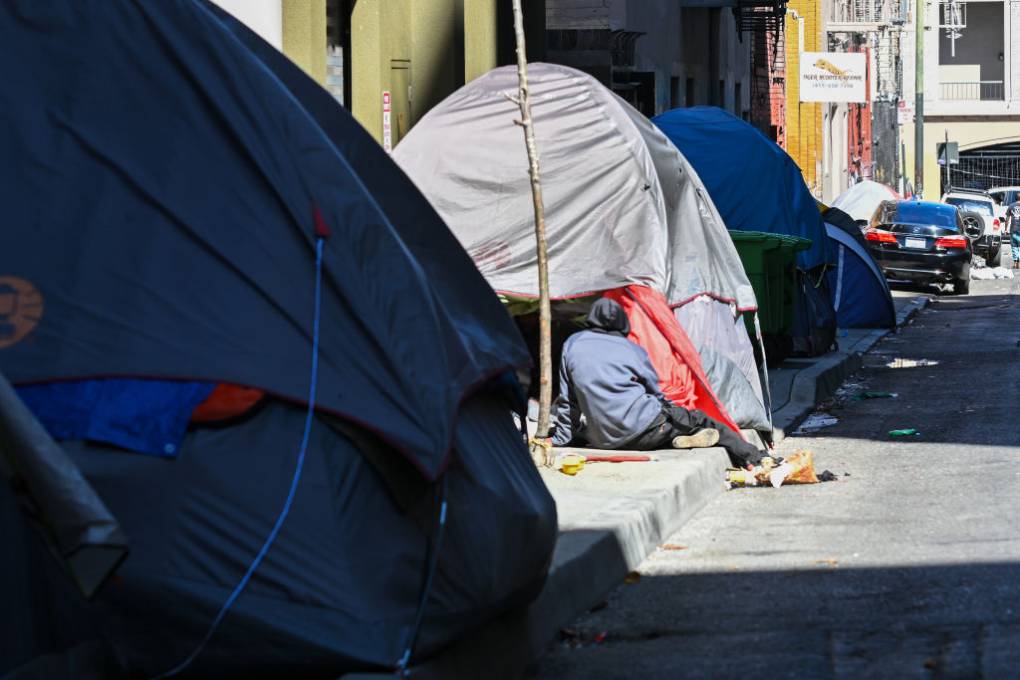
"caption": "A small tent encampment lines a sidewalk in San Francisco's Tenderloin neighborhood on Aug. 28, 2023.",
"description": null,
"title": "Homelessness and drug situations in San Francisco",
"credit": "Tayfun Coskun/Anadolu Agency via Getty Images",
"status": "inherit",
"altTag": "Three tents line a sidewalk, with a person - back to camera - sitting on the curb in front of one of the tents.",
"isLoading": false,
"fetchFailed": false
},
"news_11960095": {
"type": "attachments",
"id": "news_11960095",
"meta": {
"index": "attachments_1716263798",
"site": "news",
"id": "11960095",
"found": true
},
"parent": 0,
"imgSizes": {
"twentyfourteen-full-width": {
"file": "https://ww2.kqed.org/app/uploads/sites/10/2023/09/GettyImages-1645981827-1038x576.jpg",
"width": 1038,
"mimeType": "image/jpeg",
"height": 576
},
"thumbnail": {
"file": "https://ww2.kqed.org/app/uploads/sites/10/2023/09/GettyImages-1645981827-160x107.jpg",
"width": 160,
"mimeType": "image/jpeg",
"height": 107
},
"post-thumbnail": {
"file": "https://ww2.kqed.org/app/uploads/sites/10/2023/09/GettyImages-1645981827-672x372.jpg",
"width": 672,
"mimeType": "image/jpeg",
"height": 372
},
"kqedFullSize": {
"file": "https://ww2.kqed.org/app/uploads/sites/10/2023/09/GettyImages-1645981827-scaled.jpg",
"width": 2560,
"height": 1706
},
"2048x2048": {
"file": "https://ww2.kqed.org/app/uploads/sites/10/2023/09/GettyImages-1645981827-2048x1365.jpg",
"width": 2048,
"mimeType": "image/jpeg",
"height": 1365
},
"large": {
"file": "https://ww2.kqed.org/app/uploads/sites/10/2023/09/GettyImages-1645981827-1020x680.jpg",
"width": 1020,
"mimeType": "image/jpeg",
"height": 680
},
"1536x1536": {
"file": "https://ww2.kqed.org/app/uploads/sites/10/2023/09/GettyImages-1645981827-1536x1024.jpg",
"width": 1536,
"mimeType": "image/jpeg",
"height": 1024
},
"full-width": {
"file": "https://ww2.kqed.org/app/uploads/sites/10/2023/09/GettyImages-1645981827-1920x1280.jpg",
"width": 1920,
"mimeType": "image/jpeg",
"height": 1280
},
"medium": {
"file": "https://ww2.kqed.org/app/uploads/sites/10/2023/09/GettyImages-1645981827-800x533.jpg",
"width": 800,
"mimeType": "image/jpeg",
"height": 533
}
},
"publishDate": 1693938973,
"modified": 1693940823,
"caption": "Vehicles line up to leave the site of the annual Burning Man Festival on Sept. 5, 2023, after heavy rains turned the site in Nevada's Black Rock desert into a mud pit. Thousands of revelers stuck in the mud for days at Burning Man were told they could finally trek home on Sept. 4, 2023, the roads opened Monday afternoon, kicking off the official exit process known as the 'Exodus.'",
"description": null,
"title": "US-FESTIVAL-WEATHER",
"credit": "Julie Jammot/AFP via Getty Images",
"status": "inherit",
"altTag": "A U-Haul truck and many cars and other vehicles are lined up in a traffic jam in the Nevada desert as Burning Man festivalgoers prepare to leave the annual event.",
"isLoading": false,
"fetchFailed": false
},
"news_11959900": {
"type": "attachments",
"id": "news_11959900",
"meta": {
"index": "attachments_1716263798",
"site": "news",
"id": "11959900",
"found": true
},
"parent": 0,
"imgSizes": {
"twentyfourteen-full-width": {
"file": "https://ww2.kqed.org/app/uploads/sites/10/2023/09/230901-CARS-SAN-FRANCISCO-Getty-JE-KQED-1038x576.jpg",
"width": 1038,
"mimeType": "image/jpeg",
"height": 576
},
"thumbnail": {
"file": "https://ww2.kqed.org/app/uploads/sites/10/2023/09/230901-CARS-SAN-FRANCISCO-Getty-JE-KQED-160x102.jpg",
"width": 160,
"mimeType": "image/jpeg",
"height": 102
},
"post-thumbnail": {
"file": "https://ww2.kqed.org/app/uploads/sites/10/2023/09/230901-CARS-SAN-FRANCISCO-Getty-JE-KQED-672x372.jpg",
"width": 672,
"mimeType": "image/jpeg",
"height": 372
},
"kqedFullSize": {
"file": "https://ww2.kqed.org/app/uploads/sites/10/2023/09/230901-CARS-SAN-FRANCISCO-Getty-JE-KQED.jpg",
"width": 2000,
"height": 1276
},
"large": {
"file": "https://ww2.kqed.org/app/uploads/sites/10/2023/09/230901-CARS-SAN-FRANCISCO-Getty-JE-KQED-1020x651.jpg",
"width": 1020,
"mimeType": "image/jpeg",
"height": 651
},
"1536x1536": {
"file": "https://ww2.kqed.org/app/uploads/sites/10/2023/09/230901-CARS-SAN-FRANCISCO-Getty-JE-KQED-1536x980.jpg",
"width": 1536,
"mimeType": "image/jpeg",
"height": 980
},
"full-width": {
"file": "https://ww2.kqed.org/app/uploads/sites/10/2023/09/230901-CARS-SAN-FRANCISCO-Getty-JE-KQED-1920x1225.jpg",
"width": 1920,
"mimeType": "image/jpeg",
"height": 1225
},
"medium": {
"file": "https://ww2.kqed.org/app/uploads/sites/10/2023/09/230901-CARS-SAN-FRANCISCO-Getty-JE-KQED-800x510.jpg",
"width": 800,
"mimeType": "image/jpeg",
"height": 510
}
},
"publishDate": 1693592501,
"modified": 1693592584,
"caption": "Cars parked along Washington Street in San Francisco on March 17, 2020.",
"description": null,
"title": "US-VIRUS-HEALTH-EPIDEMIC",
"credit": "Josh Edelson/AFP via Getty Images",
"status": "inherit",
"altTag": "Cars parked along a city street.",
"isLoading": false,
"fetchFailed": false
},
"news_11959604": {
"type": "attachments",
"id": "news_11959604",
"meta": {
"index": "attachments_1716263798",
"site": "news",
"id": "11959604",
"found": true
},
"parent": 0,
"imgSizes": {
"twentyfourteen-full-width": {
"file": "https://ww2.kqed.org/app/uploads/sites/10/2023/08/RS68436_230829-ODAwareness-26-BL-KQED-1038x576.jpg",
"width": 1038,
"mimeType": "image/jpeg",
"height": 576
},
"thumbnail": {
"file": "https://ww2.kqed.org/app/uploads/sites/10/2023/08/RS68436_230829-ODAwareness-26-BL-KQED-160x107.jpg",
"width": 160,
"mimeType": "image/jpeg",
"height": 107
},
"post-thumbnail": {
"file": "https://ww2.kqed.org/app/uploads/sites/10/2023/08/RS68436_230829-ODAwareness-26-BL-KQED-672x372.jpg",
"width": 672,
"mimeType": "image/jpeg",
"height": 372
},
"kqedFullSize": {
"file": "https://ww2.kqed.org/app/uploads/sites/10/2023/08/RS68436_230829-ODAwareness-26-BL-KQED.jpg",
"width": 2000,
"height": 1333
},
"large": {
"file": "https://ww2.kqed.org/app/uploads/sites/10/2023/08/RS68436_230829-ODAwareness-26-BL-KQED-1020x680.jpg",
"width": 1020,
"mimeType": "image/jpeg",
"height": 680
},
"1536x1536": {
"file": "https://ww2.kqed.org/app/uploads/sites/10/2023/08/RS68436_230829-ODAwareness-26-BL-KQED-1536x1024.jpg",
"width": 1536,
"mimeType": "image/jpeg",
"height": 1024
},
"full-width": {
"file": "https://ww2.kqed.org/app/uploads/sites/10/2023/08/RS68436_230829-ODAwareness-26-BL-KQED-1920x1280.jpg",
"width": 1920,
"mimeType": "image/jpeg",
"height": 1280
},
"medium": {
"file": "https://ww2.kqed.org/app/uploads/sites/10/2023/08/RS68436_230829-ODAwareness-26-BL-KQED-800x533.jpg",
"width": 800,
"mimeType": "image/jpeg",
"height": 533
}
},
"publishDate": 1693420588,
"modified": 1693422074,
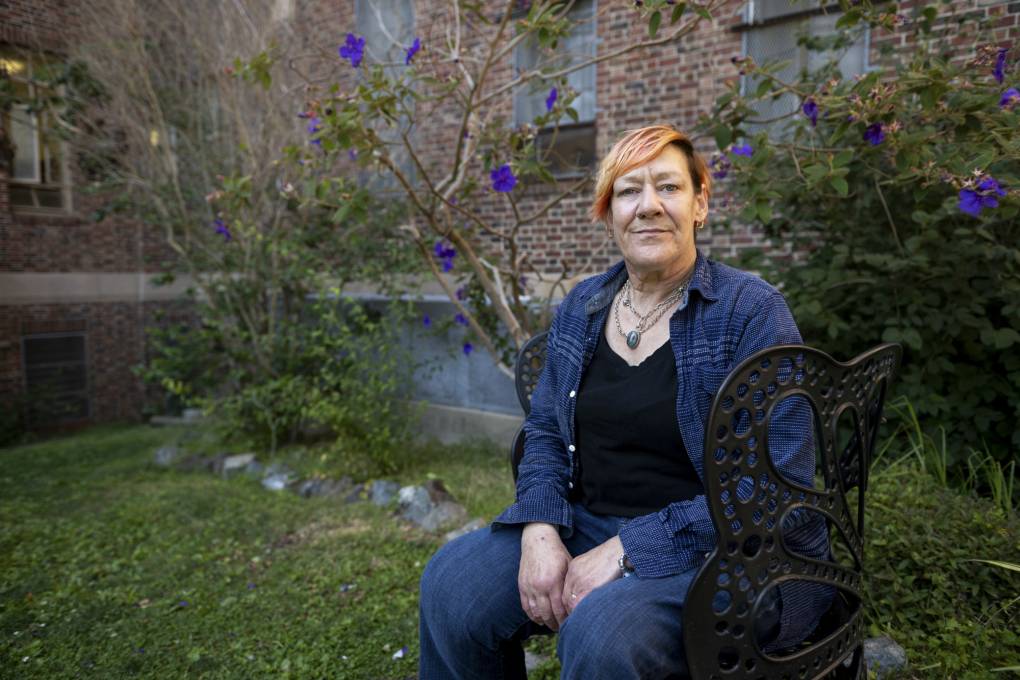
"caption": "Jean, 60, sits outside of the Opiate Treatment Outpatient Program (OTOP) at Zuckerberg San Francisco General Hospital in San Francisco on Aug. 29, 2023.",
"description": null,
"title": "RS68436_230829-ODAwareness-26-BL-KQED",
"credit": "Beth LaBerge/KQED",
"status": "inherit",
"altTag": "A person sits on a bench outdoors and looks at the camera.",
"isLoading": false,
"fetchFailed": false
},
"news_11959521": {
"type": "attachments",
"id": "news_11959521",
"meta": {
"index": "attachments_1716263798",
"site": "news",
"id": "11959521",
"found": true
},
"parent": 0,
"imgSizes": {
"twentyfourteen-full-width": {
"file": "https://ww2.kqed.org/app/uploads/sites/10/2023/08/20230823-HomelessLawsuit-05-JY-KQED-1038x576.jpg",
"width": 1038,
"mimeType": "image/jpeg",
"height": 576
},
"thumbnail": {
"file": "https://ww2.kqed.org/app/uploads/sites/10/2023/08/20230823-HomelessLawsuit-05-JY-KQED-160x107.jpg",
"width": 160,
"mimeType": "image/jpeg",
"height": 107
},
"post-thumbnail": {
"file": "https://ww2.kqed.org/app/uploads/sites/10/2023/08/20230823-HomelessLawsuit-05-JY-KQED-672x372.jpg",
"width": 672,
"mimeType": "image/jpeg",
"height": 372
},
"kqedFullSize": {
"file": "https://ww2.kqed.org/app/uploads/sites/10/2023/08/20230823-HomelessLawsuit-05-JY-KQED.jpg",
"width": 2000,
"height": 1333
},
"large": {
"file": "https://ww2.kqed.org/app/uploads/sites/10/2023/08/20230823-HomelessLawsuit-05-JY-KQED-1020x680.jpg",
"width": 1020,
"mimeType": "image/jpeg",
"height": 680
},
"1536x1536": {
"file": "https://ww2.kqed.org/app/uploads/sites/10/2023/08/20230823-HomelessLawsuit-05-JY-KQED-1536x1024.jpg",
"width": 1536,
"mimeType": "image/jpeg",
"height": 1024
},
"full-width": {
"file": "https://ww2.kqed.org/app/uploads/sites/10/2023/08/20230823-HomelessLawsuit-05-JY-KQED-1920x1280.jpg",
"width": 1920,
"mimeType": "image/jpeg",
"height": 1280
},
"medium": {
"file": "https://ww2.kqed.org/app/uploads/sites/10/2023/08/20230823-HomelessLawsuit-05-JY-KQED-800x533.jpg",
"width": 800,
"mimeType": "image/jpeg",
"height": 533
}
},
"publishDate": 1693350741,
"modified": 1693442700,
"caption": "San Francisco Mayor London Breed attends a rally in front of the Ninth Circuit Court of Appeals in San Francisco on Aug. 23, 2023.",
"description": null,
"title": "20230823-HomelessLawsuit-05-JY-KQED",
"credit": "Juliana Yamada/KQED",
"status": "inherit",
"altTag": "A close-up photo of San Francisco Mayor London Breed.",
"isLoading": false,
"fetchFailed": false
},
"news_11958914": {
"type": "attachments",
"id": "news_11958914",
"meta": {
"index": "attachments_1716263798",
"site": "news",
"id": "11958914",
"found": true
},
"parent": 11958888,
"imgSizes": {
"twentyfourteen-full-width": {
"file": "https://ww2.kqed.org/app/uploads/sites/10/2023/08/IMG_0355-1038x576.jpg",
"width": 1038,
"mimeType": "image/jpeg",
"height": 576
},
"thumbnail": {
"file": "https://ww2.kqed.org/app/uploads/sites/10/2023/08/IMG_0355-160x120.jpg",
"width": 160,
"mimeType": "image/jpeg",
"height": 120
},
"post-thumbnail": {
"file": "https://ww2.kqed.org/app/uploads/sites/10/2023/08/IMG_0355-672x372.jpg",
"width": 672,
"mimeType": "image/jpeg",
"height": 372
},
"kqedFullSize": {
"file": "https://ww2.kqed.org/app/uploads/sites/10/2023/08/IMG_0355.jpg",
"width": 2560,
"height": 1920
},
"2048x2048": {
"file": "https://ww2.kqed.org/app/uploads/sites/10/2023/08/IMG_0355-2048x1536.jpg",
"width": 2048,
"mimeType": "image/jpeg",
"height": 1536
},
"large": {
"file": "https://ww2.kqed.org/app/uploads/sites/10/2023/08/IMG_0355-1020x765.jpg",
"width": 1020,
"mimeType": "image/jpeg",
"height": 765
},
"1536x1536": {
"file": "https://ww2.kqed.org/app/uploads/sites/10/2023/08/IMG_0355-1536x1152.jpg",
"width": 1536,
"mimeType": "image/jpeg",
"height": 1152
},
"full-width": {
"file": "https://ww2.kqed.org/app/uploads/sites/10/2023/08/IMG_0355-1920x1440.jpg",
"width": 1920,
"mimeType": "image/jpeg",
"height": 1440
},
"medium": {
"file": "https://ww2.kqed.org/app/uploads/sites/10/2023/08/IMG_0355-800x600.jpg",
"width": 800,
"mimeType": "image/jpeg",
"height": 600
}
},
"publishDate": 1692822118,
"modified": 1692914458,
"caption": "The Welcomed Consensus, which inspired the now-indicted founder of the sexual wellness company OneTaste, has engaged in a pattern of psychological and sexual abuse for decades, according to nearly a dozen ex-members, students and others. ",
"description": null,
"title": "IMG_0355",
"credit": "Anna Vignet/KQED",
"status": "inherit",
"altTag": "an artistic illustration depicting a seated woman, hands clasped around her knees, within the palm of an oversized large hand. A larger sized profile of a woman looking upward appears to the right.",
"isLoading": false,
"fetchFailed": false
},
"news_11959131": {
"type": "attachments",
"id": "news_11959131",
"meta": {
"index": "attachments_1716263798",
"site": "news",
"id": "11959131",
"found": true
},
"parent": 11959120,
"imgSizes": {
"twentyfourteen-full-width": {
"file": "https://ww2.kqed.org/app/uploads/sites/10/2023/08/RS43040_011_KQED_SanFrancisco_TentEncampments_05052020-qut-1038x576.jpg",
"width": 1038,
"mimeType": "image/jpeg",
"height": 576
},
"thumbnail": {
"file": "https://ww2.kqed.org/app/uploads/sites/10/2023/08/RS43040_011_KQED_SanFrancisco_TentEncampments_05052020-qut-160x107.jpg",
"width": 160,
"mimeType": "image/jpeg",
"height": 107
},
"post-thumbnail": {
"file": "https://ww2.kqed.org/app/uploads/sites/10/2023/08/RS43040_011_KQED_SanFrancisco_TentEncampments_05052020-qut-672x372.jpg",
"width": 672,
"mimeType": "image/jpeg",
"height": 372
},
"kqedFullSize": {
"file": "https://ww2.kqed.org/app/uploads/sites/10/2023/08/RS43040_011_KQED_SanFrancisco_TentEncampments_05052020-qut.jpg",
"width": 1920,
"height": 1280
},
"large": {
"file": "https://ww2.kqed.org/app/uploads/sites/10/2023/08/RS43040_011_KQED_SanFrancisco_TentEncampments_05052020-qut-1020x680.jpg",
"width": 1020,
"mimeType": "image/jpeg",
"height": 680
},
"1536x1536": {
"file": "https://ww2.kqed.org/app/uploads/sites/10/2023/08/RS43040_011_KQED_SanFrancisco_TentEncampments_05052020-qut-1536x1024.jpg",
"width": 1536,
"mimeType": "image/jpeg",
"height": 1024
},
"medium": {
"file": "https://ww2.kqed.org/app/uploads/sites/10/2023/08/RS43040_011_KQED_SanFrancisco_TentEncampments_05052020-qut-800x533.jpg",
"width": 800,
"mimeType": "image/jpeg",
"height": 533
}
},
"publishDate": 1692921727,
"modified": 1692922266,
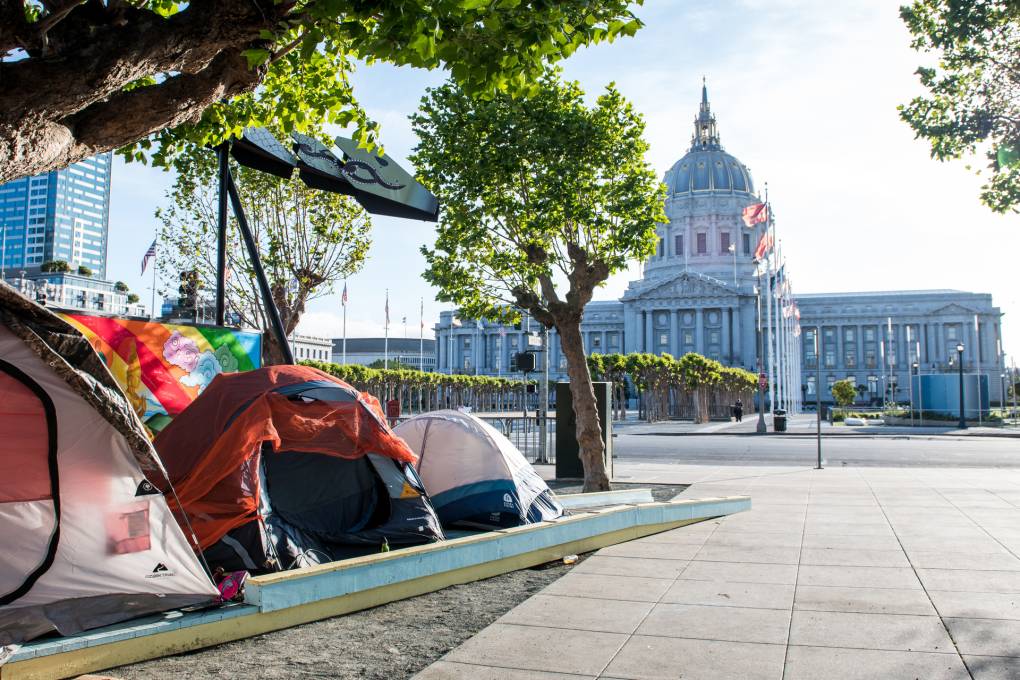
"caption": "Tents line Fulton Street near San Francisco City Hall in 2020.",
"description": null,
"title": "Tents line Fulton Street near City Hall on April 5, 2020.",
"credit": "Beth LaBerge/KQED",
"status": "inherit",
"altTag": "a row of tents in a plaza in front of city hall",
"isLoading": false,
"fetchFailed": false
},
"news_11958826": {
"type": "attachments",
"id": "news_11958826",
"meta": {
"index": "attachments_1716263798",
"site": "news",
"id": "11958826",
"found": true
},
"parent": 0,
"imgSizes": {
"twentyfourteen-full-width": {
"file": "https://ww2.kqed.org/app/uploads/sites/10/2023/08/230822-HOME-HEALTHCARE-WORKER-LM-KQED-1038x576.jpg",
"width": 1038,
"mimeType": "image/jpeg",
"height": 576
},
"thumbnail": {
"file": "https://ww2.kqed.org/app/uploads/sites/10/2023/08/230822-HOME-HEALTHCARE-WORKER-LM-KQED-160x107.jpg",
"width": 160,
"mimeType": "image/jpeg",
"height": 107
},
"post-thumbnail": {
"file": "https://ww2.kqed.org/app/uploads/sites/10/2023/08/230822-HOME-HEALTHCARE-WORKER-LM-KQED-672x372.jpg",
"width": 672,
"mimeType": "image/jpeg",
"height": 372
},
"kqedFullSize": {
"file": "https://ww2.kqed.org/app/uploads/sites/10/2023/08/230822-HOME-HEALTHCARE-WORKER-LM-KQED.jpg",
"width": 2000,
"height": 1333
},
"large": {
"file": "https://ww2.kqed.org/app/uploads/sites/10/2023/08/230822-HOME-HEALTHCARE-WORKER-LM-KQED-1020x680.jpg",
"width": 1020,
"mimeType": "image/jpeg",
"height": 680
},
"1536x1536": {
"file": "https://ww2.kqed.org/app/uploads/sites/10/2023/08/230822-HOME-HEALTHCARE-WORKER-LM-KQED-1536x1024.jpg",
"width": 1536,
"mimeType": "image/jpeg",
"height": 1024
},
"full-width": {
"file": "https://ww2.kqed.org/app/uploads/sites/10/2023/08/230822-HOME-HEALTHCARE-WORKER-LM-KQED-1920x1280.jpg",
"width": 1920,
"mimeType": "image/jpeg",
"height": 1280
},
"medium": {
"file": "https://ww2.kqed.org/app/uploads/sites/10/2023/08/230822-HOME-HEALTHCARE-WORKER-LM-KQED-800x533.jpg",
"width": 800,
"mimeType": "image/jpeg",
"height": 533
}
},
"publishDate": 1692740342,
"modified": 1692818481,
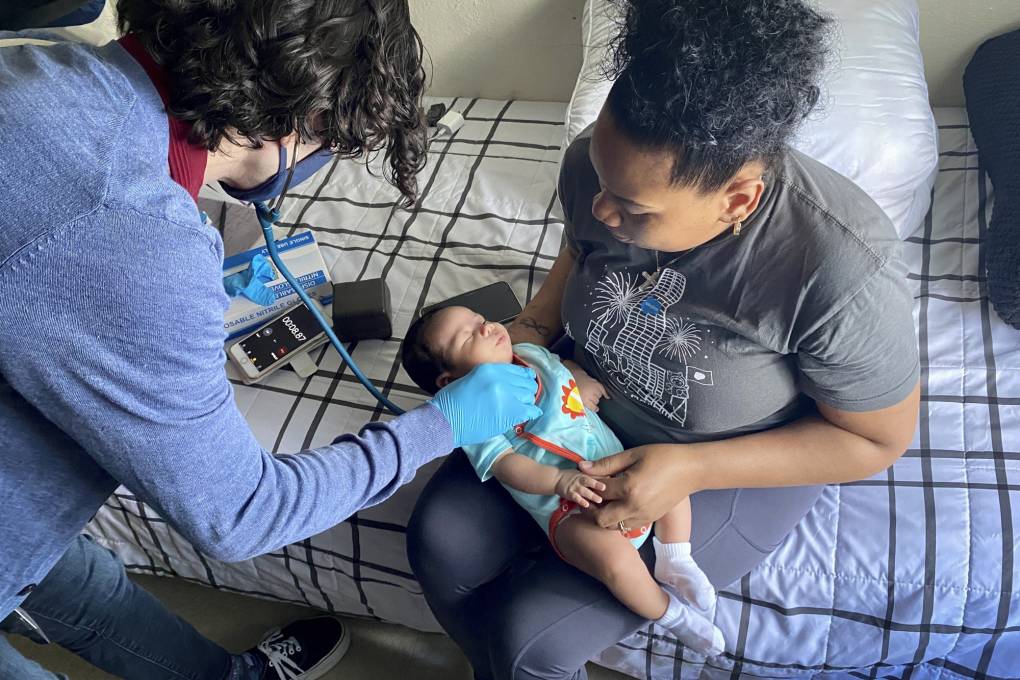
"caption": "Alvin Vallejo, a public health nurse in San Francisco, checks the heartbeat of Ibrahim Jose as his mother Dayanis holds him at his 6 week check-up.",
"description": null,
"title": "230822-HOME HEALTHCARE WORKER-LM-KQED",
"credit": "Lesley McClurg/KQED",
"status": "inherit",
"altTag": "A person cradles a baby in their lap while sitting on a bed as a person wearing medical gloves uses a stethoscope on the baby.",
"isLoading": false,
"fetchFailed": false
},
"news_11958632": {
"type": "attachments",
"id": "news_11958632",
"meta": {
"index": "attachments_1716263798",
"site": "news",
"id": "11958632",
"found": true
},
"parent": 11958630,
"imgSizes": {
"twentyfourteen-full-width": {
"file": "https://ww2.kqed.org/app/uploads/sites/10/2023/08/GettyImages-1556779132-1024x576.jpg",
"width": 1024,
"mimeType": "image/jpeg",
"height": 576
},
"thumbnail": {
"file": "https://ww2.kqed.org/app/uploads/sites/10/2023/08/GettyImages-1556779132-160x107.jpg",
"width": 160,
"mimeType": "image/jpeg",
"height": 107
},
"post-thumbnail": {
"file": "https://ww2.kqed.org/app/uploads/sites/10/2023/08/GettyImages-1556779132-672x372.jpg",
"width": 672,
"mimeType": "image/jpeg",
"height": 372
},
"kqedFullSize": {
"file": "https://ww2.kqed.org/app/uploads/sites/10/2023/08/GettyImages-1556779132.jpg",
"width": 1024,
"height": 683
},
"large": {
"file": "https://ww2.kqed.org/app/uploads/sites/10/2023/08/GettyImages-1556779132-1020x680.jpg",
"width": 1020,
"mimeType": "image/jpeg",
"height": 680
},
"medium": {
"file": "https://ww2.kqed.org/app/uploads/sites/10/2023/08/GettyImages-1556779132-800x534.jpg",
"width": 800,
"mimeType": "image/jpeg",
"height": 534
}
},
"publishDate": 1692474952,
"modified": 1692475049,
"caption": "A Cruise robotaxi is seen during operation in San Francisco on July 24, 2023.",
"description": null,
"title": "Cruise: A driverless robot taxi in San Francisco",
"credit": "Tayfun Coskun/Anadolu Agency via Getty Images",
"status": "inherit",
"altTag": "A Cruise robotaxi seen driving on the streets of San Francisco.",
"isLoading": false,
"fetchFailed": false
},
"news_11949516": {
"type": "attachments",
"id": "news_11949516",
"meta": {
"index": "attachments_1716263798",
"site": "news",
"id": "11949516",
"found": true
},
"parent": 11949515,
"imgSizes": {
"twentyfourteen-full-width": {
"file": "https://ww2.kqed.org/app/uploads/sites/10/2023/05/RS62467_016_KQED_LagunaHondaHospital_01312023-1038x576.jpg",
"width": 1038,
"mimeType": "image/jpeg",
"height": 576
},
"thumbnail": {
"file": "https://ww2.kqed.org/app/uploads/sites/10/2023/05/RS62467_016_KQED_LagunaHondaHospital_01312023-160x107.jpg",
"width": 160,
"mimeType": "image/jpeg",
"height": 107
},
"post-thumbnail": {
"file": "https://ww2.kqed.org/app/uploads/sites/10/2023/05/RS62467_016_KQED_LagunaHondaHospital_01312023-672x372.jpg",
"width": 672,
"mimeType": "image/jpeg",
"height": 372
},
"kqedFullSize": {
"file": "https://ww2.kqed.org/app/uploads/sites/10/2023/05/RS62467_016_KQED_LagunaHondaHospital_01312023-scaled.jpg",
"width": 2560,
"height": 1707
},
"2048x2048": {
"file": "https://ww2.kqed.org/app/uploads/sites/10/2023/05/RS62467_016_KQED_LagunaHondaHospital_01312023-2048x1365.jpg",
"width": 2048,
"mimeType": "image/jpeg",
"height": 1365
},
"large": {
"file": "https://ww2.kqed.org/app/uploads/sites/10/2023/05/RS62467_016_KQED_LagunaHondaHospital_01312023-1020x680.jpg",
"width": 1020,
"mimeType": "image/jpeg",
"height": 680
},
"1536x1536": {
"file": "https://ww2.kqed.org/app/uploads/sites/10/2023/05/RS62467_016_KQED_LagunaHondaHospital_01312023-1536x1024.jpg",
"width": 1536,
"mimeType": "image/jpeg",
"height": 1024
},
"full-width": {
"file": "https://ww2.kqed.org/app/uploads/sites/10/2023/05/RS62467_016_KQED_LagunaHondaHospital_01312023-1920x1280.jpg",
"width": 1920,
"mimeType": "image/jpeg",
"height": 1280
},
"medium": {
"file": "https://ww2.kqed.org/app/uploads/sites/10/2023/05/RS62467_016_KQED_LagunaHondaHospital_01312023-800x533.jpg",
"width": 800,
"mimeType": "image/jpeg",
"height": 533
}
},
"publishDate": 1684175822,
"modified": 1684175881,
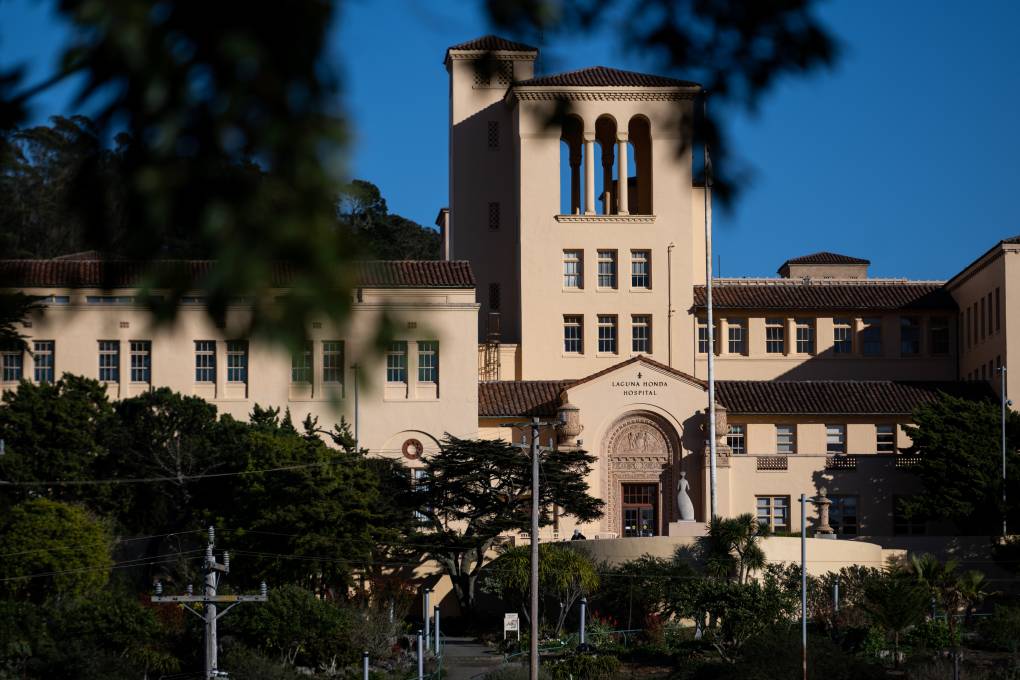
"caption": "The Laguna Honda Hospital administration building in San Francisco.",
"description": null,
"title": "RS62467_016_KQED_LagunaHondaHospital_01312023",
"credit": "Beth LaBerge/KQED",
"status": "inherit",
"altTag": "through tree branches, a large tan hospital building tower",
"isLoading": false,
"fetchFailed": false
}
},
"audioPlayerReducer": {
"postId": "stream_live",
"isPaused": true,
"isPlaying": false,
"pfsActive": false,
"pledgeModalIsOpen": true,
"playerDrawerIsOpen": false,
"liveAudioPlayStartedAt": 0,
"liveAudioPlayContext": ""
},
"authorsReducer": {
"byline_news_11960963": {
"type": "authors",
"id": "byline_news_11960963",
"meta": {
"override": true
},
"slug": "byline_news_11960963",
"name": "Kathleen Ronayne\u003cbr>The Associated Press",
"isLoading": false
},
"byline_news_11960069": {
"type": "authors",
"id": "byline_news_11960069",
"meta": {
"override": true
},
"slug": "byline_news_11960069",
"name": "\u003ca href=\"https://apnews.com/\">The Associated Press\u003c/a>",
"isLoading": false
},
"byline_news_11958630": {
"type": "authors",
"id": "byline_news_11958630",
"meta": {
"override": true
},
"slug": "byline_news_11958630",
"name": "The Associated Press",
"isLoading": false
},
"lesleymcclurg": {
"type": "authors",
"id": "11229",
"meta": {
"index": "authors_1716337520",
"id": "11229",
"found": true
},
"name": "Lesley McClurg",
"firstName": "Lesley",
"lastName": "McClurg",
"slug": "lesleymcclurg",
"email": "lmcclurg@KQED.org",
"display_author_email": false,
"staff_mastheads": [
"news",
"science"
],
"title": "KQED Health Correspondent",
"bio": "Lesley McClurg is a health correspondent and fill-in host whose work is regularly rebroadcast on NPR and PBS programs. She’s earned multiple regional Emmy awards, a national and a regional Edward R. Murrow award, and was named Best Beat Reporter by the Association of Health Care Journalists. The Society of Professional Journalists has recognized her work several times, and the Society of Environmental Journalists spotlighted her coverage of California’s historic drought.\r\n\r\nBefore joining KQED in 2016, Lesley covered food and sustainability for Capital Public Radio, environmental issues for Colorado Public Radio, and reported for KUOW and KCTS 9 in Seattle. Away from the newsroom, she loves skiing with her daughter, mountain biking with her partner, and playing with Ollie, the family’s goldendoodle. On deadline, she runs almost entirely on chocolate chips.\r\n\r\n ",
"avatar": "https://secure.gravatar.com/avatar/bab49e972ea10c774fe0f5e29dba1722b158f7c0d58a360923d1389d380b2978?s=600&d=blank&r=g",
"twitter": "lesleywmcclurg",
"bluesky": null,
"facebook": null,
"instagram": null,
"linkedin": null,
"sites": [
{
"site": "arts",
"roles": [
"author"
]
},
{
"site": "news",
"roles": [
"editor"
]
},
{
"site": "futureofyou",
"roles": [
"editor"
]
},
{
"site": "stateofhealth",
"roles": [
"author"
]
},
{
"site": "science",
"roles": [
"editor"
]
},
{
"site": "quest",
"roles": [
"subscriber"
]
},
{
"site": "forum",
"roles": [
"administrator"
]
},
{
"site": "liveblog",
"roles": [
"author"
]
}
],
"headData": {
"title": "Lesley McClurg | KQED",
"description": "KQED Health Correspondent",
"ogImgSrc": "https://secure.gravatar.com/avatar/bab49e972ea10c774fe0f5e29dba1722b158f7c0d58a360923d1389d380b2978?s=600&d=blank&r=g",
"twImgSrc": "https://secure.gravatar.com/avatar/bab49e972ea10c774fe0f5e29dba1722b158f7c0d58a360923d1389d380b2978?s=600&d=blank&r=g"
},
"isLoading": false,
"link": "/author/lesleymcclurg"
},
"swhitney": {
"type": "authors",
"id": "11784",
"meta": {
"index": "authors_1716337520",
"id": "11784",
"found": true
},
"name": "Spencer Whitney",
"firstName": "Spencer",
"lastName": "Whitney",
"slug": "swhitney",
"email": "swhitney@kqed.org",
"display_author_email": false,
"staff_mastheads": [],
"title": "KQED Digital Editor",
"bio": "Spencer Whitney is currently a Digital Editor for KQED News. Prior to joining KQED News, Spencer worked as the Multimedia Editor at the Oakland Post and an Assistant Editor in the Editorial department at the San Francisco Chronicle. He attended Howard University as an undergraduate and interned with SiriusXM. He also attended UC Berkeley's Graduate School of Journalism and had the opportunity to write for the hyperlocal news sites Richmond Confidential and Oakland North.",
"avatar": "https://secure.gravatar.com/avatar/e33ff4fd8b8f0d2796f36472fb32607ca8fc46ef5e537dcfdbdee688d8ea5b80?s=600&d=mm&r=g",
"twitter": null,
"bluesky": null,
"facebook": null,
"instagram": null,
"linkedin": null,
"sites": [
{
"site": "arts",
"roles": [
"editor"
]
},
{
"site": "news",
"roles": [
"editor"
]
},
{
"site": "science",
"roles": [
"editor"
]
},
{
"site": "perspectives",
"roles": [
"editor"
]
}
],
"headData": {
"title": "Spencer Whitney | KQED",
"description": "KQED Digital Editor",
"ogImgSrc": "https://secure.gravatar.com/avatar/e33ff4fd8b8f0d2796f36472fb32607ca8fc46ef5e537dcfdbdee688d8ea5b80?s=600&d=mm&r=g",
"twImgSrc": "https://secure.gravatar.com/avatar/e33ff4fd8b8f0d2796f36472fb32607ca8fc46ef5e537dcfdbdee688d8ea5b80?s=600&d=mm&r=g"
},
"isLoading": false,
"link": "/author/swhitney"
},
"sjohnson": {
"type": "authors",
"id": "11840",
"meta": {
"index": "authors_1716337520",
"id": "11840",
"found": true
},
"name": "Sydney Johnson",
"firstName": "Sydney",
"lastName": "Johnson",
"slug": "sjohnson",
"email": "sjohnson@kqed.org",
"display_author_email": false,
"staff_mastheads": [
"news"
],
"title": "KQED Reporter",
"bio": "Sydney Johnson is a general assignment reporter at KQED. She previously reported on public health and city government at the San Francisco Examiner, and before that, she covered statewide education policy for EdSource. Her reporting has won multiple local, state and national awards. Sydney is a graduate of the University of California, Berkeley and lives in San Francisco.",
"avatar": "https://secure.gravatar.com/avatar/97855f2719b72ad6190b7c535fe642c8?s=600&d=blank&r=g",
"twitter": "sydneyfjohnson",
"facebook": null,
"instagram": null,
"linkedin": null,
"sites": [
{
"site": "news",
"roles": [
"editor"
]
}
],
"headData": {
"title": "Sydney Johnson | KQED",
"description": "KQED Reporter",
"ogImgSrc": "https://secure.gravatar.com/avatar/97855f2719b72ad6190b7c535fe642c8?s=600&d=blank&r=g",
"twImgSrc": "https://secure.gravatar.com/avatar/97855f2719b72ad6190b7c535fe642c8?s=600&d=blank&r=g"
},
"isLoading": false,
"link": "/author/sjohnson"
},
"rvasquez": {
"type": "authors",
"id": "11860",
"meta": {
"index": "authors_1716337520",
"id": "11860",
"found": true
},
"name": "Rachael Vasquez",
"firstName": "Rachael",
"lastName": "Vasquez",
"slug": "rvasquez",
"email": "rvasquez@KQED.org",
"display_author_email": false,
"staff_mastheads": [
"news"
],
"title": "KQED Contributor",
"bio": "Rachael Vasquez is a weekend host and editor at KQED. She’s worked in public radio for years, most recently at Wisconsin Public Radio in Madison, Wis. where she woke up very early as a producer for the network’s statewide \"Morning Edition\" broadcast, later serving as a producer for the stations’s afternoon talk show \"Central Time,\" and going on to report on business and economics during the coronavirus pandemic. In addition to hearing her anchor the afternoon newscasts every weekend at KQED, you can find her working with a number of different teams including the weekday newsroom and \"Forum.\" Rachael is an East Bay native who loves watching old movies and cooking her abuelita’s recipes.",
"avatar": "https://secure.gravatar.com/avatar/a1defdae97cbdde04c13baacacd7c94a?s=600&d=blank&r=g",
"twitter": null,
"facebook": null,
"instagram": null,
"linkedin": null,
"sites": [
{
"site": "news",
"roles": [
"editor"
]
}
],
"headData": {
"title": "Rachael Vasquez | KQED",
"description": "KQED Contributor",
"ogImgSrc": "https://secure.gravatar.com/avatar/a1defdae97cbdde04c13baacacd7c94a?s=600&d=blank&r=g",
"twImgSrc": "https://secure.gravatar.com/avatar/a1defdae97cbdde04c13baacacd7c94a?s=600&d=blank&r=g"
},
"isLoading": false,
"link": "/author/rvasquez"
},
"opalma": {
"type": "authors",
"id": "11897",
"meta": {
"index": "authors_1716337520",
"id": "11897",
"found": true
},
"name": "Oscar Palma",
"firstName": "Oscar",
"lastName": "Palma",
"slug": "opalma",
"email": "opalma@kqed.org",
"display_author_email": false,
"staff_mastheads": [],
"title": "KQED Contributor",
"bio": "Oscar Palma is a newscast intern at KQED, a freelance reporter and former Spanish editor for Golden Gate Xpress. Oscar is interested in environmental and community journalism. Some of his personal interests are bicycles, film, and Latin American literature and punk, his work has previously appeared in El Tecolote, KQED and The Frisc.",
"avatar": "https://secure.gravatar.com/avatar/d488e9b9f94b80f7b78e2896064827ab?s=600&d=blank&r=g",
"twitter": null,
"facebook": null,
"instagram": null,
"linkedin": null,
"sites": [
{
"site": "news",
"roles": [
"author"
]
}
],
"headData": {
"title": "Oscar Palma | KQED",
"description": "KQED Contributor",
"ogImgSrc": "https://secure.gravatar.com/avatar/d488e9b9f94b80f7b78e2896064827ab?s=600&d=blank&r=g",
"twImgSrc": "https://secure.gravatar.com/avatar/d488e9b9f94b80f7b78e2896064827ab?s=600&d=blank&r=g"
},
"isLoading": false,
"link": "/author/opalma"
}
},
"pagesReducer": {
"news_tag_san-francisco": {
"type": "terms",
"id": "news_38",
"meta": {
"index": "terms_1716263798",
"site": "news",
"id": "38",
"score": 6.7230043
},
"featImg": null,
"name": "San Francisco",
"description": null,
"taxonomy": "tag",
"headData": {
"twImgId": null,
"twTitle": null,
"ogTitle": null,
"ogImgId": null,
"twDescription": null,
"description": null,
"title": "San Francisco Archives | KQED News",
"ogDescription": null
},
"ttid": 58,
"slug": "san-francisco",
"isLoading": false,
"title": "San Francisco",
"pageMeta": {
"site": "news",
"WpPageTemplate": "page-topic-editorial",
"currentPage": 113
},
"blocks": [
{
"blockName": "kqed/post-list",
"attrs": {
"layout": "cardArticle2",
"query": "posts/news?tag=san-francisco",
"seeMore": false,
"paginated": true,
"page": 113
}
},
{
"blockName": "kqed/ad"
}
]
}
},
"pfsSessionReducer": {},
"postsReducer": {
"stream_live": {
"type": "live",
"id": "stream_live",
"audioUrl": "https://streams.kqed.org/kqedradio",
"title": "Live Stream",
"excerpt": "Live Stream information currently unavailable.",
"link": "/radio",
"featImg": "",
"label": {
"name": "KQED Live",
"link": "/"
}
},
"stream_kqedNewscast": {
"type": "posts",
"id": "stream_kqedNewscast",
"audioUrl": "https://www.kqed.org/.stream/anon/radio/RDnews/newscast.mp3?_=1",
"title": "KQED Newscast",
"featImg": "",
"label": {
"name": "88.5 FM",
"link": "/"
}
},
"news_11960963": {
"type": "posts",
"id": "news_11960963",
"meta": {
"index": "posts_1716263798",
"site": "news",
"id": "11960963",
"score": null,
"sort": [
1694630757000
]
},
"guestAuthors": [],
"slug": "newsom-says-state-will-intervene-in-court-case-blocking-san-francisco-from-clearing-encampments",
"title": "Newsom Says State Will Intervene in Court Case Blocking San Francisco From Clearing Encampments",
"publishDate": 1694630757,
"format": "standard",
"headTitle": "Newsom Says State Will Intervene in Court Case Blocking San Francisco From Clearing Encampments | KQED",
"labelTerm": {
"site": "news"
},
"content": "\u003cp>Gov. Gavin Newsom said Tuesday the state will intervene in an \u003ca href=\"https://apnews.com/article/lawsuits-oakland-9685f0a4350f8eb45602417ad334006f\">ongoing federal court case\u003c/a> that’s barred San Francisco from cleaning up homeless encampments until more shelter beds are available, saying the judge has gone too far and is preventing the state from solving a critical problem.\u003c/p>\n\u003cp>“I hope this goes to the Supreme Court,” Newsom said. “And that’s a hell of a statement coming from a progressive Democrat.”\u003c/p>\n\u003cp>Newsom made his remarks during an interview with news outlet Politico in Sacramento. He previously blasted U.S. Magistrate Judge Donna Ryu in an interview with the \u003ca href=\"https://www.sfchronicle.com/politics/article/newsom-homeless-rulings-18336300.php\">San Francisco Chronicle\u003c/a> but had not disclosed his administration’s plan to file an amicus brief supporting the city’s efforts to overturn the ruling.[pullquote align=\"right\" size=\"medium\" citation=\"Gov. Gavin Newsom\"]‘I hope this goes to the Supreme Court. And that’s a hell of a statement coming from a progressive Democrat.’[/pullquote]Ryu granted the injunction in December after homeless advocates argued the city had been violating the law by clearing homeless encampments without offering shelter and improperly throwing out peoples’ belongings such as cellphones and medication.\u003c/p>\n\u003cp>Her decision has drawn rebuke from Democratic leaders in San Francisco, who \u003ca href=\"https://apnews.com/article/san-francisco-homeless-tent-encampments-9th-circuit-d618db8fdbd8cefcfe4a1ff50c122987\">argued in appellate court\u003c/a> last month for a reversal of the decision. They say the ruling has made it nearly impossible to clean up the city’s streets and that more people are refusing shelter even when it is available.\u003c/p>\n\u003cp>Newsom, the former San Francisco mayor, said he’s personally worked on cleaning up three encampments near San Francisco but that his staff stopped him from cleaning up a fourth due to a court ruling. More broadly, Newsom said federal judges are ruling with a “perverse interpretation” of a court ruling stemming from a case in Boise, Idaho, that said cities can’t prosecute people for sleeping on the streets if they have nowhere else to go.\u003c/p>\n\u003cp>“I think they’ve gone too far,” he said.\u003c/p>\n\u003cp>California is home to roughly \u003ca href=\"https://apnews.com/article/homeless-california-study-poverty-high-rent-a2a4bfc9b386cb70fdd14d593f31b68c#:~:text=More%20than%20a%20third%20of%20adults%20surveyed%20met,previous%20three%20years%20totaling%20more%20than%2012%20months.\">one-third of the nation’s population of homeless people\u003c/a>, a problem that has dogged Newsom since he took office. Newsom touted that his administration has spent billions aimed at cleaning up streets and housing people but acknowledged the stubbornness of the issue.[aside postID=news_11960279 hero='https://ww2.kqed.org/app/uploads/sites/10/2023/09/GettyImages-1644665358-1020x680.jpg']“People’s lives are at risk; it’s unacceptable what’s happening on the streets and sidewalks,” he said. He added, “We’re now complicit, all of us, at all levels of government and all branches of government.”\u003c/p>\n\u003cp>In the wide-ranging interview, Newsom reiterated his support for Democratic President Joe Biden to run for reelection. He has repeatedly said he has no plans to challenge Biden or run for president, instead traveling the country as a surrogate for Biden. He’s also been \u003ca href=\"https://apnews.com/article/california-governor-newsom-president-democrats-2024-843877ca6aca701a5a68b8cb022203a2\">raising money and campaigning\u003c/a> alongside Democrats in Republican-led states, a move that also serves to build his national network of political support.\u003c/p>\n\u003cp>Newsom also said he plans to travel to China in the coming weeks to discuss joint efforts to tackle climate change. He provided no additional details about the trip.\u003c/p>\n\u003cp>Newsom was asked about the newly disclosed effort by Silicon Valley billionaires to \u003ca href=\"https://apnews.com/article/silicon-valley-tech-investors-new-city-housing-35f91416dd7d84ecb03ed08199d87dd5\">build a new city\u003c/a> between San Francisco and Sacramento. He said the project’s leaders need to win back trust from officials if they hope to move forward after keeping the project secret for years as they bought up massive amounts of land in Solano County.\u003c/p>\n\u003cp>[ad fullwidth]\u003c/p>\n\u003cp>“They start a little behind in my book” because of all the intrigue and questions created by their secrecy, Newsom said. “So there’s a lot more doubt now and a lot less trust.”\u003c/p>\n\u003cp>He added people were asking him, “What the hell is going on?” and that he learned who was behind the project just minutes before it was reported in \u003cem>The New York Times\u003c/em>.\u003c/p>\n\u003cp>He declined to offer comments on the substance of the proposal and said he will meet with one of the project’s representatives next week, though he didn’t say whom.\u003c/p>\n\u003cp>\u003c/p>\n",
"blocks": [],
"excerpt": "The governor argues that the judge's order, which blocks the city from clearing encampments until enough shelter beds are available, is preventing the state from addressing a critical problem.",
"status": "publish",
"parent": 0,
"modified": 1721753310,
"stats": {
"hasAudio": false,
"hasVideo": false,
"hasChartOrMap": false,
"iframeSrcs": [],
"hasGoogleForm": false,
"hasGallery": false,
"hasHearkenModule": false,
"hasPolis": false,
"paragraphCount": 15,
"wordCount": 727
},
"headData": {
"title": "Newsom Says State Will Intervene in Court Case Blocking San Francisco From Clearing Encampments | KQED",
"description": "The governor argues that the judge's order, which blocks the city from clearing encampments until enough shelter beds are available, is preventing the state from addressing a critical problem.",
"ogTitle": "",
"ogDescription": "",
"ogImgId": "",
"twTitle": "",
"twDescription": "",
"twImgId": "",
"schema": {
"@context": "https://schema.org",
"@type": "NewsArticle",
"headline": "Newsom Says State Will Intervene in Court Case Blocking San Francisco From Clearing Encampments",
"datePublished": "2023-09-13T11:45:57-07:00",
"dateModified": "2024-07-23T09:48:30-07:00",
"image": "https://cdn.kqed.org/wp-content/uploads/2020/02/KQED-OG-Image@1x.png",
"isAccessibleForFree": "True",
"publisher": {
"@type": "NewsMediaOrganization",
"@id": "https://www.kqed.org/#organization",
"name": "KQED",
"logo": "https://cdn.kqed.org/wp-content/uploads/2020/02/KQED-OG-Image@1x.png",
"url": "https://www.kqed.org",
"sameAs": [
"https://www.facebook.com/KQED",
"https://twitter.com/KQED",
"https://www.instagram.com/kqed/",
"https://www.tiktok.com/@kqedofficial",
"https://www.linkedin.com/company/kqed",
"https://www.youtube.com/channel/UCeC0IOo7i1P_61zVUWbJ4nw"
]
}
}
},
"sticky": false,
"nprByline": "Kathleen Ronayne\u003cbr>The Associated Press",
"excludeFromSiteSearch": "Include",
"showOnAuthorArchivePages": "No",
"articleAge": "0",
"path": "/news/11960963/newsom-says-state-will-intervene-in-court-case-blocking-san-francisco-from-clearing-encampments",
"audioTrackLength": null,
"parsedContent": [
{
"type": "contentString",
"content": "\u003cdiv class=\"post-body\">\u003cp>\u003cp>Gov. Gavin Newsom said Tuesday the state will intervene in an \u003ca href=\"https://apnews.com/article/lawsuits-oakland-9685f0a4350f8eb45602417ad334006f\">ongoing federal court case\u003c/a> that’s barred San Francisco from cleaning up homeless encampments until more shelter beds are available, saying the judge has gone too far and is preventing the state from solving a critical problem.\u003c/p>\n\u003cp>“I hope this goes to the Supreme Court,” Newsom said. “And that’s a hell of a statement coming from a progressive Democrat.”\u003c/p>\n\u003cp>Newsom made his remarks during an interview with news outlet Politico in Sacramento. He previously blasted U.S. Magistrate Judge Donna Ryu in an interview with the \u003ca href=\"https://www.sfchronicle.com/politics/article/newsom-homeless-rulings-18336300.php\">San Francisco Chronicle\u003c/a> but had not disclosed his administration’s plan to file an amicus brief supporting the city’s efforts to overturn the ruling.\u003c/p>\u003c/div>",
"attributes": {
"named": {},
"numeric": []
}
},
{
"type": "component",
"content": "‘I hope this goes to the Supreme Court. And that’s a hell of a statement coming from a progressive Democrat.’",
"name": "pullquote",
"attributes": {
"named": {
"align": "right",
"size": "medium",
"citation": "Gov. Gavin Newsom",
"label": ""
},
"numeric": []
}
},
{
"type": "contentString",
"content": "\u003cdiv class=\"post-body\">\u003cp>Ryu granted the injunction in December after homeless advocates argued the city had been violating the law by clearing homeless encampments without offering shelter and improperly throwing out peoples’ belongings such as cellphones and medication.\u003c/p>\n\u003cp>Her decision has drawn rebuke from Democratic leaders in San Francisco, who \u003ca href=\"https://apnews.com/article/san-francisco-homeless-tent-encampments-9th-circuit-d618db8fdbd8cefcfe4a1ff50c122987\">argued in appellate court\u003c/a> last month for a reversal of the decision. They say the ruling has made it nearly impossible to clean up the city’s streets and that more people are refusing shelter even when it is available.\u003c/p>\n\u003cp>Newsom, the former San Francisco mayor, said he’s personally worked on cleaning up three encampments near San Francisco but that his staff stopped him from cleaning up a fourth due to a court ruling. More broadly, Newsom said federal judges are ruling with a “perverse interpretation” of a court ruling stemming from a case in Boise, Idaho, that said cities can’t prosecute people for sleeping on the streets if they have nowhere else to go.\u003c/p>\n\u003cp>“I think they’ve gone too far,” he said.\u003c/p>\n\u003cp>California is home to roughly \u003ca href=\"https://apnews.com/article/homeless-california-study-poverty-high-rent-a2a4bfc9b386cb70fdd14d593f31b68c#:~:text=More%20than%20a%20third%20of%20adults%20surveyed%20met,previous%20three%20years%20totaling%20more%20than%2012%20months.\">one-third of the nation’s population of homeless people\u003c/a>, a problem that has dogged Newsom since he took office. Newsom touted that his administration has spent billions aimed at cleaning up streets and housing people but acknowledged the stubbornness of the issue.\u003c/p>\u003c/div>",
"attributes": {
"named": {},
"numeric": []
}
},
{
"type": "component",
"content": "",
"name": "aside",
"attributes": {
"named": {
"postid": "news_11960279",
"hero": "https://ww2.kqed.org/app/uploads/sites/10/2023/09/GettyImages-1644665358-1020x680.jpg",
"label": ""
},
"numeric": []
}
},
{
"type": "contentString",
"content": "\u003cdiv class=\"post-body\">\u003cp>“People’s lives are at risk; it’s unacceptable what’s happening on the streets and sidewalks,” he said. He added, “We’re now complicit, all of us, at all levels of government and all branches of government.”\u003c/p>\n\u003cp>In the wide-ranging interview, Newsom reiterated his support for Democratic President Joe Biden to run for reelection. He has repeatedly said he has no plans to challenge Biden or run for president, instead traveling the country as a surrogate for Biden. He’s also been \u003ca href=\"https://apnews.com/article/california-governor-newsom-president-democrats-2024-843877ca6aca701a5a68b8cb022203a2\">raising money and campaigning\u003c/a> alongside Democrats in Republican-led states, a move that also serves to build his national network of political support.\u003c/p>\n\u003cp>Newsom also said he plans to travel to China in the coming weeks to discuss joint efforts to tackle climate change. He provided no additional details about the trip.\u003c/p>\n\u003cp>Newsom was asked about the newly disclosed effort by Silicon Valley billionaires to \u003ca href=\"https://apnews.com/article/silicon-valley-tech-investors-new-city-housing-35f91416dd7d84ecb03ed08199d87dd5\">build a new city\u003c/a> between San Francisco and Sacramento. He said the project’s leaders need to win back trust from officials if they hope to move forward after keeping the project secret for years as they bought up massive amounts of land in Solano County.\u003c/p>\n\u003cp>\u003c/p>\u003c/div>",
"attributes": {
"named": {},
"numeric": []
}
},
{
"type": "component",
"content": "",
"name": "ad",
"attributes": {
"named": {
"label": "fullwidth"
},
"numeric": [
"fullwidth"
]
}
},
{
"type": "contentString",
"content": "\u003cdiv class=\"post-body\">\u003cp>\u003c/p>\n\u003cp>“They start a little behind in my book” because of all the intrigue and questions created by their secrecy, Newsom said. “So there’s a lot more doubt now and a lot less trust.”\u003c/p>\n\u003cp>He added people were asking him, “What the hell is going on?” and that he learned who was behind the project just minutes before it was reported in \u003cem>The New York Times\u003c/em>.\u003c/p>\n\u003cp>He declined to offer comments on the substance of the proposal and said he will meet with one of the project’s representatives next week, though he didn’t say whom.\u003c/p>\n\u003cp>\u003c/p>\n\u003c/div>\u003c/p>",
"attributes": {
"named": {},
"numeric": []
}
}
],
"link": "/news/11960963/newsom-says-state-will-intervene-in-court-case-blocking-san-francisco-from-clearing-encampments",
"authors": [
"byline_news_11960963"
],
"categories": [
"news_31795",
"news_6266",
"news_6188",
"news_8",
"news_13"
],
"tags": [
"news_16",
"news_21214",
"news_38"
],
"featImg": "news_11960976",
"label": "news"
},
"news_11960570": {
"type": "posts",
"id": "news_11960570",
"meta": {
"index": "posts_1716263798",
"site": "news",
"id": "11960570",
"score": null,
"sort": [
1694529053000
]
},
"guestAuthors": [],
"slug": "sfs-golden-gate-park-may-soon-host-new-concert-series-from-producers-of-outside-lands",
"title": "SF Supervisors Approve Plan for New Concert Series in Golden Gate Park",
"publishDate": 1694529053,
"format": "standard",
"headTitle": "SF Supervisors Approve Plan for New Concert Series in Golden Gate Park | KQED",
"labelTerm": {
"site": "news"
},
"content": "\u003cp>\u003cb>Update, 3 p.m. Tuesday: \u003c/b>By a vote of 10–1, the San Francisco Board of Supervisors on Tuesday afternoon approved a proposal to bring more concerts to Golden Gate Park. The lone dissenter was Connie Chan, who cited concerns that the events would cause disruptions in the Richmond District where her constituents live.\u003c/p>\n\u003cp>\u003cb>Original \u003c/b>\u003cb>story\u003c/b>\u003cb>, 7:30 a.m. Tuesday\u003cbr>\n\u003c/b>San Francisco’s Board of Supervisors is set to vote on a proposal Tuesday that would bring more concerts to Golden Gate Park the weekend after Outside Lands in addition to three free concerts scattered throughout the city.\u003c/p>\n\u003cp>The concerts would be organized by Berkeley-based promoter Another Planet Entertainment, the company that also produces the Outside Lands music festival every August, and would take place at \u003ca href=\"https://www.kqed.org/news/11659844/does-anyone-play-polo-at-the-golden-gate-park-polo-field-anymore\">the same location as Outside Lands\u003c/a>.\u003c/p>\n\u003cp>Under the proposal, Another Planet would pay the city of San Francisco up to $1.4 million for a two-day event, or $2.1 million for a three-day event, annually, during the duration of the permit.\u003c/p>\n\u003cp>Besides the extra weekend of entertainment slated for Golden Gate Park, Another Planet has also committed to staging three free concerts in downtown San Francisco on the same summer weekend if the city approves the permit. One event would take place at Civic Center Plaza, followed by concerts at Union Square and the Embarcadero Plaza.\u003c/p>\n\u003cp>[ad fullwidth]\u003c/p>\n\u003cp>The proposal has the support of Mayor London Breed and other city officials. The Budget and Finance Committee unanimously voted last week to forward the proposal to the full board for a vote after a hearing that was dominated by supporters.\u003c/p>\n\u003cp>Sarah Dennis Phillips, executive director of the city’s Office of Economic and Workforce Development, said the downtown concerts would draw more people to an area that has experienced less foot traffic.\u003c/p>\n\u003cp>“They are an absolute fulfillment to the mayor’s roadmap to San Francisco’s future that she put out just as COVID was ending,” Phillips said. “One of the key strategies in that roadmap was to transform downtown into a leading arts, culture and nightlife destination, so these concerts fit exactly within the strategies the mayor put forward to try to revitalize downtown.”\u003c/p>\n\u003cp>[pullquote size=\"medium\" align=\"right\" citation=\"Andrew Solow, San Francisco resident\"]‘I live two miles away and it is so loud that I can’t think. I can’t work. I can’t even talk on the phone.’[/pullquote] Some San Francisco residents, however, are concerned about the noise that Outside Lands brings to their neighborhoods and said they dread another round of concerts.\u003c/p>\n\u003cp>“I live two miles away and it is so loud that I can’t think. I can’t work. I can’t even talk on the phone,” said Andrew Solow, who lives in the Inner Sunset neighborhood. “What they are doing is bad for people and it’s illegal.”\u003c/p>\n\u003cp>Solow said that he chose to leave San Francisco and live in a hotel during Outside Lands because he had detected noise levels of 70 decibels at his home during the festival.\u003c/p>\n\u003cp>Solow and resident Stephen Somerstein filed an unsuccessful appeal to the San Francisco Planning Department in 2019 when the city extended the permit for Outside Lands for another 10 years. Solow said he spent $25,000 in legal fees and many hours looking at the legality of the festival’s noise levels.\u003c/p>\n\u003cp>Despite these concerns, city departments argue these concerts will bring citywide benefits to San Franciscans.\u003c/p>\n\u003cp>A spokesperson for San Francisco Recreation and Parks, Tamara Aparton, said they came up with the plan for more concerts with Another Planet in response to a projected city budget deficit of $780 million over the next two years. Aparton said the extra funds are necessary to avoid cuts in park maintenance, classes and recreation programs.\u003c/p>\n\u003cp>[aside label='Related Stories' tag='golden-gate-park'] She added that the new concerts would have the same support system for neighbors and the same infrastructure for attendees as Outside Lands, despite having smaller headliners. Attendance will be a third of the size of Outside Lands, which has a permit for 75,000 attendees per day during its duration.\u003c/p>\n\u003cp>One of those support systems for neighbors is a community hotline that will respond in real-time to complaints.\u003c/p>\n\u003cp>Daniel Montes, a Rec and Parks spokesperson, confirmed to KQED via email that there are no limits for noise levels in the contract that Another Planet has with the city. KQED reached out to Another Planet for a request for comment, but did not hear back in time for publication.\u003c/p>\n\u003cp>Moreover, the festival has never been held to an environmental study \u003ca href=\"https://sfplanning.org/environmental-review-documents?title=outside+lands&field_environmental_review_categ_target_id=All&items_per_page=10\">because state law considers it a temporary event\u003c/a>.\u003c/p>\n\u003cp>For Inner Richmond resident Mark Ernest Pothier, the hotline is not enough.\u003c/p>\n\u003cp>“There’s just no way you can have a concert on that scale comfortably in a densely populated neighborhood. One of the most densely populated places west of Chicago,” Pothier said.\u003c/p>\n\u003cp>\u003cem>KQED’s Giuliana Salomone contributed reporting.\u003c/em>\u003c/p>\n\u003cp>\u003c/p>\n",
"blocks": [],
"excerpt": "The proposed concert series, organized by the production company behind the Outside Lands festival, would take place the following weekend, in the same location.",
"status": "publish",
"parent": 0,
"modified": 1721131249,
"stats": {
"hasAudio": false,
"hasVideo": false,
"hasChartOrMap": false,
"iframeSrcs": [],
"hasGoogleForm": false,
"hasGallery": false,
"hasHearkenModule": false,
"hasPolis": false,
"paragraphCount": 23,
"wordCount": 856
},
"headData": {
"title": "SF Supervisors Approve Plan for New Concert Series in Golden Gate Park | KQED",
"description": "The proposed concert series, organized by the production company behind the Outside Lands festival, would take place the following weekend, in the same location.",
"ogTitle": "",
"ogDescription": "",
"ogImgId": "",
"twTitle": "",
"twDescription": "",
"twImgId": "",
"schema": {
"@context": "https://schema.org",
"@type": "NewsArticle",
"headline": "SF Supervisors Approve Plan for New Concert Series in Golden Gate Park",
"datePublished": "2023-09-12T07:30:53-07:00",
"dateModified": "2024-07-16T05:00:49-07:00",
"image": "https://cdn.kqed.org/wp-content/uploads/2020/02/KQED-OG-Image@1x.png",
"isAccessibleForFree": "True",
"publisher": {
"@type": "NewsMediaOrganization",
"@id": "https://www.kqed.org/#organization",
"name": "KQED",
"logo": "https://cdn.kqed.org/wp-content/uploads/2020/02/KQED-OG-Image@1x.png",
"url": "https://www.kqed.org",
"sameAs": [
"https://www.facebook.com/KQED",
"https://twitter.com/KQED",
"https://www.instagram.com/kqed/",
"https://www.tiktok.com/@kqedofficial",
"https://www.linkedin.com/company/kqed",
"https://www.youtube.com/channel/UCeC0IOo7i1P_61zVUWbJ4nw"
]
}
}
},
"sticky": false,
"templateType": "standard",
"featuredImageType": "standard",
"excludeFromSiteSearch": "Include",
"showOnAuthorArchivePages": "No",
"articleAge": "0",
"path": "/news/11960570/sfs-golden-gate-park-may-soon-host-new-concert-series-from-producers-of-outside-lands",
"audioTrackLength": null,
"parsedContent": [
{
"type": "contentString",
"content": "\u003cdiv class=\"post-body\">\u003cp>\u003cp>\u003cb>Update, 3 p.m. Tuesday: \u003c/b>By a vote of 10–1, the San Francisco Board of Supervisors on Tuesday afternoon approved a proposal to bring more concerts to Golden Gate Park. The lone dissenter was Connie Chan, who cited concerns that the events would cause disruptions in the Richmond District where her constituents live.\u003c/p>\n\u003cp>\u003cb>Original \u003c/b>\u003cb>story\u003c/b>\u003cb>, 7:30 a.m. Tuesday\u003cbr>\n\u003c/b>San Francisco’s Board of Supervisors is set to vote on a proposal Tuesday that would bring more concerts to Golden Gate Park the weekend after Outside Lands in addition to three free concerts scattered throughout the city.\u003c/p>\n\u003cp>The concerts would be organized by Berkeley-based promoter Another Planet Entertainment, the company that also produces the Outside Lands music festival every August, and would take place at \u003ca href=\"https://www.kqed.org/news/11659844/does-anyone-play-polo-at-the-golden-gate-park-polo-field-anymore\">the same location as Outside Lands\u003c/a>.\u003c/p>\n\u003cp>Under the proposal, Another Planet would pay the city of San Francisco up to $1.4 million for a two-day event, or $2.1 million for a three-day event, annually, during the duration of the permit.\u003c/p>\n\u003cp>Besides the extra weekend of entertainment slated for Golden Gate Park, Another Planet has also committed to staging three free concerts in downtown San Francisco on the same summer weekend if the city approves the permit. One event would take place at Civic Center Plaza, followed by concerts at Union Square and the Embarcadero Plaza.\u003c/p>\n\u003cp>\u003c/p>\u003c/div>",
"attributes": {
"named": {},
"numeric": []
}
},
{
"type": "component",
"content": "",
"name": "ad",
"attributes": {
"named": {
"label": "fullwidth"
},
"numeric": [
"fullwidth"
]
}
},
{
"type": "contentString",
"content": "\u003cdiv class=\"post-body\">\u003cp>\u003c/p>\n\u003cp>The proposal has the support of Mayor London Breed and other city officials. The Budget and Finance Committee unanimously voted last week to forward the proposal to the full board for a vote after a hearing that was dominated by supporters.\u003c/p>\n\u003cp>Sarah Dennis Phillips, executive director of the city’s Office of Economic and Workforce Development, said the downtown concerts would draw more people to an area that has experienced less foot traffic.\u003c/p>\n\u003cp>“They are an absolute fulfillment to the mayor’s roadmap to San Francisco’s future that she put out just as COVID was ending,” Phillips said. “One of the key strategies in that roadmap was to transform downtown into a leading arts, culture and nightlife destination, so these concerts fit exactly within the strategies the mayor put forward to try to revitalize downtown.”\u003c/p>\n\u003cp>\u003c/p>\u003c/div>",
"attributes": {
"named": {},
"numeric": []
}
},
{
"type": "component",
"content": "‘I live two miles away and it is so loud that I can’t think. I can’t work. I can’t even talk on the phone.’",
"name": "pullquote",
"attributes": {
"named": {
"size": "medium",
"align": "right",
"citation": "Andrew Solow, San Francisco resident",
"label": ""
},
"numeric": []
}
},
{
"type": "contentString",
"content": "\u003cdiv class=\"post-body\">\u003cp> Some San Francisco residents, however, are concerned about the noise that Outside Lands brings to their neighborhoods and said they dread another round of concerts.\u003c/p>\n\u003cp>“I live two miles away and it is so loud that I can’t think. I can’t work. I can’t even talk on the phone,” said Andrew Solow, who lives in the Inner Sunset neighborhood. “What they are doing is bad for people and it’s illegal.”\u003c/p>\n\u003cp>Solow said that he chose to leave San Francisco and live in a hotel during Outside Lands because he had detected noise levels of 70 decibels at his home during the festival.\u003c/p>\n\u003cp>Solow and resident Stephen Somerstein filed an unsuccessful appeal to the San Francisco Planning Department in 2019 when the city extended the permit for Outside Lands for another 10 years. Solow said he spent $25,000 in legal fees and many hours looking at the legality of the festival’s noise levels.\u003c/p>\n\u003cp>Despite these concerns, city departments argue these concerts will bring citywide benefits to San Franciscans.\u003c/p>\n\u003cp>A spokesperson for San Francisco Recreation and Parks, Tamara Aparton, said they came up with the plan for more concerts with Another Planet in response to a projected city budget deficit of $780 million over the next two years. Aparton said the extra funds are necessary to avoid cuts in park maintenance, classes and recreation programs.\u003c/p>\n\u003cp>\u003c/p>\u003c/div>",
"attributes": {
"named": {},
"numeric": []
}
},
{
"type": "component",
"content": "",
"name": "aside",
"attributes": {
"named": {
"label": "Related Stories ",
"tag": "golden-gate-park"
},
"numeric": []
}
},
{
"type": "contentString",
"content": "\u003cdiv class=\"post-body\">\u003cp> She added that the new concerts would have the same support system for neighbors and the same infrastructure for attendees as Outside Lands, despite having smaller headliners. Attendance will be a third of the size of Outside Lands, which has a permit for 75,000 attendees per day during its duration.\u003c/p>\n\u003cp>One of those support systems for neighbors is a community hotline that will respond in real-time to complaints.\u003c/p>\n\u003cp>Daniel Montes, a Rec and Parks spokesperson, confirmed to KQED via email that there are no limits for noise levels in the contract that Another Planet has with the city. KQED reached out to Another Planet for a request for comment, but did not hear back in time for publication.\u003c/p>\n\u003cp>Moreover, the festival has never been held to an environmental study \u003ca href=\"https://sfplanning.org/environmental-review-documents?title=outside+lands&field_environmental_review_categ_target_id=All&items_per_page=10\">because state law considers it a temporary event\u003c/a>.\u003c/p>\n\u003cp>For Inner Richmond resident Mark Ernest Pothier, the hotline is not enough.\u003c/p>\n\u003cp>“There’s just no way you can have a concert on that scale comfortably in a densely populated neighborhood. One of the most densely populated places west of Chicago,” Pothier said.\u003c/p>\n\u003cp>\u003cem>KQED’s Giuliana Salomone contributed reporting.\u003c/em>\u003c/p>\n\u003cp>\u003c/p>\n\u003c/div>\u003c/p>",
"attributes": {
"named": {},
"numeric": []
}
}
],
"link": "/news/11960570/sfs-golden-gate-park-may-soon-host-new-concert-series-from-producers-of-outside-lands",
"authors": [
"11897"
],
"categories": [
"news_29992",
"news_223",
"news_8"
],
"tags": [
"news_19133",
"news_3772",
"news_823",
"news_6931",
"news_1425",
"news_4991",
"news_17968",
"news_38",
"news_358"
],
"featImg": "news_11960656",
"label": "news"
},
"news_11960279": {
"type": "posts",
"id": "news_11960279",
"meta": {
"index": "posts_1716263798",
"site": "news",
"id": "11960279",
"score": null,
"sort": [
1694120322000
]
},
"guestAuthors": [],
"slug": "where-things-stand-in-san-franciscos-legal-battle-over-street-encampments",
"title": "Where Things Stand in San Francisco's Legal Battle Over Street Encampments",
"publishDate": 1694120322,
"format": "standard",
"headTitle": "Where Things Stand in San Francisco’s Legal Battle Over Street Encampments | KQED",
"labelTerm": {
"site": "news"
},
"content": "\u003cp>A federal court this week denied \u003ca href=\"https://www.kqed.org/news/11958939/sf-homelessness-lawsuit-faces-critical-hearing-over-sweeps-ban\">San Francisco’s request to modify an order\u003c/a> that temporarily bans the city from clearing street encampments without first offering people alternative shelter options.\u003c/p>\n\u003cp>Tuesday’s ruling is the latest chapter in an ongoing battle over the city’s widespread homeless encampments and what to do with the thousands of people who live in them.\u003c/p>\n\u003cp>The ban — or injunction — in question was issued by a federal judge late last year, several months after the nonprofit Coalition on Homelessness \u003ca href=\"https://www.kqed.org/news/11926891/unhoused-san-francisco-residents-sue-city-over-displacement-rights-violations\">sued the city\u003c/a>, alleging it was violating its own encampment clearing policies.\u003c/p>\n\u003cp>“It is real progress,” Zal Shroff, interim legal director for the Lawyers’ Committee for Civil Rights, said of Tuesday’s ruling by a three-judge panel of the Ninth Circuit Court of Appeals. “The law has been perfectly clear that you cannot punish someone who doesn’t have access to shelter.”\u003c/p>\n\u003cp>San Francisco, however, said this latest decision — which effectively kicks the most contentious decisions on the issue down the road — was actually in its favor, as it allows the city to resume some encampment sweeps and, if necessary, renew its motion in the future.\u003c/p>\n\u003ch2>\u003cstrong>How’d we get here?\u003c/strong>\u003c/h2>\n\u003cp>When the Coalition on Homelessness sued San Francisco last September, it argued the city was threatening to cite and arrest encampment occupants who refused to move, without first offering them adequate shelter options, in violation of its own policies.\u003c/p>\n\u003cp>The plaintiffs also argued the city had failed to regularly adhere to its \u003ca href=\"https://sfpublicworks.org/services/bag-and-tag-process\">“bag and tag” policy\u003c/a> that directs its workers to offer people in encampments the option of labeling and storing their personal items before their camps are cleared.\u003c/p>\n\u003cp>“The law is very clear, and the city needs to follow its own policies,” Jennifer Friedenbach, executive director of the Coalition on Homelessness, told KQED after Tuesday’s ruling. “Everything is in place, it’s the practices on the ground that need more work.”[aside postID=news_11959120,news_11950967,news_11958939 label='More on SF Encampment Sweeps']In December, U.S. Magistrate Judge Donna Ryu sided with the plaintiffs by issuing a temporary injunction, ordering the city to stop clearing encampments occupied by people who are “involuntarily homeless” \u003cem>unless \u003c/em>a genuine offer of shelter has been made. She also ordered the city to follow its existing “bag and tag” policies.\u003c/p>\n\u003cp>In its appeal to the Ninth Circuit panel last month, the city argued the injunction was overly broad and had prevented it from addressing problematic street conditions that have led to major safety and health issues. As part of that appeal, the city filed a motion to modify part of the injunction by making clear that unhoused people who reject shelter or housing offers should not be considered “involuntarily homeless.”\u003c/p>\n\u003cp>That clarification is important, the city argued, because the injunction only applies to those who are “involuntarily homeless.”\u003c/p>\n\u003cp>Although the Ninth Circuit panel on Tuesday technically denied the city’s motion, it only did so because the plaintiffs had already subsequently agreed on that clarification.\u003c/p>\n\u003cp>The ruling effectively means that, under the existing injunction, the city can continue to clear encampments and enforce its “sit-lie” laws as long as it first offers occupants suitable shelter options and the opportunity to store their belongings.\u003c/p>\n\u003cp>“We are pleased that the Ninth Circuit agreed with the City that the preliminary injunction does not apply to those who refuse shelter or those who have a shelter bed and choose to maintain a tent on the street,” Chiu said in an email to KQED. “We look forward to the Court’s decision on the other substantive issues raised in our appeal.”\u003c/p>\n\u003cp>But Friedenbach, from the Coalition on Homelessness, said the latest ruling holds the city accountable.\u003c/p>\n\u003cp>“This means the city needs to continue following the law and following their own policies, meaning they can’t throw away people’s property and they have a process for that they need to follow, and the city can’t threaten to arrest or cite people for lodging or sleeping unless they have a firm offer of shelter first,” she said.\u003c/p>\n\u003cp>Additional court proceedings are expected to continue over the next year, as the Ninth Circuit panel considers the city’s challenge to the injunction as a whole.\u003c/p>\n\u003ch2>\u003cstrong>What is the basis for last year’s injunction?\u003c/strong>\u003c/h2>\n\u003cp>In issuing the injunction, Judge Ryu cited \u003cem>Martin v. Boise\u003c/em>, a 2018 ruling that blocked the city of Boise, Idaho from enforcing its street camping and other sit-lie laws unless it first offered unhoused people alternative shelter options.\u003c/p>\n\u003cp>Plaintiffs in the San Francisco case argued that the city often disregarded its own similar policy — of first offering shelter options — when pursuing encampment sweeps.\u003c/p>\n\u003cp>Both sides recognize that San Francisco simply does not have enough housing or emergency shelter to meet current demand. More than half of the city’s \u003ca href=\"https://hsh.sfgov.org/wp-content/uploads/2022/08/2022-PIT-Count-Report-San-Francisco-Updated-8.19.22.pdf\">roughly 7,800 people experiencing homelessness (PDF)\u003c/a> live outside, according to the latest citywide count.\u003c/p>\n\u003cp>The city, however, has only about 3,500 shelter beds in its overloaded system, and as of Thursday, some \u003ca href=\"https://hsh.sfgov.org/services/how-to-get-services/accessing-temporary-shelter/adult-temporary-shelter/shelter-reservation-waitlist/\">470 people\u003c/a> were on the shelter waitlist.\u003c/p>\n\u003cp>In her ruling, Judge Ryu asked San Francisco to detail how it trains law enforcement and street-clearing crews, and identify which city workers have not been trained on the specifics of the injunction.\u003c/p>\n\u003cp>[ad fullwidth]\u003c/p>\n\u003cp>A similar legal battle also \u003ca href=\"https://www.courthousenews.com/federal-judge-halts-sweep-of-berkeley-homeless-encampments/\">recently played out in Berkeley\u003c/a>, where a federal judge on Tuesday issued a temporary restraining order blocking the city from clearing a homeless encampment on the west side of the city, near the freeway. The plaintiffs in the case, who are residents of the encampment, argued that they were notified by the city, via a sign posted on a nearby light post, just three days before the scheduled Labor Day sweep was to take place.\u003c/p>\n\u003cp>In that case, U.S. District Judge Yvonne Gonzalez Rogers ruled that “the potential loss of personal property, community, and safety, particularly in the absence of access to resources and services is an irreparable harm.”\u003c/p>\n\u003cp>The judge said that because of the holiday weekend, plaintiffs would not have the necessary time or availability of resources to help them move, “placing them in danger and in violation of their right to due process.”\u003c/p>\n\u003cp>The temporary order in Berkeley, however, is set to expire on Sept. 15.\u003c/p>\n\u003cp>[ad floatright]\u003c/p>\n",
"blocks": [],
"excerpt": "Tuesday's ruling, denying the city's request to modify a ban on street sweeps, is the latest chapter in an ongoing battle over the city’s widespread homeless encampments and what to do with the thousands of people who live in them.",
"status": "publish",
"parent": 0,
"modified": 1740520885,
"stats": {
"hasAudio": false,
"hasVideo": false,
"hasChartOrMap": false,
"iframeSrcs": [],
"hasGoogleForm": false,
"hasGallery": false,
"hasHearkenModule": false,
"hasPolis": false,
"paragraphCount": 27,
"wordCount": 1099
},
"headData": {
"title": "Where Things Stand in San Francisco's Legal Battle Over Street Encampments | KQED",
"description": "Tuesday's ruling, denying the city's request to modify a ban on street sweeps, is the latest chapter in an ongoing battle over the city’s widespread homeless encampments and what to do with the thousands of people who live in them.",
"ogTitle": "",
"ogDescription": "",
"ogImgId": "",
"twTitle": "",
"twDescription": "",
"twImgId": "",
"schema": {
"@context": "https://schema.org",
"@type": "NewsArticle",
"headline": "Where Things Stand in San Francisco's Legal Battle Over Street Encampments",
"datePublished": "2023-09-07T13:58:42-07:00",
"dateModified": "2025-02-25T14:01:25-08:00",
"image": "https://cdn.kqed.org/wp-content/uploads/2020/02/KQED-OG-Image@1x.png",
"isAccessibleForFree": "True",
"publisher": {
"@type": "NewsMediaOrganization",
"@id": "https://www.kqed.org/#organization",
"name": "KQED",
"logo": "https://cdn.kqed.org/wp-content/uploads/2020/02/KQED-OG-Image@1x.png",
"url": "https://www.kqed.org",
"sameAs": [
"https://www.facebook.com/KQED",
"https://twitter.com/KQED",
"https://www.instagram.com/kqed/",
"https://www.tiktok.com/@kqedofficial",
"https://www.linkedin.com/company/kqed",
"https://www.youtube.com/channel/UCeC0IOo7i1P_61zVUWbJ4nw"
]
}
}
},
"sticky": false,
"excludeFromSiteSearch": "Include",
"articleAge": "0",
"path": "/news/11960279/where-things-stand-in-san-franciscos-legal-battle-over-street-encampments",
"audioTrackLength": null,
"parsedContent": [
{
"type": "contentString",
"content": "\u003cdiv class=\"post-body\">\u003cp>\u003cp>A federal court this week denied \u003ca href=\"https://www.kqed.org/news/11958939/sf-homelessness-lawsuit-faces-critical-hearing-over-sweeps-ban\">San Francisco’s request to modify an order\u003c/a> that temporarily bans the city from clearing street encampments without first offering people alternative shelter options.\u003c/p>\n\u003cp>Tuesday’s ruling is the latest chapter in an ongoing battle over the city’s widespread homeless encampments and what to do with the thousands of people who live in them.\u003c/p>\n\u003cp>The ban — or injunction — in question was issued by a federal judge late last year, several months after the nonprofit Coalition on Homelessness \u003ca href=\"https://www.kqed.org/news/11926891/unhoused-san-francisco-residents-sue-city-over-displacement-rights-violations\">sued the city\u003c/a>, alleging it was violating its own encampment clearing policies.\u003c/p>\n\u003cp>“It is real progress,” Zal Shroff, interim legal director for the Lawyers’ Committee for Civil Rights, said of Tuesday’s ruling by a three-judge panel of the Ninth Circuit Court of Appeals. “The law has been perfectly clear that you cannot punish someone who doesn’t have access to shelter.”\u003c/p>\n\u003cp>San Francisco, however, said this latest decision — which effectively kicks the most contentious decisions on the issue down the road — was actually in its favor, as it allows the city to resume some encampment sweeps and, if necessary, renew its motion in the future.\u003c/p>\n\u003ch2>\u003cstrong>How’d we get here?\u003c/strong>\u003c/h2>\n\u003cp>When the Coalition on Homelessness sued San Francisco last September, it argued the city was threatening to cite and arrest encampment occupants who refused to move, without first offering them adequate shelter options, in violation of its own policies.\u003c/p>\n\u003cp>The plaintiffs also argued the city had failed to regularly adhere to its \u003ca href=\"https://sfpublicworks.org/services/bag-and-tag-process\">“bag and tag” policy\u003c/a> that directs its workers to offer people in encampments the option of labeling and storing their personal items before their camps are cleared.\u003c/p>\n\u003cp>“The law is very clear, and the city needs to follow its own policies,” Jennifer Friedenbach, executive director of the Coalition on Homelessness, told KQED after Tuesday’s ruling. “Everything is in place, it’s the practices on the ground that need more work.”\u003c/p>\u003c/div>",
"attributes": {
"named": {},
"numeric": []
}
},
{
"type": "component",
"content": "",
"name": "aside",
"attributes": {
"named": {
"postid": "news_11959120,news_11950967,news_11958939",
"label": "More on SF Encampment Sweeps "
},
"numeric": []
}
},
{
"type": "contentString",
"content": "\u003cdiv class=\"post-body\">\u003cp>In December, U.S. Magistrate Judge Donna Ryu sided with the plaintiffs by issuing a temporary injunction, ordering the city to stop clearing encampments occupied by people who are “involuntarily homeless” \u003cem>unless \u003c/em>a genuine offer of shelter has been made. She also ordered the city to follow its existing “bag and tag” policies.\u003c/p>\n\u003cp>In its appeal to the Ninth Circuit panel last month, the city argued the injunction was overly broad and had prevented it from addressing problematic street conditions that have led to major safety and health issues. As part of that appeal, the city filed a motion to modify part of the injunction by making clear that unhoused people who reject shelter or housing offers should not be considered “involuntarily homeless.”\u003c/p>\n\u003cp>That clarification is important, the city argued, because the injunction only applies to those who are “involuntarily homeless.”\u003c/p>\n\u003cp>Although the Ninth Circuit panel on Tuesday technically denied the city’s motion, it only did so because the plaintiffs had already subsequently agreed on that clarification.\u003c/p>\n\u003cp>The ruling effectively means that, under the existing injunction, the city can continue to clear encampments and enforce its “sit-lie” laws as long as it first offers occupants suitable shelter options and the opportunity to store their belongings.\u003c/p>\n\u003cp>“We are pleased that the Ninth Circuit agreed with the City that the preliminary injunction does not apply to those who refuse shelter or those who have a shelter bed and choose to maintain a tent on the street,” Chiu said in an email to KQED. “We look forward to the Court’s decision on the other substantive issues raised in our appeal.”\u003c/p>\n\u003cp>But Friedenbach, from the Coalition on Homelessness, said the latest ruling holds the city accountable.\u003c/p>\n\u003cp>“This means the city needs to continue following the law and following their own policies, meaning they can’t throw away people’s property and they have a process for that they need to follow, and the city can’t threaten to arrest or cite people for lodging or sleeping unless they have a firm offer of shelter first,” she said.\u003c/p>\n\u003cp>Additional court proceedings are expected to continue over the next year, as the Ninth Circuit panel considers the city’s challenge to the injunction as a whole.\u003c/p>\n\u003ch2>\u003cstrong>What is the basis for last year’s injunction?\u003c/strong>\u003c/h2>\n\u003cp>In issuing the injunction, Judge Ryu cited \u003cem>Martin v. Boise\u003c/em>, a 2018 ruling that blocked the city of Boise, Idaho from enforcing its street camping and other sit-lie laws unless it first offered unhoused people alternative shelter options.\u003c/p>\n\u003cp>Plaintiffs in the San Francisco case argued that the city often disregarded its own similar policy — of first offering shelter options — when pursuing encampment sweeps.\u003c/p>\n\u003cp>Both sides recognize that San Francisco simply does not have enough housing or emergency shelter to meet current demand. More than half of the city’s \u003ca href=\"https://hsh.sfgov.org/wp-content/uploads/2022/08/2022-PIT-Count-Report-San-Francisco-Updated-8.19.22.pdf\">roughly 7,800 people experiencing homelessness (PDF)\u003c/a> live outside, according to the latest citywide count.\u003c/p>\n\u003cp>The city, however, has only about 3,500 shelter beds in its overloaded system, and as of Thursday, some \u003ca href=\"https://hsh.sfgov.org/services/how-to-get-services/accessing-temporary-shelter/adult-temporary-shelter/shelter-reservation-waitlist/\">470 people\u003c/a> were on the shelter waitlist.\u003c/p>\n\u003cp>In her ruling, Judge Ryu asked San Francisco to detail how it trains law enforcement and street-clearing crews, and identify which city workers have not been trained on the specifics of the injunction.\u003c/p>\n\u003cp>\u003c/p>\u003c/div>",
"attributes": {
"named": {},
"numeric": []
}
},
{
"type": "component",
"content": "",
"name": "ad",
"attributes": {
"named": {
"label": "fullwidth"
},
"numeric": [
"fullwidth"
]
}
},
{
"type": "contentString",
"content": "\u003cdiv class=\"post-body\">\u003cp>\u003c/p>\n\u003cp>A similar legal battle also \u003ca href=\"https://www.courthousenews.com/federal-judge-halts-sweep-of-berkeley-homeless-encampments/\">recently played out in Berkeley\u003c/a>, where a federal judge on Tuesday issued a temporary restraining order blocking the city from clearing a homeless encampment on the west side of the city, near the freeway. The plaintiffs in the case, who are residents of the encampment, argued that they were notified by the city, via a sign posted on a nearby light post, just three days before the scheduled Labor Day sweep was to take place.\u003c/p>\n\u003cp>In that case, U.S. District Judge Yvonne Gonzalez Rogers ruled that “the potential loss of personal property, community, and safety, particularly in the absence of access to resources and services is an irreparable harm.”\u003c/p>\n\u003cp>The judge said that because of the holiday weekend, plaintiffs would not have the necessary time or availability of resources to help them move, “placing them in danger and in violation of their right to due process.”\u003c/p>\n\u003cp>The temporary order in Berkeley, however, is set to expire on Sept. 15.\u003c/p>\n\u003cp>\u003c/p>\u003c/div>",
"attributes": {
"named": {},
"numeric": []
}
},
{
"type": "component",
"content": "",
"name": "ad",
"attributes": {
"named": {
"label": "floatright"
},
"numeric": [
"floatright"
]
}
},
{
"type": "contentString",
"content": "\u003cdiv class=\"post-body\">\u003cp>\u003c/p>\n\u003c/div>\u003c/p>",
"attributes": {
"named": {},
"numeric": []
}
}
],
"link": "/news/11960279/where-things-stand-in-san-franciscos-legal-battle-over-street-encampments",
"authors": [
"11840"
],
"categories": [
"news_6266",
"news_8"
],
"tags": [
"news_21214",
"news_4020",
"news_38"
],
"featImg": "news_11960318",
"label": "news"
},
"news_11960069": {
"type": "posts",
"id": "news_11960069",
"meta": {
"index": "posts_1716263798",
"site": "news",
"id": "11960069",
"score": null,
"sort": [
1693941889000
]
},
"parent": 0,
"labelTerm": {
"site": "news"
},
"blocks": [],
"publishDate": 1693941889,
"format": "standard",
"title": "Burning Man Exit Times Drop as 'Mud-Caked' Festivalgoers Leave Nevada",
"headTitle": "Burning Man Exit Times Drop as ‘Mud-Caked’ Festivalgoers Leave Nevada | KQED",
"content": "\u003cp>Wait times for tens of thousands of \u003ca href=\"https://www.kqed.org/news/11960015/burning-man-2023-radically-self-reliant-festival-is-stuck-in-the-mud\">Burning Man\u003c/a> partygoers trying to exit the mud-caked northern Nevada desert are beginning to decrease after flooded roads \u003ca href=\"https://apnews.com/article/burning-man-festival-flooding-entrance-closed-d6cd88ee009c6e1f6d2d92739ec1ca18\">left them stranded there for days\u003c/a>.\u003c/p>\n\u003cp>Event organizers said they started to let traffic flow out on the main road around 2 p.m. local time Monday — even as they urged attendees to delay their exit to help ease traffic. About two hours after the mass departure began, organizers estimated a wait time of about five hours.\u003c/p>\n\u003cp>By Tuesday morning, wait times had dropped to between two and three hours, according to the official Burning Man account on the social network X, formerly known as Twitter.\u003c/p>\n\u003cp>[ad fullwidth]\u003c/p>\n\u003cp>The annual gathering, which launched on a San Francisco beach in 1986, attracts nearly 80,000 artists, musicians and activists for a week-long mix of wilderness camping and avant-garde performances.\u003c/p>\n\u003cp>The festival had been closed to vehicles after more than a half-inch of rain fell Friday, causing flooding and foot-deep mud.\u003c/p>\n\u003cp>The road closures came just before the first of two ceremonial fires signaling an end to the festival was scheduled to begin Saturday night. The event traditionally culminates with the burning of a large wooden effigy shaped like a man and a wood temple structure during the final two nights, but the fires were postponed as authorities worked to reopen exit routes by the end of the Labor Day weekend.\u003c/p>\n\u003cp>https://twitter.com/bmantraffic/status/1698879928945807505\u003c/p>\n\u003cp>Organizers had also asked attendees not to walk out of the Black Rock Desert about 110 miles north of Reno during that time as others had done throughout the weekend, including DJ Diplo and comedian Chris Rock.\u003c/p>\n\u003cp>“The Man” was torched Monday night while the temple is set to go up in flames at 8 p.m. Tuesday.\u003c/p>\n\u003cp>The National Weather Service in Reno said some light rain showers could pass through Tuesday morning.\u003c/p>\n\u003cp>The event began Aug. 27 and had been scheduled to end Monday morning, with attendees packing up and cleaning up after themselves.[pullquote size=\"medium\" align=\"right\" citation=\"Rebecca Barger, photographer, Burning Man attendee\"]‘Everyone has just adapted, sharing RVs for sleeping, offering food and coffee. I danced in foot-deep clay for hours to incredible DJs.’[/pullquote]“We are a little bit dirty and muddy, but spirits are high. The party still going,” said Scott London, a Southern California photographer, adding that the travel limitations offered “a view of Burning Man that a lot of us don’t get to see.”\u003c/p>\n\u003cp>\u003ca href=\"https://apnews.com/article/nv-state-wire-nevada-coronavirus-pandemic-lifestyle-health-d71891b1f061f54565c52b498515de70\">Disruptions\u003c/a> are part of the event’s recent history: Dust storms forced organizers to close entrances to the festival in 2018 temporarily, and the event was twice canceled altogether during the pandemic.\u003c/p>\n\u003cp>At least one fatality has been reported, but organizers said the death of a man in his 40s wasn’t weather-related. The sheriff of nearby Pershing County said he was investigating but has not identified the man or a cause of death.\u003c/p>\n\u003cp>President Joe Biden told reporters in Delaware on Sunday that he was aware of the situation at Burning Man, including the death, and the White House was in touch with local authorities.\u003c/p>\n\u003cp>The event is remote on the best of days and emphasizes self-sufficiency. Amid the flooding, revelers were urged to conserve their food and water, and most remained hunkered down at the site.\u003c/p>\n\u003cp>Some attendees, however, managed to walk several miles to the nearest town or catch a ride there.\u003c/p>\n\u003cp>Diplo, whose real name is Thomas Wesley Pentz, posted a video to Instagram on Saturday evening showing him and Rock riding in the back of a fan’s pickup truck. He said they had walked 6 miles through the mud before hitching a ride.\u003c/p>\n\u003cp>“I legit walked the side of the road for hours with my thumb out,” Diplo wrote.\u003c/p>\n\u003cp>Cindy Bishop and three of her friends managed to drive their rented RV out of the festival at dawn on Monday when, Bishop said, the main road wasn’t being guarded.[aside label='More on Burning Man' tag='burning-man']She said they were happy to make it out after driving toward the exit — and getting stuck several times — over the course of two days.\u003c/p>\n\u003cp>But Bishop, who traveled from Boston for her second Burning Man, said spirits were still high at the festival when they had left. Most people she spoke with said they planned to stay for the ceremonial burns.\u003c/p>\n\u003cp>“The spirit in there,” she said, “was really like, ‘We’re going to take care of each other and make the best of it.’”\u003c/p>\n\u003cp>Rebecca Barger, a photographer from Philadelphia, arrived at her first Burning Man on Aug. 26 and was determined to stick it out through the end.\u003c/p>\n\u003cp>“Everyone has just adapted, sharing RVs for sleeping, offering food and coffee,” Barger said. “I danced in foot-deep clay for hours to incredible DJs.”\u003c/p>\n\u003cp>\u003cem>Associated Press reporters Rio Yamat in Las Vegas, Michael Casey in Boston, R.J. Rico in Atlanta, Lea Skene in Baltimore, Juan Lozano in Houston and Julie Walker in New York contributed.\u003c/em>\u003c/p>\n\u003cp>\u003c/p>\n",
"stats": {
"hasVideo": false,
"hasChartOrMap": false,
"hasAudio": false,
"hasPolis": false,
"wordCount": 875,
"hasGoogleForm": false,
"hasGallery": false,
"hasHearkenModule": false,
"iframeSrcs": [],
"paragraphCount": 25
},
"modified": 1693942761,
"excerpt": "Stranded 'burners' were allowed to start leaving Monday afternoon after muddy roads reopened in the northern Nevada desert. At least 1 fatality has been reported. ",
"headData": {
"twImgId": "",
"twTitle": "",
"ogTitle": "",
"ogImgId": "",
"twDescription": "",
"description": "Stranded 'burners' were allowed to start leaving Monday afternoon after muddy roads reopened in the northern Nevada desert. At least 1 fatality has been reported. ",
"title": "Burning Man Exit Times Drop as 'Mud-Caked' Festivalgoers Leave Nevada | KQED",
"ogDescription": "",
"schema": {
"@context": "https://schema.org",
"@type": "NewsArticle",
"headline": "Burning Man Exit Times Drop as 'Mud-Caked' Festivalgoers Leave Nevada",
"datePublished": "2023-09-05T12:24:49-07:00",
"dateModified": "2023-09-05T12:39:21-07:00",
"image": "https://cdn.kqed.org/wp-content/uploads/2020/02/KQED-OG-Image@1x.png",
"isAccessibleForFree": "True",
"publisher": {
"@type": "NewsMediaOrganization",
"@id": "https://www.kqed.org/#organization",
"name": "KQED",
"logo": "https://cdn.kqed.org/wp-content/uploads/2020/02/KQED-OG-Image@1x.png",
"url": "https://www.kqed.org",
"sameAs": [
"https://www.facebook.com/KQED",
"https://twitter.com/KQED",
"https://www.instagram.com/kqed/",
"https://www.tiktok.com/@kqedofficial",
"https://www.linkedin.com/company/kqed",
"https://www.youtube.com/channel/UCeC0IOo7i1P_61zVUWbJ4nw"
]
}
}
},
"guestAuthors": [],
"slug": "burning-man-exit-times-drop-as-mud-caked-festivalgoers-leave-nevada",
"status": "publish",
"nprByline": "\u003ca href=\"https://apnews.com/\">The Associated Press\u003c/a>",
"excludeFromSiteSearch": "Include",
"showOnAuthorArchivePages": "No",
"articleAge": "0",
"path": "/news/11960069/burning-man-exit-times-drop-as-mud-caked-festivalgoers-leave-nevada",
"audioTrackLength": null,
"parsedContent": [
{
"type": "contentString",
"content": "\u003cdiv class=\"post-body\">\u003cp>\u003cp>Wait times for tens of thousands of \u003ca href=\"https://www.kqed.org/news/11960015/burning-man-2023-radically-self-reliant-festival-is-stuck-in-the-mud\">Burning Man\u003c/a> partygoers trying to exit the mud-caked northern Nevada desert are beginning to decrease after flooded roads \u003ca href=\"https://apnews.com/article/burning-man-festival-flooding-entrance-closed-d6cd88ee009c6e1f6d2d92739ec1ca18\">left them stranded there for days\u003c/a>.\u003c/p>\n\u003cp>Event organizers said they started to let traffic flow out on the main road around 2 p.m. local time Monday — even as they urged attendees to delay their exit to help ease traffic. About two hours after the mass departure began, organizers estimated a wait time of about five hours.\u003c/p>\n\u003cp>By Tuesday morning, wait times had dropped to between two and three hours, according to the official Burning Man account on the social network X, formerly known as Twitter.\u003c/p>\n\u003cp>\u003c/p>\u003c/div>",
"attributes": {
"named": {},
"numeric": []
}
},
{
"type": "component",
"content": "",
"name": "ad",
"attributes": {
"named": {
"label": "fullwidth"
},
"numeric": [
"fullwidth"
]
}
},
{
"type": "contentString",
"content": "\u003cdiv class=\"post-body\">\u003cp>\u003c/p>\n\u003cp>The annual gathering, which launched on a San Francisco beach in 1986, attracts nearly 80,000 artists, musicians and activists for a week-long mix of wilderness camping and avant-garde performances.\u003c/p>\n\u003cp>The festival had been closed to vehicles after more than a half-inch of rain fell Friday, causing flooding and foot-deep mud.\u003c/p>\n\u003cp>The road closures came just before the first of two ceremonial fires signaling an end to the festival was scheduled to begin Saturday night. The event traditionally culminates with the burning of a large wooden effigy shaped like a man and a wood temple structure during the final two nights, but the fires were postponed as authorities worked to reopen exit routes by the end of the Labor Day weekend.\u003c/p>\u003c/p>\u003c/div>",
"attributes": {
"named": {},
"numeric": []
}
},
{
"type": "component",
"content": "",
"name": "singleTwitterStatus",
"attributes": {
"named": {
"id": "1698879928945807505"
},
"numeric": []
}
},
{
"type": "contentString",
"content": "\u003cdiv class=\"post-body\">\u003cp>\n\u003cp>Organizers had also asked attendees not to walk out of the Black Rock Desert about 110 miles north of Reno during that time as others had done throughout the weekend, including DJ Diplo and comedian Chris Rock.\u003c/p>\n\u003cp>“The Man” was torched Monday night while the temple is set to go up in flames at 8 p.m. Tuesday.\u003c/p>\n\u003cp>The National Weather Service in Reno said some light rain showers could pass through Tuesday morning.\u003c/p>\n\u003cp>The event began Aug. 27 and had been scheduled to end Monday morning, with attendees packing up and cleaning up after themselves.\u003c/p>\u003c/div>",
"attributes": {
"named": {},
"numeric": []
}
},
{
"type": "component",
"content": "‘Everyone has just adapted, sharing RVs for sleeping, offering food and coffee. I danced in foot-deep clay for hours to incredible DJs.’",
"name": "pullquote",
"attributes": {
"named": {
"size": "medium",
"align": "right",
"citation": "Rebecca Barger, photographer, Burning Man attendee",
"label": ""
},
"numeric": []
}
},
{
"type": "contentString",
"content": "\u003cdiv class=\"post-body\">\u003cp>“We are a little bit dirty and muddy, but spirits are high. The party still going,” said Scott London, a Southern California photographer, adding that the travel limitations offered “a view of Burning Man that a lot of us don’t get to see.”\u003c/p>\n\u003cp>\u003ca href=\"https://apnews.com/article/nv-state-wire-nevada-coronavirus-pandemic-lifestyle-health-d71891b1f061f54565c52b498515de70\">Disruptions\u003c/a> are part of the event’s recent history: Dust storms forced organizers to close entrances to the festival in 2018 temporarily, and the event was twice canceled altogether during the pandemic.\u003c/p>\n\u003cp>At least one fatality has been reported, but organizers said the death of a man in his 40s wasn’t weather-related. The sheriff of nearby Pershing County said he was investigating but has not identified the man or a cause of death.\u003c/p>\n\u003cp>President Joe Biden told reporters in Delaware on Sunday that he was aware of the situation at Burning Man, including the death, and the White House was in touch with local authorities.\u003c/p>\n\u003cp>The event is remote on the best of days and emphasizes self-sufficiency. Amid the flooding, revelers were urged to conserve their food and water, and most remained hunkered down at the site.\u003c/p>\n\u003cp>Some attendees, however, managed to walk several miles to the nearest town or catch a ride there.\u003c/p>\n\u003cp>Diplo, whose real name is Thomas Wesley Pentz, posted a video to Instagram on Saturday evening showing him and Rock riding in the back of a fan’s pickup truck. He said they had walked 6 miles through the mud before hitching a ride.\u003c/p>\n\u003cp>“I legit walked the side of the road for hours with my thumb out,” Diplo wrote.\u003c/p>\n\u003cp>Cindy Bishop and three of her friends managed to drive their rented RV out of the festival at dawn on Monday when, Bishop said, the main road wasn’t being guarded.\u003c/p>\u003c/div>",
"attributes": {
"named": {},
"numeric": []
}
},
{
"type": "component",
"content": "",
"name": "aside",
"attributes": {
"named": {
"label": "More on Burning Man ",
"tag": "burning-man"
},
"numeric": []
}
},
{
"type": "contentString",
"content": "\u003cdiv class=\"post-body\">\u003cp>She said they were happy to make it out after driving toward the exit — and getting stuck several times — over the course of two days.\u003c/p>\n\u003cp>But Bishop, who traveled from Boston for her second Burning Man, said spirits were still high at the festival when they had left. Most people she spoke with said they planned to stay for the ceremonial burns.\u003c/p>\n\u003cp>“The spirit in there,” she said, “was really like, ‘We’re going to take care of each other and make the best of it.’”\u003c/p>\n\u003cp>Rebecca Barger, a photographer from Philadelphia, arrived at her first Burning Man on Aug. 26 and was determined to stick it out through the end.\u003c/p>\n\u003cp>“Everyone has just adapted, sharing RVs for sleeping, offering food and coffee,” Barger said. “I danced in foot-deep clay for hours to incredible DJs.”\u003c/p>\n\u003cp>\u003cem>Associated Press reporters Rio Yamat in Las Vegas, Michael Casey in Boston, R.J. Rico in Atlanta, Lea Skene in Baltimore, Juan Lozano in Houston and Julie Walker in New York contributed.\u003c/em>\u003c/p>\n\u003cp>\u003c/p>\n\u003c/div>\u003c/p>",
"attributes": {
"named": {},
"numeric": []
}
}
],
"link": "/news/11960069/burning-man-exit-times-drop-as-mud-caked-festivalgoers-leave-nevada",
"authors": [
"byline_news_11960069"
],
"categories": [
"news_8"
],
"tags": [
"news_1386",
"news_680",
"news_29720",
"news_3034",
"news_38"
],
"featImg": "news_11960095",
"label": "news"
},
"news_11959352": {
"type": "posts",
"id": "news_11959352",
"meta": {
"index": "posts_1716263798",
"site": "news",
"id": "11959352",
"score": null,
"sort": [
1693600172000
]
},
"guestAuthors": [],
"slug": "is-sfpds-bait-car-plan-the-answer-to-stop-over-13000-vehicle-break-ins",
"title": "Is SFPD's 'Bait Car' Plan the Answer to Stop Over 13,000 Vehicle Break-Ins?",
"publishDate": 1693600172,
"format": "standard",
"headTitle": "Is SFPD’s ‘Bait Car’ Plan the Answer to Stop Over 13,000 Vehicle Break-Ins? | KQED",
"labelTerm": {
"site": "news"
},
"content": "\u003cp>A week after the San Francisco Police Department announced new plans to increase its patrols in areas where car burglaries are highest — and to deploy new strategies to catch those committing crimes — questions remain about how effective those efforts will be.\u003c/p>\n\u003cp>District Attorney Brooke Jenkins, Supervisor Catherine Stefani and police Chief Bill Scott held a press conference in front of the Palace of Fine Arts last week, citing a plan for police to stop getaway cars by using spike strips as well as stationing bait cars equipped with cameras and GPS to catch thieves.\u003c/p>\n\u003cp>“Tourism deployment was something that we did a couple of years ago,” said Scott, during the press conference. “We saw all kinds of property crimes go down — and then due to funding, due to staffing shortages — we weren’t able to sustain that well. We have staffed those units back up and we plan to do that.”\u003c/p>\n\u003cp>[ad fullwidth]\u003c/p>\n\u003cp>With over 13,000 car break-ins reported in San Francisco this year so far, according to SFPD, the public outcry for police to combat theft has steadily grown.\u003c/p>\n\u003cp>Reports of auto break-ins have become a common discussion among residents and one of the most visible signs of property crimes that have plagued the city in recent years.\u003c/p>\n\u003cp>According to \u003ca href=\"https://www.sanfranciscopolice.org/sites/default/files/2023-01/SFPDCompstat-Dec2022-20230111.pdf\">SFPD data (PDF)\u003c/a>, there were 22,700 car break-ins reported in 2022. The highest number of break-ins was in 2017 with 31,000. Those figures could potentially be higher, in part, because not all crimes are reported.\u003c/p>\n\u003cp>According to San Francisco resident Marina Greenwood, car break-ins near the Palace of Fine Arts happen at least five times a day.[pullquote size=\"medium\" align=\"right\" citation=\"Marina Greenwood, San Francisco resident\"]‘I can’t tell you how many times I’ve had a tourist come to my house and [ask] if we have video surveillance because all of their passports have been stolen.’[/pullquote]“People are just shaking their heads in disbelief that it will take, not even two minutes, to go take a quick picture [and when] they come back … the back [of the] car is totally broken,” she said. “I can’t tell you how many times I’ve had a tourist come to my house and [ask] if we have video surveillance because all of their passports have been stolen and they’re on their way to the airport.”\u003c/p>\n\u003cp>Local law enforcement’s announcement comes months before San Francisco’s busy tourist seasons in October and November, with concerns over the frequency that rental cars and vehicles with out-of-state plates are targeted.\u003c/p>\n\u003cp>Police Chief Scott added that the department plans to deploy more officers in major tourist areas such as Lombard Street and Fisherman’s Wharf. Kevin Benedicto, a member of the commission, helped draft a policy that the chief will introduce in September.\u003c/p>\n\u003cp>“It can actually work as a de-escalation tactic because it prevents suspects from fleeing at high speeds,” Benedicto said in reference to deploying spike strips.[aside postID=news_11959477 hero='https://ww2.kqed.org/app/uploads/sites/10/2023/08/081723-CAR-BREAK-IN-BIPPED-AV-KQED-1020x680.jpg']Yet, Lara Bazelon, a law professor at the University of San Francisco, said it’s an expensive tactic.\u003c/p>\n\u003cp>“You’ve gotta actually have the vehicle outfitted and then you have to stock it with all of this stuff that can be traced. Then, you have to actually trace it and you have to do it in significant numbers such that car thieves are going to be deterred,” Bazelon said.\u003c/p>\n\u003cp>She said the strategy is unlikely to be successful, especially when over 80% of San Francisco’s auto burglaries are currently unsolved.\u003c/p>\n\u003cp>Bazelon noted that it is very difficult to get statistics for how well bait-car programs work, partly because only a small number of vehicles are used. This makes it harder to track.\u003c/p>\n\u003cp>She noted that the public perception and conversation around car break-ins began to ramp up during the pandemic and has only gotten worse since.\u003c/p>\n\u003cp>“I think part of it is that it’s now part of an organized crime ring where it’s gotten incredibly sophisticated,” Bazelon said. “People smash and grab in a very efficient way.”[pullquote size=\"medium\" align=\"right\" citation=\"Lara Bazelon, law professor, University of San Francisco\"]‘ … It’s now part of an organized crime ring where it’s gotten incredibly sophisticated. People smash and grab in a very efficient way.’[/pullquote]Bazelon said the other problem is that people committing car break-ins in the city are not deterred from stopping partly because of the low clearance rates, which include the initial arrest, prosecution and conviction of a crime.\u003c/p>\n\u003cp>“At one point, [the clearance rate] was hovering around 9%,” she said. “So, if you have a 91% chance of getting away with a crime, you’re not going to be deterred by the police.”\u003c/p>\n\u003cp>Scott, however, said he is confident that with additional funding from the city budget and two police academies graduating this fall, SFPD will be ready to use these new tools.\u003c/p>\n\u003cp>He added that the department plans to use bait cars immediately, but didn’t specify the details of the operation to ensure would-be car thieves aren’t privy to the information.\u003c/p>\n\u003cp>\u003cem>KQED’s Annelise Finney and Azul Dahlstrom-Eckman contributed reporting to this story.\u003c/em>\u003c/p>\n\u003cp>\u003c/p>\n",
"blocks": [],
"excerpt": "In San Francisco, 80% of auto burglaries are currently unsolved. SFPD announced new plans to increase its patrols in areas where incidents are highest.",
"status": "publish",
"parent": 0,
"modified": 1721114177,
"stats": {
"hasAudio": false,
"hasVideo": false,
"hasChartOrMap": false,
"iframeSrcs": [],
"hasGoogleForm": false,
"hasGallery": false,
"hasHearkenModule": false,
"hasPolis": false,
"paragraphCount": 21,
"wordCount": 944
},
"headData": {
"title": "Is SFPD's 'Bait Car' Plan the Answer to Stop Over 13,000 Vehicle Break-Ins? | KQED",
"description": "In San Francisco, 80% of auto burglaries are currently unsolved. SFPD announced new plans to increase its patrols in areas where incidents are highest.",
"ogTitle": "",
"ogDescription": "",
"ogImgId": "",
"twTitle": "",
"twDescription": "",
"twImgId": "",
"schema": {
"@context": "https://schema.org",
"@type": "NewsArticle",
"headline": "Is SFPD's 'Bait Car' Plan the Answer to Stop Over 13,000 Vehicle Break-Ins?",
"datePublished": "2023-09-01T13:29:32-07:00",
"dateModified": "2024-07-16T00:16:17-07:00",
"image": "https://cdn.kqed.org/wp-content/uploads/2020/02/KQED-OG-Image@1x.png",
"isAccessibleForFree": "True",
"publisher": {
"@type": "NewsMediaOrganization",
"@id": "https://www.kqed.org/#organization",
"name": "KQED",
"logo": "https://cdn.kqed.org/wp-content/uploads/2020/02/KQED-OG-Image@1x.png",
"url": "https://www.kqed.org",
"sameAs": [
"https://www.facebook.com/KQED",
"https://twitter.com/KQED",
"https://www.instagram.com/kqed/",
"https://www.tiktok.com/@kqedofficial",
"https://www.linkedin.com/company/kqed",
"https://www.youtube.com/channel/UCeC0IOo7i1P_61zVUWbJ4nw"
]
}
}
},
"sticky": false,
"excludeFromSiteSearch": "Include",
"articleAge": "0",
"path": "/news/11959352/is-sfpds-bait-car-plan-the-answer-to-stop-over-13000-vehicle-break-ins",
"audioTrackLength": null,
"parsedContent": [
{
"type": "contentString",
"content": "\u003cdiv class=\"post-body\">\u003cp>\u003cp>A week after the San Francisco Police Department announced new plans to increase its patrols in areas where car burglaries are highest — and to deploy new strategies to catch those committing crimes — questions remain about how effective those efforts will be.\u003c/p>\n\u003cp>District Attorney Brooke Jenkins, Supervisor Catherine Stefani and police Chief Bill Scott held a press conference in front of the Palace of Fine Arts last week, citing a plan for police to stop getaway cars by using spike strips as well as stationing bait cars equipped with cameras and GPS to catch thieves.\u003c/p>\n\u003cp>“Tourism deployment was something that we did a couple of years ago,” said Scott, during the press conference. “We saw all kinds of property crimes go down — and then due to funding, due to staffing shortages — we weren’t able to sustain that well. We have staffed those units back up and we plan to do that.”\u003c/p>\n\u003cp>\u003c/p>\u003c/div>",
"attributes": {
"named": {},
"numeric": []
}
},
{
"type": "component",
"content": "",
"name": "ad",
"attributes": {
"named": {
"label": "fullwidth"
},
"numeric": [
"fullwidth"
]
}
},
{
"type": "contentString",
"content": "\u003cdiv class=\"post-body\">\u003cp>\u003c/p>\n\u003cp>With over 13,000 car break-ins reported in San Francisco this year so far, according to SFPD, the public outcry for police to combat theft has steadily grown.\u003c/p>\n\u003cp>Reports of auto break-ins have become a common discussion among residents and one of the most visible signs of property crimes that have plagued the city in recent years.\u003c/p>\n\u003cp>According to \u003ca href=\"https://www.sanfranciscopolice.org/sites/default/files/2023-01/SFPDCompstat-Dec2022-20230111.pdf\">SFPD data (PDF)\u003c/a>, there were 22,700 car break-ins reported in 2022. The highest number of break-ins was in 2017 with 31,000. Those figures could potentially be higher, in part, because not all crimes are reported.\u003c/p>\n\u003cp>According to San Francisco resident Marina Greenwood, car break-ins near the Palace of Fine Arts happen at least five times a day.\u003c/p>\u003c/div>",
"attributes": {
"named": {},
"numeric": []
}
},
{
"type": "component",
"content": "‘I can’t tell you how many times I’ve had a tourist come to my house and [ask] if we have video surveillance because all of their passports have been stolen.’",
"name": "pullquote",
"attributes": {
"named": {
"size": "medium",
"align": "right",
"citation": "Marina Greenwood, San Francisco resident",
"label": ""
},
"numeric": []
}
},
{
"type": "contentString",
"content": "\u003cdiv class=\"post-body\">\u003cp>“People are just shaking their heads in disbelief that it will take, not even two minutes, to go take a quick picture [and when] they come back … the back [of the] car is totally broken,” she said. “I can’t tell you how many times I’ve had a tourist come to my house and [ask] if we have video surveillance because all of their passports have been stolen and they’re on their way to the airport.”\u003c/p>\n\u003cp>Local law enforcement’s announcement comes months before San Francisco’s busy tourist seasons in October and November, with concerns over the frequency that rental cars and vehicles with out-of-state plates are targeted.\u003c/p>\n\u003cp>Police Chief Scott added that the department plans to deploy more officers in major tourist areas such as Lombard Street and Fisherman’s Wharf. Kevin Benedicto, a member of the commission, helped draft a policy that the chief will introduce in September.\u003c/p>\n\u003cp>“It can actually work as a de-escalation tactic because it prevents suspects from fleeing at high speeds,” Benedicto said in reference to deploying spike strips.\u003c/p>\u003c/div>",
"attributes": {
"named": {},
"numeric": []
}
},
{
"type": "component",
"content": "",
"name": "aside",
"attributes": {
"named": {
"postid": "news_11959477",
"hero": "https://ww2.kqed.org/app/uploads/sites/10/2023/08/081723-CAR-BREAK-IN-BIPPED-AV-KQED-1020x680.jpg",
"label": ""
},
"numeric": []
}
},
{
"type": "contentString",
"content": "\u003cdiv class=\"post-body\">\u003cp>Yet, Lara Bazelon, a law professor at the University of San Francisco, said it’s an expensive tactic.\u003c/p>\n\u003cp>“You’ve gotta actually have the vehicle outfitted and then you have to stock it with all of this stuff that can be traced. Then, you have to actually trace it and you have to do it in significant numbers such that car thieves are going to be deterred,” Bazelon said.\u003c/p>\n\u003cp>She said the strategy is unlikely to be successful, especially when over 80% of San Francisco’s auto burglaries are currently unsolved.\u003c/p>\n\u003cp>Bazelon noted that it is very difficult to get statistics for how well bait-car programs work, partly because only a small number of vehicles are used. This makes it harder to track.\u003c/p>\n\u003cp>She noted that the public perception and conversation around car break-ins began to ramp up during the pandemic and has only gotten worse since.\u003c/p>\n\u003cp>“I think part of it is that it’s now part of an organized crime ring where it’s gotten incredibly sophisticated,” Bazelon said. “People smash and grab in a very efficient way.”\u003c/p>\u003c/div>",
"attributes": {
"named": {},
"numeric": []
}
},
{
"type": "component",
"content": "‘ … It’s now part of an organized crime ring where it’s gotten incredibly sophisticated. People smash and grab in a very efficient way.’",
"name": "pullquote",
"attributes": {
"named": {
"size": "medium",
"align": "right",
"citation": "Lara Bazelon, law professor, University of San Francisco",
"label": ""
},
"numeric": []
}
},
{
"type": "contentString",
"content": "\u003cdiv class=\"post-body\">\u003cp>Bazelon said the other problem is that people committing car break-ins in the city are not deterred from stopping partly because of the low clearance rates, which include the initial arrest, prosecution and conviction of a crime.\u003c/p>\n\u003cp>“At one point, [the clearance rate] was hovering around 9%,” she said. “So, if you have a 91% chance of getting away with a crime, you’re not going to be deterred by the police.”\u003c/p>\n\u003cp>Scott, however, said he is confident that with additional funding from the city budget and two police academies graduating this fall, SFPD will be ready to use these new tools.\u003c/p>\n\u003cp>He added that the department plans to use bait cars immediately, but didn’t specify the details of the operation to ensure would-be car thieves aren’t privy to the information.\u003c/p>\n\u003cp>\u003cem>KQED’s Annelise Finney and Azul Dahlstrom-Eckman contributed reporting to this story.\u003c/em>\u003c/p>\n\u003cp>\u003c/p>\n\u003c/div>\u003c/p>",
"attributes": {
"named": {},
"numeric": []
}
}
],
"link": "/news/11959352/is-sfpds-bait-car-plan-the-answer-to-stop-over-13000-vehicle-break-ins",
"authors": [
"11784"
],
"categories": [
"news_8"
],
"tags": [
"news_30101",
"news_32949",
"news_25782",
"news_31298",
"news_17725",
"news_6931",
"news_38",
"news_545"
],
"featImg": "news_11959900",
"label": "news"
},
"news_11959733": {
"type": "posts",
"id": "news_11959733",
"meta": {
"index": "posts_1716263798",
"site": "news",
"id": "11959733",
"score": null,
"sort": [
1693518864000
]
},
"guestAuthors": [],
"slug": "san-franciscans-want-you-to-know-recovery-is-possible",
"title": "These San Franciscans Say Recovery From Drug Addiction Is Possible",
"publishDate": 1693518864,
"format": "standard",
"headTitle": "These San Franciscans Say Recovery From Drug Addiction Is Possible | KQED",
"labelTerm": {
"site": "news"
},
"content": "\u003cp>In the first half of 2023, 473 people — at least — died from accidental drug overdose in San Francisco, according to the medical examiner’s office.\u003c/p>\n\u003cp>The majority (80%) of those deaths involved\u003ca href=\"https://www.kqed.org/news/tag/fentanyl\"> fentanyl\u003c/a>, an opioid 50 times stronger than heroin. This year, the overdose rate is currently on pace to be the highest for overdose deaths in the city’s history, exceeding the record set in 2020 when 725 people died due to drug overdose.\u003c/p>\n\u003cp>The overdose epidemic in San Francisco has continued to escalate despite attempts from city leaders to expand access to treatment and \u003ca href=\"https://www.kqed.org/news/11948062/newsom-taps-chp-national-guard-to-fight-san-franciscos-fentanyl-crisis\">tap the National Guard\u003c/a> to throttle drug supply trafficking.\u003c/p>\n\u003cp>The situation is bleak, but it’s not without hope. Recovery is possible.\u003c/p>\n\u003cp>What follows is the story of three San Francisco residents, who share their journey through recovery and life beyond drug addiction.\u003c/p>\n\u003cp>KQED is publishing these stories on Aug. 31, International Overdose Awareness Day, and the week the Biden administration has designated to “honor and remember those who have lost their lives to the drug overdose epidemic.”\u003c/p>\n\u003cp>[ad fullwidth]\u003c/p>\n\u003ch2>Jean\u003c/h2>\n\u003cp>San Francisco has long been a city where people come to reinvent themselves. Sometimes, it just takes a little while.\u003c/p>\n\u003cp>Take Jean, now 60, a mother and longtime San Francisco resident.\u003c/p>\n\u003cp>Jean, who is not using her last name to protect her privacy, grew up in Berkeley and faced numerous traumatizing experiences, including abuse at a young age. She started consuming drugs at just 9 years old to cope with feelings and cover up shame. Over the years, Jean developed addictions to cocaine, alcohol and heroin.[pullquote size=\"medium\" align=\"right\" citation=\"Jean, San Francisco resident in recovery\"]‘I sought help because I knew that I couldn’t get out of my drug addiction by myself. … It can be a new beginning, and the energy you put into that, you’re going to get back.’[/pullquote]“I basically did a lot of things in order to support a heroin habit and a cocaine habit and alcohol. And it just got progressively worse,” Jean told KQED of her experience with addiction.\u003c/p>\n\u003cp>When she was diagnosed with cancer later on in her life, she thought she might not make it.\u003c/p>\n\u003cp>But Jean defied the odds she gave herself and beat cancer. Armed with a new perspective, she decided it was time to fight her addiction, too.\u003c/p>\n\u003cp>She started by going to Zuckerberg San Francisco General Hospital and asking for help. There, she got connected to an \u003ca href=\"https://dsaam.org/otop/\">outpatient treatment program\u003c/a>.\u003c/p>\n\u003cp>“I sought help because I knew that I couldn’t get out of my drug addiction by myself,” she said. “I got help and throughout that process. I learned about addiction. I learned that it’s a disease, it’s something that you can work through and that doesn’t have to take all your life away. It can be a new beginning, and the energy you put into that, you’re going to get back.”\u003c/p>\n\u003cp>Through her treatment, Jean was connected to substance-use counselors like Louie Ramos and had access to medications that helped ease cravings and withdrawal. She also participated in a detox program at \u003ca href=\"https://www.healthright360.org/\">HealthRight360\u003c/a>, a nonprofit that provides mental health therapy and substance-use treatment for extremely low-income residents in San Francisco and other parts of California.\u003c/p>\n\u003cp>Today, Jean is living a life she once couldn’t imagine: sober and living on her own in an apartment near the Giants’ baseball stadium. She’s established a new community of friends who support her changes and understand the challenges she faces.\u003c/p>\n\u003cp>She wants other people in similar positions to know they can do the same.\u003c/p>\n\u003cfigure id=\"attachment_11959603\" class=\"wp-caption aligncenter\" style=\"max-width: 2000px\">\u003cimg loading=\"lazy\" decoding=\"async\" class=\"size-full wp-image-11959603\" src=\"https://ww2.kqed.org/app/uploads/sites/10/2023/08/RS68433_230829-ODAwareness-22-BL-KQED.jpg\" alt='Two people walk down a hallway beneath a banner that reads \"Welcome to OTOP.\"' width=\"2000\" height=\"1333\" srcset=\"https://cdn.kqed.org/wp-content/uploads/sites/10/2023/08/RS68433_230829-ODAwareness-22-BL-KQED.jpg 2000w, https://cdn.kqed.org/wp-content/uploads/sites/10/2023/08/RS68433_230829-ODAwareness-22-BL-KQED-800x533.jpg 800w, https://cdn.kqed.org/wp-content/uploads/sites/10/2023/08/RS68433_230829-ODAwareness-22-BL-KQED-1020x680.jpg 1020w, https://cdn.kqed.org/wp-content/uploads/sites/10/2023/08/RS68433_230829-ODAwareness-22-BL-KQED-160x107.jpg 160w, https://cdn.kqed.org/wp-content/uploads/sites/10/2023/08/RS68433_230829-ODAwareness-22-BL-KQED-1536x1024.jpg 1536w, https://cdn.kqed.org/wp-content/uploads/sites/10/2023/08/RS68433_230829-ODAwareness-22-BL-KQED-1920x1280.jpg 1920w\" sizes=\"auto, (max-width: 2000px) 100vw, 2000px\">\u003cfigcaption class=\"wp-caption-text\">Jean, 60, walks with counselor Louie Ramos, UCSF/OTOP clinical supervisor, through the Opiate Treatment Outpatient Program (OTOP) at Zuckerberg San Francisco General Hospital in San Francisco on Aug. 29, 2023. \u003ccite>(Beth LaBerge/KQED)\u003c/cite>\u003c/figcaption>\u003c/figure>\n\u003cp>“There is a way out. There is freedom from addiction. It’s possible to come out from under fentanyl. You really just have to keep putting your best foot forward,” Jean said.\u003c/p>\n\u003cp>While Jean walked into San Francisco General on her own, San Francisco has a handful of teams that respond to overdoses and drug-related medical problems on the street. They include the \u003ca href=\"https://sf.gov/street-overdose-response-team\">Street Overdose Response Team\u003c/a>, Post Overdose Engagement Team, and the Bridge and Engagement Services Team Neighborhoods program, which aims to identify individuals who may be in crisis and connect them to long-term behavioral health services.\u003c/p>\n\u003cp>Getting connected to methadone, a medication that can help relieve addiction cravings and withdrawal symptoms, was a crucial stepping stone in recovering from addiction, Jean said.[pullquote size=\"medium\" align=\"right\" citation=\"Louie Ramos, substance-use counselor, Zuckerberg San Francisco General Hospital\"]‘I’ve been doing this job for many years, and I just want people to know that recovery is very possible. Treatment is accessible.’[/pullquote]San Francisco has been simultaneously working to expand ways people can get connected to methadone and other medication-assisted treatments for drug addiction, through \u003ca href=\"https://www.kqed.org/news/11941618/sfs-mobile-clinics-made-opioid-treatment-more-accessible-during-the-pandemic-but-will-they-stay\">mobile clinics\u003c/a>, longer open hours at brick-and-mortar clinics in the city and even \u003ca href=\"https://www.kqed.org/news/11945418/san-francisco-has-doubled-participants-of-this-opioid-treatment-heres-why\">delivery services in supportive housing buildings\u003c/a>.\u003c/p>\n\u003cp>“I’ve been doing this job for many years, and I just want people to know that recovery is very possible. Treatment is accessible,” said Ramos, who is a clinical site supervisor for one of San Francisco General’s mobile methadone clinics in the Bayview. “A lot of people are reluctant to seek services, and you don’t want to force or impose. It takes a while to build trust and not everybody is able to do everything at once. You have to walk with them continuously, through the ups and downs, [and] let them know they are not being judged.”\u003c/p>\n\u003cp>It wasn’t a linear path to where she is today. At several points since deciding she wanted to quit using, Jean relapsed. One time, it happened after someone she knew sexually assaulted her.\u003c/p>\n\u003cp>“I went towards street drugs to ease my pain instead of reaching out to the recovery community, so it led me down a path that took a long time to come out of,” Jean said, after an appointment with her counselor on a recent Wednesday afternoon. “But I did.”\u003c/p>\n\u003ch2>Juliana and Michael\u003c/h2>\n\u003cp>Juliana, 29, and her partner Michael, 31, fell in love dancing at raves and music festivals in their early 20s. Michael worked up the courage to talk to her at a show in Las Vegas, and the two kept in touch at various music events. The two made their relationship official after attending the Coachella Valley Music and Arts Festival in Indio, California.\u003c/p>\n\u003cp>“She was super beautiful, and I just knew that she was really cool. She liked the same things as me,” Michael said. “After Coachella, I was like, I got to make her my girlfriend.”[pullquote size=\"medium\" align=\"right\" citation=\"Juliana, San Francisco resident in recovery\"]‘The three things we always made sure we had were a car, a hotel and drugs, always.’[/pullquote]The duo had fun getting lost in the music together. But drugs were common in the festival scene, and Michael already struggled with an addiction to smoking oxycontin when they met.\u003c/p>\n\u003cp>Juliana eventually consumed harder drugs with Michael, including heroin and fentanyl, and the two spent several years drifting between family members’ houses in San José and Santa Rosa, and many nights in and out of jail for drug use and shoplifting. They talked about getting help and quitting drugs, but it still felt too far off, and too expensive, so they delayed.\u003c/p>\n\u003cp>“The three things we always made sure we had were a car, a hotel and drugs, always,” Juliana said.\u003c/p>\n\u003cp>During the pandemic, they stayed in hotels in San Francisco. But their lives suddenly changed one day in 2021.\u003c/p>\n\u003cp>Juliana felt an extremely sharp pain in her abdomen and checked into the hospital. There, she discovered that she not only was pregnant, but was in labor and about to give birth.\u003c/p>\n\u003cp>“She wasn’t active in my stomach, and I didn’t have morning sickness. I didn’t really have the regular pregnancy signs,” said Juliana, referring to her baby girl.\u003c/p>\n\u003cp>Michael was equally shocked.\u003c/p>\n\u003cfigure id=\"attachment_11959601\" class=\"wp-caption aligncenter\" style=\"max-width: 2000px\">\u003cimg loading=\"lazy\" decoding=\"async\" class=\"size-full wp-image-11959601\" src=\"https://ww2.kqed.org/app/uploads/sites/10/2023/08/RS68426_230829-ODAwareness-14-BL-KQED.jpg\" alt=\"Two adults and one infant sit on the floor and play together with blocks.\" width=\"2000\" height=\"1333\" srcset=\"https://cdn.kqed.org/wp-content/uploads/sites/10/2023/08/RS68426_230829-ODAwareness-14-BL-KQED.jpg 2000w, https://cdn.kqed.org/wp-content/uploads/sites/10/2023/08/RS68426_230829-ODAwareness-14-BL-KQED-800x533.jpg 800w, https://cdn.kqed.org/wp-content/uploads/sites/10/2023/08/RS68426_230829-ODAwareness-14-BL-KQED-1020x680.jpg 1020w, https://cdn.kqed.org/wp-content/uploads/sites/10/2023/08/RS68426_230829-ODAwareness-14-BL-KQED-160x107.jpg 160w, https://cdn.kqed.org/wp-content/uploads/sites/10/2023/08/RS68426_230829-ODAwareness-14-BL-KQED-1536x1024.jpg 1536w, https://cdn.kqed.org/wp-content/uploads/sites/10/2023/08/RS68426_230829-ODAwareness-14-BL-KQED-1920x1280.jpg 1920w\" sizes=\"auto, (max-width: 2000px) 100vw, 2000px\">\u003cfigcaption class=\"wp-caption-text\">Juliana and Michael play blocks with their daughter Paloma at their home in San Francisco on Aug. 29, 2023. \u003ccite>(Beth LaBerge/KQED)\u003c/cite>\u003c/figcaption>\u003c/figure>\n\u003cp>“If we had known that we were having a baby, I would have been too scared to be a father. I wasn’t ready. But it just happened all of the sudden. They let me in and said, congratulations, you have a daughter. I felt a connection immediately, her smile, I was like, ‘Oh my God, I have a daughter.’”\u003c/p>\n\u003cp>Child protective services and Family Treatment Court quickly approached them, helping create a plan for how they would re-establish their lives together and welcome home their baby.\u003c/p>\n\u003cp>Juliana and Michael entered treatment and joined groups to help them in their recovery. That included living at \u003ca href=\"https://www.hamiltonfamilies.org/\">Hamilton Families\u003c/a>, a transitional housing program where they stayed while starting their recovery journey.[pullquote size=\"medium\" align=\"right\" citation=\"Michael, San Francisco resident in recovery\"]‘We basically had to learn how to be a couple again, without the drugs, because that was part of our relationship for so long. We had to relearn how to be a normal couple, and not only that, but parents.’[/pullquote]Meanwhile, Juliana worked with \u003ca href=\"https://obgyn.ucsf.edu/san-francisco-general-hospital/team-lily\">Team Lily, a group at San Francisco General Hospital\u003c/a> that supports pregnant people and new parents who are experiencing homelessness, substance-use disorders, incarceration and other challenges.\u003c/p>\n\u003cp>Just like Jean, Michael and Juliana relapsed during their effort to stay sober. They separated for a short period of time during their treatment programs and used again after reuniting.\u003c/p>\n\u003cp>“It was a problem of not being able to set boundaries with each other,” Juliana said.\u003c/p>\n\u003cp>Michael agrees.\u003c/p>\n\u003cp>“We basically had to learn how to be a couple again, without the drugs, because that was part of our relationship for so long,” he said. “We had to relearn how to be a normal couple, and not only that, but parents.”\u003c/p>\n\u003cfigure id=\"attachment_11959600\" class=\"wp-caption aligncenter\" style=\"max-width: 2000px\">\u003cimg loading=\"lazy\" decoding=\"async\" class=\"size-full wp-image-11959600\" src=\"https://ww2.kqed.org/app/uploads/sites/10/2023/08/RS68420_230829-ODAwareness-09-BL-KQED.jpg\" alt=\"A framed photo of a group of people in an official looking setting.\" width=\"2000\" height=\"1333\" srcset=\"https://cdn.kqed.org/wp-content/uploads/sites/10/2023/08/RS68420_230829-ODAwareness-09-BL-KQED.jpg 2000w, https://cdn.kqed.org/wp-content/uploads/sites/10/2023/08/RS68420_230829-ODAwareness-09-BL-KQED-800x533.jpg 800w, https://cdn.kqed.org/wp-content/uploads/sites/10/2023/08/RS68420_230829-ODAwareness-09-BL-KQED-1020x680.jpg 1020w, https://cdn.kqed.org/wp-content/uploads/sites/10/2023/08/RS68420_230829-ODAwareness-09-BL-KQED-160x107.jpg 160w, https://cdn.kqed.org/wp-content/uploads/sites/10/2023/08/RS68420_230829-ODAwareness-09-BL-KQED-1536x1024.jpg 1536w, https://cdn.kqed.org/wp-content/uploads/sites/10/2023/08/RS68420_230829-ODAwareness-09-BL-KQED-1920x1280.jpg 1920w\" sizes=\"auto, (max-width: 2000px) 100vw, 2000px\">\u003cfigcaption class=\"wp-caption-text\">A photo sits on a shelf from a graduation ceremony for the San Francisco Family Treatment Court at the home of Juliana and Michael in San Francisco on Aug. 29, 2023. \u003ccite>(Beth LaBerge/KQED)\u003c/cite>\u003c/figcaption>\u003c/figure>\n\u003cp>With help from their case manager, the two were able to get back on track and hold on to the progress they made, including their housing and future as a family together.\u003c/p>\n\u003cp>Juliana added that the city’s prenatal program for those experiencing homelessness “connected us with a bunch of things that helped us get back on our feet, like health insurance, and just showed us a lot of options that were available to us that we didn’t know about.”\u003c/p>\n\u003cp>Methadone has been a big part of their recovery. Each month, Juliana will visit an outpatient treatment program to refill her prescription of opioid addiction medication and take a drug test before meeting with a counselor.[aside postID=news_11954871 hero='https://ww2.kqed.org/app/uploads/sites/10/2023/07/RS66620_20230623-SFAIDSFoundation-004-BL-KQED-1020x680.jpg']“Some people look at methadone in a bad light. But honestly, it’s the only thing that helps me stop smoking. My life is so much better and I’m happy and able to have a family and be a father. All this just wouldn’t be possible without it,” Michael said.\u003c/p>\n\u003cp>Today, the couple is raising their baby, Paloma, in a bright apartment in the Richmond District, while continuing to meet with recovery groups and other programs that have supported their journey.\u003c/p>\n\u003cp>Michael is leading a group for fathers within the prenatal program that helped his family. He’s also taking a course on mental health and substance abuse to further his training in counseling facilitation. Juliana has plans to someday return to hairstyling and has maintained a cosmetology license.\u003c/p>\n\u003cp>It’s not always an easy journey, but it’s given the two more faith in what they can overcome.\u003c/p>\n\u003cp>“If you can find an addiction together,” Michael said, “you can find recovery together.”\u003c/p>\n\u003cp>[ad floatright]\u003c/p>\n",
"blocks": [],
"excerpt": "Three San Francisco residents share their journey through recovery and life beyond drug addiction.",
"status": "publish",
"parent": 0,
"modified": 1738095680,
"stats": {
"hasAudio": false,
"hasVideo": false,
"hasChartOrMap": false,
"iframeSrcs": [],
"hasGoogleForm": false,
"hasGallery": false,
"hasHearkenModule": false,
"hasPolis": false,
"paragraphCount": 46,
"wordCount": 2104
},
"headData": {
"title": "These San Franciscans Say Recovery From Drug Addiction Is Possible | KQED",
"description": "Three San Francisco residents share their journey through recovery and life beyond drug addiction.",
"ogTitle": "",
"ogDescription": "",
"ogImgId": "",
"twTitle": "",
"twDescription": "",
"twImgId": "",
"schema": {
"@context": "https://schema.org",
"@type": "NewsArticle",
"headline": "These San Franciscans Say Recovery From Drug Addiction Is Possible",
"datePublished": "2023-08-31T14:54:24-07:00",
"dateModified": "2025-01-28T12:21:20-08:00",
"image": "https://cdn.kqed.org/wp-content/uploads/2020/02/KQED-OG-Image@1x.png",
"isAccessibleForFree": "True",
"publisher": {
"@type": "NewsMediaOrganization",
"@id": "https://www.kqed.org/#organization",
"name": "KQED",
"logo": "https://cdn.kqed.org/wp-content/uploads/2020/02/KQED-OG-Image@1x.png",
"url": "https://www.kqed.org",
"sameAs": [
"https://www.facebook.com/KQED",
"https://twitter.com/KQED",
"https://www.instagram.com/kqed/",
"https://www.tiktok.com/@kqedofficial",
"https://www.linkedin.com/company/kqed",
"https://www.youtube.com/channel/UCeC0IOo7i1P_61zVUWbJ4nw"
]
}
}
},
"sticky": false,
"excludeFromSiteSearch": "Include",
"articleAge": "0",
"path": "/news/11959733/san-franciscans-want-you-to-know-recovery-is-possible",
"audioTrackLength": null,
"parsedContent": [
{
"type": "contentString",
"content": "\u003cdiv class=\"post-body\">\u003cp>\u003cp>In the first half of 2023, 473 people — at least — died from accidental drug overdose in San Francisco, according to the medical examiner’s office.\u003c/p>\n\u003cp>The majority (80%) of those deaths involved\u003ca href=\"https://www.kqed.org/news/tag/fentanyl\"> fentanyl\u003c/a>, an opioid 50 times stronger than heroin. This year, the overdose rate is currently on pace to be the highest for overdose deaths in the city’s history, exceeding the record set in 2020 when 725 people died due to drug overdose.\u003c/p>\n\u003cp>The overdose epidemic in San Francisco has continued to escalate despite attempts from city leaders to expand access to treatment and \u003ca href=\"https://www.kqed.org/news/11948062/newsom-taps-chp-national-guard-to-fight-san-franciscos-fentanyl-crisis\">tap the National Guard\u003c/a> to throttle drug supply trafficking.\u003c/p>\n\u003cp>The situation is bleak, but it’s not without hope. Recovery is possible.\u003c/p>\n\u003cp>What follows is the story of three San Francisco residents, who share their journey through recovery and life beyond drug addiction.\u003c/p>\n\u003cp>KQED is publishing these stories on Aug. 31, International Overdose Awareness Day, and the week the Biden administration has designated to “honor and remember those who have lost their lives to the drug overdose epidemic.”\u003c/p>\n\u003cp>\u003c/p>\u003c/div>",
"attributes": {
"named": {},
"numeric": []
}
},
{
"type": "component",
"content": "",
"name": "ad",
"attributes": {
"named": {
"label": "fullwidth"
},
"numeric": [
"fullwidth"
]
}
},
{
"type": "contentString",
"content": "\u003cdiv class=\"post-body\">\u003cp>\u003c/p>\n\u003ch2>Jean\u003c/h2>\n\u003cp>San Francisco has long been a city where people come to reinvent themselves. Sometimes, it just takes a little while.\u003c/p>\n\u003cp>Take Jean, now 60, a mother and longtime San Francisco resident.\u003c/p>\n\u003cp>Jean, who is not using her last name to protect her privacy, grew up in Berkeley and faced numerous traumatizing experiences, including abuse at a young age. She started consuming drugs at just 9 years old to cope with feelings and cover up shame. Over the years, Jean developed addictions to cocaine, alcohol and heroin.\u003c/p>\u003c/div>",
"attributes": {
"named": {},
"numeric": []
}
},
{
"type": "component",
"content": "‘I sought help because I knew that I couldn’t get out of my drug addiction by myself. … It can be a new beginning, and the energy you put into that, you’re going to get back.’",
"name": "pullquote",
"attributes": {
"named": {
"size": "medium",
"align": "right",
"citation": "Jean, San Francisco resident in recovery",
"label": ""
},
"numeric": []
}
},
{
"type": "contentString",
"content": "\u003cdiv class=\"post-body\">\u003cp>“I basically did a lot of things in order to support a heroin habit and a cocaine habit and alcohol. And it just got progressively worse,” Jean told KQED of her experience with addiction.\u003c/p>\n\u003cp>When she was diagnosed with cancer later on in her life, she thought she might not make it.\u003c/p>\n\u003cp>But Jean defied the odds she gave herself and beat cancer. Armed with a new perspective, she decided it was time to fight her addiction, too.\u003c/p>\n\u003cp>She started by going to Zuckerberg San Francisco General Hospital and asking for help. There, she got connected to an \u003ca href=\"https://dsaam.org/otop/\">outpatient treatment program\u003c/a>.\u003c/p>\n\u003cp>“I sought help because I knew that I couldn’t get out of my drug addiction by myself,” she said. “I got help and throughout that process. I learned about addiction. I learned that it’s a disease, it’s something that you can work through and that doesn’t have to take all your life away. It can be a new beginning, and the energy you put into that, you’re going to get back.”\u003c/p>\n\u003cp>Through her treatment, Jean was connected to substance-use counselors like Louie Ramos and had access to medications that helped ease cravings and withdrawal. She also participated in a detox program at \u003ca href=\"https://www.healthright360.org/\">HealthRight360\u003c/a>, a nonprofit that provides mental health therapy and substance-use treatment for extremely low-income residents in San Francisco and other parts of California.\u003c/p>\n\u003cp>Today, Jean is living a life she once couldn’t imagine: sober and living on her own in an apartment near the Giants’ baseball stadium. She’s established a new community of friends who support her changes and understand the challenges she faces.\u003c/p>\n\u003cp>She wants other people in similar positions to know they can do the same.\u003c/p>\n\u003cfigure id=\"attachment_11959603\" class=\"wp-caption aligncenter\" style=\"max-width: 2000px\">\u003cimg loading=\"lazy\" decoding=\"async\" class=\"size-full wp-image-11959603\" src=\"https://ww2.kqed.org/app/uploads/sites/10/2023/08/RS68433_230829-ODAwareness-22-BL-KQED.jpg\" alt='Two people walk down a hallway beneath a banner that reads \"Welcome to OTOP.\"' width=\"2000\" height=\"1333\" srcset=\"https://cdn.kqed.org/wp-content/uploads/sites/10/2023/08/RS68433_230829-ODAwareness-22-BL-KQED.jpg 2000w, https://cdn.kqed.org/wp-content/uploads/sites/10/2023/08/RS68433_230829-ODAwareness-22-BL-KQED-800x533.jpg 800w, https://cdn.kqed.org/wp-content/uploads/sites/10/2023/08/RS68433_230829-ODAwareness-22-BL-KQED-1020x680.jpg 1020w, https://cdn.kqed.org/wp-content/uploads/sites/10/2023/08/RS68433_230829-ODAwareness-22-BL-KQED-160x107.jpg 160w, https://cdn.kqed.org/wp-content/uploads/sites/10/2023/08/RS68433_230829-ODAwareness-22-BL-KQED-1536x1024.jpg 1536w, https://cdn.kqed.org/wp-content/uploads/sites/10/2023/08/RS68433_230829-ODAwareness-22-BL-KQED-1920x1280.jpg 1920w\" sizes=\"auto, (max-width: 2000px) 100vw, 2000px\">\u003cfigcaption class=\"wp-caption-text\">Jean, 60, walks with counselor Louie Ramos, UCSF/OTOP clinical supervisor, through the Opiate Treatment Outpatient Program (OTOP) at Zuckerberg San Francisco General Hospital in San Francisco on Aug. 29, 2023. \u003ccite>(Beth LaBerge/KQED)\u003c/cite>\u003c/figcaption>\u003c/figure>\n\u003cp>“There is a way out. There is freedom from addiction. It’s possible to come out from under fentanyl. You really just have to keep putting your best foot forward,” Jean said.\u003c/p>\n\u003cp>While Jean walked into San Francisco General on her own, San Francisco has a handful of teams that respond to overdoses and drug-related medical problems on the street. They include the \u003ca href=\"https://sf.gov/street-overdose-response-team\">Street Overdose Response Team\u003c/a>, Post Overdose Engagement Team, and the Bridge and Engagement Services Team Neighborhoods program, which aims to identify individuals who may be in crisis and connect them to long-term behavioral health services.\u003c/p>\n\u003cp>Getting connected to methadone, a medication that can help relieve addiction cravings and withdrawal symptoms, was a crucial stepping stone in recovering from addiction, Jean said.\u003c/p>\u003c/div>",
"attributes": {
"named": {},
"numeric": []
}
},
{
"type": "component",
"content": "‘I’ve been doing this job for many years, and I just want people to know that recovery is very possible. Treatment is accessible.’",
"name": "pullquote",
"attributes": {
"named": {
"size": "medium",
"align": "right",
"citation": "Louie Ramos, substance-use counselor, Zuckerberg San Francisco General Hospital",
"label": ""
},
"numeric": []
}
},
{
"type": "contentString",
"content": "\u003cdiv class=\"post-body\">\u003cp>San Francisco has been simultaneously working to expand ways people can get connected to methadone and other medication-assisted treatments for drug addiction, through \u003ca href=\"https://www.kqed.org/news/11941618/sfs-mobile-clinics-made-opioid-treatment-more-accessible-during-the-pandemic-but-will-they-stay\">mobile clinics\u003c/a>, longer open hours at brick-and-mortar clinics in the city and even \u003ca href=\"https://www.kqed.org/news/11945418/san-francisco-has-doubled-participants-of-this-opioid-treatment-heres-why\">delivery services in supportive housing buildings\u003c/a>.\u003c/p>\n\u003cp>“I’ve been doing this job for many years, and I just want people to know that recovery is very possible. Treatment is accessible,” said Ramos, who is a clinical site supervisor for one of San Francisco General’s mobile methadone clinics in the Bayview. “A lot of people are reluctant to seek services, and you don’t want to force or impose. It takes a while to build trust and not everybody is able to do everything at once. You have to walk with them continuously, through the ups and downs, [and] let them know they are not being judged.”\u003c/p>\n\u003cp>It wasn’t a linear path to where she is today. At several points since deciding she wanted to quit using, Jean relapsed. One time, it happened after someone she knew sexually assaulted her.\u003c/p>\n\u003cp>“I went towards street drugs to ease my pain instead of reaching out to the recovery community, so it led me down a path that took a long time to come out of,” Jean said, after an appointment with her counselor on a recent Wednesday afternoon. “But I did.”\u003c/p>\n\u003ch2>Juliana and Michael\u003c/h2>\n\u003cp>Juliana, 29, and her partner Michael, 31, fell in love dancing at raves and music festivals in their early 20s. Michael worked up the courage to talk to her at a show in Las Vegas, and the two kept in touch at various music events. The two made their relationship official after attending the Coachella Valley Music and Arts Festival in Indio, California.\u003c/p>\n\u003cp>“She was super beautiful, and I just knew that she was really cool. She liked the same things as me,” Michael said. “After Coachella, I was like, I got to make her my girlfriend.”\u003c/p>\u003c/div>",
"attributes": {
"named": {},
"numeric": []
}
},
{
"type": "component",
"content": "‘The three things we always made sure we had were a car, a hotel and drugs, always.’",
"name": "pullquote",
"attributes": {
"named": {
"size": "medium",
"align": "right",
"citation": "Juliana, San Francisco resident in recovery",
"label": ""
},
"numeric": []
}
},
{
"type": "contentString",
"content": "\u003cdiv class=\"post-body\">\u003cp>The duo had fun getting lost in the music together. But drugs were common in the festival scene, and Michael already struggled with an addiction to smoking oxycontin when they met.\u003c/p>\n\u003cp>Juliana eventually consumed harder drugs with Michael, including heroin and fentanyl, and the two spent several years drifting between family members’ houses in San José and Santa Rosa, and many nights in and out of jail for drug use and shoplifting. They talked about getting help and quitting drugs, but it still felt too far off, and too expensive, so they delayed.\u003c/p>\n\u003cp>“The three things we always made sure we had were a car, a hotel and drugs, always,” Juliana said.\u003c/p>\n\u003cp>During the pandemic, they stayed in hotels in San Francisco. But their lives suddenly changed one day in 2021.\u003c/p>\n\u003cp>Juliana felt an extremely sharp pain in her abdomen and checked into the hospital. There, she discovered that she not only was pregnant, but was in labor and about to give birth.\u003c/p>\n\u003cp>“She wasn’t active in my stomach, and I didn’t have morning sickness. I didn’t really have the regular pregnancy signs,” said Juliana, referring to her baby girl.\u003c/p>\n\u003cp>Michael was equally shocked.\u003c/p>\n\u003cfigure id=\"attachment_11959601\" class=\"wp-caption aligncenter\" style=\"max-width: 2000px\">\u003cimg loading=\"lazy\" decoding=\"async\" class=\"size-full wp-image-11959601\" src=\"https://ww2.kqed.org/app/uploads/sites/10/2023/08/RS68426_230829-ODAwareness-14-BL-KQED.jpg\" alt=\"Two adults and one infant sit on the floor and play together with blocks.\" width=\"2000\" height=\"1333\" srcset=\"https://cdn.kqed.org/wp-content/uploads/sites/10/2023/08/RS68426_230829-ODAwareness-14-BL-KQED.jpg 2000w, https://cdn.kqed.org/wp-content/uploads/sites/10/2023/08/RS68426_230829-ODAwareness-14-BL-KQED-800x533.jpg 800w, https://cdn.kqed.org/wp-content/uploads/sites/10/2023/08/RS68426_230829-ODAwareness-14-BL-KQED-1020x680.jpg 1020w, https://cdn.kqed.org/wp-content/uploads/sites/10/2023/08/RS68426_230829-ODAwareness-14-BL-KQED-160x107.jpg 160w, https://cdn.kqed.org/wp-content/uploads/sites/10/2023/08/RS68426_230829-ODAwareness-14-BL-KQED-1536x1024.jpg 1536w, https://cdn.kqed.org/wp-content/uploads/sites/10/2023/08/RS68426_230829-ODAwareness-14-BL-KQED-1920x1280.jpg 1920w\" sizes=\"auto, (max-width: 2000px) 100vw, 2000px\">\u003cfigcaption class=\"wp-caption-text\">Juliana and Michael play blocks with their daughter Paloma at their home in San Francisco on Aug. 29, 2023. \u003ccite>(Beth LaBerge/KQED)\u003c/cite>\u003c/figcaption>\u003c/figure>\n\u003cp>“If we had known that we were having a baby, I would have been too scared to be a father. I wasn’t ready. But it just happened all of the sudden. They let me in and said, congratulations, you have a daughter. I felt a connection immediately, her smile, I was like, ‘Oh my God, I have a daughter.’”\u003c/p>\n\u003cp>Child protective services and Family Treatment Court quickly approached them, helping create a plan for how they would re-establish their lives together and welcome home their baby.\u003c/p>\n\u003cp>Juliana and Michael entered treatment and joined groups to help them in their recovery. That included living at \u003ca href=\"https://www.hamiltonfamilies.org/\">Hamilton Families\u003c/a>, a transitional housing program where they stayed while starting their recovery journey.\u003c/p>\u003c/div>",
"attributes": {
"named": {},
"numeric": []
}
},
{
"type": "component",
"content": "‘We basically had to learn how to be a couple again, without the drugs, because that was part of our relationship for so long. We had to relearn how to be a normal couple, and not only that, but parents.’",
"name": "pullquote",
"attributes": {
"named": {
"size": "medium",
"align": "right",
"citation": "Michael, San Francisco resident in recovery",
"label": ""
},
"numeric": []
}
},
{
"type": "contentString",
"content": "\u003cdiv class=\"post-body\">\u003cp>Meanwhile, Juliana worked with \u003ca href=\"https://obgyn.ucsf.edu/san-francisco-general-hospital/team-lily\">Team Lily, a group at San Francisco General Hospital\u003c/a> that supports pregnant people and new parents who are experiencing homelessness, substance-use disorders, incarceration and other challenges.\u003c/p>\n\u003cp>Just like Jean, Michael and Juliana relapsed during their effort to stay sober. They separated for a short period of time during their treatment programs and used again after reuniting.\u003c/p>\n\u003cp>“It was a problem of not being able to set boundaries with each other,” Juliana said.\u003c/p>\n\u003cp>Michael agrees.\u003c/p>\n\u003cp>“We basically had to learn how to be a couple again, without the drugs, because that was part of our relationship for so long,” he said. “We had to relearn how to be a normal couple, and not only that, but parents.”\u003c/p>\n\u003cfigure id=\"attachment_11959600\" class=\"wp-caption aligncenter\" style=\"max-width: 2000px\">\u003cimg loading=\"lazy\" decoding=\"async\" class=\"size-full wp-image-11959600\" src=\"https://ww2.kqed.org/app/uploads/sites/10/2023/08/RS68420_230829-ODAwareness-09-BL-KQED.jpg\" alt=\"A framed photo of a group of people in an official looking setting.\" width=\"2000\" height=\"1333\" srcset=\"https://cdn.kqed.org/wp-content/uploads/sites/10/2023/08/RS68420_230829-ODAwareness-09-BL-KQED.jpg 2000w, https://cdn.kqed.org/wp-content/uploads/sites/10/2023/08/RS68420_230829-ODAwareness-09-BL-KQED-800x533.jpg 800w, https://cdn.kqed.org/wp-content/uploads/sites/10/2023/08/RS68420_230829-ODAwareness-09-BL-KQED-1020x680.jpg 1020w, https://cdn.kqed.org/wp-content/uploads/sites/10/2023/08/RS68420_230829-ODAwareness-09-BL-KQED-160x107.jpg 160w, https://cdn.kqed.org/wp-content/uploads/sites/10/2023/08/RS68420_230829-ODAwareness-09-BL-KQED-1536x1024.jpg 1536w, https://cdn.kqed.org/wp-content/uploads/sites/10/2023/08/RS68420_230829-ODAwareness-09-BL-KQED-1920x1280.jpg 1920w\" sizes=\"auto, (max-width: 2000px) 100vw, 2000px\">\u003cfigcaption class=\"wp-caption-text\">A photo sits on a shelf from a graduation ceremony for the San Francisco Family Treatment Court at the home of Juliana and Michael in San Francisco on Aug. 29, 2023. \u003ccite>(Beth LaBerge/KQED)\u003c/cite>\u003c/figcaption>\u003c/figure>\n\u003cp>With help from their case manager, the two were able to get back on track and hold on to the progress they made, including their housing and future as a family together.\u003c/p>\n\u003cp>Juliana added that the city’s prenatal program for those experiencing homelessness “connected us with a bunch of things that helped us get back on our feet, like health insurance, and just showed us a lot of options that were available to us that we didn’t know about.”\u003c/p>\n\u003cp>Methadone has been a big part of their recovery. Each month, Juliana will visit an outpatient treatment program to refill her prescription of opioid addiction medication and take a drug test before meeting with a counselor.\u003c/p>\u003c/div>",
"attributes": {
"named": {},
"numeric": []
}
},
{
"type": "component",
"content": "",
"name": "aside",
"attributes": {
"named": {
"postid": "news_11954871",
"hero": "https://ww2.kqed.org/app/uploads/sites/10/2023/07/RS66620_20230623-SFAIDSFoundation-004-BL-KQED-1020x680.jpg",
"label": ""
},
"numeric": []
}
},
{
"type": "contentString",
"content": "\u003cdiv class=\"post-body\">\u003cp>“Some people look at methadone in a bad light. But honestly, it’s the only thing that helps me stop smoking. My life is so much better and I’m happy and able to have a family and be a father. All this just wouldn’t be possible without it,” Michael said.\u003c/p>\n\u003cp>Today, the couple is raising their baby, Paloma, in a bright apartment in the Richmond District, while continuing to meet with recovery groups and other programs that have supported their journey.\u003c/p>\n\u003cp>Michael is leading a group for fathers within the prenatal program that helped his family. He’s also taking a course on mental health and substance abuse to further his training in counseling facilitation. Juliana has plans to someday return to hairstyling and has maintained a cosmetology license.\u003c/p>\n\u003cp>It’s not always an easy journey, but it’s given the two more faith in what they can overcome.\u003c/p>\n\u003cp>“If you can find an addiction together,” Michael said, “you can find recovery together.”\u003c/p>\n\u003cp>\u003c/p>\u003c/div>",
"attributes": {
"named": {},
"numeric": []
}
},
{
"type": "component",
"content": "",
"name": "ad",
"attributes": {
"named": {
"label": "floatright"
},
"numeric": [
"floatright"
]
}
},
{
"type": "contentString",
"content": "\u003cdiv class=\"post-body\">\u003cp>\u003c/p>\n\u003c/div>\u003c/p>",
"attributes": {
"named": {},
"numeric": []
}
}
],
"link": "/news/11959733/san-franciscans-want-you-to-know-recovery-is-possible",
"authors": [
"11840"
],
"categories": [
"news_457",
"news_8"
],
"tags": [
"news_28991",
"news_25968",
"news_27626",
"news_18543",
"news_22774",
"news_29051",
"news_38"
],
"featImg": "news_11959604",
"label": "news"
},
"news_11959648": {
"type": "posts",
"id": "news_11959648",
"meta": {
"index": "posts_1716263798",
"site": "news",
"id": "11959648",
"score": null,
"sort": [
1693444595000
]
},
"parent": 0,
"labelTerm": {
"site": "news"
},
"blocks": [],
"publishDate": 1693444595,
"format": "standard",
"title": "SF Mayor London Breed on the State of Downtown, What's Next at City Hall",
"headTitle": "SF Mayor London Breed on the State of Downtown, What’s Next at City Hall | KQED",
"content": "\u003cp>A growing number of Americans think San Francisco is unsafe.\u003c/p>\n\u003cp>Mayor London Breed — who’s up for reelection next year — has recently been working hard to change those perceptions through several revitalization projects that target the city’s downtown and her stance on holding people accountable who break the law by increasing the police department’s budget.\u003c/p>\n\u003cp>In regards to vacancies downtown, Breed recently told business leaders at a meeting at the SF Chamber of Commerce last Monday that office-use in the area has risen by more than 40% since last July. She also spoke at an opening ceremony for the new Ikea on Market Street, an area of the city that’s seen a major drop in retail. Her administration further unveiled a wave of pop-up businesses set up inside downtown storefronts.\u003c/p>\n\u003cp>This week, Breed spoke to KQED’s Rachael Vasquez about various planned projects aimed at revitalizing San Francisco’s downtown, her thoughts on former land-use commissioner Alex Ludlum’s abrupt resignation, and which proposals residents will see movement on in the coming weeks at City Hall.\u003c/p>\n\u003cp>\u003cem>This interview has been edited for length and clarity.\u003c/em>\u003c/p>\n\u003cp>[ad fullwidth]\u003c/p>\n\u003cp>\u003cstrong>Rachael Vasquez: A lot of downtown office leases and subleases will be expiring in the months and years ahead. What is your plan to fill that office space if current tenants don’t renew?\u003c/strong>\u003c/p>\n\u003cp>\u003cstrong>Mayor London Breed:\u003c/strong> In my State of the City in February, I announced a downtown economic recovery plan, and I just recently gave a six-month update to talk about many of the things that we have already done. For example, \u003ca href=\"https://sftreasurer.org/business/first-year-free\">First Year Free\u003c/a> is a program that has helped almost 5,000 new small businesses start in San Francisco all over the city. We’ve also activated and done a lot of vibrancy projects, arts and culture and activation in the downtown corridor. We’ve invested money along the Powell Street corridor, for example, for build-out and support to get people interested in opening businesses and looking at downtown as a real possibility.[aside postID=news_11959120 hero='https://ww2.kqed.org/app/uploads/sites/10/2023/08/RS43040_011_KQED_SanFrancisco_TentEncampments_05052020-qut-1020x680.jpg']\u003cstrong>We learned a commissioner that you appointed organized a tour to show people the city’s open-air drug markets and empty office buildings. Alex Ludlum, the city’s land-use commissioner, has since resigned. What was your reaction to learning Ludlum was behind that event?\u003c/strong>\u003c/p>\n\u003cp>Well, I think that, unfortunately, there was a lot of frustration from the commissioner, but it just wasn’t the right way to go about expressing that frustration.\u003c/p>\n\u003cp>\u003cstrong>Do you think Ludlum was adding to the negative narrative about the city?\u003c/strong>\u003c/p>\n\u003cp>I can’t speak to that because I think that it sparked a conversation that people were having. I think what he did, and what his intentions were, were two different things. But at the same time, I think that the press has played a role more so than anything else in elevating these kinds of things in the wrong way. I’d like to see there be a lot more elevation of the almost 10,000 people that I’ve helped to exit homelessness since I’ve been in office.\u003c/p>\n\u003cp>\u003cstrong>The Board of Supervisors reconvenes after its summer break next week. What proposals will we see movement on at City Hall in the coming weeks?\u003c/strong>\u003c/p>\n\u003cp>I don’t want to get into the specifics around my policies until I actually introduce them. But we’re pushing for change around housing and the ability to build housing a lot faster. And we will continue from a law enforcement perspective to work with the state and federal officials on some of the work we’ve already been doing to combat the open-air drug dealing and using. We will be making some hard decisions around what we’re spending our dollars on. We also plan to take a number of these matters to voters, either in the March election or November of next year.\u003c/p>\n\u003cp>\u003c/p>\n",
"stats": {
"hasVideo": false,
"hasChartOrMap": false,
"hasAudio": false,
"hasPolis": false,
"wordCount": 693,
"hasGoogleForm": false,
"hasGallery": false,
"hasHearkenModule": false,
"iframeSrcs": [],
"paragraphCount": 14
},
"modified": 1693509065,
"excerpt": "SF's mayor also spoke on the resignation of land-use commissioner Alex Ludlum, who organized a tour of the city's open-air drug markets and empty buildings.",
"headData": {
"twImgId": "",
"twTitle": "",
"ogTitle": "",
"ogImgId": "",
"twDescription": "",
"description": "SF's mayor also spoke on the resignation of land-use commissioner Alex Ludlum, who organized a tour of the city's open-air drug markets and empty buildings.",
"title": "SF Mayor London Breed on the State of Downtown, What's Next at City Hall | KQED",
"ogDescription": "",
"schema": {
"@context": "https://schema.org",
"@type": "NewsArticle",
"headline": "SF Mayor London Breed on the State of Downtown, What's Next at City Hall",
"datePublished": "2023-08-30T18:16:35-07:00",
"dateModified": "2023-08-31T12:11:05-07:00",
"image": "https://cdn.kqed.org/wp-content/uploads/2020/02/KQED-OG-Image@1x.png",
"isAccessibleForFree": "True",
"publisher": {
"@type": "NewsMediaOrganization",
"@id": "https://www.kqed.org/#organization",
"name": "KQED",
"logo": "https://cdn.kqed.org/wp-content/uploads/2020/02/KQED-OG-Image@1x.png",
"url": "https://www.kqed.org",
"sameAs": [
"https://www.facebook.com/KQED",
"https://twitter.com/KQED",
"https://www.instagram.com/kqed/",
"https://www.tiktok.com/@kqedofficial",
"https://www.linkedin.com/company/kqed",
"https://www.youtube.com/channel/UCeC0IOo7i1P_61zVUWbJ4nw"
]
}
}
},
"guestAuthors": [],
"slug": "sf-mayor-london-breed-on-the-state-of-downtown-whats-next-at-city-hall",
"status": "publish",
"audioUrl": "https://traffic.omny.fm/d/clips/0af137ef-751e-4b19-a055-aaef00d2d578/ffca7e9f-6831-41c5-bcaf-aaef00f5a073/8d1c0e1a-c643-41f7-a03c-b06e000ac37b/audio.mp3",
"excludeFromSiteSearch": "Include",
"articleAge": "0",
"path": "/news/11959648/sf-mayor-london-breed-on-the-state-of-downtown-whats-next-at-city-hall",
"audioTrackLength": null,
"parsedContent": [
{
"type": "contentString",
"content": "\u003cdiv class=\"post-body\">\u003cp>\u003cp>A growing number of Americans think San Francisco is unsafe.\u003c/p>\n\u003cp>Mayor London Breed — who’s up for reelection next year — has recently been working hard to change those perceptions through several revitalization projects that target the city’s downtown and her stance on holding people accountable who break the law by increasing the police department’s budget.\u003c/p>\n\u003cp>In regards to vacancies downtown, Breed recently told business leaders at a meeting at the SF Chamber of Commerce last Monday that office-use in the area has risen by more than 40% since last July. She also spoke at an opening ceremony for the new Ikea on Market Street, an area of the city that’s seen a major drop in retail. Her administration further unveiled a wave of pop-up businesses set up inside downtown storefronts.\u003c/p>\n\u003cp>This week, Breed spoke to KQED’s Rachael Vasquez about various planned projects aimed at revitalizing San Francisco’s downtown, her thoughts on former land-use commissioner Alex Ludlum’s abrupt resignation, and which proposals residents will see movement on in the coming weeks at City Hall.\u003c/p>\n\u003cp>\u003cem>This interview has been edited for length and clarity.\u003c/em>\u003c/p>\n\u003cp>\u003c/p>\u003c/div>",
"attributes": {
"named": {},
"numeric": []
}
},
{
"type": "component",
"content": "",
"name": "ad",
"attributes": {
"named": {
"label": "fullwidth"
},
"numeric": [
"fullwidth"
]
}
},
{
"type": "contentString",
"content": "\u003cdiv class=\"post-body\">\u003cp>\u003c/p>\n\u003cp>\u003cstrong>Rachael Vasquez: A lot of downtown office leases and subleases will be expiring in the months and years ahead. What is your plan to fill that office space if current tenants don’t renew?\u003c/strong>\u003c/p>\n\u003cp>\u003cstrong>Mayor London Breed:\u003c/strong> In my State of the City in February, I announced a downtown economic recovery plan, and I just recently gave a six-month update to talk about many of the things that we have already done. For example, \u003ca href=\"https://sftreasurer.org/business/first-year-free\">First Year Free\u003c/a> is a program that has helped almost 5,000 new small businesses start in San Francisco all over the city. We’ve also activated and done a lot of vibrancy projects, arts and culture and activation in the downtown corridor. We’ve invested money along the Powell Street corridor, for example, for build-out and support to get people interested in opening businesses and looking at downtown as a real possibility.\u003c/p>\u003c/div>",
"attributes": {
"named": {},
"numeric": []
}
},
{
"type": "component",
"content": "",
"name": "aside",
"attributes": {
"named": {
"postid": "news_11959120",
"hero": "https://ww2.kqed.org/app/uploads/sites/10/2023/08/RS43040_011_KQED_SanFrancisco_TentEncampments_05052020-qut-1020x680.jpg",
"label": ""
},
"numeric": []
}
},
{
"type": "contentString",
"content": "\u003cdiv class=\"post-body\">\u003cp>\u003cstrong>We learned a commissioner that you appointed organized a tour to show people the city’s open-air drug markets and empty office buildings. Alex Ludlum, the city’s land-use commissioner, has since resigned. What was your reaction to learning Ludlum was behind that event?\u003c/strong>\u003c/p>\n\u003cp>Well, I think that, unfortunately, there was a lot of frustration from the commissioner, but it just wasn’t the right way to go about expressing that frustration.\u003c/p>\n\u003cp>\u003cstrong>Do you think Ludlum was adding to the negative narrative about the city?\u003c/strong>\u003c/p>\n\u003cp>I can’t speak to that because I think that it sparked a conversation that people were having. I think what he did, and what his intentions were, were two different things. But at the same time, I think that the press has played a role more so than anything else in elevating these kinds of things in the wrong way. I’d like to see there be a lot more elevation of the almost 10,000 people that I’ve helped to exit homelessness since I’ve been in office.\u003c/p>\n\u003cp>\u003cstrong>The Board of Supervisors reconvenes after its summer break next week. What proposals will we see movement on at City Hall in the coming weeks?\u003c/strong>\u003c/p>\n\u003cp>I don’t want to get into the specifics around my policies until I actually introduce them. But we’re pushing for change around housing and the ability to build housing a lot faster. And we will continue from a law enforcement perspective to work with the state and federal officials on some of the work we’ve already been doing to combat the open-air drug dealing and using. We will be making some hard decisions around what we’re spending our dollars on. We also plan to take a number of these matters to voters, either in the March election or November of next year.\u003c/p>\n\u003cp>\u003c/p>\n\u003c/div>\u003c/p>",
"attributes": {
"named": {},
"numeric": []
}
}
],
"link": "/news/11959648/sf-mayor-london-breed-on-the-state-of-downtown-whats-next-at-city-hall",
"authors": [
"11860"
],
"categories": [
"news_8"
],
"tags": [
"news_33113",
"news_6931",
"news_17968",
"news_38"
],
"featImg": "news_11959521",
"label": "news"
},
"news_11958888": {
"type": "posts",
"id": "news_11958888",
"meta": {
"index": "posts_1716263798",
"site": "news",
"id": "11958888",
"score": null,
"sort": [
1693220483000
]
},
"guestAuthors": [],
"slug": "is-a-san-francisco-sex-cult-subjecting-people-to-sexual-abuse-onetaste-welcomed-consensus",
"title": "Is a San Francisco 'Sex Cult' Subjecting People to Abuse?",
"publishDate": 1693220483,
"format": "standard",
"headTitle": "Is a San Francisco ‘Sex Cult’ Subjecting People to Abuse? | KQED",
"labelTerm": {
"site": "news"
},
"content": "\u003cp>\u003cem>Warning: This story contains descriptions of sexual abuse.\u003c/em>\u003c/p>\n\u003cp>[dropcap]A[/dropcap]n alleged San Francisco sex cult has attempted to groom new members, multiple sources told KQED, even as one of their most well-known former “students” now faces federal charges for practices many past members say she learned while living with the group.\u003c/p>\n\u003cp>On June 6, \u003ca href=\"https://www.justice.gov/usao-edny/pr/onetaste-founder-and-former-head-sales-indicted-forced-labor-conspiracy\">Nicole Daedone was indicted on forced labor charges\u003c/a> that include \u003ca href=\"https://www.bloomberg.com/news/features/2018-06-18/the-dark-side-of-onetaste-the-orgasmic-meditation-company\">allegations of sexual and emotional abuse at her company, OneTaste\u003c/a>, which she founded in San Francisco. The commune and sexual wellness company sold courses and coaching promoting sexual empowerment and so-called “orgasmic meditation,” a ritual where a group of women would lie naked from the waist down while men wearing clothes would stroke the women’s genitals.\u003c/p>\n\u003cp>Former employees said OneTaste took advantage of people with sexual trauma, subjecting members and employees to surveillance, plus emotional, physical and psychological abuse.\u003c/p>\n\u003cp>But before her “orgasmic meditation” startup \u003ca href=\"https://www.lamag.com/culturefiles/inside-hollywoods-orgasm-cult/\">took off in Hollywood circles\u003c/a> — and recently came crashing down — Daedone learned the basis for her business model and orgasmic meditation techniques, former affiliates told KQED, while living for two years with the San Francisco-based\u003ca href=\"https://www.welcomed.com/\"> The Welcomed Consensus\u003c/a>, a much older organization that sold thousand-dollar courses promising sexual pleasure, social empowerment and freedom.\u003c/p>\n\u003cp>Rather than enlightenment, however, nearly a dozen ex-members, students and other affiliates have come forward to tell KQED about a consistent pattern of psychological and sexual abuse at the hands of the Welcomed Consensus, and its leader Robert “RJ” Testerman, over the past three decades.\u003c/p>\n\u003cp>“The Nicole news, I mean, it made me feel like RJ has done all of this times a hundred, and he’s still doing it,” said Sasha Nelson, who lived with the Welcomed Consensus for about four months at their house in the Glen Park neighborhood in 2018, after a member recruited her via Tinder.\u003c/p>\n\u003cfigure id=\"attachment_11956149\" class=\"wp-caption aligncenter\" style=\"max-width: 2000px\">\u003cimg loading=\"lazy\" decoding=\"async\" class=\"size-full wp-image-11956149\" src=\"https://ww2.kqed.org/app/uploads/sites/10/2023/07/RS67129_230710-OneTasteChristineSasha-03-BL-KQED.jpg\" alt=\"Two people with long hair sit next to each other at a table and look and look at the camera.\" width=\"2000\" height=\"1333\" srcset=\"https://cdn.kqed.org/wp-content/uploads/sites/10/2023/07/RS67129_230710-OneTasteChristineSasha-03-BL-KQED.jpg 2000w, https://cdn.kqed.org/wp-content/uploads/sites/10/2023/07/RS67129_230710-OneTasteChristineSasha-03-BL-KQED-800x533.jpg 800w, https://cdn.kqed.org/wp-content/uploads/sites/10/2023/07/RS67129_230710-OneTasteChristineSasha-03-BL-KQED-1020x680.jpg 1020w, https://cdn.kqed.org/wp-content/uploads/sites/10/2023/07/RS67129_230710-OneTasteChristineSasha-03-BL-KQED-160x107.jpg 160w, https://cdn.kqed.org/wp-content/uploads/sites/10/2023/07/RS67129_230710-OneTasteChristineSasha-03-BL-KQED-1536x1024.jpg 1536w, https://cdn.kqed.org/wp-content/uploads/sites/10/2023/07/RS67129_230710-OneTasteChristineSasha-03-BL-KQED-1920x1280.jpg 1920w\" sizes=\"(max-width: 2000px) 100vw, 2000px\">\u003cfigcaption class=\"wp-caption-text\">Christine Talbott Acosta (left) and Sasha Nelson sit in Christine’s home in San Francisco. Nelson and Talbott Acosta were part of a San Francisco-based alleged sex cult known as The Welcome Consensus and are now trying to warn people about abuse within the group. \u003ccite>(Beth LaBerge/KQED)\u003c/cite>\u003c/figcaption>\u003c/figure>\n\u003cp>KQED made multiple attempts to reach Testerman at the Welcomed Consensus’ properties in San Francisco and Siskiyou County, but phone calls and emails were not returned. An unnamed person who picked up the phone at a Siskiyou County ranch owned by the Welcomed Consensus declined to comment.\u003c/p>\n\u003cp>Similar to OneTaste, the Welcomed Consensus sold courses on sex and held gatherings where men would stroke undressed women. At its classes and recruiting events, the Welcomed Consensus taught “DOing,” essentially stroking a person’s genitals — most often it would be a man touching a woman. “DO” stood for “deliberate orgasm,” a term still actively trademarked by the Welcomed Consensus, \u003ca href=\"https://www.documentcloud.org/documents/23892105-trademark-electronic-search-system-tess\">according to the U.S. Patent and Trademark Office\u003c/a>.\u003c/p>\n\u003cp>Former affiliates of Daedone’s say the model was the foundation for her company’s orgasmic meditation or “OMing” practice.\u003c/p>\n\u003cp>While keeping a lower profile these days, the Welcomed Consensus has continued recruiting for a different era, now through social media, online dating apps and volunteer programs.\u003c/p>\n\u003ch2>‘The Wild West’\u003c/h2>\n\u003cp>Christine Talbott Acosta was a member and former recruiter for the Welcomed Consensus. Born and raised in Redwood City, she was initially connected to Testerman while babysitting for a woman who was a family friend of his, while he was working in San Francisco as a hairdresser.\u003c/p>\n\u003cp>“He was 32 and I was 12, and the first time we had sex, it was three months after my 13th birthday,” said Talbott Acosta, who is now 57 and continues to live in San Francisco. “At 16, my life kind of crumbled.”\u003c/p>\n\u003cp>[ad fullwidth]\u003c/p>\n\u003cp>In the early ’80s, Talbott Acosta was kicked out of her high school and left home.\u003c/p>\n\u003cp>“There was free drug use where I babysat, and I smoked and drank with RJ. They gave me acid when I was 15,” Talbott Acosta said. “They treated me like an adult and encouraged it. He taught me to lie, and I couldn’t tell anybody.”\u003c/p>\n\u003cp>She briefly lived in the Tenderloin near Post and Polk Streets. Testerman helped Talbott Acosta acquire birth control, then began prostituting her when she turned 17, she claims. At 18, she also began working as a hairdresser for Testerman.\u003c/p>\n\u003cp>“Their belief was that you’re born fully responsible [to have sex],” Talbott Acosta said.\u003c/p>\n\u003cp>During this time, Talbott Acosta grew estranged from her family, something common among Welcomed Consensus members she has encountered over the years. The distance strengthened the pull Testerman had over her.\u003c/p>\n\u003cp>“He was my world. I worked for him and he was my lover and my dad and my family, really, my family,” Talbott Acosta said. “RJ referred to that time as the Wild West. We didn’t have any structure, it was just a sex commune with lots of drinking and drugs and violence and drama.”\u003c/p>\n\u003cfigure id=\"attachment_11956148\" class=\"wp-caption aligncenter\" style=\"max-width: 2000px\">\u003cimg loading=\"lazy\" decoding=\"async\" class=\"size-full wp-image-11956148\" src=\"https://ww2.kqed.org/app/uploads/sites/10/2023/07/RS67128_230710-OneTasteChristineSasha-05-BL-KQED.jpg\" alt=\"A person with long hair looks out of a window in a residential setting.\" width=\"2000\" height=\"1333\" srcset=\"https://cdn.kqed.org/wp-content/uploads/sites/10/2023/07/RS67128_230710-OneTasteChristineSasha-05-BL-KQED.jpg 2000w, https://cdn.kqed.org/wp-content/uploads/sites/10/2023/07/RS67128_230710-OneTasteChristineSasha-05-BL-KQED-800x533.jpg 800w, https://cdn.kqed.org/wp-content/uploads/sites/10/2023/07/RS67128_230710-OneTasteChristineSasha-05-BL-KQED-1020x680.jpg 1020w, https://cdn.kqed.org/wp-content/uploads/sites/10/2023/07/RS67128_230710-OneTasteChristineSasha-05-BL-KQED-160x107.jpg 160w, https://cdn.kqed.org/wp-content/uploads/sites/10/2023/07/RS67128_230710-OneTasteChristineSasha-05-BL-KQED-1536x1024.jpg 1536w, https://cdn.kqed.org/wp-content/uploads/sites/10/2023/07/RS67128_230710-OneTasteChristineSasha-05-BL-KQED-1920x1280.jpg 1920w\" sizes=\"(max-width: 2000px) 100vw, 2000px\">\u003cfigcaption class=\"wp-caption-text\">Christine Talbott Acosta stands in her home in San Francisco. \u003ccite>(Beth LaBerge/KQED)\u003c/cite>\u003c/figcaption>\u003c/figure>\n\u003cp>Talbott Acosta then moved into a house near Oak and Fell streets that was affiliated with an \u003ca href=\"https://www.kqed.org/news/11913686/this-bay-area-sex-loving-commune-is-still-going-strong\">East Bay sex commune\u003c/a> called Lafayette Morehouse, which taught and sold sex classes through its so-called More University that began in 1977.\u003c/p>\n\u003cp>Everyone at her new house was taking classes from More University, with topics ranging from “Advanced Sensuality” to “Expansion of Sexual Potential.” Elite members of Morehouse lived at the commune’s larger property in Lafayette.[aside postID=news_11913686 label='More on Lafayette Morehouse']At around age 20, Talbott Acosta began living with Testerman at a house on Joost Avenue in San Francisco’s Glen Park neighborhood with about seven others while working for him at the hair salon. It was there in the early ’90s that Testerman formed the Welcomed Consensus, using the teachings and financial models he learned with More University.\u003c/p>\n\u003cp>“It was word for word,” Talbott Acosta said of how the Welcomed Consensus model is based on More University. She added, however, that she never experienced the rigid rules over sex, food, clothing or pressure to leave family with More University as she did with Welcomed Consensus.\u003c/p>\n\u003cp>Years later, Daedone would also become affiliated with both Morehouse and the Welcomed Consensus before launching her own version.\u003c/p>\n\u003cp>Members of the Welcomed Consensus’ inner circle had to pass what was referred to as “validation,” which required performing a three-hour long orgasm in private with Welcomed Consensus members as well as a one-hour orgasm demonstration as part of a public course offering, Talbott Acosta said. Women in the house would take turns performing DOing at workshops, she said.\u003c/p>\n\u003cp>Members of the inner circle typically lived at the Glen Park house. The group later bought a ranch in far Northern California near the community of Klamath River in rural Siskiyou County, called A Madrone Ranch and Gardens.\u003c/p>\n\u003cp>Former members described typical Welcomed Consensus lessons as a scene where a group of men and women would gather in a room, and men would practice stroking the clitoris of an assigned female partner.\u003c/p>\n\u003cp>“He would get the guys to come in and then all the women in the house would be who they practice on,” Talbott Acosta recalled.[pullquote size=\"medium\" align=\"right\" citation=\"Christine Talbott Acosta, former Welcomed Consensus member\"]‘That was the big hook. These guys who had been coming and ogling at you could do this. If you lived in the house, you were a shill they used as bait to bring guys in.’[/pullquote]For years, Talbott Acosta floated in and out of the Welcomed Consensus community, recruiting new members and participating in classes even as she moved out with a spouse and focused on having her own children.\u003c/p>\n\u003cp>She remembers one particular meeting with Testerman that influenced her split from the group, but it still took years to leave behind that life, even after moving out of the Glen Park house.\u003c/p>\n\u003cp>“RJ just hit me so hard… that I couldn’t imagine doing it again,” Talbott Acosta said of one particular DOing session where he repeatedly slapped her genitals. “The idea of taking my clothes off all of a sudden in public just had me really scared.”\u003c/p>\n\u003cp>There was also a “touch and look” course, where Welcomed Consensus students who reached a certain level in the courses could stroke and touch women who lived at the house, like Talbott Acosta, on the floor.\u003c/p>\n\u003cp>“That was the big hook,” Talbott Acosta said. “These guys who had been coming and ogling at you could do this. If you lived in the house, you were a shill they used as bait to bring guys in.”\u003c/p>\n\u003cfigure id=\"attachment_11956446\" class=\"wp-caption aligncenter\" style=\"max-width: 2000px\">\u003cimg loading=\"lazy\" decoding=\"async\" class=\"wp-image-11956446 size-full\" src=\"https://ww2.kqed.org/app/uploads/sites/10/2023/07/RS67218_230724-WelcomeConensusHouse-03-BL-KQED.jpg\" alt=\"A house in a residential neighborhoods with a verdant front garden.\" width=\"2000\" height=\"1333\" srcset=\"https://cdn.kqed.org/wp-content/uploads/sites/10/2023/07/RS67218_230724-WelcomeConensusHouse-03-BL-KQED.jpg 2000w, https://cdn.kqed.org/wp-content/uploads/sites/10/2023/07/RS67218_230724-WelcomeConensusHouse-03-BL-KQED-800x533.jpg 800w, https://cdn.kqed.org/wp-content/uploads/sites/10/2023/07/RS67218_230724-WelcomeConensusHouse-03-BL-KQED-1020x680.jpg 1020w, https://cdn.kqed.org/wp-content/uploads/sites/10/2023/07/RS67218_230724-WelcomeConensusHouse-03-BL-KQED-160x107.jpg 160w, https://cdn.kqed.org/wp-content/uploads/sites/10/2023/07/RS67218_230724-WelcomeConensusHouse-03-BL-KQED-1536x1024.jpg 1536w, https://cdn.kqed.org/wp-content/uploads/sites/10/2023/07/RS67218_230724-WelcomeConensusHouse-03-BL-KQED-1920x1280.jpg 1920w\" sizes=\"(max-width: 2000px) 100vw, 2000px\">\u003cfigcaption class=\"wp-caption-text\">827 Joost Avenue in San Francisco’s Sunnyside neighborhood, the house owned by the Welcomed Consensus where members of the group’s inner circle typically lived. \u003ccite>(Beth LaBerge/KQED)\u003c/cite>\u003c/figcaption>\u003c/figure>\n\u003cp>She tried to take on other roles at the house, like cooking, but even then she was required to wear a French maid’s outfit. Any time she objected, she said, “I was told this is my resistance to pleasure.”\u003c/p>\n\u003cp>Years after leaving the group, Talbott Acosta reported the abuses she faced there to local police in Redwood City and San Francisco. Her reports fell beyond California’s statute of limitations, so she says police told her she would need evidence of Testerman admitting to the abuse, which she did not have. The cases went nowhere.\u003c/p>\n\u003cp>She later tried reaching out to five different law firms to see if she had a civil case she could try, but hit wall after wall with the justice system.\u003c/p>\n\u003ch2>The Welcomed Consensus and OneTaste\u003c/h2>\n\u003cp>Sasha Nelson grew up in Berlin and traveled all over the world before landing a corporate job in Sonoma County. She didn’t like her static lifestyle, and heard about OneTaste from friends taking workshops. She wanted the freedom and sexual empowerment it advertised.\u003c/p>\n\u003cp>She attended an OMing workshop with OneTaste and said their sorority-rush-like efforts to recruit her were “intoxicating” at first. She described the group as “a typical cult vibe, everyone was euphoric and excited and giddy and making friends.”\u003c/p>\n\u003cp>When she arrived at her first gathering, “you do this horrifying exercise and all these women are taking off their pants in a warehouse of 200 people, getting stroked in front of everybody,” Nelson said. “My first experience was with a man I had an aversion to the entire weekend, but after I felt really close to him and felt like ‘wow, there’s something really to this.’”\u003c/p>\n\u003cp>But as time went on, she became less charmed by the large group events and felt disconnected from the strangers she was having sexual encounters with at the workshops.\u003c/p>\n\u003cp>Then in the fall of 2017, she matched with a man named Bill Berndt on Tinder. Text messages shared with KQED show he told her that he was in a sensuality community, and she was curious about it.\u003c/p>\n\u003cp>“I had liked the concept that was taught in Nicole [Daedone’s] workshop, but I didn’t like the scene,” Nelson said of the OneTaste event. “I thought, ‘Oh, here’s maybe another way to explore that. Like a little smaller group.’”\u003c/p>\n\u003cp>The Welcomed Consensus pushed much harder to recruit Nelson, she said.\u003c/p>\n\u003cp>“It was hard for me to believe these women would mislead me,” she told KQED. “It was a higher level of recruiting and grooming” than she experienced at the OneTaste workshops.\u003c/p>\n\u003cp>She began traveling to San Francisco for weekly “BenchMarks,” essentially cocktail-party-like recruitment gatherings led by Testerman and women who lived at Welcomed Consensus’ house on Joost in Glen Park.\u003c/p>\n\u003cp>BenchMarks were the first step in recruitment. Before each meeting, members would discuss who would be in attendance that night, remind each other to be happy and bubbly and not share any negatives about the group, and ultimately, bring in new members with money to spend, multiple former affiliates told KQED.\u003c/p>\n\u003cp>“A primary viewpoint of the group is that fun, turned-on women always enthusiastically say ‘Yes’ to offers,” Nelson told KQED. “By saying, ‘No, thank you,’ you are seen as out of agreement, resistant, or just plain unfun… Nobody wants to be deemed unattractive or unfun.”\u003c/p>\n\u003cfigure id=\"attachment_11956150\" class=\"wp-caption aligncenter\" style=\"max-width: 2000px\">\u003cimg loading=\"lazy\" decoding=\"async\" class=\"size-full wp-image-11956150\" src=\"https://ww2.kqed.org/app/uploads/sites/10/2023/07/RS67132_230710-OneTasteChristineSasha-07-BL-KQED.jpg\" alt=\"A person with long hair looks out of a window in a residential setting.\" width=\"2000\" height=\"1333\" srcset=\"https://cdn.kqed.org/wp-content/uploads/sites/10/2023/07/RS67132_230710-OneTasteChristineSasha-07-BL-KQED.jpg 2000w, https://cdn.kqed.org/wp-content/uploads/sites/10/2023/07/RS67132_230710-OneTasteChristineSasha-07-BL-KQED-800x533.jpg 800w, https://cdn.kqed.org/wp-content/uploads/sites/10/2023/07/RS67132_230710-OneTasteChristineSasha-07-BL-KQED-1020x680.jpg 1020w, https://cdn.kqed.org/wp-content/uploads/sites/10/2023/07/RS67132_230710-OneTasteChristineSasha-07-BL-KQED-160x107.jpg 160w, https://cdn.kqed.org/wp-content/uploads/sites/10/2023/07/RS67132_230710-OneTasteChristineSasha-07-BL-KQED-1536x1024.jpg 1536w, https://cdn.kqed.org/wp-content/uploads/sites/10/2023/07/RS67132_230710-OneTasteChristineSasha-07-BL-KQED-1920x1280.jpg 1920w\" sizes=\"(max-width: 2000px) 100vw, 2000px\">\u003cfigcaption class=\"wp-caption-text\">Sasha Nelson sits in the home of Christine Talbott Acosta in San Francisco. \u003ccite>(Beth LaBerge/KQED)\u003c/cite>\u003c/figcaption>\u003c/figure>\n\u003cp>Nelson was persuaded to move into the Welcomed Consensus’ San Francisco house in 2018, but left after four months.\u003c/p>\n\u003cp>She was often physically exhausted while living there — something other former members said was common in the early days of living among the Welcomed Consensus. Like sex, food was strictly controlled in the house, and women’s bodies were heavily scrutinized around weight, Nelson remembers.\u003c/p>\n\u003cp>“RJ likes skinny girls, that was one of the unspoken rules,” Nelson said. “You would really be pressured to eat the food being made, yet you were also not allowed to be fat.”\u003c/p>\n\u003cp>Another former student named Allyson told KQED she witnessed Testerman, wearing cowboy boots, repeatedly kick a household member who was on the floor. KQED is only using Allyson’s first name due to personal safety concerns.\u003c/p>\n\u003cp>By the time Nelson was being groomed by the Welcomed Consensus, OneTaste was booming. It was still edgy, but good marketing helped it inch its way toward mainstream acceptance with \u003ca href=\"https://www.nytimes.com/2009/03/15/fashion/15commune.html\">profiles in publications like \u003cem>The New York Times\u003c/em>\u003c/a> — and it made lots of money along the way.\u003c/p>\n\u003cp>But Daedone herself was a student with the Welcomed Consensus in the late 1990s and early 2000s, multiple sources told KQED, including a former housemate of hers and a colleague at OneTaste. Talbott Acosta described her mission with OneTaste as attempting to make the courses scalable, startup-style.\u003c/p>\n\u003cp>“Nicole took the Welcomed Consensus information and put her own twist on it. She used a lot of the same stuff, the basic business plan, but did change some of it,” Talbott Acosta said. “Her goal was to bring it to the masses.”\u003c/p>\n\u003ch2>‘So much social punishment’\u003c/h2>\n\u003cp>After graduating with a degree in ecology during the COVID-19 pandemic, Nat Jennings, then 23, was eager to get out into a world beyond screens to put it to use. In September 2022, she headed to California from Texas to volunteer with A Madrone Ranch and Gardens, which she found through a website that connects volunteers with organic farms to work in exchange for boarding, called Worldwide Opportunities on Organic Farms (WWOOF).\u003c/p>\n\u003cp>Jennings signed up to work at the farm — a remote property in rural Siskiyou County owned by the Welcomed Consensus — not knowing anything about the group. These days, she describes the experience as, “accidentally signing up to go live in a sex cult.”\u003c/p>\n\u003cfigure id=\"attachment_11956925\" class=\"wp-caption aligncenter\" style=\"max-width: 2000px\">\u003cimg loading=\"lazy\" decoding=\"async\" class=\"size-full wp-image-11956925\" src=\"https://ww2.kqed.org/app/uploads/sites/10/2023/07/230731-Nat-Jennings-02-KQED.jpg\" alt=\"A person with glasses inside a room with clothes and chairs and a tall fan.\" width=\"2000\" height=\"1333\" srcset=\"https://cdn.kqed.org/wp-content/uploads/sites/10/2023/07/230731-Nat-Jennings-02-KQED.jpg 2000w, https://cdn.kqed.org/wp-content/uploads/sites/10/2023/07/230731-Nat-Jennings-02-KQED-800x533.jpg 800w, https://cdn.kqed.org/wp-content/uploads/sites/10/2023/07/230731-Nat-Jennings-02-KQED-1020x680.jpg 1020w, https://cdn.kqed.org/wp-content/uploads/sites/10/2023/07/230731-Nat-Jennings-02-KQED-160x107.jpg 160w, https://cdn.kqed.org/wp-content/uploads/sites/10/2023/07/230731-Nat-Jennings-02-KQED-1536x1024.jpg 1536w, https://cdn.kqed.org/wp-content/uploads/sites/10/2023/07/230731-Nat-Jennings-02-KQED-1920x1280.jpg 1920w\" sizes=\"(max-width: 2000px) 100vw, 2000px\">\u003cfigcaption class=\"wp-caption-text\">Nat Jennings stands in her bedroom at A Madrone Ranch and Gardens in Sept. 2022, a property in Klamath River, Siskiyou County, owned by the Welcomed Consensus. \u003ccite>(Courtesy of Nat Jennings)\u003c/cite>\u003c/figcaption>\u003c/figure>\n\u003cp>“It’s really hard to realize what is happening, and to leave,” Jennings told KQED. “If I didn’t have friends on the outside, if I didn’t have a car there, I could have been trapped and I could have, like, not believed myself because I was struggling with sleep deprivation, overworking, like all these factors that were just kind of convincing me I was the crazy one.”\u003c/p>\n\u003cp>A few red flags stood out to her during her stay. First was early into her stay when women at the house began insisting that she wear a dress to dinner. When she replied she had come to work and didn’t bring a dress, they gave her one to put on. Jennings said she complied out of pressure, but said the dress felt “horribly inappropriate” and the experience made her feel “very uncomfortable.”\u003c/p>\n\u003cp>Another day, she went berry picking with one of the house mates, an older man, and he flashed his gun before asking her to go swimming with him and taking off his shirt.\u003c/p>\n\u003cp>“There was a lot of love bombing and then taking it away, that type of thing,” Jennings said. Love bombing refers to lavishing someone with affection, and usually revoking that kindness later to manipulate them. “There was so much social punishment if you do anything out of line.”\u003c/p>\n\u003cfigure id=\"attachment_11956924\" class=\"wp-caption aligncenter\" style=\"max-width: 1501px\">\u003cimg loading=\"lazy\" decoding=\"async\" class=\"size-full wp-image-11956924\" src=\"https://ww2.kqed.org/app/uploads/sites/10/2023/07/230731-Nat-Jennings-01-KQED.jpg\" alt=\"A person with glasses holds a plastic container full of blackberries in a wooded area.\" width=\"1501\" height=\"2000\" srcset=\"https://cdn.kqed.org/wp-content/uploads/sites/10/2023/07/230731-Nat-Jennings-01-KQED.jpg 1501w, https://cdn.kqed.org/wp-content/uploads/sites/10/2023/07/230731-Nat-Jennings-01-KQED-800x1066.jpg 800w, https://cdn.kqed.org/wp-content/uploads/sites/10/2023/07/230731-Nat-Jennings-01-KQED-1020x1359.jpg 1020w, https://cdn.kqed.org/wp-content/uploads/sites/10/2023/07/230731-Nat-Jennings-01-KQED-160x213.jpg 160w, https://cdn.kqed.org/wp-content/uploads/sites/10/2023/07/230731-Nat-Jennings-01-KQED-1153x1536.jpg 1153w\" sizes=\"(max-width: 1501px) 100vw, 1501px\">\u003cfigcaption class=\"wp-caption-text\">Nat Jennings holds a container of blackberries she picked near A Madrone Ranch and Gardens in Sept. 2022. \u003ccite>(Courtesy of Nat Jennings)\u003c/cite>\u003c/figcaption>\u003c/figure>\n\u003cp>Something felt off. So she and another volunteer in the work-away program dug around online and came across Talbott Acosta’s blog, \u003ca href=\"https://www.truthaboutrj.com/\">TruthAboutRJ.com\u003c/a>, where they saw the faces of several people they were staying with and read stories that started similar to their own — but ended badly.\u003c/p>\n\u003cp>“We read all that and had this mutual panic attack like, ‘We have to leave tomorrow. This is ridiculous,’” Jennings said. “So on day 12, we woke up at 4:45 a.m., packed our bags and ran out to our cars.”\u003c/p>\n\u003cp>It’s unclear exactly how many members are still active with the Welcomed Consensus community. Jennings said at least five people were living at the house while she was there and Talbott Acosta believes two new members were validated in recent years.\u003c/p>\n\u003cp>Talbot Acosta said she reported the group and its ranch to WWOOF, but no action was taken. As of publication, \u003ca href=\"https://wwoofusa.org/en/host/20952-homestead-garden-vegetables-community-ranchlivestock\">the ranch listing was still active on the volunteer farming program’s website\u003c/a>.\u003c/p>\n\u003cp>WWOOF did not respond to KQED’s requests for comment.\u003c/p>\n\u003cp>As young women like Jennings have come forward more recently, Talbott Acosta and Nelson fear a new generation of Welcomed Consensus leaders are being elevated.\u003c/p>\n\u003cp>Testerman’s daughter, Ginger Mueller-Testerman, completed a master’s thesis in 2021 titled “\u003ca href=\"https://scholarworks.calstate.edu/downloads/x633f6180\">Clitoral Analysis: Analysis of Pleasure in Contemporary Sex Instruction Materials\u003c/a>” at San Francisco State in Human Sexuality Studies, where she also taught a course. In Spring 2023, Mueller-Testerman taught a critical studies course including topics on gender and sexual identity at the California College of the Arts.\u003c/p>\n\u003cp>Upon hearing the news about Daedone and discovering Mueller-Testerman was teaching a course related to sex, Talbott Acosta contacted SF State and CCA to report personal experiences of abuse and recruiting for the Welcomed Consensus alongside Mueller-Testerman.\u003c/p>\n\u003cp>SF State and CCA also declined to comment on Talbott Acosta’s reports, but both schools confirmed she taught courses there last spring and said she was not signed up to teach this fall. Mueller-Testerman declined to comment when reached by phone.\u003c/p>\n\u003ch2>California, cults and the Welcomed Consensus\u003c/h2>\n\u003cp>It took decades before Talbott Acosta and her husband Dennis, who she met at the Welcomed Consensus, to fully cut ties with the group. She said it wasn’t until beginning intensive therapy, and having a total emotional breakdown, that she began to see more clearly the abuse that she encountered.\u003c/p>\n\u003cp>“For me, it was learning about trauma and learning about PTSD and getting the mental health care that I needed to start seeing what was really happening.”\u003c/p>\n\u003cp>Poulomi Saha, a UC Berkeley professor who teaches a course called Cults in Popular Culture, said that type of groupthink and pressure that keeps many members inside groups like the Welcomed Consensus is not uncommon in cults or other intentional communities.\u003c/p>\n\u003cp>“The first thing you have to ask is ‘Why do people join?’ without diagnosing some kind of brainwashing, mis-recognition or stupidity,” Saha told KQED. “If we begin by believing that followers are already in the wrong, we can’t understand what gets someone somewhere.”\u003c/p>\n\u003cp>“These groups draw followers by offering big-ticket items. Bliss. Salvation. Wild financial success. But also things that are big-ticket items that we make mundane like true belonging,” she said. “You also have a structure of authority, and huge financial outlays. People have bought in on every level of their social being. And there’s a leader whose power you actually somewhere really begin to adhere to.”[aside postID=news_11705963]California is often the backdrop to popular culture’s obsession with cults, from the \u003ca href=\"https://www.smithsonianmag.com/history/manson-family-murders-what-need-to-know-180972655/\">Manson Family\u003c/a> to the \u003ca href=\"https://www.kqed.org/news/11705963/do-you-really-want-to-know-one-mans-search-for-family-from-jonestown-and-beyond\">People’s Temple\u003c/a> and more. But there’s been a noticeable shift toward financial exploitation of group members, Saha said, which her research shows took off in the 1980s.\u003c/p>\n\u003cp>Groups like the Welcomed Consensus sold their offerings for thousands of dollars. \u003ca href=\"https://www.sfgate.com/news/article/Suit-It-s-hooking-not-sex-training-3055850.php\">One former member, Erwan Davon, even tried to sue Testerman\u003c/a>, court records show, for putting him out of at least $136,000.\u003c/p>\n\u003cp>Allyson, who worked as a computer programmer before the Welcomed Consensus recruited her, estimated she spent at least $30,000 on courses with the Welcomed Consensus, plus buying a van for their food program. To get OneTaste up and moving, Daedone later convinced her to hand over the $5,000 she had saved in her 401K plan.\u003c/p>\n\u003cp>Meanwhile, the Welcomed Consensus ran a nonprofit out of the house called \u003ca href=\"https://www.facebook.com/freetheneed/\">Free the Need\u003c/a>, through which it claimed to help distribute surplus groceries to hungry families. But multiple former affiliates that spoke to KQED said most of the donated food was kept to feed members of the Welcomed Consensus.\u003c/p>\n\u003cp>Two male sources who were associated with the group told KQED that it was common for leaders to probe recruits about their finances and convince students to pay up. In return, they promised to revolutionize their sex life and relationship to women.\u003c/p>\n\u003cp>If you couldn’t pay, they would find work for you to do to pay off your debts.\u003c/p>\n\u003cp>“I refinished the hardwood floors. We wanted to build a subterranean brewery in the backyard, so we literally dug like 15 feet down,” said Dennis Acosta. “Then we realized we were totally insane and covered it all up.”\u003c/p>\n\u003cp>Testerman sold freedom from mainstream power dynamics and markets, but, Saha argues, groups like his often recreate them.\u003c/p>\n\u003cp>“You are not outside of the market logic at all. In fact, it’s a place where the market logic is perfected,” said Saha. “How do you draw someone in? Go out and bring four friends.”\u003c/p>\n\u003cp>These days, Talbott Acosta is spreading a different message.\u003c/p>\n\u003cp>“It makes people very uncomfortable. But it is important to talk about,” she said. “It’s the only way to let people know that it exists and that it can happen to anyone.”\u003c/p>\n\u003cp>[ad floatright]\u003c/p>\n",
"blocks": [],
"excerpt": "The Welcomed Consensus, which inspired the now-indicted founder of the sexual wellness company OneTaste, has engaged in a pattern of psychological and sexual abuse for decades, according to nearly a dozen ex-members, students and others.",
"status": "publish",
"parent": 0,
"modified": 1721106265,
"stats": {
"hasAudio": false,
"hasVideo": false,
"hasChartOrMap": false,
"iframeSrcs": [],
"hasGoogleForm": false,
"hasGallery": false,
"hasHearkenModule": false,
"hasPolis": false,
"paragraphCount": 84,
"wordCount": 3886
},
"headData": {
"title": "Is a San Francisco 'Sex Cult' Subjecting People to Abuse? | KQED",
"description": "The Welcomed Consensus, which inspired the now-indicted founder of the sexual wellness company OneTaste, has engaged in a pattern of psychological and sexual abuse for decades, according to nearly a dozen ex-members, students and others.",
"ogTitle": "",
"ogDescription": "",
"ogImgId": "",
"twTitle": "",
"twDescription": "",
"twImgId": "",
"schema": {
"@context": "https://schema.org",
"@type": "NewsArticle",
"headline": "Is a San Francisco 'Sex Cult' Subjecting People to Abuse?",
"datePublished": "2023-08-28T04:01:23-07:00",
"dateModified": "2024-07-15T22:04:25-07:00",
"image": "https://cdn.kqed.org/wp-content/uploads/2020/02/KQED-OG-Image@1x.png",
"isAccessibleForFree": "True",
"publisher": {
"@type": "NewsMediaOrganization",
"@id": "https://www.kqed.org/#organization",
"name": "KQED",
"logo": "https://cdn.kqed.org/wp-content/uploads/2020/02/KQED-OG-Image@1x.png",
"url": "https://www.kqed.org",
"sameAs": [
"https://www.facebook.com/KQED",
"https://twitter.com/KQED",
"https://www.instagram.com/kqed/",
"https://www.tiktok.com/@kqedofficial",
"https://www.linkedin.com/company/kqed",
"https://www.youtube.com/channel/UCeC0IOo7i1P_61zVUWbJ4nw"
]
}
}
},
"audioUrl": "https://traffic.omny.fm/d/clips/0af137ef-751e-4b19-a055-aaef00d2d578/ffca7e9f-6831-41c5-bcaf-aaef00f5a073/38a6a09b-2b18-4bf5-8e58-b06e0185cea5/audio.mp3",
"sticky": false,
"excludeFromSiteSearch": "Include",
"articleAge": "0",
"path": "/news/11958888/is-a-san-francisco-sex-cult-subjecting-people-to-sexual-abuse-onetaste-welcomed-consensus",
"audioTrackLength": null,
"parsedContent": [
{
"type": "contentString",
"content": "\u003cdiv class=\"post-body\">\u003cp>\u003cp>\u003cem>Warning: This story contains descriptions of sexual abuse.\u003c/em>\u003c/p>\n\u003cp>\u003c/p>\u003cp>\u003cspan class=\"utils-parseShortcode-shortcodes-__dropcapShortcode__dropcap\">A\u003c/span>\u003c/p>\u003cp>n alleged San Francisco sex cult has attempted to groom new members, multiple sources told KQED, even as one of their most well-known former “students” now faces federal charges for practices many past members say she learned while living with the group.\u003c/p>\n\u003cp>On June 6, \u003ca href=\"https://www.justice.gov/usao-edny/pr/onetaste-founder-and-former-head-sales-indicted-forced-labor-conspiracy\">Nicole Daedone was indicted on forced labor charges\u003c/a> that include \u003ca href=\"https://www.bloomberg.com/news/features/2018-06-18/the-dark-side-of-onetaste-the-orgasmic-meditation-company\">allegations of sexual and emotional abuse at her company, OneTaste\u003c/a>, which she founded in San Francisco. The commune and sexual wellness company sold courses and coaching promoting sexual empowerment and so-called “orgasmic meditation,” a ritual where a group of women would lie naked from the waist down while men wearing clothes would stroke the women’s genitals.\u003c/p>\n\u003cp>Former employees said OneTaste took advantage of people with sexual trauma, subjecting members and employees to surveillance, plus emotional, physical and psychological abuse.\u003c/p>\n\u003cp>But before her “orgasmic meditation” startup \u003ca href=\"https://www.lamag.com/culturefiles/inside-hollywoods-orgasm-cult/\">took off in Hollywood circles\u003c/a> — and recently came crashing down — Daedone learned the basis for her business model and orgasmic meditation techniques, former affiliates told KQED, while living for two years with the San Francisco-based\u003ca href=\"https://www.welcomed.com/\"> The Welcomed Consensus\u003c/a>, a much older organization that sold thousand-dollar courses promising sexual pleasure, social empowerment and freedom.\u003c/p>\n\u003cp>Rather than enlightenment, however, nearly a dozen ex-members, students and other affiliates have come forward to tell KQED about a consistent pattern of psychological and sexual abuse at the hands of the Welcomed Consensus, and its leader Robert “RJ” Testerman, over the past three decades.\u003c/p>\n\u003cp>“The Nicole news, I mean, it made me feel like RJ has done all of this times a hundred, and he’s still doing it,” said Sasha Nelson, who lived with the Welcomed Consensus for about four months at their house in the Glen Park neighborhood in 2018, after a member recruited her via Tinder.\u003c/p>\n\u003cfigure id=\"attachment_11956149\" class=\"wp-caption aligncenter\" style=\"max-width: 2000px\">\u003cimg loading=\"lazy\" decoding=\"async\" class=\"size-full wp-image-11956149\" src=\"https://ww2.kqed.org/app/uploads/sites/10/2023/07/RS67129_230710-OneTasteChristineSasha-03-BL-KQED.jpg\" alt=\"Two people with long hair sit next to each other at a table and look and look at the camera.\" width=\"2000\" height=\"1333\" srcset=\"https://cdn.kqed.org/wp-content/uploads/sites/10/2023/07/RS67129_230710-OneTasteChristineSasha-03-BL-KQED.jpg 2000w, https://cdn.kqed.org/wp-content/uploads/sites/10/2023/07/RS67129_230710-OneTasteChristineSasha-03-BL-KQED-800x533.jpg 800w, https://cdn.kqed.org/wp-content/uploads/sites/10/2023/07/RS67129_230710-OneTasteChristineSasha-03-BL-KQED-1020x680.jpg 1020w, https://cdn.kqed.org/wp-content/uploads/sites/10/2023/07/RS67129_230710-OneTasteChristineSasha-03-BL-KQED-160x107.jpg 160w, https://cdn.kqed.org/wp-content/uploads/sites/10/2023/07/RS67129_230710-OneTasteChristineSasha-03-BL-KQED-1536x1024.jpg 1536w, https://cdn.kqed.org/wp-content/uploads/sites/10/2023/07/RS67129_230710-OneTasteChristineSasha-03-BL-KQED-1920x1280.jpg 1920w\" sizes=\"(max-width: 2000px) 100vw, 2000px\">\u003cfigcaption class=\"wp-caption-text\">Christine Talbott Acosta (left) and Sasha Nelson sit in Christine’s home in San Francisco. Nelson and Talbott Acosta were part of a San Francisco-based alleged sex cult known as The Welcome Consensus and are now trying to warn people about abuse within the group. \u003ccite>(Beth LaBerge/KQED)\u003c/cite>\u003c/figcaption>\u003c/figure>\n\u003cp>KQED made multiple attempts to reach Testerman at the Welcomed Consensus’ properties in San Francisco and Siskiyou County, but phone calls and emails were not returned. An unnamed person who picked up the phone at a Siskiyou County ranch owned by the Welcomed Consensus declined to comment.\u003c/p>\n\u003cp>Similar to OneTaste, the Welcomed Consensus sold courses on sex and held gatherings where men would stroke undressed women. At its classes and recruiting events, the Welcomed Consensus taught “DOing,” essentially stroking a person’s genitals — most often it would be a man touching a woman. “DO” stood for “deliberate orgasm,” a term still actively trademarked by the Welcomed Consensus, \u003ca href=\"https://www.documentcloud.org/documents/23892105-trademark-electronic-search-system-tess\">according to the U.S. Patent and Trademark Office\u003c/a>.\u003c/p>\n\u003cp>Former affiliates of Daedone’s say the model was the foundation for her company’s orgasmic meditation or “OMing” practice.\u003c/p>\n\u003cp>While keeping a lower profile these days, the Welcomed Consensus has continued recruiting for a different era, now through social media, online dating apps and volunteer programs.\u003c/p>\n\u003ch2>‘The Wild West’\u003c/h2>\n\u003cp>Christine Talbott Acosta was a member and former recruiter for the Welcomed Consensus. Born and raised in Redwood City, she was initially connected to Testerman while babysitting for a woman who was a family friend of his, while he was working in San Francisco as a hairdresser.\u003c/p>\n\u003cp>“He was 32 and I was 12, and the first time we had sex, it was three months after my 13th birthday,” said Talbott Acosta, who is now 57 and continues to live in San Francisco. “At 16, my life kind of crumbled.”\u003c/p>\n\u003cp>\u003c/p>\u003c/div>",
"attributes": {
"named": {},
"numeric": []
}
},
{
"type": "component",
"content": "",
"name": "ad",
"attributes": {
"named": {
"label": "fullwidth"
},
"numeric": [
"fullwidth"
]
}
},
{
"type": "contentString",
"content": "\u003cdiv class=\"post-body\">\u003cp>\u003c/p>\n\u003cp>In the early ’80s, Talbott Acosta was kicked out of her high school and left home.\u003c/p>\n\u003cp>“There was free drug use where I babysat, and I smoked and drank with RJ. They gave me acid when I was 15,” Talbott Acosta said. “They treated me like an adult and encouraged it. He taught me to lie, and I couldn’t tell anybody.”\u003c/p>\n\u003cp>She briefly lived in the Tenderloin near Post and Polk Streets. Testerman helped Talbott Acosta acquire birth control, then began prostituting her when she turned 17, she claims. At 18, she also began working as a hairdresser for Testerman.\u003c/p>\n\u003cp>“Their belief was that you’re born fully responsible [to have sex],” Talbott Acosta said.\u003c/p>\n\u003cp>During this time, Talbott Acosta grew estranged from her family, something common among Welcomed Consensus members she has encountered over the years. The distance strengthened the pull Testerman had over her.\u003c/p>\n\u003cp>“He was my world. I worked for him and he was my lover and my dad and my family, really, my family,” Talbott Acosta said. “RJ referred to that time as the Wild West. We didn’t have any structure, it was just a sex commune with lots of drinking and drugs and violence and drama.”\u003c/p>\n\u003cfigure id=\"attachment_11956148\" class=\"wp-caption aligncenter\" style=\"max-width: 2000px\">\u003cimg loading=\"lazy\" decoding=\"async\" class=\"size-full wp-image-11956148\" src=\"https://ww2.kqed.org/app/uploads/sites/10/2023/07/RS67128_230710-OneTasteChristineSasha-05-BL-KQED.jpg\" alt=\"A person with long hair looks out of a window in a residential setting.\" width=\"2000\" height=\"1333\" srcset=\"https://cdn.kqed.org/wp-content/uploads/sites/10/2023/07/RS67128_230710-OneTasteChristineSasha-05-BL-KQED.jpg 2000w, https://cdn.kqed.org/wp-content/uploads/sites/10/2023/07/RS67128_230710-OneTasteChristineSasha-05-BL-KQED-800x533.jpg 800w, https://cdn.kqed.org/wp-content/uploads/sites/10/2023/07/RS67128_230710-OneTasteChristineSasha-05-BL-KQED-1020x680.jpg 1020w, https://cdn.kqed.org/wp-content/uploads/sites/10/2023/07/RS67128_230710-OneTasteChristineSasha-05-BL-KQED-160x107.jpg 160w, https://cdn.kqed.org/wp-content/uploads/sites/10/2023/07/RS67128_230710-OneTasteChristineSasha-05-BL-KQED-1536x1024.jpg 1536w, https://cdn.kqed.org/wp-content/uploads/sites/10/2023/07/RS67128_230710-OneTasteChristineSasha-05-BL-KQED-1920x1280.jpg 1920w\" sizes=\"(max-width: 2000px) 100vw, 2000px\">\u003cfigcaption class=\"wp-caption-text\">Christine Talbott Acosta stands in her home in San Francisco. \u003ccite>(Beth LaBerge/KQED)\u003c/cite>\u003c/figcaption>\u003c/figure>\n\u003cp>Talbott Acosta then moved into a house near Oak and Fell streets that was affiliated with an \u003ca href=\"https://www.kqed.org/news/11913686/this-bay-area-sex-loving-commune-is-still-going-strong\">East Bay sex commune\u003c/a> called Lafayette Morehouse, which taught and sold sex classes through its so-called More University that began in 1977.\u003c/p>\n\u003cp>Everyone at her new house was taking classes from More University, with topics ranging from “Advanced Sensuality” to “Expansion of Sexual Potential.” Elite members of Morehouse lived at the commune’s larger property in Lafayette.\u003c/p>\u003c/div>",
"attributes": {
"named": {},
"numeric": []
}
},
{
"type": "component",
"content": "",
"name": "aside",
"attributes": {
"named": {
"postid": "news_11913686",
"label": "More on Lafayette Morehouse "
},
"numeric": []
}
},
{
"type": "contentString",
"content": "\u003cdiv class=\"post-body\">\u003cp>At around age 20, Talbott Acosta began living with Testerman at a house on Joost Avenue in San Francisco’s Glen Park neighborhood with about seven others while working for him at the hair salon. It was there in the early ’90s that Testerman formed the Welcomed Consensus, using the teachings and financial models he learned with More University.\u003c/p>\n\u003cp>“It was word for word,” Talbott Acosta said of how the Welcomed Consensus model is based on More University. She added, however, that she never experienced the rigid rules over sex, food, clothing or pressure to leave family with More University as she did with Welcomed Consensus.\u003c/p>\n\u003cp>Years later, Daedone would also become affiliated with both Morehouse and the Welcomed Consensus before launching her own version.\u003c/p>\n\u003cp>Members of the Welcomed Consensus’ inner circle had to pass what was referred to as “validation,” which required performing a three-hour long orgasm in private with Welcomed Consensus members as well as a one-hour orgasm demonstration as part of a public course offering, Talbott Acosta said. Women in the house would take turns performing DOing at workshops, she said.\u003c/p>\n\u003cp>Members of the inner circle typically lived at the Glen Park house. The group later bought a ranch in far Northern California near the community of Klamath River in rural Siskiyou County, called A Madrone Ranch and Gardens.\u003c/p>\n\u003cp>Former members described typical Welcomed Consensus lessons as a scene where a group of men and women would gather in a room, and men would practice stroking the clitoris of an assigned female partner.\u003c/p>\n\u003cp>“He would get the guys to come in and then all the women in the house would be who they practice on,” Talbott Acosta recalled.\u003c/p>\u003c/div>",
"attributes": {
"named": {},
"numeric": []
}
},
{
"type": "component",
"content": "‘That was the big hook. These guys who had been coming and ogling at you could do this. If you lived in the house, you were a shill they used as bait to bring guys in.’",
"name": "pullquote",
"attributes": {
"named": {
"size": "medium",
"align": "right",
"citation": "Christine Talbott Acosta, former Welcomed Consensus member",
"label": ""
},
"numeric": []
}
},
{
"type": "contentString",
"content": "\u003cdiv class=\"post-body\">\u003cp>For years, Talbott Acosta floated in and out of the Welcomed Consensus community, recruiting new members and participating in classes even as she moved out with a spouse and focused on having her own children.\u003c/p>\n\u003cp>She remembers one particular meeting with Testerman that influenced her split from the group, but it still took years to leave behind that life, even after moving out of the Glen Park house.\u003c/p>\n\u003cp>“RJ just hit me so hard… that I couldn’t imagine doing it again,” Talbott Acosta said of one particular DOing session where he repeatedly slapped her genitals. “The idea of taking my clothes off all of a sudden in public just had me really scared.”\u003c/p>\n\u003cp>There was also a “touch and look” course, where Welcomed Consensus students who reached a certain level in the courses could stroke and touch women who lived at the house, like Talbott Acosta, on the floor.\u003c/p>\n\u003cp>“That was the big hook,” Talbott Acosta said. “These guys who had been coming and ogling at you could do this. If you lived in the house, you were a shill they used as bait to bring guys in.”\u003c/p>\n\u003cfigure id=\"attachment_11956446\" class=\"wp-caption aligncenter\" style=\"max-width: 2000px\">\u003cimg loading=\"lazy\" decoding=\"async\" class=\"wp-image-11956446 size-full\" src=\"https://ww2.kqed.org/app/uploads/sites/10/2023/07/RS67218_230724-WelcomeConensusHouse-03-BL-KQED.jpg\" alt=\"A house in a residential neighborhoods with a verdant front garden.\" width=\"2000\" height=\"1333\" srcset=\"https://cdn.kqed.org/wp-content/uploads/sites/10/2023/07/RS67218_230724-WelcomeConensusHouse-03-BL-KQED.jpg 2000w, https://cdn.kqed.org/wp-content/uploads/sites/10/2023/07/RS67218_230724-WelcomeConensusHouse-03-BL-KQED-800x533.jpg 800w, https://cdn.kqed.org/wp-content/uploads/sites/10/2023/07/RS67218_230724-WelcomeConensusHouse-03-BL-KQED-1020x680.jpg 1020w, https://cdn.kqed.org/wp-content/uploads/sites/10/2023/07/RS67218_230724-WelcomeConensusHouse-03-BL-KQED-160x107.jpg 160w, https://cdn.kqed.org/wp-content/uploads/sites/10/2023/07/RS67218_230724-WelcomeConensusHouse-03-BL-KQED-1536x1024.jpg 1536w, https://cdn.kqed.org/wp-content/uploads/sites/10/2023/07/RS67218_230724-WelcomeConensusHouse-03-BL-KQED-1920x1280.jpg 1920w\" sizes=\"(max-width: 2000px) 100vw, 2000px\">\u003cfigcaption class=\"wp-caption-text\">827 Joost Avenue in San Francisco’s Sunnyside neighborhood, the house owned by the Welcomed Consensus where members of the group’s inner circle typically lived. \u003ccite>(Beth LaBerge/KQED)\u003c/cite>\u003c/figcaption>\u003c/figure>\n\u003cp>She tried to take on other roles at the house, like cooking, but even then she was required to wear a French maid’s outfit. Any time she objected, she said, “I was told this is my resistance to pleasure.”\u003c/p>\n\u003cp>Years after leaving the group, Talbott Acosta reported the abuses she faced there to local police in Redwood City and San Francisco. Her reports fell beyond California’s statute of limitations, so she says police told her she would need evidence of Testerman admitting to the abuse, which she did not have. The cases went nowhere.\u003c/p>\n\u003cp>She later tried reaching out to five different law firms to see if she had a civil case she could try, but hit wall after wall with the justice system.\u003c/p>\n\u003ch2>The Welcomed Consensus and OneTaste\u003c/h2>\n\u003cp>Sasha Nelson grew up in Berlin and traveled all over the world before landing a corporate job in Sonoma County. She didn’t like her static lifestyle, and heard about OneTaste from friends taking workshops. She wanted the freedom and sexual empowerment it advertised.\u003c/p>\n\u003cp>She attended an OMing workshop with OneTaste and said their sorority-rush-like efforts to recruit her were “intoxicating” at first. She described the group as “a typical cult vibe, everyone was euphoric and excited and giddy and making friends.”\u003c/p>\n\u003cp>When she arrived at her first gathering, “you do this horrifying exercise and all these women are taking off their pants in a warehouse of 200 people, getting stroked in front of everybody,” Nelson said. “My first experience was with a man I had an aversion to the entire weekend, but after I felt really close to him and felt like ‘wow, there’s something really to this.’”\u003c/p>\n\u003cp>But as time went on, she became less charmed by the large group events and felt disconnected from the strangers she was having sexual encounters with at the workshops.\u003c/p>\n\u003cp>Then in the fall of 2017, she matched with a man named Bill Berndt on Tinder. Text messages shared with KQED show he told her that he was in a sensuality community, and she was curious about it.\u003c/p>\n\u003cp>“I had liked the concept that was taught in Nicole [Daedone’s] workshop, but I didn’t like the scene,” Nelson said of the OneTaste event. “I thought, ‘Oh, here’s maybe another way to explore that. Like a little smaller group.’”\u003c/p>\n\u003cp>The Welcomed Consensus pushed much harder to recruit Nelson, she said.\u003c/p>\n\u003cp>“It was hard for me to believe these women would mislead me,” she told KQED. “It was a higher level of recruiting and grooming” than she experienced at the OneTaste workshops.\u003c/p>\n\u003cp>She began traveling to San Francisco for weekly “BenchMarks,” essentially cocktail-party-like recruitment gatherings led by Testerman and women who lived at Welcomed Consensus’ house on Joost in Glen Park.\u003c/p>\n\u003cp>BenchMarks were the first step in recruitment. Before each meeting, members would discuss who would be in attendance that night, remind each other to be happy and bubbly and not share any negatives about the group, and ultimately, bring in new members with money to spend, multiple former affiliates told KQED.\u003c/p>\n\u003cp>“A primary viewpoint of the group is that fun, turned-on women always enthusiastically say ‘Yes’ to offers,” Nelson told KQED. “By saying, ‘No, thank you,’ you are seen as out of agreement, resistant, or just plain unfun… Nobody wants to be deemed unattractive or unfun.”\u003c/p>\n\u003cfigure id=\"attachment_11956150\" class=\"wp-caption aligncenter\" style=\"max-width: 2000px\">\u003cimg loading=\"lazy\" decoding=\"async\" class=\"size-full wp-image-11956150\" src=\"https://ww2.kqed.org/app/uploads/sites/10/2023/07/RS67132_230710-OneTasteChristineSasha-07-BL-KQED.jpg\" alt=\"A person with long hair looks out of a window in a residential setting.\" width=\"2000\" height=\"1333\" srcset=\"https://cdn.kqed.org/wp-content/uploads/sites/10/2023/07/RS67132_230710-OneTasteChristineSasha-07-BL-KQED.jpg 2000w, https://cdn.kqed.org/wp-content/uploads/sites/10/2023/07/RS67132_230710-OneTasteChristineSasha-07-BL-KQED-800x533.jpg 800w, https://cdn.kqed.org/wp-content/uploads/sites/10/2023/07/RS67132_230710-OneTasteChristineSasha-07-BL-KQED-1020x680.jpg 1020w, https://cdn.kqed.org/wp-content/uploads/sites/10/2023/07/RS67132_230710-OneTasteChristineSasha-07-BL-KQED-160x107.jpg 160w, https://cdn.kqed.org/wp-content/uploads/sites/10/2023/07/RS67132_230710-OneTasteChristineSasha-07-BL-KQED-1536x1024.jpg 1536w, https://cdn.kqed.org/wp-content/uploads/sites/10/2023/07/RS67132_230710-OneTasteChristineSasha-07-BL-KQED-1920x1280.jpg 1920w\" sizes=\"(max-width: 2000px) 100vw, 2000px\">\u003cfigcaption class=\"wp-caption-text\">Sasha Nelson sits in the home of Christine Talbott Acosta in San Francisco. \u003ccite>(Beth LaBerge/KQED)\u003c/cite>\u003c/figcaption>\u003c/figure>\n\u003cp>Nelson was persuaded to move into the Welcomed Consensus’ San Francisco house in 2018, but left after four months.\u003c/p>\n\u003cp>She was often physically exhausted while living there — something other former members said was common in the early days of living among the Welcomed Consensus. Like sex, food was strictly controlled in the house, and women’s bodies were heavily scrutinized around weight, Nelson remembers.\u003c/p>\n\u003cp>“RJ likes skinny girls, that was one of the unspoken rules,” Nelson said. “You would really be pressured to eat the food being made, yet you were also not allowed to be fat.”\u003c/p>\n\u003cp>Another former student named Allyson told KQED she witnessed Testerman, wearing cowboy boots, repeatedly kick a household member who was on the floor. KQED is only using Allyson’s first name due to personal safety concerns.\u003c/p>\n\u003cp>By the time Nelson was being groomed by the Welcomed Consensus, OneTaste was booming. It was still edgy, but good marketing helped it inch its way toward mainstream acceptance with \u003ca href=\"https://www.nytimes.com/2009/03/15/fashion/15commune.html\">profiles in publications like \u003cem>The New York Times\u003c/em>\u003c/a> — and it made lots of money along the way.\u003c/p>\n\u003cp>But Daedone herself was a student with the Welcomed Consensus in the late 1990s and early 2000s, multiple sources told KQED, including a former housemate of hers and a colleague at OneTaste. Talbott Acosta described her mission with OneTaste as attempting to make the courses scalable, startup-style.\u003c/p>\n\u003cp>“Nicole took the Welcomed Consensus information and put her own twist on it. She used a lot of the same stuff, the basic business plan, but did change some of it,” Talbott Acosta said. “Her goal was to bring it to the masses.”\u003c/p>\n\u003ch2>‘So much social punishment’\u003c/h2>\n\u003cp>After graduating with a degree in ecology during the COVID-19 pandemic, Nat Jennings, then 23, was eager to get out into a world beyond screens to put it to use. In September 2022, she headed to California from Texas to volunteer with A Madrone Ranch and Gardens, which she found through a website that connects volunteers with organic farms to work in exchange for boarding, called Worldwide Opportunities on Organic Farms (WWOOF).\u003c/p>\n\u003cp>Jennings signed up to work at the farm — a remote property in rural Siskiyou County owned by the Welcomed Consensus — not knowing anything about the group. These days, she describes the experience as, “accidentally signing up to go live in a sex cult.”\u003c/p>\n\u003cfigure id=\"attachment_11956925\" class=\"wp-caption aligncenter\" style=\"max-width: 2000px\">\u003cimg loading=\"lazy\" decoding=\"async\" class=\"size-full wp-image-11956925\" src=\"https://ww2.kqed.org/app/uploads/sites/10/2023/07/230731-Nat-Jennings-02-KQED.jpg\" alt=\"A person with glasses inside a room with clothes and chairs and a tall fan.\" width=\"2000\" height=\"1333\" srcset=\"https://cdn.kqed.org/wp-content/uploads/sites/10/2023/07/230731-Nat-Jennings-02-KQED.jpg 2000w, https://cdn.kqed.org/wp-content/uploads/sites/10/2023/07/230731-Nat-Jennings-02-KQED-800x533.jpg 800w, https://cdn.kqed.org/wp-content/uploads/sites/10/2023/07/230731-Nat-Jennings-02-KQED-1020x680.jpg 1020w, https://cdn.kqed.org/wp-content/uploads/sites/10/2023/07/230731-Nat-Jennings-02-KQED-160x107.jpg 160w, https://cdn.kqed.org/wp-content/uploads/sites/10/2023/07/230731-Nat-Jennings-02-KQED-1536x1024.jpg 1536w, https://cdn.kqed.org/wp-content/uploads/sites/10/2023/07/230731-Nat-Jennings-02-KQED-1920x1280.jpg 1920w\" sizes=\"(max-width: 2000px) 100vw, 2000px\">\u003cfigcaption class=\"wp-caption-text\">Nat Jennings stands in her bedroom at A Madrone Ranch and Gardens in Sept. 2022, a property in Klamath River, Siskiyou County, owned by the Welcomed Consensus. \u003ccite>(Courtesy of Nat Jennings)\u003c/cite>\u003c/figcaption>\u003c/figure>\n\u003cp>“It’s really hard to realize what is happening, and to leave,” Jennings told KQED. “If I didn’t have friends on the outside, if I didn’t have a car there, I could have been trapped and I could have, like, not believed myself because I was struggling with sleep deprivation, overworking, like all these factors that were just kind of convincing me I was the crazy one.”\u003c/p>\n\u003cp>A few red flags stood out to her during her stay. First was early into her stay when women at the house began insisting that she wear a dress to dinner. When she replied she had come to work and didn’t bring a dress, they gave her one to put on. Jennings said she complied out of pressure, but said the dress felt “horribly inappropriate” and the experience made her feel “very uncomfortable.”\u003c/p>\n\u003cp>Another day, she went berry picking with one of the house mates, an older man, and he flashed his gun before asking her to go swimming with him and taking off his shirt.\u003c/p>\n\u003cp>“There was a lot of love bombing and then taking it away, that type of thing,” Jennings said. Love bombing refers to lavishing someone with affection, and usually revoking that kindness later to manipulate them. “There was so much social punishment if you do anything out of line.”\u003c/p>\n\u003cfigure id=\"attachment_11956924\" class=\"wp-caption aligncenter\" style=\"max-width: 1501px\">\u003cimg loading=\"lazy\" decoding=\"async\" class=\"size-full wp-image-11956924\" src=\"https://ww2.kqed.org/app/uploads/sites/10/2023/07/230731-Nat-Jennings-01-KQED.jpg\" alt=\"A person with glasses holds a plastic container full of blackberries in a wooded area.\" width=\"1501\" height=\"2000\" srcset=\"https://cdn.kqed.org/wp-content/uploads/sites/10/2023/07/230731-Nat-Jennings-01-KQED.jpg 1501w, https://cdn.kqed.org/wp-content/uploads/sites/10/2023/07/230731-Nat-Jennings-01-KQED-800x1066.jpg 800w, https://cdn.kqed.org/wp-content/uploads/sites/10/2023/07/230731-Nat-Jennings-01-KQED-1020x1359.jpg 1020w, https://cdn.kqed.org/wp-content/uploads/sites/10/2023/07/230731-Nat-Jennings-01-KQED-160x213.jpg 160w, https://cdn.kqed.org/wp-content/uploads/sites/10/2023/07/230731-Nat-Jennings-01-KQED-1153x1536.jpg 1153w\" sizes=\"(max-width: 1501px) 100vw, 1501px\">\u003cfigcaption class=\"wp-caption-text\">Nat Jennings holds a container of blackberries she picked near A Madrone Ranch and Gardens in Sept. 2022. \u003ccite>(Courtesy of Nat Jennings)\u003c/cite>\u003c/figcaption>\u003c/figure>\n\u003cp>Something felt off. So she and another volunteer in the work-away program dug around online and came across Talbott Acosta’s blog, \u003ca href=\"https://www.truthaboutrj.com/\">TruthAboutRJ.com\u003c/a>, where they saw the faces of several people they were staying with and read stories that started similar to their own — but ended badly.\u003c/p>\n\u003cp>“We read all that and had this mutual panic attack like, ‘We have to leave tomorrow. This is ridiculous,’” Jennings said. “So on day 12, we woke up at 4:45 a.m., packed our bags and ran out to our cars.”\u003c/p>\n\u003cp>It’s unclear exactly how many members are still active with the Welcomed Consensus community. Jennings said at least five people were living at the house while she was there and Talbott Acosta believes two new members were validated in recent years.\u003c/p>\n\u003cp>Talbot Acosta said she reported the group and its ranch to WWOOF, but no action was taken. As of publication, \u003ca href=\"https://wwoofusa.org/en/host/20952-homestead-garden-vegetables-community-ranchlivestock\">the ranch listing was still active on the volunteer farming program’s website\u003c/a>.\u003c/p>\n\u003cp>WWOOF did not respond to KQED’s requests for comment.\u003c/p>\n\u003cp>As young women like Jennings have come forward more recently, Talbott Acosta and Nelson fear a new generation of Welcomed Consensus leaders are being elevated.\u003c/p>\n\u003cp>Testerman’s daughter, Ginger Mueller-Testerman, completed a master’s thesis in 2021 titled “\u003ca href=\"https://scholarworks.calstate.edu/downloads/x633f6180\">Clitoral Analysis: Analysis of Pleasure in Contemporary Sex Instruction Materials\u003c/a>” at San Francisco State in Human Sexuality Studies, where she also taught a course. In Spring 2023, Mueller-Testerman taught a critical studies course including topics on gender and sexual identity at the California College of the Arts.\u003c/p>\n\u003cp>Upon hearing the news about Daedone and discovering Mueller-Testerman was teaching a course related to sex, Talbott Acosta contacted SF State and CCA to report personal experiences of abuse and recruiting for the Welcomed Consensus alongside Mueller-Testerman.\u003c/p>\n\u003cp>SF State and CCA also declined to comment on Talbott Acosta’s reports, but both schools confirmed she taught courses there last spring and said she was not signed up to teach this fall. Mueller-Testerman declined to comment when reached by phone.\u003c/p>\n\u003ch2>California, cults and the Welcomed Consensus\u003c/h2>\n\u003cp>It took decades before Talbott Acosta and her husband Dennis, who she met at the Welcomed Consensus, to fully cut ties with the group. She said it wasn’t until beginning intensive therapy, and having a total emotional breakdown, that she began to see more clearly the abuse that she encountered.\u003c/p>\n\u003cp>“For me, it was learning about trauma and learning about PTSD and getting the mental health care that I needed to start seeing what was really happening.”\u003c/p>\n\u003cp>Poulomi Saha, a UC Berkeley professor who teaches a course called Cults in Popular Culture, said that type of groupthink and pressure that keeps many members inside groups like the Welcomed Consensus is not uncommon in cults or other intentional communities.\u003c/p>\n\u003cp>“The first thing you have to ask is ‘Why do people join?’ without diagnosing some kind of brainwashing, mis-recognition or stupidity,” Saha told KQED. “If we begin by believing that followers are already in the wrong, we can’t understand what gets someone somewhere.”\u003c/p>\n\u003cp>“These groups draw followers by offering big-ticket items. Bliss. Salvation. Wild financial success. But also things that are big-ticket items that we make mundane like true belonging,” she said. “You also have a structure of authority, and huge financial outlays. People have bought in on every level of their social being. And there’s a leader whose power you actually somewhere really begin to adhere to.”\u003c/p>\u003c/div>",
"attributes": {
"named": {},
"numeric": []
}
},
{
"type": "component",
"content": "",
"name": "aside",
"attributes": {
"named": {
"postid": "news_11705963",
"label": ""
},
"numeric": []
}
},
{
"type": "contentString",
"content": "\u003cdiv class=\"post-body\">\u003cp>California is often the backdrop to popular culture’s obsession with cults, from the \u003ca href=\"https://www.smithsonianmag.com/history/manson-family-murders-what-need-to-know-180972655/\">Manson Family\u003c/a> to the \u003ca href=\"https://www.kqed.org/news/11705963/do-you-really-want-to-know-one-mans-search-for-family-from-jonestown-and-beyond\">People’s Temple\u003c/a> and more. But there’s been a noticeable shift toward financial exploitation of group members, Saha said, which her research shows took off in the 1980s.\u003c/p>\n\u003cp>Groups like the Welcomed Consensus sold their offerings for thousands of dollars. \u003ca href=\"https://www.sfgate.com/news/article/Suit-It-s-hooking-not-sex-training-3055850.php\">One former member, Erwan Davon, even tried to sue Testerman\u003c/a>, court records show, for putting him out of at least $136,000.\u003c/p>\n\u003cp>Allyson, who worked as a computer programmer before the Welcomed Consensus recruited her, estimated she spent at least $30,000 on courses with the Welcomed Consensus, plus buying a van for their food program. To get OneTaste up and moving, Daedone later convinced her to hand over the $5,000 she had saved in her 401K plan.\u003c/p>\n\u003cp>Meanwhile, the Welcomed Consensus ran a nonprofit out of the house called \u003ca href=\"https://www.facebook.com/freetheneed/\">Free the Need\u003c/a>, through which it claimed to help distribute surplus groceries to hungry families. But multiple former affiliates that spoke to KQED said most of the donated food was kept to feed members of the Welcomed Consensus.\u003c/p>\n\u003cp>Two male sources who were associated with the group told KQED that it was common for leaders to probe recruits about their finances and convince students to pay up. In return, they promised to revolutionize their sex life and relationship to women.\u003c/p>\n\u003cp>If you couldn’t pay, they would find work for you to do to pay off your debts.\u003c/p>\n\u003cp>“I refinished the hardwood floors. We wanted to build a subterranean brewery in the backyard, so we literally dug like 15 feet down,” said Dennis Acosta. “Then we realized we were totally insane and covered it all up.”\u003c/p>\n\u003cp>Testerman sold freedom from mainstream power dynamics and markets, but, Saha argues, groups like his often recreate them.\u003c/p>\n\u003cp>“You are not outside of the market logic at all. In fact, it’s a place where the market logic is perfected,” said Saha. “How do you draw someone in? Go out and bring four friends.”\u003c/p>\n\u003cp>These days, Talbott Acosta is spreading a different message.\u003c/p>\n\u003cp>“It makes people very uncomfortable. But it is important to talk about,” she said. “It’s the only way to let people know that it exists and that it can happen to anyone.”\u003c/p>\n\u003cp>\u003c/p>\u003c/div>",
"attributes": {
"named": {},
"numeric": []
}
},
{
"type": "component",
"content": "",
"name": "ad",
"attributes": {
"named": {
"label": "floatright"
},
"numeric": [
"floatright"
]
}
},
{
"type": "contentString",
"content": "\u003cdiv class=\"post-body\">\u003cp>\u003c/p>\n\u003c/div>\u003c/p>",
"attributes": {
"named": {},
"numeric": []
}
}
],
"link": "/news/11958888/is-a-san-francisco-sex-cult-subjecting-people-to-sexual-abuse-onetaste-welcomed-consensus",
"authors": [
"11840"
],
"categories": [
"news_457",
"news_6188",
"news_8"
],
"tags": [
"news_18538",
"news_17725",
"news_27626",
"news_38",
"news_2700",
"news_1527"
],
"featImg": "news_11958914",
"label": "news"
},
"news_11959120": {
"type": "posts",
"id": "news_11959120",
"meta": {
"index": "posts_1716263798",
"site": "news",
"id": "11959120",
"score": null,
"sort": [
1692923125000
]
},
"guestAuthors": [],
"slug": "judge-partially-denies-motion-to-more-strictly-enforce-ban-on-homeless-encampment-sweeps",
"title": "Advocates Argue San Francisco is Violating Encampment Clearing Ban; Judge Says They're Not — For Now",
"publishDate": 1692923125,
"format": "standard",
"headTitle": "Advocates Argue San Francisco is Violating Encampment Clearing Ban; Judge Says They’re Not — For Now | KQED",
"labelTerm": {
"site": "news"
},
"content": "\u003cp>An effort to more strongly enforce an ongoing ban on homeless encampment sweeps in San Francisco won’t be happening just yet.\u003c/p>\n\u003cp>On Thursday, a district court judge said the city was not violating some of its policies when it came to a ban on clearing homeless encampments — but she requested more information on other policies before she could rule on the entire motion.\u003c/p>\n\u003cp>The hearing on Thursday was held over a \u003ca href=\"https://lccrsf.org/wp-content/uploads/2023/06/Ps-Motion-to-Enforce-PI-Order-and-Declarations.pdf\">motion (PDF)\u003c/a> meant to more strongly enforce a \u003ca href=\"https://lccrsf.org/wp-content/uploads/2023/06/2022.12.23-65-ORDER-on-Preliminary-Injunction.pdf\">temporary injunction (PDF)\u003c/a>, which stops the city from \u003ca href=\"https://www.kqed.org/news/11958939/sf-homelessness-lawsuit-faces-critical-hearing-over-sweeps-ban\">indiscriminately sweeping the streets of people who are unhoused\u003c/a>. This is just part of an ongoing legal battle, which had a separate hearing earlier in the week over whether the injunction should be lifted or not.[aside postID=news_11950967,news_11958939,news_11926891 label='More on Homeless Encampment Sweeps']The Coalition on Homelessness, who \u003ca href=\"https://www.kqed.org/news/11926891/unhoused-san-francisco-residents-sue-city-over-displacement-rights-violations\">sued San Francisco in September 2022\u003c/a>, brought forward this motion. They’re arguing that the city has been violating the temporary ban on clearing homeless encampments, which was originally ordered by the same U.S. Magistrate Judge, Donna Ryu, in December 2022.\u003c/p>\n\u003cp>Today, Ryu ruled that the city was not violating a clause in the injunction that stops the city from “threatening to enforce” certain laws that prevent someone from sitting, lying or camping on sidewalks or other public spaces.\u003c/p>\n\u003cp>However, the judge delayed ruling on claims that the city has been violating its own so-called \u003ca href=\"https://www.sfpublicworks.org/services/bag-and-tag-process#:~:text=Public%20Works%20%E2%80%9Cbag%20and%20tag,will%20record%20thedate%20of%20disposal.\">“bag and tag” policies\u003c/a> during routine street cleanups and permissible encampment resolutions. The judge will review those claims after receiving additional information from the defendants.\u003c/p>\n\u003cp>When city agencies, like the Department of Public Works, clear a homeless encampment or an individual’s sleeping site but no one is present, they are required to bag and tag personal belongings so the individual can later retrieve them. Whether they are doing so or not is what’s under review.\u003c/p>\n\u003cp>“It’s likely there are DPW workers who bag and tag, but it also appears some are not. Some of the instances I called out are pretty clear and pretty blatant,” Ryu said in Thursday’s hearing. “I have a concern that at least the training should be more robust.”\u003c/p>\n\u003cp>The judge ordered attorneys representing the city to submit more information by Sept. 22 on how it responds to calls regarding homeless encampments — including how many officers interact with unhoused people and if the city would consider adding more training for those officers.\u003c/p>\n\u003cp>[ad fullwidth]\u003c/p>\n\u003cp>The judge also requested more information on what type of training DPW workers received about the original injunction.\u003c/p>\n\u003cp>Ryu said that plaintiffs could retry their motion around threats of enforcement, but that they would need stronger arguments and analysis.\u003c/p>\n\u003cp>“It seems to me that clearer communication, uniform communication, would be helpful across the board to the people of San Francisco,” Ryu said.\u003c/p>\n\u003cp>Thursday’s hearing followed another major hearing in the lawsuit that took place on Wednesday, when \u003ca href=\"https://www.kqed.org/news/11958939/sf-homelessness-lawsuit-faces-critical-hearing-over-sweeps-ban\">a three-judge panel heard arguments\u003c/a> over whether to consider appealing the same temporary injunction \u003ca href=\"https://www.kqed.org/news/11950967/advocates-for-unhoused-san-franciscans-say-encampment-sweeps-continue-despite-court-order-call-on-judge-to-rein-city-in\">that prevents the city from moving unhoused people under certain circumstances\u003c/a>.\u003c/p>\n\u003cfigure id=\"attachment_11959129\" class=\"wp-caption aligncenter\" style=\"max-width: 1920px\">\u003ca href=\"https://ww2.kqed.org/news/2023/08/24/judge-partially-denies-motion-to-more-strictly-enforce-ban-on-homeless-encampment-sweeps/rs68257_20230822-homelesslawsuit-15-jy-qut/\" rel=\"attachment wp-att-11959129\">\u003cimg loading=\"lazy\" decoding=\"async\" class=\"size-full wp-image-11959129\" src=\"https://ww2.kqed.org/app/uploads/sites/10/2023/08/RS68257_20230822-HomelessLawsuit-15-JY-qut.jpg\" alt=\"a group of people hold up signs in front of a court building, one man yells into a megaphone\" width=\"1920\" height=\"1280\" srcset=\"https://cdn.kqed.org/wp-content/uploads/sites/10/2023/08/RS68257_20230822-HomelessLawsuit-15-JY-qut.jpg 1920w, https://cdn.kqed.org/wp-content/uploads/sites/10/2023/08/RS68257_20230822-HomelessLawsuit-15-JY-qut-800x533.jpg 800w, https://cdn.kqed.org/wp-content/uploads/sites/10/2023/08/RS68257_20230822-HomelessLawsuit-15-JY-qut-1020x680.jpg 1020w, https://cdn.kqed.org/wp-content/uploads/sites/10/2023/08/RS68257_20230822-HomelessLawsuit-15-JY-qut-160x107.jpg 160w, https://cdn.kqed.org/wp-content/uploads/sites/10/2023/08/RS68257_20230822-HomelessLawsuit-15-JY-qut-1536x1024.jpg 1536w\" sizes=\"auto, (max-width: 1920px) 100vw, 1920px\">\u003c/a>\u003cfigcaption class=\"wp-caption-text\">District 6 Supervisor Matt Dorsey speaks at a rally in front of the Ninth Circuit Court of Appeals in San Francisco on Wednesday, Aug. 23, 2023. Dorsey voiced his opposition of the injunction filed by the Coalition on Homelessness, which has temporarily kept city workers from removing encampments on the streets. \u003ccite>(Juliana Yamada/KQED)\u003c/cite>\u003c/figcaption>\u003c/figure>\n\u003cp>In that hearing, plaintiffs and judges clarified that a person who denies genuine offers of shelter during an encampment clearing would no longer be considered “involuntarily homeless.”\u003c/p>\n\u003cp>The distinction between who is or isn’t involuntarily homeless is important because the injunction only bans sweeps of those who are involuntarily homeless, meaning that if someone refuses shelter, the city can proceed to enforce its laws against sitting, lying or camping in public spaces.\u003c/p>\n\u003cp>The city’s appeal to remove the injunction is still processing, and it will likely be several months before a decision is made.\u003c/p>\n\u003cp>Several city leaders showed up to support the city attorney’s effort to appeal the injunction on Wednesday, including Mayor Breed and three moderate supervisors, saying the ban has stymied the city’s ability to clear streets and sidewalks.\u003c/p>\n\u003cp>Community members and homeless advocates also rallied in front of the courthouse Wednesday, saying that the injunction is necessary to stop unlawful sweeps and bring about more effective solutions to the homeless crisis.\u003c/p>\n\u003cp>After Thursday’s hearing, Gov. Gavin Newsom released a public statement in support of striking down the injunction.\u003c/p>\n\u003cp>“In California, we are cutting red tape and making unprecedented investments to address homelessness, but with each hard-fought step forward, the courts are creating costly delays that slow progress,” Newsom said. “I urge the courts to empower local communities to address street encampments quickly and comprehensively.”\u003c/p>\n\u003cp>\u003c/p>\n",
"blocks": [],
"excerpt": "A district judge found the city was not violating some of its policies, but others aspects remain undecided. ",
"status": "publish",
"parent": 0,
"modified": 1740527490,
"stats": {
"hasAudio": false,
"hasVideo": false,
"hasChartOrMap": false,
"iframeSrcs": [],
"hasGoogleForm": false,
"hasGallery": false,
"hasHearkenModule": false,
"hasPolis": false,
"paragraphCount": 21,
"wordCount": 830
},
"headData": {
"title": "Advocates Argue San Francisco is Violating Encampment Clearing Ban; Judge Says They're Not — For Now | KQED",
"description": "A district judge found the city was not violating some of its policies, but others aspects remain undecided. ",
"ogTitle": "",
"ogDescription": "",
"ogImgId": "",
"twTitle": "",
"twDescription": "",
"twImgId": "",
"schema": {
"@context": "https://schema.org",
"@type": "NewsArticle",
"headline": "Advocates Argue San Francisco is Violating Encampment Clearing Ban; Judge Says They're Not — For Now",
"datePublished": "2023-08-24T17:25:25-07:00",
"dateModified": "2025-02-25T15:51:30-08:00",
"image": "https://cdn.kqed.org/wp-content/uploads/2020/02/KQED-OG-Image@1x.png",
"isAccessibleForFree": "True",
"publisher": {
"@type": "NewsMediaOrganization",
"@id": "https://www.kqed.org/#organization",
"name": "KQED",
"logo": "https://cdn.kqed.org/wp-content/uploads/2020/02/KQED-OG-Image@1x.png",
"url": "https://www.kqed.org",
"sameAs": [
"https://www.facebook.com/KQED",
"https://twitter.com/KQED",
"https://www.instagram.com/kqed/",
"https://www.tiktok.com/@kqedofficial",
"https://www.linkedin.com/company/kqed",
"https://www.youtube.com/channel/UCeC0IOo7i1P_61zVUWbJ4nw"
]
}
}
},
"sticky": false,
"excludeFromSiteSearch": "Include",
"articleAge": "0",
"path": "/news/11959120/judge-partially-denies-motion-to-more-strictly-enforce-ban-on-homeless-encampment-sweeps",
"audioTrackLength": null,
"parsedContent": [
{
"type": "contentString",
"content": "\u003cdiv class=\"post-body\">\u003cp>\u003cp>An effort to more strongly enforce an ongoing ban on homeless encampment sweeps in San Francisco won’t be happening just yet.\u003c/p>\n\u003cp>On Thursday, a district court judge said the city was not violating some of its policies when it came to a ban on clearing homeless encampments — but she requested more information on other policies before she could rule on the entire motion.\u003c/p>\n\u003cp>The hearing on Thursday was held over a \u003ca href=\"https://lccrsf.org/wp-content/uploads/2023/06/Ps-Motion-to-Enforce-PI-Order-and-Declarations.pdf\">motion (PDF)\u003c/a> meant to more strongly enforce a \u003ca href=\"https://lccrsf.org/wp-content/uploads/2023/06/2022.12.23-65-ORDER-on-Preliminary-Injunction.pdf\">temporary injunction (PDF)\u003c/a>, which stops the city from \u003ca href=\"https://www.kqed.org/news/11958939/sf-homelessness-lawsuit-faces-critical-hearing-over-sweeps-ban\">indiscriminately sweeping the streets of people who are unhoused\u003c/a>. This is just part of an ongoing legal battle, which had a separate hearing earlier in the week over whether the injunction should be lifted or not.\u003c/p>\u003c/div>",
"attributes": {
"named": {},
"numeric": []
}
},
{
"type": "component",
"content": "",
"name": "aside",
"attributes": {
"named": {
"postid": "news_11950967,news_11958939,news_11926891",
"label": "More on Homeless Encampment Sweeps "
},
"numeric": []
}
},
{
"type": "contentString",
"content": "\u003cdiv class=\"post-body\">\u003cp>The Coalition on Homelessness, who \u003ca href=\"https://www.kqed.org/news/11926891/unhoused-san-francisco-residents-sue-city-over-displacement-rights-violations\">sued San Francisco in September 2022\u003c/a>, brought forward this motion. They’re arguing that the city has been violating the temporary ban on clearing homeless encampments, which was originally ordered by the same U.S. Magistrate Judge, Donna Ryu, in December 2022.\u003c/p>\n\u003cp>Today, Ryu ruled that the city was not violating a clause in the injunction that stops the city from “threatening to enforce” certain laws that prevent someone from sitting, lying or camping on sidewalks or other public spaces.\u003c/p>\n\u003cp>However, the judge delayed ruling on claims that the city has been violating its own so-called \u003ca href=\"https://www.sfpublicworks.org/services/bag-and-tag-process#:~:text=Public%20Works%20%E2%80%9Cbag%20and%20tag,will%20record%20thedate%20of%20disposal.\">“bag and tag” policies\u003c/a> during routine street cleanups and permissible encampment resolutions. The judge will review those claims after receiving additional information from the defendants.\u003c/p>\n\u003cp>When city agencies, like the Department of Public Works, clear a homeless encampment or an individual’s sleeping site but no one is present, they are required to bag and tag personal belongings so the individual can later retrieve them. Whether they are doing so or not is what’s under review.\u003c/p>\n\u003cp>“It’s likely there are DPW workers who bag and tag, but it also appears some are not. Some of the instances I called out are pretty clear and pretty blatant,” Ryu said in Thursday’s hearing. “I have a concern that at least the training should be more robust.”\u003c/p>\n\u003cp>The judge ordered attorneys representing the city to submit more information by Sept. 22 on how it responds to calls regarding homeless encampments — including how many officers interact with unhoused people and if the city would consider adding more training for those officers.\u003c/p>\n\u003cp>\u003c/p>\u003c/div>",
"attributes": {
"named": {},
"numeric": []
}
},
{
"type": "component",
"content": "",
"name": "ad",
"attributes": {
"named": {
"label": "fullwidth"
},
"numeric": [
"fullwidth"
]
}
},
{
"type": "contentString",
"content": "\u003cdiv class=\"post-body\">\u003cp>\u003c/p>\n\u003cp>The judge also requested more information on what type of training DPW workers received about the original injunction.\u003c/p>\n\u003cp>Ryu said that plaintiffs could retry their motion around threats of enforcement, but that they would need stronger arguments and analysis.\u003c/p>\n\u003cp>“It seems to me that clearer communication, uniform communication, would be helpful across the board to the people of San Francisco,” Ryu said.\u003c/p>\n\u003cp>Thursday’s hearing followed another major hearing in the lawsuit that took place on Wednesday, when \u003ca href=\"https://www.kqed.org/news/11958939/sf-homelessness-lawsuit-faces-critical-hearing-over-sweeps-ban\">a three-judge panel heard arguments\u003c/a> over whether to consider appealing the same temporary injunction \u003ca href=\"https://www.kqed.org/news/11950967/advocates-for-unhoused-san-franciscans-say-encampment-sweeps-continue-despite-court-order-call-on-judge-to-rein-city-in\">that prevents the city from moving unhoused people under certain circumstances\u003c/a>.\u003c/p>\n\u003cfigure id=\"attachment_11959129\" class=\"wp-caption aligncenter\" style=\"max-width: 1920px\">\u003ca href=\"https://ww2.kqed.org/news/2023/08/24/judge-partially-denies-motion-to-more-strictly-enforce-ban-on-homeless-encampment-sweeps/rs68257_20230822-homelesslawsuit-15-jy-qut/\" rel=\"attachment wp-att-11959129\">\u003cimg loading=\"lazy\" decoding=\"async\" class=\"size-full wp-image-11959129\" src=\"https://ww2.kqed.org/app/uploads/sites/10/2023/08/RS68257_20230822-HomelessLawsuit-15-JY-qut.jpg\" alt=\"a group of people hold up signs in front of a court building, one man yells into a megaphone\" width=\"1920\" height=\"1280\" srcset=\"https://cdn.kqed.org/wp-content/uploads/sites/10/2023/08/RS68257_20230822-HomelessLawsuit-15-JY-qut.jpg 1920w, https://cdn.kqed.org/wp-content/uploads/sites/10/2023/08/RS68257_20230822-HomelessLawsuit-15-JY-qut-800x533.jpg 800w, https://cdn.kqed.org/wp-content/uploads/sites/10/2023/08/RS68257_20230822-HomelessLawsuit-15-JY-qut-1020x680.jpg 1020w, https://cdn.kqed.org/wp-content/uploads/sites/10/2023/08/RS68257_20230822-HomelessLawsuit-15-JY-qut-160x107.jpg 160w, https://cdn.kqed.org/wp-content/uploads/sites/10/2023/08/RS68257_20230822-HomelessLawsuit-15-JY-qut-1536x1024.jpg 1536w\" sizes=\"auto, (max-width: 1920px) 100vw, 1920px\">\u003c/a>\u003cfigcaption class=\"wp-caption-text\">District 6 Supervisor Matt Dorsey speaks at a rally in front of the Ninth Circuit Court of Appeals in San Francisco on Wednesday, Aug. 23, 2023. Dorsey voiced his opposition of the injunction filed by the Coalition on Homelessness, which has temporarily kept city workers from removing encampments on the streets. \u003ccite>(Juliana Yamada/KQED)\u003c/cite>\u003c/figcaption>\u003c/figure>\n\u003cp>In that hearing, plaintiffs and judges clarified that a person who denies genuine offers of shelter during an encampment clearing would no longer be considered “involuntarily homeless.”\u003c/p>\n\u003cp>The distinction between who is or isn’t involuntarily homeless is important because the injunction only bans sweeps of those who are involuntarily homeless, meaning that if someone refuses shelter, the city can proceed to enforce its laws against sitting, lying or camping in public spaces.\u003c/p>\n\u003cp>The city’s appeal to remove the injunction is still processing, and it will likely be several months before a decision is made.\u003c/p>\n\u003cp>Several city leaders showed up to support the city attorney’s effort to appeal the injunction on Wednesday, including Mayor Breed and three moderate supervisors, saying the ban has stymied the city’s ability to clear streets and sidewalks.\u003c/p>\n\u003cp>Community members and homeless advocates also rallied in front of the courthouse Wednesday, saying that the injunction is necessary to stop unlawful sweeps and bring about more effective solutions to the homeless crisis.\u003c/p>\n\u003cp>After Thursday’s hearing, Gov. Gavin Newsom released a public statement in support of striking down the injunction.\u003c/p>\n\u003cp>“In California, we are cutting red tape and making unprecedented investments to address homelessness, but with each hard-fought step forward, the courts are creating costly delays that slow progress,” Newsom said. “I urge the courts to empower local communities to address street encampments quickly and comprehensively.”\u003c/p>\n\u003cp>\u003c/p>\n\u003c/div>\u003c/p>",
"attributes": {
"named": {},
"numeric": []
}
}
],
"link": "/news/11959120/judge-partially-denies-motion-to-more-strictly-enforce-ban-on-homeless-encampment-sweeps",
"authors": [
"11840"
],
"categories": [
"news_6266",
"news_8"
],
"tags": [
"news_21214",
"news_4020",
"news_6931",
"news_38",
"news_29607"
],
"featImg": "news_11959131",
"label": "news"
},
"news_11958841": {
"type": "posts",
"id": "news_11958841",
"meta": {
"index": "posts_1716263798",
"site": "news",
"id": "11958841",
"score": null,
"sort": [
1692824454000
]
},
"guestAuthors": [],
"slug": "californias-high-maternal-mortality-rates-drive-push-more-home-care",
"title": "California’s High Maternal Mortality Rates Drive Push for More At-Home Care",
"publishDate": 1692824454,
"format": "audio",
"headTitle": "California’s High Maternal Mortality Rates Drive Push for More At-Home Care | KQED",
"labelTerm": {
"site": "news"
},
"content": "\u003cp>Alvin Vallejo, a public health nurse in San Francisco, steps inside a dilapidated apartment building in the Tenderloin neighborhood.\u003c/p>\n\u003cp>He climbs a narrow staircase to visit a client on the third floor recovering from a high-risk pregnancy and a difficult birth. Vallejo turns down the hall, passes a communal bathroom, and knocks on a door.\u003c/p>\n\u003cp>Dayanis, a 35-year-old mother cradling a newborn dressed in a turquoise onesie, answers the door. (Only her first name is used to protect her medical privacy.)\u003c/p>\n\u003cp>[ad fullwidth]\u003c/p>\n\u003cp>Last year, she and her husband immigrated from Cuba, determined for a better life. They left two adolescent daughters behind with relatives. Their newest child, Abraham José, was unplanned.\u003c/p>\n\u003cp>Maternal mortality is at its \u003ca href=\"https://www.cdc.gov/nchs/data/hestat/maternal-mortality/2021/maternal-mortality-rates-2021.htm\">highest level\u003c/a> since 1965. But a new state bill, \u003ca href=\"https://legiscan.com/CA/text/AB1057/id/2701737\">AB 1057\u003c/a>, aims to improve conditions by helping more at-risk families like Dayanis’ receive \u003ca href=\"https://www.cdph.ca.gov/Programs/CFH/DMCAH/CHVP/Pages/default.aspx\">medical care at home in the early postpartum period\u003c/a> to ensure she and the baby thrive.[pullquote size=\"medium\" align=\"right\" citation=\"Michelle Gibbons, executive director, County Health Executives Association of California\"]‘How awesome is it to have a nurse come into your home and just be there to support you? … This offers quality care in an intimate setting and engagement with a nurse.’[/pullquote]Dayanis ushers Vallejo inside the orderly but tiny, tightly packed room. A makeshift kitchen lines one wall with a single burner and a tiny fridge. Dayanis sits on a twin bed before covering her baby’s ears as the wails from a nearby police siren fill the space.\u003c/p>\n\u003cp>Vallejo pulls up a metal chair and opens his clipboard before asking questions about medications, vitamins, unusual symptoms and eating habits. Dayanis says she’s recuperating well.\u003c/p>\n\u003cp>Vallejo routinely measures her blood pressure. Dayanis’s pulse is a touch high, but he assures her it’s nothing to worry about. He then asks about the baby.\u003c/p>\n\u003cp>During Vallejo’s visit, Dayanis rocks her son gently as he closes his eyes. She assures Vallejo that her baby, Abraham, is well, but he doesn’t like drinking from a bottle.[aside label='More Stories on Health Care' tag='health-care']So Vallejo offers to order a new one to help. After about an hour and a half, the appointment concludes and Vallejo schedules a time to return the following week.\u003c/p>\n\u003cp>“Wow. How awesome is it to have a nurse come into your home and just be there to support you?” asks Michelle Gibbons, executive director of the County Health Executives Association of California. “Everybody wants to do what’s best for your kid, and yet, not knowing if you’re actually doing what’s best for your kid. This offers quality care in an intimate setting and engagement with a nurse.”\u003c/p>\n\u003cp>She says public health nurses provide education on child development, nutrition, housing, and safety and also offer mental health screenings. \u003ca href=\"https://www.cdph.ca.gov/Programs/CFH/DMCAH/CHVP/CDPH%20Document%20Library/CHVP-AnnualFederalReportSummary-2020.pdf\">Research (PDF)\u003c/a> suggests that home-visiting programs increase breastfeeding rates and lead to lower cases of child abuse and substance abuse.\u003c/p>\n\u003cp>“It’s just one strategy to be able to address some of the disparities that we see in getting these kids off to a really good start in life,” Gibbons said.[pullquote size=\"medium\" align=\"right\" citation=\"Dayanis, mother\"]‘I have been well taken care of. I am very grateful.’[/pullquote]She added that she would love to see the program address more people, including options for the unhoused and families with more than one child. It’s why, she says, her group is backing AB 1057. The bill would expand the number of evidenced-based, home-visiting models that can be implemented. The legislation was unanimously passed in the state Assembly. Now, the proposal is before the Senate.\u003c/p>\n\u003cp>Back inside Dayanis’ studio, she says home health visits have improved her mental health and connected her to useful services like housing. Soon, her family plans to move into a city-supported unit nearby with two bedrooms and a private bathroom.\u003c/p>\n\u003cp>“I have been well taken care of,” Dayanis said in Spanish. “I am very grateful.”\u003c/p>\n\u003cp>\u003c/p>\n",
"blocks": [],
"excerpt": "AB 1057 expands in-home postpartum care to more at-risk families. Proponents say public health nurses provide vital support that helps mother and baby thrive.",
"status": "publish",
"parent": 0,
"modified": 1738186318,
"stats": {
"hasAudio": false,
"hasVideo": false,
"hasChartOrMap": false,
"iframeSrcs": [],
"hasGoogleForm": false,
"hasGallery": false,
"hasHearkenModule": false,
"hasPolis": false,
"paragraphCount": 15,
"wordCount": 702
},
"headData": {
"title": "California’s High Maternal Mortality Rates Drive Push for More At-Home Care | KQED",
"description": "AB 1057 expands in-home postpartum care to more at-risk families. Proponents say public health nurses provide vital support that helps mother and baby thrive.",
"ogTitle": "",
"ogDescription": "",
"ogImgId": "",
"twTitle": "",
"twDescription": "",
"twImgId": "",
"schema": {
"@context": "https://schema.org",
"@type": "NewsArticle",
"headline": "California’s High Maternal Mortality Rates Drive Push for More At-Home Care",
"datePublished": "2023-08-23T14:00:54-07:00",
"dateModified": "2025-01-29T13:31:58-08:00",
"image": "https://cdn.kqed.org/wp-content/uploads/2020/02/KQED-OG-Image@1x.png",
"isAccessibleForFree": "True",
"publisher": {
"@type": "NewsMediaOrganization",
"@id": "https://www.kqed.org/#organization",
"name": "KQED",
"logo": "https://cdn.kqed.org/wp-content/uploads/2020/02/KQED-OG-Image@1x.png",
"url": "https://www.kqed.org",
"sameAs": [
"https://www.facebook.com/KQED",
"https://twitter.com/KQED",
"https://www.instagram.com/kqed/",
"https://www.tiktok.com/@kqedofficial",
"https://www.linkedin.com/company/kqed",
"https://www.youtube.com/channel/UCeC0IOo7i1P_61zVUWbJ4nw"
]
}
}
},
"audioUrl": "https://traffic.omny.fm/d/clips/0af137ef-751e-4b19-a055-aaef00d2d578/ffca7e9f-6831-4[…]f-aaef00f5a073/a31c3e15-3a66-4443-9cfc-b0670100134c/audio.mp3",
"sticky": false,
"excludeFromSiteSearch": "Include",
"articleAge": "0",
"path": "/news/11958841/californias-high-maternal-mortality-rates-drive-push-more-home-care",
"audioTrackLength": null,
"parsedContent": [
{
"type": "contentString",
"content": "\u003cdiv class=\"post-body\">\u003cp>\u003cp>Alvin Vallejo, a public health nurse in San Francisco, steps inside a dilapidated apartment building in the Tenderloin neighborhood.\u003c/p>\n\u003cp>He climbs a narrow staircase to visit a client on the third floor recovering from a high-risk pregnancy and a difficult birth. Vallejo turns down the hall, passes a communal bathroom, and knocks on a door.\u003c/p>\n\u003cp>Dayanis, a 35-year-old mother cradling a newborn dressed in a turquoise onesie, answers the door. (Only her first name is used to protect her medical privacy.)\u003c/p>\n\u003cp>\u003c/p>\u003c/div>",
"attributes": {
"named": {},
"numeric": []
}
},
{
"type": "component",
"content": "",
"name": "ad",
"attributes": {
"named": {
"label": "fullwidth"
},
"numeric": [
"fullwidth"
]
}
},
{
"type": "contentString",
"content": "\u003cdiv class=\"post-body\">\u003cp>\u003c/p>\n\u003cp>Last year, she and her husband immigrated from Cuba, determined for a better life. They left two adolescent daughters behind with relatives. Their newest child, Abraham José, was unplanned.\u003c/p>\n\u003cp>Maternal mortality is at its \u003ca href=\"https://www.cdc.gov/nchs/data/hestat/maternal-mortality/2021/maternal-mortality-rates-2021.htm\">highest level\u003c/a> since 1965. But a new state bill, \u003ca href=\"https://legiscan.com/CA/text/AB1057/id/2701737\">AB 1057\u003c/a>, aims to improve conditions by helping more at-risk families like Dayanis’ receive \u003ca href=\"https://www.cdph.ca.gov/Programs/CFH/DMCAH/CHVP/Pages/default.aspx\">medical care at home in the early postpartum period\u003c/a> to ensure she and the baby thrive.\u003c/p>\u003c/div>",
"attributes": {
"named": {},
"numeric": []
}
},
{
"type": "component",
"content": "‘How awesome is it to have a nurse come into your home and just be there to support you? … This offers quality care in an intimate setting and engagement with a nurse.’",
"name": "pullquote",
"attributes": {
"named": {
"size": "medium",
"align": "right",
"citation": "Michelle Gibbons, executive director, County Health Executives Association of California",
"label": ""
},
"numeric": []
}
},
{
"type": "contentString",
"content": "\u003cdiv class=\"post-body\">\u003cp>Dayanis ushers Vallejo inside the orderly but tiny, tightly packed room. A makeshift kitchen lines one wall with a single burner and a tiny fridge. Dayanis sits on a twin bed before covering her baby’s ears as the wails from a nearby police siren fill the space.\u003c/p>\n\u003cp>Vallejo pulls up a metal chair and opens his clipboard before asking questions about medications, vitamins, unusual symptoms and eating habits. Dayanis says she’s recuperating well.\u003c/p>\n\u003cp>Vallejo routinely measures her blood pressure. Dayanis’s pulse is a touch high, but he assures her it’s nothing to worry about. He then asks about the baby.\u003c/p>\n\u003cp>During Vallejo’s visit, Dayanis rocks her son gently as he closes his eyes. She assures Vallejo that her baby, Abraham, is well, but he doesn’t like drinking from a bottle.\u003c/p>\u003c/div>",
"attributes": {
"named": {},
"numeric": []
}
},
{
"type": "component",
"content": "",
"name": "aside",
"attributes": {
"named": {
"label": "More Stories on Health Care ",
"tag": "health-care"
},
"numeric": []
}
},
{
"type": "contentString",
"content": "\u003cdiv class=\"post-body\">\u003cp>So Vallejo offers to order a new one to help. After about an hour and a half, the appointment concludes and Vallejo schedules a time to return the following week.\u003c/p>\n\u003cp>“Wow. How awesome is it to have a nurse come into your home and just be there to support you?” asks Michelle Gibbons, executive director of the County Health Executives Association of California. “Everybody wants to do what’s best for your kid, and yet, not knowing if you’re actually doing what’s best for your kid. This offers quality care in an intimate setting and engagement with a nurse.”\u003c/p>\n\u003cp>She says public health nurses provide education on child development, nutrition, housing, and safety and also offer mental health screenings. \u003ca href=\"https://www.cdph.ca.gov/Programs/CFH/DMCAH/CHVP/CDPH%20Document%20Library/CHVP-AnnualFederalReportSummary-2020.pdf\">Research (PDF)\u003c/a> suggests that home-visiting programs increase breastfeeding rates and lead to lower cases of child abuse and substance abuse.\u003c/p>\n\u003cp>“It’s just one strategy to be able to address some of the disparities that we see in getting these kids off to a really good start in life,” Gibbons said.\u003c/p>\u003c/div>",
"attributes": {
"named": {},
"numeric": []
}
},
{
"type": "component",
"content": "‘I have been well taken care of. I am very grateful.’",
"name": "pullquote",
"attributes": {
"named": {
"size": "medium",
"align": "right",
"citation": "Dayanis, mother",
"label": ""
},
"numeric": []
}
},
{
"type": "contentString",
"content": "\u003cdiv class=\"post-body\">\u003cp>She added that she would love to see the program address more people, including options for the unhoused and families with more than one child. It’s why, she says, her group is backing AB 1057. The bill would expand the number of evidenced-based, home-visiting models that can be implemented. The legislation was unanimously passed in the state Assembly. Now, the proposal is before the Senate.\u003c/p>\n\u003cp>Back inside Dayanis’ studio, she says home health visits have improved her mental health and connected her to useful services like housing. Soon, her family plans to move into a city-supported unit nearby with two bedrooms and a private bathroom.\u003c/p>\n\u003cp>“I have been well taken care of,” Dayanis said in Spanish. “I am very grateful.”\u003c/p>\n\u003cp>\u003c/p>\n\u003c/div>\u003c/p>",
"attributes": {
"named": {},
"numeric": []
}
}
],
"link": "/news/11958841/californias-high-maternal-mortality-rates-drive-push-more-home-care",
"authors": [
"11229"
],
"categories": [
"news_18540",
"news_457",
"news_8"
],
"tags": [
"news_18538",
"news_29886",
"news_20013",
"news_23333",
"news_18543",
"news_23792",
"news_23490",
"news_38",
"news_3181"
],
"featImg": "news_11958826",
"label": "news"
},
"news_11958630": {
"type": "posts",
"id": "news_11958630",
"meta": {
"index": "posts_1716263798",
"site": "news",
"id": "11958630",
"score": null,
"sort": [
1692475308000
]
},
"parent": 0,
"labelTerm": {
"site": "news"
},
"blocks": [],
"publishDate": 1692475308,
"format": "standard",
"title": "Cruise Robotaxi Fleet Will Be Halved After 2 Crashes in San Francisco",
"headTitle": "Cruise Robotaxi Fleet Will Be Halved After 2 Crashes in San Francisco | KQED",
"content": "\u003cp>General Motors’ Cruise autonomous vehicle unit has agreed to cut its \u003ca href=\"https://apnews.com/article/driverless-cars-robotaxis-waymo-cruise-tesla-684556379bb57425c8fdf35268e8046d\">fleet of San Francisco robotaxis\u003c/a> in half as authorities investigate two recent crashes in the city.\u003c/p>\n\u003cp>The state Department of Motor Vehicles asked for the reduction after a Cruise vehicle without a human driver collided with an unspecified emergency vehicle on Thursday.\u003c/p>\n\u003cp>“The DMV is investigating recent concerning incidents involving Cruise vehicles in San Francisco,” the DMV said Saturday in a statement to The Associated Press. “Cruise has agreed to a 50% reduction and will have no more than 50 driverless vehicles in operation during the day and 150 driverless vehicles in operation at night.”\u003c/p>\n\u003cp>[ad fullwidth]\u003c/p>\n\u003cp>The development comes just over a week after \u003ca href=\"https://www.kqed.org/news/11957833/are-you-ready-for-more-driverless-taxis-cpuc-votes-on-whether-to-let-cruise-waymo-expand-in-sf\">California regulators allowed Cruise and Google spinoff Waymo to operate autonomous robotaxis throughout San Francisco\u003c/a> at all hours, despite safety worries spurred by recurring problems with unexpected stops and other erratic behavior.\u003c/p>\n\u003cp>The \u003ca href=\"https://apnews.com/article/robotaxis-cruise-waymo-san-francisco-artificial-intelligence-98f0dab03984bd71685b92c2ac7aad0c\">decision Aug. 10 by the Public Utilities Commission\u003c/a> made San Francisco the first major U.S. city with two fleets of driverless vehicles competing for passengers.\u003c/p>\n\u003cp>On Thursday around 10 p.m., the Cruise vehicle had a green light, entered an intersection, and was hit by the emergency vehicle responding to a call, \u003ca href=\"https://www.sfchronicle.com/sf/article/cruise-driverless-san-francisco-crash-18302845.php\">the \u003cem>San Francisco Chronicle\u003c/em> reported,\u003c/a> based on tweets from Cruise.[pullquote align=\"right\" size=\"medium\" citation=\"California Department of Motor Vehicles\"]‘Cruise has agreed to a 50% reduction and will have no more than 50 driverless vehicles in operation during the day and 150 driverless vehicles in operation at night.’[/pullquote]The robotaxi was carrying a passenger, who was taken by ambulance to a hospital with injuries that were not severe, Cruise told the newspaper.\u003c/p>\n\u003cp>Also Thursday night, a Cruise car without a passenger collided with another vehicle in San Francisco, the newspaper reported.\u003c/p>\n\u003cp>The San Francisco Fire Department did not immediately respond to a request for comment from the newspaper.\u003c/p>\n\u003cp>The robotaxi almost immediately identified the emergency response vehicle as it came into view, Greg Dieterich, Cruise’s general manager in San Francisco, said in a statement \u003ca href=\"https://getcruise.com/news/blog/2023/further-update-on-emergency-vehicle-collision/\">on the company website\u003c/a>.\u003c/p>\n\u003cp>At the intersection, visibility is occluded by buildings, and it’s not possible to see objects around a corner until they are very close to the intersection, Dieterich’s statement said. The Cruise autonomous vehicle detected the siren as soon it was distinguishable from background noise, he wrote.\u003c/p>\n\u003cp>“The AV’s ability to successfully chart the emergency vehicle’s path was complicated by the fact that the emergency vehicle was in the oncoming lane of traffic, which it had moved into to bypass the red light,” Dieterich wrote.[aside label=\"Related Stories\" postID=\"news_11957833,forum_2010101893895\"]The Cruise vehicle identified the risk of a crash and braked, reducing its speed, but couldn’t avoid the collision, he wrote.\u003c/p>\n\u003cp>Cruise vehicles have driven more than 3 million autonomous miles in the city and have interacted with emergency vehicles more than 168,000 times in the first seven months of this year alone, the statement said. “We realize that we’ll always encounter challenging situations, which is why continuous improvement is central to our work.”\u003c/p>\n\u003cp>The company will work with regulators and city departments to reduce the likelihood of a crash happening again, Dieterich wrote.\u003c/p>\n\u003cp>The DMV said the fleet reduction will remain until its investigation ends and Cruise takes corrective action to improve safety. “The DMV reserves the right, following investigation of the facts, to suspend or revoke testing and/or deployment permits if there is determined to be an unreasonable risk to public safety.”\u003c/p>\n\u003cp>\u003c/p>\n",
"stats": {
"hasVideo": false,
"hasChartOrMap": false,
"hasAudio": false,
"hasPolis": false,
"wordCount": 612,
"hasGoogleForm": false,
"hasGallery": false,
"hasHearkenModule": false,
"iframeSrcs": [],
"paragraphCount": 16
},
"modified": 1692475888,
"excerpt": "The state Department of Motor Vehicles asked for the reduction after a Cruise vehicle without a human driver collided with an unspecified emergency vehicle on Thursday.",
"headData": {
"twImgId": "",
"twTitle": "",
"ogTitle": "",
"ogImgId": "",
"twDescription": "",
"description": "The state Department of Motor Vehicles asked for the reduction after a Cruise vehicle without a human driver collided with an unspecified emergency vehicle on Thursday.",
"title": "Cruise Robotaxi Fleet Will Be Halved After 2 Crashes in San Francisco | KQED",
"ogDescription": "",
"schema": {
"@context": "https://schema.org",
"@type": "NewsArticle",
"headline": "Cruise Robotaxi Fleet Will Be Halved After 2 Crashes in San Francisco",
"datePublished": "2023-08-19T13:01:48-07:00",
"dateModified": "2023-08-19T13:11:28-07:00",
"image": "https://cdn.kqed.org/wp-content/uploads/2020/02/KQED-OG-Image@1x.png",
"isAccessibleForFree": "True",
"publisher": {
"@type": "NewsMediaOrganization",
"@id": "https://www.kqed.org/#organization",
"name": "KQED",
"logo": "https://cdn.kqed.org/wp-content/uploads/2020/02/KQED-OG-Image@1x.png",
"url": "https://www.kqed.org",
"sameAs": [
"https://www.facebook.com/KQED",
"https://twitter.com/KQED",
"https://www.instagram.com/kqed/",
"https://www.tiktok.com/@kqedofficial",
"https://www.linkedin.com/company/kqed",
"https://www.youtube.com/channel/UCeC0IOo7i1P_61zVUWbJ4nw"
]
}
}
},
"guestAuthors": [],
"slug": "cruise-robotaxi-fleet-will-be-halved-after-2-crashes-in-san-francisco",
"status": "publish",
"nprByline": "The Associated Press",
"excludeFromSiteSearch": "Include",
"showOnAuthorArchivePages": "No",
"articleAge": "0",
"path": "/news/11958630/cruise-robotaxi-fleet-will-be-halved-after-2-crashes-in-san-francisco",
"audioTrackLength": null,
"parsedContent": [
{
"type": "contentString",
"content": "\u003cdiv class=\"post-body\">\u003cp>\u003cp>General Motors’ Cruise autonomous vehicle unit has agreed to cut its \u003ca href=\"https://apnews.com/article/driverless-cars-robotaxis-waymo-cruise-tesla-684556379bb57425c8fdf35268e8046d\">fleet of San Francisco robotaxis\u003c/a> in half as authorities investigate two recent crashes in the city.\u003c/p>\n\u003cp>The state Department of Motor Vehicles asked for the reduction after a Cruise vehicle without a human driver collided with an unspecified emergency vehicle on Thursday.\u003c/p>\n\u003cp>“The DMV is investigating recent concerning incidents involving Cruise vehicles in San Francisco,” the DMV said Saturday in a statement to The Associated Press. “Cruise has agreed to a 50% reduction and will have no more than 50 driverless vehicles in operation during the day and 150 driverless vehicles in operation at night.”\u003c/p>\n\u003cp>\u003c/p>\u003c/div>",
"attributes": {
"named": {},
"numeric": []
}
},
{
"type": "component",
"content": "",
"name": "ad",
"attributes": {
"named": {
"label": "fullwidth"
},
"numeric": [
"fullwidth"
]
}
},
{
"type": "contentString",
"content": "\u003cdiv class=\"post-body\">\u003cp>\u003c/p>\n\u003cp>The development comes just over a week after \u003ca href=\"https://www.kqed.org/news/11957833/are-you-ready-for-more-driverless-taxis-cpuc-votes-on-whether-to-let-cruise-waymo-expand-in-sf\">California regulators allowed Cruise and Google spinoff Waymo to operate autonomous robotaxis throughout San Francisco\u003c/a> at all hours, despite safety worries spurred by recurring problems with unexpected stops and other erratic behavior.\u003c/p>\n\u003cp>The \u003ca href=\"https://apnews.com/article/robotaxis-cruise-waymo-san-francisco-artificial-intelligence-98f0dab03984bd71685b92c2ac7aad0c\">decision Aug. 10 by the Public Utilities Commission\u003c/a> made San Francisco the first major U.S. city with two fleets of driverless vehicles competing for passengers.\u003c/p>\n\u003cp>On Thursday around 10 p.m., the Cruise vehicle had a green light, entered an intersection, and was hit by the emergency vehicle responding to a call, \u003ca href=\"https://www.sfchronicle.com/sf/article/cruise-driverless-san-francisco-crash-18302845.php\">the \u003cem>San Francisco Chronicle\u003c/em> reported,\u003c/a> based on tweets from Cruise.\u003c/p>\u003c/div>",
"attributes": {
"named": {},
"numeric": []
}
},
{
"type": "component",
"content": "‘Cruise has agreed to a 50% reduction and will have no more than 50 driverless vehicles in operation during the day and 150 driverless vehicles in operation at night.’",
"name": "pullquote",
"attributes": {
"named": {
"align": "right",
"size": "medium",
"citation": "California Department of Motor Vehicles",
"label": ""
},
"numeric": []
}
},
{
"type": "contentString",
"content": "\u003cdiv class=\"post-body\">\u003cp>The robotaxi was carrying a passenger, who was taken by ambulance to a hospital with injuries that were not severe, Cruise told the newspaper.\u003c/p>\n\u003cp>Also Thursday night, a Cruise car without a passenger collided with another vehicle in San Francisco, the newspaper reported.\u003c/p>\n\u003cp>The San Francisco Fire Department did not immediately respond to a request for comment from the newspaper.\u003c/p>\n\u003cp>The robotaxi almost immediately identified the emergency response vehicle as it came into view, Greg Dieterich, Cruise’s general manager in San Francisco, said in a statement \u003ca href=\"https://getcruise.com/news/blog/2023/further-update-on-emergency-vehicle-collision/\">on the company website\u003c/a>.\u003c/p>\n\u003cp>At the intersection, visibility is occluded by buildings, and it’s not possible to see objects around a corner until they are very close to the intersection, Dieterich’s statement said. The Cruise autonomous vehicle detected the siren as soon it was distinguishable from background noise, he wrote.\u003c/p>\n\u003cp>“The AV’s ability to successfully chart the emergency vehicle’s path was complicated by the fact that the emergency vehicle was in the oncoming lane of traffic, which it had moved into to bypass the red light,” Dieterich wrote.\u003c/p>\u003c/div>",
"attributes": {
"named": {},
"numeric": []
}
},
{
"type": "component",
"content": "",
"name": "aside",
"attributes": {
"named": {
"label": "Related Stories ",
"postid": "news_11957833,forum_2010101893895"
},
"numeric": []
}
},
{
"type": "contentString",
"content": "\u003cdiv class=\"post-body\">\u003cp>The Cruise vehicle identified the risk of a crash and braked, reducing its speed, but couldn’t avoid the collision, he wrote.\u003c/p>\n\u003cp>Cruise vehicles have driven more than 3 million autonomous miles in the city and have interacted with emergency vehicles more than 168,000 times in the first seven months of this year alone, the statement said. “We realize that we’ll always encounter challenging situations, which is why continuous improvement is central to our work.”\u003c/p>\n\u003cp>The company will work with regulators and city departments to reduce the likelihood of a crash happening again, Dieterich wrote.\u003c/p>\n\u003cp>The DMV said the fleet reduction will remain until its investigation ends and Cruise takes corrective action to improve safety. “The DMV reserves the right, following investigation of the facts, to suspend or revoke testing and/or deployment permits if there is determined to be an unreasonable risk to public safety.”\u003c/p>\n\u003cp>\u003c/p>\n\u003c/div>\u003c/p>",
"attributes": {
"named": {},
"numeric": []
}
}
],
"link": "/news/11958630/cruise-robotaxi-fleet-will-be-halved-after-2-crashes-in-san-francisco",
"authors": [
"byline_news_11958630"
],
"categories": [
"news_8",
"news_1397"
],
"tags": [
"news_20291",
"news_33011",
"news_33009",
"news_17636",
"news_30767",
"news_33028",
"news_38"
],
"featImg": "news_11958632",
"label": "news"
},
"news_11958159": {
"type": "posts",
"id": "news_11958159",
"meta": {
"index": "posts_1716263798",
"site": "news",
"id": "11958159",
"score": null,
"sort": [
1692045579000
]
},
"guestAuthors": [],
"slug": "sfs-laguna-honda-hospital-reapplies-for-medicaid-amid-closure-crisis",
"title": "SF’s Laguna Honda Hospital Reapplies for Medicaid Amid Closure Crisis",
"publishDate": 1692045579,
"format": "standard",
"headTitle": "SF’s Laguna Honda Hospital Reapplies for Medicaid Amid Closure Crisis | KQED",
"labelTerm": {
"site": "news"
},
"content": "\u003cp>Laguna Honda Hospital and Rehabilitation Center has submitted its application to \u003ca href=\"https://www.kqed.org/news/11941887/health-secretary-xavier-becerra-visits-san-francisco-hospital-fighting-off-closure\">regain participation in Medicaid\u003c/a>. The government-subsidized health care plan supports 95% of patients at the hospital, but that funding was only temporarily granted while the hospital worked toward recertification with federal regulators.[pullquote size=\"medium\" align=\"right\" citation=\"Roland Pickens, interim CEO, Laguna Honda Hospital and Rehabilitation Center\"]‘This is really the culmination of all of the improvement work we have been doing over the last 18 months since the decertification happened.’[/pullquote] The move marks a turning point in the almost two-year regulatory crisis that threatened to shutter Laguna Honda, the state’s largest public nursing facility and home to nearly 500 medically fragile residents with needs ranging from stroke rehabilitation to dementia and mental health care.\u003c/p>\n\u003cp>“This is really the culmination of all of the improvement work we have been doing over the last 18 months since the decertification happened,” the hospital’s interim CEO Roland Pickens told KQED. “The most recent monitoring surveys went fairly well and gave us the confidence that we have made significant enough improvements and that we would be successful in attaining a recertification.”\u003c/p>\n\u003cp>In 2022, Laguna Honda was found out of compliance on several safety issues across multiple regulatory surveys that federal regulators administered after the hospital self-reported two nonfatal overdoses that occurred on-site.\u003c/p>\n\u003cp>[ad fullwidth]\u003c/p>\n\u003cp>As a result of the findings, federal regulators stripped Laguna Honda from Medicare and Medi-Cal, subsidized health care plans that cover the vast majority of residents at the facility, most of whom have extremely low or fixed incomes.\u003c/p>\n\u003cp>Centers for Medicare and Medicaid Services required the hospital to craft and implement a plan to prepare for closure, and in return, the agency would temporarily sustain funding to the hospital. That plan involved assessing and relocating as many patients as possible in 2022.\u003c/p>\n\u003cp>Of the 57 residents who were transferred or discharged during that process, 12 died shortly after their relocations. Community members and government officials, including Mayor London Breed, Rep. Nancy Pelosi, and others, publicly decried the regulators’ decision and advocated for a different response. \u003ca href=\"https://www.kqed.org/news/11921717/san-francisco-sues-feds-over-forced-closure-of-laguna-honda-hospital\">The city sued the federal government\u003c/a> following the relocation deaths, and \u003ca href=\"https://www.kqed.org/news/11920121/sf-officials-outraged-over-laguna-honda-patient-deaths-following-federally-mandated-transfers\">the transfer process was paused\u003c/a> as part of a settlement agreement.\u003c/p>\n\u003cp>Since then, Laguna Honda has taken steps to address deficiencies in areas such as medication storage and hygiene control. Regulators marked just 33 areas for improvement in a June 2023 monitoring survey to check progress, compared to the first survey that had 124 findings, according to the San Francisco Department of Public Health.\u003c/p>\n\u003cp>The California Departments of Public Health and Health Care Services will review the application next to determine what is to follow.\u003c/p>\n\u003cfigure id=\"attachment_11958178\" class=\"wp-caption aligncenter\" style=\"max-width: 1920px\">\u003cimg loading=\"lazy\" decoding=\"async\" class=\"size-full wp-image-11958178\" src=\"https://ww2.kqed.org/app/uploads/sites/10/2023/08/RS62466_012_KQED_LagunaHondaHospital_01312023-qut.jpg\" alt='The entryway to a hospital driveway with a sign that reads, \"Main Hospital Entrance and Residences.\"' width=\"1920\" height=\"1280\" srcset=\"https://cdn.kqed.org/wp-content/uploads/sites/10/2023/08/RS62466_012_KQED_LagunaHondaHospital_01312023-qut.jpg 1920w, https://cdn.kqed.org/wp-content/uploads/sites/10/2023/08/RS62466_012_KQED_LagunaHondaHospital_01312023-qut-800x533.jpg 800w, https://cdn.kqed.org/wp-content/uploads/sites/10/2023/08/RS62466_012_KQED_LagunaHondaHospital_01312023-qut-1020x680.jpg 1020w, https://cdn.kqed.org/wp-content/uploads/sites/10/2023/08/RS62466_012_KQED_LagunaHondaHospital_01312023-qut-160x107.jpg 160w, https://cdn.kqed.org/wp-content/uploads/sites/10/2023/08/RS62466_012_KQED_LagunaHondaHospital_01312023-qut-1536x1024.jpg 1536w\" sizes=\"auto, (max-width: 1920px) 100vw, 1920px\">\u003cfigcaption class=\"wp-caption-text\">A sign points to the main entrance to the Laguna Honda Hospital in San Francisco on Jan. 31, 2023. \u003ccite>(Beth LaBerge/KQED)\u003c/cite>\u003c/figcaption>\u003c/figure>\n\u003cp>Time is of the essence. The hospital is currently facing a deadline of Sept. 19 before the current temporary pause on involuntary transfers could resume. If relocations do resume, residents will have the right to appeal their transfer and must first be assessed for appropriate options.\u003c/p>\n\u003cp>It’s not clear exactly how long the process could take or whether the federal and state regulators could again delay the deadline. Pickens, however, said he hopes the regulatory process will be completed in time to prevent any additional involuntary transfers.\u003c/p>\n\u003cp>“I want to emphasize that applying for recertification is not the end of our work to improve our facility, but rather the beginning of a new era of excellence for Laguna Honda Hospital,” Pickens said in a letter to residents sent on Aug. 14.\u003c/p>\n\u003cp>Nursing home reform advocates and members of the Laguna Honda community welcomed the news of the reapplication. [pullquote size=\"medium\" align=\"right\" citation=\"Teresa Palmer, former physician, Laguna Honda Hospital and Rehabilitation Center\"]‘I’m thrilled they have applied. There is a lot of discipline involved and a lot of culture change involved, so this is a real relief to hear.’[/pullquote] “I’m thrilled they have applied. There is a lot of discipline involved and a lot of culture change involved, so this is a real relief to hear,” said Teresa Palmer, a former physician at Laguna Honda and organizer for the advocacy group the Gray Panthers.\u003c/p>\n\u003cp>Palmer is timid about the next steps for the hospital, which has had a troubled past, including a major abuse scandal in 2019 that was separate from the ongoing regulatory crisis.\u003c/p>\n\u003cp>“There really has been a good faith effort there [to address problems], but there has been so many years of mismanagement and a culture of retaliation of whistleblowing there for years, which was a problem and they really need to turn that around,” Palmer said.[aside label='More on California Health Care' tag='health-care'] San Francisco and many other parts of California lack enough skilled nursing beds to meet the current demand and need, and residents are often required to move out of the county to receive necessary care. The issue is even more pronounced for low-income elderly residents who rely on Medicare and Medi-Cal, typically those who can’t afford private nursing homes.\u003c/p>\n\u003cp>Pickens said that residents who were transferred to other facilities during the 2022 relocation process will receive priority to come back once the hospital can resume admitting new patients again.\u003c/p>\n\u003cp>New admissions have been on hold since the hospital was decertified. The hospital is currently licensed for over 780 beds but its current census is around 500, according to Pickens. \u003ca href=\"https://www.sfexaminer.com/lifestyles/health/laguna-honda-plans-to-cut-120-beds-amid-regulatory-turmoil/article_fa8cacd4-0229-11ed-bf2b-77b38812d44f.html#:~:text=As%20a%20regulatory%20crisis%20engulfs,and%20obtained%20by%20The%20Examiner.\">The hospital also stands to lose 120\u003c/a> of its 780 beds due to a new federal regulation that requires nursing homes like Laguna Honda to have no more than two beds per room.\u003c/p>\n\u003cp>“We want to officially be recertified into the federal programs, and once we have that recertification, we will then be pursuing getting those 120 beds back into our system,” Pickens told KQED. “We know that’s a big priority. First priority: get certified. Second priority is to get 120 beds back.”\u003c/p>\n\u003cp>\u003c/p>\n",
"blocks": [],
"excerpt": "The San Francisco hospital and rehabilitation center applied to regain access to government-subsidized health care, which covers more than 95% of its residents.",
"status": "publish",
"parent": 0,
"modified": 1738186330,
"stats": {
"hasAudio": false,
"hasVideo": false,
"hasChartOrMap": false,
"iframeSrcs": [],
"hasGoogleForm": false,
"hasGallery": false,
"hasHearkenModule": false,
"hasPolis": false,
"paragraphCount": 19,
"wordCount": 1031
},
"headData": {
"title": "SF’s Laguna Honda Hospital Reapplies for Medicaid Amid Closure Crisis | KQED",
"description": "The San Francisco hospital and rehabilitation center applied to regain access to government-subsidized health care, which covers more than 95% of its residents.",
"ogTitle": "",
"ogDescription": "",
"ogImgId": "",
"twTitle": "",
"twDescription": "",
"twImgId": "",
"schema": {
"@context": "https://schema.org",
"@type": "NewsArticle",
"headline": "SF’s Laguna Honda Hospital Reapplies for Medicaid Amid Closure Crisis",
"datePublished": "2023-08-14T13:39:39-07:00",
"dateModified": "2025-01-29T13:32:10-08:00",
"image": "https://cdn.kqed.org/wp-content/uploads/2020/02/KQED-OG-Image@1x.png",
"isAccessibleForFree": "True",
"publisher": {
"@type": "NewsMediaOrganization",
"@id": "https://www.kqed.org/#organization",
"name": "KQED",
"logo": "https://cdn.kqed.org/wp-content/uploads/2020/02/KQED-OG-Image@1x.png",
"url": "https://www.kqed.org",
"sameAs": [
"https://www.facebook.com/KQED",
"https://twitter.com/KQED",
"https://www.instagram.com/kqed/",
"https://www.tiktok.com/@kqedofficial",
"https://www.linkedin.com/company/kqed",
"https://www.youtube.com/channel/UCeC0IOo7i1P_61zVUWbJ4nw"
]
}
}
},
"sticky": false,
"excludeFromSiteSearch": "Include",
"articleAge": "0",
"path": "/news/11958159/sfs-laguna-honda-hospital-reapplies-for-medicaid-amid-closure-crisis",
"audioTrackLength": null,
"parsedContent": [
{
"type": "contentString",
"content": "\u003cdiv class=\"post-body\">\u003cp>\u003cp>Laguna Honda Hospital and Rehabilitation Center has submitted its application to \u003ca href=\"https://www.kqed.org/news/11941887/health-secretary-xavier-becerra-visits-san-francisco-hospital-fighting-off-closure\">regain participation in Medicaid\u003c/a>. The government-subsidized health care plan supports 95% of patients at the hospital, but that funding was only temporarily granted while the hospital worked toward recertification with federal regulators.\u003c/p>\u003c/div>",
"attributes": {
"named": {},
"numeric": []
}
},
{
"type": "component",
"content": "‘This is really the culmination of all of the improvement work we have been doing over the last 18 months since the decertification happened.’",
"name": "pullquote",
"attributes": {
"named": {
"size": "medium",
"align": "right",
"citation": "Roland Pickens, interim CEO, Laguna Honda Hospital and Rehabilitation Center",
"label": ""
},
"numeric": []
}
},
{
"type": "contentString",
"content": "\u003cdiv class=\"post-body\">\u003cp> The move marks a turning point in the almost two-year regulatory crisis that threatened to shutter Laguna Honda, the state’s largest public nursing facility and home to nearly 500 medically fragile residents with needs ranging from stroke rehabilitation to dementia and mental health care.\u003c/p>\n\u003cp>“This is really the culmination of all of the improvement work we have been doing over the last 18 months since the decertification happened,” the hospital’s interim CEO Roland Pickens told KQED. “The most recent monitoring surveys went fairly well and gave us the confidence that we have made significant enough improvements and that we would be successful in attaining a recertification.”\u003c/p>\n\u003cp>In 2022, Laguna Honda was found out of compliance on several safety issues across multiple regulatory surveys that federal regulators administered after the hospital self-reported two nonfatal overdoses that occurred on-site.\u003c/p>\n\u003cp>\u003c/p>\u003c/div>",
"attributes": {
"named": {},
"numeric": []
}
},
{
"type": "component",
"content": "",
"name": "ad",
"attributes": {
"named": {
"label": "fullwidth"
},
"numeric": [
"fullwidth"
]
}
},
{
"type": "contentString",
"content": "\u003cdiv class=\"post-body\">\u003cp>\u003c/p>\n\u003cp>As a result of the findings, federal regulators stripped Laguna Honda from Medicare and Medi-Cal, subsidized health care plans that cover the vast majority of residents at the facility, most of whom have extremely low or fixed incomes.\u003c/p>\n\u003cp>Centers for Medicare and Medicaid Services required the hospital to craft and implement a plan to prepare for closure, and in return, the agency would temporarily sustain funding to the hospital. That plan involved assessing and relocating as many patients as possible in 2022.\u003c/p>\n\u003cp>Of the 57 residents who were transferred or discharged during that process, 12 died shortly after their relocations. Community members and government officials, including Mayor London Breed, Rep. Nancy Pelosi, and others, publicly decried the regulators’ decision and advocated for a different response. \u003ca href=\"https://www.kqed.org/news/11921717/san-francisco-sues-feds-over-forced-closure-of-laguna-honda-hospital\">The city sued the federal government\u003c/a> following the relocation deaths, and \u003ca href=\"https://www.kqed.org/news/11920121/sf-officials-outraged-over-laguna-honda-patient-deaths-following-federally-mandated-transfers\">the transfer process was paused\u003c/a> as part of a settlement agreement.\u003c/p>\n\u003cp>Since then, Laguna Honda has taken steps to address deficiencies in areas such as medication storage and hygiene control. Regulators marked just 33 areas for improvement in a June 2023 monitoring survey to check progress, compared to the first survey that had 124 findings, according to the San Francisco Department of Public Health.\u003c/p>\n\u003cp>The California Departments of Public Health and Health Care Services will review the application next to determine what is to follow.\u003c/p>\n\u003cfigure id=\"attachment_11958178\" class=\"wp-caption aligncenter\" style=\"max-width: 1920px\">\u003cimg loading=\"lazy\" decoding=\"async\" class=\"size-full wp-image-11958178\" src=\"https://ww2.kqed.org/app/uploads/sites/10/2023/08/RS62466_012_KQED_LagunaHondaHospital_01312023-qut.jpg\" alt='The entryway to a hospital driveway with a sign that reads, \"Main Hospital Entrance and Residences.\"' width=\"1920\" height=\"1280\" srcset=\"https://cdn.kqed.org/wp-content/uploads/sites/10/2023/08/RS62466_012_KQED_LagunaHondaHospital_01312023-qut.jpg 1920w, https://cdn.kqed.org/wp-content/uploads/sites/10/2023/08/RS62466_012_KQED_LagunaHondaHospital_01312023-qut-800x533.jpg 800w, https://cdn.kqed.org/wp-content/uploads/sites/10/2023/08/RS62466_012_KQED_LagunaHondaHospital_01312023-qut-1020x680.jpg 1020w, https://cdn.kqed.org/wp-content/uploads/sites/10/2023/08/RS62466_012_KQED_LagunaHondaHospital_01312023-qut-160x107.jpg 160w, https://cdn.kqed.org/wp-content/uploads/sites/10/2023/08/RS62466_012_KQED_LagunaHondaHospital_01312023-qut-1536x1024.jpg 1536w\" sizes=\"auto, (max-width: 1920px) 100vw, 1920px\">\u003cfigcaption class=\"wp-caption-text\">A sign points to the main entrance to the Laguna Honda Hospital in San Francisco on Jan. 31, 2023. \u003ccite>(Beth LaBerge/KQED)\u003c/cite>\u003c/figcaption>\u003c/figure>\n\u003cp>Time is of the essence. The hospital is currently facing a deadline of Sept. 19 before the current temporary pause on involuntary transfers could resume. If relocations do resume, residents will have the right to appeal their transfer and must first be assessed for appropriate options.\u003c/p>\n\u003cp>It’s not clear exactly how long the process could take or whether the federal and state regulators could again delay the deadline. Pickens, however, said he hopes the regulatory process will be completed in time to prevent any additional involuntary transfers.\u003c/p>\n\u003cp>“I want to emphasize that applying for recertification is not the end of our work to improve our facility, but rather the beginning of a new era of excellence for Laguna Honda Hospital,” Pickens said in a letter to residents sent on Aug. 14.\u003c/p>\n\u003cp>Nursing home reform advocates and members of the Laguna Honda community welcomed the news of the reapplication. \u003c/p>\u003c/div>",
"attributes": {
"named": {},
"numeric": []
}
},
{
"type": "component",
"content": "‘I’m thrilled they have applied. There is a lot of discipline involved and a lot of culture change involved, so this is a real relief to hear.’",
"name": "pullquote",
"attributes": {
"named": {
"size": "medium",
"align": "right",
"citation": "Teresa Palmer, former physician, Laguna Honda Hospital and Rehabilitation Center",
"label": ""
},
"numeric": []
}
},
{
"type": "contentString",
"content": "\u003cdiv class=\"post-body\">\u003cp> “I’m thrilled they have applied. There is a lot of discipline involved and a lot of culture change involved, so this is a real relief to hear,” said Teresa Palmer, a former physician at Laguna Honda and organizer for the advocacy group the Gray Panthers.\u003c/p>\n\u003cp>Palmer is timid about the next steps for the hospital, which has had a troubled past, including a major abuse scandal in 2019 that was separate from the ongoing regulatory crisis.\u003c/p>\n\u003cp>“There really has been a good faith effort there [to address problems], but there has been so many years of mismanagement and a culture of retaliation of whistleblowing there for years, which was a problem and they really need to turn that around,” Palmer said.\u003c/p>\u003c/div>",
"attributes": {
"named": {},
"numeric": []
}
},
{
"type": "component",
"content": "",
"name": "aside",
"attributes": {
"named": {
"label": "More on California Health Care ",
"tag": "health-care"
},
"numeric": []
}
},
{
"type": "contentString",
"content": "\u003cdiv class=\"post-body\">\u003cp> San Francisco and many other parts of California lack enough skilled nursing beds to meet the current demand and need, and residents are often required to move out of the county to receive necessary care. The issue is even more pronounced for low-income elderly residents who rely on Medicare and Medi-Cal, typically those who can’t afford private nursing homes.\u003c/p>\n\u003cp>Pickens said that residents who were transferred to other facilities during the 2022 relocation process will receive priority to come back once the hospital can resume admitting new patients again.\u003c/p>\n\u003cp>New admissions have been on hold since the hospital was decertified. The hospital is currently licensed for over 780 beds but its current census is around 500, according to Pickens. \u003ca href=\"https://www.sfexaminer.com/lifestyles/health/laguna-honda-plans-to-cut-120-beds-amid-regulatory-turmoil/article_fa8cacd4-0229-11ed-bf2b-77b38812d44f.html#:~:text=As%20a%20regulatory%20crisis%20engulfs,and%20obtained%20by%20The%20Examiner.\">The hospital also stands to lose 120\u003c/a> of its 780 beds due to a new federal regulation that requires nursing homes like Laguna Honda to have no more than two beds per room.\u003c/p>\n\u003cp>“We want to officially be recertified into the federal programs, and once we have that recertification, we will then be pursuing getting those 120 beds back into our system,” Pickens told KQED. “We know that’s a big priority. First priority: get certified. Second priority is to get 120 beds back.”\u003c/p>\n\u003cp>\u003c/p>\n\u003c/div>\u003c/p>",
"attributes": {
"named": {},
"numeric": []
}
}
],
"link": "/news/11958159/sfs-laguna-honda-hospital-reapplies-for-medicaid-amid-closure-crisis",
"authors": [
"11840"
],
"categories": [
"news_457",
"news_8"
],
"tags": [
"news_27626",
"news_18543",
"news_26092",
"news_20666",
"news_38"
],
"featImg": "news_11949516",
"label": "news"
}
},
"podcastsReducer": {
"isFetching": false,
"fetchFailed": false,
"hasFetched": false,
"podcasts": {}
},
"radioProgramsReducer": {
"isFetching": false,
"fetchFailed": false,
"hasFetched": false,
"radioPrograms": {}
},
"radioSearchSegmentsReducer": {},
"programsReducer": {
"all-things-considered": {
"id": "all-things-considered",
"title": "All Things Considered",
"info": "Every weekday, \u003cem>All Things Considered\u003c/em> hosts Robert Siegel, Audie Cornish, Ari Shapiro, and Kelly McEvers present the program's trademark mix of news, interviews, commentaries, reviews, and offbeat features. Michel Martin hosts on the weekends.",
"airtime": "MON-FRI 1pm-2pm, 4:30pm-6:30pm\u003cbr />SAT-SUN 5pm-6pm",
"imageSrc": "https://cdn.kqed.org/wp-content/uploads/2024/04/All-Things-Considered-Podcast-Tile-360x360-1.jpg",
"officialWebsiteLink": "https://www.npr.org/programs/all-things-considered/",
"meta": {
"site": "news",
"source": "npr"
},
"link": "/radio/program/all-things-considered"
},
"american-suburb-podcast": {
"id": "american-suburb-podcast",
"title": "American Suburb: The Podcast",
"tagline": "The flip side of gentrification, told through one town",
"info": "Gentrification is changing cities across America, forcing people from neighborhoods they have long called home. Call them the displaced. Now those priced out of the Bay Area are looking for a better life in an unlikely place. American Suburb follows this migration to one California town along the Delta, 45 miles from San Francisco. But is this once sleepy suburb ready for them?",
"imageSrc": "https://cdn.kqed.org/wp-content/uploads/2024/04/American-Suburb-Podcast-Tile-703x703-1.jpg",
"officialWebsiteLink": "/news/series/american-suburb-podcast",
"meta": {
"site": "news",
"source": "kqed",
"order": 19
},
"link": "/news/series/american-suburb-podcast/",
"subscribe": {
"npr": "https://rpb3r.app.goo.gl/RBrW",
"apple": "https://itunes.apple.com/WebObjects/MZStore.woa/wa/viewPodcast?mt=2&id=1287748328",
"tuneIn": "https://tunein.com/radio/American-Suburb-p1086805/",
"rss": "https://ww2.kqed.org/news/series/american-suburb-podcast/feed/podcast",
"google": "https://podcasts.google.com/feed/aHR0cHM6Ly9mZWVkcy5tZWdhcGhvbmUuZm0vS1FJTkMzMDExODgxNjA5"
}
},
"baycurious": {
"id": "baycurious",
"title": "Bay Curious",
"tagline": "Exploring the Bay Area, one question at a time",
"info": "KQED’s new podcast, Bay Curious, gets to the bottom of the mysteries — both profound and peculiar — that give the Bay Area its unique identity. And we’ll do it with your help! You ask the questions. You decide what Bay Curious investigates. And you join us on the journey to find the answers.",
"imageSrc": "https://cdn.kqed.org/wp-content/uploads/2024/04/Bay-Curious-Podcast-Tile-703x703-1.jpg",
"imageAlt": "KQED Bay Curious",
"officialWebsiteLink": "/news/series/baycurious",
"meta": {
"site": "news",
"source": "kqed",
"order": 3
},
"link": "/podcasts/baycurious",
"subscribe": {
"apple": "https://podcasts.apple.com/us/podcast/bay-curious/id1172473406",
"npr": "https://www.npr.org/podcasts/500557090/bay-curious",
"rss": "https://ww2.kqed.org/news/category/bay-curious-podcast/feed/podcast",
"amazon": "https://music.amazon.com/podcasts/9a90d476-aa04-455d-9a4c-0871ed6216d4/bay-curious",
"stitcher": "https://www.stitcher.com/podcast/kqed/bay-curious",
"spotify": "https://open.spotify.com/show/6O76IdmhixfijmhTZLIJ8k"
}
},
"bbc-world-service": {
"id": "bbc-world-service",
"title": "BBC World Service",
"info": "The day's top stories from BBC News compiled twice daily in the week, once at weekends.",
"airtime": "MON-FRI 9pm-10pm, TUE-FRI 1am-2am",
"imageSrc": "https://cdn.kqed.org/wp-content/uploads/2024/04/BBC-World-Service-Podcast-Tile-360x360-1.jpg",
"officialWebsiteLink": "https://www.bbc.co.uk/sounds/play/live:bbc_world_service",
"meta": {
"site": "news",
"source": "BBC World Service"
},
"link": "/radio/program/bbc-world-service",
"subscribe": {
"apple": "https://itunes.apple.com/us/podcast/global-news-podcast/id135067274?mt=2",
"tuneIn": "https://tunein.com/radio/BBC-World-Service-p455581/",
"rss": "https://podcasts.files.bbci.co.uk/p02nq0gn.rss"
}
},
"californiareport": {
"id": "californiareport",
"title": "The California Report",
"tagline": "California, day by day",
"info": "KQED’s statewide radio news program providing daily coverage of issues, trends and public policy decisions.",
"imageSrc": "https://cdn.kqed.org/wp-content/uploads/2024/04/The-California-Report-Podcast-Tile-703x703-1.jpg",
"imageAlt": "KQED The California Report",
"officialWebsiteLink": "/californiareport",
"meta": {
"site": "news",
"source": "kqed",
"order": 8
},
"link": "/californiareport",
"subscribe": {
"apple": "https://podcasts.apple.com/us/podcast/kqeds-the-california-report/id79681292",
"amazon": "https://music.amazon.com/podcasts/26099305-72af-4542-9dde-ac1807fe36d5/kqed-s-the-california-report",
"npr": "https://www.npr.org/podcasts/432285393/the-california-report",
"stitcher": "https://www.stitcher.com/podcast/kqedfm-kqeds-the-california-report-podcast-8838",
"rss": "https://ww2.kqed.org/news/tag/tcram/feed/podcast"
}
},
"californiareportmagazine": {
"id": "californiareportmagazine",
"title": "The California Report Magazine",
"tagline": "Your state, your stories",
"info": "Every week, The California Report Magazine takes you on a road trip for the ears: to visit the places and meet the people who make California unique. The in-depth storytelling podcast from the California Report.",
"airtime": "FRI 4:30pm-5pm, 6:30pm-7pm, 11pm-11:30pm",
"imageSrc": "https://cdn.kqed.org/wp-content/uploads/2024/04/The-California-Report-Magazine-Podcast-Tile-703x703-1.jpg",
"imageAlt": "KQED The California Report Magazine",
"officialWebsiteLink": "/californiareportmagazine",
"meta": {
"site": "news",
"source": "kqed",
"order": 10
},
"link": "/californiareportmagazine",
"subscribe": {
"apple": "https://podcasts.apple.com/us/podcast/the-california-report-magazine/id1314750545",
"google": "https://podcasts.google.com/feed/aHR0cHM6Ly9mZWVkcy5tZWdhcGhvbmUuZm0vS1FJTkM3NjkwNjk1OTAz",
"npr": "https://www.npr.org/podcasts/564733126/the-california-report-magazine",
"stitcher": "https://www.stitcher.com/podcast/kqed/the-california-report-magazine",
"rss": "https://ww2.kqed.org/news/tag/tcrmag/feed/podcast"
}
},
"city-arts": {
"id": "city-arts",
"title": "City Arts & Lectures",
"info": "A one-hour radio program to hear celebrated writers, artists and thinkers address contemporary ideas and values, often discussing the creative process. Please note: tapes or transcripts are not available",
"imageSrc": "https://ww2.kqed.org/radio/wp-content/uploads/sites/50/2018/05/cityartsandlecture-300x300.jpg",
"officialWebsiteLink": "https://www.cityarts.net/",
"airtime": "SUN 1pm-2pm, TUE 10pm, WED 1am",
"meta": {
"site": "news",
"source": "City Arts & Lectures"
},
"link": "https://www.cityarts.net",
"subscribe": {
"tuneIn": "https://tunein.com/radio/City-Arts-and-Lectures-p692/",
"rss": "https://www.cityarts.net/feed/"
}
},
"closealltabs": {
"id": "closealltabs",
"title": "Close All Tabs",
"tagline": "Your irreverent guide to the trends redefining our world",
"info": "Close All Tabs breaks down how digital culture shapes our world through thoughtful insights and irreverent humor.",
"imageSrc": "https://cdn.kqed.org/wp-content/uploads/2025/02/CAT_2_Tile-scaled.jpg",
"imageAlt": "KQED Close All Tabs",
"officialWebsiteLink": "/podcasts/closealltabs",
"meta": {
"site": "news",
"source": "kqed",
"order": 1
},
"link": "/podcasts/closealltabs",
"subscribe": {
"apple": "https://podcasts.apple.com/us/podcast/close-all-tabs/id214663465",
"rss": "https://feeds.megaphone.fm/KQINC6993880386",
"amazon": "https://music.amazon.com/podcasts/92d9d4ac-67a3-4eed-b10a-fb45d45b1ef2/close-all-tabs",
"spotify": "https://open.spotify.com/show/6LAJFHnGK1pYXYzv6SIol6?si=deb0cae19813417c"
}
},
"code-switch-life-kit": {
"id": "code-switch-life-kit",
"title": "Code Switch / Life Kit",
"info": "\u003cem>Code Switch\u003c/em>, which listeners will hear in the first part of the hour, has fearless and much-needed conversations about race. Hosted by journalists of color, the show tackles the subject of race head-on, exploring how it impacts every part of society — from politics and pop culture to history, sports and more.\u003cbr />\u003cbr />\u003cem>Life Kit\u003c/em>, which will be in the second part of the hour, guides you through spaces and feelings no one prepares you for — from finances to mental health, from workplace microaggressions to imposter syndrome, from relationships to parenting. The show features experts with real world experience and shares their knowledge. Because everyone needs a little help being human.\u003cbr />\u003cbr />\u003ca href=\"https://www.npr.org/podcasts/510312/codeswitch\">\u003cem>Code Switch\u003c/em> offical site and podcast\u003c/a>\u003cbr />\u003ca href=\"https://www.npr.org/lifekit\">\u003cem>Life Kit\u003c/em> offical site and podcast\u003c/a>\u003cbr />",
"airtime": "SUN 9pm-10pm",
"imageSrc": "https://cdn.kqed.org/wp-content/uploads/2024/04/Code-Switch-Life-Kit-Podcast-Tile-360x360-1.jpg",
"meta": {
"site": "radio",
"source": "npr"
},
"link": "/radio/program/code-switch-life-kit",
"subscribe": {
"apple": "https://podcasts.apple.com/podcast/1112190608?mt=2&at=11l79Y&ct=nprdirectory",
"google": "https://podcasts.google.com/feed/aHR0cHM6Ly93d3cubnByLm9yZy9yc3MvcG9kY2FzdC5waHA_aWQ9NTEwMzEy",
"spotify": "https://open.spotify.com/show/3bExJ9JQpkwNhoHvaIIuyV",
"rss": "https://feeds.npr.org/510312/podcast.xml"
}
},
"commonwealth-club": {
"id": "commonwealth-club",
"title": "Commonwealth Club of California Podcast",
"info": "The Commonwealth Club of California is the nation's oldest and largest public affairs forum. As a non-partisan forum, The Club brings to the public airwaves diverse viewpoints on important topics. The Club's weekly radio broadcast - the oldest in the U.S., dating back to 1924 - is carried across the nation on public radio stations and is now podcasting. Our website archive features audio of our recent programs, as well as selected speeches from our long and distinguished history. This podcast feed is usually updated twice a week and is always un-edited.",
"airtime": "THU 10pm, FRI 1am",
"imageSrc": "https://cdn.kqed.org/wp-content/uploads/2024/04/Commonwealth-Club-Podcast-Tile-360x360-1.jpg",
"officialWebsiteLink": "https://www.commonwealthclub.org/podcasts",
"meta": {
"site": "news",
"source": "Commonwealth Club of California"
},
"link": "/radio/program/commonwealth-club",
"subscribe": {
"apple": "https://itunes.apple.com/us/podcast/commonwealth-club-of-california-podcast/id976334034?mt=2",
"google": "https://podcasts.google.com/feed/aHR0cDovL3d3dy5jb21tb253ZWFsdGhjbHViLm9yZy9hdWRpby9wb2RjYXN0L3dlZWtseS54bWw",
"tuneIn": "https://tunein.com/radio/Commonwealth-Club-of-California-p1060/"
}
},
"forum": {
"id": "forum",
"title": "Forum",
"tagline": "The conversation starts here",
"info": "KQED’s live call-in program discussing local, state, national and international issues, as well as in-depth interviews.",
"airtime": "MON-FRI 9am-11am, 10pm-11pm",
"imageSrc": "https://cdn.kqed.org/wp-content/uploads/2024/04/Forum-Podcast-Tile-703x703-1.jpg",
"imageAlt": "KQED Forum with Mina Kim and Alexis Madrigal",
"officialWebsiteLink": "/forum",
"meta": {
"site": "news",
"source": "kqed",
"order": 9
},
"link": "/forum",
"subscribe": {
"apple": "https://podcasts.apple.com/us/podcast/kqeds-forum/id73329719",
"google": "https://podcasts.google.com/feed/aHR0cHM6Ly9mZWVkcy5tZWdhcGhvbmUuZm0vS1FJTkM5NTU3MzgxNjMz",
"npr": "https://www.npr.org/podcasts/432307980/forum",
"stitcher": "https://www.stitcher.com/podcast/kqedfm-kqeds-forum-podcast",
"rss": "https://feeds.megaphone.fm/KQINC9557381633"
}
},
"freakonomics-radio": {
"id": "freakonomics-radio",
"title": "Freakonomics Radio",
"info": "Freakonomics Radio is a one-hour award-winning podcast and public-radio project hosted by Stephen Dubner, with co-author Steve Levitt as a regular guest. It is produced in partnership with WNYC.",
"imageSrc": "https://ww2.kqed.org/news/wp-content/uploads/sites/10/2018/05/freakonomicsRadio.png",
"officialWebsiteLink": "http://freakonomics.com/",
"airtime": "SUN 1am-2am, SAT 3pm-4pm",
"meta": {
"site": "radio",
"source": "WNYC"
},
"link": "/radio/program/freakonomics-radio",
"subscribe": {
"npr": "https://rpb3r.app.goo.gl/4s8b",
"apple": "https://itunes.apple.com/us/podcast/freakonomics-radio/id354668519",
"tuneIn": "https://tunein.com/podcasts/WNYC-Podcasts/Freakonomics-Radio-p272293/",
"rss": "https://feeds.feedburner.com/freakonomicsradio"
}
},
"fresh-air": {
"id": "fresh-air",
"title": "Fresh Air",
"info": "Hosted by Terry Gross, \u003cem>Fresh Air from WHYY\u003c/em> is the Peabody Award-winning weekday magazine of contemporary arts and issues. One of public radio's most popular programs, Fresh Air features intimate conversations with today's biggest luminaries.",
"airtime": "MON-FRI 7pm-8pm",
"imageSrc": "https://cdn.kqed.org/wp-content/uploads/2024/04/Fresh-Air-Podcast-Tile-360x360-1.jpg",
"officialWebsiteLink": "https://www.npr.org/programs/fresh-air/",
"meta": {
"site": "radio",
"source": "npr"
},
"link": "/radio/program/fresh-air",
"subscribe": {
"npr": "https://rpb3r.app.goo.gl/4s8b",
"apple": "https://itunes.apple.com/WebObjects/MZStore.woa/wa/viewPodcast?s=143441&mt=2&id=214089682&at=11l79Y&ct=nprdirectory",
"tuneIn": "https://tunein.com/radio/Fresh-Air-p17/",
"rss": "https://feeds.npr.org/381444908/podcast.xml"
}
},
"here-and-now": {
"id": "here-and-now",
"title": "Here & Now",
"info": "A live production of NPR and WBUR Boston, in collaboration with stations across the country, Here & Now reflects the fluid world of news as it's happening in the middle of the day, with timely, in-depth news, interviews and conversation. Hosted by Robin Young, Jeremy Hobson and Tonya Mosley.",
"airtime": "MON-THU 11am-12pm",
"imageSrc": "https://cdn.kqed.org/wp-content/uploads/2024/04/Here-And-Now-Podcast-Tile-360x360-1.jpg",
"officialWebsiteLink": "http://www.wbur.org/hereandnow",
"meta": {
"site": "news",
"source": "npr"
},
"link": "/radio/program/here-and-now",
"subsdcribe": {
"apple": "https://itunes.apple.com/WebObjects/MZStore.woa/wa/viewPodcast?mt=2&id=426698661",
"tuneIn": "https://tunein.com/radio/Here--Now-p211/",
"rss": "https://feeds.npr.org/510051/podcast.xml"
}
},
"hidden-brain": {
"id": "hidden-brain",
"title": "Hidden Brain",
"info": "Shankar Vedantam uses science and storytelling to reveal the unconscious patterns that drive human behavior, shape our choices and direct our relationships.",
"imageSrc": "https://ww2.kqed.org/radio/wp-content/uploads/sites/50/2018/05/hiddenbrain.jpg",
"officialWebsiteLink": "https://www.npr.org/series/423302056/hidden-brain",
"airtime": "SUN 7pm-8pm",
"meta": {
"site": "news",
"source": "NPR"
},
"link": "/radio/program/hidden-brain",
"subscribe": {
"apple": "https://itunes.apple.com/us/podcast/hidden-brain/id1028908750?mt=2",
"tuneIn": "https://tunein.com/podcasts/Science-Podcasts/Hidden-Brain-p787503/",
"rss": "https://feeds.npr.org/510308/podcast.xml"
}
},
"how-i-built-this": {
"id": "how-i-built-this",
"title": "How I Built This with Guy Raz",
"info": "Guy Raz dives into the stories behind some of the world's best known companies. How I Built This weaves a narrative journey about innovators, entrepreneurs and idealists—and the movements they built.",
"imageSrc": "https://ww2.kqed.org/news/wp-content/uploads/sites/10/2018/05/howIBuiltThis.png",
"officialWebsiteLink": "https://www.npr.org/podcasts/510313/how-i-built-this",
"airtime": "SUN 7:30pm-8pm",
"meta": {
"site": "news",
"source": "npr"
},
"link": "/radio/program/how-i-built-this",
"subscribe": {
"npr": "https://rpb3r.app.goo.gl/3zxy",
"apple": "https://itunes.apple.com/us/podcast/how-i-built-this-with-guy-raz/id1150510297?mt=2",
"tuneIn": "https://tunein.com/podcasts/Arts--Culture-Podcasts/How-I-Built-This-p910896/",
"rss": "https://feeds.npr.org/510313/podcast.xml"
}
},
"hyphenacion": {
"id": "hyphenacion",
"title": "Hyphenación",
"tagline": "Where conversation and cultura meet",
"info": "What kind of no sabo word is Hyphenación? For us, it’s about living within a hyphenation. Like being a third-gen Mexican-American from the Texas border now living that Bay Area Chicano life. Like Xorje! Each week we bring together a couple of hyphenated Latinos to talk all about personal life choices: family, careers, relationships, belonging … everything is on the table. ",
"imageSrc": "https://cdn.kqed.org/wp-content/uploads/2025/03/Hyphenacion_FinalAssets_PodcastTile.png",
"imageAlt": "KQED Hyphenación",
"officialWebsiteLink": "/podcasts/hyphenacion",
"meta": {
"site": "news",
"source": "kqed",
"order": 15
},
"link": "/podcasts/hyphenacion",
"subscribe": {
"apple": "https://podcasts.apple.com/us/podcast/hyphenaci%C3%B3n/id1191591838",
"spotify": "https://open.spotify.com/show/2p3Fifq96nw9BPcmFdIq0o?si=39209f7b25774f38",
"youtube": "https://www.youtube.com/c/kqedarts",
"amazon": "https://music.amazon.com/podcasts/6c3dd23c-93fb-4aab-97ba-1725fa6315f1/hyphenaci%C3%B3n",
"rss": "https://feeds.megaphone.fm/KQINC2275451163"
}
},
"jerrybrown": {
"id": "jerrybrown",
"title": "The Political Mind of Jerry Brown",
"tagline": "Lessons from a lifetime in politics",
"info": "The Political Mind of Jerry Brown brings listeners the wisdom of the former Governor, Mayor, and presidential candidate. Scott Shafer interviewed Brown for more than 40 hours, covering the former governor's life and half-century in the political game – and Brown has some lessons he'd like to share. ",
"imageSrc": "https://cdn.kqed.org/wp-content/uploads/2024/04/The-Political-Mind-of-Jerry-Brown-Podcast-Tile-703x703-1.jpg",
"imageAlt": "KQED The Political Mind of Jerry Brown",
"officialWebsiteLink": "/podcasts/jerrybrown",
"meta": {
"site": "news",
"source": "kqed",
"order": 18
},
"link": "/podcasts/jerrybrown",
"subscribe": {
"npr": "https://www.npr.org/podcasts/790253322/the-political-mind-of-jerry-brown",
"apple": "https://itunes.apple.com/us/podcast/id1492194549",
"rss": "https://ww2.kqed.org/news/series/jerrybrown/feed/podcast/",
"tuneIn": "http://tun.in/pjGcK",
"stitcher": "https://www.stitcher.com/podcast/kqed/the-political-mind-of-jerry-brown",
"spotify": "https://open.spotify.com/show/54C1dmuyFyKMFttY6X2j6r?si=K8SgRCoISNK6ZbjpXrX5-w",
"amazon": "https://music.amazon.com/podcasts/44420f75-3b0e-4301-ab3b-16da6b09e543/the-political-mind-of-jerry-brown"
}
},
"latino-usa": {
"id": "latino-usa",
"title": "Latino USA",
"airtime": "MON 1am-2am, SUN 6pm-7pm",
"info": "Latino USA, the radio journal of news and culture, is the only national, English-language radio program produced from a Latino perspective.",
"imageSrc": "https://ww2.kqed.org/radio/wp-content/uploads/sites/50/2018/04/latinoUsa.jpg",
"officialWebsiteLink": "http://latinousa.org/",
"meta": {
"site": "news",
"source": "npr"
},
"link": "/radio/program/latino-usa",
"subscribe": {
"npr": "https://rpb3r.app.goo.gl/xtTd",
"apple": "https://itunes.apple.com/WebObjects/MZStore.woa/wa/viewPodcast?s=143441&mt=2&id=79681317&at=11l79Y&ct=nprdirectory",
"tuneIn": "https://tunein.com/radio/Latino-USA-p621/",
"rss": "https://feeds.npr.org/510016/podcast.xml"
}
},
"marketplace": {
"id": "marketplace",
"title": "Marketplace",
"info": "Our flagship program, helmed by Kai Ryssdal, examines what the day in money delivered, through stories, conversations, newsworthy numbers and more. Updated Monday through Friday at about 3:30 p.m. PT.",
"airtime": "MON-FRI 4pm-4:30pm, MON-WED 6:30pm-7pm",
"imageSrc": "https://cdn.kqed.org/wp-content/uploads/2024/04/Marketplace-Podcast-Tile-360x360-1.jpg",
"officialWebsiteLink": "https://www.marketplace.org/",
"meta": {
"site": "news",
"source": "American Public Media"
},
"link": "/radio/program/marketplace",
"subscribe": {
"apple": "https://itunes.apple.com/WebObjects/MZStore.woa/wa/viewPodcast?s=143441&mt=2&id=201853034&at=11l79Y&ct=nprdirectory",
"tuneIn": "https://tunein.com/radio/APM-Marketplace-p88/",
"rss": "https://feeds.publicradio.org/public_feeds/marketplace-pm/rss/rss"
}
},
"masters-of-scale": {
"id": "masters-of-scale",
"title": "Masters of Scale",
"info": "Masters of Scale is an original podcast in which LinkedIn co-founder and Greylock Partner Reid Hoffman sets out to describe and prove theories that explain how great entrepreneurs take their companies from zero to a gazillion in ingenious fashion.",
"airtime": "Every other Wednesday June 12 through October 16 at 8pm (repeats Thursdays at 2am)",
"imageSrc": "https://cdn.kqed.org/wp-content/uploads/2024/04/Masters-of-Scale-Podcast-Tile-360x360-1.jpg",
"officialWebsiteLink": "https://mastersofscale.com/",
"meta": {
"site": "radio",
"source": "WaitWhat"
},
"link": "/radio/program/masters-of-scale",
"subscribe": {
"apple": "http://mastersofscale.app.link/",
"rss": "https://rss.art19.com/masters-of-scale"
}
},
"mindshift": {
"id": "mindshift",
"title": "MindShift",
"tagline": "A podcast about the future of learning and how we raise our kids",
"info": "The MindShift podcast explores the innovations in education that are shaping how kids learn. Hosts Ki Sung and Katrina Schwartz introduce listeners to educators, researchers, parents and students who are developing effective ways to improve how kids learn. We cover topics like how fed-up administrators are developing surprising tactics to deal with classroom disruptions; how listening to podcasts are helping kids develop reading skills; the consequences of overparenting; and why interdisciplinary learning can engage students on all ends of the traditional achievement spectrum. This podcast is part of the MindShift education site, a division of KQED News. KQED is an NPR/PBS member station based in San Francisco. You can also visit the MindShift website for episodes and supplemental blog posts or tweet us \u003ca href=\"https://twitter.com/MindShiftKQED\">@MindShiftKQED\u003c/a> or visit us at \u003ca href=\"/mindshift\">MindShift.KQED.org\u003c/a>",
"imageSrc": "https://cdn.kqed.org/wp-content/uploads/2024/04/Mindshift-Podcast-Tile-703x703-1.jpg",
"imageAlt": "KQED MindShift: How We Will Learn",
"officialWebsiteLink": "/mindshift/",
"meta": {
"site": "news",
"source": "kqed",
"order": 12
},
"link": "/podcasts/mindshift",
"subscribe": {
"apple": "https://podcasts.apple.com/us/podcast/mindshift-podcast/id1078765985",
"google": "https://podcasts.google.com/feed/aHR0cHM6Ly9mZWVkcy5tZWdhcGhvbmUuZm0vS1FJTkM1NzY0NjAwNDI5",
"npr": "https://www.npr.org/podcasts/464615685/mind-shift-podcast",
"stitcher": "https://www.stitcher.com/podcast/kqed/stories-teachers-share",
"spotify": "https://open.spotify.com/show/0MxSpNYZKNprFLCl7eEtyx"
}
},
"morning-edition": {
"id": "morning-edition",
"title": "Morning Edition",
"info": "\u003cem>Morning Edition\u003c/em> takes listeners around the country and the world with multi-faceted stories and commentaries every weekday. Hosts Steve Inskeep, David Greene and Rachel Martin bring you the latest breaking news and features to prepare you for the day.",
"airtime": "MON-FRI 3am-9am",
"imageSrc": "https://cdn.kqed.org/wp-content/uploads/2024/04/Morning-Edition-Podcast-Tile-360x360-1.jpg",
"officialWebsiteLink": "https://www.npr.org/programs/morning-edition/",
"meta": {
"site": "news",
"source": "npr"
},
"link": "/radio/program/morning-edition"
},
"onourwatch": {
"id": "onourwatch",
"title": "On Our Watch",
"tagline": "Deeply-reported investigative journalism",
"info": "For decades, the process for how police police themselves has been inconsistent – if not opaque. In some states, like California, these proceedings were completely hidden. After a new police transparency law unsealed scores of internal affairs files, our reporters set out to examine these cases and the shadow world of police discipline. On Our Watch brings listeners into the rooms where officers are questioned and witnesses are interrogated to find out who this system is really protecting. Is it the officers, or the public they've sworn to serve?",
"imageSrc": "https://cdn.kqed.org/wp-content/uploads/2024/04/On-Our-Watch-Podcast-Tile-703x703-1.jpg",
"imageAlt": "On Our Watch from NPR and KQED",
"officialWebsiteLink": "/podcasts/onourwatch",
"meta": {
"site": "news",
"source": "kqed",
"order": 11
},
"link": "/podcasts/onourwatch",
"subscribe": {
"apple": "https://podcasts.apple.com/podcast/id1567098962",
"google": "https://podcasts.google.com/feed/aHR0cHM6Ly9mZWVkcy5ucHIub3JnLzUxMDM2MC9wb2RjYXN0LnhtbD9zYz1nb29nbGVwb2RjYXN0cw",
"npr": "https://rpb3r.app.goo.gl/onourwatch",
"spotify": "https://open.spotify.com/show/0OLWoyizopu6tY1XiuX70x",
"tuneIn": "https://tunein.com/radio/On-Our-Watch-p1436229/",
"stitcher": "https://www.stitcher.com/show/on-our-watch",
"rss": "https://feeds.npr.org/510360/podcast.xml"
}
},
"on-the-media": {
"id": "on-the-media",
"title": "On The Media",
"info": "Our weekly podcast explores how the media 'sausage' is made, casts an incisive eye on fluctuations in the marketplace of ideas, and examines threats to the freedom of information and expression in America and abroad. For one hour a week, the show tries to lift the veil from the process of \"making media,\" especially news media, because it's through that lens that we see the world and the world sees us",
"airtime": "SUN 2pm-3pm, MON 12am-1am",
"imageSrc": "https://ww2.kqed.org/radio/wp-content/uploads/sites/50/2018/04/onTheMedia.png",
"officialWebsiteLink": "https://www.wnycstudios.org/shows/otm",
"meta": {
"site": "news",
"source": "wnyc"
},
"link": "/radio/program/on-the-media",
"subscribe": {
"apple": "https://itunes.apple.com/us/podcast/on-the-media/id73330715?mt=2",
"tuneIn": "https://tunein.com/radio/On-the-Media-p69/",
"rss": "http://feeds.wnyc.org/onthemedia"
}
},
"pbs-newshour": {
"id": "pbs-newshour",
"title": "PBS NewsHour",
"info": "Analysis, background reports and updates from the PBS NewsHour putting today's news in context.",
"airtime": "MON-FRI 3pm-4pm",
"imageSrc": "https://cdn.kqed.org/wp-content/uploads/2024/04/PBS-News-Hour-Podcast-Tile-360x360-1.jpg",
"officialWebsiteLink": "https://www.pbs.org/newshour/",
"meta": {
"site": "news",
"source": "pbs"
},
"link": "/radio/program/pbs-newshour",
"subscribe": {
"apple": "https://itunes.apple.com/us/podcast/pbs-newshour-full-show/id394432287?mt=2",
"tuneIn": "https://tunein.com/radio/PBS-NewsHour---Full-Show-p425698/",
"rss": "https://www.pbs.org/newshour/feeds/rss/podcasts/show"
}
},
"perspectives": {
"id": "perspectives",
"title": "Perspectives",
"tagline": "KQED's series of daily listener commentaries since 1991",
"info": "KQED's series of daily listener commentaries since 1991.",
"imageSrc": "https://cdn.kqed.org/wp-content/uploads/2025/01/Perspectives_Tile_Final.jpg",
"imageAlt": "KQED Perspectives",
"officialWebsiteLink": "/perspectives/",
"meta": {
"site": "radio",
"source": "kqed",
"order": 14
},
"link": "/perspectives",
"subscribe": {
"apple": "https://podcasts.apple.com/us/podcast/id73801135",
"npr": "https://www.npr.org/podcasts/432309616/perspectives",
"rss": "https://ww2.kqed.org/perspectives/category/perspectives/feed/",
"google": "https://podcasts.google.com/feed/aHR0cHM6Ly93dzIua3FlZC5vcmcvcGVyc3BlY3RpdmVzL2NhdGVnb3J5L3BlcnNwZWN0aXZlcy9mZWVkLw"
}
},
"planet-money": {
"id": "planet-money",
"title": "Planet Money",
"info": "The economy explained. Imagine you could call up a friend and say, Meet me at the bar and tell me what's going on with the economy. Now imagine that's actually a fun evening.",
"airtime": "SUN 3pm-4pm",
"imageSrc": "https://ww2.kqed.org/radio/wp-content/uploads/sites/50/2018/04/planetmoney.jpg",
"officialWebsiteLink": "https://www.npr.org/sections/money/",
"meta": {
"site": "news",
"source": "npr"
},
"link": "/radio/program/planet-money",
"subscribe": {
"npr": "https://rpb3r.app.goo.gl/M4f5",
"apple": "https://itunes.apple.com/us/podcast/planet-money/id290783428?mt=2",
"tuneIn": "https://tunein.com/podcasts/Business--Economics-Podcasts/Planet-Money-p164680/",
"rss": "https://feeds.npr.org/510289/podcast.xml"
}
},
"politicalbreakdown": {
"id": "politicalbreakdown",
"title": "Political Breakdown",
"tagline": "Politics from a personal perspective",
"info": "Political Breakdown is a new series that explores the political intersection of California and the nation. Each week hosts Scott Shafer and Marisa Lagos are joined with a new special guest to unpack politics -- with personality — and offer an insider’s glimpse at how politics happens.",
"airtime": "THU 6:30pm-7pm",
"imageSrc": "https://cdn.kqed.org/wp-content/uploads/2024/04/Political-Breakdown-2024-Podcast-Tile-703x703-1.jpg",
"imageAlt": "KQED Political Breakdown",
"officialWebsiteLink": "/podcasts/politicalbreakdown",
"meta": {
"site": "radio",
"source": "kqed",
"order": 5
},
"link": "/podcasts/politicalbreakdown",
"subscribe": {
"apple": "https://podcasts.apple.com/us/podcast/political-breakdown/id1327641087",
"amazon": "https://music.amazon.com/podcasts/e0c2d153-ad36-4c8d-901d-f1da6a724824/political-breakdown",
"npr": "https://www.npr.org/podcasts/572155894/political-breakdown",
"stitcher": "https://www.stitcher.com/podcast/kqed/political-breakdown",
"spotify": "https://open.spotify.com/show/07RVyIjIdk2WDuVehvBMoN",
"rss": "https://ww2.kqed.org/news/tag/political-breakdown/feed/podcast"
}
},
"possible": {
"id": "possible",
"title": "Possible",
"info": "Possible is hosted by entrepreneur Reid Hoffman and writer Aria Finger. Together in Possible, Hoffman and Finger lead enlightening discussions about building a brighter collective future. The show features interviews with visionary guests like Trevor Noah, Sam Altman and Janette Sadik-Khan. Possible paints an optimistic portrait of the world we can create through science, policy, business, art and our shared humanity. It asks: What if everything goes right for once? How can we get there? Each episode also includes a short fiction story generated by advanced AI GPT-4, serving as a thought-provoking springboard to speculate how humanity could leverage technology for good.",
"airtime": "SUN 2pm",
"imageSrc": "https://cdn.kqed.org/wp-content/uploads/2024/04/Possible-Podcast-Tile-360x360-1.jpg",
"officialWebsiteLink": "https://www.possible.fm/",
"meta": {
"site": "news",
"source": "Possible"
},
"link": "/radio/program/possible",
"subscribe": {
"apple": "https://podcasts.apple.com/us/podcast/possible/id1677184070",
"spotify": "https://open.spotify.com/show/730YpdUSNlMyPQwNnyjp4k"
}
},
"pri-the-world": {
"id": "pri-the-world",
"title": "PRI's The World: Latest Edition",
"info": "Each weekday, host Marco Werman and his team of producers bring you the world's most interesting stories in an hour of radio that reminds us just how small our planet really is.",
"airtime": "MON-FRI 2pm-3pm",
"imageSrc": "https://cdn.kqed.org/wp-content/uploads/2024/04/The-World-Podcast-Tile-360x360-1.jpg",
"officialWebsiteLink": "https://www.pri.org/programs/the-world",
"meta": {
"site": "news",
"source": "PRI"
},
"link": "/radio/program/pri-the-world",
"subscribe": {
"apple": "https://itunes.apple.com/us/podcast/pris-the-world-latest-edition/id278196007?mt=2",
"tuneIn": "https://tunein.com/podcasts/News--Politics-Podcasts/PRIs-The-World-p24/",
"rss": "http://feeds.feedburner.com/pri/theworld"
}
},
"radiolab": {
"id": "radiolab",
"title": "Radiolab",
"info": "A two-time Peabody Award-winner, Radiolab is an investigation told through sounds and stories, and centered around one big idea. In the Radiolab world, information sounds like music and science and culture collide. Hosted by Jad Abumrad and Robert Krulwich, the show is designed for listeners who demand skepticism, but appreciate wonder. WNYC Studios is the producer of other leading podcasts including Freakonomics Radio, Death, Sex & Money, On the Media and many more.",
"airtime": "SUN 12am-1am, SAT 2pm-3pm",
"imageSrc": "https://ww2.kqed.org/radio/wp-content/uploads/sites/50/2018/04/radiolab1400.png",
"officialWebsiteLink": "https://www.wnycstudios.org/shows/radiolab/",
"meta": {
"site": "science",
"source": "WNYC"
},
"link": "/radio/program/radiolab",
"subscribe": {
"apple": "https://itunes.apple.com/us/podcast/radiolab/id152249110?mt=2",
"tuneIn": "https://tunein.com/radio/RadioLab-p68032/",
"rss": "https://feeds.wnyc.org/radiolab"
}
},
"reveal": {
"id": "reveal",
"title": "Reveal",
"info": "Created by The Center for Investigative Reporting and PRX, Reveal is public radios first one-hour weekly radio show and podcast dedicated to investigative reporting. Credible, fact based and without a partisan agenda, Reveal combines the power and artistry of driveway moment storytelling with data-rich reporting on critically important issues. The result is stories that inform and inspire, arming our listeners with information to right injustices, hold the powerful accountable and improve lives.Reveal is hosted by Al Letson and showcases the award-winning work of CIR and newsrooms large and small across the nation. In a radio and podcast market crowded with choices, Reveal focuses on important and often surprising stories that illuminate the world for our listeners.",
"airtime": "SAT 4pm-5pm",
"imageSrc": "https://ww2.kqed.org/radio/wp-content/uploads/sites/50/2018/04/reveal300px.png",
"officialWebsiteLink": "https://www.revealnews.org/episodes/",
"meta": {
"site": "news",
"source": "npr"
},
"link": "/radio/program/reveal",
"subscribe": {
"apple": "https://itunes.apple.com/us/podcast/reveal/id886009669",
"tuneIn": "https://tunein.com/radio/Reveal-p679597/",
"rss": "http://feeds.revealradio.org/revealpodcast"
}
},
"rightnowish": {
"id": "rightnowish",
"title": "Rightnowish",
"tagline": "Art is where you find it",
"info": "Rightnowish digs into life in the Bay Area right now… ish. Journalist Pendarvis Harshaw takes us to galleries painted on the sides of liquor stores in West Oakland. We'll dance in warehouses in the Bayview, make smoothies with kids in South Berkeley, and listen to classical music in a 1984 Cutlass Supreme in Richmond. Every week, Pen talks to movers and shakers about how the Bay Area shapes what they create, and how they shape the place we call home.",
"imageSrc": "https://cdn.kqed.org/wp-content/uploads/2024/04/Rightnowish-Podcast-Tile-500x500-1.jpg",
"imageAlt": "KQED Rightnowish with Pendarvis Harshaw",
"officialWebsiteLink": "/podcasts/rightnowish",
"meta": {
"site": "arts",
"source": "kqed",
"order": 16
},
"link": "/podcasts/rightnowish",
"subscribe": {
"npr": "https://www.npr.org/podcasts/721590300/rightnowish",
"rss": "https://ww2.kqed.org/arts/programs/rightnowish/feed/podcast",
"apple": "https://podcasts.apple.com/us/podcast/rightnowish/id1482187648",
"stitcher": "https://www.stitcher.com/podcast/kqed/rightnowish",
"google": "https://podcasts.google.com/feed/aHR0cHM6Ly9mZWVkcy5tZWdhcGhvbmUuZm0vS1FJTkMxMjU5MTY3NDc4",
"spotify": "https://open.spotify.com/show/7kEJuafTzTVan7B78ttz1I"
}
},
"science-friday": {
"id": "science-friday",
"title": "Science Friday",
"info": "Science Friday is a weekly science talk show, broadcast live over public radio stations nationwide. Each week, the show focuses on science topics that are in the news and tries to bring an educated, balanced discussion to bear on the scientific issues at hand. Panels of expert guests join host Ira Flatow, a veteran science journalist, to discuss science and to take questions from listeners during the call-in portion of the program.",
"airtime": "FRI 11am-1pm",
"imageSrc": "https://cdn.kqed.org/wp-content/uploads/2024/04/Science-Friday-Podcast-Tile-360x360-1.jpg",
"officialWebsiteLink": "https://www.wnycstudios.org/shows/science-friday",
"meta": {
"site": "news",
"source": "npr"
},
"link": "/radio/program/science-friday",
"subscribe": {
"apple": "https://itunes.apple.com/WebObjects/MZStore.woa/wa/viewPodcast?s=143441&mt=2&id=73329284&at=11l79Y&ct=nprdirectory",
"tuneIn": "https://tunein.com/radio/Science-Friday-p394/",
"rss": "http://feeds.wnyc.org/science-friday"
}
},
"snap-judgment": {
"id": "snap-judgment",
"title": "Snap Judgment",
"tagline": "Real stories with killer beats",
"info": "The Snap Judgment radio show and podcast mixes real stories with killer beats to produce cinematic, dramatic radio. Snap's musical brand of storytelling dares listeners to see the world through the eyes of another. This is storytelling... with a BEAT!! Snap first aired on public radio stations nationwide in July 2010. Today, Snap Judgment airs on over 450 public radio stations and is brought to the airwaves by KQED & PRX.",
"airtime": "SAT 1pm-2pm, 9pm-10pm",
"imageSrc": "https://cdn.kqed.org/wp-content/uploads/2024/05/Snap-Judgment-Podcast-Tile-703x703-1.jpg",
"imageAlt": "KQED Snap Judgment",
"officialWebsiteLink": "https://snapjudgment.org",
"meta": {
"site": "arts",
"source": "kqed",
"order": 4
},
"link": "https://snapjudgment.org",
"subscribe": {
"apple": "https://podcasts.apple.com/us/podcast/snap-judgment/id283657561",
"npr": "https://www.npr.org/podcasts/449018144/snap-judgment",
"stitcher": "https://www.pandora.com/podcast/snap-judgment/PC:241?source=stitcher-sunset",
"spotify": "https://open.spotify.com/show/3Cct7ZWmxHNAtLgBTqjC5v",
"rss": "https://snap.feed.snapjudgment.org/"
}
},
"soldout": {
"id": "soldout",
"title": "SOLD OUT: Rethinking Housing in America",
"tagline": "A new future for housing",
"info": "Sold Out: Rethinking Housing in America",
"imageSrc": "https://cdn.kqed.org/wp-content/uploads/2024/04/Sold-Out-Podcast-Tile-703x703-1.jpg",
"imageAlt": "KQED Sold Out: Rethinking Housing in America",
"officialWebsiteLink": "/podcasts/soldout",
"meta": {
"site": "news",
"source": "kqed",
"order": 13
},
"link": "/podcasts/soldout",
"subscribe": {
"npr": "https://www.npr.org/podcasts/911586047/s-o-l-d-o-u-t-a-new-future-for-housing",
"apple": "https://podcasts.apple.com/us/podcast/introducing-sold-out-rethinking-housing-in-america/id1531354937",
"rss": "https://feeds.megaphone.fm/soldout",
"spotify": "https://open.spotify.com/show/38dTBSk2ISFoPiyYNoKn1X",
"stitcher": "https://www.stitcher.com/podcast/kqed/sold-out-rethinking-housing-in-america",
"tunein": "https://tunein.com/radio/SOLD-OUT-Rethinking-Housing-in-America-p1365871/"
}
},
"spooked": {
"id": "spooked",
"title": "Spooked",
"tagline": "True-life supernatural stories",
"info": "",
"imageSrc": "https://cdn.kqed.org/wp-content/uploads/2024/10/Spooked-Podcast-Tile-703x703-1.jpg",
"imageAlt": "KQED Spooked",
"officialWebsiteLink": "https://spookedpodcast.org/",
"meta": {
"site": "news",
"source": "kqed",
"order": 7
},
"link": "https://spookedpodcast.org/",
"subscribe": {
"apple": "https://podcasts.apple.com/us/podcast/spooked/id1279361017",
"npr": "https://www.npr.org/podcasts/549547848/snap-judgment-presents-spooked",
"spotify": "https://open.spotify.com/show/76571Rfl3m7PLJQZKQIGCT",
"rss": "https://feeds.simplecast.com/TBotaapn"
}
},
"tech-nation": {
"id": "tech-nation",
"title": "Tech Nation Radio Podcast",
"info": "Tech Nation is a weekly public radio program, hosted by Dr. Moira Gunn. Founded in 1993, it has grown from a simple interview show to a multi-faceted production, featuring conversations with noted technology and science leaders, and a weekly science and technology-related commentary.",
"airtime": "FRI 10pm",
"imageSrc": "https://cdn.kqed.org/wp-content/uploads/2024/04/Tech-Nation-Radio-Podcast-Tile-360x360-1.jpg",
"officialWebsiteLink": "http://technation.podomatic.com/",
"meta": {
"site": "science",
"source": "Tech Nation Media"
},
"link": "/radio/program/tech-nation",
"subscribe": {
"rss": "https://technation.podomatic.com/rss2.xml"
}
},
"ted-radio-hour": {
"id": "ted-radio-hour",
"title": "TED Radio Hour",
"info": "The TED Radio Hour is a journey through fascinating ideas, astonishing inventions, fresh approaches to old problems, and new ways to think and create.",
"airtime": "SUN 3pm-4pm, SAT 10pm-11pm",
"imageSrc": "https://ww2.kqed.org/radio/wp-content/uploads/sites/50/2018/04/tedRadioHour.jpg",
"officialWebsiteLink": "https://www.npr.org/programs/ted-radio-hour/?showDate=2018-06-22",
"meta": {
"site": "news",
"source": "npr"
},
"link": "/radio/program/ted-radio-hour",
"subscribe": {
"npr": "https://rpb3r.app.goo.gl/8vsS",
"apple": "https://itunes.apple.com/WebObjects/MZStore.woa/wa/viewPodcast?s=143441&mt=2&id=523121474&at=11l79Y&ct=nprdirectory",
"tuneIn": "https://tunein.com/radio/TED-Radio-Hour-p418021/",
"rss": "https://feeds.npr.org/510298/podcast.xml"
}
},
"thebay": {
"id": "thebay",
"title": "The Bay",
"tagline": "Local news to keep you rooted",
"info": "Host Devin Katayama walks you through the biggest story of the day with reporters and newsmakers.",
"imageSrc": "https://cdn.kqed.org/wp-content/uploads/2024/04/The-Bay-Podcast-Tile-703x703-1.jpg",
"imageAlt": "KQED The Bay",
"officialWebsiteLink": "/podcasts/thebay",
"meta": {
"site": "radio",
"source": "kqed",
"order": 2
},
"link": "/podcasts/thebay",
"subscribe": {
"apple": "https://podcasts.apple.com/us/podcast/the-bay/id1350043452",
"amazon": "https://music.amazon.com/podcasts/d800ea4c-7a2c-42f2-b861-edaf78a5db0b/the-bay",
"npr": "https://www.npr.org/podcasts/586725995/the-bay",
"stitcher": "https://www.stitcher.com/podcast/kqed/the-bay",
"spotify": "https://open.spotify.com/show/4BIKBKIujizLHlIlBNaAqQ",
"rss": "https://feeds.megaphone.fm/KQINC8259786327"
}
},
"thelatest": {
"id": "thelatest",
"title": "The Latest",
"tagline": "Trusted local news in real time",
"info": "",
"imageSrc": "https://cdn.kqed.org/wp-content/uploads/2025/05/The-Latest-2025-Podcast-Tile-703x703-1.jpg",
"imageAlt": "KQED The Latest",
"officialWebsiteLink": "/thelatest",
"meta": {
"site": "news",
"source": "kqed",
"order": 6
},
"link": "/thelatest",
"subscribe": {
"apple": "https://podcasts.apple.com/us/podcast/the-latest-from-kqed/id1197721799",
"npr": "https://www.npr.org/podcasts/1257949365/the-latest-from-k-q-e-d",
"spotify": "https://open.spotify.com/show/5KIIXMgM9GTi5AepwOYvIZ?si=bd3053fec7244dba",
"rss": "https://feeds.megaphone.fm/KQINC9137121918"
}
},
"theleap": {
"id": "theleap",
"title": "The Leap",
"tagline": "What if you closed your eyes, and jumped?",
"info": "Stories about people making dramatic, risky changes, told by award-winning public radio reporter Judy Campbell.",
"imageSrc": "https://cdn.kqed.org/wp-content/uploads/2024/04/The-Leap-Podcast-Tile-703x703-1.jpg",
"imageAlt": "KQED The Leap",
"officialWebsiteLink": "/podcasts/theleap",
"meta": {
"site": "news",
"source": "kqed",
"order": 17
},
"link": "/podcasts/theleap",
"subscribe": {
"apple": "https://podcasts.apple.com/us/podcast/the-leap/id1046668171",
"npr": "https://www.npr.org/podcasts/447248267/the-leap",
"stitcher": "https://www.stitcher.com/podcast/kqed/the-leap",
"spotify": "https://open.spotify.com/show/3sSlVHHzU0ytLwuGs1SD1U",
"rss": "https://ww2.kqed.org/news/programs/the-leap/feed/podcast"
}
},
"the-moth-radio-hour": {
"id": "the-moth-radio-hour",
"title": "The Moth Radio Hour",
"info": "Since its launch in 1997, The Moth has presented thousands of true stories, told live and without notes, to standing-room-only crowds worldwide. Moth storytellers stand alone, under a spotlight, with only a microphone and a roomful of strangers. The storyteller and the audience embark on a high-wire act of shared experience which is both terrifying and exhilarating. Since 2008, The Moth podcast has featured many of our favorite stories told live on Moth stages around the country. For information on all of our programs and live events, visit themoth.org.",
"airtime": "SAT 8pm-9pm and SUN 11am-12pm",
"imageSrc": "https://ww2.kqed.org/radio/wp-content/uploads/sites/50/2018/04/theMoth.jpg",
"officialWebsiteLink": "https://themoth.org/",
"meta": {
"site": "arts",
"source": "prx"
},
"link": "/radio/program/the-moth-radio-hour",
"subscribe": {
"apple": "https://itunes.apple.com/us/podcast/the-moth-podcast/id275699983?mt=2",
"tuneIn": "https://tunein.com/radio/The-Moth-p273888/",
"rss": "http://feeds.themoth.org/themothpodcast"
}
},
"the-new-yorker-radio-hour": {
"id": "the-new-yorker-radio-hour",
"title": "The New Yorker Radio Hour",
"info": "The New Yorker Radio Hour is a weekly program presented by the magazine's editor, David Remnick, and produced by WNYC Studios and The New Yorker. Each episode features a diverse mix of interviews, profiles, storytelling, and an occasional burst of humor inspired by the magazine, and shaped by its writers, artists, and editors. This isn't a radio version of a magazine, but something all its own, reflecting the rich possibilities of audio storytelling and conversation. Theme music for the show was composed and performed by Merrill Garbus of tUnE-YArDs.",
"airtime": "SAT 10am-11am",
"imageSrc": "https://cdn.kqed.org/wp-content/uploads/2024/04/The-New-Yorker-Podcast-Tile-360x360-1.jpg",
"officialWebsiteLink": "https://www.wnycstudios.org/shows/tnyradiohour",
"meta": {
"site": "arts",
"source": "WNYC"
},
"link": "/radio/program/the-new-yorker-radio-hour",
"subscribe": {
"apple": "https://itunes.apple.com/us/podcast/id1050430296",
"tuneIn": "https://tunein.com/podcasts/WNYC-Podcasts/New-Yorker-Radio-Hour-p803804/",
"rss": "https://feeds.feedburner.com/newyorkerradiohour"
}
},
"the-sam-sanders-show": {
"id": "the-sam-sanders-show",
"title": "The Sam Sanders Show",
"info": "One of public radio's most dynamic voices, Sam Sanders helped launch The NPR Politics Podcast and hosted NPR's hit show It's Been A Minute. Now, the award-winning host returns with something brand new, The Sam Sanders Show. Every week, Sam Sanders and friends dig into the culture that shapes our lives: what's driving the biggest trends, how artists really think, and even the memes you can't stop scrolling past. Sam is beloved for his way of unpacking the world and bringing you up close to fresh currents and engaging conversations. The Sam Sanders Show is smart, funny and always a good time.",
"airtime": "FRI 12-1pm AND SAT 11am-12pm",
"imageSrc": "https://cdn.kqed.org/wp-content/uploads/2025/11/The-Sam-Sanders-Show-Podcast-Tile-400x400-1.jpg",
"officialWebsiteLink": "https://www.kcrw.com/shows/the-sam-sanders-show/latest",
"meta": {
"site": "arts",
"source": "KCRW"
},
"link": "https://www.kcrw.com/shows/the-sam-sanders-show/latest",
"subscribe": {
"rss": "https://feed.cdnstream1.com/zjb/feed/download/ac/28/59/ac28594c-e1d0-4231-8728-61865cdc80e8.xml"
}
},
"the-splendid-table": {
"id": "the-splendid-table",
"title": "The Splendid Table",
"info": "\u003cem>The Splendid Table\u003c/em> hosts our nation's conversations about cooking, sustainability and food culture.",
"imageSrc": "https://cdn.kqed.org/wp-content/uploads/2024/04/The-Splendid-Table-Podcast-Tile-360x360-1.jpg",
"officialWebsiteLink": "https://www.splendidtable.org/",
"airtime": "SUN 10-11 pm",
"meta": {
"site": "radio",
"source": "npr"
},
"link": "/radio/program/the-splendid-table"
},
"this-american-life": {
"id": "this-american-life",
"title": "This American Life",
"info": "This American Life is a weekly public radio show, heard by 2.2 million people on more than 500 stations. Another 2.5 million people download the weekly podcast. It is hosted by Ira Glass, produced in collaboration with Chicago Public Media, delivered to stations by PRX The Public Radio Exchange, and has won all of the major broadcasting awards.",
"airtime": "SAT 12pm-1pm, 7pm-8pm",
"imageSrc": "https://ww2.kqed.org/radio/wp-content/uploads/sites/50/2018/04/thisAmericanLife.png",
"officialWebsiteLink": "https://www.thisamericanlife.org/",
"meta": {
"site": "news",
"source": "wbez"
},
"link": "/radio/program/this-american-life",
"subscribe": {
"apple": "https://itunes.apple.com/WebObjects/MZStore.woa/wa/viewPodcast?s=143441&mt=2&id=201671138&at=11l79Y&ct=nprdirectory",
"rss": "https://www.thisamericanlife.org/podcast/rss.xml"
}
},
"tinydeskradio": {
"id": "tinydeskradio",
"title": "Tiny Desk Radio",
"info": "We're bringing the best of Tiny Desk to the airwaves, only on public radio.",
"airtime": "SUN 8pm and SAT 9pm",
"imageSrc": "https://cdn.kqed.org/wp-content/uploads/2025/04/300x300-For-Member-Station-Logo-Tiny-Desk-Radio-@2x.png",
"officialWebsiteLink": "https://www.npr.org/series/g-s1-52030/tiny-desk-radio",
"meta": {
"site": "news",
"source": "npr"
},
"link": "/radio/program/tinydeskradio",
"subscribe": {
"rss": "https://feeds.npr.org/g-s1-52030/rss.xml"
}
},
"wait-wait-dont-tell-me": {
"id": "wait-wait-dont-tell-me",
"title": "Wait Wait... Don't Tell Me!",
"info": "Peter Sagal and Bill Kurtis host the weekly NPR News quiz show alongside some of the best and brightest news and entertainment personalities.",
"airtime": "SUN 10am-11am, SAT 11am-12pm, SAT 6pm-7pm",
"imageSrc": "https://cdn.kqed.org/wp-content/uploads/2024/04/Wait-Wait-Podcast-Tile-300x300-1.jpg",
"officialWebsiteLink": "https://www.npr.org/programs/wait-wait-dont-tell-me/",
"meta": {
"site": "news",
"source": "npr"
},
"link": "/radio/program/wait-wait-dont-tell-me",
"subscribe": {
"npr": "https://rpb3r.app.goo.gl/Xogv",
"apple": "https://itunes.apple.com/WebObjects/MZStore.woa/wa/viewPodcast?s=143441&mt=2&id=121493804&at=11l79Y&ct=nprdirectory",
"tuneIn": "https://tunein.com/radio/Wait-Wait-Dont-Tell-Me-p46/",
"rss": "https://feeds.npr.org/344098539/podcast.xml"
}
},
"weekend-edition-saturday": {
"id": "weekend-edition-saturday",
"title": "Weekend Edition Saturday",
"info": "Weekend Edition Saturday wraps up the week's news and offers a mix of analysis and features on a wide range of topics, including arts, sports, entertainment, and human interest stories. The two-hour program is hosted by NPR's Peabody Award-winning Scott Simon.",
"airtime": "SAT 5am-10am",
"imageSrc": "https://cdn.kqed.org/wp-content/uploads/2024/04/Weekend-Edition-Podcast-Tile-360x360-1.jpg",
"officialWebsiteLink": "https://www.npr.org/programs/weekend-edition-saturday/",
"meta": {
"site": "news",
"source": "npr"
},
"link": "/radio/program/weekend-edition-saturday"
},
"weekend-edition-sunday": {
"id": "weekend-edition-sunday",
"title": "Weekend Edition Sunday",
"info": "Weekend Edition Sunday features interviews with newsmakers, artists, scientists, politicians, musicians, writers, theologians and historians. The program has covered news events from Nelson Mandela's 1990 release from a South African prison to the capture of Saddam Hussein.",
"airtime": "SUN 5am-10am",
"imageSrc": "https://cdn.kqed.org/wp-content/uploads/2024/04/Weekend-Edition-Podcast-Tile-360x360-1.jpg",
"officialWebsiteLink": "https://www.npr.org/programs/weekend-edition-sunday/",
"meta": {
"site": "news",
"source": "npr"
},
"link": "/radio/program/weekend-edition-sunday"
}
},
"racesReducer": {},
"racesGenElectionReducer": {},
"racesGenElection2026Reducer": {},
"radioSchedulesReducer": {},
"listsReducer": {
"posts/news?tag=san-francisco": {
"isFetching": false,
"latestQuery": {
"from": 1344,
"size": 12
},
"vitalsOnly": false,
"totalRequested": 12,
"isLoading": false,
"isLoadingMore": true,
"total": {
"value": 3223,
"relation": "eq"
},
"items": [
"news_11960963",
"news_11960570",
"news_11960279",
"news_11960069",
"news_11959352",
"news_11959733",
"news_11959648",
"news_11958888",
"news_11959120",
"news_11958841",
"news_11958630",
"news_11958159"
],
"complete": true
}
},
"recallGuideReducer": {
"intros": {},
"policy": {},
"candidates": {}
},
"savedArticleReducer": {
"articles": [],
"status": {}
},
"newslettersReducer": {
"isFetching": false,
"fetchFailed": false,
"hasFetched": false,
"newsletters": {},
"isSubscribing": false,
"isUnsubscribing": false,
"subscribedNewsletters": {}
},
"termsReducer": {
"about": {
"name": "About",
"type": "terms",
"id": "about",
"slug": "about",
"link": "/about",
"taxonomy": "site"
},
"arts": {
"name": "Arts & Culture",
"grouping": [
"arts",
"pop",
"trulyca"
],
"description": "KQED Arts provides daily in-depth coverage of the Bay Area's music, art, film, performing arts, literature and arts news, as well as cultural commentary and criticism.",
"type": "terms",
"id": "arts",
"slug": "arts",
"link": "/arts",
"taxonomy": "site"
},
"artschool": {
"name": "Art School",
"parent": "arts",
"type": "terms",
"id": "artschool",
"slug": "artschool",
"link": "/artschool",
"taxonomy": "site"
},
"bayareabites": {
"name": "KQED food",
"grouping": [
"food",
"bayareabites",
"checkplease"
],
"parent": "food",
"type": "terms",
"id": "bayareabites",
"slug": "bayareabites",
"link": "/food",
"taxonomy": "site"
},
"bayareahiphop": {
"name": "Bay Area Hiphop",
"type": "terms",
"id": "bayareahiphop",
"slug": "bayareahiphop",
"link": "/bayareahiphop",
"taxonomy": "site"
},
"campaign21": {
"name": "Campaign 21",
"type": "terms",
"id": "campaign21",
"slug": "campaign21",
"link": "/campaign21",
"taxonomy": "site"
},
"careers": {
"name": "Careers",
"type": "terms",
"id": "careers",
"slug": "careers",
"link": "/careers",
"taxonomy": "site"
},
"checkplease": {
"name": "KQED food",
"grouping": [
"food",
"bayareabites",
"checkplease"
],
"parent": "food",
"type": "terms",
"id": "checkplease",
"slug": "checkplease",
"link": "/food",
"taxonomy": "site"
},
"education": {
"name": "Education",
"grouping": [
"education"
],
"type": "terms",
"id": "education",
"slug": "education",
"link": "/education",
"taxonomy": "site"
},
"elections": {
"name": "Elections",
"type": "terms",
"id": "elections",
"slug": "elections",
"link": "/elections",
"taxonomy": "site"
},
"events": {
"name": "Events",
"type": "terms",
"id": "events",
"slug": "events",
"link": "/events",
"taxonomy": "site"
},
"event": {
"name": "Event",
"alias": "events",
"type": "terms",
"id": "event",
"slug": "event",
"link": "/event",
"taxonomy": "site"
},
"filmschoolshorts": {
"name": "Film School Shorts",
"type": "terms",
"id": "filmschoolshorts",
"slug": "filmschoolshorts",
"link": "/filmschoolshorts",
"taxonomy": "site"
},
"food": {
"name": "KQED food",
"grouping": [
"food",
"bayareabites",
"checkplease"
],
"type": "terms",
"id": "food",
"slug": "food",
"link": "/food",
"taxonomy": "site"
},
"forum": {
"name": "Forum",
"relatedContentQuery": "posts/forum?",
"parent": "news",
"type": "terms",
"id": "forum",
"slug": "forum",
"link": "/forum",
"taxonomy": "site"
},
"futureofyou": {
"name": "Future of You",
"grouping": [
"science",
"futureofyou"
],
"parent": "science",
"type": "terms",
"id": "futureofyou",
"slug": "futureofyou",
"link": "/futureofyou",
"taxonomy": "site"
},
"jpepinheart": {
"name": "KQED food",
"relatedContentQuery": "posts/food,bayareabites,checkplease",
"parent": "food",
"type": "terms",
"id": "jpepinheart",
"slug": "jpepinheart",
"link": "/food",
"taxonomy": "site"
},
"liveblog": {
"name": "Live Blog",
"type": "terms",
"id": "liveblog",
"slug": "liveblog",
"link": "/liveblog",
"taxonomy": "site"
},
"livetv": {
"name": "Live TV",
"parent": "tv",
"type": "terms",
"id": "livetv",
"slug": "livetv",
"link": "/livetv",
"taxonomy": "site"
},
"lowdown": {
"name": "The Lowdown",
"relatedContentQuery": "posts/lowdown?",
"parent": "news",
"type": "terms",
"id": "lowdown",
"slug": "lowdown",
"link": "/lowdown",
"taxonomy": "site"
},
"mindshift": {
"name": "Mindshift",
"parent": "news",
"description": "MindShift explores the future of education by highlighting the innovative – and sometimes counterintuitive – ways educators and parents are helping all children succeed.",
"type": "terms",
"id": "mindshift",
"slug": "mindshift",
"link": "/mindshift",
"taxonomy": "site"
},
"news": {
"name": "News",
"grouping": [
"news",
"forum"
],
"type": "terms",
"id": "news",
"slug": "news",
"link": "/news",
"taxonomy": "site"
},
"newsletters": {
"name": "newsletters",
"type": "terms",
"id": "newsletters",
"slug": "newsletters",
"link": "/newsletters",
"taxonomy": "site"
},
"perspectives": {
"name": "Perspectives",
"parent": "radio",
"type": "terms",
"id": "perspectives",
"slug": "perspectives",
"link": "/perspectives",
"taxonomy": "site"
},
"podcasts": {
"name": "Podcasts",
"type": "terms",
"id": "podcasts",
"slug": "podcasts",
"link": "/podcasts",
"taxonomy": "site"
},
"pop": {
"name": "Pop",
"parent": "arts",
"type": "terms",
"id": "pop",
"slug": "pop",
"link": "/pop",
"taxonomy": "site"
},
"pressroom": {
"name": "Pressroom",
"type": "terms",
"id": "pressroom",
"slug": "pressroom",
"link": "/pressroom",
"taxonomy": "site"
},
"quest": {
"name": "Quest",
"parent": "science",
"type": "terms",
"id": "quest",
"slug": "quest",
"link": "/quest",
"taxonomy": "site"
},
"radio": {
"name": "Radio",
"grouping": [
"forum",
"perspectives"
],
"description": "Listen to KQED Public Radio – home of Forum and The California Report – on 88.5 FM in San Francisco, 89.3 FM in Sacramento, 88.3 FM in Santa Rosa and 88.1 FM in Martinez.",
"type": "terms",
"id": "radio",
"slug": "radio",
"link": "/radio",
"taxonomy": "site"
},
"root": {
"name": "KQED",
"image": "https://ww2.kqed.org/app/uploads/2020/02/KQED-OG-Image@1x.png",
"imageWidth": 1200,
"imageHeight": 630,
"headData": {
"title": "KQED | News, Radio, Podcasts, TV | Public Media for Northern California",
"description": "KQED provides public radio, television, and independent reporting on issues that matter to the Bay Area. We’re the NPR and PBS member station for Northern California."
},
"type": "terms",
"id": "root",
"slug": "root",
"link": "/root",
"taxonomy": "site"
},
"science": {
"name": "Science",
"grouping": [
"science",
"futureofyou"
],
"description": "KQED Science brings you award-winning science and environment coverage from the Bay Area and beyond.",
"type": "terms",
"id": "science",
"slug": "science",
"link": "/science",
"taxonomy": "site"
},
"stateofhealth": {
"name": "State of Health",
"parent": "science",
"type": "terms",
"id": "stateofhealth",
"slug": "stateofhealth",
"link": "/stateofhealth",
"taxonomy": "site"
},
"support": {
"name": "Support",
"type": "terms",
"id": "support",
"slug": "support",
"link": "/support",
"taxonomy": "site"
},
"thedolist": {
"name": "The Do List",
"parent": "arts",
"type": "terms",
"id": "thedolist",
"slug": "thedolist",
"link": "/thedolist",
"taxonomy": "site"
},
"trulyca": {
"name": "Truly CA",
"grouping": [
"arts",
"pop",
"trulyca"
],
"parent": "arts",
"type": "terms",
"id": "trulyca",
"slug": "trulyca",
"link": "/trulyca",
"taxonomy": "site"
},
"tv": {
"name": "TV",
"type": "terms",
"id": "tv",
"slug": "tv",
"link": "/tv",
"taxonomy": "site"
},
"voterguide": {
"name": "Voter Guide",
"parent": "elections",
"alias": "elections",
"type": "terms",
"id": "voterguide",
"slug": "voterguide",
"link": "/voterguide",
"taxonomy": "site"
},
"guiaelectoral": {
"name": "Guia Electoral",
"parent": "elections",
"alias": "elections",
"type": "terms",
"id": "guiaelectoral",
"slug": "guiaelectoral",
"link": "/guiaelectoral",
"taxonomy": "site"
},
"news_tag_san-francisco": {
"isLoading": true
},
"news_38": {
"type": "terms",
"id": "news_38",
"meta": {
"index": "terms_1716263798",
"site": "news",
"id": "38",
"found": true
},
"relationships": {},
"featImg": null,
"name": "San Francisco",
"description": null,
"taxonomy": "tag",
"headData": {
"twImgId": null,
"twTitle": null,
"ogTitle": null,
"ogImgId": null,
"twDescription": null,
"description": null,
"title": "San Francisco Archives | KQED News",
"ogDescription": null
},
"ttid": 58,
"slug": "san-francisco",
"isLoading": false,
"link": "/news/tag/san-francisco"
},
"news_31795": {
"type": "terms",
"id": "news_31795",
"meta": {
"index": "terms_1716263798",
"site": "news",
"id": "31795",
"found": true
},
"relationships": {},
"featImg": null,
"name": "California",
"description": null,
"taxonomy": "category",
"headData": {
"twImgId": null,
"twTitle": null,
"ogTitle": null,
"ogImgId": null,
"twDescription": null,
"description": null,
"title": "California Archives | KQED News",
"ogDescription": null
},
"ttid": 31812,
"slug": "california",
"isLoading": false,
"link": "/news/category/california"
},
"news_6266": {
"type": "terms",
"id": "news_6266",
"meta": {
"index": "terms_1716263798",
"site": "news",
"id": "6266",
"found": true
},
"relationships": {},
"featImg": null,
"name": "Housing",
"description": null,
"taxonomy": "category",
"headData": {
"twImgId": null,
"twTitle": null,
"ogTitle": null,
"ogImgId": null,
"twDescription": null,
"description": null,
"title": "Housing Archives | KQED News",
"ogDescription": null
},
"ttid": 6290,
"slug": "housing",
"isLoading": false,
"link": "/news/category/housing"
},
"news_6188": {
"type": "terms",
"id": "news_6188",
"meta": {
"index": "terms_1716263798",
"site": "news",
"id": "6188",
"found": true
},
"relationships": {},
"featImg": null,
"name": "Law and Justice",
"description": null,
"taxonomy": "category",
"headData": {
"twImgId": null,
"twTitle": null,
"ogTitle": null,
"ogImgId": null,
"twDescription": null,
"description": null,
"title": "Law and Justice Archives | KQED News",
"ogDescription": null
},
"ttid": 6212,
"slug": "law-and-justice",
"isLoading": false,
"link": "/news/category/law-and-justice"
},
"news_8": {
"type": "terms",
"id": "news_8",
"meta": {
"index": "terms_1716263798",
"site": "news",
"id": "8",
"found": true
},
"relationships": {},
"featImg": null,
"name": "News",
"description": null,
"taxonomy": "category",
"headData": {
"twImgId": null,
"twTitle": null,
"ogTitle": null,
"ogImgId": null,
"twDescription": null,
"description": null,
"title": "News Archives | KQED News",
"ogDescription": null
},
"ttid": 8,
"slug": "news",
"isLoading": false,
"link": "/news/category/news"
},
"news_13": {
"type": "terms",
"id": "news_13",
"meta": {
"index": "terms_1716263798",
"site": "news",
"id": "13",
"found": true
},
"relationships": {},
"name": "Politics",
"slug": "politics",
"taxonomy": "category",
"description": null,
"featImg": null,
"headData": {
"title": "Politics | KQED News",
"description": null,
"ogTitle": null,
"ogDescription": null,
"ogImgId": null,
"twTitle": null,
"twDescription": null,
"twImgId": null
},
"ttid": 13,
"isLoading": false,
"link": "/news/category/politics"
},
"news_16": {
"type": "terms",
"id": "news_16",
"meta": {
"index": "terms_1716263798",
"site": "news",
"id": "16",
"found": true
},
"relationships": {},
"featImg": null,
"name": "Gavin Newsom",
"description": null,
"taxonomy": "tag",
"headData": {
"twImgId": null,
"twTitle": null,
"ogTitle": null,
"ogImgId": null,
"twDescription": null,
"description": null,
"title": "Gavin Newsom Archives | KQED News",
"ogDescription": null
},
"ttid": 16,
"slug": "gavin-newsom",
"isLoading": false,
"link": "/news/tag/gavin-newsom"
},
"news_21214": {
"type": "terms",
"id": "news_21214",
"meta": {
"index": "terms_1716263798",
"site": "news",
"id": "21214",
"found": true
},
"relationships": {},
"featImg": null,
"name": "homeless encampments",
"description": null,
"taxonomy": "tag",
"headData": {
"twImgId": null,
"twTitle": null,
"ogTitle": null,
"ogImgId": null,
"twDescription": null,
"description": null,
"title": "homeless encampments Archives | KQED News",
"ogDescription": null
},
"ttid": 21231,
"slug": "homeless-encampments",
"isLoading": false,
"link": "/news/tag/homeless-encampments"
},
"news_29992": {
"type": "terms",
"id": "news_29992",
"meta": {
"index": "terms_1716263798",
"site": "news",
"id": "29992",
"found": true
},
"relationships": {},
"featImg": null,
"name": "Arts",
"description": null,
"taxonomy": "category",
"headData": {
"twImgId": null,
"twTitle": null,
"ogTitle": null,
"ogImgId": null,
"twDescription": null,
"description": null,
"title": "Arts Archives | KQED News",
"ogDescription": null
},
"ttid": 30009,
"slug": "arts",
"isLoading": false,
"link": "/news/category/arts"
},
"news_223": {
"type": "terms",
"id": "news_223",
"meta": {
"index": "terms_1716263798",
"site": "news",
"id": "223",
"found": true
},
"relationships": {},
"featImg": null,
"name": "Arts and Culture",
"description": null,
"taxonomy": "category",
"headData": {
"twImgId": null,
"twTitle": null,
"ogTitle": null,
"ogImgId": null,
"twDescription": null,
"description": null,
"title": "Arts and Culture Archives | KQED News",
"ogDescription": null
},
"ttid": 231,
"slug": "arts-and-culture",
"isLoading": false,
"link": "/news/category/arts-and-culture"
},
"news_19133": {
"type": "terms",
"id": "news_19133",
"meta": {
"index": "terms_1716263798",
"site": "news",
"id": "19133",
"found": true
},
"relationships": {},
"featImg": null,
"name": "Arts",
"description": null,
"taxonomy": "tag",
"headData": {
"twImgId": null,
"twTitle": null,
"ogTitle": null,
"ogImgId": null,
"twDescription": null,
"description": null,
"title": "Arts Archives | KQED News",
"ogDescription": null
},
"ttid": 19150,
"slug": "arts",
"isLoading": false,
"link": "/news/tag/arts"
},
"news_3772": {
"type": "terms",
"id": "news_3772",
"meta": {
"index": "terms_1716263798",
"site": "news",
"id": "3772",
"found": true
},
"relationships": {},
"featImg": null,
"name": "concert",
"description": null,
"taxonomy": "tag",
"headData": {
"twImgId": null,
"twTitle": null,
"ogTitle": null,
"ogImgId": null,
"twDescription": null,
"description": null,
"title": "concert Archives | KQED News",
"ogDescription": null
},
"ttid": 3790,
"slug": "concert",
"isLoading": false,
"link": "/news/tag/concert"
},
"news_823": {
"type": "terms",
"id": "news_823",
"meta": {
"index": "terms_1716263798",
"site": "news",
"id": "823",
"found": true
},
"relationships": {},
"featImg": null,
"name": "Golden Gate Park",
"description": null,
"taxonomy": "tag",
"headData": {
"twImgId": null,
"twTitle": null,
"ogTitle": null,
"ogImgId": null,
"twDescription": null,
"description": null,
"title": "Golden Gate Park Archives | KQED News",
"ogDescription": null
},
"ttid": 833,
"slug": "golden-gate-park",
"isLoading": false,
"link": "/news/tag/golden-gate-park"
},
"news_6931": {
"type": "terms",
"id": "news_6931",
"meta": {
"index": "terms_1716263798",
"site": "news",
"id": "6931",
"found": true
},
"relationships": {},
"featImg": null,
"name": "London Breed",
"description": null,
"taxonomy": "tag",
"headData": {
"twImgId": null,
"twTitle": null,
"ogTitle": null,
"ogImgId": null,
"twDescription": null,
"description": null,
"title": "London Breed Archives | KQED News",
"ogDescription": null
},
"ttid": 6955,
"slug": "london-breed",
"isLoading": false,
"link": "/news/tag/london-breed"
},
"news_1425": {
"type": "terms",
"id": "news_1425",
"meta": {
"index": "terms_1716263798",
"site": "news",
"id": "1425",
"found": true
},
"relationships": {},
"featImg": null,
"name": "music",
"description": null,
"taxonomy": "tag",
"headData": {
"twImgId": null,
"twTitle": null,
"ogTitle": null,
"ogImgId": null,
"twDescription": null,
"description": null,
"title": "music Archives | KQED News",
"ogDescription": null
},
"ttid": 1437,
"slug": "music",
"isLoading": false,
"link": "/news/tag/music"
},
"news_4991": {
"type": "terms",
"id": "news_4991",
"meta": {
"index": "terms_1716263798",
"site": "news",
"id": "4991",
"found": true
},
"relationships": {},
"name": "noise",
"slug": "noise",
"taxonomy": "tag",
"description": null,
"featImg": null,
"headData": {
"title": "noise | KQED News",
"description": null,
"ogTitle": null,
"ogDescription": null,
"ogImgId": null,
"twTitle": null,
"twDescription": null,
"twImgId": null,
"metaRobotsNoIndex": "noindex"
},
"ttid": 5010,
"isLoading": false,
"link": "/news/tag/noise"
},
"news_17968": {
"type": "terms",
"id": "news_17968",
"meta": {
"index": "terms_1716263798",
"site": "news",
"id": "17968",
"found": true
},
"relationships": {},
"name": "Politics",
"slug": "politics",
"taxonomy": "tag",
"description": null,
"featImg": null,
"headData": {
"title": "Politics | KQED News",
"description": null,
"ogTitle": null,
"ogDescription": null,
"ogImgId": null,
"twTitle": null,
"twDescription": null,
"twImgId": null
},
"ttid": 18002,
"isLoading": false,
"link": "/news/tag/politics"
},
"news_358": {
"type": "terms",
"id": "news_358",
"meta": {
"index": "terms_1716263798",
"site": "news",
"id": "358",
"found": true
},
"relationships": {},
"featImg": null,
"name": "San Francisco Recreation and Park Commission",
"description": null,
"taxonomy": "tag",
"headData": {
"twImgId": null,
"twTitle": null,
"ogTitle": null,
"ogImgId": null,
"twDescription": null,
"description": null,
"title": "San Francisco Recreation and Park Commission Archives | KQED News",
"ogDescription": null
},
"ttid": 366,
"slug": "san-francisco-recreation-and-park-commission",
"isLoading": false,
"link": "/news/tag/san-francisco-recreation-and-park-commission"
},
"news_4020": {
"type": "terms",
"id": "news_4020",
"meta": {
"index": "terms_1716263798",
"site": "news",
"id": "4020",
"found": true
},
"relationships": {},
"name": "Homelessness",
"slug": "homelessness",
"taxonomy": "tag",
"description": null,
"featImg": null,
"headData": {
"title": "Homelessness | KQED News",
"description": null,
"ogTitle": null,
"ogDescription": null,
"ogImgId": null,
"twTitle": null,
"twDescription": null,
"twImgId": null,
"metaRobotsNoIndex": "index"
},
"ttid": 4039,
"isLoading": false,
"link": "/news/tag/homelessness"
},
"news_1386": {
"type": "terms",
"id": "news_1386",
"meta": {
"index": "terms_1716263798",
"site": "news",
"id": "1386",
"found": true
},
"relationships": {},
"featImg": null,
"name": "Bay Area",
"description": null,
"taxonomy": "tag",
"headData": {
"twImgId": null,
"twTitle": null,
"ogTitle": null,
"ogImgId": null,
"twDescription": null,
"description": null,
"title": "Bay Area Archives | KQED News",
"ogDescription": null
},
"ttid": 1398,
"slug": "bay-area",
"isLoading": false,
"link": "/news/tag/bay-area"
},
"news_680": {
"type": "terms",
"id": "news_680",
"meta": {
"index": "terms_1716263798",
"site": "news",
"id": "680",
"found": true
},
"relationships": {},
"featImg": null,
"name": "Burning Man",
"description": null,
"taxonomy": "tag",
"headData": {
"twImgId": null,
"twTitle": null,
"ogTitle": null,
"ogImgId": null,
"twDescription": null,
"description": null,
"title": "Burning Man Archives | KQED News",
"ogDescription": null
},
"ttid": 689,
"slug": "burning-man",
"isLoading": false,
"link": "/news/tag/burning-man"
},
"news_3034": {
"type": "terms",
"id": "news_3034",
"meta": {
"index": "terms_1716263798",
"site": "news",
"id": "3034",
"found": true
},
"relationships": {},
"featImg": null,
"name": "Nevada",
"description": null,
"taxonomy": "tag",
"headData": {
"twImgId": null,
"twTitle": null,
"ogTitle": null,
"ogImgId": null,
"twDescription": null,
"description": null,
"title": "Nevada Archives | KQED News",
"ogDescription": null
},
"ttid": 3052,
"slug": "nevada",
"isLoading": false,
"link": "/news/tag/nevada"
},
"news_30101": {
"type": "terms",
"id": "news_30101",
"meta": {
"index": "terms_1716263798",
"site": "news",
"id": "30101",
"found": true
},
"relationships": {},
"name": "auto burglaries",
"slug": "auto-burglaries",
"taxonomy": "tag",
"description": null,
"featImg": null,
"headData": {
"title": "auto burglaries | KQED News",
"description": null,
"ogTitle": null,
"ogDescription": null,
"ogImgId": null,
"twTitle": null,
"twDescription": null,
"twImgId": null,
"metaRobotsNoIndex": "noindex"
},
"ttid": 30118,
"isLoading": false,
"link": "/news/tag/auto-burglaries"
},
"news_32949": {
"type": "terms",
"id": "news_32949",
"meta": {
"index": "terms_1716263798",
"site": "news",
"id": "32949",
"found": true
},
"relationships": {},
"featImg": null,
"name": "auto theft",
"description": null,
"taxonomy": "tag",
"headData": {
"twImgId": null,
"twTitle": null,
"ogTitle": null,
"ogImgId": null,
"twDescription": null,
"description": null,
"title": "auto theft Archives | KQED News",
"ogDescription": null
},
"ttid": 32966,
"slug": "auto-theft",
"isLoading": false,
"link": "/news/tag/auto-theft"
},
"news_25782": {
"type": "terms",
"id": "news_25782",
"meta": {
"index": "terms_1716263798",
"site": "news",
"id": "25782",
"found": true
},
"relationships": {},
"featImg": null,
"name": "Bill Scott",
"description": null,
"taxonomy": "tag",
"headData": {
"twImgId": null,
"twTitle": null,
"ogTitle": null,
"ogImgId": null,
"twDescription": null,
"description": null,
"title": "Bill Scott Archives | KQED News",
"ogDescription": null
},
"ttid": 25799,
"slug": "bill-scott",
"isLoading": false,
"link": "/news/tag/bill-scott"
},
"news_31298": {
"type": "terms",
"id": "news_31298",
"meta": {
"index": "terms_1716263798",
"site": "news",
"id": "31298",
"found": true
},
"relationships": {},
"name": "Brooke Jenkins",
"slug": "brooke-jenkins",
"taxonomy": "tag",
"description": null,
"featImg": null,
"headData": {
"title": "Brooke Jenkins | KQED News",
"description": null,
"ogTitle": null,
"ogDescription": null,
"ogImgId": null,
"twTitle": null,
"twDescription": null,
"twImgId": null,
"metaRobotsNoIndex": "index"
},
"ttid": 31315,
"isLoading": false,
"link": "/news/tag/brooke-jenkins"
},
"news_17725": {
"type": "terms",
"id": "news_17725",
"meta": {
"index": "terms_1716263798",
"site": "news",
"id": "17725",
"found": true
},
"relationships": {},
"featImg": null,
"name": "criminal justice",
"description": null,
"taxonomy": "tag",
"headData": {
"twImgId": null,
"twTitle": null,
"ogTitle": null,
"ogImgId": null,
"twDescription": null,
"description": null,
"title": "criminal justice Archives | KQED News",
"ogDescription": null
},
"ttid": 17759,
"slug": "criminal-justice",
"isLoading": false,
"link": "/news/tag/criminal-justice"
},
"news_545": {
"type": "terms",
"id": "news_545",
"meta": {
"index": "terms_1716263798",
"site": "news",
"id": "545",
"found": true
},
"relationships": {},
"featImg": null,
"name": "San Francisco Police Department",
"description": null,
"taxonomy": "tag",
"headData": {
"twImgId": null,
"twTitle": null,
"ogTitle": null,
"ogImgId": null,
"twDescription": null,
"description": null,
"title": "San Francisco Police Department Archives | KQED News",
"ogDescription": null
},
"ttid": 554,
"slug": "san-francisco-police-department",
"isLoading": false,
"link": "/news/tag/san-francisco-police-department"
},
"news_457": {
"type": "terms",
"id": "news_457",
"meta": {
"index": "terms_1716263798",
"site": "news",
"id": "457",
"found": true
},
"relationships": {},
"featImg": null,
"name": "Health",
"description": null,
"taxonomy": "category",
"headData": {
"twImgId": null,
"twTitle": null,
"ogTitle": null,
"ogImgId": null,
"twDescription": null,
"description": null,
"title": "Health Archives | KQED News",
"ogDescription": null
},
"ttid": 16998,
"slug": "health",
"isLoading": false,
"link": "/news/category/health"
},
"news_28991": {
"type": "terms",
"id": "news_28991",
"meta": {
"index": "terms_1716263798",
"site": "news",
"id": "28991",
"found": true
},
"relationships": {},
"featImg": null,
"name": "addiction treatment",
"description": null,
"taxonomy": "tag",
"headData": {
"twImgId": null,
"twTitle": null,
"ogTitle": null,
"ogImgId": null,
"twDescription": null,
"description": null,
"title": "addiction treatment Archives | KQED News",
"ogDescription": null
},
"ttid": 29008,
"slug": "addiction-treatment",
"isLoading": false,
"link": "/news/tag/addiction-treatment"
},
"news_25968": {
"type": "terms",
"id": "news_25968",
"meta": {
"index": "terms_1716263798",
"site": "news",
"id": "25968",
"found": true
},
"relationships": {},
"featImg": null,
"name": "drug addiction",
"description": null,
"taxonomy": "tag",
"headData": {
"twImgId": null,
"twTitle": null,
"ogTitle": null,
"ogImgId": null,
"twDescription": null,
"description": null,
"title": "drug addiction Archives | KQED News",
"ogDescription": null
},
"ttid": 25985,
"slug": "drug-addiction",
"isLoading": false,
"link": "/news/tag/drug-addiction"
},
"news_27626": {
"type": "terms",
"id": "news_27626",
"meta": {
"index": "terms_1716263798",
"site": "news",
"id": "27626",
"found": true
},
"relationships": {},
"featImg": null,
"name": "featured-news",
"description": null,
"taxonomy": "tag",
"headData": {
"twImgId": null,
"twTitle": null,
"ogTitle": null,
"ogImgId": null,
"twDescription": null,
"description": null,
"title": "featured-news Archives | KQED News",
"ogDescription": null
},
"ttid": 27643,
"slug": "featured-news",
"isLoading": false,
"link": "/news/tag/featured-news"
},
"news_18543": {
"type": "terms",
"id": "news_18543",
"meta": {
"index": "terms_1716263798",
"site": "news",
"id": "18543",
"found": true
},
"relationships": {},
"featImg": null,
"name": "Health",
"description": null,
"taxonomy": "tag",
"headData": {
"twImgId": null,
"twTitle": null,
"ogTitle": null,
"ogImgId": null,
"twDescription": null,
"description": null,
"title": "Health Archives | KQED News",
"ogDescription": null
},
"ttid": 466,
"slug": "health",
"isLoading": false,
"link": "/news/tag/health"
},
"news_22774": {
"type": "terms",
"id": "news_22774",
"meta": {
"index": "terms_1716263798",
"site": "news",
"id": "22774",
"found": true
},
"relationships": {},
"featImg": null,
"name": "opioids",
"description": null,
"taxonomy": "tag",
"headData": {
"twImgId": null,
"twTitle": null,
"ogTitle": null,
"ogImgId": null,
"twDescription": null,
"description": null,
"title": "opioids Archives | KQED News",
"ogDescription": null
},
"ttid": 22791,
"slug": "opioids",
"isLoading": false,
"link": "/news/tag/opioids"
},
"news_29051": {
"type": "terms",
"id": "news_29051",
"meta": {
"index": "terms_1716263798",
"site": "news",
"id": "29051",
"found": true
},
"relationships": {},
"featImg": null,
"name": "recovery",
"description": null,
"taxonomy": "tag",
"headData": {
"twImgId": null,
"twTitle": null,
"ogTitle": null,
"ogImgId": null,
"twDescription": null,
"description": null,
"title": "recovery Archives | KQED News",
"ogDescription": null
},
"ttid": 29068,
"slug": "recovery",
"isLoading": false,
"link": "/news/tag/recovery"
},
"news_18538": {
"type": "terms",
"id": "news_18538",
"meta": {
"index": "terms_1716263798",
"site": "news",
"id": "18538",
"found": true
},
"relationships": {},
"featImg": null,
"name": "California",
"description": null,
"taxonomy": "tag",
"headData": {
"twImgId": null,
"twTitle": null,
"ogTitle": null,
"ogImgId": null,
"twDescription": null,
"description": null,
"title": "California Archives | KQED News",
"ogDescription": null
},
"ttid": 31,
"slug": "california",
"isLoading": false,
"link": "/news/tag/california"
},
"news_2700": {
"type": "terms",
"id": "news_2700",
"meta": {
"index": "terms_1716263798",
"site": "news",
"id": "2700",
"found": true
},
"relationships": {},
"featImg": null,
"name": "sexual abuse",
"description": null,
"taxonomy": "tag",
"headData": {
"twImgId": null,
"twTitle": null,
"ogTitle": null,
"ogImgId": null,
"twDescription": null,
"description": null,
"title": "sexual abuse Archives | KQED News",
"ogDescription": null
},
"ttid": 2718,
"slug": "sexual-abuse",
"isLoading": false,
"link": "/news/tag/sexual-abuse"
},
"news_1527": {
"type": "terms",
"id": "news_1527",
"meta": {
"index": "terms_1716263798",
"site": "news",
"id": "1527",
"found": true
},
"relationships": {},
"featImg": null,
"name": "sexual assault",
"description": null,
"taxonomy": "tag",
"headData": {
"twImgId": null,
"twTitle": null,
"ogTitle": null,
"ogImgId": null,
"twDescription": null,
"description": null,
"title": "sexual assault Archives | KQED News",
"ogDescription": null
},
"ttid": 1539,
"slug": "sexual-assault",
"isLoading": false,
"link": "/news/tag/sexual-assault"
},
"news_29607": {
"type": "terms",
"id": "news_29607",
"meta": {
"index": "terms_1716263798",
"site": "news",
"id": "29607",
"found": true
},
"relationships": {},
"featImg": null,
"name": "unhoused",
"description": null,
"taxonomy": "tag",
"headData": {
"twImgId": null,
"twTitle": null,
"ogTitle": null,
"ogImgId": null,
"twDescription": null,
"description": null,
"title": "unhoused Archives | KQED News",
"ogDescription": null
},
"ttid": 29624,
"slug": "unhoused",
"isLoading": false,
"link": "/news/tag/unhoused"
},
"news_18540": {
"type": "terms",
"id": "news_18540",
"meta": {
"index": "terms_1716263798",
"site": "news",
"id": "18540",
"found": true
},
"relationships": {},
"featImg": null,
"name": "Education",
"description": null,
"taxonomy": "category",
"headData": {
"twImgId": null,
"twTitle": null,
"ogTitle": null,
"ogImgId": null,
"twDescription": null,
"description": null,
"title": "Education Archives | KQED News",
"ogDescription": null
},
"ttid": 2595,
"slug": "education",
"isLoading": false,
"link": "/news/category/education"
},
"news_29886": {
"type": "terms",
"id": "news_29886",
"meta": {
"index": "terms_1716263798",
"site": "news",
"id": "29886",
"found": true
},
"relationships": {},
"featImg": null,
"name": "children's health",
"description": null,
"taxonomy": "tag",
"headData": {
"twImgId": null,
"twTitle": null,
"ogTitle": null,
"ogImgId": null,
"twDescription": null,
"description": null,
"title": "children's health Archives | KQED News",
"ogDescription": null
},
"ttid": 29903,
"slug": "childrens-health",
"isLoading": false,
"link": "/news/tag/childrens-health"
},
"news_20013": {
"type": "terms",
"id": "news_20013",
"meta": {
"index": "terms_1716263798",
"site": "news",
"id": "20013",
"found": true
},
"relationships": {},
"featImg": null,
"name": "education",
"description": null,
"taxonomy": "tag",
"headData": {
"twImgId": null,
"twTitle": null,
"ogTitle": null,
"ogImgId": null,
"twDescription": null,
"description": null,
"title": "education Archives | KQED News",
"ogDescription": null
},
"ttid": 20030,
"slug": "education",
"isLoading": false,
"link": "/news/tag/education"
},
"news_23333": {
"type": "terms",
"id": "news_23333",
"meta": {
"index": "terms_1716263798",
"site": "news",
"id": "23333",
"found": true
},
"relationships": {},
"featImg": null,
"name": "families",
"description": null,
"taxonomy": "tag",
"headData": {
"twImgId": null,
"twTitle": null,
"ogTitle": null,
"ogImgId": null,
"twDescription": null,
"description": null,
"title": "families Archives | KQED News",
"ogDescription": null
},
"ttid": 23350,
"slug": "families",
"isLoading": false,
"link": "/news/tag/families"
},
"news_23792": {
"type": "terms",
"id": "news_23792",
"meta": {
"index": "terms_1716263798",
"site": "news",
"id": "23792",
"found": true
},
"relationships": {},
"featImg": null,
"name": "migrant families",
"description": null,
"taxonomy": "tag",
"headData": {
"twImgId": null,
"twTitle": null,
"ogTitle": null,
"ogImgId": null,
"twDescription": null,
"description": null,
"title": "migrant families Archives | KQED News",
"ogDescription": null
},
"ttid": 23809,
"slug": "migrant-families",
"isLoading": false,
"link": "/news/tag/migrant-families"
},
"news_23490": {
"type": "terms",
"id": "news_23490",
"meta": {
"index": "terms_1716263798",
"site": "news",
"id": "23490",
"found": true
},
"relationships": {},
"featImg": null,
"name": "reproductive health",
"description": null,
"taxonomy": "tag",
"headData": {
"twImgId": null,
"twTitle": null,
"ogTitle": null,
"ogImgId": null,
"twDescription": null,
"description": null,
"title": "reproductive health Archives | KQED News",
"ogDescription": null
},
"ttid": 23507,
"slug": "reproductive-health",
"isLoading": false,
"link": "/news/tag/reproductive-health"
},
"news_3181": {
"type": "terms",
"id": "news_3181",
"meta": {
"index": "terms_1716263798",
"site": "news",
"id": "3181",
"found": true
},
"relationships": {},
"featImg": null,
"name": "Tenderloin",
"description": null,
"taxonomy": "tag",
"headData": {
"twImgId": null,
"twTitle": null,
"ogTitle": null,
"ogImgId": null,
"twDescription": null,
"description": null,
"title": "Tenderloin Archives | KQED News",
"ogDescription": null
},
"ttid": 3199,
"slug": "tenderloin",
"isLoading": false,
"link": "/news/tag/tenderloin"
},
"news_1397": {
"type": "terms",
"id": "news_1397",
"meta": {
"index": "terms_1716263798",
"site": "news",
"id": "1397",
"found": true
},
"relationships": {},
"featImg": null,
"name": "Transportation",
"description": null,
"taxonomy": "category",
"headData": {
"twImgId": null,
"twTitle": null,
"ogTitle": null,
"ogImgId": null,
"twDescription": null,
"description": null,
"title": "Transportation Archives | KQED News",
"ogDescription": null
},
"ttid": 1409,
"slug": "transportation",
"isLoading": false,
"link": "/news/category/transportation"
},
"news_33011": {
"type": "terms",
"id": "news_33011",
"meta": {
"index": "terms_1716263798",
"site": "news",
"id": "33011",
"found": true
},
"relationships": {},
"name": "AVs",
"slug": "avs",
"taxonomy": "tag",
"description": null,
"featImg": null,
"headData": {
"title": "AVs | KQED News",
"description": null,
"ogTitle": null,
"ogDescription": null,
"ogImgId": null,
"twTitle": null,
"twDescription": null,
"twImgId": null,
"metaRobotsNoIndex": "noindex"
},
"ttid": 33028,
"isLoading": false,
"link": "/news/tag/avs"
},
"news_33009": {
"type": "terms",
"id": "news_33009",
"meta": {
"index": "terms_1716263798",
"site": "news",
"id": "33009",
"found": true
},
"relationships": {},
"featImg": null,
"name": "cruise",
"description": null,
"taxonomy": "tag",
"headData": {
"twImgId": null,
"twTitle": null,
"ogTitle": null,
"ogImgId": null,
"twDescription": null,
"description": null,
"title": "cruise Archives | KQED News",
"ogDescription": null
},
"ttid": 33026,
"slug": "cruise",
"isLoading": false,
"link": "/news/tag/cruise"
},
"news_17636": {
"type": "terms",
"id": "news_17636",
"meta": {
"index": "terms_1716263798",
"site": "news",
"id": "17636",
"found": true
},
"relationships": {},
"featImg": null,
"name": "DMV",
"description": null,
"taxonomy": "tag",
"headData": {
"twImgId": null,
"twTitle": null,
"ogTitle": null,
"ogImgId": null,
"twDescription": null,
"description": null,
"title": "DMV Archives | KQED News",
"ogDescription": null
},
"ttid": 17670,
"slug": "dmv",
"isLoading": false,
"link": "/news/tag/dmv"
},
"news_30767": {
"type": "terms",
"id": "news_30767",
"meta": {
"index": "terms_1716263798",
"site": "news",
"id": "30767",
"found": true
},
"relationships": {},
"name": "General Motors",
"slug": "general-motors",
"taxonomy": "tag",
"description": null,
"featImg": null,
"headData": {
"title": "General Motors | KQED News",
"description": null,
"ogTitle": null,
"ogDescription": null,
"ogImgId": null,
"twTitle": null,
"twDescription": null,
"twImgId": null,
"metaRobotsNoIndex": "noindex"
},
"ttid": 30784,
"isLoading": false,
"link": "/news/tag/general-motors"
},
"news_33028": {
"type": "terms",
"id": "news_33028",
"meta": {
"index": "terms_1716263798",
"site": "news",
"id": "33028",
"found": true
},
"relationships": {},
"featImg": null,
"name": "robotaxis",
"description": null,
"taxonomy": "tag",
"headData": {
"twImgId": null,
"twTitle": null,
"ogTitle": null,
"ogImgId": null,
"twDescription": null,
"description": null,
"title": "robotaxis Archives | KQED News",
"ogDescription": null
},
"ttid": 33045,
"slug": "robotaxis",
"isLoading": false,
"link": "/news/tag/robotaxis"
},
"news_26092": {
"type": "terms",
"id": "news_26092",
"meta": {
"index": "terms_1716263798",
"site": "news",
"id": "26092",
"found": true
},
"relationships": {},
"featImg": null,
"name": "laguna honda hospital",
"description": null,
"taxonomy": "tag",
"headData": {
"twImgId": null,
"twTitle": null,
"ogTitle": null,
"ogImgId": null,
"twDescription": null,
"description": null,
"title": "laguna honda hospital Archives | KQED News",
"ogDescription": null
},
"ttid": 26109,
"slug": "laguna-honda-hospital",
"isLoading": false,
"link": "/news/tag/laguna-honda-hospital"
},
"news_20666": {
"type": "terms",
"id": "news_20666",
"meta": {
"index": "terms_1716263798",
"site": "news",
"id": "20666",
"found": true
},
"relationships": {},
"featImg": null,
"name": "Medicaid",
"description": null,
"taxonomy": "tag",
"headData": {
"twImgId": null,
"twTitle": null,
"ogTitle": null,
"ogImgId": null,
"twDescription": null,
"description": null,
"title": "Medicaid Archives | KQED News",
"ogDescription": null
},
"ttid": 20683,
"slug": "medicaid",
"isLoading": false,
"link": "/news/tag/medicaid"
}
},
"userPermissionsReducer": {
"wpLoggedIn": false
},
"eventsReducer": {},
"fssReducer": {},
"tvDailyScheduleReducer": {},
"tvWeeklyScheduleReducer": {},
"tvPrimetimeScheduleReducer": {},
"tvMonthlyScheduleReducer": {},
"userAccountReducer": {
"user": {
"email": null,
"emailStatus": "EMAIL_UNVALIDATED",
"loggedStatus": "LOGGED_OUT",
"loggingChecked": false,
"articles": [],
"firstName": null,
"lastName": null,
"phoneNumber": null,
"fetchingMembership": false,
"membershipError": false,
"memberships": [
{
"id": null,
"startDate": null,
"firstName": null,
"lastName": null,
"familyNumber": null,
"memberNumber": null,
"memberSince": null,
"expirationDate": null,
"pfsEligible": false,
"isSustaining": false,
"membershipLevel": "Prospect",
"membershipStatus": "Non Member",
"lastGiftDate": null,
"renewalDate": null,
"lastDonationAmount": null
}
]
},
"authModal": {
"isOpen": false,
"view": "LANDING_VIEW"
},
"error": null
},
"youthMediaReducer": {},
"checkPleaseReducer": {
"filterData": {
"region": {
"key": "Restaurant Region",
"filters": [
"Any Region"
]
},
"cuisine": {
"key": "Restaurant Cuisine",
"filters": [
"Any Cuisine"
]
}
},
"restaurantDataById": {},
"restaurantIdsSorted": [],
"error": null
},
"userAgentReducer": {
"userAgent": "Mozilla/5.0 AppleWebKit/537.36 (KHTML, like Gecko; compatible; ClaudeBot/1.0; +claudebot@anthropic.com)",
"isBot": true
},
"requestOutcomesReducer": {
"notFound": []
}
}