window.__IS_SSR__=true
window.__INITIAL_STATE__={
"attachmentsReducer": {
"audio_0": {
"type": "attachments",
"id": "audio_0",
"imgSizes": {
"kqedFullSize": {
"file": "https://ww2.kqed.org/news/wp-content/themes/KQED-unified/img/audio_bgs/background0.jpg"
}
}
},
"audio_1": {
"type": "attachments",
"id": "audio_1",
"imgSizes": {
"kqedFullSize": {
"file": "https://ww2.kqed.org/news/wp-content/themes/KQED-unified/img/audio_bgs/background1.jpg"
}
}
},
"audio_2": {
"type": "attachments",
"id": "audio_2",
"imgSizes": {
"kqedFullSize": {
"file": "https://ww2.kqed.org/news/wp-content/themes/KQED-unified/img/audio_bgs/background2.jpg"
}
}
},
"audio_3": {
"type": "attachments",
"id": "audio_3",
"imgSizes": {
"kqedFullSize": {
"file": "https://ww2.kqed.org/news/wp-content/themes/KQED-unified/img/audio_bgs/background3.jpg"
}
}
},
"audio_4": {
"type": "attachments",
"id": "audio_4",
"imgSizes": {
"kqedFullSize": {
"file": "https://ww2.kqed.org/news/wp-content/themes/KQED-unified/img/audio_bgs/background4.jpg"
}
}
},
"placeholder": {
"type": "attachments",
"id": "placeholder",
"imgSizes": {
"thumbnail": {
"file": "https://cdn.kqed.org/wp-content/uploads/2024/12/KQED-Default-Image-816638274-2000x1333-1-160x107.jpg",
"width": 160,
"height": 107,
"mimeType": "image/jpeg"
},
"medium": {
"file": "https://cdn.kqed.org/wp-content/uploads/2024/12/KQED-Default-Image-816638274-2000x1333-1-800x533.jpg",
"width": 800,
"height": 533,
"mimeType": "image/jpeg"
},
"medium_large": {
"file": "https://cdn.kqed.org/wp-content/uploads/2024/12/KQED-Default-Image-816638274-2000x1333-1-768x512.jpg",
"width": 768,
"height": 512,
"mimeType": "image/jpeg"
},
"large": {
"file": "https://cdn.kqed.org/wp-content/uploads/2024/12/KQED-Default-Image-816638274-2000x1333-1-1020x680.jpg",
"width": 1020,
"height": 680,
"mimeType": "image/jpeg"
},
"1536x1536": {
"file": "https://cdn.kqed.org/wp-content/uploads/2024/12/KQED-Default-Image-816638274-2000x1333-1-1536x1024.jpg",
"width": 1536,
"height": 1024,
"mimeType": "image/jpeg"
},
"fd-lrg": {
"file": "https://cdn.kqed.org/wp-content/uploads/2024/12/KQED-Default-Image-816638274-2000x1333-1-1536x1024.jpg",
"width": 1536,
"height": 1024,
"mimeType": "image/jpeg"
},
"fd-med": {
"file": "https://cdn.kqed.org/wp-content/uploads/2024/12/KQED-Default-Image-816638274-2000x1333-1-1020x680.jpg",
"width": 1020,
"height": 680,
"mimeType": "image/jpeg"
},
"fd-sm": {
"file": "https://cdn.kqed.org/wp-content/uploads/2024/12/KQED-Default-Image-816638274-2000x1333-1-800x533.jpg",
"width": 800,
"height": 533,
"mimeType": "image/jpeg"
},
"post-thumbnail": {
"file": "https://cdn.kqed.org/wp-content/uploads/2024/12/KQED-Default-Image-816638274-2000x1333-1-672x372.jpg",
"width": 672,
"height": 372,
"mimeType": "image/jpeg"
},
"twentyfourteen-full-width": {
"file": "https://cdn.kqed.org/wp-content/uploads/2024/12/KQED-Default-Image-816638274-2000x1333-1-1038x576.jpg",
"width": 1038,
"height": 576,
"mimeType": "image/jpeg"
},
"xxsmall": {
"file": "https://cdn.kqed.org/wp-content/uploads/2024/12/KQED-Default-Image-816638274-2000x1333-1-160x107.jpg",
"width": 160,
"height": 107,
"mimeType": "image/jpeg"
},
"xsmall": {
"file": "https://cdn.kqed.org/wp-content/uploads/2024/12/KQED-Default-Image-816638274-2000x1333-1-672x372.jpg",
"width": 672,
"height": 372,
"mimeType": "image/jpeg"
},
"small": {
"file": "https://cdn.kqed.org/wp-content/uploads/2024/12/KQED-Default-Image-816638274-2000x1333-1-672x372.jpg",
"width": 672,
"height": 372,
"mimeType": "image/jpeg"
},
"xlarge": {
"file": "https://cdn.kqed.org/wp-content/uploads/2024/12/KQED-Default-Image-816638274-2000x1333-1-1020x680.jpg",
"width": 1020,
"height": 680,
"mimeType": "image/jpeg"
},
"full-width": {
"file": "https://cdn.kqed.org/wp-content/uploads/2024/12/KQED-Default-Image-816638274-2000x1333-1-1920x1280.jpg",
"width": 1920,
"height": 1280,
"mimeType": "image/jpeg"
},
"guest-author-32": {
"file": "https://cdn.kqed.org/wp-content/uploads/2025/01/KQED-Default-Image-816638274-1333x1333-1-160x160.jpg",
"width": 32,
"height": 32,
"mimeType": "image/jpeg"
},
"guest-author-50": {
"file": "https://cdn.kqed.org/wp-content/uploads/2025/01/KQED-Default-Image-816638274-1333x1333-1-160x160.jpg",
"width": 50,
"height": 50,
"mimeType": "image/jpeg"
},
"guest-author-64": {
"file": "https://cdn.kqed.org/wp-content/uploads/2025/01/KQED-Default-Image-816638274-1333x1333-1-160x160.jpg",
"width": 64,
"height": 64,
"mimeType": "image/jpeg"
},
"guest-author-96": {
"file": "https://cdn.kqed.org/wp-content/uploads/2025/01/KQED-Default-Image-816638274-1333x1333-1-160x160.jpg",
"width": 96,
"height": 96,
"mimeType": "image/jpeg"
},
"guest-author-128": {
"file": "https://cdn.kqed.org/wp-content/uploads/2025/01/KQED-Default-Image-816638274-1333x1333-1-160x160.jpg",
"width": 128,
"height": 128,
"mimeType": "image/jpeg"
},
"detail": {
"file": "https://cdn.kqed.org/wp-content/uploads/2025/01/KQED-Default-Image-816638274-1333x1333-1-160x160.jpg",
"width": 160,
"height": 160,
"mimeType": "image/jpeg"
},
"kqedFullSize": {
"file": "https://cdn.kqed.org/wp-content/uploads/2024/12/KQED-Default-Image-816638274-2000x1333-1.jpg",
"width": 2000,
"height": 1333
}
}
},
"news_11962331": {
"type": "attachments",
"id": "news_11962331",
"meta": {
"index": "attachments_1716263798",
"site": "news",
"id": "11962331",
"found": true
},
"parent": 11970450,
"imgSizes": {
"twentyfourteen-full-width": {
"file": "https://cdn.kqed.org/wp-content/uploads/sites/10/2023/09/230921-ValenciaBikeway-015-BL-KQED-1038x576.jpg",
"width": 1038,
"mimeType": "image/jpeg",
"height": 576
},
"thumbnail": {
"file": "https://cdn.kqed.org/wp-content/uploads/sites/10/2023/09/230921-ValenciaBikeway-015-BL-KQED-160x107.jpg",
"width": 160,
"mimeType": "image/jpeg",
"height": 107
},
"post-thumbnail": {
"file": "https://cdn.kqed.org/wp-content/uploads/sites/10/2023/09/230921-ValenciaBikeway-015-BL-KQED-672x372.jpg",
"width": 672,
"mimeType": "image/jpeg",
"height": 372
},
"kqedFullSize": {
"file": "https://cdn.kqed.org/wp-content/uploads/sites/10/2023/09/230921-ValenciaBikeway-015-BL-KQED.jpg",
"width": 2000,
"height": 1333
},
"large": {
"file": "https://cdn.kqed.org/wp-content/uploads/sites/10/2023/09/230921-ValenciaBikeway-015-BL-KQED-1020x680.jpg",
"width": 1020,
"mimeType": "image/jpeg",
"height": 680
},
"1536x1536": {
"file": "https://cdn.kqed.org/wp-content/uploads/sites/10/2023/09/230921-ValenciaBikeway-015-BL-KQED-1536x1024.jpg",
"width": 1536,
"mimeType": "image/jpeg",
"height": 1024
},
"full-width": {
"file": "https://cdn.kqed.org/wp-content/uploads/sites/10/2023/09/230921-ValenciaBikeway-015-BL-KQED-1920x1280.jpg",
"width": 1920,
"mimeType": "image/jpeg",
"height": 1280
},
"medium": {
"file": "https://cdn.kqed.org/wp-content/uploads/sites/10/2023/09/230921-ValenciaBikeway-015-BL-KQED-800x533.jpg",
"width": 800,
"mimeType": "image/jpeg",
"height": 533
}
},
"publishDate": 1695666424,
"modified": 1703026547,
"caption": "Bicyclists ride on the Valencia Street bike lane in San Francisco's Mission District on Sept. 21, 2023.",
"description": null,
"title": "230921-ValenciaBikeway-015-BL-KQED",
"credit": "Beth LaBerge/KQED",
"status": "inherit",
"altTag": "People on bikes and skateboards ride down a bike path in the middle of a city street.",
"isLoading": false,
"fetchFailed": false
},
"news_11962881": {
"type": "attachments",
"id": "news_11962881",
"meta": {
"index": "attachments_1716263798",
"site": "news",
"id": "11962881",
"found": true
},
"parent": 11962877,
"imgSizes": {
"twentyfourteen-full-width": {
"file": "https://ww2.kqed.org/app/uploads/sites/10/2023/09/AP23272503321402-1024x576.jpg",
"width": 1024,
"mimeType": "image/jpeg",
"height": 576
},
"thumbnail": {
"file": "https://ww2.kqed.org/app/uploads/sites/10/2023/09/AP23272503321402-160x110.jpg",
"width": 160,
"mimeType": "image/jpeg",
"height": 110
},
"post-thumbnail": {
"file": "https://ww2.kqed.org/app/uploads/sites/10/2023/09/AP23272503321402-672x372.jpg",
"width": 672,
"mimeType": "image/jpeg",
"height": 372
},
"kqedFullSize": {
"file": "https://ww2.kqed.org/app/uploads/sites/10/2023/09/AP23272503321402.jpg",
"width": 1024,
"height": 707
},
"large": {
"file": "https://ww2.kqed.org/app/uploads/sites/10/2023/09/AP23272503321402-1020x704.jpg",
"width": 1020,
"mimeType": "image/jpeg",
"height": 704
},
"medium": {
"file": "https://ww2.kqed.org/app/uploads/sites/10/2023/09/AP23272503321402-800x552.jpg",
"width": 800,
"mimeType": "image/jpeg",
"height": 552
}
},
"publishDate": 1696013016,
"modified": 1696013914,
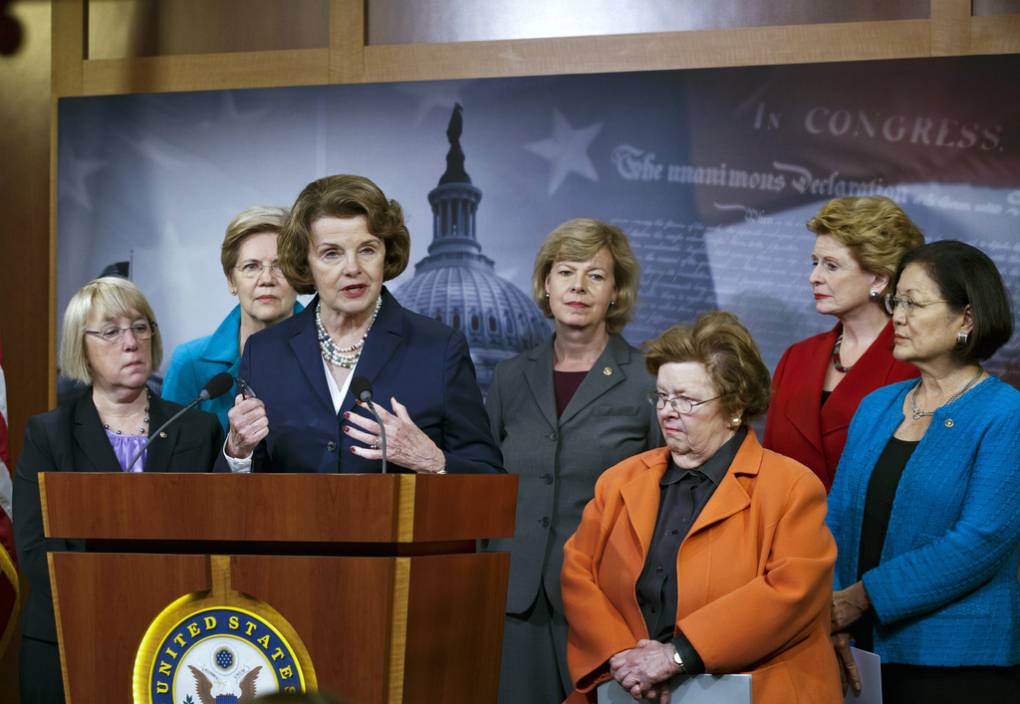
"caption": "California Democratic Sen. Dianne Feinstein, and a group of women senators gather at a news conference on Capitol Hill on June 4, 2014. From left are, Sen. Patty Murray (D-Wash.) Sen. Elizabeth Warren (D-Mass.) Feinstein, Sen. Tammy Baldwin (D-Wis.), Sen. Barbara A. Mikulski, (D-Md.), Sen. Mazie K. Hirono (D-Hawaii). Feinstein died Thursday night, at the age of 90.",
"description": null,
"title": "Obit Feinstein",
"credit": "J. Scott Applewhite/AP",
"status": "inherit",
"altTag": "Sen. Dianne Feinstein stands at a podium, surrounded by other female senators.",
"isLoading": false,
"fetchFailed": false
},
"news_11962946": {
"type": "attachments",
"id": "news_11962946",
"meta": {
"index": "attachments_1716263798",
"site": "news",
"id": "11962946",
"found": true
},
"parent": 11962896,
"imgSizes": {
"twentyfourteen-full-width": {
"file": "https://ww2.kqed.org/app/uploads/sites/10/2023/09/Dianne-Feinstein-1038x576.jpg",
"width": 1038,
"mimeType": "image/jpeg",
"height": 576
},
"thumbnail": {
"file": "https://ww2.kqed.org/app/uploads/sites/10/2023/09/Dianne-Feinstein-160x108.jpg",
"width": 160,
"mimeType": "image/jpeg",
"height": 108
},
"post-thumbnail": {
"file": "https://ww2.kqed.org/app/uploads/sites/10/2023/09/Dianne-Feinstein-672x372.jpg",
"width": 672,
"mimeType": "image/jpeg",
"height": 372
},
"kqedFullSize": {
"file": "https://ww2.kqed.org/app/uploads/sites/10/2023/09/Dianne-Feinstein.jpg",
"width": 1900,
"height": 1280
},
"large": {
"file": "https://ww2.kqed.org/app/uploads/sites/10/2023/09/Dianne-Feinstein-1020x687.jpg",
"width": 1020,
"mimeType": "image/jpeg",
"height": 687
},
"1536x1536": {
"file": "https://ww2.kqed.org/app/uploads/sites/10/2023/09/Dianne-Feinstein-1536x1035.jpg",
"width": 1536,
"mimeType": "image/jpeg",
"height": 1035
},
"medium": {
"file": "https://ww2.kqed.org/app/uploads/sites/10/2023/09/Dianne-Feinstein-800x539.jpg",
"width": 800,
"mimeType": "image/jpeg",
"height": 539
}
},
"publishDate": 1696031511,
"modified": 1696031571,
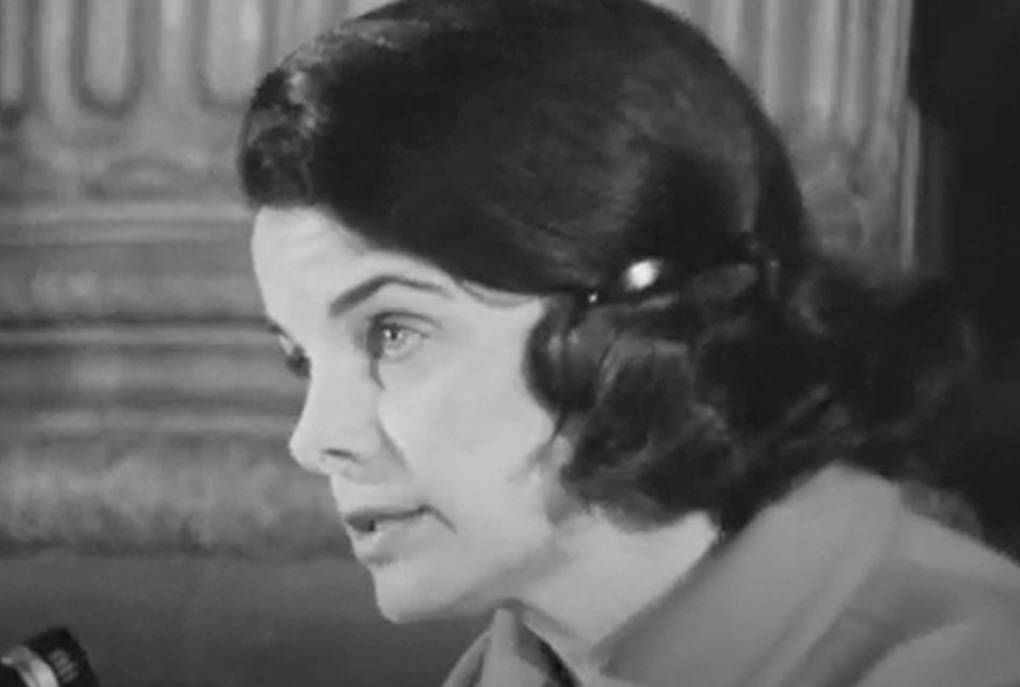
"caption": "Before she reached the Senate, Dianne Feinstein had a long political career in San Francisco.",
"description": null,
"title": "Dianne-Feinstein",
"credit": "KQED",
"status": "inherit",
"altTag": "A woman with short dark hair is viewed in profile in front of a mic, in a black and white image",
"isLoading": false,
"fetchFailed": false
},
"news_11947244": {
"type": "attachments",
"id": "news_11947244",
"meta": {
"index": "attachments_1716263798",
"site": "news",
"id": "11947244",
"found": true
},
"parent": 0,
"imgSizes": {
"twentyfourteen-full-width": {
"file": "https://ww2.kqed.org/app/uploads/sites/10/2023/04/RS33369_102318_AW_DianeFeinstein_04-qut-1038x576.jpg",
"width": 1038,
"mimeType": "image/jpeg",
"height": 576
},
"thumbnail": {
"file": "https://ww2.kqed.org/app/uploads/sites/10/2023/04/RS33369_102318_AW_DianeFeinstein_04-qut-160x107.jpg",
"width": 160,
"mimeType": "image/jpeg",
"height": 107
},
"post-thumbnail": {
"file": "https://ww2.kqed.org/app/uploads/sites/10/2023/04/RS33369_102318_AW_DianeFeinstein_04-qut-672x372.jpg",
"width": 672,
"mimeType": "image/jpeg",
"height": 372
},
"kqedFullSize": {
"file": "https://ww2.kqed.org/app/uploads/sites/10/2023/04/RS33369_102318_AW_DianeFeinstein_04-qut.jpg",
"width": 1920,
"height": 1280
},
"large": {
"file": "https://ww2.kqed.org/app/uploads/sites/10/2023/04/RS33369_102318_AW_DianeFeinstein_04-qut-1020x680.jpg",
"width": 1020,
"mimeType": "image/jpeg",
"height": 680
},
"1536x1536": {
"file": "https://ww2.kqed.org/app/uploads/sites/10/2023/04/RS33369_102318_AW_DianeFeinstein_04-qut-1536x1024.jpg",
"width": 1536,
"mimeType": "image/jpeg",
"height": 1024
},
"medium": {
"file": "https://ww2.kqed.org/app/uploads/sites/10/2023/04/RS33369_102318_AW_DianeFeinstein_04-qut-800x533.jpg",
"width": 800,
"mimeType": "image/jpeg",
"height": 533
}
},
"publishDate": 1682029492,
"modified": 1696029077,
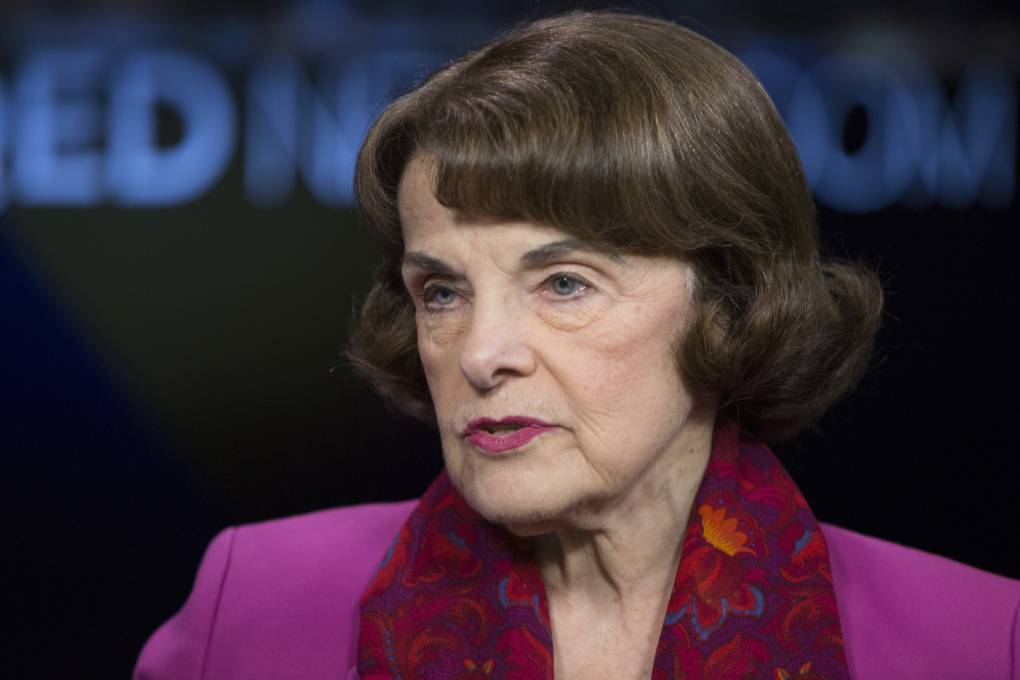
"caption": "Sen. Dianne Feinstein (D-Calif.) at the KQED studios for tapings of KQED Newsroom and Political Breakdown on Oct. 23, 2018.",
"description": null,
"title": "RS33369_102318_AW_DianeFeinstein_04-qut",
"credit": "Anne Wernikoff/KQED",
"status": "inherit",
"altTag": "An older white lade with brown short hair and a pink top and scarf speaks while looking away from the camera, seen from the shoulder up.",
"isLoading": false,
"fetchFailed": false
},
"news_11962768": {
"type": "attachments",
"id": "news_11962768",
"meta": {
"index": "attachments_1716263798",
"site": "news",
"id": "11962768",
"found": true
},
"parent": 11962763,
"imgSizes": {
"twentyfourteen-full-width": {
"file": "https://ww2.kqed.org/app/uploads/sites/10/2023/09/GettyImages-1236921918-1024x576.jpg",
"width": 1024,
"mimeType": "image/jpeg",
"height": 576
},
"thumbnail": {
"file": "https://ww2.kqed.org/app/uploads/sites/10/2023/09/GettyImages-1236921918-160x107.jpg",
"width": 160,
"mimeType": "image/jpeg",
"height": 107
},
"post-thumbnail": {
"file": "https://ww2.kqed.org/app/uploads/sites/10/2023/09/GettyImages-1236921918-672x372.jpg",
"width": 672,
"mimeType": "image/jpeg",
"height": 372
},
"kqedFullSize": {
"file": "https://ww2.kqed.org/app/uploads/sites/10/2023/09/GettyImages-1236921918.jpg",
"width": 1024,
"height": 683
},
"large": {
"file": "https://ww2.kqed.org/app/uploads/sites/10/2023/09/GettyImages-1236921918-1020x680.jpg",
"width": 1020,
"mimeType": "image/jpeg",
"height": 680
},
"medium": {
"file": "https://ww2.kqed.org/app/uploads/sites/10/2023/09/GettyImages-1236921918-800x534.jpg",
"width": 800,
"mimeType": "image/jpeg",
"height": 534
}
},
"publishDate": 1695932192,
"modified": 1695933513,
"caption": "A security guard outside The RealReal store near Union Square.",
"description": null,
"title": "GettyImages-1236921918",
"credit": "Ethan Swope/Getty Images",
"status": "inherit",
"altTag": "a security guard in a mask stands outside a boarded up store as people walk by",
"isLoading": false,
"fetchFailed": false
},
"news_11962484": {
"type": "attachments",
"id": "news_11962484",
"meta": {
"index": "attachments_1716263798",
"site": "news",
"id": "11962484",
"found": true
},
"parent": 0,
"imgSizes": {
"twentyfourteen-full-width": {
"file": "https://ww2.kqed.org/app/uploads/sites/10/2023/09/230926-DANIEL-LURIE-MD-06-KQED-1038x576.jpg",
"width": 1038,
"mimeType": "image/jpeg",
"height": 576
},
"thumbnail": {
"file": "https://ww2.kqed.org/app/uploads/sites/10/2023/09/230926-DANIEL-LURIE-MD-06-KQED-160x107.jpg",
"width": 160,
"mimeType": "image/jpeg",
"height": 107
},
"post-thumbnail": {
"file": "https://ww2.kqed.org/app/uploads/sites/10/2023/09/230926-DANIEL-LURIE-MD-06-KQED-672x372.jpg",
"width": 672,
"mimeType": "image/jpeg",
"height": 372
},
"kqedFullSize": {
"file": "https://ww2.kqed.org/app/uploads/sites/10/2023/09/230926-DANIEL-LURIE-MD-06-KQED.jpg",
"width": 1920,
"height": 1280
},
"large": {
"file": "https://ww2.kqed.org/app/uploads/sites/10/2023/09/230926-DANIEL-LURIE-MD-06-KQED-1020x680.jpg",
"width": 1020,
"mimeType": "image/jpeg",
"height": 680
},
"1536x1536": {
"file": "https://ww2.kqed.org/app/uploads/sites/10/2023/09/230926-DANIEL-LURIE-MD-06-KQED-1536x1024.jpg",
"width": 1536,
"mimeType": "image/jpeg",
"height": 1024
},
"medium": {
"file": "https://ww2.kqed.org/app/uploads/sites/10/2023/09/230926-DANIEL-LURIE-MD-06-KQED-800x533.jpg",
"width": 800,
"mimeType": "image/jpeg",
"height": 533
}
},
"publishDate": 1695757750,
"modified": 1695757776,
"caption": "Daniel Lurie announces his candidacy for Mayor of San Francisco at the Portrero Hill Neighborhood House in San Francisco on Sept. 26, 2023. ",
"description": null,
"title": "230926-DANIEL LURIE-MD-06-KQED",
"credit": "Martin do Nascimento/KQED",
"status": "inherit",
"altTag": "A person in a tie speaks at a podium.",
"isLoading": false,
"fetchFailed": false
},
"news_11962415": {
"type": "attachments",
"id": "news_11962415",
"meta": {
"index": "attachments_1716263798",
"site": "news",
"id": "11962415",
"found": true
},
"title": "Homelessness and drug situations in San Francisco",
"publishDate": 1695680058,
"status": "inherit",
"parent": 12058779,
"modified": 1759868528,
"caption": "A homeless encampment on a sidewalk in San Francisco on Sept. 2, 2023.",
"credit": "Tayfun Coskun/Anadolu Agency via Getty Images",
"altTag": "A series of tents lined up along a city sidewalk.",
"description": null,
"imgSizes": {
"medium": {
"file": "https://cdn.kqed.org/wp-content/uploads/sites/10/2023/09/230925-ENCAMPMENT-SAN-FRANCISCO-GETTY-KQED-800x533.jpg",
"width": 800,
"height": 533,
"mimeType": "image/jpeg"
},
"large": {
"file": "https://cdn.kqed.org/wp-content/uploads/sites/10/2023/09/230925-ENCAMPMENT-SAN-FRANCISCO-GETTY-KQED-1020x680.jpg",
"width": 1020,
"height": 680,
"mimeType": "image/jpeg"
},
"thumbnail": {
"file": "https://cdn.kqed.org/wp-content/uploads/sites/10/2023/09/230925-ENCAMPMENT-SAN-FRANCISCO-GETTY-KQED-160x107.jpg",
"width": 160,
"height": 107,
"mimeType": "image/jpeg"
},
"1536x1536": {
"file": "https://cdn.kqed.org/wp-content/uploads/sites/10/2023/09/230925-ENCAMPMENT-SAN-FRANCISCO-GETTY-KQED-1536x1024.jpg",
"width": 1536,
"height": 1024,
"mimeType": "image/jpeg"
},
"post-thumbnail": {
"file": "https://cdn.kqed.org/wp-content/uploads/sites/10/2023/09/230925-ENCAMPMENT-SAN-FRANCISCO-GETTY-KQED-672x372.jpg",
"width": 672,
"height": 372,
"mimeType": "image/jpeg"
},
"twentyfourteen-full-width": {
"file": "https://cdn.kqed.org/wp-content/uploads/sites/10/2023/09/230925-ENCAMPMENT-SAN-FRANCISCO-GETTY-KQED-1038x576.jpg",
"width": 1038,
"height": 576,
"mimeType": "image/jpeg"
},
"full-width": {
"file": "https://cdn.kqed.org/wp-content/uploads/sites/10/2023/09/230925-ENCAMPMENT-SAN-FRANCISCO-GETTY-KQED-1920x1280.jpg",
"width": 1920,
"height": 1280,
"mimeType": "image/jpeg"
},
"kqedFullSize": {
"file": "https://cdn.kqed.org/wp-content/uploads/sites/10/2023/09/230925-ENCAMPMENT-SAN-FRANCISCO-GETTY-KQED.jpg",
"width": 2000,
"height": 1333
}
},
"isLoading": false,
"fetchFailed": false
},
"news_11960635": {
"type": "attachments",
"id": "news_11960635",
"meta": {
"index": "attachments_1716263798",
"site": "news",
"id": "11960635",
"found": true
},
"title": "20230907-YikOiHuang-03-JY-KQED",
"publishDate": 1694461255,
"status": "inherit",
"parent": 12062582,
"modified": 1762291527,
"caption": "Older adults walk around Yik Oi Huang Peace and Friendship Park in San Francisco on Thursday, Sept. 7, 2023. Formerly Visitacion Valley Park, it was renamed in May 2022 in memory of Yik Oi Huang, an older person who was brutally beaten at the park and, a year later, died from her injuries.",
"credit": "Juliana Yamada/KQED",
"altTag": "Several people walk up a sidewalk next to a grassy park.",
"description": null,
"imgSizes": {
"medium": {
"file": "https://cdn.kqed.org/wp-content/uploads/sites/10/2023/09/20230907-YikOiHuang-03-JY-KQED-800x533.jpg",
"width": 800,
"height": 533,
"mimeType": "image/jpeg"
},
"large": {
"file": "https://cdn.kqed.org/wp-content/uploads/sites/10/2023/09/20230907-YikOiHuang-03-JY-KQED-1020x680.jpg",
"width": 1020,
"height": 680,
"mimeType": "image/jpeg"
},
"thumbnail": {
"file": "https://cdn.kqed.org/wp-content/uploads/sites/10/2023/09/20230907-YikOiHuang-03-JY-KQED-160x107.jpg",
"width": 160,
"height": 107,
"mimeType": "image/jpeg"
},
"1536x1536": {
"file": "https://cdn.kqed.org/wp-content/uploads/sites/10/2023/09/20230907-YikOiHuang-03-JY-KQED-1536x1024.jpg",
"width": 1536,
"height": 1024,
"mimeType": "image/jpeg"
},
"post-thumbnail": {
"file": "https://cdn.kqed.org/wp-content/uploads/sites/10/2023/09/20230907-YikOiHuang-03-JY-KQED-672x372.jpg",
"width": 672,
"height": 372,
"mimeType": "image/jpeg"
},
"twentyfourteen-full-width": {
"file": "https://cdn.kqed.org/wp-content/uploads/sites/10/2023/09/20230907-YikOiHuang-03-JY-KQED-1038x576.jpg",
"width": 1038,
"height": 576,
"mimeType": "image/jpeg"
},
"full-width": {
"file": "https://cdn.kqed.org/wp-content/uploads/sites/10/2023/09/20230907-YikOiHuang-03-JY-KQED-1920x1280.jpg",
"width": 1920,
"height": 1280,
"mimeType": "image/jpeg"
},
"kqedFullSize": {
"file": "https://cdn.kqed.org/wp-content/uploads/sites/10/2023/09/20230907-YikOiHuang-03-JY-KQED.jpg",
"width": 2000,
"height": 1333
}
},
"isLoading": false,
"fetchFailed": false
},
"news_11961411": {
"type": "attachments",
"id": "news_11961411",
"meta": {
"index": "attachments_1716263798",
"site": "news",
"id": "11961411",
"found": true
},
"title": "230913-SFPDStaff-011-BL-KQED",
"publishDate": 1694810146,
"status": "inherit",
"parent": 12063157,
"modified": 1762466664,
"caption": "Edward Siu, president of the Chinatown Merchants United Association, stands on a busy corner of Stockton Street in San Francisco's Chinatown neighborhood on Sept. 13, 2023. He says SFPD command turnover is so fast that he can't remember all the names of the police leaders he's given community tours to.",
"credit": "Beth LaBerge/KQED",
"altTag": "A person with glasses is photographed as other people pass on a busy city sidewalk.",
"description": null,
"imgSizes": {
"medium": {
"file": "https://cdn.kqed.org/wp-content/uploads/sites/10/2023/09/230913-SFPDStaff-011-BL-KQED-800x533.jpg",
"width": 800,
"height": 533,
"mimeType": "image/jpeg"
},
"large": {
"file": "https://cdn.kqed.org/wp-content/uploads/sites/10/2023/09/230913-SFPDStaff-011-BL-KQED-1020x680.jpg",
"width": 1020,
"height": 680,
"mimeType": "image/jpeg"
},
"thumbnail": {
"file": "https://cdn.kqed.org/wp-content/uploads/sites/10/2023/09/230913-SFPDStaff-011-BL-KQED-160x107.jpg",
"width": 160,
"height": 107,
"mimeType": "image/jpeg"
},
"1536x1536": {
"file": "https://cdn.kqed.org/wp-content/uploads/sites/10/2023/09/230913-SFPDStaff-011-BL-KQED-1536x1024.jpg",
"width": 1536,
"height": 1024,
"mimeType": "image/jpeg"
},
"post-thumbnail": {
"file": "https://cdn.kqed.org/wp-content/uploads/sites/10/2023/09/230913-SFPDStaff-011-BL-KQED-672x372.jpg",
"width": 672,
"height": 372,
"mimeType": "image/jpeg"
},
"twentyfourteen-full-width": {
"file": "https://cdn.kqed.org/wp-content/uploads/sites/10/2023/09/230913-SFPDStaff-011-BL-KQED-1038x576.jpg",
"width": 1038,
"height": 576,
"mimeType": "image/jpeg"
},
"full-width": {
"file": "https://cdn.kqed.org/wp-content/uploads/sites/10/2023/09/230913-SFPDStaff-011-BL-KQED-1920x1280.jpg",
"width": 1920,
"height": 1280,
"mimeType": "image/jpeg"
},
"kqedFullSize": {
"file": "https://cdn.kqed.org/wp-content/uploads/sites/10/2023/09/230913-SFPDStaff-011-BL-KQED.jpg",
"width": 2000,
"height": 1333
}
},
"isLoading": false,
"fetchFailed": false
},
"news_11961454": {
"type": "attachments",
"id": "news_11961454",
"meta": {
"index": "attachments_1716263798",
"site": "news",
"id": "11961454",
"found": true
},
"parent": 11961449,
"imgSizes": {
"twentyfourteen-full-width": {
"file": "https://ww2.kqed.org/app/uploads/sites/10/2023/09/GettyImages-1236922203-1038x576.jpg",
"width": 1038,
"mimeType": "image/jpeg",
"height": 576
},
"thumbnail": {
"file": "https://ww2.kqed.org/app/uploads/sites/10/2023/09/GettyImages-1236922203-160x107.jpg",
"width": 160,
"mimeType": "image/jpeg",
"height": 107
},
"post-thumbnail": {
"file": "https://ww2.kqed.org/app/uploads/sites/10/2023/09/GettyImages-1236922203-672x372.jpg",
"width": 672,
"mimeType": "image/jpeg",
"height": 372
},
"kqedFullSize": {
"file": "https://ww2.kqed.org/app/uploads/sites/10/2023/09/GettyImages-1236922203-scaled.jpg",
"width": 2560,
"height": 1707
},
"2048x2048": {
"file": "https://ww2.kqed.org/app/uploads/sites/10/2023/09/GettyImages-1236922203-2048x1366.jpg",
"width": 2048,
"mimeType": "image/jpeg",
"height": 1366
},
"large": {
"file": "https://ww2.kqed.org/app/uploads/sites/10/2023/09/GettyImages-1236922203-1020x680.jpg",
"width": 1020,
"mimeType": "image/jpeg",
"height": 680
},
"1536x1536": {
"file": "https://ww2.kqed.org/app/uploads/sites/10/2023/09/GettyImages-1236922203-1536x1024.jpg",
"width": 1536,
"mimeType": "image/jpeg",
"height": 1024
},
"full-width": {
"file": "https://ww2.kqed.org/app/uploads/sites/10/2023/09/GettyImages-1236922203-1920x1281.jpg",
"width": 1920,
"mimeType": "image/jpeg",
"height": 1281
},
"medium": {
"file": "https://ww2.kqed.org/app/uploads/sites/10/2023/09/GettyImages-1236922203-800x534.jpg",
"width": 800,
"mimeType": "image/jpeg",
"height": 534
}
},
"publishDate": 1694819931,
"modified": 1694820004,
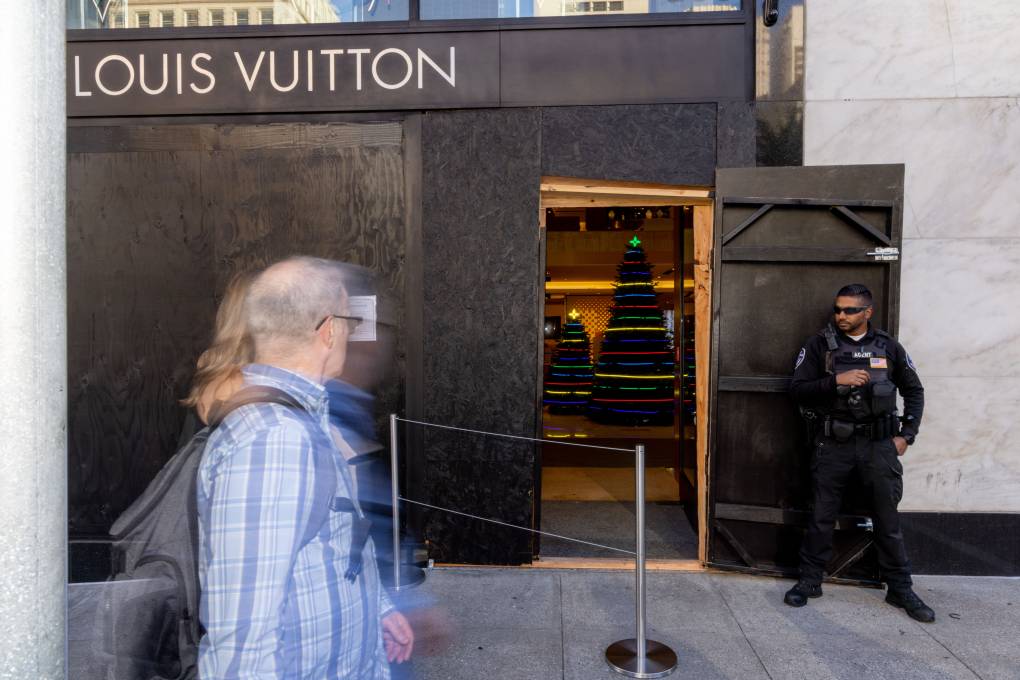
"caption": "A security guard outside the Louis Vuitton store in downtown San Francisco, which had increased its security following a string of thefts.",
"description": null,
"title": "Businesses In San Francisco Board Up In Response To Recent String Of Robberies",
"credit": "Ethan Swope/Getty Images",
"status": "inherit",
"altTag": "the boarded up windows of a Louis Vuitton store with a security guard out front",
"isLoading": false,
"fetchFailed": false
},
"news_11960807": {
"type": "attachments",
"id": "news_11960807",
"meta": {
"index": "attachments_1716263798",
"site": "news",
"id": "11960807",
"found": true
},
"parent": 0,
"imgSizes": {
"twentyfourteen-full-width": {
"file": "https://ww2.kqed.org/app/uploads/sites/10/2023/09/230911-MattieScottFreedomWest-019-BL-KQED-1038x576.jpg",
"width": 1038,
"mimeType": "image/jpeg",
"height": 576
},
"thumbnail": {
"file": "https://ww2.kqed.org/app/uploads/sites/10/2023/09/230911-MattieScottFreedomWest-019-BL-KQED-160x107.jpg",
"width": 160,
"mimeType": "image/jpeg",
"height": 107
},
"post-thumbnail": {
"file": "https://ww2.kqed.org/app/uploads/sites/10/2023/09/230911-MattieScottFreedomWest-019-BL-KQED-672x372.jpg",
"width": 672,
"mimeType": "image/jpeg",
"height": 372
},
"kqedFullSize": {
"file": "https://ww2.kqed.org/app/uploads/sites/10/2023/09/230911-MattieScottFreedomWest-019-BL-KQED.jpg",
"width": 2000,
"height": 1333
},
"large": {
"file": "https://ww2.kqed.org/app/uploads/sites/10/2023/09/230911-MattieScottFreedomWest-019-BL-KQED-1020x680.jpg",
"width": 1020,
"mimeType": "image/jpeg",
"height": 680
},
"1536x1536": {
"file": "https://ww2.kqed.org/app/uploads/sites/10/2023/09/230911-MattieScottFreedomWest-019-BL-KQED-1536x1024.jpg",
"width": 1536,
"mimeType": "image/jpeg",
"height": 1024
},
"full-width": {
"file": "https://ww2.kqed.org/app/uploads/sites/10/2023/09/230911-MattieScottFreedomWest-019-BL-KQED-1920x1280.jpg",
"width": 1920,
"mimeType": "image/jpeg",
"height": 1280
},
"medium": {
"file": "https://ww2.kqed.org/app/uploads/sites/10/2023/09/230911-MattieScottFreedomWest-019-BL-KQED-800x533.jpg",
"width": 800,
"mimeType": "image/jpeg",
"height": 533
}
},
"publishDate": 1694540028,
"modified": 1694644463,
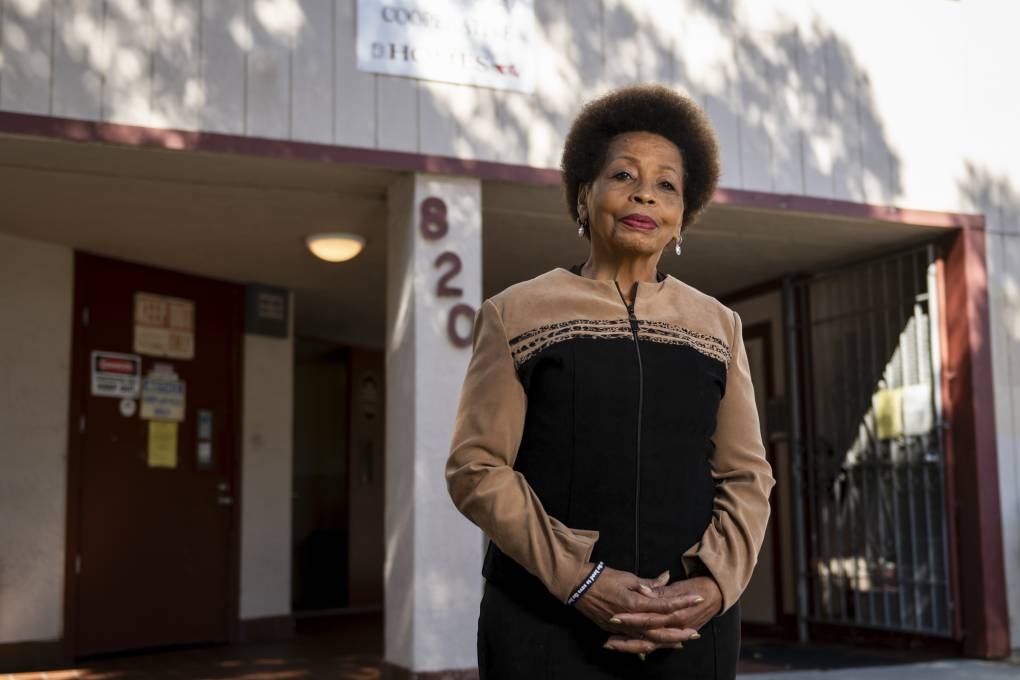
"caption": "Mattie Scott, a resident and board president of Freedom West Housing Corporation, stands in the housing cooperative in the Fillmore District on Sept. 11, 2023.",
"description": null,
"title": "230911-MattieScottFreedomWest-019-BL-KQED",
"credit": "Beth LaBerge/KQED",
"status": "inherit",
"altTag": "An older African American woman stands in front of a residential building, looking at the camera.",
"isLoading": false,
"fetchFailed": false
},
"news_11960976": {
"type": "attachments",
"id": "news_11960976",
"meta": {
"index": "attachments_1716263798",
"site": "news",
"id": "11960976",
"found": true
},
"parent": 0,
"imgSizes": {
"twentyfourteen-full-width": {
"file": "https://ww2.kqed.org/app/uploads/sites/10/2023/09/230913-NEWSOM-HOMELESS-AP-RP-KQED-1038x576.jpg",
"width": 1038,
"mimeType": "image/jpeg",
"height": 576
},
"thumbnail": {
"file": "https://ww2.kqed.org/app/uploads/sites/10/2023/09/230913-NEWSOM-HOMELESS-AP-RP-KQED-160x107.jpg",
"width": 160,
"mimeType": "image/jpeg",
"height": 107
},
"post-thumbnail": {
"file": "https://ww2.kqed.org/app/uploads/sites/10/2023/09/230913-NEWSOM-HOMELESS-AP-RP-KQED-672x372.jpg",
"width": 672,
"mimeType": "image/jpeg",
"height": 372
},
"kqedFullSize": {
"file": "https://ww2.kqed.org/app/uploads/sites/10/2023/09/230913-NEWSOM-HOMELESS-AP-RP-KQED.jpg",
"width": 2000,
"height": 1334
},
"large": {
"file": "https://ww2.kqed.org/app/uploads/sites/10/2023/09/230913-NEWSOM-HOMELESS-AP-RP-KQED-1020x680.jpg",
"width": 1020,
"mimeType": "image/jpeg",
"height": 680
},
"1536x1536": {
"file": "https://ww2.kqed.org/app/uploads/sites/10/2023/09/230913-NEWSOM-HOMELESS-AP-RP-KQED-1536x1025.jpg",
"width": 1536,
"mimeType": "image/jpeg",
"height": 1025
},
"full-width": {
"file": "https://ww2.kqed.org/app/uploads/sites/10/2023/09/230913-NEWSOM-HOMELESS-AP-RP-KQED-1920x1281.jpg",
"width": 1920,
"mimeType": "image/jpeg",
"height": 1281
},
"medium": {
"file": "https://ww2.kqed.org/app/uploads/sites/10/2023/09/230913-NEWSOM-HOMELESS-AP-RP-KQED-800x534.jpg",
"width": 800,
"mimeType": "image/jpeg",
"height": 534
}
},
"publishDate": 1694629313,
"modified": 1694641499,
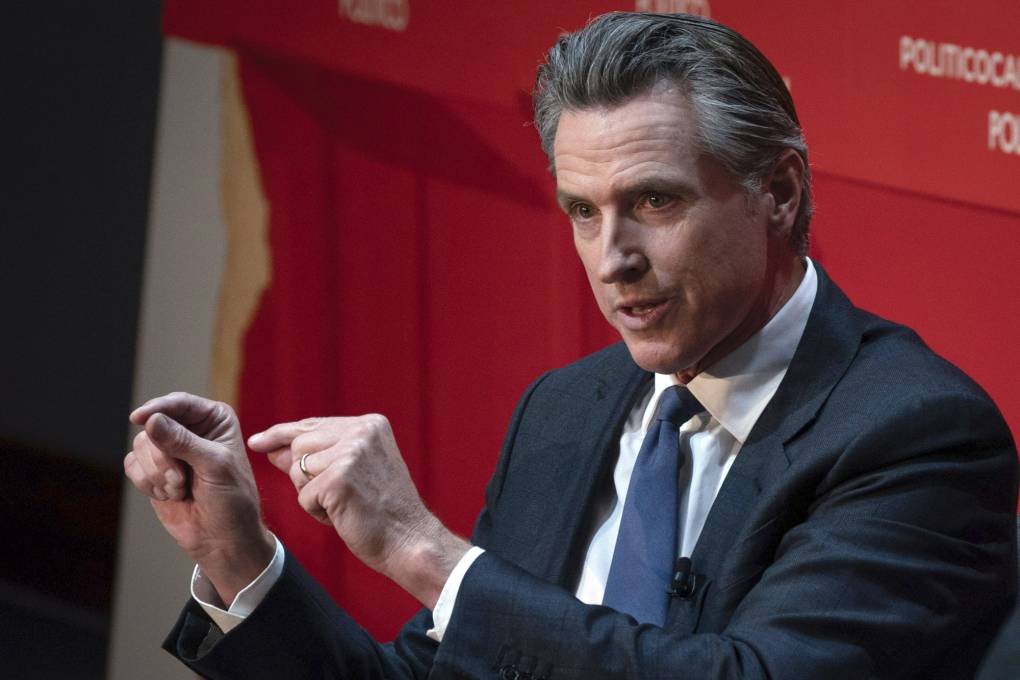
"caption": "California Gov. Gavin Newsom speaks during an interview with Politico in Sacramento on Sept. 12, 2023. Newsom said the state will intervene in an ongoing federal court case that has barred San Francisco from cleaning up homeless encampments.",
"description": null,
"title": "California Governor Homelessness",
"credit": "Rich Pedroncelli/AP Photo",
"status": "inherit",
"altTag": "A person in a suit and ties speaks and gestures with their hands.",
"isLoading": false,
"fetchFailed": false
}
},
"audioPlayerReducer": {
"postId": "stream_live",
"isPaused": true,
"isPlaying": false,
"pfsActive": false,
"pledgeModalIsOpen": true,
"playerDrawerIsOpen": false,
"liveAudioPlayStartedAt": 0,
"liveAudioPlayContext": ""
},
"authorsReducer": {
"byline_news_11961693": {
"type": "authors",
"id": "byline_news_11961693",
"meta": {
"override": true
},
"slug": "byline_news_11961693",
"name": "\u003ca href=\"https://twitter.com/naomivanderlip\">Naomi Vanderlip\u003c/a>",
"isLoading": false
},
"byline_news_11961449": {
"type": "authors",
"id": "byline_news_11961449",
"meta": {
"override": true
},
"slug": "byline_news_11961449",
"name": "Trân Nguyễn\u003cbr>The Associated Press",
"isLoading": false
},
"byline_news_11960963": {
"type": "authors",
"id": "byline_news_11960963",
"meta": {
"override": true
},
"slug": "byline_news_11960963",
"name": "Kathleen Ronayne\u003cbr>The Associated Press",
"isLoading": false
},
"scottshafer": {
"type": "authors",
"id": "255",
"meta": {
"index": "authors_1716337520",
"id": "255",
"found": true
},
"name": "Scott Shafer",
"firstName": "Scott",
"lastName": "Shafer",
"slug": "scottshafer",
"email": "sshafer@kqed.org",
"display_author_email": false,
"staff_mastheads": [
"news"
],
"title": "KQED Contributor",
"bio": "Scott Shafer is a senior editor with the KQED Politics and Government desk. He is co-host of Political Breakdown, the award-winning radio show and podcast with a personal take on the world of politics. Scott came to KQED in 1998 to host the statewide\u003cem> California Report\u003c/em>. Prior to that he had extended stints in politics and government\u003cem>.\u003c/em> He uses that inside experience at KQED in his, reporting, hosting and analysis for the politics desk. Scott collaborated \u003cem>Political Breakdown a\u003c/em>nd on \u003cem>The Political Mind of Jerry Brown, \u003c/em>an eight-part series about the life and extraordinary political career of the former governor. For fun, he plays water polo with the San Francisco Tsunami.",
"avatar": "https://secure.gravatar.com/avatar/a62ebae45b79d7aed1a39a0e3bf68104?s=600&d=blank&r=g",
"twitter": "scottshafer",
"bluesky": null,
"facebook": null,
"instagram": null,
"linkedin": null,
"sites": [
{
"site": "news",
"roles": [
"editor"
]
},
{
"site": "stateofhealth",
"roles": [
"author"
]
},
{
"site": "science",
"roles": [
"author"
]
},
{
"site": "forum",
"roles": [
"subscriber"
]
},
{
"site": "liveblog",
"roles": [
"author"
]
}
],
"headData": {
"title": "Scott Shafer | KQED",
"description": "KQED Contributor",
"ogImgSrc": "https://secure.gravatar.com/avatar/a62ebae45b79d7aed1a39a0e3bf68104?s=600&d=blank&r=g",
"twImgSrc": "https://secure.gravatar.com/avatar/a62ebae45b79d7aed1a39a0e3bf68104?s=600&d=blank&r=g"
},
"isLoading": false,
"link": "/author/scottshafer"
},
"carlysevern": {
"type": "authors",
"id": "3243",
"meta": {
"index": "authors_1716337520",
"id": "3243",
"found": true
},
"name": "Carly Severn",
"firstName": "Carly",
"lastName": "Severn",
"slug": "carlysevern",
"email": "csevern@kqed.org",
"display_author_email": false,
"staff_mastheads": [
"news"
],
"title": "Senior Editor, Audience News ",
"bio": "Carly is KQED's Senior Editor of Audience News on the Digital News team, and has reported for the California Report Magazine, Bay Curious and KQED Arts. She's formerly the host of \u003ca href=\"http://ww2.kqed.org/pop/category/the-cooler/\" rel=\"noopener noreferrer\">The Cooler\u003c/a> podcast.",
"avatar": "https://secure.gravatar.com/avatar/54037bf5c128fe678f0ef26cec97a93f2e7f220a22d7285703328f12c42c1b1d?s=600&d=blank&r=g",
"twitter": "teacupinthebay",
"bluesky": null,
"facebook": null,
"instagram": null,
"linkedin": null,
"sites": [
{
"site": "",
"roles": [
"editor"
]
},
{
"site": "arts",
"roles": [
"editor"
]
},
{
"site": "news",
"roles": [
"administrator"
]
},
{
"site": "pop",
"roles": [
"editor"
]
},
{
"site": "futureofyou",
"roles": [
"editor"
]
},
{
"site": "about",
"roles": [
"administrator"
]
},
{
"site": "mindshift",
"roles": [
"editor"
]
},
{
"site": "bayareabites",
"roles": [
"editor"
]
},
{
"site": "stateofhealth",
"roles": [
"editor"
]
},
{
"site": "science",
"roles": [
"editor"
]
},
{
"site": "food",
"roles": [
"contributor"
]
},
{
"site": "forum",
"roles": [
"editor"
]
},
{
"site": "perspectives",
"roles": [
"administrator"
]
},
{
"site": "liveblog",
"roles": [
"editor"
]
}
],
"headData": {
"title": "Carly Severn | KQED",
"description": "Senior Editor, Audience News ",
"ogImgSrc": "https://secure.gravatar.com/avatar/54037bf5c128fe678f0ef26cec97a93f2e7f220a22d7285703328f12c42c1b1d?s=600&d=blank&r=g",
"twImgSrc": "https://secure.gravatar.com/avatar/54037bf5c128fe678f0ef26cec97a93f2e7f220a22d7285703328f12c42c1b1d?s=600&d=blank&r=g"
},
"isLoading": false,
"link": "/author/carlysevern"
},
"ecruzguevarra": {
"type": "authors",
"id": "8654",
"meta": {
"index": "authors_1716337520",
"id": "8654",
"found": true
},
"name": "Ericka Cruz Guevarra",
"firstName": "Ericka",
"lastName": "Cruz Guevarra",
"slug": "ecruzguevarra",
"email": "ecruzguevarra@kqed.org",
"display_author_email": true,
"staff_mastheads": [
"news"
],
"title": "Producer, The Bay Podcast",
"bio": "Ericka Cruz Guevarra is host of \u003ca href=\"https://www.kqed.org/podcasts/thebay\">\u003cem>The Bay\u003c/em>\u003c/a> podcast at KQED. Before host, she was the show’s producer. Her work in that capacity includes a three-part reported series on policing in Vallejo, which won a 2020 excellence in journalism award from the Society of Professional Journalists. Ericka has worked as a breaking news reporter at Oregon Public Broadcasting, helped produce the Code Switch podcast, and was KQED’s inaugural Raul Ramirez Diversity Fund intern. She’s also an alumna of NPR’s Next Generation Radio program. Send her an email if you have strong feelings about whether Fairfield and Suisun City are the Bay. Ericka is represented by SAG-AFTRA.",
"avatar": "https://secure.gravatar.com/avatar/accefc1de4bafc7e234b69bcb9b6f6536c130fd84709bc3069ef11a78787e1bb?s=600&d=blank&r=g",
"twitter": "NotoriousECG",
"bluesky": null,
"facebook": null,
"instagram": null,
"linkedin": null,
"sites": [
{
"site": "arts",
"roles": [
"subscriber"
]
},
{
"site": "news",
"roles": [
"editor",
"manage_categories"
]
},
{
"site": "futureofyou",
"roles": [
"subscriber"
]
},
{
"site": "stateofhealth",
"roles": [
"subscriber"
]
},
{
"site": "science",
"roles": [
"editor"
]
},
{
"site": "forum",
"roles": [
"subscriber"
]
}
],
"headData": {
"title": "Ericka Cruz Guevarra | KQED",
"description": "Producer, The Bay Podcast",
"ogImgSrc": "https://secure.gravatar.com/avatar/accefc1de4bafc7e234b69bcb9b6f6536c130fd84709bc3069ef11a78787e1bb?s=600&d=blank&r=g",
"twImgSrc": "https://secure.gravatar.com/avatar/accefc1de4bafc7e234b69bcb9b6f6536c130fd84709bc3069ef11a78787e1bb?s=600&d=blank&r=g"
},
"isLoading": false,
"link": "/author/ecruzguevarra"
},
"amontecillo": {
"type": "authors",
"id": "11649",
"meta": {
"index": "authors_1716337520",
"id": "11649",
"found": true
},
"name": "Alan Montecillo",
"firstName": "Alan",
"lastName": "Montecillo",
"slug": "amontecillo",
"email": "amontecillo@kqed.org",
"display_author_email": false,
"staff_mastheads": [
"news"
],
"title": "KQED Contributor",
"bio": "Alan Montecillo is the senior editor of \u003cem>\u003ca href=\"http://kqed.org/thebay\">The Bay\u003c/a>, \u003c/em> KQED's local news podcast. Before moving to the Bay Area, he worked as a senior talk show producer for WILL in Champaign-Urbana, Illinois and at Oregon Public Broadcasting in Portland, Oregon. He has won journalism awards from the Society of Professional Journalists Northern California, the Public Media Journalists Association, The Signal Awards, and has also received a regional Edward R. Murrow award. Alan is a Filipino American from Hong Kong and a graduate of Reed College.",
"avatar": "https://secure.gravatar.com/avatar/268f53a2066899ea9efdd8a5900218b17c822d9862cbc9326cccec53ef41d349?s=600&d=blank&r=g",
"twitter": "alanmontecillo",
"bluesky": null,
"facebook": null,
"instagram": null,
"linkedin": null,
"sites": [
{
"site": "",
"roles": [
"editor"
]
},
{
"site": "news",
"roles": [
"editor",
"manage_categories"
]
}
],
"headData": {
"title": "Alan Montecillo | KQED",
"description": "KQED Contributor",
"ogImgSrc": "https://secure.gravatar.com/avatar/268f53a2066899ea9efdd8a5900218b17c822d9862cbc9326cccec53ef41d349?s=600&d=blank&r=g",
"twImgSrc": "https://secure.gravatar.com/avatar/268f53a2066899ea9efdd8a5900218b17c822d9862cbc9326cccec53ef41d349?s=600&d=blank&r=g"
},
"isLoading": false,
"link": "/author/amontecillo"
},
"jrodriguez": {
"type": "authors",
"id": "11690",
"meta": {
"index": "authors_1716337520",
"id": "11690",
"found": true
},
"name": "Joe Fitzgerald Rodriguez",
"firstName": "Joe",
"lastName": "Fitzgerald Rodriguez",
"slug": "jrodriguez",
"email": "jrodriguez@kqed.org",
"display_author_email": true,
"staff_mastheads": [
"news"
],
"title": "Reporter and Producer",
"bio": "Joe Fitzgerald Rodriguez is a reporter and digital producer for KQED covering politics. Joe most recently wrote for the \u003cem>San Francisco Examiner\u003c/em> as a political columnist covering The City. He was raised in San Francisco and has spent his reporting career in his beloved, foggy, city by the bay. Joe was 12-years-old when he conducted his first interview in journalism, grilling former San Francisco Mayor Willie Brown for the Marina Middle School newspaper, \u003cem>The Penguin Press, \u003c/em>and he continues to report on the San Francisco Bay Area to this day.",
"avatar": "https://secure.gravatar.com/avatar/2247beb0564c1e9c62228d5649d2edac?s=600&d=blank&r=g",
"twitter": "FitztheReporter",
"facebook": null,
"instagram": "https://www.instagram.com/fitzthereporter/",
"linkedin": null,
"sites": [
{
"site": "",
"roles": [
"editor"
]
},
{
"site": "arts",
"roles": [
"editor"
]
},
{
"site": "news",
"roles": [
"editor"
]
},
{
"site": "science",
"roles": [
"editor"
]
},
{
"site": "elections",
"roles": [
"editor"
]
},
{
"site": "liveblog",
"roles": [
"editor"
]
}
],
"headData": {
"title": "Joe Fitzgerald Rodriguez | KQED",
"description": "Reporter and Producer",
"ogImgSrc": "https://secure.gravatar.com/avatar/2247beb0564c1e9c62228d5649d2edac?s=600&d=blank&r=g",
"twImgSrc": "https://secure.gravatar.com/avatar/2247beb0564c1e9c62228d5649d2edac?s=600&d=blank&r=g"
},
"isLoading": false,
"link": "/author/jrodriguez"
},
"adahlstromeckman": {
"type": "authors",
"id": "11785",
"meta": {
"index": "authors_1716337520",
"id": "11785",
"found": true
},
"name": "Azul Dahlstrom-Eckman",
"firstName": "Azul",
"lastName": "Dahlstrom-Eckman",
"slug": "adahlstromeckman",
"email": "adahlstrom-eckman@kqed.org",
"display_author_email": true,
"staff_mastheads": [],
"title": "Reporter",
"bio": "Azul is a reporter for KQED focusing on transportation and features. He joined KQED in 2021 as an alumna of KALW's Audio Academy radio journalism training program.",
"avatar": "https://secure.gravatar.com/avatar/9cb750298435add7815a777f55bf1f46845c1386bb8452555c60a7b820b5aba3?s=600&d=blank&r=g",
"twitter": "@zuliemann",
"bluesky": "@azul415.bsky.social",
"facebook": null,
"instagram": null,
"linkedin": null,
"sites": [
{
"site": "arts",
"roles": [
"editor"
]
},
{
"site": "news",
"roles": [
"editor"
]
},
{
"site": "science",
"roles": [
"editor"
]
},
{
"site": "liveblog",
"roles": [
"author"
]
}
],
"headData": {
"title": "Azul Dahlstrom-Eckman | KQED",
"description": "Reporter",
"ogImgSrc": "https://secure.gravatar.com/avatar/9cb750298435add7815a777f55bf1f46845c1386bb8452555c60a7b820b5aba3?s=600&d=blank&r=g",
"twImgSrc": "https://secure.gravatar.com/avatar/9cb750298435add7815a777f55bf1f46845c1386bb8452555c60a7b820b5aba3?s=600&d=blank&r=g"
},
"isLoading": false,
"link": "/author/adahlstromeckman"
},
"mesquinca": {
"type": "authors",
"id": "11802",
"meta": {
"index": "authors_1716337520",
"id": "11802",
"found": true
},
"name": "Maria Esquinca",
"firstName": "Maria",
"lastName": "Esquinca",
"slug": "mesquinca",
"email": "mesquinca@kqed.org",
"display_author_email": false,
"staff_mastheads": [],
"title": "Producer, The Bay",
"bio": "María Esquinca is a producer of The Bay. Before that, she was a New York Women’s Foundation IGNITE Fellow at Latino USA. She worked at Radio Bilingue where she covered the San Joaquin Valley. Maria has interned at WLRN, News 21, The New York Times Student Journalism Institute and at Crain’s Detroit Business as a Dow Jones News Fund Business Reporting Intern. She is an MFA graduate from the University of Miami. In 2017, she graduated from the Walter Cronkite School of Journalism and Mass Communication with a Master of Mass Communication. A fronteriza, she was born in Ciudad Juárez, Chihuahua, Mexico and grew up in El Paso, Texas.",
"avatar": "https://secure.gravatar.com/avatar/77cedba18aae91da775038ba06dcd8d0?s=600&d=blank&r=g",
"twitter": "@m_esquinca",
"facebook": null,
"instagram": null,
"linkedin": null,
"sites": [
{
"site": "news",
"roles": []
}
],
"headData": {
"title": "Maria Esquinca | KQED",
"description": "Producer, The Bay",
"ogImgSrc": "https://secure.gravatar.com/avatar/77cedba18aae91da775038ba06dcd8d0?s=600&d=blank&r=g",
"twImgSrc": "https://secure.gravatar.com/avatar/77cedba18aae91da775038ba06dcd8d0?s=600&d=blank&r=g"
},
"isLoading": false,
"link": "/author/mesquinca"
},
"sjohnson": {
"type": "authors",
"id": "11840",
"meta": {
"index": "authors_1716337520",
"id": "11840",
"found": true
},
"name": "Sydney Johnson",
"firstName": "Sydney",
"lastName": "Johnson",
"slug": "sjohnson",
"email": "sjohnson@kqed.org",
"display_author_email": false,
"staff_mastheads": [
"news"
],
"title": "KQED Reporter",
"bio": "Sydney Johnson is a general assignment reporter at KQED. She previously reported on public health and city government at the San Francisco Examiner, and before that, she covered statewide education policy for EdSource. Her reporting has won multiple local, state and national awards. Sydney is a graduate of the University of California, Berkeley and lives in San Francisco.",
"avatar": "https://secure.gravatar.com/avatar/97855f2719b72ad6190b7c535fe642c8?s=600&d=blank&r=g",
"twitter": "sydneyfjohnson",
"facebook": null,
"instagram": null,
"linkedin": null,
"sites": [
{
"site": "news",
"roles": [
"editor"
]
}
],
"headData": {
"title": "Sydney Johnson | KQED",
"description": "KQED Reporter",
"ogImgSrc": "https://secure.gravatar.com/avatar/97855f2719b72ad6190b7c535fe642c8?s=600&d=blank&r=g",
"twImgSrc": "https://secure.gravatar.com/avatar/97855f2719b72ad6190b7c535fe642c8?s=600&d=blank&r=g"
},
"isLoading": false,
"link": "/author/sjohnson"
}
},
"pagesReducer": {
"news_tag_san-francisco": {
"type": "terms",
"id": "news_38",
"meta": {
"index": "terms_1716263798",
"site": "news",
"id": "38",
"score": 6.7230043
},
"featImg": null,
"name": "San Francisco",
"description": null,
"taxonomy": "tag",
"headData": {
"twImgId": null,
"twTitle": null,
"ogTitle": null,
"ogImgId": null,
"twDescription": null,
"description": null,
"title": "San Francisco Archives | KQED News",
"ogDescription": null
},
"ttid": 58,
"slug": "san-francisco",
"isLoading": false,
"title": "San Francisco",
"pageMeta": {
"site": "news",
"WpPageTemplate": "page-topic-editorial",
"currentPage": 112
},
"blocks": [
{
"blockName": "kqed/post-list",
"attrs": {
"layout": "cardArticle2",
"query": "posts/news?tag=san-francisco",
"seeMore": false,
"paginated": true,
"page": 112
}
},
{
"blockName": "kqed/ad"
}
]
}
},
"pfsSessionReducer": {},
"postsReducer": {
"stream_live": {
"type": "live",
"id": "stream_live",
"audioUrl": "https://streams.kqed.org/kqedradio",
"title": "Live Stream",
"excerpt": "Live Stream information currently unavailable.",
"link": "/radio",
"featImg": "",
"label": {
"name": "KQED Live",
"link": "/"
}
},
"stream_kqedNewscast": {
"type": "posts",
"id": "stream_kqedNewscast",
"audioUrl": "https://www.kqed.org/.stream/anon/radio/RDnews/newscast.mp3?_=1",
"title": "KQED Newscast",
"featImg": "",
"label": {
"name": "88.5 FM",
"link": "/"
}
},
"news_11962992": {
"type": "posts",
"id": "news_11962992",
"meta": {
"index": "posts_1716263798",
"site": "news",
"id": "11962992",
"score": null,
"sort": [
1696269684000
]
},
"parent": 0,
"labelTerm": {
"site": "news"
},
"blocks": [],
"publishDate": 1696269684,
"format": "standard",
"title": "Cyclists and Businesses Reflect on 2 Months With the Valencia Street Bikeway ",
"headTitle": "Cyclists and Businesses Reflect on 2 Months With the Valencia Street Bikeway | KQED",
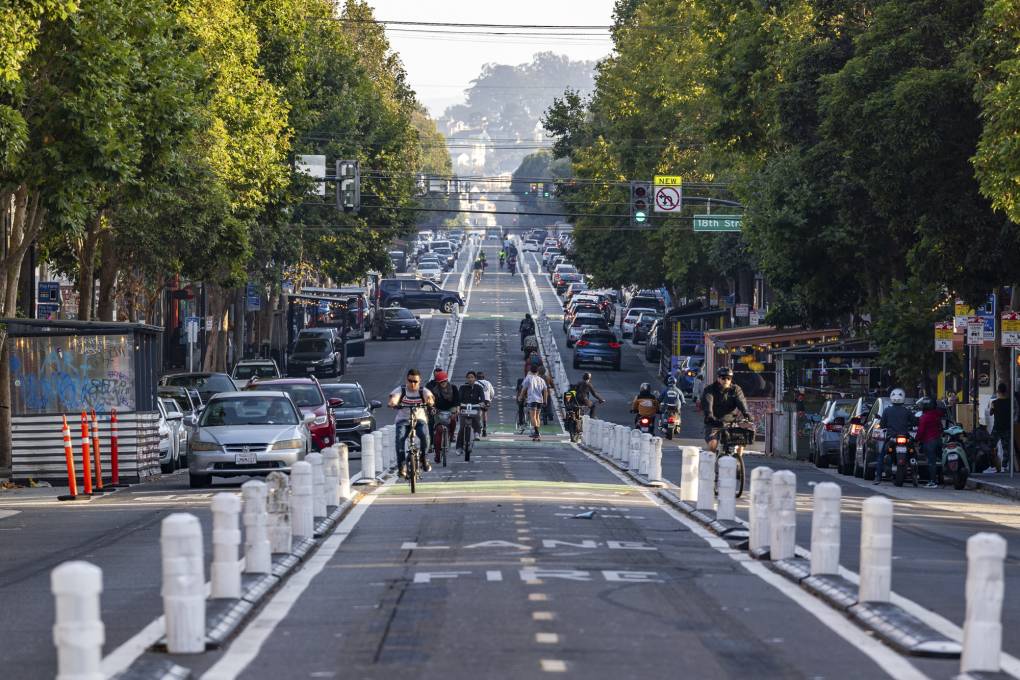
"content": "\u003cp>Avid cyclists like Laurel Matthews, who ride often through the heart of Valencia Street in San Francisco’s Mission District, have gotten used to pedaling away on the usual bike lanes that run along parked cars.\u003c/p>\n\u003cp>“In the old configuration, cars would just pull in front of you,” Matthews said. “I like that cars at least do not pull into the lane yet.”\u003c/p>\n\u003cp>Since Aug. 1, a center-running bikeway has been in effect along Valencia Street from 15th to 23rd streets. Two-way bicycle traffic happens in the middle of the street. Both plastic bollards and a rubber curb, which border either side of the lane, provide some protection from cars.\u003c/p>\n\u003cp>The change is a result of the Mid-Valencia Pilot, which was approved in April by the San Francisco Municipal Transportation Agency. SFMTA authorized the construction of the new bikeway, aiming to make the street safer and easier for businesses to work with delivery and ride-hailing apps, according to Tom Maguire, director of the Streets Division for SFMTA. (The pilot is set to last one year through August 2024.)\u003c/p>\n\u003cfigure id=\"attachment_11962332\" class=\"wp-caption alignnone\" style=\"max-width: 2000px\">\u003cimg decoding=\"async\" loading=\"lazy\" class=\"size-full wp-image-11962332\" src=\"https://ww2.kqed.org/app/uploads/sites/10/2023/09/230921-ValenciaBikeway-017-BL-KQED.jpg\" alt=\"A parking sign and a number of businesses on a city street.\" width=\"2000\" height=\"1333\" srcset=\"https://ww2.kqed.org/app/uploads/sites/10/2023/09/230921-ValenciaBikeway-017-BL-KQED.jpg 2000w, https://ww2.kqed.org/app/uploads/sites/10/2023/09/230921-ValenciaBikeway-017-BL-KQED-800x533.jpg 800w, https://ww2.kqed.org/app/uploads/sites/10/2023/09/230921-ValenciaBikeway-017-BL-KQED-1020x680.jpg 1020w, https://ww2.kqed.org/app/uploads/sites/10/2023/09/230921-ValenciaBikeway-017-BL-KQED-160x107.jpg 160w, https://ww2.kqed.org/app/uploads/sites/10/2023/09/230921-ValenciaBikeway-017-BL-KQED-1536x1024.jpg 1536w, https://ww2.kqed.org/app/uploads/sites/10/2023/09/230921-ValenciaBikeway-017-BL-KQED-1920x1280.jpg 1920w\" sizes=\"(max-width: 2000px) 100vw, 2000px\">\u003cfigcaption class=\"wp-caption-text\">A sign provides parking restrictions for Valencia Street near Nizario’s Pizza in San Francisco’s Mission District on Sept. 21, 2023. \u003ccite>(Beth LaBerge/KQED)\u003c/cite>\u003c/figcaption>\u003c/figure>\n\u003cp>“We’re trying to adapt the street to the very unique conditions that the merchants and the residents on Valencia are facing right now,” he said.\u003c/p>\n\u003cp>In addition to the new bikeway, the Mid-Valencia Pilot changed many metered parking spots to loading zones and prohibited left turns from 15th to 23rd streets.\u003c/p>\n\u003ch2>\u003cstrong>Safety first\u003c/strong>\u003c/h2>\n\u003cp>Valencia Street — both a popular bike route connecting the northern and southern parts of the city and a nightlife hub — is one of the city’s target areas for improving traffic injuries and deaths.\u003c/p>\n\u003cp>According to a May 2023 SFMTA \u003ca href=\"https://www.visionzerosf.org/wp-content/uploads/2023/05/San-Francisco-Collisions-Report-2017_2022.pdf\">report (PDF)\u003c/a>, two Valencia Street intersections had a combined 22 bicycle-involved injury collisions from 2017–2022 — among the highest reported injuries of any intersections in the city.\u003c/p>\n\u003cp>[aside postID=news_11941576 hero='https://ww2.kqed.org/app/uploads/sites/10/2023/02/GettyImages-1321285046-1020x633.jpg']Pedestrian safety is also a concern. On Sept. 20, 80-year-old Jian Huang of San Francisco was hit and killed by a driver making a left turn onto Valencia at 18th Street — marking the second pedestrian death on Valencia Street this year.\u003c/p>\n\u003cp>Following this latest tragedy, transportation advocacy groups like Walk SF want to see a ban on left turns onto Valencia, building off the pilot’s prohibition on certain left turns.\u003c/p>\n\u003cp>“If we look at every single fatality that’s happened on Valencia Street since 2014, it’s all been cars turning left,” said Jodie Medeiros, executive director of Walk SF. “This is a known problem and we need to do everything to end that problem.”\u003c/p>\n\u003cp>SFMTA plans to put out a status report on the pilot this fall. Maguire said that document will give further details, such as how vehicle, bicycle and pedestrian traffic has changed, and how businesses have been affected.\u003c/p>\n\u003cp>According to Maguire, if the pilot does not meet its goals, the city would rip up the project and go back to the drawing board.\u003c/p>\n\u003ch2>\u003cstrong>Cycling up\u003c/strong>\u003c/h2>\n\u003cp>Cyclists have mixed feelings about riding on the new center bikeway.\u003c/p>\n\u003cp>“I’ve heard from a lot of people who say they’ve either stopped biking on Valencia and started using an alternative bike route, or they just stopped biking period.” said Luke Bornheimer, a sustainable transportation advocate, who has strongly opposed the bikeway since the early planning stages.\u003c/p>\n\u003cfigure id=\"attachment_11962330\" class=\"wp-caption alignnone\" style=\"max-width: 2000px\">\u003cimg decoding=\"async\" loading=\"lazy\" class=\"size-full wp-image-11962330\" src=\"https://ww2.kqed.org/app/uploads/sites/10/2023/09/230921-ValenciaBikeway-014-BL-KQED.jpg\" alt=\"People on bikes and skateboards ride down a bike path in the middle of a city street.\" width=\"2000\" height=\"1333\" srcset=\"https://ww2.kqed.org/app/uploads/sites/10/2023/09/230921-ValenciaBikeway-014-BL-KQED.jpg 2000w, https://ww2.kqed.org/app/uploads/sites/10/2023/09/230921-ValenciaBikeway-014-BL-KQED-800x533.jpg 800w, https://ww2.kqed.org/app/uploads/sites/10/2023/09/230921-ValenciaBikeway-014-BL-KQED-1020x680.jpg 1020w, https://ww2.kqed.org/app/uploads/sites/10/2023/09/230921-ValenciaBikeway-014-BL-KQED-160x107.jpg 160w, https://ww2.kqed.org/app/uploads/sites/10/2023/09/230921-ValenciaBikeway-014-BL-KQED-1536x1024.jpg 1536w, https://ww2.kqed.org/app/uploads/sites/10/2023/09/230921-ValenciaBikeway-014-BL-KQED-1920x1280.jpg 1920w\" sizes=\"(max-width: 2000px) 100vw, 2000px\">\u003cfigcaption class=\"wp-caption-text\">Bicyclists ride on the Valencia Street bike lane in San Francisco’s Mission District on Sept. 21, 2023. \u003ccite>(Beth LaBerge/KQED)\u003c/cite>\u003c/figcaption>\u003c/figure>\n\u003cp>He says the speed bumps and posts, which border the bikeway, are not enough to protect cyclists from drivers who might illegally turn through the bikeway — and that the two-way design is unintuitive and could cause crashes.\u003c/p>\n\u003cp>Some cyclists like Kate Blumberg, who has commuted by bicycle for 28 years, are happy about the new lane.\u003c/p>\n\u003cp>“The Valencia bike lanes make me feel like king of the world,” she said. “It makes bikes seem like the clear priority on the street.”\u003c/p>\n\u003cp>Before the new bikeway, floods of app-based rideshare and delivery workers would double-park in the old bike lane while they grabbed a burrito or dropped off their passengers, forcing cyclists to merge into traffic.\u003c/p>\n\u003ch2>\u003cstrong>Business woes\u003c/strong>\u003c/h2>\n\u003cp>Yaser Awadalla, owner of Nizario’s Pizza on Valencia Street, says while things appear safer for cyclists, he’s noticed a downturn in sales since the new bikeway was installed (contributing to the overall slump caused by the COVID pandemic).\u003c/p>\n\u003cp>“There’s a lot less stop-and-go than before,” Awadalla said. “We used to depend on that a lot for pizza-by-the-slice. For the sake of the business, yeah, I would like it to go back to the way it was.”\u003c/p>\n\u003cfigure id=\"attachment_11962672\" class=\"wp-caption alignnone\" style=\"max-width: 2000px\">\u003cimg decoding=\"async\" loading=\"lazy\" class=\"size-full wp-image-11962672\" src=\"https://ww2.kqed.org/app/uploads/sites/10/2023/09/230927-ValenciaBikeway-004-BL-KQED.jpg\" alt=\"A person stands in front of a storefront with their arms crossed.\" width=\"2000\" height=\"1333\" srcset=\"https://ww2.kqed.org/app/uploads/sites/10/2023/09/230927-ValenciaBikeway-004-BL-KQED.jpg 2000w, https://ww2.kqed.org/app/uploads/sites/10/2023/09/230927-ValenciaBikeway-004-BL-KQED-800x533.jpg 800w, https://ww2.kqed.org/app/uploads/sites/10/2023/09/230927-ValenciaBikeway-004-BL-KQED-1020x680.jpg 1020w, https://ww2.kqed.org/app/uploads/sites/10/2023/09/230927-ValenciaBikeway-004-BL-KQED-160x107.jpg 160w, https://ww2.kqed.org/app/uploads/sites/10/2023/09/230927-ValenciaBikeway-004-BL-KQED-1536x1024.jpg 1536w, https://ww2.kqed.org/app/uploads/sites/10/2023/09/230927-ValenciaBikeway-004-BL-KQED-1920x1280.jpg 1920w\" sizes=\"(max-width: 2000px) 100vw, 2000px\">\u003cfigcaption class=\"wp-caption-text\">Yaser Awadalla stands outside Nizario’s Pizza, a pizza shop he owns, on Valencia Street in San Francisco on Sept. 27, 2023. \u003ccite>(Beth LaBerge/KQED)\u003c/cite>\u003c/figcaption>\u003c/figure>\n\u003cp>Next door, at Taqueria La Cumbre, cashier Duvan Duran says sales are down, too. He blames the loss of metered spots.\u003c/p>\n\u003cp>As part of the pilot, the city took away 71 metered spots and replaced many with a new type of dual-use loading zone. From 8 a.m. to 6 p.m., those spots are for commercial loading, but from 6–10 p.m., it can be used for 5-minute loading by anyone. This zone is partly intended to accommodate app-based deliveries and ride hailing, according to SFMTA.\u003c/p>\n\u003cp>“The construction workers don’t come in their trucks to eat. The painters don’t come in a group and eat. People now have five minutes to park and eat. I don’t think that’s enough time,” Duran said.\u003c/p>\n\u003cp>He wants the city to extend the amount of time people can park and reduce the amount people need to pay.\u003c/p>\n\u003cp>“Look at today. I mean, the weather is nice. There’s a lot of restaurants over here, but there’s nobody here, because it’s hard to find parking,” said Miguel Ramirez, owner of Los Amigos restaurant, which was empty when he spoke with me on a recent sunny afternoon.\u003c/p>\n\u003cfigure id=\"attachment_11962329\" class=\"wp-caption alignnone\" style=\"max-width: 2000px\">\u003cimg decoding=\"async\" loading=\"lazy\" class=\"size-full wp-image-11962329\" src=\"https://ww2.kqed.org/app/uploads/sites/10/2023/09/230921-ValenciaBikeway-006-BL-KQED.jpg\" alt=\"A person wearing a hat stands behind a bar.\" width=\"2000\" height=\"1333\" srcset=\"https://ww2.kqed.org/app/uploads/sites/10/2023/09/230921-ValenciaBikeway-006-BL-KQED.jpg 2000w, https://ww2.kqed.org/app/uploads/sites/10/2023/09/230921-ValenciaBikeway-006-BL-KQED-800x533.jpg 800w, https://ww2.kqed.org/app/uploads/sites/10/2023/09/230921-ValenciaBikeway-006-BL-KQED-1020x680.jpg 1020w, https://ww2.kqed.org/app/uploads/sites/10/2023/09/230921-ValenciaBikeway-006-BL-KQED-160x107.jpg 160w, https://ww2.kqed.org/app/uploads/sites/10/2023/09/230921-ValenciaBikeway-006-BL-KQED-1536x1024.jpg 1536w, https://ww2.kqed.org/app/uploads/sites/10/2023/09/230921-ValenciaBikeway-006-BL-KQED-1920x1280.jpg 1920w\" sizes=\"(max-width: 2000px) 100vw, 2000px\">\u003cfigcaption class=\"wp-caption-text\">Miguel Ramírez, an employee at Los Amigos restaurant, looks out the window of the restaurant on Valencia Street in San Francisco’s Mission District on Sept. 21, 2023. \u003ccite>(Beth LaBerge/KQED)\u003c/cite>\u003c/figcaption>\u003c/figure>\n\u003cp>Ramirez said he welcomes the new center bikeway — but not at the cost of dealing with the new loading zones. This fall, he and fellow restaurant owners plan to ask the city to remove the new bikeway at a future SFMTA meeting. But he doubted that the city would go through with this approach.\u003c/p>\n\u003cp>“It will be hard because they already spent the money, and they already put the lane in the middle,” Ramirez said.\u003c/p>\n\u003cp>[ad fullwidth]\u003c/p>\n\u003cp>[ad floatright]\u003c/p>\n",
"stats": {
"hasVideo": false,
"hasChartOrMap": false,
"hasAudio": false,
"hasPolis": false,
"wordCount": 1211,
"hasGoogleForm": false,
"hasGallery": false,
"hasHearkenModule": false,
"iframeSrcs": [],
"paragraphCount": 30
},
"modified": 1696274598,
"excerpt": "Since Aug. 1, a center-running bikeway has been in effect along Valencia Street from 15th to 23rd streets. But it's been an adjustment process for bicyclists and drivers, businesses and residents alike.",
"headData": {
"twImgId": "",
"twTitle": "",
"ogTitle": "",
"ogImgId": "",
"twDescription": "",
"description": "Since Aug. 1, a center-running bikeway has been in effect along Valencia Street from 15th to 23rd streets. But it's been an adjustment process for bicyclists and drivers, businesses and residents alike.",
"title": "Cyclists and Businesses Reflect on 2 Months With the Valencia Street Bikeway | KQED",
"ogDescription": "",
"schema": {
"@context": "https://schema.org",
"@type": "NewsArticle",
"headline": "Cyclists and Businesses Reflect on 2 Months With the Valencia Street Bikeway ",
"datePublished": "2023-10-02T11:01:24-07:00",
"dateModified": "2023-10-02T12:23:18-07:00",
"image": "https://cdn.kqed.org/wp-content/uploads/2020/02/KQED-OG-Image@1x.png",
"isAccessibleForFree": "True",
"publisher": {
"@type": "NewsMediaOrganization",
"@id": "https://www.kqed.org/#organization",
"name": "KQED",
"logo": "https://cdn.kqed.org/wp-content/uploads/2020/02/KQED-OG-Image@1x.png",
"url": "https://www.kqed.org",
"sameAs": [
"https://www.facebook.com/KQED",
"https://twitter.com/KQED",
"https://www.instagram.com/kqed/",
"https://www.tiktok.com/@kqedofficial",
"https://www.linkedin.com/company/kqed",
"https://www.youtube.com/channel/UCeC0IOo7i1P_61zVUWbJ4nw"
]
}
}
},
"guestAuthors": [],
"slug": "cyclists-and-businesses-reflect-on-2-months-with-the-valencia-street-bikeway",
"status": "publish",
"audioUrl": "https://traffic.omny.fm/d/clips/0af137ef-751e-4b19-a055-aaef00d2d578/ffca7e9f-6831-41c5-bcaf-aaef00f5a073/55b8855f-b828-45c2-b4bb-b0840105c964/audio.mp3",
"excludeFromSiteSearch": "Include",
"articleAge": "0",
"path": "/news/11962992/cyclists-and-businesses-reflect-on-2-months-with-the-valencia-street-bikeway",
"audioTrackLength": null,
"parsedContent": [
{
"type": "contentString",
"content": "\u003cdiv class=\"post-body\">\u003cp>\u003cp>Avid cyclists like Laurel Matthews, who ride often through the heart of Valencia Street in San Francisco’s Mission District, have gotten used to pedaling away on the usual bike lanes that run along parked cars.\u003c/p>\n\u003cp>“In the old configuration, cars would just pull in front of you,” Matthews said. “I like that cars at least do not pull into the lane yet.”\u003c/p>\n\u003cp>Since Aug. 1, a center-running bikeway has been in effect along Valencia Street from 15th to 23rd streets. Two-way bicycle traffic happens in the middle of the street. Both plastic bollards and a rubber curb, which border either side of the lane, provide some protection from cars.\u003c/p>\n\u003cp>The change is a result of the Mid-Valencia Pilot, which was approved in April by the San Francisco Municipal Transportation Agency. SFMTA authorized the construction of the new bikeway, aiming to make the street safer and easier for businesses to work with delivery and ride-hailing apps, according to Tom Maguire, director of the Streets Division for SFMTA. (The pilot is set to last one year through August 2024.)\u003c/p>\n\u003cfigure id=\"attachment_11962332\" class=\"wp-caption alignnone\" style=\"max-width: 2000px\">\u003cimg decoding=\"async\" loading=\"lazy\" class=\"size-full wp-image-11962332\" src=\"https://ww2.kqed.org/app/uploads/sites/10/2023/09/230921-ValenciaBikeway-017-BL-KQED.jpg\" alt=\"A parking sign and a number of businesses on a city street.\" width=\"2000\" height=\"1333\" srcset=\"https://ww2.kqed.org/app/uploads/sites/10/2023/09/230921-ValenciaBikeway-017-BL-KQED.jpg 2000w, https://ww2.kqed.org/app/uploads/sites/10/2023/09/230921-ValenciaBikeway-017-BL-KQED-800x533.jpg 800w, https://ww2.kqed.org/app/uploads/sites/10/2023/09/230921-ValenciaBikeway-017-BL-KQED-1020x680.jpg 1020w, https://ww2.kqed.org/app/uploads/sites/10/2023/09/230921-ValenciaBikeway-017-BL-KQED-160x107.jpg 160w, https://ww2.kqed.org/app/uploads/sites/10/2023/09/230921-ValenciaBikeway-017-BL-KQED-1536x1024.jpg 1536w, https://ww2.kqed.org/app/uploads/sites/10/2023/09/230921-ValenciaBikeway-017-BL-KQED-1920x1280.jpg 1920w\" sizes=\"(max-width: 2000px) 100vw, 2000px\">\u003cfigcaption class=\"wp-caption-text\">A sign provides parking restrictions for Valencia Street near Nizario’s Pizza in San Francisco’s Mission District on Sept. 21, 2023. \u003ccite>(Beth LaBerge/KQED)\u003c/cite>\u003c/figcaption>\u003c/figure>\n\u003cp>“We’re trying to adapt the street to the very unique conditions that the merchants and the residents on Valencia are facing right now,” he said.\u003c/p>\n\u003cp>In addition to the new bikeway, the Mid-Valencia Pilot changed many metered parking spots to loading zones and prohibited left turns from 15th to 23rd streets.\u003c/p>\n\u003ch2>\u003cstrong>Safety first\u003c/strong>\u003c/h2>\n\u003cp>Valencia Street — both a popular bike route connecting the northern and southern parts of the city and a nightlife hub — is one of the city’s target areas for improving traffic injuries and deaths.\u003c/p>\n\u003cp>According to a May 2023 SFMTA \u003ca href=\"https://www.visionzerosf.org/wp-content/uploads/2023/05/San-Francisco-Collisions-Report-2017_2022.pdf\">report (PDF)\u003c/a>, two Valencia Street intersections had a combined 22 bicycle-involved injury collisions from 2017–2022 — among the highest reported injuries of any intersections in the city.\u003c/p>\n\u003cp>\u003c/p>\u003c/div>",
"attributes": {
"named": {},
"numeric": []
}
},
{
"type": "component",
"content": "",
"name": "aside",
"attributes": {
"named": {
"postid": "news_11941576",
"hero": "https://ww2.kqed.org/app/uploads/sites/10/2023/02/GettyImages-1321285046-1020x633.jpg",
"label": ""
},
"numeric": []
}
},
{
"type": "contentString",
"content": "\u003cdiv class=\"post-body\">\u003cp>Pedestrian safety is also a concern. On Sept. 20, 80-year-old Jian Huang of San Francisco was hit and killed by a driver making a left turn onto Valencia at 18th Street — marking the second pedestrian death on Valencia Street this year.\u003c/p>\n\u003cp>Following this latest tragedy, transportation advocacy groups like Walk SF want to see a ban on left turns onto Valencia, building off the pilot’s prohibition on certain left turns.\u003c/p>\n\u003cp>“If we look at every single fatality that’s happened on Valencia Street since 2014, it’s all been cars turning left,” said Jodie Medeiros, executive director of Walk SF. “This is a known problem and we need to do everything to end that problem.”\u003c/p>\n\u003cp>SFMTA plans to put out a status report on the pilot this fall. Maguire said that document will give further details, such as how vehicle, bicycle and pedestrian traffic has changed, and how businesses have been affected.\u003c/p>\n\u003cp>According to Maguire, if the pilot does not meet its goals, the city would rip up the project and go back to the drawing board.\u003c/p>\n\u003ch2>\u003cstrong>Cycling up\u003c/strong>\u003c/h2>\n\u003cp>Cyclists have mixed feelings about riding on the new center bikeway.\u003c/p>\n\u003cp>“I’ve heard from a lot of people who say they’ve either stopped biking on Valencia and started using an alternative bike route, or they just stopped biking period.” said Luke Bornheimer, a sustainable transportation advocate, who has strongly opposed the bikeway since the early planning stages.\u003c/p>\n\u003cfigure id=\"attachment_11962330\" class=\"wp-caption alignnone\" style=\"max-width: 2000px\">\u003cimg decoding=\"async\" loading=\"lazy\" class=\"size-full wp-image-11962330\" src=\"https://ww2.kqed.org/app/uploads/sites/10/2023/09/230921-ValenciaBikeway-014-BL-KQED.jpg\" alt=\"People on bikes and skateboards ride down a bike path in the middle of a city street.\" width=\"2000\" height=\"1333\" srcset=\"https://ww2.kqed.org/app/uploads/sites/10/2023/09/230921-ValenciaBikeway-014-BL-KQED.jpg 2000w, https://ww2.kqed.org/app/uploads/sites/10/2023/09/230921-ValenciaBikeway-014-BL-KQED-800x533.jpg 800w, https://ww2.kqed.org/app/uploads/sites/10/2023/09/230921-ValenciaBikeway-014-BL-KQED-1020x680.jpg 1020w, https://ww2.kqed.org/app/uploads/sites/10/2023/09/230921-ValenciaBikeway-014-BL-KQED-160x107.jpg 160w, https://ww2.kqed.org/app/uploads/sites/10/2023/09/230921-ValenciaBikeway-014-BL-KQED-1536x1024.jpg 1536w, https://ww2.kqed.org/app/uploads/sites/10/2023/09/230921-ValenciaBikeway-014-BL-KQED-1920x1280.jpg 1920w\" sizes=\"(max-width: 2000px) 100vw, 2000px\">\u003cfigcaption class=\"wp-caption-text\">Bicyclists ride on the Valencia Street bike lane in San Francisco’s Mission District on Sept. 21, 2023. \u003ccite>(Beth LaBerge/KQED)\u003c/cite>\u003c/figcaption>\u003c/figure>\n\u003cp>He says the speed bumps and posts, which border the bikeway, are not enough to protect cyclists from drivers who might illegally turn through the bikeway — and that the two-way design is unintuitive and could cause crashes.\u003c/p>\n\u003cp>Some cyclists like Kate Blumberg, who has commuted by bicycle for 28 years, are happy about the new lane.\u003c/p>\n\u003cp>“The Valencia bike lanes make me feel like king of the world,” she said. “It makes bikes seem like the clear priority on the street.”\u003c/p>\n\u003cp>Before the new bikeway, floods of app-based rideshare and delivery workers would double-park in the old bike lane while they grabbed a burrito or dropped off their passengers, forcing cyclists to merge into traffic.\u003c/p>\n\u003ch2>\u003cstrong>Business woes\u003c/strong>\u003c/h2>\n\u003cp>Yaser Awadalla, owner of Nizario’s Pizza on Valencia Street, says while things appear safer for cyclists, he’s noticed a downturn in sales since the new bikeway was installed (contributing to the overall slump caused by the COVID pandemic).\u003c/p>\n\u003cp>“There’s a lot less stop-and-go than before,” Awadalla said. “We used to depend on that a lot for pizza-by-the-slice. For the sake of the business, yeah, I would like it to go back to the way it was.”\u003c/p>\n\u003cfigure id=\"attachment_11962672\" class=\"wp-caption alignnone\" style=\"max-width: 2000px\">\u003cimg decoding=\"async\" loading=\"lazy\" class=\"size-full wp-image-11962672\" src=\"https://ww2.kqed.org/app/uploads/sites/10/2023/09/230927-ValenciaBikeway-004-BL-KQED.jpg\" alt=\"A person stands in front of a storefront with their arms crossed.\" width=\"2000\" height=\"1333\" srcset=\"https://ww2.kqed.org/app/uploads/sites/10/2023/09/230927-ValenciaBikeway-004-BL-KQED.jpg 2000w, https://ww2.kqed.org/app/uploads/sites/10/2023/09/230927-ValenciaBikeway-004-BL-KQED-800x533.jpg 800w, https://ww2.kqed.org/app/uploads/sites/10/2023/09/230927-ValenciaBikeway-004-BL-KQED-1020x680.jpg 1020w, https://ww2.kqed.org/app/uploads/sites/10/2023/09/230927-ValenciaBikeway-004-BL-KQED-160x107.jpg 160w, https://ww2.kqed.org/app/uploads/sites/10/2023/09/230927-ValenciaBikeway-004-BL-KQED-1536x1024.jpg 1536w, https://ww2.kqed.org/app/uploads/sites/10/2023/09/230927-ValenciaBikeway-004-BL-KQED-1920x1280.jpg 1920w\" sizes=\"(max-width: 2000px) 100vw, 2000px\">\u003cfigcaption class=\"wp-caption-text\">Yaser Awadalla stands outside Nizario’s Pizza, a pizza shop he owns, on Valencia Street in San Francisco on Sept. 27, 2023. \u003ccite>(Beth LaBerge/KQED)\u003c/cite>\u003c/figcaption>\u003c/figure>\n\u003cp>Next door, at Taqueria La Cumbre, cashier Duvan Duran says sales are down, too. He blames the loss of metered spots.\u003c/p>\n\u003cp>As part of the pilot, the city took away 71 metered spots and replaced many with a new type of dual-use loading zone. From 8 a.m. to 6 p.m., those spots are for commercial loading, but from 6–10 p.m., it can be used for 5-minute loading by anyone. This zone is partly intended to accommodate app-based deliveries and ride hailing, according to SFMTA.\u003c/p>\n\u003cp>“The construction workers don’t come in their trucks to eat. The painters don’t come in a group and eat. People now have five minutes to park and eat. I don’t think that’s enough time,” Duran said.\u003c/p>\n\u003cp>He wants the city to extend the amount of time people can park and reduce the amount people need to pay.\u003c/p>\n\u003cp>“Look at today. I mean, the weather is nice. There’s a lot of restaurants over here, but there’s nobody here, because it’s hard to find parking,” said Miguel Ramirez, owner of Los Amigos restaurant, which was empty when he spoke with me on a recent sunny afternoon.\u003c/p>\n\u003cfigure id=\"attachment_11962329\" class=\"wp-caption alignnone\" style=\"max-width: 2000px\">\u003cimg decoding=\"async\" loading=\"lazy\" class=\"size-full wp-image-11962329\" src=\"https://ww2.kqed.org/app/uploads/sites/10/2023/09/230921-ValenciaBikeway-006-BL-KQED.jpg\" alt=\"A person wearing a hat stands behind a bar.\" width=\"2000\" height=\"1333\" srcset=\"https://ww2.kqed.org/app/uploads/sites/10/2023/09/230921-ValenciaBikeway-006-BL-KQED.jpg 2000w, https://ww2.kqed.org/app/uploads/sites/10/2023/09/230921-ValenciaBikeway-006-BL-KQED-800x533.jpg 800w, https://ww2.kqed.org/app/uploads/sites/10/2023/09/230921-ValenciaBikeway-006-BL-KQED-1020x680.jpg 1020w, https://ww2.kqed.org/app/uploads/sites/10/2023/09/230921-ValenciaBikeway-006-BL-KQED-160x107.jpg 160w, https://ww2.kqed.org/app/uploads/sites/10/2023/09/230921-ValenciaBikeway-006-BL-KQED-1536x1024.jpg 1536w, https://ww2.kqed.org/app/uploads/sites/10/2023/09/230921-ValenciaBikeway-006-BL-KQED-1920x1280.jpg 1920w\" sizes=\"(max-width: 2000px) 100vw, 2000px\">\u003cfigcaption class=\"wp-caption-text\">Miguel Ramírez, an employee at Los Amigos restaurant, looks out the window of the restaurant on Valencia Street in San Francisco’s Mission District on Sept. 21, 2023. \u003ccite>(Beth LaBerge/KQED)\u003c/cite>\u003c/figcaption>\u003c/figure>\n\u003cp>Ramirez said he welcomes the new center bikeway — but not at the cost of dealing with the new loading zones. This fall, he and fellow restaurant owners plan to ask the city to remove the new bikeway at a future SFMTA meeting. But he doubted that the city would go through with this approach.\u003c/p>\n\u003cp>“It will be hard because they already spent the money, and they already put the lane in the middle,” Ramirez said.\u003c/p>\n\u003cp>\u003c/p>\u003c/div>",
"attributes": {
"named": {},
"numeric": []
}
},
{
"type": "component",
"content": "",
"name": "ad",
"attributes": {
"named": {
"label": "fullwidth"
},
"numeric": [
"fullwidth"
]
}
},
{
"type": "contentString",
"content": "\u003cdiv class=\"post-body\">\u003cp>\u003c/p>\n\u003cp>\u003c/p>\u003c/div>",
"attributes": {
"named": {},
"numeric": []
}
},
{
"type": "component",
"content": "",
"name": "ad",
"attributes": {
"named": {
"label": "floatright"
},
"numeric": [
"floatright"
]
}
},
{
"type": "contentString",
"content": "\u003cdiv class=\"post-body\">\u003cp>\u003c/p>\n\u003c/div>\u003c/p>",
"attributes": {
"named": {},
"numeric": []
}
}
],
"link": "/news/11962992/cyclists-and-businesses-reflect-on-2-months-with-the-valencia-street-bikeway",
"authors": [
"11785"
],
"categories": [
"news_8",
"news_1397"
],
"tags": [
"news_578",
"news_33270",
"news_33271",
"news_18555",
"news_27626",
"news_38",
"news_20517",
"news_33269"
],
"featImg": "news_11962331",
"label": "news"
},
"news_11962887": {
"type": "posts",
"id": "news_11962887",
"meta": {
"index": "posts_1716263798",
"site": "news",
"id": "11962887",
"score": null,
"sort": [
1696240827000
]
},
"parent": 0,
"labelTerm": {},
"blocks": [],
"publishDate": 1696240827,
"format": "audio",
"title": "The Legacy Dianne Feinstein Leaves Behind in the Bay Area",
"headTitle": "The Legacy Dianne Feinstein Leaves Behind in the Bay Area | KQED",
"content": "\u003cp>\u003ca href=\"#episode-transcript\">\u003ci>View the full episode transcript.\u003c/i>\u003c/a>\u003c/p>\n\u003cdiv class=\"card card--enclosed grey\">\n\u003cp>On Thursday night, Sen. Dianne Feinstein passed away at age 90. Before becoming a U.S. Senator in 1992, she was best known for her time as San Francisco mayor. Today, we revisit an episode with KQED’s Scott Shafer about how she got her start in local politics.\u003c/p>\n\u003cp id=\"embed-code\" class=\"inconsolata\">\n\u003c!-- iframe plugin v.4.3 wordpress.org/plugins/iframe/ -->\u003cbr>\n\u003ciframe loading=\"lazy\" frameborder=\"0\" height=\"200\" scrolling=\"no\" src=\"https://playlist.megaphone.fm/?e=KQINC3980513829&light=true\" width=\"100%\" class=\"iframe-class\">\u003c/iframe>\n\u003c/p>\n\u003cp>\u003cb>Links:\u003c/b>\u003c/p>\n\u003cul>\n\u003cli>\u003ca href=\"https://www.kqed.org/liveblog/dianne-feinstein-dies\">Senator Dianne Feinstein Dies at 90: Live Updates.\u003c/a>\u003c/li>\n\u003cli>\u003ca href=\"https://www.kqed.org/news/11962877/11962877-revision-v1\">What Feinstein’s Death Means For Control of the Senate and the Looming Government Shutdown.\u003c/a>\u003c/li>\n\u003cli>\u003ca href=\"https://www.kqed.org/arts/13845645/dianne-feinstein-jello-biafra-san-francisco-punk\">How San Francisco Punk Reacted to Dianne Feinstein in the 1970s.\u003c/a>\u003c/li>\n\u003c/ul>\n\u003c/div>\n\u003cdiv>\n\u003ch2 id=\"episode-transcript\">Episode Transcript\u003c/h2>\n\u003cp>\u003cb>Ericka Cruz Guevarra:\u003c/b> I’m Ericka Cruz Guevarra and welcome to the Bay. Local news to Keep You Rooted. Condolences and tributes have been pouring in for Senator Dianne Feinstein, who died in her Washington, D.C., home at the age of 90. Feinstein served in the U.S. Senate for more than 30 years while she was in office. She was a champion of gun control and a trailblazer for women in politics. But by the end of her life, she was a controversial figure. Some Democrats who hoped she would step aside for a new generation grew angry and frustrated with her for continuing to stay in office, even as her health declined. At one point, though, Feinstein was the next generation, a woman of many firsts who was breaking glass ceilings for those behind her in local, state and national politics.\u003c/p>\n\u003cp>\u003cb>Dianne Feinstein: \u003c/b>I look to building San Francisco’s future through leadership, honesty and creativity. So let’s end once and for all the nonsense that a woman is not capable of providing the strength and toughness necessary.\u003c/p>\n\u003cp>\u003cb>Ericka Cruz Guevarra:\u003c/b> Today, we’re revisiting a conversation from back in March. Our senior editor, Alan Monticello, talks with KQED’s Scott Shafer about Dianne Feinstein’s San Francisco roots and the legacy she leaves behind in the Bay Area. Stay with us.\u003c/p>\n\u003c/div>\n\u003cdiv class=\"card card--enclosed grey\">\u003cstrong>Alan Montecillo:\u003c/strong> Hi. This is Alan Montecillo, senior editor of The Bay. We’ve been planning this episode about DianneFeinstein for some time now. But a few days ago, we got some breaking news about her. On Thursday, Senator Feinstein announced that she’s been admitted to a hospital in the Bay Area to receive treatment for shingles. In a statement, she said she was diagnosed last month and that she expects to make a full recovery and return to Washington later on in March. For more updates on this and other breaking news stories, check out KQED.org or tune in to 88.5 FM. All right. Here’s the show.\u003c/div>\n\u003cdiv>\u003c/div>\n\u003cdiv class=\"card card--enclosed grey\">\u003cstrong>Alan Montecillo:\u003c/strong> I’m Alan Montecillo in for Ericka Cruz Guevarra, and welcome to The Bay. Local news to keep you rooted. By now, you probably know that Senator Dianne Feinstein is retiring at the end of her term next year after representing California in the U.S. Senate since 1992. But before she was in Washington, Feinstein was known best for her time in San Francisco in the seventies and eighties. She led the city through some difficult and turbulent times. She also became well known across the country for being one of just a few women in elected office.\u003c/div>\n\u003cdiv>\u003c/div>\n\u003cdiv class=\"card card--enclosed grey\">\u003cstrong>Dianne Feinstein:\u003c/strong> I look to building San Francisco’s future through leadership, honesty and creativity. So, let’s end once and for all the nonsense that a woman is not capable of providing the strength and toughness necessary to do this.\u003c/div>\n\u003cdiv>\u003c/div>\n\u003cdiv class=\"card card--enclosed grey\">\u003cstrong>Alan Montecillo:\u003c/strong> Today: when Dianne Feinstein was mayor of San Francisco.\u003c/div>\n\u003cdiv>\u003c/div>\n\u003cdiv class=\"card card--enclosed grey\">\u003cstrong>Scott Shafer:\u003c/strong> Dianne Feinstein was born Diane Goldman in 1933 in San Francisco.\u003c/div>\n\u003cdiv>\u003c/div>\n\u003cdiv class=\"card card--enclosed grey\">\u003cstrong>Alan Montecillo: \u003c/strong>Scott Shafer is senior editor of KQED’s California Politics and Government Desk.\u003c/div>\n\u003cdiv>\u003c/div>\n\u003cdiv class=\"card card--enclosed grey\">\u003cstrong>Scott Shafer:\u003c/strong> Her father was a well-known surgeon. Her mother was an immigrant from Russia, a former model. Her parents were both Jewish, but she went to Sacred Heart, which is a Catholic school, very disciplined, you know, very academic. She did not have a happy childhood. She had two younger sisters. Her mother was known to drink a lot. She would fly off into a rage for no particular reason.She learned to be an adult as a young kid because she had to take care of her younger sisters. And I think you can see some of that behavior in her as a political figure, somebody who was sort of in charge. She went to Stanford. She focused on political science. She got involved in student government. Found out she was pretty good at it and liked it. And obviously, that’s what she pursued in 1969.\u003c/div>\n\u003cdiv>\u003c/div>\n\u003cdiv class=\"card card--enclosed grey\">\u003cstrong>Alan Montecillo:\u003c/strong> She decides to run for the board of supervisors. I believe this is her first run for office. What are her big issues when she decides to run citywide?\u003c/div>\n\u003cdiv>\u003c/div>\n\u003cdiv class=\"card card--enclosed grey\">\u003cstrong>Scott Shafer:\u003c/strong> She’s always been focused on sort of the nuts and bolts of government. And that was certainly what she was looking at when she was running that first time. She was closely aligned with business groups. She cared a lot about the economy of the city, the level of taxation, services like Muni. It raised a lot of money. She was on television, the very first candidate running for the Board of supervisors in San Francisco that ever actually advertised on TV.\u003c/div>\n\u003cdiv>\u003c/div>\n\u003cdiv class=\"card card--enclosed grey\">\u003cstrong>Interviewer:\u003c/strong> What do you think that the new people can do that the old ones haven’t?\u003c/div>\n\u003cdiv>\u003c/div>\n\u003cdiv class=\"card card--enclosed grey\">\u003cstrong>Dianne Feinstein:\u003c/strong> Well, I don’t think the board has really done their homework when it comes to taxation. There are other kinds of taxes which are fair.\u003c/div>\n\u003cdiv>\u003c/div>\n\u003cdiv class=\"card card--enclosed grey\">\u003cstrong>Scott Shafer:\u003c/strong> You know, seeing her in those early, early clips, you know, in 1969, I always think of her as a serious-minded politician, somebody who really had her nose to the grindstone and was looking at the budget and reading bills and legislation.\u003c/div>\n\u003cdiv>\u003c/div>\n\u003cdiv class=\"card card--enclosed grey\">\u003cstrong>Dianne Feinstein:\u003c/strong> I think we can come up with law enforcement programs that really can afford a greater degree of public protection. And I, for one, intend to speak out very loudly about this pollution of our Bay with our sewage. As you know, when it rains, all of our raw sewage is dumped into the Bay.\u003c/div>\n\u003cdiv>\u003c/div>\n\u003cdiv class=\"card card--enclosed grey\">\u003cstrong>Scott Shafer:\u003c/strong> She very much appealed to sort of the center of San Francisco politics. And she came in first place, which — and then she became the [San Francisco] Board of Supervisors president –the first woman to do that.\u003c/div>\n\u003cdiv>\u003c/div>\n\u003cdiv class=\"card card--enclosed grey\">\u003cstrong>Alan Montecillo:\u003c/strong> This was also a time, as you mentioned, where there were just way, way way fewer women in elected office. You mentioned she was the only woman who ran in that supervisor’s race in 1969. How much did that come up when she was campaigning and how did she talk about it at that time?\u003c/div>\n\u003cdiv>\u003c/div>\n\u003cdiv class=\"card card--enclosed grey\">\u003cstrong>Scott Shafer:\u003c/strong> I don’t think she made a big deal of it.\u003c/div>\n\u003cdiv>\u003c/div>\n\u003cdiv class=\"card card--enclosed grey\">\u003cstrong>News anchor:\u003c/strong> Dianne Feinstein is the kind of woman many ladies could dislike if she wasn’t so appealing. She does everything well. She is bright, poised, attractive and capable.\u003c/div>\n\u003cdiv>\u003c/div>\n\u003cdiv class=\"card card--enclosed grey\">\u003cstrong>Scott Shafer:\u003c/strong> I don’t think she wanted to draw attention to the fact that she was a woman. If she was asked about it — and she was, you know, later, after she got elected — she would say things like, well, you know, as long as a woman can maintain her femininity and be proper, I think that she can still be a good politician. Just very not wanting to color too far outside the lines.\u003c/div>\n\u003cdiv>\u003c/div>\n\u003cdiv class=\"card card--enclosed grey\">\u003cstrong>News anchor:\u003c/strong> Mrs. Feinstein, how do you feel about being a woman involved in politics? Do you think that that’s an asset or a liability, or do you think it’s a factor perhaps in your victory orin your effectiveness?\u003c/div>\n\u003cdiv>\u003c/div>\n\u003cdiv class=\"card card--enclosed grey\">\u003cstrong>Dianne Feinstein:\u003c/strong> Well, I think it’s an asset, actually. I think if a woman is able to retain her femininity, if she’s able to use it with taste and wisely, if she also has a good brain and commonsense and uses these ingredients as well, I think she can be enormously effective.\u003c/div>\n\u003cdiv>\u003c/div>\n\u003cdiv class=\"card card--enclosed grey\">\u003cstrong>Scott Shafer:\u003c/strong> And that was something that later in her career, even though she was breaking these glass ceilings, I think a lot of women felt that she didn’t lean into the feminist movement enough.\u003c/div>\n\u003cdiv>\u003c/div>\n\u003cdiv class=\"card card--enclosed grey\">\u003cstrong>Alan Montecillo: \u003c/strong>Feinstein gets elected to the board in1969, eventually becomes the board president. She does run for mayor in ’71 and ’75 and loses both times. In 1978, she does become the mayor, but kind of through one of the darkest moments in San Francisco history. I’m talking, of course, about the assassinations of Harvey Milk and George Mosconi. Remind me, walk me through the lead-up to that day. What was going on in San Francisco?\u003c/div>\n\u003cdiv>\u003c/div>\n\u003cdiv class=\"card card--enclosed grey\">\u003cstrong>Scott Shafer:\u003c/strong> Wow. I mean, 1978 as a year was a traumatic year for Dianne Feinstein, personally and professionally. Her husband, Bert, who was the love of her life, by all accounts, died. We had the horrible spectacle of hundreds of people dying in Jonestown.\u003c/div>\n\u003cdiv>\u003c/div>\n\u003cdiv class=\"card card--enclosed grey\">\u003cstrong>News anchor:\u003c/strong> I also have to warn you, as we begin this special report, that what you’re about to see almost defies description. And some of you may not want to watch it.\u003c/div>\n\u003cdiv>\u003c/div>\n\u003cdiv class=\"card card--enclosed grey\">\u003cstrong>Scott Shafer: \u003c/strong>… which was a compound down in Guyana in South America. It was led by Jim Jones, who was a preacher in San Francisco, very politically connected.\u003c/div>\n\u003cdiv>\u003c/div>\n\u003cdiv class=\"card card--enclosed grey\">\u003cstrong>News anchor:\u003c/strong> As soon as these pictures from Jonestown cleared our newsroom, everybody, even a lot of hardened news people reacted in horror and disbelief. The word on everybody’s lips was shades of Auschwitz.\u003c/div>\n\u003cdiv>\u003c/div>\n\u003cdiv class=\"card card--enclosed grey\">\u003cstrong>Scott Shafer:\u003c/strong> And so the city was reeling. And then just like ten days or so later, shots rang out in city hall. The mayor, George Mosconi, who was a beloved progressive, [was] shot and killed by Dan White, who was a member of the Board of Supervisors. He then walked down the hall, shot and killed Harvey Milk, the first openly gay member of the Board of [Supervisors], and Feinstein found his body.\u003c/div>\n\u003cdiv>\u003c/div>\n\u003cdiv class=\"card card--enclosed grey\">\u003cstrong>Alan Montecillo:\u003c/strong> There’s, of course, this very well known clip of Acting Mayor Feinstein having to essentially break this news to the public. What do you remember from that footage?\u003c/div>\n\u003cdiv>\u003c/div>\n\u003cdiv class=\"card card--enclosed grey\">\u003cstrong>Scott Shafer: \u003c/strong>Every time I see that footage, it sends a chill up and down my spine. And I’ve seen it many times.\u003c/div>\n\u003cdiv>\u003c/div>\n\u003cdiv class=\"card card--enclosed grey\">\u003cstrong>News anchor:\u003c/strong> Both Mayor Moscone and Supervisor Harvey Milk have been shot and killed.\u003c/div>\n\u003cdiv>\u003c/div>\n\u003cdiv class=\"card card--enclosed grey\">\u003cstrong>Crowd:\u003c/strong> [HORRIFIED GASPS FROM CROWD]\u003c/div>\n\u003cdiv>\u003c/div>\n\u003cdiv class=\"card card--enclosed grey\">\u003cstrong>Scott Shafer:\u003c/strong> Her self-control, her looking straight out into the middle distance and breaking the news. I mean, nowadays we all find out about news instantaneously on our phones. But the idea that you could have, you know, an assassinated mayor and an assassinated supervisor in the building and no one knew. So, she delivered the news to a press corps and others who were assembled outside the mayor’s office. And so, what really stands out was just her shock, you know, her grief, but also holding it together and being strong in a moment when the wheels were falling off the city.\u003c/div>\n\u003cdiv>\u003c/div>\n\u003cdiv class=\"card card--enclosed grey\">\u003cstrong>Alan Montecillo:\u003c/strong> Does Feinstein ever kind of open up later in life about what that day was like for her?\u003c/div>\n\u003cdiv>\u003c/div>\n\u003cdiv class=\"card card--enclosed grey\">\u003cstrong>Scott Shafer:\u003c/strong> She does. She talked with me and Marisa Lagos on Political Breakdown about it.\u003c/div>\n\u003cdiv>\u003c/div>\n\u003cdiv class=\"card card--enclosed grey\">\u003cstrong>Dianne Feinstein:\u003c/strong> It’s still very traumatic for me to look back on candidly. And I would give up anything if they had not happened.\u003c/div>\n\u003cdiv>\u003c/div>\n\u003cdiv class=\"card card--enclosed grey\">\u003cstrong>Scott Shafer:\u003c/strong> Ironically, hours before the assassinations, Dianne Feinstein had mentioned to people that she was thinking of getting out of politics.\u003c/div>\n\u003cdiv>\u003c/div>\n\u003cdiv class=\"card card--enclosed grey\">\u003cstrong>Dianne Feinstein:\u003c/strong> I had run for mayor, and I was defeated. And I was convinced I would never be mayor. My husband had died. I had a daughter. And I just thought enough was enough.\u003c/div>\n\u003cdiv>\u003c/div>\n\u003cdiv class=\"card card--enclosed grey\">\u003cstrong>Scott Shafer:\u003c/strong> And Dianne Feinstein herself had been the subject of attempted violence. In 1976, there was a radical anti-capitalist group that planted a bomb outside her house in Pacific Heights. It didn’t go off. She wasn’t hurt. They also shot out her windows in a beach house that she had in Marin. So, she was, you know, no stranger to violence. But I think the level of violence was just too much for so many people in San Francisco to bear. But she held it together.\u003c/div>\n\u003cdiv>\u003c/div>\n\u003cdiv class=\"card card--enclosed grey\">\u003cstrong>Alan Montecillo:\u003c/strong> So, Dianne Feinstein becomes the mayor in 1978 in the wake of this horrific tragedy. You’ve already mentioned that this was an extremely chaotic time in San Francisco. I mean, what does she inherit as she steps right into the job?\u003c/div>\n\u003cdiv>\u003c/div>\n\u003cdiv class=\"card card--enclosed grey\">\u003cstrong>Scott Shafer:\u003c/strong> Well, the first thing she has to do is to begin to heal the city, bring the city back together after the assassinations, after Jonestown. And she really focused on the nuts and bolts of city government. One of her big campaigns as mayor early on was to save the cable cars. They needed a lot of repair. They were old. And she said, no, we can’t shut these down. These are an iconic symbol of San Francisco. And she led, you know, a group of businesspeople to raise the money to renovate the cable cars. The other thing I should point out, in terms of taking over as mayor, 1978 was a big year in politics in that voters in November of that year had passed Proposition 13, which was the so-called property tax revolt.\u003c/div>\n\u003cdiv>\u003c/div>\n\u003cdiv class=\"card card--enclosed grey\">\u003cstrong>Scott Shafer:\u003c/strong> And so the finances of cities and counties and state government were sort of thrown up into upheaval. And so mayors, including Feinstein, had to deal with this sort of huge disruption in revenue sources. And that was the kind of thing she focused on. It was those, you know — really meat and potatoes, you know, make sure the potholes are filled, make sure the police department has enough staffing and that sort of thing, make sure the buses are running on time. And it was in that environment that we saw the dawn of the AIDS epidemic, which was landed right on her desk.\u003c/div>\n\u003cdiv>\u003c/div>\n\u003cdiv class=\"card card--enclosed grey\">\u003cstrong>News anchor:\u003c/strong> This depression of the immune system can lead to a rare form of cancer, Kaposi’s sarcoma, which shows up as those purple spots. This cancer has a death rate of 80% two years after diagnosis. This is not a benign disease.\u003c/div>\n\u003cdiv>\u003c/div>\n\u003cdiv class=\"card card--enclosed grey\">\u003cstrong>Alan Montecillo\u003c/strong>: Yeah, let’s talk about that. Tell me more about Dianne Feinstein’s response to the AIDS crisis in San Francisco.\u003c/div>\n\u003cdiv>\u003c/div>\n\u003cdiv class=\"card card--enclosed grey\">\u003cstrong>Scott Shafer:\u003c/strong> Dianne Feinstein really stepped up during the AIDS epidemic. I mean, it didn’t even have a name at that point. They called it GRID: Gay Related Immune Deficiency. At that point, there were a couple, just a very small number of these mysterious illnesses that had broken out among gay men. It was very troubling. And it, you know, quickly became clear that this was spreading rather fast. And at that time, Ronald Reagan was president. We had a Republican governor, George Deukmejian. And especially the Reagan administration did literally nothing helpful.\u003c/div>\n\u003cdiv>\u003c/div>\n\u003cdiv class=\"card card--enclosed grey\">\u003cstrong>Scott Shafer:\u003c/strong> And so it fell to San Francisco and Mayor Feinstein. And from the very beginning, as early as 1981–82, she put money in the city budget to investigate what was happening and put together the infrastructure of what became known as the San Francisco Model.\u003c/div>\n\u003cdiv>\u003c/div>\n\u003cdiv class=\"card card--enclosed grey\">\u003cstrong>P\u003c/strong>\u003cstrong>aul Volberding:\u003c/strong> San Francisco got a lot of credit for the San Francisco model of response to the AIDS epidemic. And really, a lot of that can be traced back to Dianne Feinstein’s leadership.\u003c/div>\n\u003cdiv>\u003c/div>\n\u003cdiv class=\"card card--enclosed grey\">\u003cstrong>Scott Shafer:\u003c/strong> People like Paul Volberding, who was a young AIDS doc at San Francisco General Hospital, would go to her and brief her on what was happening.\u003c/div>\n\u003cdiv>\u003c/div>\n\u003cdiv class=\"card card--enclosed grey\">\u003cstrong>Paul Volberding:\u003c/strong> We were learning a lot very quickly and she wanted to, and I think she wanted to have policies that reflected the best knowledge at the time. In contrast to some places in the country, she really let that science lead her to her approach to this.\u003c/div>\n\u003cdiv>\u003c/div>\n\u003cdiv class=\"card card--enclosed grey\">\u003cstrong>Scott Shafer:\u003c/strong> She came from a medical background. She had been married to a doctor. Her father was a doctor. She was very interested in data. But when others, like Mayor Koch in New York, were doing nothing or not enough, she really, really embraced it and took the lead on putting together the system that got the city through a very, very dark time.\u003c/div>\n\u003cdiv>\u003c/div>\n\u003cdiv class=\"card card--enclosed grey\">\u003cstrong>Paul Volberding:\u003c/strong> When we needed money to, you know, hire more doctors to develop more space at San Francisco General Hospital to bring people together, to look at research questions in the community, that support for that seemed to me to be always easy.\u003c/div>\n\u003cdiv>\u003c/div>\n\u003cdiv class=\"card card--enclosed grey\">\u003cstrong>Scott Shafer:\u003c/strong> The one big thing that she did that was very controversial is San Francisco had gay bathhouses, and even thought he virus hadn’t been discovered yet, it wasn’t clear what was causing AIDS, there was a sense among public health people that whatever it was was being spread by sexual contact among men, and she wanted to close down the bathhouses, and it became a big mess. Ultimately, she got her way. The bathhouses shut down, which I think many would say was the right thing to do.\u003cstrong> \u003c/strong>\u003c/div>\n\u003cdiv>\u003c/div>\n\u003cdiv class=\"card card--enclosed grey\">\u003cstrong>Alan Montecillo:\u003c/strong> What was her relationship with the gay community like when she was mayor?\u003c/div>\n\u003cdiv>\u003c/div>\n\u003cdiv class=\"card card--enclosed grey\">\u003cstrong>Scott Shafer: \u003c/strong> Well, you have to, I think, look at it in the context of her time. You know, in the late seventies, there weren’t a lot of openly gay elected officials. You know, Harvey Milk had been shot and killed. It was somewhat risky in many places to even align yourself politically with the gay community. She did that, you know, and so she won support in her early campaigns for supervisor and later, you know, for mayor. However, she wasn’t beloved universally.\u003c/div>\n\u003cdiv>\u003c/div>\n\u003cdiv class=\"card card--enclosed grey\">\u003cstrong>News anchor:\u003c/strong> Feinstein is often criticized by gays for not feeling comfortable with the whole subject of homosexuality. Gays attack her for what they consider her inability to control alleged police harassment of gays.\u003c/div>\n\u003cdiv>\u003c/div>\n\u003cdiv class=\"card card--enclosed grey\">\u003cstrong>Scott Shafer: \u003c/strong>She vetoed a piece of legislation that would have created domestic partnerships in San Francisco for same-sex couples. She never rode in the gay Pride parades to this day because I think she’s just so proper.\u003c/div>\n\u003cdiv>\u003c/div>\n\u003cdiv class=\"card card--enclosed grey\">\u003cstrong>News anchor:\u003c/strong> Here, she proclaims Lesbian Gay Freedom Week and boosts the gay parade in which she has never personally participated.\u003c/div>\n\u003cdiv>\u003c/div>\n\u003cdiv class=\"card card--enclosed grey\">\u003cstrong>Dianne Feinstein:\u003c/strong> [Unintelligible]\u003c/div>\n\u003cdiv>\u003c/div>\n\u003cdiv class=\"card card--enclosed grey\">\u003cstrong>S\u003c/strong>\u003cstrong>cott Shafer:\u003c/strong> There was a well-known, civic, gay activist who said once about Dianne Feinstein, she doesn’t care what we do in bed as long as we’re in bed by 11 o’clock. So, I would say it was very mixed. And also, the gay community tends to be a lot more liberal on issues. She was for the death penalty. She was very pro-business. But at the same time, I think looking back, she gets, you know, total credit for how she handled the AIDS epidemic.\u003c/div>\n\u003cdiv>\u003c/div>\n\u003cdiv class=\"card card--enclosed grey\">\u003cstrong>Alan Montecillo\u003c/strong>: In the end, was she a popular mayor?\u003c/div>\n\u003cdiv>\u003c/div>\n\u003cdiv class=\"card card--enclosed grey\">\u003cstrong>Scott Shafer:\u003c/strong> Absolutely. I mean, I would say there were people who really disliked Dianne Feinstein. I think there were people who felt she was too conservative, that she was kind of a prude. You know, in a city that is known for kind of outrageousness. But I think her time as mayor has aged well. \u003cstrong> \u003c/strong>\u003c/div>\n\u003cdiv>\u003c/div>\n\u003cdiv class=\"card card--enclosed grey\">\u003cstrong>Alan Montecillo:\u003c/strong> How and when does she eventually kind of make the leap from the local to the national stage? We know her now as a senator, but how does that leap happen?\u003c/div>\n\u003cdiv>\u003c/div>\n\u003cdiv class=\"card card--enclosed grey\">\u003cstrong>Scott Shafer:\u003c/strong> Well, in some ways, 1984. San Francisco hosted the Democratic National Convention, where Walter Mondale nominates Geraldine Ferraro to be the first woman on a major party ticket. And just before the convention, Dianne Feinstein and Geraldine Ferraro are on the cover of \u003cem>Time\u003c/em> magazine. Their photos, or pictures of them are there with the title “Why Not a Woman for Vice President?” So, by then, she was already developing a national profile. Everything changes in 1991, when Clarence Thomas is nominated by President Bush to be on the U.S. Supreme Court and there are allegations of sexual harassment and worse from Anita Hill.\u003c/div>\n\u003cdiv>\u003c/div>\n\u003cdiv class=\"card card--enclosed grey\">\u003cstrong>Anita Hill:\u003c/strong> He talked about pornographic materials depicting individuals with large penises or large breasts involved in various sex acts.\u003c/div>\n\u003cdiv>\u003c/div>\n\u003cdiv class=\"card card--enclosed grey\">\u003cstrong>Scott Shafer:\u003c/strong> The Judiciary Committee, which held hearings into the confirmation of Thomas and which also talked with and interviewed Anita Hill, was all white males, mostly older, including Joe Biden, who was the chair. And they treated Anita Hill disrespectfully.\u003c/div>\n\u003cdiv>\u003c/div>\n\u003cdiv class=\"card card--enclosed grey\">\u003cstrong>Joe Biden:\u003c/strong> It is appropriate to ask Professor Hill anything any member wishes to ask her to plumb the depths of her credibility.\u003c/div>\n\u003cdiv>\u003c/div>\n\u003cdiv class=\"card card--enclosed grey\">\u003cstrong>Alan Simpson: \u003c/strong>Why in God’s name would you ever speak to a man like that the rest of your life?\u003c/div>\n\u003cdiv>\u003c/div>\n\u003cdiv class=\"card card--enclosed grey\">\u003cstrong>Howell Heflin:\u003c/strong> I’ve got to determine what your motivation might be. Are you a scorned woman? Are you interested in writing abook?\u003c/div>\n\u003cdiv>\u003c/div>\n\u003cdiv class=\"card card--enclosed grey\">\u003cstrong>Scott Shafer: \u003c/strong>Clarence Thomas barely got confirmed. I think he got 51 [or 52] votes. And Feinstein and many others saw that as an indication that we needed to get more women into government in Washington.\u003c/div>\n\u003cdiv>\u003c/div>\n\u003cdiv class=\"card card--enclosed grey\">\u003cstrong>Dianne Feinstein:\u003c/strong> Tonight, history is being made.\u003c/div>\n\u003cdiv>\u003c/div>\n\u003cdiv class=\"card card--enclosed grey\">\u003cstrong>Scott Shafer:\u003c/strong> Dianne Feinstein, this Jewish woman from San Francisco becomes senator along with Barbara Boxer, who had been in the House of Representatives from Marin.\u003c/div>\n\u003cdiv>\u003c/div>\n\u003cdiv class=\"card card--enclosed grey\">\u003cstrong>Dianne Feinstein:\u003c/strong> We will be the Cagney Lacey one-two punch for the state of California.\u003c/div>\n\u003cdiv>\u003c/div>\n\u003cdiv class=\"card card--enclosed grey\">\u003cstrong>S\u003c/strong>\u003cstrong>cott Shafer:\u003c/strong> And so, 1992 was really the year that she and others broke through in the so-called “Year of the Woman.” The number of women in the Senate went from two to six.\u003c/div>\n\u003cdiv>\u003c/div>\n\u003cdiv class=\"card card--enclosed grey\">\u003cstrong>Alan Montecillo: \u003c/strong>Tripling.\u003c/div>\n\u003cdiv>\u003c/div>\n\u003cdiv class=\"card card--enclosed grey\">\u003cstrong>Scott Shafer:\u003c/strong> Yeah, tripled. Yes, exactly. It’s much higher now, thankfully. But nonetheless, that was really her big splash, I think, on the national scene.\u003c/div>\n\u003cdiv>\u003c/div>\n\u003cdiv class=\"card card--enclosed grey\">\u003cstrong>Dianne Feinstein:\u003c/strong> So, Washington, ready or not, here we come.\u003c/div>\n\u003cdiv>\u003c/div>\n\u003cdiv class=\"card card--enclosed grey\">\u003cstrong>Alan Montecillo:\u003c/strong> We’re talking about this because, of course, Senator Feinstein is retiring. This marks more than 50 years of public service. A lot of the conversation now, understandably, is about her time as a U.S. senator. But when you look back at her time in San Francisco in the ’70s and ’80s, what stands out to you the most? And what do you want to make sure people don’t forget as they think about her long career?\u003c/div>\n\u003cdiv>\u003c/div>\n\u003cdiv class=\"card card--enclosed grey\">\u003cstrong>Scott Shafer:\u003c/strong> Dianne Feinstein broke glass ceilings. She was a pioneer. She went places that no other woman had. She opened the door to a lot of other women running for office. She was somebody who steadied the ship at a time when the city was in crisis. She guided the city through a terrible, almost unimaginable — today —AIDS epidemic. HIV AIDS was a death sentence for everyone who got it at that time. And she got the city through that. She managed to hold the city together. And someone who was, you know, very competent, not always beloved, not always in line with the liberal values of the city, but someone who tried to do the right thing and broke a lot of glass ceilings along the way.\u003c/div>\n\u003cdiv>\u003c/div>\n\u003cdiv class=\"card card--enclosed grey\">\u003cstrong>Alan Montecillo: \u003c/strong>Scott, thanks so much.\u003c/div>\n\u003cdiv>\u003c/div>\n\u003cdiv class=\"card card--enclosed grey\">\u003cstrong>Scott Shafer:\u003c/strong> You’re welcome.\u003c/div>\n\u003cdiv>\u003c/div>\n\u003cdiv class=\"card card--enclosed grey\">\u003cstrong>Alan Montecillo:\u003c/strong> That was Scott Shafer, senior editor of KQED’s California Politics and Government Desk. This conversation was cut and edited by producer Maria Esquinca. I added the music and the tape. The audio you heard in this episode was courtesy of San Francisco State’s Bay Area TV Archive, KQED archives and C-SPAN. If you haven’t yet, please consider filling out our listener survey. It takes just eight minutes and it’s a great chance to tell us directly what you like about the show and what you want to hear more of. The Bay is a production of KQED in San Francisco. I’m Alan Montecillo in for Ericka Cruz Guevarra. Talk to you next time.\u003c/div>\n\u003cp>[ad fullwidth]\u003c/p>\u003cp>[ad floatright]\u003c/p>\n",
"stats": {
"hasVideo": false,
"hasChartOrMap": false,
"hasAudio": true,
"hasPolis": false,
"wordCount": 4106,
"hasGoogleForm": false,
"hasGallery": false,
"hasHearkenModule": false,
"iframeSrcs": [],
"paragraphCount": 8
},
"modified": 1700689063,
"excerpt": "We revisit an episode with KQED’s Scott Shafer about how Sen. Dianne Feinstein got her start in local politics.\r\n",
"headData": {
"twImgId": "",
"twTitle": "",
"ogTitle": "",
"ogImgId": "",
"twDescription": "",
"description": "We revisit an episode with KQED’s Scott Shafer about how Sen. Dianne Feinstein got her start in local politics.\r\n",
"title": "The Legacy Dianne Feinstein Leaves Behind in the Bay Area | KQED",
"ogDescription": "",
"schema": {
"@context": "https://schema.org",
"@type": "NewsArticle",
"headline": "The Legacy Dianne Feinstein Leaves Behind in the Bay Area",
"datePublished": "2023-10-02T03:00:27-07:00",
"dateModified": "2023-11-22T13:37:43-08:00",
"image": "https://cdn.kqed.org/wp-content/uploads/2020/02/KQED-OG-Image@1x.png",
"isAccessibleForFree": "True",
"publisher": {
"@type": "NewsMediaOrganization",
"@id": "https://www.kqed.org/#organization",
"name": "KQED",
"logo": "https://cdn.kqed.org/wp-content/uploads/2020/02/KQED-OG-Image@1x.png",
"url": "https://www.kqed.org",
"sameAs": [
"https://www.facebook.com/KQED",
"https://twitter.com/KQED",
"https://www.instagram.com/kqed/",
"https://www.tiktok.com/@kqedofficial",
"https://www.linkedin.com/company/kqed",
"https://www.youtube.com/channel/UCeC0IOo7i1P_61zVUWbJ4nw"
]
}
}
},
"guestAuthors": [],
"slug": "the-legacy-dianne-feinstein-leaves-behind-in-the-bay-area",
"status": "publish",
"sourceUrl": "https://www.kqed.org/podcasts/thebay",
"audioUrl": "https://www.podtrac.com/pts/redirect.mp3/chrt.fm/track/G6C7C3/traffic.megaphone.fm/KQINC3980513829.mp3?updated=1696017926",
"excludeFromSiteSearch": "Include",
"source": "The Bay",
"articleAge": "0",
"path": "/news/11962887/the-legacy-dianne-feinstein-leaves-behind-in-the-bay-area",
"audioTrackLength": null,
"parsedContent": [
{
"type": "contentString",
"content": "\u003cdiv class=\"post-body\">\u003cp>\u003cp>\u003ca href=\"#episode-transcript\">\u003ci>View the full episode transcript.\u003c/i>\u003c/a>\u003c/p>\n\u003cdiv class=\"card card--enclosed grey\">\n\u003cp>On Thursday night, Sen. Dianne Feinstein passed away at age 90. Before becoming a U.S. Senator in 1992, she was best known for her time as San Francisco mayor. Today, we revisit an episode with KQED’s Scott Shafer about how she got her start in local politics.\u003c/p>\n\u003cp id=\"embed-code\" class=\"inconsolata\">\n\u003c!-- iframe plugin v.4.3 wordpress.org/plugins/iframe/ -->\u003cbr>\n\u003ciframe loading=\"lazy\" frameborder=\"0\" height=\"200\" scrolling=\"no\" src=\"https://playlist.megaphone.fm/?e=KQINC3980513829&light=true\" width=\"100%\" class=\"iframe-class\">\u003c/iframe>\n\u003c/p>\n\u003cp>\u003cb>Links:\u003c/b>\u003c/p>\n\u003cul>\n\u003cli>\u003ca href=\"https://www.kqed.org/liveblog/dianne-feinstein-dies\">Senator Dianne Feinstein Dies at 90: Live Updates.\u003c/a>\u003c/li>\n\u003cli>\u003ca href=\"https://www.kqed.org/news/11962877/11962877-revision-v1\">What Feinstein’s Death Means For Control of the Senate and the Looming Government Shutdown.\u003c/a>\u003c/li>\n\u003cli>\u003ca href=\"https://www.kqed.org/arts/13845645/dianne-feinstein-jello-biafra-san-francisco-punk\">How San Francisco Punk Reacted to Dianne Feinstein in the 1970s.\u003c/a>\u003c/li>\n\u003c/ul>\n\u003c/div>\n\u003cdiv>\u003c/div>",
"attributes": {
"named": {},
"numeric": []
}
},
{
"type": "contentString",
"content": "\u003cdiv class=\"post-content post-body\">\u003ch2 id=\"episode-transcript\">Episode Transcript\u003c/h2>\n\u003cp>\u003cb>Ericka Cruz Guevarra:\u003c/b> I’m Ericka Cruz Guevarra and welcome to the Bay. Local news to Keep You Rooted. Condolences and tributes have been pouring in for Senator Dianne Feinstein, who died in her Washington, D.C., home at the age of 90. Feinstein served in the U.S. Senate for more than 30 years while she was in office. She was a champion of gun control and a trailblazer for women in politics. But by the end of her life, she was a controversial figure. Some Democrats who hoped she would step aside for a new generation grew angry and frustrated with her for continuing to stay in office, even as her health declined. At one point, though, Feinstein was the next generation, a woman of many firsts who was breaking glass ceilings for those behind her in local, state and national politics.\u003c/p>\n\u003cp>\u003cb>Dianne Feinstein: \u003c/b>I look to building San Francisco’s future through leadership, honesty and creativity. So let’s end once and for all the nonsense that a woman is not capable of providing the strength and toughness necessary.\u003c/p>\n\u003cp>\u003cb>Ericka Cruz Guevarra:\u003c/b> Today, we’re revisiting a conversation from back in March. Our senior editor, Alan Monticello, talks with KQED’s Scott Shafer about Dianne Feinstein’s San Francisco roots and the legacy she leaves behind in the Bay Area. Stay with us.\u003c/p>\n\u003c/div>\n\u003cdiv class=\"card card--enclosed grey\">\u003cstrong>Alan Montecillo:\u003c/strong> Hi. This is Alan Montecillo, senior editor of The Bay. We’ve been planning this episode about DianneFeinstein for some time now. But a few days ago, we got some breaking news about her. On Thursday, Senator Feinstein announced that she’s been admitted to a hospital in the Bay Area to receive treatment for shingles. In a statement, she said she was diagnosed last month and that she expects to make a full recovery and return to Washington later on in March. For more updates on this and other breaking news stories, check out KQED.org or tune in to 88.5 FM. All right. Here’s the show.\u003c/div>\n\u003cdiv>\u003c/div>\n\u003cdiv class=\"card card--enclosed grey\">\u003cstrong>Alan Montecillo:\u003c/strong> I’m Alan Montecillo in for Ericka Cruz Guevarra, and welcome to The Bay. Local news to keep you rooted. By now, you probably know that Senator Dianne Feinstein is retiring at the end of her term next year after representing California in the U.S. Senate since 1992. But before she was in Washington, Feinstein was known best for her time in San Francisco in the seventies and eighties. She led the city through some difficult and turbulent times. She also became well known across the country for being one of just a few women in elected office.\u003c/div>\n\u003cdiv>\u003c/div>\n\u003cdiv class=\"card card--enclosed grey\">\u003cstrong>Dianne Feinstein:\u003c/strong> I look to building San Francisco’s future through leadership, honesty and creativity. So, let’s end once and for all the nonsense that a woman is not capable of providing the strength and toughness necessary to do this.\u003c/div>\n\u003cdiv>\u003c/div>\n\u003cdiv class=\"card card--enclosed grey\">\u003cstrong>Alan Montecillo:\u003c/strong> Today: when Dianne Feinstein was mayor of San Francisco.\u003c/div>\n\u003cdiv>\u003c/div>\n\u003cdiv class=\"card card--enclosed grey\">\u003cstrong>Scott Shafer:\u003c/strong> Dianne Feinstein was born Diane Goldman in 1933 in San Francisco.\u003c/div>\n\u003cdiv>\u003c/div>\n\u003cdiv class=\"card card--enclosed grey\">\u003cstrong>Alan Montecillo: \u003c/strong>Scott Shafer is senior editor of KQED’s California Politics and Government Desk.\u003c/div>\n\u003cdiv>\u003c/div>\n\u003cdiv class=\"card card--enclosed grey\">\u003cstrong>Scott Shafer:\u003c/strong> Her father was a well-known surgeon. Her mother was an immigrant from Russia, a former model. Her parents were both Jewish, but she went to Sacred Heart, which is a Catholic school, very disciplined, you know, very academic. She did not have a happy childhood. She had two younger sisters. Her mother was known to drink a lot. She would fly off into a rage for no particular reason.She learned to be an adult as a young kid because she had to take care of her younger sisters. And I think you can see some of that behavior in her as a political figure, somebody who was sort of in charge. She went to Stanford. She focused on political science. She got involved in student government. Found out she was pretty good at it and liked it. And obviously, that’s what she pursued in 1969.\u003c/div>\n\u003cdiv>\u003c/div>\n\u003cdiv class=\"card card--enclosed grey\">\u003cstrong>Alan Montecillo:\u003c/strong> She decides to run for the board of supervisors. I believe this is her first run for office. What are her big issues when she decides to run citywide?\u003c/div>\n\u003cdiv>\u003c/div>\n\u003cdiv class=\"card card--enclosed grey\">\u003cstrong>Scott Shafer:\u003c/strong> She’s always been focused on sort of the nuts and bolts of government. And that was certainly what she was looking at when she was running that first time. She was closely aligned with business groups. She cared a lot about the economy of the city, the level of taxation, services like Muni. It raised a lot of money. She was on television, the very first candidate running for the Board of supervisors in San Francisco that ever actually advertised on TV.\u003c/div>\n\u003cdiv>\u003c/div>\n\u003cdiv class=\"card card--enclosed grey\">\u003cstrong>Interviewer:\u003c/strong> What do you think that the new people can do that the old ones haven’t?\u003c/div>\n\u003cdiv>\u003c/div>\n\u003cdiv class=\"card card--enclosed grey\">\u003cstrong>Dianne Feinstein:\u003c/strong> Well, I don’t think the board has really done their homework when it comes to taxation. There are other kinds of taxes which are fair.\u003c/div>\n\u003cdiv>\u003c/div>\n\u003cdiv class=\"card card--enclosed grey\">\u003cstrong>Scott Shafer:\u003c/strong> You know, seeing her in those early, early clips, you know, in 1969, I always think of her as a serious-minded politician, somebody who really had her nose to the grindstone and was looking at the budget and reading bills and legislation.\u003c/div>\n\u003cdiv>\u003c/div>\n\u003cdiv class=\"card card--enclosed grey\">\u003cstrong>Dianne Feinstein:\u003c/strong> I think we can come up with law enforcement programs that really can afford a greater degree of public protection. And I, for one, intend to speak out very loudly about this pollution of our Bay with our sewage. As you know, when it rains, all of our raw sewage is dumped into the Bay.\u003c/div>\n\u003cdiv>\u003c/div>\n\u003cdiv class=\"card card--enclosed grey\">\u003cstrong>Scott Shafer:\u003c/strong> She very much appealed to sort of the center of San Francisco politics. And she came in first place, which — and then she became the [San Francisco] Board of Supervisors president –the first woman to do that.\u003c/div>\n\u003cdiv>\u003c/div>\n\u003cdiv class=\"card card--enclosed grey\">\u003cstrong>Alan Montecillo:\u003c/strong> This was also a time, as you mentioned, where there were just way, way way fewer women in elected office. You mentioned she was the only woman who ran in that supervisor’s race in 1969. How much did that come up when she was campaigning and how did she talk about it at that time?\u003c/div>\n\u003cdiv>\u003c/div>\n\u003cdiv class=\"card card--enclosed grey\">\u003cstrong>Scott Shafer:\u003c/strong> I don’t think she made a big deal of it.\u003c/div>\n\u003cdiv>\u003c/div>\n\u003cdiv class=\"card card--enclosed grey\">\u003cstrong>News anchor:\u003c/strong> Dianne Feinstein is the kind of woman many ladies could dislike if she wasn’t so appealing. She does everything well. She is bright, poised, attractive and capable.\u003c/div>\n\u003cdiv>\u003c/div>\n\u003cdiv class=\"card card--enclosed grey\">\u003cstrong>Scott Shafer:\u003c/strong> I don’t think she wanted to draw attention to the fact that she was a woman. If she was asked about it — and she was, you know, later, after she got elected — she would say things like, well, you know, as long as a woman can maintain her femininity and be proper, I think that she can still be a good politician. Just very not wanting to color too far outside the lines.\u003c/div>\n\u003cdiv>\u003c/div>\n\u003cdiv class=\"card card--enclosed grey\">\u003cstrong>News anchor:\u003c/strong> Mrs. Feinstein, how do you feel about being a woman involved in politics? Do you think that that’s an asset or a liability, or do you think it’s a factor perhaps in your victory orin your effectiveness?\u003c/div>\n\u003cdiv>\u003c/div>\n\u003cdiv class=\"card card--enclosed grey\">\u003cstrong>Dianne Feinstein:\u003c/strong> Well, I think it’s an asset, actually. I think if a woman is able to retain her femininity, if she’s able to use it with taste and wisely, if she also has a good brain and commonsense and uses these ingredients as well, I think she can be enormously effective.\u003c/div>\n\u003cdiv>\u003c/div>\n\u003cdiv class=\"card card--enclosed grey\">\u003cstrong>Scott Shafer:\u003c/strong> And that was something that later in her career, even though she was breaking these glass ceilings, I think a lot of women felt that she didn’t lean into the feminist movement enough.\u003c/div>\n\u003cdiv>\u003c/div>\n\u003cdiv class=\"card card--enclosed grey\">\u003cstrong>Alan Montecillo: \u003c/strong>Feinstein gets elected to the board in1969, eventually becomes the board president. She does run for mayor in ’71 and ’75 and loses both times. In 1978, she does become the mayor, but kind of through one of the darkest moments in San Francisco history. I’m talking, of course, about the assassinations of Harvey Milk and George Mosconi. Remind me, walk me through the lead-up to that day. What was going on in San Francisco?\u003c/div>\n\u003cdiv>\u003c/div>\n\u003cdiv class=\"card card--enclosed grey\">\u003cstrong>Scott Shafer:\u003c/strong> Wow. I mean, 1978 as a year was a traumatic year for Dianne Feinstein, personally and professionally. Her husband, Bert, who was the love of her life, by all accounts, died. We had the horrible spectacle of hundreds of people dying in Jonestown.\u003c/div>\n\u003cdiv>\u003c/div>\n\u003cdiv class=\"card card--enclosed grey\">\u003cstrong>News anchor:\u003c/strong> I also have to warn you, as we begin this special report, that what you’re about to see almost defies description. And some of you may not want to watch it.\u003c/div>\n\u003cdiv>\u003c/div>\n\u003cdiv class=\"card card--enclosed grey\">\u003cstrong>Scott Shafer: \u003c/strong>… which was a compound down in Guyana in South America. It was led by Jim Jones, who was a preacher in San Francisco, very politically connected.\u003c/div>\n\u003cdiv>\u003c/div>\n\u003cdiv class=\"card card--enclosed grey\">\u003cstrong>News anchor:\u003c/strong> As soon as these pictures from Jonestown cleared our newsroom, everybody, even a lot of hardened news people reacted in horror and disbelief. The word on everybody’s lips was shades of Auschwitz.\u003c/div>\n\u003cdiv>\u003c/div>\n\u003cdiv class=\"card card--enclosed grey\">\u003cstrong>Scott Shafer:\u003c/strong> And so the city was reeling. And then just like ten days or so later, shots rang out in city hall. The mayor, George Mosconi, who was a beloved progressive, [was] shot and killed by Dan White, who was a member of the Board of Supervisors. He then walked down the hall, shot and killed Harvey Milk, the first openly gay member of the Board of [Supervisors], and Feinstein found his body.\u003c/div>\n\u003cdiv>\u003c/div>\n\u003cdiv class=\"card card--enclosed grey\">\u003cstrong>Alan Montecillo:\u003c/strong> There’s, of course, this very well known clip of Acting Mayor Feinstein having to essentially break this news to the public. What do you remember from that footage?\u003c/div>\n\u003cdiv>\u003c/div>\n\u003cdiv class=\"card card--enclosed grey\">\u003cstrong>Scott Shafer: \u003c/strong>Every time I see that footage, it sends a chill up and down my spine. And I’ve seen it many times.\u003c/div>\n\u003cdiv>\u003c/div>\n\u003cdiv class=\"card card--enclosed grey\">\u003cstrong>News anchor:\u003c/strong> Both Mayor Moscone and Supervisor Harvey Milk have been shot and killed.\u003c/div>\n\u003cdiv>\u003c/div>\n\u003cdiv class=\"card card--enclosed grey\">\u003cstrong>Crowd:\u003c/strong> [HORRIFIED GASPS FROM CROWD]\u003c/div>\n\u003cdiv>\u003c/div>\n\u003cdiv class=\"card card--enclosed grey\">\u003cstrong>Scott Shafer:\u003c/strong> Her self-control, her looking straight out into the middle distance and breaking the news. I mean, nowadays we all find out about news instantaneously on our phones. But the idea that you could have, you know, an assassinated mayor and an assassinated supervisor in the building and no one knew. So, she delivered the news to a press corps and others who were assembled outside the mayor’s office. And so, what really stands out was just her shock, you know, her grief, but also holding it together and being strong in a moment when the wheels were falling off the city.\u003c/div>\n\u003cdiv>\u003c/div>\n\u003cdiv class=\"card card--enclosed grey\">\u003cstrong>Alan Montecillo:\u003c/strong> Does Feinstein ever kind of open up later in life about what that day was like for her?\u003c/div>\n\u003cdiv>\u003c/div>\n\u003cdiv class=\"card card--enclosed grey\">\u003cstrong>Scott Shafer:\u003c/strong> She does. She talked with me and Marisa Lagos on Political Breakdown about it.\u003c/div>\n\u003cdiv>\u003c/div>\n\u003cdiv class=\"card card--enclosed grey\">\u003cstrong>Dianne Feinstein:\u003c/strong> It’s still very traumatic for me to look back on candidly. And I would give up anything if they had not happened.\u003c/div>\n\u003cdiv>\u003c/div>\n\u003cdiv class=\"card card--enclosed grey\">\u003cstrong>Scott Shafer:\u003c/strong> Ironically, hours before the assassinations, Dianne Feinstein had mentioned to people that she was thinking of getting out of politics.\u003c/div>\n\u003cdiv>\u003c/div>\n\u003cdiv class=\"card card--enclosed grey\">\u003cstrong>Dianne Feinstein:\u003c/strong> I had run for mayor, and I was defeated. And I was convinced I would never be mayor. My husband had died. I had a daughter. And I just thought enough was enough.\u003c/div>\n\u003cdiv>\u003c/div>\n\u003cdiv class=\"card card--enclosed grey\">\u003cstrong>Scott Shafer:\u003c/strong> And Dianne Feinstein herself had been the subject of attempted violence. In 1976, there was a radical anti-capitalist group that planted a bomb outside her house in Pacific Heights. It didn’t go off. She wasn’t hurt. They also shot out her windows in a beach house that she had in Marin. So, she was, you know, no stranger to violence. But I think the level of violence was just too much for so many people in San Francisco to bear. But she held it together.\u003c/div>\n\u003cdiv>\u003c/div>\n\u003cdiv class=\"card card--enclosed grey\">\u003cstrong>Alan Montecillo:\u003c/strong> So, Dianne Feinstein becomes the mayor in 1978 in the wake of this horrific tragedy. You’ve already mentioned that this was an extremely chaotic time in San Francisco. I mean, what does she inherit as she steps right into the job?\u003c/div>\n\u003cdiv>\u003c/div>\n\u003cdiv class=\"card card--enclosed grey\">\u003cstrong>Scott Shafer:\u003c/strong> Well, the first thing she has to do is to begin to heal the city, bring the city back together after the assassinations, after Jonestown. And she really focused on the nuts and bolts of city government. One of her big campaigns as mayor early on was to save the cable cars. They needed a lot of repair. They were old. And she said, no, we can’t shut these down. These are an iconic symbol of San Francisco. And she led, you know, a group of businesspeople to raise the money to renovate the cable cars. The other thing I should point out, in terms of taking over as mayor, 1978 was a big year in politics in that voters in November of that year had passed Proposition 13, which was the so-called property tax revolt.\u003c/div>\n\u003cdiv>\u003c/div>\n\u003cdiv class=\"card card--enclosed grey\">\u003cstrong>Scott Shafer:\u003c/strong> And so the finances of cities and counties and state government were sort of thrown up into upheaval. And so mayors, including Feinstein, had to deal with this sort of huge disruption in revenue sources. And that was the kind of thing she focused on. It was those, you know — really meat and potatoes, you know, make sure the potholes are filled, make sure the police department has enough staffing and that sort of thing, make sure the buses are running on time. And it was in that environment that we saw the dawn of the AIDS epidemic, which was landed right on her desk.\u003c/div>\n\u003cdiv>\u003c/div>\n\u003cdiv class=\"card card--enclosed grey\">\u003cstrong>News anchor:\u003c/strong> This depression of the immune system can lead to a rare form of cancer, Kaposi’s sarcoma, which shows up as those purple spots. This cancer has a death rate of 80% two years after diagnosis. This is not a benign disease.\u003c/div>\n\u003cdiv>\u003c/div>\n\u003cdiv class=\"card card--enclosed grey\">\u003cstrong>Alan Montecillo\u003c/strong>: Yeah, let’s talk about that. Tell me more about Dianne Feinstein’s response to the AIDS crisis in San Francisco.\u003c/div>\n\u003cdiv>\u003c/div>\n\u003cdiv class=\"card card--enclosed grey\">\u003cstrong>Scott Shafer:\u003c/strong> Dianne Feinstein really stepped up during the AIDS epidemic. I mean, it didn’t even have a name at that point. They called it GRID: Gay Related Immune Deficiency. At that point, there were a couple, just a very small number of these mysterious illnesses that had broken out among gay men. It was very troubling. And it, you know, quickly became clear that this was spreading rather fast. And at that time, Ronald Reagan was president. We had a Republican governor, George Deukmejian. And especially the Reagan administration did literally nothing helpful.\u003c/div>\n\u003cdiv>\u003c/div>\n\u003cdiv class=\"card card--enclosed grey\">\u003cstrong>Scott Shafer:\u003c/strong> And so it fell to San Francisco and Mayor Feinstein. And from the very beginning, as early as 1981–82, she put money in the city budget to investigate what was happening and put together the infrastructure of what became known as the San Francisco Model.\u003c/div>\n\u003cdiv>\u003c/div>\n\u003cdiv class=\"card card--enclosed grey\">\u003cstrong>P\u003c/strong>\u003cstrong>aul Volberding:\u003c/strong> San Francisco got a lot of credit for the San Francisco model of response to the AIDS epidemic. And really, a lot of that can be traced back to Dianne Feinstein’s leadership.\u003c/div>\n\u003cdiv>\u003c/div>\n\u003cdiv class=\"card card--enclosed grey\">\u003cstrong>Scott Shafer:\u003c/strong> People like Paul Volberding, who was a young AIDS doc at San Francisco General Hospital, would go to her and brief her on what was happening.\u003c/div>\n\u003cdiv>\u003c/div>\n\u003cdiv class=\"card card--enclosed grey\">\u003cstrong>Paul Volberding:\u003c/strong> We were learning a lot very quickly and she wanted to, and I think she wanted to have policies that reflected the best knowledge at the time. In contrast to some places in the country, she really let that science lead her to her approach to this.\u003c/div>\n\u003cdiv>\u003c/div>\n\u003cdiv class=\"card card--enclosed grey\">\u003cstrong>Scott Shafer:\u003c/strong> She came from a medical background. She had been married to a doctor. Her father was a doctor. She was very interested in data. But when others, like Mayor Koch in New York, were doing nothing or not enough, she really, really embraced it and took the lead on putting together the system that got the city through a very, very dark time.\u003c/div>\n\u003cdiv>\u003c/div>\n\u003cdiv class=\"card card--enclosed grey\">\u003cstrong>Paul Volberding:\u003c/strong> When we needed money to, you know, hire more doctors to develop more space at San Francisco General Hospital to bring people together, to look at research questions in the community, that support for that seemed to me to be always easy.\u003c/div>\n\u003cdiv>\u003c/div>\n\u003cdiv class=\"card card--enclosed grey\">\u003cstrong>Scott Shafer:\u003c/strong> The one big thing that she did that was very controversial is San Francisco had gay bathhouses, and even thought he virus hadn’t been discovered yet, it wasn’t clear what was causing AIDS, there was a sense among public health people that whatever it was was being spread by sexual contact among men, and she wanted to close down the bathhouses, and it became a big mess. Ultimately, she got her way. The bathhouses shut down, which I think many would say was the right thing to do.\u003cstrong> \u003c/strong>\u003c/div>\n\u003cdiv>\u003c/div>\n\u003cdiv class=\"card card--enclosed grey\">\u003cstrong>Alan Montecillo:\u003c/strong> What was her relationship with the gay community like when she was mayor?\u003c/div>\n\u003cdiv>\u003c/div>\n\u003cdiv class=\"card card--enclosed grey\">\u003cstrong>Scott Shafer: \u003c/strong> Well, you have to, I think, look at it in the context of her time. You know, in the late seventies, there weren’t a lot of openly gay elected officials. You know, Harvey Milk had been shot and killed. It was somewhat risky in many places to even align yourself politically with the gay community. She did that, you know, and so she won support in her early campaigns for supervisor and later, you know, for mayor. However, she wasn’t beloved universally.\u003c/div>\n\u003cdiv>\u003c/div>\n\u003cdiv class=\"card card--enclosed grey\">\u003cstrong>News anchor:\u003c/strong> Feinstein is often criticized by gays for not feeling comfortable with the whole subject of homosexuality. Gays attack her for what they consider her inability to control alleged police harassment of gays.\u003c/div>\n\u003cdiv>\u003c/div>\n\u003cdiv class=\"card card--enclosed grey\">\u003cstrong>Scott Shafer: \u003c/strong>She vetoed a piece of legislation that would have created domestic partnerships in San Francisco for same-sex couples. She never rode in the gay Pride parades to this day because I think she’s just so proper.\u003c/div>\n\u003cdiv>\u003c/div>\n\u003cdiv class=\"card card--enclosed grey\">\u003cstrong>News anchor:\u003c/strong> Here, she proclaims Lesbian Gay Freedom Week and boosts the gay parade in which she has never personally participated.\u003c/div>\n\u003cdiv>\u003c/div>\n\u003cdiv class=\"card card--enclosed grey\">\u003cstrong>Dianne Feinstein:\u003c/strong> [Unintelligible]\u003c/div>\n\u003cdiv>\u003c/div>\n\u003cdiv class=\"card card--enclosed grey\">\u003cstrong>S\u003c/strong>\u003cstrong>cott Shafer:\u003c/strong> There was a well-known, civic, gay activist who said once about Dianne Feinstein, she doesn’t care what we do in bed as long as we’re in bed by 11 o’clock. So, I would say it was very mixed. And also, the gay community tends to be a lot more liberal on issues. She was for the death penalty. She was very pro-business. But at the same time, I think looking back, she gets, you know, total credit for how she handled the AIDS epidemic.\u003c/div>\n\u003cdiv>\u003c/div>\n\u003cdiv class=\"card card--enclosed grey\">\u003cstrong>Alan Montecillo\u003c/strong>: In the end, was she a popular mayor?\u003c/div>\n\u003cdiv>\u003c/div>\n\u003cdiv class=\"card card--enclosed grey\">\u003cstrong>Scott Shafer:\u003c/strong> Absolutely. I mean, I would say there were people who really disliked Dianne Feinstein. I think there were people who felt she was too conservative, that she was kind of a prude. You know, in a city that is known for kind of outrageousness. But I think her time as mayor has aged well. \u003cstrong> \u003c/strong>\u003c/div>\n\u003cdiv>\u003c/div>\n\u003cdiv class=\"card card--enclosed grey\">\u003cstrong>Alan Montecillo:\u003c/strong> How and when does she eventually kind of make the leap from the local to the national stage? We know her now as a senator, but how does that leap happen?\u003c/div>\n\u003cdiv>\u003c/div>\n\u003cdiv class=\"card card--enclosed grey\">\u003cstrong>Scott Shafer:\u003c/strong> Well, in some ways, 1984. San Francisco hosted the Democratic National Convention, where Walter Mondale nominates Geraldine Ferraro to be the first woman on a major party ticket. And just before the convention, Dianne Feinstein and Geraldine Ferraro are on the cover of \u003cem>Time\u003c/em> magazine. Their photos, or pictures of them are there with the title “Why Not a Woman for Vice President?” So, by then, she was already developing a national profile. Everything changes in 1991, when Clarence Thomas is nominated by President Bush to be on the U.S. Supreme Court and there are allegations of sexual harassment and worse from Anita Hill.\u003c/div>\n\u003cdiv>\u003c/div>\n\u003cdiv class=\"card card--enclosed grey\">\u003cstrong>Anita Hill:\u003c/strong> He talked about pornographic materials depicting individuals with large penises or large breasts involved in various sex acts.\u003c/div>\n\u003cdiv>\u003c/div>\n\u003cdiv class=\"card card--enclosed grey\">\u003cstrong>Scott Shafer:\u003c/strong> The Judiciary Committee, which held hearings into the confirmation of Thomas and which also talked with and interviewed Anita Hill, was all white males, mostly older, including Joe Biden, who was the chair. And they treated Anita Hill disrespectfully.\u003c/div>\n\u003cdiv>\u003c/div>\n\u003cdiv class=\"card card--enclosed grey\">\u003cstrong>Joe Biden:\u003c/strong> It is appropriate to ask Professor Hill anything any member wishes to ask her to plumb the depths of her credibility.\u003c/div>\n\u003cdiv>\u003c/div>\n\u003cdiv class=\"card card--enclosed grey\">\u003cstrong>Alan Simpson: \u003c/strong>Why in God’s name would you ever speak to a man like that the rest of your life?\u003c/div>\n\u003cdiv>\u003c/div>\n\u003cdiv class=\"card card--enclosed grey\">\u003cstrong>Howell Heflin:\u003c/strong> I’ve got to determine what your motivation might be. Are you a scorned woman? Are you interested in writing abook?\u003c/div>\n\u003cdiv>\u003c/div>\n\u003cdiv class=\"card card--enclosed grey\">\u003cstrong>Scott Shafer: \u003c/strong>Clarence Thomas barely got confirmed. I think he got 51 [or 52] votes. And Feinstein and many others saw that as an indication that we needed to get more women into government in Washington.\u003c/div>\n\u003cdiv>\u003c/div>\n\u003cdiv class=\"card card--enclosed grey\">\u003cstrong>Dianne Feinstein:\u003c/strong> Tonight, history is being made.\u003c/div>\n\u003cdiv>\u003c/div>\n\u003cdiv class=\"card card--enclosed grey\">\u003cstrong>Scott Shafer:\u003c/strong> Dianne Feinstein, this Jewish woman from San Francisco becomes senator along with Barbara Boxer, who had been in the House of Representatives from Marin.\u003c/div>\n\u003cdiv>\u003c/div>\n\u003cdiv class=\"card card--enclosed grey\">\u003cstrong>Dianne Feinstein:\u003c/strong> We will be the Cagney Lacey one-two punch for the state of California.\u003c/div>\n\u003cdiv>\u003c/div>\n\u003cdiv class=\"card card--enclosed grey\">\u003cstrong>S\u003c/strong>\u003cstrong>cott Shafer:\u003c/strong> And so, 1992 was really the year that she and others broke through in the so-called “Year of the Woman.” The number of women in the Senate went from two to six.\u003c/div>\n\u003cdiv>\u003c/div>\n\u003cdiv class=\"card card--enclosed grey\">\u003cstrong>Alan Montecillo: \u003c/strong>Tripling.\u003c/div>\n\u003cdiv>\u003c/div>\n\u003cdiv class=\"card card--enclosed grey\">\u003cstrong>Scott Shafer:\u003c/strong> Yeah, tripled. Yes, exactly. It’s much higher now, thankfully. But nonetheless, that was really her big splash, I think, on the national scene.\u003c/div>\n\u003cdiv>\u003c/div>\n\u003cdiv class=\"card card--enclosed grey\">\u003cstrong>Dianne Feinstein:\u003c/strong> So, Washington, ready or not, here we come.\u003c/div>\n\u003cdiv>\u003c/div>\n\u003cdiv class=\"card card--enclosed grey\">\u003cstrong>Alan Montecillo:\u003c/strong> We’re talking about this because, of course, Senator Feinstein is retiring. This marks more than 50 years of public service. A lot of the conversation now, understandably, is about her time as a U.S. senator. But when you look back at her time in San Francisco in the ’70s and ’80s, what stands out to you the most? And what do you want to make sure people don’t forget as they think about her long career?\u003c/div>\n\u003cdiv>\u003c/div>\n\u003cdiv class=\"card card--enclosed grey\">\u003cstrong>Scott Shafer:\u003c/strong> Dianne Feinstein broke glass ceilings. She was a pioneer. She went places that no other woman had. She opened the door to a lot of other women running for office. She was somebody who steadied the ship at a time when the city was in crisis. She guided the city through a terrible, almost unimaginable — today —AIDS epidemic. HIV AIDS was a death sentence for everyone who got it at that time. And she got the city through that. She managed to hold the city together. And someone who was, you know, very competent, not always beloved, not always in line with the liberal values of the city, but someone who tried to do the right thing and broke a lot of glass ceilings along the way.\u003c/div>\n\u003cdiv>\u003c/div>\n\u003cdiv class=\"card card--enclosed grey\">\u003cstrong>Alan Montecillo: \u003c/strong>Scott, thanks so much.\u003c/div>\n\u003cdiv>\u003c/div>\n\u003cdiv class=\"card card--enclosed grey\">\u003cstrong>Scott Shafer:\u003c/strong> You’re welcome.\u003c/div>\n\u003cdiv>\u003c/div>\n\u003cdiv class=\"card card--enclosed grey\">\u003cstrong>Alan Montecillo:\u003c/strong> That was Scott Shafer, senior editor of KQED’s California Politics and Government Desk. This conversation was cut and edited by producer Maria Esquinca. I added the music and the tape. The audio you heard in this episode was courtesy of San Francisco State’s Bay Area TV Archive, KQED archives and C-SPAN. If you haven’t yet, please consider filling out our listener survey. It takes just eight minutes and it’s a great chance to tell us directly what you like about the show and what you want to hear more of. The Bay is a production of KQED in San Francisco. I’m Alan Montecillo in for Ericka Cruz Guevarra. Talk to you next time.\u003c/div>\n\u003cp>\u003c/p>\u003cp>\u003c/p>\n\u003c/div>"
}
],
"link": "/news/11962887/the-legacy-dianne-feinstein-leaves-behind-in-the-bay-area",
"authors": [
"8654",
"255",
"11649",
"11802"
],
"programs": [
"news_28779"
],
"categories": [
"news_8",
"news_33520"
],
"tags": [
"news_274",
"news_38",
"news_22598"
],
"featImg": "news_11962881",
"label": "source_news_11962887"
},
"news_11962896": {
"type": "posts",
"id": "news_11962896",
"meta": {
"index": "posts_1716263798",
"site": "news",
"id": "11962896",
"score": null,
"sort": [
1696035619000
]
},
"guestAuthors": [],
"slug": "watch-archival-footage-of-dianne-feinsteins-early-san-francisco-years",
"title": "Watch Archival Footage of Dianne Feinstein's Early San Francisco Years",
"publishDate": 1696035619,
"format": "standard",
"headTitle": "Watch Archival Footage of Dianne Feinstein’s Early San Francisco Years | KQED",
"labelTerm": {
"site": "news"
},
"content": "\u003cp>Dianne Feinstein, who died Thursday night at the age of 90, was the longest-serving female U.S. senator in history. But even before her 30-year run in the Senate, Feinstein had \u003ca href=\"https://www.kqed.org/news/11946670/dianne-feinstein-californias-longest-serving-us-senator-dies-at-age-90\">already had a distinguished career in San Francisco politics, one that also spanned decades\u003c/a>. And over the years, KQED Public Television was often there to capture it.\u003c/p>\n\u003cp>In the videos below, footage from the KQED 9 archives captures moments from Feinstein’s early years in San Francisco, beginning with her ascension to the city’s Board of Supervisors in 1969.\u003c/p>\n\u003cp>Over the last two decades, Feinstein also sat down with KQED for a number of televised interviews. Those exchanges serve as a snapshot of the quickly changing political environment in California and the United States — both for politicians and voters — during that period of time. In those conversations, Feinstein weighed in on everything from Obamacare and her fears about the “radical” nature of the Romney-Ryan presidential ticket, to the Brett Kavanaugh hearings and the election of Donald Trump.\u003c/p>\n\u003ch2>1970: Feinstein sworn in as San Francisco Supervisor\u003c/h2>\n\u003cp>In January 1970, Dianne Feinstein was sworn into the San Francisco Board of Supervisors and became its first female president. This footage shows Feinstein introducing her daughter, Katherine Anne and husband Bertram, welcoming Mayor Joseph Alioto to the Board and being formally sworn in. “Let’s adjourn with good thoughts for the 1970s,” Feinstein said at the meeting’s close.\u003c/p>\n\u003cp>https://www.youtube.com/watch?v=X_FTldUbqZg&feature=youtu.be\u003c/p>\n\u003cp> \u003c/p>\n\u003ch2>Oct. 1978: Feinstein opens Pier 39 with Mayor Moscone\u003c/h2>\n\u003cp>“Okay, don’t look into the camera.” In this rough KQED 9 footage from October 1978, which ranges from B-roll to interviews, a costumed Feinstein and Mayor George Moscone are seen cutting the giant ribbon to formally open the Pier 39 tourist attraction in San Francisco. The archival footage also includes scenes of brass bands performing, and workers and onlookers offering their opinions.\u003c/p>\n\u003cp>This video was taken less than two months before \u003ca href=\"https://www.kqed.org/news/11708263/remembering-george-moscone-the-peoples-mayor-of-san-francisco\">Moscone and Supervisor Harvey Milk were assassinated by former supervisor Dan White\u003c/a> inside San Francisco City Hall.\u003c/p>\n\u003cp>https://www.youtube.com/watch?v=0no9CO-A-jg&feature=youtu.be\u003c/p>\n\u003cp> \u003c/p>\n\u003ch2>Nov. 27, 1978: Shockwaves from the assassination of Milk and Moscone\u003c/h2>\n\u003cp>On Nov. 27, 1978, the day White murdered Milk and Moscone, storied journalist Belva Davis hosted the live show \u003cem>A Closer Look\u003c/em> later that night on KQED 9.\u003c/p>\n\u003cp>At the 45:50 time mark, Davis introduces Acting Mayor Feinstein who joins the program by phone and — after initial technical difficulties — speaks about that day, including her attempts to reach White that morning owing to her fears of a brewing confrontation.\u003c/p>\n\u003cp>When asked if she has a message for the people of San Francisco, Feinstein said, “If ever there was a time to end the divisiveness that’s plagued this city, this is it.”\u003c/p>\n\u003cp>https://www.youtube.com/watch?v=l73igO16bsE\u003c/p>\n\u003cp> \u003c/p>\n\u003ch2>Nov. 27, 1978: Feinstein speaks at candlelight vigil at City Hall following the murders\u003c/h2>\n\u003cp>Following the Nov. 27 murders of Moscone and Milk, mourners held a moving candlelight vigil from Castro Street to San Francisco City Hall. This KQED footage shows those gathered singing “Kumbaya,” and Feinstein being angrily heckled by some people in the crowd — who are then shushed by others — as she speaks outside City Hall (begins 1:21).\u003c/p>\n\u003cp>“San Francisco has lost two great leaders, and we question why,” she asked the crowd. “What is in a heart that can turn it to commit this kind of act?”\u003c/p>\n\u003cp>https://www.youtube.com/watch?v=wJieV_6I7lE&feature=youtu.be\u003c/p>\n\u003cp> \u003c/p>\n\u003ch2>\u003cstrong>2010 interview: ‘Out of fear comes this kind of belligerence’\u003c/strong>\u003c/h2>\n\u003cp>In this 2010 interview with KQED’s \u003cem>This Week in Northern California\u003c/em>, Feinstein spoke to Scott Shafer about the “anger” she was seeing nationally around Obamacare.\u003c/p>\n\u003cp>She also spoke about why she didn’t believe comprehensive immigration reform in Congress was “dead,” and discussed UC Berkeley law professor Goodwin Liu’s nomination for the Ninth Circuit U.S. Court of Appeals.\u003c/p>\n\u003cp>https://www.youtube.com/watch?v=eKXJMuiCqRo\u003c/p>\n\u003cp> \u003c/p>\n\u003ch2>\u003cstrong>2012 interview: ‘Democrats really see the handwriting on the wall’\u003c/strong>\u003c/h2>\n\u003cp>In Sept. 2017, Belva Davis, of KQED’s \u003cem>This Week in Northern California\u003c/em>, sat down with Feinstein during the Democratic National Convention in Charlotte, North Carolina.\u003c/p>\n\u003cp>Feinstein spoke about the “radical agenda” of the Republican presidential campaign of Mitt Romney and his running mate Paul Ryan, and weighed in on former Gov. Pete Wilson calling California a “failed state.”\u003c/p>\n\u003cp>https://www.youtube.com/watch?v=Ef2rNCBxaWo\u003c/p>\n\u003cp> \u003c/p>\n\u003ch2>\u003cstrong>2017 interview: ‘He appears to be very impetuous’\u003c/strong>\u003c/h2>\n\u003cp>In this \u003cem>KQED\u003c/em> \u003cem>Newsroom\u003c/em> interview, Feinstein said the election of President Donald Trump gave her “great pause.” Scott Shafer sat down with the veteran lawmaker in the nation’s Capitol — almost exactly four years before it would be attacked by Trump supporters in the Jan. 6 insurrection — to talk about her hopes for his first 100 days.\u003c/p>\n\u003cp>https://www.youtube.com/watch?v=h1lCZkUddrg\u003c/p>\n\u003cp> \u003c/p>\n\u003ch2>\u003cstrong>2018 interview: ‘What I want to do is be constructive and helpful to our nation’\u003c/strong>\u003c/h2>\n\u003cp>As she appealed to voters to elect her to the Senate for a fifth term, Feinstein spoke to \u003cem>KQED\u003c/em> \u003cem>Newsroom\u003c/em> in Oct. 2018 about her high-profile role in the Brett Kavanaugh Supreme Court hearings — and what she would have done differently given the chance. She also discussed \u003ca href=\"https://www.state.gov/accountability-for-the-murder-of-jamal-khashoggi/\">the murder of journalist and U.S. resident Jamal Khashoggi\u003c/a> in Istanbul’s Saudi Arabian Consulate, and advocated for San Francisco’s Proposition C that aimed to address the city’s homeless issue by taxing big businesses.\u003c/p>\n\u003cp>https://www.youtube.com/watch?v=eTtL4LdWD7k\u003c/p>\n\u003cp>[ad fullwidth]\u003c/p>\n\u003cp>\u003c/p>\n",
"blocks": [],
"excerpt": "See footage from the KQED Public Television archives with moments from Dianne Feinstein's early years in San Francisco politics.",
"status": "publish",
"parent": 0,
"modified": 1728425462,
"stats": {
"hasAudio": false,
"hasVideo": true,
"hasChartOrMap": false,
"iframeSrcs": [],
"hasGoogleForm": false,
"hasGallery": false,
"hasHearkenModule": false,
"hasPolis": false,
"paragraphCount": 19,
"wordCount": 993
},
"headData": {
"title": "Watch Archival Footage of Dianne Feinstein's Early San Francisco Years | KQED",
"description": "See footage from the KQED Public Television archives with moments from Dianne Feinstein's early years in San Francisco politics.",
"ogTitle": "",
"ogDescription": "",
"ogImgId": "",
"twTitle": "",
"twDescription": "",
"twImgId": "",
"schema": {
"@context": "https://schema.org",
"@type": "NewsArticle",
"headline": "Watch Archival Footage of Dianne Feinstein's Early San Francisco Years",
"datePublished": "2023-09-29T18:00:19-07:00",
"dateModified": "2024-10-08T15:11:02-07:00",
"image": "https://cdn.kqed.org/wp-content/uploads/2020/02/KQED-OG-Image@1x.png",
"isAccessibleForFree": "True",
"publisher": {
"@type": "NewsMediaOrganization",
"@id": "https://www.kqed.org/#organization",
"name": "KQED",
"logo": "https://cdn.kqed.org/wp-content/uploads/2020/02/KQED-OG-Image@1x.png",
"url": "https://www.kqed.org",
"sameAs": [
"https://www.facebook.com/KQED",
"https://twitter.com/KQED",
"https://www.instagram.com/kqed/",
"https://www.tiktok.com/@kqedofficial",
"https://www.linkedin.com/company/kqed",
"https://www.youtube.com/channel/UCeC0IOo7i1P_61zVUWbJ4nw"
]
}
}
},
"sticky": false,
"excludeFromSiteSearch": "Include",
"articleAge": "0",
"path": "/news/11962896/watch-archival-footage-of-dianne-feinsteins-early-san-francisco-years",
"audioTrackLength": null,
"parsedContent": [
{
"type": "contentString",
"content": "\u003cdiv class=\"post-body\">\u003cp>\u003cp>Dianne Feinstein, who died Thursday night at the age of 90, was the longest-serving female U.S. senator in history. But even before her 30-year run in the Senate, Feinstein had \u003ca href=\"https://www.kqed.org/news/11946670/dianne-feinstein-californias-longest-serving-us-senator-dies-at-age-90\">already had a distinguished career in San Francisco politics, one that also spanned decades\u003c/a>. And over the years, KQED Public Television was often there to capture it.\u003c/p>\n\u003cp>In the videos below, footage from the KQED 9 archives captures moments from Feinstein’s early years in San Francisco, beginning with her ascension to the city’s Board of Supervisors in 1969.\u003c/p>\n\u003cp>Over the last two decades, Feinstein also sat down with KQED for a number of televised interviews. Those exchanges serve as a snapshot of the quickly changing political environment in California and the United States — both for politicians and voters — during that period of time. In those conversations, Feinstein weighed in on everything from Obamacare and her fears about the “radical” nature of the Romney-Ryan presidential ticket, to the Brett Kavanaugh hearings and the election of Donald Trump.\u003c/p>\n\u003ch2>1970: Feinstein sworn in as San Francisco Supervisor\u003c/h2>\n\u003cp>In January 1970, Dianne Feinstein was sworn into the San Francisco Board of Supervisors and became its first female president. This footage shows Feinstein introducing her daughter, Katherine Anne and husband Bertram, welcoming Mayor Joseph Alioto to the Board and being formally sworn in. “Let’s adjourn with good thoughts for the 1970s,” Feinstein said at the meeting’s close.\u003c/p>\u003c/p>\u003cp>\u003cspan class='utils-parseShortcode-shortcodes-__youtubeShortcode__embedYoutube'>\n \u003cspan class='utils-parseShortcode-shortcodes-__youtubeShortcode__embedYoutubeInside'>\n \u003ciframe\n loading='lazy'\n class='utils-parseShortcode-shortcodes-__youtubeShortcode__youtubePlayer'\n type='text/html'\n src='//www.youtube.com/embed/X_FTldUbqZg'\n title='//www.youtube.com/embed/X_FTldUbqZg'\n allowfullscreen='true'\n style='border:0;'>\u003c/iframe>\n \u003c/span>\n \u003c/span>\u003c/p>\u003cp>\u003cp> \u003c/p>\n\u003ch2>Oct. 1978: Feinstein opens Pier 39 with Mayor Moscone\u003c/h2>\n\u003cp>“Okay, don’t look into the camera.” In this rough KQED 9 footage from October 1978, which ranges from B-roll to interviews, a costumed Feinstein and Mayor George Moscone are seen cutting the giant ribbon to formally open the Pier 39 tourist attraction in San Francisco. The archival footage also includes scenes of brass bands performing, and workers and onlookers offering their opinions.\u003c/p>\n\u003cp>This video was taken less than two months before \u003ca href=\"https://www.kqed.org/news/11708263/remembering-george-moscone-the-peoples-mayor-of-san-francisco\">Moscone and Supervisor Harvey Milk were assassinated by former supervisor Dan White\u003c/a> inside San Francisco City Hall.\u003c/p>\u003c/p>\u003cp>\u003cspan class='utils-parseShortcode-shortcodes-__youtubeShortcode__embedYoutube'>\n \u003cspan class='utils-parseShortcode-shortcodes-__youtubeShortcode__embedYoutubeInside'>\n \u003ciframe\n loading='lazy'\n class='utils-parseShortcode-shortcodes-__youtubeShortcode__youtubePlayer'\n type='text/html'\n src='//www.youtube.com/embed/0no9CO-A-jg'\n title='//www.youtube.com/embed/0no9CO-A-jg'\n allowfullscreen='true'\n style='border:0;'>\u003c/iframe>\n \u003c/span>\n \u003c/span>\u003c/p>\u003cp>\u003cp> \u003c/p>\n\u003ch2>Nov. 27, 1978: Shockwaves from the assassination of Milk and Moscone\u003c/h2>\n\u003cp>On Nov. 27, 1978, the day White murdered Milk and Moscone, storied journalist Belva Davis hosted the live show \u003cem>A Closer Look\u003c/em> later that night on KQED 9.\u003c/p>\n\u003cp>At the 45:50 time mark, Davis introduces Acting Mayor Feinstein who joins the program by phone and — after initial technical difficulties — speaks about that day, including her attempts to reach White that morning owing to her fears of a brewing confrontation.\u003c/p>\n\u003cp>When asked if she has a message for the people of San Francisco, Feinstein said, “If ever there was a time to end the divisiveness that’s plagued this city, this is it.”\u003c/p>\u003c/p>\u003cp>\u003cspan class='utils-parseShortcode-shortcodes-__youtubeShortcode__embedYoutube'>\n \u003cspan class='utils-parseShortcode-shortcodes-__youtubeShortcode__embedYoutubeInside'>\n \u003ciframe\n loading='lazy'\n class='utils-parseShortcode-shortcodes-__youtubeShortcode__youtubePlayer'\n type='text/html'\n src='//www.youtube.com/embed/l73igO16bsE'\n title='//www.youtube.com/embed/l73igO16bsE'\n allowfullscreen='true'\n style='border:0;'>\u003c/iframe>\n \u003c/span>\n \u003c/span>\u003c/p>\u003cp>\u003cp> \u003c/p>\n\u003ch2>Nov. 27, 1978: Feinstein speaks at candlelight vigil at City Hall following the murders\u003c/h2>\n\u003cp>Following the Nov. 27 murders of Moscone and Milk, mourners held a moving candlelight vigil from Castro Street to San Francisco City Hall. This KQED footage shows those gathered singing “Kumbaya,” and Feinstein being angrily heckled by some people in the crowd — who are then shushed by others — as she speaks outside City Hall (begins 1:21).\u003c/p>\n\u003cp>“San Francisco has lost two great leaders, and we question why,” she asked the crowd. “What is in a heart that can turn it to commit this kind of act?”\u003c/p>\u003c/p>\u003cp>\u003cspan class='utils-parseShortcode-shortcodes-__youtubeShortcode__embedYoutube'>\n \u003cspan class='utils-parseShortcode-shortcodes-__youtubeShortcode__embedYoutubeInside'>\n \u003ciframe\n loading='lazy'\n class='utils-parseShortcode-shortcodes-__youtubeShortcode__youtubePlayer'\n type='text/html'\n src='//www.youtube.com/embed/wJieV_6I7lE'\n title='//www.youtube.com/embed/wJieV_6I7lE'\n allowfullscreen='true'\n style='border:0;'>\u003c/iframe>\n \u003c/span>\n \u003c/span>\u003c/p>\u003cp>\u003cp> \u003c/p>\n\u003ch2>\u003cstrong>2010 interview: ‘Out of fear comes this kind of belligerence’\u003c/strong>\u003c/h2>\n\u003cp>In this 2010 interview with KQED’s \u003cem>This Week in Northern California\u003c/em>, Feinstein spoke to Scott Shafer about the “anger” she was seeing nationally around Obamacare.\u003c/p>\n\u003cp>She also spoke about why she didn’t believe comprehensive immigration reform in Congress was “dead,” and discussed UC Berkeley law professor Goodwin Liu’s nomination for the Ninth Circuit U.S. Court of Appeals.\u003c/p>\u003c/p>\u003cp>\u003cspan class='utils-parseShortcode-shortcodes-__youtubeShortcode__embedYoutube'>\n \u003cspan class='utils-parseShortcode-shortcodes-__youtubeShortcode__embedYoutubeInside'>\n \u003ciframe\n loading='lazy'\n class='utils-parseShortcode-shortcodes-__youtubeShortcode__youtubePlayer'\n type='text/html'\n src='//www.youtube.com/embed/eKXJMuiCqRo'\n title='//www.youtube.com/embed/eKXJMuiCqRo'\n allowfullscreen='true'\n style='border:0;'>\u003c/iframe>\n \u003c/span>\n \u003c/span>\u003c/p>\u003cp>\u003cp> \u003c/p>\n\u003ch2>\u003cstrong>2012 interview: ‘Democrats really see the handwriting on the wall’\u003c/strong>\u003c/h2>\n\u003cp>In Sept. 2017, Belva Davis, of KQED’s \u003cem>This Week in Northern California\u003c/em>, sat down with Feinstein during the Democratic National Convention in Charlotte, North Carolina.\u003c/p>\n\u003cp>Feinstein spoke about the “radical agenda” of the Republican presidential campaign of Mitt Romney and his running mate Paul Ryan, and weighed in on former Gov. Pete Wilson calling California a “failed state.”\u003c/p>\u003c/p>\u003cp>\u003cspan class='utils-parseShortcode-shortcodes-__youtubeShortcode__embedYoutube'>\n \u003cspan class='utils-parseShortcode-shortcodes-__youtubeShortcode__embedYoutubeInside'>\n \u003ciframe\n loading='lazy'\n class='utils-parseShortcode-shortcodes-__youtubeShortcode__youtubePlayer'\n type='text/html'\n src='//www.youtube.com/embed/Ef2rNCBxaWo'\n title='//www.youtube.com/embed/Ef2rNCBxaWo'\n allowfullscreen='true'\n style='border:0;'>\u003c/iframe>\n \u003c/span>\n \u003c/span>\u003c/p>\u003cp>\u003cp> \u003c/p>\n\u003ch2>\u003cstrong>2017 interview: ‘He appears to be very impetuous’\u003c/strong>\u003c/h2>\n\u003cp>In this \u003cem>KQED\u003c/em> \u003cem>Newsroom\u003c/em> interview, Feinstein said the election of President Donald Trump gave her “great pause.” Scott Shafer sat down with the veteran lawmaker in the nation’s Capitol — almost exactly four years before it would be attacked by Trump supporters in the Jan. 6 insurrection — to talk about her hopes for his first 100 days.\u003c/p>\u003c/p>\u003cp>\u003cspan class='utils-parseShortcode-shortcodes-__youtubeShortcode__embedYoutube'>\n \u003cspan class='utils-parseShortcode-shortcodes-__youtubeShortcode__embedYoutubeInside'>\n \u003ciframe\n loading='lazy'\n class='utils-parseShortcode-shortcodes-__youtubeShortcode__youtubePlayer'\n type='text/html'\n src='//www.youtube.com/embed/h1lCZkUddrg'\n title='//www.youtube.com/embed/h1lCZkUddrg'\n allowfullscreen='true'\n style='border:0;'>\u003c/iframe>\n \u003c/span>\n \u003c/span>\u003c/p>\u003cp>\u003cp> \u003c/p>\n\u003ch2>\u003cstrong>2018 interview: ‘What I want to do is be constructive and helpful to our nation’\u003c/strong>\u003c/h2>\n\u003cp>As she appealed to voters to elect her to the Senate for a fifth term, Feinstein spoke to \u003cem>KQED\u003c/em> \u003cem>Newsroom\u003c/em> in Oct. 2018 about her high-profile role in the Brett Kavanaugh Supreme Court hearings — and what she would have done differently given the chance. She also discussed \u003ca href=\"https://www.state.gov/accountability-for-the-murder-of-jamal-khashoggi/\">the murder of journalist and U.S. resident Jamal Khashoggi\u003c/a> in Istanbul’s Saudi Arabian Consulate, and advocated for San Francisco’s Proposition C that aimed to address the city’s homeless issue by taxing big businesses.\u003c/p>\u003c/p>\u003cp>\u003cspan class='utils-parseShortcode-shortcodes-__youtubeShortcode__embedYoutube'>\n \u003cspan class='utils-parseShortcode-shortcodes-__youtubeShortcode__embedYoutubeInside'>\n \u003ciframe\n loading='lazy'\n class='utils-parseShortcode-shortcodes-__youtubeShortcode__youtubePlayer'\n type='text/html'\n src='//www.youtube.com/embed/eTtL4LdWD7k'\n title='//www.youtube.com/embed/eTtL4LdWD7k'\n allowfullscreen='true'\n style='border:0;'>\u003c/iframe>\n \u003c/span>\n \u003c/span>\u003c/p>\u003cp>\u003cp>\u003c/p>\u003c/div>",
"attributes": {
"named": {},
"numeric": []
}
},
{
"type": "component",
"content": "",
"name": "ad",
"attributes": {
"named": {
"label": "fullwidth"
},
"numeric": [
"fullwidth"
]
}
},
{
"type": "contentString",
"content": "\u003cdiv class=\"post-body\">\u003cp>\u003c/p>\n\u003cp>\u003c/p>\n\u003c/div>\u003c/p>",
"attributes": {
"named": {},
"numeric": []
}
}
],
"link": "/news/11962896/watch-archival-footage-of-dianne-feinsteins-early-san-francisco-years",
"authors": [
"3243"
],
"categories": [
"news_8"
],
"tags": [
"news_274",
"news_17968",
"news_38"
],
"featImg": "news_11962946",
"label": "news"
},
"news_11946670": {
"type": "posts",
"id": "news_11946670",
"meta": {
"index": "posts_1716263798",
"site": "news",
"id": "11946670",
"score": null,
"sort": [
1695993890000
]
},
"guestAuthors": [],
"slug": "dianne-feinstein-californias-longest-serving-us-senator-dies-at-age-90",
"title": "Senator Dianne Feinstein Dies at Age 90",
"publishDate": 1695993890,
"format": "standard",
"headTitle": "Senator Dianne Feinstein Dies at Age 90 | KQED",
"labelTerm": {
"site": "news"
},
"content": "\u003cp>\u003cstrong>\u003cem>Follow live ongoing coverage: \u003ca href=\"https://www.kqed.org/liveblog/dianne-feinstein-dies\">Senator Dianne Feinstein dies at 90: Live Updates\u003c/a>\u003c/em>\u003c/strong>\u003c/p>\n\u003cp>Dianne Feinstein, a champion of gun control who broke glass ceilings for women in local, state and national politics, died Thursday night, KQED has confirmed. She was 90 years old.\u003c/p>\n\u003cp>“Sadly, Senator Feinstein passed away last night at her home in Washington, D.C.,” Feinstein’s chief of staff James Sauls wrote in a statement Friday. “Her passing is a great loss for so many, from those who loved and cared for her to the people of California that she dedicated her life to serving.”\u003c/p>\n\u003cp>Feinstein was elected to the U.S. Senate from California in 1992 on a wave of support for female candidates nationwide known as the “Year of the Woman” and went on to become the longest serving U.S. Senator in California history. But her rise in politics began in 1978 when the city was jolted by two assassinations at City Hall. As president of the San Francisco Board of Supervisors, it was left to Feinstein to announce the stunning news.\u003c/p>\n\u003cp>Standing before a crowd of reporters outside the mayor’s office in San Francisco City Hall on November 27, 1978 — long before news traveled around the world instantaneously — Feinstein’s announcement was delivered with both anguish and self-control, an image that would define her political reputation as a strong leader.\u003c/p>\n\u003cfigure id=\"attachment_11946694\" class=\"wp-caption alignright\" style=\"max-width: 683px\">\u003cimg loading=\"lazy\" decoding=\"async\" class=\"size-full wp-image-11946694\" src=\"https://ww2.kqed.org/app/uploads/sites/10/2023/04/GettyImages-1298948404.jpg\" alt=\"\" width=\"683\" height=\"1024\" srcset=\"https://cdn.kqed.org/wp-content/uploads/sites/10/2023/04/GettyImages-1298948404.jpg 683w, https://cdn.kqed.org/wp-content/uploads/sites/10/2023/04/GettyImages-1298948404-160x240.jpg 160w\" sizes=\"(max-width: 683px) 100vw, 683px\">\u003cfigcaption class=\"wp-caption-text\">Dianne Feinstein bows her head for a moment of silence in memory of slain Mayor George Moscone and Supervisor Harvey Milk, just before the supervisors meeting on the day of the killings, Nov. 27, 1978. \u003ccite>(Jerry Telfer/San Francisco Chronicle via Getty Images)\u003c/cite>\u003c/figcaption>\u003c/figure>\n\u003cp>“Both Mayor Moscone and Supervisor Milk have been shot and killed,” she said as cries of shock and dismay rang out. “The suspect is Supervisor Dan White.”\u003c/p>\n\u003cp>Minutes earlier, Feinstein found Milk’s body down the hall from her office. It was a day seared into her memory. “I remember leaning over his body. … this is San Francisco, how can this be? How can this be? But it was,” Feinstein \u003ca href=\"https://www.kqed.org/news/11701374/i-get-things-done-dianne-feinstein-on-her-history-political-style-and-the-future-of-compromise-in-the-senate\">recounted to KQED in 2018.\u003c/a>\u003c/p>\n\u003cp>Upon Mayor George Moscone’s death, Feinstein became mayor — a job she held for nearly a decade, first as acting mayor before being elected twice to full four-year terms. Former San Francisco Mayor Willie Brown — a longtime political ally of hers — said Feinstein’s handling of the assassinations crisis cemented her reputation.\u003c/p>\n\u003cp>“It was a dramatic demonstration of how, in the face of total and complete disaster, somebody could stand up to settle the ship,” Brown said.\u003c/p>\n\u003cp>“She’s really a healer,” said Bay Area Council CEO Jim Wunderman in 2023 after Feinstein announced her retirement from the Senate.\u003c/p>\n\u003cp>Wunderman, who worked for Feinstein at City Hall when she was mayor, said “she first and foremost sees the opportunities to be able to bring people together in very difficult situations to solve extremely challenging problems. And she doesn’t shy away from it. You know, she kind of runs at the problem rather than running away from it.”\u003c/p>\n\u003cfigure id=\"attachment_11946782\" class=\"wp-caption alignnone\" style=\"max-width: 1024px\">\u003cimg loading=\"lazy\" decoding=\"async\" class=\"size-full wp-image-11946782\" src=\"https://ww2.kqed.org/app/uploads/sites/10/2050/12/GettyImages-541891634.jpg\" alt=\"A white woman in a red suit dress speaks at a press conference.\" width=\"1024\" height=\"725\" srcset=\"https://cdn.kqed.org/wp-content/uploads/sites/10/2050/12/GettyImages-541891634.jpg 1024w, https://cdn.kqed.org/wp-content/uploads/sites/10/2050/12/GettyImages-541891634-800x566.jpg 800w, https://cdn.kqed.org/wp-content/uploads/sites/10/2050/12/GettyImages-541891634-1020x722.jpg 1020w, https://cdn.kqed.org/wp-content/uploads/sites/10/2050/12/GettyImages-541891634-160x113.jpg 160w\" sizes=\"(max-width: 1024px) 100vw, 1024px\">\u003cfigcaption class=\"wp-caption-text\">Sen. Dianne Feinstein (D-Calif.) speaks as Sen. Richard Blumenthal (D-Conn.) looks on at a news conference on gun control at the US Capitol June 20, 2016 in Washington, DC. \u003ccite>(Alex Wong/Getty Images)\u003c/cite>\u003c/figcaption>\u003c/figure>\n\u003cp>As mayor, Feinstein governed from the center — winning support from business groups, law enforcement unions and the city’s more moderate-to-conservative voters. In a 2001 interview with C-SPAN, Feinstein attributed her political philosophy to her upbringing.\u003c/p>\n\u003cp>“My mother was a Democrat. My father was a Goldwater Republican. So we had a split family. It made for some very interesting dinner conversations,” she said.\u003c/p>\n\u003cp>Dianne Goldman was born in San Francisco in 1933, the oldest of three girls. Her father Leon Goldman was a surgeon and her mother, Betty, was a Russian immigrant who worked as a model. She did not have a particularly happy childhood. Years later Feinstein recounted how her mother would fly into fits of alcohol-fueled rage.[pullquote align=\"right\" size=\"medium\" citation=\"Dianne Feinstein\"]‘You have to rise from your own ashes. You have to learn in the process. And you have to really care. Really care that the government serves the people. That the government is honest. And I really believe that to my depth.’[/pullquote]Feinstein graduated from Stanford University in 1955 after studying political science. She eloped with her first husband, attorney Jack Berman, but they soon divorced. The two had a daughter, Katherine, who took the name of Feinstein’s second husband Bert Feinstein, who died of cancer in 1978.\u003c/p>\n\u003cp>Feinstein’s first foray into elected office came in 1969 when she ran a successful campaign for the San Francisco Board of Supervisors. By then she had established policy credentials as a member of state and local boards focused on criminal justice issues. In a crowded field of candidates, Feinstein finished first and became the first woman to be president of the board.\u003c/p>\n\u003cp>Feinstein tried to parlay that early success into higher office, running for mayor of San Francisco in 1971. She came in third. In 1973 she once again became president of the board of supervisors after topping the field. Two years later she waged a second campaign for mayor, but once again finished a disappointing third in an election that was eventually won by State Senator George Moscone.\u003c/p>\n\u003cp>In 1978, just hours before the City Hall assassinations, Feinstein mentioned that she was thinking of leaving politics altogether. The murders changed everything.\u003c/p>\n\u003cp>As mayor, Feinstein focused largely on the nuts and bolts of running a city. She took a hands-on interest in the workings of local government, regularly showing up at major fires and monitoring police radio calls. When the city’s renowned but aging cable cars were faced with extinction, Feinstein successfully rallied the business community to raise funds to refurbish them.\u003c/p>\n\u003cp>[ad fullwidth]\u003c/p>\n\u003cp>By then the AIDS epidemic was ravaging her city. The federal government under President Ronald Reagan mostly ignored it. As a young physician at San Francisco General Hospital, Dr. Paul Volberding often briefed Mayor Feinstein on what was needed to fight the disease.\u003c/p>\n\u003cp>“I don’t recall any moment in the early epidemic when I was told, ‘No, we can’t do that because we don’t have the resources.’ And that really goes to her leadership and a great credit to her,” said Volberding, who has since retired.\u003c/p>\n\u003cp>In 1984, San Francisco hosted the Democratic National Convention. Feinstein landed on the cover of \u003cem>Time Magazine\u003c/em>, making the short list to become presidential nominee Walter Mondale’s running mate, a position that ultimately went to Geraldine Ferraro.\u003c/p>\n\u003cfigure id=\"attachment_11946698\" class=\"wp-caption alignnone\" style=\"max-width: 1024px\">\u003cimg loading=\"lazy\" decoding=\"async\" class=\"size-full wp-image-11946698\" src=\"https://ww2.kqed.org/app/uploads/sites/10/2023/04/GettyImages-526599204.jpg\" alt='A white woman speaks to supporters at a convention with signs around her that read \"Dianne\"' width=\"1024\" height=\"699\" srcset=\"https://cdn.kqed.org/wp-content/uploads/sites/10/2023/04/GettyImages-526599204.jpg 1024w, https://cdn.kqed.org/wp-content/uploads/sites/10/2023/04/GettyImages-526599204-800x546.jpg 800w, https://cdn.kqed.org/wp-content/uploads/sites/10/2023/04/GettyImages-526599204-1020x696.jpg 1020w, https://cdn.kqed.org/wp-content/uploads/sites/10/2023/04/GettyImages-526599204-160x109.jpg 160w\" sizes=\"(max-width: 1024px) 100vw, 1024px\">\u003cfigcaption class=\"wp-caption-text\">Dianne Feinstein, then mayor of San Francisco, addresses the Democratic National Convention. She would be elected to the Senate in November of 1992. \u003ccite>(Mark Reinstein/Corbis via Getty Images)\u003c/cite>\u003c/figcaption>\u003c/figure>\n\u003cp>In 1990, after leaving the mayor’s office, Feinstein ran for governor. She won the Democratic primary but lost narrowly in November to Republican U.S. Senator Pete Wilson. But a year later, the political climate changed with the Senate confirmation hearings of Supreme Court nominee Clarence Thomas.\u003c/p>\n\u003cp>When law professor Anita Hill accused Thomas of sexual misconduct when they worked together, the Judiciary Committee questioned Hill’s integrity and motivation, as did Democratic Senator Howell Heflin of Alabama.\u003c/p>\n\u003cp>“Are you a scorned woman? Do you have a militant attitude relative to the area of civil rights?” Heflin said in one of many out-of-touch comments by senators that infuriated women.\u003c/p>\n\u003cp>Feinstein used those widely criticized hearings as a springboard to the U.S. Senate.\u003c/p>\n\u003cp>“Many people took a look at that all-male Judiciary Committee and frankly felt they badly botched the job,” Feinstein said.\u003c/p>\n\u003cp>Campaigning for the Senate in San Diego in 1992, Feinstein championed legislation to codify a woman’s right to an abortion into federal law.[aside label=\"Related Stories\" postID=\"news_11941047,news_11941247,news_11942511\"]“The Congress must pass it and the president must sign it. And if he vetoes it, we must override that veto,” she said.\u003c/p>\n\u003cp>Feinstein rode the moment to victory, part of a wave that tripled the number of women in the U.S. Senate from two to six.\u003c/p>\n\u003cp>In Washington, she championed gun control, overcoming stiff odds to pass a federal ban on assault weapons in 1994. Later that year she almost lost reelection to a self-funded millionaire, Michael Huffington, a Republican member of Congress from Santa Barbara.\u003c/p>\n\u003cp>In Washington, D.C., Feinstein developed a reputation as a workhorse, someone who did her homework and wasn’t afraid to rock the boat. She sponsored the Desert Protection Act, which successfully protected 9.6 million acres of open space in California, creating among other things the Death Valley and Joshua Tree National Parks.\u003c/p>\n\u003cp>Throughout her career Feinstein had to deal with men who underestimated and talked down to her. In a Senate Judiciary Committee hearing on gun violence in 2013, Feinstein chastised Texas Senator Ted Cruz who belittled her understanding of guns.\u003c/p>\n\u003cp>“I’m not a sixth grader. Senator, I’ve been on this committee for 20 years. I was a mayor for nine years. I walked in. I saw people shot. I’ve looked at bodies that have been shot with these weapons,” she said.\u003c/p>\n\u003cp>In 2014, over objections from the Obama administration, she took to the Senate floor to release a comprehensive report on torture by the CIA following the 9/11 attacks.\u003c/p>\n\u003cfigure id=\"attachment_11946700\" class=\"wp-caption alignnone\" style=\"max-width: 1024px\">\u003cimg loading=\"lazy\" decoding=\"async\" class=\"size-full wp-image-11946700\" src=\"https://ww2.kqed.org/app/uploads/sites/10/2023/04/GettyImages-451932837.jpg\" alt=\"A white woman in a red suit opens her arms to embrace an African American man in a blue suit on a runway.\" width=\"1024\" height=\"690\" srcset=\"https://cdn.kqed.org/wp-content/uploads/sites/10/2023/04/GettyImages-451932837.jpg 1024w, https://cdn.kqed.org/wp-content/uploads/sites/10/2023/04/GettyImages-451932837-800x539.jpg 800w, https://cdn.kqed.org/wp-content/uploads/sites/10/2023/04/GettyImages-451932837-1020x687.jpg 1020w, https://cdn.kqed.org/wp-content/uploads/sites/10/2023/04/GettyImages-451932837-160x108.jpg 160w\" sizes=\"(max-width: 1024px) 100vw, 1024px\">\u003cfigcaption class=\"wp-caption-text\">Former US President Barack Obama is greeted by Sen. Diane Feinstein (D-Calif.) upon arriving at San Francisco International Airport in San Francisco, on Nov. 25, 2013. \u003ccite>(JEWEL SAMAD/AFP via Getty Images)\u003c/cite>\u003c/figcaption>\u003c/figure>\n\u003cp>“Releasing this report is an important step to restore our values and show the world that we are, in fact, a just and lawful society,” Feinstein said on the Senate floor.\u003c/p>\n\u003cp>The 500-page summary report by the Senate Intelligence Committee Feinstein chaired revealed in stark detail CIA mistreatment of prisoners, things like waterboarding and sleep deprivation.\u003c/p>\n\u003cp>Tom Blanton, who heads the National Security Archive at George Washington University, says the investigation Feinstein directed made the intelligence community accountable.\u003c/p>\n\u003cp>“I think the Senate torture report was probably the high point of Senator Feinstein’s entire Senate career,” Blanton said.\u003c/p>\n\u003cfigure id=\"attachment_11946701\" class=\"wp-caption alignnone\" style=\"max-width: 1024px\">\u003cimg loading=\"lazy\" decoding=\"async\" class=\"size-full wp-image-11946701\" src=\"https://ww2.kqed.org/app/uploads/sites/10/2023/04/GettyImages-460203282.jpg\" alt=\"A white woman smiles while surrounded by journalists holding microphones to her.\" width=\"1024\" height=\"681\" srcset=\"https://cdn.kqed.org/wp-content/uploads/sites/10/2023/04/GettyImages-460203282.jpg 1024w, https://cdn.kqed.org/wp-content/uploads/sites/10/2023/04/GettyImages-460203282-800x532.jpg 800w, https://cdn.kqed.org/wp-content/uploads/sites/10/2023/04/GettyImages-460203282-1020x678.jpg 1020w, https://cdn.kqed.org/wp-content/uploads/sites/10/2023/04/GettyImages-460203282-160x106.jpg 160w\" sizes=\"(max-width: 1024px) 100vw, 1024px\">\u003cfigcaption class=\"wp-caption-text\">Sen. Dianne Feinstein (D-Calif.), chairwoman of the Senate Intelligence Committee, talks with reporters after sharing a report on the CIA and its torture methods, Dec. 9, 2014. \u003ccite>(Tom Williams/CQ Roll Call via Getty Images)\u003c/cite>\u003c/figcaption>\u003c/figure>\n\u003cp>Despite that leadership, Feinstein was often regarded as too conservative, especially for the Democratic Party, especially in California. And the election of Donald Trump in 2016 put Feinstein’s brand of bipartisanship even further out of step within her own party.\u003c/p>\n\u003cp>By the summer of 2017 Trump’s pattern of lies and racist comments was well established. During an onstage interview at the Commonwealth Club in San Francisco, when Feinstein was asked about how Democrats should deal with Trump, her response triggered audible gasps in the audience.\u003c/p>\n\u003cp>“Look, this man is going to be president most likely for the rest of this term. I just hope he has the ability to learn. And if he does, he can be a good president. And that’s my hope,” she said.\u003c/p>\n\u003cp>Her comments prompted critics to say that Feinstein was hopelessly out of touch with her state, which voted overwhelmingly for Hillary Clinton.\u003c/p>\n\u003cfigure id=\"attachment_11947243\" class=\"wp-caption alignnone\" style=\"max-width: 1920px\">\u003cimg loading=\"lazy\" decoding=\"async\" class=\"size-full wp-image-11947243\" src=\"https://ww2.kqed.org/app/uploads/sites/10/2023/04/RS33382_102318_AW_DianeFeinstein_17-qut.jpg\" alt=\"A white woman with a pink blazer jacket and red scarf seated in front of a microphone with a middle aged in a shirt and tie standing but bent over beside her saying something into a microphone.\" width=\"1920\" height=\"1280\" srcset=\"https://cdn.kqed.org/wp-content/uploads/sites/10/2023/04/RS33382_102318_AW_DianeFeinstein_17-qut.jpg 1920w, https://cdn.kqed.org/wp-content/uploads/sites/10/2023/04/RS33382_102318_AW_DianeFeinstein_17-qut-800x533.jpg 800w, https://cdn.kqed.org/wp-content/uploads/sites/10/2023/04/RS33382_102318_AW_DianeFeinstein_17-qut-1020x680.jpg 1020w, https://cdn.kqed.org/wp-content/uploads/sites/10/2023/04/RS33382_102318_AW_DianeFeinstein_17-qut-160x107.jpg 160w, https://cdn.kqed.org/wp-content/uploads/sites/10/2023/04/RS33382_102318_AW_DianeFeinstein_17-qut-1536x1024.jpg 1536w\" sizes=\"(max-width: 1920px) 100vw, 1920px\">\u003cfigcaption class=\"wp-caption-text\">Sen. Diane Feinstein (D-Calif.) during recordings at the KQED studios for tapings of KQED Newsroom and Political Breakdown on Oct. 23, 2018. \u003ccite>(Anne Wernikoff/KQED)\u003c/cite>\u003c/figcaption>\u003c/figure>\n\u003cp>Democrats who hoped Feinstein would step aside for a new generation of candidates were disappointed — even angry — when she sought and won another six-year term in 2018 at the age of 85. During her final term in office it was clear to many that Feinstein was not fully up to the task of representing 40 million Californians in the U.S. Media reports detailed concern among her colleagues that Feinstein, who was once a formidable presence in Washington, was losing her short-term memory and her effectiveness as a Senator.\u003c/p>\n\u003cp>\u003cspan style=\"font-weight: 400\">Earlier this year, a serious bout of shingles forced Feinstein to miss nearly a hundred votes while she recovered at home in San Francisco. When she returned to Washington three months later, she appeared even more frail with lingering side effects from shingles that limited her ability to work. Feinstein might have hoped her return to work would silence calls for her to resign, but her obviously diminished state only fueled concerns that she was unable to do the job. \u003c/span>\u003c/p>\n\u003cp>Former aide Jim Lazarus believes her reasons for staying in office, rather than enjoying retirement, were intensely personal.\u003c/p>\n\u003cp>“I just don’t think she could see what else to do on a daily, weekly, monthly basis. She felt well enough and alert enough and strong enough to serve,” Lazarus said.\u003c/p>\n\u003cp>In the 2001 interview with CSPAN, Feinstein compared herself to the city’s symbol of resilience — the phoenix.\u003c/p>\n\u003cp>“You have to rise from your own ashes. You have to learn in the process. And you have to really care. Really care that the government serves the people. That the government is honest. And I really believe that to my depth,” she said.\u003c/p>\n\u003cfigure id=\"attachment_11947240\" class=\"wp-caption alignnone\" style=\"max-width: 720px\">\u003cimg loading=\"lazy\" decoding=\"async\" class=\"size-full wp-image-11947240\" src=\"https://ww2.kqed.org/app/uploads/sites/10/2050/12/gettyimages-1466074311_720.jpg\" alt=\"An older white woman with a blue dress suit seen from the right profile, waist up.\" width=\"720\" height=\"480\" srcset=\"https://cdn.kqed.org/wp-content/uploads/sites/10/2050/12/gettyimages-1466074311_720.jpg 720w, https://cdn.kqed.org/wp-content/uploads/sites/10/2050/12/gettyimages-1466074311_720-160x107.jpg 160w\" sizes=\"(max-width: 720px) 100vw, 720px\">\u003cfigcaption class=\"wp-caption-text\">Sen. Dianne Feinstein (D-Calif.) leaves the Senate Chamber following a vote in the US Capitol on Feb. 14, 2023 in Washington, DC, the day Feinstein announced that she will not seek reelection in 2024. \u003ccite>(Chip Somodevilla/Getty Images)\u003c/cite>\u003c/figcaption>\u003c/figure>\n\u003cp>Feinstein’s most enduring legacy may be that she opened more doors for women in politics.\u003c/p>\n\u003cp>Malia Cohen, who served on the San Francisco Board of Supervisors before becoming State Controller in 2022, remembers meeting Feinstein at City Hall on a third grade field trip, where Feinstein told her class one of \u003cem>them\u003c/em> could be mayor one day.\u003c/p>\n\u003cp>“I believe that I’m standing on her shoulders. And I wouldn’t be here without her leadership,” Cohen said.\u003c/p>\n\u003cp>While some Democrats felt Feinstein was too moderate and stayed in office too long, she’ll also be remembered as a woman who led her city through moments of extraordinary grief and crises, and became an effective champion for important national issues in the U.S. Senate.\u003c/p>\n\u003cp>[ad floatright]\u003c/p>\n",
"blocks": [],
"excerpt": "A champion of gun control and a trailblazer for women in federal politics, Dianne Feinstein served as senator representing California since 1992. Her death comes after a series of health crises that called Feinstein's ability to carry out her duties into question, with some members of the Democratic Party having called for her to step down.",
"status": "publish",
"parent": 0,
"modified": 1727200383,
"stats": {
"hasAudio": false,
"hasVideo": false,
"hasChartOrMap": false,
"iframeSrcs": [],
"hasGoogleForm": false,
"hasGallery": false,
"hasHearkenModule": false,
"hasPolis": false,
"paragraphCount": 53,
"wordCount": 2454
},
"headData": {
"title": "Senator Dianne Feinstein Dies at Age 90 | KQED",
"description": "A champion of gun control and a trailblazer for women in federal politics, Dianne Feinstein served as senator representing California since 1992. Her death comes after a series of health crises that called Feinstein's ability to carry out her duties into question, with some members of the Democratic Party having called for her to step down.",
"ogTitle": "",
"ogDescription": "",
"ogImgId": "",
"twTitle": "",
"twDescription": "",
"twImgId": "",
"schema": {
"@context": "https://schema.org",
"@type": "NewsArticle",
"headline": "Senator Dianne Feinstein Dies at Age 90",
"datePublished": "2023-09-29T06:24:50-07:00",
"dateModified": "2024-09-24T10:53:03-07:00",
"image": "https://cdn.kqed.org/wp-content/uploads/2020/02/KQED-OG-Image@1x.png",
"isAccessibleForFree": "True",
"publisher": {
"@type": "NewsMediaOrganization",
"@id": "https://www.kqed.org/#organization",
"name": "KQED",
"logo": "https://cdn.kqed.org/wp-content/uploads/2020/02/KQED-OG-Image@1x.png",
"url": "https://www.kqed.org",
"sameAs": [
"https://www.facebook.com/KQED",
"https://twitter.com/KQED",
"https://www.instagram.com/kqed/",
"https://www.tiktok.com/@kqedofficial",
"https://www.linkedin.com/company/kqed",
"https://www.youtube.com/channel/UCeC0IOo7i1P_61zVUWbJ4nw"
]
}
}
},
"audioUrl": "https://www.podtrac.com/pts/redirect.mp3/chrt.fm/track/G6C7C3/traffic.megaphone.fm/KQINC7091285963.mp3?updated=1696035366",
"sticky": false,
"excludeFromSiteSearch": "Include",
"articleAge": "0",
"path": "/news/11946670/dianne-feinstein-californias-longest-serving-us-senator-dies-at-age-90",
"audioTrackLength": null,
"parsedContent": [
{
"type": "contentString",
"content": "\u003cdiv class=\"post-body\">\u003cp>\u003cp>\u003cstrong>\u003cem>Follow live ongoing coverage: \u003ca href=\"https://www.kqed.org/liveblog/dianne-feinstein-dies\">Senator Dianne Feinstein dies at 90: Live Updates\u003c/a>\u003c/em>\u003c/strong>\u003c/p>\n\u003cp>Dianne Feinstein, a champion of gun control who broke glass ceilings for women in local, state and national politics, died Thursday night, KQED has confirmed. She was 90 years old.\u003c/p>\n\u003cp>“Sadly, Senator Feinstein passed away last night at her home in Washington, D.C.,” Feinstein’s chief of staff James Sauls wrote in a statement Friday. “Her passing is a great loss for so many, from those who loved and cared for her to the people of California that she dedicated her life to serving.”\u003c/p>\n\u003cp>Feinstein was elected to the U.S. Senate from California in 1992 on a wave of support for female candidates nationwide known as the “Year of the Woman” and went on to become the longest serving U.S. Senator in California history. But her rise in politics began in 1978 when the city was jolted by two assassinations at City Hall. As president of the San Francisco Board of Supervisors, it was left to Feinstein to announce the stunning news.\u003c/p>\n\u003cp>Standing before a crowd of reporters outside the mayor’s office in San Francisco City Hall on November 27, 1978 — long before news traveled around the world instantaneously — Feinstein’s announcement was delivered with both anguish and self-control, an image that would define her political reputation as a strong leader.\u003c/p>\n\u003cfigure id=\"attachment_11946694\" class=\"wp-caption alignright\" style=\"max-width: 683px\">\u003cimg loading=\"lazy\" decoding=\"async\" class=\"size-full wp-image-11946694\" src=\"https://ww2.kqed.org/app/uploads/sites/10/2023/04/GettyImages-1298948404.jpg\" alt=\"\" width=\"683\" height=\"1024\" srcset=\"https://cdn.kqed.org/wp-content/uploads/sites/10/2023/04/GettyImages-1298948404.jpg 683w, https://cdn.kqed.org/wp-content/uploads/sites/10/2023/04/GettyImages-1298948404-160x240.jpg 160w\" sizes=\"(max-width: 683px) 100vw, 683px\">\u003cfigcaption class=\"wp-caption-text\">Dianne Feinstein bows her head for a moment of silence in memory of slain Mayor George Moscone and Supervisor Harvey Milk, just before the supervisors meeting on the day of the killings, Nov. 27, 1978. \u003ccite>(Jerry Telfer/San Francisco Chronicle via Getty Images)\u003c/cite>\u003c/figcaption>\u003c/figure>\n\u003cp>“Both Mayor Moscone and Supervisor Milk have been shot and killed,” she said as cries of shock and dismay rang out. “The suspect is Supervisor Dan White.”\u003c/p>\n\u003cp>Minutes earlier, Feinstein found Milk’s body down the hall from her office. It was a day seared into her memory. “I remember leaning over his body. … this is San Francisco, how can this be? How can this be? But it was,” Feinstein \u003ca href=\"https://www.kqed.org/news/11701374/i-get-things-done-dianne-feinstein-on-her-history-political-style-and-the-future-of-compromise-in-the-senate\">recounted to KQED in 2018.\u003c/a>\u003c/p>\n\u003cp>Upon Mayor George Moscone’s death, Feinstein became mayor — a job she held for nearly a decade, first as acting mayor before being elected twice to full four-year terms. Former San Francisco Mayor Willie Brown — a longtime political ally of hers — said Feinstein’s handling of the assassinations crisis cemented her reputation.\u003c/p>\n\u003cp>“It was a dramatic demonstration of how, in the face of total and complete disaster, somebody could stand up to settle the ship,” Brown said.\u003c/p>\n\u003cp>“She’s really a healer,” said Bay Area Council CEO Jim Wunderman in 2023 after Feinstein announced her retirement from the Senate.\u003c/p>\n\u003cp>Wunderman, who worked for Feinstein at City Hall when she was mayor, said “she first and foremost sees the opportunities to be able to bring people together in very difficult situations to solve extremely challenging problems. And she doesn’t shy away from it. You know, she kind of runs at the problem rather than running away from it.”\u003c/p>\n\u003cfigure id=\"attachment_11946782\" class=\"wp-caption alignnone\" style=\"max-width: 1024px\">\u003cimg loading=\"lazy\" decoding=\"async\" class=\"size-full wp-image-11946782\" src=\"https://ww2.kqed.org/app/uploads/sites/10/2050/12/GettyImages-541891634.jpg\" alt=\"A white woman in a red suit dress speaks at a press conference.\" width=\"1024\" height=\"725\" srcset=\"https://cdn.kqed.org/wp-content/uploads/sites/10/2050/12/GettyImages-541891634.jpg 1024w, https://cdn.kqed.org/wp-content/uploads/sites/10/2050/12/GettyImages-541891634-800x566.jpg 800w, https://cdn.kqed.org/wp-content/uploads/sites/10/2050/12/GettyImages-541891634-1020x722.jpg 1020w, https://cdn.kqed.org/wp-content/uploads/sites/10/2050/12/GettyImages-541891634-160x113.jpg 160w\" sizes=\"(max-width: 1024px) 100vw, 1024px\">\u003cfigcaption class=\"wp-caption-text\">Sen. Dianne Feinstein (D-Calif.) speaks as Sen. Richard Blumenthal (D-Conn.) looks on at a news conference on gun control at the US Capitol June 20, 2016 in Washington, DC. \u003ccite>(Alex Wong/Getty Images)\u003c/cite>\u003c/figcaption>\u003c/figure>\n\u003cp>As mayor, Feinstein governed from the center — winning support from business groups, law enforcement unions and the city’s more moderate-to-conservative voters. In a 2001 interview with C-SPAN, Feinstein attributed her political philosophy to her upbringing.\u003c/p>\n\u003cp>“My mother was a Democrat. My father was a Goldwater Republican. So we had a split family. It made for some very interesting dinner conversations,” she said.\u003c/p>\n\u003cp>Dianne Goldman was born in San Francisco in 1933, the oldest of three girls. Her father Leon Goldman was a surgeon and her mother, Betty, was a Russian immigrant who worked as a model. She did not have a particularly happy childhood. Years later Feinstein recounted how her mother would fly into fits of alcohol-fueled rage.\u003c/p>\u003c/div>",
"attributes": {
"named": {},
"numeric": []
}
},
{
"type": "component",
"content": "‘You have to rise from your own ashes. You have to learn in the process. And you have to really care. Really care that the government serves the people. That the government is honest. And I really believe that to my depth.’",
"name": "pullquote",
"attributes": {
"named": {
"align": "right",
"size": "medium",
"citation": "Dianne Feinstein",
"label": ""
},
"numeric": []
}
},
{
"type": "contentString",
"content": "\u003cdiv class=\"post-body\">\u003cp>Feinstein graduated from Stanford University in 1955 after studying political science. She eloped with her first husband, attorney Jack Berman, but they soon divorced. The two had a daughter, Katherine, who took the name of Feinstein’s second husband Bert Feinstein, who died of cancer in 1978.\u003c/p>\n\u003cp>Feinstein’s first foray into elected office came in 1969 when she ran a successful campaign for the San Francisco Board of Supervisors. By then she had established policy credentials as a member of state and local boards focused on criminal justice issues. In a crowded field of candidates, Feinstein finished first and became the first woman to be president of the board.\u003c/p>\n\u003cp>Feinstein tried to parlay that early success into higher office, running for mayor of San Francisco in 1971. She came in third. In 1973 she once again became president of the board of supervisors after topping the field. Two years later she waged a second campaign for mayor, but once again finished a disappointing third in an election that was eventually won by State Senator George Moscone.\u003c/p>\n\u003cp>In 1978, just hours before the City Hall assassinations, Feinstein mentioned that she was thinking of leaving politics altogether. The murders changed everything.\u003c/p>\n\u003cp>As mayor, Feinstein focused largely on the nuts and bolts of running a city. She took a hands-on interest in the workings of local government, regularly showing up at major fires and monitoring police radio calls. When the city’s renowned but aging cable cars were faced with extinction, Feinstein successfully rallied the business community to raise funds to refurbish them.\u003c/p>\n\u003cp>\u003c/p>\u003c/div>",
"attributes": {
"named": {},
"numeric": []
}
},
{
"type": "component",
"content": "",
"name": "ad",
"attributes": {
"named": {
"label": "fullwidth"
},
"numeric": [
"fullwidth"
]
}
},
{
"type": "contentString",
"content": "\u003cdiv class=\"post-body\">\u003cp>\u003c/p>\n\u003cp>By then the AIDS epidemic was ravaging her city. The federal government under President Ronald Reagan mostly ignored it. As a young physician at San Francisco General Hospital, Dr. Paul Volberding often briefed Mayor Feinstein on what was needed to fight the disease.\u003c/p>\n\u003cp>“I don’t recall any moment in the early epidemic when I was told, ‘No, we can’t do that because we don’t have the resources.’ And that really goes to her leadership and a great credit to her,” said Volberding, who has since retired.\u003c/p>\n\u003cp>In 1984, San Francisco hosted the Democratic National Convention. Feinstein landed on the cover of \u003cem>Time Magazine\u003c/em>, making the short list to become presidential nominee Walter Mondale’s running mate, a position that ultimately went to Geraldine Ferraro.\u003c/p>\n\u003cfigure id=\"attachment_11946698\" class=\"wp-caption alignnone\" style=\"max-width: 1024px\">\u003cimg loading=\"lazy\" decoding=\"async\" class=\"size-full wp-image-11946698\" src=\"https://ww2.kqed.org/app/uploads/sites/10/2023/04/GettyImages-526599204.jpg\" alt='A white woman speaks to supporters at a convention with signs around her that read \"Dianne\"' width=\"1024\" height=\"699\" srcset=\"https://cdn.kqed.org/wp-content/uploads/sites/10/2023/04/GettyImages-526599204.jpg 1024w, https://cdn.kqed.org/wp-content/uploads/sites/10/2023/04/GettyImages-526599204-800x546.jpg 800w, https://cdn.kqed.org/wp-content/uploads/sites/10/2023/04/GettyImages-526599204-1020x696.jpg 1020w, https://cdn.kqed.org/wp-content/uploads/sites/10/2023/04/GettyImages-526599204-160x109.jpg 160w\" sizes=\"(max-width: 1024px) 100vw, 1024px\">\u003cfigcaption class=\"wp-caption-text\">Dianne Feinstein, then mayor of San Francisco, addresses the Democratic National Convention. She would be elected to the Senate in November of 1992. \u003ccite>(Mark Reinstein/Corbis via Getty Images)\u003c/cite>\u003c/figcaption>\u003c/figure>\n\u003cp>In 1990, after leaving the mayor’s office, Feinstein ran for governor. She won the Democratic primary but lost narrowly in November to Republican U.S. Senator Pete Wilson. But a year later, the political climate changed with the Senate confirmation hearings of Supreme Court nominee Clarence Thomas.\u003c/p>\n\u003cp>When law professor Anita Hill accused Thomas of sexual misconduct when they worked together, the Judiciary Committee questioned Hill’s integrity and motivation, as did Democratic Senator Howell Heflin of Alabama.\u003c/p>\n\u003cp>“Are you a scorned woman? Do you have a militant attitude relative to the area of civil rights?” Heflin said in one of many out-of-touch comments by senators that infuriated women.\u003c/p>\n\u003cp>Feinstein used those widely criticized hearings as a springboard to the U.S. Senate.\u003c/p>\n\u003cp>“Many people took a look at that all-male Judiciary Committee and frankly felt they badly botched the job,” Feinstein said.\u003c/p>\n\u003cp>Campaigning for the Senate in San Diego in 1992, Feinstein championed legislation to codify a woman’s right to an abortion into federal law.\u003c/p>\u003c/div>",
"attributes": {
"named": {},
"numeric": []
}
},
{
"type": "component",
"content": "",
"name": "aside",
"attributes": {
"named": {
"label": "Related Stories ",
"postid": "news_11941047,news_11941247,news_11942511"
},
"numeric": []
}
},
{
"type": "contentString",
"content": "\u003cdiv class=\"post-body\">\u003cp>“The Congress must pass it and the president must sign it. And if he vetoes it, we must override that veto,” she said.\u003c/p>\n\u003cp>Feinstein rode the moment to victory, part of a wave that tripled the number of women in the U.S. Senate from two to six.\u003c/p>\n\u003cp>In Washington, she championed gun control, overcoming stiff odds to pass a federal ban on assault weapons in 1994. Later that year she almost lost reelection to a self-funded millionaire, Michael Huffington, a Republican member of Congress from Santa Barbara.\u003c/p>\n\u003cp>In Washington, D.C., Feinstein developed a reputation as a workhorse, someone who did her homework and wasn’t afraid to rock the boat. She sponsored the Desert Protection Act, which successfully protected 9.6 million acres of open space in California, creating among other things the Death Valley and Joshua Tree National Parks.\u003c/p>\n\u003cp>Throughout her career Feinstein had to deal with men who underestimated and talked down to her. In a Senate Judiciary Committee hearing on gun violence in 2013, Feinstein chastised Texas Senator Ted Cruz who belittled her understanding of guns.\u003c/p>\n\u003cp>“I’m not a sixth grader. Senator, I’ve been on this committee for 20 years. I was a mayor for nine years. I walked in. I saw people shot. I’ve looked at bodies that have been shot with these weapons,” she said.\u003c/p>\n\u003cp>In 2014, over objections from the Obama administration, she took to the Senate floor to release a comprehensive report on torture by the CIA following the 9/11 attacks.\u003c/p>\n\u003cfigure id=\"attachment_11946700\" class=\"wp-caption alignnone\" style=\"max-width: 1024px\">\u003cimg loading=\"lazy\" decoding=\"async\" class=\"size-full wp-image-11946700\" src=\"https://ww2.kqed.org/app/uploads/sites/10/2023/04/GettyImages-451932837.jpg\" alt=\"A white woman in a red suit opens her arms to embrace an African American man in a blue suit on a runway.\" width=\"1024\" height=\"690\" srcset=\"https://cdn.kqed.org/wp-content/uploads/sites/10/2023/04/GettyImages-451932837.jpg 1024w, https://cdn.kqed.org/wp-content/uploads/sites/10/2023/04/GettyImages-451932837-800x539.jpg 800w, https://cdn.kqed.org/wp-content/uploads/sites/10/2023/04/GettyImages-451932837-1020x687.jpg 1020w, https://cdn.kqed.org/wp-content/uploads/sites/10/2023/04/GettyImages-451932837-160x108.jpg 160w\" sizes=\"(max-width: 1024px) 100vw, 1024px\">\u003cfigcaption class=\"wp-caption-text\">Former US President Barack Obama is greeted by Sen. Diane Feinstein (D-Calif.) upon arriving at San Francisco International Airport in San Francisco, on Nov. 25, 2013. \u003ccite>(JEWEL SAMAD/AFP via Getty Images)\u003c/cite>\u003c/figcaption>\u003c/figure>\n\u003cp>“Releasing this report is an important step to restore our values and show the world that we are, in fact, a just and lawful society,” Feinstein said on the Senate floor.\u003c/p>\n\u003cp>The 500-page summary report by the Senate Intelligence Committee Feinstein chaired revealed in stark detail CIA mistreatment of prisoners, things like waterboarding and sleep deprivation.\u003c/p>\n\u003cp>Tom Blanton, who heads the National Security Archive at George Washington University, says the investigation Feinstein directed made the intelligence community accountable.\u003c/p>\n\u003cp>“I think the Senate torture report was probably the high point of Senator Feinstein’s entire Senate career,” Blanton said.\u003c/p>\n\u003cfigure id=\"attachment_11946701\" class=\"wp-caption alignnone\" style=\"max-width: 1024px\">\u003cimg loading=\"lazy\" decoding=\"async\" class=\"size-full wp-image-11946701\" src=\"https://ww2.kqed.org/app/uploads/sites/10/2023/04/GettyImages-460203282.jpg\" alt=\"A white woman smiles while surrounded by journalists holding microphones to her.\" width=\"1024\" height=\"681\" srcset=\"https://cdn.kqed.org/wp-content/uploads/sites/10/2023/04/GettyImages-460203282.jpg 1024w, https://cdn.kqed.org/wp-content/uploads/sites/10/2023/04/GettyImages-460203282-800x532.jpg 800w, https://cdn.kqed.org/wp-content/uploads/sites/10/2023/04/GettyImages-460203282-1020x678.jpg 1020w, https://cdn.kqed.org/wp-content/uploads/sites/10/2023/04/GettyImages-460203282-160x106.jpg 160w\" sizes=\"(max-width: 1024px) 100vw, 1024px\">\u003cfigcaption class=\"wp-caption-text\">Sen. Dianne Feinstein (D-Calif.), chairwoman of the Senate Intelligence Committee, talks with reporters after sharing a report on the CIA and its torture methods, Dec. 9, 2014. \u003ccite>(Tom Williams/CQ Roll Call via Getty Images)\u003c/cite>\u003c/figcaption>\u003c/figure>\n\u003cp>Despite that leadership, Feinstein was often regarded as too conservative, especially for the Democratic Party, especially in California. And the election of Donald Trump in 2016 put Feinstein’s brand of bipartisanship even further out of step within her own party.\u003c/p>\n\u003cp>By the summer of 2017 Trump’s pattern of lies and racist comments was well established. During an onstage interview at the Commonwealth Club in San Francisco, when Feinstein was asked about how Democrats should deal with Trump, her response triggered audible gasps in the audience.\u003c/p>\n\u003cp>“Look, this man is going to be president most likely for the rest of this term. I just hope he has the ability to learn. And if he does, he can be a good president. And that’s my hope,” she said.\u003c/p>\n\u003cp>Her comments prompted critics to say that Feinstein was hopelessly out of touch with her state, which voted overwhelmingly for Hillary Clinton.\u003c/p>\n\u003cfigure id=\"attachment_11947243\" class=\"wp-caption alignnone\" style=\"max-width: 1920px\">\u003cimg loading=\"lazy\" decoding=\"async\" class=\"size-full wp-image-11947243\" src=\"https://ww2.kqed.org/app/uploads/sites/10/2023/04/RS33382_102318_AW_DianeFeinstein_17-qut.jpg\" alt=\"A white woman with a pink blazer jacket and red scarf seated in front of a microphone with a middle aged in a shirt and tie standing but bent over beside her saying something into a microphone.\" width=\"1920\" height=\"1280\" srcset=\"https://cdn.kqed.org/wp-content/uploads/sites/10/2023/04/RS33382_102318_AW_DianeFeinstein_17-qut.jpg 1920w, https://cdn.kqed.org/wp-content/uploads/sites/10/2023/04/RS33382_102318_AW_DianeFeinstein_17-qut-800x533.jpg 800w, https://cdn.kqed.org/wp-content/uploads/sites/10/2023/04/RS33382_102318_AW_DianeFeinstein_17-qut-1020x680.jpg 1020w, https://cdn.kqed.org/wp-content/uploads/sites/10/2023/04/RS33382_102318_AW_DianeFeinstein_17-qut-160x107.jpg 160w, https://cdn.kqed.org/wp-content/uploads/sites/10/2023/04/RS33382_102318_AW_DianeFeinstein_17-qut-1536x1024.jpg 1536w\" sizes=\"(max-width: 1920px) 100vw, 1920px\">\u003cfigcaption class=\"wp-caption-text\">Sen. Diane Feinstein (D-Calif.) during recordings at the KQED studios for tapings of KQED Newsroom and Political Breakdown on Oct. 23, 2018. \u003ccite>(Anne Wernikoff/KQED)\u003c/cite>\u003c/figcaption>\u003c/figure>\n\u003cp>Democrats who hoped Feinstein would step aside for a new generation of candidates were disappointed — even angry — when she sought and won another six-year term in 2018 at the age of 85. During her final term in office it was clear to many that Feinstein was not fully up to the task of representing 40 million Californians in the U.S. Media reports detailed concern among her colleagues that Feinstein, who was once a formidable presence in Washington, was losing her short-term memory and her effectiveness as a Senator.\u003c/p>\n\u003cp>\u003cspan style=\"font-weight: 400\">Earlier this year, a serious bout of shingles forced Feinstein to miss nearly a hundred votes while she recovered at home in San Francisco. When she returned to Washington three months later, she appeared even more frail with lingering side effects from shingles that limited her ability to work. Feinstein might have hoped her return to work would silence calls for her to resign, but her obviously diminished state only fueled concerns that she was unable to do the job. \u003c/span>\u003c/p>\n\u003cp>Former aide Jim Lazarus believes her reasons for staying in office, rather than enjoying retirement, were intensely personal.\u003c/p>\n\u003cp>“I just don’t think she could see what else to do on a daily, weekly, monthly basis. She felt well enough and alert enough and strong enough to serve,” Lazarus said.\u003c/p>\n\u003cp>In the 2001 interview with CSPAN, Feinstein compared herself to the city’s symbol of resilience — the phoenix.\u003c/p>\n\u003cp>“You have to rise from your own ashes. You have to learn in the process. And you have to really care. Really care that the government serves the people. That the government is honest. And I really believe that to my depth,” she said.\u003c/p>\n\u003cfigure id=\"attachment_11947240\" class=\"wp-caption alignnone\" style=\"max-width: 720px\">\u003cimg loading=\"lazy\" decoding=\"async\" class=\"size-full wp-image-11947240\" src=\"https://ww2.kqed.org/app/uploads/sites/10/2050/12/gettyimages-1466074311_720.jpg\" alt=\"An older white woman with a blue dress suit seen from the right profile, waist up.\" width=\"720\" height=\"480\" srcset=\"https://cdn.kqed.org/wp-content/uploads/sites/10/2050/12/gettyimages-1466074311_720.jpg 720w, https://cdn.kqed.org/wp-content/uploads/sites/10/2050/12/gettyimages-1466074311_720-160x107.jpg 160w\" sizes=\"(max-width: 720px) 100vw, 720px\">\u003cfigcaption class=\"wp-caption-text\">Sen. Dianne Feinstein (D-Calif.) leaves the Senate Chamber following a vote in the US Capitol on Feb. 14, 2023 in Washington, DC, the day Feinstein announced that she will not seek reelection in 2024. \u003ccite>(Chip Somodevilla/Getty Images)\u003c/cite>\u003c/figcaption>\u003c/figure>\n\u003cp>Feinstein’s most enduring legacy may be that she opened more doors for women in politics.\u003c/p>\n\u003cp>Malia Cohen, who served on the San Francisco Board of Supervisors before becoming State Controller in 2022, remembers meeting Feinstein at City Hall on a third grade field trip, where Feinstein told her class one of \u003cem>them\u003c/em> could be mayor one day.\u003c/p>\n\u003cp>“I believe that I’m standing on her shoulders. And I wouldn’t be here without her leadership,” Cohen said.\u003c/p>\n\u003cp>While some Democrats felt Feinstein was too moderate and stayed in office too long, she’ll also be remembered as a woman who led her city through moments of extraordinary grief and crises, and became an effective champion for important national issues in the U.S. Senate.\u003c/p>\n\u003cp>\u003c/p>\u003c/div>",
"attributes": {
"named": {},
"numeric": []
}
},
{
"type": "component",
"content": "",
"name": "ad",
"attributes": {
"named": {
"label": "floatright"
},
"numeric": [
"floatright"
]
}
},
{
"type": "contentString",
"content": "\u003cdiv class=\"post-body\">\u003cp>\u003c/p>\n\u003c/div>\u003c/p>",
"attributes": {
"named": {},
"numeric": []
}
}
],
"link": "/news/11946670/dianne-feinstein-californias-longest-serving-us-senator-dies-at-age-90",
"authors": [
"255"
],
"categories": [
"news_31795",
"news_8",
"news_13"
],
"tags": [
"news_18538",
"news_274",
"news_27626",
"news_38",
"news_17628"
],
"featImg": "news_11947244",
"label": "news"
},
"news_11962763": {
"type": "posts",
"id": "news_11962763",
"meta": {
"index": "posts_1716263798",
"site": "news",
"id": "11962763",
"score": null,
"sort": [
1695934811000
]
},
"guestAuthors": [],
"slug": "san-francisco-moves-to-limit-when-security-guards-can-draw-firearms",
"title": "San Francisco Moves to Limit When Security Guards Can Draw Firearms",
"publishDate": 1695934811,
"format": "standard",
"headTitle": "San Francisco Moves to Limit When Security Guards Can Draw Firearms | KQED",
"labelTerm": {
"site": "news"
},
"content": "\u003cp>San Francisco’s public safety committee on Thursday unanimously agreed to update \u003ca href=\"https://sfgov.legistar.com/View.ashx?M=F&ID=12319780&GUID=CA6595C0-988F-4799-BE71-66A07E31E2D1\">the city’s police code\u003c/a> to prohibit armed security guards from drawing firearms to protect property.\u003c/p>\n\u003cp>The vote comes nearly five months after \u003ca href=\"https://www.kqed.org/news/11949158/a-tragedy-of-san-franciscos-making-s-f-chronicles-nuala-bishari-on-the-killing-of-banko-brown\">Banko Brown was shot and killed\u003c/a> by a security guard at a Walgreens in San Francisco for \u003ca href=\"https://www.kqed.org/news/11949558/district-attorney-releases-video-of-banko-brown-shooting-at-walgreens-wont-files-charges-against-security-gaurd\">allegedly stealing $14 worth of candy\u003c/a>. The ordinance amending the police code now heads to the full board of supervisors for approval.\u003c/p>\n\u003cp>“We heard some of the pain from Banko’s family and the LGBTQ community, and we tried to find ways to honor Banko’s memory and prevent something like this in the future,” said Supervisor Dean Preston, who authored the ordinance. “This is unacceptable. I strongly believe that no one should have to die just because they are suspected of stealing.”\u003c/p>\n\u003cp>San Francisco’s \u003ca href=\"https://codelibrary.amlegal.com/codes/san_francisco/latest/sf_police/0-0-0-6134\">police code\u003c/a> currently prohibits private security guards from drawing a handgun except in response to a “specific threat to person and/or property.”\u003c/p>\n\u003cp>[ad fullwidth]\u003c/p>\n\u003cp>The ordinance supervisors moved forward on Thursday would remove any reference to property as an acceptable reason to use force, meaning that security guards could only use guns to protect a person if there is a clear threat.\u003c/p>\n\u003cp>The proposed changes would bring San Francisco’s laws in alignment with the state, which orders armed security guards to not draw weapons unless there is an imminent threat to human life.\u003c/p>\n\u003cp>It would also match security guards’ standards with the city’s sworn police officers, who similarly are directed to only draw weapons if there is a clear threat to a person’s life.\u003c/p>\n\u003cp>“This is about the use of deadly force. It makes no sense whatsoever that we would have a different standard that would be more permissive for property when sworn officers have more rigorous standards,” said Supervisor Matt Dorsey. “I’m happy to support this.”\u003c/p>\n\u003cp>[aside postID=news_11952689,news_11952779,news_11952857 label='Security Guards']Supervisor Catherine Stefani, who has long been an advocate for gun violence prevention, called the ordinance an “important step.”\u003c/p>\n\u003cp>“The way the city regulates private security is absolutely critical,” Stefani said. “I’m concerned about the lack of oversight for some of these private security guards.”\u003c/p>\n\u003cp>Private security guards outnumber sworn police officers by nearly five-to-one in San Francisco, according to Stefani.\u003c/p>\n\u003cp>Under the Private Security Services Act, security guards in California are required to earn a permit for carrying a firearm. State law also requires armed security guards to watch about \u003ca href=\"https://www.kqed.org/news/11952689/they-carry-weapons-so-why-dont-security-guards-have-to-get-use-of-force-training\">four hours of training videos\u003c/a> — but those are mostly focused on weapons of mass destruction, rather than appropriate use of force or de-escalation.\u003c/p>\n\u003cp>California’s Bureau of Security and Investigative Services, which oversees security guard training, is currently developing new training programs.\u003c/p>\n\u003cp>Geoffrea Morris, attorney and co-founder of Black Women Revolt Against Domestic Violence, praised the city’s actions on Thursday. “Human lives should always be protected over property,” Morris said during public comment. “Justice for Banko Brown does not stop with this amendment.”\u003c/p>\n\u003cp>Other community members, however, shared hesitation over the amendment, citing concerns over retail theft and violence. Reported robberies in San Francisco in September 2023 are up nearly 12% compared to this time last year, according to \u003ca href=\"https://www.sanfranciscopolice.org/stay-safe/crime-data/crime-dashboard\">police data\u003c/a>.\u003c/p>\n\u003cp>“I completely agree with the sentiment behind this, but I think we need to look at why this is happening,” said a San Francisco resident named Adam during public comment. “We don’t have the police force interested in protecting stores, the people, etc. And maybe there is another answer for that. Maybe we get non-police resources. But the fact of the matter is that we don’t have that.”\u003c/p>\n\u003cp>Several supervisors expressed how the ordinance to amend the police code is only a start to addressing some of the challenges over public safety and armed security guards in the city.\u003c/p>\n\u003cp>Supervisor Joel Engardio, who co-sponsored the legislation, questioned whether it made sense for private security to have firearms and what degree of training people in those roles must complete.\u003c/p>\n\u003cp>“We have these regulations that are often out of step with state law,” Supervisor Preston said. “We felt some urgency to move on this narrow but important issue, but I think there is certainly more to be done.”\u003c/p>\n\u003cp>\u003c/p>\n",
"blocks": [],
"excerpt": "City officials are seeking to remove protecting 'property' as an acceptable reason for security guards to draw their weapons.",
"status": "publish",
"parent": 0,
"modified": 1721146686,
"stats": {
"hasAudio": false,
"hasVideo": false,
"hasChartOrMap": false,
"iframeSrcs": [],
"hasGoogleForm": false,
"hasGallery": false,
"hasHearkenModule": false,
"hasPolis": false,
"paragraphCount": 21,
"wordCount": 750
},
"headData": {
"title": "San Francisco Moves to Limit When Security Guards Can Draw Firearms | KQED",
"description": "City officials are seeking to remove protecting 'property' as an acceptable reason for security guards to draw their weapons.",
"ogTitle": "",
"ogDescription": "",
"ogImgId": "",
"twTitle": "",
"twDescription": "",
"twImgId": "",
"schema": {
"@context": "https://schema.org",
"@type": "NewsArticle",
"headline": "San Francisco Moves to Limit When Security Guards Can Draw Firearms",
"datePublished": "2023-09-28T14:00:11-07:00",
"dateModified": "2024-07-16T09:18:06-07:00",
"image": "https://cdn.kqed.org/wp-content/uploads/2020/02/KQED-OG-Image@1x.png",
"isAccessibleForFree": "True",
"publisher": {
"@type": "NewsMediaOrganization",
"@id": "https://www.kqed.org/#organization",
"name": "KQED",
"logo": "https://cdn.kqed.org/wp-content/uploads/2020/02/KQED-OG-Image@1x.png",
"url": "https://www.kqed.org",
"sameAs": [
"https://www.facebook.com/KQED",
"https://twitter.com/KQED",
"https://www.instagram.com/kqed/",
"https://www.tiktok.com/@kqedofficial",
"https://www.linkedin.com/company/kqed",
"https://www.youtube.com/channel/UCeC0IOo7i1P_61zVUWbJ4nw"
]
}
}
},
"sticky": false,
"excludeFromSiteSearch": "Include",
"articleAge": "0",
"path": "/news/11962763/san-francisco-moves-to-limit-when-security-guards-can-draw-firearms",
"audioTrackLength": null,
"parsedContent": [
{
"type": "contentString",
"content": "\u003cdiv class=\"post-body\">\u003cp>\u003cp>San Francisco’s public safety committee on Thursday unanimously agreed to update \u003ca href=\"https://sfgov.legistar.com/View.ashx?M=F&ID=12319780&GUID=CA6595C0-988F-4799-BE71-66A07E31E2D1\">the city’s police code\u003c/a> to prohibit armed security guards from drawing firearms to protect property.\u003c/p>\n\u003cp>The vote comes nearly five months after \u003ca href=\"https://www.kqed.org/news/11949158/a-tragedy-of-san-franciscos-making-s-f-chronicles-nuala-bishari-on-the-killing-of-banko-brown\">Banko Brown was shot and killed\u003c/a> by a security guard at a Walgreens in San Francisco for \u003ca href=\"https://www.kqed.org/news/11949558/district-attorney-releases-video-of-banko-brown-shooting-at-walgreens-wont-files-charges-against-security-gaurd\">allegedly stealing $14 worth of candy\u003c/a>. The ordinance amending the police code now heads to the full board of supervisors for approval.\u003c/p>\n\u003cp>“We heard some of the pain from Banko’s family and the LGBTQ community, and we tried to find ways to honor Banko’s memory and prevent something like this in the future,” said Supervisor Dean Preston, who authored the ordinance. “This is unacceptable. I strongly believe that no one should have to die just because they are suspected of stealing.”\u003c/p>\n\u003cp>San Francisco’s \u003ca href=\"https://codelibrary.amlegal.com/codes/san_francisco/latest/sf_police/0-0-0-6134\">police code\u003c/a> currently prohibits private security guards from drawing a handgun except in response to a “specific threat to person and/or property.”\u003c/p>\n\u003cp>\u003c/p>\u003c/div>",
"attributes": {
"named": {},
"numeric": []
}
},
{
"type": "component",
"content": "",
"name": "ad",
"attributes": {
"named": {
"label": "fullwidth"
},
"numeric": [
"fullwidth"
]
}
},
{
"type": "contentString",
"content": "\u003cdiv class=\"post-body\">\u003cp>\u003c/p>\n\u003cp>The ordinance supervisors moved forward on Thursday would remove any reference to property as an acceptable reason to use force, meaning that security guards could only use guns to protect a person if there is a clear threat.\u003c/p>\n\u003cp>The proposed changes would bring San Francisco’s laws in alignment with the state, which orders armed security guards to not draw weapons unless there is an imminent threat to human life.\u003c/p>\n\u003cp>It would also match security guards’ standards with the city’s sworn police officers, who similarly are directed to only draw weapons if there is a clear threat to a person’s life.\u003c/p>\n\u003cp>“This is about the use of deadly force. It makes no sense whatsoever that we would have a different standard that would be more permissive for property when sworn officers have more rigorous standards,” said Supervisor Matt Dorsey. “I’m happy to support this.”\u003c/p>\n\u003cp>\u003c/p>\u003c/div>",
"attributes": {
"named": {},
"numeric": []
}
},
{
"type": "component",
"content": "",
"name": "aside",
"attributes": {
"named": {
"postid": "news_11952689,news_11952779,news_11952857",
"label": "Security Guards "
},
"numeric": []
}
},
{
"type": "contentString",
"content": "\u003cdiv class=\"post-body\">\u003cp>Supervisor Catherine Stefani, who has long been an advocate for gun violence prevention, called the ordinance an “important step.”\u003c/p>\n\u003cp>“The way the city regulates private security is absolutely critical,” Stefani said. “I’m concerned about the lack of oversight for some of these private security guards.”\u003c/p>\n\u003cp>Private security guards outnumber sworn police officers by nearly five-to-one in San Francisco, according to Stefani.\u003c/p>\n\u003cp>Under the Private Security Services Act, security guards in California are required to earn a permit for carrying a firearm. State law also requires armed security guards to watch about \u003ca href=\"https://www.kqed.org/news/11952689/they-carry-weapons-so-why-dont-security-guards-have-to-get-use-of-force-training\">four hours of training videos\u003c/a> — but those are mostly focused on weapons of mass destruction, rather than appropriate use of force or de-escalation.\u003c/p>\n\u003cp>California’s Bureau of Security and Investigative Services, which oversees security guard training, is currently developing new training programs.\u003c/p>\n\u003cp>Geoffrea Morris, attorney and co-founder of Black Women Revolt Against Domestic Violence, praised the city’s actions on Thursday. “Human lives should always be protected over property,” Morris said during public comment. “Justice for Banko Brown does not stop with this amendment.”\u003c/p>\n\u003cp>Other community members, however, shared hesitation over the amendment, citing concerns over retail theft and violence. Reported robberies in San Francisco in September 2023 are up nearly 12% compared to this time last year, according to \u003ca href=\"https://www.sanfranciscopolice.org/stay-safe/crime-data/crime-dashboard\">police data\u003c/a>.\u003c/p>\n\u003cp>“I completely agree with the sentiment behind this, but I think we need to look at why this is happening,” said a San Francisco resident named Adam during public comment. “We don’t have the police force interested in protecting stores, the people, etc. And maybe there is another answer for that. Maybe we get non-police resources. But the fact of the matter is that we don’t have that.”\u003c/p>\n\u003cp>Several supervisors expressed how the ordinance to amend the police code is only a start to addressing some of the challenges over public safety and armed security guards in the city.\u003c/p>\n\u003cp>Supervisor Joel Engardio, who co-sponsored the legislation, questioned whether it made sense for private security to have firearms and what degree of training people in those roles must complete.\u003c/p>\n\u003cp>“We have these regulations that are often out of step with state law,” Supervisor Preston said. “We felt some urgency to move on this narrow but important issue, but I think there is certainly more to be done.”\u003c/p>\n\u003cp>\u003c/p>\n\u003c/div>\u003c/p>",
"attributes": {
"named": {},
"numeric": []
}
}
],
"link": "/news/11962763/san-francisco-moves-to-limit-when-security-guards-can-draw-firearms",
"authors": [
"11840"
],
"categories": [
"news_8"
],
"tags": [
"news_116",
"news_38"
],
"featImg": "news_11962768",
"label": "news"
},
"news_11962351": {
"type": "posts",
"id": "news_11962351",
"meta": {
"index": "posts_1716263798",
"site": "news",
"id": "11962351",
"score": null,
"sort": [
1695744052000
]
},
"guestAuthors": [],
"slug": "daniel-lurie-san-francisco-mayors-race-london-breed",
"title": "Daniel Lurie Jumps Into San Francisco Mayor's Race Against London Breed",
"publishDate": 1695744052,
"format": "standard",
"headTitle": "Daniel Lurie Jumps Into San Francisco Mayor’s Race Against London Breed | KQED",
"labelTerm": {
"site": "news"
},
"content": "\u003cp>Philanthropist Daniel Lurie, who founded the anti-poverty organization Tipping Point Community, announced Tuesday that he will run for mayor of San Francisco, challenging incumbent \u003ca href=\"https://www.kqed.org/forum/2010101893348/s-f-mayor-london-breed-on-how-to-prevent-an-economic-doom-loop-and-her-new-budget\">London Breed\u003c/a> in next year’s election at a time of widespread dissatisfaction with city government.\u003c/p>\n\u003cp>“I fundamentally believe we are facing a crisis in leadership and the direction that we’re headed is deeply concerning to me,” Lurie told KQED. “I really believe that if we continue in this direction, that my children will not love San Francisco the way that I always have.” [pullquote size=\"medium\" align=\"right\" citation=\"Daniel Lurie, San Francisco mayoral candidate\"]‘I fundamentally believe we are facing a crisis in leadership and the direction that we’re headed is deeply concerning to me.’[/pullquote] The 46-year-old, who was born and raised in San Francisco, is heir to the Levi Strauss fortune through his mother, Mimi Haas. He says his top priority as mayor would be public safety, adding that open drug dealing and property crimes in parts of the city creates the feeling that “there are no rules — there is this sense of disorder and chaos that we are all feeling.”\u003c/p>\n\u003cp>The way Lurie sees it, Mayor Breed has failed to lead a concerted, organized effort against crime.\u003c/p>\n\u003cp>“We have a serious lack of coordination across the criminal justice system,” he said. “We have department heads who are off doing whatever it is that they want and they’re siloed.”\u003c/p>\n\u003cp>His pledge to hold weekly department head meetings in the mayor’s office is unlikely to ignite a groundswell of support for Lurie’s candidacy. But his campaign is hoping that given widespread discontent with city government, Lurie will appeal to voters who simply want better results on key problems facing San Francisco.\u003c/p>\n\u003cp>[ad fullwidth]\u003c/p>\n\u003cp>“If there is a lane that is more about effectiveness and good government, that’s his lane,” said Lurie’s pollster David Binder.\u003c/p>\n\u003cp>Lurie has a long way to go in raising his name ID among voters, but he’ll have time before the November 2024 election. Binder thinks Lurie’s work with Tipping Point — addressing poverty, education and homelessness, among other things — will get voters’ attention.\u003c/p>\n\u003cp>“It provides an opportunity for someone like Daniel really coming from the outside, not being an elected official to take an interest in curiosity among the voters,” Binder said.\u003cstrong> \u003c/strong>\u003c/p>\n\u003cp>Binder said Lurie will try to avoid defining himself as progressive or moderate, but he might find that difficult in the world of San Francisco politics.\u003c/p>\n\u003cp>[aside postID=news_11959648 hero='https://ww2.kqed.org/app/uploads/sites/10/2023/08/20230823-HomelessLawsuit-05-JY-KQED-1020x680.jpg']In an interview with KQED, for example, Lurie said he supported the recall of three San Francisco School Board members in 2022. But when asked whether he supported the recall of ousted District Attorney Chesa Boudin, Lurie pivoted to say he supported Suzy Loftus — Breed’s appointee to the position — whom Boudin narrowly defeated when she faced voters.\u003c/p>\n\u003cp>Pressed on his position, Lurie said he \u003cem>did\u003c/em> vote to recall Boudin, adding that while he supports criminal justice reform “I think how [Boudin] went about [running the DA’s office] was kind of blowing up the system and not having a plan in place to fill that system.”\u003c/p>\n\u003cp>On dealing with the city’s large unhoused population, an issue that has vexed San Francisco mayors since the 1980s, Lurie offered few specifics or new ideas, saying it was important to create more shelter beds and hold organizations funded by the city accountable for better results.\u003c/p>\n\u003cp>Lurie will have plenty of time to sharpen his positions and ideas — the election is more than a year away — and present himself as someone willing to shake up the status quo.\u003c/p>\n\u003cp>“I’m going to be able to look at these issues and solutions with a fresh perspective. And I will not be beholden to interests that are holding our city back,” Lurie said.\u003c/p>\n\u003cfigure id=\"attachment_11962480\" class=\"wp-caption alignnone\" style=\"max-width: 1920px\">\u003cimg loading=\"lazy\" decoding=\"async\" class=\"size-full wp-image-11962480\" src=\"https://ww2.kqed.org/app/uploads/sites/10/2023/09/230926-DANIEL-LURIE-MD-04-KQED.jpg\" alt=\"\" width=\"1920\" height=\"1280\" srcset=\"https://cdn.kqed.org/wp-content/uploads/sites/10/2023/09/230926-DANIEL-LURIE-MD-04-KQED.jpg 1920w, https://cdn.kqed.org/wp-content/uploads/sites/10/2023/09/230926-DANIEL-LURIE-MD-04-KQED-800x533.jpg 800w, https://cdn.kqed.org/wp-content/uploads/sites/10/2023/09/230926-DANIEL-LURIE-MD-04-KQED-1020x680.jpg 1020w, https://cdn.kqed.org/wp-content/uploads/sites/10/2023/09/230926-DANIEL-LURIE-MD-04-KQED-160x107.jpg 160w, https://cdn.kqed.org/wp-content/uploads/sites/10/2023/09/230926-DANIEL-LURIE-MD-04-KQED-1536x1024.jpg 1536w\" sizes=\"(max-width: 1920px) 100vw, 1920px\">\u003cfigcaption class=\"wp-caption-text\">Supporters of Daniel Lurie hold up signs as he announces his candidacy for Mayor of San Francisco at the Portrero Hill Neighborhood House in San Francisco on Sept. 26, 2023. \u003ccite>(Martin do Nascimento/KQED)\u003c/cite>\u003c/figcaption>\u003c/figure>\n\u003cp>But Maggie Muir, who is managing Breed’s reelection campaign, says a political outsider like Lurie will have to convince voters he’s up to the challenge of managing a city like San Francisco with its $14 billion budget and byzantine bureaucracy.\u003c/p>\n\u003cp>“I think the issue with a candidate like Daniel Lurie, who may have great intentions and be a real nice guy, is he essentially has no experience, or the level of experience needed to make progress on the challenges that are facing the city,” Muir said. “He’s never had to address and resolve issues at this level of seriousness and complexity.”\u003c/p>\n\u003cp>But Dr. Nadine Burke Harris, founder of the Bayview Child Health Center in San Francisco, noted that Lurie’s Tipping Point foundation was an early supporter of that effort and the Center for Youth Wellness, an organization she started later. Harris said Lurie not only helped fund programs addressing hardships the city faces, but also demanded accountability and results.\u003c/p>\n\u003cp>Harris said Lurie would be “a fantastic mayor.” [pullquote size=\"medium\" align=\"right\" citation=\"Maggie Muir, reelection campaign manager, London Breed\"]‘I think the issue with a candidate like Daniel Lurie, who may have great intentions and be a real nice guy, is he essentially has no experience or the level of experience needed to make progress on the challenges that are facing the city.’[/pullquote]“He cares deeply, deeply, deeply and passionately about the city of San Francisco and its people and its future,” Harris said.\u003c/p>\n\u003cp>Harris, a pediatrician and the former surgeon general of California, said Lurie has the skills to be an effective leader. “He’s smart. He knows how to get things done. He knows how to bring people together. And I think that he’s a good bridge,” Harris said.\u003c/p>\n\u003cp>Harris added that previously she supported Breed and voted for her, but while she “respects and admires her tremendously on a personal level, I think San Francisco needs new leadership.”\u003c/p>\n\u003cp>While Lurie has never before sought elected office, he’s been active for years in civic affairs. In 2013, he spearheaded the city’s successful effort to host the 50th Super Bowl. Then-Mayor Ed Lee then tapped him to chair the Bay Area Super Bowl 50 Host Committee, where he helped raise $13 million to invest in lower-income communities.\u003c/p>\n\u003cp>Lurie considered running for mayor in 2019 but ultimately chose not to because, he said, he knew London Breed and was inspired by her candidacy.\u003c/p>\n\u003cp>“I was really excited about the prospect of Mayor Breed. … to see a woman in charge, a woman leading our city. And I was very hopeful and that’s why I decided not to run,” Lurie said.\u003c/p>\n\u003cp>He says running against Breed now isn’t personal but rather that “this is about our city and people.”\u003c/p>\n\u003cp>Polls show city residents overwhelmingly believe San Francisco is “on the wrong track” and heading in the wrong direction, and Mayor Breed’s approval ratings are well below 50% — a warning sign for incumbents.\u003c/p>\n\u003cp>Veteran campaign consultant Eric Jaye, who has worked on numerous mayoral campaigns, including ones for Gavin Newsom and Willie Brown, is skeptical of Lurie’s candidacy and message, calling him “a lovely person who means well,” but doubts he has “the steely resolve to take on the corrupt administration, the corrupt and failing cartel that runs our city and create actual change.”[aside label='More Around San Francisco' tag='san-francisco-police-department']“He has no history of making hard decisions, of being willing to make enemies, of being willing to take on powerful forces from any corner,” Jaye said.\u003c/p>\n\u003cp>In addition to Lurie, San Francisco Supervisor Ahsha Safaí, who like Breed is relatively moderate, has also filed to run. More than a dozen other less well-known candidates are running as well.\u003c/p>\n\u003cp>San Francisco uses ranked choice voting to elect its mayor, and pollster Binder thinks that could help Lurie.\u003c/p>\n\u003cp>“I think that benefits him because he’s more likely to get the second and third choice votes from those who are picking someone else for first choice rather than the mayor,” Binder said.\u003c/p>\n\u003cp>While Breed is currently unpopular with voters, her positions on many key issues — for example taking a tougher approach to open-air fentanyl dealing and homeless encampments and increasing police department staffing — are in line with a significant segment of the population.\u003c/p>\n\u003cp>The question she’ll have to answer is whether or not she can present a vision for the city and convince voters she can deliver on it.\u003c/p>\n\u003cp>[ad floatright]\u003c/p>\n",
"blocks": [],
"excerpt": "Citing 'a crisis in leadership,' Lurie thinks dissatisfaction over homelessness and public safety will fuel the campaign of a political novice.",
"status": "publish",
"parent": 0,
"modified": 1722979263,
"stats": {
"hasAudio": false,
"hasVideo": false,
"hasChartOrMap": false,
"iframeSrcs": [],
"hasGoogleForm": false,
"hasGallery": false,
"hasHearkenModule": false,
"hasPolis": false,
"paragraphCount": 33,
"wordCount": 1545
},
"headData": {
"title": "Daniel Lurie Jumps Into San Francisco Mayor's Race Against London Breed | KQED",
"description": "Citing 'a crisis in leadership,' Lurie thinks dissatisfaction over homelessness and public safety will fuel the campaign of a political novice.",
"ogTitle": "",
"ogDescription": "",
"ogImgId": "",
"twTitle": "",
"twDescription": "",
"twImgId": "",
"schema": {
"@context": "https://schema.org",
"@type": "NewsArticle",
"headline": "Daniel Lurie Jumps Into San Francisco Mayor's Race Against London Breed",
"datePublished": "2023-09-26T09:00:52-07:00",
"dateModified": "2024-08-06T14:21:03-07:00",
"image": "https://cdn.kqed.org/wp-content/uploads/2020/02/KQED-OG-Image@1x.png",
"isAccessibleForFree": "True",
"publisher": {
"@type": "NewsMediaOrganization",
"@id": "https://www.kqed.org/#organization",
"name": "KQED",
"logo": "https://cdn.kqed.org/wp-content/uploads/2020/02/KQED-OG-Image@1x.png",
"url": "https://www.kqed.org",
"sameAs": [
"https://www.facebook.com/KQED",
"https://twitter.com/KQED",
"https://www.instagram.com/kqed/",
"https://www.tiktok.com/@kqedofficial",
"https://www.linkedin.com/company/kqed",
"https://www.youtube.com/channel/UCeC0IOo7i1P_61zVUWbJ4nw"
]
}
}
},
"sticky": false,
"excludeFromSiteSearch": "Include",
"articleAge": "0",
"path": "/news/11962351/daniel-lurie-san-francisco-mayors-race-london-breed",
"audioTrackLength": null,
"parsedContent": [
{
"type": "contentString",
"content": "\u003cdiv class=\"post-body\">\u003cp>\u003cp>Philanthropist Daniel Lurie, who founded the anti-poverty organization Tipping Point Community, announced Tuesday that he will run for mayor of San Francisco, challenging incumbent \u003ca href=\"https://www.kqed.org/forum/2010101893348/s-f-mayor-london-breed-on-how-to-prevent-an-economic-doom-loop-and-her-new-budget\">London Breed\u003c/a> in next year’s election at a time of widespread dissatisfaction with city government.\u003c/p>\n\u003cp>“I fundamentally believe we are facing a crisis in leadership and the direction that we’re headed is deeply concerning to me,” Lurie told KQED. “I really believe that if we continue in this direction, that my children will not love San Francisco the way that I always have.” \u003c/p>\u003c/div>",
"attributes": {
"named": {},
"numeric": []
}
},
{
"type": "component",
"content": "‘I fundamentally believe we are facing a crisis in leadership and the direction that we’re headed is deeply concerning to me.’",
"name": "pullquote",
"attributes": {
"named": {
"size": "medium",
"align": "right",
"citation": "Daniel Lurie, San Francisco mayoral candidate",
"label": ""
},
"numeric": []
}
},
{
"type": "contentString",
"content": "\u003cdiv class=\"post-body\">\u003cp> The 46-year-old, who was born and raised in San Francisco, is heir to the Levi Strauss fortune through his mother, Mimi Haas. He says his top priority as mayor would be public safety, adding that open drug dealing and property crimes in parts of the city creates the feeling that “there are no rules — there is this sense of disorder and chaos that we are all feeling.”\u003c/p>\n\u003cp>The way Lurie sees it, Mayor Breed has failed to lead a concerted, organized effort against crime.\u003c/p>\n\u003cp>“We have a serious lack of coordination across the criminal justice system,” he said. “We have department heads who are off doing whatever it is that they want and they’re siloed.”\u003c/p>\n\u003cp>His pledge to hold weekly department head meetings in the mayor’s office is unlikely to ignite a groundswell of support for Lurie’s candidacy. But his campaign is hoping that given widespread discontent with city government, Lurie will appeal to voters who simply want better results on key problems facing San Francisco.\u003c/p>\n\u003cp>\u003c/p>\u003c/div>",
"attributes": {
"named": {},
"numeric": []
}
},
{
"type": "component",
"content": "",
"name": "ad",
"attributes": {
"named": {
"label": "fullwidth"
},
"numeric": [
"fullwidth"
]
}
},
{
"type": "contentString",
"content": "\u003cdiv class=\"post-body\">\u003cp>\u003c/p>\n\u003cp>“If there is a lane that is more about effectiveness and good government, that’s his lane,” said Lurie’s pollster David Binder.\u003c/p>\n\u003cp>Lurie has a long way to go in raising his name ID among voters, but he’ll have time before the November 2024 election. Binder thinks Lurie’s work with Tipping Point — addressing poverty, education and homelessness, among other things — will get voters’ attention.\u003c/p>\n\u003cp>“It provides an opportunity for someone like Daniel really coming from the outside, not being an elected official to take an interest in curiosity among the voters,” Binder said.\u003cstrong> \u003c/strong>\u003c/p>\n\u003cp>Binder said Lurie will try to avoid defining himself as progressive or moderate, but he might find that difficult in the world of San Francisco politics.\u003c/p>\n\u003cp>\u003c/p>\u003c/div>",
"attributes": {
"named": {},
"numeric": []
}
},
{
"type": "component",
"content": "",
"name": "aside",
"attributes": {
"named": {
"postid": "news_11959648",
"hero": "https://ww2.kqed.org/app/uploads/sites/10/2023/08/20230823-HomelessLawsuit-05-JY-KQED-1020x680.jpg",
"label": ""
},
"numeric": []
}
},
{
"type": "contentString",
"content": "\u003cdiv class=\"post-body\">\u003cp>In an interview with KQED, for example, Lurie said he supported the recall of three San Francisco School Board members in 2022. But when asked whether he supported the recall of ousted District Attorney Chesa Boudin, Lurie pivoted to say he supported Suzy Loftus — Breed’s appointee to the position — whom Boudin narrowly defeated when she faced voters.\u003c/p>\n\u003cp>Pressed on his position, Lurie said he \u003cem>did\u003c/em> vote to recall Boudin, adding that while he supports criminal justice reform “I think how [Boudin] went about [running the DA’s office] was kind of blowing up the system and not having a plan in place to fill that system.”\u003c/p>\n\u003cp>On dealing with the city’s large unhoused population, an issue that has vexed San Francisco mayors since the 1980s, Lurie offered few specifics or new ideas, saying it was important to create more shelter beds and hold organizations funded by the city accountable for better results.\u003c/p>\n\u003cp>Lurie will have plenty of time to sharpen his positions and ideas — the election is more than a year away — and present himself as someone willing to shake up the status quo.\u003c/p>\n\u003cp>“I’m going to be able to look at these issues and solutions with a fresh perspective. And I will not be beholden to interests that are holding our city back,” Lurie said.\u003c/p>\n\u003cfigure id=\"attachment_11962480\" class=\"wp-caption alignnone\" style=\"max-width: 1920px\">\u003cimg loading=\"lazy\" decoding=\"async\" class=\"size-full wp-image-11962480\" src=\"https://ww2.kqed.org/app/uploads/sites/10/2023/09/230926-DANIEL-LURIE-MD-04-KQED.jpg\" alt=\"\" width=\"1920\" height=\"1280\" srcset=\"https://cdn.kqed.org/wp-content/uploads/sites/10/2023/09/230926-DANIEL-LURIE-MD-04-KQED.jpg 1920w, https://cdn.kqed.org/wp-content/uploads/sites/10/2023/09/230926-DANIEL-LURIE-MD-04-KQED-800x533.jpg 800w, https://cdn.kqed.org/wp-content/uploads/sites/10/2023/09/230926-DANIEL-LURIE-MD-04-KQED-1020x680.jpg 1020w, https://cdn.kqed.org/wp-content/uploads/sites/10/2023/09/230926-DANIEL-LURIE-MD-04-KQED-160x107.jpg 160w, https://cdn.kqed.org/wp-content/uploads/sites/10/2023/09/230926-DANIEL-LURIE-MD-04-KQED-1536x1024.jpg 1536w\" sizes=\"(max-width: 1920px) 100vw, 1920px\">\u003cfigcaption class=\"wp-caption-text\">Supporters of Daniel Lurie hold up signs as he announces his candidacy for Mayor of San Francisco at the Portrero Hill Neighborhood House in San Francisco on Sept. 26, 2023. \u003ccite>(Martin do Nascimento/KQED)\u003c/cite>\u003c/figcaption>\u003c/figure>\n\u003cp>But Maggie Muir, who is managing Breed’s reelection campaign, says a political outsider like Lurie will have to convince voters he’s up to the challenge of managing a city like San Francisco with its $14 billion budget and byzantine bureaucracy.\u003c/p>\n\u003cp>“I think the issue with a candidate like Daniel Lurie, who may have great intentions and be a real nice guy, is he essentially has no experience, or the level of experience needed to make progress on the challenges that are facing the city,” Muir said. “He’s never had to address and resolve issues at this level of seriousness and complexity.”\u003c/p>\n\u003cp>But Dr. Nadine Burke Harris, founder of the Bayview Child Health Center in San Francisco, noted that Lurie’s Tipping Point foundation was an early supporter of that effort and the Center for Youth Wellness, an organization she started later. Harris said Lurie not only helped fund programs addressing hardships the city faces, but also demanded accountability and results.\u003c/p>\n\u003cp>Harris said Lurie would be “a fantastic mayor.” \u003c/p>\u003c/div>",
"attributes": {
"named": {},
"numeric": []
}
},
{
"type": "component",
"content": "‘I think the issue with a candidate like Daniel Lurie, who may have great intentions and be a real nice guy, is he essentially has no experience or the level of experience needed to make progress on the challenges that are facing the city.’",
"name": "pullquote",
"attributes": {
"named": {
"size": "medium",
"align": "right",
"citation": "Maggie Muir, reelection campaign manager, London Breed",
"label": ""
},
"numeric": []
}
},
{
"type": "contentString",
"content": "\u003cdiv class=\"post-body\">\u003cp>“He cares deeply, deeply, deeply and passionately about the city of San Francisco and its people and its future,” Harris said.\u003c/p>\n\u003cp>Harris, a pediatrician and the former surgeon general of California, said Lurie has the skills to be an effective leader. “He’s smart. He knows how to get things done. He knows how to bring people together. And I think that he’s a good bridge,” Harris said.\u003c/p>\n\u003cp>Harris added that previously she supported Breed and voted for her, but while she “respects and admires her tremendously on a personal level, I think San Francisco needs new leadership.”\u003c/p>\n\u003cp>While Lurie has never before sought elected office, he’s been active for years in civic affairs. In 2013, he spearheaded the city’s successful effort to host the 50th Super Bowl. Then-Mayor Ed Lee then tapped him to chair the Bay Area Super Bowl 50 Host Committee, where he helped raise $13 million to invest in lower-income communities.\u003c/p>\n\u003cp>Lurie considered running for mayor in 2019 but ultimately chose not to because, he said, he knew London Breed and was inspired by her candidacy.\u003c/p>\n\u003cp>“I was really excited about the prospect of Mayor Breed. … to see a woman in charge, a woman leading our city. And I was very hopeful and that’s why I decided not to run,” Lurie said.\u003c/p>\n\u003cp>He says running against Breed now isn’t personal but rather that “this is about our city and people.”\u003c/p>\n\u003cp>Polls show city residents overwhelmingly believe San Francisco is “on the wrong track” and heading in the wrong direction, and Mayor Breed’s approval ratings are well below 50% — a warning sign for incumbents.\u003c/p>\n\u003cp>Veteran campaign consultant Eric Jaye, who has worked on numerous mayoral campaigns, including ones for Gavin Newsom and Willie Brown, is skeptical of Lurie’s candidacy and message, calling him “a lovely person who means well,” but doubts he has “the steely resolve to take on the corrupt administration, the corrupt and failing cartel that runs our city and create actual change.”\u003c/p>\u003c/div>",
"attributes": {
"named": {},
"numeric": []
}
},
{
"type": "component",
"content": "",
"name": "aside",
"attributes": {
"named": {
"label": "More Around San Francisco ",
"tag": "san-francisco-police-department"
},
"numeric": []
}
},
{
"type": "contentString",
"content": "\u003cdiv class=\"post-body\">\u003cp>“He has no history of making hard decisions, of being willing to make enemies, of being willing to take on powerful forces from any corner,” Jaye said.\u003c/p>\n\u003cp>In addition to Lurie, San Francisco Supervisor Ahsha Safaí, who like Breed is relatively moderate, has also filed to run. More than a dozen other less well-known candidates are running as well.\u003c/p>\n\u003cp>San Francisco uses ranked choice voting to elect its mayor, and pollster Binder thinks that could help Lurie.\u003c/p>\n\u003cp>“I think that benefits him because he’s more likely to get the second and third choice votes from those who are picking someone else for first choice rather than the mayor,” Binder said.\u003c/p>\n\u003cp>While Breed is currently unpopular with voters, her positions on many key issues — for example taking a tougher approach to open-air fentanyl dealing and homeless encampments and increasing police department staffing — are in line with a significant segment of the population.\u003c/p>\n\u003cp>The question she’ll have to answer is whether or not she can present a vision for the city and convince voters she can deliver on it.\u003c/p>\n\u003cp>\u003c/p>\u003c/div>",
"attributes": {
"named": {},
"numeric": []
}
},
{
"type": "component",
"content": "",
"name": "ad",
"attributes": {
"named": {
"label": "floatright"
},
"numeric": [
"floatright"
]
}
},
{
"type": "contentString",
"content": "\u003cdiv class=\"post-body\">\u003cp>\u003c/p>\n\u003c/div>\u003c/p>",
"attributes": {
"named": {},
"numeric": []
}
}
],
"link": "/news/11962351/daniel-lurie-san-francisco-mayors-race-london-breed",
"authors": [
"255"
],
"categories": [
"news_8",
"news_13"
],
"tags": [
"news_6931",
"news_17968",
"news_38",
"news_34371"
],
"featImg": "news_11962484",
"label": "news"
},
"news_11962388": {
"type": "posts",
"id": "news_11962388",
"meta": {
"index": "posts_1716263798",
"site": "news",
"id": "11962388",
"score": null,
"sort": [
1695680896000
]
},
"guestAuthors": [],
"slug": "san-francisco-will-enforce-sit-lie-laws-when-people-refuse-shelter",
"title": "San Francisco Will Enforce Sit-Lie Laws When People Refuse Shelter",
"publishDate": 1695680896,
"format": "standard",
"headTitle": "San Francisco Will Enforce Sit-Lie Laws When People Refuse Shelter | KQED",
"labelTerm": {
"site": "news"
},
"content": "\u003cp>San Francisco will continue clearing tents from sidewalks and enforce the city’s sit-lie laws when people refuse offers of shelter, Mayor London Breed declared Monday.\u003c/p>\n\u003cp>Breed’s announcement follows recent \u003ca href=\"https://www.kqed.org/news/11959120/judge-partially-denies-motion-to-more-strictly-enforce-ban-on-homeless-encampment-sweeps\">guidance from the Ninth Circuit Court of Appeals\u003c/a> on a \u003ca href=\"https://www.kqed.org/news/11958939/sf-homelessness-lawsuit-faces-critical-hearing-over-sweeps-ban\">lawsuit started in September 2022\u003c/a>, when the Coalition on Homelessness sued the city of San Francisco for violating its own ordinances around clearing homeless encampments.\u003c/p>\n\u003cp>In December 2022, U.S. Magistrate Judge Donna Ryu ordered an injunction to prevent the city from enforcing sit-lie laws if no shelter is offered.\u003c/p>\n\u003cp>“For this entire year, a federal injunction has limited the city from enforcing certain laws against those who refuse shelter on our streets,” Breed tweeted on Monday. “The good news: a recent clarification from the court now sets a path forward for us.”\u003c/p>\n\u003cp>The mayor underscored that city workers will receive updated training on how to clear sidewalks and engage with unhoused people in a way that complies with the temporary injunction barring the city from forcefully moving someone living on the street without first offering them a genuine shelter option.\u003c/p>\n\u003cp>Last month, Judge Ryu ordered the city to do exactly that, while \u003ca href=\"https://www.kqed.org/news/11959120/judge-partially-denies-motion-to-more-strictly-enforce-ban-on-homeless-encampment-sweeps\">the city’s appeal against the overall injunction is under review\u003c/a>.\u003c/p>\n\u003cp>[ad fullwidth]\u003c/p>\n\u003cp>“Our city workers have been doing the best job they can in carrying out encampment resolutions under the injunction, and they are now getting prepared to enforce these laws in light of this recent clarification by the Ninth Circuit,” \u003ca href=\"https://twitter.com/LondonBreed/status/1706354197409698280?s=20\">Breed wrote on Monday on X\u003c/a>, the social media website formerly known as Twitter. “This preparation is necessary so our workers understand what has changed, but also because the plaintiffs in this case will still be out interfering with their work. Filming them. Trying to tell our workers what they can and cannot do.”\u003c/p>\n\u003cp>Attorneys for the Coalition on Homelessness, representing both the ACLU and Lawyers’ Committee for Civil Rights of the San Francisco Bay Area, argue that the city has violated federal precedent by not providing appropriate shelter before removing unhoused people, and that the city trashed personal belongings during its sweeps.\u003c/p>\n\u003cp>“Where we continue to see political theater from the city is this assumption or at least this articulation in the press that there are mass shelter refusals,” Zal Shroff, interim legal director for the Lawyers’ Committee for Civil Rights of the San Francisco Bay Area, told KQED on Monday. “That doesn’t actually pan out in the data, even remotely.”\u003c/p>\n\u003cp>The city is still thousands of temporary shelter beds and housing units short of meeting the current need. There are only about 3,500 shelter beds in San Francisco’s overloaded system, and as of Thursday, \u003ca href=\"https://hsh.sfgov.org/services/how-to-get-services/accessing-temporary-shelter/adult-temporary-shelter/shelter-reservation-waitlist/\">nearly 400 people were on the online shelter wait list\u003c/a>.\u003c/p>\n\u003cp>Officials representing the city, including the mayor and City Attorney David Chiu, said that the lawsuit and temporary ban on sweeps when shelter is not available have thwarted the city’s ability to keep sidewalks clean and free of hazards.\u003c/p>\n\u003cp>An issue throughout the legal conflict has been whether or not the city can forcefully move people who are considered “involuntarily homeless” and what that means.\u003c/p>\n\u003cp>[aside label='Related Stories' tag='homelessness']Last month, the Ninth Circuit clarified that people who reject a valid shelter offering cannot be considered involuntarily homeless and, therefore, the city can enforce its laws against public sleeping and camping on sidewalks and in parks, in those cases.\u003c/p>\n\u003cp>In reviewing San Francisco’s appeal, Ryu asked the city to report how it trains law enforcement and street clearing crews, and to also identify which city workers have and have not been trained on the specifics of the injunction.\u003c/p>\n\u003cp>Regardless of the injunction, the city has been able to carry out most of its street cleaning and public safety operations, and can enforce many of its laws governing street and sidewalk activity. For example, under the injunction, the city can still clear encampments for accessibility, such as in the case of an emergency or providing room for a wheelchair passage, if they give 72 hours notice. The injunction does not impact law enforcement around health and safety codes, including drug use, and the city can still clear encampments for certain health or safety reasons.\u003c/p>\n\u003cp>Gov. Gavin Newsom — formerly the mayor of San Francisco — \u003ca href=\"https://twitter.com/GavinNewsom/status/1696600790188822690\">meanwhile has also criticized the judge’s rulings\u003c/a> in San Francisco’s homelessness lawsuit, as well as similar cases and rulings that have provided the basis for Ryu’s decisions.\u003c/p>\n\u003cp>Those cases include \u003ca href=\"https://homelesslaw.org/supreme-court-martin-v-boise/\">Martin v. Boise\u003c/a> and \u003ca href=\"https://cdn.ca9.uscourts.gov/datastore/opinions/2022/09/28/20-35752.pdf\">Johnson v. Grants Pass (PDF)\u003c/a>, which both have directed cities not to force unhoused residents to move unless they are offered shelter.\u003c/p>\n\u003cp>On Friday, \u003ca href=\"https://www.supremecourt.gov/DocketPDF/23/23-175/280288/20230922163648635_Amicus%20Brief%20for%20Governor%20Newsom%20-%20Grants%20Pass_Final.pdf\">Newsom issued an amicus brief (PDF)\u003c/a> asking the U.S. Supreme Court to review the Grants Pass, Oregon case and urging the court to give cities more freedom to clear encampments.\u003c/p>\n\u003cp>“While I agree with the basic principle that a city shouldn’t criminalize homeless individuals for sleeping outside when they have nowhere else to go within that city’s boundaries, courts continue to reach well beyond that narrow limit to block any number of reasonable efforts to protect homeless individuals and the broader public from the harms of uncontrolled encampments,” Newsom said in a press announcement. “It’s time for the courts to stop these confusing, impractical and costly rulings that only serve to worsen this humanitarian crisis.”\u003c/p>\n\u003cp>Breed \u003ca href=\"https://londonbreed.medium.com/injunction-update-our-path-forward-11b7a7ce9f14\">wrote on Monday on Medium\u003c/a> that “over the next few weeks we will be reiterating and updating [city workers’] training and making sure they understand what they can and cannot do in line with the injunction and Ninth Circuit’s recent clarification.”\u003c/p>\n\u003cp>Shroff, the plaintiffs’ attorney, said that there’s never been any dispute over the definition of involuntarily homeless, and agreed the city can enforce sit-lie laws when someone rejects an appropriate shelter option.\u003c/p>\n\u003cp>He disagreed, however, with the idea that shelter is commonly rejected. Instead, he argues that the city has continued to sweep encampments without following protocols outlined in the city’s own policies, which include to offer shelter and to “bag and tag” personal belongings rather than disposing of them.\u003c/p>\n\u003cp>“The shelter system is at capacity every single day of the year because there is such a high demand for shelter and because for decades the city has failed to meaningfully invest in affordable housing for vulnerable residents of the city during the time of a tech boom and unprecedented and skyrocketing rents,” Shroff said. “They’re clearly seeking some justification for their continuing enforcement operations.”\u003c/p>\n\u003cp>[ad floatright]\u003c/p>\n",
"blocks": [],
"excerpt": "Mayor London Breed's announcement Monday comes amid a legal conflict about whether or not the city can forcefully move people who are 'involuntarily homeless,' and what that means.",
"status": "publish",
"parent": 0,
"modified": 1740611656,
"stats": {
"hasAudio": false,
"hasVideo": false,
"hasChartOrMap": false,
"iframeSrcs": [],
"hasGoogleForm": false,
"hasGallery": false,
"hasHearkenModule": false,
"hasPolis": false,
"paragraphCount": 25,
"wordCount": 1136
},
"headData": {
"title": "San Francisco Will Enforce Sit-Lie Laws When People Refuse Shelter | KQED",
"description": "Mayor London Breed's announcement Monday comes amid a legal conflict about whether or not the city can forcefully move people who are 'involuntarily homeless,' and what that means.",
"ogTitle": "",
"ogDescription": "",
"ogImgId": "",
"twTitle": "",
"twDescription": "",
"twImgId": "",
"schema": {
"@context": "https://schema.org",
"@type": "NewsArticle",
"headline": "San Francisco Will Enforce Sit-Lie Laws When People Refuse Shelter",
"datePublished": "2023-09-25T15:28:16-07:00",
"dateModified": "2025-02-26T15:14:16-08:00",
"image": "https://cdn.kqed.org/wp-content/uploads/2020/02/KQED-OG-Image@1x.png",
"isAccessibleForFree": "True",
"publisher": {
"@type": "NewsMediaOrganization",
"@id": "https://www.kqed.org/#organization",
"name": "KQED",
"logo": "https://cdn.kqed.org/wp-content/uploads/2020/02/KQED-OG-Image@1x.png",
"url": "https://www.kqed.org",
"sameAs": [
"https://www.facebook.com/KQED",
"https://twitter.com/KQED",
"https://www.instagram.com/kqed/",
"https://www.tiktok.com/@kqedofficial",
"https://www.linkedin.com/company/kqed",
"https://www.youtube.com/channel/UCeC0IOo7i1P_61zVUWbJ4nw"
]
}
}
},
"sticky": false,
"excludeFromSiteSearch": "Include",
"articleAge": "0",
"path": "/news/11962388/san-francisco-will-enforce-sit-lie-laws-when-people-refuse-shelter",
"audioTrackLength": null,
"parsedContent": [
{
"type": "contentString",
"content": "\u003cdiv class=\"post-body\">\u003cp>\u003cp>San Francisco will continue clearing tents from sidewalks and enforce the city’s sit-lie laws when people refuse offers of shelter, Mayor London Breed declared Monday.\u003c/p>\n\u003cp>Breed’s announcement follows recent \u003ca href=\"https://www.kqed.org/news/11959120/judge-partially-denies-motion-to-more-strictly-enforce-ban-on-homeless-encampment-sweeps\">guidance from the Ninth Circuit Court of Appeals\u003c/a> on a \u003ca href=\"https://www.kqed.org/news/11958939/sf-homelessness-lawsuit-faces-critical-hearing-over-sweeps-ban\">lawsuit started in September 2022\u003c/a>, when the Coalition on Homelessness sued the city of San Francisco for violating its own ordinances around clearing homeless encampments.\u003c/p>\n\u003cp>In December 2022, U.S. Magistrate Judge Donna Ryu ordered an injunction to prevent the city from enforcing sit-lie laws if no shelter is offered.\u003c/p>\n\u003cp>“For this entire year, a federal injunction has limited the city from enforcing certain laws against those who refuse shelter on our streets,” Breed tweeted on Monday. “The good news: a recent clarification from the court now sets a path forward for us.”\u003c/p>\n\u003cp>The mayor underscored that city workers will receive updated training on how to clear sidewalks and engage with unhoused people in a way that complies with the temporary injunction barring the city from forcefully moving someone living on the street without first offering them a genuine shelter option.\u003c/p>\n\u003cp>Last month, Judge Ryu ordered the city to do exactly that, while \u003ca href=\"https://www.kqed.org/news/11959120/judge-partially-denies-motion-to-more-strictly-enforce-ban-on-homeless-encampment-sweeps\">the city’s appeal against the overall injunction is under review\u003c/a>.\u003c/p>\n\u003cp>\u003c/p>\u003c/div>",
"attributes": {
"named": {},
"numeric": []
}
},
{
"type": "component",
"content": "",
"name": "ad",
"attributes": {
"named": {
"label": "fullwidth"
},
"numeric": [
"fullwidth"
]
}
},
{
"type": "contentString",
"content": "\u003cdiv class=\"post-body\">\u003cp>\u003c/p>\n\u003cp>“Our city workers have been doing the best job they can in carrying out encampment resolutions under the injunction, and they are now getting prepared to enforce these laws in light of this recent clarification by the Ninth Circuit,” \u003ca href=\"https://twitter.com/LondonBreed/status/1706354197409698280?s=20\">Breed wrote on Monday on X\u003c/a>, the social media website formerly known as Twitter. “This preparation is necessary so our workers understand what has changed, but also because the plaintiffs in this case will still be out interfering with their work. Filming them. Trying to tell our workers what they can and cannot do.”\u003c/p>\n\u003cp>Attorneys for the Coalition on Homelessness, representing both the ACLU and Lawyers’ Committee for Civil Rights of the San Francisco Bay Area, argue that the city has violated federal precedent by not providing appropriate shelter before removing unhoused people, and that the city trashed personal belongings during its sweeps.\u003c/p>\n\u003cp>“Where we continue to see political theater from the city is this assumption or at least this articulation in the press that there are mass shelter refusals,” Zal Shroff, interim legal director for the Lawyers’ Committee for Civil Rights of the San Francisco Bay Area, told KQED on Monday. “That doesn’t actually pan out in the data, even remotely.”\u003c/p>\n\u003cp>The city is still thousands of temporary shelter beds and housing units short of meeting the current need. There are only about 3,500 shelter beds in San Francisco’s overloaded system, and as of Thursday, \u003ca href=\"https://hsh.sfgov.org/services/how-to-get-services/accessing-temporary-shelter/adult-temporary-shelter/shelter-reservation-waitlist/\">nearly 400 people were on the online shelter wait list\u003c/a>.\u003c/p>\n\u003cp>Officials representing the city, including the mayor and City Attorney David Chiu, said that the lawsuit and temporary ban on sweeps when shelter is not available have thwarted the city’s ability to keep sidewalks clean and free of hazards.\u003c/p>\n\u003cp>An issue throughout the legal conflict has been whether or not the city can forcefully move people who are considered “involuntarily homeless” and what that means.\u003c/p>\n\u003cp>\u003c/p>\u003c/div>",
"attributes": {
"named": {},
"numeric": []
}
},
{
"type": "component",
"content": "",
"name": "aside",
"attributes": {
"named": {
"label": "Related Stories ",
"tag": "homelessness"
},
"numeric": []
}
},
{
"type": "contentString",
"content": "\u003cdiv class=\"post-body\">\u003cp>Last month, the Ninth Circuit clarified that people who reject a valid shelter offering cannot be considered involuntarily homeless and, therefore, the city can enforce its laws against public sleeping and camping on sidewalks and in parks, in those cases.\u003c/p>\n\u003cp>In reviewing San Francisco’s appeal, Ryu asked the city to report how it trains law enforcement and street clearing crews, and to also identify which city workers have and have not been trained on the specifics of the injunction.\u003c/p>\n\u003cp>Regardless of the injunction, the city has been able to carry out most of its street cleaning and public safety operations, and can enforce many of its laws governing street and sidewalk activity. For example, under the injunction, the city can still clear encampments for accessibility, such as in the case of an emergency or providing room for a wheelchair passage, if they give 72 hours notice. The injunction does not impact law enforcement around health and safety codes, including drug use, and the city can still clear encampments for certain health or safety reasons.\u003c/p>\n\u003cp>Gov. Gavin Newsom — formerly the mayor of San Francisco — \u003ca href=\"https://twitter.com/GavinNewsom/status/1696600790188822690\">meanwhile has also criticized the judge’s rulings\u003c/a> in San Francisco’s homelessness lawsuit, as well as similar cases and rulings that have provided the basis for Ryu’s decisions.\u003c/p>\n\u003cp>Those cases include \u003ca href=\"https://homelesslaw.org/supreme-court-martin-v-boise/\">Martin v. Boise\u003c/a> and \u003ca href=\"https://cdn.ca9.uscourts.gov/datastore/opinions/2022/09/28/20-35752.pdf\">Johnson v. Grants Pass (PDF)\u003c/a>, which both have directed cities not to force unhoused residents to move unless they are offered shelter.\u003c/p>\n\u003cp>On Friday, \u003ca href=\"https://www.supremecourt.gov/DocketPDF/23/23-175/280288/20230922163648635_Amicus%20Brief%20for%20Governor%20Newsom%20-%20Grants%20Pass_Final.pdf\">Newsom issued an amicus brief (PDF)\u003c/a> asking the U.S. Supreme Court to review the Grants Pass, Oregon case and urging the court to give cities more freedom to clear encampments.\u003c/p>\n\u003cp>“While I agree with the basic principle that a city shouldn’t criminalize homeless individuals for sleeping outside when they have nowhere else to go within that city’s boundaries, courts continue to reach well beyond that narrow limit to block any number of reasonable efforts to protect homeless individuals and the broader public from the harms of uncontrolled encampments,” Newsom said in a press announcement. “It’s time for the courts to stop these confusing, impractical and costly rulings that only serve to worsen this humanitarian crisis.”\u003c/p>\n\u003cp>Breed \u003ca href=\"https://londonbreed.medium.com/injunction-update-our-path-forward-11b7a7ce9f14\">wrote on Monday on Medium\u003c/a> that “over the next few weeks we will be reiterating and updating [city workers’] training and making sure they understand what they can and cannot do in line with the injunction and Ninth Circuit’s recent clarification.”\u003c/p>\n\u003cp>Shroff, the plaintiffs’ attorney, said that there’s never been any dispute over the definition of involuntarily homeless, and agreed the city can enforce sit-lie laws when someone rejects an appropriate shelter option.\u003c/p>\n\u003cp>He disagreed, however, with the idea that shelter is commonly rejected. Instead, he argues that the city has continued to sweep encampments without following protocols outlined in the city’s own policies, which include to offer shelter and to “bag and tag” personal belongings rather than disposing of them.\u003c/p>\n\u003cp>“The shelter system is at capacity every single day of the year because there is such a high demand for shelter and because for decades the city has failed to meaningfully invest in affordable housing for vulnerable residents of the city during the time of a tech boom and unprecedented and skyrocketing rents,” Shroff said. “They’re clearly seeking some justification for their continuing enforcement operations.”\u003c/p>\n\u003cp>\u003c/p>\u003c/div>",
"attributes": {
"named": {},
"numeric": []
}
},
{
"type": "component",
"content": "",
"name": "ad",
"attributes": {
"named": {
"label": "floatright"
},
"numeric": [
"floatright"
]
}
},
{
"type": "contentString",
"content": "\u003cdiv class=\"post-body\">\u003cp>\u003c/p>\n\u003c/div>\u003c/p>",
"attributes": {
"named": {},
"numeric": []
}
}
],
"link": "/news/11962388/san-francisco-will-enforce-sit-lie-laws-when-people-refuse-shelter",
"authors": [
"11840"
],
"categories": [
"news_6266",
"news_8"
],
"tags": [
"news_27626",
"news_21214",
"news_4020",
"news_1775",
"news_6931",
"news_17968",
"news_38",
"news_29607"
],
"featImg": "news_11962415",
"label": "news"
},
"news_11961693": {
"type": "posts",
"id": "news_11961693",
"meta": {
"index": "posts_1716263798",
"site": "news",
"id": "11961693",
"score": null,
"sort": [
1695207630000
]
},
"parent": 0,
"labelTerm": {
"site": "news"
},
"blocks": [],
"publishDate": 1695207630,
"format": "standard",
"title": "California's Anti-Asian Hate Crimes Decline but Long-Term Pattern Persists",
"headTitle": "California’s Anti-Asian Hate Crimes Decline but Long-Term Pattern Persists | KQED",
"content": "\u003cp>Yik Oi Huang lived across the street from the Visitacion Valley Playground.\u003c/p>\n\u003cp>At sunrise every day, she’d take the one-minute walk past the early-to-mid-20th-century homes to the park where she practiced qigong, a traditional Chinese exercise of coordinated movement, breathing and meditation.\u003c/p>\n\u003cp>The hilltop playground, with views overlooking the San Francisco Bay, is a gathering place for AAPI older adults like Huang.\u003c/p>\n\u003cp>But sometime before 7 a.m. on Jan. 8, 2019, the park’s serenity was shattered. As Huang, 88, began her qigong movements, she was dragged by an assailant and beaten into a coma. She was found unconscious and lying in the sand underneath a play structure. According to the \u003ca href=\"https://www.sfchronicle.com/crime/article/89-year-old-woman-dies-1-year-after-brutal-attack-14951348.php\">\u003cem>San Francisco Chronicle\u003c/em>\u003c/a>, she suffered a broken neck, among other injuries. Her home was also burglarized.\u003c/p>\n\u003cp>The targeted attack sent shock waves through the AAPI community a year before the pandemic and heightened media attention on anti-Asian crimes.\u003c/p>\n\u003cp>[ad fullwidth]\u003c/p>\n\u003cp>“I considered it isolated,” said Sasanna Yee, Huang’s granddaughter, who lives three blocks away and rushed to the scene to see Huang already on the gurney. “And then, going online when the pandemic started and [I] started seeing the videos. I started having nightmares after that.”\u003c/p>\n\u003cp>“I had my own incident replaying in my head. And then, the videos would replay in my head,” she continued. “That created a lot of difficulties sleeping and so that impact on the nervous system, it’s cumulative.” [pullquote size=\"medium\" align=\"right\" citation=\"Sasanna Yee, granddaughter, the late Yik Oi Huang\"]‘I considered it isolated. And then, going online when the pandemic started and [I] started seeing the videos. I started having nightmares after that.’[/pullquote] During the pandemic, anti-Asian hate crimes in the state soared from 89 in 2020 to 247 in 2021. But in 2022, according to \u003ca href=\"https://oag.ca.gov/system/files/attachments/press-docs/Hate%20Crime%20In%20CA%202022f.pdf\">California’s Department of Justice data (PDF)\u003c/a>, the crimes decreased to 140. The numbers seem to show progress, however, looking back decades to the start of California’s hate crime tracking reveals a more nuanced story. There’s been progress before.\u003c/p>\n\u003cp>California began tracking racial hate crimes in 1995. In the late 1990s, anti-Asian hate crimes hovered around 150 per year. Then the state experienced a sharp decline in the first two decades of the new century, dropping as low as 19 in 2014. In comparison, last year’s 140 hate crimes are about seven times more than a little less than a decade ago.\u003c/p>\n\u003cp>While the data showed a decline, recent crimes have been almost as brutal as the one Huang suffered, including six assaults in San Francisco in July.\u003c/p>\n\u003cul>\n\u003cli>On July 3, a 63-year-old woman was killed when she was pushed to the sidewalk in the Bayview as she walked home from work.\u003c/li>\n\u003cli>On July 10, an 86-year-old woman was pushed to the ground in the Tenderloin.\u003c/li>\n\u003cli>On July 21, a woman, 88, was kicked and thrown to the ground in the Union Square area.\u003c/li>\n\u003cli>On July 24, a 68-year-old man was punched from behind in the Excelsior.\u003c/li>\n\u003cli>On July 26, a woman, 40, was tackled to the ground in McLaren Park near the Excelsior.\u003c/li>\n\u003cli>On July 27, an 81-year-old woman was shoved off the sidewalk and into a lane of traffic in the Fillmore.\u003c/li>\n\u003c/ul>\n\u003cp>Huang passed away a year after being attacked. Keonte Gathron, then 18, was arrested following a string of other crimes. He pleaded not guilty and still awaits trial.\u003c/p>\n\u003cp>On a recent foggy day on Leland Avenue, locals could be seen sharing smiles and gossip while walking past the cash-only Asian restaurants. A Hispanic grocery store offered pan dulce and reggaeton, and a chic cafe boasted trendy lattes.\u003c/p>\n\u003cfigure id=\"attachment_11960636\" class=\"wp-caption aligncenter\" style=\"max-width: 2000px\">\u003cimg decoding=\"async\" loading=\"lazy\" class=\"wp-image-11960636 size-full\" src=\"https://ww2.kqed.org/app/uploads/sites/10/2023/09/20230907-YikOiHuang-11-JY-KQED.jpg\" alt=\"Five people congregate around park benches in front of a jungle gym in an outdoor park.\" width=\"2000\" height=\"1333\" srcset=\"https://ww2.kqed.org/app/uploads/sites/10/2023/09/20230907-YikOiHuang-11-JY-KQED.jpg 2000w, https://ww2.kqed.org/app/uploads/sites/10/2023/09/20230907-YikOiHuang-11-JY-KQED-800x533.jpg 800w, https://ww2.kqed.org/app/uploads/sites/10/2023/09/20230907-YikOiHuang-11-JY-KQED-1020x680.jpg 1020w, https://ww2.kqed.org/app/uploads/sites/10/2023/09/20230907-YikOiHuang-11-JY-KQED-160x107.jpg 160w, https://ww2.kqed.org/app/uploads/sites/10/2023/09/20230907-YikOiHuang-11-JY-KQED-1536x1024.jpg 1536w, https://ww2.kqed.org/app/uploads/sites/10/2023/09/20230907-YikOiHuang-11-JY-KQED-1920x1280.jpg 1920w\" sizes=\"(max-width: 2000px) 100vw, 2000px\">\u003cfigcaption class=\"wp-caption-text\">Seniors spend time together at Yik Oi Huang Peace and Friendship Park in San Francisco on Thursday, Sept. 7, 2023. \u003ccite>(Juliana Yamada/KQED)\u003c/cite>\u003c/figcaption>\u003c/figure>\n\u003cp>Of Visitacion Valley neighborhood’s 41,695 residents, 23,890 are Asian, 52% are immigrants and 51.6% speak AAPI languages at home, according to the \u003ca href=\"https://data.census.gov/profile/94134?g=860XX00US94134\">2021 American Community Survey\u003c/a>.\u003c/p>\n\u003cp>Past the local library and a century-old church is Visitacion Valley Playground, which was renamed Yik Oi Huang Peace and Friendship Park in 2022. Older Asian residents enjoy daily strolls with their friends around the field. Children clamber over the multicolor playground under the shade of two unapologetic palm trees.\u003c/p>\n\u003cp>The neighborhood was Huang’s home for 20 years.\u003c/p>\n\u003cp>She immigrated from \u003ca href=\"https://www.google.com/search?q=Toi+San%2C+China&sca_esv=566316574&rlz=1C1GCEA_enUS1048US1048&ei=J4AIZZ3KDubFkPIPjoeYmAU&ved=0ahUKEwjd-dqrz7SBAxXmIkQIHY4DBlMQ4dUDCBA&uact=5&oq=Toi+San%2C+China&gs_lp=Egxnd3Mtd2l6LXNlcnAiDlRvaSBTYW4sIENoaW5hMgUQLhiABDIIEAAYFhgeGAoyCBAAGIoFGIYDMhQQLhiABBiXBRjcBBjeBBjgBNgBAUjQAlAAWABwAHgAkAEAmAGDAaABgwGqAQMwLjG4AQPIAQD4AQL4AQHiAwQYACBBiAYBugYGCAEQARgU&sclient=gws-wiz-serp&safe=active&ssui=on\">Toisan\u003c/a>, China, in 1986 with her husband, moving to San Francisco’s Chinatown. The couple purchased a home in Visitacion Valley about a decade later. [aside postID=news_11943615 hero='https://ww2.kqed.org/app/uploads/sites/10/2023/03/RS62784_011_KQED_CCSFCantoneseClass_02082023-qut-1020x680.jpg'] Yee said her Popo — grandmother in Cantonese — used food as her love language, never hesitating to offer snacks and soup. Huang was health conscious. Because of her diabetes, she would make a magic juice of raw potatoes, celery, apples and carrots every morning. She had a rosy, pink complexion with skin that looked and felt like a baby’s bottom, according to Yee.\u003c/p>\n\u003cp>Huang, who had very little schooling, always had a notebook in hand to write down new words, Yee told KQED. She was an avid soap opera and news watcher. She loved sharing her wisdom with Yee.\u003c/p>\n\u003cp>“She had pneumonia, and she was hospitalized, and this was only two years to three years before she passed,” Yee said. “She was doing qigong in the hospital bed and she was sharing with me, ‘These are the movements. This is what you do with your breath, how you’re supposed to move your chi.’”\u003c/p>\n\u003cp>Huang was unafraid of being out early, even in the dark. She was well-known in the area. For more than 17 years, Huang was an ambassador of the Visitacion Valley Friendship Club, serving the neighborhood’s Chinese immigrants by engaging in senior services, voting rights and more. She collected cans to pass on to her neighbors and friends, according to a \u003ca href=\"https://www.rememberyikoihuang.com/home\">website\u003c/a> made by her family in her honor.\u003c/p>\n\u003cp>The violence put neighborhoods like Visitacion Valley with large Asian populations on alert. According to the \u003ca href=\"https://sf.gov/data/city-survey-safety-and-policing\">2023 San Francisco City Survey\u003c/a>, Visitacion Valley is among the three San Francisco neighborhoods with the lowest safety rating. Visitacion Valley graded the police a C while the city’s AAPI demographic gave the police a B- overall. Visitacion Valley residents graded their safety a C+. Of all the demographics, AAPI respondents gave the lowest safety ratings. [pullquote size=\"medium\" align=\"right\" citation=\"Sasanna Yee, granddaughter, the late Yik Oi Huang\"]‘… Two years to three years before she passed, she was doing qigong in the hospital bed and she was sharing with me, ‘These are the movements. This is what you do with your breath, how you’re supposed to move your chi.’’[/pullquote] In the last four decades, experts point to two events that led to a spike in anti-Asian hate crimes: the murder of Chinese-American Vincent Chin and the onset of the COVID-19 pandemic.\u003c/p>\n\u003cp>In June 1982, Chin, 27, was beaten to death in Detroit by two white auto workers. At the time, Japanese auto manufacturers were gaining market share as the automotive industry in the United States showed signs of decline. The country was also mired in an economic recession.\u003c/p>\n\u003cp>Lok Siu, a professor of Asian American and Asian Diaspora Studies at UC Berkeley, said relations between the U.S. and Japan in the 1990s created a tense environment and a “sense of anxieties” in the country.\u003c/p>\n\u003cp>To account for the fall of hate crimes — from 180 in 1996 to 19 in 2014 — Siu points to economic growth. From the 2000s to 2010s, China was seen as a marketplace for U.S. products and technologies. Stability and growth were abundant, an atmosphere that made racial targeting less likely.\u003c/p>\n\u003cp>“There’s no one particular reason that they can draw to say, ‘You are an enemy. You are a danger to us,’” Siu said.\u003c/p>\n\u003cp>She added that when faced with the possibility of losing jobs or having a company move, “that’s when people start to point the fingers.”\u003c/p>\n\u003cp>Siu notices similarities between the 1990s and today. She sees similar accusations of unfair trade and economic competition, but the target now is China, not Japan. Another layer is the current political and technological threat from China and increased anti-Asian rhetoric during the pandemic.\u003c/p>\n\u003cfigure id=\"attachment_11960634\" class=\"wp-caption aligncenter\" style=\"max-width: 2000px\">\u003cimg decoding=\"async\" loading=\"lazy\" class=\"wp-image-11960634 size-full\" src=\"https://ww2.kqed.org/app/uploads/sites/10/2023/09/20230907-YikOiHuang-01-JY-KQED.jpg\" alt=\"A play structure in a grassy park.\" width=\"2000\" height=\"1333\" srcset=\"https://ww2.kqed.org/app/uploads/sites/10/2023/09/20230907-YikOiHuang-01-JY-KQED.jpg 2000w, https://ww2.kqed.org/app/uploads/sites/10/2023/09/20230907-YikOiHuang-01-JY-KQED-800x533.jpg 800w, https://ww2.kqed.org/app/uploads/sites/10/2023/09/20230907-YikOiHuang-01-JY-KQED-1020x680.jpg 1020w, https://ww2.kqed.org/app/uploads/sites/10/2023/09/20230907-YikOiHuang-01-JY-KQED-160x107.jpg 160w, https://ww2.kqed.org/app/uploads/sites/10/2023/09/20230907-YikOiHuang-01-JY-KQED-1536x1024.jpg 1536w, https://ww2.kqed.org/app/uploads/sites/10/2023/09/20230907-YikOiHuang-01-JY-KQED-1920x1280.jpg 1920w\" sizes=\"(max-width: 2000px) 100vw, 2000px\">\u003cfigcaption class=\"wp-caption-text\">The playground at Yik Oi Huang Peace and Friendship Park is seen in San Francisco on Thursday, Sept. 7, 2023. \u003ccite>(Juliana Yamada/KQED)\u003c/cite>\u003c/figcaption>\u003c/figure>\n\u003cp>“You’re seeing this clustering of fears coming together, anxieties coming together,” she said. “They have an amplifying effect.”\u003c/p>\n\u003cp>Twenty to 30 years ago, China was seen as a marketplace of U.S. commerce, according to Siu. Since then, the perception of China has changed.\u003c/p>\n\u003cp>“China has never really been seen as an ally to the U.S.,” Siu said. “In fact, they’ve always had a perception of their antagonism along ideological lines. It was a political threat. Now, it’s an economic threat. Now, it’s both. It is just growing.” [pullquote size=\"medium\" align=\"right\" citation=\"Lok Siu, professor, Asian American and Asian Diaspora Studies at UC Berkeley\"]‘You’re seeing this clustering of fears coming together, anxieties coming together. They have an amplifying effect.’[/pullquote] Besides the anti-Asian rhetoric of the virus, Russell Jeung, the co-founder of Stop AAPI Hate, attributed the surge of hate crimes to the increased publicity of anti-Asian hate and the widespread entrance of Asians into different neighborhoods.\u003c/p>\n\u003cp>“A lot of sociological theories suppose that as there’s increased contact in new neighborhoods, like the Bayview-Hunters Point and like Excelsior,” Jeung, a San Francisco State Asian American Studies professor, said. “There’s higher levels of competition among racial groups and that leads to more racism.”\u003c/p>\n\u003cp>Jeung, a fourth-generation San Franciscan, said hate crime reporting data is inconclusive and can be unrepresentative of reality.\u003c/p>\n\u003cp>“It doesn’t necessarily measure the amount of racism or hate, but rather just reflects the capacity for police departments to collect data and the trust of the community to report data,” he said. “Hate crime reporting reflects more how much the community trusts the police as much as it does reflect the amount of hate crimes that were occurring.”\u003c/p>\n\u003cp>At the start of the pandemic, Jeung and his colleagues looked into secondary data but there was a lack of first-hand accounts. [aside label='More around San Francsisco' tag='san-francisco'] “[Starting Stop AAPI Hate] was mostly to collect data that by which we could show there was a crisis occurring and that it needed to be attended to by the government,” Jeung said. “We were astounded by the extent and depth of racism.”\u003c/p>\n\u003cp>The trauma of Huang’s attack remains for Yee. In 2019, after the assault, her main priority was taking care of her grandmother and family. She created \u003ca href=\"https://www.facebook.com/AsiansBelong/\">Asians Belong\u003c/a> to balance the dialogue about Asian hate.\u003c/p>\n\u003cp>“I was very active in the beginning, fueled by a lot of adrenaline, channeling my anger and frustration and sadness and grief into activism work, and then burnt out after three years,” she said.\u003c/p>\n\u003cp>Despite the cruel nature of her grandmother’s beating, Yee chooses to focus on commonality, not separation. She’s led by the fact that her Popo’s first name, Yik Oi, means “abundant love.”\u003c/p>\n\u003cp>“[You develop empathy by] being in the community, spending time in relationships, whether it’s with people who look like us or don’t look like us, and understanding stories, listening for those common points,” Yee said.\u003c/p>\n\u003cp>Two years after the attack, Yee hosted Move the Chi for Racial Solidarity at Yik Oi Huang Peace and Friendship Park. At the event, she did qigong just like her Popo.\u003c/p>\n\u003cp>[ad floatright]\u003c/p>\n",
"stats": {
"hasVideo": false,
"hasChartOrMap": false,
"hasAudio": false,
"hasPolis": false,
"wordCount": 2061,
"hasGoogleForm": false,
"hasGallery": false,
"hasHearkenModule": false,
"iframeSrcs": [],
"paragraphCount": 39
},
"modified": 1695224094,
"excerpt": "Despite the drop in anti-Asian incidents, there’s concern that many aren’t reporting attacks, as nearly 3 decades of data reveal steep sequences of events.",
"headData": {
"twImgId": "",
"twTitle": "",
"ogTitle": "",
"ogImgId": "",
"twDescription": "",
"description": "Despite the drop in anti-Asian incidents, there’s concern that many aren’t reporting attacks, as nearly 3 decades of data reveal steep sequences of events.",
"title": "California's Anti-Asian Hate Crimes Decline but Long-Term Pattern Persists | KQED",
"ogDescription": "",
"schema": {
"@context": "https://schema.org",
"@type": "NewsArticle",
"headline": "California's Anti-Asian Hate Crimes Decline but Long-Term Pattern Persists",
"datePublished": "2023-09-20T04:00:30-07:00",
"dateModified": "2023-09-20T08:34:54-07:00",
"image": "https://cdn.kqed.org/wp-content/uploads/2020/02/KQED-OG-Image@1x.png",
"isAccessibleForFree": "True",
"publisher": {
"@type": "NewsMediaOrganization",
"@id": "https://www.kqed.org/#organization",
"name": "KQED",
"logo": "https://cdn.kqed.org/wp-content/uploads/2020/02/KQED-OG-Image@1x.png",
"url": "https://www.kqed.org",
"sameAs": [
"https://www.facebook.com/KQED",
"https://twitter.com/KQED",
"https://www.instagram.com/kqed/",
"https://www.tiktok.com/@kqedofficial",
"https://www.linkedin.com/company/kqed",
"https://www.youtube.com/channel/UCeC0IOo7i1P_61zVUWbJ4nw"
]
}
}
},
"guestAuthors": [],
"slug": "californias-anti-asian-hate-crimes-decline-but-long-term-pattern-persists",
"status": "publish",
"nprByline": "\u003ca href=\"https://twitter.com/naomivanderlip\">Naomi Vanderlip\u003c/a>",
"excludeFromSiteSearch": "Include",
"showOnAuthorArchivePages": "No",
"articleAge": "0",
"path": "/news/11961693/californias-anti-asian-hate-crimes-decline-but-long-term-pattern-persists",
"audioTrackLength": null,
"parsedContent": [
{
"type": "contentString",
"content": "\u003cdiv class=\"post-body\">\u003cp>\u003cp>Yik Oi Huang lived across the street from the Visitacion Valley Playground.\u003c/p>\n\u003cp>At sunrise every day, she’d take the one-minute walk past the early-to-mid-20th-century homes to the park where she practiced qigong, a traditional Chinese exercise of coordinated movement, breathing and meditation.\u003c/p>\n\u003cp>The hilltop playground, with views overlooking the San Francisco Bay, is a gathering place for AAPI older adults like Huang.\u003c/p>\n\u003cp>But sometime before 7 a.m. on Jan. 8, 2019, the park’s serenity was shattered. As Huang, 88, began her qigong movements, she was dragged by an assailant and beaten into a coma. She was found unconscious and lying in the sand underneath a play structure. According to the \u003ca href=\"https://www.sfchronicle.com/crime/article/89-year-old-woman-dies-1-year-after-brutal-attack-14951348.php\">\u003cem>San Francisco Chronicle\u003c/em>\u003c/a>, she suffered a broken neck, among other injuries. Her home was also burglarized.\u003c/p>\n\u003cp>The targeted attack sent shock waves through the AAPI community a year before the pandemic and heightened media attention on anti-Asian crimes.\u003c/p>\n\u003cp>\u003c/p>\u003c/div>",
"attributes": {
"named": {},
"numeric": []
}
},
{
"type": "component",
"content": "",
"name": "ad",
"attributes": {
"named": {
"label": "fullwidth"
},
"numeric": [
"fullwidth"
]
}
},
{
"type": "contentString",
"content": "\u003cdiv class=\"post-body\">\u003cp>\u003c/p>\n\u003cp>“I considered it isolated,” said Sasanna Yee, Huang’s granddaughter, who lives three blocks away and rushed to the scene to see Huang already on the gurney. “And then, going online when the pandemic started and [I] started seeing the videos. I started having nightmares after that.”\u003c/p>\n\u003cp>“I had my own incident replaying in my head. And then, the videos would replay in my head,” she continued. “That created a lot of difficulties sleeping and so that impact on the nervous system, it’s cumulative.” \u003c/p>\u003c/div>",
"attributes": {
"named": {},
"numeric": []
}
},
{
"type": "component",
"content": "‘I considered it isolated. And then, going online when the pandemic started and [I] started seeing the videos. I started having nightmares after that.’",
"name": "pullquote",
"attributes": {
"named": {
"size": "medium",
"align": "right",
"citation": "Sasanna Yee, granddaughter, the late Yik Oi Huang",
"label": ""
},
"numeric": []
}
},
{
"type": "contentString",
"content": "\u003cdiv class=\"post-body\">\u003cp> During the pandemic, anti-Asian hate crimes in the state soared from 89 in 2020 to 247 in 2021. But in 2022, according to \u003ca href=\"https://oag.ca.gov/system/files/attachments/press-docs/Hate%20Crime%20In%20CA%202022f.pdf\">California’s Department of Justice data (PDF)\u003c/a>, the crimes decreased to 140. The numbers seem to show progress, however, looking back decades to the start of California’s hate crime tracking reveals a more nuanced story. There’s been progress before.\u003c/p>\n\u003cp>California began tracking racial hate crimes in 1995. In the late 1990s, anti-Asian hate crimes hovered around 150 per year. Then the state experienced a sharp decline in the first two decades of the new century, dropping as low as 19 in 2014. In comparison, last year’s 140 hate crimes are about seven times more than a little less than a decade ago.\u003c/p>\n\u003cp>While the data showed a decline, recent crimes have been almost as brutal as the one Huang suffered, including six assaults in San Francisco in July.\u003c/p>\n\u003cul>\n\u003cli>On July 3, a 63-year-old woman was killed when she was pushed to the sidewalk in the Bayview as she walked home from work.\u003c/li>\n\u003cli>On July 10, an 86-year-old woman was pushed to the ground in the Tenderloin.\u003c/li>\n\u003cli>On July 21, a woman, 88, was kicked and thrown to the ground in the Union Square area.\u003c/li>\n\u003cli>On July 24, a 68-year-old man was punched from behind in the Excelsior.\u003c/li>\n\u003cli>On July 26, a woman, 40, was tackled to the ground in McLaren Park near the Excelsior.\u003c/li>\n\u003cli>On July 27, an 81-year-old woman was shoved off the sidewalk and into a lane of traffic in the Fillmore.\u003c/li>\n\u003c/ul>\n\u003cp>Huang passed away a year after being attacked. Keonte Gathron, then 18, was arrested following a string of other crimes. He pleaded not guilty and still awaits trial.\u003c/p>\n\u003cp>On a recent foggy day on Leland Avenue, locals could be seen sharing smiles and gossip while walking past the cash-only Asian restaurants. A Hispanic grocery store offered pan dulce and reggaeton, and a chic cafe boasted trendy lattes.\u003c/p>\n\u003cfigure id=\"attachment_11960636\" class=\"wp-caption aligncenter\" style=\"max-width: 2000px\">\u003cimg decoding=\"async\" loading=\"lazy\" class=\"wp-image-11960636 size-full\" src=\"https://ww2.kqed.org/app/uploads/sites/10/2023/09/20230907-YikOiHuang-11-JY-KQED.jpg\" alt=\"Five people congregate around park benches in front of a jungle gym in an outdoor park.\" width=\"2000\" height=\"1333\" srcset=\"https://ww2.kqed.org/app/uploads/sites/10/2023/09/20230907-YikOiHuang-11-JY-KQED.jpg 2000w, https://ww2.kqed.org/app/uploads/sites/10/2023/09/20230907-YikOiHuang-11-JY-KQED-800x533.jpg 800w, https://ww2.kqed.org/app/uploads/sites/10/2023/09/20230907-YikOiHuang-11-JY-KQED-1020x680.jpg 1020w, https://ww2.kqed.org/app/uploads/sites/10/2023/09/20230907-YikOiHuang-11-JY-KQED-160x107.jpg 160w, https://ww2.kqed.org/app/uploads/sites/10/2023/09/20230907-YikOiHuang-11-JY-KQED-1536x1024.jpg 1536w, https://ww2.kqed.org/app/uploads/sites/10/2023/09/20230907-YikOiHuang-11-JY-KQED-1920x1280.jpg 1920w\" sizes=\"(max-width: 2000px) 100vw, 2000px\">\u003cfigcaption class=\"wp-caption-text\">Seniors spend time together at Yik Oi Huang Peace and Friendship Park in San Francisco on Thursday, Sept. 7, 2023. \u003ccite>(Juliana Yamada/KQED)\u003c/cite>\u003c/figcaption>\u003c/figure>\n\u003cp>Of Visitacion Valley neighborhood’s 41,695 residents, 23,890 are Asian, 52% are immigrants and 51.6% speak AAPI languages at home, according to the \u003ca href=\"https://data.census.gov/profile/94134?g=860XX00US94134\">2021 American Community Survey\u003c/a>.\u003c/p>\n\u003cp>Past the local library and a century-old church is Visitacion Valley Playground, which was renamed Yik Oi Huang Peace and Friendship Park in 2022. Older Asian residents enjoy daily strolls with their friends around the field. Children clamber over the multicolor playground under the shade of two unapologetic palm trees.\u003c/p>\n\u003cp>The neighborhood was Huang’s home for 20 years.\u003c/p>\n\u003cp>She immigrated from \u003ca href=\"https://www.google.com/search?q=Toi+San%2C+China&sca_esv=566316574&rlz=1C1GCEA_enUS1048US1048&ei=J4AIZZ3KDubFkPIPjoeYmAU&ved=0ahUKEwjd-dqrz7SBAxXmIkQIHY4DBlMQ4dUDCBA&uact=5&oq=Toi+San%2C+China&gs_lp=Egxnd3Mtd2l6LXNlcnAiDlRvaSBTYW4sIENoaW5hMgUQLhiABDIIEAAYFhgeGAoyCBAAGIoFGIYDMhQQLhiABBiXBRjcBBjeBBjgBNgBAUjQAlAAWABwAHgAkAEAmAGDAaABgwGqAQMwLjG4AQPIAQD4AQL4AQHiAwQYACBBiAYBugYGCAEQARgU&sclient=gws-wiz-serp&safe=active&ssui=on\">Toisan\u003c/a>, China, in 1986 with her husband, moving to San Francisco’s Chinatown. The couple purchased a home in Visitacion Valley about a decade later. \u003c/p>\u003c/div>",
"attributes": {
"named": {},
"numeric": []
}
},
{
"type": "component",
"content": "",
"name": "aside",
"attributes": {
"named": {
"postid": "news_11943615",
"hero": "https://ww2.kqed.org/app/uploads/sites/10/2023/03/RS62784_011_KQED_CCSFCantoneseClass_02082023-qut-1020x680.jpg",
"label": ""
},
"numeric": []
}
},
{
"type": "contentString",
"content": "\u003cdiv class=\"post-body\">\u003cp> Yee said her Popo — grandmother in Cantonese — used food as her love language, never hesitating to offer snacks and soup. Huang was health conscious. Because of her diabetes, she would make a magic juice of raw potatoes, celery, apples and carrots every morning. She had a rosy, pink complexion with skin that looked and felt like a baby’s bottom, according to Yee.\u003c/p>\n\u003cp>Huang, who had very little schooling, always had a notebook in hand to write down new words, Yee told KQED. She was an avid soap opera and news watcher. She loved sharing her wisdom with Yee.\u003c/p>\n\u003cp>“She had pneumonia, and she was hospitalized, and this was only two years to three years before she passed,” Yee said. “She was doing qigong in the hospital bed and she was sharing with me, ‘These are the movements. This is what you do with your breath, how you’re supposed to move your chi.’”\u003c/p>\n\u003cp>Huang was unafraid of being out early, even in the dark. She was well-known in the area. For more than 17 years, Huang was an ambassador of the Visitacion Valley Friendship Club, serving the neighborhood’s Chinese immigrants by engaging in senior services, voting rights and more. She collected cans to pass on to her neighbors and friends, according to a \u003ca href=\"https://www.rememberyikoihuang.com/home\">website\u003c/a> made by her family in her honor.\u003c/p>\n\u003cp>The violence put neighborhoods like Visitacion Valley with large Asian populations on alert. According to the \u003ca href=\"https://sf.gov/data/city-survey-safety-and-policing\">2023 San Francisco City Survey\u003c/a>, Visitacion Valley is among the three San Francisco neighborhoods with the lowest safety rating. Visitacion Valley graded the police a C while the city’s AAPI demographic gave the police a B- overall. Visitacion Valley residents graded their safety a C+. Of all the demographics, AAPI respondents gave the lowest safety ratings. \u003c/p>\u003c/div>",
"attributes": {
"named": {},
"numeric": []
}
},
{
"type": "component",
"content": "‘… Two years to three years before she passed, she was doing qigong in the hospital bed and she was sharing with me, ‘These are the movements. This is what you do with your breath, how you’re supposed to move your chi.’’",
"name": "pullquote",
"attributes": {
"named": {
"size": "medium",
"align": "right",
"citation": "Sasanna Yee, granddaughter, the late Yik Oi Huang",
"label": ""
},
"numeric": []
}
},
{
"type": "contentString",
"content": "\u003cdiv class=\"post-body\">\u003cp> In the last four decades, experts point to two events that led to a spike in anti-Asian hate crimes: the murder of Chinese-American Vincent Chin and the onset of the COVID-19 pandemic.\u003c/p>\n\u003cp>In June 1982, Chin, 27, was beaten to death in Detroit by two white auto workers. At the time, Japanese auto manufacturers were gaining market share as the automotive industry in the United States showed signs of decline. The country was also mired in an economic recession.\u003c/p>\n\u003cp>Lok Siu, a professor of Asian American and Asian Diaspora Studies at UC Berkeley, said relations between the U.S. and Japan in the 1990s created a tense environment and a “sense of anxieties” in the country.\u003c/p>\n\u003cp>To account for the fall of hate crimes — from 180 in 1996 to 19 in 2014 — Siu points to economic growth. From the 2000s to 2010s, China was seen as a marketplace for U.S. products and technologies. Stability and growth were abundant, an atmosphere that made racial targeting less likely.\u003c/p>\n\u003cp>“There’s no one particular reason that they can draw to say, ‘You are an enemy. You are a danger to us,’” Siu said.\u003c/p>\n\u003cp>She added that when faced with the possibility of losing jobs or having a company move, “that’s when people start to point the fingers.”\u003c/p>\n\u003cp>Siu notices similarities between the 1990s and today. She sees similar accusations of unfair trade and economic competition, but the target now is China, not Japan. Another layer is the current political and technological threat from China and increased anti-Asian rhetoric during the pandemic.\u003c/p>\n\u003cfigure id=\"attachment_11960634\" class=\"wp-caption aligncenter\" style=\"max-width: 2000px\">\u003cimg decoding=\"async\" loading=\"lazy\" class=\"wp-image-11960634 size-full\" src=\"https://ww2.kqed.org/app/uploads/sites/10/2023/09/20230907-YikOiHuang-01-JY-KQED.jpg\" alt=\"A play structure in a grassy park.\" width=\"2000\" height=\"1333\" srcset=\"https://ww2.kqed.org/app/uploads/sites/10/2023/09/20230907-YikOiHuang-01-JY-KQED.jpg 2000w, https://ww2.kqed.org/app/uploads/sites/10/2023/09/20230907-YikOiHuang-01-JY-KQED-800x533.jpg 800w, https://ww2.kqed.org/app/uploads/sites/10/2023/09/20230907-YikOiHuang-01-JY-KQED-1020x680.jpg 1020w, https://ww2.kqed.org/app/uploads/sites/10/2023/09/20230907-YikOiHuang-01-JY-KQED-160x107.jpg 160w, https://ww2.kqed.org/app/uploads/sites/10/2023/09/20230907-YikOiHuang-01-JY-KQED-1536x1024.jpg 1536w, https://ww2.kqed.org/app/uploads/sites/10/2023/09/20230907-YikOiHuang-01-JY-KQED-1920x1280.jpg 1920w\" sizes=\"(max-width: 2000px) 100vw, 2000px\">\u003cfigcaption class=\"wp-caption-text\">The playground at Yik Oi Huang Peace and Friendship Park is seen in San Francisco on Thursday, Sept. 7, 2023. \u003ccite>(Juliana Yamada/KQED)\u003c/cite>\u003c/figcaption>\u003c/figure>\n\u003cp>“You’re seeing this clustering of fears coming together, anxieties coming together,” she said. “They have an amplifying effect.”\u003c/p>\n\u003cp>Twenty to 30 years ago, China was seen as a marketplace of U.S. commerce, according to Siu. Since then, the perception of China has changed.\u003c/p>\n\u003cp>“China has never really been seen as an ally to the U.S.,” Siu said. “In fact, they’ve always had a perception of their antagonism along ideological lines. It was a political threat. Now, it’s an economic threat. Now, it’s both. It is just growing.” \u003c/p>\u003c/div>",
"attributes": {
"named": {},
"numeric": []
}
},
{
"type": "component",
"content": "‘You’re seeing this clustering of fears coming together, anxieties coming together. They have an amplifying effect.’",
"name": "pullquote",
"attributes": {
"named": {
"size": "medium",
"align": "right",
"citation": "Lok Siu, professor, Asian American and Asian Diaspora Studies at UC Berkeley",
"label": ""
},
"numeric": []
}
},
{
"type": "contentString",
"content": "\u003cdiv class=\"post-body\">\u003cp> Besides the anti-Asian rhetoric of the virus, Russell Jeung, the co-founder of Stop AAPI Hate, attributed the surge of hate crimes to the increased publicity of anti-Asian hate and the widespread entrance of Asians into different neighborhoods.\u003c/p>\n\u003cp>“A lot of sociological theories suppose that as there’s increased contact in new neighborhoods, like the Bayview-Hunters Point and like Excelsior,” Jeung, a San Francisco State Asian American Studies professor, said. “There’s higher levels of competition among racial groups and that leads to more racism.”\u003c/p>\n\u003cp>Jeung, a fourth-generation San Franciscan, said hate crime reporting data is inconclusive and can be unrepresentative of reality.\u003c/p>\n\u003cp>“It doesn’t necessarily measure the amount of racism or hate, but rather just reflects the capacity for police departments to collect data and the trust of the community to report data,” he said. “Hate crime reporting reflects more how much the community trusts the police as much as it does reflect the amount of hate crimes that were occurring.”\u003c/p>\n\u003cp>At the start of the pandemic, Jeung and his colleagues looked into secondary data but there was a lack of first-hand accounts. \u003c/p>\u003c/div>",
"attributes": {
"named": {},
"numeric": []
}
},
{
"type": "component",
"content": "",
"name": "aside",
"attributes": {
"named": {
"label": "More around San Francsisco ",
"tag": "san-francisco"
},
"numeric": []
}
},
{
"type": "contentString",
"content": "\u003cdiv class=\"post-body\">\u003cp> “[Starting Stop AAPI Hate] was mostly to collect data that by which we could show there was a crisis occurring and that it needed to be attended to by the government,” Jeung said. “We were astounded by the extent and depth of racism.”\u003c/p>\n\u003cp>The trauma of Huang’s attack remains for Yee. In 2019, after the assault, her main priority was taking care of her grandmother and family. She created \u003ca href=\"https://www.facebook.com/AsiansBelong/\">Asians Belong\u003c/a> to balance the dialogue about Asian hate.\u003c/p>\n\u003cp>“I was very active in the beginning, fueled by a lot of adrenaline, channeling my anger and frustration and sadness and grief into activism work, and then burnt out after three years,” she said.\u003c/p>\n\u003cp>Despite the cruel nature of her grandmother’s beating, Yee chooses to focus on commonality, not separation. She’s led by the fact that her Popo’s first name, Yik Oi, means “abundant love.”\u003c/p>\n\u003cp>“[You develop empathy by] being in the community, spending time in relationships, whether it’s with people who look like us or don’t look like us, and understanding stories, listening for those common points,” Yee said.\u003c/p>\n\u003cp>Two years after the attack, Yee hosted Move the Chi for Racial Solidarity at Yik Oi Huang Peace and Friendship Park. At the event, she did qigong just like her Popo.\u003c/p>\n\u003cp>\u003c/p>\u003c/div>",
"attributes": {
"named": {},
"numeric": []
}
},
{
"type": "component",
"content": "",
"name": "ad",
"attributes": {
"named": {
"label": "floatright"
},
"numeric": [
"floatright"
]
}
},
{
"type": "contentString",
"content": "\u003cdiv class=\"post-body\">\u003cp>\u003c/p>\n\u003c/div>\u003c/p>",
"attributes": {
"named": {},
"numeric": []
}
}
],
"link": "/news/11961693/californias-anti-asian-hate-crimes-decline-but-long-term-pattern-persists",
"authors": [
"byline_news_11961693"
],
"categories": [
"news_6188",
"news_8"
],
"tags": [
"news_29182",
"news_31040",
"news_29173",
"news_29272",
"news_17653",
"news_29814",
"news_23152",
"news_27626",
"news_38",
"news_29159"
],
"featImg": "news_11960635",
"label": "news"
},
"news_11961640": {
"type": "posts",
"id": "news_11961640",
"meta": {
"index": "posts_1716263798",
"site": "news",
"id": "11961640",
"score": null,
"sort": [
1695121308000
]
},
"guestAuthors": [],
"slug": "will-a-plan-to-cut-sfpd-command-staff-stop-revolving-door-of-top-brass-aaron-peskin",
"title": "Will a Plan to Cut SFPD Command Staff Stop 'Revolving Door' of Top Brass?",
"publishDate": 1695121308,
"format": "standard",
"headTitle": "Will a Plan to Cut SFPD Command Staff Stop ‘Revolving Door’ of Top Brass? | KQED",
"labelTerm": {
"site": "news"
},
"content": "\u003cp>Ed Siu is a pro at giving Central Station police captains tours of Chinatown.\u003c/p>\n\u003cp>But at this point, the chairman of the \u003ca href=\"https://www.cmuasf.org/%E9%97%9C%E6%96%BC-about-us\">Chinatown Merchants United Association of San Francisco\u003c/a> thinks he’s given too many.\u003c/p>\n\u003cp>In San Francisco, district police captains serve as public figures and tacticians for clusters of neighborhoods. Central Station, a six-story gray slab at the edge of North Beach, oversees Chinatown as well as the Financial District, Fisherman’s Wharf, Telegraph Hill, Nob Hill and Russian Hill.\u003c/p>\n\u003cp>Hoping to ensure captains learn the safety needs of Chinatown merchants, Siu will walk them down bustling Stockton Street, jockeying between thick crowds of shoppers to arrive at the door of New Golden Daisy, one of those restaurants with ducks hanging in the window.\u003c/p>\n\u003cp>[ad fullwidth]\u003c/p>\n\u003cp>Siu and the captain may amble over to the Sweetheart Florist, \u003ca href=\"https://sweetheartfloristsf.com/collections/blanketofferings\">which also offers traditional Chinese silk blankets\u003c/a>, before going down to Kearny Street, the heart of the neighborhood’s tourist offerings, to Hon’s Wun-Tun House for soup.\u003c/p>\n\u003cp>[pullquote size=\"medium\" align=\"right\" citation=\"Ed Siu, chairman, Chinatown Merchants United Association of San Francisco\"]‘I mention it to the captains, the turnover is too fast. They should help us by knowing about Chinatown and the district.’[/pullquote]Siu has led tours for so many new police leaders that he can’t remember all of their names. The expansion of the San Francisco Police Department’s command staff has led to high turnover among captains.\u003c/p>\n\u003cp>“I mention it to the captains, the turnover is too fast,” said Siu, who has owned a Chinatown travel agency for more than four decades. “They should help us by knowing about Chinatown and the district.”\u003c/p>\n\u003cp>It’s not just a Central Station dilemma. Anecdotally, some San Francisco supervisors have long complained of turnover among station police captains, saying that as soon as they’ve got good footing in a neighborhood they’re already out the door, oftentimes by way of promotion.\u003c/p>\n\u003cp>Eight captains have led Central Station in the past 11 years, an average of just over a year per captain. The swelling of SFPD’s leadership has also led to the swelling of salaries and pensions. According to SFPD data, the command staff’s total salary was just over $3 million in 2016, but is projected to grow to $7.5 million by 2025.\u003c/p>\n\u003cfigure id=\"attachment_11961412\" class=\"wp-caption aligncenter\" style=\"max-width: 2000px\">\u003cimg loading=\"lazy\" decoding=\"async\" class=\"wp-image-11961412 size-full\" src=\"https://ww2.kqed.org/app/uploads/sites/10/2023/09/230913-SFPDStaff-022-BL-KQED.jpg\" alt=\"People cross the street at a city intersection.\" width=\"2000\" height=\"1333\" srcset=\"https://cdn.kqed.org/wp-content/uploads/sites/10/2023/09/230913-SFPDStaff-022-BL-KQED.jpg 2000w, https://cdn.kqed.org/wp-content/uploads/sites/10/2023/09/230913-SFPDStaff-022-BL-KQED-800x533.jpg 800w, https://cdn.kqed.org/wp-content/uploads/sites/10/2023/09/230913-SFPDStaff-022-BL-KQED-1020x680.jpg 1020w, https://cdn.kqed.org/wp-content/uploads/sites/10/2023/09/230913-SFPDStaff-022-BL-KQED-160x107.jpg 160w, https://cdn.kqed.org/wp-content/uploads/sites/10/2023/09/230913-SFPDStaff-022-BL-KQED-1536x1024.jpg 1536w, https://cdn.kqed.org/wp-content/uploads/sites/10/2023/09/230913-SFPDStaff-022-BL-KQED-1920x1280.jpg 1920w\" sizes=\"(max-width: 2000px) 100vw, 2000px\">\u003cfigcaption class=\"wp-caption-text\">People cross Stockton Street in San Francisco’s Chinatown neighborhood on Sept. 13, 2023. \u003ccite>(Beth LaBerge/KQED)\u003c/cite>\u003c/figcaption>\u003c/figure>\n\u003cp>Board of Supervisors President Aaron Peskin, who represents neighborhoods served by Central Station, wants to stop the speedy promotions by eliminating four positions in the upper echelons of SFPD, \u003ca href=\"https://www.sanfranciscopolice.org/your-sfpd/leadership\">winnowing its size\u003c/a> and redirecting funds to pay for eight police officers to walk city beats. Peskin’s budget adjustment is set to be considered at a \u003ca href=\"https://sfbos.org/committees\">Board of Supervisors Budget & Appropriations Committee hearing\u003c/a> on Wednesday.\u003c/p>\n\u003cp>“A top-heavy, bloated command staff has grown exponentially in recent years,” Peskin told KQED. “This is something that I think makes policy sense. It makes economic sense and will lead to better policing in San Francisco.”\u003c/p>\n\u003cp>While the move sounds like a simple budget cut, it may significantly hamper police reform efforts in San Francisco, Chief Bill Scott said at an August Board of Supervisors meeting. He admitted SFPD had staffing problems, but said the force needs administrative support as it balances the competing demands of reform and public safety concerns in the Tenderloin and surrounding neighborhoods.\u003c/p>\n\u003cp>[pullquote size=\"medium\" align=\"right\" citation=\"San Francisco Board of Supervisors President Aaron Peskin\"]‘A top-heavy, bloated command staff has grown exponentially in recent years. This is something that I think makes policy sense. It makes economic sense and will lead to better policing in San Francisco.’[/pullquote]One of the more recently minted commander positions, for instance, coordinates the rollout of information to the public when an officer shoots a person. That transparency is a key part of the \u003ca href=\"https://www.sanfranciscopolice.org/your-sfpd/police-reform/cri-current-status\">U.S. Department of Justice’s reform recommendations to SFPD\u003c/a> in 2016, Scott said.\u003c/p>\n\u003cp>He also said that goes for many of the newer command staff roles, arguing to Peskin that the department can’t just lop off a swath of commanders without consequences to that work.\u003c/p>\n\u003cp>Decades ago, there were only a handful of people who reported directly to the chief, according to Jim Wunderman, the \u003ca href=\"https://www.bayareacouncil.org/staff/jim-wunderman/\">CEO of the Bay Area Council\u003c/a>, a nonprofit representing business interests across the region. Wunderman served in a number of roles in then-Mayor Dianne Feinstein’s administration and as chief of staff for Mayor Frank Jordan, a former chief of police.\u003c/p>\n\u003cp>Back in the late 1970s and early 1980s, many police captains stayed at that rank longer, even until retirement. But Wunderman recalled when Feinstein was first urged to expand the command.\u003c/p>\n\u003cp>“Dianne’s first reaction to it was pretty negative,” he said. “Why do we want to add more administrative staff? Don’t we want to put more cops out in the stations where crime actually occurs?”\u003c/p>\n\u003cp>Eventually, Feinstein was convinced. Jordan was promoted in 1978 from lieutenant to a newly created commander position. Three decades later, there are 16 sworn members of SFPD’s command staff: two assistant chiefs, five deputy chiefs and nine commanders.\u003c/p>\n\u003cfigure id=\"attachment_11961410\" class=\"wp-caption aligncenter\" style=\"max-width: 2000px\">\u003cimg loading=\"lazy\" decoding=\"async\" class=\"wp-image-11961410 size-full\" src=\"https://ww2.kqed.org/app/uploads/sites/10/2023/09/230913-SFPDStaff-005-BL-KQED.jpg\" alt=\"A person with glasses speaks to someone with long hair inside a store.\" width=\"2000\" height=\"1333\" srcset=\"https://cdn.kqed.org/wp-content/uploads/sites/10/2023/09/230913-SFPDStaff-005-BL-KQED.jpg 2000w, https://cdn.kqed.org/wp-content/uploads/sites/10/2023/09/230913-SFPDStaff-005-BL-KQED-800x533.jpg 800w, https://cdn.kqed.org/wp-content/uploads/sites/10/2023/09/230913-SFPDStaff-005-BL-KQED-1020x680.jpg 1020w, https://cdn.kqed.org/wp-content/uploads/sites/10/2023/09/230913-SFPDStaff-005-BL-KQED-160x107.jpg 160w, https://cdn.kqed.org/wp-content/uploads/sites/10/2023/09/230913-SFPDStaff-005-BL-KQED-1536x1024.jpg 1536w, https://cdn.kqed.org/wp-content/uploads/sites/10/2023/09/230913-SFPDStaff-005-BL-KQED-1920x1280.jpg 1920w\" sizes=\"(max-width: 2000px) 100vw, 2000px\">\u003cfigcaption class=\"wp-caption-text\">Store owner Tracy Liu (left) speaks with Edward Siu, president of the Chinatown Merchants United Association, at her shop in San Francisco’s Chinatown neighborhood on Sept. 13, 2023. Liu worries about the safety of tourists affecting business at her shop. \u003ccite>(Beth LaBerge/KQED)\u003c/cite>\u003c/figcaption>\u003c/figure>\n\u003cp>Wunderman said that when there’s leadership bloat “in any organization, whether it’s business or government for that matter, you end up with a loss of accountability. There’s too many people trying to talk to too many people and nothing gets done.”\u003c/p>\n\u003cp>Some former Central Station captains include David Lazar, who now serves as an assistant chief and Julian Ng, who is now a deputy chief. Paul Yep is commander of the administration bureau and Garret Tom, who was the Central Station captain 10 years ago, is retired.\u003c/p>\n\u003cp>“I can tell you as a district supervisor for most of the last quarter century that my go-to person on virtually a daily basis is the captain of Central Station,” Peskin said. “And we haven’t had a captain at all for two months, until last week, and had an acting captain for almost two years before that because of the misplaced priorities of the leadership of the department.”\u003c/p>\n\u003cp>[aside label='More on San Francsisco Police Department' tag='san-francisco-police-department']And just like station captains, most command staff don’t stay in their roles for long, either. Data shows they don’t spend longer than three years in the positions before they’re promoted or retire. San Francisco’s pension liability for SFPD command staff has grown from under $100,000 a month in 2017 to a monthly cost of nearly $500,000 just this year.\u003c/p>\n\u003cp>“You don’t want a revolving door” of top staff, Peskin said. “A revolving door is pension spiking, and yes, there is some of that.”\u003c/p>\n\u003cp>Lily Lo, the founder of \u003ca href=\"https://bechinatown.com/\">BeChinatown\u003c/a>, a group that helps small businesses in the neighborhood, would like to see funding redirected to beat cops in Chinatown and other neighborhoods.\u003c/p>\n\u003cp>“It’s good to have more police patrolling,” she said.\u003c/p>\n\u003cp>As for Chief Scott’s concerns over implementing hard-won police reforms, retired Judge LaDoris Cordell wonders if some roles could be taken on by less-expensive civilian staff. From 2010-2015, Cordell served as an independent police auditor for San José, a civilian position. That police auditor’s job was to make recommendations to the chief, like creating a new policy on chokeholds. In 2015, she served on the Blue Ribbon Panel that made reform recommendations to SFPD \u003ca href=\"https://www.kqed.org/news/10454955/racist-texts-prompt-sfpd-internal-investigation\">after its racist texting scandal.\u003c/a>\u003c/p>\n\u003cp>While implementing reforms is important, a strong part of creating better bonds between police and Black and brown communities is true community policing, Cordell said. A key recommendation to SFPD by the Department of Justice was to craft a strategic plan for community policing. SFPD’s website shows this goal is still “in progress.”\u003c/p>\n\u003cp>[pullquote size=\"medium\" align=\"right\" citation=\"California Superior Court Judge LaDoris Cordell, retired\"]‘I don’t know that any of these are contradictory. They can all be done. But it’s hard to do it in a system that says your best reward is being promoted and moving up as fast as you can.’[/pullquote]That was also a recommendation of the Blue Ribbon Panel Cordell served on, which \u003ca href=\"https://www.sfdistrictattorney.org/wp-content/uploads/2020/08/BRP_report.pdf\">noted that community members desired (PDF)\u003c/a> police to serve “long-term assignments in a community to get to know and build trust with residents.”\u003c/p>\n\u003cp>People “get to know them, then they get to trust them,” Cordell said. “And then, when issues come up regarding crime, they’re willing to go and talk to these officers because the officers have gotten to know them. And that is the key.”\u003c/p>\n\u003cp>According to Cordell, it’s not impossible for a police force to balance promotions and to provide longevity for neighborhoods. Cordell said SFPD may need to think more creatively, like offering incentive pay or other benefits if police stay in communities longer.\u003c/p>\n\u003cp>“I don’t know that any of these are contradictory. They can all be done,” she said. “But it’s hard to do it in a system that says your best reward is being promoted and moving up as fast as you can.”\u003c/p>\n\u003cp>[ad floatright]\u003c/p>\n",
"blocks": [],
"excerpt": "Sup. Aaron Peskin's effort to axe 4 SFPD top-brass positions aims to slow the pace of promotions and keep station captains in neighborhoods longer.",
"status": "publish",
"parent": 0,
"modified": 1721125459,
"stats": {
"hasAudio": false,
"hasVideo": false,
"hasChartOrMap": false,
"iframeSrcs": [],
"hasGoogleForm": false,
"hasGallery": false,
"hasHearkenModule": false,
"hasPolis": false,
"paragraphCount": 33,
"wordCount": 1659
},
"headData": {
"title": "Will a Plan to Cut SFPD Command Staff Stop 'Revolving Door' of Top Brass? | KQED",
"description": "Sup. Aaron Peskin's effort to axe 4 SFPD top-brass positions aims to slow the pace of promotions and keep station captains in neighborhoods longer.",
"ogTitle": "",
"ogDescription": "",
"ogImgId": "",
"twTitle": "",
"twDescription": "",
"twImgId": "",
"schema": {
"@context": "https://schema.org",
"@type": "NewsArticle",
"headline": "Will a Plan to Cut SFPD Command Staff Stop 'Revolving Door' of Top Brass?",
"datePublished": "2023-09-19T04:01:48-07:00",
"dateModified": "2024-07-16T03:24:19-07:00",
"image": "https://cdn.kqed.org/wp-content/uploads/2020/02/KQED-OG-Image@1x.png",
"isAccessibleForFree": "True",
"publisher": {
"@type": "NewsMediaOrganization",
"@id": "https://www.kqed.org/#organization",
"name": "KQED",
"logo": "https://cdn.kqed.org/wp-content/uploads/2020/02/KQED-OG-Image@1x.png",
"url": "https://www.kqed.org",
"sameAs": [
"https://www.facebook.com/KQED",
"https://twitter.com/KQED",
"https://www.instagram.com/kqed/",
"https://www.tiktok.com/@kqedofficial",
"https://www.linkedin.com/company/kqed",
"https://www.youtube.com/channel/UCeC0IOo7i1P_61zVUWbJ4nw"
]
}
}
},
"sticky": false,
"excludeFromSiteSearch": "Include",
"articleAge": "0",
"path": "/news/11961640/will-a-plan-to-cut-sfpd-command-staff-stop-revolving-door-of-top-brass-aaron-peskin",
"audioTrackLength": null,
"parsedContent": [
{
"type": "contentString",
"content": "\u003cdiv class=\"post-body\">\u003cp>\u003cp>Ed Siu is a pro at giving Central Station police captains tours of Chinatown.\u003c/p>\n\u003cp>But at this point, the chairman of the \u003ca href=\"https://www.cmuasf.org/%E9%97%9C%E6%96%BC-about-us\">Chinatown Merchants United Association of San Francisco\u003c/a> thinks he’s given too many.\u003c/p>\n\u003cp>In San Francisco, district police captains serve as public figures and tacticians for clusters of neighborhoods. Central Station, a six-story gray slab at the edge of North Beach, oversees Chinatown as well as the Financial District, Fisherman’s Wharf, Telegraph Hill, Nob Hill and Russian Hill.\u003c/p>\n\u003cp>Hoping to ensure captains learn the safety needs of Chinatown merchants, Siu will walk them down bustling Stockton Street, jockeying between thick crowds of shoppers to arrive at the door of New Golden Daisy, one of those restaurants with ducks hanging in the window.\u003c/p>\n\u003cp>\u003c/p>\u003c/div>",
"attributes": {
"named": {},
"numeric": []
}
},
{
"type": "component",
"content": "",
"name": "ad",
"attributes": {
"named": {
"label": "fullwidth"
},
"numeric": [
"fullwidth"
]
}
},
{
"type": "contentString",
"content": "\u003cdiv class=\"post-body\">\u003cp>\u003c/p>\n\u003cp>Siu and the captain may amble over to the Sweetheart Florist, \u003ca href=\"https://sweetheartfloristsf.com/collections/blanketofferings\">which also offers traditional Chinese silk blankets\u003c/a>, before going down to Kearny Street, the heart of the neighborhood’s tourist offerings, to Hon’s Wun-Tun House for soup.\u003c/p>\n\u003cp>\u003c/p>\u003c/div>",
"attributes": {
"named": {},
"numeric": []
}
},
{
"type": "component",
"content": "‘I mention it to the captains, the turnover is too fast. They should help us by knowing about Chinatown and the district.’",
"name": "pullquote",
"attributes": {
"named": {
"size": "medium",
"align": "right",
"citation": "Ed Siu, chairman, Chinatown Merchants United Association of San Francisco",
"label": ""
},
"numeric": []
}
},
{
"type": "contentString",
"content": "\u003cdiv class=\"post-body\">\u003cp>Siu has led tours for so many new police leaders that he can’t remember all of their names. The expansion of the San Francisco Police Department’s command staff has led to high turnover among captains.\u003c/p>\n\u003cp>“I mention it to the captains, the turnover is too fast,” said Siu, who has owned a Chinatown travel agency for more than four decades. “They should help us by knowing about Chinatown and the district.”\u003c/p>\n\u003cp>It’s not just a Central Station dilemma. Anecdotally, some San Francisco supervisors have long complained of turnover among station police captains, saying that as soon as they’ve got good footing in a neighborhood they’re already out the door, oftentimes by way of promotion.\u003c/p>\n\u003cp>Eight captains have led Central Station in the past 11 years, an average of just over a year per captain. The swelling of SFPD’s leadership has also led to the swelling of salaries and pensions. According to SFPD data, the command staff’s total salary was just over $3 million in 2016, but is projected to grow to $7.5 million by 2025.\u003c/p>\n\u003cfigure id=\"attachment_11961412\" class=\"wp-caption aligncenter\" style=\"max-width: 2000px\">\u003cimg loading=\"lazy\" decoding=\"async\" class=\"wp-image-11961412 size-full\" src=\"https://ww2.kqed.org/app/uploads/sites/10/2023/09/230913-SFPDStaff-022-BL-KQED.jpg\" alt=\"People cross the street at a city intersection.\" width=\"2000\" height=\"1333\" srcset=\"https://cdn.kqed.org/wp-content/uploads/sites/10/2023/09/230913-SFPDStaff-022-BL-KQED.jpg 2000w, https://cdn.kqed.org/wp-content/uploads/sites/10/2023/09/230913-SFPDStaff-022-BL-KQED-800x533.jpg 800w, https://cdn.kqed.org/wp-content/uploads/sites/10/2023/09/230913-SFPDStaff-022-BL-KQED-1020x680.jpg 1020w, https://cdn.kqed.org/wp-content/uploads/sites/10/2023/09/230913-SFPDStaff-022-BL-KQED-160x107.jpg 160w, https://cdn.kqed.org/wp-content/uploads/sites/10/2023/09/230913-SFPDStaff-022-BL-KQED-1536x1024.jpg 1536w, https://cdn.kqed.org/wp-content/uploads/sites/10/2023/09/230913-SFPDStaff-022-BL-KQED-1920x1280.jpg 1920w\" sizes=\"(max-width: 2000px) 100vw, 2000px\">\u003cfigcaption class=\"wp-caption-text\">People cross Stockton Street in San Francisco’s Chinatown neighborhood on Sept. 13, 2023. \u003ccite>(Beth LaBerge/KQED)\u003c/cite>\u003c/figcaption>\u003c/figure>\n\u003cp>Board of Supervisors President Aaron Peskin, who represents neighborhoods served by Central Station, wants to stop the speedy promotions by eliminating four positions in the upper echelons of SFPD, \u003ca href=\"https://www.sanfranciscopolice.org/your-sfpd/leadership\">winnowing its size\u003c/a> and redirecting funds to pay for eight police officers to walk city beats. Peskin’s budget adjustment is set to be considered at a \u003ca href=\"https://sfbos.org/committees\">Board of Supervisors Budget & Appropriations Committee hearing\u003c/a> on Wednesday.\u003c/p>\n\u003cp>“A top-heavy, bloated command staff has grown exponentially in recent years,” Peskin told KQED. “This is something that I think makes policy sense. It makes economic sense and will lead to better policing in San Francisco.”\u003c/p>\n\u003cp>While the move sounds like a simple budget cut, it may significantly hamper police reform efforts in San Francisco, Chief Bill Scott said at an August Board of Supervisors meeting. He admitted SFPD had staffing problems, but said the force needs administrative support as it balances the competing demands of reform and public safety concerns in the Tenderloin and surrounding neighborhoods.\u003c/p>\n\u003cp>\u003c/p>\u003c/div>",
"attributes": {
"named": {},
"numeric": []
}
},
{
"type": "component",
"content": "‘A top-heavy, bloated command staff has grown exponentially in recent years. This is something that I think makes policy sense. It makes economic sense and will lead to better policing in San Francisco.’",
"name": "pullquote",
"attributes": {
"named": {
"size": "medium",
"align": "right",
"citation": "San Francisco Board of Supervisors President Aaron Peskin",
"label": ""
},
"numeric": []
}
},
{
"type": "contentString",
"content": "\u003cdiv class=\"post-body\">\u003cp>One of the more recently minted commander positions, for instance, coordinates the rollout of information to the public when an officer shoots a person. That transparency is a key part of the \u003ca href=\"https://www.sanfranciscopolice.org/your-sfpd/police-reform/cri-current-status\">U.S. Department of Justice’s reform recommendations to SFPD\u003c/a> in 2016, Scott said.\u003c/p>\n\u003cp>He also said that goes for many of the newer command staff roles, arguing to Peskin that the department can’t just lop off a swath of commanders without consequences to that work.\u003c/p>\n\u003cp>Decades ago, there were only a handful of people who reported directly to the chief, according to Jim Wunderman, the \u003ca href=\"https://www.bayareacouncil.org/staff/jim-wunderman/\">CEO of the Bay Area Council\u003c/a>, a nonprofit representing business interests across the region. Wunderman served in a number of roles in then-Mayor Dianne Feinstein’s administration and as chief of staff for Mayor Frank Jordan, a former chief of police.\u003c/p>\n\u003cp>Back in the late 1970s and early 1980s, many police captains stayed at that rank longer, even until retirement. But Wunderman recalled when Feinstein was first urged to expand the command.\u003c/p>\n\u003cp>“Dianne’s first reaction to it was pretty negative,” he said. “Why do we want to add more administrative staff? Don’t we want to put more cops out in the stations where crime actually occurs?”\u003c/p>\n\u003cp>Eventually, Feinstein was convinced. Jordan was promoted in 1978 from lieutenant to a newly created commander position. Three decades later, there are 16 sworn members of SFPD’s command staff: two assistant chiefs, five deputy chiefs and nine commanders.\u003c/p>\n\u003cfigure id=\"attachment_11961410\" class=\"wp-caption aligncenter\" style=\"max-width: 2000px\">\u003cimg loading=\"lazy\" decoding=\"async\" class=\"wp-image-11961410 size-full\" src=\"https://ww2.kqed.org/app/uploads/sites/10/2023/09/230913-SFPDStaff-005-BL-KQED.jpg\" alt=\"A person with glasses speaks to someone with long hair inside a store.\" width=\"2000\" height=\"1333\" srcset=\"https://cdn.kqed.org/wp-content/uploads/sites/10/2023/09/230913-SFPDStaff-005-BL-KQED.jpg 2000w, https://cdn.kqed.org/wp-content/uploads/sites/10/2023/09/230913-SFPDStaff-005-BL-KQED-800x533.jpg 800w, https://cdn.kqed.org/wp-content/uploads/sites/10/2023/09/230913-SFPDStaff-005-BL-KQED-1020x680.jpg 1020w, https://cdn.kqed.org/wp-content/uploads/sites/10/2023/09/230913-SFPDStaff-005-BL-KQED-160x107.jpg 160w, https://cdn.kqed.org/wp-content/uploads/sites/10/2023/09/230913-SFPDStaff-005-BL-KQED-1536x1024.jpg 1536w, https://cdn.kqed.org/wp-content/uploads/sites/10/2023/09/230913-SFPDStaff-005-BL-KQED-1920x1280.jpg 1920w\" sizes=\"(max-width: 2000px) 100vw, 2000px\">\u003cfigcaption class=\"wp-caption-text\">Store owner Tracy Liu (left) speaks with Edward Siu, president of the Chinatown Merchants United Association, at her shop in San Francisco’s Chinatown neighborhood on Sept. 13, 2023. Liu worries about the safety of tourists affecting business at her shop. \u003ccite>(Beth LaBerge/KQED)\u003c/cite>\u003c/figcaption>\u003c/figure>\n\u003cp>Wunderman said that when there’s leadership bloat “in any organization, whether it’s business or government for that matter, you end up with a loss of accountability. There’s too many people trying to talk to too many people and nothing gets done.”\u003c/p>\n\u003cp>Some former Central Station captains include David Lazar, who now serves as an assistant chief and Julian Ng, who is now a deputy chief. Paul Yep is commander of the administration bureau and Garret Tom, who was the Central Station captain 10 years ago, is retired.\u003c/p>\n\u003cp>“I can tell you as a district supervisor for most of the last quarter century that my go-to person on virtually a daily basis is the captain of Central Station,” Peskin said. “And we haven’t had a captain at all for two months, until last week, and had an acting captain for almost two years before that because of the misplaced priorities of the leadership of the department.”\u003c/p>\n\u003cp>\u003c/p>\u003c/div>",
"attributes": {
"named": {},
"numeric": []
}
},
{
"type": "component",
"content": "",
"name": "aside",
"attributes": {
"named": {
"label": "More on San Francsisco Police Department ",
"tag": "san-francisco-police-department"
},
"numeric": []
}
},
{
"type": "contentString",
"content": "\u003cdiv class=\"post-body\">\u003cp>And just like station captains, most command staff don’t stay in their roles for long, either. Data shows they don’t spend longer than three years in the positions before they’re promoted or retire. San Francisco’s pension liability for SFPD command staff has grown from under $100,000 a month in 2017 to a monthly cost of nearly $500,000 just this year.\u003c/p>\n\u003cp>“You don’t want a revolving door” of top staff, Peskin said. “A revolving door is pension spiking, and yes, there is some of that.”\u003c/p>\n\u003cp>Lily Lo, the founder of \u003ca href=\"https://bechinatown.com/\">BeChinatown\u003c/a>, a group that helps small businesses in the neighborhood, would like to see funding redirected to beat cops in Chinatown and other neighborhoods.\u003c/p>\n\u003cp>“It’s good to have more police patrolling,” she said.\u003c/p>\n\u003cp>As for Chief Scott’s concerns over implementing hard-won police reforms, retired Judge LaDoris Cordell wonders if some roles could be taken on by less-expensive civilian staff. From 2010-2015, Cordell served as an independent police auditor for San José, a civilian position. That police auditor’s job was to make recommendations to the chief, like creating a new policy on chokeholds. In 2015, she served on the Blue Ribbon Panel that made reform recommendations to SFPD \u003ca href=\"https://www.kqed.org/news/10454955/racist-texts-prompt-sfpd-internal-investigation\">after its racist texting scandal.\u003c/a>\u003c/p>\n\u003cp>While implementing reforms is important, a strong part of creating better bonds between police and Black and brown communities is true community policing, Cordell said. A key recommendation to SFPD by the Department of Justice was to craft a strategic plan for community policing. SFPD’s website shows this goal is still “in progress.”\u003c/p>\n\u003cp>\u003c/p>\u003c/div>",
"attributes": {
"named": {},
"numeric": []
}
},
{
"type": "component",
"content": "‘I don’t know that any of these are contradictory. They can all be done. But it’s hard to do it in a system that says your best reward is being promoted and moving up as fast as you can.’",
"name": "pullquote",
"attributes": {
"named": {
"size": "medium",
"align": "right",
"citation": "California Superior Court Judge LaDoris Cordell, retired",
"label": ""
},
"numeric": []
}
},
{
"type": "contentString",
"content": "\u003cdiv class=\"post-body\">\u003cp>That was also a recommendation of the Blue Ribbon Panel Cordell served on, which \u003ca href=\"https://www.sfdistrictattorney.org/wp-content/uploads/2020/08/BRP_report.pdf\">noted that community members desired (PDF)\u003c/a> police to serve “long-term assignments in a community to get to know and build trust with residents.”\u003c/p>\n\u003cp>People “get to know them, then they get to trust them,” Cordell said. “And then, when issues come up regarding crime, they’re willing to go and talk to these officers because the officers have gotten to know them. And that is the key.”\u003c/p>\n\u003cp>According to Cordell, it’s not impossible for a police force to balance promotions and to provide longevity for neighborhoods. Cordell said SFPD may need to think more creatively, like offering incentive pay or other benefits if police stay in communities longer.\u003c/p>\n\u003cp>“I don’t know that any of these are contradictory. They can all be done,” she said. “But it’s hard to do it in a system that says your best reward is being promoted and moving up as fast as you can.”\u003c/p>\n\u003cp>\u003c/p>\u003c/div>",
"attributes": {
"named": {},
"numeric": []
}
},
{
"type": "component",
"content": "",
"name": "ad",
"attributes": {
"named": {
"label": "floatright"
},
"numeric": [
"floatright"
]
}
},
{
"type": "contentString",
"content": "\u003cdiv class=\"post-body\">\u003cp>\u003c/p>\n\u003c/div>\u003c/p>",
"attributes": {
"named": {},
"numeric": []
}
}
],
"link": "/news/11961640/will-a-plan-to-cut-sfpd-command-staff-stop-revolving-door-of-top-brass-aaron-peskin",
"authors": [
"11690"
],
"categories": [
"news_8",
"news_13"
],
"tags": [
"news_195",
"news_25782",
"news_393",
"news_28242",
"news_27626",
"news_1333",
"news_116",
"news_20625",
"news_17968",
"news_38",
"news_196",
"news_30076",
"news_545",
"news_20331",
"news_28135"
],
"featImg": "news_11961411",
"label": "news"
},
"news_11961449": {
"type": "posts",
"id": "news_11961449",
"meta": {
"index": "posts_1716263798",
"site": "news",
"id": "11961449",
"score": null,
"sort": [
1694821542000
]
},
"guestAuthors": [],
"slug": "california-targets-smash-and-grabs-with-267-million-program-aimed-at-brazen-store-thefts",
"title": "California Targets Smash-and-Grabs With $267 Million Program Aimed at 'Brazen' Store Thefts",
"publishDate": 1694821542,
"format": "standard",
"headTitle": "California Targets Smash-and-Grabs With $267 Million Program Aimed at ‘Brazen’ Store Thefts | KQED",
"labelTerm": {
"site": "news"
},
"content": "\u003cp>California will spend $267 million to help dozens of local law enforcement agencies increase patrols, buy surveillance equipment and conduct other activities aimed at cracking down on smash-and-grab robberies across the state.\u003c/p>\n\u003cp>Officials from the California Highway Patrol and San Francisco and Los Angeles law enforcement agencies made the announcement on Friday. It follows a string of \u003ca href=\"https://www.latimes.com/california/story/2023-08-16/smash-and-grabs-flash-mob-robberies-shopper-fear-retailer-concern\">brazen luxury store robberies\u003c/a> in recent months, where dozens of individuals come into a store and begin stealing en masse. That includes \u003ca href=\"https://abc7news.com/sfpd-san-francisco-robberies-luxury-retail-theft-downtown-sf/13489762/\">three stores hit near Union Square in San Francisco in the span of a week\u003c/a> in early July.\u003c/p>\n\u003cp>\u003ca href=\"https://www.youtube.com/watch?v=FSAYPmUjmJE\">Videos of the incidents\u003c/a> have quickly spread online and fueled critics who argue California takes too lax an approach to crime.\u003c/p>\n\u003cp>[ad fullwidth]\u003c/p>\n\u003cp>“Enough with these brazen smash-and-grabs — we’re ensuring law enforcement agencies have the resources they need to take down these criminals,” said Gov. Gavin Newsom in a statement about the program.\u003c/p>\n\u003cp>The spending comes from a pot of money Newsom \u003ca href=\"https://www.kqed.org/news/11899691/gov-newsom-boosts-efforts-to-combat-organized-retail-theft-in-california\">first requested in late 2021\u003c/a>, after he signed a law to reestablish a statewide task force to focus on investigating organized theft rings. The money will be given through grants to 55 agencies, including local police departments, sheriff’s and district attorney’s offices.\u003c/p>\n\u003cp>The grants, to be distributed over the next three years, will help local law enforcement agencies create investigative units, increase foot patrol, purchase advanced surveillance technology and equipment, as well as crack down on vehicle and catalytic converter theft — an issue that has become rampant in the Bay Area. The money would also help fund units in district attorney offices dedicated to prosecuting these crimes.\u003c/p>\n\u003cp>California Highway Patrol Commissioner Sean Duryee called the money “a game changer.”\u003c/p>\n\u003cp>“This is a sizable investment that will be a force multiplier when it comes to combating organized retail crime in California,” he said at a news conference Friday.[aside postID=news_11959799 hero='https://cdn.kqed.org/wp-content/uploads/sites/10/2023/08/GettyImages-1258762861-1-1-1020x680.jpg']Retailers in California and around the U.S., including Chicago and Minneapolis, have been targeted by large-scale thefts where groups of people show up for mass shoplifting events or to enter stores and smash and grab from display cases. Several dozen people participated in a brazen smash-and-grab flash mob at a Nordstrom store in the Westfield Topanga Shopping Center last month. Authorities said they used bear spray on a security guard, \u003ca href=\"https://www.latimes.com/california/story/2023-08-14/robbery-at-topanga-nordstrom-sparks-outrage-beefed-up-lapd-patrols\">the \u003cem>Los Angeles Times\u003c/em> reported,\u003c/a> and the store suffered losses between $60,000 and $100,000.\u003c/p>\n\u003cp>Video showed a chaotic scene, with masked thieves running through the store — one dragging a display rack behind them. They smashed glass cases and grabbed expensive merchandise like luxury handbags and designer clothing as they fled.\u003c/p>\n\u003cp>Since 2019, law enforcement in California has arrested more than 1,250 people and recovered $30.7 million in stolen merchandise, the governor’s office said.\u003c/p>\n\u003cp>The new funding is essential to help law enforcement respond to large-scale, organized crimes that could turn violent, said Los Angeles Assistant Sheriff Holly Francisco.\u003c/p>\n\u003cp>“Recently, we’ve seen suspects use weapons consisting of firearms, pepper spray and bear spray to fend off employees or loss prevention officers and just cause chaos to the people shopping there,” she said Friday. “Our goal is to reduce the number of retail thefts and actively investigate all the criminals involved.”\u003c/p>\n\u003cp>\u003cem>Associated Press writer Stefanie Dazio contributed to this report.\u003c/em>\u003c/p>\n\u003cp>\u003c/p>\n",
"blocks": [],
"excerpt": "The announcement follows a string of luxury store robberies in recent months.",
"status": "publish",
"parent": 0,
"modified": 1721130952,
"stats": {
"hasAudio": false,
"hasVideo": false,
"hasChartOrMap": false,
"iframeSrcs": [],
"hasGoogleForm": false,
"hasGallery": false,
"hasHearkenModule": false,
"hasPolis": false,
"paragraphCount": 15,
"wordCount": 591
},
"headData": {
"title": "California Targets Smash-and-Grabs With $267 Million Program Aimed at 'Brazen' Store Thefts | KQED",
"description": "The announcement follows a string of luxury store robberies in recent months.",
"ogTitle": "",
"ogDescription": "",
"ogImgId": "",
"twTitle": "",
"twDescription": "",
"twImgId": "",
"schema": {
"@context": "https://schema.org",
"@type": "NewsArticle",
"headline": "California Targets Smash-and-Grabs With $267 Million Program Aimed at 'Brazen' Store Thefts",
"datePublished": "2023-09-15T16:45:42-07:00",
"dateModified": "2024-07-16T04:55:52-07:00",
"image": "https://cdn.kqed.org/wp-content/uploads/2020/02/KQED-OG-Image@1x.png",
"isAccessibleForFree": "True",
"publisher": {
"@type": "NewsMediaOrganization",
"@id": "https://www.kqed.org/#organization",
"name": "KQED",
"logo": "https://cdn.kqed.org/wp-content/uploads/2020/02/KQED-OG-Image@1x.png",
"url": "https://www.kqed.org",
"sameAs": [
"https://www.facebook.com/KQED",
"https://twitter.com/KQED",
"https://www.instagram.com/kqed/",
"https://www.tiktok.com/@kqedofficial",
"https://www.linkedin.com/company/kqed",
"https://www.youtube.com/channel/UCeC0IOo7i1P_61zVUWbJ4nw"
]
}
}
},
"sticky": false,
"nprByline": "Trân Nguyễn\u003cbr>The Associated Press",
"excludeFromSiteSearch": "Include",
"showOnAuthorArchivePages": "No",
"articleAge": "0",
"path": "/news/11961449/california-targets-smash-and-grabs-with-267-million-program-aimed-at-brazen-store-thefts",
"audioTrackLength": null,
"parsedContent": [
{
"type": "contentString",
"content": "\u003cdiv class=\"post-body\">\u003cp>\u003cp>California will spend $267 million to help dozens of local law enforcement agencies increase patrols, buy surveillance equipment and conduct other activities aimed at cracking down on smash-and-grab robberies across the state.\u003c/p>\n\u003cp>Officials from the California Highway Patrol and San Francisco and Los Angeles law enforcement agencies made the announcement on Friday. It follows a string of \u003ca href=\"https://www.latimes.com/california/story/2023-08-16/smash-and-grabs-flash-mob-robberies-shopper-fear-retailer-concern\">brazen luxury store robberies\u003c/a> in recent months, where dozens of individuals come into a store and begin stealing en masse. That includes \u003ca href=\"https://abc7news.com/sfpd-san-francisco-robberies-luxury-retail-theft-downtown-sf/13489762/\">three stores hit near Union Square in San Francisco in the span of a week\u003c/a> in early July.\u003c/p>\n\u003cp>\u003ca href=\"https://www.youtube.com/watch?v=FSAYPmUjmJE\">Videos of the incidents\u003c/a> have quickly spread online and fueled critics who argue California takes too lax an approach to crime.\u003c/p>\n\u003cp>\u003c/p>\u003c/div>",
"attributes": {
"named": {},
"numeric": []
}
},
{
"type": "component",
"content": "",
"name": "ad",
"attributes": {
"named": {
"label": "fullwidth"
},
"numeric": [
"fullwidth"
]
}
},
{
"type": "contentString",
"content": "\u003cdiv class=\"post-body\">\u003cp>\u003c/p>\n\u003cp>“Enough with these brazen smash-and-grabs — we’re ensuring law enforcement agencies have the resources they need to take down these criminals,” said Gov. Gavin Newsom in a statement about the program.\u003c/p>\n\u003cp>The spending comes from a pot of money Newsom \u003ca href=\"https://www.kqed.org/news/11899691/gov-newsom-boosts-efforts-to-combat-organized-retail-theft-in-california\">first requested in late 2021\u003c/a>, after he signed a law to reestablish a statewide task force to focus on investigating organized theft rings. The money will be given through grants to 55 agencies, including local police departments, sheriff’s and district attorney’s offices.\u003c/p>\n\u003cp>The grants, to be distributed over the next three years, will help local law enforcement agencies create investigative units, increase foot patrol, purchase advanced surveillance technology and equipment, as well as crack down on vehicle and catalytic converter theft — an issue that has become rampant in the Bay Area. The money would also help fund units in district attorney offices dedicated to prosecuting these crimes.\u003c/p>\n\u003cp>California Highway Patrol Commissioner Sean Duryee called the money “a game changer.”\u003c/p>\n\u003cp>“This is a sizable investment that will be a force multiplier when it comes to combating organized retail crime in California,” he said at a news conference Friday.\u003c/p>\u003c/div>",
"attributes": {
"named": {},
"numeric": []
}
},
{
"type": "component",
"content": "",
"name": "aside",
"attributes": {
"named": {
"postid": "news_11959799",
"hero": "https://cdn.kqed.org/wp-content/uploads/sites/10/2023/08/GettyImages-1258762861-1-1-1020x680.jpg",
"label": ""
},
"numeric": []
}
},
{
"type": "contentString",
"content": "\u003cdiv class=\"post-body\">\u003cp>Retailers in California and around the U.S., including Chicago and Minneapolis, have been targeted by large-scale thefts where groups of people show up for mass shoplifting events or to enter stores and smash and grab from display cases. Several dozen people participated in a brazen smash-and-grab flash mob at a Nordstrom store in the Westfield Topanga Shopping Center last month. Authorities said they used bear spray on a security guard, \u003ca href=\"https://www.latimes.com/california/story/2023-08-14/robbery-at-topanga-nordstrom-sparks-outrage-beefed-up-lapd-patrols\">the \u003cem>Los Angeles Times\u003c/em> reported,\u003c/a> and the store suffered losses between $60,000 and $100,000.\u003c/p>\n\u003cp>Video showed a chaotic scene, with masked thieves running through the store — one dragging a display rack behind them. They smashed glass cases and grabbed expensive merchandise like luxury handbags and designer clothing as they fled.\u003c/p>\n\u003cp>Since 2019, law enforcement in California has arrested more than 1,250 people and recovered $30.7 million in stolen merchandise, the governor’s office said.\u003c/p>\n\u003cp>The new funding is essential to help law enforcement respond to large-scale, organized crimes that could turn violent, said Los Angeles Assistant Sheriff Holly Francisco.\u003c/p>\n\u003cp>“Recently, we’ve seen suspects use weapons consisting of firearms, pepper spray and bear spray to fend off employees or loss prevention officers and just cause chaos to the people shopping there,” she said Friday. “Our goal is to reduce the number of retail thefts and actively investigate all the criminals involved.”\u003c/p>\n\u003cp>\u003cem>Associated Press writer Stefanie Dazio contributed to this report.\u003c/em>\u003c/p>\n\u003cp>\u003c/p>\n\u003c/div>\u003c/p>",
"attributes": {
"named": {},
"numeric": []
}
}
],
"link": "/news/11961449/california-targets-smash-and-grabs-with-267-million-program-aimed-at-brazen-store-thefts",
"authors": [
"byline_news_11961449"
],
"categories": [
"news_8"
],
"tags": [
"news_33104",
"news_17725",
"news_16",
"news_38",
"news_545"
],
"featImg": "news_11961454",
"label": "news"
},
"news_11961026": {
"type": "posts",
"id": "news_11961026",
"meta": {
"index": "posts_1716263798",
"site": "news",
"id": "11961026",
"score": null,
"sort": [
1694646034000
]
},
"guestAuthors": [],
"slug": "thousands-sf-homes-destroyed-decades-ago-rebuilt-under-new-bill",
"title": "Thousands of SF Homes Destroyed Decades Ago During 'Redevelopment' Could Be Rebuilt for Lower-Income Residents",
"publishDate": 1694646034,
"format": "standard",
"headTitle": "Thousands of SF Homes Destroyed Decades Ago During ‘Redevelopment’ Could Be Rebuilt for Lower-Income Residents | KQED",
"labelTerm": {
"term": 34369,
"site": "news"
},
"content": "\u003cp>Decades after San Francisco bulldozed thousands of homes in the name of redevelopment, a state bill could boost efforts to repair that damage and make it easier for displaced families to regain a foothold in the city.\u003c/p>\n\u003cp>The push comes as San Francisco faces a state-mandated obligation to produce nearly 46,000 units for very low, low and moderate-income households in the next eight years. Supporters of the bill say it could make a dent in an area that many Bay Area housing and racial justice advocates assert is long overdue.\u003c/p>\n\u003cp>But success isn’t guaranteed.\u003c/p>\n\u003cp>Some West Coast cities have seen mixed results from their efforts to remedy similar urban infrastructure projects during the 1960s and 1970s.\u003c/p>\n\u003cp>[ad fullwidth]\u003c/p>\n\u003cp>“San Francisco went through a very ugly period where in the name of ‘urban renewal,’ the city bulldozed and destroyed thousands and thousands of homes, primarily in Black, Japanese and Filipino neighborhoods,” said state Sen. Scott Wiener (D-San Francisco), who authored \u003ca href=\"https://leginfo.legislature.ca.gov/faces/billStatusClient.xhtml?bill_id=202320240SB593\">Senate Bill 593\u003c/a>. [pullquote size=\"medium\" align=\"right\" citation=\"State Sen. Scott Wiener (D-San Francisco)\"]‘San Francisco went through a very ugly period where in the name of ‘urban renewal,’ the city bulldozed and destroyed thousands and thousands of homes, primarily in Black, Japanese and Filipino neighborhoods.’[/pullquote] The bill aims to fund the production of nearly 6,000 affordable housing units that were destroyed during the mid-century redevelopment era in San Francisco’s Western Addition, Fillmore, Japantown and SoMa neighborhoods.\u003c/p>\n\u003cp>“It was just a horrific situation and San Francisco has a legal responsibility to replace the homes that were destroyed when redevelopment ended a decade ago,” Wiener said.\u003c/p>\n\u003cp>SB 593 cleared the California Legislature on Wednesday and is now awaiting Gov. Gavin Newsom’s signature. The bill would allow residual property tax dollars to remain in the city’s Redevelopment Property Tax Trust Fund, rather than be redistributed to the city.\u003c/p>\n\u003cp>The Office of Community Investment and Infrastructure could then issue bonds to construct or add 5,800 units of replacement housing that were never rebuilt after redevelopment.\u003c/p>\n\u003cp>In San Francisco, there are between 500–900 units in the city’s own pipeline for affordable housing construction that could benefit from the new financing structure. The city will also solicit projects and developers that could maximize the number of new affordable units.\u003c/p>\n\u003cfigure id=\"attachment_11960806\" class=\"wp-caption aligncenter\" style=\"max-width: 2000px\">\u003cimg loading=\"lazy\" decoding=\"async\" class=\"wp-image-11960806 size-full\" src=\"https://ww2.kqed.org/app/uploads/sites/10/2023/09/230911-MattieScottFreedomWest-014-BL-KQED.jpg\" alt=\"\" width=\"2000\" height=\"1333\" srcset=\"https://cdn.kqed.org/wp-content/uploads/sites/10/2023/09/230911-MattieScottFreedomWest-014-BL-KQED.jpg 2000w, https://cdn.kqed.org/wp-content/uploads/sites/10/2023/09/230911-MattieScottFreedomWest-014-BL-KQED-800x533.jpg 800w, https://cdn.kqed.org/wp-content/uploads/sites/10/2023/09/230911-MattieScottFreedomWest-014-BL-KQED-1020x680.jpg 1020w, https://cdn.kqed.org/wp-content/uploads/sites/10/2023/09/230911-MattieScottFreedomWest-014-BL-KQED-160x107.jpg 160w, https://cdn.kqed.org/wp-content/uploads/sites/10/2023/09/230911-MattieScottFreedomWest-014-BL-KQED-1536x1024.jpg 1536w, https://cdn.kqed.org/wp-content/uploads/sites/10/2023/09/230911-MattieScottFreedomWest-014-BL-KQED-1920x1280.jpg 1920w\" sizes=\"(max-width: 2000px) 100vw, 2000px\">\u003cfigcaption class=\"wp-caption-text\">Homes at Freedom West, a housing cooperative, seen from the interior courtyard in the Fillmore District on Sept. 11, 2023. The property will be redeveloped in what is referred to as ‘Freedom West 2.0,’ with new buildings for current residents and community facilities. \u003ccite>(Beth LaBerge/KQED)\u003c/cite>\u003c/figcaption>\u003c/figure>\n\u003cp>There are a number of housing projects in the works that could seek funding if they are approved. Among them is Freedom West cooperative in the Western Addition, which is currently working on a renovation and expansion project with the developer MacFarlane Partners to replace 382 co-op units and add 133 affordable homes to the site.\u003c/p>\n\u003cp>Mattie Scott is a longtime resident of the Western Addition and president of the Freedom West Housing Cooperative in San Francisco, which supports Wiener’s bill. She remembers growing up in the neighborhood before redevelopment cleared it out to make way for new expressways and shopping centers.\u003c/p>\n\u003cp>“It was just wonderful being a teenager to have that experience with so much diversity,” Scott told KQED of the variety of businesses and restaurants near the Western Addition in the early 1960s. “Fillmore was the Harlem of the West at that time. You couldn’t wait to get to Fillmore Street with your families on any given day. There were Italian meat markets, Jewish delis and Japanese restaurants.” [pullquote size=\"medium\" align=\"right\" citation=\"Mattie Scott, president, Freedom West Housing Cooperative\"]‘Fillmore was the Harlem of the West at that time. You couldn’t wait to get to Fillmore Street with your families on any given day. There were Italian meat markets, Jewish delis and Japanese restaurants.’[/pullquote] When the U.S. federal government began implementing the National Housing Act of 1949, San Francisco’s Western Addition and Japantown were among the first areas selected for redevelopment in the name of addressing so-called “urban blight.”\u003c/p>\n\u003cp>To make way for a widened Geary Boulevard, the government bulldozed thousands of homes in the area that were predominantly owned and lived in by Black, Filipino, Japanese and some Jewish residents.\u003c/p>\n\u003cp>Today, San Franciscans like Scott who remember the vibrant neighborhoods that were destroyed say the urgency to rebuild the lost homes is long overdue.\u003c/p>\n\u003cp>“They called it urban renewal, but I call it urban removal,” Scott said. “All of a sudden, you just see your neighborhood just demolished, you know, homes demolished, Victorian houses demolished, whole communities. Grocery stores down the block where you go to eat with your family were no longer there. To me, as a young person, it was very devastating.”\u003c/p>\n\u003cp>Families in nearby Japantown have passed on similar stories.\u003c/p>\n\u003cp>“The community had just returned from concentration camps during World War II, and a lot of businesses and homes had already been lost. Then redevelopment happened, so it was this one-two punch that really devastated Japantown,” said Jeremy Chan, a board member with the Japantown Task Force. “The creation of the Geary Expressway created this physical barrier that divided Japantown from our African American neighbors in the Fillmore, and we’re still struggling to repair and rebuild those connections to this day.”\u003c/p>\n\u003cfigure id=\"attachment_11960803\" class=\"wp-caption aligncenter\" style=\"max-width: 2000px\">\u003cimg loading=\"lazy\" decoding=\"async\" class=\"wp-image-11960803 size-full\" src=\"https://ww2.kqed.org/app/uploads/sites/10/2023/09/230907-RightToReturn-16-BL-KQED.jpg\" alt=\"\" width=\"2000\" height=\"1333\" srcset=\"https://cdn.kqed.org/wp-content/uploads/sites/10/2023/09/230907-RightToReturn-16-BL-KQED.jpg 2000w, https://cdn.kqed.org/wp-content/uploads/sites/10/2023/09/230907-RightToReturn-16-BL-KQED-800x533.jpg 800w, https://cdn.kqed.org/wp-content/uploads/sites/10/2023/09/230907-RightToReturn-16-BL-KQED-1020x680.jpg 1020w, https://cdn.kqed.org/wp-content/uploads/sites/10/2023/09/230907-RightToReturn-16-BL-KQED-160x107.jpg 160w, https://cdn.kqed.org/wp-content/uploads/sites/10/2023/09/230907-RightToReturn-16-BL-KQED-1536x1024.jpg 1536w, https://cdn.kqed.org/wp-content/uploads/sites/10/2023/09/230907-RightToReturn-16-BL-KQED-1920x1280.jpg 1920w\" sizes=\"(max-width: 2000px) 100vw, 2000px\">\u003cfigcaption class=\"wp-caption-text\">Jeremy Chan (left) and Glynis Nakahara stand in a residential area of Japantown in San Francisco on Sept. 7, 2023. \u003ccite>(Beth LaBerge/KQED)\u003c/cite>\u003c/figcaption>\u003c/figure>\n\u003cp>Back then, the city promised to rebuild homes and give preference to families who had to flee. But it’s largely failed to follow through with promises to rebuild those homes, and only a small fraction of people have used their opportunity to return.\u003c/p>\n\u003cp>“People were forced to leave Japantown and then they were later unable to return either because they were priced out or because they ended up being disqualified for the certificates of preference they received,” Chan explained.\u003c/p>\n\u003ch2>Redressing redevelopment\u003c/h2>\n\u003cp>To address the displacement redevelopment caused, San Francisco and other cities have given preference for affordable housing to people who lost their homes and to their descendants.\u003c/p>\n\u003cp>Since the 1960s, San Francisco has distributed 6,957 “\u003ca href=\"https://sf.gov/data/dashboard-certificate-preference-eligible-waitlist-opportunities#how-to-use-the-dashboard\">certificates of preference\u003c/a>” to residents and descendants of residents who lost homes due to redevelopment, according to the Mayor’s Office of Housing and Community Development. The certificates provide \u003ca href=\"https://sf.gov/data/dashboard-certificate-preference-eligible-waitlist-opportunities#how-to-use-the-dashboard\">priority for certain housing units\u003c/a> in the city.\u003c/p>\n\u003cp>But out of the nearly 7,000 certificates of preference issued by the city, less than 1,500 of those have been utilized as of Aug. 18, city data shows. [aside postID=news_11957757 hero='https://ww2.kqed.org/app/uploads/sites/10/2023/08/GettyImages-1408881472-for-wp-1020x760.jpg'] Those who do want to use their certificate often face long wait lists. There are approximately 115,000 applicants wait-listed for the 28,500 public housing units eligible for the certificates, according to the mayor’s office.\u003c/p>\n\u003cp>In addition to those 28,500 units, the city is also listing 1,274 home-ownership and rental units that certificate holders can apply for.\u003c/p>\n\u003cp>As of Sept. 7, there were nine below-market-rate homeownership units available for certificate holders, and one rental unit available, according to data from the Office of Community Investment and Infrastructure.\u003c/p>\n\u003cp>SB 593 would increase the production of units that are eligible for the certificates and aims to prevent further displacement for families who are currently in San Francisco.\u003c/p>\n\u003cp>“San Francisco has actually, for a while, had this commitment to restore the units that were demolished during urban renewal, and this bill would provide some of the funding that’s required to help restore that,” said Sujata Srivastava, housing and planning director at the local public policy nonprofit, SPUR.\u003c/p>\n\u003cfigure id=\"attachment_11960804\" class=\"wp-caption aligncenter\" style=\"max-width: 2000px\">\u003cimg loading=\"lazy\" decoding=\"async\" class=\"size-full wp-image-11960804\" src=\"https://ww2.kqed.org/app/uploads/sites/10/2023/09/230907-RightToReturn-17-BL-KQED.jpg\" alt=\"\" width=\"2000\" height=\"1333\" srcset=\"https://cdn.kqed.org/wp-content/uploads/sites/10/2023/09/230907-RightToReturn-17-BL-KQED.jpg 2000w, https://cdn.kqed.org/wp-content/uploads/sites/10/2023/09/230907-RightToReturn-17-BL-KQED-800x533.jpg 800w, https://cdn.kqed.org/wp-content/uploads/sites/10/2023/09/230907-RightToReturn-17-BL-KQED-1020x680.jpg 1020w, https://cdn.kqed.org/wp-content/uploads/sites/10/2023/09/230907-RightToReturn-17-BL-KQED-160x107.jpg 160w, https://cdn.kqed.org/wp-content/uploads/sites/10/2023/09/230907-RightToReturn-17-BL-KQED-1536x1024.jpg 1536w, https://cdn.kqed.org/wp-content/uploads/sites/10/2023/09/230907-RightToReturn-17-BL-KQED-1920x1280.jpg 1920w\" sizes=\"(max-width: 2000px) 100vw, 2000px\">\u003cfigcaption class=\"wp-caption-text\">A view of the Japantown Peace Plaza in San Francisco on Sept. 7, 2023. \u003ccite>(Beth LaBerge/KQED)\u003c/cite>\u003c/figcaption>\u003c/figure>\n\u003cp>But many families who were displaced during that era have left, establishing lives, businesses and communities elsewhere, as affordable housing in San Francisco has lagged to meet a growing demand. When homes and businesses were destroyed, trust also eroded between the city and the communities it forced out.\u003c/p>\n\u003cp>“There is an argument for thinking more expansively about what it might look like if you were really trying to help, especially Black and African American households that were displaced from redevelopment,” Srivastava said. “How do you actually think about correcting those harms?”\u003c/p>\n\u003cp>Supporters of SB 593 don’t expect the bill to lead to a wave of migration back to San Francisco by families who were displaced decades ago.\u003c/p>\n\u003cp>But there is a hope that it can mitigate the housing crisis and acknowledge the ways that crisis falls disproportionately on communities of color.\u003c/p>\n\u003ch2>Rethinking Reparations\u003c/h2>\n\u003cp>California’s Reparations Task Force \u003ca href=\"http://oag.ca.gov/system/files/media/ch22-ca-reparations.pdf\">recommends giving preference to affordable housing, also known as “right to return” policies, for displaced African Americans (PDF)\u003c/a> as one of several ways to address lingering effects of racism and slavery on African Americans and broader society today.\u003c/p>\n\u003cp>“Predominantly white neighborhoods are that way for a clear reason: the history of racist housing policies,” said Dr. Jovan Scott Lewis, chair of the Geography Department at UC Berkeley and a member of California’s Reparations Task Force. “The only antidote to that is to create a justice-oriented housing policy. The first step is to give community members who were dispossessed a right to return.” [pullquote size=\"medium\" align=\"right\" citation=\"Berkeley Mayor Jesse Arreguín\"]‘We must face and rectify the wrongs of our City’s past and do right by those who were displaced. This policy will prioritize housing for those who have faced injustices, and restore the diversity of our community.’[/pullquote] Lewis pointed to places like Evanston, Illinois, which in 2021 became the first U.S. city to issue reparations for slavery through housing grants to Black residents. He said the effort was well-intended, but more limited in scale and scope than what he and other racial justice advocates want to see in California.\u003c/p>\n\u003cp>Meanwhile, other cities are putting forward policies that tie reparations to housing, but with different mechanisms for getting there.\u003c/p>\n\u003cp>In July, the city of Berkeley adopted a \u003ca href=\"https://records.cityofberkeley.info/PublicAccess/api/Document/AR5OmrYC8r7A%C3%89N2HFiUv4RJEsSIWGVj4VrP3fd706J0hSXkyL2DAt1mrdqsXUoz6OGtf13qdxu%C3%89asqGqDxGiyGc%3D/\">housing preference policy (PDF)\u003c/a> that prioritizes affordable housing for current and former Berkeley residents, along with their descendants.\u003c/p>\n\u003cp>Berkeley’s plan would prioritize people who were displaced because of BART construction, foreclosure anytime after 2005, or no-fault evictions and other factors.\u003c/p>\n\u003cp>“We must face and rectify the wrongs of our City’s past and do right by those who were displaced,” Berkeley Mayor Jesse Arreguín said in a press release after the policy was announced. “This policy will prioritize housing for those who have faced injustices, and restore the diversity of our community.”\u003c/p>\n\u003cp>But some are skeptical of the idea. [aside label='More Stories on Bay Area Housing' tag='housing'] Historian Darrell Millner saw how his city of Portland, Oregon, sought to \u003ca href=\"https://www.wweek.com/news/2022/05/25/the-city-of-portland-tried-to-undo-gentrification-black-portlanders-are-conflicted-about-the-results/\">slow gentrification and address redevelopment harms\u003c/a> by building new affordable housing to keep families in place and provide preference for housing to those who were displaced.\u003c/p>\n\u003cp>The program helped hundreds of lower-income residents lease subsidized apartments and at least 110 families buy homes, 94 of which were Black Portlanders, according to a \u003ca href=\"https://www.portland.gov/phb/nne-oversight/documents/n-ne-annual-report-2022/download\">city report (PDF)\u003c/a>. But some criticized the effort for having a relatively small impact compared to the damage that was done.\u003c/p>\n\u003cp>“I’m glad for the people who could find some decent housing in a decent part of town. But you haven’t replaced what was destroyed,” said Darrell Millner, professor emeritus of Black Studies at Portland State University.\u003c/p>\n\u003cp>“This happened to so many communities and in so many areas here in the Bay Area. We are now shining a light of hope that we bring families back,” said Scott of the Freedom West Housing Cooperative. “This bill is going to help us in many ways to address those issues and allow working class families and seniors to be able to afford to stay in the city.”\u003c/p>\n\u003cp>[ad floatright]\u003c/p>\n",
"blocks": [],
"excerpt": "A state bill approved by lawmakers on Wednesday aims to fund the construction of nearly 6,000 affordable housing units to help replace ones that were destroyed a half-century ago, largely in communities of color, in the name of urban renewal.",
"status": "publish",
"parent": 0,
"modified": 1725920276,
"stats": {
"hasAudio": false,
"hasVideo": false,
"hasChartOrMap": false,
"iframeSrcs": [],
"hasGoogleForm": false,
"hasGallery": false,
"hasHearkenModule": false,
"hasPolis": false,
"paragraphCount": 42,
"wordCount": 2094
},
"headData": {
"title": "Thousands of SF Homes Destroyed Decades Ago During 'Redevelopment' Could Be Rebuilt for Lower-Income Residents | KQED",
"description": "A state bill approved by lawmakers on Wednesday aims to fund the construction of nearly 6,000 affordable housing units to help replace ones that were destroyed a half-century ago, largely in communities of color, in the name of urban renewal.",
"ogTitle": "",
"ogDescription": "",
"ogImgId": "",
"twTitle": "",
"twDescription": "",
"twImgId": "",
"schema": {
"@context": "https://schema.org",
"@type": "NewsArticle",
"headline": "Thousands of SF Homes Destroyed Decades Ago During 'Redevelopment' Could Be Rebuilt for Lower-Income Residents",
"datePublished": "2023-09-13T16:00:34-07:00",
"dateModified": "2024-09-09T15:17:56-07:00",
"image": "https://cdn.kqed.org/wp-content/uploads/2020/02/KQED-OG-Image@1x.png",
"isAccessibleForFree": "True",
"publisher": {
"@type": "NewsMediaOrganization",
"@id": "https://www.kqed.org/#organization",
"name": "KQED",
"logo": "https://cdn.kqed.org/wp-content/uploads/2020/02/KQED-OG-Image@1x.png",
"url": "https://www.kqed.org",
"sameAs": [
"https://www.facebook.com/KQED",
"https://twitter.com/KQED",
"https://www.instagram.com/kqed/",
"https://www.tiktok.com/@kqedofficial",
"https://www.linkedin.com/company/kqed",
"https://www.youtube.com/channel/UCeC0IOo7i1P_61zVUWbJ4nw"
]
}
}
},
"sticky": false,
"excludeFromSiteSearch": "Include",
"articleAge": "0",
"path": "/news/11961026/thousands-sf-homes-destroyed-decades-ago-rebuilt-under-new-bill",
"audioTrackLength": null,
"parsedContent": [
{
"type": "contentString",
"content": "\u003cdiv class=\"post-body\">\u003cp>\u003cp>Decades after San Francisco bulldozed thousands of homes in the name of redevelopment, a state bill could boost efforts to repair that damage and make it easier for displaced families to regain a foothold in the city.\u003c/p>\n\u003cp>The push comes as San Francisco faces a state-mandated obligation to produce nearly 46,000 units for very low, low and moderate-income households in the next eight years. Supporters of the bill say it could make a dent in an area that many Bay Area housing and racial justice advocates assert is long overdue.\u003c/p>\n\u003cp>But success isn’t guaranteed.\u003c/p>\n\u003cp>Some West Coast cities have seen mixed results from their efforts to remedy similar urban infrastructure projects during the 1960s and 1970s.\u003c/p>\n\u003cp>\u003c/p>\u003c/div>",
"attributes": {
"named": {},
"numeric": []
}
},
{
"type": "component",
"content": "",
"name": "ad",
"attributes": {
"named": {
"label": "fullwidth"
},
"numeric": [
"fullwidth"
]
}
},
{
"type": "contentString",
"content": "\u003cdiv class=\"post-body\">\u003cp>\u003c/p>\n\u003cp>“San Francisco went through a very ugly period where in the name of ‘urban renewal,’ the city bulldozed and destroyed thousands and thousands of homes, primarily in Black, Japanese and Filipino neighborhoods,” said state Sen. Scott Wiener (D-San Francisco), who authored \u003ca href=\"https://leginfo.legislature.ca.gov/faces/billStatusClient.xhtml?bill_id=202320240SB593\">Senate Bill 593\u003c/a>. \u003c/p>\u003c/div>",
"attributes": {
"named": {},
"numeric": []
}
},
{
"type": "component",
"content": "‘San Francisco went through a very ugly period where in the name of ‘urban renewal,’ the city bulldozed and destroyed thousands and thousands of homes, primarily in Black, Japanese and Filipino neighborhoods.’",
"name": "pullquote",
"attributes": {
"named": {
"size": "medium",
"align": "right",
"citation": "State Sen. Scott Wiener (D-San Francisco)",
"label": ""
},
"numeric": []
}
},
{
"type": "contentString",
"content": "\u003cdiv class=\"post-body\">\u003cp> The bill aims to fund the production of nearly 6,000 affordable housing units that were destroyed during the mid-century redevelopment era in San Francisco’s Western Addition, Fillmore, Japantown and SoMa neighborhoods.\u003c/p>\n\u003cp>“It was just a horrific situation and San Francisco has a legal responsibility to replace the homes that were destroyed when redevelopment ended a decade ago,” Wiener said.\u003c/p>\n\u003cp>SB 593 cleared the California Legislature on Wednesday and is now awaiting Gov. Gavin Newsom’s signature. The bill would allow residual property tax dollars to remain in the city’s Redevelopment Property Tax Trust Fund, rather than be redistributed to the city.\u003c/p>\n\u003cp>The Office of Community Investment and Infrastructure could then issue bonds to construct or add 5,800 units of replacement housing that were never rebuilt after redevelopment.\u003c/p>\n\u003cp>In San Francisco, there are between 500–900 units in the city’s own pipeline for affordable housing construction that could benefit from the new financing structure. The city will also solicit projects and developers that could maximize the number of new affordable units.\u003c/p>\n\u003cfigure id=\"attachment_11960806\" class=\"wp-caption aligncenter\" style=\"max-width: 2000px\">\u003cimg loading=\"lazy\" decoding=\"async\" class=\"wp-image-11960806 size-full\" src=\"https://ww2.kqed.org/app/uploads/sites/10/2023/09/230911-MattieScottFreedomWest-014-BL-KQED.jpg\" alt=\"\" width=\"2000\" height=\"1333\" srcset=\"https://cdn.kqed.org/wp-content/uploads/sites/10/2023/09/230911-MattieScottFreedomWest-014-BL-KQED.jpg 2000w, https://cdn.kqed.org/wp-content/uploads/sites/10/2023/09/230911-MattieScottFreedomWest-014-BL-KQED-800x533.jpg 800w, https://cdn.kqed.org/wp-content/uploads/sites/10/2023/09/230911-MattieScottFreedomWest-014-BL-KQED-1020x680.jpg 1020w, https://cdn.kqed.org/wp-content/uploads/sites/10/2023/09/230911-MattieScottFreedomWest-014-BL-KQED-160x107.jpg 160w, https://cdn.kqed.org/wp-content/uploads/sites/10/2023/09/230911-MattieScottFreedomWest-014-BL-KQED-1536x1024.jpg 1536w, https://cdn.kqed.org/wp-content/uploads/sites/10/2023/09/230911-MattieScottFreedomWest-014-BL-KQED-1920x1280.jpg 1920w\" sizes=\"(max-width: 2000px) 100vw, 2000px\">\u003cfigcaption class=\"wp-caption-text\">Homes at Freedom West, a housing cooperative, seen from the interior courtyard in the Fillmore District on Sept. 11, 2023. The property will be redeveloped in what is referred to as ‘Freedom West 2.0,’ with new buildings for current residents and community facilities. \u003ccite>(Beth LaBerge/KQED)\u003c/cite>\u003c/figcaption>\u003c/figure>\n\u003cp>There are a number of housing projects in the works that could seek funding if they are approved. Among them is Freedom West cooperative in the Western Addition, which is currently working on a renovation and expansion project with the developer MacFarlane Partners to replace 382 co-op units and add 133 affordable homes to the site.\u003c/p>\n\u003cp>Mattie Scott is a longtime resident of the Western Addition and president of the Freedom West Housing Cooperative in San Francisco, which supports Wiener’s bill. She remembers growing up in the neighborhood before redevelopment cleared it out to make way for new expressways and shopping centers.\u003c/p>\n\u003cp>“It was just wonderful being a teenager to have that experience with so much diversity,” Scott told KQED of the variety of businesses and restaurants near the Western Addition in the early 1960s. “Fillmore was the Harlem of the West at that time. You couldn’t wait to get to Fillmore Street with your families on any given day. There were Italian meat markets, Jewish delis and Japanese restaurants.” \u003c/p>\u003c/div>",
"attributes": {
"named": {},
"numeric": []
}
},
{
"type": "component",
"content": "‘Fillmore was the Harlem of the West at that time. You couldn’t wait to get to Fillmore Street with your families on any given day. There were Italian meat markets, Jewish delis and Japanese restaurants.’",
"name": "pullquote",
"attributes": {
"named": {
"size": "medium",
"align": "right",
"citation": "Mattie Scott, president, Freedom West Housing Cooperative",
"label": ""
},
"numeric": []
}
},
{
"type": "contentString",
"content": "\u003cdiv class=\"post-body\">\u003cp> When the U.S. federal government began implementing the National Housing Act of 1949, San Francisco’s Western Addition and Japantown were among the first areas selected for redevelopment in the name of addressing so-called “urban blight.”\u003c/p>\n\u003cp>To make way for a widened Geary Boulevard, the government bulldozed thousands of homes in the area that were predominantly owned and lived in by Black, Filipino, Japanese and some Jewish residents.\u003c/p>\n\u003cp>Today, San Franciscans like Scott who remember the vibrant neighborhoods that were destroyed say the urgency to rebuild the lost homes is long overdue.\u003c/p>\n\u003cp>“They called it urban renewal, but I call it urban removal,” Scott said. “All of a sudden, you just see your neighborhood just demolished, you know, homes demolished, Victorian houses demolished, whole communities. Grocery stores down the block where you go to eat with your family were no longer there. To me, as a young person, it was very devastating.”\u003c/p>\n\u003cp>Families in nearby Japantown have passed on similar stories.\u003c/p>\n\u003cp>“The community had just returned from concentration camps during World War II, and a lot of businesses and homes had already been lost. Then redevelopment happened, so it was this one-two punch that really devastated Japantown,” said Jeremy Chan, a board member with the Japantown Task Force. “The creation of the Geary Expressway created this physical barrier that divided Japantown from our African American neighbors in the Fillmore, and we’re still struggling to repair and rebuild those connections to this day.”\u003c/p>\n\u003cfigure id=\"attachment_11960803\" class=\"wp-caption aligncenter\" style=\"max-width: 2000px\">\u003cimg loading=\"lazy\" decoding=\"async\" class=\"wp-image-11960803 size-full\" src=\"https://ww2.kqed.org/app/uploads/sites/10/2023/09/230907-RightToReturn-16-BL-KQED.jpg\" alt=\"\" width=\"2000\" height=\"1333\" srcset=\"https://cdn.kqed.org/wp-content/uploads/sites/10/2023/09/230907-RightToReturn-16-BL-KQED.jpg 2000w, https://cdn.kqed.org/wp-content/uploads/sites/10/2023/09/230907-RightToReturn-16-BL-KQED-800x533.jpg 800w, https://cdn.kqed.org/wp-content/uploads/sites/10/2023/09/230907-RightToReturn-16-BL-KQED-1020x680.jpg 1020w, https://cdn.kqed.org/wp-content/uploads/sites/10/2023/09/230907-RightToReturn-16-BL-KQED-160x107.jpg 160w, https://cdn.kqed.org/wp-content/uploads/sites/10/2023/09/230907-RightToReturn-16-BL-KQED-1536x1024.jpg 1536w, https://cdn.kqed.org/wp-content/uploads/sites/10/2023/09/230907-RightToReturn-16-BL-KQED-1920x1280.jpg 1920w\" sizes=\"(max-width: 2000px) 100vw, 2000px\">\u003cfigcaption class=\"wp-caption-text\">Jeremy Chan (left) and Glynis Nakahara stand in a residential area of Japantown in San Francisco on Sept. 7, 2023. \u003ccite>(Beth LaBerge/KQED)\u003c/cite>\u003c/figcaption>\u003c/figure>\n\u003cp>Back then, the city promised to rebuild homes and give preference to families who had to flee. But it’s largely failed to follow through with promises to rebuild those homes, and only a small fraction of people have used their opportunity to return.\u003c/p>\n\u003cp>“People were forced to leave Japantown and then they were later unable to return either because they were priced out or because they ended up being disqualified for the certificates of preference they received,” Chan explained.\u003c/p>\n\u003ch2>Redressing redevelopment\u003c/h2>\n\u003cp>To address the displacement redevelopment caused, San Francisco and other cities have given preference for affordable housing to people who lost their homes and to their descendants.\u003c/p>\n\u003cp>Since the 1960s, San Francisco has distributed 6,957 “\u003ca href=\"https://sf.gov/data/dashboard-certificate-preference-eligible-waitlist-opportunities#how-to-use-the-dashboard\">certificates of preference\u003c/a>” to residents and descendants of residents who lost homes due to redevelopment, according to the Mayor’s Office of Housing and Community Development. The certificates provide \u003ca href=\"https://sf.gov/data/dashboard-certificate-preference-eligible-waitlist-opportunities#how-to-use-the-dashboard\">priority for certain housing units\u003c/a> in the city.\u003c/p>\n\u003cp>But out of the nearly 7,000 certificates of preference issued by the city, less than 1,500 of those have been utilized as of Aug. 18, city data shows. \u003c/p>\u003c/div>",
"attributes": {
"named": {},
"numeric": []
}
},
{
"type": "component",
"content": "",
"name": "aside",
"attributes": {
"named": {
"postid": "news_11957757",
"hero": "https://ww2.kqed.org/app/uploads/sites/10/2023/08/GettyImages-1408881472-for-wp-1020x760.jpg",
"label": ""
},
"numeric": []
}
},
{
"type": "contentString",
"content": "\u003cdiv class=\"post-body\">\u003cp> Those who do want to use their certificate often face long wait lists. There are approximately 115,000 applicants wait-listed for the 28,500 public housing units eligible for the certificates, according to the mayor’s office.\u003c/p>\n\u003cp>In addition to those 28,500 units, the city is also listing 1,274 home-ownership and rental units that certificate holders can apply for.\u003c/p>\n\u003cp>As of Sept. 7, there were nine below-market-rate homeownership units available for certificate holders, and one rental unit available, according to data from the Office of Community Investment and Infrastructure.\u003c/p>\n\u003cp>SB 593 would increase the production of units that are eligible for the certificates and aims to prevent further displacement for families who are currently in San Francisco.\u003c/p>\n\u003cp>“San Francisco has actually, for a while, had this commitment to restore the units that were demolished during urban renewal, and this bill would provide some of the funding that’s required to help restore that,” said Sujata Srivastava, housing and planning director at the local public policy nonprofit, SPUR.\u003c/p>\n\u003cfigure id=\"attachment_11960804\" class=\"wp-caption aligncenter\" style=\"max-width: 2000px\">\u003cimg loading=\"lazy\" decoding=\"async\" class=\"size-full wp-image-11960804\" src=\"https://ww2.kqed.org/app/uploads/sites/10/2023/09/230907-RightToReturn-17-BL-KQED.jpg\" alt=\"\" width=\"2000\" height=\"1333\" srcset=\"https://cdn.kqed.org/wp-content/uploads/sites/10/2023/09/230907-RightToReturn-17-BL-KQED.jpg 2000w, https://cdn.kqed.org/wp-content/uploads/sites/10/2023/09/230907-RightToReturn-17-BL-KQED-800x533.jpg 800w, https://cdn.kqed.org/wp-content/uploads/sites/10/2023/09/230907-RightToReturn-17-BL-KQED-1020x680.jpg 1020w, https://cdn.kqed.org/wp-content/uploads/sites/10/2023/09/230907-RightToReturn-17-BL-KQED-160x107.jpg 160w, https://cdn.kqed.org/wp-content/uploads/sites/10/2023/09/230907-RightToReturn-17-BL-KQED-1536x1024.jpg 1536w, https://cdn.kqed.org/wp-content/uploads/sites/10/2023/09/230907-RightToReturn-17-BL-KQED-1920x1280.jpg 1920w\" sizes=\"(max-width: 2000px) 100vw, 2000px\">\u003cfigcaption class=\"wp-caption-text\">A view of the Japantown Peace Plaza in San Francisco on Sept. 7, 2023. \u003ccite>(Beth LaBerge/KQED)\u003c/cite>\u003c/figcaption>\u003c/figure>\n\u003cp>But many families who were displaced during that era have left, establishing lives, businesses and communities elsewhere, as affordable housing in San Francisco has lagged to meet a growing demand. When homes and businesses were destroyed, trust also eroded between the city and the communities it forced out.\u003c/p>\n\u003cp>“There is an argument for thinking more expansively about what it might look like if you were really trying to help, especially Black and African American households that were displaced from redevelopment,” Srivastava said. “How do you actually think about correcting those harms?”\u003c/p>\n\u003cp>Supporters of SB 593 don’t expect the bill to lead to a wave of migration back to San Francisco by families who were displaced decades ago.\u003c/p>\n\u003cp>But there is a hope that it can mitigate the housing crisis and acknowledge the ways that crisis falls disproportionately on communities of color.\u003c/p>\n\u003ch2>Rethinking Reparations\u003c/h2>\n\u003cp>California’s Reparations Task Force \u003ca href=\"http://oag.ca.gov/system/files/media/ch22-ca-reparations.pdf\">recommends giving preference to affordable housing, also known as “right to return” policies, for displaced African Americans (PDF)\u003c/a> as one of several ways to address lingering effects of racism and slavery on African Americans and broader society today.\u003c/p>\n\u003cp>“Predominantly white neighborhoods are that way for a clear reason: the history of racist housing policies,” said Dr. Jovan Scott Lewis, chair of the Geography Department at UC Berkeley and a member of California’s Reparations Task Force. “The only antidote to that is to create a justice-oriented housing policy. The first step is to give community members who were dispossessed a right to return.” \u003c/p>\u003c/div>",
"attributes": {
"named": {},
"numeric": []
}
},
{
"type": "component",
"content": "‘We must face and rectify the wrongs of our City’s past and do right by those who were displaced. This policy will prioritize housing for those who have faced injustices, and restore the diversity of our community.’",
"name": "pullquote",
"attributes": {
"named": {
"size": "medium",
"align": "right",
"citation": "Berkeley Mayor Jesse Arreguín",
"label": ""
},
"numeric": []
}
},
{
"type": "contentString",
"content": "\u003cdiv class=\"post-body\">\u003cp> Lewis pointed to places like Evanston, Illinois, which in 2021 became the first U.S. city to issue reparations for slavery through housing grants to Black residents. He said the effort was well-intended, but more limited in scale and scope than what he and other racial justice advocates want to see in California.\u003c/p>\n\u003cp>Meanwhile, other cities are putting forward policies that tie reparations to housing, but with different mechanisms for getting there.\u003c/p>\n\u003cp>In July, the city of Berkeley adopted a \u003ca href=\"https://records.cityofberkeley.info/PublicAccess/api/Document/AR5OmrYC8r7A%C3%89N2HFiUv4RJEsSIWGVj4VrP3fd706J0hSXkyL2DAt1mrdqsXUoz6OGtf13qdxu%C3%89asqGqDxGiyGc%3D/\">housing preference policy (PDF)\u003c/a> that prioritizes affordable housing for current and former Berkeley residents, along with their descendants.\u003c/p>\n\u003cp>Berkeley’s plan would prioritize people who were displaced because of BART construction, foreclosure anytime after 2005, or no-fault evictions and other factors.\u003c/p>\n\u003cp>“We must face and rectify the wrongs of our City’s past and do right by those who were displaced,” Berkeley Mayor Jesse Arreguín said in a press release after the policy was announced. “This policy will prioritize housing for those who have faced injustices, and restore the diversity of our community.”\u003c/p>\n\u003cp>But some are skeptical of the idea. \u003c/p>\u003c/div>",
"attributes": {
"named": {},
"numeric": []
}
},
{
"type": "component",
"content": "",
"name": "aside",
"attributes": {
"named": {
"label": "More Stories on Bay Area Housing ",
"tag": "housing"
},
"numeric": []
}
},
{
"type": "contentString",
"content": "\u003cdiv class=\"post-body\">\u003cp> Historian Darrell Millner saw how his city of Portland, Oregon, sought to \u003ca href=\"https://www.wweek.com/news/2022/05/25/the-city-of-portland-tried-to-undo-gentrification-black-portlanders-are-conflicted-about-the-results/\">slow gentrification and address redevelopment harms\u003c/a> by building new affordable housing to keep families in place and provide preference for housing to those who were displaced.\u003c/p>\n\u003cp>The program helped hundreds of lower-income residents lease subsidized apartments and at least 110 families buy homes, 94 of which were Black Portlanders, according to a \u003ca href=\"https://www.portland.gov/phb/nne-oversight/documents/n-ne-annual-report-2022/download\">city report (PDF)\u003c/a>. But some criticized the effort for having a relatively small impact compared to the damage that was done.\u003c/p>\n\u003cp>“I’m glad for the people who could find some decent housing in a decent part of town. But you haven’t replaced what was destroyed,” said Darrell Millner, professor emeritus of Black Studies at Portland State University.\u003c/p>\n\u003cp>“This happened to so many communities and in so many areas here in the Bay Area. We are now shining a light of hope that we bring families back,” said Scott of the Freedom West Housing Cooperative. “This bill is going to help us in many ways to address those issues and allow working class families and seniors to be able to afford to stay in the city.”\u003c/p>\n\u003cp>\u003c/p>\u003c/div>",
"attributes": {
"named": {},
"numeric": []
}
},
{
"type": "component",
"content": "",
"name": "ad",
"attributes": {
"named": {
"label": "floatright"
},
"numeric": [
"floatright"
]
}
},
{
"type": "contentString",
"content": "\u003cdiv class=\"post-body\">\u003cp>\u003c/p>\n\u003c/div>\u003c/p>",
"attributes": {
"named": {},
"numeric": []
}
}
],
"link": "/news/11961026/thousands-sf-homes-destroyed-decades-ago-rebuilt-under-new-bill",
"authors": [
"11840"
],
"series": [
"news_34369"
],
"categories": [
"news_6266",
"news_8"
],
"tags": [
"news_3921",
"news_28272",
"news_30345",
"news_30652",
"news_27626",
"news_22210",
"news_1775",
"news_23056",
"news_38",
"news_1217",
"news_6544"
],
"featImg": "news_11960807",
"label": "news_34369"
},
"news_11960963": {
"type": "posts",
"id": "news_11960963",
"meta": {
"index": "posts_1716263798",
"site": "news",
"id": "11960963",
"score": null,
"sort": [
1694630757000
]
},
"guestAuthors": [],
"slug": "newsom-says-state-will-intervene-in-court-case-blocking-san-francisco-from-clearing-encampments",
"title": "Newsom Says State Will Intervene in Court Case Blocking San Francisco From Clearing Encampments",
"publishDate": 1694630757,
"format": "standard",
"headTitle": "Newsom Says State Will Intervene in Court Case Blocking San Francisco From Clearing Encampments | KQED",
"labelTerm": {
"site": "news"
},
"content": "\u003cp>Gov. Gavin Newsom said Tuesday the state will intervene in an \u003ca href=\"https://apnews.com/article/lawsuits-oakland-9685f0a4350f8eb45602417ad334006f\">ongoing federal court case\u003c/a> that’s barred San Francisco from cleaning up homeless encampments until more shelter beds are available, saying the judge has gone too far and is preventing the state from solving a critical problem.\u003c/p>\n\u003cp>“I hope this goes to the Supreme Court,” Newsom said. “And that’s a hell of a statement coming from a progressive Democrat.”\u003c/p>\n\u003cp>Newsom made his remarks during an interview with news outlet Politico in Sacramento. He previously blasted U.S. Magistrate Judge Donna Ryu in an interview with the \u003ca href=\"https://www.sfchronicle.com/politics/article/newsom-homeless-rulings-18336300.php\">San Francisco Chronicle\u003c/a> but had not disclosed his administration’s plan to file an amicus brief supporting the city’s efforts to overturn the ruling.[pullquote align=\"right\" size=\"medium\" citation=\"Gov. Gavin Newsom\"]‘I hope this goes to the Supreme Court. And that’s a hell of a statement coming from a progressive Democrat.’[/pullquote]Ryu granted the injunction in December after homeless advocates argued the city had been violating the law by clearing homeless encampments without offering shelter and improperly throwing out peoples’ belongings such as cellphones and medication.\u003c/p>\n\u003cp>Her decision has drawn rebuke from Democratic leaders in San Francisco, who \u003ca href=\"https://apnews.com/article/san-francisco-homeless-tent-encampments-9th-circuit-d618db8fdbd8cefcfe4a1ff50c122987\">argued in appellate court\u003c/a> last month for a reversal of the decision. They say the ruling has made it nearly impossible to clean up the city’s streets and that more people are refusing shelter even when it is available.\u003c/p>\n\u003cp>Newsom, the former San Francisco mayor, said he’s personally worked on cleaning up three encampments near San Francisco but that his staff stopped him from cleaning up a fourth due to a court ruling. More broadly, Newsom said federal judges are ruling with a “perverse interpretation” of a court ruling stemming from a case in Boise, Idaho, that said cities can’t prosecute people for sleeping on the streets if they have nowhere else to go.\u003c/p>\n\u003cp>“I think they’ve gone too far,” he said.\u003c/p>\n\u003cp>California is home to roughly \u003ca href=\"https://apnews.com/article/homeless-california-study-poverty-high-rent-a2a4bfc9b386cb70fdd14d593f31b68c#:~:text=More%20than%20a%20third%20of%20adults%20surveyed%20met,previous%20three%20years%20totaling%20more%20than%2012%20months.\">one-third of the nation’s population of homeless people\u003c/a>, a problem that has dogged Newsom since he took office. Newsom touted that his administration has spent billions aimed at cleaning up streets and housing people but acknowledged the stubbornness of the issue.[aside postID=news_11960279 hero='https://ww2.kqed.org/app/uploads/sites/10/2023/09/GettyImages-1644665358-1020x680.jpg']“People’s lives are at risk; it’s unacceptable what’s happening on the streets and sidewalks,” he said. He added, “We’re now complicit, all of us, at all levels of government and all branches of government.”\u003c/p>\n\u003cp>In the wide-ranging interview, Newsom reiterated his support for Democratic President Joe Biden to run for reelection. He has repeatedly said he has no plans to challenge Biden or run for president, instead traveling the country as a surrogate for Biden. He’s also been \u003ca href=\"https://apnews.com/article/california-governor-newsom-president-democrats-2024-843877ca6aca701a5a68b8cb022203a2\">raising money and campaigning\u003c/a> alongside Democrats in Republican-led states, a move that also serves to build his national network of political support.\u003c/p>\n\u003cp>Newsom also said he plans to travel to China in the coming weeks to discuss joint efforts to tackle climate change. He provided no additional details about the trip.\u003c/p>\n\u003cp>Newsom was asked about the newly disclosed effort by Silicon Valley billionaires to \u003ca href=\"https://apnews.com/article/silicon-valley-tech-investors-new-city-housing-35f91416dd7d84ecb03ed08199d87dd5\">build a new city\u003c/a> between San Francisco and Sacramento. He said the project’s leaders need to win back trust from officials if they hope to move forward after keeping the project secret for years as they bought up massive amounts of land in Solano County.\u003c/p>\n\u003cp>[ad fullwidth]\u003c/p>\n\u003cp>“They start a little behind in my book” because of all the intrigue and questions created by their secrecy, Newsom said. “So there’s a lot more doubt now and a lot less trust.”\u003c/p>\n\u003cp>He added people were asking him, “What the hell is going on?” and that he learned who was behind the project just minutes before it was reported in \u003cem>The New York Times\u003c/em>.\u003c/p>\n\u003cp>He declined to offer comments on the substance of the proposal and said he will meet with one of the project’s representatives next week, though he didn’t say whom.\u003c/p>\n\u003cp>\u003c/p>\n",
"blocks": [],
"excerpt": "The governor argues that the judge's order, which blocks the city from clearing encampments until enough shelter beds are available, is preventing the state from addressing a critical problem.",
"status": "publish",
"parent": 0,
"modified": 1721753310,
"stats": {
"hasAudio": false,
"hasVideo": false,
"hasChartOrMap": false,
"iframeSrcs": [],
"hasGoogleForm": false,
"hasGallery": false,
"hasHearkenModule": false,
"hasPolis": false,
"paragraphCount": 15,
"wordCount": 727
},
"headData": {
"title": "Newsom Says State Will Intervene in Court Case Blocking San Francisco From Clearing Encampments | KQED",
"description": "The governor argues that the judge's order, which blocks the city from clearing encampments until enough shelter beds are available, is preventing the state from addressing a critical problem.",
"ogTitle": "",
"ogDescription": "",
"ogImgId": "",
"twTitle": "",
"twDescription": "",
"twImgId": "",
"schema": {
"@context": "https://schema.org",
"@type": "NewsArticle",
"headline": "Newsom Says State Will Intervene in Court Case Blocking San Francisco From Clearing Encampments",
"datePublished": "2023-09-13T11:45:57-07:00",
"dateModified": "2024-07-23T09:48:30-07:00",
"image": "https://cdn.kqed.org/wp-content/uploads/2020/02/KQED-OG-Image@1x.png",
"isAccessibleForFree": "True",
"publisher": {
"@type": "NewsMediaOrganization",
"@id": "https://www.kqed.org/#organization",
"name": "KQED",
"logo": "https://cdn.kqed.org/wp-content/uploads/2020/02/KQED-OG-Image@1x.png",
"url": "https://www.kqed.org",
"sameAs": [
"https://www.facebook.com/KQED",
"https://twitter.com/KQED",
"https://www.instagram.com/kqed/",
"https://www.tiktok.com/@kqedofficial",
"https://www.linkedin.com/company/kqed",
"https://www.youtube.com/channel/UCeC0IOo7i1P_61zVUWbJ4nw"
]
}
}
},
"sticky": false,
"nprByline": "Kathleen Ronayne\u003cbr>The Associated Press",
"excludeFromSiteSearch": "Include",
"showOnAuthorArchivePages": "No",
"articleAge": "0",
"path": "/news/11960963/newsom-says-state-will-intervene-in-court-case-blocking-san-francisco-from-clearing-encampments",
"audioTrackLength": null,
"parsedContent": [
{
"type": "contentString",
"content": "\u003cdiv class=\"post-body\">\u003cp>\u003cp>Gov. Gavin Newsom said Tuesday the state will intervene in an \u003ca href=\"https://apnews.com/article/lawsuits-oakland-9685f0a4350f8eb45602417ad334006f\">ongoing federal court case\u003c/a> that’s barred San Francisco from cleaning up homeless encampments until more shelter beds are available, saying the judge has gone too far and is preventing the state from solving a critical problem.\u003c/p>\n\u003cp>“I hope this goes to the Supreme Court,” Newsom said. “And that’s a hell of a statement coming from a progressive Democrat.”\u003c/p>\n\u003cp>Newsom made his remarks during an interview with news outlet Politico in Sacramento. He previously blasted U.S. Magistrate Judge Donna Ryu in an interview with the \u003ca href=\"https://www.sfchronicle.com/politics/article/newsom-homeless-rulings-18336300.php\">San Francisco Chronicle\u003c/a> but had not disclosed his administration’s plan to file an amicus brief supporting the city’s efforts to overturn the ruling.\u003c/p>\u003c/div>",
"attributes": {
"named": {},
"numeric": []
}
},
{
"type": "component",
"content": "‘I hope this goes to the Supreme Court. And that’s a hell of a statement coming from a progressive Democrat.’",
"name": "pullquote",
"attributes": {
"named": {
"align": "right",
"size": "medium",
"citation": "Gov. Gavin Newsom",
"label": ""
},
"numeric": []
}
},
{
"type": "contentString",
"content": "\u003cdiv class=\"post-body\">\u003cp>Ryu granted the injunction in December after homeless advocates argued the city had been violating the law by clearing homeless encampments without offering shelter and improperly throwing out peoples’ belongings such as cellphones and medication.\u003c/p>\n\u003cp>Her decision has drawn rebuke from Democratic leaders in San Francisco, who \u003ca href=\"https://apnews.com/article/san-francisco-homeless-tent-encampments-9th-circuit-d618db8fdbd8cefcfe4a1ff50c122987\">argued in appellate court\u003c/a> last month for a reversal of the decision. They say the ruling has made it nearly impossible to clean up the city’s streets and that more people are refusing shelter even when it is available.\u003c/p>\n\u003cp>Newsom, the former San Francisco mayor, said he’s personally worked on cleaning up three encampments near San Francisco but that his staff stopped him from cleaning up a fourth due to a court ruling. More broadly, Newsom said federal judges are ruling with a “perverse interpretation” of a court ruling stemming from a case in Boise, Idaho, that said cities can’t prosecute people for sleeping on the streets if they have nowhere else to go.\u003c/p>\n\u003cp>“I think they’ve gone too far,” he said.\u003c/p>\n\u003cp>California is home to roughly \u003ca href=\"https://apnews.com/article/homeless-california-study-poverty-high-rent-a2a4bfc9b386cb70fdd14d593f31b68c#:~:text=More%20than%20a%20third%20of%20adults%20surveyed%20met,previous%20three%20years%20totaling%20more%20than%2012%20months.\">one-third of the nation’s population of homeless people\u003c/a>, a problem that has dogged Newsom since he took office. Newsom touted that his administration has spent billions aimed at cleaning up streets and housing people but acknowledged the stubbornness of the issue.\u003c/p>\u003c/div>",
"attributes": {
"named": {},
"numeric": []
}
},
{
"type": "component",
"content": "",
"name": "aside",
"attributes": {
"named": {
"postid": "news_11960279",
"hero": "https://ww2.kqed.org/app/uploads/sites/10/2023/09/GettyImages-1644665358-1020x680.jpg",
"label": ""
},
"numeric": []
}
},
{
"type": "contentString",
"content": "\u003cdiv class=\"post-body\">\u003cp>“People’s lives are at risk; it’s unacceptable what’s happening on the streets and sidewalks,” he said. He added, “We’re now complicit, all of us, at all levels of government and all branches of government.”\u003c/p>\n\u003cp>In the wide-ranging interview, Newsom reiterated his support for Democratic President Joe Biden to run for reelection. He has repeatedly said he has no plans to challenge Biden or run for president, instead traveling the country as a surrogate for Biden. He’s also been \u003ca href=\"https://apnews.com/article/california-governor-newsom-president-democrats-2024-843877ca6aca701a5a68b8cb022203a2\">raising money and campaigning\u003c/a> alongside Democrats in Republican-led states, a move that also serves to build his national network of political support.\u003c/p>\n\u003cp>Newsom also said he plans to travel to China in the coming weeks to discuss joint efforts to tackle climate change. He provided no additional details about the trip.\u003c/p>\n\u003cp>Newsom was asked about the newly disclosed effort by Silicon Valley billionaires to \u003ca href=\"https://apnews.com/article/silicon-valley-tech-investors-new-city-housing-35f91416dd7d84ecb03ed08199d87dd5\">build a new city\u003c/a> between San Francisco and Sacramento. He said the project’s leaders need to win back trust from officials if they hope to move forward after keeping the project secret for years as they bought up massive amounts of land in Solano County.\u003c/p>\n\u003cp>\u003c/p>\u003c/div>",
"attributes": {
"named": {},
"numeric": []
}
},
{
"type": "component",
"content": "",
"name": "ad",
"attributes": {
"named": {
"label": "fullwidth"
},
"numeric": [
"fullwidth"
]
}
},
{
"type": "contentString",
"content": "\u003cdiv class=\"post-body\">\u003cp>\u003c/p>\n\u003cp>“They start a little behind in my book” because of all the intrigue and questions created by their secrecy, Newsom said. “So there’s a lot more doubt now and a lot less trust.”\u003c/p>\n\u003cp>He added people were asking him, “What the hell is going on?” and that he learned who was behind the project just minutes before it was reported in \u003cem>The New York Times\u003c/em>.\u003c/p>\n\u003cp>He declined to offer comments on the substance of the proposal and said he will meet with one of the project’s representatives next week, though he didn’t say whom.\u003c/p>\n\u003cp>\u003c/p>\n\u003c/div>\u003c/p>",
"attributes": {
"named": {},
"numeric": []
}
}
],
"link": "/news/11960963/newsom-says-state-will-intervene-in-court-case-blocking-san-francisco-from-clearing-encampments",
"authors": [
"byline_news_11960963"
],
"categories": [
"news_31795",
"news_6266",
"news_6188",
"news_8",
"news_13"
],
"tags": [
"news_16",
"news_21214",
"news_38"
],
"featImg": "news_11960976",
"label": "news"
}
},
"podcastsReducer": {
"isFetching": false,
"fetchFailed": false,
"hasFetched": false,
"podcasts": {}
},
"radioProgramsReducer": {
"isFetching": false,
"fetchFailed": false,
"hasFetched": false,
"radioPrograms": {}
},
"radioSearchSegmentsReducer": {},
"programsReducer": {
"all-things-considered": {
"id": "all-things-considered",
"title": "All Things Considered",
"info": "Every weekday, \u003cem>All Things Considered\u003c/em> hosts Robert Siegel, Audie Cornish, Ari Shapiro, and Kelly McEvers present the program's trademark mix of news, interviews, commentaries, reviews, and offbeat features. Michel Martin hosts on the weekends.",
"airtime": "MON-FRI 1pm-2pm, 4:30pm-6:30pm\u003cbr />SAT-SUN 5pm-6pm",
"imageSrc": "https://cdn.kqed.org/wp-content/uploads/2024/04/All-Things-Considered-Podcast-Tile-360x360-1.jpg",
"officialWebsiteLink": "https://www.npr.org/programs/all-things-considered/",
"meta": {
"site": "news",
"source": "npr"
},
"link": "/radio/program/all-things-considered"
},
"american-suburb-podcast": {
"id": "american-suburb-podcast",
"title": "American Suburb: The Podcast",
"tagline": "The flip side of gentrification, told through one town",
"info": "Gentrification is changing cities across America, forcing people from neighborhoods they have long called home. Call them the displaced. Now those priced out of the Bay Area are looking for a better life in an unlikely place. American Suburb follows this migration to one California town along the Delta, 45 miles from San Francisco. But is this once sleepy suburb ready for them?",
"imageSrc": "https://cdn.kqed.org/wp-content/uploads/2024/04/American-Suburb-Podcast-Tile-703x703-1.jpg",
"officialWebsiteLink": "/news/series/american-suburb-podcast",
"meta": {
"site": "news",
"source": "kqed",
"order": 19
},
"link": "/news/series/american-suburb-podcast/",
"subscribe": {
"npr": "https://rpb3r.app.goo.gl/RBrW",
"apple": "https://itunes.apple.com/WebObjects/MZStore.woa/wa/viewPodcast?mt=2&id=1287748328",
"tuneIn": "https://tunein.com/radio/American-Suburb-p1086805/",
"rss": "https://ww2.kqed.org/news/series/american-suburb-podcast/feed/podcast",
"google": "https://podcasts.google.com/feed/aHR0cHM6Ly9mZWVkcy5tZWdhcGhvbmUuZm0vS1FJTkMzMDExODgxNjA5"
}
},
"baycurious": {
"id": "baycurious",
"title": "Bay Curious",
"tagline": "Exploring the Bay Area, one question at a time",
"info": "KQED’s new podcast, Bay Curious, gets to the bottom of the mysteries — both profound and peculiar — that give the Bay Area its unique identity. And we’ll do it with your help! You ask the questions. You decide what Bay Curious investigates. And you join us on the journey to find the answers.",
"imageSrc": "https://cdn.kqed.org/wp-content/uploads/2024/04/Bay-Curious-Podcast-Tile-703x703-1.jpg",
"imageAlt": "KQED Bay Curious",
"officialWebsiteLink": "/news/series/baycurious",
"meta": {
"site": "news",
"source": "kqed",
"order": 3
},
"link": "/podcasts/baycurious",
"subscribe": {
"apple": "https://podcasts.apple.com/us/podcast/bay-curious/id1172473406",
"npr": "https://www.npr.org/podcasts/500557090/bay-curious",
"rss": "https://ww2.kqed.org/news/category/bay-curious-podcast/feed/podcast",
"amazon": "https://music.amazon.com/podcasts/9a90d476-aa04-455d-9a4c-0871ed6216d4/bay-curious",
"stitcher": "https://www.stitcher.com/podcast/kqed/bay-curious",
"spotify": "https://open.spotify.com/show/6O76IdmhixfijmhTZLIJ8k"
}
},
"bbc-world-service": {
"id": "bbc-world-service",
"title": "BBC World Service",
"info": "The day's top stories from BBC News compiled twice daily in the week, once at weekends.",
"airtime": "MON-FRI 9pm-10pm, TUE-FRI 1am-2am",
"imageSrc": "https://cdn.kqed.org/wp-content/uploads/2024/04/BBC-World-Service-Podcast-Tile-360x360-1.jpg",
"officialWebsiteLink": "https://www.bbc.co.uk/sounds/play/live:bbc_world_service",
"meta": {
"site": "news",
"source": "BBC World Service"
},
"link": "/radio/program/bbc-world-service",
"subscribe": {
"apple": "https://itunes.apple.com/us/podcast/global-news-podcast/id135067274?mt=2",
"tuneIn": "https://tunein.com/radio/BBC-World-Service-p455581/",
"rss": "https://podcasts.files.bbci.co.uk/p02nq0gn.rss"
}
},
"californiareport": {
"id": "californiareport",
"title": "The California Report",
"tagline": "California, day by day",
"info": "KQED’s statewide radio news program providing daily coverage of issues, trends and public policy decisions.",
"imageSrc": "https://cdn.kqed.org/wp-content/uploads/2024/04/The-California-Report-Podcast-Tile-703x703-1.jpg",
"imageAlt": "KQED The California Report",
"officialWebsiteLink": "/californiareport",
"meta": {
"site": "news",
"source": "kqed",
"order": 8
},
"link": "/californiareport",
"subscribe": {
"apple": "https://podcasts.apple.com/us/podcast/kqeds-the-california-report/id79681292",
"amazon": "https://music.amazon.com/podcasts/26099305-72af-4542-9dde-ac1807fe36d5/kqed-s-the-california-report",
"npr": "https://www.npr.org/podcasts/432285393/the-california-report",
"stitcher": "https://www.stitcher.com/podcast/kqedfm-kqeds-the-california-report-podcast-8838",
"rss": "https://ww2.kqed.org/news/tag/tcram/feed/podcast"
}
},
"californiareportmagazine": {
"id": "californiareportmagazine",
"title": "The California Report Magazine",
"tagline": "Your state, your stories",
"info": "Every week, The California Report Magazine takes you on a road trip for the ears: to visit the places and meet the people who make California unique. The in-depth storytelling podcast from the California Report.",
"airtime": "FRI 4:30pm-5pm, 6:30pm-7pm, 11pm-11:30pm",
"imageSrc": "https://cdn.kqed.org/wp-content/uploads/2024/04/The-California-Report-Magazine-Podcast-Tile-703x703-1.jpg",
"imageAlt": "KQED The California Report Magazine",
"officialWebsiteLink": "/californiareportmagazine",
"meta": {
"site": "news",
"source": "kqed",
"order": 10
},
"link": "/californiareportmagazine",
"subscribe": {
"apple": "https://podcasts.apple.com/us/podcast/the-california-report-magazine/id1314750545",
"google": "https://podcasts.google.com/feed/aHR0cHM6Ly9mZWVkcy5tZWdhcGhvbmUuZm0vS1FJTkM3NjkwNjk1OTAz",
"npr": "https://www.npr.org/podcasts/564733126/the-california-report-magazine",
"stitcher": "https://www.stitcher.com/podcast/kqed/the-california-report-magazine",
"rss": "https://ww2.kqed.org/news/tag/tcrmag/feed/podcast"
}
},
"city-arts": {
"id": "city-arts",
"title": "City Arts & Lectures",
"info": "A one-hour radio program to hear celebrated writers, artists and thinkers address contemporary ideas and values, often discussing the creative process. Please note: tapes or transcripts are not available",
"imageSrc": "https://ww2.kqed.org/radio/wp-content/uploads/sites/50/2018/05/cityartsandlecture-300x300.jpg",
"officialWebsiteLink": "https://www.cityarts.net/",
"airtime": "SUN 1pm-2pm, TUE 10pm, WED 1am",
"meta": {
"site": "news",
"source": "City Arts & Lectures"
},
"link": "https://www.cityarts.net",
"subscribe": {
"tuneIn": "https://tunein.com/radio/City-Arts-and-Lectures-p692/",
"rss": "https://www.cityarts.net/feed/"
}
},
"closealltabs": {
"id": "closealltabs",
"title": "Close All Tabs",
"tagline": "Your irreverent guide to the trends redefining our world",
"info": "Close All Tabs breaks down how digital culture shapes our world through thoughtful insights and irreverent humor.",
"imageSrc": "https://cdn.kqed.org/wp-content/uploads/2025/02/CAT_2_Tile-scaled.jpg",
"imageAlt": "KQED Close All Tabs",
"officialWebsiteLink": "/podcasts/closealltabs",
"meta": {
"site": "news",
"source": "kqed",
"order": 1
},
"link": "/podcasts/closealltabs",
"subscribe": {
"apple": "https://podcasts.apple.com/us/podcast/close-all-tabs/id214663465",
"rss": "https://feeds.megaphone.fm/KQINC6993880386",
"amazon": "https://music.amazon.com/podcasts/92d9d4ac-67a3-4eed-b10a-fb45d45b1ef2/close-all-tabs",
"spotify": "https://open.spotify.com/show/6LAJFHnGK1pYXYzv6SIol6?si=deb0cae19813417c"
}
},
"code-switch-life-kit": {
"id": "code-switch-life-kit",
"title": "Code Switch / Life Kit",
"info": "\u003cem>Code Switch\u003c/em>, which listeners will hear in the first part of the hour, has fearless and much-needed conversations about race. Hosted by journalists of color, the show tackles the subject of race head-on, exploring how it impacts every part of society — from politics and pop culture to history, sports and more.\u003cbr />\u003cbr />\u003cem>Life Kit\u003c/em>, which will be in the second part of the hour, guides you through spaces and feelings no one prepares you for — from finances to mental health, from workplace microaggressions to imposter syndrome, from relationships to parenting. The show features experts with real world experience and shares their knowledge. Because everyone needs a little help being human.\u003cbr />\u003cbr />\u003ca href=\"https://www.npr.org/podcasts/510312/codeswitch\">\u003cem>Code Switch\u003c/em> offical site and podcast\u003c/a>\u003cbr />\u003ca href=\"https://www.npr.org/lifekit\">\u003cem>Life Kit\u003c/em> offical site and podcast\u003c/a>\u003cbr />",
"airtime": "SUN 9pm-10pm",
"imageSrc": "https://cdn.kqed.org/wp-content/uploads/2024/04/Code-Switch-Life-Kit-Podcast-Tile-360x360-1.jpg",
"meta": {
"site": "radio",
"source": "npr"
},
"link": "/radio/program/code-switch-life-kit",
"subscribe": {
"apple": "https://podcasts.apple.com/podcast/1112190608?mt=2&at=11l79Y&ct=nprdirectory",
"google": "https://podcasts.google.com/feed/aHR0cHM6Ly93d3cubnByLm9yZy9yc3MvcG9kY2FzdC5waHA_aWQ9NTEwMzEy",
"spotify": "https://open.spotify.com/show/3bExJ9JQpkwNhoHvaIIuyV",
"rss": "https://feeds.npr.org/510312/podcast.xml"
}
},
"commonwealth-club": {
"id": "commonwealth-club",
"title": "Commonwealth Club of California Podcast",
"info": "The Commonwealth Club of California is the nation's oldest and largest public affairs forum. As a non-partisan forum, The Club brings to the public airwaves diverse viewpoints on important topics. The Club's weekly radio broadcast - the oldest in the U.S., dating back to 1924 - is carried across the nation on public radio stations and is now podcasting. Our website archive features audio of our recent programs, as well as selected speeches from our long and distinguished history. This podcast feed is usually updated twice a week and is always un-edited.",
"airtime": "THU 10pm, FRI 1am",
"imageSrc": "https://cdn.kqed.org/wp-content/uploads/2024/04/Commonwealth-Club-Podcast-Tile-360x360-1.jpg",
"officialWebsiteLink": "https://www.commonwealthclub.org/podcasts",
"meta": {
"site": "news",
"source": "Commonwealth Club of California"
},
"link": "/radio/program/commonwealth-club",
"subscribe": {
"apple": "https://itunes.apple.com/us/podcast/commonwealth-club-of-california-podcast/id976334034?mt=2",
"google": "https://podcasts.google.com/feed/aHR0cDovL3d3dy5jb21tb253ZWFsdGhjbHViLm9yZy9hdWRpby9wb2RjYXN0L3dlZWtseS54bWw",
"tuneIn": "https://tunein.com/radio/Commonwealth-Club-of-California-p1060/"
}
},
"forum": {
"id": "forum",
"title": "Forum",
"tagline": "The conversation starts here",
"info": "KQED’s live call-in program discussing local, state, national and international issues, as well as in-depth interviews.",
"airtime": "MON-FRI 9am-11am, 10pm-11pm",
"imageSrc": "https://cdn.kqed.org/wp-content/uploads/2024/04/Forum-Podcast-Tile-703x703-1.jpg",
"imageAlt": "KQED Forum with Mina Kim and Alexis Madrigal",
"officialWebsiteLink": "/forum",
"meta": {
"site": "news",
"source": "kqed",
"order": 9
},
"link": "/forum",
"subscribe": {
"apple": "https://podcasts.apple.com/us/podcast/kqeds-forum/id73329719",
"google": "https://podcasts.google.com/feed/aHR0cHM6Ly9mZWVkcy5tZWdhcGhvbmUuZm0vS1FJTkM5NTU3MzgxNjMz",
"npr": "https://www.npr.org/podcasts/432307980/forum",
"stitcher": "https://www.stitcher.com/podcast/kqedfm-kqeds-forum-podcast",
"rss": "https://feeds.megaphone.fm/KQINC9557381633"
}
},
"freakonomics-radio": {
"id": "freakonomics-radio",
"title": "Freakonomics Radio",
"info": "Freakonomics Radio is a one-hour award-winning podcast and public-radio project hosted by Stephen Dubner, with co-author Steve Levitt as a regular guest. It is produced in partnership with WNYC.",
"imageSrc": "https://ww2.kqed.org/news/wp-content/uploads/sites/10/2018/05/freakonomicsRadio.png",
"officialWebsiteLink": "http://freakonomics.com/",
"airtime": "SUN 1am-2am, SAT 3pm-4pm",
"meta": {
"site": "radio",
"source": "WNYC"
},
"link": "/radio/program/freakonomics-radio",
"subscribe": {
"npr": "https://rpb3r.app.goo.gl/4s8b",
"apple": "https://itunes.apple.com/us/podcast/freakonomics-radio/id354668519",
"tuneIn": "https://tunein.com/podcasts/WNYC-Podcasts/Freakonomics-Radio-p272293/",
"rss": "https://feeds.feedburner.com/freakonomicsradio"
}
},
"fresh-air": {
"id": "fresh-air",
"title": "Fresh Air",
"info": "Hosted by Terry Gross, \u003cem>Fresh Air from WHYY\u003c/em> is the Peabody Award-winning weekday magazine of contemporary arts and issues. One of public radio's most popular programs, Fresh Air features intimate conversations with today's biggest luminaries.",
"airtime": "MON-FRI 7pm-8pm",
"imageSrc": "https://cdn.kqed.org/wp-content/uploads/2024/04/Fresh-Air-Podcast-Tile-360x360-1.jpg",
"officialWebsiteLink": "https://www.npr.org/programs/fresh-air/",
"meta": {
"site": "radio",
"source": "npr"
},
"link": "/radio/program/fresh-air",
"subscribe": {
"npr": "https://rpb3r.app.goo.gl/4s8b",
"apple": "https://itunes.apple.com/WebObjects/MZStore.woa/wa/viewPodcast?s=143441&mt=2&id=214089682&at=11l79Y&ct=nprdirectory",
"tuneIn": "https://tunein.com/radio/Fresh-Air-p17/",
"rss": "https://feeds.npr.org/381444908/podcast.xml"
}
},
"here-and-now": {
"id": "here-and-now",
"title": "Here & Now",
"info": "A live production of NPR and WBUR Boston, in collaboration with stations across the country, Here & Now reflects the fluid world of news as it's happening in the middle of the day, with timely, in-depth news, interviews and conversation. Hosted by Robin Young, Jeremy Hobson and Tonya Mosley.",
"airtime": "MON-THU 11am-12pm",
"imageSrc": "https://cdn.kqed.org/wp-content/uploads/2024/04/Here-And-Now-Podcast-Tile-360x360-1.jpg",
"officialWebsiteLink": "http://www.wbur.org/hereandnow",
"meta": {
"site": "news",
"source": "npr"
},
"link": "/radio/program/here-and-now",
"subsdcribe": {
"apple": "https://itunes.apple.com/WebObjects/MZStore.woa/wa/viewPodcast?mt=2&id=426698661",
"tuneIn": "https://tunein.com/radio/Here--Now-p211/",
"rss": "https://feeds.npr.org/510051/podcast.xml"
}
},
"hidden-brain": {
"id": "hidden-brain",
"title": "Hidden Brain",
"info": "Shankar Vedantam uses science and storytelling to reveal the unconscious patterns that drive human behavior, shape our choices and direct our relationships.",
"imageSrc": "https://ww2.kqed.org/radio/wp-content/uploads/sites/50/2018/05/hiddenbrain.jpg",
"officialWebsiteLink": "https://www.npr.org/series/423302056/hidden-brain",
"airtime": "SUN 7pm-8pm",
"meta": {
"site": "news",
"source": "NPR"
},
"link": "/radio/program/hidden-brain",
"subscribe": {
"apple": "https://itunes.apple.com/us/podcast/hidden-brain/id1028908750?mt=2",
"tuneIn": "https://tunein.com/podcasts/Science-Podcasts/Hidden-Brain-p787503/",
"rss": "https://feeds.npr.org/510308/podcast.xml"
}
},
"how-i-built-this": {
"id": "how-i-built-this",
"title": "How I Built This with Guy Raz",
"info": "Guy Raz dives into the stories behind some of the world's best known companies. How I Built This weaves a narrative journey about innovators, entrepreneurs and idealists—and the movements they built.",
"imageSrc": "https://ww2.kqed.org/news/wp-content/uploads/sites/10/2018/05/howIBuiltThis.png",
"officialWebsiteLink": "https://www.npr.org/podcasts/510313/how-i-built-this",
"airtime": "SUN 7:30pm-8pm",
"meta": {
"site": "news",
"source": "npr"
},
"link": "/radio/program/how-i-built-this",
"subscribe": {
"npr": "https://rpb3r.app.goo.gl/3zxy",
"apple": "https://itunes.apple.com/us/podcast/how-i-built-this-with-guy-raz/id1150510297?mt=2",
"tuneIn": "https://tunein.com/podcasts/Arts--Culture-Podcasts/How-I-Built-This-p910896/",
"rss": "https://feeds.npr.org/510313/podcast.xml"
}
},
"hyphenacion": {
"id": "hyphenacion",
"title": "Hyphenación",
"tagline": "Where conversation and cultura meet",
"info": "What kind of no sabo word is Hyphenación? For us, it’s about living within a hyphenation. Like being a third-gen Mexican-American from the Texas border now living that Bay Area Chicano life. Like Xorje! Each week we bring together a couple of hyphenated Latinos to talk all about personal life choices: family, careers, relationships, belonging … everything is on the table. ",
"imageSrc": "https://cdn.kqed.org/wp-content/uploads/2025/03/Hyphenacion_FinalAssets_PodcastTile.png",
"imageAlt": "KQED Hyphenación",
"officialWebsiteLink": "/podcasts/hyphenacion",
"meta": {
"site": "news",
"source": "kqed",
"order": 15
},
"link": "/podcasts/hyphenacion",
"subscribe": {
"apple": "https://podcasts.apple.com/us/podcast/hyphenaci%C3%B3n/id1191591838",
"spotify": "https://open.spotify.com/show/2p3Fifq96nw9BPcmFdIq0o?si=39209f7b25774f38",
"youtube": "https://www.youtube.com/c/kqedarts",
"amazon": "https://music.amazon.com/podcasts/6c3dd23c-93fb-4aab-97ba-1725fa6315f1/hyphenaci%C3%B3n",
"rss": "https://feeds.megaphone.fm/KQINC2275451163"
}
},
"jerrybrown": {
"id": "jerrybrown",
"title": "The Political Mind of Jerry Brown",
"tagline": "Lessons from a lifetime in politics",
"info": "The Political Mind of Jerry Brown brings listeners the wisdom of the former Governor, Mayor, and presidential candidate. Scott Shafer interviewed Brown for more than 40 hours, covering the former governor's life and half-century in the political game – and Brown has some lessons he'd like to share. ",
"imageSrc": "https://cdn.kqed.org/wp-content/uploads/2024/04/The-Political-Mind-of-Jerry-Brown-Podcast-Tile-703x703-1.jpg",
"imageAlt": "KQED The Political Mind of Jerry Brown",
"officialWebsiteLink": "/podcasts/jerrybrown",
"meta": {
"site": "news",
"source": "kqed",
"order": 18
},
"link": "/podcasts/jerrybrown",
"subscribe": {
"npr": "https://www.npr.org/podcasts/790253322/the-political-mind-of-jerry-brown",
"apple": "https://itunes.apple.com/us/podcast/id1492194549",
"rss": "https://ww2.kqed.org/news/series/jerrybrown/feed/podcast/",
"tuneIn": "http://tun.in/pjGcK",
"stitcher": "https://www.stitcher.com/podcast/kqed/the-political-mind-of-jerry-brown",
"spotify": "https://open.spotify.com/show/54C1dmuyFyKMFttY6X2j6r?si=K8SgRCoISNK6ZbjpXrX5-w",
"amazon": "https://music.amazon.com/podcasts/44420f75-3b0e-4301-ab3b-16da6b09e543/the-political-mind-of-jerry-brown"
}
},
"latino-usa": {
"id": "latino-usa",
"title": "Latino USA",
"airtime": "MON 1am-2am, SUN 6pm-7pm",
"info": "Latino USA, the radio journal of news and culture, is the only national, English-language radio program produced from a Latino perspective.",
"imageSrc": "https://ww2.kqed.org/radio/wp-content/uploads/sites/50/2018/04/latinoUsa.jpg",
"officialWebsiteLink": "http://latinousa.org/",
"meta": {
"site": "news",
"source": "npr"
},
"link": "/radio/program/latino-usa",
"subscribe": {
"npr": "https://rpb3r.app.goo.gl/xtTd",
"apple": "https://itunes.apple.com/WebObjects/MZStore.woa/wa/viewPodcast?s=143441&mt=2&id=79681317&at=11l79Y&ct=nprdirectory",
"tuneIn": "https://tunein.com/radio/Latino-USA-p621/",
"rss": "https://feeds.npr.org/510016/podcast.xml"
}
},
"marketplace": {
"id": "marketplace",
"title": "Marketplace",
"info": "Our flagship program, helmed by Kai Ryssdal, examines what the day in money delivered, through stories, conversations, newsworthy numbers and more. Updated Monday through Friday at about 3:30 p.m. PT.",
"airtime": "MON-FRI 4pm-4:30pm, MON-WED 6:30pm-7pm",
"imageSrc": "https://cdn.kqed.org/wp-content/uploads/2024/04/Marketplace-Podcast-Tile-360x360-1.jpg",
"officialWebsiteLink": "https://www.marketplace.org/",
"meta": {
"site": "news",
"source": "American Public Media"
},
"link": "/radio/program/marketplace",
"subscribe": {
"apple": "https://itunes.apple.com/WebObjects/MZStore.woa/wa/viewPodcast?s=143441&mt=2&id=201853034&at=11l79Y&ct=nprdirectory",
"tuneIn": "https://tunein.com/radio/APM-Marketplace-p88/",
"rss": "https://feeds.publicradio.org/public_feeds/marketplace-pm/rss/rss"
}
},
"masters-of-scale": {
"id": "masters-of-scale",
"title": "Masters of Scale",
"info": "Masters of Scale is an original podcast in which LinkedIn co-founder and Greylock Partner Reid Hoffman sets out to describe and prove theories that explain how great entrepreneurs take their companies from zero to a gazillion in ingenious fashion.",
"airtime": "Every other Wednesday June 12 through October 16 at 8pm (repeats Thursdays at 2am)",
"imageSrc": "https://cdn.kqed.org/wp-content/uploads/2024/04/Masters-of-Scale-Podcast-Tile-360x360-1.jpg",
"officialWebsiteLink": "https://mastersofscale.com/",
"meta": {
"site": "radio",
"source": "WaitWhat"
},
"link": "/radio/program/masters-of-scale",
"subscribe": {
"apple": "http://mastersofscale.app.link/",
"rss": "https://rss.art19.com/masters-of-scale"
}
},
"mindshift": {
"id": "mindshift",
"title": "MindShift",
"tagline": "A podcast about the future of learning and how we raise our kids",
"info": "The MindShift podcast explores the innovations in education that are shaping how kids learn. Hosts Ki Sung and Katrina Schwartz introduce listeners to educators, researchers, parents and students who are developing effective ways to improve how kids learn. We cover topics like how fed-up administrators are developing surprising tactics to deal with classroom disruptions; how listening to podcasts are helping kids develop reading skills; the consequences of overparenting; and why interdisciplinary learning can engage students on all ends of the traditional achievement spectrum. This podcast is part of the MindShift education site, a division of KQED News. KQED is an NPR/PBS member station based in San Francisco. You can also visit the MindShift website for episodes and supplemental blog posts or tweet us \u003ca href=\"https://twitter.com/MindShiftKQED\">@MindShiftKQED\u003c/a> or visit us at \u003ca href=\"/mindshift\">MindShift.KQED.org\u003c/a>",
"imageSrc": "https://cdn.kqed.org/wp-content/uploads/2024/04/Mindshift-Podcast-Tile-703x703-1.jpg",
"imageAlt": "KQED MindShift: How We Will Learn",
"officialWebsiteLink": "/mindshift/",
"meta": {
"site": "news",
"source": "kqed",
"order": 12
},
"link": "/podcasts/mindshift",
"subscribe": {
"apple": "https://podcasts.apple.com/us/podcast/mindshift-podcast/id1078765985",
"google": "https://podcasts.google.com/feed/aHR0cHM6Ly9mZWVkcy5tZWdhcGhvbmUuZm0vS1FJTkM1NzY0NjAwNDI5",
"npr": "https://www.npr.org/podcasts/464615685/mind-shift-podcast",
"stitcher": "https://www.stitcher.com/podcast/kqed/stories-teachers-share",
"spotify": "https://open.spotify.com/show/0MxSpNYZKNprFLCl7eEtyx"
}
},
"morning-edition": {
"id": "morning-edition",
"title": "Morning Edition",
"info": "\u003cem>Morning Edition\u003c/em> takes listeners around the country and the world with multi-faceted stories and commentaries every weekday. Hosts Steve Inskeep, David Greene and Rachel Martin bring you the latest breaking news and features to prepare you for the day.",
"airtime": "MON-FRI 3am-9am",
"imageSrc": "https://cdn.kqed.org/wp-content/uploads/2024/04/Morning-Edition-Podcast-Tile-360x360-1.jpg",
"officialWebsiteLink": "https://www.npr.org/programs/morning-edition/",
"meta": {
"site": "news",
"source": "npr"
},
"link": "/radio/program/morning-edition"
},
"onourwatch": {
"id": "onourwatch",
"title": "On Our Watch",
"tagline": "Deeply-reported investigative journalism",
"info": "For decades, the process for how police police themselves has been inconsistent – if not opaque. In some states, like California, these proceedings were completely hidden. After a new police transparency law unsealed scores of internal affairs files, our reporters set out to examine these cases and the shadow world of police discipline. On Our Watch brings listeners into the rooms where officers are questioned and witnesses are interrogated to find out who this system is really protecting. Is it the officers, or the public they've sworn to serve?",
"imageSrc": "https://cdn.kqed.org/wp-content/uploads/2024/04/On-Our-Watch-Podcast-Tile-703x703-1.jpg",
"imageAlt": "On Our Watch from NPR and KQED",
"officialWebsiteLink": "/podcasts/onourwatch",
"meta": {
"site": "news",
"source": "kqed",
"order": 11
},
"link": "/podcasts/onourwatch",
"subscribe": {
"apple": "https://podcasts.apple.com/podcast/id1567098962",
"google": "https://podcasts.google.com/feed/aHR0cHM6Ly9mZWVkcy5ucHIub3JnLzUxMDM2MC9wb2RjYXN0LnhtbD9zYz1nb29nbGVwb2RjYXN0cw",
"npr": "https://rpb3r.app.goo.gl/onourwatch",
"spotify": "https://open.spotify.com/show/0OLWoyizopu6tY1XiuX70x",
"tuneIn": "https://tunein.com/radio/On-Our-Watch-p1436229/",
"stitcher": "https://www.stitcher.com/show/on-our-watch",
"rss": "https://feeds.npr.org/510360/podcast.xml"
}
},
"on-the-media": {
"id": "on-the-media",
"title": "On The Media",
"info": "Our weekly podcast explores how the media 'sausage' is made, casts an incisive eye on fluctuations in the marketplace of ideas, and examines threats to the freedom of information and expression in America and abroad. For one hour a week, the show tries to lift the veil from the process of \"making media,\" especially news media, because it's through that lens that we see the world and the world sees us",
"airtime": "SUN 2pm-3pm, MON 12am-1am",
"imageSrc": "https://ww2.kqed.org/radio/wp-content/uploads/sites/50/2018/04/onTheMedia.png",
"officialWebsiteLink": "https://www.wnycstudios.org/shows/otm",
"meta": {
"site": "news",
"source": "wnyc"
},
"link": "/radio/program/on-the-media",
"subscribe": {
"apple": "https://itunes.apple.com/us/podcast/on-the-media/id73330715?mt=2",
"tuneIn": "https://tunein.com/radio/On-the-Media-p69/",
"rss": "http://feeds.wnyc.org/onthemedia"
}
},
"pbs-newshour": {
"id": "pbs-newshour",
"title": "PBS NewsHour",
"info": "Analysis, background reports and updates from the PBS NewsHour putting today's news in context.",
"airtime": "MON-FRI 3pm-4pm",
"imageSrc": "https://cdn.kqed.org/wp-content/uploads/2024/04/PBS-News-Hour-Podcast-Tile-360x360-1.jpg",
"officialWebsiteLink": "https://www.pbs.org/newshour/",
"meta": {
"site": "news",
"source": "pbs"
},
"link": "/radio/program/pbs-newshour",
"subscribe": {
"apple": "https://itunes.apple.com/us/podcast/pbs-newshour-full-show/id394432287?mt=2",
"tuneIn": "https://tunein.com/radio/PBS-NewsHour---Full-Show-p425698/",
"rss": "https://www.pbs.org/newshour/feeds/rss/podcasts/show"
}
},
"perspectives": {
"id": "perspectives",
"title": "Perspectives",
"tagline": "KQED's series of daily listener commentaries since 1991",
"info": "KQED's series of daily listener commentaries since 1991.",
"imageSrc": "https://cdn.kqed.org/wp-content/uploads/2025/01/Perspectives_Tile_Final.jpg",
"imageAlt": "KQED Perspectives",
"officialWebsiteLink": "/perspectives/",
"meta": {
"site": "radio",
"source": "kqed",
"order": 14
},
"link": "/perspectives",
"subscribe": {
"apple": "https://podcasts.apple.com/us/podcast/id73801135",
"npr": "https://www.npr.org/podcasts/432309616/perspectives",
"rss": "https://ww2.kqed.org/perspectives/category/perspectives/feed/",
"google": "https://podcasts.google.com/feed/aHR0cHM6Ly93dzIua3FlZC5vcmcvcGVyc3BlY3RpdmVzL2NhdGVnb3J5L3BlcnNwZWN0aXZlcy9mZWVkLw"
}
},
"planet-money": {
"id": "planet-money",
"title": "Planet Money",
"info": "The economy explained. Imagine you could call up a friend and say, Meet me at the bar and tell me what's going on with the economy. Now imagine that's actually a fun evening.",
"airtime": "SUN 3pm-4pm",
"imageSrc": "https://ww2.kqed.org/radio/wp-content/uploads/sites/50/2018/04/planetmoney.jpg",
"officialWebsiteLink": "https://www.npr.org/sections/money/",
"meta": {
"site": "news",
"source": "npr"
},
"link": "/radio/program/planet-money",
"subscribe": {
"npr": "https://rpb3r.app.goo.gl/M4f5",
"apple": "https://itunes.apple.com/us/podcast/planet-money/id290783428?mt=2",
"tuneIn": "https://tunein.com/podcasts/Business--Economics-Podcasts/Planet-Money-p164680/",
"rss": "https://feeds.npr.org/510289/podcast.xml"
}
},
"politicalbreakdown": {
"id": "politicalbreakdown",
"title": "Political Breakdown",
"tagline": "Politics from a personal perspective",
"info": "Political Breakdown is a new series that explores the political intersection of California and the nation. Each week hosts Scott Shafer and Marisa Lagos are joined with a new special guest to unpack politics -- with personality — and offer an insider’s glimpse at how politics happens.",
"airtime": "THU 6:30pm-7pm",
"imageSrc": "https://cdn.kqed.org/wp-content/uploads/2024/04/Political-Breakdown-2024-Podcast-Tile-703x703-1.jpg",
"imageAlt": "KQED Political Breakdown",
"officialWebsiteLink": "/podcasts/politicalbreakdown",
"meta": {
"site": "radio",
"source": "kqed",
"order": 5
},
"link": "/podcasts/politicalbreakdown",
"subscribe": {
"apple": "https://podcasts.apple.com/us/podcast/political-breakdown/id1327641087",
"amazon": "https://music.amazon.com/podcasts/e0c2d153-ad36-4c8d-901d-f1da6a724824/political-breakdown",
"npr": "https://www.npr.org/podcasts/572155894/political-breakdown",
"stitcher": "https://www.stitcher.com/podcast/kqed/political-breakdown",
"spotify": "https://open.spotify.com/show/07RVyIjIdk2WDuVehvBMoN",
"rss": "https://ww2.kqed.org/news/tag/political-breakdown/feed/podcast"
}
},
"possible": {
"id": "possible",
"title": "Possible",
"info": "Possible is hosted by entrepreneur Reid Hoffman and writer Aria Finger. Together in Possible, Hoffman and Finger lead enlightening discussions about building a brighter collective future. The show features interviews with visionary guests like Trevor Noah, Sam Altman and Janette Sadik-Khan. Possible paints an optimistic portrait of the world we can create through science, policy, business, art and our shared humanity. It asks: What if everything goes right for once? How can we get there? Each episode also includes a short fiction story generated by advanced AI GPT-4, serving as a thought-provoking springboard to speculate how humanity could leverage technology for good.",
"airtime": "SUN 2pm",
"imageSrc": "https://cdn.kqed.org/wp-content/uploads/2024/04/Possible-Podcast-Tile-360x360-1.jpg",
"officialWebsiteLink": "https://www.possible.fm/",
"meta": {
"site": "news",
"source": "Possible"
},
"link": "/radio/program/possible",
"subscribe": {
"apple": "https://podcasts.apple.com/us/podcast/possible/id1677184070",
"spotify": "https://open.spotify.com/show/730YpdUSNlMyPQwNnyjp4k"
}
},
"pri-the-world": {
"id": "pri-the-world",
"title": "PRI's The World: Latest Edition",
"info": "Each weekday, host Marco Werman and his team of producers bring you the world's most interesting stories in an hour of radio that reminds us just how small our planet really is.",
"airtime": "MON-FRI 2pm-3pm",
"imageSrc": "https://cdn.kqed.org/wp-content/uploads/2024/04/The-World-Podcast-Tile-360x360-1.jpg",
"officialWebsiteLink": "https://www.pri.org/programs/the-world",
"meta": {
"site": "news",
"source": "PRI"
},
"link": "/radio/program/pri-the-world",
"subscribe": {
"apple": "https://itunes.apple.com/us/podcast/pris-the-world-latest-edition/id278196007?mt=2",
"tuneIn": "https://tunein.com/podcasts/News--Politics-Podcasts/PRIs-The-World-p24/",
"rss": "http://feeds.feedburner.com/pri/theworld"
}
},
"radiolab": {
"id": "radiolab",
"title": "Radiolab",
"info": "A two-time Peabody Award-winner, Radiolab is an investigation told through sounds and stories, and centered around one big idea. In the Radiolab world, information sounds like music and science and culture collide. Hosted by Jad Abumrad and Robert Krulwich, the show is designed for listeners who demand skepticism, but appreciate wonder. WNYC Studios is the producer of other leading podcasts including Freakonomics Radio, Death, Sex & Money, On the Media and many more.",
"airtime": "SUN 12am-1am, SAT 2pm-3pm",
"imageSrc": "https://ww2.kqed.org/radio/wp-content/uploads/sites/50/2018/04/radiolab1400.png",
"officialWebsiteLink": "https://www.wnycstudios.org/shows/radiolab/",
"meta": {
"site": "science",
"source": "WNYC"
},
"link": "/radio/program/radiolab",
"subscribe": {
"apple": "https://itunes.apple.com/us/podcast/radiolab/id152249110?mt=2",
"tuneIn": "https://tunein.com/radio/RadioLab-p68032/",
"rss": "https://feeds.wnyc.org/radiolab"
}
},
"reveal": {
"id": "reveal",
"title": "Reveal",
"info": "Created by The Center for Investigative Reporting and PRX, Reveal is public radios first one-hour weekly radio show and podcast dedicated to investigative reporting. Credible, fact based and without a partisan agenda, Reveal combines the power and artistry of driveway moment storytelling with data-rich reporting on critically important issues. The result is stories that inform and inspire, arming our listeners with information to right injustices, hold the powerful accountable and improve lives.Reveal is hosted by Al Letson and showcases the award-winning work of CIR and newsrooms large and small across the nation. In a radio and podcast market crowded with choices, Reveal focuses on important and often surprising stories that illuminate the world for our listeners.",
"airtime": "SAT 4pm-5pm",
"imageSrc": "https://ww2.kqed.org/radio/wp-content/uploads/sites/50/2018/04/reveal300px.png",
"officialWebsiteLink": "https://www.revealnews.org/episodes/",
"meta": {
"site": "news",
"source": "npr"
},
"link": "/radio/program/reveal",
"subscribe": {
"apple": "https://itunes.apple.com/us/podcast/reveal/id886009669",
"tuneIn": "https://tunein.com/radio/Reveal-p679597/",
"rss": "http://feeds.revealradio.org/revealpodcast"
}
},
"rightnowish": {
"id": "rightnowish",
"title": "Rightnowish",
"tagline": "Art is where you find it",
"info": "Rightnowish digs into life in the Bay Area right now… ish. Journalist Pendarvis Harshaw takes us to galleries painted on the sides of liquor stores in West Oakland. We'll dance in warehouses in the Bayview, make smoothies with kids in South Berkeley, and listen to classical music in a 1984 Cutlass Supreme in Richmond. Every week, Pen talks to movers and shakers about how the Bay Area shapes what they create, and how they shape the place we call home.",
"imageSrc": "https://cdn.kqed.org/wp-content/uploads/2024/04/Rightnowish-Podcast-Tile-500x500-1.jpg",
"imageAlt": "KQED Rightnowish with Pendarvis Harshaw",
"officialWebsiteLink": "/podcasts/rightnowish",
"meta": {
"site": "arts",
"source": "kqed",
"order": 16
},
"link": "/podcasts/rightnowish",
"subscribe": {
"npr": "https://www.npr.org/podcasts/721590300/rightnowish",
"rss": "https://ww2.kqed.org/arts/programs/rightnowish/feed/podcast",
"apple": "https://podcasts.apple.com/us/podcast/rightnowish/id1482187648",
"stitcher": "https://www.stitcher.com/podcast/kqed/rightnowish",
"google": "https://podcasts.google.com/feed/aHR0cHM6Ly9mZWVkcy5tZWdhcGhvbmUuZm0vS1FJTkMxMjU5MTY3NDc4",
"spotify": "https://open.spotify.com/show/7kEJuafTzTVan7B78ttz1I"
}
},
"science-friday": {
"id": "science-friday",
"title": "Science Friday",
"info": "Science Friday is a weekly science talk show, broadcast live over public radio stations nationwide. Each week, the show focuses on science topics that are in the news and tries to bring an educated, balanced discussion to bear on the scientific issues at hand. Panels of expert guests join host Ira Flatow, a veteran science journalist, to discuss science and to take questions from listeners during the call-in portion of the program.",
"airtime": "FRI 11am-1pm",
"imageSrc": "https://cdn.kqed.org/wp-content/uploads/2024/04/Science-Friday-Podcast-Tile-360x360-1.jpg",
"officialWebsiteLink": "https://www.wnycstudios.org/shows/science-friday",
"meta": {
"site": "news",
"source": "npr"
},
"link": "/radio/program/science-friday",
"subscribe": {
"apple": "https://itunes.apple.com/WebObjects/MZStore.woa/wa/viewPodcast?s=143441&mt=2&id=73329284&at=11l79Y&ct=nprdirectory",
"tuneIn": "https://tunein.com/radio/Science-Friday-p394/",
"rss": "http://feeds.wnyc.org/science-friday"
}
},
"snap-judgment": {
"id": "snap-judgment",
"title": "Snap Judgment",
"tagline": "Real stories with killer beats",
"info": "The Snap Judgment radio show and podcast mixes real stories with killer beats to produce cinematic, dramatic radio. Snap's musical brand of storytelling dares listeners to see the world through the eyes of another. This is storytelling... with a BEAT!! Snap first aired on public radio stations nationwide in July 2010. Today, Snap Judgment airs on over 450 public radio stations and is brought to the airwaves by KQED & PRX.",
"airtime": "SAT 1pm-2pm, 9pm-10pm",
"imageSrc": "https://cdn.kqed.org/wp-content/uploads/2024/05/Snap-Judgment-Podcast-Tile-703x703-1.jpg",
"imageAlt": "KQED Snap Judgment",
"officialWebsiteLink": "https://snapjudgment.org",
"meta": {
"site": "arts",
"source": "kqed",
"order": 4
},
"link": "https://snapjudgment.org",
"subscribe": {
"apple": "https://podcasts.apple.com/us/podcast/snap-judgment/id283657561",
"npr": "https://www.npr.org/podcasts/449018144/snap-judgment",
"stitcher": "https://www.pandora.com/podcast/snap-judgment/PC:241?source=stitcher-sunset",
"spotify": "https://open.spotify.com/show/3Cct7ZWmxHNAtLgBTqjC5v",
"rss": "https://snap.feed.snapjudgment.org/"
}
},
"soldout": {
"id": "soldout",
"title": "SOLD OUT: Rethinking Housing in America",
"tagline": "A new future for housing",
"info": "Sold Out: Rethinking Housing in America",
"imageSrc": "https://cdn.kqed.org/wp-content/uploads/2024/04/Sold-Out-Podcast-Tile-703x703-1.jpg",
"imageAlt": "KQED Sold Out: Rethinking Housing in America",
"officialWebsiteLink": "/podcasts/soldout",
"meta": {
"site": "news",
"source": "kqed",
"order": 13
},
"link": "/podcasts/soldout",
"subscribe": {
"npr": "https://www.npr.org/podcasts/911586047/s-o-l-d-o-u-t-a-new-future-for-housing",
"apple": "https://podcasts.apple.com/us/podcast/introducing-sold-out-rethinking-housing-in-america/id1531354937",
"rss": "https://feeds.megaphone.fm/soldout",
"spotify": "https://open.spotify.com/show/38dTBSk2ISFoPiyYNoKn1X",
"stitcher": "https://www.stitcher.com/podcast/kqed/sold-out-rethinking-housing-in-america",
"tunein": "https://tunein.com/radio/SOLD-OUT-Rethinking-Housing-in-America-p1365871/"
}
},
"spooked": {
"id": "spooked",
"title": "Spooked",
"tagline": "True-life supernatural stories",
"info": "",
"imageSrc": "https://cdn.kqed.org/wp-content/uploads/2024/10/Spooked-Podcast-Tile-703x703-1.jpg",
"imageAlt": "KQED Spooked",
"officialWebsiteLink": "https://spookedpodcast.org/",
"meta": {
"site": "news",
"source": "kqed",
"order": 7
},
"link": "https://spookedpodcast.org/",
"subscribe": {
"apple": "https://podcasts.apple.com/us/podcast/spooked/id1279361017",
"npr": "https://www.npr.org/podcasts/549547848/snap-judgment-presents-spooked",
"spotify": "https://open.spotify.com/show/76571Rfl3m7PLJQZKQIGCT",
"rss": "https://feeds.simplecast.com/TBotaapn"
}
},
"tech-nation": {
"id": "tech-nation",
"title": "Tech Nation Radio Podcast",
"info": "Tech Nation is a weekly public radio program, hosted by Dr. Moira Gunn. Founded in 1993, it has grown from a simple interview show to a multi-faceted production, featuring conversations with noted technology and science leaders, and a weekly science and technology-related commentary.",
"airtime": "FRI 10pm",
"imageSrc": "https://cdn.kqed.org/wp-content/uploads/2024/04/Tech-Nation-Radio-Podcast-Tile-360x360-1.jpg",
"officialWebsiteLink": "http://technation.podomatic.com/",
"meta": {
"site": "science",
"source": "Tech Nation Media"
},
"link": "/radio/program/tech-nation",
"subscribe": {
"rss": "https://technation.podomatic.com/rss2.xml"
}
},
"ted-radio-hour": {
"id": "ted-radio-hour",
"title": "TED Radio Hour",
"info": "The TED Radio Hour is a journey through fascinating ideas, astonishing inventions, fresh approaches to old problems, and new ways to think and create.",
"airtime": "SUN 3pm-4pm, SAT 10pm-11pm",
"imageSrc": "https://ww2.kqed.org/radio/wp-content/uploads/sites/50/2018/04/tedRadioHour.jpg",
"officialWebsiteLink": "https://www.npr.org/programs/ted-radio-hour/?showDate=2018-06-22",
"meta": {
"site": "news",
"source": "npr"
},
"link": "/radio/program/ted-radio-hour",
"subscribe": {
"npr": "https://rpb3r.app.goo.gl/8vsS",
"apple": "https://itunes.apple.com/WebObjects/MZStore.woa/wa/viewPodcast?s=143441&mt=2&id=523121474&at=11l79Y&ct=nprdirectory",
"tuneIn": "https://tunein.com/radio/TED-Radio-Hour-p418021/",
"rss": "https://feeds.npr.org/510298/podcast.xml"
}
},
"thebay": {
"id": "thebay",
"title": "The Bay",
"tagline": "Local news to keep you rooted",
"info": "Host Devin Katayama walks you through the biggest story of the day with reporters and newsmakers.",
"imageSrc": "https://cdn.kqed.org/wp-content/uploads/2024/04/The-Bay-Podcast-Tile-703x703-1.jpg",
"imageAlt": "KQED The Bay",
"officialWebsiteLink": "/podcasts/thebay",
"meta": {
"site": "radio",
"source": "kqed",
"order": 2
},
"link": "/podcasts/thebay",
"subscribe": {
"apple": "https://podcasts.apple.com/us/podcast/the-bay/id1350043452",
"amazon": "https://music.amazon.com/podcasts/d800ea4c-7a2c-42f2-b861-edaf78a5db0b/the-bay",
"npr": "https://www.npr.org/podcasts/586725995/the-bay",
"stitcher": "https://www.stitcher.com/podcast/kqed/the-bay",
"spotify": "https://open.spotify.com/show/4BIKBKIujizLHlIlBNaAqQ",
"rss": "https://feeds.megaphone.fm/KQINC8259786327"
}
},
"thelatest": {
"id": "thelatest",
"title": "The Latest",
"tagline": "Trusted local news in real time",
"info": "",
"imageSrc": "https://cdn.kqed.org/wp-content/uploads/2025/05/The-Latest-2025-Podcast-Tile-703x703-1.jpg",
"imageAlt": "KQED The Latest",
"officialWebsiteLink": "/thelatest",
"meta": {
"site": "news",
"source": "kqed",
"order": 6
},
"link": "/thelatest",
"subscribe": {
"apple": "https://podcasts.apple.com/us/podcast/the-latest-from-kqed/id1197721799",
"npr": "https://www.npr.org/podcasts/1257949365/the-latest-from-k-q-e-d",
"spotify": "https://open.spotify.com/show/5KIIXMgM9GTi5AepwOYvIZ?si=bd3053fec7244dba",
"rss": "https://feeds.megaphone.fm/KQINC9137121918"
}
},
"theleap": {
"id": "theleap",
"title": "The Leap",
"tagline": "What if you closed your eyes, and jumped?",
"info": "Stories about people making dramatic, risky changes, told by award-winning public radio reporter Judy Campbell.",
"imageSrc": "https://cdn.kqed.org/wp-content/uploads/2024/04/The-Leap-Podcast-Tile-703x703-1.jpg",
"imageAlt": "KQED The Leap",
"officialWebsiteLink": "/podcasts/theleap",
"meta": {
"site": "news",
"source": "kqed",
"order": 17
},
"link": "/podcasts/theleap",
"subscribe": {
"apple": "https://podcasts.apple.com/us/podcast/the-leap/id1046668171",
"npr": "https://www.npr.org/podcasts/447248267/the-leap",
"stitcher": "https://www.stitcher.com/podcast/kqed/the-leap",
"spotify": "https://open.spotify.com/show/3sSlVHHzU0ytLwuGs1SD1U",
"rss": "https://ww2.kqed.org/news/programs/the-leap/feed/podcast"
}
},
"the-moth-radio-hour": {
"id": "the-moth-radio-hour",
"title": "The Moth Radio Hour",
"info": "Since its launch in 1997, The Moth has presented thousands of true stories, told live and without notes, to standing-room-only crowds worldwide. Moth storytellers stand alone, under a spotlight, with only a microphone and a roomful of strangers. The storyteller and the audience embark on a high-wire act of shared experience which is both terrifying and exhilarating. Since 2008, The Moth podcast has featured many of our favorite stories told live on Moth stages around the country. For information on all of our programs and live events, visit themoth.org.",
"airtime": "SAT 8pm-9pm and SUN 11am-12pm",
"imageSrc": "https://ww2.kqed.org/radio/wp-content/uploads/sites/50/2018/04/theMoth.jpg",
"officialWebsiteLink": "https://themoth.org/",
"meta": {
"site": "arts",
"source": "prx"
},
"link": "/radio/program/the-moth-radio-hour",
"subscribe": {
"apple": "https://itunes.apple.com/us/podcast/the-moth-podcast/id275699983?mt=2",
"tuneIn": "https://tunein.com/radio/The-Moth-p273888/",
"rss": "http://feeds.themoth.org/themothpodcast"
}
},
"the-new-yorker-radio-hour": {
"id": "the-new-yorker-radio-hour",
"title": "The New Yorker Radio Hour",
"info": "The New Yorker Radio Hour is a weekly program presented by the magazine's editor, David Remnick, and produced by WNYC Studios and The New Yorker. Each episode features a diverse mix of interviews, profiles, storytelling, and an occasional burst of humor inspired by the magazine, and shaped by its writers, artists, and editors. This isn't a radio version of a magazine, but something all its own, reflecting the rich possibilities of audio storytelling and conversation. Theme music for the show was composed and performed by Merrill Garbus of tUnE-YArDs.",
"airtime": "SAT 10am-11am",
"imageSrc": "https://cdn.kqed.org/wp-content/uploads/2024/04/The-New-Yorker-Podcast-Tile-360x360-1.jpg",
"officialWebsiteLink": "https://www.wnycstudios.org/shows/tnyradiohour",
"meta": {
"site": "arts",
"source": "WNYC"
},
"link": "/radio/program/the-new-yorker-radio-hour",
"subscribe": {
"apple": "https://itunes.apple.com/us/podcast/id1050430296",
"tuneIn": "https://tunein.com/podcasts/WNYC-Podcasts/New-Yorker-Radio-Hour-p803804/",
"rss": "https://feeds.feedburner.com/newyorkerradiohour"
}
},
"the-sam-sanders-show": {
"id": "the-sam-sanders-show",
"title": "The Sam Sanders Show",
"info": "One of public radio's most dynamic voices, Sam Sanders helped launch The NPR Politics Podcast and hosted NPR's hit show It's Been A Minute. Now, the award-winning host returns with something brand new, The Sam Sanders Show. Every week, Sam Sanders and friends dig into the culture that shapes our lives: what's driving the biggest trends, how artists really think, and even the memes you can't stop scrolling past. Sam is beloved for his way of unpacking the world and bringing you up close to fresh currents and engaging conversations. The Sam Sanders Show is smart, funny and always a good time.",
"airtime": "FRI 12-1pm AND SAT 11am-12pm",
"imageSrc": "https://cdn.kqed.org/wp-content/uploads/2025/11/The-Sam-Sanders-Show-Podcast-Tile-400x400-1.jpg",
"officialWebsiteLink": "https://www.kcrw.com/shows/the-sam-sanders-show/latest",
"meta": {
"site": "arts",
"source": "KCRW"
},
"link": "https://www.kcrw.com/shows/the-sam-sanders-show/latest",
"subscribe": {
"rss": "https://feed.cdnstream1.com/zjb/feed/download/ac/28/59/ac28594c-e1d0-4231-8728-61865cdc80e8.xml"
}
},
"the-splendid-table": {
"id": "the-splendid-table",
"title": "The Splendid Table",
"info": "\u003cem>The Splendid Table\u003c/em> hosts our nation's conversations about cooking, sustainability and food culture.",
"imageSrc": "https://cdn.kqed.org/wp-content/uploads/2024/04/The-Splendid-Table-Podcast-Tile-360x360-1.jpg",
"officialWebsiteLink": "https://www.splendidtable.org/",
"airtime": "SUN 10-11 pm",
"meta": {
"site": "radio",
"source": "npr"
},
"link": "/radio/program/the-splendid-table"
},
"this-american-life": {
"id": "this-american-life",
"title": "This American Life",
"info": "This American Life is a weekly public radio show, heard by 2.2 million people on more than 500 stations. Another 2.5 million people download the weekly podcast. It is hosted by Ira Glass, produced in collaboration with Chicago Public Media, delivered to stations by PRX The Public Radio Exchange, and has won all of the major broadcasting awards.",
"airtime": "SAT 12pm-1pm, 7pm-8pm",
"imageSrc": "https://ww2.kqed.org/radio/wp-content/uploads/sites/50/2018/04/thisAmericanLife.png",
"officialWebsiteLink": "https://www.thisamericanlife.org/",
"meta": {
"site": "news",
"source": "wbez"
},
"link": "/radio/program/this-american-life",
"subscribe": {
"apple": "https://itunes.apple.com/WebObjects/MZStore.woa/wa/viewPodcast?s=143441&mt=2&id=201671138&at=11l79Y&ct=nprdirectory",
"rss": "https://www.thisamericanlife.org/podcast/rss.xml"
}
},
"tinydeskradio": {
"id": "tinydeskradio",
"title": "Tiny Desk Radio",
"info": "We're bringing the best of Tiny Desk to the airwaves, only on public radio.",
"airtime": "SUN 8pm and SAT 9pm",
"imageSrc": "https://cdn.kqed.org/wp-content/uploads/2025/04/300x300-For-Member-Station-Logo-Tiny-Desk-Radio-@2x.png",
"officialWebsiteLink": "https://www.npr.org/series/g-s1-52030/tiny-desk-radio",
"meta": {
"site": "news",
"source": "npr"
},
"link": "/radio/program/tinydeskradio",
"subscribe": {
"rss": "https://feeds.npr.org/g-s1-52030/rss.xml"
}
},
"wait-wait-dont-tell-me": {
"id": "wait-wait-dont-tell-me",
"title": "Wait Wait... Don't Tell Me!",
"info": "Peter Sagal and Bill Kurtis host the weekly NPR News quiz show alongside some of the best and brightest news and entertainment personalities.",
"airtime": "SUN 10am-11am, SAT 11am-12pm, SAT 6pm-7pm",
"imageSrc": "https://cdn.kqed.org/wp-content/uploads/2024/04/Wait-Wait-Podcast-Tile-300x300-1.jpg",
"officialWebsiteLink": "https://www.npr.org/programs/wait-wait-dont-tell-me/",
"meta": {
"site": "news",
"source": "npr"
},
"link": "/radio/program/wait-wait-dont-tell-me",
"subscribe": {
"npr": "https://rpb3r.app.goo.gl/Xogv",
"apple": "https://itunes.apple.com/WebObjects/MZStore.woa/wa/viewPodcast?s=143441&mt=2&id=121493804&at=11l79Y&ct=nprdirectory",
"tuneIn": "https://tunein.com/radio/Wait-Wait-Dont-Tell-Me-p46/",
"rss": "https://feeds.npr.org/344098539/podcast.xml"
}
},
"weekend-edition-saturday": {
"id": "weekend-edition-saturday",
"title": "Weekend Edition Saturday",
"info": "Weekend Edition Saturday wraps up the week's news and offers a mix of analysis and features on a wide range of topics, including arts, sports, entertainment, and human interest stories. The two-hour program is hosted by NPR's Peabody Award-winning Scott Simon.",
"airtime": "SAT 5am-10am",
"imageSrc": "https://cdn.kqed.org/wp-content/uploads/2024/04/Weekend-Edition-Podcast-Tile-360x360-1.jpg",
"officialWebsiteLink": "https://www.npr.org/programs/weekend-edition-saturday/",
"meta": {
"site": "news",
"source": "npr"
},
"link": "/radio/program/weekend-edition-saturday"
},
"weekend-edition-sunday": {
"id": "weekend-edition-sunday",
"title": "Weekend Edition Sunday",
"info": "Weekend Edition Sunday features interviews with newsmakers, artists, scientists, politicians, musicians, writers, theologians and historians. The program has covered news events from Nelson Mandela's 1990 release from a South African prison to the capture of Saddam Hussein.",
"airtime": "SUN 5am-10am",
"imageSrc": "https://cdn.kqed.org/wp-content/uploads/2024/04/Weekend-Edition-Podcast-Tile-360x360-1.jpg",
"officialWebsiteLink": "https://www.npr.org/programs/weekend-edition-sunday/",
"meta": {
"site": "news",
"source": "npr"
},
"link": "/radio/program/weekend-edition-sunday"
}
},
"racesReducer": {},
"racesGenElectionReducer": {},
"racesGenElection2026Reducer": {},
"radioSchedulesReducer": {},
"listsReducer": {
"posts/news?tag=san-francisco": {
"isFetching": false,
"latestQuery": {
"from": 1332,
"size": 12
},
"vitalsOnly": false,
"totalRequested": 12,
"isLoading": false,
"isLoadingMore": true,
"total": {
"value": 3222,
"relation": "eq"
},
"items": [
"news_11962992",
"news_11962887",
"news_11962896",
"news_11946670",
"news_11962763",
"news_11962351",
"news_11962388",
"news_11961693",
"news_11961640",
"news_11961449",
"news_11961026",
"news_11960963"
],
"complete": true
}
},
"recallGuideReducer": {
"intros": {},
"policy": {},
"candidates": {}
},
"savedArticleReducer": {
"articles": [],
"status": {}
},
"newslettersReducer": {
"isFetching": false,
"fetchFailed": false,
"hasFetched": false,
"newsletters": {},
"isSubscribing": false,
"isUnsubscribing": false,
"subscribedNewsletters": {}
},
"termsReducer": {
"about": {
"name": "About",
"type": "terms",
"id": "about",
"slug": "about",
"link": "/about",
"taxonomy": "site"
},
"arts": {
"name": "Arts & Culture",
"grouping": [
"arts",
"pop",
"trulyca"
],
"description": "KQED Arts provides daily in-depth coverage of the Bay Area's music, art, film, performing arts, literature and arts news, as well as cultural commentary and criticism.",
"type": "terms",
"id": "arts",
"slug": "arts",
"link": "/arts",
"taxonomy": "site"
},
"artschool": {
"name": "Art School",
"parent": "arts",
"type": "terms",
"id": "artschool",
"slug": "artschool",
"link": "/artschool",
"taxonomy": "site"
},
"bayareabites": {
"name": "KQED food",
"grouping": [
"food",
"bayareabites",
"checkplease"
],
"parent": "food",
"type": "terms",
"id": "bayareabites",
"slug": "bayareabites",
"link": "/food",
"taxonomy": "site"
},
"bayareahiphop": {
"name": "Bay Area Hiphop",
"type": "terms",
"id": "bayareahiphop",
"slug": "bayareahiphop",
"link": "/bayareahiphop",
"taxonomy": "site"
},
"campaign21": {
"name": "Campaign 21",
"type": "terms",
"id": "campaign21",
"slug": "campaign21",
"link": "/campaign21",
"taxonomy": "site"
},
"careers": {
"name": "Careers",
"type": "terms",
"id": "careers",
"slug": "careers",
"link": "/careers",
"taxonomy": "site"
},
"checkplease": {
"name": "KQED food",
"grouping": [
"food",
"bayareabites",
"checkplease"
],
"parent": "food",
"type": "terms",
"id": "checkplease",
"slug": "checkplease",
"link": "/food",
"taxonomy": "site"
},
"education": {
"name": "Education",
"grouping": [
"education"
],
"type": "terms",
"id": "education",
"slug": "education",
"link": "/education",
"taxonomy": "site"
},
"elections": {
"name": "Elections",
"type": "terms",
"id": "elections",
"slug": "elections",
"link": "/elections",
"taxonomy": "site"
},
"events": {
"name": "Events",
"type": "terms",
"id": "events",
"slug": "events",
"link": "/events",
"taxonomy": "site"
},
"event": {
"name": "Event",
"alias": "events",
"type": "terms",
"id": "event",
"slug": "event",
"link": "/event",
"taxonomy": "site"
},
"filmschoolshorts": {
"name": "Film School Shorts",
"type": "terms",
"id": "filmschoolshorts",
"slug": "filmschoolshorts",
"link": "/filmschoolshorts",
"taxonomy": "site"
},
"food": {
"name": "KQED food",
"grouping": [
"food",
"bayareabites",
"checkplease"
],
"type": "terms",
"id": "food",
"slug": "food",
"link": "/food",
"taxonomy": "site"
},
"forum": {
"name": "Forum",
"relatedContentQuery": "posts/forum?",
"parent": "news",
"type": "terms",
"id": "forum",
"slug": "forum",
"link": "/forum",
"taxonomy": "site"
},
"futureofyou": {
"name": "Future of You",
"grouping": [
"science",
"futureofyou"
],
"parent": "science",
"type": "terms",
"id": "futureofyou",
"slug": "futureofyou",
"link": "/futureofyou",
"taxonomy": "site"
},
"jpepinheart": {
"name": "KQED food",
"relatedContentQuery": "posts/food,bayareabites,checkplease",
"parent": "food",
"type": "terms",
"id": "jpepinheart",
"slug": "jpepinheart",
"link": "/food",
"taxonomy": "site"
},
"liveblog": {
"name": "Live Blog",
"type": "terms",
"id": "liveblog",
"slug": "liveblog",
"link": "/liveblog",
"taxonomy": "site"
},
"livetv": {
"name": "Live TV",
"parent": "tv",
"type": "terms",
"id": "livetv",
"slug": "livetv",
"link": "/livetv",
"taxonomy": "site"
},
"lowdown": {
"name": "The Lowdown",
"relatedContentQuery": "posts/lowdown?",
"parent": "news",
"type": "terms",
"id": "lowdown",
"slug": "lowdown",
"link": "/lowdown",
"taxonomy": "site"
},
"mindshift": {
"name": "Mindshift",
"parent": "news",
"description": "MindShift explores the future of education by highlighting the innovative – and sometimes counterintuitive – ways educators and parents are helping all children succeed.",
"type": "terms",
"id": "mindshift",
"slug": "mindshift",
"link": "/mindshift",
"taxonomy": "site"
},
"news": {
"name": "News",
"grouping": [
"news",
"forum"
],
"type": "terms",
"id": "news",
"slug": "news",
"link": "/news",
"taxonomy": "site"
},
"newsletters": {
"name": "newsletters",
"type": "terms",
"id": "newsletters",
"slug": "newsletters",
"link": "/newsletters",
"taxonomy": "site"
},
"perspectives": {
"name": "Perspectives",
"parent": "radio",
"type": "terms",
"id": "perspectives",
"slug": "perspectives",
"link": "/perspectives",
"taxonomy": "site"
},
"podcasts": {
"name": "Podcasts",
"type": "terms",
"id": "podcasts",
"slug": "podcasts",
"link": "/podcasts",
"taxonomy": "site"
},
"pop": {
"name": "Pop",
"parent": "arts",
"type": "terms",
"id": "pop",
"slug": "pop",
"link": "/pop",
"taxonomy": "site"
},
"pressroom": {
"name": "Pressroom",
"type": "terms",
"id": "pressroom",
"slug": "pressroom",
"link": "/pressroom",
"taxonomy": "site"
},
"quest": {
"name": "Quest",
"parent": "science",
"type": "terms",
"id": "quest",
"slug": "quest",
"link": "/quest",
"taxonomy": "site"
},
"radio": {
"name": "Radio",
"grouping": [
"forum",
"perspectives"
],
"description": "Listen to KQED Public Radio – home of Forum and The California Report – on 88.5 FM in San Francisco, 89.3 FM in Sacramento, 88.3 FM in Santa Rosa and 88.1 FM in Martinez.",
"type": "terms",
"id": "radio",
"slug": "radio",
"link": "/radio",
"taxonomy": "site"
},
"root": {
"name": "KQED",
"image": "https://ww2.kqed.org/app/uploads/2020/02/KQED-OG-Image@1x.png",
"imageWidth": 1200,
"imageHeight": 630,
"headData": {
"title": "KQED | News, Radio, Podcasts, TV | Public Media for Northern California",
"description": "KQED provides public radio, television, and independent reporting on issues that matter to the Bay Area. We’re the NPR and PBS member station for Northern California."
},
"type": "terms",
"id": "root",
"slug": "root",
"link": "/root",
"taxonomy": "site"
},
"science": {
"name": "Science",
"grouping": [
"science",
"futureofyou"
],
"description": "KQED Science brings you award-winning science and environment coverage from the Bay Area and beyond.",
"type": "terms",
"id": "science",
"slug": "science",
"link": "/science",
"taxonomy": "site"
},
"stateofhealth": {
"name": "State of Health",
"parent": "science",
"type": "terms",
"id": "stateofhealth",
"slug": "stateofhealth",
"link": "/stateofhealth",
"taxonomy": "site"
},
"support": {
"name": "Support",
"type": "terms",
"id": "support",
"slug": "support",
"link": "/support",
"taxonomy": "site"
},
"thedolist": {
"name": "The Do List",
"parent": "arts",
"type": "terms",
"id": "thedolist",
"slug": "thedolist",
"link": "/thedolist",
"taxonomy": "site"
},
"trulyca": {
"name": "Truly CA",
"grouping": [
"arts",
"pop",
"trulyca"
],
"parent": "arts",
"type": "terms",
"id": "trulyca",
"slug": "trulyca",
"link": "/trulyca",
"taxonomy": "site"
},
"tv": {
"name": "TV",
"type": "terms",
"id": "tv",
"slug": "tv",
"link": "/tv",
"taxonomy": "site"
},
"voterguide": {
"name": "Voter Guide",
"parent": "elections",
"alias": "elections",
"type": "terms",
"id": "voterguide",
"slug": "voterguide",
"link": "/voterguide",
"taxonomy": "site"
},
"guiaelectoral": {
"name": "Guia Electoral",
"parent": "elections",
"alias": "elections",
"type": "terms",
"id": "guiaelectoral",
"slug": "guiaelectoral",
"link": "/guiaelectoral",
"taxonomy": "site"
},
"news_tag_san-francisco": {
"isLoading": true
},
"news_38": {
"type": "terms",
"id": "news_38",
"meta": {
"index": "terms_1716263798",
"site": "news",
"id": "38",
"found": true
},
"relationships": {},
"featImg": null,
"name": "San Francisco",
"description": null,
"taxonomy": "tag",
"headData": {
"twImgId": null,
"twTitle": null,
"ogTitle": null,
"ogImgId": null,
"twDescription": null,
"description": null,
"title": "San Francisco Archives | KQED News",
"ogDescription": null
},
"ttid": 58,
"slug": "san-francisco",
"isLoading": false,
"link": "/news/tag/san-francisco"
},
"source_news_11962887": {
"type": "terms",
"id": "source_news_11962887",
"meta": {
"override": true
},
"name": "The Bay",
"link": "https://www.kqed.org/podcasts/thebay",
"isLoading": false
},
"news_8": {
"type": "terms",
"id": "news_8",
"meta": {
"index": "terms_1716263798",
"site": "news",
"id": "8",
"found": true
},
"relationships": {},
"featImg": null,
"name": "News",
"description": null,
"taxonomy": "category",
"headData": {
"twImgId": null,
"twTitle": null,
"ogTitle": null,
"ogImgId": null,
"twDescription": null,
"description": null,
"title": "News Archives | KQED News",
"ogDescription": null
},
"ttid": 8,
"slug": "news",
"isLoading": false,
"link": "/news/category/news"
},
"news_1397": {
"type": "terms",
"id": "news_1397",
"meta": {
"index": "terms_1716263798",
"site": "news",
"id": "1397",
"found": true
},
"relationships": {},
"featImg": null,
"name": "Transportation",
"description": null,
"taxonomy": "category",
"headData": {
"twImgId": null,
"twTitle": null,
"ogTitle": null,
"ogImgId": null,
"twDescription": null,
"description": null,
"title": "Transportation Archives | KQED News",
"ogDescription": null
},
"ttid": 1409,
"slug": "transportation",
"isLoading": false,
"link": "/news/category/transportation"
},
"news_578": {
"type": "terms",
"id": "news_578",
"meta": {
"index": "terms_1716263798",
"site": "news",
"id": "578",
"found": true
},
"relationships": {},
"featImg": null,
"name": "bicycles",
"description": null,
"taxonomy": "tag",
"headData": {
"twImgId": null,
"twTitle": null,
"ogTitle": null,
"ogImgId": null,
"twDescription": null,
"description": null,
"title": "bicycles Archives | KQED News",
"ogDescription": null
},
"ttid": 587,
"slug": "bicycles",
"isLoading": false,
"link": "/news/tag/bicycles"
},
"news_33270": {
"type": "terms",
"id": "news_33270",
"meta": {
"index": "terms_1716263798",
"site": "news",
"id": "33270",
"found": true
},
"relationships": {},
"featImg": null,
"name": "bike lanes",
"description": null,
"taxonomy": "tag",
"headData": {
"twImgId": null,
"twTitle": null,
"ogTitle": null,
"ogImgId": null,
"twDescription": null,
"description": null,
"title": "bike lanes Archives | KQED News",
"ogDescription": null
},
"ttid": 33287,
"slug": "bike-lanes",
"isLoading": false,
"link": "/news/tag/bike-lanes"
},
"news_18555": {
"type": "terms",
"id": "news_18555",
"meta": {
"index": "terms_1716263798",
"site": "news",
"id": "18555",
"found": true
},
"relationships": {},
"featImg": null,
"name": "cycling",
"description": null,
"taxonomy": "tag",
"headData": {
"twImgId": null,
"twTitle": null,
"ogTitle": null,
"ogImgId": null,
"twDescription": null,
"description": null,
"title": "cycling Archives | KQED News",
"ogDescription": null
},
"ttid": 18572,
"slug": "cycling",
"isLoading": false,
"link": "/news/tag/cycling"
},
"news_27626": {
"type": "terms",
"id": "news_27626",
"meta": {
"index": "terms_1716263798",
"site": "news",
"id": "27626",
"found": true
},
"relationships": {},
"featImg": null,
"name": "featured-news",
"description": null,
"taxonomy": "tag",
"headData": {
"twImgId": null,
"twTitle": null,
"ogTitle": null,
"ogImgId": null,
"twDescription": null,
"description": null,
"title": "featured-news Archives | KQED News",
"ogDescription": null
},
"ttid": 27643,
"slug": "featured-news",
"isLoading": false,
"link": "/news/tag/featured-news"
},
"news_20517": {
"type": "terms",
"id": "news_20517",
"meta": {
"index": "terms_1716263798",
"site": "news",
"id": "20517",
"found": true
},
"relationships": {},
"featImg": null,
"name": "transportation",
"description": null,
"taxonomy": "tag",
"headData": {
"twImgId": null,
"twTitle": null,
"ogTitle": null,
"ogImgId": null,
"twDescription": null,
"description": null,
"title": "transportation Archives | KQED News",
"ogDescription": null
},
"ttid": 20534,
"slug": "transportation",
"isLoading": false,
"link": "/news/tag/transportation"
},
"news_33269": {
"type": "terms",
"id": "news_33269",
"meta": {
"index": "terms_1716263798",
"site": "news",
"id": "33269",
"found": true
},
"relationships": {},
"featImg": null,
"name": "Valencia Street",
"description": null,
"taxonomy": "tag",
"headData": {
"twImgId": null,
"twTitle": null,
"ogTitle": null,
"ogImgId": null,
"twDescription": null,
"description": null,
"title": "Valencia Street Archives | KQED News",
"ogDescription": null
},
"ttid": 33286,
"slug": "valencia-street",
"isLoading": false,
"link": "/news/tag/valencia-street"
},
"news_28779": {
"type": "terms",
"id": "news_28779",
"meta": {
"index": "terms_1716263798",
"site": "news",
"id": "28779",
"found": true
},
"relationships": {},
"featImg": null,
"name": "The Bay",
"description": null,
"taxonomy": "program",
"headData": {
"twImgId": null,
"twTitle": null,
"ogTitle": null,
"ogImgId": null,
"twDescription": null,
"description": "The Bay is a daily news and culture program from KQED that covers the latest headlines, trends, and stories that matter to the Bay Area.",
"title": "The Bay Area Archives | KQED",
"ogDescription": null
},
"ttid": 28796,
"slug": "the-bay",
"isLoading": false,
"link": "/news/program/the-bay"
},
"news_33520": {
"type": "terms",
"id": "news_33520",
"meta": {
"index": "terms_1716263798",
"site": "news",
"id": "33520",
"found": true
},
"relationships": {},
"featImg": null,
"name": "Podcast",
"description": null,
"taxonomy": "category",
"headData": {
"twImgId": null,
"twTitle": null,
"ogTitle": null,
"ogImgId": null,
"twDescription": null,
"description": null,
"title": "Podcast Archives | KQED News",
"ogDescription": null
},
"ttid": 33537,
"slug": "podcast",
"isLoading": false,
"link": "/news/category/podcast"
},
"news_274": {
"type": "terms",
"id": "news_274",
"meta": {
"index": "terms_1716263798",
"site": "news",
"id": "274",
"found": true
},
"relationships": {},
"featImg": null,
"name": "Dianne Feinstein",
"description": null,
"taxonomy": "tag",
"headData": {
"twImgId": null,
"twTitle": null,
"ogTitle": null,
"ogImgId": null,
"twDescription": null,
"description": null,
"title": "Dianne Feinstein Archives | KQED News",
"ogDescription": null
},
"ttid": 282,
"slug": "dianne-feinstein",
"isLoading": false,
"link": "/news/tag/dianne-feinstein"
},
"news_22598": {
"type": "terms",
"id": "news_22598",
"meta": {
"index": "terms_1716263798",
"site": "news",
"id": "22598",
"found": true
},
"relationships": {},
"featImg": null,
"name": "The Bay",
"description": "\u003cimg class=\"alignnone size-medium wp-image-11638190\" src=\"https://ww2.kqed.org/news/wp-content/uploads/sites/10/2018/02/TheBay_1200x6301.png\" alt=\"\" />\r\n\u003cbr/>\r\n\r\nEvery good story starts local. So that’s where we start. \u003ci>The Bay\u003c/i> is storytelling for daily news. KQED host Devin Katayama talks with reporters to help us make sense of what’s happening in the Bay Area. One story. One conversation. One idea.\r\n\r\n\u003cstrong>Subscribe to The Bay:\u003c/strong>\r\n\r\n\u003ca href=\"https://itunes.apple.com/us/podcast/the-bay/id1350043452?mt=2\">\u003cimg src=\"https://ww2.kqed.org/news/wp-content/uploads/sites/10/2018/01/Listen_on_Apple_Podcasts_sRGB_US-e1515635079510.png\" />\u003c/a>",
"taxonomy": "tag",
"headData": {
"twImgId": null,
"twTitle": null,
"ogTitle": null,
"ogImgId": null,
"twDescription": null,
"description": "Every good story starts local. So that’s where we start. The Bay is storytelling for daily news. KQED host Devin Katayama talks with reporters to help us make sense of what’s happening in the Bay Area. One story. One conversation. One idea. Subscribe to The Bay:",
"title": "The Bay Archives | KQED News",
"ogDescription": null
},
"ttid": 22615,
"slug": "the-bay",
"isLoading": false,
"link": "/news/tag/the-bay"
},
"news_17968": {
"type": "terms",
"id": "news_17968",
"meta": {
"index": "terms_1716263798",
"site": "news",
"id": "17968",
"found": true
},
"relationships": {},
"name": "Politics",
"slug": "politics",
"taxonomy": "tag",
"description": null,
"featImg": null,
"headData": {
"title": "Politics | KQED News",
"description": null,
"ogTitle": null,
"ogDescription": null,
"ogImgId": null,
"twTitle": null,
"twDescription": null,
"twImgId": null
},
"ttid": 18002,
"isLoading": false,
"link": "/news/tag/politics"
},
"news_31795": {
"type": "terms",
"id": "news_31795",
"meta": {
"index": "terms_1716263798",
"site": "news",
"id": "31795",
"found": true
},
"relationships": {},
"featImg": null,
"name": "California",
"description": null,
"taxonomy": "category",
"headData": {
"twImgId": null,
"twTitle": null,
"ogTitle": null,
"ogImgId": null,
"twDescription": null,
"description": null,
"title": "California Archives | KQED News",
"ogDescription": null
},
"ttid": 31812,
"slug": "california",
"isLoading": false,
"link": "/news/category/california"
},
"news_13": {
"type": "terms",
"id": "news_13",
"meta": {
"index": "terms_1716263798",
"site": "news",
"id": "13",
"found": true
},
"relationships": {},
"name": "Politics",
"slug": "politics",
"taxonomy": "category",
"description": null,
"featImg": null,
"headData": {
"title": "Politics | KQED News",
"description": null,
"ogTitle": null,
"ogDescription": null,
"ogImgId": null,
"twTitle": null,
"twDescription": null,
"twImgId": null
},
"ttid": 13,
"isLoading": false,
"link": "/news/category/politics"
},
"news_18538": {
"type": "terms",
"id": "news_18538",
"meta": {
"index": "terms_1716263798",
"site": "news",
"id": "18538",
"found": true
},
"relationships": {},
"featImg": null,
"name": "California",
"description": null,
"taxonomy": "tag",
"headData": {
"twImgId": null,
"twTitle": null,
"ogTitle": null,
"ogImgId": null,
"twDescription": null,
"description": null,
"title": "California Archives | KQED News",
"ogDescription": null
},
"ttid": 31,
"slug": "california",
"isLoading": false,
"link": "/news/tag/california"
},
"news_17628": {
"type": "terms",
"id": "news_17628",
"meta": {
"index": "terms_1716263798",
"site": "news",
"id": "17628",
"found": true
},
"relationships": {},
"featImg": null,
"name": "U.S. Senate",
"description": null,
"taxonomy": "tag",
"headData": {
"twImgId": null,
"twTitle": null,
"ogTitle": null,
"ogImgId": null,
"twDescription": null,
"description": null,
"title": "U.S. Senate Archives | KQED News",
"ogDescription": null
},
"ttid": 17662,
"slug": "u-s-senate",
"isLoading": false,
"link": "/news/tag/u-s-senate"
},
"news_116": {
"type": "terms",
"id": "news_116",
"meta": {
"index": "terms_1716263798",
"site": "news",
"id": "116",
"found": true
},
"relationships": {},
"featImg": null,
"name": "police",
"description": null,
"taxonomy": "tag",
"headData": {
"twImgId": null,
"twTitle": null,
"ogTitle": null,
"ogImgId": null,
"twDescription": null,
"description": null,
"title": "police Archives | KQED News",
"ogDescription": null
},
"ttid": 120,
"slug": "police",
"isLoading": false,
"link": "/news/tag/police"
},
"news_6931": {
"type": "terms",
"id": "news_6931",
"meta": {
"index": "terms_1716263798",
"site": "news",
"id": "6931",
"found": true
},
"relationships": {},
"featImg": null,
"name": "London Breed",
"description": null,
"taxonomy": "tag",
"headData": {
"twImgId": null,
"twTitle": null,
"ogTitle": null,
"ogImgId": null,
"twDescription": null,
"description": null,
"title": "London Breed Archives | KQED News",
"ogDescription": null
},
"ttid": 6955,
"slug": "london-breed",
"isLoading": false,
"link": "/news/tag/london-breed"
},
"news_34371": {
"type": "terms",
"id": "news_34371",
"meta": {
"index": "terms_1716263798",
"site": "news",
"id": "34371",
"found": true
},
"relationships": {},
"name": "San Francisco Mayor Election",
"slug": "san-francisco-mayor-election",
"taxonomy": "tag",
"description": null,
"featImg": null,
"headData": {
"title": "San Francisco Mayor Election Archives | KQED News",
"description": null,
"ogTitle": null,
"ogDescription": null,
"ogImgId": null,
"twTitle": null,
"twDescription": null,
"twImgId": null
},
"ttid": 34388,
"isLoading": false,
"link": "/news/tag/san-francisco-mayor-election"
},
"news_6266": {
"type": "terms",
"id": "news_6266",
"meta": {
"index": "terms_1716263798",
"site": "news",
"id": "6266",
"found": true
},
"relationships": {},
"featImg": null,
"name": "Housing",
"description": null,
"taxonomy": "category",
"headData": {
"twImgId": null,
"twTitle": null,
"ogTitle": null,
"ogImgId": null,
"twDescription": null,
"description": null,
"title": "Housing Archives | KQED News",
"ogDescription": null
},
"ttid": 6290,
"slug": "housing",
"isLoading": false,
"link": "/news/category/housing"
},
"news_21214": {
"type": "terms",
"id": "news_21214",
"meta": {
"index": "terms_1716263798",
"site": "news",
"id": "21214",
"found": true
},
"relationships": {},
"featImg": null,
"name": "homeless encampments",
"description": null,
"taxonomy": "tag",
"headData": {
"twImgId": null,
"twTitle": null,
"ogTitle": null,
"ogImgId": null,
"twDescription": null,
"description": null,
"title": "homeless encampments Archives | KQED News",
"ogDescription": null
},
"ttid": 21231,
"slug": "homeless-encampments",
"isLoading": false,
"link": "/news/tag/homeless-encampments"
},
"news_4020": {
"type": "terms",
"id": "news_4020",
"meta": {
"index": "terms_1716263798",
"site": "news",
"id": "4020",
"found": true
},
"relationships": {},
"name": "Homelessness",
"slug": "homelessness",
"taxonomy": "tag",
"description": null,
"featImg": null,
"headData": {
"title": "Homelessness | KQED News",
"description": null,
"ogTitle": null,
"ogDescription": null,
"ogImgId": null,
"twTitle": null,
"twDescription": null,
"twImgId": null,
"metaRobotsNoIndex": "index"
},
"ttid": 4039,
"isLoading": false,
"link": "/news/tag/homelessness"
},
"news_1775": {
"type": "terms",
"id": "news_1775",
"meta": {
"index": "terms_1716263798",
"site": "news",
"id": "1775",
"found": true
},
"relationships": {},
"featImg": null,
"name": "housing",
"description": null,
"taxonomy": "tag",
"headData": {
"twImgId": null,
"twTitle": null,
"ogTitle": null,
"ogImgId": null,
"twDescription": null,
"description": null,
"title": "housing Archives | KQED News",
"ogDescription": null
},
"ttid": 1790,
"slug": "housing",
"isLoading": false,
"link": "/news/tag/housing"
},
"news_29607": {
"type": "terms",
"id": "news_29607",
"meta": {
"index": "terms_1716263798",
"site": "news",
"id": "29607",
"found": true
},
"relationships": {},
"featImg": null,
"name": "unhoused",
"description": null,
"taxonomy": "tag",
"headData": {
"twImgId": null,
"twTitle": null,
"ogTitle": null,
"ogImgId": null,
"twDescription": null,
"description": null,
"title": "unhoused Archives | KQED News",
"ogDescription": null
},
"ttid": 29624,
"slug": "unhoused",
"isLoading": false,
"link": "/news/tag/unhoused"
},
"news_6188": {
"type": "terms",
"id": "news_6188",
"meta": {
"index": "terms_1716263798",
"site": "news",
"id": "6188",
"found": true
},
"relationships": {},
"featImg": null,
"name": "Law and Justice",
"description": null,
"taxonomy": "category",
"headData": {
"twImgId": null,
"twTitle": null,
"ogTitle": null,
"ogImgId": null,
"twDescription": null,
"description": null,
"title": "Law and Justice Archives | KQED News",
"ogDescription": null
},
"ttid": 6212,
"slug": "law-and-justice",
"isLoading": false,
"link": "/news/category/law-and-justice"
},
"news_29182": {
"type": "terms",
"id": "news_29182",
"meta": {
"index": "terms_1716263798",
"site": "news",
"id": "29182",
"found": true
},
"relationships": {},
"featImg": null,
"name": "AAPI",
"description": null,
"taxonomy": "tag",
"headData": {
"twImgId": null,
"twTitle": null,
"ogTitle": null,
"ogImgId": null,
"twDescription": null,
"description": null,
"title": "AAPI Archives | KQED News",
"ogDescription": null
},
"ttid": 29199,
"slug": "aapi",
"isLoading": false,
"link": "/news/tag/aapi"
},
"news_31040": {
"type": "terms",
"id": "news_31040",
"meta": {
"index": "terms_1716263798",
"site": "news",
"id": "31040",
"found": true
},
"relationships": {},
"featImg": null,
"name": "AAPI hate",
"description": null,
"taxonomy": "tag",
"headData": {
"twImgId": null,
"twTitle": null,
"ogTitle": null,
"ogImgId": null,
"twDescription": null,
"description": null,
"title": "AAPI hate Archives | KQED News",
"ogDescription": null
},
"ttid": 31057,
"slug": "aapi-hate",
"isLoading": false,
"link": "/news/tag/aapi-hate"
},
"news_29173": {
"type": "terms",
"id": "news_29173",
"meta": {
"index": "terms_1716263798",
"site": "news",
"id": "29173",
"found": true
},
"relationships": {},
"featImg": null,
"name": "anti-Asian attacks",
"description": null,
"taxonomy": "tag",
"headData": {
"twImgId": null,
"twTitle": null,
"ogTitle": null,
"ogImgId": null,
"twDescription": null,
"description": null,
"title": "anti-Asian attacks Archives | KQED News",
"ogDescription": null
},
"ttid": 29190,
"slug": "anti-asian-attacks",
"isLoading": false,
"link": "/news/tag/anti-asian-attacks"
},
"news_29272": {
"type": "terms",
"id": "news_29272",
"meta": {
"index": "terms_1716263798",
"site": "news",
"id": "29272",
"found": true
},
"relationships": {},
"featImg": null,
"name": "anti-asian violence",
"description": null,
"taxonomy": "tag",
"headData": {
"twImgId": null,
"twTitle": null,
"ogTitle": null,
"ogImgId": null,
"twDescription": null,
"description": null,
"title": "anti-asian violence Archives | KQED News",
"ogDescription": null
},
"ttid": 29289,
"slug": "anti-asian-violence",
"isLoading": false,
"link": "/news/tag/anti-asian-violence"
},
"news_17653": {
"type": "terms",
"id": "news_17653",
"meta": {
"index": "terms_1716263798",
"site": "news",
"id": "17653",
"found": true
},
"relationships": {},
"featImg": null,
"name": "Chinese",
"description": null,
"taxonomy": "tag",
"headData": {
"twImgId": null,
"twTitle": null,
"ogTitle": null,
"ogImgId": null,
"twDescription": null,
"description": null,
"title": "Chinese Archives | KQED News",
"ogDescription": null
},
"ttid": 17687,
"slug": "chinese",
"isLoading": false,
"link": "/news/tag/chinese"
},
"news_29814": {
"type": "terms",
"id": "news_29814",
"meta": {
"index": "terms_1716263798",
"site": "news",
"id": "29814",
"found": true
},
"relationships": {},
"featImg": null,
"name": "Chinese families",
"description": null,
"taxonomy": "tag",
"headData": {
"twImgId": null,
"twTitle": null,
"ogTitle": null,
"ogImgId": null,
"twDescription": null,
"description": null,
"title": "Chinese families Archives | KQED News",
"ogDescription": null
},
"ttid": 29831,
"slug": "chinese-families",
"isLoading": false,
"link": "/news/tag/chinese-families"
},
"news_23152": {
"type": "terms",
"id": "news_23152",
"meta": {
"index": "terms_1716263798",
"site": "news",
"id": "23152",
"found": true
},
"relationships": {},
"featImg": null,
"name": "Chinese immigrants",
"description": null,
"taxonomy": "tag",
"headData": {
"twImgId": null,
"twTitle": null,
"ogTitle": null,
"ogImgId": null,
"twDescription": null,
"description": null,
"title": "Chinese immigrants Archives | KQED News",
"ogDescription": null
},
"ttid": 23169,
"slug": "chinese-immigrants",
"isLoading": false,
"link": "/news/tag/chinese-immigrants"
},
"news_29159": {
"type": "terms",
"id": "news_29159",
"meta": {
"index": "terms_1716263798",
"site": "news",
"id": "29159",
"found": true
},
"relationships": {},
"featImg": null,
"name": "stop aapi hate",
"description": null,
"taxonomy": "tag",
"headData": {
"twImgId": null,
"twTitle": null,
"ogTitle": null,
"ogImgId": null,
"twDescription": null,
"description": null,
"title": "stop aapi hate Archives | KQED News",
"ogDescription": null
},
"ttid": 29176,
"slug": "stop-aapi-hate",
"isLoading": false,
"link": "/news/tag/stop-aapi-hate"
},
"news_195": {
"type": "terms",
"id": "news_195",
"meta": {
"index": "terms_1716263798",
"site": "news",
"id": "195",
"found": true
},
"relationships": {},
"featImg": null,
"name": "Aaron Peskin",
"description": null,
"taxonomy": "tag",
"headData": {
"twImgId": null,
"twTitle": null,
"ogTitle": null,
"ogImgId": null,
"twDescription": null,
"description": null,
"title": "Aaron Peskin Archives | KQED News",
"ogDescription": null
},
"ttid": 203,
"slug": "aaron-peskin",
"isLoading": false,
"link": "/news/tag/aaron-peskin"
},
"news_25782": {
"type": "terms",
"id": "news_25782",
"meta": {
"index": "terms_1716263798",
"site": "news",
"id": "25782",
"found": true
},
"relationships": {},
"featImg": null,
"name": "Bill Scott",
"description": null,
"taxonomy": "tag",
"headData": {
"twImgId": null,
"twTitle": null,
"ogTitle": null,
"ogImgId": null,
"twDescription": null,
"description": null,
"title": "Bill Scott Archives | KQED News",
"ogDescription": null
},
"ttid": 25799,
"slug": "bill-scott",
"isLoading": false,
"link": "/news/tag/bill-scott"
},
"news_393": {
"type": "terms",
"id": "news_393",
"meta": {
"index": "terms_1716263798",
"site": "news",
"id": "393",
"found": true
},
"relationships": {},
"featImg": null,
"name": "Chinatown",
"description": null,
"taxonomy": "tag",
"headData": {
"twImgId": null,
"twTitle": null,
"ogTitle": null,
"ogImgId": null,
"twDescription": null,
"description": null,
"title": "Chinatown Archives | KQED News",
"ogDescription": null
},
"ttid": 401,
"slug": "chinatown",
"isLoading": false,
"link": "/news/tag/chinatown"
},
"news_28242": {
"type": "terms",
"id": "news_28242",
"meta": {
"index": "terms_1716263798",
"site": "news",
"id": "28242",
"found": true
},
"relationships": {},
"name": "community policing",
"slug": "community-policing",
"taxonomy": "tag",
"description": null,
"featImg": null,
"headData": {
"title": "community policing | KQED News",
"description": null,
"ogTitle": null,
"ogDescription": null,
"ogImgId": null,
"twTitle": null,
"twDescription": null,
"twImgId": null,
"metaRobotsNoIndex": "noindex"
},
"ttid": 28259,
"isLoading": false,
"link": "/news/tag/community-policing"
},
"news_1333": {
"type": "terms",
"id": "news_1333",
"meta": {
"index": "terms_1716263798",
"site": "news",
"id": "1333",
"found": true
},
"relationships": {},
"featImg": null,
"name": "LaDoris Cordell",
"description": null,
"taxonomy": "tag",
"headData": {
"twImgId": null,
"twTitle": null,
"ogTitle": null,
"ogImgId": null,
"twDescription": null,
"description": null,
"title": "LaDoris Cordell Archives | KQED News",
"ogDescription": null
},
"ttid": 1345,
"slug": "ladoris-cordell",
"isLoading": false,
"link": "/news/tag/ladoris-cordell"
},
"news_20625": {
"type": "terms",
"id": "news_20625",
"meta": {
"index": "terms_1716263798",
"site": "news",
"id": "20625",
"found": true
},
"relationships": {},
"featImg": null,
"name": "policing",
"description": null,
"taxonomy": "tag",
"headData": {
"twImgId": null,
"twTitle": null,
"ogTitle": null,
"ogImgId": null,
"twDescription": null,
"description": null,
"title": "policing Archives | KQED News",
"ogDescription": null
},
"ttid": 20642,
"slug": "policing",
"isLoading": false,
"link": "/news/tag/policing"
},
"news_196": {
"type": "terms",
"id": "news_196",
"meta": {
"index": "terms_1716263798",
"site": "news",
"id": "196",
"found": true
},
"relationships": {},
"featImg": null,
"name": "San Francisco Board of Supervisors",
"description": null,
"taxonomy": "tag",
"headData": {
"twImgId": null,
"twTitle": null,
"ogTitle": null,
"ogImgId": null,
"twDescription": null,
"description": null,
"title": "San Francisco Board of Supervisors Archives | KQED News",
"ogDescription": null
},
"ttid": 204,
"slug": "san-francisco-board-of-supervisors",
"isLoading": false,
"link": "/news/tag/san-francisco-board-of-supervisors"
},
"news_30076": {
"type": "terms",
"id": "news_30076",
"meta": {
"index": "terms_1716263798",
"site": "news",
"id": "30076",
"found": true
},
"relationships": {},
"featImg": null,
"name": "San Francisco Chinatown",
"description": null,
"taxonomy": "tag",
"headData": {
"twImgId": null,
"twTitle": null,
"ogTitle": null,
"ogImgId": null,
"twDescription": null,
"description": null,
"title": "San Francisco Chinatown Archives | KQED News",
"ogDescription": null
},
"ttid": 30093,
"slug": "san-francisco-chinatown",
"isLoading": false,
"link": "/news/tag/san-francisco-chinatown"
},
"news_545": {
"type": "terms",
"id": "news_545",
"meta": {
"index": "terms_1716263798",
"site": "news",
"id": "545",
"found": true
},
"relationships": {},
"featImg": null,
"name": "San Francisco Police Department",
"description": null,
"taxonomy": "tag",
"headData": {
"twImgId": null,
"twTitle": null,
"ogTitle": null,
"ogImgId": null,
"twDescription": null,
"description": null,
"title": "San Francisco Police Department Archives | KQED News",
"ogDescription": null
},
"ttid": 554,
"slug": "san-francisco-police-department",
"isLoading": false,
"link": "/news/tag/san-francisco-police-department"
},
"news_20331": {
"type": "terms",
"id": "news_20331",
"meta": {
"index": "terms_1716263798",
"site": "news",
"id": "20331",
"found": true
},
"relationships": {},
"featImg": null,
"name": "SFPD",
"description": null,
"taxonomy": "tag",
"headData": {
"twImgId": null,
"twTitle": null,
"ogTitle": null,
"ogImgId": null,
"twDescription": null,
"description": null,
"title": "SFPD Archives | KQED News",
"ogDescription": null
},
"ttid": 20348,
"slug": "sfpd",
"isLoading": false,
"link": "/news/tag/sfpd"
},
"news_28135": {
"type": "terms",
"id": "news_28135",
"meta": {
"index": "terms_1716263798",
"site": "news",
"id": "28135",
"found": true
},
"relationships": {},
"name": "Telegraph hill",
"slug": "telegraph-hill",
"taxonomy": "tag",
"description": null,
"featImg": null,
"headData": {
"title": "Telegraph hill | KQED News",
"description": null,
"ogTitle": null,
"ogDescription": null,
"ogImgId": null,
"twTitle": null,
"twDescription": null,
"twImgId": null,
"metaRobotsNoIndex": "noindex"
},
"ttid": 28152,
"isLoading": false,
"link": "/news/tag/telegraph-hill"
},
"news_33104": {
"type": "terms",
"id": "news_33104",
"meta": {
"index": "terms_1716263798",
"site": "news",
"id": "33104",
"found": true
},
"relationships": {},
"name": "car robberies",
"slug": "car-robberies",
"taxonomy": "tag",
"description": null,
"featImg": null,
"headData": {
"title": "car robberies | KQED News",
"description": null,
"ogTitle": null,
"ogDescription": null,
"ogImgId": null,
"twTitle": null,
"twDescription": null,
"twImgId": null,
"metaRobotsNoIndex": "noindex"
},
"ttid": 33121,
"isLoading": false,
"link": "/news/tag/car-robberies"
},
"news_17725": {
"type": "terms",
"id": "news_17725",
"meta": {
"index": "terms_1716263798",
"site": "news",
"id": "17725",
"found": true
},
"relationships": {},
"featImg": null,
"name": "criminal justice",
"description": null,
"taxonomy": "tag",
"headData": {
"twImgId": null,
"twTitle": null,
"ogTitle": null,
"ogImgId": null,
"twDescription": null,
"description": null,
"title": "criminal justice Archives | KQED News",
"ogDescription": null
},
"ttid": 17759,
"slug": "criminal-justice",
"isLoading": false,
"link": "/news/tag/criminal-justice"
},
"news_16": {
"type": "terms",
"id": "news_16",
"meta": {
"index": "terms_1716263798",
"site": "news",
"id": "16",
"found": true
},
"relationships": {},
"featImg": null,
"name": "Gavin Newsom",
"description": null,
"taxonomy": "tag",
"headData": {
"twImgId": null,
"twTitle": null,
"ogTitle": null,
"ogImgId": null,
"twDescription": null,
"description": null,
"title": "Gavin Newsom Archives | KQED News",
"ogDescription": null
},
"ttid": 16,
"slug": "gavin-newsom",
"isLoading": false,
"link": "/news/tag/gavin-newsom"
},
"news_34369": {
"type": "terms",
"id": "news_34369",
"meta": {
"index": "terms_1716263798",
"site": "news",
"id": "34369",
"found": true
},
"relationships": {},
"name": "Reparations",
"slug": "reparations",
"taxonomy": "series",
"description": null,
"featImg": null,
"headData": {
"title": "Reparations Archives | KQED News",
"description": null,
"ogTitle": null,
"ogDescription": null,
"ogImgId": null,
"twTitle": null,
"twDescription": null,
"twImgId": null
},
"ttid": 34386,
"isLoading": false,
"link": "/news/series/reparations"
},
"news_3921": {
"type": "terms",
"id": "news_3921",
"meta": {
"index": "terms_1716263798",
"site": "news",
"id": "3921",
"found": true
},
"relationships": {},
"featImg": null,
"name": "affordable housing",
"description": null,
"taxonomy": "tag",
"headData": {
"twImgId": null,
"twTitle": null,
"ogTitle": null,
"ogImgId": null,
"twDescription": null,
"description": null,
"title": "affordable housing Archives | KQED News",
"ogDescription": null
},
"ttid": 3940,
"slug": "affordable-housing",
"isLoading": false,
"link": "/news/tag/affordable-housing"
},
"news_28272": {
"type": "terms",
"id": "news_28272",
"meta": {
"index": "terms_1716263798",
"site": "news",
"id": "28272",
"found": true
},
"relationships": {},
"featImg": null,
"name": "black californians",
"description": null,
"taxonomy": "tag",
"headData": {
"twImgId": null,
"twTitle": null,
"ogTitle": null,
"ogImgId": null,
"twDescription": null,
"description": null,
"title": "black californians Archives | KQED News",
"ogDescription": null
},
"ttid": 28289,
"slug": "black-californians",
"isLoading": false,
"link": "/news/tag/black-californians"
},
"news_30345": {
"type": "terms",
"id": "news_30345",
"meta": {
"index": "terms_1716263798",
"site": "news",
"id": "30345",
"found": true
},
"relationships": {},
"featImg": null,
"name": "California reparations task force",
"description": null,
"taxonomy": "tag",
"headData": {
"twImgId": null,
"twTitle": null,
"ogTitle": null,
"ogImgId": null,
"twDescription": null,
"description": null,
"title": "California reparations task force Archives | KQED News",
"ogDescription": null
},
"ttid": 30362,
"slug": "california-reparations-task-force",
"isLoading": false,
"link": "/news/tag/california-reparations-task-force"
},
"news_30652": {
"type": "terms",
"id": "news_30652",
"meta": {
"index": "terms_1716263798",
"site": "news",
"id": "30652",
"found": true
},
"relationships": {},
"featImg": null,
"name": "california-reparations",
"description": null,
"taxonomy": "tag",
"headData": {
"twImgId": null,
"twTitle": null,
"ogTitle": null,
"ogImgId": null,
"twDescription": null,
"description": null,
"title": "california-reparations Archives | KQED News",
"ogDescription": null
},
"ttid": 30669,
"slug": "california-reparations",
"isLoading": false,
"link": "/news/tag/california-reparations"
},
"news_22210": {
"type": "terms",
"id": "news_22210",
"meta": {
"index": "terms_1716263798",
"site": "news",
"id": "22210",
"found": true
},
"relationships": {},
"featImg": null,
"name": "Fillmore District",
"description": null,
"taxonomy": "tag",
"headData": {
"twImgId": null,
"twTitle": null,
"ogTitle": null,
"ogImgId": null,
"twDescription": null,
"description": null,
"title": "Fillmore District Archives | KQED News",
"ogDescription": null
},
"ttid": 22227,
"slug": "fillmore-district",
"isLoading": false,
"link": "/news/tag/fillmore-district"
},
"news_23056": {
"type": "terms",
"id": "news_23056",
"meta": {
"index": "terms_1716263798",
"site": "news",
"id": "23056",
"found": true
},
"relationships": {},
"featImg": null,
"name": "japantown",
"description": null,
"taxonomy": "tag",
"headData": {
"twImgId": null,
"twTitle": null,
"ogTitle": null,
"ogImgId": null,
"twDescription": null,
"description": null,
"title": "japantown Archives | KQED News",
"ogDescription": null
},
"ttid": 23073,
"slug": "japantown",
"isLoading": false,
"link": "/news/tag/japantown"
},
"news_1217": {
"type": "terms",
"id": "news_1217",
"meta": {
"index": "terms_1716263798",
"site": "news",
"id": "1217",
"found": true
},
"relationships": {},
"featImg": null,
"name": "Scott Wiener",
"description": null,
"taxonomy": "tag",
"headData": {
"twImgId": null,
"twTitle": null,
"ogTitle": null,
"ogImgId": null,
"twDescription": null,
"description": null,
"title": "Scott Wiener Archives | KQED News",
"ogDescription": null
},
"ttid": 1229,
"slug": "scott-wiener",
"isLoading": false,
"link": "/news/tag/scott-wiener"
},
"news_6544": {
"type": "terms",
"id": "news_6544",
"meta": {
"index": "terms_1716263798",
"site": "news",
"id": "6544",
"found": true
},
"relationships": {},
"featImg": null,
"name": "SOMA",
"description": null,
"taxonomy": "tag",
"headData": {
"twImgId": null,
"twTitle": null,
"ogTitle": null,
"ogImgId": null,
"twDescription": null,
"description": null,
"title": "SOMA Archives | KQED News",
"ogDescription": null
},
"ttid": 6568,
"slug": "soma",
"isLoading": false,
"link": "/news/tag/soma"
}
},
"userPermissionsReducer": {
"wpLoggedIn": false
},
"eventsReducer": {},
"fssReducer": {},
"tvDailyScheduleReducer": {},
"tvWeeklyScheduleReducer": {},
"tvPrimetimeScheduleReducer": {},
"tvMonthlyScheduleReducer": {},
"userAccountReducer": {
"user": {
"email": null,
"emailStatus": "EMAIL_UNVALIDATED",
"loggedStatus": "LOGGED_OUT",
"loggingChecked": false,
"articles": [],
"firstName": null,
"lastName": null,
"phoneNumber": null,
"fetchingMembership": false,
"membershipError": false,
"memberships": [
{
"id": null,
"startDate": null,
"firstName": null,
"lastName": null,
"familyNumber": null,
"memberNumber": null,
"memberSince": null,
"expirationDate": null,
"pfsEligible": false,
"isSustaining": false,
"membershipLevel": "Prospect",
"membershipStatus": "Non Member",
"lastGiftDate": null,
"renewalDate": null,
"lastDonationAmount": null
}
]
},
"authModal": {
"isOpen": false,
"view": "LANDING_VIEW"
},
"error": null
},
"youthMediaReducer": {},
"checkPleaseReducer": {
"filterData": {
"region": {
"key": "Restaurant Region",
"filters": [
"Any Region"
]
},
"cuisine": {
"key": "Restaurant Cuisine",
"filters": [
"Any Cuisine"
]
}
},
"restaurantDataById": {},
"restaurantIdsSorted": [],
"error": null
},
"userAgentReducer": {
"userAgent": "Mozilla/5.0 AppleWebKit/537.36 (KHTML, like Gecko; compatible; ClaudeBot/1.0; +claudebot@anthropic.com)",
"isBot": true
},
"requestOutcomesReducer": {
"notFound": []
}
}