window.__IS_SSR__=true
window.__INITIAL_STATE__={
"attachmentsReducer": {
"audio_0": {
"type": "attachments",
"id": "audio_0",
"imgSizes": {
"kqedFullSize": {
"file": "https://ww2.kqed.org/news/wp-content/themes/KQED-unified/img/audio_bgs/background0.jpg"
}
}
},
"audio_1": {
"type": "attachments",
"id": "audio_1",
"imgSizes": {
"kqedFullSize": {
"file": "https://ww2.kqed.org/news/wp-content/themes/KQED-unified/img/audio_bgs/background1.jpg"
}
}
},
"audio_2": {
"type": "attachments",
"id": "audio_2",
"imgSizes": {
"kqedFullSize": {
"file": "https://ww2.kqed.org/news/wp-content/themes/KQED-unified/img/audio_bgs/background2.jpg"
}
}
},
"audio_3": {
"type": "attachments",
"id": "audio_3",
"imgSizes": {
"kqedFullSize": {
"file": "https://ww2.kqed.org/news/wp-content/themes/KQED-unified/img/audio_bgs/background3.jpg"
}
}
},
"audio_4": {
"type": "attachments",
"id": "audio_4",
"imgSizes": {
"kqedFullSize": {
"file": "https://ww2.kqed.org/news/wp-content/themes/KQED-unified/img/audio_bgs/background4.jpg"
}
}
},
"placeholder": {
"type": "attachments",
"id": "placeholder",
"imgSizes": {
"thumbnail": {
"file": "https://cdn.kqed.org/wp-content/uploads/2024/12/KQED-Default-Image-816638274-2000x1333-1-160x107.jpg",
"width": 160,
"height": 107,
"mimeType": "image/jpeg"
},
"medium": {
"file": "https://cdn.kqed.org/wp-content/uploads/2024/12/KQED-Default-Image-816638274-2000x1333-1-800x533.jpg",
"width": 800,
"height": 533,
"mimeType": "image/jpeg"
},
"medium_large": {
"file": "https://cdn.kqed.org/wp-content/uploads/2024/12/KQED-Default-Image-816638274-2000x1333-1-768x512.jpg",
"width": 768,
"height": 512,
"mimeType": "image/jpeg"
},
"large": {
"file": "https://cdn.kqed.org/wp-content/uploads/2024/12/KQED-Default-Image-816638274-2000x1333-1-1020x680.jpg",
"width": 1020,
"height": 680,
"mimeType": "image/jpeg"
},
"1536x1536": {
"file": "https://cdn.kqed.org/wp-content/uploads/2024/12/KQED-Default-Image-816638274-2000x1333-1-1536x1024.jpg",
"width": 1536,
"height": 1024,
"mimeType": "image/jpeg"
},
"fd-lrg": {
"file": "https://cdn.kqed.org/wp-content/uploads/2024/12/KQED-Default-Image-816638274-2000x1333-1-1536x1024.jpg",
"width": 1536,
"height": 1024,
"mimeType": "image/jpeg"
},
"fd-med": {
"file": "https://cdn.kqed.org/wp-content/uploads/2024/12/KQED-Default-Image-816638274-2000x1333-1-1020x680.jpg",
"width": 1020,
"height": 680,
"mimeType": "image/jpeg"
},
"fd-sm": {
"file": "https://cdn.kqed.org/wp-content/uploads/2024/12/KQED-Default-Image-816638274-2000x1333-1-800x533.jpg",
"width": 800,
"height": 533,
"mimeType": "image/jpeg"
},
"post-thumbnail": {
"file": "https://cdn.kqed.org/wp-content/uploads/2024/12/KQED-Default-Image-816638274-2000x1333-1-672x372.jpg",
"width": 672,
"height": 372,
"mimeType": "image/jpeg"
},
"twentyfourteen-full-width": {
"file": "https://cdn.kqed.org/wp-content/uploads/2024/12/KQED-Default-Image-816638274-2000x1333-1-1038x576.jpg",
"width": 1038,
"height": 576,
"mimeType": "image/jpeg"
},
"xxsmall": {
"file": "https://cdn.kqed.org/wp-content/uploads/2024/12/KQED-Default-Image-816638274-2000x1333-1-160x107.jpg",
"width": 160,
"height": 107,
"mimeType": "image/jpeg"
},
"xsmall": {
"file": "https://cdn.kqed.org/wp-content/uploads/2024/12/KQED-Default-Image-816638274-2000x1333-1-672x372.jpg",
"width": 672,
"height": 372,
"mimeType": "image/jpeg"
},
"small": {
"file": "https://cdn.kqed.org/wp-content/uploads/2024/12/KQED-Default-Image-816638274-2000x1333-1-672x372.jpg",
"width": 672,
"height": 372,
"mimeType": "image/jpeg"
},
"xlarge": {
"file": "https://cdn.kqed.org/wp-content/uploads/2024/12/KQED-Default-Image-816638274-2000x1333-1-1020x680.jpg",
"width": 1020,
"height": 680,
"mimeType": "image/jpeg"
},
"full-width": {
"file": "https://cdn.kqed.org/wp-content/uploads/2024/12/KQED-Default-Image-816638274-2000x1333-1-1920x1280.jpg",
"width": 1920,
"height": 1280,
"mimeType": "image/jpeg"
},
"guest-author-32": {
"file": "https://cdn.kqed.org/wp-content/uploads/2025/01/KQED-Default-Image-816638274-1333x1333-1-160x160.jpg",
"width": 32,
"height": 32,
"mimeType": "image/jpeg"
},
"guest-author-50": {
"file": "https://cdn.kqed.org/wp-content/uploads/2025/01/KQED-Default-Image-816638274-1333x1333-1-160x160.jpg",
"width": 50,
"height": 50,
"mimeType": "image/jpeg"
},
"guest-author-64": {
"file": "https://cdn.kqed.org/wp-content/uploads/2025/01/KQED-Default-Image-816638274-1333x1333-1-160x160.jpg",
"width": 64,
"height": 64,
"mimeType": "image/jpeg"
},
"guest-author-96": {
"file": "https://cdn.kqed.org/wp-content/uploads/2025/01/KQED-Default-Image-816638274-1333x1333-1-160x160.jpg",
"width": 96,
"height": 96,
"mimeType": "image/jpeg"
},
"guest-author-128": {
"file": "https://cdn.kqed.org/wp-content/uploads/2025/01/KQED-Default-Image-816638274-1333x1333-1-160x160.jpg",
"width": 128,
"height": 128,
"mimeType": "image/jpeg"
},
"detail": {
"file": "https://cdn.kqed.org/wp-content/uploads/2025/01/KQED-Default-Image-816638274-1333x1333-1-160x160.jpg",
"width": 160,
"height": 160,
"mimeType": "image/jpeg"
},
"kqedFullSize": {
"file": "https://cdn.kqed.org/wp-content/uploads/2024/12/KQED-Default-Image-816638274-2000x1333-1.jpg",
"width": 2000,
"height": 1333
}
}
},
"news_11955857": {
"type": "attachments",
"id": "news_11955857",
"meta": {
"index": "attachments_1716263798",
"site": "news",
"id": "11955857",
"found": true
},
"parent": 0,
"imgSizes": {
"twentyfourteen-full-width": {
"file": "https://ww2.kqed.org/app/uploads/sites/10/2023/07/RS67026_230714-EducatorGraduation-04-BL-KQED-1038x576.jpg",
"width": 1038,
"mimeType": "image/jpeg",
"height": 576
},
"thumbnail": {
"file": "https://ww2.kqed.org/app/uploads/sites/10/2023/07/RS67026_230714-EducatorGraduation-04-BL-KQED-160x107.jpg",
"width": 160,
"mimeType": "image/jpeg",
"height": 107
},
"post-thumbnail": {
"file": "https://ww2.kqed.org/app/uploads/sites/10/2023/07/RS67026_230714-EducatorGraduation-04-BL-KQED-672x372.jpg",
"width": 672,
"mimeType": "image/jpeg",
"height": 372
},
"kqedFullSize": {
"file": "https://ww2.kqed.org/app/uploads/sites/10/2023/07/RS67026_230714-EducatorGraduation-04-BL-KQED.jpg",
"width": 2000,
"height": 1333
},
"large": {
"file": "https://ww2.kqed.org/app/uploads/sites/10/2023/07/RS67026_230714-EducatorGraduation-04-BL-KQED-1020x680.jpg",
"width": 1020,
"mimeType": "image/jpeg",
"height": 680
},
"1536x1536": {
"file": "https://ww2.kqed.org/app/uploads/sites/10/2023/07/RS67026_230714-EducatorGraduation-04-BL-KQED-1536x1024.jpg",
"width": 1536,
"mimeType": "image/jpeg",
"height": 1024
},
"full-width": {
"file": "https://ww2.kqed.org/app/uploads/sites/10/2023/07/RS67026_230714-EducatorGraduation-04-BL-KQED-1920x1280.jpg",
"width": 1920,
"mimeType": "image/jpeg",
"height": 1280
},
"medium": {
"file": "https://ww2.kqed.org/app/uploads/sites/10/2023/07/RS67026_230714-EducatorGraduation-04-BL-KQED-800x533.jpg",
"width": 800,
"mimeType": "image/jpeg",
"height": 533
}
},
"publishDate": 1689614206,
"modified": 1691972665,
"caption": "Graduate Djimon Asberry poses for a photo outside of the Bayview Opera House in San Francisco on July 14, 2023, before a graduation ceremony for the Black Early Childhood Educator Career Pipeline.",
"description": null,
"title": "RS67026_230714-EducatorGraduation-04-BL-KQED",
"credit": "Beth LaBerge/KQED",
"status": "inherit",
"altTag": "A person holds out a black, green, yellow and red striped graduation stole with the words \"Class of 2023\" written on it.",
"isLoading": false,
"fetchFailed": false
},
"news_11957762": {
"type": "attachments",
"id": "news_11957762",
"meta": {
"index": "attachments_1716263798",
"site": "news",
"id": "11957762",
"found": true
},
"parent": 11957757,
"imgSizes": {
"twentyfourteen-full-width": {
"file": "https://ww2.kqed.org/app/uploads/sites/10/2023/08/GettyImages-1408881472-for-wp-1038x576.jpg",
"width": 1038,
"mimeType": "image/jpeg",
"height": 576
},
"thumbnail": {
"file": "https://ww2.kqed.org/app/uploads/sites/10/2023/08/GettyImages-1408881472-for-wp-160x119.jpg",
"width": 160,
"mimeType": "image/jpeg",
"height": 119
},
"post-thumbnail": {
"file": "https://ww2.kqed.org/app/uploads/sites/10/2023/08/GettyImages-1408881472-for-wp-672x372.jpg",
"width": 672,
"mimeType": "image/jpeg",
"height": 372
},
"kqedFullSize": {
"file": "https://ww2.kqed.org/app/uploads/sites/10/2023/08/GettyImages-1408881472-for-wp.jpg",
"width": 1920,
"height": 1431
},
"large": {
"file": "https://ww2.kqed.org/app/uploads/sites/10/2023/08/GettyImages-1408881472-for-wp-1020x760.jpg",
"width": 1020,
"mimeType": "image/jpeg",
"height": 760
},
"1536x1536": {
"file": "https://ww2.kqed.org/app/uploads/sites/10/2023/08/GettyImages-1408881472-for-wp-1536x1145.jpg",
"width": 1536,
"mimeType": "image/jpeg",
"height": 1145
},
"medium": {
"file": "https://ww2.kqed.org/app/uploads/sites/10/2023/08/GettyImages-1408881472-for-wp-800x596.jpg",
"width": 800,
"mimeType": "image/jpeg",
"height": 596
}
},
"publishDate": 1691602670,
"modified": 1691602868,
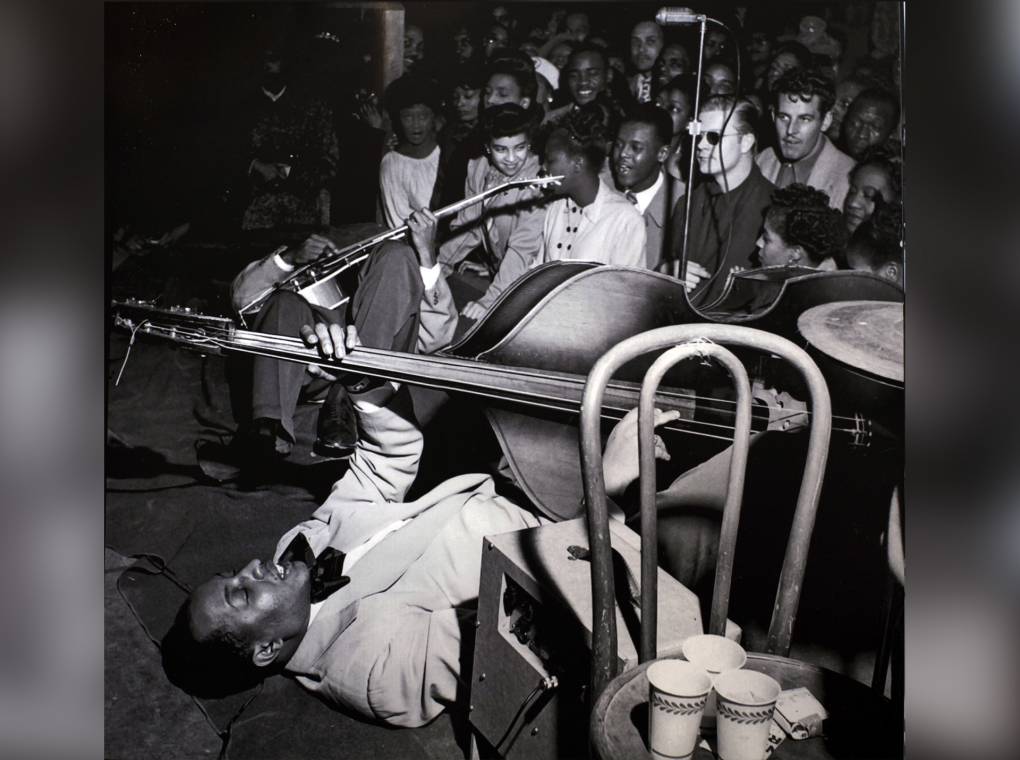
"caption": "Vernon Alley playing the bass at the Primalon Ballroom in San Francisco, 1952. ",
"description": null,
"title": "GettyImages-1408881472 for wp",
"credit": "David Johnson",
"status": "inherit",
"altTag": "Black and white image of a man in a light color tuxedo playing upright bass while laying down on a stage. A crowd of people stand listening just in front of the stage. A chair with cups sitting on it is visible in the foreground.",
"isLoading": false,
"fetchFailed": false
},
"news_11957423": {
"type": "attachments",
"id": "news_11957423",
"meta": {
"index": "attachments_1716263798",
"site": "news",
"id": "11957423",
"found": true
},
"title": "RS67658_230802-CityHallSanFrancisco-16-BL-KQED",
"publishDate": 1691170996,
"status": "inherit",
"parent": 12072739,
"modified": 1770680128,
"caption": "San Francisco City Hall on Aug. 2, 2023. Mayor London Breed signed a $14.6 billion budget on July 26 after weeks of negotiations with the Board of Supervisors.",
"credit": "Beth LaBerge/KQED",
"altTag": "The dome of an ornate building.",
"description": null,
"imgSizes": {
"medium": {
"file": "https://cdn.kqed.org/wp-content/uploads/sites/10/2023/08/RS67658_230802-CityHallSanFrancisco-16-BL-KQED-800x533.jpg",
"width": 800,
"height": 533,
"mimeType": "image/jpeg"
},
"large": {
"file": "https://cdn.kqed.org/wp-content/uploads/sites/10/2023/08/RS67658_230802-CityHallSanFrancisco-16-BL-KQED-1020x680.jpg",
"width": 1020,
"height": 680,
"mimeType": "image/jpeg"
},
"thumbnail": {
"file": "https://cdn.kqed.org/wp-content/uploads/sites/10/2023/08/RS67658_230802-CityHallSanFrancisco-16-BL-KQED-160x107.jpg",
"width": 160,
"height": 107,
"mimeType": "image/jpeg"
},
"1536x1536": {
"file": "https://cdn.kqed.org/wp-content/uploads/sites/10/2023/08/RS67658_230802-CityHallSanFrancisco-16-BL-KQED-1536x1024.jpg",
"width": 1536,
"height": 1024,
"mimeType": "image/jpeg"
},
"post-thumbnail": {
"file": "https://cdn.kqed.org/wp-content/uploads/sites/10/2023/08/RS67658_230802-CityHallSanFrancisco-16-BL-KQED-672x372.jpg",
"width": 672,
"height": 372,
"mimeType": "image/jpeg"
},
"twentyfourteen-full-width": {
"file": "https://cdn.kqed.org/wp-content/uploads/sites/10/2023/08/RS67658_230802-CityHallSanFrancisco-16-BL-KQED-1038x576.jpg",
"width": 1038,
"height": 576,
"mimeType": "image/jpeg"
},
"full-width": {
"file": "https://cdn.kqed.org/wp-content/uploads/sites/10/2023/08/RS67658_230802-CityHallSanFrancisco-16-BL-KQED-1920x1280.jpg",
"width": 1920,
"height": 1280,
"mimeType": "image/jpeg"
},
"kqedFullSize": {
"file": "https://cdn.kqed.org/wp-content/uploads/sites/10/2023/08/RS67658_230802-CityHallSanFrancisco-16-BL-KQED.jpg",
"width": 2000,
"height": 1333
}
},
"isLoading": false,
"fetchFailed": false
},
"news_11956930": {
"type": "attachments",
"id": "news_11956930",
"meta": {
"index": "attachments_1716263798",
"site": "news",
"id": "11956930",
"found": true
},
"parent": 11956929,
"imgSizes": {
"twentyfourteen-full-width": {
"file": "https://ww2.kqed.org/app/uploads/sites/10/2023/07/AP23210307798952-1038x576.jpg",
"width": 1038,
"mimeType": "image/jpeg",
"height": 576
},
"thumbnail": {
"file": "https://ww2.kqed.org/app/uploads/sites/10/2023/07/AP23210307798952-160x90.jpg",
"width": 160,
"mimeType": "image/jpeg",
"height": 90
},
"post-thumbnail": {
"file": "https://ww2.kqed.org/app/uploads/sites/10/2023/07/AP23210307798952-672x372.jpg",
"width": 672,
"mimeType": "image/jpeg",
"height": 372
},
"kqedFullSize": {
"file": "https://ww2.kqed.org/app/uploads/sites/10/2023/07/AP23210307798952-scaled.jpg",
"width": 2560,
"height": 1439
},
"2048x2048": {
"file": "https://ww2.kqed.org/app/uploads/sites/10/2023/07/AP23210307798952-2048x1151.jpg",
"width": 2048,
"mimeType": "image/jpeg",
"height": 1151
},
"large": {
"file": "https://ww2.kqed.org/app/uploads/sites/10/2023/07/AP23210307798952-1020x573.jpg",
"width": 1020,
"mimeType": "image/jpeg",
"height": 573
},
"1536x1536": {
"file": "https://ww2.kqed.org/app/uploads/sites/10/2023/07/AP23210307798952-1536x863.jpg",
"width": 1536,
"mimeType": "image/jpeg",
"height": 863
},
"full-width": {
"file": "https://ww2.kqed.org/app/uploads/sites/10/2023/07/AP23210307798952-1920x1079.jpg",
"width": 1920,
"mimeType": "image/jpeg",
"height": 1079
},
"medium": {
"file": "https://ww2.kqed.org/app/uploads/sites/10/2023/07/AP23210307798952-800x450.jpg",
"width": 800,
"mimeType": "image/jpeg",
"height": 450
}
},
"publishDate": 1690835338,
"modified": 1690835391,
"caption": "Workers install lighting on an \"X\" sign atop the company headquarters, formerly known as Twitter, in downtown San Francisco, on Friday, July 28, 2023. ",
"description": null,
"title": "Twitter Logo Change",
"credit": "Noah Berger/AP Photo",
"status": "inherit",
"altTag": "a large building with a light up \"X\" sign on top at night",
"isLoading": false,
"fetchFailed": false
},
"news_11956485": {
"type": "attachments",
"id": "news_11956485",
"meta": {
"index": "attachments_1716263798",
"site": "news",
"id": "11956485",
"found": true
},
"parent": 0,
"imgSizes": {
"twentyfourteen-full-width": {
"file": "https://ww2.kqed.org/app/uploads/sites/10/2023/07/RS66984_230714-AnchorBrewing-09-BL-KQED-1038x576.jpg",
"width": 1038,
"mimeType": "image/jpeg",
"height": 576
},
"thumbnail": {
"file": "https://ww2.kqed.org/app/uploads/sites/10/2023/07/RS66984_230714-AnchorBrewing-09-BL-KQED-160x107.jpg",
"width": 160,
"mimeType": "image/jpeg",
"height": 107
},
"post-thumbnail": {
"file": "https://ww2.kqed.org/app/uploads/sites/10/2023/07/RS66984_230714-AnchorBrewing-09-BL-KQED-672x372.jpg",
"width": 672,
"mimeType": "image/jpeg",
"height": 372
},
"kqedFullSize": {
"file": "https://ww2.kqed.org/app/uploads/sites/10/2023/07/RS66984_230714-AnchorBrewing-09-BL-KQED.jpg",
"width": 2000,
"height": 1333
},
"large": {
"file": "https://ww2.kqed.org/app/uploads/sites/10/2023/07/RS66984_230714-AnchorBrewing-09-BL-KQED-1020x680.jpg",
"width": 1020,
"mimeType": "image/jpeg",
"height": 680
},
"1536x1536": {
"file": "https://ww2.kqed.org/app/uploads/sites/10/2023/07/RS66984_230714-AnchorBrewing-09-BL-KQED-1536x1024.jpg",
"width": 1536,
"mimeType": "image/jpeg",
"height": 1024
},
"full-width": {
"file": "https://ww2.kqed.org/app/uploads/sites/10/2023/07/RS66984_230714-AnchorBrewing-09-BL-KQED-1920x1280.jpg",
"width": 1920,
"mimeType": "image/jpeg",
"height": 1280
},
"medium": {
"file": "https://ww2.kqed.org/app/uploads/sites/10/2023/07/RS66984_230714-AnchorBrewing-09-BL-KQED-800x533.jpg",
"width": 800,
"mimeType": "image/jpeg",
"height": 533
}
},
"publishDate": 1690324395,
"modified": 1690326636,
"caption": "Buzz Lawson (left), born and raised in San Francisco, sits with friend Chris Tingley at Anchor Public Taps in San Francisco on July 14, 2023. After more than 127 years of brewing in San Francisco, Anchor Brewing will soon bottle it's last beer. Anchor Public Taps brewpub will remain open until Aug. 1, and the company will continue to package and distribute the beer it has remaining through the end of the month.",
"description": null,
"title": "RS66984_230714-AnchorBrewing-09-BL-KQED",
"credit": "Beth LaBerge/KQED",
"status": "inherit",
"altTag": "Two people sit at a high top table holding glasses of beer towards each other.",
"isLoading": false,
"fetchFailed": false
},
"news_11955160": {
"type": "attachments",
"id": "news_11955160",
"meta": {
"index": "attachments_1716263798",
"site": "news",
"id": "11955160",
"found": true
},
"title": "230707-ORANGE COUNTY CARE COURT-AD-02-KQED",
"publishDate": 1688751064,
"status": "inherit",
"parent": 0,
"modified": 1727735028,
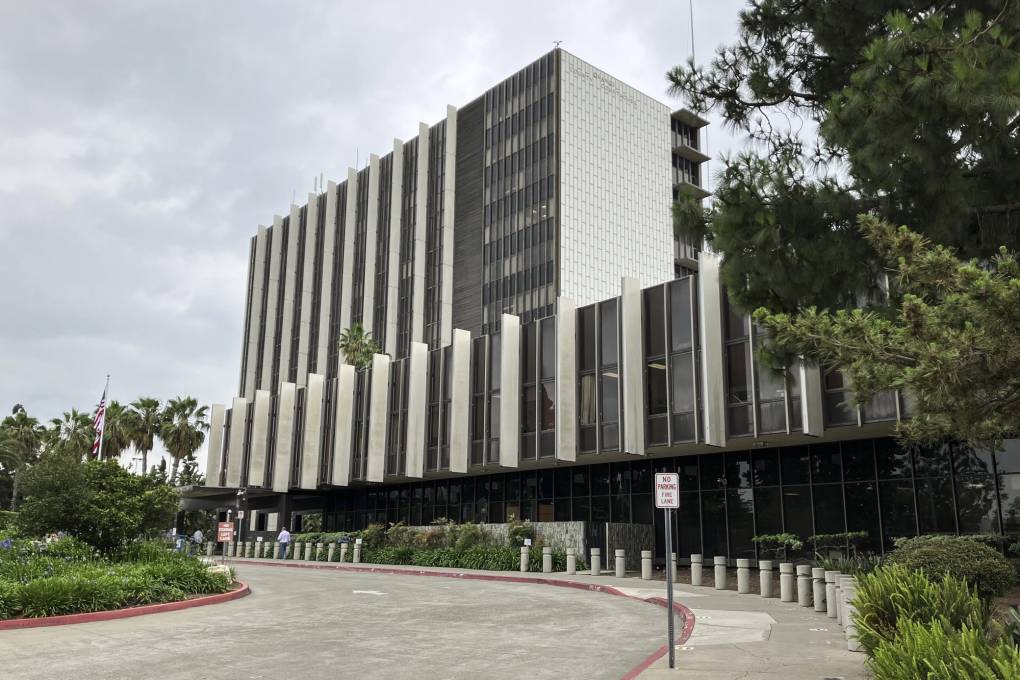
"caption": "Orange County Superior Court will technically house the local CARE Court, though judges say they will more likely hold meetings with patients at a more neutral site, like a conference room at the county health office.",
"credit": "April Dembosky/KQED",
"altTag": "A large multi-story building and a driveway alongside it.",
"description": null,
"imgSizes": {
"medium": {
"file": "https://cdn.kqed.org/wp-content/uploads/sites/10/2023/07/230707-ORANGE-COUNTY-CARE-COURT-AD-02-KQED-800x533.jpg",
"width": 800,
"height": 533,
"mimeType": "image/jpeg"
},
"large": {
"file": "https://cdn.kqed.org/wp-content/uploads/sites/10/2023/07/230707-ORANGE-COUNTY-CARE-COURT-AD-02-KQED-1020x680.jpg",
"width": 1020,
"height": 680,
"mimeType": "image/jpeg"
},
"thumbnail": {
"file": "https://cdn.kqed.org/wp-content/uploads/sites/10/2023/07/230707-ORANGE-COUNTY-CARE-COURT-AD-02-KQED-160x107.jpg",
"width": 160,
"height": 107,
"mimeType": "image/jpeg"
},
"1536x1536": {
"file": "https://cdn.kqed.org/wp-content/uploads/sites/10/2023/07/230707-ORANGE-COUNTY-CARE-COURT-AD-02-KQED-1536x1024.jpg",
"width": 1536,
"height": 1024,
"mimeType": "image/jpeg"
},
"post-thumbnail": {
"file": "https://cdn.kqed.org/wp-content/uploads/sites/10/2023/07/230707-ORANGE-COUNTY-CARE-COURT-AD-02-KQED-672x372.jpg",
"width": 672,
"height": 372,
"mimeType": "image/jpeg"
},
"twentyfourteen-full-width": {
"file": "https://cdn.kqed.org/wp-content/uploads/sites/10/2023/07/230707-ORANGE-COUNTY-CARE-COURT-AD-02-KQED-1038x576.jpg",
"width": 1038,
"height": 576,
"mimeType": "image/jpeg"
},
"full-width": {
"file": "https://cdn.kqed.org/wp-content/uploads/sites/10/2023/07/230707-ORANGE-COUNTY-CARE-COURT-AD-02-KQED-1920x1280.jpg",
"width": 1920,
"height": 1280,
"mimeType": "image/jpeg"
},
"kqedFullSize": {
"file": "https://cdn.kqed.org/wp-content/uploads/sites/10/2023/07/230707-ORANGE-COUNTY-CARE-COURT-AD-02-KQED.jpg",
"width": 2000,
"height": 1333
}
},
"isLoading": false,
"fetchFailed": false
},
"news_11955727": {
"type": "attachments",
"id": "news_11955727",
"meta": {
"index": "attachments_1716263798",
"site": "news",
"id": "11955727",
"found": true
},
"title": "Supreme Courts Rules On Major LGBTQ Case And Strikes Down Biden's Student Loan Forgiveness Plan",
"publishDate": 1689360216,
"status": "inherit",
"parent": 12065967,
"modified": 1765577210,
"caption": "D'Aungilique Jackson, of Fresno, California, holds a \"Cancel Student Debt\" sign outside of the Supreme Court of the United States after the nation's high court struck down President Biden's student debt relief program in Washington, D.C., on June 30, 2023.",
"credit": "Kent Nishimura/Los Angeles Times via Getty Images",
"altTag": "A person with long hair and a black T-shirt holds up a bright yellow sign reading \"Cancel Student Debt\" amidst others doing similar.",
"description": null,
"imgSizes": {
"medium": {
"file": "https://cdn.kqed.org/wp-content/uploads/sites/10/2023/07/230714-SUPREME-COURT-STUDENT-DEBT-Getty-KN-KQED-800x533.jpg",
"width": 800,
"height": 533,
"mimeType": "image/jpeg"
},
"large": {
"file": "https://cdn.kqed.org/wp-content/uploads/sites/10/2023/07/230714-SUPREME-COURT-STUDENT-DEBT-Getty-KN-KQED-1020x680.jpg",
"width": 1020,
"height": 680,
"mimeType": "image/jpeg"
},
"thumbnail": {
"file": "https://cdn.kqed.org/wp-content/uploads/sites/10/2023/07/230714-SUPREME-COURT-STUDENT-DEBT-Getty-KN-KQED-160x107.jpg",
"width": 160,
"height": 107,
"mimeType": "image/jpeg"
},
"1536x1536": {
"file": "https://cdn.kqed.org/wp-content/uploads/sites/10/2023/07/230714-SUPREME-COURT-STUDENT-DEBT-Getty-KN-KQED-1536x1024.jpg",
"width": 1536,
"height": 1024,
"mimeType": "image/jpeg"
},
"post-thumbnail": {
"file": "https://cdn.kqed.org/wp-content/uploads/sites/10/2023/07/230714-SUPREME-COURT-STUDENT-DEBT-Getty-KN-KQED-672x372.jpg",
"width": 672,
"height": 372,
"mimeType": "image/jpeg"
},
"twentyfourteen-full-width": {
"file": "https://cdn.kqed.org/wp-content/uploads/sites/10/2023/07/230714-SUPREME-COURT-STUDENT-DEBT-Getty-KN-KQED-1038x576.jpg",
"width": 1038,
"height": 576,
"mimeType": "image/jpeg"
},
"full-width": {
"file": "https://cdn.kqed.org/wp-content/uploads/sites/10/2023/07/230714-SUPREME-COURT-STUDENT-DEBT-Getty-KN-KQED-1920x1280.jpg",
"width": 1920,
"height": 1280,
"mimeType": "image/jpeg"
},
"kqedFullSize": {
"file": "https://cdn.kqed.org/wp-content/uploads/sites/10/2023/07/230714-SUPREME-COURT-STUDENT-DEBT-Getty-KN-KQED.jpg",
"width": 2000,
"height": 1333
}
},
"isLoading": false,
"fetchFailed": false
},
"news_11955724": {
"type": "attachments",
"id": "news_11955724",
"meta": {
"index": "attachments_1716263798",
"site": "news",
"id": "11955724",
"found": true
},
"parent": 0,
"imgSizes": {
"twentyfourteen-full-width": {
"file": "https://ww2.kqed.org/app/uploads/sites/10/2023/07/230714-LOS-ANGELES-NIGHT-MARKET-Getty-FO-KQED-1038x576.jpg",
"width": 1038,
"mimeType": "image/jpeg",
"height": 576
},
"thumbnail": {
"file": "https://ww2.kqed.org/app/uploads/sites/10/2023/07/230714-LOS-ANGELES-NIGHT-MARKET-Getty-FO-KQED-160x107.jpg",
"width": 160,
"mimeType": "image/jpeg",
"height": 107
},
"post-thumbnail": {
"file": "https://ww2.kqed.org/app/uploads/sites/10/2023/07/230714-LOS-ANGELES-NIGHT-MARKET-Getty-FO-KQED-672x372.jpg",
"width": 672,
"mimeType": "image/jpeg",
"height": 372
},
"kqedFullSize": {
"file": "https://ww2.kqed.org/app/uploads/sites/10/2023/07/230714-LOS-ANGELES-NIGHT-MARKET-Getty-FO-KQED.jpg",
"width": 2000,
"height": 1333
},
"large": {
"file": "https://ww2.kqed.org/app/uploads/sites/10/2023/07/230714-LOS-ANGELES-NIGHT-MARKET-Getty-FO-KQED-1020x680.jpg",
"width": 1020,
"mimeType": "image/jpeg",
"height": 680
},
"1536x1536": {
"file": "https://ww2.kqed.org/app/uploads/sites/10/2023/07/230714-LOS-ANGELES-NIGHT-MARKET-Getty-FO-KQED-1536x1024.jpg",
"width": 1536,
"mimeType": "image/jpeg",
"height": 1024
},
"full-width": {
"file": "https://ww2.kqed.org/app/uploads/sites/10/2023/07/230714-LOS-ANGELES-NIGHT-MARKET-Getty-FO-KQED-1920x1280.jpg",
"width": 1920,
"mimeType": "image/jpeg",
"height": 1280
},
"medium": {
"file": "https://ww2.kqed.org/app/uploads/sites/10/2023/07/230714-LOS-ANGELES-NIGHT-MARKET-Getty-FO-KQED-800x533.jpg",
"width": 800,
"mimeType": "image/jpeg",
"height": 533
}
},
"publishDate": 1689359688,
"modified": 1689378949,
"caption": "A vendor at the Avenue 26 night market in Los Angeles on May 14, 2021.",
"description": null,
"title": "Avenue 26 night market",
"credit": "Francine Orr/Los Angeles Times via Getty Images",
"status": "inherit",
"altTag": "A man holds transparent balloons near outdoor stalls after dark as people pass.",
"isLoading": false,
"fetchFailed": false
},
"news_11954853": {
"type": "attachments",
"id": "news_11954853",
"meta": {
"index": "attachments_1716263798",
"site": "news",
"id": "11954853",
"found": true
},
"parent": 0,
"imgSizes": {
"twentyfourteen-full-width": {
"file": "https://ww2.kqed.org/app/uploads/sites/10/2023/06/230630100-Van-Ness-MB-KQED-1038x576.jpg",
"width": 1038,
"mimeType": "image/jpeg",
"height": 576
},
"thumbnail": {
"file": "https://ww2.kqed.org/app/uploads/sites/10/2023/06/230630100-Van-Ness-MB-KQED-160x71.jpg",
"width": 160,
"mimeType": "image/jpeg",
"height": 71
},
"post-thumbnail": {
"file": "https://ww2.kqed.org/app/uploads/sites/10/2023/06/230630100-Van-Ness-MB-KQED-672x372.jpg",
"width": 672,
"mimeType": "image/jpeg",
"height": 372
},
"kqedFullSize": {
"file": "https://ww2.kqed.org/app/uploads/sites/10/2023/06/230630100-Van-Ness-MB-KQED.jpg",
"width": 2500,
"height": 1111
},
"2048x2048": {
"file": "https://ww2.kqed.org/app/uploads/sites/10/2023/06/230630100-Van-Ness-MB-KQED-2048x910.jpg",
"width": 2048,
"mimeType": "image/jpeg",
"height": 910
},
"large": {
"file": "https://ww2.kqed.org/app/uploads/sites/10/2023/06/230630100-Van-Ness-MB-KQED-1020x453.jpg",
"width": 1020,
"mimeType": "image/jpeg",
"height": 453
},
"1536x1536": {
"file": "https://ww2.kqed.org/app/uploads/sites/10/2023/06/230630100-Van-Ness-MB-KQED-1536x683.jpg",
"width": 1536,
"mimeType": "image/jpeg",
"height": 683
},
"full-width": {
"file": "https://ww2.kqed.org/app/uploads/sites/10/2023/06/230630100-Van-Ness-MB-KQED-1920x853.jpg",
"width": 1920,
"mimeType": "image/jpeg",
"height": 853
},
"medium": {
"file": "https://ww2.kqed.org/app/uploads/sites/10/2023/06/230630100-Van-Ness-MB-KQED-800x356.jpg",
"width": 800,
"mimeType": "image/jpeg",
"height": 356
}
},
"publishDate": 1688166476,
"modified": 1689272499,
"caption": "In 2012, the 100 Van Ness building was converted from office space to residential apartment units and the building's concrete facade was replaced by glass.",
"description": null,
"title": "230630100 Van Ness-MB-KQED",
"credit": "Courtesy of Marc Babsin",
"status": "inherit",
"altTag": "Three images of the same building at different points in construction. In the first, it has a concrete facade. In the second, the building has no facade. In the third, it has a modern glass facade.",
"isLoading": false,
"fetchFailed": false
},
"news_11955453": {
"type": "attachments",
"id": "news_11955453",
"meta": {
"index": "attachments_1716263798",
"site": "news",
"id": "11955453",
"found": true
},
"parent": 0,
"imgSizes": {
"twentyfourteen-full-width": {
"file": "https://ww2.kqed.org/app/uploads/sites/10/2023/07/230712-ANCHOR-BREWING-SL-01-KQED-1038x576.jpg",
"width": 1038,
"mimeType": "image/jpeg",
"height": 576
},
"thumbnail": {
"file": "https://ww2.kqed.org/app/uploads/sites/10/2023/07/230712-ANCHOR-BREWING-SL-01-KQED-160x107.jpg",
"width": 160,
"mimeType": "image/jpeg",
"height": 107
},
"post-thumbnail": {
"file": "https://ww2.kqed.org/app/uploads/sites/10/2023/07/230712-ANCHOR-BREWING-SL-01-KQED-672x372.jpg",
"width": 672,
"mimeType": "image/jpeg",
"height": 372
},
"kqedFullSize": {
"file": "https://ww2.kqed.org/app/uploads/sites/10/2023/07/230712-ANCHOR-BREWING-SL-01-KQED.jpg",
"width": 2000,
"height": 1335
},
"large": {
"file": "https://ww2.kqed.org/app/uploads/sites/10/2023/07/230712-ANCHOR-BREWING-SL-01-KQED-1020x681.jpg",
"width": 1020,
"mimeType": "image/jpeg",
"height": 681
},
"1536x1536": {
"file": "https://ww2.kqed.org/app/uploads/sites/10/2023/07/230712-ANCHOR-BREWING-SL-01-KQED-1536x1025.jpg",
"width": 1536,
"mimeType": "image/jpeg",
"height": 1025
},
"full-width": {
"file": "https://ww2.kqed.org/app/uploads/sites/10/2023/07/230712-ANCHOR-BREWING-SL-01-KQED-1920x1282.jpg",
"width": 1920,
"mimeType": "image/jpeg",
"height": 1282
},
"medium": {
"file": "https://ww2.kqed.org/app/uploads/sites/10/2023/07/230712-ANCHOR-BREWING-SL-01-KQED-800x534.jpg",
"width": 800,
"mimeType": "image/jpeg",
"height": 534
}
},
"publishDate": 1689181500,
"modified": 1689193661,
"caption": "The facade of Anchor Brewing in San Francisco on March 11, 2019.",
"description": null,
"title": "230712-ANCHOR BREWING-SL-01-KQED",
"credit": "Stephanie Lister/KQED",
"status": "inherit",
"altTag": "Signage on the top of a multistory building reads \"Anchor Brewing.\"",
"isLoading": false,
"fetchFailed": false
},
"news_11955435": {
"type": "attachments",
"id": "news_11955435",
"meta": {
"index": "attachments_1716263798",
"site": "news",
"id": "11955435",
"found": true
},
"parent": 11955433,
"imgSizes": {
"twentyfourteen-full-width": {
"file": "https://ww2.kqed.org/app/uploads/sites/10/2023/07/BART-SWEATER-1038x576.jpg",
"width": 1038,
"mimeType": "image/jpeg",
"height": 576
},
"thumbnail": {
"file": "https://ww2.kqed.org/app/uploads/sites/10/2023/07/BART-SWEATER-160x107.jpg",
"width": 160,
"mimeType": "image/jpeg",
"height": 107
},
"post-thumbnail": {
"file": "https://ww2.kqed.org/app/uploads/sites/10/2023/07/BART-SWEATER-672x372.jpg",
"width": 672,
"mimeType": "image/jpeg",
"height": 372
},
"kqedFullSize": {
"file": "https://ww2.kqed.org/app/uploads/sites/10/2023/07/BART-SWEATER.jpg",
"width": 2000,
"height": 1333
},
"large": {
"file": "https://ww2.kqed.org/app/uploads/sites/10/2023/07/BART-SWEATER-1020x680.jpg",
"width": 1020,
"mimeType": "image/jpeg",
"height": 680
},
"1536x1536": {
"file": "https://ww2.kqed.org/app/uploads/sites/10/2023/07/BART-SWEATER-1536x1024.jpg",
"width": 1536,
"mimeType": "image/jpeg",
"height": 1024
},
"full-width": {
"file": "https://ww2.kqed.org/app/uploads/sites/10/2023/07/BART-SWEATER-1920x1280.jpg",
"width": 1920,
"mimeType": "image/jpeg",
"height": 1280
},
"medium": {
"file": "https://ww2.kqed.org/app/uploads/sites/10/2023/07/BART-SWEATER-800x533.jpg",
"width": 800,
"mimeType": "image/jpeg",
"height": 533
}
},
"publishDate": 1689120340,
"modified": 1689182672,
"caption": "BART's popular ugly holiday sweater (center) is back, with 1,500 up for grabs. This year, public transit diehards can expect matching knits for their canine friends and a fuzzy beanie. Presale orders start today.",
"description": null,
"title": "BART SWEATER",
"credit": "Courtesy of BART/Graphic by Martin do Nascimento",
"status": "inherit",
"altTag": "A graphic image of three knit clothing items: one is an ugly holiday sweater for dogs; another is a knitted ugly holiday sweater for people; last is an ugly holiday pattern for a knit beanie. This is for BART's annual holiday sweater sales.",
"isLoading": false,
"fetchFailed": false
},
"news_11954926": {
"type": "attachments",
"id": "news_11954926",
"meta": {
"index": "attachments_1716263798",
"site": "news",
"id": "11954926",
"found": true
},
"parent": 0,
"imgSizes": {
"twentyfourteen-full-width": {
"file": "https://ww2.kqed.org/app/uploads/sites/10/2023/07/RS66620_20230623-SFAIDSFoundation-004-BL-KQED-1038x576.jpg",
"width": 1038,
"mimeType": "image/jpeg",
"height": 576
},
"thumbnail": {
"file": "https://ww2.kqed.org/app/uploads/sites/10/2023/07/RS66620_20230623-SFAIDSFoundation-004-BL-KQED-160x107.jpg",
"width": 160,
"mimeType": "image/jpeg",
"height": 107
},
"post-thumbnail": {
"file": "https://ww2.kqed.org/app/uploads/sites/10/2023/07/RS66620_20230623-SFAIDSFoundation-004-BL-KQED-672x372.jpg",
"width": 672,
"mimeType": "image/jpeg",
"height": 372
},
"kqedFullSize": {
"file": "https://ww2.kqed.org/app/uploads/sites/10/2023/07/RS66620_20230623-SFAIDSFoundation-004-BL-KQED.jpg",
"width": 2000,
"height": 1333
},
"large": {
"file": "https://ww2.kqed.org/app/uploads/sites/10/2023/07/RS66620_20230623-SFAIDSFoundation-004-BL-KQED-1020x680.jpg",
"width": 1020,
"mimeType": "image/jpeg",
"height": 680
},
"1536x1536": {
"file": "https://ww2.kqed.org/app/uploads/sites/10/2023/07/RS66620_20230623-SFAIDSFoundation-004-BL-KQED-1536x1024.jpg",
"width": 1536,
"mimeType": "image/jpeg",
"height": 1024
},
"full-width": {
"file": "https://ww2.kqed.org/app/uploads/sites/10/2023/07/RS66620_20230623-SFAIDSFoundation-004-BL-KQED-1920x1280.jpg",
"width": 1920,
"mimeType": "image/jpeg",
"height": 1280
},
"medium": {
"file": "https://ww2.kqed.org/app/uploads/sites/10/2023/07/RS66620_20230623-SFAIDSFoundation-004-BL-KQED-800x533.jpg",
"width": 800,
"mimeType": "image/jpeg",
"height": 533
}
},
"publishDate": 1688406610,
"modified": 1688418805,
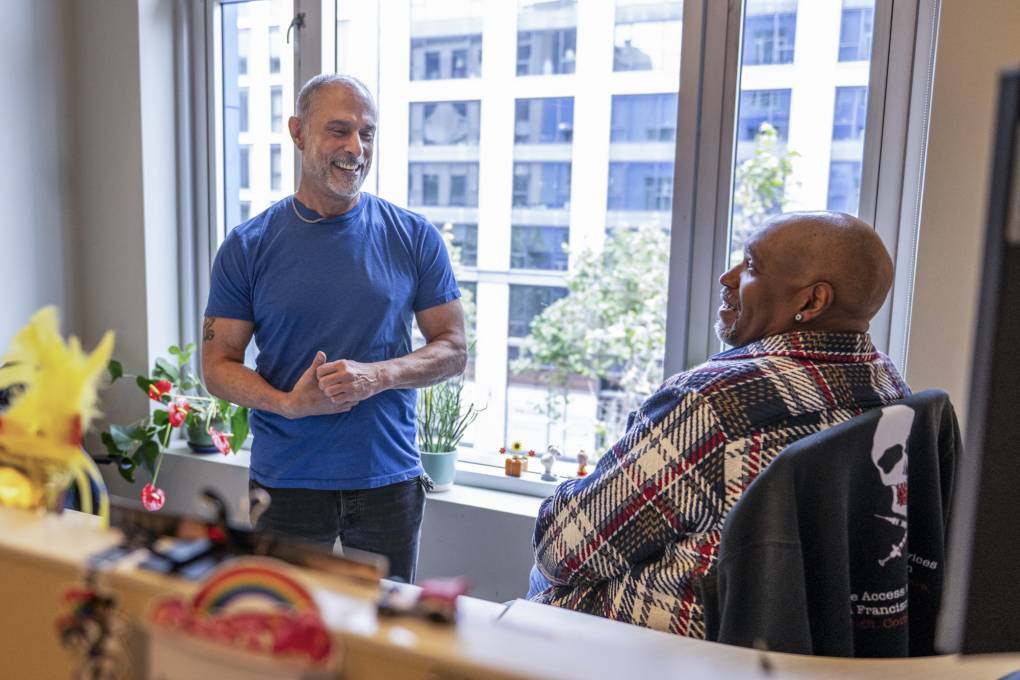
"caption": "Rick Andrews, director of contingency management, speaks with Tyrone Clifford, PROP coordinator, at the San Francisco AIDS Foundation offices in San Francisco on June 23, 2023.",
"description": null,
"title": "RS66620_20230623-SFAIDSFoundation-004-BL-KQED",
"credit": "Beth LaBerge/KQED",
"status": "inherit",
"altTag": "A middle-aged white man stands behind a desk talking to a middle-aged black man in a chair, inside an office. They both appear to be smiling",
"isLoading": false,
"fetchFailed": false
}
},
"audioPlayerReducer": {
"postId": "stream_live",
"isPaused": true,
"isPlaying": false,
"pfsActive": false,
"pledgeModalIsOpen": true,
"playerDrawerIsOpen": false,
"liveAudioPlayStartedAt": 0,
"liveAudioPlayContext": ""
},
"authorsReducer": {
"byline_news_11956929": {
"type": "authors",
"id": "byline_news_11956929",
"meta": {
"override": true
},
"slug": "byline_news_11956929",
"name": "Janie Har, Haven Daley, and David Klepper",
"isLoading": false
},
"adembosky": {
"type": "authors",
"id": "3205",
"meta": {
"index": "authors_1716337520",
"id": "3205",
"found": true
},
"name": "April Dembosky",
"firstName": "April",
"lastName": "Dembosky",
"slug": "adembosky",
"email": "adembosky@kqed.org",
"display_author_email": false,
"staff_mastheads": [
"news",
"science"
],
"title": "KQED Health Correspondent",
"bio": "April Dembosky is the health correspondent for KQED News and a regular contributor to NPR. She specializes in covering altered states of mind, from postpartum depression to methamphetamine-induced psychosis to the insanity defense. Her investigative series on insurance companies sidestepping mental health laws won multiple awards, including first place in beat reporting from the national Association of Health Care Journalists. She is the recipient of numerous other prizes and fellowships, including a national Edward R. Murrow award for investigative reporting, a Society of Professional Journalists award for long-form storytelling, and a Carter Center Fellowship for Mental Health Journalism.\r\n\r\nDembosky reported and produced \u003cem>Soundtrack of Silence\u003c/em>, an audio documentary about music and memory that is currently being made into a feature film by Paramount Pictures.\r\n\r\nBefore joining KQED in 2013, Dembosky covered technology and Silicon Valley for \u003cem>The Financial Times of London,\u003c/em> and contributed business and arts stories to \u003cem>Marketplace \u003c/em>and \u003cem>The New York Times.\u003c/em> She got her undergraduate degree in philosophy from Smith College and her master's in journalism from the University of California, Berkeley. She is a classically trained violinist and proud alum of the first symphony orchestra at Burning Man.",
"avatar": "https://secure.gravatar.com/avatar/ef92999be4ceb9ea60701e7dc276f813?s=600&d=blank&r=g",
"twitter": "adembosky",
"facebook": null,
"instagram": null,
"linkedin": null,
"sites": [
{
"site": "arts",
"roles": [
"author"
]
},
{
"site": "news",
"roles": [
"editor"
]
},
{
"site": "futureofyou",
"roles": [
"author"
]
},
{
"site": "stateofhealth",
"roles": [
"editor"
]
},
{
"site": "science",
"roles": [
"editor"
]
},
{
"site": "forum",
"roles": [
"editor"
]
}
],
"headData": {
"title": "April Dembosky | KQED",
"description": "KQED Health Correspondent",
"ogImgSrc": "https://secure.gravatar.com/avatar/ef92999be4ceb9ea60701e7dc276f813?s=600&d=blank&r=g",
"twImgSrc": "https://secure.gravatar.com/avatar/ef92999be4ceb9ea60701e7dc276f813?s=600&d=blank&r=g"
},
"isLoading": false,
"link": "/author/adembosky"
},
"carlysevern": {
"type": "authors",
"id": "3243",
"meta": {
"index": "authors_1716337520",
"id": "3243",
"found": true
},
"name": "Carly Severn",
"firstName": "Carly",
"lastName": "Severn",
"slug": "carlysevern",
"email": "csevern@kqed.org",
"display_author_email": false,
"staff_mastheads": [
"news"
],
"title": "Senior Editor, Audience News ",
"bio": "Carly is KQED's Senior Editor of Audience News on the Digital News team, and has reported for the California Report Magazine, Bay Curious and KQED Arts. She's formerly the host of \u003ca href=\"http://ww2.kqed.org/pop/category/the-cooler/\" rel=\"noopener noreferrer\">The Cooler\u003c/a> podcast.",
"avatar": "https://secure.gravatar.com/avatar/54037bf5c128fe678f0ef26cec97a93f2e7f220a22d7285703328f12c42c1b1d?s=600&d=blank&r=g",
"twitter": "teacupinthebay",
"bluesky": null,
"facebook": null,
"instagram": null,
"linkedin": null,
"sites": [
{
"site": "",
"roles": [
"editor"
]
},
{
"site": "arts",
"roles": [
"editor"
]
},
{
"site": "news",
"roles": [
"administrator"
]
},
{
"site": "pop",
"roles": [
"editor"
]
},
{
"site": "futureofyou",
"roles": [
"editor"
]
},
{
"site": "about",
"roles": [
"administrator"
]
},
{
"site": "mindshift",
"roles": [
"editor"
]
},
{
"site": "bayareabites",
"roles": [
"editor"
]
},
{
"site": "stateofhealth",
"roles": [
"editor"
]
},
{
"site": "science",
"roles": [
"editor"
]
},
{
"site": "food",
"roles": [
"contributor"
]
},
{
"site": "forum",
"roles": [
"editor"
]
},
{
"site": "perspectives",
"roles": [
"administrator"
]
},
{
"site": "liveblog",
"roles": [
"editor"
]
}
],
"headData": {
"title": "Carly Severn | KQED",
"description": "Senior Editor, Audience News ",
"ogImgSrc": "https://secure.gravatar.com/avatar/54037bf5c128fe678f0ef26cec97a93f2e7f220a22d7285703328f12c42c1b1d?s=600&d=blank&r=g",
"twImgSrc": "https://secure.gravatar.com/avatar/54037bf5c128fe678f0ef26cec97a93f2e7f220a22d7285703328f12c42c1b1d?s=600&d=blank&r=g"
},
"isLoading": false,
"link": "/author/carlysevern"
},
"btaylor": {
"type": "authors",
"id": "11365",
"meta": {
"index": "authors_1716337520",
"id": "11365",
"found": true
},
"name": "Bianca Taylor",
"firstName": "Bianca",
"lastName": "Taylor",
"slug": "btaylor",
"email": "btaylor@KQED.org",
"display_author_email": false,
"staff_mastheads": [
"news"
],
"title": "Host and Producer ",
"bio": "Bianca Taylor is a news producer and host of KQED's The Latest podcast.\r\n\r\nHer work with KQED has been honored by the Society of Professional Journalists NorCal, the Webby's, the Regional Murrow Awards, and ONA. She has also worked with NPR, the BBC World Service, and the Washington Post Creative Group.\r\n\r\nBianca is represented by SAG-AFTRA.",
"avatar": "https://secure.gravatar.com/avatar/6b9d3f6552dd10470c5d1c2e58cfe717?s=600&d=blank&r=g",
"twitter": "SoundsLkeBianca",
"facebook": null,
"instagram": null,
"linkedin": null,
"sites": [
{
"site": "arts",
"roles": [
"editor"
]
},
{
"site": "news",
"roles": [
"edit_others_posts",
"editor"
]
},
{
"site": "pop",
"roles": [
"editor"
]
},
{
"site": "bayareabites",
"roles": [
"author"
]
},
{
"site": "science",
"roles": [
"editor"
]
},
{
"site": "forum",
"roles": [
"editor"
]
},
{
"site": "radio",
"roles": [
"editor"
]
},
{
"site": "podcasts",
"roles": [
"editor"
]
}
],
"headData": {
"title": "Bianca Taylor | KQED",
"description": "Host and Producer ",
"ogImgSrc": "https://secure.gravatar.com/avatar/6b9d3f6552dd10470c5d1c2e58cfe717?s=600&d=blank&r=g",
"twImgSrc": "https://secure.gravatar.com/avatar/6b9d3f6552dd10470c5d1c2e58cfe717?s=600&d=blank&r=g"
},
"isLoading": false,
"link": "/author/btaylor"
},
"jasminegarnett": {
"type": "authors",
"id": "11530",
"meta": {
"index": "authors_1716337520",
"id": "11530",
"found": true
},
"name": "Jasmine Garnett",
"firstName": "Jasmine",
"lastName": "Garnett",
"slug": "jasminegarnett",
"email": "JGarnett@KQED.org",
"display_author_email": false,
"staff_mastheads": [
"news"
],
"title": "Senior Engagement Platforms Producer",
"bio": "Jasmine is a Senior Engagement Platforms Producer on the KQED News team. She is also a freelance writer, with work appearing in KQED, Bitch Media, and Kotaku among others. Jasmine graduated from UC Berkeley with a degree in Media Studies, where she was also an Arts and Entertainment reporter at the Daily Californian.",
"avatar": "https://secure.gravatar.com/avatar/a6ea8b0641874311533b7401bee15c8e?s=600&d=blank&r=g",
"twitter": "JFLGarnett",
"facebook": null,
"instagram": null,
"linkedin": null,
"sites": [
{
"site": "arts",
"roles": [
"author"
]
},
{
"site": "news",
"roles": [
"editor"
]
},
{
"site": "about",
"roles": [
"editor"
]
},
{
"site": "science",
"roles": [
"editor"
]
},
{
"site": "forum",
"roles": [
"editor"
]
},
{
"site": "pressroom",
"roles": [
"editor"
]
}
],
"headData": {
"title": "Jasmine Garnett | KQED",
"description": "Senior Engagement Platforms Producer",
"ogImgSrc": "https://secure.gravatar.com/avatar/a6ea8b0641874311533b7401bee15c8e?s=600&d=blank&r=g",
"twImgSrc": "https://secure.gravatar.com/avatar/a6ea8b0641874311533b7401bee15c8e?s=600&d=blank&r=g"
},
"isLoading": false,
"link": "/author/jasminegarnett"
},
"jrodriguez": {
"type": "authors",
"id": "11690",
"meta": {
"index": "authors_1716337520",
"id": "11690",
"found": true
},
"name": "Joe Fitzgerald Rodriguez",
"firstName": "Joe",
"lastName": "Fitzgerald Rodriguez",
"slug": "jrodriguez",
"email": "jrodriguez@kqed.org",
"display_author_email": true,
"staff_mastheads": [
"news"
],
"title": "Reporter and Producer",
"bio": "Joe Fitzgerald Rodriguez is a reporter and digital producer for KQED covering politics. Joe most recently wrote for the \u003cem>San Francisco Examiner\u003c/em> as a political columnist covering The City. He was raised in San Francisco and has spent his reporting career in his beloved, foggy, city by the bay. Joe was 12-years-old when he conducted his first interview in journalism, grilling former San Francisco Mayor Willie Brown for the Marina Middle School newspaper, \u003cem>The Penguin Press, \u003c/em>and he continues to report on the San Francisco Bay Area to this day.",
"avatar": "https://secure.gravatar.com/avatar/2247beb0564c1e9c62228d5649d2edac?s=600&d=blank&r=g",
"twitter": "FitztheReporter",
"facebook": null,
"instagram": "https://www.instagram.com/fitzthereporter/",
"linkedin": null,
"sites": [
{
"site": "",
"roles": [
"editor"
]
},
{
"site": "arts",
"roles": [
"editor"
]
},
{
"site": "news",
"roles": [
"editor"
]
},
{
"site": "science",
"roles": [
"editor"
]
},
{
"site": "elections",
"roles": [
"editor"
]
},
{
"site": "liveblog",
"roles": [
"editor"
]
}
],
"headData": {
"title": "Joe Fitzgerald Rodriguez | KQED",
"description": "Reporter and Producer",
"ogImgSrc": "https://secure.gravatar.com/avatar/2247beb0564c1e9c62228d5649d2edac?s=600&d=blank&r=g",
"twImgSrc": "https://secure.gravatar.com/avatar/2247beb0564c1e9c62228d5649d2edac?s=600&d=blank&r=g"
},
"isLoading": false,
"link": "/author/jrodriguez"
},
"daisynguyen": {
"type": "authors",
"id": "11829",
"meta": {
"index": "authors_1716337520",
"id": "11829",
"found": true
},
"name": "Daisy Nguyen",
"firstName": "Daisy",
"lastName": "Nguyen",
"slug": "daisynguyen",
"email": "daisynguyen@kqed.org",
"display_author_email": true,
"staff_mastheads": [
"news"
],
"title": "KQED Contributor",
"bio": "I have covered early childhood education and child care for KQED since 2022. I focus on policies aimed at increasing access to early care and education and how they shape individual lives. I've been a journalist for more than two decades, with most of that time devoted to covering breaking news throughout California for The Associated Press. I grew up in San Francisco and studied at UC Davis and Columbia University's Graduate School of Journalism. I live in Oakland with my husband and two kids.",
"avatar": "https://secure.gravatar.com/avatar/2da2127c27f7143b53ebd419800fd55f?s=600&d=blank&r=g",
"twitter": null,
"facebook": null,
"instagram": null,
"linkedin": "https://www.linkedin.com/in/daisynguyen/",
"sites": [
{
"site": "news",
"roles": [
"author"
]
},
{
"site": "liveblog",
"roles": [
"author"
]
}
],
"headData": {
"title": "Daisy Nguyen | KQED",
"description": "KQED Contributor",
"ogImgSrc": "https://secure.gravatar.com/avatar/2da2127c27f7143b53ebd419800fd55f?s=600&d=blank&r=g",
"twImgSrc": "https://secure.gravatar.com/avatar/2da2127c27f7143b53ebd419800fd55f?s=600&d=blank&r=g"
},
"isLoading": false,
"link": "/author/daisynguyen"
},
"sjohnson": {
"type": "authors",
"id": "11840",
"meta": {
"index": "authors_1716337520",
"id": "11840",
"found": true
},
"name": "Sydney Johnson",
"firstName": "Sydney",
"lastName": "Johnson",
"slug": "sjohnson",
"email": "sjohnson@kqed.org",
"display_author_email": false,
"staff_mastheads": [
"news"
],
"title": "KQED Reporter",
"bio": "Sydney Johnson is a general assignment reporter at KQED. She previously reported on public health and city government at the San Francisco Examiner, and before that, she covered statewide education policy for EdSource. Her reporting has won multiple local, state and national awards. Sydney is a graduate of the University of California, Berkeley and lives in San Francisco.",
"avatar": "https://secure.gravatar.com/avatar/97855f2719b72ad6190b7c535fe642c8?s=600&d=blank&r=g",
"twitter": "sydneyfjohnson",
"facebook": null,
"instagram": null,
"linkedin": null,
"sites": [
{
"site": "news",
"roles": [
"editor"
]
}
],
"headData": {
"title": "Sydney Johnson | KQED",
"description": "KQED Reporter",
"ogImgSrc": "https://secure.gravatar.com/avatar/97855f2719b72ad6190b7c535fe642c8?s=600&d=blank&r=g",
"twImgSrc": "https://secure.gravatar.com/avatar/97855f2719b72ad6190b7c535fe642c8?s=600&d=blank&r=g"
},
"isLoading": false,
"link": "/author/sjohnson"
},
"pbartolone": {
"type": "authors",
"id": "11879",
"meta": {
"index": "authors_1716337520",
"id": "11879",
"found": true
},
"name": "Pauline Bartolone",
"firstName": "Pauline",
"lastName": "Bartolone",
"slug": "pbartolone",
"email": "pbartolone@kqed.org",
"display_author_email": false,
"staff_mastheads": [],
"title": "KQED Contributor",
"bio": "Pauline Bartolone has been a journalist for two decades, specializing in longform audio storytelling. Before editing and producing for podcasts like Bay Curious, she was a health care journalist for public radio and print outlets such as CalMatters and Kaiser Health News. Her reporting has won several regional Edward R. Murrow awards, national recognition from the Society of Professional Journalists and a first-place prize from the Association of Health Care Journalists.\r\n\r\nPauline’s work has aired frequently on National Public Radio, and bylines have appeared in The Los Angeles Times, CNN.com, Washingtonpost.com, USA Today and Scientific American.\r\n\r\nPauline has lived in Northern California for 20 years. Her other passions are crafts (now done in collaboration with her daughter) and the Brazilian martial art of capoeira.",
"avatar": "https://secure.gravatar.com/avatar/95001c30374b0d3878007af9cf1e120a?s=600&d=blank&r=g",
"twitter": "pbartolone",
"facebook": null,
"instagram": null,
"linkedin": null,
"sites": [
{
"site": "news",
"roles": [
"editor"
]
},
{
"site": "podcasts",
"roles": [
"subscriber"
]
}
],
"headData": {
"title": "Pauline Bartolone | KQED",
"description": "KQED Contributor",
"ogImgSrc": "https://secure.gravatar.com/avatar/95001c30374b0d3878007af9cf1e120a?s=600&d=blank&r=g",
"twImgSrc": "https://secure.gravatar.com/avatar/95001c30374b0d3878007af9cf1e120a?s=600&d=blank&r=g"
},
"isLoading": false,
"link": "/author/pbartolone"
}
},
"pagesReducer": {
"news_tag_san-francisco": {
"type": "terms",
"id": "news_38",
"meta": {
"index": "terms_1716263798",
"site": "news",
"id": "38",
"score": 6.7230244
},
"featImg": null,
"name": "San Francisco",
"description": null,
"taxonomy": "tag",
"headData": {
"twImgId": null,
"twTitle": null,
"ogTitle": null,
"ogImgId": null,
"twDescription": null,
"description": null,
"title": "San Francisco Archives | KQED News",
"ogDescription": null
},
"ttid": 58,
"slug": "san-francisco",
"isLoading": false,
"title": "San Francisco",
"pageMeta": {
"site": "news",
"WpPageTemplate": "page-topic-editorial",
"currentPage": 114
},
"blocks": [
{
"blockName": "kqed/post-list",
"attrs": {
"layout": "cardArticle2",
"query": "posts/news?tag=san-francisco",
"seeMore": false,
"paginated": true,
"page": 114
}
},
{
"blockName": "kqed/ad"
}
]
}
},
"pfsSessionReducer": {},
"postsReducer": {
"stream_live": {
"type": "live",
"id": "stream_live",
"audioUrl": "https://streams.kqed.org/kqedradio",
"title": "Live Stream",
"excerpt": "Live Stream information currently unavailable.",
"link": "/radio",
"featImg": "",
"label": {
"name": "KQED Live",
"link": "/"
}
},
"stream_kqedNewscast": {
"type": "posts",
"id": "stream_kqedNewscast",
"audioUrl": "https://www.kqed.org/.stream/anon/radio/RDnews/newscast.mp3?_=1",
"title": "KQED Newscast",
"featImg": "",
"label": {
"name": "88.5 FM",
"link": "/"
}
},
"news_11958048": {
"type": "posts",
"id": "news_11958048",
"meta": {
"index": "posts_1716263798",
"site": "news",
"id": "11958048",
"score": null,
"sort": [
1692010874000
]
},
"parent": 0,
"labelTerm": {},
"blocks": [],
"publishDate": 1692010874,
"format": "standard",
"title": "How San Francisco Is Graduating More Black Early Educators — and Why It Matters",
"headTitle": "How San Francisco Is Graduating More Black Early Educators — and Why It Matters | KQED",
"content": "\u003cp>One sunny morning in mid-July, dozens of people filled the Bayview Opera House, in the heart of San Francisco’s historically Black neighborhood, to celebrate the 39 women and men who graduated from a training program for Black early childhood educators. The audience sang “Lift Every Voice and Sing,” watched Mayor London Breed deliver the commencement address, and cheered as the graduates walked across the stage to receive their certificate of completion — each one wearing graduation stoles with the words “Black Grads Matter.”\u003c/p>\n\u003cp>Their achievements were a cause for celebration because of the high expectations riding on this city-funded program: to increase the number of Black early educators in San Francisco so they can help Black infants, toddlers and preschoolers gain the skills necessary to succeed in kindergarten and beyond.\u003c/p>\n\u003cp>“This is about changing lives, this is about changing the future of African Americans in San Francisco,” the mayor said at the graduation ceremony, hailing the program as an effective investment of her signature \u003ca href=\"https://www.dreamkeepersf.org/\">Dream Keeper Initiative\u003c/a>.\u003c/p>\n\u003cfigure id=\"attachment_11955861\" class=\"wp-caption aligncenter\" style=\"max-width: 2000px\">\u003ca href=\"https://ww2.kqed.org/news/rs67037_230714-educatorgraduation-19-bl-kqed/\">\u003cimg decoding=\"async\" loading=\"lazy\" class=\"size-full wp-image-11955861\" src=\"https://ww2.kqed.org/app/uploads/sites/10/2023/07/RS67037_230714-EducatorGraduation-19-BL-KQED.jpg\" alt=\"A person stands on stage and speaks at a podium with their hand raised.\" width=\"2000\" height=\"1333\" srcset=\"https://ww2.kqed.org/app/uploads/sites/10/2023/07/RS67037_230714-EducatorGraduation-19-BL-KQED.jpg 2000w, https://ww2.kqed.org/app/uploads/sites/10/2023/07/RS67037_230714-EducatorGraduation-19-BL-KQED-800x533.jpg 800w, https://ww2.kqed.org/app/uploads/sites/10/2023/07/RS67037_230714-EducatorGraduation-19-BL-KQED-1020x680.jpg 1020w, https://ww2.kqed.org/app/uploads/sites/10/2023/07/RS67037_230714-EducatorGraduation-19-BL-KQED-160x107.jpg 160w, https://ww2.kqed.org/app/uploads/sites/10/2023/07/RS67037_230714-EducatorGraduation-19-BL-KQED-1536x1024.jpg 1536w, https://ww2.kqed.org/app/uploads/sites/10/2023/07/RS67037_230714-EducatorGraduation-19-BL-KQED-1920x1280.jpg 1920w\" sizes=\"(max-width: 2000px) 100vw, 2000px\">\u003c/a>\u003cfigcaption class=\"wp-caption-text\">Josiane Stokes sings ‘Lift Every Voice and Sing’ during a graduation ceremony for the Black Early Childhood Educator Career Pipeline at the Bayview Opera House in San Francisco on July 14, 2023. \u003ccite>(Beth LaBerge/KQED)\u003c/cite>\u003c/figcaption>\u003c/figure>\n\u003ch2>Creating a Black early childhood educator pipeline\u003c/h2>\n\u003cp>Breed and Supervisor Shamann Walton co-founded the initiative in 2021 after the police killing of George Floyd sparked demands for police reform and a rethinking of policies that \u003ca href=\"https://sf.gov/sites/default/files/2023-07/AARAC%20Reparations%20Final%20Report%20July%207%2C%202023.pdf\">contributed to decades of inequities (PDF)\u003c/a> and the decline of San Francisco’s Black population. They began by \u003ca href=\"https://www.kqed.org/news/11862094/sf-mayor-breed-unveils-plan-for-reinvesting-120-million-from-police-into-black-communities\">steering $60 million annually in Police Department funding\u003c/a> toward helping Black residents start businesses and take out loans to buy homes. At the time, Walton called the initiative “a first step towards true reparations for the Black community here in San Francisco.”\u003c/p>\n\u003cp>About $1.6 million from that fund was also set aside to support \u003ca href=\"https://www.childrenscouncil.org/support-us/key-initiatives/apprenticeship-program-pipeline-for-black-early-childhood-educator-career-development/\">the Pipeline for Black Early Childhood Educator pilot program\u003c/a>. Je Ton Carey, who oversees the program for the nonprofit Children’s Council San Francisco, said it’s already showing promising results. Over the past two years, 62 out of about 80 participating students obtained associate teaching permits in early childhood education from City College of San Francisco and have gone on to work in classrooms, start their own family child care business or pursue higher degrees. Recently, the city approved an additional two years of funding for the program.[aside postID=news_11935433,news_11929082,news_11948690,news_11948419 label='Child Care Costs']“This is huge, and why that’s important is because when you look at the data, when you look at the research, you see the decline of folks entering this field,” Carey said.\u003c/p>\n\u003cp>Even though there’s high demand for well-trained early childhood educators,\u003ca href=\"https://www.kqed.org/news/11948419/care-cant-wait-californias-child-care-workers-demand-better-funding-for-essential-services\"> low pay can make it hard to attract or retain people in the profession\u003c/a>. Fewer students are enrolling in early childhood education programs, \u003ca href=\"https://www.naeyc.org/sites/default/files/globally-shared/downloads/PDFs/accreditation/higher-ed/brief_-_covid_higher_ed_survey_results_fall_2021.pdf\">according to a 2021 survey of 400 colleges (PDF)\u003c/a> conducted by the National Association for the Education of Young Children, and \u003ca href=\"https://www.edsurge.com/news/2022-02-23-why-are-colleges-hesitant-to-train-more-early-childhood-educators\">some colleges stopped offering early education certification programs\u003c/a> because they don’t want to steer their students into careers that don’t pay a living wage.\u003c/p>\n\u003cp>To bring more Black students into the profession, San Francisco’s pipeline program covers tuition, provides $10,000 in stipends, laptops, a flexible class schedule, regular check-ins with a case manager and other forms of support over the course of 10 months.\u003c/p>\n\u003cp>For some of the program’s participants, however, the stipend and free classes they received through the training wasn’t enough to offset the high cost of living in San Francisco. Twenty-three out of 40 students in the first cohort dropped out of the pipeline program, many of them citing financial reasons.\u003c/p>\n\u003cp>“These are folks who’ve been impacted by the housing crisis, impacted by economic conditions that have pushed them out of San Francisco and they’re hoping that this opportunity will stabilize them,” Carey said.\u003c/p>\n\u003cp>In the second year, 39 out of 40 students stuck it out. Carey thinks more students succeeded because the program provided more help, such as transportation and child care during classes. One student, for example, was experiencing homelessness. Carey said her staff helped the woman find temporary housing until she was able to graduate and find work at a child care center.\u003c/p>\n\u003cp>[ad fullwidth]\u003c/p>\n\u003ch2>Why ‘Black Grads Matter’\u003c/h2>\n\u003cp>San Francisco is trying to fix the broader early education workforce issue \u003ca href=\"https://www.kqed.org/news/11948690/business-tax-provides-crucial-funding-for-early-childhood-education-and-care-in-san-francisco\">by using a local business tax\u003c/a> to both pay teachers higher salaries and to lower child care costs for families. But in order to see that pay bump, teachers have to meet certain criteria: They must be trained to offer high-quality care and teaching to young kids, and agree to serve lower-income families.\u003c/p>\n\u003cp>The problem is only 10 out of 287 family child care businesses that meet those requirements are Black-owned, according to the city’s Department of Early Childhood.\u003c/p>\n\u003cp>“That number is too low,” Carey said.\u003c/p>\n\u003cp>The disparity underscores the need to diversify the workforce, she said, because all children, and especially Black children, benefit from having Black role models in the classroom.\u003c/p>\n\u003cp>Research shows that Black students who have even one Black teacher during elementary school are \u003ca href=\"https://www.nber.org/papers/w25254\">more likely to graduate high school\u003c/a> and enroll in college and less likely to be \u003ca href=\"https://www.educationnext.org/teacher-race-and-school-discipline-suspensions-research/\">removed from the classroom as a form of discipline\u003c/a>.\u003c/p>\n\u003cp>“There’s something about affirming a child’s culture when there is a teacher that represents them in a classroom … that understands their experiences, their family … there’s something around that that has impacted Black children’s success,” Carey said.\u003c/p>\n\u003cfigure id=\"attachment_11955858\" class=\"wp-caption aligncenter\" style=\"max-width: 2000px\">\u003ca href=\"https://ww2.kqed.org/news/rs67029_230714-educatorgraduation-03-bl-kqed/\">\u003cimg decoding=\"async\" loading=\"lazy\" class=\"size-full wp-image-11955858\" src=\"https://ww2.kqed.org/app/uploads/sites/10/2023/07/RS67029_230714-EducatorGraduation-03-BL-KQED.jpg\" alt='A black, green, yellow and red striped graduation stole with the words \"Class of 2023\" and \"Black Grads Matter\" written on it.' width=\"2000\" height=\"1333\" srcset=\"https://ww2.kqed.org/app/uploads/sites/10/2023/07/RS67029_230714-EducatorGraduation-03-BL-KQED.jpg 2000w, https://ww2.kqed.org/app/uploads/sites/10/2023/07/RS67029_230714-EducatorGraduation-03-BL-KQED-800x533.jpg 800w, https://ww2.kqed.org/app/uploads/sites/10/2023/07/RS67029_230714-EducatorGraduation-03-BL-KQED-1020x680.jpg 1020w, https://ww2.kqed.org/app/uploads/sites/10/2023/07/RS67029_230714-EducatorGraduation-03-BL-KQED-160x107.jpg 160w, https://ww2.kqed.org/app/uploads/sites/10/2023/07/RS67029_230714-EducatorGraduation-03-BL-KQED-1536x1024.jpg 1536w, https://ww2.kqed.org/app/uploads/sites/10/2023/07/RS67029_230714-EducatorGraduation-03-BL-KQED-1920x1280.jpg 1920w\" sizes=\"(max-width: 2000px) 100vw, 2000px\">\u003c/a>\u003cfigcaption class=\"wp-caption-text\">Graduate Maryetta Jefferson, 60, poses for a photo outside of the Bayview Opera House in San Francisco on July 14, 2023, before a graduation ceremony for the Black Early Childhood Educator Career Pipeline. \u003ccite>(Beth LaBerge/KQED)\u003c/cite>\u003c/figcaption>\u003c/figure>\n\u003cp>The hope is that having more Black early educators will help narrow persistent educational disparities in San Francisco. The \u003ca href=\"https://go.boarddocs.com/ca/sfusd/Board.nsf/files/CG5V977F8741/%24file/6_28_22%20-%20SFUSD%20Student%20Performance%20Analysis.pdf\">most recent data from San Francisco Unified School District (PDF)\u003c/a> shows only 43.8% of Black children were deemed ready for kindergarten, compared to nearly 70% of white and 67.6% of Asian American children.\u003c/p>\n\u003cp>Kindergarten readiness is a major concern among education advocates and policymakers because research shows children who enter kindergarten behind \u003ca href=\"https://bipartisanpolicy.org/download/?file=/wp-content/uploads/2019/09/Early-Childhood-Report_36-years-later_September-2019.pdf\">are likely to stay behind throughout their educational careers (PDF)\u003c/a>. At SFUSD, Black students graduate high school and attend college at lower rates than the district’s Asian American and white students.\u003c/p>\n\u003cp>A panel of early education experts formed by the Children’s Council concluded \u003ca href=\"https://www.childrenscouncil.org/wp-content/uploads/2023/02/Childrens-Council-SF-AAECEP-White-Paper-Nov-2022-final.pdf\">in a 2021 report (PDF)\u003c/a> that the city’s early education systems weren’t supporting Black children enough.\u003c/p>\n\u003cp>Because 90% of a child’s brain develops during the first five years of life, the report said, Black children need high-quality early education and care because it “can serve as a positive intervention that allows a child’s brain to overcome the stresses of poverty, hunger, violence, housing instability and economic racism.”\u003c/p>\n\u003cp>The onus falls on Black early educators, then, to nurture these children and chart their social-emotional, cognitive and physical development to ensure they have the foundational skills for kindergarten, said Dr. Patricia Sullivan, who taught most of the classes to this year’s program cohort.\u003c/p>\n\u003ch2>‘I found a passion that I didn’t know I had’\u003c/h2>\n\u003cp>Like some of the students in the cohort, Sullivan started out providing child care out of her home before she went back to school to obtain degrees in developmental psychology and early childhood education.\u003c/p>\n\u003cp>The importance of being a Black teacher in the classroom, and being the first in her family to graduate to college, isn’t lost on Sullivan.[pullquote size=\"medium\" align=\"right\" citation=\"Matthew Sullivan\"]‘I get to see them grow. I get to see them go from being little sprouts to tall giants that can actually change the world.’[/pullquote]“For some students in classes that I teach at [San Francisco State University and City College], I’m the first Black professor they’ve ever seen,” she said. “For this group, it was really important to not only show them that someone could be in higher education and be Black, but that, you know, this stuff is not as hard as you think.”\u003c/p>\n\u003cp>Besides teaching 12 core units of child growth and development to the cohort, Sullivan facilitated discussions about the Black experience and how to respond to and care for children who have experienced neglect, abuse, violence, family separation, racism and other traumas. \u003ca href=\"https://www.first5california.com/en-us/articles/how-toxic-stress-can-affect-childrens-development/\">Emerging research\u003c/a> has found that toxic stress from these types of trauma can disrupt children’s brain development and undermine their ability to learn.\u003c/p>\n\u003cp>“First, we talked about how we got this way. And then, how do we find a way to make sure that when we’re helping kids grow, that we are avoiding some of these dangerous pitfalls, barriers and situations that could cause trauma and how could we get around them? And then if we can’t get around them, how do we help people get past them?”\u003c/p>\n\u003cp>Among this year’s cohort is Djimon Asberry. The 25-year-old said those lessons validated her decision to become an early educator. Asberry had plans to become a nurse after graduating from a historically Black college in east Texas two years ago, but a summer job caring for babies and toddlers at a daycare made her realize that she could make a difference in a child’s life.\u003c/p>\n\u003cp>“I found a passion that I didn’t know I had,” she said.\u003c/p>\n\u003cp>In the pipeline program, Asberry said, having a Black professor and an all-Black cohort created a supportive environment where everyone pushed each other to do their best.\u003c/p>\n\u003cp>“It’s not ‘no, you’re not going to finish,’ you’re going to finish, you’re going to be successful,” she said. “Because they understand everybody has a life, everybody goes through things but they still push and encourage you and check on you every month to make sure your mind and mental [health] is correct so you’re able to finish.”\u003c/p>\n\u003cp>Asberry recently got a job as a substitute teacher at a Head Start program, but she’s thinking of taking more classes so she can one day open her own daycare.\u003c/p>\n\u003cfigure id=\"attachment_11956701\" class=\"wp-caption aligncenter\" style=\"max-width: 1100px\">\u003ca href=\"https://ww2.kqed.org/news/230727-educator-graduation-01-kqed/\">\u003cimg decoding=\"async\" loading=\"lazy\" class=\"size-full wp-image-11956701\" src=\"https://ww2.kqed.org/app/uploads/sites/10/2023/07/230727-Educator-Graduation-01-KQED.jpg\" alt=\"A group of African-American women pose for a photo in a large indoor space.\" width=\"1100\" height=\"733\" srcset=\"https://ww2.kqed.org/app/uploads/sites/10/2023/07/230727-Educator-Graduation-01-KQED.jpg 1100w, https://ww2.kqed.org/app/uploads/sites/10/2023/07/230727-Educator-Graduation-01-KQED-800x533.jpg 800w, https://ww2.kqed.org/app/uploads/sites/10/2023/07/230727-Educator-Graduation-01-KQED-1020x680.jpg 1020w, https://ww2.kqed.org/app/uploads/sites/10/2023/07/230727-Educator-Graduation-01-KQED-160x107.jpg 160w\" sizes=\"(max-width: 1100px) 100vw, 1100px\">\u003c/a>\u003cfigcaption class=\"wp-caption-text\">The graduating class and San Francisco Mayor London Breed at a graduation ceremony for the Black Early Childhood Educator Career Pipeline at the Bayview Opera House in San Francisco on July 14, 2023. \u003ccite>(Courtesy of Children's Council of San Francisco)\u003c/cite>\u003c/figcaption>\u003c/figure>\n\u003cp>Another student was Sullivan’s own 35-year-old son, Matthew, who had been helping out at his mother’s daycare, Baby Steps Nature School, for years before enrolling in the pipeline program. He said although he went to art school and has a bachelor’s degree in Recreation, Parks and Tourism Administration, he wants to one day run the family business.\u003c/p>\n\u003cp>“I just think that there’s value in doing this kind of work,” he said.\u003c/p>\n\u003cp>The infants under his care “make this worthwhile because I get to see them grow. I get to see them go from being little sprouts to tall giants that can actually change the world.”\u003c/p>\n\u003cp>[ad floatright]\u003c/p>\n",
"stats": {
"hasVideo": false,
"hasChartOrMap": false,
"hasAudio": false,
"hasPolis": false,
"wordCount": 1956,
"hasGoogleForm": false,
"hasGallery": false,
"hasHearkenModule": false,
"iframeSrcs": [],
"paragraphCount": 35
},
"modified": 1692214023,
"excerpt": "A city-funded program that provides training and financial support for Black students pursuing degrees in early childhood education hopes to solve a teacher shortage and improve outcomes for Black children.",
"headData": {
"twImgId": "",
"twTitle": "",
"ogTitle": "",
"ogImgId": "",
"twDescription": "",
"description": "A city-funded program that provides training and financial support for Black students pursuing degrees in early childhood education hopes to solve a teacher shortage and improve outcomes for Black children.",
"title": "How San Francisco Is Graduating More Black Early Educators — and Why It Matters | KQED",
"ogDescription": "",
"schema": {
"@context": "https://schema.org",
"@type": "NewsArticle",
"headline": "How San Francisco Is Graduating More Black Early Educators — and Why It Matters",
"datePublished": "2023-08-14T04:01:14-07:00",
"dateModified": "2023-08-16T12:27:03-07:00",
"image": "https://cdn.kqed.org/wp-content/uploads/2020/02/KQED-OG-Image@1x.png",
"isAccessibleForFree": "True",
"publisher": {
"@type": "NewsMediaOrganization",
"@id": "https://www.kqed.org/#organization",
"name": "KQED",
"logo": "https://cdn.kqed.org/wp-content/uploads/2020/02/KQED-OG-Image@1x.png",
"url": "https://www.kqed.org",
"sameAs": [
"https://www.facebook.com/KQED",
"https://twitter.com/KQED",
"https://www.instagram.com/kqed/",
"https://www.tiktok.com/@kqedofficial",
"https://www.linkedin.com/company/kqed",
"https://www.youtube.com/channel/UCeC0IOo7i1P_61zVUWbJ4nw"
]
}
}
},
"guestAuthors": [],
"slug": "how-san-francisco-is-getting-more-black-early-educators-into-the-classroom-and-why-it-matters",
"status": "publish",
"sourceUrl": "https://www.kqed.org/early-childhood-education-and-care",
"audioUrl": "https://traffic.omny.fm/d/clips/0af137ef-751e-4b19-a055-aaef00d2d578/ffca7e9f-6831-41c5-bcaf-aaef00f5a073/7210d0e5-9c43-40cf-ac51-b0600102f1a6/audio.mp3",
"excludeFromSiteSearch": "Include",
"source": "Early Childhood Education and Care",
"articleAge": "0",
"path": "/news/11958048/how-san-francisco-is-getting-more-black-early-educators-into-the-classroom-and-why-it-matters",
"audioTrackLength": null,
"parsedContent": [
{
"type": "contentString",
"content": "\u003cdiv class=\"post-body\">\u003cp>\u003cp>One sunny morning in mid-July, dozens of people filled the Bayview Opera House, in the heart of San Francisco’s historically Black neighborhood, to celebrate the 39 women and men who graduated from a training program for Black early childhood educators. The audience sang “Lift Every Voice and Sing,” watched Mayor London Breed deliver the commencement address, and cheered as the graduates walked across the stage to receive their certificate of completion — each one wearing graduation stoles with the words “Black Grads Matter.”\u003c/p>\n\u003cp>Their achievements were a cause for celebration because of the high expectations riding on this city-funded program: to increase the number of Black early educators in San Francisco so they can help Black infants, toddlers and preschoolers gain the skills necessary to succeed in kindergarten and beyond.\u003c/p>\n\u003cp>“This is about changing lives, this is about changing the future of African Americans in San Francisco,” the mayor said at the graduation ceremony, hailing the program as an effective investment of her signature \u003ca href=\"https://www.dreamkeepersf.org/\">Dream Keeper Initiative\u003c/a>.\u003c/p>\n\u003cfigure id=\"attachment_11955861\" class=\"wp-caption aligncenter\" style=\"max-width: 2000px\">\u003ca href=\"https://ww2.kqed.org/news/rs67037_230714-educatorgraduation-19-bl-kqed/\">\u003cimg decoding=\"async\" loading=\"lazy\" class=\"size-full wp-image-11955861\" src=\"https://ww2.kqed.org/app/uploads/sites/10/2023/07/RS67037_230714-EducatorGraduation-19-BL-KQED.jpg\" alt=\"A person stands on stage and speaks at a podium with their hand raised.\" width=\"2000\" height=\"1333\" srcset=\"https://ww2.kqed.org/app/uploads/sites/10/2023/07/RS67037_230714-EducatorGraduation-19-BL-KQED.jpg 2000w, https://ww2.kqed.org/app/uploads/sites/10/2023/07/RS67037_230714-EducatorGraduation-19-BL-KQED-800x533.jpg 800w, https://ww2.kqed.org/app/uploads/sites/10/2023/07/RS67037_230714-EducatorGraduation-19-BL-KQED-1020x680.jpg 1020w, https://ww2.kqed.org/app/uploads/sites/10/2023/07/RS67037_230714-EducatorGraduation-19-BL-KQED-160x107.jpg 160w, https://ww2.kqed.org/app/uploads/sites/10/2023/07/RS67037_230714-EducatorGraduation-19-BL-KQED-1536x1024.jpg 1536w, https://ww2.kqed.org/app/uploads/sites/10/2023/07/RS67037_230714-EducatorGraduation-19-BL-KQED-1920x1280.jpg 1920w\" sizes=\"(max-width: 2000px) 100vw, 2000px\">\u003c/a>\u003cfigcaption class=\"wp-caption-text\">Josiane Stokes sings ‘Lift Every Voice and Sing’ during a graduation ceremony for the Black Early Childhood Educator Career Pipeline at the Bayview Opera House in San Francisco on July 14, 2023. \u003ccite>(Beth LaBerge/KQED)\u003c/cite>\u003c/figcaption>\u003c/figure>\n\u003ch2>Creating a Black early childhood educator pipeline\u003c/h2>\n\u003cp>Breed and Supervisor Shamann Walton co-founded the initiative in 2021 after the police killing of George Floyd sparked demands for police reform and a rethinking of policies that \u003ca href=\"https://sf.gov/sites/default/files/2023-07/AARAC%20Reparations%20Final%20Report%20July%207%2C%202023.pdf\">contributed to decades of inequities (PDF)\u003c/a> and the decline of San Francisco’s Black population. They began by \u003ca href=\"https://www.kqed.org/news/11862094/sf-mayor-breed-unveils-plan-for-reinvesting-120-million-from-police-into-black-communities\">steering $60 million annually in Police Department funding\u003c/a> toward helping Black residents start businesses and take out loans to buy homes. At the time, Walton called the initiative “a first step towards true reparations for the Black community here in San Francisco.”\u003c/p>\n\u003cp>About $1.6 million from that fund was also set aside to support \u003ca href=\"https://www.childrenscouncil.org/support-us/key-initiatives/apprenticeship-program-pipeline-for-black-early-childhood-educator-career-development/\">the Pipeline for Black Early Childhood Educator pilot program\u003c/a>. Je Ton Carey, who oversees the program for the nonprofit Children’s Council San Francisco, said it’s already showing promising results. Over the past two years, 62 out of about 80 participating students obtained associate teaching permits in early childhood education from City College of San Francisco and have gone on to work in classrooms, start their own family child care business or pursue higher degrees. Recently, the city approved an additional two years of funding for the program.\u003c/p>\u003c/div>",
"attributes": {
"named": {},
"numeric": []
}
},
{
"type": "component",
"content": "",
"name": "aside",
"attributes": {
"named": {
"postid": "news_11935433,news_11929082,news_11948690,news_11948419",
"label": "Child Care Costs "
},
"numeric": []
}
},
{
"type": "contentString",
"content": "\u003cdiv class=\"post-body\">\u003cp>“This is huge, and why that’s important is because when you look at the data, when you look at the research, you see the decline of folks entering this field,” Carey said.\u003c/p>\n\u003cp>Even though there’s high demand for well-trained early childhood educators,\u003ca href=\"https://www.kqed.org/news/11948419/care-cant-wait-californias-child-care-workers-demand-better-funding-for-essential-services\"> low pay can make it hard to attract or retain people in the profession\u003c/a>. Fewer students are enrolling in early childhood education programs, \u003ca href=\"https://www.naeyc.org/sites/default/files/globally-shared/downloads/PDFs/accreditation/higher-ed/brief_-_covid_higher_ed_survey_results_fall_2021.pdf\">according to a 2021 survey of 400 colleges (PDF)\u003c/a> conducted by the National Association for the Education of Young Children, and \u003ca href=\"https://www.edsurge.com/news/2022-02-23-why-are-colleges-hesitant-to-train-more-early-childhood-educators\">some colleges stopped offering early education certification programs\u003c/a> because they don’t want to steer their students into careers that don’t pay a living wage.\u003c/p>\n\u003cp>To bring more Black students into the profession, San Francisco’s pipeline program covers tuition, provides $10,000 in stipends, laptops, a flexible class schedule, regular check-ins with a case manager and other forms of support over the course of 10 months.\u003c/p>\n\u003cp>For some of the program’s participants, however, the stipend and free classes they received through the training wasn’t enough to offset the high cost of living in San Francisco. Twenty-three out of 40 students in the first cohort dropped out of the pipeline program, many of them citing financial reasons.\u003c/p>\n\u003cp>“These are folks who’ve been impacted by the housing crisis, impacted by economic conditions that have pushed them out of San Francisco and they’re hoping that this opportunity will stabilize them,” Carey said.\u003c/p>\n\u003cp>In the second year, 39 out of 40 students stuck it out. Carey thinks more students succeeded because the program provided more help, such as transportation and child care during classes. One student, for example, was experiencing homelessness. Carey said her staff helped the woman find temporary housing until she was able to graduate and find work at a child care center.\u003c/p>\n\u003cp>\u003c/p>\u003c/div>",
"attributes": {
"named": {},
"numeric": []
}
},
{
"type": "component",
"content": "",
"name": "ad",
"attributes": {
"named": {
"label": "fullwidth"
},
"numeric": [
"fullwidth"
]
}
},
{
"type": "contentString",
"content": "\u003cdiv class=\"post-body\">\u003cp>\u003c/p>\n\u003ch2>Why ‘Black Grads Matter’\u003c/h2>\n\u003cp>San Francisco is trying to fix the broader early education workforce issue \u003ca href=\"https://www.kqed.org/news/11948690/business-tax-provides-crucial-funding-for-early-childhood-education-and-care-in-san-francisco\">by using a local business tax\u003c/a> to both pay teachers higher salaries and to lower child care costs for families. But in order to see that pay bump, teachers have to meet certain criteria: They must be trained to offer high-quality care and teaching to young kids, and agree to serve lower-income families.\u003c/p>\n\u003cp>The problem is only 10 out of 287 family child care businesses that meet those requirements are Black-owned, according to the city’s Department of Early Childhood.\u003c/p>\n\u003cp>“That number is too low,” Carey said.\u003c/p>\n\u003cp>The disparity underscores the need to diversify the workforce, she said, because all children, and especially Black children, benefit from having Black role models in the classroom.\u003c/p>\n\u003cp>Research shows that Black students who have even one Black teacher during elementary school are \u003ca href=\"https://www.nber.org/papers/w25254\">more likely to graduate high school\u003c/a> and enroll in college and less likely to be \u003ca href=\"https://www.educationnext.org/teacher-race-and-school-discipline-suspensions-research/\">removed from the classroom as a form of discipline\u003c/a>.\u003c/p>\n\u003cp>“There’s something about affirming a child’s culture when there is a teacher that represents them in a classroom … that understands their experiences, their family … there’s something around that that has impacted Black children’s success,” Carey said.\u003c/p>\n\u003cfigure id=\"attachment_11955858\" class=\"wp-caption aligncenter\" style=\"max-width: 2000px\">\u003ca href=\"https://ww2.kqed.org/news/rs67029_230714-educatorgraduation-03-bl-kqed/\">\u003cimg decoding=\"async\" loading=\"lazy\" class=\"size-full wp-image-11955858\" src=\"https://ww2.kqed.org/app/uploads/sites/10/2023/07/RS67029_230714-EducatorGraduation-03-BL-KQED.jpg\" alt='A black, green, yellow and red striped graduation stole with the words \"Class of 2023\" and \"Black Grads Matter\" written on it.' width=\"2000\" height=\"1333\" srcset=\"https://ww2.kqed.org/app/uploads/sites/10/2023/07/RS67029_230714-EducatorGraduation-03-BL-KQED.jpg 2000w, https://ww2.kqed.org/app/uploads/sites/10/2023/07/RS67029_230714-EducatorGraduation-03-BL-KQED-800x533.jpg 800w, https://ww2.kqed.org/app/uploads/sites/10/2023/07/RS67029_230714-EducatorGraduation-03-BL-KQED-1020x680.jpg 1020w, https://ww2.kqed.org/app/uploads/sites/10/2023/07/RS67029_230714-EducatorGraduation-03-BL-KQED-160x107.jpg 160w, https://ww2.kqed.org/app/uploads/sites/10/2023/07/RS67029_230714-EducatorGraduation-03-BL-KQED-1536x1024.jpg 1536w, https://ww2.kqed.org/app/uploads/sites/10/2023/07/RS67029_230714-EducatorGraduation-03-BL-KQED-1920x1280.jpg 1920w\" sizes=\"(max-width: 2000px) 100vw, 2000px\">\u003c/a>\u003cfigcaption class=\"wp-caption-text\">Graduate Maryetta Jefferson, 60, poses for a photo outside of the Bayview Opera House in San Francisco on July 14, 2023, before a graduation ceremony for the Black Early Childhood Educator Career Pipeline. \u003ccite>(Beth LaBerge/KQED)\u003c/cite>\u003c/figcaption>\u003c/figure>\n\u003cp>The hope is that having more Black early educators will help narrow persistent educational disparities in San Francisco. The \u003ca href=\"https://go.boarddocs.com/ca/sfusd/Board.nsf/files/CG5V977F8741/%24file/6_28_22%20-%20SFUSD%20Student%20Performance%20Analysis.pdf\">most recent data from San Francisco Unified School District (PDF)\u003c/a> shows only 43.8% of Black children were deemed ready for kindergarten, compared to nearly 70% of white and 67.6% of Asian American children.\u003c/p>\n\u003cp>Kindergarten readiness is a major concern among education advocates and policymakers because research shows children who enter kindergarten behind \u003ca href=\"https://bipartisanpolicy.org/download/?file=/wp-content/uploads/2019/09/Early-Childhood-Report_36-years-later_September-2019.pdf\">are likely to stay behind throughout their educational careers (PDF)\u003c/a>. At SFUSD, Black students graduate high school and attend college at lower rates than the district’s Asian American and white students.\u003c/p>\n\u003cp>A panel of early education experts formed by the Children’s Council concluded \u003ca href=\"https://www.childrenscouncil.org/wp-content/uploads/2023/02/Childrens-Council-SF-AAECEP-White-Paper-Nov-2022-final.pdf\">in a 2021 report (PDF)\u003c/a> that the city’s early education systems weren’t supporting Black children enough.\u003c/p>\n\u003cp>Because 90% of a child’s brain develops during the first five years of life, the report said, Black children need high-quality early education and care because it “can serve as a positive intervention that allows a child’s brain to overcome the stresses of poverty, hunger, violence, housing instability and economic racism.”\u003c/p>\n\u003cp>The onus falls on Black early educators, then, to nurture these children and chart their social-emotional, cognitive and physical development to ensure they have the foundational skills for kindergarten, said Dr. Patricia Sullivan, who taught most of the classes to this year’s program cohort.\u003c/p>\n\u003ch2>‘I found a passion that I didn’t know I had’\u003c/h2>\n\u003cp>Like some of the students in the cohort, Sullivan started out providing child care out of her home before she went back to school to obtain degrees in developmental psychology and early childhood education.\u003c/p>\n\u003cp>The importance of being a Black teacher in the classroom, and being the first in her family to graduate to college, isn’t lost on Sullivan.\u003c/p>\u003c/div>",
"attributes": {
"named": {},
"numeric": []
}
},
{
"type": "component",
"content": "‘I get to see them grow. I get to see them go from being little sprouts to tall giants that can actually change the world.’",
"name": "pullquote",
"attributes": {
"named": {
"size": "medium",
"align": "right",
"citation": "Matthew Sullivan",
"label": ""
},
"numeric": []
}
},
{
"type": "contentString",
"content": "\u003cdiv class=\"post-body\">\u003cp>“For some students in classes that I teach at [San Francisco State University and City College], I’m the first Black professor they’ve ever seen,” she said. “For this group, it was really important to not only show them that someone could be in higher education and be Black, but that, you know, this stuff is not as hard as you think.”\u003c/p>\n\u003cp>Besides teaching 12 core units of child growth and development to the cohort, Sullivan facilitated discussions about the Black experience and how to respond to and care for children who have experienced neglect, abuse, violence, family separation, racism and other traumas. \u003ca href=\"https://www.first5california.com/en-us/articles/how-toxic-stress-can-affect-childrens-development/\">Emerging research\u003c/a> has found that toxic stress from these types of trauma can disrupt children’s brain development and undermine their ability to learn.\u003c/p>\n\u003cp>“First, we talked about how we got this way. And then, how do we find a way to make sure that when we’re helping kids grow, that we are avoiding some of these dangerous pitfalls, barriers and situations that could cause trauma and how could we get around them? And then if we can’t get around them, how do we help people get past them?”\u003c/p>\n\u003cp>Among this year’s cohort is Djimon Asberry. The 25-year-old said those lessons validated her decision to become an early educator. Asberry had plans to become a nurse after graduating from a historically Black college in east Texas two years ago, but a summer job caring for babies and toddlers at a daycare made her realize that she could make a difference in a child’s life.\u003c/p>\n\u003cp>“I found a passion that I didn’t know I had,” she said.\u003c/p>\n\u003cp>In the pipeline program, Asberry said, having a Black professor and an all-Black cohort created a supportive environment where everyone pushed each other to do their best.\u003c/p>\n\u003cp>“It’s not ‘no, you’re not going to finish,’ you’re going to finish, you’re going to be successful,” she said. “Because they understand everybody has a life, everybody goes through things but they still push and encourage you and check on you every month to make sure your mind and mental [health] is correct so you’re able to finish.”\u003c/p>\n\u003cp>Asberry recently got a job as a substitute teacher at a Head Start program, but she’s thinking of taking more classes so she can one day open her own daycare.\u003c/p>\n\u003cfigure id=\"attachment_11956701\" class=\"wp-caption aligncenter\" style=\"max-width: 1100px\">\u003ca href=\"https://ww2.kqed.org/news/230727-educator-graduation-01-kqed/\">\u003cimg decoding=\"async\" loading=\"lazy\" class=\"size-full wp-image-11956701\" src=\"https://ww2.kqed.org/app/uploads/sites/10/2023/07/230727-Educator-Graduation-01-KQED.jpg\" alt=\"A group of African-American women pose for a photo in a large indoor space.\" width=\"1100\" height=\"733\" srcset=\"https://ww2.kqed.org/app/uploads/sites/10/2023/07/230727-Educator-Graduation-01-KQED.jpg 1100w, https://ww2.kqed.org/app/uploads/sites/10/2023/07/230727-Educator-Graduation-01-KQED-800x533.jpg 800w, https://ww2.kqed.org/app/uploads/sites/10/2023/07/230727-Educator-Graduation-01-KQED-1020x680.jpg 1020w, https://ww2.kqed.org/app/uploads/sites/10/2023/07/230727-Educator-Graduation-01-KQED-160x107.jpg 160w\" sizes=\"(max-width: 1100px) 100vw, 1100px\">\u003c/a>\u003cfigcaption class=\"wp-caption-text\">The graduating class and San Francisco Mayor London Breed at a graduation ceremony for the Black Early Childhood Educator Career Pipeline at the Bayview Opera House in San Francisco on July 14, 2023. \u003ccite>(Courtesy of Children's Council of San Francisco)\u003c/cite>\u003c/figcaption>\u003c/figure>\n\u003cp>Another student was Sullivan’s own 35-year-old son, Matthew, who had been helping out at his mother’s daycare, Baby Steps Nature School, for years before enrolling in the pipeline program. He said although he went to art school and has a bachelor’s degree in Recreation, Parks and Tourism Administration, he wants to one day run the family business.\u003c/p>\n\u003cp>“I just think that there’s value in doing this kind of work,” he said.\u003c/p>\n\u003cp>The infants under his care “make this worthwhile because I get to see them grow. I get to see them go from being little sprouts to tall giants that can actually change the world.”\u003c/p>\n\u003cp>\u003c/p>\u003c/div>",
"attributes": {
"named": {},
"numeric": []
}
},
{
"type": "component",
"content": "",
"name": "ad",
"attributes": {
"named": {
"label": "floatright"
},
"numeric": [
"floatright"
]
}
},
{
"type": "contentString",
"content": "\u003cdiv class=\"post-body\">\u003cp>\u003c/p>\n\u003c/div>\u003c/p>",
"attributes": {
"named": {},
"numeric": []
}
}
],
"link": "/news/11958048/how-san-francisco-is-getting-more-black-early-educators-into-the-classroom-and-why-it-matters",
"authors": [
"11829"
],
"categories": [
"news_18540",
"news_8"
],
"tags": [
"news_20754",
"news_25966",
"news_32102",
"news_27626",
"news_38"
],
"featImg": "news_11955857",
"label": "source_news_11958048"
},
"news_11957757": {
"type": "posts",
"id": "news_11957757",
"meta": {
"index": "posts_1716263798",
"site": "news",
"id": "11957757",
"score": null,
"sort": [
1691661647000
]
},
"parent": 0,
"labelTerm": {
"site": "news",
"term": 33523
},
"blocks": [],
"publishDate": 1691661647,
"format": "standard",
"title": "Why San Francisco's Fillmore District Is No Longer the 'Harlem of the West'",
"headTitle": "Why San Francisco’s Fillmore District Is No Longer the ‘Harlem of the West’ | KQED",
"content": "\u003cp>\u003ca href=\"#episode-transcript\">\u003cem>Read a transcript of this episode.\u003c/em>\u003c/a>\u003c/p>\n\u003cp>If you were walking down San Francisco’s Fillmore Street in the 1950s, chances are you might run into Billie Holiday stepping out of a restaurant. Or Ella Fitzgerald trying on hats. Or Thelonious Monk smoking a cigarette. This wouldn’t be out of the ordinary in the “\u003ca href=\"https://www.kqed.org/news/11825401/how-urban-renewal-decimated-the-fillmore-district-and-took-jazz-with-it\">Harlem of the West\u003c/a>.”\u003c/p>\n\u003cp>In this episode originally aired in 2020, reporter Bianca Taylor explores the rise of the Fillmore as a cultural center for jazz, and the “urban renewal” that ultimately changed the identity of the neighborhood, and forced out many of its residents.\u003c/p>\n\u003cp>[baycuriousquestion]\u003c/p>\n\u003ch2 id=\"episode-transcript\">Episode Transcript\u003c/h2>\n\u003cp>\u003ci>\u003cspan style=\"font-weight: 400\">This is a computer-generated transcript. While our team has reviewed it, there may be errors.\u003c/span>\u003c/i>\u003c/p>\n\u003cp>[ad fullwidth]\u003c/p>\n\u003cp>\u003cstrong>Olivia Allen-Price:\u003c/strong> Hey everyone, this is Olivia Allen-Price and you’re listening to Bay Curious. The show that answers your questions about the San Francisco Bay Area.\u003c/p>\n\u003cp>Today we’re going to start the episode by venturing back in time, and into the night.\u003c/p>\n\u003cp>It’s the 1950s … and while most folks around the Bay Area have tucked themselves in by midnight, all cozy in their warms beds, things in San Francisco’s Fillmore District are just heating up.\u003c/p>\n\u003cp>[\u003cem>Distant jazz music wafts in, as if you’re hearing it from outside on the street\u003c/em>]\u003c/p>\n\u003cp>\u003cstrong>Olivia Allen-Price:\u003c/strong> Jazz is on special here every night of the week.\u003c/p>\n\u003cp>Take a stroll down Fillmore Street and you might run into Billie Holiday stepping out of a restaurant … or Thelonious Monk smoking a cigarette.\u003c/p>\n\u003cp>The music of Dizzy Gillespie bleeds through the door of a music venue.\u003c/p>\n\u003cp>[\u003cem>Door opens, music gets much louder, like we’re in a club]\u003c/em>\u003c/p>\n\u003cp>Step inside and you’re front and center for why this neighborhood got the moniker “Harlem of the West.” In the 1940s and ’50s, the Fillmore was THE spot on the West Coast to see the jazz greats.\u003c/p>\n\u003cp>Until … it wasn’t.\u003c/p>\n\u003cp>[\u003cem>Construction noises\u003c/em>]\u003c/p>\n\u003cp>\u003cstrong>Olivia Allen-Price:\u003c/strong> Today on the show — how the Fillmore become a national hotspot for jazz, and how city planners dismantled it.\u003c/p>\n\u003cp>This story was inspired by a winning question from a public voting round on BayCurious.org. It first aired in 2020. But we’re bringing it back today because this story is featured in our newly released book, “Bay Curious: Exploring the Hidden True Stories of the San Francisco Bay Area,” which, I’ll just mention, is available at a local bookstore near you.\u003c/p>\n\u003cp>We’ll turn up the music, right after this…\u003c/p>\n\u003cp>\u003cstrong>Olivia Allen-Price:\u003c/strong> We’re delving into how a small neighborhood in San Francisco became an epicenter for jazz. Reporter Bianca Taylor brings us the story…\u003c/p>\n\u003cp>\u003cstrong>Bianca Taylor:\u003c/strong> Like so much of San Francisco history, the story of the Fillmore can be traced back to the day the city shook.\u003c/p>\n\u003cp>\u003cem>[Early 1900-music]\u003c/em>\u003c/p>\n\u003cp>\u003cstrong>Elizabeth Pepin Silva:\u003c/strong> After the earthquake, pretty much all of San Francisco all relocated to the Fillmore simply because it was the closest place to downtown that survived relatively intact the earthquake and subsequent fire.\u003c/p>\n\u003cp>\u003cstrong>Bianca Taylor:\u003c/strong> Elizabeth Pepin Silva is a filmmaker and co-author of the book, \u003cem>Harlem of the West\u003c/em>. She grew up in San Francisco. When she was a teenager, she got a job working for music promotor Bill Graham at the Fillmore Auditorium. It’s how she first started digging into the history of the neighborhood.\u003c/p>\n\u003cp>\u003cstrong>Elizabeth Pepin Silva:\u003c/strong> Once downtown was rebuilt, the local Fillmore Neighborhood’s merchants association were trying to figure out a way to keep people coming back to the neighborhood.\u003c/p>\n\u003cp>\u003cstrong>Bianca Taylor:\u003c/strong> It was decided that the Fillmore would be San Francisco’s entertainment center. In 1909, an amusement park called the Fillmore Chutes was built, complete with a wooden roller coaster and Ferris wheel, and three years later, the Fillmore Auditorium.\u003c/p>\n\u003cp>\u003cstrong>Elizabeth Pepin Silva: \u003c/strong>You know, there were beer halls. It was a really fun, exciting place. It was a place to go have fun. But it was mainly for white people.\u003c/p>\n\u003cp>\u003cstrong>Bianca Taylor:\u003c/strong> Yes, San Francisco was segregated, but in the Fillmore it was a little bit different. The earthquake had damaged a lot of neighborhoods where people of color were “allowed” to live in the city, but the surviving Fillmore district had inexpensive real estate and a history of accepting immigrants.\u003c/p>\n\u003cp>So through the early 1900s up until the 1940s, you had Filipinos, Mexicans, African Americans, Russians, Japanese Americans and Jewish people living next door to one another.\u003c/p>\n\u003cp>\u003cstrong>Elizabeth Pepin Silva: \u003c/strong>And it really became known as one of the most integrated neighborhoods west of the Mississippi.\u003c/p>\n\u003cp>\u003cstrong>Archival Newsreel:\u003c/strong> “On December 7th, 1941 Japan, like its infamous axis partners, struck first and declared war afterwards.”\u003c/p>\n\u003cp>\u003cstrong>Bianca Taylor: \u003c/strong>Then, Pearl Harbor was bombed. And the country changed completely.\u003c/p>\n\u003cp>\u003cstrong>Elizabeth Pepin Silva: \u003c/strong>Japanese Americans are forced into concentration camps and it left this huge hole in the Fillmore district.\u003c/p>\n\u003cp>\u003cstrong>Bianca Taylor: \u003c/strong>At the same time there was a push to recruit African Americans from the Midwest to work the shipyards in San Francisco and Richmond.\u003c/p>\n\u003cp>\u003cstrong>Elizabeth Pepin Silva: \u003c/strong>And they were given a free train ticket and promise of a job and they were like, “come on out we need you.”\u003c/p>\n\u003cp>\u003cstrong>Bianca Taylor: \u003c/strong>African Americans arriving in San Francisco moved into empty apartments the JapanesecAmericans had been forced out of. Between 1940 and 1950, the Black population of San Francisco grew tenfold. By 1945, some 30,000 African Americans were living in the city.\u003c/p>\n\u003cp>With this surge in population came an explosion in the Fillmore of Black-owned businesses, nightclubs, restaurants, and bars like…\u003c/p>\n\u003cp>\u003cstrong>Terry Hilliard:\u003c/strong> Circle Star\u003cbr>\n\u003cstrong>Mary Stallings:\u003c/strong> I hung out at Bop City\u003cbr>\n\u003cstrong>Terry Hilliard:\u003c/strong> Like Jack’s on Sutter\u003cbr>\n\u003cstrong>Mary Stallings: \u003c/strong>The Blue Mirror\u003cbr>\n\u003cstrong>Terry Hilliard:\u003c/strong> Booker T. Washington Hotel\u003c/p>\n\u003cp>\u003cstrong>Bianca Taylor: \u003c/strong>And you could go out on Friday night and not come home till Sunday night because there is so much to do. And so that’s how Fillmore became Harlem of the West.\u003c/p>\n\u003cp>\u003cem>[Music: “Soul Sauce,” Cal Tjader with Terry Hilliard]\u003c/em>\u003c/p>\n\u003cp>\u003cstrong>Terry Hilliard:\u003c/strong> So, you know, when you play in the city, it just feels so wonderful that you have an audience of that caliber who enjoy your music.\u003c/p>\n\u003cp>\u003cstrong>Bianca Taylor: \u003c/strong>Terry Hilliard, who we’re hearing on this track by Cal Tjader, is a bass player who started playing in the Fillmore district when he was a student at SF State.\u003c/p>\n\u003cp>\u003cstrong>Terry Hilliard:\u003c/strong> We had great crowds. People really dressed up nice. The places were very elegant. There’s just a lot of joy.\u003c/p>\n\u003cp>\u003cstrong>Bianca Taylor: \u003c/strong>The Fillmore was one of the few places where, as a Black man, Terry could play a venue and enter through the front door.\u003c/p>\n\u003cp>\u003cstrong>Terry Hilliard: \u003c/strong>When we played the private party, we’d have to come in through the loading dock. We’d play the show and then we come back down through the kitchen. Didn’t feel that at the Fillmore. At the Fillmore, they were Black clubs.\u003c/p>\n\u003cp>\u003cem>[Music: “Sunday Kind of Love,” Mary Stallings]\u003c/em>\u003c/p>\n\u003cp>\u003cstrong>Bianca Taylor: \u003c/strong>Jazz singer Mary Stallings, who we’re hearing here, was born in the Fillmore District in 1939.\u003c/p>\n\u003cp>\u003cstrong>Mary Stallings:\u003c/strong> My family came from the Midwest. I was the first born in San Francisco.\u003c/p>\n\u003cp>\u003cstrong>Bianca Taylor: \u003c/strong>She started singing gospel in her neighborhood church when she was 8 years old.\u003c/p>\n\u003cp>\u003cstrong>Mary Stallings:\u003c/strong> Growing up in that area, walking to church in the morning you cross that Fillmore area. It was just music … god, music everywhere. It was just an amazing experience and feeling, and I knew that I was living something very special.\u003c/p>\n\u003cp>\u003cem>[Music: “What a Difference a Day Makes,” Dinah Washington]\u003c/em>\u003c/p>\n\u003cp>\u003cstrong>Bianca Taylor: \u003c/strong>When she was older, Mary worked at jazz clubs where she got to see her idols perform when they came through town, like Dinah Washington.\u003c/p>\n\u003cp>\u003cstrong>Mary Stallings:\u003c/strong> When I was a kid, I used to imitate Billy Eckstine. I used to imitate Dinah Washington. I used to imitate Billie Holiday. And it’s amazing. I worked with all these people and knew these people personally.\u003c/p>\n\u003cp>\u003cstrong>Bianca Taylor: \u003c/strong>But Mary and Terry both say it wasn’t just the music that made the Fillmore special.\u003c/p>\n\u003cp>\u003cstrong>Mary Stallings: \u003c/strong>You know, you felt like you were cared for. You know, you had a home life, but everybody else was your family, too.\u003c/p>\n\u003cp>\u003cstrong>Terry Hilliard: \u003c/strong>The reason it was so different was because of the culture. It had a culture that was a place where talent could be developed, whether it be music, art, dancing or whatever. It was there. It was a place where you could express yourself and be accepted by others and you had an audience. I just don’t see that today.\u003c/p>\n\u003cp>\u003cstrong>Bianca Taylor: \u003c/strong>Why don’t you see that today?\u003c/p>\n\u003cp>After World War II, President Truman signed the 1949 Housing Act, which authorized the demolition and reconstruction of urban neighborhoods that were considered slums. This policy of “redevelopment” specifically targeted neighborhoods that were low-income and not-white. So in the 1960s, with its old Victorian houses and mostly Black population, the Fillmore became the focus of San Francisco’s “urban renewal.”\u003c/p>\n\u003cp>Jazz clubs were shuttered. Businesses torn down. Geary Street turned into the massive four-lane Geary Boulevard, slicing through the heart of the neighborhood. Residents were forced out of their homes, often without much warning or adequate compensation. To city planners, this was urban renewal, but to the residents of the Fillmore, it felt like something else.\u003c/p>\n\u003cp>\u003cem>[Archival Tape] \u003c/em>\u003cstrong>Man 1:\u003c/strong> And then this is part of redevelopment also.\u003cbr>\n\u003cstrong>James Baldwin: \u003c/strong>What do you mean? Redevelopment meaning what?\u003cbr>\n\u003cstrong>Man 1:\u003c/strong> Meaning removal of negroes.\u003cbr>\n\u003cstrong>James Baldwin: \u003c/strong>That’s what I thought you meant.\u003c/p>\n\u003cp>\u003cstrong>Bianca Taylor: \u003c/strong>That’s writer James Baldwin. In 1963, he came to San Francisco to interview Black residents for a documentary produced by KQED. In the film called \u003cem>Take This Hammer\u003c/em>, Baldwin points out that even though San Francisco thinks of itself as a progressive city, its policies — like those of redevelopment — made it no different from Birmingham, Alabama.\u003c/p>\n\u003cp>\u003cem>[Archival Tape] \u003c/em>\u003cstrong>James Baldwin:\u003c/strong> I imagine it’d be easy for any white person walking through San Francisco to imagine everything was at peace. Cuz it certainly looks that way on the surface. San Francisco’s much prettier than New York. And it’s easier to hide in San Francisco than in New York. You’ve got the view, you’ve got the hills. You’ve got the San Francisco legend too which is that it’s cosmopolitan and forward-looking. But it’s just another American city.\u003c/p>\n\u003cp>\u003cstrong>Bianca Taylor: \u003c/strong>The redevelopment of the Fillmore was one of the largest projects of urban renewal on the West Coast. It impacted nearly 20,000 people. And by the time new housing and storefronts were finally completed in the 1980s, most of the former Fillmore residents couldn’t afford to move back in.\u003c/p>\n\u003cp>According to the U.S. census, in the 1970s 10% of San Francisco’s population identified as Black. Today, that number is half.\u003c/p>\n\u003cp>Mary Stallings still lives in San Francisco but says going back to the Fillmore now breaks her heart.\u003c/p>\n\u003cp>\u003cstrong>Mary Stallings:\u003c/strong> I was trying to explain that in another interview and I didn’t get very far because I cried like a baby. Because I missed — I missed the community feeling, the feeling of family.\u003c/p>\n\u003cp>\u003cstrong>Bianca Taylor: \u003c/strong>Terry Hilliard lives in Oakland now. He kept playing music in the Bay Area, but says all the musicians he played with back then left and went to New York. They couldn’t afford to live here.\u003c/p>\n\u003cp>\u003cstrong>Terry Hilliard:\u003c/strong> The only ones, the musicians who stay here, were those who had jobs like me. I ended up being a computer programmer and others worked at other jobs. Then we just played as often as we could together.\u003c/p>\n\u003cp>\u003cstrong>Bianca Taylor: \u003c/strong>Jazz in the Fillmore isn’t entirely dead. You can catch a live jazz show six days a week at the Boom Boom Room on Fillmore and Geary. The free, two-day Fillmore Jazz Festival draws big performers each summer. But is it still the Harlem of the West? Elizabeth Pepin Silva says…\u003c/p>\n\u003cp>\u003cstrong>Elizabeth Pepin Silva:\u003c/strong> Oh, absolutely not. No way. No.\u003c/p>\n\u003cp>Sad jazz start.\u003c/p>\n\u003cp>\u003cstrong>Bianca Taylor: \u003c/strong>Cities change. It’s easy to romanticize the past… But listening to Mary talk about her childhood in the Fillmore, she keeps using this word:\u003c/p>\n\u003cp>\u003cstrong>Mary Stallings:\u003c/strong> It was just so magical as I look back, it was just \u003cem>magic\u003c/em>. You know, I use that terminology when things just can’t explain it.\u003c/p>\n\u003cp>\u003cem>[Music: “Sunday Kind of Love,” Mary Stallings]\u003c/em>\u003c/p>\n\u003cp>\u003cstrong>Olivia Allen-Price:\u003c/strong> Jazz singer Mary Stallings. That story was reported by Bianca Taylor.\u003c/p>\n\u003cp>A written version of this story is one of the 49 included in our newly released book: \u003cem>Bay Curious: Exploring the Hidden True Stories of the San Francisco Bay Area\u003c/em>. Be sure to check it out to learn more fascinating things, like: How Mountain Bikes first got rolling in Marin or how a once-popular island became a ghost town in the middle of San Francisco Bay. You can find details at \u003ca href=\"https://www.kqed.org/baycuriousbook\">KQED.org/baycuriousbook\u003c/a>.\u003c/p>\n\u003cp>We’ve also got a book event coming up on Thursday, Aug. 24 at Black Bird Bookstore in San Francisco’s Outer Sunset. Come by to hear me tell some stories! We’ll also play a little mini trivia game, have some audience Q&A, and I’ll be signing books. The event is free and starts at 7 p.m. This is our last event on the calendar for a while, so I hope to see you there!\u003c/p>\n\u003cp>Today’s episode was produced by Katrina Schwartz and Asal Ehsanipour. Audio engineering was by Rob Speight and Christopher Beale. The Bay Curious team also includes Amanda Font. Additional support from Jen Chien, Katie Sprenger, Cesar Saldana and Holly Kernan.\u003c/p>\n\u003cp>[ad floatright]\u003c/p>\n\u003cp>Bay Curious is made in San Francisco at member-supported KQED.\u003cbr>\nI’m your host and senior editor, Olivia Allen-Price. Stay curious and have a wonderful week.\u003c/p>\n\n",
"stats": {
"hasVideo": false,
"hasChartOrMap": false,
"hasAudio": false,
"hasPolis": false,
"wordCount": 2420,
"hasGoogleForm": false,
"hasGallery": false,
"hasHearkenModule": true,
"iframeSrcs": [],
"paragraphCount": 81
},
"modified": 1700531335,
"excerpt": "To understand why the jazz music scene in the Fillmore has changed, you have to go back to when so many of San Francisco's stories begin: the 1906 earthquake. ",
"headData": {
"twImgId": "",
"twTitle": "",
"ogTitle": "",
"ogImgId": "",
"twDescription": "",
"description": "To understand why the jazz music scene in the Fillmore has changed, you have to go back to when so many of San Francisco's stories begin: the 1906 earthquake. ",
"title": "Why San Francisco's Fillmore District Is No Longer the 'Harlem of the West' | KQED",
"ogDescription": "",
"schema": {
"@context": "https://schema.org",
"@type": "NewsArticle",
"headline": "Why San Francisco's Fillmore District Is No Longer the 'Harlem of the West'",
"datePublished": "2023-08-10T03:00:47-07:00",
"dateModified": "2023-11-20T17:48:55-08:00",
"image": "https://cdn.kqed.org/wp-content/uploads/2020/02/KQED-OG-Image@1x.png",
"isAccessibleForFree": "True",
"publisher": {
"@type": "NewsMediaOrganization",
"@id": "https://www.kqed.org/#organization",
"name": "KQED",
"logo": "https://cdn.kqed.org/wp-content/uploads/2020/02/KQED-OG-Image@1x.png",
"url": "https://www.kqed.org",
"sameAs": [
"https://www.facebook.com/KQED",
"https://twitter.com/KQED",
"https://www.instagram.com/kqed/",
"https://www.tiktok.com/@kqedofficial",
"https://www.linkedin.com/company/kqed",
"https://www.youtube.com/channel/UCeC0IOo7i1P_61zVUWbJ4nw"
]
}
}
},
"guestAuthors": [],
"slug": "why-san-franciscos-fillmore-district-is-no-longer-the-harlem-of-the-west",
"status": "publish",
"audioUrl": "https://www.podtrac.com/pts/redirect.mp3/pdst.fm/e/chrt.fm/track/G6C7C3/traffic.megaphone.fm/KQINC4390852110.mp3?updated=1691628596",
"excludeFromSiteSearch": "Include",
"articleAge": "0",
"path": "/news/11957757/why-san-franciscos-fillmore-district-is-no-longer-the-harlem-of-the-west",
"audioTrackLength": null,
"parsedContent": [
{
"type": "contentString",
"content": "\u003cdiv class=\"post-body\">\u003cp>\u003cp>\u003ca href=\"#episode-transcript\">\u003cem>Read a transcript of this episode.\u003c/em>\u003c/a>\u003c/p>\n\u003cp>If you were walking down San Francisco’s Fillmore Street in the 1950s, chances are you might run into Billie Holiday stepping out of a restaurant. Or Ella Fitzgerald trying on hats. Or Thelonious Monk smoking a cigarette. This wouldn’t be out of the ordinary in the “\u003ca href=\"https://www.kqed.org/news/11825401/how-urban-renewal-decimated-the-fillmore-district-and-took-jazz-with-it\">Harlem of the West\u003c/a>.”\u003c/p>\n\u003cp>In this episode originally aired in 2020, reporter Bianca Taylor explores the rise of the Fillmore as a cultural center for jazz, and the “urban renewal” that ultimately changed the identity of the neighborhood, and forced out many of its residents.\u003c/p>\n\u003cp>\u003c/p>\u003c/div>",
"attributes": {
"named": {},
"numeric": []
}
},
{
"type": "component",
"content": "",
"name": "baycuriousquestion",
"attributes": {
"named": {
"label": ""
},
"numeric": []
}
},
{
"type": "contentString",
"content": "\u003cdiv class=\"post-body\">\u003c/div>",
"attributes": {
"named": {},
"numeric": []
}
},
{
"type": "contentString",
"content": "\u003cdiv class=\"post-content post-body\">\u003ch2 id=\"episode-transcript\">Episode Transcript\u003c/h2>\n\u003cp>\u003ci>\u003cspan style=\"font-weight: 400\">This is a computer-generated transcript. While our team has reviewed it, there may be errors.\u003c/span>\u003c/i>\u003c/p>\n\u003cp>\u003c/p>\n\u003cp>\u003cstrong>Olivia Allen-Price:\u003c/strong> Hey everyone, this is Olivia Allen-Price and you’re listening to Bay Curious. The show that answers your questions about the San Francisco Bay Area.\u003c/p>\n\u003cp>Today we’re going to start the episode by venturing back in time, and into the night.\u003c/p>\n\u003cp>It’s the 1950s … and while most folks around the Bay Area have tucked themselves in by midnight, all cozy in their warms beds, things in San Francisco’s Fillmore District are just heating up.\u003c/p>\n\u003cp>[\u003cem>Distant jazz music wafts in, as if you’re hearing it from outside on the street\u003c/em>]\u003c/p>\n\u003cp>\u003cstrong>Olivia Allen-Price:\u003c/strong> Jazz is on special here every night of the week.\u003c/p>\n\u003cp>Take a stroll down Fillmore Street and you might run into Billie Holiday stepping out of a restaurant … or Thelonious Monk smoking a cigarette.\u003c/p>\n\u003cp>The music of Dizzy Gillespie bleeds through the door of a music venue.\u003c/p>\n\u003cp>[\u003cem>Door opens, music gets much louder, like we’re in a club]\u003c/em>\u003c/p>\n\u003cp>Step inside and you’re front and center for why this neighborhood got the moniker “Harlem of the West.” In the 1940s and ’50s, the Fillmore was THE spot on the West Coast to see the jazz greats.\u003c/p>\n\u003cp>Until … it wasn’t.\u003c/p>\n\u003cp>[\u003cem>Construction noises\u003c/em>]\u003c/p>\n\u003cp>\u003cstrong>Olivia Allen-Price:\u003c/strong> Today on the show — how the Fillmore become a national hotspot for jazz, and how city planners dismantled it.\u003c/p>\n\u003cp>This story was inspired by a winning question from a public voting round on BayCurious.org. It first aired in 2020. But we’re bringing it back today because this story is featured in our newly released book, “Bay Curious: Exploring the Hidden True Stories of the San Francisco Bay Area,” which, I’ll just mention, is available at a local bookstore near you.\u003c/p>\n\u003cp>We’ll turn up the music, right after this…\u003c/p>\n\u003cp>\u003cstrong>Olivia Allen-Price:\u003c/strong> We’re delving into how a small neighborhood in San Francisco became an epicenter for jazz. Reporter Bianca Taylor brings us the story…\u003c/p>\n\u003cp>\u003cstrong>Bianca Taylor:\u003c/strong> Like so much of San Francisco history, the story of the Fillmore can be traced back to the day the city shook.\u003c/p>\n\u003cp>\u003cem>[Early 1900-music]\u003c/em>\u003c/p>\n\u003cp>\u003cstrong>Elizabeth Pepin Silva:\u003c/strong> After the earthquake, pretty much all of San Francisco all relocated to the Fillmore simply because it was the closest place to downtown that survived relatively intact the earthquake and subsequent fire.\u003c/p>\n\u003cp>\u003cstrong>Bianca Taylor:\u003c/strong> Elizabeth Pepin Silva is a filmmaker and co-author of the book, \u003cem>Harlem of the West\u003c/em>. She grew up in San Francisco. When she was a teenager, she got a job working for music promotor Bill Graham at the Fillmore Auditorium. It’s how she first started digging into the history of the neighborhood.\u003c/p>\n\u003cp>\u003cstrong>Elizabeth Pepin Silva:\u003c/strong> Once downtown was rebuilt, the local Fillmore Neighborhood’s merchants association were trying to figure out a way to keep people coming back to the neighborhood.\u003c/p>\n\u003cp>\u003cstrong>Bianca Taylor:\u003c/strong> It was decided that the Fillmore would be San Francisco’s entertainment center. In 1909, an amusement park called the Fillmore Chutes was built, complete with a wooden roller coaster and Ferris wheel, and three years later, the Fillmore Auditorium.\u003c/p>\n\u003cp>\u003cstrong>Elizabeth Pepin Silva: \u003c/strong>You know, there were beer halls. It was a really fun, exciting place. It was a place to go have fun. But it was mainly for white people.\u003c/p>\n\u003cp>\u003cstrong>Bianca Taylor:\u003c/strong> Yes, San Francisco was segregated, but in the Fillmore it was a little bit different. The earthquake had damaged a lot of neighborhoods where people of color were “allowed” to live in the city, but the surviving Fillmore district had inexpensive real estate and a history of accepting immigrants.\u003c/p>\n\u003cp>So through the early 1900s up until the 1940s, you had Filipinos, Mexicans, African Americans, Russians, Japanese Americans and Jewish people living next door to one another.\u003c/p>\n\u003cp>\u003cstrong>Elizabeth Pepin Silva: \u003c/strong>And it really became known as one of the most integrated neighborhoods west of the Mississippi.\u003c/p>\n\u003cp>\u003cstrong>Archival Newsreel:\u003c/strong> “On December 7th, 1941 Japan, like its infamous axis partners, struck first and declared war afterwards.”\u003c/p>\n\u003cp>\u003cstrong>Bianca Taylor: \u003c/strong>Then, Pearl Harbor was bombed. And the country changed completely.\u003c/p>\n\u003cp>\u003cstrong>Elizabeth Pepin Silva: \u003c/strong>Japanese Americans are forced into concentration camps and it left this huge hole in the Fillmore district.\u003c/p>\n\u003cp>\u003cstrong>Bianca Taylor: \u003c/strong>At the same time there was a push to recruit African Americans from the Midwest to work the shipyards in San Francisco and Richmond.\u003c/p>\n\u003cp>\u003cstrong>Elizabeth Pepin Silva: \u003c/strong>And they were given a free train ticket and promise of a job and they were like, “come on out we need you.”\u003c/p>\n\u003cp>\u003cstrong>Bianca Taylor: \u003c/strong>African Americans arriving in San Francisco moved into empty apartments the JapanesecAmericans had been forced out of. Between 1940 and 1950, the Black population of San Francisco grew tenfold. By 1945, some 30,000 African Americans were living in the city.\u003c/p>\n\u003cp>With this surge in population came an explosion in the Fillmore of Black-owned businesses, nightclubs, restaurants, and bars like…\u003c/p>\n\u003cp>\u003cstrong>Terry Hilliard:\u003c/strong> Circle Star\u003cbr>\n\u003cstrong>Mary Stallings:\u003c/strong> I hung out at Bop City\u003cbr>\n\u003cstrong>Terry Hilliard:\u003c/strong> Like Jack’s on Sutter\u003cbr>\n\u003cstrong>Mary Stallings: \u003c/strong>The Blue Mirror\u003cbr>\n\u003cstrong>Terry Hilliard:\u003c/strong> Booker T. Washington Hotel\u003c/p>\n\u003cp>\u003cstrong>Bianca Taylor: \u003c/strong>And you could go out on Friday night and not come home till Sunday night because there is so much to do. And so that’s how Fillmore became Harlem of the West.\u003c/p>\n\u003cp>\u003cem>[Music: “Soul Sauce,” Cal Tjader with Terry Hilliard]\u003c/em>\u003c/p>\n\u003cp>\u003cstrong>Terry Hilliard:\u003c/strong> So, you know, when you play in the city, it just feels so wonderful that you have an audience of that caliber who enjoy your music.\u003c/p>\n\u003cp>\u003cstrong>Bianca Taylor: \u003c/strong>Terry Hilliard, who we’re hearing on this track by Cal Tjader, is a bass player who started playing in the Fillmore district when he was a student at SF State.\u003c/p>\n\u003cp>\u003cstrong>Terry Hilliard:\u003c/strong> We had great crowds. People really dressed up nice. The places were very elegant. There’s just a lot of joy.\u003c/p>\n\u003cp>\u003cstrong>Bianca Taylor: \u003c/strong>The Fillmore was one of the few places where, as a Black man, Terry could play a venue and enter through the front door.\u003c/p>\n\u003cp>\u003cstrong>Terry Hilliard: \u003c/strong>When we played the private party, we’d have to come in through the loading dock. We’d play the show and then we come back down through the kitchen. Didn’t feel that at the Fillmore. At the Fillmore, they were Black clubs.\u003c/p>\n\u003cp>\u003cem>[Music: “Sunday Kind of Love,” Mary Stallings]\u003c/em>\u003c/p>\n\u003cp>\u003cstrong>Bianca Taylor: \u003c/strong>Jazz singer Mary Stallings, who we’re hearing here, was born in the Fillmore District in 1939.\u003c/p>\n\u003cp>\u003cstrong>Mary Stallings:\u003c/strong> My family came from the Midwest. I was the first born in San Francisco.\u003c/p>\n\u003cp>\u003cstrong>Bianca Taylor: \u003c/strong>She started singing gospel in her neighborhood church when she was 8 years old.\u003c/p>\n\u003cp>\u003cstrong>Mary Stallings:\u003c/strong> Growing up in that area, walking to church in the morning you cross that Fillmore area. It was just music … god, music everywhere. It was just an amazing experience and feeling, and I knew that I was living something very special.\u003c/p>\n\u003cp>\u003cem>[Music: “What a Difference a Day Makes,” Dinah Washington]\u003c/em>\u003c/p>\n\u003cp>\u003cstrong>Bianca Taylor: \u003c/strong>When she was older, Mary worked at jazz clubs where she got to see her idols perform when they came through town, like Dinah Washington.\u003c/p>\n\u003cp>\u003cstrong>Mary Stallings:\u003c/strong> When I was a kid, I used to imitate Billy Eckstine. I used to imitate Dinah Washington. I used to imitate Billie Holiday. And it’s amazing. I worked with all these people and knew these people personally.\u003c/p>\n\u003cp>\u003cstrong>Bianca Taylor: \u003c/strong>But Mary and Terry both say it wasn’t just the music that made the Fillmore special.\u003c/p>\n\u003cp>\u003cstrong>Mary Stallings: \u003c/strong>You know, you felt like you were cared for. You know, you had a home life, but everybody else was your family, too.\u003c/p>\n\u003cp>\u003cstrong>Terry Hilliard: \u003c/strong>The reason it was so different was because of the culture. It had a culture that was a place where talent could be developed, whether it be music, art, dancing or whatever. It was there. It was a place where you could express yourself and be accepted by others and you had an audience. I just don’t see that today.\u003c/p>\n\u003cp>\u003cstrong>Bianca Taylor: \u003c/strong>Why don’t you see that today?\u003c/p>\n\u003cp>After World War II, President Truman signed the 1949 Housing Act, which authorized the demolition and reconstruction of urban neighborhoods that were considered slums. This policy of “redevelopment” specifically targeted neighborhoods that were low-income and not-white. So in the 1960s, with its old Victorian houses and mostly Black population, the Fillmore became the focus of San Francisco’s “urban renewal.”\u003c/p>\n\u003cp>Jazz clubs were shuttered. Businesses torn down. Geary Street turned into the massive four-lane Geary Boulevard, slicing through the heart of the neighborhood. Residents were forced out of their homes, often without much warning or adequate compensation. To city planners, this was urban renewal, but to the residents of the Fillmore, it felt like something else.\u003c/p>\n\u003cp>\u003cem>[Archival Tape] \u003c/em>\u003cstrong>Man 1:\u003c/strong> And then this is part of redevelopment also.\u003cbr>\n\u003cstrong>James Baldwin: \u003c/strong>What do you mean? Redevelopment meaning what?\u003cbr>\n\u003cstrong>Man 1:\u003c/strong> Meaning removal of negroes.\u003cbr>\n\u003cstrong>James Baldwin: \u003c/strong>That’s what I thought you meant.\u003c/p>\n\u003cp>\u003cstrong>Bianca Taylor: \u003c/strong>That’s writer James Baldwin. In 1963, he came to San Francisco to interview Black residents for a documentary produced by KQED. In the film called \u003cem>Take This Hammer\u003c/em>, Baldwin points out that even though San Francisco thinks of itself as a progressive city, its policies — like those of redevelopment — made it no different from Birmingham, Alabama.\u003c/p>\n\u003cp>\u003cem>[Archival Tape] \u003c/em>\u003cstrong>James Baldwin:\u003c/strong> I imagine it’d be easy for any white person walking through San Francisco to imagine everything was at peace. Cuz it certainly looks that way on the surface. San Francisco’s much prettier than New York. And it’s easier to hide in San Francisco than in New York. You’ve got the view, you’ve got the hills. You’ve got the San Francisco legend too which is that it’s cosmopolitan and forward-looking. But it’s just another American city.\u003c/p>\n\u003cp>\u003cstrong>Bianca Taylor: \u003c/strong>The redevelopment of the Fillmore was one of the largest projects of urban renewal on the West Coast. It impacted nearly 20,000 people. And by the time new housing and storefronts were finally completed in the 1980s, most of the former Fillmore residents couldn’t afford to move back in.\u003c/p>\n\u003cp>According to the U.S. census, in the 1970s 10% of San Francisco’s population identified as Black. Today, that number is half.\u003c/p>\n\u003cp>Mary Stallings still lives in San Francisco but says going back to the Fillmore now breaks her heart.\u003c/p>\n\u003cp>\u003cstrong>Mary Stallings:\u003c/strong> I was trying to explain that in another interview and I didn’t get very far because I cried like a baby. Because I missed — I missed the community feeling, the feeling of family.\u003c/p>\n\u003cp>\u003cstrong>Bianca Taylor: \u003c/strong>Terry Hilliard lives in Oakland now. He kept playing music in the Bay Area, but says all the musicians he played with back then left and went to New York. They couldn’t afford to live here.\u003c/p>\n\u003cp>\u003cstrong>Terry Hilliard:\u003c/strong> The only ones, the musicians who stay here, were those who had jobs like me. I ended up being a computer programmer and others worked at other jobs. Then we just played as often as we could together.\u003c/p>\n\u003cp>\u003cstrong>Bianca Taylor: \u003c/strong>Jazz in the Fillmore isn’t entirely dead. You can catch a live jazz show six days a week at the Boom Boom Room on Fillmore and Geary. The free, two-day Fillmore Jazz Festival draws big performers each summer. But is it still the Harlem of the West? Elizabeth Pepin Silva says…\u003c/p>\n\u003cp>\u003cstrong>Elizabeth Pepin Silva:\u003c/strong> Oh, absolutely not. No way. No.\u003c/p>\n\u003cp>Sad jazz start.\u003c/p>\n\u003cp>\u003cstrong>Bianca Taylor: \u003c/strong>Cities change. It’s easy to romanticize the past… But listening to Mary talk about her childhood in the Fillmore, she keeps using this word:\u003c/p>\n\u003cp>\u003cstrong>Mary Stallings:\u003c/strong> It was just so magical as I look back, it was just \u003cem>magic\u003c/em>. You know, I use that terminology when things just can’t explain it.\u003c/p>\n\u003cp>\u003cem>[Music: “Sunday Kind of Love,” Mary Stallings]\u003c/em>\u003c/p>\n\u003cp>\u003cstrong>Olivia Allen-Price:\u003c/strong> Jazz singer Mary Stallings. That story was reported by Bianca Taylor.\u003c/p>\n\u003cp>A written version of this story is one of the 49 included in our newly released book: \u003cem>Bay Curious: Exploring the Hidden True Stories of the San Francisco Bay Area\u003c/em>. Be sure to check it out to learn more fascinating things, like: How Mountain Bikes first got rolling in Marin or how a once-popular island became a ghost town in the middle of San Francisco Bay. You can find details at \u003ca href=\"https://www.kqed.org/baycuriousbook\">KQED.org/baycuriousbook\u003c/a>.\u003c/p>\n\u003cp>We’ve also got a book event coming up on Thursday, Aug. 24 at Black Bird Bookstore in San Francisco’s Outer Sunset. Come by to hear me tell some stories! We’ll also play a little mini trivia game, have some audience Q&A, and I’ll be signing books. The event is free and starts at 7 p.m. This is our last event on the calendar for a while, so I hope to see you there!\u003c/p>\n\u003cp>Today’s episode was produced by Katrina Schwartz and Asal Ehsanipour. Audio engineering was by Rob Speight and Christopher Beale. The Bay Curious team also includes Amanda Font. Additional support from Jen Chien, Katie Sprenger, Cesar Saldana and Holly Kernan.\u003c/p>\n\u003cp>\u003c/p>\n\u003cp>Bay Curious is made in San Francisco at member-supported KQED.\u003cbr>\nI’m your host and senior editor, Olivia Allen-Price. Stay curious and have a wonderful week.\u003c/p>\n\n\u003c/div>"
}
],
"link": "/news/11957757/why-san-franciscos-fillmore-district-is-no-longer-the-harlem-of-the-west",
"authors": [
"11365"
],
"programs": [
"news_33523"
],
"series": [
"news_17986"
],
"categories": [
"news_8",
"news_33520"
],
"tags": [
"news_22210",
"news_3771",
"news_38"
],
"featImg": "news_11957762",
"label": "news_33523"
},
"news_11957640": {
"type": "posts",
"id": "news_11957640",
"meta": {
"index": "posts_1716263798",
"site": "news",
"id": "11957640",
"score": null,
"sort": [
1691578852000
]
},
"guestAuthors": [],
"slug": "budget-deep-dive-san-francisco",
"title": "Budget Deep Dive: Here’s What SF’s Near $15 Billion Budget Funds",
"publishDate": 1691578852,
"format": "standard",
"headTitle": "Budget Deep Dive: Here’s What SF’s Near $15 Billion Budget Funds | KQED",
"labelTerm": {
"site": "news"
},
"content": "\u003cp>\u003cem>After three years of economic growth and historic federal pandemic relief, local budgets in the Bay Area are looking a little different this year. Much of that federal aid has been spent, and cities are grappling with the economic fallout of a rise in working from home and empty downtown office buildings and storefronts. Elected officials often say that budgets are “statements of values.” So KQED is checking the receipts of the \u003ca href=\"https://www.kqed.org/news/tag/city-budgets\">spending plans recently passed in San Francisco, San José and Oakland\u003c/a> to see how leaders in the region’s three largest cities are prioritizing taxpayer dollars.\u003c/em>\u003c/p>\n\u003cp>On July 26, San Francisco Mayor London Breed signed a $14.6 billion budget, after weeks of negotiations with the San Francisco Board of Supervisors over how to address a projected $780 million two-year deficit.\u003c/p>\n\u003cp>While that’s an eye-popping number compared to the budgets of San José and Oakland, it’s helpful to remember San Francisco is a county, as well as a city, and therefore funds additional expenses that Oakland and San José do not.\u003c/p>\n\u003cp>\u003cimg loading=\"lazy\" decoding=\"async\" class=\"aligncenter size-full wp-image-11957666\" src=\"https://ww2.kqed.org/app/uploads/sites/10/2023/08/V9yeN-san-francisco-2023-24-budget-1.png\" alt=\"A graph that shows San Francisco's 2023-24 $14.6 Billion Budget\" width=\"1788\" height=\"416\" srcset=\"https://cdn.kqed.org/wp-content/uploads/sites/10/2023/08/V9yeN-san-francisco-2023-24-budget-1.png 1788w, https://cdn.kqed.org/wp-content/uploads/sites/10/2023/08/V9yeN-san-francisco-2023-24-budget-1-800x186.png 800w, https://cdn.kqed.org/wp-content/uploads/sites/10/2023/08/V9yeN-san-francisco-2023-24-budget-1-1020x237.png 1020w, https://cdn.kqed.org/wp-content/uploads/sites/10/2023/08/V9yeN-san-francisco-2023-24-budget-1-160x37.png 160w, https://cdn.kqed.org/wp-content/uploads/sites/10/2023/08/V9yeN-san-francisco-2023-24-budget-1-1536x357.png 1536w\" sizes=\"(max-width: 1788px) 100vw, 1788px\">\u003c/p>\n\u003cp>The biggest budget battle in San Francisco centered on redirecting permanent housing funds to homeless shelters and temporary housing, similar to a controversial budget proposal in San José over homelessness spending. Breed proposed using $60 million earmarked by voters for permanent housing to fund her plan. Similarly, she also proposed dipping into a voter-approved tax that funds early childhood education and child care.\u003c/p>\n\u003cp>The Board of Supervisors tussled with the mayor’s office over those proposed changes in negotiations for weeks. Ultimately, they reached a compromise using money they only later realized was available, using accrued interest from those two tax measures.\u003c/p>\n\u003cp>[ad fullwidth]\u003c/p>\n\u003cp>Like San José, San Francisco’s budget also includes funding to increase the city’s police force. The police department budget grew by 8.5%, enough to hire 220 officers in the coming years. Public pressure to address a feared rise in crime prompted most lawmakers to back the mayor’s plan to increase the police department, one of the largest expansions in San Francisco’s spending plan, even as other departments were asked to take a cut.\u003c/p>\n\u003cp>\u003c!-- iframe plugin v.4.3 wordpress.org/plugins/iframe/ -->\u003cbr>\n\u003ciframe loading=\"lazy\" title=\"One-Time Funding Solutions in San Francisco's 2023–24 Budget\" aria-label=\"Bar Chart\" id=\"datawrapper-chart-cD4o8\" src=\"https://datawrapper.dwcdn.net/cD4o8/3/\" scrolling=\"no\" frameborder=\"0\" style=\"border: none;\" width=\"800\" height=\"654\" data-external=\"1\" class=\"iframe-class\">\u003c/iframe>\u003c/p>\n\u003cp>San Francisco’s shrinking daytime population and vacant office space blew a $780 million hole in San Francisco’s budget. Escalating health insurance costs and pensions contributed, as well.\u003c/p>\n\u003cp>But the way lawmakers plugged that hole won’t hold for long. The city’s two-year budget was balanced using nearly $1 billion in one-time funds.\u003c/p>\n\u003cp>This funding comes from a number of sources, including an opioid lawsuit settlement against Walgreens, FEMA reimbursements for emergency pandemic spending and various reserve funds.\u003c/p>\n\u003cp>The use of one-time sources to meet a budget need isn’t unheard of. And according to the City Controller’s Office, the use of one-time funding falls within the city’s legally mandated limits. But in a budget briefing letter, the controller also warned, “The use of one-time or nonrecurring sources to support ongoing operations creates a future budget shortfall, requiring expenditures to be reduced or replacement resources identified.”\u003c/p>\n\u003cp>That means it’s the budget equivalent of using chewing gum to plug a leak. If downtown doesn’t boom like a Gold Rush in the near future, then San Francisco lawmakers will need to make drastic cuts in future budgets.\u003c/p>\n\u003cp>The two-year budget is often revised in its second year so lawmakers can adjust it to the realities of tax revenue projections. If the projections don’t hold, Breed can look forward to a bitter fight over what departments to cut during her mayoral re-election bid.\u003c/p>\n\u003cp>\u003c!-- iframe plugin v.4.3 wordpress.org/plugins/iframe/ -->\u003cbr>\n\u003ciframe loading=\"lazy\" title=\"San Francisco's Projected Deficit in Upcoming Fiscal Years \" aria-label=\"Interactive line chart\" id=\"datawrapper-chart-cMZn6\" src=\"https://datawrapper.dwcdn.net/cMZn6/5/\" scrolling=\"no\" frameborder=\"0\" style=\"border: none;\" width=\"800\" height=\"400\" data-external=\"1\" class=\"iframe-class\">\u003c/iframe>\u003c/p>\n\u003cp>This year’s budget process didn’t turn into the bloodbath many predicted it would. But that could happen soon.\u003c/p>\n\u003cp>A five-year estimate issued by the City Controller’s Office, Mayor’s Office and Board of Supervisors’ Budget and Legislative Analyst foresees growing budget shortfalls in the coming years, starting at $488.9 million in 2024–2025 and reaching $1.3 billion in the 2027–2028 budget.\u003c/p>\n\u003cp>In some good news for the city, San Francisco’s tourism tax dollars are already rebounding. But it’s not enough money to offset a shrinking tax base from a massive dip in office use. A variety of taxes are tied to how many people work in San Francisco, from property taxes to various business taxes, and all of those have taken a hit post-pandemic.\u003c/p>\n\u003cp>Seeing this all coming down the pike, Mayor Breed and Board of Supervisors President Aaron Peskin passed legislation to foster economic growth downtown. Much of that was supported in this year’s budget, including a program to waive city fees for small businesses in their first year of operation, and the “vacant to vibrant” program which will help artists beautify empty ground-floor spaces, and give grants to business owners to fill those storefronts.\u003c/p>\n\u003cp>Studies have cited San Francisco’s reliance on the tech industry and the outsized impact of work-from-home as a major factor in its slow recovery from the pandemic. Now the city is trying to attract new businesses downtown to generate more city revenue.\u003c/p>\n\u003cp>\u003c!-- iframe plugin v.4.3 wordpress.org/plugins/iframe/ -->\u003cbr>\n\u003ciframe loading=\"lazy\" title=\"Under-the-Radar Projects Funded in SF's 2023–24 Budget\" aria-label=\"Map\" id=\"datawrapper-chart-0ampp\" src=\"https://datawrapper.dwcdn.net/0ampp/4/\" scrolling=\"no\" frameborder=\"0\" style=\"border: none;\" width=\"800\" height=\"729\" data-external=\"1\" class=\"iframe-class\">\u003c/iframe>\u003c/p>\n\u003cp>When the mayor and Board of Supervisors clash over the budget, it’s actually over a very small slice of the overall $14.6 billion pie. Ultimately, the Board of Supervisors reallocated $70 million after their weeks-long negotiations with the mayor.\u003c/p>\n\u003cp>To put that into perspective, that’s less than 1% of the budget.[aside label=\"Related Stories\" postID=\"forum_2010101893348,news_11953006,news_11954871\"]And while it may be a small piece of the pie, the impact on the people and programs who need it is incalculable. Here are some of the program investments that caught our eye:\u003c/p>\n\u003cp>Sisterhood Gardens near the Ocean View neighborhood received $115,000 to continue operating a community garden that serves the area’s large population of seniors and monolingual immigrants.\u003c/p>\n\u003cp>Another $4.8 million went to the SRO Collaborative to keep up its code enforcement efforts in single-room occupancy hotels. The program helps SRO tenants, many of whom are monolingual immigrants, negotiate with landlords over housing disputes.\u003c/p>\n\u003cp>Nature programming at Golden Gate Park’s Stow Lake netted $15,000, ensuring plenty of families can still enjoy a sunny (or foggy) day at the scenic lake. An additional $250,000 will keep the music playing at the Jerry Garcia Amphitheater, and $1 million will go toward an expansion of a homeless navigation center on Hyde Street for young adults, aged 18–24.\u003c/p>\n\u003cp>For a full list of programs the supervisors added back into the budget, \u003ca href=\"https://s3.documentcloud.org/documents/23903018/fy-2023-2024-and-fy-2024-2025-final-spending-plan-and-sources_weds-6-28-23-1130pm-final-1.pdf\">click here (PDF)\u003c/a>.\u003c/p>\n\u003cp>[ad floatright]\u003c/p>\n",
"blocks": [],
"excerpt": "SFPD receives a budget increase in addition to program investments that will waive fees for small businesses, and a homeless navigation center gets an expansion.",
"status": "publish",
"parent": 0,
"modified": 1721124843,
"stats": {
"hasAudio": false,
"hasVideo": false,
"hasChartOrMap": true,
"iframeSrcs": [
"https://datawrapper.dwcdn.net/cD4o8/3/",
"https://datawrapper.dwcdn.net/cMZn6/5/",
"https://datawrapper.dwcdn.net/0ampp/4/"
],
"hasGoogleForm": false,
"hasGallery": false,
"hasHearkenModule": false,
"hasPolis": false,
"paragraphCount": 29,
"wordCount": 1147
},
"headData": {
"title": "Budget Deep Dive: Here’s What SF’s Near $15 Billion Budget Funds | KQED",
"description": "SFPD receives a budget increase in addition to program investments that will waive fees for small businesses, and a homeless navigation center gets an expansion.",
"ogTitle": "",
"ogDescription": "",
"ogImgId": "",
"twTitle": "",
"twDescription": "",
"twImgId": "",
"schema": {
"@context": "https://schema.org",
"@type": "NewsArticle",
"headline": "Budget Deep Dive: Here’s What SF’s Near $15 Billion Budget Funds",
"datePublished": "2023-08-09T04:00:52-07:00",
"dateModified": "2024-07-16T03:14:03-07:00",
"image": "https://cdn.kqed.org/wp-content/uploads/2020/02/KQED-OG-Image@1x.png",
"isAccessibleForFree": "True",
"publisher": {
"@type": "NewsMediaOrganization",
"@id": "https://www.kqed.org/#organization",
"name": "KQED",
"logo": "https://cdn.kqed.org/wp-content/uploads/2020/02/KQED-OG-Image@1x.png",
"url": "https://www.kqed.org",
"sameAs": [
"https://www.facebook.com/KQED",
"https://twitter.com/KQED",
"https://www.instagram.com/kqed/",
"https://www.tiktok.com/@kqedofficial",
"https://www.linkedin.com/company/kqed",
"https://www.youtube.com/channel/UCeC0IOo7i1P_61zVUWbJ4nw"
]
}
}
},
"sticky": false,
"excludeFromSiteSearch": "Include",
"articleAge": "0",
"path": "/news/11957640/budget-deep-dive-san-francisco",
"audioTrackLength": null,
"parsedContent": [
{
"type": "contentString",
"content": "\u003cdiv class=\"post-body\">\u003cp>\u003cp>\u003cem>After three years of economic growth and historic federal pandemic relief, local budgets in the Bay Area are looking a little different this year. Much of that federal aid has been spent, and cities are grappling with the economic fallout of a rise in working from home and empty downtown office buildings and storefronts. Elected officials often say that budgets are “statements of values.” So KQED is checking the receipts of the \u003ca href=\"https://www.kqed.org/news/tag/city-budgets\">spending plans recently passed in San Francisco, San José and Oakland\u003c/a> to see how leaders in the region’s three largest cities are prioritizing taxpayer dollars.\u003c/em>\u003c/p>\n\u003cp>On July 26, San Francisco Mayor London Breed signed a $14.6 billion budget, after weeks of negotiations with the San Francisco Board of Supervisors over how to address a projected $780 million two-year deficit.\u003c/p>\n\u003cp>While that’s an eye-popping number compared to the budgets of San José and Oakland, it’s helpful to remember San Francisco is a county, as well as a city, and therefore funds additional expenses that Oakland and San José do not.\u003c/p>\n\u003cp>\u003cimg loading=\"lazy\" decoding=\"async\" class=\"aligncenter size-full wp-image-11957666\" src=\"https://ww2.kqed.org/app/uploads/sites/10/2023/08/V9yeN-san-francisco-2023-24-budget-1.png\" alt=\"A graph that shows San Francisco's 2023-24 $14.6 Billion Budget\" width=\"1788\" height=\"416\" srcset=\"https://cdn.kqed.org/wp-content/uploads/sites/10/2023/08/V9yeN-san-francisco-2023-24-budget-1.png 1788w, https://cdn.kqed.org/wp-content/uploads/sites/10/2023/08/V9yeN-san-francisco-2023-24-budget-1-800x186.png 800w, https://cdn.kqed.org/wp-content/uploads/sites/10/2023/08/V9yeN-san-francisco-2023-24-budget-1-1020x237.png 1020w, https://cdn.kqed.org/wp-content/uploads/sites/10/2023/08/V9yeN-san-francisco-2023-24-budget-1-160x37.png 160w, https://cdn.kqed.org/wp-content/uploads/sites/10/2023/08/V9yeN-san-francisco-2023-24-budget-1-1536x357.png 1536w\" sizes=\"(max-width: 1788px) 100vw, 1788px\">\u003c/p>\n\u003cp>The biggest budget battle in San Francisco centered on redirecting permanent housing funds to homeless shelters and temporary housing, similar to a controversial budget proposal in San José over homelessness spending. Breed proposed using $60 million earmarked by voters for permanent housing to fund her plan. Similarly, she also proposed dipping into a voter-approved tax that funds early childhood education and child care.\u003c/p>\n\u003cp>The Board of Supervisors tussled with the mayor’s office over those proposed changes in negotiations for weeks. Ultimately, they reached a compromise using money they only later realized was available, using accrued interest from those two tax measures.\u003c/p>\n\u003cp>\u003c/p>\u003c/div>",
"attributes": {
"named": {},
"numeric": []
}
},
{
"type": "component",
"content": "",
"name": "ad",
"attributes": {
"named": {
"label": "fullwidth"
},
"numeric": [
"fullwidth"
]
}
},
{
"type": "contentString",
"content": "\u003cdiv class=\"post-body\">\u003cp>\u003c/p>\n\u003cp>Like San José, San Francisco’s budget also includes funding to increase the city’s police force. The police department budget grew by 8.5%, enough to hire 220 officers in the coming years. Public pressure to address a feared rise in crime prompted most lawmakers to back the mayor’s plan to increase the police department, one of the largest expansions in San Francisco’s spending plan, even as other departments were asked to take a cut.\u003c/p>\n\u003cp>\u003c!-- iframe plugin v.4.3 wordpress.org/plugins/iframe/ -->\u003cbr>\n\u003ciframe loading=\"lazy\" title=\"One-Time Funding Solutions in San Francisco's 2023–24 Budget\" aria-label=\"Bar Chart\" id=\"datawrapper-chart-cD4o8\" src=\"https://datawrapper.dwcdn.net/cD4o8/3/\" scrolling=\"no\" frameborder=\"0\" style=\"border: none;\" width=\"800\" height=\"654\" data-external=\"1\" class=\"iframe-class\">\u003c/iframe>\u003c/p>\n\u003cp>San Francisco’s shrinking daytime population and vacant office space blew a $780 million hole in San Francisco’s budget. Escalating health insurance costs and pensions contributed, as well.\u003c/p>\n\u003cp>But the way lawmakers plugged that hole won’t hold for long. The city’s two-year budget was balanced using nearly $1 billion in one-time funds.\u003c/p>\n\u003cp>This funding comes from a number of sources, including an opioid lawsuit settlement against Walgreens, FEMA reimbursements for emergency pandemic spending and various reserve funds.\u003c/p>\n\u003cp>The use of one-time sources to meet a budget need isn’t unheard of. And according to the City Controller’s Office, the use of one-time funding falls within the city’s legally mandated limits. But in a budget briefing letter, the controller also warned, “The use of one-time or nonrecurring sources to support ongoing operations creates a future budget shortfall, requiring expenditures to be reduced or replacement resources identified.”\u003c/p>\n\u003cp>That means it’s the budget equivalent of using chewing gum to plug a leak. If downtown doesn’t boom like a Gold Rush in the near future, then San Francisco lawmakers will need to make drastic cuts in future budgets.\u003c/p>\n\u003cp>The two-year budget is often revised in its second year so lawmakers can adjust it to the realities of tax revenue projections. If the projections don’t hold, Breed can look forward to a bitter fight over what departments to cut during her mayoral re-election bid.\u003c/p>\n\u003cp>\u003c!-- iframe plugin v.4.3 wordpress.org/plugins/iframe/ -->\u003cbr>\n\u003ciframe loading=\"lazy\" title=\"San Francisco's Projected Deficit in Upcoming Fiscal Years \" aria-label=\"Interactive line chart\" id=\"datawrapper-chart-cMZn6\" src=\"https://datawrapper.dwcdn.net/cMZn6/5/\" scrolling=\"no\" frameborder=\"0\" style=\"border: none;\" width=\"800\" height=\"400\" data-external=\"1\" class=\"iframe-class\">\u003c/iframe>\u003c/p>\n\u003cp>This year’s budget process didn’t turn into the bloodbath many predicted it would. But that could happen soon.\u003c/p>\n\u003cp>A five-year estimate issued by the City Controller’s Office, Mayor’s Office and Board of Supervisors’ Budget and Legislative Analyst foresees growing budget shortfalls in the coming years, starting at $488.9 million in 2024–2025 and reaching $1.3 billion in the 2027–2028 budget.\u003c/p>\n\u003cp>In some good news for the city, San Francisco’s tourism tax dollars are already rebounding. But it’s not enough money to offset a shrinking tax base from a massive dip in office use. A variety of taxes are tied to how many people work in San Francisco, from property taxes to various business taxes, and all of those have taken a hit post-pandemic.\u003c/p>\n\u003cp>Seeing this all coming down the pike, Mayor Breed and Board of Supervisors President Aaron Peskin passed legislation to foster economic growth downtown. Much of that was supported in this year’s budget, including a program to waive city fees for small businesses in their first year of operation, and the “vacant to vibrant” program which will help artists beautify empty ground-floor spaces, and give grants to business owners to fill those storefronts.\u003c/p>\n\u003cp>Studies have cited San Francisco’s reliance on the tech industry and the outsized impact of work-from-home as a major factor in its slow recovery from the pandemic. Now the city is trying to attract new businesses downtown to generate more city revenue.\u003c/p>\n\u003cp>\u003c!-- iframe plugin v.4.3 wordpress.org/plugins/iframe/ -->\u003cbr>\n\u003ciframe loading=\"lazy\" title=\"Under-the-Radar Projects Funded in SF's 2023–24 Budget\" aria-label=\"Map\" id=\"datawrapper-chart-0ampp\" src=\"https://datawrapper.dwcdn.net/0ampp/4/\" scrolling=\"no\" frameborder=\"0\" style=\"border: none;\" width=\"800\" height=\"729\" data-external=\"1\" class=\"iframe-class\">\u003c/iframe>\u003c/p>\n\u003cp>When the mayor and Board of Supervisors clash over the budget, it’s actually over a very small slice of the overall $14.6 billion pie. Ultimately, the Board of Supervisors reallocated $70 million after their weeks-long negotiations with the mayor.\u003c/p>\n\u003cp>To put that into perspective, that’s less than 1% of the budget.\u003c/p>\u003c/div>",
"attributes": {
"named": {},
"numeric": []
}
},
{
"type": "component",
"content": "",
"name": "aside",
"attributes": {
"named": {
"label": "Related Stories ",
"postid": "forum_2010101893348,news_11953006,news_11954871"
},
"numeric": []
}
},
{
"type": "contentString",
"content": "\u003cdiv class=\"post-body\">\u003cp>And while it may be a small piece of the pie, the impact on the people and programs who need it is incalculable. Here are some of the program investments that caught our eye:\u003c/p>\n\u003cp>Sisterhood Gardens near the Ocean View neighborhood received $115,000 to continue operating a community garden that serves the area’s large population of seniors and monolingual immigrants.\u003c/p>\n\u003cp>Another $4.8 million went to the SRO Collaborative to keep up its code enforcement efforts in single-room occupancy hotels. The program helps SRO tenants, many of whom are monolingual immigrants, negotiate with landlords over housing disputes.\u003c/p>\n\u003cp>Nature programming at Golden Gate Park’s Stow Lake netted $15,000, ensuring plenty of families can still enjoy a sunny (or foggy) day at the scenic lake. An additional $250,000 will keep the music playing at the Jerry Garcia Amphitheater, and $1 million will go toward an expansion of a homeless navigation center on Hyde Street for young adults, aged 18–24.\u003c/p>\n\u003cp>For a full list of programs the supervisors added back into the budget, \u003ca href=\"https://s3.documentcloud.org/documents/23903018/fy-2023-2024-and-fy-2024-2025-final-spending-plan-and-sources_weds-6-28-23-1130pm-final-1.pdf\">click here (PDF)\u003c/a>.\u003c/p>\n\u003cp>\u003c/p>\u003c/div>",
"attributes": {
"named": {},
"numeric": []
}
},
{
"type": "component",
"content": "",
"name": "ad",
"attributes": {
"named": {
"label": "floatright"
},
"numeric": [
"floatright"
]
}
},
{
"type": "contentString",
"content": "\u003cdiv class=\"post-body\">\u003cp>\u003c/p>\n\u003c/div>\u003c/p>",
"attributes": {
"named": {},
"numeric": []
}
}
],
"link": "/news/11957640/budget-deep-dive-san-francisco",
"authors": [
"11690"
],
"categories": [
"news_1758",
"news_8",
"news_13"
],
"tags": [
"news_1759",
"news_18538",
"news_32983",
"news_6931",
"news_17968",
"news_38",
"news_545",
"news_27734"
],
"featImg": "news_11957423",
"label": "news"
},
"news_11956929": {
"type": "posts",
"id": "news_11956929",
"meta": {
"index": "posts_1716263798",
"site": "news",
"id": "11956929",
"score": null,
"sort": [
1690838780000
]
},
"parent": 0,
"labelTerm": {},
"blocks": [],
"publishDate": 1690838780,
"format": "standard",
"title": "San Francisco Takes Down Elon Musk's Giant Flashing 'X' Sign After Just 3 Days",
"headTitle": "San Francisco Takes Down Elon Musk’s Giant Flashing ‘X’ Sign After Just 3 Days | KQED",
"content": "\u003cp>A brightly flashing “X” sign was removed Monday from the San Francisco headquarters of the company formerly known as Twitter, just days after it was installed.\u003c/p>\n\u003cp>The San Francisco Department of Building Inspection said Monday it received 24 complaints from neighbors about the unpermitted structure over the weekend, including concerns about its structural safety and illumination.\u003c/p>\n\u003cp>https://twitter.com/realchrisjbeale/status/1685353135236403200\u003c/p>\n\u003cp>The city of San Francisco had opened \u003ca href=\"https://dbiweb02.sfgov.org/dbipts/default.aspx?page=WebNOVDetails&COMP_ID=1739323-1\">a violation complaint\u003c/a> and launched an investigation into the giant “X” sign that was installed late Friday on top of the downtown building, as Musk continues his rebrand of the social media platform.\u003c/p>\n\u003cp>Representatives for X did not immediately respond to a message for comment Monday.\u003c/p>\n\u003cp>The X appeared after San Francisco police previously \u003ca href=\"https://apnews.com/article/twitter-x-logo-blue-bird-musk-0689e9a5c3a217afc2fbefeaf0e6d8a8\">stopped workers last week\u003c/a> from removing the brand’s blue bird logo from the side of the building, saying they hadn’t taped off the sidewalk to keep pedestrians safe if anything fell.\u003c/p>\n\u003cp>Additionally, any replacement letters or symbols would require a permit to ensure “consistency with the historic nature of the building” and to make sure they are safely attached to the sign, Patrick Hannan, spokesperson for the city’s Department of Building Inspection said at the time. Hannan later confirmed that erecting a sign on top of a building also requires a permit.\u003c/p>\n\u003cp>[aside label=\"more Elon Musk coverage/shenanigans\" tag=\"elon-musk\"]“Planning review and approval is also necessary for the installation of this sign. The city is opening a complaint and initiating an investigation,” he said in an email to the Associated Press.\u003c/p>\n\u003cp>He also confirmed to KQED that fees would be assessed for the violation investigation, and for the installation and removal. “The property owner will be assessed fees for the unpermitted installation of the illuminated structure,” said Hannan on Monday.\u003c/p>\n\u003cp>Earlier in July, Musk unveiled a new “X” logo to replace Twitter’s famous blue bird as he remakes the social media platform he \u003ca href=\"https://apnews.com/article/elon-musk-twitter-takeover-2d0eb4e0511fe0e296fd6974a851a252\">bought for $44 billion last year\u003c/a>.\u003c/p>\n\u003cp>Despite the recent pushback from local authorities, Musk said his company won’t be leaving San Francisco anytime soon, \u003ca href=\"https://twitter.com/elonmusk/status/1685437228967686144\">writing this weekend on Twitter\u003c/a> — er, X — that it was here to stay, even though “the city is in a doom spiral with one company after another left or leaving.”\u003c/p>\n\u003cp>The incident comes on the heels of Musk’s other recent headline-grabbing fight, this one with a nonprofit group.\u003c/p>\n\u003cp>The platform has now threatened to sue a group of independent researchers whose work documented an increase in hate speech on the site since it was purchased last year by Musk.\u003c/p>\n\u003cp>An “X” attorney wrote to the Center for Countering Digital Hate on July 20 threatening legal action over the nonprofit’s research into hate speech and content moderation. The letter alleged that CCDH’s research publications seem intended “to harm Twitter’s business by driving advertisers away from the platform with incendiary claims.”\u003c/p>\n\u003cp>The center is a nonprofit with offices in the U.S. and United Kingdom that regularly publishes reports on \u003ca href=\"https://apnews.com/article/technology-shootings-business-social-media-colorado-75a3c597a60dca0f116d5deb6a6c1a6b\">hate speech\u003c/a>, extremism or harmful behavior on social media platforms like X, TikTok or Facebook. That includes several reports \u003ca href=\"https://apnews.com/article/elon-musk-technology-business-government-and-politics-2907d382db132cfd7446152b9309992c\">critical of Musk’s leadership\u003c/a>, detailing \u003ca href=\"https://apnews.com/article/technology-florida-gender-identity-afc63ddae2a10a32010b5b2ba23fddf0\">an increase in anti-LGBTQ hate speech\u003c/a>, as well as \u003ca href=\"https://apnews.com/article/elon-musk-twitter-inc-technology-science-social-media-a7e2e3214abb4470dcb6e2837aa39c2e\">climate misinformation\u003c/a> since his purchase.\u003c/p>\n\u003cp>In the letter, attorney Alex Spiro questioned the expertise of the researchers and accused the center of trying to harm X’s reputation. The letter also suggested, without evidence, that the center received funds from some of X’s competitors, even though the center has also published critical reports about TikTok, Facebook and other large platforms.\u003c/p>\n\u003cp>Imran Ahmed, the center’s founder and CEO, told the Associated Press that his group has never received a similar response from any tech company. He said that typically the targets of the center’s criticism have responded by defending their work or promising to address any problems that have been identified.\u003c/p>\n\u003cp>“This is an unprecedented escalation by a social media company against independent researchers. Musk has just declared open war,” Ahmed told the Associated Press. “If Musk succeeds in silencing us other researchers will be next in line.”\u003c/p>\n\u003cp>[ad fullwidth]\u003c/p>\n\u003cp>Despite being a self-professed free speech absolutist, it’s not the first time that Musk has fired back at critics. Last year, he \u003ca href=\"https://www.kqed.org/news/11935729/a-suspended-journalist-and-a-litigator-discuss-latest-spate-of-suspensions-at-twitter\">suspended the accounts of several journalists\u003c/a> who covered his takeover of Twitter. Another user was \u003ca href=\"https://apnews.com/article/elon-musk-technology-business-social-media-13119e8cc9bbc15a886369263b29087a\">permanently banned\u003c/a> for using publicly available flight data to track Musk’s private plane; Musk had initially pledged to keep the user on the platform but later changed his mind, citing his personal safety. He also threatened to sue the user.\u003c/p>\n\u003cp>He initially had promised that he would allow any speech on his platform that wasn’t illegal. “I hope that even my worst critics remain on Twitter, because that is what free speech means,” Musk \u003ca href=\"https://twitter.com/elonmusk/status/1518623997054918657?lang=en\">wrote in a tweet last year\u003c/a>.\u003c/p>\n\u003cp>This threat of lawsuit prompted additional criticism from Rep. Adam Schiff (D-California), who said the billionaire was trying to use the threat of legal action to punish a nonprofit group that attempts to hold the powerful social media platform accountable.\u003c/p>\n\u003cp>“Instead of attacking them, he should be attacking the increasingly disturbing content on Twitter,” Schiff said in a statement.\u003c/p>\n\u003cp>\u003cem>KQED’s Nik Altenberg and Kelly O’Mara contributed to this reporting.\u003c/em>\u003c/p>\n\u003cp>\u003c/p>\n",
"stats": {
"hasVideo": false,
"hasChartOrMap": false,
"hasAudio": false,
"hasPolis": false,
"wordCount": 928,
"hasGoogleForm": false,
"hasGallery": false,
"hasHearkenModule": false,
"iframeSrcs": [],
"paragraphCount": 24
},
"modified": 1690911067,
"excerpt": "Musk, who last year bought the social media giant formerly known as Twitter, and has since renamed it 'X,' also made headlines this week for threatening to sue a nonprofit that reported an increase in hate speech on the site.",
"headData": {
"twImgId": "",
"twTitle": "",
"ogTitle": "",
"ogImgId": "",
"twDescription": "",
"description": "Musk, who last year bought the social media giant formerly known as Twitter, and has since renamed it 'X,' also made headlines this week for threatening to sue a nonprofit that reported an increase in hate speech on the site.",
"title": "San Francisco Takes Down Elon Musk's Giant Flashing 'X' Sign After Just 3 Days | KQED",
"ogDescription": "",
"schema": {
"@context": "https://schema.org",
"@type": "NewsArticle",
"headline": "San Francisco Takes Down Elon Musk's Giant Flashing 'X' Sign After Just 3 Days",
"datePublished": "2023-07-31T14:26:20-07:00",
"dateModified": "2023-08-01T10:31:07-07:00",
"image": "https://cdn.kqed.org/wp-content/uploads/2020/02/KQED-OG-Image@1x.png",
"isAccessibleForFree": "True",
"publisher": {
"@type": "NewsMediaOrganization",
"@id": "https://www.kqed.org/#organization",
"name": "KQED",
"logo": "https://cdn.kqed.org/wp-content/uploads/2020/02/KQED-OG-Image@1x.png",
"url": "https://www.kqed.org",
"sameAs": [
"https://www.facebook.com/KQED",
"https://twitter.com/KQED",
"https://www.instagram.com/kqed/",
"https://www.tiktok.com/@kqedofficial",
"https://www.linkedin.com/company/kqed",
"https://www.youtube.com/channel/UCeC0IOo7i1P_61zVUWbJ4nw"
]
}
}
},
"guestAuthors": [],
"slug": "san-francisco-takes-down-elon-musks-giant-flashing-x-sign-after-just-3-days",
"status": "publish",
"nprByline": "Janie Har, Haven Daley, and David Klepper",
"excludeFromSiteSearch": "Include",
"source": " Associated Press",
"showOnAuthorArchivePages": "No",
"articleAge": "0",
"path": "/news/11956929/san-francisco-takes-down-elon-musks-giant-flashing-x-sign-after-just-3-days",
"audioTrackLength": null,
"parsedContent": [
{
"type": "contentString",
"content": "\u003cdiv class=\"post-body\">\u003cp>\u003cp>A brightly flashing “X” sign was removed Monday from the San Francisco headquarters of the company formerly known as Twitter, just days after it was installed.\u003c/p>\n\u003cp>The San Francisco Department of Building Inspection said Monday it received 24 complaints from neighbors about the unpermitted structure over the weekend, including concerns about its structural safety and illumination.\u003c/p>\u003c/p>\u003c/div>",
"attributes": {
"named": {},
"numeric": []
}
},
{
"type": "component",
"content": "",
"name": "singleTwitterStatus",
"attributes": {
"named": {
"id": "1685353135236403200"
},
"numeric": []
}
},
{
"type": "contentString",
"content": "\u003cdiv class=\"post-body\">\u003cp>\n\u003cp>The city of San Francisco had opened \u003ca href=\"https://dbiweb02.sfgov.org/dbipts/default.aspx?page=WebNOVDetails&COMP_ID=1739323-1\">a violation complaint\u003c/a> and launched an investigation into the giant “X” sign that was installed late Friday on top of the downtown building, as Musk continues his rebrand of the social media platform.\u003c/p>\n\u003cp>Representatives for X did not immediately respond to a message for comment Monday.\u003c/p>\n\u003cp>The X appeared after San Francisco police previously \u003ca href=\"https://apnews.com/article/twitter-x-logo-blue-bird-musk-0689e9a5c3a217afc2fbefeaf0e6d8a8\">stopped workers last week\u003c/a> from removing the brand’s blue bird logo from the side of the building, saying they hadn’t taped off the sidewalk to keep pedestrians safe if anything fell.\u003c/p>\n\u003cp>Additionally, any replacement letters or symbols would require a permit to ensure “consistency with the historic nature of the building” and to make sure they are safely attached to the sign, Patrick Hannan, spokesperson for the city’s Department of Building Inspection said at the time. Hannan later confirmed that erecting a sign on top of a building also requires a permit.\u003c/p>\n\u003cp>\u003c/p>\u003c/div>",
"attributes": {
"named": {},
"numeric": []
}
},
{
"type": "component",
"content": "",
"name": "aside",
"attributes": {
"named": {
"label": "more Elon Musk coverage/shenanigans ",
"tag": "elon-musk"
},
"numeric": []
}
},
{
"type": "contentString",
"content": "\u003cdiv class=\"post-body\">\u003cp>“Planning review and approval is also necessary for the installation of this sign. The city is opening a complaint and initiating an investigation,” he said in an email to the Associated Press.\u003c/p>\n\u003cp>He also confirmed to KQED that fees would be assessed for the violation investigation, and for the installation and removal. “The property owner will be assessed fees for the unpermitted installation of the illuminated structure,” said Hannan on Monday.\u003c/p>\n\u003cp>Earlier in July, Musk unveiled a new “X” logo to replace Twitter’s famous blue bird as he remakes the social media platform he \u003ca href=\"https://apnews.com/article/elon-musk-twitter-takeover-2d0eb4e0511fe0e296fd6974a851a252\">bought for $44 billion last year\u003c/a>.\u003c/p>\n\u003cp>Despite the recent pushback from local authorities, Musk said his company won’t be leaving San Francisco anytime soon, \u003ca href=\"https://twitter.com/elonmusk/status/1685437228967686144\">writing this weekend on Twitter\u003c/a> — er, X — that it was here to stay, even though “the city is in a doom spiral with one company after another left or leaving.”\u003c/p>\n\u003cp>The incident comes on the heels of Musk’s other recent headline-grabbing fight, this one with a nonprofit group.\u003c/p>\n\u003cp>The platform has now threatened to sue a group of independent researchers whose work documented an increase in hate speech on the site since it was purchased last year by Musk.\u003c/p>\n\u003cp>An “X” attorney wrote to the Center for Countering Digital Hate on July 20 threatening legal action over the nonprofit’s research into hate speech and content moderation. The letter alleged that CCDH’s research publications seem intended “to harm Twitter’s business by driving advertisers away from the platform with incendiary claims.”\u003c/p>\n\u003cp>The center is a nonprofit with offices in the U.S. and United Kingdom that regularly publishes reports on \u003ca href=\"https://apnews.com/article/technology-shootings-business-social-media-colorado-75a3c597a60dca0f116d5deb6a6c1a6b\">hate speech\u003c/a>, extremism or harmful behavior on social media platforms like X, TikTok or Facebook. That includes several reports \u003ca href=\"https://apnews.com/article/elon-musk-technology-business-government-and-politics-2907d382db132cfd7446152b9309992c\">critical of Musk’s leadership\u003c/a>, detailing \u003ca href=\"https://apnews.com/article/technology-florida-gender-identity-afc63ddae2a10a32010b5b2ba23fddf0\">an increase in anti-LGBTQ hate speech\u003c/a>, as well as \u003ca href=\"https://apnews.com/article/elon-musk-twitter-inc-technology-science-social-media-a7e2e3214abb4470dcb6e2837aa39c2e\">climate misinformation\u003c/a> since his purchase.\u003c/p>\n\u003cp>In the letter, attorney Alex Spiro questioned the expertise of the researchers and accused the center of trying to harm X’s reputation. The letter also suggested, without evidence, that the center received funds from some of X’s competitors, even though the center has also published critical reports about TikTok, Facebook and other large platforms.\u003c/p>\n\u003cp>Imran Ahmed, the center’s founder and CEO, told the Associated Press that his group has never received a similar response from any tech company. He said that typically the targets of the center’s criticism have responded by defending their work or promising to address any problems that have been identified.\u003c/p>\n\u003cp>“This is an unprecedented escalation by a social media company against independent researchers. Musk has just declared open war,” Ahmed told the Associated Press. “If Musk succeeds in silencing us other researchers will be next in line.”\u003c/p>\n\u003cp>\u003c/p>\u003c/div>",
"attributes": {
"named": {},
"numeric": []
}
},
{
"type": "component",
"content": "",
"name": "ad",
"attributes": {
"named": {
"label": "fullwidth"
},
"numeric": [
"fullwidth"
]
}
},
{
"type": "contentString",
"content": "\u003cdiv class=\"post-body\">\u003cp>\u003c/p>\n\u003cp>Despite being a self-professed free speech absolutist, it’s not the first time that Musk has fired back at critics. Last year, he \u003ca href=\"https://www.kqed.org/news/11935729/a-suspended-journalist-and-a-litigator-discuss-latest-spate-of-suspensions-at-twitter\">suspended the accounts of several journalists\u003c/a> who covered his takeover of Twitter. Another user was \u003ca href=\"https://apnews.com/article/elon-musk-technology-business-social-media-13119e8cc9bbc15a886369263b29087a\">permanently banned\u003c/a> for using publicly available flight data to track Musk’s private plane; Musk had initially pledged to keep the user on the platform but later changed his mind, citing his personal safety. He also threatened to sue the user.\u003c/p>\n\u003cp>He initially had promised that he would allow any speech on his platform that wasn’t illegal. “I hope that even my worst critics remain on Twitter, because that is what free speech means,” Musk \u003ca href=\"https://twitter.com/elonmusk/status/1518623997054918657?lang=en\">wrote in a tweet last year\u003c/a>.\u003c/p>\n\u003cp>This threat of lawsuit prompted additional criticism from Rep. Adam Schiff (D-California), who said the billionaire was trying to use the threat of legal action to punish a nonprofit group that attempts to hold the powerful social media platform accountable.\u003c/p>\n\u003cp>“Instead of attacking them, he should be attacking the increasingly disturbing content on Twitter,” Schiff said in a statement.\u003c/p>\n\u003cp>\u003cem>KQED’s Nik Altenberg and Kelly O’Mara contributed to this reporting.\u003c/em>\u003c/p>\n\u003cp>\u003c/p>\n\u003c/div>\u003c/p>",
"attributes": {
"named": {},
"numeric": []
}
}
],
"link": "/news/11956929/san-francisco-takes-down-elon-musks-giant-flashing-x-sign-after-just-3-days",
"authors": [
"byline_news_11956929"
],
"categories": [
"news_8"
],
"tags": [
"news_3897",
"news_38",
"news_346"
],
"featImg": "news_11956930",
"label": "source_news_11956929"
},
"news_11956482": {
"type": "posts",
"id": "news_11956482",
"meta": {
"index": "posts_1716263798",
"site": "news",
"id": "11956482",
"score": null,
"sort": [
1690328285000
]
},
"parent": 0,
"labelTerm": {},
"blocks": [],
"publishDate": 1690328285,
"format": "standard",
"title": "How San Francisco's Anchor Brewing Company Could Still Stay Open",
"headTitle": "How San Francisco’s Anchor Brewing Company Could Still Stay Open | KQED",
"content": "\u003cp>More than two dozen interested buyers have come forward to \u003ca href=\"https://www.kqed.org/news/11955487/as-anchor-brewing-closes-liquidates-business-workers-hope-for-a-miracle\">keep Anchor Brewing open\u003c/a> after it announced earlier this month that it would close by Aug. 1, according to a company spokesperson. But there are still a few steps before Anchor Brewing can go full steam ahead again, and time is ticking.\u003c/p>\n\u003cp>“We’re open to work with anyone who is willing to work with us,” said Pedro de Sá, a representative with International Longshore and Warehouse Union Local 6, which includes workers at Anchor. “People have reached out to us, some investors who originally talked about going on their own.”[pullquote size=\"medium\" align=\"right\" citation=\"Pedro de Sá, representative, International Longshore and Warehouse Union Local 6\"]‘We had a lot of people reach out to us to help, individuals and investors saying they want to invest.’[/pullquote]Anchor Brewing workers have started laying the groundwork to purchase the business from parent company Sapporo USA and run it as an employee-owned cooperative. Sapporo is open to the idea, but there’s not much time before a state-appointed liquidator will take over the company’s assets and determine whether it will remain open.\u003c/p>\n\u003cp>Unionized workers at the brewery — representing about a third of the staff — are now hoping to extend that timeline as they evaluate the brewery’s worth and formulate their bid. They have selected a point person to talk through some of the logistics with the parent company, but next need to secure funding and legal representation by Aug. 1.\u003c/p>\n\u003cp>[ad fullwidth]\u003c/p>\n\u003cp>“We want more time. The timeline right now is very short,” de Sá said. “We had a lot of people reach out to us to help, individuals and investors saying they want to invest.”\u003c/p>\n\u003cp>Meanwhile, other offers are brewing.\u003c/p>\n\u003cfigure id=\"attachment_11956486\" class=\"wp-caption aligncenter\" style=\"max-width: 2000px\">\u003cimg decoding=\"async\" loading=\"lazy\" class=\"size-full wp-image-11956486\" src=\"https://ww2.kqed.org/app/uploads/sites/10/2023/07/RS66999_230714-AnchorBrewing-25-BL-KQED.jpg\" alt='People stand in a line inside a large indoor space with a banner on the wall reading \"Anchor Steam Beer.\"' width=\"2000\" height=\"1333\" srcset=\"https://ww2.kqed.org/app/uploads/sites/10/2023/07/RS66999_230714-AnchorBrewing-25-BL-KQED.jpg 2000w, https://ww2.kqed.org/app/uploads/sites/10/2023/07/RS66999_230714-AnchorBrewing-25-BL-KQED-800x533.jpg 800w, https://ww2.kqed.org/app/uploads/sites/10/2023/07/RS66999_230714-AnchorBrewing-25-BL-KQED-1020x680.jpg 1020w, https://ww2.kqed.org/app/uploads/sites/10/2023/07/RS66999_230714-AnchorBrewing-25-BL-KQED-160x107.jpg 160w, https://ww2.kqed.org/app/uploads/sites/10/2023/07/RS66999_230714-AnchorBrewing-25-BL-KQED-1536x1024.jpg 1536w, https://ww2.kqed.org/app/uploads/sites/10/2023/07/RS66999_230714-AnchorBrewing-25-BL-KQED-1920x1280.jpg 1920w\" sizes=\"(max-width: 2000px) 100vw, 2000px\">\u003cfigcaption class=\"wp-caption-text\">People wait in line to buy cases of beer and merchandise at Anchor Public Taps in San Francisco on July 14, 2023, after it was announced that Anchor Brewing will soon close. \u003ccite>(Beth LaBerge/KQED)\u003c/cite>\u003c/figcaption>\u003c/figure>\n\u003cp>Venture capitalist Mike Walsh, who lives in the Potrero Hill neighborhood where the brewery and taproom are located, has spent the weeks since the company’s announcement talking to fellow investors and putting together an offer.[aside postID=arts_13927137 hero='https://ww2.kqed.org/app/uploads/sites/2/2023/03/opensfhistory_wnp26.2055.jpg']One person he already tapped is Tony Foglio, who co-owned Anchor from 2010 to 2017 before he and Keith Greggor sold the company to Sapporo for about $85 million.\u003c/p>\n\u003cp>“There’s definitely enough investor interest” to make an offer, Walsh said. “I just have to figure out that offer amount.”\u003c/p>\n\u003cp>Both parties are now crunching the numbers. Walsh said that he plans to meet with employees at the brewery about involvement or collaboration. De Sá did not definitively say what the brewery workers would be open to, but that they “feel strongly at this point that they want to have governance and a say in how that company is run.”\u003c/p>\n\u003cp>The latest dash for a new owner to come in and keep Anchor from shuttering comes after a long history of highs and lows for the historic brand and brewery.\u003c/p>\n\u003cfigure id=\"attachment_11956487\" class=\"wp-caption aligncenter\" style=\"max-width: 2000px\">\u003cimg decoding=\"async\" loading=\"lazy\" class=\"size-full wp-image-11956487\" src=\"https://ww2.kqed.org/app/uploads/sites/10/2023/07/RS67000_230714-AnchorBrewing-26-BL-KQED.jpg\" alt=\"People sit under umbrellas in a sunny outdoors space.\" width=\"2000\" height=\"1333\" srcset=\"https://ww2.kqed.org/app/uploads/sites/10/2023/07/RS67000_230714-AnchorBrewing-26-BL-KQED.jpg 2000w, https://ww2.kqed.org/app/uploads/sites/10/2023/07/RS67000_230714-AnchorBrewing-26-BL-KQED-800x533.jpg 800w, https://ww2.kqed.org/app/uploads/sites/10/2023/07/RS67000_230714-AnchorBrewing-26-BL-KQED-1020x680.jpg 1020w, https://ww2.kqed.org/app/uploads/sites/10/2023/07/RS67000_230714-AnchorBrewing-26-BL-KQED-160x107.jpg 160w, https://ww2.kqed.org/app/uploads/sites/10/2023/07/RS67000_230714-AnchorBrewing-26-BL-KQED-1536x1024.jpg 1536w, https://ww2.kqed.org/app/uploads/sites/10/2023/07/RS67000_230714-AnchorBrewing-26-BL-KQED-1920x1280.jpg 1920w\" sizes=\"(max-width: 2000px) 100vw, 2000px\">\u003cfigcaption class=\"wp-caption-text\">People sit at picnic tables outside of Anchor Public Taps in San Francisco on July 14, 2023. \u003ccite>(Beth LaBerge/KQED)\u003c/cite>\u003c/figcaption>\u003c/figure>\n\u003cp>Anchor was founded 127 years ago, using actual steam and San Francisco’s cold temps and fog to brew its iconic Anchor Steam beverage. It survived the 1906 earthquake, prohibition and even the boom and bust cycles of the local tech sector.\u003c/p>\n\u003cp>In 2019, brewery workers unionized, citing the need for higher pay and better working conditions.\u003c/p>\n\u003cp>But Anchor couldn’t make up for sliding sales and broader pandemic-fueled challenges.\u003c/p>\n\u003cp>“About 70% of the company’s sales were on-premises, meaning in bars or restaurants. When the pandemic came along, that just absolutely tanked sales,” said Anchor spokesperson Sam Singer.[pullquote size=\"medium\" align=\"right\" citation=\"John Elliott, San Francisco resident\"]‘… I’m staying hopeful someone will pick it up and take the brand forward. It’s a huge part of being in the city and growing up in California.’[/pullquote]Singer told KQED that there is no definitive timeline for when a new owner could step in. As of publication, plans to close the taproom and brewery on Aug. 1 are moving ahead.\u003c/p>\n\u003cp>“After that date, it will be in the hands of the liquidator to make a determination as to whether it will remain open,” Singer said in a text message.\u003c/p>\n\u003cp>Production has already stopped at the brewery and Anchor Public Taps, the company’s brewpub, will stay open selling what’s left of the inventory.\u003c/p>\n\u003cp>In the meantime, Anchor beer lovers are showing up in droves at the brewery to pick up cases of beer and merchandise while they still can.\u003c/p>\n\u003cp>“It’s super sad. I’m somewhat not surprised after Sapporo bought them in 2017, but I’m staying hopeful someone will pick it up and take the brand forward,” San Francisco resident John Elliott told KQED between sips of Anchor Steam at the taproom. “It’s a huge part of being in the city and growing up in California.”\u003c/p>\n\u003cp>\u003c/p>\n",
"stats": {
"hasVideo": false,
"hasChartOrMap": false,
"hasAudio": false,
"hasPolis": false,
"wordCount": 909,
"hasGoogleForm": false,
"hasGallery": false,
"hasHearkenModule": false,
"iframeSrcs": [],
"paragraphCount": 19
},
"modified": 1690329547,
"excerpt": "The 127-year-old San Francisco brewery, along with its taproom, is slated to close on Aug.1.",
"headData": {
"twImgId": "",
"twTitle": "",
"ogTitle": "",
"ogImgId": "",
"twDescription": "",
"description": "The 127-year-old San Francisco brewery, along with its taproom, is slated to close on Aug.1.",
"title": "How San Francisco's Anchor Brewing Company Could Still Stay Open | KQED",
"ogDescription": "",
"schema": {
"@context": "https://schema.org",
"@type": "NewsArticle",
"headline": "How San Francisco's Anchor Brewing Company Could Still Stay Open",
"datePublished": "2023-07-25T16:38:05-07:00",
"dateModified": "2023-07-25T16:59:07-07:00",
"image": "https://cdn.kqed.org/wp-content/uploads/2020/02/KQED-OG-Image@1x.png",
"isAccessibleForFree": "True",
"publisher": {
"@type": "NewsMediaOrganization",
"@id": "https://www.kqed.org/#organization",
"name": "KQED",
"logo": "https://cdn.kqed.org/wp-content/uploads/2020/02/KQED-OG-Image@1x.png",
"url": "https://www.kqed.org",
"sameAs": [
"https://www.facebook.com/KQED",
"https://twitter.com/KQED",
"https://www.instagram.com/kqed/",
"https://www.tiktok.com/@kqedofficial",
"https://www.linkedin.com/company/kqed",
"https://www.youtube.com/channel/UCeC0IOo7i1P_61zVUWbJ4nw"
]
}
}
},
"guestAuthors": [],
"slug": "san-franciscos-anchor-brewing-company-could-still-stay-open",
"status": "publish",
"sourceUrl": "/food/",
"excludeFromSiteSearch": "Include",
"source": "Food",
"articleAge": "0",
"path": "/news/11956482/san-franciscos-anchor-brewing-company-could-still-stay-open",
"audioTrackLength": null,
"parsedContent": [
{
"type": "contentString",
"content": "\u003cdiv class=\"post-body\">\u003cp>\u003cp>More than two dozen interested buyers have come forward to \u003ca href=\"https://www.kqed.org/news/11955487/as-anchor-brewing-closes-liquidates-business-workers-hope-for-a-miracle\">keep Anchor Brewing open\u003c/a> after it announced earlier this month that it would close by Aug. 1, according to a company spokesperson. But there are still a few steps before Anchor Brewing can go full steam ahead again, and time is ticking.\u003c/p>\n\u003cp>“We’re open to work with anyone who is willing to work with us,” said Pedro de Sá, a representative with International Longshore and Warehouse Union Local 6, which includes workers at Anchor. “People have reached out to us, some investors who originally talked about going on their own.”\u003c/p>\u003c/div>",
"attributes": {
"named": {},
"numeric": []
}
},
{
"type": "component",
"content": "‘We had a lot of people reach out to us to help, individuals and investors saying they want to invest.’",
"name": "pullquote",
"attributes": {
"named": {
"size": "medium",
"align": "right",
"citation": "Pedro de Sá, representative, International Longshore and Warehouse Union Local 6",
"label": ""
},
"numeric": []
}
},
{
"type": "contentString",
"content": "\u003cdiv class=\"post-body\">\u003cp>Anchor Brewing workers have started laying the groundwork to purchase the business from parent company Sapporo USA and run it as an employee-owned cooperative. Sapporo is open to the idea, but there’s not much time before a state-appointed liquidator will take over the company’s assets and determine whether it will remain open.\u003c/p>\n\u003cp>Unionized workers at the brewery — representing about a third of the staff — are now hoping to extend that timeline as they evaluate the brewery’s worth and formulate their bid. They have selected a point person to talk through some of the logistics with the parent company, but next need to secure funding and legal representation by Aug. 1.\u003c/p>\n\u003cp>\u003c/p>\u003c/div>",
"attributes": {
"named": {},
"numeric": []
}
},
{
"type": "component",
"content": "",
"name": "ad",
"attributes": {
"named": {
"label": "fullwidth"
},
"numeric": [
"fullwidth"
]
}
},
{
"type": "contentString",
"content": "\u003cdiv class=\"post-body\">\u003cp>\u003c/p>\n\u003cp>“We want more time. The timeline right now is very short,” de Sá said. “We had a lot of people reach out to us to help, individuals and investors saying they want to invest.”\u003c/p>\n\u003cp>Meanwhile, other offers are brewing.\u003c/p>\n\u003cfigure id=\"attachment_11956486\" class=\"wp-caption aligncenter\" style=\"max-width: 2000px\">\u003cimg decoding=\"async\" loading=\"lazy\" class=\"size-full wp-image-11956486\" src=\"https://ww2.kqed.org/app/uploads/sites/10/2023/07/RS66999_230714-AnchorBrewing-25-BL-KQED.jpg\" alt='People stand in a line inside a large indoor space with a banner on the wall reading \"Anchor Steam Beer.\"' width=\"2000\" height=\"1333\" srcset=\"https://ww2.kqed.org/app/uploads/sites/10/2023/07/RS66999_230714-AnchorBrewing-25-BL-KQED.jpg 2000w, https://ww2.kqed.org/app/uploads/sites/10/2023/07/RS66999_230714-AnchorBrewing-25-BL-KQED-800x533.jpg 800w, https://ww2.kqed.org/app/uploads/sites/10/2023/07/RS66999_230714-AnchorBrewing-25-BL-KQED-1020x680.jpg 1020w, https://ww2.kqed.org/app/uploads/sites/10/2023/07/RS66999_230714-AnchorBrewing-25-BL-KQED-160x107.jpg 160w, https://ww2.kqed.org/app/uploads/sites/10/2023/07/RS66999_230714-AnchorBrewing-25-BL-KQED-1536x1024.jpg 1536w, https://ww2.kqed.org/app/uploads/sites/10/2023/07/RS66999_230714-AnchorBrewing-25-BL-KQED-1920x1280.jpg 1920w\" sizes=\"(max-width: 2000px) 100vw, 2000px\">\u003cfigcaption class=\"wp-caption-text\">People wait in line to buy cases of beer and merchandise at Anchor Public Taps in San Francisco on July 14, 2023, after it was announced that Anchor Brewing will soon close. \u003ccite>(Beth LaBerge/KQED)\u003c/cite>\u003c/figcaption>\u003c/figure>\n\u003cp>Venture capitalist Mike Walsh, who lives in the Potrero Hill neighborhood where the brewery and taproom are located, has spent the weeks since the company’s announcement talking to fellow investors and putting together an offer.\u003c/p>\u003c/div>",
"attributes": {
"named": {},
"numeric": []
}
},
{
"type": "component",
"content": "",
"name": "aside",
"attributes": {
"named": {
"postid": "arts_13927137",
"hero": "https://ww2.kqed.org/app/uploads/sites/2/2023/03/opensfhistory_wnp26.2055.jpg",
"label": ""
},
"numeric": []
}
},
{
"type": "contentString",
"content": "\u003cdiv class=\"post-body\">\u003cp>One person he already tapped is Tony Foglio, who co-owned Anchor from 2010 to 2017 before he and Keith Greggor sold the company to Sapporo for about $85 million.\u003c/p>\n\u003cp>“There’s definitely enough investor interest” to make an offer, Walsh said. “I just have to figure out that offer amount.”\u003c/p>\n\u003cp>Both parties are now crunching the numbers. Walsh said that he plans to meet with employees at the brewery about involvement or collaboration. De Sá did not definitively say what the brewery workers would be open to, but that they “feel strongly at this point that they want to have governance and a say in how that company is run.”\u003c/p>\n\u003cp>The latest dash for a new owner to come in and keep Anchor from shuttering comes after a long history of highs and lows for the historic brand and brewery.\u003c/p>\n\u003cfigure id=\"attachment_11956487\" class=\"wp-caption aligncenter\" style=\"max-width: 2000px\">\u003cimg decoding=\"async\" loading=\"lazy\" class=\"size-full wp-image-11956487\" src=\"https://ww2.kqed.org/app/uploads/sites/10/2023/07/RS67000_230714-AnchorBrewing-26-BL-KQED.jpg\" alt=\"People sit under umbrellas in a sunny outdoors space.\" width=\"2000\" height=\"1333\" srcset=\"https://ww2.kqed.org/app/uploads/sites/10/2023/07/RS67000_230714-AnchorBrewing-26-BL-KQED.jpg 2000w, https://ww2.kqed.org/app/uploads/sites/10/2023/07/RS67000_230714-AnchorBrewing-26-BL-KQED-800x533.jpg 800w, https://ww2.kqed.org/app/uploads/sites/10/2023/07/RS67000_230714-AnchorBrewing-26-BL-KQED-1020x680.jpg 1020w, https://ww2.kqed.org/app/uploads/sites/10/2023/07/RS67000_230714-AnchorBrewing-26-BL-KQED-160x107.jpg 160w, https://ww2.kqed.org/app/uploads/sites/10/2023/07/RS67000_230714-AnchorBrewing-26-BL-KQED-1536x1024.jpg 1536w, https://ww2.kqed.org/app/uploads/sites/10/2023/07/RS67000_230714-AnchorBrewing-26-BL-KQED-1920x1280.jpg 1920w\" sizes=\"(max-width: 2000px) 100vw, 2000px\">\u003cfigcaption class=\"wp-caption-text\">People sit at picnic tables outside of Anchor Public Taps in San Francisco on July 14, 2023. \u003ccite>(Beth LaBerge/KQED)\u003c/cite>\u003c/figcaption>\u003c/figure>\n\u003cp>Anchor was founded 127 years ago, using actual steam and San Francisco’s cold temps and fog to brew its iconic Anchor Steam beverage. It survived the 1906 earthquake, prohibition and even the boom and bust cycles of the local tech sector.\u003c/p>\n\u003cp>In 2019, brewery workers unionized, citing the need for higher pay and better working conditions.\u003c/p>\n\u003cp>But Anchor couldn’t make up for sliding sales and broader pandemic-fueled challenges.\u003c/p>\n\u003cp>“About 70% of the company’s sales were on-premises, meaning in bars or restaurants. When the pandemic came along, that just absolutely tanked sales,” said Anchor spokesperson Sam Singer.\u003c/p>\u003c/div>",
"attributes": {
"named": {},
"numeric": []
}
},
{
"type": "component",
"content": "‘… I’m staying hopeful someone will pick it up and take the brand forward. It’s a huge part of being in the city and growing up in California.’",
"name": "pullquote",
"attributes": {
"named": {
"size": "medium",
"align": "right",
"citation": "John Elliott, San Francisco resident",
"label": ""
},
"numeric": []
}
},
{
"type": "contentString",
"content": "\u003cdiv class=\"post-body\">\u003cp>Singer told KQED that there is no definitive timeline for when a new owner could step in. As of publication, plans to close the taproom and brewery on Aug. 1 are moving ahead.\u003c/p>\n\u003cp>“After that date, it will be in the hands of the liquidator to make a determination as to whether it will remain open,” Singer said in a text message.\u003c/p>\n\u003cp>Production has already stopped at the brewery and Anchor Public Taps, the company’s brewpub, will stay open selling what’s left of the inventory.\u003c/p>\n\u003cp>In the meantime, Anchor beer lovers are showing up in droves at the brewery to pick up cases of beer and merchandise while they still can.\u003c/p>\n\u003cp>“It’s super sad. I’m somewhat not surprised after Sapporo bought them in 2017, but I’m staying hopeful someone will pick it up and take the brand forward,” San Francisco resident John Elliott told KQED between sips of Anchor Steam at the taproom. “It’s a huge part of being in the city and growing up in California.”\u003c/p>\n\u003cp>\u003c/p>\n\u003c/div>\u003c/p>",
"attributes": {
"named": {},
"numeric": []
}
}
],
"link": "/news/11956482/san-franciscos-anchor-brewing-company-could-still-stay-open",
"authors": [
"11840"
],
"categories": [
"news_24114",
"news_8"
],
"tags": [
"news_32908",
"news_1386",
"news_3631",
"news_21212",
"news_18538",
"news_22973",
"news_27626",
"news_27993",
"news_38",
"news_6627"
],
"featImg": "news_11956485",
"label": "source_news_11956482"
},
"news_11955211": {
"type": "posts",
"id": "news_11955211",
"meta": {
"index": "posts_1716263798",
"site": "news",
"id": "11955211",
"score": null,
"sort": [
1689681640000
]
},
"guestAuthors": [],
"slug": "californias-new-care-courts-prompt-orange-county-to-weigh-best-practices",
"title": "California's New CARE Courts Prompt Orange County to Weigh Best Practices",
"publishDate": 1689681640,
"format": "standard",
"headTitle": "California’s New CARE Courts Prompt Orange County to Weigh Best Practices | KQED",
"labelTerm": {
"term": 72,
"site": "news"
},
"content": "\u003cp>\u003cstrong>\u003cem>Editor’s note:\u003c/em>\u003c/strong>\u003cem> This story is part of an occasional series examining the rollout of CARE Courts across the state. \u003c/em>\u003ca href=\"https://www.kqed.org/news/11952228/san-francisco-to-implement-newsoms-care-court-plan-to-treat-severe-mental-illness\">\u003cem>Read or listen to KQED’s reporting on San Francisco County here.\u003c/em>\u003c/a>\u003c/p>\n\u003cp>When Heidi Sweeney first began hallucinating, the voices in her head told her Orange County’s Huntington Beach was where she would be safe. There, behind the bikini-clad crowds playing volleyball and riding beach cruisers, she slept in homeless encampments, then beside a bush outside a liquor store, drinking vodka to drown out the din only she could hear.\u003c/p>\n\u003cp>For years, she refused help, insisting to all who offered, “I’m not sick,” until police arrested her for petty theft and public drunkenness. A judge gave her an ultimatum: jail, or treatment. She chose treatment.\u003c/p>\n\u003cp>“I’m so thankful that they did that,” said Sweeney, now 52. “I needed that. I think there’s others out there that need it, too.”\u003c/p>\n\u003cp>If she hadn’t been compelled to get care, Sweeney said she wouldn’t be alive today, back at work and reunited with her husband. It’s why she supports California’s new civil CARE Courts, which will launch this fall in eight counties, including \u003ca href=\"https://www.kqed.org/news/11952228/san-francisco-to-implement-newsoms-care-court-plan-to-treat-severe-mental-illness\">San Francisco\u003c/a>, \u003ca href=\"https://www.kcrw.com/news/shows/greater-la/psych-treatment/care-court\">Los Angeles\u003c/a> and Orange, followed by the rest of the state in 2024.\u003c/p>\n\u003cp>[ad fullwidth]\u003c/p>\n\u003cp>Under the new system, family members and first responders can ask county judges to order people with psychotic illness into treatment, even if they are not unhoused or haven’t committed a crime.\u003c/p>\n\u003cp>The bill creating the program sailed through the state Legislature with near unanimous support last year amid growing frustration from voters over the state’s increasing population of unhoused residents, even as it drew vehement opposition from disability rights groups, who argued CARE Courts’ hallmark — compelling people who have done nothing wrong into mental health care — is a violation of civil rights.\u003c/p>\n\u003cp>[pullquote size=\"medium\" align=\"right\" citation=\"Maria Hernandez, presiding judge, Orange County Superior Court\"]‘We don’t want to punish people. We want them to maintain their dignity.’[/pullquote]\u003c/p>\n\u003cp>In Orange County, that tension — between those who advocate for voluntary treatment and those who say the status quo allows people to die in the streets “\u003ca href=\"https://www.kqed.org/news/11944448/a-war-of-compassion-debate-over-forced-treatment-of-mental-illness-splits-california-liberals\">with their rights on\u003c/a>” — is playing out in the implementation of the program.\u003c/p>\n\u003cp>Its officials are threading a delicate needle: particularly, how to convince people to accept care without coercion, when their illness causes them to believe they are not ill.\u003c/p>\n\u003cp>“We don’t want to punish people,” said Maria Hernandez, the presiding judge for Orange County Superior Court. “We want them to maintain their dignity.”\u003c/p>\n\u003cfigure id=\"attachment_11955163\" class=\"wp-caption aligncenter\" style=\"max-width: 2000px\">\u003cimg loading=\"lazy\" decoding=\"async\" class=\"wp-image-11955163 size-full\" src=\"https://ww2.kqed.org/app/uploads/sites/10/2023/07/230707-ORANGE-COUNTY-CARE-COURT-AD-05-KQED.jpg\" alt=\"A light-skinned middle-aged woman with long brown hair and wearing black judge's robes smiles at the camera from behind a desk.\" width=\"2000\" height=\"1333\" srcset=\"https://cdn.kqed.org/wp-content/uploads/sites/10/2023/07/230707-ORANGE-COUNTY-CARE-COURT-AD-05-KQED.jpg 2000w, https://cdn.kqed.org/wp-content/uploads/sites/10/2023/07/230707-ORANGE-COUNTY-CARE-COURT-AD-05-KQED-800x533.jpg 800w, https://cdn.kqed.org/wp-content/uploads/sites/10/2023/07/230707-ORANGE-COUNTY-CARE-COURT-AD-05-KQED-1020x680.jpg 1020w, https://cdn.kqed.org/wp-content/uploads/sites/10/2023/07/230707-ORANGE-COUNTY-CARE-COURT-AD-05-KQED-160x107.jpg 160w, https://cdn.kqed.org/wp-content/uploads/sites/10/2023/07/230707-ORANGE-COUNTY-CARE-COURT-AD-05-KQED-1536x1024.jpg 1536w, https://cdn.kqed.org/wp-content/uploads/sites/10/2023/07/230707-ORANGE-COUNTY-CARE-COURT-AD-05-KQED-1920x1280.jpg 1920w\" sizes=\"auto, (max-width: 2000px) 100vw, 2000px\">\u003cfigcaption class=\"wp-caption-text\">Orange County Superior Court Presiding Judge Maria Hernandez says CARE Court will resemble the county’s other collaborative courts, like her young adult diversion court, where compassion and science drive her decisions. \u003ccite>(April Dembosky/KQED)\u003c/cite>\u003c/figcaption>\u003c/figure>\n\u003cp>Orange County is expecting that between 900 and 1,500 residents will be eligible for CARE Court in any given year, according to the county public defender’s office. Local lawyers, judges and health officials all have aligned in designing their program with a distinct patient focus, endeavoring to make the process as benign and nonthreatening as possible.\u003c/p>\n\u003cp>[aside label='More Stories on CARE Court' tag='care-court']\u003c/p>\n\u003cp>Hernandez said that means modeling the new civil court after the county’s other collaborative courts, where judges often lose the black robe and come down off the bench to work \u003cem>with \u003c/em>people, eye to eye.\u003c/p>\n\u003cp>One prototype, she said, is her \u003ca href=\"https://www.occourts.org/directory/collaborative-courts/YAC_Pamphlet.pdf\">Young Adult Court (PDF)\u003c/a>, where, on a day in June, the mood was downright jovial. Defendants and their family members were chatting and laughing, munching on snacks laid out on a table in the back as three young men “graduated” from the diversion program.\u003c/p>\n\u003cp>“Judge Hernandez is so awesome,” said Abraham, 25, a former graduate, who asked to be identified only by his first name because he was charged with a felony that has since been expunged from his record. “I don’t even look at her as the judge. She’s just like a mom figure. She’s only trying to push you to be the better you.”\u003c/p>\n\u003cp>A minute later, Hernandez walked through the aisle of the courtroom and gave Abraham a hug.\u003c/p>\n\u003ch2>‘Disaster preparedness’\u003c/h2>\n\u003cp>Even if CARE Court is ruled by the likes of Mary Poppins, Orlando Vera, who lives with bipolar disorder, said helping a vulnerable person heal from mental illness shouldn’t involve dragging them into a courtroom.\u003c/p>\n\u003cfigure id=\"attachment_11955161\" class=\"wp-caption aligncenter\" style=\"max-width: 2000px\">\u003cimg loading=\"lazy\" decoding=\"async\" class=\"wp-image-11955161 size-full\" src=\"https://ww2.kqed.org/app/uploads/sites/10/2023/07/230707-ORANGE-COUNTY-CARE-COURT-AD-03-KQED.jpg\" alt=\"A very fair-skinned bald man wearing glasses sits in an office setting, smiling and wearing a short-sleeved blue collared polo shirt.\" width=\"2000\" height=\"1333\" srcset=\"https://cdn.kqed.org/wp-content/uploads/sites/10/2023/07/230707-ORANGE-COUNTY-CARE-COURT-AD-03-KQED.jpg 2000w, https://cdn.kqed.org/wp-content/uploads/sites/10/2023/07/230707-ORANGE-COUNTY-CARE-COURT-AD-03-KQED-800x533.jpg 800w, https://cdn.kqed.org/wp-content/uploads/sites/10/2023/07/230707-ORANGE-COUNTY-CARE-COURT-AD-03-KQED-1020x680.jpg 1020w, https://cdn.kqed.org/wp-content/uploads/sites/10/2023/07/230707-ORANGE-COUNTY-CARE-COURT-AD-03-KQED-160x107.jpg 160w, https://cdn.kqed.org/wp-content/uploads/sites/10/2023/07/230707-ORANGE-COUNTY-CARE-COURT-AD-03-KQED-1536x1024.jpg 1536w, https://cdn.kqed.org/wp-content/uploads/sites/10/2023/07/230707-ORANGE-COUNTY-CARE-COURT-AD-03-KQED-1920x1280.jpg 1920w\" sizes=\"auto, (max-width: 2000px) 100vw, 2000px\">\u003cfigcaption class=\"wp-caption-text\">Orlando Vera, co-founder of Peer Voices of Orange County, says he and other people with lived experience of mental illness will attend CARE Court proceedings on behalf of patients. \u003ccite>(April Dembosky/KQED)\u003c/cite>\u003c/figcaption>\u003c/figure>\n\u003cp>“It’s not a place [where] you resolve your emotions. It is a very business-oriented environment. So I do feel that this is not the place for it,” Vera said, adding, “Can we stop it? I would say we can’t.”\u003c/p>\n\u003cp>[pullquote size=\"medium\" align=\"right\" citation=\"Orlando Vera, founder, Peer Voices of Orange County\"]‘Our focus is how do we support those that are going through the system. We need to be their voice.’[/pullquote]\u003c/p>\n\u003cp>After advocates \u003ca href=\"https://www.sacbee.com/news/politics-government/capitol-alert/article274547296.html\">failed to convince the state Supreme Court\u003c/a> to block the program on constitutional grounds, some started referring to the rollout of CARE Court as “disaster preparedness.”\u003c/p>\n\u003cp>\u003ca href=\"https://peervoices.org/\">Peer Voices of Orange County\u003c/a>, a group Vera co-founded and runs, plans to install patient advocates at the courthouse to attend any and all CARE Court hearings.\u003c/p>\n\u003cp>“Our focus is how do we support those that are going through the system,” he said. “We need to be their voice.”\u003c/p>\n\u003ch2>‘CARE’ without coercion\u003c/h2>\n\u003cp>Orange County behavioral health director Veronica Kelley is sympathetic to advocates’ concerns. She said CARE Court is not the program she would have created to improve the state’s mental health system. But she serves at the will of the governor and other elected officials who control her budget.\u003c/p>\n\u003cp>“So we end up building the Winchester Mystery House,” she said. “It is a structure that was OK, but then it just started adding hallways to nowhere and basements that are on top of the building. That’s what our system looks like.”\u003c/p>\n\u003cfigure id=\"attachment_11955162\" class=\"wp-caption aligncenter\" style=\"max-width: 2000px\">\u003cimg loading=\"lazy\" decoding=\"async\" class=\"wp-image-11955162 size-full\" src=\"https://ww2.kqed.org/app/uploads/sites/10/2023/07/230707-ORANGE-COUNTY-CARE-COURT-AD-04-KQED.jpg\" alt=\"A white woman with long blond hair and long earrings sits in front of a bookshelf filled with books. She is unsmiling.\" width=\"2000\" height=\"1333\" srcset=\"https://cdn.kqed.org/wp-content/uploads/sites/10/2023/07/230707-ORANGE-COUNTY-CARE-COURT-AD-04-KQED.jpg 2000w, https://cdn.kqed.org/wp-content/uploads/sites/10/2023/07/230707-ORANGE-COUNTY-CARE-COURT-AD-04-KQED-800x533.jpg 800w, https://cdn.kqed.org/wp-content/uploads/sites/10/2023/07/230707-ORANGE-COUNTY-CARE-COURT-AD-04-KQED-1020x680.jpg 1020w, https://cdn.kqed.org/wp-content/uploads/sites/10/2023/07/230707-ORANGE-COUNTY-CARE-COURT-AD-04-KQED-160x107.jpg 160w, https://cdn.kqed.org/wp-content/uploads/sites/10/2023/07/230707-ORANGE-COUNTY-CARE-COURT-AD-04-KQED-1536x1024.jpg 1536w, https://cdn.kqed.org/wp-content/uploads/sites/10/2023/07/230707-ORANGE-COUNTY-CARE-COURT-AD-04-KQED-1920x1280.jpg 1920w\" sizes=\"auto, (max-width: 2000px) 100vw, 2000px\">\u003cfigcaption class=\"wp-caption-text\">Veronica Kelley, behavioral health director for Orange County, will oversee mental health outreach and care provided through the local CARE Court, launching Oct. 1. \u003ccite>(April Dembosky/KQED)\u003c/cite>\u003c/figcaption>\u003c/figure>\n\u003cp>But Kelley is committed to making sure CARE Court is not a hallway to nowhere.\u003c/p>\n\u003cp>“It is a hallway that I’m going to, at the end, construct a door that opens out to a bunch of different options,” she said.\u003c/p>\n\u003cp>Kelley is shaping the new court process into something its critics can accept. This is why she wanted Orange County to go first.\u003c/p>\n\u003cp>“So we can help craft it into something that’s not another colossal waste of time and funds, and that we don’t destroy the people we’re trying to serve at the same time,” she told a roomful of patient advocates during a meeting of the state \u003ca href=\"https://www.dhcs.ca.gov/services/MH/Pages/PatientsRights.aspx#:~:text=California%20Office%20of%20Patients'%20Rights,training%20and%20technical%20assistance%20to\">Patient Rights’ Committee\u003c/a>, held in Santa Ana.\u003c/p>\n\u003cp>This means social workers from her \u003ca href=\"https://www.ochealthinfo.com/services-programs/mental-health-crisis-recovery/mental-health\">behavioral health department\u003c/a> or the \u003ca href=\"https://www.pubdef.ocgov.com/\">public defender’s office\u003c/a> might visit people 20, 30 or 40 times to build trust, listen and set goals.\u003c/p>\n\u003cp>[pullquote size=\"medium\" align=\"right\" citation=\"Veronica Kelley, behavioral health director, Orange County\"]‘If someone agrees to do something of their own accord, it is far more probable that there will be long-term success and long-term commitment to the services being provided.’[/pullquote]\u003c/p>\n\u003cp>“If they can’t be convinced, CARE Court isn’t for them. But we’re not going to give up on folks because they say no the first time,” said Martin Schwarz, Orange County’s public defender, who plans to devote eight full-time staff to represent the interests of patients referred into the program.\u003c/p>\n\u003cp>Under the CARE legislation, the court is allowed to fine behavioral health agencies $1,000 per day if they can’t find a patient and enroll them in treatment by certain deadlines.\u003c/p>\n\u003cp>Kelley said her county’s judges have agreed to give her staff the time and extensions they need to do their jobs right. She also vowed that no one who declines services in her county would be institutionalized, as the legislation allows.\u003c/p>\n\u003cp>“If someone agrees to do something of their own accord, it is far more probable that there will be long-term success and long-term commitment to the services being provided,” she said.\u003c/p>\n\u003cp>Kelley and Schwarz pointed to their success with another civil court process established by Laura’s Law in 2002, where for each individual involved in court-ordered outpatient care, there were another 20 who accepted treatment willingly.\u003c/p>\n\u003cp>They say they have the same goal for CARE Court, where the focus will be on finding a treatment plan people accept voluntarily — before a judge has to order it.\u003c/p>\n\u003cp>“Success is measured by who we keep out of the court system,” Schwarz said.\u003c/p>\n\u003cp>[ad floatright]\u003c/p>\n",
"blocks": [],
"excerpt": "In Orange County, officials weigh how to convince people with psychosis to accept care without coercion as the state's new CARE Courts roll out in October.",
"status": "publish",
"parent": 0,
"modified": 1738186348,
"stats": {
"hasAudio": false,
"hasVideo": false,
"hasChartOrMap": false,
"iframeSrcs": [],
"hasGoogleForm": false,
"hasGallery": false,
"hasHearkenModule": false,
"hasPolis": false,
"paragraphCount": 40,
"wordCount": 1589
},
"headData": {
"title": "California's New CARE Courts Prompt Orange County to Weigh Best Practices | KQED",
"description": "In Orange County, officials weigh how to convince people with psychosis to accept care without coercion as the state's new CARE Courts roll out in October.",
"ogTitle": "",
"ogDescription": "",
"ogImgId": "",
"twTitle": "",
"twDescription": "",
"twImgId": "",
"schema": {
"@context": "https://schema.org",
"@type": "NewsArticle",
"headline": "California's New CARE Courts Prompt Orange County to Weigh Best Practices",
"datePublished": "2023-07-18T05:00:40-07:00",
"dateModified": "2025-01-29T13:32:28-08:00",
"image": "https://cdn.kqed.org/wp-content/uploads/2020/02/KQED-OG-Image@1x.png",
"isAccessibleForFree": "True",
"publisher": {
"@type": "NewsMediaOrganization",
"@id": "https://www.kqed.org/#organization",
"name": "KQED",
"logo": "https://cdn.kqed.org/wp-content/uploads/2020/02/KQED-OG-Image@1x.png",
"url": "https://www.kqed.org",
"sameAs": [
"https://www.facebook.com/KQED",
"https://twitter.com/KQED",
"https://www.instagram.com/kqed/",
"https://www.tiktok.com/@kqedofficial",
"https://www.linkedin.com/company/kqed",
"https://www.youtube.com/channel/UCeC0IOo7i1P_61zVUWbJ4nw"
]
}
}
},
"audioUrl": "https://traffic.omny.fm/d/clips/0af137ef-751e-4b19-a055-aaef00d2d578/ffca7e9f-6831-41c5-bcaf-aaef00f5a073/b7860621-8fe9-4172-bbcb-b0430100ba58/audio.mp3",
"sticky": false,
"excludeFromSiteSearch": "Include",
"articleAge": "0",
"path": "/news/11955211/californias-new-care-courts-prompt-orange-county-to-weigh-best-practices",
"audioTrackLength": null,
"parsedContent": [
{
"type": "contentString",
"content": "\u003cdiv class=\"post-body\">\u003cp>\u003cp>\u003cstrong>\u003cem>Editor’s note:\u003c/em>\u003c/strong>\u003cem> This story is part of an occasional series examining the rollout of CARE Courts across the state. \u003c/em>\u003ca href=\"https://www.kqed.org/news/11952228/san-francisco-to-implement-newsoms-care-court-plan-to-treat-severe-mental-illness\">\u003cem>Read or listen to KQED’s reporting on San Francisco County here.\u003c/em>\u003c/a>\u003c/p>\n\u003cp>When Heidi Sweeney first began hallucinating, the voices in her head told her Orange County’s Huntington Beach was where she would be safe. There, behind the bikini-clad crowds playing volleyball and riding beach cruisers, she slept in homeless encampments, then beside a bush outside a liquor store, drinking vodka to drown out the din only she could hear.\u003c/p>\n\u003cp>For years, she refused help, insisting to all who offered, “I’m not sick,” until police arrested her for petty theft and public drunkenness. A judge gave her an ultimatum: jail, or treatment. She chose treatment.\u003c/p>\n\u003cp>“I’m so thankful that they did that,” said Sweeney, now 52. “I needed that. I think there’s others out there that need it, too.”\u003c/p>\n\u003cp>If she hadn’t been compelled to get care, Sweeney said she wouldn’t be alive today, back at work and reunited with her husband. It’s why she supports California’s new civil CARE Courts, which will launch this fall in eight counties, including \u003ca href=\"https://www.kqed.org/news/11952228/san-francisco-to-implement-newsoms-care-court-plan-to-treat-severe-mental-illness\">San Francisco\u003c/a>, \u003ca href=\"https://www.kcrw.com/news/shows/greater-la/psych-treatment/care-court\">Los Angeles\u003c/a> and Orange, followed by the rest of the state in 2024.\u003c/p>\n\u003cp>\u003c/p>\u003c/div>",
"attributes": {
"named": {},
"numeric": []
}
},
{
"type": "component",
"content": "",
"name": "ad",
"attributes": {
"named": {
"label": "fullwidth"
},
"numeric": [
"fullwidth"
]
}
},
{
"type": "contentString",
"content": "\u003cdiv class=\"post-body\">\u003cp>\u003c/p>\n\u003cp>Under the new system, family members and first responders can ask county judges to order people with psychotic illness into treatment, even if they are not unhoused or haven’t committed a crime.\u003c/p>\n\u003cp>The bill creating the program sailed through the state Legislature with near unanimous support last year amid growing frustration from voters over the state’s increasing population of unhoused residents, even as it drew vehement opposition from disability rights groups, who argued CARE Courts’ hallmark — compelling people who have done nothing wrong into mental health care — is a violation of civil rights.\u003c/p>\n\u003cp>\u003c/p>\u003c/div>",
"attributes": {
"named": {},
"numeric": []
}
},
{
"type": "component",
"content": "‘We don’t want to punish people. We want them to maintain their dignity.’",
"name": "pullquote",
"attributes": {
"named": {
"size": "medium",
"align": "right",
"citation": "Maria Hernandez, presiding judge, Orange County Superior Court",
"label": ""
},
"numeric": []
}
},
{
"type": "contentString",
"content": "\u003cdiv class=\"post-body\">\u003cp>\u003c/p>\n\u003cp>In Orange County, that tension — between those who advocate for voluntary treatment and those who say the status quo allows people to die in the streets “\u003ca href=\"https://www.kqed.org/news/11944448/a-war-of-compassion-debate-over-forced-treatment-of-mental-illness-splits-california-liberals\">with their rights on\u003c/a>” — is playing out in the implementation of the program.\u003c/p>\n\u003cp>Its officials are threading a delicate needle: particularly, how to convince people to accept care without coercion, when their illness causes them to believe they are not ill.\u003c/p>\n\u003cp>“We don’t want to punish people,” said Maria Hernandez, the presiding judge for Orange County Superior Court. “We want them to maintain their dignity.”\u003c/p>\n\u003cfigure id=\"attachment_11955163\" class=\"wp-caption aligncenter\" style=\"max-width: 2000px\">\u003cimg loading=\"lazy\" decoding=\"async\" class=\"wp-image-11955163 size-full\" src=\"https://ww2.kqed.org/app/uploads/sites/10/2023/07/230707-ORANGE-COUNTY-CARE-COURT-AD-05-KQED.jpg\" alt=\"A light-skinned middle-aged woman with long brown hair and wearing black judge's robes smiles at the camera from behind a desk.\" width=\"2000\" height=\"1333\" srcset=\"https://cdn.kqed.org/wp-content/uploads/sites/10/2023/07/230707-ORANGE-COUNTY-CARE-COURT-AD-05-KQED.jpg 2000w, https://cdn.kqed.org/wp-content/uploads/sites/10/2023/07/230707-ORANGE-COUNTY-CARE-COURT-AD-05-KQED-800x533.jpg 800w, https://cdn.kqed.org/wp-content/uploads/sites/10/2023/07/230707-ORANGE-COUNTY-CARE-COURT-AD-05-KQED-1020x680.jpg 1020w, https://cdn.kqed.org/wp-content/uploads/sites/10/2023/07/230707-ORANGE-COUNTY-CARE-COURT-AD-05-KQED-160x107.jpg 160w, https://cdn.kqed.org/wp-content/uploads/sites/10/2023/07/230707-ORANGE-COUNTY-CARE-COURT-AD-05-KQED-1536x1024.jpg 1536w, https://cdn.kqed.org/wp-content/uploads/sites/10/2023/07/230707-ORANGE-COUNTY-CARE-COURT-AD-05-KQED-1920x1280.jpg 1920w\" sizes=\"auto, (max-width: 2000px) 100vw, 2000px\">\u003cfigcaption class=\"wp-caption-text\">Orange County Superior Court Presiding Judge Maria Hernandez says CARE Court will resemble the county’s other collaborative courts, like her young adult diversion court, where compassion and science drive her decisions. \u003ccite>(April Dembosky/KQED)\u003c/cite>\u003c/figcaption>\u003c/figure>\n\u003cp>Orange County is expecting that between 900 and 1,500 residents will be eligible for CARE Court in any given year, according to the county public defender’s office. Local lawyers, judges and health officials all have aligned in designing their program with a distinct patient focus, endeavoring to make the process as benign and nonthreatening as possible.\u003c/p>\n\u003cp>\u003c/p>\u003c/div>",
"attributes": {
"named": {},
"numeric": []
}
},
{
"type": "component",
"content": "",
"name": "aside",
"attributes": {
"named": {
"label": "More Stories on CARE Court ",
"tag": "care-court"
},
"numeric": []
}
},
{
"type": "contentString",
"content": "\u003cdiv class=\"post-body\">\u003cp>\u003c/p>\n\u003cp>Hernandez said that means modeling the new civil court after the county’s other collaborative courts, where judges often lose the black robe and come down off the bench to work \u003cem>with \u003c/em>people, eye to eye.\u003c/p>\n\u003cp>One prototype, she said, is her \u003ca href=\"https://www.occourts.org/directory/collaborative-courts/YAC_Pamphlet.pdf\">Young Adult Court (PDF)\u003c/a>, where, on a day in June, the mood was downright jovial. Defendants and their family members were chatting and laughing, munching on snacks laid out on a table in the back as three young men “graduated” from the diversion program.\u003c/p>\n\u003cp>“Judge Hernandez is so awesome,” said Abraham, 25, a former graduate, who asked to be identified only by his first name because he was charged with a felony that has since been expunged from his record. “I don’t even look at her as the judge. She’s just like a mom figure. She’s only trying to push you to be the better you.”\u003c/p>\n\u003cp>A minute later, Hernandez walked through the aisle of the courtroom and gave Abraham a hug.\u003c/p>\n\u003ch2>‘Disaster preparedness’\u003c/h2>\n\u003cp>Even if CARE Court is ruled by the likes of Mary Poppins, Orlando Vera, who lives with bipolar disorder, said helping a vulnerable person heal from mental illness shouldn’t involve dragging them into a courtroom.\u003c/p>\n\u003cfigure id=\"attachment_11955161\" class=\"wp-caption aligncenter\" style=\"max-width: 2000px\">\u003cimg loading=\"lazy\" decoding=\"async\" class=\"wp-image-11955161 size-full\" src=\"https://ww2.kqed.org/app/uploads/sites/10/2023/07/230707-ORANGE-COUNTY-CARE-COURT-AD-03-KQED.jpg\" alt=\"A very fair-skinned bald man wearing glasses sits in an office setting, smiling and wearing a short-sleeved blue collared polo shirt.\" width=\"2000\" height=\"1333\" srcset=\"https://cdn.kqed.org/wp-content/uploads/sites/10/2023/07/230707-ORANGE-COUNTY-CARE-COURT-AD-03-KQED.jpg 2000w, https://cdn.kqed.org/wp-content/uploads/sites/10/2023/07/230707-ORANGE-COUNTY-CARE-COURT-AD-03-KQED-800x533.jpg 800w, https://cdn.kqed.org/wp-content/uploads/sites/10/2023/07/230707-ORANGE-COUNTY-CARE-COURT-AD-03-KQED-1020x680.jpg 1020w, https://cdn.kqed.org/wp-content/uploads/sites/10/2023/07/230707-ORANGE-COUNTY-CARE-COURT-AD-03-KQED-160x107.jpg 160w, https://cdn.kqed.org/wp-content/uploads/sites/10/2023/07/230707-ORANGE-COUNTY-CARE-COURT-AD-03-KQED-1536x1024.jpg 1536w, https://cdn.kqed.org/wp-content/uploads/sites/10/2023/07/230707-ORANGE-COUNTY-CARE-COURT-AD-03-KQED-1920x1280.jpg 1920w\" sizes=\"auto, (max-width: 2000px) 100vw, 2000px\">\u003cfigcaption class=\"wp-caption-text\">Orlando Vera, co-founder of Peer Voices of Orange County, says he and other people with lived experience of mental illness will attend CARE Court proceedings on behalf of patients. \u003ccite>(April Dembosky/KQED)\u003c/cite>\u003c/figcaption>\u003c/figure>\n\u003cp>“It’s not a place [where] you resolve your emotions. It is a very business-oriented environment. So I do feel that this is not the place for it,” Vera said, adding, “Can we stop it? I would say we can’t.”\u003c/p>\n\u003cp>\u003c/p>\u003c/div>",
"attributes": {
"named": {},
"numeric": []
}
},
{
"type": "component",
"content": "‘Our focus is how do we support those that are going through the system. We need to be their voice.’",
"name": "pullquote",
"attributes": {
"named": {
"size": "medium",
"align": "right",
"citation": "Orlando Vera, founder, Peer Voices of Orange County",
"label": ""
},
"numeric": []
}
},
{
"type": "contentString",
"content": "\u003cdiv class=\"post-body\">\u003cp>\u003c/p>\n\u003cp>After advocates \u003ca href=\"https://www.sacbee.com/news/politics-government/capitol-alert/article274547296.html\">failed to convince the state Supreme Court\u003c/a> to block the program on constitutional grounds, some started referring to the rollout of CARE Court as “disaster preparedness.”\u003c/p>\n\u003cp>\u003ca href=\"https://peervoices.org/\">Peer Voices of Orange County\u003c/a>, a group Vera co-founded and runs, plans to install patient advocates at the courthouse to attend any and all CARE Court hearings.\u003c/p>\n\u003cp>“Our focus is how do we support those that are going through the system,” he said. “We need to be their voice.”\u003c/p>\n\u003ch2>‘CARE’ without coercion\u003c/h2>\n\u003cp>Orange County behavioral health director Veronica Kelley is sympathetic to advocates’ concerns. She said CARE Court is not the program she would have created to improve the state’s mental health system. But she serves at the will of the governor and other elected officials who control her budget.\u003c/p>\n\u003cp>“So we end up building the Winchester Mystery House,” she said. “It is a structure that was OK, but then it just started adding hallways to nowhere and basements that are on top of the building. That’s what our system looks like.”\u003c/p>\n\u003cfigure id=\"attachment_11955162\" class=\"wp-caption aligncenter\" style=\"max-width: 2000px\">\u003cimg loading=\"lazy\" decoding=\"async\" class=\"wp-image-11955162 size-full\" src=\"https://ww2.kqed.org/app/uploads/sites/10/2023/07/230707-ORANGE-COUNTY-CARE-COURT-AD-04-KQED.jpg\" alt=\"A white woman with long blond hair and long earrings sits in front of a bookshelf filled with books. She is unsmiling.\" width=\"2000\" height=\"1333\" srcset=\"https://cdn.kqed.org/wp-content/uploads/sites/10/2023/07/230707-ORANGE-COUNTY-CARE-COURT-AD-04-KQED.jpg 2000w, https://cdn.kqed.org/wp-content/uploads/sites/10/2023/07/230707-ORANGE-COUNTY-CARE-COURT-AD-04-KQED-800x533.jpg 800w, https://cdn.kqed.org/wp-content/uploads/sites/10/2023/07/230707-ORANGE-COUNTY-CARE-COURT-AD-04-KQED-1020x680.jpg 1020w, https://cdn.kqed.org/wp-content/uploads/sites/10/2023/07/230707-ORANGE-COUNTY-CARE-COURT-AD-04-KQED-160x107.jpg 160w, https://cdn.kqed.org/wp-content/uploads/sites/10/2023/07/230707-ORANGE-COUNTY-CARE-COURT-AD-04-KQED-1536x1024.jpg 1536w, https://cdn.kqed.org/wp-content/uploads/sites/10/2023/07/230707-ORANGE-COUNTY-CARE-COURT-AD-04-KQED-1920x1280.jpg 1920w\" sizes=\"auto, (max-width: 2000px) 100vw, 2000px\">\u003cfigcaption class=\"wp-caption-text\">Veronica Kelley, behavioral health director for Orange County, will oversee mental health outreach and care provided through the local CARE Court, launching Oct. 1. \u003ccite>(April Dembosky/KQED)\u003c/cite>\u003c/figcaption>\u003c/figure>\n\u003cp>But Kelley is committed to making sure CARE Court is not a hallway to nowhere.\u003c/p>\n\u003cp>“It is a hallway that I’m going to, at the end, construct a door that opens out to a bunch of different options,” she said.\u003c/p>\n\u003cp>Kelley is shaping the new court process into something its critics can accept. This is why she wanted Orange County to go first.\u003c/p>\n\u003cp>“So we can help craft it into something that’s not another colossal waste of time and funds, and that we don’t destroy the people we’re trying to serve at the same time,” she told a roomful of patient advocates during a meeting of the state \u003ca href=\"https://www.dhcs.ca.gov/services/MH/Pages/PatientsRights.aspx#:~:text=California%20Office%20of%20Patients'%20Rights,training%20and%20technical%20assistance%20to\">Patient Rights’ Committee\u003c/a>, held in Santa Ana.\u003c/p>\n\u003cp>This means social workers from her \u003ca href=\"https://www.ochealthinfo.com/services-programs/mental-health-crisis-recovery/mental-health\">behavioral health department\u003c/a> or the \u003ca href=\"https://www.pubdef.ocgov.com/\">public defender’s office\u003c/a> might visit people 20, 30 or 40 times to build trust, listen and set goals.\u003c/p>\n\u003cp>\u003c/p>\u003c/div>",
"attributes": {
"named": {},
"numeric": []
}
},
{
"type": "component",
"content": "‘If someone agrees to do something of their own accord, it is far more probable that there will be long-term success and long-term commitment to the services being provided.’",
"name": "pullquote",
"attributes": {
"named": {
"size": "medium",
"align": "right",
"citation": "Veronica Kelley, behavioral health director, Orange County",
"label": ""
},
"numeric": []
}
},
{
"type": "contentString",
"content": "\u003cdiv class=\"post-body\">\u003cp>\u003c/p>\n\u003cp>“If they can’t be convinced, CARE Court isn’t for them. But we’re not going to give up on folks because they say no the first time,” said Martin Schwarz, Orange County’s public defender, who plans to devote eight full-time staff to represent the interests of patients referred into the program.\u003c/p>\n\u003cp>Under the CARE legislation, the court is allowed to fine behavioral health agencies $1,000 per day if they can’t find a patient and enroll them in treatment by certain deadlines.\u003c/p>\n\u003cp>Kelley said her county’s judges have agreed to give her staff the time and extensions they need to do their jobs right. She also vowed that no one who declines services in her county would be institutionalized, as the legislation allows.\u003c/p>\n\u003cp>“If someone agrees to do something of their own accord, it is far more probable that there will be long-term success and long-term commitment to the services being provided,” she said.\u003c/p>\n\u003cp>Kelley and Schwarz pointed to their success with another civil court process established by Laura’s Law in 2002, where for each individual involved in court-ordered outpatient care, there were another 20 who accepted treatment willingly.\u003c/p>\n\u003cp>They say they have the same goal for CARE Court, where the focus will be on finding a treatment plan people accept voluntarily — before a judge has to order it.\u003c/p>\n\u003cp>“Success is measured by who we keep out of the court system,” Schwarz said.\u003c/p>\n\u003cp>\u003c/p>\u003c/div>",
"attributes": {
"named": {},
"numeric": []
}
},
{
"type": "component",
"content": "",
"name": "ad",
"attributes": {
"named": {
"label": "floatright"
},
"numeric": [
"floatright"
]
}
},
{
"type": "contentString",
"content": "\u003cdiv class=\"post-body\">\u003cp>\u003c/p>\n\u003c/div>\u003c/p>",
"attributes": {
"named": {},
"numeric": []
}
}
],
"link": "/news/11955211/californias-new-care-courts-prompt-orange-county-to-weigh-best-practices",
"authors": [
"3205"
],
"programs": [
"news_72"
],
"categories": [
"news_457",
"news_8",
"news_33520"
],
"tags": [
"news_18538",
"news_31336",
"news_4750",
"news_18543",
"news_24221",
"news_4",
"news_18371",
"news_38"
],
"featImg": "news_11955160",
"label": "news_72"
},
"news_11955675": {
"type": "posts",
"id": "news_11955675",
"meta": {
"index": "posts_1716263798",
"site": "news",
"id": "11955675",
"score": null,
"sort": [
1689615214000
]
},
"guestAuthors": [],
"slug": "how-to-navigate-student-loans-affirmative-action-scotus",
"title": "How to Navigate Student Loans & Affirmative Action: What You Need to Know",
"publishDate": 1689615214,
"format": "standard",
"headTitle": "How to Navigate Student Loans & Affirmative Action: What You Need to Know | KQED",
"labelTerm": {
"site": "news"
},
"content": "\u003cp>\u003cem>Read Part One of this story about \u003ca href=\"https://www.kqed.org/news/11955680/explaining-303-creative-decision\">the Supreme Court’s recent ruling on LGBTQ+ discrimination\u003c/a>.\u003c/em>\u003c/p>\n\u003cp>In the last days of June, the Supreme Court struck down affirmative action, opened the door to LGBTQ+ discrimination and outlawed the Biden administration’s plan to forgive student loans. These are monumental rulings that directly affect people of color, queer folks, prospective students and the 43 million Americans who would have had some relief from their student debt — leaving many devastated and fearful for the future.[aside label='More Supreme Court Explainers' tag='explaining-the-supreme-court']\u003c/p>\n\u003cp>In \u003ca href=\"https://www.kqed.org/news/tag/explaining-the-supreme-court\">our series on the ramifications of these Supreme Court decisions\u003c/a>, we’re unpacking how they’ll affect you — and what can be done about it. In this explainer, we hear from experts about the Supreme Court’s two decisions that affect students: namely, the court’s rulings against affirmative action, and student loan forgiveness.\u003c/p>\n\u003cp>What do you need to know if you’re a current or prospective student? How will these decisions impact social mobility and diversity — not only in higher education but in the workforce and society more broadly? And how can you empower yourself in the face of these rulings that have proven devastating news for many?\u003c/p>\n\u003cp>Speaking in front of an assembled crowd at Manny’s, a San Francisco community space, was the panel:\u003c/p>\n\u003cul>\n\u003cli>\u003cstrong>Courtney Liss\u003c/strong>, associate at San Francisco law firm Keker, Van Nest and Peters\u003c/li>\n\u003cli>\u003cstrong>Cody Harri\u003c/strong>s, partner at Keker, Van Nest and Peters\u003c/li>\n\u003cli>\u003cstrong>Matthew Coles\u003c/strong>, professor of practice at UC Law SF (formerly UC Hastings)\u003c/li>\n\u003c/ul>\n\u003ch2>June 29: The Supreme Court strikes down affirmative action in college admissions\u003c/h2>\n\u003cp>In the case \u003ca href=\"https://www.supremecourt.gov/opinions/22pdf/20-1199_hgdj.pdf\">Students for Fair Admissions, Inc. v. President and Fellows of Harvard College\u003c/a>, the Supreme Court declared that race cannot be a factor in admissions. Colleges and admissions can no longer consider an applicant’s race as one of many factors in deciding who to admit.[aside label='More Stories on Affirmative Action' tag='affirmative-action']\u003c/p>\n\u003cp>The court’s conservative majority effectively overturned cases reaching back 45 years in invalidating admissions plans at Harvard and the University of North Carolina, the nation’s oldest private and public colleges, respectively.\u003c/p>\n\u003cp>In the decision for the court majority, Chief Justice John Roberts said that the nation’s colleges and universities must use colorblind criteria in admissions. Justice Ketanji Brown Jackson, the first-ever Black female justice on the Supreme Court, wrote in her dissent that “with let-them-eat-cake obliviousness,” the court’s majority “pulls the ripcord and announces ‘colorblindness for all’ by legal fiat. But deeming race irrelevant in law does not make it so in life.” \u003ca href=\"https://www.npr.org/2023/06/29/1181138066/affirmative-action-supreme-court-decision\">Read more on the affirmative action ruling from NPR.\u003c/a>\u003c/p>\n\u003cp>\u003cstrong>What prospective students need to know about these changes\u003c/strong>\u003c/p>\n\u003cp>“You can technically still, in your main essay, write about diversity,” said San Francisco lawyer Courtney Liss, “as long as you are discussing how it individually strengthens \u003cem>your \u003c/em>application.”\u003c/p>\n\u003cp>Giving the example of her own background, Liss said that she herself could write in her application essay about how “growing up with a mom who’s a refugee, who didn’t know how to navigate social systems, made me want to go to law school.” But then, Liss added, college admissions officers now have to consider, “Did my race impact me personally in being braver?”\u003c/p>\n\u003cp>“They can’t say, ‘Yeah, it’s automatically hard to have parents who don’t speak English.’ Even though it is often very hard,” Liss said.\u003c/p>\n\u003cp>\u003cstrong>Who’s behind this case?\u003c/strong>\u003c/p>\n\u003cp>The affirmative action cases were brought by conservative activist Edward Blum, the founder of Students for Fair Admissions — the group that filed the lawsuits against both schools in 2014. The group’s argument was that the Constitution forbids the use of race in college admissions and called for overturning earlier Supreme Court decisions that said otherwise.\u003c/p>\n\u003cp>[pullquote size=\"medium\" align=\"right\" citation=\"Courtney Liss, lawyer, Keker, Van Nest and Peters\"]‘You can technically still, in your main essay, write about diversity,” said San Francisco lawyer Courtney Liss, “as long as you are discussing how it individually strengthens your application.’[/pullquote]\u003c/p>\n\u003cp>Students for Fair Admissions’ suit claimed that the schools particularly discriminated against Asian American students. Liss noted that as an Asian American who was the first in her family to go to college, she found this case “really tragic” in how she saw the Asian American community being “pitted against or used against, like as a wedge, in the broader community of color in which we are — and should be considered — part.”\u003c/p>\n\u003cp>She also noted the plurality of experiences among Asian Americans, saying, “So many of which are so far removed from this lawsuit” — and how the perception that “Asians are harmed by affirmative action practices” is based on this notion of the community as a monolith.\u003c/p>\n\u003cp>\u003cstrong>How this ruling could impact students and society now\u003c/strong>\u003c/p>\n\u003cp>In June, NPR reported on places where affirmative action has already been eliminated and found that \u003ca href=\"https://www.npr.org/2023/06/29/1181138066/affirmative-action-supreme-court-decision\">there was a severe drop in admissions of people of color\u003c/a> — particularly among Black students.\u003c/p>\n\u003cfigure id=\"attachment_11955729\" class=\"wp-caption aligncenter\" style=\"max-width: 2000px\">\u003cimg loading=\"lazy\" decoding=\"async\" class=\"size-full wp-image-11955729\" src=\"https://ww2.kqed.org/app/uploads/sites/10/2023/07/230714-AFFIRMATIVE-ACTION-GETTY-IMAGES-KN-KQED.jpg\" alt=\"Dozens of people protest holding signs and yelling in each other's faces.\" width=\"2000\" height=\"1333\" srcset=\"https://cdn.kqed.org/wp-content/uploads/sites/10/2023/07/230714-AFFIRMATIVE-ACTION-GETTY-IMAGES-KN-KQED.jpg 2000w, https://cdn.kqed.org/wp-content/uploads/sites/10/2023/07/230714-AFFIRMATIVE-ACTION-GETTY-IMAGES-KN-KQED-800x533.jpg 800w, https://cdn.kqed.org/wp-content/uploads/sites/10/2023/07/230714-AFFIRMATIVE-ACTION-GETTY-IMAGES-KN-KQED-1020x680.jpg 1020w, https://cdn.kqed.org/wp-content/uploads/sites/10/2023/07/230714-AFFIRMATIVE-ACTION-GETTY-IMAGES-KN-KQED-160x107.jpg 160w, https://cdn.kqed.org/wp-content/uploads/sites/10/2023/07/230714-AFFIRMATIVE-ACTION-GETTY-IMAGES-KN-KQED-1536x1024.jpg 1536w, https://cdn.kqed.org/wp-content/uploads/sites/10/2023/07/230714-AFFIRMATIVE-ACTION-GETTY-IMAGES-KN-KQED-1920x1280.jpg 1920w\" sizes=\"auto, (max-width: 2000px) 100vw, 2000px\">\u003cfigcaption class=\"wp-caption-text\">Pro-affirmative action supporters and counterprotesters shout at each outside the Supreme Court in Washington, DC, on June 29, 2023. \u003ccite>(Kent Nishimura / Los Angeles Times via Getty Images)\u003c/cite>\u003c/figcaption>\u003c/figure>\n\u003cp>These places include the University of California, which \u003ca href=\"https://edsource.org/2023/university-of-california-looks-to-share-expertise-after-decades-without-affirmative-action/693374\">in 1996, was prohibited from considering race as a factor in admissions\u003c/a> after the state’s voters passed a ballot measure against affirmative action.\u003c/p>\n\u003cp>After the Supreme Court’s decision on June 29, UC President Michael Drake wrote that without being able to consider race in the admissions process, institutions would now have to “work much harder to identify and address the root causes of societal inequities that hinder diverse students in pursuing and achieving a higher education.”\u003c/p>\n\u003cp>[pullquote size=\"medium\" align=\"right\" citation=\"Courtney Liss, lawyer, Keker, Van Nest and Peters\"]‘We live in a country where there are so few CEOs of color, and this only strengthens that — and it only strengthens the pipeline for white students, against the interests of students of color.’[/pullquote]\u003c/p>\n\u003cp>Striking down affirmative action, Liss said, will not only hold back individuals, but society more broadly.\u003c/p>\n\u003cp>“When you have fewer students of color in college, you have fewer students of color in med school and fewer students of color who become doctors … already, we live in a country with some of the highest maternal mortality rates, especially for Black mothers,” Liss said.\u003c/p>\n\u003cp>“We live in a country where there are so few CEOs of color, and this only strengthens that — and it only strengthens the pipeline for white students, against the interests of students of color,” she said.\u003c/p>\n\u003ch2>June 30: The Supreme Court strikes down Biden’s student loan forgiveness program\u003c/h2>\n\u003cp>By ruling against the Biden administration in the case \u003ca href=\"https://www.supremecourt.gov/opinions/22pdf/22-506_nmip.pdf\">Biden v. Nebraska\u003c/a>, the Supreme Court effectively \u003ca href=\"https://www.kqed.org/news/11954741/supreme-court-student-loan-decision-how-affects-you\">killed the White House’s $400 billion plan\u003c/a> to cancel or reduce federal student loan debts for millions of Americans.\u003c/p>\n\u003cp>The 6-3 decision, with conservative justices in the majority, said the Biden administration overstepped its authority with the plan, and it left borrowers on the hook for \u003ca href=\"https://www.kqed.org/news/11954741/supreme-court-student-loan-decision-how-affects-you\">repayments that are expected to resume in the fall\u003c/a>.\u003c/p>\n\u003cp>Biden’s loan forgiveness plan would have canceled up to $20,000 in federal student loans for 43 million people. Of those, 20 million would have had their remaining student debt erased completely.\u003c/p>\n\u003cp>\u003cstrong>How the student loans case will impact prospective students\u003c/strong>\u003c/p>\n\u003cp>Addressing the practical impact of this decision on student loans, Liss said: “A lot of students like me, and like a lot of other people, won’t go [to college] … or they won’t be able to afford to go.” It was a decision, she said, that would undoubtedly “disproportionately affect people of color and people from other underrepresented backgrounds.”\u003c/p>\n\u003cp>For those students who would still take on massive student loans to be able to go to college, Liss expressed deep concern about how the decision could change “the shape of their lives” on account of the sheer amount of debt they’d undertake.\u003c/p>\n\u003cp>When thinking about the professions that many graduates now wouldn’t feel able to embark upon — “students who might be future doctors or lawyers or legislators” — because they couldn’t afford to, Liss said it was “really f—— sad.”\u003c/p>\n\u003cp>“My education has been not just like a door for me, but a door for my whole family,” Liss said. “And it’s like, just slamming that door shut in people’s faces.”\u003c/p>\n\u003cp>\u003cstrong>What’s the future of student loan forgiveness after this ruling?\u003c/strong>\u003c/p>\n\u003cp>In response to the Supreme Court’s decision, Biden vowed to push ahead with a new plan to provide student loan relief for millions of borrowers, while blaming Republican “hypocrisy” for triggering the decision that wiped out his original plan.\u003c/p>\n\u003cp>If you have student loans,\u003ca href=\"https://www.kqed.org/news/11954741/supreme-court-student-loan-decision-how-affects-you\"> payment requirements for student loans will resume in October\u003c/a>. But Biden said that in the coming weeks, he’ll work under the authority of the Higher Education Act to begin a new program designed to \u003ca href=\"https://apnews.com/article/student-loan-new-proposal-biden-b74e9dd2b535c97a7ce0f43b600fa28b\">ease borrowers’ threat of default\u003c/a> if they fall behind over the next year. \u003ca href=\"https://apnews.com/article/student-loan-new-proposal-biden-b74e9dd2b535c97a7ce0f43b600fa28b\">Read more about the White House’s plans for student debt forgiveness after the Supreme Court ruling\u003c/a>.\u003c/p>\n\u003cp>Biden’s SAVE Plan, framed as “a student loan safety net,” would also allow millions of Americans with student loans to enroll in a new repayment plan that offers some of the most lenient terms ever.\u003c/p>\n\u003cp>Interest won’t pile up as long as borrowers make regular payments. Millions of people will have monthly payments reduced to $0. And in as little as 10 years, any remaining debt will be canceled. The Education Department says the SAVE Plan will be available to all borrowers in the Direct Loan Program who are in good standing on their loans, and that borrowers will be notified when the new application process launches this summer. \u003ca href=\"https://apnews.com/article/student-loans-debt-college-cancellation-forgiveness-34152bb5000128a413efd2287887a37a\">Read more about the SAVE Plan.\u003c/a>\u003c/p>\n\u003cp>In addition, more than 800,000 federal student loan borrowers will still have their student loan debts automatically erased, independent of the Supreme Court’s recent decision — as part of a one-time “account adjustment” for those borrowers specifically impacted by \u003ca href=\"https://www.npr.org/2022/04/19/1093310151/student-loans-income-based-repayment\">the White House’s controversial income-driven repayment (IDR) plans\u003c/a>.\u003c/p>\n\u003cp>This targeted student loan forgiveness is the result of the Biden administration’s 2022 pledge to help these borrowers after multiple complaints, lawsuits and \u003ca href=\"https://www.npr.org/2022/04/01/1089750113/student-loan-debt-investigation\">an NPR investigation into IDR plans\u003c/a> into mismanagement by the department and loan servicers. \u003ca href=\"https://www.npr.org/2023/07/14/1187660793/student-loan-forgiveness-income-driven-repayment\">Read more about student loan forgiveness for these borrowers around IDR plans.\u003c/a>\u003c/p>\n\u003cp>[ad fullwidth]\u003c/p>\n\u003ch2>Answering more questions about the Supreme Court\u003c/h2>\n\u003cp>\u003cstrong>Why it’s important to engage with Supreme Court rulings — even when the content is painful\u003c/strong>\u003c/p>\n\u003cp>Harris issued a general urge for audiences to read and educate themselves about Supreme Court cases by finding and downloading them online.\u003c/p>\n\u003cul>\n\u003cli>\u003cstrong>\u003ca href=\"#tellus\">Tell us: What else do you need information about right now?\u003c/a>\u003c/strong>\u003c/li>\n\u003c/ul>\n\u003cp>“They’re daunting at first,” he acknowledged. “But you get used to them as you read them” — adding that people shouldn’t worry if they want to “skip the boring parts and kind of get to the guts.” Eventually, Harris said, their Supreme Court-reading “muscle” will develop and they’ll “get the feel for what these things are like.”\u003c/p>\n\u003cp>Why \u003cem>should \u003c/em>you read Supreme Court cases for yourself?\u003c/p>\n\u003cp>“If we just leave these issues to people like us — lawyers, professors — that’s you sort of giving away your birthright,” Harris warned. “This is part of the country. This is part of our charter of government. These people — these nine people, these lawyers in robes — are making a lot of decisions that affect all of us very personally — and our country and how it operates.”\u003c/p>\n\u003cp>“It’s incumbent upon all of us as Americans,” Harris urged, “to engage with it — as difficult as it is.”\u003c/p>\n\u003cp>\u003cstrong>Could the Supreme Court be changed?\u003c/strong>\u003c/p>\n\u003cp>With these recent rulings on affirmative action, student loan forgiveness, discrimination against LGBTQ+ people and the constitutional right to an abortion, the Supreme Court’s conservative supermajority has led many to question what’s even possible in terms of reforming the Court.\u003c/p>\n\u003cp>Could there, hypothetically, be another court \u003cem>above \u003c/em>the Supreme Court?\u003c/p>\n\u003cp>“The answer is no,” Harris confirmed. “The Constitution only provides for one court, which is the Supreme Court. It doesn’t say how many justices have to be in it, but it’s just one.”\u003c/p>\n\u003cp>[pullquote size=\"medium\" align=\"right\" citation=\"Cody Harris, lawyer, Keker, Van Nest and Peters\"]‘This hasn’t been a steady march towards equality. It’s like a sine wave. It’s gone up and down — and up and down.’[/pullquote]\u003c/p>\n\u003cp>But Harris was nonetheless keen to provide context and perspective for how the Supreme Court’s rulings have, historically, “changed over time” depending on the composition of its justices.\u003c/p>\n\u003cp>“This hasn’t been a steady march towards equality,” he said. “It’s like a sine wave. It’s gone up and down — and up and down.”\u003c/p>\n\u003cp>A key focus of reform advocates has been the term limits of Supreme Court justices. On June 30, California Representative Ro Khanna (D-Fremont) reintroduced the \u003ca href=\"https://khanna.house.gov/media/press-releases/khanna-and-beyer-reintroduce-scotus-term-limits-bill-following-court-blocking\">Supreme Court Term Limits and Regular Appointments Act\u003c/a>, specifically prompted by the Supreme Court’s decision that blocked the Biden administration’s plan to forgive student loan debt. Khanna’s bill aims to enact 18-year term limits for the justices and to “stop extreme partisanship” in a court he described as “regressive.”\u003c/p>\n\u003cp>\u003ca href=\"https://www.kqed.org/news/11955326/supreme-court-reform-would-ro-khannas-term-limit-proposal-work\">Read more about how Khanna’s bill would work, and its potential chances of success.\u003c/a>\u003c/p>\n\u003cfigure id=\"attachment_11955722\" class=\"wp-caption aligncenter\" style=\"max-width: 2000px\">\u003cimg loading=\"lazy\" decoding=\"async\" class=\"size-full wp-image-11955722\" src=\"https://ww2.kqed.org/app/uploads/sites/10/2023/07/230714-SUPREME-COURT-STUDENT-DEBT-Getty-KD-KQED.jpg\" alt='People hold signs reading \"Cancel Student Debt Now!\" in front of the columned facade of the supreme court.' width=\"2000\" height=\"1302\" srcset=\"https://cdn.kqed.org/wp-content/uploads/sites/10/2023/07/230714-SUPREME-COURT-STUDENT-DEBT-Getty-KD-KQED.jpg 2000w, https://cdn.kqed.org/wp-content/uploads/sites/10/2023/07/230714-SUPREME-COURT-STUDENT-DEBT-Getty-KD-KQED-800x521.jpg 800w, https://cdn.kqed.org/wp-content/uploads/sites/10/2023/07/230714-SUPREME-COURT-STUDENT-DEBT-Getty-KD-KQED-1020x664.jpg 1020w, https://cdn.kqed.org/wp-content/uploads/sites/10/2023/07/230714-SUPREME-COURT-STUDENT-DEBT-Getty-KD-KQED-160x104.jpg 160w, https://cdn.kqed.org/wp-content/uploads/sites/10/2023/07/230714-SUPREME-COURT-STUDENT-DEBT-Getty-KD-KQED-1536x1000.jpg 1536w, https://cdn.kqed.org/wp-content/uploads/sites/10/2023/07/230714-SUPREME-COURT-STUDENT-DEBT-Getty-KD-KQED-1920x1250.jpg 1920w\" sizes=\"auto, (max-width: 2000px) 100vw, 2000px\">\u003cfigcaption class=\"wp-caption-text\">Student debt relief activists participate in a rally at the US Supreme Court on June 30, 2023, in Washington, DC. \u003ccite>(Kevin Dietsch/Getty Images)\u003c/cite>\u003c/figcaption>\u003c/figure>\n\u003cp>\u003cstrong>Does the Supreme Court care about public opinion?\u003c/strong>\u003c/p>\n\u003cp>From Dobbs in 2022 to affirmative action last month, the Court’s recent rulings have drawn sharp criticism and spurred many public protests. Does this dissent have an impact on the justices?\u003c/p>\n\u003cp>Perhaps, Harris said — who noted that throughout its history, the Supreme Court has been “very mindful of its legitimacy — and its jealously guards it because it’s all it has.”\u003c/p>\n\u003cp>Unlike \u003ca href=\"https://www.whitehouse.gov/about-the-white-house/our-government/the-executive-branch/\">the executive branch\u003c/a> of the United States government, which includes the military, the Supreme Court “doesn’t have an army to enforce its rules and its rulings,” Harris stressed. So amid the absence of that ability to enforce its rules, “what they have is legitimacy — that when they speak, everyone up to and including the President of the United States and the military [says] ‘OK, the court has spoken.’”\u003c/p>\n\u003cp>If that accord was to ever go away, Harris said, “That’s how you get what’s called a constitutional crisis.”\u003c/p>\n\u003cp>“I think they’re beginning to get sensitive to the notion that there’s wide, ever-growing public belief that some of what they’re doing is not legitimate,” said Matthew Coles of the conservative justices.\u003c/p>\n\u003cp>“It’s really important if you think what they’re doing is not legitimate, to keep voicing that.”\u003c/p>\n\u003cp>\u003cem>This story contains reporting from The Associated Press.\u003c/em>\u003c/p>\n\u003ch2>\u003ca id=\"tellus\">\u003c/a>Tell us: What else do you need information about?\u003c/h2>\n\u003cp>At KQED News, we know that it can sometimes be hard to track down the answers to navigate life in the Bay Area in 2023. We’ve published \u003ca href=\"https://www.kqed.org/news/tag/coronavirus-resources-and-explainers\">clear, practical explainers and guides about COVID\u003c/a>, \u003ca href=\"https://www.kqed.org/news/11936674/how-to-prepare-for-this-weeks-atmospheric-river-storm-sandbags-emergency-kits-and-more\">how to cope with intense winter weather\u003c/a> and \u003ca href=\"https://www.kqed.org/news/11821950/how-to-safely-attend-a-protest-in-the-bay-area\">how to exercise your right to protest safely\u003c/a>.\u003c/p>\n\u003cp>So tell us: What do you need to know more about? Tell us, and you could see your question answered online or on social media. What you submit will make our reporting stronger, and help us decide what to cover here on our site, and on KQED Public Radio, too.\u003c/p>\n\u003cp>[hearken id=\"10483\" src=\"https://modules.wearehearken.com/kqed/embed/10483.js\"]\u003c/p>\n\u003cp>[ad floatright]\u003c/p>\n",
"blocks": [],
"excerpt": "SCOTUS' monumental rulings directly affect people of color, queer folks, prospective students and 43 million Americans who stood to gain student debt relief.",
"status": "publish",
"parent": 0,
"modified": 1746618470,
"stats": {
"hasAudio": false,
"hasVideo": false,
"hasChartOrMap": false,
"iframeSrcs": [],
"hasGoogleForm": false,
"hasGallery": false,
"hasHearkenModule": true,
"hasPolis": false,
"paragraphCount": 68,
"wordCount": 2823
},
"headData": {
"title": "Understand Student Loans & Affirmative Action Changes | KQED",
"description": "Manage student loans after the Supreme Court rulings on affirmative action. Get guidance on repayment options and understand the changes.",
"ogTitle": "",
"ogDescription": "",
"ogImgId": "",
"twTitle": "",
"twDescription": "",
"twImgId": "",
"socialTitle": "Understand Student Loans & Affirmative Action Changes | KQED",
"socialDescription": "Manage student loans after the Supreme Court rulings on affirmative action. Get guidance on repayment options and understand the changes.",
"schema": {
"@context": "https://schema.org",
"@type": "NewsArticle",
"headline": "How to Navigate Student Loans & Affirmative Action: What You Need to Know",
"datePublished": "2023-07-17T10:33:34-07:00",
"dateModified": "2025-05-07T04:47:50-07:00",
"image": "https://cdn.kqed.org/wp-content/uploads/2020/02/KQED-OG-Image@1x.png",
"isAccessibleForFree": "True",
"publisher": {
"@type": "NewsMediaOrganization",
"@id": "https://www.kqed.org/#organization",
"name": "KQED",
"logo": "https://cdn.kqed.org/wp-content/uploads/2020/02/KQED-OG-Image@1x.png",
"url": "https://www.kqed.org",
"sameAs": [
"https://www.facebook.com/KQED",
"https://twitter.com/KQED",
"https://www.instagram.com/kqed/",
"https://www.tiktok.com/@kqedofficial",
"https://www.linkedin.com/company/kqed",
"https://www.youtube.com/channel/UCeC0IOo7i1P_61zVUWbJ4nw"
]
}
}
},
"sticky": false,
"templateType": "standard",
"featuredImageType": "standard",
"excludeFromSiteSearch": "Include",
"articleAge": "0",
"path": "/news/11955675/how-to-navigate-student-loans-affirmative-action-scotus",
"audioTrackLength": null,
"parsedContent": [
{
"type": "contentString",
"content": "\u003cdiv class=\"post-body\">\u003cp>\u003cp>\u003cem>Read Part One of this story about \u003ca href=\"https://www.kqed.org/news/11955680/explaining-303-creative-decision\">the Supreme Court’s recent ruling on LGBTQ+ discrimination\u003c/a>.\u003c/em>\u003c/p>\n\u003cp>In the last days of June, the Supreme Court struck down affirmative action, opened the door to LGBTQ+ discrimination and outlawed the Biden administration’s plan to forgive student loans. These are monumental rulings that directly affect people of color, queer folks, prospective students and the 43 million Americans who would have had some relief from their student debt — leaving many devastated and fearful for the future.\u003c/p>\u003c/div>",
"attributes": {
"named": {},
"numeric": []
}
},
{
"type": "component",
"content": "",
"name": "aside",
"attributes": {
"named": {
"label": "More Supreme Court Explainers ",
"tag": "explaining-the-supreme-court"
},
"numeric": []
}
},
{
"type": "contentString",
"content": "\u003cdiv class=\"post-body\">\u003cp>\u003c/p>\n\u003cp>In \u003ca href=\"https://www.kqed.org/news/tag/explaining-the-supreme-court\">our series on the ramifications of these Supreme Court decisions\u003c/a>, we’re unpacking how they’ll affect you — and what can be done about it. In this explainer, we hear from experts about the Supreme Court’s two decisions that affect students: namely, the court’s rulings against affirmative action, and student loan forgiveness.\u003c/p>\n\u003cp>What do you need to know if you’re a current or prospective student? How will these decisions impact social mobility and diversity — not only in higher education but in the workforce and society more broadly? And how can you empower yourself in the face of these rulings that have proven devastating news for many?\u003c/p>\n\u003cp>Speaking in front of an assembled crowd at Manny’s, a San Francisco community space, was the panel:\u003c/p>\n\u003cul>\n\u003cli>\u003cstrong>Courtney Liss\u003c/strong>, associate at San Francisco law firm Keker, Van Nest and Peters\u003c/li>\n\u003cli>\u003cstrong>Cody Harri\u003c/strong>s, partner at Keker, Van Nest and Peters\u003c/li>\n\u003cli>\u003cstrong>Matthew Coles\u003c/strong>, professor of practice at UC Law SF (formerly UC Hastings)\u003c/li>\n\u003c/ul>\n\u003ch2>June 29: The Supreme Court strikes down affirmative action in college admissions\u003c/h2>\n\u003cp>In the case \u003ca href=\"https://www.supremecourt.gov/opinions/22pdf/20-1199_hgdj.pdf\">Students for Fair Admissions, Inc. v. President and Fellows of Harvard College\u003c/a>, the Supreme Court declared that race cannot be a factor in admissions. Colleges and admissions can no longer consider an applicant’s race as one of many factors in deciding who to admit.\u003c/p>\u003c/div>",
"attributes": {
"named": {},
"numeric": []
}
},
{
"type": "component",
"content": "",
"name": "aside",
"attributes": {
"named": {
"label": "More Stories on Affirmative Action ",
"tag": "affirmative-action"
},
"numeric": []
}
},
{
"type": "contentString",
"content": "\u003cdiv class=\"post-body\">\u003cp>\u003c/p>\n\u003cp>The court’s conservative majority effectively overturned cases reaching back 45 years in invalidating admissions plans at Harvard and the University of North Carolina, the nation’s oldest private and public colleges, respectively.\u003c/p>\n\u003cp>In the decision for the court majority, Chief Justice John Roberts said that the nation’s colleges and universities must use colorblind criteria in admissions. Justice Ketanji Brown Jackson, the first-ever Black female justice on the Supreme Court, wrote in her dissent that “with let-them-eat-cake obliviousness,” the court’s majority “pulls the ripcord and announces ‘colorblindness for all’ by legal fiat. But deeming race irrelevant in law does not make it so in life.” \u003ca href=\"https://www.npr.org/2023/06/29/1181138066/affirmative-action-supreme-court-decision\">Read more on the affirmative action ruling from NPR.\u003c/a>\u003c/p>\n\u003cp>\u003cstrong>What prospective students need to know about these changes\u003c/strong>\u003c/p>\n\u003cp>“You can technically still, in your main essay, write about diversity,” said San Francisco lawyer Courtney Liss, “as long as you are discussing how it individually strengthens \u003cem>your \u003c/em>application.”\u003c/p>\n\u003cp>Giving the example of her own background, Liss said that she herself could write in her application essay about how “growing up with a mom who’s a refugee, who didn’t know how to navigate social systems, made me want to go to law school.” But then, Liss added, college admissions officers now have to consider, “Did my race impact me personally in being braver?”\u003c/p>\n\u003cp>“They can’t say, ‘Yeah, it’s automatically hard to have parents who don’t speak English.’ Even though it is often very hard,” Liss said.\u003c/p>\n\u003cp>\u003cstrong>Who’s behind this case?\u003c/strong>\u003c/p>\n\u003cp>The affirmative action cases were brought by conservative activist Edward Blum, the founder of Students for Fair Admissions — the group that filed the lawsuits against both schools in 2014. The group’s argument was that the Constitution forbids the use of race in college admissions and called for overturning earlier Supreme Court decisions that said otherwise.\u003c/p>\n\u003cp>\u003c/p>\u003c/div>",
"attributes": {
"named": {},
"numeric": []
}
},
{
"type": "component",
"content": "‘You can technically still, in your main essay, write about diversity,” said San Francisco lawyer Courtney Liss, “as long as you are discussing how it individually strengthens your application.’",
"name": "pullquote",
"attributes": {
"named": {
"size": "medium",
"align": "right",
"citation": "Courtney Liss, lawyer, Keker, Van Nest and Peters",
"label": ""
},
"numeric": []
}
},
{
"type": "contentString",
"content": "\u003cdiv class=\"post-body\">\u003cp>\u003c/p>\n\u003cp>Students for Fair Admissions’ suit claimed that the schools particularly discriminated against Asian American students. Liss noted that as an Asian American who was the first in her family to go to college, she found this case “really tragic” in how she saw the Asian American community being “pitted against or used against, like as a wedge, in the broader community of color in which we are — and should be considered — part.”\u003c/p>\n\u003cp>She also noted the plurality of experiences among Asian Americans, saying, “So many of which are so far removed from this lawsuit” — and how the perception that “Asians are harmed by affirmative action practices” is based on this notion of the community as a monolith.\u003c/p>\n\u003cp>\u003cstrong>How this ruling could impact students and society now\u003c/strong>\u003c/p>\n\u003cp>In June, NPR reported on places where affirmative action has already been eliminated and found that \u003ca href=\"https://www.npr.org/2023/06/29/1181138066/affirmative-action-supreme-court-decision\">there was a severe drop in admissions of people of color\u003c/a> — particularly among Black students.\u003c/p>\n\u003cfigure id=\"attachment_11955729\" class=\"wp-caption aligncenter\" style=\"max-width: 2000px\">\u003cimg loading=\"lazy\" decoding=\"async\" class=\"size-full wp-image-11955729\" src=\"https://ww2.kqed.org/app/uploads/sites/10/2023/07/230714-AFFIRMATIVE-ACTION-GETTY-IMAGES-KN-KQED.jpg\" alt=\"Dozens of people protest holding signs and yelling in each other's faces.\" width=\"2000\" height=\"1333\" srcset=\"https://cdn.kqed.org/wp-content/uploads/sites/10/2023/07/230714-AFFIRMATIVE-ACTION-GETTY-IMAGES-KN-KQED.jpg 2000w, https://cdn.kqed.org/wp-content/uploads/sites/10/2023/07/230714-AFFIRMATIVE-ACTION-GETTY-IMAGES-KN-KQED-800x533.jpg 800w, https://cdn.kqed.org/wp-content/uploads/sites/10/2023/07/230714-AFFIRMATIVE-ACTION-GETTY-IMAGES-KN-KQED-1020x680.jpg 1020w, https://cdn.kqed.org/wp-content/uploads/sites/10/2023/07/230714-AFFIRMATIVE-ACTION-GETTY-IMAGES-KN-KQED-160x107.jpg 160w, https://cdn.kqed.org/wp-content/uploads/sites/10/2023/07/230714-AFFIRMATIVE-ACTION-GETTY-IMAGES-KN-KQED-1536x1024.jpg 1536w, https://cdn.kqed.org/wp-content/uploads/sites/10/2023/07/230714-AFFIRMATIVE-ACTION-GETTY-IMAGES-KN-KQED-1920x1280.jpg 1920w\" sizes=\"auto, (max-width: 2000px) 100vw, 2000px\">\u003cfigcaption class=\"wp-caption-text\">Pro-affirmative action supporters and counterprotesters shout at each outside the Supreme Court in Washington, DC, on June 29, 2023. \u003ccite>(Kent Nishimura / Los Angeles Times via Getty Images)\u003c/cite>\u003c/figcaption>\u003c/figure>\n\u003cp>These places include the University of California, which \u003ca href=\"https://edsource.org/2023/university-of-california-looks-to-share-expertise-after-decades-without-affirmative-action/693374\">in 1996, was prohibited from considering race as a factor in admissions\u003c/a> after the state’s voters passed a ballot measure against affirmative action.\u003c/p>\n\u003cp>After the Supreme Court’s decision on June 29, UC President Michael Drake wrote that without being able to consider race in the admissions process, institutions would now have to “work much harder to identify and address the root causes of societal inequities that hinder diverse students in pursuing and achieving a higher education.”\u003c/p>\n\u003cp>\u003c/p>\u003c/div>",
"attributes": {
"named": {},
"numeric": []
}
},
{
"type": "component",
"content": "‘We live in a country where there are so few CEOs of color, and this only strengthens that — and it only strengthens the pipeline for white students, against the interests of students of color.’",
"name": "pullquote",
"attributes": {
"named": {
"size": "medium",
"align": "right",
"citation": "Courtney Liss, lawyer, Keker, Van Nest and Peters",
"label": ""
},
"numeric": []
}
},
{
"type": "contentString",
"content": "\u003cdiv class=\"post-body\">\u003cp>\u003c/p>\n\u003cp>Striking down affirmative action, Liss said, will not only hold back individuals, but society more broadly.\u003c/p>\n\u003cp>“When you have fewer students of color in college, you have fewer students of color in med school and fewer students of color who become doctors … already, we live in a country with some of the highest maternal mortality rates, especially for Black mothers,” Liss said.\u003c/p>\n\u003cp>“We live in a country where there are so few CEOs of color, and this only strengthens that — and it only strengthens the pipeline for white students, against the interests of students of color,” she said.\u003c/p>\n\u003ch2>June 30: The Supreme Court strikes down Biden’s student loan forgiveness program\u003c/h2>\n\u003cp>By ruling against the Biden administration in the case \u003ca href=\"https://www.supremecourt.gov/opinions/22pdf/22-506_nmip.pdf\">Biden v. Nebraska\u003c/a>, the Supreme Court effectively \u003ca href=\"https://www.kqed.org/news/11954741/supreme-court-student-loan-decision-how-affects-you\">killed the White House’s $400 billion plan\u003c/a> to cancel or reduce federal student loan debts for millions of Americans.\u003c/p>\n\u003cp>The 6-3 decision, with conservative justices in the majority, said the Biden administration overstepped its authority with the plan, and it left borrowers on the hook for \u003ca href=\"https://www.kqed.org/news/11954741/supreme-court-student-loan-decision-how-affects-you\">repayments that are expected to resume in the fall\u003c/a>.\u003c/p>\n\u003cp>Biden’s loan forgiveness plan would have canceled up to $20,000 in federal student loans for 43 million people. Of those, 20 million would have had their remaining student debt erased completely.\u003c/p>\n\u003cp>\u003cstrong>How the student loans case will impact prospective students\u003c/strong>\u003c/p>\n\u003cp>Addressing the practical impact of this decision on student loans, Liss said: “A lot of students like me, and like a lot of other people, won’t go [to college] … or they won’t be able to afford to go.” It was a decision, she said, that would undoubtedly “disproportionately affect people of color and people from other underrepresented backgrounds.”\u003c/p>\n\u003cp>For those students who would still take on massive student loans to be able to go to college, Liss expressed deep concern about how the decision could change “the shape of their lives” on account of the sheer amount of debt they’d undertake.\u003c/p>\n\u003cp>When thinking about the professions that many graduates now wouldn’t feel able to embark upon — “students who might be future doctors or lawyers or legislators” — because they couldn’t afford to, Liss said it was “really f—— sad.”\u003c/p>\n\u003cp>“My education has been not just like a door for me, but a door for my whole family,” Liss said. “And it’s like, just slamming that door shut in people’s faces.”\u003c/p>\n\u003cp>\u003cstrong>What’s the future of student loan forgiveness after this ruling?\u003c/strong>\u003c/p>\n\u003cp>In response to the Supreme Court’s decision, Biden vowed to push ahead with a new plan to provide student loan relief for millions of borrowers, while blaming Republican “hypocrisy” for triggering the decision that wiped out his original plan.\u003c/p>\n\u003cp>If you have student loans,\u003ca href=\"https://www.kqed.org/news/11954741/supreme-court-student-loan-decision-how-affects-you\"> payment requirements for student loans will resume in October\u003c/a>. But Biden said that in the coming weeks, he’ll work under the authority of the Higher Education Act to begin a new program designed to \u003ca href=\"https://apnews.com/article/student-loan-new-proposal-biden-b74e9dd2b535c97a7ce0f43b600fa28b\">ease borrowers’ threat of default\u003c/a> if they fall behind over the next year. \u003ca href=\"https://apnews.com/article/student-loan-new-proposal-biden-b74e9dd2b535c97a7ce0f43b600fa28b\">Read more about the White House’s plans for student debt forgiveness after the Supreme Court ruling\u003c/a>.\u003c/p>\n\u003cp>Biden’s SAVE Plan, framed as “a student loan safety net,” would also allow millions of Americans with student loans to enroll in a new repayment plan that offers some of the most lenient terms ever.\u003c/p>\n\u003cp>Interest won’t pile up as long as borrowers make regular payments. Millions of people will have monthly payments reduced to $0. And in as little as 10 years, any remaining debt will be canceled. The Education Department says the SAVE Plan will be available to all borrowers in the Direct Loan Program who are in good standing on their loans, and that borrowers will be notified when the new application process launches this summer. \u003ca href=\"https://apnews.com/article/student-loans-debt-college-cancellation-forgiveness-34152bb5000128a413efd2287887a37a\">Read more about the SAVE Plan.\u003c/a>\u003c/p>\n\u003cp>In addition, more than 800,000 federal student loan borrowers will still have their student loan debts automatically erased, independent of the Supreme Court’s recent decision — as part of a one-time “account adjustment” for those borrowers specifically impacted by \u003ca href=\"https://www.npr.org/2022/04/19/1093310151/student-loans-income-based-repayment\">the White House’s controversial income-driven repayment (IDR) plans\u003c/a>.\u003c/p>\n\u003cp>This targeted student loan forgiveness is the result of the Biden administration’s 2022 pledge to help these borrowers after multiple complaints, lawsuits and \u003ca href=\"https://www.npr.org/2022/04/01/1089750113/student-loan-debt-investigation\">an NPR investigation into IDR plans\u003c/a> into mismanagement by the department and loan servicers. \u003ca href=\"https://www.npr.org/2023/07/14/1187660793/student-loan-forgiveness-income-driven-repayment\">Read more about student loan forgiveness for these borrowers around IDR plans.\u003c/a>\u003c/p>\n\u003cp>\u003c/p>\u003c/div>",
"attributes": {
"named": {},
"numeric": []
}
},
{
"type": "component",
"content": "",
"name": "ad",
"attributes": {
"named": {
"label": "fullwidth"
},
"numeric": [
"fullwidth"
]
}
},
{
"type": "contentString",
"content": "\u003cdiv class=\"post-body\">\u003cp>\u003c/p>\n\u003ch2>Answering more questions about the Supreme Court\u003c/h2>\n\u003cp>\u003cstrong>Why it’s important to engage with Supreme Court rulings — even when the content is painful\u003c/strong>\u003c/p>\n\u003cp>Harris issued a general urge for audiences to read and educate themselves about Supreme Court cases by finding and downloading them online.\u003c/p>\n\u003cul>\n\u003cli>\u003cstrong>\u003ca href=\"#tellus\">Tell us: What else do you need information about right now?\u003c/a>\u003c/strong>\u003c/li>\n\u003c/ul>\n\u003cp>“They’re daunting at first,” he acknowledged. “But you get used to them as you read them” — adding that people shouldn’t worry if they want to “skip the boring parts and kind of get to the guts.” Eventually, Harris said, their Supreme Court-reading “muscle” will develop and they’ll “get the feel for what these things are like.”\u003c/p>\n\u003cp>Why \u003cem>should \u003c/em>you read Supreme Court cases for yourself?\u003c/p>\n\u003cp>“If we just leave these issues to people like us — lawyers, professors — that’s you sort of giving away your birthright,” Harris warned. “This is part of the country. This is part of our charter of government. These people — these nine people, these lawyers in robes — are making a lot of decisions that affect all of us very personally — and our country and how it operates.”\u003c/p>\n\u003cp>“It’s incumbent upon all of us as Americans,” Harris urged, “to engage with it — as difficult as it is.”\u003c/p>\n\u003cp>\u003cstrong>Could the Supreme Court be changed?\u003c/strong>\u003c/p>\n\u003cp>With these recent rulings on affirmative action, student loan forgiveness, discrimination against LGBTQ+ people and the constitutional right to an abortion, the Supreme Court’s conservative supermajority has led many to question what’s even possible in terms of reforming the Court.\u003c/p>\n\u003cp>Could there, hypothetically, be another court \u003cem>above \u003c/em>the Supreme Court?\u003c/p>\n\u003cp>“The answer is no,” Harris confirmed. “The Constitution only provides for one court, which is the Supreme Court. It doesn’t say how many justices have to be in it, but it’s just one.”\u003c/p>\n\u003cp>\u003c/p>\u003c/div>",
"attributes": {
"named": {},
"numeric": []
}
},
{
"type": "component",
"content": "‘This hasn’t been a steady march towards equality. It’s like a sine wave. It’s gone up and down — and up and down.’",
"name": "pullquote",
"attributes": {
"named": {
"size": "medium",
"align": "right",
"citation": "Cody Harris, lawyer, Keker, Van Nest and Peters",
"label": ""
},
"numeric": []
}
},
{
"type": "contentString",
"content": "\u003cdiv class=\"post-body\">\u003cp>\u003c/p>\n\u003cp>But Harris was nonetheless keen to provide context and perspective for how the Supreme Court’s rulings have, historically, “changed over time” depending on the composition of its justices.\u003c/p>\n\u003cp>“This hasn’t been a steady march towards equality,” he said. “It’s like a sine wave. It’s gone up and down — and up and down.”\u003c/p>\n\u003cp>A key focus of reform advocates has been the term limits of Supreme Court justices. On June 30, California Representative Ro Khanna (D-Fremont) reintroduced the \u003ca href=\"https://khanna.house.gov/media/press-releases/khanna-and-beyer-reintroduce-scotus-term-limits-bill-following-court-blocking\">Supreme Court Term Limits and Regular Appointments Act\u003c/a>, specifically prompted by the Supreme Court’s decision that blocked the Biden administration’s plan to forgive student loan debt. Khanna’s bill aims to enact 18-year term limits for the justices and to “stop extreme partisanship” in a court he described as “regressive.”\u003c/p>\n\u003cp>\u003ca href=\"https://www.kqed.org/news/11955326/supreme-court-reform-would-ro-khannas-term-limit-proposal-work\">Read more about how Khanna’s bill would work, and its potential chances of success.\u003c/a>\u003c/p>\n\u003cfigure id=\"attachment_11955722\" class=\"wp-caption aligncenter\" style=\"max-width: 2000px\">\u003cimg loading=\"lazy\" decoding=\"async\" class=\"size-full wp-image-11955722\" src=\"https://ww2.kqed.org/app/uploads/sites/10/2023/07/230714-SUPREME-COURT-STUDENT-DEBT-Getty-KD-KQED.jpg\" alt='People hold signs reading \"Cancel Student Debt Now!\" in front of the columned facade of the supreme court.' width=\"2000\" height=\"1302\" srcset=\"https://cdn.kqed.org/wp-content/uploads/sites/10/2023/07/230714-SUPREME-COURT-STUDENT-DEBT-Getty-KD-KQED.jpg 2000w, https://cdn.kqed.org/wp-content/uploads/sites/10/2023/07/230714-SUPREME-COURT-STUDENT-DEBT-Getty-KD-KQED-800x521.jpg 800w, https://cdn.kqed.org/wp-content/uploads/sites/10/2023/07/230714-SUPREME-COURT-STUDENT-DEBT-Getty-KD-KQED-1020x664.jpg 1020w, https://cdn.kqed.org/wp-content/uploads/sites/10/2023/07/230714-SUPREME-COURT-STUDENT-DEBT-Getty-KD-KQED-160x104.jpg 160w, https://cdn.kqed.org/wp-content/uploads/sites/10/2023/07/230714-SUPREME-COURT-STUDENT-DEBT-Getty-KD-KQED-1536x1000.jpg 1536w, https://cdn.kqed.org/wp-content/uploads/sites/10/2023/07/230714-SUPREME-COURT-STUDENT-DEBT-Getty-KD-KQED-1920x1250.jpg 1920w\" sizes=\"auto, (max-width: 2000px) 100vw, 2000px\">\u003cfigcaption class=\"wp-caption-text\">Student debt relief activists participate in a rally at the US Supreme Court on June 30, 2023, in Washington, DC. \u003ccite>(Kevin Dietsch/Getty Images)\u003c/cite>\u003c/figcaption>\u003c/figure>\n\u003cp>\u003cstrong>Does the Supreme Court care about public opinion?\u003c/strong>\u003c/p>\n\u003cp>From Dobbs in 2022 to affirmative action last month, the Court’s recent rulings have drawn sharp criticism and spurred many public protests. Does this dissent have an impact on the justices?\u003c/p>\n\u003cp>Perhaps, Harris said — who noted that throughout its history, the Supreme Court has been “very mindful of its legitimacy — and its jealously guards it because it’s all it has.”\u003c/p>\n\u003cp>Unlike \u003ca href=\"https://www.whitehouse.gov/about-the-white-house/our-government/the-executive-branch/\">the executive branch\u003c/a> of the United States government, which includes the military, the Supreme Court “doesn’t have an army to enforce its rules and its rulings,” Harris stressed. So amid the absence of that ability to enforce its rules, “what they have is legitimacy — that when they speak, everyone up to and including the President of the United States and the military [says] ‘OK, the court has spoken.’”\u003c/p>\n\u003cp>If that accord was to ever go away, Harris said, “That’s how you get what’s called a constitutional crisis.”\u003c/p>\n\u003cp>“I think they’re beginning to get sensitive to the notion that there’s wide, ever-growing public belief that some of what they’re doing is not legitimate,” said Matthew Coles of the conservative justices.\u003c/p>\n\u003cp>“It’s really important if you think what they’re doing is not legitimate, to keep voicing that.”\u003c/p>\n\u003cp>\u003cem>This story contains reporting from The Associated Press.\u003c/em>\u003c/p>\n\u003ch2>\u003ca id=\"tellus\">\u003c/a>Tell us: What else do you need information about?\u003c/h2>\n\u003cp>At KQED News, we know that it can sometimes be hard to track down the answers to navigate life in the Bay Area in 2023. We’ve published \u003ca href=\"https://www.kqed.org/news/tag/coronavirus-resources-and-explainers\">clear, practical explainers and guides about COVID\u003c/a>, \u003ca href=\"https://www.kqed.org/news/11936674/how-to-prepare-for-this-weeks-atmospheric-river-storm-sandbags-emergency-kits-and-more\">how to cope with intense winter weather\u003c/a> and \u003ca href=\"https://www.kqed.org/news/11821950/how-to-safely-attend-a-protest-in-the-bay-area\">how to exercise your right to protest safely\u003c/a>.\u003c/p>\n\u003cp>So tell us: What do you need to know more about? Tell us, and you could see your question answered online or on social media. What you submit will make our reporting stronger, and help us decide what to cover here on our site, and on KQED Public Radio, too.\u003c/p>\n\u003cp>\u003c/p>\u003c/div>",
"attributes": {
"named": {},
"numeric": []
}
},
{
"type": "component",
"content": "",
"name": "hearken",
"attributes": {
"named": {
"id": "10483",
"src": "https://modules.wearehearken.com/kqed/embed/10483.js",
"label": ""
},
"numeric": []
}
},
{
"type": "contentString",
"content": "\u003cdiv class=\"post-body\">\u003cp>\u003c/p>\n\u003cp>\u003c/p>\u003c/div>",
"attributes": {
"named": {},
"numeric": []
}
},
{
"type": "component",
"content": "",
"name": "ad",
"attributes": {
"named": {
"label": "floatright"
},
"numeric": [
"floatright"
]
}
},
{
"type": "contentString",
"content": "\u003cdiv class=\"post-body\">\u003cp>\u003c/p>\n\u003c/div>\u003c/p>",
"attributes": {
"named": {},
"numeric": []
}
}
],
"link": "/news/11955675/how-to-navigate-student-loans-affirmative-action-scotus",
"authors": [
"3243"
],
"categories": [
"news_18540",
"news_8",
"news_13"
],
"tags": [
"news_1895",
"news_32707",
"news_18538",
"news_22809",
"news_20228",
"news_20013",
"news_32909",
"news_27626",
"news_20004",
"news_38",
"news_201",
"news_25523",
"news_18037",
"news_32743"
],
"featImg": "news_11955727",
"label": "news"
},
"news_11955737": {
"type": "posts",
"id": "news_11955737",
"meta": {
"index": "posts_1716263798",
"site": "news",
"id": "11955737",
"score": null,
"sort": [
1689591649000
]
},
"guestAuthors": [],
"slug": "bay-area-night-markets-new-california-bill",
"title": "Vibrant Night Markets Could Get Easier to Launch Under New California Bill",
"publishDate": 1689591649,
"format": "standard",
"headTitle": "Vibrant Night Markets Could Get Easier to Launch Under New California Bill | KQED",
"labelTerm": {},
"content": "\u003cp>Vibrant night markets studded with food halls are a staple in major global cities like Taipei, Hong Kong and Los Angeles. Now, a newly proposed state bill, AB 441, would make it even easier for food destinations like San Francisco to start and run bustling night markets.\u003c/p>\n\u003cp>By eating away at some of the red tape involved with opening a night market, proponents of the bill hope these events can help turn the tide on the city’s slow economic recovery from the pandemic.\u003c/p>\n\u003cp>“Like everywhere in San Francisco, the businesses in the Sunset are having a tough time in this post-pandemic economy. There’s a lot of focus on revitalizing downtown, but we can’t forget about our neighborhood businesses here on the west side,” said San Francisco Supervisor Joel Engardio, who has made it his mission since stepping into office earlier this year to bring night markets to the city’s Sunset District.\u003c/p>\n\u003cp>[ad fullwidth]\u003c/p>\n\u003cp>Engardio said he felt inspired to make the night market happen after visiting Taipei with his husband and reveling in the tastes, sights and sounds of the bustling food and merchant stalls.\u003c/p>\n\u003cp>“I see the night market as a way to help address all those issues,” he said. “We are helping our merchant corridors, but also bringing people out in the community in the evening and taking back the street. That’s good for public safety.”\u003c/p>\n\u003cp>https://twitter.com/JoelEngardio/status/1608872844183900160?lang=en\u003c/p>\n\u003cp>The bill, proposed Monday by Assemblymember Matt Haney (D-San Francisco) would streamline the permitting process to make it easier to have multiple night markets per year.\u003c/p>\n\u003cp>Currently, no specific permit exists for farmers markets or night markets in the state, so operators typically have to apply for an events permit multiple times a year.\u003c/p>\n\u003cp>That can cost thousands of dollars per year to apply over and over again — and Haney said it is a deterrent to opening lively, pop-up merchant corridors that have the potential to bring people out and together.\u003c/p>\n\u003cp>[pullquote size=\"medium\" align=\"right\" citation=\"San Francisco Supervisor Joel Engardio\"]‘We are helping our merchant corridors, but also bringing people out in the community in the evening and taking back the streets. That’s good for public safety.’[/pullquote]\u003c/p>\n\u003cp>His bill would create a specific statewide permit for night markets and farmers markets that organizers would need to apply for once a year.\u003c/p>\n\u003cp>“There are few things people love more than their farmers markets. It’s a source of joy, they pick up their produce, meet friends. And unfortunately, the state makes it hard to open a farmers market,” Haney told KQED. “We want people selling food and bringing people together in community, including in the evenings.”\u003c/p>\n\u003cp>San Francisco is on track to open a pilot night market in the Sunset on Sept. 15, 2023, on Irving Street from 5:00–10:00 p.m. The initial event is funded through a $50,000 grant from the San Francisco nonprofit \u003ca href=\"https://www.avenuegreenlightsf.org/\">Avenue Greenlight\u003c/a>. Other groups such as the San Francisco Parks Alliance and \u003ca href=\"https://www.cutfruitcollective.org/\">Cut Fruit Collective\u003c/a>, an AAPI arts nonprofit rooted in the Bay Area, also signed on to kick-start the Sunset night market.\u003c/p>\n\u003cp>Engardio envisions there will be a “combination of all the things that makes the Sunset so amazing” including all different types of food, music and games.\u003c/p>\n\u003cp>Celebrity chef and San Francisco icon Martin Yan will also be at the first night market, doing cooking demonstrations, signing cookbooks and greeting visitors.\u003c/p>\n\u003cp>“The beauty of the night market is that it’s for everyone,” Engardio said. “It starts at 5 p.m., so if you have a young family, you can come on out for an early dinner. At 9 p.m., teenagers can come out and get boba.”\u003c/p>\n\u003cp>Angie Petitt-Taylor, director and founder of \u003ca href=\"https://sunsetmercantilesf.com/osfmm/\">Sunset Mercantile\u003c/a>, is steering the effort to get the neighborhood’s night market up and running by the fall. She hopes to make it a monthly event after the pilot in September, and advocates say Haney’s bill could help make that goal easier to reach.\u003c/p>\n\u003cp>Petitt-Taylor wants to craft a fun experience for kids and adults, but hopes it will spur growth for different kinds of businesses as well. It can be another opportunity for home-based small businesses, for example, to pop up as vendors and meet new customers, she said.[aside label='More on Bay Area Food' tag='bay-area-food']She added that a night market would also increase foot traffic to an area and could support brick-and-mortar restaurants that were hit hard during the pandemic.\u003c/p>\n\u003cp>Some of the pop-up vendors that are eager to be a part of the event are restaurants that previously had storefronts, but were forced to close during the pandemic. Since then, these businesses have turned to creative ways to keep their business afloat, she said.\u003c/p>\n\u003cp>The night market in the Sunset would add to the city’s existing farmers markets and food truck events like \u003ca href=\"https://offthegrid.com/\">Off the Grid\u003c/a> and \u003ca href=\"https://www.undiscoveredsf.com/\">Undiscovered Block Party\u003c/a>, a recurring night market celebrating Filipino culture in the SoMa neighborhood.\u003c/p>\n\u003cp>Above all, Petitt-Taylor wants to see people in her neighborhood on the city’s west side come together.\u003c/p>\n\u003cp>“This is inspired by the night markets of Asia. Here in the Sunset, we have a large Chinese community and we are excited about a night market that can celebrate our Chinese culture,” Petitt-Taylor said. “I’m excited as a mom in the Sunset to give our youth a fun and safe place to hopefully want to come and hang out on a Friday night.”\u003c/p>\n\u003cp>\u003cem>KQED reporter Billy Cruz also contributed to this report.\u003c/em>\u003c/p>\n\u003cp>\u003c/p>\n",
"blocks": [],
"excerpt": "San Francisco will host a pilot night market celebrating community, food and culture on Irving Street in the Sunset District on Sept. 15.",
"status": "publish",
"parent": 0,
"modified": 1721129394,
"stats": {
"hasAudio": false,
"hasVideo": false,
"hasChartOrMap": false,
"iframeSrcs": [],
"hasGoogleForm": false,
"hasGallery": false,
"hasHearkenModule": false,
"hasPolis": false,
"paragraphCount": 24,
"wordCount": 982
},
"headData": {
"title": "Vibrant Night Markets Could Get Easier to Launch Under New California Bill | KQED",
"description": "San Francisco will host a pilot night market celebrating community, food and culture on Irving Street in the Sunset District on Sept. 15.",
"ogTitle": "",
"ogDescription": "",
"ogImgId": "",
"twTitle": "",
"twDescription": "",
"twImgId": "",
"schema": {
"@context": "https://schema.org",
"@type": "NewsArticle",
"headline": "Vibrant Night Markets Could Get Easier to Launch Under New California Bill",
"datePublished": "2023-07-17T04:00:49-07:00",
"dateModified": "2024-07-16T04:29:54-07:00",
"image": "https://cdn.kqed.org/wp-content/uploads/2020/02/KQED-OG-Image@1x.png",
"isAccessibleForFree": "True",
"publisher": {
"@type": "NewsMediaOrganization",
"@id": "https://www.kqed.org/#organization",
"name": "KQED",
"logo": "https://cdn.kqed.org/wp-content/uploads/2020/02/KQED-OG-Image@1x.png",
"url": "https://www.kqed.org",
"sameAs": [
"https://www.facebook.com/KQED",
"https://twitter.com/KQED",
"https://www.instagram.com/kqed/",
"https://www.tiktok.com/@kqedofficial",
"https://www.linkedin.com/company/kqed",
"https://www.youtube.com/channel/UCeC0IOo7i1P_61zVUWbJ4nw"
]
}
}
},
"source": "Food",
"sourceUrl": "/food/",
"sticky": false,
"excludeFromSiteSearch": "Include",
"articleAge": "0",
"path": "/news/11955737/bay-area-night-markets-new-california-bill",
"audioTrackLength": null,
"parsedContent": [
{
"type": "contentString",
"content": "\u003cdiv class=\"post-body\">\u003cp>\u003cp>Vibrant night markets studded with food halls are a staple in major global cities like Taipei, Hong Kong and Los Angeles. Now, a newly proposed state bill, AB 441, would make it even easier for food destinations like San Francisco to start and run bustling night markets.\u003c/p>\n\u003cp>By eating away at some of the red tape involved with opening a night market, proponents of the bill hope these events can help turn the tide on the city’s slow economic recovery from the pandemic.\u003c/p>\n\u003cp>“Like everywhere in San Francisco, the businesses in the Sunset are having a tough time in this post-pandemic economy. There’s a lot of focus on revitalizing downtown, but we can’t forget about our neighborhood businesses here on the west side,” said San Francisco Supervisor Joel Engardio, who has made it his mission since stepping into office earlier this year to bring night markets to the city’s Sunset District.\u003c/p>\n\u003cp>\u003c/p>\u003c/div>",
"attributes": {
"named": {},
"numeric": []
}
},
{
"type": "component",
"content": "",
"name": "ad",
"attributes": {
"named": {
"label": "fullwidth"
},
"numeric": [
"fullwidth"
]
}
},
{
"type": "contentString",
"content": "\u003cdiv class=\"post-body\">\u003cp>\u003c/p>\n\u003cp>Engardio said he felt inspired to make the night market happen after visiting Taipei with his husband and reveling in the tastes, sights and sounds of the bustling food and merchant stalls.\u003c/p>\n\u003cp>“I see the night market as a way to help address all those issues,” he said. “We are helping our merchant corridors, but also bringing people out in the community in the evening and taking back the street. That’s good for public safety.”\u003c/p>\u003c/p>\u003c/div>",
"attributes": {
"named": {},
"numeric": []
}
},
{
"type": "component",
"content": "",
"name": "singleTwitterStatus",
"attributes": {
"named": {
"id": "1608872844183900160"
},
"numeric": []
}
},
{
"type": "contentString",
"content": "\u003cdiv class=\"post-body\">\u003cp>\n\u003cp>The bill, proposed Monday by Assemblymember Matt Haney (D-San Francisco) would streamline the permitting process to make it easier to have multiple night markets per year.\u003c/p>\n\u003cp>Currently, no specific permit exists for farmers markets or night markets in the state, so operators typically have to apply for an events permit multiple times a year.\u003c/p>\n\u003cp>That can cost thousands of dollars per year to apply over and over again — and Haney said it is a deterrent to opening lively, pop-up merchant corridors that have the potential to bring people out and together.\u003c/p>\n\u003cp>\u003c/p>\u003c/div>",
"attributes": {
"named": {},
"numeric": []
}
},
{
"type": "component",
"content": "‘We are helping our merchant corridors, but also bringing people out in the community in the evening and taking back the streets. That’s good for public safety.’",
"name": "pullquote",
"attributes": {
"named": {
"size": "medium",
"align": "right",
"citation": "San Francisco Supervisor Joel Engardio",
"label": ""
},
"numeric": []
}
},
{
"type": "contentString",
"content": "\u003cdiv class=\"post-body\">\u003cp>\u003c/p>\n\u003cp>His bill would create a specific statewide permit for night markets and farmers markets that organizers would need to apply for once a year.\u003c/p>\n\u003cp>“There are few things people love more than their farmers markets. It’s a source of joy, they pick up their produce, meet friends. And unfortunately, the state makes it hard to open a farmers market,” Haney told KQED. “We want people selling food and bringing people together in community, including in the evenings.”\u003c/p>\n\u003cp>San Francisco is on track to open a pilot night market in the Sunset on Sept. 15, 2023, on Irving Street from 5:00–10:00 p.m. The initial event is funded through a $50,000 grant from the San Francisco nonprofit \u003ca href=\"https://www.avenuegreenlightsf.org/\">Avenue Greenlight\u003c/a>. Other groups such as the San Francisco Parks Alliance and \u003ca href=\"https://www.cutfruitcollective.org/\">Cut Fruit Collective\u003c/a>, an AAPI arts nonprofit rooted in the Bay Area, also signed on to kick-start the Sunset night market.\u003c/p>\n\u003cp>Engardio envisions there will be a “combination of all the things that makes the Sunset so amazing” including all different types of food, music and games.\u003c/p>\n\u003cp>Celebrity chef and San Francisco icon Martin Yan will also be at the first night market, doing cooking demonstrations, signing cookbooks and greeting visitors.\u003c/p>\n\u003cp>“The beauty of the night market is that it’s for everyone,” Engardio said. “It starts at 5 p.m., so if you have a young family, you can come on out for an early dinner. At 9 p.m., teenagers can come out and get boba.”\u003c/p>\n\u003cp>Angie Petitt-Taylor, director and founder of \u003ca href=\"https://sunsetmercantilesf.com/osfmm/\">Sunset Mercantile\u003c/a>, is steering the effort to get the neighborhood’s night market up and running by the fall. She hopes to make it a monthly event after the pilot in September, and advocates say Haney’s bill could help make that goal easier to reach.\u003c/p>\n\u003cp>Petitt-Taylor wants to craft a fun experience for kids and adults, but hopes it will spur growth for different kinds of businesses as well. It can be another opportunity for home-based small businesses, for example, to pop up as vendors and meet new customers, she said.\u003c/p>\u003c/div>",
"attributes": {
"named": {},
"numeric": []
}
},
{
"type": "component",
"content": "",
"name": "aside",
"attributes": {
"named": {
"label": "More on Bay Area Food ",
"tag": "bay-area-food"
},
"numeric": []
}
},
{
"type": "contentString",
"content": "\u003cdiv class=\"post-body\">\u003cp>She added that a night market would also increase foot traffic to an area and could support brick-and-mortar restaurants that were hit hard during the pandemic.\u003c/p>\n\u003cp>Some of the pop-up vendors that are eager to be a part of the event are restaurants that previously had storefronts, but were forced to close during the pandemic. Since then, these businesses have turned to creative ways to keep their business afloat, she said.\u003c/p>\n\u003cp>The night market in the Sunset would add to the city’s existing farmers markets and food truck events like \u003ca href=\"https://offthegrid.com/\">Off the Grid\u003c/a> and \u003ca href=\"https://www.undiscoveredsf.com/\">Undiscovered Block Party\u003c/a>, a recurring night market celebrating Filipino culture in the SoMa neighborhood.\u003c/p>\n\u003cp>Above all, Petitt-Taylor wants to see people in her neighborhood on the city’s west side come together.\u003c/p>\n\u003cp>“This is inspired by the night markets of Asia. Here in the Sunset, we have a large Chinese community and we are excited about a night market that can celebrate our Chinese culture,” Petitt-Taylor said. “I’m excited as a mom in the Sunset to give our youth a fun and safe place to hopefully want to come and hang out on a Friday night.”\u003c/p>\n\u003cp>\u003cem>KQED reporter Billy Cruz also contributed to this report.\u003c/em>\u003c/p>\n\u003cp>\u003c/p>\n\u003c/div>\u003c/p>",
"attributes": {
"named": {},
"numeric": []
}
}
],
"link": "/news/11955737/bay-area-night-markets-new-california-bill",
"authors": [
"11840"
],
"categories": [
"news_31795",
"news_24114",
"news_8"
],
"tags": [
"news_24312",
"news_18538",
"news_27626",
"news_333",
"news_31578",
"news_19904",
"news_32915",
"news_38",
"news_27734",
"news_31584"
],
"featImg": "news_11955724",
"label": "source_news_11955737"
},
"news_11955554": {
"type": "posts",
"id": "news_11955554",
"meta": {
"index": "posts_1716263798",
"site": "news",
"id": "11955554",
"score": null,
"sort": [
1689242421000
]
},
"guestAuthors": [],
"slug": "could-empty-offices-in-san-francisco-be-converted-to-homes",
"title": "Could Empty Offices in San Francisco Be Converted to Homes?",
"publishDate": 1689242421,
"format": "standard",
"headTitle": "Could Empty Offices in San Francisco Be Converted to Homes? | KQED",
"labelTerm": {
"term": 33523,
"site": "news"
},
"content": "\u003cp>\u003cem>\u003ca href=\"https://drive.google.com/file/d/1q7BNr6kOVbzQpP46ZuANDKQEgjwIpge7/view?usp=drive_link\">Read a transcript of this episode. \u003c/a>\u003c/em>\u003c/p>\n\u003cp>If you watch national TV news — or eavesdrop at your local coffee shop — you may have heard something like this: San Francisco’s offices are lying vacant, homelessness is rampant, and the city is floundering.\u003c/p>\n\u003cp>Bay Curious listener Judith Gottlieb, a retired nurse in Oakland, has been hearing some of those stories. And the idea of people sleeping on the street breaks her heart. One day, she got an idea.\u003c/p>\n\u003cp>“I heard about all these empty office buildings in San Francisco, and I was thinking, couldn’t we just move [people] in there really quickly?” Gottlieb asked Bay Curious.\u003c/p>\n\u003cp>Office vacancy is hovering around 30% in downtown San Francisco, and recently there’s been a lot of talk about converting all these empty offices to living space as a way to create much-needed housing and revive downtown at the same time. [baycuriouspodcastinfo]\u003c/p>\n\u003cp>“The unhoused need dignity. They need a roof over their head,” said Gottlieb. “Anything we can do is better than just waiting around.”\u003cbr>\nBay Curious looked into the economics of converting office space to housing in the city, and explored whether this is a good option for getting people off the streets.\u003c/p>\n\u003ch2>How difficult is conversion?\u003c/h2>\n\u003cp>Offices have been converted to housing before in San Francisco, but only a handful of times, according to the San Francisco Planning Commission. But as far as the agency knows, it hasn’t been done for people experiencing homelessness.\u003c/p>\n\u003cp>A prime example of a market-rate conversion is 100 Van Ness, a 28-story, glass-covered tower just steps from Market Street and City Hall.\u003c/p>\n\u003cp>This tower first belonged to the California State Automobile Association and was built in the 1970s. Back then, it was a beige tower of concrete with small rectangular windows. Now its exterior is almost all glass.\u003c/p>\n\u003cfigure id=\"attachment_11955562\" class=\"wp-caption aligncenter\" style=\"max-width: 2560px\">\u003ca href=\"https://ww2.kqed.org/app/uploads/sites/10/2023/07/IMG_6909-scaled.jpeg\">\u003cimg loading=\"lazy\" decoding=\"async\" class=\"wp-image-11955562 size-full\" src=\"https://ww2.kqed.org/app/uploads/sites/10/2023/07/IMG_6909-scaled.jpeg\" alt=\"A white man wearing a suit smiles at the camera in the foreground. He's standing on the rooftop of a skyscraper. Behind him is a view of the San Francisco city skyline.\" width=\"2560\" height=\"1920\" srcset=\"https://cdn.kqed.org/wp-content/uploads/sites/10/2023/07/IMG_6909-scaled.jpeg 2560w, https://cdn.kqed.org/wp-content/uploads/sites/10/2023/07/IMG_6909-800x600.jpeg 800w, https://cdn.kqed.org/wp-content/uploads/sites/10/2023/07/IMG_6909-1020x765.jpeg 1020w, https://cdn.kqed.org/wp-content/uploads/sites/10/2023/07/IMG_6909-160x120.jpeg 160w, https://cdn.kqed.org/wp-content/uploads/sites/10/2023/07/IMG_6909-1536x1152.jpeg 1536w, https://cdn.kqed.org/wp-content/uploads/sites/10/2023/07/IMG_6909-2048x1536.jpeg 2048w, https://cdn.kqed.org/wp-content/uploads/sites/10/2023/07/IMG_6909-1920x1440.jpeg 1920w\" sizes=\"(max-width: 2560px) 100vw, 2560px\">\u003c/a>\u003cfigcaption class=\"wp-caption-text\">Strachan Forgan stands on the rooftop of 100 Van Ness. \u003ccite>(Pauline Bartolone/KQED)\u003c/cite>\u003c/figcaption>\u003c/figure>\n\u003cp>“We essentially took off the entire façade of the building and replaced it with this floor-to-ceiling glass,” said Strachan Forgan, a principal at SCB, the architectural firm that helped create the residential units in 2015.\u003c/p>\n\u003cp>During a recent tour of 100 Van Ness, Forgan explained the complete transformation of the interior of the building. The once sprawling open floors of office space have been carved up into hundreds of luxury apartments. Only four of the original eight elevators remain, because residential settings have less need for elevators, according to Forgan.\u003c/p>\n\u003cp>The converted apartments — ranging from $3,159 for a tiny studio to more than $6,000 for a roomy two-bedroom — are not without design quirks. Some are attractive, others less so.\u003c/p>\n\u003cp>Things residents may enjoy are the elevated ceilings — slightly higher than in your standard apartment. Developers also removed the heating and cooling machinery, which is typically kept on office building roofs, to make open leisure space instead, complete with chairs and 360-degree views of the Bay Area.\u003c/p>\n\u003cp>“It has pretty spectacular views in every direction,” said Forgan, with a backdrop of the Marin Headlands, and the many hills of San Francisco, behind him.\u003c/p>\n\u003cp>On the downside, some apartments at Van Ness have fewer surface area for windows, so bedrooms use “borrowed light” from living spaces. Because the apartments are carved out of a vast open office floor, many of the apartments are long and deep, stretching from the window to the center elevators.\u003c/p>\n\u003cp>As a result, many apartments at 100 Van Ness have long, tunnel-like hallways with windows at the end. In one of the building’s one-bedroom units, a windowless bedroom in the middle of the layout has a semi-transparent wall to let in light from the living room.\u003c/p>\n\u003cfigure id=\"attachment_11954821\" class=\"wp-caption aligncenter\" style=\"max-width: 2000px\">\u003ca href=\"https://ww2.kqed.org/app/uploads/sites/10/2023/06/230630-100-VAN-NESS-MHN-14-KQED.jpg\">\u003cimg loading=\"lazy\" decoding=\"async\" class=\"wp-image-11954821 size-full\" src=\"https://ww2.kqed.org/app/uploads/sites/10/2023/06/230630-100-VAN-NESS-MHN-14-KQED.jpg\" alt=\"A large empty room with a glass sliding door and glass panels in one wall.\" width=\"2000\" height=\"1333\" srcset=\"https://cdn.kqed.org/wp-content/uploads/sites/10/2023/06/230630-100-VAN-NESS-MHN-14-KQED.jpg 2000w, https://cdn.kqed.org/wp-content/uploads/sites/10/2023/06/230630-100-VAN-NESS-MHN-14-KQED-800x533.jpg 800w, https://cdn.kqed.org/wp-content/uploads/sites/10/2023/06/230630-100-VAN-NESS-MHN-14-KQED-1020x680.jpg 1020w, https://cdn.kqed.org/wp-content/uploads/sites/10/2023/06/230630-100-VAN-NESS-MHN-14-KQED-160x107.jpg 160w, https://cdn.kqed.org/wp-content/uploads/sites/10/2023/06/230630-100-VAN-NESS-MHN-14-KQED-1536x1024.jpg 1536w, https://cdn.kqed.org/wp-content/uploads/sites/10/2023/06/230630-100-VAN-NESS-MHN-14-KQED-1920x1280.jpg 1920w\" sizes=\"(max-width: 2000px) 100vw, 2000px\">\u003c/a>\u003cfigcaption class=\"wp-caption-text\">A sliding door and light panels allow light through to an interior bedroom in a converted apartment at 100 Van Ness in San Francisco on June 30, 2023. Built in 1974, the building was converted from office space to residential apartment units in 2012. \u003ccite>(Martin do Nascimento/KQED)\u003c/cite>\u003c/figcaption>\u003c/figure>\n\u003cp>When 100 Van Ness first opened to residents, units with windowless bedrooms were initially offered with significant discounts, but developers soon found that wasn’t necessary.\u003c/p>\n\u003cp>“Actually, the residents really like it because it’s very quiet,” said Forgan. “You’re away from the hustle and bustle. It can be a little darker, so if you’re sleeping there, it’s fine.”\u003c/p>\n\u003ch2>It comes down to money\u003c/h2>\n\u003cp>Forgan’s firm wants to stay in this business of designing conversions of offices to housing. They see the value to downtown San Francisco, and the environment. Reusing an existing building has a smaller carbon footprint than knocking it down and starting from scratch.\u003cbr>\nSo why is this project one of only a handful of office-to-residential conversions in San Francisco?\u003c/p>\n\u003cp>Perhaps not surprisingly, it has largely to do with the high cost of housing development.\u003c/p>\n\u003cp>On a very basic level, there’s the cost of new plumbing and electrical. You need pipes for new kitchens and bathrooms. Then, a lot of these buildings need a seismic upgrade. Forgan says the kind of housing that would recoup costs of a conversion would be at the higher end of the market.\u003c/p>\n\u003cp>“You’ve got to buy the building and do everything to convert it. And by the time you add up those costs, the only thing that pencils [out] is more of a luxury product, especially with a building like this that has great views and a good location,” he said.\u003c/p>\n\u003cfigure id=\"attachment_11954820\" class=\"wp-caption aligncenter\" style=\"max-width: 2000px\">\u003ca href=\"https://ww2.kqed.org/app/uploads/sites/10/2023/06/230630-100-VAN-NESS-MHN-10-KQED.jpg\">\u003cimg loading=\"lazy\" decoding=\"async\" class=\"wp-image-11954820 size-full\" src=\"https://ww2.kqed.org/app/uploads/sites/10/2023/06/230630-100-VAN-NESS-MHN-10-KQED.jpg\" alt=\"People pass a sign on a city sidewalk advertising luxury apartments.\" width=\"2000\" height=\"1333\" srcset=\"https://cdn.kqed.org/wp-content/uploads/sites/10/2023/06/230630-100-VAN-NESS-MHN-10-KQED.jpg 2000w, https://cdn.kqed.org/wp-content/uploads/sites/10/2023/06/230630-100-VAN-NESS-MHN-10-KQED-800x533.jpg 800w, https://cdn.kqed.org/wp-content/uploads/sites/10/2023/06/230630-100-VAN-NESS-MHN-10-KQED-1020x680.jpg 1020w, https://cdn.kqed.org/wp-content/uploads/sites/10/2023/06/230630-100-VAN-NESS-MHN-10-KQED-160x107.jpg 160w, https://cdn.kqed.org/wp-content/uploads/sites/10/2023/06/230630-100-VAN-NESS-MHN-10-KQED-1536x1024.jpg 1536w, https://cdn.kqed.org/wp-content/uploads/sites/10/2023/06/230630-100-VAN-NESS-MHN-10-KQED-1920x1280.jpg 1920w\" sizes=\"(max-width: 2000px) 100vw, 2000px\">\u003c/a>\u003cfigcaption class=\"wp-caption-text\">People pass by the entrance to the 100 Van Ness building in San Francisco on June 30, 2023. \u003ccite>(Martin do Nascimento/KQED)\u003c/cite>\u003c/figcaption>\u003c/figure>\n\u003cp>Housing developers like the Emerald Fund, which backed 100 Van Ness, say they’re interested in doing more office-to-housing conversions. The raw construction costs of converting offices could actually be done more cheaply than building a brand-new apartment tower, says Marc Babsin, president of the fund.\u003c/p>\n\u003cp>Babsin says they’ve looked at four office buildings to convert recently, but so far, no new project has made sense cost-wise.\u003c/p>\n\u003cp>“We continue to look. We think this is a great idea from a public policy perspective. We do need to save our downtowns and this is a great way to do that, to bring people onto the street,” said Babsin. “It’s a great way to produce housing that is currently not being produced.”\u003c/p>\n\u003cp>Public policy experts at the San Francisco Bay Area Planning and Urban Research Association (SPUR) agree that the hefty costs of development can make such a project a nonstarter.\u003c/p>\n\u003cp>Sujata Srivastava, San Francisco director at SPUR, explained a few of the financial burdens that give housing developers pause:\u003c/p>\n\u003cul>\n\u003cli>City fees that support public projects like child care programs and transportation, which can add up to millions of dollars.\u003c/li>\n\u003cli>Transfer and property taxes.\u003c/li>\n\u003cli>Reduced revenue potential, because San Francisco requires a certain number of units be affordable to lower-income tenants.\u003c/li>\n\u003cli>Construction costs, which are very expensive right now.\u003c/li>\n\u003c/ul>\n\u003cp>“It doesn’t really make any financial sense to do conversions under the current costs that we have in San Francisco,” said Srivastava, adding that housing development is even less likely because rents are also down since before the pandemic. “The math just doesn’t really work.”\u003c/p>\n\u003cp>A recent SPUR report suggests city lawmakers need to make major changes if they want to jump-start these conversions.\u003c/p>\n\u003cp>[ad fullwidth]\u003c/p>\n\u003cp>San Francisco politicians have already made some changes, and are working on more. The Mayor’s Office and supervisors have relaxed rules about open space, sunlight and apartment sizes for some conversions. Elected city officials have proposed reducing affordable housing requirements and impact fees on all new housing developments, but not as low as developers want.\u003c/p>\n\u003cp>It’s all part of the city’s effort to jump-start more activity downtown and build more housing.\u003c/p>\n\u003ch2>A solution for homelessness?\u003c/h2>\n\u003cp>Since the pandemic emptied out office space in the Financial District, downtown streets look vacant; pedestrians experience windy sidewalks, empty restaurants and sparse foot traffic. Graham Luth was sitting on the sidewalk on 2nd Street near Montgomery Street one recent Friday morning, trying to get money to go to Colorado.\u003c/p>\n\u003cp>“I got evicted, sort of,” said Luth about being temporarily without a home. “I got a job offer but I’m short on bus money.”\u003c/p>\n\u003cp>When asked about this idea of sheltering people in empty office space downtown, Luth looked up at the tall buildings around him, and said, if no one’s using them, why not?\u003c/p>\n\u003cp>“I think it’s a fantastic idea because there is a lot of space that is just … sitting there,” said Luth. “So I guess just being able to figure out who owns the spaces and if … they’re not gaining or losing, that the space can be used for a matter that would help support the whole community.”\u003c/p>\n\u003cp>However, the city of San Francisco may have already found a different way to shelter people without housing: buying underused hotels.\u003c/p>\n\u003cp>“One of the things that happened during the pandemic that … really kind of changed the landscape around solving homelessness was this idea of using hotels,” said Jennifer Friedenbach, executive director of the Coalition on Homelessness.\u003c/p>\n\u003cp>During the pandemic, San Francisco and their partner organizations bought eight hotels and apartment buildings to provide permanent supportive housing to people who were formerly on the streets. It has created almost 1,000 new housing units for people without shelter. The city is in the process of acquiring two more buildings. [emailsignup newslettername=\"baycurious\" align=\"right\"]\u003c/p>\n\u003cp>As a result of San Francisco’s efforts, the unsheltered unhoused population has gone down 15% since 2020. That’s as homelessness in general has gone up around the state, according to the Public Policy Institute of California.\u003c/p>\n\u003cp>“Folks are getting housed,” said Friedenbach. “That has been really incredible.”\u003c/p>\n\u003cp>San Francisco used state COVID-19 money through Project Homekey and a local tax on large corporations, known to San Francisco voters as Proposition C, to purchase and operate the buildings.\u003c/p>\n\u003cp>“We had unprecedented success during COVID,” said Shireen McSpadden, executive director of San Francisco’s Department of Homelessness and Supportive Housing, about their recent efforts to house unsheltered people.\u003c/p>\n\u003cp>The success is due to the enormous resources that were made available to them through Project Homekey and local tax dollars, said McSpadden.\u003c/p>\n\u003cp>“It really showed what can happen when you can marshal resources,” she said.\u003c/p>\n\u003cp>Friedenbach says making housing out of hotel rooms is easier and cheaper because it already has living space infrastructure.\u003c/p>\n\u003cp>“A lot of the tourist hotels have larger rooms. You can turn them into studio apartments and have small kitchens,” Friedenbach said. “There’s all these design things you can do that are really cool and you’ve already got the pipes, the electricity, the water.”\u003c/p>\n\u003cp>With nationally owned hotels like the Hilton and Parc 55 abandoning their Union Square buildings, and the city’s recent track record of housing people in hotels, repurposing these newly abandoned buildings doesn’t seem like a wild idea.\u003c/p>\n\u003cp>As for Judith Gottlieb’s question, it seems that vacant hotels may be a better option for housing unsheltered people. But those vacant offices in the city’s core could one day be high-end housing, especially if lawmakers take more steps to make conversions cheaper.\u003c/p>\n\u003cp>[baycuriousquestion]\u003c/p>\n\u003cp>[ad floatright]\u003c/p>\n",
"blocks": [],
"excerpt": "The office vacancy rate in downtown San Francisco is hovering around 30%. Is it feasible to turn these empty buildings into new housing? ",
"status": "publish",
"parent": 0,
"modified": 1729027514,
"stats": {
"hasAudio": false,
"hasVideo": false,
"hasChartOrMap": false,
"iframeSrcs": [],
"hasGoogleForm": false,
"hasGallery": false,
"hasHearkenModule": true,
"hasPolis": false,
"paragraphCount": 51,
"wordCount": 1976
},
"headData": {
"title": "Could Empty Offices in San Francisco Be Converted to Homes? | KQED",
"description": "The office vacancy rate in downtown San Francisco is hovering around 30%. Is it feasible to turn these empty buildings into new housing? ",
"ogTitle": "",
"ogDescription": "",
"ogImgId": "",
"twTitle": "",
"twDescription": "",
"twImgId": "",
"schema": {
"@context": "https://schema.org",
"@type": "NewsArticle",
"headline": "Could Empty Offices in San Francisco Be Converted to Homes?",
"datePublished": "2023-07-13T03:00:21-07:00",
"dateModified": "2024-10-15T14:25:14-07:00",
"image": "https://cdn.kqed.org/wp-content/uploads/2020/02/KQED-OG-Image@1x.png",
"isAccessibleForFree": "True",
"publisher": {
"@type": "NewsMediaOrganization",
"@id": "https://www.kqed.org/#organization",
"name": "KQED",
"logo": "https://cdn.kqed.org/wp-content/uploads/2020/02/KQED-OG-Image@1x.png",
"url": "https://www.kqed.org",
"sameAs": [
"https://www.facebook.com/KQED",
"https://twitter.com/KQED",
"https://www.instagram.com/kqed/",
"https://www.tiktok.com/@kqedofficial",
"https://www.linkedin.com/company/kqed",
"https://www.youtube.com/channel/UCeC0IOo7i1P_61zVUWbJ4nw"
]
}
}
},
"audioUrl": "https://www.podtrac.com/pts/redirect.mp3/pdst.fm/e/chrt.fm/track/G6C7C3/traffic.megaphone.fm/KQINC3726965618.mp3?updated=1689205690",
"sticky": false,
"excludeFromSiteSearch": "Include",
"showOnAuthorArchivePages": "No",
"articleAge": "0",
"path": "/news/11955554/could-empty-offices-in-san-francisco-be-converted-to-homes",
"audioTrackLength": null,
"parsedContent": [
{
"type": "contentString",
"content": "\u003cdiv class=\"post-body\">\u003cp>\u003cp>\u003cem>\u003ca href=\"https://drive.google.com/file/d/1q7BNr6kOVbzQpP46ZuANDKQEgjwIpge7/view?usp=drive_link\">Read a transcript of this episode. \u003c/a>\u003c/em>\u003c/p>\n\u003cp>If you watch national TV news — or eavesdrop at your local coffee shop — you may have heard something like this: San Francisco’s offices are lying vacant, homelessness is rampant, and the city is floundering.\u003c/p>\n\u003cp>Bay Curious listener Judith Gottlieb, a retired nurse in Oakland, has been hearing some of those stories. And the idea of people sleeping on the street breaks her heart. One day, she got an idea.\u003c/p>\n\u003cp>“I heard about all these empty office buildings in San Francisco, and I was thinking, couldn’t we just move [people] in there really quickly?” Gottlieb asked Bay Curious.\u003c/p>\n\u003cp>Office vacancy is hovering around 30% in downtown San Francisco, and recently there’s been a lot of talk about converting all these empty offices to living space as a way to create much-needed housing and revive downtown at the same time. \u003c/p>\u003cp>\u003caside class=\"alignleft utils-parseShortcode-shortcodes-__bayCuriousPodcastShortcode__bayCurious\">\u003cimg src=https://cdn.kqed.org/wp-content/uploads/2023/02/bayCuriousLogo.png alt=\"Bay Curious Podcast\" loading=\"lazy\" />\n \u003ca href=\"/news/series/baycurious\">Bay Curious\u003c/a> is a podcast that answers your questions about the Bay Area.\n Subscribe on \u003ca href=\"https://itunes.apple.com/us/podcast/bay-curious/id1172473406\" target=\"_blank\" rel=\"noopener noreferrer\">Apple Podcasts\u003c/a>,\n \u003ca href=\"http://www.npr.org/podcasts/500557090/bay-curious\" target=\"_blank\" rel=\"noopener noreferrer\">NPR One\u003c/a> or your favorite podcast platform.\u003c/aside>\u003c/p>\u003cp>\u003c/p>\n\u003cp>“The unhoused need dignity. They need a roof over their head,” said Gottlieb. “Anything we can do is better than just waiting around.”\u003cbr>\nBay Curious looked into the economics of converting office space to housing in the city, and explored whether this is a good option for getting people off the streets.\u003c/p>\n\u003ch2>How difficult is conversion?\u003c/h2>\n\u003cp>Offices have been converted to housing before in San Francisco, but only a handful of times, according to the San Francisco Planning Commission. But as far as the agency knows, it hasn’t been done for people experiencing homelessness.\u003c/p>\n\u003cp>A prime example of a market-rate conversion is 100 Van Ness, a 28-story, glass-covered tower just steps from Market Street and City Hall.\u003c/p>\n\u003cp>This tower first belonged to the California State Automobile Association and was built in the 1970s. Back then, it was a beige tower of concrete with small rectangular windows. Now its exterior is almost all glass.\u003c/p>\n\u003cfigure id=\"attachment_11955562\" class=\"wp-caption aligncenter\" style=\"max-width: 2560px\">\u003ca href=\"https://ww2.kqed.org/app/uploads/sites/10/2023/07/IMG_6909-scaled.jpeg\">\u003cimg loading=\"lazy\" decoding=\"async\" class=\"wp-image-11955562 size-full\" src=\"https://ww2.kqed.org/app/uploads/sites/10/2023/07/IMG_6909-scaled.jpeg\" alt=\"A white man wearing a suit smiles at the camera in the foreground. He's standing on the rooftop of a skyscraper. Behind him is a view of the San Francisco city skyline.\" width=\"2560\" height=\"1920\" srcset=\"https://cdn.kqed.org/wp-content/uploads/sites/10/2023/07/IMG_6909-scaled.jpeg 2560w, https://cdn.kqed.org/wp-content/uploads/sites/10/2023/07/IMG_6909-800x600.jpeg 800w, https://cdn.kqed.org/wp-content/uploads/sites/10/2023/07/IMG_6909-1020x765.jpeg 1020w, https://cdn.kqed.org/wp-content/uploads/sites/10/2023/07/IMG_6909-160x120.jpeg 160w, https://cdn.kqed.org/wp-content/uploads/sites/10/2023/07/IMG_6909-1536x1152.jpeg 1536w, https://cdn.kqed.org/wp-content/uploads/sites/10/2023/07/IMG_6909-2048x1536.jpeg 2048w, https://cdn.kqed.org/wp-content/uploads/sites/10/2023/07/IMG_6909-1920x1440.jpeg 1920w\" sizes=\"(max-width: 2560px) 100vw, 2560px\">\u003c/a>\u003cfigcaption class=\"wp-caption-text\">Strachan Forgan stands on the rooftop of 100 Van Ness. \u003ccite>(Pauline Bartolone/KQED)\u003c/cite>\u003c/figcaption>\u003c/figure>\n\u003cp>“We essentially took off the entire façade of the building and replaced it with this floor-to-ceiling glass,” said Strachan Forgan, a principal at SCB, the architectural firm that helped create the residential units in 2015.\u003c/p>\n\u003cp>During a recent tour of 100 Van Ness, Forgan explained the complete transformation of the interior of the building. The once sprawling open floors of office space have been carved up into hundreds of luxury apartments. Only four of the original eight elevators remain, because residential settings have less need for elevators, according to Forgan.\u003c/p>\n\u003cp>The converted apartments — ranging from $3,159 for a tiny studio to more than $6,000 for a roomy two-bedroom — are not without design quirks. Some are attractive, others less so.\u003c/p>\n\u003cp>Things residents may enjoy are the elevated ceilings — slightly higher than in your standard apartment. Developers also removed the heating and cooling machinery, which is typically kept on office building roofs, to make open leisure space instead, complete with chairs and 360-degree views of the Bay Area.\u003c/p>\n\u003cp>“It has pretty spectacular views in every direction,” said Forgan, with a backdrop of the Marin Headlands, and the many hills of San Francisco, behind him.\u003c/p>\n\u003cp>On the downside, some apartments at Van Ness have fewer surface area for windows, so bedrooms use “borrowed light” from living spaces. Because the apartments are carved out of a vast open office floor, many of the apartments are long and deep, stretching from the window to the center elevators.\u003c/p>\n\u003cp>As a result, many apartments at 100 Van Ness have long, tunnel-like hallways with windows at the end. In one of the building’s one-bedroom units, a windowless bedroom in the middle of the layout has a semi-transparent wall to let in light from the living room.\u003c/p>\n\u003cfigure id=\"attachment_11954821\" class=\"wp-caption aligncenter\" style=\"max-width: 2000px\">\u003ca href=\"https://ww2.kqed.org/app/uploads/sites/10/2023/06/230630-100-VAN-NESS-MHN-14-KQED.jpg\">\u003cimg loading=\"lazy\" decoding=\"async\" class=\"wp-image-11954821 size-full\" src=\"https://ww2.kqed.org/app/uploads/sites/10/2023/06/230630-100-VAN-NESS-MHN-14-KQED.jpg\" alt=\"A large empty room with a glass sliding door and glass panels in one wall.\" width=\"2000\" height=\"1333\" srcset=\"https://cdn.kqed.org/wp-content/uploads/sites/10/2023/06/230630-100-VAN-NESS-MHN-14-KQED.jpg 2000w, https://cdn.kqed.org/wp-content/uploads/sites/10/2023/06/230630-100-VAN-NESS-MHN-14-KQED-800x533.jpg 800w, https://cdn.kqed.org/wp-content/uploads/sites/10/2023/06/230630-100-VAN-NESS-MHN-14-KQED-1020x680.jpg 1020w, https://cdn.kqed.org/wp-content/uploads/sites/10/2023/06/230630-100-VAN-NESS-MHN-14-KQED-160x107.jpg 160w, https://cdn.kqed.org/wp-content/uploads/sites/10/2023/06/230630-100-VAN-NESS-MHN-14-KQED-1536x1024.jpg 1536w, https://cdn.kqed.org/wp-content/uploads/sites/10/2023/06/230630-100-VAN-NESS-MHN-14-KQED-1920x1280.jpg 1920w\" sizes=\"(max-width: 2000px) 100vw, 2000px\">\u003c/a>\u003cfigcaption class=\"wp-caption-text\">A sliding door and light panels allow light through to an interior bedroom in a converted apartment at 100 Van Ness in San Francisco on June 30, 2023. Built in 1974, the building was converted from office space to residential apartment units in 2012. \u003ccite>(Martin do Nascimento/KQED)\u003c/cite>\u003c/figcaption>\u003c/figure>\n\u003cp>When 100 Van Ness first opened to residents, units with windowless bedrooms were initially offered with significant discounts, but developers soon found that wasn’t necessary.\u003c/p>\n\u003cp>“Actually, the residents really like it because it’s very quiet,” said Forgan. “You’re away from the hustle and bustle. It can be a little darker, so if you’re sleeping there, it’s fine.”\u003c/p>\n\u003ch2>It comes down to money\u003c/h2>\n\u003cp>Forgan’s firm wants to stay in this business of designing conversions of offices to housing. They see the value to downtown San Francisco, and the environment. Reusing an existing building has a smaller carbon footprint than knocking it down and starting from scratch.\u003cbr>\nSo why is this project one of only a handful of office-to-residential conversions in San Francisco?\u003c/p>\n\u003cp>Perhaps not surprisingly, it has largely to do with the high cost of housing development.\u003c/p>\n\u003cp>On a very basic level, there’s the cost of new plumbing and electrical. You need pipes for new kitchens and bathrooms. Then, a lot of these buildings need a seismic upgrade. Forgan says the kind of housing that would recoup costs of a conversion would be at the higher end of the market.\u003c/p>\n\u003cp>“You’ve got to buy the building and do everything to convert it. And by the time you add up those costs, the only thing that pencils [out] is more of a luxury product, especially with a building like this that has great views and a good location,” he said.\u003c/p>\n\u003cfigure id=\"attachment_11954820\" class=\"wp-caption aligncenter\" style=\"max-width: 2000px\">\u003ca href=\"https://ww2.kqed.org/app/uploads/sites/10/2023/06/230630-100-VAN-NESS-MHN-10-KQED.jpg\">\u003cimg loading=\"lazy\" decoding=\"async\" class=\"wp-image-11954820 size-full\" src=\"https://ww2.kqed.org/app/uploads/sites/10/2023/06/230630-100-VAN-NESS-MHN-10-KQED.jpg\" alt=\"People pass a sign on a city sidewalk advertising luxury apartments.\" width=\"2000\" height=\"1333\" srcset=\"https://cdn.kqed.org/wp-content/uploads/sites/10/2023/06/230630-100-VAN-NESS-MHN-10-KQED.jpg 2000w, https://cdn.kqed.org/wp-content/uploads/sites/10/2023/06/230630-100-VAN-NESS-MHN-10-KQED-800x533.jpg 800w, https://cdn.kqed.org/wp-content/uploads/sites/10/2023/06/230630-100-VAN-NESS-MHN-10-KQED-1020x680.jpg 1020w, https://cdn.kqed.org/wp-content/uploads/sites/10/2023/06/230630-100-VAN-NESS-MHN-10-KQED-160x107.jpg 160w, https://cdn.kqed.org/wp-content/uploads/sites/10/2023/06/230630-100-VAN-NESS-MHN-10-KQED-1536x1024.jpg 1536w, https://cdn.kqed.org/wp-content/uploads/sites/10/2023/06/230630-100-VAN-NESS-MHN-10-KQED-1920x1280.jpg 1920w\" sizes=\"(max-width: 2000px) 100vw, 2000px\">\u003c/a>\u003cfigcaption class=\"wp-caption-text\">People pass by the entrance to the 100 Van Ness building in San Francisco on June 30, 2023. \u003ccite>(Martin do Nascimento/KQED)\u003c/cite>\u003c/figcaption>\u003c/figure>\n\u003cp>Housing developers like the Emerald Fund, which backed 100 Van Ness, say they’re interested in doing more office-to-housing conversions. The raw construction costs of converting offices could actually be done more cheaply than building a brand-new apartment tower, says Marc Babsin, president of the fund.\u003c/p>\n\u003cp>Babsin says they’ve looked at four office buildings to convert recently, but so far, no new project has made sense cost-wise.\u003c/p>\n\u003cp>“We continue to look. We think this is a great idea from a public policy perspective. We do need to save our downtowns and this is a great way to do that, to bring people onto the street,” said Babsin. “It’s a great way to produce housing that is currently not being produced.”\u003c/p>\n\u003cp>Public policy experts at the San Francisco Bay Area Planning and Urban Research Association (SPUR) agree that the hefty costs of development can make such a project a nonstarter.\u003c/p>\n\u003cp>Sujata Srivastava, San Francisco director at SPUR, explained a few of the financial burdens that give housing developers pause:\u003c/p>\n\u003cul>\n\u003cli>City fees that support public projects like child care programs and transportation, which can add up to millions of dollars.\u003c/li>\n\u003cli>Transfer and property taxes.\u003c/li>\n\u003cli>Reduced revenue potential, because San Francisco requires a certain number of units be affordable to lower-income tenants.\u003c/li>\n\u003cli>Construction costs, which are very expensive right now.\u003c/li>\n\u003c/ul>\n\u003cp>“It doesn’t really make any financial sense to do conversions under the current costs that we have in San Francisco,” said Srivastava, adding that housing development is even less likely because rents are also down since before the pandemic. “The math just doesn’t really work.”\u003c/p>\n\u003cp>A recent SPUR report suggests city lawmakers need to make major changes if they want to jump-start these conversions.\u003c/p>\n\u003cp>\u003c/p>\u003c/div>",
"attributes": {
"named": {},
"numeric": []
}
},
{
"type": "component",
"content": "",
"name": "ad",
"attributes": {
"named": {
"label": "fullwidth"
},
"numeric": [
"fullwidth"
]
}
},
{
"type": "contentString",
"content": "\u003cdiv class=\"post-body\">\u003cp>\u003c/p>\n\u003cp>San Francisco politicians have already made some changes, and are working on more. The Mayor’s Office and supervisors have relaxed rules about open space, sunlight and apartment sizes for some conversions. Elected city officials have proposed reducing affordable housing requirements and impact fees on all new housing developments, but not as low as developers want.\u003c/p>\n\u003cp>It’s all part of the city’s effort to jump-start more activity downtown and build more housing.\u003c/p>\n\u003ch2>A solution for homelessness?\u003c/h2>\n\u003cp>Since the pandemic emptied out office space in the Financial District, downtown streets look vacant; pedestrians experience windy sidewalks, empty restaurants and sparse foot traffic. Graham Luth was sitting on the sidewalk on 2nd Street near Montgomery Street one recent Friday morning, trying to get money to go to Colorado.\u003c/p>\n\u003cp>“I got evicted, sort of,” said Luth about being temporarily without a home. “I got a job offer but I’m short on bus money.”\u003c/p>\n\u003cp>When asked about this idea of sheltering people in empty office space downtown, Luth looked up at the tall buildings around him, and said, if no one’s using them, why not?\u003c/p>\n\u003cp>“I think it’s a fantastic idea because there is a lot of space that is just … sitting there,” said Luth. “So I guess just being able to figure out who owns the spaces and if … they’re not gaining or losing, that the space can be used for a matter that would help support the whole community.”\u003c/p>\n\u003cp>However, the city of San Francisco may have already found a different way to shelter people without housing: buying underused hotels.\u003c/p>\n\u003cp>“One of the things that happened during the pandemic that … really kind of changed the landscape around solving homelessness was this idea of using hotels,” said Jennifer Friedenbach, executive director of the Coalition on Homelessness.\u003c/p>\n\u003cp>During the pandemic, San Francisco and their partner organizations bought eight hotels and apartment buildings to provide permanent supportive housing to people who were formerly on the streets. It has created almost 1,000 new housing units for people without shelter. The city is in the process of acquiring two more buildings. \u003c/p>\u003c/div>",
"attributes": {
"named": {},
"numeric": []
}
},
{
"type": "component",
"content": "",
"name": "emailsignup",
"attributes": {
"named": {
"newslettername": "baycurious",
"align": "right",
"label": ""
},
"numeric": []
}
},
{
"type": "contentString",
"content": "\u003cdiv class=\"post-body\">\u003cp>\u003c/p>\n\u003cp>As a result of San Francisco’s efforts, the unsheltered unhoused population has gone down 15% since 2020. That’s as homelessness in general has gone up around the state, according to the Public Policy Institute of California.\u003c/p>\n\u003cp>“Folks are getting housed,” said Friedenbach. “That has been really incredible.”\u003c/p>\n\u003cp>San Francisco used state COVID-19 money through Project Homekey and a local tax on large corporations, known to San Francisco voters as Proposition C, to purchase and operate the buildings.\u003c/p>\n\u003cp>“We had unprecedented success during COVID,” said Shireen McSpadden, executive director of San Francisco’s Department of Homelessness and Supportive Housing, about their recent efforts to house unsheltered people.\u003c/p>\n\u003cp>The success is due to the enormous resources that were made available to them through Project Homekey and local tax dollars, said McSpadden.\u003c/p>\n\u003cp>“It really showed what can happen when you can marshal resources,” she said.\u003c/p>\n\u003cp>Friedenbach says making housing out of hotel rooms is easier and cheaper because it already has living space infrastructure.\u003c/p>\n\u003cp>“A lot of the tourist hotels have larger rooms. You can turn them into studio apartments and have small kitchens,” Friedenbach said. “There’s all these design things you can do that are really cool and you’ve already got the pipes, the electricity, the water.”\u003c/p>\n\u003cp>With nationally owned hotels like the Hilton and Parc 55 abandoning their Union Square buildings, and the city’s recent track record of housing people in hotels, repurposing these newly abandoned buildings doesn’t seem like a wild idea.\u003c/p>\n\u003cp>As for Judith Gottlieb’s question, it seems that vacant hotels may be a better option for housing unsheltered people. But those vacant offices in the city’s core could one day be high-end housing, especially if lawmakers take more steps to make conversions cheaper.\u003c/p>\n\u003cp>\u003c/p>\u003c/div>",
"attributes": {
"named": {},
"numeric": []
}
},
{
"type": "component",
"content": "",
"name": "baycuriousquestion",
"attributes": {
"named": {
"label": ""
},
"numeric": []
}
},
{
"type": "contentString",
"content": "\u003cdiv class=\"post-body\">\u003cp>\u003c/p>\n\u003cp>\u003c/p>\u003c/div>",
"attributes": {
"named": {},
"numeric": []
}
},
{
"type": "component",
"content": "",
"name": "ad",
"attributes": {
"named": {
"label": "floatright"
},
"numeric": [
"floatright"
]
}
},
{
"type": "contentString",
"content": "\u003cdiv class=\"post-body\">\u003cp>\u003c/p>\n\u003c/div>\u003c/p>",
"attributes": {
"named": {},
"numeric": []
}
}
],
"link": "/news/11955554/could-empty-offices-in-san-francisco-be-converted-to-homes",
"authors": [
"11879"
],
"programs": [
"news_28779",
"news_34552",
"news_33523"
],
"series": [
"news_17986"
],
"categories": [
"news_6266",
"news_8",
"news_33520",
"news_248"
],
"tags": [
"news_3921",
"news_27626",
"news_4020",
"news_1775",
"news_38",
"news_1631"
],
"featImg": "news_11954853",
"label": "news_33523"
},
"news_11955487": {
"type": "posts",
"id": "news_11955487",
"meta": {
"index": "posts_1716263798",
"site": "news",
"id": "11955487",
"score": null,
"sort": [
1689193698000
]
},
"parent": 0,
"labelTerm": {
"site": "news"
},
"blocks": [],
"publishDate": 1689193698,
"format": "standard",
"title": "As Anchor Brewing Closes, Liquidates Business, Workers Hope for a Miracle",
"headTitle": "As Anchor Brewing Closes, Liquidates Business, Workers Hope for a Miracle | KQED",
"content": "\u003cp>There’s one less bottle of beer on the wall.\u003c/p>\n\u003cp>After more than 127 years of brewing in San Francisco, \u003ca href=\"https://www.anchorbrewing.com/\">Anchor Brewing\u003c/a> will soon bottle its last beer, the company announced Wednesday.\u003c/p>\n\u003cp>Financial challenges have been bubbling since 2016 at the beverage company, which is widely considered the oldest craft brewery in the country. The company said, in a press release, it has already stopped beer production at its Potrero Hill headquarters and plans to liquidate the business, which involves a state-appointed assignee to sell off assets and pay off creditors.\u003c/p>\n\u003cp>\u003ca href=\"https://www.anchorbrewing.com/visit-us/visit-public-taps/#location-info\">Anchor Public Taps brewpub\u003c/a> will remain open until Aug. 1, and the company will continue to package and distribute the beer it has remaining through the end of the month.\u003c/p>\n\u003cp>“Unfortunately, today’s economic pressures have made the business no longer sustainable, and we had to make the heartbreaking decision to cease operations,” Sam Singer, spokesperson for Anchor Brewing, said in the company’s announcement. “The impacts of the pandemic, inflation, especially in San Francisco, and a highly competitive market left the company with no option but to make this sad decision to cease operations.”\u003c/p>\n\u003cfigure id=\"attachment_11955497\" class=\"wp-caption alignright\" style=\"max-width: 500px\">\u003ca href=\"https://ww2.kqed.org/news/2023/07/12/as-anchor-brewing-closes-liquidates-business-workers-hope-for-a-miracle/anchor-flag/\" rel=\"attachment wp-att-11955497\">\u003cimg decoding=\"async\" loading=\"lazy\" class=\"size-full wp-image-11955497\" src=\"https://ww2.kqed.org/app/uploads/sites/10/2023/07/anchor-flag.jpg\" alt=\"a flag, that says Anchor, is upside down on a pole above a building\" width=\"500\" height=\"325\" srcset=\"https://ww2.kqed.org/app/uploads/sites/10/2023/07/anchor-flag.jpg 500w, https://ww2.kqed.org/app/uploads/sites/10/2023/07/anchor-flag-160x104.jpg 160w\" sizes=\"(max-width: 500px) 100vw, 500px\">\u003c/a>\u003cfigcaption class=\"wp-caption-text\">Anchor Brewing flew its flag upside down above the Potrero Hill headquarters on Wednesday, July 12, 2023. \u003ccite>(Billy Cruz/KQED)\u003c/cite>\u003c/figcaption>\u003c/figure>\n\u003cp>A spokesperson said the brewery’s 61 workers will receive a 60-day notice and be provided separation packages.\u003c/p>\n\u003cp>Brewery workers, upset to find out the news on Wednesday, told KQED that marketing and distribution had fallen short since the sale to Sapporo Holdings Limited in 2017.\u003c/p>\n\u003cp>“We saw that there were issues. Production has been down because of sales. Members were going to bars and they were asking about Anchor and couldn’t get it,” said Pedro Sá, union representative for the brewery workers. “But it wasn’t about people not wanting it, it was this issue of not knowing the market they had and who they were trying to sell to.”\u003c/p>\n\u003cp>Mayor London Breed and other city leaders said they were disappointed to see another local legacy business close down.\u003c/p>\n\u003cp>“The news of Anchor Brewing is upsetting,” Breed told KQED. “The brewery has been a San Francisco staple for 127 years, making beer that has been sent all over the world.”\u003c/p>\n\u003cp>[aside postID=forum_2010101890851 hero='https://cdn.kqed.org/wp-content/uploads/sites/43/2022/10/GettyImages-566272557-1020x680.jpg']Supervisor Shamann Walton, whose district includes Potrero Hill, said he’s extremely disappointed to lose the institution. “It was just important to the neighborhood, and now we have a loss of jobs. This will make a big impact on the community and the area,” he said.\u003c/p>\n\u003cp>Walton tied the loss to years-long challenges with retail and local businesses struggling in the face of an online shopping boom and other pandemic-related economic downturns.\u003c/p>\n\u003cp>“There was a lot of writing on the wall of what might happen to retail and brick-and-mortar businesses even before the pandemic, and the pandemic has accelerated the loss of business,” Walton told KQED.\u003c/p>\n\u003cp>Beer sales have been on the decline for Anchor Brewing for several years. Earlier this summer, the company announced that it \u003ca href=\"https://sf.eater.com/2023/6/12/23758091/anchor-brewing-cancels-christmas-ale-ends-national-distribution\">was pulling back its distribution and planned to sell only in California\u003c/a>. It also ended sales of Anchor Brewing’s popular Christmas Ale.\u003c/p>\n\u003cp>In 2019, brewers at \u003ca href=\"https://www.kqed.org/news/11732763/the-brewers-who-make-iconic-anchor-steam-beer-in-s-f-join-union\">the company voted to unionize\u003c/a>, citing high living costs in San Francisco. That move came just two years after \u003ca href=\"https://sf.eater.com/2017/8/3/16089794/anchor-steam-brewery-purchased-sapporo-san-francisco\">the company was bought by Japan-based Sapporo\u003c/a>.\u003c/p>\n\u003cp>Sapporo had been looking for a buyer for Anchor Brewing over the last year, but was unsuccessful in doing so, according to a company representative. Sapporo also \u003ca href=\"https://www.sandiegouniontribune.com/business/story/2022-09-02/end-of-an-era-stone-brewing-completes-165-million-sale-to-japans-sapporo\">bought\u003c/a> the larger San Diego-based Stone Brewing this past fall.\u003c/p>\n\u003cp>A buyer could still come forward during the liquidation process, however.\u003c/p>\n\u003cp>“It is the hope of the Anchor team that such an outcome comes to fruition, however, all decisions about the future will be in the hands of the independent, third-party,” the company said in its announcement, referring to the state-appointed entity that will sell off its assets.\u003c/p>\n\u003cp>Sá, the union rep, said workers are hoping for a miracle.\u003c/p>\n\u003cp>“We want this place to stay open, to get people working here again,” he said. “We can’t continue on this trend of industry just leaving and having people hanging out to dry.”\u003c/p>\n\u003cp>\u003cem>KQED reporter Billy Cruz contributed to this story.\u003c/em>\u003c/p>\n\u003cp>[ad fullwidth]\u003c/p>\n\u003cp>\u003c/p>\n",
"stats": {
"hasVideo": false,
"hasChartOrMap": false,
"hasAudio": false,
"hasPolis": false,
"wordCount": 759,
"hasGoogleForm": false,
"hasGallery": false,
"hasHearkenModule": false,
"iframeSrcs": [],
"paragraphCount": 23
},
"modified": 1689193707,
"excerpt": "Parent company Japan-based Sapporo had tried over the last year to find buyers for the iconic San Francisco brand.",
"headData": {
"twImgId": "",
"twTitle": "",
"ogTitle": "",
"ogImgId": "",
"twDescription": "",
"description": "Parent company Japan-based Sapporo had tried over the last year to find buyers for the iconic San Francisco brand.",
"title": "As Anchor Brewing Closes, Liquidates Business, Workers Hope for a Miracle | KQED",
"ogDescription": "",
"schema": {
"@context": "https://schema.org",
"@type": "NewsArticle",
"headline": "As Anchor Brewing Closes, Liquidates Business, Workers Hope for a Miracle",
"datePublished": "2023-07-12T13:28:18-07:00",
"dateModified": "2023-07-12T13:28:27-07:00",
"image": "https://cdn.kqed.org/wp-content/uploads/2020/02/KQED-OG-Image@1x.png",
"isAccessibleForFree": "True",
"publisher": {
"@type": "NewsMediaOrganization",
"@id": "https://www.kqed.org/#organization",
"name": "KQED",
"logo": "https://cdn.kqed.org/wp-content/uploads/2020/02/KQED-OG-Image@1x.png",
"url": "https://www.kqed.org",
"sameAs": [
"https://www.facebook.com/KQED",
"https://twitter.com/KQED",
"https://www.instagram.com/kqed/",
"https://www.tiktok.com/@kqedofficial",
"https://www.linkedin.com/company/kqed",
"https://www.youtube.com/channel/UCeC0IOo7i1P_61zVUWbJ4nw"
]
}
}
},
"guestAuthors": [],
"slug": "as-anchor-brewing-closes-liquidates-business-workers-hope-for-a-miracle",
"status": "publish",
"excludeFromSiteSearch": "Include",
"articleAge": "0",
"path": "/news/11955487/as-anchor-brewing-closes-liquidates-business-workers-hope-for-a-miracle",
"audioTrackLength": null,
"parsedContent": [
{
"type": "contentString",
"content": "\u003cdiv class=\"post-body\">\u003cp>\u003cp>There’s one less bottle of beer on the wall.\u003c/p>\n\u003cp>After more than 127 years of brewing in San Francisco, \u003ca href=\"https://www.anchorbrewing.com/\">Anchor Brewing\u003c/a> will soon bottle its last beer, the company announced Wednesday.\u003c/p>\n\u003cp>Financial challenges have been bubbling since 2016 at the beverage company, which is widely considered the oldest craft brewery in the country. The company said, in a press release, it has already stopped beer production at its Potrero Hill headquarters and plans to liquidate the business, which involves a state-appointed assignee to sell off assets and pay off creditors.\u003c/p>\n\u003cp>\u003ca href=\"https://www.anchorbrewing.com/visit-us/visit-public-taps/#location-info\">Anchor Public Taps brewpub\u003c/a> will remain open until Aug. 1, and the company will continue to package and distribute the beer it has remaining through the end of the month.\u003c/p>\n\u003cp>“Unfortunately, today’s economic pressures have made the business no longer sustainable, and we had to make the heartbreaking decision to cease operations,” Sam Singer, spokesperson for Anchor Brewing, said in the company’s announcement. “The impacts of the pandemic, inflation, especially in San Francisco, and a highly competitive market left the company with no option but to make this sad decision to cease operations.”\u003c/p>\n\u003cfigure id=\"attachment_11955497\" class=\"wp-caption alignright\" style=\"max-width: 500px\">\u003ca href=\"https://ww2.kqed.org/news/2023/07/12/as-anchor-brewing-closes-liquidates-business-workers-hope-for-a-miracle/anchor-flag/\" rel=\"attachment wp-att-11955497\">\u003cimg decoding=\"async\" loading=\"lazy\" class=\"size-full wp-image-11955497\" src=\"https://ww2.kqed.org/app/uploads/sites/10/2023/07/anchor-flag.jpg\" alt=\"a flag, that says Anchor, is upside down on a pole above a building\" width=\"500\" height=\"325\" srcset=\"https://ww2.kqed.org/app/uploads/sites/10/2023/07/anchor-flag.jpg 500w, https://ww2.kqed.org/app/uploads/sites/10/2023/07/anchor-flag-160x104.jpg 160w\" sizes=\"(max-width: 500px) 100vw, 500px\">\u003c/a>\u003cfigcaption class=\"wp-caption-text\">Anchor Brewing flew its flag upside down above the Potrero Hill headquarters on Wednesday, July 12, 2023. \u003ccite>(Billy Cruz/KQED)\u003c/cite>\u003c/figcaption>\u003c/figure>\n\u003cp>A spokesperson said the brewery’s 61 workers will receive a 60-day notice and be provided separation packages.\u003c/p>\n\u003cp>Brewery workers, upset to find out the news on Wednesday, told KQED that marketing and distribution had fallen short since the sale to Sapporo Holdings Limited in 2017.\u003c/p>\n\u003cp>“We saw that there were issues. Production has been down because of sales. Members were going to bars and they were asking about Anchor and couldn’t get it,” said Pedro Sá, union representative for the brewery workers. “But it wasn’t about people not wanting it, it was this issue of not knowing the market they had and who they were trying to sell to.”\u003c/p>\n\u003cp>Mayor London Breed and other city leaders said they were disappointed to see another local legacy business close down.\u003c/p>\n\u003cp>“The news of Anchor Brewing is upsetting,” Breed told KQED. “The brewery has been a San Francisco staple for 127 years, making beer that has been sent all over the world.”\u003c/p>\n\u003cp>\u003c/p>\u003c/div>",
"attributes": {
"named": {},
"numeric": []
}
},
{
"type": "component",
"content": "",
"name": "aside",
"attributes": {
"named": {
"postid": "forum_2010101890851",
"hero": "https://cdn.kqed.org/wp-content/uploads/sites/43/2022/10/GettyImages-566272557-1020x680.jpg",
"label": ""
},
"numeric": []
}
},
{
"type": "contentString",
"content": "\u003cdiv class=\"post-body\">\u003cp>Supervisor Shamann Walton, whose district includes Potrero Hill, said he’s extremely disappointed to lose the institution. “It was just important to the neighborhood, and now we have a loss of jobs. This will make a big impact on the community and the area,” he said.\u003c/p>\n\u003cp>Walton tied the loss to years-long challenges with retail and local businesses struggling in the face of an online shopping boom and other pandemic-related economic downturns.\u003c/p>\n\u003cp>“There was a lot of writing on the wall of what might happen to retail and brick-and-mortar businesses even before the pandemic, and the pandemic has accelerated the loss of business,” Walton told KQED.\u003c/p>\n\u003cp>Beer sales have been on the decline for Anchor Brewing for several years. Earlier this summer, the company announced that it \u003ca href=\"https://sf.eater.com/2023/6/12/23758091/anchor-brewing-cancels-christmas-ale-ends-national-distribution\">was pulling back its distribution and planned to sell only in California\u003c/a>. It also ended sales of Anchor Brewing’s popular Christmas Ale.\u003c/p>\n\u003cp>In 2019, brewers at \u003ca href=\"https://www.kqed.org/news/11732763/the-brewers-who-make-iconic-anchor-steam-beer-in-s-f-join-union\">the company voted to unionize\u003c/a>, citing high living costs in San Francisco. That move came just two years after \u003ca href=\"https://sf.eater.com/2017/8/3/16089794/anchor-steam-brewery-purchased-sapporo-san-francisco\">the company was bought by Japan-based Sapporo\u003c/a>.\u003c/p>\n\u003cp>Sapporo had been looking for a buyer for Anchor Brewing over the last year, but was unsuccessful in doing so, according to a company representative. Sapporo also \u003ca href=\"https://www.sandiegouniontribune.com/business/story/2022-09-02/end-of-an-era-stone-brewing-completes-165-million-sale-to-japans-sapporo\">bought\u003c/a> the larger San Diego-based Stone Brewing this past fall.\u003c/p>\n\u003cp>A buyer could still come forward during the liquidation process, however.\u003c/p>\n\u003cp>“It is the hope of the Anchor team that such an outcome comes to fruition, however, all decisions about the future will be in the hands of the independent, third-party,” the company said in its announcement, referring to the state-appointed entity that will sell off its assets.\u003c/p>\n\u003cp>Sá, the union rep, said workers are hoping for a miracle.\u003c/p>\n\u003cp>“We want this place to stay open, to get people working here again,” he said. “We can’t continue on this trend of industry just leaving and having people hanging out to dry.”\u003c/p>\n\u003cp>\u003cem>KQED reporter Billy Cruz contributed to this story.\u003c/em>\u003c/p>\n\u003cp>\u003c/p>\u003c/div>",
"attributes": {
"named": {},
"numeric": []
}
},
{
"type": "component",
"content": "",
"name": "ad",
"attributes": {
"named": {
"label": "fullwidth"
},
"numeric": [
"fullwidth"
]
}
},
{
"type": "contentString",
"content": "\u003cdiv class=\"post-body\">\u003cp>\u003c/p>\n\u003cp>\u003c/p>\n\u003c/div>\u003c/p>",
"attributes": {
"named": {},
"numeric": []
}
}
],
"link": "/news/11955487/as-anchor-brewing-closes-liquidates-business-workers-hope-for-a-miracle",
"authors": [
"11840"
],
"categories": [
"news_8"
],
"tags": [
"news_32908",
"news_21212",
"news_38"
],
"featImg": "news_11955453",
"label": "news"
},
"news_11955433": {
"type": "posts",
"id": "news_11955433",
"meta": {
"index": "posts_1716263798",
"site": "news",
"id": "11955433",
"score": null,
"sort": [
1689182752000
]
},
"guestAuthors": [],
"slug": "bart-ugly-holiday-sweater-available-presale-now",
"title": "BART's Most Elaborate 'Ugly' Sweater Is Available for Presale Now",
"publishDate": 1689182752,
"format": "standard",
"headTitle": "BART’s Most Elaborate ‘Ugly’ Sweater Is Available for Presale Now | KQED",
"labelTerm": {
"site": "news"
},
"content": "\u003cp>The race is on to secure one of the Bay Area’s hottest drops of the season: \u003ca href=\"https://www.kqed.org/news/tag/bart\">BART\u003c/a>’s famous ugly sweater is available for presale today.\u003c/p>\n\u003cp>According to \u003ca href=\"https://www.kqed.org/news/11942359/bart-is-staring-down-a-fiscal-cliff\">BART\u003c/a> communications officer Anna Duckworth, this year’s sweater is the most elaborate to date.\u003c/p>\n\u003cp>It features a light-up, moving BART map and a working train horn — perfect for transit enthusiasts hoping to make a bold fashion statement and loud noise.\u003c/p>\n\u003cp>[ad fullwidth]\u003c/p>\n\u003cp>The 2023 design is based on feedback BART received on past designs, when the sweaters were decorated with more traditional holiday images such as snowflakes.\u003c/p>\n\u003cp>According to Duckworth, reception of previous sweater releases has been overwhelmingly positive — they all sold out. One year, a particular design sold out in under an hour.\u003c/p>\n\u003cp>https://twitter.com/SFBART/status/1465495540544655360\u003c/p>\n\u003cp>In 2021, BART ordered only 150 sweaters and sold out within 40 minutes, according to a past Twitter post. In 2022, Bay Area public transit enthusiasts quickly bought 800 fuzzy sweaters. This year, 1,500 are up for grabs.\u003c/p>\n\u003cp>[aside postID=news_11954314 hero='https://ww2.kqed.org/app/uploads/sites/10/2023/06/GettyImages-1246054727-1020x680.jpg']\u003c/p>\n\u003cp>The sweaters are priced at $60 and are available in adult sizes S–4XL. It’s the third year in a row the transit agency has released a holiday sweater, and just like the last two years, they’re expected to sell out.\u003c/p>\n\u003cp>Unlike previous years, though, you’ll be able to match with your canine friends: For the first time ever, BART is releasing matching holiday dog sweaters for $25 and holiday beanies for $15. All the products can be \u003ca href=\"https://www.railgoods.com/bart/2023-holiday/\">preordered online\u003c/a> starting today or at the Lake Merritt BART station.\u003c/p>\n\u003cp>\u003c/p>\n",
"blocks": [],
"excerpt": "One of the Bay Area's hottest clothing drops of the season is predicted to sell out once again — and there are only 1,500 available.",
"status": "publish",
"parent": 0,
"modified": 1721155343,
"stats": {
"hasAudio": false,
"hasVideo": false,
"hasChartOrMap": false,
"iframeSrcs": [],
"hasGoogleForm": false,
"hasGallery": false,
"hasHearkenModule": false,
"hasPolis": false,
"paragraphCount": 11,
"wordCount": 289
},
"headData": {
"title": "This Bay Area ‘Ugly’ Sweater Once Sold Out in 40 Minutes | KQED",
"description": "One of the Bay Area’s hottest clothing drops of the season is predicted to sell out once again — and there are only 1,500 available.",
"ogTitle": "",
"ogDescription": "",
"ogImgId": "",
"twTitle": "",
"twDescription": "",
"twImgId": "",
"socialTitle": "This Bay Area ‘Ugly’ Sweater Once Sold Out in 40 Minutes %%page%% %%sep%% KQED",
"socialDescription": "One of the Bay Area’s hottest clothing drops of the season is predicted to sell out once again — and there are only 1,500 available.",
"schema": {
"@context": "https://schema.org",
"@type": "NewsArticle",
"headline": "BART's Most Elaborate 'Ugly' Sweater Is Available for Presale Now",
"datePublished": "2023-07-12T10:25:52-07:00",
"dateModified": "2024-07-16T11:42:23-07:00",
"image": "https://cdn.kqed.org/wp-content/uploads/2020/02/KQED-OG-Image@1x.png",
"isAccessibleForFree": "True",
"publisher": {
"@type": "NewsMediaOrganization",
"@id": "https://www.kqed.org/#organization",
"name": "KQED",
"logo": "https://cdn.kqed.org/wp-content/uploads/2020/02/KQED-OG-Image@1x.png",
"url": "https://www.kqed.org",
"sameAs": [
"https://www.facebook.com/KQED",
"https://twitter.com/KQED",
"https://www.instagram.com/kqed/",
"https://www.tiktok.com/@kqedofficial",
"https://www.linkedin.com/company/kqed",
"https://www.youtube.com/channel/UCeC0IOo7i1P_61zVUWbJ4nw"
]
}
}
},
"sticky": false,
"excludeFromSiteSearch": "Include",
"articleAge": "0",
"path": "/news/11955433/bart-ugly-holiday-sweater-available-presale-now",
"audioTrackLength": null,
"parsedContent": [
{
"type": "contentString",
"content": "\u003cdiv class=\"post-body\">\u003cp>\u003cp>The race is on to secure one of the Bay Area’s hottest drops of the season: \u003ca href=\"https://www.kqed.org/news/tag/bart\">BART\u003c/a>’s famous ugly sweater is available for presale today.\u003c/p>\n\u003cp>According to \u003ca href=\"https://www.kqed.org/news/11942359/bart-is-staring-down-a-fiscal-cliff\">BART\u003c/a> communications officer Anna Duckworth, this year’s sweater is the most elaborate to date.\u003c/p>\n\u003cp>It features a light-up, moving BART map and a working train horn — perfect for transit enthusiasts hoping to make a bold fashion statement and loud noise.\u003c/p>\n\u003cp>\u003c/p>\u003c/div>",
"attributes": {
"named": {},
"numeric": []
}
},
{
"type": "component",
"content": "",
"name": "ad",
"attributes": {
"named": {
"label": "fullwidth"
},
"numeric": [
"fullwidth"
]
}
},
{
"type": "contentString",
"content": "\u003cdiv class=\"post-body\">\u003cp>\u003c/p>\n\u003cp>The 2023 design is based on feedback BART received on past designs, when the sweaters were decorated with more traditional holiday images such as snowflakes.\u003c/p>\n\u003cp>According to Duckworth, reception of previous sweater releases has been overwhelmingly positive — they all sold out. One year, a particular design sold out in under an hour.\u003c/p>\u003c/p>\u003c/div>",
"attributes": {
"named": {},
"numeric": []
}
},
{
"type": "component",
"content": "",
"name": "singleTwitterStatus",
"attributes": {
"named": {
"id": "1465495540544655360"
},
"numeric": []
}
},
{
"type": "contentString",
"content": "\u003cdiv class=\"post-body\">\u003cp>\n\u003cp>In 2021, BART ordered only 150 sweaters and sold out within 40 minutes, according to a past Twitter post. In 2022, Bay Area public transit enthusiasts quickly bought 800 fuzzy sweaters. This year, 1,500 are up for grabs.\u003c/p>\n\u003cp>\u003c/p>\u003c/div>",
"attributes": {
"named": {},
"numeric": []
}
},
{
"type": "component",
"content": "",
"name": "aside",
"attributes": {
"named": {
"postid": "news_11954314",
"hero": "https://ww2.kqed.org/app/uploads/sites/10/2023/06/GettyImages-1246054727-1020x680.jpg",
"label": ""
},
"numeric": []
}
},
{
"type": "contentString",
"content": "\u003cdiv class=\"post-body\">\u003cp>\u003c/p>\n\u003cp>The sweaters are priced at $60 and are available in adult sizes S–4XL. It’s the third year in a row the transit agency has released a holiday sweater, and just like the last two years, they’re expected to sell out.\u003c/p>\n\u003cp>Unlike previous years, though, you’ll be able to match with your canine friends: For the first time ever, BART is releasing matching holiday dog sweaters for $25 and holiday beanies for $15. All the products can be \u003ca href=\"https://www.railgoods.com/bart/2023-holiday/\">preordered online\u003c/a> starting today or at the Lake Merritt BART station.\u003c/p>\n\u003cp>\u003c/p>\n\u003c/div>\u003c/p>",
"attributes": {
"named": {},
"numeric": []
}
}
],
"link": "/news/11955433/bart-ugly-holiday-sweater-available-presale-now",
"authors": [
"11530"
],
"categories": [
"news_8",
"news_1397"
],
"tags": [
"news_269",
"news_18538",
"news_20138",
"news_1604",
"news_1533",
"news_38"
],
"featImg": "news_11955435",
"label": "news"
},
"news_11954871": {
"type": "posts",
"id": "news_11954871",
"meta": {
"index": "posts_1716263798",
"site": "news",
"id": "11954871",
"score": null,
"sort": [
1688562032000
]
},
"guestAuthors": [],
"slug": "san-francisco-will-use-opioid-settlement-to-also-expand-treatment-for-meth-cocaine-use",
"title": "San Francisco Will Use Opioid Settlement to Also Expand Treatment for Meth, Cocaine Use",
"publishDate": 1688562032,
"format": "standard",
"headTitle": "San Francisco Will Use Opioid Settlement to Also Expand Treatment for Meth, Cocaine Use | KQED",
"labelTerm": {
"site": "news"
},
"content": "\u003cp>Fentanyl and other \u003ca href=\"https://www.kqed.org/news/11948062/newsom-taps-chp-national-guard-to-fight-san-franciscos-fentanyl-crisis\">opioids dominate discussions\u003c/a> about the overdose crisis on the West Coast. But stimulants, like methamphetamine and cocaine, are often involved in fatal drug overdoses, too, especially when they are mixed with opioids like fentanyl, intentionally or not.\u003c/p>\n\u003cp>That’s why San Francisco city leaders are looking to increase access to treatment for stimulant use with the help of the \u003ca href=\"https://www.kqed.org/news/11949888/walgreens-pay-san-francisco-230-million-opioid-crisis\">millions of dollars\u003c/a> the city is receiving through settlements with opioid manufacturers and pharmacies.\u003c/p>\n\u003cp>[aside label=\"Related Stories\" postID=\"news_11945418,science_1982214,news_11944267\"]Wayne Rafus is a manager at a program at the San Francisco AIDS Foundation (SFAF) that helps people change their meth or cocaine use, called PROP 4 All. He said that about 40% of the time, fentanyl is showing up in voluntary drug tests — even though the participants haven’t intended to use that drug. This unintended use of opioids is contributing to the crisis of fatal overdoses. “Fentanyl is showing up in stimulant use, particularly meth and cocaine, which is very sad because sometimes folks are not intentionally wanting to use an opioid,” he said.\u003c/p>\n\u003cp>San Francisco is slated to receive about \u003ca href=\"https://www.kqed.org/news/11949888/walgreens-pay-san-francisco-230-million-opioid-crisis\">$352 million over the next 15 years\u003c/a> through settlements with a number of companies, including Walgreens, CVS, Teva, Allergan and others for their role in the opioid epidemic. The funding is earmarked to address problems that have come out of the opioid crisis, from increased overdoses to dangerous street-level activity.\u003c/p>\n\u003cp>As part of that, Mayor London Breed is proposing to use $56.2 million of the settlement in the 2023–24 fiscal year budget and $46.5 million in the 2024–25 budget. Of that, \u003ca href=\"https://sf.gov/sites/default/files/2023-06/FY%2023-25%20HC%20Memo%20Fourth%20Meeting%20-%206-2-23%20.pdf\">$2 million (PDF)\u003c/a> would be allocated each year for contingency management programs to address stimulant use. These programs use an incentive and positive-reinforcement-based approach to curbing addictions, primarily for stimulants like meth or cocaine.\u003c/p>\n\u003cp>[pullquote align=\"right\" size=\"medium\" citation=\"Wayne Rafus, manager of contingency management at the San Francisco AIDS Foundation\"]‘Fentanyl is showing up in stimulant use, particularly meth and cocaine, which is very sad because sometimes folks are not intentionally wanting to use an opioid.’[/pullquote]San Francisco is simultaneously using settlement funding to increase access to opioid treatments, such as \u003ca href=\"https://www.kqed.org/news/11945418/san-francisco-has-doubled-participants-of-this-opioid-treatment-heres-why\">buprenorphine, suboxone\u003c/a> and \u003ca href=\"https://www.kqed.org/news/11941618/sfs-mobile-clinics-made-opioid-treatment-more-accessible-during-the-pandemic-but-will-they-stay\">methadone\u003c/a> medications, as well as abstinence-based programs and residential facilities.\u003c/p>\n\u003cp>But unlike opioids, there are no federally approved medications to treat stimulant use.\u003c/p>\n\u003cp>Instead, contingency management has been employed by \u003ca href=\"https://www.ncbi.nlm.nih.gov/pmc/articles/PMC6768930/\">Veterans Affairs\u003c/a> for many years as one option that’s shown success; the agency was the first to complete a \u003ca href=\"https://www.ncbi.nlm.nih.gov/pmc/articles/PMC3986725/\">large-scale implementation\u003c/a> of the approach. A \u003ca href=\"https://www.sciencedirect.com/science/article/abs/pii/S0376871618300784\">2018 study\u003c/a> found that, on average, VA patients attended more than half of their counseling sessions, and 91% of participants tested negative for the targeted substance.\u003c/p>\n\u003cp>A \u003ca href=\"https://pubmed.ncbi.nlm.nih.gov/33507776/\">study in 2021\u003c/a> meanwhile found that contingency management showed “long-term benefit in reducing objective indices of drug use, above and beyond other active, evidence-based treatments.”\u003c/p>\n\u003cfigure id=\"attachment_11954572\" class=\"wp-caption aligncenter\" style=\"max-width: 1920px\">\u003ca href=\"https://ww2.kqed.org/news/20230623-sfaidsfoundation-023-bl/\">\u003cimg loading=\"lazy\" decoding=\"async\" class=\"size-full wp-image-11954572\" src=\"https://ww2.kqed.org/app/uploads/sites/10/2023/06/20230623-SFAIDSFoundation-023-BL.jpg\" alt=\"A hand holds a brightly colored flyer that reads 'PROP'\" width=\"1920\" height=\"1280\" srcset=\"https://cdn.kqed.org/wp-content/uploads/sites/10/2023/06/20230623-SFAIDSFoundation-023-BL.jpg 1920w, https://cdn.kqed.org/wp-content/uploads/sites/10/2023/06/20230623-SFAIDSFoundation-023-BL-800x533.jpg 800w, https://cdn.kqed.org/wp-content/uploads/sites/10/2023/06/20230623-SFAIDSFoundation-023-BL-1020x680.jpg 1020w, https://cdn.kqed.org/wp-content/uploads/sites/10/2023/06/20230623-SFAIDSFoundation-023-BL-160x107.jpg 160w, https://cdn.kqed.org/wp-content/uploads/sites/10/2023/06/20230623-SFAIDSFoundation-023-BL-1536x1024.jpg 1536w\" sizes=\"auto, (max-width: 1920px) 100vw, 1920px\">\u003c/a>\u003cfigcaption class=\"wp-caption-text\">Rick Andrews holds a flyer with information about PROP, or the Positive Reinforcement Opportunity Project. \u003ccite>(Beth LaBerge/KQED)\u003c/cite>\u003c/figcaption>\u003c/figure>\n\u003cp>Rick Andrews, director of contingency management at SFAF, said that some participants are also enrolled in Alcoholics Anonymous, Crystal Meth Anonymous, other 12-step recovery programs or additional counseling while they are at PROP. Graduates often transfer to longer-term treatment after they complete the program.\u003c/p>\n\u003cp>“We have folks in CMA, AA and other programs working in conjunction with us as well,” said Andrews. “And folks who are not ready for abstinence, what’s great for them is that they can come here, feel like they are trying to do something, and be around people. They get something to eat, counseling and community, even if they aren’t ready now.”\u003c/p>\n\u003cp>[pullquote align=\"right\" size=\"medium\" citation=\"Rick Andrews, director of contingency management, San Francisco AIDS Foundation\"]‘[F]olks who are not ready for abstinence, what’s great for them is that they can come here, feel like they are trying to do something, and be around people. They get something to eat, counseling and community, even if they aren’t ready now.’[/pullquote]Addiction experts say that tackling meth and cocaine addiction is crucial as the city works to address its overdose crisis, because those substances also appear in a large portion of fatal accidental overdoses, according to data from the San Francisco Office of the Chief Medical Examiner.\u003c/p>\n\u003cp>“Meth is a big, big problem that gets overshadowed by opioids, but a significant percentage of people who are using drugs in our streets are using meth, either alone or in combination with other drugs,” said Sen. Scott Wiener (D-San Francisco), who has advocated for expanding approaches to treat meth addiction. “Contingency management is an incredibly important and impactful approach or treatment for meth addiction.”\u003c/p>\n\u003ch2>How contingency management can lead to big changes\u003c/h2>\n\u003cp>At PROP 4 All and PROP, a similar program at SFAF that focuses on the gay male community, participants attend weekly group sessions in a calmingly dim conference room off Market Street. They discuss their use patterns, challenges and goals for how they want to adjust their use.\u003c/p>\n\u003cp>They also are given the option to take a drug test, and if it comes back negative, they can earn a cash incentive in the form of gift cards. After the 12-week program, participants often transition to longer-term counseling and care, depending on their specific goals and needs.\u003c/p>\n\u003cp>Participants can earn up to $330 in gift cards, if they test negative throughout the entire 12-week program. The cash may start as a draw, but leaders and participants said that what keeps people coming is having a new community, finding stability and getting connected to other services, like housing or longer-term treatment programs.\u003c/p>\n\u003cp>Tyrone Clifford was a participant at PROP before becoming a manager of contingency management at the program. On his 21st birthday, just before moving to San Francisco, he found out he was HIV-positive and was told he had maybe two years to live. Clifford then began partying and using more drugs in an effort to cope with the diagnosis.\u003c/p>\n\u003cp>But after he far outlived the prognosis, his doctor encouraged him to reevaluate his relationship to meth. Clifford had been thinking about changing his drug use, so the encouragement spurred him to give contingency management a try.\u003c/p>\n\u003cfigure id=\"attachment_11954578\" class=\"wp-caption aligncenter\" style=\"max-width: 1920px\">\u003ca href=\"https://ww2.kqed.org/news/20230623-sfaidsfoundation-003-bl/\">\u003cimg loading=\"lazy\" decoding=\"async\" class=\"wp-image-11954578 size-full\" src=\"https://ww2.kqed.org/app/uploads/sites/10/2023/06/20230623-SFAIDSFoundation-003-BL.jpg\" alt=\"A middle-aged Black man in jeans and a flannel shirt sits on a chair in an empty conference room with stacked chairs behind him. He appears to have stud earrings in both ears, and has a bald head and a mostly white goatee and mustache.\" width=\"1920\" height=\"1280\" srcset=\"https://cdn.kqed.org/wp-content/uploads/sites/10/2023/06/20230623-SFAIDSFoundation-003-BL.jpg 1920w, https://cdn.kqed.org/wp-content/uploads/sites/10/2023/06/20230623-SFAIDSFoundation-003-BL-800x533.jpg 800w, https://cdn.kqed.org/wp-content/uploads/sites/10/2023/06/20230623-SFAIDSFoundation-003-BL-1020x680.jpg 1020w, https://cdn.kqed.org/wp-content/uploads/sites/10/2023/06/20230623-SFAIDSFoundation-003-BL-160x107.jpg 160w, https://cdn.kqed.org/wp-content/uploads/sites/10/2023/06/20230623-SFAIDSFoundation-003-BL-1536x1024.jpg 1536w\" sizes=\"auto, (max-width: 1920px) 100vw, 1920px\">\u003c/a>\u003cfigcaption class=\"wp-caption-text\">Tyrone Clifford, manager of contingency management at PROP, sits in the San Francisco AIDS Foundation offices in San Francisco on June 23, 2023. \u003ccite>(Beth LaBerge/KQED)\u003c/cite>\u003c/figcaption>\u003c/figure>\n\u003cp>The weekly visits and community he built helped Clifford keep his promises to himself, he said, and gave him a chance to stabilize from the everyday chaos that heavy meth use can bring. The substance can keep users up for days, straining sleep and eating schedules, and lead to other physical and emotional harm in the long run.\u003c/p>\n\u003cp>“Being in the group, it helped me to stay balanced, you know, helping to appreciate the lives of others and to understand that we’re all doing the same thing. But we all have different reasons for why we do it. We’re all looking to do it to help us get through different things,” said Clifford.\u003c/p>\n\u003ch2>The need for more treatment programs\u003c/h2>\n\u003cp>In coordination with UCSF and nonprofits, the San Francisco Department of Public Health provides contingency management at the \u003ca href=\"https://citywide.ucsf.edu/stimulant-treatment-outpatient-program-stop\">Citywide Clinic’s Stimulant Treatment Outpatient Program\u003c/a>, the \u003ca href=\"https://psych.ucsf.edu/news/office-based-buprenorphine-induction-clinics-work-highlighted-national-magazine\">Office-Based Buprenorphine Induction Clinic\u003c/a> and \u003ca href=\"https://sf.gov/reports/october-2022/overdose-prevention-plan-2022\">Project HOUDINI LINK\u003c/a> (Hospital Opioid Use Disorder treatment INItiation and LINKage to care).\u003c/p>\n\u003cp>To date, the expansion of San Francisco’s contingency management programs has come from Prop. C, which passed in 2018 to provide funds to address homelessness. But the Department of Public Health’s \u003ca href=\"https://sf.gov/reports/october-2022/overdose-prevention-plan-2022\">overdose prevention plan\u003c/a> suggests that these programs won’t be sufficiently utilized without sustained longer-term funding.\u003c/p>\n\u003cp>Now, San Francisco is looking to add at least one additional contingency management program and increase the number of overall participants by 25% in the next four years, according to the overdose prevention plan.\u003c/p>\n\u003cp>Those efforts are paralleled by a statewide initiative. In 2021, California became the first state to cover contingency management through Medi-Cal, potentially opening doors for people who may have struggled to afford residential treatment or other treatment options.\u003c/p>\n\u003cp>The state also allocated $58.5 million to pilot contingency management programs in \u003ca href=\"https://www.dhcs.ca.gov/Pages/DMC-ODS-Contingency-Management.aspx\">nearly two dozen other California counties\u003c/a>. Each patient receives a maximum of $599 over six months, after which they are referred for follow-up recovery programs and services.\u003c/p>\n\u003cp>Still, it can be hard to find or even know about contingency management program options. Many people at PROP, for example, arrive through word of mouth, court-ordered treatment or referrals from doctors, like Clifford did. But advocates say it’s an under-utilized approach that more people could benefit from.\u003c/p>\n\u003cp>That’s particularly concerning for experts looking at the overlap between homelessness and substance-use disorder.\u003c/p>\n\u003cp>[pullquote align=\"right\" size=\"medium\" citation=\"State Sen. Scott Wiener (D-San Francisco)\"]‘The state has been really slow in rolling out these pilot programs … but we need to do whatever we can to help people suffering from meth addiction.’[/pullquote]\u003ca href=\"https://www.kqed.org/news/11953216/lack-of-affordable-housing-is-driving-older-californians-into-homelessness\">Meth is almost three times more commonly used than nonprescribed opioids among people experiencing homelessness in California\u003c/a>, a recent UCSF study found. Of a representative sample of unhoused adults in the state, 31% reported regular use of methamphetamines, 11% used nonprescribed opioids such as fentanyl, and 3% reported cocaine, the study found.\u003c/p>\n\u003cp>“Methamphetamine kept them awake and alert, but it obviously comes at a big cost,” said Dr. Margot Kushel, lead author of the study, which also found that about 20% of participants wanted and were ready to enter drug treatment but could not access it.\u003c/p>\n\u003cp>Wiener stressed that the efforts to expand contingency management need to accelerate to meet the current and urgent need. PROP, as just one example, has 12 people on its waitlist right now.\u003c/p>\n\u003cp>In 2021, he authored \u003ca href=\"https://www.kqed.org/news/11854373/state-lawmakers-move-to-expand-effective-but-controversial-treatment-for-meth-addiction\">a bill that aimed to expand contingency management\u003c/a>, SB 110, but Gov. Gavin Newsom vetoed it to instead launch the current statewide pilot program.\u003c/p>\n\u003cp>“The state has been really slow in rolling out these pilot programs,” Wiener said, “but we need to do whatever we can to help people suffering from meth addiction.”\u003c/p>\n\u003cp>\u003cem>This story has been updated.\u003c/em>\u003c/p>\n\u003cp>[ad fullwidth]\u003c/p>\n\u003cp>[ad floatright]\u003c/p>\n",
"blocks": [],
"excerpt": "Experts say tackling the overdose crisis will require increasing treatment for both opioids and stimulants.",
"status": "publish",
"parent": 0,
"modified": 1738095921,
"stats": {
"hasAudio": false,
"hasVideo": false,
"hasChartOrMap": false,
"iframeSrcs": [],
"hasGoogleForm": false,
"hasGallery": false,
"hasHearkenModule": false,
"hasPolis": false,
"paragraphCount": 35,
"wordCount": 1749
},
"headData": {
"title": "San Francisco Will Use Opioid Settlement to Also Expand Treatment for Meth, Cocaine Use | KQED",
"description": "Experts say tackling the overdose crisis will require increasing treatment for both opioids and stimulants.",
"ogTitle": "",
"ogDescription": "",
"ogImgId": "",
"twTitle": "",
"twDescription": "",
"twImgId": "",
"schema": {
"@context": "https://schema.org",
"@type": "NewsArticle",
"headline": "San Francisco Will Use Opioid Settlement to Also Expand Treatment for Meth, Cocaine Use",
"datePublished": "2023-07-05T06:00:32-07:00",
"dateModified": "2025-01-28T12:25:21-08:00",
"image": "https://cdn.kqed.org/wp-content/uploads/2020/02/KQED-OG-Image@1x.png",
"isAccessibleForFree": "True",
"publisher": {
"@type": "NewsMediaOrganization",
"@id": "https://www.kqed.org/#organization",
"name": "KQED",
"logo": "https://cdn.kqed.org/wp-content/uploads/2020/02/KQED-OG-Image@1x.png",
"url": "https://www.kqed.org",
"sameAs": [
"https://www.facebook.com/KQED",
"https://twitter.com/KQED",
"https://www.instagram.com/kqed/",
"https://www.tiktok.com/@kqedofficial",
"https://www.linkedin.com/company/kqed",
"https://www.youtube.com/channel/UCeC0IOo7i1P_61zVUWbJ4nw"
]
}
}
},
"audioUrl": "https://omny.fm/shows/kqed-segmented-audio/kqed-newscast-07f0d5c6-6165-458a-840d-fc69976f60a8",
"sticky": false,
"excludeFromSiteSearch": "Include",
"articleAge": "0",
"path": "/news/11954871/san-francisco-will-use-opioid-settlement-to-also-expand-treatment-for-meth-cocaine-use",
"audioTrackLength": null,
"parsedContent": [
{
"type": "contentString",
"content": "\u003cdiv class=\"post-body\">\u003cp>\u003cp>Fentanyl and other \u003ca href=\"https://www.kqed.org/news/11948062/newsom-taps-chp-national-guard-to-fight-san-franciscos-fentanyl-crisis\">opioids dominate discussions\u003c/a> about the overdose crisis on the West Coast. But stimulants, like methamphetamine and cocaine, are often involved in fatal drug overdoses, too, especially when they are mixed with opioids like fentanyl, intentionally or not.\u003c/p>\n\u003cp>That’s why San Francisco city leaders are looking to increase access to treatment for stimulant use with the help of the \u003ca href=\"https://www.kqed.org/news/11949888/walgreens-pay-san-francisco-230-million-opioid-crisis\">millions of dollars\u003c/a> the city is receiving through settlements with opioid manufacturers and pharmacies.\u003c/p>\n\u003cp>\u003c/p>\u003c/div>",
"attributes": {
"named": {},
"numeric": []
}
},
{
"type": "component",
"content": "",
"name": "aside",
"attributes": {
"named": {
"label": "Related Stories ",
"postid": "news_11945418,science_1982214,news_11944267"
},
"numeric": []
}
},
{
"type": "contentString",
"content": "\u003cdiv class=\"post-body\">\u003cp>Wayne Rafus is a manager at a program at the San Francisco AIDS Foundation (SFAF) that helps people change their meth or cocaine use, called PROP 4 All. He said that about 40% of the time, fentanyl is showing up in voluntary drug tests — even though the participants haven’t intended to use that drug. This unintended use of opioids is contributing to the crisis of fatal overdoses. “Fentanyl is showing up in stimulant use, particularly meth and cocaine, which is very sad because sometimes folks are not intentionally wanting to use an opioid,” he said.\u003c/p>\n\u003cp>San Francisco is slated to receive about \u003ca href=\"https://www.kqed.org/news/11949888/walgreens-pay-san-francisco-230-million-opioid-crisis\">$352 million over the next 15 years\u003c/a> through settlements with a number of companies, including Walgreens, CVS, Teva, Allergan and others for their role in the opioid epidemic. The funding is earmarked to address problems that have come out of the opioid crisis, from increased overdoses to dangerous street-level activity.\u003c/p>\n\u003cp>As part of that, Mayor London Breed is proposing to use $56.2 million of the settlement in the 2023–24 fiscal year budget and $46.5 million in the 2024–25 budget. Of that, \u003ca href=\"https://sf.gov/sites/default/files/2023-06/FY%2023-25%20HC%20Memo%20Fourth%20Meeting%20-%206-2-23%20.pdf\">$2 million (PDF)\u003c/a> would be allocated each year for contingency management programs to address stimulant use. These programs use an incentive and positive-reinforcement-based approach to curbing addictions, primarily for stimulants like meth or cocaine.\u003c/p>\n\u003cp>\u003c/p>\u003c/div>",
"attributes": {
"named": {},
"numeric": []
}
},
{
"type": "component",
"content": "‘Fentanyl is showing up in stimulant use, particularly meth and cocaine, which is very sad because sometimes folks are not intentionally wanting to use an opioid.’",
"name": "pullquote",
"attributes": {
"named": {
"align": "right",
"size": "medium",
"citation": "Wayne Rafus, manager of contingency management at the San Francisco AIDS Foundation",
"label": ""
},
"numeric": []
}
},
{
"type": "contentString",
"content": "\u003cdiv class=\"post-body\">\u003cp>San Francisco is simultaneously using settlement funding to increase access to opioid treatments, such as \u003ca href=\"https://www.kqed.org/news/11945418/san-francisco-has-doubled-participants-of-this-opioid-treatment-heres-why\">buprenorphine, suboxone\u003c/a> and \u003ca href=\"https://www.kqed.org/news/11941618/sfs-mobile-clinics-made-opioid-treatment-more-accessible-during-the-pandemic-but-will-they-stay\">methadone\u003c/a> medications, as well as abstinence-based programs and residential facilities.\u003c/p>\n\u003cp>But unlike opioids, there are no federally approved medications to treat stimulant use.\u003c/p>\n\u003cp>Instead, contingency management has been employed by \u003ca href=\"https://www.ncbi.nlm.nih.gov/pmc/articles/PMC6768930/\">Veterans Affairs\u003c/a> for many years as one option that’s shown success; the agency was the first to complete a \u003ca href=\"https://www.ncbi.nlm.nih.gov/pmc/articles/PMC3986725/\">large-scale implementation\u003c/a> of the approach. A \u003ca href=\"https://www.sciencedirect.com/science/article/abs/pii/S0376871618300784\">2018 study\u003c/a> found that, on average, VA patients attended more than half of their counseling sessions, and 91% of participants tested negative for the targeted substance.\u003c/p>\n\u003cp>A \u003ca href=\"https://pubmed.ncbi.nlm.nih.gov/33507776/\">study in 2021\u003c/a> meanwhile found that contingency management showed “long-term benefit in reducing objective indices of drug use, above and beyond other active, evidence-based treatments.”\u003c/p>\n\u003cfigure id=\"attachment_11954572\" class=\"wp-caption aligncenter\" style=\"max-width: 1920px\">\u003ca href=\"https://ww2.kqed.org/news/20230623-sfaidsfoundation-023-bl/\">\u003cimg loading=\"lazy\" decoding=\"async\" class=\"size-full wp-image-11954572\" src=\"https://ww2.kqed.org/app/uploads/sites/10/2023/06/20230623-SFAIDSFoundation-023-BL.jpg\" alt=\"A hand holds a brightly colored flyer that reads 'PROP'\" width=\"1920\" height=\"1280\" srcset=\"https://cdn.kqed.org/wp-content/uploads/sites/10/2023/06/20230623-SFAIDSFoundation-023-BL.jpg 1920w, https://cdn.kqed.org/wp-content/uploads/sites/10/2023/06/20230623-SFAIDSFoundation-023-BL-800x533.jpg 800w, https://cdn.kqed.org/wp-content/uploads/sites/10/2023/06/20230623-SFAIDSFoundation-023-BL-1020x680.jpg 1020w, https://cdn.kqed.org/wp-content/uploads/sites/10/2023/06/20230623-SFAIDSFoundation-023-BL-160x107.jpg 160w, https://cdn.kqed.org/wp-content/uploads/sites/10/2023/06/20230623-SFAIDSFoundation-023-BL-1536x1024.jpg 1536w\" sizes=\"auto, (max-width: 1920px) 100vw, 1920px\">\u003c/a>\u003cfigcaption class=\"wp-caption-text\">Rick Andrews holds a flyer with information about PROP, or the Positive Reinforcement Opportunity Project. \u003ccite>(Beth LaBerge/KQED)\u003c/cite>\u003c/figcaption>\u003c/figure>\n\u003cp>Rick Andrews, director of contingency management at SFAF, said that some participants are also enrolled in Alcoholics Anonymous, Crystal Meth Anonymous, other 12-step recovery programs or additional counseling while they are at PROP. Graduates often transfer to longer-term treatment after they complete the program.\u003c/p>\n\u003cp>“We have folks in CMA, AA and other programs working in conjunction with us as well,” said Andrews. “And folks who are not ready for abstinence, what’s great for them is that they can come here, feel like they are trying to do something, and be around people. They get something to eat, counseling and community, even if they aren’t ready now.”\u003c/p>\n\u003cp>\u003c/p>\u003c/div>",
"attributes": {
"named": {},
"numeric": []
}
},
{
"type": "component",
"content": "‘[F]olks who are not ready for abstinence, what’s great for them is that they can come here, feel like they are trying to do something, and be around people. They get something to eat, counseling and community, even if they aren’t ready now.’",
"name": "pullquote",
"attributes": {
"named": {
"align": "right",
"size": "medium",
"citation": "Rick Andrews, director of contingency management, San Francisco AIDS Foundation",
"label": ""
},
"numeric": []
}
},
{
"type": "contentString",
"content": "\u003cdiv class=\"post-body\">\u003cp>Addiction experts say that tackling meth and cocaine addiction is crucial as the city works to address its overdose crisis, because those substances also appear in a large portion of fatal accidental overdoses, according to data from the San Francisco Office of the Chief Medical Examiner.\u003c/p>\n\u003cp>“Meth is a big, big problem that gets overshadowed by opioids, but a significant percentage of people who are using drugs in our streets are using meth, either alone or in combination with other drugs,” said Sen. Scott Wiener (D-San Francisco), who has advocated for expanding approaches to treat meth addiction. “Contingency management is an incredibly important and impactful approach or treatment for meth addiction.”\u003c/p>\n\u003ch2>How contingency management can lead to big changes\u003c/h2>\n\u003cp>At PROP 4 All and PROP, a similar program at SFAF that focuses on the gay male community, participants attend weekly group sessions in a calmingly dim conference room off Market Street. They discuss their use patterns, challenges and goals for how they want to adjust their use.\u003c/p>\n\u003cp>They also are given the option to take a drug test, and if it comes back negative, they can earn a cash incentive in the form of gift cards. After the 12-week program, participants often transition to longer-term counseling and care, depending on their specific goals and needs.\u003c/p>\n\u003cp>Participants can earn up to $330 in gift cards, if they test negative throughout the entire 12-week program. The cash may start as a draw, but leaders and participants said that what keeps people coming is having a new community, finding stability and getting connected to other services, like housing or longer-term treatment programs.\u003c/p>\n\u003cp>Tyrone Clifford was a participant at PROP before becoming a manager of contingency management at the program. On his 21st birthday, just before moving to San Francisco, he found out he was HIV-positive and was told he had maybe two years to live. Clifford then began partying and using more drugs in an effort to cope with the diagnosis.\u003c/p>\n\u003cp>But after he far outlived the prognosis, his doctor encouraged him to reevaluate his relationship to meth. Clifford had been thinking about changing his drug use, so the encouragement spurred him to give contingency management a try.\u003c/p>\n\u003cfigure id=\"attachment_11954578\" class=\"wp-caption aligncenter\" style=\"max-width: 1920px\">\u003ca href=\"https://ww2.kqed.org/news/20230623-sfaidsfoundation-003-bl/\">\u003cimg loading=\"lazy\" decoding=\"async\" class=\"wp-image-11954578 size-full\" src=\"https://ww2.kqed.org/app/uploads/sites/10/2023/06/20230623-SFAIDSFoundation-003-BL.jpg\" alt=\"A middle-aged Black man in jeans and a flannel shirt sits on a chair in an empty conference room with stacked chairs behind him. He appears to have stud earrings in both ears, and has a bald head and a mostly white goatee and mustache.\" width=\"1920\" height=\"1280\" srcset=\"https://cdn.kqed.org/wp-content/uploads/sites/10/2023/06/20230623-SFAIDSFoundation-003-BL.jpg 1920w, https://cdn.kqed.org/wp-content/uploads/sites/10/2023/06/20230623-SFAIDSFoundation-003-BL-800x533.jpg 800w, https://cdn.kqed.org/wp-content/uploads/sites/10/2023/06/20230623-SFAIDSFoundation-003-BL-1020x680.jpg 1020w, https://cdn.kqed.org/wp-content/uploads/sites/10/2023/06/20230623-SFAIDSFoundation-003-BL-160x107.jpg 160w, https://cdn.kqed.org/wp-content/uploads/sites/10/2023/06/20230623-SFAIDSFoundation-003-BL-1536x1024.jpg 1536w\" sizes=\"auto, (max-width: 1920px) 100vw, 1920px\">\u003c/a>\u003cfigcaption class=\"wp-caption-text\">Tyrone Clifford, manager of contingency management at PROP, sits in the San Francisco AIDS Foundation offices in San Francisco on June 23, 2023. \u003ccite>(Beth LaBerge/KQED)\u003c/cite>\u003c/figcaption>\u003c/figure>\n\u003cp>The weekly visits and community he built helped Clifford keep his promises to himself, he said, and gave him a chance to stabilize from the everyday chaos that heavy meth use can bring. The substance can keep users up for days, straining sleep and eating schedules, and lead to other physical and emotional harm in the long run.\u003c/p>\n\u003cp>“Being in the group, it helped me to stay balanced, you know, helping to appreciate the lives of others and to understand that we’re all doing the same thing. But we all have different reasons for why we do it. We’re all looking to do it to help us get through different things,” said Clifford.\u003c/p>\n\u003ch2>The need for more treatment programs\u003c/h2>\n\u003cp>In coordination with UCSF and nonprofits, the San Francisco Department of Public Health provides contingency management at the \u003ca href=\"https://citywide.ucsf.edu/stimulant-treatment-outpatient-program-stop\">Citywide Clinic’s Stimulant Treatment Outpatient Program\u003c/a>, the \u003ca href=\"https://psych.ucsf.edu/news/office-based-buprenorphine-induction-clinics-work-highlighted-national-magazine\">Office-Based Buprenorphine Induction Clinic\u003c/a> and \u003ca href=\"https://sf.gov/reports/october-2022/overdose-prevention-plan-2022\">Project HOUDINI LINK\u003c/a> (Hospital Opioid Use Disorder treatment INItiation and LINKage to care).\u003c/p>\n\u003cp>To date, the expansion of San Francisco’s contingency management programs has come from Prop. C, which passed in 2018 to provide funds to address homelessness. But the Department of Public Health’s \u003ca href=\"https://sf.gov/reports/october-2022/overdose-prevention-plan-2022\">overdose prevention plan\u003c/a> suggests that these programs won’t be sufficiently utilized without sustained longer-term funding.\u003c/p>\n\u003cp>Now, San Francisco is looking to add at least one additional contingency management program and increase the number of overall participants by 25% in the next four years, according to the overdose prevention plan.\u003c/p>\n\u003cp>Those efforts are paralleled by a statewide initiative. In 2021, California became the first state to cover contingency management through Medi-Cal, potentially opening doors for people who may have struggled to afford residential treatment or other treatment options.\u003c/p>\n\u003cp>The state also allocated $58.5 million to pilot contingency management programs in \u003ca href=\"https://www.dhcs.ca.gov/Pages/DMC-ODS-Contingency-Management.aspx\">nearly two dozen other California counties\u003c/a>. Each patient receives a maximum of $599 over six months, after which they are referred for follow-up recovery programs and services.\u003c/p>\n\u003cp>Still, it can be hard to find or even know about contingency management program options. Many people at PROP, for example, arrive through word of mouth, court-ordered treatment or referrals from doctors, like Clifford did. But advocates say it’s an under-utilized approach that more people could benefit from.\u003c/p>\n\u003cp>That’s particularly concerning for experts looking at the overlap between homelessness and substance-use disorder.\u003c/p>\n\u003cp>\u003c/p>\u003c/div>",
"attributes": {
"named": {},
"numeric": []
}
},
{
"type": "component",
"content": "‘The state has been really slow in rolling out these pilot programs … but we need to do whatever we can to help people suffering from meth addiction.’",
"name": "pullquote",
"attributes": {
"named": {
"align": "right",
"size": "medium",
"citation": "State Sen. Scott Wiener (D-San Francisco)",
"label": ""
},
"numeric": []
}
},
{
"type": "contentString",
"content": "\u003cdiv class=\"post-body\">\u003cp>\u003ca href=\"https://www.kqed.org/news/11953216/lack-of-affordable-housing-is-driving-older-californians-into-homelessness\">Meth is almost three times more commonly used than nonprescribed opioids among people experiencing homelessness in California\u003c/a>, a recent UCSF study found. Of a representative sample of unhoused adults in the state, 31% reported regular use of methamphetamines, 11% used nonprescribed opioids such as fentanyl, and 3% reported cocaine, the study found.\u003c/p>\n\u003cp>“Methamphetamine kept them awake and alert, but it obviously comes at a big cost,” said Dr. Margot Kushel, lead author of the study, which also found that about 20% of participants wanted and were ready to enter drug treatment but could not access it.\u003c/p>\n\u003cp>Wiener stressed that the efforts to expand contingency management need to accelerate to meet the current and urgent need. PROP, as just one example, has 12 people on its waitlist right now.\u003c/p>\n\u003cp>In 2021, he authored \u003ca href=\"https://www.kqed.org/news/11854373/state-lawmakers-move-to-expand-effective-but-controversial-treatment-for-meth-addiction\">a bill that aimed to expand contingency management\u003c/a>, SB 110, but Gov. Gavin Newsom vetoed it to instead launch the current statewide pilot program.\u003c/p>\n\u003cp>“The state has been really slow in rolling out these pilot programs,” Wiener said, “but we need to do whatever we can to help people suffering from meth addiction.”\u003c/p>\n\u003cp>\u003cem>This story has been updated.\u003c/em>\u003c/p>\n\u003cp>\u003c/p>\u003c/div>",
"attributes": {
"named": {},
"numeric": []
}
},
{
"type": "component",
"content": "",
"name": "ad",
"attributes": {
"named": {
"label": "fullwidth"
},
"numeric": [
"fullwidth"
]
}
},
{
"type": "contentString",
"content": "\u003cdiv class=\"post-body\">\u003cp>\u003c/p>\n\u003cp>\u003c/p>\u003c/div>",
"attributes": {
"named": {},
"numeric": []
}
},
{
"type": "component",
"content": "",
"name": "ad",
"attributes": {
"named": {
"label": "floatright"
},
"numeric": [
"floatright"
]
}
},
{
"type": "contentString",
"content": "\u003cdiv class=\"post-body\">\u003cp>\u003c/p>\n\u003c/div>\u003c/p>",
"attributes": {
"named": {},
"numeric": []
}
}
],
"link": "/news/11954871/san-francisco-will-use-opioid-settlement-to-also-expand-treatment-for-meth-cocaine-use",
"authors": [
"11840"
],
"categories": [
"news_8"
],
"tags": [
"news_31834",
"news_25968",
"news_26003",
"news_23051",
"news_25076",
"news_24982",
"news_22774",
"news_29747",
"news_38"
],
"featImg": "news_11954926",
"label": "news"
}
},
"podcastsReducer": {
"isFetching": false,
"fetchFailed": false,
"hasFetched": false,
"podcasts": {}
},
"radioProgramsReducer": {
"isFetching": false,
"fetchFailed": false,
"hasFetched": false,
"radioPrograms": {}
},
"radioSearchSegmentsReducer": {},
"programsReducer": {
"all-things-considered": {
"id": "all-things-considered",
"title": "All Things Considered",
"info": "Every weekday, \u003cem>All Things Considered\u003c/em> hosts Robert Siegel, Audie Cornish, Ari Shapiro, and Kelly McEvers present the program's trademark mix of news, interviews, commentaries, reviews, and offbeat features. Michel Martin hosts on the weekends.",
"airtime": "MON-FRI 1pm-2pm, 4:30pm-6:30pm\u003cbr />SAT-SUN 5pm-6pm",
"imageSrc": "https://cdn.kqed.org/wp-content/uploads/2024/04/All-Things-Considered-Podcast-Tile-360x360-1.jpg",
"officialWebsiteLink": "https://www.npr.org/programs/all-things-considered/",
"meta": {
"site": "news",
"source": "npr"
},
"link": "/radio/program/all-things-considered"
},
"american-suburb-podcast": {
"id": "american-suburb-podcast",
"title": "American Suburb: The Podcast",
"tagline": "The flip side of gentrification, told through one town",
"info": "Gentrification is changing cities across America, forcing people from neighborhoods they have long called home. Call them the displaced. Now those priced out of the Bay Area are looking for a better life in an unlikely place. American Suburb follows this migration to one California town along the Delta, 45 miles from San Francisco. But is this once sleepy suburb ready for them?",
"imageSrc": "https://cdn.kqed.org/wp-content/uploads/2024/04/American-Suburb-Podcast-Tile-703x703-1.jpg",
"officialWebsiteLink": "/news/series/american-suburb-podcast",
"meta": {
"site": "news",
"source": "kqed",
"order": 19
},
"link": "/news/series/american-suburb-podcast/",
"subscribe": {
"npr": "https://rpb3r.app.goo.gl/RBrW",
"apple": "https://itunes.apple.com/WebObjects/MZStore.woa/wa/viewPodcast?mt=2&id=1287748328",
"tuneIn": "https://tunein.com/radio/American-Suburb-p1086805/",
"rss": "https://ww2.kqed.org/news/series/american-suburb-podcast/feed/podcast",
"google": "https://podcasts.google.com/feed/aHR0cHM6Ly9mZWVkcy5tZWdhcGhvbmUuZm0vS1FJTkMzMDExODgxNjA5"
}
},
"baycurious": {
"id": "baycurious",
"title": "Bay Curious",
"tagline": "Exploring the Bay Area, one question at a time",
"info": "KQED’s new podcast, Bay Curious, gets to the bottom of the mysteries — both profound and peculiar — that give the Bay Area its unique identity. And we’ll do it with your help! You ask the questions. You decide what Bay Curious investigates. And you join us on the journey to find the answers.",
"imageSrc": "https://cdn.kqed.org/wp-content/uploads/2024/04/Bay-Curious-Podcast-Tile-703x703-1.jpg",
"imageAlt": "KQED Bay Curious",
"officialWebsiteLink": "/news/series/baycurious",
"meta": {
"site": "news",
"source": "kqed",
"order": 3
},
"link": "/podcasts/baycurious",
"subscribe": {
"apple": "https://podcasts.apple.com/us/podcast/bay-curious/id1172473406",
"npr": "https://www.npr.org/podcasts/500557090/bay-curious",
"rss": "https://ww2.kqed.org/news/category/bay-curious-podcast/feed/podcast",
"amazon": "https://music.amazon.com/podcasts/9a90d476-aa04-455d-9a4c-0871ed6216d4/bay-curious",
"stitcher": "https://www.stitcher.com/podcast/kqed/bay-curious",
"spotify": "https://open.spotify.com/show/6O76IdmhixfijmhTZLIJ8k"
}
},
"bbc-world-service": {
"id": "bbc-world-service",
"title": "BBC World Service",
"info": "The day's top stories from BBC News compiled twice daily in the week, once at weekends.",
"airtime": "MON-FRI 9pm-10pm, TUE-FRI 1am-2am",
"imageSrc": "https://cdn.kqed.org/wp-content/uploads/2024/04/BBC-World-Service-Podcast-Tile-360x360-1.jpg",
"officialWebsiteLink": "https://www.bbc.co.uk/sounds/play/live:bbc_world_service",
"meta": {
"site": "news",
"source": "BBC World Service"
},
"link": "/radio/program/bbc-world-service",
"subscribe": {
"apple": "https://itunes.apple.com/us/podcast/global-news-podcast/id135067274?mt=2",
"tuneIn": "https://tunein.com/radio/BBC-World-Service-p455581/",
"rss": "https://podcasts.files.bbci.co.uk/p02nq0gn.rss"
}
},
"californiareport": {
"id": "californiareport",
"title": "The California Report",
"tagline": "California, day by day",
"info": "KQED’s statewide radio news program providing daily coverage of issues, trends and public policy decisions.",
"imageSrc": "https://cdn.kqed.org/wp-content/uploads/2024/04/The-California-Report-Podcast-Tile-703x703-1.jpg",
"imageAlt": "KQED The California Report",
"officialWebsiteLink": "/californiareport",
"meta": {
"site": "news",
"source": "kqed",
"order": 8
},
"link": "/californiareport",
"subscribe": {
"apple": "https://podcasts.apple.com/us/podcast/kqeds-the-california-report/id79681292",
"amazon": "https://music.amazon.com/podcasts/26099305-72af-4542-9dde-ac1807fe36d5/kqed-s-the-california-report",
"npr": "https://www.npr.org/podcasts/432285393/the-california-report",
"stitcher": "https://www.stitcher.com/podcast/kqedfm-kqeds-the-california-report-podcast-8838",
"rss": "https://ww2.kqed.org/news/tag/tcram/feed/podcast"
}
},
"californiareportmagazine": {
"id": "californiareportmagazine",
"title": "The California Report Magazine",
"tagline": "Your state, your stories",
"info": "Every week, The California Report Magazine takes you on a road trip for the ears: to visit the places and meet the people who make California unique. The in-depth storytelling podcast from the California Report.",
"airtime": "FRI 4:30pm-5pm, 6:30pm-7pm, 11pm-11:30pm",
"imageSrc": "https://cdn.kqed.org/wp-content/uploads/2024/04/The-California-Report-Magazine-Podcast-Tile-703x703-1.jpg",
"imageAlt": "KQED The California Report Magazine",
"officialWebsiteLink": "/californiareportmagazine",
"meta": {
"site": "news",
"source": "kqed",
"order": 10
},
"link": "/californiareportmagazine",
"subscribe": {
"apple": "https://podcasts.apple.com/us/podcast/the-california-report-magazine/id1314750545",
"google": "https://podcasts.google.com/feed/aHR0cHM6Ly9mZWVkcy5tZWdhcGhvbmUuZm0vS1FJTkM3NjkwNjk1OTAz",
"npr": "https://www.npr.org/podcasts/564733126/the-california-report-magazine",
"stitcher": "https://www.stitcher.com/podcast/kqed/the-california-report-magazine",
"rss": "https://ww2.kqed.org/news/tag/tcrmag/feed/podcast"
}
},
"city-arts": {
"id": "city-arts",
"title": "City Arts & Lectures",
"info": "A one-hour radio program to hear celebrated writers, artists and thinkers address contemporary ideas and values, often discussing the creative process. Please note: tapes or transcripts are not available",
"imageSrc": "https://ww2.kqed.org/radio/wp-content/uploads/sites/50/2018/05/cityartsandlecture-300x300.jpg",
"officialWebsiteLink": "https://www.cityarts.net/",
"airtime": "SUN 1pm-2pm, TUE 10pm, WED 1am",
"meta": {
"site": "news",
"source": "City Arts & Lectures"
},
"link": "https://www.cityarts.net",
"subscribe": {
"tuneIn": "https://tunein.com/radio/City-Arts-and-Lectures-p692/",
"rss": "https://www.cityarts.net/feed/"
}
},
"closealltabs": {
"id": "closealltabs",
"title": "Close All Tabs",
"tagline": "Your irreverent guide to the trends redefining our world",
"info": "Close All Tabs breaks down how digital culture shapes our world through thoughtful insights and irreverent humor.",
"imageSrc": "https://cdn.kqed.org/wp-content/uploads/2025/02/CAT_2_Tile-scaled.jpg",
"imageAlt": "KQED Close All Tabs",
"officialWebsiteLink": "/podcasts/closealltabs",
"meta": {
"site": "news",
"source": "kqed",
"order": 1
},
"link": "/podcasts/closealltabs",
"subscribe": {
"apple": "https://podcasts.apple.com/us/podcast/close-all-tabs/id214663465",
"rss": "https://feeds.megaphone.fm/KQINC6993880386",
"amazon": "https://music.amazon.com/podcasts/92d9d4ac-67a3-4eed-b10a-fb45d45b1ef2/close-all-tabs",
"spotify": "https://open.spotify.com/show/6LAJFHnGK1pYXYzv6SIol6?si=deb0cae19813417c"
}
},
"code-switch-life-kit": {
"id": "code-switch-life-kit",
"title": "Code Switch / Life Kit",
"info": "\u003cem>Code Switch\u003c/em>, which listeners will hear in the first part of the hour, has fearless and much-needed conversations about race. Hosted by journalists of color, the show tackles the subject of race head-on, exploring how it impacts every part of society — from politics and pop culture to history, sports and more.\u003cbr />\u003cbr />\u003cem>Life Kit\u003c/em>, which will be in the second part of the hour, guides you through spaces and feelings no one prepares you for — from finances to mental health, from workplace microaggressions to imposter syndrome, from relationships to parenting. The show features experts with real world experience and shares their knowledge. Because everyone needs a little help being human.\u003cbr />\u003cbr />\u003ca href=\"https://www.npr.org/podcasts/510312/codeswitch\">\u003cem>Code Switch\u003c/em> offical site and podcast\u003c/a>\u003cbr />\u003ca href=\"https://www.npr.org/lifekit\">\u003cem>Life Kit\u003c/em> offical site and podcast\u003c/a>\u003cbr />",
"airtime": "SUN 9pm-10pm",
"imageSrc": "https://cdn.kqed.org/wp-content/uploads/2024/04/Code-Switch-Life-Kit-Podcast-Tile-360x360-1.jpg",
"meta": {
"site": "radio",
"source": "npr"
},
"link": "/radio/program/code-switch-life-kit",
"subscribe": {
"apple": "https://podcasts.apple.com/podcast/1112190608?mt=2&at=11l79Y&ct=nprdirectory",
"google": "https://podcasts.google.com/feed/aHR0cHM6Ly93d3cubnByLm9yZy9yc3MvcG9kY2FzdC5waHA_aWQ9NTEwMzEy",
"spotify": "https://open.spotify.com/show/3bExJ9JQpkwNhoHvaIIuyV",
"rss": "https://feeds.npr.org/510312/podcast.xml"
}
},
"commonwealth-club": {
"id": "commonwealth-club",
"title": "Commonwealth Club of California Podcast",
"info": "The Commonwealth Club of California is the nation's oldest and largest public affairs forum. As a non-partisan forum, The Club brings to the public airwaves diverse viewpoints on important topics. The Club's weekly radio broadcast - the oldest in the U.S., dating back to 1924 - is carried across the nation on public radio stations and is now podcasting. Our website archive features audio of our recent programs, as well as selected speeches from our long and distinguished history. This podcast feed is usually updated twice a week and is always un-edited.",
"airtime": "THU 10pm, FRI 1am",
"imageSrc": "https://cdn.kqed.org/wp-content/uploads/2024/04/Commonwealth-Club-Podcast-Tile-360x360-1.jpg",
"officialWebsiteLink": "https://www.commonwealthclub.org/podcasts",
"meta": {
"site": "news",
"source": "Commonwealth Club of California"
},
"link": "/radio/program/commonwealth-club",
"subscribe": {
"apple": "https://itunes.apple.com/us/podcast/commonwealth-club-of-california-podcast/id976334034?mt=2",
"google": "https://podcasts.google.com/feed/aHR0cDovL3d3dy5jb21tb253ZWFsdGhjbHViLm9yZy9hdWRpby9wb2RjYXN0L3dlZWtseS54bWw",
"tuneIn": "https://tunein.com/radio/Commonwealth-Club-of-California-p1060/"
}
},
"forum": {
"id": "forum",
"title": "Forum",
"tagline": "The conversation starts here",
"info": "KQED’s live call-in program discussing local, state, national and international issues, as well as in-depth interviews.",
"airtime": "MON-FRI 9am-11am, 10pm-11pm",
"imageSrc": "https://cdn.kqed.org/wp-content/uploads/2024/04/Forum-Podcast-Tile-703x703-1.jpg",
"imageAlt": "KQED Forum with Mina Kim and Alexis Madrigal",
"officialWebsiteLink": "/forum",
"meta": {
"site": "news",
"source": "kqed",
"order": 9
},
"link": "/forum",
"subscribe": {
"apple": "https://podcasts.apple.com/us/podcast/kqeds-forum/id73329719",
"google": "https://podcasts.google.com/feed/aHR0cHM6Ly9mZWVkcy5tZWdhcGhvbmUuZm0vS1FJTkM5NTU3MzgxNjMz",
"npr": "https://www.npr.org/podcasts/432307980/forum",
"stitcher": "https://www.stitcher.com/podcast/kqedfm-kqeds-forum-podcast",
"rss": "https://feeds.megaphone.fm/KQINC9557381633"
}
},
"freakonomics-radio": {
"id": "freakonomics-radio",
"title": "Freakonomics Radio",
"info": "Freakonomics Radio is a one-hour award-winning podcast and public-radio project hosted by Stephen Dubner, with co-author Steve Levitt as a regular guest. It is produced in partnership with WNYC.",
"imageSrc": "https://ww2.kqed.org/news/wp-content/uploads/sites/10/2018/05/freakonomicsRadio.png",
"officialWebsiteLink": "http://freakonomics.com/",
"airtime": "SUN 1am-2am, SAT 3pm-4pm",
"meta": {
"site": "radio",
"source": "WNYC"
},
"link": "/radio/program/freakonomics-radio",
"subscribe": {
"npr": "https://rpb3r.app.goo.gl/4s8b",
"apple": "https://itunes.apple.com/us/podcast/freakonomics-radio/id354668519",
"tuneIn": "https://tunein.com/podcasts/WNYC-Podcasts/Freakonomics-Radio-p272293/",
"rss": "https://feeds.feedburner.com/freakonomicsradio"
}
},
"fresh-air": {
"id": "fresh-air",
"title": "Fresh Air",
"info": "Hosted by Terry Gross, \u003cem>Fresh Air from WHYY\u003c/em> is the Peabody Award-winning weekday magazine of contemporary arts and issues. One of public radio's most popular programs, Fresh Air features intimate conversations with today's biggest luminaries.",
"airtime": "MON-FRI 7pm-8pm",
"imageSrc": "https://cdn.kqed.org/wp-content/uploads/2024/04/Fresh-Air-Podcast-Tile-360x360-1.jpg",
"officialWebsiteLink": "https://www.npr.org/programs/fresh-air/",
"meta": {
"site": "radio",
"source": "npr"
},
"link": "/radio/program/fresh-air",
"subscribe": {
"npr": "https://rpb3r.app.goo.gl/4s8b",
"apple": "https://itunes.apple.com/WebObjects/MZStore.woa/wa/viewPodcast?s=143441&mt=2&id=214089682&at=11l79Y&ct=nprdirectory",
"tuneIn": "https://tunein.com/radio/Fresh-Air-p17/",
"rss": "https://feeds.npr.org/381444908/podcast.xml"
}
},
"here-and-now": {
"id": "here-and-now",
"title": "Here & Now",
"info": "A live production of NPR and WBUR Boston, in collaboration with stations across the country, Here & Now reflects the fluid world of news as it's happening in the middle of the day, with timely, in-depth news, interviews and conversation. Hosted by Robin Young, Jeremy Hobson and Tonya Mosley.",
"airtime": "MON-THU 11am-12pm",
"imageSrc": "https://cdn.kqed.org/wp-content/uploads/2024/04/Here-And-Now-Podcast-Tile-360x360-1.jpg",
"officialWebsiteLink": "http://www.wbur.org/hereandnow",
"meta": {
"site": "news",
"source": "npr"
},
"link": "/radio/program/here-and-now",
"subsdcribe": {
"apple": "https://itunes.apple.com/WebObjects/MZStore.woa/wa/viewPodcast?mt=2&id=426698661",
"tuneIn": "https://tunein.com/radio/Here--Now-p211/",
"rss": "https://feeds.npr.org/510051/podcast.xml"
}
},
"hidden-brain": {
"id": "hidden-brain",
"title": "Hidden Brain",
"info": "Shankar Vedantam uses science and storytelling to reveal the unconscious patterns that drive human behavior, shape our choices and direct our relationships.",
"imageSrc": "https://ww2.kqed.org/radio/wp-content/uploads/sites/50/2018/05/hiddenbrain.jpg",
"officialWebsiteLink": "https://www.npr.org/series/423302056/hidden-brain",
"airtime": "SUN 7pm-8pm",
"meta": {
"site": "news",
"source": "NPR"
},
"link": "/radio/program/hidden-brain",
"subscribe": {
"apple": "https://itunes.apple.com/us/podcast/hidden-brain/id1028908750?mt=2",
"tuneIn": "https://tunein.com/podcasts/Science-Podcasts/Hidden-Brain-p787503/",
"rss": "https://feeds.npr.org/510308/podcast.xml"
}
},
"how-i-built-this": {
"id": "how-i-built-this",
"title": "How I Built This with Guy Raz",
"info": "Guy Raz dives into the stories behind some of the world's best known companies. How I Built This weaves a narrative journey about innovators, entrepreneurs and idealists—and the movements they built.",
"imageSrc": "https://ww2.kqed.org/news/wp-content/uploads/sites/10/2018/05/howIBuiltThis.png",
"officialWebsiteLink": "https://www.npr.org/podcasts/510313/how-i-built-this",
"airtime": "SUN 7:30pm-8pm",
"meta": {
"site": "news",
"source": "npr"
},
"link": "/radio/program/how-i-built-this",
"subscribe": {
"npr": "https://rpb3r.app.goo.gl/3zxy",
"apple": "https://itunes.apple.com/us/podcast/how-i-built-this-with-guy-raz/id1150510297?mt=2",
"tuneIn": "https://tunein.com/podcasts/Arts--Culture-Podcasts/How-I-Built-This-p910896/",
"rss": "https://feeds.npr.org/510313/podcast.xml"
}
},
"hyphenacion": {
"id": "hyphenacion",
"title": "Hyphenación",
"tagline": "Where conversation and cultura meet",
"info": "What kind of no sabo word is Hyphenación? For us, it’s about living within a hyphenation. Like being a third-gen Mexican-American from the Texas border now living that Bay Area Chicano life. Like Xorje! Each week we bring together a couple of hyphenated Latinos to talk all about personal life choices: family, careers, relationships, belonging … everything is on the table. ",
"imageSrc": "https://cdn.kqed.org/wp-content/uploads/2025/03/Hyphenacion_FinalAssets_PodcastTile.png",
"imageAlt": "KQED Hyphenación",
"officialWebsiteLink": "/podcasts/hyphenacion",
"meta": {
"site": "news",
"source": "kqed",
"order": 15
},
"link": "/podcasts/hyphenacion",
"subscribe": {
"apple": "https://podcasts.apple.com/us/podcast/hyphenaci%C3%B3n/id1191591838",
"spotify": "https://open.spotify.com/show/2p3Fifq96nw9BPcmFdIq0o?si=39209f7b25774f38",
"youtube": "https://www.youtube.com/c/kqedarts",
"amazon": "https://music.amazon.com/podcasts/6c3dd23c-93fb-4aab-97ba-1725fa6315f1/hyphenaci%C3%B3n",
"rss": "https://feeds.megaphone.fm/KQINC2275451163"
}
},
"jerrybrown": {
"id": "jerrybrown",
"title": "The Political Mind of Jerry Brown",
"tagline": "Lessons from a lifetime in politics",
"info": "The Political Mind of Jerry Brown brings listeners the wisdom of the former Governor, Mayor, and presidential candidate. Scott Shafer interviewed Brown for more than 40 hours, covering the former governor's life and half-century in the political game – and Brown has some lessons he'd like to share. ",
"imageSrc": "https://cdn.kqed.org/wp-content/uploads/2024/04/The-Political-Mind-of-Jerry-Brown-Podcast-Tile-703x703-1.jpg",
"imageAlt": "KQED The Political Mind of Jerry Brown",
"officialWebsiteLink": "/podcasts/jerrybrown",
"meta": {
"site": "news",
"source": "kqed",
"order": 18
},
"link": "/podcasts/jerrybrown",
"subscribe": {
"npr": "https://www.npr.org/podcasts/790253322/the-political-mind-of-jerry-brown",
"apple": "https://itunes.apple.com/us/podcast/id1492194549",
"rss": "https://ww2.kqed.org/news/series/jerrybrown/feed/podcast/",
"tuneIn": "http://tun.in/pjGcK",
"stitcher": "https://www.stitcher.com/podcast/kqed/the-political-mind-of-jerry-brown",
"spotify": "https://open.spotify.com/show/54C1dmuyFyKMFttY6X2j6r?si=K8SgRCoISNK6ZbjpXrX5-w",
"amazon": "https://music.amazon.com/podcasts/44420f75-3b0e-4301-ab3b-16da6b09e543/the-political-mind-of-jerry-brown"
}
},
"latino-usa": {
"id": "latino-usa",
"title": "Latino USA",
"airtime": "MON 1am-2am, SUN 6pm-7pm",
"info": "Latino USA, the radio journal of news and culture, is the only national, English-language radio program produced from a Latino perspective.",
"imageSrc": "https://ww2.kqed.org/radio/wp-content/uploads/sites/50/2018/04/latinoUsa.jpg",
"officialWebsiteLink": "http://latinousa.org/",
"meta": {
"site": "news",
"source": "npr"
},
"link": "/radio/program/latino-usa",
"subscribe": {
"npr": "https://rpb3r.app.goo.gl/xtTd",
"apple": "https://itunes.apple.com/WebObjects/MZStore.woa/wa/viewPodcast?s=143441&mt=2&id=79681317&at=11l79Y&ct=nprdirectory",
"tuneIn": "https://tunein.com/radio/Latino-USA-p621/",
"rss": "https://feeds.npr.org/510016/podcast.xml"
}
},
"marketplace": {
"id": "marketplace",
"title": "Marketplace",
"info": "Our flagship program, helmed by Kai Ryssdal, examines what the day in money delivered, through stories, conversations, newsworthy numbers and more. Updated Monday through Friday at about 3:30 p.m. PT.",
"airtime": "MON-FRI 4pm-4:30pm, MON-WED 6:30pm-7pm",
"imageSrc": "https://cdn.kqed.org/wp-content/uploads/2024/04/Marketplace-Podcast-Tile-360x360-1.jpg",
"officialWebsiteLink": "https://www.marketplace.org/",
"meta": {
"site": "news",
"source": "American Public Media"
},
"link": "/radio/program/marketplace",
"subscribe": {
"apple": "https://itunes.apple.com/WebObjects/MZStore.woa/wa/viewPodcast?s=143441&mt=2&id=201853034&at=11l79Y&ct=nprdirectory",
"tuneIn": "https://tunein.com/radio/APM-Marketplace-p88/",
"rss": "https://feeds.publicradio.org/public_feeds/marketplace-pm/rss/rss"
}
},
"masters-of-scale": {
"id": "masters-of-scale",
"title": "Masters of Scale",
"info": "Masters of Scale is an original podcast in which LinkedIn co-founder and Greylock Partner Reid Hoffman sets out to describe and prove theories that explain how great entrepreneurs take their companies from zero to a gazillion in ingenious fashion.",
"airtime": "Every other Wednesday June 12 through October 16 at 8pm (repeats Thursdays at 2am)",
"imageSrc": "https://cdn.kqed.org/wp-content/uploads/2024/04/Masters-of-Scale-Podcast-Tile-360x360-1.jpg",
"officialWebsiteLink": "https://mastersofscale.com/",
"meta": {
"site": "radio",
"source": "WaitWhat"
},
"link": "/radio/program/masters-of-scale",
"subscribe": {
"apple": "http://mastersofscale.app.link/",
"rss": "https://rss.art19.com/masters-of-scale"
}
},
"mindshift": {
"id": "mindshift",
"title": "MindShift",
"tagline": "A podcast about the future of learning and how we raise our kids",
"info": "The MindShift podcast explores the innovations in education that are shaping how kids learn. Hosts Ki Sung and Katrina Schwartz introduce listeners to educators, researchers, parents and students who are developing effective ways to improve how kids learn. We cover topics like how fed-up administrators are developing surprising tactics to deal with classroom disruptions; how listening to podcasts are helping kids develop reading skills; the consequences of overparenting; and why interdisciplinary learning can engage students on all ends of the traditional achievement spectrum. This podcast is part of the MindShift education site, a division of KQED News. KQED is an NPR/PBS member station based in San Francisco. You can also visit the MindShift website for episodes and supplemental blog posts or tweet us \u003ca href=\"https://twitter.com/MindShiftKQED\">@MindShiftKQED\u003c/a> or visit us at \u003ca href=\"/mindshift\">MindShift.KQED.org\u003c/a>",
"imageSrc": "https://cdn.kqed.org/wp-content/uploads/2024/04/Mindshift-Podcast-Tile-703x703-1.jpg",
"imageAlt": "KQED MindShift: How We Will Learn",
"officialWebsiteLink": "/mindshift/",
"meta": {
"site": "news",
"source": "kqed",
"order": 12
},
"link": "/podcasts/mindshift",
"subscribe": {
"apple": "https://podcasts.apple.com/us/podcast/mindshift-podcast/id1078765985",
"google": "https://podcasts.google.com/feed/aHR0cHM6Ly9mZWVkcy5tZWdhcGhvbmUuZm0vS1FJTkM1NzY0NjAwNDI5",
"npr": "https://www.npr.org/podcasts/464615685/mind-shift-podcast",
"stitcher": "https://www.stitcher.com/podcast/kqed/stories-teachers-share",
"spotify": "https://open.spotify.com/show/0MxSpNYZKNprFLCl7eEtyx"
}
},
"morning-edition": {
"id": "morning-edition",
"title": "Morning Edition",
"info": "\u003cem>Morning Edition\u003c/em> takes listeners around the country and the world with multi-faceted stories and commentaries every weekday. Hosts Steve Inskeep, David Greene and Rachel Martin bring you the latest breaking news and features to prepare you for the day.",
"airtime": "MON-FRI 3am-9am",
"imageSrc": "https://cdn.kqed.org/wp-content/uploads/2024/04/Morning-Edition-Podcast-Tile-360x360-1.jpg",
"officialWebsiteLink": "https://www.npr.org/programs/morning-edition/",
"meta": {
"site": "news",
"source": "npr"
},
"link": "/radio/program/morning-edition"
},
"onourwatch": {
"id": "onourwatch",
"title": "On Our Watch",
"tagline": "Deeply-reported investigative journalism",
"info": "For decades, the process for how police police themselves has been inconsistent – if not opaque. In some states, like California, these proceedings were completely hidden. After a new police transparency law unsealed scores of internal affairs files, our reporters set out to examine these cases and the shadow world of police discipline. On Our Watch brings listeners into the rooms where officers are questioned and witnesses are interrogated to find out who this system is really protecting. Is it the officers, or the public they've sworn to serve?",
"imageSrc": "https://cdn.kqed.org/wp-content/uploads/2024/04/On-Our-Watch-Podcast-Tile-703x703-1.jpg",
"imageAlt": "On Our Watch from NPR and KQED",
"officialWebsiteLink": "/podcasts/onourwatch",
"meta": {
"site": "news",
"source": "kqed",
"order": 11
},
"link": "/podcasts/onourwatch",
"subscribe": {
"apple": "https://podcasts.apple.com/podcast/id1567098962",
"google": "https://podcasts.google.com/feed/aHR0cHM6Ly9mZWVkcy5ucHIub3JnLzUxMDM2MC9wb2RjYXN0LnhtbD9zYz1nb29nbGVwb2RjYXN0cw",
"npr": "https://rpb3r.app.goo.gl/onourwatch",
"spotify": "https://open.spotify.com/show/0OLWoyizopu6tY1XiuX70x",
"tuneIn": "https://tunein.com/radio/On-Our-Watch-p1436229/",
"stitcher": "https://www.stitcher.com/show/on-our-watch",
"rss": "https://feeds.npr.org/510360/podcast.xml"
}
},
"on-the-media": {
"id": "on-the-media",
"title": "On The Media",
"info": "Our weekly podcast explores how the media 'sausage' is made, casts an incisive eye on fluctuations in the marketplace of ideas, and examines threats to the freedom of information and expression in America and abroad. For one hour a week, the show tries to lift the veil from the process of \"making media,\" especially news media, because it's through that lens that we see the world and the world sees us",
"airtime": "SUN 2pm-3pm, MON 12am-1am",
"imageSrc": "https://ww2.kqed.org/radio/wp-content/uploads/sites/50/2018/04/onTheMedia.png",
"officialWebsiteLink": "https://www.wnycstudios.org/shows/otm",
"meta": {
"site": "news",
"source": "wnyc"
},
"link": "/radio/program/on-the-media",
"subscribe": {
"apple": "https://itunes.apple.com/us/podcast/on-the-media/id73330715?mt=2",
"tuneIn": "https://tunein.com/radio/On-the-Media-p69/",
"rss": "http://feeds.wnyc.org/onthemedia"
}
},
"pbs-newshour": {
"id": "pbs-newshour",
"title": "PBS NewsHour",
"info": "Analysis, background reports and updates from the PBS NewsHour putting today's news in context.",
"airtime": "MON-FRI 3pm-4pm",
"imageSrc": "https://cdn.kqed.org/wp-content/uploads/2024/04/PBS-News-Hour-Podcast-Tile-360x360-1.jpg",
"officialWebsiteLink": "https://www.pbs.org/newshour/",
"meta": {
"site": "news",
"source": "pbs"
},
"link": "/radio/program/pbs-newshour",
"subscribe": {
"apple": "https://itunes.apple.com/us/podcast/pbs-newshour-full-show/id394432287?mt=2",
"tuneIn": "https://tunein.com/radio/PBS-NewsHour---Full-Show-p425698/",
"rss": "https://www.pbs.org/newshour/feeds/rss/podcasts/show"
}
},
"perspectives": {
"id": "perspectives",
"title": "Perspectives",
"tagline": "KQED's series of daily listener commentaries since 1991",
"info": "KQED's series of daily listener commentaries since 1991.",
"imageSrc": "https://cdn.kqed.org/wp-content/uploads/2025/01/Perspectives_Tile_Final.jpg",
"imageAlt": "KQED Perspectives",
"officialWebsiteLink": "/perspectives/",
"meta": {
"site": "radio",
"source": "kqed",
"order": 14
},
"link": "/perspectives",
"subscribe": {
"apple": "https://podcasts.apple.com/us/podcast/id73801135",
"npr": "https://www.npr.org/podcasts/432309616/perspectives",
"rss": "https://ww2.kqed.org/perspectives/category/perspectives/feed/",
"google": "https://podcasts.google.com/feed/aHR0cHM6Ly93dzIua3FlZC5vcmcvcGVyc3BlY3RpdmVzL2NhdGVnb3J5L3BlcnNwZWN0aXZlcy9mZWVkLw"
}
},
"planet-money": {
"id": "planet-money",
"title": "Planet Money",
"info": "The economy explained. Imagine you could call up a friend and say, Meet me at the bar and tell me what's going on with the economy. Now imagine that's actually a fun evening.",
"airtime": "SUN 3pm-4pm",
"imageSrc": "https://ww2.kqed.org/radio/wp-content/uploads/sites/50/2018/04/planetmoney.jpg",
"officialWebsiteLink": "https://www.npr.org/sections/money/",
"meta": {
"site": "news",
"source": "npr"
},
"link": "/radio/program/planet-money",
"subscribe": {
"npr": "https://rpb3r.app.goo.gl/M4f5",
"apple": "https://itunes.apple.com/us/podcast/planet-money/id290783428?mt=2",
"tuneIn": "https://tunein.com/podcasts/Business--Economics-Podcasts/Planet-Money-p164680/",
"rss": "https://feeds.npr.org/510289/podcast.xml"
}
},
"politicalbreakdown": {
"id": "politicalbreakdown",
"title": "Political Breakdown",
"tagline": "Politics from a personal perspective",
"info": "Political Breakdown is a new series that explores the political intersection of California and the nation. Each week hosts Scott Shafer and Marisa Lagos are joined with a new special guest to unpack politics -- with personality — and offer an insider’s glimpse at how politics happens.",
"airtime": "THU 6:30pm-7pm",
"imageSrc": "https://cdn.kqed.org/wp-content/uploads/2024/04/Political-Breakdown-2024-Podcast-Tile-703x703-1.jpg",
"imageAlt": "KQED Political Breakdown",
"officialWebsiteLink": "/podcasts/politicalbreakdown",
"meta": {
"site": "radio",
"source": "kqed",
"order": 5
},
"link": "/podcasts/politicalbreakdown",
"subscribe": {
"apple": "https://podcasts.apple.com/us/podcast/political-breakdown/id1327641087",
"amazon": "https://music.amazon.com/podcasts/e0c2d153-ad36-4c8d-901d-f1da6a724824/political-breakdown",
"npr": "https://www.npr.org/podcasts/572155894/political-breakdown",
"stitcher": "https://www.stitcher.com/podcast/kqed/political-breakdown",
"spotify": "https://open.spotify.com/show/07RVyIjIdk2WDuVehvBMoN",
"rss": "https://ww2.kqed.org/news/tag/political-breakdown/feed/podcast"
}
},
"possible": {
"id": "possible",
"title": "Possible",
"info": "Possible is hosted by entrepreneur Reid Hoffman and writer Aria Finger. Together in Possible, Hoffman and Finger lead enlightening discussions about building a brighter collective future. The show features interviews with visionary guests like Trevor Noah, Sam Altman and Janette Sadik-Khan. Possible paints an optimistic portrait of the world we can create through science, policy, business, art and our shared humanity. It asks: What if everything goes right for once? How can we get there? Each episode also includes a short fiction story generated by advanced AI GPT-4, serving as a thought-provoking springboard to speculate how humanity could leverage technology for good.",
"airtime": "SUN 2pm",
"imageSrc": "https://cdn.kqed.org/wp-content/uploads/2024/04/Possible-Podcast-Tile-360x360-1.jpg",
"officialWebsiteLink": "https://www.possible.fm/",
"meta": {
"site": "news",
"source": "Possible"
},
"link": "/radio/program/possible",
"subscribe": {
"apple": "https://podcasts.apple.com/us/podcast/possible/id1677184070",
"spotify": "https://open.spotify.com/show/730YpdUSNlMyPQwNnyjp4k"
}
},
"pri-the-world": {
"id": "pri-the-world",
"title": "PRI's The World: Latest Edition",
"info": "Each weekday, host Marco Werman and his team of producers bring you the world's most interesting stories in an hour of radio that reminds us just how small our planet really is.",
"airtime": "MON-FRI 2pm-3pm",
"imageSrc": "https://cdn.kqed.org/wp-content/uploads/2024/04/The-World-Podcast-Tile-360x360-1.jpg",
"officialWebsiteLink": "https://www.pri.org/programs/the-world",
"meta": {
"site": "news",
"source": "PRI"
},
"link": "/radio/program/pri-the-world",
"subscribe": {
"apple": "https://itunes.apple.com/us/podcast/pris-the-world-latest-edition/id278196007?mt=2",
"tuneIn": "https://tunein.com/podcasts/News--Politics-Podcasts/PRIs-The-World-p24/",
"rss": "http://feeds.feedburner.com/pri/theworld"
}
},
"radiolab": {
"id": "radiolab",
"title": "Radiolab",
"info": "A two-time Peabody Award-winner, Radiolab is an investigation told through sounds and stories, and centered around one big idea. In the Radiolab world, information sounds like music and science and culture collide. Hosted by Jad Abumrad and Robert Krulwich, the show is designed for listeners who demand skepticism, but appreciate wonder. WNYC Studios is the producer of other leading podcasts including Freakonomics Radio, Death, Sex & Money, On the Media and many more.",
"airtime": "SUN 12am-1am, SAT 2pm-3pm",
"imageSrc": "https://ww2.kqed.org/radio/wp-content/uploads/sites/50/2018/04/radiolab1400.png",
"officialWebsiteLink": "https://www.wnycstudios.org/shows/radiolab/",
"meta": {
"site": "science",
"source": "WNYC"
},
"link": "/radio/program/radiolab",
"subscribe": {
"apple": "https://itunes.apple.com/us/podcast/radiolab/id152249110?mt=2",
"tuneIn": "https://tunein.com/radio/RadioLab-p68032/",
"rss": "https://feeds.wnyc.org/radiolab"
}
},
"reveal": {
"id": "reveal",
"title": "Reveal",
"info": "Created by The Center for Investigative Reporting and PRX, Reveal is public radios first one-hour weekly radio show and podcast dedicated to investigative reporting. Credible, fact based and without a partisan agenda, Reveal combines the power and artistry of driveway moment storytelling with data-rich reporting on critically important issues. The result is stories that inform and inspire, arming our listeners with information to right injustices, hold the powerful accountable and improve lives.Reveal is hosted by Al Letson and showcases the award-winning work of CIR and newsrooms large and small across the nation. In a radio and podcast market crowded with choices, Reveal focuses on important and often surprising stories that illuminate the world for our listeners.",
"airtime": "SAT 4pm-5pm",
"imageSrc": "https://ww2.kqed.org/radio/wp-content/uploads/sites/50/2018/04/reveal300px.png",
"officialWebsiteLink": "https://www.revealnews.org/episodes/",
"meta": {
"site": "news",
"source": "npr"
},
"link": "/radio/program/reveal",
"subscribe": {
"apple": "https://itunes.apple.com/us/podcast/reveal/id886009669",
"tuneIn": "https://tunein.com/radio/Reveal-p679597/",
"rss": "http://feeds.revealradio.org/revealpodcast"
}
},
"rightnowish": {
"id": "rightnowish",
"title": "Rightnowish",
"tagline": "Art is where you find it",
"info": "Rightnowish digs into life in the Bay Area right now… ish. Journalist Pendarvis Harshaw takes us to galleries painted on the sides of liquor stores in West Oakland. We'll dance in warehouses in the Bayview, make smoothies with kids in South Berkeley, and listen to classical music in a 1984 Cutlass Supreme in Richmond. Every week, Pen talks to movers and shakers about how the Bay Area shapes what they create, and how they shape the place we call home.",
"imageSrc": "https://cdn.kqed.org/wp-content/uploads/2024/04/Rightnowish-Podcast-Tile-500x500-1.jpg",
"imageAlt": "KQED Rightnowish with Pendarvis Harshaw",
"officialWebsiteLink": "/podcasts/rightnowish",
"meta": {
"site": "arts",
"source": "kqed",
"order": 16
},
"link": "/podcasts/rightnowish",
"subscribe": {
"npr": "https://www.npr.org/podcasts/721590300/rightnowish",
"rss": "https://ww2.kqed.org/arts/programs/rightnowish/feed/podcast",
"apple": "https://podcasts.apple.com/us/podcast/rightnowish/id1482187648",
"stitcher": "https://www.stitcher.com/podcast/kqed/rightnowish",
"google": "https://podcasts.google.com/feed/aHR0cHM6Ly9mZWVkcy5tZWdhcGhvbmUuZm0vS1FJTkMxMjU5MTY3NDc4",
"spotify": "https://open.spotify.com/show/7kEJuafTzTVan7B78ttz1I"
}
},
"science-friday": {
"id": "science-friday",
"title": "Science Friday",
"info": "Science Friday is a weekly science talk show, broadcast live over public radio stations nationwide. Each week, the show focuses on science topics that are in the news and tries to bring an educated, balanced discussion to bear on the scientific issues at hand. Panels of expert guests join host Ira Flatow, a veteran science journalist, to discuss science and to take questions from listeners during the call-in portion of the program.",
"airtime": "FRI 11am-1pm",
"imageSrc": "https://cdn.kqed.org/wp-content/uploads/2024/04/Science-Friday-Podcast-Tile-360x360-1.jpg",
"officialWebsiteLink": "https://www.wnycstudios.org/shows/science-friday",
"meta": {
"site": "news",
"source": "npr"
},
"link": "/radio/program/science-friday",
"subscribe": {
"apple": "https://itunes.apple.com/WebObjects/MZStore.woa/wa/viewPodcast?s=143441&mt=2&id=73329284&at=11l79Y&ct=nprdirectory",
"tuneIn": "https://tunein.com/radio/Science-Friday-p394/",
"rss": "http://feeds.wnyc.org/science-friday"
}
},
"snap-judgment": {
"id": "snap-judgment",
"title": "Snap Judgment",
"tagline": "Real stories with killer beats",
"info": "The Snap Judgment radio show and podcast mixes real stories with killer beats to produce cinematic, dramatic radio. Snap's musical brand of storytelling dares listeners to see the world through the eyes of another. This is storytelling... with a BEAT!! Snap first aired on public radio stations nationwide in July 2010. Today, Snap Judgment airs on over 450 public radio stations and is brought to the airwaves by KQED & PRX.",
"airtime": "SAT 1pm-2pm, 9pm-10pm",
"imageSrc": "https://cdn.kqed.org/wp-content/uploads/2024/05/Snap-Judgment-Podcast-Tile-703x703-1.jpg",
"imageAlt": "KQED Snap Judgment",
"officialWebsiteLink": "https://snapjudgment.org",
"meta": {
"site": "arts",
"source": "kqed",
"order": 4
},
"link": "https://snapjudgment.org",
"subscribe": {
"apple": "https://podcasts.apple.com/us/podcast/snap-judgment/id283657561",
"npr": "https://www.npr.org/podcasts/449018144/snap-judgment",
"stitcher": "https://www.pandora.com/podcast/snap-judgment/PC:241?source=stitcher-sunset",
"spotify": "https://open.spotify.com/show/3Cct7ZWmxHNAtLgBTqjC5v",
"rss": "https://snap.feed.snapjudgment.org/"
}
},
"soldout": {
"id": "soldout",
"title": "SOLD OUT: Rethinking Housing in America",
"tagline": "A new future for housing",
"info": "Sold Out: Rethinking Housing in America",
"imageSrc": "https://cdn.kqed.org/wp-content/uploads/2024/04/Sold-Out-Podcast-Tile-703x703-1.jpg",
"imageAlt": "KQED Sold Out: Rethinking Housing in America",
"officialWebsiteLink": "/podcasts/soldout",
"meta": {
"site": "news",
"source": "kqed",
"order": 13
},
"link": "/podcasts/soldout",
"subscribe": {
"npr": "https://www.npr.org/podcasts/911586047/s-o-l-d-o-u-t-a-new-future-for-housing",
"apple": "https://podcasts.apple.com/us/podcast/introducing-sold-out-rethinking-housing-in-america/id1531354937",
"rss": "https://feeds.megaphone.fm/soldout",
"spotify": "https://open.spotify.com/show/38dTBSk2ISFoPiyYNoKn1X",
"stitcher": "https://www.stitcher.com/podcast/kqed/sold-out-rethinking-housing-in-america",
"tunein": "https://tunein.com/radio/SOLD-OUT-Rethinking-Housing-in-America-p1365871/"
}
},
"spooked": {
"id": "spooked",
"title": "Spooked",
"tagline": "True-life supernatural stories",
"info": "",
"imageSrc": "https://cdn.kqed.org/wp-content/uploads/2024/10/Spooked-Podcast-Tile-703x703-1.jpg",
"imageAlt": "KQED Spooked",
"officialWebsiteLink": "https://spookedpodcast.org/",
"meta": {
"site": "news",
"source": "kqed",
"order": 7
},
"link": "https://spookedpodcast.org/",
"subscribe": {
"apple": "https://podcasts.apple.com/us/podcast/spooked/id1279361017",
"npr": "https://www.npr.org/podcasts/549547848/snap-judgment-presents-spooked",
"spotify": "https://open.spotify.com/show/76571Rfl3m7PLJQZKQIGCT",
"rss": "https://feeds.simplecast.com/TBotaapn"
}
},
"tech-nation": {
"id": "tech-nation",
"title": "Tech Nation Radio Podcast",
"info": "Tech Nation is a weekly public radio program, hosted by Dr. Moira Gunn. Founded in 1993, it has grown from a simple interview show to a multi-faceted production, featuring conversations with noted technology and science leaders, and a weekly science and technology-related commentary.",
"airtime": "FRI 10pm",
"imageSrc": "https://cdn.kqed.org/wp-content/uploads/2024/04/Tech-Nation-Radio-Podcast-Tile-360x360-1.jpg",
"officialWebsiteLink": "http://technation.podomatic.com/",
"meta": {
"site": "science",
"source": "Tech Nation Media"
},
"link": "/radio/program/tech-nation",
"subscribe": {
"rss": "https://technation.podomatic.com/rss2.xml"
}
},
"ted-radio-hour": {
"id": "ted-radio-hour",
"title": "TED Radio Hour",
"info": "The TED Radio Hour is a journey through fascinating ideas, astonishing inventions, fresh approaches to old problems, and new ways to think and create.",
"airtime": "SUN 3pm-4pm, SAT 10pm-11pm",
"imageSrc": "https://ww2.kqed.org/radio/wp-content/uploads/sites/50/2018/04/tedRadioHour.jpg",
"officialWebsiteLink": "https://www.npr.org/programs/ted-radio-hour/?showDate=2018-06-22",
"meta": {
"site": "news",
"source": "npr"
},
"link": "/radio/program/ted-radio-hour",
"subscribe": {
"npr": "https://rpb3r.app.goo.gl/8vsS",
"apple": "https://itunes.apple.com/WebObjects/MZStore.woa/wa/viewPodcast?s=143441&mt=2&id=523121474&at=11l79Y&ct=nprdirectory",
"tuneIn": "https://tunein.com/radio/TED-Radio-Hour-p418021/",
"rss": "https://feeds.npr.org/510298/podcast.xml"
}
},
"thebay": {
"id": "thebay",
"title": "The Bay",
"tagline": "Local news to keep you rooted",
"info": "Host Devin Katayama walks you through the biggest story of the day with reporters and newsmakers.",
"imageSrc": "https://cdn.kqed.org/wp-content/uploads/2024/04/The-Bay-Podcast-Tile-703x703-1.jpg",
"imageAlt": "KQED The Bay",
"officialWebsiteLink": "/podcasts/thebay",
"meta": {
"site": "radio",
"source": "kqed",
"order": 2
},
"link": "/podcasts/thebay",
"subscribe": {
"apple": "https://podcasts.apple.com/us/podcast/the-bay/id1350043452",
"amazon": "https://music.amazon.com/podcasts/d800ea4c-7a2c-42f2-b861-edaf78a5db0b/the-bay",
"npr": "https://www.npr.org/podcasts/586725995/the-bay",
"stitcher": "https://www.stitcher.com/podcast/kqed/the-bay",
"spotify": "https://open.spotify.com/show/4BIKBKIujizLHlIlBNaAqQ",
"rss": "https://feeds.megaphone.fm/KQINC8259786327"
}
},
"thelatest": {
"id": "thelatest",
"title": "The Latest",
"tagline": "Trusted local news in real time",
"info": "",
"imageSrc": "https://cdn.kqed.org/wp-content/uploads/2025/05/The-Latest-2025-Podcast-Tile-703x703-1.jpg",
"imageAlt": "KQED The Latest",
"officialWebsiteLink": "/thelatest",
"meta": {
"site": "news",
"source": "kqed",
"order": 6
},
"link": "/thelatest",
"subscribe": {
"apple": "https://podcasts.apple.com/us/podcast/the-latest-from-kqed/id1197721799",
"npr": "https://www.npr.org/podcasts/1257949365/the-latest-from-k-q-e-d",
"spotify": "https://open.spotify.com/show/5KIIXMgM9GTi5AepwOYvIZ?si=bd3053fec7244dba",
"rss": "https://feeds.megaphone.fm/KQINC9137121918"
}
},
"theleap": {
"id": "theleap",
"title": "The Leap",
"tagline": "What if you closed your eyes, and jumped?",
"info": "Stories about people making dramatic, risky changes, told by award-winning public radio reporter Judy Campbell.",
"imageSrc": "https://cdn.kqed.org/wp-content/uploads/2024/04/The-Leap-Podcast-Tile-703x703-1.jpg",
"imageAlt": "KQED The Leap",
"officialWebsiteLink": "/podcasts/theleap",
"meta": {
"site": "news",
"source": "kqed",
"order": 17
},
"link": "/podcasts/theleap",
"subscribe": {
"apple": "https://podcasts.apple.com/us/podcast/the-leap/id1046668171",
"npr": "https://www.npr.org/podcasts/447248267/the-leap",
"stitcher": "https://www.stitcher.com/podcast/kqed/the-leap",
"spotify": "https://open.spotify.com/show/3sSlVHHzU0ytLwuGs1SD1U",
"rss": "https://ww2.kqed.org/news/programs/the-leap/feed/podcast"
}
},
"the-moth-radio-hour": {
"id": "the-moth-radio-hour",
"title": "The Moth Radio Hour",
"info": "Since its launch in 1997, The Moth has presented thousands of true stories, told live and without notes, to standing-room-only crowds worldwide. Moth storytellers stand alone, under a spotlight, with only a microphone and a roomful of strangers. The storyteller and the audience embark on a high-wire act of shared experience which is both terrifying and exhilarating. Since 2008, The Moth podcast has featured many of our favorite stories told live on Moth stages around the country. For information on all of our programs and live events, visit themoth.org.",
"airtime": "SAT 8pm-9pm and SUN 11am-12pm",
"imageSrc": "https://ww2.kqed.org/radio/wp-content/uploads/sites/50/2018/04/theMoth.jpg",
"officialWebsiteLink": "https://themoth.org/",
"meta": {
"site": "arts",
"source": "prx"
},
"link": "/radio/program/the-moth-radio-hour",
"subscribe": {
"apple": "https://itunes.apple.com/us/podcast/the-moth-podcast/id275699983?mt=2",
"tuneIn": "https://tunein.com/radio/The-Moth-p273888/",
"rss": "http://feeds.themoth.org/themothpodcast"
}
},
"the-new-yorker-radio-hour": {
"id": "the-new-yorker-radio-hour",
"title": "The New Yorker Radio Hour",
"info": "The New Yorker Radio Hour is a weekly program presented by the magazine's editor, David Remnick, and produced by WNYC Studios and The New Yorker. Each episode features a diverse mix of interviews, profiles, storytelling, and an occasional burst of humor inspired by the magazine, and shaped by its writers, artists, and editors. This isn't a radio version of a magazine, but something all its own, reflecting the rich possibilities of audio storytelling and conversation. Theme music for the show was composed and performed by Merrill Garbus of tUnE-YArDs.",
"airtime": "SAT 10am-11am",
"imageSrc": "https://cdn.kqed.org/wp-content/uploads/2024/04/The-New-Yorker-Podcast-Tile-360x360-1.jpg",
"officialWebsiteLink": "https://www.wnycstudios.org/shows/tnyradiohour",
"meta": {
"site": "arts",
"source": "WNYC"
},
"link": "/radio/program/the-new-yorker-radio-hour",
"subscribe": {
"apple": "https://itunes.apple.com/us/podcast/id1050430296",
"tuneIn": "https://tunein.com/podcasts/WNYC-Podcasts/New-Yorker-Radio-Hour-p803804/",
"rss": "https://feeds.feedburner.com/newyorkerradiohour"
}
},
"the-sam-sanders-show": {
"id": "the-sam-sanders-show",
"title": "The Sam Sanders Show",
"info": "One of public radio's most dynamic voices, Sam Sanders helped launch The NPR Politics Podcast and hosted NPR's hit show It's Been A Minute. Now, the award-winning host returns with something brand new, The Sam Sanders Show. Every week, Sam Sanders and friends dig into the culture that shapes our lives: what's driving the biggest trends, how artists really think, and even the memes you can't stop scrolling past. Sam is beloved for his way of unpacking the world and bringing you up close to fresh currents and engaging conversations. The Sam Sanders Show is smart, funny and always a good time.",
"airtime": "FRI 12-1pm AND SAT 11am-12pm",
"imageSrc": "https://cdn.kqed.org/wp-content/uploads/2025/11/The-Sam-Sanders-Show-Podcast-Tile-400x400-1.jpg",
"officialWebsiteLink": "https://www.kcrw.com/shows/the-sam-sanders-show/latest",
"meta": {
"site": "arts",
"source": "KCRW"
},
"link": "https://www.kcrw.com/shows/the-sam-sanders-show/latest",
"subscribe": {
"rss": "https://feed.cdnstream1.com/zjb/feed/download/ac/28/59/ac28594c-e1d0-4231-8728-61865cdc80e8.xml"
}
},
"the-splendid-table": {
"id": "the-splendid-table",
"title": "The Splendid Table",
"info": "\u003cem>The Splendid Table\u003c/em> hosts our nation's conversations about cooking, sustainability and food culture.",
"imageSrc": "https://cdn.kqed.org/wp-content/uploads/2024/04/The-Splendid-Table-Podcast-Tile-360x360-1.jpg",
"officialWebsiteLink": "https://www.splendidtable.org/",
"airtime": "SUN 10-11 pm",
"meta": {
"site": "radio",
"source": "npr"
},
"link": "/radio/program/the-splendid-table"
},
"this-american-life": {
"id": "this-american-life",
"title": "This American Life",
"info": "This American Life is a weekly public radio show, heard by 2.2 million people on more than 500 stations. Another 2.5 million people download the weekly podcast. It is hosted by Ira Glass, produced in collaboration with Chicago Public Media, delivered to stations by PRX The Public Radio Exchange, and has won all of the major broadcasting awards.",
"airtime": "SAT 12pm-1pm, 7pm-8pm",
"imageSrc": "https://ww2.kqed.org/radio/wp-content/uploads/sites/50/2018/04/thisAmericanLife.png",
"officialWebsiteLink": "https://www.thisamericanlife.org/",
"meta": {
"site": "news",
"source": "wbez"
},
"link": "/radio/program/this-american-life",
"subscribe": {
"apple": "https://itunes.apple.com/WebObjects/MZStore.woa/wa/viewPodcast?s=143441&mt=2&id=201671138&at=11l79Y&ct=nprdirectory",
"rss": "https://www.thisamericanlife.org/podcast/rss.xml"
}
},
"tinydeskradio": {
"id": "tinydeskradio",
"title": "Tiny Desk Radio",
"info": "We're bringing the best of Tiny Desk to the airwaves, only on public radio.",
"airtime": "SUN 8pm and SAT 9pm",
"imageSrc": "https://cdn.kqed.org/wp-content/uploads/2025/04/300x300-For-Member-Station-Logo-Tiny-Desk-Radio-@2x.png",
"officialWebsiteLink": "https://www.npr.org/series/g-s1-52030/tiny-desk-radio",
"meta": {
"site": "news",
"source": "npr"
},
"link": "/radio/program/tinydeskradio",
"subscribe": {
"rss": "https://feeds.npr.org/g-s1-52030/rss.xml"
}
},
"wait-wait-dont-tell-me": {
"id": "wait-wait-dont-tell-me",
"title": "Wait Wait... Don't Tell Me!",
"info": "Peter Sagal and Bill Kurtis host the weekly NPR News quiz show alongside some of the best and brightest news and entertainment personalities.",
"airtime": "SUN 10am-11am, SAT 11am-12pm, SAT 6pm-7pm",
"imageSrc": "https://cdn.kqed.org/wp-content/uploads/2024/04/Wait-Wait-Podcast-Tile-300x300-1.jpg",
"officialWebsiteLink": "https://www.npr.org/programs/wait-wait-dont-tell-me/",
"meta": {
"site": "news",
"source": "npr"
},
"link": "/radio/program/wait-wait-dont-tell-me",
"subscribe": {
"npr": "https://rpb3r.app.goo.gl/Xogv",
"apple": "https://itunes.apple.com/WebObjects/MZStore.woa/wa/viewPodcast?s=143441&mt=2&id=121493804&at=11l79Y&ct=nprdirectory",
"tuneIn": "https://tunein.com/radio/Wait-Wait-Dont-Tell-Me-p46/",
"rss": "https://feeds.npr.org/344098539/podcast.xml"
}
},
"weekend-edition-saturday": {
"id": "weekend-edition-saturday",
"title": "Weekend Edition Saturday",
"info": "Weekend Edition Saturday wraps up the week's news and offers a mix of analysis and features on a wide range of topics, including arts, sports, entertainment, and human interest stories. The two-hour program is hosted by NPR's Peabody Award-winning Scott Simon.",
"airtime": "SAT 5am-10am",
"imageSrc": "https://cdn.kqed.org/wp-content/uploads/2024/04/Weekend-Edition-Podcast-Tile-360x360-1.jpg",
"officialWebsiteLink": "https://www.npr.org/programs/weekend-edition-saturday/",
"meta": {
"site": "news",
"source": "npr"
},
"link": "/radio/program/weekend-edition-saturday"
},
"weekend-edition-sunday": {
"id": "weekend-edition-sunday",
"title": "Weekend Edition Sunday",
"info": "Weekend Edition Sunday features interviews with newsmakers, artists, scientists, politicians, musicians, writers, theologians and historians. The program has covered news events from Nelson Mandela's 1990 release from a South African prison to the capture of Saddam Hussein.",
"airtime": "SUN 5am-10am",
"imageSrc": "https://cdn.kqed.org/wp-content/uploads/2024/04/Weekend-Edition-Podcast-Tile-360x360-1.jpg",
"officialWebsiteLink": "https://www.npr.org/programs/weekend-edition-sunday/",
"meta": {
"site": "news",
"source": "npr"
},
"link": "/radio/program/weekend-edition-sunday"
}
},
"racesReducer": {},
"racesGenElectionReducer": {},
"racesGenElection2026Reducer": {},
"radioSchedulesReducer": {},
"listsReducer": {
"posts/news?tag=san-francisco": {
"isFetching": false,
"latestQuery": {
"from": 1356,
"size": 12
},
"vitalsOnly": false,
"totalRequested": 12,
"isLoading": false,
"isLoadingMore": true,
"total": {
"value": 3223,
"relation": "eq"
},
"items": [
"news_11958048",
"news_11957757",
"news_11957640",
"news_11956929",
"news_11956482",
"news_11955211",
"news_11955675",
"news_11955737",
"news_11955554",
"news_11955487",
"news_11955433",
"news_11954871"
],
"complete": true
}
},
"recallGuideReducer": {
"intros": {},
"policy": {},
"candidates": {}
},
"savedArticleReducer": {
"articles": [],
"status": {}
},
"newslettersReducer": {
"isFetching": false,
"fetchFailed": false,
"hasFetched": false,
"newsletters": {},
"isSubscribing": false,
"isUnsubscribing": false,
"subscribedNewsletters": {}
},
"termsReducer": {
"about": {
"name": "About",
"type": "terms",
"id": "about",
"slug": "about",
"link": "/about",
"taxonomy": "site"
},
"arts": {
"name": "Arts & Culture",
"grouping": [
"arts",
"pop",
"trulyca"
],
"description": "KQED Arts provides daily in-depth coverage of the Bay Area's music, art, film, performing arts, literature and arts news, as well as cultural commentary and criticism.",
"type": "terms",
"id": "arts",
"slug": "arts",
"link": "/arts",
"taxonomy": "site"
},
"artschool": {
"name": "Art School",
"parent": "arts",
"type": "terms",
"id": "artschool",
"slug": "artschool",
"link": "/artschool",
"taxonomy": "site"
},
"bayareabites": {
"name": "KQED food",
"grouping": [
"food",
"bayareabites",
"checkplease"
],
"parent": "food",
"type": "terms",
"id": "bayareabites",
"slug": "bayareabites",
"link": "/food",
"taxonomy": "site"
},
"bayareahiphop": {
"name": "Bay Area Hiphop",
"type": "terms",
"id": "bayareahiphop",
"slug": "bayareahiphop",
"link": "/bayareahiphop",
"taxonomy": "site"
},
"campaign21": {
"name": "Campaign 21",
"type": "terms",
"id": "campaign21",
"slug": "campaign21",
"link": "/campaign21",
"taxonomy": "site"
},
"careers": {
"name": "Careers",
"type": "terms",
"id": "careers",
"slug": "careers",
"link": "/careers",
"taxonomy": "site"
},
"checkplease": {
"name": "KQED food",
"grouping": [
"food",
"bayareabites",
"checkplease"
],
"parent": "food",
"type": "terms",
"id": "checkplease",
"slug": "checkplease",
"link": "/food",
"taxonomy": "site"
},
"education": {
"name": "Education",
"grouping": [
"education"
],
"type": "terms",
"id": "education",
"slug": "education",
"link": "/education",
"taxonomy": "site"
},
"elections": {
"name": "Elections",
"type": "terms",
"id": "elections",
"slug": "elections",
"link": "/elections",
"taxonomy": "site"
},
"events": {
"name": "Events",
"type": "terms",
"id": "events",
"slug": "events",
"link": "/events",
"taxonomy": "site"
},
"event": {
"name": "Event",
"alias": "events",
"type": "terms",
"id": "event",
"slug": "event",
"link": "/event",
"taxonomy": "site"
},
"filmschoolshorts": {
"name": "Film School Shorts",
"type": "terms",
"id": "filmschoolshorts",
"slug": "filmschoolshorts",
"link": "/filmschoolshorts",
"taxonomy": "site"
},
"food": {
"name": "KQED food",
"grouping": [
"food",
"bayareabites",
"checkplease"
],
"type": "terms",
"id": "food",
"slug": "food",
"link": "/food",
"taxonomy": "site"
},
"forum": {
"name": "Forum",
"relatedContentQuery": "posts/forum?",
"parent": "news",
"type": "terms",
"id": "forum",
"slug": "forum",
"link": "/forum",
"taxonomy": "site"
},
"futureofyou": {
"name": "Future of You",
"grouping": [
"science",
"futureofyou"
],
"parent": "science",
"type": "terms",
"id": "futureofyou",
"slug": "futureofyou",
"link": "/futureofyou",
"taxonomy": "site"
},
"jpepinheart": {
"name": "KQED food",
"relatedContentQuery": "posts/food,bayareabites,checkplease",
"parent": "food",
"type": "terms",
"id": "jpepinheart",
"slug": "jpepinheart",
"link": "/food",
"taxonomy": "site"
},
"liveblog": {
"name": "Live Blog",
"type": "terms",
"id": "liveblog",
"slug": "liveblog",
"link": "/liveblog",
"taxonomy": "site"
},
"livetv": {
"name": "Live TV",
"parent": "tv",
"type": "terms",
"id": "livetv",
"slug": "livetv",
"link": "/livetv",
"taxonomy": "site"
},
"lowdown": {
"name": "The Lowdown",
"relatedContentQuery": "posts/lowdown?",
"parent": "news",
"type": "terms",
"id": "lowdown",
"slug": "lowdown",
"link": "/lowdown",
"taxonomy": "site"
},
"mindshift": {
"name": "Mindshift",
"parent": "news",
"description": "MindShift explores the future of education by highlighting the innovative – and sometimes counterintuitive – ways educators and parents are helping all children succeed.",
"type": "terms",
"id": "mindshift",
"slug": "mindshift",
"link": "/mindshift",
"taxonomy": "site"
},
"news": {
"name": "News",
"grouping": [
"news",
"forum"
],
"type": "terms",
"id": "news",
"slug": "news",
"link": "/news",
"taxonomy": "site"
},
"newsletters": {
"name": "newsletters",
"type": "terms",
"id": "newsletters",
"slug": "newsletters",
"link": "/newsletters",
"taxonomy": "site"
},
"perspectives": {
"name": "Perspectives",
"parent": "radio",
"type": "terms",
"id": "perspectives",
"slug": "perspectives",
"link": "/perspectives",
"taxonomy": "site"
},
"podcasts": {
"name": "Podcasts",
"type": "terms",
"id": "podcasts",
"slug": "podcasts",
"link": "/podcasts",
"taxonomy": "site"
},
"pop": {
"name": "Pop",
"parent": "arts",
"type": "terms",
"id": "pop",
"slug": "pop",
"link": "/pop",
"taxonomy": "site"
},
"pressroom": {
"name": "Pressroom",
"type": "terms",
"id": "pressroom",
"slug": "pressroom",
"link": "/pressroom",
"taxonomy": "site"
},
"quest": {
"name": "Quest",
"parent": "science",
"type": "terms",
"id": "quest",
"slug": "quest",
"link": "/quest",
"taxonomy": "site"
},
"radio": {
"name": "Radio",
"grouping": [
"forum",
"perspectives"
],
"description": "Listen to KQED Public Radio – home of Forum and The California Report – on 88.5 FM in San Francisco, 89.3 FM in Sacramento, 88.3 FM in Santa Rosa and 88.1 FM in Martinez.",
"type": "terms",
"id": "radio",
"slug": "radio",
"link": "/radio",
"taxonomy": "site"
},
"root": {
"name": "KQED",
"image": "https://ww2.kqed.org/app/uploads/2020/02/KQED-OG-Image@1x.png",
"imageWidth": 1200,
"imageHeight": 630,
"headData": {
"title": "KQED | News, Radio, Podcasts, TV | Public Media for Northern California",
"description": "KQED provides public radio, television, and independent reporting on issues that matter to the Bay Area. We’re the NPR and PBS member station for Northern California."
},
"type": "terms",
"id": "root",
"slug": "root",
"link": "/root",
"taxonomy": "site"
},
"science": {
"name": "Science",
"grouping": [
"science",
"futureofyou"
],
"description": "KQED Science brings you award-winning science and environment coverage from the Bay Area and beyond.",
"type": "terms",
"id": "science",
"slug": "science",
"link": "/science",
"taxonomy": "site"
},
"stateofhealth": {
"name": "State of Health",
"parent": "science",
"type": "terms",
"id": "stateofhealth",
"slug": "stateofhealth",
"link": "/stateofhealth",
"taxonomy": "site"
},
"support": {
"name": "Support",
"type": "terms",
"id": "support",
"slug": "support",
"link": "/support",
"taxonomy": "site"
},
"thedolist": {
"name": "The Do List",
"parent": "arts",
"type": "terms",
"id": "thedolist",
"slug": "thedolist",
"link": "/thedolist",
"taxonomy": "site"
},
"trulyca": {
"name": "Truly CA",
"grouping": [
"arts",
"pop",
"trulyca"
],
"parent": "arts",
"type": "terms",
"id": "trulyca",
"slug": "trulyca",
"link": "/trulyca",
"taxonomy": "site"
},
"tv": {
"name": "TV",
"type": "terms",
"id": "tv",
"slug": "tv",
"link": "/tv",
"taxonomy": "site"
},
"voterguide": {
"name": "Voter Guide",
"parent": "elections",
"alias": "elections",
"type": "terms",
"id": "voterguide",
"slug": "voterguide",
"link": "/voterguide",
"taxonomy": "site"
},
"guiaelectoral": {
"name": "Guia Electoral",
"parent": "elections",
"alias": "elections",
"type": "terms",
"id": "guiaelectoral",
"slug": "guiaelectoral",
"link": "/guiaelectoral",
"taxonomy": "site"
},
"news_tag_san-francisco": {
"isLoading": true
},
"news_38": {
"type": "terms",
"id": "news_38",
"meta": {
"index": "terms_1716263798",
"site": "news",
"id": "38",
"found": true
},
"relationships": {},
"featImg": null,
"name": "San Francisco",
"description": null,
"taxonomy": "tag",
"headData": {
"twImgId": null,
"twTitle": null,
"ogTitle": null,
"ogImgId": null,
"twDescription": null,
"description": null,
"title": "San Francisco Archives | KQED News",
"ogDescription": null
},
"ttid": 58,
"slug": "san-francisco",
"isLoading": false,
"link": "/news/tag/san-francisco"
},
"source_news_11958048": {
"type": "terms",
"id": "source_news_11958048",
"meta": {
"override": true
},
"name": "Early Childhood Education and Care",
"link": "https://www.kqed.org/early-childhood-education-and-care",
"isLoading": false
},
"source_news_11956929": {
"type": "terms",
"id": "source_news_11956929",
"meta": {
"override": true
},
"name": " Associated Press",
"isLoading": false
},
"source_news_11956482": {
"type": "terms",
"id": "source_news_11956482",
"meta": {
"override": true
},
"name": "Food",
"link": "/food/",
"isLoading": false
},
"source_news_11955737": {
"type": "terms",
"id": "source_news_11955737",
"meta": {
"override": true
},
"name": "Food",
"link": "/food/",
"isLoading": false
},
"news_18540": {
"type": "terms",
"id": "news_18540",
"meta": {
"index": "terms_1716263798",
"site": "news",
"id": "18540",
"found": true
},
"relationships": {},
"featImg": null,
"name": "Education",
"description": null,
"taxonomy": "category",
"headData": {
"twImgId": null,
"twTitle": null,
"ogTitle": null,
"ogImgId": null,
"twDescription": null,
"description": null,
"title": "Education Archives | KQED News",
"ogDescription": null
},
"ttid": 2595,
"slug": "education",
"isLoading": false,
"link": "/news/category/education"
},
"news_8": {
"type": "terms",
"id": "news_8",
"meta": {
"index": "terms_1716263798",
"site": "news",
"id": "8",
"found": true
},
"relationships": {},
"featImg": null,
"name": "News",
"description": null,
"taxonomy": "category",
"headData": {
"twImgId": null,
"twTitle": null,
"ogTitle": null,
"ogImgId": null,
"twDescription": null,
"description": null,
"title": "News Archives | KQED News",
"ogDescription": null
},
"ttid": 8,
"slug": "news",
"isLoading": false,
"link": "/news/category/news"
},
"news_20754": {
"type": "terms",
"id": "news_20754",
"meta": {
"index": "terms_1716263798",
"site": "news",
"id": "20754",
"found": true
},
"relationships": {},
"featImg": null,
"name": "child care",
"description": null,
"taxonomy": "tag",
"headData": {
"twImgId": null,
"twTitle": null,
"ogTitle": null,
"ogImgId": null,
"twDescription": null,
"description": null,
"title": "child care Archives | KQED News",
"ogDescription": null
},
"ttid": 20771,
"slug": "child-care",
"isLoading": false,
"link": "/news/tag/child-care"
},
"news_25966": {
"type": "terms",
"id": "news_25966",
"meta": {
"index": "terms_1716263798",
"site": "news",
"id": "25966",
"found": true
},
"relationships": {},
"featImg": null,
"name": "child care providers",
"description": null,
"taxonomy": "tag",
"headData": {
"twImgId": null,
"twTitle": null,
"ogTitle": null,
"ogImgId": null,
"twDescription": null,
"description": null,
"title": "child care providers Archives | KQED News",
"ogDescription": null
},
"ttid": 25983,
"slug": "child-care-providers",
"isLoading": false,
"link": "/news/tag/child-care-providers"
},
"news_32102": {
"type": "terms",
"id": "news_32102",
"meta": {
"index": "terms_1716263798",
"site": "news",
"id": "32102",
"found": true
},
"relationships": {},
"featImg": null,
"name": "early childhood education and care",
"description": null,
"taxonomy": "tag",
"headData": {
"twImgId": null,
"twTitle": null,
"ogTitle": null,
"ogImgId": null,
"twDescription": null,
"description": null,
"title": "early childhood education and care Archives | KQED News",
"ogDescription": null
},
"ttid": 32119,
"slug": "early-childhood-education-and-care",
"isLoading": false,
"link": "/news/tag/early-childhood-education-and-care"
},
"news_27626": {
"type": "terms",
"id": "news_27626",
"meta": {
"index": "terms_1716263798",
"site": "news",
"id": "27626",
"found": true
},
"relationships": {},
"featImg": null,
"name": "featured-news",
"description": null,
"taxonomy": "tag",
"headData": {
"twImgId": null,
"twTitle": null,
"ogTitle": null,
"ogImgId": null,
"twDescription": null,
"description": null,
"title": "featured-news Archives | KQED News",
"ogDescription": null
},
"ttid": 27643,
"slug": "featured-news",
"isLoading": false,
"link": "/news/tag/featured-news"
},
"news_33523": {
"type": "terms",
"id": "news_33523",
"meta": {
"index": "terms_1716263798",
"site": "news",
"id": "33523",
"found": true
},
"relationships": {},
"featImg": null,
"name": "Bay Curious",
"description": null,
"taxonomy": "program",
"headData": {
"twImgId": null,
"twTitle": null,
"ogTitle": null,
"ogImgId": null,
"twDescription": null,
"description": null,
"title": "Bay Curious Archives | KQED News",
"ogDescription": null
},
"ttid": 33540,
"slug": "bay-curious",
"isLoading": false,
"link": "/news/program/bay-curious"
},
"news_17986": {
"type": "terms",
"id": "news_17986",
"meta": {
"index": "terms_1716263798",
"site": "news",
"id": "17986",
"found": true
},
"relationships": {},
"featImg": "https://ww2.kqed.org/app/uploads/sites/10/2016/11/BayCuriousLogoFinal01-e1493662037229.png",
"name": "Bay Curious",
"description": "\u003ch2>A podcast exploring the Bay Area one question at a time\u003c/h2>\r\n\r\n\u003caside>\r\n\u003cdiv style=\"width: 100%; padding-right: 20px;\">\r\n\r\nKQED’s \u003cstrong>Bay Curious\u003c/strong> gets to the bottom of the mysteries — both profound and peculiar — that give the Bay Area its unique identity. And we’ll do it with your help! You ask the questions. You decide what Bay Curious investigates. And you join us on the journey to find the answers.\r\n\u003cbr />\r\n\u003cspan class=\"alignleft\">\u003ca href=\"https://itunes.apple.com/us/podcast/id1172473406\">\u003cimg width=\"75px\" src=\"https://ww2.kqed.org/news/wp-content/uploads/sites/10/2016/11/DownloadOniTunes_100x100.png\">\u003c/a> \u003ca href=\"https://goo.gl/app/playmusic?ibi=com.google.PlayMusic&isi=691797987&ius=googleplaymusic&link=https://play.google.com/music/m/Ipi2mc5aqfen4nr2daayiziiyuy?t%3DBay_Curious\">\u003cimg width=\"75px\" src=\"https://ww2.kqed.org/news/wp-content/uploads/sites/10/2016/11/Google_Play_100x100.png\">\u003c/a>\u003c/span>\u003c/div>\r\n\u003c/aside> \r\n\u003ch2>What's your question?\u003c/h2>\r\n\u003cdiv id=\"huxq6\" class=\"curiosity-module\" data-pym-src=\"//modules.wearehearken.com/kqed/curiosity_modules/133\">\u003c/div>\r\n\u003cscript src=\"//assets.wearehearken.com/production/thirdparty/p.m.js\">\u003c/script>\r\n\u003ch2>Bay Curious monthly newsletter\u003c/h2>\r\nWe're launching it soon! \u003ca href=\"https://docs.google.com/forms/d/e/1FAIpQLSdEtzbyNbSQkRHCCAkKhoGiAl3Bd0zWxhk0ZseJ1KH_o_ZDjQ/viewform\" target=\"_blank\">Sign up\u003c/a> so you don't miss it when it drops.\r\n",
"taxonomy": "series",
"headData": {
"twImgId": null,
"twTitle": null,
"ogTitle": null,
"ogImgId": null,
"twDescription": null,
"description": "A podcast exploring the Bay Area one question at a time KQED’s Bay Curious gets to the bottom of the mysteries — both profound and peculiar — that give the Bay Area its unique identity. And we’ll do it with your help! You ask the questions. You decide what Bay Curious investigates. And you join us on the journey to find the answers. What's your question? Bay Curious monthly newsletter We're launching it soon! Sign up so you don't miss it when it drops.",
"title": "Bay Curious Archives | KQED News",
"ogDescription": null
},
"ttid": 18020,
"slug": "baycurious",
"isLoading": false,
"link": "/news/series/baycurious"
},
"news_33520": {
"type": "terms",
"id": "news_33520",
"meta": {
"index": "terms_1716263798",
"site": "news",
"id": "33520",
"found": true
},
"relationships": {},
"featImg": null,
"name": "Podcast",
"description": null,
"taxonomy": "category",
"headData": {
"twImgId": null,
"twTitle": null,
"ogTitle": null,
"ogImgId": null,
"twDescription": null,
"description": null,
"title": "Podcast Archives | KQED News",
"ogDescription": null
},
"ttid": 33537,
"slug": "podcast",
"isLoading": false,
"link": "/news/category/podcast"
},
"news_22210": {
"type": "terms",
"id": "news_22210",
"meta": {
"index": "terms_1716263798",
"site": "news",
"id": "22210",
"found": true
},
"relationships": {},
"featImg": null,
"name": "Fillmore District",
"description": null,
"taxonomy": "tag",
"headData": {
"twImgId": null,
"twTitle": null,
"ogTitle": null,
"ogImgId": null,
"twDescription": null,
"description": null,
"title": "Fillmore District Archives | KQED News",
"ogDescription": null
},
"ttid": 22227,
"slug": "fillmore-district",
"isLoading": false,
"link": "/news/tag/fillmore-district"
},
"news_3771": {
"type": "terms",
"id": "news_3771",
"meta": {
"index": "terms_1716263798",
"site": "news",
"id": "3771",
"found": true
},
"relationships": {},
"featImg": null,
"name": "jazz",
"description": null,
"taxonomy": "tag",
"headData": {
"twImgId": null,
"twTitle": null,
"ogTitle": null,
"ogImgId": null,
"twDescription": null,
"description": null,
"title": "jazz Archives | KQED News",
"ogDescription": null
},
"ttid": 3789,
"slug": "jazz",
"isLoading": false,
"link": "/news/tag/jazz"
},
"news_1758": {
"type": "terms",
"id": "news_1758",
"meta": {
"index": "terms_1716263798",
"site": "news",
"id": "1758",
"found": true
},
"relationships": {},
"featImg": null,
"name": "Economy",
"description": null,
"taxonomy": "category",
"headData": {
"twImgId": null,
"twTitle": null,
"ogTitle": null,
"ogImgId": null,
"twDescription": null,
"description": "Full coverage of the economy",
"title": "Economy Archives | KQED News",
"ogDescription": null
},
"ttid": 2648,
"slug": "economy",
"isLoading": false,
"link": "/news/category/economy"
},
"news_13": {
"type": "terms",
"id": "news_13",
"meta": {
"index": "terms_1716263798",
"site": "news",
"id": "13",
"found": true
},
"relationships": {},
"name": "Politics",
"slug": "politics",
"taxonomy": "category",
"description": null,
"featImg": null,
"headData": {
"title": "Politics | KQED News",
"description": null,
"ogTitle": null,
"ogDescription": null,
"ogImgId": null,
"twTitle": null,
"twDescription": null,
"twImgId": null
},
"ttid": 13,
"isLoading": false,
"link": "/news/category/politics"
},
"news_1759": {
"type": "terms",
"id": "news_1759",
"meta": {
"index": "terms_1716263798",
"site": "news",
"id": "1759",
"found": true
},
"relationships": {},
"featImg": null,
"name": "budget",
"description": null,
"taxonomy": "tag",
"headData": {
"twImgId": null,
"twTitle": null,
"ogTitle": null,
"ogImgId": null,
"twDescription": null,
"description": null,
"title": "budget Archives | KQED News",
"ogDescription": null
},
"ttid": 1772,
"slug": "budget",
"isLoading": false,
"link": "/news/tag/budget"
},
"news_18538": {
"type": "terms",
"id": "news_18538",
"meta": {
"index": "terms_1716263798",
"site": "news",
"id": "18538",
"found": true
},
"relationships": {},
"featImg": null,
"name": "California",
"description": null,
"taxonomy": "tag",
"headData": {
"twImgId": null,
"twTitle": null,
"ogTitle": null,
"ogImgId": null,
"twDescription": null,
"description": null,
"title": "California Archives | KQED News",
"ogDescription": null
},
"ttid": 31,
"slug": "california",
"isLoading": false,
"link": "/news/tag/california"
},
"news_32983": {
"type": "terms",
"id": "news_32983",
"meta": {
"index": "terms_1716263798",
"site": "news",
"id": "32983",
"found": true
},
"relationships": {},
"featImg": null,
"name": "city budgets",
"description": null,
"taxonomy": "tag",
"headData": {
"twImgId": null,
"twTitle": null,
"ogTitle": null,
"ogImgId": null,
"twDescription": null,
"description": null,
"title": "city budgets Archives | KQED News",
"ogDescription": null
},
"ttid": 33000,
"slug": "city-budgets",
"isLoading": false,
"link": "/news/tag/city-budgets"
},
"news_6931": {
"type": "terms",
"id": "news_6931",
"meta": {
"index": "terms_1716263798",
"site": "news",
"id": "6931",
"found": true
},
"relationships": {},
"featImg": null,
"name": "London Breed",
"description": null,
"taxonomy": "tag",
"headData": {
"twImgId": null,
"twTitle": null,
"ogTitle": null,
"ogImgId": null,
"twDescription": null,
"description": null,
"title": "London Breed Archives | KQED News",
"ogDescription": null
},
"ttid": 6955,
"slug": "london-breed",
"isLoading": false,
"link": "/news/tag/london-breed"
},
"news_17968": {
"type": "terms",
"id": "news_17968",
"meta": {
"index": "terms_1716263798",
"site": "news",
"id": "17968",
"found": true
},
"relationships": {},
"name": "Politics",
"slug": "politics",
"taxonomy": "tag",
"description": null,
"featImg": null,
"headData": {
"title": "Politics | KQED News",
"description": null,
"ogTitle": null,
"ogDescription": null,
"ogImgId": null,
"twTitle": null,
"twDescription": null,
"twImgId": null
},
"ttid": 18002,
"isLoading": false,
"link": "/news/tag/politics"
},
"news_545": {
"type": "terms",
"id": "news_545",
"meta": {
"index": "terms_1716263798",
"site": "news",
"id": "545",
"found": true
},
"relationships": {},
"featImg": null,
"name": "San Francisco Police Department",
"description": null,
"taxonomy": "tag",
"headData": {
"twImgId": null,
"twTitle": null,
"ogTitle": null,
"ogImgId": null,
"twDescription": null,
"description": null,
"title": "San Francisco Police Department Archives | KQED News",
"ogDescription": null
},
"ttid": 554,
"slug": "san-francisco-police-department",
"isLoading": false,
"link": "/news/tag/san-francisco-police-department"
},
"news_27734": {
"type": "terms",
"id": "news_27734",
"meta": {
"index": "terms_1716263798",
"site": "news",
"id": "27734",
"found": true
},
"relationships": {},
"featImg": null,
"name": "small businesses",
"description": null,
"taxonomy": "tag",
"headData": {
"twImgId": null,
"twTitle": null,
"ogTitle": null,
"ogImgId": null,
"twDescription": null,
"description": null,
"title": "small businesses Archives | KQED News",
"ogDescription": null
},
"ttid": 27751,
"slug": "small-businesses",
"isLoading": false,
"link": "/news/tag/small-businesses"
},
"news_3897": {
"type": "terms",
"id": "news_3897",
"meta": {
"index": "terms_1716263798",
"site": "news",
"id": "3897",
"found": true
},
"relationships": {},
"featImg": null,
"name": "Elon Musk",
"description": null,
"taxonomy": "tag",
"headData": {
"twImgId": null,
"twTitle": null,
"ogTitle": null,
"ogImgId": null,
"twDescription": null,
"description": null,
"title": "Elon Musk Archives | KQED News",
"ogDescription": null
},
"ttid": 3916,
"slug": "elon-musk",
"isLoading": false,
"link": "/news/tag/elon-musk"
},
"news_346": {
"type": "terms",
"id": "news_346",
"meta": {
"index": "terms_1716263798",
"site": "news",
"id": "346",
"found": true
},
"relationships": {},
"featImg": null,
"name": "Twitter",
"description": null,
"taxonomy": "tag",
"headData": {
"twImgId": null,
"twTitle": null,
"ogTitle": null,
"ogImgId": null,
"twDescription": null,
"description": null,
"title": "Twitter Archives | KQED News",
"ogDescription": null
},
"ttid": 354,
"slug": "twitter",
"isLoading": false,
"link": "/news/tag/twitter"
},
"news_24114": {
"type": "terms",
"id": "news_24114",
"meta": {
"index": "terms_1716263798",
"site": "news",
"id": "24114",
"found": true
},
"relationships": {},
"featImg": null,
"name": "Food",
"description": null,
"taxonomy": "category",
"headData": {
"twImgId": null,
"twTitle": null,
"ogTitle": null,
"ogImgId": null,
"twDescription": null,
"description": null,
"title": "Food Archives | KQED News",
"ogDescription": null
},
"ttid": 24131,
"slug": "food",
"isLoading": false,
"link": "/news/category/food"
},
"news_32908": {
"type": "terms",
"id": "news_32908",
"meta": {
"index": "terms_1716263798",
"site": "news",
"id": "32908",
"found": true
},
"relationships": {},
"name": "anchor brewing",
"slug": "anchor-brewing",
"taxonomy": "tag",
"description": null,
"featImg": null,
"headData": {
"title": "anchor brewing | KQED News",
"description": null,
"ogTitle": null,
"ogDescription": null,
"ogImgId": null,
"twTitle": null,
"twDescription": null,
"twImgId": null,
"metaRobotsNoIndex": "noindex"
},
"ttid": 32925,
"isLoading": false,
"link": "/news/tag/anchor-brewing"
},
"news_1386": {
"type": "terms",
"id": "news_1386",
"meta": {
"index": "terms_1716263798",
"site": "news",
"id": "1386",
"found": true
},
"relationships": {},
"featImg": null,
"name": "Bay Area",
"description": null,
"taxonomy": "tag",
"headData": {
"twImgId": null,
"twTitle": null,
"ogTitle": null,
"ogImgId": null,
"twDescription": null,
"description": null,
"title": "Bay Area Archives | KQED News",
"ogDescription": null
},
"ttid": 1398,
"slug": "bay-area",
"isLoading": false,
"link": "/news/tag/bay-area"
},
"news_3631": {
"type": "terms",
"id": "news_3631",
"meta": {
"index": "terms_1716263798",
"site": "news",
"id": "3631",
"found": true
},
"relationships": {},
"featImg": null,
"name": "Bay Area History",
"description": null,
"taxonomy": "tag",
"headData": {
"twImgId": null,
"twTitle": null,
"ogTitle": null,
"ogImgId": null,
"twDescription": null,
"description": null,
"title": "Bay Area History Archives | KQED News",
"ogDescription": null
},
"ttid": 3649,
"slug": "bay-area-history",
"isLoading": false,
"link": "/news/tag/bay-area-history"
},
"news_21212": {
"type": "terms",
"id": "news_21212",
"meta": {
"index": "terms_1716263798",
"site": "news",
"id": "21212",
"found": true
},
"relationships": {},
"featImg": null,
"name": "beer",
"description": null,
"taxonomy": "tag",
"headData": {
"twImgId": null,
"twTitle": null,
"ogTitle": null,
"ogImgId": null,
"twDescription": null,
"description": null,
"title": "beer Archives | KQED News",
"ogDescription": null
},
"ttid": 21229,
"slug": "beer",
"isLoading": false,
"link": "/news/tag/beer"
},
"news_22973": {
"type": "terms",
"id": "news_22973",
"meta": {
"index": "terms_1716263798",
"site": "news",
"id": "22973",
"found": true
},
"relationships": {},
"featImg": null,
"name": "culture",
"description": null,
"taxonomy": "tag",
"headData": {
"twImgId": null,
"twTitle": null,
"ogTitle": null,
"ogImgId": null,
"twDescription": null,
"description": null,
"title": "culture Archives | KQED News",
"ogDescription": null
},
"ttid": 22990,
"slug": "culture",
"isLoading": false,
"link": "/news/tag/culture"
},
"news_27993": {
"type": "terms",
"id": "news_27993",
"meta": {
"index": "terms_1716263798",
"site": "news",
"id": "27993",
"found": true
},
"relationships": {},
"featImg": null,
"name": "Food history",
"description": null,
"taxonomy": "tag",
"headData": {
"twImgId": null,
"twTitle": null,
"ogTitle": null,
"ogImgId": null,
"twDescription": null,
"description": null,
"title": "Food history Archives | KQED News",
"ogDescription": null
},
"ttid": 28010,
"slug": "food-history",
"isLoading": false,
"link": "/news/tag/food-history"
},
"news_6627": {
"type": "terms",
"id": "news_6627",
"meta": {
"index": "terms_1716263798",
"site": "news",
"id": "6627",
"found": true
},
"relationships": {},
"featImg": null,
"name": "San Francisco history",
"description": null,
"taxonomy": "tag",
"headData": {
"twImgId": null,
"twTitle": null,
"ogTitle": null,
"ogImgId": null,
"twDescription": null,
"description": null,
"title": "San Francisco history Archives | KQED News",
"ogDescription": null
},
"ttid": 6651,
"slug": "san-francisco-history",
"isLoading": false,
"link": "/news/tag/san-francisco-history"
},
"news_72": {
"type": "terms",
"id": "news_72",
"meta": {
"index": "terms_1716263798",
"site": "news",
"id": "72",
"found": true
},
"relationships": {},
"featImg": "https://ww2.kqed.org/app/uploads/sites/10/2014/10/TCR-2-Logo-Web-Banners-03.png",
"name": "The California Report",
"description": null,
"taxonomy": "program",
"headData": {
"twImgId": null,
"twTitle": null,
"ogTitle": null,
"ogImgId": null,
"twDescription": null,
"description": null,
"title": "The California Report Archives | KQED News",
"ogDescription": null
},
"ttid": 6969,
"slug": "the-california-report",
"isLoading": false,
"link": "/news/program/the-california-report"
},
"news_457": {
"type": "terms",
"id": "news_457",
"meta": {
"index": "terms_1716263798",
"site": "news",
"id": "457",
"found": true
},
"relationships": {},
"featImg": null,
"name": "Health",
"description": null,
"taxonomy": "category",
"headData": {
"twImgId": null,
"twTitle": null,
"ogTitle": null,
"ogImgId": null,
"twDescription": null,
"description": null,
"title": "Health Archives | KQED News",
"ogDescription": null
},
"ttid": 16998,
"slug": "health",
"isLoading": false,
"link": "/news/category/health"
},
"news_31336": {
"type": "terms",
"id": "news_31336",
"meta": {
"index": "terms_1716263798",
"site": "news",
"id": "31336",
"found": true
},
"relationships": {},
"featImg": null,
"name": "CARE court",
"description": null,
"taxonomy": "tag",
"headData": {
"twImgId": null,
"twTitle": null,
"ogTitle": null,
"ogImgId": null,
"twDescription": null,
"description": null,
"title": "CARE court Archives | KQED News",
"ogDescription": null
},
"ttid": 31353,
"slug": "care-court",
"isLoading": false,
"link": "/news/tag/care-court"
},
"news_4750": {
"type": "terms",
"id": "news_4750",
"meta": {
"index": "terms_1716263798",
"site": "news",
"id": "4750",
"found": true
},
"relationships": {},
"featImg": null,
"name": "civil rights",
"description": null,
"taxonomy": "tag",
"headData": {
"twImgId": null,
"twTitle": null,
"ogTitle": null,
"ogImgId": null,
"twDescription": null,
"description": null,
"title": "civil rights Archives | KQED News",
"ogDescription": null
},
"ttid": 4769,
"slug": "civil-rights",
"isLoading": false,
"link": "/news/tag/civil-rights"
},
"news_18543": {
"type": "terms",
"id": "news_18543",
"meta": {
"index": "terms_1716263798",
"site": "news",
"id": "18543",
"found": true
},
"relationships": {},
"featImg": null,
"name": "Health",
"description": null,
"taxonomy": "tag",
"headData": {
"twImgId": null,
"twTitle": null,
"ogTitle": null,
"ogImgId": null,
"twDescription": null,
"description": null,
"title": "Health Archives | KQED News",
"ogDescription": null
},
"ttid": 466,
"slug": "health",
"isLoading": false,
"link": "/news/tag/health"
},
"news_24221": {
"type": "terms",
"id": "news_24221",
"meta": {
"index": "terms_1716263798",
"site": "news",
"id": "24221",
"found": true
},
"relationships": {},
"featImg": null,
"name": "huntington beach",
"description": null,
"taxonomy": "tag",
"headData": {
"twImgId": null,
"twTitle": null,
"ogTitle": null,
"ogImgId": null,
"twDescription": null,
"description": null,
"title": "huntington beach Archives | KQED News",
"ogDescription": null
},
"ttid": 24238,
"slug": "huntington-beach",
"isLoading": false,
"link": "/news/tag/huntington-beach"
},
"news_4": {
"type": "terms",
"id": "news_4",
"meta": {
"index": "terms_1716263798",
"site": "news",
"id": "4",
"found": true
},
"relationships": {},
"featImg": null,
"name": "los angeles",
"description": null,
"taxonomy": "tag",
"headData": {
"twImgId": null,
"twTitle": null,
"ogTitle": null,
"ogImgId": null,
"twDescription": null,
"description": null,
"title": "los angeles Archives | KQED News",
"ogDescription": null
},
"ttid": 4,
"slug": "los-angeles",
"isLoading": false,
"link": "/news/tag/los-angeles"
},
"news_18371": {
"type": "terms",
"id": "news_18371",
"meta": {
"index": "terms_1716263798",
"site": "news",
"id": "18371",
"found": true
},
"relationships": {},
"featImg": null,
"name": "orange county",
"description": null,
"taxonomy": "tag",
"headData": {
"twImgId": null,
"twTitle": null,
"ogTitle": null,
"ogImgId": null,
"twDescription": null,
"description": null,
"title": "orange county Archives | KQED News",
"ogDescription": null
},
"ttid": 18405,
"slug": "orange-county",
"isLoading": false,
"link": "/news/tag/orange-county"
},
"news_1895": {
"type": "terms",
"id": "news_1895",
"meta": {
"index": "terms_1716263798",
"site": "news",
"id": "1895",
"found": true
},
"relationships": {},
"featImg": null,
"name": "affirmative action",
"description": null,
"taxonomy": "tag",
"headData": {
"twImgId": null,
"twTitle": null,
"ogTitle": null,
"ogImgId": null,
"twDescription": null,
"description": null,
"title": "affirmative action Archives | KQED News",
"ogDescription": null
},
"ttid": 1910,
"slug": "affirmative-action",
"isLoading": false,
"link": "/news/tag/affirmative-action"
},
"news_32707": {
"type": "terms",
"id": "news_32707",
"meta": {
"index": "terms_1716263798",
"site": "news",
"id": "32707",
"found": true
},
"relationships": {},
"featImg": null,
"name": "audience-news",
"description": null,
"taxonomy": "tag",
"headData": {
"twImgId": null,
"twTitle": null,
"ogTitle": null,
"ogImgId": null,
"twDescription": null,
"description": null,
"title": "audience-news Archives | KQED News",
"ogDescription": null
},
"ttid": 32724,
"slug": "audience-news",
"isLoading": false,
"link": "/news/tag/audience-news"
},
"news_22809": {
"type": "terms",
"id": "news_22809",
"meta": {
"index": "terms_1716263798",
"site": "news",
"id": "22809",
"found": true
},
"relationships": {},
"featImg": null,
"name": "college admissions",
"description": null,
"taxonomy": "tag",
"headData": {
"twImgId": null,
"twTitle": null,
"ogTitle": null,
"ogImgId": null,
"twDescription": null,
"description": null,
"title": "college admissions Archives | KQED News",
"ogDescription": null
},
"ttid": 22826,
"slug": "college-admissions",
"isLoading": false,
"link": "/news/tag/college-admissions"
},
"news_20228": {
"type": "terms",
"id": "news_20228",
"meta": {
"index": "terms_1716263798",
"site": "news",
"id": "20228",
"found": true
},
"relationships": {},
"featImg": null,
"name": "discrimination",
"description": null,
"taxonomy": "tag",
"headData": {
"twImgId": null,
"twTitle": null,
"ogTitle": null,
"ogImgId": null,
"twDescription": null,
"description": null,
"title": "discrimination Archives | KQED News",
"ogDescription": null
},
"ttid": 20245,
"slug": "discrimination",
"isLoading": false,
"link": "/news/tag/discrimination"
},
"news_20013": {
"type": "terms",
"id": "news_20013",
"meta": {
"index": "terms_1716263798",
"site": "news",
"id": "20013",
"found": true
},
"relationships": {},
"featImg": null,
"name": "education",
"description": null,
"taxonomy": "tag",
"headData": {
"twImgId": null,
"twTitle": null,
"ogTitle": null,
"ogImgId": null,
"twDescription": null,
"description": null,
"title": "education Archives | KQED News",
"ogDescription": null
},
"ttid": 20030,
"slug": "education",
"isLoading": false,
"link": "/news/tag/education"
},
"news_32909": {
"type": "terms",
"id": "news_32909",
"meta": {
"index": "terms_1716263798",
"site": "news",
"id": "32909",
"found": true
},
"relationships": {},
"name": "Explaining the Supreme Court",
"slug": "explaining-the-supreme-court",
"taxonomy": "tag",
"description": null,
"featImg": null,
"headData": {
"title": "Explaining the Supreme Court | KQED News",
"description": null,
"ogTitle": null,
"ogDescription": null,
"ogImgId": null,
"twTitle": null,
"twDescription": null,
"twImgId": null,
"metaRobotsNoIndex": "noindex"
},
"ttid": 32926,
"isLoading": false,
"link": "/news/tag/explaining-the-supreme-court"
},
"news_20004": {
"type": "terms",
"id": "news_20004",
"meta": {
"index": "terms_1716263798",
"site": "news",
"id": "20004",
"found": true
},
"relationships": {},
"featImg": null,
"name": "LGBTQ",
"description": null,
"taxonomy": "tag",
"headData": {
"twImgId": null,
"twTitle": null,
"ogTitle": null,
"ogImgId": null,
"twDescription": null,
"description": null,
"title": "LGBTQ Archives | KQED News",
"ogDescription": null
},
"ttid": 20021,
"slug": "lgbtq",
"isLoading": false,
"link": "/news/tag/lgbtq"
},
"news_201": {
"type": "terms",
"id": "news_201",
"meta": {
"index": "terms_1716263798",
"site": "news",
"id": "201",
"found": true
},
"relationships": {},
"featImg": null,
"name": "SCOTUS",
"description": null,
"taxonomy": "tag",
"headData": {
"twImgId": null,
"twTitle": null,
"ogTitle": null,
"ogImgId": null,
"twDescription": null,
"description": null,
"title": "SCOTUS Archives | KQED News",
"ogDescription": null
},
"ttid": 209,
"slug": "scotus",
"isLoading": false,
"link": "/news/tag/scotus"
},
"news_25523": {
"type": "terms",
"id": "news_25523",
"meta": {
"index": "terms_1716263798",
"site": "news",
"id": "25523",
"found": true
},
"relationships": {},
"featImg": null,
"name": "student loans",
"description": null,
"taxonomy": "tag",
"headData": {
"twImgId": null,
"twTitle": null,
"ogTitle": null,
"ogImgId": null,
"twDescription": null,
"description": null,
"title": "student loans Archives | KQED News",
"ogDescription": null
},
"ttid": 25540,
"slug": "student-loans",
"isLoading": false,
"link": "/news/tag/student-loans"
},
"news_18037": {
"type": "terms",
"id": "news_18037",
"meta": {
"index": "terms_1716263798",
"site": "news",
"id": "18037",
"found": true
},
"relationships": {},
"featImg": null,
"name": "Supreme Court of the United States",
"description": null,
"taxonomy": "tag",
"headData": {
"twImgId": null,
"twTitle": null,
"ogTitle": null,
"ogImgId": null,
"twDescription": null,
"description": null,
"title": "Supreme Court of the United States Archives | KQED News",
"ogDescription": null
},
"ttid": 18071,
"slug": "supreme-court-of-the-united-states",
"isLoading": false,
"link": "/news/tag/supreme-court-of-the-united-states"
},
"news_32743": {
"type": "terms",
"id": "news_32743",
"meta": {
"index": "terms_1716263798",
"site": "news",
"id": "32743",
"found": true
},
"relationships": {},
"featImg": null,
"name": "UC Law SF",
"description": null,
"taxonomy": "tag",
"headData": {
"twImgId": null,
"twTitle": null,
"ogTitle": null,
"ogImgId": null,
"twDescription": null,
"description": null,
"title": "UC Law SF Archives | KQED News",
"ogDescription": null
},
"ttid": 32760,
"slug": "uc-law-sf",
"isLoading": false,
"link": "/news/tag/uc-law-sf"
},
"news_31795": {
"type": "terms",
"id": "news_31795",
"meta": {
"index": "terms_1716263798",
"site": "news",
"id": "31795",
"found": true
},
"relationships": {},
"featImg": null,
"name": "California",
"description": null,
"taxonomy": "category",
"headData": {
"twImgId": null,
"twTitle": null,
"ogTitle": null,
"ogImgId": null,
"twDescription": null,
"description": null,
"title": "California Archives | KQED News",
"ogDescription": null
},
"ttid": 31812,
"slug": "california",
"isLoading": false,
"link": "/news/category/california"
},
"news_24312": {
"type": "terms",
"id": "news_24312",
"meta": {
"index": "terms_1716263798",
"site": "news",
"id": "24312",
"found": true
},
"relationships": {},
"featImg": null,
"name": "Bay Area Food",
"description": null,
"taxonomy": "tag",
"headData": {
"twImgId": null,
"twTitle": null,
"ogTitle": null,
"ogImgId": null,
"twDescription": null,
"description": null,
"title": "Bay Area Food Archives | KQED News",
"ogDescription": null
},
"ttid": 24329,
"slug": "bay-area-food",
"isLoading": false,
"link": "/news/tag/bay-area-food"
},
"news_333": {
"type": "terms",
"id": "news_333",
"meta": {
"index": "terms_1716263798",
"site": "news",
"id": "333",
"found": true
},
"relationships": {},
"featImg": null,
"name": "Food",
"description": null,
"taxonomy": "tag",
"headData": {
"twImgId": null,
"twTitle": null,
"ogTitle": null,
"ogImgId": null,
"twDescription": null,
"description": null,
"title": "Food Archives | KQED News",
"ogDescription": null
},
"ttid": 341,
"slug": "food",
"isLoading": false,
"link": "/news/tag/food"
},
"news_31578": {
"type": "terms",
"id": "news_31578",
"meta": {
"index": "terms_1716263798",
"site": "news",
"id": "31578",
"found": true
},
"relationships": {},
"featImg": null,
"name": "Joel Engardio",
"description": null,
"taxonomy": "tag",
"headData": {
"twImgId": null,
"twTitle": null,
"ogTitle": null,
"ogImgId": null,
"twDescription": null,
"description": null,
"title": "Joel Engardio Archives | KQED News",
"ogDescription": null
},
"ttid": 31595,
"slug": "joel-engardio",
"isLoading": false,
"link": "/news/tag/joel-engardio"
},
"news_19904": {
"type": "terms",
"id": "news_19904",
"meta": {
"index": "terms_1716263798",
"site": "news",
"id": "19904",
"found": true
},
"relationships": {},
"name": "Labor",
"slug": "labor",
"taxonomy": "tag",
"description": null,
"featImg": null,
"headData": {
"title": "Labor | KQED News",
"description": null,
"ogTitle": null,
"ogDescription": null,
"ogImgId": null,
"twTitle": null,
"twDescription": null,
"twImgId": null
},
"ttid": 19921,
"isLoading": false,
"link": "/news/tag/labor"
},
"news_32915": {
"type": "terms",
"id": "news_32915",
"meta": {
"index": "terms_1716263798",
"site": "news",
"id": "32915",
"found": true
},
"relationships": {},
"featImg": null,
"name": "night market",
"description": null,
"taxonomy": "tag",
"headData": {
"twImgId": null,
"twTitle": null,
"ogTitle": null,
"ogImgId": null,
"twDescription": null,
"description": null,
"title": "night market Archives | KQED News",
"ogDescription": null
},
"ttid": 32932,
"slug": "night-market",
"isLoading": false,
"link": "/news/tag/night-market"
},
"news_31584": {
"type": "terms",
"id": "news_31584",
"meta": {
"index": "terms_1716263798",
"site": "news",
"id": "31584",
"found": true
},
"relationships": {},
"featImg": null,
"name": "sunset district",
"description": null,
"taxonomy": "tag",
"headData": {
"twImgId": null,
"twTitle": null,
"ogTitle": null,
"ogImgId": null,
"twDescription": null,
"description": null,
"title": "sunset district Archives | KQED News",
"ogDescription": null
},
"ttid": 31601,
"slug": "sunset-district",
"isLoading": false,
"link": "/news/tag/sunset-district"
},
"news_28779": {
"type": "terms",
"id": "news_28779",
"meta": {
"index": "terms_1716263798",
"site": "news",
"id": "28779",
"found": true
},
"relationships": {},
"featImg": null,
"name": "The Bay",
"description": null,
"taxonomy": "program",
"headData": {
"twImgId": null,
"twTitle": null,
"ogTitle": null,
"ogImgId": null,
"twDescription": null,
"description": "The Bay is a daily news and culture program from KQED that covers the latest headlines, trends, and stories that matter to the Bay Area.",
"title": "The Bay Area Archives | KQED",
"ogDescription": null
},
"ttid": 28796,
"slug": "the-bay",
"isLoading": false,
"link": "/news/program/the-bay"
},
"news_34552": {
"type": "terms",
"id": "news_34552",
"meta": {
"index": "terms_1716263798",
"site": "news",
"id": "34552",
"found": true
},
"relationships": {},
"name": "baycurious",
"slug": "baycurious",
"taxonomy": "program",
"description": null,
"featImg": null,
"headData": {
"title": "baycurious | KQED News",
"description": null,
"ogTitle": null,
"ogDescription": null,
"ogImgId": null,
"twTitle": null,
"twDescription": null,
"twImgId": null
},
"ttid": 34569,
"isLoading": false,
"link": "/news/program/baycurious"
},
"news_6266": {
"type": "terms",
"id": "news_6266",
"meta": {
"index": "terms_1716263798",
"site": "news",
"id": "6266",
"found": true
},
"relationships": {},
"featImg": null,
"name": "Housing",
"description": null,
"taxonomy": "category",
"headData": {
"twImgId": null,
"twTitle": null,
"ogTitle": null,
"ogImgId": null,
"twDescription": null,
"description": null,
"title": "Housing Archives | KQED News",
"ogDescription": null
},
"ttid": 6290,
"slug": "housing",
"isLoading": false,
"link": "/news/category/housing"
},
"news_248": {
"type": "terms",
"id": "news_248",
"meta": {
"index": "terms_1716263798",
"site": "news",
"id": "248",
"found": true
},
"relationships": {},
"featImg": null,
"name": "Technology",
"description": null,
"taxonomy": "category",
"headData": {
"twImgId": null,
"twTitle": null,
"ogTitle": null,
"ogImgId": null,
"twDescription": null,
"description": null,
"title": "Technology Archives | KQED News",
"ogDescription": null
},
"ttid": 256,
"slug": "technology",
"isLoading": false,
"link": "/news/category/technology"
},
"news_3921": {
"type": "terms",
"id": "news_3921",
"meta": {
"index": "terms_1716263798",
"site": "news",
"id": "3921",
"found": true
},
"relationships": {},
"featImg": null,
"name": "affordable housing",
"description": null,
"taxonomy": "tag",
"headData": {
"twImgId": null,
"twTitle": null,
"ogTitle": null,
"ogImgId": null,
"twDescription": null,
"description": null,
"title": "affordable housing Archives | KQED News",
"ogDescription": null
},
"ttid": 3940,
"slug": "affordable-housing",
"isLoading": false,
"link": "/news/tag/affordable-housing"
},
"news_4020": {
"type": "terms",
"id": "news_4020",
"meta": {
"index": "terms_1716263798",
"site": "news",
"id": "4020",
"found": true
},
"relationships": {},
"name": "Homelessness",
"slug": "homelessness",
"taxonomy": "tag",
"description": null,
"featImg": null,
"headData": {
"title": "Homelessness | KQED News",
"description": null,
"ogTitle": null,
"ogDescription": null,
"ogImgId": null,
"twTitle": null,
"twDescription": null,
"twImgId": null,
"metaRobotsNoIndex": "index"
},
"ttid": 4039,
"isLoading": false,
"link": "/news/tag/homelessness"
},
"news_1775": {
"type": "terms",
"id": "news_1775",
"meta": {
"index": "terms_1716263798",
"site": "news",
"id": "1775",
"found": true
},
"relationships": {},
"featImg": null,
"name": "housing",
"description": null,
"taxonomy": "tag",
"headData": {
"twImgId": null,
"twTitle": null,
"ogTitle": null,
"ogImgId": null,
"twDescription": null,
"description": null,
"title": "housing Archives | KQED News",
"ogDescription": null
},
"ttid": 1790,
"slug": "housing",
"isLoading": false,
"link": "/news/tag/housing"
},
"news_1631": {
"type": "terms",
"id": "news_1631",
"meta": {
"index": "terms_1716263798",
"site": "news",
"id": "1631",
"found": true
},
"relationships": {},
"name": "Technology",
"slug": "technology",
"taxonomy": "tag",
"description": null,
"featImg": null,
"headData": {
"title": "Technology | KQED News",
"description": null,
"ogTitle": null,
"ogDescription": null,
"ogImgId": null,
"twTitle": null,
"twDescription": null,
"twImgId": null
},
"ttid": 1643,
"isLoading": false,
"link": "/news/tag/technology"
},
"news_1397": {
"type": "terms",
"id": "news_1397",
"meta": {
"index": "terms_1716263798",
"site": "news",
"id": "1397",
"found": true
},
"relationships": {},
"featImg": null,
"name": "Transportation",
"description": null,
"taxonomy": "category",
"headData": {
"twImgId": null,
"twTitle": null,
"ogTitle": null,
"ogImgId": null,
"twDescription": null,
"description": null,
"title": "Transportation Archives | KQED News",
"ogDescription": null
},
"ttid": 1409,
"slug": "transportation",
"isLoading": false,
"link": "/news/category/transportation"
},
"news_269": {
"type": "terms",
"id": "news_269",
"meta": {
"index": "terms_1716263798",
"site": "news",
"id": "269",
"found": true
},
"relationships": {},
"featImg": null,
"name": "BART",
"description": null,
"taxonomy": "tag",
"headData": {
"twImgId": null,
"twTitle": null,
"ogTitle": null,
"ogImgId": null,
"twDescription": null,
"description": null,
"title": "BART Archives | KQED News",
"ogDescription": null
},
"ttid": 277,
"slug": "bart",
"isLoading": false,
"link": "/news/tag/bart"
},
"news_20138": {
"type": "terms",
"id": "news_20138",
"meta": {
"index": "terms_1716263798",
"site": "news",
"id": "20138",
"found": true
},
"relationships": {},
"featImg": null,
"name": "holidays",
"description": null,
"taxonomy": "tag",
"headData": {
"twImgId": null,
"twTitle": null,
"ogTitle": null,
"ogImgId": null,
"twDescription": null,
"description": null,
"title": "holidays Archives | KQED News",
"ogDescription": null
},
"ttid": 20155,
"slug": "holidays",
"isLoading": false,
"link": "/news/tag/holidays"
},
"news_1604": {
"type": "terms",
"id": "news_1604",
"meta": {
"index": "terms_1716263798",
"site": "news",
"id": "1604",
"found": true
},
"relationships": {},
"featImg": null,
"name": "Lake Merritt",
"description": null,
"taxonomy": "tag",
"headData": {
"twImgId": null,
"twTitle": null,
"ogTitle": null,
"ogImgId": null,
"twDescription": null,
"description": null,
"title": "Lake Merritt Archives | KQED News",
"ogDescription": null
},
"ttid": 1616,
"slug": "lake-merritt",
"isLoading": false,
"link": "/news/tag/lake-merritt"
},
"news_1533": {
"type": "terms",
"id": "news_1533",
"meta": {
"index": "terms_1716263798",
"site": "news",
"id": "1533",
"found": true
},
"relationships": {},
"featImg": null,
"name": "public transportation",
"description": null,
"taxonomy": "tag",
"headData": {
"twImgId": null,
"twTitle": null,
"ogTitle": null,
"ogImgId": null,
"twDescription": null,
"description": null,
"title": "public transportation Archives | KQED News",
"ogDescription": null
},
"ttid": 1545,
"slug": "public-transportation",
"isLoading": false,
"link": "/news/tag/public-transportation"
},
"news_31834": {
"type": "terms",
"id": "news_31834",
"meta": {
"index": "terms_1716263798",
"site": "news",
"id": "31834",
"found": true
},
"relationships": {},
"name": "cocaine",
"slug": "cocaine",
"taxonomy": "tag",
"description": null,
"featImg": null,
"headData": {
"title": "cocaine | KQED News",
"description": null,
"ogTitle": null,
"ogDescription": null,
"ogImgId": null,
"twTitle": null,
"twDescription": null,
"twImgId": null,
"metaRobotsNoIndex": "noindex"
},
"ttid": 31851,
"isLoading": false,
"link": "/news/tag/cocaine"
},
"news_25968": {
"type": "terms",
"id": "news_25968",
"meta": {
"index": "terms_1716263798",
"site": "news",
"id": "25968",
"found": true
},
"relationships": {},
"featImg": null,
"name": "drug addiction",
"description": null,
"taxonomy": "tag",
"headData": {
"twImgId": null,
"twTitle": null,
"ogTitle": null,
"ogImgId": null,
"twDescription": null,
"description": null,
"title": "drug addiction Archives | KQED News",
"ogDescription": null
},
"ttid": 25985,
"slug": "drug-addiction",
"isLoading": false,
"link": "/news/tag/drug-addiction"
},
"news_26003": {
"type": "terms",
"id": "news_26003",
"meta": {
"index": "terms_1716263798",
"site": "news",
"id": "26003",
"found": true
},
"relationships": {},
"featImg": null,
"name": "drug overdose",
"description": null,
"taxonomy": "tag",
"headData": {
"twImgId": null,
"twTitle": null,
"ogTitle": null,
"ogImgId": null,
"twDescription": null,
"description": null,
"title": "drug overdose Archives | KQED News",
"ogDescription": null
},
"ttid": 26020,
"slug": "drug-overdose",
"isLoading": false,
"link": "/news/tag/drug-overdose"
},
"news_23051": {
"type": "terms",
"id": "news_23051",
"meta": {
"index": "terms_1716263798",
"site": "news",
"id": "23051",
"found": true
},
"relationships": {},
"featImg": null,
"name": "fentanyl",
"description": null,
"taxonomy": "tag",
"headData": {
"twImgId": null,
"twTitle": null,
"ogTitle": null,
"ogImgId": null,
"twDescription": null,
"description": null,
"title": "fentanyl Archives | KQED News",
"ogDescription": null
},
"ttid": 23068,
"slug": "fentanyl",
"isLoading": false,
"link": "/news/tag/fentanyl"
},
"news_25076": {
"type": "terms",
"id": "news_25076",
"meta": {
"index": "terms_1716263798",
"site": "news",
"id": "25076",
"found": true
},
"relationships": {},
"featImg": null,
"name": "meth",
"description": null,
"taxonomy": "tag",
"headData": {
"twImgId": null,
"twTitle": null,
"ogTitle": null,
"ogImgId": null,
"twDescription": null,
"description": null,
"title": "meth Archives | KQED News",
"ogDescription": null
},
"ttid": 25093,
"slug": "meth",
"isLoading": false,
"link": "/news/tag/meth"
},
"news_24982": {
"type": "terms",
"id": "news_24982",
"meta": {
"index": "terms_1716263798",
"site": "news",
"id": "24982",
"found": true
},
"relationships": {},
"featImg": null,
"name": "methamphetamine",
"description": null,
"taxonomy": "tag",
"headData": {
"twImgId": null,
"twTitle": null,
"ogTitle": null,
"ogImgId": null,
"twDescription": null,
"description": null,
"title": "methamphetamine Archives | KQED News",
"ogDescription": null
},
"ttid": 24999,
"slug": "methamphetamine",
"isLoading": false,
"link": "/news/tag/methamphetamine"
},
"news_22774": {
"type": "terms",
"id": "news_22774",
"meta": {
"index": "terms_1716263798",
"site": "news",
"id": "22774",
"found": true
},
"relationships": {},
"featImg": null,
"name": "opioids",
"description": null,
"taxonomy": "tag",
"headData": {
"twImgId": null,
"twTitle": null,
"ogTitle": null,
"ogImgId": null,
"twDescription": null,
"description": null,
"title": "opioids Archives | KQED News",
"ogDescription": null
},
"ttid": 22791,
"slug": "opioids",
"isLoading": false,
"link": "/news/tag/opioids"
},
"news_29747": {
"type": "terms",
"id": "news_29747",
"meta": {
"index": "terms_1716263798",
"site": "news",
"id": "29747",
"found": true
},
"relationships": {},
"featImg": null,
"name": "overdose deaths",
"description": null,
"taxonomy": "tag",
"headData": {
"twImgId": null,
"twTitle": null,
"ogTitle": null,
"ogImgId": null,
"twDescription": null,
"description": null,
"title": "overdose deaths Archives | KQED News",
"ogDescription": null
},
"ttid": 29764,
"slug": "overdose-deaths",
"isLoading": false,
"link": "/news/tag/overdose-deaths"
}
},
"userPermissionsReducer": {
"wpLoggedIn": false
},
"eventsReducer": {},
"fssReducer": {},
"tvDailyScheduleReducer": {},
"tvWeeklyScheduleReducer": {},
"tvPrimetimeScheduleReducer": {},
"tvMonthlyScheduleReducer": {},
"userAccountReducer": {
"user": {
"email": null,
"emailStatus": "EMAIL_UNVALIDATED",
"loggedStatus": "LOGGED_OUT",
"loggingChecked": false,
"articles": [],
"firstName": null,
"lastName": null,
"phoneNumber": null,
"fetchingMembership": false,
"membershipError": false,
"memberships": [
{
"id": null,
"startDate": null,
"firstName": null,
"lastName": null,
"familyNumber": null,
"memberNumber": null,
"memberSince": null,
"expirationDate": null,
"pfsEligible": false,
"isSustaining": false,
"membershipLevel": "Prospect",
"membershipStatus": "Non Member",
"lastGiftDate": null,
"renewalDate": null,
"lastDonationAmount": null
}
]
},
"authModal": {
"isOpen": false,
"view": "LANDING_VIEW"
},
"error": null
},
"youthMediaReducer": {},
"checkPleaseReducer": {
"filterData": {
"region": {
"key": "Restaurant Region",
"filters": [
"Any Region"
]
},
"cuisine": {
"key": "Restaurant Cuisine",
"filters": [
"Any Cuisine"
]
}
},
"restaurantDataById": {},
"restaurantIdsSorted": [],
"error": null
},
"userAgentReducer": {
"userAgent": "Mozilla/5.0 AppleWebKit/537.36 (KHTML, like Gecko; compatible; ClaudeBot/1.0; +claudebot@anthropic.com)",
"isBot": true
},
"requestOutcomesReducer": {
"notFound": []
}
}