window.__IS_SSR__=true
window.__INITIAL_STATE__={
"attachmentsReducer": {
"audio_0": {
"type": "attachments",
"id": "audio_0",
"imgSizes": {
"kqedFullSize": {
"file": "https://ww2.kqed.org/news/wp-content/themes/KQED-unified/img/audio_bgs/background0.jpg"
}
}
},
"audio_1": {
"type": "attachments",
"id": "audio_1",
"imgSizes": {
"kqedFullSize": {
"file": "https://ww2.kqed.org/news/wp-content/themes/KQED-unified/img/audio_bgs/background1.jpg"
}
}
},
"audio_2": {
"type": "attachments",
"id": "audio_2",
"imgSizes": {
"kqedFullSize": {
"file": "https://ww2.kqed.org/news/wp-content/themes/KQED-unified/img/audio_bgs/background2.jpg"
}
}
},
"audio_3": {
"type": "attachments",
"id": "audio_3",
"imgSizes": {
"kqedFullSize": {
"file": "https://ww2.kqed.org/news/wp-content/themes/KQED-unified/img/audio_bgs/background3.jpg"
}
}
},
"audio_4": {
"type": "attachments",
"id": "audio_4",
"imgSizes": {
"kqedFullSize": {
"file": "https://ww2.kqed.org/news/wp-content/themes/KQED-unified/img/audio_bgs/background4.jpg"
}
}
},
"placeholder": {
"type": "attachments",
"id": "placeholder",
"imgSizes": {
"thumbnail": {
"file": "https://cdn.kqed.org/wp-content/uploads/2024/12/KQED-Default-Image-816638274-2000x1333-1-160x107.jpg",
"width": 160,
"height": 107,
"mimeType": "image/jpeg"
},
"medium": {
"file": "https://cdn.kqed.org/wp-content/uploads/2024/12/KQED-Default-Image-816638274-2000x1333-1-800x533.jpg",
"width": 800,
"height": 533,
"mimeType": "image/jpeg"
},
"medium_large": {
"file": "https://cdn.kqed.org/wp-content/uploads/2024/12/KQED-Default-Image-816638274-2000x1333-1-768x512.jpg",
"width": 768,
"height": 512,
"mimeType": "image/jpeg"
},
"large": {
"file": "https://cdn.kqed.org/wp-content/uploads/2024/12/KQED-Default-Image-816638274-2000x1333-1-1020x680.jpg",
"width": 1020,
"height": 680,
"mimeType": "image/jpeg"
},
"1536x1536": {
"file": "https://cdn.kqed.org/wp-content/uploads/2024/12/KQED-Default-Image-816638274-2000x1333-1-1536x1024.jpg",
"width": 1536,
"height": 1024,
"mimeType": "image/jpeg"
},
"fd-lrg": {
"file": "https://cdn.kqed.org/wp-content/uploads/2024/12/KQED-Default-Image-816638274-2000x1333-1-1536x1024.jpg",
"width": 1536,
"height": 1024,
"mimeType": "image/jpeg"
},
"fd-med": {
"file": "https://cdn.kqed.org/wp-content/uploads/2024/12/KQED-Default-Image-816638274-2000x1333-1-1020x680.jpg",
"width": 1020,
"height": 680,
"mimeType": "image/jpeg"
},
"fd-sm": {
"file": "https://cdn.kqed.org/wp-content/uploads/2024/12/KQED-Default-Image-816638274-2000x1333-1-800x533.jpg",
"width": 800,
"height": 533,
"mimeType": "image/jpeg"
},
"post-thumbnail": {
"file": "https://cdn.kqed.org/wp-content/uploads/2024/12/KQED-Default-Image-816638274-2000x1333-1-672x372.jpg",
"width": 672,
"height": 372,
"mimeType": "image/jpeg"
},
"twentyfourteen-full-width": {
"file": "https://cdn.kqed.org/wp-content/uploads/2024/12/KQED-Default-Image-816638274-2000x1333-1-1038x576.jpg",
"width": 1038,
"height": 576,
"mimeType": "image/jpeg"
},
"xxsmall": {
"file": "https://cdn.kqed.org/wp-content/uploads/2024/12/KQED-Default-Image-816638274-2000x1333-1-160x107.jpg",
"width": 160,
"height": 107,
"mimeType": "image/jpeg"
},
"xsmall": {
"file": "https://cdn.kqed.org/wp-content/uploads/2024/12/KQED-Default-Image-816638274-2000x1333-1-672x372.jpg",
"width": 672,
"height": 372,
"mimeType": "image/jpeg"
},
"small": {
"file": "https://cdn.kqed.org/wp-content/uploads/2024/12/KQED-Default-Image-816638274-2000x1333-1-672x372.jpg",
"width": 672,
"height": 372,
"mimeType": "image/jpeg"
},
"xlarge": {
"file": "https://cdn.kqed.org/wp-content/uploads/2024/12/KQED-Default-Image-816638274-2000x1333-1-1020x680.jpg",
"width": 1020,
"height": 680,
"mimeType": "image/jpeg"
},
"full-width": {
"file": "https://cdn.kqed.org/wp-content/uploads/2024/12/KQED-Default-Image-816638274-2000x1333-1-1920x1280.jpg",
"width": 1920,
"height": 1280,
"mimeType": "image/jpeg"
},
"guest-author-32": {
"file": "https://cdn.kqed.org/wp-content/uploads/2025/01/KQED-Default-Image-816638274-1333x1333-1-160x160.jpg",
"width": 32,
"height": 32,
"mimeType": "image/jpeg"
},
"guest-author-50": {
"file": "https://cdn.kqed.org/wp-content/uploads/2025/01/KQED-Default-Image-816638274-1333x1333-1-160x160.jpg",
"width": 50,
"height": 50,
"mimeType": "image/jpeg"
},
"guest-author-64": {
"file": "https://cdn.kqed.org/wp-content/uploads/2025/01/KQED-Default-Image-816638274-1333x1333-1-160x160.jpg",
"width": 64,
"height": 64,
"mimeType": "image/jpeg"
},
"guest-author-96": {
"file": "https://cdn.kqed.org/wp-content/uploads/2025/01/KQED-Default-Image-816638274-1333x1333-1-160x160.jpg",
"width": 96,
"height": 96,
"mimeType": "image/jpeg"
},
"guest-author-128": {
"file": "https://cdn.kqed.org/wp-content/uploads/2025/01/KQED-Default-Image-816638274-1333x1333-1-160x160.jpg",
"width": 128,
"height": 128,
"mimeType": "image/jpeg"
},
"detail": {
"file": "https://cdn.kqed.org/wp-content/uploads/2025/01/KQED-Default-Image-816638274-1333x1333-1-160x160.jpg",
"width": 160,
"height": 160,
"mimeType": "image/jpeg"
},
"kqedFullSize": {
"file": "https://cdn.kqed.org/wp-content/uploads/2024/12/KQED-Default-Image-816638274-2000x1333-1.jpg",
"width": 2000,
"height": 1333
}
}
},
"news_11970320": {
"type": "attachments",
"id": "news_11970320",
"meta": {
"index": "attachments_1716263798",
"site": "news",
"id": "11970320",
"found": true
},
"parent": 0,
"imgSizes": {
"twentyfourteen-full-width": {
"file": "https://cdn.kqed.org/wp-content/uploads/sites/10/2023/12/231218-YIP-Lede-MD-02-KQED-1038x576.jpg",
"width": 1038,
"mimeType": "image/jpeg",
"height": 576
},
"thumbnail": {
"file": "https://cdn.kqed.org/wp-content/uploads/sites/10/2023/12/231218-YIP-Lede-MD-02-KQED-160x107.jpg",
"width": 160,
"mimeType": "image/jpeg",
"height": 107
},
"post-thumbnail": {
"file": "https://cdn.kqed.org/wp-content/uploads/sites/10/2023/12/231218-YIP-Lede-MD-02-KQED-672x372.jpg",
"width": 672,
"mimeType": "image/jpeg",
"height": 372
},
"kqedFullSize": {
"file": "https://cdn.kqed.org/wp-content/uploads/sites/10/2023/12/231218-YIP-Lede-MD-02-KQED.jpg",
"width": 2000,
"height": 1333
},
"large": {
"file": "https://cdn.kqed.org/wp-content/uploads/sites/10/2023/12/231218-YIP-Lede-MD-02-KQED-1020x680.jpg",
"width": 1020,
"mimeType": "image/jpeg",
"height": 680
},
"1536x1536": {
"file": "https://cdn.kqed.org/wp-content/uploads/sites/10/2023/12/231218-YIP-Lede-MD-02-KQED-1536x1024.jpg",
"width": 1536,
"mimeType": "image/jpeg",
"height": 1024
},
"full-width": {
"file": "https://cdn.kqed.org/wp-content/uploads/sites/10/2023/12/231218-YIP-Lede-MD-02-KQED-1920x1280.jpg",
"width": 1920,
"mimeType": "image/jpeg",
"height": 1280
},
"medium": {
"file": "https://cdn.kqed.org/wp-content/uploads/sites/10/2023/12/231218-YIP-Lede-MD-02-KQED-800x533.jpg",
"width": 800,
"mimeType": "image/jpeg",
"height": 533
}
},
"publishDate": 1702931704,
"modified": 1702939529,
"caption": null,
"description": null,
"title": "231218-Year In Photos Lede-MD-02-KQED",
"credit": null,
"status": "inherit",
"altTag": "A collage of nine photos made over the course of 2023.",
"isLoading": false,
"fetchFailed": false
},
"news_11970021": {
"type": "attachments",
"id": "news_11970021",
"meta": {
"index": "attachments_1716263798",
"site": "news",
"id": "11970021",
"found": true
},
"parent": 0,
"imgSizes": {
"twentyfourteen-full-width": {
"file": "https://cdn.kqed.org/wp-content/uploads/sites/10/2023/12/231212-crabseason-28-bl-KQED-1038x576.jpg",
"width": 1038,
"mimeType": "image/jpeg",
"height": 576
},
"thumbnail": {
"file": "https://cdn.kqed.org/wp-content/uploads/sites/10/2023/12/231212-crabseason-28-bl-KQED-160x107.jpg",
"width": 160,
"mimeType": "image/jpeg",
"height": 107
},
"post-thumbnail": {
"file": "https://cdn.kqed.org/wp-content/uploads/sites/10/2023/12/231212-crabseason-28-bl-KQED-672x372.jpg",
"width": 672,
"mimeType": "image/jpeg",
"height": 372
},
"kqedFullSize": {
"file": "https://cdn.kqed.org/wp-content/uploads/sites/10/2023/12/231212-crabseason-28-bl-KQED.jpg",
"width": 2000,
"height": 1333
},
"large": {
"file": "https://cdn.kqed.org/wp-content/uploads/sites/10/2023/12/231212-crabseason-28-bl-KQED-1020x680.jpg",
"width": 1020,
"mimeType": "image/jpeg",
"height": 680
},
"1536x1536": {
"file": "https://cdn.kqed.org/wp-content/uploads/sites/10/2023/12/231212-crabseason-28-bl-KQED-1536x1024.jpg",
"width": 1536,
"mimeType": "image/jpeg",
"height": 1024
},
"full-width": {
"file": "https://cdn.kqed.org/wp-content/uploads/sites/10/2023/12/231212-crabseason-28-bl-KQED-1920x1280.jpg",
"width": 1920,
"mimeType": "image/jpeg",
"height": 1280
},
"medium": {
"file": "https://cdn.kqed.org/wp-content/uploads/sites/10/2023/12/231212-crabseason-28-bl-KQED-800x533.jpg",
"width": 800,
"mimeType": "image/jpeg",
"height": 533
}
},
"publishDate": 1702659071,
"modified": 1702668552,
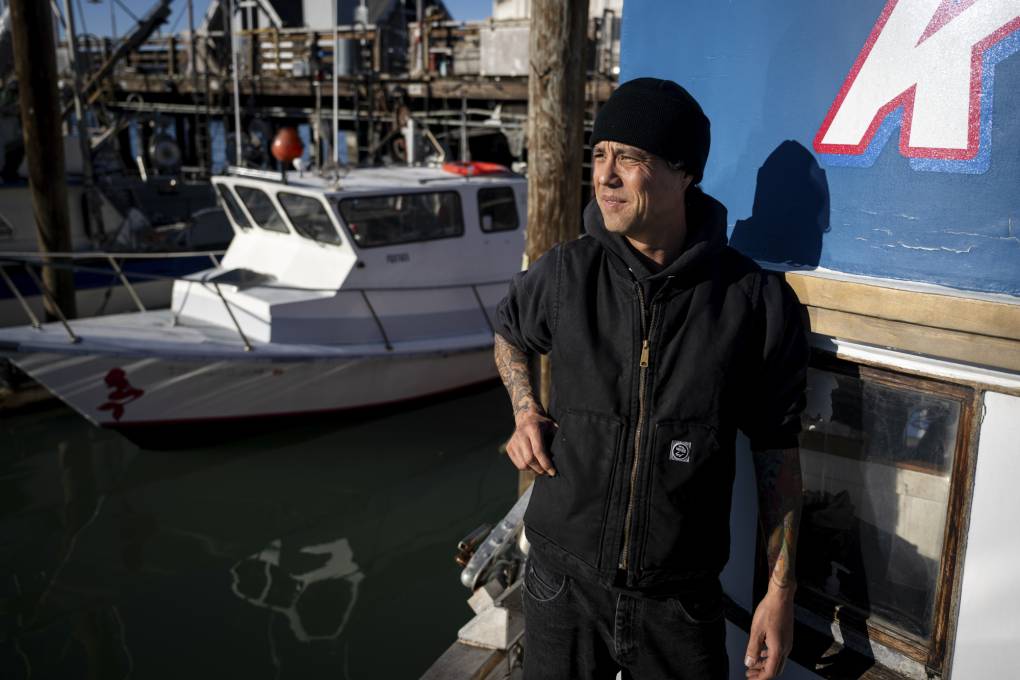
"caption": "Shawn Chen Flading stands on the bow of his boat near Pier 45 in San Francisco’s Fisherman’s Wharf neighborhood on Dec. 12, 2023. He is awaiting an announcement of the official start of California’s Dungeness crab season, which has been delayed due to the risk of humpback whales and endangered Pacific leatherback sea turtles being caught in fishing equipment.",
"description": null,
"title": "231212-crabseason-28-bl-KQED",
"credit": "Beth LaBerge/KQED",
"status": "inherit",
"altTag": "A person in a black beanie stands on the prow of a boat.",
"isLoading": false,
"fetchFailed": false
},
"news_11969590": {
"type": "attachments",
"id": "news_11969590",
"meta": {
"index": "attachments_1716263798",
"site": "news",
"id": "11969590",
"found": true
},
"parent": 0,
"imgSizes": {
"twentyfourteen-full-width": {
"file": "https://cdn.kqed.org/wp-content/uploads/sites/10/2023/12/231209-FORMERANCHORWORKERS-10-BL-KQED-1038x576.jpg",
"width": 1038,
"mimeType": "image/jpeg",
"height": 576
},
"thumbnail": {
"file": "https://cdn.kqed.org/wp-content/uploads/sites/10/2023/12/231209-FORMERANCHORWORKERS-10-BL-KQED-160x107.jpg",
"width": 160,
"mimeType": "image/jpeg",
"height": 107
},
"post-thumbnail": {
"file": "https://cdn.kqed.org/wp-content/uploads/sites/10/2023/12/231209-FORMERANCHORWORKERS-10-BL-KQED-672x372.jpg",
"width": 672,
"mimeType": "image/jpeg",
"height": 372
},
"kqedFullSize": {
"file": "https://cdn.kqed.org/wp-content/uploads/sites/10/2023/12/231209-FORMERANCHORWORKERS-10-BL-KQED.jpg",
"width": 2000,
"height": 1333
},
"large": {
"file": "https://cdn.kqed.org/wp-content/uploads/sites/10/2023/12/231209-FORMERANCHORWORKERS-10-BL-KQED-1020x680.jpg",
"width": 1020,
"mimeType": "image/jpeg",
"height": 680
},
"1536x1536": {
"file": "https://cdn.kqed.org/wp-content/uploads/sites/10/2023/12/231209-FORMERANCHORWORKERS-10-BL-KQED-1536x1024.jpg",
"width": 1536,
"mimeType": "image/jpeg",
"height": 1024
},
"full-width": {
"file": "https://cdn.kqed.org/wp-content/uploads/sites/10/2023/12/231209-FORMERANCHORWORKERS-10-BL-KQED-1920x1280.jpg",
"width": 1920,
"mimeType": "image/jpeg",
"height": 1280
},
"medium": {
"file": "https://cdn.kqed.org/wp-content/uploads/sites/10/2023/12/231209-FORMERANCHORWORKERS-10-BL-KQED-800x533.jpg",
"width": 800,
"mimeType": "image/jpeg",
"height": 533
}
},
"publishDate": 1702332605,
"modified": 1702677493,
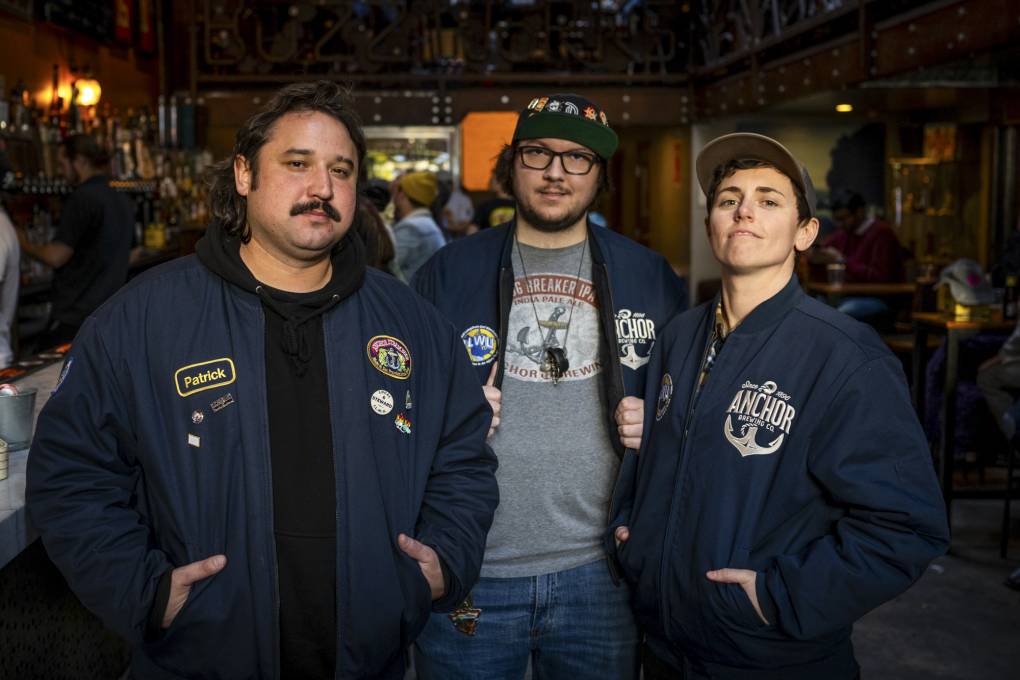
"caption": "Anchor SF Cooperative members (from left) Patrick Machel, Ryan Poulos, and Laura Dutra pose for a photo at an SF BuzzWorks event serving their last Anchor Brewing kegs and Anchor Christmas Ales in San Francisco on Dec. 9, 2023.",
"description": null,
"title": "231209-FORMERANCHORWORKERS-10-BL-KQED",
"credit": "Beth LaBerge/KQED",
"status": "inherit",
"altTag": null,
"isLoading": false,
"fetchFailed": false
},
"news_11969941": {
"type": "attachments",
"id": "news_11969941",
"meta": {
"index": "attachments_1716263798",
"site": "news",
"id": "11969941",
"found": true
},
"parent": 0,
"imgSizes": {
"twentyfourteen-full-width": {
"file": "https://cdn.kqed.org/wp-content/uploads/sites/10/2023/12/231214-SF-OVERDOSE-GETTY-SS-KQED-1038x576.jpg",
"width": 1038,
"mimeType": "image/jpeg",
"height": 576
},
"thumbnail": {
"file": "https://cdn.kqed.org/wp-content/uploads/sites/10/2023/12/231214-SF-OVERDOSE-GETTY-SS-KQED-160x107.jpg",
"width": 160,
"mimeType": "image/jpeg",
"height": 107
},
"post-thumbnail": {
"file": "https://cdn.kqed.org/wp-content/uploads/sites/10/2023/12/231214-SF-OVERDOSE-GETTY-SS-KQED-672x372.jpg",
"width": 672,
"mimeType": "image/jpeg",
"height": 372
},
"kqedFullSize": {
"file": "https://cdn.kqed.org/wp-content/uploads/sites/10/2023/12/231214-SF-OVERDOSE-GETTY-SS-KQED.jpg",
"width": 2000,
"height": 1334
},
"large": {
"file": "https://cdn.kqed.org/wp-content/uploads/sites/10/2023/12/231214-SF-OVERDOSE-GETTY-SS-KQED-1020x680.jpg",
"width": 1020,
"mimeType": "image/jpeg",
"height": 680
},
"1536x1536": {
"file": "https://cdn.kqed.org/wp-content/uploads/sites/10/2023/12/231214-SF-OVERDOSE-GETTY-SS-KQED-1536x1025.jpg",
"width": 1536,
"mimeType": "image/jpeg",
"height": 1025
},
"full-width": {
"file": "https://cdn.kqed.org/wp-content/uploads/sites/10/2023/12/231214-SF-OVERDOSE-GETTY-SS-KQED-1920x1281.jpg",
"width": 1920,
"mimeType": "image/jpeg",
"height": 1281
},
"medium": {
"file": "https://cdn.kqed.org/wp-content/uploads/sites/10/2023/12/231214-SF-OVERDOSE-GETTY-SS-KQED-800x534.jpg",
"width": 800,
"mimeType": "image/jpeg",
"height": 534
}
},
"publishDate": 1702603508,
"modified": 1710287802,
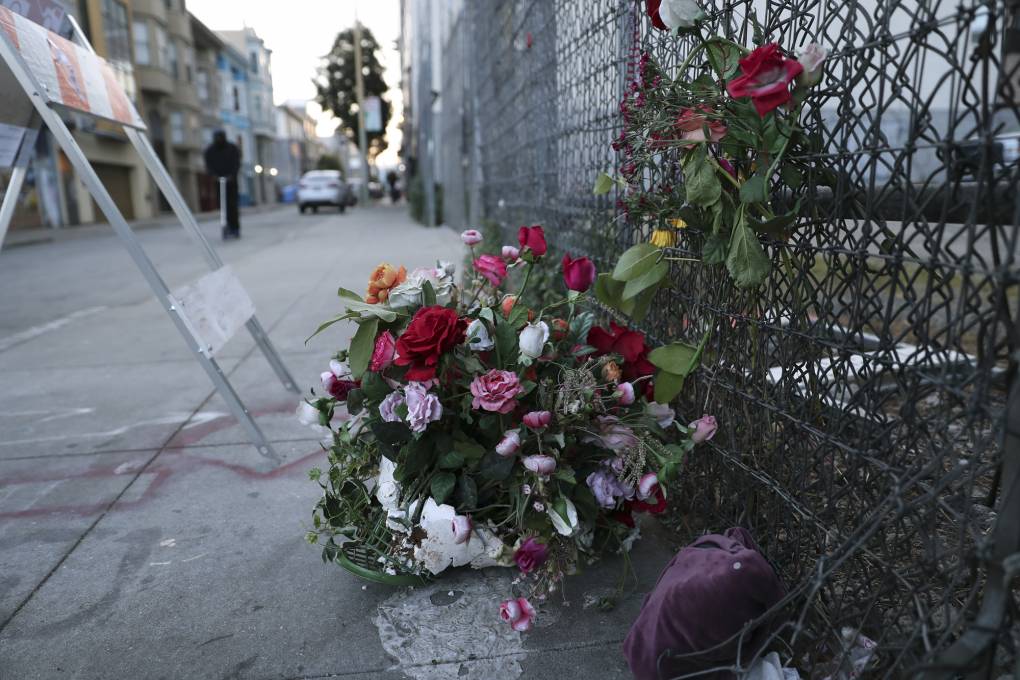
"caption": "Flowers lay on the sidewalk where a 16-year-old girl died from a possible overdose in the SoMa neighborhood of San Francisco on Feb. 20, 2022.",
"description": null,
"title": "teendeath0220",
"credit": "Scott Strazzante/San Francisco Chronicle via Getty Images",
"status": "inherit",
"altTag": "A bouquet of flowers lays on the sidewalk beside a chainlink fence in an urban setting.",
"isLoading": false,
"fetchFailed": false
},
"news_11969878": {
"type": "attachments",
"id": "news_11969878",
"meta": {
"index": "attachments_1716263798",
"site": "news",
"id": "11969878",
"found": true
},
"parent": 11969846,
"imgSizes": {
"twentyfourteen-full-width": {
"file": "https://cdn.kqed.org/wp-content/uploads/sites/10/2023/12/231017-StonecutterSilicosis-002-BL-qut-1038x576.jpg",
"width": 1038,
"mimeType": "image/jpeg",
"height": 576
},
"thumbnail": {
"file": "https://cdn.kqed.org/wp-content/uploads/sites/10/2023/12/231017-StonecutterSilicosis-002-BL-qut-160x107.jpg",
"width": 160,
"mimeType": "image/jpeg",
"height": 107
},
"post-thumbnail": {
"file": "https://cdn.kqed.org/wp-content/uploads/sites/10/2023/12/231017-StonecutterSilicosis-002-BL-qut-672x372.jpg",
"width": 672,
"mimeType": "image/jpeg",
"height": 372
},
"kqedFullSize": {
"file": "https://cdn.kqed.org/wp-content/uploads/sites/10/2023/12/231017-StonecutterSilicosis-002-BL-qut.jpg",
"width": 1920,
"height": 1280
},
"large": {
"file": "https://cdn.kqed.org/wp-content/uploads/sites/10/2023/12/231017-StonecutterSilicosis-002-BL-qut-1020x680.jpg",
"width": 1020,
"mimeType": "image/jpeg",
"height": 680
},
"1536x1536": {
"file": "https://cdn.kqed.org/wp-content/uploads/sites/10/2023/12/231017-StonecutterSilicosis-002-BL-qut-1536x1024.jpg",
"width": 1536,
"mimeType": "image/jpeg",
"height": 1024
},
"medium": {
"file": "https://cdn.kqed.org/wp-content/uploads/sites/10/2023/12/231017-StonecutterSilicosis-002-BL-qut-800x533.jpg",
"width": 800,
"mimeType": "image/jpeg",
"height": 533
}
},
"publishDate": 1702589130,
"modified": 1702589197,
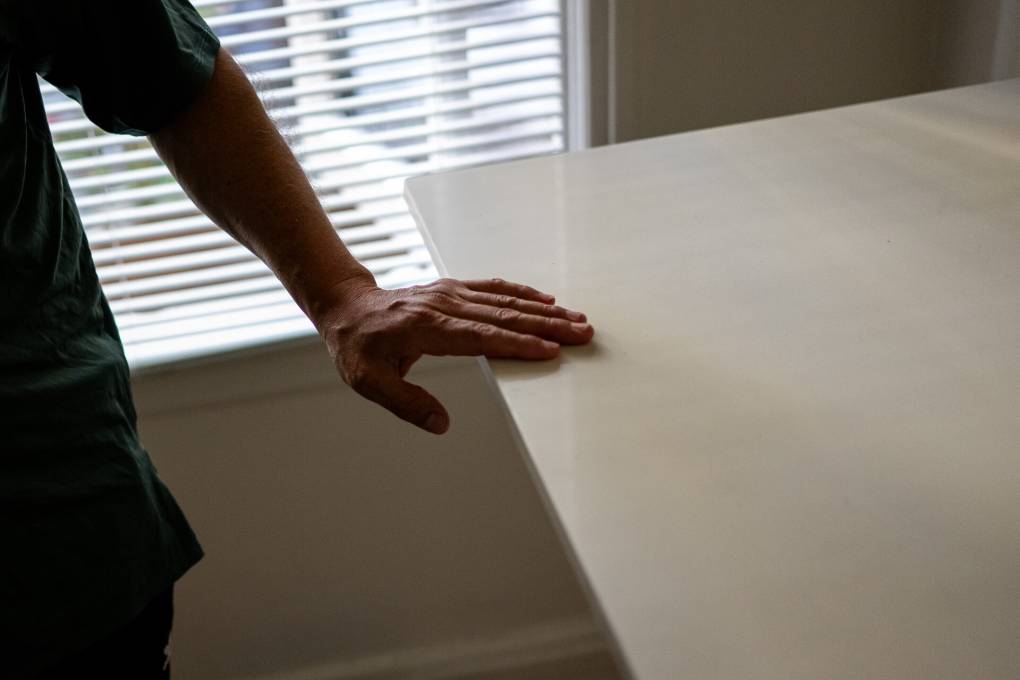
"caption": "Jorge Moreno places his hand on a table that he cut at his home in San Francisco on Oct. 17, 2023.",
"description": null,
"title": "231017-StonecutterSilicosis-002-BL-qut",
"credit": "Beth LaBerge/KQED",
"status": "inherit",
"altTag": "A man's hand is seen resting on a table.",
"isLoading": false,
"fetchFailed": false
},
"news_11969002": {
"type": "attachments",
"id": "news_11969002",
"meta": {
"index": "attachments_1716263798",
"site": "news",
"id": "11969002",
"found": true
},
"parent": 0,
"imgSizes": {
"twentyfourteen-full-width": {
"file": "https://ww2.kqed.org/app/uploads/sites/10/2023/12/231204-WORLD-AIDS-DAY-GETTY-JS-KQED-1038x576.jpg",
"width": 1038,
"mimeType": "image/jpeg",
"height": 576
},
"thumbnail": {
"file": "https://ww2.kqed.org/app/uploads/sites/10/2023/12/231204-WORLD-AIDS-DAY-GETTY-JS-KQED-160x101.jpg",
"width": 160,
"mimeType": "image/jpeg",
"height": 101
},
"post-thumbnail": {
"file": "https://ww2.kqed.org/app/uploads/sites/10/2023/12/231204-WORLD-AIDS-DAY-GETTY-JS-KQED-672x372.jpg",
"width": 672,
"mimeType": "image/jpeg",
"height": 372
},
"kqedFullSize": {
"file": "https://ww2.kqed.org/app/uploads/sites/10/2023/12/231204-WORLD-AIDS-DAY-GETTY-JS-KQED.jpg",
"width": 2000,
"height": 1265
},
"large": {
"file": "https://ww2.kqed.org/app/uploads/sites/10/2023/12/231204-WORLD-AIDS-DAY-GETTY-JS-KQED-1020x645.jpg",
"width": 1020,
"mimeType": "image/jpeg",
"height": 645
},
"1536x1536": {
"file": "https://ww2.kqed.org/app/uploads/sites/10/2023/12/231204-WORLD-AIDS-DAY-GETTY-JS-KQED-1536x972.jpg",
"width": 1536,
"mimeType": "image/jpeg",
"height": 972
},
"full-width": {
"file": "https://ww2.kqed.org/app/uploads/sites/10/2023/12/231204-WORLD-AIDS-DAY-GETTY-JS-KQED-1920x1214.jpg",
"width": 1920,
"mimeType": "image/jpeg",
"height": 1214
},
"medium": {
"file": "https://ww2.kqed.org/app/uploads/sites/10/2023/12/231204-WORLD-AIDS-DAY-GETTY-JS-KQED-800x506.jpg",
"width": 800,
"mimeType": "image/jpeg",
"height": 506
}
},
"publishDate": 1701736984,
"modified": 1701751509,
"caption": "The names of the victims of AIDS are seen written in chalk on Castro Street in San Francisco on Dec. 1, 2023.",
"description": null,
"title": "World Aids Day Marked In San Francisco",
"credit": "Justin Sullivan/Getty Images",
"status": "inherit",
"altTag": "A large red ribbon and several names are written in chalk on a sidewalk.",
"isLoading": false,
"fetchFailed": false
},
"news_11968229": {
"type": "attachments",
"id": "news_11968229",
"meta": {
"index": "attachments_1716263798",
"site": "news",
"id": "11968229",
"found": true
},
"parent": 11968298,
"imgSizes": {
"twentyfourteen-full-width": {
"file": "https://ww2.kqed.org/app/uploads/sites/10/2023/11/231122-MissionStVendors-25-BL-1038x576.jpg",
"width": 1038,
"mimeType": "image/jpeg",
"height": 576
},
"thumbnail": {
"file": "https://ww2.kqed.org/app/uploads/sites/10/2023/11/231122-MissionStVendors-25-BL-160x107.jpg",
"width": 160,
"mimeType": "image/jpeg",
"height": 107
},
"post-thumbnail": {
"file": "https://ww2.kqed.org/app/uploads/sites/10/2023/11/231122-MissionStVendors-25-BL-672x372.jpg",
"width": 672,
"mimeType": "image/jpeg",
"height": 372
},
"kqedFullSize": {
"file": "https://ww2.kqed.org/app/uploads/sites/10/2023/11/231122-MissionStVendors-25-BL.jpg",
"width": 1920,
"height": 1280
},
"large": {
"file": "https://ww2.kqed.org/app/uploads/sites/10/2023/11/231122-MissionStVendors-25-BL-1020x680.jpg",
"width": 1020,
"mimeType": "image/jpeg",
"height": 680
},
"1536x1536": {
"file": "https://ww2.kqed.org/app/uploads/sites/10/2023/11/231122-MissionStVendors-25-BL-1536x1024.jpg",
"width": 1536,
"mimeType": "image/jpeg",
"height": 1024
},
"medium": {
"file": "https://ww2.kqed.org/app/uploads/sites/10/2023/11/231122-MissionStVendors-25-BL-800x533.jpg",
"width": 800,
"mimeType": "image/jpeg",
"height": 533
}
},
"publishDate": 1700685014,
"modified": 1701037657,
"caption": "Sofia Lopez, a permitted vendor, speaks alongside members of the recently formed Mission Vendor Association gather at the 24th Street BART plaza during a press conference in San Francisco on Nov. 22, 2023, condemning an upcoming rule banning vending on Mission Street. The ban would extend from Cesar Chavez Street to 14th Street on Mission Street, with some exceptions, and is set to begin on November 27th.",
"description": null,
"title": "231122-MissionStVendors-25-BL",
"credit": "Beth LaBerge/KQED",
"status": "inherit",
"altTag": "A woman speaks into news microphones with a group of people behind.",
"isLoading": false,
"fetchFailed": false
},
"news_11968474": {
"type": "attachments",
"id": "news_11968474",
"meta": {
"index": "attachments_1716263798",
"site": "news",
"id": "11968474",
"found": true
},
"parent": 11968382,
"imgSizes": {
"twentyfourteen-full-width": {
"file": "https://ww2.kqed.org/app/uploads/sites/10/2023/11/231127-VendorRally-31-BL-qut-1038x576.jpg",
"width": 1038,
"mimeType": "image/jpeg",
"height": 576
},
"thumbnail": {
"file": "https://ww2.kqed.org/app/uploads/sites/10/2023/11/231127-VendorRally-31-BL-qut-160x107.jpg",
"width": 160,
"mimeType": "image/jpeg",
"height": 107
},
"post-thumbnail": {
"file": "https://ww2.kqed.org/app/uploads/sites/10/2023/11/231127-VendorRally-31-BL-qut-672x372.jpg",
"width": 672,
"mimeType": "image/jpeg",
"height": 372
},
"kqedFullSize": {
"file": "https://ww2.kqed.org/app/uploads/sites/10/2023/11/231127-VendorRally-31-BL-qut.jpg",
"width": 1920,
"height": 1280
},
"large": {
"file": "https://ww2.kqed.org/app/uploads/sites/10/2023/11/231127-VendorRally-31-BL-qut-1020x680.jpg",
"width": 1020,
"mimeType": "image/jpeg",
"height": 680
},
"1536x1536": {
"file": "https://ww2.kqed.org/app/uploads/sites/10/2023/11/231127-VendorRally-31-BL-qut-1536x1024.jpg",
"width": 1536,
"mimeType": "image/jpeg",
"height": 1024
},
"medium": {
"file": "https://ww2.kqed.org/app/uploads/sites/10/2023/11/231127-VendorRally-31-BL-qut-800x533.jpg",
"width": 800,
"mimeType": "image/jpeg",
"height": 533
}
},
"publishDate": 1701204135,
"modified": 1701207278,
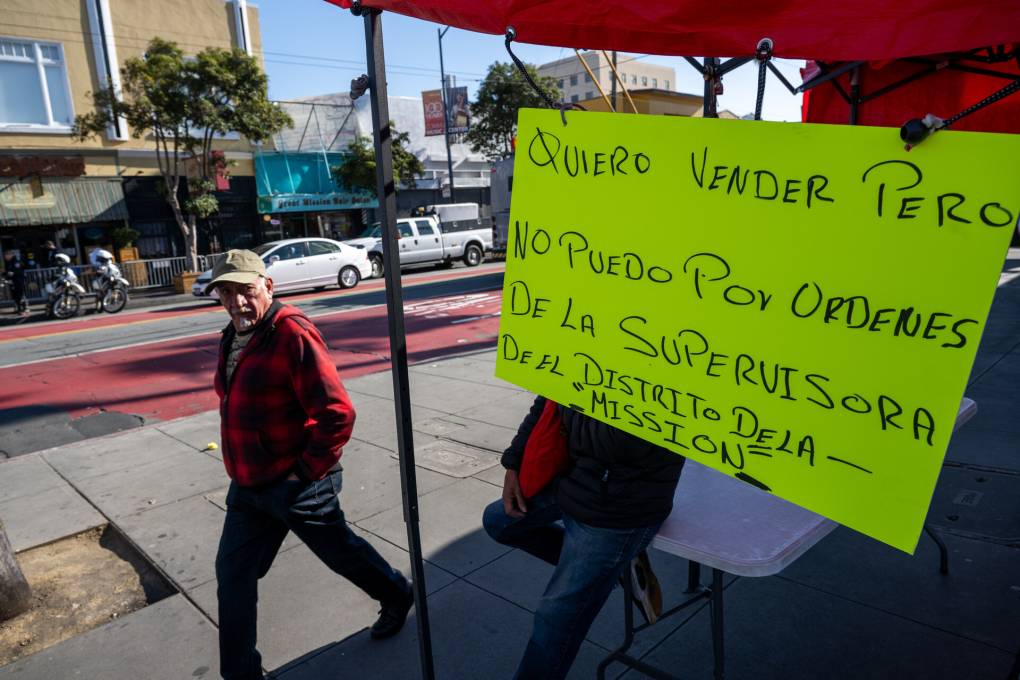
"caption": "Shelters and tables set up by street vendors sit empty near the 24th Street BART plaza on Nov. 27, 2023, the first day of a 90-day street vending ban in the area, which vendors showed up to protest. The sign in Spanish says: 'I want to sell, but I can't due to orders from the supervisor of the Mission District.'",
"description": null,
"title": "231127-VendorRally-31-BL-qut",
"credit": "Beth LaBerge/KQED",
"status": "inherit",
"altTag": "A yellow sign in Spanish hangs from an empty temporary shelter on the street.",
"isLoading": false,
"fetchFailed": false
},
"news_11968236": {
"type": "attachments",
"id": "news_11968236",
"meta": {
"index": "attachments_1716263798",
"site": "news",
"id": "11968236",
"found": true
},
"parent": 0,
"imgSizes": {
"twentyfourteen-full-width": {
"file": "https://ww2.kqed.org/app/uploads/sites/10/2023/11/231122-MissionStVendors-14-BL-1-1038x576.jpg",
"width": 1038,
"mimeType": "image/jpeg",
"height": 576
},
"thumbnail": {
"file": "https://ww2.kqed.org/app/uploads/sites/10/2023/11/231122-MissionStVendors-14-BL-1-160x107.jpg",
"width": 160,
"mimeType": "image/jpeg",
"height": 107
},
"post-thumbnail": {
"file": "https://ww2.kqed.org/app/uploads/sites/10/2023/11/231122-MissionStVendors-14-BL-1-672x372.jpg",
"width": 672,
"mimeType": "image/jpeg",
"height": 372
},
"kqedFullSize": {
"file": "https://ww2.kqed.org/app/uploads/sites/10/2023/11/231122-MissionStVendors-14-BL-1.jpg",
"width": 1920,
"height": 1280
},
"large": {
"file": "https://ww2.kqed.org/app/uploads/sites/10/2023/11/231122-MissionStVendors-14-BL-1-1020x680.jpg",
"width": 1020,
"mimeType": "image/jpeg",
"height": 680
},
"1536x1536": {
"file": "https://ww2.kqed.org/app/uploads/sites/10/2023/11/231122-MissionStVendors-14-BL-1-1536x1024.jpg",
"width": 1536,
"mimeType": "image/jpeg",
"height": 1024
},
"medium": {
"file": "https://ww2.kqed.org/app/uploads/sites/10/2023/11/231122-MissionStVendors-14-BL-1-800x533.jpg",
"width": 800,
"mimeType": "image/jpeg",
"height": 533
}
},
"publishDate": 1700685693,
"modified": 1701038970,
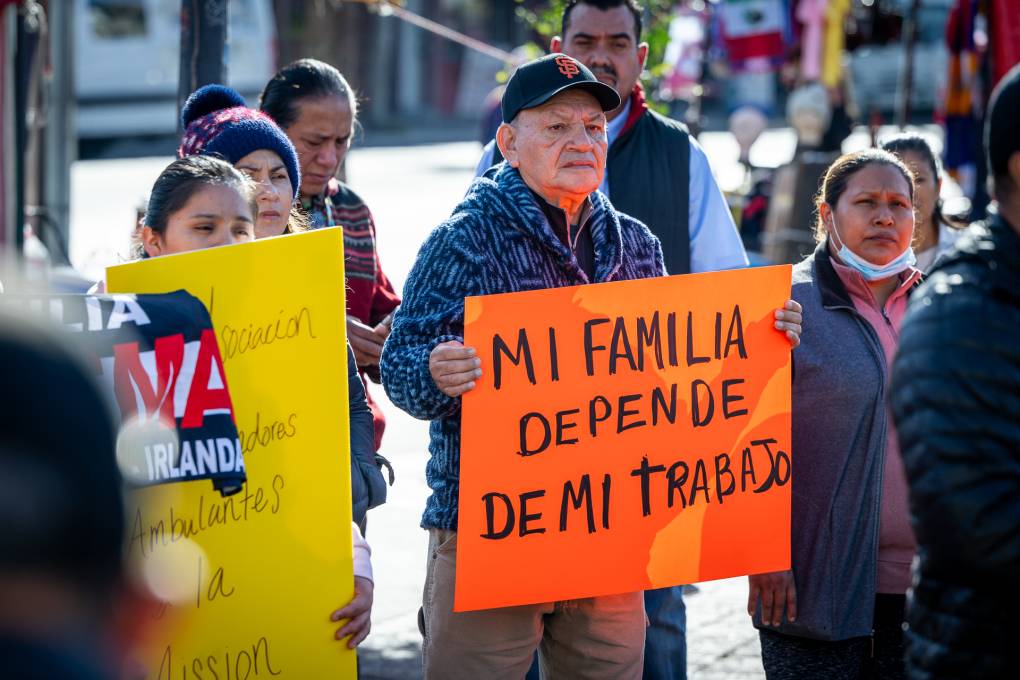
"caption": "Members of the recently formed Mission Vendor Association gather at the 24th Street BART plaza for a press conference in San Francisco on Nov. 22, 2023, condemning an upcoming rule banning vending on Mission Street. The ban would extend from Cesar Chavez Street to 14th Street on Mission Street, with some exceptions, and is set to begin on Nov. 27.",
"description": null,
"title": "231122-MissionStVendors-14-BL",
"credit": "Beth LaBerge/KQED",
"status": "inherit",
"altTag": "A man holds a neon orange protest sign in Spanish with several people around him.",
"isLoading": false,
"fetchFailed": false
},
"news_11968000": {
"type": "attachments",
"id": "news_11968000",
"meta": {
"index": "attachments_1716263798",
"site": "news",
"id": "11968000",
"found": true
},
"parent": 0,
"imgSizes": {
"twentyfourteen-full-width": {
"file": "https://ww2.kqed.org/app/uploads/sites/10/2023/11/009_KQED_SheriffPressConference_06082023-qut-1038x576.jpg",
"width": 1038,
"mimeType": "image/jpeg",
"height": 576
},
"thumbnail": {
"file": "https://ww2.kqed.org/app/uploads/sites/10/2023/11/009_KQED_SheriffPressConference_06082023-qut-160x107.jpg",
"width": 160,
"mimeType": "image/jpeg",
"height": 107
},
"post-thumbnail": {
"file": "https://ww2.kqed.org/app/uploads/sites/10/2023/11/009_KQED_SheriffPressConference_06082023-qut-672x372.jpg",
"width": 672,
"mimeType": "image/jpeg",
"height": 372
},
"kqedFullSize": {
"file": "https://ww2.kqed.org/app/uploads/sites/10/2023/11/009_KQED_SheriffPressConference_06082023-qut.jpg",
"width": 1920,
"height": 1280
},
"large": {
"file": "https://ww2.kqed.org/app/uploads/sites/10/2023/11/009_KQED_SheriffPressConference_06082023-qut-1020x680.jpg",
"width": 1020,
"mimeType": "image/jpeg",
"height": 680
},
"1536x1536": {
"file": "https://ww2.kqed.org/app/uploads/sites/10/2023/11/009_KQED_SheriffPressConference_06082023-qut-1536x1024.jpg",
"width": 1536,
"mimeType": "image/jpeg",
"height": 1024
},
"medium": {
"file": "https://ww2.kqed.org/app/uploads/sites/10/2023/11/009_KQED_SheriffPressConference_06082023-qut-800x533.jpg",
"width": 800,
"mimeType": "image/jpeg",
"height": 533
}
},
"publishDate": 1700526213,
"modified": 1700526273,
"caption": "Sheriff Paul Miyamoto speaks during a news conference in Civic Center in San Francisco on June 8, 2023.",
"description": null,
"title": "009_KQED_SheriffPressConference_06082023-qut",
"credit": "Beth LaBerge/KQED",
"status": "inherit",
"altTag": "A sheriff in uniform speaks from a podium.",
"isLoading": false,
"fetchFailed": false
},
"news_11967706": {
"type": "attachments",
"id": "news_11967706",
"meta": {
"index": "attachments_1716263798",
"site": "news",
"id": "11967706",
"found": true
},
"parent": 11970450,
"imgSizes": {
"twentyfourteen-full-width": {
"file": "https://cdn.kqed.org/wp-content/uploads/sites/10/2023/11/231115-APECWalkingTour-44-BL-1038x576.jpg",
"width": 1038,
"mimeType": "image/jpeg",
"height": 576
},
"thumbnail": {
"file": "https://cdn.kqed.org/wp-content/uploads/sites/10/2023/11/231115-APECWalkingTour-44-BL-160x107.jpg",
"width": 160,
"mimeType": "image/jpeg",
"height": 107
},
"post-thumbnail": {
"file": "https://cdn.kqed.org/wp-content/uploads/sites/10/2023/11/231115-APECWalkingTour-44-BL-672x372.jpg",
"width": 672,
"mimeType": "image/jpeg",
"height": 372
},
"kqedFullSize": {
"file": "https://cdn.kqed.org/wp-content/uploads/sites/10/2023/11/231115-APECWalkingTour-44-BL.jpg",
"width": 1920,
"height": 1280
},
"large": {
"file": "https://cdn.kqed.org/wp-content/uploads/sites/10/2023/11/231115-APECWalkingTour-44-BL-1020x680.jpg",
"width": 1020,
"mimeType": "image/jpeg",
"height": 680
},
"1536x1536": {
"file": "https://cdn.kqed.org/wp-content/uploads/sites/10/2023/11/231115-APECWalkingTour-44-BL-1536x1024.jpg",
"width": 1536,
"mimeType": "image/jpeg",
"height": 1024
},
"medium": {
"file": "https://cdn.kqed.org/wp-content/uploads/sites/10/2023/11/231115-APECWalkingTour-44-BL-800x533.jpg",
"width": 800,
"mimeType": "image/jpeg",
"height": 533
}
},
"publishDate": 1700172831,
"modified": 1703026325,
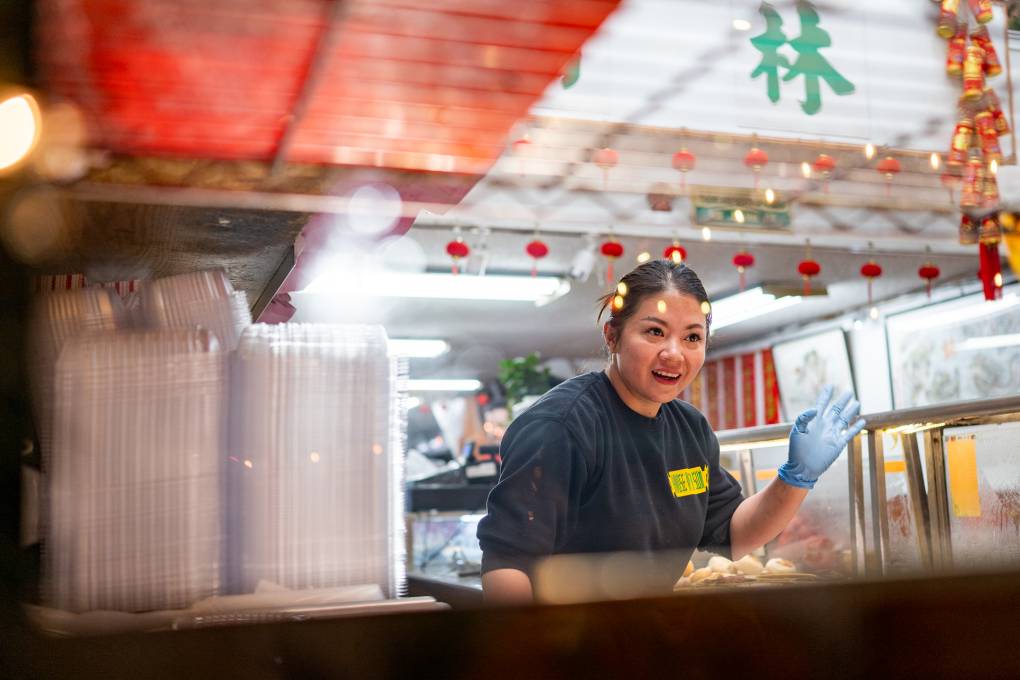
"caption": "Ying Huang, owner of House of Dim Sum, waves at Steven Lee and Beverly Yip as they lead a Chinatown walking tour for attendees of APEC in San Francisco on Wednesday evening.",
"description": null,
"title": "231115-APECWalkingTour-44-BL",
"credit": "Beth LaBerge/KQED",
"status": "inherit",
"altTag": "A woman waves through a window of a restaurant.",
"isLoading": false,
"fetchFailed": false
},
"news_11967664": {
"type": "attachments",
"id": "news_11967664",
"meta": {
"index": "attachments_1716263798",
"site": "news",
"id": "11967664",
"found": true
},
"parent": 0,
"imgSizes": {
"twentyfourteen-full-width": {
"file": "https://cdn.kqed.org/wp-content/uploads/sites/10/2023/11/230831-SAFE-USE-POP-UP-MD-06-qut-1038x576.jpg",
"width": 1038,
"mimeType": "image/jpeg",
"height": 576
},
"thumbnail": {
"file": "https://cdn.kqed.org/wp-content/uploads/sites/10/2023/11/230831-SAFE-USE-POP-UP-MD-06-qut-160x107.jpg",
"width": 160,
"mimeType": "image/jpeg",
"height": 107
},
"post-thumbnail": {
"file": "https://cdn.kqed.org/wp-content/uploads/sites/10/2023/11/230831-SAFE-USE-POP-UP-MD-06-qut-672x372.jpg",
"width": 672,
"mimeType": "image/jpeg",
"height": 372
},
"kqedFullSize": {
"file": "https://cdn.kqed.org/wp-content/uploads/sites/10/2023/11/230831-SAFE-USE-POP-UP-MD-06-qut.jpg",
"width": 1920,
"height": 1280
},
"large": {
"file": "https://cdn.kqed.org/wp-content/uploads/sites/10/2023/11/230831-SAFE-USE-POP-UP-MD-06-qut-1020x680.jpg",
"width": 1020,
"mimeType": "image/jpeg",
"height": 680
},
"1536x1536": {
"file": "https://cdn.kqed.org/wp-content/uploads/sites/10/2023/11/230831-SAFE-USE-POP-UP-MD-06-qut-1536x1024.jpg",
"width": 1536,
"mimeType": "image/jpeg",
"height": 1024
},
"medium": {
"file": "https://cdn.kqed.org/wp-content/uploads/sites/10/2023/11/230831-SAFE-USE-POP-UP-MD-06-qut-800x533.jpg",
"width": 800,
"mimeType": "image/jpeg",
"height": 533
}
},
"publishDate": 1700169861,
"modified": 1705541658,
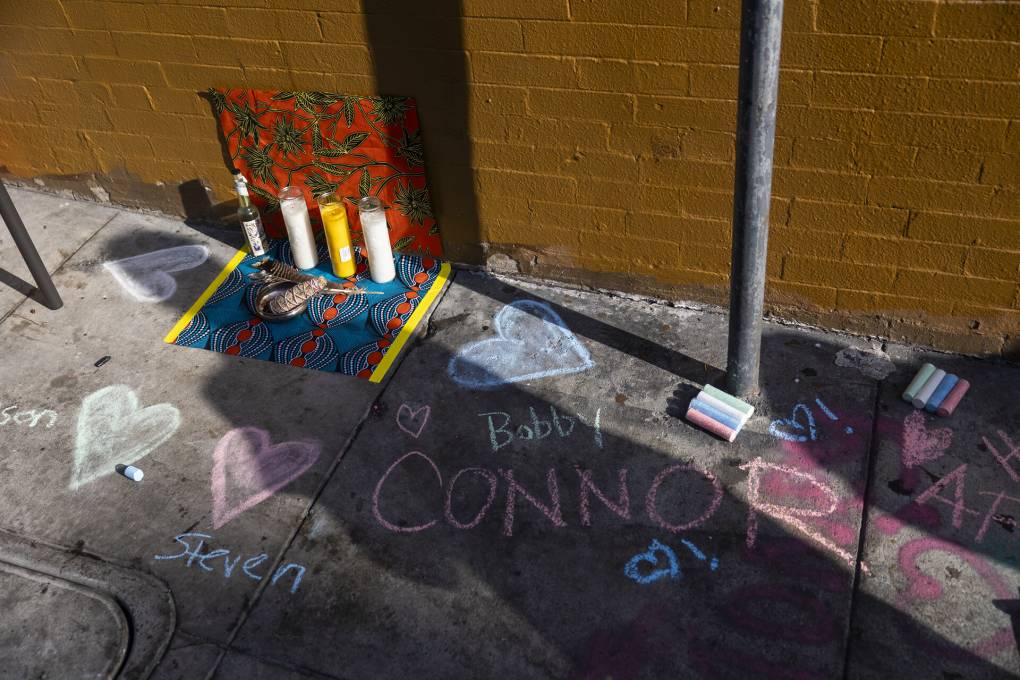
"caption": "A street memorial for people who recently died of drug overdoses is displayed outside of a supervised drug use pop-up site in San Francisco on Aug. 31, 2023.",
"description": null,
"title": "230831-SAFE USE POP UP-MD-06-qut",
"credit": "Martin do Nascimento/KQED",
"status": "inherit",
"altTag": "Names written in chalk appear on the sidewalk in memorial. Candles are also placed on a mat. Packs of chalk are scattered on the ground. The names \"Bobby,\" Connor,\" and \"Steven\" can be seen.",
"isLoading": false,
"fetchFailed": false
}
},
"audioPlayerReducer": {
"postId": "stream_live",
"isPaused": true,
"isPlaying": false,
"pfsActive": false,
"pledgeModalIsOpen": true,
"playerDrawerIsOpen": false,
"liveAudioPlayStartedAt": 0,
"liveAudioPlayContext": ""
},
"authorsReducer": {
"byline_news_11970292": {
"type": "authors",
"id": "byline_news_11970292",
"meta": {
"override": true
},
"slug": "byline_news_11970292",
"name": "KQED Photo Team",
"isLoading": false
},
"byline_news_11967659": {
"type": "authors",
"id": "byline_news_11967659",
"meta": {
"override": true
},
"slug": "byline_news_11967659",
"name": "Naomi Vanderlip",
"isLoading": false
},
"ecruzguevarra": {
"type": "authors",
"id": "8654",
"meta": {
"index": "authors_1716337520",
"id": "8654",
"found": true
},
"name": "Ericka Cruz Guevarra",
"firstName": "Ericka",
"lastName": "Cruz Guevarra",
"slug": "ecruzguevarra",
"email": "ecruzguevarra@kqed.org",
"display_author_email": true,
"staff_mastheads": [
"news"
],
"title": "Producer, The Bay Podcast",
"bio": "Ericka Cruz Guevarra is host of \u003ca href=\"https://www.kqed.org/podcasts/thebay\">\u003cem>The Bay\u003c/em>\u003c/a> podcast at KQED. Before host, she was the show’s producer. Her work in that capacity includes a three-part reported series on policing in Vallejo, which won a 2020 excellence in journalism award from the Society of Professional Journalists. Ericka has worked as a breaking news reporter at Oregon Public Broadcasting, helped produce the Code Switch podcast, and was KQED’s inaugural Raul Ramirez Diversity Fund intern. She’s also an alumna of NPR’s Next Generation Radio program. Send her an email if you have strong feelings about whether Fairfield and Suisun City are the Bay. Ericka is represented by SAG-AFTRA.",
"avatar": "https://secure.gravatar.com/avatar/accefc1de4bafc7e234b69bcb9b6f6536c130fd84709bc3069ef11a78787e1bb?s=600&d=blank&r=g",
"twitter": "NotoriousECG",
"bluesky": null,
"facebook": null,
"instagram": null,
"linkedin": null,
"sites": [
{
"site": "arts",
"roles": [
"subscriber"
]
},
{
"site": "news",
"roles": [
"editor",
"manage_categories"
]
},
{
"site": "futureofyou",
"roles": [
"subscriber"
]
},
{
"site": "stateofhealth",
"roles": [
"subscriber"
]
},
{
"site": "science",
"roles": [
"editor"
]
},
{
"site": "forum",
"roles": [
"subscriber"
]
}
],
"headData": {
"title": "Ericka Cruz Guevarra | KQED",
"description": "Producer, The Bay Podcast",
"ogImgSrc": "https://secure.gravatar.com/avatar/accefc1de4bafc7e234b69bcb9b6f6536c130fd84709bc3069ef11a78787e1bb?s=600&d=blank&r=g",
"twImgSrc": "https://secure.gravatar.com/avatar/accefc1de4bafc7e234b69bcb9b6f6536c130fd84709bc3069ef11a78787e1bb?s=600&d=blank&r=g"
},
"isLoading": false,
"link": "/author/ecruzguevarra"
},
"fjhabvala": {
"type": "authors",
"id": "8659",
"meta": {
"index": "authors_1716337520",
"id": "8659",
"found": true
},
"name": "Farida Jhabvala Romero",
"firstName": "Farida",
"lastName": "Jhabvala Romero",
"slug": "fjhabvala",
"email": "fjhabvala@kqed.org",
"display_author_email": true,
"staff_mastheads": [
"news"
],
"title": "KQED Contributor",
"bio": "Farida Jhabvala Romero is a Labor Correspondent for KQED. She previously covered immigration. Farida was \u003ca href=\"https://www.ccnma.org/2022-most-influential-latina-journalists\">named\u003c/a> one of the 10 Most Influential Latina Journalists in California in 2022 by the California Chicano News Media Association. Her work has won awards from the Society of Professional Journalists (Northern California), as well as a national and regional Edward M. Murrow Award for the collaborative reporting projects “Dangerous Air” and “Graying California.” Before joining KQED, Farida worked as a producer at Radio Bilingüe, a national public radio network. Farida earned her master’s degree in journalism from Stanford University.",
"avatar": "https://secure.gravatar.com/avatar/f9f022d4e2609741874222a1e9d41f48fea74011aa7c615eef91d9a50c944ebe?s=600&d=blank&r=g",
"twitter": "FaridaJhabvala",
"bluesky": null,
"facebook": null,
"instagram": null,
"linkedin": "https://www.linkedin.com/in/faridajhabvala/",
"sites": [
{
"site": "news",
"roles": [
"editor"
]
},
{
"site": "stateofhealth",
"roles": [
"author"
]
},
{
"site": "liveblog",
"roles": [
"author"
]
}
],
"headData": {
"title": "Farida Jhabvala Romero | KQED",
"description": "KQED Contributor",
"ogImgSrc": "https://secure.gravatar.com/avatar/f9f022d4e2609741874222a1e9d41f48fea74011aa7c615eef91d9a50c944ebe?s=600&d=blank&r=g",
"twImgSrc": "https://secure.gravatar.com/avatar/f9f022d4e2609741874222a1e9d41f48fea74011aa7c615eef91d9a50c944ebe?s=600&d=blank&r=g"
},
"isLoading": false,
"link": "/author/fjhabvala"
},
"amontecillo": {
"type": "authors",
"id": "11649",
"meta": {
"index": "authors_1716337520",
"id": "11649",
"found": true
},
"name": "Alan Montecillo",
"firstName": "Alan",
"lastName": "Montecillo",
"slug": "amontecillo",
"email": "amontecillo@kqed.org",
"display_author_email": false,
"staff_mastheads": [
"news"
],
"title": "KQED Contributor",
"bio": "Alan Montecillo is the senior editor of \u003cem>\u003ca href=\"http://kqed.org/thebay\">The Bay\u003c/a>, \u003c/em> KQED's local news podcast. Before moving to the Bay Area, he worked as a senior talk show producer for WILL in Champaign-Urbana, Illinois and at Oregon Public Broadcasting in Portland, Oregon. He has won journalism awards from the Society of Professional Journalists Northern California, the Public Media Journalists Association, The Signal Awards, and has also received a regional Edward R. Murrow award. Alan is a Filipino American from Hong Kong and a graduate of Reed College.",
"avatar": "https://secure.gravatar.com/avatar/268f53a2066899ea9efdd8a5900218b17c822d9862cbc9326cccec53ef41d349?s=600&d=blank&r=g",
"twitter": "alanmontecillo",
"bluesky": null,
"facebook": null,
"instagram": null,
"linkedin": null,
"sites": [
{
"site": "",
"roles": [
"editor"
]
},
{
"site": "news",
"roles": [
"editor",
"manage_categories"
]
}
],
"headData": {
"title": "Alan Montecillo | KQED",
"description": "KQED Contributor",
"ogImgSrc": "https://secure.gravatar.com/avatar/268f53a2066899ea9efdd8a5900218b17c822d9862cbc9326cccec53ef41d349?s=600&d=blank&r=g",
"twImgSrc": "https://secure.gravatar.com/avatar/268f53a2066899ea9efdd8a5900218b17c822d9862cbc9326cccec53ef41d349?s=600&d=blank&r=g"
},
"isLoading": false,
"link": "/author/amontecillo"
},
"adahlstromeckman": {
"type": "authors",
"id": "11785",
"meta": {
"index": "authors_1716337520",
"id": "11785",
"found": true
},
"name": "Azul Dahlstrom-Eckman",
"firstName": "Azul",
"lastName": "Dahlstrom-Eckman",
"slug": "adahlstromeckman",
"email": "adahlstrom-eckman@kqed.org",
"display_author_email": true,
"staff_mastheads": [],
"title": "Reporter",
"bio": "Azul is a reporter for KQED focusing on transportation and features. He joined KQED in 2021 as an alumna of KALW's Audio Academy radio journalism training program.",
"avatar": "https://secure.gravatar.com/avatar/9cb750298435add7815a777f55bf1f46845c1386bb8452555c60a7b820b5aba3?s=600&d=blank&r=g",
"twitter": "@zuliemann",
"bluesky": "@azul415.bsky.social",
"facebook": null,
"instagram": null,
"linkedin": null,
"sites": [
{
"site": "arts",
"roles": [
"editor"
]
},
{
"site": "news",
"roles": [
"editor"
]
},
{
"site": "science",
"roles": [
"editor"
]
},
{
"site": "liveblog",
"roles": [
"author"
]
}
],
"headData": {
"title": "Azul Dahlstrom-Eckman | KQED",
"description": "Reporter",
"ogImgSrc": "https://secure.gravatar.com/avatar/9cb750298435add7815a777f55bf1f46845c1386bb8452555c60a7b820b5aba3?s=600&d=blank&r=g",
"twImgSrc": "https://secure.gravatar.com/avatar/9cb750298435add7815a777f55bf1f46845c1386bb8452555c60a7b820b5aba3?s=600&d=blank&r=g"
},
"isLoading": false,
"link": "/author/adahlstromeckman"
},
"mesquinca": {
"type": "authors",
"id": "11802",
"meta": {
"index": "authors_1716337520",
"id": "11802",
"found": true
},
"name": "Maria Esquinca",
"firstName": "Maria",
"lastName": "Esquinca",
"slug": "mesquinca",
"email": "mesquinca@kqed.org",
"display_author_email": false,
"staff_mastheads": [],
"title": "Producer, The Bay",
"bio": "María Esquinca is a producer of The Bay. Before that, she was a New York Women’s Foundation IGNITE Fellow at Latino USA. She worked at Radio Bilingue where she covered the San Joaquin Valley. Maria has interned at WLRN, News 21, The New York Times Student Journalism Institute and at Crain’s Detroit Business as a Dow Jones News Fund Business Reporting Intern. She is an MFA graduate from the University of Miami. In 2017, she graduated from the Walter Cronkite School of Journalism and Mass Communication with a Master of Mass Communication. A fronteriza, she was born in Ciudad Juárez, Chihuahua, Mexico and grew up in El Paso, Texas.",
"avatar": "https://secure.gravatar.com/avatar/77cedba18aae91da775038ba06dcd8d0?s=600&d=blank&r=g",
"twitter": "@m_esquinca",
"facebook": null,
"instagram": null,
"linkedin": null,
"sites": [
{
"site": "news",
"roles": []
}
],
"headData": {
"title": "Maria Esquinca | KQED",
"description": "Producer, The Bay",
"ogImgSrc": "https://secure.gravatar.com/avatar/77cedba18aae91da775038ba06dcd8d0?s=600&d=blank&r=g",
"twImgSrc": "https://secure.gravatar.com/avatar/77cedba18aae91da775038ba06dcd8d0?s=600&d=blank&r=g"
},
"isLoading": false,
"link": "/author/mesquinca"
},
"sjohnson": {
"type": "authors",
"id": "11840",
"meta": {
"index": "authors_1716337520",
"id": "11840",
"found": true
},
"name": "Sydney Johnson",
"firstName": "Sydney",
"lastName": "Johnson",
"slug": "sjohnson",
"email": "sjohnson@kqed.org",
"display_author_email": false,
"staff_mastheads": [
"news"
],
"title": "KQED Reporter",
"bio": "Sydney Johnson is a general assignment reporter at KQED. She previously reported on public health and city government at the San Francisco Examiner, and before that, she covered statewide education policy for EdSource. Her reporting has won multiple local, state and national awards. Sydney is a graduate of the University of California, Berkeley and lives in San Francisco.",
"avatar": "https://secure.gravatar.com/avatar/97855f2719b72ad6190b7c535fe642c8?s=600&d=blank&r=g",
"twitter": "sydneyfjohnson",
"facebook": null,
"instagram": null,
"linkedin": null,
"sites": [
{
"site": "news",
"roles": [
"editor"
]
}
],
"headData": {
"title": "Sydney Johnson | KQED",
"description": "KQED Reporter",
"ogImgSrc": "https://secure.gravatar.com/avatar/97855f2719b72ad6190b7c535fe642c8?s=600&d=blank&r=g",
"twImgSrc": "https://secure.gravatar.com/avatar/97855f2719b72ad6190b7c535fe642c8?s=600&d=blank&r=g"
},
"isLoading": false,
"link": "/author/sjohnson"
},
"rpalmer": {
"type": "authors",
"id": "11880",
"meta": {
"index": "authors_1716337520",
"id": "11880",
"found": true
},
"name": "Riley Palmer",
"firstName": "Riley",
"lastName": "Palmer",
"slug": "rpalmer",
"email": "rpalmer@KQED.org",
"display_author_email": true,
"staff_mastheads": [],
"title": "KQED Contributor",
"bio": "Riley Palmer is a North Bay Native who stayed close in order to report on the community she calls home. She is a Santa Rosa Junior College and UC Berkeley alum. Palmer started working at KQED as a radio newscast intern in January 2023. Since then she has reported on school safety, education, and mobile home tenancy rights along with other general assignments. She lives in Oakland, CA.",
"avatar": "https://secure.gravatar.com/avatar/28824e9d4a299de4200bd003607bee3a?s=600&d=blank&r=g",
"twitter": "ReporterRileyp",
"facebook": null,
"instagram": null,
"linkedin": null,
"sites": [
{
"site": "news",
"roles": []
}
],
"headData": {
"title": "Riley Palmer | KQED",
"description": "KQED Contributor",
"ogImgSrc": "https://secure.gravatar.com/avatar/28824e9d4a299de4200bd003607bee3a?s=600&d=blank&r=g",
"twImgSrc": "https://secure.gravatar.com/avatar/28824e9d4a299de4200bd003607bee3a?s=600&d=blank&r=g"
},
"isLoading": false,
"link": "/author/rpalmer"
},
"naltenberg": {
"type": "authors",
"id": "11896",
"meta": {
"index": "authors_1716337520",
"id": "11896",
"found": true
},
"name": "Nik Altenberg",
"firstName": "Nik",
"lastName": "Altenberg",
"slug": "naltenberg",
"email": "naltenberg@kqed.org",
"display_author_email": false,
"staff_mastheads": [],
"title": "KQED Contributor",
"bio": "Nik Altenberg is an on-call reporter for KQED and a copy editor and fact checker for Santa Cruz Local. Nik’s reporting interests include policing, public health, environment, immigration, housing and the places where these issues intersect.",
"avatar": "https://secure.gravatar.com/avatar/e391b3a18ce4a53a7ca3f3065c74418b?s=600&d=blank&r=g",
"twitter": null,
"facebook": null,
"instagram": "https://www.instagram.com/nikaltenberg/",
"linkedin": null,
"sites": [
{
"site": "news",
"roles": []
}
],
"headData": {
"title": "Nik Altenberg | KQED",
"description": "KQED Contributor",
"ogImgSrc": "https://secure.gravatar.com/avatar/e391b3a18ce4a53a7ca3f3065c74418b?s=600&d=blank&r=g",
"twImgSrc": "https://secure.gravatar.com/avatar/e391b3a18ce4a53a7ca3f3065c74418b?s=600&d=blank&r=g"
},
"isLoading": false,
"link": "/author/naltenberg"
}
},
"pagesReducer": {
"news_tag_san-francisco": {
"type": "terms",
"id": "news_38",
"meta": {
"index": "terms_1716263798",
"site": "news",
"id": "38",
"score": 6.7230043
},
"featImg": null,
"name": "San Francisco",
"description": null,
"taxonomy": "tag",
"headData": {
"twImgId": null,
"twTitle": null,
"ogTitle": null,
"ogImgId": null,
"twDescription": null,
"description": null,
"title": "San Francisco Archives | KQED News",
"ogDescription": null
},
"ttid": 58,
"slug": "san-francisco",
"isLoading": false,
"title": "San Francisco",
"pageMeta": {
"site": "news",
"WpPageTemplate": "page-topic-editorial",
"currentPage": 110
},
"blocks": [
{
"blockName": "kqed/post-list",
"attrs": {
"layout": "cardArticle2",
"query": "posts/news?tag=san-francisco",
"seeMore": false,
"paginated": true,
"page": 110
}
},
{
"blockName": "kqed/ad"
}
]
}
},
"pfsSessionReducer": {},
"postsReducer": {
"stream_live": {
"type": "live",
"id": "stream_live",
"audioUrl": "https://streams.kqed.org/kqedradio",
"title": "Live Stream",
"excerpt": "Live Stream information currently unavailable.",
"link": "/radio",
"featImg": "",
"label": {
"name": "KQED Live",
"link": "/"
}
},
"stream_kqedNewscast": {
"type": "posts",
"id": "stream_kqedNewscast",
"audioUrl": "https://www.kqed.org/.stream/anon/radio/RDnews/newscast.mp3?_=1",
"title": "KQED Newscast",
"featImg": "",
"label": {
"name": "88.5 FM",
"link": "/"
}
},
"news_11970292": {
"type": "posts",
"id": "news_11970292",
"meta": {
"index": "posts_1716263798",
"site": "news",
"id": "11970292",
"score": null,
"sort": [
1703620837000
]
},
"guestAuthors": [],
"slug": "2023-in-photos-moments-that-shaped-the-bay-area-and-beyond",
"title": "2023 in Photos: Moments That Shaped the Bay Area and Beyond",
"publishDate": 1703620837,
"format": "standard",
"headTitle": "2023 in Photos: Moments That Shaped the Bay Area and Beyond | KQED",
"labelTerm": {
"site": "news"
},
"content": "\u003cp>\u003cspan style=\"font-weight: 400\">As 2023 draws to a close, we look back on a year that has been nothing short of \u003c/span>\u003cspan style=\"font-weight: 400\">extraordinary. In our annual “Year in Photos” feature, we invite you to journey through the moments, both monumental and minute, that have defined the past 12 months. \u003c/span>\u003c/p>\n\u003cp>\u003cspan style=\"font-weight: 400\">Across the nine Bay Area counties and beyond, our team captured glimpses of the vivid tapestry of life in Northern California — flooded streets in San Francisco, an East Oakland track team in the Junior Olympics, jam-packed stalls at the Berryessa Flea Market, the Bay Bridge blocked by protesters. At times, we documented celebrations of the joy and resilience of communities — and at times, we witnessed devastation and loss. \u003c/span>\u003c/p>\n\u003cp>\u003cspan style=\"font-weight: 400\">Each image reminds us of the challenges we’ve faced and the milestones we’ve celebrated. These photographs not only reflect the events of 2023 but also the emotions and experiences that will shape our region for years to come.\u003c/span>\u003c/p>\n\u003cp>[ad fullwidth]\u003c/p>\n\u003cfigure id=\"attachment_11970045\" class=\"wp-caption aligncenter\" style=\"max-width: 1920px\">\u003cimg loading=\"lazy\" decoding=\"async\" class=\"size-full wp-image-11970045\" src=\"https://cdn.kqed.org/wp-content/uploads/sites/10/2023/12/022_KQED_StormSanFrancisco_01102023-qut.jpg\" alt=\"Two people stand in deep water working with long tools in an urban setting.\" width=\"1920\" height=\"1280\" srcset=\"https://cdn.kqed.org/wp-content/uploads/sites/10/2023/12/022_KQED_StormSanFrancisco_01102023-qut.jpg 1920w, https://cdn.kqed.org/wp-content/uploads/sites/10/2023/12/022_KQED_StormSanFrancisco_01102023-qut-800x533.jpg 800w, https://cdn.kqed.org/wp-content/uploads/sites/10/2023/12/022_KQED_StormSanFrancisco_01102023-qut-1020x680.jpg 1020w, https://cdn.kqed.org/wp-content/uploads/sites/10/2023/12/022_KQED_StormSanFrancisco_01102023-qut-160x107.jpg 160w, https://cdn.kqed.org/wp-content/uploads/sites/10/2023/12/022_KQED_StormSanFrancisco_01102023-qut-1536x1024.jpg 1536w\" sizes=\"(max-width: 1920px) 100vw, 1920px\">\u003cfigcaption class=\"wp-caption-text\">Two Mission District residents work to open a clogged drain on Mission and 21st Streets in San Francisco on Jan. 10, 2023. \u003ccite>(Beth LaBerge/KQED)\u003c/cite>\u003c/figcaption>\u003c/figure>\n\u003cfigure id=\"attachment_11970081\" class=\"wp-caption aligncenter\" style=\"max-width: 2500px\">\u003cimg loading=\"lazy\" decoding=\"async\" class=\"size-full wp-image-11970081\" src=\"https://cdn.kqed.org/wp-content/uploads/sites/10/2023/12/231215-2023-YIP-1-KQED.jpg\" alt=\"Two photos: On the left, a large group of people marches holding signs at night. On the right, a large group of people marches holding signs at during the day.\" width=\"2500\" height=\"826\" srcset=\"https://cdn.kqed.org/wp-content/uploads/sites/10/2023/12/231215-2023-YIP-1-KQED.jpg 2500w, https://cdn.kqed.org/wp-content/uploads/sites/10/2023/12/231215-2023-YIP-1-KQED-800x264.jpg 800w, https://cdn.kqed.org/wp-content/uploads/sites/10/2023/12/231215-2023-YIP-1-KQED-1020x337.jpg 1020w, https://cdn.kqed.org/wp-content/uploads/sites/10/2023/12/231215-2023-YIP-1-KQED-160x53.jpg 160w, https://cdn.kqed.org/wp-content/uploads/sites/10/2023/12/231215-2023-YIP-1-KQED-1536x507.jpg 1536w, https://cdn.kqed.org/wp-content/uploads/sites/10/2023/12/231215-2023-YIP-1-KQED-2048x677.jpg 2048w, https://cdn.kqed.org/wp-content/uploads/sites/10/2023/12/231215-2023-YIP-1-KQED-1920x634.jpg 1920w\" sizes=\"(max-width: 2500px) 100vw, 2500px\">\u003cfigcaption class=\"wp-caption-text\">Left: Sloane Noel-Johnson, with the Black Organizing Project, marches with demonstrators against the Memphis police killing of Tyre Nichols in Oakland on Jan. 29, 2023. Right: Faye Crosley, center left, walks down Highland Ave in Richmond, California, with a group of friends, neighbors and family to protest her eviction from her home of several decades on Feb. 12, 2023. \u003ccite>(Beth LaBerge/ KQED; Kori Suzuki/KQED)\u003c/cite>\u003c/figcaption>\u003c/figure>\n\u003cfigure id=\"attachment_11944322\" class=\"wp-caption aligncenter\" style=\"max-width: 1920px\">\u003cimg loading=\"lazy\" decoding=\"async\" class=\"size-full wp-image-11944322\" src=\"https://cdn.kqed.org/wp-content/uploads/sites/10/2023/03/RS63633_03122023_kqed_fameservice-256-qut.jpg\" alt=\"An African American woman wearing a pink jumpsuit stands with both hands raised among several people who are seated in a building.\" width=\"1920\" height=\"1282\" srcset=\"https://cdn.kqed.org/wp-content/uploads/sites/10/2023/03/RS63633_03122023_kqed_fameservice-256-qut.jpg 1920w, https://cdn.kqed.org/wp-content/uploads/sites/10/2023/03/RS63633_03122023_kqed_fameservice-256-qut-800x534.jpg 800w, https://cdn.kqed.org/wp-content/uploads/sites/10/2023/03/RS63633_03122023_kqed_fameservice-256-qut-1020x681.jpg 1020w, https://cdn.kqed.org/wp-content/uploads/sites/10/2023/03/RS63633_03122023_kqed_fameservice-256-qut-160x107.jpg 160w, https://cdn.kqed.org/wp-content/uploads/sites/10/2023/03/RS63633_03122023_kqed_fameservice-256-qut-1536x1026.jpg 1536w\" sizes=\"(max-width: 1920px) 100vw, 1920px\">\u003cfigcaption class=\"wp-caption-text\">Debra Chambers, 56, bows her head during the First African Methodist Episcopal Church congregation’s Sunday service, temporarily being held at Temple Beth Abraham in Oakland on March 12, 2023. \u003ccite>(Kori Suzuki/KQED)\u003c/cite>\u003c/figcaption>\u003c/figure>\n\u003cfigure id=\"attachment_11944304\" class=\"wp-caption aligncenter\" style=\"max-width: 1920px\">\u003cimg loading=\"lazy\" decoding=\"async\" class=\"size-full wp-image-11944304\" src=\"https://cdn.kqed.org/wp-content/uploads/sites/10/2023/03/RS63704_03192023_kqed_pajarobridge-107-qut.jpg\" alt=\"A group of people stand behind police caution tape.\" width=\"1920\" height=\"1277\" srcset=\"https://cdn.kqed.org/wp-content/uploads/sites/10/2023/03/RS63704_03192023_kqed_pajarobridge-107-qut.jpg 1920w, https://cdn.kqed.org/wp-content/uploads/sites/10/2023/03/RS63704_03192023_kqed_pajarobridge-107-qut-800x532.jpg 800w, https://cdn.kqed.org/wp-content/uploads/sites/10/2023/03/RS63704_03192023_kqed_pajarobridge-107-qut-1020x678.jpg 1020w, https://cdn.kqed.org/wp-content/uploads/sites/10/2023/03/RS63704_03192023_kqed_pajarobridge-107-qut-160x106.jpg 160w, https://cdn.kqed.org/wp-content/uploads/sites/10/2023/03/RS63704_03192023_kqed_pajarobridge-107-qut-1536x1022.jpg 1536w\" sizes=\"(max-width: 1920px) 100vw, 1920px\">\u003cfigcaption class=\"wp-caption-text\">Residents of Pajaro, the unincorporated area in Monterey County that flooded due to a levee breach, gather just across the river in Watsonville, on March 19, 2023, waiting for authorities to let them return home. \u003ccite>(Kori Suzuki/KQED)\u003c/cite>\u003c/figcaption>\u003c/figure>\n\u003cfigure id=\"attachment_11970047\" class=\"wp-caption aligncenter\" style=\"max-width: 1920px\">\u003cimg loading=\"lazy\" decoding=\"async\" class=\"size-full wp-image-11970047\" src=\"https://cdn.kqed.org/wp-content/uploads/sites/10/2023/12/04282023_pajaroupdate-599-qut.jpg\" alt=\"A young person wearing rubber boots stands in a small galley kitchen, where appliances on piled on the counter, looking at a mud-caked floor and beside an older person looking at the camera.\" width=\"1920\" height=\"1277\" srcset=\"https://cdn.kqed.org/wp-content/uploads/sites/10/2023/12/04282023_pajaroupdate-599-qut.jpg 1920w, https://cdn.kqed.org/wp-content/uploads/sites/10/2023/12/04282023_pajaroupdate-599-qut-800x532.jpg 800w, https://cdn.kqed.org/wp-content/uploads/sites/10/2023/12/04282023_pajaroupdate-599-qut-1020x678.jpg 1020w, https://cdn.kqed.org/wp-content/uploads/sites/10/2023/12/04282023_pajaroupdate-599-qut-160x106.jpg 160w, https://cdn.kqed.org/wp-content/uploads/sites/10/2023/12/04282023_pajaroupdate-599-qut-1536x1022.jpg 1536w\" sizes=\"(max-width: 1920px) 100vw, 1920px\">\u003cfigcaption class=\"wp-caption-text\">Denia Escutia and her mother, Carla, pose for a portrait inside the family’s home in Pajaro on April 28, 2023. \u003ccite>(Kori Suzuki/KQED)\u003c/cite>\u003c/figcaption>\u003c/figure>\n\u003cfigure id=\"attachment_11970083\" class=\"wp-caption aligncenter\" style=\"max-width: 2500px\">\u003cimg loading=\"lazy\" decoding=\"async\" class=\"size-full wp-image-11970083\" src=\"https://cdn.kqed.org/wp-content/uploads/sites/10/2023/12/231215-2023-YIP-2-KQED.jpg\" alt=\"Two photos: On the left, a person with long hair is interviewed by reporters in front of a large official-looking building. On the right, bright purple flowers bloom on a hillside.\" width=\"2500\" height=\"826\" srcset=\"https://cdn.kqed.org/wp-content/uploads/sites/10/2023/12/231215-2023-YIP-2-KQED.jpg 2500w, https://cdn.kqed.org/wp-content/uploads/sites/10/2023/12/231215-2023-YIP-2-KQED-800x264.jpg 800w, https://cdn.kqed.org/wp-content/uploads/sites/10/2023/12/231215-2023-YIP-2-KQED-1020x337.jpg 1020w, https://cdn.kqed.org/wp-content/uploads/sites/10/2023/12/231215-2023-YIP-2-KQED-160x53.jpg 160w, https://cdn.kqed.org/wp-content/uploads/sites/10/2023/12/231215-2023-YIP-2-KQED-1536x507.jpg 1536w, https://cdn.kqed.org/wp-content/uploads/sites/10/2023/12/231215-2023-YIP-2-KQED-2048x677.jpg 2048w, https://cdn.kqed.org/wp-content/uploads/sites/10/2023/12/231215-2023-YIP-2-KQED-1920x634.jpg 1920w\" sizes=\"(max-width: 2500px) 100vw, 2500px\">\u003cfigcaption class=\"wp-caption-text\">Left: Oakland Mayor Sheng Thao speaks to reporters in front of city hall during a city-led “Welcome Back Wednesday” event to promote the recovery of the city’s downtown area on April 5, 2023. Right: Stems of purple lupine blossom along Grizzly Peak Boulevard in Berkeley on April 26, 2023. \u003ccite>(Kori Suzuki/KQED)\u003c/cite>\u003c/figcaption>\u003c/figure>\n\u003cfigure id=\"attachment_11946233\" class=\"wp-caption aligncenter\" style=\"max-width: 1920px\">\u003cimg loading=\"lazy\" decoding=\"async\" class=\"size-full wp-image-11946233\" src=\"https://cdn.kqed.org/wp-content/uploads/sites/10/2023/04/029_KQED_WoodStreetCommonsEviction_04102023.jpg\" alt=\"A woman with short, black hair and a purple bandana tied around her forehead looks distraught as tears stream down her cheeks. A crowd of blurred faces are in the background.\" width=\"1920\" height=\"1280\" srcset=\"https://cdn.kqed.org/wp-content/uploads/sites/10/2023/04/029_KQED_WoodStreetCommonsEviction_04102023.jpg 1920w, https://cdn.kqed.org/wp-content/uploads/sites/10/2023/04/029_KQED_WoodStreetCommonsEviction_04102023-800x533.jpg 800w, https://cdn.kqed.org/wp-content/uploads/sites/10/2023/04/029_KQED_WoodStreetCommonsEviction_04102023-1020x680.jpg 1020w, https://cdn.kqed.org/wp-content/uploads/sites/10/2023/04/029_KQED_WoodStreetCommonsEviction_04102023-160x107.jpg 160w, https://cdn.kqed.org/wp-content/uploads/sites/10/2023/04/029_KQED_WoodStreetCommonsEviction_04102023-1536x1024.jpg 1536w\" sizes=\"(max-width: 1920px) 100vw, 1920px\">\u003cfigcaption class=\"wp-caption-text\">Wood Street resident Mayana Sparks cries while watching the city of Oakland begin to evict the encampment in West Oakland on April 10, 2023. \u003ccite>(Beth LaBerge/KQED)\u003c/cite>\u003c/figcaption>\u003c/figure>\n\u003cfigure id=\"attachment_11970048\" class=\"wp-caption aligncenter\" style=\"max-width: 1920px\">\u003cimg loading=\"lazy\" decoding=\"async\" class=\"size-full wp-image-11970048\" src=\"https://cdn.kqed.org/wp-content/uploads/sites/10/2023/12/027_KQED_HetchHetchyCentennial_05022023-qut.jpg\" alt=\"A person speaks at a podium beside a large body of water set in a mountainous area.\" width=\"1920\" height=\"1280\" srcset=\"https://cdn.kqed.org/wp-content/uploads/sites/10/2023/12/027_KQED_HetchHetchyCentennial_05022023-qut.jpg 1920w, https://cdn.kqed.org/wp-content/uploads/sites/10/2023/12/027_KQED_HetchHetchyCentennial_05022023-qut-800x533.jpg 800w, https://cdn.kqed.org/wp-content/uploads/sites/10/2023/12/027_KQED_HetchHetchyCentennial_05022023-qut-1020x680.jpg 1020w, https://cdn.kqed.org/wp-content/uploads/sites/10/2023/12/027_KQED_HetchHetchyCentennial_05022023-qut-160x107.jpg 160w, https://cdn.kqed.org/wp-content/uploads/sites/10/2023/12/027_KQED_HetchHetchyCentennial_05022023-qut-1536x1024.jpg 1536w\" sizes=\"(max-width: 1920px) 100vw, 1920px\">\u003cfigcaption class=\"wp-caption-text\">San Francisco Mayor London Breed speaks during a centennial celebration of the Hetch Hetchy Reservoir in Yosemite National Park on May 2, 2023. \u003ccite>(Beth LaBerge/KQED)\u003c/cite>\u003c/figcaption>\u003c/figure>\n\u003cfigure id=\"attachment_11970084\" class=\"wp-caption aligncenter\" style=\"max-width: 2500px\">\u003cimg loading=\"lazy\" decoding=\"async\" class=\"size-full wp-image-11970084\" src=\"https://cdn.kqed.org/wp-content/uploads/sites/10/2023/12/231215-2023-YIP-3-KQED.jpg\" alt=\"Two photos: On the left, A group of colorfully dressed people ride a cable care waving pride flags. On the right, A crowd of people pack a city street.\" width=\"2500\" height=\"826\" srcset=\"https://cdn.kqed.org/wp-content/uploads/sites/10/2023/12/231215-2023-YIP-3-KQED.jpg 2500w, https://cdn.kqed.org/wp-content/uploads/sites/10/2023/12/231215-2023-YIP-3-KQED-800x264.jpg 800w, https://cdn.kqed.org/wp-content/uploads/sites/10/2023/12/231215-2023-YIP-3-KQED-1020x337.jpg 1020w, https://cdn.kqed.org/wp-content/uploads/sites/10/2023/12/231215-2023-YIP-3-KQED-160x53.jpg 160w, https://cdn.kqed.org/wp-content/uploads/sites/10/2023/12/231215-2023-YIP-3-KQED-1536x507.jpg 1536w, https://cdn.kqed.org/wp-content/uploads/sites/10/2023/12/231215-2023-YIP-3-KQED-2048x677.jpg 2048w, https://cdn.kqed.org/wp-content/uploads/sites/10/2023/12/231215-2023-YIP-3-KQED-1920x634.jpg 1920w\" sizes=\"(max-width: 2500px) 100vw, 2500px\">\u003cfigcaption class=\"wp-caption-text\">Left: San Francisco Mayor London Breed, center, waves a Pride flag from the side of a cable car as the 2023 Pride parade passes down Market Street in downtown San Francisco on June 25, 2023. Right: Bay to Breakers participants surge down Hayes Street in San Francisco on May 21, 2023. \u003ccite>(Kori Suzuki/KQED)\u003c/cite>\u003c/figcaption>\u003c/figure>\n\u003cfigure id=\"attachment_11970057\" class=\"wp-caption aligncenter\" style=\"max-width: 1920px\">\u003cimg loading=\"lazy\" decoding=\"async\" class=\"size-full wp-image-11970057\" src=\"https://cdn.kqed.org/wp-content/uploads/sites/10/2023/12/013_KQED_LongCOVIDCharlieMcCone_05182023-qut.jpg\" alt=\"A white man with light brown curly hair and eyeglasses has a steam inhaler in his mouth as he laws reclines against a sofa in his living room.\" width=\"1920\" height=\"1280\" srcset=\"https://cdn.kqed.org/wp-content/uploads/sites/10/2023/12/013_KQED_LongCOVIDCharlieMcCone_05182023-qut.jpg 1920w, https://cdn.kqed.org/wp-content/uploads/sites/10/2023/12/013_KQED_LongCOVIDCharlieMcCone_05182023-qut-800x533.jpg 800w, https://cdn.kqed.org/wp-content/uploads/sites/10/2023/12/013_KQED_LongCOVIDCharlieMcCone_05182023-qut-1020x680.jpg 1020w, https://cdn.kqed.org/wp-content/uploads/sites/10/2023/12/013_KQED_LongCOVIDCharlieMcCone_05182023-qut-160x107.jpg 160w, https://cdn.kqed.org/wp-content/uploads/sites/10/2023/12/013_KQED_LongCOVIDCharlieMcCone_05182023-qut-1536x1024.jpg 1536w\" sizes=\"(max-width: 1920px) 100vw, 1920px\">\u003cfigcaption class=\"wp-caption-text\">Long COVID patient Charlie McCone uses a steam inhaler at his home in San Francisco on May 18, 2023. \u003ccite>(Beth LaBerge/KQED)\u003c/cite>\u003c/figcaption>\u003c/figure>\n\u003cfigure id=\"attachment_11950737\" class=\"wp-caption aligncenter\" style=\"max-width: 1920px\">\u003cimg loading=\"lazy\" decoding=\"async\" class=\"size-full wp-image-11950737\" src=\"https://cdn.kqed.org/wp-content/uploads/sites/10/2023/05/RS65885_05252023_bankobrownfuneral-486-qut.jpg\" alt=\"African American men carry a white coffin to a hearse outside a church.\" width=\"1920\" height=\"1278\" srcset=\"https://cdn.kqed.org/wp-content/uploads/sites/10/2023/05/RS65885_05252023_bankobrownfuneral-486-qut.jpg 1920w, https://cdn.kqed.org/wp-content/uploads/sites/10/2023/05/RS65885_05252023_bankobrownfuneral-486-qut-800x533.jpg 800w, https://cdn.kqed.org/wp-content/uploads/sites/10/2023/05/RS65885_05252023_bankobrownfuneral-486-qut-1020x679.jpg 1020w, https://cdn.kqed.org/wp-content/uploads/sites/10/2023/05/RS65885_05252023_bankobrownfuneral-486-qut-160x107.jpg 160w, https://cdn.kqed.org/wp-content/uploads/sites/10/2023/05/RS65885_05252023_bankobrownfuneral-486-qut-1536x1022.jpg 1536w\" sizes=\"(max-width: 1920px) 100vw, 1920px\">\u003cfigcaption class=\"wp-caption-text\">Calvin Breedlove, Banko Brown’s cousin, and other pallbearers escort Brown’s coffin out of the historic Third Baptist Church in San Francisco on May 25, 2023. \u003ccite>(Kori Suzuki/KQED)\u003c/cite>\u003c/figcaption>\u003c/figure>\n\u003cfigure id=\"attachment_11970085\" class=\"wp-caption aligncenter\" style=\"max-width: 2500px\">\u003cimg loading=\"lazy\" decoding=\"async\" class=\"size-full wp-image-11970085\" src=\"https://cdn.kqed.org/wp-content/uploads/sites/10/2023/12/231215-2023-YIP-4-KQED.jpg\" alt=\"Two photos: On the left, a person with long hair standing in the doorway to a restaurant. On the right, a person with a bald head and blue jumpsuit stands beside a door in front of a large gate covered in concertina wire.\" width=\"2500\" height=\"826\" srcset=\"https://cdn.kqed.org/wp-content/uploads/sites/10/2023/12/231215-2023-YIP-4-KQED.jpg 2500w, https://cdn.kqed.org/wp-content/uploads/sites/10/2023/12/231215-2023-YIP-4-KQED-800x264.jpg 800w, https://cdn.kqed.org/wp-content/uploads/sites/10/2023/12/231215-2023-YIP-4-KQED-1020x337.jpg 1020w, https://cdn.kqed.org/wp-content/uploads/sites/10/2023/12/231215-2023-YIP-4-KQED-160x53.jpg 160w, https://cdn.kqed.org/wp-content/uploads/sites/10/2023/12/231215-2023-YIP-4-KQED-1536x507.jpg 1536w, https://cdn.kqed.org/wp-content/uploads/sites/10/2023/12/231215-2023-YIP-4-KQED-2048x677.jpg 2048w, https://cdn.kqed.org/wp-content/uploads/sites/10/2023/12/231215-2023-YIP-4-KQED-1920x634.jpg 1920w\" sizes=\"(max-width: 2500px) 100vw, 2500px\">\u003cfigcaption class=\"wp-caption-text\">Left: Lena Turner, 93, poses for a portrait in her restaurant, Chika and Sake, in San Francisco’s Japantown on Thursday, July 27, 2023. Right: Steve Brooks, Editor in Chief of San Quentin News, stands outside of the media center at San Quentin State Prison on July 26, 2023. \u003ccite>(Juliana Yamada/ KQED; Martin do Nascimento/KQED)\u003c/cite>\u003c/figcaption>\u003c/figure>\n\u003cfigure id=\"attachment_11970058\" class=\"wp-caption aligncenter\" style=\"max-width: 1920px\">\u003cimg loading=\"lazy\" decoding=\"async\" class=\"size-full wp-image-11970058\" src=\"https://cdn.kqed.org/wp-content/uploads/sites/10/2023/12/230720-HEINOLDS-MHN-08-KQED-qut.jpg\" alt=\"A bar tender speaks to two customers from behind a slanted bar.\" width=\"1920\" height=\"1280\" srcset=\"https://cdn.kqed.org/wp-content/uploads/sites/10/2023/12/230720-HEINOLDS-MHN-08-KQED-qut.jpg 1920w, https://cdn.kqed.org/wp-content/uploads/sites/10/2023/12/230720-HEINOLDS-MHN-08-KQED-qut-800x533.jpg 800w, https://cdn.kqed.org/wp-content/uploads/sites/10/2023/12/230720-HEINOLDS-MHN-08-KQED-qut-1020x680.jpg 1020w, https://cdn.kqed.org/wp-content/uploads/sites/10/2023/12/230720-HEINOLDS-MHN-08-KQED-qut-160x107.jpg 160w, https://cdn.kqed.org/wp-content/uploads/sites/10/2023/12/230720-HEINOLDS-MHN-08-KQED-qut-1536x1024.jpg 1536w\" sizes=\"(max-width: 1920px) 100vw, 1920px\">\u003cfigcaption class=\"wp-caption-text\">Lauren Barrett tends the bar at Heinold’s First and Last Chance Saloon in Oakland on July 20, 2023. \u003ccite>(Martin do Nascimento/KQED)\u003c/cite>\u003c/figcaption>\u003c/figure>\n\u003cfigure id=\"attachment_11957360\" class=\"wp-caption aligncenter\" style=\"max-width: 2000px\">\u003cimg loading=\"lazy\" decoding=\"async\" class=\"size-full wp-image-11957360\" src=\"https://cdn.kqed.org/wp-content/uploads/sites/10/2023/08/RS67667_230729-BERRYESSA-FLEA-MARKET-RT-06-KQED.jpg\" alt=\"Two people stand in front of a stall full of wares.\" width=\"2000\" height=\"1333\" srcset=\"https://cdn.kqed.org/wp-content/uploads/sites/10/2023/08/RS67667_230729-BERRYESSA-FLEA-MARKET-RT-06-KQED.jpg 2000w, https://cdn.kqed.org/wp-content/uploads/sites/10/2023/08/RS67667_230729-BERRYESSA-FLEA-MARKET-RT-06-KQED-800x533.jpg 800w, https://cdn.kqed.org/wp-content/uploads/sites/10/2023/08/RS67667_230729-BERRYESSA-FLEA-MARKET-RT-06-KQED-1020x680.jpg 1020w, https://cdn.kqed.org/wp-content/uploads/sites/10/2023/08/RS67667_230729-BERRYESSA-FLEA-MARKET-RT-06-KQED-160x107.jpg 160w, https://cdn.kqed.org/wp-content/uploads/sites/10/2023/08/RS67667_230729-BERRYESSA-FLEA-MARKET-RT-06-KQED-1536x1024.jpg 1536w, https://cdn.kqed.org/wp-content/uploads/sites/10/2023/08/RS67667_230729-BERRYESSA-FLEA-MARKET-RT-06-KQED-1920x1280.jpg 1920w\" sizes=\"(max-width: 2000px) 100vw, 2000px\">\u003cfigcaption class=\"wp-caption-text\">Hector Garcia (left) and Lizeth Valtierra (right) working at the BayFresh Piñateria, located in the Berryessa Flea Market in San José on July 29, 2023. \u003ccite>(Raphaël Timmons/KQED)\u003c/cite>\u003c/figcaption>\u003c/figure>\n\u003cfigure id=\"attachment_11957050\" class=\"wp-caption aligncenter\" style=\"max-width: 2000px\">\u003cimg loading=\"lazy\" decoding=\"async\" class=\"size-full wp-image-11957050\" src=\"https://cdn.kqed.org/wp-content/uploads/sites/10/2023/08/RS67509_230730-MariachiBonitasWedding-63-BL-KQED.jpg\" alt=\"Women wearing ornate white outfits and holding instruments in an indoor setting.\" width=\"2000\" height=\"1333\" srcset=\"https://cdn.kqed.org/wp-content/uploads/sites/10/2023/08/RS67509_230730-MariachiBonitasWedding-63-BL-KQED.jpg 2000w, https://cdn.kqed.org/wp-content/uploads/sites/10/2023/08/RS67509_230730-MariachiBonitasWedding-63-BL-KQED-800x533.jpg 800w, https://cdn.kqed.org/wp-content/uploads/sites/10/2023/08/RS67509_230730-MariachiBonitasWedding-63-BL-KQED-1020x680.jpg 1020w, https://cdn.kqed.org/wp-content/uploads/sites/10/2023/08/RS67509_230730-MariachiBonitasWedding-63-BL-KQED-160x107.jpg 160w, https://cdn.kqed.org/wp-content/uploads/sites/10/2023/08/RS67509_230730-MariachiBonitasWedding-63-BL-KQED-1536x1024.jpg 1536w, https://cdn.kqed.org/wp-content/uploads/sites/10/2023/08/RS67509_230730-MariachiBonitasWedding-63-BL-KQED-1920x1280.jpg 1920w\" sizes=\"(max-width: 2000px) 100vw, 2000px\">\u003cfigcaption class=\"wp-caption-text\">The group Mariachi Bonitas line up on a staircase for a group photo during a break from playing a wedding at Grand Island Mansion in Walnut Grove, Calif., on July 30, 2023. \u003ccite>(Beth LaBerge/KQED)\u003c/cite>\u003c/figcaption>\u003c/figure>\n\u003cfigure id=\"attachment_11970086\" class=\"wp-caption aligncenter\" style=\"max-width: 2500px\">\u003cimg loading=\"lazy\" decoding=\"async\" class=\"size-full wp-image-11970086\" src=\"https://cdn.kqed.org/wp-content/uploads/sites/10/2023/12/231215-2023-YIP-5-KQED.jpg\" alt=\"Two photos: On the left, an adult helps a child lace up their shots. On the right, the shadows of two children running are seen on a racetrack.\" width=\"2500\" height=\"826\" srcset=\"https://cdn.kqed.org/wp-content/uploads/sites/10/2023/12/231215-2023-YIP-5-KQED.jpg 2500w, https://cdn.kqed.org/wp-content/uploads/sites/10/2023/12/231215-2023-YIP-5-KQED-800x264.jpg 800w, https://cdn.kqed.org/wp-content/uploads/sites/10/2023/12/231215-2023-YIP-5-KQED-1020x337.jpg 1020w, https://cdn.kqed.org/wp-content/uploads/sites/10/2023/12/231215-2023-YIP-5-KQED-160x53.jpg 160w, https://cdn.kqed.org/wp-content/uploads/sites/10/2023/12/231215-2023-YIP-5-KQED-1536x507.jpg 1536w, https://cdn.kqed.org/wp-content/uploads/sites/10/2023/12/231215-2023-YIP-5-KQED-2048x677.jpg 2048w, https://cdn.kqed.org/wp-content/uploads/sites/10/2023/12/231215-2023-YIP-5-KQED-1920x634.jpg 1920w\" sizes=\"(max-width: 2500px) 100vw, 2500px\">\u003cfigcaption class=\"wp-caption-text\">Left: East Oakland Track Gems Coach Traivon Soto-Johnson (right) helps Kayden Thompson (left) tie his shoes at Castlemont High School in Oakland on July 31, 2023. Right: Kaden Remson (left) and John Howard III (right) run a drill on the track at Castlemont High School in Oakland on July 31, 2023. \u003ccite>(Juliana Yamada/ KQED)\u003c/cite>\u003c/figcaption>\u003c/figure>\n\u003cfigure id=\"attachment_11957034\" class=\"wp-caption aligncenter\" style=\"max-width: 2000px\">\u003cimg loading=\"lazy\" decoding=\"async\" class=\"size-full wp-image-11957034\" src=\"https://cdn.kqed.org/wp-content/uploads/sites/10/2023/08/RS67469_20230731-EastOaklandTrackGems-43-JY-KQED.jpg\" alt=\"A boy poses for a photo with medals hanging from around his neck.\" width=\"2000\" height=\"1333\" srcset=\"https://cdn.kqed.org/wp-content/uploads/sites/10/2023/08/RS67469_20230731-EastOaklandTrackGems-43-JY-KQED.jpg 2000w, https://cdn.kqed.org/wp-content/uploads/sites/10/2023/08/RS67469_20230731-EastOaklandTrackGems-43-JY-KQED-800x533.jpg 800w, https://cdn.kqed.org/wp-content/uploads/sites/10/2023/08/RS67469_20230731-EastOaklandTrackGems-43-JY-KQED-1020x680.jpg 1020w, https://cdn.kqed.org/wp-content/uploads/sites/10/2023/08/RS67469_20230731-EastOaklandTrackGems-43-JY-KQED-160x107.jpg 160w, https://cdn.kqed.org/wp-content/uploads/sites/10/2023/08/RS67469_20230731-EastOaklandTrackGems-43-JY-KQED-1536x1024.jpg 1536w, https://cdn.kqed.org/wp-content/uploads/sites/10/2023/08/RS67469_20230731-EastOaklandTrackGems-43-JY-KQED-1920x1280.jpg 1920w\" sizes=\"(max-width: 2000px) 100vw, 2000px\">\u003cfigcaption class=\"wp-caption-text\">Kaden Remson, 9, poses for a portrait with his track medals during track practice at Castlemont High School in Oakland on July 31, 2023. \u003ccite>(Juliana Yamada/KQED)\u003c/cite>\u003c/figcaption>\u003c/figure>\n\u003cfigure id=\"attachment_11970060\" class=\"wp-caption aligncenter\" style=\"max-width: 1920px\">\u003cimg loading=\"lazy\" decoding=\"async\" class=\"size-full wp-image-11970060\" src=\"https://cdn.kqed.org/wp-content/uploads/sites/10/2023/12/20230826-BonPop-45-JY-qut.jpg\" alt=\"People dance in KOHO’s BonPop Obon in the Japantown Peace Plaza in San Francisco on Saturday, August 26, 2023. This is KOHO’s second year holding Obon in Japantown, a traditional Japanese holiday that honors one’s ancestors.\" width=\"1920\" height=\"1280\" srcset=\"https://cdn.kqed.org/wp-content/uploads/sites/10/2023/12/20230826-BonPop-45-JY-qut.jpg 1920w, https://cdn.kqed.org/wp-content/uploads/sites/10/2023/12/20230826-BonPop-45-JY-qut-800x533.jpg 800w, https://cdn.kqed.org/wp-content/uploads/sites/10/2023/12/20230826-BonPop-45-JY-qut-1020x680.jpg 1020w, https://cdn.kqed.org/wp-content/uploads/sites/10/2023/12/20230826-BonPop-45-JY-qut-160x107.jpg 160w, https://cdn.kqed.org/wp-content/uploads/sites/10/2023/12/20230826-BonPop-45-JY-qut-1536x1024.jpg 1536w\" sizes=\"(max-width: 1920px) 100vw, 1920px\">\u003cfigcaption class=\"wp-caption-text\">People dance in KOHO’s BonPop Obon in the Japantown Peace Plaza in San Francisco on Aug. 26, 2023. This is KOHO’s second year holding Obon in Japantown, a traditional Japanese holiday that honors one’s ancestors. \u003ccite>(Juliana Yamada/KQED)\u003c/cite>\u003c/figcaption>\u003c/figure>\n\u003cfigure id=\"attachment_11970087\" class=\"wp-caption aligncenter\" style=\"max-width: 2500px\">\u003cimg loading=\"lazy\" decoding=\"async\" class=\"wp-image-11970087 size-full\" src=\"https://cdn.kqed.org/wp-content/uploads/sites/10/2023/12/231215-2023-YIP-6-KQED.jpg\" alt=\"Two photos: On the left, a group of people strikes expressive poses as they dance outdoors. On the right, a group of people wearing ornate clothing dances outdoors.\" width=\"2500\" height=\"826\" srcset=\"https://cdn.kqed.org/wp-content/uploads/sites/10/2023/12/231215-2023-YIP-6-KQED.jpg 2500w, https://cdn.kqed.org/wp-content/uploads/sites/10/2023/12/231215-2023-YIP-6-KQED-800x264.jpg 800w, https://cdn.kqed.org/wp-content/uploads/sites/10/2023/12/231215-2023-YIP-6-KQED-1020x337.jpg 1020w, https://cdn.kqed.org/wp-content/uploads/sites/10/2023/12/231215-2023-YIP-6-KQED-160x53.jpg 160w, https://cdn.kqed.org/wp-content/uploads/sites/10/2023/12/231215-2023-YIP-6-KQED-1536x507.jpg 1536w, https://cdn.kqed.org/wp-content/uploads/sites/10/2023/12/231215-2023-YIP-6-KQED-2048x677.jpg 2048w, https://cdn.kqed.org/wp-content/uploads/sites/10/2023/12/231215-2023-YIP-6-KQED-1920x634.jpg 1920w\" sizes=\"(max-width: 2500px) 100vw, 2500px\">\u003cfigcaption class=\"wp-caption-text\">Left: Partygoers dancing in front of the Lake Merritt Pergola at Days Like This in Oakland on Aug. 25, 2023. Right: Linus Lancaster (left) and Mari Lancaster (center) dance at KOHO’s BonPop Obon in the Japantown Peace Plaza in San Francisco on Aug. 26, 2023. \u003ccite>(Raphael Timmons/KQED; Juliana Yamada/ KQED)\u003c/cite>\u003c/figcaption>\u003c/figure>\n\u003cfigure id=\"attachment_11970064\" class=\"wp-caption aligncenter\" style=\"max-width: 1920px\">\u003cimg loading=\"lazy\" decoding=\"async\" class=\"size-full wp-image-11970064\" src=\"https://cdn.kqed.org/wp-content/uploads/sites/10/2023/12/230830-BeyonceFans-21-BL-qut.jpg\" alt=\"A person wears a disco ball on their head with a white sequined body suit.\" width=\"1920\" height=\"1280\" srcset=\"https://cdn.kqed.org/wp-content/uploads/sites/10/2023/12/230830-BeyonceFans-21-BL-qut.jpg 1920w, https://cdn.kqed.org/wp-content/uploads/sites/10/2023/12/230830-BeyonceFans-21-BL-qut-800x533.jpg 800w, https://cdn.kqed.org/wp-content/uploads/sites/10/2023/12/230830-BeyonceFans-21-BL-qut-1020x680.jpg 1020w, https://cdn.kqed.org/wp-content/uploads/sites/10/2023/12/230830-BeyonceFans-21-BL-qut-160x107.jpg 160w, https://cdn.kqed.org/wp-content/uploads/sites/10/2023/12/230830-BeyonceFans-21-BL-qut-1536x1024.jpg 1536w\" sizes=\"(max-width: 1920px) 100vw, 1920px\">\u003cfigcaption class=\"wp-caption-text\">West Walker, also known as the Disco Cowboy of San Francisco and ‘Wild West,’ kicks a sequined boot into the air before getting in line for Beyoncé at Levi’s Stadium in Santa Clara on Aug. 30, 2023. \u003ccite>(Beth LaBerge/KQED)\u003c/cite>\u003c/figcaption>\u003c/figure>\n\u003cfigure id=\"attachment_11960676\" class=\"wp-caption aligncenter\" style=\"max-width: 2000px\">\u003cimg loading=\"lazy\" decoding=\"async\" class=\"size-full wp-image-11960676\" src=\"https://cdn.kqed.org/wp-content/uploads/sites/10/2023/09/091023-CAMBODIAN-MENTAL-HEALTH-MD-01-KQED.jpg\" alt=\"A boy holds his hands together in prayer while sitting in a large group of people doing the same indoors.\" width=\"2000\" height=\"1333\" srcset=\"https://cdn.kqed.org/wp-content/uploads/sites/10/2023/09/091023-CAMBODIAN-MENTAL-HEALTH-MD-01-KQED.jpg 2000w, https://cdn.kqed.org/wp-content/uploads/sites/10/2023/09/091023-CAMBODIAN-MENTAL-HEALTH-MD-01-KQED-800x533.jpg 800w, https://cdn.kqed.org/wp-content/uploads/sites/10/2023/09/091023-CAMBODIAN-MENTAL-HEALTH-MD-01-KQED-1020x680.jpg 1020w, https://cdn.kqed.org/wp-content/uploads/sites/10/2023/09/091023-CAMBODIAN-MENTAL-HEALTH-MD-01-KQED-160x107.jpg 160w, https://cdn.kqed.org/wp-content/uploads/sites/10/2023/09/091023-CAMBODIAN-MENTAL-HEALTH-MD-01-KQED-1536x1024.jpg 1536w, https://cdn.kqed.org/wp-content/uploads/sites/10/2023/09/091023-CAMBODIAN-MENTAL-HEALTH-MD-01-KQED-1920x1280.jpg 1920w\" sizes=\"(max-width: 2000px) 100vw, 2000px\">\u003cfigcaption class=\"wp-caption-text\">Tyler Neang (center) prays alongside his family at the Fresno Cambodian Buddhist Society temple on Sept. 9, 2023. \u003ccite>(Martin do Nascimento/KQED)\u003c/cite>\u003c/figcaption>\u003c/figure>\n\u003cfigure id=\"attachment_11963112\" class=\"wp-caption aligncenter\" style=\"max-width: 2000px\">\u003cimg loading=\"lazy\" decoding=\"async\" class=\"size-full wp-image-11963112\" src=\"https://cdn.kqed.org/wp-content/uploads/sites/10/2023/10/231002-TULUWAT-ISLAND-01-KQED.jpg\" alt=\"Two people stand together in an outdoor setting looking at the camera.\" width=\"2000\" height=\"1333\" srcset=\"https://cdn.kqed.org/wp-content/uploads/sites/10/2023/10/231002-TULUWAT-ISLAND-01-KQED.jpg 2000w, https://cdn.kqed.org/wp-content/uploads/sites/10/2023/10/231002-TULUWAT-ISLAND-01-KQED-800x533.jpg 800w, https://cdn.kqed.org/wp-content/uploads/sites/10/2023/10/231002-TULUWAT-ISLAND-01-KQED-1020x680.jpg 1020w, https://cdn.kqed.org/wp-content/uploads/sites/10/2023/10/231002-TULUWAT-ISLAND-01-KQED-160x107.jpg 160w, https://cdn.kqed.org/wp-content/uploads/sites/10/2023/10/231002-TULUWAT-ISLAND-01-KQED-1536x1024.jpg 1536w, https://cdn.kqed.org/wp-content/uploads/sites/10/2023/10/231002-TULUWAT-ISLAND-01-KQED-1920x1280.jpg 1920w\" sizes=\"(max-width: 2000px) 100vw, 2000px\">\u003cfigcaption class=\"wp-caption-text\">Cheryl Seidner (right) and her grand-niece Hilanea Wilkinson in Loleta on Sept. 22, 2023. \u003ccite>(Alexandra Hootnick for KQED)\u003c/cite>\u003c/figcaption>\u003c/figure>\n\u003cfigure id=\"attachment_11962031\" class=\"wp-caption aligncenter\" style=\"max-width: 2000px\">\u003cimg loading=\"lazy\" decoding=\"async\" class=\"size-full wp-image-11962031\" src=\"https://cdn.kqed.org/wp-content/uploads/sites/10/2023/09/230920-OAKLAND-AIR-QUALITY-MD-08-KQED.jpg\" alt=\"A city shrouded in haze.\" width=\"2000\" height=\"1333\" srcset=\"https://cdn.kqed.org/wp-content/uploads/sites/10/2023/09/230920-OAKLAND-AIR-QUALITY-MD-08-KQED.jpg 2000w, https://cdn.kqed.org/wp-content/uploads/sites/10/2023/09/230920-OAKLAND-AIR-QUALITY-MD-08-KQED-800x533.jpg 800w, https://cdn.kqed.org/wp-content/uploads/sites/10/2023/09/230920-OAKLAND-AIR-QUALITY-MD-08-KQED-1020x680.jpg 1020w, https://cdn.kqed.org/wp-content/uploads/sites/10/2023/09/230920-OAKLAND-AIR-QUALITY-MD-08-KQED-160x107.jpg 160w, https://cdn.kqed.org/wp-content/uploads/sites/10/2023/09/230920-OAKLAND-AIR-QUALITY-MD-08-KQED-1536x1024.jpg 1536w, https://cdn.kqed.org/wp-content/uploads/sites/10/2023/09/230920-OAKLAND-AIR-QUALITY-MD-08-KQED-1920x1280.jpg 1920w\" sizes=\"(max-width: 2000px) 100vw, 2000px\">\u003cfigcaption class=\"wp-caption-text\">Downtown Oakland is seen through the wildfire-caused haze on Sept. 20, 2023. \u003ccite>(Martin do Nascimento/KQED)\u003c/cite>\u003c/figcaption>\u003c/figure>\n\u003cfigure id=\"attachment_11963467\" class=\"wp-caption aligncenter\" style=\"max-width: 2000px\">\u003cimg loading=\"lazy\" decoding=\"async\" class=\"size-full wp-image-11963467\" src=\"https://cdn.kqed.org/wp-content/uploads/sites/10/2023/10/20231004-Feinstein-Lying-in-State-006-JY-KQED.jpg\" alt='A large group of people salute a casket draped in an American flag as it enters a building with the words \"City Hall\" over the door.' width=\"2000\" height=\"1333\" srcset=\"https://cdn.kqed.org/wp-content/uploads/sites/10/2023/10/20231004-Feinstein-Lying-in-State-006-JY-KQED.jpg 2000w, https://cdn.kqed.org/wp-content/uploads/sites/10/2023/10/20231004-Feinstein-Lying-in-State-006-JY-KQED-800x533.jpg 800w, https://cdn.kqed.org/wp-content/uploads/sites/10/2023/10/20231004-Feinstein-Lying-in-State-006-JY-KQED-1020x680.jpg 1020w, https://cdn.kqed.org/wp-content/uploads/sites/10/2023/10/20231004-Feinstein-Lying-in-State-006-JY-KQED-160x107.jpg 160w, https://cdn.kqed.org/wp-content/uploads/sites/10/2023/10/20231004-Feinstein-Lying-in-State-006-JY-KQED-1536x1024.jpg 1536w, https://cdn.kqed.org/wp-content/uploads/sites/10/2023/10/20231004-Feinstein-Lying-in-State-006-JY-KQED-1920x1280.jpg 1920w\" sizes=\"(max-width: 2000px) 100vw, 2000px\">\u003cfigcaption class=\"wp-caption-text\">The body of Sen. Dianne Feinstein is carried into City Hall to lie in state in San Francisco on Oct. 4, 2023. Feinstein was the longest-serving female senator and longest-serving senator from California before her passing. \u003ccite>(Juliana Yamada/KQED)\u003c/cite>\u003c/figcaption>\u003c/figure>\n\u003cfigure id=\"attachment_11970088\" class=\"wp-caption aligncenter\" style=\"max-width: 2500px\">\u003cimg loading=\"lazy\" decoding=\"async\" class=\"size-full wp-image-11970088\" src=\"https://cdn.kqed.org/wp-content/uploads/sites/10/2023/12/231215-2023-YIP-7-KQED.jpg\" alt=\"Two photos: On the left, A person in a blue sport coat cries in front of a flag-draped casket. On the right, a flag draped casket in a large darkened room.\" width=\"2500\" height=\"826\" srcset=\"https://cdn.kqed.org/wp-content/uploads/sites/10/2023/12/231215-2023-YIP-7-KQED.jpg 2500w, https://cdn.kqed.org/wp-content/uploads/sites/10/2023/12/231215-2023-YIP-7-KQED-800x264.jpg 800w, https://cdn.kqed.org/wp-content/uploads/sites/10/2023/12/231215-2023-YIP-7-KQED-1020x337.jpg 1020w, https://cdn.kqed.org/wp-content/uploads/sites/10/2023/12/231215-2023-YIP-7-KQED-160x53.jpg 160w, https://cdn.kqed.org/wp-content/uploads/sites/10/2023/12/231215-2023-YIP-7-KQED-1536x507.jpg 1536w, https://cdn.kqed.org/wp-content/uploads/sites/10/2023/12/231215-2023-YIP-7-KQED-2048x677.jpg 2048w, https://cdn.kqed.org/wp-content/uploads/sites/10/2023/12/231215-2023-YIP-7-KQED-1920x634.jpg 1920w\" sizes=\"(max-width: 2500px) 100vw, 2500px\">\u003cfigcaption class=\"wp-caption-text\">Left: House Speaker Emerita Nancy Pelosi holds her hands to her face as she pays respect to Sen. Dianne Feinstein as she lies in state for public viewing at City Hall in San Francisco on Oct. 4, 2023. Right: The body of Senator Dianne Feinstein lies in state at City Hall in San Francisco on Oct. 4, 2023. \u003ccite>(Beth LaBerge/KQED; Juliana Yamada/KQED)\u003c/cite>\u003c/figcaption>\u003c/figure>\n\u003cfigure id=\"attachment_11970066\" class=\"wp-caption aligncenter\" style=\"max-width: 1920px\">\u003cimg loading=\"lazy\" decoding=\"async\" class=\"size-full wp-image-11970066\" src=\"https://cdn.kqed.org/wp-content/uploads/sites/10/2023/12/231008-ZUMBI-VIGIL-MD-04-qut.jpg\" alt=\"A person wearing a baseball cap looks down at a candle in their hands while standing in a large group of people.\" width=\"1920\" height=\"1280\" srcset=\"https://cdn.kqed.org/wp-content/uploads/sites/10/2023/12/231008-ZUMBI-VIGIL-MD-04-qut.jpg 1920w, https://cdn.kqed.org/wp-content/uploads/sites/10/2023/12/231008-ZUMBI-VIGIL-MD-04-qut-800x533.jpg 800w, https://cdn.kqed.org/wp-content/uploads/sites/10/2023/12/231008-ZUMBI-VIGIL-MD-04-qut-1020x680.jpg 1020w, https://cdn.kqed.org/wp-content/uploads/sites/10/2023/12/231008-ZUMBI-VIGIL-MD-04-qut-160x107.jpg 160w, https://cdn.kqed.org/wp-content/uploads/sites/10/2023/12/231008-ZUMBI-VIGIL-MD-04-qut-1536x1024.jpg 1536w\" sizes=\"(max-width: 1920px) 100vw, 1920px\">\u003cfigcaption class=\"wp-caption-text\">The Grouch (right), a collaborator of the rapper Zumbi, who died in 2021 at the hands of Alta Bates staff and security, attends a vigil in front of Alta Bates Summit Medical Center in Berkeley on Oct. 8, 2023. \u003ccite>(Martin do Nascimento/KQED)\u003c/cite>\u003c/figcaption>\u003c/figure>\n\u003cfigure id=\"attachment_11970067\" class=\"wp-caption aligncenter\" style=\"max-width: 1920px\">\u003cimg loading=\"lazy\" decoding=\"async\" class=\"wp-image-11970067 size-full\" src=\"https://cdn.kqed.org/wp-content/uploads/sites/10/2023/12/E-40-81-qut.jpg\" alt='An African American man holds a sign up that says \"E-40 Way.\"' width=\"1920\" height=\"1281\" srcset=\"https://cdn.kqed.org/wp-content/uploads/sites/10/2023/12/E-40-81-qut.jpg 1920w, https://cdn.kqed.org/wp-content/uploads/sites/10/2023/12/E-40-81-qut-800x534.jpg 800w, https://cdn.kqed.org/wp-content/uploads/sites/10/2023/12/E-40-81-qut-1020x681.jpg 1020w, https://cdn.kqed.org/wp-content/uploads/sites/10/2023/12/E-40-81-qut-160x107.jpg 160w, https://cdn.kqed.org/wp-content/uploads/sites/10/2023/12/E-40-81-qut-1536x1025.jpg 1536w\" sizes=\"(max-width: 1920px) 100vw, 1920px\">\u003cfigcaption class=\"wp-caption-text\">Earl “E-40” Stevens stands for a portrait outside his childhood home in Magazine St, aka E-40 Way, after the honorary ceremony on Oct. 21, 2023, in Vallejo. \u003ccite>(Michaela Vatcheva for KQED)\u003c/cite>\u003c/figcaption>\u003c/figure>\n\u003cfigure id=\"attachment_11970068\" class=\"wp-caption aligncenter\" style=\"max-width: 1920px\">\u003cimg loading=\"lazy\" decoding=\"async\" class=\"size-full wp-image-11970068\" src=\"https://cdn.kqed.org/wp-content/uploads/sites/10/2023/12/231019-MYCHAL-THREETS-MD-04-qut.jpg\" alt='A person with their hair in an afro stands in front of a building with the word \"Library\" written over the entrance.' width=\"1920\" height=\"1280\" srcset=\"https://cdn.kqed.org/wp-content/uploads/sites/10/2023/12/231019-MYCHAL-THREETS-MD-04-qut.jpg 1920w, https://cdn.kqed.org/wp-content/uploads/sites/10/2023/12/231019-MYCHAL-THREETS-MD-04-qut-800x533.jpg 800w, https://cdn.kqed.org/wp-content/uploads/sites/10/2023/12/231019-MYCHAL-THREETS-MD-04-qut-1020x680.jpg 1020w, https://cdn.kqed.org/wp-content/uploads/sites/10/2023/12/231019-MYCHAL-THREETS-MD-04-qut-160x107.jpg 160w, https://cdn.kqed.org/wp-content/uploads/sites/10/2023/12/231019-MYCHAL-THREETS-MD-04-qut-1536x1024.jpg 1536w\" sizes=\"(max-width: 1920px) 100vw, 1920px\">\u003cfigcaption class=\"wp-caption-text\">Mychal Threets at the Fairfield Civic Center Library in Fairfield on Oct. 19, 2023. \u003ccite>(Martin do Nascimento/KQED)\u003c/cite>\u003c/figcaption>\u003c/figure>\n\u003cfigure id=\"attachment_11970089\" class=\"wp-caption aligncenter\" style=\"max-width: 2500px\">\u003cimg loading=\"lazy\" decoding=\"async\" class=\"size-full wp-image-11970089\" src=\"https://cdn.kqed.org/wp-content/uploads/sites/10/2023/12/231215-2023-YIP-8-KQED.jpg\" alt=\"hold signs and mark. On the right, a person with a beard holds up a sign in front of a large building.\" width=\"2500\" height=\"826\" srcset=\"https://cdn.kqed.org/wp-content/uploads/sites/10/2023/12/231215-2023-YIP-8-KQED.jpg 2500w, https://cdn.kqed.org/wp-content/uploads/sites/10/2023/12/231215-2023-YIP-8-KQED-800x264.jpg 800w, https://cdn.kqed.org/wp-content/uploads/sites/10/2023/12/231215-2023-YIP-8-KQED-1020x337.jpg 1020w, https://cdn.kqed.org/wp-content/uploads/sites/10/2023/12/231215-2023-YIP-8-KQED-160x53.jpg 160w, https://cdn.kqed.org/wp-content/uploads/sites/10/2023/12/231215-2023-YIP-8-KQED-1536x507.jpg 1536w, https://cdn.kqed.org/wp-content/uploads/sites/10/2023/12/231215-2023-YIP-8-KQED-2048x677.jpg 2048w, https://cdn.kqed.org/wp-content/uploads/sites/10/2023/12/231215-2023-YIP-8-KQED-1920x634.jpg 1920w\" sizes=\"(max-width: 2500px) 100vw, 2500px\">\u003cfigcaption class=\"wp-caption-text\">Left: Kaiser workers strike in front of the Kaiser Permanente Oakland Medical Center in Oakland on Oct. 4, 2023. Right: Michael Jones and others strike at the Kaiser Permanente Oakland Medical Center in Oakland on Oct. 4, 2023. \u003ccite>(Martin do Nascimento/KQED)\u003c/cite>\u003c/figcaption>\u003c/figure>\n\u003cfigure id=\"attachment_11967609\" class=\"wp-caption aligncenter\" style=\"max-width: 1920px\">\u003cimg loading=\"lazy\" decoding=\"async\" class=\"size-full wp-image-11967609\" src=\"https://cdn.kqed.org/wp-content/uploads/sites/10/2023/11/231116-BayBridgeShutdown-003-BL-1.jpg\" alt=\"A woman yells into megaphone surrounding by protesters on a bridge. Police are in the background.\" width=\"1920\" height=\"1280\" srcset=\"https://cdn.kqed.org/wp-content/uploads/sites/10/2023/11/231116-BayBridgeShutdown-003-BL-1.jpg 1920w, https://cdn.kqed.org/wp-content/uploads/sites/10/2023/11/231116-BayBridgeShutdown-003-BL-1-800x533.jpg 800w, https://cdn.kqed.org/wp-content/uploads/sites/10/2023/11/231116-BayBridgeShutdown-003-BL-1-1020x680.jpg 1020w, https://cdn.kqed.org/wp-content/uploads/sites/10/2023/11/231116-BayBridgeShutdown-003-BL-1-160x107.jpg 160w, https://cdn.kqed.org/wp-content/uploads/sites/10/2023/11/231116-BayBridgeShutdown-003-BL-1-1536x1024.jpg 1536w\" sizes=\"(max-width: 1920px) 100vw, 1920px\">\u003cfigcaption class=\"wp-caption-text\">Protesters demanding a cease-fire in the Israel-Hamas war in Gaza block all westbound lanes of the Bay Bridge, unfurling banners reading “stop genocide” and “no US military aid to Israel” on Nov. 16, 2023. \u003ccite>(Beth LaBerge/KQED)\u003c/cite>\u003c/figcaption>\u003c/figure>\n\u003cfigure id=\"attachment_11970091\" class=\"wp-caption aligncenter\" style=\"max-width: 2500px\">\u003cimg loading=\"lazy\" decoding=\"async\" class=\"size-full wp-image-11970091\" src=\"https://cdn.kqed.org/wp-content/uploads/sites/10/2023/12/231215-2023-YIP-9-KQED.jpg\" alt=\"Two photos: On the left, a large group of people waving flags and holding signs. On the right, the reflection of a large group of people in the sunglasses of a person wearing a clear full face mask.\" width=\"2500\" height=\"826\" srcset=\"https://cdn.kqed.org/wp-content/uploads/sites/10/2023/12/231215-2023-YIP-9-KQED.jpg 2500w, https://cdn.kqed.org/wp-content/uploads/sites/10/2023/12/231215-2023-YIP-9-KQED-800x264.jpg 800w, https://cdn.kqed.org/wp-content/uploads/sites/10/2023/12/231215-2023-YIP-9-KQED-1020x337.jpg 1020w, https://cdn.kqed.org/wp-content/uploads/sites/10/2023/12/231215-2023-YIP-9-KQED-160x53.jpg 160w, https://cdn.kqed.org/wp-content/uploads/sites/10/2023/12/231215-2023-YIP-9-KQED-1536x507.jpg 1536w, https://cdn.kqed.org/wp-content/uploads/sites/10/2023/12/231215-2023-YIP-9-KQED-2048x677.jpg 2048w, https://cdn.kqed.org/wp-content/uploads/sites/10/2023/12/231215-2023-YIP-9-KQED-1920x634.jpg 1920w\" sizes=\"(max-width: 2500px) 100vw, 2500px\">\u003cfigcaption class=\"wp-caption-text\">Left: Amaani Cassim marches in Downtown San Francisco on Nov. 12, 2023, in opposition to the APEC international economic summit. Right: Protesters demanding a cease-fire in the Israel-Hamas war in Gaza are seen reflected in the glasses of a law enforcement officer as they block all westbound lanes of the Bay Bridge Nov. 16, 2023. \u003ccite>(Beth LaBerge/KQED)\u003c/cite>\u003c/figcaption>\u003c/figure>\n\u003cfigure id=\"attachment_11970069\" class=\"wp-caption aligncenter\" style=\"max-width: 1920px\">\u003cimg loading=\"lazy\" decoding=\"async\" class=\"size-full wp-image-11970069\" src=\"https://cdn.kqed.org/wp-content/uploads/sites/10/2023/12/231129-PALESTINE-SOLIDARITY-DAY-MD-07-qut.jpg\" alt=\"A group of people marches through the high-rises of an urban area.\" width=\"1920\" height=\"1280\" srcset=\"https://cdn.kqed.org/wp-content/uploads/sites/10/2023/12/231129-PALESTINE-SOLIDARITY-DAY-MD-07-qut.jpg 1920w, https://cdn.kqed.org/wp-content/uploads/sites/10/2023/12/231129-PALESTINE-SOLIDARITY-DAY-MD-07-qut-800x533.jpg 800w, https://cdn.kqed.org/wp-content/uploads/sites/10/2023/12/231129-PALESTINE-SOLIDARITY-DAY-MD-07-qut-1020x680.jpg 1020w, https://cdn.kqed.org/wp-content/uploads/sites/10/2023/12/231129-PALESTINE-SOLIDARITY-DAY-MD-07-qut-160x107.jpg 160w, https://cdn.kqed.org/wp-content/uploads/sites/10/2023/12/231129-PALESTINE-SOLIDARITY-DAY-MD-07-qut-1536x1024.jpg 1536w\" sizes=\"(max-width: 1920px) 100vw, 1920px\">\u003cfigcaption class=\"wp-caption-text\">Emad Abdulrahim (center) marches through downtown San Francisco on the International Day of Solidarity With the Palestinian People to demand a permanent cease-fire between Israel and Hamas on Nov. 29, 2023. \u003ccite>(Martin do Nascimento/KQED)\u003c/cite>\u003c/figcaption>\u003c/figure>\n\u003cfigure id=\"attachment_11968878\" class=\"wp-caption aligncenter\" style=\"max-width: 1920px\">\u003cimg loading=\"lazy\" decoding=\"async\" class=\"size-full wp-image-11968878\" src=\"https://cdn.kqed.org/wp-content/uploads/sites/10/2023/12/231202-SFIsADrag-25-BL.jpg\" alt=\"A drag performer in a white dress singing on a traffic island as cars go by.\" width=\"1920\" height=\"1280\" srcset=\"https://cdn.kqed.org/wp-content/uploads/sites/10/2023/12/231202-SFIsADrag-25-BL.jpg 1920w, https://cdn.kqed.org/wp-content/uploads/sites/10/2023/12/231202-SFIsADrag-25-BL-800x533.jpg 800w, https://cdn.kqed.org/wp-content/uploads/sites/10/2023/12/231202-SFIsADrag-25-BL-1020x680.jpg 1020w, https://cdn.kqed.org/wp-content/uploads/sites/10/2023/12/231202-SFIsADrag-25-BL-160x107.jpg 160w, https://cdn.kqed.org/wp-content/uploads/sites/10/2023/12/231202-SFIsADrag-25-BL-1536x1024.jpg 1536w\" sizes=\"(max-width: 1920px) 100vw, 1920px\">\u003cfigcaption class=\"wp-caption-text\">Dulce De Leche performs on Columbus Avenue during the San Francisco is a Drag! event on Saturday, Dec. 2, 2023. \u003ccite>(Beth LaBerge/KQED)\u003c/cite>\u003c/figcaption>\u003c/figure>\n\u003cp>[ad floatright]\u003c/p>\n",
"blocks": [],
"excerpt": "Reflecting on 2023: KQED’s ‘Year in Photos’ captures the Bay Area’s vivid tapestry, from flooded streets to celebrations and loss. Each image embodies the challenges and milestones shaping our region for years to come.",
"status": "publish",
"parent": 0,
"modified": 1726000602,
"stats": {
"hasAudio": false,
"hasVideo": false,
"hasChartOrMap": false,
"iframeSrcs": [],
"hasGoogleForm": false,
"hasGallery": false,
"hasHearkenModule": false,
"hasPolis": false,
"paragraphCount": 5,
"wordCount": 1408
},
"headData": {
"title": "2023 in Photos: Moments That Shaped the Bay Area and Beyond | KQED",
"description": "Reflecting on 2023: KQED’s ‘Year in Photos’ captures the Bay Area’s vivid tapestry, from flooded streets to celebrations and loss. Each image embodies the challenges and milestones shaping our region for years to come.",
"ogTitle": "",
"ogDescription": "",
"ogImgId": "",
"twTitle": "",
"twDescription": "",
"twImgId": "",
"schema": {
"@context": "https://schema.org",
"@type": "NewsArticle",
"headline": "2023 in Photos: Moments That Shaped the Bay Area and Beyond",
"datePublished": "2023-12-26T12:00:37-08:00",
"dateModified": "2024-09-10T13:36:42-07:00",
"image": "https://cdn.kqed.org/wp-content/uploads/2020/02/KQED-OG-Image@1x.png",
"isAccessibleForFree": "True",
"publisher": {
"@type": "NewsMediaOrganization",
"@id": "https://www.kqed.org/#organization",
"name": "KQED",
"logo": "https://cdn.kqed.org/wp-content/uploads/2020/02/KQED-OG-Image@1x.png",
"url": "https://www.kqed.org",
"sameAs": [
"https://www.facebook.com/KQED",
"https://twitter.com/KQED",
"https://www.instagram.com/kqed/",
"https://www.tiktok.com/@kqedofficial",
"https://www.linkedin.com/company/kqed",
"https://www.youtube.com/channel/UCeC0IOo7i1P_61zVUWbJ4nw"
]
}
}
},
"sticky": false,
"nprByline": "KQED Photo Team",
"excludeFromSiteSearch": "Include",
"showOnAuthorArchivePages": "No",
"articleAge": "0",
"path": "/news/11970292/2023-in-photos-moments-that-shaped-the-bay-area-and-beyond",
"audioTrackLength": null,
"parsedContent": [
{
"type": "contentString",
"content": "\u003cdiv class=\"post-body\">\u003cp>\u003cp>\u003cspan style=\"font-weight: 400\">As 2023 draws to a close, we look back on a year that has been nothing short of \u003c/span>\u003cspan style=\"font-weight: 400\">extraordinary. In our annual “Year in Photos” feature, we invite you to journey through the moments, both monumental and minute, that have defined the past 12 months. \u003c/span>\u003c/p>\n\u003cp>\u003cspan style=\"font-weight: 400\">Across the nine Bay Area counties and beyond, our team captured glimpses of the vivid tapestry of life in Northern California — flooded streets in San Francisco, an East Oakland track team in the Junior Olympics, jam-packed stalls at the Berryessa Flea Market, the Bay Bridge blocked by protesters. At times, we documented celebrations of the joy and resilience of communities — and at times, we witnessed devastation and loss. \u003c/span>\u003c/p>\n\u003cp>\u003cspan style=\"font-weight: 400\">Each image reminds us of the challenges we’ve faced and the milestones we’ve celebrated. These photographs not only reflect the events of 2023 but also the emotions and experiences that will shape our region for years to come.\u003c/span>\u003c/p>\n\u003cp>\u003c/p>\u003c/div>",
"attributes": {
"named": {},
"numeric": []
}
},
{
"type": "component",
"content": "",
"name": "ad",
"attributes": {
"named": {
"label": "fullwidth"
},
"numeric": [
"fullwidth"
]
}
},
{
"type": "contentString",
"content": "\u003cdiv class=\"post-body\">\u003cp>\u003c/p>\n\u003cfigure id=\"attachment_11970045\" class=\"wp-caption aligncenter\" style=\"max-width: 1920px\">\u003cimg loading=\"lazy\" decoding=\"async\" class=\"size-full wp-image-11970045\" src=\"https://cdn.kqed.org/wp-content/uploads/sites/10/2023/12/022_KQED_StormSanFrancisco_01102023-qut.jpg\" alt=\"Two people stand in deep water working with long tools in an urban setting.\" width=\"1920\" height=\"1280\" srcset=\"https://cdn.kqed.org/wp-content/uploads/sites/10/2023/12/022_KQED_StormSanFrancisco_01102023-qut.jpg 1920w, https://cdn.kqed.org/wp-content/uploads/sites/10/2023/12/022_KQED_StormSanFrancisco_01102023-qut-800x533.jpg 800w, https://cdn.kqed.org/wp-content/uploads/sites/10/2023/12/022_KQED_StormSanFrancisco_01102023-qut-1020x680.jpg 1020w, https://cdn.kqed.org/wp-content/uploads/sites/10/2023/12/022_KQED_StormSanFrancisco_01102023-qut-160x107.jpg 160w, https://cdn.kqed.org/wp-content/uploads/sites/10/2023/12/022_KQED_StormSanFrancisco_01102023-qut-1536x1024.jpg 1536w\" sizes=\"(max-width: 1920px) 100vw, 1920px\">\u003cfigcaption class=\"wp-caption-text\">Two Mission District residents work to open a clogged drain on Mission and 21st Streets in San Francisco on Jan. 10, 2023. \u003ccite>(Beth LaBerge/KQED)\u003c/cite>\u003c/figcaption>\u003c/figure>\n\u003cfigure id=\"attachment_11970081\" class=\"wp-caption aligncenter\" style=\"max-width: 2500px\">\u003cimg loading=\"lazy\" decoding=\"async\" class=\"size-full wp-image-11970081\" src=\"https://cdn.kqed.org/wp-content/uploads/sites/10/2023/12/231215-2023-YIP-1-KQED.jpg\" alt=\"Two photos: On the left, a large group of people marches holding signs at night. On the right, a large group of people marches holding signs at during the day.\" width=\"2500\" height=\"826\" srcset=\"https://cdn.kqed.org/wp-content/uploads/sites/10/2023/12/231215-2023-YIP-1-KQED.jpg 2500w, https://cdn.kqed.org/wp-content/uploads/sites/10/2023/12/231215-2023-YIP-1-KQED-800x264.jpg 800w, https://cdn.kqed.org/wp-content/uploads/sites/10/2023/12/231215-2023-YIP-1-KQED-1020x337.jpg 1020w, https://cdn.kqed.org/wp-content/uploads/sites/10/2023/12/231215-2023-YIP-1-KQED-160x53.jpg 160w, https://cdn.kqed.org/wp-content/uploads/sites/10/2023/12/231215-2023-YIP-1-KQED-1536x507.jpg 1536w, https://cdn.kqed.org/wp-content/uploads/sites/10/2023/12/231215-2023-YIP-1-KQED-2048x677.jpg 2048w, https://cdn.kqed.org/wp-content/uploads/sites/10/2023/12/231215-2023-YIP-1-KQED-1920x634.jpg 1920w\" sizes=\"(max-width: 2500px) 100vw, 2500px\">\u003cfigcaption class=\"wp-caption-text\">Left: Sloane Noel-Johnson, with the Black Organizing Project, marches with demonstrators against the Memphis police killing of Tyre Nichols in Oakland on Jan. 29, 2023. Right: Faye Crosley, center left, walks down Highland Ave in Richmond, California, with a group of friends, neighbors and family to protest her eviction from her home of several decades on Feb. 12, 2023. \u003ccite>(Beth LaBerge/ KQED; Kori Suzuki/KQED)\u003c/cite>\u003c/figcaption>\u003c/figure>\n\u003cfigure id=\"attachment_11944322\" class=\"wp-caption aligncenter\" style=\"max-width: 1920px\">\u003cimg loading=\"lazy\" decoding=\"async\" class=\"size-full wp-image-11944322\" src=\"https://cdn.kqed.org/wp-content/uploads/sites/10/2023/03/RS63633_03122023_kqed_fameservice-256-qut.jpg\" alt=\"An African American woman wearing a pink jumpsuit stands with both hands raised among several people who are seated in a building.\" width=\"1920\" height=\"1282\" srcset=\"https://cdn.kqed.org/wp-content/uploads/sites/10/2023/03/RS63633_03122023_kqed_fameservice-256-qut.jpg 1920w, https://cdn.kqed.org/wp-content/uploads/sites/10/2023/03/RS63633_03122023_kqed_fameservice-256-qut-800x534.jpg 800w, https://cdn.kqed.org/wp-content/uploads/sites/10/2023/03/RS63633_03122023_kqed_fameservice-256-qut-1020x681.jpg 1020w, https://cdn.kqed.org/wp-content/uploads/sites/10/2023/03/RS63633_03122023_kqed_fameservice-256-qut-160x107.jpg 160w, https://cdn.kqed.org/wp-content/uploads/sites/10/2023/03/RS63633_03122023_kqed_fameservice-256-qut-1536x1026.jpg 1536w\" sizes=\"(max-width: 1920px) 100vw, 1920px\">\u003cfigcaption class=\"wp-caption-text\">Debra Chambers, 56, bows her head during the First African Methodist Episcopal Church congregation’s Sunday service, temporarily being held at Temple Beth Abraham in Oakland on March 12, 2023. \u003ccite>(Kori Suzuki/KQED)\u003c/cite>\u003c/figcaption>\u003c/figure>\n\u003cfigure id=\"attachment_11944304\" class=\"wp-caption aligncenter\" style=\"max-width: 1920px\">\u003cimg loading=\"lazy\" decoding=\"async\" class=\"size-full wp-image-11944304\" src=\"https://cdn.kqed.org/wp-content/uploads/sites/10/2023/03/RS63704_03192023_kqed_pajarobridge-107-qut.jpg\" alt=\"A group of people stand behind police caution tape.\" width=\"1920\" height=\"1277\" srcset=\"https://cdn.kqed.org/wp-content/uploads/sites/10/2023/03/RS63704_03192023_kqed_pajarobridge-107-qut.jpg 1920w, https://cdn.kqed.org/wp-content/uploads/sites/10/2023/03/RS63704_03192023_kqed_pajarobridge-107-qut-800x532.jpg 800w, https://cdn.kqed.org/wp-content/uploads/sites/10/2023/03/RS63704_03192023_kqed_pajarobridge-107-qut-1020x678.jpg 1020w, https://cdn.kqed.org/wp-content/uploads/sites/10/2023/03/RS63704_03192023_kqed_pajarobridge-107-qut-160x106.jpg 160w, https://cdn.kqed.org/wp-content/uploads/sites/10/2023/03/RS63704_03192023_kqed_pajarobridge-107-qut-1536x1022.jpg 1536w\" sizes=\"(max-width: 1920px) 100vw, 1920px\">\u003cfigcaption class=\"wp-caption-text\">Residents of Pajaro, the unincorporated area in Monterey County that flooded due to a levee breach, gather just across the river in Watsonville, on March 19, 2023, waiting for authorities to let them return home. \u003ccite>(Kori Suzuki/KQED)\u003c/cite>\u003c/figcaption>\u003c/figure>\n\u003cfigure id=\"attachment_11970047\" class=\"wp-caption aligncenter\" style=\"max-width: 1920px\">\u003cimg loading=\"lazy\" decoding=\"async\" class=\"size-full wp-image-11970047\" src=\"https://cdn.kqed.org/wp-content/uploads/sites/10/2023/12/04282023_pajaroupdate-599-qut.jpg\" alt=\"A young person wearing rubber boots stands in a small galley kitchen, where appliances on piled on the counter, looking at a mud-caked floor and beside an older person looking at the camera.\" width=\"1920\" height=\"1277\" srcset=\"https://cdn.kqed.org/wp-content/uploads/sites/10/2023/12/04282023_pajaroupdate-599-qut.jpg 1920w, https://cdn.kqed.org/wp-content/uploads/sites/10/2023/12/04282023_pajaroupdate-599-qut-800x532.jpg 800w, https://cdn.kqed.org/wp-content/uploads/sites/10/2023/12/04282023_pajaroupdate-599-qut-1020x678.jpg 1020w, https://cdn.kqed.org/wp-content/uploads/sites/10/2023/12/04282023_pajaroupdate-599-qut-160x106.jpg 160w, https://cdn.kqed.org/wp-content/uploads/sites/10/2023/12/04282023_pajaroupdate-599-qut-1536x1022.jpg 1536w\" sizes=\"(max-width: 1920px) 100vw, 1920px\">\u003cfigcaption class=\"wp-caption-text\">Denia Escutia and her mother, Carla, pose for a portrait inside the family’s home in Pajaro on April 28, 2023. \u003ccite>(Kori Suzuki/KQED)\u003c/cite>\u003c/figcaption>\u003c/figure>\n\u003cfigure id=\"attachment_11970083\" class=\"wp-caption aligncenter\" style=\"max-width: 2500px\">\u003cimg loading=\"lazy\" decoding=\"async\" class=\"size-full wp-image-11970083\" src=\"https://cdn.kqed.org/wp-content/uploads/sites/10/2023/12/231215-2023-YIP-2-KQED.jpg\" alt=\"Two photos: On the left, a person with long hair is interviewed by reporters in front of a large official-looking building. On the right, bright purple flowers bloom on a hillside.\" width=\"2500\" height=\"826\" srcset=\"https://cdn.kqed.org/wp-content/uploads/sites/10/2023/12/231215-2023-YIP-2-KQED.jpg 2500w, https://cdn.kqed.org/wp-content/uploads/sites/10/2023/12/231215-2023-YIP-2-KQED-800x264.jpg 800w, https://cdn.kqed.org/wp-content/uploads/sites/10/2023/12/231215-2023-YIP-2-KQED-1020x337.jpg 1020w, https://cdn.kqed.org/wp-content/uploads/sites/10/2023/12/231215-2023-YIP-2-KQED-160x53.jpg 160w, https://cdn.kqed.org/wp-content/uploads/sites/10/2023/12/231215-2023-YIP-2-KQED-1536x507.jpg 1536w, https://cdn.kqed.org/wp-content/uploads/sites/10/2023/12/231215-2023-YIP-2-KQED-2048x677.jpg 2048w, https://cdn.kqed.org/wp-content/uploads/sites/10/2023/12/231215-2023-YIP-2-KQED-1920x634.jpg 1920w\" sizes=\"(max-width: 2500px) 100vw, 2500px\">\u003cfigcaption class=\"wp-caption-text\">Left: Oakland Mayor Sheng Thao speaks to reporters in front of city hall during a city-led “Welcome Back Wednesday” event to promote the recovery of the city’s downtown area on April 5, 2023. Right: Stems of purple lupine blossom along Grizzly Peak Boulevard in Berkeley on April 26, 2023. \u003ccite>(Kori Suzuki/KQED)\u003c/cite>\u003c/figcaption>\u003c/figure>\n\u003cfigure id=\"attachment_11946233\" class=\"wp-caption aligncenter\" style=\"max-width: 1920px\">\u003cimg loading=\"lazy\" decoding=\"async\" class=\"size-full wp-image-11946233\" src=\"https://cdn.kqed.org/wp-content/uploads/sites/10/2023/04/029_KQED_WoodStreetCommonsEviction_04102023.jpg\" alt=\"A woman with short, black hair and a purple bandana tied around her forehead looks distraught as tears stream down her cheeks. A crowd of blurred faces are in the background.\" width=\"1920\" height=\"1280\" srcset=\"https://cdn.kqed.org/wp-content/uploads/sites/10/2023/04/029_KQED_WoodStreetCommonsEviction_04102023.jpg 1920w, https://cdn.kqed.org/wp-content/uploads/sites/10/2023/04/029_KQED_WoodStreetCommonsEviction_04102023-800x533.jpg 800w, https://cdn.kqed.org/wp-content/uploads/sites/10/2023/04/029_KQED_WoodStreetCommonsEviction_04102023-1020x680.jpg 1020w, https://cdn.kqed.org/wp-content/uploads/sites/10/2023/04/029_KQED_WoodStreetCommonsEviction_04102023-160x107.jpg 160w, https://cdn.kqed.org/wp-content/uploads/sites/10/2023/04/029_KQED_WoodStreetCommonsEviction_04102023-1536x1024.jpg 1536w\" sizes=\"(max-width: 1920px) 100vw, 1920px\">\u003cfigcaption class=\"wp-caption-text\">Wood Street resident Mayana Sparks cries while watching the city of Oakland begin to evict the encampment in West Oakland on April 10, 2023. \u003ccite>(Beth LaBerge/KQED)\u003c/cite>\u003c/figcaption>\u003c/figure>\n\u003cfigure id=\"attachment_11970048\" class=\"wp-caption aligncenter\" style=\"max-width: 1920px\">\u003cimg loading=\"lazy\" decoding=\"async\" class=\"size-full wp-image-11970048\" src=\"https://cdn.kqed.org/wp-content/uploads/sites/10/2023/12/027_KQED_HetchHetchyCentennial_05022023-qut.jpg\" alt=\"A person speaks at a podium beside a large body of water set in a mountainous area.\" width=\"1920\" height=\"1280\" srcset=\"https://cdn.kqed.org/wp-content/uploads/sites/10/2023/12/027_KQED_HetchHetchyCentennial_05022023-qut.jpg 1920w, https://cdn.kqed.org/wp-content/uploads/sites/10/2023/12/027_KQED_HetchHetchyCentennial_05022023-qut-800x533.jpg 800w, https://cdn.kqed.org/wp-content/uploads/sites/10/2023/12/027_KQED_HetchHetchyCentennial_05022023-qut-1020x680.jpg 1020w, https://cdn.kqed.org/wp-content/uploads/sites/10/2023/12/027_KQED_HetchHetchyCentennial_05022023-qut-160x107.jpg 160w, https://cdn.kqed.org/wp-content/uploads/sites/10/2023/12/027_KQED_HetchHetchyCentennial_05022023-qut-1536x1024.jpg 1536w\" sizes=\"(max-width: 1920px) 100vw, 1920px\">\u003cfigcaption class=\"wp-caption-text\">San Francisco Mayor London Breed speaks during a centennial celebration of the Hetch Hetchy Reservoir in Yosemite National Park on May 2, 2023. \u003ccite>(Beth LaBerge/KQED)\u003c/cite>\u003c/figcaption>\u003c/figure>\n\u003cfigure id=\"attachment_11970084\" class=\"wp-caption aligncenter\" style=\"max-width: 2500px\">\u003cimg loading=\"lazy\" decoding=\"async\" class=\"size-full wp-image-11970084\" src=\"https://cdn.kqed.org/wp-content/uploads/sites/10/2023/12/231215-2023-YIP-3-KQED.jpg\" alt=\"Two photos: On the left, A group of colorfully dressed people ride a cable care waving pride flags. On the right, A crowd of people pack a city street.\" width=\"2500\" height=\"826\" srcset=\"https://cdn.kqed.org/wp-content/uploads/sites/10/2023/12/231215-2023-YIP-3-KQED.jpg 2500w, https://cdn.kqed.org/wp-content/uploads/sites/10/2023/12/231215-2023-YIP-3-KQED-800x264.jpg 800w, https://cdn.kqed.org/wp-content/uploads/sites/10/2023/12/231215-2023-YIP-3-KQED-1020x337.jpg 1020w, https://cdn.kqed.org/wp-content/uploads/sites/10/2023/12/231215-2023-YIP-3-KQED-160x53.jpg 160w, https://cdn.kqed.org/wp-content/uploads/sites/10/2023/12/231215-2023-YIP-3-KQED-1536x507.jpg 1536w, https://cdn.kqed.org/wp-content/uploads/sites/10/2023/12/231215-2023-YIP-3-KQED-2048x677.jpg 2048w, https://cdn.kqed.org/wp-content/uploads/sites/10/2023/12/231215-2023-YIP-3-KQED-1920x634.jpg 1920w\" sizes=\"(max-width: 2500px) 100vw, 2500px\">\u003cfigcaption class=\"wp-caption-text\">Left: San Francisco Mayor London Breed, center, waves a Pride flag from the side of a cable car as the 2023 Pride parade passes down Market Street in downtown San Francisco on June 25, 2023. Right: Bay to Breakers participants surge down Hayes Street in San Francisco on May 21, 2023. \u003ccite>(Kori Suzuki/KQED)\u003c/cite>\u003c/figcaption>\u003c/figure>\n\u003cfigure id=\"attachment_11970057\" class=\"wp-caption aligncenter\" style=\"max-width: 1920px\">\u003cimg loading=\"lazy\" decoding=\"async\" class=\"size-full wp-image-11970057\" src=\"https://cdn.kqed.org/wp-content/uploads/sites/10/2023/12/013_KQED_LongCOVIDCharlieMcCone_05182023-qut.jpg\" alt=\"A white man with light brown curly hair and eyeglasses has a steam inhaler in his mouth as he laws reclines against a sofa in his living room.\" width=\"1920\" height=\"1280\" srcset=\"https://cdn.kqed.org/wp-content/uploads/sites/10/2023/12/013_KQED_LongCOVIDCharlieMcCone_05182023-qut.jpg 1920w, https://cdn.kqed.org/wp-content/uploads/sites/10/2023/12/013_KQED_LongCOVIDCharlieMcCone_05182023-qut-800x533.jpg 800w, https://cdn.kqed.org/wp-content/uploads/sites/10/2023/12/013_KQED_LongCOVIDCharlieMcCone_05182023-qut-1020x680.jpg 1020w, https://cdn.kqed.org/wp-content/uploads/sites/10/2023/12/013_KQED_LongCOVIDCharlieMcCone_05182023-qut-160x107.jpg 160w, https://cdn.kqed.org/wp-content/uploads/sites/10/2023/12/013_KQED_LongCOVIDCharlieMcCone_05182023-qut-1536x1024.jpg 1536w\" sizes=\"(max-width: 1920px) 100vw, 1920px\">\u003cfigcaption class=\"wp-caption-text\">Long COVID patient Charlie McCone uses a steam inhaler at his home in San Francisco on May 18, 2023. \u003ccite>(Beth LaBerge/KQED)\u003c/cite>\u003c/figcaption>\u003c/figure>\n\u003cfigure id=\"attachment_11950737\" class=\"wp-caption aligncenter\" style=\"max-width: 1920px\">\u003cimg loading=\"lazy\" decoding=\"async\" class=\"size-full wp-image-11950737\" src=\"https://cdn.kqed.org/wp-content/uploads/sites/10/2023/05/RS65885_05252023_bankobrownfuneral-486-qut.jpg\" alt=\"African American men carry a white coffin to a hearse outside a church.\" width=\"1920\" height=\"1278\" srcset=\"https://cdn.kqed.org/wp-content/uploads/sites/10/2023/05/RS65885_05252023_bankobrownfuneral-486-qut.jpg 1920w, https://cdn.kqed.org/wp-content/uploads/sites/10/2023/05/RS65885_05252023_bankobrownfuneral-486-qut-800x533.jpg 800w, https://cdn.kqed.org/wp-content/uploads/sites/10/2023/05/RS65885_05252023_bankobrownfuneral-486-qut-1020x679.jpg 1020w, https://cdn.kqed.org/wp-content/uploads/sites/10/2023/05/RS65885_05252023_bankobrownfuneral-486-qut-160x107.jpg 160w, https://cdn.kqed.org/wp-content/uploads/sites/10/2023/05/RS65885_05252023_bankobrownfuneral-486-qut-1536x1022.jpg 1536w\" sizes=\"(max-width: 1920px) 100vw, 1920px\">\u003cfigcaption class=\"wp-caption-text\">Calvin Breedlove, Banko Brown’s cousin, and other pallbearers escort Brown’s coffin out of the historic Third Baptist Church in San Francisco on May 25, 2023. \u003ccite>(Kori Suzuki/KQED)\u003c/cite>\u003c/figcaption>\u003c/figure>\n\u003cfigure id=\"attachment_11970085\" class=\"wp-caption aligncenter\" style=\"max-width: 2500px\">\u003cimg loading=\"lazy\" decoding=\"async\" class=\"size-full wp-image-11970085\" src=\"https://cdn.kqed.org/wp-content/uploads/sites/10/2023/12/231215-2023-YIP-4-KQED.jpg\" alt=\"Two photos: On the left, a person with long hair standing in the doorway to a restaurant. On the right, a person with a bald head and blue jumpsuit stands beside a door in front of a large gate covered in concertina wire.\" width=\"2500\" height=\"826\" srcset=\"https://cdn.kqed.org/wp-content/uploads/sites/10/2023/12/231215-2023-YIP-4-KQED.jpg 2500w, https://cdn.kqed.org/wp-content/uploads/sites/10/2023/12/231215-2023-YIP-4-KQED-800x264.jpg 800w, https://cdn.kqed.org/wp-content/uploads/sites/10/2023/12/231215-2023-YIP-4-KQED-1020x337.jpg 1020w, https://cdn.kqed.org/wp-content/uploads/sites/10/2023/12/231215-2023-YIP-4-KQED-160x53.jpg 160w, https://cdn.kqed.org/wp-content/uploads/sites/10/2023/12/231215-2023-YIP-4-KQED-1536x507.jpg 1536w, https://cdn.kqed.org/wp-content/uploads/sites/10/2023/12/231215-2023-YIP-4-KQED-2048x677.jpg 2048w, https://cdn.kqed.org/wp-content/uploads/sites/10/2023/12/231215-2023-YIP-4-KQED-1920x634.jpg 1920w\" sizes=\"(max-width: 2500px) 100vw, 2500px\">\u003cfigcaption class=\"wp-caption-text\">Left: Lena Turner, 93, poses for a portrait in her restaurant, Chika and Sake, in San Francisco’s Japantown on Thursday, July 27, 2023. Right: Steve Brooks, Editor in Chief of San Quentin News, stands outside of the media center at San Quentin State Prison on July 26, 2023. \u003ccite>(Juliana Yamada/ KQED; Martin do Nascimento/KQED)\u003c/cite>\u003c/figcaption>\u003c/figure>\n\u003cfigure id=\"attachment_11970058\" class=\"wp-caption aligncenter\" style=\"max-width: 1920px\">\u003cimg loading=\"lazy\" decoding=\"async\" class=\"size-full wp-image-11970058\" src=\"https://cdn.kqed.org/wp-content/uploads/sites/10/2023/12/230720-HEINOLDS-MHN-08-KQED-qut.jpg\" alt=\"A bar tender speaks to two customers from behind a slanted bar.\" width=\"1920\" height=\"1280\" srcset=\"https://cdn.kqed.org/wp-content/uploads/sites/10/2023/12/230720-HEINOLDS-MHN-08-KQED-qut.jpg 1920w, https://cdn.kqed.org/wp-content/uploads/sites/10/2023/12/230720-HEINOLDS-MHN-08-KQED-qut-800x533.jpg 800w, https://cdn.kqed.org/wp-content/uploads/sites/10/2023/12/230720-HEINOLDS-MHN-08-KQED-qut-1020x680.jpg 1020w, https://cdn.kqed.org/wp-content/uploads/sites/10/2023/12/230720-HEINOLDS-MHN-08-KQED-qut-160x107.jpg 160w, https://cdn.kqed.org/wp-content/uploads/sites/10/2023/12/230720-HEINOLDS-MHN-08-KQED-qut-1536x1024.jpg 1536w\" sizes=\"(max-width: 1920px) 100vw, 1920px\">\u003cfigcaption class=\"wp-caption-text\">Lauren Barrett tends the bar at Heinold’s First and Last Chance Saloon in Oakland on July 20, 2023. \u003ccite>(Martin do Nascimento/KQED)\u003c/cite>\u003c/figcaption>\u003c/figure>\n\u003cfigure id=\"attachment_11957360\" class=\"wp-caption aligncenter\" style=\"max-width: 2000px\">\u003cimg loading=\"lazy\" decoding=\"async\" class=\"size-full wp-image-11957360\" src=\"https://cdn.kqed.org/wp-content/uploads/sites/10/2023/08/RS67667_230729-BERRYESSA-FLEA-MARKET-RT-06-KQED.jpg\" alt=\"Two people stand in front of a stall full of wares.\" width=\"2000\" height=\"1333\" srcset=\"https://cdn.kqed.org/wp-content/uploads/sites/10/2023/08/RS67667_230729-BERRYESSA-FLEA-MARKET-RT-06-KQED.jpg 2000w, https://cdn.kqed.org/wp-content/uploads/sites/10/2023/08/RS67667_230729-BERRYESSA-FLEA-MARKET-RT-06-KQED-800x533.jpg 800w, https://cdn.kqed.org/wp-content/uploads/sites/10/2023/08/RS67667_230729-BERRYESSA-FLEA-MARKET-RT-06-KQED-1020x680.jpg 1020w, https://cdn.kqed.org/wp-content/uploads/sites/10/2023/08/RS67667_230729-BERRYESSA-FLEA-MARKET-RT-06-KQED-160x107.jpg 160w, https://cdn.kqed.org/wp-content/uploads/sites/10/2023/08/RS67667_230729-BERRYESSA-FLEA-MARKET-RT-06-KQED-1536x1024.jpg 1536w, https://cdn.kqed.org/wp-content/uploads/sites/10/2023/08/RS67667_230729-BERRYESSA-FLEA-MARKET-RT-06-KQED-1920x1280.jpg 1920w\" sizes=\"(max-width: 2000px) 100vw, 2000px\">\u003cfigcaption class=\"wp-caption-text\">Hector Garcia (left) and Lizeth Valtierra (right) working at the BayFresh Piñateria, located in the Berryessa Flea Market in San José on July 29, 2023. \u003ccite>(Raphaël Timmons/KQED)\u003c/cite>\u003c/figcaption>\u003c/figure>\n\u003cfigure id=\"attachment_11957050\" class=\"wp-caption aligncenter\" style=\"max-width: 2000px\">\u003cimg loading=\"lazy\" decoding=\"async\" class=\"size-full wp-image-11957050\" src=\"https://cdn.kqed.org/wp-content/uploads/sites/10/2023/08/RS67509_230730-MariachiBonitasWedding-63-BL-KQED.jpg\" alt=\"Women wearing ornate white outfits and holding instruments in an indoor setting.\" width=\"2000\" height=\"1333\" srcset=\"https://cdn.kqed.org/wp-content/uploads/sites/10/2023/08/RS67509_230730-MariachiBonitasWedding-63-BL-KQED.jpg 2000w, https://cdn.kqed.org/wp-content/uploads/sites/10/2023/08/RS67509_230730-MariachiBonitasWedding-63-BL-KQED-800x533.jpg 800w, https://cdn.kqed.org/wp-content/uploads/sites/10/2023/08/RS67509_230730-MariachiBonitasWedding-63-BL-KQED-1020x680.jpg 1020w, https://cdn.kqed.org/wp-content/uploads/sites/10/2023/08/RS67509_230730-MariachiBonitasWedding-63-BL-KQED-160x107.jpg 160w, https://cdn.kqed.org/wp-content/uploads/sites/10/2023/08/RS67509_230730-MariachiBonitasWedding-63-BL-KQED-1536x1024.jpg 1536w, https://cdn.kqed.org/wp-content/uploads/sites/10/2023/08/RS67509_230730-MariachiBonitasWedding-63-BL-KQED-1920x1280.jpg 1920w\" sizes=\"(max-width: 2000px) 100vw, 2000px\">\u003cfigcaption class=\"wp-caption-text\">The group Mariachi Bonitas line up on a staircase for a group photo during a break from playing a wedding at Grand Island Mansion in Walnut Grove, Calif., on July 30, 2023. \u003ccite>(Beth LaBerge/KQED)\u003c/cite>\u003c/figcaption>\u003c/figure>\n\u003cfigure id=\"attachment_11970086\" class=\"wp-caption aligncenter\" style=\"max-width: 2500px\">\u003cimg loading=\"lazy\" decoding=\"async\" class=\"size-full wp-image-11970086\" src=\"https://cdn.kqed.org/wp-content/uploads/sites/10/2023/12/231215-2023-YIP-5-KQED.jpg\" alt=\"Two photos: On the left, an adult helps a child lace up their shots. On the right, the shadows of two children running are seen on a racetrack.\" width=\"2500\" height=\"826\" srcset=\"https://cdn.kqed.org/wp-content/uploads/sites/10/2023/12/231215-2023-YIP-5-KQED.jpg 2500w, https://cdn.kqed.org/wp-content/uploads/sites/10/2023/12/231215-2023-YIP-5-KQED-800x264.jpg 800w, https://cdn.kqed.org/wp-content/uploads/sites/10/2023/12/231215-2023-YIP-5-KQED-1020x337.jpg 1020w, https://cdn.kqed.org/wp-content/uploads/sites/10/2023/12/231215-2023-YIP-5-KQED-160x53.jpg 160w, https://cdn.kqed.org/wp-content/uploads/sites/10/2023/12/231215-2023-YIP-5-KQED-1536x507.jpg 1536w, https://cdn.kqed.org/wp-content/uploads/sites/10/2023/12/231215-2023-YIP-5-KQED-2048x677.jpg 2048w, https://cdn.kqed.org/wp-content/uploads/sites/10/2023/12/231215-2023-YIP-5-KQED-1920x634.jpg 1920w\" sizes=\"(max-width: 2500px) 100vw, 2500px\">\u003cfigcaption class=\"wp-caption-text\">Left: East Oakland Track Gems Coach Traivon Soto-Johnson (right) helps Kayden Thompson (left) tie his shoes at Castlemont High School in Oakland on July 31, 2023. Right: Kaden Remson (left) and John Howard III (right) run a drill on the track at Castlemont High School in Oakland on July 31, 2023. \u003ccite>(Juliana Yamada/ KQED)\u003c/cite>\u003c/figcaption>\u003c/figure>\n\u003cfigure id=\"attachment_11957034\" class=\"wp-caption aligncenter\" style=\"max-width: 2000px\">\u003cimg loading=\"lazy\" decoding=\"async\" class=\"size-full wp-image-11957034\" src=\"https://cdn.kqed.org/wp-content/uploads/sites/10/2023/08/RS67469_20230731-EastOaklandTrackGems-43-JY-KQED.jpg\" alt=\"A boy poses for a photo with medals hanging from around his neck.\" width=\"2000\" height=\"1333\" srcset=\"https://cdn.kqed.org/wp-content/uploads/sites/10/2023/08/RS67469_20230731-EastOaklandTrackGems-43-JY-KQED.jpg 2000w, https://cdn.kqed.org/wp-content/uploads/sites/10/2023/08/RS67469_20230731-EastOaklandTrackGems-43-JY-KQED-800x533.jpg 800w, https://cdn.kqed.org/wp-content/uploads/sites/10/2023/08/RS67469_20230731-EastOaklandTrackGems-43-JY-KQED-1020x680.jpg 1020w, https://cdn.kqed.org/wp-content/uploads/sites/10/2023/08/RS67469_20230731-EastOaklandTrackGems-43-JY-KQED-160x107.jpg 160w, https://cdn.kqed.org/wp-content/uploads/sites/10/2023/08/RS67469_20230731-EastOaklandTrackGems-43-JY-KQED-1536x1024.jpg 1536w, https://cdn.kqed.org/wp-content/uploads/sites/10/2023/08/RS67469_20230731-EastOaklandTrackGems-43-JY-KQED-1920x1280.jpg 1920w\" sizes=\"(max-width: 2000px) 100vw, 2000px\">\u003cfigcaption class=\"wp-caption-text\">Kaden Remson, 9, poses for a portrait with his track medals during track practice at Castlemont High School in Oakland on July 31, 2023. \u003ccite>(Juliana Yamada/KQED)\u003c/cite>\u003c/figcaption>\u003c/figure>\n\u003cfigure id=\"attachment_11970060\" class=\"wp-caption aligncenter\" style=\"max-width: 1920px\">\u003cimg loading=\"lazy\" decoding=\"async\" class=\"size-full wp-image-11970060\" src=\"https://cdn.kqed.org/wp-content/uploads/sites/10/2023/12/20230826-BonPop-45-JY-qut.jpg\" alt=\"People dance in KOHO’s BonPop Obon in the Japantown Peace Plaza in San Francisco on Saturday, August 26, 2023. This is KOHO’s second year holding Obon in Japantown, a traditional Japanese holiday that honors one’s ancestors.\" width=\"1920\" height=\"1280\" srcset=\"https://cdn.kqed.org/wp-content/uploads/sites/10/2023/12/20230826-BonPop-45-JY-qut.jpg 1920w, https://cdn.kqed.org/wp-content/uploads/sites/10/2023/12/20230826-BonPop-45-JY-qut-800x533.jpg 800w, https://cdn.kqed.org/wp-content/uploads/sites/10/2023/12/20230826-BonPop-45-JY-qut-1020x680.jpg 1020w, https://cdn.kqed.org/wp-content/uploads/sites/10/2023/12/20230826-BonPop-45-JY-qut-160x107.jpg 160w, https://cdn.kqed.org/wp-content/uploads/sites/10/2023/12/20230826-BonPop-45-JY-qut-1536x1024.jpg 1536w\" sizes=\"(max-width: 1920px) 100vw, 1920px\">\u003cfigcaption class=\"wp-caption-text\">People dance in KOHO’s BonPop Obon in the Japantown Peace Plaza in San Francisco on Aug. 26, 2023. This is KOHO’s second year holding Obon in Japantown, a traditional Japanese holiday that honors one’s ancestors. \u003ccite>(Juliana Yamada/KQED)\u003c/cite>\u003c/figcaption>\u003c/figure>\n\u003cfigure id=\"attachment_11970087\" class=\"wp-caption aligncenter\" style=\"max-width: 2500px\">\u003cimg loading=\"lazy\" decoding=\"async\" class=\"wp-image-11970087 size-full\" src=\"https://cdn.kqed.org/wp-content/uploads/sites/10/2023/12/231215-2023-YIP-6-KQED.jpg\" alt=\"Two photos: On the left, a group of people strikes expressive poses as they dance outdoors. On the right, a group of people wearing ornate clothing dances outdoors.\" width=\"2500\" height=\"826\" srcset=\"https://cdn.kqed.org/wp-content/uploads/sites/10/2023/12/231215-2023-YIP-6-KQED.jpg 2500w, https://cdn.kqed.org/wp-content/uploads/sites/10/2023/12/231215-2023-YIP-6-KQED-800x264.jpg 800w, https://cdn.kqed.org/wp-content/uploads/sites/10/2023/12/231215-2023-YIP-6-KQED-1020x337.jpg 1020w, https://cdn.kqed.org/wp-content/uploads/sites/10/2023/12/231215-2023-YIP-6-KQED-160x53.jpg 160w, https://cdn.kqed.org/wp-content/uploads/sites/10/2023/12/231215-2023-YIP-6-KQED-1536x507.jpg 1536w, https://cdn.kqed.org/wp-content/uploads/sites/10/2023/12/231215-2023-YIP-6-KQED-2048x677.jpg 2048w, https://cdn.kqed.org/wp-content/uploads/sites/10/2023/12/231215-2023-YIP-6-KQED-1920x634.jpg 1920w\" sizes=\"(max-width: 2500px) 100vw, 2500px\">\u003cfigcaption class=\"wp-caption-text\">Left: Partygoers dancing in front of the Lake Merritt Pergola at Days Like This in Oakland on Aug. 25, 2023. Right: Linus Lancaster (left) and Mari Lancaster (center) dance at KOHO’s BonPop Obon in the Japantown Peace Plaza in San Francisco on Aug. 26, 2023. \u003ccite>(Raphael Timmons/KQED; Juliana Yamada/ KQED)\u003c/cite>\u003c/figcaption>\u003c/figure>\n\u003cfigure id=\"attachment_11970064\" class=\"wp-caption aligncenter\" style=\"max-width: 1920px\">\u003cimg loading=\"lazy\" decoding=\"async\" class=\"size-full wp-image-11970064\" src=\"https://cdn.kqed.org/wp-content/uploads/sites/10/2023/12/230830-BeyonceFans-21-BL-qut.jpg\" alt=\"A person wears a disco ball on their head with a white sequined body suit.\" width=\"1920\" height=\"1280\" srcset=\"https://cdn.kqed.org/wp-content/uploads/sites/10/2023/12/230830-BeyonceFans-21-BL-qut.jpg 1920w, https://cdn.kqed.org/wp-content/uploads/sites/10/2023/12/230830-BeyonceFans-21-BL-qut-800x533.jpg 800w, https://cdn.kqed.org/wp-content/uploads/sites/10/2023/12/230830-BeyonceFans-21-BL-qut-1020x680.jpg 1020w, https://cdn.kqed.org/wp-content/uploads/sites/10/2023/12/230830-BeyonceFans-21-BL-qut-160x107.jpg 160w, https://cdn.kqed.org/wp-content/uploads/sites/10/2023/12/230830-BeyonceFans-21-BL-qut-1536x1024.jpg 1536w\" sizes=\"(max-width: 1920px) 100vw, 1920px\">\u003cfigcaption class=\"wp-caption-text\">West Walker, also known as the Disco Cowboy of San Francisco and ‘Wild West,’ kicks a sequined boot into the air before getting in line for Beyoncé at Levi’s Stadium in Santa Clara on Aug. 30, 2023. \u003ccite>(Beth LaBerge/KQED)\u003c/cite>\u003c/figcaption>\u003c/figure>\n\u003cfigure id=\"attachment_11960676\" class=\"wp-caption aligncenter\" style=\"max-width: 2000px\">\u003cimg loading=\"lazy\" decoding=\"async\" class=\"size-full wp-image-11960676\" src=\"https://cdn.kqed.org/wp-content/uploads/sites/10/2023/09/091023-CAMBODIAN-MENTAL-HEALTH-MD-01-KQED.jpg\" alt=\"A boy holds his hands together in prayer while sitting in a large group of people doing the same indoors.\" width=\"2000\" height=\"1333\" srcset=\"https://cdn.kqed.org/wp-content/uploads/sites/10/2023/09/091023-CAMBODIAN-MENTAL-HEALTH-MD-01-KQED.jpg 2000w, https://cdn.kqed.org/wp-content/uploads/sites/10/2023/09/091023-CAMBODIAN-MENTAL-HEALTH-MD-01-KQED-800x533.jpg 800w, https://cdn.kqed.org/wp-content/uploads/sites/10/2023/09/091023-CAMBODIAN-MENTAL-HEALTH-MD-01-KQED-1020x680.jpg 1020w, https://cdn.kqed.org/wp-content/uploads/sites/10/2023/09/091023-CAMBODIAN-MENTAL-HEALTH-MD-01-KQED-160x107.jpg 160w, https://cdn.kqed.org/wp-content/uploads/sites/10/2023/09/091023-CAMBODIAN-MENTAL-HEALTH-MD-01-KQED-1536x1024.jpg 1536w, https://cdn.kqed.org/wp-content/uploads/sites/10/2023/09/091023-CAMBODIAN-MENTAL-HEALTH-MD-01-KQED-1920x1280.jpg 1920w\" sizes=\"(max-width: 2000px) 100vw, 2000px\">\u003cfigcaption class=\"wp-caption-text\">Tyler Neang (center) prays alongside his family at the Fresno Cambodian Buddhist Society temple on Sept. 9, 2023. \u003ccite>(Martin do Nascimento/KQED)\u003c/cite>\u003c/figcaption>\u003c/figure>\n\u003cfigure id=\"attachment_11963112\" class=\"wp-caption aligncenter\" style=\"max-width: 2000px\">\u003cimg loading=\"lazy\" decoding=\"async\" class=\"size-full wp-image-11963112\" src=\"https://cdn.kqed.org/wp-content/uploads/sites/10/2023/10/231002-TULUWAT-ISLAND-01-KQED.jpg\" alt=\"Two people stand together in an outdoor setting looking at the camera.\" width=\"2000\" height=\"1333\" srcset=\"https://cdn.kqed.org/wp-content/uploads/sites/10/2023/10/231002-TULUWAT-ISLAND-01-KQED.jpg 2000w, https://cdn.kqed.org/wp-content/uploads/sites/10/2023/10/231002-TULUWAT-ISLAND-01-KQED-800x533.jpg 800w, https://cdn.kqed.org/wp-content/uploads/sites/10/2023/10/231002-TULUWAT-ISLAND-01-KQED-1020x680.jpg 1020w, https://cdn.kqed.org/wp-content/uploads/sites/10/2023/10/231002-TULUWAT-ISLAND-01-KQED-160x107.jpg 160w, https://cdn.kqed.org/wp-content/uploads/sites/10/2023/10/231002-TULUWAT-ISLAND-01-KQED-1536x1024.jpg 1536w, https://cdn.kqed.org/wp-content/uploads/sites/10/2023/10/231002-TULUWAT-ISLAND-01-KQED-1920x1280.jpg 1920w\" sizes=\"(max-width: 2000px) 100vw, 2000px\">\u003cfigcaption class=\"wp-caption-text\">Cheryl Seidner (right) and her grand-niece Hilanea Wilkinson in Loleta on Sept. 22, 2023. \u003ccite>(Alexandra Hootnick for KQED)\u003c/cite>\u003c/figcaption>\u003c/figure>\n\u003cfigure id=\"attachment_11962031\" class=\"wp-caption aligncenter\" style=\"max-width: 2000px\">\u003cimg loading=\"lazy\" decoding=\"async\" class=\"size-full wp-image-11962031\" src=\"https://cdn.kqed.org/wp-content/uploads/sites/10/2023/09/230920-OAKLAND-AIR-QUALITY-MD-08-KQED.jpg\" alt=\"A city shrouded in haze.\" width=\"2000\" height=\"1333\" srcset=\"https://cdn.kqed.org/wp-content/uploads/sites/10/2023/09/230920-OAKLAND-AIR-QUALITY-MD-08-KQED.jpg 2000w, https://cdn.kqed.org/wp-content/uploads/sites/10/2023/09/230920-OAKLAND-AIR-QUALITY-MD-08-KQED-800x533.jpg 800w, https://cdn.kqed.org/wp-content/uploads/sites/10/2023/09/230920-OAKLAND-AIR-QUALITY-MD-08-KQED-1020x680.jpg 1020w, https://cdn.kqed.org/wp-content/uploads/sites/10/2023/09/230920-OAKLAND-AIR-QUALITY-MD-08-KQED-160x107.jpg 160w, https://cdn.kqed.org/wp-content/uploads/sites/10/2023/09/230920-OAKLAND-AIR-QUALITY-MD-08-KQED-1536x1024.jpg 1536w, https://cdn.kqed.org/wp-content/uploads/sites/10/2023/09/230920-OAKLAND-AIR-QUALITY-MD-08-KQED-1920x1280.jpg 1920w\" sizes=\"(max-width: 2000px) 100vw, 2000px\">\u003cfigcaption class=\"wp-caption-text\">Downtown Oakland is seen through the wildfire-caused haze on Sept. 20, 2023. \u003ccite>(Martin do Nascimento/KQED)\u003c/cite>\u003c/figcaption>\u003c/figure>\n\u003cfigure id=\"attachment_11963467\" class=\"wp-caption aligncenter\" style=\"max-width: 2000px\">\u003cimg loading=\"lazy\" decoding=\"async\" class=\"size-full wp-image-11963467\" src=\"https://cdn.kqed.org/wp-content/uploads/sites/10/2023/10/20231004-Feinstein-Lying-in-State-006-JY-KQED.jpg\" alt='A large group of people salute a casket draped in an American flag as it enters a building with the words \"City Hall\" over the door.' width=\"2000\" height=\"1333\" srcset=\"https://cdn.kqed.org/wp-content/uploads/sites/10/2023/10/20231004-Feinstein-Lying-in-State-006-JY-KQED.jpg 2000w, https://cdn.kqed.org/wp-content/uploads/sites/10/2023/10/20231004-Feinstein-Lying-in-State-006-JY-KQED-800x533.jpg 800w, https://cdn.kqed.org/wp-content/uploads/sites/10/2023/10/20231004-Feinstein-Lying-in-State-006-JY-KQED-1020x680.jpg 1020w, https://cdn.kqed.org/wp-content/uploads/sites/10/2023/10/20231004-Feinstein-Lying-in-State-006-JY-KQED-160x107.jpg 160w, https://cdn.kqed.org/wp-content/uploads/sites/10/2023/10/20231004-Feinstein-Lying-in-State-006-JY-KQED-1536x1024.jpg 1536w, https://cdn.kqed.org/wp-content/uploads/sites/10/2023/10/20231004-Feinstein-Lying-in-State-006-JY-KQED-1920x1280.jpg 1920w\" sizes=\"(max-width: 2000px) 100vw, 2000px\">\u003cfigcaption class=\"wp-caption-text\">The body of Sen. Dianne Feinstein is carried into City Hall to lie in state in San Francisco on Oct. 4, 2023. Feinstein was the longest-serving female senator and longest-serving senator from California before her passing. \u003ccite>(Juliana Yamada/KQED)\u003c/cite>\u003c/figcaption>\u003c/figure>\n\u003cfigure id=\"attachment_11970088\" class=\"wp-caption aligncenter\" style=\"max-width: 2500px\">\u003cimg loading=\"lazy\" decoding=\"async\" class=\"size-full wp-image-11970088\" src=\"https://cdn.kqed.org/wp-content/uploads/sites/10/2023/12/231215-2023-YIP-7-KQED.jpg\" alt=\"Two photos: On the left, A person in a blue sport coat cries in front of a flag-draped casket. On the right, a flag draped casket in a large darkened room.\" width=\"2500\" height=\"826\" srcset=\"https://cdn.kqed.org/wp-content/uploads/sites/10/2023/12/231215-2023-YIP-7-KQED.jpg 2500w, https://cdn.kqed.org/wp-content/uploads/sites/10/2023/12/231215-2023-YIP-7-KQED-800x264.jpg 800w, https://cdn.kqed.org/wp-content/uploads/sites/10/2023/12/231215-2023-YIP-7-KQED-1020x337.jpg 1020w, https://cdn.kqed.org/wp-content/uploads/sites/10/2023/12/231215-2023-YIP-7-KQED-160x53.jpg 160w, https://cdn.kqed.org/wp-content/uploads/sites/10/2023/12/231215-2023-YIP-7-KQED-1536x507.jpg 1536w, https://cdn.kqed.org/wp-content/uploads/sites/10/2023/12/231215-2023-YIP-7-KQED-2048x677.jpg 2048w, https://cdn.kqed.org/wp-content/uploads/sites/10/2023/12/231215-2023-YIP-7-KQED-1920x634.jpg 1920w\" sizes=\"(max-width: 2500px) 100vw, 2500px\">\u003cfigcaption class=\"wp-caption-text\">Left: House Speaker Emerita Nancy Pelosi holds her hands to her face as she pays respect to Sen. Dianne Feinstein as she lies in state for public viewing at City Hall in San Francisco on Oct. 4, 2023. Right: The body of Senator Dianne Feinstein lies in state at City Hall in San Francisco on Oct. 4, 2023. \u003ccite>(Beth LaBerge/KQED; Juliana Yamada/KQED)\u003c/cite>\u003c/figcaption>\u003c/figure>\n\u003cfigure id=\"attachment_11970066\" class=\"wp-caption aligncenter\" style=\"max-width: 1920px\">\u003cimg loading=\"lazy\" decoding=\"async\" class=\"size-full wp-image-11970066\" src=\"https://cdn.kqed.org/wp-content/uploads/sites/10/2023/12/231008-ZUMBI-VIGIL-MD-04-qut.jpg\" alt=\"A person wearing a baseball cap looks down at a candle in their hands while standing in a large group of people.\" width=\"1920\" height=\"1280\" srcset=\"https://cdn.kqed.org/wp-content/uploads/sites/10/2023/12/231008-ZUMBI-VIGIL-MD-04-qut.jpg 1920w, https://cdn.kqed.org/wp-content/uploads/sites/10/2023/12/231008-ZUMBI-VIGIL-MD-04-qut-800x533.jpg 800w, https://cdn.kqed.org/wp-content/uploads/sites/10/2023/12/231008-ZUMBI-VIGIL-MD-04-qut-1020x680.jpg 1020w, https://cdn.kqed.org/wp-content/uploads/sites/10/2023/12/231008-ZUMBI-VIGIL-MD-04-qut-160x107.jpg 160w, https://cdn.kqed.org/wp-content/uploads/sites/10/2023/12/231008-ZUMBI-VIGIL-MD-04-qut-1536x1024.jpg 1536w\" sizes=\"(max-width: 1920px) 100vw, 1920px\">\u003cfigcaption class=\"wp-caption-text\">The Grouch (right), a collaborator of the rapper Zumbi, who died in 2021 at the hands of Alta Bates staff and security, attends a vigil in front of Alta Bates Summit Medical Center in Berkeley on Oct. 8, 2023. \u003ccite>(Martin do Nascimento/KQED)\u003c/cite>\u003c/figcaption>\u003c/figure>\n\u003cfigure id=\"attachment_11970067\" class=\"wp-caption aligncenter\" style=\"max-width: 1920px\">\u003cimg loading=\"lazy\" decoding=\"async\" class=\"wp-image-11970067 size-full\" src=\"https://cdn.kqed.org/wp-content/uploads/sites/10/2023/12/E-40-81-qut.jpg\" alt='An African American man holds a sign up that says \"E-40 Way.\"' width=\"1920\" height=\"1281\" srcset=\"https://cdn.kqed.org/wp-content/uploads/sites/10/2023/12/E-40-81-qut.jpg 1920w, https://cdn.kqed.org/wp-content/uploads/sites/10/2023/12/E-40-81-qut-800x534.jpg 800w, https://cdn.kqed.org/wp-content/uploads/sites/10/2023/12/E-40-81-qut-1020x681.jpg 1020w, https://cdn.kqed.org/wp-content/uploads/sites/10/2023/12/E-40-81-qut-160x107.jpg 160w, https://cdn.kqed.org/wp-content/uploads/sites/10/2023/12/E-40-81-qut-1536x1025.jpg 1536w\" sizes=\"(max-width: 1920px) 100vw, 1920px\">\u003cfigcaption class=\"wp-caption-text\">Earl “E-40” Stevens stands for a portrait outside his childhood home in Magazine St, aka E-40 Way, after the honorary ceremony on Oct. 21, 2023, in Vallejo. \u003ccite>(Michaela Vatcheva for KQED)\u003c/cite>\u003c/figcaption>\u003c/figure>\n\u003cfigure id=\"attachment_11970068\" class=\"wp-caption aligncenter\" style=\"max-width: 1920px\">\u003cimg loading=\"lazy\" decoding=\"async\" class=\"size-full wp-image-11970068\" src=\"https://cdn.kqed.org/wp-content/uploads/sites/10/2023/12/231019-MYCHAL-THREETS-MD-04-qut.jpg\" alt='A person with their hair in an afro stands in front of a building with the word \"Library\" written over the entrance.' width=\"1920\" height=\"1280\" srcset=\"https://cdn.kqed.org/wp-content/uploads/sites/10/2023/12/231019-MYCHAL-THREETS-MD-04-qut.jpg 1920w, https://cdn.kqed.org/wp-content/uploads/sites/10/2023/12/231019-MYCHAL-THREETS-MD-04-qut-800x533.jpg 800w, https://cdn.kqed.org/wp-content/uploads/sites/10/2023/12/231019-MYCHAL-THREETS-MD-04-qut-1020x680.jpg 1020w, https://cdn.kqed.org/wp-content/uploads/sites/10/2023/12/231019-MYCHAL-THREETS-MD-04-qut-160x107.jpg 160w, https://cdn.kqed.org/wp-content/uploads/sites/10/2023/12/231019-MYCHAL-THREETS-MD-04-qut-1536x1024.jpg 1536w\" sizes=\"(max-width: 1920px) 100vw, 1920px\">\u003cfigcaption class=\"wp-caption-text\">Mychal Threets at the Fairfield Civic Center Library in Fairfield on Oct. 19, 2023. \u003ccite>(Martin do Nascimento/KQED)\u003c/cite>\u003c/figcaption>\u003c/figure>\n\u003cfigure id=\"attachment_11970089\" class=\"wp-caption aligncenter\" style=\"max-width: 2500px\">\u003cimg loading=\"lazy\" decoding=\"async\" class=\"size-full wp-image-11970089\" src=\"https://cdn.kqed.org/wp-content/uploads/sites/10/2023/12/231215-2023-YIP-8-KQED.jpg\" alt=\"hold signs and mark. On the right, a person with a beard holds up a sign in front of a large building.\" width=\"2500\" height=\"826\" srcset=\"https://cdn.kqed.org/wp-content/uploads/sites/10/2023/12/231215-2023-YIP-8-KQED.jpg 2500w, https://cdn.kqed.org/wp-content/uploads/sites/10/2023/12/231215-2023-YIP-8-KQED-800x264.jpg 800w, https://cdn.kqed.org/wp-content/uploads/sites/10/2023/12/231215-2023-YIP-8-KQED-1020x337.jpg 1020w, https://cdn.kqed.org/wp-content/uploads/sites/10/2023/12/231215-2023-YIP-8-KQED-160x53.jpg 160w, https://cdn.kqed.org/wp-content/uploads/sites/10/2023/12/231215-2023-YIP-8-KQED-1536x507.jpg 1536w, https://cdn.kqed.org/wp-content/uploads/sites/10/2023/12/231215-2023-YIP-8-KQED-2048x677.jpg 2048w, https://cdn.kqed.org/wp-content/uploads/sites/10/2023/12/231215-2023-YIP-8-KQED-1920x634.jpg 1920w\" sizes=\"(max-width: 2500px) 100vw, 2500px\">\u003cfigcaption class=\"wp-caption-text\">Left: Kaiser workers strike in front of the Kaiser Permanente Oakland Medical Center in Oakland on Oct. 4, 2023. Right: Michael Jones and others strike at the Kaiser Permanente Oakland Medical Center in Oakland on Oct. 4, 2023. \u003ccite>(Martin do Nascimento/KQED)\u003c/cite>\u003c/figcaption>\u003c/figure>\n\u003cfigure id=\"attachment_11967609\" class=\"wp-caption aligncenter\" style=\"max-width: 1920px\">\u003cimg loading=\"lazy\" decoding=\"async\" class=\"size-full wp-image-11967609\" src=\"https://cdn.kqed.org/wp-content/uploads/sites/10/2023/11/231116-BayBridgeShutdown-003-BL-1.jpg\" alt=\"A woman yells into megaphone surrounding by protesters on a bridge. Police are in the background.\" width=\"1920\" height=\"1280\" srcset=\"https://cdn.kqed.org/wp-content/uploads/sites/10/2023/11/231116-BayBridgeShutdown-003-BL-1.jpg 1920w, https://cdn.kqed.org/wp-content/uploads/sites/10/2023/11/231116-BayBridgeShutdown-003-BL-1-800x533.jpg 800w, https://cdn.kqed.org/wp-content/uploads/sites/10/2023/11/231116-BayBridgeShutdown-003-BL-1-1020x680.jpg 1020w, https://cdn.kqed.org/wp-content/uploads/sites/10/2023/11/231116-BayBridgeShutdown-003-BL-1-160x107.jpg 160w, https://cdn.kqed.org/wp-content/uploads/sites/10/2023/11/231116-BayBridgeShutdown-003-BL-1-1536x1024.jpg 1536w\" sizes=\"(max-width: 1920px) 100vw, 1920px\">\u003cfigcaption class=\"wp-caption-text\">Protesters demanding a cease-fire in the Israel-Hamas war in Gaza block all westbound lanes of the Bay Bridge, unfurling banners reading “stop genocide” and “no US military aid to Israel” on Nov. 16, 2023. \u003ccite>(Beth LaBerge/KQED)\u003c/cite>\u003c/figcaption>\u003c/figure>\n\u003cfigure id=\"attachment_11970091\" class=\"wp-caption aligncenter\" style=\"max-width: 2500px\">\u003cimg loading=\"lazy\" decoding=\"async\" class=\"size-full wp-image-11970091\" src=\"https://cdn.kqed.org/wp-content/uploads/sites/10/2023/12/231215-2023-YIP-9-KQED.jpg\" alt=\"Two photos: On the left, a large group of people waving flags and holding signs. On the right, the reflection of a large group of people in the sunglasses of a person wearing a clear full face mask.\" width=\"2500\" height=\"826\" srcset=\"https://cdn.kqed.org/wp-content/uploads/sites/10/2023/12/231215-2023-YIP-9-KQED.jpg 2500w, https://cdn.kqed.org/wp-content/uploads/sites/10/2023/12/231215-2023-YIP-9-KQED-800x264.jpg 800w, https://cdn.kqed.org/wp-content/uploads/sites/10/2023/12/231215-2023-YIP-9-KQED-1020x337.jpg 1020w, https://cdn.kqed.org/wp-content/uploads/sites/10/2023/12/231215-2023-YIP-9-KQED-160x53.jpg 160w, https://cdn.kqed.org/wp-content/uploads/sites/10/2023/12/231215-2023-YIP-9-KQED-1536x507.jpg 1536w, https://cdn.kqed.org/wp-content/uploads/sites/10/2023/12/231215-2023-YIP-9-KQED-2048x677.jpg 2048w, https://cdn.kqed.org/wp-content/uploads/sites/10/2023/12/231215-2023-YIP-9-KQED-1920x634.jpg 1920w\" sizes=\"(max-width: 2500px) 100vw, 2500px\">\u003cfigcaption class=\"wp-caption-text\">Left: Amaani Cassim marches in Downtown San Francisco on Nov. 12, 2023, in opposition to the APEC international economic summit. Right: Protesters demanding a cease-fire in the Israel-Hamas war in Gaza are seen reflected in the glasses of a law enforcement officer as they block all westbound lanes of the Bay Bridge Nov. 16, 2023. \u003ccite>(Beth LaBerge/KQED)\u003c/cite>\u003c/figcaption>\u003c/figure>\n\u003cfigure id=\"attachment_11970069\" class=\"wp-caption aligncenter\" style=\"max-width: 1920px\">\u003cimg loading=\"lazy\" decoding=\"async\" class=\"size-full wp-image-11970069\" src=\"https://cdn.kqed.org/wp-content/uploads/sites/10/2023/12/231129-PALESTINE-SOLIDARITY-DAY-MD-07-qut.jpg\" alt=\"A group of people marches through the high-rises of an urban area.\" width=\"1920\" height=\"1280\" srcset=\"https://cdn.kqed.org/wp-content/uploads/sites/10/2023/12/231129-PALESTINE-SOLIDARITY-DAY-MD-07-qut.jpg 1920w, https://cdn.kqed.org/wp-content/uploads/sites/10/2023/12/231129-PALESTINE-SOLIDARITY-DAY-MD-07-qut-800x533.jpg 800w, https://cdn.kqed.org/wp-content/uploads/sites/10/2023/12/231129-PALESTINE-SOLIDARITY-DAY-MD-07-qut-1020x680.jpg 1020w, https://cdn.kqed.org/wp-content/uploads/sites/10/2023/12/231129-PALESTINE-SOLIDARITY-DAY-MD-07-qut-160x107.jpg 160w, https://cdn.kqed.org/wp-content/uploads/sites/10/2023/12/231129-PALESTINE-SOLIDARITY-DAY-MD-07-qut-1536x1024.jpg 1536w\" sizes=\"(max-width: 1920px) 100vw, 1920px\">\u003cfigcaption class=\"wp-caption-text\">Emad Abdulrahim (center) marches through downtown San Francisco on the International Day of Solidarity With the Palestinian People to demand a permanent cease-fire between Israel and Hamas on Nov. 29, 2023. \u003ccite>(Martin do Nascimento/KQED)\u003c/cite>\u003c/figcaption>\u003c/figure>\n\u003cfigure id=\"attachment_11968878\" class=\"wp-caption aligncenter\" style=\"max-width: 1920px\">\u003cimg loading=\"lazy\" decoding=\"async\" class=\"size-full wp-image-11968878\" src=\"https://cdn.kqed.org/wp-content/uploads/sites/10/2023/12/231202-SFIsADrag-25-BL.jpg\" alt=\"A drag performer in a white dress singing on a traffic island as cars go by.\" width=\"1920\" height=\"1280\" srcset=\"https://cdn.kqed.org/wp-content/uploads/sites/10/2023/12/231202-SFIsADrag-25-BL.jpg 1920w, https://cdn.kqed.org/wp-content/uploads/sites/10/2023/12/231202-SFIsADrag-25-BL-800x533.jpg 800w, https://cdn.kqed.org/wp-content/uploads/sites/10/2023/12/231202-SFIsADrag-25-BL-1020x680.jpg 1020w, https://cdn.kqed.org/wp-content/uploads/sites/10/2023/12/231202-SFIsADrag-25-BL-160x107.jpg 160w, https://cdn.kqed.org/wp-content/uploads/sites/10/2023/12/231202-SFIsADrag-25-BL-1536x1024.jpg 1536w\" sizes=\"(max-width: 1920px) 100vw, 1920px\">\u003cfigcaption class=\"wp-caption-text\">Dulce De Leche performs on Columbus Avenue during the San Francisco is a Drag! event on Saturday, Dec. 2, 2023. \u003ccite>(Beth LaBerge/KQED)\u003c/cite>\u003c/figcaption>\u003c/figure>\n\u003cp>\u003c/p>\u003c/div>",
"attributes": {
"named": {},
"numeric": []
}
},
{
"type": "component",
"content": "",
"name": "ad",
"attributes": {
"named": {
"label": "floatright"
},
"numeric": [
"floatright"
]
}
},
{
"type": "contentString",
"content": "\u003cdiv class=\"post-body\">\u003cp>\u003c/p>\n\u003c/div>\u003c/p>",
"attributes": {
"named": {},
"numeric": []
}
}
],
"link": "/news/11970292/2023-in-photos-moments-that-shaped-the-bay-area-and-beyond",
"authors": [
"byline_news_11970292"
],
"categories": [
"news_34165",
"news_8"
],
"tags": [
"news_18538",
"news_255",
"news_17725",
"news_20013",
"news_27626",
"news_6631",
"news_5930",
"news_2672",
"news_17968",
"news_38",
"news_18541",
"news_3187"
],
"featImg": "news_11970320",
"label": "news"
},
"news_11970092": {
"type": "posts",
"id": "news_11970092",
"meta": {
"index": "posts_1716263798",
"site": "news",
"id": "11970092",
"score": null,
"sort": [
1702913438000
]
},
"guestAuthors": [],
"slug": "dungeness-crab-season-delayed-again-sf-crabbers-miss-holiday-haul",
"title": "Dungeness Crab Season Delayed Again, SF Crabbers Miss Holiday Haul",
"publishDate": 1702913438,
"format": "standard",
"headTitle": "Dungeness Crab Season Delayed Again, SF Crabbers Miss Holiday Haul | KQED",
"labelTerm": {
"site": "news"
},
"content": "\u003cp>For decades, fishers have earned a living selling Dungeness crab out of San Francisco’s Fisherman’s Wharf. But many, like Shawn Chen Flading, have struggled over the last five years as the state has consecutively delayed the commercial season.\u003c/p>\n\u003cp>“Every delay is difficult. Right now, I have zero income as a fisherman,” Flading said. He told KQED that he’s been working side jobs to financially stay afloat. [pullquote size=\"medium\" align=\"right\" citation=\"Shawn Chen Flading, fisher, San Francisco\"]‘Every delay is difficult. Right now, I have zero income as a fisherman.’[/pullquote]The season, which has historically started on Nov. 15, is delayed until at least New Year’s Day to protect migrating humpback whales. Crabbers like Flading hope to catch the tail end of the holidays to recoup what they’ve lost.\u003c/p>\n\u003cp>This is also primetime for crab sales as many San Franciscans prepare festive meals that feature the crustacean as opposed to turkey or ham.\u003c/p>\n\u003cp>“It’s something people like to splurge on to create a feast,” Flading said. “But with the delay, we’ve lost all the holiday markets.”\u003c/p>\n\u003cp>[ad fullwidth]\u003c/p>\n\u003cp>Last year, Dungeness crab sales topped $20 million in California. The state also exports Dungeness crab to neighboring states and abroad (last year, the state sold $4 million worth of Dungeness crab to China). But this season’s delay has hampered the export market, too.\u003c/p>\n\u003cp>“Instead of Washington importing California crabs, they’re selling crabs to California,” said John Barnett, president of the San Francisco Crab Boat Owners Association.\u003c/p>\n\u003cfigure id=\"attachment_11970016\" class=\"wp-caption aligncenter\" style=\"max-width: 2000px\">\u003cimg loading=\"lazy\" decoding=\"async\" class=\"wp-image-11970016 size-full\" src=\"https://cdn.kqed.org/wp-content/uploads/sites/10/2023/12/231212-crabseason-01-bl-KQED.jpg\" alt=\"Large red crabs sit in ice.\" width=\"2000\" height=\"1333\" srcset=\"https://cdn.kqed.org/wp-content/uploads/sites/10/2023/12/231212-crabseason-01-bl-KQED.jpg 2000w, https://cdn.kqed.org/wp-content/uploads/sites/10/2023/12/231212-crabseason-01-bl-KQED-800x533.jpg 800w, https://cdn.kqed.org/wp-content/uploads/sites/10/2023/12/231212-crabseason-01-bl-KQED-1020x680.jpg 1020w, https://cdn.kqed.org/wp-content/uploads/sites/10/2023/12/231212-crabseason-01-bl-KQED-160x107.jpg 160w, https://cdn.kqed.org/wp-content/uploads/sites/10/2023/12/231212-crabseason-01-bl-KQED-1536x1024.jpg 1536w, https://cdn.kqed.org/wp-content/uploads/sites/10/2023/12/231212-crabseason-01-bl-KQED-1920x1280.jpg 1920w\" sizes=\"(max-width: 2000px) 100vw, 2000px\">\u003cfigcaption class=\"wp-caption-text\">Crab sits in a display case at The Crab Station in Fisherman’s Wharf San Francisco. \u003ccite>(Beth LaBerge/KQED)\u003c/cite>\u003c/figcaption>\u003c/figure>\n\u003cp>Imported crabs from Washington currently sold on the Wharf are about twice as expensive as local ones — up to $27 per pound.\u003c/p>\n\u003cp>“Everyone just looks at the price, and then they just leave,” said Timothy But, who works at the Crab Station, a restaurant on the Wharf. [pullquote size=\"medium\" align=\"right\" citation=\"Timothy But, employee, The Crab Station, a restaurant at Fisherman’s Wharf\"]‘Everyone just looks at the price, and then they just leave.’[/pullquote]Don MacFarlane, owner of Sabella and La Torre, a 96-year-old seafood restaurant on the Wharf, said his business also relies on the holidays to make extra cash by selling crab.\u003c/p>\n\u003cp>“It’s just a ripple effect,” he added.\u003c/p>\n\u003cp>The California Department of Fish and Wildlife delayed the season in recent years due to the presence of humpback whales off California waters.\u003c/p>\n\u003cp>Commercial crab traps pose a threat to humpback whales, blue whales, and leatherback sea turtles — all animals listed under the Endangered Species Act. Commercial Crab fishing gear, which consists of a trap that rests on the ocean floor and is connected by a line that leads to a buoy, can entangle these animals and cause injury or death.\u003c/p>\n\u003cfigure id=\"attachment_11970018\" class=\"wp-caption aligncenter\" style=\"max-width: 2000px\">\u003cimg loading=\"lazy\" decoding=\"async\" class=\"wp-image-11970018 size-full\" src=\"https://cdn.kqed.org/wp-content/uploads/sites/10/2023/12/231212-crabseason-05-bl-KQED.jpg\" alt=\"A pile of crab pots are seen stacked up beside a large building.\" width=\"2000\" height=\"1333\" srcset=\"https://cdn.kqed.org/wp-content/uploads/sites/10/2023/12/231212-crabseason-05-bl-KQED.jpg 2000w, https://cdn.kqed.org/wp-content/uploads/sites/10/2023/12/231212-crabseason-05-bl-KQED-800x533.jpg 800w, https://cdn.kqed.org/wp-content/uploads/sites/10/2023/12/231212-crabseason-05-bl-KQED-1020x680.jpg 1020w, https://cdn.kqed.org/wp-content/uploads/sites/10/2023/12/231212-crabseason-05-bl-KQED-160x107.jpg 160w, https://cdn.kqed.org/wp-content/uploads/sites/10/2023/12/231212-crabseason-05-bl-KQED-1536x1024.jpg 1536w, https://cdn.kqed.org/wp-content/uploads/sites/10/2023/12/231212-crabseason-05-bl-KQED-1920x1280.jpg 1920w\" sizes=\"(max-width: 2000px) 100vw, 2000px\">\u003cfigcaption class=\"wp-caption-text\">Empty crab pots sit outside of Flannery Seafood on Pier 45 in San Francisco. \u003ccite>(Beth LaBerge/KQED)\u003c/cite>\u003c/figcaption>\u003c/figure>\n\u003cp>During the 2015–16 season, a noted rise in entanglements of mostly humpback whales prompted the nonprofit Center for Biological Diversity to sue the California Department of Fish and Wildlife and the Pacific Coast Federation of Fishermen’s Associations.\u003c/p>\n\u003cp>The lawsuit alleged that the organizations failed to prevent the animals from becoming entangled. The parties eventually settled in 2019.\u003c/p>\n\u003cp>Now, the department must delay the season if the animals are found swimming off the coast in high enough numbers or if too many animals get entangled in fishing gear over a set period.\u003c/p>\n\u003cp>In the five years since the settlement agreement was enacted, the start of every commercial Dungeness Crab season in the state has been delayed. [aside label='More Stories on Dungeness Crab' tag='dungeness-crab']Migrating humpback whales are now starting their southward journey later in the year and coming closer to shore than before. In previous decades, they headed south by the start of the crab season, but climate change is affecting the timing of that migration, according to Jordan Traverso, deputy director of communications, education and outreach for the Department of Fish and Wildlife.\u003c/p>\n\u003cp>Traverso said the spike in entanglements seen in 2015 and 2016 was, in part, caused by abnormally warm waters bringing whales closer to shore.\u003c/p>\n\u003cp>“There’s a number of things going on that are making it so that our seasons don’t really match up with the calendar year that they have been expected to for a really long time,” Traverso said. “Nov. 15 is a lot warmer than it has been. There’s different food sources in the ocean than we were normally expecting.”\u003c/p>\n\u003cp>Estimates \u003ca href=\"https://www.fisheries.noaa.gov/national/marine-mammal-protection/marine-mammal-stock-assessment-reports-species-stock\">reported by the National Oceanic and Atmospheric Administration\u003c/a> show humpback whale populations have steadily increased in recent decades, recovering from when they were nearly hunted to extinction by the commercial whaling industry in the 19th and 20th centuries.\u003c/p>\n\u003cfigure id=\"attachment_11970020\" class=\"wp-caption aligncenter\" style=\"max-width: 2000px\">\u003cimg loading=\"lazy\" decoding=\"async\" class=\"size-full wp-image-11970020\" src=\"https://cdn.kqed.org/wp-content/uploads/sites/10/2023/12/231212-crabseason-25-bl-KQED.jpg\" alt=\"A boat docked in a harbor is seen through a window.\" width=\"2000\" height=\"1333\" srcset=\"https://cdn.kqed.org/wp-content/uploads/sites/10/2023/12/231212-crabseason-25-bl-KQED.jpg 2000w, https://cdn.kqed.org/wp-content/uploads/sites/10/2023/12/231212-crabseason-25-bl-KQED-800x533.jpg 800w, https://cdn.kqed.org/wp-content/uploads/sites/10/2023/12/231212-crabseason-25-bl-KQED-1020x680.jpg 1020w, https://cdn.kqed.org/wp-content/uploads/sites/10/2023/12/231212-crabseason-25-bl-KQED-160x107.jpg 160w, https://cdn.kqed.org/wp-content/uploads/sites/10/2023/12/231212-crabseason-25-bl-KQED-1536x1024.jpg 1536w, https://cdn.kqed.org/wp-content/uploads/sites/10/2023/12/231212-crabseason-25-bl-KQED-1920x1280.jpg 1920w\" sizes=\"(max-width: 2000px) 100vw, 2000px\">\u003cfigcaption class=\"wp-caption-text\">A view of Fisherman’s Wharf from Shawn Chen Flading’s boat near Pier 45 in San Francisco. \u003ccite>(Beth LaBerge/KQED)\u003c/cite>\u003c/figcaption>\u003c/figure>\n\u003cp>More whales, combined with their changing migration patterns, have crabbers worried that a crab season that opens in time for the holidays is now a thing of the past.\u003c/p>\n\u003cp>“The whales are doing fantastic. It’s the commercial fishermen that are really becoming extinct,” Flading said.\u003c/p>\n\u003cp>Flading is also a member of the California Dungeness Crab Fishing Gear Working Group, a group of fishermen, environmentalists, scientists, and state officials that guides the state on how to best prevent whale entanglements. That includes changing crabbing practices, like keeping lines taut, retrieving gear promptly, and avoiding areas where whales are spotted.\u003c/p>\n\u003cp>“We as a commercial fleet feel very comfortable doing our best practices to limit the interactions and not have any kind of bad effect on the growing population,” Flading said. [pullquote size=\"medium\" align=\"right\" citation=\"Shawn Chen Flading, fisher, San Francisco\"]‘I love the adventure of it, the freedom of it., it’s something I love to do. And now, trying to make a living out of it, it’s been really rough.’[/pullquote]To change this, the state Department of Fish and Wildlife could submit a conservation plan, called an Incidental Take Permit, to the federal government. This permit would allow for a small number of humpbacks to be unintentionally killed by commercial crabbing — as long as the state can show it would have a negligible impact on the overall whale population.\u003c/p>\n\u003cp>The Department of Fish and Wildlife has been working on an application but has not yet submitted it.\u003c/p>\n\u003cp>California Department of Fish and Wildlife Spokesperson Traverso told KQED in an email that the department expects the conservation plan to resemble the current management plan responsible for the delays.\u003c/p>\n\u003cp>Some crabbers are hopeful that as Humpback populations continue to increase, the regulations will no longer be necessary. In the meantime, crabbers like Flading want to get back out on the water and pursue their passion.\u003c/p>\n\u003cp>“I love the adventure of it, the freedom of it, it’s something I love to do,” he said. “And now, trying to make a living out of it, it’s been really rough.”\u003c/p>\n\u003cp>A preliminary assessment and management recommendation by \u003ca href=\"https://nrm.dfg.ca.gov/FileHandler.ashx?DocumentID=218183&inline\">the California Department of Fish and Wildlife on Friday\u003c/a> recommended that the commercial crab season open on Jan. 5, north of Sonoma County, with a 50% reduction in the amount of traps crabbers can use. From Sonoma County south to the border with Mexico, the Department recommends delaying the season further, citing the ongoing presence of humpback whales.\u003c/p>\n\u003cp>[ad floatright]\u003c/p>\n",
"blocks": [],
"excerpt": "Dungeness crab season is delayed until at least New Year’s Day, hurting local businesses, including restaurants and crabbers at San Francisco’s Fisherman’s Wharf.",
"status": "publish",
"parent": 0,
"modified": 1726000605,
"stats": {
"hasAudio": false,
"hasVideo": false,
"hasChartOrMap": false,
"iframeSrcs": [],
"hasGoogleForm": false,
"hasGallery": false,
"hasHearkenModule": false,
"hasPolis": false,
"paragraphCount": 29,
"wordCount": 1298
},
"headData": {
"title": "Dungeness Crab Season Delayed Again, SF Crabbers Miss Holiday Haul | KQED",
"description": "Dungeness crab season is delayed until at least New Year’s Day, hurting local businesses, including restaurants and crabbers at San Francisco’s Fisherman’s Wharf.",
"ogTitle": "",
"ogDescription": "",
"ogImgId": "",
"twTitle": "",
"twDescription": "",
"twImgId": "",
"schema": {
"@context": "https://schema.org",
"@type": "NewsArticle",
"headline": "Dungeness Crab Season Delayed Again, SF Crabbers Miss Holiday Haul",
"datePublished": "2023-12-18T07:30:38-08:00",
"dateModified": "2024-09-10T13:36:45-07:00",
"image": "https://cdn.kqed.org/wp-content/uploads/2020/02/KQED-OG-Image@1x.png",
"isAccessibleForFree": "True",
"publisher": {
"@type": "NewsMediaOrganization",
"@id": "https://www.kqed.org/#organization",
"name": "KQED",
"logo": "https://cdn.kqed.org/wp-content/uploads/2020/02/KQED-OG-Image@1x.png",
"url": "https://www.kqed.org",
"sameAs": [
"https://www.facebook.com/KQED",
"https://twitter.com/KQED",
"https://www.instagram.com/kqed/",
"https://www.tiktok.com/@kqedofficial",
"https://www.linkedin.com/company/kqed",
"https://www.youtube.com/channel/UCeC0IOo7i1P_61zVUWbJ4nw"
]
}
}
},
"audioUrl": "https://traffic.omny.fm/d/clips/0af137ef-751e-4b19-a055-aaef00d2d578/ffca7e9f-6831-41c5-bcaf-aaef00f5a073/db661bfa-6c24-49ba-a6ef-b0d00116cd91/audio.mp3",
"sticky": false,
"excludeFromSiteSearch": "Include",
"articleAge": "0",
"path": "/news/11970092/dungeness-crab-season-delayed-again-sf-crabbers-miss-holiday-haul",
"audioTrackLength": null,
"parsedContent": [
{
"type": "contentString",
"content": "\u003cdiv class=\"post-body\">\u003cp>\u003cp>For decades, fishers have earned a living selling Dungeness crab out of San Francisco’s Fisherman’s Wharf. But many, like Shawn Chen Flading, have struggled over the last five years as the state has consecutively delayed the commercial season.\u003c/p>\n\u003cp>“Every delay is difficult. Right now, I have zero income as a fisherman,” Flading said. He told KQED that he’s been working side jobs to financially stay afloat. \u003c/p>\u003c/div>",
"attributes": {
"named": {},
"numeric": []
}
},
{
"type": "component",
"content": "‘Every delay is difficult. Right now, I have zero income as a fisherman.’",
"name": "pullquote",
"attributes": {
"named": {
"size": "medium",
"align": "right",
"citation": "Shawn Chen Flading, fisher, San Francisco",
"label": ""
},
"numeric": []
}
},
{
"type": "contentString",
"content": "\u003cdiv class=\"post-body\">\u003cp>The season, which has historically started on Nov. 15, is delayed until at least New Year’s Day to protect migrating humpback whales. Crabbers like Flading hope to catch the tail end of the holidays to recoup what they’ve lost.\u003c/p>\n\u003cp>This is also primetime for crab sales as many San Franciscans prepare festive meals that feature the crustacean as opposed to turkey or ham.\u003c/p>\n\u003cp>“It’s something people like to splurge on to create a feast,” Flading said. “But with the delay, we’ve lost all the holiday markets.”\u003c/p>\n\u003cp>\u003c/p>\u003c/div>",
"attributes": {
"named": {},
"numeric": []
}
},
{
"type": "component",
"content": "",
"name": "ad",
"attributes": {
"named": {
"label": "fullwidth"
},
"numeric": [
"fullwidth"
]
}
},
{
"type": "contentString",
"content": "\u003cdiv class=\"post-body\">\u003cp>\u003c/p>\n\u003cp>Last year, Dungeness crab sales topped $20 million in California. The state also exports Dungeness crab to neighboring states and abroad (last year, the state sold $4 million worth of Dungeness crab to China). But this season’s delay has hampered the export market, too.\u003c/p>\n\u003cp>“Instead of Washington importing California crabs, they’re selling crabs to California,” said John Barnett, president of the San Francisco Crab Boat Owners Association.\u003c/p>\n\u003cfigure id=\"attachment_11970016\" class=\"wp-caption aligncenter\" style=\"max-width: 2000px\">\u003cimg loading=\"lazy\" decoding=\"async\" class=\"wp-image-11970016 size-full\" src=\"https://cdn.kqed.org/wp-content/uploads/sites/10/2023/12/231212-crabseason-01-bl-KQED.jpg\" alt=\"Large red crabs sit in ice.\" width=\"2000\" height=\"1333\" srcset=\"https://cdn.kqed.org/wp-content/uploads/sites/10/2023/12/231212-crabseason-01-bl-KQED.jpg 2000w, https://cdn.kqed.org/wp-content/uploads/sites/10/2023/12/231212-crabseason-01-bl-KQED-800x533.jpg 800w, https://cdn.kqed.org/wp-content/uploads/sites/10/2023/12/231212-crabseason-01-bl-KQED-1020x680.jpg 1020w, https://cdn.kqed.org/wp-content/uploads/sites/10/2023/12/231212-crabseason-01-bl-KQED-160x107.jpg 160w, https://cdn.kqed.org/wp-content/uploads/sites/10/2023/12/231212-crabseason-01-bl-KQED-1536x1024.jpg 1536w, https://cdn.kqed.org/wp-content/uploads/sites/10/2023/12/231212-crabseason-01-bl-KQED-1920x1280.jpg 1920w\" sizes=\"(max-width: 2000px) 100vw, 2000px\">\u003cfigcaption class=\"wp-caption-text\">Crab sits in a display case at The Crab Station in Fisherman’s Wharf San Francisco. \u003ccite>(Beth LaBerge/KQED)\u003c/cite>\u003c/figcaption>\u003c/figure>\n\u003cp>Imported crabs from Washington currently sold on the Wharf are about twice as expensive as local ones — up to $27 per pound.\u003c/p>\n\u003cp>“Everyone just looks at the price, and then they just leave,” said Timothy But, who works at the Crab Station, a restaurant on the Wharf. \u003c/p>\u003c/div>",
"attributes": {
"named": {},
"numeric": []
}
},
{
"type": "component",
"content": "‘Everyone just looks at the price, and then they just leave.’",
"name": "pullquote",
"attributes": {
"named": {
"size": "medium",
"align": "right",
"citation": "Timothy But, employee, The Crab Station, a restaurant at Fisherman’s Wharf",
"label": ""
},
"numeric": []
}
},
{
"type": "contentString",
"content": "\u003cdiv class=\"post-body\">\u003cp>Don MacFarlane, owner of Sabella and La Torre, a 96-year-old seafood restaurant on the Wharf, said his business also relies on the holidays to make extra cash by selling crab.\u003c/p>\n\u003cp>“It’s just a ripple effect,” he added.\u003c/p>\n\u003cp>The California Department of Fish and Wildlife delayed the season in recent years due to the presence of humpback whales off California waters.\u003c/p>\n\u003cp>Commercial crab traps pose a threat to humpback whales, blue whales, and leatherback sea turtles — all animals listed under the Endangered Species Act. Commercial Crab fishing gear, which consists of a trap that rests on the ocean floor and is connected by a line that leads to a buoy, can entangle these animals and cause injury or death.\u003c/p>\n\u003cfigure id=\"attachment_11970018\" class=\"wp-caption aligncenter\" style=\"max-width: 2000px\">\u003cimg loading=\"lazy\" decoding=\"async\" class=\"wp-image-11970018 size-full\" src=\"https://cdn.kqed.org/wp-content/uploads/sites/10/2023/12/231212-crabseason-05-bl-KQED.jpg\" alt=\"A pile of crab pots are seen stacked up beside a large building.\" width=\"2000\" height=\"1333\" srcset=\"https://cdn.kqed.org/wp-content/uploads/sites/10/2023/12/231212-crabseason-05-bl-KQED.jpg 2000w, https://cdn.kqed.org/wp-content/uploads/sites/10/2023/12/231212-crabseason-05-bl-KQED-800x533.jpg 800w, https://cdn.kqed.org/wp-content/uploads/sites/10/2023/12/231212-crabseason-05-bl-KQED-1020x680.jpg 1020w, https://cdn.kqed.org/wp-content/uploads/sites/10/2023/12/231212-crabseason-05-bl-KQED-160x107.jpg 160w, https://cdn.kqed.org/wp-content/uploads/sites/10/2023/12/231212-crabseason-05-bl-KQED-1536x1024.jpg 1536w, https://cdn.kqed.org/wp-content/uploads/sites/10/2023/12/231212-crabseason-05-bl-KQED-1920x1280.jpg 1920w\" sizes=\"(max-width: 2000px) 100vw, 2000px\">\u003cfigcaption class=\"wp-caption-text\">Empty crab pots sit outside of Flannery Seafood on Pier 45 in San Francisco. \u003ccite>(Beth LaBerge/KQED)\u003c/cite>\u003c/figcaption>\u003c/figure>\n\u003cp>During the 2015–16 season, a noted rise in entanglements of mostly humpback whales prompted the nonprofit Center for Biological Diversity to sue the California Department of Fish and Wildlife and the Pacific Coast Federation of Fishermen’s Associations.\u003c/p>\n\u003cp>The lawsuit alleged that the organizations failed to prevent the animals from becoming entangled. The parties eventually settled in 2019.\u003c/p>\n\u003cp>Now, the department must delay the season if the animals are found swimming off the coast in high enough numbers or if too many animals get entangled in fishing gear over a set period.\u003c/p>\n\u003cp>In the five years since the settlement agreement was enacted, the start of every commercial Dungeness Crab season in the state has been delayed. \u003c/p>\u003c/div>",
"attributes": {
"named": {},
"numeric": []
}
},
{
"type": "component",
"content": "",
"name": "aside",
"attributes": {
"named": {
"label": "More Stories on Dungeness Crab ",
"tag": "dungeness-crab"
},
"numeric": []
}
},
{
"type": "contentString",
"content": "\u003cdiv class=\"post-body\">\u003cp>Migrating humpback whales are now starting their southward journey later in the year and coming closer to shore than before. In previous decades, they headed south by the start of the crab season, but climate change is affecting the timing of that migration, according to Jordan Traverso, deputy director of communications, education and outreach for the Department of Fish and Wildlife.\u003c/p>\n\u003cp>Traverso said the spike in entanglements seen in 2015 and 2016 was, in part, caused by abnormally warm waters bringing whales closer to shore.\u003c/p>\n\u003cp>“There’s a number of things going on that are making it so that our seasons don’t really match up with the calendar year that they have been expected to for a really long time,” Traverso said. “Nov. 15 is a lot warmer than it has been. There’s different food sources in the ocean than we were normally expecting.”\u003c/p>\n\u003cp>Estimates \u003ca href=\"https://www.fisheries.noaa.gov/national/marine-mammal-protection/marine-mammal-stock-assessment-reports-species-stock\">reported by the National Oceanic and Atmospheric Administration\u003c/a> show humpback whale populations have steadily increased in recent decades, recovering from when they were nearly hunted to extinction by the commercial whaling industry in the 19th and 20th centuries.\u003c/p>\n\u003cfigure id=\"attachment_11970020\" class=\"wp-caption aligncenter\" style=\"max-width: 2000px\">\u003cimg loading=\"lazy\" decoding=\"async\" class=\"size-full wp-image-11970020\" src=\"https://cdn.kqed.org/wp-content/uploads/sites/10/2023/12/231212-crabseason-25-bl-KQED.jpg\" alt=\"A boat docked in a harbor is seen through a window.\" width=\"2000\" height=\"1333\" srcset=\"https://cdn.kqed.org/wp-content/uploads/sites/10/2023/12/231212-crabseason-25-bl-KQED.jpg 2000w, https://cdn.kqed.org/wp-content/uploads/sites/10/2023/12/231212-crabseason-25-bl-KQED-800x533.jpg 800w, https://cdn.kqed.org/wp-content/uploads/sites/10/2023/12/231212-crabseason-25-bl-KQED-1020x680.jpg 1020w, https://cdn.kqed.org/wp-content/uploads/sites/10/2023/12/231212-crabseason-25-bl-KQED-160x107.jpg 160w, https://cdn.kqed.org/wp-content/uploads/sites/10/2023/12/231212-crabseason-25-bl-KQED-1536x1024.jpg 1536w, https://cdn.kqed.org/wp-content/uploads/sites/10/2023/12/231212-crabseason-25-bl-KQED-1920x1280.jpg 1920w\" sizes=\"(max-width: 2000px) 100vw, 2000px\">\u003cfigcaption class=\"wp-caption-text\">A view of Fisherman’s Wharf from Shawn Chen Flading’s boat near Pier 45 in San Francisco. \u003ccite>(Beth LaBerge/KQED)\u003c/cite>\u003c/figcaption>\u003c/figure>\n\u003cp>More whales, combined with their changing migration patterns, have crabbers worried that a crab season that opens in time for the holidays is now a thing of the past.\u003c/p>\n\u003cp>“The whales are doing fantastic. It’s the commercial fishermen that are really becoming extinct,” Flading said.\u003c/p>\n\u003cp>Flading is also a member of the California Dungeness Crab Fishing Gear Working Group, a group of fishermen, environmentalists, scientists, and state officials that guides the state on how to best prevent whale entanglements. That includes changing crabbing practices, like keeping lines taut, retrieving gear promptly, and avoiding areas where whales are spotted.\u003c/p>\n\u003cp>“We as a commercial fleet feel very comfortable doing our best practices to limit the interactions and not have any kind of bad effect on the growing population,” Flading said. \u003c/p>\u003c/div>",
"attributes": {
"named": {},
"numeric": []
}
},
{
"type": "component",
"content": "‘I love the adventure of it, the freedom of it., it’s something I love to do. And now, trying to make a living out of it, it’s been really rough.’",
"name": "pullquote",
"attributes": {
"named": {
"size": "medium",
"align": "right",
"citation": "Shawn Chen Flading, fisher, San Francisco",
"label": ""
},
"numeric": []
}
},
{
"type": "contentString",
"content": "\u003cdiv class=\"post-body\">\u003cp>To change this, the state Department of Fish and Wildlife could submit a conservation plan, called an Incidental Take Permit, to the federal government. This permit would allow for a small number of humpbacks to be unintentionally killed by commercial crabbing — as long as the state can show it would have a negligible impact on the overall whale population.\u003c/p>\n\u003cp>The Department of Fish and Wildlife has been working on an application but has not yet submitted it.\u003c/p>\n\u003cp>California Department of Fish and Wildlife Spokesperson Traverso told KQED in an email that the department expects the conservation plan to resemble the current management plan responsible for the delays.\u003c/p>\n\u003cp>Some crabbers are hopeful that as Humpback populations continue to increase, the regulations will no longer be necessary. In the meantime, crabbers like Flading want to get back out on the water and pursue their passion.\u003c/p>\n\u003cp>“I love the adventure of it, the freedom of it, it’s something I love to do,” he said. “And now, trying to make a living out of it, it’s been really rough.”\u003c/p>\n\u003cp>A preliminary assessment and management recommendation by \u003ca href=\"https://nrm.dfg.ca.gov/FileHandler.ashx?DocumentID=218183&inline\">the California Department of Fish and Wildlife on Friday\u003c/a> recommended that the commercial crab season open on Jan. 5, north of Sonoma County, with a 50% reduction in the amount of traps crabbers can use. From Sonoma County south to the border with Mexico, the Department recommends delaying the season further, citing the ongoing presence of humpback whales.\u003c/p>\n\u003cp>\u003c/p>\u003c/div>",
"attributes": {
"named": {},
"numeric": []
}
},
{
"type": "component",
"content": "",
"name": "ad",
"attributes": {
"named": {
"label": "floatright"
},
"numeric": [
"floatright"
]
}
},
{
"type": "contentString",
"content": "\u003cdiv class=\"post-body\">\u003cp>\u003c/p>\n\u003c/div>\u003c/p>",
"attributes": {
"named": {},
"numeric": []
}
}
],
"link": "/news/11970092/dungeness-crab-season-delayed-again-sf-crabbers-miss-holiday-haul",
"authors": [
"11785"
],
"categories": [
"news_34165",
"news_8"
],
"tags": [
"news_1386",
"news_255",
"news_30489",
"news_19172",
"news_27626",
"news_38"
],
"featImg": "news_11970021",
"label": "news"
},
"news_11969893": {
"type": "posts",
"id": "news_11969893",
"meta": {
"index": "posts_1716263798",
"site": "news",
"id": "11969893",
"score": null,
"sort": [
1702900804000
]
},
"guestAuthors": [],
"slug": "former-anchor-workers-move-forward-with-efforts-to-resurrect-beloved-sf-beer",
"title": "Former Anchor Workers Move Forward With Efforts to Resurrect Beloved SF Beer",
"publishDate": 1702900804,
"format": "standard",
"headTitle": "Former Anchor Workers Move Forward With Efforts to Resurrect Beloved SF Beer | KQED",
"labelTerm": {},
"content": "\u003cp>For the first time since 1975, Bay Area beer lovers will be forced to forgo a holiday staple this year: Anchor Brewing’s Christmas Ale. Japanese brewing giant Sapporo — which acquired Anchor, \u003ca href=\"https://www.kqed.org/news/11969212/how-san-franciscos-anchor-brewing-started-the-craft-beer-craze\">the nation’s first craft brewery\u003c/a>, in 2017 — shut it down in the summer, leaving fans hurting and a handful of unionized employees motivated to bring it back.\u003c/p>\n\u003cp>Earlier this month, Anchor fans flocked to San Francisco’s BuzzWorks sports bar, just a five-minute drive from the recently closed brewery. They came to drink the last of the bar’s Anchor Steam beer kegs and to bid on the 11 Christmas Ale magnum-sized bottles the bar had stockpiled.\u003c/p>\n\u003cp>To beer fanatics Noel Hansen and Andy Beresford, the holidays aren’t the holidays without Anchor Christmas Ale.\u003c/p>\n\u003cp>“My cousin would be bringing the turkey in a cooler full of ice water, and he’d have the magnum next to it. Chilling. That’s the tradition, you know, in an igloo cooler out on the patio,” Hansen said.\u003c/p>\n\u003cp>Beresford flew in from Scottsdale, Arizona, to try to score some Christmas Ale at the SF BuzzWorks event.\u003c/p>\n\u003cp>Some former Anchor workers were also in attendance, passing out flyers to inform people of the \u003ca href=\"https://anchorcooperative.com/\">Anchor SF Cooperative\u003c/a> — a group of five previous workers vying to bring back the beer they once brewed now that the 127-year-old company’s assets are up for auction.\u003c/p>\n\u003cp>[pullquote size=\"medium\" align=\"right\" citation=\"Patrick Machel, Anchor SF Cooperative board chair\"]‘We’re so tied in with what the history of San Francisco is. We’ve survived earthquakes, two world wars… if you talk to anyone that’s worked there, it’s one of the best times in their life.’[/pullquote]After Sapporo announced in July that they were going to shut down Anchor, employees only had a few weeks to get organized. By September, a team of former brewers, production workers and bartenders assembled the Anchor SF Cooperative with the mission of keeping the beer brewed in the city by an employee-owned company.\u003c/p>\n\u003cp>Anchor’s employees have a history of banding together. In 2019, Anchor employees \u003ca href=\"https://missionlocal.org/2019/12/breaking-anchor-brewery-workers-overwhelmingly-approve-first-union-contract/\">became the first unionized craft brewing company in California\u003c/a>.\u003c/p>\n\u003cp>The new co-op \u003ca href=\"https://www.gofundme.com/f/rbx7b-help-workers-save-anchor-brewing\">started a GoFundMe\u003c/a> on Sept. 1 to help pay for legal services and employee business ownership counseling — and they surpassed their $50,000 campaign goal by more than double.\u003c/p>\n\u003cp>To Patrick Machel, board chair of the Anchor SF Cooperative and former beer packaging lead, Anchor is much more than a brewery.\u003c/p>\n\u003cp>“Anchor Steam, at this point in time, is a San Francisco institution,” he said. “We’re so tied in with what the history of San Francisco is. We’ve survived earthquakes, two world wars … if you talk to anyone that’s worked there, it’s one of the best times in their life.”\u003c/p>\n\u003cfigure id=\"attachment_11969592\" class=\"wp-caption aligncenter\" style=\"max-width: 2000px\">\u003cimg loading=\"lazy\" decoding=\"async\" class=\"size-full wp-image-11969592\" src=\"https://cdn.kqed.org/wp-content/uploads/sites/10/2023/12/231209-FORMERANCHORWORKERS-15-BL-KQED.jpg\" alt=\"\" width=\"2000\" height=\"1333\" srcset=\"https://cdn.kqed.org/wp-content/uploads/sites/10/2023/12/231209-FORMERANCHORWORKERS-15-BL-KQED.jpg 2000w, https://cdn.kqed.org/wp-content/uploads/sites/10/2023/12/231209-FORMERANCHORWORKERS-15-BL-KQED-800x533.jpg 800w, https://cdn.kqed.org/wp-content/uploads/sites/10/2023/12/231209-FORMERANCHORWORKERS-15-BL-KQED-1020x680.jpg 1020w, https://cdn.kqed.org/wp-content/uploads/sites/10/2023/12/231209-FORMERANCHORWORKERS-15-BL-KQED-160x107.jpg 160w, https://cdn.kqed.org/wp-content/uploads/sites/10/2023/12/231209-FORMERANCHORWORKERS-15-BL-KQED-1536x1024.jpg 1536w, https://cdn.kqed.org/wp-content/uploads/sites/10/2023/12/231209-FORMERANCHORWORKERS-15-BL-KQED-1920x1280.jpg 1920w\" sizes=\"(max-width: 2000px) 100vw, 2000px\">\u003cfigcaption class=\"wp-caption-text\">Anchor SF Cooperative members share information about their efforts to buy back the intellectual property of Anchor Brewing at an SF BuzzWorks event on Dec. 9. \u003ccite>(Beth LaBerge/KQED)\u003c/cite>\u003c/figcaption>\u003c/figure>\n\u003cp>Brewery cooperatives, while rare, are not unheard of — but operating them can mean dealing with some unique regulatory and licensing challenges. As California’s first co-op brewery, Umunhum Brewing in San Jose encountered some of these challenges, which Anchor and any other brewers looking to operate as a co-op are likely to face.\u003c/p>\n\u003cp>Umunhum Brewing Board President Travis Alexander said brewing cooperatives can be challenging due to the communal nature of ownership. When applying for licenses to make and distribute alcohol, California’s Alcoholic Beverage Control board requires a list of people who have more than 10% ownership in a company. In the Umunhum cooperative, there are over 500 members who have an equal share.\u003c/p>\n\u003cp>“We are different from what everyone else is doing, and so we have to get the approval from agencies who are saying, ‘Why don’t you look like everything else coming through?’ ” Alexander said.\u003c/p>\n\u003cp>[ad fullwidth]\u003c/p>\n\u003cp>Alexander notes that cooperatives can take different approaches to funding. Umunhum started out by offering anyone in the state of California a lifetime membership for $150.\u003c/p>\n\u003cp>A member-ownership model funds most cooperatives. Sacramento brewery New Helvetia Brewing Company \u003ca href=\"https://www.bizjournals.com/sacramento/news/2023/11/29/new-helvetia-brewing-cooperative-ownership.html\">is also fighting to stay alive by switching to an employee-owned model\u003c/a>. According to their \u003ca href=\"https://www.newhelvetiabrew.com/coopmembership\">website\u003c/a>, a $300 membership fee includes becoming a legal part-owner of the brewery, as well as product discounts and decision-making power about the brewery’s future.\u003c/p>\n\u003cp>The Anchor’s cooperative’s effort to get off the ground is a unique case due to the additional burden of needing to bid on the company’s assets.\u003c/p>\n\u003cp>Unlike Umunhum, Alexander said Anchor does not have the luxury of time.\u003c/p>\n\u003cp>“They’ve got a time constraint, first of all. If they don’t act quickly enough, they lose the opportunity. They can’t do our method,” Alexander said. “But also because they have the expertise and all the tools they need, I think the method they’re doing is the right approach.”\u003c/p>\n\u003ch2>‘It’s all about the bidding process’\u003c/h2>\n\u003cp>The cooperative \u003ca href=\"https://wefunder.com/anchorsf/\">launched a crowdfunding effort on Wefunder on Nov. 17\u003c/a>. Investments begin at a minimum of $250, which gives an investor a stock certificate of ownership. The plan is to start by leveraging those funds to buy Anchor’s intellectual property, which includes recipes and trademarks, with the goal of eventually securing a lease in San Francisco at either the old De Haro Street brewery location or elsewhere and to begin brewing again in early 2024.\u003c/p>\n\u003cp>Machel calls this phase “testing the waters.”\u003c/p>\n\u003cp>“Essentially, it’s opening [funding] up to everybody, seeing how much we can get and if there’s a viable path this way,” he said. “With this phase, there’s a lot more legal language around it because we’re dealing with bigger securities, big investments.”\u003c/p>\n\u003cp>Machel said the cooperative hopes to raise a minimum of $2.5 million — but ideally, they hope to get the Wefunder maximum of $5 million. They see this as the best strategy forward if they want to keep the beer brewed in the city where it was born.\u003c/p>\n\u003cp>[aside postID=news_11969212]If the cooperative successfully obtains the IP, they would be the only ones able to brew Anchor beer recipes, potentially attracting investors who could support their plan to continue brewing.\u003c/p>\n\u003cp>That said, intellectual property lawyer and patent law professor at the University of San Francisco Michael Dergosits said most cases like this come down to money and that the background interest of bidders is generally irrelevant.\u003c/p>\n\u003cp>“It’s all about the bidding process,” Derogsits said. “And the company who is responsible for selling the assets probably has some fiduciary obligation to Sapporo to get the best price for as much as possible for as many of the assets as possible.”\u003c/p>\n\u003cp>Sapporo tasked financial services company Hilco Global to handle asset liquidation and the private bidding process on Anchor’s intellectual property, real estate and brewing equipment.\u003c/p>\n\u003cp>The cooperative and other potential bidders are unclear on the timeline of negotiations. A Sapporo spokesperson said that discussions on how assets should be divided up would happen this month and could run into the new year.\u003c/p>\n\u003cp>Although the cooperative only intends to begin by bidding on the IP, Machel believes their experience incentivizes potential partnerships with other buyers.\u003c/p>\n\u003cp>“We have the knowledge and the people that understand those machines more than anybody else would,” he said. “This isn’t a normal brewery. You can’t just hire a packager or a brewer or whoever and just expect them to go in and it be turnkey.”\u003c/p>\n\u003cfigure id=\"attachment_11970132\" class=\"wp-caption aligncenter\" style=\"max-width: 1920px\">\u003cimg loading=\"lazy\" decoding=\"async\" class=\"size-full wp-image-11970132\" src=\"https://cdn.kqed.org/wp-content/uploads/sites/10/2023/12/230714-AnchorBrewing-12-BL-qut.jpg\" alt=\"\" width=\"1920\" height=\"1280\" srcset=\"https://cdn.kqed.org/wp-content/uploads/sites/10/2023/12/230714-AnchorBrewing-12-BL-qut.jpg 1920w, https://cdn.kqed.org/wp-content/uploads/sites/10/2023/12/230714-AnchorBrewing-12-BL-qut-800x533.jpg 800w, https://cdn.kqed.org/wp-content/uploads/sites/10/2023/12/230714-AnchorBrewing-12-BL-qut-1020x680.jpg 1020w, https://cdn.kqed.org/wp-content/uploads/sites/10/2023/12/230714-AnchorBrewing-12-BL-qut-160x107.jpg 160w, https://cdn.kqed.org/wp-content/uploads/sites/10/2023/12/230714-AnchorBrewing-12-BL-qut-1536x1024.jpg 1536w\" sizes=\"(max-width: 1920px) 100vw, 1920px\">\u003cfigcaption class=\"wp-caption-text\">A worker checks the fermentation tanks at Anchor Public Taps in San Francisco on July 14, 2023. After more than 127 years of brewing in San Francisco, Anchor Brewing was shut down by its owner, Sapporo, at the end of July. \u003ccite>(Beth LaBerge/KQED)\u003c/cite>\u003c/figcaption>\u003c/figure>\n\u003cp>While Machel is confident in their strategy to buy the IP, co-op board treasurer and former brewmaster, Dane Volek sees things going differently.\u003c/p>\n\u003cp>“I don’t think we’ll get it. I think someone else will, but I think we’ll be working with that person. So no, but yes, maybe. Who knows?” Volek said.\u003c/p>\n\u003cp>Volek, 37, has worked for Anchor Brewing since he was a 19-year-old sophomore studying kinesiology at San Francisco State University. He started in the packing department. By the time he graduated, he had no plans of leaving Anchor and wound up working almost every position at the brewery until becoming the master brewer in 2022.\u003c/p>\n\u003cp>Although Volek isn’t sure their bid will actually be successful, he is optimistic about Anchor’s future.\u003c/p>\n\u003cp>“We’ve had some conversations with a couple different parties that are making bids… for the entire kit and caboodle, as they say,” Volek said. “They’ve been positive conversations.”\u003c/p>\n\u003cp>Some of those conversations have been with venture capitalist Mike Walsh, a long-time Anchor fan who has been looking at ways to save the brewery since its closure.\u003c/p>\n\u003cp>“[The co-op] wanted us to submit a bid with them, but we didn’t want to rush into the work needed. We thought we needed to evaluate exactly how the co-op would work,” Walsh said. “But we certainly want every former employee that wants to be involved, involved.”\u003c/p>\n\u003cfigure id=\"attachment_11969589\" class=\"wp-caption aligncenter\" style=\"max-width: 2000px\">\u003cimg loading=\"lazy\" decoding=\"async\" class=\"size-full wp-image-11969589\" src=\"https://cdn.kqed.org/wp-content/uploads/sites/10/2023/12/231209-FORMERANCHORWORKERS-01-BL-KQED.jpg\" alt=\"\" width=\"2000\" height=\"1333\" srcset=\"https://cdn.kqed.org/wp-content/uploads/sites/10/2023/12/231209-FORMERANCHORWORKERS-01-BL-KQED.jpg 2000w, https://cdn.kqed.org/wp-content/uploads/sites/10/2023/12/231209-FORMERANCHORWORKERS-01-BL-KQED-800x533.jpg 800w, https://cdn.kqed.org/wp-content/uploads/sites/10/2023/12/231209-FORMERANCHORWORKERS-01-BL-KQED-1020x680.jpg 1020w, https://cdn.kqed.org/wp-content/uploads/sites/10/2023/12/231209-FORMERANCHORWORKERS-01-BL-KQED-160x107.jpg 160w, https://cdn.kqed.org/wp-content/uploads/sites/10/2023/12/231209-FORMERANCHORWORKERS-01-BL-KQED-1536x1024.jpg 1536w, https://cdn.kqed.org/wp-content/uploads/sites/10/2023/12/231209-FORMERANCHORWORKERS-01-BL-KQED-1920x1280.jpg 1920w\" sizes=\"(max-width: 2000px) 100vw, 2000px\">\u003cfigcaption class=\"wp-caption-text\">Anchor SF Cooperative flyers sit on a table as members share information about their efforts to buy back the intellectual property of Anchor Brewing at the SF BuzzWorks event. \u003ccite>(Beth LaBerge/KQED)\u003c/cite>\u003c/figcaption>\u003c/figure>\n\u003cp>Walsh and his team of investors submitted a bid on Nov. 17 for all the assets, including the real estate and machinery, and feel confident in their offer. He said he’s less interested in profit and more interested in keeping the first craft brewery in the nation alive.\u003c/p>\n\u003cp>“I’m not a native, but I built my career in San Francisco, and with the incredible beating it’s getting right now, I just think that this can’t be another dead soldier in the battle of the pandemic,” Walsh said. “It’s kind of my way to give back to San Francisco.”\u003c/p>\n\u003cp>Walsh said he expects the buyer to be announced at the end of January.\u003c/p>\n\u003cp>If the cooperative is successful, Machel said they’re ready to get back to brewing dad beer.\u003c/p>\n\u003cp>“It’s what we are, what we’re good at,” he said. “People, when they think of Anchor Brewing, they think of steam beer. They think of California lager, porter, fog horn, the classics. And that’s kind of what we’re gonna focus on.”\u003c/p>\n\u003cp>Volek has always been a fan of both brewing and drinking the Anchor Christmas ale. Anchor’s previous owner, Fritz Maytag, who saved Anchor from closure in 1965, once told him that making the Christmas Ale was like making a curry: spice-rich for both the mouth and the nose.\u003c/p>\n\u003cp>“As soon as the spices go in the kettle, or when they’re doing the strike in the hop separators, spitting the hops out, multiple floors of the brewery would be filled with these spicey elements,” Volek said.\u003c/p>\n\u003cp>This Christmas, he’s anticipating opening a few bottles he’s stockpiled.\u003c/p>\n\u003cp>“I still have magnums going back to 2008 Christmas ale. I’m sure this year, we’ll do a big vertical with people and open a few bottles. Make some room in the beer cave,” Volek said.\u003c/p>\n\u003cp>He still has about a case and a half left.\u003c/p>\n\u003cp>\u003cem>This story has been updated.\u003c/em>\u003c/p>\n\u003cp>[ad floatright]\u003c/p>\n",
"blocks": [],
"excerpt": "The Anchor SF Cooperative, formed by workers after the brewery shut down, aims to buy back the beloved San Francisco beer and brew it in the city by an employee-owned company. Their first step is obtaining the IP.",
"status": "publish",
"parent": 0,
"modified": 1721145911,
"stats": {
"hasAudio": false,
"hasVideo": false,
"hasChartOrMap": false,
"iframeSrcs": [],
"hasGoogleForm": false,
"hasGallery": false,
"hasHearkenModule": false,
"hasPolis": false,
"paragraphCount": 50,
"wordCount": 2034
},
"headData": {
"title": "Former Anchor Workers Move Forward With Efforts to Resurrect Beloved SF Beer | KQED",
"description": "The Anchor SF Cooperative, formed by workers after the brewery shut down, aims to buy back the beloved San Francisco beer and brew it in the city by an employee-owned company. Their first step is obtaining the IP.",
"ogTitle": "",
"ogDescription": "",
"ogImgId": "",
"twTitle": "",
"twDescription": "",
"twImgId": "",
"schema": {
"@context": "https://schema.org",
"@type": "NewsArticle",
"headline": "Former Anchor Workers Move Forward With Efforts to Resurrect Beloved SF Beer",
"datePublished": "2023-12-18T04:00:04-08:00",
"dateModified": "2024-07-16T09:05:11-07:00",
"image": "https://cdn.kqed.org/wp-content/uploads/2020/02/KQED-OG-Image@1x.png",
"isAccessibleForFree": "True",
"publisher": {
"@type": "NewsMediaOrganization",
"@id": "https://www.kqed.org/#organization",
"name": "KQED",
"logo": "https://cdn.kqed.org/wp-content/uploads/2020/02/KQED-OG-Image@1x.png",
"url": "https://www.kqed.org",
"sameAs": [
"https://www.facebook.com/KQED",
"https://twitter.com/KQED",
"https://www.instagram.com/kqed/",
"https://www.tiktok.com/@kqedofficial",
"https://www.linkedin.com/company/kqed",
"https://www.youtube.com/channel/UCeC0IOo7i1P_61zVUWbJ4nw"
]
}
}
},
"source": "Food",
"audioUrl": "https://traffic.omny.fm/d/clips/0af137ef-751e-4b19-a055-aaef00d2d578/ffca7e9f-6831-41c5-bcaf-aaef00f5a073/b1546eaa-1f9e-4b00-9bfa-b0e0001b3ffb/audio.mp3",
"sticky": false,
"excludeFromSiteSearch": "Include",
"articleAge": "0",
"path": "/news/11969893/former-anchor-workers-move-forward-with-efforts-to-resurrect-beloved-sf-beer",
"audioTrackLength": null,
"parsedContent": [
{
"type": "contentString",
"content": "\u003cdiv class=\"post-body\">\u003cp>\u003cp>For the first time since 1975, Bay Area beer lovers will be forced to forgo a holiday staple this year: Anchor Brewing’s Christmas Ale. Japanese brewing giant Sapporo — which acquired Anchor, \u003ca href=\"https://www.kqed.org/news/11969212/how-san-franciscos-anchor-brewing-started-the-craft-beer-craze\">the nation’s first craft brewery\u003c/a>, in 2017 — shut it down in the summer, leaving fans hurting and a handful of unionized employees motivated to bring it back.\u003c/p>\n\u003cp>Earlier this month, Anchor fans flocked to San Francisco’s BuzzWorks sports bar, just a five-minute drive from the recently closed brewery. They came to drink the last of the bar’s Anchor Steam beer kegs and to bid on the 11 Christmas Ale magnum-sized bottles the bar had stockpiled.\u003c/p>\n\u003cp>To beer fanatics Noel Hansen and Andy Beresford, the holidays aren’t the holidays without Anchor Christmas Ale.\u003c/p>\n\u003cp>“My cousin would be bringing the turkey in a cooler full of ice water, and he’d have the magnum next to it. Chilling. That’s the tradition, you know, in an igloo cooler out on the patio,” Hansen said.\u003c/p>\n\u003cp>Beresford flew in from Scottsdale, Arizona, to try to score some Christmas Ale at the SF BuzzWorks event.\u003c/p>\n\u003cp>Some former Anchor workers were also in attendance, passing out flyers to inform people of the \u003ca href=\"https://anchorcooperative.com/\">Anchor SF Cooperative\u003c/a> — a group of five previous workers vying to bring back the beer they once brewed now that the 127-year-old company’s assets are up for auction.\u003c/p>\n\u003cp>\u003c/p>\u003c/div>",
"attributes": {
"named": {},
"numeric": []
}
},
{
"type": "component",
"content": "‘We’re so tied in with what the history of San Francisco is. We’ve survived earthquakes, two world wars… if you talk to anyone that’s worked there, it’s one of the best times in their life.’",
"name": "pullquote",
"attributes": {
"named": {
"size": "medium",
"align": "right",
"citation": "Patrick Machel, Anchor SF Cooperative board chair",
"label": ""
},
"numeric": []
}
},
{
"type": "contentString",
"content": "\u003cdiv class=\"post-body\">\u003cp>After Sapporo announced in July that they were going to shut down Anchor, employees only had a few weeks to get organized. By September, a team of former brewers, production workers and bartenders assembled the Anchor SF Cooperative with the mission of keeping the beer brewed in the city by an employee-owned company.\u003c/p>\n\u003cp>Anchor’s employees have a history of banding together. In 2019, Anchor employees \u003ca href=\"https://missionlocal.org/2019/12/breaking-anchor-brewery-workers-overwhelmingly-approve-first-union-contract/\">became the first unionized craft brewing company in California\u003c/a>.\u003c/p>\n\u003cp>The new co-op \u003ca href=\"https://www.gofundme.com/f/rbx7b-help-workers-save-anchor-brewing\">started a GoFundMe\u003c/a> on Sept. 1 to help pay for legal services and employee business ownership counseling — and they surpassed their $50,000 campaign goal by more than double.\u003c/p>\n\u003cp>To Patrick Machel, board chair of the Anchor SF Cooperative and former beer packaging lead, Anchor is much more than a brewery.\u003c/p>\n\u003cp>“Anchor Steam, at this point in time, is a San Francisco institution,” he said. “We’re so tied in with what the history of San Francisco is. We’ve survived earthquakes, two world wars … if you talk to anyone that’s worked there, it’s one of the best times in their life.”\u003c/p>\n\u003cfigure id=\"attachment_11969592\" class=\"wp-caption aligncenter\" style=\"max-width: 2000px\">\u003cimg loading=\"lazy\" decoding=\"async\" class=\"size-full wp-image-11969592\" src=\"https://cdn.kqed.org/wp-content/uploads/sites/10/2023/12/231209-FORMERANCHORWORKERS-15-BL-KQED.jpg\" alt=\"\" width=\"2000\" height=\"1333\" srcset=\"https://cdn.kqed.org/wp-content/uploads/sites/10/2023/12/231209-FORMERANCHORWORKERS-15-BL-KQED.jpg 2000w, https://cdn.kqed.org/wp-content/uploads/sites/10/2023/12/231209-FORMERANCHORWORKERS-15-BL-KQED-800x533.jpg 800w, https://cdn.kqed.org/wp-content/uploads/sites/10/2023/12/231209-FORMERANCHORWORKERS-15-BL-KQED-1020x680.jpg 1020w, https://cdn.kqed.org/wp-content/uploads/sites/10/2023/12/231209-FORMERANCHORWORKERS-15-BL-KQED-160x107.jpg 160w, https://cdn.kqed.org/wp-content/uploads/sites/10/2023/12/231209-FORMERANCHORWORKERS-15-BL-KQED-1536x1024.jpg 1536w, https://cdn.kqed.org/wp-content/uploads/sites/10/2023/12/231209-FORMERANCHORWORKERS-15-BL-KQED-1920x1280.jpg 1920w\" sizes=\"(max-width: 2000px) 100vw, 2000px\">\u003cfigcaption class=\"wp-caption-text\">Anchor SF Cooperative members share information about their efforts to buy back the intellectual property of Anchor Brewing at an SF BuzzWorks event on Dec. 9. \u003ccite>(Beth LaBerge/KQED)\u003c/cite>\u003c/figcaption>\u003c/figure>\n\u003cp>Brewery cooperatives, while rare, are not unheard of — but operating them can mean dealing with some unique regulatory and licensing challenges. As California’s first co-op brewery, Umunhum Brewing in San Jose encountered some of these challenges, which Anchor and any other brewers looking to operate as a co-op are likely to face.\u003c/p>\n\u003cp>Umunhum Brewing Board President Travis Alexander said brewing cooperatives can be challenging due to the communal nature of ownership. When applying for licenses to make and distribute alcohol, California’s Alcoholic Beverage Control board requires a list of people who have more than 10% ownership in a company. In the Umunhum cooperative, there are over 500 members who have an equal share.\u003c/p>\n\u003cp>“We are different from what everyone else is doing, and so we have to get the approval from agencies who are saying, ‘Why don’t you look like everything else coming through?’ ” Alexander said.\u003c/p>\n\u003cp>\u003c/p>\u003c/div>",
"attributes": {
"named": {},
"numeric": []
}
},
{
"type": "component",
"content": "",
"name": "ad",
"attributes": {
"named": {
"label": "fullwidth"
},
"numeric": [
"fullwidth"
]
}
},
{
"type": "contentString",
"content": "\u003cdiv class=\"post-body\">\u003cp>\u003c/p>\n\u003cp>Alexander notes that cooperatives can take different approaches to funding. Umunhum started out by offering anyone in the state of California a lifetime membership for $150.\u003c/p>\n\u003cp>A member-ownership model funds most cooperatives. Sacramento brewery New Helvetia Brewing Company \u003ca href=\"https://www.bizjournals.com/sacramento/news/2023/11/29/new-helvetia-brewing-cooperative-ownership.html\">is also fighting to stay alive by switching to an employee-owned model\u003c/a>. According to their \u003ca href=\"https://www.newhelvetiabrew.com/coopmembership\">website\u003c/a>, a $300 membership fee includes becoming a legal part-owner of the brewery, as well as product discounts and decision-making power about the brewery’s future.\u003c/p>\n\u003cp>The Anchor’s cooperative’s effort to get off the ground is a unique case due to the additional burden of needing to bid on the company’s assets.\u003c/p>\n\u003cp>Unlike Umunhum, Alexander said Anchor does not have the luxury of time.\u003c/p>\n\u003cp>“They’ve got a time constraint, first of all. If they don’t act quickly enough, they lose the opportunity. They can’t do our method,” Alexander said. “But also because they have the expertise and all the tools they need, I think the method they’re doing is the right approach.”\u003c/p>\n\u003ch2>‘It’s all about the bidding process’\u003c/h2>\n\u003cp>The cooperative \u003ca href=\"https://wefunder.com/anchorsf/\">launched a crowdfunding effort on Wefunder on Nov. 17\u003c/a>. Investments begin at a minimum of $250, which gives an investor a stock certificate of ownership. The plan is to start by leveraging those funds to buy Anchor’s intellectual property, which includes recipes and trademarks, with the goal of eventually securing a lease in San Francisco at either the old De Haro Street brewery location or elsewhere and to begin brewing again in early 2024.\u003c/p>\n\u003cp>Machel calls this phase “testing the waters.”\u003c/p>\n\u003cp>“Essentially, it’s opening [funding] up to everybody, seeing how much we can get and if there’s a viable path this way,” he said. “With this phase, there’s a lot more legal language around it because we’re dealing with bigger securities, big investments.”\u003c/p>\n\u003cp>Machel said the cooperative hopes to raise a minimum of $2.5 million — but ideally, they hope to get the Wefunder maximum of $5 million. They see this as the best strategy forward if they want to keep the beer brewed in the city where it was born.\u003c/p>\n\u003cp>\u003c/p>\u003c/div>",
"attributes": {
"named": {},
"numeric": []
}
},
{
"type": "component",
"content": "",
"name": "aside",
"attributes": {
"named": {
"postid": "news_11969212",
"label": ""
},
"numeric": []
}
},
{
"type": "contentString",
"content": "\u003cdiv class=\"post-body\">\u003cp>If the cooperative successfully obtains the IP, they would be the only ones able to brew Anchor beer recipes, potentially attracting investors who could support their plan to continue brewing.\u003c/p>\n\u003cp>That said, intellectual property lawyer and patent law professor at the University of San Francisco Michael Dergosits said most cases like this come down to money and that the background interest of bidders is generally irrelevant.\u003c/p>\n\u003cp>“It’s all about the bidding process,” Derogsits said. “And the company who is responsible for selling the assets probably has some fiduciary obligation to Sapporo to get the best price for as much as possible for as many of the assets as possible.”\u003c/p>\n\u003cp>Sapporo tasked financial services company Hilco Global to handle asset liquidation and the private bidding process on Anchor’s intellectual property, real estate and brewing equipment.\u003c/p>\n\u003cp>The cooperative and other potential bidders are unclear on the timeline of negotiations. A Sapporo spokesperson said that discussions on how assets should be divided up would happen this month and could run into the new year.\u003c/p>\n\u003cp>Although the cooperative only intends to begin by bidding on the IP, Machel believes their experience incentivizes potential partnerships with other buyers.\u003c/p>\n\u003cp>“We have the knowledge and the people that understand those machines more than anybody else would,” he said. “This isn’t a normal brewery. You can’t just hire a packager or a brewer or whoever and just expect them to go in and it be turnkey.”\u003c/p>\n\u003cfigure id=\"attachment_11970132\" class=\"wp-caption aligncenter\" style=\"max-width: 1920px\">\u003cimg loading=\"lazy\" decoding=\"async\" class=\"size-full wp-image-11970132\" src=\"https://cdn.kqed.org/wp-content/uploads/sites/10/2023/12/230714-AnchorBrewing-12-BL-qut.jpg\" alt=\"\" width=\"1920\" height=\"1280\" srcset=\"https://cdn.kqed.org/wp-content/uploads/sites/10/2023/12/230714-AnchorBrewing-12-BL-qut.jpg 1920w, https://cdn.kqed.org/wp-content/uploads/sites/10/2023/12/230714-AnchorBrewing-12-BL-qut-800x533.jpg 800w, https://cdn.kqed.org/wp-content/uploads/sites/10/2023/12/230714-AnchorBrewing-12-BL-qut-1020x680.jpg 1020w, https://cdn.kqed.org/wp-content/uploads/sites/10/2023/12/230714-AnchorBrewing-12-BL-qut-160x107.jpg 160w, https://cdn.kqed.org/wp-content/uploads/sites/10/2023/12/230714-AnchorBrewing-12-BL-qut-1536x1024.jpg 1536w\" sizes=\"(max-width: 1920px) 100vw, 1920px\">\u003cfigcaption class=\"wp-caption-text\">A worker checks the fermentation tanks at Anchor Public Taps in San Francisco on July 14, 2023. After more than 127 years of brewing in San Francisco, Anchor Brewing was shut down by its owner, Sapporo, at the end of July. \u003ccite>(Beth LaBerge/KQED)\u003c/cite>\u003c/figcaption>\u003c/figure>\n\u003cp>While Machel is confident in their strategy to buy the IP, co-op board treasurer and former brewmaster, Dane Volek sees things going differently.\u003c/p>\n\u003cp>“I don’t think we’ll get it. I think someone else will, but I think we’ll be working with that person. So no, but yes, maybe. Who knows?” Volek said.\u003c/p>\n\u003cp>Volek, 37, has worked for Anchor Brewing since he was a 19-year-old sophomore studying kinesiology at San Francisco State University. He started in the packing department. By the time he graduated, he had no plans of leaving Anchor and wound up working almost every position at the brewery until becoming the master brewer in 2022.\u003c/p>\n\u003cp>Although Volek isn’t sure their bid will actually be successful, he is optimistic about Anchor’s future.\u003c/p>\n\u003cp>“We’ve had some conversations with a couple different parties that are making bids… for the entire kit and caboodle, as they say,” Volek said. “They’ve been positive conversations.”\u003c/p>\n\u003cp>Some of those conversations have been with venture capitalist Mike Walsh, a long-time Anchor fan who has been looking at ways to save the brewery since its closure.\u003c/p>\n\u003cp>“[The co-op] wanted us to submit a bid with them, but we didn’t want to rush into the work needed. We thought we needed to evaluate exactly how the co-op would work,” Walsh said. “But we certainly want every former employee that wants to be involved, involved.”\u003c/p>\n\u003cfigure id=\"attachment_11969589\" class=\"wp-caption aligncenter\" style=\"max-width: 2000px\">\u003cimg loading=\"lazy\" decoding=\"async\" class=\"size-full wp-image-11969589\" src=\"https://cdn.kqed.org/wp-content/uploads/sites/10/2023/12/231209-FORMERANCHORWORKERS-01-BL-KQED.jpg\" alt=\"\" width=\"2000\" height=\"1333\" srcset=\"https://cdn.kqed.org/wp-content/uploads/sites/10/2023/12/231209-FORMERANCHORWORKERS-01-BL-KQED.jpg 2000w, https://cdn.kqed.org/wp-content/uploads/sites/10/2023/12/231209-FORMERANCHORWORKERS-01-BL-KQED-800x533.jpg 800w, https://cdn.kqed.org/wp-content/uploads/sites/10/2023/12/231209-FORMERANCHORWORKERS-01-BL-KQED-1020x680.jpg 1020w, https://cdn.kqed.org/wp-content/uploads/sites/10/2023/12/231209-FORMERANCHORWORKERS-01-BL-KQED-160x107.jpg 160w, https://cdn.kqed.org/wp-content/uploads/sites/10/2023/12/231209-FORMERANCHORWORKERS-01-BL-KQED-1536x1024.jpg 1536w, https://cdn.kqed.org/wp-content/uploads/sites/10/2023/12/231209-FORMERANCHORWORKERS-01-BL-KQED-1920x1280.jpg 1920w\" sizes=\"(max-width: 2000px) 100vw, 2000px\">\u003cfigcaption class=\"wp-caption-text\">Anchor SF Cooperative flyers sit on a table as members share information about their efforts to buy back the intellectual property of Anchor Brewing at the SF BuzzWorks event. \u003ccite>(Beth LaBerge/KQED)\u003c/cite>\u003c/figcaption>\u003c/figure>\n\u003cp>Walsh and his team of investors submitted a bid on Nov. 17 for all the assets, including the real estate and machinery, and feel confident in their offer. He said he’s less interested in profit and more interested in keeping the first craft brewery in the nation alive.\u003c/p>\n\u003cp>“I’m not a native, but I built my career in San Francisco, and with the incredible beating it’s getting right now, I just think that this can’t be another dead soldier in the battle of the pandemic,” Walsh said. “It’s kind of my way to give back to San Francisco.”\u003c/p>\n\u003cp>Walsh said he expects the buyer to be announced at the end of January.\u003c/p>\n\u003cp>If the cooperative is successful, Machel said they’re ready to get back to brewing dad beer.\u003c/p>\n\u003cp>“It’s what we are, what we’re good at,” he said. “People, when they think of Anchor Brewing, they think of steam beer. They think of California lager, porter, fog horn, the classics. And that’s kind of what we’re gonna focus on.”\u003c/p>\n\u003cp>Volek has always been a fan of both brewing and drinking the Anchor Christmas ale. Anchor’s previous owner, Fritz Maytag, who saved Anchor from closure in 1965, once told him that making the Christmas Ale was like making a curry: spice-rich for both the mouth and the nose.\u003c/p>\n\u003cp>“As soon as the spices go in the kettle, or when they’re doing the strike in the hop separators, spitting the hops out, multiple floors of the brewery would be filled with these spicey elements,” Volek said.\u003c/p>\n\u003cp>This Christmas, he’s anticipating opening a few bottles he’s stockpiled.\u003c/p>\n\u003cp>“I still have magnums going back to 2008 Christmas ale. I’m sure this year, we’ll do a big vertical with people and open a few bottles. Make some room in the beer cave,” Volek said.\u003c/p>\n\u003cp>He still has about a case and a half left.\u003c/p>\n\u003cp>\u003cem>This story has been updated.\u003c/em>\u003c/p>\n\u003cp>\u003c/p>\u003c/div>",
"attributes": {
"named": {},
"numeric": []
}
},
{
"type": "component",
"content": "",
"name": "ad",
"attributes": {
"named": {
"label": "floatright"
},
"numeric": [
"floatright"
]
}
},
{
"type": "contentString",
"content": "\u003cdiv class=\"post-body\">\u003cp>\u003c/p>\n\u003c/div>\u003c/p>",
"attributes": {
"named": {},
"numeric": []
}
}
],
"link": "/news/11969893/former-anchor-workers-move-forward-with-efforts-to-resurrect-beloved-sf-beer",
"authors": [
"11880"
],
"categories": [
"news_24114",
"news_8"
],
"tags": [
"news_32908",
"news_21212",
"news_17611",
"news_27626",
"news_20482",
"news_38",
"news_794"
],
"featImg": "news_11969590",
"label": "source_news_11969893"
},
"news_11969903": {
"type": "posts",
"id": "news_11969903",
"meta": {
"index": "posts_1716263798",
"site": "news",
"id": "11969903",
"score": null,
"sort": [
1702648816000
]
},
"guestAuthors": [],
"slug": "overdose-deaths-in-san-francisco-eclipse-grim-pandemic-milestone",
"title": "Overdose Deaths in San Francisco Eclipse Grim Pandemic Milestone",
"publishDate": 1702648816,
"format": "standard",
"headTitle": "Overdose Deaths in San Francisco Eclipse Grim Pandemic Milestone | KQED",
"labelTerm": {
"site": "news"
},
"content": "\u003cp>As the number of overdose deaths in San Francisco \u003ca href=\"https://www.kqed.org/news/11967618/san-francisco-projected-to-reach-highest-overdose-death-toll-in-2023\">surpasses previous years\u003c/a>, city officials are expanding wastewater testing for fentanyl and other substances to better inform public health responses.\u003c/p>\n\u003cp>The Department of Public Health on Thursday announced its wastewater analysis plan, the same day that the Office of the Medical Examiner released its latest dataset showing that there have been more overdose deaths in San Francisco this year than in previous years. [pullquote size=\"medium\" align=\"right\" citation=\"Dr. Hillary Kunins, director of behavioral health services, San Francisco Department of Public Health\"]‘Data from wastewater testing will help provide information about the presence of risky substances in San Francisco and prompt more strategic interventions aimed at saving lives.’[/pullquote]There were 752 overdose deaths in San Francisco from January to November 2023, preliminary data from the medical examiner shows. In 2020, the worst year on record previously, there were 726 overdose deaths.\u003c/p>\n\u003cp>“We need all the tools available to identify the presence of substances that may be used to halt and reverse this deadly epidemic,” said Dr. Hillary Kunins, director of behavioral health services at SFDPH. “Data from wastewater testing will help provide information about the presence of risky substances in San Francisco and prompt more strategic interventions aimed at saving lives.”\u003c/p>\n\u003cp>Fentanyl, an opioid about 50 times stronger than heroin, is the most common substance associated with the recent spike in overdose deaths in San Francisco and across other major West Coast cities. It is commonly used in surgical settings under medical supervision.\u003c/p>\n\u003cp>[ad fullwidth]\u003c/p>\n\u003cp>The city will also be monitoring wastewater for levels of methamphetamine, amphetamine, cocaine and xylazine, which have been used in combination with fentanyl in some overdoses and also naloxone, a fast-acting opioid overdose reversal medicine.\u003c/p>\n\u003cp>San Francisco is among 70 different U.S. regions working with the National Institute on Drug Abuse to measure the presence of the substances through wastewater testing. [pullquote size=\"medium\" align=\"right\" citation=\"Jeffrey Hom, director of population behavioral health, San Francisco\"]‘Elevated levels of drugs and drug metabolites could be used to predict higher risk periods of overdose and could prompt interventions by the city.’[/pullquote]The idea is to have better foresight into what substances are present in the illicit drug supply and to direct public health resources in response.\u003c/p>\n\u003cp>“There is no other way for us to understand, at a population level, what all the different drugs being consumed are,” said Jeffrey Hom, director of population behavioral health for San Francisco, at a press conference on Thursday. “Elevated levels of drugs and drug metabolites could be used to predict higher risk periods of overdose and could prompt interventions by the city.”\u003c/p>\n\u003cp>Research from other jurisdictions already monitoring wastewater for opioids and other substances has shown some correlation between rising levels of risky substances and increased overdose deaths as well as calls to 911 for overdose response. [aside postID=news_11965813 hero='https://ww2.kqed.org/app/uploads/sites/10/2023/10/GettyImages-53134889-1020x680.jpg']“This can help us explain other trends we are seeing and that can help guide our response,” Hom said.\u003c/p>\n\u003cp>Today’s grim milestone was projected months ago by experts tracking the evolution of the opioid crisis across the country. Before fentanyl arrived in California’s illicit drug supply, roughly around 2019, several East Coast cities saw overdoses skyrocket just a few years earlier, also largely due to fentanyl.\u003c/p>\n\u003cp>In San Francisco, overdose deaths are concentrated in the Tenderloin and South of Market neighborhoods, medical examiner data shows. The majority of overdose deaths in 2023 were among white San Franciscans. However, rates among Black and Latinx residents are increasing much faster than for white residents.\u003c/p>\n\u003cp>At Thursday’s press conference, health officials called on the federal government to fund more public health responses to the crisis.\u003c/p>\n\u003cp>“The fentanyl crisis is a national one, and it’s affecting cities like San Francisco,” Kunins said. “We need the support and resources of the federal government, and this program is an example.”\u003c/p>\n\u003cp>\u003c/p>\n",
"blocks": [],
"excerpt": "San Francisco will expand wastewater testing for substances, including fentanyl, xylazine, methamphetamine and cocaine.",
"status": "publish",
"parent": 0,
"modified": 1738095669,
"stats": {
"hasAudio": false,
"hasVideo": false,
"hasChartOrMap": false,
"iframeSrcs": [],
"hasGoogleForm": false,
"hasGallery": false,
"hasHearkenModule": false,
"hasPolis": false,
"paragraphCount": 14,
"wordCount": 689
},
"headData": {
"title": "Overdose Deaths in San Francisco Eclipse Grim Pandemic Milestone | KQED",
"description": "San Francisco will expand wastewater testing for substances, including fentanyl, xylazine, methamphetamine and cocaine.",
"ogTitle": "",
"ogDescription": "",
"ogImgId": "",
"twTitle": "",
"twDescription": "",
"twImgId": "",
"schema": {
"@context": "https://schema.org",
"@type": "NewsArticle",
"headline": "Overdose Deaths in San Francisco Eclipse Grim Pandemic Milestone",
"datePublished": "2023-12-15T06:00:16-08:00",
"dateModified": "2025-01-28T12:21:09-08:00",
"image": "https://cdn.kqed.org/wp-content/uploads/2020/02/KQED-OG-Image@1x.png",
"isAccessibleForFree": "True",
"publisher": {
"@type": "NewsMediaOrganization",
"@id": "https://www.kqed.org/#organization",
"name": "KQED",
"logo": "https://cdn.kqed.org/wp-content/uploads/2020/02/KQED-OG-Image@1x.png",
"url": "https://www.kqed.org",
"sameAs": [
"https://www.facebook.com/KQED",
"https://twitter.com/KQED",
"https://www.instagram.com/kqed/",
"https://www.tiktok.com/@kqedofficial",
"https://www.linkedin.com/company/kqed",
"https://www.youtube.com/channel/UCeC0IOo7i1P_61zVUWbJ4nw"
]
}
}
},
"sticky": false,
"excludeFromSiteSearch": "Include",
"articleAge": "0",
"path": "/news/11969903/overdose-deaths-in-san-francisco-eclipse-grim-pandemic-milestone",
"audioTrackLength": null,
"parsedContent": [
{
"type": "contentString",
"content": "\u003cdiv class=\"post-body\">\u003cp>\u003cp>As the number of overdose deaths in San Francisco \u003ca href=\"https://www.kqed.org/news/11967618/san-francisco-projected-to-reach-highest-overdose-death-toll-in-2023\">surpasses previous years\u003c/a>, city officials are expanding wastewater testing for fentanyl and other substances to better inform public health responses.\u003c/p>\n\u003cp>The Department of Public Health on Thursday announced its wastewater analysis plan, the same day that the Office of the Medical Examiner released its latest dataset showing that there have been more overdose deaths in San Francisco this year than in previous years. \u003c/p>\u003c/div>",
"attributes": {
"named": {},
"numeric": []
}
},
{
"type": "component",
"content": "‘Data from wastewater testing will help provide information about the presence of risky substances in San Francisco and prompt more strategic interventions aimed at saving lives.’",
"name": "pullquote",
"attributes": {
"named": {
"size": "medium",
"align": "right",
"citation": "Dr. Hillary Kunins, director of behavioral health services, San Francisco Department of Public Health",
"label": ""
},
"numeric": []
}
},
{
"type": "contentString",
"content": "\u003cdiv class=\"post-body\">\u003cp>There were 752 overdose deaths in San Francisco from January to November 2023, preliminary data from the medical examiner shows. In 2020, the worst year on record previously, there were 726 overdose deaths.\u003c/p>\n\u003cp>“We need all the tools available to identify the presence of substances that may be used to halt and reverse this deadly epidemic,” said Dr. Hillary Kunins, director of behavioral health services at SFDPH. “Data from wastewater testing will help provide information about the presence of risky substances in San Francisco and prompt more strategic interventions aimed at saving lives.”\u003c/p>\n\u003cp>Fentanyl, an opioid about 50 times stronger than heroin, is the most common substance associated with the recent spike in overdose deaths in San Francisco and across other major West Coast cities. It is commonly used in surgical settings under medical supervision.\u003c/p>\n\u003cp>\u003c/p>\u003c/div>",
"attributes": {
"named": {},
"numeric": []
}
},
{
"type": "component",
"content": "",
"name": "ad",
"attributes": {
"named": {
"label": "fullwidth"
},
"numeric": [
"fullwidth"
]
}
},
{
"type": "contentString",
"content": "\u003cdiv class=\"post-body\">\u003cp>\u003c/p>\n\u003cp>The city will also be monitoring wastewater for levels of methamphetamine, amphetamine, cocaine and xylazine, which have been used in combination with fentanyl in some overdoses and also naloxone, a fast-acting opioid overdose reversal medicine.\u003c/p>\n\u003cp>San Francisco is among 70 different U.S. regions working with the National Institute on Drug Abuse to measure the presence of the substances through wastewater testing. \u003c/p>\u003c/div>",
"attributes": {
"named": {},
"numeric": []
}
},
{
"type": "component",
"content": "‘Elevated levels of drugs and drug metabolites could be used to predict higher risk periods of overdose and could prompt interventions by the city.’",
"name": "pullquote",
"attributes": {
"named": {
"size": "medium",
"align": "right",
"citation": "Jeffrey Hom, director of population behavioral health, San Francisco",
"label": ""
},
"numeric": []
}
},
{
"type": "contentString",
"content": "\u003cdiv class=\"post-body\">\u003cp>The idea is to have better foresight into what substances are present in the illicit drug supply and to direct public health resources in response.\u003c/p>\n\u003cp>“There is no other way for us to understand, at a population level, what all the different drugs being consumed are,” said Jeffrey Hom, director of population behavioral health for San Francisco, at a press conference on Thursday. “Elevated levels of drugs and drug metabolites could be used to predict higher risk periods of overdose and could prompt interventions by the city.”\u003c/p>\n\u003cp>Research from other jurisdictions already monitoring wastewater for opioids and other substances has shown some correlation between rising levels of risky substances and increased overdose deaths as well as calls to 911 for overdose response. \u003c/p>\u003c/div>",
"attributes": {
"named": {},
"numeric": []
}
},
{
"type": "component",
"content": "",
"name": "aside",
"attributes": {
"named": {
"postid": "news_11965813",
"hero": "https://ww2.kqed.org/app/uploads/sites/10/2023/10/GettyImages-53134889-1020x680.jpg",
"label": ""
},
"numeric": []
}
},
{
"type": "contentString",
"content": "\u003cdiv class=\"post-body\">\u003cp>“This can help us explain other trends we are seeing and that can help guide our response,” Hom said.\u003c/p>\n\u003cp>Today’s grim milestone was projected months ago by experts tracking the evolution of the opioid crisis across the country. Before fentanyl arrived in California’s illicit drug supply, roughly around 2019, several East Coast cities saw overdoses skyrocket just a few years earlier, also largely due to fentanyl.\u003c/p>\n\u003cp>In San Francisco, overdose deaths are concentrated in the Tenderloin and South of Market neighborhoods, medical examiner data shows. The majority of overdose deaths in 2023 were among white San Franciscans. However, rates among Black and Latinx residents are increasing much faster than for white residents.\u003c/p>\n\u003cp>At Thursday’s press conference, health officials called on the federal government to fund more public health responses to the crisis.\u003c/p>\n\u003cp>“The fentanyl crisis is a national one, and it’s affecting cities like San Francisco,” Kunins said. “We need the support and resources of the federal government, and this program is an example.”\u003c/p>\n\u003cp>\u003c/p>\n\u003c/div>\u003c/p>",
"attributes": {
"named": {},
"numeric": []
}
}
],
"link": "/news/11969903/overdose-deaths-in-san-francisco-eclipse-grim-pandemic-milestone",
"authors": [
"11840"
],
"categories": [
"news_457",
"news_8"
],
"tags": [
"news_31834",
"news_25968",
"news_30249",
"news_27626",
"news_23051",
"news_18543",
"news_23278",
"news_24982",
"news_22774",
"news_29747",
"news_38"
],
"featImg": "news_11969941",
"label": "news"
},
"news_11969846": {
"type": "posts",
"id": "news_11969846",
"meta": {
"index": "posts_1716263798",
"site": "news",
"id": "11969846",
"score": null,
"sort": [
1702602879000
]
},
"guestAuthors": [],
"slug": "california-regulators-approve-emergency-rules-to-protect-stonecutters-from-deadly-disease",
"title": "California Regulators Approve Emergency Rules to Protect Stonecutters From Deadly Disease ",
"publishDate": 1702602879,
"format": "standard",
"headTitle": "California Regulators Approve Emergency Rules to Protect Stonecutters From Deadly Disease | KQED",
"labelTerm": {
"site": "news"
},
"content": "\u003cp>A state occupational safety board on Thursday approved new temporary emergency regulations to stall a surge of silicosis, an irreversible lung disease disabling and killing countertop fabrication workers who handle engineered stone.\u003c/p>\n\u003cp>The factory-made material, commonly used to make kitchen countertops, is \u003ca href=\"https://www.kqed.org/news/11969381/california-regulators-to-vote-on-emergency-rules-for-stonecutters-safety\">uniquely hazardous to workers\u003c/a> because of the toxic silica dust it releases when cut or drilled.\u003c/p>\n\u003cp>The state \u003ca href=\"https://www.dir.ca.gov/oshsb/oshsb.html\">Occupational Safety & Health Standards Board\u003c/a>, a seven-member body appointed by Gov. Gavin Newsom, voted to simplify and strengthen current protections in the industry.\u003c/p>\n\u003cp>“Clearly, this is a seriously hazardous material similar to what asbestos is,” said Laura Stock, a board member who supported the regulation changes. “Can we, in fact, create a circumstance where we use this hazardous material, but workers are protected? That’s what we can learn.”\u003c/p>\n\u003cp>The vote came a day after Australia announced it \u003ca href=\"https://www.theguardian.com/australia-news/2023/dec/13/engineered-stone-bench-top-ban-confirmed-begin-2024-when\">would ban\u003c/a> the use and imports of all engineered stone products starting next year.\u003c/p>\n\u003cp>[ad fullwidth]\u003c/p>\n\u003cp>Inhaling tiny, airborne silica particles has led to silicosis among builders, miners and stonemasons for centuries. But cutting engineered stone is linked to an accelerated and more aggressive form of the disease because it may contain more than 93% silica, much more than natural stones.\u003c/p>\n\u003cp>No silicosis cases were associated with artificial stone recorded before 2010 in California, according to the state’s Department of Public Health. The agency has now identified 100 stonecutters who contracted the disease in the last five years. At least 10 have died.\u003c/p>\n\u003cp>[aside label=\"more on silicosis\" tag=\"silicosis\"]Nearly all of the workers are young to middle-aged Latino immigrants. Some must rely on oxygen machines to breathe while they await lung transplants, including a \u003ca href=\"https://www.kqed.org/news/11956246/california-fast-tracks-rules-to-protect-stonecutters-from-horrible-deaths\">27-year-old man profiled by KQED\u003c/a>.\u003c/p>\n\u003cp>“No amount of business is worth the lives lost and the suffering this is generating,” Dr. Jane Fazio, a pulmonologist at Olive View-UCLA Medical Center who has diagnosed and treated dozens of silicosis patients, said during public comment. “Almost weekly, I have to sit down with able-bodied men in my clinic, and give them a death sentence.”\u003c/p>\n\u003cp>“I take away their livelihoods, and I watch as their wives and children try to understand that they will lose their loved one,” she said.\u003c/p>\n\u003cp>Hundreds more cases are expected if harmful exposure continues, according to officials with the California Division of Occupational Safety and Health, known as Cal/OSHA.\u003c/p>\n\u003cp>The agency estimates that most of the roughly 800 stone fabrication shops in the state don’t comply with current safety rules, which require employers to monitor permissible silica levels before taking protective steps.\u003c/p>\n\u003cp>The \u003ca href=\"https://www.dir.ca.gov/OSHSB/Respirable-Crystalline-Silica-Emergency.html\">new emergency regulations\u003c/a> effectively prohibit the dry cutting of engineered stone with 0.1% or more silica or natural stone with 10% or more. High-risk tasks such as drilling and polishing require wet-cutting saws or other tools that spread water on the material to suppress dust.\u003c/p>\n\u003cp>Some industry representatives urged the board to postpone its vote and said the new requirements would be too costly and drive businesses out of state. But several medical professionals countered that California could not afford to wait.\u003c/p>\n\u003cp>Cal/OSHA officials said they plan to conduct proactive inspections of stone fabrication shops and will also gain new enforcement tools. Inspectors who observe the dry cutting of engineered stone must issue an \u003ca href=\"https://www.dir.ca.gov/DOSHPol/P&PC-8.pdf\">order prohibiting the use\u003c/a> of employees’ labor until the hazards are fixed.\u003c/p>\n\u003cp>“Adoption of the silica emergency temporary standard will absolutely save lives,” Cal/OSHA Chief Jeff Killip told board members.\u003c/p>\n\u003cp>\u003c/p>\n\u003cp>The standard goes into effect on Dec. 29 and lasts for one year. Cal/OSHA officials said they will work to craft permanent silica regulations.\u003c/p>\n\n",
"blocks": [],
"excerpt": "The new temporary emergency regulations are intended to stem the recent surge of silicosis, an irreversible lung disease that has disabled and killed countertop fabrication workers who handle engineered stone.",
"status": "publish",
"parent": 0,
"modified": 1726004450,
"stats": {
"hasAudio": false,
"hasVideo": false,
"hasChartOrMap": false,
"iframeSrcs": [],
"hasGoogleForm": false,
"hasGallery": false,
"hasHearkenModule": false,
"hasPolis": false,
"paragraphCount": 19,
"wordCount": 619
},
"headData": {
"title": "California Regulators Approve Emergency Rules to Protect Stonecutters From Deadly Disease | KQED",
"description": "The new temporary emergency regulations are intended to stem the recent surge of silicosis, an irreversible lung disease that has disabled and killed countertop fabrication workers who handle engineered stone.",
"ogTitle": "",
"ogDescription": "",
"ogImgId": "",
"twTitle": "",
"twDescription": "",
"twImgId": "",
"schema": {
"@context": "https://schema.org",
"@type": "NewsArticle",
"headline": "California Regulators Approve Emergency Rules to Protect Stonecutters From Deadly Disease ",
"datePublished": "2023-12-14T17:14:39-08:00",
"dateModified": "2024-09-10T14:40:50-07:00",
"image": "https://cdn.kqed.org/wp-content/uploads/2020/02/KQED-OG-Image@1x.png",
"isAccessibleForFree": "True",
"publisher": {
"@type": "NewsMediaOrganization",
"@id": "https://www.kqed.org/#organization",
"name": "KQED",
"logo": "https://cdn.kqed.org/wp-content/uploads/2020/02/KQED-OG-Image@1x.png",
"url": "https://www.kqed.org",
"sameAs": [
"https://www.facebook.com/KQED",
"https://twitter.com/KQED",
"https://www.instagram.com/kqed/",
"https://www.tiktok.com/@kqedofficial",
"https://www.linkedin.com/company/kqed",
"https://www.youtube.com/channel/UCeC0IOo7i1P_61zVUWbJ4nw"
]
}
}
},
"sticky": false,
"excludeFromSiteSearch": "Include",
"articleAge": "0",
"path": "/news/11969846/california-regulators-approve-emergency-rules-to-protect-stonecutters-from-deadly-disease",
"audioTrackLength": null,
"parsedContent": [
{
"type": "contentString",
"content": "\u003cdiv class=\"post-body\">\u003cp>\u003cp>A state occupational safety board on Thursday approved new temporary emergency regulations to stall a surge of silicosis, an irreversible lung disease disabling and killing countertop fabrication workers who handle engineered stone.\u003c/p>\n\u003cp>The factory-made material, commonly used to make kitchen countertops, is \u003ca href=\"https://www.kqed.org/news/11969381/california-regulators-to-vote-on-emergency-rules-for-stonecutters-safety\">uniquely hazardous to workers\u003c/a> because of the toxic silica dust it releases when cut or drilled.\u003c/p>\n\u003cp>The state \u003ca href=\"https://www.dir.ca.gov/oshsb/oshsb.html\">Occupational Safety & Health Standards Board\u003c/a>, a seven-member body appointed by Gov. Gavin Newsom, voted to simplify and strengthen current protections in the industry.\u003c/p>\n\u003cp>“Clearly, this is a seriously hazardous material similar to what asbestos is,” said Laura Stock, a board member who supported the regulation changes. “Can we, in fact, create a circumstance where we use this hazardous material, but workers are protected? That’s what we can learn.”\u003c/p>\n\u003cp>The vote came a day after Australia announced it \u003ca href=\"https://www.theguardian.com/australia-news/2023/dec/13/engineered-stone-bench-top-ban-confirmed-begin-2024-when\">would ban\u003c/a> the use and imports of all engineered stone products starting next year.\u003c/p>\n\u003cp>\u003c/p>\u003c/div>",
"attributes": {
"named": {},
"numeric": []
}
},
{
"type": "component",
"content": "",
"name": "ad",
"attributes": {
"named": {
"label": "fullwidth"
},
"numeric": [
"fullwidth"
]
}
},
{
"type": "contentString",
"content": "\u003cdiv class=\"post-body\">\u003cp>\u003c/p>\n\u003cp>Inhaling tiny, airborne silica particles has led to silicosis among builders, miners and stonemasons for centuries. But cutting engineered stone is linked to an accelerated and more aggressive form of the disease because it may contain more than 93% silica, much more than natural stones.\u003c/p>\n\u003cp>No silicosis cases were associated with artificial stone recorded before 2010 in California, according to the state’s Department of Public Health. The agency has now identified 100 stonecutters who contracted the disease in the last five years. At least 10 have died.\u003c/p>\n\u003cp>\u003c/p>\u003c/div>",
"attributes": {
"named": {},
"numeric": []
}
},
{
"type": "component",
"content": "",
"name": "aside",
"attributes": {
"named": {
"label": "more on silicosis ",
"tag": "silicosis"
},
"numeric": []
}
},
{
"type": "contentString",
"content": "\u003cdiv class=\"post-body\">\u003cp>Nearly all of the workers are young to middle-aged Latino immigrants. Some must rely on oxygen machines to breathe while they await lung transplants, including a \u003ca href=\"https://www.kqed.org/news/11956246/california-fast-tracks-rules-to-protect-stonecutters-from-horrible-deaths\">27-year-old man profiled by KQED\u003c/a>.\u003c/p>\n\u003cp>“No amount of business is worth the lives lost and the suffering this is generating,” Dr. Jane Fazio, a pulmonologist at Olive View-UCLA Medical Center who has diagnosed and treated dozens of silicosis patients, said during public comment. “Almost weekly, I have to sit down with able-bodied men in my clinic, and give them a death sentence.”\u003c/p>\n\u003cp>“I take away their livelihoods, and I watch as their wives and children try to understand that they will lose their loved one,” she said.\u003c/p>\n\u003cp>Hundreds more cases are expected if harmful exposure continues, according to officials with the California Division of Occupational Safety and Health, known as Cal/OSHA.\u003c/p>\n\u003cp>The agency estimates that most of the roughly 800 stone fabrication shops in the state don’t comply with current safety rules, which require employers to monitor permissible silica levels before taking protective steps.\u003c/p>\n\u003cp>The \u003ca href=\"https://www.dir.ca.gov/OSHSB/Respirable-Crystalline-Silica-Emergency.html\">new emergency regulations\u003c/a> effectively prohibit the dry cutting of engineered stone with 0.1% or more silica or natural stone with 10% or more. High-risk tasks such as drilling and polishing require wet-cutting saws or other tools that spread water on the material to suppress dust.\u003c/p>\n\u003cp>Some industry representatives urged the board to postpone its vote and said the new requirements would be too costly and drive businesses out of state. But several medical professionals countered that California could not afford to wait.\u003c/p>\n\u003cp>Cal/OSHA officials said they plan to conduct proactive inspections of stone fabrication shops and will also gain new enforcement tools. Inspectors who observe the dry cutting of engineered stone must issue an \u003ca href=\"https://www.dir.ca.gov/DOSHPol/P&PC-8.pdf\">order prohibiting the use\u003c/a> of employees’ labor until the hazards are fixed.\u003c/p>\n\u003cp>“Adoption of the silica emergency temporary standard will absolutely save lives,” Cal/OSHA Chief Jeff Killip told board members.\u003c/p>\n\u003cp>\u003c/p>\n\u003cp>The standard goes into effect on Dec. 29 and lasts for one year. Cal/OSHA officials said they will work to craft permanent silica regulations.\u003c/p>\n\n\u003c/div>\u003c/p>",
"attributes": {
"named": {},
"numeric": []
}
}
],
"link": "/news/11969846/california-regulators-approve-emergency-rules-to-protect-stonecutters-from-deadly-disease",
"authors": [
"8659"
],
"categories": [
"news_457",
"news_8"
],
"tags": [
"news_1153",
"news_27626",
"news_18543",
"news_20202",
"news_38",
"news_32943"
],
"featImg": "news_11969878",
"label": "news"
},
"news_11968984": {
"type": "posts",
"id": "news_11968984",
"meta": {
"index": "posts_1716263798",
"site": "news",
"id": "11968984",
"score": null,
"sort": [
1701799285000
]
},
"parent": 0,
"labelTerm": {
"site": "news"
},
"blocks": [],
"publishDate": 1701799285,
"format": "standard",
"title": "SF Reports Latinx Majority in New HIV Diagnoses Despite Overall Drop",
"headTitle": "SF Reports Latinx Majority in New HIV Diagnoses Despite Overall Drop | KQED",
"content": "\u003cp>San Francisco’s wide embrace of HIV prevention has led to a staggering decrease in new cases of the virus, which attacks the body’s immune system. But research released Tuesday by the San Francisco Department of Public Health shows the Latinx community is bearing the brunt of new diagnoses.\u003c/p>\n\u003cp>Testing for HIV has slightly recovered after a sharp decline in 2020 during the COVID-19 pandemic. As the city works to maintain its decades-long progress on HIV, public health officials are noticing slight demographic shifts among populations that are most at risk — and adapting their response as a result. [pullquote size=\"medium\" align=\"right\" citation=\"Dr. Susan Buchbinder, co-chair, Getting to Zero Steering Committee\"]‘We are trying to understand ‘why’ as much as we can, and who within the Latinx community is most affected. It does seem to be men.’[/pullquote]“We are seeing an increase in new infections in the Latinx community,” Dr. Susan Buchbinder told KQED in an interview. Buchbinder is the co-chair of the Getting to Zero Steering Committee, an effort launched in 2013 to prevent any new HIV infections in San Francisco. “We are trying to understand ‘why’ as much as we can, and who within the Latinx community is most affected. It does seem to be men.”\u003c/p>\n\u003cp>The report found there were 157 new HIV diagnoses in San Francisco in 2022, a slight decrease from 2021 when there was a modest uptick. Overall, today’s new case rate for HIV infections is staggeringly lower than years and decades prior and has been largely on a downward trend.\u003c/p>\n\u003cp>Annual HIV diagnoses among Latinx people started to exceed all other racial groups in 2018. But in 2022, the year data for the recent study was gathered, Latino cis men in particular had more new diagnoses than any other group for the first time.\u003c/p>\n\u003cp>[ad fullwidth]\u003c/p>\n\u003cp>It’s not easy to \u003ca href=\"https://www.kqed.org/news/11965937/as-hiv-rates-fall-nationally-latinx-communities-remain-disproportionately-impacted-why#:~:text=Esperanza%20Macias%2C%20policy%20and%20communications,would%20face%20harassment%20and%20assault.\">attribute the shift\u003c/a> to any one cause, Buchbinder said, but factors include access to housing and health care, as well as place of origin and whether prevention was available before arriving in San Francisco.\u003c/p>\n\u003cp>Claudia Cabrera-Lara, program director for HIV services at Instituto Familiar de la Raza, said that concerns around sharing one’s immigration status are another barrier for many undocumented immigrants who could benefit from HIV preventative care.\u003c/p>\n\u003cp>“Many of the clients we work with are undocumented, and even though San Francisco is a sanctuary city, there is a fear that their information could be disclosed,” Cabrera-Lara told KQED. “That’s why so many people aren’t getting access to prep in the Latinx community.”\u003c/p>\n\u003cp>Other marginalized social groups that experienced disproportionate rates of new HIV diagnoses include people who are homeless, which accounted for one in every five new cases in 2022.\u003c/p>\n\u003cp>“We will not be satisfied until we get to zero new infections, and more must be done,” said SFDPH Director of Health Dr. Grant Colfax, in a press release about the new report. “Breaking down barriers to provide stigma-free care that reaches the community is key, and working together across San Francisco’s robust HIV care and prevention infrastructure, we will do just that.”\u003c/p>\n\u003cfigure id=\"attachment_11969006\" class=\"wp-caption aligncenter\" style=\"max-width: 1450px\">\u003cimg decoding=\"async\" loading=\"lazy\" class=\"size-full wp-image-11969006\" src=\"https://ww2.kqed.org/app/uploads/sites/10/2023/12/AnnualReport2022_Page_068-1.jpg\" alt=\"A chart that illustrated figures from a report that studies HIV cases diagnosed by race and ethnicity.\" width=\"1450\" height=\"843\" srcset=\"https://ww2.kqed.org/app/uploads/sites/10/2023/12/AnnualReport2022_Page_068-1.jpg 1450w, https://ww2.kqed.org/app/uploads/sites/10/2023/12/AnnualReport2022_Page_068-1-800x465.jpg 800w, https://ww2.kqed.org/app/uploads/sites/10/2023/12/AnnualReport2022_Page_068-1-1020x593.jpg 1020w, https://ww2.kqed.org/app/uploads/sites/10/2023/12/AnnualReport2022_Page_068-1-160x93.jpg 160w\" sizes=\"(max-width: 1450px) 100vw, 1450px\">\u003cfigcaption class=\"wp-caption-text\">Testing for HIV has slightly recovered after a sharp decline in 2020 during the COVID-19 pandemic. As the city works to maintain its decades-long progress on HIV, public health officials are noticing slight demographic shifts among populations that are most at risk — and adapting their response as a result. \u003ccite>(Courtesy of the San Francisco Department of Public Health)\u003c/cite>\u003c/figcaption>\u003c/figure>\n\u003cp>In July, the Department of Public Health opened seven sites, called Health Access Points, focusing on increasing HIV prevention and treatment services for the Latinx community, African Americans, and other priority populations including people who use drugs, trans women and people who are homeless.\u003c/p>\n\u003cp>At the sites, people can get free testing for HIV and other sexually transmitted diseases, as well as treatment services and support with overdose prevention in a low-barrier setting, meaning they don’t need to prove any insurance or residence. The \u003ca href=\"https://learnsfdph.org/programs/health-access-point-hap/\">access points are located\u003c/a> within community-based nonprofits, such as the Rafiki Coalition, the San Francisco AIDS Foundation and the Instituto Familiar de la Raza. [aside postID=news_11965263 hero='https://ww2.kqed.org/app/uploads/sites/10/2023/10/231022-AIDSMemorialGrove-046-BL-KQED-1020x680.jpg']“We are excited to see the recent launch of the HAPs, which provide equitable access to HIV prevention, care and treatment services,” said Health Officer Dr. Susan Philip in the press announcement. “Providing comprehensive, whole-person care delivered by expert community service providers to those who have traditionally experienced barriers will help us address disparities and reduce new HIV diagnoses.”\u003c/p>\n\u003cp>The total number of people living with HIV who died in 2022 increased from 279 in 2021 to 312 in 2022, the report shows. Many of those deaths, however, were from causes not directly tied to HIV, and the number of late-stage HIV-related deaths has decreased.\u003c/p>\n\u003cp>That is, in part, because San Francisco’s population of people living with HIV is getting older and dying of other causes. They might also be at a higher risk of cardiovascular disease or rectal cancer, Buchbinder said.\u003c/p>\n\u003cp>“HIV prevention is not just using condoms or prep but also the many psycho-social issues affecting this population, like housing, employment, immigration and so on,” said Cabrera-Lara. “In order for people to take care of themselves, they need to take care of these other needs. That’s sometimes forgotten in the prevention effort.”\u003c/p>\n\u003cp>About 73% of people living with HIV in San Francisco are 50 or older, according to the report, and about 25% are 65 and older. Diagnoses among people aged 50 and older have also increased in recent years.\u003c/p>\n\u003cp>“We need to improve the quality of life for people living with HIV,” Buchbinder said. “They have health and psycho-social needs. It’s a large population in San Francisco, and we see deaths go up as the population ages. But we need to get rid of preventable causes of death to help them live as healthy of a life as possible.”\u003c/p>\n\u003cp>\u003c/p>\n",
"stats": {
"hasVideo": false,
"hasChartOrMap": false,
"hasAudio": false,
"hasPolis": false,
"wordCount": 1066,
"hasGoogleForm": false,
"hasGallery": false,
"hasHearkenModule": false,
"iframeSrcs": [],
"paragraphCount": 18
},
"modified": 1701803648,
"excerpt": "San Francisco’s annual HIV report shows a dip in cases overall, but also disparities among where new cases are detected.",
"headData": {
"twImgId": "",
"twTitle": "",
"ogTitle": "",
"ogImgId": "",
"twDescription": "",
"description": "San Francisco’s annual HIV report shows a dip in cases overall, but also disparities among where new cases are detected.",
"title": "SF Reports Latinx Majority in New HIV Diagnoses Despite Overall Drop | KQED",
"ogDescription": "",
"schema": {
"@context": "https://schema.org",
"@type": "NewsArticle",
"headline": "SF Reports Latinx Majority in New HIV Diagnoses Despite Overall Drop",
"datePublished": "2023-12-05T10:01:25-08:00",
"dateModified": "2023-12-05T11:14:08-08:00",
"image": "https://cdn.kqed.org/wp-content/uploads/2020/02/KQED-OG-Image@1x.png",
"isAccessibleForFree": "True",
"publisher": {
"@type": "NewsMediaOrganization",
"@id": "https://www.kqed.org/#organization",
"name": "KQED",
"logo": "https://cdn.kqed.org/wp-content/uploads/2020/02/KQED-OG-Image@1x.png",
"url": "https://www.kqed.org",
"sameAs": [
"https://www.facebook.com/KQED",
"https://twitter.com/KQED",
"https://www.instagram.com/kqed/",
"https://www.tiktok.com/@kqedofficial",
"https://www.linkedin.com/company/kqed",
"https://www.youtube.com/channel/UCeC0IOo7i1P_61zVUWbJ4nw"
]
}
}
},
"guestAuthors": [],
"slug": "sf-reports-latinx-majority-in-new-hiv-diagnoses-despite-overall-drop",
"status": "publish",
"excludeFromSiteSearch": "Include",
"articleAge": "0",
"path": "/news/11968984/sf-reports-latinx-majority-in-new-hiv-diagnoses-despite-overall-drop",
"audioTrackLength": null,
"parsedContent": [
{
"type": "contentString",
"content": "\u003cdiv class=\"post-body\">\u003cp>\u003cp>San Francisco’s wide embrace of HIV prevention has led to a staggering decrease in new cases of the virus, which attacks the body’s immune system. But research released Tuesday by the San Francisco Department of Public Health shows the Latinx community is bearing the brunt of new diagnoses.\u003c/p>\n\u003cp>Testing for HIV has slightly recovered after a sharp decline in 2020 during the COVID-19 pandemic. As the city works to maintain its decades-long progress on HIV, public health officials are noticing slight demographic shifts among populations that are most at risk — and adapting their response as a result. \u003c/p>\u003c/div>",
"attributes": {
"named": {},
"numeric": []
}
},
{
"type": "component",
"content": "‘We are trying to understand ‘why’ as much as we can, and who within the Latinx community is most affected. It does seem to be men.’",
"name": "pullquote",
"attributes": {
"named": {
"size": "medium",
"align": "right",
"citation": "Dr. Susan Buchbinder, co-chair, Getting to Zero Steering Committee",
"label": ""
},
"numeric": []
}
},
{
"type": "contentString",
"content": "\u003cdiv class=\"post-body\">\u003cp>“We are seeing an increase in new infections in the Latinx community,” Dr. Susan Buchbinder told KQED in an interview. Buchbinder is the co-chair of the Getting to Zero Steering Committee, an effort launched in 2013 to prevent any new HIV infections in San Francisco. “We are trying to understand ‘why’ as much as we can, and who within the Latinx community is most affected. It does seem to be men.”\u003c/p>\n\u003cp>The report found there were 157 new HIV diagnoses in San Francisco in 2022, a slight decrease from 2021 when there was a modest uptick. Overall, today’s new case rate for HIV infections is staggeringly lower than years and decades prior and has been largely on a downward trend.\u003c/p>\n\u003cp>Annual HIV diagnoses among Latinx people started to exceed all other racial groups in 2018. But in 2022, the year data for the recent study was gathered, Latino cis men in particular had more new diagnoses than any other group for the first time.\u003c/p>\n\u003cp>\u003c/p>\u003c/div>",
"attributes": {
"named": {},
"numeric": []
}
},
{
"type": "component",
"content": "",
"name": "ad",
"attributes": {
"named": {
"label": "fullwidth"
},
"numeric": [
"fullwidth"
]
}
},
{
"type": "contentString",
"content": "\u003cdiv class=\"post-body\">\u003cp>\u003c/p>\n\u003cp>It’s not easy to \u003ca href=\"https://www.kqed.org/news/11965937/as-hiv-rates-fall-nationally-latinx-communities-remain-disproportionately-impacted-why#:~:text=Esperanza%20Macias%2C%20policy%20and%20communications,would%20face%20harassment%20and%20assault.\">attribute the shift\u003c/a> to any one cause, Buchbinder said, but factors include access to housing and health care, as well as place of origin and whether prevention was available before arriving in San Francisco.\u003c/p>\n\u003cp>Claudia Cabrera-Lara, program director for HIV services at Instituto Familiar de la Raza, said that concerns around sharing one’s immigration status are another barrier for many undocumented immigrants who could benefit from HIV preventative care.\u003c/p>\n\u003cp>“Many of the clients we work with are undocumented, and even though San Francisco is a sanctuary city, there is a fear that their information could be disclosed,” Cabrera-Lara told KQED. “That’s why so many people aren’t getting access to prep in the Latinx community.”\u003c/p>\n\u003cp>Other marginalized social groups that experienced disproportionate rates of new HIV diagnoses include people who are homeless, which accounted for one in every five new cases in 2022.\u003c/p>\n\u003cp>“We will not be satisfied until we get to zero new infections, and more must be done,” said SFDPH Director of Health Dr. Grant Colfax, in a press release about the new report. “Breaking down barriers to provide stigma-free care that reaches the community is key, and working together across San Francisco’s robust HIV care and prevention infrastructure, we will do just that.”\u003c/p>\n\u003cfigure id=\"attachment_11969006\" class=\"wp-caption aligncenter\" style=\"max-width: 1450px\">\u003cimg decoding=\"async\" loading=\"lazy\" class=\"size-full wp-image-11969006\" src=\"https://ww2.kqed.org/app/uploads/sites/10/2023/12/AnnualReport2022_Page_068-1.jpg\" alt=\"A chart that illustrated figures from a report that studies HIV cases diagnosed by race and ethnicity.\" width=\"1450\" height=\"843\" srcset=\"https://ww2.kqed.org/app/uploads/sites/10/2023/12/AnnualReport2022_Page_068-1.jpg 1450w, https://ww2.kqed.org/app/uploads/sites/10/2023/12/AnnualReport2022_Page_068-1-800x465.jpg 800w, https://ww2.kqed.org/app/uploads/sites/10/2023/12/AnnualReport2022_Page_068-1-1020x593.jpg 1020w, https://ww2.kqed.org/app/uploads/sites/10/2023/12/AnnualReport2022_Page_068-1-160x93.jpg 160w\" sizes=\"(max-width: 1450px) 100vw, 1450px\">\u003cfigcaption class=\"wp-caption-text\">Testing for HIV has slightly recovered after a sharp decline in 2020 during the COVID-19 pandemic. As the city works to maintain its decades-long progress on HIV, public health officials are noticing slight demographic shifts among populations that are most at risk — and adapting their response as a result. \u003ccite>(Courtesy of the San Francisco Department of Public Health)\u003c/cite>\u003c/figcaption>\u003c/figure>\n\u003cp>In July, the Department of Public Health opened seven sites, called Health Access Points, focusing on increasing HIV prevention and treatment services for the Latinx community, African Americans, and other priority populations including people who use drugs, trans women and people who are homeless.\u003c/p>\n\u003cp>At the sites, people can get free testing for HIV and other sexually transmitted diseases, as well as treatment services and support with overdose prevention in a low-barrier setting, meaning they don’t need to prove any insurance or residence. The \u003ca href=\"https://learnsfdph.org/programs/health-access-point-hap/\">access points are located\u003c/a> within community-based nonprofits, such as the Rafiki Coalition, the San Francisco AIDS Foundation and the Instituto Familiar de la Raza. \u003c/p>\u003c/div>",
"attributes": {
"named": {},
"numeric": []
}
},
{
"type": "component",
"content": "",
"name": "aside",
"attributes": {
"named": {
"postid": "news_11965263",
"hero": "https://ww2.kqed.org/app/uploads/sites/10/2023/10/231022-AIDSMemorialGrove-046-BL-KQED-1020x680.jpg",
"label": ""
},
"numeric": []
}
},
{
"type": "contentString",
"content": "\u003cdiv class=\"post-body\">\u003cp>“We are excited to see the recent launch of the HAPs, which provide equitable access to HIV prevention, care and treatment services,” said Health Officer Dr. Susan Philip in the press announcement. “Providing comprehensive, whole-person care delivered by expert community service providers to those who have traditionally experienced barriers will help us address disparities and reduce new HIV diagnoses.”\u003c/p>\n\u003cp>The total number of people living with HIV who died in 2022 increased from 279 in 2021 to 312 in 2022, the report shows. Many of those deaths, however, were from causes not directly tied to HIV, and the number of late-stage HIV-related deaths has decreased.\u003c/p>\n\u003cp>That is, in part, because San Francisco’s population of people living with HIV is getting older and dying of other causes. They might also be at a higher risk of cardiovascular disease or rectal cancer, Buchbinder said.\u003c/p>\n\u003cp>“HIV prevention is not just using condoms or prep but also the many psycho-social issues affecting this population, like housing, employment, immigration and so on,” said Cabrera-Lara. “In order for people to take care of themselves, they need to take care of these other needs. That’s sometimes forgotten in the prevention effort.”\u003c/p>\n\u003cp>About 73% of people living with HIV in San Francisco are 50 or older, according to the report, and about 25% are 65 and older. Diagnoses among people aged 50 and older have also increased in recent years.\u003c/p>\n\u003cp>“We need to improve the quality of life for people living with HIV,” Buchbinder said. “They have health and psycho-social needs. It’s a large population in San Francisco, and we see deaths go up as the population ages. But we need to get rid of preventable causes of death to help them live as healthy of a life as possible.”\u003c/p>\n\u003cp>\u003c/p>\n\u003c/div>\u003c/p>",
"attributes": {
"named": {},
"numeric": []
}
}
],
"link": "/news/11968984/sf-reports-latinx-majority-in-new-hiv-diagnoses-despite-overall-drop",
"authors": [
"11840"
],
"categories": [
"news_457",
"news_8"
],
"tags": [
"news_27626",
"news_1511",
"news_29548",
"news_19960",
"news_38"
],
"featImg": "news_11969002",
"label": "news"
},
"news_11968741": {
"type": "posts",
"id": "news_11968741",
"meta": {
"index": "posts_1716263798",
"site": "news",
"id": "11968741",
"score": null,
"sort": [
1701428412000
]
},
"guestAuthors": [],
"slug": "san-francisco-bans-vending-along-mission-street",
"title": "San Francisco Bans Vending Along Mission Street",
"publishDate": 1701428412,
"format": "audio",
"headTitle": "San Francisco Bans Vending Along Mission Street | KQED",
"labelTerm": {},
"content": "\u003cp>\u003ca href=\"#episode-transcript\">\u003ci>\u003cspan style=\"font-weight: 400\">View the full episode transcript.\u003c/span>\u003c/i>\u003c/a>\u003c/p>\n\u003cp>\u003cspan style=\"font-weight: 400\">San Francisco has banned street vending on Mission Street for 90 days, citing concerns about crime and sales of stolen goods. It’s the latest in a long saga around public safety in the neighborhood. KQED’s Azul Dahlstrom-Eckman explains how we got here and what this means for vendors.\u003c/span>\u003c/p>\n\u003cdiv class=\"card card--enclosed grey\">\n\u003cp id=\"embed-code\" class=\"inconsolata\">\n\u003c!-- iframe plugin v.4.3 wordpress.org/plugins/iframe/ -->\u003cbr>\n\u003ciframe loading=\"lazy\" frameborder=\"0\" height=\"200\" scrolling=\"no\" src=\"https://playlist.megaphone.fm/?e=KQINC6008075201&light=true\" width=\"100%\" class=\"iframe-class\">\u003c/iframe>\n\u003c/p>\n\u003c/div>\n\u003cp>\u003cstrong>Links: \u003c/strong>\u003c/p>\n\u003cul>\n\u003cli style=\"font-weight: 400\">\u003ca href=\"https://www.kqed.org/news/11968298/sfs-mission-street-vending-ban-begins\">\u003cspan style=\"font-weight: 400\">KQED: SF’s Mission Street Ban Begins\u003c/span>\u003c/a>\u003c/li>\n\u003cli style=\"font-weight: 400\">\u003ca href=\"https://www.kqed.org/news/11968382/on-first-day-of-mission-street-vending-ban-vendors-urge-city-to-postpone-rules\">\u003cspan style=\"font-weight: 400\">KQED: On First Day of Mission Street Vending Ban, Vendors Implore City to Reconsider\u003c/span>\u003c/a>\u003c/li>\n\u003c/ul>\n\u003ch2 id=\"episode-transcript\">Episode Transcript\u003c/h2>\n\u003cp>\u003ci>\u003cspan style=\"font-weight: 400\">This is a computer-generated transcript. While our team has reviewed it, there may be errors.\u003c/span>\u003c/i>\u003c/p>\n\u003cp>\u003cstrong>Ericka Cruz Guevarra: \u003c/strong> I’m Ericka Cruz Guevarra and welcome to the bay. Local news to keep you rooted. Part of what makes San Francisco’s Mission District such a vibrant place is the hustle and bustle of the streets. For years, you could find vendors selling crafts and goods along Mission Street. But these days, that bustle is a bit harder to find because after months of disputes over public safety and street vending, the practice is now banned along a section of Mission Street.\u003c/p>\n\u003cp>[ad fullwidth]\u003c/p>\n\u003cp>\u003cstrong>Speaker 3: \u003c/strong>Asking these vendors at the end of the year, just when the holiday season is happening to suddenly stop working is deeply unfair. Buying from vendors is a part of our culture.\u003c/p>\n\u003cp>\u003cstrong>Ericka Cruz Guevarra: \u003c/strong>The mission has just become the latest San Francisco neighborhood to see a major policy shift driven by fears about safety. Today, why street vending has been banned on Mission Street.\u003c/p>\n\u003cp>\u003cstrong>Azul Dahlstrom-Eckman: \u003c/strong>So this ban went into effect on Monday.\u003c/p>\n\u003cp>\u003cstrong>Ericka Cruz Guevarra: \u003c/strong>Azul Dahlstrom-Eckman is a reporter for KQED.\u003c/p>\n\u003cp>\u003cstrong>Azul Dahlstrom-Eckman: \u003c/strong>What it does is it basically bans all vending. So anyone selling anything on the street within 300ft of Mission Street from 14th Street to Cesar Chavez. And this ban lasts for 90 days and it could be extended if the city finds reasons to extend it.\u003c/p>\n\u003cp>\u003cstrong>Ericka Cruz Guevarra: \u003c/strong>I want to understand how we got here, because fights about vending in this area have actually been going on for months. Right. Can you just take us through the events that sort of led to this ban?\u003c/p>\n\u003cp>\u003cstrong>Azul Dahlstrom-Eckman: \u003c/strong>I think it’s important to recognize that there’s basically in this story, there’s two different kinds of vendors. There’s permitted vendors who have gone through a process with the city. They’ve paid money, they’ve gotten a business license. Then there’s this other kind of vendor which are people that are allegedly selling stolen goods. But this ban bans all vendors entirely. This issue of people selling stolen goods and a suggested link to an increase in crime around these markets has really drawn the attention of the city.\u003c/p>\n\u003cp>\u003cstrong>Azul Dahlstrom-Eckman: \u003c/strong>And so in March of 2022, the city passes a law that says if you are going to sell anything on the street, you have to have a permit. And if you are selling things that appear to be new, you have to show that you bought it somewhere. That law also specifically makes the civic center area in downtown San Francisco a no vending zone. And that’s when a lot of people say this presence of this market, of people selling stolen things really increased around the 16th Street and 24th Street Bart station. That situation comes to a head.\u003c/p>\n\u003cp>\u003cstrong>Azul Dahlstrom-Eckman: \u003c/strong>And supervisor Hillary Ronen, who represents the Mission District, among other neighborhoods, says that she starts getting calls and emails from constituents, people saying they don’t feel safe. And so in July of 2022, Ronen does something pretty drastic. She asks Bart to fence off the Bart Plaza at 24th. And mission supervisor Ronen basically said, you know, I have to do something. This is untenable.\u003c/p>\n\u003cp>\u003cstrong>Ericka Cruz Guevarra: \u003c/strong>Right. So these barricades came up and there’s also this permitting system that was in place. But vending pretty much continued up until the ban that we’re talking about today. So what set this ban off that we’re seeing right now?\u003c/p>\n\u003cp>\u003cstrong>Azul Dahlstrom-Eckman: \u003c/strong>So DPW, that’s the Department of Public Works. They’re the ones responsible for inspecting these vendors permits. And apparently DPW workers have reported being assaulted, being threatened. Ronen says basically DPW inspectors have come to city hall crying, asking, please, can we not work on Mission Street because they feel that it is so dangerous to work there.\u003c/p>\n\u003cp>\u003cstrong>Hillary Ronen: \u003c/strong>The own city staff of DPW have to wear bullet proof vests to work, have had their lives threatened and have been assaulted.\u003c/p>\n\u003cp>\u003cstrong>Azul Dahlstrom-Eckman: \u003c/strong>And so Ronen made her case at a press conference at 24th Street, Bart Plaza on Monday.\u003c/p>\n\u003cp>\u003cstrong>Hillary Ronen: \u003c/strong>These people have caused a problem in the mission, and it’s a big problem. I hear from all the brick and mortar businesses that are also barely surviving on Mission Street that say that their business is down because you can’t walk down Mission Street and feel safe. I went, I’m going to finish. I have receipt. I receive daily emails and calls to my office of Immigrant residents in the Mission that say they no longer feel comfortable riding 24th Street, Bart or 63 part of the busses here because it’s scary to walk through the chaos in these places and don’t see.\u003c/p>\n\u003cp>\u003cstrong>Azul Dahlstrom-Eckman: \u003c/strong>Ronen and the city and DPW. They’re all making this case that there is a direct link between these illegal street vendors and a rise in crime in the neighborhood.\u003c/p>\n\u003cp>\u003cstrong>Hillary Ronen: \u003c/strong>And so we’ve got to do it and start having a safe and calm and clean atmosphere again in the Mission district.\u003c/p>\n\u003cp>\u003cstrong>Ericka Cruz Guevarra: \u003c/strong>What do we know about whether street vending is actually linked to these fears about crime? As Ronen has been saying.\u003c/p>\n\u003cp>\u003cstrong>Azul Dahlstrom-Eckman: \u003c/strong>There’s a couple of ways they’re making this connection. One is people reacting to sort of this very fluid environment that develops around these Bart plazas where someone shows up and they open up a suitcase and there’s all sorts of things. There’s clothes, there’s detergents, you know, household goods. And people sort of swarm around in. And it’s sort of a very fast it’s almost like the New York Stock Exchange, you know, $5, $10, whatever. And then it kind of goes. And so it’s this very dynamic situation and that has some people feeling unsafe.\u003c/p>\n\u003cp>\u003cstrong>Azul Dahlstrom-Eckman: \u003c/strong>Then Ronen’s actually also citing police data. So in this DPW order, it says within the mission and I’m quoting here within the mission police station service area, the intersection of 24th and Mission Street and the intersection of 16th and Mission Street rank as the sites with the highest and second highest number of calls for service. So those are the two areas with the Bart plazas.\u003c/p>\n\u003cp>\u003cstrong>Azul Dahlstrom-Eckman: \u003c/strong>So the order states between October 10th, 2022 and October 10th, 2023, the department received 580 calls for service, four incidents on Mission Street from the area of the ban, basically 14th to Cesar Chavez. And the three most numerous types of calls were assault, battery, petty theft and vandalism. We don’t have the granularity of the data to say this is directly related to street vending or these illegal vending of goods. But I think in large part, this has to do with a perception or an experience of feeling unsafe while being around these markets.\u003c/p>\n\u003cp>\u003cstrong>Ericka Cruz Guevarra: \u003c/strong>Coming up, how the city made the ban happen and what vendors think about it. Stay with us.\u003c/p>\n\u003cp>\u003cstrong>Ericka Cruz Guevarra: \u003c/strong>So how does Ronen actually make this ban happen?\u003c/p>\n\u003cp>\u003cstrong>Azul Dahlstrom-Eckman: \u003c/strong>Ronen needed to do two things in order to make this band become a reality. And that’s because in 2018, Street vending was decriminalized in the state of California. The first was to demonstrate that there was a real risk to the safety, health and welfare of the general public in order to get around SB 946. She did that by pulling those records of the DPW workers who reported being assaulted.\u003c/p>\n\u003cp>\u003cstrong>Azul Dahlstrom-Eckman: \u003c/strong>And, you know, working with the city attorney and other city officials to make the case that this was a risk to the general public. The second thing she needed to do that she said she wanted to do in order to get this ban into place, was secure a place for these vendors to go while the mission street ban was in effect.\u003c/p>\n\u003cp>\u003cstrong>Ericka Cruz Guevarra: \u003c/strong>Azul, I want to ask you about how vendors are feeling about this. What are the vendors that you’ve spoken with or heard from and also advocates saying about this ban, especially the folks in the neighborhood who are very much affected by this?\u003c/p>\n\u003cp>\u003cstrong>Azul Dahlstrom-Eckman: \u003c/strong>The vendors who are calling themselves the Mission Vendors Association. The main calls by these permitted vendors was to wait until after the holidays to put the ban into effect, because for them, they’re saying this is a big time for us to make a lot of money. We rely on this work to support our families, to pay rent, to put food on the table. And this problem has been going on for years. So why now, just before the holidays are we putting this ban into place? They agreed that the situation on Mission Street was not good, and they also want these other vendors who are allegedly selling stolen goods to be moved by police and other city officials.\u003c/p>\n\u003cp>\u003cstrong>Ericka Cruz Guevarra: \u003c/strong>Because I guess this ban is applying to everyone, including the vendors who’ve legally obtained permits to sell.\u003c/p>\n\u003cp>\u003cstrong>Azul Dahlstrom-Eckman: \u003c/strong>Yeah, that was basically the message of Sofia Lopez.\u003c/p>\n\u003cp>\u003cstrong>Sofia Lopez: \u003c/strong>\u003cem>[speaking spanish] \u003c/em>\u003c/p>\n\u003cp>\u003cstrong>Azul Dahlstrom-Eckman: \u003c/strong>She’s a longtime vendor who sells crafts from Central America. She’s been selling in the Mission District, she says, for eight years. And her message was basically, we’re not the ones selling stolen things, so why are you punishing us?\u003c/p>\n\u003cp>\u003cstrong>Sofia Lopez: \u003c/strong>\u003cem>[speaking spanish] \u003c/em>\u003c/p>\n\u003cp>\u003cstrong>Ericka Cruz Guevarra: \u003c/strong>Sofia Lopez said vendors actually do feel safe in the mission because it’s their home. Other vendors also talked about feeling blindsided and upset that they weren’t directly involved in this decision that affects their neighborhood. Well, it’s interesting how much the word safety keeps coming up in this story. And I’m curious if advocates of these vendors really believe that this ban is going to do what Ronen and the city wants it to do, which is to keep people safe and make people safer?\u003c/p>\n\u003cp>\u003cstrong>Azul Dahlstrom-Eckman: \u003c/strong>Yeah. So the question of whether or not not having these vendors around will create more safety is something that’s debated by some of the advocates who are advocating for the vendors.\u003c/p>\n\u003cp>\u003cstrong>Hillary Ronen: \u003c/strong>Safety does not equal the lack of vendors.\u003c/p>\n\u003cp>\u003cstrong>Azul Dahlstrom-Eckman: \u003c/strong>One person who spoke at a press conference the Wednesday before Thanksgiving was Deldelp Medina. She’s the co-president of the San Francisco Latinx Democratic Club. And she basically said we need a safety plan in order to really ensure safety.\u003c/p>\n\u003cp>\u003cstrong>Deldelp Medina: \u003c/strong>Having people be economically viable is what creates safety. So do not conflate the difference between having a safe system for us to be able to walk around in this area with a lack of vendors.\u003c/p>\n\u003cp>\u003cstrong>Ericka Cruz Guevarra: \u003c/strong>What happens after the end of the 90 days of this ban?\u003c/p>\n\u003cp>\u003cstrong>Azul Dahlstrom-Eckman: \u003c/strong>Well, the ban could continue. Ronen says that they are going to be constantly evaluating. And the ban could be extended by a subsequent order on the basis of health, safety and welfare concerns.\u003c/p>\n\u003cp>\u003cstrong>Ericka Cruz Guevarra: \u003c/strong>I want to talk about what this is going to mean for vendors. Now, as for Sue, I mean, we’re heading into the holiday season. This is such an important time for folks selling goods. What did you hear and and see and what stuck out to you about your conversations with these vendors as we head into the holiday season under this ban?\u003c/p>\n\u003cp>\u003cstrong>Azul Dahlstrom-Eckman: \u003c/strong>Yeah, well, there’s a lot of uncertainty. You know, these vendors are basically, at this point, at the whim of the city. Mission Street is a very important place to sell. It’s got high foot traffic. It’s tracks, a lot of tourists, people who are especially interested in perhaps like buying these sorts of crafts that these vendors sell. It is worth it to note that the ban is really only just Mission Street. So the city has basically rented a commercial space for 90 days on Mission Street, right across the street from Clarion Alley. And it has spaces for 48 vendors to sell their stuff. There’s also, I should add, another site at 24th and cap. Apparently it has nine spaces for vendors to use.\u003c/p>\n\u003cp>\u003cstrong>Azul Dahlstrom-Eckman: \u003c/strong>I went to Tiong. That’s the space that the city has rented for these vendors and spoke with Tito Ledesma. He’s a vendor who formerly vended on Mission Street and now is selling in this space. He basically said that he’s only sold $8 worth of stuff today, and some days he could sell as much as 200. So it’s really it appears that it’s impacting his sales already.\u003c/p>\n\u003cp>\u003cstrong>Tito Ledesma: \u003c/strong>\u003cem>[speaking spanish]\u003c/em>\u003c/p>\n\u003cp>\u003cstrong>Azul Dahlstrom-Eckman: \u003c/strong>This is very early on. Ronen and other city officials are pleading with community members to like, please give this a chance. You know, they’re saying share this space on Instagram. Do your holiday shopping here. Let’s try to make this work. But I think the general sentiment is that these vendors really feel like their lives are being upended by this ban.\u003c/p>\n\u003cp>\u003cstrong>Ericka Cruz Guevarra: \u003c/strong>Azul, thank you so much.\u003c/p>\n\u003cp>\u003cstrong>Azul Dahlstrom-Eckman: \u003c/strong>Thank you. It’s been a pleasure.\u003c/p>\n\u003cp>\u003cstrong>Ericka Cruz Guevarra: \u003c/strong>That was Azul Dahlstrom-Eckman, a reporter for KQED. This 32 minute conversation with Azul was cut down and edited by senior editor Alan Montecillo. Maria Esquinca is our producer. She scored this episode and added all the tape. Thanks as well to Nick Altenburg for some of the tape that you heard in this episode. Shout out as well to the rest of the podcast squad here at KQED.\u003c/p>\n\u003cp>[ad floatright]\u003c/p>\n\u003cp>\u003cstrong>Ericka Cruz Guevarra: \u003c/strong>That’s Jen Chien, our director of podcasts. Katie Sprenger, our podcast operations manager. Cesar Saldana, our podcast engagement producer. Maha Sanad, our podcast engagement intern, and Holly Kernan, our Chief Content Officer. The Bay is a production of member supported KQED in San Francisco. Hi Ericka Cruz Guevarra. Thank you so much for listening. Talk to you next time.\u003c/p>\n\n",
"blocks": [],
"excerpt": "San Francisco has banned street vending on Mission Street for 90 days, citing concerns about crime and sales of stolen goods.",
"status": "publish",
"parent": 0,
"modified": 1721108684,
"stats": {
"hasAudio": true,
"hasVideo": false,
"hasChartOrMap": false,
"iframeSrcs": [],
"hasGoogleForm": false,
"hasGallery": false,
"hasHearkenModule": false,
"hasPolis": false,
"paragraphCount": 54,
"wordCount": 2554
},
"headData": {
"title": "San Francisco Bans Vending Along Mission Street | KQED",
"description": "San Francisco has banned street vending on Mission Street for 90 days, citing concerns about crime and sales of stolen goods.",
"ogTitle": "",
"ogDescription": "",
"ogImgId": "",
"twTitle": "",
"twDescription": "",
"twImgId": "",
"schema": {
"@context": "https://schema.org",
"@type": "NewsArticle",
"headline": "San Francisco Bans Vending Along Mission Street",
"datePublished": "2023-12-01T03:00:12-08:00",
"dateModified": "2024-07-15T22:44:44-07:00",
"image": "https://cdn.kqed.org/wp-content/uploads/2020/02/KQED-OG-Image@1x.png",
"isAccessibleForFree": "True",
"publisher": {
"@type": "NewsMediaOrganization",
"@id": "https://www.kqed.org/#organization",
"name": "KQED",
"logo": "https://cdn.kqed.org/wp-content/uploads/2020/02/KQED-OG-Image@1x.png",
"url": "https://www.kqed.org",
"sameAs": [
"https://www.facebook.com/KQED",
"https://twitter.com/KQED",
"https://www.instagram.com/kqed/",
"https://www.tiktok.com/@kqedofficial",
"https://www.linkedin.com/company/kqed",
"https://www.youtube.com/channel/UCeC0IOo7i1P_61zVUWbJ4nw"
]
}
}
},
"source": "The Bay",
"sourceUrl": "https://www.kqed.org/podcasts/thebay",
"audioUrl": "https://www.podtrac.com/pts/redirect.mp3/chrt.fm/track/G6C7C3/traffic.megaphone.fm/KQINC6008075201.mp3?updated=1701389868",
"sticky": false,
"excludeFromSiteSearch": "Include",
"articleAge": "0",
"path": "/news/11968741/san-francisco-bans-vending-along-mission-street",
"audioTrackLength": null,
"parsedContent": [
{
"type": "contentString",
"content": "\u003cdiv class=\"post-body\">\u003cp>\u003cp>\u003ca href=\"#episode-transcript\">\u003ci>\u003cspan style=\"font-weight: 400\">View the full episode transcript.\u003c/span>\u003c/i>\u003c/a>\u003c/p>\n\u003cp>\u003cspan style=\"font-weight: 400\">San Francisco has banned street vending on Mission Street for 90 days, citing concerns about crime and sales of stolen goods. It’s the latest in a long saga around public safety in the neighborhood. KQED’s Azul Dahlstrom-Eckman explains how we got here and what this means for vendors.\u003c/span>\u003c/p>\n\u003cdiv class=\"card card--enclosed grey\">\n\u003cp id=\"embed-code\" class=\"inconsolata\">\n\u003c!-- iframe plugin v.4.3 wordpress.org/plugins/iframe/ -->\u003cbr>\n\u003ciframe loading=\"lazy\" frameborder=\"0\" height=\"200\" scrolling=\"no\" src=\"https://playlist.megaphone.fm/?e=KQINC6008075201&light=true\" width=\"100%\" class=\"iframe-class\">\u003c/iframe>\n\u003c/p>\n\u003c/div>\n\u003cp>\u003cstrong>Links: \u003c/strong>\u003c/p>\n\u003cul>\n\u003cli style=\"font-weight: 400\">\u003ca href=\"https://www.kqed.org/news/11968298/sfs-mission-street-vending-ban-begins\">\u003cspan style=\"font-weight: 400\">KQED: SF’s Mission Street Ban Begins\u003c/span>\u003c/a>\u003c/li>\n\u003cli style=\"font-weight: 400\">\u003ca href=\"https://www.kqed.org/news/11968382/on-first-day-of-mission-street-vending-ban-vendors-urge-city-to-postpone-rules\">\u003cspan style=\"font-weight: 400\">KQED: On First Day of Mission Street Vending Ban, Vendors Implore City to Reconsider\u003c/span>\u003c/a>\u003c/li>\n\u003c/ul>\u003c/div>",
"attributes": {
"named": {},
"numeric": []
}
},
{
"type": "contentString",
"content": "\u003cdiv class=\"post-content post-body\">\u003ch2 id=\"episode-transcript\">Episode Transcript\u003c/h2>\n\u003cp>\u003ci>\u003cspan style=\"font-weight: 400\">This is a computer-generated transcript. While our team has reviewed it, there may be errors.\u003c/span>\u003c/i>\u003c/p>\n\u003cp>\u003cstrong>Ericka Cruz Guevarra: \u003c/strong> I’m Ericka Cruz Guevarra and welcome to the bay. Local news to keep you rooted. Part of what makes San Francisco’s Mission District such a vibrant place is the hustle and bustle of the streets. For years, you could find vendors selling crafts and goods along Mission Street. But these days, that bustle is a bit harder to find because after months of disputes over public safety and street vending, the practice is now banned along a section of Mission Street.\u003c/p>\n\u003cp>\u003c/p>\n\u003cp>\u003cstrong>Speaker 3: \u003c/strong>Asking these vendors at the end of the year, just when the holiday season is happening to suddenly stop working is deeply unfair. Buying from vendors is a part of our culture.\u003c/p>\n\u003cp>\u003cstrong>Ericka Cruz Guevarra: \u003c/strong>The mission has just become the latest San Francisco neighborhood to see a major policy shift driven by fears about safety. Today, why street vending has been banned on Mission Street.\u003c/p>\n\u003cp>\u003cstrong>Azul Dahlstrom-Eckman: \u003c/strong>So this ban went into effect on Monday.\u003c/p>\n\u003cp>\u003cstrong>Ericka Cruz Guevarra: \u003c/strong>Azul Dahlstrom-Eckman is a reporter for KQED.\u003c/p>\n\u003cp>\u003cstrong>Azul Dahlstrom-Eckman: \u003c/strong>What it does is it basically bans all vending. So anyone selling anything on the street within 300ft of Mission Street from 14th Street to Cesar Chavez. And this ban lasts for 90 days and it could be extended if the city finds reasons to extend it.\u003c/p>\n\u003cp>\u003cstrong>Ericka Cruz Guevarra: \u003c/strong>I want to understand how we got here, because fights about vending in this area have actually been going on for months. Right. Can you just take us through the events that sort of led to this ban?\u003c/p>\n\u003cp>\u003cstrong>Azul Dahlstrom-Eckman: \u003c/strong>I think it’s important to recognize that there’s basically in this story, there’s two different kinds of vendors. There’s permitted vendors who have gone through a process with the city. They’ve paid money, they’ve gotten a business license. Then there’s this other kind of vendor which are people that are allegedly selling stolen goods. But this ban bans all vendors entirely. This issue of people selling stolen goods and a suggested link to an increase in crime around these markets has really drawn the attention of the city.\u003c/p>\n\u003cp>\u003cstrong>Azul Dahlstrom-Eckman: \u003c/strong>And so in March of 2022, the city passes a law that says if you are going to sell anything on the street, you have to have a permit. And if you are selling things that appear to be new, you have to show that you bought it somewhere. That law also specifically makes the civic center area in downtown San Francisco a no vending zone. And that’s when a lot of people say this presence of this market, of people selling stolen things really increased around the 16th Street and 24th Street Bart station. That situation comes to a head.\u003c/p>\n\u003cp>\u003cstrong>Azul Dahlstrom-Eckman: \u003c/strong>And supervisor Hillary Ronen, who represents the Mission District, among other neighborhoods, says that she starts getting calls and emails from constituents, people saying they don’t feel safe. And so in July of 2022, Ronen does something pretty drastic. She asks Bart to fence off the Bart Plaza at 24th. And mission supervisor Ronen basically said, you know, I have to do something. This is untenable.\u003c/p>\n\u003cp>\u003cstrong>Ericka Cruz Guevarra: \u003c/strong>Right. So these barricades came up and there’s also this permitting system that was in place. But vending pretty much continued up until the ban that we’re talking about today. So what set this ban off that we’re seeing right now?\u003c/p>\n\u003cp>\u003cstrong>Azul Dahlstrom-Eckman: \u003c/strong>So DPW, that’s the Department of Public Works. They’re the ones responsible for inspecting these vendors permits. And apparently DPW workers have reported being assaulted, being threatened. Ronen says basically DPW inspectors have come to city hall crying, asking, please, can we not work on Mission Street because they feel that it is so dangerous to work there.\u003c/p>\n\u003cp>\u003cstrong>Hillary Ronen: \u003c/strong>The own city staff of DPW have to wear bullet proof vests to work, have had their lives threatened and have been assaulted.\u003c/p>\n\u003cp>\u003cstrong>Azul Dahlstrom-Eckman: \u003c/strong>And so Ronen made her case at a press conference at 24th Street, Bart Plaza on Monday.\u003c/p>\n\u003cp>\u003cstrong>Hillary Ronen: \u003c/strong>These people have caused a problem in the mission, and it’s a big problem. I hear from all the brick and mortar businesses that are also barely surviving on Mission Street that say that their business is down because you can’t walk down Mission Street and feel safe. I went, I’m going to finish. I have receipt. I receive daily emails and calls to my office of Immigrant residents in the Mission that say they no longer feel comfortable riding 24th Street, Bart or 63 part of the busses here because it’s scary to walk through the chaos in these places and don’t see.\u003c/p>\n\u003cp>\u003cstrong>Azul Dahlstrom-Eckman: \u003c/strong>Ronen and the city and DPW. They’re all making this case that there is a direct link between these illegal street vendors and a rise in crime in the neighborhood.\u003c/p>\n\u003cp>\u003cstrong>Hillary Ronen: \u003c/strong>And so we’ve got to do it and start having a safe and calm and clean atmosphere again in the Mission district.\u003c/p>\n\u003cp>\u003cstrong>Ericka Cruz Guevarra: \u003c/strong>What do we know about whether street vending is actually linked to these fears about crime? As Ronen has been saying.\u003c/p>\n\u003cp>\u003cstrong>Azul Dahlstrom-Eckman: \u003c/strong>There’s a couple of ways they’re making this connection. One is people reacting to sort of this very fluid environment that develops around these Bart plazas where someone shows up and they open up a suitcase and there’s all sorts of things. There’s clothes, there’s detergents, you know, household goods. And people sort of swarm around in. And it’s sort of a very fast it’s almost like the New York Stock Exchange, you know, $5, $10, whatever. And then it kind of goes. And so it’s this very dynamic situation and that has some people feeling unsafe.\u003c/p>\n\u003cp>\u003cstrong>Azul Dahlstrom-Eckman: \u003c/strong>Then Ronen’s actually also citing police data. So in this DPW order, it says within the mission and I’m quoting here within the mission police station service area, the intersection of 24th and Mission Street and the intersection of 16th and Mission Street rank as the sites with the highest and second highest number of calls for service. So those are the two areas with the Bart plazas.\u003c/p>\n\u003cp>\u003cstrong>Azul Dahlstrom-Eckman: \u003c/strong>So the order states between October 10th, 2022 and October 10th, 2023, the department received 580 calls for service, four incidents on Mission Street from the area of the ban, basically 14th to Cesar Chavez. And the three most numerous types of calls were assault, battery, petty theft and vandalism. We don’t have the granularity of the data to say this is directly related to street vending or these illegal vending of goods. But I think in large part, this has to do with a perception or an experience of feeling unsafe while being around these markets.\u003c/p>\n\u003cp>\u003cstrong>Ericka Cruz Guevarra: \u003c/strong>Coming up, how the city made the ban happen and what vendors think about it. Stay with us.\u003c/p>\n\u003cp>\u003cstrong>Ericka Cruz Guevarra: \u003c/strong>So how does Ronen actually make this ban happen?\u003c/p>\n\u003cp>\u003cstrong>Azul Dahlstrom-Eckman: \u003c/strong>Ronen needed to do two things in order to make this band become a reality. And that’s because in 2018, Street vending was decriminalized in the state of California. The first was to demonstrate that there was a real risk to the safety, health and welfare of the general public in order to get around SB 946. She did that by pulling those records of the DPW workers who reported being assaulted.\u003c/p>\n\u003cp>\u003cstrong>Azul Dahlstrom-Eckman: \u003c/strong>And, you know, working with the city attorney and other city officials to make the case that this was a risk to the general public. The second thing she needed to do that she said she wanted to do in order to get this ban into place, was secure a place for these vendors to go while the mission street ban was in effect.\u003c/p>\n\u003cp>\u003cstrong>Ericka Cruz Guevarra: \u003c/strong>Azul, I want to ask you about how vendors are feeling about this. What are the vendors that you’ve spoken with or heard from and also advocates saying about this ban, especially the folks in the neighborhood who are very much affected by this?\u003c/p>\n\u003cp>\u003cstrong>Azul Dahlstrom-Eckman: \u003c/strong>The vendors who are calling themselves the Mission Vendors Association. The main calls by these permitted vendors was to wait until after the holidays to put the ban into effect, because for them, they’re saying this is a big time for us to make a lot of money. We rely on this work to support our families, to pay rent, to put food on the table. And this problem has been going on for years. So why now, just before the holidays are we putting this ban into place? They agreed that the situation on Mission Street was not good, and they also want these other vendors who are allegedly selling stolen goods to be moved by police and other city officials.\u003c/p>\n\u003cp>\u003cstrong>Ericka Cruz Guevarra: \u003c/strong>Because I guess this ban is applying to everyone, including the vendors who’ve legally obtained permits to sell.\u003c/p>\n\u003cp>\u003cstrong>Azul Dahlstrom-Eckman: \u003c/strong>Yeah, that was basically the message of Sofia Lopez.\u003c/p>\n\u003cp>\u003cstrong>Sofia Lopez: \u003c/strong>\u003cem>[speaking spanish] \u003c/em>\u003c/p>\n\u003cp>\u003cstrong>Azul Dahlstrom-Eckman: \u003c/strong>She’s a longtime vendor who sells crafts from Central America. She’s been selling in the Mission District, she says, for eight years. And her message was basically, we’re not the ones selling stolen things, so why are you punishing us?\u003c/p>\n\u003cp>\u003cstrong>Sofia Lopez: \u003c/strong>\u003cem>[speaking spanish] \u003c/em>\u003c/p>\n\u003cp>\u003cstrong>Ericka Cruz Guevarra: \u003c/strong>Sofia Lopez said vendors actually do feel safe in the mission because it’s their home. Other vendors also talked about feeling blindsided and upset that they weren’t directly involved in this decision that affects their neighborhood. Well, it’s interesting how much the word safety keeps coming up in this story. And I’m curious if advocates of these vendors really believe that this ban is going to do what Ronen and the city wants it to do, which is to keep people safe and make people safer?\u003c/p>\n\u003cp>\u003cstrong>Azul Dahlstrom-Eckman: \u003c/strong>Yeah. So the question of whether or not not having these vendors around will create more safety is something that’s debated by some of the advocates who are advocating for the vendors.\u003c/p>\n\u003cp>\u003cstrong>Hillary Ronen: \u003c/strong>Safety does not equal the lack of vendors.\u003c/p>\n\u003cp>\u003cstrong>Azul Dahlstrom-Eckman: \u003c/strong>One person who spoke at a press conference the Wednesday before Thanksgiving was Deldelp Medina. She’s the co-president of the San Francisco Latinx Democratic Club. And she basically said we need a safety plan in order to really ensure safety.\u003c/p>\n\u003cp>\u003cstrong>Deldelp Medina: \u003c/strong>Having people be economically viable is what creates safety. So do not conflate the difference between having a safe system for us to be able to walk around in this area with a lack of vendors.\u003c/p>\n\u003cp>\u003cstrong>Ericka Cruz Guevarra: \u003c/strong>What happens after the end of the 90 days of this ban?\u003c/p>\n\u003cp>\u003cstrong>Azul Dahlstrom-Eckman: \u003c/strong>Well, the ban could continue. Ronen says that they are going to be constantly evaluating. And the ban could be extended by a subsequent order on the basis of health, safety and welfare concerns.\u003c/p>\n\u003cp>\u003cstrong>Ericka Cruz Guevarra: \u003c/strong>I want to talk about what this is going to mean for vendors. Now, as for Sue, I mean, we’re heading into the holiday season. This is such an important time for folks selling goods. What did you hear and and see and what stuck out to you about your conversations with these vendors as we head into the holiday season under this ban?\u003c/p>\n\u003cp>\u003cstrong>Azul Dahlstrom-Eckman: \u003c/strong>Yeah, well, there’s a lot of uncertainty. You know, these vendors are basically, at this point, at the whim of the city. Mission Street is a very important place to sell. It’s got high foot traffic. It’s tracks, a lot of tourists, people who are especially interested in perhaps like buying these sorts of crafts that these vendors sell. It is worth it to note that the ban is really only just Mission Street. So the city has basically rented a commercial space for 90 days on Mission Street, right across the street from Clarion Alley. And it has spaces for 48 vendors to sell their stuff. There’s also, I should add, another site at 24th and cap. Apparently it has nine spaces for vendors to use.\u003c/p>\n\u003cp>\u003cstrong>Azul Dahlstrom-Eckman: \u003c/strong>I went to Tiong. That’s the space that the city has rented for these vendors and spoke with Tito Ledesma. He’s a vendor who formerly vended on Mission Street and now is selling in this space. He basically said that he’s only sold $8 worth of stuff today, and some days he could sell as much as 200. So it’s really it appears that it’s impacting his sales already.\u003c/p>\n\u003cp>\u003cstrong>Tito Ledesma: \u003c/strong>\u003cem>[speaking spanish]\u003c/em>\u003c/p>\n\u003cp>\u003cstrong>Azul Dahlstrom-Eckman: \u003c/strong>This is very early on. Ronen and other city officials are pleading with community members to like, please give this a chance. You know, they’re saying share this space on Instagram. Do your holiday shopping here. Let’s try to make this work. But I think the general sentiment is that these vendors really feel like their lives are being upended by this ban.\u003c/p>\n\u003cp>\u003cstrong>Ericka Cruz Guevarra: \u003c/strong>Azul, thank you so much.\u003c/p>\n\u003cp>\u003cstrong>Azul Dahlstrom-Eckman: \u003c/strong>Thank you. It’s been a pleasure.\u003c/p>\n\u003cp>\u003cstrong>Ericka Cruz Guevarra: \u003c/strong>That was Azul Dahlstrom-Eckman, a reporter for KQED. This 32 minute conversation with Azul was cut down and edited by senior editor Alan Montecillo. Maria Esquinca is our producer. She scored this episode and added all the tape. Thanks as well to Nick Altenburg for some of the tape that you heard in this episode. Shout out as well to the rest of the podcast squad here at KQED.\u003c/p>\n\u003cp>\u003c/p>\n\u003cp>\u003cstrong>Ericka Cruz Guevarra: \u003c/strong>That’s Jen Chien, our director of podcasts. Katie Sprenger, our podcast operations manager. Cesar Saldana, our podcast engagement producer. Maha Sanad, our podcast engagement intern, and Holly Kernan, our Chief Content Officer. The Bay is a production of member supported KQED in San Francisco. Hi Ericka Cruz Guevarra. Thank you so much for listening. Talk to you next time.\u003c/p>\n\n\u003c/div>"
}
],
"link": "/news/11968741/san-francisco-bans-vending-along-mission-street",
"authors": [
"8654",
"11785",
"11802",
"11649"
],
"categories": [
"news_8"
],
"tags": [
"news_33575",
"news_3986",
"news_38",
"news_22598"
],
"featImg": "news_11968229",
"label": "source_news_11968741"
},
"news_11968382": {
"type": "posts",
"id": "news_11968382",
"meta": {
"index": "posts_1716263798",
"site": "news",
"id": "11968382",
"score": null,
"sort": [
1701201645000
]
},
"guestAuthors": [],
"slug": "on-first-day-of-mission-street-vending-ban-vendors-urge-city-to-postpone-rules",
"title": "On First Day of Mission Street Vending Ban, Vendors Implore City to Reconsider",
"publishDate": 1701201645,
"format": "standard",
"headTitle": "On First Day of Mission Street Vending Ban, Vendors Implore City to Reconsider | KQED",
"labelTerm": {
"site": "news"
},
"content": "\u003cp>Street vendors in San Francisco’s Mission District are urging Mayor London Breed and Supervisor Hillary Ronen to postpone \u003ca href=\"https://www.kqed.org/news/11968298/sfs-mission-street-vending-ban-begins\">a street- vending ban \u003c/a>— that began on Monday — until after the holiday shopping season.[pullquote align=\"right\" size=\"medium\" citation=\"Gladys Maigua, Mission street vendor\"]‘We’re hardworking, honest people. We’ve complied with all the laws, the requirements that the city has given us. This is our request: that we want to keep working this December.’[/pullquote]The \u003ca href=\"https://sfpublicworks.org/sites/default/files/Order208803.docx.pdf\">90-day rule\u003c/a>, which prohibits street vendors from selling goods within 300 feet of Mission Street between 14th and Cesar Chavez streets, marks the city’s latest attempt to crack down on illegal transactions, retail theft and violent crime near the neighborhood’s BART plazas.\u003c/p>\n\u003cp>But, at a rally on Monday afternoon, a group of street vendors and community advocates said the ban comes at the busiest time of the year and will be a major gut punch to the more than 100 permitted vendors in the neighborhood, most of whom are lower-income immigrants struggling to make a living.\u003c/p>\n\u003cp>“We’re working hard, without selling things that one shouldn’t be selling,” José Barajas, a permitted vendor who has been selling flowers in the Mission for more than 20 years and is part of the Mission Street Vendors Association, said in Spanish at Monday’s event. “We’re selling things the right way. They want to remove us because of other problems that we do not have.”\u003c/p>\n\u003cp>Relocating even a block or two away from his usual spot near the 24th Street BART plaza could really hurt his sales, Barajas added. As he spoke, eight motorcycle police officers stood guard on that stretch of sidewalk, devoid of the street vendors that normally set up shop there.\u003c/p>\n\u003cfigure id=\"attachment_11968473\" class=\"wp-caption alignnone\" style=\"max-width: 1920px\">\u003ca href=\"https://ww2.kqed.org/app/uploads/sites/10/2023/11/231127-VendorRally-03-BL-qut.jpg\">\u003cimg loading=\"lazy\" decoding=\"async\" class=\"size-full wp-image-11968473\" src=\"https://ww2.kqed.org/app/uploads/sites/10/2023/11/231127-VendorRally-03-BL-qut.jpg\" alt=\"Two police officers cross a busy intersection in San Francisco.\" width=\"1920\" height=\"1280\" srcset=\"https://cdn.kqed.org/wp-content/uploads/sites/10/2023/11/231127-VendorRally-03-BL-qut.jpg 1920w, https://cdn.kqed.org/wp-content/uploads/sites/10/2023/11/231127-VendorRally-03-BL-qut-800x533.jpg 800w, https://cdn.kqed.org/wp-content/uploads/sites/10/2023/11/231127-VendorRally-03-BL-qut-1020x680.jpg 1020w, https://cdn.kqed.org/wp-content/uploads/sites/10/2023/11/231127-VendorRally-03-BL-qut-160x107.jpg 160w, https://cdn.kqed.org/wp-content/uploads/sites/10/2023/11/231127-VendorRally-03-BL-qut-1536x1024.jpg 1536w\" sizes=\"(max-width: 1920px) 100vw, 1920px\">\u003c/a>\u003cfigcaption class=\"wp-caption-text\">San Francisco police officers walk across Mission Street at 24th Street during a press conference held by the recently formed Mission Street Vendors Association in San Francisco on Nov. 27, 2023, in opposition to the new temporary street-vending ban. \u003ccite>(Beth LaBerge/KQED)\u003c/cite>\u003c/figcaption>\u003c/figure>\n\u003cp>Gladys Maigua, another Mission Street vendor who spoke at Monday’s rally, emphasized that December is the most important and profitable month for most vendors.\u003c/p>\n\u003cp>“We’re hardworking, honest people. We’ve complied with all the laws, the requirements that the city has given us,” she said in Spanish. “This is our request: that we want to keep working this December.”\u003c/p>\n\u003cp>Three San Francisco Public Works department crews — each accompanied by two police officers — plan to monitor this stretch of Mission Street through Feb. 24 from 9 a.m. to 8 p.m., Monday through Friday, and 8 a.m. to 4 p.m. on Saturday and Sunday, Rachel Gordon, a spokesperson for the agency, said in an email to KQED.\u003c/p>\n\u003cp>Anyone found vending in the off-limits areas during those times will first be issued a verbal or written warning, with repeat offenders subject to potential fines ranging from $100 to $1,000, Gordon said. Inspectors also can impound the items being sold.\u003c/p>\n\u003cp>[ad fullwidth]\u003c/p>\n\u003cp>“We need to disrupt the dangerous conditions around unpermitted vending and create a safer neighborhood for residents, small businesses, and our permitted street vendors,” Mayor London Breed said in a press announcement about the changes.\u003c/p>\n\u003cp>On Monday, the city also announced that space in two nearby marketplaces will be made available starting this week for permitted street vendors to sell their goods while the ban remains in effect. Tiangue Marketplace (on Mission Street between 17th and 18th streets) will be open daily from 10 a.m. to 6 p.m., and La Placita (on 24th between Capp and Lilac streets) will be open Tuesday through Saturday from 10:00 a.m. to 6 p.m., the city said.\u003c/p>\n\u003cp>Three Mission-based nonprofits — Calle 24 Latino Cultural District, Clecha, and the Latino Task Force Resource Hub — will help oversee the temporary marketplaces.\u003c/p>\n\u003cfigure id=\"attachment_11968476\" class=\"wp-caption alignnone\" style=\"max-width: 1920px\">\u003ca href=\"https://ww2.kqed.org/app/uploads/sites/10/2023/11/231127-VendorRally-15-BL-qut.jpg\">\u003cimg loading=\"lazy\" decoding=\"async\" class=\"size-full wp-image-11968476\" src=\"https://ww2.kqed.org/app/uploads/sites/10/2023/11/231127-VendorRally-15-BL-qut.jpg\" alt=\"An older Latina speaks in front of microphones at an outdoor event. Behind her is a small crowd of people, and pigeons flying above them.\" width=\"1920\" height=\"1280\" srcset=\"https://cdn.kqed.org/wp-content/uploads/sites/10/2023/11/231127-VendorRally-15-BL-qut.jpg 1920w, https://cdn.kqed.org/wp-content/uploads/sites/10/2023/11/231127-VendorRally-15-BL-qut-800x533.jpg 800w, https://cdn.kqed.org/wp-content/uploads/sites/10/2023/11/231127-VendorRally-15-BL-qut-1020x680.jpg 1020w, https://cdn.kqed.org/wp-content/uploads/sites/10/2023/11/231127-VendorRally-15-BL-qut-160x107.jpg 160w, https://cdn.kqed.org/wp-content/uploads/sites/10/2023/11/231127-VendorRally-15-BL-qut-1536x1024.jpg 1536w\" sizes=\"(max-width: 1920px) 100vw, 1920px\">\u003c/a>\u003cfigcaption class=\"wp-caption-text\">Sofia Lopez, a permitted street vendor, speaks at Monday’s press event at the 24th Street BART plaza, on the first day of the temporary street-vending ban on Mission Street. \u003ccite>(Beth LaBerge/KQED)\u003c/cite>\u003c/figcaption>\u003c/figure>\n\u003cp>The city is paying about $150,000 per month to rent the two spaces, and marketplace stalls are free for permitted vendors, said Supervisor Ronen, a strong proponent of the ban, whose district includes most of the Mission District.\u003c/p>\n\u003cp>Ronen, who spoke at Monday’s rally, said multiple stalls at both marketplaces were still available and encouraged vendors to apply for them, adding that the city would consider opening a third site if more space is needed. She also urged people to do their holiday shopping at the new temporary sites, emphasizing that the program’s success will depend on community support.\u003c/p>\n\u003cp>But, unlike most other speakers at the rally, she did not support postponing the ban.\u003c/p>\n\u003cp>“The problem with vending on Mission Street is not these people behind me,” Ronen said, referring to the vendors at the rally. “The problem is that there is another element of stealing and selling stolen goods, and it has become dangerous here.”[aside label=\"Related Stories\" postID=news_11968298,news_11923790]Conditions have gotten so dangerous near the two Mission BART stations that Public Works employees now don bulletproof vests when checking for vending permits, Ronen said, noting that she receives daily calls and emails from her constituents imploring the city to crack down on illegal street activity in the area.\u003c/p>\n\u003cp>But despite demands from vendors to stave off the ban until the new year, it’s highly unlikely the city will delay the plan now that it’s in effect. Ronen said that her office will meet with vendors and other city agencies to evaluate the impacts of the temporary ban and determine the next steps.\u003c/p>\n\u003cp>The mayor’s office will also host a resource fair to help vendors with other entrepreneurship opportunities and provide additional immigration, health and housing support, Breed said in the press statement.\u003c/p>\n\u003cp>“We want to support people who are trying to make a living and following our permits and guidelines, and these new spaces and support will do just that,” Breed said. “This is about helping the entire Mission community and making sure that merchants, residents, and City workers feel safe and that the neighborhood can thrive.”\u003c/p>\n\u003cp>California lawmakers \u003ca href=\"https://leginfo.legislature.ca.gov/faces/billTextClient.xhtml?bill_id=201720180SB946&search_keywords=vendor\">decriminalized street vending in 2018\u003c/a>. But as complaints over sidewalk safety increased, San Francisco officials created a new system last year allowing vendors to apply for permits. \u003ca href=\"https://sf.gov/apply-street-vending-permit\">In the online application\u003c/a>, vendors must agree to only sell items that they have legitimately procured. In most cases, the city has waived the $430 application fee to encourage more participation.\u003c/p>\n\u003cfigure id=\"attachment_11968475\" class=\"wp-caption alignnone\" style=\"max-width: 1920px\">\u003ca href=\"https://ww2.kqed.org/app/uploads/sites/10/2023/11/231127-VendorRally-17-BL-qut.jpg\">\u003cimg loading=\"lazy\" decoding=\"async\" class=\"size-full wp-image-11968475\" src=\"https://ww2.kqed.org/app/uploads/sites/10/2023/11/231127-VendorRally-17-BL-qut.jpg\" alt=\"A middle-aged white woman speaks into multiple microphones at an outside event, with a crowd of people standing behind her.\" width=\"1920\" height=\"1280\" srcset=\"https://cdn.kqed.org/wp-content/uploads/sites/10/2023/11/231127-VendorRally-17-BL-qut.jpg 1920w, https://cdn.kqed.org/wp-content/uploads/sites/10/2023/11/231127-VendorRally-17-BL-qut-800x533.jpg 800w, https://cdn.kqed.org/wp-content/uploads/sites/10/2023/11/231127-VendorRally-17-BL-qut-1020x680.jpg 1020w, https://cdn.kqed.org/wp-content/uploads/sites/10/2023/11/231127-VendorRally-17-BL-qut-160x107.jpg 160w, https://cdn.kqed.org/wp-content/uploads/sites/10/2023/11/231127-VendorRally-17-BL-qut-1536x1024.jpg 1536w\" sizes=\"(max-width: 1920px) 100vw, 1920px\">\u003c/a>\u003cfigcaption class=\"wp-caption-text\">San Francisco Supervisor Hillary Ronen speaks during a press conference at 24th Street BART plaza in San Francisco on Monday, held by the newly formed Mission Street Vendors Association, about the new street-vending ban she supports. \u003ccite>(Beth LaBerge/KQED)\u003c/cite>\u003c/figcaption>\u003c/figure>\n\u003cp>In July 2022, before that permit process launched, \u003ca href=\"https://www.kqed.org/news/11923790/the-fences-didnt-help-24th-street-mission-bart-vendors-brace-for-new-permit-system-amid-crackdown-on-sale-of-stolen-goods\">BART erected fences around the 24th Street BART Plaza\u003c/a> — over which it has jurisdiction — to steer vendors onto the sidewalk where Public Works employees could then cite and force them to move. The approach was met with fierce criticism from vendors and community members who said it did little to resolve issues of crime and stolen goods while making it harder to simply pass through the otherwise bustling, vibrant cultural center. Less than two months later, after protesters repeatedly tore down the fences, BART abandoned the plan.\u003c/p>\n\u003cp>However, several months ago, in late September, \u003ca href=\"https://missionlocal.org/2023/09/new-barricades-erected-at-16th-st-bart-plaza-to-deter-vendors/\">BART erected similar temporary barricades\u003c/a> around the 16th Street BART plaza to deter street vending.\u003c/p>\n\u003cp>George Brown, 27, who grew up in San Francisco, said he has a street-vending permit to sell refurbished household items, which helps supplement his income as a desk clerk at a nursing home.\u003c/p>\n\u003cp>“There’s been a lot of anger because they made us get these permits, go downtown and fill out paperwork, and then blame everybody for the crime that’s happening,” Brown told KQED at Monday’s press event. “It’s just like all that work for nothing.”\u003c/p>\n\u003cp>[ad floatright]\u003c/p>\n",
"blocks": [],
"excerpt": "The 90-day rule prohibits street vendors from selling goods on Mission Street between 14th and Cesar Chavez streets. But vendors say the ban will decimate their sales during the year's busiest shopping period.",
"status": "publish",
"parent": 0,
"modified": 1721129310,
"stats": {
"hasAudio": false,
"hasVideo": false,
"hasChartOrMap": false,
"iframeSrcs": [],
"hasGoogleForm": false,
"hasGallery": false,
"hasHearkenModule": false,
"hasPolis": false,
"paragraphCount": 25,
"wordCount": 1392
},
"headData": {
"title": "On First Day of Mission Street Vending Ban, Vendors Implore City to Reconsider | KQED",
"description": "The 90-day rule prohibits street vendors from selling goods on Mission Street between 14th and Cesar Chavez streets. But vendors say the ban will decimate their sales during the year's busiest shopping period.",
"ogTitle": "",
"ogDescription": "",
"ogImgId": "",
"twTitle": "",
"twDescription": "",
"twImgId": "",
"schema": {
"@context": "https://schema.org",
"@type": "NewsArticle",
"headline": "On First Day of Mission Street Vending Ban, Vendors Implore City to Reconsider",
"datePublished": "2023-11-28T12:00:45-08:00",
"dateModified": "2024-07-16T04:28:30-07:00",
"image": "https://cdn.kqed.org/wp-content/uploads/2020/02/KQED-OG-Image@1x.png",
"isAccessibleForFree": "True",
"publisher": {
"@type": "NewsMediaOrganization",
"@id": "https://www.kqed.org/#organization",
"name": "KQED",
"logo": "https://cdn.kqed.org/wp-content/uploads/2020/02/KQED-OG-Image@1x.png",
"url": "https://www.kqed.org",
"sameAs": [
"https://www.facebook.com/KQED",
"https://twitter.com/KQED",
"https://www.instagram.com/kqed/",
"https://www.tiktok.com/@kqedofficial",
"https://www.linkedin.com/company/kqed",
"https://www.youtube.com/channel/UCeC0IOo7i1P_61zVUWbJ4nw"
]
}
}
},
"sticky": false,
"excludeFromSiteSearch": "Include",
"showOnAuthorArchivePages": "Yes",
"articleAge": "0",
"path": "/news/11968382/on-first-day-of-mission-street-vending-ban-vendors-urge-city-to-postpone-rules",
"audioTrackLength": null,
"parsedContent": [
{
"type": "contentString",
"content": "\u003cdiv class=\"post-body\">\u003cp>\u003cp>Street vendors in San Francisco’s Mission District are urging Mayor London Breed and Supervisor Hillary Ronen to postpone \u003ca href=\"https://www.kqed.org/news/11968298/sfs-mission-street-vending-ban-begins\">a street- vending ban \u003c/a>— that began on Monday — until after the holiday shopping season.\u003c/p>\u003c/div>",
"attributes": {
"named": {},
"numeric": []
}
},
{
"type": "component",
"content": "‘We’re hardworking, honest people. We’ve complied with all the laws, the requirements that the city has given us. This is our request: that we want to keep working this December.’",
"name": "pullquote",
"attributes": {
"named": {
"align": "right",
"size": "medium",
"citation": "Gladys Maigua, Mission street vendor",
"label": ""
},
"numeric": []
}
},
{
"type": "contentString",
"content": "\u003cdiv class=\"post-body\">\u003cp>The \u003ca href=\"https://sfpublicworks.org/sites/default/files/Order208803.docx.pdf\">90-day rule\u003c/a>, which prohibits street vendors from selling goods within 300 feet of Mission Street between 14th and Cesar Chavez streets, marks the city’s latest attempt to crack down on illegal transactions, retail theft and violent crime near the neighborhood’s BART plazas.\u003c/p>\n\u003cp>But, at a rally on Monday afternoon, a group of street vendors and community advocates said the ban comes at the busiest time of the year and will be a major gut punch to the more than 100 permitted vendors in the neighborhood, most of whom are lower-income immigrants struggling to make a living.\u003c/p>\n\u003cp>“We’re working hard, without selling things that one shouldn’t be selling,” José Barajas, a permitted vendor who has been selling flowers in the Mission for more than 20 years and is part of the Mission Street Vendors Association, said in Spanish at Monday’s event. “We’re selling things the right way. They want to remove us because of other problems that we do not have.”\u003c/p>\n\u003cp>Relocating even a block or two away from his usual spot near the 24th Street BART plaza could really hurt his sales, Barajas added. As he spoke, eight motorcycle police officers stood guard on that stretch of sidewalk, devoid of the street vendors that normally set up shop there.\u003c/p>\n\u003cfigure id=\"attachment_11968473\" class=\"wp-caption alignnone\" style=\"max-width: 1920px\">\u003ca href=\"https://ww2.kqed.org/app/uploads/sites/10/2023/11/231127-VendorRally-03-BL-qut.jpg\">\u003cimg loading=\"lazy\" decoding=\"async\" class=\"size-full wp-image-11968473\" src=\"https://ww2.kqed.org/app/uploads/sites/10/2023/11/231127-VendorRally-03-BL-qut.jpg\" alt=\"Two police officers cross a busy intersection in San Francisco.\" width=\"1920\" height=\"1280\" srcset=\"https://cdn.kqed.org/wp-content/uploads/sites/10/2023/11/231127-VendorRally-03-BL-qut.jpg 1920w, https://cdn.kqed.org/wp-content/uploads/sites/10/2023/11/231127-VendorRally-03-BL-qut-800x533.jpg 800w, https://cdn.kqed.org/wp-content/uploads/sites/10/2023/11/231127-VendorRally-03-BL-qut-1020x680.jpg 1020w, https://cdn.kqed.org/wp-content/uploads/sites/10/2023/11/231127-VendorRally-03-BL-qut-160x107.jpg 160w, https://cdn.kqed.org/wp-content/uploads/sites/10/2023/11/231127-VendorRally-03-BL-qut-1536x1024.jpg 1536w\" sizes=\"(max-width: 1920px) 100vw, 1920px\">\u003c/a>\u003cfigcaption class=\"wp-caption-text\">San Francisco police officers walk across Mission Street at 24th Street during a press conference held by the recently formed Mission Street Vendors Association in San Francisco on Nov. 27, 2023, in opposition to the new temporary street-vending ban. \u003ccite>(Beth LaBerge/KQED)\u003c/cite>\u003c/figcaption>\u003c/figure>\n\u003cp>Gladys Maigua, another Mission Street vendor who spoke at Monday’s rally, emphasized that December is the most important and profitable month for most vendors.\u003c/p>\n\u003cp>“We’re hardworking, honest people. We’ve complied with all the laws, the requirements that the city has given us,” she said in Spanish. “This is our request: that we want to keep working this December.”\u003c/p>\n\u003cp>Three San Francisco Public Works department crews — each accompanied by two police officers — plan to monitor this stretch of Mission Street through Feb. 24 from 9 a.m. to 8 p.m., Monday through Friday, and 8 a.m. to 4 p.m. on Saturday and Sunday, Rachel Gordon, a spokesperson for the agency, said in an email to KQED.\u003c/p>\n\u003cp>Anyone found vending in the off-limits areas during those times will first be issued a verbal or written warning, with repeat offenders subject to potential fines ranging from $100 to $1,000, Gordon said. Inspectors also can impound the items being sold.\u003c/p>\n\u003cp>\u003c/p>\u003c/div>",
"attributes": {
"named": {},
"numeric": []
}
},
{
"type": "component",
"content": "",
"name": "ad",
"attributes": {
"named": {
"label": "fullwidth"
},
"numeric": [
"fullwidth"
]
}
},
{
"type": "contentString",
"content": "\u003cdiv class=\"post-body\">\u003cp>\u003c/p>\n\u003cp>“We need to disrupt the dangerous conditions around unpermitted vending and create a safer neighborhood for residents, small businesses, and our permitted street vendors,” Mayor London Breed said in a press announcement about the changes.\u003c/p>\n\u003cp>On Monday, the city also announced that space in two nearby marketplaces will be made available starting this week for permitted street vendors to sell their goods while the ban remains in effect. Tiangue Marketplace (on Mission Street between 17th and 18th streets) will be open daily from 10 a.m. to 6 p.m., and La Placita (on 24th between Capp and Lilac streets) will be open Tuesday through Saturday from 10:00 a.m. to 6 p.m., the city said.\u003c/p>\n\u003cp>Three Mission-based nonprofits — Calle 24 Latino Cultural District, Clecha, and the Latino Task Force Resource Hub — will help oversee the temporary marketplaces.\u003c/p>\n\u003cfigure id=\"attachment_11968476\" class=\"wp-caption alignnone\" style=\"max-width: 1920px\">\u003ca href=\"https://ww2.kqed.org/app/uploads/sites/10/2023/11/231127-VendorRally-15-BL-qut.jpg\">\u003cimg loading=\"lazy\" decoding=\"async\" class=\"size-full wp-image-11968476\" src=\"https://ww2.kqed.org/app/uploads/sites/10/2023/11/231127-VendorRally-15-BL-qut.jpg\" alt=\"An older Latina speaks in front of microphones at an outdoor event. Behind her is a small crowd of people, and pigeons flying above them.\" width=\"1920\" height=\"1280\" srcset=\"https://cdn.kqed.org/wp-content/uploads/sites/10/2023/11/231127-VendorRally-15-BL-qut.jpg 1920w, https://cdn.kqed.org/wp-content/uploads/sites/10/2023/11/231127-VendorRally-15-BL-qut-800x533.jpg 800w, https://cdn.kqed.org/wp-content/uploads/sites/10/2023/11/231127-VendorRally-15-BL-qut-1020x680.jpg 1020w, https://cdn.kqed.org/wp-content/uploads/sites/10/2023/11/231127-VendorRally-15-BL-qut-160x107.jpg 160w, https://cdn.kqed.org/wp-content/uploads/sites/10/2023/11/231127-VendorRally-15-BL-qut-1536x1024.jpg 1536w\" sizes=\"(max-width: 1920px) 100vw, 1920px\">\u003c/a>\u003cfigcaption class=\"wp-caption-text\">Sofia Lopez, a permitted street vendor, speaks at Monday’s press event at the 24th Street BART plaza, on the first day of the temporary street-vending ban on Mission Street. \u003ccite>(Beth LaBerge/KQED)\u003c/cite>\u003c/figcaption>\u003c/figure>\n\u003cp>The city is paying about $150,000 per month to rent the two spaces, and marketplace stalls are free for permitted vendors, said Supervisor Ronen, a strong proponent of the ban, whose district includes most of the Mission District.\u003c/p>\n\u003cp>Ronen, who spoke at Monday’s rally, said multiple stalls at both marketplaces were still available and encouraged vendors to apply for them, adding that the city would consider opening a third site if more space is needed. She also urged people to do their holiday shopping at the new temporary sites, emphasizing that the program’s success will depend on community support.\u003c/p>\n\u003cp>But, unlike most other speakers at the rally, she did not support postponing the ban.\u003c/p>\n\u003cp>“The problem with vending on Mission Street is not these people behind me,” Ronen said, referring to the vendors at the rally. “The problem is that there is another element of stealing and selling stolen goods, and it has become dangerous here.”\u003c/p>\u003c/div>",
"attributes": {
"named": {},
"numeric": []
}
},
{
"type": "component",
"content": "",
"name": "aside",
"attributes": {
"named": {
"label": "Related Stories ",
"postid": "news_11968298,news_11923790"
},
"numeric": []
}
},
{
"type": "contentString",
"content": "\u003cdiv class=\"post-body\">\u003cp>Conditions have gotten so dangerous near the two Mission BART stations that Public Works employees now don bulletproof vests when checking for vending permits, Ronen said, noting that she receives daily calls and emails from her constituents imploring the city to crack down on illegal street activity in the area.\u003c/p>\n\u003cp>But despite demands from vendors to stave off the ban until the new year, it’s highly unlikely the city will delay the plan now that it’s in effect. Ronen said that her office will meet with vendors and other city agencies to evaluate the impacts of the temporary ban and determine the next steps.\u003c/p>\n\u003cp>The mayor’s office will also host a resource fair to help vendors with other entrepreneurship opportunities and provide additional immigration, health and housing support, Breed said in the press statement.\u003c/p>\n\u003cp>“We want to support people who are trying to make a living and following our permits and guidelines, and these new spaces and support will do just that,” Breed said. “This is about helping the entire Mission community and making sure that merchants, residents, and City workers feel safe and that the neighborhood can thrive.”\u003c/p>\n\u003cp>California lawmakers \u003ca href=\"https://leginfo.legislature.ca.gov/faces/billTextClient.xhtml?bill_id=201720180SB946&search_keywords=vendor\">decriminalized street vending in 2018\u003c/a>. But as complaints over sidewalk safety increased, San Francisco officials created a new system last year allowing vendors to apply for permits. \u003ca href=\"https://sf.gov/apply-street-vending-permit\">In the online application\u003c/a>, vendors must agree to only sell items that they have legitimately procured. In most cases, the city has waived the $430 application fee to encourage more participation.\u003c/p>\n\u003cfigure id=\"attachment_11968475\" class=\"wp-caption alignnone\" style=\"max-width: 1920px\">\u003ca href=\"https://ww2.kqed.org/app/uploads/sites/10/2023/11/231127-VendorRally-17-BL-qut.jpg\">\u003cimg loading=\"lazy\" decoding=\"async\" class=\"size-full wp-image-11968475\" src=\"https://ww2.kqed.org/app/uploads/sites/10/2023/11/231127-VendorRally-17-BL-qut.jpg\" alt=\"A middle-aged white woman speaks into multiple microphones at an outside event, with a crowd of people standing behind her.\" width=\"1920\" height=\"1280\" srcset=\"https://cdn.kqed.org/wp-content/uploads/sites/10/2023/11/231127-VendorRally-17-BL-qut.jpg 1920w, https://cdn.kqed.org/wp-content/uploads/sites/10/2023/11/231127-VendorRally-17-BL-qut-800x533.jpg 800w, https://cdn.kqed.org/wp-content/uploads/sites/10/2023/11/231127-VendorRally-17-BL-qut-1020x680.jpg 1020w, https://cdn.kqed.org/wp-content/uploads/sites/10/2023/11/231127-VendorRally-17-BL-qut-160x107.jpg 160w, https://cdn.kqed.org/wp-content/uploads/sites/10/2023/11/231127-VendorRally-17-BL-qut-1536x1024.jpg 1536w\" sizes=\"(max-width: 1920px) 100vw, 1920px\">\u003c/a>\u003cfigcaption class=\"wp-caption-text\">San Francisco Supervisor Hillary Ronen speaks during a press conference at 24th Street BART plaza in San Francisco on Monday, held by the newly formed Mission Street Vendors Association, about the new street-vending ban she supports. \u003ccite>(Beth LaBerge/KQED)\u003c/cite>\u003c/figcaption>\u003c/figure>\n\u003cp>In July 2022, before that permit process launched, \u003ca href=\"https://www.kqed.org/news/11923790/the-fences-didnt-help-24th-street-mission-bart-vendors-brace-for-new-permit-system-amid-crackdown-on-sale-of-stolen-goods\">BART erected fences around the 24th Street BART Plaza\u003c/a> — over which it has jurisdiction — to steer vendors onto the sidewalk where Public Works employees could then cite and force them to move. The approach was met with fierce criticism from vendors and community members who said it did little to resolve issues of crime and stolen goods while making it harder to simply pass through the otherwise bustling, vibrant cultural center. Less than two months later, after protesters repeatedly tore down the fences, BART abandoned the plan.\u003c/p>\n\u003cp>However, several months ago, in late September, \u003ca href=\"https://missionlocal.org/2023/09/new-barricades-erected-at-16th-st-bart-plaza-to-deter-vendors/\">BART erected similar temporary barricades\u003c/a> around the 16th Street BART plaza to deter street vending.\u003c/p>\n\u003cp>George Brown, 27, who grew up in San Francisco, said he has a street-vending permit to sell refurbished household items, which helps supplement his income as a desk clerk at a nursing home.\u003c/p>\n\u003cp>“There’s been a lot of anger because they made us get these permits, go downtown and fill out paperwork, and then blame everybody for the crime that’s happening,” Brown told KQED at Monday’s press event. “It’s just like all that work for nothing.”\u003c/p>\n\u003cp>\u003c/p>\u003c/div>",
"attributes": {
"named": {},
"numeric": []
}
},
{
"type": "component",
"content": "",
"name": "ad",
"attributes": {
"named": {
"label": "floatright"
},
"numeric": [
"floatright"
]
}
},
{
"type": "contentString",
"content": "\u003cdiv class=\"post-body\">\u003cp>\u003c/p>\n\u003c/div>\u003c/p>",
"attributes": {
"named": {},
"numeric": []
}
}
],
"link": "/news/11968382/on-first-day-of-mission-street-vending-ban-vendors-urge-city-to-postpone-rules",
"authors": [
"11840",
"11896"
],
"categories": [
"news_8"
],
"tags": [
"news_27626",
"news_24298",
"news_19904",
"news_6931",
"news_5270",
"news_38"
],
"featImg": "news_11968474",
"label": "news"
},
"news_11968298": {
"type": "posts",
"id": "news_11968298",
"meta": {
"index": "posts_1716263798",
"site": "news",
"id": "11968298",
"score": null,
"sort": [
1701086456000
]
},
"guestAuthors": [],
"slug": "sfs-mission-street-vending-ban-begins",
"title": "SF's Mission Street Vending Ban Begins",
"publishDate": 1701086456,
"format": "standard",
"headTitle": "SF’s Mission Street Vending Ban Begins | KQED",
"labelTerm": {
"site": "news"
},
"content": "\u003cp>A 90-day ban on street vending on a section of San Francisco’s Mission Street goes into effect today. The ban extends along a large stretch of the corridor, anywhere within 300 feet of Mission Street, from 14th Street to Cesar Chavez Street.\u003c/p>\n\u003cp>The city is moving ahead with the plan, spearheaded by Supervisor Hillary Ronen, despite calls by some vendors to delay the ban. Vendors still selling goods on the street will be asked to move or risk having their items confiscated.\u003c/p>\n\u003cp>On Wednesday, dozens of members of the recently formed Mission Street Vendors Association, a group of more than a hundred street vendors who sell on Mission Street, took to the 24th Street BART Plaza to call on the city to hold off on the ban until the new year.\u003c/p>\n\u003cp>[pullquote size=\"medium\" align=\"right\" citation=\"Deldelp Medina, co-president, Latinx Democratic Club\"]‘Safety does not equal the lack of vendors. Having a safety plan is what gains safety. Having people be economically viable is what creates safety.’[/pullquote]Allies of the vendors said the ban couldn’t come at a worse time.\u003c/p>\n\u003cp>“It is deeply immoral and unconscionable to take away what for many folks is their only livelihood before the holidays,” said Kevin Ortiz, co-president of the San Francisco Latinx Democratic Club.\u003c/p>\n\u003cp>In a community newsletter sent last month, Ronen said uncontrolled vending has created “measurable hazards,” and that she pulled together a group of city leaders to address the problem after learning that some people selling stolen goods on the street had threatened and assaulted Department of Public Works inspectors.\u003c/p>\n\u003cp>[ad fullwidth]\u003c/p>\n\u003cp>The resulting \u003ca href=\"https://sfpublicworks.org/sites/default/files/Order208803.docx.pdf\">Public Works Order\u003c/a> banning all vending on the street is set to last for 90 days, although it may be extended if there are “objective health, safety, and welfare concerns.” \u003ca href=\"https://sfpublicworks.org/sites/default/files/Order208803.docx.pdf\">The order\u003c/a> directly links people who sell stolen goods with a rise in crime in the neighborhood.\u003c/p>\n\u003cp>“Illegal Vending and concerns that illegal Vending has caused the street conditions of the Mission Street Corridor to be worse than ever are common topics of discussion at community meetings, and the community members who attend these meetings routinely call for and support greater police action to make the Mission Street Corridor safer and more accessible for pedestrians;” the order states.\u003c/p>\n\u003cp>Deldelp Medina, the other co-president of the Latinx Democratic Club, challenged the idea that vendors cause crime.\u003c/p>\n\u003cp>“Safety does not equal the lack of vendors. Having a safety plan is what gains safety. Having people be economically viable is what creates safety,” Medina said.\u003c/p>\n\u003cfigure id=\"attachment_11968229\" class=\"wp-caption aligncenter\" style=\"max-width: 1920px\">\u003ca href=\"https://ww2.kqed.org/app/uploads/sites/10/2023/11/231122-MissionStVendors-25-BL.jpg\">\u003cimg loading=\"lazy\" decoding=\"async\" class=\"size-full wp-image-11968229\" src=\"https://ww2.kqed.org/app/uploads/sites/10/2023/11/231122-MissionStVendors-25-BL.jpg\" alt=\"A woman speaks into news microphones with a group of people behind.\" width=\"1920\" height=\"1280\" srcset=\"https://cdn.kqed.org/wp-content/uploads/sites/10/2023/11/231122-MissionStVendors-25-BL.jpg 1920w, https://cdn.kqed.org/wp-content/uploads/sites/10/2023/11/231122-MissionStVendors-25-BL-800x533.jpg 800w, https://cdn.kqed.org/wp-content/uploads/sites/10/2023/11/231122-MissionStVendors-25-BL-1020x680.jpg 1020w, https://cdn.kqed.org/wp-content/uploads/sites/10/2023/11/231122-MissionStVendors-25-BL-160x107.jpg 160w, https://cdn.kqed.org/wp-content/uploads/sites/10/2023/11/231122-MissionStVendors-25-BL-1536x1024.jpg 1536w\" sizes=\"(max-width: 1920px) 100vw, 1920px\">\u003c/a>\u003cfigcaption class=\"wp-caption-text\">Sofia Lopez, a permitted vendor, speaks alongside members of the recently formed Mission Vendor Association gather at the 24th Street BART plaza during a press conference in San Francisco on Nov. 22, 2023, condemning an upcoming rule banning vending on Mission Street. The ban would extend from Cesar Chavez Street to 14th Street on Mission Street, with some exceptions, and is set to begin on Nov. 27. \u003ccite>(Beth LaBerge/KQED)\u003c/cite>\u003c/figcaption>\u003c/figure>\n\u003cp>Vendors also said the ban was an attempt to provide a blanket solution to a problem they have nothing to do with. With the passage of Senate Bill 946 in 2018, sidewalk vending was decriminalized in the state.\u003c/p>\n\u003cp>“[Ronen] wants to take away the vendors in the Mission because she says vendors sell stolen items. We are not part of the problem,” said Sofia Lopez, who has sold Central American crafts in the Mission for the last eight years.\u003c/p>\n\u003cp>Lopez held a sheaf of papers aloft, showing the various permits she has acquired since 2015 to comply with city vending laws. In March 2022, the city expanded laws regulating vendors, requiring all vendors in the city to carry a permit. Permits for Mission Street recently expired and are not currently being renewed.\u003c/p>\n\u003cp>“There are many people here today for the holidays,” Lopez said. “If we aren’t here, they are going to miss the products we sell. Our products aren’t sold in nearby stores. Our products [are] specially obtained from places like Mexico, Guatemala, Honduras, and El Salvador.”\u003c/p>\n\u003cp>Ronen has tried to address a perceived rise in crime due to vendors selling apparently stolen goods before. \u003ca href=\"https://www.kqed.org/news/11923790/the-fences-didnt-help-24th-street-mission-bart-vendors-brace-for-new-permit-system-amid-crackdown-on-sale-of-stolen-goods\">In July of last year\u003c/a>, BART erected fences around the 24th Street BART Plaza at Ronen’s request in an attempt to push vendors onto the sidewalk, where they could be cited and forced to move by Public Works employees.\u003c/p>\n\u003cp>At that time, Ronen said the fences were in part to protect longtime legal vendors who had reported being assaulted.\u003c/p>\n\u003cp>“People would come and rip their tablecloth off the table and have all of their wares flying away,” she told KQED last year.\u003c/p>\n\u003cfigure id=\"attachment_11968224\" class=\"wp-caption aligncenter\" style=\"max-width: 1920px\">\u003ca href=\"https://ww2.kqed.org/app/uploads/sites/10/2023/11/231122-MissionStVendors-12-BL.jpg\">\u003cimg loading=\"lazy\" decoding=\"async\" class=\"size-full wp-image-11968224\" src=\"https://ww2.kqed.org/app/uploads/sites/10/2023/11/231122-MissionStVendors-12-BL.jpg\" alt=\"A man holds a neon green protest sign with several people around him on a city street.\" width=\"1920\" height=\"1280\" srcset=\"https://cdn.kqed.org/wp-content/uploads/sites/10/2023/11/231122-MissionStVendors-12-BL.jpg 1920w, https://cdn.kqed.org/wp-content/uploads/sites/10/2023/11/231122-MissionStVendors-12-BL-800x533.jpg 800w, https://cdn.kqed.org/wp-content/uploads/sites/10/2023/11/231122-MissionStVendors-12-BL-1020x680.jpg 1020w, https://cdn.kqed.org/wp-content/uploads/sites/10/2023/11/231122-MissionStVendors-12-BL-160x107.jpg 160w, https://cdn.kqed.org/wp-content/uploads/sites/10/2023/11/231122-MissionStVendors-12-BL-1536x1024.jpg 1536w\" sizes=\"(max-width: 1920px) 100vw, 1920px\">\u003c/a>\u003cfigcaption class=\"wp-caption-text\">Members of the recently formed Mission Vendor Association gather at the 24th Street BART plaza for a press conference in San Francisco on Nov. 22, 2023, condemning an upcoming rule banning vending on Mission Street. \u003ccite>(Beth LaBerge/KQED)\u003c/cite>\u003c/figcaption>\u003c/figure>\n\u003cp>But members of the Mission Street Vendors Association are now expressing frustration that they have been left out of the decision-making process.\u003c/p>\n\u003cp>“We want more transparency,” vendor Rodrigo Lopez said. “We want Supervisor Ronen to make us participants in the decisions she makes together with the City, DPW, and ourselves. The Mission has begun to change, but it has changed for many other reasons, not us.”\u003c/p>\n\u003cp>Ronen said she is working to open spaces off public sidewalks where the vendors can continue to sell their wares. Vendors say a storefront on Mission Street between 17th and 18th streets and a part of a parking lot on 24th and Capp streets have been identified as places that could likely house the vendors while the ban is in place. However, they added that the spaces were unlikely to provide room for all 116 members, which the Mission Street Vendors Association claims.\u003c/p>\n\u003cp>“It won’t work for my kind of products. The space is too small, so it isn’t feasible for me,” said Cesar Oyagata, who says he has sold indigenous crafts in the neighborhood for over 25 years.\u003c/p>\n\u003cfigure id=\"attachment_11968225\" class=\"wp-caption aligncenter\" style=\"max-width: 1920px\">\u003ca href=\"https://ww2.kqed.org/app/uploads/sites/10/2023/11/231122-MissionStVendors-13-BL.jpg\">\u003cimg loading=\"lazy\" decoding=\"async\" class=\"size-full wp-image-11968225\" src=\"https://ww2.kqed.org/app/uploads/sites/10/2023/11/231122-MissionStVendors-13-BL.jpg\" alt=\"A woman speaks into microphones with a group of people behind.\" width=\"1920\" height=\"1280\" srcset=\"https://cdn.kqed.org/wp-content/uploads/sites/10/2023/11/231122-MissionStVendors-13-BL.jpg 1920w, https://cdn.kqed.org/wp-content/uploads/sites/10/2023/11/231122-MissionStVendors-13-BL-800x533.jpg 800w, https://cdn.kqed.org/wp-content/uploads/sites/10/2023/11/231122-MissionStVendors-13-BL-1020x680.jpg 1020w, https://cdn.kqed.org/wp-content/uploads/sites/10/2023/11/231122-MissionStVendors-13-BL-160x107.jpg 160w, https://cdn.kqed.org/wp-content/uploads/sites/10/2023/11/231122-MissionStVendors-13-BL-1536x1024.jpg 1536w\" sizes=\"(max-width: 1920px) 100vw, 1920px\">\u003c/a>\u003cfigcaption class=\"wp-caption-text\">Luz Ledesma speaks alongside members of the recently formed Mission Vendor Association at the 24th Street BART plaza during a press conference in San Francisco on Nov. 22, 2023, condemning an upcoming rule banning vending on Mission Street. \u003ccite>(Beth LaBerge/KQED)\u003c/cite>\u003c/figcaption>\u003c/figure>\n\u003cp>Luz Ledesma, who has sold jewelry on the street for more than 10 years with her husband, said she felt blindsided by the ban.\u003c/p>\n\u003cp>“What are we going to do now? We’re worried.”\u003c/p>\n\u003cp>[ad floatright]\u003c/p>\n",
"blocks": [],
"excerpt": "A 90-day ban on street vending on a section of San Francisco’s Mission Street goes into effect today.",
"status": "publish",
"parent": 0,
"modified": 1721129316,
"stats": {
"hasAudio": false,
"hasVideo": false,
"hasChartOrMap": false,
"iframeSrcs": [],
"hasGoogleForm": false,
"hasGallery": false,
"hasHearkenModule": false,
"hasPolis": false,
"paragraphCount": 25,
"wordCount": 1113
},
"headData": {
"title": "SF's Mission Street Vending Ban Begins | KQED",
"description": "A 90-day ban on street vending on a section of San Francisco’s Mission Street goes into effect today.",
"ogTitle": "",
"ogDescription": "",
"ogImgId": "",
"twTitle": "",
"twDescription": "",
"twImgId": "",
"schema": {
"@context": "https://schema.org",
"@type": "NewsArticle",
"headline": "SF's Mission Street Vending Ban Begins",
"datePublished": "2023-11-27T04:00:56-08:00",
"dateModified": "2024-07-16T04:28:36-07:00",
"image": "https://cdn.kqed.org/wp-content/uploads/2020/02/KQED-OG-Image@1x.png",
"isAccessibleForFree": "True",
"publisher": {
"@type": "NewsMediaOrganization",
"@id": "https://www.kqed.org/#organization",
"name": "KQED",
"logo": "https://cdn.kqed.org/wp-content/uploads/2020/02/KQED-OG-Image@1x.png",
"url": "https://www.kqed.org",
"sameAs": [
"https://www.facebook.com/KQED",
"https://twitter.com/KQED",
"https://www.instagram.com/kqed/",
"https://www.tiktok.com/@kqedofficial",
"https://www.linkedin.com/company/kqed",
"https://www.youtube.com/channel/UCeC0IOo7i1P_61zVUWbJ4nw"
]
}
}
},
"audioUrl": "https://traffic.omny.fm/d/clips/0af137ef-751e-4b19-a055-aaef00d2d578/ffca7e9f-6831-41c5-bcaf-aaef00f5a073/e65aa316-a73d-43ec-8325-b0c70117157b/audio.mp3?download=true",
"sticky": false,
"excludeFromSiteSearch": "Include",
"articleAge": "0",
"path": "/news/11968298/sfs-mission-street-vending-ban-begins",
"audioTrackLength": null,
"parsedContent": [
{
"type": "contentString",
"content": "\u003cdiv class=\"post-body\">\u003cp>\u003cp>A 90-day ban on street vending on a section of San Francisco’s Mission Street goes into effect today. The ban extends along a large stretch of the corridor, anywhere within 300 feet of Mission Street, from 14th Street to Cesar Chavez Street.\u003c/p>\n\u003cp>The city is moving ahead with the plan, spearheaded by Supervisor Hillary Ronen, despite calls by some vendors to delay the ban. Vendors still selling goods on the street will be asked to move or risk having their items confiscated.\u003c/p>\n\u003cp>On Wednesday, dozens of members of the recently formed Mission Street Vendors Association, a group of more than a hundred street vendors who sell on Mission Street, took to the 24th Street BART Plaza to call on the city to hold off on the ban until the new year.\u003c/p>\n\u003cp>\u003c/p>\u003c/div>",
"attributes": {
"named": {},
"numeric": []
}
},
{
"type": "component",
"content": "‘Safety does not equal the lack of vendors. Having a safety plan is what gains safety. Having people be economically viable is what creates safety.’",
"name": "pullquote",
"attributes": {
"named": {
"size": "medium",
"align": "right",
"citation": "Deldelp Medina, co-president, Latinx Democratic Club",
"label": ""
},
"numeric": []
}
},
{
"type": "contentString",
"content": "\u003cdiv class=\"post-body\">\u003cp>Allies of the vendors said the ban couldn’t come at a worse time.\u003c/p>\n\u003cp>“It is deeply immoral and unconscionable to take away what for many folks is their only livelihood before the holidays,” said Kevin Ortiz, co-president of the San Francisco Latinx Democratic Club.\u003c/p>\n\u003cp>In a community newsletter sent last month, Ronen said uncontrolled vending has created “measurable hazards,” and that she pulled together a group of city leaders to address the problem after learning that some people selling stolen goods on the street had threatened and assaulted Department of Public Works inspectors.\u003c/p>\n\u003cp>\u003c/p>\u003c/div>",
"attributes": {
"named": {},
"numeric": []
}
},
{
"type": "component",
"content": "",
"name": "ad",
"attributes": {
"named": {
"label": "fullwidth"
},
"numeric": [
"fullwidth"
]
}
},
{
"type": "contentString",
"content": "\u003cdiv class=\"post-body\">\u003cp>\u003c/p>\n\u003cp>The resulting \u003ca href=\"https://sfpublicworks.org/sites/default/files/Order208803.docx.pdf\">Public Works Order\u003c/a> banning all vending on the street is set to last for 90 days, although it may be extended if there are “objective health, safety, and welfare concerns.” \u003ca href=\"https://sfpublicworks.org/sites/default/files/Order208803.docx.pdf\">The order\u003c/a> directly links people who sell stolen goods with a rise in crime in the neighborhood.\u003c/p>\n\u003cp>“Illegal Vending and concerns that illegal Vending has caused the street conditions of the Mission Street Corridor to be worse than ever are common topics of discussion at community meetings, and the community members who attend these meetings routinely call for and support greater police action to make the Mission Street Corridor safer and more accessible for pedestrians;” the order states.\u003c/p>\n\u003cp>Deldelp Medina, the other co-president of the Latinx Democratic Club, challenged the idea that vendors cause crime.\u003c/p>\n\u003cp>“Safety does not equal the lack of vendors. Having a safety plan is what gains safety. Having people be economically viable is what creates safety,” Medina said.\u003c/p>\n\u003cfigure id=\"attachment_11968229\" class=\"wp-caption aligncenter\" style=\"max-width: 1920px\">\u003ca href=\"https://ww2.kqed.org/app/uploads/sites/10/2023/11/231122-MissionStVendors-25-BL.jpg\">\u003cimg loading=\"lazy\" decoding=\"async\" class=\"size-full wp-image-11968229\" src=\"https://ww2.kqed.org/app/uploads/sites/10/2023/11/231122-MissionStVendors-25-BL.jpg\" alt=\"A woman speaks into news microphones with a group of people behind.\" width=\"1920\" height=\"1280\" srcset=\"https://cdn.kqed.org/wp-content/uploads/sites/10/2023/11/231122-MissionStVendors-25-BL.jpg 1920w, https://cdn.kqed.org/wp-content/uploads/sites/10/2023/11/231122-MissionStVendors-25-BL-800x533.jpg 800w, https://cdn.kqed.org/wp-content/uploads/sites/10/2023/11/231122-MissionStVendors-25-BL-1020x680.jpg 1020w, https://cdn.kqed.org/wp-content/uploads/sites/10/2023/11/231122-MissionStVendors-25-BL-160x107.jpg 160w, https://cdn.kqed.org/wp-content/uploads/sites/10/2023/11/231122-MissionStVendors-25-BL-1536x1024.jpg 1536w\" sizes=\"(max-width: 1920px) 100vw, 1920px\">\u003c/a>\u003cfigcaption class=\"wp-caption-text\">Sofia Lopez, a permitted vendor, speaks alongside members of the recently formed Mission Vendor Association gather at the 24th Street BART plaza during a press conference in San Francisco on Nov. 22, 2023, condemning an upcoming rule banning vending on Mission Street. The ban would extend from Cesar Chavez Street to 14th Street on Mission Street, with some exceptions, and is set to begin on Nov. 27. \u003ccite>(Beth LaBerge/KQED)\u003c/cite>\u003c/figcaption>\u003c/figure>\n\u003cp>Vendors also said the ban was an attempt to provide a blanket solution to a problem they have nothing to do with. With the passage of Senate Bill 946 in 2018, sidewalk vending was decriminalized in the state.\u003c/p>\n\u003cp>“[Ronen] wants to take away the vendors in the Mission because she says vendors sell stolen items. We are not part of the problem,” said Sofia Lopez, who has sold Central American crafts in the Mission for the last eight years.\u003c/p>\n\u003cp>Lopez held a sheaf of papers aloft, showing the various permits she has acquired since 2015 to comply with city vending laws. In March 2022, the city expanded laws regulating vendors, requiring all vendors in the city to carry a permit. Permits for Mission Street recently expired and are not currently being renewed.\u003c/p>\n\u003cp>“There are many people here today for the holidays,” Lopez said. “If we aren’t here, they are going to miss the products we sell. Our products aren’t sold in nearby stores. Our products [are] specially obtained from places like Mexico, Guatemala, Honduras, and El Salvador.”\u003c/p>\n\u003cp>Ronen has tried to address a perceived rise in crime due to vendors selling apparently stolen goods before. \u003ca href=\"https://www.kqed.org/news/11923790/the-fences-didnt-help-24th-street-mission-bart-vendors-brace-for-new-permit-system-amid-crackdown-on-sale-of-stolen-goods\">In July of last year\u003c/a>, BART erected fences around the 24th Street BART Plaza at Ronen’s request in an attempt to push vendors onto the sidewalk, where they could be cited and forced to move by Public Works employees.\u003c/p>\n\u003cp>At that time, Ronen said the fences were in part to protect longtime legal vendors who had reported being assaulted.\u003c/p>\n\u003cp>“People would come and rip their tablecloth off the table and have all of their wares flying away,” she told KQED last year.\u003c/p>\n\u003cfigure id=\"attachment_11968224\" class=\"wp-caption aligncenter\" style=\"max-width: 1920px\">\u003ca href=\"https://ww2.kqed.org/app/uploads/sites/10/2023/11/231122-MissionStVendors-12-BL.jpg\">\u003cimg loading=\"lazy\" decoding=\"async\" class=\"size-full wp-image-11968224\" src=\"https://ww2.kqed.org/app/uploads/sites/10/2023/11/231122-MissionStVendors-12-BL.jpg\" alt=\"A man holds a neon green protest sign with several people around him on a city street.\" width=\"1920\" height=\"1280\" srcset=\"https://cdn.kqed.org/wp-content/uploads/sites/10/2023/11/231122-MissionStVendors-12-BL.jpg 1920w, https://cdn.kqed.org/wp-content/uploads/sites/10/2023/11/231122-MissionStVendors-12-BL-800x533.jpg 800w, https://cdn.kqed.org/wp-content/uploads/sites/10/2023/11/231122-MissionStVendors-12-BL-1020x680.jpg 1020w, https://cdn.kqed.org/wp-content/uploads/sites/10/2023/11/231122-MissionStVendors-12-BL-160x107.jpg 160w, https://cdn.kqed.org/wp-content/uploads/sites/10/2023/11/231122-MissionStVendors-12-BL-1536x1024.jpg 1536w\" sizes=\"(max-width: 1920px) 100vw, 1920px\">\u003c/a>\u003cfigcaption class=\"wp-caption-text\">Members of the recently formed Mission Vendor Association gather at the 24th Street BART plaza for a press conference in San Francisco on Nov. 22, 2023, condemning an upcoming rule banning vending on Mission Street. \u003ccite>(Beth LaBerge/KQED)\u003c/cite>\u003c/figcaption>\u003c/figure>\n\u003cp>But members of the Mission Street Vendors Association are now expressing frustration that they have been left out of the decision-making process.\u003c/p>\n\u003cp>“We want more transparency,” vendor Rodrigo Lopez said. “We want Supervisor Ronen to make us participants in the decisions she makes together with the City, DPW, and ourselves. The Mission has begun to change, but it has changed for many other reasons, not us.”\u003c/p>\n\u003cp>Ronen said she is working to open spaces off public sidewalks where the vendors can continue to sell their wares. Vendors say a storefront on Mission Street between 17th and 18th streets and a part of a parking lot on 24th and Capp streets have been identified as places that could likely house the vendors while the ban is in place. However, they added that the spaces were unlikely to provide room for all 116 members, which the Mission Street Vendors Association claims.\u003c/p>\n\u003cp>“It won’t work for my kind of products. The space is too small, so it isn’t feasible for me,” said Cesar Oyagata, who says he has sold indigenous crafts in the neighborhood for over 25 years.\u003c/p>\n\u003cfigure id=\"attachment_11968225\" class=\"wp-caption aligncenter\" style=\"max-width: 1920px\">\u003ca href=\"https://ww2.kqed.org/app/uploads/sites/10/2023/11/231122-MissionStVendors-13-BL.jpg\">\u003cimg loading=\"lazy\" decoding=\"async\" class=\"size-full wp-image-11968225\" src=\"https://ww2.kqed.org/app/uploads/sites/10/2023/11/231122-MissionStVendors-13-BL.jpg\" alt=\"A woman speaks into microphones with a group of people behind.\" width=\"1920\" height=\"1280\" srcset=\"https://cdn.kqed.org/wp-content/uploads/sites/10/2023/11/231122-MissionStVendors-13-BL.jpg 1920w, https://cdn.kqed.org/wp-content/uploads/sites/10/2023/11/231122-MissionStVendors-13-BL-800x533.jpg 800w, https://cdn.kqed.org/wp-content/uploads/sites/10/2023/11/231122-MissionStVendors-13-BL-1020x680.jpg 1020w, https://cdn.kqed.org/wp-content/uploads/sites/10/2023/11/231122-MissionStVendors-13-BL-160x107.jpg 160w, https://cdn.kqed.org/wp-content/uploads/sites/10/2023/11/231122-MissionStVendors-13-BL-1536x1024.jpg 1536w\" sizes=\"(max-width: 1920px) 100vw, 1920px\">\u003c/a>\u003cfigcaption class=\"wp-caption-text\">Luz Ledesma speaks alongside members of the recently formed Mission Vendor Association at the 24th Street BART plaza during a press conference in San Francisco on Nov. 22, 2023, condemning an upcoming rule banning vending on Mission Street. \u003ccite>(Beth LaBerge/KQED)\u003c/cite>\u003c/figcaption>\u003c/figure>\n\u003cp>Luz Ledesma, who has sold jewelry on the street for more than 10 years with her husband, said she felt blindsided by the ban.\u003c/p>\n\u003cp>“What are we going to do now? We’re worried.”\u003c/p>\n\u003cp>\u003c/p>\u003c/div>",
"attributes": {
"named": {},
"numeric": []
}
},
{
"type": "component",
"content": "",
"name": "ad",
"attributes": {
"named": {
"label": "floatright"
},
"numeric": [
"floatright"
]
}
},
{
"type": "contentString",
"content": "\u003cdiv class=\"post-body\">\u003cp>\u003c/p>\n\u003c/div>\u003c/p>",
"attributes": {
"named": {},
"numeric": []
}
}
],
"link": "/news/11968298/sfs-mission-street-vending-ban-begins",
"authors": [
"11785"
],
"categories": [
"news_8"
],
"tags": [
"news_17725",
"news_27626",
"news_24298",
"news_19904",
"news_3986",
"news_38"
],
"featImg": "news_11968236",
"label": "news"
},
"news_11967985": {
"type": "posts",
"id": "news_11967985",
"meta": {
"index": "posts_1716263798",
"site": "news",
"id": "11967985",
"score": null,
"sort": [
1700569814000
]
},
"guestAuthors": [],
"slug": "sf-sheriffs-department-to-pay-over-1-million-for-hostile-work-environment",
"title": "SF Sheriff’s Department to Pay Over $1 Million for Hostile Work Environment",
"publishDate": 1700569814,
"format": "standard",
"headTitle": "SF Sheriff’s Department to Pay Over $1 Million for Hostile Work Environment | KQED",
"labelTerm": {
"site": "news"
},
"content": "\u003cp>A jury has awarded more than $1 million to two clerks in the San Francisco Sheriff’s Department after the office failed to properly investigate claims that white employees subjected them to a hostile work environment.\u003c/p>\n\u003cp>Plaintiffs Danielle Dillard and Kim Lee \u003ca href=\"https://www.sfchronicle.com/bayarea/article/Two-sheriff-s-clerks-sue-San-Francisco-15458448.php\">sued their employers at the San Francisco Sheriff’s Office in 2020\u003c/a> for violating the Fair Employment and Housing Act. The four-week trial ended this month. On Nov. 15, the jury sided with the plaintiffs on claims that they were targeted by white employees and forced to endure racial harassment. [pullquote size=\"medium\" align=\"right\" citation=\"Angela Alioto, lead trial counsel for the case\"]It’s such a great victory that this jury saw right through the city’s pretexts and saw the insidious racism that is at different offices throughout the city, but specifically in this case at the sheriff’s office.’[/pullquote]“It’s such a great victory that this jury saw right through the city’s pretexts and saw the insidious racism that is at different offices throughout the city, but specifically in this case at the sheriff’s office,” said Angela Alioto, lead trial counsel for the case. “The hatred that is racism has no place in San Francisco.”\u003c/p>\n\u003cp>Dillard and Lee, who are both Black, process warrants for crime suspects at the sheriff’s office. The two spoke out about their experience and the verdict in their favor at a press conference on Monday.\u003c/p>\n\u003cp>“My family was accused of being gang members,” Dillard told reporters at a Monday press conference. “It was overwhelming.”\u003c/p>\n\u003cp>[ad fullwidth]\u003c/p>\n\u003cp>In their lawsuit, the women claimed they were repeatedly subject to explicitly racist language and other workplace discrimination and that they faced retaliation, including threats she could lose her job after complaining about officers who were perpetuating harmful behavior.\u003c/p>\n\u003cp>That included an incident where a supervisor named Sgt. Phyllis Washington referred to Dillard as a “monkey.” Attorneys representing the plaintiffs also said a noose was once presented in the workplace.\u003c/p>\n\u003cp>Dillard, who was also a union shop steward, reported her and other union members’ experience with racial discrimination at work. The department responded by issuing Dillard a cease-and-desist order to no longer communicate with employees in her unit, legal documents show. [aside postID=news_11964200 hero='https://ww2.kqed.org/app/uploads/sites/10/2023/07/RS67115_20230719-cityhallrally-10-JY-KQED-1020x680.jpg']Lee was accused of trying to steal information and said she experienced retaliation for seeking time off. A supervisor also called her a monkey, and a boss threatened to suspend her for raising concerns about the work environment. She was issued a cease-and-desist order as well.\u003c/p>\n\u003cp>“They called me a thief, a liar and a criminal. It really hurt,” Lee said. “I had endured so much before, and I just continued to sweep it underneath the rug.”\u003c/p>\n\u003cp>Lee said she was also asked to change her physical appearance, including her hairstyle.\u003c/p>\n\u003cp>“It was excruciating for me because I had to shave my head,” Lee said at a press conference on Monday. “They didn’t want me to color my hair, which I had been coloring for over 20 years. It was very emotional for me.”\u003c/p>\n\u003cp>The jury unanimously agreed to provide the plaintiffs $1,139,400, with $523,400 going to Dillard and $616,000 for Lee. Both women remain working in the department.\u003c/p>\n\u003cp>In a joint statement with the city attorney, the Sheriff’s Department said it is committed to addressing harassing behavior.\u003c/p>\n\u003cp>“As one of the most diverse sheriff’s departments in the nation that values equity and inclusion, any form of harassment or discriminatory behavior is antithetical to our values,” the statement reads. “We are surprised and disappointed by the outcome of this case and will be working with the City Attorney’s Office to evaluate any next steps.” [pullquote size=\"medium\" align=\"right\" citation=\"Kim Lee, clerk, San Francisco Sheriff’s Department\"]‘I had endured so much before, and I just continued to sweep it underneath the rug.’[/pullquote]Alioto, the former San Francisco supervisor and civil rights attorney who represented the plaintiffs, said she intends to take up similar cases in other city departments.\u003c/p>\n\u003cp>“This is a wake-up call. The floodgates are open,” she said at the press conference on Monday. “Black people are treated so badly in each and every city department. Underpaid, less shift changes, less overtime, less sick time, for the same job just because you’re Black.\u003c/p>\n\u003cp>After the verdict, Lee said, “I’m happy I can move on. I can build myself back up, and I know I don’t ever have to be silenced on any job nowhere else.”\u003c/p>\n\u003cp>\u003cem>KQED reporters \u003ca href=\"https://www.kqed.org/author/eromero\">Ezra David Romero\u003c/a> and \u003ca href=\"https://www.kqed.org/author/jlara\">Juan Carlos Lara\u003c/a> contributed to this story. \u003c/em>\u003c/p>\n\u003cp>\u003c/p>\n",
"blocks": [],
"excerpt": "San Francisco warrant clerks who sued the sheriff’s office in 2020 for racial harassment will receive a combined settlement of more than $1 million.",
"status": "publish",
"parent": 0,
"modified": 1721121697,
"stats": {
"hasAudio": false,
"hasVideo": false,
"hasChartOrMap": false,
"iframeSrcs": [],
"hasGoogleForm": false,
"hasGallery": false,
"hasHearkenModule": false,
"hasPolis": false,
"paragraphCount": 18,
"wordCount": 841
},
"headData": {
"title": "SF Sheriff’s Department to Pay Over $1 Million for Hostile Work Environment | KQED",
"description": "San Francisco warrant clerks who sued the sheriff’s office in 2020 for racial harassment will receive a combined settlement of more than $1 million.",
"ogTitle": "",
"ogDescription": "",
"ogImgId": "",
"twTitle": "",
"twDescription": "",
"twImgId": "",
"schema": {
"@context": "https://schema.org",
"@type": "NewsArticle",
"headline": "SF Sheriff’s Department to Pay Over $1 Million for Hostile Work Environment",
"datePublished": "2023-11-21T04:30:14-08:00",
"dateModified": "2024-07-16T02:21:37-07:00",
"image": "https://cdn.kqed.org/wp-content/uploads/2020/02/KQED-OG-Image@1x.png",
"isAccessibleForFree": "True",
"publisher": {
"@type": "NewsMediaOrganization",
"@id": "https://www.kqed.org/#organization",
"name": "KQED",
"logo": "https://cdn.kqed.org/wp-content/uploads/2020/02/KQED-OG-Image@1x.png",
"url": "https://www.kqed.org",
"sameAs": [
"https://www.facebook.com/KQED",
"https://twitter.com/KQED",
"https://www.instagram.com/kqed/",
"https://www.tiktok.com/@kqedofficial",
"https://www.linkedin.com/company/kqed",
"https://www.youtube.com/channel/UCeC0IOo7i1P_61zVUWbJ4nw"
]
}
}
},
"sticky": false,
"excludeFromSiteSearch": "Include",
"articleAge": "0",
"path": "/news/11967985/sf-sheriffs-department-to-pay-over-1-million-for-hostile-work-environment",
"audioTrackLength": null,
"parsedContent": [
{
"type": "contentString",
"content": "\u003cdiv class=\"post-body\">\u003cp>\u003cp>A jury has awarded more than $1 million to two clerks in the San Francisco Sheriff’s Department after the office failed to properly investigate claims that white employees subjected them to a hostile work environment.\u003c/p>\n\u003cp>Plaintiffs Danielle Dillard and Kim Lee \u003ca href=\"https://www.sfchronicle.com/bayarea/article/Two-sheriff-s-clerks-sue-San-Francisco-15458448.php\">sued their employers at the San Francisco Sheriff’s Office in 2020\u003c/a> for violating the Fair Employment and Housing Act. The four-week trial ended this month. On Nov. 15, the jury sided with the plaintiffs on claims that they were targeted by white employees and forced to endure racial harassment. \u003c/p>\u003c/div>",
"attributes": {
"named": {},
"numeric": []
}
},
{
"type": "component",
"content": "It’s such a great victory that this jury saw right through the city’s pretexts and saw the insidious racism that is at different offices throughout the city, but specifically in this case at the sheriff’s office.’",
"name": "pullquote",
"attributes": {
"named": {
"size": "medium",
"align": "right",
"citation": "Angela Alioto, lead trial counsel for the case",
"label": ""
},
"numeric": []
}
},
{
"type": "contentString",
"content": "\u003cdiv class=\"post-body\">\u003cp>“It’s such a great victory that this jury saw right through the city’s pretexts and saw the insidious racism that is at different offices throughout the city, but specifically in this case at the sheriff’s office,” said Angela Alioto, lead trial counsel for the case. “The hatred that is racism has no place in San Francisco.”\u003c/p>\n\u003cp>Dillard and Lee, who are both Black, process warrants for crime suspects at the sheriff’s office. The two spoke out about their experience and the verdict in their favor at a press conference on Monday.\u003c/p>\n\u003cp>“My family was accused of being gang members,” Dillard told reporters at a Monday press conference. “It was overwhelming.”\u003c/p>\n\u003cp>\u003c/p>\u003c/div>",
"attributes": {
"named": {},
"numeric": []
}
},
{
"type": "component",
"content": "",
"name": "ad",
"attributes": {
"named": {
"label": "fullwidth"
},
"numeric": [
"fullwidth"
]
}
},
{
"type": "contentString",
"content": "\u003cdiv class=\"post-body\">\u003cp>\u003c/p>\n\u003cp>In their lawsuit, the women claimed they were repeatedly subject to explicitly racist language and other workplace discrimination and that they faced retaliation, including threats she could lose her job after complaining about officers who were perpetuating harmful behavior.\u003c/p>\n\u003cp>That included an incident where a supervisor named Sgt. Phyllis Washington referred to Dillard as a “monkey.” Attorneys representing the plaintiffs also said a noose was once presented in the workplace.\u003c/p>\n\u003cp>Dillard, who was also a union shop steward, reported her and other union members’ experience with racial discrimination at work. The department responded by issuing Dillard a cease-and-desist order to no longer communicate with employees in her unit, legal documents show. \u003c/p>\u003c/div>",
"attributes": {
"named": {},
"numeric": []
}
},
{
"type": "component",
"content": "",
"name": "aside",
"attributes": {
"named": {
"postid": "news_11964200",
"hero": "https://ww2.kqed.org/app/uploads/sites/10/2023/07/RS67115_20230719-cityhallrally-10-JY-KQED-1020x680.jpg",
"label": ""
},
"numeric": []
}
},
{
"type": "contentString",
"content": "\u003cdiv class=\"post-body\">\u003cp>Lee was accused of trying to steal information and said she experienced retaliation for seeking time off. A supervisor also called her a monkey, and a boss threatened to suspend her for raising concerns about the work environment. She was issued a cease-and-desist order as well.\u003c/p>\n\u003cp>“They called me a thief, a liar and a criminal. It really hurt,” Lee said. “I had endured so much before, and I just continued to sweep it underneath the rug.”\u003c/p>\n\u003cp>Lee said she was also asked to change her physical appearance, including her hairstyle.\u003c/p>\n\u003cp>“It was excruciating for me because I had to shave my head,” Lee said at a press conference on Monday. “They didn’t want me to color my hair, which I had been coloring for over 20 years. It was very emotional for me.”\u003c/p>\n\u003cp>The jury unanimously agreed to provide the plaintiffs $1,139,400, with $523,400 going to Dillard and $616,000 for Lee. Both women remain working in the department.\u003c/p>\n\u003cp>In a joint statement with the city attorney, the Sheriff’s Department said it is committed to addressing harassing behavior.\u003c/p>\n\u003cp>“As one of the most diverse sheriff’s departments in the nation that values equity and inclusion, any form of harassment or discriminatory behavior is antithetical to our values,” the statement reads. “We are surprised and disappointed by the outcome of this case and will be working with the City Attorney’s Office to evaluate any next steps.” \u003c/p>\u003c/div>",
"attributes": {
"named": {},
"numeric": []
}
},
{
"type": "component",
"content": "‘I had endured so much before, and I just continued to sweep it underneath the rug.’",
"name": "pullquote",
"attributes": {
"named": {
"size": "medium",
"align": "right",
"citation": "Kim Lee, clerk, San Francisco Sheriff’s Department",
"label": ""
},
"numeric": []
}
},
{
"type": "contentString",
"content": "\u003cdiv class=\"post-body\">\u003cp>Alioto, the former San Francisco supervisor and civil rights attorney who represented the plaintiffs, said she intends to take up similar cases in other city departments.\u003c/p>\n\u003cp>“This is a wake-up call. The floodgates are open,” she said at the press conference on Monday. “Black people are treated so badly in each and every city department. Underpaid, less shift changes, less overtime, less sick time, for the same job just because you’re Black.\u003c/p>\n\u003cp>After the verdict, Lee said, “I’m happy I can move on. I can build myself back up, and I know I don’t ever have to be silenced on any job nowhere else.”\u003c/p>\n\u003cp>\u003cem>KQED reporters \u003ca href=\"https://www.kqed.org/author/eromero\">Ezra David Romero\u003c/a> and \u003ca href=\"https://www.kqed.org/author/jlara\">Juan Carlos Lara\u003c/a> contributed to this story. \u003c/em>\u003c/p>\n\u003cp>\u003c/p>\n\u003c/div>\u003c/p>",
"attributes": {
"named": {},
"numeric": []
}
}
],
"link": "/news/11967985/sf-sheriffs-department-to-pay-over-1-million-for-hostile-work-environment",
"authors": [
"11840"
],
"categories": [
"news_6188",
"news_8"
],
"tags": [
"news_21892",
"news_19216",
"news_38",
"news_1973"
],
"featImg": "news_11968000",
"label": "news"
},
"news_11967659": {
"type": "posts",
"id": "news_11967659",
"meta": {
"index": "posts_1716263798",
"site": "news",
"id": "11967659",
"score": null,
"sort": [
1700251251000
]
},
"parent": 0,
"labelTerm": {},
"blocks": [],
"publishDate": 1700251251,
"format": "standard",
"title": "Chinatown Walking Tour Spotlights Rich Culinary History During APEC",
"headTitle": "Chinatown Walking Tour Spotlights Rich Culinary History During APEC | KQED",
"content": "\u003cp>[dropcap]I[/dropcap]n his booming announcer voice and wearing a classy black suit and pair of sunglasses, Steven Lee recounted his first memories of dining at Sam Wo Restaurant in San Francisco’s Chinatown.\u003c/p>\n\u003cp>As a 20-year-old San Francisco State University student, he stepped into the establishment with friends after a late night out. With its doors open until 3 a.m., the restaurant satiated the cravings of hungry customers by serving inexpensive, classic Cantonese dishes like chicken jook, wonton soup, chow fun, sweet and sour pork and rice noodles.\u003c/p>\n\u003cp>Grandparents brought their children to learn how to use chopsticks. Mahjong players, with their minds fixed on a plate of $4 chow mein, filtered in after the parlors closed for the night.\u003c/p>\n\u003cp>Little did Lee know that decades later, he would be vital in raising money for Sam Wo’s resurrection in a humble location steps away from Portsmouth Square. After more than 100 years of service, a change in ownership and location, the reputation of having the “world’s rudest waiter” and maintaining a place in the ever-changing landscape of the country’s oldest Chinatown, Sam Wo endures.\u003c/p>\n\u003cfigure id=\"attachment_11967533\" class=\"wp-caption aligncenter\" style=\"max-width: 1920px\">\u003cimg decoding=\"async\" loading=\"lazy\" class=\"size-full wp-image-11967533\" src=\"https://ww2.kqed.org/app/uploads/sites/10/2023/11/231115-APECWalkingTour-16-BL.jpg\" alt=\"A group of people walk on a crosswalk across a wet city street.\" width=\"1920\" height=\"1280\" srcset=\"https://ww2.kqed.org/app/uploads/sites/10/2023/11/231115-APECWalkingTour-16-BL.jpg 1920w, https://ww2.kqed.org/app/uploads/sites/10/2023/11/231115-APECWalkingTour-16-BL-800x533.jpg 800w, https://ww2.kqed.org/app/uploads/sites/10/2023/11/231115-APECWalkingTour-16-BL-1020x680.jpg 1020w, https://ww2.kqed.org/app/uploads/sites/10/2023/11/231115-APECWalkingTour-16-BL-160x107.jpg 160w, https://ww2.kqed.org/app/uploads/sites/10/2023/11/231115-APECWalkingTour-16-BL-1536x1024.jpg 1536w\" sizes=\"(max-width: 1920px) 100vw, 1920px\">\u003cfigcaption class=\"wp-caption-text\">Steven Lee (center), co-founder of Chinatown nightclub Lion’s Den, leads a walking tour of the neighborhood for attendees of the APEC conference in San Francisco on Wednesday. \u003ccite>(Beth LaBerge/KQED)\u003c/cite>\u003c/figcaption>\u003c/figure>\n\u003cp>With President Joe Biden and world leaders from the Pacific Rim, including President Xi Jinping of China, in San Francisco for the Asia-Pacific Economic Cooperation (APEC) summit, it has put neighborhoods like Chinatown in the spotlight.\u003c/p>\n\u003cp>[ad fullwidth]\u003c/p>\n\u003cp>Lee wants the light to shine on legacy establishments like Sam Wo and the new restaurants reimagining Chinatown. That was the premise behind Wednesday night’s walking tour of the neighborhood’s beloved restaurants.\u003c/p>\n\u003cp>Lee, the city’s former entertainment commissioner, created the tour with Beverly Yip, an events and hospitality entrepreneur. Together, they led a diverse group of about a dozen summit attendees, some of whom were journalists, to iconic spots while weaving in personal anecdotes, history and stories. At hole-in-the-wall to-go spots, Michelin-star restaurants, chic lounges and revamped eateries, attendees met with chefs, owners and employees.\u003c/p>\n\u003cfigure id=\"attachment_11967534\" class=\"wp-caption aligncenter\" style=\"max-width: 1920px\">\u003cimg decoding=\"async\" loading=\"lazy\" class=\"size-full wp-image-11967534\" src=\"https://ww2.kqed.org/app/uploads/sites/10/2023/11/231115-APECWalkingTour-06-BL.jpg\" alt=\"A hand reaches for one of five dumplings on a dish.\" width=\"1920\" height=\"1280\" srcset=\"https://ww2.kqed.org/app/uploads/sites/10/2023/11/231115-APECWalkingTour-06-BL.jpg 1920w, https://ww2.kqed.org/app/uploads/sites/10/2023/11/231115-APECWalkingTour-06-BL-800x533.jpg 800w, https://ww2.kqed.org/app/uploads/sites/10/2023/11/231115-APECWalkingTour-06-BL-1020x680.jpg 1020w, https://ww2.kqed.org/app/uploads/sites/10/2023/11/231115-APECWalkingTour-06-BL-160x107.jpg 160w, https://ww2.kqed.org/app/uploads/sites/10/2023/11/231115-APECWalkingTour-06-BL-1536x1024.jpg 1536w\" sizes=\"(max-width: 1920px) 100vw, 1920px\">\u003cfigcaption class=\"wp-caption-text\">Dishes are served to guests at China Live during a Chinatown walking tour for APEC attendees in San Francisco on Wednesday. \u003ccite>(Beth LaBerge/KQED)\u003c/cite>\u003c/figcaption>\u003c/figure>\n\u003cp>The group started at China Live, which offers an elevated take on Chinese cuisine and is known for its Peking duck. Next was Osmanthus Dim Sum Lounge. The tour stopped at the Golden Gate Fortune Cookie Factory, where tens of thousands of fortune cookies are made by hand daily and images of visiting celebrities decorate the walls.\u003c/p>\n\u003cp>[aside postID=news_11742748]Also on the itinerary: Empress by Boon, R & G Lounge, Capital, Mister Jiu’s and Hang Ah Tea Room, the oldest dim sum restaurant in America.\u003c/p>\n\u003cp>Lee, 66, is also a Chinatown institution. He founded several clubs, including Lion’s Den, which is just a couple of blocks away from Sam Wo.\u003c/p>\n\u003cp>On Monday, Lee met with a KQED reporter at Sam Wo. After showing his signature on the bottom of the tables, he explained each weathered photograph on the walls. On the way to his club, locals shouted greetings. Some accompanied him for a few moments, while others just simply embraced him.\u003c/p>\n\u003cp>Yip said Chinatown runs in her blood. She lived on Sacramento Street growing up. Her father worked at a restaurant and her mom owned a business. When she was in high school, she competed for Miss Chinatown USA. She agreed to co-lead the tour, drawn to the fact attendees would “see Chinatown through our eyes.”\u003c/p>\n\u003cp>Lee spoke of the “battle of Chinatown” and the lingering perception of the area as unsafe and dirty. He wants that to change.\u003c/p>\n\u003cp>“During AAPI hate — even before that really was heavy-hitting, before COVID — you would come to Chinatown and all the restaurants would be empty,” Lee said. “But if you go through the Stockton Tunnel and hit Union Square or even go to North Beach, there’s lines waiting to get in.”\u003c/p>\n\u003cfigure id=\"attachment_11967527\" class=\"wp-caption aligncenter\" style=\"max-width: 1920px\">\u003cimg decoding=\"async\" loading=\"lazy\" class=\"size-full wp-image-11967527\" src=\"https://ww2.kqed.org/app/uploads/sites/10/2023/11/231115-APECWalkingTour-07-BL.jpg\" alt=\"A group of people sit at a table in a restaurant turned toward two people speaking.\" width=\"1920\" height=\"1280\" srcset=\"https://ww2.kqed.org/app/uploads/sites/10/2023/11/231115-APECWalkingTour-07-BL.jpg 1920w, https://ww2.kqed.org/app/uploads/sites/10/2023/11/231115-APECWalkingTour-07-BL-800x533.jpg 800w, https://ww2.kqed.org/app/uploads/sites/10/2023/11/231115-APECWalkingTour-07-BL-1020x680.jpg 1020w, https://ww2.kqed.org/app/uploads/sites/10/2023/11/231115-APECWalkingTour-07-BL-160x107.jpg 160w, https://ww2.kqed.org/app/uploads/sites/10/2023/11/231115-APECWalkingTour-07-BL-1536x1024.jpg 1536w\" sizes=\"(max-width: 1920px) 100vw, 1920px\">\u003cfigcaption class=\"wp-caption-text\">Dishes are served to guests at China Live during Wednesday’s Chinatown walking tour for APEC attendees in San Francisco. \u003ccite>(Beth LaBerge/KQED)\u003c/cite>\u003c/figcaption>\u003c/figure>\n\u003cp>The summit — and the tour, on a smaller scale — can work to reverse the perception, he hopes.\u003c/p>\n\u003cp>“The biggest thing we hope for is to send that message that Chinatown and San Francisco, in general, that we are clean. We are safe,” he said. “We’re not any different from any other city. It’s just that we get the publicity.”\u003c/p>\n\u003cp>Before coming to the tour, Zahara Stroud, an APEC attendee who lives in the South Bay, rarely visited Chinatown. She thought it was a crowded cluster of streets filled with tourist shops. She said she thought it was “a very casual atmosphere — you walk in, you grab your food and leave.” She went home with a different mindset.\u003c/p>\n\u003cp>\u003c/p>\n\u003cp>“Tonight, we learned about the families who still run these restaurants as a dedication of love, and we also got to see some of the new owners who are trying to upgrade the experience of eating in Chinatown to a new level,” she said.\u003c/p>\n\n",
"stats": {
"hasVideo": false,
"hasChartOrMap": false,
"hasAudio": false,
"hasPolis": false,
"wordCount": 908,
"hasGoogleForm": false,
"hasGallery": false,
"hasHearkenModule": false,
"iframeSrcs": [],
"paragraphCount": 20
},
"modified": 1700250345,
"excerpt": "A Wednesday evening walking tour showcased many of Chinatown's beloved legacy establishments for APEC attendees, as well as new restaurants reimagining the San Francisco neighborhood.",
"headData": {
"twImgId": "",
"twTitle": "",
"ogTitle": "",
"ogImgId": "",
"twDescription": "",
"description": "A Wednesday evening walking tour showcased many of Chinatown's beloved legacy establishments for APEC attendees, as well as new restaurants reimagining the San Francisco neighborhood.",
"title": "Chinatown Walking Tour Spotlights Rich Culinary History During APEC | KQED",
"ogDescription": "",
"schema": {
"@context": "https://schema.org",
"@type": "NewsArticle",
"headline": "Chinatown Walking Tour Spotlights Rich Culinary History During APEC",
"datePublished": "2023-11-17T12:00:51-08:00",
"dateModified": "2023-11-17T11:45:45-08:00",
"image": "https://cdn.kqed.org/wp-content/uploads/2020/02/KQED-OG-Image@1x.png",
"isAccessibleForFree": "True",
"publisher": {
"@type": "NewsMediaOrganization",
"@id": "https://www.kqed.org/#organization",
"name": "KQED",
"logo": "https://cdn.kqed.org/wp-content/uploads/2020/02/KQED-OG-Image@1x.png",
"url": "https://www.kqed.org",
"sameAs": [
"https://www.facebook.com/KQED",
"https://twitter.com/KQED",
"https://www.instagram.com/kqed/",
"https://www.tiktok.com/@kqedofficial",
"https://www.linkedin.com/company/kqed",
"https://www.youtube.com/channel/UCeC0IOo7i1P_61zVUWbJ4nw"
]
}
}
},
"guestAuthors": [],
"slug": "chinatown-walking-tour-spotlights-rich-culinary-history-during-apec",
"status": "publish",
"nprByline": "Naomi Vanderlip",
"excludeFromSiteSearch": "Include",
"source": "Food",
"showOnAuthorArchivePages": "No",
"articleAge": "0",
"path": "/news/11967659/chinatown-walking-tour-spotlights-rich-culinary-history-during-apec",
"audioTrackLength": null,
"parsedContent": [
{
"type": "contentString",
"content": "\u003cdiv class=\"post-body\">\u003cp>\u003cp>\u003c/p>\u003cp>\u003cspan class=\"utils-parseShortcode-shortcodes-__dropcapShortcode__dropcap\">I\u003c/span>\u003c/p>\u003cp>n his booming announcer voice and wearing a classy black suit and pair of sunglasses, Steven Lee recounted his first memories of dining at Sam Wo Restaurant in San Francisco’s Chinatown.\u003c/p>\n\u003cp>As a 20-year-old San Francisco State University student, he stepped into the establishment with friends after a late night out. With its doors open until 3 a.m., the restaurant satiated the cravings of hungry customers by serving inexpensive, classic Cantonese dishes like chicken jook, wonton soup, chow fun, sweet and sour pork and rice noodles.\u003c/p>\n\u003cp>Grandparents brought their children to learn how to use chopsticks. Mahjong players, with their minds fixed on a plate of $4 chow mein, filtered in after the parlors closed for the night.\u003c/p>\n\u003cp>Little did Lee know that decades later, he would be vital in raising money for Sam Wo’s resurrection in a humble location steps away from Portsmouth Square. After more than 100 years of service, a change in ownership and location, the reputation of having the “world’s rudest waiter” and maintaining a place in the ever-changing landscape of the country’s oldest Chinatown, Sam Wo endures.\u003c/p>\n\u003cfigure id=\"attachment_11967533\" class=\"wp-caption aligncenter\" style=\"max-width: 1920px\">\u003cimg decoding=\"async\" loading=\"lazy\" class=\"size-full wp-image-11967533\" src=\"https://ww2.kqed.org/app/uploads/sites/10/2023/11/231115-APECWalkingTour-16-BL.jpg\" alt=\"A group of people walk on a crosswalk across a wet city street.\" width=\"1920\" height=\"1280\" srcset=\"https://ww2.kqed.org/app/uploads/sites/10/2023/11/231115-APECWalkingTour-16-BL.jpg 1920w, https://ww2.kqed.org/app/uploads/sites/10/2023/11/231115-APECWalkingTour-16-BL-800x533.jpg 800w, https://ww2.kqed.org/app/uploads/sites/10/2023/11/231115-APECWalkingTour-16-BL-1020x680.jpg 1020w, https://ww2.kqed.org/app/uploads/sites/10/2023/11/231115-APECWalkingTour-16-BL-160x107.jpg 160w, https://ww2.kqed.org/app/uploads/sites/10/2023/11/231115-APECWalkingTour-16-BL-1536x1024.jpg 1536w\" sizes=\"(max-width: 1920px) 100vw, 1920px\">\u003cfigcaption class=\"wp-caption-text\">Steven Lee (center), co-founder of Chinatown nightclub Lion’s Den, leads a walking tour of the neighborhood for attendees of the APEC conference in San Francisco on Wednesday. \u003ccite>(Beth LaBerge/KQED)\u003c/cite>\u003c/figcaption>\u003c/figure>\n\u003cp>With President Joe Biden and world leaders from the Pacific Rim, including President Xi Jinping of China, in San Francisco for the Asia-Pacific Economic Cooperation (APEC) summit, it has put neighborhoods like Chinatown in the spotlight.\u003c/p>\n\u003cp>\u003c/p>\u003c/div>",
"attributes": {
"named": {},
"numeric": []
}
},
{
"type": "component",
"content": "",
"name": "ad",
"attributes": {
"named": {
"label": "fullwidth"
},
"numeric": [
"fullwidth"
]
}
},
{
"type": "contentString",
"content": "\u003cdiv class=\"post-body\">\u003cp>\u003c/p>\n\u003cp>Lee wants the light to shine on legacy establishments like Sam Wo and the new restaurants reimagining Chinatown. That was the premise behind Wednesday night’s walking tour of the neighborhood’s beloved restaurants.\u003c/p>\n\u003cp>Lee, the city’s former entertainment commissioner, created the tour with Beverly Yip, an events and hospitality entrepreneur. Together, they led a diverse group of about a dozen summit attendees, some of whom were journalists, to iconic spots while weaving in personal anecdotes, history and stories. At hole-in-the-wall to-go spots, Michelin-star restaurants, chic lounges and revamped eateries, attendees met with chefs, owners and employees.\u003c/p>\n\u003cfigure id=\"attachment_11967534\" class=\"wp-caption aligncenter\" style=\"max-width: 1920px\">\u003cimg decoding=\"async\" loading=\"lazy\" class=\"size-full wp-image-11967534\" src=\"https://ww2.kqed.org/app/uploads/sites/10/2023/11/231115-APECWalkingTour-06-BL.jpg\" alt=\"A hand reaches for one of five dumplings on a dish.\" width=\"1920\" height=\"1280\" srcset=\"https://ww2.kqed.org/app/uploads/sites/10/2023/11/231115-APECWalkingTour-06-BL.jpg 1920w, https://ww2.kqed.org/app/uploads/sites/10/2023/11/231115-APECWalkingTour-06-BL-800x533.jpg 800w, https://ww2.kqed.org/app/uploads/sites/10/2023/11/231115-APECWalkingTour-06-BL-1020x680.jpg 1020w, https://ww2.kqed.org/app/uploads/sites/10/2023/11/231115-APECWalkingTour-06-BL-160x107.jpg 160w, https://ww2.kqed.org/app/uploads/sites/10/2023/11/231115-APECWalkingTour-06-BL-1536x1024.jpg 1536w\" sizes=\"(max-width: 1920px) 100vw, 1920px\">\u003cfigcaption class=\"wp-caption-text\">Dishes are served to guests at China Live during a Chinatown walking tour for APEC attendees in San Francisco on Wednesday. \u003ccite>(Beth LaBerge/KQED)\u003c/cite>\u003c/figcaption>\u003c/figure>\n\u003cp>The group started at China Live, which offers an elevated take on Chinese cuisine and is known for its Peking duck. Next was Osmanthus Dim Sum Lounge. The tour stopped at the Golden Gate Fortune Cookie Factory, where tens of thousands of fortune cookies are made by hand daily and images of visiting celebrities decorate the walls.\u003c/p>\n\u003cp>\u003c/p>\u003c/div>",
"attributes": {
"named": {},
"numeric": []
}
},
{
"type": "component",
"content": "",
"name": "aside",
"attributes": {
"named": {
"postid": "news_11742748",
"label": ""
},
"numeric": []
}
},
{
"type": "contentString",
"content": "\u003cdiv class=\"post-body\">\u003cp>Also on the itinerary: Empress by Boon, R & G Lounge, Capital, Mister Jiu’s and Hang Ah Tea Room, the oldest dim sum restaurant in America.\u003c/p>\n\u003cp>Lee, 66, is also a Chinatown institution. He founded several clubs, including Lion’s Den, which is just a couple of blocks away from Sam Wo.\u003c/p>\n\u003cp>On Monday, Lee met with a KQED reporter at Sam Wo. After showing his signature on the bottom of the tables, he explained each weathered photograph on the walls. On the way to his club, locals shouted greetings. Some accompanied him for a few moments, while others just simply embraced him.\u003c/p>\n\u003cp>Yip said Chinatown runs in her blood. She lived on Sacramento Street growing up. Her father worked at a restaurant and her mom owned a business. When she was in high school, she competed for Miss Chinatown USA. She agreed to co-lead the tour, drawn to the fact attendees would “see Chinatown through our eyes.”\u003c/p>\n\u003cp>Lee spoke of the “battle of Chinatown” and the lingering perception of the area as unsafe and dirty. He wants that to change.\u003c/p>\n\u003cp>“During AAPI hate — even before that really was heavy-hitting, before COVID — you would come to Chinatown and all the restaurants would be empty,” Lee said. “But if you go through the Stockton Tunnel and hit Union Square or even go to North Beach, there’s lines waiting to get in.”\u003c/p>\n\u003cfigure id=\"attachment_11967527\" class=\"wp-caption aligncenter\" style=\"max-width: 1920px\">\u003cimg decoding=\"async\" loading=\"lazy\" class=\"size-full wp-image-11967527\" src=\"https://ww2.kqed.org/app/uploads/sites/10/2023/11/231115-APECWalkingTour-07-BL.jpg\" alt=\"A group of people sit at a table in a restaurant turned toward two people speaking.\" width=\"1920\" height=\"1280\" srcset=\"https://ww2.kqed.org/app/uploads/sites/10/2023/11/231115-APECWalkingTour-07-BL.jpg 1920w, https://ww2.kqed.org/app/uploads/sites/10/2023/11/231115-APECWalkingTour-07-BL-800x533.jpg 800w, https://ww2.kqed.org/app/uploads/sites/10/2023/11/231115-APECWalkingTour-07-BL-1020x680.jpg 1020w, https://ww2.kqed.org/app/uploads/sites/10/2023/11/231115-APECWalkingTour-07-BL-160x107.jpg 160w, https://ww2.kqed.org/app/uploads/sites/10/2023/11/231115-APECWalkingTour-07-BL-1536x1024.jpg 1536w\" sizes=\"(max-width: 1920px) 100vw, 1920px\">\u003cfigcaption class=\"wp-caption-text\">Dishes are served to guests at China Live during Wednesday’s Chinatown walking tour for APEC attendees in San Francisco. \u003ccite>(Beth LaBerge/KQED)\u003c/cite>\u003c/figcaption>\u003c/figure>\n\u003cp>The summit — and the tour, on a smaller scale — can work to reverse the perception, he hopes.\u003c/p>\n\u003cp>“The biggest thing we hope for is to send that message that Chinatown and San Francisco, in general, that we are clean. We are safe,” he said. “We’re not any different from any other city. It’s just that we get the publicity.”\u003c/p>\n\u003cp>Before coming to the tour, Zahara Stroud, an APEC attendee who lives in the South Bay, rarely visited Chinatown. She thought it was a crowded cluster of streets filled with tourist shops. She said she thought it was “a very casual atmosphere — you walk in, you grab your food and leave.” She went home with a different mindset.\u003c/p>\n\u003cp>\u003c/p>\n\u003cp>“Tonight, we learned about the families who still run these restaurants as a dedication of love, and we also got to see some of the new owners who are trying to upgrade the experience of eating in Chinatown to a new level,” she said.\u003c/p>\n\n\u003c/div>\u003c/p>",
"attributes": {
"named": {},
"numeric": []
}
}
],
"link": "/news/11967659/chinatown-walking-tour-spotlights-rich-culinary-history-during-apec",
"authors": [
"byline_news_11967659"
],
"categories": [
"news_1758",
"news_24114",
"news_8"
],
"tags": [
"news_1867",
"news_393",
"news_27626",
"news_333",
"news_38",
"news_30076"
],
"featImg": "news_11967706",
"label": "source_news_11967659"
},
"news_11967618": {
"type": "posts",
"id": "news_11967618",
"meta": {
"index": "posts_1716263798",
"site": "news",
"id": "11967618",
"score": null,
"sort": [
1700222414000
]
},
"guestAuthors": [],
"slug": "san-francisco-projected-to-reach-highest-overdose-death-toll-in-2023",
"title": "San Francisco Projected to Reach Highest Overdose Death Toll in 2023",
"publishDate": 1700222414,
"format": "standard",
"headTitle": "San Francisco Projected to Reach Highest Overdose Death Toll in 2023 | KQED",
"labelTerm": {
"site": "news"
},
"content": "\u003cp>San Francisco is on track to hit a tragic milestone by the end of the year — with more fatal overdoses projected in 2023 than any on record.\u003c/p>\n\u003cp>“It is absolutely bleak, but it is not unexpected,” said Alex Kral, an epidemiologist at the independent nonprofit research institute RTI International. “Absent any new huge impactful interventions, I would continue to expect us to get worse for a couple of years until it would stabilize. But stabilized still means bad.” [pullquote size=\"medium\" align=\"right\" citation=\"Alex Kral, epidemiologist, RTI International\"]‘It is absolutely bleak, but it is not unexpected.’[/pullquote]There were 692 accidental overdose deaths from January to October of this year, with 65 occurring in October, according to the latest \u003ca href=\"https://sf.gov/sites/default/files/2023-11/2023%2011_OCME%20Overdose%20Report.pdf\">medical examiner data\u003c/a> released Wednesday.\u003c/p>\n\u003cp>The new data supports projections made months ago that the city could eclipse its tragic milestone from 2020, when a total of 726 overdose deaths occurred.\u003c/p>\n\u003cp>Kral has studied drug use and overdoses in San Francisco for nearly 30 years. His estimation that overdose deaths may continue to rise is based on patterns in the East Coast, where fentanyl became more common in the illicit drug supply about 10 years ago, before hitting the West Coast.\u003c/p>\n\u003cp>[ad fullwidth]\u003c/p>\n\u003cp>On top of a deadlier drug supply, Kral says widening economic inequality, coupled with the region’s severe lack of affordable housing and out-of-reach treatment options, have fueled overdose deaths.\u003c/p>\n\u003cp>“We have seen on the East Coast that it really took about five years or so for things to continue to skyrocket before leveling off,” Kral said. “In San Francisco, fentanyl didn’t really show up in a large way until 2019, so we are still in year three or four of that huge increase.”\u003c/p>\n\u003cp>The majority of overdose deaths occurring in San Francisco — and elsewhere across the West Coast — involve fentanyl, an opioid about 50 times stronger than heroin. Many overdose deaths in the report involved combinations of substances with fentanyl, including methamphetamine and cocaine.\u003c/p>\n\u003cp>In response to rising overdoses, local public health officials have dramatically expanded the availability of \u003ca href=\"https://www.kqed.org/news/11945418/san-francisco-has-doubled-participants-of-this-opioid-treatment-heres-why\">buprenorphine\u003c/a> and \u003ca href=\"https://www.kqed.org/news/11941618/sfs-mobile-clinics-made-opioid-treatment-more-accessible-during-the-pandemic-but-will-they-stay\">methadone\u003c/a>, medications that can curb opioid cravings and withdrawal and \u003ca href=\"https://www.kqed.org/news/11959733/san-franciscans-want-you-to-know-recovery-is-possible\">help with recovery\u003c/a>.\u003c/p>\n\u003cfigure id=\"attachment_11967667\" class=\"wp-caption aligncenter\" style=\"max-width: 1920px\">\u003cimg loading=\"lazy\" decoding=\"async\" class=\"wp-image-11967667 size-full\" src=\"https://ww2.kqed.org/app/uploads/sites/10/2023/11/230831-SAFE-USE-POP-UP-MD-05-qut.jpg\" alt=\"Boxes of Narcan are on a table.\" width=\"1920\" height=\"1280\" srcset=\"https://cdn.kqed.org/wp-content/uploads/sites/10/2023/11/230831-SAFE-USE-POP-UP-MD-05-qut.jpg 1920w, https://cdn.kqed.org/wp-content/uploads/sites/10/2023/11/230831-SAFE-USE-POP-UP-MD-05-qut-800x533.jpg 800w, https://cdn.kqed.org/wp-content/uploads/sites/10/2023/11/230831-SAFE-USE-POP-UP-MD-05-qut-1020x680.jpg 1020w, https://cdn.kqed.org/wp-content/uploads/sites/10/2023/11/230831-SAFE-USE-POP-UP-MD-05-qut-160x107.jpg 160w, https://cdn.kqed.org/wp-content/uploads/sites/10/2023/11/230831-SAFE-USE-POP-UP-MD-05-qut-1536x1024.jpg 1536w\" sizes=\"(max-width: 1920px) 100vw, 1920px\">\u003cfigcaption class=\"wp-caption-text\">Boxes of Narcan, the overdose prevention drug, at a safe drug use pop-up site created by volunteers with Concerned Public Response in San Francisco on Aug. 31, 2023. \u003ccite>(Martin do Nascimento/KQED)\u003c/cite>\u003c/figcaption>\u003c/figure>\n\u003cp>In addition, the \u003ca href=\"https://www.kqed.org/news/11947448/there-to-save-a-life-san-francisco-bars-fight-fentanyl-overdoses-with-narcan\">widespread distribution of Narcan\u003c/a>, a fast-acting medicine that can reverse an opioid overdose, has saved countless lives. The city also plans to add new residential treatment beds in 2024 to its current total of 2,550.\u003c/p>\n\u003cp>“We must remain nimble in our overdose prevention efforts, including getting more people who use drugs into treatment with medications for opioid use disorder in outpatient and residential treatment settings,” reads a press statement from the Department of Public Health, released after the data was published. [pullquote size=\"medium\" align=\"right\" citation=\"San Francisco Mayor London Breed\"]‘Fentanyl is devastating communities in cities all across our country like no other drug we’ve ever experienced before and this crisis demands additional urgent intervention efforts.’[/pullquote]While these public health resources have been growing, Mayor London Breed has also charged local and \u003ca href=\"https://www.kqed.org/news/11948062/newsom-taps-chp-national-guard-to-fight-san-franciscos-fentanyl-crisis\">state law enforcement\u003c/a> to crack down harder on drug trafficking as well as increase \u003ca href=\"https://www.kqed.org/news/11950520/compassion-is-killing-people-london-breed-pushes-for-more-arrests-to-tackle-sfs-drug-crisis\">arrests for public drug use and dealing\u003c/a>.\u003c/p>\n\u003cp>That included bringing in the CalGuard and California Highway Patrol to work with San Francisco police, and this week, she joined 36 other U.S. mayors in asking President Joe Biden for additional support to tackle the drug supply.\u003c/p>\n\u003cp>“Fentanyl is devastating communities in cities all across our country like no other drug we’ve ever experienced before and this crisis demands additional urgent intervention efforts,” said Mayor Breed in a press statement announcing the federal funding request. “President Biden’s funding request gets at the heart of what we need — more funding for treatment to help those struggling with addiction and to prevent overdoses, and support for public safety and enforcement efforts to hold those accountable who are profiting off this deadly drug.”\u003c/p>\n\u003cp>Meanwhile, public health advocates have been pushing the city for years to open a supervised consumption site where people can use drugs in a medically supervised setting, and doctors can be available to reverse overdoses and connect users to other social or health services.\u003c/p>\n\u003cp>More than 200 such facilities operate globally, including in New York City. Rhode Island also plans to open up an overdose prevention center with funding it won from lawsuits against opioid manufacturers.\u003c/p>\n\u003cfigure id=\"attachment_11967676\" class=\"wp-caption aligncenter\" style=\"max-width: 1920px\">\u003cimg loading=\"lazy\" decoding=\"async\" class=\"wp-image-11967676 size-full\" src=\"https://ww2.kqed.org/app/uploads/sites/10/2023/11/015_KQED_GubbioProjectLydiaBransten_03092023-qut.jpg\" alt=\"A sign that reads the Gubbio Project in San Francisco.\" width=\"1920\" height=\"1280\" srcset=\"https://cdn.kqed.org/wp-content/uploads/sites/10/2023/11/015_KQED_GubbioProjectLydiaBransten_03092023-qut.jpg 1920w, https://cdn.kqed.org/wp-content/uploads/sites/10/2023/11/015_KQED_GubbioProjectLydiaBransten_03092023-qut-800x533.jpg 800w, https://cdn.kqed.org/wp-content/uploads/sites/10/2023/11/015_KQED_GubbioProjectLydiaBransten_03092023-qut-1020x680.jpg 1020w, https://cdn.kqed.org/wp-content/uploads/sites/10/2023/11/015_KQED_GubbioProjectLydiaBransten_03092023-qut-160x107.jpg 160w, https://cdn.kqed.org/wp-content/uploads/sites/10/2023/11/015_KQED_GubbioProjectLydiaBransten_03092023-qut-1536x1024.jpg 1536w\" sizes=\"(max-width: 1920px) 100vw, 1920px\">\u003cfigcaption class=\"wp-caption-text\">A sign for the Gubbio Project, a nonprofit offering services for unhoused people, hangs on the front gate in San Francisco on March 9, 2023. \u003ccite>(Beth LaBerge/KQED)\u003c/cite>\u003c/figcaption>\u003c/figure>\n\u003cp>San Francisco ran a safe consumption site in 2022, a year when overdose deaths dipped. There were 333 overdoses reversed at the facility, and no deaths took place. The site drew in hundreds of people a day for meals, showers and overdose prevention help but closed down after 11 months of operation. The city has not reopened a similar site since. [pullquote size=\"medium\" align=\"right\" citation=\"Lydia Bransten, executive director, Gubbio Project\"]‘There are a lot of words to run [supervised consumption sites], but nothing to say we will be there for you if something happens legally. That has really put people in a position where they don’t feel safe to be able to do it.’[/pullquote]Supervised consumption sites are one aspect of local drug response, along with residential treatment, medication-assisted treatment, abstinence, law enforcement coordination and better access to housing and health care. But they have been hard to open in San Francisco since \u003ca href=\"https://www.kqed.org/news/11923303/sf-health-groups-determined-to-forge-ahead-with-safe-consumption-site-despite-newsoms-veto\">Gov. Gavin Newsom vetoed a bill\u003c/a> allowing the city to pilot them.\u003c/p>\n\u003cp>Supporters like Lydia Bransten, executive director of the Gubbio Project, said supervised consumption sites could make a significant difference in simply saving lives and slowing the uptick in overdose deaths.\u003c/p>\n\u003cp>She was one of about a dozen volunteers who ran a \u003ca href=\"https://www.kqed.org/news/11959803/in-act-of-civil-disobedience-activists-set-up-safe-drug-consumption-site-in-san-francisco\">pop-up overdose prevention center\u003c/a> in August, where two lives were saved from overdoses during the civil disobedience act.\u003c/p>\n\u003cp>Gubbio Project was also one nonprofit that the city had pegged to privately run safe consumption services last year when the city announced a plan to open so-called “wellness hubs” with various overdose prevention services.\u003c/p>\n\u003cp>But after months of dragging the idea along with no progress, Bransten said the plan is at a “dead end.” [aside label='More Stories on Health' tag='health']“There are a lot of words to run [supervised consumption sites], but nothing to say we will be there for you if something happens legally. That has really put people in a position where they don’t feel safe to be able to do it,” Bransten said.\u003c/p>\n\u003cp>Her organization offers a space to sleep and gives away hygiene kits to people experiencing homelessness. It also provides wellness services like massages and interfaith chaplains for people who come through its doors in the Mission neighborhood.\u003c/p>\n\u003cp>Many people who rely on Gubbio’s basic needs services also use drugs, Bransten said. The rising overdose toll has hit the community hard.\u003c/p>\n\u003cp>“We lost two people in our direct community last month, both of whom had been using drugs for decades and have been in and out of treatment multiple times,” Bransten told KQED. “This is a tragedy that is hitting not only San Francisco but cities around the country, and it will take a federal response to be able to take down some of the barriers to help us be able to curb these overdose deaths.”\u003c/p>\n\u003cp>[ad floatright]\u003c/p>\n",
"blocks": [],
"excerpt": "New data shows there were 692 accidental overdose deaths in San Francisco from January to October of this year, surpassing the city’s prior records.",
"status": "publish",
"parent": 0,
"modified": 1726004804,
"stats": {
"hasAudio": false,
"hasVideo": false,
"hasChartOrMap": false,
"iframeSrcs": [],
"hasGoogleForm": false,
"hasGallery": false,
"hasHearkenModule": false,
"hasPolis": false,
"paragraphCount": 24,
"wordCount": 1307
},
"headData": {
"title": "San Francisco Projected to Reach Highest Overdose Death Toll in 2023 | KQED",
"description": "New data shows there were 692 accidental overdose deaths in San Francisco from January to October of this year, surpassing the city’s prior records.",
"ogTitle": "",
"ogDescription": "",
"ogImgId": "",
"twTitle": "",
"twDescription": "",
"twImgId": "",
"schema": {
"@context": "https://schema.org",
"@type": "NewsArticle",
"headline": "San Francisco Projected to Reach Highest Overdose Death Toll in 2023",
"datePublished": "2023-11-17T04:00:14-08:00",
"dateModified": "2024-09-10T14:46:44-07:00",
"image": "https://cdn.kqed.org/wp-content/uploads/2020/02/KQED-OG-Image@1x.png",
"isAccessibleForFree": "True",
"publisher": {
"@type": "NewsMediaOrganization",
"@id": "https://www.kqed.org/#organization",
"name": "KQED",
"logo": "https://cdn.kqed.org/wp-content/uploads/2020/02/KQED-OG-Image@1x.png",
"url": "https://www.kqed.org",
"sameAs": [
"https://www.facebook.com/KQED",
"https://twitter.com/KQED",
"https://www.instagram.com/kqed/",
"https://www.tiktok.com/@kqedofficial",
"https://www.linkedin.com/company/kqed",
"https://www.youtube.com/channel/UCeC0IOo7i1P_61zVUWbJ4nw"
]
}
}
},
"sticky": false,
"excludeFromSiteSearch": "Include",
"articleAge": "0",
"path": "/news/11967618/san-francisco-projected-to-reach-highest-overdose-death-toll-in-2023",
"audioTrackLength": null,
"parsedContent": [
{
"type": "contentString",
"content": "\u003cdiv class=\"post-body\">\u003cp>\u003cp>San Francisco is on track to hit a tragic milestone by the end of the year — with more fatal overdoses projected in 2023 than any on record.\u003c/p>\n\u003cp>“It is absolutely bleak, but it is not unexpected,” said Alex Kral, an epidemiologist at the independent nonprofit research institute RTI International. “Absent any new huge impactful interventions, I would continue to expect us to get worse for a couple of years until it would stabilize. But stabilized still means bad.” \u003c/p>\u003c/div>",
"attributes": {
"named": {},
"numeric": []
}
},
{
"type": "component",
"content": "‘It is absolutely bleak, but it is not unexpected.’",
"name": "pullquote",
"attributes": {
"named": {
"size": "medium",
"align": "right",
"citation": "Alex Kral, epidemiologist, RTI International",
"label": ""
},
"numeric": []
}
},
{
"type": "contentString",
"content": "\u003cdiv class=\"post-body\">\u003cp>There were 692 accidental overdose deaths from January to October of this year, with 65 occurring in October, according to the latest \u003ca href=\"https://sf.gov/sites/default/files/2023-11/2023%2011_OCME%20Overdose%20Report.pdf\">medical examiner data\u003c/a> released Wednesday.\u003c/p>\n\u003cp>The new data supports projections made months ago that the city could eclipse its tragic milestone from 2020, when a total of 726 overdose deaths occurred.\u003c/p>\n\u003cp>Kral has studied drug use and overdoses in San Francisco for nearly 30 years. His estimation that overdose deaths may continue to rise is based on patterns in the East Coast, where fentanyl became more common in the illicit drug supply about 10 years ago, before hitting the West Coast.\u003c/p>\n\u003cp>\u003c/p>\u003c/div>",
"attributes": {
"named": {},
"numeric": []
}
},
{
"type": "component",
"content": "",
"name": "ad",
"attributes": {
"named": {
"label": "fullwidth"
},
"numeric": [
"fullwidth"
]
}
},
{
"type": "contentString",
"content": "\u003cdiv class=\"post-body\">\u003cp>\u003c/p>\n\u003cp>On top of a deadlier drug supply, Kral says widening economic inequality, coupled with the region’s severe lack of affordable housing and out-of-reach treatment options, have fueled overdose deaths.\u003c/p>\n\u003cp>“We have seen on the East Coast that it really took about five years or so for things to continue to skyrocket before leveling off,” Kral said. “In San Francisco, fentanyl didn’t really show up in a large way until 2019, so we are still in year three or four of that huge increase.”\u003c/p>\n\u003cp>The majority of overdose deaths occurring in San Francisco — and elsewhere across the West Coast — involve fentanyl, an opioid about 50 times stronger than heroin. Many overdose deaths in the report involved combinations of substances with fentanyl, including methamphetamine and cocaine.\u003c/p>\n\u003cp>In response to rising overdoses, local public health officials have dramatically expanded the availability of \u003ca href=\"https://www.kqed.org/news/11945418/san-francisco-has-doubled-participants-of-this-opioid-treatment-heres-why\">buprenorphine\u003c/a> and \u003ca href=\"https://www.kqed.org/news/11941618/sfs-mobile-clinics-made-opioid-treatment-more-accessible-during-the-pandemic-but-will-they-stay\">methadone\u003c/a>, medications that can curb opioid cravings and withdrawal and \u003ca href=\"https://www.kqed.org/news/11959733/san-franciscans-want-you-to-know-recovery-is-possible\">help with recovery\u003c/a>.\u003c/p>\n\u003cfigure id=\"attachment_11967667\" class=\"wp-caption aligncenter\" style=\"max-width: 1920px\">\u003cimg loading=\"lazy\" decoding=\"async\" class=\"wp-image-11967667 size-full\" src=\"https://ww2.kqed.org/app/uploads/sites/10/2023/11/230831-SAFE-USE-POP-UP-MD-05-qut.jpg\" alt=\"Boxes of Narcan are on a table.\" width=\"1920\" height=\"1280\" srcset=\"https://cdn.kqed.org/wp-content/uploads/sites/10/2023/11/230831-SAFE-USE-POP-UP-MD-05-qut.jpg 1920w, https://cdn.kqed.org/wp-content/uploads/sites/10/2023/11/230831-SAFE-USE-POP-UP-MD-05-qut-800x533.jpg 800w, https://cdn.kqed.org/wp-content/uploads/sites/10/2023/11/230831-SAFE-USE-POP-UP-MD-05-qut-1020x680.jpg 1020w, https://cdn.kqed.org/wp-content/uploads/sites/10/2023/11/230831-SAFE-USE-POP-UP-MD-05-qut-160x107.jpg 160w, https://cdn.kqed.org/wp-content/uploads/sites/10/2023/11/230831-SAFE-USE-POP-UP-MD-05-qut-1536x1024.jpg 1536w\" sizes=\"(max-width: 1920px) 100vw, 1920px\">\u003cfigcaption class=\"wp-caption-text\">Boxes of Narcan, the overdose prevention drug, at a safe drug use pop-up site created by volunteers with Concerned Public Response in San Francisco on Aug. 31, 2023. \u003ccite>(Martin do Nascimento/KQED)\u003c/cite>\u003c/figcaption>\u003c/figure>\n\u003cp>In addition, the \u003ca href=\"https://www.kqed.org/news/11947448/there-to-save-a-life-san-francisco-bars-fight-fentanyl-overdoses-with-narcan\">widespread distribution of Narcan\u003c/a>, a fast-acting medicine that can reverse an opioid overdose, has saved countless lives. The city also plans to add new residential treatment beds in 2024 to its current total of 2,550.\u003c/p>\n\u003cp>“We must remain nimble in our overdose prevention efforts, including getting more people who use drugs into treatment with medications for opioid use disorder in outpatient and residential treatment settings,” reads a press statement from the Department of Public Health, released after the data was published. \u003c/p>\u003c/div>",
"attributes": {
"named": {},
"numeric": []
}
},
{
"type": "component",
"content": "‘Fentanyl is devastating communities in cities all across our country like no other drug we’ve ever experienced before and this crisis demands additional urgent intervention efforts.’",
"name": "pullquote",
"attributes": {
"named": {
"size": "medium",
"align": "right",
"citation": "San Francisco Mayor London Breed",
"label": ""
},
"numeric": []
}
},
{
"type": "contentString",
"content": "\u003cdiv class=\"post-body\">\u003cp>While these public health resources have been growing, Mayor London Breed has also charged local and \u003ca href=\"https://www.kqed.org/news/11948062/newsom-taps-chp-national-guard-to-fight-san-franciscos-fentanyl-crisis\">state law enforcement\u003c/a> to crack down harder on drug trafficking as well as increase \u003ca href=\"https://www.kqed.org/news/11950520/compassion-is-killing-people-london-breed-pushes-for-more-arrests-to-tackle-sfs-drug-crisis\">arrests for public drug use and dealing\u003c/a>.\u003c/p>\n\u003cp>That included bringing in the CalGuard and California Highway Patrol to work with San Francisco police, and this week, she joined 36 other U.S. mayors in asking President Joe Biden for additional support to tackle the drug supply.\u003c/p>\n\u003cp>“Fentanyl is devastating communities in cities all across our country like no other drug we’ve ever experienced before and this crisis demands additional urgent intervention efforts,” said Mayor Breed in a press statement announcing the federal funding request. “President Biden’s funding request gets at the heart of what we need — more funding for treatment to help those struggling with addiction and to prevent overdoses, and support for public safety and enforcement efforts to hold those accountable who are profiting off this deadly drug.”\u003c/p>\n\u003cp>Meanwhile, public health advocates have been pushing the city for years to open a supervised consumption site where people can use drugs in a medically supervised setting, and doctors can be available to reverse overdoses and connect users to other social or health services.\u003c/p>\n\u003cp>More than 200 such facilities operate globally, including in New York City. Rhode Island also plans to open up an overdose prevention center with funding it won from lawsuits against opioid manufacturers.\u003c/p>\n\u003cfigure id=\"attachment_11967676\" class=\"wp-caption aligncenter\" style=\"max-width: 1920px\">\u003cimg loading=\"lazy\" decoding=\"async\" class=\"wp-image-11967676 size-full\" src=\"https://ww2.kqed.org/app/uploads/sites/10/2023/11/015_KQED_GubbioProjectLydiaBransten_03092023-qut.jpg\" alt=\"A sign that reads the Gubbio Project in San Francisco.\" width=\"1920\" height=\"1280\" srcset=\"https://cdn.kqed.org/wp-content/uploads/sites/10/2023/11/015_KQED_GubbioProjectLydiaBransten_03092023-qut.jpg 1920w, https://cdn.kqed.org/wp-content/uploads/sites/10/2023/11/015_KQED_GubbioProjectLydiaBransten_03092023-qut-800x533.jpg 800w, https://cdn.kqed.org/wp-content/uploads/sites/10/2023/11/015_KQED_GubbioProjectLydiaBransten_03092023-qut-1020x680.jpg 1020w, https://cdn.kqed.org/wp-content/uploads/sites/10/2023/11/015_KQED_GubbioProjectLydiaBransten_03092023-qut-160x107.jpg 160w, https://cdn.kqed.org/wp-content/uploads/sites/10/2023/11/015_KQED_GubbioProjectLydiaBransten_03092023-qut-1536x1024.jpg 1536w\" sizes=\"(max-width: 1920px) 100vw, 1920px\">\u003cfigcaption class=\"wp-caption-text\">A sign for the Gubbio Project, a nonprofit offering services for unhoused people, hangs on the front gate in San Francisco on March 9, 2023. \u003ccite>(Beth LaBerge/KQED)\u003c/cite>\u003c/figcaption>\u003c/figure>\n\u003cp>San Francisco ran a safe consumption site in 2022, a year when overdose deaths dipped. There were 333 overdoses reversed at the facility, and no deaths took place. The site drew in hundreds of people a day for meals, showers and overdose prevention help but closed down after 11 months of operation. The city has not reopened a similar site since. \u003c/p>\u003c/div>",
"attributes": {
"named": {},
"numeric": []
}
},
{
"type": "component",
"content": "‘There are a lot of words to run [supervised consumption sites], but nothing to say we will be there for you if something happens legally. That has really put people in a position where they don’t feel safe to be able to do it.’",
"name": "pullquote",
"attributes": {
"named": {
"size": "medium",
"align": "right",
"citation": "Lydia Bransten, executive director, Gubbio Project",
"label": ""
},
"numeric": []
}
},
{
"type": "contentString",
"content": "\u003cdiv class=\"post-body\">\u003cp>Supervised consumption sites are one aspect of local drug response, along with residential treatment, medication-assisted treatment, abstinence, law enforcement coordination and better access to housing and health care. But they have been hard to open in San Francisco since \u003ca href=\"https://www.kqed.org/news/11923303/sf-health-groups-determined-to-forge-ahead-with-safe-consumption-site-despite-newsoms-veto\">Gov. Gavin Newsom vetoed a bill\u003c/a> allowing the city to pilot them.\u003c/p>\n\u003cp>Supporters like Lydia Bransten, executive director of the Gubbio Project, said supervised consumption sites could make a significant difference in simply saving lives and slowing the uptick in overdose deaths.\u003c/p>\n\u003cp>She was one of about a dozen volunteers who ran a \u003ca href=\"https://www.kqed.org/news/11959803/in-act-of-civil-disobedience-activists-set-up-safe-drug-consumption-site-in-san-francisco\">pop-up overdose prevention center\u003c/a> in August, where two lives were saved from overdoses during the civil disobedience act.\u003c/p>\n\u003cp>Gubbio Project was also one nonprofit that the city had pegged to privately run safe consumption services last year when the city announced a plan to open so-called “wellness hubs” with various overdose prevention services.\u003c/p>\n\u003cp>But after months of dragging the idea along with no progress, Bransten said the plan is at a “dead end.” \u003c/p>\u003c/div>",
"attributes": {
"named": {},
"numeric": []
}
},
{
"type": "component",
"content": "",
"name": "aside",
"attributes": {
"named": {
"label": "More Stories on Health ",
"tag": "health"
},
"numeric": []
}
},
{
"type": "contentString",
"content": "\u003cdiv class=\"post-body\">\u003cp>“There are a lot of words to run [supervised consumption sites], but nothing to say we will be there for you if something happens legally. That has really put people in a position where they don’t feel safe to be able to do it,” Bransten said.\u003c/p>\n\u003cp>Her organization offers a space to sleep and gives away hygiene kits to people experiencing homelessness. It also provides wellness services like massages and interfaith chaplains for people who come through its doors in the Mission neighborhood.\u003c/p>\n\u003cp>Many people who rely on Gubbio’s basic needs services also use drugs, Bransten said. The rising overdose toll has hit the community hard.\u003c/p>\n\u003cp>“We lost two people in our direct community last month, both of whom had been using drugs for decades and have been in and out of treatment multiple times,” Bransten told KQED. “This is a tragedy that is hitting not only San Francisco but cities around the country, and it will take a federal response to be able to take down some of the barriers to help us be able to curb these overdose deaths.”\u003c/p>\n\u003cp>\u003c/p>\u003c/div>",
"attributes": {
"named": {},
"numeric": []
}
},
{
"type": "component",
"content": "",
"name": "ad",
"attributes": {
"named": {
"label": "floatright"
},
"numeric": [
"floatright"
]
}
},
{
"type": "contentString",
"content": "\u003cdiv class=\"post-body\">\u003cp>\u003c/p>\n\u003c/div>\u003c/p>",
"attributes": {
"named": {},
"numeric": []
}
}
],
"link": "/news/11967618/san-francisco-projected-to-reach-highest-overdose-death-toll-in-2023",
"authors": [
"11840"
],
"categories": [
"news_457",
"news_8"
],
"tags": [
"news_26003",
"news_18543",
"news_29747",
"news_38"
],
"featImg": "news_11967664",
"label": "news"
}
},
"podcastsReducer": {
"isFetching": false,
"fetchFailed": false,
"hasFetched": false,
"podcasts": {}
},
"radioProgramsReducer": {
"isFetching": false,
"fetchFailed": false,
"hasFetched": false,
"radioPrograms": {}
},
"radioSearchSegmentsReducer": {},
"programsReducer": {
"all-things-considered": {
"id": "all-things-considered",
"title": "All Things Considered",
"info": "Every weekday, \u003cem>All Things Considered\u003c/em> hosts Robert Siegel, Audie Cornish, Ari Shapiro, and Kelly McEvers present the program's trademark mix of news, interviews, commentaries, reviews, and offbeat features. Michel Martin hosts on the weekends.",
"airtime": "MON-FRI 1pm-2pm, 4:30pm-6:30pm\u003cbr />SAT-SUN 5pm-6pm",
"imageSrc": "https://cdn.kqed.org/wp-content/uploads/2024/04/All-Things-Considered-Podcast-Tile-360x360-1.jpg",
"officialWebsiteLink": "https://www.npr.org/programs/all-things-considered/",
"meta": {
"site": "news",
"source": "npr"
},
"link": "/radio/program/all-things-considered"
},
"american-suburb-podcast": {
"id": "american-suburb-podcast",
"title": "American Suburb: The Podcast",
"tagline": "The flip side of gentrification, told through one town",
"info": "Gentrification is changing cities across America, forcing people from neighborhoods they have long called home. Call them the displaced. Now those priced out of the Bay Area are looking for a better life in an unlikely place. American Suburb follows this migration to one California town along the Delta, 45 miles from San Francisco. But is this once sleepy suburb ready for them?",
"imageSrc": "https://cdn.kqed.org/wp-content/uploads/2024/04/American-Suburb-Podcast-Tile-703x703-1.jpg",
"officialWebsiteLink": "/news/series/american-suburb-podcast",
"meta": {
"site": "news",
"source": "kqed",
"order": 19
},
"link": "/news/series/american-suburb-podcast/",
"subscribe": {
"npr": "https://rpb3r.app.goo.gl/RBrW",
"apple": "https://itunes.apple.com/WebObjects/MZStore.woa/wa/viewPodcast?mt=2&id=1287748328",
"tuneIn": "https://tunein.com/radio/American-Suburb-p1086805/",
"rss": "https://ww2.kqed.org/news/series/american-suburb-podcast/feed/podcast",
"google": "https://podcasts.google.com/feed/aHR0cHM6Ly9mZWVkcy5tZWdhcGhvbmUuZm0vS1FJTkMzMDExODgxNjA5"
}
},
"baycurious": {
"id": "baycurious",
"title": "Bay Curious",
"tagline": "Exploring the Bay Area, one question at a time",
"info": "KQED’s new podcast, Bay Curious, gets to the bottom of the mysteries — both profound and peculiar — that give the Bay Area its unique identity. And we’ll do it with your help! You ask the questions. You decide what Bay Curious investigates. And you join us on the journey to find the answers.",
"imageSrc": "https://cdn.kqed.org/wp-content/uploads/2024/04/Bay-Curious-Podcast-Tile-703x703-1.jpg",
"imageAlt": "KQED Bay Curious",
"officialWebsiteLink": "/news/series/baycurious",
"meta": {
"site": "news",
"source": "kqed",
"order": 3
},
"link": "/podcasts/baycurious",
"subscribe": {
"apple": "https://podcasts.apple.com/us/podcast/bay-curious/id1172473406",
"npr": "https://www.npr.org/podcasts/500557090/bay-curious",
"rss": "https://ww2.kqed.org/news/category/bay-curious-podcast/feed/podcast",
"amazon": "https://music.amazon.com/podcasts/9a90d476-aa04-455d-9a4c-0871ed6216d4/bay-curious",
"stitcher": "https://www.stitcher.com/podcast/kqed/bay-curious",
"spotify": "https://open.spotify.com/show/6O76IdmhixfijmhTZLIJ8k"
}
},
"bbc-world-service": {
"id": "bbc-world-service",
"title": "BBC World Service",
"info": "The day's top stories from BBC News compiled twice daily in the week, once at weekends.",
"airtime": "MON-FRI 9pm-10pm, TUE-FRI 1am-2am",
"imageSrc": "https://cdn.kqed.org/wp-content/uploads/2024/04/BBC-World-Service-Podcast-Tile-360x360-1.jpg",
"officialWebsiteLink": "https://www.bbc.co.uk/sounds/play/live:bbc_world_service",
"meta": {
"site": "news",
"source": "BBC World Service"
},
"link": "/radio/program/bbc-world-service",
"subscribe": {
"apple": "https://itunes.apple.com/us/podcast/global-news-podcast/id135067274?mt=2",
"tuneIn": "https://tunein.com/radio/BBC-World-Service-p455581/",
"rss": "https://podcasts.files.bbci.co.uk/p02nq0gn.rss"
}
},
"californiareport": {
"id": "californiareport",
"title": "The California Report",
"tagline": "California, day by day",
"info": "KQED’s statewide radio news program providing daily coverage of issues, trends and public policy decisions.",
"imageSrc": "https://cdn.kqed.org/wp-content/uploads/2024/04/The-California-Report-Podcast-Tile-703x703-1.jpg",
"imageAlt": "KQED The California Report",
"officialWebsiteLink": "/californiareport",
"meta": {
"site": "news",
"source": "kqed",
"order": 8
},
"link": "/californiareport",
"subscribe": {
"apple": "https://podcasts.apple.com/us/podcast/kqeds-the-california-report/id79681292",
"amazon": "https://music.amazon.com/podcasts/26099305-72af-4542-9dde-ac1807fe36d5/kqed-s-the-california-report",
"npr": "https://www.npr.org/podcasts/432285393/the-california-report",
"stitcher": "https://www.stitcher.com/podcast/kqedfm-kqeds-the-california-report-podcast-8838",
"rss": "https://ww2.kqed.org/news/tag/tcram/feed/podcast"
}
},
"californiareportmagazine": {
"id": "californiareportmagazine",
"title": "The California Report Magazine",
"tagline": "Your state, your stories",
"info": "Every week, The California Report Magazine takes you on a road trip for the ears: to visit the places and meet the people who make California unique. The in-depth storytelling podcast from the California Report.",
"airtime": "FRI 4:30pm-5pm, 6:30pm-7pm, 11pm-11:30pm",
"imageSrc": "https://cdn.kqed.org/wp-content/uploads/2024/04/The-California-Report-Magazine-Podcast-Tile-703x703-1.jpg",
"imageAlt": "KQED The California Report Magazine",
"officialWebsiteLink": "/californiareportmagazine",
"meta": {
"site": "news",
"source": "kqed",
"order": 10
},
"link": "/californiareportmagazine",
"subscribe": {
"apple": "https://podcasts.apple.com/us/podcast/the-california-report-magazine/id1314750545",
"google": "https://podcasts.google.com/feed/aHR0cHM6Ly9mZWVkcy5tZWdhcGhvbmUuZm0vS1FJTkM3NjkwNjk1OTAz",
"npr": "https://www.npr.org/podcasts/564733126/the-california-report-magazine",
"stitcher": "https://www.stitcher.com/podcast/kqed/the-california-report-magazine",
"rss": "https://ww2.kqed.org/news/tag/tcrmag/feed/podcast"
}
},
"city-arts": {
"id": "city-arts",
"title": "City Arts & Lectures",
"info": "A one-hour radio program to hear celebrated writers, artists and thinkers address contemporary ideas and values, often discussing the creative process. Please note: tapes or transcripts are not available",
"imageSrc": "https://ww2.kqed.org/radio/wp-content/uploads/sites/50/2018/05/cityartsandlecture-300x300.jpg",
"officialWebsiteLink": "https://www.cityarts.net/",
"airtime": "SUN 1pm-2pm, TUE 10pm, WED 1am",
"meta": {
"site": "news",
"source": "City Arts & Lectures"
},
"link": "https://www.cityarts.net",
"subscribe": {
"tuneIn": "https://tunein.com/radio/City-Arts-and-Lectures-p692/",
"rss": "https://www.cityarts.net/feed/"
}
},
"closealltabs": {
"id": "closealltabs",
"title": "Close All Tabs",
"tagline": "Your irreverent guide to the trends redefining our world",
"info": "Close All Tabs breaks down how digital culture shapes our world through thoughtful insights and irreverent humor.",
"imageSrc": "https://cdn.kqed.org/wp-content/uploads/2025/02/CAT_2_Tile-scaled.jpg",
"imageAlt": "KQED Close All Tabs",
"officialWebsiteLink": "/podcasts/closealltabs",
"meta": {
"site": "news",
"source": "kqed",
"order": 1
},
"link": "/podcasts/closealltabs",
"subscribe": {
"apple": "https://podcasts.apple.com/us/podcast/close-all-tabs/id214663465",
"rss": "https://feeds.megaphone.fm/KQINC6993880386",
"amazon": "https://music.amazon.com/podcasts/92d9d4ac-67a3-4eed-b10a-fb45d45b1ef2/close-all-tabs",
"spotify": "https://open.spotify.com/show/6LAJFHnGK1pYXYzv6SIol6?si=deb0cae19813417c"
}
},
"code-switch-life-kit": {
"id": "code-switch-life-kit",
"title": "Code Switch / Life Kit",
"info": "\u003cem>Code Switch\u003c/em>, which listeners will hear in the first part of the hour, has fearless and much-needed conversations about race. Hosted by journalists of color, the show tackles the subject of race head-on, exploring how it impacts every part of society — from politics and pop culture to history, sports and more.\u003cbr />\u003cbr />\u003cem>Life Kit\u003c/em>, which will be in the second part of the hour, guides you through spaces and feelings no one prepares you for — from finances to mental health, from workplace microaggressions to imposter syndrome, from relationships to parenting. The show features experts with real world experience and shares their knowledge. Because everyone needs a little help being human.\u003cbr />\u003cbr />\u003ca href=\"https://www.npr.org/podcasts/510312/codeswitch\">\u003cem>Code Switch\u003c/em> offical site and podcast\u003c/a>\u003cbr />\u003ca href=\"https://www.npr.org/lifekit\">\u003cem>Life Kit\u003c/em> offical site and podcast\u003c/a>\u003cbr />",
"airtime": "SUN 9pm-10pm",
"imageSrc": "https://cdn.kqed.org/wp-content/uploads/2024/04/Code-Switch-Life-Kit-Podcast-Tile-360x360-1.jpg",
"meta": {
"site": "radio",
"source": "npr"
},
"link": "/radio/program/code-switch-life-kit",
"subscribe": {
"apple": "https://podcasts.apple.com/podcast/1112190608?mt=2&at=11l79Y&ct=nprdirectory",
"google": "https://podcasts.google.com/feed/aHR0cHM6Ly93d3cubnByLm9yZy9yc3MvcG9kY2FzdC5waHA_aWQ9NTEwMzEy",
"spotify": "https://open.spotify.com/show/3bExJ9JQpkwNhoHvaIIuyV",
"rss": "https://feeds.npr.org/510312/podcast.xml"
}
},
"commonwealth-club": {
"id": "commonwealth-club",
"title": "Commonwealth Club of California Podcast",
"info": "The Commonwealth Club of California is the nation's oldest and largest public affairs forum. As a non-partisan forum, The Club brings to the public airwaves diverse viewpoints on important topics. The Club's weekly radio broadcast - the oldest in the U.S., dating back to 1924 - is carried across the nation on public radio stations and is now podcasting. Our website archive features audio of our recent programs, as well as selected speeches from our long and distinguished history. This podcast feed is usually updated twice a week and is always un-edited.",
"airtime": "THU 10pm, FRI 1am",
"imageSrc": "https://cdn.kqed.org/wp-content/uploads/2024/04/Commonwealth-Club-Podcast-Tile-360x360-1.jpg",
"officialWebsiteLink": "https://www.commonwealthclub.org/podcasts",
"meta": {
"site": "news",
"source": "Commonwealth Club of California"
},
"link": "/radio/program/commonwealth-club",
"subscribe": {
"apple": "https://itunes.apple.com/us/podcast/commonwealth-club-of-california-podcast/id976334034?mt=2",
"google": "https://podcasts.google.com/feed/aHR0cDovL3d3dy5jb21tb253ZWFsdGhjbHViLm9yZy9hdWRpby9wb2RjYXN0L3dlZWtseS54bWw",
"tuneIn": "https://tunein.com/radio/Commonwealth-Club-of-California-p1060/"
}
},
"forum": {
"id": "forum",
"title": "Forum",
"tagline": "The conversation starts here",
"info": "KQED’s live call-in program discussing local, state, national and international issues, as well as in-depth interviews.",
"airtime": "MON-FRI 9am-11am, 10pm-11pm",
"imageSrc": "https://cdn.kqed.org/wp-content/uploads/2024/04/Forum-Podcast-Tile-703x703-1.jpg",
"imageAlt": "KQED Forum with Mina Kim and Alexis Madrigal",
"officialWebsiteLink": "/forum",
"meta": {
"site": "news",
"source": "kqed",
"order": 9
},
"link": "/forum",
"subscribe": {
"apple": "https://podcasts.apple.com/us/podcast/kqeds-forum/id73329719",
"google": "https://podcasts.google.com/feed/aHR0cHM6Ly9mZWVkcy5tZWdhcGhvbmUuZm0vS1FJTkM5NTU3MzgxNjMz",
"npr": "https://www.npr.org/podcasts/432307980/forum",
"stitcher": "https://www.stitcher.com/podcast/kqedfm-kqeds-forum-podcast",
"rss": "https://feeds.megaphone.fm/KQINC9557381633"
}
},
"freakonomics-radio": {
"id": "freakonomics-radio",
"title": "Freakonomics Radio",
"info": "Freakonomics Radio is a one-hour award-winning podcast and public-radio project hosted by Stephen Dubner, with co-author Steve Levitt as a regular guest. It is produced in partnership with WNYC.",
"imageSrc": "https://ww2.kqed.org/news/wp-content/uploads/sites/10/2018/05/freakonomicsRadio.png",
"officialWebsiteLink": "http://freakonomics.com/",
"airtime": "SUN 1am-2am, SAT 3pm-4pm",
"meta": {
"site": "radio",
"source": "WNYC"
},
"link": "/radio/program/freakonomics-radio",
"subscribe": {
"npr": "https://rpb3r.app.goo.gl/4s8b",
"apple": "https://itunes.apple.com/us/podcast/freakonomics-radio/id354668519",
"tuneIn": "https://tunein.com/podcasts/WNYC-Podcasts/Freakonomics-Radio-p272293/",
"rss": "https://feeds.feedburner.com/freakonomicsradio"
}
},
"fresh-air": {
"id": "fresh-air",
"title": "Fresh Air",
"info": "Hosted by Terry Gross, \u003cem>Fresh Air from WHYY\u003c/em> is the Peabody Award-winning weekday magazine of contemporary arts and issues. One of public radio's most popular programs, Fresh Air features intimate conversations with today's biggest luminaries.",
"airtime": "MON-FRI 7pm-8pm",
"imageSrc": "https://cdn.kqed.org/wp-content/uploads/2024/04/Fresh-Air-Podcast-Tile-360x360-1.jpg",
"officialWebsiteLink": "https://www.npr.org/programs/fresh-air/",
"meta": {
"site": "radio",
"source": "npr"
},
"link": "/radio/program/fresh-air",
"subscribe": {
"npr": "https://rpb3r.app.goo.gl/4s8b",
"apple": "https://itunes.apple.com/WebObjects/MZStore.woa/wa/viewPodcast?s=143441&mt=2&id=214089682&at=11l79Y&ct=nprdirectory",
"tuneIn": "https://tunein.com/radio/Fresh-Air-p17/",
"rss": "https://feeds.npr.org/381444908/podcast.xml"
}
},
"here-and-now": {
"id": "here-and-now",
"title": "Here & Now",
"info": "A live production of NPR and WBUR Boston, in collaboration with stations across the country, Here & Now reflects the fluid world of news as it's happening in the middle of the day, with timely, in-depth news, interviews and conversation. Hosted by Robin Young, Jeremy Hobson and Tonya Mosley.",
"airtime": "MON-THU 11am-12pm",
"imageSrc": "https://cdn.kqed.org/wp-content/uploads/2024/04/Here-And-Now-Podcast-Tile-360x360-1.jpg",
"officialWebsiteLink": "http://www.wbur.org/hereandnow",
"meta": {
"site": "news",
"source": "npr"
},
"link": "/radio/program/here-and-now",
"subsdcribe": {
"apple": "https://itunes.apple.com/WebObjects/MZStore.woa/wa/viewPodcast?mt=2&id=426698661",
"tuneIn": "https://tunein.com/radio/Here--Now-p211/",
"rss": "https://feeds.npr.org/510051/podcast.xml"
}
},
"hidden-brain": {
"id": "hidden-brain",
"title": "Hidden Brain",
"info": "Shankar Vedantam uses science and storytelling to reveal the unconscious patterns that drive human behavior, shape our choices and direct our relationships.",
"imageSrc": "https://ww2.kqed.org/radio/wp-content/uploads/sites/50/2018/05/hiddenbrain.jpg",
"officialWebsiteLink": "https://www.npr.org/series/423302056/hidden-brain",
"airtime": "SUN 7pm-8pm",
"meta": {
"site": "news",
"source": "NPR"
},
"link": "/radio/program/hidden-brain",
"subscribe": {
"apple": "https://itunes.apple.com/us/podcast/hidden-brain/id1028908750?mt=2",
"tuneIn": "https://tunein.com/podcasts/Science-Podcasts/Hidden-Brain-p787503/",
"rss": "https://feeds.npr.org/510308/podcast.xml"
}
},
"how-i-built-this": {
"id": "how-i-built-this",
"title": "How I Built This with Guy Raz",
"info": "Guy Raz dives into the stories behind some of the world's best known companies. How I Built This weaves a narrative journey about innovators, entrepreneurs and idealists—and the movements they built.",
"imageSrc": "https://ww2.kqed.org/news/wp-content/uploads/sites/10/2018/05/howIBuiltThis.png",
"officialWebsiteLink": "https://www.npr.org/podcasts/510313/how-i-built-this",
"airtime": "SUN 7:30pm-8pm",
"meta": {
"site": "news",
"source": "npr"
},
"link": "/radio/program/how-i-built-this",
"subscribe": {
"npr": "https://rpb3r.app.goo.gl/3zxy",
"apple": "https://itunes.apple.com/us/podcast/how-i-built-this-with-guy-raz/id1150510297?mt=2",
"tuneIn": "https://tunein.com/podcasts/Arts--Culture-Podcasts/How-I-Built-This-p910896/",
"rss": "https://feeds.npr.org/510313/podcast.xml"
}
},
"hyphenacion": {
"id": "hyphenacion",
"title": "Hyphenación",
"tagline": "Where conversation and cultura meet",
"info": "What kind of no sabo word is Hyphenación? For us, it’s about living within a hyphenation. Like being a third-gen Mexican-American from the Texas border now living that Bay Area Chicano life. Like Xorje! Each week we bring together a couple of hyphenated Latinos to talk all about personal life choices: family, careers, relationships, belonging … everything is on the table. ",
"imageSrc": "https://cdn.kqed.org/wp-content/uploads/2025/03/Hyphenacion_FinalAssets_PodcastTile.png",
"imageAlt": "KQED Hyphenación",
"officialWebsiteLink": "/podcasts/hyphenacion",
"meta": {
"site": "news",
"source": "kqed",
"order": 15
},
"link": "/podcasts/hyphenacion",
"subscribe": {
"apple": "https://podcasts.apple.com/us/podcast/hyphenaci%C3%B3n/id1191591838",
"spotify": "https://open.spotify.com/show/2p3Fifq96nw9BPcmFdIq0o?si=39209f7b25774f38",
"youtube": "https://www.youtube.com/c/kqedarts",
"amazon": "https://music.amazon.com/podcasts/6c3dd23c-93fb-4aab-97ba-1725fa6315f1/hyphenaci%C3%B3n",
"rss": "https://feeds.megaphone.fm/KQINC2275451163"
}
},
"jerrybrown": {
"id": "jerrybrown",
"title": "The Political Mind of Jerry Brown",
"tagline": "Lessons from a lifetime in politics",
"info": "The Political Mind of Jerry Brown brings listeners the wisdom of the former Governor, Mayor, and presidential candidate. Scott Shafer interviewed Brown for more than 40 hours, covering the former governor's life and half-century in the political game – and Brown has some lessons he'd like to share. ",
"imageSrc": "https://cdn.kqed.org/wp-content/uploads/2024/04/The-Political-Mind-of-Jerry-Brown-Podcast-Tile-703x703-1.jpg",
"imageAlt": "KQED The Political Mind of Jerry Brown",
"officialWebsiteLink": "/podcasts/jerrybrown",
"meta": {
"site": "news",
"source": "kqed",
"order": 18
},
"link": "/podcasts/jerrybrown",
"subscribe": {
"npr": "https://www.npr.org/podcasts/790253322/the-political-mind-of-jerry-brown",
"apple": "https://itunes.apple.com/us/podcast/id1492194549",
"rss": "https://ww2.kqed.org/news/series/jerrybrown/feed/podcast/",
"tuneIn": "http://tun.in/pjGcK",
"stitcher": "https://www.stitcher.com/podcast/kqed/the-political-mind-of-jerry-brown",
"spotify": "https://open.spotify.com/show/54C1dmuyFyKMFttY6X2j6r?si=K8SgRCoISNK6ZbjpXrX5-w",
"amazon": "https://music.amazon.com/podcasts/44420f75-3b0e-4301-ab3b-16da6b09e543/the-political-mind-of-jerry-brown"
}
},
"latino-usa": {
"id": "latino-usa",
"title": "Latino USA",
"airtime": "MON 1am-2am, SUN 6pm-7pm",
"info": "Latino USA, the radio journal of news and culture, is the only national, English-language radio program produced from a Latino perspective.",
"imageSrc": "https://ww2.kqed.org/radio/wp-content/uploads/sites/50/2018/04/latinoUsa.jpg",
"officialWebsiteLink": "http://latinousa.org/",
"meta": {
"site": "news",
"source": "npr"
},
"link": "/radio/program/latino-usa",
"subscribe": {
"npr": "https://rpb3r.app.goo.gl/xtTd",
"apple": "https://itunes.apple.com/WebObjects/MZStore.woa/wa/viewPodcast?s=143441&mt=2&id=79681317&at=11l79Y&ct=nprdirectory",
"tuneIn": "https://tunein.com/radio/Latino-USA-p621/",
"rss": "https://feeds.npr.org/510016/podcast.xml"
}
},
"marketplace": {
"id": "marketplace",
"title": "Marketplace",
"info": "Our flagship program, helmed by Kai Ryssdal, examines what the day in money delivered, through stories, conversations, newsworthy numbers and more. Updated Monday through Friday at about 3:30 p.m. PT.",
"airtime": "MON-FRI 4pm-4:30pm, MON-WED 6:30pm-7pm",
"imageSrc": "https://cdn.kqed.org/wp-content/uploads/2024/04/Marketplace-Podcast-Tile-360x360-1.jpg",
"officialWebsiteLink": "https://www.marketplace.org/",
"meta": {
"site": "news",
"source": "American Public Media"
},
"link": "/radio/program/marketplace",
"subscribe": {
"apple": "https://itunes.apple.com/WebObjects/MZStore.woa/wa/viewPodcast?s=143441&mt=2&id=201853034&at=11l79Y&ct=nprdirectory",
"tuneIn": "https://tunein.com/radio/APM-Marketplace-p88/",
"rss": "https://feeds.publicradio.org/public_feeds/marketplace-pm/rss/rss"
}
},
"masters-of-scale": {
"id": "masters-of-scale",
"title": "Masters of Scale",
"info": "Masters of Scale is an original podcast in which LinkedIn co-founder and Greylock Partner Reid Hoffman sets out to describe and prove theories that explain how great entrepreneurs take their companies from zero to a gazillion in ingenious fashion.",
"airtime": "Every other Wednesday June 12 through October 16 at 8pm (repeats Thursdays at 2am)",
"imageSrc": "https://cdn.kqed.org/wp-content/uploads/2024/04/Masters-of-Scale-Podcast-Tile-360x360-1.jpg",
"officialWebsiteLink": "https://mastersofscale.com/",
"meta": {
"site": "radio",
"source": "WaitWhat"
},
"link": "/radio/program/masters-of-scale",
"subscribe": {
"apple": "http://mastersofscale.app.link/",
"rss": "https://rss.art19.com/masters-of-scale"
}
},
"mindshift": {
"id": "mindshift",
"title": "MindShift",
"tagline": "A podcast about the future of learning and how we raise our kids",
"info": "The MindShift podcast explores the innovations in education that are shaping how kids learn. Hosts Ki Sung and Katrina Schwartz introduce listeners to educators, researchers, parents and students who are developing effective ways to improve how kids learn. We cover topics like how fed-up administrators are developing surprising tactics to deal with classroom disruptions; how listening to podcasts are helping kids develop reading skills; the consequences of overparenting; and why interdisciplinary learning can engage students on all ends of the traditional achievement spectrum. This podcast is part of the MindShift education site, a division of KQED News. KQED is an NPR/PBS member station based in San Francisco. You can also visit the MindShift website for episodes and supplemental blog posts or tweet us \u003ca href=\"https://twitter.com/MindShiftKQED\">@MindShiftKQED\u003c/a> or visit us at \u003ca href=\"/mindshift\">MindShift.KQED.org\u003c/a>",
"imageSrc": "https://cdn.kqed.org/wp-content/uploads/2024/04/Mindshift-Podcast-Tile-703x703-1.jpg",
"imageAlt": "KQED MindShift: How We Will Learn",
"officialWebsiteLink": "/mindshift/",
"meta": {
"site": "news",
"source": "kqed",
"order": 12
},
"link": "/podcasts/mindshift",
"subscribe": {
"apple": "https://podcasts.apple.com/us/podcast/mindshift-podcast/id1078765985",
"google": "https://podcasts.google.com/feed/aHR0cHM6Ly9mZWVkcy5tZWdhcGhvbmUuZm0vS1FJTkM1NzY0NjAwNDI5",
"npr": "https://www.npr.org/podcasts/464615685/mind-shift-podcast",
"stitcher": "https://www.stitcher.com/podcast/kqed/stories-teachers-share",
"spotify": "https://open.spotify.com/show/0MxSpNYZKNprFLCl7eEtyx"
}
},
"morning-edition": {
"id": "morning-edition",
"title": "Morning Edition",
"info": "\u003cem>Morning Edition\u003c/em> takes listeners around the country and the world with multi-faceted stories and commentaries every weekday. Hosts Steve Inskeep, David Greene and Rachel Martin bring you the latest breaking news and features to prepare you for the day.",
"airtime": "MON-FRI 3am-9am",
"imageSrc": "https://cdn.kqed.org/wp-content/uploads/2024/04/Morning-Edition-Podcast-Tile-360x360-1.jpg",
"officialWebsiteLink": "https://www.npr.org/programs/morning-edition/",
"meta": {
"site": "news",
"source": "npr"
},
"link": "/radio/program/morning-edition"
},
"onourwatch": {
"id": "onourwatch",
"title": "On Our Watch",
"tagline": "Deeply-reported investigative journalism",
"info": "For decades, the process for how police police themselves has been inconsistent – if not opaque. In some states, like California, these proceedings were completely hidden. After a new police transparency law unsealed scores of internal affairs files, our reporters set out to examine these cases and the shadow world of police discipline. On Our Watch brings listeners into the rooms where officers are questioned and witnesses are interrogated to find out who this system is really protecting. Is it the officers, or the public they've sworn to serve?",
"imageSrc": "https://cdn.kqed.org/wp-content/uploads/2024/04/On-Our-Watch-Podcast-Tile-703x703-1.jpg",
"imageAlt": "On Our Watch from NPR and KQED",
"officialWebsiteLink": "/podcasts/onourwatch",
"meta": {
"site": "news",
"source": "kqed",
"order": 11
},
"link": "/podcasts/onourwatch",
"subscribe": {
"apple": "https://podcasts.apple.com/podcast/id1567098962",
"google": "https://podcasts.google.com/feed/aHR0cHM6Ly9mZWVkcy5ucHIub3JnLzUxMDM2MC9wb2RjYXN0LnhtbD9zYz1nb29nbGVwb2RjYXN0cw",
"npr": "https://rpb3r.app.goo.gl/onourwatch",
"spotify": "https://open.spotify.com/show/0OLWoyizopu6tY1XiuX70x",
"tuneIn": "https://tunein.com/radio/On-Our-Watch-p1436229/",
"stitcher": "https://www.stitcher.com/show/on-our-watch",
"rss": "https://feeds.npr.org/510360/podcast.xml"
}
},
"on-the-media": {
"id": "on-the-media",
"title": "On The Media",
"info": "Our weekly podcast explores how the media 'sausage' is made, casts an incisive eye on fluctuations in the marketplace of ideas, and examines threats to the freedom of information and expression in America and abroad. For one hour a week, the show tries to lift the veil from the process of \"making media,\" especially news media, because it's through that lens that we see the world and the world sees us",
"airtime": "SUN 2pm-3pm, MON 12am-1am",
"imageSrc": "https://ww2.kqed.org/radio/wp-content/uploads/sites/50/2018/04/onTheMedia.png",
"officialWebsiteLink": "https://www.wnycstudios.org/shows/otm",
"meta": {
"site": "news",
"source": "wnyc"
},
"link": "/radio/program/on-the-media",
"subscribe": {
"apple": "https://itunes.apple.com/us/podcast/on-the-media/id73330715?mt=2",
"tuneIn": "https://tunein.com/radio/On-the-Media-p69/",
"rss": "http://feeds.wnyc.org/onthemedia"
}
},
"pbs-newshour": {
"id": "pbs-newshour",
"title": "PBS NewsHour",
"info": "Analysis, background reports and updates from the PBS NewsHour putting today's news in context.",
"airtime": "MON-FRI 3pm-4pm",
"imageSrc": "https://cdn.kqed.org/wp-content/uploads/2024/04/PBS-News-Hour-Podcast-Tile-360x360-1.jpg",
"officialWebsiteLink": "https://www.pbs.org/newshour/",
"meta": {
"site": "news",
"source": "pbs"
},
"link": "/radio/program/pbs-newshour",
"subscribe": {
"apple": "https://itunes.apple.com/us/podcast/pbs-newshour-full-show/id394432287?mt=2",
"tuneIn": "https://tunein.com/radio/PBS-NewsHour---Full-Show-p425698/",
"rss": "https://www.pbs.org/newshour/feeds/rss/podcasts/show"
}
},
"perspectives": {
"id": "perspectives",
"title": "Perspectives",
"tagline": "KQED's series of daily listener commentaries since 1991",
"info": "KQED's series of daily listener commentaries since 1991.",
"imageSrc": "https://cdn.kqed.org/wp-content/uploads/2025/01/Perspectives_Tile_Final.jpg",
"imageAlt": "KQED Perspectives",
"officialWebsiteLink": "/perspectives/",
"meta": {
"site": "radio",
"source": "kqed",
"order": 14
},
"link": "/perspectives",
"subscribe": {
"apple": "https://podcasts.apple.com/us/podcast/id73801135",
"npr": "https://www.npr.org/podcasts/432309616/perspectives",
"rss": "https://ww2.kqed.org/perspectives/category/perspectives/feed/",
"google": "https://podcasts.google.com/feed/aHR0cHM6Ly93dzIua3FlZC5vcmcvcGVyc3BlY3RpdmVzL2NhdGVnb3J5L3BlcnNwZWN0aXZlcy9mZWVkLw"
}
},
"planet-money": {
"id": "planet-money",
"title": "Planet Money",
"info": "The economy explained. Imagine you could call up a friend and say, Meet me at the bar and tell me what's going on with the economy. Now imagine that's actually a fun evening.",
"airtime": "SUN 3pm-4pm",
"imageSrc": "https://ww2.kqed.org/radio/wp-content/uploads/sites/50/2018/04/planetmoney.jpg",
"officialWebsiteLink": "https://www.npr.org/sections/money/",
"meta": {
"site": "news",
"source": "npr"
},
"link": "/radio/program/planet-money",
"subscribe": {
"npr": "https://rpb3r.app.goo.gl/M4f5",
"apple": "https://itunes.apple.com/us/podcast/planet-money/id290783428?mt=2",
"tuneIn": "https://tunein.com/podcasts/Business--Economics-Podcasts/Planet-Money-p164680/",
"rss": "https://feeds.npr.org/510289/podcast.xml"
}
},
"politicalbreakdown": {
"id": "politicalbreakdown",
"title": "Political Breakdown",
"tagline": "Politics from a personal perspective",
"info": "Political Breakdown is a new series that explores the political intersection of California and the nation. Each week hosts Scott Shafer and Marisa Lagos are joined with a new special guest to unpack politics -- with personality — and offer an insider’s glimpse at how politics happens.",
"airtime": "THU 6:30pm-7pm",
"imageSrc": "https://cdn.kqed.org/wp-content/uploads/2024/04/Political-Breakdown-2024-Podcast-Tile-703x703-1.jpg",
"imageAlt": "KQED Political Breakdown",
"officialWebsiteLink": "/podcasts/politicalbreakdown",
"meta": {
"site": "radio",
"source": "kqed",
"order": 5
},
"link": "/podcasts/politicalbreakdown",
"subscribe": {
"apple": "https://podcasts.apple.com/us/podcast/political-breakdown/id1327641087",
"amazon": "https://music.amazon.com/podcasts/e0c2d153-ad36-4c8d-901d-f1da6a724824/political-breakdown",
"npr": "https://www.npr.org/podcasts/572155894/political-breakdown",
"stitcher": "https://www.stitcher.com/podcast/kqed/political-breakdown",
"spotify": "https://open.spotify.com/show/07RVyIjIdk2WDuVehvBMoN",
"rss": "https://ww2.kqed.org/news/tag/political-breakdown/feed/podcast"
}
},
"possible": {
"id": "possible",
"title": "Possible",
"info": "Possible is hosted by entrepreneur Reid Hoffman and writer Aria Finger. Together in Possible, Hoffman and Finger lead enlightening discussions about building a brighter collective future. The show features interviews with visionary guests like Trevor Noah, Sam Altman and Janette Sadik-Khan. Possible paints an optimistic portrait of the world we can create through science, policy, business, art and our shared humanity. It asks: What if everything goes right for once? How can we get there? Each episode also includes a short fiction story generated by advanced AI GPT-4, serving as a thought-provoking springboard to speculate how humanity could leverage technology for good.",
"airtime": "SUN 2pm",
"imageSrc": "https://cdn.kqed.org/wp-content/uploads/2024/04/Possible-Podcast-Tile-360x360-1.jpg",
"officialWebsiteLink": "https://www.possible.fm/",
"meta": {
"site": "news",
"source": "Possible"
},
"link": "/radio/program/possible",
"subscribe": {
"apple": "https://podcasts.apple.com/us/podcast/possible/id1677184070",
"spotify": "https://open.spotify.com/show/730YpdUSNlMyPQwNnyjp4k"
}
},
"pri-the-world": {
"id": "pri-the-world",
"title": "PRI's The World: Latest Edition",
"info": "Each weekday, host Marco Werman and his team of producers bring you the world's most interesting stories in an hour of radio that reminds us just how small our planet really is.",
"airtime": "MON-FRI 2pm-3pm",
"imageSrc": "https://cdn.kqed.org/wp-content/uploads/2024/04/The-World-Podcast-Tile-360x360-1.jpg",
"officialWebsiteLink": "https://www.pri.org/programs/the-world",
"meta": {
"site": "news",
"source": "PRI"
},
"link": "/radio/program/pri-the-world",
"subscribe": {
"apple": "https://itunes.apple.com/us/podcast/pris-the-world-latest-edition/id278196007?mt=2",
"tuneIn": "https://tunein.com/podcasts/News--Politics-Podcasts/PRIs-The-World-p24/",
"rss": "http://feeds.feedburner.com/pri/theworld"
}
},
"radiolab": {
"id": "radiolab",
"title": "Radiolab",
"info": "A two-time Peabody Award-winner, Radiolab is an investigation told through sounds and stories, and centered around one big idea. In the Radiolab world, information sounds like music and science and culture collide. Hosted by Jad Abumrad and Robert Krulwich, the show is designed for listeners who demand skepticism, but appreciate wonder. WNYC Studios is the producer of other leading podcasts including Freakonomics Radio, Death, Sex & Money, On the Media and many more.",
"airtime": "SUN 12am-1am, SAT 2pm-3pm",
"imageSrc": "https://ww2.kqed.org/radio/wp-content/uploads/sites/50/2018/04/radiolab1400.png",
"officialWebsiteLink": "https://www.wnycstudios.org/shows/radiolab/",
"meta": {
"site": "science",
"source": "WNYC"
},
"link": "/radio/program/radiolab",
"subscribe": {
"apple": "https://itunes.apple.com/us/podcast/radiolab/id152249110?mt=2",
"tuneIn": "https://tunein.com/radio/RadioLab-p68032/",
"rss": "https://feeds.wnyc.org/radiolab"
}
},
"reveal": {
"id": "reveal",
"title": "Reveal",
"info": "Created by The Center for Investigative Reporting and PRX, Reveal is public radios first one-hour weekly radio show and podcast dedicated to investigative reporting. Credible, fact based and without a partisan agenda, Reveal combines the power and artistry of driveway moment storytelling with data-rich reporting on critically important issues. The result is stories that inform and inspire, arming our listeners with information to right injustices, hold the powerful accountable and improve lives.Reveal is hosted by Al Letson and showcases the award-winning work of CIR and newsrooms large and small across the nation. In a radio and podcast market crowded with choices, Reveal focuses on important and often surprising stories that illuminate the world for our listeners.",
"airtime": "SAT 4pm-5pm",
"imageSrc": "https://ww2.kqed.org/radio/wp-content/uploads/sites/50/2018/04/reveal300px.png",
"officialWebsiteLink": "https://www.revealnews.org/episodes/",
"meta": {
"site": "news",
"source": "npr"
},
"link": "/radio/program/reveal",
"subscribe": {
"apple": "https://itunes.apple.com/us/podcast/reveal/id886009669",
"tuneIn": "https://tunein.com/radio/Reveal-p679597/",
"rss": "http://feeds.revealradio.org/revealpodcast"
}
},
"rightnowish": {
"id": "rightnowish",
"title": "Rightnowish",
"tagline": "Art is where you find it",
"info": "Rightnowish digs into life in the Bay Area right now… ish. Journalist Pendarvis Harshaw takes us to galleries painted on the sides of liquor stores in West Oakland. We'll dance in warehouses in the Bayview, make smoothies with kids in South Berkeley, and listen to classical music in a 1984 Cutlass Supreme in Richmond. Every week, Pen talks to movers and shakers about how the Bay Area shapes what they create, and how they shape the place we call home.",
"imageSrc": "https://cdn.kqed.org/wp-content/uploads/2024/04/Rightnowish-Podcast-Tile-500x500-1.jpg",
"imageAlt": "KQED Rightnowish with Pendarvis Harshaw",
"officialWebsiteLink": "/podcasts/rightnowish",
"meta": {
"site": "arts",
"source": "kqed",
"order": 16
},
"link": "/podcasts/rightnowish",
"subscribe": {
"npr": "https://www.npr.org/podcasts/721590300/rightnowish",
"rss": "https://ww2.kqed.org/arts/programs/rightnowish/feed/podcast",
"apple": "https://podcasts.apple.com/us/podcast/rightnowish/id1482187648",
"stitcher": "https://www.stitcher.com/podcast/kqed/rightnowish",
"google": "https://podcasts.google.com/feed/aHR0cHM6Ly9mZWVkcy5tZWdhcGhvbmUuZm0vS1FJTkMxMjU5MTY3NDc4",
"spotify": "https://open.spotify.com/show/7kEJuafTzTVan7B78ttz1I"
}
},
"science-friday": {
"id": "science-friday",
"title": "Science Friday",
"info": "Science Friday is a weekly science talk show, broadcast live over public radio stations nationwide. Each week, the show focuses on science topics that are in the news and tries to bring an educated, balanced discussion to bear on the scientific issues at hand. Panels of expert guests join host Ira Flatow, a veteran science journalist, to discuss science and to take questions from listeners during the call-in portion of the program.",
"airtime": "FRI 11am-1pm",
"imageSrc": "https://cdn.kqed.org/wp-content/uploads/2024/04/Science-Friday-Podcast-Tile-360x360-1.jpg",
"officialWebsiteLink": "https://www.wnycstudios.org/shows/science-friday",
"meta": {
"site": "news",
"source": "npr"
},
"link": "/radio/program/science-friday",
"subscribe": {
"apple": "https://itunes.apple.com/WebObjects/MZStore.woa/wa/viewPodcast?s=143441&mt=2&id=73329284&at=11l79Y&ct=nprdirectory",
"tuneIn": "https://tunein.com/radio/Science-Friday-p394/",
"rss": "http://feeds.wnyc.org/science-friday"
}
},
"snap-judgment": {
"id": "snap-judgment",
"title": "Snap Judgment",
"tagline": "Real stories with killer beats",
"info": "The Snap Judgment radio show and podcast mixes real stories with killer beats to produce cinematic, dramatic radio. Snap's musical brand of storytelling dares listeners to see the world through the eyes of another. This is storytelling... with a BEAT!! Snap first aired on public radio stations nationwide in July 2010. Today, Snap Judgment airs on over 450 public radio stations and is brought to the airwaves by KQED & PRX.",
"airtime": "SAT 1pm-2pm, 9pm-10pm",
"imageSrc": "https://cdn.kqed.org/wp-content/uploads/2024/05/Snap-Judgment-Podcast-Tile-703x703-1.jpg",
"imageAlt": "KQED Snap Judgment",
"officialWebsiteLink": "https://snapjudgment.org",
"meta": {
"site": "arts",
"source": "kqed",
"order": 4
},
"link": "https://snapjudgment.org",
"subscribe": {
"apple": "https://podcasts.apple.com/us/podcast/snap-judgment/id283657561",
"npr": "https://www.npr.org/podcasts/449018144/snap-judgment",
"stitcher": "https://www.pandora.com/podcast/snap-judgment/PC:241?source=stitcher-sunset",
"spotify": "https://open.spotify.com/show/3Cct7ZWmxHNAtLgBTqjC5v",
"rss": "https://snap.feed.snapjudgment.org/"
}
},
"soldout": {
"id": "soldout",
"title": "SOLD OUT: Rethinking Housing in America",
"tagline": "A new future for housing",
"info": "Sold Out: Rethinking Housing in America",
"imageSrc": "https://cdn.kqed.org/wp-content/uploads/2024/04/Sold-Out-Podcast-Tile-703x703-1.jpg",
"imageAlt": "KQED Sold Out: Rethinking Housing in America",
"officialWebsiteLink": "/podcasts/soldout",
"meta": {
"site": "news",
"source": "kqed",
"order": 13
},
"link": "/podcasts/soldout",
"subscribe": {
"npr": "https://www.npr.org/podcasts/911586047/s-o-l-d-o-u-t-a-new-future-for-housing",
"apple": "https://podcasts.apple.com/us/podcast/introducing-sold-out-rethinking-housing-in-america/id1531354937",
"rss": "https://feeds.megaphone.fm/soldout",
"spotify": "https://open.spotify.com/show/38dTBSk2ISFoPiyYNoKn1X",
"stitcher": "https://www.stitcher.com/podcast/kqed/sold-out-rethinking-housing-in-america",
"tunein": "https://tunein.com/radio/SOLD-OUT-Rethinking-Housing-in-America-p1365871/"
}
},
"spooked": {
"id": "spooked",
"title": "Spooked",
"tagline": "True-life supernatural stories",
"info": "",
"imageSrc": "https://cdn.kqed.org/wp-content/uploads/2024/10/Spooked-Podcast-Tile-703x703-1.jpg",
"imageAlt": "KQED Spooked",
"officialWebsiteLink": "https://spookedpodcast.org/",
"meta": {
"site": "news",
"source": "kqed",
"order": 7
},
"link": "https://spookedpodcast.org/",
"subscribe": {
"apple": "https://podcasts.apple.com/us/podcast/spooked/id1279361017",
"npr": "https://www.npr.org/podcasts/549547848/snap-judgment-presents-spooked",
"spotify": "https://open.spotify.com/show/76571Rfl3m7PLJQZKQIGCT",
"rss": "https://feeds.simplecast.com/TBotaapn"
}
},
"tech-nation": {
"id": "tech-nation",
"title": "Tech Nation Radio Podcast",
"info": "Tech Nation is a weekly public radio program, hosted by Dr. Moira Gunn. Founded in 1993, it has grown from a simple interview show to a multi-faceted production, featuring conversations with noted technology and science leaders, and a weekly science and technology-related commentary.",
"airtime": "FRI 10pm",
"imageSrc": "https://cdn.kqed.org/wp-content/uploads/2024/04/Tech-Nation-Radio-Podcast-Tile-360x360-1.jpg",
"officialWebsiteLink": "http://technation.podomatic.com/",
"meta": {
"site": "science",
"source": "Tech Nation Media"
},
"link": "/radio/program/tech-nation",
"subscribe": {
"rss": "https://technation.podomatic.com/rss2.xml"
}
},
"ted-radio-hour": {
"id": "ted-radio-hour",
"title": "TED Radio Hour",
"info": "The TED Radio Hour is a journey through fascinating ideas, astonishing inventions, fresh approaches to old problems, and new ways to think and create.",
"airtime": "SUN 3pm-4pm, SAT 10pm-11pm",
"imageSrc": "https://ww2.kqed.org/radio/wp-content/uploads/sites/50/2018/04/tedRadioHour.jpg",
"officialWebsiteLink": "https://www.npr.org/programs/ted-radio-hour/?showDate=2018-06-22",
"meta": {
"site": "news",
"source": "npr"
},
"link": "/radio/program/ted-radio-hour",
"subscribe": {
"npr": "https://rpb3r.app.goo.gl/8vsS",
"apple": "https://itunes.apple.com/WebObjects/MZStore.woa/wa/viewPodcast?s=143441&mt=2&id=523121474&at=11l79Y&ct=nprdirectory",
"tuneIn": "https://tunein.com/radio/TED-Radio-Hour-p418021/",
"rss": "https://feeds.npr.org/510298/podcast.xml"
}
},
"thebay": {
"id": "thebay",
"title": "The Bay",
"tagline": "Local news to keep you rooted",
"info": "Host Devin Katayama walks you through the biggest story of the day with reporters and newsmakers.",
"imageSrc": "https://cdn.kqed.org/wp-content/uploads/2024/04/The-Bay-Podcast-Tile-703x703-1.jpg",
"imageAlt": "KQED The Bay",
"officialWebsiteLink": "/podcasts/thebay",
"meta": {
"site": "radio",
"source": "kqed",
"order": 2
},
"link": "/podcasts/thebay",
"subscribe": {
"apple": "https://podcasts.apple.com/us/podcast/the-bay/id1350043452",
"amazon": "https://music.amazon.com/podcasts/d800ea4c-7a2c-42f2-b861-edaf78a5db0b/the-bay",
"npr": "https://www.npr.org/podcasts/586725995/the-bay",
"stitcher": "https://www.stitcher.com/podcast/kqed/the-bay",
"spotify": "https://open.spotify.com/show/4BIKBKIujizLHlIlBNaAqQ",
"rss": "https://feeds.megaphone.fm/KQINC8259786327"
}
},
"thelatest": {
"id": "thelatest",
"title": "The Latest",
"tagline": "Trusted local news in real time",
"info": "",
"imageSrc": "https://cdn.kqed.org/wp-content/uploads/2025/05/The-Latest-2025-Podcast-Tile-703x703-1.jpg",
"imageAlt": "KQED The Latest",
"officialWebsiteLink": "/thelatest",
"meta": {
"site": "news",
"source": "kqed",
"order": 6
},
"link": "/thelatest",
"subscribe": {
"apple": "https://podcasts.apple.com/us/podcast/the-latest-from-kqed/id1197721799",
"npr": "https://www.npr.org/podcasts/1257949365/the-latest-from-k-q-e-d",
"spotify": "https://open.spotify.com/show/5KIIXMgM9GTi5AepwOYvIZ?si=bd3053fec7244dba",
"rss": "https://feeds.megaphone.fm/KQINC9137121918"
}
},
"theleap": {
"id": "theleap",
"title": "The Leap",
"tagline": "What if you closed your eyes, and jumped?",
"info": "Stories about people making dramatic, risky changes, told by award-winning public radio reporter Judy Campbell.",
"imageSrc": "https://cdn.kqed.org/wp-content/uploads/2024/04/The-Leap-Podcast-Tile-703x703-1.jpg",
"imageAlt": "KQED The Leap",
"officialWebsiteLink": "/podcasts/theleap",
"meta": {
"site": "news",
"source": "kqed",
"order": 17
},
"link": "/podcasts/theleap",
"subscribe": {
"apple": "https://podcasts.apple.com/us/podcast/the-leap/id1046668171",
"npr": "https://www.npr.org/podcasts/447248267/the-leap",
"stitcher": "https://www.stitcher.com/podcast/kqed/the-leap",
"spotify": "https://open.spotify.com/show/3sSlVHHzU0ytLwuGs1SD1U",
"rss": "https://ww2.kqed.org/news/programs/the-leap/feed/podcast"
}
},
"the-moth-radio-hour": {
"id": "the-moth-radio-hour",
"title": "The Moth Radio Hour",
"info": "Since its launch in 1997, The Moth has presented thousands of true stories, told live and without notes, to standing-room-only crowds worldwide. Moth storytellers stand alone, under a spotlight, with only a microphone and a roomful of strangers. The storyteller and the audience embark on a high-wire act of shared experience which is both terrifying and exhilarating. Since 2008, The Moth podcast has featured many of our favorite stories told live on Moth stages around the country. For information on all of our programs and live events, visit themoth.org.",
"airtime": "SAT 8pm-9pm and SUN 11am-12pm",
"imageSrc": "https://ww2.kqed.org/radio/wp-content/uploads/sites/50/2018/04/theMoth.jpg",
"officialWebsiteLink": "https://themoth.org/",
"meta": {
"site": "arts",
"source": "prx"
},
"link": "/radio/program/the-moth-radio-hour",
"subscribe": {
"apple": "https://itunes.apple.com/us/podcast/the-moth-podcast/id275699983?mt=2",
"tuneIn": "https://tunein.com/radio/The-Moth-p273888/",
"rss": "http://feeds.themoth.org/themothpodcast"
}
},
"the-new-yorker-radio-hour": {
"id": "the-new-yorker-radio-hour",
"title": "The New Yorker Radio Hour",
"info": "The New Yorker Radio Hour is a weekly program presented by the magazine's editor, David Remnick, and produced by WNYC Studios and The New Yorker. Each episode features a diverse mix of interviews, profiles, storytelling, and an occasional burst of humor inspired by the magazine, and shaped by its writers, artists, and editors. This isn't a radio version of a magazine, but something all its own, reflecting the rich possibilities of audio storytelling and conversation. Theme music for the show was composed and performed by Merrill Garbus of tUnE-YArDs.",
"airtime": "SAT 10am-11am",
"imageSrc": "https://cdn.kqed.org/wp-content/uploads/2024/04/The-New-Yorker-Podcast-Tile-360x360-1.jpg",
"officialWebsiteLink": "https://www.wnycstudios.org/shows/tnyradiohour",
"meta": {
"site": "arts",
"source": "WNYC"
},
"link": "/radio/program/the-new-yorker-radio-hour",
"subscribe": {
"apple": "https://itunes.apple.com/us/podcast/id1050430296",
"tuneIn": "https://tunein.com/podcasts/WNYC-Podcasts/New-Yorker-Radio-Hour-p803804/",
"rss": "https://feeds.feedburner.com/newyorkerradiohour"
}
},
"the-sam-sanders-show": {
"id": "the-sam-sanders-show",
"title": "The Sam Sanders Show",
"info": "One of public radio's most dynamic voices, Sam Sanders helped launch The NPR Politics Podcast and hosted NPR's hit show It's Been A Minute. Now, the award-winning host returns with something brand new, The Sam Sanders Show. Every week, Sam Sanders and friends dig into the culture that shapes our lives: what's driving the biggest trends, how artists really think, and even the memes you can't stop scrolling past. Sam is beloved for his way of unpacking the world and bringing you up close to fresh currents and engaging conversations. The Sam Sanders Show is smart, funny and always a good time.",
"airtime": "FRI 12-1pm AND SAT 11am-12pm",
"imageSrc": "https://cdn.kqed.org/wp-content/uploads/2025/11/The-Sam-Sanders-Show-Podcast-Tile-400x400-1.jpg",
"officialWebsiteLink": "https://www.kcrw.com/shows/the-sam-sanders-show/latest",
"meta": {
"site": "arts",
"source": "KCRW"
},
"link": "https://www.kcrw.com/shows/the-sam-sanders-show/latest",
"subscribe": {
"rss": "https://feed.cdnstream1.com/zjb/feed/download/ac/28/59/ac28594c-e1d0-4231-8728-61865cdc80e8.xml"
}
},
"the-splendid-table": {
"id": "the-splendid-table",
"title": "The Splendid Table",
"info": "\u003cem>The Splendid Table\u003c/em> hosts our nation's conversations about cooking, sustainability and food culture.",
"imageSrc": "https://cdn.kqed.org/wp-content/uploads/2024/04/The-Splendid-Table-Podcast-Tile-360x360-1.jpg",
"officialWebsiteLink": "https://www.splendidtable.org/",
"airtime": "SUN 10-11 pm",
"meta": {
"site": "radio",
"source": "npr"
},
"link": "/radio/program/the-splendid-table"
},
"this-american-life": {
"id": "this-american-life",
"title": "This American Life",
"info": "This American Life is a weekly public radio show, heard by 2.2 million people on more than 500 stations. Another 2.5 million people download the weekly podcast. It is hosted by Ira Glass, produced in collaboration with Chicago Public Media, delivered to stations by PRX The Public Radio Exchange, and has won all of the major broadcasting awards.",
"airtime": "SAT 12pm-1pm, 7pm-8pm",
"imageSrc": "https://ww2.kqed.org/radio/wp-content/uploads/sites/50/2018/04/thisAmericanLife.png",
"officialWebsiteLink": "https://www.thisamericanlife.org/",
"meta": {
"site": "news",
"source": "wbez"
},
"link": "/radio/program/this-american-life",
"subscribe": {
"apple": "https://itunes.apple.com/WebObjects/MZStore.woa/wa/viewPodcast?s=143441&mt=2&id=201671138&at=11l79Y&ct=nprdirectory",
"rss": "https://www.thisamericanlife.org/podcast/rss.xml"
}
},
"tinydeskradio": {
"id": "tinydeskradio",
"title": "Tiny Desk Radio",
"info": "We're bringing the best of Tiny Desk to the airwaves, only on public radio.",
"airtime": "SUN 8pm and SAT 9pm",
"imageSrc": "https://cdn.kqed.org/wp-content/uploads/2025/04/300x300-For-Member-Station-Logo-Tiny-Desk-Radio-@2x.png",
"officialWebsiteLink": "https://www.npr.org/series/g-s1-52030/tiny-desk-radio",
"meta": {
"site": "news",
"source": "npr"
},
"link": "/radio/program/tinydeskradio",
"subscribe": {
"rss": "https://feeds.npr.org/g-s1-52030/rss.xml"
}
},
"wait-wait-dont-tell-me": {
"id": "wait-wait-dont-tell-me",
"title": "Wait Wait... Don't Tell Me!",
"info": "Peter Sagal and Bill Kurtis host the weekly NPR News quiz show alongside some of the best and brightest news and entertainment personalities.",
"airtime": "SUN 10am-11am, SAT 11am-12pm, SAT 6pm-7pm",
"imageSrc": "https://cdn.kqed.org/wp-content/uploads/2024/04/Wait-Wait-Podcast-Tile-300x300-1.jpg",
"officialWebsiteLink": "https://www.npr.org/programs/wait-wait-dont-tell-me/",
"meta": {
"site": "news",
"source": "npr"
},
"link": "/radio/program/wait-wait-dont-tell-me",
"subscribe": {
"npr": "https://rpb3r.app.goo.gl/Xogv",
"apple": "https://itunes.apple.com/WebObjects/MZStore.woa/wa/viewPodcast?s=143441&mt=2&id=121493804&at=11l79Y&ct=nprdirectory",
"tuneIn": "https://tunein.com/radio/Wait-Wait-Dont-Tell-Me-p46/",
"rss": "https://feeds.npr.org/344098539/podcast.xml"
}
},
"weekend-edition-saturday": {
"id": "weekend-edition-saturday",
"title": "Weekend Edition Saturday",
"info": "Weekend Edition Saturday wraps up the week's news and offers a mix of analysis and features on a wide range of topics, including arts, sports, entertainment, and human interest stories. The two-hour program is hosted by NPR's Peabody Award-winning Scott Simon.",
"airtime": "SAT 5am-10am",
"imageSrc": "https://cdn.kqed.org/wp-content/uploads/2024/04/Weekend-Edition-Podcast-Tile-360x360-1.jpg",
"officialWebsiteLink": "https://www.npr.org/programs/weekend-edition-saturday/",
"meta": {
"site": "news",
"source": "npr"
},
"link": "/radio/program/weekend-edition-saturday"
},
"weekend-edition-sunday": {
"id": "weekend-edition-sunday",
"title": "Weekend Edition Sunday",
"info": "Weekend Edition Sunday features interviews with newsmakers, artists, scientists, politicians, musicians, writers, theologians and historians. The program has covered news events from Nelson Mandela's 1990 release from a South African prison to the capture of Saddam Hussein.",
"airtime": "SUN 5am-10am",
"imageSrc": "https://cdn.kqed.org/wp-content/uploads/2024/04/Weekend-Edition-Podcast-Tile-360x360-1.jpg",
"officialWebsiteLink": "https://www.npr.org/programs/weekend-edition-sunday/",
"meta": {
"site": "news",
"source": "npr"
},
"link": "/radio/program/weekend-edition-sunday"
}
},
"racesReducer": {},
"racesGenElectionReducer": {},
"racesGenElection2026Reducer": {},
"radioSchedulesReducer": {},
"listsReducer": {
"posts/news?tag=san-francisco": {
"isFetching": false,
"latestQuery": {
"from": 1308,
"size": 12
},
"vitalsOnly": false,
"totalRequested": 12,
"isLoading": false,
"isLoadingMore": true,
"total": {
"value": 3222,
"relation": "eq"
},
"items": [
"news_11970292",
"news_11970092",
"news_11969893",
"news_11969903",
"news_11969846",
"news_11968984",
"news_11968741",
"news_11968382",
"news_11968298",
"news_11967985",
"news_11967659",
"news_11967618"
],
"complete": true
}
},
"recallGuideReducer": {
"intros": {},
"policy": {},
"candidates": {}
},
"savedArticleReducer": {
"articles": [],
"status": {}
},
"newslettersReducer": {
"isFetching": false,
"fetchFailed": false,
"hasFetched": false,
"newsletters": {},
"isSubscribing": false,
"isUnsubscribing": false,
"subscribedNewsletters": {}
},
"termsReducer": {
"about": {
"name": "About",
"type": "terms",
"id": "about",
"slug": "about",
"link": "/about",
"taxonomy": "site"
},
"arts": {
"name": "Arts & Culture",
"grouping": [
"arts",
"pop",
"trulyca"
],
"description": "KQED Arts provides daily in-depth coverage of the Bay Area's music, art, film, performing arts, literature and arts news, as well as cultural commentary and criticism.",
"type": "terms",
"id": "arts",
"slug": "arts",
"link": "/arts",
"taxonomy": "site"
},
"artschool": {
"name": "Art School",
"parent": "arts",
"type": "terms",
"id": "artschool",
"slug": "artschool",
"link": "/artschool",
"taxonomy": "site"
},
"bayareabites": {
"name": "KQED food",
"grouping": [
"food",
"bayareabites",
"checkplease"
],
"parent": "food",
"type": "terms",
"id": "bayareabites",
"slug": "bayareabites",
"link": "/food",
"taxonomy": "site"
},
"bayareahiphop": {
"name": "Bay Area Hiphop",
"type": "terms",
"id": "bayareahiphop",
"slug": "bayareahiphop",
"link": "/bayareahiphop",
"taxonomy": "site"
},
"campaign21": {
"name": "Campaign 21",
"type": "terms",
"id": "campaign21",
"slug": "campaign21",
"link": "/campaign21",
"taxonomy": "site"
},
"careers": {
"name": "Careers",
"type": "terms",
"id": "careers",
"slug": "careers",
"link": "/careers",
"taxonomy": "site"
},
"checkplease": {
"name": "KQED food",
"grouping": [
"food",
"bayareabites",
"checkplease"
],
"parent": "food",
"type": "terms",
"id": "checkplease",
"slug": "checkplease",
"link": "/food",
"taxonomy": "site"
},
"education": {
"name": "Education",
"grouping": [
"education"
],
"type": "terms",
"id": "education",
"slug": "education",
"link": "/education",
"taxonomy": "site"
},
"elections": {
"name": "Elections",
"type": "terms",
"id": "elections",
"slug": "elections",
"link": "/elections",
"taxonomy": "site"
},
"events": {
"name": "Events",
"type": "terms",
"id": "events",
"slug": "events",
"link": "/events",
"taxonomy": "site"
},
"event": {
"name": "Event",
"alias": "events",
"type": "terms",
"id": "event",
"slug": "event",
"link": "/event",
"taxonomy": "site"
},
"filmschoolshorts": {
"name": "Film School Shorts",
"type": "terms",
"id": "filmschoolshorts",
"slug": "filmschoolshorts",
"link": "/filmschoolshorts",
"taxonomy": "site"
},
"food": {
"name": "KQED food",
"grouping": [
"food",
"bayareabites",
"checkplease"
],
"type": "terms",
"id": "food",
"slug": "food",
"link": "/food",
"taxonomy": "site"
},
"forum": {
"name": "Forum",
"relatedContentQuery": "posts/forum?",
"parent": "news",
"type": "terms",
"id": "forum",
"slug": "forum",
"link": "/forum",
"taxonomy": "site"
},
"futureofyou": {
"name": "Future of You",
"grouping": [
"science",
"futureofyou"
],
"parent": "science",
"type": "terms",
"id": "futureofyou",
"slug": "futureofyou",
"link": "/futureofyou",
"taxonomy": "site"
},
"jpepinheart": {
"name": "KQED food",
"relatedContentQuery": "posts/food,bayareabites,checkplease",
"parent": "food",
"type": "terms",
"id": "jpepinheart",
"slug": "jpepinheart",
"link": "/food",
"taxonomy": "site"
},
"liveblog": {
"name": "Live Blog",
"type": "terms",
"id": "liveblog",
"slug": "liveblog",
"link": "/liveblog",
"taxonomy": "site"
},
"livetv": {
"name": "Live TV",
"parent": "tv",
"type": "terms",
"id": "livetv",
"slug": "livetv",
"link": "/livetv",
"taxonomy": "site"
},
"lowdown": {
"name": "The Lowdown",
"relatedContentQuery": "posts/lowdown?",
"parent": "news",
"type": "terms",
"id": "lowdown",
"slug": "lowdown",
"link": "/lowdown",
"taxonomy": "site"
},
"mindshift": {
"name": "Mindshift",
"parent": "news",
"description": "MindShift explores the future of education by highlighting the innovative – and sometimes counterintuitive – ways educators and parents are helping all children succeed.",
"type": "terms",
"id": "mindshift",
"slug": "mindshift",
"link": "/mindshift",
"taxonomy": "site"
},
"news": {
"name": "News",
"grouping": [
"news",
"forum"
],
"type": "terms",
"id": "news",
"slug": "news",
"link": "/news",
"taxonomy": "site"
},
"newsletters": {
"name": "newsletters",
"type": "terms",
"id": "newsletters",
"slug": "newsletters",
"link": "/newsletters",
"taxonomy": "site"
},
"perspectives": {
"name": "Perspectives",
"parent": "radio",
"type": "terms",
"id": "perspectives",
"slug": "perspectives",
"link": "/perspectives",
"taxonomy": "site"
},
"podcasts": {
"name": "Podcasts",
"type": "terms",
"id": "podcasts",
"slug": "podcasts",
"link": "/podcasts",
"taxonomy": "site"
},
"pop": {
"name": "Pop",
"parent": "arts",
"type": "terms",
"id": "pop",
"slug": "pop",
"link": "/pop",
"taxonomy": "site"
},
"pressroom": {
"name": "Pressroom",
"type": "terms",
"id": "pressroom",
"slug": "pressroom",
"link": "/pressroom",
"taxonomy": "site"
},
"quest": {
"name": "Quest",
"parent": "science",
"type": "terms",
"id": "quest",
"slug": "quest",
"link": "/quest",
"taxonomy": "site"
},
"radio": {
"name": "Radio",
"grouping": [
"forum",
"perspectives"
],
"description": "Listen to KQED Public Radio – home of Forum and The California Report – on 88.5 FM in San Francisco, 89.3 FM in Sacramento, 88.3 FM in Santa Rosa and 88.1 FM in Martinez.",
"type": "terms",
"id": "radio",
"slug": "radio",
"link": "/radio",
"taxonomy": "site"
},
"root": {
"name": "KQED",
"image": "https://ww2.kqed.org/app/uploads/2020/02/KQED-OG-Image@1x.png",
"imageWidth": 1200,
"imageHeight": 630,
"headData": {
"title": "KQED | News, Radio, Podcasts, TV | Public Media for Northern California",
"description": "KQED provides public radio, television, and independent reporting on issues that matter to the Bay Area. We’re the NPR and PBS member station for Northern California."
},
"type": "terms",
"id": "root",
"slug": "root",
"link": "/root",
"taxonomy": "site"
},
"science": {
"name": "Science",
"grouping": [
"science",
"futureofyou"
],
"description": "KQED Science brings you award-winning science and environment coverage from the Bay Area and beyond.",
"type": "terms",
"id": "science",
"slug": "science",
"link": "/science",
"taxonomy": "site"
},
"stateofhealth": {
"name": "State of Health",
"parent": "science",
"type": "terms",
"id": "stateofhealth",
"slug": "stateofhealth",
"link": "/stateofhealth",
"taxonomy": "site"
},
"support": {
"name": "Support",
"type": "terms",
"id": "support",
"slug": "support",
"link": "/support",
"taxonomy": "site"
},
"thedolist": {
"name": "The Do List",
"parent": "arts",
"type": "terms",
"id": "thedolist",
"slug": "thedolist",
"link": "/thedolist",
"taxonomy": "site"
},
"trulyca": {
"name": "Truly CA",
"grouping": [
"arts",
"pop",
"trulyca"
],
"parent": "arts",
"type": "terms",
"id": "trulyca",
"slug": "trulyca",
"link": "/trulyca",
"taxonomy": "site"
},
"tv": {
"name": "TV",
"type": "terms",
"id": "tv",
"slug": "tv",
"link": "/tv",
"taxonomy": "site"
},
"voterguide": {
"name": "Voter Guide",
"parent": "elections",
"alias": "elections",
"type": "terms",
"id": "voterguide",
"slug": "voterguide",
"link": "/voterguide",
"taxonomy": "site"
},
"guiaelectoral": {
"name": "Guia Electoral",
"parent": "elections",
"alias": "elections",
"type": "terms",
"id": "guiaelectoral",
"slug": "guiaelectoral",
"link": "/guiaelectoral",
"taxonomy": "site"
},
"news_tag_san-francisco": {
"isLoading": true
},
"news_38": {
"type": "terms",
"id": "news_38",
"meta": {
"index": "terms_1716263798",
"site": "news",
"id": "38",
"found": true
},
"relationships": {},
"featImg": null,
"name": "San Francisco",
"description": null,
"taxonomy": "tag",
"headData": {
"twImgId": null,
"twTitle": null,
"ogTitle": null,
"ogImgId": null,
"twDescription": null,
"description": null,
"title": "San Francisco Archives | KQED News",
"ogDescription": null
},
"ttid": 58,
"slug": "san-francisco",
"isLoading": false,
"link": "/news/tag/san-francisco"
},
"source_news_11969893": {
"type": "terms",
"id": "source_news_11969893",
"meta": {
"override": true
},
"name": "Food",
"isLoading": false
},
"source_news_11968741": {
"type": "terms",
"id": "source_news_11968741",
"meta": {
"override": true
},
"name": "The Bay",
"link": "https://www.kqed.org/podcasts/thebay",
"isLoading": false
},
"source_news_11967659": {
"type": "terms",
"id": "source_news_11967659",
"meta": {
"override": true
},
"name": "Food",
"isLoading": false
},
"news_34165": {
"type": "terms",
"id": "news_34165",
"meta": {
"index": "terms_1716263798",
"site": "news",
"id": "34165",
"found": true
},
"relationships": {},
"name": "Climate",
"slug": "climate",
"taxonomy": "category",
"description": null,
"featImg": null,
"headData": {
"title": "Climate Archives | KQED News",
"description": null,
"ogTitle": null,
"ogDescription": null,
"ogImgId": null,
"twTitle": null,
"twDescription": null,
"twImgId": null
},
"ttid": 34182,
"isLoading": false,
"link": "/news/category/climate"
},
"news_8": {
"type": "terms",
"id": "news_8",
"meta": {
"index": "terms_1716263798",
"site": "news",
"id": "8",
"found": true
},
"relationships": {},
"featImg": null,
"name": "News",
"description": null,
"taxonomy": "category",
"headData": {
"twImgId": null,
"twTitle": null,
"ogTitle": null,
"ogImgId": null,
"twDescription": null,
"description": null,
"title": "News Archives | KQED News",
"ogDescription": null
},
"ttid": 8,
"slug": "news",
"isLoading": false,
"link": "/news/category/news"
},
"news_18538": {
"type": "terms",
"id": "news_18538",
"meta": {
"index": "terms_1716263798",
"site": "news",
"id": "18538",
"found": true
},
"relationships": {},
"featImg": null,
"name": "California",
"description": null,
"taxonomy": "tag",
"headData": {
"twImgId": null,
"twTitle": null,
"ogTitle": null,
"ogImgId": null,
"twDescription": null,
"description": null,
"title": "California Archives | KQED News",
"ogDescription": null
},
"ttid": 31,
"slug": "california",
"isLoading": false,
"link": "/news/tag/california"
},
"news_255": {
"type": "terms",
"id": "news_255",
"meta": {
"index": "terms_1716263798",
"site": "news",
"id": "255",
"found": true
},
"relationships": {},
"featImg": null,
"name": "climate change",
"description": null,
"taxonomy": "tag",
"headData": {
"twImgId": null,
"twTitle": null,
"ogTitle": null,
"ogImgId": null,
"twDescription": null,
"description": null,
"title": "climate change Archives | KQED News",
"ogDescription": null
},
"ttid": 263,
"slug": "climate-change",
"isLoading": false,
"link": "/news/tag/climate-change"
},
"news_17725": {
"type": "terms",
"id": "news_17725",
"meta": {
"index": "terms_1716263798",
"site": "news",
"id": "17725",
"found": true
},
"relationships": {},
"featImg": null,
"name": "criminal justice",
"description": null,
"taxonomy": "tag",
"headData": {
"twImgId": null,
"twTitle": null,
"ogTitle": null,
"ogImgId": null,
"twDescription": null,
"description": null,
"title": "criminal justice Archives | KQED News",
"ogDescription": null
},
"ttid": 17759,
"slug": "criminal-justice",
"isLoading": false,
"link": "/news/tag/criminal-justice"
},
"news_20013": {
"type": "terms",
"id": "news_20013",
"meta": {
"index": "terms_1716263798",
"site": "news",
"id": "20013",
"found": true
},
"relationships": {},
"featImg": null,
"name": "education",
"description": null,
"taxonomy": "tag",
"headData": {
"twImgId": null,
"twTitle": null,
"ogTitle": null,
"ogImgId": null,
"twDescription": null,
"description": null,
"title": "education Archives | KQED News",
"ogDescription": null
},
"ttid": 20030,
"slug": "education",
"isLoading": false,
"link": "/news/tag/education"
},
"news_27626": {
"type": "terms",
"id": "news_27626",
"meta": {
"index": "terms_1716263798",
"site": "news",
"id": "27626",
"found": true
},
"relationships": {},
"featImg": null,
"name": "featured-news",
"description": null,
"taxonomy": "tag",
"headData": {
"twImgId": null,
"twTitle": null,
"ogTitle": null,
"ogImgId": null,
"twDescription": null,
"description": null,
"title": "featured-news Archives | KQED News",
"ogDescription": null
},
"ttid": 27643,
"slug": "featured-news",
"isLoading": false,
"link": "/news/tag/featured-news"
},
"news_6631": {
"type": "terms",
"id": "news_6631",
"meta": {
"index": "terms_1716263798",
"site": "news",
"id": "6631",
"found": true
},
"relationships": {},
"featImg": null,
"name": "Gaza",
"description": null,
"taxonomy": "tag",
"headData": {
"twImgId": null,
"twTitle": null,
"ogTitle": null,
"ogImgId": null,
"twDescription": null,
"description": null,
"title": "Gaza Archives | KQED News",
"ogDescription": null
},
"ttid": 6655,
"slug": "gaza",
"isLoading": false,
"link": "/news/tag/gaza"
},
"news_5930": {
"type": "terms",
"id": "news_5930",
"meta": {
"index": "terms_1716263798",
"site": "news",
"id": "5930",
"found": true
},
"relationships": {},
"featImg": null,
"name": "Northern California",
"description": null,
"taxonomy": "tag",
"headData": {
"twImgId": null,
"twTitle": null,
"ogTitle": null,
"ogImgId": null,
"twDescription": null,
"description": null,
"title": "Northern California Archives | KQED News",
"ogDescription": null
},
"ttid": 5954,
"slug": "northern-california",
"isLoading": false,
"link": "/news/tag/northern-california"
},
"news_2672": {
"type": "terms",
"id": "news_2672",
"meta": {
"index": "terms_1716263798",
"site": "news",
"id": "2672",
"found": true
},
"relationships": {},
"featImg": null,
"name": "Photography",
"description": "Witness the Bay Area through captivating images and compelling narratives. Explore the latest visually-driven storytelling by KQED and immerse yourself in the heart of our community.",
"taxonomy": "tag",
"headData": {
"twImgId": null,
"twTitle": null,
"ogTitle": null,
"ogImgId": null,
"twDescription": null,
"description": "Witness the Bay Area through captivating images and compelling narratives. Explore the latest visually-driven storytelling by KQED and immerse yourself in the heart of our community.",
"title": "Photography Archives | KQED News",
"ogDescription": null
},
"ttid": 2689,
"slug": "photography",
"isLoading": false,
"link": "/news/tag/photography"
},
"news_17968": {
"type": "terms",
"id": "news_17968",
"meta": {
"index": "terms_1716263798",
"site": "news",
"id": "17968",
"found": true
},
"relationships": {},
"name": "Politics",
"slug": "politics",
"taxonomy": "tag",
"description": null,
"featImg": null,
"headData": {
"title": "Politics | KQED News",
"description": null,
"ogTitle": null,
"ogDescription": null,
"ogImgId": null,
"twTitle": null,
"twDescription": null,
"twImgId": null
},
"ttid": 18002,
"isLoading": false,
"link": "/news/tag/politics"
},
"news_18541": {
"type": "terms",
"id": "news_18541",
"meta": {
"index": "terms_1716263798",
"site": "news",
"id": "18541",
"found": true
},
"relationships": {},
"featImg": null,
"name": "San Jose",
"description": null,
"taxonomy": "tag",
"headData": {
"twImgId": null,
"twTitle": null,
"ogTitle": null,
"ogImgId": null,
"twDescription": null,
"description": null,
"title": "San Jose Archives | KQED News",
"ogDescription": null
},
"ttid": 91,
"slug": "san-jose",
"isLoading": false,
"link": "/news/tag/san-jose"
},
"news_3187": {
"type": "terms",
"id": "news_3187",
"meta": {
"index": "terms_1716263798",
"site": "news",
"id": "3187",
"found": true
},
"relationships": {},
"featImg": null,
"name": "science",
"description": null,
"taxonomy": "tag",
"headData": {
"twImgId": null,
"twTitle": null,
"ogTitle": null,
"ogImgId": null,
"twDescription": null,
"description": null,
"title": "science Archives | KQED News",
"ogDescription": null
},
"ttid": 3205,
"slug": "science-2",
"isLoading": false,
"link": "/news/tag/science-2"
},
"news_1386": {
"type": "terms",
"id": "news_1386",
"meta": {
"index": "terms_1716263798",
"site": "news",
"id": "1386",
"found": true
},
"relationships": {},
"featImg": null,
"name": "Bay Area",
"description": null,
"taxonomy": "tag",
"headData": {
"twImgId": null,
"twTitle": null,
"ogTitle": null,
"ogImgId": null,
"twDescription": null,
"description": null,
"title": "Bay Area Archives | KQED News",
"ogDescription": null
},
"ttid": 1398,
"slug": "bay-area",
"isLoading": false,
"link": "/news/tag/bay-area"
},
"news_30489": {
"type": "terms",
"id": "news_30489",
"meta": {
"index": "terms_1716263798",
"site": "news",
"id": "30489",
"found": true
},
"relationships": {},
"name": "crab",
"slug": "crab",
"taxonomy": "tag",
"description": null,
"featImg": null,
"headData": {
"title": "crab | KQED News",
"description": null,
"ogTitle": null,
"ogDescription": null,
"ogImgId": null,
"twTitle": null,
"twDescription": null,
"twImgId": null,
"metaRobotsNoIndex": "noindex"
},
"ttid": 30506,
"isLoading": false,
"link": "/news/tag/crab"
},
"news_19172": {
"type": "terms",
"id": "news_19172",
"meta": {
"index": "terms_1716263798",
"site": "news",
"id": "19172",
"found": true
},
"relationships": {},
"featImg": null,
"name": "Dungeness crab",
"description": null,
"taxonomy": "tag",
"headData": {
"twImgId": null,
"twTitle": null,
"ogTitle": null,
"ogImgId": null,
"twDescription": null,
"description": null,
"title": "Dungeness crab Archives | KQED News",
"ogDescription": null
},
"ttid": 19189,
"slug": "dungeness-crab",
"isLoading": false,
"link": "/news/tag/dungeness-crab"
},
"news_24114": {
"type": "terms",
"id": "news_24114",
"meta": {
"index": "terms_1716263798",
"site": "news",
"id": "24114",
"found": true
},
"relationships": {},
"featImg": null,
"name": "Food",
"description": null,
"taxonomy": "category",
"headData": {
"twImgId": null,
"twTitle": null,
"ogTitle": null,
"ogImgId": null,
"twDescription": null,
"description": null,
"title": "Food Archives | KQED News",
"ogDescription": null
},
"ttid": 24131,
"slug": "food",
"isLoading": false,
"link": "/news/category/food"
},
"news_32908": {
"type": "terms",
"id": "news_32908",
"meta": {
"index": "terms_1716263798",
"site": "news",
"id": "32908",
"found": true
},
"relationships": {},
"name": "anchor brewing",
"slug": "anchor-brewing",
"taxonomy": "tag",
"description": null,
"featImg": null,
"headData": {
"title": "anchor brewing | KQED News",
"description": null,
"ogTitle": null,
"ogDescription": null,
"ogImgId": null,
"twTitle": null,
"twDescription": null,
"twImgId": null,
"metaRobotsNoIndex": "noindex"
},
"ttid": 32925,
"isLoading": false,
"link": "/news/tag/anchor-brewing"
},
"news_21212": {
"type": "terms",
"id": "news_21212",
"meta": {
"index": "terms_1716263798",
"site": "news",
"id": "21212",
"found": true
},
"relationships": {},
"featImg": null,
"name": "beer",
"description": null,
"taxonomy": "tag",
"headData": {
"twImgId": null,
"twTitle": null,
"ogTitle": null,
"ogImgId": null,
"twDescription": null,
"description": null,
"title": "beer Archives | KQED News",
"ogDescription": null
},
"ttid": 21229,
"slug": "beer",
"isLoading": false,
"link": "/news/tag/beer"
},
"news_17611": {
"type": "terms",
"id": "news_17611",
"meta": {
"index": "terms_1716263798",
"site": "news",
"id": "17611",
"found": true
},
"relationships": {},
"featImg": null,
"name": "business",
"description": null,
"taxonomy": "tag",
"headData": {
"twImgId": null,
"twTitle": null,
"ogTitle": null,
"ogImgId": null,
"twDescription": null,
"description": null,
"title": "business Archives | KQED News",
"ogDescription": null
},
"ttid": 17645,
"slug": "business",
"isLoading": false,
"link": "/news/tag/business"
},
"news_20482": {
"type": "terms",
"id": "news_20482",
"meta": {
"index": "terms_1716263798",
"site": "news",
"id": "20482",
"found": true
},
"relationships": {},
"featImg": null,
"name": "labor unions",
"description": null,
"taxonomy": "tag",
"headData": {
"twImgId": null,
"twTitle": null,
"ogTitle": null,
"ogImgId": null,
"twDescription": null,
"description": null,
"title": "labor unions Archives | KQED News",
"ogDescription": null
},
"ttid": 20499,
"slug": "labor-unions",
"isLoading": false,
"link": "/news/tag/labor-unions"
},
"news_794": {
"type": "terms",
"id": "news_794",
"meta": {
"index": "terms_1716263798",
"site": "news",
"id": "794",
"found": true
},
"relationships": {},
"name": "Unions",
"slug": "unions",
"taxonomy": "tag",
"description": null,
"featImg": null,
"headData": {
"title": "Unions | KQED News",
"description": null,
"ogTitle": null,
"ogDescription": null,
"ogImgId": null,
"twTitle": null,
"twDescription": null,
"twImgId": null
},
"ttid": 804,
"isLoading": false,
"link": "/news/tag/unions"
},
"news_457": {
"type": "terms",
"id": "news_457",
"meta": {
"index": "terms_1716263798",
"site": "news",
"id": "457",
"found": true
},
"relationships": {},
"featImg": null,
"name": "Health",
"description": null,
"taxonomy": "category",
"headData": {
"twImgId": null,
"twTitle": null,
"ogTitle": null,
"ogImgId": null,
"twDescription": null,
"description": null,
"title": "Health Archives | KQED News",
"ogDescription": null
},
"ttid": 16998,
"slug": "health",
"isLoading": false,
"link": "/news/category/health"
},
"news_31834": {
"type": "terms",
"id": "news_31834",
"meta": {
"index": "terms_1716263798",
"site": "news",
"id": "31834",
"found": true
},
"relationships": {},
"name": "cocaine",
"slug": "cocaine",
"taxonomy": "tag",
"description": null,
"featImg": null,
"headData": {
"title": "cocaine | KQED News",
"description": null,
"ogTitle": null,
"ogDescription": null,
"ogImgId": null,
"twTitle": null,
"twDescription": null,
"twImgId": null,
"metaRobotsNoIndex": "noindex"
},
"ttid": 31851,
"isLoading": false,
"link": "/news/tag/cocaine"
},
"news_25968": {
"type": "terms",
"id": "news_25968",
"meta": {
"index": "terms_1716263798",
"site": "news",
"id": "25968",
"found": true
},
"relationships": {},
"featImg": null,
"name": "drug addiction",
"description": null,
"taxonomy": "tag",
"headData": {
"twImgId": null,
"twTitle": null,
"ogTitle": null,
"ogImgId": null,
"twDescription": null,
"description": null,
"title": "drug addiction Archives | KQED News",
"ogDescription": null
},
"ttid": 25985,
"slug": "drug-addiction",
"isLoading": false,
"link": "/news/tag/drug-addiction"
},
"news_30249": {
"type": "terms",
"id": "news_30249",
"meta": {
"index": "terms_1716263798",
"site": "news",
"id": "30249",
"found": true
},
"relationships": {},
"featImg": null,
"name": "drug overdoses",
"description": null,
"taxonomy": "tag",
"headData": {
"twImgId": null,
"twTitle": null,
"ogTitle": null,
"ogImgId": null,
"twDescription": null,
"description": null,
"title": "drug overdoses Archives | KQED News",
"ogDescription": null
},
"ttid": 30266,
"slug": "drug-overdoses",
"isLoading": false,
"link": "/news/tag/drug-overdoses"
},
"news_23051": {
"type": "terms",
"id": "news_23051",
"meta": {
"index": "terms_1716263798",
"site": "news",
"id": "23051",
"found": true
},
"relationships": {},
"featImg": null,
"name": "fentanyl",
"description": null,
"taxonomy": "tag",
"headData": {
"twImgId": null,
"twTitle": null,
"ogTitle": null,
"ogImgId": null,
"twDescription": null,
"description": null,
"title": "fentanyl Archives | KQED News",
"ogDescription": null
},
"ttid": 23068,
"slug": "fentanyl",
"isLoading": false,
"link": "/news/tag/fentanyl"
},
"news_18543": {
"type": "terms",
"id": "news_18543",
"meta": {
"index": "terms_1716263798",
"site": "news",
"id": "18543",
"found": true
},
"relationships": {},
"featImg": null,
"name": "Health",
"description": null,
"taxonomy": "tag",
"headData": {
"twImgId": null,
"twTitle": null,
"ogTitle": null,
"ogImgId": null,
"twDescription": null,
"description": null,
"title": "Health Archives | KQED News",
"ogDescription": null
},
"ttid": 466,
"slug": "health",
"isLoading": false,
"link": "/news/tag/health"
},
"news_23278": {
"type": "terms",
"id": "news_23278",
"meta": {
"index": "terms_1716263798",
"site": "news",
"id": "23278",
"found": true
},
"relationships": {},
"name": "heroin",
"slug": "heroin",
"taxonomy": "tag",
"description": null,
"featImg": null,
"headData": {
"title": "heroin | KQED News",
"description": null,
"ogTitle": null,
"ogDescription": null,
"ogImgId": null,
"twTitle": null,
"twDescription": null,
"twImgId": null,
"metaRobotsNoIndex": "noindex"
},
"ttid": 23295,
"isLoading": false,
"link": "/news/tag/heroin"
},
"news_24982": {
"type": "terms",
"id": "news_24982",
"meta": {
"index": "terms_1716263798",
"site": "news",
"id": "24982",
"found": true
},
"relationships": {},
"featImg": null,
"name": "methamphetamine",
"description": null,
"taxonomy": "tag",
"headData": {
"twImgId": null,
"twTitle": null,
"ogTitle": null,
"ogImgId": null,
"twDescription": null,
"description": null,
"title": "methamphetamine Archives | KQED News",
"ogDescription": null
},
"ttid": 24999,
"slug": "methamphetamine",
"isLoading": false,
"link": "/news/tag/methamphetamine"
},
"news_22774": {
"type": "terms",
"id": "news_22774",
"meta": {
"index": "terms_1716263798",
"site": "news",
"id": "22774",
"found": true
},
"relationships": {},
"featImg": null,
"name": "opioids",
"description": null,
"taxonomy": "tag",
"headData": {
"twImgId": null,
"twTitle": null,
"ogTitle": null,
"ogImgId": null,
"twDescription": null,
"description": null,
"title": "opioids Archives | KQED News",
"ogDescription": null
},
"ttid": 22791,
"slug": "opioids",
"isLoading": false,
"link": "/news/tag/opioids"
},
"news_29747": {
"type": "terms",
"id": "news_29747",
"meta": {
"index": "terms_1716263798",
"site": "news",
"id": "29747",
"found": true
},
"relationships": {},
"featImg": null,
"name": "overdose deaths",
"description": null,
"taxonomy": "tag",
"headData": {
"twImgId": null,
"twTitle": null,
"ogTitle": null,
"ogImgId": null,
"twDescription": null,
"description": null,
"title": "overdose deaths Archives | KQED News",
"ogDescription": null
},
"ttid": 29764,
"slug": "overdose-deaths",
"isLoading": false,
"link": "/news/tag/overdose-deaths"
},
"news_1153": {
"type": "terms",
"id": "news_1153",
"meta": {
"index": "terms_1716263798",
"site": "news",
"id": "1153",
"found": true
},
"relationships": {},
"featImg": null,
"name": "California Department of Public Health",
"description": null,
"taxonomy": "tag",
"headData": {
"twImgId": null,
"twTitle": null,
"ogTitle": null,
"ogImgId": null,
"twDescription": null,
"description": null,
"title": "California Department of Public Health Archives | KQED News",
"ogDescription": null
},
"ttid": 1164,
"slug": "california-department-of-public-health",
"isLoading": false,
"link": "/news/tag/california-department-of-public-health"
},
"news_20202": {
"type": "terms",
"id": "news_20202",
"meta": {
"index": "terms_1716263798",
"site": "news",
"id": "20202",
"found": true
},
"relationships": {},
"featImg": null,
"name": "immigration",
"description": null,
"taxonomy": "tag",
"headData": {
"twImgId": null,
"twTitle": null,
"ogTitle": null,
"ogImgId": null,
"twDescription": null,
"description": null,
"title": "immigration Archives | KQED News",
"ogDescription": null
},
"ttid": 20219,
"slug": "immigration",
"isLoading": false,
"link": "/news/tag/immigration"
},
"news_32943": {
"type": "terms",
"id": "news_32943",
"meta": {
"index": "terms_1716263798",
"site": "news",
"id": "32943",
"found": true
},
"relationships": {},
"featImg": null,
"name": "silicosis",
"description": null,
"taxonomy": "tag",
"headData": {
"twImgId": null,
"twTitle": null,
"ogTitle": null,
"ogImgId": null,
"twDescription": null,
"description": null,
"title": "silicosis Archives | KQED News",
"ogDescription": null
},
"ttid": 32960,
"slug": "silicosis",
"isLoading": false,
"link": "/news/tag/silicosis"
},
"news_29548": {
"type": "terms",
"id": "news_29548",
"meta": {
"index": "terms_1716263798",
"site": "news",
"id": "29548",
"found": true
},
"relationships": {},
"featImg": null,
"name": "HIV/AIDS",
"description": null,
"taxonomy": "tag",
"headData": {
"twImgId": null,
"twTitle": null,
"ogTitle": null,
"ogImgId": null,
"twDescription": null,
"description": null,
"title": "HIV/AIDS Archives | KQED News",
"ogDescription": null
},
"ttid": 29565,
"slug": "hiv-aids",
"isLoading": false,
"link": "/news/tag/hiv-aids"
},
"news_19960": {
"type": "terms",
"id": "news_19960",
"meta": {
"index": "terms_1716263798",
"site": "news",
"id": "19960",
"found": true
},
"relationships": {},
"featImg": null,
"name": "public health",
"description": null,
"taxonomy": "tag",
"headData": {
"twImgId": null,
"twTitle": null,
"ogTitle": null,
"ogImgId": null,
"twDescription": null,
"description": null,
"title": "public health Archives | KQED News",
"ogDescription": null
},
"ttid": 19977,
"slug": "public-health",
"isLoading": false,
"link": "/news/tag/public-health"
},
"news_33575": {
"type": "terms",
"id": "news_33575",
"meta": {
"index": "terms_1716263798",
"site": "news",
"id": "33575",
"found": true
},
"relationships": {},
"name": "Hilary ronen",
"slug": "hilary-ronen",
"taxonomy": "tag",
"description": null,
"featImg": null,
"headData": {
"title": "Hilary ronen | KQED News",
"description": null,
"ogTitle": null,
"ogDescription": null,
"ogImgId": null,
"twTitle": null,
"twDescription": null,
"twImgId": null,
"metaRobotsNoIndex": "noindex"
},
"ttid": 33592,
"isLoading": false,
"link": "/news/tag/hilary-ronen"
},
"news_3986": {
"type": "terms",
"id": "news_3986",
"meta": {
"index": "terms_1716263798",
"site": "news",
"id": "3986",
"found": true
},
"relationships": {},
"featImg": null,
"name": "Mission",
"description": null,
"taxonomy": "tag",
"headData": {
"twImgId": null,
"twTitle": null,
"ogTitle": null,
"ogImgId": null,
"twDescription": null,
"description": null,
"title": "Mission Archives | KQED News",
"ogDescription": null
},
"ttid": 4005,
"slug": "mission",
"isLoading": false,
"link": "/news/tag/mission"
},
"news_22598": {
"type": "terms",
"id": "news_22598",
"meta": {
"index": "terms_1716263798",
"site": "news",
"id": "22598",
"found": true
},
"relationships": {},
"featImg": null,
"name": "The Bay",
"description": "\u003cimg class=\"alignnone size-medium wp-image-11638190\" src=\"https://ww2.kqed.org/news/wp-content/uploads/sites/10/2018/02/TheBay_1200x6301.png\" alt=\"\" />\r\n\u003cbr/>\r\n\r\nEvery good story starts local. So that’s where we start. \u003ci>The Bay\u003c/i> is storytelling for daily news. KQED host Devin Katayama talks with reporters to help us make sense of what’s happening in the Bay Area. One story. One conversation. One idea.\r\n\r\n\u003cstrong>Subscribe to The Bay:\u003c/strong>\r\n\r\n\u003ca href=\"https://itunes.apple.com/us/podcast/the-bay/id1350043452?mt=2\">\u003cimg src=\"https://ww2.kqed.org/news/wp-content/uploads/sites/10/2018/01/Listen_on_Apple_Podcasts_sRGB_US-e1515635079510.png\" />\u003c/a>",
"taxonomy": "tag",
"headData": {
"twImgId": null,
"twTitle": null,
"ogTitle": null,
"ogImgId": null,
"twDescription": null,
"description": "Every good story starts local. So that’s where we start. The Bay is storytelling for daily news. KQED host Devin Katayama talks with reporters to help us make sense of what’s happening in the Bay Area. One story. One conversation. One idea. Subscribe to The Bay:",
"title": "The Bay Archives | KQED News",
"ogDescription": null
},
"ttid": 22615,
"slug": "the-bay",
"isLoading": false,
"link": "/news/tag/the-bay"
},
"news_24298": {
"type": "terms",
"id": "news_24298",
"meta": {
"index": "terms_1716263798",
"site": "news",
"id": "24298",
"found": true
},
"relationships": {},
"featImg": null,
"name": "hillary ronen",
"description": null,
"taxonomy": "tag",
"headData": {
"twImgId": null,
"twTitle": null,
"ogTitle": null,
"ogImgId": null,
"twDescription": null,
"description": null,
"title": "hillary ronen Archives | KQED News",
"ogDescription": null
},
"ttid": 24315,
"slug": "hillary-ronen",
"isLoading": false,
"link": "/news/tag/hillary-ronen"
},
"news_19904": {
"type": "terms",
"id": "news_19904",
"meta": {
"index": "terms_1716263798",
"site": "news",
"id": "19904",
"found": true
},
"relationships": {},
"name": "Labor",
"slug": "labor",
"taxonomy": "tag",
"description": null,
"featImg": null,
"headData": {
"title": "Labor | KQED News",
"description": null,
"ogTitle": null,
"ogDescription": null,
"ogImgId": null,
"twTitle": null,
"twDescription": null,
"twImgId": null
},
"ttid": 19921,
"isLoading": false,
"link": "/news/tag/labor"
},
"news_6931": {
"type": "terms",
"id": "news_6931",
"meta": {
"index": "terms_1716263798",
"site": "news",
"id": "6931",
"found": true
},
"relationships": {},
"featImg": null,
"name": "London Breed",
"description": null,
"taxonomy": "tag",
"headData": {
"twImgId": null,
"twTitle": null,
"ogTitle": null,
"ogImgId": null,
"twDescription": null,
"description": null,
"title": "London Breed Archives | KQED News",
"ogDescription": null
},
"ttid": 6955,
"slug": "london-breed",
"isLoading": false,
"link": "/news/tag/london-breed"
},
"news_5270": {
"type": "terms",
"id": "news_5270",
"meta": {
"index": "terms_1716263798",
"site": "news",
"id": "5270",
"found": true
},
"relationships": {},
"featImg": null,
"name": "Mission District",
"description": null,
"taxonomy": "tag",
"headData": {
"twImgId": null,
"twTitle": null,
"ogTitle": null,
"ogImgId": null,
"twDescription": null,
"description": null,
"title": "Mission District Archives | KQED News",
"ogDescription": null
},
"ttid": 5292,
"slug": "mission-district",
"isLoading": false,
"link": "/news/tag/mission-district"
},
"news_6188": {
"type": "terms",
"id": "news_6188",
"meta": {
"index": "terms_1716263798",
"site": "news",
"id": "6188",
"found": true
},
"relationships": {},
"featImg": null,
"name": "Law and Justice",
"description": null,
"taxonomy": "category",
"headData": {
"twImgId": null,
"twTitle": null,
"ogTitle": null,
"ogImgId": null,
"twDescription": null,
"description": null,
"title": "Law and Justice Archives | KQED News",
"ogDescription": null
},
"ttid": 6212,
"slug": "law-and-justice",
"isLoading": false,
"link": "/news/category/law-and-justice"
},
"news_21892": {
"type": "terms",
"id": "news_21892",
"meta": {
"index": "terms_1716263798",
"site": "news",
"id": "21892",
"found": true
},
"relationships": {},
"featImg": null,
"name": "Harassment",
"description": null,
"taxonomy": "tag",
"headData": {
"twImgId": null,
"twTitle": null,
"ogTitle": null,
"ogImgId": null,
"twDescription": null,
"description": null,
"title": "Harassment Archives | KQED News",
"ogDescription": null
},
"ttid": 21909,
"slug": "harassment",
"isLoading": false,
"link": "/news/tag/harassment"
},
"news_19216": {
"type": "terms",
"id": "news_19216",
"meta": {
"index": "terms_1716263798",
"site": "news",
"id": "19216",
"found": true
},
"relationships": {},
"featImg": null,
"name": "racism",
"description": null,
"taxonomy": "tag",
"headData": {
"twImgId": null,
"twTitle": null,
"ogTitle": null,
"ogImgId": null,
"twDescription": null,
"description": null,
"title": "racism Archives | KQED News",
"ogDescription": null
},
"ttid": 19233,
"slug": "racism",
"isLoading": false,
"link": "/news/tag/racism"
},
"news_1973": {
"type": "terms",
"id": "news_1973",
"meta": {
"index": "terms_1716263798",
"site": "news",
"id": "1973",
"found": true
},
"relationships": {},
"featImg": null,
"name": "San Francisco Sheriff",
"description": null,
"taxonomy": "tag",
"headData": {
"twImgId": null,
"twTitle": null,
"ogTitle": null,
"ogImgId": null,
"twDescription": null,
"description": null,
"title": "San Francisco Sheriff Archives | KQED News",
"ogDescription": null
},
"ttid": 1988,
"slug": "san-francisco-sheriff",
"isLoading": false,
"link": "/news/tag/san-francisco-sheriff"
},
"news_1758": {
"type": "terms",
"id": "news_1758",
"meta": {
"index": "terms_1716263798",
"site": "news",
"id": "1758",
"found": true
},
"relationships": {},
"featImg": null,
"name": "Economy",
"description": null,
"taxonomy": "category",
"headData": {
"twImgId": null,
"twTitle": null,
"ogTitle": null,
"ogImgId": null,
"twDescription": null,
"description": "Full coverage of the economy",
"title": "Economy Archives | KQED News",
"ogDescription": null
},
"ttid": 2648,
"slug": "economy",
"isLoading": false,
"link": "/news/category/economy"
},
"news_1867": {
"type": "terms",
"id": "news_1867",
"meta": {
"index": "terms_1716263798",
"site": "news",
"id": "1867",
"found": true
},
"relationships": {},
"featImg": null,
"name": "APEC",
"description": null,
"taxonomy": "tag",
"headData": {
"twImgId": null,
"twTitle": null,
"ogTitle": null,
"ogImgId": null,
"twDescription": null,
"description": null,
"title": "APEC Archives | KQED News",
"ogDescription": null
},
"ttid": 1882,
"slug": "apec",
"isLoading": false,
"link": "/news/tag/apec"
},
"news_393": {
"type": "terms",
"id": "news_393",
"meta": {
"index": "terms_1716263798",
"site": "news",
"id": "393",
"found": true
},
"relationships": {},
"featImg": null,
"name": "Chinatown",
"description": null,
"taxonomy": "tag",
"headData": {
"twImgId": null,
"twTitle": null,
"ogTitle": null,
"ogImgId": null,
"twDescription": null,
"description": null,
"title": "Chinatown Archives | KQED News",
"ogDescription": null
},
"ttid": 401,
"slug": "chinatown",
"isLoading": false,
"link": "/news/tag/chinatown"
},
"news_333": {
"type": "terms",
"id": "news_333",
"meta": {
"index": "terms_1716263798",
"site": "news",
"id": "333",
"found": true
},
"relationships": {},
"featImg": null,
"name": "Food",
"description": null,
"taxonomy": "tag",
"headData": {
"twImgId": null,
"twTitle": null,
"ogTitle": null,
"ogImgId": null,
"twDescription": null,
"description": null,
"title": "Food Archives | KQED News",
"ogDescription": null
},
"ttid": 341,
"slug": "food",
"isLoading": false,
"link": "/news/tag/food"
},
"news_30076": {
"type": "terms",
"id": "news_30076",
"meta": {
"index": "terms_1716263798",
"site": "news",
"id": "30076",
"found": true
},
"relationships": {},
"featImg": null,
"name": "San Francisco Chinatown",
"description": null,
"taxonomy": "tag",
"headData": {
"twImgId": null,
"twTitle": null,
"ogTitle": null,
"ogImgId": null,
"twDescription": null,
"description": null,
"title": "San Francisco Chinatown Archives | KQED News",
"ogDescription": null
},
"ttid": 30093,
"slug": "san-francisco-chinatown",
"isLoading": false,
"link": "/news/tag/san-francisco-chinatown"
},
"news_26003": {
"type": "terms",
"id": "news_26003",
"meta": {
"index": "terms_1716263798",
"site": "news",
"id": "26003",
"found": true
},
"relationships": {},
"featImg": null,
"name": "drug overdose",
"description": null,
"taxonomy": "tag",
"headData": {
"twImgId": null,
"twTitle": null,
"ogTitle": null,
"ogImgId": null,
"twDescription": null,
"description": null,
"title": "drug overdose Archives | KQED News",
"ogDescription": null
},
"ttid": 26020,
"slug": "drug-overdose",
"isLoading": false,
"link": "/news/tag/drug-overdose"
}
},
"userPermissionsReducer": {
"wpLoggedIn": false
},
"eventsReducer": {},
"fssReducer": {},
"tvDailyScheduleReducer": {},
"tvWeeklyScheduleReducer": {},
"tvPrimetimeScheduleReducer": {},
"tvMonthlyScheduleReducer": {},
"userAccountReducer": {
"user": {
"email": null,
"emailStatus": "EMAIL_UNVALIDATED",
"loggedStatus": "LOGGED_OUT",
"loggingChecked": false,
"articles": [],
"firstName": null,
"lastName": null,
"phoneNumber": null,
"fetchingMembership": false,
"membershipError": false,
"memberships": [
{
"id": null,
"startDate": null,
"firstName": null,
"lastName": null,
"familyNumber": null,
"memberNumber": null,
"memberSince": null,
"expirationDate": null,
"pfsEligible": false,
"isSustaining": false,
"membershipLevel": "Prospect",
"membershipStatus": "Non Member",
"lastGiftDate": null,
"renewalDate": null,
"lastDonationAmount": null
}
]
},
"authModal": {
"isOpen": false,
"view": "LANDING_VIEW"
},
"error": null
},
"youthMediaReducer": {},
"checkPleaseReducer": {
"filterData": {
"region": {
"key": "Restaurant Region",
"filters": [
"Any Region"
]
},
"cuisine": {
"key": "Restaurant Cuisine",
"filters": [
"Any Cuisine"
]
}
},
"restaurantDataById": {},
"restaurantIdsSorted": [],
"error": null
},
"userAgentReducer": {
"userAgent": "Mozilla/5.0 AppleWebKit/537.36 (KHTML, like Gecko; compatible; ClaudeBot/1.0; +claudebot@anthropic.com)",
"isBot": true
},
"requestOutcomesReducer": {
"notFound": []
}
}