window.__IS_SSR__=true
window.__INITIAL_STATE__={
"attachmentsReducer": {
"audio_0": {
"type": "attachments",
"id": "audio_0",
"imgSizes": {
"kqedFullSize": {
"file": "https://ww2.kqed.org/news/wp-content/themes/KQED-unified/img/audio_bgs/background0.jpg"
}
}
},
"audio_1": {
"type": "attachments",
"id": "audio_1",
"imgSizes": {
"kqedFullSize": {
"file": "https://ww2.kqed.org/news/wp-content/themes/KQED-unified/img/audio_bgs/background1.jpg"
}
}
},
"audio_2": {
"type": "attachments",
"id": "audio_2",
"imgSizes": {
"kqedFullSize": {
"file": "https://ww2.kqed.org/news/wp-content/themes/KQED-unified/img/audio_bgs/background2.jpg"
}
}
},
"audio_3": {
"type": "attachments",
"id": "audio_3",
"imgSizes": {
"kqedFullSize": {
"file": "https://ww2.kqed.org/news/wp-content/themes/KQED-unified/img/audio_bgs/background3.jpg"
}
}
},
"audio_4": {
"type": "attachments",
"id": "audio_4",
"imgSizes": {
"kqedFullSize": {
"file": "https://ww2.kqed.org/news/wp-content/themes/KQED-unified/img/audio_bgs/background4.jpg"
}
}
},
"placeholder": {
"type": "attachments",
"id": "placeholder",
"imgSizes": {
"thumbnail": {
"file": "https://cdn.kqed.org/wp-content/uploads/2024/12/KQED-Default-Image-816638274-2000x1333-1-160x107.jpg",
"width": 160,
"height": 107,
"mimeType": "image/jpeg"
},
"medium": {
"file": "https://cdn.kqed.org/wp-content/uploads/2024/12/KQED-Default-Image-816638274-2000x1333-1-800x533.jpg",
"width": 800,
"height": 533,
"mimeType": "image/jpeg"
},
"medium_large": {
"file": "https://cdn.kqed.org/wp-content/uploads/2024/12/KQED-Default-Image-816638274-2000x1333-1-768x512.jpg",
"width": 768,
"height": 512,
"mimeType": "image/jpeg"
},
"large": {
"file": "https://cdn.kqed.org/wp-content/uploads/2024/12/KQED-Default-Image-816638274-2000x1333-1-1020x680.jpg",
"width": 1020,
"height": 680,
"mimeType": "image/jpeg"
},
"1536x1536": {
"file": "https://cdn.kqed.org/wp-content/uploads/2024/12/KQED-Default-Image-816638274-2000x1333-1-1536x1024.jpg",
"width": 1536,
"height": 1024,
"mimeType": "image/jpeg"
},
"fd-lrg": {
"file": "https://cdn.kqed.org/wp-content/uploads/2024/12/KQED-Default-Image-816638274-2000x1333-1-1536x1024.jpg",
"width": 1536,
"height": 1024,
"mimeType": "image/jpeg"
},
"fd-med": {
"file": "https://cdn.kqed.org/wp-content/uploads/2024/12/KQED-Default-Image-816638274-2000x1333-1-1020x680.jpg",
"width": 1020,
"height": 680,
"mimeType": "image/jpeg"
},
"fd-sm": {
"file": "https://cdn.kqed.org/wp-content/uploads/2024/12/KQED-Default-Image-816638274-2000x1333-1-800x533.jpg",
"width": 800,
"height": 533,
"mimeType": "image/jpeg"
},
"post-thumbnail": {
"file": "https://cdn.kqed.org/wp-content/uploads/2024/12/KQED-Default-Image-816638274-2000x1333-1-672x372.jpg",
"width": 672,
"height": 372,
"mimeType": "image/jpeg"
},
"twentyfourteen-full-width": {
"file": "https://cdn.kqed.org/wp-content/uploads/2024/12/KQED-Default-Image-816638274-2000x1333-1-1038x576.jpg",
"width": 1038,
"height": 576,
"mimeType": "image/jpeg"
},
"xxsmall": {
"file": "https://cdn.kqed.org/wp-content/uploads/2024/12/KQED-Default-Image-816638274-2000x1333-1-160x107.jpg",
"width": 160,
"height": 107,
"mimeType": "image/jpeg"
},
"xsmall": {
"file": "https://cdn.kqed.org/wp-content/uploads/2024/12/KQED-Default-Image-816638274-2000x1333-1-672x372.jpg",
"width": 672,
"height": 372,
"mimeType": "image/jpeg"
},
"small": {
"file": "https://cdn.kqed.org/wp-content/uploads/2024/12/KQED-Default-Image-816638274-2000x1333-1-672x372.jpg",
"width": 672,
"height": 372,
"mimeType": "image/jpeg"
},
"xlarge": {
"file": "https://cdn.kqed.org/wp-content/uploads/2024/12/KQED-Default-Image-816638274-2000x1333-1-1020x680.jpg",
"width": 1020,
"height": 680,
"mimeType": "image/jpeg"
},
"full-width": {
"file": "https://cdn.kqed.org/wp-content/uploads/2024/12/KQED-Default-Image-816638274-2000x1333-1-1920x1280.jpg",
"width": 1920,
"height": 1280,
"mimeType": "image/jpeg"
},
"guest-author-32": {
"file": "https://cdn.kqed.org/wp-content/uploads/2025/01/KQED-Default-Image-816638274-1333x1333-1-160x160.jpg",
"width": 32,
"height": 32,
"mimeType": "image/jpeg"
},
"guest-author-50": {
"file": "https://cdn.kqed.org/wp-content/uploads/2025/01/KQED-Default-Image-816638274-1333x1333-1-160x160.jpg",
"width": 50,
"height": 50,
"mimeType": "image/jpeg"
},
"guest-author-64": {
"file": "https://cdn.kqed.org/wp-content/uploads/2025/01/KQED-Default-Image-816638274-1333x1333-1-160x160.jpg",
"width": 64,
"height": 64,
"mimeType": "image/jpeg"
},
"guest-author-96": {
"file": "https://cdn.kqed.org/wp-content/uploads/2025/01/KQED-Default-Image-816638274-1333x1333-1-160x160.jpg",
"width": 96,
"height": 96,
"mimeType": "image/jpeg"
},
"guest-author-128": {
"file": "https://cdn.kqed.org/wp-content/uploads/2025/01/KQED-Default-Image-816638274-1333x1333-1-160x160.jpg",
"width": 128,
"height": 128,
"mimeType": "image/jpeg"
},
"detail": {
"file": "https://cdn.kqed.org/wp-content/uploads/2025/01/KQED-Default-Image-816638274-1333x1333-1-160x160.jpg",
"width": 160,
"height": 160,
"mimeType": "image/jpeg"
},
"kqedFullSize": {
"file": "https://cdn.kqed.org/wp-content/uploads/2024/12/KQED-Default-Image-816638274-2000x1333-1.jpg",
"width": 2000,
"height": 1333
}
}
},
"news_11976031": {
"type": "attachments",
"id": "news_11976031",
"meta": {
"index": "attachments_1716263798",
"site": "news",
"id": "11976031",
"found": true
},
"parent": 0,
"imgSizes": {
"twentyfourteen-full-width": {
"file": "https://cdn.kqed.org/wp-content/uploads/sites/10/2024/02/240214-NONCITIZENVOTING-12-BL-KQED-1038x576.jpg",
"width": 1038,
"mimeType": "image/jpeg",
"height": 576
},
"thumbnail": {
"file": "https://cdn.kqed.org/wp-content/uploads/sites/10/2024/02/240214-NONCITIZENVOTING-12-BL-KQED-160x107.jpg",
"width": 160,
"mimeType": "image/jpeg",
"height": 107
},
"post-thumbnail": {
"file": "https://cdn.kqed.org/wp-content/uploads/sites/10/2024/02/240214-NONCITIZENVOTING-12-BL-KQED-672x372.jpg",
"width": 672,
"mimeType": "image/jpeg",
"height": 372
},
"kqedFullSize": {
"file": "https://cdn.kqed.org/wp-content/uploads/sites/10/2024/02/240214-NONCITIZENVOTING-12-BL-KQED.jpg",
"width": 2000,
"height": 1333
},
"large": {
"file": "https://cdn.kqed.org/wp-content/uploads/sites/10/2024/02/240214-NONCITIZENVOTING-12-BL-KQED-1020x680.jpg",
"width": 1020,
"mimeType": "image/jpeg",
"height": 680
},
"1536x1536": {
"file": "https://cdn.kqed.org/wp-content/uploads/sites/10/2024/02/240214-NONCITIZENVOTING-12-BL-KQED-1536x1024.jpg",
"width": 1536,
"mimeType": "image/jpeg",
"height": 1024
},
"full-width": {
"file": "https://cdn.kqed.org/wp-content/uploads/sites/10/2024/02/240214-NONCITIZENVOTING-12-BL-KQED-1920x1280.jpg",
"width": 1920,
"mimeType": "image/jpeg",
"height": 1280
},
"medium": {
"file": "https://cdn.kqed.org/wp-content/uploads/sites/10/2024/02/240214-NONCITIZENVOTING-12-BL-KQED-800x533.jpg",
"width": 800,
"mimeType": "image/jpeg",
"height": 533
}
},
"publishDate": 1708018370,
"modified": 1708029051,
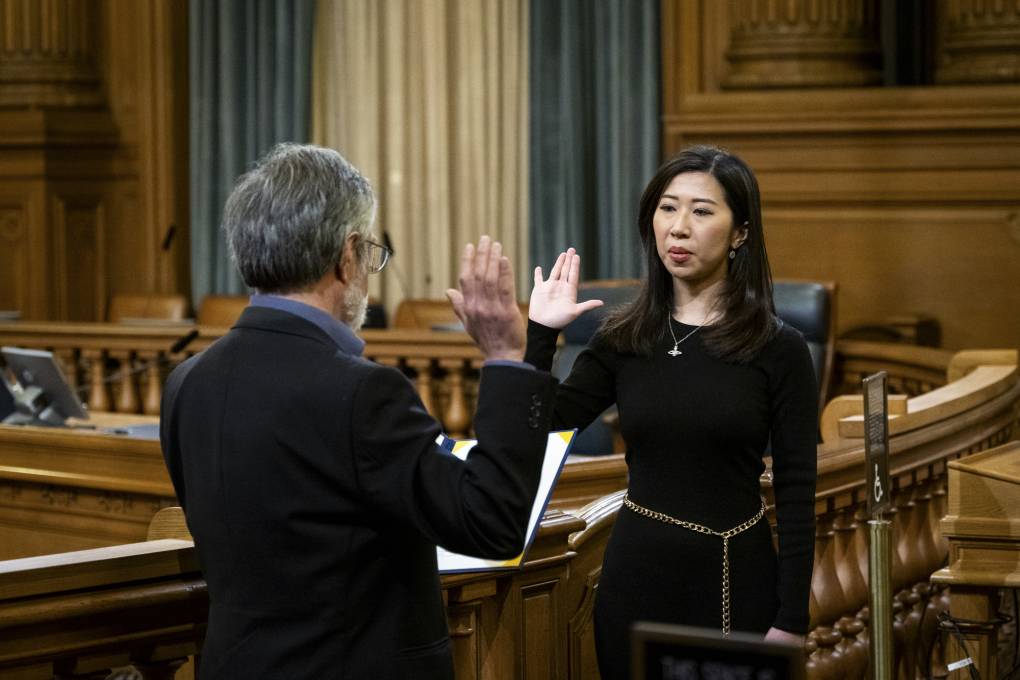
"caption": "Aaron Peskin, President of the Board of Supervisors, swears in appointee Kelly Wong to the San Francisco Elections Commission at City Hall in San Francisco on Feb. 14, 2024.",
"description": null,
"title": "240214-NONCITIZENVOTING-12-BL-KQED",
"credit": "Beth LaBerge/KQED",
"status": "inherit",
"altTag": "An Asian woman wearing a black dress raises her right hand in front of a man wearing a black suit who is also raising his and holding a document inside a building.",
"isLoading": false,
"fetchFailed": false
},
"news_11975800": {
"type": "attachments",
"id": "news_11975800",
"meta": {
"index": "attachments_1716263798",
"site": "news",
"id": "11975800",
"found": true
},
"parent": 11975756,
"imgSizes": {
"twentyfourteen-full-width": {
"file": "https://cdn.kqed.org/wp-content/uploads/sites/10/2024/02/cease-1038x576.jpeg",
"width": 1038,
"mimeType": "image/jpeg",
"height": 576
},
"thumbnail": {
"file": "https://cdn.kqed.org/wp-content/uploads/sites/10/2024/02/cease-160x112.jpeg",
"width": 160,
"mimeType": "image/jpeg",
"height": 112
},
"post-thumbnail": {
"file": "https://cdn.kqed.org/wp-content/uploads/sites/10/2024/02/cease-672x372.jpeg",
"width": 672,
"mimeType": "image/jpeg",
"height": 372
},
"kqedFullSize": {
"file": "https://cdn.kqed.org/wp-content/uploads/sites/10/2024/02/cease.jpeg",
"width": 1715,
"height": 1203
},
"large": {
"file": "https://cdn.kqed.org/wp-content/uploads/sites/10/2024/02/cease-1020x715.jpeg",
"width": 1020,
"mimeType": "image/jpeg",
"height": 715
},
"1536x1536": {
"file": "https://cdn.kqed.org/wp-content/uploads/sites/10/2024/02/cease-1536x1077.jpeg",
"width": 1536,
"mimeType": "image/jpeg",
"height": 1077
},
"medium": {
"file": "https://cdn.kqed.org/wp-content/uploads/sites/10/2024/02/cease-800x561.jpeg",
"width": 800,
"mimeType": "image/jpeg",
"height": 561
}
},
"publishDate": 1707869508,
"modified": 1707869520,
"caption": null,
"description": null,
"title": "cease",
"credit": "Mission Local",
"status": "inherit",
"altTag": null,
"isLoading": false,
"fetchFailed": false
},
"news_11975612": {
"type": "attachments",
"id": "news_11975612",
"meta": {
"index": "attachments_1716263798",
"site": "news",
"id": "11975612",
"found": true
},
"parent": 11975607,
"imgSizes": {
"twentyfourteen-full-width": {
"file": "https://cdn.kqed.org/wp-content/uploads/sites/10/2024/02/Farrelll1-1038x576.jpg",
"width": 1038,
"mimeType": "image/jpeg",
"height": 576
},
"thumbnail": {
"file": "https://cdn.kqed.org/wp-content/uploads/sites/10/2024/02/Farrelll1-160x107.jpg",
"width": 160,
"mimeType": "image/jpeg",
"height": 107
},
"post-thumbnail": {
"file": "https://cdn.kqed.org/wp-content/uploads/sites/10/2024/02/Farrelll1-672x372.jpg",
"width": 672,
"mimeType": "image/jpeg",
"height": 372
},
"kqedFullSize": {
"file": "https://cdn.kqed.org/wp-content/uploads/sites/10/2024/02/Farrelll1-scaled.jpg",
"width": 2560,
"height": 1707
},
"2048x2048": {
"file": "https://cdn.kqed.org/wp-content/uploads/sites/10/2024/02/Farrelll1-2048x1365.jpg",
"width": 2048,
"mimeType": "image/jpeg",
"height": 1365
},
"large": {
"file": "https://cdn.kqed.org/wp-content/uploads/sites/10/2024/02/Farrelll1-1020x680.jpg",
"width": 1020,
"mimeType": "image/jpeg",
"height": 680
},
"1536x1536": {
"file": "https://cdn.kqed.org/wp-content/uploads/sites/10/2024/02/Farrelll1-1536x1024.jpg",
"width": 1536,
"mimeType": "image/jpeg",
"height": 1024
},
"full-width": {
"file": "https://cdn.kqed.org/wp-content/uploads/sites/10/2024/02/Farrelll1-1920x1280.jpg",
"width": 1920,
"mimeType": "image/jpeg",
"height": 1280
},
"medium": {
"file": "https://cdn.kqed.org/wp-content/uploads/sites/10/2024/02/Farrelll1-800x533.jpg",
"width": 800,
"mimeType": "image/jpeg",
"height": 533
}
},
"publishDate": 1707778680,
"modified": 1707788293,
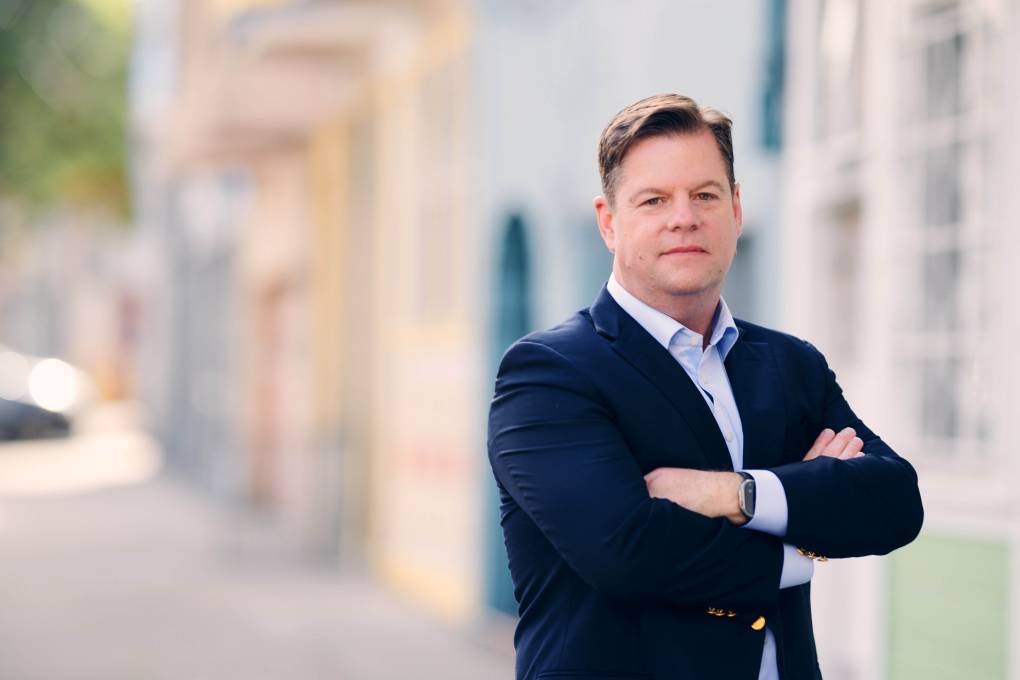
"caption": "Mark Farrell announced he's joining the crowded field to oust Mayor London Breed.",
"description": null,
"title": "Farrelll1",
"credit": "Courtesy of Mark Farrell",
"status": "inherit",
"altTag": "A white man stands with his arms crossed, posing for a photo.",
"isLoading": false,
"fetchFailed": false
},
"news_11975179": {
"type": "attachments",
"id": "news_11975179",
"meta": {
"index": "attachments_1716263798",
"site": "news",
"id": "11975179",
"found": true
},
"parent": 11975156,
"imgSizes": {
"twentyfourteen-full-width": {
"file": "https://cdn.kqed.org/wp-content/uploads/sites/10/2024/02/IMG_5659-1038x576.jpg",
"width": 1038,
"mimeType": "image/jpeg",
"height": 576
},
"thumbnail": {
"file": "https://cdn.kqed.org/wp-content/uploads/sites/10/2024/02/IMG_5659-160x120.jpg",
"width": 160,
"mimeType": "image/jpeg",
"height": 120
},
"post-thumbnail": {
"file": "https://cdn.kqed.org/wp-content/uploads/sites/10/2024/02/IMG_5659-672x372.jpg",
"width": 672,
"mimeType": "image/jpeg",
"height": 372
},
"kqedFullSize": {
"file": "https://cdn.kqed.org/wp-content/uploads/sites/10/2024/02/IMG_5659-scaled.jpg",
"width": 2560,
"height": 1920
},
"2048x2048": {
"file": "https://cdn.kqed.org/wp-content/uploads/sites/10/2024/02/IMG_5659-2048x1536.jpg",
"width": 2048,
"mimeType": "image/jpeg",
"height": 1536
},
"large": {
"file": "https://cdn.kqed.org/wp-content/uploads/sites/10/2024/02/IMG_5659-1020x765.jpg",
"width": 1020,
"mimeType": "image/jpeg",
"height": 765
},
"1536x1536": {
"file": "https://cdn.kqed.org/wp-content/uploads/sites/10/2024/02/IMG_5659-1536x1152.jpg",
"width": 1536,
"mimeType": "image/jpeg",
"height": 1152
},
"full-width": {
"file": "https://cdn.kqed.org/wp-content/uploads/sites/10/2024/02/IMG_5659-1920x1440.jpg",
"width": 1920,
"mimeType": "image/jpeg",
"height": 1440
},
"medium": {
"file": "https://cdn.kqed.org/wp-content/uploads/sites/10/2024/02/IMG_5659-800x600.jpg",
"width": 800,
"mimeType": "image/jpeg",
"height": 600
}
},
"publishDate": 1707436919,
"modified": 1708478350,
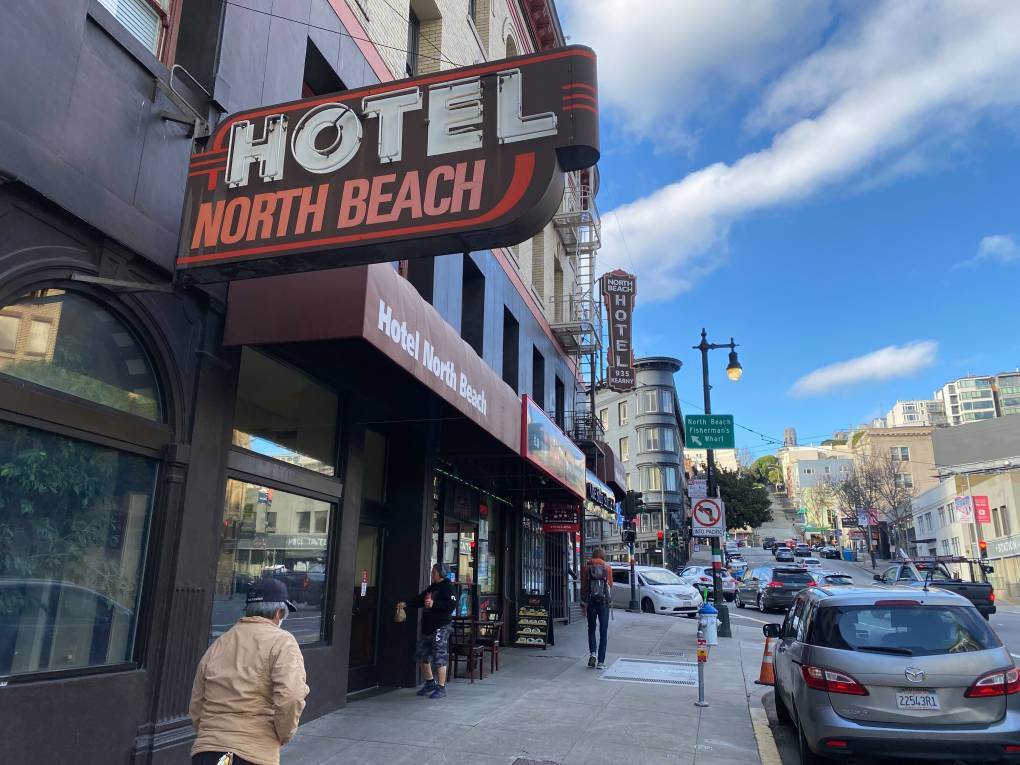
"caption": "Mayor London Breed walked back plans to open the permanent supportive housing site at Hotel North Beach, 935 Kearny St., just days after first announcing the idea.",
"description": null,
"title": "IMG_5659",
"credit": "Sydney Johnson/KQED",
"status": "inherit",
"altTag": "The exterior signage of the North Beach Hotel.",
"isLoading": false,
"fetchFailed": false
},
"news_11973966": {
"type": "attachments",
"id": "news_11973966",
"meta": {
"index": "attachments_1716263798",
"site": "news",
"id": "11973966",
"found": true
},
"parent": 0,
"imgSizes": {
"twentyfourteen-full-width": {
"file": "https://cdn.kqed.org/wp-content/uploads/sites/10/2024/01/240126-LURIE-FUNDING-MD-01-KQED-1038x576.jpg",
"width": 1038,
"mimeType": "image/jpeg",
"height": 576
},
"thumbnail": {
"file": "https://cdn.kqed.org/wp-content/uploads/sites/10/2024/01/240126-LURIE-FUNDING-MD-01-KQED-160x107.jpg",
"width": 160,
"mimeType": "image/jpeg",
"height": 107
},
"post-thumbnail": {
"file": "https://cdn.kqed.org/wp-content/uploads/sites/10/2024/01/240126-LURIE-FUNDING-MD-01-KQED-672x372.jpg",
"width": 672,
"mimeType": "image/jpeg",
"height": 372
},
"kqedFullSize": {
"file": "https://cdn.kqed.org/wp-content/uploads/sites/10/2024/01/240126-LURIE-FUNDING-MD-01-KQED.jpg?ver=1706390427",
"width": 2000,
"height": 1333
},
"large": {
"file": "https://cdn.kqed.org/wp-content/uploads/sites/10/2024/01/240126-LURIE-FUNDING-MD-01-KQED-1020x680.jpg",
"width": 1020,
"mimeType": "image/jpeg",
"height": 680
},
"1536x1536": {
"file": "https://cdn.kqed.org/wp-content/uploads/sites/10/2024/01/240126-LURIE-FUNDING-MD-01-KQED-1536x1024.jpg",
"width": 1536,
"mimeType": "image/jpeg",
"height": 1024
},
"full-width": {
"file": "https://cdn.kqed.org/wp-content/uploads/sites/10/2024/01/240126-LURIE-FUNDING-MD-01-KQED-1920x1280.jpg",
"width": 1920,
"mimeType": "image/jpeg",
"height": 1280
},
"medium": {
"file": "https://cdn.kqed.org/wp-content/uploads/sites/10/2024/01/240126-LURIE-FUNDING-MD-01-KQED-800x533.jpg",
"width": 800,
"mimeType": "image/jpeg",
"height": 533
}
},
"publishDate": 1706324673,
"modified": 1706390450,
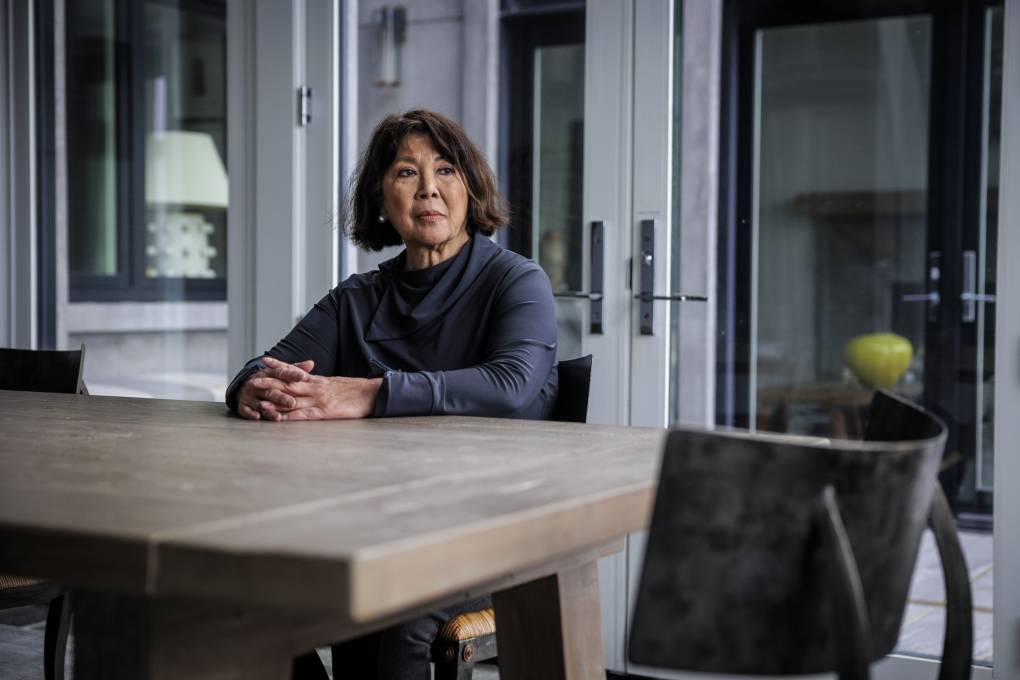
"caption": "Betty Louie in her home in San Francisco on Jan. 26, 2024.",
"description": null,
"title": "Betty Louie in her home in San Francisco on Jan. 26, 2024.",
"credit": "Martin do Nascimento/KQED",
"status": "inherit",
"altTag": "A person with long hair sits at large table in a home.",
"isLoading": false,
"fetchFailed": false
},
"news_11974696": {
"type": "attachments",
"id": "news_11974696",
"meta": {
"index": "attachments_1716263798",
"site": "news",
"id": "11974696",
"found": true
},
"parent": 11974695,
"imgSizes": {
"twentyfourteen-full-width": {
"file": "https://cdn.kqed.org/wp-content/uploads/sites/10/2024/02/AP24030772665124-1038x576.jpg",
"width": 1038,
"mimeType": "image/jpeg",
"height": 576
},
"thumbnail": {
"file": "https://cdn.kqed.org/wp-content/uploads/sites/10/2024/02/AP24030772665124-160x107.jpg",
"width": 160,
"mimeType": "image/jpeg",
"height": 107
},
"post-thumbnail": {
"file": "https://cdn.kqed.org/wp-content/uploads/sites/10/2024/02/AP24030772665124-672x372.jpg",
"width": 672,
"mimeType": "image/jpeg",
"height": 372
},
"kqedFullSize": {
"file": "https://cdn.kqed.org/wp-content/uploads/sites/10/2024/02/AP24030772665124-scaled.jpg",
"width": 2560,
"height": 1707
},
"2048x2048": {
"file": "https://cdn.kqed.org/wp-content/uploads/sites/10/2024/02/AP24030772665124-2048x1365.jpg",
"width": 2048,
"mimeType": "image/jpeg",
"height": 1365
},
"large": {
"file": "https://cdn.kqed.org/wp-content/uploads/sites/10/2024/02/AP24030772665124-1020x680.jpg",
"width": 1020,
"mimeType": "image/jpeg",
"height": 680
},
"1536x1536": {
"file": "https://cdn.kqed.org/wp-content/uploads/sites/10/2024/02/AP24030772665124-1536x1024.jpg",
"width": 1536,
"mimeType": "image/jpeg",
"height": 1024
},
"full-width": {
"file": "https://cdn.kqed.org/wp-content/uploads/sites/10/2024/02/AP24030772665124-1920x1280.jpg",
"width": 1920,
"mimeType": "image/jpeg",
"height": 1280
},
"medium": {
"file": "https://cdn.kqed.org/wp-content/uploads/sites/10/2024/02/AP24030772665124-800x533.jpg",
"width": 800,
"mimeType": "image/jpeg",
"height": 533
}
},
"publishDate": 1707149878,
"modified": 1709694975,
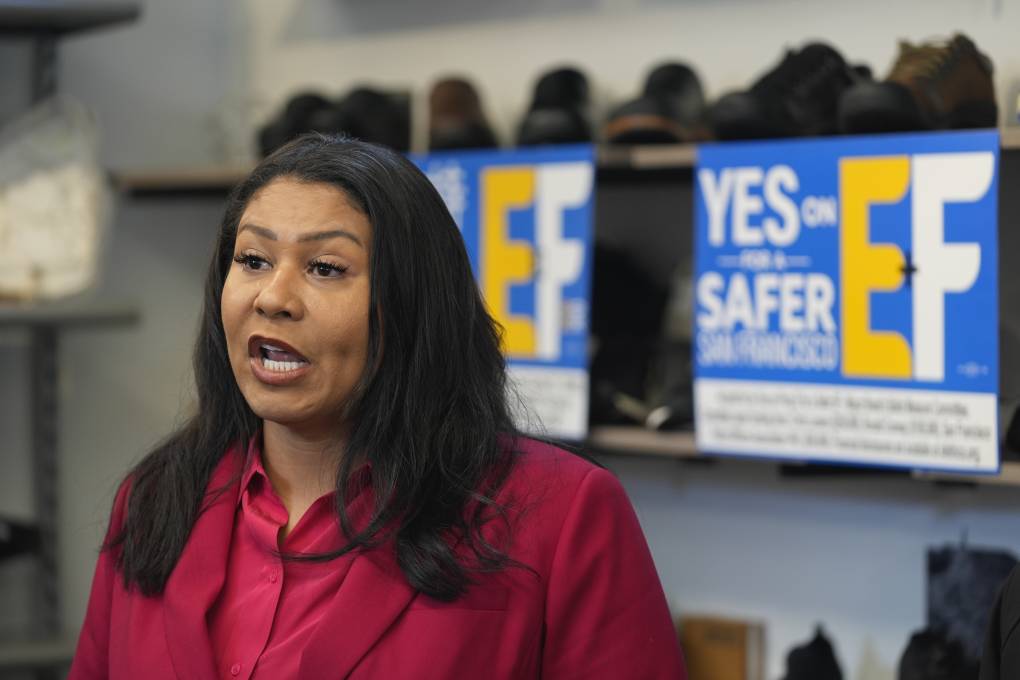
"caption": "San Francisco Mayor London Breed speaks during a news conference to promote Proposition E and F at the Footprint retail store in San Francisco on Thursday, Jan. 25, 2024. ",
"description": null,
"title": "London Breed",
"credit": "Eric Risberg/AP Photo",
"status": "inherit",
"altTag": "San Francisco Mayor London Breed is pictured speaking inside of a business.",
"isLoading": false,
"fetchFailed": false
},
"news_11973430": {
"type": "attachments",
"id": "news_11973430",
"meta": {
"index": "attachments_1716263798",
"site": "news",
"id": "11973430",
"found": true
},
"parent": 0,
"imgSizes": {
"twentyfourteen-full-width": {
"file": "https://cdn.kqed.org/wp-content/uploads/sites/10/2024/01/240122-PORTSMOUTHSQUARE-35-BL-KQED-1038x576.jpg",
"width": 1038,
"mimeType": "image/jpeg",
"height": 576
},
"thumbnail": {
"file": "https://cdn.kqed.org/wp-content/uploads/sites/10/2024/01/240122-PORTSMOUTHSQUARE-35-BL-KQED-160x107.jpg",
"width": 160,
"mimeType": "image/jpeg",
"height": 107
},
"post-thumbnail": {
"file": "https://cdn.kqed.org/wp-content/uploads/sites/10/2024/01/240122-PORTSMOUTHSQUARE-35-BL-KQED-672x372.jpg",
"width": 672,
"mimeType": "image/jpeg",
"height": 372
},
"kqedFullSize": {
"file": "https://cdn.kqed.org/wp-content/uploads/sites/10/2024/01/240122-PORTSMOUTHSQUARE-35-BL-KQED.jpg",
"width": 2000,
"height": 1333
},
"large": {
"file": "https://cdn.kqed.org/wp-content/uploads/sites/10/2024/01/240122-PORTSMOUTHSQUARE-35-BL-KQED-1020x680.jpg",
"width": 1020,
"mimeType": "image/jpeg",
"height": 680
},
"1536x1536": {
"file": "https://cdn.kqed.org/wp-content/uploads/sites/10/2024/01/240122-PORTSMOUTHSQUARE-35-BL-KQED-1536x1024.jpg",
"width": 1536,
"mimeType": "image/jpeg",
"height": 1024
},
"full-width": {
"file": "https://cdn.kqed.org/wp-content/uploads/sites/10/2024/01/240122-PORTSMOUTHSQUARE-35-BL-KQED-1920x1280.jpg",
"width": 1920,
"mimeType": "image/jpeg",
"height": 1280
},
"medium": {
"file": "https://cdn.kqed.org/wp-content/uploads/sites/10/2024/01/240122-PORTSMOUTHSQUARE-35-BL-KQED-800x533.jpg",
"width": 800,
"mimeType": "image/jpeg",
"height": 533
}
},
"publishDate": 1706042322,
"modified": 1706143709,
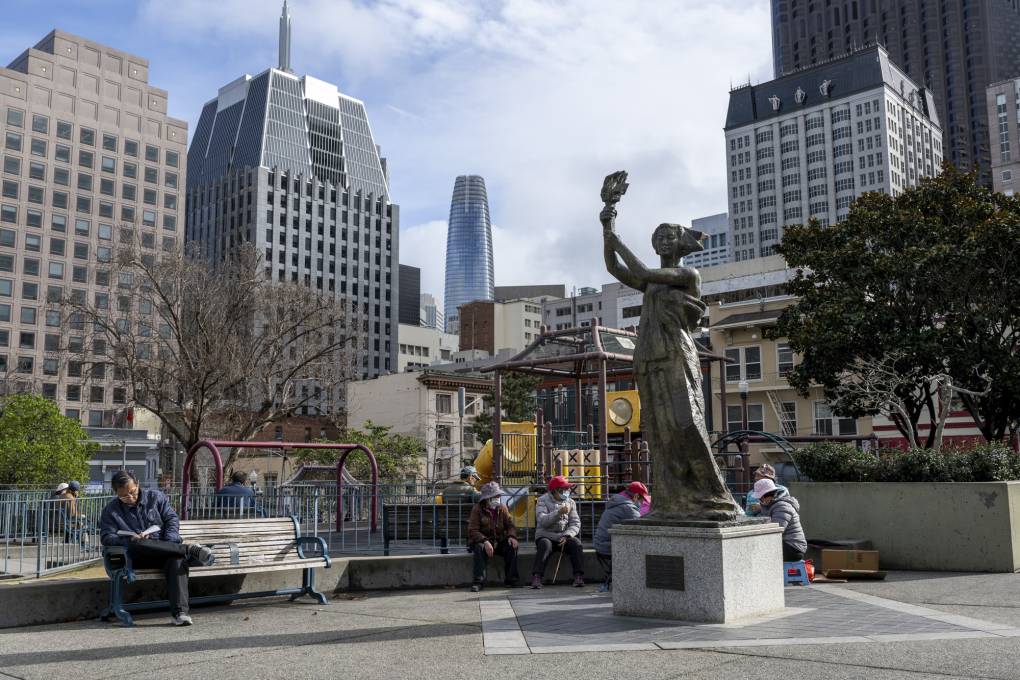
"caption": "People sit near the Goddess of Democracy statue in Portsmouth Square in San Francisco's Chinatown neighborhood on Jan. 22, 2024.",
"description": null,
"title": "240122-PORTSMOUTHSQUARE-35-BL-KQED",
"credit": "Beth LaBerge/KQED",
"status": "inherit",
"altTag": "People sit on a bench with a statue in front of them. Tall buildings surround them in the background.",
"isLoading": false,
"fetchFailed": false
},
"news_11958936": {
"type": "attachments",
"id": "news_11958936",
"meta": {
"index": "attachments_1716263798",
"site": "news",
"id": "11958936",
"found": true
},
"parent": 11958939,
"imgSizes": {
"twentyfourteen-full-width": {
"file": "https://cdn.kqed.org/wp-content/uploads/sites/10/2023/08/RS68264_20230822-HomelessLawsuit-24-JY-KQED-1038x576.jpg",
"width": 1038,
"mimeType": "image/jpeg",
"height": 576
},
"thumbnail": {
"file": "https://cdn.kqed.org/wp-content/uploads/sites/10/2023/08/RS68264_20230822-HomelessLawsuit-24-JY-KQED-160x107.jpg",
"width": 160,
"mimeType": "image/jpeg",
"height": 107
},
"post-thumbnail": {
"file": "https://cdn.kqed.org/wp-content/uploads/sites/10/2023/08/RS68264_20230822-HomelessLawsuit-24-JY-KQED-672x372.jpg",
"width": 672,
"mimeType": "image/jpeg",
"height": 372
},
"kqedFullSize": {
"file": "https://cdn.kqed.org/wp-content/uploads/sites/10/2023/08/RS68264_20230822-HomelessLawsuit-24-JY-KQED.jpg",
"width": 2000,
"height": 1333
},
"large": {
"file": "https://cdn.kqed.org/wp-content/uploads/sites/10/2023/08/RS68264_20230822-HomelessLawsuit-24-JY-KQED-1020x680.jpg",
"width": 1020,
"mimeType": "image/jpeg",
"height": 680
},
"1536x1536": {
"file": "https://cdn.kqed.org/wp-content/uploads/sites/10/2023/08/RS68264_20230822-HomelessLawsuit-24-JY-KQED-1536x1024.jpg",
"width": 1536,
"mimeType": "image/jpeg",
"height": 1024
},
"full-width": {
"file": "https://cdn.kqed.org/wp-content/uploads/sites/10/2023/08/RS68264_20230822-HomelessLawsuit-24-JY-KQED-1920x1280.jpg",
"width": 1920,
"mimeType": "image/jpeg",
"height": 1280
},
"medium": {
"file": "https://cdn.kqed.org/wp-content/uploads/sites/10/2023/08/RS68264_20230822-HomelessLawsuit-24-JY-KQED-800x533.jpg",
"width": 800,
"mimeType": "image/jpeg",
"height": 533
}
},
"publishDate": 1692825458,
"modified": 1705128728,
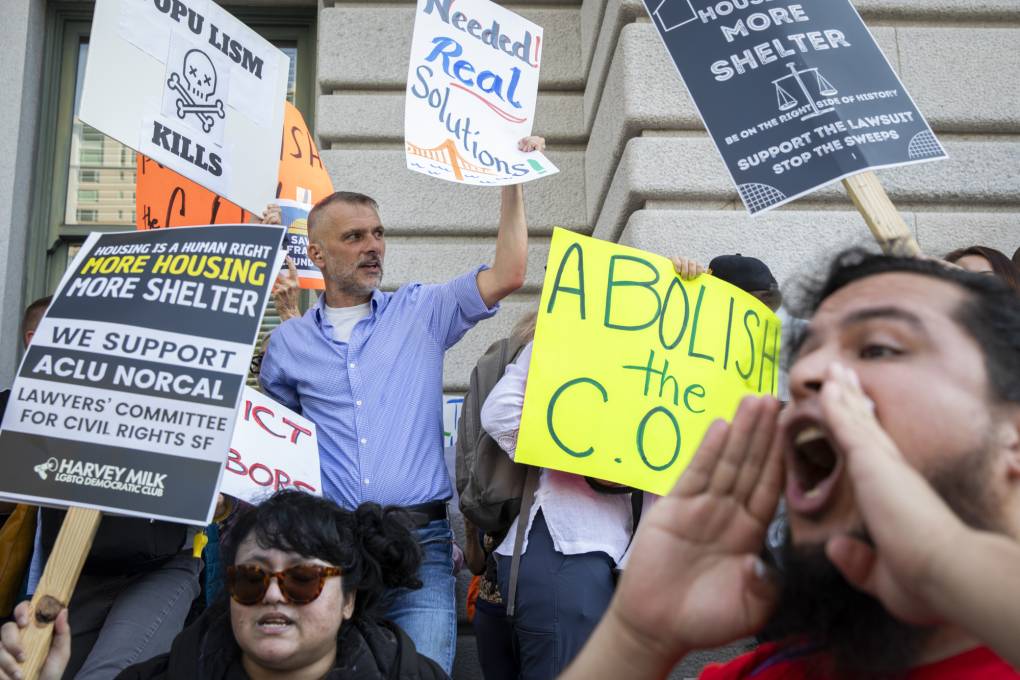
"caption": "Demonstrators gather at a rally in front of the 9th Circuit Court of Appeals in San Francisco on Wednesday, Aug. 23, 2023. The court heard the city's challenge to an injunction that has blocked it from removing many street encampments.",
"description": null,
"title": "RS68264_20230822-HomelessLawsuit-24-JY-KQED",
"credit": "Juliana Yamada/KQED",
"status": "inherit",
"altTag": "People holding signs stand in front of a grey building.",
"isLoading": false,
"fetchFailed": false
},
"news_11967365": {
"type": "attachments",
"id": "news_11967365",
"meta": {
"index": "attachments_1716263798",
"site": "news",
"id": "11967365",
"found": true
},
"parent": 0,
"imgSizes": {
"twentyfourteen-full-width": {
"file": "https://cdn.kqed.org/wp-content/uploads/sites/10/2023/11/231114-APECProtest-05-JY-1038x576.jpg",
"width": 1038,
"mimeType": "image/jpeg",
"height": 576
},
"thumbnail": {
"file": "https://cdn.kqed.org/wp-content/uploads/sites/10/2023/11/231114-APECProtest-05-JY-160x107.jpg",
"width": 160,
"mimeType": "image/jpeg",
"height": 107
},
"post-thumbnail": {
"file": "https://cdn.kqed.org/wp-content/uploads/sites/10/2023/11/231114-APECProtest-05-JY-672x372.jpg",
"width": 672,
"mimeType": "image/jpeg",
"height": 372
},
"kqedFullSize": {
"file": "https://cdn.kqed.org/wp-content/uploads/sites/10/2023/11/231114-APECProtest-05-JY.jpg",
"width": 1920,
"height": 1280
},
"large": {
"file": "https://cdn.kqed.org/wp-content/uploads/sites/10/2023/11/231114-APECProtest-05-JY-1020x680.jpg",
"width": 1020,
"mimeType": "image/jpeg",
"height": 680
},
"1536x1536": {
"file": "https://cdn.kqed.org/wp-content/uploads/sites/10/2023/11/231114-APECProtest-05-JY-1536x1024.jpg",
"width": 1536,
"mimeType": "image/jpeg",
"height": 1024
},
"medium": {
"file": "https://cdn.kqed.org/wp-content/uploads/sites/10/2023/11/231114-APECProtest-05-JY-800x533.jpg",
"width": 800,
"mimeType": "image/jpeg",
"height": 533
}
},
"publishDate": 1700015940,
"modified": 1704843251,
"caption": "Demonstrators gather outside San Francisco's Powell Street BART station during a protest calling for a cease-fire in Gaza on Nov. 14, 2023.",
"description": null,
"title": "231114-APECProtest-05-JY",
"credit": "Juliana Yamada/KQED",
"status": "inherit",
"altTag": "People in a crowd hold protest signs.",
"isLoading": false,
"fetchFailed": false
},
"news_11962330": {
"type": "attachments",
"id": "news_11962330",
"meta": {
"index": "attachments_1716263798",
"site": "news",
"id": "11962330",
"found": true
},
"parent": 11962992,
"imgSizes": {
"twentyfourteen-full-width": {
"file": "https://ww2.kqed.org/app/uploads/sites/10/2023/09/230921-ValenciaBikeway-014-BL-KQED-1038x576.jpg",
"width": 1038,
"mimeType": "image/jpeg",
"height": 576
},
"thumbnail": {
"file": "https://ww2.kqed.org/app/uploads/sites/10/2023/09/230921-ValenciaBikeway-014-BL-KQED-160x107.jpg",
"width": 160,
"mimeType": "image/jpeg",
"height": 107
},
"post-thumbnail": {
"file": "https://ww2.kqed.org/app/uploads/sites/10/2023/09/230921-ValenciaBikeway-014-BL-KQED-672x372.jpg",
"width": 672,
"mimeType": "image/jpeg",
"height": 372
},
"kqedFullSize": {
"file": "https://ww2.kqed.org/app/uploads/sites/10/2023/09/230921-ValenciaBikeway-014-BL-KQED.jpg",
"width": 2000,
"height": 1333
},
"large": {
"file": "https://ww2.kqed.org/app/uploads/sites/10/2023/09/230921-ValenciaBikeway-014-BL-KQED-1020x680.jpg",
"width": 1020,
"mimeType": "image/jpeg",
"height": 680
},
"1536x1536": {
"file": "https://ww2.kqed.org/app/uploads/sites/10/2023/09/230921-ValenciaBikeway-014-BL-KQED-1536x1024.jpg",
"width": 1536,
"mimeType": "image/jpeg",
"height": 1024
},
"full-width": {
"file": "https://ww2.kqed.org/app/uploads/sites/10/2023/09/230921-ValenciaBikeway-014-BL-KQED-1920x1280.jpg",
"width": 1920,
"mimeType": "image/jpeg",
"height": 1280
},
"medium": {
"file": "https://ww2.kqed.org/app/uploads/sites/10/2023/09/230921-ValenciaBikeway-014-BL-KQED-800x533.jpg",
"width": 800,
"mimeType": "image/jpeg",
"height": 533
}
},
"publishDate": 1695666416,
"modified": 1696095652,
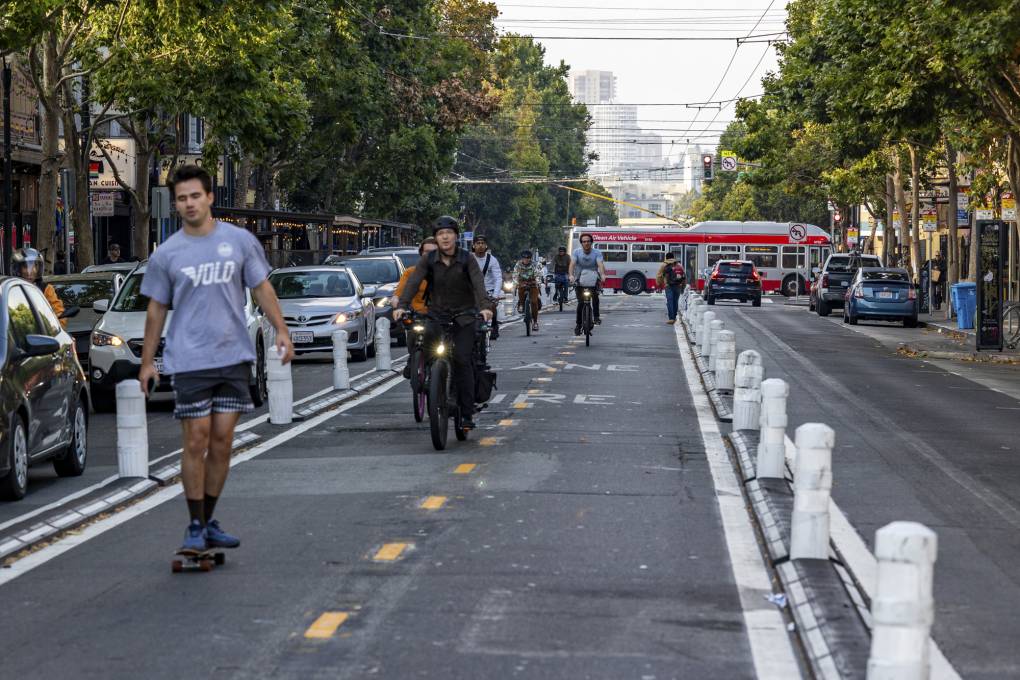
"caption": "Bicyclists ride on the Valencia Street bike lane in San Francisco's Mission District on Sept. 21, 2023.",
"description": null,
"title": "230921-ValenciaBikeway-014-BL-KQED",
"credit": "Beth LaBerge/KQED",
"status": "inherit",
"altTag": "People on bikes and skateboards ride down a bike path in the middle of a city street.",
"isLoading": false,
"fetchFailed": false
},
"news_11971420": {
"type": "attachments",
"id": "news_11971420",
"meta": {
"index": "attachments_1716263798",
"site": "news",
"id": "11971420",
"found": true
},
"parent": 0,
"imgSizes": {
"twentyfourteen-full-width": {
"file": "https://cdn.kqed.org/wp-content/uploads/sites/10/2024/01/240102-VANESSA-PUPPET-06-KQED-1038x576.jpg",
"width": 1038,
"mimeType": "image/jpeg",
"height": 576
},
"thumbnail": {
"file": "https://cdn.kqed.org/wp-content/uploads/sites/10/2024/01/240102-VANESSA-PUPPET-06-KQED-160x107.jpg",
"width": 160,
"mimeType": "image/jpeg",
"height": 107
},
"post-thumbnail": {
"file": "https://cdn.kqed.org/wp-content/uploads/sites/10/2024/01/240102-VANESSA-PUPPET-06-KQED-672x372.jpg",
"width": 672,
"mimeType": "image/jpeg",
"height": 372
},
"kqedFullSize": {
"file": "https://cdn.kqed.org/wp-content/uploads/sites/10/2024/01/240102-VANESSA-PUPPET-06-KQED.jpg",
"width": 2000,
"height": 1334
},
"large": {
"file": "https://cdn.kqed.org/wp-content/uploads/sites/10/2024/01/240102-VANESSA-PUPPET-06-KQED-1020x680.jpg",
"width": 1020,
"mimeType": "image/jpeg",
"height": 680
},
"1536x1536": {
"file": "https://cdn.kqed.org/wp-content/uploads/sites/10/2024/01/240102-VANESSA-PUPPET-06-KQED-1536x1025.jpg",
"width": 1536,
"mimeType": "image/jpeg",
"height": 1025
},
"full-width": {
"file": "https://cdn.kqed.org/wp-content/uploads/sites/10/2024/01/240102-VANESSA-PUPPET-06-KQED-1920x1281.jpg",
"width": 1920,
"mimeType": "image/jpeg",
"height": 1281
},
"medium": {
"file": "https://cdn.kqed.org/wp-content/uploads/sites/10/2024/01/240102-VANESSA-PUPPET-06-KQED-800x534.jpg",
"width": 800,
"mimeType": "image/jpeg",
"height": 534
}
},
"publishDate": 1704231801,
"modified": 1704399215,
"caption": "A screenshot of the puppet, Vanessa, singing 'A Thousand Miles' by Vanessa Carlton.",
"description": null,
"title": "240102-VANESSA PUPPET-06-KQED",
"credit": "Ben Howard via YouTube",
"status": "inherit",
"altTag": "A puppet plays the piano in an outdoor setting.",
"isLoading": false,
"fetchFailed": false
},
"news_11702737": {
"type": "attachments",
"id": "news_11702737",
"meta": {
"index": "attachments_1716263798",
"site": "news",
"id": "11702737",
"found": true
},
"parent": 11702058,
"imgSizes": {
"small": {
"file": "https://ww2.kqed.org/app/uploads/sites/10/2018/10/sfmap-1-520x292.jpg",
"width": 520,
"mimeType": "image/jpeg",
"height": 292
},
"thumbnail": {
"file": "https://ww2.kqed.org/app/uploads/sites/10/2018/10/sfmap-1-160x90.jpg",
"width": 160,
"mimeType": "image/jpeg",
"height": 90
},
"post-thumbnail": {
"file": "https://ww2.kqed.org/app/uploads/sites/10/2018/10/sfmap-1-672x372.jpg",
"width": 672,
"mimeType": "image/jpeg",
"height": 372
},
"xsmall": {
"file": "https://ww2.kqed.org/app/uploads/sites/10/2018/10/sfmap-1-375x211.jpg",
"width": 375,
"mimeType": "image/jpeg",
"height": 211
},
"kqedFullSize": {
"file": "https://ww2.kqed.org/app/uploads/sites/10/2018/10/sfmap-1.jpg",
"width": 923,
"height": 519
},
"guest-author-50": {
"file": "https://ww2.kqed.org/app/uploads/sites/10/2018/10/sfmap-1-50x50.jpg",
"width": 50,
"mimeType": "image/jpeg",
"height": 50
},
"guest-author-96": {
"file": "https://ww2.kqed.org/app/uploads/sites/10/2018/10/sfmap-1-96x96.jpg",
"width": 96,
"mimeType": "image/jpeg",
"height": 96
},
"medium": {
"file": "https://ww2.kqed.org/app/uploads/sites/10/2018/10/sfmap-1-800x450.jpg",
"width": 800,
"mimeType": "image/jpeg",
"height": 450
},
"guest-author-64": {
"file": "https://ww2.kqed.org/app/uploads/sites/10/2018/10/sfmap-1-64x64.jpg",
"width": 64,
"mimeType": "image/jpeg",
"height": 64
},
"guest-author-32": {
"file": "https://ww2.kqed.org/app/uploads/sites/10/2018/10/sfmap-1-32x32.jpg",
"width": 32,
"mimeType": "image/jpeg",
"height": 32
},
"detail": {
"file": "https://ww2.kqed.org/app/uploads/sites/10/2018/10/sfmap-1-150x150.jpg",
"width": 150,
"mimeType": "image/jpeg",
"height": 150
},
"guest-author-128": {
"file": "https://ww2.kqed.org/app/uploads/sites/10/2018/10/sfmap-1-128x128.jpg",
"width": 128,
"mimeType": "image/jpeg",
"height": 128
},
"xxsmall": {
"file": "https://ww2.kqed.org/app/uploads/sites/10/2018/10/sfmap-1-240x135.jpg",
"width": 240,
"mimeType": "image/jpeg",
"height": 135
}
},
"publishDate": 1541022243,
"modified": 1541022366,
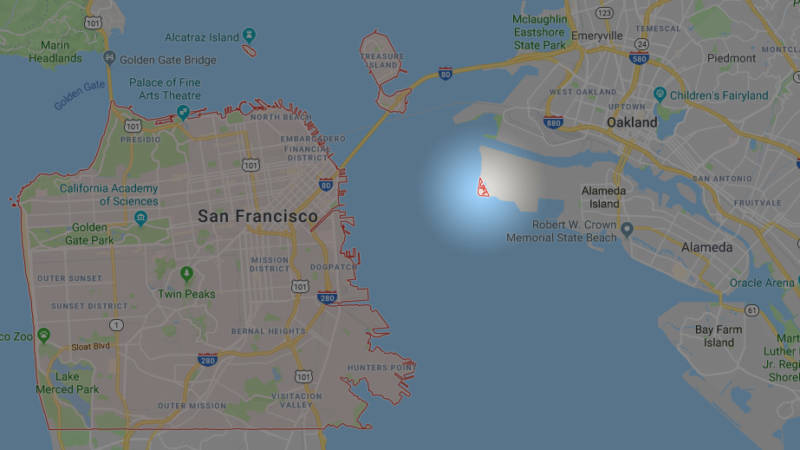
"caption": "The outline of San Francisco on Google Maps includes a tiny sliver of Alameda Island. ",
"description": "The outline of San Francisco on Google Maps includes a tiny sliver of Alameda Island. ",
"title": "sfmap",
"credit": "Google Maps",
"status": "inherit",
"isLoading": false,
"fetchFailed": false
}
},
"audioPlayerReducer": {
"postId": "stream_live",
"isPaused": true,
"isPlaying": false,
"pfsActive": false,
"pledgeModalIsOpen": true,
"playerDrawerIsOpen": false,
"liveAudioPlayStartedAt": 0,
"liveAudioPlayContext": ""
},
"authorsReducer": {
"byline_news_11974695": {
"type": "authors",
"id": "byline_news_11974695",
"meta": {
"override": true
},
"slug": "byline_news_11974695",
"name": "\u003ca href=\"https://apnews.com/\">Janie Har\u003c/a> \u003cbr> Associated Press",
"isLoading": false
},
"kqednewsstaffandwires": {
"type": "authors",
"id": "237",
"meta": {
"index": "authors_1716337520",
"id": "237",
"found": true
},
"name": "KQED News Staff and Wires",
"firstName": "KQED News Staff and Wires",
"lastName": null,
"slug": "kqednewsstaffandwires",
"email": "onlinenewsstaff@kqed.org",
"display_author_email": false,
"staff_mastheads": [],
"title": null,
"bio": null,
"avatar": "https://secure.gravatar.com/avatar/72295af8ebbfbd19a4948f5271285664?s=600&d=blank&r=g",
"twitter": null,
"facebook": null,
"instagram": null,
"linkedin": null,
"sites": [
{
"site": "arts",
"roles": [
"contributor"
]
},
{
"site": "news",
"roles": [
"contributor"
]
},
{
"site": "lowdown",
"roles": [
"author"
]
},
{
"site": "stateofhealth",
"roles": [
"contributor"
]
},
{
"site": "food",
"roles": [
"author"
]
}
],
"headData": {
"title": "KQED News Staff and Wires | KQED",
"description": null,
"ogImgSrc": "https://secure.gravatar.com/avatar/72295af8ebbfbd19a4948f5271285664?s=600&d=blank&r=g",
"twImgSrc": "https://secure.gravatar.com/avatar/72295af8ebbfbd19a4948f5271285664?s=600&d=blank&r=g"
},
"isLoading": false,
"link": "/author/kqednewsstaffandwires"
},
"lklivans": {
"type": "authors",
"id": "8648",
"meta": {
"index": "authors_1716337520",
"id": "8648",
"found": true
},
"name": "Laura Klivans",
"firstName": "Laura",
"lastName": "Klivans",
"slug": "lklivans",
"email": "lklivans@kqed.org",
"display_author_email": true,
"staff_mastheads": [
"news",
"science"
],
"title": "Reporter",
"bio": "Laura Klivans is an award-winning science reporter for KQED News, where she covers climate change with an eye on both groundbreaking progress and gaps in action. She is the former host of KQED's blockbuster video series about tiny, amazing animals, \u003cem>Deep Look\u003c/em>. Her work reaches national audiences through NPR, \u003cem>Here & Now, \u003c/em>PRI, and other major outlets. \r\n\r\nLaura’s won five Northern California Area Emmy Awards for Deep Look and First Place in the Greater Bay Area Journalism Awards for a podcast exploring how one Oakland neighborhood teamed up to reduce planet-heating pollution.\r\n\r\nBeyond her reporting, she hosts and moderates events. In the past, she taught audio storytelling at the UC Berkeley Graduate School of Journalism, led international education programs, worked with immigrants and refugees along the Thai-Burmese border, taught high schoolers sex ed, and was an actress. \r\n\r\nShe's a former UC Berkeley Human Rights Fellow, USC Center for Health Journalism's California Fellow and Coro Fellow in Public Affairs. Laura has a master’s in journalism from UC Berkeley, a master’s in education from Harvard, and an undergraduate degree from Northwestern University.\r\n\r\nShe loves trying to riddle the meaning out of vanity license plates.",
"avatar": "https://secure.gravatar.com/avatar/2d2ecd1550a494cc10ad4a503406965585902124739e775a9b3817eebf1d88be?s=600&d=blank&r=g",
"twitter": "lauraklivans",
"bluesky": null,
"facebook": null,
"instagram": null,
"linkedin": null,
"sites": [
{
"site": "news",
"roles": [
"editor"
]
},
{
"site": "stateofhealth",
"roles": [
"contributor",
"editor"
]
},
{
"site": "science",
"roles": [
"editor"
]
},
{
"site": "forum",
"roles": [
"editor"
]
}
],
"headData": {
"title": "Laura Klivans | KQED",
"description": "Reporter",
"ogImgSrc": "https://secure.gravatar.com/avatar/2d2ecd1550a494cc10ad4a503406965585902124739e775a9b3817eebf1d88be?s=600&d=blank&r=g",
"twImgSrc": "https://secure.gravatar.com/avatar/2d2ecd1550a494cc10ad4a503406965585902124739e775a9b3817eebf1d88be?s=600&d=blank&r=g"
},
"isLoading": false,
"link": "/author/lklivans"
},
"ecruzguevarra": {
"type": "authors",
"id": "8654",
"meta": {
"index": "authors_1716337520",
"id": "8654",
"found": true
},
"name": "Ericka Cruz Guevarra",
"firstName": "Ericka",
"lastName": "Cruz Guevarra",
"slug": "ecruzguevarra",
"email": "ecruzguevarra@kqed.org",
"display_author_email": true,
"staff_mastheads": [
"news"
],
"title": "Producer, The Bay Podcast",
"bio": "Ericka Cruz Guevarra is host of \u003ca href=\"https://www.kqed.org/podcasts/thebay\">\u003cem>The Bay\u003c/em>\u003c/a> podcast at KQED. Before host, she was the show’s producer. Her work in that capacity includes a three-part reported series on policing in Vallejo, which won a 2020 excellence in journalism award from the Society of Professional Journalists. Ericka has worked as a breaking news reporter at Oregon Public Broadcasting, helped produce the Code Switch podcast, and was KQED’s inaugural Raul Ramirez Diversity Fund intern. She’s also an alumna of NPR’s Next Generation Radio program. Send her an email if you have strong feelings about whether Fairfield and Suisun City are the Bay. Ericka is represented by SAG-AFTRA.",
"avatar": "https://secure.gravatar.com/avatar/accefc1de4bafc7e234b69bcb9b6f6536c130fd84709bc3069ef11a78787e1bb?s=600&d=blank&r=g",
"twitter": "NotoriousECG",
"bluesky": null,
"facebook": null,
"instagram": null,
"linkedin": null,
"sites": [
{
"site": "arts",
"roles": [
"subscriber"
]
},
{
"site": "news",
"roles": [
"editor",
"manage_categories"
]
},
{
"site": "futureofyou",
"roles": [
"subscriber"
]
},
{
"site": "stateofhealth",
"roles": [
"subscriber"
]
},
{
"site": "science",
"roles": [
"editor"
]
},
{
"site": "forum",
"roles": [
"subscriber"
]
}
],
"headData": {
"title": "Ericka Cruz Guevarra | KQED",
"description": "Producer, The Bay Podcast",
"ogImgSrc": "https://secure.gravatar.com/avatar/accefc1de4bafc7e234b69bcb9b6f6536c130fd84709bc3069ef11a78787e1bb?s=600&d=blank&r=g",
"twImgSrc": "https://secure.gravatar.com/avatar/accefc1de4bafc7e234b69bcb9b6f6536c130fd84709bc3069ef11a78787e1bb?s=600&d=blank&r=g"
},
"isLoading": false,
"link": "/author/ecruzguevarra"
},
"rlevi": {
"type": "authors",
"id": "11260",
"meta": {
"index": "authors_1716337520",
"id": "11260",
"found": true
},
"name": "Ryan Levi",
"firstName": "Ryan",
"lastName": "Levi",
"slug": "rlevi",
"email": "rlevi@KQED.org",
"display_author_email": false,
"staff_mastheads": [],
"title": "KQED Contributor",
"bio": "Ryan Levi was a reporter and podcast producer at KQED News from 2016-2019. He worked on \u003ca href=\"https://www.kqed.org/news/series/baycurious\">Bay Curious\u003c/a>, \u003ca href=\"https://www.kqed.org/news/tag/the-bay/\">The Bay, \u003c/a>and \u003ca href=\"https://podcasts.apple.com/us/podcast/the-california-report-magazine/id1314750545\">The California Report Magazine\u003c/a>, as well as hosting and producing the weekly \u003ca href=\"https://www.kqed.org/news/program/qedup/\">Q'ed Up podcast. \u003c/a>He also helped inaugurate KQED's weekend news coverage in 2017 as one of two original digital producers. Ryan holds degrees in multimedia journalism and Spanish from the University of Missouri.",
"avatar": "https://secure.gravatar.com/avatar/4cb2ddd028ac8807d1adf09609c5555d?s=600&d=blank&r=g",
"twitter": "ryan_levi",
"facebook": null,
"instagram": null,
"linkedin": null,
"sites": [
{
"site": "arts",
"roles": [
"editor"
]
},
{
"site": "news",
"roles": [
"subscriber"
]
},
{
"site": "stateofhealth",
"roles": [
"editor"
]
},
{
"site": "science",
"roles": [
"editor"
]
},
{
"site": "forum",
"roles": [
"administrator"
]
},
{
"site": "perspectives",
"roles": [
"administrator"
]
}
],
"headData": {
"title": "Ryan Levi | KQED",
"description": "KQED Contributor",
"ogImgSrc": "https://secure.gravatar.com/avatar/4cb2ddd028ac8807d1adf09609c5555d?s=600&d=blank&r=g",
"twImgSrc": "https://secure.gravatar.com/avatar/4cb2ddd028ac8807d1adf09609c5555d?s=600&d=blank&r=g"
},
"isLoading": false,
"link": "/author/rlevi"
},
"amontecillo": {
"type": "authors",
"id": "11649",
"meta": {
"index": "authors_1716337520",
"id": "11649",
"found": true
},
"name": "Alan Montecillo",
"firstName": "Alan",
"lastName": "Montecillo",
"slug": "amontecillo",
"email": "amontecillo@kqed.org",
"display_author_email": false,
"staff_mastheads": [
"news"
],
"title": "KQED Contributor",
"bio": "Alan Montecillo is the senior editor of \u003cem>\u003ca href=\"http://kqed.org/thebay\">The Bay\u003c/a>, \u003c/em> KQED's local news podcast. Before moving to the Bay Area, he worked as a senior talk show producer for WILL in Champaign-Urbana, Illinois and at Oregon Public Broadcasting in Portland, Oregon. He has won journalism awards from the Society of Professional Journalists Northern California, the Public Media Journalists Association, The Signal Awards, and has also received a regional Edward R. Murrow award. Alan is a Filipino American from Hong Kong and a graduate of Reed College.",
"avatar": "https://secure.gravatar.com/avatar/268f53a2066899ea9efdd8a5900218b17c822d9862cbc9326cccec53ef41d349?s=600&d=blank&r=g",
"twitter": "alanmontecillo",
"bluesky": null,
"facebook": null,
"instagram": null,
"linkedin": null,
"sites": [
{
"site": "",
"roles": [
"editor"
]
},
{
"site": "news",
"roles": [
"editor",
"manage_categories"
]
}
],
"headData": {
"title": "Alan Montecillo | KQED",
"description": "KQED Contributor",
"ogImgSrc": "https://secure.gravatar.com/avatar/268f53a2066899ea9efdd8a5900218b17c822d9862cbc9326cccec53ef41d349?s=600&d=blank&r=g",
"twImgSrc": "https://secure.gravatar.com/avatar/268f53a2066899ea9efdd8a5900218b17c822d9862cbc9326cccec53ef41d349?s=600&d=blank&r=g"
},
"isLoading": false,
"link": "/author/amontecillo"
},
"jrodriguez": {
"type": "authors",
"id": "11690",
"meta": {
"index": "authors_1716337520",
"id": "11690",
"found": true
},
"name": "Joe Fitzgerald Rodriguez",
"firstName": "Joe",
"lastName": "Fitzgerald Rodriguez",
"slug": "jrodriguez",
"email": "jrodriguez@kqed.org",
"display_author_email": true,
"staff_mastheads": [
"news"
],
"title": "Reporter and Producer",
"bio": "Joe Fitzgerald Rodriguez is a reporter and digital producer for KQED covering politics. Joe most recently wrote for the \u003cem>San Francisco Examiner\u003c/em> as a political columnist covering The City. He was raised in San Francisco and has spent his reporting career in his beloved, foggy, city by the bay. Joe was 12-years-old when he conducted his first interview in journalism, grilling former San Francisco Mayor Willie Brown for the Marina Middle School newspaper, \u003cem>The Penguin Press, \u003c/em>and he continues to report on the San Francisco Bay Area to this day.",
"avatar": "https://secure.gravatar.com/avatar/2247beb0564c1e9c62228d5649d2edac?s=600&d=blank&r=g",
"twitter": "FitztheReporter",
"facebook": null,
"instagram": "https://www.instagram.com/fitzthereporter/",
"linkedin": null,
"sites": [
{
"site": "",
"roles": [
"editor"
]
},
{
"site": "arts",
"roles": [
"editor"
]
},
{
"site": "news",
"roles": [
"editor"
]
},
{
"site": "science",
"roles": [
"editor"
]
},
{
"site": "elections",
"roles": [
"editor"
]
},
{
"site": "liveblog",
"roles": [
"editor"
]
}
],
"headData": {
"title": "Joe Fitzgerald Rodriguez | KQED",
"description": "Reporter and Producer",
"ogImgSrc": "https://secure.gravatar.com/avatar/2247beb0564c1e9c62228d5649d2edac?s=600&d=blank&r=g",
"twImgSrc": "https://secure.gravatar.com/avatar/2247beb0564c1e9c62228d5649d2edac?s=600&d=blank&r=g"
},
"isLoading": false,
"link": "/author/jrodriguez"
},
"ccabreralomeli": {
"type": "authors",
"id": "11708",
"meta": {
"index": "authors_1716337520",
"id": "11708",
"found": true
},
"name": "Carlos Cabrera-Lomelí",
"firstName": "Carlos",
"lastName": "Cabrera-Lomelí",
"slug": "ccabreralomeli",
"email": "ccabreralomeli@KQED.org",
"display_author_email": true,
"staff_mastheads": [
"news"
],
"title": "Community Reporter",
"bio": "Carlos Cabrera-Lomelí is a community reporter with KQED's digital engagement team. He also reports and co-produces for KQED's bilingual news hub KQED en Español. He grew up in San Francisco's Mission District and has previously worked with Univision, 48 Hills and REFORMA in Mexico City.",
"avatar": "https://secure.gravatar.com/avatar/c309be9665e484f887b818c89e273ecc673004f426f36b24d00a4d813a2e0518?s=600&d=blank&r=g",
"twitter": "@LomeliCabrera",
"bluesky": null,
"facebook": null,
"instagram": null,
"linkedin": null,
"sites": [
{
"site": "arts",
"roles": [
"editor"
]
},
{
"site": "news",
"roles": [
"editor"
]
},
{
"site": "about",
"roles": [
"editor"
]
},
{
"site": "science",
"roles": [
"editor"
]
},
{
"site": "perspectives",
"roles": [
"editor"
]
},
{
"site": "elections",
"roles": [
"editor"
]
},
{
"site": "liveblog",
"roles": [
"contributor"
]
}
],
"headData": {
"title": "Carlos Cabrera-Lomelí | KQED",
"description": "Community Reporter",
"ogImgSrc": "https://secure.gravatar.com/avatar/c309be9665e484f887b818c89e273ecc673004f426f36b24d00a4d813a2e0518?s=600&d=blank&r=g",
"twImgSrc": "https://secure.gravatar.com/avatar/c309be9665e484f887b818c89e273ecc673004f426f36b24d00a4d813a2e0518?s=600&d=blank&r=g"
},
"isLoading": false,
"link": "/author/ccabreralomeli"
},
"adahlstromeckman": {
"type": "authors",
"id": "11785",
"meta": {
"index": "authors_1716337520",
"id": "11785",
"found": true
},
"name": "Azul Dahlstrom-Eckman",
"firstName": "Azul",
"lastName": "Dahlstrom-Eckman",
"slug": "adahlstromeckman",
"email": "adahlstrom-eckman@kqed.org",
"display_author_email": true,
"staff_mastheads": [],
"title": "Reporter",
"bio": "Azul is a reporter for KQED focusing on transportation and features. He joined KQED in 2021 as an alumna of KALW's Audio Academy radio journalism training program.",
"avatar": "https://secure.gravatar.com/avatar/9cb750298435add7815a777f55bf1f46845c1386bb8452555c60a7b820b5aba3?s=600&d=blank&r=g",
"twitter": "@zuliemann",
"bluesky": "@azul415.bsky.social",
"facebook": null,
"instagram": null,
"linkedin": null,
"sites": [
{
"site": "arts",
"roles": [
"editor"
]
},
{
"site": "news",
"roles": [
"editor"
]
},
{
"site": "science",
"roles": [
"editor"
]
},
{
"site": "liveblog",
"roles": [
"author"
]
}
],
"headData": {
"title": "Azul Dahlstrom-Eckman | KQED",
"description": "Reporter",
"ogImgSrc": "https://secure.gravatar.com/avatar/9cb750298435add7815a777f55bf1f46845c1386bb8452555c60a7b820b5aba3?s=600&d=blank&r=g",
"twImgSrc": "https://secure.gravatar.com/avatar/9cb750298435add7815a777f55bf1f46845c1386bb8452555c60a7b820b5aba3?s=600&d=blank&r=g"
},
"isLoading": false,
"link": "/author/adahlstromeckman"
},
"mesquinca": {
"type": "authors",
"id": "11802",
"meta": {
"index": "authors_1716337520",
"id": "11802",
"found": true
},
"name": "Maria Esquinca",
"firstName": "Maria",
"lastName": "Esquinca",
"slug": "mesquinca",
"email": "mesquinca@kqed.org",
"display_author_email": false,
"staff_mastheads": [],
"title": "Producer, The Bay",
"bio": "María Esquinca is a producer of The Bay. Before that, she was a New York Women’s Foundation IGNITE Fellow at Latino USA. She worked at Radio Bilingue where she covered the San Joaquin Valley. Maria has interned at WLRN, News 21, The New York Times Student Journalism Institute and at Crain’s Detroit Business as a Dow Jones News Fund Business Reporting Intern. She is an MFA graduate from the University of Miami. In 2017, she graduated from the Walter Cronkite School of Journalism and Mass Communication with a Master of Mass Communication. A fronteriza, she was born in Ciudad Juárez, Chihuahua, Mexico and grew up in El Paso, Texas.",
"avatar": "https://secure.gravatar.com/avatar/77cedba18aae91da775038ba06dcd8d0?s=600&d=blank&r=g",
"twitter": "@m_esquinca",
"facebook": null,
"instagram": null,
"linkedin": null,
"sites": [
{
"site": "news",
"roles": []
}
],
"headData": {
"title": "Maria Esquinca | KQED",
"description": "Producer, The Bay",
"ogImgSrc": "https://secure.gravatar.com/avatar/77cedba18aae91da775038ba06dcd8d0?s=600&d=blank&r=g",
"twImgSrc": "https://secure.gravatar.com/avatar/77cedba18aae91da775038ba06dcd8d0?s=600&d=blank&r=g"
},
"isLoading": false,
"link": "/author/mesquinca"
},
"sjohnson": {
"type": "authors",
"id": "11840",
"meta": {
"index": "authors_1716337520",
"id": "11840",
"found": true
},
"name": "Sydney Johnson",
"firstName": "Sydney",
"lastName": "Johnson",
"slug": "sjohnson",
"email": "sjohnson@kqed.org",
"display_author_email": false,
"staff_mastheads": [
"news"
],
"title": "KQED Reporter",
"bio": "Sydney Johnson is a general assignment reporter at KQED. She previously reported on public health and city government at the San Francisco Examiner, and before that, she covered statewide education policy for EdSource. Her reporting has won multiple local, state and national awards. Sydney is a graduate of the University of California, Berkeley and lives in San Francisco.",
"avatar": "https://secure.gravatar.com/avatar/97855f2719b72ad6190b7c535fe642c8?s=600&d=blank&r=g",
"twitter": "sydneyfjohnson",
"facebook": null,
"instagram": null,
"linkedin": null,
"sites": [
{
"site": "news",
"roles": [
"editor"
]
}
],
"headData": {
"title": "Sydney Johnson | KQED",
"description": "KQED Reporter",
"ogImgSrc": "https://secure.gravatar.com/avatar/97855f2719b72ad6190b7c535fe642c8?s=600&d=blank&r=g",
"twImgSrc": "https://secure.gravatar.com/avatar/97855f2719b72ad6190b7c535fe642c8?s=600&d=blank&r=g"
},
"isLoading": false,
"link": "/author/sjohnson"
},
"nkhan": {
"type": "authors",
"id": "11867",
"meta": {
"index": "authors_1716337520",
"id": "11867",
"found": true
},
"name": "Nisa Khan",
"firstName": "Nisa",
"lastName": "Khan",
"slug": "nkhan",
"email": "nkhan@kqed.org",
"display_author_email": false,
"staff_mastheads": [],
"title": "KQED Contributor",
"bio": "Nisa Khan is a reporter for KQED's Audience News Desk. She was formerly a data reporter at Michigan Radio. She earned a Bachelor of Science in Information from the University of Michigan and a Master of Arts in Communication from Stanford University.",
"avatar": "https://secure.gravatar.com/avatar/8720459eef081ff64582b3506b124d58523e80e120704a0cbd9892533c914991?s=600&d=blank&r=g",
"twitter": "mnisakhan",
"bluesky": null,
"facebook": null,
"instagram": null,
"linkedin": null,
"sites": [
{
"site": "arts",
"roles": [
"editor"
]
},
{
"site": "news",
"roles": [
"editor"
]
},
{
"site": "science",
"roles": [
"editor",
"author"
]
},
{
"site": "forum",
"roles": [
"editor"
]
},
{
"site": "liveblog",
"roles": [
"contributor"
]
}
],
"headData": {
"title": "Nisa Khan | KQED",
"description": "KQED Contributor",
"ogImgSrc": "https://secure.gravatar.com/avatar/8720459eef081ff64582b3506b124d58523e80e120704a0cbd9892533c914991?s=600&d=blank&r=g",
"twImgSrc": "https://secure.gravatar.com/avatar/8720459eef081ff64582b3506b124d58523e80e120704a0cbd9892533c914991?s=600&d=blank&r=g"
},
"isLoading": false,
"link": "/author/nkhan"
},
"eprickettmorgan": {
"type": "authors",
"id": "11898",
"meta": {
"index": "authors_1716337520",
"id": "11898",
"found": true
},
"name": "Ellie Prickett-Morgan",
"firstName": "Ellie",
"lastName": "Prickett-Morgan",
"slug": "eprickettmorgan",
"email": "eprickettmorgan@kqed.org",
"display_author_email": false,
"staff_mastheads": [],
"title": "KQED Contributor",
"bio": null,
"avatar": "https://secure.gravatar.com/avatar/fb236cba85704b1a64dc213889cd2886?s=600&d=blank&r=g",
"twitter": null,
"facebook": null,
"instagram": null,
"linkedin": null,
"sites": [
{
"site": "news",
"roles": []
}
],
"headData": {
"title": "Ellie Prickett-Morgan | KQED",
"description": "KQED Contributor",
"ogImgSrc": "https://secure.gravatar.com/avatar/fb236cba85704b1a64dc213889cd2886?s=600&d=blank&r=g",
"twImgSrc": "https://secure.gravatar.com/avatar/fb236cba85704b1a64dc213889cd2886?s=600&d=blank&r=g"
},
"isLoading": false,
"link": "/author/eprickettmorgan"
}
},
"pagesReducer": {
"news_tag_san-francisco": {
"type": "terms",
"id": "news_38",
"meta": {
"index": "terms_1716263798",
"site": "news",
"id": "38",
"score": 6.7230043
},
"featImg": null,
"name": "San Francisco",
"description": null,
"taxonomy": "tag",
"headData": {
"twImgId": null,
"twTitle": null,
"ogTitle": null,
"ogImgId": null,
"twDescription": null,
"description": null,
"title": "San Francisco Archives | KQED News",
"ogDescription": null
},
"ttid": 58,
"slug": "san-francisco",
"isLoading": false,
"title": "San Francisco",
"pageMeta": {
"site": "news",
"WpPageTemplate": "page-topic-editorial",
"currentPage": 109
},
"blocks": [
{
"blockName": "kqed/post-list",
"attrs": {
"layout": "cardArticle2",
"query": "posts/news?tag=san-francisco",
"seeMore": false,
"paginated": true,
"page": 109
}
},
{
"blockName": "kqed/ad"
}
]
}
},
"pfsSessionReducer": {},
"postsReducer": {
"stream_live": {
"type": "live",
"id": "stream_live",
"audioUrl": "https://streams.kqed.org/kqedradio",
"title": "Live Stream",
"excerpt": "Live Stream information currently unavailable.",
"link": "/radio",
"featImg": "",
"label": {
"name": "KQED Live",
"link": "/"
}
},
"stream_kqedNewscast": {
"type": "posts",
"id": "stream_kqedNewscast",
"audioUrl": "https://www.kqed.org/.stream/anon/radio/RDnews/newscast.mp3?_=1",
"title": "KQED Newscast",
"featImg": "",
"label": {
"name": "88.5 FM",
"link": "/"
}
},
"news_11976026": {
"type": "posts",
"id": "news_11976026",
"meta": {
"index": "posts_1716263798",
"site": "news",
"id": "11976026",
"score": null,
"sort": [
1708027208000
]
},
"guestAuthors": [],
"slug": "san-francisco-appoints-first-non-citizen-to-serve-on-elections-commission",
"title": "San Francisco Appoints First Noncitizen to Serve on Elections Commission",
"publishDate": 1708027208,
"format": "standard",
"headTitle": "San Francisco Appoints First Noncitizen to Serve on Elections Commission | KQED",
"labelTerm": {
"site": "news"
},
"content": "\u003cp>The newest member of the San Francisco Elections Commission, a seven-member civilian body that oversees and creates policy for the city’s Department of Elections, isn’t legally allowed to vote.\u003c/p>\n\u003cp>Kelly Wong, an immigrant rights advocate, is believed to be the first noncitizen appointed to the commission. At a swearing-in ceremony administered by Board of Supervisors President Aaron Peskin on Wednesday at San Francisco City Hall, dozens of people gathered to commemorate the occasion.\u003c/p>\n\u003cp>Wong said she hopes her appointment is a beacon of hope for other immigrants living in the city.\u003c/p>\n\u003cp>[pullquote size=\"medium\" align=\"right\" citation=\"Kelly Wong, member, San Francisco Elections Commission\"]‘I’ve seen how language and cultural barriers prevent immigrants with limited English proficiency from fully exercising their right to vote.’[/pullquote]“There are always voices inside my head. Like, ‘You can’t do it. You’re not competent. You’re an immigrant. This is not your country.’ That’s not true,” said Wong, who immigrated to the U.S. in 2019 from Hong Kong to pursue graduate studies. “If I can do it, you can do it.”\u003c/p>\n\u003cp>Wong’s appointment is the result of a 2020 voter-approved measure that removed the citizenship requirement to serve on San Francisco boards, commissions and advisory bodies. Each of the commission’s seven members is appointed by a different city official, such as the mayor, city attorney or district attorney. The Board of Supervisors voted unanimously to appoint Wong.\u003c/p>\n\u003cfigure id=\"attachment_11976030\" class=\"wp-caption aligncenter\" style=\"max-width: 2000px\">\u003ca href=\"https://cdn.kqed.org/wp-content/uploads/sites/10/2024/02/240214-NONCITIZENVOTING-03-BL-KQED.jpg\">\u003cimg loading=\"lazy\" decoding=\"async\" class=\"size-full wp-image-11976030\" src=\"https://cdn.kqed.org/wp-content/uploads/sites/10/2024/02/240214-NONCITIZENVOTING-03-BL-KQED.jpg\" alt=\"A man wearing glasses and a business suit faces a group of people seated in a court room.\" width=\"2000\" height=\"1333\" srcset=\"https://cdn.kqed.org/wp-content/uploads/sites/10/2024/02/240214-NONCITIZENVOTING-03-BL-KQED.jpg 2000w, https://cdn.kqed.org/wp-content/uploads/sites/10/2024/02/240214-NONCITIZENVOTING-03-BL-KQED-800x533.jpg 800w, https://cdn.kqed.org/wp-content/uploads/sites/10/2024/02/240214-NONCITIZENVOTING-03-BL-KQED-1020x680.jpg 1020w, https://cdn.kqed.org/wp-content/uploads/sites/10/2024/02/240214-NONCITIZENVOTING-03-BL-KQED-160x107.jpg 160w, https://cdn.kqed.org/wp-content/uploads/sites/10/2024/02/240214-NONCITIZENVOTING-03-BL-KQED-1536x1024.jpg 1536w, https://cdn.kqed.org/wp-content/uploads/sites/10/2024/02/240214-NONCITIZENVOTING-03-BL-KQED-1920x1280.jpg 1920w\" sizes=\"(max-width: 2000px) 100vw, 2000px\">\u003c/a>\u003cfigcaption class=\"wp-caption-text\">Board of Supervisors President Aaron Peskin begins the swearing-in ceremony for appointee Kelly Wong to San Francisco’s Elections Commission at City Hall on Feb. 14, 2024. \u003ccite>(Beth LaBerge/KQED)\u003c/cite>\u003c/figcaption>\u003c/figure>\n\u003cp>“I’m very impressed by her commitment to enfranchising people who rarely vote, to educating people about the voting process, and to bring in noncitizens and get them the tools they need as they become citizens,” Peskin said.\u003c/p>\n\u003cp>[ad fullwidth]\u003c/p>\n\u003cp>Drawing on her lived experience, Wong said she wants to increase engagement among the city’s immigrant and non-English speaking communities. Anyone who has delved into San Francisco’s ballot knows it can be just as confusing for native English speakers to decipher the myriad propositions, their arguments, and the city’s ranked-choice voting system.\u003c/p>\n\u003cp>“Even though I’m fluent in English, I still encounter challenges in navigating a new system, let alone participating in political conversation and activities,” Wong said in an interview with KQED before Wednesday’s swearing-in ceremony.\u003c/p>\n\u003cp>One of Wong’s priorities is to ensure that voter materials are translated in a way that people can understand – she pointed out, for example, that there isn’t an equivalent term for the word “reparations” in Cantonese or Mandarin.\u003c/p>\n\u003cp>“I’ve seen how language and cultural barriers prevent immigrants with limited English proficiency from fully exercising their right to vote,” Wong said. “Is there a way to do voter outreach that is not just about translation but can touch on political education while maintaining neutrality and impartiality in elections?”\u003c/p>\n\u003cp>Since 2022, Wong has done this kind of work as an immigrant rights advocate at Chinese for Affirmative Action, a civil rights group in San Francisco that focuses on the city’s Chinese community. Since commissioners are unpaid, Wong will continue her work as an advocate, helping people like Christina Ouyang, who immigrated here from China 13 years ago.\u003c/p>\n\u003cp>“Whenever I experience a language barrier or difficulties around access, I can come to Kelly for help,” Ouyang said in Cantonese. (She spoke to KQED through an interpreter.)\u003c/p>\n\u003cfigure id=\"attachment_11976032\" class=\"wp-caption aligncenter\" style=\"max-width: 2000px\">\u003ca href=\"https://cdn.kqed.org/wp-content/uploads/sites/10/2024/02/240214-NONCITIZENVOTING-26-BL-KQED.jpg\">\u003cimg loading=\"lazy\" decoding=\"async\" class=\"size-full wp-image-11976032\" src=\"https://cdn.kqed.org/wp-content/uploads/sites/10/2024/02/240214-NONCITIZENVOTING-26-BL-KQED.jpg\" alt=\"A group of people with some wearing masks, applaud in a room.\" width=\"2000\" height=\"1333\" srcset=\"https://cdn.kqed.org/wp-content/uploads/sites/10/2024/02/240214-NONCITIZENVOTING-26-BL-KQED.jpg 2000w, https://cdn.kqed.org/wp-content/uploads/sites/10/2024/02/240214-NONCITIZENVOTING-26-BL-KQED-800x533.jpg 800w, https://cdn.kqed.org/wp-content/uploads/sites/10/2024/02/240214-NONCITIZENVOTING-26-BL-KQED-1020x680.jpg 1020w, https://cdn.kqed.org/wp-content/uploads/sites/10/2024/02/240214-NONCITIZENVOTING-26-BL-KQED-160x107.jpg 160w, https://cdn.kqed.org/wp-content/uploads/sites/10/2024/02/240214-NONCITIZENVOTING-26-BL-KQED-1536x1024.jpg 1536w, https://cdn.kqed.org/wp-content/uploads/sites/10/2024/02/240214-NONCITIZENVOTING-26-BL-KQED-1920x1280.jpg 1920w\" sizes=\"(max-width: 2000px) 100vw, 2000px\">\u003c/a>\u003cfigcaption class=\"wp-caption-text\">A crowd claps after appointee Kelly Wong is sworn in to San Francisco’s Elections Commission at City Hall. \u003ccite>(Beth LaBerge/KQED)\u003c/cite>\u003c/figcaption>\u003c/figure>\n\u003cp>Noncitizens aren’t totally barred from voting in San Francisco. In 2016, after multiple attempts in previous years to pass a similar measure, voters approved Proposition N, which allowed San Francisco noncitizens to vote in school board elections if they had a child who went to school in the district. In 2022, a state Superior Court judge \u003ca href=\"https://www.kqed.org/news/11923048/a-fight-is-brewing-over-local-noncitizen-voting\">struck down\u003c/a> the law in a case brought by the United States Justice Foundation, a conservative nonprofit. The California Court of Appeal ultimately reversed the ruling.\u003c/p>\n\u003cp>“I think that we have to go beyond, ‘Are we doing the bare minimum to how we can get everyone fully involved?’” said Vincent Pan, co-executive director of Chinese for Affirmative Action.\u003c/p>\n\u003cp>He hopes that Wong’s appointment reasserts the commitment of recent measures to get more San Franciscans civically involved.\u003c/p>\n\u003cp>\u003c/p>\n\u003cp>“I’m hoping there will be a day where it won’t be as newsworthy that you have someone who’s an immigrant and a noncitizen involved in helping make the city run better, especially in a city where such a large percentage of the community is immigrants,” Pan said.\u003c/p>\n\n",
"blocks": [],
"excerpt": "Kelly Wong's appointment is the result of a 2020 voter-approved measure that removed the citizenship requirement to serve on San Francisco boards, commissions and advisory bodies.",
"status": "publish",
"parent": 0,
"modified": 1728429663,
"stats": {
"hasAudio": false,
"hasVideo": false,
"hasChartOrMap": false,
"iframeSrcs": [],
"hasGoogleForm": false,
"hasGallery": false,
"hasHearkenModule": false,
"hasPolis": false,
"paragraphCount": 18,
"wordCount": 847
},
"headData": {
"title": "San Francisco Appoints First Noncitizen to Serve on Elections Commission | KQED",
"description": "Kelly Wong's appointment is the result of a 2020 voter-approved measure that removed the citizenship requirement to serve on San Francisco boards, commissions and advisory bodies.",
"ogTitle": "",
"ogDescription": "",
"ogImgId": "",
"twTitle": "",
"twDescription": "",
"twImgId": "",
"schema": {
"@context": "https://schema.org",
"@type": "NewsArticle",
"headline": "San Francisco Appoints First Noncitizen to Serve on Elections Commission",
"datePublished": "2024-02-15T12:00:08-08:00",
"dateModified": "2024-10-08T16:21:03-07:00",
"image": "https://cdn.kqed.org/wp-content/uploads/2020/02/KQED-OG-Image@1x.png",
"isAccessibleForFree": "True",
"publisher": {
"@type": "NewsMediaOrganization",
"@id": "https://www.kqed.org/#organization",
"name": "KQED",
"logo": "https://cdn.kqed.org/wp-content/uploads/2020/02/KQED-OG-Image@1x.png",
"url": "https://www.kqed.org",
"sameAs": [
"https://www.facebook.com/KQED",
"https://twitter.com/KQED",
"https://www.instagram.com/kqed/",
"https://www.tiktok.com/@kqedofficial",
"https://www.linkedin.com/company/kqed",
"https://www.youtube.com/channel/UCeC0IOo7i1P_61zVUWbJ4nw"
]
}
}
},
"audioUrl": "https://traffic.omny.fm/d/clips/0af137ef-751e-4b19-a055-aaef00d2d578/ffca7e9f-6831-41c5-bcaf-aaef00f5a073/9aa9b6cb-d187-467a-aadf-b116011b9005/audio.mp3",
"sticky": false,
"excludeFromSiteSearch": "Include",
"articleAge": "0",
"path": "/news/11976026/san-francisco-appoints-first-non-citizen-to-serve-on-elections-commission",
"audioTrackLength": null,
"parsedContent": [
{
"type": "contentString",
"content": "\u003cdiv class=\"post-body\">\u003cp>\u003cp>The newest member of the San Francisco Elections Commission, a seven-member civilian body that oversees and creates policy for the city’s Department of Elections, isn’t legally allowed to vote.\u003c/p>\n\u003cp>Kelly Wong, an immigrant rights advocate, is believed to be the first noncitizen appointed to the commission. At a swearing-in ceremony administered by Board of Supervisors President Aaron Peskin on Wednesday at San Francisco City Hall, dozens of people gathered to commemorate the occasion.\u003c/p>\n\u003cp>Wong said she hopes her appointment is a beacon of hope for other immigrants living in the city.\u003c/p>\n\u003cp>\u003c/p>\u003c/div>",
"attributes": {
"named": {},
"numeric": []
}
},
{
"type": "component",
"content": "‘I’ve seen how language and cultural barriers prevent immigrants with limited English proficiency from fully exercising their right to vote.’",
"name": "pullquote",
"attributes": {
"named": {
"size": "medium",
"align": "right",
"citation": "Kelly Wong, member, San Francisco Elections Commission",
"label": ""
},
"numeric": []
}
},
{
"type": "contentString",
"content": "\u003cdiv class=\"post-body\">\u003cp>“There are always voices inside my head. Like, ‘You can’t do it. You’re not competent. You’re an immigrant. This is not your country.’ That’s not true,” said Wong, who immigrated to the U.S. in 2019 from Hong Kong to pursue graduate studies. “If I can do it, you can do it.”\u003c/p>\n\u003cp>Wong’s appointment is the result of a 2020 voter-approved measure that removed the citizenship requirement to serve on San Francisco boards, commissions and advisory bodies. Each of the commission’s seven members is appointed by a different city official, such as the mayor, city attorney or district attorney. The Board of Supervisors voted unanimously to appoint Wong.\u003c/p>\n\u003cfigure id=\"attachment_11976030\" class=\"wp-caption aligncenter\" style=\"max-width: 2000px\">\u003ca href=\"https://cdn.kqed.org/wp-content/uploads/sites/10/2024/02/240214-NONCITIZENVOTING-03-BL-KQED.jpg\">\u003cimg loading=\"lazy\" decoding=\"async\" class=\"size-full wp-image-11976030\" src=\"https://cdn.kqed.org/wp-content/uploads/sites/10/2024/02/240214-NONCITIZENVOTING-03-BL-KQED.jpg\" alt=\"A man wearing glasses and a business suit faces a group of people seated in a court room.\" width=\"2000\" height=\"1333\" srcset=\"https://cdn.kqed.org/wp-content/uploads/sites/10/2024/02/240214-NONCITIZENVOTING-03-BL-KQED.jpg 2000w, https://cdn.kqed.org/wp-content/uploads/sites/10/2024/02/240214-NONCITIZENVOTING-03-BL-KQED-800x533.jpg 800w, https://cdn.kqed.org/wp-content/uploads/sites/10/2024/02/240214-NONCITIZENVOTING-03-BL-KQED-1020x680.jpg 1020w, https://cdn.kqed.org/wp-content/uploads/sites/10/2024/02/240214-NONCITIZENVOTING-03-BL-KQED-160x107.jpg 160w, https://cdn.kqed.org/wp-content/uploads/sites/10/2024/02/240214-NONCITIZENVOTING-03-BL-KQED-1536x1024.jpg 1536w, https://cdn.kqed.org/wp-content/uploads/sites/10/2024/02/240214-NONCITIZENVOTING-03-BL-KQED-1920x1280.jpg 1920w\" sizes=\"(max-width: 2000px) 100vw, 2000px\">\u003c/a>\u003cfigcaption class=\"wp-caption-text\">Board of Supervisors President Aaron Peskin begins the swearing-in ceremony for appointee Kelly Wong to San Francisco’s Elections Commission at City Hall on Feb. 14, 2024. \u003ccite>(Beth LaBerge/KQED)\u003c/cite>\u003c/figcaption>\u003c/figure>\n\u003cp>“I’m very impressed by her commitment to enfranchising people who rarely vote, to educating people about the voting process, and to bring in noncitizens and get them the tools they need as they become citizens,” Peskin said.\u003c/p>\n\u003cp>\u003c/p>\u003c/div>",
"attributes": {
"named": {},
"numeric": []
}
},
{
"type": "component",
"content": "",
"name": "ad",
"attributes": {
"named": {
"label": "fullwidth"
},
"numeric": [
"fullwidth"
]
}
},
{
"type": "contentString",
"content": "\u003cdiv class=\"post-body\">\u003cp>\u003c/p>\n\u003cp>Drawing on her lived experience, Wong said she wants to increase engagement among the city’s immigrant and non-English speaking communities. Anyone who has delved into San Francisco’s ballot knows it can be just as confusing for native English speakers to decipher the myriad propositions, their arguments, and the city’s ranked-choice voting system.\u003c/p>\n\u003cp>“Even though I’m fluent in English, I still encounter challenges in navigating a new system, let alone participating in political conversation and activities,” Wong said in an interview with KQED before Wednesday’s swearing-in ceremony.\u003c/p>\n\u003cp>One of Wong’s priorities is to ensure that voter materials are translated in a way that people can understand – she pointed out, for example, that there isn’t an equivalent term for the word “reparations” in Cantonese or Mandarin.\u003c/p>\n\u003cp>“I’ve seen how language and cultural barriers prevent immigrants with limited English proficiency from fully exercising their right to vote,” Wong said. “Is there a way to do voter outreach that is not just about translation but can touch on political education while maintaining neutrality and impartiality in elections?”\u003c/p>\n\u003cp>Since 2022, Wong has done this kind of work as an immigrant rights advocate at Chinese for Affirmative Action, a civil rights group in San Francisco that focuses on the city’s Chinese community. Since commissioners are unpaid, Wong will continue her work as an advocate, helping people like Christina Ouyang, who immigrated here from China 13 years ago.\u003c/p>\n\u003cp>“Whenever I experience a language barrier or difficulties around access, I can come to Kelly for help,” Ouyang said in Cantonese. (She spoke to KQED through an interpreter.)\u003c/p>\n\u003cfigure id=\"attachment_11976032\" class=\"wp-caption aligncenter\" style=\"max-width: 2000px\">\u003ca href=\"https://cdn.kqed.org/wp-content/uploads/sites/10/2024/02/240214-NONCITIZENVOTING-26-BL-KQED.jpg\">\u003cimg loading=\"lazy\" decoding=\"async\" class=\"size-full wp-image-11976032\" src=\"https://cdn.kqed.org/wp-content/uploads/sites/10/2024/02/240214-NONCITIZENVOTING-26-BL-KQED.jpg\" alt=\"A group of people with some wearing masks, applaud in a room.\" width=\"2000\" height=\"1333\" srcset=\"https://cdn.kqed.org/wp-content/uploads/sites/10/2024/02/240214-NONCITIZENVOTING-26-BL-KQED.jpg 2000w, https://cdn.kqed.org/wp-content/uploads/sites/10/2024/02/240214-NONCITIZENVOTING-26-BL-KQED-800x533.jpg 800w, https://cdn.kqed.org/wp-content/uploads/sites/10/2024/02/240214-NONCITIZENVOTING-26-BL-KQED-1020x680.jpg 1020w, https://cdn.kqed.org/wp-content/uploads/sites/10/2024/02/240214-NONCITIZENVOTING-26-BL-KQED-160x107.jpg 160w, https://cdn.kqed.org/wp-content/uploads/sites/10/2024/02/240214-NONCITIZENVOTING-26-BL-KQED-1536x1024.jpg 1536w, https://cdn.kqed.org/wp-content/uploads/sites/10/2024/02/240214-NONCITIZENVOTING-26-BL-KQED-1920x1280.jpg 1920w\" sizes=\"(max-width: 2000px) 100vw, 2000px\">\u003c/a>\u003cfigcaption class=\"wp-caption-text\">A crowd claps after appointee Kelly Wong is sworn in to San Francisco’s Elections Commission at City Hall. \u003ccite>(Beth LaBerge/KQED)\u003c/cite>\u003c/figcaption>\u003c/figure>\n\u003cp>Noncitizens aren’t totally barred from voting in San Francisco. In 2016, after multiple attempts in previous years to pass a similar measure, voters approved Proposition N, which allowed San Francisco noncitizens to vote in school board elections if they had a child who went to school in the district. In 2022, a state Superior Court judge \u003ca href=\"https://www.kqed.org/news/11923048/a-fight-is-brewing-over-local-noncitizen-voting\">struck down\u003c/a> the law in a case brought by the United States Justice Foundation, a conservative nonprofit. The California Court of Appeal ultimately reversed the ruling.\u003c/p>\n\u003cp>“I think that we have to go beyond, ‘Are we doing the bare minimum to how we can get everyone fully involved?’” said Vincent Pan, co-executive director of Chinese for Affirmative Action.\u003c/p>\n\u003cp>He hopes that Wong’s appointment reasserts the commitment of recent measures to get more San Franciscans civically involved.\u003c/p>\n\u003cp>\u003c/p>\n\u003cp>“I’m hoping there will be a day where it won’t be as newsworthy that you have someone who’s an immigrant and a noncitizen involved in helping make the city run better, especially in a city where such a large percentage of the community is immigrants,” Pan said.\u003c/p>\n\n\u003c/div>\u003c/p>",
"attributes": {
"named": {},
"numeric": []
}
}
],
"link": "/news/11976026/san-francisco-appoints-first-non-citizen-to-serve-on-elections-commission",
"authors": [
"11785"
],
"categories": [
"news_8"
],
"tags": [
"news_195",
"news_32839",
"news_27626",
"news_20611",
"news_20579",
"news_38",
"news_2027"
],
"featImg": "news_11976031",
"label": "news"
},
"news_11975756": {
"type": "posts",
"id": "news_11975756",
"meta": {
"index": "posts_1716263798",
"site": "news",
"id": "11975756",
"score": null,
"sort": [
1707908420000
]
},
"parent": 0,
"labelTerm": {},
"blocks": [],
"publishDate": 1707908420,
"format": "audio",
"title": "Loving and Losing a Mural in the Mission",
"headTitle": "Loving and Losing a Mural in the Mission | KQED",
"content": "\u003cp class=\"p1\">\u003ca href=\"#episode-transcript\">\u003ci>View the full episode transcript.\u003c/i>\u003c/a>\u003c/p>\n\u003cp>\u003cspan style=\"font-weight: 400\">This Valentine’s Day, KQED community engagement reporter Carlos Cabrera-Lomeli joins us to talk about growing up in San Francisco’s Mission District — and one particular mural that he loves and remembers dearly.\u003c/span>\u003c/p>\n\u003cp>\u003c!-- iframe plugin v.4.3 wordpress.org/plugins/iframe/ -->\u003cbr>\n\u003ciframe loading=\"lazy\" frameborder=\"0\" height=\"200\" scrolling=\"no\" src=\"https://playlist.megaphone.fm/?e=KQINC6480280563\" width=\"100%\" class=\"iframe-class\">\u003c/iframe>\u003c/p>\n\u003ch2 id=\"episode-transcript\">Episode Transcript\u003c/h2>\n\u003cp>\u003ci>This is a computer-generated transcript. While our team has reviewed it, there may be errors.\u003c/i>\u003c/p>\n\u003cp>\u003cstrong>Ericka Cruz Guevarra: \u003c/strong>I’m Ericka Cruz Guevarra, and welcome to the Bay. Happy Valentine’s Day, everyone. San Francisco gets a lot of hate, but you don’t get to hate it unless you love it. And one person I know who loves San Francisco is my colleague, Carlos Cabrera-Lomelí, who proudly reps the Mission District.\u003c/p>\n\u003cp>[ad fullwidth]\u003c/p>\n\u003cp>\u003cstrong>Carlos Cabrera-Lomelí: \u003c/strong>It was just such a place where they were characters everywhere. It was definitely a feeling of like, everyone could do what they want or just be themselves.\u003c/p>\n\u003cp>\u003cstrong>Ericka Cruz Guevarra: \u003c/strong>Carlos has seen the neighborhood through a lot of changes over the years. Stores closing, childhood friends priced out and beloved murals getting painted over. This Valentine’s Day, Carlos shares with us a story of one mural he loved dearly and what it meant to lose it. Stay with us.\u003c/p>\n\u003cp>\u003cstrong>Carlos Cabrera-Lomelí: \u003c/strong>I’m Carlos Cabrera-Lomelí, and I’m the community engagement reporter with KQED. So my family first arrived in the Bay area when I was seven. We moved to Oakland. Back then it was myself, my mom, and at the time my stepdad. During that time, my little brother was born. We’re eight years apart. A few months later, when we moved to Hayward and and Hayward, things took a turn for the worst.\u003c/p>\n\u003cp>\u003cstrong>Carlos Cabrera-Lomelí: \u003c/strong>My stepdad. He did things that made my mom and myself unsafe emotionally and physically hurting us. And it got to a point where my mom decided to leave and come to San Francisco, because here there are several really, really amazing, incredibly helpful and generous shelters for moms and their kids. The reason we moved to San Francisco wasn’t a very happy one.\u003c/p>\n\u003cp>\u003cstrong>Carlos Cabrera-Lomelí: \u003c/strong>It was a very painful one, but it was also the start of a really, really amazing relationship with a place that welcomed us with a lot of people who worked really hard to make sure that we were safe and that we have what we needed. We first moved to Hays Valley, and that’s where we were for over a year and a shelter. And when I was ten, we made it to the mission where I still call home. At that time I was starting middle school.\u003c/p>\n\u003cp>\u003cstrong>Carlos Cabrera-Lomelí: \u003c/strong>My middle school was in the Fillmore in the Western addition. It was a KIPP school, which for folks unfamiliar, that’s a charter school system, a very, very like disciplined charter school system. We had to be in school from 730 to 5. But as soon as it was five, the way that we would, like, run out like rats out of the school building to just hang out to like, run around for the kids who lived in the mission, you know, we’d get on the 22 and then eventually, you know, the 14, the 49 there.\u003c/p>\n\u003cp>\u003cstrong>Carlos Cabrera-Lomelí: \u003c/strong>They’re these huge busses, these long, super long busses, and they’re like kind of like two busses, like connected. And the back, the windows were a thing where all you had to do was push them and they would open up, and there were these huge windows and we would always be parting. None of us had like real speakers, but we all had like, radios. We like blasting like radio music and then like doing other stuff that you weren’t supposed to do in our bus.\u003c/p>\n\u003cp>\u003cstrong>Carlos Cabrera-Lomelí: \u003c/strong>And then as soon as, like, you know, the driver would get mad at us. We’d all, like, jump out from those windows. Seeing friends, you know, like, hold onto the back of the bus because they were on their skateboards and they would just, like, grab on the back of the bus, and the bus would just, you know, like, ferry them through the mission.\u003c/p>\n\u003cp>\u003cstrong>Carlos Cabrera-Lomelí: \u003c/strong>There are definitely things that maybe things my friends and I were doing pretty early on that we shouldn’t have been doing. But it’s always been a very active, super colorful, super noisy, super loud part of the city, which I love. I was born and raised in Mexico City. Also, I’m very loud and very colorful and just very chaotic city. I knew I wanted to be back where there was just kids playing in the street, busses moving all the time, cars, music, am.\u003c/p>\n\u003cp>\u003cstrong>Carlos Cabrera-Lomelí: \u003c/strong>Mission Street has always been that. I was ten years old when I first saw Al Fuego or Cease Fire by Juan Alisha on the corner of Mission Street and 21st Street. It’s immediately. What stood out to me was that it was the face like a kid. And this kid, he was standing on this beautiful, beautiful field. And there’s mountains and it looks so humid and green and just lush. But in front of him, there’s many, many machine guns pointing at him.\u003c/p>\n\u003cp>\u003cstrong>Carlos Cabrera-Lomelí: \u003c/strong>But what’s separating him from the machine? Guns are two hands, huge hands. And you can’t see whose hands they are. They just appear in front of the kid. The kid is looking at you, and it’s very much like a mona Lisa effect, where no matter where you are on the intersection, it felt like he was looking at you. You know, they weren’t angry, they weren’t happy, they weren’t sad, but they were just eyes full of a very strong emotion.\u003c/p>\n\u003cp>\u003cstrong>Carlos Cabrera-Lomelí: \u003c/strong>That immediately struck me. You know the element like, why are guns pointing at this kid? Who is he and who are those hands? Now, the mural was showing a moment where, like, a kid was in danger. But this force, these hands came and defended him. I’ve always been very protective of my mom. We were very close. At that time, I brother was only one when we left the situation with my stepdad. I made a promise that I would always protect them.\u003c/p>\n\u003cp>\u003cstrong>Carlos Cabrera-Lomelí: \u003c/strong> Seeing a visual representation of hands coming to protect someone vulnerable, it’s showing me that it is possible and that I’m also in a place that believes in it, that strongly believes in it. You know, again, this wasn’t in a random alley. It was in the heart of this neighborhood. Tens of thousands of people must have walked past it every single day. Juan Alicia painted ceasefire in 1988.\u003c/p>\n\u003cp>\u003cstrong>Carlos Cabrera-Lomelí: \u003c/strong>There was a lot of armed conflicts throughout the region of Central America and in Honduras. There was a very active American intervention, and the mural was actually set in the fields of Honduras. Many of the folks left and came to San Francisco. You’ve had families coming from Central America for 40, 50 years. Many other parts of the US are seeing folks come from Central America, and it’s like the first wave.\u003c/p>\n\u003cp>\u003cstrong>Carlos Cabrera-Lomelí: \u003c/strong>But San Francisco is a place where you see, you know, two, three, four generations of Central American families here. And one Alysia in 1988 decides to paint a mural. Calling for a cease fire and a protection of civilians in Honduras. And that’s what we see. We see a young boy who represents the vulnerable civilian population of Honduras.\u003c/p>\n\u003cp>\u003cstrong>Carlos Cabrera-Lomelí: \u003c/strong>Being protected, being shielded away from a lot of the violence, a lot of the guns, a lot of the armaments that were being brought in thanks to American imperialism, American foreign policy objectives. You know, as I became, I feel like more and more San Franciscan, I learned that that is history of folks coming from Central America to create a sanctuary, a safe space for their homes, for their families here in the city. It really connected? With what?\u003c/p>\n\u003cp>\u003cstrong>Carlos Cabrera-Lomelí: \u003c/strong>The reason that my family had come San Francisco. I first found out that the mural was the face through my mom. I’m out comes and I’m in high school. And she says, you can’t believe what happened to Juan Alice’s mural. And the next day I go check it out. And sure enough, someone had scribbled, I think, something like toy across it. A couple days later, more tagging happens on it and there was no explanation.\u003c/p>\n\u003cp>\u003cstrong>Carlos Cabrera-Lomelí: \u003c/strong>It wasn’t necessarily something like frustrating, but really just like a why why someone would do this to something so beautiful and important. As I understand Juan Alisha raised funds to try to rehabilitate the mural, but at the end of the day, then it happened. And then years later, the property owners commissioned another mural on top of it. And it’s the painting of a horse. The horses isn’t like doing anything or jumping over a fence or anything.\u003c/p>\n\u003cp>\u003cstrong>Carlos Cabrera-Lomelí: \u003c/strong>It’s just the horse, and it’s like standing on a beach or empty field and that’s about it. I really do think that it doesn’t have the same context and the same message. And I’ve definitely been in many conversations with people that are like, why is there a horse there and what? But years later, the horse is still there. So I guess it’s part of us now too.\u003c/p>\n\u003cp>\u003cstrong>Carlos Cabrera-Lomelí: \u003c/strong>One of my favorite things to do when I go running throughout the mission is because I have a list of favorite murals I like to see, and there are some murals are no longer exist, but I think that that is the one that I it’s the most. Years later, I actually got to see a version of the mural one more time. And this was at an exhibition organized by the San Francisco Arts Commission. They included one of the original sketches that Juan Alicia had made of the mural, and it wasn’t huge.\u003c/p>\n\u003cp>\u003cstrong>Carlos Cabrera-Lomelí: \u003c/strong>It was like maybe three feet by four feet and there wasn’t any color. But you know the boy. He looked at you with the same intensity. The landscape was still as beautiful as it was when I first looked at it. I couldn’t believe it. I couldn’t believe that I was seeing it after such a long time. I never thought I was going to see them like a version of that mural again.\u003c/p>\n\u003cp>\u003cstrong>Carlos Cabrera-Lomelí: \u003c/strong>So much had happened since I had last seen it. I went to college, I graduated. I became a journalist. I learned so many things about myself and seeing it again. It was like coming back into contact with that younger version of me, and I realized, whoa, it doesn’t necessarily have the same grounding effect as it did before, but I think that’s okay. You know, so much has changed for the better.\u003c/p>\n\u003cp>\u003cstrong>Carlos Cabrera-Lomelí: \u003c/strong>My family, you know, we’ve obviously become a lot more stable. And we’ve been we’ve been able to grow. You know, my mom has been able to continue her career. My brother’s about to go to college. I. You know, I’ve been able to find a career I love. When we first came into this city, you know, we had so little and just so many, just the worries and anxieties and then seeing it again on the other side.\u003c/p>\n\u003cp>\u003cstrong>Carlos Cabrera-Lomelí: \u003c/strong>I really appreciate that opportunity. When I think about this mural now. One of the things. That stands out is how San Francisco, this little place, specifically the mission, this little neighborhood, its place in the history of so many. Movements. So much organizing is just really, really cool. It just it shows you that this is in like the DNA of the community, of the neighborhood, of the Bay.\u003c/p>\n\u003cp>\u003cstrong>Carlos Cabrera-Lomelí: \u003c/strong> I think it’s really cool when art, when public art can teach it again, because I came in as I’ve had no idea about any of this history, that I was like standing on sacred ground, pretty much. S.F. and the Bay. There’s always going to be tough spots and periods of transformation. But we have to have love for this version of San Francisco.\u003c/p>\n\u003cp>\u003cstrong>Carlos Cabrera-Lomelí: \u003c/strong>I feel like San Francisco had faith in me and my family when we first came in. Right? And I’m not someone who, you know, drops a ball or leaves the court when things are getting a little, a little tougher. Things are not going to get better if the people that love it stop loving it.\u003c/p>\n\u003cp>[ad floatright]\u003c/p>\n\u003cp>\u003cstrong>Ericka Cruz Guevarra: \u003c/strong>That was Carlos Cabrera-Lomelí, a community engagement reporter for KQED. This 40 minute conversation with Carlos was pitched, cut down, and edited by producer Maria Esquinca, with additional production and editing support from senior editor Alan Montecillo and me, who scored this episode. Our intern is Ellie Prickett-Morgan. Music courtesy of First Come Music Audio Network and blew down sessions. And I’m Ericka Cruz Guevarra. Thanks for listening. And from all of us here at the Bay. Happy Valentine’s Day.\u003c/p>\n\n",
"stats": {
"hasVideo": false,
"hasChartOrMap": false,
"hasAudio": true,
"hasPolis": false,
"wordCount": 2365,
"hasGoogleForm": false,
"hasGallery": false,
"hasHearkenModule": false,
"iframeSrcs": [],
"paragraphCount": 33
},
"modified": 1709248809,
"excerpt": "In a special Valentine's Day episode, KQED's Carlos Cabrera-Lomeli talks about a particular mural that he loves and remembers dearly.",
"headData": {
"twImgId": "",
"twTitle": "",
"ogTitle": "",
"ogImgId": "",
"twDescription": "",
"description": "In a special Valentine's Day episode, KQED's Carlos Cabrera-Lomeli talks about a particular mural that he loves and remembers dearly.",
"title": "Loving and Losing a Mural in the Mission | KQED",
"ogDescription": "",
"schema": {
"@context": "https://schema.org",
"@type": "NewsArticle",
"headline": "Loving and Losing a Mural in the Mission",
"datePublished": "2024-02-14T03:00:20-08:00",
"dateModified": "2024-02-29T15:20:09-08:00",
"image": "https://cdn.kqed.org/wp-content/uploads/2020/02/KQED-OG-Image@1x.png",
"isAccessibleForFree": "True",
"publisher": {
"@type": "NewsMediaOrganization",
"@id": "https://www.kqed.org/#organization",
"name": "KQED",
"logo": "https://cdn.kqed.org/wp-content/uploads/2020/02/KQED-OG-Image@1x.png",
"url": "https://www.kqed.org",
"sameAs": [
"https://www.facebook.com/KQED",
"https://twitter.com/KQED",
"https://www.instagram.com/kqed/",
"https://www.tiktok.com/@kqedofficial",
"https://www.linkedin.com/company/kqed",
"https://www.youtube.com/channel/UCeC0IOo7i1P_61zVUWbJ4nw"
]
}
}
},
"guestAuthors": [],
"slug": "loving-and-losing-a-mural-in-the-mission",
"status": "publish",
"sourceUrl": "https://www.kqed.org/podcasts/thebay",
"audioUrl": "https://www.podtrac.com/pts/redirect.mp3/chrt.fm/track/G6C7C3/traffic.megaphone.fm/KQINC6480280563.mp3?updated=1707866834",
"excludeFromSiteSearch": "Include",
"sticky": false,
"source": "The Bay",
"articleAge": "0",
"path": "/news/11975756/loving-and-losing-a-mural-in-the-mission",
"audioTrackLength": null,
"parsedContent": [
{
"type": "contentString",
"content": "\u003cdiv class=\"post-body\">\u003cp>\u003cp class=\"p1\">\u003ca href=\"#episode-transcript\">\u003ci>View the full episode transcript.\u003c/i>\u003c/a>\u003c/p>\n\u003cp>\u003cspan style=\"font-weight: 400\">This Valentine’s Day, KQED community engagement reporter Carlos Cabrera-Lomeli joins us to talk about growing up in San Francisco’s Mission District — and one particular mural that he loves and remembers dearly.\u003c/span>\u003c/p>\n\u003cp>\u003c!-- iframe plugin v.4.3 wordpress.org/plugins/iframe/ -->\u003cbr>\n\u003ciframe loading=\"lazy\" frameborder=\"0\" height=\"200\" scrolling=\"no\" src=\"https://playlist.megaphone.fm/?e=KQINC6480280563\" width=\"100%\" class=\"iframe-class\">\u003c/iframe>\u003c/div>",
"attributes": {
"named": {},
"numeric": []
}
},
{
"type": "contentString",
"content": "\u003cdiv class=\"post-content post-body\">\u003ch2 id=\"episode-transcript\">Episode Transcript\u003c/h2>\n\u003cp>\u003ci>This is a computer-generated transcript. While our team has reviewed it, there may be errors.\u003c/i>\u003c/p>\n\u003cp>\u003cstrong>Ericka Cruz Guevarra: \u003c/strong>I’m Ericka Cruz Guevarra, and welcome to the Bay. Happy Valentine’s Day, everyone. San Francisco gets a lot of hate, but you don’t get to hate it unless you love it. And one person I know who loves San Francisco is my colleague, Carlos Cabrera-Lomelí, who proudly reps the Mission District.\u003c/p>\n\u003cp>\u003c/p>\n\u003cp>\u003cstrong>Carlos Cabrera-Lomelí: \u003c/strong>It was just such a place where they were characters everywhere. It was definitely a feeling of like, everyone could do what they want or just be themselves.\u003c/p>\n\u003cp>\u003cstrong>Ericka Cruz Guevarra: \u003c/strong>Carlos has seen the neighborhood through a lot of changes over the years. Stores closing, childhood friends priced out and beloved murals getting painted over. This Valentine’s Day, Carlos shares with us a story of one mural he loved dearly and what it meant to lose it. Stay with us.\u003c/p>\n\u003cp>\u003cstrong>Carlos Cabrera-Lomelí: \u003c/strong>I’m Carlos Cabrera-Lomelí, and I’m the community engagement reporter with KQED. So my family first arrived in the Bay area when I was seven. We moved to Oakland. Back then it was myself, my mom, and at the time my stepdad. During that time, my little brother was born. We’re eight years apart. A few months later, when we moved to Hayward and and Hayward, things took a turn for the worst.\u003c/p>\n\u003cp>\u003cstrong>Carlos Cabrera-Lomelí: \u003c/strong>My stepdad. He did things that made my mom and myself unsafe emotionally and physically hurting us. And it got to a point where my mom decided to leave and come to San Francisco, because here there are several really, really amazing, incredibly helpful and generous shelters for moms and their kids. The reason we moved to San Francisco wasn’t a very happy one.\u003c/p>\n\u003cp>\u003cstrong>Carlos Cabrera-Lomelí: \u003c/strong>It was a very painful one, but it was also the start of a really, really amazing relationship with a place that welcomed us with a lot of people who worked really hard to make sure that we were safe and that we have what we needed. We first moved to Hays Valley, and that’s where we were for over a year and a shelter. And when I was ten, we made it to the mission where I still call home. At that time I was starting middle school.\u003c/p>\n\u003cp>\u003cstrong>Carlos Cabrera-Lomelí: \u003c/strong>My middle school was in the Fillmore in the Western addition. It was a KIPP school, which for folks unfamiliar, that’s a charter school system, a very, very like disciplined charter school system. We had to be in school from 730 to 5. But as soon as it was five, the way that we would, like, run out like rats out of the school building to just hang out to like, run around for the kids who lived in the mission, you know, we’d get on the 22 and then eventually, you know, the 14, the 49 there.\u003c/p>\n\u003cp>\u003cstrong>Carlos Cabrera-Lomelí: \u003c/strong>They’re these huge busses, these long, super long busses, and they’re like kind of like two busses, like connected. And the back, the windows were a thing where all you had to do was push them and they would open up, and there were these huge windows and we would always be parting. None of us had like real speakers, but we all had like, radios. We like blasting like radio music and then like doing other stuff that you weren’t supposed to do in our bus.\u003c/p>\n\u003cp>\u003cstrong>Carlos Cabrera-Lomelí: \u003c/strong>And then as soon as, like, you know, the driver would get mad at us. We’d all, like, jump out from those windows. Seeing friends, you know, like, hold onto the back of the bus because they were on their skateboards and they would just, like, grab on the back of the bus, and the bus would just, you know, like, ferry them through the mission.\u003c/p>\n\u003cp>\u003cstrong>Carlos Cabrera-Lomelí: \u003c/strong>There are definitely things that maybe things my friends and I were doing pretty early on that we shouldn’t have been doing. But it’s always been a very active, super colorful, super noisy, super loud part of the city, which I love. I was born and raised in Mexico City. Also, I’m very loud and very colorful and just very chaotic city. I knew I wanted to be back where there was just kids playing in the street, busses moving all the time, cars, music, am.\u003c/p>\n\u003cp>\u003cstrong>Carlos Cabrera-Lomelí: \u003c/strong>Mission Street has always been that. I was ten years old when I first saw Al Fuego or Cease Fire by Juan Alisha on the corner of Mission Street and 21st Street. It’s immediately. What stood out to me was that it was the face like a kid. And this kid, he was standing on this beautiful, beautiful field. And there’s mountains and it looks so humid and green and just lush. But in front of him, there’s many, many machine guns pointing at him.\u003c/p>\n\u003cp>\u003cstrong>Carlos Cabrera-Lomelí: \u003c/strong>But what’s separating him from the machine? Guns are two hands, huge hands. And you can’t see whose hands they are. They just appear in front of the kid. The kid is looking at you, and it’s very much like a mona Lisa effect, where no matter where you are on the intersection, it felt like he was looking at you. You know, they weren’t angry, they weren’t happy, they weren’t sad, but they were just eyes full of a very strong emotion.\u003c/p>\n\u003cp>\u003cstrong>Carlos Cabrera-Lomelí: \u003c/strong>That immediately struck me. You know the element like, why are guns pointing at this kid? Who is he and who are those hands? Now, the mural was showing a moment where, like, a kid was in danger. But this force, these hands came and defended him. I’ve always been very protective of my mom. We were very close. At that time, I brother was only one when we left the situation with my stepdad. I made a promise that I would always protect them.\u003c/p>\n\u003cp>\u003cstrong>Carlos Cabrera-Lomelí: \u003c/strong> Seeing a visual representation of hands coming to protect someone vulnerable, it’s showing me that it is possible and that I’m also in a place that believes in it, that strongly believes in it. You know, again, this wasn’t in a random alley. It was in the heart of this neighborhood. Tens of thousands of people must have walked past it every single day. Juan Alicia painted ceasefire in 1988.\u003c/p>\n\u003cp>\u003cstrong>Carlos Cabrera-Lomelí: \u003c/strong>There was a lot of armed conflicts throughout the region of Central America and in Honduras. There was a very active American intervention, and the mural was actually set in the fields of Honduras. Many of the folks left and came to San Francisco. You’ve had families coming from Central America for 40, 50 years. Many other parts of the US are seeing folks come from Central America, and it’s like the first wave.\u003c/p>\n\u003cp>\u003cstrong>Carlos Cabrera-Lomelí: \u003c/strong>But San Francisco is a place where you see, you know, two, three, four generations of Central American families here. And one Alysia in 1988 decides to paint a mural. Calling for a cease fire and a protection of civilians in Honduras. And that’s what we see. We see a young boy who represents the vulnerable civilian population of Honduras.\u003c/p>\n\u003cp>\u003cstrong>Carlos Cabrera-Lomelí: \u003c/strong>Being protected, being shielded away from a lot of the violence, a lot of the guns, a lot of the armaments that were being brought in thanks to American imperialism, American foreign policy objectives. You know, as I became, I feel like more and more San Franciscan, I learned that that is history of folks coming from Central America to create a sanctuary, a safe space for their homes, for their families here in the city. It really connected? With what?\u003c/p>\n\u003cp>\u003cstrong>Carlos Cabrera-Lomelí: \u003c/strong>The reason that my family had come San Francisco. I first found out that the mural was the face through my mom. I’m out comes and I’m in high school. And she says, you can’t believe what happened to Juan Alice’s mural. And the next day I go check it out. And sure enough, someone had scribbled, I think, something like toy across it. A couple days later, more tagging happens on it and there was no explanation.\u003c/p>\n\u003cp>\u003cstrong>Carlos Cabrera-Lomelí: \u003c/strong>It wasn’t necessarily something like frustrating, but really just like a why why someone would do this to something so beautiful and important. As I understand Juan Alisha raised funds to try to rehabilitate the mural, but at the end of the day, then it happened. And then years later, the property owners commissioned another mural on top of it. And it’s the painting of a horse. The horses isn’t like doing anything or jumping over a fence or anything.\u003c/p>\n\u003cp>\u003cstrong>Carlos Cabrera-Lomelí: \u003c/strong>It’s just the horse, and it’s like standing on a beach or empty field and that’s about it. I really do think that it doesn’t have the same context and the same message. And I’ve definitely been in many conversations with people that are like, why is there a horse there and what? But years later, the horse is still there. So I guess it’s part of us now too.\u003c/p>\n\u003cp>\u003cstrong>Carlos Cabrera-Lomelí: \u003c/strong>One of my favorite things to do when I go running throughout the mission is because I have a list of favorite murals I like to see, and there are some murals are no longer exist, but I think that that is the one that I it’s the most. Years later, I actually got to see a version of the mural one more time. And this was at an exhibition organized by the San Francisco Arts Commission. They included one of the original sketches that Juan Alicia had made of the mural, and it wasn’t huge.\u003c/p>\n\u003cp>\u003cstrong>Carlos Cabrera-Lomelí: \u003c/strong>It was like maybe three feet by four feet and there wasn’t any color. But you know the boy. He looked at you with the same intensity. The landscape was still as beautiful as it was when I first looked at it. I couldn’t believe it. I couldn’t believe that I was seeing it after such a long time. I never thought I was going to see them like a version of that mural again.\u003c/p>\n\u003cp>\u003cstrong>Carlos Cabrera-Lomelí: \u003c/strong>So much had happened since I had last seen it. I went to college, I graduated. I became a journalist. I learned so many things about myself and seeing it again. It was like coming back into contact with that younger version of me, and I realized, whoa, it doesn’t necessarily have the same grounding effect as it did before, but I think that’s okay. You know, so much has changed for the better.\u003c/p>\n\u003cp>\u003cstrong>Carlos Cabrera-Lomelí: \u003c/strong>My family, you know, we’ve obviously become a lot more stable. And we’ve been we’ve been able to grow. You know, my mom has been able to continue her career. My brother’s about to go to college. I. You know, I’ve been able to find a career I love. When we first came into this city, you know, we had so little and just so many, just the worries and anxieties and then seeing it again on the other side.\u003c/p>\n\u003cp>\u003cstrong>Carlos Cabrera-Lomelí: \u003c/strong>I really appreciate that opportunity. When I think about this mural now. One of the things. That stands out is how San Francisco, this little place, specifically the mission, this little neighborhood, its place in the history of so many. Movements. So much organizing is just really, really cool. It just it shows you that this is in like the DNA of the community, of the neighborhood, of the Bay.\u003c/p>\n\u003cp>\u003cstrong>Carlos Cabrera-Lomelí: \u003c/strong> I think it’s really cool when art, when public art can teach it again, because I came in as I’ve had no idea about any of this history, that I was like standing on sacred ground, pretty much. S.F. and the Bay. There’s always going to be tough spots and periods of transformation. But we have to have love for this version of San Francisco.\u003c/p>\n\u003cp>\u003cstrong>Carlos Cabrera-Lomelí: \u003c/strong>I feel like San Francisco had faith in me and my family when we first came in. Right? And I’m not someone who, you know, drops a ball or leaves the court when things are getting a little, a little tougher. Things are not going to get better if the people that love it stop loving it.\u003c/p>\n\u003cp>\u003c/p>\n\u003cp>\u003cstrong>Ericka Cruz Guevarra: \u003c/strong>That was Carlos Cabrera-Lomelí, a community engagement reporter for KQED. This 40 minute conversation with Carlos was pitched, cut down, and edited by producer Maria Esquinca, with additional production and editing support from senior editor Alan Montecillo and me, who scored this episode. Our intern is Ellie Prickett-Morgan. Music courtesy of First Come Music Audio Network and blew down sessions. And I’m Ericka Cruz Guevarra. Thanks for listening. And from all of us here at the Bay. Happy Valentine’s Day.\u003c/p>\n\n\u003c/div>"
}
],
"link": "/news/11975756/loving-and-losing-a-mural-in-the-mission",
"authors": [
"8654",
"11708",
"11802",
"11898",
"11649"
],
"categories": [
"news_8"
],
"tags": [
"news_20257",
"news_5270",
"news_1247",
"news_38",
"news_22598",
"news_2301"
],
"featImg": "news_11975800",
"label": "source_news_11975756"
},
"news_11975607": {
"type": "posts",
"id": "news_11975607",
"meta": {
"index": "posts_1716263798",
"site": "news",
"id": "11975607",
"score": null,
"sort": [
1707825633000
]
},
"guestAuthors": [],
"slug": "mark-farrell-enters-crowded-sf-mayors-race-searches-for-support",
"title": "Mark Farrell Enters Crowded SF Mayor's Race, Searches for Support",
"publishDate": 1707825633,
"format": "standard",
"headTitle": "Mark Farrell Enters Crowded SF Mayor’s Race, Searches for Support | KQED",
"labelTerm": {
"site": "news"
},
"content": "\u003cp>Mark Farrell entered the San Francisco mayor’s race Tuesday and will formally announce his campaign at 10 a.m. at the San Francisco Baseball Academy on Geary Boulevard.\u003c/p>\n\u003cp>Farrell, a venture capitalist, served as San Francisco mayor for six months in 2018. He grew up in the wealthy Marina neighborhood and attended St. Ignatius College Preparatory School. Farrell represented District 2, an area that includes the Marina, Presidio Heights and Pacific Heights, on the San Francisco Board of Supervisors for seven years.[aside postID=news_11973915 hero='https://cdn.kqed.org/wp-content/uploads/sites/10/2022/05/ballot-inserted-into-red-ballot-box-1020x680.jpg']He’s got a lot of ground to make up if he wants to catch the other candidates who have already staked their paths to victory. And Farrell’s past business dealings are getting renewed attention, potentially leaving him susceptible to attacks.\u003c/p>\n\u003cp>Mayor London Breed, who has long enjoyed support from the Black community, is pushing public safety measures to ignite a moderate Democrat base. Daniel Lurie, the Levi Strauss heir and nonprofit CEO, is courting Asian American and Pacific Islander communities, hoping they’re dissatisfied enough with Breed to jump ship. And Supervisor Ahsha Safai is expected to capitalize on his relationships with unions during labor negotiations with the city this year.\u003c/p>\n\u003cp>Who is clamoring for Farrell to become mayor?\u003c/p>\n\u003cp>“Everybody in San Francisco that is concerned about public safety,” he said. “Everybody in San Francisco that is concerned about the tent encampments and drug abuse happening on our streets, and everybody in San Francisco that is concerned about our local economy, about small businesses surviving and the downtown corridor that has turned into a veritable ghost town on a daily basis.”\u003c/p>\n\u003cp>[ad fullwidth]\u003c/p>\n\u003cp>Farrell told KQED that as mayor, he would hire a new police chief, “aggressively” hire more police officers and “clear all tent encampments” in his first year in office. He also said he’d exempt small businesses making less than $5 million in gross receipts from paying business taxes, among other tax reforms.\u003c/p>\n\u003cp>Both Lurie and Breed are already pushing anti-crime agendas. Jim Stearns, a campaign consultant not representing any mayoral candidates, said Farrell might find it difficult to distinguish himself.\u003c/p>\n\u003cp>“There’s a couple problems with the strategy. It’s very crowded on the right side of the field right now,” he said. “I think what it does is leave a very wide gap for other candidates who have a more holistic balance to the city’s problems.”[pullquote size=\"medium\" align=\"right\" citation=\"Phelicia Jones, founder, Wealth and Disparities in the Black Community\"]‘Where have you been in the last five years, and what have you been doing? So now you come out of the woodwork and you want to be mayor?’[/pullquote]Phelicia Jones, the founder of Wealth and Disparities in the Black Community, a group focusing on the inequities and historical injustices experienced by Black people in San Francisco, said Farrell’s campaign lacks a natural springboard given his time away from city politics.\u003c/p>\n\u003cp>“Where have you been in the last five years, and what have you been doing?” said Jones, who supports Breed. “So now you come out of the woodwork and you want to be mayor?”\u003c/p>\n\u003cp>She said San Francisco’s Black community will best remember Farrell for replacing Breed as mayor after a heated vote by the San Francisco Board of Supervisors. Breed was the Board of Supervisors president and became acting mayor after Ed Lee’s death. Farrell was chosen as the replacement to serve out Lee’s term.\u003c/p>\n\u003cp>The board cited a need for a “caretaker” who would not carry the power of incumbency during the election to replace Lee. Farrell repeated the justification in an interview with KQED last week.\u003c/p>\n\u003cp>It was viewed as a backroom deal to oust the city’s first Black woman mayor in favor of a wealthy white man. Jones, a San Francisco native, said that’s what her community will remember about Farrell.[aside label='More on London Breed' tag='london-breed']“It was a coup,” she said.\u003c/p>\n\u003cp>Farrell contends his time as mayor was more successful than Breed’s.\u003c/p>\n\u003cp>“Mayor Breed has a great personal story. We should all acknowledge that,” he said. “But after nearly six years in city hall as mayor, she also has a track record now. And more importantly, a track record of failed leadership — manning the ship as it’s gone down.”\u003c/p>\n\u003cp>During his time as mayor, Farrell authored an $11 billion city budget, which increased funding for supportive homeless services, like the once-controversial homeless navigation centers, as well as the Homeward Bound program, which helps send homeless people to live with loved ones across the country. The budget included funding to hire 250 police officers but also more than $7 million for criminal justice reform measures like a pilot program to divert criminals from jail before trial.\u003c/p>\n\u003cp>The diversion program would be a controversial funding measure in today’s political atmosphere, where groups like Stop Crime Action are running candidates against the San Francisco Superior Court judges they have accused of not being tough enough on alleged criminals.\u003c/p>\n\u003cp>Much like Breed, Farrell clashed with progressives on the Board of Supervisors during his tenure as mayor. The board rejected his two appointments to the San Francisco Police Commission, accusing them of being too cozy with the San Francisco Police Officers Association, the union representing officers.\u003c/p>\n\u003cp>Farrell’s most controversial moments as mayor came as he began his tenure. In February 2018, a letter written by a partner of Farrell’s at the investment firm Thayer Ventures leaked.\u003c/p>\n\u003cp>“We are incredibly excited about this development, both because we believe Mark’s role as Mayor of San Francisco (as short as his term will be) will inure to the long-term benefit of Thayer Ventures,” wrote Thayer partner Chris Hemmeter, in a confidential memo, \u003ca href=\"https://abc7news.com/sf-mayor-conflict-of-interest-mark-farrell-venture-capital-firm/3049068/\">according to ABC 7 news\u003c/a>.[pullquote size=\"medium\" align=\"right\" citation=\"Chris Hemmeter, partner, Thayer Ventures\"]‘We are incredibly excited about this development, both because we believe Mark’s role as Mayor of San Francisco (as short as his term will be) will inure to the long-term benefit of Thayer Ventures.’[/pullquote]The letter raised concerns Farrell would profit financially from relationships built during his time in City Hall. It’s an issue that could give his opponents ammunition. In a \u003ca href=\"https://youtu.be/HLn1c_JTZ-E?si=EwK_CoCZdQJCChuJ&t=593\">2022 YouTube clip\u003c/a>, Georgetown University students asked Farrell what his most successful investment was. He said Sonder, an Airbnb-like company.\u003c/p>\n\u003cp>“We’ve loved the team from the beginning, literally met them inside city hall of San Francisco,” Farrell said. “Translated to discussions outside with our venture fund.”\u003c/p>\n\u003cp>Farrell told KQED he met the Sonder team when the supervisors were considering approving regulations around short-term housing rental companies. He said a partner at Thayer introduced the Sonder team to the investment firm.\u003c/p>\n\u003cp>“One had absolutely nothing to do with each other — period,” Farrell, a managing director at Thayer, said.\u003c/p>\n\u003cp>Patrick Ford, the executive director of the San Francisco Ethics Commission, declined to comment on Farrell’s relationship with Sonder. He did say that city rules bar lawmakers from voting on regulations with companies they have financial relationships with. City law doesn’t bar connections made in government from continuing in private life.\u003c/p>\n\u003cp>Sonder went public in 2022 with a $1.9 billion valuation, \u003ca href=\"https://finance.yahoo.com/news/sonder-underwhelms-public-debut-163000355.html\">according to Yahoo Finance\u003c/a>.\u003c/p>\n\u003cp>Stearns said voters might have reason to question if there are other financial agreements Farrell made with companies he came across while in office.\u003c/p>\n\u003cp>“People have to wonder what else is going on,” he said.\u003c/p>\n\u003cp>[ad floatright]\u003c/p>\n",
"blocks": [],
"excerpt": "Mike Farrell served 7 years on the San Francisco Board of Supervisors, and following the death of Mayor Ed Lee, he served the remainder of Lee’s term. But he’s got to catch up to the other candidates in the race for mayor. ",
"status": "publish",
"parent": 0,
"modified": 1722979261,
"stats": {
"hasAudio": false,
"hasVideo": false,
"hasChartOrMap": false,
"iframeSrcs": [],
"hasGoogleForm": false,
"hasGallery": false,
"hasHearkenModule": false,
"hasPolis": false,
"paragraphCount": 28,
"wordCount": 1338
},
"headData": {
"title": "Mark Farrell Enters Crowded SF Mayor's Race, Searches for Support | KQED",
"description": "Mike Farrell served 7 years on the San Francisco Board of Supervisors, and following the death of Mayor Ed Lee, he served the remainder of Lee’s term. But he’s got to catch up to the other candidates in the race for mayor. ",
"ogTitle": "",
"ogDescription": "",
"ogImgId": "",
"twTitle": "",
"twDescription": "",
"twImgId": "",
"schema": {
"@context": "https://schema.org",
"@type": "NewsArticle",
"headline": "Mark Farrell Enters Crowded SF Mayor's Race, Searches for Support",
"datePublished": "2024-02-13T04:00:33-08:00",
"dateModified": "2024-08-06T14:21:01-07:00",
"image": "https://cdn.kqed.org/wp-content/uploads/2020/02/KQED-OG-Image@1x.png",
"isAccessibleForFree": "True",
"publisher": {
"@type": "NewsMediaOrganization",
"@id": "https://www.kqed.org/#organization",
"name": "KQED",
"logo": "https://cdn.kqed.org/wp-content/uploads/2020/02/KQED-OG-Image@1x.png",
"url": "https://www.kqed.org",
"sameAs": [
"https://www.facebook.com/KQED",
"https://twitter.com/KQED",
"https://www.instagram.com/kqed/",
"https://www.tiktok.com/@kqedofficial",
"https://www.linkedin.com/company/kqed",
"https://www.youtube.com/channel/UCeC0IOo7i1P_61zVUWbJ4nw"
]
}
}
},
"sticky": false,
"excludeFromSiteSearch": "Include",
"articleAge": "0",
"path": "/news/11975607/mark-farrell-enters-crowded-sf-mayors-race-searches-for-support",
"audioTrackLength": null,
"parsedContent": [
{
"type": "contentString",
"content": "\u003cdiv class=\"post-body\">\u003cp>\u003cp>Mark Farrell entered the San Francisco mayor’s race Tuesday and will formally announce his campaign at 10 a.m. at the San Francisco Baseball Academy on Geary Boulevard.\u003c/p>\n\u003cp>Farrell, a venture capitalist, served as San Francisco mayor for six months in 2018. He grew up in the wealthy Marina neighborhood and attended St. Ignatius College Preparatory School. Farrell represented District 2, an area that includes the Marina, Presidio Heights and Pacific Heights, on the San Francisco Board of Supervisors for seven years.\u003c/p>\u003c/div>",
"attributes": {
"named": {},
"numeric": []
}
},
{
"type": "component",
"content": "",
"name": "aside",
"attributes": {
"named": {
"postid": "news_11973915",
"hero": "https://cdn.kqed.org/wp-content/uploads/sites/10/2022/05/ballot-inserted-into-red-ballot-box-1020x680.jpg",
"label": ""
},
"numeric": []
}
},
{
"type": "contentString",
"content": "\u003cdiv class=\"post-body\">\u003cp>He’s got a lot of ground to make up if he wants to catch the other candidates who have already staked their paths to victory. And Farrell’s past business dealings are getting renewed attention, potentially leaving him susceptible to attacks.\u003c/p>\n\u003cp>Mayor London Breed, who has long enjoyed support from the Black community, is pushing public safety measures to ignite a moderate Democrat base. Daniel Lurie, the Levi Strauss heir and nonprofit CEO, is courting Asian American and Pacific Islander communities, hoping they’re dissatisfied enough with Breed to jump ship. And Supervisor Ahsha Safai is expected to capitalize on his relationships with unions during labor negotiations with the city this year.\u003c/p>\n\u003cp>Who is clamoring for Farrell to become mayor?\u003c/p>\n\u003cp>“Everybody in San Francisco that is concerned about public safety,” he said. “Everybody in San Francisco that is concerned about the tent encampments and drug abuse happening on our streets, and everybody in San Francisco that is concerned about our local economy, about small businesses surviving and the downtown corridor that has turned into a veritable ghost town on a daily basis.”\u003c/p>\n\u003cp>\u003c/p>\u003c/div>",
"attributes": {
"named": {},
"numeric": []
}
},
{
"type": "component",
"content": "",
"name": "ad",
"attributes": {
"named": {
"label": "fullwidth"
},
"numeric": [
"fullwidth"
]
}
},
{
"type": "contentString",
"content": "\u003cdiv class=\"post-body\">\u003cp>\u003c/p>\n\u003cp>Farrell told KQED that as mayor, he would hire a new police chief, “aggressively” hire more police officers and “clear all tent encampments” in his first year in office. He also said he’d exempt small businesses making less than $5 million in gross receipts from paying business taxes, among other tax reforms.\u003c/p>\n\u003cp>Both Lurie and Breed are already pushing anti-crime agendas. Jim Stearns, a campaign consultant not representing any mayoral candidates, said Farrell might find it difficult to distinguish himself.\u003c/p>\n\u003cp>“There’s a couple problems with the strategy. It’s very crowded on the right side of the field right now,” he said. “I think what it does is leave a very wide gap for other candidates who have a more holistic balance to the city’s problems.”\u003c/p>\u003c/div>",
"attributes": {
"named": {},
"numeric": []
}
},
{
"type": "component",
"content": "‘Where have you been in the last five years, and what have you been doing? So now you come out of the woodwork and you want to be mayor?’",
"name": "pullquote",
"attributes": {
"named": {
"size": "medium",
"align": "right",
"citation": "Phelicia Jones, founder, Wealth and Disparities in the Black Community",
"label": ""
},
"numeric": []
}
},
{
"type": "contentString",
"content": "\u003cdiv class=\"post-body\">\u003cp>Phelicia Jones, the founder of Wealth and Disparities in the Black Community, a group focusing on the inequities and historical injustices experienced by Black people in San Francisco, said Farrell’s campaign lacks a natural springboard given his time away from city politics.\u003c/p>\n\u003cp>“Where have you been in the last five years, and what have you been doing?” said Jones, who supports Breed. “So now you come out of the woodwork and you want to be mayor?”\u003c/p>\n\u003cp>She said San Francisco’s Black community will best remember Farrell for replacing Breed as mayor after a heated vote by the San Francisco Board of Supervisors. Breed was the Board of Supervisors president and became acting mayor after Ed Lee’s death. Farrell was chosen as the replacement to serve out Lee’s term.\u003c/p>\n\u003cp>The board cited a need for a “caretaker” who would not carry the power of incumbency during the election to replace Lee. Farrell repeated the justification in an interview with KQED last week.\u003c/p>\n\u003cp>It was viewed as a backroom deal to oust the city’s first Black woman mayor in favor of a wealthy white man. Jones, a San Francisco native, said that’s what her community will remember about Farrell.\u003c/p>\u003c/div>",
"attributes": {
"named": {},
"numeric": []
}
},
{
"type": "component",
"content": "",
"name": "aside",
"attributes": {
"named": {
"label": "More on London Breed ",
"tag": "london-breed"
},
"numeric": []
}
},
{
"type": "contentString",
"content": "\u003cdiv class=\"post-body\">\u003cp>“It was a coup,” she said.\u003c/p>\n\u003cp>Farrell contends his time as mayor was more successful than Breed’s.\u003c/p>\n\u003cp>“Mayor Breed has a great personal story. We should all acknowledge that,” he said. “But after nearly six years in city hall as mayor, she also has a track record now. And more importantly, a track record of failed leadership — manning the ship as it’s gone down.”\u003c/p>\n\u003cp>During his time as mayor, Farrell authored an $11 billion city budget, which increased funding for supportive homeless services, like the once-controversial homeless navigation centers, as well as the Homeward Bound program, which helps send homeless people to live with loved ones across the country. The budget included funding to hire 250 police officers but also more than $7 million for criminal justice reform measures like a pilot program to divert criminals from jail before trial.\u003c/p>\n\u003cp>The diversion program would be a controversial funding measure in today’s political atmosphere, where groups like Stop Crime Action are running candidates against the San Francisco Superior Court judges they have accused of not being tough enough on alleged criminals.\u003c/p>\n\u003cp>Much like Breed, Farrell clashed with progressives on the Board of Supervisors during his tenure as mayor. The board rejected his two appointments to the San Francisco Police Commission, accusing them of being too cozy with the San Francisco Police Officers Association, the union representing officers.\u003c/p>\n\u003cp>Farrell’s most controversial moments as mayor came as he began his tenure. In February 2018, a letter written by a partner of Farrell’s at the investment firm Thayer Ventures leaked.\u003c/p>\n\u003cp>“We are incredibly excited about this development, both because we believe Mark’s role as Mayor of San Francisco (as short as his term will be) will inure to the long-term benefit of Thayer Ventures,” wrote Thayer partner Chris Hemmeter, in a confidential memo, \u003ca href=\"https://abc7news.com/sf-mayor-conflict-of-interest-mark-farrell-venture-capital-firm/3049068/\">according to ABC 7 news\u003c/a>.\u003c/p>\u003c/div>",
"attributes": {
"named": {},
"numeric": []
}
},
{
"type": "component",
"content": "‘We are incredibly excited about this development, both because we believe Mark’s role as Mayor of San Francisco (as short as his term will be) will inure to the long-term benefit of Thayer Ventures.’",
"name": "pullquote",
"attributes": {
"named": {
"size": "medium",
"align": "right",
"citation": "Chris Hemmeter, partner, Thayer Ventures",
"label": ""
},
"numeric": []
}
},
{
"type": "contentString",
"content": "\u003cdiv class=\"post-body\">\u003cp>The letter raised concerns Farrell would profit financially from relationships built during his time in City Hall. It’s an issue that could give his opponents ammunition. In a \u003ca href=\"https://youtu.be/HLn1c_JTZ-E?si=EwK_CoCZdQJCChuJ&t=593\">2022 YouTube clip\u003c/a>, Georgetown University students asked Farrell what his most successful investment was. He said Sonder, an Airbnb-like company.\u003c/p>\n\u003cp>“We’ve loved the team from the beginning, literally met them inside city hall of San Francisco,” Farrell said. “Translated to discussions outside with our venture fund.”\u003c/p>\n\u003cp>Farrell told KQED he met the Sonder team when the supervisors were considering approving regulations around short-term housing rental companies. He said a partner at Thayer introduced the Sonder team to the investment firm.\u003c/p>\n\u003cp>“One had absolutely nothing to do with each other — period,” Farrell, a managing director at Thayer, said.\u003c/p>\n\u003cp>Patrick Ford, the executive director of the San Francisco Ethics Commission, declined to comment on Farrell’s relationship with Sonder. He did say that city rules bar lawmakers from voting on regulations with companies they have financial relationships with. City law doesn’t bar connections made in government from continuing in private life.\u003c/p>\n\u003cp>Sonder went public in 2022 with a $1.9 billion valuation, \u003ca href=\"https://finance.yahoo.com/news/sonder-underwhelms-public-debut-163000355.html\">according to Yahoo Finance\u003c/a>.\u003c/p>\n\u003cp>Stearns said voters might have reason to question if there are other financial agreements Farrell made with companies he came across while in office.\u003c/p>\n\u003cp>“People have to wonder what else is going on,” he said.\u003c/p>\n\u003cp>\u003c/p>\u003c/div>",
"attributes": {
"named": {},
"numeric": []
}
},
{
"type": "component",
"content": "",
"name": "ad",
"attributes": {
"named": {
"label": "floatright"
},
"numeric": [
"floatright"
]
}
},
{
"type": "contentString",
"content": "\u003cdiv class=\"post-body\">\u003cp>\u003c/p>\n\u003c/div>\u003c/p>",
"attributes": {
"named": {},
"numeric": []
}
}
],
"link": "/news/11975607/mark-farrell-enters-crowded-sf-mayors-race-searches-for-support",
"authors": [
"11690"
],
"categories": [
"news_8",
"news_13"
],
"tags": [
"news_27626",
"news_17968",
"news_38",
"news_34371"
],
"featImg": "news_11975612",
"label": "news"
},
"news_11975156": {
"type": "posts",
"id": "news_11975156",
"meta": {
"index": "posts_1716263798",
"site": "news",
"id": "11975156",
"score": null,
"sort": [
1707437904000
]
},
"guestAuthors": [],
"slug": "san-francisco-to-open-first-permanent-supportive-housing-for-the-sober-community",
"title": "San Francisco to Open First Permanent Supportive Housing for the Sober Community",
"publishDate": 1707437904,
"format": "standard",
"headTitle": "San Francisco to Open First Permanent Supportive Housing for the Sober Community | KQED",
"labelTerm": {
"site": "news"
},
"content": "\u003cp>San Francisco plans to open its first permanent supportive housing for residents who are sober and in recovery from drug or alcohol addiction, Mayor London Breed announced Thursday alongside recovery advocates.\u003c/p>\n\u003cp>The 149 units at 935 Kearny St. come as overdose deaths have continued to rise in San Francisco and across the West Coast. San Francisco recorded \u003ca href=\"https://www.kqed.org/news/11972898/2023-was-san-franciscos-deadliest-year-for-drug-overdoses-new-data-confirms\">806 drug overdose deaths\u003c/a> in 2023 — more than in any other year on record. [pullquote size=\"medium\" align=\"right\" citation=\"Shireen McSpadden, executive director, Department of Homelessness and Supportive Housing\"]‘… It’s very hard to be in recovery when you’re around people who are not like-minded. We hope this new model will better support people in achieving their goals.’[/pullquote]“We all know it’s very hard to be in recovery when you’re around people who are not like-minded,” said Shireen McSpadden, executive director of the Department of Homelessness and Supportive Housing, at a press conference Thursday at Hotel North Beach, where the city’s new units will be located. “We hope this new model will better support people in achieving their goals.”\u003c/p>\n\u003cp>Sober living units will be prioritized for people experiencing homelessness who have completed drug treatment programs, as well as people who already live in any of the city’s existing 10,000-plus units of permanent supportive housing and are seeking a sober environment.\u003c/p>\n\u003cp>Residents will be required to meet with social workers on-site to develop “recovery prevention plans,” according to Richard Beal, a recovery advocate and director at the Tenderloin Housing Clinic, which the city contracts with to provide low-income housing. At Hotel North Beach, there will also be recovery-focused group meetings on-site and case workers to support residents in their recovery journey and other health and social needs.\u003c/p>\n\u003cp>[ad fullwidth]\u003c/p>\n\u003cp>Tenderloin Housing Clinic and the city’s Department of Homelessness and Supportive Housing will oversee the new program.\u003c/p>\n\u003cp>“We have so much work to do. We know,” Mayor London Breed said on Thursday. “But I think a project like this could be a game-changer and very transformative and exciting for so many people who deserve a second chance.”\u003c/p>\n\u003cp>Recovery advocates in the city have pushed for Breed to open more housing units for people seeking sober environments. Many people who are sober live in the city’s existing permanent supportive housing, but some say having a community dedicated to supporting their recovery journey could be beneficial. [pullquote size=\"medium\" align=\"right\" citation=\"San Francisco Mayor London Breed\"]‘We have so much work to do … But I think a project like this could be a game-changer and very transformative and exciting for so many people who deserve a second chance.’[/pullquote]A recent survey of 450 Tenderloin Housing Clinic residents found that 71% said they would prefer to live in a sober hotel, according to Randy Shaw, director of the Tenderloin Housing Clinic, who shared the findings at Thursday’s press conference.\u003c/p>\n\u003cp>“We have had a lot of people tell us this is what they want,” McSpadden said.\u003c/p>\n\u003cp>But opening up an all-sober housing option within the city’s permanent supportive housing inventory hasn’t been easy.\u003c/p>\n\u003cp>Fair housing laws prevent local governments from mandating residents to be sober to access public housing — because that could discriminate against people who are in recovery and make it even harder to access shelter.\u003c/p>\n\u003cp>To get around state law barriers, the sober living program at Hotel North Beach will be paid through city dollars from the general fund, city officials said.\u003c/p>\n\u003cp>“I thank God that London Breed listened to the community, listened to the people, for having more transitional housing and helping people get to permanent housing,” said Cedric Akbar, a recovery advocate and executive director of Positive Directions Equals Changes. “One size does not fit all.”\u003c/p>\n\u003cp>San Francisco recently reopened 70 units of permanent supportive housing on \u003ca href=\"https://www.kqed.org/news/11970663/san-franciscos-hope-for-expanding-supportive-housing-treasure-island\">Treasure Island\u003c/a> for people in recovery who had just completed a residential drug treatment program. Residents, however, can’t stay there long term and must leave between six months to two years.\u003c/p>\n\u003cp>One resident at the Treasure Island site named Craig H. told KQED that having a like-minded community has supported his sobriety. But, he said it can be difficult to maintain sobriety after exiting transitional housing programs.\u003c/p>\n\u003cp>“San Francisco can help those of us that are getting ready to go back into the world. We need some housing,” Craig H. said. “We don’t need to be thrown back on 16th and Mission. We don’t need just SROs in the Tenderloin. We need a shot at it.”\u003c/p>\n\u003cp>At North Beach Hotel, the hope is to create more spaces for people who are at a stage of their recovery where a sober community could help.\u003c/p>\n\u003cp>Case managers and social workers at the hotel will also support residents if they relapse. [aside postID=news_11959733 hero='https://ww2.kqed.org/app/uploads/sites/10/2023/08/RS68436_230829-ODAwareness-26-BL-KQED-1020x680.jpg']If someone does relapse, Breed said, “Our goal is not to throw them out and put them on the streets, but to take them out of the environment and place them in another location that could provide more wraparound support services.”\u003c/p>\n\u003cp>Thursday’s press conference was interrupted by six residents and business owners who complained that they were not notified ahead of time of plans to open the sober living site in the neighborhood. The group chanted “no” as Breed walked up to speak and asked why they weren’t informed of the plans before the press conference.\u003c/p>\n\u003cp>McSpadden of HSH said that the city is following its normal process by identifying the site first and then inviting the community to provide feedback.\u003c/p>\n\u003cp>The purchase of the building has yet to be finalized, and the city has until March 7 to conduct outreach and community engagement about concerns and hopes for the site.\u003c/p>\n\u003cp>There will be a public meeting on Feb. 20 at the City College Chinatown campus to discuss the plans and gather local input.\u003c/p>\n\u003cp>“We know there have been some people who have not been directly outreached to, but we want to make that commitment today, that our goal is to sit down and have that conversation as we go through the process,” Breed said directly to critics at the press conference Thursday. “This is not about providing anything other than a safe living environment to be clean and sober and to contribute to the businesses and surrounding community.”\u003c/p>\n\u003cp>[ad floatright]\u003c/p>\n",
"blocks": [],
"excerpt": "San Francisco city officials hope to offer a supportive living environment for low-income residents in recovery from addiction at this North Beach hotel.",
"status": "publish",
"parent": 0,
"modified": 1721145736,
"stats": {
"hasAudio": false,
"hasVideo": false,
"hasChartOrMap": false,
"iframeSrcs": [],
"hasGoogleForm": false,
"hasGallery": false,
"hasHearkenModule": false,
"hasPolis": false,
"paragraphCount": 24,
"wordCount": 1135
},
"headData": {
"title": "San Francisco to Open First Permanent Supportive Housing for the Sober Community | KQED",
"description": "San Francisco city officials hope to offer a supportive living environment for low-income residents in recovery from addiction at this North Beach hotel.",
"ogTitle": "",
"ogDescription": "",
"ogImgId": "",
"twTitle": "",
"twDescription": "",
"twImgId": "",
"schema": {
"@context": "https://schema.org",
"@type": "NewsArticle",
"headline": "San Francisco to Open First Permanent Supportive Housing for the Sober Community",
"datePublished": "2024-02-08T16:18:24-08:00",
"dateModified": "2024-07-16T09:02:16-07:00",
"image": "https://cdn.kqed.org/wp-content/uploads/2020/02/KQED-OG-Image@1x.png",
"isAccessibleForFree": "True",
"publisher": {
"@type": "NewsMediaOrganization",
"@id": "https://www.kqed.org/#organization",
"name": "KQED",
"logo": "https://cdn.kqed.org/wp-content/uploads/2020/02/KQED-OG-Image@1x.png",
"url": "https://www.kqed.org",
"sameAs": [
"https://www.facebook.com/KQED",
"https://twitter.com/KQED",
"https://www.instagram.com/kqed/",
"https://www.tiktok.com/@kqedofficial",
"https://www.linkedin.com/company/kqed",
"https://www.youtube.com/channel/UCeC0IOo7i1P_61zVUWbJ4nw"
]
}
}
},
"sticky": false,
"excludeFromSiteSearch": "Include",
"articleAge": "0",
"path": "/news/11975156/san-francisco-to-open-first-permanent-supportive-housing-for-the-sober-community",
"audioTrackLength": null,
"parsedContent": [
{
"type": "contentString",
"content": "\u003cdiv class=\"post-body\">\u003cp>\u003cp>San Francisco plans to open its first permanent supportive housing for residents who are sober and in recovery from drug or alcohol addiction, Mayor London Breed announced Thursday alongside recovery advocates.\u003c/p>\n\u003cp>The 149 units at 935 Kearny St. come as overdose deaths have continued to rise in San Francisco and across the West Coast. San Francisco recorded \u003ca href=\"https://www.kqed.org/news/11972898/2023-was-san-franciscos-deadliest-year-for-drug-overdoses-new-data-confirms\">806 drug overdose deaths\u003c/a> in 2023 — more than in any other year on record. \u003c/p>\u003c/div>",
"attributes": {
"named": {},
"numeric": []
}
},
{
"type": "component",
"content": "‘… It’s very hard to be in recovery when you’re around people who are not like-minded. We hope this new model will better support people in achieving their goals.’",
"name": "pullquote",
"attributes": {
"named": {
"size": "medium",
"align": "right",
"citation": "Shireen McSpadden, executive director, Department of Homelessness and Supportive Housing",
"label": ""
},
"numeric": []
}
},
{
"type": "contentString",
"content": "\u003cdiv class=\"post-body\">\u003cp>“We all know it’s very hard to be in recovery when you’re around people who are not like-minded,” said Shireen McSpadden, executive director of the Department of Homelessness and Supportive Housing, at a press conference Thursday at Hotel North Beach, where the city’s new units will be located. “We hope this new model will better support people in achieving their goals.”\u003c/p>\n\u003cp>Sober living units will be prioritized for people experiencing homelessness who have completed drug treatment programs, as well as people who already live in any of the city’s existing 10,000-plus units of permanent supportive housing and are seeking a sober environment.\u003c/p>\n\u003cp>Residents will be required to meet with social workers on-site to develop “recovery prevention plans,” according to Richard Beal, a recovery advocate and director at the Tenderloin Housing Clinic, which the city contracts with to provide low-income housing. At Hotel North Beach, there will also be recovery-focused group meetings on-site and case workers to support residents in their recovery journey and other health and social needs.\u003c/p>\n\u003cp>\u003c/p>\u003c/div>",
"attributes": {
"named": {},
"numeric": []
}
},
{
"type": "component",
"content": "",
"name": "ad",
"attributes": {
"named": {
"label": "fullwidth"
},
"numeric": [
"fullwidth"
]
}
},
{
"type": "contentString",
"content": "\u003cdiv class=\"post-body\">\u003cp>\u003c/p>\n\u003cp>Tenderloin Housing Clinic and the city’s Department of Homelessness and Supportive Housing will oversee the new program.\u003c/p>\n\u003cp>“We have so much work to do. We know,” Mayor London Breed said on Thursday. “But I think a project like this could be a game-changer and very transformative and exciting for so many people who deserve a second chance.”\u003c/p>\n\u003cp>Recovery advocates in the city have pushed for Breed to open more housing units for people seeking sober environments. Many people who are sober live in the city’s existing permanent supportive housing, but some say having a community dedicated to supporting their recovery journey could be beneficial. \u003c/p>\u003c/div>",
"attributes": {
"named": {},
"numeric": []
}
},
{
"type": "component",
"content": "‘We have so much work to do … But I think a project like this could be a game-changer and very transformative and exciting for so many people who deserve a second chance.’",
"name": "pullquote",
"attributes": {
"named": {
"size": "medium",
"align": "right",
"citation": "San Francisco Mayor London Breed",
"label": ""
},
"numeric": []
}
},
{
"type": "contentString",
"content": "\u003cdiv class=\"post-body\">\u003cp>A recent survey of 450 Tenderloin Housing Clinic residents found that 71% said they would prefer to live in a sober hotel, according to Randy Shaw, director of the Tenderloin Housing Clinic, who shared the findings at Thursday’s press conference.\u003c/p>\n\u003cp>“We have had a lot of people tell us this is what they want,” McSpadden said.\u003c/p>\n\u003cp>But opening up an all-sober housing option within the city’s permanent supportive housing inventory hasn’t been easy.\u003c/p>\n\u003cp>Fair housing laws prevent local governments from mandating residents to be sober to access public housing — because that could discriminate against people who are in recovery and make it even harder to access shelter.\u003c/p>\n\u003cp>To get around state law barriers, the sober living program at Hotel North Beach will be paid through city dollars from the general fund, city officials said.\u003c/p>\n\u003cp>“I thank God that London Breed listened to the community, listened to the people, for having more transitional housing and helping people get to permanent housing,” said Cedric Akbar, a recovery advocate and executive director of Positive Directions Equals Changes. “One size does not fit all.”\u003c/p>\n\u003cp>San Francisco recently reopened 70 units of permanent supportive housing on \u003ca href=\"https://www.kqed.org/news/11970663/san-franciscos-hope-for-expanding-supportive-housing-treasure-island\">Treasure Island\u003c/a> for people in recovery who had just completed a residential drug treatment program. Residents, however, can’t stay there long term and must leave between six months to two years.\u003c/p>\n\u003cp>One resident at the Treasure Island site named Craig H. told KQED that having a like-minded community has supported his sobriety. But, he said it can be difficult to maintain sobriety after exiting transitional housing programs.\u003c/p>\n\u003cp>“San Francisco can help those of us that are getting ready to go back into the world. We need some housing,” Craig H. said. “We don’t need to be thrown back on 16th and Mission. We don’t need just SROs in the Tenderloin. We need a shot at it.”\u003c/p>\n\u003cp>At North Beach Hotel, the hope is to create more spaces for people who are at a stage of their recovery where a sober community could help.\u003c/p>\n\u003cp>Case managers and social workers at the hotel will also support residents if they relapse. \u003c/p>\u003c/div>",
"attributes": {
"named": {},
"numeric": []
}
},
{
"type": "component",
"content": "",
"name": "aside",
"attributes": {
"named": {
"postid": "news_11959733",
"hero": "https://ww2.kqed.org/app/uploads/sites/10/2023/08/RS68436_230829-ODAwareness-26-BL-KQED-1020x680.jpg",
"label": ""
},
"numeric": []
}
},
{
"type": "contentString",
"content": "\u003cdiv class=\"post-body\">\u003cp>If someone does relapse, Breed said, “Our goal is not to throw them out and put them on the streets, but to take them out of the environment and place them in another location that could provide more wraparound support services.”\u003c/p>\n\u003cp>Thursday’s press conference was interrupted by six residents and business owners who complained that they were not notified ahead of time of plans to open the sober living site in the neighborhood. The group chanted “no” as Breed walked up to speak and asked why they weren’t informed of the plans before the press conference.\u003c/p>\n\u003cp>McSpadden of HSH said that the city is following its normal process by identifying the site first and then inviting the community to provide feedback.\u003c/p>\n\u003cp>The purchase of the building has yet to be finalized, and the city has until March 7 to conduct outreach and community engagement about concerns and hopes for the site.\u003c/p>\n\u003cp>There will be a public meeting on Feb. 20 at the City College Chinatown campus to discuss the plans and gather local input.\u003c/p>\n\u003cp>“We know there have been some people who have not been directly outreached to, but we want to make that commitment today, that our goal is to sit down and have that conversation as we go through the process,” Breed said directly to critics at the press conference Thursday. “This is not about providing anything other than a safe living environment to be clean and sober and to contribute to the businesses and surrounding community.”\u003c/p>\n\u003cp>\u003c/p>\u003c/div>",
"attributes": {
"named": {},
"numeric": []
}
},
{
"type": "component",
"content": "",
"name": "ad",
"attributes": {
"named": {
"label": "floatright"
},
"numeric": [
"floatright"
]
}
},
{
"type": "contentString",
"content": "\u003cdiv class=\"post-body\">\u003cp>\u003c/p>\n\u003c/div>\u003c/p>",
"attributes": {
"named": {},
"numeric": []
}
}
],
"link": "/news/11975156/san-francisco-to-open-first-permanent-supportive-housing-for-the-sober-community",
"authors": [
"11840"
],
"categories": [
"news_6266",
"news_8"
],
"tags": [
"news_21434",
"news_25968",
"news_25959",
"news_27626",
"news_4020",
"news_1775",
"news_19960",
"news_29051",
"news_38"
],
"featImg": "news_11975179",
"label": "news"
},
"news_11974740": {
"type": "posts",
"id": "news_11974740",
"meta": {
"index": "posts_1716263798",
"site": "news",
"id": "11974740",
"score": null,
"sort": [
1707220816000
]
},
"guestAuthors": [],
"slug": "mayor-breeds-past-donors-rally-behind-daniel-luries-bid-for-office",
"title": "Mayor Breed's Past Donors Rally Behind Daniel Lurie's Bid for Office",
"publishDate": 1707220816,
"format": "standard",
"headTitle": "Mayor Breed’s Past Donors Rally Behind Daniel Lurie’s Bid for Office | KQED",
"labelTerm": {
"site": "news"
},
"content": "\u003cp>Betty Louie knows the value of a dollar.\u003c/p>\n\u003cp>She was 5 years old when she was taught to count change for customers behind the counter of China Bazaar, the Chinatown staple her parents opened in the 1940s after emigrating from Taishan and Hong Kong, China, respectively.\u003c/p>\n\u003cp>Louie, a San Francisco native, ran her family’s shop until retiring in 2012. Now in her 70s, Louie, who lives in the Sea Cliff neighborhood, plays tennis and watches ballet.\u003c/p>\n\u003cp>“One of the things my dad said to me many, many years ago, ‘America has been good to me,’” Louie said. “And with that, he always made sure to give back to the community. They were working, but everything they did, they gave back. So that just became part of who I was.”[pullquote size=\"medium\" align=\"right\" citation=\"Betty Louie, campaign donor\"]‘“I think I feel the same as a lot of businesses where we’re concerned about the overall reputation of San Francisco not being as clean.’[/pullquote]\u003c/p>\n\u003cp>Louie, an advocate for Chinatown merchants, has donated to political campaigns since Willie Brown’s 1999 mayoral reelection, records show. In 2018, when London Breed pitched her a vision of a prosperous, safe San Francisco during her first mayoral run, Louie donated $500, the maximum legal limit for an individual donor. She gave the maximum to Breed again in 2022 for her reelection.\u003c/p>\n\u003cfigure id=\"attachment_11974597\" class=\"wp-caption aligncenter\" style=\"max-width: 1920px\">\u003ca href=\"https://cdn.kqed.org/wp-content/uploads/sites/10/2024/02/230905-TheStudReopening-16-BL_qut.jpg\">\u003cimg loading=\"lazy\" decoding=\"async\" class=\"size-full wp-image-11974597\" src=\"https://cdn.kqed.org/wp-content/uploads/sites/10/2024/02/230905-TheStudReopening-16-BL_qut.jpg\" alt=\"An African American woman wearing a navy blue blazer with a rainbow strips on her shirt, stands at a podium with a white man wearing glasses behind her.\" width=\"1920\" height=\"1280\" srcset=\"https://cdn.kqed.org/wp-content/uploads/sites/10/2024/02/230905-TheStudReopening-16-BL_qut.jpg 1920w, https://cdn.kqed.org/wp-content/uploads/sites/10/2024/02/230905-TheStudReopening-16-BL_qut-800x533.jpg 800w, https://cdn.kqed.org/wp-content/uploads/sites/10/2024/02/230905-TheStudReopening-16-BL_qut-1020x680.jpg 1020w, https://cdn.kqed.org/wp-content/uploads/sites/10/2024/02/230905-TheStudReopening-16-BL_qut-160x107.jpg 160w, https://cdn.kqed.org/wp-content/uploads/sites/10/2024/02/230905-TheStudReopening-16-BL_qut-1536x1024.jpg 1536w\" sizes=\"(max-width: 1920px) 100vw, 1920px\">\u003c/a>\u003cfigcaption class=\"wp-caption-text\">San Francisco Mayor London Breed speaks during a press conference to announce a new location of The Stud, a longtime LGBTQ+ venue, on Folsom Street in the Leather and LGBTQ Cultural District in San Francisco on Sept. 5, 2023, after its closure at its former site in 2020. \u003ccite>(Beth LaBerge/KQED)\u003c/cite>\u003c/figcaption>\u003c/figure>\n\u003cp>Louie is somewhat typical of campaign donors. They’re usually people who own property in the city or pay substantial taxes like business owners. She’s a landlord, and her properties include Cathay House, an easily recognizable part of Chinatown’s silhouette because of its pagoda-style terracing. It’s a small palace on a hill that would be recognizable to anyone who’s ever climbed California street in a cable car. One of her commercial tenants is Mister Jiu’s, a Michelin-star restaurant whose owner, Brandon Jew, was crowned the best chef in California at the 2022 James Beard Foundation Awards.\u003c/p>\n\u003cp>[ad fullwidth]\u003c/p>\n\u003cp>In the years following her initial donation to Breed, Louie has seen racism rise in San Francisco. Anti-Asian hate crimes \u003ca href=\"https://www.kqed.org/news/11961693/californias-anti-asian-hate-crimes-decline-but-long-term-pattern-persists\">jumped from 89 in 2020 to 247 in 2021\u003c/a>. In 2022, according to \u003ca href=\"https://oag.ca.gov/system/files/attachments/press-docs/Hate%20Crime%20In%20CA%202022f.pdf\">California’s Department of Justice data (PDF)\u003c/a>, hate crimes decreased to 140. Louie still agrees with Breed’s pro-police stance, but her faith in Breed’s execution began to waver last year.\u003c/p>\n\u003cp>Like many San Franciscans, Louie is fearful of crime and the effect it has had on local businesses. The foot traffic to Chinatown shops had noticeably dipped, according to Louie.\u003c/p>\n\u003cfigure id=\"attachment_11974574\" class=\"wp-caption aligncenter\" style=\"max-width: 2000px\">\u003ca href=\"https://ww2.kqed.org/app/uploads/sites/10/2024/02/240202-DANIEL-LURIE-AD-MD-01-KQED_1.jpg\">\u003cimg loading=\"lazy\" decoding=\"async\" class=\"size-full wp-image-11974574\" src=\"https://ww2.kqed.org/app/uploads/sites/10/2024/02/240202-DANIEL-LURIE-AD-MD-01-KQED_1.jpg\" alt=\"A campaign ad of a man wearing a white dress shirt and blue tie on the side of a building.\" width=\"2000\" height=\"1333\" srcset=\"https://cdn.kqed.org/wp-content/uploads/sites/10/2024/02/240202-DANIEL-LURIE-AD-MD-01-KQED_1.jpg 2000w, https://cdn.kqed.org/wp-content/uploads/sites/10/2024/02/240202-DANIEL-LURIE-AD-MD-01-KQED_1-800x533.jpg 800w, https://cdn.kqed.org/wp-content/uploads/sites/10/2024/02/240202-DANIEL-LURIE-AD-MD-01-KQED_1-1020x680.jpg 1020w, https://cdn.kqed.org/wp-content/uploads/sites/10/2024/02/240202-DANIEL-LURIE-AD-MD-01-KQED_1-160x107.jpg 160w, https://cdn.kqed.org/wp-content/uploads/sites/10/2024/02/240202-DANIEL-LURIE-AD-MD-01-KQED_1-1536x1024.jpg 1536w, https://cdn.kqed.org/wp-content/uploads/sites/10/2024/02/240202-DANIEL-LURIE-AD-MD-01-KQED_1-1920x1280.jpg 1920w\" sizes=\"(max-width: 2000px) 100vw, 2000px\">\u003c/a>\u003cfigcaption class=\"wp-caption-text\">A campaign ad for Daniel Lurie in the Financial District of San Francisco on Feb. 1, 2024. \u003ccite>(Martin do Nascimento/KQED)\u003c/cite>\u003c/figcaption>\u003c/figure>\n\u003cp>[aside postID=\"news_11959648,news_11973503,news_11962351\" label=\"Related Stories\"]In October, she donated $500 to Daniel Lurie, one of Breed’s opponents. She isn’t the only one. Campaign finance records show 90 people who donated to Breed’s past campaigns have now given to Lurie, heir to the Levi Strauss fortune and CEO of the Tipping Point, a nonprofit combating poverty. Seventeen of the 90 have given to both this election cycle.\u003c/p>\n\u003cp>KQED verified the crossover donors through publicly accessible entries from the San Francisco Ethics Commission. According to experts interviewed by KQED, the donors serve as a bellwether for how voters feel about Breed leading into the mayor’s race.\u003c/p>\n\u003cp>“I think I feel the same as a lot of businesses where we’re concerned about the overall reputation of San Francisco not being as clean,” Louie said. “The crime still has to be brought under control. And I think there’s also people saying, ‘Hey, we’ve given plenty of time to try and fix the problems, and she hasn’t done it.’ So we need new blood.”\u003c/p>\n\u003cp>Crime is playing an outsize role in elections in San Francisco. In 2023, violent crime increased by just 3% while crime overall dropped 8%, \u003ca href=\"https://www.sanfranciscopolice.org/sites/default/files/2024-02/SFPDCrimeReport_Dec2023_20240201.pdf\">according to the San Francisco Police Department (PDF)\u003c/a>. Crime rates are still far below the highs of the 1990s, and San Francisco’s violent crime spiked less than San Mateo, Sacramento and Contra Costa counties, according to \u003ca href=\"https://www.ppic.org/publication/crime-trends-in-california/\">the most recently available statewide data\u003c/a>. Social media has contributed to heightened public safety fears.\u003c/p>\n\u003cp>Polls show \u003ca href=\"https://www.nytimes.com/2023/12/12/us/san-francisco-mayor-challengers.html\">voters are disillusioned\u003c/a> with Breed. One poll released Wednesday by Lurie’s campaign showed he would win a ranked-choice voting election, beating Breed by 11 percentage points. But Jim Ross, who ran Gov. Gavin Newsom’s San Francisco mayoral campaign in 2003, said that donor actions are a stronger indicator of voter mood than polling.\u003c/p>\n\u003cp>“If they’ve invested in a candidate, it takes a lot to move them off that candidate,” Ross said. “This is actually dollars in the bank, not just words to an interviewer.”\u003c/p>\n\u003cp>[pullquote size=\"medium\" align=\"right\" citation=\"Daniel Lurie, philanthropist and San Francisco mayoral candidate\"]‘What I’ve seen and what I’ve heard from people is that they are tired of this mayor and the supervisors (being) unable to work together to bring progress to issues that everyone wants to see addressed.’[/pullquote]But the crossover donors aren’t a clear sign that Breed will need to pack up her City Hall office. Jane Kim, a former supervisor who is now California director of the Working Families Party, thinks most voters feel much like Louie — dissatisfied but not yet decided.\u003c/p>\n\u003cp>“I’m not even sure they’re settled on ‘We don’t want London,’ to be honest,” she said. “I think everyone is shopping for who that best leader is. And I think London is still on that list.”\u003c/p>\n\u003cp>Breed declined to comment at a Feb. 1 campaign event for Proposition C, which would waive property transfer taxes to convert offices into residences.\u003c/p>\n\u003cp>Lurie’s campaign has raised more than $500,000 from 1,500 donors in just under 100 days since he declared. Breed raised $658,000.\u003c/p>\n\u003cp>“What I’ve seen and what I’ve heard from people is that they are tired of this mayor and the supervisors (being) unable to work together to bring progress to issues that everyone wants to see addressed,” Lurie said. “The mayor’s not bringing people together. And what we see from the mayor is finger-pointing and excuses.”\u003c/p>\n\u003cp>David Latterman, a senior director of product research in the tech industry, doesn’t think the crossover donors showed a significant dip in enthusiasm for Breed. Latterman, the former principal of the research firm Fall Line Analytics who has worked as a political consultant for state Sen. Scott Wiener, said Breed is bearing the brunt of voters’ frustration with crime. He told KQED that Lurie hadn’t offered a stark enough contrast with Breed to capitalize.\u003c/p>\n\u003cfigure id=\"attachment_11962480\" class=\"wp-caption aligncenter\" style=\"max-width: 1920px\">\u003ca href=\"https://cdn.kqed.org/wp-content/uploads/sites/10/2023/09/230926-DANIEL-LURIE-MD-04-KQED.jpg\">\u003cimg loading=\"lazy\" decoding=\"async\" class=\"size-full wp-image-11962480\" src=\"https://cdn.kqed.org/wp-content/uploads/sites/10/2023/09/230926-DANIEL-LURIE-MD-04-KQED.jpg\" alt='A person holds up a sign that reads \"Daniel Lurie for Mayor\" in a large indoor crowd.' width=\"1920\" height=\"1280\" srcset=\"https://cdn.kqed.org/wp-content/uploads/sites/10/2023/09/230926-DANIEL-LURIE-MD-04-KQED.jpg 1920w, https://cdn.kqed.org/wp-content/uploads/sites/10/2023/09/230926-DANIEL-LURIE-MD-04-KQED-800x533.jpg 800w, https://cdn.kqed.org/wp-content/uploads/sites/10/2023/09/230926-DANIEL-LURIE-MD-04-KQED-1020x680.jpg 1020w, https://cdn.kqed.org/wp-content/uploads/sites/10/2023/09/230926-DANIEL-LURIE-MD-04-KQED-160x107.jpg 160w, https://cdn.kqed.org/wp-content/uploads/sites/10/2023/09/230926-DANIEL-LURIE-MD-04-KQED-1536x1024.jpg 1536w\" sizes=\"(max-width: 1920px) 100vw, 1920px\">\u003c/a>\u003cfigcaption class=\"wp-caption-text\">Supporters of Daniel Lurie hold up signs as he announces his candidacy for Mayor of San Francisco at the Potrero Hill Neighborhood House in San Francisco on Sept. 26, 2023. \u003ccite>(Martin do Nascimento/KQED)\u003c/cite>\u003c/figcaption>\u003c/figure>\n\u003cp>“I think there’s an outside chance she’s beatable,” Latterman said. “I still have not handicapped her to lose this race because you have to have an alternative who people envision as a mayor, (who) they see as a leader who can do her politics generally but much more effective and strong.\u003c/p>\n\u003cp>“People don’t know a damned thing about Lurie. They don’t know if he’s that guy.”\u003c/p>\n\u003cp>Latterman said it would take a few hundred more donors crossing over to signal Breed is losing enough contributors to endanger her campaign. Ross said the donors are also significant because they’re more powerful measures of success than the gobs of cash raised by independent expenditure committees.\u003c/p>\n\u003cp>Independent expenditure committee money is usually spent on TV and internet advertisements. According to Ross, mayoral campaigns are won and lost based on the strength of the “retail campaign,” which are candidate meet-and-greets held in local shops and people’s living rooms.\u003c/p>\n\u003cp>Ross said Newsom did “a thousand events.”\u003c/p>\n\u003cp>“They want to talk to the mayor. They want to touch them,” he continued.\u003c/p>\n\u003cp>Commercial real estate broker Zach Haupert, who lives in San Francisco with his wife and two young children, connected with Breed and Lurie at events.\u003c/p>\n\u003cp>Haupert, who grew up in Indiana and moved to the city in 2007, met Breed at a candidate luncheon in 2018 at the Old Clam House on Bayshore, one of the city’s oldest restaurants. It was after the death of Mayor Ed Lee, the moment that thrust the responsibility of leadership on Breed’s shoulders. As the then-Board of Supervisors president, she became acting mayor.\u003c/p>\n\u003cp>At the Clam House, Breed recounted what led her to that moment: growing up in the Fillmore, a historically Black San Francisco community, she rose out of a family touched by drug addiction and poverty to become a prominent city leader.\u003c/p>\n\u003cp>“Her personal story was hugely important to me,” Haupert said.\u003c/p>\n\u003cp>He felt inspired. He donated $500 to her campaign. Since then, Haupert saw the streets surrounding his business fall into decline. His office in the South Beach neighborhood became “lined with encampments” during the pandemic, he said.\u003c/p>\n\u003cp>“We end up chasing off people trying to break into our building, more or less just vandalizing everything that’s in their path,” he said.\u003c/p>\n\u003cp>Haupert agrees with Breed’s solutions for crime, which include raises to retain police officers but feels she hasn’t gotten the job done. His dissatisfaction led him to attend Lurie’s campaign kickoff at the Potrero Hill Neighborhood House in September.\u003c/p>\n\u003cp>“I listened to him speak, and I was fully on board and empowered by what his plan is,” Haupert said.\u003c/p>\n\u003cp>That sets Haupert apart from Louie, who is still on the fence about the candidates. Kim said while it’s unusual to see donors like Haupert spurn a candidate they’ve previously supported in a reelection year, “I think we’re also in very different political times in San Francisco.”\u003c/p>\n\u003cp>Louie is ready for candidates to deliver.\u003c/p>\n\u003cp>[ad floatright]\u003c/p>\n\u003cp>“At this point, I think people are really looking for results because they’ve had a lot of the talk,” she said.\u003c/p>\n\n",
"blocks": [],
"excerpt": "Campaign finance records show 90 people who donated to Mayor Breed’s past campaigns have now given to Daniel Lurie, heir to the Levi Strauss fortune and CEO of the Tipping Point, a nonprofit combating poverty.",
"status": "publish",
"parent": 0,
"modified": 1722986802,
"stats": {
"hasAudio": false,
"hasVideo": false,
"hasChartOrMap": false,
"iframeSrcs": [],
"hasGoogleForm": false,
"hasGallery": false,
"hasHearkenModule": false,
"hasPolis": false,
"paragraphCount": 39,
"wordCount": 1848
},
"headData": {
"title": "Mayor Breed's Past Donors Rally Behind Daniel Lurie's Bid for Office | KQED",
"description": "Campaign finance records show 90 people who donated to Mayor Breed’s past campaigns have now given to Daniel Lurie, heir to the Levi Strauss fortune and CEO of the Tipping Point, a nonprofit combating poverty.",
"ogTitle": "",
"ogDescription": "",
"ogImgId": "",
"twTitle": "",
"twDescription": "",
"twImgId": "",
"schema": {
"@context": "https://schema.org",
"@type": "NewsArticle",
"headline": "Mayor Breed's Past Donors Rally Behind Daniel Lurie's Bid for Office",
"datePublished": "2024-02-06T04:00:16-08:00",
"dateModified": "2024-08-06T16:26:42-07:00",
"image": "https://cdn.kqed.org/wp-content/uploads/2020/02/KQED-OG-Image@1x.png",
"isAccessibleForFree": "True",
"publisher": {
"@type": "NewsMediaOrganization",
"@id": "https://www.kqed.org/#organization",
"name": "KQED",
"logo": "https://cdn.kqed.org/wp-content/uploads/2020/02/KQED-OG-Image@1x.png",
"url": "https://www.kqed.org",
"sameAs": [
"https://www.facebook.com/KQED",
"https://twitter.com/KQED",
"https://www.instagram.com/kqed/",
"https://www.tiktok.com/@kqedofficial",
"https://www.linkedin.com/company/kqed",
"https://www.youtube.com/channel/UCeC0IOo7i1P_61zVUWbJ4nw"
]
}
}
},
"sticky": false,
"excludeFromSiteSearch": "Include",
"articleAge": "0",
"path": "/news/11974740/mayor-breeds-past-donors-rally-behind-daniel-luries-bid-for-office",
"audioTrackLength": null,
"parsedContent": [
{
"type": "contentString",
"content": "\u003cdiv class=\"post-body\">\u003cp>\u003cp>Betty Louie knows the value of a dollar.\u003c/p>\n\u003cp>She was 5 years old when she was taught to count change for customers behind the counter of China Bazaar, the Chinatown staple her parents opened in the 1940s after emigrating from Taishan and Hong Kong, China, respectively.\u003c/p>\n\u003cp>Louie, a San Francisco native, ran her family’s shop until retiring in 2012. Now in her 70s, Louie, who lives in the Sea Cliff neighborhood, plays tennis and watches ballet.\u003c/p>\n\u003cp>“One of the things my dad said to me many, many years ago, ‘America has been good to me,’” Louie said. “And with that, he always made sure to give back to the community. They were working, but everything they did, they gave back. So that just became part of who I was.”\u003c/p>\u003c/div>",
"attributes": {
"named": {},
"numeric": []
}
},
{
"type": "component",
"content": "‘“I think I feel the same as a lot of businesses where we’re concerned about the overall reputation of San Francisco not being as clean.’",
"name": "pullquote",
"attributes": {
"named": {
"size": "medium",
"align": "right",
"citation": "Betty Louie, campaign donor",
"label": ""
},
"numeric": []
}
},
{
"type": "contentString",
"content": "\u003cdiv class=\"post-body\">\u003cp>\u003c/p>\n\u003cp>Louie, an advocate for Chinatown merchants, has donated to political campaigns since Willie Brown’s 1999 mayoral reelection, records show. In 2018, when London Breed pitched her a vision of a prosperous, safe San Francisco during her first mayoral run, Louie donated $500, the maximum legal limit for an individual donor. She gave the maximum to Breed again in 2022 for her reelection.\u003c/p>\n\u003cfigure id=\"attachment_11974597\" class=\"wp-caption aligncenter\" style=\"max-width: 1920px\">\u003ca href=\"https://cdn.kqed.org/wp-content/uploads/sites/10/2024/02/230905-TheStudReopening-16-BL_qut.jpg\">\u003cimg loading=\"lazy\" decoding=\"async\" class=\"size-full wp-image-11974597\" src=\"https://cdn.kqed.org/wp-content/uploads/sites/10/2024/02/230905-TheStudReopening-16-BL_qut.jpg\" alt=\"An African American woman wearing a navy blue blazer with a rainbow strips on her shirt, stands at a podium with a white man wearing glasses behind her.\" width=\"1920\" height=\"1280\" srcset=\"https://cdn.kqed.org/wp-content/uploads/sites/10/2024/02/230905-TheStudReopening-16-BL_qut.jpg 1920w, https://cdn.kqed.org/wp-content/uploads/sites/10/2024/02/230905-TheStudReopening-16-BL_qut-800x533.jpg 800w, https://cdn.kqed.org/wp-content/uploads/sites/10/2024/02/230905-TheStudReopening-16-BL_qut-1020x680.jpg 1020w, https://cdn.kqed.org/wp-content/uploads/sites/10/2024/02/230905-TheStudReopening-16-BL_qut-160x107.jpg 160w, https://cdn.kqed.org/wp-content/uploads/sites/10/2024/02/230905-TheStudReopening-16-BL_qut-1536x1024.jpg 1536w\" sizes=\"(max-width: 1920px) 100vw, 1920px\">\u003c/a>\u003cfigcaption class=\"wp-caption-text\">San Francisco Mayor London Breed speaks during a press conference to announce a new location of The Stud, a longtime LGBTQ+ venue, on Folsom Street in the Leather and LGBTQ Cultural District in San Francisco on Sept. 5, 2023, after its closure at its former site in 2020. \u003ccite>(Beth LaBerge/KQED)\u003c/cite>\u003c/figcaption>\u003c/figure>\n\u003cp>Louie is somewhat typical of campaign donors. They’re usually people who own property in the city or pay substantial taxes like business owners. She’s a landlord, and her properties include Cathay House, an easily recognizable part of Chinatown’s silhouette because of its pagoda-style terracing. It’s a small palace on a hill that would be recognizable to anyone who’s ever climbed California street in a cable car. One of her commercial tenants is Mister Jiu’s, a Michelin-star restaurant whose owner, Brandon Jew, was crowned the best chef in California at the 2022 James Beard Foundation Awards.\u003c/p>\n\u003cp>\u003c/p>\u003c/div>",
"attributes": {
"named": {},
"numeric": []
}
},
{
"type": "component",
"content": "",
"name": "ad",
"attributes": {
"named": {
"label": "fullwidth"
},
"numeric": [
"fullwidth"
]
}
},
{
"type": "contentString",
"content": "\u003cdiv class=\"post-body\">\u003cp>\u003c/p>\n\u003cp>In the years following her initial donation to Breed, Louie has seen racism rise in San Francisco. Anti-Asian hate crimes \u003ca href=\"https://www.kqed.org/news/11961693/californias-anti-asian-hate-crimes-decline-but-long-term-pattern-persists\">jumped from 89 in 2020 to 247 in 2021\u003c/a>. In 2022, according to \u003ca href=\"https://oag.ca.gov/system/files/attachments/press-docs/Hate%20Crime%20In%20CA%202022f.pdf\">California’s Department of Justice data (PDF)\u003c/a>, hate crimes decreased to 140. Louie still agrees with Breed’s pro-police stance, but her faith in Breed’s execution began to waver last year.\u003c/p>\n\u003cp>Like many San Franciscans, Louie is fearful of crime and the effect it has had on local businesses. The foot traffic to Chinatown shops had noticeably dipped, according to Louie.\u003c/p>\n\u003cfigure id=\"attachment_11974574\" class=\"wp-caption aligncenter\" style=\"max-width: 2000px\">\u003ca href=\"https://ww2.kqed.org/app/uploads/sites/10/2024/02/240202-DANIEL-LURIE-AD-MD-01-KQED_1.jpg\">\u003cimg loading=\"lazy\" decoding=\"async\" class=\"size-full wp-image-11974574\" src=\"https://ww2.kqed.org/app/uploads/sites/10/2024/02/240202-DANIEL-LURIE-AD-MD-01-KQED_1.jpg\" alt=\"A campaign ad of a man wearing a white dress shirt and blue tie on the side of a building.\" width=\"2000\" height=\"1333\" srcset=\"https://cdn.kqed.org/wp-content/uploads/sites/10/2024/02/240202-DANIEL-LURIE-AD-MD-01-KQED_1.jpg 2000w, https://cdn.kqed.org/wp-content/uploads/sites/10/2024/02/240202-DANIEL-LURIE-AD-MD-01-KQED_1-800x533.jpg 800w, https://cdn.kqed.org/wp-content/uploads/sites/10/2024/02/240202-DANIEL-LURIE-AD-MD-01-KQED_1-1020x680.jpg 1020w, https://cdn.kqed.org/wp-content/uploads/sites/10/2024/02/240202-DANIEL-LURIE-AD-MD-01-KQED_1-160x107.jpg 160w, https://cdn.kqed.org/wp-content/uploads/sites/10/2024/02/240202-DANIEL-LURIE-AD-MD-01-KQED_1-1536x1024.jpg 1536w, https://cdn.kqed.org/wp-content/uploads/sites/10/2024/02/240202-DANIEL-LURIE-AD-MD-01-KQED_1-1920x1280.jpg 1920w\" sizes=\"(max-width: 2000px) 100vw, 2000px\">\u003c/a>\u003cfigcaption class=\"wp-caption-text\">A campaign ad for Daniel Lurie in the Financial District of San Francisco on Feb. 1, 2024. \u003ccite>(Martin do Nascimento/KQED)\u003c/cite>\u003c/figcaption>\u003c/figure>\n\u003cp>\u003c/p>\u003c/div>",
"attributes": {
"named": {},
"numeric": []
}
},
{
"type": "component",
"content": "",
"name": "aside",
"attributes": {
"named": {
"postid": "news_11959648,news_11973503,news_11962351",
"label": "Related Stories "
},
"numeric": []
}
},
{
"type": "contentString",
"content": "\u003cdiv class=\"post-body\">\u003cp>In October, she donated $500 to Daniel Lurie, one of Breed’s opponents. She isn’t the only one. Campaign finance records show 90 people who donated to Breed’s past campaigns have now given to Lurie, heir to the Levi Strauss fortune and CEO of the Tipping Point, a nonprofit combating poverty. Seventeen of the 90 have given to both this election cycle.\u003c/p>\n\u003cp>KQED verified the crossover donors through publicly accessible entries from the San Francisco Ethics Commission. According to experts interviewed by KQED, the donors serve as a bellwether for how voters feel about Breed leading into the mayor’s race.\u003c/p>\n\u003cp>“I think I feel the same as a lot of businesses where we’re concerned about the overall reputation of San Francisco not being as clean,” Louie said. “The crime still has to be brought under control. And I think there’s also people saying, ‘Hey, we’ve given plenty of time to try and fix the problems, and she hasn’t done it.’ So we need new blood.”\u003c/p>\n\u003cp>Crime is playing an outsize role in elections in San Francisco. In 2023, violent crime increased by just 3% while crime overall dropped 8%, \u003ca href=\"https://www.sanfranciscopolice.org/sites/default/files/2024-02/SFPDCrimeReport_Dec2023_20240201.pdf\">according to the San Francisco Police Department (PDF)\u003c/a>. Crime rates are still far below the highs of the 1990s, and San Francisco’s violent crime spiked less than San Mateo, Sacramento and Contra Costa counties, according to \u003ca href=\"https://www.ppic.org/publication/crime-trends-in-california/\">the most recently available statewide data\u003c/a>. Social media has contributed to heightened public safety fears.\u003c/p>\n\u003cp>Polls show \u003ca href=\"https://www.nytimes.com/2023/12/12/us/san-francisco-mayor-challengers.html\">voters are disillusioned\u003c/a> with Breed. One poll released Wednesday by Lurie’s campaign showed he would win a ranked-choice voting election, beating Breed by 11 percentage points. But Jim Ross, who ran Gov. Gavin Newsom’s San Francisco mayoral campaign in 2003, said that donor actions are a stronger indicator of voter mood than polling.\u003c/p>\n\u003cp>“If they’ve invested in a candidate, it takes a lot to move them off that candidate,” Ross said. “This is actually dollars in the bank, not just words to an interviewer.”\u003c/p>\n\u003cp>\u003c/p>\u003c/div>",
"attributes": {
"named": {},
"numeric": []
}
},
{
"type": "component",
"content": "‘What I’ve seen and what I’ve heard from people is that they are tired of this mayor and the supervisors (being) unable to work together to bring progress to issues that everyone wants to see addressed.’",
"name": "pullquote",
"attributes": {
"named": {
"size": "medium",
"align": "right",
"citation": "Daniel Lurie, philanthropist and San Francisco mayoral candidate",
"label": ""
},
"numeric": []
}
},
{
"type": "contentString",
"content": "\u003cdiv class=\"post-body\">\u003cp>But the crossover donors aren’t a clear sign that Breed will need to pack up her City Hall office. Jane Kim, a former supervisor who is now California director of the Working Families Party, thinks most voters feel much like Louie — dissatisfied but not yet decided.\u003c/p>\n\u003cp>“I’m not even sure they’re settled on ‘We don’t want London,’ to be honest,” she said. “I think everyone is shopping for who that best leader is. And I think London is still on that list.”\u003c/p>\n\u003cp>Breed declined to comment at a Feb. 1 campaign event for Proposition C, which would waive property transfer taxes to convert offices into residences.\u003c/p>\n\u003cp>Lurie’s campaign has raised more than $500,000 from 1,500 donors in just under 100 days since he declared. Breed raised $658,000.\u003c/p>\n\u003cp>“What I’ve seen and what I’ve heard from people is that they are tired of this mayor and the supervisors (being) unable to work together to bring progress to issues that everyone wants to see addressed,” Lurie said. “The mayor’s not bringing people together. And what we see from the mayor is finger-pointing and excuses.”\u003c/p>\n\u003cp>David Latterman, a senior director of product research in the tech industry, doesn’t think the crossover donors showed a significant dip in enthusiasm for Breed. Latterman, the former principal of the research firm Fall Line Analytics who has worked as a political consultant for state Sen. Scott Wiener, said Breed is bearing the brunt of voters’ frustration with crime. He told KQED that Lurie hadn’t offered a stark enough contrast with Breed to capitalize.\u003c/p>\n\u003cfigure id=\"attachment_11962480\" class=\"wp-caption aligncenter\" style=\"max-width: 1920px\">\u003ca href=\"https://cdn.kqed.org/wp-content/uploads/sites/10/2023/09/230926-DANIEL-LURIE-MD-04-KQED.jpg\">\u003cimg loading=\"lazy\" decoding=\"async\" class=\"size-full wp-image-11962480\" src=\"https://cdn.kqed.org/wp-content/uploads/sites/10/2023/09/230926-DANIEL-LURIE-MD-04-KQED.jpg\" alt='A person holds up a sign that reads \"Daniel Lurie for Mayor\" in a large indoor crowd.' width=\"1920\" height=\"1280\" srcset=\"https://cdn.kqed.org/wp-content/uploads/sites/10/2023/09/230926-DANIEL-LURIE-MD-04-KQED.jpg 1920w, https://cdn.kqed.org/wp-content/uploads/sites/10/2023/09/230926-DANIEL-LURIE-MD-04-KQED-800x533.jpg 800w, https://cdn.kqed.org/wp-content/uploads/sites/10/2023/09/230926-DANIEL-LURIE-MD-04-KQED-1020x680.jpg 1020w, https://cdn.kqed.org/wp-content/uploads/sites/10/2023/09/230926-DANIEL-LURIE-MD-04-KQED-160x107.jpg 160w, https://cdn.kqed.org/wp-content/uploads/sites/10/2023/09/230926-DANIEL-LURIE-MD-04-KQED-1536x1024.jpg 1536w\" sizes=\"(max-width: 1920px) 100vw, 1920px\">\u003c/a>\u003cfigcaption class=\"wp-caption-text\">Supporters of Daniel Lurie hold up signs as he announces his candidacy for Mayor of San Francisco at the Potrero Hill Neighborhood House in San Francisco on Sept. 26, 2023. \u003ccite>(Martin do Nascimento/KQED)\u003c/cite>\u003c/figcaption>\u003c/figure>\n\u003cp>“I think there’s an outside chance she’s beatable,” Latterman said. “I still have not handicapped her to lose this race because you have to have an alternative who people envision as a mayor, (who) they see as a leader who can do her politics generally but much more effective and strong.\u003c/p>\n\u003cp>“People don’t know a damned thing about Lurie. They don’t know if he’s that guy.”\u003c/p>\n\u003cp>Latterman said it would take a few hundred more donors crossing over to signal Breed is losing enough contributors to endanger her campaign. Ross said the donors are also significant because they’re more powerful measures of success than the gobs of cash raised by independent expenditure committees.\u003c/p>\n\u003cp>Independent expenditure committee money is usually spent on TV and internet advertisements. According to Ross, mayoral campaigns are won and lost based on the strength of the “retail campaign,” which are candidate meet-and-greets held in local shops and people’s living rooms.\u003c/p>\n\u003cp>Ross said Newsom did “a thousand events.”\u003c/p>\n\u003cp>“They want to talk to the mayor. They want to touch them,” he continued.\u003c/p>\n\u003cp>Commercial real estate broker Zach Haupert, who lives in San Francisco with his wife and two young children, connected with Breed and Lurie at events.\u003c/p>\n\u003cp>Haupert, who grew up in Indiana and moved to the city in 2007, met Breed at a candidate luncheon in 2018 at the Old Clam House on Bayshore, one of the city’s oldest restaurants. It was after the death of Mayor Ed Lee, the moment that thrust the responsibility of leadership on Breed’s shoulders. As the then-Board of Supervisors president, she became acting mayor.\u003c/p>\n\u003cp>At the Clam House, Breed recounted what led her to that moment: growing up in the Fillmore, a historically Black San Francisco community, she rose out of a family touched by drug addiction and poverty to become a prominent city leader.\u003c/p>\n\u003cp>“Her personal story was hugely important to me,” Haupert said.\u003c/p>\n\u003cp>He felt inspired. He donated $500 to her campaign. Since then, Haupert saw the streets surrounding his business fall into decline. His office in the South Beach neighborhood became “lined with encampments” during the pandemic, he said.\u003c/p>\n\u003cp>“We end up chasing off people trying to break into our building, more or less just vandalizing everything that’s in their path,” he said.\u003c/p>\n\u003cp>Haupert agrees with Breed’s solutions for crime, which include raises to retain police officers but feels she hasn’t gotten the job done. His dissatisfaction led him to attend Lurie’s campaign kickoff at the Potrero Hill Neighborhood House in September.\u003c/p>\n\u003cp>“I listened to him speak, and I was fully on board and empowered by what his plan is,” Haupert said.\u003c/p>\n\u003cp>That sets Haupert apart from Louie, who is still on the fence about the candidates. Kim said while it’s unusual to see donors like Haupert spurn a candidate they’ve previously supported in a reelection year, “I think we’re also in very different political times in San Francisco.”\u003c/p>\n\u003cp>Louie is ready for candidates to deliver.\u003c/p>\n\u003cp>\u003c/p>\u003c/div>",
"attributes": {
"named": {},
"numeric": []
}
},
{
"type": "component",
"content": "",
"name": "ad",
"attributes": {
"named": {
"label": "floatright"
},
"numeric": [
"floatright"
]
}
},
{
"type": "contentString",
"content": "\u003cdiv class=\"post-body\">\u003cp>\u003c/p>\n\u003cp>“At this point, I think people are really looking for results because they’ve had a lot of the talk,” she said.\u003c/p>\n\n\u003c/div>\u003c/p>",
"attributes": {
"named": {},
"numeric": []
}
}
],
"link": "/news/11974740/mayor-breeds-past-donors-rally-behind-daniel-luries-bid-for-office",
"authors": [
"11690"
],
"categories": [
"news_8",
"news_13"
],
"tags": [
"news_20118",
"news_27626",
"news_6931",
"news_38"
],
"featImg": "news_11973966",
"label": "news"
},
"news_11974695": {
"type": "posts",
"id": "news_11974695",
"meta": {
"index": "posts_1716263798",
"site": "news",
"id": "11974695",
"score": null,
"sort": [
1707151787000
]
},
"parent": 0,
"labelTerm": {
"site": "news"
},
"blocks": [],
"publishDate": 1707151787,
"format": "standard",
"title": "San Francisco Considers a Measure to Screen Welfare Recipients for Addiction",
"headTitle": "San Francisco Considers a Measure to Screen Welfare Recipients for Addiction | KQED",
"content": "\u003cp>The Democratic mayor of San Francisco is pushing a pair of controversial public safety proposals on the March 5 ballot, including one that would require single adults on welfare to be screened and treated for illegal drug addiction or else lose cash assistance.\u003c/p>\n\u003cp>\u003ca href=\"https://apnews.com/domestic-general-news-3b2cac01584f4479b7b1da0bde1c8a88\">Mayor London Breed\u003c/a> also supports a ballot measure that would grant police more crime-fighting powers, such as using drones and surveillance cameras. In November, she’ll face cranky voters in a competitive reelection bid.\u003c/p>\n\u003cp>San Francisco is in a struggle to redefine itself after the pandemic left it in economic tatters and highlighted its \u003ca style=\"font-weight: var(--font-weight-reg)\" href=\"https://apnews.com/article/coronavirus-pandemic-sports-business-health-lifestyle-538efc664e9da0d2f0831f3f3ed9a4d7\">longstanding problems\u003c/a> with homelessness, drugs and property crime. Opponents say both ballot measures are wildly out of step with San Francisco’s support for privacy and civil liberties and will only hurt the marginalized communities the city prides itself on helping. [pullquote size=\"medium\" align=\"right\" citation=\"San Francisco Mayor London Breed\"]‘They said San Francisco makes it too easy for people to access and to use drugs on the streets of the city, and we need to do something a lot more aggressive.’[/pullquote]But Breed, the first Black woman to lead San Francisco, said at a January campaign stop that residents from poorer, Black and immigrant neighborhoods are pleading for more police, and recovery advocates are demanding change as more than 800 people died of accidental overdose last year — a record fueled by the abundance of cheap and potent fentanyl.\u003c/p>\n\u003cp>“They said San Francisco makes it too easy for people to access and to use drugs on the streets of the city, and we need to do something a lot more aggressive,” Breed said at Footprint, an athletic apparel and shoe store that has been repeatedly burglarized.\u003c/p>\n\u003cp>While Breed’s name isn’t on the presidential primary ballots going out now — San Francisco uses a method where residents rank mayoral candidates by preference a single time in November — the two measures she’s pushing are. They serve as an opening salvo for her reelection campaign as she faces off against fellow moderates who say her approach to the city’s problems has been weak.\u003c/p>\n\u003cp>[ad fullwidth]\u003c/p>\n\u003cp>Violent crimes are low in San Francisco, but the city has long struggled with quality-of-life crimes.\u003c/p>\n\u003cp>Breed said rates of retail theft and auto smash-ins have declined recently, thanks in large part to strategic operations by city police. Similarly, police have stepped up enforcement of drug laws, including by issuing citations to people using drugs in public as a way to disrupt the behavior and an opportunity to persuade the person cited to seek help.\u003c/p>\n\u003cp>But she said San Francisco needs to do more.\u003c/p>\n\u003cp>If approved by voters, Proposition F would offer another way to compel treatment by allowing the city to screen single adults on local welfare for substance abuse. People found to be abusing illegal drugs would be required to enroll in treatment if they want to receive cash assistance from the city, which maxes out at just over $700 a month. [aside label='More Stories on Public Health' tag='public-health']Opponents say coercion doesn’t work and homelessness may increase if the measure passes. Drug addicts are not criminals, they say, and there are not enough treatment beds and counseling services as it is.\u003c/p>\n\u003cp>A crackdown on drugs is reminiscent of the failed war on drugs that disproportionately harmed Black families, said Chris Ballard, co-executive director of Coleman Advocates, which pushes for improvements for Black and Latino youth in San Francisco.\u003c/p>\n\u003cp>“There are more ethical ways to address the issue aside from punitive measures, and that’s the proper way to take care of a community, to show true support,” he said.\u003c/p>\n\u003cp>Yet Trent Rhorer, executive director of the San Francisco Human Services Agency, which provides cash assistance and employment services to low-income residents without dependent children, said the current situation conflicts with the agency’s mission: to improve lives.\u003c/p>\n\u003cp>“To give someone who’s addicted to fentanyl $700 a month, I don’t think it helps improve their lives,” he said. “In fact, I think it does the opposite.”\u003c/p>\n\u003cp>Compelling treatment has become more acceptable in Democratic California, despite angst over the potential loss of civil liberties, as visible signs of homelessness and mental illness, fentanyl addiction, and unsafe street behavior surge.\u003c/p>\n\u003cp>Last year, several counties rolled out an alternative mental health court created by Democratic Gov. Gavin Newsom, former mayor of San Francisco, to fast-track people with untreated schizophrenia and related disorders into care, and in March, voters will take up a statewide mental health proposition, that some say will increase involuntary treatment.\u003c/p>\n\u003cp>Rhorer said the welfare program for single adults — which serves about 9,000 people per year — already asks applicants about substance abuse, with about 20% self-reporting an issue. A data check with the Department of Public Health revealed that almost one-third of recipients have been diagnosed with a substance use disorder, he said.\u003c/p>\n\u003cp>The ballot measure would replace that question with a more rigorous screening test that an addiction specialist would verify. If substance abuse is found, Rhorer said, the specialist and applicant would agree on treatment options that include residential care, a 12-step program, individual counseling and replacement medication. [pullquote size=\"medium\" align=\"right\" citation=\"Michael Hsu, store owner, Footprint USA\"]‘You’re sending the wrong message to these criminals.’[/pullquote]There is no requirement that the person be sober, only that they make good-faith efforts to attend their program, with the hope that “at one point a light bulb will go off,” Rhorer said.\u003c/p>\n\u003cp>The measure calls for the city to pay the rent of those accepted into the program for 30 days or longer to avoid eviction. About 30% of the people who fatally overdosed in 2023 were homeless, and more were living in subsidized city housing.\u003c/p>\n\u003cp>Besides authorizing drones, cameras and other modern technologies, Proposition E would reduce paperwork so police have more time to patrol. It would also allow police to pursue more suspects by vehicle, not just in cases of a violent felony or immediate threat to public safety — a policy store owner Michael Hsu learned of the hard way.\u003c/p>\n\u003cp>Hsu has had his Footprint store broken into multiple times since he took over in 2020, most recently on Jan. 1. Police arrived as the suspects were leaving but could not pursue them because no lives were at risk. Hsu, who lost about $20,000 in merchandise and damage, called that discouraging.\u003c/p>\n\u003cp>“You’re sending the wrong message to these criminals,” he said.\u003c/p>\n\u003cp>[ad floatright]\u003c/p>\n",
"stats": {
"hasVideo": false,
"hasChartOrMap": false,
"hasAudio": false,
"hasPolis": false,
"wordCount": 1132,
"hasGoogleForm": false,
"hasGallery": false,
"hasHearkenModule": false,
"iframeSrcs": [],
"paragraphCount": 23
},
"modified": 1707162574,
"excerpt": "The Democratic mayor of San Francisco is pushing a March 5 ballot measure that would require single adults on welfare to be screened and treated for illegal drug addiction or else lose cash assistance.",
"headData": {
"twImgId": "",
"twTitle": "",
"ogTitle": "",
"ogImgId": "",
"twDescription": "",
"description": "The Democratic mayor of San Francisco is pushing a March 5 ballot measure that would require single adults on welfare to be screened and treated for illegal drug addiction or else lose cash assistance.",
"title": "San Francisco Considers a Measure to Screen Welfare Recipients for Addiction | KQED",
"ogDescription": "",
"schema": {
"@context": "https://schema.org",
"@type": "NewsArticle",
"headline": "San Francisco Considers a Measure to Screen Welfare Recipients for Addiction",
"datePublished": "2024-02-05T08:49:47-08:00",
"dateModified": "2024-02-05T11:49:34-08:00",
"image": "https://cdn.kqed.org/wp-content/uploads/2020/02/KQED-OG-Image@1x.png",
"isAccessibleForFree": "True",
"publisher": {
"@type": "NewsMediaOrganization",
"@id": "https://www.kqed.org/#organization",
"name": "KQED",
"logo": "https://cdn.kqed.org/wp-content/uploads/2020/02/KQED-OG-Image@1x.png",
"url": "https://www.kqed.org",
"sameAs": [
"https://www.facebook.com/KQED",
"https://twitter.com/KQED",
"https://www.instagram.com/kqed/",
"https://www.tiktok.com/@kqedofficial",
"https://www.linkedin.com/company/kqed",
"https://www.youtube.com/channel/UCeC0IOo7i1P_61zVUWbJ4nw"
]
}
}
},
"guestAuthors": [],
"slug": "san-francisco-considers-a-measure-to-screen-welfare-recipients-for-addiction",
"status": "publish",
"nprByline": "\u003ca href=\"https://apnews.com/\">Janie Har\u003c/a> \u003cbr> Associated Press",
"excludeFromSiteSearch": "Include",
"sticky": false,
"showOnAuthorArchivePages": "No",
"articleAge": "0",
"path": "/news/11974695/san-francisco-considers-a-measure-to-screen-welfare-recipients-for-addiction",
"audioTrackLength": null,
"parsedContent": [
{
"type": "contentString",
"content": "\u003cdiv class=\"post-body\">\u003cp>\u003cp>The Democratic mayor of San Francisco is pushing a pair of controversial public safety proposals on the March 5 ballot, including one that would require single adults on welfare to be screened and treated for illegal drug addiction or else lose cash assistance.\u003c/p>\n\u003cp>\u003ca href=\"https://apnews.com/domestic-general-news-3b2cac01584f4479b7b1da0bde1c8a88\">Mayor London Breed\u003c/a> also supports a ballot measure that would grant police more crime-fighting powers, such as using drones and surveillance cameras. In November, she’ll face cranky voters in a competitive reelection bid.\u003c/p>\n\u003cp>San Francisco is in a struggle to redefine itself after the pandemic left it in economic tatters and highlighted its \u003ca style=\"font-weight: var(--font-weight-reg)\" href=\"https://apnews.com/article/coronavirus-pandemic-sports-business-health-lifestyle-538efc664e9da0d2f0831f3f3ed9a4d7\">longstanding problems\u003c/a> with homelessness, drugs and property crime. Opponents say both ballot measures are wildly out of step with San Francisco’s support for privacy and civil liberties and will only hurt the marginalized communities the city prides itself on helping. \u003c/p>\u003c/div>",
"attributes": {
"named": {},
"numeric": []
}
},
{
"type": "component",
"content": "‘They said San Francisco makes it too easy for people to access and to use drugs on the streets of the city, and we need to do something a lot more aggressive.’",
"name": "pullquote",
"attributes": {
"named": {
"size": "medium",
"align": "right",
"citation": "San Francisco Mayor London Breed",
"label": ""
},
"numeric": []
}
},
{
"type": "contentString",
"content": "\u003cdiv class=\"post-body\">\u003cp>But Breed, the first Black woman to lead San Francisco, said at a January campaign stop that residents from poorer, Black and immigrant neighborhoods are pleading for more police, and recovery advocates are demanding change as more than 800 people died of accidental overdose last year — a record fueled by the abundance of cheap and potent fentanyl.\u003c/p>\n\u003cp>“They said San Francisco makes it too easy for people to access and to use drugs on the streets of the city, and we need to do something a lot more aggressive,” Breed said at Footprint, an athletic apparel and shoe store that has been repeatedly burglarized.\u003c/p>\n\u003cp>While Breed’s name isn’t on the presidential primary ballots going out now — San Francisco uses a method where residents rank mayoral candidates by preference a single time in November — the two measures she’s pushing are. They serve as an opening salvo for her reelection campaign as she faces off against fellow moderates who say her approach to the city’s problems has been weak.\u003c/p>\n\u003cp>\u003c/p>\u003c/div>",
"attributes": {
"named": {},
"numeric": []
}
},
{
"type": "component",
"content": "",
"name": "ad",
"attributes": {
"named": {
"label": "fullwidth"
},
"numeric": [
"fullwidth"
]
}
},
{
"type": "contentString",
"content": "\u003cdiv class=\"post-body\">\u003cp>\u003c/p>\n\u003cp>Violent crimes are low in San Francisco, but the city has long struggled with quality-of-life crimes.\u003c/p>\n\u003cp>Breed said rates of retail theft and auto smash-ins have declined recently, thanks in large part to strategic operations by city police. Similarly, police have stepped up enforcement of drug laws, including by issuing citations to people using drugs in public as a way to disrupt the behavior and an opportunity to persuade the person cited to seek help.\u003c/p>\n\u003cp>But she said San Francisco needs to do more.\u003c/p>\n\u003cp>If approved by voters, Proposition F would offer another way to compel treatment by allowing the city to screen single adults on local welfare for substance abuse. People found to be abusing illegal drugs would be required to enroll in treatment if they want to receive cash assistance from the city, which maxes out at just over $700 a month. \u003c/p>\u003c/div>",
"attributes": {
"named": {},
"numeric": []
}
},
{
"type": "component",
"content": "",
"name": "aside",
"attributes": {
"named": {
"label": "More Stories on Public Health ",
"tag": "public-health"
},
"numeric": []
}
},
{
"type": "contentString",
"content": "\u003cdiv class=\"post-body\">\u003cp>Opponents say coercion doesn’t work and homelessness may increase if the measure passes. Drug addicts are not criminals, they say, and there are not enough treatment beds and counseling services as it is.\u003c/p>\n\u003cp>A crackdown on drugs is reminiscent of the failed war on drugs that disproportionately harmed Black families, said Chris Ballard, co-executive director of Coleman Advocates, which pushes for improvements for Black and Latino youth in San Francisco.\u003c/p>\n\u003cp>“There are more ethical ways to address the issue aside from punitive measures, and that’s the proper way to take care of a community, to show true support,” he said.\u003c/p>\n\u003cp>Yet Trent Rhorer, executive director of the San Francisco Human Services Agency, which provides cash assistance and employment services to low-income residents without dependent children, said the current situation conflicts with the agency’s mission: to improve lives.\u003c/p>\n\u003cp>“To give someone who’s addicted to fentanyl $700 a month, I don’t think it helps improve their lives,” he said. “In fact, I think it does the opposite.”\u003c/p>\n\u003cp>Compelling treatment has become more acceptable in Democratic California, despite angst over the potential loss of civil liberties, as visible signs of homelessness and mental illness, fentanyl addiction, and unsafe street behavior surge.\u003c/p>\n\u003cp>Last year, several counties rolled out an alternative mental health court created by Democratic Gov. Gavin Newsom, former mayor of San Francisco, to fast-track people with untreated schizophrenia and related disorders into care, and in March, voters will take up a statewide mental health proposition, that some say will increase involuntary treatment.\u003c/p>\n\u003cp>Rhorer said the welfare program for single adults — which serves about 9,000 people per year — already asks applicants about substance abuse, with about 20% self-reporting an issue. A data check with the Department of Public Health revealed that almost one-third of recipients have been diagnosed with a substance use disorder, he said.\u003c/p>\n\u003cp>The ballot measure would replace that question with a more rigorous screening test that an addiction specialist would verify. If substance abuse is found, Rhorer said, the specialist and applicant would agree on treatment options that include residential care, a 12-step program, individual counseling and replacement medication. \u003c/p>\u003c/div>",
"attributes": {
"named": {},
"numeric": []
}
},
{
"type": "component",
"content": "‘You’re sending the wrong message to these criminals.’",
"name": "pullquote",
"attributes": {
"named": {
"size": "medium",
"align": "right",
"citation": "Michael Hsu, store owner, Footprint USA",
"label": ""
},
"numeric": []
}
},
{
"type": "contentString",
"content": "\u003cdiv class=\"post-body\">\u003cp>There is no requirement that the person be sober, only that they make good-faith efforts to attend their program, with the hope that “at one point a light bulb will go off,” Rhorer said.\u003c/p>\n\u003cp>The measure calls for the city to pay the rent of those accepted into the program for 30 days or longer to avoid eviction. About 30% of the people who fatally overdosed in 2023 were homeless, and more were living in subsidized city housing.\u003c/p>\n\u003cp>Besides authorizing drones, cameras and other modern technologies, Proposition E would reduce paperwork so police have more time to patrol. It would also allow police to pursue more suspects by vehicle, not just in cases of a violent felony or immediate threat to public safety — a policy store owner Michael Hsu learned of the hard way.\u003c/p>\n\u003cp>Hsu has had his Footprint store broken into multiple times since he took over in 2020, most recently on Jan. 1. Police arrived as the suspects were leaving but could not pursue them because no lives were at risk. Hsu, who lost about $20,000 in merchandise and damage, called that discouraging.\u003c/p>\n\u003cp>“You’re sending the wrong message to these criminals,” he said.\u003c/p>\n\u003cp>\u003c/p>\u003c/div>",
"attributes": {
"named": {},
"numeric": []
}
},
{
"type": "component",
"content": "",
"name": "ad",
"attributes": {
"named": {
"label": "floatright"
},
"numeric": [
"floatright"
]
}
},
{
"type": "contentString",
"content": "\u003cdiv class=\"post-body\">\u003cp>\u003c/p>\n\u003c/div>\u003c/p>",
"attributes": {
"named": {},
"numeric": []
}
}
],
"link": "/news/11974695/san-francisco-considers-a-measure-to-screen-welfare-recipients-for-addiction",
"authors": [
"byline_news_11974695"
],
"categories": [
"news_457",
"news_8"
],
"tags": [
"news_21434",
"news_18538",
"news_27626",
"news_18543",
"news_19960",
"news_38",
"news_18176"
],
"featImg": "news_11974696",
"label": "news"
},
"news_11973503": {
"type": "posts",
"id": "news_11973503",
"meta": {
"index": "posts_1716263798",
"site": "news",
"id": "11973503",
"score": null,
"sort": [
1706196647000
]
},
"guestAuthors": [],
"slug": "sf-chinatown-weighs-in-on-controversial-monuments-in-portsmouth-square",
"title": "SF Chinatown Weighs in on Controversial Monuments in Portsmouth Square",
"publishDate": 1706196647,
"format": "standard",
"headTitle": "SF Chinatown Weighs in on Controversial Monuments in Portsmouth Square | KQED",
"labelTerm": {
"site": "news"
},
"content": "\u003cp>Portsmouth Square, a one-block plaza at the heart of San Francisco’s historic Chinatown, is \u003ca href=\"https://sfrecpark.org/1166/Portsmouth-Square\">slated to undergo a major facelift\u003c/a>.[pullquote size=\"medium\" align=\"right\" citation=\"Allison Cummings, senior registrar, San Francisco Arts Commission Civic Art Collection\"]‘We’re in a moment of work, doing deep work with the community to understand what they want and what makes sense for the park.’[/pullquote]The project is nearly a decade in the making. But before breaking ground, the city must decide what to do with nearly a dozen controversial public artworks, monuments and plaques currently at the park.\u003c/p>\n\u003cp>Reconsidering, contextualizing or outright removing public artwork that can represent different things to different people is not a simple process. But it is increasingly necessary, according to community members and the city’s public art curators.\u003c/p>\n\u003cp>“We’re in a moment of work, doing deep work with the community to understand what they want and what makes sense for the park,” said Allison Cummings, senior registrar for the city’s civic art collection. “Things are moving all over the palace in the park, and nothing will be in the same place that it’s in now. What is the story that’s going to be told?”\u003c/p>\n\u003cp>[ad fullwidth]\u003c/p>\n\u003ch2>Protest and public art\u003c/h2>\n\u003cp>Colloquially known as the “living room” of one of the country’s oldest Chinatowns, Portsmouth Square is recognized as the city’s first park — originally called Plaza de Yerba Buena — established while California was still part of Mexico.\u003c/p>\n\u003cp>Since then, it’s become a gathering place and geographic symbol for the Chinatown community. On any given day, it’s bustling with people headed to nearby transit lines, huddled playing cards and those looking for a reprieve from dense housing framing the park.\u003c/p>\n\u003cfigure id=\"attachment_11973429\" class=\"wp-caption aligncenter\" style=\"max-width: 2000px\">\u003cimg loading=\"lazy\" decoding=\"async\" class=\"size-full wp-image-11973429\" src=\"https://cdn.kqed.org/wp-content/uploads/sites/10/2024/01/240122-PORTSMOUTHSQUARE-29-BL-KQED.jpg\" alt=\"People fill Portsmouth Square in San Francisco's Chinatown neighborhood on Jan. 22, 2024.\" width=\"2000\" height=\"1333\" srcset=\"https://cdn.kqed.org/wp-content/uploads/sites/10/2024/01/240122-PORTSMOUTHSQUARE-29-BL-KQED.jpg 2000w, https://cdn.kqed.org/wp-content/uploads/sites/10/2024/01/240122-PORTSMOUTHSQUARE-29-BL-KQED-800x533.jpg 800w, https://cdn.kqed.org/wp-content/uploads/sites/10/2024/01/240122-PORTSMOUTHSQUARE-29-BL-KQED-1020x680.jpg 1020w, https://cdn.kqed.org/wp-content/uploads/sites/10/2024/01/240122-PORTSMOUTHSQUARE-29-BL-KQED-160x107.jpg 160w, https://cdn.kqed.org/wp-content/uploads/sites/10/2024/01/240122-PORTSMOUTHSQUARE-29-BL-KQED-1536x1024.jpg 1536w, https://cdn.kqed.org/wp-content/uploads/sites/10/2024/01/240122-PORTSMOUTHSQUARE-29-BL-KQED-1920x1280.jpg 1920w\" sizes=\"(max-width: 2000px) 100vw, 2000px\">\u003cfigcaption class=\"wp-caption-text\">People fill Portsmouth Square in San Francisco’s Chinatown neighborhood on Jan. 22, 2024. \u003ccite>(Beth LaBerge/KQED)\u003c/cite>\u003c/figcaption>\u003c/figure>\n\u003cp>“This is the birthplace of San Francisco, and it’s the living room for Chinatown. Most of the people you see here live in Chinatown,” Chinatown expert and historian David Lei said. “Generations of Chinese have started out this way, as poor immigrants, and here, you can put a roof over you and your family’s head. The purpose is to allow people to have a chance.”[pullquote size=\"medium\" align=\"right\" citation=\"David Lei, Chinatown expert and historian\"]‘This is the birthplace of San Francisco, and it’s the living room for Chinatown. Most of the people you see here live in Chinatown.’[/pullquote]Reckonings over controversial public art and monuments took off across the Bay Area amid nationwide protests against police brutality in 2020 — after a Minneapolis police officer killed George Floyd. The discussions led to the removal of statues like the one of \u003ca href=\"https://www.mercurynews.com/2021/11/09/example-of-what-systematic-racism-is-controversial-san-jose-statue-will-officially-be-removed/\">Thomas Fallon, a former San José mayor\u003c/a>, who played a role in the U.S. annexation of California.\u003c/p>\n\u003cp>In San Francisco, activists toppled and vandalized multiple statues in 2020 that critics said celebrated racist and colonialist histories. That prompted the city to remove a 12-foot bronze statue of \u003ca href=\"https://www.kqed.org/news/11825103/san-francisco-removes-controversial-christopher-columbus-statue-on-telegraph-hill\">Christopher Columbus\u003c/a> the day before protestors had planned to pull it down. Mayor London Breed then directed the Arts Commission to review its public art collection and refine processes around monuments and memorials.\u003c/p>\n\u003cp>Last year, San Francisco’s Art Commission updated its \u003ca href=\"https://sfartscommission.org/sites/default/files/documents/SF_MMAC_Final_Report_07_2023.pdf\">procedures for reviewing public artwork\u003c/a> that may uphold racist, colonialist or other harmful narratives. Also, in 2023, the city received a \u003ca href=\"https://sfartscommission.org/our-role-impact/press-room/press-release/mayor-london-breed-announces-san-francisco-arts-commission\">$3 million grant\u003c/a> to implement those new recommendations, starting with an equity audit of the current monuments and memorials in the city’s Civic Art Collection later this year and community outreach.\u003c/p>\n\u003ch2>Representation as history\u003c/h2>\n\u003cp>As the Columbus statue now sits in storage and awaits its public review, three pieces at Portsmouth Square are in the very early stages of the updated review process. Those are the Goddess of Democracy monument, a monument to Scottish novelist Robert Louis Stevenson, and a zodiac sculpture on the children’s playground.\u003c/p>\n\u003cp>“There’s arguably no artwork in Portsmouth Square that actually commemorates Asian American history,” said Hoi Leung, curator and deputy director of the Chinese Culture Center. She added that no current artwork at the park is by artists of Asian descent, either.\u003c/p>\n\u003cfigure id=\"attachment_11973426\" class=\"wp-caption aligncenter\" style=\"max-width: 2000px\">\u003cimg loading=\"lazy\" decoding=\"async\" class=\"size-full wp-image-11973426\" src=\"https://cdn.kqed.org/wp-content/uploads/sites/10/2024/01/240122-PORTSMOUTHSQUARE-11-BL-KQED.jpg\" alt=\"Birds fly above a pedestrian bridge connecting a Hilton to Portsmouth Square in San Francisco's Chinatown neighborhood on Jan. 22, 2024.\" width=\"2000\" height=\"1333\" srcset=\"https://cdn.kqed.org/wp-content/uploads/sites/10/2024/01/240122-PORTSMOUTHSQUARE-11-BL-KQED.jpg 2000w, https://cdn.kqed.org/wp-content/uploads/sites/10/2024/01/240122-PORTSMOUTHSQUARE-11-BL-KQED-800x533.jpg 800w, https://cdn.kqed.org/wp-content/uploads/sites/10/2024/01/240122-PORTSMOUTHSQUARE-11-BL-KQED-1020x680.jpg 1020w, https://cdn.kqed.org/wp-content/uploads/sites/10/2024/01/240122-PORTSMOUTHSQUARE-11-BL-KQED-160x107.jpg 160w, https://cdn.kqed.org/wp-content/uploads/sites/10/2024/01/240122-PORTSMOUTHSQUARE-11-BL-KQED-1536x1024.jpg 1536w, https://cdn.kqed.org/wp-content/uploads/sites/10/2024/01/240122-PORTSMOUTHSQUARE-11-BL-KQED-1920x1280.jpg 1920w\" sizes=\"(max-width: 2000px) 100vw, 2000px\">\u003cfigcaption class=\"wp-caption-text\">Birds fly above a pedestrian bridge connecting a Hilton to Portsmouth Square in San Francisco’s Chinatown neighborhood on Jan. 22, 2024. \u003ccite>(Beth LaBerge/KQED)\u003c/cite>\u003c/figcaption>\u003c/figure>\n\u003cp>Over the last year, the Chinese Culture Center of San Francisco, the Chinatown Community Development Center, the Manilatown Heritage Foundation, and other community organizations, gathered residents and historians to discuss what type of art and interpretation they would like to see to increase public education and understanding about the park and its history.\u003c/p>\n\u003cp>San Francisco Arts Commission, Planning Department and Recreation and Parks oversee different elements of the redesign. Their next community feedback meeting is on \u003ca href=\"https://sfrecpark.org/CivicAlerts.aspx?AID=1698\">Jan. 30\u003c/a> at 808 Kearny St. in room 402.[pullquote size=\"medium\" align=\"right\" citation=\"Hoi Leung, curator and deputy director, Chinese Culture Center\"]‘There’s arguably no artwork in Portsmouth Square that actually commemorates Asian American history.’[/pullquote]At the meetings, Leung said, community members shared that monuments in the park today do little to represent the historical or contemporary contributions and lived experiences of Chinese or Asian Americans.\u003c/p>\n\u003cp>The Robert Louis Stevenson monument, for example, felt out of touch with some locals who attended one of the recent feedback meetings. The \u003cem>Treasure Island\u003c/em> author only briefly stayed in the city and had little to do with the Chinatown community directly.\u003c/p>\n\u003cp>“There were a lot of vocal opinions about how we have to remove the school monument because it’s racist, and Robert Louis Stevenson had nothing to do with Chinatown. A lot of those comments,” Leung told KQED.\u003c/p>\n\u003cp>A stone monument honoring the state’s first public schoolhouse that opened at the site of the park in 1848 also exemplifies the frustration some park-goers have. That’s because the school did not allow students of Asian descent to enroll, and many Chinese immigrants in the neighborhood were excluded from any opportunities the school provided.\u003c/p>\n\u003cp>More than a dozen community members said at a feedback session in October that they would like to see the schoolhouse monument removed because it upholds racist narratives by excluding information on how Chinese students were barred from attending the school. Some said they would rather see artwork depicting the story of segregated Chinese schools and more history of the Chinese Exclusion Act.\u003c/p>\n\u003cp>But opinions differ.\u003c/p>\n\u003cp>Lei said he would “make a fuss” if the entire statue were removed.\u003c/p>\n\u003cfigure id=\"attachment_11973432\" class=\"wp-caption aligncenter\" style=\"max-width: 2000px\">\u003cimg loading=\"lazy\" decoding=\"async\" class=\"size-full wp-image-11973432\" src=\"https://cdn.kqed.org/wp-content/uploads/sites/10/2024/01/240122-PORTSMOUTHSQUARE-13-BL-KQED.jpg\" alt=\"Historian David Lei sits on a pedestrian bridge connecting a Hilton to Portsmouth Square in San Francisco's Chinatown neighborhood on Jan. 22, 2024.\" width=\"2000\" height=\"1333\" srcset=\"https://cdn.kqed.org/wp-content/uploads/sites/10/2024/01/240122-PORTSMOUTHSQUARE-13-BL-KQED.jpg 2000w, https://cdn.kqed.org/wp-content/uploads/sites/10/2024/01/240122-PORTSMOUTHSQUARE-13-BL-KQED-800x533.jpg 800w, https://cdn.kqed.org/wp-content/uploads/sites/10/2024/01/240122-PORTSMOUTHSQUARE-13-BL-KQED-1020x680.jpg 1020w, https://cdn.kqed.org/wp-content/uploads/sites/10/2024/01/240122-PORTSMOUTHSQUARE-13-BL-KQED-160x107.jpg 160w, https://cdn.kqed.org/wp-content/uploads/sites/10/2024/01/240122-PORTSMOUTHSQUARE-13-BL-KQED-1536x1024.jpg 1536w, https://cdn.kqed.org/wp-content/uploads/sites/10/2024/01/240122-PORTSMOUTHSQUARE-13-BL-KQED-1920x1280.jpg 1920w\" sizes=\"(max-width: 2000px) 100vw, 2000px\">\u003cfigcaption class=\"wp-caption-text\">Historian David Lei sits on a pedestrian bridge connecting a Hilton to Portsmouth Square in San Francisco’s Chinatown neighborhood on Jan. 22, 2024. \u003ccite>(Beth LaBerge/KQED)\u003c/cite>\u003c/figcaption>\u003c/figure>\n\u003cp>“A lot of people say, ‘Well, there’s a whole history of [Chinese immigrants] not being able to go,’” Lei said. “They only hear part of it, but there is so much to say.”\u003c/p>\n\u003cp>The monument needs more historical context, he said, but removing the piece completely could also overlook some important history about the school, which was founded by William Leidesdorff — an affluent Black and Jewish man and one of the earliest founders of the city — who is also left off the plaque.[pullquote size=\"medium\" align=\"right\" citation=\"Hoi Leung, curator and deputy director, Chinese Culture Center\"]‘This is a museum without walls. We hope that people who care about this come out and add to the pool of endless stories that this park can be a repository for.’[/pullquote]“This is such an important opportunity to actually empower the community’s voice. Whether it’s ‘remove’ or ‘not remove.’ The point is to give agency to the community to have a voice during that process,” said Jenny Leung, executive director of the Chinese Culture Center. “So often, it’s just about removing pieces or putting them right back where they were. But there are ways to make room for these stories.”\u003c/p>\n\u003cp>Hoi Leung added that the feedback meetings are a chance for the community to finally weigh in on what art and interpretation at the park can look like moving forward.\u003c/p>\n\u003cp>“This is a museum without walls,” she said. “We hope that people who care about this come out and add to the pool of endless stories that this park can be a repository for.”\u003c/p>\n\u003ch2>Art for future generations\u003c/h2>\n\u003cp>Pieces in Portsmouth Square won’t be the first civic artwork to undergo the city’s revamped review process. Recently, the Arts Commission approved the removal of the bust of former mayor James Phelan, who advocated for Chinese exclusion. The city plans to replace the piece with a similar bronze bust on a sandstone plinth of Ed Lee, the city’s first Asian American mayor, who died in 2017.\u003c/p>\n\u003cp>Lei, the historian, said Portsmouth Square could integrate technology like QR codes to create more didactic educational experiences and go beyond a physical plaque’s limited word count. That, he said, could be used to tell stories about the historic buildings that flank Portsmouth Square, some of which were the site of former legal offices that handled cases that have shaped the American fabric, like \u003cem>Tape v. Hurley\u003c/em>.\u003c/p>\n\u003cfigure id=\"attachment_11973428\" class=\"wp-caption aligncenter\" style=\"max-width: 2000px\">\u003cimg loading=\"lazy\" decoding=\"async\" class=\"size-full wp-image-11973428\" src=\"https://cdn.kqed.org/wp-content/uploads/sites/10/2024/01/240122-PORTSMOUTHSQUARE-23-BL-KQED.jpg\" alt=\"Historian David Lei points to a school house memorial plaque in Portsmouth Square in San Francisco's Chinatown neighborhood on Jan. 22, 2024.\" width=\"2000\" height=\"1333\" srcset=\"https://cdn.kqed.org/wp-content/uploads/sites/10/2024/01/240122-PORTSMOUTHSQUARE-23-BL-KQED.jpg 2000w, https://cdn.kqed.org/wp-content/uploads/sites/10/2024/01/240122-PORTSMOUTHSQUARE-23-BL-KQED-800x533.jpg 800w, https://cdn.kqed.org/wp-content/uploads/sites/10/2024/01/240122-PORTSMOUTHSQUARE-23-BL-KQED-1020x680.jpg 1020w, https://cdn.kqed.org/wp-content/uploads/sites/10/2024/01/240122-PORTSMOUTHSQUARE-23-BL-KQED-160x107.jpg 160w, https://cdn.kqed.org/wp-content/uploads/sites/10/2024/01/240122-PORTSMOUTHSQUARE-23-BL-KQED-1536x1024.jpg 1536w, https://cdn.kqed.org/wp-content/uploads/sites/10/2024/01/240122-PORTSMOUTHSQUARE-23-BL-KQED-1920x1280.jpg 1920w\" sizes=\"(max-width: 2000px) 100vw, 2000px\">\u003cfigcaption class=\"wp-caption-text\">Historian David Lei points to a school house memorial plaque in Portsmouth Square in San Francisco’s Chinatown neighborhood on Jan. 22, 2024. \u003ccite>(Beth LaBerge/KQED)\u003c/cite>\u003c/figcaption>\u003c/figure>\n\u003cp>Years before the landmark ruling of\u003cem> Brown v. Board of Education\u003c/em>, members of San Francisco’s Chinatown community fought for Mamie Tape, a Chinese American who was barred from attending a San Francisco public school because of her ethnic background. Her family successfully challenged the school’s decision and won in 1885.[aside label='More Stories on Chinatown' tag='chinatown']But new artwork for Portsmouth Square is not only about sharing new narratives; it’s about highlighting contemporary art and activism that’s exploding in the neighborhood today.\u003c/p>\n\u003cp>The site was a center for activism at the height of anti-Asian attacks during the pandemic — and a center for healing across generations.\u003c/p>\n\u003cp>Portsmouth Square’s redevelopment will also coincide with a full renovation of the adjacent brick-and-mortar space run by the Chinatown Media & Arts Collaborative, a multidisciplinary, multiracial art and cultural hub founded in 2017.\u003c/p>\n\u003cp>“We’re thinking about what we want to leave for the next generation as well,” Hoi Leung said. “What’s critical about this moment is that there is a reckoning for needing to reexamine these monuments and commemoration — and Chinatown should fully participate in it.”\u003c/p>\n\u003cp>[ad floatright]\u003c/p>\n",
"blocks": [],
"excerpt": "San Francisco is implementing new processes for replacing and redefining art in public spaces. Several pieces at the historic Portsmouth Square will soon be up for review.",
"status": "publish",
"parent": 0,
"modified": 1721157396,
"stats": {
"hasAudio": false,
"hasVideo": false,
"hasChartOrMap": false,
"iframeSrcs": [],
"hasGoogleForm": false,
"hasGallery": false,
"hasHearkenModule": false,
"hasPolis": false,
"paragraphCount": 30,
"wordCount": 1838
},
"headData": {
"title": "SF Chinatown Weighs in on Controversial Monuments in Portsmouth Square | KQED",
"description": "San Francisco is implementing new processes for replacing and redefining art in public spaces. Several pieces at the historic Portsmouth Square will soon be up for review.",
"ogTitle": "",
"ogDescription": "",
"ogImgId": "",
"twTitle": "",
"twDescription": "",
"twImgId": "",
"schema": {
"@context": "https://schema.org",
"@type": "NewsArticle",
"headline": "SF Chinatown Weighs in on Controversial Monuments in Portsmouth Square",
"datePublished": "2024-01-25T07:30:47-08:00",
"dateModified": "2024-07-16T12:16:36-07:00",
"image": "https://cdn.kqed.org/wp-content/uploads/2020/02/KQED-OG-Image@1x.png",
"isAccessibleForFree": "True",
"publisher": {
"@type": "NewsMediaOrganization",
"@id": "https://www.kqed.org/#organization",
"name": "KQED",
"logo": "https://cdn.kqed.org/wp-content/uploads/2020/02/KQED-OG-Image@1x.png",
"url": "https://www.kqed.org",
"sameAs": [
"https://www.facebook.com/KQED",
"https://twitter.com/KQED",
"https://www.instagram.com/kqed/",
"https://www.tiktok.com/@kqedofficial",
"https://www.linkedin.com/company/kqed",
"https://www.youtube.com/channel/UCeC0IOo7i1P_61zVUWbJ4nw"
]
}
}
},
"audioUrl": "https://traffic.omny.fm/d/clips/0af137ef-751e-4b19-a055-aaef00d2d578/ffca7e9f-6831-41c5-bcaf-aaef00f5a073/0f27bf12-8acd-4740-af05-b107015bcf26/audio.mp3",
"sticky": false,
"excludeFromSiteSearch": "Include",
"articleAge": "0",
"path": "/news/11973503/sf-chinatown-weighs-in-on-controversial-monuments-in-portsmouth-square",
"audioTrackLength": null,
"parsedContent": [
{
"type": "contentString",
"content": "\u003cdiv class=\"post-body\">\u003cp>\u003cp>Portsmouth Square, a one-block plaza at the heart of San Francisco’s historic Chinatown, is \u003ca href=\"https://sfrecpark.org/1166/Portsmouth-Square\">slated to undergo a major facelift\u003c/a>.\u003c/p>\u003c/div>",
"attributes": {
"named": {},
"numeric": []
}
},
{
"type": "component",
"content": "‘We’re in a moment of work, doing deep work with the community to understand what they want and what makes sense for the park.’",
"name": "pullquote",
"attributes": {
"named": {
"size": "medium",
"align": "right",
"citation": "Allison Cummings, senior registrar, San Francisco Arts Commission Civic Art Collection",
"label": ""
},
"numeric": []
}
},
{
"type": "contentString",
"content": "\u003cdiv class=\"post-body\">\u003cp>The project is nearly a decade in the making. But before breaking ground, the city must decide what to do with nearly a dozen controversial public artworks, monuments and plaques currently at the park.\u003c/p>\n\u003cp>Reconsidering, contextualizing or outright removing public artwork that can represent different things to different people is not a simple process. But it is increasingly necessary, according to community members and the city’s public art curators.\u003c/p>\n\u003cp>“We’re in a moment of work, doing deep work with the community to understand what they want and what makes sense for the park,” said Allison Cummings, senior registrar for the city’s civic art collection. “Things are moving all over the palace in the park, and nothing will be in the same place that it’s in now. What is the story that’s going to be told?”\u003c/p>\n\u003cp>\u003c/p>\u003c/div>",
"attributes": {
"named": {},
"numeric": []
}
},
{
"type": "component",
"content": "",
"name": "ad",
"attributes": {
"named": {
"label": "fullwidth"
},
"numeric": [
"fullwidth"
]
}
},
{
"type": "contentString",
"content": "\u003cdiv class=\"post-body\">\u003cp>\u003c/p>\n\u003ch2>Protest and public art\u003c/h2>\n\u003cp>Colloquially known as the “living room” of one of the country’s oldest Chinatowns, Portsmouth Square is recognized as the city’s first park — originally called Plaza de Yerba Buena — established while California was still part of Mexico.\u003c/p>\n\u003cp>Since then, it’s become a gathering place and geographic symbol for the Chinatown community. On any given day, it’s bustling with people headed to nearby transit lines, huddled playing cards and those looking for a reprieve from dense housing framing the park.\u003c/p>\n\u003cfigure id=\"attachment_11973429\" class=\"wp-caption aligncenter\" style=\"max-width: 2000px\">\u003cimg loading=\"lazy\" decoding=\"async\" class=\"size-full wp-image-11973429\" src=\"https://cdn.kqed.org/wp-content/uploads/sites/10/2024/01/240122-PORTSMOUTHSQUARE-29-BL-KQED.jpg\" alt=\"People fill Portsmouth Square in San Francisco's Chinatown neighborhood on Jan. 22, 2024.\" width=\"2000\" height=\"1333\" srcset=\"https://cdn.kqed.org/wp-content/uploads/sites/10/2024/01/240122-PORTSMOUTHSQUARE-29-BL-KQED.jpg 2000w, https://cdn.kqed.org/wp-content/uploads/sites/10/2024/01/240122-PORTSMOUTHSQUARE-29-BL-KQED-800x533.jpg 800w, https://cdn.kqed.org/wp-content/uploads/sites/10/2024/01/240122-PORTSMOUTHSQUARE-29-BL-KQED-1020x680.jpg 1020w, https://cdn.kqed.org/wp-content/uploads/sites/10/2024/01/240122-PORTSMOUTHSQUARE-29-BL-KQED-160x107.jpg 160w, https://cdn.kqed.org/wp-content/uploads/sites/10/2024/01/240122-PORTSMOUTHSQUARE-29-BL-KQED-1536x1024.jpg 1536w, https://cdn.kqed.org/wp-content/uploads/sites/10/2024/01/240122-PORTSMOUTHSQUARE-29-BL-KQED-1920x1280.jpg 1920w\" sizes=\"(max-width: 2000px) 100vw, 2000px\">\u003cfigcaption class=\"wp-caption-text\">People fill Portsmouth Square in San Francisco’s Chinatown neighborhood on Jan. 22, 2024. \u003ccite>(Beth LaBerge/KQED)\u003c/cite>\u003c/figcaption>\u003c/figure>\n\u003cp>“This is the birthplace of San Francisco, and it’s the living room for Chinatown. Most of the people you see here live in Chinatown,” Chinatown expert and historian David Lei said. “Generations of Chinese have started out this way, as poor immigrants, and here, you can put a roof over you and your family’s head. The purpose is to allow people to have a chance.”\u003c/p>\u003c/div>",
"attributes": {
"named": {},
"numeric": []
}
},
{
"type": "component",
"content": "‘This is the birthplace of San Francisco, and it’s the living room for Chinatown. Most of the people you see here live in Chinatown.’",
"name": "pullquote",
"attributes": {
"named": {
"size": "medium",
"align": "right",
"citation": "David Lei, Chinatown expert and historian",
"label": ""
},
"numeric": []
}
},
{
"type": "contentString",
"content": "\u003cdiv class=\"post-body\">\u003cp>Reckonings over controversial public art and monuments took off across the Bay Area amid nationwide protests against police brutality in 2020 — after a Minneapolis police officer killed George Floyd. The discussions led to the removal of statues like the one of \u003ca href=\"https://www.mercurynews.com/2021/11/09/example-of-what-systematic-racism-is-controversial-san-jose-statue-will-officially-be-removed/\">Thomas Fallon, a former San José mayor\u003c/a>, who played a role in the U.S. annexation of California.\u003c/p>\n\u003cp>In San Francisco, activists toppled and vandalized multiple statues in 2020 that critics said celebrated racist and colonialist histories. That prompted the city to remove a 12-foot bronze statue of \u003ca href=\"https://www.kqed.org/news/11825103/san-francisco-removes-controversial-christopher-columbus-statue-on-telegraph-hill\">Christopher Columbus\u003c/a> the day before protestors had planned to pull it down. Mayor London Breed then directed the Arts Commission to review its public art collection and refine processes around monuments and memorials.\u003c/p>\n\u003cp>Last year, San Francisco’s Art Commission updated its \u003ca href=\"https://sfartscommission.org/sites/default/files/documents/SF_MMAC_Final_Report_07_2023.pdf\">procedures for reviewing public artwork\u003c/a> that may uphold racist, colonialist or other harmful narratives. Also, in 2023, the city received a \u003ca href=\"https://sfartscommission.org/our-role-impact/press-room/press-release/mayor-london-breed-announces-san-francisco-arts-commission\">$3 million grant\u003c/a> to implement those new recommendations, starting with an equity audit of the current monuments and memorials in the city’s Civic Art Collection later this year and community outreach.\u003c/p>\n\u003ch2>Representation as history\u003c/h2>\n\u003cp>As the Columbus statue now sits in storage and awaits its public review, three pieces at Portsmouth Square are in the very early stages of the updated review process. Those are the Goddess of Democracy monument, a monument to Scottish novelist Robert Louis Stevenson, and a zodiac sculpture on the children’s playground.\u003c/p>\n\u003cp>“There’s arguably no artwork in Portsmouth Square that actually commemorates Asian American history,” said Hoi Leung, curator and deputy director of the Chinese Culture Center. She added that no current artwork at the park is by artists of Asian descent, either.\u003c/p>\n\u003cfigure id=\"attachment_11973426\" class=\"wp-caption aligncenter\" style=\"max-width: 2000px\">\u003cimg loading=\"lazy\" decoding=\"async\" class=\"size-full wp-image-11973426\" src=\"https://cdn.kqed.org/wp-content/uploads/sites/10/2024/01/240122-PORTSMOUTHSQUARE-11-BL-KQED.jpg\" alt=\"Birds fly above a pedestrian bridge connecting a Hilton to Portsmouth Square in San Francisco's Chinatown neighborhood on Jan. 22, 2024.\" width=\"2000\" height=\"1333\" srcset=\"https://cdn.kqed.org/wp-content/uploads/sites/10/2024/01/240122-PORTSMOUTHSQUARE-11-BL-KQED.jpg 2000w, https://cdn.kqed.org/wp-content/uploads/sites/10/2024/01/240122-PORTSMOUTHSQUARE-11-BL-KQED-800x533.jpg 800w, https://cdn.kqed.org/wp-content/uploads/sites/10/2024/01/240122-PORTSMOUTHSQUARE-11-BL-KQED-1020x680.jpg 1020w, https://cdn.kqed.org/wp-content/uploads/sites/10/2024/01/240122-PORTSMOUTHSQUARE-11-BL-KQED-160x107.jpg 160w, https://cdn.kqed.org/wp-content/uploads/sites/10/2024/01/240122-PORTSMOUTHSQUARE-11-BL-KQED-1536x1024.jpg 1536w, https://cdn.kqed.org/wp-content/uploads/sites/10/2024/01/240122-PORTSMOUTHSQUARE-11-BL-KQED-1920x1280.jpg 1920w\" sizes=\"(max-width: 2000px) 100vw, 2000px\">\u003cfigcaption class=\"wp-caption-text\">Birds fly above a pedestrian bridge connecting a Hilton to Portsmouth Square in San Francisco’s Chinatown neighborhood on Jan. 22, 2024. \u003ccite>(Beth LaBerge/KQED)\u003c/cite>\u003c/figcaption>\u003c/figure>\n\u003cp>Over the last year, the Chinese Culture Center of San Francisco, the Chinatown Community Development Center, the Manilatown Heritage Foundation, and other community organizations, gathered residents and historians to discuss what type of art and interpretation they would like to see to increase public education and understanding about the park and its history.\u003c/p>\n\u003cp>San Francisco Arts Commission, Planning Department and Recreation and Parks oversee different elements of the redesign. Their next community feedback meeting is on \u003ca href=\"https://sfrecpark.org/CivicAlerts.aspx?AID=1698\">Jan. 30\u003c/a> at 808 Kearny St. in room 402.\u003c/p>\u003c/div>",
"attributes": {
"named": {},
"numeric": []
}
},
{
"type": "component",
"content": "‘There’s arguably no artwork in Portsmouth Square that actually commemorates Asian American history.’",
"name": "pullquote",
"attributes": {
"named": {
"size": "medium",
"align": "right",
"citation": "Hoi Leung, curator and deputy director, Chinese Culture Center",
"label": ""
},
"numeric": []
}
},
{
"type": "contentString",
"content": "\u003cdiv class=\"post-body\">\u003cp>At the meetings, Leung said, community members shared that monuments in the park today do little to represent the historical or contemporary contributions and lived experiences of Chinese or Asian Americans.\u003c/p>\n\u003cp>The Robert Louis Stevenson monument, for example, felt out of touch with some locals who attended one of the recent feedback meetings. The \u003cem>Treasure Island\u003c/em> author only briefly stayed in the city and had little to do with the Chinatown community directly.\u003c/p>\n\u003cp>“There were a lot of vocal opinions about how we have to remove the school monument because it’s racist, and Robert Louis Stevenson had nothing to do with Chinatown. A lot of those comments,” Leung told KQED.\u003c/p>\n\u003cp>A stone monument honoring the state’s first public schoolhouse that opened at the site of the park in 1848 also exemplifies the frustration some park-goers have. That’s because the school did not allow students of Asian descent to enroll, and many Chinese immigrants in the neighborhood were excluded from any opportunities the school provided.\u003c/p>\n\u003cp>More than a dozen community members said at a feedback session in October that they would like to see the schoolhouse monument removed because it upholds racist narratives by excluding information on how Chinese students were barred from attending the school. Some said they would rather see artwork depicting the story of segregated Chinese schools and more history of the Chinese Exclusion Act.\u003c/p>\n\u003cp>But opinions differ.\u003c/p>\n\u003cp>Lei said he would “make a fuss” if the entire statue were removed.\u003c/p>\n\u003cfigure id=\"attachment_11973432\" class=\"wp-caption aligncenter\" style=\"max-width: 2000px\">\u003cimg loading=\"lazy\" decoding=\"async\" class=\"size-full wp-image-11973432\" src=\"https://cdn.kqed.org/wp-content/uploads/sites/10/2024/01/240122-PORTSMOUTHSQUARE-13-BL-KQED.jpg\" alt=\"Historian David Lei sits on a pedestrian bridge connecting a Hilton to Portsmouth Square in San Francisco's Chinatown neighborhood on Jan. 22, 2024.\" width=\"2000\" height=\"1333\" srcset=\"https://cdn.kqed.org/wp-content/uploads/sites/10/2024/01/240122-PORTSMOUTHSQUARE-13-BL-KQED.jpg 2000w, https://cdn.kqed.org/wp-content/uploads/sites/10/2024/01/240122-PORTSMOUTHSQUARE-13-BL-KQED-800x533.jpg 800w, https://cdn.kqed.org/wp-content/uploads/sites/10/2024/01/240122-PORTSMOUTHSQUARE-13-BL-KQED-1020x680.jpg 1020w, https://cdn.kqed.org/wp-content/uploads/sites/10/2024/01/240122-PORTSMOUTHSQUARE-13-BL-KQED-160x107.jpg 160w, https://cdn.kqed.org/wp-content/uploads/sites/10/2024/01/240122-PORTSMOUTHSQUARE-13-BL-KQED-1536x1024.jpg 1536w, https://cdn.kqed.org/wp-content/uploads/sites/10/2024/01/240122-PORTSMOUTHSQUARE-13-BL-KQED-1920x1280.jpg 1920w\" sizes=\"(max-width: 2000px) 100vw, 2000px\">\u003cfigcaption class=\"wp-caption-text\">Historian David Lei sits on a pedestrian bridge connecting a Hilton to Portsmouth Square in San Francisco’s Chinatown neighborhood on Jan. 22, 2024. \u003ccite>(Beth LaBerge/KQED)\u003c/cite>\u003c/figcaption>\u003c/figure>\n\u003cp>“A lot of people say, ‘Well, there’s a whole history of [Chinese immigrants] not being able to go,’” Lei said. “They only hear part of it, but there is so much to say.”\u003c/p>\n\u003cp>The monument needs more historical context, he said, but removing the piece completely could also overlook some important history about the school, which was founded by William Leidesdorff — an affluent Black and Jewish man and one of the earliest founders of the city — who is also left off the plaque.\u003c/p>\u003c/div>",
"attributes": {
"named": {},
"numeric": []
}
},
{
"type": "component",
"content": "‘This is a museum without walls. We hope that people who care about this come out and add to the pool of endless stories that this park can be a repository for.’",
"name": "pullquote",
"attributes": {
"named": {
"size": "medium",
"align": "right",
"citation": "Hoi Leung, curator and deputy director, Chinese Culture Center",
"label": ""
},
"numeric": []
}
},
{
"type": "contentString",
"content": "\u003cdiv class=\"post-body\">\u003cp>“This is such an important opportunity to actually empower the community’s voice. Whether it’s ‘remove’ or ‘not remove.’ The point is to give agency to the community to have a voice during that process,” said Jenny Leung, executive director of the Chinese Culture Center. “So often, it’s just about removing pieces or putting them right back where they were. But there are ways to make room for these stories.”\u003c/p>\n\u003cp>Hoi Leung added that the feedback meetings are a chance for the community to finally weigh in on what art and interpretation at the park can look like moving forward.\u003c/p>\n\u003cp>“This is a museum without walls,” she said. “We hope that people who care about this come out and add to the pool of endless stories that this park can be a repository for.”\u003c/p>\n\u003ch2>Art for future generations\u003c/h2>\n\u003cp>Pieces in Portsmouth Square won’t be the first civic artwork to undergo the city’s revamped review process. Recently, the Arts Commission approved the removal of the bust of former mayor James Phelan, who advocated for Chinese exclusion. The city plans to replace the piece with a similar bronze bust on a sandstone plinth of Ed Lee, the city’s first Asian American mayor, who died in 2017.\u003c/p>\n\u003cp>Lei, the historian, said Portsmouth Square could integrate technology like QR codes to create more didactic educational experiences and go beyond a physical plaque’s limited word count. That, he said, could be used to tell stories about the historic buildings that flank Portsmouth Square, some of which were the site of former legal offices that handled cases that have shaped the American fabric, like \u003cem>Tape v. Hurley\u003c/em>.\u003c/p>\n\u003cfigure id=\"attachment_11973428\" class=\"wp-caption aligncenter\" style=\"max-width: 2000px\">\u003cimg loading=\"lazy\" decoding=\"async\" class=\"size-full wp-image-11973428\" src=\"https://cdn.kqed.org/wp-content/uploads/sites/10/2024/01/240122-PORTSMOUTHSQUARE-23-BL-KQED.jpg\" alt=\"Historian David Lei points to a school house memorial plaque in Portsmouth Square in San Francisco's Chinatown neighborhood on Jan. 22, 2024.\" width=\"2000\" height=\"1333\" srcset=\"https://cdn.kqed.org/wp-content/uploads/sites/10/2024/01/240122-PORTSMOUTHSQUARE-23-BL-KQED.jpg 2000w, https://cdn.kqed.org/wp-content/uploads/sites/10/2024/01/240122-PORTSMOUTHSQUARE-23-BL-KQED-800x533.jpg 800w, https://cdn.kqed.org/wp-content/uploads/sites/10/2024/01/240122-PORTSMOUTHSQUARE-23-BL-KQED-1020x680.jpg 1020w, https://cdn.kqed.org/wp-content/uploads/sites/10/2024/01/240122-PORTSMOUTHSQUARE-23-BL-KQED-160x107.jpg 160w, https://cdn.kqed.org/wp-content/uploads/sites/10/2024/01/240122-PORTSMOUTHSQUARE-23-BL-KQED-1536x1024.jpg 1536w, https://cdn.kqed.org/wp-content/uploads/sites/10/2024/01/240122-PORTSMOUTHSQUARE-23-BL-KQED-1920x1280.jpg 1920w\" sizes=\"(max-width: 2000px) 100vw, 2000px\">\u003cfigcaption class=\"wp-caption-text\">Historian David Lei points to a school house memorial plaque in Portsmouth Square in San Francisco’s Chinatown neighborhood on Jan. 22, 2024. \u003ccite>(Beth LaBerge/KQED)\u003c/cite>\u003c/figcaption>\u003c/figure>\n\u003cp>Years before the landmark ruling of\u003cem> Brown v. Board of Education\u003c/em>, members of San Francisco’s Chinatown community fought for Mamie Tape, a Chinese American who was barred from attending a San Francisco public school because of her ethnic background. Her family successfully challenged the school’s decision and won in 1885.\u003c/p>\u003c/div>",
"attributes": {
"named": {},
"numeric": []
}
},
{
"type": "component",
"content": "",
"name": "aside",
"attributes": {
"named": {
"label": "More Stories on Chinatown ",
"tag": "chinatown"
},
"numeric": []
}
},
{
"type": "contentString",
"content": "\u003cdiv class=\"post-body\">\u003cp>But new artwork for Portsmouth Square is not only about sharing new narratives; it’s about highlighting contemporary art and activism that’s exploding in the neighborhood today.\u003c/p>\n\u003cp>The site was a center for activism at the height of anti-Asian attacks during the pandemic — and a center for healing across generations.\u003c/p>\n\u003cp>Portsmouth Square’s redevelopment will also coincide with a full renovation of the adjacent brick-and-mortar space run by the Chinatown Media & Arts Collaborative, a multidisciplinary, multiracial art and cultural hub founded in 2017.\u003c/p>\n\u003cp>“We’re thinking about what we want to leave for the next generation as well,” Hoi Leung said. “What’s critical about this moment is that there is a reckoning for needing to reexamine these monuments and commemoration — and Chinatown should fully participate in it.”\u003c/p>\n\u003cp>\u003c/p>\u003c/div>",
"attributes": {
"named": {},
"numeric": []
}
},
{
"type": "component",
"content": "",
"name": "ad",
"attributes": {
"named": {
"label": "floatright"
},
"numeric": [
"floatright"
]
}
},
{
"type": "contentString",
"content": "\u003cdiv class=\"post-body\">\u003cp>\u003c/p>\n\u003c/div>\u003c/p>",
"attributes": {
"named": {},
"numeric": []
}
}
],
"link": "/news/11973503/sf-chinatown-weighs-in-on-controversial-monuments-in-portsmouth-square",
"authors": [
"11840"
],
"categories": [
"news_29992",
"news_8"
],
"tags": [
"news_19133",
"news_393",
"news_17725",
"news_27626",
"news_6931",
"news_27959",
"news_19216",
"news_38",
"news_30076"
],
"featImg": "news_11973430",
"label": "news"
},
"news_11972519": {
"type": "posts",
"id": "news_11972519",
"meta": {
"index": "posts_1716263798",
"site": "news",
"id": "11972519",
"score": null,
"sort": [
1705090725000
]
},
"guestAuthors": [],
"slug": "supreme-court-to-decide-if-local-laws-preventing-people-from-sleeping-on-streets-are-cruel-and-unusual",
"title": "Supreme Court to Hear Case on When Cities Can Clear Homeless Encampments",
"publishDate": 1705090725,
"format": "standard",
"headTitle": "Supreme Court to Hear Case on When Cities Can Clear Homeless Encampments | KQED",
"labelTerm": {
"site": "news"
},
"content": "\u003cp>The \u003ca href=\"https://apnews.com/hub/us-supreme-court\">Supreme Court\u003c/a> agreed Friday to review lower-court rulings that make it harder for cities in California and other Western states to prevent people from sleeping on the streets when there aren’t enough shelter beds available.\u003c/p>\n\u003cp>The justices will hear an appeal from the city of Grants Pass, in southwest Oregon, which is seeking to enforce local street-clearing ordinances. The city has the backing of California Gov. Gavin Newsom, as well as other Democratic and Republican elected officials who have \u003ca href=\"https://apnews.com/article/homelessness-increase-rent-hud-covid-60bd88687e1aef1b02d25425798bd3b1\">struggled to deal with homelessness\u003c/a> brought on by rising housing costs and income inequality.\u003c/p>\n\u003cp>It’s unclear whether the case will be argued in the spring or the fall.\u003c/p>\n\u003cp>The High Court’s announcement comes a day after \u003ca href=\"https://www.sfchronicle.com/politics/article/ninth-circuit-homeless-sweeps-18602996.php\">a panel of the 9th U.S. Circuit Court of Appeals\u003c/a> affirmed a lower-court ruling blocking anti-camping ordinances in San Francisco, where Newsom was once the mayor.\u003c/p>\n\u003cp>“California has invested billions to address homelessness, but rulings from the bench have tied the hands of state and local governments to address this issue,” Newsom said in a statement Friday. “The Supreme Court can now correct course and end the costly delays from lawsuits that have plagued our efforts to clear encampments and deliver services to those in need.”\u003c/p>\n\u003cp>A separate \u003ca href=\"https://cdn.ca9.uscourts.gov/datastore/opinions/2022/09/28/20-35752.pdf\">9th Circuit panel ruled\u003c/a> in the Oregon case that Grants Pass could not enforce a local ordinance that prohibits unhoused people “from using a blanket, pillow, or cardboard box for protection from the elements.” The decision applies across nine Western states, including Alaska, Arizona, California, Hawaii, Idaho, Montana, Nevada, Oregon and Washington.[aside postID=news_11960279,news_11959120,news_11958939 label='More on SF Encampment Sweeps']The two rulings — along with \u003ca href=\"https://law.justia.com/cases/federal/appellate-courts/ca9/15-35845/15-35845-2018-09-04.html\">another 9th Circuit decision\u003c/a> from 2018 — found that punishing people for sleeping on the streets when no alternative shelter is available amounts to “cruel and unusual punishment,” in violation of the Constitution.\u003c/p>\n\u003cp>The 9th Circuit rulings “have contributed to the growing problem of encampments in cities across the West,” Theane Evangelis, a lawyer for Grants Pass, said in a statement. “These decisions are legally wrong and have tied the hands of local governments as they work to address the urgent homelessness crisis. The tragedy is that these decisions are actually harming the very people they purport to protect.”\u003c/p>\n\u003cp>But Eric Tars, legal director of the National Homelessness Law Center, which is supporting plaintiffs’ attorneys in the Grants Pass case, said that most people living on the street simply don’t have other options.\u003c/p>\n\u003cp>“The bottom line is, where else are people supposed to go? We do not have enough affordable housing in our community and in any community across the country,” he said. “This doesn’t say that we have to house everybody. Unfortunately — I wish it did. But at a minimum … you shouldn’t be punished for not having housing.”\u003c/p>\n\u003cp>Elected officials urged the justices to take up the case because they say the 9th Circuit rulings complicate their efforts to clear \u003ca href=\"https://apnews.com/article/homelessness-encampment-sweeps-cities-08ff74489ba00cfa927fe1cf54c0d401\">tent encampments\u003c/a>, which have long existed in some West Coast cities but have become more common across the U.S.\u003c/p>\n\u003cp>Cities from Los Angeles to New York have stepped up efforts to clear encampments, \u003ca href=\"https://apnews.com/article/homelessness-encampment-sweeps-cities-08ff74489ba00cfa927fe1cf54c0d401#:~:text=Photo%2FJeff%20Chiu)-,Records%20obtained%20by%20The%20Associated%20Press%20show%20attempts%20to%20clear,dangerous%20and%20unsanitary%20living%20conditions.\">records\u003c/a> reviewed by The Associated Press show, as public pressure has grown to address what some residents say are dangerous and unsanitary living conditions. But despite tens of millions of dollars spent in recent years, in many cities there appears to be no significant reduction in the number of tents propped up on sidewalks, in parks, and along freeway off-ramps.\u003c/p>\n\u003cp>The federal count of unhoused people across the country topped \u003ca href=\"https://www.huduser.gov/portal/sites/default/files/pdf/2023-AHAR-Part-1.pdf\">653,000 in 2023\u003c/a>, according to the most recent figures from the U.S. Department of Housing and Urban Development. That’s a 12% jump from the previous year, amid rising rents and the phasing out of pandemic-related assistance. More than 181,000 of them — nearly 30% of the total unhoused population — are based in California.\u003c/p>\n\u003cp>San Francisco City Attorney David Chiu said the Supreme Court review will directly impact his city’s ongoing litigation.\u003c/p>\n\u003cp>“San Francisco has struggled with the significant, unresolved legal questions created by [these] decisions,” he said in a statement. “Given the impossible situation our city finds itself in, it is appropriate for the Supreme Court to step in and resolve these questions.”\u003c/p>\n\u003cp>[ad fullwidth]\u003c/p>\n\u003cp>But unhoused people and their advocates say homeless encampment sweeps are cruel and ineffective, and argue that taking aim at the lower court’s ruling is a misguided approach.\u003c/p>\n\u003cp>“The 9th Circuit’s ruling did not create our street homelessness crisis, and so it is disingenuous for cities to try and blame a court ruling for a crisis that is decades in the making,” said Nisha Kashyap, an attorney with Lawyers’ Committee for Civil Rights, which represents unhoused San Francisco residents in the city’s ongoing suit over encampment sweeps.\u003c/p>\n\u003cp>Tars, of the National Homelessness Law Center, said allowing more encampment sweeps without offering suitable housing options would only acerbate an already dire problem.\u003c/p>\n\u003cp>“Homelessness won’t improve at all,” he said, “because we aren’t addressing the root causes.”\u003c/p>\n\u003cp>\u003cem>This story includes reporting from The Associated Press and KQED’s Vanessa Rancaño and Matthew Green.\u003c/em>\u003c/p>\n\u003cp>\u003c/p>\n",
"blocks": [],
"excerpt": "The High Court agreed Friday to review lower-court rulings that block San Francisco and many other cities in the West from enforcing local street-clearing laws if there are not enough shelter beds available.",
"status": "publish",
"parent": 0,
"modified": 1740516515,
"stats": {
"hasAudio": false,
"hasVideo": false,
"hasChartOrMap": false,
"iframeSrcs": [],
"hasGoogleForm": false,
"hasGallery": false,
"hasHearkenModule": false,
"hasPolis": false,
"paragraphCount": 21,
"wordCount": 918
},
"headData": {
"title": "Supreme Court to Hear Case on When Cities Can Clear Homeless Encampments | KQED",
"description": "The High Court agreed Friday to review lower-court rulings that block San Francisco and many other cities in the West from enforcing local street-clearing laws if there are not enough shelter beds available.",
"ogTitle": "",
"ogDescription": "",
"ogImgId": "",
"twTitle": "",
"twDescription": "",
"twImgId": "",
"schema": {
"@context": "https://schema.org",
"@type": "NewsArticle",
"headline": "Supreme Court to Hear Case on When Cities Can Clear Homeless Encampments",
"datePublished": "2024-01-12T12:18:45-08:00",
"dateModified": "2025-02-25T12:48:35-08:00",
"image": "https://cdn.kqed.org/wp-content/uploads/2020/02/KQED-OG-Image@1x.png",
"isAccessibleForFree": "True",
"publisher": {
"@type": "NewsMediaOrganization",
"@id": "https://www.kqed.org/#organization",
"name": "KQED",
"logo": "https://cdn.kqed.org/wp-content/uploads/2020/02/KQED-OG-Image@1x.png",
"url": "https://www.kqed.org",
"sameAs": [
"https://www.facebook.com/KQED",
"https://twitter.com/KQED",
"https://www.instagram.com/kqed/",
"https://www.tiktok.com/@kqedofficial",
"https://www.linkedin.com/company/kqed",
"https://www.youtube.com/channel/UCeC0IOo7i1P_61zVUWbJ4nw"
]
}
}
},
"sticky": false,
"excludeFromSiteSearch": "Include",
"showOnAuthorArchivePages": "No",
"articleAge": "0",
"path": "/news/11972519/supreme-court-to-decide-if-local-laws-preventing-people-from-sleeping-on-streets-are-cruel-and-unusual",
"audioTrackLength": null,
"parsedContent": [
{
"type": "contentString",
"content": "\u003cdiv class=\"post-body\">\u003cp>\u003cp>The \u003ca href=\"https://apnews.com/hub/us-supreme-court\">Supreme Court\u003c/a> agreed Friday to review lower-court rulings that make it harder for cities in California and other Western states to prevent people from sleeping on the streets when there aren’t enough shelter beds available.\u003c/p>\n\u003cp>The justices will hear an appeal from the city of Grants Pass, in southwest Oregon, which is seeking to enforce local street-clearing ordinances. The city has the backing of California Gov. Gavin Newsom, as well as other Democratic and Republican elected officials who have \u003ca href=\"https://apnews.com/article/homelessness-increase-rent-hud-covid-60bd88687e1aef1b02d25425798bd3b1\">struggled to deal with homelessness\u003c/a> brought on by rising housing costs and income inequality.\u003c/p>\n\u003cp>It’s unclear whether the case will be argued in the spring or the fall.\u003c/p>\n\u003cp>The High Court’s announcement comes a day after \u003ca href=\"https://www.sfchronicle.com/politics/article/ninth-circuit-homeless-sweeps-18602996.php\">a panel of the 9th U.S. Circuit Court of Appeals\u003c/a> affirmed a lower-court ruling blocking anti-camping ordinances in San Francisco, where Newsom was once the mayor.\u003c/p>\n\u003cp>“California has invested billions to address homelessness, but rulings from the bench have tied the hands of state and local governments to address this issue,” Newsom said in a statement Friday. “The Supreme Court can now correct course and end the costly delays from lawsuits that have plagued our efforts to clear encampments and deliver services to those in need.”\u003c/p>\n\u003cp>A separate \u003ca href=\"https://cdn.ca9.uscourts.gov/datastore/opinions/2022/09/28/20-35752.pdf\">9th Circuit panel ruled\u003c/a> in the Oregon case that Grants Pass could not enforce a local ordinance that prohibits unhoused people “from using a blanket, pillow, or cardboard box for protection from the elements.” The decision applies across nine Western states, including Alaska, Arizona, California, Hawaii, Idaho, Montana, Nevada, Oregon and Washington.\u003c/p>\u003c/div>",
"attributes": {
"named": {},
"numeric": []
}
},
{
"type": "component",
"content": "",
"name": "aside",
"attributes": {
"named": {
"postid": "news_11960279,news_11959120,news_11958939",
"label": "More on SF Encampment Sweeps "
},
"numeric": []
}
},
{
"type": "contentString",
"content": "\u003cdiv class=\"post-body\">\u003cp>The two rulings — along with \u003ca href=\"https://law.justia.com/cases/federal/appellate-courts/ca9/15-35845/15-35845-2018-09-04.html\">another 9th Circuit decision\u003c/a> from 2018 — found that punishing people for sleeping on the streets when no alternative shelter is available amounts to “cruel and unusual punishment,” in violation of the Constitution.\u003c/p>\n\u003cp>The 9th Circuit rulings “have contributed to the growing problem of encampments in cities across the West,” Theane Evangelis, a lawyer for Grants Pass, said in a statement. “These decisions are legally wrong and have tied the hands of local governments as they work to address the urgent homelessness crisis. The tragedy is that these decisions are actually harming the very people they purport to protect.”\u003c/p>\n\u003cp>But Eric Tars, legal director of the National Homelessness Law Center, which is supporting plaintiffs’ attorneys in the Grants Pass case, said that most people living on the street simply don’t have other options.\u003c/p>\n\u003cp>“The bottom line is, where else are people supposed to go? We do not have enough affordable housing in our community and in any community across the country,” he said. “This doesn’t say that we have to house everybody. Unfortunately — I wish it did. But at a minimum … you shouldn’t be punished for not having housing.”\u003c/p>\n\u003cp>Elected officials urged the justices to take up the case because they say the 9th Circuit rulings complicate their efforts to clear \u003ca href=\"https://apnews.com/article/homelessness-encampment-sweeps-cities-08ff74489ba00cfa927fe1cf54c0d401\">tent encampments\u003c/a>, which have long existed in some West Coast cities but have become more common across the U.S.\u003c/p>\n\u003cp>Cities from Los Angeles to New York have stepped up efforts to clear encampments, \u003ca href=\"https://apnews.com/article/homelessness-encampment-sweeps-cities-08ff74489ba00cfa927fe1cf54c0d401#:~:text=Photo%2FJeff%20Chiu)-,Records%20obtained%20by%20The%20Associated%20Press%20show%20attempts%20to%20clear,dangerous%20and%20unsanitary%20living%20conditions.\">records\u003c/a> reviewed by The Associated Press show, as public pressure has grown to address what some residents say are dangerous and unsanitary living conditions. But despite tens of millions of dollars spent in recent years, in many cities there appears to be no significant reduction in the number of tents propped up on sidewalks, in parks, and along freeway off-ramps.\u003c/p>\n\u003cp>The federal count of unhoused people across the country topped \u003ca href=\"https://www.huduser.gov/portal/sites/default/files/pdf/2023-AHAR-Part-1.pdf\">653,000 in 2023\u003c/a>, according to the most recent figures from the U.S. Department of Housing and Urban Development. That’s a 12% jump from the previous year, amid rising rents and the phasing out of pandemic-related assistance. More than 181,000 of them — nearly 30% of the total unhoused population — are based in California.\u003c/p>\n\u003cp>San Francisco City Attorney David Chiu said the Supreme Court review will directly impact his city’s ongoing litigation.\u003c/p>\n\u003cp>“San Francisco has struggled with the significant, unresolved legal questions created by [these] decisions,” he said in a statement. “Given the impossible situation our city finds itself in, it is appropriate for the Supreme Court to step in and resolve these questions.”\u003c/p>\n\u003cp>\u003c/p>\u003c/div>",
"attributes": {
"named": {},
"numeric": []
}
},
{
"type": "component",
"content": "",
"name": "ad",
"attributes": {
"named": {
"label": "fullwidth"
},
"numeric": [
"fullwidth"
]
}
},
{
"type": "contentString",
"content": "\u003cdiv class=\"post-body\">\u003cp>\u003c/p>\n\u003cp>But unhoused people and their advocates say homeless encampment sweeps are cruel and ineffective, and argue that taking aim at the lower court’s ruling is a misguided approach.\u003c/p>\n\u003cp>“The 9th Circuit’s ruling did not create our street homelessness crisis, and so it is disingenuous for cities to try and blame a court ruling for a crisis that is decades in the making,” said Nisha Kashyap, an attorney with Lawyers’ Committee for Civil Rights, which represents unhoused San Francisco residents in the city’s ongoing suit over encampment sweeps.\u003c/p>\n\u003cp>Tars, of the National Homelessness Law Center, said allowing more encampment sweeps without offering suitable housing options would only acerbate an already dire problem.\u003c/p>\n\u003cp>“Homelessness won’t improve at all,” he said, “because we aren’t addressing the root causes.”\u003c/p>\n\u003cp>\u003cem>This story includes reporting from The Associated Press and KQED’s Vanessa Rancaño and Matthew Green.\u003c/em>\u003c/p>\n\u003cp>\u003c/p>\n\u003c/div>\u003c/p>",
"attributes": {
"named": {},
"numeric": []
}
}
],
"link": "/news/11972519/supreme-court-to-decide-if-local-laws-preventing-people-from-sleeping-on-streets-are-cruel-and-unusual",
"authors": [
"237"
],
"categories": [
"news_6266",
"news_8"
],
"tags": [
"news_4020",
"news_1775",
"news_38",
"news_29607"
],
"featImg": "news_11958936",
"label": "news"
},
"news_11971971": {
"type": "posts",
"id": "news_11971971",
"meta": {
"index": "posts_1716263798",
"site": "news",
"id": "11971971",
"score": null,
"sort": [
1704814233000
]
},
"guestAuthors": [],
"slug": "san-francisco-is-considering-a-gaza-cease-fire-resolution-what-is-a-resolution",
"title": "Understanding San Francisco's Gaza Cease-Fire Resolution",
"publishDate": 1704814233,
"format": "standard",
"headTitle": "Understanding San Francisco’s Gaza Cease-Fire Resolution | KQED",
"labelTerm": {
"site": "news"
},
"content": "\u003cp>\u003cstrong>Update, 4:10 p.m. Tuesday:\u003c/strong> San Francisco supervisors have now officially called for an immediate cease-fire in Gaza, making the city the largest in the United States to pass such a resolution. The resolution, which was approved on Tuesday afternoon by a vote of 8–3, also demands the release of all Israeli hostages and an increase in humanitarian aid to Gaza and condemns antisemitic, anti-Palestinian and Islamophobic rhetoric and attacks. \u003ca href=\"https://www.kqed.org/news/11972100/san-francisco-supervisors-approve-gaza-cease-fire-resolution\">Read more about the now-approved city resolution.\u003c/a>\u003c/p>\n\u003cp>\u003cstrong>Original story:\u003c/strong> On Tuesday, \u003ca href=\"https://www.kqed.org/news/11969094/sf-supervisor-preston-calls-for-city-to-adopt-resolution-demanding-gaza-cease-fire\">San Francisco’s Board of Supervisors will\u003c/a> vote on whether the city should pass \u003ca href=\"https://www.kqed.org/news/11971980/san-francisco-supervisors-advance-gaza-cease-fire-resolution\">a resolution calling for a cease-fire in Gaza\u003c/a>.\u003c/p>\n\u003cp>Gaza \u003ca href=\"https://www.kqed.org/news/tag/gaza/\">has been bombarded by Israeli forces for almost three months now\u003c/a>, resulting in a Palestinian death toll topping 23,000 and 58,000 wounded, according to \u003ca href=\"https://www.npr.org/2024/01/08/1223446855/israel-hezbollah-commander-killed-lebanon-gaza-hamas\">Gazan health officials, with nearly 85% of the population displaced\u003c/a>. The attacks on Gaza have prompted tens of thousands of Bay Area residents to \u003ca href=\"https://www.kqed.org/news/11970376/demonstrators-pack-the-court-to-support-activists-arrested-for-blocking-bay-bridge-last-month\">protest on streets, bridges, and campuses in support of a cease-fire\u003c/a>.[aside postID=news_11971980 hero='https://cdn.kqed.org/wp-content/uploads/sites/10/2024/01/KSM_PalestineRally_018-qut-1-1020x680.jpg']\u003c/p>\n\u003cp>San Francisco is not the first city in the Bay Area to consider a resolution concerning a cease-fire in Gaza. \u003ca href=\"https://www.kqed.org/news/11965698/the-bays-october-news-roundup-richmond-stands-with-palestine-cruise-suspended-in-sf-a-win-for-child-care-workers\">Richmond was the first in the United States\u003c/a> to pass a solidarity resolution back in October, and the city of Oakland \u003ca href=\"https://www.kqed.org/news/11968400/oakland-city-council-set-to-vote-on-gaza-cease-fire-resolution\">unanimously voted on a cease-fire resolution in late November\u003c/a>. Alameda City Council \u003ca href=\"https://www.youtube.com/watch?v=i0IWu6AYJJs\">spent the first days of 2024\u003c/a> deliberating on its own cease-fire resolution, which ultimately \u003ca href=\"https://www.cbsnews.com/sanfrancisco/news/alameda-city-council-debate-over-gaza-ceasefire-resolution-ends-in-stalemate/\">failed to pass\u003c/a>.\u003c/p>\n\u003cp>The San Francisco cease-fire resolution was introduced by District 5 Supervisor Dean Preston and is co-sponsored by District 9 Supervisor Hillary Ronen — both of whom are Jewish. Similar to \u003ca href=\"https://oakland.legistar.com/LegislationDetail.aspx?ID=6426870&GUID=0B829E4E-DACD-4245-B5FA-3365F4E66CEB&Options=&Search=\">Oakland’s statement\u003c/a>, the city’s resolution for a sustained cease-fire in Gaza includes: \u003ca href=\"https://s3.documentcloud.org/documents/24190172/preston-ceasefire-resolution-draft-12-4.pdf\">“humanitarian aid, release of hostages, and condemning antisemitic, anti-Palestinian, and Islamophobic rhetoric and attacks” (PDF)\u003c/a>, adding that over 1,200 Israelis have been killed, tens of thousands of Palestinians killed, and over a million Palestinians have been displaced from Gaza since Oct. 7. The resolution also notes \u003ca href=\"https://www.npr.org/2023/12/30/1222278024/gaza-airstrikes-us-weapons-sales-israel\">the United States’ “substantial” aid to Israel’s military\u003c/a>, as well as the United Nations’ adopted resolution that has called for a cease-fire. \u003ca href=\"https://s3.documentcloud.org/documents/24190172/preston-ceasefire-resolution-draft-12-4.pdf\">Read the full text of the resolution as a PDF.\u003c/a>[pullquote size=\"medium\" align=\"right\" citation=\"Jess Ghannam, professor of psychiatry at the University of California San Francisco\"]‘The concept of a cease-fire really has to do with saving and protecting a vulnerable civilian population [in Gaza], which has no ability to protect itself, no ability to flee and no ability to secure any kind of safety.’[/pullquote]\u003c/p>\n\u003cp>Cities across the country are seeing passionate, charged debate among residents — both in support of and against a cease-fire resolution passing in their local government. Places like \u003ca href=\"https://www.nbclosangeles.com/news/local/long-beach-city-council-passes-proclamation-supporting-ceasefire-in-gaza/3294979/\">Long Beach\u003c/a>, \u003ca href=\"https://www.seattletimes.com/seattle-news/politics/on-second-attempt-seattle-city-council-calls-for-cease-fire-in-gaza/\">Seattle (in a second attempt\u003c/a>) and \u003ca href=\"https://www.freep.com/story/news/local/michigan/detroit/2023/11/21/detroit-city-council-calls-for-cease-fire-in-gaza-israel/71579439007/\">Detroit\u003c/a> have passed a cease-fire resolution — whereas municipalities like \u003ca href=\"https://www.cbsnews.com/baltimore/news/baltimore-leaders-fail-to-pass-resolutions-condemning-hamas-antisemitism-islamophobia-as-tensions-flare/\">Baltimore\u003c/a> and \u003ca href=\"https://vtdigger.org/2023/12/12/burlington-city-council-rejects-israel-hamas-war-ceasefire-resolution/\">Burlington\u003c/a> voted against their resolutions. (You can \u003ca href=\"https://www.google.com/maps/d/viewer?mid=1uS25W_9SHby-cGlnnCuZpuCNxz5ucpE&ll=41.18594380949727%2C-106.0053548985378&z=5\">see a map tracking such resolutions\u003c/a> around the country, created by the pro-cease-fire activist group Solidarity Is.)\u003c/p>\n\u003cp>But how does a city resolution like this get passed — or not? And what does such a resolution actually do?\u003c/p>\n\u003ch2>What \u003cem>is\u003c/em> a cease-fire resolution?\u003c/h2>\n\u003cp>Resolutions differ from ordinances — or laws — passed by a city government. They’re an \u003ca href=\"https://www.escribemeetings.com/blog/city-ordinance-vs-city-resolution/\">opportunity for a city to state a position\u003c/a>, expressing \u003ca href=\"https://sfbos.org/legislation-passed\">approval or disapproval\u003c/a>. Resolutions usually take effect \u003ca href=\"https://www.dublin.ca.gov/DocumentCenter/View/4588/City-Council-Brochure#:~:text=An%20ordinance%20is%20the%20most,certain%20types%20of%20administrative%20actions.\">immediately upon adoption\u003c/a> and are often symbolic.\u003c/p>\n\u003cp>In San Francisco, \u003ca href=\"https://sfciti.org/sf-politics-101/the-sf-legislative-process/#:~:text=In%20most%20cases%20in%20order,head%20to%20the%20Mayor's%20desk.\">resolutions are often written by the sponsoring supervisor’s staff\u003c/a> or by the supervisor and then looked over by the city attorney. In some cases, it can be submitted by the public to a supervisor, who then meets with the group to review the resolution.\u003c/p>\n\u003cp>When a resolution is introduced in San Francisco, it must go before a board committee to be voted on before it passes to the full board of supervisors. In the case of the Gaza cease-fire resolution, it went before the rules committee on Monday.\u003c/p>\n\u003cp>\u003ca href=\"https://www.ca-ilg.org/sites/main/files/file-attachments/resources__LEAGUE_OF_CA_CITIES__VOTING_REQUIRMENTS__ABSENCES_VACANCIES_ABSTENTIONS_AND_DISQUALIFICATIONS-1.pdf?1395441985\">Requirements to pass resolutions\u003c/a> are mostly the same — they require a majority of the city council to vote yes. In San Francisco, six out of the eleven supervisors would need to vote yes to pass a resolution. The resolution is then handed to Mayor London Breed, who has \u003ca href=\"https://sfbos.org/legislation-passed\">ten days to sign it, return it unsigned, or veto it\u003c/a>.\u003c/p>\n\u003ch2>What’s the impact of passing a resolution like this?\u003c/h2>\n\u003cp>Passing a resolution is a way for the city to make an “unambiguous, moral stand,” said Jess Ghannam, professor of psychiatry at the University of California San Francisco and a proponent of the resolution. Ghannam has worked in Gaza for over two decades, specifically focusing on the \u003ca href=\"http://america.aljazeera.com/articles/2014/8/1/health-gaza-children.html\">traumatic effects of war and displacement on women and children\u003c/a>.\u003c/p>\n\u003cp>“The concept of a cease-fire really has to do with saving and protecting a vulnerable civilian population [in Gaza], which has no ability to protect itself, no ability to flee and no ability to secure any kind of safety,” Ghannam said.\u003c/p>\n\u003cp>In light of the \u003ca href=\"https://www.cnn.com/2023/12/29/politics/biden-congress-israel-military-aid/index.html\">Biden administration bypassing Congress to continue providing financial support to the Israeli military\u003c/a>, Ghannam said passing the resolution is a form of civic engagement — one that can go beyond local impact and contribute to national consensus.\u003c/p>\n\u003cp>“When we pass these resolutions … we say no to this country promoting genocide, and promoting the death of innocent civilians in this case,” Ghannam said.\u003c/p>\n\u003cp>Ghannam is part of a \u003ca href=\"https://www.donoharmcoalition.org/free-palestine.html\">group of health care workers\u003c/a> who have been leading the call for a cease-fire resolution in San Francisco, and he said they have been particularly incensed by the \u003ca href=\"https://apnews.com/article/israel-hamas-war-gaza-hospitals-be55b16dd18e55be1b8ad395163ca19b\">targeting of hospitals in Gaza by Israel\u003c/a> and by the Palestinian people deprived of medical attention.\u003c/p>\n\u003cp>A San Francisco city resolution would, Ghannam said, also support the city’s Palestinian American community, of which he is a part.\u003c/p>\n\u003cp>“If you believe that the board of supervisors and city government should represent all of its community members, there’s been a direct impact on local San Francisco communities of the war in Palestine, in Gaza. It’s affecting families here,” he said. “It’s causing them emotional distress.”\u003c/p>\n\u003cp>The war is also bringing those families “significant distress in terms of the Islamophobic and anti-Arab, anti-Palestinian rhetoric that’s going on,” he said.\u003c/p>\n\u003cp>Ghannam said that residents also have a particular stake in such resolutions because some tech companies in the Bay Area are involved with the Israeli Defense Force. For example, \u003ca href=\"https://www.kqed.org/news/11971467/protesting-project-nimbus-what-rights-do-silicon-valley-employees-have\">Project Nimbus\u003c/a> — a contract between Google, Amazon, and the Israeli government and military — has already garnered pushback from the company’s employees.\u003c/p>\n\u003cp>“I think residents in San Francisco, in the Bay Area, would want to know that they are supporting tech companies — maybe even investing in tech companies — that are actively engaged in killing civilians,” Ghannam said. “That just needs to be called out and needs to be challenged and needs to be known.”\u003c/p>\n\u003cp>[ad fullwidth]\u003c/p>\n\u003ch2>Why is there debate around passing cease-fire resolutions?\u003c/h2>\n\u003cp>\u003ca href=\"https://www.kqed.org/news/11969094/sf-supervisor-preston-calls-for-city-to-adopt-resolution-demanding-gaza-cease-fire\">Supervisor Preston — who is the son of Holocaust survivors\u003c/a> — said in December that he received “thousands” of calls from people who wanted their city government to weigh in on Gaza.\u003c/p>\n\u003cp>He also noted that “there’re some folks that don’t want to see a resolution and don’t want to see the board take action.”[pullquote size=\"medium\" align=\"right\" citation=\"Dean Preston, District 5 supervisor \"]‘The things we’re calling for in this resolution are directly related to what people are experiencing here, in terms of rising antisemitism, rising Islamophobia. So I do think that local legislators have an increased interest and duty to act.’[/pullquote]For example, \u003ca href=\"https://jweekly.com/2023/11/29/berkeley-mayor-rejects-calls-for-pro-palestinian-resolution-for-now/\">Berkeley’s mayor would not introduce a resolution in late November\u003c/a>\u003c/p>\n\u003cp>“It is impossible to ignore the suffering that is occurring, just as it is impossible to ignore the disturbing rise in antisemitism and [I]slamophobia spreading throughout the world,” \u003ca href=\"https://twitter.com/berkeleyside/status/1729683036663341196\">Mayor Jesse Arreguín said in a November statement\u003c/a>. “As Mayor, it is my job to keep this community safe, and I remain committed to working with everyone impacted by this conflict to ensure Berkeley remains a safe haven for all. These resolutions will not end the violence abroad, but they do fan the flames of hatred here at home. That’s a threat I cannot ignore.”\u003c/p>\n\u003cp>In San Francisco, the Jewish Community Relations Council, a pro-Israel organization, also opposed the idea of a city resolution.\u003c/p>\n\u003cp>In \u003ca href=\"https://www.kqed.org/news/11969094/sf-supervisor-preston-calls-for-city-to-adopt-resolution-demanding-gaza-cease-fire\">a statement released in December, JCRC Bay Area wrote\u003c/a> that the group had “many concerns about the pending resolution,” which it said, “fails to condemn or hold Hamas responsible for the pogrom of Oct. 7 nor does it recognize that Hamas is an impediment to any sustained and peaceful cease-fire.” The proposed resolution, wrote the JCRC, also “does not recognize that Hamas has failed to adhere to the temporary cease-fire in effect since Oct. 24.”\u003c/p>\n\u003cp>\u003ca href=\"https://s3.documentcloud.org/documents/24190172/preston-ceasefire-resolution-draft-12-4.pdf\">The text of the San Francisco resolution\u003c/a> does mention Hamas’ attack on Oct. 7, noting that “[f]ollowing the brutal attack by Hamas militants on Israelis on Oct. 7, 2023, San Francisco Israelis, Jews and others have experienced, and continue to experience shock, trauma, grief, and fear, compounded by rising antisemitism in our nation and our city.”\u003c/p>\n\u003cp>\u003ca href=\"https://www.kqed.org/news/11969094/sf-supervisor-preston-calls-for-city-to-adopt-resolution-demanding-gaza-cease-fire\">Preston said last month that he wanted to focus on the current \u003c/a>situation and “bringing folks together and toward a goal of saving lives and not trying to assign relative blame, not trying to advance sort of different visions of long-term solutions for the region.”\u003c/p>\n\u003cp>“The things we’re calling for in this resolution are directly related to what people are experiencing here, in terms of rising antisemitism, rising Islamophobia,” Preston said. “So I do think that local legislators have an increased interest and duty to act.”[aside postID=forum_2010101895300 label=\"Read More\"] \u003ca href=\"https://www.npr.org/2023/10/27/1209184834/some-jewish-american-peace-activists-pay-a-personal-price-for-backing-ceasefire\">The Jewish American community is not a monolith\u003c/a> concerning the cease-fire — with Jewish Voice for Peace being \u003ca href=\"https://www.jewishvoiceforpeace.org/2023/11/09/ceasefire-now-media-roundup/\">one of the largest organizers for the cease-fire resolution\u003c/a>. District 9 Supervisor Ronen told the \u003cem>San Francisco Chronicle\u003c/em> that she wants a cease-fire because of \u003ca href=\"https://www.sfchronicle.com/sf/article/sf-supervisors-ceasefire-18535295.php\">the lessons she learned from family members who fled or were affected by the Holocaust\u003c/a>.\u003c/p>\n\u003cp>“By supporting the resolution before us and calling for an end to the killing of hostages, bombing, starving and dehumanization of people in Palestine and Israel, I am not antisemitic,” Ronen said on Dec. 5. “I am not one-sided. I am not overstepping the bounds of my job.”\u003c/p>\n\u003cp>“I am engaging very thoughtfully in a conflict fueled by my and my constituents’ tax dollars. And this conflict is deeply rooted in my personal life and my identity,” she said.\u003c/p>\n\u003cp>A recent national poll in December shows that most\u003ca href=\"https://pro.morningconsult.com/instant-intel/gaza-cease-fire-poll-december-2023\"> American voters support a cease-fire\u003c/a>.\u003c/p>\n\u003ch2>Where do Bay Area representatives stand on this issue?\u003c/h2>\n\u003cp>Rep. Barbara Lee (CA-12) is the \u003ca href=\"https://www.congress.gov/bill/118th-congress/house-resolution/786/cosponsors\">only Californian co-sponsor of the cease-fire statement at the federal level\u003c/a>.[aside postID=news_11971518 label=\"Read More\"]According to the Working Families Party, as of early January, at least \u003ca href=\"https://workingfamilies.org/ceasefire-tracker/\">64 members of Congress have called for a de-escalation or a cease-fire\u003c/a>. In California, that includes:\u003c/p>\n\u003cul>\n\u003cli>Rep. Maxine Waters (CA-43)\u003c/li>\n\u003cli>Rep. Ro Khanna (CA-17)\u003c/li>\n\u003cli>Rep. Mark DeSaulnier (CA-10)\u003c/li>\n\u003cli>Rep. John Garamendi (CA-08)\u003c/li>\n\u003cli>Rep. Robert Garcia (CA-42)\u003c/li>\n\u003cli>Rep. Sara Jacobs (CA-51)\u003c/li>\n\u003cli>Rep. Jared Huffman (CA-02)\u003c/li>\n\u003cli>Rep. Judy Chu (CA-28)\u003c/li>\n\u003cli>Rep. Tony Cárdenas (CA-29)\u003c/li>\n\u003cli>Rep. Mark Takano (CA-39)\u003c/li>\n\u003c/ul>\n\u003cp>It does not include either of California’s senators, Alex Padilla and Laphonza Butler. \u003ca href=\"https://www.kqed.org/news/11967633/heres-where-bay-area-electeds-stand-on-israels-siege-of-gaza\">Most Bay Area congresspeople opposed a cease-fire in mid-November\u003c/a>, with Nancy Pelosi calling a cease-fire a “gift to Hamas.”[aside postID=news_11967439 label=\"Read More\"]\u003c/p>\n\u003ch2>Have there been similar resolutions in the past?\u003c/h2>\n\u003cp>Resolutions are a common practice in city councils. For example, in 2017, following the election of Donald Trump, \u003ca href=\"https://ca.cair.com/sfba/updates/bay-area-sanctuary-city-resolutions/\">several Bay Area cities passed resolutions showing solidarity with diverse communities\u003c/a> — with some explicitly emphasizing groups Trump spoke disparagingly of, such as undocumented people and Muslims.\u003c/p>\n\u003cp>[aside postID=news_11967633 label=\"Read More\"]At that time,\u003ca href=\"https://www.mercurynews.com/2016/12/13/santa-clara-county-resolution-opposing-trump-plans-draws-heat/\"> Santa Clara County passed a resolution\u003c/a> calling “on President-Elect Trump to serve and protect all Americans, without prejudice on the basis of race, religion, sex, gender, sexual orientation, or disability; to serve as President without regard for ego or personal gain.”\u003c/p>\n\u003cp>According to \u003ca href=\"https://oaklandside.org/2023/12/05/oakland-city-council-resolution-war-gaza-israel-history-foreign-policy-human-rights/\">\u003cem>The Oaklandside\u003c/em>\u003c/a>, Oakland has previously passed resolutions calling for the end of the Vietnam War, opposing apartheid in South Africa, against human rights abuses in Nigeria, and \u003ca href=\"https://oakland.legistar.com/LegislationDetail.aspx?ID=739150&GUID=3BC2F7FF-BA58-4B13-AFD6-4BC189D4999A&Options=ID%7CText%7C&Search=iraq\">opposing the invasion of Iraq in 2003\u003c/a>.\u003c/p>\n\u003cp>In 2022, San Francisco passed a resolution \u003ca href=\"https://sfstandard.com/2022/11/30/sfs-symbolic-stand-with-iranian-protests-means-more-than-you-think/\">commending protests by the Iranian people against their government\u003c/a> and condemning Iran’s leadership for human rights abuses.\u003c/p>\n\u003cp>“We’ve heard over and over again that the [Iranian] protesters are looking for beacons of light … that they’re not dying in vain, they’re not protesting in vain,” SF Supervisor Ahsha Safaí told The Standard in 2022. The resolution, Safai said, was “our attempt to show some solidarity and encouragement in any way we can that this is happening, and the world is watching.”\u003c/p>\n\u003cp>[aside tag=\"israel, gaza\" label=\"More Related Stories\"]For UCSF’s Jess Ghannam, the cease-fire resolution would be a natural part of San Francisco’s long history of activism and commitment to human rights — from anti-Vietnam war demonstrations, LGBTQ+ rights, immigration, and free speech.\u003c/p>\n\u003cp>“That’s what San Francisco symbolizes. Everybody knows that,” Ghannam said. “We get attacked for it in various media sectors all the time.”\u003c/p>\n\u003cp>“The idea that somehow San Francisco would shy away from such an important moment historically … it’s really outrageous that someone would say, ‘San Francisco shouldn’t do this,’” Ghannam said.\u003c/p>\n\u003cp>\u003cem>KQED’s Marisa Lagos and Sydney Johnson contributed reporting to this story.\u003c/em>\u003c/p>\n\u003cp>[ad floatright]\u003c/p>\n",
"blocks": [],
"excerpt": "San Francisco's Board of Supervisors will vote Tuesday on whether the city should pass a resolution calling for a cease-fire in Gaza.",
"status": "publish",
"parent": 0,
"modified": 1747759344,
"stats": {
"hasAudio": false,
"hasVideo": false,
"hasChartOrMap": false,
"iframeSrcs": [],
"hasGoogleForm": false,
"hasGallery": false,
"hasHearkenModule": false,
"hasPolis": false,
"paragraphCount": 45,
"wordCount": 2428
},
"headData": {
"title": "What San Francisco’s Gaza Cease-Fire Resolution Means | KQED",
"description": "San Francisco's Board of Supervisors considers a resolution calling for a Gaza cease-fire. Learn what a city resolution entails and its potential impact.",
"ogTitle": "",
"ogDescription": "",
"ogImgId": "",
"twTitle": "",
"twDescription": "",
"twImgId": "",
"socialTitle": "What San Francisco’s Gaza Cease-Fire Resolution Means | KQED",
"socialDescription": "San Francisco's Board of Supervisors considers a resolution calling for a Gaza cease-fire. Learn what a city resolution entails and its potential impact.",
"schema": {
"@context": "https://schema.org",
"@type": "NewsArticle",
"headline": "Understanding San Francisco's Gaza Cease-Fire Resolution",
"datePublished": "2024-01-09T07:30:33-08:00",
"dateModified": "2025-05-20T09:42:24-07:00",
"image": "https://cdn.kqed.org/wp-content/uploads/2020/02/KQED-OG-Image@1x.png",
"isAccessibleForFree": "True",
"publisher": {
"@type": "NewsMediaOrganization",
"@id": "https://www.kqed.org/#organization",
"name": "KQED",
"logo": "https://cdn.kqed.org/wp-content/uploads/2020/02/KQED-OG-Image@1x.png",
"url": "https://www.kqed.org",
"sameAs": [
"https://www.facebook.com/KQED",
"https://twitter.com/KQED",
"https://www.instagram.com/kqed/",
"https://www.tiktok.com/@kqedofficial",
"https://www.linkedin.com/company/kqed",
"https://www.youtube.com/channel/UCeC0IOo7i1P_61zVUWbJ4nw"
]
}
}
},
"sticky": false,
"templateType": "standard",
"featuredImageType": "standard",
"excludeFromSiteSearch": "Include",
"articleAge": "0",
"path": "/news/11971971/san-francisco-is-considering-a-gaza-cease-fire-resolution-what-is-a-resolution",
"audioTrackLength": null,
"parsedContent": [
{
"type": "contentString",
"content": "\u003cdiv class=\"post-body\">\u003cp>\u003cp>\u003cstrong>Update, 4:10 p.m. Tuesday:\u003c/strong> San Francisco supervisors have now officially called for an immediate cease-fire in Gaza, making the city the largest in the United States to pass such a resolution. The resolution, which was approved on Tuesday afternoon by a vote of 8–3, also demands the release of all Israeli hostages and an increase in humanitarian aid to Gaza and condemns antisemitic, anti-Palestinian and Islamophobic rhetoric and attacks. \u003ca href=\"https://www.kqed.org/news/11972100/san-francisco-supervisors-approve-gaza-cease-fire-resolution\">Read more about the now-approved city resolution.\u003c/a>\u003c/p>\n\u003cp>\u003cstrong>Original story:\u003c/strong> On Tuesday, \u003ca href=\"https://www.kqed.org/news/11969094/sf-supervisor-preston-calls-for-city-to-adopt-resolution-demanding-gaza-cease-fire\">San Francisco’s Board of Supervisors will\u003c/a> vote on whether the city should pass \u003ca href=\"https://www.kqed.org/news/11971980/san-francisco-supervisors-advance-gaza-cease-fire-resolution\">a resolution calling for a cease-fire in Gaza\u003c/a>.\u003c/p>\n\u003cp>Gaza \u003ca href=\"https://www.kqed.org/news/tag/gaza/\">has been bombarded by Israeli forces for almost three months now\u003c/a>, resulting in a Palestinian death toll topping 23,000 and 58,000 wounded, according to \u003ca href=\"https://www.npr.org/2024/01/08/1223446855/israel-hezbollah-commander-killed-lebanon-gaza-hamas\">Gazan health officials, with nearly 85% of the population displaced\u003c/a>. The attacks on Gaza have prompted tens of thousands of Bay Area residents to \u003ca href=\"https://www.kqed.org/news/11970376/demonstrators-pack-the-court-to-support-activists-arrested-for-blocking-bay-bridge-last-month\">protest on streets, bridges, and campuses in support of a cease-fire\u003c/a>.\u003c/p>\u003c/div>",
"attributes": {
"named": {},
"numeric": []
}
},
{
"type": "component",
"content": "",
"name": "aside",
"attributes": {
"named": {
"postid": "news_11971980",
"hero": "https://cdn.kqed.org/wp-content/uploads/sites/10/2024/01/KSM_PalestineRally_018-qut-1-1020x680.jpg",
"label": ""
},
"numeric": []
}
},
{
"type": "contentString",
"content": "\u003cdiv class=\"post-body\">\u003cp>\u003c/p>\n\u003cp>San Francisco is not the first city in the Bay Area to consider a resolution concerning a cease-fire in Gaza. \u003ca href=\"https://www.kqed.org/news/11965698/the-bays-october-news-roundup-richmond-stands-with-palestine-cruise-suspended-in-sf-a-win-for-child-care-workers\">Richmond was the first in the United States\u003c/a> to pass a solidarity resolution back in October, and the city of Oakland \u003ca href=\"https://www.kqed.org/news/11968400/oakland-city-council-set-to-vote-on-gaza-cease-fire-resolution\">unanimously voted on a cease-fire resolution in late November\u003c/a>. Alameda City Council \u003ca href=\"https://www.youtube.com/watch?v=i0IWu6AYJJs\">spent the first days of 2024\u003c/a> deliberating on its own cease-fire resolution, which ultimately \u003ca href=\"https://www.cbsnews.com/sanfrancisco/news/alameda-city-council-debate-over-gaza-ceasefire-resolution-ends-in-stalemate/\">failed to pass\u003c/a>.\u003c/p>\n\u003cp>The San Francisco cease-fire resolution was introduced by District 5 Supervisor Dean Preston and is co-sponsored by District 9 Supervisor Hillary Ronen — both of whom are Jewish. Similar to \u003ca href=\"https://oakland.legistar.com/LegislationDetail.aspx?ID=6426870&GUID=0B829E4E-DACD-4245-B5FA-3365F4E66CEB&Options=&Search=\">Oakland’s statement\u003c/a>, the city’s resolution for a sustained cease-fire in Gaza includes: \u003ca href=\"https://s3.documentcloud.org/documents/24190172/preston-ceasefire-resolution-draft-12-4.pdf\">“humanitarian aid, release of hostages, and condemning antisemitic, anti-Palestinian, and Islamophobic rhetoric and attacks” (PDF)\u003c/a>, adding that over 1,200 Israelis have been killed, tens of thousands of Palestinians killed, and over a million Palestinians have been displaced from Gaza since Oct. 7. The resolution also notes \u003ca href=\"https://www.npr.org/2023/12/30/1222278024/gaza-airstrikes-us-weapons-sales-israel\">the United States’ “substantial” aid to Israel’s military\u003c/a>, as well as the United Nations’ adopted resolution that has called for a cease-fire. \u003ca href=\"https://s3.documentcloud.org/documents/24190172/preston-ceasefire-resolution-draft-12-4.pdf\">Read the full text of the resolution as a PDF.\u003c/a>\u003c/p>\u003c/div>",
"attributes": {
"named": {},
"numeric": []
}
},
{
"type": "component",
"content": "‘The concept of a cease-fire really has to do with saving and protecting a vulnerable civilian population [in Gaza], which has no ability to protect itself, no ability to flee and no ability to secure any kind of safety.’",
"name": "pullquote",
"attributes": {
"named": {
"size": "medium",
"align": "right",
"citation": "Jess Ghannam, professor of psychiatry at the University of California San Francisco",
"label": ""
},
"numeric": []
}
},
{
"type": "contentString",
"content": "\u003cdiv class=\"post-body\">\u003cp>\u003c/p>\n\u003cp>Cities across the country are seeing passionate, charged debate among residents — both in support of and against a cease-fire resolution passing in their local government. Places like \u003ca href=\"https://www.nbclosangeles.com/news/local/long-beach-city-council-passes-proclamation-supporting-ceasefire-in-gaza/3294979/\">Long Beach\u003c/a>, \u003ca href=\"https://www.seattletimes.com/seattle-news/politics/on-second-attempt-seattle-city-council-calls-for-cease-fire-in-gaza/\">Seattle (in a second attempt\u003c/a>) and \u003ca href=\"https://www.freep.com/story/news/local/michigan/detroit/2023/11/21/detroit-city-council-calls-for-cease-fire-in-gaza-israel/71579439007/\">Detroit\u003c/a> have passed a cease-fire resolution — whereas municipalities like \u003ca href=\"https://www.cbsnews.com/baltimore/news/baltimore-leaders-fail-to-pass-resolutions-condemning-hamas-antisemitism-islamophobia-as-tensions-flare/\">Baltimore\u003c/a> and \u003ca href=\"https://vtdigger.org/2023/12/12/burlington-city-council-rejects-israel-hamas-war-ceasefire-resolution/\">Burlington\u003c/a> voted against their resolutions. (You can \u003ca href=\"https://www.google.com/maps/d/viewer?mid=1uS25W_9SHby-cGlnnCuZpuCNxz5ucpE&ll=41.18594380949727%2C-106.0053548985378&z=5\">see a map tracking such resolutions\u003c/a> around the country, created by the pro-cease-fire activist group Solidarity Is.)\u003c/p>\n\u003cp>But how does a city resolution like this get passed — or not? And what does such a resolution actually do?\u003c/p>\n\u003ch2>What \u003cem>is\u003c/em> a cease-fire resolution?\u003c/h2>\n\u003cp>Resolutions differ from ordinances — or laws — passed by a city government. They’re an \u003ca href=\"https://www.escribemeetings.com/blog/city-ordinance-vs-city-resolution/\">opportunity for a city to state a position\u003c/a>, expressing \u003ca href=\"https://sfbos.org/legislation-passed\">approval or disapproval\u003c/a>. Resolutions usually take effect \u003ca href=\"https://www.dublin.ca.gov/DocumentCenter/View/4588/City-Council-Brochure#:~:text=An%20ordinance%20is%20the%20most,certain%20types%20of%20administrative%20actions.\">immediately upon adoption\u003c/a> and are often symbolic.\u003c/p>\n\u003cp>In San Francisco, \u003ca href=\"https://sfciti.org/sf-politics-101/the-sf-legislative-process/#:~:text=In%20most%20cases%20in%20order,head%20to%20the%20Mayor's%20desk.\">resolutions are often written by the sponsoring supervisor’s staff\u003c/a> or by the supervisor and then looked over by the city attorney. In some cases, it can be submitted by the public to a supervisor, who then meets with the group to review the resolution.\u003c/p>\n\u003cp>When a resolution is introduced in San Francisco, it must go before a board committee to be voted on before it passes to the full board of supervisors. In the case of the Gaza cease-fire resolution, it went before the rules committee on Monday.\u003c/p>\n\u003cp>\u003ca href=\"https://www.ca-ilg.org/sites/main/files/file-attachments/resources__LEAGUE_OF_CA_CITIES__VOTING_REQUIRMENTS__ABSENCES_VACANCIES_ABSTENTIONS_AND_DISQUALIFICATIONS-1.pdf?1395441985\">Requirements to pass resolutions\u003c/a> are mostly the same — they require a majority of the city council to vote yes. In San Francisco, six out of the eleven supervisors would need to vote yes to pass a resolution. The resolution is then handed to Mayor London Breed, who has \u003ca href=\"https://sfbos.org/legislation-passed\">ten days to sign it, return it unsigned, or veto it\u003c/a>.\u003c/p>\n\u003ch2>What’s the impact of passing a resolution like this?\u003c/h2>\n\u003cp>Passing a resolution is a way for the city to make an “unambiguous, moral stand,” said Jess Ghannam, professor of psychiatry at the University of California San Francisco and a proponent of the resolution. Ghannam has worked in Gaza for over two decades, specifically focusing on the \u003ca href=\"http://america.aljazeera.com/articles/2014/8/1/health-gaza-children.html\">traumatic effects of war and displacement on women and children\u003c/a>.\u003c/p>\n\u003cp>“The concept of a cease-fire really has to do with saving and protecting a vulnerable civilian population [in Gaza], which has no ability to protect itself, no ability to flee and no ability to secure any kind of safety,” Ghannam said.\u003c/p>\n\u003cp>In light of the \u003ca href=\"https://www.cnn.com/2023/12/29/politics/biden-congress-israel-military-aid/index.html\">Biden administration bypassing Congress to continue providing financial support to the Israeli military\u003c/a>, Ghannam said passing the resolution is a form of civic engagement — one that can go beyond local impact and contribute to national consensus.\u003c/p>\n\u003cp>“When we pass these resolutions … we say no to this country promoting genocide, and promoting the death of innocent civilians in this case,” Ghannam said.\u003c/p>\n\u003cp>Ghannam is part of a \u003ca href=\"https://www.donoharmcoalition.org/free-palestine.html\">group of health care workers\u003c/a> who have been leading the call for a cease-fire resolution in San Francisco, and he said they have been particularly incensed by the \u003ca href=\"https://apnews.com/article/israel-hamas-war-gaza-hospitals-be55b16dd18e55be1b8ad395163ca19b\">targeting of hospitals in Gaza by Israel\u003c/a> and by the Palestinian people deprived of medical attention.\u003c/p>\n\u003cp>A San Francisco city resolution would, Ghannam said, also support the city’s Palestinian American community, of which he is a part.\u003c/p>\n\u003cp>“If you believe that the board of supervisors and city government should represent all of its community members, there’s been a direct impact on local San Francisco communities of the war in Palestine, in Gaza. It’s affecting families here,” he said. “It’s causing them emotional distress.”\u003c/p>\n\u003cp>The war is also bringing those families “significant distress in terms of the Islamophobic and anti-Arab, anti-Palestinian rhetoric that’s going on,” he said.\u003c/p>\n\u003cp>Ghannam said that residents also have a particular stake in such resolutions because some tech companies in the Bay Area are involved with the Israeli Defense Force. For example, \u003ca href=\"https://www.kqed.org/news/11971467/protesting-project-nimbus-what-rights-do-silicon-valley-employees-have\">Project Nimbus\u003c/a> — a contract between Google, Amazon, and the Israeli government and military — has already garnered pushback from the company’s employees.\u003c/p>\n\u003cp>“I think residents in San Francisco, in the Bay Area, would want to know that they are supporting tech companies — maybe even investing in tech companies — that are actively engaged in killing civilians,” Ghannam said. “That just needs to be called out and needs to be challenged and needs to be known.”\u003c/p>\n\u003cp>\u003c/p>\u003c/div>",
"attributes": {
"named": {},
"numeric": []
}
},
{
"type": "component",
"content": "",
"name": "ad",
"attributes": {
"named": {
"label": "fullwidth"
},
"numeric": [
"fullwidth"
]
}
},
{
"type": "contentString",
"content": "\u003cdiv class=\"post-body\">\u003cp>\u003c/p>\n\u003ch2>Why is there debate around passing cease-fire resolutions?\u003c/h2>\n\u003cp>\u003ca href=\"https://www.kqed.org/news/11969094/sf-supervisor-preston-calls-for-city-to-adopt-resolution-demanding-gaza-cease-fire\">Supervisor Preston — who is the son of Holocaust survivors\u003c/a> — said in December that he received “thousands” of calls from people who wanted their city government to weigh in on Gaza.\u003c/p>\n\u003cp>He also noted that “there’re some folks that don’t want to see a resolution and don’t want to see the board take action.”\u003c/p>\u003c/div>",
"attributes": {
"named": {},
"numeric": []
}
},
{
"type": "component",
"content": "‘The things we’re calling for in this resolution are directly related to what people are experiencing here, in terms of rising antisemitism, rising Islamophobia. So I do think that local legislators have an increased interest and duty to act.’",
"name": "pullquote",
"attributes": {
"named": {
"size": "medium",
"align": "right",
"citation": "Dean Preston, District 5 supervisor ",
"label": ""
},
"numeric": []
}
},
{
"type": "contentString",
"content": "\u003cdiv class=\"post-body\">\u003cp>For example, \u003ca href=\"https://jweekly.com/2023/11/29/berkeley-mayor-rejects-calls-for-pro-palestinian-resolution-for-now/\">Berkeley’s mayor would not introduce a resolution in late November\u003c/a>\u003c/p>\n\u003cp>“It is impossible to ignore the suffering that is occurring, just as it is impossible to ignore the disturbing rise in antisemitism and [I]slamophobia spreading throughout the world,” \u003ca href=\"https://twitter.com/berkeleyside/status/1729683036663341196\">Mayor Jesse Arreguín said in a November statement\u003c/a>. “As Mayor, it is my job to keep this community safe, and I remain committed to working with everyone impacted by this conflict to ensure Berkeley remains a safe haven for all. These resolutions will not end the violence abroad, but they do fan the flames of hatred here at home. That’s a threat I cannot ignore.”\u003c/p>\n\u003cp>In San Francisco, the Jewish Community Relations Council, a pro-Israel organization, also opposed the idea of a city resolution.\u003c/p>\n\u003cp>In \u003ca href=\"https://www.kqed.org/news/11969094/sf-supervisor-preston-calls-for-city-to-adopt-resolution-demanding-gaza-cease-fire\">a statement released in December, JCRC Bay Area wrote\u003c/a> that the group had “many concerns about the pending resolution,” which it said, “fails to condemn or hold Hamas responsible for the pogrom of Oct. 7 nor does it recognize that Hamas is an impediment to any sustained and peaceful cease-fire.” The proposed resolution, wrote the JCRC, also “does not recognize that Hamas has failed to adhere to the temporary cease-fire in effect since Oct. 24.”\u003c/p>\n\u003cp>\u003ca href=\"https://s3.documentcloud.org/documents/24190172/preston-ceasefire-resolution-draft-12-4.pdf\">The text of the San Francisco resolution\u003c/a> does mention Hamas’ attack on Oct. 7, noting that “[f]ollowing the brutal attack by Hamas militants on Israelis on Oct. 7, 2023, San Francisco Israelis, Jews and others have experienced, and continue to experience shock, trauma, grief, and fear, compounded by rising antisemitism in our nation and our city.”\u003c/p>\n\u003cp>\u003ca href=\"https://www.kqed.org/news/11969094/sf-supervisor-preston-calls-for-city-to-adopt-resolution-demanding-gaza-cease-fire\">Preston said last month that he wanted to focus on the current \u003c/a>situation and “bringing folks together and toward a goal of saving lives and not trying to assign relative blame, not trying to advance sort of different visions of long-term solutions for the region.”\u003c/p>\n\u003cp>“The things we’re calling for in this resolution are directly related to what people are experiencing here, in terms of rising antisemitism, rising Islamophobia,” Preston said. “So I do think that local legislators have an increased interest and duty to act.”\u003c/p>\u003c/div>",
"attributes": {
"named": {},
"numeric": []
}
},
{
"type": "component",
"content": "",
"name": "aside",
"attributes": {
"named": {
"postid": "forum_2010101895300",
"label": "Read More "
},
"numeric": []
}
},
{
"type": "contentString",
"content": "\u003cdiv class=\"post-body\">\u003cp> \u003ca href=\"https://www.npr.org/2023/10/27/1209184834/some-jewish-american-peace-activists-pay-a-personal-price-for-backing-ceasefire\">The Jewish American community is not a monolith\u003c/a> concerning the cease-fire — with Jewish Voice for Peace being \u003ca href=\"https://www.jewishvoiceforpeace.org/2023/11/09/ceasefire-now-media-roundup/\">one of the largest organizers for the cease-fire resolution\u003c/a>. District 9 Supervisor Ronen told the \u003cem>San Francisco Chronicle\u003c/em> that she wants a cease-fire because of \u003ca href=\"https://www.sfchronicle.com/sf/article/sf-supervisors-ceasefire-18535295.php\">the lessons she learned from family members who fled or were affected by the Holocaust\u003c/a>.\u003c/p>\n\u003cp>“By supporting the resolution before us and calling for an end to the killing of hostages, bombing, starving and dehumanization of people in Palestine and Israel, I am not antisemitic,” Ronen said on Dec. 5. “I am not one-sided. I am not overstepping the bounds of my job.”\u003c/p>\n\u003cp>“I am engaging very thoughtfully in a conflict fueled by my and my constituents’ tax dollars. And this conflict is deeply rooted in my personal life and my identity,” she said.\u003c/p>\n\u003cp>A recent national poll in December shows that most\u003ca href=\"https://pro.morningconsult.com/instant-intel/gaza-cease-fire-poll-december-2023\"> American voters support a cease-fire\u003c/a>.\u003c/p>\n\u003ch2>Where do Bay Area representatives stand on this issue?\u003c/h2>\n\u003cp>Rep. Barbara Lee (CA-12) is the \u003ca href=\"https://www.congress.gov/bill/118th-congress/house-resolution/786/cosponsors\">only Californian co-sponsor of the cease-fire statement at the federal level\u003c/a>.\u003c/p>\u003c/div>",
"attributes": {
"named": {},
"numeric": []
}
},
{
"type": "component",
"content": "",
"name": "aside",
"attributes": {
"named": {
"postid": "news_11971518",
"label": "Read More "
},
"numeric": []
}
},
{
"type": "contentString",
"content": "\u003cdiv class=\"post-body\">\u003cp>According to the Working Families Party, as of early January, at least \u003ca href=\"https://workingfamilies.org/ceasefire-tracker/\">64 members of Congress have called for a de-escalation or a cease-fire\u003c/a>. In California, that includes:\u003c/p>\n\u003cul>\n\u003cli>Rep. Maxine Waters (CA-43)\u003c/li>\n\u003cli>Rep. Ro Khanna (CA-17)\u003c/li>\n\u003cli>Rep. Mark DeSaulnier (CA-10)\u003c/li>\n\u003cli>Rep. John Garamendi (CA-08)\u003c/li>\n\u003cli>Rep. Robert Garcia (CA-42)\u003c/li>\n\u003cli>Rep. Sara Jacobs (CA-51)\u003c/li>\n\u003cli>Rep. Jared Huffman (CA-02)\u003c/li>\n\u003cli>Rep. Judy Chu (CA-28)\u003c/li>\n\u003cli>Rep. Tony Cárdenas (CA-29)\u003c/li>\n\u003cli>Rep. Mark Takano (CA-39)\u003c/li>\n\u003c/ul>\n\u003cp>It does not include either of California’s senators, Alex Padilla and Laphonza Butler. \u003ca href=\"https://www.kqed.org/news/11967633/heres-where-bay-area-electeds-stand-on-israels-siege-of-gaza\">Most Bay Area congresspeople opposed a cease-fire in mid-November\u003c/a>, with Nancy Pelosi calling a cease-fire a “gift to Hamas.”\u003c/p>\u003c/div>",
"attributes": {
"named": {},
"numeric": []
}
},
{
"type": "component",
"content": "",
"name": "aside",
"attributes": {
"named": {
"postid": "news_11967439",
"label": "Read More "
},
"numeric": []
}
},
{
"type": "contentString",
"content": "\u003cdiv class=\"post-body\">\u003cp>\u003c/p>\n\u003ch2>Have there been similar resolutions in the past?\u003c/h2>\n\u003cp>Resolutions are a common practice in city councils. For example, in 2017, following the election of Donald Trump, \u003ca href=\"https://ca.cair.com/sfba/updates/bay-area-sanctuary-city-resolutions/\">several Bay Area cities passed resolutions showing solidarity with diverse communities\u003c/a> — with some explicitly emphasizing groups Trump spoke disparagingly of, such as undocumented people and Muslims.\u003c/p>\n\u003cp>\u003c/p>\u003c/div>",
"attributes": {
"named": {},
"numeric": []
}
},
{
"type": "component",
"content": "",
"name": "aside",
"attributes": {
"named": {
"postid": "news_11967633",
"label": "Read More "
},
"numeric": []
}
},
{
"type": "contentString",
"content": "\u003cdiv class=\"post-body\">\u003cp>At that time,\u003ca href=\"https://www.mercurynews.com/2016/12/13/santa-clara-county-resolution-opposing-trump-plans-draws-heat/\"> Santa Clara County passed a resolution\u003c/a> calling “on President-Elect Trump to serve and protect all Americans, without prejudice on the basis of race, religion, sex, gender, sexual orientation, or disability; to serve as President without regard for ego or personal gain.”\u003c/p>\n\u003cp>According to \u003ca href=\"https://oaklandside.org/2023/12/05/oakland-city-council-resolution-war-gaza-israel-history-foreign-policy-human-rights/\">\u003cem>The Oaklandside\u003c/em>\u003c/a>, Oakland has previously passed resolutions calling for the end of the Vietnam War, opposing apartheid in South Africa, against human rights abuses in Nigeria, and \u003ca href=\"https://oakland.legistar.com/LegislationDetail.aspx?ID=739150&GUID=3BC2F7FF-BA58-4B13-AFD6-4BC189D4999A&Options=ID%7CText%7C&Search=iraq\">opposing the invasion of Iraq in 2003\u003c/a>.\u003c/p>\n\u003cp>In 2022, San Francisco passed a resolution \u003ca href=\"https://sfstandard.com/2022/11/30/sfs-symbolic-stand-with-iranian-protests-means-more-than-you-think/\">commending protests by the Iranian people against their government\u003c/a> and condemning Iran’s leadership for human rights abuses.\u003c/p>\n\u003cp>“We’ve heard over and over again that the [Iranian] protesters are looking for beacons of light … that they’re not dying in vain, they’re not protesting in vain,” SF Supervisor Ahsha Safaí told The Standard in 2022. The resolution, Safai said, was “our attempt to show some solidarity and encouragement in any way we can that this is happening, and the world is watching.”\u003c/p>\n\u003cp>\u003c/p>\u003c/div>",
"attributes": {
"named": {},
"numeric": []
}
},
{
"type": "component",
"content": "",
"name": "aside",
"attributes": {
"named": {
"tag": "israel, gaza",
"label": "More Related Stories "
},
"numeric": []
}
},
{
"type": "contentString",
"content": "\u003cdiv class=\"post-body\">\u003cp>For UCSF’s Jess Ghannam, the cease-fire resolution would be a natural part of San Francisco’s long history of activism and commitment to human rights — from anti-Vietnam war demonstrations, LGBTQ+ rights, immigration, and free speech.\u003c/p>\n\u003cp>“That’s what San Francisco symbolizes. Everybody knows that,” Ghannam said. “We get attacked for it in various media sectors all the time.”\u003c/p>\n\u003cp>“The idea that somehow San Francisco would shy away from such an important moment historically … it’s really outrageous that someone would say, ‘San Francisco shouldn’t do this,’” Ghannam said.\u003c/p>\n\u003cp>\u003cem>KQED’s Marisa Lagos and Sydney Johnson contributed reporting to this story.\u003c/em>\u003c/p>\n\u003cp>\u003c/p>\u003c/div>",
"attributes": {
"named": {},
"numeric": []
}
},
{
"type": "component",
"content": "",
"name": "ad",
"attributes": {
"named": {
"label": "floatright"
},
"numeric": [
"floatright"
]
}
},
{
"type": "contentString",
"content": "\u003cdiv class=\"post-body\">\u003cp>\u003c/p>\n\u003c/div>\u003c/p>",
"attributes": {
"named": {},
"numeric": []
}
}
],
"link": "/news/11971971/san-francisco-is-considering-a-gaza-cease-fire-resolution-what-is-a-resolution",
"authors": [
"11867"
],
"categories": [
"news_31795",
"news_28250",
"news_8",
"news_13"
],
"tags": [
"news_32707",
"news_33448",
"news_33641",
"news_38"
],
"featImg": "news_11967365",
"label": "news"
},
"news_11971747": {
"type": "posts",
"id": "news_11971747",
"meta": {
"index": "posts_1716263798",
"site": "news",
"id": "11971747",
"score": null,
"sort": [
1704481374000
]
},
"parent": 0,
"labelTerm": {
"site": "news"
},
"blocks": [],
"publishDate": 1704481374,
"format": "standard",
"title": "SF Officials Say Cycling Is Up on Valencia Street, Not Down, Since Installation of Bikeway",
"headTitle": "SF Officials Say Cycling Is Up on Valencia Street, Not Down, Since Installation of Bikeway | KQED",
"content": "\u003cp>San Francisco transportation officials say a recently released draft report showing a sharp drop in cyclists, drivers and pedestrians along Valencia Street since the installation of a controversial bike lane last summer doesn’t accurately represent the current state of traffic on the corridor.\u003c/p>\n\u003cp>The \u003ca href=\"https://www.documentcloud.org/documents/24254002-sfmta-draft-report-mid-valencia-pilot-1-month\" target=\"_blank\" rel=\"noopener\">draft report\u003c/a> from the city’s Municipal Transportation Agency, released via a public records request on Wednesday, was the first snapshot of data showing how the Mid-Valencia Pilot has changed use of the corridor. The pilot installed a center-running bike lane and changed driving and parking restrictions on the street.\u003c/p>\n\u003cp>The data in the draft report measures vehicle, bicycle and pedestrian traffic at certain intersections on the corridor for a single month last September and compares it to conditions nearly a year earlier, in October 2022.\u003c/p>\n\u003cp>[aside label=\"Related Stories\" postID=\"news_11962992,news_11941576,news_11755352\"]The report shows that bike traffic along Valencia Street declined by as much as 53% in September compared to the previous October. It also shows a significant drop in daily motor vehicle volume, as much as a 42% decline, especially in the northern portion of the corridor. Peak pedestrian volumes also declined as much as 42% in some locations, with an overall 18% decline.\u003c/p>\n\u003cp>In \u003ca href=\"https://www.sfmta.com/project-updates/valencia-bikeway-improvements-january-2024-project-update\" target=\"_blank\" rel=\"noopener\">a press release\u003c/a> Thursday, SFMTA said the draft report “only accounts for a small portion of our evaluation period during which cyclists were returning to Valencia Street after the pilot construction period.”\u003c/p>\n\u003cp>The agency says it is finalizing a three-month evaluation report and added that it estimates average daily bike volume is about 3% higher than before the pilot began. The agency says the September drop in drivers, cyclists and pedestrians seen in the draft report was due to cyclists slowly returning to the street after the bike lane was completed. Construction began in mid-April, but the center-running bikeway didn’t open until Aug. 1.\u003c/p>\n\u003cp>When the draft report was first released Wednesday, opponents of the Mid-Valencia Pilot say the decline in bike traffic shows the pilot is failing to achieve its goals.\u003c/p>\n\u003cp>The data was reportedly obtained through an anonymous public records request and released by Luke Bornheimer, an independent safe streets advocate and a leading critic of the bike lane.\u003c/p>\n\u003cp>“This unprecedented decrease in people biking on Valencia Street should be a wake-up call to Mayor Breed and the SFMTA Board of Directors,” Bornheimer says in a press release.\u003c/p>\n\u003cp>Improving traffic safety was also a major priority of the pilot. Valencia Street is on the city’s high-injury network. Three pedestrians have been struck and killed on Valencia Street since 2020. One, 80-year-old Jian Huang of San Francisco, was struck and killed last September by a driver who was turning left onto Valencia.\u003c/p>\n\u003cp>Some aspects of the draft report show the pilot was achieving some of the SFMTA’s goals.\u003c/p>\n\u003cp>The report shows a steep decrease in vehicles double-parking and loading in the bike lane, one of the project’s major goals. Before the pilot, people working for ride-hailing apps and app-based delivery services would often double-park in the existing bike lane, forcing cyclists to make a dangerous merge into the vehicle lane. In instituting the pilot, SFMTA says it’s tried to walk a line between improving traffic safety and preserving business access.\u003c/p>\n\u003cp>But a growing chorus of business owners on Valencia Street have complained that the pilot has led to a steep drop in sales.\u003c/p>\n\u003cp>The live music venue Amado’s, which had been in operation for eight years at 21st and Valencia, closed in November and blamed the pilot for an 80% drop in revenue. As part of the pilot, SFMTA eliminated 71 metered parking spots and converted them into loading zones.\u003c/p>\n\u003cp>“It became completely untenable for artists, staff trying to find parking, and mainly, any kind of customer that would like to come and enjoy our venue,” says Amado’s owner, David Quinby, in an interview.\u003c/p>\n\u003cp>[ad fullwidth]\u003c/p>\n\u003cp>Since the start of the pilot, SFMTA says it has responded to complaints like these from businesses by converting seven loading zone spaces per block back to general parking.\u003c/p>\n\u003cp>The agency says it is exploring an alternative design to the center-running bikeway pilot that would relocate the bike lane to the side of the street, between the sidewalk and parked cars.\u003c/p>\n\u003cp>But to business owners like Quinby — the small slice of data in the draft report proves that the current street configuration is a failed experiment.\u003c/p>\n\u003cp>“The public is actively avoiding Valencia Street, which is killing our community,” Quinby says.\u003c/p>\n\u003cp>\u003c/p>\n",
"stats": {
"hasVideo": false,
"hasChartOrMap": false,
"hasAudio": false,
"hasPolis": false,
"wordCount": 781,
"hasGoogleForm": false,
"hasGallery": false,
"hasHearkenModule": false,
"iframeSrcs": [],
"paragraphCount": 21
},
"modified": 1705430962,
"excerpt": "City transportation officials say they're still studying the impact of a center-running bikeway that merchants and some street-safety advocated have criticized. ",
"headData": {
"twImgId": "",
"twTitle": "",
"ogTitle": "",
"ogImgId": "",
"twDescription": "",
"description": "City transportation officials say they're still studying the impact of a center-running bikeway that merchants and some street-safety advocated have criticized. ",
"title": "SF Officials Say Cycling Is Up on Valencia Street, Not Down, Since Installation of Bikeway | KQED",
"ogDescription": "",
"schema": {
"@context": "https://schema.org",
"@type": "NewsArticle",
"headline": "SF Officials Say Cycling Is Up on Valencia Street, Not Down, Since Installation of Bikeway",
"datePublished": "2024-01-05T11:02:54-08:00",
"dateModified": "2024-01-16T10:49:22-08:00",
"image": "https://cdn.kqed.org/wp-content/uploads/2020/02/KQED-OG-Image@1x.png",
"isAccessibleForFree": "True",
"publisher": {
"@type": "NewsMediaOrganization",
"@id": "https://www.kqed.org/#organization",
"name": "KQED",
"logo": "https://cdn.kqed.org/wp-content/uploads/2020/02/KQED-OG-Image@1x.png",
"url": "https://www.kqed.org",
"sameAs": [
"https://www.facebook.com/KQED",
"https://twitter.com/KQED",
"https://www.instagram.com/kqed/",
"https://www.tiktok.com/@kqedofficial",
"https://www.linkedin.com/company/kqed",
"https://www.youtube.com/channel/UCeC0IOo7i1P_61zVUWbJ4nw"
]
}
}
},
"guestAuthors": [],
"slug": "sf-officials-say-cycling-is-up-on-valencia-street-not-down-since-installation-of-bikeway",
"status": "publish",
"audioUrl": "https://traffic.omny.fm/d/clips/0af137ef-751e-4b19-a055-aaef00d2d578/ffca7e9f-6831-41c5-bcaf-aaef00f5a073/e4cf31a3-9ddd-4fb4-b5cc-b0f501159064/audio.mp3",
"excludeFromSiteSearch": "Include",
"sticky": false,
"articleAge": "0",
"path": "/news/11971747/sf-officials-say-cycling-is-up-on-valencia-street-not-down-since-installation-of-bikeway",
"audioTrackLength": null,
"parsedContent": [
{
"type": "contentString",
"content": "\u003cdiv class=\"post-body\">\u003cp>\u003cp>San Francisco transportation officials say a recently released draft report showing a sharp drop in cyclists, drivers and pedestrians along Valencia Street since the installation of a controversial bike lane last summer doesn’t accurately represent the current state of traffic on the corridor.\u003c/p>\n\u003cp>The \u003ca href=\"https://www.documentcloud.org/documents/24254002-sfmta-draft-report-mid-valencia-pilot-1-month\" target=\"_blank\" rel=\"noopener\">draft report\u003c/a> from the city’s Municipal Transportation Agency, released via a public records request on Wednesday, was the first snapshot of data showing how the Mid-Valencia Pilot has changed use of the corridor. The pilot installed a center-running bike lane and changed driving and parking restrictions on the street.\u003c/p>\n\u003cp>The data in the draft report measures vehicle, bicycle and pedestrian traffic at certain intersections on the corridor for a single month last September and compares it to conditions nearly a year earlier, in October 2022.\u003c/p>\n\u003cp>\u003c/p>\u003c/div>",
"attributes": {
"named": {},
"numeric": []
}
},
{
"type": "component",
"content": "",
"name": "aside",
"attributes": {
"named": {
"label": "Related Stories ",
"postid": "news_11962992,news_11941576,news_11755352"
},
"numeric": []
}
},
{
"type": "contentString",
"content": "\u003cdiv class=\"post-body\">\u003cp>The report shows that bike traffic along Valencia Street declined by as much as 53% in September compared to the previous October. It also shows a significant drop in daily motor vehicle volume, as much as a 42% decline, especially in the northern portion of the corridor. Peak pedestrian volumes also declined as much as 42% in some locations, with an overall 18% decline.\u003c/p>\n\u003cp>In \u003ca href=\"https://www.sfmta.com/project-updates/valencia-bikeway-improvements-january-2024-project-update\" target=\"_blank\" rel=\"noopener\">a press release\u003c/a> Thursday, SFMTA said the draft report “only accounts for a small portion of our evaluation period during which cyclists were returning to Valencia Street after the pilot construction period.”\u003c/p>\n\u003cp>The agency says it is finalizing a three-month evaluation report and added that it estimates average daily bike volume is about 3% higher than before the pilot began. The agency says the September drop in drivers, cyclists and pedestrians seen in the draft report was due to cyclists slowly returning to the street after the bike lane was completed. Construction began in mid-April, but the center-running bikeway didn’t open until Aug. 1.\u003c/p>\n\u003cp>When the draft report was first released Wednesday, opponents of the Mid-Valencia Pilot say the decline in bike traffic shows the pilot is failing to achieve its goals.\u003c/p>\n\u003cp>The data was reportedly obtained through an anonymous public records request and released by Luke Bornheimer, an independent safe streets advocate and a leading critic of the bike lane.\u003c/p>\n\u003cp>“This unprecedented decrease in people biking on Valencia Street should be a wake-up call to Mayor Breed and the SFMTA Board of Directors,” Bornheimer says in a press release.\u003c/p>\n\u003cp>Improving traffic safety was also a major priority of the pilot. Valencia Street is on the city’s high-injury network. Three pedestrians have been struck and killed on Valencia Street since 2020. One, 80-year-old Jian Huang of San Francisco, was struck and killed last September by a driver who was turning left onto Valencia.\u003c/p>\n\u003cp>Some aspects of the draft report show the pilot was achieving some of the SFMTA’s goals.\u003c/p>\n\u003cp>The report shows a steep decrease in vehicles double-parking and loading in the bike lane, one of the project’s major goals. Before the pilot, people working for ride-hailing apps and app-based delivery services would often double-park in the existing bike lane, forcing cyclists to make a dangerous merge into the vehicle lane. In instituting the pilot, SFMTA says it’s tried to walk a line between improving traffic safety and preserving business access.\u003c/p>\n\u003cp>But a growing chorus of business owners on Valencia Street have complained that the pilot has led to a steep drop in sales.\u003c/p>\n\u003cp>The live music venue Amado’s, which had been in operation for eight years at 21st and Valencia, closed in November and blamed the pilot for an 80% drop in revenue. As part of the pilot, SFMTA eliminated 71 metered parking spots and converted them into loading zones.\u003c/p>\n\u003cp>“It became completely untenable for artists, staff trying to find parking, and mainly, any kind of customer that would like to come and enjoy our venue,” says Amado’s owner, David Quinby, in an interview.\u003c/p>\n\u003cp>\u003c/p>\u003c/div>",
"attributes": {
"named": {},
"numeric": []
}
},
{
"type": "component",
"content": "",
"name": "ad",
"attributes": {
"named": {
"label": "fullwidth"
},
"numeric": [
"fullwidth"
]
}
},
{
"type": "contentString",
"content": "\u003cdiv class=\"post-body\">\u003cp>\u003c/p>\n\u003cp>Since the start of the pilot, SFMTA says it has responded to complaints like these from businesses by converting seven loading zone spaces per block back to general parking.\u003c/p>\n\u003cp>The agency says it is exploring an alternative design to the center-running bikeway pilot that would relocate the bike lane to the side of the street, between the sidewalk and parked cars.\u003c/p>\n\u003cp>But to business owners like Quinby — the small slice of data in the draft report proves that the current street configuration is a failed experiment.\u003c/p>\n\u003cp>“The public is actively avoiding Valencia Street, which is killing our community,” Quinby says.\u003c/p>\n\u003cp>\u003c/p>\n\u003c/div>\u003c/p>",
"attributes": {
"named": {},
"numeric": []
}
}
],
"link": "/news/11971747/sf-officials-say-cycling-is-up-on-valencia-street-not-down-since-installation-of-bikeway",
"authors": [
"11785"
],
"categories": [
"news_8",
"news_1397"
],
"tags": [
"news_578",
"news_33270",
"news_18555",
"news_38",
"news_1334"
],
"featImg": "news_11962330",
"label": "news"
},
"news_11971427": {
"type": "posts",
"id": "news_11971427",
"meta": {
"index": "posts_1716263798",
"site": "news",
"id": "11971427",
"score": null,
"sort": [
1704369612000
]
},
"parent": 0,
"labelTerm": {
"site": "news"
},
"blocks": [],
"publishDate": 1704369612,
"format": "audio",
"title": "How a San Francisco-Loving, Singing Puppet Spreads Joy",
"headTitle": "How a San Francisco-Loving, Singing Puppet Spreads Joy | KQED",
"content": "\u003cp>This past year, San Francisco had a lot of labels thrown its way. The city was a hellscape, stuck in a doom loop.\u003c/p>\n\u003cp>The city by the Bay has seen better times when the gap between the rich and poor wasn’t such a gaping chasm, when the arts flourished, and when defining social movements gave San Francisco a character unlike anywhere else. [aside postID=arts_13938083 hero='https://ww2.kqed.org/app/uploads/sites/2/2023/11/download-1020x680.jpg']Those of us who call the city home wrestle with how to revive it, to help foster what drew us here in the first place.\u003c/p>\n\u003cp>But San Francisco is still a place of magic. You can see that when you bike through car-free JFK in Golden Gate Park, or when you peer out at the sparkling ocean water off of Lands End or pop into any of the panaderias in the Mission for tasty conchas.\u003c/p>\n\u003cp>You can also see that in a music video that went viral this year.\u003c/p>\n\u003cp>The singer is a puppet version of Vanessa Carlton, who belts the 2002 hit “A Thousand Miles” at her roving piano atop a four-wheeled robot.\u003c/p>\n\u003cp>https://www.youtube.com/watch?v=Vb5y-kY6nVw&ab_channel=BenHoward\u003c/p>\n\u003cp>The puppet wows crowds and pied-pipers children as she croons in front of the painted ladies, the conservatory of flowers, an illuminated nighttime Bay Bridge, and more. Many have called the video a “love letter” to their beloved home, one that came at just the right moment.\u003c/p>\n\u003cp>“This honestly gave me early 2000s nostalgia of why SF is the best place on earth. Smiles, the city, and an undeniable love for the people and the atmosphere. Thank you. :),” wrote one commenter on the YouTube video.\u003c/p>\n\u003cp>[ad fullwidth]\u003c/p>\n\u003ch2>Three puppeteers\u003c/h2>\n\u003cp>The puppeteers behind the project are a trio of friends — Ben Howard, Noah Klugman and Lane Powell — none of whom professionally work in the arts, puppetry or music videos. [pullquote size=\"medium\" align=\"right\" citation=\"Noah Klugman, puppeteer\"]‘We’ve been making projects of increasing degrees of ridiculousness for 20 years now.’[/pullquote]Today, Klugman runs a company that measures electric power infrastructure in other countries with the goal of improving it. But he’s known Howard, now an aerospace engineer, since they were in high school when they began working on quirky projects together.\u003c/p>\n\u003cp>One of their earliest collaborations was tricking out Howard’s unassuming compact car. They added a huge spoiler on the back: a wing-like appendage intended to make cars more aerodynamic. They mounted a spotlight on the roof.\u003c/p>\n\u003cp>“We’ve been making projects of increasing degrees of ridiculousness for 20 years now,” Klugman said.\u003c/p>\n\u003cp>Over time, Powell, who is an attorney and is married to Klugman, entered the mix of creatives.\u003c/p>\n\u003cfigure id=\"attachment_11971417\" class=\"wp-caption alignleft\" style=\"max-width: 640px\">\u003cimg loading=\"lazy\" decoding=\"async\" class=\"size-large wp-image-11971417\" src=\"https://cdn.kqed.org/wp-content/uploads/sites/10/2024/01/240102-VANESSA-PUPPET-05-KQED-1020x1530.jpg\" alt=\"A person in a purple top hat stands next to a large inflatable character with a Jack-O-Lantern head in an urban setting.\" width=\"640\" height=\"960\" srcset=\"https://cdn.kqed.org/wp-content/uploads/sites/10/2024/01/240102-VANESSA-PUPPET-05-KQED-1020x1530.jpg 1020w, https://cdn.kqed.org/wp-content/uploads/sites/10/2024/01/240102-VANESSA-PUPPET-05-KQED-800x1200.jpg 800w, https://cdn.kqed.org/wp-content/uploads/sites/10/2024/01/240102-VANESSA-PUPPET-05-KQED-160x240.jpg 160w, https://cdn.kqed.org/wp-content/uploads/sites/10/2024/01/240102-VANESSA-PUPPET-05-KQED-1024x1536.jpg 1024w, https://cdn.kqed.org/wp-content/uploads/sites/10/2024/01/240102-VANESSA-PUPPET-05-KQED.jpg 1333w\" sizes=\"(max-width: 640px) 100vw, 640px\">\u003cfigcaption class=\"wp-caption-text\">Ben Howard stands next to the Halloween monster he created, along with Noah Klugman and Lane Powell. The inflatable pumpkin dispenses contact-free candy. \u003ccite>(Courtesy Ben Howard)\u003c/cite>\u003c/figcaption>\u003c/figure>\n\u003cp>When Howard’s friend gifted him a retired food delivery robot a few years ago, he, Klugman and Powell immediately started kicking around ideas.\u003c/p>\n\u003cp>For Halloween, they constructed a 20-foot-tall, inflatable monster with a pumpkin head on top. Picture a tube man from a car dealer on wheels. It roved the city, playing Michael Jackson and dispensing contact-free candy during the pandemic lockdowns.\u003c/p>\n\u003cp>But Howard envisioned a more versatile future for his four-wheeled robot.\u003c/p>\n\u003cp>“I think someone may have just biked past my apartment playing ‘A Thousand Miles’ by Vanessa Carlton, and it just sort of came to me that, ‘Oh, maybe I could make a piano-playing robot that did the same thing,’” Howard said.\u003c/p>\n\u003ch2>Constructing Vanessa\u003c/h2>\n\u003cp>Howard worked on the project, off and on, for two years, bringing his engineering precision to his side project.\u003c/p>\n\u003cp>Howard built Vanessa from scratch. He designed the piano and carved decorative molding to perfectly match what you see in Carlton’s music video.\u003c/p>\n\u003cfigure id=\"attachment_11971415\" class=\"wp-caption aligncenter\" style=\"max-width: 2000px\">\u003cimg loading=\"lazy\" decoding=\"async\" class=\"size-full wp-image-11971415\" src=\"https://cdn.kqed.org/wp-content/uploads/sites/10/2024/01/240102-VANESSA-PUPPET-03-KQED.jpg\" alt=\"A puppet plays the piano in an outdoor setting overlooking as a crowd of passersby watches.\" width=\"2000\" height=\"1333\" srcset=\"https://cdn.kqed.org/wp-content/uploads/sites/10/2024/01/240102-VANESSA-PUPPET-03-KQED.jpg 2000w, https://cdn.kqed.org/wp-content/uploads/sites/10/2024/01/240102-VANESSA-PUPPET-03-KQED-800x533.jpg 800w, https://cdn.kqed.org/wp-content/uploads/sites/10/2024/01/240102-VANESSA-PUPPET-03-KQED-1020x680.jpg 1020w, https://cdn.kqed.org/wp-content/uploads/sites/10/2024/01/240102-VANESSA-PUPPET-03-KQED-160x107.jpg 160w, https://cdn.kqed.org/wp-content/uploads/sites/10/2024/01/240102-VANESSA-PUPPET-03-KQED-1536x1024.jpg 1536w, https://cdn.kqed.org/wp-content/uploads/sites/10/2024/01/240102-VANESSA-PUPPET-03-KQED-1920x1280.jpg 1920w\" sizes=\"(max-width: 2000px) 100vw, 2000px\">\u003cfigcaption class=\"wp-caption-text\">Vanessa the puppet plays Vanessa Carlton’s ‘A Thousand Miles’ to a crowd in Dolores Park. \u003ccite>(Laura Klivans/KQED)\u003c/cite>\u003c/figcaption>\u003c/figure>\n\u003cp>Beneath the soft fabric of the puppet’s “skin” is a skeleton constructed with laser-cut wooden parts. It is attached to several motors that push her to bend forward at the waist move her shoulders, head, and hands that glide across the keyboard.\u003c/p>\n\u003cp>Howard even programmed the puppet’s singing, rigging up Vanessa’s mouth to mimic his own as he sang “A Thousand Miles.”\u003c/p>\n\u003cp>Vanessa seems to operate on her own. If you encounter her in the wild, it takes a moment to locate the relaxed trio dictating her actions from some feet away with a remote control.\u003c/p>\n\u003cfigure id=\"attachment_11971416\" class=\"wp-caption aligncenter\" style=\"max-width: 2000px\">\u003cimg loading=\"lazy\" decoding=\"async\" class=\"size-full wp-image-11971416\" src=\"https://cdn.kqed.org/wp-content/uploads/sites/10/2024/01/240102-VANESSA-PUPPET-04-KQED.jpg\" alt=\"An adult and a child examine a machine atop which sits a puppet playing the piano in an outdoor setting.\" width=\"2000\" height=\"1333\" srcset=\"https://cdn.kqed.org/wp-content/uploads/sites/10/2024/01/240102-VANESSA-PUPPET-04-KQED.jpg 2000w, https://cdn.kqed.org/wp-content/uploads/sites/10/2024/01/240102-VANESSA-PUPPET-04-KQED-800x533.jpg 800w, https://cdn.kqed.org/wp-content/uploads/sites/10/2024/01/240102-VANESSA-PUPPET-04-KQED-1020x680.jpg 1020w, https://cdn.kqed.org/wp-content/uploads/sites/10/2024/01/240102-VANESSA-PUPPET-04-KQED-160x107.jpg 160w, https://cdn.kqed.org/wp-content/uploads/sites/10/2024/01/240102-VANESSA-PUPPET-04-KQED-1536x1024.jpg 1536w, https://cdn.kqed.org/wp-content/uploads/sites/10/2024/01/240102-VANESSA-PUPPET-04-KQED-1920x1280.jpg 1920w\" sizes=\"(max-width: 2000px) 100vw, 2000px\">\u003cfigcaption class=\"wp-caption-text\">Noah Klugman shows a curious kid the inner workings of Vanessa, the robot in Dolores Park. \u003ccite>(Laura Klivans/KQED)\u003c/cite>\u003c/figcaption>\u003c/figure>\n\u003ch2>As for the why?\u003c/h2>\n\u003cp>“We like making strange art that people encounter out in the world and don’t expect to see in their day-to-day walking to work,” Howard said.\u003c/p>\n\u003cp>When the trio took Vanessa out by the Bay Bridge to film their music video, “tons of people were smiling,” Klugman said. “No one was telling us to stop. No one was getting in our way. People just wanted to be a part of it. And that’s been the experience this entire time.” [pullquote size=\"medium\" align=\"right\" citation=\"Ben Howard, aerospace engineer and puppeteer\"]‘We like making strange art that people encounter out in the world and don’t expect to see in their day-to-day walking to work.’[/pullquote]I accompanied Vanessa on a brief stint to Dolores Park one weekend, and she immediately garnered attention. “It’s the best thing ever!” one crowd member called, “I didn’t know I needed to see this on my walk today, but I did,” said another.\u003c/p>\n\u003cp>“Only in San Francisco, right?” commented another woman, “that’s why we come to Dolores Park.”\u003c/p>\n\u003cp>The crowd beams. They take selfies. And then they gasp as Howard presses a button to open the top of Vanessa’s piano to reveal a shimmering disco ball.\u003c/p>\n\u003cp>“It brings joy. I appreciate that,” another onlooker said.\u003c/p>\n\u003cp>What’s a message we can get from a singing puppet? Not doom, for one thing. But San Francisco is still a place of beauty, still home to brilliant weirdos.\u003c/p>\n\u003cp>[ad floatright]\u003c/p>\n",
"stats": {
"hasVideo": true,
"hasChartOrMap": false,
"hasAudio": false,
"hasPolis": false,
"wordCount": 1110,
"hasGoogleForm": false,
"hasGallery": false,
"hasHearkenModule": false,
"iframeSrcs": [],
"paragraphCount": 28
},
"modified": 1704400012,
"excerpt": "Meet the creators of ‘Vanessa,’ a puppet who became YouTube famous for singing Vanessa Carlton’s 2000s-era song, ‘A Thousand Miles,’ in front of San Francisco’s most beloved landmarks.",
"headData": {
"twImgId": "",
"twTitle": "",
"ogTitle": "",
"ogImgId": "",
"twDescription": "",
"description": "Meet the creators of ‘Vanessa,’ a puppet who became YouTube famous for singing Vanessa Carlton’s 2000s-era song, ‘A Thousand Miles,’ in front of San Francisco’s most beloved landmarks.",
"title": "How a San Francisco-Loving, Singing Puppet Spreads Joy | KQED",
"ogDescription": "",
"schema": {
"@context": "https://schema.org",
"@type": "NewsArticle",
"headline": "How a San Francisco-Loving, Singing Puppet Spreads Joy",
"datePublished": "2024-01-04T04:00:12-08:00",
"dateModified": "2024-01-04T12:26:52-08:00",
"image": "https://cdn.kqed.org/wp-content/uploads/2020/02/KQED-OG-Image@1x.png",
"isAccessibleForFree": "True",
"publisher": {
"@type": "NewsMediaOrganization",
"@id": "https://www.kqed.org/#organization",
"name": "KQED",
"logo": "https://cdn.kqed.org/wp-content/uploads/2020/02/KQED-OG-Image@1x.png",
"url": "https://www.kqed.org",
"sameAs": [
"https://www.facebook.com/KQED",
"https://twitter.com/KQED",
"https://www.instagram.com/kqed/",
"https://www.tiktok.com/@kqedofficial",
"https://www.linkedin.com/company/kqed",
"https://www.youtube.com/channel/UCeC0IOo7i1P_61zVUWbJ4nw"
]
}
}
},
"guestAuthors": [],
"slug": "this-san-francisco-loving-puppet-spreads-joy-through-music",
"status": "publish",
"audioUrl": "https://traffic.omny.fm/d/clips/0af137ef-751e-4b19-a055-aaef00d2d578/ffca7e9f-6831-4[…]f-aaef00f5a073/e7eca009-0906-40d7-8ba3-b0de01089fef/audio.mp3",
"excludeFromSiteSearch": "Include",
"sticky": false,
"articleAge": "0",
"path": "/news/11971427/this-san-francisco-loving-puppet-spreads-joy-through-music",
"audioTrackLength": null,
"parsedContent": [
{
"type": "contentString",
"content": "\u003cdiv class=\"post-body\">\u003cp>\u003cp>This past year, San Francisco had a lot of labels thrown its way. The city was a hellscape, stuck in a doom loop.\u003c/p>\n\u003cp>The city by the Bay has seen better times when the gap between the rich and poor wasn’t such a gaping chasm, when the arts flourished, and when defining social movements gave San Francisco a character unlike anywhere else. \u003c/p>\u003c/div>",
"attributes": {
"named": {},
"numeric": []
}
},
{
"type": "component",
"content": "",
"name": "aside",
"attributes": {
"named": {
"postid": "arts_13938083",
"hero": "https://ww2.kqed.org/app/uploads/sites/2/2023/11/download-1020x680.jpg",
"label": ""
},
"numeric": []
}
},
{
"type": "contentString",
"content": "\u003cdiv class=\"post-body\">\u003cp>Those of us who call the city home wrestle with how to revive it, to help foster what drew us here in the first place.\u003c/p>\n\u003cp>But San Francisco is still a place of magic. You can see that when you bike through car-free JFK in Golden Gate Park, or when you peer out at the sparkling ocean water off of Lands End or pop into any of the panaderias in the Mission for tasty conchas.\u003c/p>\n\u003cp>You can also see that in a music video that went viral this year.\u003c/p>\n\u003cp>The singer is a puppet version of Vanessa Carlton, who belts the 2002 hit “A Thousand Miles” at her roving piano atop a four-wheeled robot.\u003c/p>\u003c/p>\u003cp>\u003cspan class='utils-parseShortcode-shortcodes-__youtubeShortcode__embedYoutube'>\n \u003cspan class='utils-parseShortcode-shortcodes-__youtubeShortcode__embedYoutubeInside'>\n \u003ciframe\n loading='lazy'\n class='utils-parseShortcode-shortcodes-__youtubeShortcode__youtubePlayer'\n type='text/html'\n src='//www.youtube.com/embed/Vb5y-kY6nVw'\n title='//www.youtube.com/embed/Vb5y-kY6nVw'\n allowfullscreen='true'\n style='border:0;'>\u003c/iframe>\n \u003c/span>\n \u003c/span>\u003c/p>\u003cp>\u003cp>The puppet wows crowds and pied-pipers children as she croons in front of the painted ladies, the conservatory of flowers, an illuminated nighttime Bay Bridge, and more. Many have called the video a “love letter” to their beloved home, one that came at just the right moment.\u003c/p>\n\u003cp>“This honestly gave me early 2000s nostalgia of why SF is the best place on earth. Smiles, the city, and an undeniable love for the people and the atmosphere. Thank you. :),” wrote one commenter on the YouTube video.\u003c/p>\n\u003cp>\u003c/p>\u003c/div>",
"attributes": {
"named": {},
"numeric": []
}
},
{
"type": "component",
"content": "",
"name": "ad",
"attributes": {
"named": {
"label": "fullwidth"
},
"numeric": [
"fullwidth"
]
}
},
{
"type": "contentString",
"content": "\u003cdiv class=\"post-body\">\u003cp>\u003c/p>\n\u003ch2>Three puppeteers\u003c/h2>\n\u003cp>The puppeteers behind the project are a trio of friends — Ben Howard, Noah Klugman and Lane Powell — none of whom professionally work in the arts, puppetry or music videos. \u003c/p>\u003c/div>",
"attributes": {
"named": {},
"numeric": []
}
},
{
"type": "component",
"content": "‘We’ve been making projects of increasing degrees of ridiculousness for 20 years now.’",
"name": "pullquote",
"attributes": {
"named": {
"size": "medium",
"align": "right",
"citation": "Noah Klugman, puppeteer",
"label": ""
},
"numeric": []
}
},
{
"type": "contentString",
"content": "\u003cdiv class=\"post-body\">\u003cp>Today, Klugman runs a company that measures electric power infrastructure in other countries with the goal of improving it. But he’s known Howard, now an aerospace engineer, since they were in high school when they began working on quirky projects together.\u003c/p>\n\u003cp>One of their earliest collaborations was tricking out Howard’s unassuming compact car. They added a huge spoiler on the back: a wing-like appendage intended to make cars more aerodynamic. They mounted a spotlight on the roof.\u003c/p>\n\u003cp>“We’ve been making projects of increasing degrees of ridiculousness for 20 years now,” Klugman said.\u003c/p>\n\u003cp>Over time, Powell, who is an attorney and is married to Klugman, entered the mix of creatives.\u003c/p>\n\u003cfigure id=\"attachment_11971417\" class=\"wp-caption alignleft\" style=\"max-width: 640px\">\u003cimg loading=\"lazy\" decoding=\"async\" class=\"size-large wp-image-11971417\" src=\"https://cdn.kqed.org/wp-content/uploads/sites/10/2024/01/240102-VANESSA-PUPPET-05-KQED-1020x1530.jpg\" alt=\"A person in a purple top hat stands next to a large inflatable character with a Jack-O-Lantern head in an urban setting.\" width=\"640\" height=\"960\" srcset=\"https://cdn.kqed.org/wp-content/uploads/sites/10/2024/01/240102-VANESSA-PUPPET-05-KQED-1020x1530.jpg 1020w, https://cdn.kqed.org/wp-content/uploads/sites/10/2024/01/240102-VANESSA-PUPPET-05-KQED-800x1200.jpg 800w, https://cdn.kqed.org/wp-content/uploads/sites/10/2024/01/240102-VANESSA-PUPPET-05-KQED-160x240.jpg 160w, https://cdn.kqed.org/wp-content/uploads/sites/10/2024/01/240102-VANESSA-PUPPET-05-KQED-1024x1536.jpg 1024w, https://cdn.kqed.org/wp-content/uploads/sites/10/2024/01/240102-VANESSA-PUPPET-05-KQED.jpg 1333w\" sizes=\"(max-width: 640px) 100vw, 640px\">\u003cfigcaption class=\"wp-caption-text\">Ben Howard stands next to the Halloween monster he created, along with Noah Klugman and Lane Powell. The inflatable pumpkin dispenses contact-free candy. \u003ccite>(Courtesy Ben Howard)\u003c/cite>\u003c/figcaption>\u003c/figure>\n\u003cp>When Howard’s friend gifted him a retired food delivery robot a few years ago, he, Klugman and Powell immediately started kicking around ideas.\u003c/p>\n\u003cp>For Halloween, they constructed a 20-foot-tall, inflatable monster with a pumpkin head on top. Picture a tube man from a car dealer on wheels. It roved the city, playing Michael Jackson and dispensing contact-free candy during the pandemic lockdowns.\u003c/p>\n\u003cp>But Howard envisioned a more versatile future for his four-wheeled robot.\u003c/p>\n\u003cp>“I think someone may have just biked past my apartment playing ‘A Thousand Miles’ by Vanessa Carlton, and it just sort of came to me that, ‘Oh, maybe I could make a piano-playing robot that did the same thing,’” Howard said.\u003c/p>\n\u003ch2>Constructing Vanessa\u003c/h2>\n\u003cp>Howard worked on the project, off and on, for two years, bringing his engineering precision to his side project.\u003c/p>\n\u003cp>Howard built Vanessa from scratch. He designed the piano and carved decorative molding to perfectly match what you see in Carlton’s music video.\u003c/p>\n\u003cfigure id=\"attachment_11971415\" class=\"wp-caption aligncenter\" style=\"max-width: 2000px\">\u003cimg loading=\"lazy\" decoding=\"async\" class=\"size-full wp-image-11971415\" src=\"https://cdn.kqed.org/wp-content/uploads/sites/10/2024/01/240102-VANESSA-PUPPET-03-KQED.jpg\" alt=\"A puppet plays the piano in an outdoor setting overlooking as a crowd of passersby watches.\" width=\"2000\" height=\"1333\" srcset=\"https://cdn.kqed.org/wp-content/uploads/sites/10/2024/01/240102-VANESSA-PUPPET-03-KQED.jpg 2000w, https://cdn.kqed.org/wp-content/uploads/sites/10/2024/01/240102-VANESSA-PUPPET-03-KQED-800x533.jpg 800w, https://cdn.kqed.org/wp-content/uploads/sites/10/2024/01/240102-VANESSA-PUPPET-03-KQED-1020x680.jpg 1020w, https://cdn.kqed.org/wp-content/uploads/sites/10/2024/01/240102-VANESSA-PUPPET-03-KQED-160x107.jpg 160w, https://cdn.kqed.org/wp-content/uploads/sites/10/2024/01/240102-VANESSA-PUPPET-03-KQED-1536x1024.jpg 1536w, https://cdn.kqed.org/wp-content/uploads/sites/10/2024/01/240102-VANESSA-PUPPET-03-KQED-1920x1280.jpg 1920w\" sizes=\"(max-width: 2000px) 100vw, 2000px\">\u003cfigcaption class=\"wp-caption-text\">Vanessa the puppet plays Vanessa Carlton’s ‘A Thousand Miles’ to a crowd in Dolores Park. \u003ccite>(Laura Klivans/KQED)\u003c/cite>\u003c/figcaption>\u003c/figure>\n\u003cp>Beneath the soft fabric of the puppet’s “skin” is a skeleton constructed with laser-cut wooden parts. It is attached to several motors that push her to bend forward at the waist move her shoulders, head, and hands that glide across the keyboard.\u003c/p>\n\u003cp>Howard even programmed the puppet’s singing, rigging up Vanessa’s mouth to mimic his own as he sang “A Thousand Miles.”\u003c/p>\n\u003cp>Vanessa seems to operate on her own. If you encounter her in the wild, it takes a moment to locate the relaxed trio dictating her actions from some feet away with a remote control.\u003c/p>\n\u003cfigure id=\"attachment_11971416\" class=\"wp-caption aligncenter\" style=\"max-width: 2000px\">\u003cimg loading=\"lazy\" decoding=\"async\" class=\"size-full wp-image-11971416\" src=\"https://cdn.kqed.org/wp-content/uploads/sites/10/2024/01/240102-VANESSA-PUPPET-04-KQED.jpg\" alt=\"An adult and a child examine a machine atop which sits a puppet playing the piano in an outdoor setting.\" width=\"2000\" height=\"1333\" srcset=\"https://cdn.kqed.org/wp-content/uploads/sites/10/2024/01/240102-VANESSA-PUPPET-04-KQED.jpg 2000w, https://cdn.kqed.org/wp-content/uploads/sites/10/2024/01/240102-VANESSA-PUPPET-04-KQED-800x533.jpg 800w, https://cdn.kqed.org/wp-content/uploads/sites/10/2024/01/240102-VANESSA-PUPPET-04-KQED-1020x680.jpg 1020w, https://cdn.kqed.org/wp-content/uploads/sites/10/2024/01/240102-VANESSA-PUPPET-04-KQED-160x107.jpg 160w, https://cdn.kqed.org/wp-content/uploads/sites/10/2024/01/240102-VANESSA-PUPPET-04-KQED-1536x1024.jpg 1536w, https://cdn.kqed.org/wp-content/uploads/sites/10/2024/01/240102-VANESSA-PUPPET-04-KQED-1920x1280.jpg 1920w\" sizes=\"(max-width: 2000px) 100vw, 2000px\">\u003cfigcaption class=\"wp-caption-text\">Noah Klugman shows a curious kid the inner workings of Vanessa, the robot in Dolores Park. \u003ccite>(Laura Klivans/KQED)\u003c/cite>\u003c/figcaption>\u003c/figure>\n\u003ch2>As for the why?\u003c/h2>\n\u003cp>“We like making strange art that people encounter out in the world and don’t expect to see in their day-to-day walking to work,” Howard said.\u003c/p>\n\u003cp>When the trio took Vanessa out by the Bay Bridge to film their music video, “tons of people were smiling,” Klugman said. “No one was telling us to stop. No one was getting in our way. People just wanted to be a part of it. And that’s been the experience this entire time.” \u003c/p>\u003c/div>",
"attributes": {
"named": {},
"numeric": []
}
},
{
"type": "component",
"content": "‘We like making strange art that people encounter out in the world and don’t expect to see in their day-to-day walking to work.’",
"name": "pullquote",
"attributes": {
"named": {
"size": "medium",
"align": "right",
"citation": "Ben Howard, aerospace engineer and puppeteer",
"label": ""
},
"numeric": []
}
},
{
"type": "contentString",
"content": "\u003cdiv class=\"post-body\">\u003cp>I accompanied Vanessa on a brief stint to Dolores Park one weekend, and she immediately garnered attention. “It’s the best thing ever!” one crowd member called, “I didn’t know I needed to see this on my walk today, but I did,” said another.\u003c/p>\n\u003cp>“Only in San Francisco, right?” commented another woman, “that’s why we come to Dolores Park.”\u003c/p>\n\u003cp>The crowd beams. They take selfies. And then they gasp as Howard presses a button to open the top of Vanessa’s piano to reveal a shimmering disco ball.\u003c/p>\n\u003cp>“It brings joy. I appreciate that,” another onlooker said.\u003c/p>\n\u003cp>What’s a message we can get from a singing puppet? Not doom, for one thing. But San Francisco is still a place of beauty, still home to brilliant weirdos.\u003c/p>\n\u003cp>\u003c/p>\u003c/div>",
"attributes": {
"named": {},
"numeric": []
}
},
{
"type": "component",
"content": "",
"name": "ad",
"attributes": {
"named": {
"label": "floatright"
},
"numeric": [
"floatright"
]
}
},
{
"type": "contentString",
"content": "\u003cdiv class=\"post-body\">\u003cp>\u003c/p>\n\u003c/div>\u003c/p>",
"attributes": {
"named": {},
"numeric": []
}
}
],
"link": "/news/11971427/this-san-francisco-loving-puppet-spreads-joy-through-music",
"authors": [
"8648"
],
"categories": [
"news_8"
],
"tags": [
"news_19133",
"news_1386",
"news_27626",
"news_38"
],
"featImg": "news_11971420",
"label": "news"
},
"news_11702058": {
"type": "posts",
"id": "news_11702058",
"meta": {
"index": "posts_1716263798",
"site": "news",
"id": "11702058",
"score": null,
"sort": [
1704366012000
]
},
"parent": 0,
"labelTerm": {},
"blocks": [],
"publishDate": 1704366012,
"format": "image",
"title": "Why Is Part of Alameda Island in San Francisco?",
"headTitle": "Why Is Part of Alameda Island in San Francisco? | KQED",
"content": "\u003cp>\u003ca href=\"#episode-transcript\">\u003cem>View the full episode transcript\u003c/em>\u003c/a>\u003c/p>\n\u003cp>\u003cem>This story first published November 1, 2018.\u003c/em>\u003c/p>\n\u003cp>Bay Curious listener Lori Bodenhamer has noticed something odd whenever she pulls up a map of San Francisco online.\u003c/p>\n\u003cp>“My little shortcut to get to Google Maps is I just type in ‘SF Map,’ and then Google pops up,” Bodenhamer says. “And it outlines S.F. in red, and I noticed there were some bits of red in Alameda.”\u003c/p>\n\u003cp>[baycuriouspodcastinfo]\u003c/p>\n\u003cp>And it’s not just Google Maps being wonky. Maps from the San Francisco Planning Department confirm that a piece of Alameda Island is inside San Francisco’s borders.\u003c/p>\n\u003cp>To understand how this is possible, we have to go back hundreds of years to when California was part of Spain.\u003c/p>\n\u003cfigure id=\"attachment_11702286\" class=\"wp-caption aligncenter\" style=\"max-width: 800px\">\u003cimg loading=\"lazy\" decoding=\"async\" class=\"size-medium wp-image-11702286\" src=\"https://ww2.kqed.org/news/wp-content/uploads/sites/10/2018/10/RS33470_Screen-Shot-2018-10-29-at-10.08.51-PM-qut-800x607.jpg\" alt=\"A map from the San Francisco Planning Department shows the same geographic oddity.\" width=\"800\" height=\"607\" srcset=\"https://cdn.kqed.org/wp-content/uploads/sites/10/2018/10/RS33470_Screen-Shot-2018-10-29-at-10.08.51-PM-qut-800x607.jpg 800w, https://cdn.kqed.org/wp-content/uploads/sites/10/2018/10/RS33470_Screen-Shot-2018-10-29-at-10.08.51-PM-qut-160x121.jpg 160w, https://cdn.kqed.org/wp-content/uploads/sites/10/2018/10/RS33470_Screen-Shot-2018-10-29-at-10.08.51-PM-qut-1020x774.jpg 1020w, https://cdn.kqed.org/wp-content/uploads/sites/10/2018/10/RS33470_Screen-Shot-2018-10-29-at-10.08.51-PM-qut-1200x911.jpg 1200w, https://cdn.kqed.org/wp-content/uploads/sites/10/2018/10/RS33470_Screen-Shot-2018-10-29-at-10.08.51-PM-qut-1180x896.jpg 1180w, https://cdn.kqed.org/wp-content/uploads/sites/10/2018/10/RS33470_Screen-Shot-2018-10-29-at-10.08.51-PM-qut-960x729.jpg 960w, https://cdn.kqed.org/wp-content/uploads/sites/10/2018/10/RS33470_Screen-Shot-2018-10-29-at-10.08.51-PM-qut-240x182.jpg 240w, https://cdn.kqed.org/wp-content/uploads/sites/10/2018/10/RS33470_Screen-Shot-2018-10-29-at-10.08.51-PM-qut-375x285.jpg 375w, https://cdn.kqed.org/wp-content/uploads/sites/10/2018/10/RS33470_Screen-Shot-2018-10-29-at-10.08.51-PM-qut-520x395.jpg 520w, https://cdn.kqed.org/wp-content/uploads/sites/10/2018/10/RS33470_Screen-Shot-2018-10-29-at-10.08.51-PM-qut.jpg 1670w\" sizes=\"(max-width: 800px) 100vw, 800px\">\u003cfigcaption class=\"wp-caption-text\">A map from the San Francisco Planning Department shows the same geographic oddity. \u003ccite>(San Francisco Planning Department)\u003c/cite>\u003c/figcaption>\u003c/figure>\n\u003ch2>The Peraltas\u003c/h2>\n\u003cp>It starts in 1820 when the Spanish government gave Luís Maria Peralta a land grant of more than 40,000 acres in recognition of his 40 years of military service. Known as the \u003ca href=\"http://www.peraltahacienda.org/pages/main.php?pageid=69&pagecategory=3\" target=\"_blank\" rel=\"noopener\">Rancho San Antonio\u003c/a>, it covered present-day San Leandro, Oakland, Alameda, Emeryville, Piedmont, Berkeley and Albany.\u003c/p>\n\u003cp>Basically, the Spanish government gave him the entire East Bay (even though Native Americans, including the Ohlone and Bay Miwok, had already been living there for centuries).\u003c/p>\n\u003cp>Peralta never actually lived on the Rancho, but he split the land among his four sons, who settled the land, built homes, raised cattle and fostered the growth of a thriving, Spanish-speaking community.\u003c/p>\n\u003cp>[ad fullwidth]\u003c/p>\n\u003cp>In 1848, California was ceded to the United States by Mexico, and in 1850, it became a state. For existing landowners like the Peraltas, this created several headaches.\u003c/p>\n\u003cp>U.S. squatters settled in California without respect to who had owned the land under Spanish and Mexican rule. Squatters were such a problem that Antonio Peralta, one of Luís’ sons, was shocked in 1851 to find two men actually interested in buying some of his land.\u003c/p>\n\u003cp>William Chipman and Gideon Aughinbaugh bought 160 acres from Antonio in 1851 for $14,000, and they would use the land to \u003ca href=\"https://alamedamuseum.org/news-and-resources/history/\" target=\"_blank\" rel=\"noopener\">found the city of Alameda\u003c/a>.\u003c/p>\n\u003cp>But Antonio still had problems.\u003c/p>\n\u003cp>The U.S. government made Spanish and Mexican landowners go to court to prove their claims, and it wasn’t until 1874 that Antonio finally received a patent from the government affirming his claim to his land, including the piece he had sold to Chipman and Aughinbaugh.\u003c/p>\n\u003ch2>The Navy pushes Alameda into San Francisco\u003c/h2>\n\u003cp>The story picks up in 1956 when the U.S. Navy makes an eminent domain claim of about 50 acres of submerged land underneath San Francisco Bay off the coast of Alameda. (The Navy would end up revising their request down to just shy of 40 acres.)\u003c/p>\n\u003cp>The Navy was looking to expand the Alameda Naval Air Station, which had opened just before the start of World War II and served as the launching site for the first major bombing raid of Japan after Pearl Harbor.\u003c/p>\n\u003cfigure id=\"attachment_11702298\" class=\"wp-caption aligncenter\" style=\"max-width: 800px\">\u003cimg loading=\"lazy\" decoding=\"async\" class=\"wp-image-11702298 size-medium\" src=\"https://ww2.kqed.org/news/wp-content/uploads/sites/10/2018/10/RS33473_USS_Hancock_CVA-19_Bon_Homme_Richard_CVA-31_and_Midway_CVA-41_at_NAS_Alameda_1958-qut-800x529.jpg\" alt=\"U.S. Navy aircraft carriers USS Hancock (CVA-19), USS Midway (CVA-41), and USS Bon Homme Richard (CVA-31) berthed at Naval Air Station Alameda in 1958.\" width=\"800\" height=\"529\" srcset=\"https://cdn.kqed.org/wp-content/uploads/sites/10/2018/10/RS33473_USS_Hancock_CVA-19_Bon_Homme_Richard_CVA-31_and_Midway_CVA-41_at_NAS_Alameda_1958-qut-800x529.jpg 800w, https://cdn.kqed.org/wp-content/uploads/sites/10/2018/10/RS33473_USS_Hancock_CVA-19_Bon_Homme_Richard_CVA-31_and_Midway_CVA-41_at_NAS_Alameda_1958-qut-160x106.jpg 160w, https://cdn.kqed.org/wp-content/uploads/sites/10/2018/10/RS33473_USS_Hancock_CVA-19_Bon_Homme_Richard_CVA-31_and_Midway_CVA-41_at_NAS_Alameda_1958-qut-1020x675.jpg 1020w, https://cdn.kqed.org/wp-content/uploads/sites/10/2018/10/RS33473_USS_Hancock_CVA-19_Bon_Homme_Richard_CVA-31_and_Midway_CVA-41_at_NAS_Alameda_1958-qut-1200x794.jpg 1200w, https://cdn.kqed.org/wp-content/uploads/sites/10/2018/10/RS33473_USS_Hancock_CVA-19_Bon_Homme_Richard_CVA-31_and_Midway_CVA-41_at_NAS_Alameda_1958-qut-1180x781.jpg 1180w, https://cdn.kqed.org/wp-content/uploads/sites/10/2018/10/RS33473_USS_Hancock_CVA-19_Bon_Homme_Richard_CVA-31_and_Midway_CVA-41_at_NAS_Alameda_1958-qut-960x635.jpg 960w, https://cdn.kqed.org/wp-content/uploads/sites/10/2018/10/RS33473_USS_Hancock_CVA-19_Bon_Homme_Richard_CVA-31_and_Midway_CVA-41_at_NAS_Alameda_1958-qut-240x159.jpg 240w, https://cdn.kqed.org/wp-content/uploads/sites/10/2018/10/RS33473_USS_Hancock_CVA-19_Bon_Homme_Richard_CVA-31_and_Midway_CVA-41_at_NAS_Alameda_1958-qut-375x248.jpg 375w, https://cdn.kqed.org/wp-content/uploads/sites/10/2018/10/RS33473_USS_Hancock_CVA-19_Bon_Homme_Richard_CVA-31_and_Midway_CVA-41_at_NAS_Alameda_1958-qut-520x344.jpg 520w, https://cdn.kqed.org/wp-content/uploads/sites/10/2018/10/RS33473_USS_Hancock_CVA-19_Bon_Homme_Richard_CVA-31_and_Midway_CVA-41_at_NAS_Alameda_1958-qut.jpg 1489w\" sizes=\"(max-width: 800px) 100vw, 800px\">\u003cfigcaption class=\"wp-caption-text\">US Navy aircraft carriers USS Hancock (CVA-19), USS Midway (CVA-41), and USS Bonhomme Richard (CVA-31) berthed at Naval Air Station Alameda in 1958. \u003ccite>(U.S. Navy [Public domain], via Wikimedia Commons)\u003c/cite>\u003c/figcaption>\u003c/figure>\n\u003cp>The Navy had regularly filled in parts of the bay to expand the air station, but when they did it this time, they crossed over the invisible line underneath the bay that separates Alameda from San Francisco.\u003c/p>\n\u003cp>Thanks to the Navy, there was now a tiny piece of San Francisco attached to Alameda Island.\u003c/p>\n\u003cfigure id=\"attachment_11702301\" class=\"wp-caption alignright\" style=\"max-width: 800px\">\u003cimg loading=\"lazy\" decoding=\"async\" class=\"size-medium wp-image-11702301\" src=\"https://ww2.kqed.org/news/wp-content/uploads/sites/10/2018/10/RS33472_Carol-Heche-March-2-1961-part-1f-qut-800x2485.jpg\" alt=\"A newspaper clipping detailing one of Carol Heche's other legal battles borne out of her claim to submerged land off of Alameda Island.\" width=\"800\" height=\"2485\" srcset=\"https://cdn.kqed.org/wp-content/uploads/sites/10/2018/10/RS33472_Carol-Heche-March-2-1961-part-1f-qut-800x2485.jpg 800w, https://cdn.kqed.org/wp-content/uploads/sites/10/2018/10/RS33472_Carol-Heche-March-2-1961-part-1f-qut-160x497.jpg 160w, https://cdn.kqed.org/wp-content/uploads/sites/10/2018/10/RS33472_Carol-Heche-March-2-1961-part-1f-qut-386x1200.jpg 386w, https://cdn.kqed.org/wp-content/uploads/sites/10/2018/10/RS33472_Carol-Heche-March-2-1961-part-1f-qut-240x746.jpg 240w, https://cdn.kqed.org/wp-content/uploads/sites/10/2018/10/RS33472_Carol-Heche-March-2-1961-part-1f-qut-375x1165.jpg 375w, https://cdn.kqed.org/wp-content/uploads/sites/10/2018/10/RS33472_Carol-Heche-March-2-1961-part-1f-qut-520x1615.jpg 520w, https://cdn.kqed.org/wp-content/uploads/sites/10/2018/10/RS33472_Carol-Heche-March-2-1961-part-1f-qut.jpg 900w\" sizes=\"(max-width: 800px) 100vw, 800px\">\u003cfigcaption class=\"wp-caption-text\">A newspaper clipping detailing one of Carol Heche’s other legal battles borne out of her claim to submerged land off of Alameda Island. \u003ccite>(Newspapers.com)\u003c/cite>\u003c/figcaption>\u003c/figure>\n\u003cp>But no one at the time seemed to care much about this border breach. What they did care about was who the federal government would have to pay for taking this piece of land. The state of California said it was the proper beneficiary, but two East Bay women saw it differently.\u003c/p>\n\u003cp>Carol Heche and Elinor Petersen claimed that the submerged land actually belonged to them, and therefore they deserved payment as the descendants of the founders of Alameda — William Chipman and Gideon Aughinbaugh. Petersen said she purchased the estate of Aughinbaugh’s daughter, Ella, and Heche was Chipman’s granddaughter.\u003c/p>\n\u003cp>“She was very proud of their heritage, and she was the historian of the family,” says George Gunn, curator of the Alameda Museum, about Heche. “She claimed that their property extended out into the bay.”\u003c/p>\n\u003cp>This was the women’s central argument. According to court records, the women traced their claim through their Alameda ancestors and back to the original Peralta land grant from the king of Spain in 1820, which was, according to them, “bounded on the southwest by the sea.”\u003c/p>\n\u003cp>“In Spanish laws, the lands bounded by the sea, are lands that extended to the deep navigable waters of the sea,” Petersen wrote in a court filing in January 1962.\u003c/p>\n\u003cp>This begs the question of what exactly the “deep navigable waters” included and how far out these women claimed ownership underneath San Francisco Bay.\u003c/p>\n\u003cp>“I don’t know how far out I own,” Petersen said in court in August 1962, according to a transcript. “It doesn’t really make any difference, because the Federal Government is protecting it for me, and I have a fine Government and I’m not worried.”\u003c/p>\n\u003cp>But she and Heche were certain that they owned the part of the bay the Navy had taken, and they believed fervently that their claim had been confirmed by the 1874 patent, as shown by this exchange between Petersen and Judge Alfonso Zirpoli at a pretrial hearing in December 1962:\u003c/p>\n\u003cblockquote>\u003cp>ZIRPOLI: The only question involved is whether or not your land comes within this patent.\u003cbr>\nPETERSEN: It does.\u003cbr>\nZIRPOLI: If it does, you are entitled to judgment in your favor.\u003cbr>\nPETERSEN: Absolutely does.\u003cbr>\nZIRPOLI: If it doesn’t, you are not.\u003cbr>\nPETERSEN: It absolutely does.\u003cbr>\nZIRPOLI: I think it is as simple as that.\u003cbr>\nPETERSEN: It does, absolutely, every bit of it.\u003c/p>\u003c/blockquote>\n\u003cp>But it actually didn’t.\u003c/p>\n\u003cp>While the Spanish land grant may have implied ownership out into the bay’s “deep navigable waters,” the 1874 patent explicitly described the southwest border as, “… along the Bay of San Francisco, at the line of ordinary high tide.”\u003c/p>\n\u003cp>Zirpoli ruled against the women and denied their request for a new trial. Petersen and Heche appealed the decision to the 9th U.S. Circuit Court of Appeals, which also ruled against them.\u003c/p>\n\u003cp>“A boundary line at ‘ordinary high water’ or ‘ordinary high tide’ cannot, by any process of interpretation, be located somewhere on or under the surface of the water a mile or more from the line of high tide or high water,” the appeals court wrote \u003ca href=\"https://www.courtlistener.com/opinion/263062/elinor-e-petersen-carol-e-heche-and-51424-acres-of-land-more-or-less/\" target=\"_blank\" rel=\"noopener\">in its February 1964 decision\u003c/a>.\u003c/p>\n\u003cp>A year later, the federal government cut the state of California a check for $13,619.55 for the submerged land it had claimed nearly a decade earlier. And Heche and Petersen walked away empty-handed.\u003c/p>\n\u003ch2>Who you gonna call: San Francisco or Alameda?\u003c/h2>\n\u003cfigure id=\"attachment_11702307\" class=\"wp-caption aligncenter\" style=\"max-width: 800px\">\u003cimg loading=\"lazy\" decoding=\"async\" class=\"size-medium wp-image-11702307\" src=\"https://ww2.kqed.org/news/wp-content/uploads/sites/10/2018/10/RS33478_Image-from-iOS-4-qut-800x600.jpg\" alt=\"A view across the water of San Francisco ... from San Francisco on Alameda Island. It's trippy, right?\" width=\"800\" height=\"600\" srcset=\"https://cdn.kqed.org/wp-content/uploads/sites/10/2018/10/RS33478_Image-from-iOS-4-qut-800x600.jpg 800w, https://cdn.kqed.org/wp-content/uploads/sites/10/2018/10/RS33478_Image-from-iOS-4-qut-160x120.jpg 160w, https://cdn.kqed.org/wp-content/uploads/sites/10/2018/10/RS33478_Image-from-iOS-4-qut-1020x765.jpg 1020w, https://cdn.kqed.org/wp-content/uploads/sites/10/2018/10/RS33478_Image-from-iOS-4-qut-1200x900.jpg 1200w, https://cdn.kqed.org/wp-content/uploads/sites/10/2018/10/RS33478_Image-from-iOS-4-qut.jpg 1920w, https://cdn.kqed.org/wp-content/uploads/sites/10/2018/10/RS33478_Image-from-iOS-4-qut-1180x885.jpg 1180w, https://cdn.kqed.org/wp-content/uploads/sites/10/2018/10/RS33478_Image-from-iOS-4-qut-960x720.jpg 960w, https://cdn.kqed.org/wp-content/uploads/sites/10/2018/10/RS33478_Image-from-iOS-4-qut-240x180.jpg 240w, https://cdn.kqed.org/wp-content/uploads/sites/10/2018/10/RS33478_Image-from-iOS-4-qut-375x281.jpg 375w, https://cdn.kqed.org/wp-content/uploads/sites/10/2018/10/RS33478_Image-from-iOS-4-qut-520x390.jpg 520w\" sizes=\"(max-width: 800px) 100vw, 800px\">\u003cfigcaption class=\"wp-caption-text\">A view across the water of San Francisco … from San Francisco on Alameda Island. It’s trippy, right? \u003ccite>(Ryan Levi/KQED)\u003c/cite>\u003c/figcaption>\u003c/figure>\n\u003cp>After the Alameda Naval Air Station closed in 1997, the Navy began transferring the land to different entities. In 2014, the Department of Veterans Affairs agreed to take over 624 acres, including the border-crossing sliver.\u003c/p>\n\u003cp>“From the VA’s perspective, it really doesn’t matter if it’s Alameda or San Francisco County. It’s federal property,” says Larry Janes, who’s overseeing the development of a new VA hospital and national cemetery on the former naval base.\u003c/p>\n\u003cp>Neither San Francisco nor Alameda zone the geographic oddity — which spans about 30 acres — and the VA has promised never to develop that part of the land because it’s home to an endangered bird species, the California least tern.\u003c/p>\n\u003cp>There’s currently no regular public access to that part of the former base, but our Bay Curious question asker, Lori, couldn’t help but wonder what would happen if a crime was committed out there. Whose jurisdiction would it fall under?\u003c/p>\n\u003cfigure id=\"attachment_11702306\" class=\"wp-caption aligncenter\" style=\"max-width: 800px\">\u003cimg loading=\"lazy\" decoding=\"async\" class=\"size-medium wp-image-11702306\" src=\"https://ww2.kqed.org/news/wp-content/uploads/sites/10/2018/10/RS33476_Image-from-iOS-2-qut-800x600.jpg\" alt=\"Bay Curious listener Lori Bodenhamer talks with Larry Janes of the Department of Veterans' Affairs about the piece of Alameda Island, now owned by the VA, that crosses over into San Francisco.\" width=\"800\" height=\"600\" srcset=\"https://cdn.kqed.org/wp-content/uploads/sites/10/2018/10/RS33476_Image-from-iOS-2-qut-800x600.jpg 800w, https://cdn.kqed.org/wp-content/uploads/sites/10/2018/10/RS33476_Image-from-iOS-2-qut-160x120.jpg 160w, https://cdn.kqed.org/wp-content/uploads/sites/10/2018/10/RS33476_Image-from-iOS-2-qut-1020x765.jpg 1020w, https://cdn.kqed.org/wp-content/uploads/sites/10/2018/10/RS33476_Image-from-iOS-2-qut-1200x900.jpg 1200w, https://cdn.kqed.org/wp-content/uploads/sites/10/2018/10/RS33476_Image-from-iOS-2-qut.jpg 1920w, https://cdn.kqed.org/wp-content/uploads/sites/10/2018/10/RS33476_Image-from-iOS-2-qut-1180x885.jpg 1180w, https://cdn.kqed.org/wp-content/uploads/sites/10/2018/10/RS33476_Image-from-iOS-2-qut-960x720.jpg 960w, https://cdn.kqed.org/wp-content/uploads/sites/10/2018/10/RS33476_Image-from-iOS-2-qut-240x180.jpg 240w, https://cdn.kqed.org/wp-content/uploads/sites/10/2018/10/RS33476_Image-from-iOS-2-qut-375x281.jpg 375w, https://cdn.kqed.org/wp-content/uploads/sites/10/2018/10/RS33476_Image-from-iOS-2-qut-520x390.jpg 520w\" sizes=\"(max-width: 800px) 100vw, 800px\">\u003cfigcaption class=\"wp-caption-text\">Bay Curious listener Lori Bodenhamer talks with Larry Janes of the Department of Veterans Affairs about the piece of Alameda Island, now owned by the VA, that crosses over into San Francisco. \u003ccite>(Olivia Allen-Price/KQED)\u003c/cite>\u003c/figcaption>\u003c/figure>\n\u003cp>“We actually have a contract with East Bay Regional Park District police,” Janes says. “And we have our own VA police as well, and we work with the Alameda police, so if we needed backup from Alameda, we could go to them as well.”\u003c/p>\n\u003cp>Janes says the VA is talking to the city of Alameda about putting in a recreational trail that would hug the coastline around the sliver, so sometime in the future, anyone could walk from Alameda right into San Francisco and stand on land that was disputed all the way back to the king of Spain.\u003c/p>\n\u003cp>[baycuriousquestion]\u003c/p>\n\u003ch2 id=\"episode-transcript\">Episode Transcript\u003c/h2>\n\u003cp>\u003cstrong>Olivia Allen Price:\u003c/strong> We start today’s episode on a beautiful, clear and sunny day back in 2018.\u003c/p>\n\u003cp>\u003cstrong>Olivia Allen Price:\u003c/strong> Could you tell us where have we brought you today?\u003c/p>\n\u003cp>\u003cstrong>Lori Bodenhamer:\u003c/strong> We’re on the western side of Alameda Island and we’re very close to … I see the Port of Oakland. We’re in the Hanger One Vodka Area. I think it’s called Spirits Vodka now?\u003c/p>\n\u003cp>\u003cstrong>Olivia Allen Price:\u003c/strong> I’m standing in front of a giant sign that says “Warning Restricted Area: Authorized Personnel Only” with this week’s question asker.\u003c/p>\n\u003cp>\u003cstrong>Lori Bodenhamer:\u003c/strong> My name is Lori Bodenhamer. I’ve lived in San Francisco for about 20 years.\u003c/p>\n\u003cp>\u003cstrong>Olivia Allen Price:\u003c/strong> We’ve come to Alameda to check out a peculiar piece of land that Lori noticed.\u003c/p>\n\u003cp>\u003cstrong>Lori Bodenhamer:\u003c/strong> My little shortcut to get to the Google Maps — I just type in “SF Map,” and then Google pops up and it outlines San Francisco in red and noticed there were some bits of red in Alameda.\u003c/p>\n\u003cp>\u003cstrong>Olivia Allen Price:\u003c/strong> The border of San Francisco should be simple. You’ve got water on three sides and a straight line along the southern edge. But … not so!\u003c/p>\n\u003cp>\u003cstrong>Lori Bodenhamer:\u003c/strong> I wondered why there’s a little sliver of San Francisco on the western edge of Alameda.\u003c/p>\n\u003cp>\u003cem>[Theme music playing]\u003c/em>\u003c/p>\n\u003cp>\u003cstrong>Olivia Allen Price:\u003c/strong> This is Bay Curious, the show where we answer your questions about the Bay Area. I’m Olivia Allen-Price. Today we travel from 19th century Spanish California to a World War II-era Navy station in Alameda. All to figure out why the heck San Francisco has jumped the bay. This episode first aired in 2018 and we’re reairing it today because it tells one of the wackier histories of land ownership we’ve found. Stick around.\u003c/p>\n\u003cp>We asked Bay Curious reporter Ryan Levi to tackle this one.\u003c/p>\n\u003cp>\u003cstrong>Ryan Levi:\u003c/strong> It looks like a little right triangle, just a 30-some acre sliver at the very western tip of Alameda Island. It’s all the way across the bay from San Francisco, but somehow, it’s still a part of S-F.\u003c/p>\n\u003cp>And honestly, I thought figuring out how that was possible would be pretty easy. Just call someone up at the city and get the answer.\u003c/p>\n\u003cp>So I start calling people.\u003c/p>\n\u003cp>\u003cem>[Music playing]\u003c/em>\u003c/p>\n\u003cp>I try the City Administrator’s office \u003cem>[sound of voicemail]\u003c/em>. They don’t know and say I should email the Department of Real Estate \u003cem>[typing]\u003c/em>. They’ve also got nothing. So I reach out to the Department of Public Works where finally we have a breakthrough.\u003c/p>\n\u003cp>I get a tip about a court case from 1964 that’s somehow connected to our sliver, but records from that far back aren’t going to be digitized so my only option is to go find it for myself.\u003c/p>\n\u003cp>\u003cstrong>Ryan Levi:\u003c/strong> Are you where I check in?\u003c/p>\n\u003cp>\u003cstrong>Front desk worker:\u003c/strong> Yes.\u003c/p>\n\u003cp>\u003cstrong>Ryan Levi:\u003c/strong> The National Archives Building in San Bruno is kind of hidden away behind the Tanforan mall and a housing development. I expected it to be kind of dungeon-y, but it’s got lots of windows and natural light and wooden tables set up for researchers. Feels like a library.\u003c/p>\n\u003cp>\u003cstrong>National Archives worker:\u003c/strong> This is case 35276.\u003c/p>\n\u003cp>\u003cstrong>Ryan Levi:\u003c/strong> They set me up at one of the tables with this gray file box filled with three folders bursting with documents.\u003c/p>\n\u003cp>\u003cstrong>National Archives worker:\u003c/strong> Looks like it’s oversized maps and stuff.\u003c/p>\n\u003cp>And when I start going through them all, I realize that this case goes back a lot further than I thought. All the way back to when California was part of Spain.\u003c/p>\n\u003cp>\u003cem>[Music playing]\u003c/em>\u003c/p>\n\u003cp>It starts in 1820 with a guy named Luís Maria Peralta.\u003c/p>\n\u003cp>\u003cstrong>Dennis Evanosky:\u003c/strong> He served as a soldier for the Spanish government.\u003c/p>\n\u003cp>\u003cstrong>Ryan Levi:\u003c/strong> Dennis Evanosky is the publisher of the Alameda Sun newspaper and until recently was the president of the Alameda Museum. He says Peralta caught the attention of the Spanish government when he secured the release of a group of priests who had been kidnapped from Mission San Jose and taken to the Central Valley.\u003c/p>\n\u003cp>\u003cstrong>Dennis Evanosky:\u003c/strong> As a thank you gift, he got a land grant that stretched all the way from El Cerrito down to San Leandro.\u003c/p>\n\u003cp>\u003cstrong>Ryan Levi:\u003c/strong> Basically they give him the entire East Bay, even though Native Americans like the Ohlone and Bay Miwok had already been living there for centuries. But Spain gives Peralta the land, which he then splits among his sons.\u003c/p>\n\u003cp>Fast forward 31 years. California is now part of the United States and one of Peralta’s sons, Antonio, is looking to unload some of his land.\u003c/p>\n\u003cp>\u003cstrong>Dennis Evanosky:\u003c/strong> Antonio was delighted to find out that there were actually Americans that were willing to pay him.\u003c/p>\n\u003cp>\u003cstrong>Ryan Levi:\u003c/strong> This was because squatting was a big problem in the state’s early days … so Peralta was thrilled when two men…\u003c/p>\n\u003cp>\u003cstrong>Dennis Evanosky:\u003c/strong> William Worthington Chipman and Gideon Aughinbaugh.\u003c/p>\n\u003cp>\u003cstrong>Ryan Levi:\u003c/strong> Made an offer on 160 acres of Peralta’s land where they established the town of Alameda.\u003c/p>\n\u003cp>But Peralta had a problem.\u003c/p>\n\u003cp>\u003cem>[Music playing]\u003c/em>\u003c/p>\n\u003cp>His land was in the U.S. now and it would take the government more than 20 years to recognize his claim with a patent.\u003c/p>\n\u003cp>\u003cstrong>Dennis Evanosky:\u003c/strong> Unfortunately, by then yes the land would have belonged to him had he not sold a lot of it. And also by then Aughinbaugh and Chipman were both gone.\u003c/p>\n\u003cp>\u003cstrong>Ryan Levi:\u003c/strong> So Peralta, Chipman and Aughinbaugh had all left Alameda by the time the government finally got around to affirming Peralta’s claim in 1874 and issuing him that patent for the land.\u003c/p>\n\u003cp>\u003cstrong>Voice over actor:\u003c/strong> Now Know ye, that the United States of America in consideration of the premises \u003cem>[voice fades out]\u003c/em>.\u003c/p>\n\u003cp>\u003cstrong>Ryan Levi:\u003c/strong> But the language in that patent, it’s really important for our purposes, and here’s the part you have to remember: [Music starts] the patent includes the piece Peralta sold to Aughinbaugh and Chipman and it says that its western border is…\u003c/p>\n\u003cp>\u003cstrong>Voice over actor:\u003c/strong> “Along the Bay of San Francisco, at the line of ordinary high tide.”\u003c/p>\n\u003cp>\u003cstrong>Ryan Levi:\u003c/strong> “Line of ordinary high tide.” Remember that.\u003c/p>\n\u003cp>\u003cstrong>Archival tape:\u003c/strong> On December 7, 1941 Japan like its infamous Axis partners struck first and declared war afterward…\u003c/p>\n\u003cp>\u003cstrong>Ryan Levi:\u003c/strong> World War II comes to Alameda. Within months of Japan attacking Pearl Harbor, the brand new Alameda Naval Air Station becomes the launching site of the first major bombing raid on Japan.\u003c/p>\n\u003cp>\u003cstrong>Archival tape:\u003c/strong> The United States aircraft carrier Hornet … part of a taskforce steaming into Japanese waters is now revealed as the secret base from which American plans first bomb Tokyo.\u003c/p>\n\u003cp>\u003cstrong>Ryan Levi:\u003c/strong> After the war, the station continues to grow by filling in San Francisco bay with new land. So it was totally normal when the Navy claimed about 50 acres of the bay in 1956 to expand the base.\u003c/p>\n\u003cp>But what happens next is not normal.\u003c/p>\n\u003cp>\u003cem>[Music playing]\u003c/em>\u003c/p>\n\u003cp>When the Navy adds this landfill on, it crosses over the invisible line underneath the bay that marks the border between San Francisco and Alameda. Once filled in, this tiny sliver of Alameda Island is now technically in San Francisco.\u003c/p>\n\u003cp>But no one really cares that this underwater border has been breached. What people do care about is who gets paid for this land the Navy is taking.\u003c/p>\n\u003cp>And that’s when two new players enter the arena: Elinor Petersen and Carol Heche.\u003c/p>\n\u003cp>\u003cstrong>George Gunn:\u003c/strong> Mrs. Heche … she was a leading member of a museum when it was founded.\u003c/p>\n\u003cp>\u003cstrong>Ryan Levi:\u003c/strong> George Gunn is the curator of the Alameda Museum.\u003c/p>\n\u003cp>\u003cstrong>George Gunn:\u003c/strong> Everybody knew that she was the granddaughter of Chipman.\u003c/p>\n\u003cp>\u003cstrong>Ryan Levi:\u003c/strong> That’s William Chipman, one of the men who bought the land from Antonio Peralta to establish Alameda back in the 1850s.\u003c/p>\n\u003cp>\u003cstrong>George Gunn:\u003c/strong> That was their one claim to fame.\u003c/p>\n\u003cp>\u003cstrong>Ryan Levi:\u003c/strong> It was also how Heche and Petersen claimed ownership and demanded payment from the U.S. government for the part of the bay taken by the Navy to expand the air station.\u003c/p>\n\u003cp>\u003cstrong>George Gunn:\u003c/strong> She was very proud of their heritage and she was the historian of a family. She claimed that their property extended out into into the bay.\u003c/p>\n\u003cp>\u003cstrong>Ryan Levi:\u003c/strong> She made this claim based on the original Peralta land grant — the one given by Spain in 1820 — which she and Petersen said extended into the quote “deep waters of San Francisco Bay.”\u003c/p>\n\u003cp>But here’s the rub. That original Spanish land grant may have talked about “deep waters,” but remember that 1874 patent? It set the borders “along the Bay of San Francisco, at the line of ordinary high tide.” High tide is not the same as deep waters.\u003c/p>\n\u003cp>And when the women took their case to court, transcripts show the judge was only interested in the patent, the U.S. definition of the borders. Here’s one exchange between the judge and Petersen, who represented the women in court.\u003c/p>\n\u003cp>\u003cem>[Actors’ voices]\u003c/em>\u003c/p>\n\u003cp>\u003cstrong>Judge Alfonso Zirpoli:\u003c/strong> The only question involved is whether or not your land comes within this patent.\u003c/p>\n\u003cp>\u003cstrong>Elinor Petersen:\u003c/strong> It does.\u003c/p>\n\u003cp>\u003cstrong>Judge Alfonso Zirpoli:\u003c/strong> If it does, you are entitled to judgment in your favor.\u003c/p>\n\u003cp>\u003cstrong>Elinor Petersen:\u003c/strong> Absolutely does.\u003c/p>\n\u003cp>\u003cstrong>Judge Alfonso Zirpoli:\u003c/strong> If it doesn’t, you are not.\u003c/p>\n\u003cp>\u003cstrong>Elinor Petersen:\u003c/strong> It absolutely does.\u003c/p>\n\u003cp>\u003cstrong>Judge Alfonso Zirpoli:\u003c/strong> I think it is as simple as that.\u003c/p>\n\u003cp>\u003cstrong>Elinor Petersen:\u003c/strong> It does, absolutely, every bit of it.\u003c/p>\n\u003cp>\u003cstrong>Ryan Levi:\u003c/strong> But the judge disagrees and rules against Heche and Petersen. They appeal the case, but to no avail.\u003c/p>\n\u003cp>In the end, the Feds do end up paying for the land. Just shy of 14-thousand dollars to California. And the women? They get nothing.\u003c/p>\n\u003cp>\u003cem>[Sounds of walking on gravel]\u003c/em>\u003c/p>\n\u003cp>\u003cstrong>Lori Bodenhamer:\u003c/strong> It’s so peaceful here. And what a perfect day.\u003c/p>\n\u003cp>\u003cstrong>Olivia Allen Price:\u003c/strong> We’re back on present-day Alameda Island with our question asker Lori looking across the bay at the San Francisco skyline. And yet…\u003c/p>\n\u003cp>\u003cstrong>Larry Janes:\u003c/strong> So you’re in San Francisco now.\u003c/p>\n\u003cp>\u003cstrong>Ryan Levi:\u003c/strong> That’s Larry Janes. He’s with the Department of Veterans Affairs which now owns the sliver, and he’s taking us on a tour of this restricted area.\u003c/p>\n\u003cp>\u003cstrong>Larry Janes:\u003c/strong> This pond that we’re looking at here, in the summertime you’ll have several hundred Caspian terns that come here.\u003c/p>\n\u003cp>\u003cstrong>Olivia Allen Price:\u003c/strong> After the Navy closed the air station in the late ’90s, it gave more than 600 acres of it to the VA to build a new hospital and national cemetery.\u003c/p>\n\u003cp>\u003cstrong>Larry Janes:\u003c/strong> From the VA’s perspective it really doesn’t matter if it’s Alameda or San Francisco County it’s federal property.\u003c/p>\n\u003cp>\u003cstrong>Lori Bodenhamer:\u003c/strong> What logistics does that mean? Like for example if a crime was committed where’s the jurisdiction?\u003c/p>\n\u003cp>\u003cstrong>Larry Janes:\u003c/strong> We actually have a contract with East Bay Regional Park District Police. And we have our own VA police as well and we work with the Alameda police so if we needed backup from Alameda we could go to them as well.\u003c/p>\n\u003cp>\u003cstrong>Olivia Allen Price:\u003c/strong> But San Francisco is out of the picture.\u003c/p>\n\u003cp>\u003cstrong>Larry Janes:\u003c/strong> I mean they can come over if they want but it’s a little bit of a distance for them, right?\u003c/p>\n\u003cp>\u003cstrong>Ryan Levi:\u003c/strong> Neither Alameda nor San Francisco zone the sliver and the VA has promised not to develop it because it’s home to an endangered bird species … called the California Least Tern.\u003c/p>\n\u003cp>\u003cstrong>Larry Janes:\u003c/strong> In order to ensure their well-being, we had to leave them a buffer zone.\u003c/p>\n\u003cp>\u003cstrong>Ryan Levi:\u003c/strong> The VA is talking to the city of Alameda about putting in a recreational trail that would hug the coastline around the sliver. So maybe one day soon, you too can walk from Alameda right into San Francisco and stand on land that was disputed all the way back to the King of Spain.\u003c/p>\n\u003cp>\u003cem>[Theme music playing]\u003c/em>\u003c/p>\n\u003cp>\u003cstrong>Olivia Allen Price:\u003c/strong> That was Bay Curious reporter, Ryan Levi.\u003c/p>\n\u003cp>Thanks to Lori Bodenhamer for asking this week’s question.\u003c/p>\n\u003cp>We are sending our January newsletter out next Wednesday – that’s January 10. In it, we’ll answer a question from listener Mandy Y.: “Who put up the large letters ‘South San Francisco The Industrial City’ on a hillside over the town? Why is it there?” If you’re curious, be sure you’re subscribed to get the answer at \u003ca href=\"https://www.kqed.org/newsletters/bay-curious\">BayCurious.org/newsletter\u003c/a>.\u003c/p>\n\u003cp>Our show is produced by Katrina Schwartz, Christopher Beale and me, Olivia Allen-Price.\u003c/p>\n\u003cp>\u003cstrong>Lori Bodenhamer:\u003c/strong> Bay Curious is made in San Francisco at KQED.\u003c/p>\n\u003cp>\u003cstrong>Olivia Allen Price:\u003c/strong> And we’re actually in San Francisco as we are making it today but we’re on Alameda Island. It’s weird. I’m not going to get over it. It’s just weird. It’s cool.\u003c/p>\n\u003cp>\u003cstrong>Olivia Allen Price:\u003c/strong> Thanks to Jessica Placzek and ENGINEER for their work on this episode. Additional support from Jen Chien, Katie Sprenger, Cesar Saldana, Maha Sanad, Holly Kernan and the whole KQED family.\u003c/p>\n\u003cp>We’re back next week with a new episode. I’ll see you then!\u003c/p>\n\u003cp>[ad floatright]\u003c/p>\n",
"stats": {
"hasVideo": false,
"hasChartOrMap": false,
"hasAudio": false,
"hasPolis": false,
"wordCount": 3867,
"hasGoogleForm": false,
"hasGallery": false,
"hasHearkenModule": true,
"iframeSrcs": [],
"paragraphCount": 141
},
"modified": 1704400631,
"excerpt": "Maps show a small sliver of Alameda Island is part of San Francisco. Why? The answer stretches back to 1820, when California was still a part of Spain.",
"headData": {
"twImgId": "",
"twTitle": "",
"ogTitle": "",
"ogImgId": "",
"twDescription": "",
"description": "Maps show a small sliver of Alameda Island is part of San Francisco. Why? The answer stretches back to 1820, when California was still a part of Spain.",
"title": "Why Is Part of Alameda Island in San Francisco? | KQED",
"ogDescription": "",
"schema": {
"@context": "https://schema.org",
"@type": "NewsArticle",
"headline": "Why Is Part of Alameda Island in San Francisco?",
"datePublished": "2024-01-04T03:00:12-08:00",
"dateModified": "2024-01-04T12:37:11-08:00",
"image": "https://cdn.kqed.org/wp-content/uploads/2020/02/KQED-OG-Image@1x.png",
"isAccessibleForFree": "True",
"publisher": {
"@type": "NewsMediaOrganization",
"@id": "https://www.kqed.org/#organization",
"name": "KQED",
"logo": "https://cdn.kqed.org/wp-content/uploads/2020/02/KQED-OG-Image@1x.png",
"url": "https://www.kqed.org",
"sameAs": [
"https://www.facebook.com/KQED",
"https://twitter.com/KQED",
"https://www.instagram.com/kqed/",
"https://www.tiktok.com/@kqedofficial",
"https://www.linkedin.com/company/kqed",
"https://www.youtube.com/channel/UCeC0IOo7i1P_61zVUWbJ4nw"
]
}
}
},
"guestAuthors": [],
"slug": "why-is-part-of-alameda-island-in-san-francisco",
"status": "publish",
"sourceUrl": "https://www.kqed.org/podcasts/baycurious/",
"audioUrl": "https://www.podtrac.com/pts/redirect.mp3/pdst.fm/e/chrt.fm/track/G6C7C3/traffic.megaphone.fm/KQINC6115825065.mp3?updated=1704315833",
"excludeFromSiteSearch": "Include",
"sticky": false,
"audioTrackLength": 703,
"source": "Bay Curious",
"articleAge": "0",
"path": "/news/11702058/why-is-part-of-alameda-island-in-san-francisco",
"parsedContent": [
{
"type": "contentString",
"content": "\u003cdiv class=\"post-body\">\u003cp>\u003cp>\u003ca href=\"#episode-transcript\">\u003cem>View the full episode transcript\u003c/em>\u003c/a>\u003c/p>\n\u003cp>\u003cem>This story first published November 1, 2018.\u003c/em>\u003c/p>\n\u003cp>Bay Curious listener Lori Bodenhamer has noticed something odd whenever she pulls up a map of San Francisco online.\u003c/p>\n\u003cp>“My little shortcut to get to Google Maps is I just type in ‘SF Map,’ and then Google pops up,” Bodenhamer says. “And it outlines S.F. in red, and I noticed there were some bits of red in Alameda.”\u003c/p>\n\u003cp>\u003c/p>\u003cp>\u003caside class=\"alignleft utils-parseShortcode-shortcodes-__bayCuriousPodcastShortcode__bayCurious\">\u003cimg src=https://cdn.kqed.org/wp-content/uploads/2023/02/bayCuriousLogo.png alt=\"Bay Curious Podcast\" loading=\"lazy\" />\n \u003ca href=\"/news/series/baycurious\">Bay Curious\u003c/a> is a podcast that answers your questions about the Bay Area.\n Subscribe on \u003ca href=\"https://itunes.apple.com/us/podcast/bay-curious/id1172473406\" target=\"_blank\" rel=\"noopener noreferrer\">Apple Podcasts\u003c/a>,\n \u003ca href=\"http://www.npr.org/podcasts/500557090/bay-curious\" target=\"_blank\" rel=\"noopener noreferrer\">NPR One\u003c/a> or your favorite podcast platform.\u003c/aside>\u003c/p>\u003cp>\u003c/p>\n\u003cp>And it’s not just Google Maps being wonky. Maps from the San Francisco Planning Department confirm that a piece of Alameda Island is inside San Francisco’s borders.\u003c/p>\n\u003cp>To understand how this is possible, we have to go back hundreds of years to when California was part of Spain.\u003c/p>\n\u003cfigure id=\"attachment_11702286\" class=\"wp-caption aligncenter\" style=\"max-width: 800px\">\u003cimg loading=\"lazy\" decoding=\"async\" class=\"size-medium wp-image-11702286\" src=\"https://ww2.kqed.org/news/wp-content/uploads/sites/10/2018/10/RS33470_Screen-Shot-2018-10-29-at-10.08.51-PM-qut-800x607.jpg\" alt=\"A map from the San Francisco Planning Department shows the same geographic oddity.\" width=\"800\" height=\"607\" srcset=\"https://cdn.kqed.org/wp-content/uploads/sites/10/2018/10/RS33470_Screen-Shot-2018-10-29-at-10.08.51-PM-qut-800x607.jpg 800w, https://cdn.kqed.org/wp-content/uploads/sites/10/2018/10/RS33470_Screen-Shot-2018-10-29-at-10.08.51-PM-qut-160x121.jpg 160w, https://cdn.kqed.org/wp-content/uploads/sites/10/2018/10/RS33470_Screen-Shot-2018-10-29-at-10.08.51-PM-qut-1020x774.jpg 1020w, https://cdn.kqed.org/wp-content/uploads/sites/10/2018/10/RS33470_Screen-Shot-2018-10-29-at-10.08.51-PM-qut-1200x911.jpg 1200w, https://cdn.kqed.org/wp-content/uploads/sites/10/2018/10/RS33470_Screen-Shot-2018-10-29-at-10.08.51-PM-qut-1180x896.jpg 1180w, https://cdn.kqed.org/wp-content/uploads/sites/10/2018/10/RS33470_Screen-Shot-2018-10-29-at-10.08.51-PM-qut-960x729.jpg 960w, https://cdn.kqed.org/wp-content/uploads/sites/10/2018/10/RS33470_Screen-Shot-2018-10-29-at-10.08.51-PM-qut-240x182.jpg 240w, https://cdn.kqed.org/wp-content/uploads/sites/10/2018/10/RS33470_Screen-Shot-2018-10-29-at-10.08.51-PM-qut-375x285.jpg 375w, https://cdn.kqed.org/wp-content/uploads/sites/10/2018/10/RS33470_Screen-Shot-2018-10-29-at-10.08.51-PM-qut-520x395.jpg 520w, https://cdn.kqed.org/wp-content/uploads/sites/10/2018/10/RS33470_Screen-Shot-2018-10-29-at-10.08.51-PM-qut.jpg 1670w\" sizes=\"(max-width: 800px) 100vw, 800px\">\u003cfigcaption class=\"wp-caption-text\">A map from the San Francisco Planning Department shows the same geographic oddity. \u003ccite>(San Francisco Planning Department)\u003c/cite>\u003c/figcaption>\u003c/figure>\n\u003ch2>The Peraltas\u003c/h2>\n\u003cp>It starts in 1820 when the Spanish government gave Luís Maria Peralta a land grant of more than 40,000 acres in recognition of his 40 years of military service. Known as the \u003ca href=\"http://www.peraltahacienda.org/pages/main.php?pageid=69&pagecategory=3\" target=\"_blank\" rel=\"noopener\">Rancho San Antonio\u003c/a>, it covered present-day San Leandro, Oakland, Alameda, Emeryville, Piedmont, Berkeley and Albany.\u003c/p>\n\u003cp>Basically, the Spanish government gave him the entire East Bay (even though Native Americans, including the Ohlone and Bay Miwok, had already been living there for centuries).\u003c/p>\n\u003cp>Peralta never actually lived on the Rancho, but he split the land among his four sons, who settled the land, built homes, raised cattle and fostered the growth of a thriving, Spanish-speaking community.\u003c/p>\n\u003cp>\u003c/p>\u003c/div>",
"attributes": {
"named": {},
"numeric": []
}
},
{
"type": "component",
"content": "",
"name": "ad",
"attributes": {
"named": {
"label": "fullwidth"
},
"numeric": [
"fullwidth"
]
}
},
{
"type": "contentString",
"content": "\u003cdiv class=\"post-body\">\u003cp>\u003c/p>\n\u003cp>In 1848, California was ceded to the United States by Mexico, and in 1850, it became a state. For existing landowners like the Peraltas, this created several headaches.\u003c/p>\n\u003cp>U.S. squatters settled in California without respect to who had owned the land under Spanish and Mexican rule. Squatters were such a problem that Antonio Peralta, one of Luís’ sons, was shocked in 1851 to find two men actually interested in buying some of his land.\u003c/p>\n\u003cp>William Chipman and Gideon Aughinbaugh bought 160 acres from Antonio in 1851 for $14,000, and they would use the land to \u003ca href=\"https://alamedamuseum.org/news-and-resources/history/\" target=\"_blank\" rel=\"noopener\">found the city of Alameda\u003c/a>.\u003c/p>\n\u003cp>But Antonio still had problems.\u003c/p>\n\u003cp>The U.S. government made Spanish and Mexican landowners go to court to prove their claims, and it wasn’t until 1874 that Antonio finally received a patent from the government affirming his claim to his land, including the piece he had sold to Chipman and Aughinbaugh.\u003c/p>\n\u003ch2>The Navy pushes Alameda into San Francisco\u003c/h2>\n\u003cp>The story picks up in 1956 when the U.S. Navy makes an eminent domain claim of about 50 acres of submerged land underneath San Francisco Bay off the coast of Alameda. (The Navy would end up revising their request down to just shy of 40 acres.)\u003c/p>\n\u003cp>The Navy was looking to expand the Alameda Naval Air Station, which had opened just before the start of World War II and served as the launching site for the first major bombing raid of Japan after Pearl Harbor.\u003c/p>\n\u003cfigure id=\"attachment_11702298\" class=\"wp-caption aligncenter\" style=\"max-width: 800px\">\u003cimg loading=\"lazy\" decoding=\"async\" class=\"wp-image-11702298 size-medium\" src=\"https://ww2.kqed.org/news/wp-content/uploads/sites/10/2018/10/RS33473_USS_Hancock_CVA-19_Bon_Homme_Richard_CVA-31_and_Midway_CVA-41_at_NAS_Alameda_1958-qut-800x529.jpg\" alt=\"U.S. Navy aircraft carriers USS Hancock (CVA-19), USS Midway (CVA-41), and USS Bon Homme Richard (CVA-31) berthed at Naval Air Station Alameda in 1958.\" width=\"800\" height=\"529\" srcset=\"https://cdn.kqed.org/wp-content/uploads/sites/10/2018/10/RS33473_USS_Hancock_CVA-19_Bon_Homme_Richard_CVA-31_and_Midway_CVA-41_at_NAS_Alameda_1958-qut-800x529.jpg 800w, https://cdn.kqed.org/wp-content/uploads/sites/10/2018/10/RS33473_USS_Hancock_CVA-19_Bon_Homme_Richard_CVA-31_and_Midway_CVA-41_at_NAS_Alameda_1958-qut-160x106.jpg 160w, https://cdn.kqed.org/wp-content/uploads/sites/10/2018/10/RS33473_USS_Hancock_CVA-19_Bon_Homme_Richard_CVA-31_and_Midway_CVA-41_at_NAS_Alameda_1958-qut-1020x675.jpg 1020w, https://cdn.kqed.org/wp-content/uploads/sites/10/2018/10/RS33473_USS_Hancock_CVA-19_Bon_Homme_Richard_CVA-31_and_Midway_CVA-41_at_NAS_Alameda_1958-qut-1200x794.jpg 1200w, https://cdn.kqed.org/wp-content/uploads/sites/10/2018/10/RS33473_USS_Hancock_CVA-19_Bon_Homme_Richard_CVA-31_and_Midway_CVA-41_at_NAS_Alameda_1958-qut-1180x781.jpg 1180w, https://cdn.kqed.org/wp-content/uploads/sites/10/2018/10/RS33473_USS_Hancock_CVA-19_Bon_Homme_Richard_CVA-31_and_Midway_CVA-41_at_NAS_Alameda_1958-qut-960x635.jpg 960w, https://cdn.kqed.org/wp-content/uploads/sites/10/2018/10/RS33473_USS_Hancock_CVA-19_Bon_Homme_Richard_CVA-31_and_Midway_CVA-41_at_NAS_Alameda_1958-qut-240x159.jpg 240w, https://cdn.kqed.org/wp-content/uploads/sites/10/2018/10/RS33473_USS_Hancock_CVA-19_Bon_Homme_Richard_CVA-31_and_Midway_CVA-41_at_NAS_Alameda_1958-qut-375x248.jpg 375w, https://cdn.kqed.org/wp-content/uploads/sites/10/2018/10/RS33473_USS_Hancock_CVA-19_Bon_Homme_Richard_CVA-31_and_Midway_CVA-41_at_NAS_Alameda_1958-qut-520x344.jpg 520w, https://cdn.kqed.org/wp-content/uploads/sites/10/2018/10/RS33473_USS_Hancock_CVA-19_Bon_Homme_Richard_CVA-31_and_Midway_CVA-41_at_NAS_Alameda_1958-qut.jpg 1489w\" sizes=\"(max-width: 800px) 100vw, 800px\">\u003cfigcaption class=\"wp-caption-text\">US Navy aircraft carriers USS Hancock (CVA-19), USS Midway (CVA-41), and USS Bonhomme Richard (CVA-31) berthed at Naval Air Station Alameda in 1958. \u003ccite>(U.S. Navy [Public domain], via Wikimedia Commons)\u003c/cite>\u003c/figcaption>\u003c/figure>\n\u003cp>The Navy had regularly filled in parts of the bay to expand the air station, but when they did it this time, they crossed over the invisible line underneath the bay that separates Alameda from San Francisco.\u003c/p>\n\u003cp>Thanks to the Navy, there was now a tiny piece of San Francisco attached to Alameda Island.\u003c/p>\n\u003cfigure id=\"attachment_11702301\" class=\"wp-caption alignright\" style=\"max-width: 800px\">\u003cimg loading=\"lazy\" decoding=\"async\" class=\"size-medium wp-image-11702301\" src=\"https://ww2.kqed.org/news/wp-content/uploads/sites/10/2018/10/RS33472_Carol-Heche-March-2-1961-part-1f-qut-800x2485.jpg\" alt=\"A newspaper clipping detailing one of Carol Heche's other legal battles borne out of her claim to submerged land off of Alameda Island.\" width=\"800\" height=\"2485\" srcset=\"https://cdn.kqed.org/wp-content/uploads/sites/10/2018/10/RS33472_Carol-Heche-March-2-1961-part-1f-qut-800x2485.jpg 800w, https://cdn.kqed.org/wp-content/uploads/sites/10/2018/10/RS33472_Carol-Heche-March-2-1961-part-1f-qut-160x497.jpg 160w, https://cdn.kqed.org/wp-content/uploads/sites/10/2018/10/RS33472_Carol-Heche-March-2-1961-part-1f-qut-386x1200.jpg 386w, https://cdn.kqed.org/wp-content/uploads/sites/10/2018/10/RS33472_Carol-Heche-March-2-1961-part-1f-qut-240x746.jpg 240w, https://cdn.kqed.org/wp-content/uploads/sites/10/2018/10/RS33472_Carol-Heche-March-2-1961-part-1f-qut-375x1165.jpg 375w, https://cdn.kqed.org/wp-content/uploads/sites/10/2018/10/RS33472_Carol-Heche-March-2-1961-part-1f-qut-520x1615.jpg 520w, https://cdn.kqed.org/wp-content/uploads/sites/10/2018/10/RS33472_Carol-Heche-March-2-1961-part-1f-qut.jpg 900w\" sizes=\"(max-width: 800px) 100vw, 800px\">\u003cfigcaption class=\"wp-caption-text\">A newspaper clipping detailing one of Carol Heche’s other legal battles borne out of her claim to submerged land off of Alameda Island. \u003ccite>(Newspapers.com)\u003c/cite>\u003c/figcaption>\u003c/figure>\n\u003cp>But no one at the time seemed to care much about this border breach. What they did care about was who the federal government would have to pay for taking this piece of land. The state of California said it was the proper beneficiary, but two East Bay women saw it differently.\u003c/p>\n\u003cp>Carol Heche and Elinor Petersen claimed that the submerged land actually belonged to them, and therefore they deserved payment as the descendants of the founders of Alameda — William Chipman and Gideon Aughinbaugh. Petersen said she purchased the estate of Aughinbaugh’s daughter, Ella, and Heche was Chipman’s granddaughter.\u003c/p>\n\u003cp>“She was very proud of their heritage, and she was the historian of the family,” says George Gunn, curator of the Alameda Museum, about Heche. “She claimed that their property extended out into the bay.”\u003c/p>\n\u003cp>This was the women’s central argument. According to court records, the women traced their claim through their Alameda ancestors and back to the original Peralta land grant from the king of Spain in 1820, which was, according to them, “bounded on the southwest by the sea.”\u003c/p>\n\u003cp>“In Spanish laws, the lands bounded by the sea, are lands that extended to the deep navigable waters of the sea,” Petersen wrote in a court filing in January 1962.\u003c/p>\n\u003cp>This begs the question of what exactly the “deep navigable waters” included and how far out these women claimed ownership underneath San Francisco Bay.\u003c/p>\n\u003cp>“I don’t know how far out I own,” Petersen said in court in August 1962, according to a transcript. “It doesn’t really make any difference, because the Federal Government is protecting it for me, and I have a fine Government and I’m not worried.”\u003c/p>\n\u003cp>But she and Heche were certain that they owned the part of the bay the Navy had taken, and they believed fervently that their claim had been confirmed by the 1874 patent, as shown by this exchange between Petersen and Judge Alfonso Zirpoli at a pretrial hearing in December 1962:\u003c/p>\n\u003cblockquote>\u003cp>ZIRPOLI: The only question involved is whether or not your land comes within this patent.\u003cbr>\nPETERSEN: It does.\u003cbr>\nZIRPOLI: If it does, you are entitled to judgment in your favor.\u003cbr>\nPETERSEN: Absolutely does.\u003cbr>\nZIRPOLI: If it doesn’t, you are not.\u003cbr>\nPETERSEN: It absolutely does.\u003cbr>\nZIRPOLI: I think it is as simple as that.\u003cbr>\nPETERSEN: It does, absolutely, every bit of it.\u003c/p>\u003c/blockquote>\n\u003cp>But it actually didn’t.\u003c/p>\n\u003cp>While the Spanish land grant may have implied ownership out into the bay’s “deep navigable waters,” the 1874 patent explicitly described the southwest border as, “… along the Bay of San Francisco, at the line of ordinary high tide.”\u003c/p>\n\u003cp>Zirpoli ruled against the women and denied their request for a new trial. Petersen and Heche appealed the decision to the 9th U.S. Circuit Court of Appeals, which also ruled against them.\u003c/p>\n\u003cp>“A boundary line at ‘ordinary high water’ or ‘ordinary high tide’ cannot, by any process of interpretation, be located somewhere on or under the surface of the water a mile or more from the line of high tide or high water,” the appeals court wrote \u003ca href=\"https://www.courtlistener.com/opinion/263062/elinor-e-petersen-carol-e-heche-and-51424-acres-of-land-more-or-less/\" target=\"_blank\" rel=\"noopener\">in its February 1964 decision\u003c/a>.\u003c/p>\n\u003cp>A year later, the federal government cut the state of California a check for $13,619.55 for the submerged land it had claimed nearly a decade earlier. And Heche and Petersen walked away empty-handed.\u003c/p>\n\u003ch2>Who you gonna call: San Francisco or Alameda?\u003c/h2>\n\u003cfigure id=\"attachment_11702307\" class=\"wp-caption aligncenter\" style=\"max-width: 800px\">\u003cimg loading=\"lazy\" decoding=\"async\" class=\"size-medium wp-image-11702307\" src=\"https://ww2.kqed.org/news/wp-content/uploads/sites/10/2018/10/RS33478_Image-from-iOS-4-qut-800x600.jpg\" alt=\"A view across the water of San Francisco ... from San Francisco on Alameda Island. It's trippy, right?\" width=\"800\" height=\"600\" srcset=\"https://cdn.kqed.org/wp-content/uploads/sites/10/2018/10/RS33478_Image-from-iOS-4-qut-800x600.jpg 800w, https://cdn.kqed.org/wp-content/uploads/sites/10/2018/10/RS33478_Image-from-iOS-4-qut-160x120.jpg 160w, https://cdn.kqed.org/wp-content/uploads/sites/10/2018/10/RS33478_Image-from-iOS-4-qut-1020x765.jpg 1020w, https://cdn.kqed.org/wp-content/uploads/sites/10/2018/10/RS33478_Image-from-iOS-4-qut-1200x900.jpg 1200w, https://cdn.kqed.org/wp-content/uploads/sites/10/2018/10/RS33478_Image-from-iOS-4-qut.jpg 1920w, https://cdn.kqed.org/wp-content/uploads/sites/10/2018/10/RS33478_Image-from-iOS-4-qut-1180x885.jpg 1180w, https://cdn.kqed.org/wp-content/uploads/sites/10/2018/10/RS33478_Image-from-iOS-4-qut-960x720.jpg 960w, https://cdn.kqed.org/wp-content/uploads/sites/10/2018/10/RS33478_Image-from-iOS-4-qut-240x180.jpg 240w, https://cdn.kqed.org/wp-content/uploads/sites/10/2018/10/RS33478_Image-from-iOS-4-qut-375x281.jpg 375w, https://cdn.kqed.org/wp-content/uploads/sites/10/2018/10/RS33478_Image-from-iOS-4-qut-520x390.jpg 520w\" sizes=\"(max-width: 800px) 100vw, 800px\">\u003cfigcaption class=\"wp-caption-text\">A view across the water of San Francisco … from San Francisco on Alameda Island. It’s trippy, right? \u003ccite>(Ryan Levi/KQED)\u003c/cite>\u003c/figcaption>\u003c/figure>\n\u003cp>After the Alameda Naval Air Station closed in 1997, the Navy began transferring the land to different entities. In 2014, the Department of Veterans Affairs agreed to take over 624 acres, including the border-crossing sliver.\u003c/p>\n\u003cp>“From the VA’s perspective, it really doesn’t matter if it’s Alameda or San Francisco County. It’s federal property,” says Larry Janes, who’s overseeing the development of a new VA hospital and national cemetery on the former naval base.\u003c/p>\n\u003cp>Neither San Francisco nor Alameda zone the geographic oddity — which spans about 30 acres — and the VA has promised never to develop that part of the land because it’s home to an endangered bird species, the California least tern.\u003c/p>\n\u003cp>There’s currently no regular public access to that part of the former base, but our Bay Curious question asker, Lori, couldn’t help but wonder what would happen if a crime was committed out there. Whose jurisdiction would it fall under?\u003c/p>\n\u003cfigure id=\"attachment_11702306\" class=\"wp-caption aligncenter\" style=\"max-width: 800px\">\u003cimg loading=\"lazy\" decoding=\"async\" class=\"size-medium wp-image-11702306\" src=\"https://ww2.kqed.org/news/wp-content/uploads/sites/10/2018/10/RS33476_Image-from-iOS-2-qut-800x600.jpg\" alt=\"Bay Curious listener Lori Bodenhamer talks with Larry Janes of the Department of Veterans' Affairs about the piece of Alameda Island, now owned by the VA, that crosses over into San Francisco.\" width=\"800\" height=\"600\" srcset=\"https://cdn.kqed.org/wp-content/uploads/sites/10/2018/10/RS33476_Image-from-iOS-2-qut-800x600.jpg 800w, https://cdn.kqed.org/wp-content/uploads/sites/10/2018/10/RS33476_Image-from-iOS-2-qut-160x120.jpg 160w, https://cdn.kqed.org/wp-content/uploads/sites/10/2018/10/RS33476_Image-from-iOS-2-qut-1020x765.jpg 1020w, https://cdn.kqed.org/wp-content/uploads/sites/10/2018/10/RS33476_Image-from-iOS-2-qut-1200x900.jpg 1200w, https://cdn.kqed.org/wp-content/uploads/sites/10/2018/10/RS33476_Image-from-iOS-2-qut.jpg 1920w, https://cdn.kqed.org/wp-content/uploads/sites/10/2018/10/RS33476_Image-from-iOS-2-qut-1180x885.jpg 1180w, https://cdn.kqed.org/wp-content/uploads/sites/10/2018/10/RS33476_Image-from-iOS-2-qut-960x720.jpg 960w, https://cdn.kqed.org/wp-content/uploads/sites/10/2018/10/RS33476_Image-from-iOS-2-qut-240x180.jpg 240w, https://cdn.kqed.org/wp-content/uploads/sites/10/2018/10/RS33476_Image-from-iOS-2-qut-375x281.jpg 375w, https://cdn.kqed.org/wp-content/uploads/sites/10/2018/10/RS33476_Image-from-iOS-2-qut-520x390.jpg 520w\" sizes=\"(max-width: 800px) 100vw, 800px\">\u003cfigcaption class=\"wp-caption-text\">Bay Curious listener Lori Bodenhamer talks with Larry Janes of the Department of Veterans Affairs about the piece of Alameda Island, now owned by the VA, that crosses over into San Francisco. \u003ccite>(Olivia Allen-Price/KQED)\u003c/cite>\u003c/figcaption>\u003c/figure>\n\u003cp>“We actually have a contract with East Bay Regional Park District police,” Janes says. “And we have our own VA police as well, and we work with the Alameda police, so if we needed backup from Alameda, we could go to them as well.”\u003c/p>\n\u003cp>Janes says the VA is talking to the city of Alameda about putting in a recreational trail that would hug the coastline around the sliver, so sometime in the future, anyone could walk from Alameda right into San Francisco and stand on land that was disputed all the way back to the king of Spain.\u003c/p>\n\u003cp>\u003c/p>\u003c/div>",
"attributes": {
"named": {},
"numeric": []
}
},
{
"type": "component",
"content": "",
"name": "baycuriousquestion",
"attributes": {
"named": {
"label": ""
},
"numeric": []
}
},
{
"type": "contentString",
"content": "\u003cdiv class=\"post-body\">\u003c/div>",
"attributes": {
"named": {},
"numeric": []
}
},
{
"type": "contentString",
"content": "\u003cdiv class=\"post-content post-body\">\u003ch2 id=\"episode-transcript\">Episode Transcript\u003c/h2>\n\u003cp>\u003cstrong>Olivia Allen Price:\u003c/strong> We start today’s episode on a beautiful, clear and sunny day back in 2018.\u003c/p>\n\u003cp>\u003cstrong>Olivia Allen Price:\u003c/strong> Could you tell us where have we brought you today?\u003c/p>\n\u003cp>\u003cstrong>Lori Bodenhamer:\u003c/strong> We’re on the western side of Alameda Island and we’re very close to … I see the Port of Oakland. We’re in the Hanger One Vodka Area. I think it’s called Spirits Vodka now?\u003c/p>\n\u003cp>\u003cstrong>Olivia Allen Price:\u003c/strong> I’m standing in front of a giant sign that says “Warning Restricted Area: Authorized Personnel Only” with this week’s question asker.\u003c/p>\n\u003cp>\u003cstrong>Lori Bodenhamer:\u003c/strong> My name is Lori Bodenhamer. I’ve lived in San Francisco for about 20 years.\u003c/p>\n\u003cp>\u003cstrong>Olivia Allen Price:\u003c/strong> We’ve come to Alameda to check out a peculiar piece of land that Lori noticed.\u003c/p>\n\u003cp>\u003cstrong>Lori Bodenhamer:\u003c/strong> My little shortcut to get to the Google Maps — I just type in “SF Map,” and then Google pops up and it outlines San Francisco in red and noticed there were some bits of red in Alameda.\u003c/p>\n\u003cp>\u003cstrong>Olivia Allen Price:\u003c/strong> The border of San Francisco should be simple. You’ve got water on three sides and a straight line along the southern edge. But … not so!\u003c/p>\n\u003cp>\u003cstrong>Lori Bodenhamer:\u003c/strong> I wondered why there’s a little sliver of San Francisco on the western edge of Alameda.\u003c/p>\n\u003cp>\u003cem>[Theme music playing]\u003c/em>\u003c/p>\n\u003cp>\u003cstrong>Olivia Allen Price:\u003c/strong> This is Bay Curious, the show where we answer your questions about the Bay Area. I’m Olivia Allen-Price. Today we travel from 19th century Spanish California to a World War II-era Navy station in Alameda. All to figure out why the heck San Francisco has jumped the bay. This episode first aired in 2018 and we’re reairing it today because it tells one of the wackier histories of land ownership we’ve found. Stick around.\u003c/p>\n\u003cp>We asked Bay Curious reporter Ryan Levi to tackle this one.\u003c/p>\n\u003cp>\u003cstrong>Ryan Levi:\u003c/strong> It looks like a little right triangle, just a 30-some acre sliver at the very western tip of Alameda Island. It’s all the way across the bay from San Francisco, but somehow, it’s still a part of S-F.\u003c/p>\n\u003cp>And honestly, I thought figuring out how that was possible would be pretty easy. Just call someone up at the city and get the answer.\u003c/p>\n\u003cp>So I start calling people.\u003c/p>\n\u003cp>\u003cem>[Music playing]\u003c/em>\u003c/p>\n\u003cp>I try the City Administrator’s office \u003cem>[sound of voicemail]\u003c/em>. They don’t know and say I should email the Department of Real Estate \u003cem>[typing]\u003c/em>. They’ve also got nothing. So I reach out to the Department of Public Works where finally we have a breakthrough.\u003c/p>\n\u003cp>I get a tip about a court case from 1964 that’s somehow connected to our sliver, but records from that far back aren’t going to be digitized so my only option is to go find it for myself.\u003c/p>\n\u003cp>\u003cstrong>Ryan Levi:\u003c/strong> Are you where I check in?\u003c/p>\n\u003cp>\u003cstrong>Front desk worker:\u003c/strong> Yes.\u003c/p>\n\u003cp>\u003cstrong>Ryan Levi:\u003c/strong> The National Archives Building in San Bruno is kind of hidden away behind the Tanforan mall and a housing development. I expected it to be kind of dungeon-y, but it’s got lots of windows and natural light and wooden tables set up for researchers. Feels like a library.\u003c/p>\n\u003cp>\u003cstrong>National Archives worker:\u003c/strong> This is case 35276.\u003c/p>\n\u003cp>\u003cstrong>Ryan Levi:\u003c/strong> They set me up at one of the tables with this gray file box filled with three folders bursting with documents.\u003c/p>\n\u003cp>\u003cstrong>National Archives worker:\u003c/strong> Looks like it’s oversized maps and stuff.\u003c/p>\n\u003cp>And when I start going through them all, I realize that this case goes back a lot further than I thought. All the way back to when California was part of Spain.\u003c/p>\n\u003cp>\u003cem>[Music playing]\u003c/em>\u003c/p>\n\u003cp>It starts in 1820 with a guy named Luís Maria Peralta.\u003c/p>\n\u003cp>\u003cstrong>Dennis Evanosky:\u003c/strong> He served as a soldier for the Spanish government.\u003c/p>\n\u003cp>\u003cstrong>Ryan Levi:\u003c/strong> Dennis Evanosky is the publisher of the Alameda Sun newspaper and until recently was the president of the Alameda Museum. He says Peralta caught the attention of the Spanish government when he secured the release of a group of priests who had been kidnapped from Mission San Jose and taken to the Central Valley.\u003c/p>\n\u003cp>\u003cstrong>Dennis Evanosky:\u003c/strong> As a thank you gift, he got a land grant that stretched all the way from El Cerrito down to San Leandro.\u003c/p>\n\u003cp>\u003cstrong>Ryan Levi:\u003c/strong> Basically they give him the entire East Bay, even though Native Americans like the Ohlone and Bay Miwok had already been living there for centuries. But Spain gives Peralta the land, which he then splits among his sons.\u003c/p>\n\u003cp>Fast forward 31 years. California is now part of the United States and one of Peralta’s sons, Antonio, is looking to unload some of his land.\u003c/p>\n\u003cp>\u003cstrong>Dennis Evanosky:\u003c/strong> Antonio was delighted to find out that there were actually Americans that were willing to pay him.\u003c/p>\n\u003cp>\u003cstrong>Ryan Levi:\u003c/strong> This was because squatting was a big problem in the state’s early days … so Peralta was thrilled when two men…\u003c/p>\n\u003cp>\u003cstrong>Dennis Evanosky:\u003c/strong> William Worthington Chipman and Gideon Aughinbaugh.\u003c/p>\n\u003cp>\u003cstrong>Ryan Levi:\u003c/strong> Made an offer on 160 acres of Peralta’s land where they established the town of Alameda.\u003c/p>\n\u003cp>But Peralta had a problem.\u003c/p>\n\u003cp>\u003cem>[Music playing]\u003c/em>\u003c/p>\n\u003cp>His land was in the U.S. now and it would take the government more than 20 years to recognize his claim with a patent.\u003c/p>\n\u003cp>\u003cstrong>Dennis Evanosky:\u003c/strong> Unfortunately, by then yes the land would have belonged to him had he not sold a lot of it. And also by then Aughinbaugh and Chipman were both gone.\u003c/p>\n\u003cp>\u003cstrong>Ryan Levi:\u003c/strong> So Peralta, Chipman and Aughinbaugh had all left Alameda by the time the government finally got around to affirming Peralta’s claim in 1874 and issuing him that patent for the land.\u003c/p>\n\u003cp>\u003cstrong>Voice over actor:\u003c/strong> Now Know ye, that the United States of America in consideration of the premises \u003cem>[voice fades out]\u003c/em>.\u003c/p>\n\u003cp>\u003cstrong>Ryan Levi:\u003c/strong> But the language in that patent, it’s really important for our purposes, and here’s the part you have to remember: [Music starts] the patent includes the piece Peralta sold to Aughinbaugh and Chipman and it says that its western border is…\u003c/p>\n\u003cp>\u003cstrong>Voice over actor:\u003c/strong> “Along the Bay of San Francisco, at the line of ordinary high tide.”\u003c/p>\n\u003cp>\u003cstrong>Ryan Levi:\u003c/strong> “Line of ordinary high tide.” Remember that.\u003c/p>\n\u003cp>\u003cstrong>Archival tape:\u003c/strong> On December 7, 1941 Japan like its infamous Axis partners struck first and declared war afterward…\u003c/p>\n\u003cp>\u003cstrong>Ryan Levi:\u003c/strong> World War II comes to Alameda. Within months of Japan attacking Pearl Harbor, the brand new Alameda Naval Air Station becomes the launching site of the first major bombing raid on Japan.\u003c/p>\n\u003cp>\u003cstrong>Archival tape:\u003c/strong> The United States aircraft carrier Hornet … part of a taskforce steaming into Japanese waters is now revealed as the secret base from which American plans first bomb Tokyo.\u003c/p>\n\u003cp>\u003cstrong>Ryan Levi:\u003c/strong> After the war, the station continues to grow by filling in San Francisco bay with new land. So it was totally normal when the Navy claimed about 50 acres of the bay in 1956 to expand the base.\u003c/p>\n\u003cp>But what happens next is not normal.\u003c/p>\n\u003cp>\u003cem>[Music playing]\u003c/em>\u003c/p>\n\u003cp>When the Navy adds this landfill on, it crosses over the invisible line underneath the bay that marks the border between San Francisco and Alameda. Once filled in, this tiny sliver of Alameda Island is now technically in San Francisco.\u003c/p>\n\u003cp>But no one really cares that this underwater border has been breached. What people do care about is who gets paid for this land the Navy is taking.\u003c/p>\n\u003cp>And that’s when two new players enter the arena: Elinor Petersen and Carol Heche.\u003c/p>\n\u003cp>\u003cstrong>George Gunn:\u003c/strong> Mrs. Heche … she was a leading member of a museum when it was founded.\u003c/p>\n\u003cp>\u003cstrong>Ryan Levi:\u003c/strong> George Gunn is the curator of the Alameda Museum.\u003c/p>\n\u003cp>\u003cstrong>George Gunn:\u003c/strong> Everybody knew that she was the granddaughter of Chipman.\u003c/p>\n\u003cp>\u003cstrong>Ryan Levi:\u003c/strong> That’s William Chipman, one of the men who bought the land from Antonio Peralta to establish Alameda back in the 1850s.\u003c/p>\n\u003cp>\u003cstrong>George Gunn:\u003c/strong> That was their one claim to fame.\u003c/p>\n\u003cp>\u003cstrong>Ryan Levi:\u003c/strong> It was also how Heche and Petersen claimed ownership and demanded payment from the U.S. government for the part of the bay taken by the Navy to expand the air station.\u003c/p>\n\u003cp>\u003cstrong>George Gunn:\u003c/strong> She was very proud of their heritage and she was the historian of a family. She claimed that their property extended out into into the bay.\u003c/p>\n\u003cp>\u003cstrong>Ryan Levi:\u003c/strong> She made this claim based on the original Peralta land grant — the one given by Spain in 1820 — which she and Petersen said extended into the quote “deep waters of San Francisco Bay.”\u003c/p>\n\u003cp>But here’s the rub. That original Spanish land grant may have talked about “deep waters,” but remember that 1874 patent? It set the borders “along the Bay of San Francisco, at the line of ordinary high tide.” High tide is not the same as deep waters.\u003c/p>\n\u003cp>And when the women took their case to court, transcripts show the judge was only interested in the patent, the U.S. definition of the borders. Here’s one exchange between the judge and Petersen, who represented the women in court.\u003c/p>\n\u003cp>\u003cem>[Actors’ voices]\u003c/em>\u003c/p>\n\u003cp>\u003cstrong>Judge Alfonso Zirpoli:\u003c/strong> The only question involved is whether or not your land comes within this patent.\u003c/p>\n\u003cp>\u003cstrong>Elinor Petersen:\u003c/strong> It does.\u003c/p>\n\u003cp>\u003cstrong>Judge Alfonso Zirpoli:\u003c/strong> If it does, you are entitled to judgment in your favor.\u003c/p>\n\u003cp>\u003cstrong>Elinor Petersen:\u003c/strong> Absolutely does.\u003c/p>\n\u003cp>\u003cstrong>Judge Alfonso Zirpoli:\u003c/strong> If it doesn’t, you are not.\u003c/p>\n\u003cp>\u003cstrong>Elinor Petersen:\u003c/strong> It absolutely does.\u003c/p>\n\u003cp>\u003cstrong>Judge Alfonso Zirpoli:\u003c/strong> I think it is as simple as that.\u003c/p>\n\u003cp>\u003cstrong>Elinor Petersen:\u003c/strong> It does, absolutely, every bit of it.\u003c/p>\n\u003cp>\u003cstrong>Ryan Levi:\u003c/strong> But the judge disagrees and rules against Heche and Petersen. They appeal the case, but to no avail.\u003c/p>\n\u003cp>In the end, the Feds do end up paying for the land. Just shy of 14-thousand dollars to California. And the women? They get nothing.\u003c/p>\n\u003cp>\u003cem>[Sounds of walking on gravel]\u003c/em>\u003c/p>\n\u003cp>\u003cstrong>Lori Bodenhamer:\u003c/strong> It’s so peaceful here. And what a perfect day.\u003c/p>\n\u003cp>\u003cstrong>Olivia Allen Price:\u003c/strong> We’re back on present-day Alameda Island with our question asker Lori looking across the bay at the San Francisco skyline. And yet…\u003c/p>\n\u003cp>\u003cstrong>Larry Janes:\u003c/strong> So you’re in San Francisco now.\u003c/p>\n\u003cp>\u003cstrong>Ryan Levi:\u003c/strong> That’s Larry Janes. He’s with the Department of Veterans Affairs which now owns the sliver, and he’s taking us on a tour of this restricted area.\u003c/p>\n\u003cp>\u003cstrong>Larry Janes:\u003c/strong> This pond that we’re looking at here, in the summertime you’ll have several hundred Caspian terns that come here.\u003c/p>\n\u003cp>\u003cstrong>Olivia Allen Price:\u003c/strong> After the Navy closed the air station in the late ’90s, it gave more than 600 acres of it to the VA to build a new hospital and national cemetery.\u003c/p>\n\u003cp>\u003cstrong>Larry Janes:\u003c/strong> From the VA’s perspective it really doesn’t matter if it’s Alameda or San Francisco County it’s federal property.\u003c/p>\n\u003cp>\u003cstrong>Lori Bodenhamer:\u003c/strong> What logistics does that mean? Like for example if a crime was committed where’s the jurisdiction?\u003c/p>\n\u003cp>\u003cstrong>Larry Janes:\u003c/strong> We actually have a contract with East Bay Regional Park District Police. And we have our own VA police as well and we work with the Alameda police so if we needed backup from Alameda we could go to them as well.\u003c/p>\n\u003cp>\u003cstrong>Olivia Allen Price:\u003c/strong> But San Francisco is out of the picture.\u003c/p>\n\u003cp>\u003cstrong>Larry Janes:\u003c/strong> I mean they can come over if they want but it’s a little bit of a distance for them, right?\u003c/p>\n\u003cp>\u003cstrong>Ryan Levi:\u003c/strong> Neither Alameda nor San Francisco zone the sliver and the VA has promised not to develop it because it’s home to an endangered bird species … called the California Least Tern.\u003c/p>\n\u003cp>\u003cstrong>Larry Janes:\u003c/strong> In order to ensure their well-being, we had to leave them a buffer zone.\u003c/p>\n\u003cp>\u003cstrong>Ryan Levi:\u003c/strong> The VA is talking to the city of Alameda about putting in a recreational trail that would hug the coastline around the sliver. So maybe one day soon, you too can walk from Alameda right into San Francisco and stand on land that was disputed all the way back to the King of Spain.\u003c/p>\n\u003cp>\u003cem>[Theme music playing]\u003c/em>\u003c/p>\n\u003cp>\u003cstrong>Olivia Allen Price:\u003c/strong> That was Bay Curious reporter, Ryan Levi.\u003c/p>\n\u003cp>Thanks to Lori Bodenhamer for asking this week’s question.\u003c/p>\n\u003cp>We are sending our January newsletter out next Wednesday – that’s January 10. In it, we’ll answer a question from listener Mandy Y.: “Who put up the large letters ‘South San Francisco The Industrial City’ on a hillside over the town? Why is it there?” If you’re curious, be sure you’re subscribed to get the answer at \u003ca href=\"https://www.kqed.org/newsletters/bay-curious\">BayCurious.org/newsletter\u003c/a>.\u003c/p>\n\u003cp>Our show is produced by Katrina Schwartz, Christopher Beale and me, Olivia Allen-Price.\u003c/p>\n\u003cp>\u003cstrong>Lori Bodenhamer:\u003c/strong> Bay Curious is made in San Francisco at KQED.\u003c/p>\n\u003cp>\u003cstrong>Olivia Allen Price:\u003c/strong> And we’re actually in San Francisco as we are making it today but we’re on Alameda Island. It’s weird. I’m not going to get over it. It’s just weird. It’s cool.\u003c/p>\n\u003cp>\u003cstrong>Olivia Allen Price:\u003c/strong> Thanks to Jessica Placzek and ENGINEER for their work on this episode. Additional support from Jen Chien, Katie Sprenger, Cesar Saldana, Maha Sanad, Holly Kernan and the whole KQED family.\u003c/p>\n\u003cp>We’re back next week with a new episode. I’ll see you then!\u003c/p>\n\u003cp>\u003c/p>\n\u003c/div>"
}
],
"link": "/news/11702058/why-is-part-of-alameda-island-in-san-francisco",
"authors": [
"11260"
],
"programs": [
"news_33523",
"news_72"
],
"series": [
"news_17986"
],
"categories": [
"news_8",
"news_33520"
],
"tags": [
"news_18426",
"news_24211",
"news_18352",
"news_38"
],
"featImg": "news_11702737",
"label": "source_news_11702058"
}
},
"podcastsReducer": {
"isFetching": false,
"fetchFailed": false,
"hasFetched": false,
"podcasts": {}
},
"radioProgramsReducer": {
"isFetching": false,
"fetchFailed": false,
"hasFetched": false,
"radioPrograms": {}
},
"radioSearchSegmentsReducer": {},
"programsReducer": {
"all-things-considered": {
"id": "all-things-considered",
"title": "All Things Considered",
"info": "Every weekday, \u003cem>All Things Considered\u003c/em> hosts Robert Siegel, Audie Cornish, Ari Shapiro, and Kelly McEvers present the program's trademark mix of news, interviews, commentaries, reviews, and offbeat features. Michel Martin hosts on the weekends.",
"airtime": "MON-FRI 1pm-2pm, 4:30pm-6:30pm\u003cbr />SAT-SUN 5pm-6pm",
"imageSrc": "https://cdn.kqed.org/wp-content/uploads/2024/04/All-Things-Considered-Podcast-Tile-360x360-1.jpg",
"officialWebsiteLink": "https://www.npr.org/programs/all-things-considered/",
"meta": {
"site": "news",
"source": "npr"
},
"link": "/radio/program/all-things-considered"
},
"american-suburb-podcast": {
"id": "american-suburb-podcast",
"title": "American Suburb: The Podcast",
"tagline": "The flip side of gentrification, told through one town",
"info": "Gentrification is changing cities across America, forcing people from neighborhoods they have long called home. Call them the displaced. Now those priced out of the Bay Area are looking for a better life in an unlikely place. American Suburb follows this migration to one California town along the Delta, 45 miles from San Francisco. But is this once sleepy suburb ready for them?",
"imageSrc": "https://cdn.kqed.org/wp-content/uploads/2024/04/American-Suburb-Podcast-Tile-703x703-1.jpg",
"officialWebsiteLink": "/news/series/american-suburb-podcast",
"meta": {
"site": "news",
"source": "kqed",
"order": 19
},
"link": "/news/series/american-suburb-podcast/",
"subscribe": {
"npr": "https://rpb3r.app.goo.gl/RBrW",
"apple": "https://itunes.apple.com/WebObjects/MZStore.woa/wa/viewPodcast?mt=2&id=1287748328",
"tuneIn": "https://tunein.com/radio/American-Suburb-p1086805/",
"rss": "https://ww2.kqed.org/news/series/american-suburb-podcast/feed/podcast",
"google": "https://podcasts.google.com/feed/aHR0cHM6Ly9mZWVkcy5tZWdhcGhvbmUuZm0vS1FJTkMzMDExODgxNjA5"
}
},
"baycurious": {
"id": "baycurious",
"title": "Bay Curious",
"tagline": "Exploring the Bay Area, one question at a time",
"info": "KQED’s new podcast, Bay Curious, gets to the bottom of the mysteries — both profound and peculiar — that give the Bay Area its unique identity. And we’ll do it with your help! You ask the questions. You decide what Bay Curious investigates. And you join us on the journey to find the answers.",
"imageSrc": "https://cdn.kqed.org/wp-content/uploads/2024/04/Bay-Curious-Podcast-Tile-703x703-1.jpg",
"imageAlt": "KQED Bay Curious",
"officialWebsiteLink": "/news/series/baycurious",
"meta": {
"site": "news",
"source": "kqed",
"order": 3
},
"link": "/podcasts/baycurious",
"subscribe": {
"apple": "https://podcasts.apple.com/us/podcast/bay-curious/id1172473406",
"npr": "https://www.npr.org/podcasts/500557090/bay-curious",
"rss": "https://ww2.kqed.org/news/category/bay-curious-podcast/feed/podcast",
"amazon": "https://music.amazon.com/podcasts/9a90d476-aa04-455d-9a4c-0871ed6216d4/bay-curious",
"stitcher": "https://www.stitcher.com/podcast/kqed/bay-curious",
"spotify": "https://open.spotify.com/show/6O76IdmhixfijmhTZLIJ8k"
}
},
"bbc-world-service": {
"id": "bbc-world-service",
"title": "BBC World Service",
"info": "The day's top stories from BBC News compiled twice daily in the week, once at weekends.",
"airtime": "MON-FRI 9pm-10pm, TUE-FRI 1am-2am",
"imageSrc": "https://cdn.kqed.org/wp-content/uploads/2024/04/BBC-World-Service-Podcast-Tile-360x360-1.jpg",
"officialWebsiteLink": "https://www.bbc.co.uk/sounds/play/live:bbc_world_service",
"meta": {
"site": "news",
"source": "BBC World Service"
},
"link": "/radio/program/bbc-world-service",
"subscribe": {
"apple": "https://itunes.apple.com/us/podcast/global-news-podcast/id135067274?mt=2",
"tuneIn": "https://tunein.com/radio/BBC-World-Service-p455581/",
"rss": "https://podcasts.files.bbci.co.uk/p02nq0gn.rss"
}
},
"californiareport": {
"id": "californiareport",
"title": "The California Report",
"tagline": "California, day by day",
"info": "KQED’s statewide radio news program providing daily coverage of issues, trends and public policy decisions.",
"imageSrc": "https://cdn.kqed.org/wp-content/uploads/2024/04/The-California-Report-Podcast-Tile-703x703-1.jpg",
"imageAlt": "KQED The California Report",
"officialWebsiteLink": "/californiareport",
"meta": {
"site": "news",
"source": "kqed",
"order": 8
},
"link": "/californiareport",
"subscribe": {
"apple": "https://podcasts.apple.com/us/podcast/kqeds-the-california-report/id79681292",
"amazon": "https://music.amazon.com/podcasts/26099305-72af-4542-9dde-ac1807fe36d5/kqed-s-the-california-report",
"npr": "https://www.npr.org/podcasts/432285393/the-california-report",
"stitcher": "https://www.stitcher.com/podcast/kqedfm-kqeds-the-california-report-podcast-8838",
"rss": "https://ww2.kqed.org/news/tag/tcram/feed/podcast"
}
},
"californiareportmagazine": {
"id": "californiareportmagazine",
"title": "The California Report Magazine",
"tagline": "Your state, your stories",
"info": "Every week, The California Report Magazine takes you on a road trip for the ears: to visit the places and meet the people who make California unique. The in-depth storytelling podcast from the California Report.",
"airtime": "FRI 4:30pm-5pm, 6:30pm-7pm, 11pm-11:30pm",
"imageSrc": "https://cdn.kqed.org/wp-content/uploads/2024/04/The-California-Report-Magazine-Podcast-Tile-703x703-1.jpg",
"imageAlt": "KQED The California Report Magazine",
"officialWebsiteLink": "/californiareportmagazine",
"meta": {
"site": "news",
"source": "kqed",
"order": 10
},
"link": "/californiareportmagazine",
"subscribe": {
"apple": "https://podcasts.apple.com/us/podcast/the-california-report-magazine/id1314750545",
"google": "https://podcasts.google.com/feed/aHR0cHM6Ly9mZWVkcy5tZWdhcGhvbmUuZm0vS1FJTkM3NjkwNjk1OTAz",
"npr": "https://www.npr.org/podcasts/564733126/the-california-report-magazine",
"stitcher": "https://www.stitcher.com/podcast/kqed/the-california-report-magazine",
"rss": "https://ww2.kqed.org/news/tag/tcrmag/feed/podcast"
}
},
"city-arts": {
"id": "city-arts",
"title": "City Arts & Lectures",
"info": "A one-hour radio program to hear celebrated writers, artists and thinkers address contemporary ideas and values, often discussing the creative process. Please note: tapes or transcripts are not available",
"imageSrc": "https://ww2.kqed.org/radio/wp-content/uploads/sites/50/2018/05/cityartsandlecture-300x300.jpg",
"officialWebsiteLink": "https://www.cityarts.net/",
"airtime": "SUN 1pm-2pm, TUE 10pm, WED 1am",
"meta": {
"site": "news",
"source": "City Arts & Lectures"
},
"link": "https://www.cityarts.net",
"subscribe": {
"tuneIn": "https://tunein.com/radio/City-Arts-and-Lectures-p692/",
"rss": "https://www.cityarts.net/feed/"
}
},
"closealltabs": {
"id": "closealltabs",
"title": "Close All Tabs",
"tagline": "Your irreverent guide to the trends redefining our world",
"info": "Close All Tabs breaks down how digital culture shapes our world through thoughtful insights and irreverent humor.",
"imageSrc": "https://cdn.kqed.org/wp-content/uploads/2025/02/CAT_2_Tile-scaled.jpg",
"imageAlt": "KQED Close All Tabs",
"officialWebsiteLink": "/podcasts/closealltabs",
"meta": {
"site": "news",
"source": "kqed",
"order": 1
},
"link": "/podcasts/closealltabs",
"subscribe": {
"apple": "https://podcasts.apple.com/us/podcast/close-all-tabs/id214663465",
"rss": "https://feeds.megaphone.fm/KQINC6993880386",
"amazon": "https://music.amazon.com/podcasts/92d9d4ac-67a3-4eed-b10a-fb45d45b1ef2/close-all-tabs",
"spotify": "https://open.spotify.com/show/6LAJFHnGK1pYXYzv6SIol6?si=deb0cae19813417c"
}
},
"code-switch-life-kit": {
"id": "code-switch-life-kit",
"title": "Code Switch / Life Kit",
"info": "\u003cem>Code Switch\u003c/em>, which listeners will hear in the first part of the hour, has fearless and much-needed conversations about race. Hosted by journalists of color, the show tackles the subject of race head-on, exploring how it impacts every part of society — from politics and pop culture to history, sports and more.\u003cbr />\u003cbr />\u003cem>Life Kit\u003c/em>, which will be in the second part of the hour, guides you through spaces and feelings no one prepares you for — from finances to mental health, from workplace microaggressions to imposter syndrome, from relationships to parenting. The show features experts with real world experience and shares their knowledge. Because everyone needs a little help being human.\u003cbr />\u003cbr />\u003ca href=\"https://www.npr.org/podcasts/510312/codeswitch\">\u003cem>Code Switch\u003c/em> offical site and podcast\u003c/a>\u003cbr />\u003ca href=\"https://www.npr.org/lifekit\">\u003cem>Life Kit\u003c/em> offical site and podcast\u003c/a>\u003cbr />",
"airtime": "SUN 9pm-10pm",
"imageSrc": "https://cdn.kqed.org/wp-content/uploads/2024/04/Code-Switch-Life-Kit-Podcast-Tile-360x360-1.jpg",
"meta": {
"site": "radio",
"source": "npr"
},
"link": "/radio/program/code-switch-life-kit",
"subscribe": {
"apple": "https://podcasts.apple.com/podcast/1112190608?mt=2&at=11l79Y&ct=nprdirectory",
"google": "https://podcasts.google.com/feed/aHR0cHM6Ly93d3cubnByLm9yZy9yc3MvcG9kY2FzdC5waHA_aWQ9NTEwMzEy",
"spotify": "https://open.spotify.com/show/3bExJ9JQpkwNhoHvaIIuyV",
"rss": "https://feeds.npr.org/510312/podcast.xml"
}
},
"commonwealth-club": {
"id": "commonwealth-club",
"title": "Commonwealth Club of California Podcast",
"info": "The Commonwealth Club of California is the nation's oldest and largest public affairs forum. As a non-partisan forum, The Club brings to the public airwaves diverse viewpoints on important topics. The Club's weekly radio broadcast - the oldest in the U.S., dating back to 1924 - is carried across the nation on public radio stations and is now podcasting. Our website archive features audio of our recent programs, as well as selected speeches from our long and distinguished history. This podcast feed is usually updated twice a week and is always un-edited.",
"airtime": "THU 10pm, FRI 1am",
"imageSrc": "https://cdn.kqed.org/wp-content/uploads/2024/04/Commonwealth-Club-Podcast-Tile-360x360-1.jpg",
"officialWebsiteLink": "https://www.commonwealthclub.org/podcasts",
"meta": {
"site": "news",
"source": "Commonwealth Club of California"
},
"link": "/radio/program/commonwealth-club",
"subscribe": {
"apple": "https://itunes.apple.com/us/podcast/commonwealth-club-of-california-podcast/id976334034?mt=2",
"google": "https://podcasts.google.com/feed/aHR0cDovL3d3dy5jb21tb253ZWFsdGhjbHViLm9yZy9hdWRpby9wb2RjYXN0L3dlZWtseS54bWw",
"tuneIn": "https://tunein.com/radio/Commonwealth-Club-of-California-p1060/"
}
},
"forum": {
"id": "forum",
"title": "Forum",
"tagline": "The conversation starts here",
"info": "KQED’s live call-in program discussing local, state, national and international issues, as well as in-depth interviews.",
"airtime": "MON-FRI 9am-11am, 10pm-11pm",
"imageSrc": "https://cdn.kqed.org/wp-content/uploads/2024/04/Forum-Podcast-Tile-703x703-1.jpg",
"imageAlt": "KQED Forum with Mina Kim and Alexis Madrigal",
"officialWebsiteLink": "/forum",
"meta": {
"site": "news",
"source": "kqed",
"order": 9
},
"link": "/forum",
"subscribe": {
"apple": "https://podcasts.apple.com/us/podcast/kqeds-forum/id73329719",
"google": "https://podcasts.google.com/feed/aHR0cHM6Ly9mZWVkcy5tZWdhcGhvbmUuZm0vS1FJTkM5NTU3MzgxNjMz",
"npr": "https://www.npr.org/podcasts/432307980/forum",
"stitcher": "https://www.stitcher.com/podcast/kqedfm-kqeds-forum-podcast",
"rss": "https://feeds.megaphone.fm/KQINC9557381633"
}
},
"freakonomics-radio": {
"id": "freakonomics-radio",
"title": "Freakonomics Radio",
"info": "Freakonomics Radio is a one-hour award-winning podcast and public-radio project hosted by Stephen Dubner, with co-author Steve Levitt as a regular guest. It is produced in partnership with WNYC.",
"imageSrc": "https://ww2.kqed.org/news/wp-content/uploads/sites/10/2018/05/freakonomicsRadio.png",
"officialWebsiteLink": "http://freakonomics.com/",
"airtime": "SUN 1am-2am, SAT 3pm-4pm",
"meta": {
"site": "radio",
"source": "WNYC"
},
"link": "/radio/program/freakonomics-radio",
"subscribe": {
"npr": "https://rpb3r.app.goo.gl/4s8b",
"apple": "https://itunes.apple.com/us/podcast/freakonomics-radio/id354668519",
"tuneIn": "https://tunein.com/podcasts/WNYC-Podcasts/Freakonomics-Radio-p272293/",
"rss": "https://feeds.feedburner.com/freakonomicsradio"
}
},
"fresh-air": {
"id": "fresh-air",
"title": "Fresh Air",
"info": "Hosted by Terry Gross, \u003cem>Fresh Air from WHYY\u003c/em> is the Peabody Award-winning weekday magazine of contemporary arts and issues. One of public radio's most popular programs, Fresh Air features intimate conversations with today's biggest luminaries.",
"airtime": "MON-FRI 7pm-8pm",
"imageSrc": "https://cdn.kqed.org/wp-content/uploads/2024/04/Fresh-Air-Podcast-Tile-360x360-1.jpg",
"officialWebsiteLink": "https://www.npr.org/programs/fresh-air/",
"meta": {
"site": "radio",
"source": "npr"
},
"link": "/radio/program/fresh-air",
"subscribe": {
"npr": "https://rpb3r.app.goo.gl/4s8b",
"apple": "https://itunes.apple.com/WebObjects/MZStore.woa/wa/viewPodcast?s=143441&mt=2&id=214089682&at=11l79Y&ct=nprdirectory",
"tuneIn": "https://tunein.com/radio/Fresh-Air-p17/",
"rss": "https://feeds.npr.org/381444908/podcast.xml"
}
},
"here-and-now": {
"id": "here-and-now",
"title": "Here & Now",
"info": "A live production of NPR and WBUR Boston, in collaboration with stations across the country, Here & Now reflects the fluid world of news as it's happening in the middle of the day, with timely, in-depth news, interviews and conversation. Hosted by Robin Young, Jeremy Hobson and Tonya Mosley.",
"airtime": "MON-THU 11am-12pm",
"imageSrc": "https://cdn.kqed.org/wp-content/uploads/2024/04/Here-And-Now-Podcast-Tile-360x360-1.jpg",
"officialWebsiteLink": "http://www.wbur.org/hereandnow",
"meta": {
"site": "news",
"source": "npr"
},
"link": "/radio/program/here-and-now",
"subsdcribe": {
"apple": "https://itunes.apple.com/WebObjects/MZStore.woa/wa/viewPodcast?mt=2&id=426698661",
"tuneIn": "https://tunein.com/radio/Here--Now-p211/",
"rss": "https://feeds.npr.org/510051/podcast.xml"
}
},
"hidden-brain": {
"id": "hidden-brain",
"title": "Hidden Brain",
"info": "Shankar Vedantam uses science and storytelling to reveal the unconscious patterns that drive human behavior, shape our choices and direct our relationships.",
"imageSrc": "https://ww2.kqed.org/radio/wp-content/uploads/sites/50/2018/05/hiddenbrain.jpg",
"officialWebsiteLink": "https://www.npr.org/series/423302056/hidden-brain",
"airtime": "SUN 7pm-8pm",
"meta": {
"site": "news",
"source": "NPR"
},
"link": "/radio/program/hidden-brain",
"subscribe": {
"apple": "https://itunes.apple.com/us/podcast/hidden-brain/id1028908750?mt=2",
"tuneIn": "https://tunein.com/podcasts/Science-Podcasts/Hidden-Brain-p787503/",
"rss": "https://feeds.npr.org/510308/podcast.xml"
}
},
"how-i-built-this": {
"id": "how-i-built-this",
"title": "How I Built This with Guy Raz",
"info": "Guy Raz dives into the stories behind some of the world's best known companies. How I Built This weaves a narrative journey about innovators, entrepreneurs and idealists—and the movements they built.",
"imageSrc": "https://ww2.kqed.org/news/wp-content/uploads/sites/10/2018/05/howIBuiltThis.png",
"officialWebsiteLink": "https://www.npr.org/podcasts/510313/how-i-built-this",
"airtime": "SUN 7:30pm-8pm",
"meta": {
"site": "news",
"source": "npr"
},
"link": "/radio/program/how-i-built-this",
"subscribe": {
"npr": "https://rpb3r.app.goo.gl/3zxy",
"apple": "https://itunes.apple.com/us/podcast/how-i-built-this-with-guy-raz/id1150510297?mt=2",
"tuneIn": "https://tunein.com/podcasts/Arts--Culture-Podcasts/How-I-Built-This-p910896/",
"rss": "https://feeds.npr.org/510313/podcast.xml"
}
},
"hyphenacion": {
"id": "hyphenacion",
"title": "Hyphenación",
"tagline": "Where conversation and cultura meet",
"info": "What kind of no sabo word is Hyphenación? For us, it’s about living within a hyphenation. Like being a third-gen Mexican-American from the Texas border now living that Bay Area Chicano life. Like Xorje! Each week we bring together a couple of hyphenated Latinos to talk all about personal life choices: family, careers, relationships, belonging … everything is on the table. ",
"imageSrc": "https://cdn.kqed.org/wp-content/uploads/2025/03/Hyphenacion_FinalAssets_PodcastTile.png",
"imageAlt": "KQED Hyphenación",
"officialWebsiteLink": "/podcasts/hyphenacion",
"meta": {
"site": "news",
"source": "kqed",
"order": 15
},
"link": "/podcasts/hyphenacion",
"subscribe": {
"apple": "https://podcasts.apple.com/us/podcast/hyphenaci%C3%B3n/id1191591838",
"spotify": "https://open.spotify.com/show/2p3Fifq96nw9BPcmFdIq0o?si=39209f7b25774f38",
"youtube": "https://www.youtube.com/c/kqedarts",
"amazon": "https://music.amazon.com/podcasts/6c3dd23c-93fb-4aab-97ba-1725fa6315f1/hyphenaci%C3%B3n",
"rss": "https://feeds.megaphone.fm/KQINC2275451163"
}
},
"jerrybrown": {
"id": "jerrybrown",
"title": "The Political Mind of Jerry Brown",
"tagline": "Lessons from a lifetime in politics",
"info": "The Political Mind of Jerry Brown brings listeners the wisdom of the former Governor, Mayor, and presidential candidate. Scott Shafer interviewed Brown for more than 40 hours, covering the former governor's life and half-century in the political game – and Brown has some lessons he'd like to share. ",
"imageSrc": "https://cdn.kqed.org/wp-content/uploads/2024/04/The-Political-Mind-of-Jerry-Brown-Podcast-Tile-703x703-1.jpg",
"imageAlt": "KQED The Political Mind of Jerry Brown",
"officialWebsiteLink": "/podcasts/jerrybrown",
"meta": {
"site": "news",
"source": "kqed",
"order": 18
},
"link": "/podcasts/jerrybrown",
"subscribe": {
"npr": "https://www.npr.org/podcasts/790253322/the-political-mind-of-jerry-brown",
"apple": "https://itunes.apple.com/us/podcast/id1492194549",
"rss": "https://ww2.kqed.org/news/series/jerrybrown/feed/podcast/",
"tuneIn": "http://tun.in/pjGcK",
"stitcher": "https://www.stitcher.com/podcast/kqed/the-political-mind-of-jerry-brown",
"spotify": "https://open.spotify.com/show/54C1dmuyFyKMFttY6X2j6r?si=K8SgRCoISNK6ZbjpXrX5-w",
"amazon": "https://music.amazon.com/podcasts/44420f75-3b0e-4301-ab3b-16da6b09e543/the-political-mind-of-jerry-brown"
}
},
"latino-usa": {
"id": "latino-usa",
"title": "Latino USA",
"airtime": "MON 1am-2am, SUN 6pm-7pm",
"info": "Latino USA, the radio journal of news and culture, is the only national, English-language radio program produced from a Latino perspective.",
"imageSrc": "https://ww2.kqed.org/radio/wp-content/uploads/sites/50/2018/04/latinoUsa.jpg",
"officialWebsiteLink": "http://latinousa.org/",
"meta": {
"site": "news",
"source": "npr"
},
"link": "/radio/program/latino-usa",
"subscribe": {
"npr": "https://rpb3r.app.goo.gl/xtTd",
"apple": "https://itunes.apple.com/WebObjects/MZStore.woa/wa/viewPodcast?s=143441&mt=2&id=79681317&at=11l79Y&ct=nprdirectory",
"tuneIn": "https://tunein.com/radio/Latino-USA-p621/",
"rss": "https://feeds.npr.org/510016/podcast.xml"
}
},
"marketplace": {
"id": "marketplace",
"title": "Marketplace",
"info": "Our flagship program, helmed by Kai Ryssdal, examines what the day in money delivered, through stories, conversations, newsworthy numbers and more. Updated Monday through Friday at about 3:30 p.m. PT.",
"airtime": "MON-FRI 4pm-4:30pm, MON-WED 6:30pm-7pm",
"imageSrc": "https://cdn.kqed.org/wp-content/uploads/2024/04/Marketplace-Podcast-Tile-360x360-1.jpg",
"officialWebsiteLink": "https://www.marketplace.org/",
"meta": {
"site": "news",
"source": "American Public Media"
},
"link": "/radio/program/marketplace",
"subscribe": {
"apple": "https://itunes.apple.com/WebObjects/MZStore.woa/wa/viewPodcast?s=143441&mt=2&id=201853034&at=11l79Y&ct=nprdirectory",
"tuneIn": "https://tunein.com/radio/APM-Marketplace-p88/",
"rss": "https://feeds.publicradio.org/public_feeds/marketplace-pm/rss/rss"
}
},
"masters-of-scale": {
"id": "masters-of-scale",
"title": "Masters of Scale",
"info": "Masters of Scale is an original podcast in which LinkedIn co-founder and Greylock Partner Reid Hoffman sets out to describe and prove theories that explain how great entrepreneurs take their companies from zero to a gazillion in ingenious fashion.",
"airtime": "Every other Wednesday June 12 through October 16 at 8pm (repeats Thursdays at 2am)",
"imageSrc": "https://cdn.kqed.org/wp-content/uploads/2024/04/Masters-of-Scale-Podcast-Tile-360x360-1.jpg",
"officialWebsiteLink": "https://mastersofscale.com/",
"meta": {
"site": "radio",
"source": "WaitWhat"
},
"link": "/radio/program/masters-of-scale",
"subscribe": {
"apple": "http://mastersofscale.app.link/",
"rss": "https://rss.art19.com/masters-of-scale"
}
},
"mindshift": {
"id": "mindshift",
"title": "MindShift",
"tagline": "A podcast about the future of learning and how we raise our kids",
"info": "The MindShift podcast explores the innovations in education that are shaping how kids learn. Hosts Ki Sung and Katrina Schwartz introduce listeners to educators, researchers, parents and students who are developing effective ways to improve how kids learn. We cover topics like how fed-up administrators are developing surprising tactics to deal with classroom disruptions; how listening to podcasts are helping kids develop reading skills; the consequences of overparenting; and why interdisciplinary learning can engage students on all ends of the traditional achievement spectrum. This podcast is part of the MindShift education site, a division of KQED News. KQED is an NPR/PBS member station based in San Francisco. You can also visit the MindShift website for episodes and supplemental blog posts or tweet us \u003ca href=\"https://twitter.com/MindShiftKQED\">@MindShiftKQED\u003c/a> or visit us at \u003ca href=\"/mindshift\">MindShift.KQED.org\u003c/a>",
"imageSrc": "https://cdn.kqed.org/wp-content/uploads/2024/04/Mindshift-Podcast-Tile-703x703-1.jpg",
"imageAlt": "KQED MindShift: How We Will Learn",
"officialWebsiteLink": "/mindshift/",
"meta": {
"site": "news",
"source": "kqed",
"order": 12
},
"link": "/podcasts/mindshift",
"subscribe": {
"apple": "https://podcasts.apple.com/us/podcast/mindshift-podcast/id1078765985",
"google": "https://podcasts.google.com/feed/aHR0cHM6Ly9mZWVkcy5tZWdhcGhvbmUuZm0vS1FJTkM1NzY0NjAwNDI5",
"npr": "https://www.npr.org/podcasts/464615685/mind-shift-podcast",
"stitcher": "https://www.stitcher.com/podcast/kqed/stories-teachers-share",
"spotify": "https://open.spotify.com/show/0MxSpNYZKNprFLCl7eEtyx"
}
},
"morning-edition": {
"id": "morning-edition",
"title": "Morning Edition",
"info": "\u003cem>Morning Edition\u003c/em> takes listeners around the country and the world with multi-faceted stories and commentaries every weekday. Hosts Steve Inskeep, David Greene and Rachel Martin bring you the latest breaking news and features to prepare you for the day.",
"airtime": "MON-FRI 3am-9am",
"imageSrc": "https://cdn.kqed.org/wp-content/uploads/2024/04/Morning-Edition-Podcast-Tile-360x360-1.jpg",
"officialWebsiteLink": "https://www.npr.org/programs/morning-edition/",
"meta": {
"site": "news",
"source": "npr"
},
"link": "/radio/program/morning-edition"
},
"onourwatch": {
"id": "onourwatch",
"title": "On Our Watch",
"tagline": "Deeply-reported investigative journalism",
"info": "For decades, the process for how police police themselves has been inconsistent – if not opaque. In some states, like California, these proceedings were completely hidden. After a new police transparency law unsealed scores of internal affairs files, our reporters set out to examine these cases and the shadow world of police discipline. On Our Watch brings listeners into the rooms where officers are questioned and witnesses are interrogated to find out who this system is really protecting. Is it the officers, or the public they've sworn to serve?",
"imageSrc": "https://cdn.kqed.org/wp-content/uploads/2024/04/On-Our-Watch-Podcast-Tile-703x703-1.jpg",
"imageAlt": "On Our Watch from NPR and KQED",
"officialWebsiteLink": "/podcasts/onourwatch",
"meta": {
"site": "news",
"source": "kqed",
"order": 11
},
"link": "/podcasts/onourwatch",
"subscribe": {
"apple": "https://podcasts.apple.com/podcast/id1567098962",
"google": "https://podcasts.google.com/feed/aHR0cHM6Ly9mZWVkcy5ucHIub3JnLzUxMDM2MC9wb2RjYXN0LnhtbD9zYz1nb29nbGVwb2RjYXN0cw",
"npr": "https://rpb3r.app.goo.gl/onourwatch",
"spotify": "https://open.spotify.com/show/0OLWoyizopu6tY1XiuX70x",
"tuneIn": "https://tunein.com/radio/On-Our-Watch-p1436229/",
"stitcher": "https://www.stitcher.com/show/on-our-watch",
"rss": "https://feeds.npr.org/510360/podcast.xml"
}
},
"on-the-media": {
"id": "on-the-media",
"title": "On The Media",
"info": "Our weekly podcast explores how the media 'sausage' is made, casts an incisive eye on fluctuations in the marketplace of ideas, and examines threats to the freedom of information and expression in America and abroad. For one hour a week, the show tries to lift the veil from the process of \"making media,\" especially news media, because it's through that lens that we see the world and the world sees us",
"airtime": "SUN 2pm-3pm, MON 12am-1am",
"imageSrc": "https://ww2.kqed.org/radio/wp-content/uploads/sites/50/2018/04/onTheMedia.png",
"officialWebsiteLink": "https://www.wnycstudios.org/shows/otm",
"meta": {
"site": "news",
"source": "wnyc"
},
"link": "/radio/program/on-the-media",
"subscribe": {
"apple": "https://itunes.apple.com/us/podcast/on-the-media/id73330715?mt=2",
"tuneIn": "https://tunein.com/radio/On-the-Media-p69/",
"rss": "http://feeds.wnyc.org/onthemedia"
}
},
"pbs-newshour": {
"id": "pbs-newshour",
"title": "PBS NewsHour",
"info": "Analysis, background reports and updates from the PBS NewsHour putting today's news in context.",
"airtime": "MON-FRI 3pm-4pm",
"imageSrc": "https://cdn.kqed.org/wp-content/uploads/2024/04/PBS-News-Hour-Podcast-Tile-360x360-1.jpg",
"officialWebsiteLink": "https://www.pbs.org/newshour/",
"meta": {
"site": "news",
"source": "pbs"
},
"link": "/radio/program/pbs-newshour",
"subscribe": {
"apple": "https://itunes.apple.com/us/podcast/pbs-newshour-full-show/id394432287?mt=2",
"tuneIn": "https://tunein.com/radio/PBS-NewsHour---Full-Show-p425698/",
"rss": "https://www.pbs.org/newshour/feeds/rss/podcasts/show"
}
},
"perspectives": {
"id": "perspectives",
"title": "Perspectives",
"tagline": "KQED's series of daily listener commentaries since 1991",
"info": "KQED's series of daily listener commentaries since 1991.",
"imageSrc": "https://cdn.kqed.org/wp-content/uploads/2025/01/Perspectives_Tile_Final.jpg",
"imageAlt": "KQED Perspectives",
"officialWebsiteLink": "/perspectives/",
"meta": {
"site": "radio",
"source": "kqed",
"order": 14
},
"link": "/perspectives",
"subscribe": {
"apple": "https://podcasts.apple.com/us/podcast/id73801135",
"npr": "https://www.npr.org/podcasts/432309616/perspectives",
"rss": "https://ww2.kqed.org/perspectives/category/perspectives/feed/",
"google": "https://podcasts.google.com/feed/aHR0cHM6Ly93dzIua3FlZC5vcmcvcGVyc3BlY3RpdmVzL2NhdGVnb3J5L3BlcnNwZWN0aXZlcy9mZWVkLw"
}
},
"planet-money": {
"id": "planet-money",
"title": "Planet Money",
"info": "The economy explained. Imagine you could call up a friend and say, Meet me at the bar and tell me what's going on with the economy. Now imagine that's actually a fun evening.",
"airtime": "SUN 3pm-4pm",
"imageSrc": "https://ww2.kqed.org/radio/wp-content/uploads/sites/50/2018/04/planetmoney.jpg",
"officialWebsiteLink": "https://www.npr.org/sections/money/",
"meta": {
"site": "news",
"source": "npr"
},
"link": "/radio/program/planet-money",
"subscribe": {
"npr": "https://rpb3r.app.goo.gl/M4f5",
"apple": "https://itunes.apple.com/us/podcast/planet-money/id290783428?mt=2",
"tuneIn": "https://tunein.com/podcasts/Business--Economics-Podcasts/Planet-Money-p164680/",
"rss": "https://feeds.npr.org/510289/podcast.xml"
}
},
"politicalbreakdown": {
"id": "politicalbreakdown",
"title": "Political Breakdown",
"tagline": "Politics from a personal perspective",
"info": "Political Breakdown is a new series that explores the political intersection of California and the nation. Each week hosts Scott Shafer and Marisa Lagos are joined with a new special guest to unpack politics -- with personality — and offer an insider’s glimpse at how politics happens.",
"airtime": "THU 6:30pm-7pm",
"imageSrc": "https://cdn.kqed.org/wp-content/uploads/2024/04/Political-Breakdown-2024-Podcast-Tile-703x703-1.jpg",
"imageAlt": "KQED Political Breakdown",
"officialWebsiteLink": "/podcasts/politicalbreakdown",
"meta": {
"site": "radio",
"source": "kqed",
"order": 5
},
"link": "/podcasts/politicalbreakdown",
"subscribe": {
"apple": "https://podcasts.apple.com/us/podcast/political-breakdown/id1327641087",
"amazon": "https://music.amazon.com/podcasts/e0c2d153-ad36-4c8d-901d-f1da6a724824/political-breakdown",
"npr": "https://www.npr.org/podcasts/572155894/political-breakdown",
"stitcher": "https://www.stitcher.com/podcast/kqed/political-breakdown",
"spotify": "https://open.spotify.com/show/07RVyIjIdk2WDuVehvBMoN",
"rss": "https://ww2.kqed.org/news/tag/political-breakdown/feed/podcast"
}
},
"possible": {
"id": "possible",
"title": "Possible",
"info": "Possible is hosted by entrepreneur Reid Hoffman and writer Aria Finger. Together in Possible, Hoffman and Finger lead enlightening discussions about building a brighter collective future. The show features interviews with visionary guests like Trevor Noah, Sam Altman and Janette Sadik-Khan. Possible paints an optimistic portrait of the world we can create through science, policy, business, art and our shared humanity. It asks: What if everything goes right for once? How can we get there? Each episode also includes a short fiction story generated by advanced AI GPT-4, serving as a thought-provoking springboard to speculate how humanity could leverage technology for good.",
"airtime": "SUN 2pm",
"imageSrc": "https://cdn.kqed.org/wp-content/uploads/2024/04/Possible-Podcast-Tile-360x360-1.jpg",
"officialWebsiteLink": "https://www.possible.fm/",
"meta": {
"site": "news",
"source": "Possible"
},
"link": "/radio/program/possible",
"subscribe": {
"apple": "https://podcasts.apple.com/us/podcast/possible/id1677184070",
"spotify": "https://open.spotify.com/show/730YpdUSNlMyPQwNnyjp4k"
}
},
"pri-the-world": {
"id": "pri-the-world",
"title": "PRI's The World: Latest Edition",
"info": "Each weekday, host Marco Werman and his team of producers bring you the world's most interesting stories in an hour of radio that reminds us just how small our planet really is.",
"airtime": "MON-FRI 2pm-3pm",
"imageSrc": "https://cdn.kqed.org/wp-content/uploads/2024/04/The-World-Podcast-Tile-360x360-1.jpg",
"officialWebsiteLink": "https://www.pri.org/programs/the-world",
"meta": {
"site": "news",
"source": "PRI"
},
"link": "/radio/program/pri-the-world",
"subscribe": {
"apple": "https://itunes.apple.com/us/podcast/pris-the-world-latest-edition/id278196007?mt=2",
"tuneIn": "https://tunein.com/podcasts/News--Politics-Podcasts/PRIs-The-World-p24/",
"rss": "http://feeds.feedburner.com/pri/theworld"
}
},
"radiolab": {
"id": "radiolab",
"title": "Radiolab",
"info": "A two-time Peabody Award-winner, Radiolab is an investigation told through sounds and stories, and centered around one big idea. In the Radiolab world, information sounds like music and science and culture collide. Hosted by Jad Abumrad and Robert Krulwich, the show is designed for listeners who demand skepticism, but appreciate wonder. WNYC Studios is the producer of other leading podcasts including Freakonomics Radio, Death, Sex & Money, On the Media and many more.",
"airtime": "SUN 12am-1am, SAT 2pm-3pm",
"imageSrc": "https://ww2.kqed.org/radio/wp-content/uploads/sites/50/2018/04/radiolab1400.png",
"officialWebsiteLink": "https://www.wnycstudios.org/shows/radiolab/",
"meta": {
"site": "science",
"source": "WNYC"
},
"link": "/radio/program/radiolab",
"subscribe": {
"apple": "https://itunes.apple.com/us/podcast/radiolab/id152249110?mt=2",
"tuneIn": "https://tunein.com/radio/RadioLab-p68032/",
"rss": "https://feeds.wnyc.org/radiolab"
}
},
"reveal": {
"id": "reveal",
"title": "Reveal",
"info": "Created by The Center for Investigative Reporting and PRX, Reveal is public radios first one-hour weekly radio show and podcast dedicated to investigative reporting. Credible, fact based and without a partisan agenda, Reveal combines the power and artistry of driveway moment storytelling with data-rich reporting on critically important issues. The result is stories that inform and inspire, arming our listeners with information to right injustices, hold the powerful accountable and improve lives.Reveal is hosted by Al Letson and showcases the award-winning work of CIR and newsrooms large and small across the nation. In a radio and podcast market crowded with choices, Reveal focuses on important and often surprising stories that illuminate the world for our listeners.",
"airtime": "SAT 4pm-5pm",
"imageSrc": "https://ww2.kqed.org/radio/wp-content/uploads/sites/50/2018/04/reveal300px.png",
"officialWebsiteLink": "https://www.revealnews.org/episodes/",
"meta": {
"site": "news",
"source": "npr"
},
"link": "/radio/program/reveal",
"subscribe": {
"apple": "https://itunes.apple.com/us/podcast/reveal/id886009669",
"tuneIn": "https://tunein.com/radio/Reveal-p679597/",
"rss": "http://feeds.revealradio.org/revealpodcast"
}
},
"rightnowish": {
"id": "rightnowish",
"title": "Rightnowish",
"tagline": "Art is where you find it",
"info": "Rightnowish digs into life in the Bay Area right now… ish. Journalist Pendarvis Harshaw takes us to galleries painted on the sides of liquor stores in West Oakland. We'll dance in warehouses in the Bayview, make smoothies with kids in South Berkeley, and listen to classical music in a 1984 Cutlass Supreme in Richmond. Every week, Pen talks to movers and shakers about how the Bay Area shapes what they create, and how they shape the place we call home.",
"imageSrc": "https://cdn.kqed.org/wp-content/uploads/2024/04/Rightnowish-Podcast-Tile-500x500-1.jpg",
"imageAlt": "KQED Rightnowish with Pendarvis Harshaw",
"officialWebsiteLink": "/podcasts/rightnowish",
"meta": {
"site": "arts",
"source": "kqed",
"order": 16
},
"link": "/podcasts/rightnowish",
"subscribe": {
"npr": "https://www.npr.org/podcasts/721590300/rightnowish",
"rss": "https://ww2.kqed.org/arts/programs/rightnowish/feed/podcast",
"apple": "https://podcasts.apple.com/us/podcast/rightnowish/id1482187648",
"stitcher": "https://www.stitcher.com/podcast/kqed/rightnowish",
"google": "https://podcasts.google.com/feed/aHR0cHM6Ly9mZWVkcy5tZWdhcGhvbmUuZm0vS1FJTkMxMjU5MTY3NDc4",
"spotify": "https://open.spotify.com/show/7kEJuafTzTVan7B78ttz1I"
}
},
"science-friday": {
"id": "science-friday",
"title": "Science Friday",
"info": "Science Friday is a weekly science talk show, broadcast live over public radio stations nationwide. Each week, the show focuses on science topics that are in the news and tries to bring an educated, balanced discussion to bear on the scientific issues at hand. Panels of expert guests join host Ira Flatow, a veteran science journalist, to discuss science and to take questions from listeners during the call-in portion of the program.",
"airtime": "FRI 11am-1pm",
"imageSrc": "https://cdn.kqed.org/wp-content/uploads/2024/04/Science-Friday-Podcast-Tile-360x360-1.jpg",
"officialWebsiteLink": "https://www.wnycstudios.org/shows/science-friday",
"meta": {
"site": "news",
"source": "npr"
},
"link": "/radio/program/science-friday",
"subscribe": {
"apple": "https://itunes.apple.com/WebObjects/MZStore.woa/wa/viewPodcast?s=143441&mt=2&id=73329284&at=11l79Y&ct=nprdirectory",
"tuneIn": "https://tunein.com/radio/Science-Friday-p394/",
"rss": "http://feeds.wnyc.org/science-friday"
}
},
"snap-judgment": {
"id": "snap-judgment",
"title": "Snap Judgment",
"tagline": "Real stories with killer beats",
"info": "The Snap Judgment radio show and podcast mixes real stories with killer beats to produce cinematic, dramatic radio. Snap's musical brand of storytelling dares listeners to see the world through the eyes of another. This is storytelling... with a BEAT!! Snap first aired on public radio stations nationwide in July 2010. Today, Snap Judgment airs on over 450 public radio stations and is brought to the airwaves by KQED & PRX.",
"airtime": "SAT 1pm-2pm, 9pm-10pm",
"imageSrc": "https://cdn.kqed.org/wp-content/uploads/2024/05/Snap-Judgment-Podcast-Tile-703x703-1.jpg",
"imageAlt": "KQED Snap Judgment",
"officialWebsiteLink": "https://snapjudgment.org",
"meta": {
"site": "arts",
"source": "kqed",
"order": 4
},
"link": "https://snapjudgment.org",
"subscribe": {
"apple": "https://podcasts.apple.com/us/podcast/snap-judgment/id283657561",
"npr": "https://www.npr.org/podcasts/449018144/snap-judgment",
"stitcher": "https://www.pandora.com/podcast/snap-judgment/PC:241?source=stitcher-sunset",
"spotify": "https://open.spotify.com/show/3Cct7ZWmxHNAtLgBTqjC5v",
"rss": "https://snap.feed.snapjudgment.org/"
}
},
"soldout": {
"id": "soldout",
"title": "SOLD OUT: Rethinking Housing in America",
"tagline": "A new future for housing",
"info": "Sold Out: Rethinking Housing in America",
"imageSrc": "https://cdn.kqed.org/wp-content/uploads/2024/04/Sold-Out-Podcast-Tile-703x703-1.jpg",
"imageAlt": "KQED Sold Out: Rethinking Housing in America",
"officialWebsiteLink": "/podcasts/soldout",
"meta": {
"site": "news",
"source": "kqed",
"order": 13
},
"link": "/podcasts/soldout",
"subscribe": {
"npr": "https://www.npr.org/podcasts/911586047/s-o-l-d-o-u-t-a-new-future-for-housing",
"apple": "https://podcasts.apple.com/us/podcast/introducing-sold-out-rethinking-housing-in-america/id1531354937",
"rss": "https://feeds.megaphone.fm/soldout",
"spotify": "https://open.spotify.com/show/38dTBSk2ISFoPiyYNoKn1X",
"stitcher": "https://www.stitcher.com/podcast/kqed/sold-out-rethinking-housing-in-america",
"tunein": "https://tunein.com/radio/SOLD-OUT-Rethinking-Housing-in-America-p1365871/"
}
},
"spooked": {
"id": "spooked",
"title": "Spooked",
"tagline": "True-life supernatural stories",
"info": "",
"imageSrc": "https://cdn.kqed.org/wp-content/uploads/2024/10/Spooked-Podcast-Tile-703x703-1.jpg",
"imageAlt": "KQED Spooked",
"officialWebsiteLink": "https://spookedpodcast.org/",
"meta": {
"site": "news",
"source": "kqed",
"order": 7
},
"link": "https://spookedpodcast.org/",
"subscribe": {
"apple": "https://podcasts.apple.com/us/podcast/spooked/id1279361017",
"npr": "https://www.npr.org/podcasts/549547848/snap-judgment-presents-spooked",
"spotify": "https://open.spotify.com/show/76571Rfl3m7PLJQZKQIGCT",
"rss": "https://feeds.simplecast.com/TBotaapn"
}
},
"tech-nation": {
"id": "tech-nation",
"title": "Tech Nation Radio Podcast",
"info": "Tech Nation is a weekly public radio program, hosted by Dr. Moira Gunn. Founded in 1993, it has grown from a simple interview show to a multi-faceted production, featuring conversations with noted technology and science leaders, and a weekly science and technology-related commentary.",
"airtime": "FRI 10pm",
"imageSrc": "https://cdn.kqed.org/wp-content/uploads/2024/04/Tech-Nation-Radio-Podcast-Tile-360x360-1.jpg",
"officialWebsiteLink": "http://technation.podomatic.com/",
"meta": {
"site": "science",
"source": "Tech Nation Media"
},
"link": "/radio/program/tech-nation",
"subscribe": {
"rss": "https://technation.podomatic.com/rss2.xml"
}
},
"ted-radio-hour": {
"id": "ted-radio-hour",
"title": "TED Radio Hour",
"info": "The TED Radio Hour is a journey through fascinating ideas, astonishing inventions, fresh approaches to old problems, and new ways to think and create.",
"airtime": "SUN 3pm-4pm, SAT 10pm-11pm",
"imageSrc": "https://ww2.kqed.org/radio/wp-content/uploads/sites/50/2018/04/tedRadioHour.jpg",
"officialWebsiteLink": "https://www.npr.org/programs/ted-radio-hour/?showDate=2018-06-22",
"meta": {
"site": "news",
"source": "npr"
},
"link": "/radio/program/ted-radio-hour",
"subscribe": {
"npr": "https://rpb3r.app.goo.gl/8vsS",
"apple": "https://itunes.apple.com/WebObjects/MZStore.woa/wa/viewPodcast?s=143441&mt=2&id=523121474&at=11l79Y&ct=nprdirectory",
"tuneIn": "https://tunein.com/radio/TED-Radio-Hour-p418021/",
"rss": "https://feeds.npr.org/510298/podcast.xml"
}
},
"thebay": {
"id": "thebay",
"title": "The Bay",
"tagline": "Local news to keep you rooted",
"info": "Host Devin Katayama walks you through the biggest story of the day with reporters and newsmakers.",
"imageSrc": "https://cdn.kqed.org/wp-content/uploads/2024/04/The-Bay-Podcast-Tile-703x703-1.jpg",
"imageAlt": "KQED The Bay",
"officialWebsiteLink": "/podcasts/thebay",
"meta": {
"site": "radio",
"source": "kqed",
"order": 2
},
"link": "/podcasts/thebay",
"subscribe": {
"apple": "https://podcasts.apple.com/us/podcast/the-bay/id1350043452",
"amazon": "https://music.amazon.com/podcasts/d800ea4c-7a2c-42f2-b861-edaf78a5db0b/the-bay",
"npr": "https://www.npr.org/podcasts/586725995/the-bay",
"stitcher": "https://www.stitcher.com/podcast/kqed/the-bay",
"spotify": "https://open.spotify.com/show/4BIKBKIujizLHlIlBNaAqQ",
"rss": "https://feeds.megaphone.fm/KQINC8259786327"
}
},
"thelatest": {
"id": "thelatest",
"title": "The Latest",
"tagline": "Trusted local news in real time",
"info": "",
"imageSrc": "https://cdn.kqed.org/wp-content/uploads/2025/05/The-Latest-2025-Podcast-Tile-703x703-1.jpg",
"imageAlt": "KQED The Latest",
"officialWebsiteLink": "/thelatest",
"meta": {
"site": "news",
"source": "kqed",
"order": 6
},
"link": "/thelatest",
"subscribe": {
"apple": "https://podcasts.apple.com/us/podcast/the-latest-from-kqed/id1197721799",
"npr": "https://www.npr.org/podcasts/1257949365/the-latest-from-k-q-e-d",
"spotify": "https://open.spotify.com/show/5KIIXMgM9GTi5AepwOYvIZ?si=bd3053fec7244dba",
"rss": "https://feeds.megaphone.fm/KQINC9137121918"
}
},
"theleap": {
"id": "theleap",
"title": "The Leap",
"tagline": "What if you closed your eyes, and jumped?",
"info": "Stories about people making dramatic, risky changes, told by award-winning public radio reporter Judy Campbell.",
"imageSrc": "https://cdn.kqed.org/wp-content/uploads/2024/04/The-Leap-Podcast-Tile-703x703-1.jpg",
"imageAlt": "KQED The Leap",
"officialWebsiteLink": "/podcasts/theleap",
"meta": {
"site": "news",
"source": "kqed",
"order": 17
},
"link": "/podcasts/theleap",
"subscribe": {
"apple": "https://podcasts.apple.com/us/podcast/the-leap/id1046668171",
"npr": "https://www.npr.org/podcasts/447248267/the-leap",
"stitcher": "https://www.stitcher.com/podcast/kqed/the-leap",
"spotify": "https://open.spotify.com/show/3sSlVHHzU0ytLwuGs1SD1U",
"rss": "https://ww2.kqed.org/news/programs/the-leap/feed/podcast"
}
},
"the-moth-radio-hour": {
"id": "the-moth-radio-hour",
"title": "The Moth Radio Hour",
"info": "Since its launch in 1997, The Moth has presented thousands of true stories, told live and without notes, to standing-room-only crowds worldwide. Moth storytellers stand alone, under a spotlight, with only a microphone and a roomful of strangers. The storyteller and the audience embark on a high-wire act of shared experience which is both terrifying and exhilarating. Since 2008, The Moth podcast has featured many of our favorite stories told live on Moth stages around the country. For information on all of our programs and live events, visit themoth.org.",
"airtime": "SAT 8pm-9pm and SUN 11am-12pm",
"imageSrc": "https://ww2.kqed.org/radio/wp-content/uploads/sites/50/2018/04/theMoth.jpg",
"officialWebsiteLink": "https://themoth.org/",
"meta": {
"site": "arts",
"source": "prx"
},
"link": "/radio/program/the-moth-radio-hour",
"subscribe": {
"apple": "https://itunes.apple.com/us/podcast/the-moth-podcast/id275699983?mt=2",
"tuneIn": "https://tunein.com/radio/The-Moth-p273888/",
"rss": "http://feeds.themoth.org/themothpodcast"
}
},
"the-new-yorker-radio-hour": {
"id": "the-new-yorker-radio-hour",
"title": "The New Yorker Radio Hour",
"info": "The New Yorker Radio Hour is a weekly program presented by the magazine's editor, David Remnick, and produced by WNYC Studios and The New Yorker. Each episode features a diverse mix of interviews, profiles, storytelling, and an occasional burst of humor inspired by the magazine, and shaped by its writers, artists, and editors. This isn't a radio version of a magazine, but something all its own, reflecting the rich possibilities of audio storytelling and conversation. Theme music for the show was composed and performed by Merrill Garbus of tUnE-YArDs.",
"airtime": "SAT 10am-11am",
"imageSrc": "https://cdn.kqed.org/wp-content/uploads/2024/04/The-New-Yorker-Podcast-Tile-360x360-1.jpg",
"officialWebsiteLink": "https://www.wnycstudios.org/shows/tnyradiohour",
"meta": {
"site": "arts",
"source": "WNYC"
},
"link": "/radio/program/the-new-yorker-radio-hour",
"subscribe": {
"apple": "https://itunes.apple.com/us/podcast/id1050430296",
"tuneIn": "https://tunein.com/podcasts/WNYC-Podcasts/New-Yorker-Radio-Hour-p803804/",
"rss": "https://feeds.feedburner.com/newyorkerradiohour"
}
},
"the-sam-sanders-show": {
"id": "the-sam-sanders-show",
"title": "The Sam Sanders Show",
"info": "One of public radio's most dynamic voices, Sam Sanders helped launch The NPR Politics Podcast and hosted NPR's hit show It's Been A Minute. Now, the award-winning host returns with something brand new, The Sam Sanders Show. Every week, Sam Sanders and friends dig into the culture that shapes our lives: what's driving the biggest trends, how artists really think, and even the memes you can't stop scrolling past. Sam is beloved for his way of unpacking the world and bringing you up close to fresh currents and engaging conversations. The Sam Sanders Show is smart, funny and always a good time.",
"airtime": "FRI 12-1pm AND SAT 11am-12pm",
"imageSrc": "https://cdn.kqed.org/wp-content/uploads/2025/11/The-Sam-Sanders-Show-Podcast-Tile-400x400-1.jpg",
"officialWebsiteLink": "https://www.kcrw.com/shows/the-sam-sanders-show/latest",
"meta": {
"site": "arts",
"source": "KCRW"
},
"link": "https://www.kcrw.com/shows/the-sam-sanders-show/latest",
"subscribe": {
"rss": "https://feed.cdnstream1.com/zjb/feed/download/ac/28/59/ac28594c-e1d0-4231-8728-61865cdc80e8.xml"
}
},
"the-splendid-table": {
"id": "the-splendid-table",
"title": "The Splendid Table",
"info": "\u003cem>The Splendid Table\u003c/em> hosts our nation's conversations about cooking, sustainability and food culture.",
"imageSrc": "https://cdn.kqed.org/wp-content/uploads/2024/04/The-Splendid-Table-Podcast-Tile-360x360-1.jpg",
"officialWebsiteLink": "https://www.splendidtable.org/",
"airtime": "SUN 10-11 pm",
"meta": {
"site": "radio",
"source": "npr"
},
"link": "/radio/program/the-splendid-table"
},
"this-american-life": {
"id": "this-american-life",
"title": "This American Life",
"info": "This American Life is a weekly public radio show, heard by 2.2 million people on more than 500 stations. Another 2.5 million people download the weekly podcast. It is hosted by Ira Glass, produced in collaboration with Chicago Public Media, delivered to stations by PRX The Public Radio Exchange, and has won all of the major broadcasting awards.",
"airtime": "SAT 12pm-1pm, 7pm-8pm",
"imageSrc": "https://ww2.kqed.org/radio/wp-content/uploads/sites/50/2018/04/thisAmericanLife.png",
"officialWebsiteLink": "https://www.thisamericanlife.org/",
"meta": {
"site": "news",
"source": "wbez"
},
"link": "/radio/program/this-american-life",
"subscribe": {
"apple": "https://itunes.apple.com/WebObjects/MZStore.woa/wa/viewPodcast?s=143441&mt=2&id=201671138&at=11l79Y&ct=nprdirectory",
"rss": "https://www.thisamericanlife.org/podcast/rss.xml"
}
},
"tinydeskradio": {
"id": "tinydeskradio",
"title": "Tiny Desk Radio",
"info": "We're bringing the best of Tiny Desk to the airwaves, only on public radio.",
"airtime": "SUN 8pm and SAT 9pm",
"imageSrc": "https://cdn.kqed.org/wp-content/uploads/2025/04/300x300-For-Member-Station-Logo-Tiny-Desk-Radio-@2x.png",
"officialWebsiteLink": "https://www.npr.org/series/g-s1-52030/tiny-desk-radio",
"meta": {
"site": "news",
"source": "npr"
},
"link": "/radio/program/tinydeskradio",
"subscribe": {
"rss": "https://feeds.npr.org/g-s1-52030/rss.xml"
}
},
"wait-wait-dont-tell-me": {
"id": "wait-wait-dont-tell-me",
"title": "Wait Wait... Don't Tell Me!",
"info": "Peter Sagal and Bill Kurtis host the weekly NPR News quiz show alongside some of the best and brightest news and entertainment personalities.",
"airtime": "SUN 10am-11am, SAT 11am-12pm, SAT 6pm-7pm",
"imageSrc": "https://cdn.kqed.org/wp-content/uploads/2024/04/Wait-Wait-Podcast-Tile-300x300-1.jpg",
"officialWebsiteLink": "https://www.npr.org/programs/wait-wait-dont-tell-me/",
"meta": {
"site": "news",
"source": "npr"
},
"link": "/radio/program/wait-wait-dont-tell-me",
"subscribe": {
"npr": "https://rpb3r.app.goo.gl/Xogv",
"apple": "https://itunes.apple.com/WebObjects/MZStore.woa/wa/viewPodcast?s=143441&mt=2&id=121493804&at=11l79Y&ct=nprdirectory",
"tuneIn": "https://tunein.com/radio/Wait-Wait-Dont-Tell-Me-p46/",
"rss": "https://feeds.npr.org/344098539/podcast.xml"
}
},
"weekend-edition-saturday": {
"id": "weekend-edition-saturday",
"title": "Weekend Edition Saturday",
"info": "Weekend Edition Saturday wraps up the week's news and offers a mix of analysis and features on a wide range of topics, including arts, sports, entertainment, and human interest stories. The two-hour program is hosted by NPR's Peabody Award-winning Scott Simon.",
"airtime": "SAT 5am-10am",
"imageSrc": "https://cdn.kqed.org/wp-content/uploads/2024/04/Weekend-Edition-Podcast-Tile-360x360-1.jpg",
"officialWebsiteLink": "https://www.npr.org/programs/weekend-edition-saturday/",
"meta": {
"site": "news",
"source": "npr"
},
"link": "/radio/program/weekend-edition-saturday"
},
"weekend-edition-sunday": {
"id": "weekend-edition-sunday",
"title": "Weekend Edition Sunday",
"info": "Weekend Edition Sunday features interviews with newsmakers, artists, scientists, politicians, musicians, writers, theologians and historians. The program has covered news events from Nelson Mandela's 1990 release from a South African prison to the capture of Saddam Hussein.",
"airtime": "SUN 5am-10am",
"imageSrc": "https://cdn.kqed.org/wp-content/uploads/2024/04/Weekend-Edition-Podcast-Tile-360x360-1.jpg",
"officialWebsiteLink": "https://www.npr.org/programs/weekend-edition-sunday/",
"meta": {
"site": "news",
"source": "npr"
},
"link": "/radio/program/weekend-edition-sunday"
}
},
"racesReducer": {},
"racesGenElectionReducer": {},
"racesGenElection2026Reducer": {},
"radioSchedulesReducer": {},
"listsReducer": {
"posts/news?tag=san-francisco": {
"isFetching": false,
"latestQuery": {
"from": 1296,
"size": 12
},
"vitalsOnly": false,
"totalRequested": 12,
"isLoading": false,
"isLoadingMore": true,
"total": {
"value": 3222,
"relation": "eq"
},
"items": [
"news_11976026",
"news_11975756",
"news_11975607",
"news_11975156",
"news_11974740",
"news_11974695",
"news_11973503",
"news_11972519",
"news_11971971",
"news_11971747",
"news_11971427",
"news_11702058"
],
"complete": true
}
},
"recallGuideReducer": {
"intros": {},
"policy": {},
"candidates": {}
},
"savedArticleReducer": {
"articles": [],
"status": {}
},
"newslettersReducer": {
"isFetching": false,
"fetchFailed": false,
"hasFetched": false,
"newsletters": {},
"isSubscribing": false,
"isUnsubscribing": false,
"subscribedNewsletters": {}
},
"termsReducer": {
"about": {
"name": "About",
"type": "terms",
"id": "about",
"slug": "about",
"link": "/about",
"taxonomy": "site"
},
"arts": {
"name": "Arts & Culture",
"grouping": [
"arts",
"pop",
"trulyca"
],
"description": "KQED Arts provides daily in-depth coverage of the Bay Area's music, art, film, performing arts, literature and arts news, as well as cultural commentary and criticism.",
"type": "terms",
"id": "arts",
"slug": "arts",
"link": "/arts",
"taxonomy": "site"
},
"artschool": {
"name": "Art School",
"parent": "arts",
"type": "terms",
"id": "artschool",
"slug": "artschool",
"link": "/artschool",
"taxonomy": "site"
},
"bayareabites": {
"name": "KQED food",
"grouping": [
"food",
"bayareabites",
"checkplease"
],
"parent": "food",
"type": "terms",
"id": "bayareabites",
"slug": "bayareabites",
"link": "/food",
"taxonomy": "site"
},
"bayareahiphop": {
"name": "Bay Area Hiphop",
"type": "terms",
"id": "bayareahiphop",
"slug": "bayareahiphop",
"link": "/bayareahiphop",
"taxonomy": "site"
},
"campaign21": {
"name": "Campaign 21",
"type": "terms",
"id": "campaign21",
"slug": "campaign21",
"link": "/campaign21",
"taxonomy": "site"
},
"careers": {
"name": "Careers",
"type": "terms",
"id": "careers",
"slug": "careers",
"link": "/careers",
"taxonomy": "site"
},
"checkplease": {
"name": "KQED food",
"grouping": [
"food",
"bayareabites",
"checkplease"
],
"parent": "food",
"type": "terms",
"id": "checkplease",
"slug": "checkplease",
"link": "/food",
"taxonomy": "site"
},
"education": {
"name": "Education",
"grouping": [
"education"
],
"type": "terms",
"id": "education",
"slug": "education",
"link": "/education",
"taxonomy": "site"
},
"elections": {
"name": "Elections",
"type": "terms",
"id": "elections",
"slug": "elections",
"link": "/elections",
"taxonomy": "site"
},
"events": {
"name": "Events",
"type": "terms",
"id": "events",
"slug": "events",
"link": "/events",
"taxonomy": "site"
},
"event": {
"name": "Event",
"alias": "events",
"type": "terms",
"id": "event",
"slug": "event",
"link": "/event",
"taxonomy": "site"
},
"filmschoolshorts": {
"name": "Film School Shorts",
"type": "terms",
"id": "filmschoolshorts",
"slug": "filmschoolshorts",
"link": "/filmschoolshorts",
"taxonomy": "site"
},
"food": {
"name": "KQED food",
"grouping": [
"food",
"bayareabites",
"checkplease"
],
"type": "terms",
"id": "food",
"slug": "food",
"link": "/food",
"taxonomy": "site"
},
"forum": {
"name": "Forum",
"relatedContentQuery": "posts/forum?",
"parent": "news",
"type": "terms",
"id": "forum",
"slug": "forum",
"link": "/forum",
"taxonomy": "site"
},
"futureofyou": {
"name": "Future of You",
"grouping": [
"science",
"futureofyou"
],
"parent": "science",
"type": "terms",
"id": "futureofyou",
"slug": "futureofyou",
"link": "/futureofyou",
"taxonomy": "site"
},
"jpepinheart": {
"name": "KQED food",
"relatedContentQuery": "posts/food,bayareabites,checkplease",
"parent": "food",
"type": "terms",
"id": "jpepinheart",
"slug": "jpepinheart",
"link": "/food",
"taxonomy": "site"
},
"liveblog": {
"name": "Live Blog",
"type": "terms",
"id": "liveblog",
"slug": "liveblog",
"link": "/liveblog",
"taxonomy": "site"
},
"livetv": {
"name": "Live TV",
"parent": "tv",
"type": "terms",
"id": "livetv",
"slug": "livetv",
"link": "/livetv",
"taxonomy": "site"
},
"lowdown": {
"name": "The Lowdown",
"relatedContentQuery": "posts/lowdown?",
"parent": "news",
"type": "terms",
"id": "lowdown",
"slug": "lowdown",
"link": "/lowdown",
"taxonomy": "site"
},
"mindshift": {
"name": "Mindshift",
"parent": "news",
"description": "MindShift explores the future of education by highlighting the innovative – and sometimes counterintuitive – ways educators and parents are helping all children succeed.",
"type": "terms",
"id": "mindshift",
"slug": "mindshift",
"link": "/mindshift",
"taxonomy": "site"
},
"news": {
"name": "News",
"grouping": [
"news",
"forum"
],
"type": "terms",
"id": "news",
"slug": "news",
"link": "/news",
"taxonomy": "site"
},
"newsletters": {
"name": "newsletters",
"type": "terms",
"id": "newsletters",
"slug": "newsletters",
"link": "/newsletters",
"taxonomy": "site"
},
"perspectives": {
"name": "Perspectives",
"parent": "radio",
"type": "terms",
"id": "perspectives",
"slug": "perspectives",
"link": "/perspectives",
"taxonomy": "site"
},
"podcasts": {
"name": "Podcasts",
"type": "terms",
"id": "podcasts",
"slug": "podcasts",
"link": "/podcasts",
"taxonomy": "site"
},
"pop": {
"name": "Pop",
"parent": "arts",
"type": "terms",
"id": "pop",
"slug": "pop",
"link": "/pop",
"taxonomy": "site"
},
"pressroom": {
"name": "Pressroom",
"type": "terms",
"id": "pressroom",
"slug": "pressroom",
"link": "/pressroom",
"taxonomy": "site"
},
"quest": {
"name": "Quest",
"parent": "science",
"type": "terms",
"id": "quest",
"slug": "quest",
"link": "/quest",
"taxonomy": "site"
},
"radio": {
"name": "Radio",
"grouping": [
"forum",
"perspectives"
],
"description": "Listen to KQED Public Radio – home of Forum and The California Report – on 88.5 FM in San Francisco, 89.3 FM in Sacramento, 88.3 FM in Santa Rosa and 88.1 FM in Martinez.",
"type": "terms",
"id": "radio",
"slug": "radio",
"link": "/radio",
"taxonomy": "site"
},
"root": {
"name": "KQED",
"image": "https://ww2.kqed.org/app/uploads/2020/02/KQED-OG-Image@1x.png",
"imageWidth": 1200,
"imageHeight": 630,
"headData": {
"title": "KQED | News, Radio, Podcasts, TV | Public Media for Northern California",
"description": "KQED provides public radio, television, and independent reporting on issues that matter to the Bay Area. We’re the NPR and PBS member station for Northern California."
},
"type": "terms",
"id": "root",
"slug": "root",
"link": "/root",
"taxonomy": "site"
},
"science": {
"name": "Science",
"grouping": [
"science",
"futureofyou"
],
"description": "KQED Science brings you award-winning science and environment coverage from the Bay Area and beyond.",
"type": "terms",
"id": "science",
"slug": "science",
"link": "/science",
"taxonomy": "site"
},
"stateofhealth": {
"name": "State of Health",
"parent": "science",
"type": "terms",
"id": "stateofhealth",
"slug": "stateofhealth",
"link": "/stateofhealth",
"taxonomy": "site"
},
"support": {
"name": "Support",
"type": "terms",
"id": "support",
"slug": "support",
"link": "/support",
"taxonomy": "site"
},
"thedolist": {
"name": "The Do List",
"parent": "arts",
"type": "terms",
"id": "thedolist",
"slug": "thedolist",
"link": "/thedolist",
"taxonomy": "site"
},
"trulyca": {
"name": "Truly CA",
"grouping": [
"arts",
"pop",
"trulyca"
],
"parent": "arts",
"type": "terms",
"id": "trulyca",
"slug": "trulyca",
"link": "/trulyca",
"taxonomy": "site"
},
"tv": {
"name": "TV",
"type": "terms",
"id": "tv",
"slug": "tv",
"link": "/tv",
"taxonomy": "site"
},
"voterguide": {
"name": "Voter Guide",
"parent": "elections",
"alias": "elections",
"type": "terms",
"id": "voterguide",
"slug": "voterguide",
"link": "/voterguide",
"taxonomy": "site"
},
"guiaelectoral": {
"name": "Guia Electoral",
"parent": "elections",
"alias": "elections",
"type": "terms",
"id": "guiaelectoral",
"slug": "guiaelectoral",
"link": "/guiaelectoral",
"taxonomy": "site"
},
"news_tag_san-francisco": {
"isLoading": true
},
"news_38": {
"type": "terms",
"id": "news_38",
"meta": {
"index": "terms_1716263798",
"site": "news",
"id": "38",
"found": true
},
"relationships": {},
"featImg": null,
"name": "San Francisco",
"description": null,
"taxonomy": "tag",
"headData": {
"twImgId": null,
"twTitle": null,
"ogTitle": null,
"ogImgId": null,
"twDescription": null,
"description": null,
"title": "San Francisco Archives | KQED News",
"ogDescription": null
},
"ttid": 58,
"slug": "san-francisco",
"isLoading": false,
"link": "/news/tag/san-francisco"
},
"source_news_11975756": {
"type": "terms",
"id": "source_news_11975756",
"meta": {
"override": true
},
"name": "The Bay",
"link": "https://www.kqed.org/podcasts/thebay",
"isLoading": false
},
"source_news_11702058": {
"type": "terms",
"id": "source_news_11702058",
"meta": {
"override": true
},
"name": "Bay Curious",
"link": "https://www.kqed.org/podcasts/baycurious/",
"isLoading": false
},
"news_8": {
"type": "terms",
"id": "news_8",
"meta": {
"index": "terms_1716263798",
"site": "news",
"id": "8",
"found": true
},
"relationships": {},
"featImg": null,
"name": "News",
"description": null,
"taxonomy": "category",
"headData": {
"twImgId": null,
"twTitle": null,
"ogTitle": null,
"ogImgId": null,
"twDescription": null,
"description": null,
"title": "News Archives | KQED News",
"ogDescription": null
},
"ttid": 8,
"slug": "news",
"isLoading": false,
"link": "/news/category/news"
},
"news_195": {
"type": "terms",
"id": "news_195",
"meta": {
"index": "terms_1716263798",
"site": "news",
"id": "195",
"found": true
},
"relationships": {},
"featImg": null,
"name": "Aaron Peskin",
"description": null,
"taxonomy": "tag",
"headData": {
"twImgId": null,
"twTitle": null,
"ogTitle": null,
"ogImgId": null,
"twDescription": null,
"description": null,
"title": "Aaron Peskin Archives | KQED News",
"ogDescription": null
},
"ttid": 203,
"slug": "aaron-peskin",
"isLoading": false,
"link": "/news/tag/aaron-peskin"
},
"news_32839": {
"type": "terms",
"id": "news_32839",
"meta": {
"index": "terms_1716263798",
"site": "news",
"id": "32839",
"found": true
},
"relationships": {},
"featImg": null,
"name": "Election 2024",
"description": null,
"taxonomy": "tag",
"headData": {
"twImgId": null,
"twTitle": null,
"ogTitle": null,
"ogImgId": null,
"twDescription": null,
"description": null,
"title": "Election 2024 Archives | KQED News",
"ogDescription": null
},
"ttid": 32856,
"slug": "election-2024",
"isLoading": false,
"link": "/news/tag/election-2024"
},
"news_27626": {
"type": "terms",
"id": "news_27626",
"meta": {
"index": "terms_1716263798",
"site": "news",
"id": "27626",
"found": true
},
"relationships": {},
"featImg": null,
"name": "featured-news",
"description": null,
"taxonomy": "tag",
"headData": {
"twImgId": null,
"twTitle": null,
"ogTitle": null,
"ogImgId": null,
"twDescription": null,
"description": null,
"title": "featured-news Archives | KQED News",
"ogDescription": null
},
"ttid": 27643,
"slug": "featured-news",
"isLoading": false,
"link": "/news/tag/featured-news"
},
"news_20611": {
"type": "terms",
"id": "news_20611",
"meta": {
"index": "terms_1716263798",
"site": "news",
"id": "20611",
"found": true
},
"relationships": {},
"featImg": null,
"name": "immigrant",
"description": null,
"taxonomy": "tag",
"headData": {
"twImgId": null,
"twTitle": null,
"ogTitle": null,
"ogImgId": null,
"twDescription": null,
"description": null,
"title": "immigrant Archives | KQED News",
"ogDescription": null
},
"ttid": 20628,
"slug": "immigrant",
"isLoading": false,
"link": "/news/tag/immigrant"
},
"news_20579": {
"type": "terms",
"id": "news_20579",
"meta": {
"index": "terms_1716263798",
"site": "news",
"id": "20579",
"found": true
},
"relationships": {},
"featImg": null,
"name": "immigrant rights",
"description": null,
"taxonomy": "tag",
"headData": {
"twImgId": null,
"twTitle": null,
"ogTitle": null,
"ogImgId": null,
"twDescription": null,
"description": null,
"title": "immigrant rights Archives | KQED News",
"ogDescription": null
},
"ttid": 20596,
"slug": "immigrant-rights",
"isLoading": false,
"link": "/news/tag/immigrant-rights"
},
"news_2027": {
"type": "terms",
"id": "news_2027",
"meta": {
"index": "terms_1716263798",
"site": "news",
"id": "2027",
"found": true
},
"relationships": {},
"featImg": null,
"name": "voting",
"description": null,
"taxonomy": "tag",
"headData": {
"twImgId": null,
"twTitle": null,
"ogTitle": null,
"ogImgId": null,
"twDescription": null,
"description": null,
"title": "voting Archives | KQED News",
"ogDescription": null
},
"ttid": 2042,
"slug": "voting",
"isLoading": false,
"link": "/news/tag/voting"
},
"news_20257": {
"type": "terms",
"id": "news_20257",
"meta": {
"index": "terms_1716263798",
"site": "news",
"id": "20257",
"found": true
},
"relationships": {},
"featImg": null,
"name": "art",
"description": null,
"taxonomy": "tag",
"headData": {
"twImgId": null,
"twTitle": null,
"ogTitle": null,
"ogImgId": null,
"twDescription": null,
"description": null,
"title": "art Archives | KQED News",
"ogDescription": null
},
"ttid": 20274,
"slug": "art",
"isLoading": false,
"link": "/news/tag/art"
},
"news_5270": {
"type": "terms",
"id": "news_5270",
"meta": {
"index": "terms_1716263798",
"site": "news",
"id": "5270",
"found": true
},
"relationships": {},
"featImg": null,
"name": "Mission District",
"description": null,
"taxonomy": "tag",
"headData": {
"twImgId": null,
"twTitle": null,
"ogTitle": null,
"ogImgId": null,
"twDescription": null,
"description": null,
"title": "Mission District Archives | KQED News",
"ogDescription": null
},
"ttid": 5292,
"slug": "mission-district",
"isLoading": false,
"link": "/news/tag/mission-district"
},
"news_1247": {
"type": "terms",
"id": "news_1247",
"meta": {
"index": "terms_1716263798",
"site": "news",
"id": "1247",
"found": true
},
"relationships": {},
"featImg": null,
"name": "mural",
"description": null,
"taxonomy": "tag",
"headData": {
"twImgId": null,
"twTitle": null,
"ogTitle": null,
"ogImgId": null,
"twDescription": null,
"description": null,
"title": "mural Archives | KQED News",
"ogDescription": null
},
"ttid": 1259,
"slug": "mural",
"isLoading": false,
"link": "/news/tag/mural"
},
"news_22598": {
"type": "terms",
"id": "news_22598",
"meta": {
"index": "terms_1716263798",
"site": "news",
"id": "22598",
"found": true
},
"relationships": {},
"featImg": null,
"name": "The Bay",
"description": "\u003cimg class=\"alignnone size-medium wp-image-11638190\" src=\"https://ww2.kqed.org/news/wp-content/uploads/sites/10/2018/02/TheBay_1200x6301.png\" alt=\"\" />\r\n\u003cbr/>\r\n\r\nEvery good story starts local. So that’s where we start. \u003ci>The Bay\u003c/i> is storytelling for daily news. KQED host Devin Katayama talks with reporters to help us make sense of what’s happening in the Bay Area. One story. One conversation. One idea.\r\n\r\n\u003cstrong>Subscribe to The Bay:\u003c/strong>\r\n\r\n\u003ca href=\"https://itunes.apple.com/us/podcast/the-bay/id1350043452?mt=2\">\u003cimg src=\"https://ww2.kqed.org/news/wp-content/uploads/sites/10/2018/01/Listen_on_Apple_Podcasts_sRGB_US-e1515635079510.png\" />\u003c/a>",
"taxonomy": "tag",
"headData": {
"twImgId": null,
"twTitle": null,
"ogTitle": null,
"ogImgId": null,
"twDescription": null,
"description": "Every good story starts local. So that’s where we start. The Bay is storytelling for daily news. KQED host Devin Katayama talks with reporters to help us make sense of what’s happening in the Bay Area. One story. One conversation. One idea. Subscribe to The Bay:",
"title": "The Bay Archives | KQED News",
"ogDescription": null
},
"ttid": 22615,
"slug": "the-bay",
"isLoading": false,
"link": "/news/tag/the-bay"
},
"news_2301": {
"type": "terms",
"id": "news_2301",
"meta": {
"index": "terms_1716263798",
"site": "news",
"id": "2301",
"found": true
},
"relationships": {},
"featImg": null,
"name": "Valentine's Day",
"description": null,
"taxonomy": "tag",
"headData": {
"twImgId": null,
"twTitle": null,
"ogTitle": null,
"ogImgId": null,
"twDescription": null,
"description": null,
"title": "Valentine's Day Archives | KQED News",
"ogDescription": null
},
"ttid": 2316,
"slug": "valentines-day",
"isLoading": false,
"link": "/news/tag/valentines-day"
},
"news_13": {
"type": "terms",
"id": "news_13",
"meta": {
"index": "terms_1716263798",
"site": "news",
"id": "13",
"found": true
},
"relationships": {},
"name": "Politics",
"slug": "politics",
"taxonomy": "category",
"description": null,
"featImg": null,
"headData": {
"title": "Politics | KQED News",
"description": null,
"ogTitle": null,
"ogDescription": null,
"ogImgId": null,
"twTitle": null,
"twDescription": null,
"twImgId": null
},
"ttid": 13,
"isLoading": false,
"link": "/news/category/politics"
},
"news_17968": {
"type": "terms",
"id": "news_17968",
"meta": {
"index": "terms_1716263798",
"site": "news",
"id": "17968",
"found": true
},
"relationships": {},
"name": "Politics",
"slug": "politics",
"taxonomy": "tag",
"description": null,
"featImg": null,
"headData": {
"title": "Politics | KQED News",
"description": null,
"ogTitle": null,
"ogDescription": null,
"ogImgId": null,
"twTitle": null,
"twDescription": null,
"twImgId": null
},
"ttid": 18002,
"isLoading": false,
"link": "/news/tag/politics"
},
"news_34371": {
"type": "terms",
"id": "news_34371",
"meta": {
"index": "terms_1716263798",
"site": "news",
"id": "34371",
"found": true
},
"relationships": {},
"name": "San Francisco Mayor Election",
"slug": "san-francisco-mayor-election",
"taxonomy": "tag",
"description": null,
"featImg": null,
"headData": {
"title": "San Francisco Mayor Election Archives | KQED News",
"description": null,
"ogTitle": null,
"ogDescription": null,
"ogImgId": null,
"twTitle": null,
"twDescription": null,
"twImgId": null
},
"ttid": 34388,
"isLoading": false,
"link": "/news/tag/san-francisco-mayor-election"
},
"news_33729": {
"type": "terms",
"id": "news_33729",
"meta": {
"index": "terms_1716263798",
"site": "news",
"id": "33729",
"found": true
},
"relationships": {},
"featImg": null,
"name": "San Francisco",
"description": null,
"taxonomy": "interest",
"headData": {
"twImgId": null,
"twTitle": null,
"ogTitle": null,
"ogImgId": null,
"twDescription": null,
"description": null,
"title": "San Francisco Archives | KQED News",
"ogDescription": null
},
"ttid": 33746,
"slug": "san-francisco",
"isLoading": false,
"link": "/news/interest/san-francisco"
},
"news_6266": {
"type": "terms",
"id": "news_6266",
"meta": {
"index": "terms_1716263798",
"site": "news",
"id": "6266",
"found": true
},
"relationships": {},
"featImg": null,
"name": "Housing",
"description": null,
"taxonomy": "category",
"headData": {
"twImgId": null,
"twTitle": null,
"ogTitle": null,
"ogImgId": null,
"twDescription": null,
"description": null,
"title": "Housing Archives | KQED News",
"ogDescription": null
},
"ttid": 6290,
"slug": "housing",
"isLoading": false,
"link": "/news/category/housing"
},
"news_21434": {
"type": "terms",
"id": "news_21434",
"meta": {
"index": "terms_1716263798",
"site": "news",
"id": "21434",
"found": true
},
"relationships": {},
"featImg": null,
"name": "addiction",
"description": null,
"taxonomy": "tag",
"headData": {
"twImgId": null,
"twTitle": null,
"ogTitle": null,
"ogImgId": null,
"twDescription": null,
"description": null,
"title": "addiction Archives | KQED News",
"ogDescription": null
},
"ttid": 21451,
"slug": "addiction",
"isLoading": false,
"link": "/news/tag/addiction"
},
"news_25968": {
"type": "terms",
"id": "news_25968",
"meta": {
"index": "terms_1716263798",
"site": "news",
"id": "25968",
"found": true
},
"relationships": {},
"featImg": null,
"name": "drug addiction",
"description": null,
"taxonomy": "tag",
"headData": {
"twImgId": null,
"twTitle": null,
"ogTitle": null,
"ogImgId": null,
"twDescription": null,
"description": null,
"title": "drug addiction Archives | KQED News",
"ogDescription": null
},
"ttid": 25985,
"slug": "drug-addiction",
"isLoading": false,
"link": "/news/tag/drug-addiction"
},
"news_25959": {
"type": "terms",
"id": "news_25959",
"meta": {
"index": "terms_1716263798",
"site": "news",
"id": "25959",
"found": true
},
"relationships": {},
"featImg": null,
"name": "drug treatment",
"description": null,
"taxonomy": "tag",
"headData": {
"twImgId": null,
"twTitle": null,
"ogTitle": null,
"ogImgId": null,
"twDescription": null,
"description": null,
"title": "drug treatment Archives | KQED News",
"ogDescription": null
},
"ttid": 25976,
"slug": "drug-treatment",
"isLoading": false,
"link": "/news/tag/drug-treatment"
},
"news_4020": {
"type": "terms",
"id": "news_4020",
"meta": {
"index": "terms_1716263798",
"site": "news",
"id": "4020",
"found": true
},
"relationships": {},
"name": "Homelessness",
"slug": "homelessness",
"taxonomy": "tag",
"description": null,
"featImg": null,
"headData": {
"title": "Homelessness | KQED News",
"description": null,
"ogTitle": null,
"ogDescription": null,
"ogImgId": null,
"twTitle": null,
"twDescription": null,
"twImgId": null,
"metaRobotsNoIndex": "index"
},
"ttid": 4039,
"isLoading": false,
"link": "/news/tag/homelessness"
},
"news_1775": {
"type": "terms",
"id": "news_1775",
"meta": {
"index": "terms_1716263798",
"site": "news",
"id": "1775",
"found": true
},
"relationships": {},
"featImg": null,
"name": "housing",
"description": null,
"taxonomy": "tag",
"headData": {
"twImgId": null,
"twTitle": null,
"ogTitle": null,
"ogImgId": null,
"twDescription": null,
"description": null,
"title": "housing Archives | KQED News",
"ogDescription": null
},
"ttid": 1790,
"slug": "housing",
"isLoading": false,
"link": "/news/tag/housing"
},
"news_19960": {
"type": "terms",
"id": "news_19960",
"meta": {
"index": "terms_1716263798",
"site": "news",
"id": "19960",
"found": true
},
"relationships": {},
"featImg": null,
"name": "public health",
"description": null,
"taxonomy": "tag",
"headData": {
"twImgId": null,
"twTitle": null,
"ogTitle": null,
"ogImgId": null,
"twDescription": null,
"description": null,
"title": "public health Archives | KQED News",
"ogDescription": null
},
"ttid": 19977,
"slug": "public-health",
"isLoading": false,
"link": "/news/tag/public-health"
},
"news_29051": {
"type": "terms",
"id": "news_29051",
"meta": {
"index": "terms_1716263798",
"site": "news",
"id": "29051",
"found": true
},
"relationships": {},
"featImg": null,
"name": "recovery",
"description": null,
"taxonomy": "tag",
"headData": {
"twImgId": null,
"twTitle": null,
"ogTitle": null,
"ogImgId": null,
"twDescription": null,
"description": null,
"title": "recovery Archives | KQED News",
"ogDescription": null
},
"ttid": 29068,
"slug": "recovery",
"isLoading": false,
"link": "/news/tag/recovery"
},
"news_20118": {
"type": "terms",
"id": "news_20118",
"meta": {
"index": "terms_1716263798",
"site": "news",
"id": "20118",
"found": true
},
"relationships": {},
"featImg": null,
"name": "campaign contributions",
"description": null,
"taxonomy": "tag",
"headData": {
"twImgId": null,
"twTitle": null,
"ogTitle": null,
"ogImgId": null,
"twDescription": null,
"description": null,
"title": "campaign contributions Archives | KQED News",
"ogDescription": null
},
"ttid": 20135,
"slug": "campaign-contributions",
"isLoading": false,
"link": "/news/tag/campaign-contributions"
},
"news_6931": {
"type": "terms",
"id": "news_6931",
"meta": {
"index": "terms_1716263798",
"site": "news",
"id": "6931",
"found": true
},
"relationships": {},
"featImg": null,
"name": "London Breed",
"description": null,
"taxonomy": "tag",
"headData": {
"twImgId": null,
"twTitle": null,
"ogTitle": null,
"ogImgId": null,
"twDescription": null,
"description": null,
"title": "London Breed Archives | KQED News",
"ogDescription": null
},
"ttid": 6955,
"slug": "london-breed",
"isLoading": false,
"link": "/news/tag/london-breed"
},
"news_457": {
"type": "terms",
"id": "news_457",
"meta": {
"index": "terms_1716263798",
"site": "news",
"id": "457",
"found": true
},
"relationships": {},
"featImg": null,
"name": "Health",
"description": null,
"taxonomy": "category",
"headData": {
"twImgId": null,
"twTitle": null,
"ogTitle": null,
"ogImgId": null,
"twDescription": null,
"description": null,
"title": "Health Archives | KQED News",
"ogDescription": null
},
"ttid": 16998,
"slug": "health",
"isLoading": false,
"link": "/news/category/health"
},
"news_18538": {
"type": "terms",
"id": "news_18538",
"meta": {
"index": "terms_1716263798",
"site": "news",
"id": "18538",
"found": true
},
"relationships": {},
"featImg": null,
"name": "California",
"description": null,
"taxonomy": "tag",
"headData": {
"twImgId": null,
"twTitle": null,
"ogTitle": null,
"ogImgId": null,
"twDescription": null,
"description": null,
"title": "California Archives | KQED News",
"ogDescription": null
},
"ttid": 31,
"slug": "california",
"isLoading": false,
"link": "/news/tag/california"
},
"news_18543": {
"type": "terms",
"id": "news_18543",
"meta": {
"index": "terms_1716263798",
"site": "news",
"id": "18543",
"found": true
},
"relationships": {},
"featImg": null,
"name": "Health",
"description": null,
"taxonomy": "tag",
"headData": {
"twImgId": null,
"twTitle": null,
"ogTitle": null,
"ogImgId": null,
"twDescription": null,
"description": null,
"title": "Health Archives | KQED News",
"ogDescription": null
},
"ttid": 466,
"slug": "health",
"isLoading": false,
"link": "/news/tag/health"
},
"news_18176": {
"type": "terms",
"id": "news_18176",
"meta": {
"index": "terms_1716263798",
"site": "news",
"id": "18176",
"found": true
},
"relationships": {},
"featImg": null,
"name": "welfare",
"description": null,
"taxonomy": "tag",
"headData": {
"twImgId": null,
"twTitle": null,
"ogTitle": null,
"ogImgId": null,
"twDescription": null,
"description": null,
"title": "welfare Archives | KQED News",
"ogDescription": null
},
"ttid": 18210,
"slug": "welfare",
"isLoading": false,
"link": "/news/tag/welfare"
},
"news_29992": {
"type": "terms",
"id": "news_29992",
"meta": {
"index": "terms_1716263798",
"site": "news",
"id": "29992",
"found": true
},
"relationships": {},
"featImg": null,
"name": "Arts",
"description": null,
"taxonomy": "category",
"headData": {
"twImgId": null,
"twTitle": null,
"ogTitle": null,
"ogImgId": null,
"twDescription": null,
"description": null,
"title": "Arts Archives | KQED News",
"ogDescription": null
},
"ttid": 30009,
"slug": "arts",
"isLoading": false,
"link": "/news/category/arts"
},
"news_19133": {
"type": "terms",
"id": "news_19133",
"meta": {
"index": "terms_1716263798",
"site": "news",
"id": "19133",
"found": true
},
"relationships": {},
"featImg": null,
"name": "Arts",
"description": null,
"taxonomy": "tag",
"headData": {
"twImgId": null,
"twTitle": null,
"ogTitle": null,
"ogImgId": null,
"twDescription": null,
"description": null,
"title": "Arts Archives | KQED News",
"ogDescription": null
},
"ttid": 19150,
"slug": "arts",
"isLoading": false,
"link": "/news/tag/arts"
},
"news_393": {
"type": "terms",
"id": "news_393",
"meta": {
"index": "terms_1716263798",
"site": "news",
"id": "393",
"found": true
},
"relationships": {},
"featImg": null,
"name": "Chinatown",
"description": null,
"taxonomy": "tag",
"headData": {
"twImgId": null,
"twTitle": null,
"ogTitle": null,
"ogImgId": null,
"twDescription": null,
"description": null,
"title": "Chinatown Archives | KQED News",
"ogDescription": null
},
"ttid": 401,
"slug": "chinatown",
"isLoading": false,
"link": "/news/tag/chinatown"
},
"news_17725": {
"type": "terms",
"id": "news_17725",
"meta": {
"index": "terms_1716263798",
"site": "news",
"id": "17725",
"found": true
},
"relationships": {},
"featImg": null,
"name": "criminal justice",
"description": null,
"taxonomy": "tag",
"headData": {
"twImgId": null,
"twTitle": null,
"ogTitle": null,
"ogImgId": null,
"twDescription": null,
"description": null,
"title": "criminal justice Archives | KQED News",
"ogDescription": null
},
"ttid": 17759,
"slug": "criminal-justice",
"isLoading": false,
"link": "/news/tag/criminal-justice"
},
"news_27959": {
"type": "terms",
"id": "news_27959",
"meta": {
"index": "terms_1716263798",
"site": "news",
"id": "27959",
"found": true
},
"relationships": {},
"featImg": null,
"name": "portsmouth square",
"description": null,
"taxonomy": "tag",
"headData": {
"twImgId": null,
"twTitle": null,
"ogTitle": null,
"ogImgId": null,
"twDescription": null,
"description": null,
"title": "portsmouth square Archives | KQED News",
"ogDescription": null
},
"ttid": 27976,
"slug": "portsmouth-square",
"isLoading": false,
"link": "/news/tag/portsmouth-square"
},
"news_19216": {
"type": "terms",
"id": "news_19216",
"meta": {
"index": "terms_1716263798",
"site": "news",
"id": "19216",
"found": true
},
"relationships": {},
"featImg": null,
"name": "racism",
"description": null,
"taxonomy": "tag",
"headData": {
"twImgId": null,
"twTitle": null,
"ogTitle": null,
"ogImgId": null,
"twDescription": null,
"description": null,
"title": "racism Archives | KQED News",
"ogDescription": null
},
"ttid": 19233,
"slug": "racism",
"isLoading": false,
"link": "/news/tag/racism"
},
"news_30076": {
"type": "terms",
"id": "news_30076",
"meta": {
"index": "terms_1716263798",
"site": "news",
"id": "30076",
"found": true
},
"relationships": {},
"featImg": null,
"name": "San Francisco Chinatown",
"description": null,
"taxonomy": "tag",
"headData": {
"twImgId": null,
"twTitle": null,
"ogTitle": null,
"ogImgId": null,
"twDescription": null,
"description": null,
"title": "San Francisco Chinatown Archives | KQED News",
"ogDescription": null
},
"ttid": 30093,
"slug": "san-francisco-chinatown",
"isLoading": false,
"link": "/news/tag/san-francisco-chinatown"
},
"news_29607": {
"type": "terms",
"id": "news_29607",
"meta": {
"index": "terms_1716263798",
"site": "news",
"id": "29607",
"found": true
},
"relationships": {},
"featImg": null,
"name": "unhoused",
"description": null,
"taxonomy": "tag",
"headData": {
"twImgId": null,
"twTitle": null,
"ogTitle": null,
"ogImgId": null,
"twDescription": null,
"description": null,
"title": "unhoused Archives | KQED News",
"ogDescription": null
},
"ttid": 29624,
"slug": "unhoused",
"isLoading": false,
"link": "/news/tag/unhoused"
},
"news_31795": {
"type": "terms",
"id": "news_31795",
"meta": {
"index": "terms_1716263798",
"site": "news",
"id": "31795",
"found": true
},
"relationships": {},
"featImg": null,
"name": "California",
"description": null,
"taxonomy": "category",
"headData": {
"twImgId": null,
"twTitle": null,
"ogTitle": null,
"ogImgId": null,
"twDescription": null,
"description": null,
"title": "California Archives | KQED News",
"ogDescription": null
},
"ttid": 31812,
"slug": "california",
"isLoading": false,
"link": "/news/category/california"
},
"news_28250": {
"type": "terms",
"id": "news_28250",
"meta": {
"index": "terms_1716263798",
"site": "news",
"id": "28250",
"found": true
},
"relationships": {},
"featImg": null,
"name": "Local",
"description": null,
"taxonomy": "category",
"headData": {
"twImgId": null,
"twTitle": null,
"ogTitle": null,
"ogImgId": null,
"twDescription": null,
"description": null,
"title": "Local Archives | KQED News",
"ogDescription": null
},
"ttid": 28267,
"slug": "local",
"isLoading": false,
"link": "/news/category/local"
},
"news_32707": {
"type": "terms",
"id": "news_32707",
"meta": {
"index": "terms_1716263798",
"site": "news",
"id": "32707",
"found": true
},
"relationships": {},
"featImg": null,
"name": "audience-news",
"description": null,
"taxonomy": "tag",
"headData": {
"twImgId": null,
"twTitle": null,
"ogTitle": null,
"ogImgId": null,
"twDescription": null,
"description": null,
"title": "audience-news Archives | KQED News",
"ogDescription": null
},
"ttid": 32724,
"slug": "audience-news",
"isLoading": false,
"link": "/news/tag/audience-news"
},
"news_33448": {
"type": "terms",
"id": "news_33448",
"meta": {
"index": "terms_1716263798",
"site": "news",
"id": "33448",
"found": true
},
"relationships": {},
"featImg": null,
"name": "cease-fire",
"description": null,
"taxonomy": "tag",
"headData": {
"twImgId": null,
"twTitle": null,
"ogTitle": null,
"ogImgId": null,
"twDescription": null,
"description": null,
"title": "cease-fire Archives | KQED News",
"ogDescription": null
},
"ttid": 33465,
"slug": "cease-fire",
"isLoading": false,
"link": "/news/tag/cease-fire"
},
"news_33641": {
"type": "terms",
"id": "news_33641",
"meta": {
"index": "terms_1716263798",
"site": "news",
"id": "33641",
"found": true
},
"relationships": {},
"featImg": null,
"name": "Israel-gaza",
"description": null,
"taxonomy": "tag",
"headData": {
"twImgId": null,
"twTitle": null,
"ogTitle": null,
"ogImgId": null,
"twDescription": null,
"description": null,
"title": "Israel-gaza Archives | KQED News",
"ogDescription": null
},
"ttid": 33658,
"slug": "israel-gaza",
"isLoading": false,
"link": "/news/tag/israel-gaza"
},
"news_1397": {
"type": "terms",
"id": "news_1397",
"meta": {
"index": "terms_1716263798",
"site": "news",
"id": "1397",
"found": true
},
"relationships": {},
"featImg": null,
"name": "Transportation",
"description": null,
"taxonomy": "category",
"headData": {
"twImgId": null,
"twTitle": null,
"ogTitle": null,
"ogImgId": null,
"twDescription": null,
"description": null,
"title": "Transportation Archives | KQED News",
"ogDescription": null
},
"ttid": 1409,
"slug": "transportation",
"isLoading": false,
"link": "/news/category/transportation"
},
"news_578": {
"type": "terms",
"id": "news_578",
"meta": {
"index": "terms_1716263798",
"site": "news",
"id": "578",
"found": true
},
"relationships": {},
"featImg": null,
"name": "bicycles",
"description": null,
"taxonomy": "tag",
"headData": {
"twImgId": null,
"twTitle": null,
"ogTitle": null,
"ogImgId": null,
"twDescription": null,
"description": null,
"title": "bicycles Archives | KQED News",
"ogDescription": null
},
"ttid": 587,
"slug": "bicycles",
"isLoading": false,
"link": "/news/tag/bicycles"
},
"news_33270": {
"type": "terms",
"id": "news_33270",
"meta": {
"index": "terms_1716263798",
"site": "news",
"id": "33270",
"found": true
},
"relationships": {},
"featImg": null,
"name": "bike lanes",
"description": null,
"taxonomy": "tag",
"headData": {
"twImgId": null,
"twTitle": null,
"ogTitle": null,
"ogImgId": null,
"twDescription": null,
"description": null,
"title": "bike lanes Archives | KQED News",
"ogDescription": null
},
"ttid": 33287,
"slug": "bike-lanes",
"isLoading": false,
"link": "/news/tag/bike-lanes"
},
"news_18555": {
"type": "terms",
"id": "news_18555",
"meta": {
"index": "terms_1716263798",
"site": "news",
"id": "18555",
"found": true
},
"relationships": {},
"featImg": null,
"name": "cycling",
"description": null,
"taxonomy": "tag",
"headData": {
"twImgId": null,
"twTitle": null,
"ogTitle": null,
"ogImgId": null,
"twDescription": null,
"description": null,
"title": "cycling Archives | KQED News",
"ogDescription": null
},
"ttid": 18572,
"slug": "cycling",
"isLoading": false,
"link": "/news/tag/cycling"
},
"news_1334": {
"type": "terms",
"id": "news_1334",
"meta": {
"index": "terms_1716263798",
"site": "news",
"id": "1334",
"found": true
},
"relationships": {},
"featImg": null,
"name": "SFMTA",
"description": null,
"taxonomy": "tag",
"headData": {
"twImgId": null,
"twTitle": null,
"ogTitle": null,
"ogImgId": null,
"twDescription": null,
"description": null,
"title": "SFMTA Archives | KQED News",
"ogDescription": null
},
"ttid": 1346,
"slug": "sfmta",
"isLoading": false,
"link": "/news/tag/sfmta"
},
"news_1386": {
"type": "terms",
"id": "news_1386",
"meta": {
"index": "terms_1716263798",
"site": "news",
"id": "1386",
"found": true
},
"relationships": {},
"featImg": null,
"name": "Bay Area",
"description": null,
"taxonomy": "tag",
"headData": {
"twImgId": null,
"twTitle": null,
"ogTitle": null,
"ogImgId": null,
"twDescription": null,
"description": null,
"title": "Bay Area Archives | KQED News",
"ogDescription": null
},
"ttid": 1398,
"slug": "bay-area",
"isLoading": false,
"link": "/news/tag/bay-area"
},
"news_33523": {
"type": "terms",
"id": "news_33523",
"meta": {
"index": "terms_1716263798",
"site": "news",
"id": "33523",
"found": true
},
"relationships": {},
"featImg": null,
"name": "Bay Curious",
"description": null,
"taxonomy": "program",
"headData": {
"twImgId": null,
"twTitle": null,
"ogTitle": null,
"ogImgId": null,
"twDescription": null,
"description": null,
"title": "Bay Curious Archives | KQED News",
"ogDescription": null
},
"ttid": 33540,
"slug": "bay-curious",
"isLoading": false,
"link": "/news/program/bay-curious"
},
"news_72": {
"type": "terms",
"id": "news_72",
"meta": {
"index": "terms_1716263798",
"site": "news",
"id": "72",
"found": true
},
"relationships": {},
"featImg": "https://ww2.kqed.org/app/uploads/sites/10/2014/10/TCR-2-Logo-Web-Banners-03.png",
"name": "The California Report",
"description": null,
"taxonomy": "program",
"headData": {
"twImgId": null,
"twTitle": null,
"ogTitle": null,
"ogImgId": null,
"twDescription": null,
"description": null,
"title": "The California Report Archives | KQED News",
"ogDescription": null
},
"ttid": 6969,
"slug": "the-california-report",
"isLoading": false,
"link": "/news/program/the-california-report"
},
"news_17986": {
"type": "terms",
"id": "news_17986",
"meta": {
"index": "terms_1716263798",
"site": "news",
"id": "17986",
"found": true
},
"relationships": {},
"featImg": "https://ww2.kqed.org/app/uploads/sites/10/2016/11/BayCuriousLogoFinal01-e1493662037229.png",
"name": "Bay Curious",
"description": "\u003ch2>A podcast exploring the Bay Area one question at a time\u003c/h2>\r\n\r\n\u003caside>\r\n\u003cdiv style=\"width: 100%; padding-right: 20px;\">\r\n\r\nKQED’s \u003cstrong>Bay Curious\u003c/strong> gets to the bottom of the mysteries — both profound and peculiar — that give the Bay Area its unique identity. And we’ll do it with your help! You ask the questions. You decide what Bay Curious investigates. And you join us on the journey to find the answers.\r\n\u003cbr />\r\n\u003cspan class=\"alignleft\">\u003ca href=\"https://itunes.apple.com/us/podcast/id1172473406\">\u003cimg width=\"75px\" src=\"https://ww2.kqed.org/news/wp-content/uploads/sites/10/2016/11/DownloadOniTunes_100x100.png\">\u003c/a> \u003ca href=\"https://goo.gl/app/playmusic?ibi=com.google.PlayMusic&isi=691797987&ius=googleplaymusic&link=https://play.google.com/music/m/Ipi2mc5aqfen4nr2daayiziiyuy?t%3DBay_Curious\">\u003cimg width=\"75px\" src=\"https://ww2.kqed.org/news/wp-content/uploads/sites/10/2016/11/Google_Play_100x100.png\">\u003c/a>\u003c/span>\u003c/div>\r\n\u003c/aside> \r\n\u003ch2>What's your question?\u003c/h2>\r\n\u003cdiv id=\"huxq6\" class=\"curiosity-module\" data-pym-src=\"//modules.wearehearken.com/kqed/curiosity_modules/133\">\u003c/div>\r\n\u003cscript src=\"//assets.wearehearken.com/production/thirdparty/p.m.js\">\u003c/script>\r\n\u003ch2>Bay Curious monthly newsletter\u003c/h2>\r\nWe're launching it soon! \u003ca href=\"https://docs.google.com/forms/d/e/1FAIpQLSdEtzbyNbSQkRHCCAkKhoGiAl3Bd0zWxhk0ZseJ1KH_o_ZDjQ/viewform\" target=\"_blank\">Sign up\u003c/a> so you don't miss it when it drops.\r\n",
"taxonomy": "series",
"headData": {
"twImgId": null,
"twTitle": null,
"ogTitle": null,
"ogImgId": null,
"twDescription": null,
"description": "A podcast exploring the Bay Area one question at a time KQED’s Bay Curious gets to the bottom of the mysteries — both profound and peculiar — that give the Bay Area its unique identity. And we’ll do it with your help! You ask the questions. You decide what Bay Curious investigates. And you join us on the journey to find the answers. What's your question? Bay Curious monthly newsletter We're launching it soon! Sign up so you don't miss it when it drops.",
"title": "Bay Curious Archives | KQED News",
"ogDescription": null
},
"ttid": 18020,
"slug": "baycurious",
"isLoading": false,
"link": "/news/series/baycurious"
},
"news_33520": {
"type": "terms",
"id": "news_33520",
"meta": {
"index": "terms_1716263798",
"site": "news",
"id": "33520",
"found": true
},
"relationships": {},
"featImg": null,
"name": "Podcast",
"description": null,
"taxonomy": "category",
"headData": {
"twImgId": null,
"twTitle": null,
"ogTitle": null,
"ogImgId": null,
"twDescription": null,
"description": null,
"title": "Podcast Archives | KQED News",
"ogDescription": null
},
"ttid": 33537,
"slug": "podcast",
"isLoading": false,
"link": "/news/category/podcast"
},
"news_18426": {
"type": "terms",
"id": "news_18426",
"meta": {
"index": "terms_1716263798",
"site": "news",
"id": "18426",
"found": true
},
"relationships": {},
"featImg": null,
"name": "Bay Curious",
"description": null,
"taxonomy": "tag",
"headData": {
"twImgId": null,
"twTitle": null,
"ogTitle": null,
"ogImgId": null,
"twDescription": null,
"description": null,
"title": "Bay Curious Archives | KQED News",
"ogDescription": null
},
"ttid": 18460,
"slug": "bay-curious",
"isLoading": false,
"link": "/news/tag/bay-curious"
},
"news_24211": {
"type": "terms",
"id": "news_24211",
"meta": {
"index": "terms_1716263798",
"site": "news",
"id": "24211",
"found": true
},
"relationships": {},
"featImg": null,
"name": "BayCurious",
"description": null,
"taxonomy": "tag",
"headData": {
"twImgId": null,
"twTitle": null,
"ogTitle": null,
"ogImgId": null,
"twDescription": null,
"description": null,
"title": "BayCurious Archives | KQED News",
"ogDescription": null
},
"ttid": 24228,
"slug": "baycurious",
"isLoading": false,
"link": "/news/tag/baycurious"
},
"news_18352": {
"type": "terms",
"id": "news_18352",
"meta": {
"index": "terms_1716263798",
"site": "news",
"id": "18352",
"found": true
},
"relationships": {},
"featImg": null,
"name": "East Bay",
"description": null,
"taxonomy": "tag",
"headData": {
"twImgId": null,
"twTitle": null,
"ogTitle": null,
"ogImgId": null,
"twDescription": null,
"description": null,
"title": "East Bay Archives | KQED News",
"ogDescription": null
},
"ttid": 18386,
"slug": "east-bay",
"isLoading": false,
"link": "/news/tag/east-bay"
}
},
"userPermissionsReducer": {
"wpLoggedIn": false
},
"eventsReducer": {},
"fssReducer": {},
"tvDailyScheduleReducer": {},
"tvWeeklyScheduleReducer": {},
"tvPrimetimeScheduleReducer": {},
"tvMonthlyScheduleReducer": {},
"userAccountReducer": {
"user": {
"email": null,
"emailStatus": "EMAIL_UNVALIDATED",
"loggedStatus": "LOGGED_OUT",
"loggingChecked": false,
"articles": [],
"firstName": null,
"lastName": null,
"phoneNumber": null,
"fetchingMembership": false,
"membershipError": false,
"memberships": [
{
"id": null,
"startDate": null,
"firstName": null,
"lastName": null,
"familyNumber": null,
"memberNumber": null,
"memberSince": null,
"expirationDate": null,
"pfsEligible": false,
"isSustaining": false,
"membershipLevel": "Prospect",
"membershipStatus": "Non Member",
"lastGiftDate": null,
"renewalDate": null,
"lastDonationAmount": null
}
]
},
"authModal": {
"isOpen": false,
"view": "LANDING_VIEW"
},
"error": null
},
"youthMediaReducer": {},
"checkPleaseReducer": {
"filterData": {
"region": {
"key": "Restaurant Region",
"filters": [
"Any Region"
]
},
"cuisine": {
"key": "Restaurant Cuisine",
"filters": [
"Any Cuisine"
]
}
},
"restaurantDataById": {},
"restaurantIdsSorted": [],
"error": null
},
"userAgentReducer": {
"userAgent": "Mozilla/5.0 AppleWebKit/537.36 (KHTML, like Gecko; compatible; ClaudeBot/1.0; +claudebot@anthropic.com)",
"isBot": true
},
"requestOutcomesReducer": {
"notFound": []
}
}