window.__IS_SSR__=true
window.__INITIAL_STATE__={
"attachmentsReducer": {
"audio_0": {
"type": "attachments",
"id": "audio_0",
"imgSizes": {
"kqedFullSize": {
"file": "https://ww2.kqed.org/news/wp-content/themes/KQED-unified/img/audio_bgs/background0.jpg"
}
}
},
"audio_1": {
"type": "attachments",
"id": "audio_1",
"imgSizes": {
"kqedFullSize": {
"file": "https://ww2.kqed.org/news/wp-content/themes/KQED-unified/img/audio_bgs/background1.jpg"
}
}
},
"audio_2": {
"type": "attachments",
"id": "audio_2",
"imgSizes": {
"kqedFullSize": {
"file": "https://ww2.kqed.org/news/wp-content/themes/KQED-unified/img/audio_bgs/background2.jpg"
}
}
},
"audio_3": {
"type": "attachments",
"id": "audio_3",
"imgSizes": {
"kqedFullSize": {
"file": "https://ww2.kqed.org/news/wp-content/themes/KQED-unified/img/audio_bgs/background3.jpg"
}
}
},
"audio_4": {
"type": "attachments",
"id": "audio_4",
"imgSizes": {
"kqedFullSize": {
"file": "https://ww2.kqed.org/news/wp-content/themes/KQED-unified/img/audio_bgs/background4.jpg"
}
}
},
"placeholder": {
"type": "attachments",
"id": "placeholder",
"imgSizes": {
"thumbnail": {
"file": "https://cdn.kqed.org/wp-content/uploads/2024/12/KQED-Default-Image-816638274-2000x1333-1-160x107.jpg",
"width": 160,
"height": 107,
"mimeType": "image/jpeg"
},
"medium": {
"file": "https://cdn.kqed.org/wp-content/uploads/2024/12/KQED-Default-Image-816638274-2000x1333-1-800x533.jpg",
"width": 800,
"height": 533,
"mimeType": "image/jpeg"
},
"medium_large": {
"file": "https://cdn.kqed.org/wp-content/uploads/2024/12/KQED-Default-Image-816638274-2000x1333-1-768x512.jpg",
"width": 768,
"height": 512,
"mimeType": "image/jpeg"
},
"large": {
"file": "https://cdn.kqed.org/wp-content/uploads/2024/12/KQED-Default-Image-816638274-2000x1333-1-1020x680.jpg",
"width": 1020,
"height": 680,
"mimeType": "image/jpeg"
},
"1536x1536": {
"file": "https://cdn.kqed.org/wp-content/uploads/2024/12/KQED-Default-Image-816638274-2000x1333-1-1536x1024.jpg",
"width": 1536,
"height": 1024,
"mimeType": "image/jpeg"
},
"fd-lrg": {
"file": "https://cdn.kqed.org/wp-content/uploads/2024/12/KQED-Default-Image-816638274-2000x1333-1-1536x1024.jpg",
"width": 1536,
"height": 1024,
"mimeType": "image/jpeg"
},
"fd-med": {
"file": "https://cdn.kqed.org/wp-content/uploads/2024/12/KQED-Default-Image-816638274-2000x1333-1-1020x680.jpg",
"width": 1020,
"height": 680,
"mimeType": "image/jpeg"
},
"fd-sm": {
"file": "https://cdn.kqed.org/wp-content/uploads/2024/12/KQED-Default-Image-816638274-2000x1333-1-800x533.jpg",
"width": 800,
"height": 533,
"mimeType": "image/jpeg"
},
"post-thumbnail": {
"file": "https://cdn.kqed.org/wp-content/uploads/2024/12/KQED-Default-Image-816638274-2000x1333-1-672x372.jpg",
"width": 672,
"height": 372,
"mimeType": "image/jpeg"
},
"twentyfourteen-full-width": {
"file": "https://cdn.kqed.org/wp-content/uploads/2024/12/KQED-Default-Image-816638274-2000x1333-1-1038x576.jpg",
"width": 1038,
"height": 576,
"mimeType": "image/jpeg"
},
"xxsmall": {
"file": "https://cdn.kqed.org/wp-content/uploads/2024/12/KQED-Default-Image-816638274-2000x1333-1-160x107.jpg",
"width": 160,
"height": 107,
"mimeType": "image/jpeg"
},
"xsmall": {
"file": "https://cdn.kqed.org/wp-content/uploads/2024/12/KQED-Default-Image-816638274-2000x1333-1-672x372.jpg",
"width": 672,
"height": 372,
"mimeType": "image/jpeg"
},
"small": {
"file": "https://cdn.kqed.org/wp-content/uploads/2024/12/KQED-Default-Image-816638274-2000x1333-1-672x372.jpg",
"width": 672,
"height": 372,
"mimeType": "image/jpeg"
},
"xlarge": {
"file": "https://cdn.kqed.org/wp-content/uploads/2024/12/KQED-Default-Image-816638274-2000x1333-1-1020x680.jpg",
"width": 1020,
"height": 680,
"mimeType": "image/jpeg"
},
"full-width": {
"file": "https://cdn.kqed.org/wp-content/uploads/2024/12/KQED-Default-Image-816638274-2000x1333-1-1920x1280.jpg",
"width": 1920,
"height": 1280,
"mimeType": "image/jpeg"
},
"guest-author-32": {
"file": "https://cdn.kqed.org/wp-content/uploads/2025/01/KQED-Default-Image-816638274-1333x1333-1-160x160.jpg",
"width": 32,
"height": 32,
"mimeType": "image/jpeg"
},
"guest-author-50": {
"file": "https://cdn.kqed.org/wp-content/uploads/2025/01/KQED-Default-Image-816638274-1333x1333-1-160x160.jpg",
"width": 50,
"height": 50,
"mimeType": "image/jpeg"
},
"guest-author-64": {
"file": "https://cdn.kqed.org/wp-content/uploads/2025/01/KQED-Default-Image-816638274-1333x1333-1-160x160.jpg",
"width": 64,
"height": 64,
"mimeType": "image/jpeg"
},
"guest-author-96": {
"file": "https://cdn.kqed.org/wp-content/uploads/2025/01/KQED-Default-Image-816638274-1333x1333-1-160x160.jpg",
"width": 96,
"height": 96,
"mimeType": "image/jpeg"
},
"guest-author-128": {
"file": "https://cdn.kqed.org/wp-content/uploads/2025/01/KQED-Default-Image-816638274-1333x1333-1-160x160.jpg",
"width": 128,
"height": 128,
"mimeType": "image/jpeg"
},
"detail": {
"file": "https://cdn.kqed.org/wp-content/uploads/2025/01/KQED-Default-Image-816638274-1333x1333-1-160x160.jpg",
"width": 160,
"height": 160,
"mimeType": "image/jpeg"
},
"kqedFullSize": {
"file": "https://cdn.kqed.org/wp-content/uploads/2024/12/KQED-Default-Image-816638274-2000x1333-1.jpg",
"width": 2000,
"height": 1333
}
}
},
"news_11969941": {
"type": "attachments",
"id": "news_11969941",
"meta": {
"index": "attachments_1716263798",
"site": "news",
"id": "11969941",
"found": true
},
"parent": 0,
"imgSizes": {
"twentyfourteen-full-width": {
"file": "https://cdn.kqed.org/wp-content/uploads/sites/10/2023/12/231214-SF-OVERDOSE-GETTY-SS-KQED-1038x576.jpg",
"width": 1038,
"mimeType": "image/jpeg",
"height": 576
},
"thumbnail": {
"file": "https://cdn.kqed.org/wp-content/uploads/sites/10/2023/12/231214-SF-OVERDOSE-GETTY-SS-KQED-160x107.jpg",
"width": 160,
"mimeType": "image/jpeg",
"height": 107
},
"post-thumbnail": {
"file": "https://cdn.kqed.org/wp-content/uploads/sites/10/2023/12/231214-SF-OVERDOSE-GETTY-SS-KQED-672x372.jpg",
"width": 672,
"mimeType": "image/jpeg",
"height": 372
},
"kqedFullSize": {
"file": "https://cdn.kqed.org/wp-content/uploads/sites/10/2023/12/231214-SF-OVERDOSE-GETTY-SS-KQED.jpg",
"width": 2000,
"height": 1334
},
"large": {
"file": "https://cdn.kqed.org/wp-content/uploads/sites/10/2023/12/231214-SF-OVERDOSE-GETTY-SS-KQED-1020x680.jpg",
"width": 1020,
"mimeType": "image/jpeg",
"height": 680
},
"1536x1536": {
"file": "https://cdn.kqed.org/wp-content/uploads/sites/10/2023/12/231214-SF-OVERDOSE-GETTY-SS-KQED-1536x1025.jpg",
"width": 1536,
"mimeType": "image/jpeg",
"height": 1025
},
"full-width": {
"file": "https://cdn.kqed.org/wp-content/uploads/sites/10/2023/12/231214-SF-OVERDOSE-GETTY-SS-KQED-1920x1281.jpg",
"width": 1920,
"mimeType": "image/jpeg",
"height": 1281
},
"medium": {
"file": "https://cdn.kqed.org/wp-content/uploads/sites/10/2023/12/231214-SF-OVERDOSE-GETTY-SS-KQED-800x534.jpg",
"width": 800,
"mimeType": "image/jpeg",
"height": 534
}
},
"publishDate": 1702603508,
"modified": 1710287802,
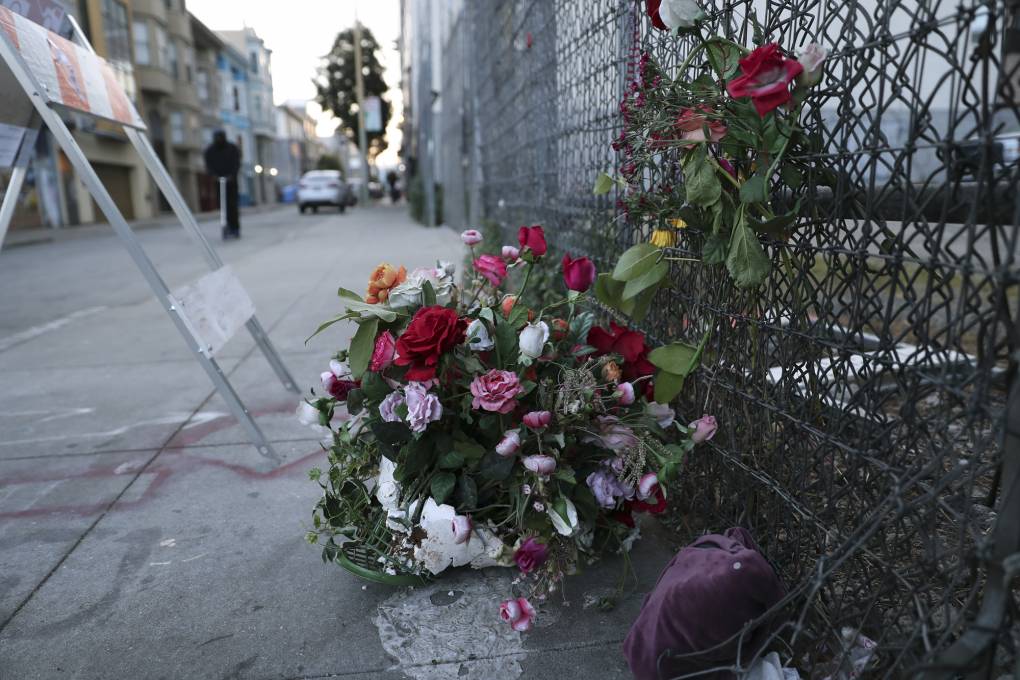
"caption": "Flowers lay on the sidewalk where a 16-year-old girl died from a possible overdose in the SoMa neighborhood of San Francisco on Feb. 20, 2022.",
"description": null,
"title": "teendeath0220",
"credit": "Scott Strazzante/San Francisco Chronicle via Getty Images",
"status": "inherit",
"altTag": "A bouquet of flowers lays on the sidewalk beside a chainlink fence in an urban setting.",
"isLoading": false,
"fetchFailed": false
},
"news_11692911": {
"type": "attachments",
"id": "news_11692911",
"meta": {
"index": "attachments_1716263798",
"site": "news",
"id": "11692911",
"found": true
},
"parent": 11692906,
"imgSizes": {
"small": {
"file": "https://cdn.kqed.org/wp-content/uploads/sites/10/2018/09/GettyImages-998366012-520x367.jpg",
"width": 520,
"mimeType": "image/jpeg",
"height": 367
},
"twentyfourteen-full-width": {
"file": "https://cdn.kqed.org/wp-content/uploads/sites/10/2018/09/GettyImages-998366012-1038x576.jpg",
"width": 1038,
"mimeType": "image/jpeg",
"height": 576
},
"thumbnail": {
"file": "https://cdn.kqed.org/wp-content/uploads/sites/10/2018/09/GettyImages-998366012-160x113.jpg",
"width": 160,
"mimeType": "image/jpeg",
"height": 113
},
"fd-sm": {
"file": "https://cdn.kqed.org/wp-content/uploads/sites/10/2018/09/GettyImages-998366012-960x678.jpg",
"width": 960,
"mimeType": "image/jpeg",
"height": 678
},
"post-thumbnail": {
"file": "https://cdn.kqed.org/wp-content/uploads/sites/10/2018/09/GettyImages-998366012-672x372.jpg",
"width": 672,
"mimeType": "image/jpeg",
"height": 372
},
"xsmall": {
"file": "https://cdn.kqed.org/wp-content/uploads/sites/10/2018/09/GettyImages-998366012-375x265.jpg",
"width": 375,
"mimeType": "image/jpeg",
"height": 265
},
"kqedFullSize": {
"file": "https://cdn.kqed.org/wp-content/uploads/sites/10/2018/09/GettyImages-998366012-e1537167179316.jpg",
"width": 1920,
"height": 1356
},
"large": {
"file": "https://cdn.kqed.org/wp-content/uploads/sites/10/2018/09/GettyImages-998366012-1020x721.jpg",
"width": 1020,
"mimeType": "image/jpeg",
"height": 721
},
"xlarge": {
"file": "https://cdn.kqed.org/wp-content/uploads/sites/10/2018/09/GettyImages-998366012-1180x834.jpg",
"width": 1180,
"mimeType": "image/jpeg",
"height": 834
},
"complete_open_graph": {
"file": "https://cdn.kqed.org/wp-content/uploads/sites/10/2018/09/GettyImages-998366012-1200x848.jpg",
"width": 1200,
"mimeType": "image/jpeg",
"height": 848
},
"guest-author-50": {
"file": "https://cdn.kqed.org/wp-content/uploads/sites/10/2018/09/GettyImages-998366012-50x50.jpg",
"width": 50,
"mimeType": "image/jpeg",
"height": 50
},
"guest-author-96": {
"file": "https://cdn.kqed.org/wp-content/uploads/sites/10/2018/09/GettyImages-998366012-96x96.jpg",
"width": 96,
"mimeType": "image/jpeg",
"height": 96
},
"medium": {
"file": "https://cdn.kqed.org/wp-content/uploads/sites/10/2018/09/GettyImages-998366012-800x565.jpg",
"width": 800,
"mimeType": "image/jpeg",
"height": 565
},
"guest-author-64": {
"file": "https://cdn.kqed.org/wp-content/uploads/sites/10/2018/09/GettyImages-998366012-64x64.jpg",
"width": 64,
"mimeType": "image/jpeg",
"height": 64
},
"guest-author-32": {
"file": "https://cdn.kqed.org/wp-content/uploads/sites/10/2018/09/GettyImages-998366012-32x32.jpg",
"width": 32,
"mimeType": "image/jpeg",
"height": 32
},
"fd-lrg": {
"file": "https://cdn.kqed.org/wp-content/uploads/sites/10/2018/09/GettyImages-998366012-1920x1356.jpg",
"width": 1920,
"mimeType": "image/jpeg",
"height": 1356
},
"fd-med": {
"file": "https://cdn.kqed.org/wp-content/uploads/sites/10/2018/09/GettyImages-998366012-1180x834.jpg",
"width": 1180,
"mimeType": "image/jpeg",
"height": 834
},
"full-width": {
"file": "https://cdn.kqed.org/wp-content/uploads/sites/10/2018/09/GettyImages-998366012-1920x1356.jpg",
"width": 1920,
"mimeType": "image/jpeg",
"height": 1356
},
"detail": {
"file": "https://cdn.kqed.org/wp-content/uploads/sites/10/2018/09/GettyImages-998366012-150x150.jpg",
"width": 150,
"mimeType": "image/jpeg",
"height": 150
},
"guest-author-128": {
"file": "https://cdn.kqed.org/wp-content/uploads/sites/10/2018/09/GettyImages-998366012-128x128.jpg",
"width": 128,
"mimeType": "image/jpeg",
"height": 128
},
"xxsmall": {
"file": "https://cdn.kqed.org/wp-content/uploads/sites/10/2018/09/GettyImages-998366012-240x170.jpg",
"width": 240,
"mimeType": "image/jpeg",
"height": 170
}
},
"publishDate": 1537167029,
"modified": 1710182256,
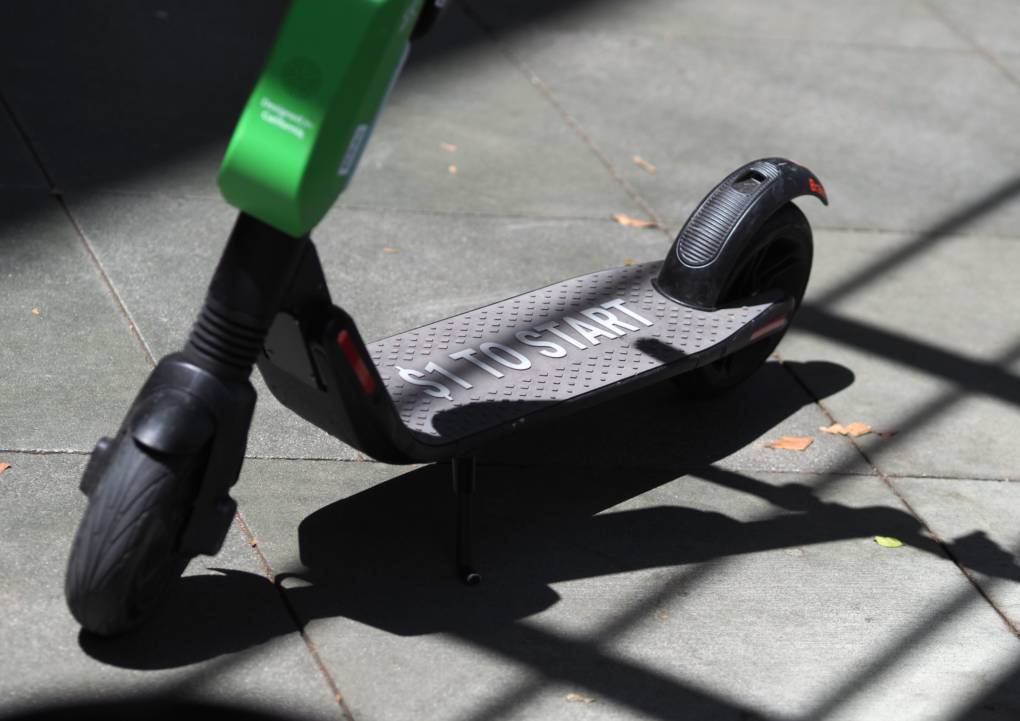
"caption": "San Francisco fire officials say there’s been a dramatic increase in fires associated with lithium-ion batteries found in electric scooters and bicycles.",
"description": null,
"title": "Lime Scooter",
"credit": "Robyn Beck/AFP-Getty Images",
"status": "inherit",
"altTag": null,
"isLoading": false,
"fetchFailed": false
},
"news_11978708": {
"type": "attachments",
"id": "news_11978708",
"meta": {
"index": "attachments_1716263798",
"site": "news",
"id": "11978708",
"found": true
},
"parent": 11978707,
"imgSizes": {
"twentyfourteen-full-width": {
"file": "https://cdn.kqed.org/wp-content/uploads/sites/10/2024/03/240305-ELECTIONFILESF-117-BL-KQED-1038x576.jpg",
"width": 1038,
"mimeType": "image/jpeg",
"height": 576
},
"thumbnail": {
"file": "https://cdn.kqed.org/wp-content/uploads/sites/10/2024/03/240305-ELECTIONFILESF-117-BL-KQED-160x107.jpg",
"width": 160,
"mimeType": "image/jpeg",
"height": 107
},
"post-thumbnail": {
"file": "https://cdn.kqed.org/wp-content/uploads/sites/10/2024/03/240305-ELECTIONFILESF-117-BL-KQED-672x372.jpg",
"width": 672,
"mimeType": "image/jpeg",
"height": 372
},
"kqedFullSize": {
"file": "https://cdn.kqed.org/wp-content/uploads/sites/10/2024/03/240305-ELECTIONFILESF-117-BL-KQED.jpg",
"width": 2000,
"height": 1333
},
"large": {
"file": "https://cdn.kqed.org/wp-content/uploads/sites/10/2024/03/240305-ELECTIONFILESF-117-BL-KQED-1020x680.jpg",
"width": 1020,
"mimeType": "image/jpeg",
"height": 680
},
"1536x1536": {
"file": "https://cdn.kqed.org/wp-content/uploads/sites/10/2024/03/240305-ELECTIONFILESF-117-BL-KQED-1536x1024.jpg",
"width": 1536,
"mimeType": "image/jpeg",
"height": 1024
},
"full-width": {
"file": "https://cdn.kqed.org/wp-content/uploads/sites/10/2024/03/240305-ELECTIONFILESF-117-BL-KQED-1920x1280.jpg",
"width": 1920,
"mimeType": "image/jpeg",
"height": 1280
},
"medium": {
"file": "https://cdn.kqed.org/wp-content/uploads/sites/10/2024/03/240305-ELECTIONFILESF-117-BL-KQED-800x533.jpg",
"width": 800,
"mimeType": "image/jpeg",
"height": 533
}
},
"publishDate": 1709930831,
"modified": 1710612233,
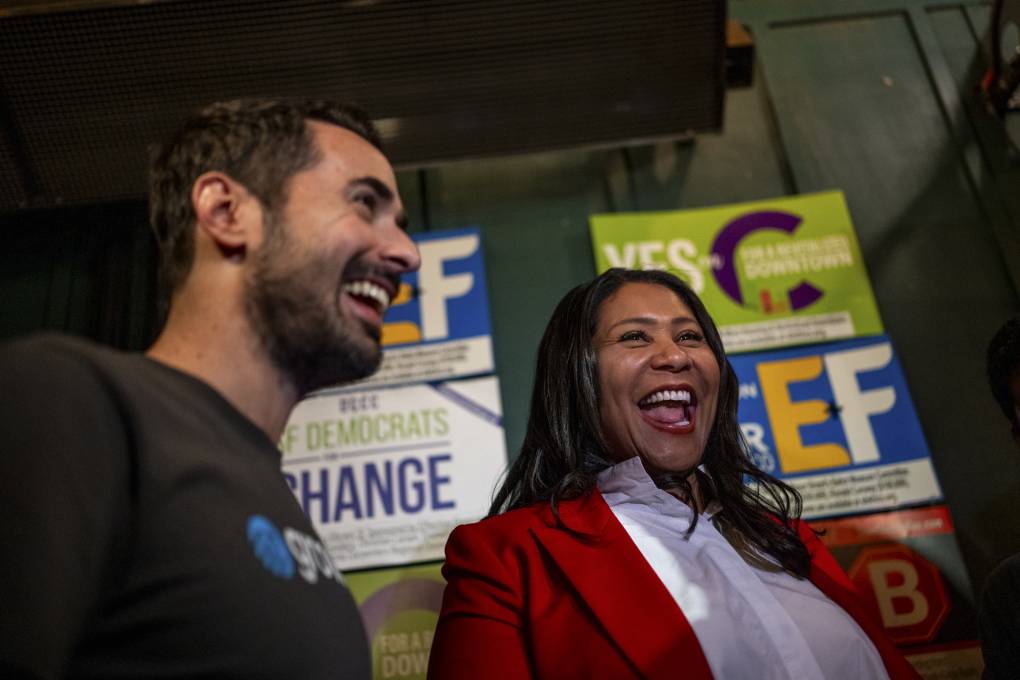
"caption": "San Francisco Mayor London Breed speaks at a SF Dems for Change Super Tuesday election night party at Anina in San Francisco, on March 5, 2024. ",
"description": null,
"title": "240305-ELECTIONFILESF-117-BL-KQED",
"credit": null,
"status": "inherit",
"altTag": null,
"isLoading": false,
"fetchFailed": false
},
"news_11978597": {
"type": "attachments",
"id": "news_11978597",
"meta": {
"index": "attachments_1716263798",
"site": "news",
"id": "11978597",
"found": true
},
"parent": 0,
"imgSizes": {
"twentyfourteen-full-width": {
"file": "https://cdn.kqed.org/wp-content/uploads/sites/10/2024/03/AP24067754253294-1038x576.jpg",
"width": 1038,
"mimeType": "image/jpeg",
"height": 576
},
"thumbnail": {
"file": "https://cdn.kqed.org/wp-content/uploads/sites/10/2024/03/AP24067754253294-160x107.jpg",
"width": 160,
"mimeType": "image/jpeg",
"height": 107
},
"post-thumbnail": {
"file": "https://cdn.kqed.org/wp-content/uploads/sites/10/2024/03/AP24067754253294-672x372.jpg",
"width": 672,
"mimeType": "image/jpeg",
"height": 372
},
"kqedFullSize": {
"file": "https://cdn.kqed.org/wp-content/uploads/sites/10/2024/03/AP24067754253294-scaled.jpg",
"width": 2560,
"height": 1707
},
"2048x2048": {
"file": "https://cdn.kqed.org/wp-content/uploads/sites/10/2024/03/AP24067754253294-2048x1365.jpg",
"width": 2048,
"mimeType": "image/jpeg",
"height": 1365
},
"large": {
"file": "https://cdn.kqed.org/wp-content/uploads/sites/10/2024/03/AP24067754253294-1020x680.jpg",
"width": 1020,
"mimeType": "image/jpeg",
"height": 680
},
"1536x1536": {
"file": "https://cdn.kqed.org/wp-content/uploads/sites/10/2024/03/AP24067754253294-1536x1024.jpg",
"width": 1536,
"mimeType": "image/jpeg",
"height": 1024
},
"full-width": {
"file": "https://cdn.kqed.org/wp-content/uploads/sites/10/2024/03/AP24067754253294-1920x1280.jpg",
"width": 1920,
"mimeType": "image/jpeg",
"height": 1280
},
"medium": {
"file": "https://cdn.kqed.org/wp-content/uploads/sites/10/2024/03/AP24067754253294-800x533.jpg",
"width": 800,
"mimeType": "image/jpeg",
"height": 533
}
},
"publishDate": 1709853620,
"modified": 1709859837,
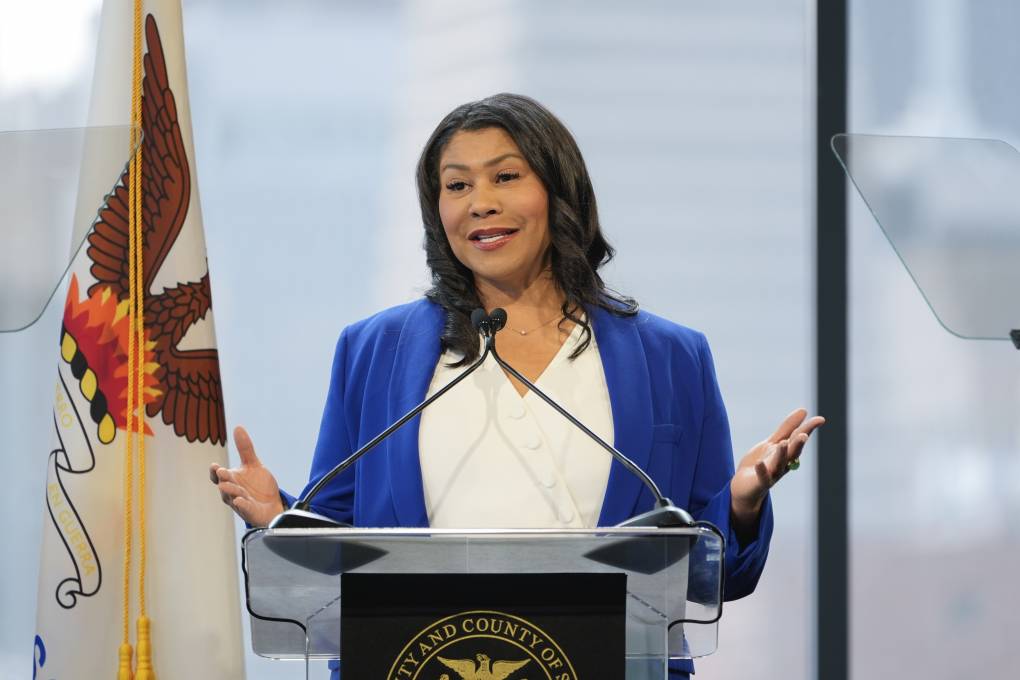
"caption": "San Francisco Mayor London Breed delivers her State of the City address at the Pier 27 cruise terminal in San Francisco on March 7, 2024.",
"description": null,
"title": "London Breed",
"credit": "Eric Risberg/AP",
"status": "inherit",
"altTag": "Mayor London Breed, wearing a blue jacket, delivers a speech in front of a podium, with teleprompters or either side of her.",
"isLoading": false,
"fetchFailed": false
},
"news_11978246": {
"type": "attachments",
"id": "news_11978246",
"meta": {
"index": "attachments_1716263798",
"site": "news",
"id": "11978246",
"found": true
},
"parent": 11978236,
"imgSizes": {
"twentyfourteen-full-width": {
"file": "https://cdn.kqed.org/wp-content/uploads/sites/10/2099/03/240305-ElectionFileSF-60-BL_qut-1-1038x576.jpg",
"width": 1038,
"mimeType": "image/jpeg",
"height": 576
},
"thumbnail": {
"file": "https://cdn.kqed.org/wp-content/uploads/sites/10/2099/03/240305-ElectionFileSF-60-BL_qut-1-160x107.jpg",
"width": 160,
"mimeType": "image/jpeg",
"height": 107
},
"post-thumbnail": {
"file": "https://cdn.kqed.org/wp-content/uploads/sites/10/2099/03/240305-ElectionFileSF-60-BL_qut-1-672x372.jpg",
"width": 672,
"mimeType": "image/jpeg",
"height": 372
},
"kqedFullSize": {
"file": "https://cdn.kqed.org/wp-content/uploads/sites/10/2099/03/240305-ElectionFileSF-60-BL_qut-1.jpg",
"width": 1920,
"height": 1280
},
"large": {
"file": "https://cdn.kqed.org/wp-content/uploads/sites/10/2099/03/240305-ElectionFileSF-60-BL_qut-1-1020x680.jpg",
"width": 1020,
"mimeType": "image/jpeg",
"height": 680
},
"1536x1536": {
"file": "https://cdn.kqed.org/wp-content/uploads/sites/10/2099/03/240305-ElectionFileSF-60-BL_qut-1-1536x1024.jpg",
"width": 1536,
"mimeType": "image/jpeg",
"height": 1024
},
"medium": {
"file": "https://cdn.kqed.org/wp-content/uploads/sites/10/2099/03/240305-ElectionFileSF-60-BL_qut-1-800x533.jpg",
"width": 800,
"mimeType": "image/jpeg",
"height": 533
}
},
"publishDate": 1709695772,
"modified": 1709713295,
"caption": "San Francisco Mayor London Breed walks with voters on Super Tuesday during a Get-Out-The-Vote walk for Prop C, E, and F in Chinatown, San Francisco, on March 5, 2024.",
"description": null,
"title": "240305-ElectionFileSF-60-BL_qut (1)",
"credit": "Beth LaBerge/KQED",
"status": "inherit",
"altTag": "Mayor London Breed, in a blue suit and colorful shirt, smiles big, carrying a blue sign that says E and F with big letters.",
"isLoading": false,
"fetchFailed": false
},
"news_11960409": {
"type": "attachments",
"id": "news_11960409",
"meta": {
"index": "attachments_1716263798",
"site": "news",
"id": "11960409",
"found": true
},
"parent": 11960406,
"imgSizes": {
"twentyfourteen-full-width": {
"file": "https://cdn.kqed.org/wp-content/uploads/sites/10/2023/09/RS67750_230808-SanFranciscoCityHall-19-BL-qut-1038x576.jpg",
"width": 1038,
"mimeType": "image/jpeg",
"height": 576
},
"thumbnail": {
"file": "https://cdn.kqed.org/wp-content/uploads/sites/10/2023/09/RS67750_230808-SanFranciscoCityHall-19-BL-qut-160x107.jpg",
"width": 160,
"mimeType": "image/jpeg",
"height": 107
},
"post-thumbnail": {
"file": "https://cdn.kqed.org/wp-content/uploads/sites/10/2023/09/RS67750_230808-SanFranciscoCityHall-19-BL-qut-672x372.jpg",
"width": 672,
"mimeType": "image/jpeg",
"height": 372
},
"kqedFullSize": {
"file": "https://cdn.kqed.org/wp-content/uploads/sites/10/2023/09/RS67750_230808-SanFranciscoCityHall-19-BL-qut.jpg",
"width": 1920,
"height": 1280
},
"large": {
"file": "https://cdn.kqed.org/wp-content/uploads/sites/10/2023/09/RS67750_230808-SanFranciscoCityHall-19-BL-qut-1020x680.jpg",
"width": 1020,
"mimeType": "image/jpeg",
"height": 680
},
"1536x1536": {
"file": "https://cdn.kqed.org/wp-content/uploads/sites/10/2023/09/RS67750_230808-SanFranciscoCityHall-19-BL-qut-1536x1024.jpg",
"width": 1536,
"mimeType": "image/jpeg",
"height": 1024
},
"medium": {
"file": "https://cdn.kqed.org/wp-content/uploads/sites/10/2023/09/RS67750_230808-SanFranciscoCityHall-19-BL-qut-800x533.jpg",
"width": 800,
"mimeType": "image/jpeg",
"height": 533
}
},
"publishDate": 1694131442,
"modified": 1709340288,
"caption": "A Muni bus passes by City Hall in San Francisco on Aug. 8, 2023.",
"description": null,
"title": "A Muni bus passes by City Hall in San Francisco on Aug. 8, 2023.",
"credit": "Beth LaBerge/KQED",
"status": "inherit",
"altTag": "A building with intricate pillars in front, as well as a red and white city bus.",
"isLoading": false,
"fetchFailed": false
},
"news_11977233": {
"type": "attachments",
"id": "news_11977233",
"meta": {
"index": "attachments_1716263798",
"site": "news",
"id": "11977233",
"found": true
},
"parent": 11977217,
"imgSizes": {
"twentyfourteen-full-width": {
"file": "https://cdn.kqed.org/wp-content/uploads/sites/10/2024/02/GettyImages-1292520931-1-1024x576.jpg",
"width": 1024,
"mimeType": "image/jpeg",
"height": 576
},
"thumbnail": {
"file": "https://cdn.kqed.org/wp-content/uploads/sites/10/2024/02/GettyImages-1292520931-1-160x107.jpg",
"width": 160,
"mimeType": "image/jpeg",
"height": 107
},
"post-thumbnail": {
"file": "https://cdn.kqed.org/wp-content/uploads/sites/10/2024/02/GettyImages-1292520931-1-672x372.jpg",
"width": 672,
"mimeType": "image/jpeg",
"height": 372
},
"kqedFullSize": {
"file": "https://cdn.kqed.org/wp-content/uploads/sites/10/2024/02/GettyImages-1292520931-1.jpg",
"width": 1024,
"height": 683
},
"large": {
"file": "https://cdn.kqed.org/wp-content/uploads/sites/10/2024/02/GettyImages-1292520931-1-1020x680.jpg",
"width": 1020,
"mimeType": "image/jpeg",
"height": 680
},
"medium": {
"file": "https://cdn.kqed.org/wp-content/uploads/sites/10/2024/02/GettyImages-1292520931-1-800x534.jpg",
"width": 800,
"mimeType": "image/jpeg",
"height": 534
}
},
"publishDate": 1709063089,
"modified": 1709063156,
"caption": "A view of Macy's exterior on Dec. 21, 2020 in San Francisco.",
"description": null,
"title": "San Francisco Celebrates The Holiday Season",
"credit": "Miikka Skaffari/Getty Images",
"status": "inherit",
"altTag": "A nighttime shot of the vertical Macy's sign in San Francisco.",
"isLoading": false,
"fetchFailed": false
},
"news_11976962": {
"type": "attachments",
"id": "news_11976962",
"meta": {
"index": "attachments_1716263798",
"site": "news",
"id": "11976962",
"found": true
},
"parent": 11976959,
"imgSizes": {
"twentyfourteen-full-width": {
"file": "https://cdn.kqed.org/wp-content/uploads/sites/10/2024/02/003_KQED_HousingSanFrancisco_02102020_qut-1038x576.jpg",
"width": 1038,
"mimeType": "image/jpeg",
"height": 576
},
"thumbnail": {
"file": "https://cdn.kqed.org/wp-content/uploads/sites/10/2024/02/003_KQED_HousingSanFrancisco_02102020_qut-160x107.jpg",
"width": 160,
"mimeType": "image/jpeg",
"height": 107
},
"post-thumbnail": {
"file": "https://cdn.kqed.org/wp-content/uploads/sites/10/2024/02/003_KQED_HousingSanFrancisco_02102020_qut-672x372.jpg",
"width": 672,
"mimeType": "image/jpeg",
"height": 372
},
"kqedFullSize": {
"file": "https://cdn.kqed.org/wp-content/uploads/sites/10/2024/02/003_KQED_HousingSanFrancisco_02102020_qut.jpg",
"width": 1920,
"height": 1280
},
"large": {
"file": "https://cdn.kqed.org/wp-content/uploads/sites/10/2024/02/003_KQED_HousingSanFrancisco_02102020_qut-1020x680.jpg",
"width": 1020,
"mimeType": "image/jpeg",
"height": 680
},
"1536x1536": {
"file": "https://cdn.kqed.org/wp-content/uploads/sites/10/2024/02/003_KQED_HousingSanFrancisco_02102020_qut-1536x1024.jpg",
"width": 1536,
"mimeType": "image/jpeg",
"height": 1024
},
"medium": {
"file": "https://cdn.kqed.org/wp-content/uploads/sites/10/2024/02/003_KQED_HousingSanFrancisco_02102020_qut-800x533.jpg",
"width": 800,
"mimeType": "image/jpeg",
"height": 533
}
},
"publishDate": 1708726134,
"modified": 1708735847,
"caption": "Proposition A asks San Francisco voters to approve a bond to fund affordable housing.",
"description": null,
"title": "003_KQED_HousingSanFrancisco_02102020_qut",
"credit": "Beth LaBerge/KQED",
"status": "inherit",
"altTag": "Houses in San Francisco, surrounded by trees, are seen from above.",
"isLoading": false,
"fetchFailed": false
},
"news_11977003": {
"type": "attachments",
"id": "news_11977003",
"meta": {
"index": "attachments_1716263798",
"site": "news",
"id": "11977003",
"found": true
},
"parent": 11976974,
"imgSizes": {
"twentyfourteen-full-width": {
"file": "https://cdn.kqed.org/wp-content/uploads/sites/10/2024/02/240224-Chinese-new-year-parade-KSM-3_qut-1038x576.jpg",
"width": 1038,
"mimeType": "image/jpeg",
"height": 576
},
"thumbnail": {
"file": "https://cdn.kqed.org/wp-content/uploads/sites/10/2024/02/240224-Chinese-new-year-parade-KSM-3_qut-160x107.jpg",
"width": 160,
"mimeType": "image/jpeg",
"height": 107
},
"post-thumbnail": {
"file": "https://cdn.kqed.org/wp-content/uploads/sites/10/2024/02/240224-Chinese-new-year-parade-KSM-3_qut-672x372.jpg",
"width": 672,
"mimeType": "image/jpeg",
"height": 372
},
"kqedFullSize": {
"file": "https://cdn.kqed.org/wp-content/uploads/sites/10/2024/02/240224-Chinese-new-year-parade-KSM-3_qut.jpg",
"width": 1920,
"height": 1280
},
"large": {
"file": "https://cdn.kqed.org/wp-content/uploads/sites/10/2024/02/240224-Chinese-new-year-parade-KSM-3_qut-1020x680.jpg",
"width": 1020,
"mimeType": "image/jpeg",
"height": 680
},
"1536x1536": {
"file": "https://cdn.kqed.org/wp-content/uploads/sites/10/2024/02/240224-Chinese-new-year-parade-KSM-3_qut-1536x1024.jpg",
"width": 1536,
"mimeType": "image/jpeg",
"height": 1024
},
"medium": {
"file": "https://cdn.kqed.org/wp-content/uploads/sites/10/2024/02/240224-Chinese-new-year-parade-KSM-3_qut-800x533.jpg",
"width": 800,
"mimeType": "image/jpeg",
"height": 533
}
},
"publishDate": 1708838557,
"modified": 1708838598,
"caption": "Awkwafina, grand marshal of the Chinese New Year Festival and Parade in San Francisco on Feb. 24, 2024.",
"description": null,
"title": "240224-Chinese-new-year-parade-KSM-3_qut",
"credit": "Kathryn Styer Martínez/KQED",
"status": "inherit",
"altTag": null,
"isLoading": false,
"fetchFailed": false
},
"news_11976632": {
"type": "attachments",
"id": "news_11976632",
"meta": {
"index": "attachments_1716263798",
"site": "news",
"id": "11976632",
"found": true
},
"parent": 11976610,
"imgSizes": {
"twentyfourteen-full-width": {
"file": "https://cdn.kqed.org/wp-content/uploads/sites/10/2024/02/057_SanFrancisco_YauKungMoonPerformance_01302022_qut-1038x576.jpg",
"width": 1038,
"mimeType": "image/jpeg",
"height": 576
},
"thumbnail": {
"file": "https://cdn.kqed.org/wp-content/uploads/sites/10/2024/02/057_SanFrancisco_YauKungMoonPerformance_01302022_qut-160x107.jpg",
"width": 160,
"mimeType": "image/jpeg",
"height": 107
},
"post-thumbnail": {
"file": "https://cdn.kqed.org/wp-content/uploads/sites/10/2024/02/057_SanFrancisco_YauKungMoonPerformance_01302022_qut-672x372.jpg",
"width": 672,
"mimeType": "image/jpeg",
"height": 372
},
"kqedFullSize": {
"file": "https://cdn.kqed.org/wp-content/uploads/sites/10/2024/02/057_SanFrancisco_YauKungMoonPerformance_01302022_qut.jpg",
"width": 1920,
"height": 1278
},
"large": {
"file": "https://cdn.kqed.org/wp-content/uploads/sites/10/2024/02/057_SanFrancisco_YauKungMoonPerformance_01302022_qut-1020x679.jpg",
"width": 1020,
"mimeType": "image/jpeg",
"height": 679
},
"1536x1536": {
"file": "https://cdn.kqed.org/wp-content/uploads/sites/10/2024/02/057_SanFrancisco_YauKungMoonPerformance_01302022_qut-1536x1022.jpg",
"width": 1536,
"mimeType": "image/jpeg",
"height": 1022
},
"medium": {
"file": "https://cdn.kqed.org/wp-content/uploads/sites/10/2024/02/057_SanFrancisco_YauKungMoonPerformance_01302022_qut-800x533.jpg",
"width": 800,
"mimeType": "image/jpeg",
"height": 533
}
},
"publishDate": 1708555775,
"modified": 1708555857,
"caption": "The Yau Kung Moon Richard Ow and Susan Yee Kung Fu lion dance teams perform during the Chinese New Year Flower Market Fair in Chinatown, San Francisco, on Jan. 30, 2022.",
"description": null,
"title": "057_SanFrancisco_YauKungMoonPerformance_01302022_qut",
"credit": "Beth LaBerge/KQED",
"status": "inherit",
"altTag": null,
"isLoading": false,
"fetchFailed": false
},
"news_11975179": {
"type": "attachments",
"id": "news_11975179",
"meta": {
"index": "attachments_1716263798",
"site": "news",
"id": "11975179",
"found": true
},
"parent": 11975156,
"imgSizes": {
"twentyfourteen-full-width": {
"file": "https://cdn.kqed.org/wp-content/uploads/sites/10/2024/02/IMG_5659-1038x576.jpg",
"width": 1038,
"mimeType": "image/jpeg",
"height": 576
},
"thumbnail": {
"file": "https://cdn.kqed.org/wp-content/uploads/sites/10/2024/02/IMG_5659-160x120.jpg",
"width": 160,
"mimeType": "image/jpeg",
"height": 120
},
"post-thumbnail": {
"file": "https://cdn.kqed.org/wp-content/uploads/sites/10/2024/02/IMG_5659-672x372.jpg",
"width": 672,
"mimeType": "image/jpeg",
"height": 372
},
"kqedFullSize": {
"file": "https://cdn.kqed.org/wp-content/uploads/sites/10/2024/02/IMG_5659-scaled.jpg",
"width": 2560,
"height": 1920
},
"2048x2048": {
"file": "https://cdn.kqed.org/wp-content/uploads/sites/10/2024/02/IMG_5659-2048x1536.jpg",
"width": 2048,
"mimeType": "image/jpeg",
"height": 1536
},
"large": {
"file": "https://cdn.kqed.org/wp-content/uploads/sites/10/2024/02/IMG_5659-1020x765.jpg",
"width": 1020,
"mimeType": "image/jpeg",
"height": 765
},
"1536x1536": {
"file": "https://cdn.kqed.org/wp-content/uploads/sites/10/2024/02/IMG_5659-1536x1152.jpg",
"width": 1536,
"mimeType": "image/jpeg",
"height": 1152
},
"full-width": {
"file": "https://cdn.kqed.org/wp-content/uploads/sites/10/2024/02/IMG_5659-1920x1440.jpg",
"width": 1920,
"mimeType": "image/jpeg",
"height": 1440
},
"medium": {
"file": "https://cdn.kqed.org/wp-content/uploads/sites/10/2024/02/IMG_5659-800x600.jpg",
"width": 800,
"mimeType": "image/jpeg",
"height": 600
}
},
"publishDate": 1707436919,
"modified": 1708478350,
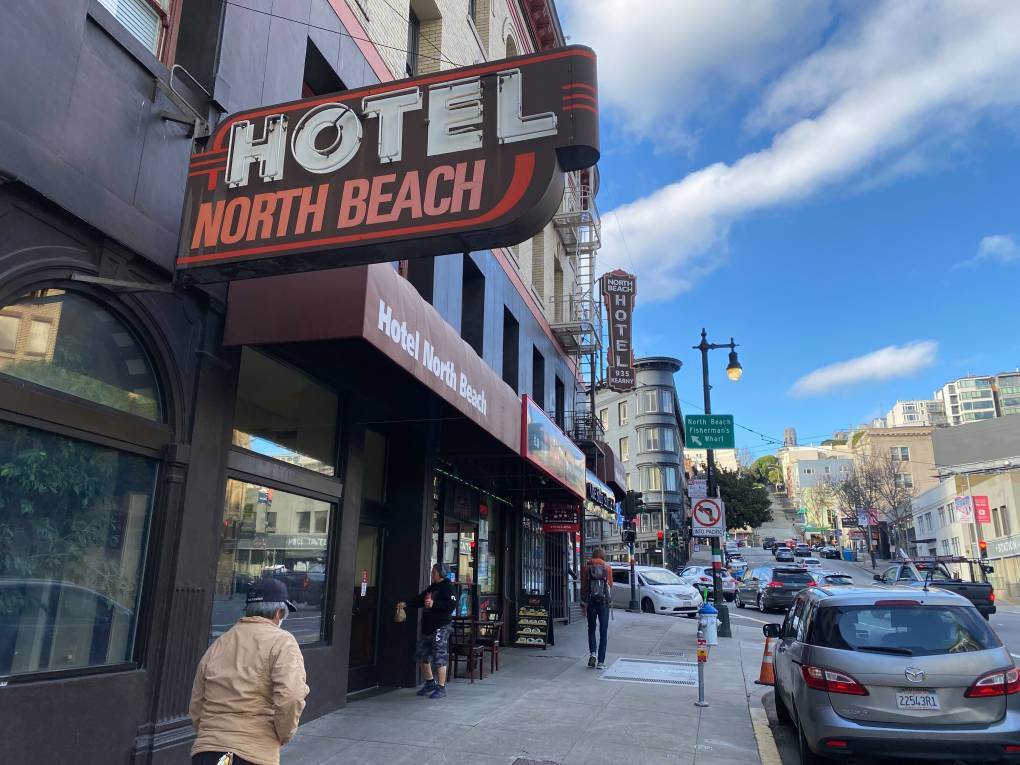
"caption": "Mayor London Breed walked back plans to open the permanent supportive housing site at Hotel North Beach, 935 Kearny St., just days after first announcing the idea.",
"description": null,
"title": "IMG_5659",
"credit": "Sydney Johnson/KQED",
"status": "inherit",
"altTag": "The exterior signage of the North Beach Hotel.",
"isLoading": false,
"fetchFailed": false
},
"news_11976056": {
"type": "attachments",
"id": "news_11976056",
"meta": {
"index": "attachments_1716263798",
"site": "news",
"id": "11976056",
"found": true
},
"title": "Vacant Office Space In San Francisco Reaches All Time High",
"publishDate": 1708026838,
"status": "inherit",
"parent": 11976049,
"modified": 1785879472,
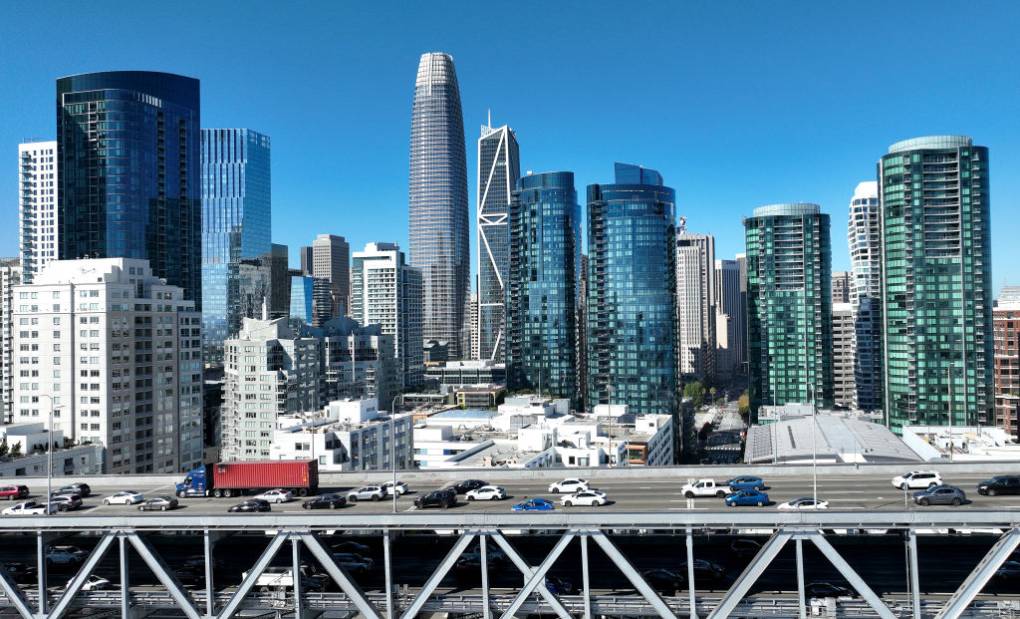
"caption": "Cars drive by the San Francisco skyline along Interstate 80 on Oct. 27, 2022. According to a report by commercial real estate firm CBRE in 2022, the city of San Francisco had a record 27.1 million square feet of office space available as the city struggled to rebound from the COVID-19 pandemic.",
"credit": "Justin Sullivan/Getty Images",
"altTag": "A city skyline with high-rises and a blue sky, cars driving in the foreground on a bridge.",
"description": null,
"imgSizes": {
"medium": {
"file": "https://cdn.kqed.org/wp-content/uploads/sites/10/2024/02/GettyImages-1437097582-800x485.jpg",
"width": 800,
"height": 485,
"mimeType": "image/jpeg"
},
"large": {
"file": "https://cdn.kqed.org/wp-content/uploads/sites/10/2024/02/GettyImages-1437097582-1020x619.jpg",
"width": 1020,
"height": 619,
"mimeType": "image/jpeg"
},
"thumbnail": {
"file": "https://cdn.kqed.org/wp-content/uploads/sites/10/2024/02/GettyImages-1437097582-160x97.jpg",
"width": 160,
"height": 97,
"mimeType": "image/jpeg"
},
"post-thumbnail": {
"file": "https://cdn.kqed.org/wp-content/uploads/sites/10/2024/02/GettyImages-1437097582-672x372.jpg",
"width": 672,
"height": 372,
"mimeType": "image/jpeg"
},
"twentyfourteen-full-width": {
"file": "https://cdn.kqed.org/wp-content/uploads/sites/10/2024/02/GettyImages-1437097582-1024x576.jpg",
"width": 1024,
"height": 576,
"mimeType": "image/jpeg"
},
"kqedFullSize": {
"file": "https://cdn.kqed.org/wp-content/uploads/sites/10/2024/02/GettyImages-1437097582.jpg",
"width": 1024,
"height": 621
}
},
"isLoading": false,
"fetchFailed": false
}
},
"audioPlayerReducer": {
"postId": "stream_live",
"isPaused": true,
"isPlaying": false,
"pfsActive": false,
"pledgeModalIsOpen": true,
"playerDrawerIsOpen": false,
"liveAudioPlayStartedAt": 0,
"liveAudioPlayContext": ""
},
"authorsReducer": {
"byline_news_11976049": {
"type": "authors",
"id": "byline_news_11976049",
"meta": {
"override": true
},
"slug": "byline_news_11976049",
"name": "\u003ca href=\"https://www.npr.org/people/1004889801/manuela-lopez-restrepo\">Manuela López Restrepo\u003c/a>",
"isLoading": false
},
"kqed": {
"type": "authors",
"id": "236",
"meta": {
"index": "authors_1716337520",
"id": "236",
"found": true
},
"name": "KQED News Staff",
"firstName": "KQED News Staff",
"lastName": null,
"slug": "kqed",
"email": "faq@kqed.org",
"display_author_email": false,
"staff_mastheads": [],
"title": null,
"bio": null,
"avatar": "https://secure.gravatar.com/avatar/ef0e801a68c4c54afa9180db14084167?s=600&d=blank&r=g",
"twitter": null,
"facebook": null,
"instagram": null,
"linkedin": null,
"sites": [
{
"site": "arts",
"roles": [
"contributor"
]
},
{
"site": "news",
"roles": [
"editor"
]
},
{
"site": "futureofyou",
"roles": [
"author"
]
}
],
"headData": {
"title": "KQED News Staff | KQED",
"description": null,
"ogImgSrc": "https://secure.gravatar.com/avatar/ef0e801a68c4c54afa9180db14084167?s=600&d=blank&r=g",
"twImgSrc": "https://secure.gravatar.com/avatar/ef0e801a68c4c54afa9180db14084167?s=600&d=blank&r=g"
},
"isLoading": false,
"link": "/author/kqed"
},
"matthewgreen": {
"type": "authors",
"id": "1263",
"meta": {
"index": "authors_1716337520",
"id": "1263",
"found": true
},
"name": "Matthew Green",
"firstName": "Matthew",
"lastName": "Green",
"slug": "matthewgreen",
"email": "mgreen@kqed.org",
"display_author_email": false,
"staff_mastheads": [],
"title": "KQED Editor/Reporter",
"bio": "Matthew Green is a digital media producer for KQED News. He previously produced \u003ca href=\"http://www.kqed.org/lowdown\">The Lowdown\u003c/a>, KQED’s multimedia news education blog. Matthew's written for numerous Bay Area publications, including the Oakland Tribune and San Francisco Chronicle. He also taught journalism classes at Fremont High School in East Oakland.\r\n\r\nEmail: mgreen@kqed.org; Twitter: @MGreenKQED",
"avatar": "https://secure.gravatar.com/avatar/3bf498d1267ca02c8494f33d8cfc575e?s=600&d=blank&r=g",
"twitter": "MGreenKQED",
"facebook": null,
"instagram": null,
"linkedin": null,
"sites": [
{
"site": "news",
"roles": []
},
{
"site": "lowdown",
"roles": []
},
{
"site": "science",
"roles": []
},
{
"site": "education",
"roles": []
},
{
"site": "quest",
"roles": []
},
{
"site": "liveblog",
"roles": []
}
],
"headData": {
"title": "Matthew Green | KQED",
"description": "KQED Editor/Reporter",
"ogImgSrc": "https://secure.gravatar.com/avatar/3bf498d1267ca02c8494f33d8cfc575e?s=600&d=blank&r=g",
"twImgSrc": "https://secure.gravatar.com/avatar/3bf498d1267ca02c8494f33d8cfc575e?s=600&d=blank&r=g"
},
"isLoading": false,
"link": "/author/matthewgreen"
},
"ecruzguevarra": {
"type": "authors",
"id": "8654",
"meta": {
"index": "authors_1716337520",
"id": "8654",
"found": true
},
"name": "Ericka Cruz Guevarra",
"firstName": "Ericka",
"lastName": "Cruz Guevarra",
"slug": "ecruzguevarra",
"email": "ecruzguevarra@kqed.org",
"display_author_email": true,
"staff_mastheads": [
"news"
],
"title": "Producer, The Bay Podcast",
"bio": "Ericka Cruz Guevarra is host of \u003ca href=\"https://www.kqed.org/podcasts/thebay\">\u003cem>The Bay\u003c/em>\u003c/a> podcast at KQED. Before host, she was the show’s producer. Her work in that capacity includes a three-part reported series on policing in Vallejo, which won a 2020 excellence in journalism award from the Society of Professional Journalists. Ericka has worked as a breaking news reporter at Oregon Public Broadcasting, helped produce the Code Switch podcast, and was KQED’s inaugural Raul Ramirez Diversity Fund intern. She’s also an alumna of NPR’s Next Generation Radio program. Send her an email if you have strong feelings about whether Fairfield and Suisun City are the Bay. Ericka is represented by SAG-AFTRA.",
"avatar": "https://secure.gravatar.com/avatar/accefc1de4bafc7e234b69bcb9b6f6536c130fd84709bc3069ef11a78787e1bb?s=600&d=blank&r=g",
"twitter": "NotoriousECG",
"bluesky": null,
"facebook": null,
"instagram": null,
"linkedin": null,
"sites": [
{
"site": "arts",
"roles": [
"subscriber"
]
},
{
"site": "news",
"roles": [
"editor",
"manage_categories"
]
},
{
"site": "futureofyou",
"roles": [
"subscriber"
]
},
{
"site": "stateofhealth",
"roles": [
"subscriber"
]
},
{
"site": "science",
"roles": [
"editor"
]
},
{
"site": "forum",
"roles": [
"subscriber"
]
}
],
"headData": {
"title": "Ericka Cruz Guevarra | KQED",
"description": "Producer, The Bay Podcast",
"ogImgSrc": "https://secure.gravatar.com/avatar/accefc1de4bafc7e234b69bcb9b6f6536c130fd84709bc3069ef11a78787e1bb?s=600&d=blank&r=g",
"twImgSrc": "https://secure.gravatar.com/avatar/accefc1de4bafc7e234b69bcb9b6f6536c130fd84709bc3069ef11a78787e1bb?s=600&d=blank&r=g"
},
"isLoading": false,
"link": "/author/ecruzguevarra"
},
"amontecillo": {
"type": "authors",
"id": "11649",
"meta": {
"index": "authors_1716337520",
"id": "11649",
"found": true
},
"name": "Alan Montecillo",
"firstName": "Alan",
"lastName": "Montecillo",
"slug": "amontecillo",
"email": "amontecillo@kqed.org",
"display_author_email": false,
"staff_mastheads": [
"news"
],
"title": "KQED Contributor",
"bio": "Alan Montecillo is the senior editor of \u003cem>\u003ca href=\"http://kqed.org/thebay\">The Bay\u003c/a>, \u003c/em> KQED's local news podcast. Before moving to the Bay Area, he worked as a senior talk show producer for WILL in Champaign-Urbana, Illinois and at Oregon Public Broadcasting in Portland, Oregon. He has won journalism awards from the Society of Professional Journalists Northern California, the Public Media Journalists Association, The Signal Awards, and has also received a regional Edward R. Murrow award. Alan is a Filipino American from Hong Kong and a graduate of Reed College.",
"avatar": "https://secure.gravatar.com/avatar/268f53a2066899ea9efdd8a5900218b17c822d9862cbc9326cccec53ef41d349?s=600&d=blank&r=g",
"twitter": "alanmontecillo",
"bluesky": null,
"facebook": null,
"instagram": null,
"linkedin": null,
"sites": [
{
"site": "",
"roles": [
"editor"
]
},
{
"site": "news",
"roles": [
"editor",
"manage_categories"
]
}
],
"headData": {
"title": "Alan Montecillo | KQED",
"description": "KQED Contributor",
"ogImgSrc": "https://secure.gravatar.com/avatar/268f53a2066899ea9efdd8a5900218b17c822d9862cbc9326cccec53ef41d349?s=600&d=blank&r=g",
"twImgSrc": "https://secure.gravatar.com/avatar/268f53a2066899ea9efdd8a5900218b17c822d9862cbc9326cccec53ef41d349?s=600&d=blank&r=g"
},
"isLoading": false,
"link": "/author/amontecillo"
},
"abandlamudi": {
"type": "authors",
"id": "11672",
"meta": {
"index": "authors_1716337520",
"id": "11672",
"found": true
},
"name": "Adhiti Bandlamudi",
"firstName": "Adhiti",
"lastName": "Bandlamudi",
"slug": "abandlamudi",
"email": "abandlamudi@kqed.org",
"display_author_email": false,
"staff_mastheads": [
"news"
],
"title": "KQED Housing Reporter",
"bio": "Adhiti Bandlamudi reports for KQED's Housing desk. She focuses on how housing gets built across the Bay Area. Before joining KQED in 2020, she reported for WUNC in Durham, North Carolina, WABE in Atlanta, Georgia and Capital Public Radio in Sacramento. In 2017, she was awarded a Kroc Fellowship at NPR where she reported on everything from sprinkles to the Golden State Killer's arrest. When she's not reporting, she's baking new recipes in her kitchen or watching movies with friends and family. She's originally from Georgia and has strong opinions about Great British Bake Off.",
"avatar": "https://secure.gravatar.com/avatar/868129c8b257bb99a3500e2c86a65400?s=600&d=mm&r=g",
"twitter": "oddity_adhiti",
"facebook": null,
"instagram": null,
"linkedin": null,
"sites": [
{
"site": "arts",
"roles": [
"author"
]
},
{
"site": "news",
"roles": [
"editor"
]
},
{
"site": "liveblog",
"roles": [
"author"
]
}
],
"headData": {
"title": "Adhiti Bandlamudi | KQED",
"description": "KQED Housing Reporter",
"ogImgSrc": "https://secure.gravatar.com/avatar/868129c8b257bb99a3500e2c86a65400?s=600&d=mm&r=g",
"twImgSrc": "https://secure.gravatar.com/avatar/868129c8b257bb99a3500e2c86a65400?s=600&d=mm&r=g"
},
"isLoading": false,
"link": "/author/abandlamudi"
},
"jrodriguez": {
"type": "authors",
"id": "11690",
"meta": {
"index": "authors_1716337520",
"id": "11690",
"found": true
},
"name": "Joe Fitzgerald Rodriguez",
"firstName": "Joe",
"lastName": "Fitzgerald Rodriguez",
"slug": "jrodriguez",
"email": "jrodriguez@kqed.org",
"display_author_email": true,
"staff_mastheads": [
"news"
],
"title": "Reporter and Producer",
"bio": "Joe Fitzgerald Rodriguez is a reporter and digital producer for KQED covering politics. Joe most recently wrote for the \u003cem>San Francisco Examiner\u003c/em> as a political columnist covering The City. He was raised in San Francisco and has spent his reporting career in his beloved, foggy, city by the bay. Joe was 12-years-old when he conducted his first interview in journalism, grilling former San Francisco Mayor Willie Brown for the Marina Middle School newspaper, \u003cem>The Penguin Press, \u003c/em>and he continues to report on the San Francisco Bay Area to this day.",
"avatar": "https://secure.gravatar.com/avatar/2247beb0564c1e9c62228d5649d2edac?s=600&d=blank&r=g",
"twitter": "FitztheReporter",
"facebook": null,
"instagram": "https://www.instagram.com/fitzthereporter/",
"linkedin": null,
"sites": [
{
"site": "",
"roles": [
"editor"
]
},
{
"site": "arts",
"roles": [
"editor"
]
},
{
"site": "news",
"roles": [
"editor"
]
},
{
"site": "science",
"roles": [
"editor"
]
},
{
"site": "elections",
"roles": [
"editor"
]
},
{
"site": "liveblog",
"roles": [
"editor"
]
}
],
"headData": {
"title": "Joe Fitzgerald Rodriguez | KQED",
"description": "Reporter and Producer",
"ogImgSrc": "https://secure.gravatar.com/avatar/2247beb0564c1e9c62228d5649d2edac?s=600&d=blank&r=g",
"twImgSrc": "https://secure.gravatar.com/avatar/2247beb0564c1e9c62228d5649d2edac?s=600&d=blank&r=g"
},
"isLoading": false,
"link": "/author/jrodriguez"
},
"jlara": {
"type": "authors",
"id": "11761",
"meta": {
"index": "authors_1716337520",
"id": "11761",
"found": true
},
"name": "Juan Carlos Lara",
"firstName": "Juan Carlos",
"lastName": "Lara",
"slug": "jlara",
"email": "jlara@kqed.org",
"display_author_email": false,
"staff_mastheads": [],
"title": "KQED Contributor",
"bio": null,
"avatar": "https://secure.gravatar.com/avatar/19e2052b9b05657c5ff2af2121846e9c?s=600&d=blank&r=g",
"twitter": null,
"facebook": null,
"instagram": null,
"linkedin": null,
"sites": [
{
"site": "arts",
"roles": [
"editor"
]
},
{
"site": "news",
"roles": [
"editor"
]
},
{
"site": "forum",
"roles": [
"editor"
]
},
{
"site": "liveblog",
"roles": [
"contributor"
]
}
],
"headData": {
"title": "Juan Carlos Lara | KQED",
"description": "KQED Contributor",
"ogImgSrc": "https://secure.gravatar.com/avatar/19e2052b9b05657c5ff2af2121846e9c?s=600&d=blank&r=g",
"twImgSrc": "https://secure.gravatar.com/avatar/19e2052b9b05657c5ff2af2121846e9c?s=600&d=blank&r=g"
},
"isLoading": false,
"link": "/author/jlara"
},
"mesquinca": {
"type": "authors",
"id": "11802",
"meta": {
"index": "authors_1716337520",
"id": "11802",
"found": true
},
"name": "Maria Esquinca",
"firstName": "Maria",
"lastName": "Esquinca",
"slug": "mesquinca",
"email": "mesquinca@kqed.org",
"display_author_email": false,
"staff_mastheads": [],
"title": "Producer, The Bay",
"bio": "María Esquinca is a producer of The Bay. Before that, she was a New York Women’s Foundation IGNITE Fellow at Latino USA. She worked at Radio Bilingue where she covered the San Joaquin Valley. Maria has interned at WLRN, News 21, The New York Times Student Journalism Institute and at Crain’s Detroit Business as a Dow Jones News Fund Business Reporting Intern. She is an MFA graduate from the University of Miami. In 2017, she graduated from the Walter Cronkite School of Journalism and Mass Communication with a Master of Mass Communication. A fronteriza, she was born in Ciudad Juárez, Chihuahua, Mexico and grew up in El Paso, Texas.",
"avatar": "https://secure.gravatar.com/avatar/77cedba18aae91da775038ba06dcd8d0?s=600&d=blank&r=g",
"twitter": "@m_esquinca",
"facebook": null,
"instagram": null,
"linkedin": null,
"sites": [
{
"site": "news",
"roles": []
}
],
"headData": {
"title": "Maria Esquinca | KQED",
"description": "Producer, The Bay",
"ogImgSrc": "https://secure.gravatar.com/avatar/77cedba18aae91da775038ba06dcd8d0?s=600&d=blank&r=g",
"twImgSrc": "https://secure.gravatar.com/avatar/77cedba18aae91da775038ba06dcd8d0?s=600&d=blank&r=g"
},
"isLoading": false,
"link": "/author/mesquinca"
},
"sjohnson": {
"type": "authors",
"id": "11840",
"meta": {
"index": "authors_1716337520",
"id": "11840",
"found": true
},
"name": "Sydney Johnson",
"firstName": "Sydney",
"lastName": "Johnson",
"slug": "sjohnson",
"email": "sjohnson@kqed.org",
"display_author_email": false,
"staff_mastheads": [
"news"
],
"title": "KQED Reporter",
"bio": "Sydney Johnson is a general assignment reporter at KQED. She previously reported on public health and city government at the San Francisco Examiner, and before that, she covered statewide education policy for EdSource. Her reporting has won multiple local, state and national awards. Sydney is a graduate of the University of California, Berkeley and lives in San Francisco.",
"avatar": "https://secure.gravatar.com/avatar/97855f2719b72ad6190b7c535fe642c8?s=600&d=blank&r=g",
"twitter": "sydneyfjohnson",
"facebook": null,
"instagram": null,
"linkedin": null,
"sites": [
{
"site": "news",
"roles": [
"editor"
]
}
],
"headData": {
"title": "Sydney Johnson | KQED",
"description": "KQED Reporter",
"ogImgSrc": "https://secure.gravatar.com/avatar/97855f2719b72ad6190b7c535fe642c8?s=600&d=blank&r=g",
"twImgSrc": "https://secure.gravatar.com/avatar/97855f2719b72ad6190b7c535fe642c8?s=600&d=blank&r=g"
},
"isLoading": false,
"link": "/author/sjohnson"
},
"nkhan": {
"type": "authors",
"id": "11867",
"meta": {
"index": "authors_1716337520",
"id": "11867",
"found": true
},
"name": "Nisa Khan",
"firstName": "Nisa",
"lastName": "Khan",
"slug": "nkhan",
"email": "nkhan@kqed.org",
"display_author_email": false,
"staff_mastheads": [],
"title": "KQED Contributor",
"bio": "Nisa Khan is a reporter for KQED's Audience News Desk. She was formerly a data reporter at Michigan Radio. She earned a Bachelor of Science in Information from the University of Michigan and a Master of Arts in Communication from Stanford University.",
"avatar": "https://secure.gravatar.com/avatar/8720459eef081ff64582b3506b124d58523e80e120704a0cbd9892533c914991?s=600&d=blank&r=g",
"twitter": "mnisakhan",
"bluesky": null,
"facebook": null,
"instagram": null,
"linkedin": null,
"sites": [
{
"site": "arts",
"roles": [
"editor"
]
},
{
"site": "news",
"roles": [
"editor"
]
},
{
"site": "science",
"roles": [
"editor",
"author"
]
},
{
"site": "forum",
"roles": [
"editor"
]
},
{
"site": "liveblog",
"roles": [
"contributor"
]
}
],
"headData": {
"title": "Nisa Khan | KQED",
"description": "KQED Contributor",
"ogImgSrc": "https://secure.gravatar.com/avatar/8720459eef081ff64582b3506b124d58523e80e120704a0cbd9892533c914991?s=600&d=blank&r=g",
"twImgSrc": "https://secure.gravatar.com/avatar/8720459eef081ff64582b3506b124d58523e80e120704a0cbd9892533c914991?s=600&d=blank&r=g"
},
"isLoading": false,
"link": "/author/nkhan"
},
"opalma": {
"type": "authors",
"id": "11897",
"meta": {
"index": "authors_1716337520",
"id": "11897",
"found": true
},
"name": "Oscar Palma",
"firstName": "Oscar",
"lastName": "Palma",
"slug": "opalma",
"email": "opalma@kqed.org",
"display_author_email": false,
"staff_mastheads": [],
"title": "KQED Contributor",
"bio": "Oscar Palma is a newscast intern at KQED, a freelance reporter and former Spanish editor for Golden Gate Xpress. Oscar is interested in environmental and community journalism. Some of his personal interests are bicycles, film, and Latin American literature and punk, his work has previously appeared in El Tecolote, KQED and The Frisc.",
"avatar": "https://secure.gravatar.com/avatar/d488e9b9f94b80f7b78e2896064827ab?s=600&d=blank&r=g",
"twitter": null,
"facebook": null,
"instagram": null,
"linkedin": null,
"sites": [
{
"site": "news",
"roles": [
"author"
]
}
],
"headData": {
"title": "Oscar Palma | KQED",
"description": "KQED Contributor",
"ogImgSrc": "https://secure.gravatar.com/avatar/d488e9b9f94b80f7b78e2896064827ab?s=600&d=blank&r=g",
"twImgSrc": "https://secure.gravatar.com/avatar/d488e9b9f94b80f7b78e2896064827ab?s=600&d=blank&r=g"
},
"isLoading": false,
"link": "/author/opalma"
}
},
"pagesReducer": {
"news_tag_san-francisco": {
"type": "terms",
"id": "news_38",
"meta": {
"index": "terms_1716263798",
"site": "news",
"id": "38",
"score": 6.7230043
},
"featImg": null,
"name": "San Francisco",
"description": null,
"taxonomy": "tag",
"headData": {
"twImgId": null,
"twTitle": null,
"ogTitle": null,
"ogImgId": null,
"twDescription": null,
"description": null,
"title": "San Francisco Archives | KQED News",
"ogDescription": null
},
"ttid": 58,
"slug": "san-francisco",
"isLoading": false,
"title": "San Francisco",
"pageMeta": {
"site": "news",
"WpPageTemplate": "page-topic-editorial",
"currentPage": 108
},
"blocks": [
{
"blockName": "kqed/post-list",
"attrs": {
"layout": "cardArticle2",
"query": "posts/news?tag=san-francisco",
"seeMore": false,
"paginated": true,
"page": 108
}
},
{
"blockName": "kqed/ad"
}
]
}
},
"pfsSessionReducer": {},
"postsReducer": {
"stream_live": {
"type": "live",
"id": "stream_live",
"audioUrl": "https://streams.kqed.org/kqedradio",
"title": "Live Stream",
"excerpt": "Live Stream information currently unavailable.",
"link": "/radio",
"featImg": "",
"label": {
"name": "KQED Live",
"link": "/"
}
},
"stream_kqedNewscast": {
"type": "posts",
"id": "stream_kqedNewscast",
"audioUrl": "https://www.kqed.org/.stream/anon/radio/RDnews/newscast.mp3?_=1",
"title": "KQED Newscast",
"featImg": "",
"label": {
"name": "88.5 FM",
"link": "/"
}
},
"news_11979144": {
"type": "posts",
"id": "news_11979144",
"meta": {
"index": "posts_1716263798",
"site": "news",
"id": "11979144",
"score": null,
"sort": [
1710288284000
]
},
"guestAuthors": [],
"slug": "san-francisco-promotes-treatment-for-stimulant-use-disorder-amid-overdose-epidemic",
"title": "San Francisco Promotes Treatment for Stimulant Use Disorder Amid Overdose Epidemic",
"publishDate": 1710288284,
"format": "standard",
"headTitle": "San Francisco Promotes Treatment for Stimulant Use Disorder Amid Overdose Epidemic | KQED",
"labelTerm": {
"site": "news"
},
"content": "\u003cp>The rate of overdose deaths in San Francisco remained steady in the first two months of 2024, according to data released Monday from the Office of the Chief Medical Examiner.\u003c/p>\n\u003cp>The new data shows there were 131 overdose deaths in San Francisco between January and February of this year. That’s compared to 136 overdose deaths over the same period a year ago. There were 811 overdose deaths in San Francisco in all of 2023.\u003c/p>\n\u003cp>Most of these overdoses involved fentanyl, an opioid about 50 times stronger than heroin. But many people who die from an overdose in the city are combining substances with fentanyl, like methamphetamine or cocaine.\u003c/p>\n\u003cp>[pullquote size=\"medium\" align=\"right\" citation=\"Hillary Kunins, director, Behavioral Health and Mental Health SF\"]‘We want everyone to know, even though addiction is a chronic illness, recovery is possible.’[/pullquote]In response, city health officials say they are expanding opportunities for contingency management, a positive-reinforcement-based model that’s primarily used for adjusting methamphetamine and cocaine use.\u003c/p>\n\u003cp>“Recovering from stimulants improves an individual’s health and reduces their overall risk of overdose,” Christy Soran, deputy medical director of substance use services for the Department of Public Health, told reporters on Tuesday.\u003c/p>\n\u003cp>Unlike opioid addiction or alcoholism, there are no government-approved medications for stimulant-use disorder. Contingency management offers another option. People participating typically attend weekly or regular meetings with a group and counselor, and they take a drug test for the substance they are targeting. If the test is negative, a small stipend, such as a gift card, is offered.\u003c/p>\n\u003cp>\u003c!-- iframe plugin v.4.3 wordpress.org/plugins/iframe/ -->\u003cbr>\n\u003ciframe loading=\"lazy\" title=\"Percent of overdoses in Jan. – Feb. 2024 involving at least this drug\n\" aria-label=\"Bar Chart\" id=\"datawrapper-chart-df81A\" src=\"https://datawrapper.dwcdn.net/df81A/3/\" scrolling=\"no\" frameborder=\"0\" style=\"border: none;\" width=\"600\" height=\"321\" data-external=\"1\" class=\"iframe-class\">\u003c/iframe>\u003c/p>\n\u003cp>\u003ca href=\"https://www.ncbi.nlm.nih.gov/pmc/articles/PMC6768930/\">Veterans Affairs\u003c/a> has used contingency management for decades. A \u003ca href=\"https://www.sciencedirect.com/science/article/abs/pii/S0376871618300784\">2018 study\u003c/a> found that, on average, VA patients attended more than half of their counseling sessions, and 91% of participants tested negative for the targeted substance.\u003c/p>\n\u003cp>[aside postID=\"news_11965813,news_11972898,news_11967618\" label=\"Related Stories\"]San Francisco’s embrace of contingency management is not new. But its expansion comes alongside statewide efforts to grow access to the model.\u003c/p>\n\u003cp>In 2021, California became the first state to cover contingency management through Medi-Cal.\u003c/p>\n\u003cp>The state has also allocated $58.5 million to pilot contingency management programs in \u003ca href=\"https://www.dhcs.ca.gov/Pages/DMC-ODS-Contingency-Management.aspx\">nearly two dozen other California counties\u003c/a>. In those programs, each patient receives a maximum of $599 over six months, after which they are referred for follow-up recovery programs and services.\u003c/p>\n\u003cp>Locally, the San Francisco Department of Public Health provides contingency management at the \u003ca href=\"https://citywide.ucsf.edu/stimulant-treatment-outpatient-program-stop\">Citywide Clinic’s Stimulant Treatment Outpatient Program\u003c/a>, the \u003ca href=\"https://psych.ucsf.edu/news/office-based-buprenorphine-induction-clinics-work-highlighted-national-magazine\">Office-Based Buprenorphine Induction Clinic\u003c/a> and \u003ca href=\"https://sf.gov/reports/october-2022/overdose-prevention-plan-2022\">Project HOUDINI LINK\u003c/a>. The San Francisco AIDS Foundation and others also provide similar programs.\u003c/p>\n\u003cp>Meanwhile, San Francisco has been working to increase opioid addiction treatments like buprenorphine or methadone medications as overdose deaths have remained at epidemic levels.\u003c/p>\n\u003cp>“These medications, specifically buprenorphine and methadone, each reduce a person’s risk of dying by approximately 50%,” Hillary Kunins, director of Behavioral Health and Mental Health SF for the San Francisco Department of Public Health, said on Tuesday to reporters. “I really cannot understate the effectiveness of these medications. They save lives, and they are within every person’s reach.”\u003c/p>\n\u003cp>Buprenorphine is available across the San Francisco Health Network, including in primary care and hospital settings.\u003c/p>\n\u003cp>“We want everyone to know, even though addiction is a chronic illness, recovery is possible,” Kunins said. “There is a way out of addiction and into a healthier life.”\u003cbr>\n[ad fullwidth]\u003c/p>\n\u003cp>\u003c/p>\n",
"blocks": [],
"excerpt": "The new data shows there were 131 overdose deaths in San Francisco so far in 2024. ",
"status": "publish",
"parent": 0,
"modified": 1738095894,
"stats": {
"hasAudio": false,
"hasVideo": false,
"hasChartOrMap": true,
"iframeSrcs": [
"https://datawrapper.dwcdn.net/df81A/3/"
],
"hasGoogleForm": false,
"hasGallery": false,
"hasHearkenModule": false,
"hasPolis": false,
"paragraphCount": 17,
"wordCount": 579
},
"headData": {
"title": "San Francisco Promotes Treatment for Stimulant Use Disorder Amid Overdose Epidemic | KQED",
"description": "The new data shows there were 131 overdose deaths in San Francisco so far in 2024. ",
"ogTitle": "",
"ogDescription": "",
"ogImgId": "",
"twTitle": "",
"twDescription": "",
"twImgId": "",
"schema": {
"@context": "https://schema.org",
"@type": "NewsArticle",
"headline": "San Francisco Promotes Treatment for Stimulant Use Disorder Amid Overdose Epidemic",
"datePublished": "2024-03-12T17:04:44-07:00",
"dateModified": "2025-01-28T12:24:54-08:00",
"image": "https://cdn.kqed.org/wp-content/uploads/2020/02/KQED-OG-Image@1x.png",
"isAccessibleForFree": "True",
"publisher": {
"@type": "NewsMediaOrganization",
"@id": "https://www.kqed.org/#organization",
"name": "KQED",
"logo": "https://cdn.kqed.org/wp-content/uploads/2020/02/KQED-OG-Image@1x.png",
"url": "https://www.kqed.org",
"sameAs": [
"https://www.facebook.com/KQED",
"https://twitter.com/KQED",
"https://www.instagram.com/kqed/",
"https://www.tiktok.com/@kqedofficial",
"https://www.linkedin.com/company/kqed",
"https://www.youtube.com/channel/UCeC0IOo7i1P_61zVUWbJ4nw"
]
}
}
},
"sticky": false,
"excludeFromSiteSearch": "Include",
"articleAge": "0",
"path": "/news/11979144/san-francisco-promotes-treatment-for-stimulant-use-disorder-amid-overdose-epidemic",
"audioTrackLength": null,
"parsedContent": [
{
"type": "contentString",
"content": "\u003cdiv class=\"post-body\">\u003cp>\u003cp>The rate of overdose deaths in San Francisco remained steady in the first two months of 2024, according to data released Monday from the Office of the Chief Medical Examiner.\u003c/p>\n\u003cp>The new data shows there were 131 overdose deaths in San Francisco between January and February of this year. That’s compared to 136 overdose deaths over the same period a year ago. There were 811 overdose deaths in San Francisco in all of 2023.\u003c/p>\n\u003cp>Most of these overdoses involved fentanyl, an opioid about 50 times stronger than heroin. But many people who die from an overdose in the city are combining substances with fentanyl, like methamphetamine or cocaine.\u003c/p>\n\u003cp>\u003c/p>\u003c/div>",
"attributes": {
"named": {},
"numeric": []
}
},
{
"type": "component",
"content": "‘We want everyone to know, even though addiction is a chronic illness, recovery is possible.’",
"name": "pullquote",
"attributes": {
"named": {
"size": "medium",
"align": "right",
"citation": "Hillary Kunins, director, Behavioral Health and Mental Health SF",
"label": ""
},
"numeric": []
}
},
{
"type": "contentString",
"content": "\u003cdiv class=\"post-body\">\u003cp>In response, city health officials say they are expanding opportunities for contingency management, a positive-reinforcement-based model that’s primarily used for adjusting methamphetamine and cocaine use.\u003c/p>\n\u003cp>“Recovering from stimulants improves an individual’s health and reduces their overall risk of overdose,” Christy Soran, deputy medical director of substance use services for the Department of Public Health, told reporters on Tuesday.\u003c/p>\n\u003cp>Unlike opioid addiction or alcoholism, there are no government-approved medications for stimulant-use disorder. Contingency management offers another option. People participating typically attend weekly or regular meetings with a group and counselor, and they take a drug test for the substance they are targeting. If the test is negative, a small stipend, such as a gift card, is offered.\u003c/p>\n\u003cp>\u003c!-- iframe plugin v.4.3 wordpress.org/plugins/iframe/ -->\u003cbr>\n\u003ciframe loading=\"lazy\" title=\"Percent of overdoses in Jan. – Feb. 2024 involving at least this drug\n\" aria-label=\"Bar Chart\" id=\"datawrapper-chart-df81A\" src=\"https://datawrapper.dwcdn.net/df81A/3/\" scrolling=\"no\" frameborder=\"0\" style=\"border: none;\" width=\"600\" height=\"321\" data-external=\"1\" class=\"iframe-class\">\u003c/iframe>\u003c/p>\n\u003cp>\u003ca href=\"https://www.ncbi.nlm.nih.gov/pmc/articles/PMC6768930/\">Veterans Affairs\u003c/a> has used contingency management for decades. A \u003ca href=\"https://www.sciencedirect.com/science/article/abs/pii/S0376871618300784\">2018 study\u003c/a> found that, on average, VA patients attended more than half of their counseling sessions, and 91% of participants tested negative for the targeted substance.\u003c/p>\n\u003cp>\u003c/p>\u003c/div>",
"attributes": {
"named": {},
"numeric": []
}
},
{
"type": "component",
"content": "",
"name": "aside",
"attributes": {
"named": {
"postid": "news_11965813,news_11972898,news_11967618",
"label": "Related Stories "
},
"numeric": []
}
},
{
"type": "contentString",
"content": "\u003cdiv class=\"post-body\">\u003cp>San Francisco’s embrace of contingency management is not new. But its expansion comes alongside statewide efforts to grow access to the model.\u003c/p>\n\u003cp>In 2021, California became the first state to cover contingency management through Medi-Cal.\u003c/p>\n\u003cp>The state has also allocated $58.5 million to pilot contingency management programs in \u003ca href=\"https://www.dhcs.ca.gov/Pages/DMC-ODS-Contingency-Management.aspx\">nearly two dozen other California counties\u003c/a>. In those programs, each patient receives a maximum of $599 over six months, after which they are referred for follow-up recovery programs and services.\u003c/p>\n\u003cp>Locally, the San Francisco Department of Public Health provides contingency management at the \u003ca href=\"https://citywide.ucsf.edu/stimulant-treatment-outpatient-program-stop\">Citywide Clinic’s Stimulant Treatment Outpatient Program\u003c/a>, the \u003ca href=\"https://psych.ucsf.edu/news/office-based-buprenorphine-induction-clinics-work-highlighted-national-magazine\">Office-Based Buprenorphine Induction Clinic\u003c/a> and \u003ca href=\"https://sf.gov/reports/october-2022/overdose-prevention-plan-2022\">Project HOUDINI LINK\u003c/a>. The San Francisco AIDS Foundation and others also provide similar programs.\u003c/p>\n\u003cp>Meanwhile, San Francisco has been working to increase opioid addiction treatments like buprenorphine or methadone medications as overdose deaths have remained at epidemic levels.\u003c/p>\n\u003cp>“These medications, specifically buprenorphine and methadone, each reduce a person’s risk of dying by approximately 50%,” Hillary Kunins, director of Behavioral Health and Mental Health SF for the San Francisco Department of Public Health, said on Tuesday to reporters. “I really cannot understate the effectiveness of these medications. They save lives, and they are within every person’s reach.”\u003c/p>\n\u003cp>Buprenorphine is available across the San Francisco Health Network, including in primary care and hospital settings.\u003c/p>\n\u003cp>“We want everyone to know, even though addiction is a chronic illness, recovery is possible,” Kunins said. “There is a way out of addiction and into a healthier life.”\u003cbr>\n\u003c/p>\u003c/div>",
"attributes": {
"named": {},
"numeric": []
}
},
{
"type": "component",
"content": "",
"name": "ad",
"attributes": {
"named": {
"label": "fullwidth"
},
"numeric": [
"fullwidth"
]
}
},
{
"type": "contentString",
"content": "\u003cdiv class=\"post-body\">\u003cp>\u003c/p>\n\u003cp>\u003c/p>\n\u003c/div>\u003c/p>",
"attributes": {
"named": {},
"numeric": []
}
}
],
"link": "/news/11979144/san-francisco-promotes-treatment-for-stimulant-use-disorder-amid-overdose-epidemic",
"authors": [
"11840"
],
"categories": [
"news_457",
"news_8"
],
"tags": [
"news_25959",
"news_23051",
"news_18543",
"news_22774",
"news_22661",
"news_38"
],
"featImg": "news_11969941",
"label": "news"
},
"news_11978862": {
"type": "posts",
"id": "news_11978862",
"meta": {
"index": "posts_1716263798",
"site": "news",
"id": "11978862",
"score": null,
"sort": [
1710190840000
]
},
"guestAuthors": [],
"slug": "sf-enforces-stricter-rules-for-batteries-in-electric-bikes-scooters-amid-rising-fire-concerns",
"title": "SF Enforces Stricter Rules for Batteries in Electric Bikes, Scooters Amid Rising Fire Concerns",
"publishDate": 1710190840,
"format": "standard",
"headTitle": "SF Enforces Stricter Rules for Batteries in Electric Bikes, Scooters Amid Rising Fire Concerns | KQED",
"labelTerm": {
"site": "news"
},
"content": "\u003cp>San Francisco Board of Supervisors President Aaron Peskin still remembers the night he visited a \u003ca href=\"https://www.sfchronicle.com/bayarea/article/2-injured-as-fire-erupts-on-balcony-of-S-F-high-15741803.php\">fire at the Golden Gateway\u003c/a>, an apartment complex near the Embarcadero, which is part of the district he represents. Peskin said the fire was started by the lithium-ion battery in one of the five e-scooters a person in the building was charging. People living in the 15-unit building were displaced for a long period.\u003c/p>\n\u003cp>Peskin said, at this point, he realized these batteries could be dangerous and that something had to be done. [pullquote size=\"medium\" align=\"right\" citation=\"San Francisco Board of Supervisors President Aaron Peskin\"]‘The federal government is not regulating the inflow of inferior, poorly made devices that have been exploding and bursting into flames.’[/pullquote] Last month, the city’s Board of Supervisors unanimously voted to approve the legislation, which Supervisor Peskin introduced last November in an attempt to curb the number of such incidents.\u003c/p>\n\u003cp>Since then, between 2020 and 2023, the San Francisco Fire Department has recorded 65 incidents related to rechargeable batteries. In addition, these numbers have steadily increased every year since 2017 — another reason why Peskin introduced the legislation. He said that at least one person had already died in San Francisco from one of these incidents. In New York, \u003ca href=\"https://www.nytimes.com/2024/02/28/nyregion/fazil-khan-fire-lithium-ion-battery.html#:~:text=ion%2Dbattery.html-,E%2DBike%20Battery%20Caused%20Fire%20That%20Killed%20Young%20Journalist%2C%20Officials,of%20justice%2C%20his%20friends%20said.\">a journalist died\u003c/a> in February when a fire sparked by one of these batteries.\u003c/p>\n\u003cp>“Unfortunately, lithium-ion batteries, which are subject to … very hot, fast-moving fires, have increased in number exponentially over the last several years, not only in San Francisco but around the country,” Peskin said. “The federal government is not regulating the inflow of inferior, poorly made devices that have been exploding and bursting into flames. So now that happens, it looks like, every week in San Francisco, and with our dense, mostly wooden-framed building environment, it poses serious risks to the lives and homes of San Franciscans.” [aside postID=news_11978707 hero='https://cdn.kqed.org/wp-content/uploads/sites/10/2024/03/240305-ELECTIONFILESF-117-BL-KQED-1020x680.jpg']San Francisco Fire Department Capt. Justin Schorr said that many of these fires are caused by batteries that run popular power-mobility devices such as electric bikes, scooters, hoverboards and skateboards. He said that these fires are difficult to fight because of the incredible heat they emit when they burn.\u003c/p>\n\u003cp>“What we’re seeing is that not everyone is reading the owner’s manual and the users’ instructions when it comes to storage and charging of the devices, so it’s leading to some unsafe situations,” Schorr said. “These batteries can have such an incredible amount of energy released that it is described as fireworks or small explosions from folks that have seen these batteries fail.”\u003c/p>\n\u003cp>The new regulations say that single housing units can only store and charge a limit of four batteries, and for those units with more, additional measures such as sprinklers, a smoke detection system and a minimum space of 3 feet between batteries are required. [pullquote size=\"medium\" align=\"right\" citation=\"San Francisco Fire Department Capt. Justin Schorr\"]‘What we’re seeing is that not everyone is reading the owner’s manual and the users’ instructions when it comes to storage and charging of the devices, so it’s leading to some unsafe situations.’[/pullquote]The legislation also says that every battery must be plugged directly into a wall outlet, avoiding extension cords and power strips, and that users must follow the instructions provided by manufacturers never to use a battery that is damaged or reassembled.\u003c/p>\n\u003cp>Schorr said that San Franciscans can take other steps to ensure they can always stay safe while charging.\u003c/p>\n\u003cp>“We want to make sure that people keep those devices away from exit routes. Make sure you set a timer and never let it charge overnight or when you’re not there. These steps, if taken, will decrease the risk of injury and fatality from fires from these batteries., Schorr said.\u003c/p>\n\u003cp>[ad fullwidth]\u003c/p>\n\u003cp>\u003c/p>\n",
"blocks": [],
"excerpt": "San Francisco’s fire code now mandates new rules for safe lithium-ion battery storage and charging, prompted by a surge in fires caused by batteries in electric bikes and scooters.",
"status": "publish",
"parent": 0,
"modified": 1721132817,
"stats": {
"hasAudio": false,
"hasVideo": false,
"hasChartOrMap": false,
"iframeSrcs": [],
"hasGoogleForm": false,
"hasGallery": false,
"hasHearkenModule": false,
"hasPolis": false,
"paragraphCount": 10,
"wordCount": 686
},
"headData": {
"title": "SF Enforces Stricter Rules for Batteries in Electric Bikes, Scooters Amid Rising Fire Concerns | KQED",
"description": "San Francisco’s fire code now mandates new rules for safe lithium-ion battery storage and charging, prompted by a surge in fires caused by batteries in electric bikes and scooters.",
"ogTitle": "",
"ogDescription": "",
"ogImgId": "",
"twTitle": "",
"twDescription": "",
"twImgId": "",
"schema": {
"@context": "https://schema.org",
"@type": "NewsArticle",
"headline": "SF Enforces Stricter Rules for Batteries in Electric Bikes, Scooters Amid Rising Fire Concerns",
"datePublished": "2024-03-11T14:00:40-07:00",
"dateModified": "2024-07-16T05:26:57-07:00",
"image": "https://cdn.kqed.org/wp-content/uploads/2020/02/KQED-OG-Image@1x.png",
"isAccessibleForFree": "True",
"publisher": {
"@type": "NewsMediaOrganization",
"@id": "https://www.kqed.org/#organization",
"name": "KQED",
"logo": "https://cdn.kqed.org/wp-content/uploads/2020/02/KQED-OG-Image@1x.png",
"url": "https://www.kqed.org",
"sameAs": [
"https://www.facebook.com/KQED",
"https://twitter.com/KQED",
"https://www.instagram.com/kqed/",
"https://www.tiktok.com/@kqedofficial",
"https://www.linkedin.com/company/kqed",
"https://www.youtube.com/channel/UCeC0IOo7i1P_61zVUWbJ4nw"
]
}
}
},
"sticky": false,
"excludeFromSiteSearch": "Include",
"articleAge": "0",
"path": "/news/11978862/sf-enforces-stricter-rules-for-batteries-in-electric-bikes-scooters-amid-rising-fire-concerns",
"audioTrackLength": null,
"parsedContent": [
{
"type": "contentString",
"content": "\u003cdiv class=\"post-body\">\u003cp>\u003cp>San Francisco Board of Supervisors President Aaron Peskin still remembers the night he visited a \u003ca href=\"https://www.sfchronicle.com/bayarea/article/2-injured-as-fire-erupts-on-balcony-of-S-F-high-15741803.php\">fire at the Golden Gateway\u003c/a>, an apartment complex near the Embarcadero, which is part of the district he represents. Peskin said the fire was started by the lithium-ion battery in one of the five e-scooters a person in the building was charging. People living in the 15-unit building were displaced for a long period.\u003c/p>\n\u003cp>Peskin said, at this point, he realized these batteries could be dangerous and that something had to be done. \u003c/p>\u003c/div>",
"attributes": {
"named": {},
"numeric": []
}
},
{
"type": "component",
"content": "‘The federal government is not regulating the inflow of inferior, poorly made devices that have been exploding and bursting into flames.’",
"name": "pullquote",
"attributes": {
"named": {
"size": "medium",
"align": "right",
"citation": "San Francisco Board of Supervisors President Aaron Peskin",
"label": ""
},
"numeric": []
}
},
{
"type": "contentString",
"content": "\u003cdiv class=\"post-body\">\u003cp> Last month, the city’s Board of Supervisors unanimously voted to approve the legislation, which Supervisor Peskin introduced last November in an attempt to curb the number of such incidents.\u003c/p>\n\u003cp>Since then, between 2020 and 2023, the San Francisco Fire Department has recorded 65 incidents related to rechargeable batteries. In addition, these numbers have steadily increased every year since 2017 — another reason why Peskin introduced the legislation. He said that at least one person had already died in San Francisco from one of these incidents. In New York, \u003ca href=\"https://www.nytimes.com/2024/02/28/nyregion/fazil-khan-fire-lithium-ion-battery.html#:~:text=ion%2Dbattery.html-,E%2DBike%20Battery%20Caused%20Fire%20That%20Killed%20Young%20Journalist%2C%20Officials,of%20justice%2C%20his%20friends%20said.\">a journalist died\u003c/a> in February when a fire sparked by one of these batteries.\u003c/p>\n\u003cp>“Unfortunately, lithium-ion batteries, which are subject to … very hot, fast-moving fires, have increased in number exponentially over the last several years, not only in San Francisco but around the country,” Peskin said. “The federal government is not regulating the inflow of inferior, poorly made devices that have been exploding and bursting into flames. So now that happens, it looks like, every week in San Francisco, and with our dense, mostly wooden-framed building environment, it poses serious risks to the lives and homes of San Franciscans.” \u003c/p>\u003c/div>",
"attributes": {
"named": {},
"numeric": []
}
},
{
"type": "component",
"content": "",
"name": "aside",
"attributes": {
"named": {
"postid": "news_11978707",
"hero": "https://cdn.kqed.org/wp-content/uploads/sites/10/2024/03/240305-ELECTIONFILESF-117-BL-KQED-1020x680.jpg",
"label": ""
},
"numeric": []
}
},
{
"type": "contentString",
"content": "\u003cdiv class=\"post-body\">\u003cp>San Francisco Fire Department Capt. Justin Schorr said that many of these fires are caused by batteries that run popular power-mobility devices such as electric bikes, scooters, hoverboards and skateboards. He said that these fires are difficult to fight because of the incredible heat they emit when they burn.\u003c/p>\n\u003cp>“What we’re seeing is that not everyone is reading the owner’s manual and the users’ instructions when it comes to storage and charging of the devices, so it’s leading to some unsafe situations,” Schorr said. “These batteries can have such an incredible amount of energy released that it is described as fireworks or small explosions from folks that have seen these batteries fail.”\u003c/p>\n\u003cp>The new regulations say that single housing units can only store and charge a limit of four batteries, and for those units with more, additional measures such as sprinklers, a smoke detection system and a minimum space of 3 feet between batteries are required. \u003c/p>\u003c/div>",
"attributes": {
"named": {},
"numeric": []
}
},
{
"type": "component",
"content": "‘What we’re seeing is that not everyone is reading the owner’s manual and the users’ instructions when it comes to storage and charging of the devices, so it’s leading to some unsafe situations.’",
"name": "pullquote",
"attributes": {
"named": {
"size": "medium",
"align": "right",
"citation": "San Francisco Fire Department Capt. Justin Schorr",
"label": ""
},
"numeric": []
}
},
{
"type": "contentString",
"content": "\u003cdiv class=\"post-body\">\u003cp>The legislation also says that every battery must be plugged directly into a wall outlet, avoiding extension cords and power strips, and that users must follow the instructions provided by manufacturers never to use a battery that is damaged or reassembled.\u003c/p>\n\u003cp>Schorr said that San Franciscans can take other steps to ensure they can always stay safe while charging.\u003c/p>\n\u003cp>“We want to make sure that people keep those devices away from exit routes. Make sure you set a timer and never let it charge overnight or when you’re not there. These steps, if taken, will decrease the risk of injury and fatality from fires from these batteries., Schorr said.\u003c/p>\n\u003cp>\u003c/p>\u003c/div>",
"attributes": {
"named": {},
"numeric": []
}
},
{
"type": "component",
"content": "",
"name": "ad",
"attributes": {
"named": {
"label": "fullwidth"
},
"numeric": [
"fullwidth"
]
}
},
{
"type": "contentString",
"content": "\u003cdiv class=\"post-body\">\u003cp>\u003c/p>\n\u003cp>\u003c/p>\n\u003c/div>\u003c/p>",
"attributes": {
"named": {},
"numeric": []
}
}
],
"link": "/news/11978862/sf-enforces-stricter-rules-for-batteries-in-electric-bikes-scooters-amid-rising-fire-concerns",
"authors": [
"11897"
],
"categories": [
"news_8"
],
"tags": [
"news_195",
"news_18555",
"news_38",
"news_196",
"news_1513",
"news_30889",
"news_20517"
],
"featImg": "news_11692911",
"label": "news"
},
"news_11978707": {
"type": "posts",
"id": "news_11978707",
"meta": {
"index": "posts_1716263798",
"site": "news",
"id": "11978707",
"score": null,
"sort": [
1710151259000
]
},
"parent": 0,
"labelTerm": {},
"blocks": [],
"publishDate": 1710151259,
"format": "audio",
"title": "San Francisco Approves Expanded Police Powers, Drug Screening for Welfare Recipients",
"headTitle": "San Francisco Approves Expanded Police Powers, Drug Screening for Welfare Recipients | KQED",
"content": "\u003cp class=\"p1\">\u003ca href=\"#episode-transcript\">\u003ci>View the full episode transcript.\u003c/i>\u003c/a>\u003c/p>\n\u003cp>\u003cspan style=\"font-weight: 400\">San Francisco moderates, especially Mayor London Breed, are celebrating after Propositions C, E and F appear headed to victory.\u003c/span>\u003c/p>\n\u003cp>\u003cspan style=\"font-weight: 400\">Props E and F will expand police powers and drug screen welfare recipients. Now that they’ve passed, Mayor London Breed hopes to show voters she’s addressing the worries on voters’ minds ahead of a competitive mayoral race this November.\u003c/span>\u003c/p>\n\u003cdiv class=\"card card--enclosed grey\">\n\u003cp id=\"embed-code\" class=\"inconsolata\">\n\u003c!-- iframe plugin v.4.3 wordpress.org/plugins/iframe/ -->\u003cbr>\n\u003ciframe loading=\"lazy\" frameborder=\"0\" height=\"200\" scrolling=\"no\" src=\"https://playlist.megaphone.fm/?e=KQINC1950378903&light=true\" width=\"100%\" class=\"iframe-class\">\u003c/iframe>\n\u003c/p>\n\u003ch2 id=\"episode-transcript\">Episode Transcript\u003c/h2>\n\u003cp>\u003ci>This is a computer-generated transcript. While our team has reviewed it, there may be errors.\u003c/i>\u003c/p>\n\u003cp>\u003cstrong>Ericka Cruz Guevarra: \u003c/strong>I’m Ericka Cruz Guevarra and welcome to the Bay. Local news to keep you rooted. San Francisco took a step to the right by passing new measures that will expand police powers and screen welfare recipients for drugs. It’s all part of Mayor London Breed’s plan to show she’s doing something about the city’s problems as she prepares for a tough fight for reelection this November.\u003c/p>\n\u003cp>\u003cstrong>Mayor London Breed: \u003c/strong>Now, I do recognize that some people don’t feel the lower crime rate yet. And if you or someone you know is the victim of a crime, all the stats mean nothing. I understand that, and I hear your concerns. And that’s exactly why we’re not letting up.\u003c/p>\n\u003cp>\u003cstrong>Ericka Cruz Guevarra: \u003c/strong>Today we talk with KQED reporter Joe Fitzgerald Rodriguez about San Francisco’s election results.\u003c/p>\n\u003cp>\u003cstrong>Joe Fitzgerald Rodriguez: \u003c/strong>So mayor London Breed authored propositions C, E, and F. See is a it’s an exemption from transfer tax so that officers can be converted into housing. Proposition E would expand police powers and prop F would drug screen and offer drug treatment for welfare users. And these more moderate conservative policies are on their way to passing. We haven’t seen every ballot counted, but by all intents and purposes, there’s really no way they’re going to lose.\u003c/p>\n\u003cp>\u003cstrong>Joe Fitzgerald Rodriguez: \u003c/strong>But these are all authored by London Breed, and I wouldn’t say people went to the ballot box and said, you know what? I really love that London Breed. I’m going to vote on all these things because the mayor authored them. That’s that’s probably not what happened. The reason we know that is because London Breed is really sagging in the polls.\u003c/p>\n\u003cp>\u003cstrong>Joe Fitzgerald Rodriguez: \u003c/strong>But what it does mean is that London Breed will be able to tout her successes every day from now leading into the November election. Also on election night, we saw, the moderate Democrat slate on the Democratic Party board, also called the Democratic County Central Committee do well. Proposition A, a $300 million housing bond, also passed.\u003c/p>\n\u003cp>\u003cstrong>Joe Fitzgerald Rodriguez: \u003c/strong>That’s a joint effort by the progressives and the moderates. The one exception to the whole law and order result in Tuesday’s election is the judges, in San Francisco Superior Court race. The incumbent judges actually won against challengers who are touting a tough on crime message.\u003c/p>\n\u003cp>\u003cstrong>Ericka Cruz Guevarra: \u003c/strong>Are you surprised by these results, Joe?\u003c/p>\n\u003cp>\u003cstrong>Joe Fitzgerald Rodriguez: \u003c/strong>I’m not surprised by these results. We had a very low turnout because we had fewer people come out. The fewer people vote, the more often they’re what we think of as consistent voters. And consistent voters are more often white. They’re more often homeowners. There are more often business owners, people who get taxed. And those people tend to vote for law and order measures. And so when we saw that the turnout was going to be low, it became a lot clearer which propositions would succeed.\u003c/p>\n\u003cp>\u003cstrong>Ericka Cruz Guevarra: \u003c/strong>Well, remind us, Joe, what props E and F will actually do, and how big of a change will this be for San Francisco residents? Starting with prop E, which we’ve talked about in a previous episode, contains a lot of changes to policing in San Francisco. What’s about to change?\u003c/p>\n\u003cp>\u003cstrong>Joe Fitzgerald Rodriguez: \u003c/strong>Proposition E is basically a grab bag of policies that affect police work that Mayor London Breed: put into one measure. It’s four prongs. It’s allowing more police surveillance powers without having to go for checks with the Board of Supervisors or approvals. It’s being able to do more vehicle pursuits. Used to be vehicle pursuits, really, only if life was in danger or someone did a violent crime. Now it’s essentially petty theft can urge up vehicle pursuit.\u003c/p>\n\u003cp>\u003cstrong>Joe Fitzgerald Rodriguez: \u003c/strong>It’s reduce paperwork for officers, which also on the flip side means less oversight because they have to file fewer reports. And the last prong is adding a very lengthy public process in every police precinct in San Francisco before the police commission can pass a new policy. And that essentially weakens the police commission and gives a lot of authority to the police department, because the chief can veto that lengthy public process.\u003c/p>\n\u003cp>\u003cstrong>Joe Fitzgerald Rodriguez: \u003c/strong>So essentially, if the chief likes a policy, he can veto that public process or pass it. Go ahead. And if the chief doesn’t like the policy from the oversight commission, then he can just be like, oh, well, why don’t you do public outreach before you pass this and really draw it out?\u003c/p>\n\u003cp>\u003cstrong>Ericka Cruz Guevarra: \u003c/strong>I mean, all those sound really about loosening restrictions on police, sort of broadening their powers. Right? Let’s move on then, to prop F, which is about drug testing and welfare. What will this do?\u003c/p>\n\u003cp>\u003cstrong>Joe Fitzgerald Rodriguez: \u003c/strong>Every county under state law is required to administer some amount of welfare. San Francisco gives about $700 a month to about 5000 individuals. You get $700 a month unless you’re homeless, in which case you get $100 a month and a housing voucher that’s worth about 600. Now, under prop F, if someone in county government or city government suspects that you’re using drugs and you are a recipient of Cap funding welfare funding, then they can ask that you be drug screened and go to drug treatment program.\u003c/p>\n\u003cp>\u003cstrong>Joe Fitzgerald Rodriguez: \u003c/strong>And if you don’t, then they can take away your welfare money. That could lead you to losing your housing, because now they have said that they can try to pay for housing while they wait for you to get back on the program, and that if they are the ones who administer your housing or give you housing, then they will not evict you for some amount of time. And it’s up to the human service agencies, but you’re really leaving a lot to the good graces of that program.\u003c/p>\n\u003cp>\u003cstrong>Ericka Cruz Guevarra: \u003c/strong>Joe, how does London Breed: talk about. Props E and F now that they’ve passed, how do they fit into her vision for the city?\u003c/p>\n\u003cp>\u003cstrong>Joe Fitzgerald Rodriguez: \u003c/strong>She talked about this at her state of the city address on Thursday.\u003c/p>\n\u003cp>\u003cstrong>Mayor London Breed: \u003c/strong>And I hear your concerns. And that’s exactly why we’re not letting up.\u003c/p>\n\u003cp>\u003cstrong>Joe Fitzgerald Rodriguez: \u003c/strong> Really London Breed has tried to couch these measures as part of her aggressive tactics to ensure safety for folks to curbing drug use on city streets.\u003c/p>\n\u003cp>\u003cstrong>Mayor London Breed: \u003c/strong>Yes, offering people services is critical, but frankly, we must compel some people into treatment.\u003c/p>\n\u003cp>\u003cstrong>Joe Fitzgerald Rodriguez: \u003c/strong>We to giving police more powers to tackle crime.\u003c/p>\n\u003cp>\u003cstrong>Mayor London Breed: \u003c/strong>We will be installing new public safety cameras in high crime areas, deploying drones for auto theft, car break ins and other crimes, and changing police.\u003c/p>\n\u003cp>\u003cstrong>Joe Fitzgerald Rodriguez: \u003c/strong>She said she is tired of negativity, said San Francisco is a dragon spreading its wings, coming back up.\u003c/p>\n\u003cp>\u003cstrong>Mayor London Breed: \u003c/strong>I believe the past is a precursor to our rise. This is the year of the dragon and we will soar again.\u003c/p>\n\u003cp>\u003cstrong>Joe Fitzgerald Rodriguez: \u003c/strong>She is facing a tough reelection right now from the right word flank of the Democratic Party. And soon, also, it’s rumored, the leftward flank of her Democratic Party from Supervisor Aaron Peskin, who is rumored to be running for mayor. And we’ve seen that expressed in polls in a San Francisco Chronicle poll. London Breed: had 75% unfavorable. A lot of people don’t believe that she is bringing the city in the right direction right now, and she’s been honestly getting attacked on all sides.\u003c/p>\n\u003cp>\u003cstrong>Ericka Cruz Guevarra: \u003c/strong>Coming up, how progressives reacted to the election results and why tech has gotten more involved in local elections. Stay with us.\u003c/p>\n\u003cp>\u003cstrong>Ericka Cruz Guevarra: \u003c/strong>What reactions did you see from more progressives in San Francisco in this, the aftermath of the primary?\u003c/p>\n\u003cp>\u003cstrong>Joe Fitzgerald Rodriguez: \u003c/strong>So I was out on election night, right? My whole thing, election night is going to these different parties where people are celebrating or drinking away their sorrows on the way the election went. And I tried to go to the progressives election night party, which was at this little food truck court across from the Costco there. And that thing had disbanded before I even got there.\u003c/p>\n\u003cp>\u003cstrong>Joe Fitzgerald Rodriguez: \u003c/strong>They had lost so badly, both on the Democratic Party board slate, where they had the moderates picked up at least 20 seats. I mean, the votes are still being counted, so we won’t know exactly how many seats until it’s done, but also on prop CNF. So I went to another bar on 16th Street and found some progressives still there celebrating Prop Day. And they were they were down in the doldrums, clinking glasses and kind of like staring into their beers.\u003c/p>\n\u003cp>\u003cstrong>Joe Fitzgerald Rodriguez: \u003c/strong>The progressives, what they did not do is articulate a different vision. Think of it this way. Props E and F are an expression of Mayor London Breed’s vision on what a safe city should be. There is no counter proposition that says this is what progressives think public safety should be. This is our ethos. And that is their challenge going into November, when they do eventually run a candidate against Mayor London Breed:.\u003c/p>\n\u003cp>\u003cstrong>Ericka Cruz Guevarra: \u003c/strong>Well, I want to talk about Joe. The amount of money that went into this race and what it says about what’s coming this November. Who are the biggest spenders in this primary and where did that money go?\u003c/p>\n\u003cp>\u003cstrong>Joe Fitzgerald Rodriguez: \u003c/strong>There’s a number of groups. And we saw this data, from Michigan local and also, gathered by the Guardian who did a story on this. But there’s a network of groups like grow SF and together SF that, since I would say about 2020, have pulled more than $26 million to influence local elections. And to give you context in that these are small local races that sometimes didn’t see more than a few hundred thousand dollars spent on them, and now you’re seeing millions being poured into these races.\u003c/p>\n\u003cp>\u003cstrong>Joe Fitzgerald Rodriguez: \u003c/strong>Imagine how much money is going to come into the mayor’s races and other races for supervisor in San Francisco in November. It is incredible. A lot of that money from those groups ultimately comes from tech CEOs and angel investors like Ron Conway, who, made early bets on big tech companies like Facebook, like ripple, CEO Chris Larsen, like Gary Tan from Y Combinator, who is on the board of grow SF.\u003c/p>\n\u003cp>\u003cstrong>Ericka Cruz Guevarra: \u003c/strong>Why do you think all of these people in tech are getting so involved in local politics right now? What do these groups want?\u003c/p>\n\u003cp>\u003cstrong>Joe Fitzgerald Rodriguez: \u003c/strong>Yeah. You know when when you go to these groups and you say, well, what’s the deal with all this money you’re spending? Why are you spending so much money to upend local politics? Well, a lot of them will tell you they want is they just want a city that works. They want a city that is safe. They want a city where their kids can go to school. But that’s not all we’ve seen.\u003c/p>\n\u003cp>\u003cstrong>Joe Fitzgerald Rodriguez: \u003c/strong>We’ve seen Republican money make its way into San Francisco during the recall of Chesa Boudin. We’ve seen it make its way into San Francisco in the recall of Board of Education members. There are some allies, ships happening very high level, where Republicans have gotten involved because they want to tarnish Democratic cities as a means to weakening Democrats on a national level.\u003c/p>\n\u003cp>\u003cstrong>Ericka Cruz Guevarra: \u003c/strong>What do you think these results tell us about how the next eight months are going to go?\u003c/p>\n\u003cp>\u003cstrong>Joe Fitzgerald Rodriguez: \u003c/strong>I think these results are not indicative of everything we’re going to see in November, but they’re indicative of what could happen. And I’ll give you an example of why, in the case of the propositions, as I said earlier, the progressives didn’t articulate a counter message. What is their vision of public safety? But in one race, we actually saw a battle of ideas, and that is in the judicial race.\u003c/p>\n\u003cp>\u003cstrong>Joe Fitzgerald Rodriguez: \u003c/strong>Incumbent judges Michael Bigot, a ten year judge on Gavin Newsom’s care courts now, and Patrick Thompson, these two incumbent judges, were defending their seats against tough on crime touting candidates Jean Roland and Albert Chip Zucker. And these candidates were making many of the same arguments that we heard for props. E.f. The streets aren’t safe. We need a change. Judges are letting criminals out into the streets. Michael beggar right now is leading over his over the challenger, Chip Zucker, by 20 percentage points.\u003c/p>\n\u003cp>\u003cstrong>Joe Fitzgerald Rodriguez: \u003c/strong>We see ourselves moving slightly rightward in some of our policies, but that strain of rightward ness has always been in San Francisco. There have been, Republicans and centrists to right leaning Democrats in San Francisco since the city’s inception. We had a police chief was mayor Frank Jordan in the 1990s. This is this is not a new element in San Francisco. But what happens is that in the ebb and flow of power, sometimes that element researches.\u003c/p>\n\u003cp>\u003cstrong>Ericka Cruz Guevarra: \u003c/strong>All right, Joe, thank you so much for joining us. I know it’s been a long week, so I hope you get some rest.\u003c/p>\n\u003cp>\u003cstrong>Joe Fitzgerald Rodriguez: \u003c/strong>Thank you. Yeah, I got a nap with my name on it.\u003c/p>\n\u003cp>\u003cstrong>Ericka Cruz Guevarra: \u003c/strong>That was Joe Fitzgerald Rodriguez, a reporter for KQED. This 35 minute conversation with Joe was cut down and edited by producer Maria Esquinca. Alan Monticello is our senior editor. He scored this episode and added all the tape music courtesy of Bluedot Sessions and First Con Music. The Bay is a production of listener supported KQED in San Francisco. You can support our work by becoming a KQED member. Just go to KQED.org/Donate. And I’m Ericka Cruz Guevarra. Thank you so much for listening to the Bay. Peace.\u003c/p>\n\u003c/div>\n\u003cp>[ad fullwidth]\u003c/p>\u003cp>[ad floatright]\u003c/p>\n",
"stats": {
"hasVideo": false,
"hasChartOrMap": false,
"hasAudio": true,
"hasPolis": false,
"wordCount": 2575,
"hasGoogleForm": false,
"hasGallery": false,
"hasHearkenModule": false,
"iframeSrcs": [],
"paragraphCount": 49
},
"modified": 1710270903,
"excerpt": "In this episode of The Bay, Joe Fitzgerald Rodriguez breaks down San Francisco's primary election results.",
"headData": {
"twImgId": "",
"twTitle": "",
"ogTitle": "",
"ogImgId": "",
"twDescription": "",
"description": "In this episode of The Bay, Joe Fitzgerald Rodriguez breaks down San Francisco's primary election results.",
"title": "San Francisco Approves Expanded Police Powers, Drug Screening for Welfare Recipients | KQED",
"ogDescription": "",
"schema": {
"@context": "https://schema.org",
"@type": "NewsArticle",
"headline": "San Francisco Approves Expanded Police Powers, Drug Screening for Welfare Recipients",
"datePublished": "2024-03-11T03:00:59-07:00",
"dateModified": "2024-03-12T12:15:03-07:00",
"image": "https://cdn.kqed.org/wp-content/uploads/2020/02/KQED-OG-Image@1x.png",
"isAccessibleForFree": "True",
"publisher": {
"@type": "NewsMediaOrganization",
"@id": "https://www.kqed.org/#organization",
"name": "KQED",
"logo": "https://cdn.kqed.org/wp-content/uploads/2020/02/KQED-OG-Image@1x.png",
"url": "https://www.kqed.org",
"sameAs": [
"https://www.facebook.com/KQED",
"https://twitter.com/KQED",
"https://www.instagram.com/kqed/",
"https://www.tiktok.com/@kqedofficial",
"https://www.linkedin.com/company/kqed",
"https://www.youtube.com/channel/UCeC0IOo7i1P_61zVUWbJ4nw"
]
}
}
},
"guestAuthors": [],
"slug": "san-francisco-moderates-win-big",
"status": "publish",
"sourceUrl": "https://www.kqed.org/podcasts/thebay",
"audioUrl": "https://www.podtrac.com/pts/redirect.mp3/chrt.fm/track/G6C7C3/traffic.megaphone.fm/KQINC1950378903.mp3?updated=1709931480",
"excludeFromSiteSearch": "Include",
"sticky": false,
"source": "The Bay",
"articleAge": "0",
"path": "/news/11978707/san-francisco-moderates-win-big",
"audioTrackLength": null,
"parsedContent": [
{
"type": "contentString",
"content": "\u003cdiv class=\"post-body\">\u003cp>\u003cp class=\"p1\">\u003ca href=\"#episode-transcript\">\u003ci>View the full episode transcript.\u003c/i>\u003c/a>\u003c/p>\n\u003cp>\u003cspan style=\"font-weight: 400\">San Francisco moderates, especially Mayor London Breed, are celebrating after Propositions C, E and F appear headed to victory.\u003c/span>\u003c/p>\n\u003cp>\u003cspan style=\"font-weight: 400\">Props E and F will expand police powers and drug screen welfare recipients. Now that they’ve passed, Mayor London Breed hopes to show voters she’s addressing the worries on voters’ minds ahead of a competitive mayoral race this November.\u003c/span>\u003c/p>\n\u003cdiv class=\"card card--enclosed grey\">\n\u003cp id=\"embed-code\" class=\"inconsolata\">\n\u003c!-- iframe plugin v.4.3 wordpress.org/plugins/iframe/ -->\u003cbr>\n\u003ciframe loading=\"lazy\" frameborder=\"0\" height=\"200\" scrolling=\"no\" src=\"https://playlist.megaphone.fm/?e=KQINC1950378903&light=true\" width=\"100%\" class=\"iframe-class\">\u003c/iframe>\u003c/div>",
"attributes": {
"named": {},
"numeric": []
}
},
{
"type": "contentString",
"content": "\u003cdiv class=\"post-content post-body\">\u003ch2 id=\"episode-transcript\">Episode Transcript\u003c/h2>\n\u003cp>\u003ci>This is a computer-generated transcript. While our team has reviewed it, there may be errors.\u003c/i>\u003c/p>\n\u003cp>\u003cstrong>Ericka Cruz Guevarra: \u003c/strong>I’m Ericka Cruz Guevarra and welcome to the Bay. Local news to keep you rooted. San Francisco took a step to the right by passing new measures that will expand police powers and screen welfare recipients for drugs. It’s all part of Mayor London Breed’s plan to show she’s doing something about the city’s problems as she prepares for a tough fight for reelection this November.\u003c/p>\n\u003cp>\u003cstrong>Mayor London Breed: \u003c/strong>Now, I do recognize that some people don’t feel the lower crime rate yet. And if you or someone you know is the victim of a crime, all the stats mean nothing. I understand that, and I hear your concerns. And that’s exactly why we’re not letting up.\u003c/p>\n\u003cp>\u003cstrong>Ericka Cruz Guevarra: \u003c/strong>Today we talk with KQED reporter Joe Fitzgerald Rodriguez about San Francisco’s election results.\u003c/p>\n\u003cp>\u003cstrong>Joe Fitzgerald Rodriguez: \u003c/strong>So mayor London Breed authored propositions C, E, and F. See is a it’s an exemption from transfer tax so that officers can be converted into housing. Proposition E would expand police powers and prop F would drug screen and offer drug treatment for welfare users. And these more moderate conservative policies are on their way to passing. We haven’t seen every ballot counted, but by all intents and purposes, there’s really no way they’re going to lose.\u003c/p>\n\u003cp>\u003cstrong>Joe Fitzgerald Rodriguez: \u003c/strong>But these are all authored by London Breed, and I wouldn’t say people went to the ballot box and said, you know what? I really love that London Breed. I’m going to vote on all these things because the mayor authored them. That’s that’s probably not what happened. The reason we know that is because London Breed is really sagging in the polls.\u003c/p>\n\u003cp>\u003cstrong>Joe Fitzgerald Rodriguez: \u003c/strong>But what it does mean is that London Breed will be able to tout her successes every day from now leading into the November election. Also on election night, we saw, the moderate Democrat slate on the Democratic Party board, also called the Democratic County Central Committee do well. Proposition A, a $300 million housing bond, also passed.\u003c/p>\n\u003cp>\u003cstrong>Joe Fitzgerald Rodriguez: \u003c/strong>That’s a joint effort by the progressives and the moderates. The one exception to the whole law and order result in Tuesday’s election is the judges, in San Francisco Superior Court race. The incumbent judges actually won against challengers who are touting a tough on crime message.\u003c/p>\n\u003cp>\u003cstrong>Ericka Cruz Guevarra: \u003c/strong>Are you surprised by these results, Joe?\u003c/p>\n\u003cp>\u003cstrong>Joe Fitzgerald Rodriguez: \u003c/strong>I’m not surprised by these results. We had a very low turnout because we had fewer people come out. The fewer people vote, the more often they’re what we think of as consistent voters. And consistent voters are more often white. They’re more often homeowners. There are more often business owners, people who get taxed. And those people tend to vote for law and order measures. And so when we saw that the turnout was going to be low, it became a lot clearer which propositions would succeed.\u003c/p>\n\u003cp>\u003cstrong>Ericka Cruz Guevarra: \u003c/strong>Well, remind us, Joe, what props E and F will actually do, and how big of a change will this be for San Francisco residents? Starting with prop E, which we’ve talked about in a previous episode, contains a lot of changes to policing in San Francisco. What’s about to change?\u003c/p>\n\u003cp>\u003cstrong>Joe Fitzgerald Rodriguez: \u003c/strong>Proposition E is basically a grab bag of policies that affect police work that Mayor London Breed: put into one measure. It’s four prongs. It’s allowing more police surveillance powers without having to go for checks with the Board of Supervisors or approvals. It’s being able to do more vehicle pursuits. Used to be vehicle pursuits, really, only if life was in danger or someone did a violent crime. Now it’s essentially petty theft can urge up vehicle pursuit.\u003c/p>\n\u003cp>\u003cstrong>Joe Fitzgerald Rodriguez: \u003c/strong>It’s reduce paperwork for officers, which also on the flip side means less oversight because they have to file fewer reports. And the last prong is adding a very lengthy public process in every police precinct in San Francisco before the police commission can pass a new policy. And that essentially weakens the police commission and gives a lot of authority to the police department, because the chief can veto that lengthy public process.\u003c/p>\n\u003cp>\u003cstrong>Joe Fitzgerald Rodriguez: \u003c/strong>So essentially, if the chief likes a policy, he can veto that public process or pass it. Go ahead. And if the chief doesn’t like the policy from the oversight commission, then he can just be like, oh, well, why don’t you do public outreach before you pass this and really draw it out?\u003c/p>\n\u003cp>\u003cstrong>Ericka Cruz Guevarra: \u003c/strong>I mean, all those sound really about loosening restrictions on police, sort of broadening their powers. Right? Let’s move on then, to prop F, which is about drug testing and welfare. What will this do?\u003c/p>\n\u003cp>\u003cstrong>Joe Fitzgerald Rodriguez: \u003c/strong>Every county under state law is required to administer some amount of welfare. San Francisco gives about $700 a month to about 5000 individuals. You get $700 a month unless you’re homeless, in which case you get $100 a month and a housing voucher that’s worth about 600. Now, under prop F, if someone in county government or city government suspects that you’re using drugs and you are a recipient of Cap funding welfare funding, then they can ask that you be drug screened and go to drug treatment program.\u003c/p>\n\u003cp>\u003cstrong>Joe Fitzgerald Rodriguez: \u003c/strong>And if you don’t, then they can take away your welfare money. That could lead you to losing your housing, because now they have said that they can try to pay for housing while they wait for you to get back on the program, and that if they are the ones who administer your housing or give you housing, then they will not evict you for some amount of time. And it’s up to the human service agencies, but you’re really leaving a lot to the good graces of that program.\u003c/p>\n\u003cp>\u003cstrong>Ericka Cruz Guevarra: \u003c/strong>Joe, how does London Breed: talk about. Props E and F now that they’ve passed, how do they fit into her vision for the city?\u003c/p>\n\u003cp>\u003cstrong>Joe Fitzgerald Rodriguez: \u003c/strong>She talked about this at her state of the city address on Thursday.\u003c/p>\n\u003cp>\u003cstrong>Mayor London Breed: \u003c/strong>And I hear your concerns. And that’s exactly why we’re not letting up.\u003c/p>\n\u003cp>\u003cstrong>Joe Fitzgerald Rodriguez: \u003c/strong> Really London Breed has tried to couch these measures as part of her aggressive tactics to ensure safety for folks to curbing drug use on city streets.\u003c/p>\n\u003cp>\u003cstrong>Mayor London Breed: \u003c/strong>Yes, offering people services is critical, but frankly, we must compel some people into treatment.\u003c/p>\n\u003cp>\u003cstrong>Joe Fitzgerald Rodriguez: \u003c/strong>We to giving police more powers to tackle crime.\u003c/p>\n\u003cp>\u003cstrong>Mayor London Breed: \u003c/strong>We will be installing new public safety cameras in high crime areas, deploying drones for auto theft, car break ins and other crimes, and changing police.\u003c/p>\n\u003cp>\u003cstrong>Joe Fitzgerald Rodriguez: \u003c/strong>She said she is tired of negativity, said San Francisco is a dragon spreading its wings, coming back up.\u003c/p>\n\u003cp>\u003cstrong>Mayor London Breed: \u003c/strong>I believe the past is a precursor to our rise. This is the year of the dragon and we will soar again.\u003c/p>\n\u003cp>\u003cstrong>Joe Fitzgerald Rodriguez: \u003c/strong>She is facing a tough reelection right now from the right word flank of the Democratic Party. And soon, also, it’s rumored, the leftward flank of her Democratic Party from Supervisor Aaron Peskin, who is rumored to be running for mayor. And we’ve seen that expressed in polls in a San Francisco Chronicle poll. London Breed: had 75% unfavorable. A lot of people don’t believe that she is bringing the city in the right direction right now, and she’s been honestly getting attacked on all sides.\u003c/p>\n\u003cp>\u003cstrong>Ericka Cruz Guevarra: \u003c/strong>Coming up, how progressives reacted to the election results and why tech has gotten more involved in local elections. Stay with us.\u003c/p>\n\u003cp>\u003cstrong>Ericka Cruz Guevarra: \u003c/strong>What reactions did you see from more progressives in San Francisco in this, the aftermath of the primary?\u003c/p>\n\u003cp>\u003cstrong>Joe Fitzgerald Rodriguez: \u003c/strong>So I was out on election night, right? My whole thing, election night is going to these different parties where people are celebrating or drinking away their sorrows on the way the election went. And I tried to go to the progressives election night party, which was at this little food truck court across from the Costco there. And that thing had disbanded before I even got there.\u003c/p>\n\u003cp>\u003cstrong>Joe Fitzgerald Rodriguez: \u003c/strong>They had lost so badly, both on the Democratic Party board slate, where they had the moderates picked up at least 20 seats. I mean, the votes are still being counted, so we won’t know exactly how many seats until it’s done, but also on prop CNF. So I went to another bar on 16th Street and found some progressives still there celebrating Prop Day. And they were they were down in the doldrums, clinking glasses and kind of like staring into their beers.\u003c/p>\n\u003cp>\u003cstrong>Joe Fitzgerald Rodriguez: \u003c/strong>The progressives, what they did not do is articulate a different vision. Think of it this way. Props E and F are an expression of Mayor London Breed’s vision on what a safe city should be. There is no counter proposition that says this is what progressives think public safety should be. This is our ethos. And that is their challenge going into November, when they do eventually run a candidate against Mayor London Breed:.\u003c/p>\n\u003cp>\u003cstrong>Ericka Cruz Guevarra: \u003c/strong>Well, I want to talk about Joe. The amount of money that went into this race and what it says about what’s coming this November. Who are the biggest spenders in this primary and where did that money go?\u003c/p>\n\u003cp>\u003cstrong>Joe Fitzgerald Rodriguez: \u003c/strong>There’s a number of groups. And we saw this data, from Michigan local and also, gathered by the Guardian who did a story on this. But there’s a network of groups like grow SF and together SF that, since I would say about 2020, have pulled more than $26 million to influence local elections. And to give you context in that these are small local races that sometimes didn’t see more than a few hundred thousand dollars spent on them, and now you’re seeing millions being poured into these races.\u003c/p>\n\u003cp>\u003cstrong>Joe Fitzgerald Rodriguez: \u003c/strong>Imagine how much money is going to come into the mayor’s races and other races for supervisor in San Francisco in November. It is incredible. A lot of that money from those groups ultimately comes from tech CEOs and angel investors like Ron Conway, who, made early bets on big tech companies like Facebook, like ripple, CEO Chris Larsen, like Gary Tan from Y Combinator, who is on the board of grow SF.\u003c/p>\n\u003cp>\u003cstrong>Ericka Cruz Guevarra: \u003c/strong>Why do you think all of these people in tech are getting so involved in local politics right now? What do these groups want?\u003c/p>\n\u003cp>\u003cstrong>Joe Fitzgerald Rodriguez: \u003c/strong>Yeah. You know when when you go to these groups and you say, well, what’s the deal with all this money you’re spending? Why are you spending so much money to upend local politics? Well, a lot of them will tell you they want is they just want a city that works. They want a city that is safe. They want a city where their kids can go to school. But that’s not all we’ve seen.\u003c/p>\n\u003cp>\u003cstrong>Joe Fitzgerald Rodriguez: \u003c/strong>We’ve seen Republican money make its way into San Francisco during the recall of Chesa Boudin. We’ve seen it make its way into San Francisco in the recall of Board of Education members. There are some allies, ships happening very high level, where Republicans have gotten involved because they want to tarnish Democratic cities as a means to weakening Democrats on a national level.\u003c/p>\n\u003cp>\u003cstrong>Ericka Cruz Guevarra: \u003c/strong>What do you think these results tell us about how the next eight months are going to go?\u003c/p>\n\u003cp>\u003cstrong>Joe Fitzgerald Rodriguez: \u003c/strong>I think these results are not indicative of everything we’re going to see in November, but they’re indicative of what could happen. And I’ll give you an example of why, in the case of the propositions, as I said earlier, the progressives didn’t articulate a counter message. What is their vision of public safety? But in one race, we actually saw a battle of ideas, and that is in the judicial race.\u003c/p>\n\u003cp>\u003cstrong>Joe Fitzgerald Rodriguez: \u003c/strong>Incumbent judges Michael Bigot, a ten year judge on Gavin Newsom’s care courts now, and Patrick Thompson, these two incumbent judges, were defending their seats against tough on crime touting candidates Jean Roland and Albert Chip Zucker. And these candidates were making many of the same arguments that we heard for props. E.f. The streets aren’t safe. We need a change. Judges are letting criminals out into the streets. Michael beggar right now is leading over his over the challenger, Chip Zucker, by 20 percentage points.\u003c/p>\n\u003cp>\u003cstrong>Joe Fitzgerald Rodriguez: \u003c/strong>We see ourselves moving slightly rightward in some of our policies, but that strain of rightward ness has always been in San Francisco. There have been, Republicans and centrists to right leaning Democrats in San Francisco since the city’s inception. We had a police chief was mayor Frank Jordan in the 1990s. This is this is not a new element in San Francisco. But what happens is that in the ebb and flow of power, sometimes that element researches.\u003c/p>\n\u003cp>\u003cstrong>Ericka Cruz Guevarra: \u003c/strong>All right, Joe, thank you so much for joining us. I know it’s been a long week, so I hope you get some rest.\u003c/p>\n\u003cp>\u003cstrong>Joe Fitzgerald Rodriguez: \u003c/strong>Thank you. Yeah, I got a nap with my name on it.\u003c/p>\n\u003cp>\u003cstrong>Ericka Cruz Guevarra: \u003c/strong>That was Joe Fitzgerald Rodriguez, a reporter for KQED. This 35 minute conversation with Joe was cut down and edited by producer Maria Esquinca. Alan Monticello is our senior editor. He scored this episode and added all the tape music courtesy of Bluedot Sessions and First Con Music. The Bay is a production of listener supported KQED in San Francisco. You can support our work by becoming a KQED member. Just go to KQED.org/Donate. And I’m Ericka Cruz Guevarra. Thank you so much for listening to the Bay. Peace.\u003c/p>\n\u003c/div>\n\u003cp>\u003c/p>\u003cp>\u003c/p>\n\u003c/div>"
}
],
"link": "/news/11978707/san-francisco-moderates-win-big",
"authors": [
"8654",
"11690",
"11802",
"11649"
],
"categories": [
"news_8"
],
"tags": [
"news_33812",
"news_33887",
"news_17968",
"news_38",
"news_22598"
],
"featImg": "news_11978708",
"label": "source_news_11978707"
},
"news_11978610": {
"type": "posts",
"id": "news_11978610",
"meta": {
"index": "posts_1716263798",
"site": "news",
"id": "11978610",
"score": null,
"sort": [
1709858607000
]
},
"guestAuthors": [],
"slug": "breed-unveils-san-franciscos-downtown-revival-plan-in-annual-city-address",
"title": "Breed Unveils San Francisco's Downtown Revival Plan in Annual City Address",
"publishDate": 1709858607,
"format": "standard",
"headTitle": "Breed Unveils San Francisco’s Downtown Revival Plan in Annual City Address | KQED",
"labelTerm": {
"site": "news"
},
"content": "\u003cp>During her annual State of the City address Thursday, San Francisco Mayor London Breed unveiled a new plan to revitalize the city’s struggling downtown area.\u003c/p>\n\u003cp>Breed’s goal with the 30 by 30 initiative is to attract 30,000 residents and students downtown by 2030.[pullquote size=\"medium\" align=\"right\" citation=\"San Francisco Mayor London Breed\"]‘We are recruiting new businesses and continuing to see new leases signed led by AI, which alone is projected to add 12 million square feet of office space by 2030.’[/pullquote]“Downtown has always been the economic engine that funds the services we care about, and its post-pandemic difficulties are the driving reason for the deficit we now face,” Breed said from Pier 27.\u003c/p>\n\u003cp>Breed acknowledged the city’s economic reliance on industries operating from downtown offices. That dependence was made clear at the onset of the pandemic, with a persistent downtown \u003ca href=\"https://www.kqed.org/news/11955554/could-empty-offices-in-san-francisco-be-converted-to-homes\">office vacancy rate exceeding 30% due to the shift to remote work.\u003c/a>\u003c/p>\n\u003cp>However, Breed also indicated that she believes technology companies still have a large role to play in fueling that economic engine.\u003c/p>\n\u003cp>[ad fullwidth]\u003c/p>\n\u003cp>“We are recruiting new businesses and continuing to see new leases signed led by AI, which alone is projected to add 12 million square feet of office space by 2030,” Breed said. “And it won’t be AI alone. This is one of the most beautiful urban environments in the world, with an unrivaled pool of talent, of builders and dreamers, and the largest collection of deployable capital in the country.”\u003c/p>\n\u003cp>To meet this new goal, Breed said she hopes to work with state Sen. Scott Wiener to \u003ca href=\"https://sd11.senate.ca.gov/news/20240216-senator-wiener-introduces-bill-revitalize-downtown-san-francisco\">change state laws\u003c/a> to provide regulatory and tax exemptions for building conversions and spur housing production downtown.\u003c/p>\n\u003cp>To that end, Breed committed to vetoing any new piece of legislation that she deemed to be anti-housing.[aside label='More on London Breed' tag='london-breed']\u003ca href=\"https://www.hcd.ca.gov/policy-and-research/plans-and-reports\">A state report released last October\u003c/a> criticized city rules for making new housing production slower and costlier. Even if some of those local rules are changed — obstacles remain — including \u003ca href=\"https://www.kqed.org/news/11839409/5-reasons-its-so-expensive-to-build-housing-in-california\">high construction costs.\u003c/a>\u003c/p>\n\u003cp>The announcements come as Breed seems poised to score several victories in Tuesday’s election, including the likely passage of propositions C, E and F, which she sponsored. Though not all votes have been counted, all three measures were leading by more than five percentage points as of \u003ca href=\"https://sfelections.org/results/20240305w/index.html\">Thursday afternoon\u003c/a>.\u003c/p>\n\u003cp>Proposition C, if passed, would provide the new owners of converted office buildings with a one-time exemption from the city’s real estate transfer tax. As of this writing, it currently leads with nearly 54% of the vote.\u003c/p>\n\u003cp>Proposition F would require residents who receive city benefits to submit to drug screenings and treatment programs if they are suspected of having a dependence on illegal drugs or risk losing their benefits. Critics say coerced participation is not likely to lead to successful treatment — and vulnerable people could lose their housing if cut off from assistance programs.\u003c/p>\n\u003cp>During her speech, the mayor thanked residents for their support of those propositions.\u003c/p>\n\u003cp>“We will roll out 400 automated license plate cameras at 100 intersections across the city this month. Thanks to the voters for approving Proposition E on Tuesday,” Breed said. “We will be installing new public safety cameras in high-crime areas, deploying drones for auto theft, car break-ins and other crimes.”[pullquote size=\"medium\" align=\"right\" citation=\"San Francisco Mayor London Breed\"]‘We will roll out 400 automated license plate cameras at 100 intersections across the city this month. … We will be installing new public safety cameras in high-crime areas, deploying drones for auto theft, car break-ins and other crimes.’[/pullquote] Along with giving police greater access to surveillance technology and reducing officer requirements for use-of-force reporting, Proposition E would allow police to engage in vehicle pursuits more often.\u003c/p>\n\u003cp>The mayor seemed to take Tuesday’s election results as a mandate to continue her efforts to ramp up police crackdowns in the city, vowing to support arrests of drug dealers and even drug users “who are a danger to themselves.”\u003c/p>\n\u003cp>“Yes, offering people services is critical, but frankly, we must compel some people into treatment,” Breed said, adding that she also hopes to expand treatment options for those suffering from substance use disorder.\u003c/p>\n\u003cp>Breed’s test of true public support, though, will come in November.\u003c/p>\n\u003cp>That’s when residents will decide whether to re-elect Breed and give her the time to enact these plans or vote in one of her challengers instead.\u003c/p>\n\u003cp>\u003c/p>\n",
"blocks": [],
"excerpt": "San Francisco Mayor London Breed delivered her State of the City address at Pier 27, unveiling the ‘30 by 30’ initiative. The plan seeks to revive the city's downtown by drawing in 30,000 residents and students by 2030.",
"status": "publish",
"parent": 0,
"modified": 1728429446,
"stats": {
"hasAudio": false,
"hasVideo": false,
"hasChartOrMap": false,
"iframeSrcs": [],
"hasGoogleForm": false,
"hasGallery": false,
"hasHearkenModule": false,
"hasPolis": false,
"paragraphCount": 18,
"wordCount": 789
},
"headData": {
"title": "Breed Unveils San Francisco's Downtown Revival Plan in Annual City Address | KQED",
"description": "San Francisco Mayor London Breed delivered her State of the City address at Pier 27, unveiling the ‘30 by 30’ initiative. The plan seeks to revive the city's downtown by drawing in 30,000 residents and students by 2030.",
"ogTitle": "",
"ogDescription": "",
"ogImgId": "",
"twTitle": "",
"twDescription": "",
"twImgId": "",
"schema": {
"@context": "https://schema.org",
"@type": "NewsArticle",
"headline": "Breed Unveils San Francisco's Downtown Revival Plan in Annual City Address",
"datePublished": "2024-03-07T16:43:27-08:00",
"dateModified": "2024-10-08T16:17:26-07:00",
"image": "https://cdn.kqed.org/wp-content/uploads/2020/02/KQED-OG-Image@1x.png",
"isAccessibleForFree": "True",
"publisher": {
"@type": "NewsMediaOrganization",
"@id": "https://www.kqed.org/#organization",
"name": "KQED",
"logo": "https://cdn.kqed.org/wp-content/uploads/2020/02/KQED-OG-Image@1x.png",
"url": "https://www.kqed.org",
"sameAs": [
"https://www.facebook.com/KQED",
"https://twitter.com/KQED",
"https://www.instagram.com/kqed/",
"https://www.tiktok.com/@kqedofficial",
"https://www.linkedin.com/company/kqed",
"https://www.youtube.com/channel/UCeC0IOo7i1P_61zVUWbJ4nw"
]
}
}
},
"sticky": false,
"excludeFromSiteSearch": "Include",
"articleAge": "0",
"path": "/news/11978610/breed-unveils-san-franciscos-downtown-revival-plan-in-annual-city-address",
"audioTrackLength": null,
"parsedContent": [
{
"type": "contentString",
"content": "\u003cdiv class=\"post-body\">\u003cp>\u003cp>During her annual State of the City address Thursday, San Francisco Mayor London Breed unveiled a new plan to revitalize the city’s struggling downtown area.\u003c/p>\n\u003cp>Breed’s goal with the 30 by 30 initiative is to attract 30,000 residents and students downtown by 2030.\u003c/p>\u003c/div>",
"attributes": {
"named": {},
"numeric": []
}
},
{
"type": "component",
"content": "‘We are recruiting new businesses and continuing to see new leases signed led by AI, which alone is projected to add 12 million square feet of office space by 2030.’",
"name": "pullquote",
"attributes": {
"named": {
"size": "medium",
"align": "right",
"citation": "San Francisco Mayor London Breed",
"label": ""
},
"numeric": []
}
},
{
"type": "contentString",
"content": "\u003cdiv class=\"post-body\">\u003cp>“Downtown has always been the economic engine that funds the services we care about, and its post-pandemic difficulties are the driving reason for the deficit we now face,” Breed said from Pier 27.\u003c/p>\n\u003cp>Breed acknowledged the city’s economic reliance on industries operating from downtown offices. That dependence was made clear at the onset of the pandemic, with a persistent downtown \u003ca href=\"https://www.kqed.org/news/11955554/could-empty-offices-in-san-francisco-be-converted-to-homes\">office vacancy rate exceeding 30% due to the shift to remote work.\u003c/a>\u003c/p>\n\u003cp>However, Breed also indicated that she believes technology companies still have a large role to play in fueling that economic engine.\u003c/p>\n\u003cp>\u003c/p>\u003c/div>",
"attributes": {
"named": {},
"numeric": []
}
},
{
"type": "component",
"content": "",
"name": "ad",
"attributes": {
"named": {
"label": "fullwidth"
},
"numeric": [
"fullwidth"
]
}
},
{
"type": "contentString",
"content": "\u003cdiv class=\"post-body\">\u003cp>\u003c/p>\n\u003cp>“We are recruiting new businesses and continuing to see new leases signed led by AI, which alone is projected to add 12 million square feet of office space by 2030,” Breed said. “And it won’t be AI alone. This is one of the most beautiful urban environments in the world, with an unrivaled pool of talent, of builders and dreamers, and the largest collection of deployable capital in the country.”\u003c/p>\n\u003cp>To meet this new goal, Breed said she hopes to work with state Sen. Scott Wiener to \u003ca href=\"https://sd11.senate.ca.gov/news/20240216-senator-wiener-introduces-bill-revitalize-downtown-san-francisco\">change state laws\u003c/a> to provide regulatory and tax exemptions for building conversions and spur housing production downtown.\u003c/p>\n\u003cp>To that end, Breed committed to vetoing any new piece of legislation that she deemed to be anti-housing.\u003c/p>\u003c/div>",
"attributes": {
"named": {},
"numeric": []
}
},
{
"type": "component",
"content": "",
"name": "aside",
"attributes": {
"named": {
"label": "More on London Breed ",
"tag": "london-breed"
},
"numeric": []
}
},
{
"type": "contentString",
"content": "\u003cdiv class=\"post-body\">\u003cp>\u003ca href=\"https://www.hcd.ca.gov/policy-and-research/plans-and-reports\">A state report released last October\u003c/a> criticized city rules for making new housing production slower and costlier. Even if some of those local rules are changed — obstacles remain — including \u003ca href=\"https://www.kqed.org/news/11839409/5-reasons-its-so-expensive-to-build-housing-in-california\">high construction costs.\u003c/a>\u003c/p>\n\u003cp>The announcements come as Breed seems poised to score several victories in Tuesday’s election, including the likely passage of propositions C, E and F, which she sponsored. Though not all votes have been counted, all three measures were leading by more than five percentage points as of \u003ca href=\"https://sfelections.org/results/20240305w/index.html\">Thursday afternoon\u003c/a>.\u003c/p>\n\u003cp>Proposition C, if passed, would provide the new owners of converted office buildings with a one-time exemption from the city’s real estate transfer tax. As of this writing, it currently leads with nearly 54% of the vote.\u003c/p>\n\u003cp>Proposition F would require residents who receive city benefits to submit to drug screenings and treatment programs if they are suspected of having a dependence on illegal drugs or risk losing their benefits. Critics say coerced participation is not likely to lead to successful treatment — and vulnerable people could lose their housing if cut off from assistance programs.\u003c/p>\n\u003cp>During her speech, the mayor thanked residents for their support of those propositions.\u003c/p>\n\u003cp>“We will roll out 400 automated license plate cameras at 100 intersections across the city this month. Thanks to the voters for approving Proposition E on Tuesday,” Breed said. “We will be installing new public safety cameras in high-crime areas, deploying drones for auto theft, car break-ins and other crimes.”\u003c/p>\u003c/div>",
"attributes": {
"named": {},
"numeric": []
}
},
{
"type": "component",
"content": "‘We will roll out 400 automated license plate cameras at 100 intersections across the city this month. … We will be installing new public safety cameras in high-crime areas, deploying drones for auto theft, car break-ins and other crimes.’",
"name": "pullquote",
"attributes": {
"named": {
"size": "medium",
"align": "right",
"citation": "San Francisco Mayor London Breed",
"label": ""
},
"numeric": []
}
},
{
"type": "contentString",
"content": "\u003cdiv class=\"post-body\">\u003cp> Along with giving police greater access to surveillance technology and reducing officer requirements for use-of-force reporting, Proposition E would allow police to engage in vehicle pursuits more often.\u003c/p>\n\u003cp>The mayor seemed to take Tuesday’s election results as a mandate to continue her efforts to ramp up police crackdowns in the city, vowing to support arrests of drug dealers and even drug users “who are a danger to themselves.”\u003c/p>\n\u003cp>“Yes, offering people services is critical, but frankly, we must compel some people into treatment,” Breed said, adding that she also hopes to expand treatment options for those suffering from substance use disorder.\u003c/p>\n\u003cp>Breed’s test of true public support, though, will come in November.\u003c/p>\n\u003cp>That’s when residents will decide whether to re-elect Breed and give her the time to enact these plans or vote in one of her challengers instead.\u003c/p>\n\u003cp>\u003c/p>\n\u003c/div>\u003c/p>",
"attributes": {
"named": {},
"numeric": []
}
}
],
"link": "/news/11978610/breed-unveils-san-franciscos-downtown-revival-plan-in-annual-city-address",
"authors": [
"11761"
],
"categories": [
"news_8"
],
"tags": [
"news_25184",
"news_18545",
"news_32839",
"news_27626",
"news_6931",
"news_17968",
"news_38",
"news_1631"
],
"featImg": "news_11978597",
"label": "news"
},
"news_11978236": {
"type": "posts",
"id": "news_11978236",
"meta": {
"index": "posts_1716263798",
"site": "news",
"id": "11978236",
"score": null,
"sort": [
1709703185000
]
},
"parent": 0,
"labelTerm": {
"site": "news"
},
"blocks": [],
"publishDate": 1709703185,
"format": "standard",
"title": "Propositions E and F in San Francisco Appear Headed for Victory",
"headTitle": "Propositions E and F in San Francisco Appear Headed for Victory | KQED",
"content": "\u003cp>\u003ca href=\"https://www.kqed.org/liveblog/election-2024\">\u003cstrong>\u003cem>Primary Election 2024 Live Updates: Follow KQED reporters as we cover election results from across California and the Bay Area.\u003c/em>\u003c/strong>\u003c/a>\u003c/p>\n\u003cp>San Francisco voters are poised to approve ballot Propositions E and F, public safety measures authored by Mayor London Breed that would expand the powers of the San Francisco Police Department and require drug treatment for some welfare recipients.\u003c/p>\n\u003cp>In returns early Wednesday, 60% of voters supported \u003ca href=\"https://www.kqed.org/elections/results/sanfrancisco/proposition-e\">Proposition E\u003c/a> and 63% supported \u003ca href=\"https://www.kqed.org/elections/results/sanfrancisco/proposition-f\">Proposition F\u003c/a>, with roughly 105,000 votes tallied.\u003c/p>\n\u003cp>The measures rode a wave of anti-crime sentiment in San Francisco, where voters appear energized by brazen thefts and street violence seen in viral internet videos and on television news.\u003c/p>\n\u003cp>“It is clear that people want to see changes around public safety. What’s exciting about this for me is I get the kinds of tools I need to continue the work we’re doing,” Mayor Breed said to reporters at Anina Lounge in Hayes Valley, where she was surrounded by a raucous party with supporters.\u003c/p>\n\u003cp>[ad fullwidth]\u003c/p>\n\u003cp>Breed’s critics have said the electorate seems motivated by how they feel about crime, not the reality of how much crime is actually occurring.\u003c/p>\n\u003cp>Her allies hope the success of Proposition E and F will demonstrate the mayor is taking action on San Franciscans’ concerns about crime and open-air drug use, as Breed campaigns for reelection in November.\u003c/p>\n\u003cp>“Crime in 2023 was down to the lowest it’s been in 10 years, not including the pandemic,” she said. “And I know that people are starting to feel the difference, and we have to make sure we continue that momentum. And these are additional tools that are going to help us deliver some real results for San Francisco.”\u003c/p>\n\u003cfigure id=\"attachment_11978416\" class=\"wp-caption aligncenter\" style=\"max-width: 2000px\">\u003cimg loading=\"lazy\" decoding=\"async\" src=\"https://cdn.kqed.org/wp-content/uploads/sites/10/2024/03/240305-ELECTIONFILESF-119-BL-KQED.jpg\" alt=\"\" width=\"2000\" height=\"1333\" class=\"size-full wp-image-11978416\" srcset=\"https://cdn.kqed.org/wp-content/uploads/sites/10/2024/03/240305-ELECTIONFILESF-119-BL-KQED.jpg 2000w, https://cdn.kqed.org/wp-content/uploads/sites/10/2024/03/240305-ELECTIONFILESF-119-BL-KQED-800x533.jpg 800w, https://cdn.kqed.org/wp-content/uploads/sites/10/2024/03/240305-ELECTIONFILESF-119-BL-KQED-1020x680.jpg 1020w, https://cdn.kqed.org/wp-content/uploads/sites/10/2024/03/240305-ELECTIONFILESF-119-BL-KQED-160x107.jpg 160w, https://cdn.kqed.org/wp-content/uploads/sites/10/2024/03/240305-ELECTIONFILESF-119-BL-KQED-1536x1024.jpg 1536w, https://cdn.kqed.org/wp-content/uploads/sites/10/2024/03/240305-ELECTIONFILESF-119-BL-KQED-1920x1280.jpg 1920w\" sizes=\"(max-width: 2000px) 100vw, 2000px\">\u003cfigcaption class=\"wp-caption-text\">Mayor London Breed and state Sen. Scott Wiener read election results during a SF Dems for Change Super Tuesday election night party at Anina in San Francisco on March 5, 2024. \u003ccite>(Beth LaBerge/KQED)\u003c/cite>\u003c/figcaption>\u003c/figure>\n\u003cp>Since September 1, property crime in San Francisco is down 30% and violent crime down 4% compared to the same time period from the previous year, according to Breed’s office.\u003c/p>\n\u003cp>Breed added that the Police Commission “in some instances, has gone too far, and Proposition E is making it clear that, look, we want reforms, but we want balance and we want safety. We can have all of them.”\u003c/p>\n\u003cp>Proposition E would weaken the authority of the citizen-led San Francisco Police Commission. It would also allow the San Francisco Police Department to deploy surveillance technology like facial recognition, implement public surveillance cameras and drones, loosen restrictions around vehicle chases, and exempt officers from filing paperwork after using force on a suspect, so long as the person suffered no injuries.\u003c/p>\n\u003cp>The Yes on E campaign raised $849,000, with its top contributors including Ron Conway, a tech sector investor, and Chris Larsen, the CEO of Ripple. A separate campaign for Proposition E started by mayoral candidate Daniel Lurie raised $699,000.\u003c/p>\n\u003cp>The ACLU of Northern California led the opposition to Proposition E and raised $200,000 to beat it. The organization argued more police chases would endanger lives, and expanding police surveillance power will infringe on privacy rights.\u003c/p>\n\u003cp>[aside label='More Election Coverage' tag='election-2024']Proposition F would allow the city to require welfare recipients to be drug tested and enter treatment programs if they’re suspected of using illegal drugs. If a person declined treatment, they would no longer get cash and could be evicted from their housing. More than 5,000 San Franciscans used welfare last year, according to the County Adult Assistance Program. The Human Services Agency administers the program, and estimates roughly 30% of city welfare recipients have a substance use disorder.\u003c/p>\n\u003cp>The Yes on F campaign raised $650,000. There was substantial funding raised against Proposition F.\u003c/p>\n\u003cp>Both ballot measures were born from frustration.\u003c/p>\n\u003cp>In 2022, Breed clashed with her own appointee to the Police Commission, Max Carter-Oberstone. He now serves as the body’s vice president and has led multiple reform efforts.\u003c/p>\n\u003cp>Breed authored Proposition E to weaken the Police Commission and reject its recent policy changes. If approved, public hearings would be required to be held in all 10 district stations before the Commission could amend the SFPD’s procedures. Only the chief of police could veto the new hearing process, which would allow the SFPD to slow the Commission’s efforts when they disagree.\u003c/p>\n\u003cp>\u003c/p>\n\u003cp>Breed also voiced concern with the city’s welfare system. Last week she revealed 40 people arrested for drug use in the Tenderloin and South of Market over the last year were defrauding the County Adult Assistance Program by falsely claiming they live in San Francisco, which is a requirement to be eligible for the welfare program.\u003c/p>\n\n",
"stats": {
"hasVideo": false,
"hasChartOrMap": false,
"hasAudio": false,
"hasPolis": false,
"wordCount": 813,
"hasGoogleForm": false,
"hasGallery": false,
"hasHearkenModule": false,
"iframeSrcs": [],
"paragraphCount": 21
},
"modified": 1709757229,
"excerpt": "San Francisco voters are poised to approve the public safety measures authored by Mayor London Breed.",
"headData": {
"twImgId": "",
"twTitle": "",
"ogTitle": "",
"ogImgId": "",
"twDescription": "",
"description": "San Francisco voters are poised to approve the public safety measures authored by Mayor London Breed.",
"title": "Propositions E and F in San Francisco Appear Headed for Victory | KQED",
"ogDescription": "",
"schema": {
"@context": "https://schema.org",
"@type": "NewsArticle",
"headline": "Propositions E and F in San Francisco Appear Headed for Victory",
"datePublished": "2024-03-05T21:33:05-08:00",
"dateModified": "2024-03-06T12:33:49-08:00",
"image": "https://cdn.kqed.org/wp-content/uploads/2020/02/KQED-OG-Image@1x.png",
"isAccessibleForFree": "True",
"publisher": {
"@type": "NewsMediaOrganization",
"@id": "https://www.kqed.org/#organization",
"name": "KQED",
"logo": "https://cdn.kqed.org/wp-content/uploads/2020/02/KQED-OG-Image@1x.png",
"url": "https://www.kqed.org",
"sameAs": [
"https://www.facebook.com/KQED",
"https://twitter.com/KQED",
"https://www.instagram.com/kqed/",
"https://www.tiktok.com/@kqedofficial",
"https://www.linkedin.com/company/kqed",
"https://www.youtube.com/channel/UCeC0IOo7i1P_61zVUWbJ4nw"
]
}
}
},
"guestAuthors": [],
"slug": "propositions-e-and-f-in-san-francisco-appear-headed-for-victory",
"status": "publish",
"excludeFromSiteSearch": "Include",
"sticky": false,
"WpOldSlug": "props-e-and-f-pass-prewrite",
"articleAge": "0",
"path": "/news/11978236/propositions-e-and-f-in-san-francisco-appear-headed-for-victory",
"audioTrackLength": null,
"parsedContent": [
{
"type": "contentString",
"content": "\u003cdiv class=\"post-body\">\u003cp>\u003cp>\u003ca href=\"https://www.kqed.org/liveblog/election-2024\">\u003cstrong>\u003cem>Primary Election 2024 Live Updates: Follow KQED reporters as we cover election results from across California and the Bay Area.\u003c/em>\u003c/strong>\u003c/a>\u003c/p>\n\u003cp>San Francisco voters are poised to approve ballot Propositions E and F, public safety measures authored by Mayor London Breed that would expand the powers of the San Francisco Police Department and require drug treatment for some welfare recipients.\u003c/p>\n\u003cp>In returns early Wednesday, 60% of voters supported \u003ca href=\"https://www.kqed.org/elections/results/sanfrancisco/proposition-e\">Proposition E\u003c/a> and 63% supported \u003ca href=\"https://www.kqed.org/elections/results/sanfrancisco/proposition-f\">Proposition F\u003c/a>, with roughly 105,000 votes tallied.\u003c/p>\n\u003cp>The measures rode a wave of anti-crime sentiment in San Francisco, where voters appear energized by brazen thefts and street violence seen in viral internet videos and on television news.\u003c/p>\n\u003cp>“It is clear that people want to see changes around public safety. What’s exciting about this for me is I get the kinds of tools I need to continue the work we’re doing,” Mayor Breed said to reporters at Anina Lounge in Hayes Valley, where she was surrounded by a raucous party with supporters.\u003c/p>\n\u003cp>\u003c/p>\u003c/div>",
"attributes": {
"named": {},
"numeric": []
}
},
{
"type": "component",
"content": "",
"name": "ad",
"attributes": {
"named": {
"label": "fullwidth"
},
"numeric": [
"fullwidth"
]
}
},
{
"type": "contentString",
"content": "\u003cdiv class=\"post-body\">\u003cp>\u003c/p>\n\u003cp>Breed’s critics have said the electorate seems motivated by how they feel about crime, not the reality of how much crime is actually occurring.\u003c/p>\n\u003cp>Her allies hope the success of Proposition E and F will demonstrate the mayor is taking action on San Franciscans’ concerns about crime and open-air drug use, as Breed campaigns for reelection in November.\u003c/p>\n\u003cp>“Crime in 2023 was down to the lowest it’s been in 10 years, not including the pandemic,” she said. “And I know that people are starting to feel the difference, and we have to make sure we continue that momentum. And these are additional tools that are going to help us deliver some real results for San Francisco.”\u003c/p>\n\u003cfigure id=\"attachment_11978416\" class=\"wp-caption aligncenter\" style=\"max-width: 2000px\">\u003cimg loading=\"lazy\" decoding=\"async\" src=\"https://cdn.kqed.org/wp-content/uploads/sites/10/2024/03/240305-ELECTIONFILESF-119-BL-KQED.jpg\" alt=\"\" width=\"2000\" height=\"1333\" class=\"size-full wp-image-11978416\" srcset=\"https://cdn.kqed.org/wp-content/uploads/sites/10/2024/03/240305-ELECTIONFILESF-119-BL-KQED.jpg 2000w, https://cdn.kqed.org/wp-content/uploads/sites/10/2024/03/240305-ELECTIONFILESF-119-BL-KQED-800x533.jpg 800w, https://cdn.kqed.org/wp-content/uploads/sites/10/2024/03/240305-ELECTIONFILESF-119-BL-KQED-1020x680.jpg 1020w, https://cdn.kqed.org/wp-content/uploads/sites/10/2024/03/240305-ELECTIONFILESF-119-BL-KQED-160x107.jpg 160w, https://cdn.kqed.org/wp-content/uploads/sites/10/2024/03/240305-ELECTIONFILESF-119-BL-KQED-1536x1024.jpg 1536w, https://cdn.kqed.org/wp-content/uploads/sites/10/2024/03/240305-ELECTIONFILESF-119-BL-KQED-1920x1280.jpg 1920w\" sizes=\"(max-width: 2000px) 100vw, 2000px\">\u003cfigcaption class=\"wp-caption-text\">Mayor London Breed and state Sen. Scott Wiener read election results during a SF Dems for Change Super Tuesday election night party at Anina in San Francisco on March 5, 2024. \u003ccite>(Beth LaBerge/KQED)\u003c/cite>\u003c/figcaption>\u003c/figure>\n\u003cp>Since September 1, property crime in San Francisco is down 30% and violent crime down 4% compared to the same time period from the previous year, according to Breed’s office.\u003c/p>\n\u003cp>Breed added that the Police Commission “in some instances, has gone too far, and Proposition E is making it clear that, look, we want reforms, but we want balance and we want safety. We can have all of them.”\u003c/p>\n\u003cp>Proposition E would weaken the authority of the citizen-led San Francisco Police Commission. It would also allow the San Francisco Police Department to deploy surveillance technology like facial recognition, implement public surveillance cameras and drones, loosen restrictions around vehicle chases, and exempt officers from filing paperwork after using force on a suspect, so long as the person suffered no injuries.\u003c/p>\n\u003cp>The Yes on E campaign raised $849,000, with its top contributors including Ron Conway, a tech sector investor, and Chris Larsen, the CEO of Ripple. A separate campaign for Proposition E started by mayoral candidate Daniel Lurie raised $699,000.\u003c/p>\n\u003cp>The ACLU of Northern California led the opposition to Proposition E and raised $200,000 to beat it. The organization argued more police chases would endanger lives, and expanding police surveillance power will infringe on privacy rights.\u003c/p>\n\u003cp>\u003c/p>\u003c/div>",
"attributes": {
"named": {},
"numeric": []
}
},
{
"type": "component",
"content": "",
"name": "aside",
"attributes": {
"named": {
"label": "More Election Coverage ",
"tag": "election-2024"
},
"numeric": []
}
},
{
"type": "contentString",
"content": "\u003cdiv class=\"post-body\">\u003cp>Proposition F would allow the city to require welfare recipients to be drug tested and enter treatment programs if they’re suspected of using illegal drugs. If a person declined treatment, they would no longer get cash and could be evicted from their housing. More than 5,000 San Franciscans used welfare last year, according to the County Adult Assistance Program. The Human Services Agency administers the program, and estimates roughly 30% of city welfare recipients have a substance use disorder.\u003c/p>\n\u003cp>The Yes on F campaign raised $650,000. There was substantial funding raised against Proposition F.\u003c/p>\n\u003cp>Both ballot measures were born from frustration.\u003c/p>\n\u003cp>In 2022, Breed clashed with her own appointee to the Police Commission, Max Carter-Oberstone. He now serves as the body’s vice president and has led multiple reform efforts.\u003c/p>\n\u003cp>Breed authored Proposition E to weaken the Police Commission and reject its recent policy changes. If approved, public hearings would be required to be held in all 10 district stations before the Commission could amend the SFPD’s procedures. Only the chief of police could veto the new hearing process, which would allow the SFPD to slow the Commission’s efforts when they disagree.\u003c/p>\n\u003cp>\u003c/p>\n\u003cp>Breed also voiced concern with the city’s welfare system. Last week she revealed 40 people arrested for drug use in the Tenderloin and South of Market over the last year were defrauding the County Adult Assistance Program by falsely claiming they live in San Francisco, which is a requirement to be eligible for the welfare program.\u003c/p>\n\n\u003c/div>\u003c/p>",
"attributes": {
"named": {},
"numeric": []
}
}
],
"link": "/news/11978236/propositions-e-and-f-in-san-francisco-appear-headed-for-victory",
"authors": [
"11690"
],
"categories": [
"news_6188",
"news_8",
"news_13"
],
"tags": [
"news_32839",
"news_6931",
"news_17968",
"news_38"
],
"featImg": "news_11978246",
"label": "news"
},
"news_11977841": {
"type": "posts",
"id": "news_11977841",
"meta": {
"index": "posts_1716263798",
"site": "news",
"id": "11977841",
"score": null,
"sort": [
1709340800000
]
},
"guestAuthors": [],
"slug": "former-sf-safe-employees-file-labor-complaint-against-defunct-nonprofit",
"title": "Former SF SAFE Employees File Labor Complaint Against Defunct Nonprofit",
"publishDate": 1709340800,
"format": "standard",
"headTitle": "Former SF SAFE Employees File Labor Complaint Against Defunct Nonprofit | KQED",
"labelTerm": {
"site": "news"
},
"content": "\u003cp>About a dozen former employees of SF SAFE, a police-affiliated nonprofit that abruptly shut down last month, gathered at City Hall on Thursday to file an official complaint in an effort to recover lost wages and benefits.\u003c/p>\n\u003cp>The decades-old crime prevention organization abruptly closed its doors in January and laid off much of its staff after an \u003ca href=\"https://www.sf.gov/sites/default/files/2024-01/Police%20Department%20SF%20SAFE%20Assessment%2001.18.24.pdf\">official audit\u003c/a> found it had \u003ca href=\"https://sfstandard.com/2024/01/18/san-francisco-police-wrongly-paid-nonprofit-79k-for-lavish-expenses-report-finds/\">misused nearly $80,000 of taxpayer money\u003c/a> — funded by SFPD — for “excessive” expenditures, including a trip to Lake Tahoe, luxurious gift boxes and limo services.\u003c/p>\n\u003cp>Joshua Miles, a former employee, said he’s still waiting to get paid for at least a week of work and 50 hours of vacation and sick time.\u003c/p>\n\u003cp>“It is a total injustice for us to put in work for a company or organization, and because of someone else’s actions, we fall under unpaid. That’s totally unfair,” he said.\u003c/p>\n\u003cp>SF SAFE stands for Safety Awareness for Everyone, which SFPD describes as its “nonprofit community engagement arm.” It remains unclear if the organization’s closure is permanent or not.\u003c/p>\n\u003cp>[ad fullwidth]\u003c/p>\n\u003cp>Patrick Mulligan, the director of the city’s Office of Labor Standards Enforcement, which helped former SF SAFE employees fill out claim forms, said he couldn’t comment on the case because it is an open investigation but suggested it would not be resolved anytime soon, as his office is currently backlogged with at least 200 other cases.\u003c/p>\n\u003cp>Some former employees also said they experienced poor working conditions at SF SAFE.\u003c/p>\n\u003cp>“It was terrible. Honestly, I wish I’d never worked here,” said Miles, who had been at the nonprofit for eight months. He said at one point on the job, a man waiting for service acted as if he was going to pull a gun on him, an incident Miles reported but received no response about.\u003c/p>\n\u003cp>Kyra Worthy, SF SAFE’s former executive director for the last six years, was fired by its board shortly after the audit came out following allegations that the nonprofit \u003ca href=\"https://sfstandard.com/2024/01/31/san-francisco-safe-castro-community-on-patrol-missing-funds/\">hadn’t been paying some of the partner organizations\u003c/a> it worked with and that its bank accounts were depleted, with indications of check forgery also thrown in the mix, the \u003cem>SF Standard\u003c/em> reported.\u003c/p>\n\u003cp>Since then, the \u003ca href=\"https://missionlocal.org/2024/01/sfpd-contractor-accused-of-stiffing-mission-nonprofit-625/\">SF Latino Task Force\u003c/a> has also claimed that SF SAFE owes them $625,000 for training services. And a florist business in the Mission District said the group owes it nearly $20,000 for a large number of flowers purchased.\u003c/p>\n\u003cp>Neither Worthy nor the lawyers for SF SAFE replied to a request for comment.\u003c/p>\n\u003cp>Despite his negative experience working at SF SAFE, Miles, the former employee, said he greatly appreciates his former coworkers and their ongoing unity.\u003c/p>\n\u003cp>“It means everything because if we weren’t all united here right now, we’d probably be just swept under the rug,” he said. “But since we’re coming together as a unit and a group, I believe they have to hear us out.”\u003c/p>\n\u003cp>Gina Guitron, another former employee, said she is still owed $10,000 in back pay. She said Worthy, the former executive director, also created a toxic environment by pitting staff members against each other and not providing health insurance to employees who were hired within the second half of last year.\u003c/p>\n\u003cp>\u003c/p>\n\u003cp>“I just really hope it does get resolved with the right people,” Guitron said. “We will find somebody to get justice.”\u003c/p>\n\n",
"blocks": [],
"excerpt": "More than a dozen former employees are seeking back pay from the decades-old crime prevention organization, which abruptly closed its doors in January after an audit found it had misused taxpayer funding. ",
"status": "publish",
"parent": 0,
"modified": 1730229713,
"stats": {
"hasAudio": false,
"hasVideo": false,
"hasChartOrMap": false,
"iframeSrcs": [],
"hasGoogleForm": false,
"hasGallery": false,
"hasHearkenModule": false,
"hasPolis": false,
"paragraphCount": 17,
"wordCount": 596
},
"headData": {
"title": "Former SF SAFE Employees File Labor Complaint Against Defunct Nonprofit | KQED",
"description": "More than a dozen former employees are seeking back pay from the decades-old crime prevention organization, which abruptly closed its doors in January after an audit found it had misused taxpayer funding. ",
"ogTitle": "",
"ogDescription": "",
"ogImgId": "",
"twTitle": "",
"twDescription": "",
"twImgId": "",
"schema": {
"@context": "https://schema.org",
"@type": "NewsArticle",
"headline": "Former SF SAFE Employees File Labor Complaint Against Defunct Nonprofit",
"datePublished": "2024-03-01T16:53:20-08:00",
"dateModified": "2024-10-29T12:21:53-07:00",
"image": "https://cdn.kqed.org/wp-content/uploads/2020/02/KQED-OG-Image@1x.png",
"isAccessibleForFree": "True",
"publisher": {
"@type": "NewsMediaOrganization",
"@id": "https://www.kqed.org/#organization",
"name": "KQED",
"logo": "https://cdn.kqed.org/wp-content/uploads/2020/02/KQED-OG-Image@1x.png",
"url": "https://www.kqed.org",
"sameAs": [
"https://www.facebook.com/KQED",
"https://twitter.com/KQED",
"https://www.instagram.com/kqed/",
"https://www.tiktok.com/@kqedofficial",
"https://www.linkedin.com/company/kqed",
"https://www.youtube.com/channel/UCeC0IOo7i1P_61zVUWbJ4nw"
]
}
}
},
"sticky": false,
"excludeFromSiteSearch": "Include",
"articleAge": "0",
"path": "/news/11977841/former-sf-safe-employees-file-labor-complaint-against-defunct-nonprofit",
"audioTrackLength": null,
"parsedContent": [
{
"type": "contentString",
"content": "\u003cdiv class=\"post-body\">\u003cp>\u003cp>About a dozen former employees of SF SAFE, a police-affiliated nonprofit that abruptly shut down last month, gathered at City Hall on Thursday to file an official complaint in an effort to recover lost wages and benefits.\u003c/p>\n\u003cp>The decades-old crime prevention organization abruptly closed its doors in January and laid off much of its staff after an \u003ca href=\"https://www.sf.gov/sites/default/files/2024-01/Police%20Department%20SF%20SAFE%20Assessment%2001.18.24.pdf\">official audit\u003c/a> found it had \u003ca href=\"https://sfstandard.com/2024/01/18/san-francisco-police-wrongly-paid-nonprofit-79k-for-lavish-expenses-report-finds/\">misused nearly $80,000 of taxpayer money\u003c/a> — funded by SFPD — for “excessive” expenditures, including a trip to Lake Tahoe, luxurious gift boxes and limo services.\u003c/p>\n\u003cp>Joshua Miles, a former employee, said he’s still waiting to get paid for at least a week of work and 50 hours of vacation and sick time.\u003c/p>\n\u003cp>“It is a total injustice for us to put in work for a company or organization, and because of someone else’s actions, we fall under unpaid. That’s totally unfair,” he said.\u003c/p>\n\u003cp>SF SAFE stands for Safety Awareness for Everyone, which SFPD describes as its “nonprofit community engagement arm.” It remains unclear if the organization’s closure is permanent or not.\u003c/p>\n\u003cp>\u003c/p>\u003c/div>",
"attributes": {
"named": {},
"numeric": []
}
},
{
"type": "component",
"content": "",
"name": "ad",
"attributes": {
"named": {
"label": "fullwidth"
},
"numeric": [
"fullwidth"
]
}
},
{
"type": "contentString",
"content": "\u003cdiv class=\"post-body\">\u003cp>\u003c/p>\n\u003cp>Patrick Mulligan, the director of the city’s Office of Labor Standards Enforcement, which helped former SF SAFE employees fill out claim forms, said he couldn’t comment on the case because it is an open investigation but suggested it would not be resolved anytime soon, as his office is currently backlogged with at least 200 other cases.\u003c/p>\n\u003cp>Some former employees also said they experienced poor working conditions at SF SAFE.\u003c/p>\n\u003cp>“It was terrible. Honestly, I wish I’d never worked here,” said Miles, who had been at the nonprofit for eight months. He said at one point on the job, a man waiting for service acted as if he was going to pull a gun on him, an incident Miles reported but received no response about.\u003c/p>\n\u003cp>Kyra Worthy, SF SAFE’s former executive director for the last six years, was fired by its board shortly after the audit came out following allegations that the nonprofit \u003ca href=\"https://sfstandard.com/2024/01/31/san-francisco-safe-castro-community-on-patrol-missing-funds/\">hadn’t been paying some of the partner organizations\u003c/a> it worked with and that its bank accounts were depleted, with indications of check forgery also thrown in the mix, the \u003cem>SF Standard\u003c/em> reported.\u003c/p>\n\u003cp>Since then, the \u003ca href=\"https://missionlocal.org/2024/01/sfpd-contractor-accused-of-stiffing-mission-nonprofit-625/\">SF Latino Task Force\u003c/a> has also claimed that SF SAFE owes them $625,000 for training services. And a florist business in the Mission District said the group owes it nearly $20,000 for a large number of flowers purchased.\u003c/p>\n\u003cp>Neither Worthy nor the lawyers for SF SAFE replied to a request for comment.\u003c/p>\n\u003cp>Despite his negative experience working at SF SAFE, Miles, the former employee, said he greatly appreciates his former coworkers and their ongoing unity.\u003c/p>\n\u003cp>“It means everything because if we weren’t all united here right now, we’d probably be just swept under the rug,” he said. “But since we’re coming together as a unit and a group, I believe they have to hear us out.”\u003c/p>\n\u003cp>Gina Guitron, another former employee, said she is still owed $10,000 in back pay. She said Worthy, the former executive director, also created a toxic environment by pitting staff members against each other and not providing health insurance to employees who were hired within the second half of last year.\u003c/p>\n\u003cp>\u003c/p>\n\u003cp>“I just really hope it does get resolved with the right people,” Guitron said. “We will find somebody to get justice.”\u003c/p>\n\n\u003c/div>\u003c/p>",
"attributes": {
"named": {},
"numeric": []
}
}
],
"link": "/news/11977841/former-sf-safe-employees-file-labor-complaint-against-defunct-nonprofit",
"authors": [
"11897"
],
"categories": [
"news_8"
],
"tags": [
"news_38",
"news_28545",
"news_545",
"news_20331"
],
"featImg": "news_11960409",
"label": "news"
},
"news_11977217": {
"type": "posts",
"id": "news_11977217",
"meta": {
"index": "posts_1716263798",
"site": "news",
"id": "11977217",
"score": null,
"sort": [
1709079166000
]
},
"guestAuthors": [],
"slug": "macys-to-close-flagship-san-francisco-union-square-store",
"title": "Macy's to Close Flagship San Francisco Union Square Store",
"publishDate": 1709079166,
"format": "standard",
"headTitle": "Macy’s to Close Flagship San Francisco Union Square Store | KQED",
"labelTerm": {
"site": "news"
},
"content": "\u003cp>Macy’s plans to shutter its massive flagship store in San Francisco’s Union Square, in a major blow to the city’s already sluggish downtown recovery efforts, city officials said.\u003c/p>\n\u003cp>The 700,000-square-foot location is among the roughly 150 “underproductive stores” across the country that the retailer has \u003ca href=\"https://apnews.com/article/macys-fourthquarter-tony-spring-investor-adb135fab8bf9ddf6d01119bfcbffb83\">slated for closure through 2026\u003c/a>, including 50 by the end of the year, Macy’s announced Tuesday after posting a fourth-quarter loss and declining sales.\u003c/p>\n\u003cp>Mayor London Breed confirmed that Macy’s, which owns the property, intends to sell it within the next few years but said the company assured her that the location is not part of the first wave of closures and that the store would remain open until at least the end of the year.\u003c/p>\n\u003cp>“It will remain open until whatever decision happens around the sale and transition,” Breed said at a press conference. “We do believe this could be still an opportunity for San Francisco. I mean, this is an iconic location.”\u003c/p>\n\u003cp>[ad fullwidth]\u003c/p>\n\u003cp>Breed stressed that the retailer’s move to close the department store was strictly a business decision and not based on other issues like crime, which she said had significantly declined in recent months.\u003c/p>\n\u003cp>“We know this has nothing to do with that decision,” said Breed, who \u003ca href=\"https://www.sfchronicle.com/sf/article/mayor-london-breed-election-18678601.php\">faces a tough reelection bid,\u003c/a> as voters express concerns about safety, homelessness and economic development, particularly downtown. “It’s really a larger business decision that Macy’s has made.”\u003c/p>\n\u003cp>The 150 stores on the chopping block account for less than 10% of Macy’s total sales, the company said.\u003c/p>\n\u003cp>“Our new strategy is designed to create a more modern Macy’s, Inc. and enhance the customer experience,” the company told KQED in an email, noting that it also aims to \u003ca href=\"https://apnews.com/article/macys-smallformat-stores-retail-8e2c4fc2ea5a66e3ebd6ff4b83d93667\">expand its line of boutique stores\u003c/a> over the next year. “We intend to close approximately 150 Macy’s stores while further investing in our 350 go-forward fleet over the next three years.”\u003c/p>\n\u003cp>[aside label=\"related coverage\" tag=\"london-breed\"]The Union Square location, which Macy’s has operated since 1947, stretches almost an entire city block and employs at least 400 people, according to the United Food and Commercial Workers Local 5, the union representing its workers.\u003c/p>\n\u003cp>The store’s imminent demise will be among the largest single retail closures in San Francisco’s history. It comes amid an ongoing exodus of major retailers from the city’s downtown, which has struggled to recover from the pandemic.\u003c/p>\n\u003cp>Last June, \u003ca href=\"https://www.cnn.com/2023/06/12/business/westfield-giving-up-sf-mall/index.html#:~:text=The%20mall%20operator's%20decision%20to,%2C%20retailers%2C%20and%20employees.%E2%80%9D\">Westfield announced plans \u003c/a>to give up its nearby San Francisco Centre mall on Market Street, the city’s largest indoor shopping center. And just over two months later, the city’s last remaining Nordstrom store, located inside the mall, \u003ca href=\"https://www.sfgate.com/local/article/nordstrom-closure-sf-centre-mall-18336862.php\">closed its doors\u003c/a>.\u003c/p>\n\u003cp>Breed waved aside concerns about other major retailers leaving the city, emphasizing that Neiman Marcus, also in Union Square, is committed to staying here and has “no plans to make any decisions around exiting San Francisco.”\u003c/p>\n\u003cp>“So many of our luxury retailers are doing really well in Union Square,” she said.\u003c/p>\n\u003cp>The Union Square Alliance, a collective of business owners in the neighborhood’s 27-block radius, said in a statement that the store “could still be open for years to come” as Macy’s looks for a buyer.\u003c/p>\n\u003cp>“In all likelihood, there will be a holiday shopping season and Macy’s great tree in 2024,” said Marisa Rodriguez, the group’s CEO. “Having said that, the situation is fluid, and there is no getting around the fact that this announcement hurts. For generations, Macy’s has been synonymous with Union Square.”\u003c/p>\n\u003cp>[pullquote align=\"right\" size=\"medium\" citation=\"Aaron Peskin, president, SF Board of Supervisors\"]‘Macy’s was one of the last holdouts against the national trend of retail closures and consolidations. … but as with every seeming blow to our downtown recovery, I see a potential opportunity.’[/pullquote]Rodriguez urged the city to negotiate with Macy’s to keep the store open.\u003c/p>\n\u003cp>“However, if that does not come to pass, our expectation is that a new owner for this iconic site will come forward to continue a fresh and vibrant vision at this critical location,” she said.\u003c/p>\n\u003cp>San Francisco Board of Supervisors President Aaron Peskin, whose district includes Union Square, said he was “devastated” to hear the news and urged the city to aggressively invest in the neighborhood ahead of the store’s closure. The location had “potential for mixed-use, food & beverage and residential on the upper floors,” Peskin said in a statement.\u003c/p>\n\u003cp>“Macy’s was one of the last holdouts against the national trend of retail closures and consolidations,” he added, “but as with every seeming blow to our downtown recovery, I see a potential opportunity.”\u003c/p>\n\u003cp>Breed acknowledged that the closure is emblematic of the dramatic change that downtown San Francisco is experiencing and pledged to continue working with Macy’s and any future owner to develop the site in a way that best served the city.\u003c/p>\n\u003cp>“We are going to see a bit of a shift downtown,” she said. “Instead of penalizing and focusing on fees and taxes and other things, our goal is to focus on how do we incentivize? How do we get people excited about investing in downtown for the possibilities of university soccer stadiums, day spas and other opportunities that we know people have an interest in?”\u003c/p>\n\u003cp>But Breed admitted that the closure announcement still comes as a major disappointment.\u003c/p>\n\u003cp>“Macy’s has always meant a lot to the people of this city,” she said in an earlier statement. “It’s where families came to shop for the holidays. It’s where many people from my community got their first jobs or even held jobs for decades. It’s hard to think of Macy’s not being part of our city anymore.”\u003c/p>\n\u003cp>\u003c/p>\n",
"blocks": [],
"excerpt": "The 700,000-square-foot location is among the roughly 150 'underproductive stores' across the country that the retailer has slated for closure through 2026.",
"status": "publish",
"parent": 0,
"modified": 1721155732,
"stats": {
"hasAudio": false,
"hasVideo": false,
"hasChartOrMap": false,
"iframeSrcs": [],
"hasGoogleForm": false,
"hasGallery": false,
"hasHearkenModule": false,
"hasPolis": false,
"paragraphCount": 25,
"wordCount": 1046
},
"headData": {
"title": "Macy's to Close Flagship San Francisco Union Square Store | KQED",
"description": "The 700,000-square-foot location is among the roughly 150 'underproductive stores' across the country that the retailer has slated for closure through 2026.",
"ogTitle": "",
"ogDescription": "",
"ogImgId": "",
"twTitle": "",
"twDescription": "",
"twImgId": "",
"schema": {
"@context": "https://schema.org",
"@type": "NewsArticle",
"headline": "Macy's to Close Flagship San Francisco Union Square Store",
"datePublished": "2024-02-27T16:12:46-08:00",
"dateModified": "2024-07-16T11:48:52-07:00",
"image": "https://cdn.kqed.org/wp-content/uploads/2020/02/KQED-OG-Image@1x.png",
"isAccessibleForFree": "True",
"publisher": {
"@type": "NewsMediaOrganization",
"@id": "https://www.kqed.org/#organization",
"name": "KQED",
"logo": "https://cdn.kqed.org/wp-content/uploads/2020/02/KQED-OG-Image@1x.png",
"url": "https://www.kqed.org",
"sameAs": [
"https://www.facebook.com/KQED",
"https://twitter.com/KQED",
"https://www.instagram.com/kqed/",
"https://www.tiktok.com/@kqedofficial",
"https://www.linkedin.com/company/kqed",
"https://www.youtube.com/channel/UCeC0IOo7i1P_61zVUWbJ4nw"
]
}
}
},
"sticky": false,
"excludeFromSiteSearch": "Include",
"articleAge": "0",
"path": "/news/11977217/macys-to-close-flagship-san-francisco-union-square-store",
"audioTrackLength": null,
"parsedContent": [
{
"type": "contentString",
"content": "\u003cdiv class=\"post-body\">\u003cp>\u003cp>Macy’s plans to shutter its massive flagship store in San Francisco’s Union Square, in a major blow to the city’s already sluggish downtown recovery efforts, city officials said.\u003c/p>\n\u003cp>The 700,000-square-foot location is among the roughly 150 “underproductive stores” across the country that the retailer has \u003ca href=\"https://apnews.com/article/macys-fourthquarter-tony-spring-investor-adb135fab8bf9ddf6d01119bfcbffb83\">slated for closure through 2026\u003c/a>, including 50 by the end of the year, Macy’s announced Tuesday after posting a fourth-quarter loss and declining sales.\u003c/p>\n\u003cp>Mayor London Breed confirmed that Macy’s, which owns the property, intends to sell it within the next few years but said the company assured her that the location is not part of the first wave of closures and that the store would remain open until at least the end of the year.\u003c/p>\n\u003cp>“It will remain open until whatever decision happens around the sale and transition,” Breed said at a press conference. “We do believe this could be still an opportunity for San Francisco. I mean, this is an iconic location.”\u003c/p>\n\u003cp>\u003c/p>\u003c/div>",
"attributes": {
"named": {},
"numeric": []
}
},
{
"type": "component",
"content": "",
"name": "ad",
"attributes": {
"named": {
"label": "fullwidth"
},
"numeric": [
"fullwidth"
]
}
},
{
"type": "contentString",
"content": "\u003cdiv class=\"post-body\">\u003cp>\u003c/p>\n\u003cp>Breed stressed that the retailer’s move to close the department store was strictly a business decision and not based on other issues like crime, which she said had significantly declined in recent months.\u003c/p>\n\u003cp>“We know this has nothing to do with that decision,” said Breed, who \u003ca href=\"https://www.sfchronicle.com/sf/article/mayor-london-breed-election-18678601.php\">faces a tough reelection bid,\u003c/a> as voters express concerns about safety, homelessness and economic development, particularly downtown. “It’s really a larger business decision that Macy’s has made.”\u003c/p>\n\u003cp>The 150 stores on the chopping block account for less than 10% of Macy’s total sales, the company said.\u003c/p>\n\u003cp>“Our new strategy is designed to create a more modern Macy’s, Inc. and enhance the customer experience,” the company told KQED in an email, noting that it also aims to \u003ca href=\"https://apnews.com/article/macys-smallformat-stores-retail-8e2c4fc2ea5a66e3ebd6ff4b83d93667\">expand its line of boutique stores\u003c/a> over the next year. “We intend to close approximately 150 Macy’s stores while further investing in our 350 go-forward fleet over the next three years.”\u003c/p>\n\u003cp>\u003c/p>\u003c/div>",
"attributes": {
"named": {},
"numeric": []
}
},
{
"type": "component",
"content": "",
"name": "aside",
"attributes": {
"named": {
"label": "related coverage ",
"tag": "london-breed"
},
"numeric": []
}
},
{
"type": "contentString",
"content": "\u003cdiv class=\"post-body\">\u003cp>The Union Square location, which Macy’s has operated since 1947, stretches almost an entire city block and employs at least 400 people, according to the United Food and Commercial Workers Local 5, the union representing its workers.\u003c/p>\n\u003cp>The store’s imminent demise will be among the largest single retail closures in San Francisco’s history. It comes amid an ongoing exodus of major retailers from the city’s downtown, which has struggled to recover from the pandemic.\u003c/p>\n\u003cp>Last June, \u003ca href=\"https://www.cnn.com/2023/06/12/business/westfield-giving-up-sf-mall/index.html#:~:text=The%20mall%20operator's%20decision%20to,%2C%20retailers%2C%20and%20employees.%E2%80%9D\">Westfield announced plans \u003c/a>to give up its nearby San Francisco Centre mall on Market Street, the city’s largest indoor shopping center. And just over two months later, the city’s last remaining Nordstrom store, located inside the mall, \u003ca href=\"https://www.sfgate.com/local/article/nordstrom-closure-sf-centre-mall-18336862.php\">closed its doors\u003c/a>.\u003c/p>\n\u003cp>Breed waved aside concerns about other major retailers leaving the city, emphasizing that Neiman Marcus, also in Union Square, is committed to staying here and has “no plans to make any decisions around exiting San Francisco.”\u003c/p>\n\u003cp>“So many of our luxury retailers are doing really well in Union Square,” she said.\u003c/p>\n\u003cp>The Union Square Alliance, a collective of business owners in the neighborhood’s 27-block radius, said in a statement that the store “could still be open for years to come” as Macy’s looks for a buyer.\u003c/p>\n\u003cp>“In all likelihood, there will be a holiday shopping season and Macy’s great tree in 2024,” said Marisa Rodriguez, the group’s CEO. “Having said that, the situation is fluid, and there is no getting around the fact that this announcement hurts. For generations, Macy’s has been synonymous with Union Square.”\u003c/p>\n\u003cp>\u003c/p>\u003c/div>",
"attributes": {
"named": {},
"numeric": []
}
},
{
"type": "component",
"content": "‘Macy’s was one of the last holdouts against the national trend of retail closures and consolidations. … but as with every seeming blow to our downtown recovery, I see a potential opportunity.’",
"name": "pullquote",
"attributes": {
"named": {
"align": "right",
"size": "medium",
"citation": "Aaron Peskin, president, SF Board of Supervisors",
"label": ""
},
"numeric": []
}
},
{
"type": "contentString",
"content": "\u003cdiv class=\"post-body\">\u003cp>Rodriguez urged the city to negotiate with Macy’s to keep the store open.\u003c/p>\n\u003cp>“However, if that does not come to pass, our expectation is that a new owner for this iconic site will come forward to continue a fresh and vibrant vision at this critical location,” she said.\u003c/p>\n\u003cp>San Francisco Board of Supervisors President Aaron Peskin, whose district includes Union Square, said he was “devastated” to hear the news and urged the city to aggressively invest in the neighborhood ahead of the store’s closure. The location had “potential for mixed-use, food & beverage and residential on the upper floors,” Peskin said in a statement.\u003c/p>\n\u003cp>“Macy’s was one of the last holdouts against the national trend of retail closures and consolidations,” he added, “but as with every seeming blow to our downtown recovery, I see a potential opportunity.”\u003c/p>\n\u003cp>Breed acknowledged that the closure is emblematic of the dramatic change that downtown San Francisco is experiencing and pledged to continue working with Macy’s and any future owner to develop the site in a way that best served the city.\u003c/p>\n\u003cp>“We are going to see a bit of a shift downtown,” she said. “Instead of penalizing and focusing on fees and taxes and other things, our goal is to focus on how do we incentivize? How do we get people excited about investing in downtown for the possibilities of university soccer stadiums, day spas and other opportunities that we know people have an interest in?”\u003c/p>\n\u003cp>But Breed admitted that the closure announcement still comes as a major disappointment.\u003c/p>\n\u003cp>“Macy’s has always meant a lot to the people of this city,” she said in an earlier statement. “It’s where families came to shop for the holidays. It’s where many people from my community got their first jobs or even held jobs for decades. It’s hard to think of Macy’s not being part of our city anymore.”\u003c/p>\n\u003cp>\u003c/p>\n\u003c/div>\u003c/p>",
"attributes": {
"named": {},
"numeric": []
}
}
],
"link": "/news/11977217/macys-to-close-flagship-san-francisco-union-square-store",
"authors": [
"1263"
],
"categories": [
"news_8"
],
"tags": [
"news_195",
"news_6931",
"news_38",
"news_18881"
],
"featImg": "news_11977233",
"label": "news"
},
"news_11976959": {
"type": "posts",
"id": "news_11976959",
"meta": {
"index": "posts_1716263798",
"site": "news",
"id": "11976959",
"score": null,
"sort": [
1708948820000
]
},
"guestAuthors": [],
"slug": "proposition-a-why-sf-is-asking-voters-for-a-300-million-affordable-housing-bond",
"title": "Proposition A: Why SF Is Asking Voters For a $300 Million Affordable Housing Bond",
"publishDate": 1708948820,
"format": "standard",
"headTitle": "Proposition A: Why SF Is Asking Voters For a $300 Million Affordable Housing Bond | KQED",
"labelTerm": {
"site": "news"
},
"content": "\u003cp>In next week’s election, San Francisco voters are being asked to approve a $300 million affordable housing bond that supporters say is desperately needed, but critics worry won’t be efficiently used.\u003c/p>\n\u003cp>Proposition A promises to create more than 1,600 new homes and apartments for low-income residents of San Francisco, including housing specifically for seniors and survivors of domestic violence. The measure requires a citizen’s oversight committee to audit how the bond money is spent annually. It needs a two-thirds supermajority to pass.\u003c/p>\n\u003cp>Supporters — including Mayor London Breed, the San Francisco Labor Council and the Council of Community Housing Organizations — say the funding is critical to meet the state’s mandate of building 46,000 affordable houses and apartments by 2031. Critics, however, point to the almost $1 billion in affordable housing bonds voters approved over the past decade that they say has done little to solve the city’s housing crisis.\u003c/p>\n\u003cp>[aside label='What to Know About the March 5 Election' link1='https://www.kqed.org/voterguide,KQED 2024 Voter Guide' link2='https://www.kqed.org/news/11973915/california-primary-election-2024-find-your-early-voting-site-or-ballot-drop-off-location,Find Your Early Voting Sites and Ballot Dropoff Locations' link3='https://www.kqed.org/news/11974134/no-party-preference-how-to-vote-california-presidential-primary,How Do I Vote As No Party Prefernce?' hero='https://cdn.kqed.org/wp-content/uploads/sites/80/2024/01/KQED-Presidential-Primary-2024-Election-1200x675@2x-1020x574.png']General obligation bonds are a type of municipal bond that allow the city to borrow money at a fixed interest rate. Though cities sometimes increase property taxes through these kinds of bonds, San Francisco’s policy requires the city to issue new bonds only as prior bonds are paid off, and if property taxes were to rise, they could only rise to 2006 levels.\u003c/p>\n\u003cp>San Francisco Board of Supervisors President Aaron Peskin, who recently rallied in support of the measure, told KQED he’s fairly confident Proposition A will get voter approval.\u003c/p>\n\u003cp>San Franciscans have voted on — and approved — a bevy of measures to fund affordable housing over the past decade. In 2015 and 2019, voters approved $310 million and $600 million bonds, respectively. Then, in 2016, voters also passed a $260 seismic safety bond, which was partly dedicated to funding the preservation and rehabilitation of existing affordable apartments. And, although it wasn’t a bond measure, voters in 2018 also approved Proposition C, which imposed a tax on individuals and businesses that earn more than $50 million in annual income to fund services and housing for people experiencing homelessness.\u003c/p>\n\u003cp>But in the years since those measures passed, the housing crisis has worsened, and residents are expressing frustration over how long it has taken to build more affordable housing in the city. Peskin said he and other elected officials are working hard to ensure Proposition A passes.\u003c/p>\n\u003cp>“These are complicated times,” Peskin told KQED. “People see a $300 million bond, and even though it doesn’t cost them any additional money, doesn’t raise their taxes, people are in a cranky mood these days.”\u003c/p>\n\u003cp>[ad fullwidth]\u003c/p>\n\u003cp>Between 2018 and 2022, local revenue sources, such as general obligation bonds and special taxes, contributed \u003ca href=\"https://onesanfrancisco.org/sites/default/files/2023-08/Agenda%20Item%205%20-%202024%20Affordable%20Housing%20Bond%20Presentation.pdf\">about $200 million annually in funding for affordable housing (PDF)\u003c/a>. Of that, general obligation bonds made up 36% — making them the single largest source of local funding for housing.\u003c/p>\n\u003cp>Annie Fryman, director of special projects at the think tank and housing advocacy group, SPUR, said San Francisco, like many other big cities across the country, has a cyclical boom-and-bust style economy. Unlike many other revenue sources, which she said depend on that cycle’s whims, general obligation bonds offer a source of stability.\u003c/p>\n\u003cp>“If you fund affordable housing with a general obligation bond, that investment in affordable housing is not necessarily bound to that year’s budget deficit or budget surplus,” she said. “It allows nonprofit housing developers to have reliability about the amount of local money going into affordable housing.”\u003c/p>\n\u003cp>The rest of the city’s affordable housing funding comes from state and federal agencies, which provide a bevy of tax credits and competitive grant programs that can also vary in amount from year to year.\u003c/p>\n\u003cp>This year, as the state faced a nearly $40 billion budget shortfall, Gov. Gavin Newsom proposed \u003ca href=\"https://www.kqed.org/news/11937777/newsoms-proposed-budget-keeps-most-housing-homeless-funding-intact-advocates-want-more\">cuts to affordable housing programs\u003c/a>. Especially in times like these where state funding is uncertain, Fryman said it’s important to have access to steady, reliable funding.\u003c/p>\n\u003cp>But opponents like Larry Marso, a member of the San Francisco Republican County Central Committee, argue adding more dense housing for low-income people could fundamentally change the character of every San Francisco neighborhood. And, despite all the measures voters have approved over the past decade to fund affordable housing, he said the problem is as dire as ever.\u003c/p>\n\u003cp>“Our government has proven incompetent at managing the problems of homelessness, drug abuse and mental health on the streets, particularly in our highest-density neighborhoods,” Marso said. “Voting ‘No’ on Prop A is really the only opportunity San Francisco voters have to say, ‘We need to change the direction of housing policy.’”\u003c/p>\n\u003cp>Advocates for Proposition A say the housing built with funding from general obligations bonds takes years before tenants can move in. In 2015 — the first time in a decade that San Francisco residents voted on a general obligation bond for housing — officials promised it would create 1,568 homes and apartments. \u003ca href=\"https://www.sf.gov/sites/default/files/2023-10/CGOBOC%202015%20Housing%20Bond%20Report%20063023.pdf\">As of a 2023 city report (PDF)\u003c/a>, 1,015 of those homes have been built, while 553 remain under construction or are in the pre-development phase.\u003c/p>\n\u003cp>The 2019 general obligation bond proposed 2,770 new homes and apartments. According to \u003ca href=\"https://onesanfrancisco.org/sites/default/files/2023-08/Agenda%20Item%205%20-%202024%20Affordable%20Housing%20GO%20Bond%20Report.pdf\">an August report published by the city (PDF)\u003c/a>, most of those new units won’t be completed until 2028.\u003c/p>\n\u003cp>Fryman said to think of funding affordable housing like other kinds of infrastructure, which requires a constant stream of revenue to support it. In fact, over a decade ago, the city government started viewing deed-restricted affordable housing as a form of public infrastructure.\u003c/p>\n\u003cp>“Just think of the American freeway system or our public transit systems — there’s not one investment that’s made, and transportation is solved forever,” she said. “We need to constantly invest in affordable housing.”\u003c/p>\n\u003cp>\u003c/p>\n",
"blocks": [],
"excerpt": "It’s the third time in a decade that San Francisco voters will be asked to approve a general obligation bond for affordable housing. ",
"status": "publish",
"parent": 0,
"modified": 1725928101,
"stats": {
"hasAudio": false,
"hasVideo": false,
"hasChartOrMap": false,
"iframeSrcs": [],
"hasGoogleForm": false,
"hasGallery": false,
"hasHearkenModule": false,
"hasPolis": false,
"paragraphCount": 21,
"wordCount": 1102
},
"headData": {
"title": "Proposition A: Why SF Is Asking Voters For a $300 Million Affordable Housing Bond | KQED",
"description": "It’s the third time in a decade that San Francisco voters will be asked to approve a general obligation bond for affordable housing. ",
"ogTitle": "",
"ogDescription": "",
"ogImgId": "",
"twTitle": "",
"twDescription": "",
"twImgId": "",
"schema": {
"@context": "https://schema.org",
"@type": "NewsArticle",
"headline": "Proposition A: Why SF Is Asking Voters For a $300 Million Affordable Housing Bond",
"datePublished": "2024-02-26T04:00:20-08:00",
"dateModified": "2024-09-09T17:28:21-07:00",
"image": "https://cdn.kqed.org/wp-content/uploads/2020/02/KQED-OG-Image@1x.png",
"isAccessibleForFree": "True",
"publisher": {
"@type": "NewsMediaOrganization",
"@id": "https://www.kqed.org/#organization",
"name": "KQED",
"logo": "https://cdn.kqed.org/wp-content/uploads/2020/02/KQED-OG-Image@1x.png",
"url": "https://www.kqed.org",
"sameAs": [
"https://www.facebook.com/KQED",
"https://twitter.com/KQED",
"https://www.instagram.com/kqed/",
"https://www.tiktok.com/@kqedofficial",
"https://www.linkedin.com/company/kqed",
"https://www.youtube.com/channel/UCeC0IOo7i1P_61zVUWbJ4nw"
]
}
}
},
"sticky": false,
"excludeFromSiteSearch": "Include",
"articleAge": "0",
"path": "/news/11976959/proposition-a-why-sf-is-asking-voters-for-a-300-million-affordable-housing-bond",
"audioTrackLength": null,
"parsedContent": [
{
"type": "contentString",
"content": "\u003cdiv class=\"post-body\">\u003cp>\u003cp>In next week’s election, San Francisco voters are being asked to approve a $300 million affordable housing bond that supporters say is desperately needed, but critics worry won’t be efficiently used.\u003c/p>\n\u003cp>Proposition A promises to create more than 1,600 new homes and apartments for low-income residents of San Francisco, including housing specifically for seniors and survivors of domestic violence. The measure requires a citizen’s oversight committee to audit how the bond money is spent annually. It needs a two-thirds supermajority to pass.\u003c/p>\n\u003cp>Supporters — including Mayor London Breed, the San Francisco Labor Council and the Council of Community Housing Organizations — say the funding is critical to meet the state’s mandate of building 46,000 affordable houses and apartments by 2031. Critics, however, point to the almost $1 billion in affordable housing bonds voters approved over the past decade that they say has done little to solve the city’s housing crisis.\u003c/p>\n\u003cp>\u003c/p>\u003c/div>",
"attributes": {
"named": {},
"numeric": []
}
},
{
"type": "component",
"content": "",
"name": "aside",
"attributes": {
"named": {
"label": "What to Know About the March 5 Election ",
"link1": "https://www.kqed.org/voterguide,KQED 2024 Voter Guide",
"link2": "https://www.kqed.org/news/11973915/california-primary-election-2024-find-your-early-voting-site-or-ballot-drop-off-location,Find Your Early Voting Sites and Ballot Dropoff Locations",
"link3": "https://www.kqed.org/news/11974134/no-party-preference-how-to-vote-california-presidential-primary,How Do I Vote As No Party Prefernce?",
"hero": "https://cdn.kqed.org/wp-content/uploads/sites/80/2024/01/KQED-Presidential-Primary-2024-Election-1200x675@2x-1020x574.png"
},
"numeric": []
}
},
{
"type": "contentString",
"content": "\u003cdiv class=\"post-body\">\u003cp>General obligation bonds are a type of municipal bond that allow the city to borrow money at a fixed interest rate. Though cities sometimes increase property taxes through these kinds of bonds, San Francisco’s policy requires the city to issue new bonds only as prior bonds are paid off, and if property taxes were to rise, they could only rise to 2006 levels.\u003c/p>\n\u003cp>San Francisco Board of Supervisors President Aaron Peskin, who recently rallied in support of the measure, told KQED he’s fairly confident Proposition A will get voter approval.\u003c/p>\n\u003cp>San Franciscans have voted on — and approved — a bevy of measures to fund affordable housing over the past decade. In 2015 and 2019, voters approved $310 million and $600 million bonds, respectively. Then, in 2016, voters also passed a $260 seismic safety bond, which was partly dedicated to funding the preservation and rehabilitation of existing affordable apartments. And, although it wasn’t a bond measure, voters in 2018 also approved Proposition C, which imposed a tax on individuals and businesses that earn more than $50 million in annual income to fund services and housing for people experiencing homelessness.\u003c/p>\n\u003cp>But in the years since those measures passed, the housing crisis has worsened, and residents are expressing frustration over how long it has taken to build more affordable housing in the city. Peskin said he and other elected officials are working hard to ensure Proposition A passes.\u003c/p>\n\u003cp>“These are complicated times,” Peskin told KQED. “People see a $300 million bond, and even though it doesn’t cost them any additional money, doesn’t raise their taxes, people are in a cranky mood these days.”\u003c/p>\n\u003cp>\u003c/p>\u003c/div>",
"attributes": {
"named": {},
"numeric": []
}
},
{
"type": "component",
"content": "",
"name": "ad",
"attributes": {
"named": {
"label": "fullwidth"
},
"numeric": [
"fullwidth"
]
}
},
{
"type": "contentString",
"content": "\u003cdiv class=\"post-body\">\u003cp>\u003c/p>\n\u003cp>Between 2018 and 2022, local revenue sources, such as general obligation bonds and special taxes, contributed \u003ca href=\"https://onesanfrancisco.org/sites/default/files/2023-08/Agenda%20Item%205%20-%202024%20Affordable%20Housing%20Bond%20Presentation.pdf\">about $200 million annually in funding for affordable housing (PDF)\u003c/a>. Of that, general obligation bonds made up 36% — making them the single largest source of local funding for housing.\u003c/p>\n\u003cp>Annie Fryman, director of special projects at the think tank and housing advocacy group, SPUR, said San Francisco, like many other big cities across the country, has a cyclical boom-and-bust style economy. Unlike many other revenue sources, which she said depend on that cycle’s whims, general obligation bonds offer a source of stability.\u003c/p>\n\u003cp>“If you fund affordable housing with a general obligation bond, that investment in affordable housing is not necessarily bound to that year’s budget deficit or budget surplus,” she said. “It allows nonprofit housing developers to have reliability about the amount of local money going into affordable housing.”\u003c/p>\n\u003cp>The rest of the city’s affordable housing funding comes from state and federal agencies, which provide a bevy of tax credits and competitive grant programs that can also vary in amount from year to year.\u003c/p>\n\u003cp>This year, as the state faced a nearly $40 billion budget shortfall, Gov. Gavin Newsom proposed \u003ca href=\"https://www.kqed.org/news/11937777/newsoms-proposed-budget-keeps-most-housing-homeless-funding-intact-advocates-want-more\">cuts to affordable housing programs\u003c/a>. Especially in times like these where state funding is uncertain, Fryman said it’s important to have access to steady, reliable funding.\u003c/p>\n\u003cp>But opponents like Larry Marso, a member of the San Francisco Republican County Central Committee, argue adding more dense housing for low-income people could fundamentally change the character of every San Francisco neighborhood. And, despite all the measures voters have approved over the past decade to fund affordable housing, he said the problem is as dire as ever.\u003c/p>\n\u003cp>“Our government has proven incompetent at managing the problems of homelessness, drug abuse and mental health on the streets, particularly in our highest-density neighborhoods,” Marso said. “Voting ‘No’ on Prop A is really the only opportunity San Francisco voters have to say, ‘We need to change the direction of housing policy.’”\u003c/p>\n\u003cp>Advocates for Proposition A say the housing built with funding from general obligations bonds takes years before tenants can move in. In 2015 — the first time in a decade that San Francisco residents voted on a general obligation bond for housing — officials promised it would create 1,568 homes and apartments. \u003ca href=\"https://www.sf.gov/sites/default/files/2023-10/CGOBOC%202015%20Housing%20Bond%20Report%20063023.pdf\">As of a 2023 city report (PDF)\u003c/a>, 1,015 of those homes have been built, while 553 remain under construction or are in the pre-development phase.\u003c/p>\n\u003cp>The 2019 general obligation bond proposed 2,770 new homes and apartments. According to \u003ca href=\"https://onesanfrancisco.org/sites/default/files/2023-08/Agenda%20Item%205%20-%202024%20Affordable%20Housing%20GO%20Bond%20Report.pdf\">an August report published by the city (PDF)\u003c/a>, most of those new units won’t be completed until 2028.\u003c/p>\n\u003cp>Fryman said to think of funding affordable housing like other kinds of infrastructure, which requires a constant stream of revenue to support it. In fact, over a decade ago, the city government started viewing deed-restricted affordable housing as a form of public infrastructure.\u003c/p>\n\u003cp>“Just think of the American freeway system or our public transit systems — there’s not one investment that’s made, and transportation is solved forever,” she said. “We need to constantly invest in affordable housing.”\u003c/p>\n\u003cp>\u003c/p>\n\u003c/div>\u003c/p>",
"attributes": {
"named": {},
"numeric": []
}
}
],
"link": "/news/11976959/proposition-a-why-sf-is-asking-voters-for-a-300-million-affordable-housing-bond",
"authors": [
"11672"
],
"categories": [
"news_6266",
"news_8",
"news_13"
],
"tags": [
"news_3921",
"news_27626",
"news_1775",
"news_27208",
"news_17968",
"news_38"
],
"featImg": "news_11976962",
"label": "news"
},
"news_11976974": {
"type": "posts",
"id": "news_11976974",
"meta": {
"index": "posts_1716263798",
"site": "news",
"id": "11976974",
"score": null,
"sort": [
1708840800000
]
},
"guestAuthors": [],
"slug": "crowds-and-dragons-pack-chinatown-for-san-franciscos-chinese-new-year-parade",
"title": "Crowds (and Dragons) Pack Chinatown for San Francisco's Chinese New Year Parade",
"publishDate": 1708840800,
"format": "standard",
"headTitle": "Crowds (and Dragons) Pack Chinatown for San Francisco’s Chinese New Year Parade | KQED",
"labelTerm": {
"site": "news"
},
"content": "\u003cp>Thousands lined the streets of Chinatown Saturday for San Francisco’s dazzling annual \u003ca href=\"https://www.kqed.org/news/11976610/your-guide-to-the-2024-san-francisco-chinese-new-year-parade\">Chinese New Year Parade\u003c/a> that celebrates the Lunar New Year and the Chinese \u003ca href=\"https://www.kqed.org/arts/13951648/lunar-new-year-of-the-dragon-superstitions-celebrations\">Year of the Dragon\u003c/a>.\u003c/p>\n\u003cp>Beginning at Second and Market streets in downtown San Francisco at 5:15 p.m., the nearly three-hour parade made its way through Chinatown on a 1.3-mile course that rounded Union Square before ending at Kearny and Columbus Avenue.\u003c/p>\n\u003cfigure id=\"attachment_11977001\" class=\"wp-caption alignnone\" style=\"max-width: 1920px\">\u003cimg loading=\"lazy\" decoding=\"async\" class=\"size-full wp-image-11977001\" src=\"https://cdn.kqed.org/wp-content/uploads/sites/10/2024/02/240224-Chinese-new-year-parade-KSM-10_qut.jpg\" alt=\"\" width=\"1920\" height=\"1280\" srcset=\"https://cdn.kqed.org/wp-content/uploads/sites/10/2024/02/240224-Chinese-new-year-parade-KSM-10_qut.jpg 1920w, https://cdn.kqed.org/wp-content/uploads/sites/10/2024/02/240224-Chinese-new-year-parade-KSM-10_qut-800x533.jpg 800w, https://cdn.kqed.org/wp-content/uploads/sites/10/2024/02/240224-Chinese-new-year-parade-KSM-10_qut-1020x680.jpg 1020w, https://cdn.kqed.org/wp-content/uploads/sites/10/2024/02/240224-Chinese-new-year-parade-KSM-10_qut-160x107.jpg 160w, https://cdn.kqed.org/wp-content/uploads/sites/10/2024/02/240224-Chinese-new-year-parade-KSM-10_qut-1536x1024.jpg 1536w\" sizes=\"(max-width: 1920px) 100vw, 1920px\">\u003cfigcaption class=\"wp-caption-text\">A dragon passes by at the Chinese New Year Festival and Parade in San Francisco on Feb. 24, 2024. \u003ccite>(Kathryn Styer Martínez/KQED)\u003c/cite>\u003c/figcaption>\u003c/figure>\n\u003cp>Organizers of the parade say it’s considered one of the top ten parades in the world by the International Festivals & Events Association and \u003ca href=\"https://www.sfchronicle.com/bayarea/article/sf-chinese-new-year-18678491.php\">the biggest Lunar New Year parade outside of Asia\u003c/a>.\u003c/p>\n\u003cfigure id=\"attachment_11977004\" class=\"wp-caption alignnone\" style=\"max-width: 1920px\">\u003cimg loading=\"lazy\" decoding=\"async\" class=\"size-full wp-image-11977004\" src=\"https://cdn.kqed.org/wp-content/uploads/sites/10/2024/02/240224-ChineseNYParade-38-BL_qut.jpg\" alt=\"\" width=\"1920\" height=\"1280\" srcset=\"https://cdn.kqed.org/wp-content/uploads/sites/10/2024/02/240224-ChineseNYParade-38-BL_qut.jpg 1920w, https://cdn.kqed.org/wp-content/uploads/sites/10/2024/02/240224-ChineseNYParade-38-BL_qut-800x533.jpg 800w, https://cdn.kqed.org/wp-content/uploads/sites/10/2024/02/240224-ChineseNYParade-38-BL_qut-1020x680.jpg 1020w, https://cdn.kqed.org/wp-content/uploads/sites/10/2024/02/240224-ChineseNYParade-38-BL_qut-160x107.jpg 160w, https://cdn.kqed.org/wp-content/uploads/sites/10/2024/02/240224-ChineseNYParade-38-BL_qut-1536x1024.jpg 1536w\" sizes=\"(max-width: 1920px) 100vw, 1920px\">\u003cfigcaption class=\"wp-caption-text\">Lisa Performing Arts perform during the Chinese New Year Parade in San Francisco on Feb. 24, 2024. \u003ccite>(Beth LaBerge/KQED)\u003c/cite>\u003c/figcaption>\u003c/figure>\n\u003cfigure id=\"attachment_11977014\" class=\"wp-caption alignnone\" style=\"max-width: 1920px\">\u003cimg loading=\"lazy\" decoding=\"async\" class=\"size-full wp-image-11977014\" src=\"https://cdn.kqed.org/wp-content/uploads/sites/10/2024/02/240224-ChineseNYParade-22-BL_qut.jpg\" alt=\"\" width=\"1920\" height=\"1280\" srcset=\"https://cdn.kqed.org/wp-content/uploads/sites/10/2024/02/240224-ChineseNYParade-22-BL_qut.jpg 1920w, https://cdn.kqed.org/wp-content/uploads/sites/10/2024/02/240224-ChineseNYParade-22-BL_qut-800x533.jpg 800w, https://cdn.kqed.org/wp-content/uploads/sites/10/2024/02/240224-ChineseNYParade-22-BL_qut-1020x680.jpg 1020w, https://cdn.kqed.org/wp-content/uploads/sites/10/2024/02/240224-ChineseNYParade-22-BL_qut-160x107.jpg 160w, https://cdn.kqed.org/wp-content/uploads/sites/10/2024/02/240224-ChineseNYParade-22-BL_qut-1536x1024.jpg 1536w\" sizes=\"(max-width: 1920px) 100vw, 1920px\">\u003cfigcaption class=\"wp-caption-text\">Members of Lisa Performing Arts watch the Chinese New Year Parade in San Francisco on Feb. 24, 2024. \u003ccite>(Beth LaBerge/KQED)\u003c/cite>\u003c/figcaption>\u003c/figure>\n\u003cp>Many arrived early to get a good spot or a seat ahead of the parade. Cynthia Lee and her family, who’ve been coming to the annual event for the last five years, were there an hour before the parade started with their lawn chairs set up against the barricade.\u003c/p>\n\u003cp>“We have family members who are born in the year of the dragon. and this is their year,” Lee said. “It only comes around once every 12 years, and we’ve got a couple people reaching 96 this year, so the fact that they’re still around is already a big deal.”\u003c/p>\n\u003cfigure id=\"attachment_11977008\" class=\"wp-caption alignnone\" style=\"max-width: 1920px\">\u003cimg loading=\"lazy\" decoding=\"async\" class=\"size-full wp-image-11977008\" src=\"https://cdn.kqed.org/wp-content/uploads/sites/10/2024/02/240224-ChineseNYParade-55-BL_qut.jpg\" alt=\"\" width=\"1920\" height=\"1280\" srcset=\"https://cdn.kqed.org/wp-content/uploads/sites/10/2024/02/240224-ChineseNYParade-55-BL_qut.jpg 1920w, https://cdn.kqed.org/wp-content/uploads/sites/10/2024/02/240224-ChineseNYParade-55-BL_qut-800x533.jpg 800w, https://cdn.kqed.org/wp-content/uploads/sites/10/2024/02/240224-ChineseNYParade-55-BL_qut-1020x680.jpg 1020w, https://cdn.kqed.org/wp-content/uploads/sites/10/2024/02/240224-ChineseNYParade-55-BL_qut-160x107.jpg 160w, https://cdn.kqed.org/wp-content/uploads/sites/10/2024/02/240224-ChineseNYParade-55-BL_qut-1536x1024.jpg 1536w\" sizes=\"(max-width: 1920px) 100vw, 1920px\">\u003cfigcaption class=\"wp-caption-text\">Mayor London Breed (left) and City Administrator Carmen Chu wave to the crowd during the Chinese New Year Parade in San Francisco on Feb. 24, 2024. \u003ccite>(Beth LaBerge/KQED)\u003c/cite>\u003c/figcaption>\u003c/figure>\n\u003cfigure id=\"attachment_11977015\" class=\"wp-caption alignnone\" style=\"max-width: 1920px\">\u003cimg loading=\"lazy\" decoding=\"async\" class=\"size-full wp-image-11977015\" src=\"https://cdn.kqed.org/wp-content/uploads/sites/10/2024/02/240224-Chinese-new-year-parade-KSM-14_qut.jpg\" alt=\"\" width=\"1920\" height=\"1280\" srcset=\"https://cdn.kqed.org/wp-content/uploads/sites/10/2024/02/240224-Chinese-new-year-parade-KSM-14_qut.jpg 1920w, https://cdn.kqed.org/wp-content/uploads/sites/10/2024/02/240224-Chinese-new-year-parade-KSM-14_qut-800x533.jpg 800w, https://cdn.kqed.org/wp-content/uploads/sites/10/2024/02/240224-Chinese-new-year-parade-KSM-14_qut-1020x680.jpg 1020w, https://cdn.kqed.org/wp-content/uploads/sites/10/2024/02/240224-Chinese-new-year-parade-KSM-14_qut-160x107.jpg 160w, https://cdn.kqed.org/wp-content/uploads/sites/10/2024/02/240224-Chinese-new-year-parade-KSM-14_qut-1536x1024.jpg 1536w\" sizes=\"(max-width: 1920px) 100vw, 1920px\">\u003cfigcaption class=\"wp-caption-text\">Participants walk with a dragon at the Chinese New Year Festival and Parade in San Francisco on Feb. 24, 2024. \u003ccite>(Kathryn Styer Martínez/KQED)\u003c/cite>\u003c/figcaption>\u003c/figure>\n\u003cp>Calvin Hom, 73, started coming to the parade when he was 12 years old, but this year’s is the first he’s been to in 10 years.\u003c/p>\n\u003cp>“After the weather, we’ve been having, it’s so beautiful tonight, and after the pandemic, we gotta come out and celebrate,” said Hom, who was gifted a seat in the bleachers by a “fabulous, fabulous” friend.\u003c/p>\n\u003cp>“It’s a celebration of life. … It’s wall-to-wall people, I love it.”\u003c/p>\n\u003cfigure id=\"attachment_11977016\" class=\"wp-caption alignnone\" style=\"max-width: 1920px\">\u003cimg loading=\"lazy\" decoding=\"async\" class=\"size-full wp-image-11977016\" src=\"https://cdn.kqed.org/wp-content/uploads/sites/10/2024/02/240224-Chinese-new-year-parade-KSM-12_qut.jpg\" alt=\"\" width=\"1920\" height=\"1280\" srcset=\"https://cdn.kqed.org/wp-content/uploads/sites/10/2024/02/240224-Chinese-new-year-parade-KSM-12_qut.jpg 1920w, https://cdn.kqed.org/wp-content/uploads/sites/10/2024/02/240224-Chinese-new-year-parade-KSM-12_qut-800x533.jpg 800w, https://cdn.kqed.org/wp-content/uploads/sites/10/2024/02/240224-Chinese-new-year-parade-KSM-12_qut-1020x680.jpg 1020w, https://cdn.kqed.org/wp-content/uploads/sites/10/2024/02/240224-Chinese-new-year-parade-KSM-12_qut-160x107.jpg 160w, https://cdn.kqed.org/wp-content/uploads/sites/10/2024/02/240224-Chinese-new-year-parade-KSM-12_qut-1536x1024.jpg 1536w\" sizes=\"(max-width: 1920px) 100vw, 1920px\">\u003cfigcaption class=\"wp-caption-text\">Calvin Hom, 74, attends the Chinese New Festival and Parade in San Francisco on Feb. 24, 2024. Hom is a San Francisco native and was born in the SF Chinese Hospital. \u003ccite>(Kathryn Styer Martínez/KQED)\u003c/cite>\u003c/figcaption>\u003c/figure>\n\u003cfigure id=\"attachment_11977002\" class=\"wp-caption alignnone\" style=\"max-width: 1920px\">\u003cimg loading=\"lazy\" decoding=\"async\" class=\"size-full wp-image-11977002\" src=\"https://cdn.kqed.org/wp-content/uploads/sites/10/2024/02/240224-ChineseNYParade-29-BL_qut.jpg\" alt=\"\" width=\"1920\" height=\"1280\" srcset=\"https://cdn.kqed.org/wp-content/uploads/sites/10/2024/02/240224-ChineseNYParade-29-BL_qut.jpg 1920w, https://cdn.kqed.org/wp-content/uploads/sites/10/2024/02/240224-ChineseNYParade-29-BL_qut-800x533.jpg 800w, https://cdn.kqed.org/wp-content/uploads/sites/10/2024/02/240224-ChineseNYParade-29-BL_qut-1020x680.jpg 1020w, https://cdn.kqed.org/wp-content/uploads/sites/10/2024/02/240224-ChineseNYParade-29-BL_qut-160x107.jpg 160w, https://cdn.kqed.org/wp-content/uploads/sites/10/2024/02/240224-ChineseNYParade-29-BL_qut-1536x1024.jpg 1536w\" sizes=\"(max-width: 1920px) 100vw, 1920px\">\u003cfigcaption class=\"wp-caption-text\">Yau Kung Moon performs during the Chinese New Year Parade in San Francisco on Feb. 24, 2024. \u003ccite>(Beth LaBerge/KQED)\u003c/cite>\u003c/figcaption>\u003c/figure>\n\u003cp>The parade featured floats and a nearly 300-foot dragon puppet, with Golden Globe-winning comedian and actor Awkwafina as grand marshal. There are also five wooden dragon statues across the city, produced by local artists for the Lunar New Year celebrations, which will continue through March 3.\u003c/p>\n\u003cfigure id=\"attachment_11977009\" class=\"wp-caption alignnone\" style=\"max-width: 1920px\">\u003cimg loading=\"lazy\" decoding=\"async\" class=\"size-full wp-image-11977009\" src=\"https://cdn.kqed.org/wp-content/uploads/sites/10/2024/02/240224-ChineseNYParade-10-BL_qut.jpg\" alt=\"\" width=\"1920\" height=\"1280\" srcset=\"https://cdn.kqed.org/wp-content/uploads/sites/10/2024/02/240224-ChineseNYParade-10-BL_qut.jpg 1920w, https://cdn.kqed.org/wp-content/uploads/sites/10/2024/02/240224-ChineseNYParade-10-BL_qut-800x533.jpg 800w, https://cdn.kqed.org/wp-content/uploads/sites/10/2024/02/240224-ChineseNYParade-10-BL_qut-1020x680.jpg 1020w, https://cdn.kqed.org/wp-content/uploads/sites/10/2024/02/240224-ChineseNYParade-10-BL_qut-160x107.jpg 160w, https://cdn.kqed.org/wp-content/uploads/sites/10/2024/02/240224-ChineseNYParade-10-BL_qut-1536x1024.jpg 1536w\" sizes=\"(max-width: 1920px) 100vw, 1920px\">\u003cfigcaption class=\"wp-caption-text\">Spectators watch the Chinese New Year Parade in San Francisco on Feb. 24, 2024. \u003ccite>(Beth LaBerge/KQED)\u003c/cite>\u003c/figcaption>\u003c/figure>\n\u003cp>Elianna Goldstein, who used to go to the parade when she was a kid, was back for the first time in 20 years with her two kids, aged 7 and 11.\u003c/p>\n\u003cp>“I remember always dodging between legs trying to see anything, so I’m very excited that we have this spot, and [my kids are] going to be able to see everything up close.”\u003c/p>\n\u003cfigure id=\"attachment_11977010\" class=\"wp-caption alignnone\" style=\"max-width: 1920px\">\u003cimg loading=\"lazy\" decoding=\"async\" class=\"size-full wp-image-11977010\" src=\"https://cdn.kqed.org/wp-content/uploads/sites/10/2024/02/240224-ChineseNYParade-27-BL_qut.jpg\" alt=\"\" width=\"1920\" height=\"1280\" srcset=\"https://cdn.kqed.org/wp-content/uploads/sites/10/2024/02/240224-ChineseNYParade-27-BL_qut.jpg 1920w, https://cdn.kqed.org/wp-content/uploads/sites/10/2024/02/240224-ChineseNYParade-27-BL_qut-800x533.jpg 800w, https://cdn.kqed.org/wp-content/uploads/sites/10/2024/02/240224-ChineseNYParade-27-BL_qut-1020x680.jpg 1020w, https://cdn.kqed.org/wp-content/uploads/sites/10/2024/02/240224-ChineseNYParade-27-BL_qut-160x107.jpg 160w, https://cdn.kqed.org/wp-content/uploads/sites/10/2024/02/240224-ChineseNYParade-27-BL_qut-1536x1024.jpg 1536w\" sizes=\"(max-width: 1920px) 100vw, 1920px\">\u003cfigcaption class=\"wp-caption-text\">Firecrackers are set off at the Chinese New Year Parade in San Francisco on Feb. 24, 2024. \u003ccite>(Beth LaBerge/KQED)\u003c/cite>\u003c/figcaption>\u003c/figure>\n\u003cp>The Year of the Dragon officially began on Feb. 10 and is the fifth of the 12-year cycle of animals in the Chinese zodiac, considered a powerful and lucky sign, with those born that year being considered innovative thinkers with inquisitive minds. This is the year of the wood dragon, one of five elements along with water, earth, fire and metal. It lasts until Jan. 28 and will be followed by the Year of the Snake.\u003c/p>\n\u003cfigure id=\"attachment_11977011\" class=\"wp-caption alignnone\" style=\"max-width: 1920px\">\u003cimg loading=\"lazy\" decoding=\"async\" class=\"size-full wp-image-11977011\" src=\"https://cdn.kqed.org/wp-content/uploads/sites/10/2024/02/240224-ChineseNYParade-31-BL_qut.jpg\" alt=\"\" width=\"1920\" height=\"1280\" srcset=\"https://cdn.kqed.org/wp-content/uploads/sites/10/2024/02/240224-ChineseNYParade-31-BL_qut.jpg 1920w, https://cdn.kqed.org/wp-content/uploads/sites/10/2024/02/240224-ChineseNYParade-31-BL_qut-800x533.jpg 800w, https://cdn.kqed.org/wp-content/uploads/sites/10/2024/02/240224-ChineseNYParade-31-BL_qut-1020x680.jpg 1020w, https://cdn.kqed.org/wp-content/uploads/sites/10/2024/02/240224-ChineseNYParade-31-BL_qut-160x107.jpg 160w, https://cdn.kqed.org/wp-content/uploads/sites/10/2024/02/240224-ChineseNYParade-31-BL_qut-1536x1024.jpg 1536w\" sizes=\"(max-width: 1920px) 100vw, 1920px\">\u003cfigcaption class=\"wp-caption-text\">Yau Kung Moon performs during the Chinese New Year Parade in San Francisco on Feb. 24, 2024. \u003ccite>(Beth LaBerge/KQED)\u003c/cite>\u003c/figcaption>\u003c/figure>\n\u003cfigure id=\"attachment_11977018\" class=\"wp-caption alignnone\" style=\"max-width: 1920px\">\u003cimg loading=\"lazy\" decoding=\"async\" class=\"size-full wp-image-11977018\" src=\"https://cdn.kqed.org/wp-content/uploads/sites/10/2024/02/240224-Chinese-new-year-parade-KSM-18_qut.jpg\" alt=\"\" width=\"1920\" height=\"1280\" srcset=\"https://cdn.kqed.org/wp-content/uploads/sites/10/2024/02/240224-Chinese-new-year-parade-KSM-18_qut.jpg 1920w, https://cdn.kqed.org/wp-content/uploads/sites/10/2024/02/240224-Chinese-new-year-parade-KSM-18_qut-800x533.jpg 800w, https://cdn.kqed.org/wp-content/uploads/sites/10/2024/02/240224-Chinese-new-year-parade-KSM-18_qut-1020x680.jpg 1020w, https://cdn.kqed.org/wp-content/uploads/sites/10/2024/02/240224-Chinese-new-year-parade-KSM-18_qut-160x107.jpg 160w, https://cdn.kqed.org/wp-content/uploads/sites/10/2024/02/240224-Chinese-new-year-parade-KSM-18_qut-1536x1024.jpg 1536w\" sizes=\"(max-width: 1920px) 100vw, 1920px\">\u003cfigcaption class=\"wp-caption-text\">Lion dancers at the Chinese New Year Festival and Parade in San Francisco on Feb. 24, 2024. \u003ccite>(Kathryn Styer Martínez/KQED)\u003c/cite>\u003c/figcaption>\u003c/figure>\n\u003cp>For Alex Rodriguez, who was there with her 5-year-old, the experience this year was nostalgic.\u003c/p>\n\u003cp>“It was really fun when I was young; I grew up in Castro Valley, and [[our school]] would do a little dragon parade for us when I was little, so I wanted to pass on the joy,” she said. “It’s amazing. I love the costumes, the people, everybody’s so friendly. … The lion dances have also been my favorite since I was little.”\u003c/p>\n\u003cfigure id=\"attachment_11977012\" class=\"wp-caption alignnone\" style=\"max-width: 1920px\">\u003cimg loading=\"lazy\" decoding=\"async\" class=\"size-full wp-image-11977012\" src=\"https://cdn.kqed.org/wp-content/uploads/sites/10/2024/02/240224-ChineseNYParade-03-BL_qut.jpg\" alt=\"\" width=\"1920\" height=\"1280\" srcset=\"https://cdn.kqed.org/wp-content/uploads/sites/10/2024/02/240224-ChineseNYParade-03-BL_qut.jpg 1920w, https://cdn.kqed.org/wp-content/uploads/sites/10/2024/02/240224-ChineseNYParade-03-BL_qut-800x533.jpg 800w, https://cdn.kqed.org/wp-content/uploads/sites/10/2024/02/240224-ChineseNYParade-03-BL_qut-1020x680.jpg 1020w, https://cdn.kqed.org/wp-content/uploads/sites/10/2024/02/240224-ChineseNYParade-03-BL_qut-160x107.jpg 160w, https://cdn.kqed.org/wp-content/uploads/sites/10/2024/02/240224-ChineseNYParade-03-BL_qut-1536x1024.jpg 1536w\" sizes=\"(max-width: 1920px) 100vw, 1920px\">\u003cfigcaption class=\"wp-caption-text\">Garfield Elementary School prepares to march at the Chinese New Year Parade in San Francisco on Feb. 24, 2024. \u003ccite>(Beth LaBerge/KQED)\u003c/cite>\u003c/figcaption>\u003c/figure>\n\u003cp>Besides the parade, there is a Community Street Fair on Saturday and Sunday, 5:15–8 p.m., with food vendors, activities, folk dancing, opera and drumming performances organized by the San Francisco Chinese Chamber of Commerce.\u003c/p>\n\u003cfigure id=\"attachment_11977013\" class=\"wp-caption alignnone\" style=\"max-width: 1920px\">\u003cimg loading=\"lazy\" decoding=\"async\" class=\"size-full wp-image-11977013\" src=\"https://cdn.kqed.org/wp-content/uploads/sites/10/2024/02/240224-ChineseNYParade-60-BL_qut.jpg\" alt=\"\" width=\"1920\" height=\"1280\" srcset=\"https://cdn.kqed.org/wp-content/uploads/sites/10/2024/02/240224-ChineseNYParade-60-BL_qut.jpg 1920w, https://cdn.kqed.org/wp-content/uploads/sites/10/2024/02/240224-ChineseNYParade-60-BL_qut-800x533.jpg 800w, https://cdn.kqed.org/wp-content/uploads/sites/10/2024/02/240224-ChineseNYParade-60-BL_qut-1020x680.jpg 1020w, https://cdn.kqed.org/wp-content/uploads/sites/10/2024/02/240224-ChineseNYParade-60-BL_qut-160x107.jpg 160w, https://cdn.kqed.org/wp-content/uploads/sites/10/2024/02/240224-ChineseNYParade-60-BL_qut-1536x1024.jpg 1536w\" sizes=\"(max-width: 1920px) 100vw, 1920px\">\u003cfigcaption class=\"wp-caption-text\">Fireworks go off at the Chinese New Year Parade in San Francisco on Feb. 24, 2024. \u003ccite>(Beth LaBerge/KQED)\u003c/cite>\u003c/figcaption>\u003c/figure>\n\u003cp>\u003cem>KQED’s Juan Carlos Lara, Lakshmi Sarah, Dana Cronin and Attila Pelit contributed to this story.\u003c/em>\u003c/p>\n\u003cp>[ad fullwidth]\u003c/p>\n\u003cp>\u003c/p>\n",
"blocks": [],
"excerpt": "Thousands gathered to celebrate the Lunar New Year and the Year of the Dragon in downtown San Francisco, with an impressive dragon puppet and Awkwafina as grand marshal.",
"status": "publish",
"parent": 0,
"modified": 1721101579,
"stats": {
"hasAudio": false,
"hasVideo": false,
"hasChartOrMap": false,
"iframeSrcs": [],
"hasGoogleForm": false,
"hasGallery": false,
"hasHearkenModule": false,
"hasPolis": false,
"paragraphCount": 18,
"wordCount": 946
},
"headData": {
"title": "Crowds (and Dragons) Pack Chinatown for San Francisco's Chinese New Year Parade | KQED",
"description": "Thousands gathered to celebrate the Lunar New Year and the Year of the Dragon in downtown San Francisco, with an impressive dragon puppet and Awkwafina as grand marshal.",
"ogTitle": "",
"ogDescription": "",
"ogImgId": "",
"twTitle": "",
"twDescription": "",
"twImgId": "",
"schema": {
"@context": "https://schema.org",
"@type": "NewsArticle",
"headline": "Crowds (and Dragons) Pack Chinatown for San Francisco's Chinese New Year Parade",
"datePublished": "2024-02-24T22:00:00-08:00",
"dateModified": "2024-07-15T20:46:19-07:00",
"image": "https://cdn.kqed.org/wp-content/uploads/2020/02/KQED-OG-Image@1x.png",
"isAccessibleForFree": "True",
"publisher": {
"@type": "NewsMediaOrganization",
"@id": "https://www.kqed.org/#organization",
"name": "KQED",
"logo": "https://cdn.kqed.org/wp-content/uploads/2020/02/KQED-OG-Image@1x.png",
"url": "https://www.kqed.org",
"sameAs": [
"https://www.facebook.com/KQED",
"https://twitter.com/KQED",
"https://www.instagram.com/kqed/",
"https://www.tiktok.com/@kqedofficial",
"https://www.linkedin.com/company/kqed",
"https://www.youtube.com/channel/UCeC0IOo7i1P_61zVUWbJ4nw"
]
}
}
},
"sticky": false,
"excludeFromSiteSearch": "Include",
"articleAge": "0",
"path": "/news/11976974/crowds-and-dragons-pack-chinatown-for-san-franciscos-chinese-new-year-parade",
"audioTrackLength": null,
"parsedContent": [
{
"type": "contentString",
"content": "\u003cdiv class=\"post-body\">\u003cp>\u003cp>Thousands lined the streets of Chinatown Saturday for San Francisco’s dazzling annual \u003ca href=\"https://www.kqed.org/news/11976610/your-guide-to-the-2024-san-francisco-chinese-new-year-parade\">Chinese New Year Parade\u003c/a> that celebrates the Lunar New Year and the Chinese \u003ca href=\"https://www.kqed.org/arts/13951648/lunar-new-year-of-the-dragon-superstitions-celebrations\">Year of the Dragon\u003c/a>.\u003c/p>\n\u003cp>Beginning at Second and Market streets in downtown San Francisco at 5:15 p.m., the nearly three-hour parade made its way through Chinatown on a 1.3-mile course that rounded Union Square before ending at Kearny and Columbus Avenue.\u003c/p>\n\u003cfigure id=\"attachment_11977001\" class=\"wp-caption alignnone\" style=\"max-width: 1920px\">\u003cimg loading=\"lazy\" decoding=\"async\" class=\"size-full wp-image-11977001\" src=\"https://cdn.kqed.org/wp-content/uploads/sites/10/2024/02/240224-Chinese-new-year-parade-KSM-10_qut.jpg\" alt=\"\" width=\"1920\" height=\"1280\" srcset=\"https://cdn.kqed.org/wp-content/uploads/sites/10/2024/02/240224-Chinese-new-year-parade-KSM-10_qut.jpg 1920w, https://cdn.kqed.org/wp-content/uploads/sites/10/2024/02/240224-Chinese-new-year-parade-KSM-10_qut-800x533.jpg 800w, https://cdn.kqed.org/wp-content/uploads/sites/10/2024/02/240224-Chinese-new-year-parade-KSM-10_qut-1020x680.jpg 1020w, https://cdn.kqed.org/wp-content/uploads/sites/10/2024/02/240224-Chinese-new-year-parade-KSM-10_qut-160x107.jpg 160w, https://cdn.kqed.org/wp-content/uploads/sites/10/2024/02/240224-Chinese-new-year-parade-KSM-10_qut-1536x1024.jpg 1536w\" sizes=\"(max-width: 1920px) 100vw, 1920px\">\u003cfigcaption class=\"wp-caption-text\">A dragon passes by at the Chinese New Year Festival and Parade in San Francisco on Feb. 24, 2024. \u003ccite>(Kathryn Styer Martínez/KQED)\u003c/cite>\u003c/figcaption>\u003c/figure>\n\u003cp>Organizers of the parade say it’s considered one of the top ten parades in the world by the International Festivals & Events Association and \u003ca href=\"https://www.sfchronicle.com/bayarea/article/sf-chinese-new-year-18678491.php\">the biggest Lunar New Year parade outside of Asia\u003c/a>.\u003c/p>\n\u003cfigure id=\"attachment_11977004\" class=\"wp-caption alignnone\" style=\"max-width: 1920px\">\u003cimg loading=\"lazy\" decoding=\"async\" class=\"size-full wp-image-11977004\" src=\"https://cdn.kqed.org/wp-content/uploads/sites/10/2024/02/240224-ChineseNYParade-38-BL_qut.jpg\" alt=\"\" width=\"1920\" height=\"1280\" srcset=\"https://cdn.kqed.org/wp-content/uploads/sites/10/2024/02/240224-ChineseNYParade-38-BL_qut.jpg 1920w, https://cdn.kqed.org/wp-content/uploads/sites/10/2024/02/240224-ChineseNYParade-38-BL_qut-800x533.jpg 800w, https://cdn.kqed.org/wp-content/uploads/sites/10/2024/02/240224-ChineseNYParade-38-BL_qut-1020x680.jpg 1020w, https://cdn.kqed.org/wp-content/uploads/sites/10/2024/02/240224-ChineseNYParade-38-BL_qut-160x107.jpg 160w, https://cdn.kqed.org/wp-content/uploads/sites/10/2024/02/240224-ChineseNYParade-38-BL_qut-1536x1024.jpg 1536w\" sizes=\"(max-width: 1920px) 100vw, 1920px\">\u003cfigcaption class=\"wp-caption-text\">Lisa Performing Arts perform during the Chinese New Year Parade in San Francisco on Feb. 24, 2024. \u003ccite>(Beth LaBerge/KQED)\u003c/cite>\u003c/figcaption>\u003c/figure>\n\u003cfigure id=\"attachment_11977014\" class=\"wp-caption alignnone\" style=\"max-width: 1920px\">\u003cimg loading=\"lazy\" decoding=\"async\" class=\"size-full wp-image-11977014\" src=\"https://cdn.kqed.org/wp-content/uploads/sites/10/2024/02/240224-ChineseNYParade-22-BL_qut.jpg\" alt=\"\" width=\"1920\" height=\"1280\" srcset=\"https://cdn.kqed.org/wp-content/uploads/sites/10/2024/02/240224-ChineseNYParade-22-BL_qut.jpg 1920w, https://cdn.kqed.org/wp-content/uploads/sites/10/2024/02/240224-ChineseNYParade-22-BL_qut-800x533.jpg 800w, https://cdn.kqed.org/wp-content/uploads/sites/10/2024/02/240224-ChineseNYParade-22-BL_qut-1020x680.jpg 1020w, https://cdn.kqed.org/wp-content/uploads/sites/10/2024/02/240224-ChineseNYParade-22-BL_qut-160x107.jpg 160w, https://cdn.kqed.org/wp-content/uploads/sites/10/2024/02/240224-ChineseNYParade-22-BL_qut-1536x1024.jpg 1536w\" sizes=\"(max-width: 1920px) 100vw, 1920px\">\u003cfigcaption class=\"wp-caption-text\">Members of Lisa Performing Arts watch the Chinese New Year Parade in San Francisco on Feb. 24, 2024. \u003ccite>(Beth LaBerge/KQED)\u003c/cite>\u003c/figcaption>\u003c/figure>\n\u003cp>Many arrived early to get a good spot or a seat ahead of the parade. Cynthia Lee and her family, who’ve been coming to the annual event for the last five years, were there an hour before the parade started with their lawn chairs set up against the barricade.\u003c/p>\n\u003cp>“We have family members who are born in the year of the dragon. and this is their year,” Lee said. “It only comes around once every 12 years, and we’ve got a couple people reaching 96 this year, so the fact that they’re still around is already a big deal.”\u003c/p>\n\u003cfigure id=\"attachment_11977008\" class=\"wp-caption alignnone\" style=\"max-width: 1920px\">\u003cimg loading=\"lazy\" decoding=\"async\" class=\"size-full wp-image-11977008\" src=\"https://cdn.kqed.org/wp-content/uploads/sites/10/2024/02/240224-ChineseNYParade-55-BL_qut.jpg\" alt=\"\" width=\"1920\" height=\"1280\" srcset=\"https://cdn.kqed.org/wp-content/uploads/sites/10/2024/02/240224-ChineseNYParade-55-BL_qut.jpg 1920w, https://cdn.kqed.org/wp-content/uploads/sites/10/2024/02/240224-ChineseNYParade-55-BL_qut-800x533.jpg 800w, https://cdn.kqed.org/wp-content/uploads/sites/10/2024/02/240224-ChineseNYParade-55-BL_qut-1020x680.jpg 1020w, https://cdn.kqed.org/wp-content/uploads/sites/10/2024/02/240224-ChineseNYParade-55-BL_qut-160x107.jpg 160w, https://cdn.kqed.org/wp-content/uploads/sites/10/2024/02/240224-ChineseNYParade-55-BL_qut-1536x1024.jpg 1536w\" sizes=\"(max-width: 1920px) 100vw, 1920px\">\u003cfigcaption class=\"wp-caption-text\">Mayor London Breed (left) and City Administrator Carmen Chu wave to the crowd during the Chinese New Year Parade in San Francisco on Feb. 24, 2024. \u003ccite>(Beth LaBerge/KQED)\u003c/cite>\u003c/figcaption>\u003c/figure>\n\u003cfigure id=\"attachment_11977015\" class=\"wp-caption alignnone\" style=\"max-width: 1920px\">\u003cimg loading=\"lazy\" decoding=\"async\" class=\"size-full wp-image-11977015\" src=\"https://cdn.kqed.org/wp-content/uploads/sites/10/2024/02/240224-Chinese-new-year-parade-KSM-14_qut.jpg\" alt=\"\" width=\"1920\" height=\"1280\" srcset=\"https://cdn.kqed.org/wp-content/uploads/sites/10/2024/02/240224-Chinese-new-year-parade-KSM-14_qut.jpg 1920w, https://cdn.kqed.org/wp-content/uploads/sites/10/2024/02/240224-Chinese-new-year-parade-KSM-14_qut-800x533.jpg 800w, https://cdn.kqed.org/wp-content/uploads/sites/10/2024/02/240224-Chinese-new-year-parade-KSM-14_qut-1020x680.jpg 1020w, https://cdn.kqed.org/wp-content/uploads/sites/10/2024/02/240224-Chinese-new-year-parade-KSM-14_qut-160x107.jpg 160w, https://cdn.kqed.org/wp-content/uploads/sites/10/2024/02/240224-Chinese-new-year-parade-KSM-14_qut-1536x1024.jpg 1536w\" sizes=\"(max-width: 1920px) 100vw, 1920px\">\u003cfigcaption class=\"wp-caption-text\">Participants walk with a dragon at the Chinese New Year Festival and Parade in San Francisco on Feb. 24, 2024. \u003ccite>(Kathryn Styer Martínez/KQED)\u003c/cite>\u003c/figcaption>\u003c/figure>\n\u003cp>Calvin Hom, 73, started coming to the parade when he was 12 years old, but this year’s is the first he’s been to in 10 years.\u003c/p>\n\u003cp>“After the weather, we’ve been having, it’s so beautiful tonight, and after the pandemic, we gotta come out and celebrate,” said Hom, who was gifted a seat in the bleachers by a “fabulous, fabulous” friend.\u003c/p>\n\u003cp>“It’s a celebration of life. … It’s wall-to-wall people, I love it.”\u003c/p>\n\u003cfigure id=\"attachment_11977016\" class=\"wp-caption alignnone\" style=\"max-width: 1920px\">\u003cimg loading=\"lazy\" decoding=\"async\" class=\"size-full wp-image-11977016\" src=\"https://cdn.kqed.org/wp-content/uploads/sites/10/2024/02/240224-Chinese-new-year-parade-KSM-12_qut.jpg\" alt=\"\" width=\"1920\" height=\"1280\" srcset=\"https://cdn.kqed.org/wp-content/uploads/sites/10/2024/02/240224-Chinese-new-year-parade-KSM-12_qut.jpg 1920w, https://cdn.kqed.org/wp-content/uploads/sites/10/2024/02/240224-Chinese-new-year-parade-KSM-12_qut-800x533.jpg 800w, https://cdn.kqed.org/wp-content/uploads/sites/10/2024/02/240224-Chinese-new-year-parade-KSM-12_qut-1020x680.jpg 1020w, https://cdn.kqed.org/wp-content/uploads/sites/10/2024/02/240224-Chinese-new-year-parade-KSM-12_qut-160x107.jpg 160w, https://cdn.kqed.org/wp-content/uploads/sites/10/2024/02/240224-Chinese-new-year-parade-KSM-12_qut-1536x1024.jpg 1536w\" sizes=\"(max-width: 1920px) 100vw, 1920px\">\u003cfigcaption class=\"wp-caption-text\">Calvin Hom, 74, attends the Chinese New Festival and Parade in San Francisco on Feb. 24, 2024. Hom is a San Francisco native and was born in the SF Chinese Hospital. \u003ccite>(Kathryn Styer Martínez/KQED)\u003c/cite>\u003c/figcaption>\u003c/figure>\n\u003cfigure id=\"attachment_11977002\" class=\"wp-caption alignnone\" style=\"max-width: 1920px\">\u003cimg loading=\"lazy\" decoding=\"async\" class=\"size-full wp-image-11977002\" src=\"https://cdn.kqed.org/wp-content/uploads/sites/10/2024/02/240224-ChineseNYParade-29-BL_qut.jpg\" alt=\"\" width=\"1920\" height=\"1280\" srcset=\"https://cdn.kqed.org/wp-content/uploads/sites/10/2024/02/240224-ChineseNYParade-29-BL_qut.jpg 1920w, https://cdn.kqed.org/wp-content/uploads/sites/10/2024/02/240224-ChineseNYParade-29-BL_qut-800x533.jpg 800w, https://cdn.kqed.org/wp-content/uploads/sites/10/2024/02/240224-ChineseNYParade-29-BL_qut-1020x680.jpg 1020w, https://cdn.kqed.org/wp-content/uploads/sites/10/2024/02/240224-ChineseNYParade-29-BL_qut-160x107.jpg 160w, https://cdn.kqed.org/wp-content/uploads/sites/10/2024/02/240224-ChineseNYParade-29-BL_qut-1536x1024.jpg 1536w\" sizes=\"(max-width: 1920px) 100vw, 1920px\">\u003cfigcaption class=\"wp-caption-text\">Yau Kung Moon performs during the Chinese New Year Parade in San Francisco on Feb. 24, 2024. \u003ccite>(Beth LaBerge/KQED)\u003c/cite>\u003c/figcaption>\u003c/figure>\n\u003cp>The parade featured floats and a nearly 300-foot dragon puppet, with Golden Globe-winning comedian and actor Awkwafina as grand marshal. There are also five wooden dragon statues across the city, produced by local artists for the Lunar New Year celebrations, which will continue through March 3.\u003c/p>\n\u003cfigure id=\"attachment_11977009\" class=\"wp-caption alignnone\" style=\"max-width: 1920px\">\u003cimg loading=\"lazy\" decoding=\"async\" class=\"size-full wp-image-11977009\" src=\"https://cdn.kqed.org/wp-content/uploads/sites/10/2024/02/240224-ChineseNYParade-10-BL_qut.jpg\" alt=\"\" width=\"1920\" height=\"1280\" srcset=\"https://cdn.kqed.org/wp-content/uploads/sites/10/2024/02/240224-ChineseNYParade-10-BL_qut.jpg 1920w, https://cdn.kqed.org/wp-content/uploads/sites/10/2024/02/240224-ChineseNYParade-10-BL_qut-800x533.jpg 800w, https://cdn.kqed.org/wp-content/uploads/sites/10/2024/02/240224-ChineseNYParade-10-BL_qut-1020x680.jpg 1020w, https://cdn.kqed.org/wp-content/uploads/sites/10/2024/02/240224-ChineseNYParade-10-BL_qut-160x107.jpg 160w, https://cdn.kqed.org/wp-content/uploads/sites/10/2024/02/240224-ChineseNYParade-10-BL_qut-1536x1024.jpg 1536w\" sizes=\"(max-width: 1920px) 100vw, 1920px\">\u003cfigcaption class=\"wp-caption-text\">Spectators watch the Chinese New Year Parade in San Francisco on Feb. 24, 2024. \u003ccite>(Beth LaBerge/KQED)\u003c/cite>\u003c/figcaption>\u003c/figure>\n\u003cp>Elianna Goldstein, who used to go to the parade when she was a kid, was back for the first time in 20 years with her two kids, aged 7 and 11.\u003c/p>\n\u003cp>“I remember always dodging between legs trying to see anything, so I’m very excited that we have this spot, and [my kids are] going to be able to see everything up close.”\u003c/p>\n\u003cfigure id=\"attachment_11977010\" class=\"wp-caption alignnone\" style=\"max-width: 1920px\">\u003cimg loading=\"lazy\" decoding=\"async\" class=\"size-full wp-image-11977010\" src=\"https://cdn.kqed.org/wp-content/uploads/sites/10/2024/02/240224-ChineseNYParade-27-BL_qut.jpg\" alt=\"\" width=\"1920\" height=\"1280\" srcset=\"https://cdn.kqed.org/wp-content/uploads/sites/10/2024/02/240224-ChineseNYParade-27-BL_qut.jpg 1920w, https://cdn.kqed.org/wp-content/uploads/sites/10/2024/02/240224-ChineseNYParade-27-BL_qut-800x533.jpg 800w, https://cdn.kqed.org/wp-content/uploads/sites/10/2024/02/240224-ChineseNYParade-27-BL_qut-1020x680.jpg 1020w, https://cdn.kqed.org/wp-content/uploads/sites/10/2024/02/240224-ChineseNYParade-27-BL_qut-160x107.jpg 160w, https://cdn.kqed.org/wp-content/uploads/sites/10/2024/02/240224-ChineseNYParade-27-BL_qut-1536x1024.jpg 1536w\" sizes=\"(max-width: 1920px) 100vw, 1920px\">\u003cfigcaption class=\"wp-caption-text\">Firecrackers are set off at the Chinese New Year Parade in San Francisco on Feb. 24, 2024. \u003ccite>(Beth LaBerge/KQED)\u003c/cite>\u003c/figcaption>\u003c/figure>\n\u003cp>The Year of the Dragon officially began on Feb. 10 and is the fifth of the 12-year cycle of animals in the Chinese zodiac, considered a powerful and lucky sign, with those born that year being considered innovative thinkers with inquisitive minds. This is the year of the wood dragon, one of five elements along with water, earth, fire and metal. It lasts until Jan. 28 and will be followed by the Year of the Snake.\u003c/p>\n\u003cfigure id=\"attachment_11977011\" class=\"wp-caption alignnone\" style=\"max-width: 1920px\">\u003cimg loading=\"lazy\" decoding=\"async\" class=\"size-full wp-image-11977011\" src=\"https://cdn.kqed.org/wp-content/uploads/sites/10/2024/02/240224-ChineseNYParade-31-BL_qut.jpg\" alt=\"\" width=\"1920\" height=\"1280\" srcset=\"https://cdn.kqed.org/wp-content/uploads/sites/10/2024/02/240224-ChineseNYParade-31-BL_qut.jpg 1920w, https://cdn.kqed.org/wp-content/uploads/sites/10/2024/02/240224-ChineseNYParade-31-BL_qut-800x533.jpg 800w, https://cdn.kqed.org/wp-content/uploads/sites/10/2024/02/240224-ChineseNYParade-31-BL_qut-1020x680.jpg 1020w, https://cdn.kqed.org/wp-content/uploads/sites/10/2024/02/240224-ChineseNYParade-31-BL_qut-160x107.jpg 160w, https://cdn.kqed.org/wp-content/uploads/sites/10/2024/02/240224-ChineseNYParade-31-BL_qut-1536x1024.jpg 1536w\" sizes=\"(max-width: 1920px) 100vw, 1920px\">\u003cfigcaption class=\"wp-caption-text\">Yau Kung Moon performs during the Chinese New Year Parade in San Francisco on Feb. 24, 2024. \u003ccite>(Beth LaBerge/KQED)\u003c/cite>\u003c/figcaption>\u003c/figure>\n\u003cfigure id=\"attachment_11977018\" class=\"wp-caption alignnone\" style=\"max-width: 1920px\">\u003cimg loading=\"lazy\" decoding=\"async\" class=\"size-full wp-image-11977018\" src=\"https://cdn.kqed.org/wp-content/uploads/sites/10/2024/02/240224-Chinese-new-year-parade-KSM-18_qut.jpg\" alt=\"\" width=\"1920\" height=\"1280\" srcset=\"https://cdn.kqed.org/wp-content/uploads/sites/10/2024/02/240224-Chinese-new-year-parade-KSM-18_qut.jpg 1920w, https://cdn.kqed.org/wp-content/uploads/sites/10/2024/02/240224-Chinese-new-year-parade-KSM-18_qut-800x533.jpg 800w, https://cdn.kqed.org/wp-content/uploads/sites/10/2024/02/240224-Chinese-new-year-parade-KSM-18_qut-1020x680.jpg 1020w, https://cdn.kqed.org/wp-content/uploads/sites/10/2024/02/240224-Chinese-new-year-parade-KSM-18_qut-160x107.jpg 160w, https://cdn.kqed.org/wp-content/uploads/sites/10/2024/02/240224-Chinese-new-year-parade-KSM-18_qut-1536x1024.jpg 1536w\" sizes=\"(max-width: 1920px) 100vw, 1920px\">\u003cfigcaption class=\"wp-caption-text\">Lion dancers at the Chinese New Year Festival and Parade in San Francisco on Feb. 24, 2024. \u003ccite>(Kathryn Styer Martínez/KQED)\u003c/cite>\u003c/figcaption>\u003c/figure>\n\u003cp>For Alex Rodriguez, who was there with her 5-year-old, the experience this year was nostalgic.\u003c/p>\n\u003cp>“It was really fun when I was young; I grew up in Castro Valley, and [[our school]] would do a little dragon parade for us when I was little, so I wanted to pass on the joy,” she said. “It’s amazing. I love the costumes, the people, everybody’s so friendly. … The lion dances have also been my favorite since I was little.”\u003c/p>\n\u003cfigure id=\"attachment_11977012\" class=\"wp-caption alignnone\" style=\"max-width: 1920px\">\u003cimg loading=\"lazy\" decoding=\"async\" class=\"size-full wp-image-11977012\" src=\"https://cdn.kqed.org/wp-content/uploads/sites/10/2024/02/240224-ChineseNYParade-03-BL_qut.jpg\" alt=\"\" width=\"1920\" height=\"1280\" srcset=\"https://cdn.kqed.org/wp-content/uploads/sites/10/2024/02/240224-ChineseNYParade-03-BL_qut.jpg 1920w, https://cdn.kqed.org/wp-content/uploads/sites/10/2024/02/240224-ChineseNYParade-03-BL_qut-800x533.jpg 800w, https://cdn.kqed.org/wp-content/uploads/sites/10/2024/02/240224-ChineseNYParade-03-BL_qut-1020x680.jpg 1020w, https://cdn.kqed.org/wp-content/uploads/sites/10/2024/02/240224-ChineseNYParade-03-BL_qut-160x107.jpg 160w, https://cdn.kqed.org/wp-content/uploads/sites/10/2024/02/240224-ChineseNYParade-03-BL_qut-1536x1024.jpg 1536w\" sizes=\"(max-width: 1920px) 100vw, 1920px\">\u003cfigcaption class=\"wp-caption-text\">Garfield Elementary School prepares to march at the Chinese New Year Parade in San Francisco on Feb. 24, 2024. \u003ccite>(Beth LaBerge/KQED)\u003c/cite>\u003c/figcaption>\u003c/figure>\n\u003cp>Besides the parade, there is a Community Street Fair on Saturday and Sunday, 5:15–8 p.m., with food vendors, activities, folk dancing, opera and drumming performances organized by the San Francisco Chinese Chamber of Commerce.\u003c/p>\n\u003cfigure id=\"attachment_11977013\" class=\"wp-caption alignnone\" style=\"max-width: 1920px\">\u003cimg loading=\"lazy\" decoding=\"async\" class=\"size-full wp-image-11977013\" src=\"https://cdn.kqed.org/wp-content/uploads/sites/10/2024/02/240224-ChineseNYParade-60-BL_qut.jpg\" alt=\"\" width=\"1920\" height=\"1280\" srcset=\"https://cdn.kqed.org/wp-content/uploads/sites/10/2024/02/240224-ChineseNYParade-60-BL_qut.jpg 1920w, https://cdn.kqed.org/wp-content/uploads/sites/10/2024/02/240224-ChineseNYParade-60-BL_qut-800x533.jpg 800w, https://cdn.kqed.org/wp-content/uploads/sites/10/2024/02/240224-ChineseNYParade-60-BL_qut-1020x680.jpg 1020w, https://cdn.kqed.org/wp-content/uploads/sites/10/2024/02/240224-ChineseNYParade-60-BL_qut-160x107.jpg 160w, https://cdn.kqed.org/wp-content/uploads/sites/10/2024/02/240224-ChineseNYParade-60-BL_qut-1536x1024.jpg 1536w\" sizes=\"(max-width: 1920px) 100vw, 1920px\">\u003cfigcaption class=\"wp-caption-text\">Fireworks go off at the Chinese New Year Parade in San Francisco on Feb. 24, 2024. \u003ccite>(Beth LaBerge/KQED)\u003c/cite>\u003c/figcaption>\u003c/figure>\n\u003cp>\u003cem>KQED’s Juan Carlos Lara, Lakshmi Sarah, Dana Cronin and Attila Pelit contributed to this story.\u003c/em>\u003c/p>\n\u003cp>\u003c/p>\u003c/div>",
"attributes": {
"named": {},
"numeric": []
}
},
{
"type": "component",
"content": "",
"name": "ad",
"attributes": {
"named": {
"label": "fullwidth"
},
"numeric": [
"fullwidth"
]
}
},
{
"type": "contentString",
"content": "\u003cdiv class=\"post-body\">\u003cp>\u003c/p>\n\u003cp>\u003c/p>\n\u003c/div>\u003c/p>",
"attributes": {
"named": {},
"numeric": []
}
}
],
"link": "/news/11976974/crowds-and-dragons-pack-chinatown-for-san-franciscos-chinese-new-year-parade",
"authors": [
"236"
],
"categories": [
"news_29992",
"news_223",
"news_8"
],
"tags": [
"news_32662",
"news_393",
"news_23078",
"news_30924",
"news_27626",
"news_24932",
"news_2672",
"news_38"
],
"featImg": "news_11977003",
"label": "news"
},
"news_11976610": {
"type": "posts",
"id": "news_11976610",
"meta": {
"index": "posts_1716263798",
"site": "news",
"id": "11976610",
"score": null,
"sort": [
1708603225000
]
},
"guestAuthors": [],
"slug": "your-guide-to-the-2024-san-francisco-chinese-new-year-parade",
"title": "Your Guide to the 2024 San Francisco Chinese New Year Parade",
"publishDate": 1708603225,
"format": "standard",
"headTitle": "Your Guide to the 2024 San Francisco Chinese New Year Parade | KQED",
"labelTerm": {
"site": "news"
},
"content": "\u003cp>Celebrate the Year of the Dragon with San Francisco’s dazzling \u003ca href=\"https://chineseparade.com/\">Chinese New Year Parade\u003c/a> on Saturday, Feb. 24, with comedian and actor Awkafina as the Grand Marshall and a new dragon arriving in the city from China.\u003c/p>\n\u003cp>Harlan Wong — this year’s parade director — calls the Year of the Dragon the most “powerful sign” in the Chinese Zodiac.\u003c/p>\n\u003cp>\u003cstrong>Jump straight to:\u003c/strong>\u003c/p>\n\u003cul>\n\u003cli>\u003cstrong>\u003ca href=\"#sfchinesenewyearparaderoutemap\">What’s the San Francisco Chinese New Year parade route?\u003c/a>\u003c/strong>\u003c/li>\n\u003cli>\u003cstrong>\u003ca href=\"#sfchinesenewyearparadestreetclosures\">What streets will be closed Saturday for the parade?\u003c/a>\u003c/strong>\u003c/li>\n\u003cli>\u003cstrong>\u003ca href=\"#lunarnewyearpartiesbayarea\">Where are other Lunar New Year celebrations in the next few weeks?\u003c/a>\u003c/strong>\u003c/li>\n\u003c/ul>\n\u003cp>“This is the Year of the Dragon and, more importantly, is the Year of the Wood Dragon,” he said, explaining the association with trees and the color green. “So this is definitely hoping for a new beginning. A new growth for the society, for the economy.”\u003c/p>\n\u003cfigure id=\"attachment_11939659\" class=\"wp-caption aligncenter\" style=\"max-width: 1920px\">\u003ca href=\"https://cdn.kqed.org/wp-content/uploads/sites/10/2023/01/043_KQED_OaklandLunarNewYearParade_01292023.jpg\">\u003cimg loading=\"lazy\" decoding=\"async\" class=\"size-full wp-image-11939659\" src=\"https://cdn.kqed.org/wp-content/uploads/sites/10/2023/01/043_KQED_OaklandLunarNewYearParade_01292023.jpg\" alt=\"A man wearing a red t shirt holds a dragon's head prop outdoors.\" width=\"1920\" height=\"1280\" srcset=\"https://cdn.kqed.org/wp-content/uploads/sites/10/2023/01/043_KQED_OaklandLunarNewYearParade_01292023.jpg 1920w, https://cdn.kqed.org/wp-content/uploads/sites/10/2023/01/043_KQED_OaklandLunarNewYearParade_01292023-800x533.jpg 800w, https://cdn.kqed.org/wp-content/uploads/sites/10/2023/01/043_KQED_OaklandLunarNewYearParade_01292023-1020x680.jpg 1020w, https://cdn.kqed.org/wp-content/uploads/sites/10/2023/01/043_KQED_OaklandLunarNewYearParade_01292023-160x107.jpg 160w, https://cdn.kqed.org/wp-content/uploads/sites/10/2023/01/043_KQED_OaklandLunarNewYearParade_01292023-1536x1024.jpg 1536w\" sizes=\"(max-width: 1920px) 100vw, 1920px\">\u003c/a>\u003cfigcaption class=\"wp-caption-text\">Dylan Gong leads Boy Scout Troop 201 during the Lunar New Year parade in Oakland’s Chinatown neighborhood on Jan. 29, 2023. \u003ccite>(Beth LaBerge/KQED)\u003c/cite>\u003c/figcaption>\u003c/figure>\n\u003cp>The \u003ca href=\"https://www.kqed.org/arts/13951648/lunar-new-year-of-the-dragon-superstitions-celebrations\">Year of the Dragon is also a lucky one\u003c/a>. Those born under the dragon sign are considered to be \u003ca href=\"https://multimedia.scmp.com/infographics/culture/article/3250661/year-of-the-dragon/index.html\">innovative thinkers and have an inquisitive mind.\u003c/a> Birth years that fall under the Year of the Dragon include \u003ca href=\"https://www.usatoday.com/story/news/nation/2024/02/08/what-are-years-of-the-dragon/72402804007/\">1940, 1952, 1964, 1976, 1988, 2000 and 2012. \u003c/a>(You can \u003ca href=\"https://abc7news.com/year-of-the-dragon-lunar-new-statues-san-francisco-heavenly-jade-thrive-city/14368640/\">find five dragon sculptures\u003c/a> throughout San Francisco.)\u003c/p>\n\u003cp>Keep reading for our guide to attending one of the biggest celebrations in the Bay Area to mark Lunar New Year 2024.\u003c/p>\n\u003ch2>\u003ca id=\"sfchinesenewyearparaderoutemap\">\u003c/a>What is the San Francisco Chinese New Year Parade route?\u003c/h2>\n\u003cp>Saturday’s Chinese New Year parade will begin at Second and Market streets at 5:15 p.m. PT. (Remember, \u003ca href=\"https://www.timeanddate.com/sun/usa/san-francisco\">sunset will be just before 6 p.m. that evening\u003c/a>.)\u003c/p>\n\u003cfigure id=\"attachment_11976618\" class=\"wp-caption aligncenter\" style=\"max-width: 1200px\">\u003ca href=\"https://cdn.kqed.org/wp-content/uploads/sites/10/2024/02/muni_reroute_map_for_chinese_new_year_parade_2023_0.png\">\u003cimg loading=\"lazy\" decoding=\"async\" class=\"size-full wp-image-11976618\" src=\"https://cdn.kqed.org/wp-content/uploads/sites/10/2024/02/muni_reroute_map_for_chinese_new_year_parade_2023_0.png\" alt=\"A map showing transit lines within a city.\" width=\"1200\" height=\"975\" srcset=\"https://cdn.kqed.org/wp-content/uploads/sites/10/2024/02/muni_reroute_map_for_chinese_new_year_parade_2023_0.png 1200w, https://cdn.kqed.org/wp-content/uploads/sites/10/2024/02/muni_reroute_map_for_chinese_new_year_parade_2023_0-800x650.png 800w, https://cdn.kqed.org/wp-content/uploads/sites/10/2024/02/muni_reroute_map_for_chinese_new_year_parade_2023_0-1020x829.png 1020w, https://cdn.kqed.org/wp-content/uploads/sites/10/2024/02/muni_reroute_map_for_chinese_new_year_parade_2023_0-160x130.png 160w\" sizes=\"(max-width: 1200px) 100vw, 1200px\">\u003c/a>\u003cfigcaption class=\"wp-caption-text\">A map detailing the Chinese Lunar New Year parade route and transportation reroutes. \u003ccite>(Courtesy ofSFMTA)\u003c/cite>\u003c/figcaption>\u003c/figure>\n\u003cp>Crowds will get busier as the route approaches Chinatown, so depending on where you’re hoping to watch from, you may want to get there early to secure a good viewing spot.\u003c/p>\n\u003cp>The parade then goes around Union Square and ends at Kearny and Columbus Avenue. The parade is around 1.3 miles and will last around two and a half hours.\u003c/p>\n\u003ch2>Do I need tickets to the San Francisco Chinese New Year parade?\u003c/h2>\n\u003cp>The parade is \u003ca href=\"https://chineseparade.com/faq/\">a free event\u003c/a>. However, if you want to sit on the bleachers, you will need paid tickets to be assigned a specific section (but not a specific seat).\u003c/p>\n\u003cp>You can \u003ca href=\"https://chineseparade.com/tickets/\">purchase tickets online\u003c/a> or \u003ca href=\"https://chineseparade.com/tickets/\">on the Chinese New Year Parade official website\u003c/a>, which range from $41 to $70. The $70 tickets come with a gift bag. The bleacher seating is free for children under two years, as long as they are sitting on the lap of a caregiver. Organizers suggest that if you buy tickets, you’ll need to be seated close to 4 p.m. to be ready for the start of the parade.\u003c/p>\n\u003cfigure id=\"attachment_11939668\" class=\"wp-caption aligncenter\" style=\"max-width: 1920px\">\u003ca href=\"https://cdn.kqed.org/wp-content/uploads/sites/10/2023/01/RS62390_026_KQED_OaklandLunarNewYearParade_01292023-qut.jpg\">\u003cimg loading=\"lazy\" decoding=\"async\" class=\"size-full wp-image-11939668\" src=\"https://cdn.kqed.org/wp-content/uploads/sites/10/2023/01/RS62390_026_KQED_OaklandLunarNewYearParade_01292023-qut.jpg\" alt=\"People dressed in bright green costumes and pink hats with face masks walk in formation while holding red drums and drum sticks.\" width=\"1920\" height=\"1280\" srcset=\"https://cdn.kqed.org/wp-content/uploads/sites/10/2023/01/RS62390_026_KQED_OaklandLunarNewYearParade_01292023-qut.jpg 1920w, https://cdn.kqed.org/wp-content/uploads/sites/10/2023/01/RS62390_026_KQED_OaklandLunarNewYearParade_01292023-qut-800x533.jpg 800w, https://cdn.kqed.org/wp-content/uploads/sites/10/2023/01/RS62390_026_KQED_OaklandLunarNewYearParade_01292023-qut-1020x680.jpg 1020w, https://cdn.kqed.org/wp-content/uploads/sites/10/2023/01/RS62390_026_KQED_OaklandLunarNewYearParade_01292023-qut-160x107.jpg 160w, https://cdn.kqed.org/wp-content/uploads/sites/10/2023/01/RS62390_026_KQED_OaklandLunarNewYearParade_01292023-qut-1536x1024.jpg 1536w\" sizes=\"(max-width: 1920px) 100vw, 1920px\">\u003c/a>\u003cfigcaption class=\"wp-caption-text\">A group performs a waist drum dance followed by traditional fan dancers during the Lunar New Year parade in Oakland’s Chinatown neighborhood on Jan. 29, 2023. \u003ccite>(Beth LaBerge/KQED)\u003c/cite>\u003c/figcaption>\u003c/figure>\n\u003cp>If you need accessible spaces, you will also need a ticket. All sections of the bleachers will have wheelchair seating, but you will need a ticket.\u003c/p>\n\u003cp>\u003ca href=\"https://i0.wp.com/chineseparade.com/wp-content/uploads/2022/10/bleachers.png?resize=720%2C344&ssl=1\">There are four bleacher sections\u003c/a>, each on:\u003c/p>\n\u003cul>\n\u003cli style=\"font-weight: 400\">Washington and Jackson streets\u003c/li>\n\u003cli style=\"font-weight: 400\">California and Sacramento streets\u003c/li>\n\u003cli style=\"font-weight: 400\">Kearny and Grant streets\u003c/li>\n\u003cli style=\"font-weight: 400\">Stockton and Powell streets\u003c/li>\n\u003c/ul>\n\u003cp>Portable restrooms will be available near the bleachers.\u003c/p>\n\u003ch2>\u003ca id=\"sfchinesenewyearparadestreetclosures\">\u003c/a>How can I get to the San Francisco Chinese New Year parade? Are there street closures?\u003c/h2>\n\u003cp>Chinese New Year organizers \u003ca href=\"https://chineseparade.com/transportation/\">strongly encourage public transportation\u003c/a> with their list of transportation options.\u003c/p>\n\u003cp>The SF Muni bus system has \u003ca href=\"https://www.sfmta.com/project-updates/chinese-new-year-parade-service-alert\">a page where you can view updates and changes\u003c/a> to the MUNI service and reroutes.\u003c/p>\n\u003cp>Street closures for the parade will be on Saturday from \u003ca href=\"https://www.sfmta.com/project-updates/chinese-new-year-parade-service-alert\">3 p.m. to around 9:30 p.m.\u003c/a>\u003c/p>\n\u003cul>\n\u003cli style=\"font-weight: 400\">Second Street between Market and Mission (starting earlier, at 2 p.m.)\u003c/li>\n\u003cli style=\"font-weight: 400\">Market between Second Street and Geary\u003c/li>\n\u003cli style=\"font-weight: 400\">Geary between Market and Powell\u003c/li>\n\u003cli style=\"font-weight: 400\">Powell between Geary and Post\u003c/li>\n\u003cli style=\"font-weight: 400\">Post between Kearny to Powell\u003c/li>\n\u003cli style=\"font-weight: 400\">Kearny between Geary and Pacific\u003c/li>\n\u003c/ul>\n\u003cfigure id=\"attachment_11976618\" class=\"wp-caption aligncenter\" style=\"max-width: 1200px\">\u003ca href=\"https://cdn.kqed.org/wp-content/uploads/sites/10/2024/02/muni_reroute_map_for_chinese_new_year_parade_2023_0.png\">\u003cimg loading=\"lazy\" decoding=\"async\" class=\"size-full wp-image-11976618\" src=\"https://cdn.kqed.org/wp-content/uploads/sites/10/2024/02/muni_reroute_map_for_chinese_new_year_parade_2023_0.png\" alt=\"A map showing transit lines within a city.\" width=\"1200\" height=\"975\" srcset=\"https://cdn.kqed.org/wp-content/uploads/sites/10/2024/02/muni_reroute_map_for_chinese_new_year_parade_2023_0.png 1200w, https://cdn.kqed.org/wp-content/uploads/sites/10/2024/02/muni_reroute_map_for_chinese_new_year_parade_2023_0-800x650.png 800w, https://cdn.kqed.org/wp-content/uploads/sites/10/2024/02/muni_reroute_map_for_chinese_new_year_parade_2023_0-1020x829.png 1020w, https://cdn.kqed.org/wp-content/uploads/sites/10/2024/02/muni_reroute_map_for_chinese_new_year_parade_2023_0-160x130.png 160w\" sizes=\"(max-width: 1200px) 100vw, 1200px\">\u003c/a>\u003cfigcaption class=\"wp-caption-text\">A map detailing the Chinese Lunar New Year parade route and transportation reroutes. \u003ccite>(Courtesy ofSFMTA)\u003c/cite>\u003c/figcaption>\u003c/figure>\n\u003ch2>Is there any parking for the Chinese New Year parade?\u003c/h2>\n\u003cp>There are \u003ca href=\"https://chineseparade.com/transportation/\">parking garages\u003c/a> at:\u003c/p>\n\u003cul>\n\u003cli style=\"font-weight: 400\">Union Street at \u003cb>123 O’Farrell Street\u003c/b>\u003c/li>\n\u003cli style=\"font-weight: 400\">Chinatown at \u003cb>250 Clay Street \u003c/b>and \u003cb>733 Kearny Street\u003c/b>\u003c/li>\n\u003cli style=\"font-weight: 400\">North Beach at \u003cb>735 Vallejo Street \u003c/b>and \u003cb>766 Vallejo Street\u003c/b>\u003c/li>\n\u003c/ul>\n\u003cp>You can also get \u003ca href=\"https://spothero.com/search?kind=destination&id=49876&%243p=a_hasoffers&%24affiliate_json=http%3A%2F%2Ftracking.spothero.com%2Faff_c%3Foffer_id%3D1%26aff_id%3D1391%26file_id%3D28%26source%3Dsanfranciscochinesenewyearandfestival%26aff_sub2%3Dparkingpage%26format%3Djson&_branch_match_id=1200175964809914211&utm_source=Partnerships&utm_campaign=Tune_Platform&utm_medium=paid+advertising&_branch_referrer=H4sIAAAAAAAAA5WSW2%2FjIBCFf415zAUnsbsSWlVK%2B7gvVZ%2BtCR4CGwdYBrfKv%2B8Qp1F60WpX4mUOzOHMBzbnSD%2Fmc4ohW0xhBjHOBucP80zLKH%2F9ecLlz4PzveqRsvOQXfDC9Wp11zYbUclVHRV0FigYg4mKAsa4wUHG7jcFryxfUdX3lXzklRNottvPrhfqcGSdezpd1Y9nl871Vb1dVnJT5Kmo70rNxjgJsuWSwpg0ckXgTQKvHemgrfNI6PH1hMBib0ryFxgufjTuJLdESCVIhD0W45COkFkukcWYhnNsuub%2BwqfMciXEwSu5LizY4YYGG38aqGoe9OD04aIsZN%2F02Mp2bVYGzLpdMNa6MVg3dXs5Hih3ekwJvT5xz%2FPT9maDxxoLgMWkEerge0inLo67wRFH5s1CykJ3fZeL9L%2Fw9gGGQk4K0haPOCESlnOoL3xEhGzVB0rf%2FJazpZLinZJaiimW%2BqdQ4gan%2BjtM8RmlYpDiA0a1eANaxB3DDgMAAA%3D%3D&view=dl\">a parking pass on websites like SpotHero\u003c/a>.\u003c/p>\n\u003ch2>What will the weather be like on Saturday for the Chinese New Year parade?\u003c/h2>\n\u003cp>The parade will be happening rain or shine, according to the \u003ca href=\"https://chineseparade.com/faq/\">Chinese New Year parade’s official website\u003c/a>. The current forecast calls for a low of \u003ca href=\"https://forecast.weather.gov/MapClick.php?lat=37.74518500000005&lon=-122.41590499999995\">51 F, with a mostly clear sky\u003c/a>, so bring warm layers — this is San Francisco, you know the drill — and perhaps an umbrella, just in case.\u003c/p>\n\u003cp>You can also adorn yourself in lucky colors like \u003ca href=\"https://www.lofficielusa.com/fashion/chinese-new-year-fashion-red-and-gold-runway-looks\">red and gold\u003c/a> to mark the Lunar New Year.\u003c/p>\n\u003cp>[ad fullwidth]\u003c/p>\n\u003ch2>What can I \u003cb>\u003ci>not \u003c/i>\u003c/b>\u003cb>bring to the Chinese New Year parade?\u003c/b>\u003c/h2>\n\u003cp>The organizers say the parade is a public event, so \u003ca href=\"https://chineseparade.com/faq/\">you should not bring things like weapons, firearms, explosives or drones. \u003c/a>\u003c/p>\n\u003cp>“In consideration of others. We also ask that no coolers, pets, selfie sticks or camera tripods are allowed in the bleacher sections,” the website reads.\u003c/p>\n\u003ch2>\u003ca id=\"lunarnewyearpartiesbayarea\">\u003c/a>What other events are happening to mark the Lunar New Year?\u003c/h2>\n\u003cp>You can view the official Chinese New Year event calendar \u003ca href=\"https://chineseparade.com/eventscalendar/\">on their website\u003c/a>.\u003c/p>\n\u003cul>\n\u003cli style=\"font-weight: 400\">Friday, Feb. 3: \u003ca href=\"https://chineseparade.com/eventscalendar/\">Miss Chinatown U.S.A. Pageant & Coronation Ball\u003c/a>\u003c/li>\n\u003cli style=\"font-weight: 400\">Friday, Feb. 23: \u003ca href=\"https://www.eventbrite.com/e/lunar-new-years-vegan-family-style-feast-and-francis-wong-solo-tickets-769403024157?aff=ebdssbdestsearch\">Lunar New Years Vegan Family Style Feast and Francis Wong solo\u003c/a>\u003c/li>\n\u003cli style=\"font-weight: 400\">Friday, Feb. 23: \u003ca href=\"https://www.eventbrite.com/e/uspaacc-western-lunar-new-year-celebration-feb-23-tickets-806594123737?aff=ebdssbdestsearch\">USPAACC Western Lunar New Year Celebration\u003c/a>\u003c/li>\n\u003cli style=\"font-weight: 400\">Friday, Feb. 23: \u003ca href=\"https://www.eventbrite.com/e/chinese-new-year-event-at-pacific-rim-plaza-i-ii-tickets-846140217167?aff=ebdssbdestsearch\">Chinese New Year Event at Pacific Rim Plaza I & II\u003c/a>\u003c/li>\n\u003cli style=\"font-weight: 400\">Saturday, Feb. 24 and Sunday, Feb. 25: \u003ca href=\"https://chineseparade.com/communityfair/\">Community Street Fair\u003c/a>\u003c/li>\n\u003cli style=\"font-weight: 400\">Saturday, Feb. 24: \u003ca href=\"https://www.eventbrite.com/e/2024-chinese-new-year-treasure-hunt-tickets-795734281657?aff=ebdssbdestsearch\">2024 Chinese New Year Treasure Hunt\u003c/a>\u003c/li>\n\u003cli style=\"font-weight: 400\">Saturday, Feb. 24: \u003ca href=\"https://thethirdplace.is/event/happy-lunar-new-queer\">Union St. Lunar New Year Scavenger Celebration \u003c/a>(in San Francisco)\u003c/li>\n\u003cli style=\"font-weight: 400\">Saturday, Feb. 24: \u003ca href=\"https://www.eventbrite.com/e/st-paul-parents-2024-dragon-new-year-parade-at-washington-and-grant-tickets-829251011097?aff=ebdssbdestsearch\">St. Paul Parents at 2024 Dragon New Year Parade at Washington and Grant\u003c/a>\u003c/li>\n\u003cli style=\"font-weight: 400\">Sunday, Feb. 25: \u003ca href=\"https://thethirdplace.is/event/lunar-new-year-with-the-happy-crane\">Lunar New Year Pop-Up Tasting with The Happy Crane\u003c/a> (in San Francisco)\u003c/li>\n\u003cli style=\"font-weight: 400\">Sunday, Feb. 25: \u003ca href=\"https://www.eventbrite.com/e/lunar-tickets-808544487327?aff=ebdssbdestsearch\">LUNAR at Oasis (in San Francisco)\u003c/a>\u003c/li>\n\u003cli style=\"font-weight: 400\">Sunday, March 3: \u003ca href=\"https://www.eventbrite.com/e/rcmis-lunar-new-year-banquet-tickets-814571514327?aff=ebdssbdestsearch\">RCMIS Lunar New Year Banquet\u003c/a>\u003c/li>\n\u003cli style=\"font-weight: 400\">Sunday, March 3: \u003ca href=\"https://chineseparade.com/eventscalendar/\">YMCA Run/Walk\u003c/a>\u003c/li>\n\u003c/ul>\n\u003cp>\u003ci>KQED’s Caroline Smith contributed reporting to this story.\u003c/i>\u003c/p>\n\u003cp>[ad floatright]\u003c/p>\n",
"blocks": [],
"excerpt": "Read our guide to find out how to attend one of the biggest celebrations in the Bay Area to mark Lunar New Year 2024.",
"status": "publish",
"parent": 0,
"modified": 1721148362,
"stats": {
"hasAudio": false,
"hasVideo": false,
"hasChartOrMap": false,
"iframeSrcs": [],
"hasGoogleForm": false,
"hasGallery": false,
"hasHearkenModule": false,
"hasPolis": false,
"paragraphCount": 27,
"wordCount": 1078
},
"headData": {
"title": "Your Guide to the 2024 San Francisco Chinese New Year Parade | KQED",
"description": "Read our guide to find out how to attend one of the biggest celebrations in the Bay Area to mark Lunar New Year 2024.",
"ogTitle": "",
"ogDescription": "",
"ogImgId": "",
"twTitle": "",
"twDescription": "",
"twImgId": "",
"schema": {
"@context": "https://schema.org",
"@type": "NewsArticle",
"headline": "Your Guide to the 2024 San Francisco Chinese New Year Parade",
"datePublished": "2024-02-22T04:00:25-08:00",
"dateModified": "2024-07-16T09:46:02-07:00",
"image": "https://cdn.kqed.org/wp-content/uploads/2020/02/KQED-OG-Image@1x.png",
"isAccessibleForFree": "True",
"publisher": {
"@type": "NewsMediaOrganization",
"@id": "https://www.kqed.org/#organization",
"name": "KQED",
"logo": "https://cdn.kqed.org/wp-content/uploads/2020/02/KQED-OG-Image@1x.png",
"url": "https://www.kqed.org",
"sameAs": [
"https://www.facebook.com/KQED",
"https://twitter.com/KQED",
"https://www.instagram.com/kqed/",
"https://www.tiktok.com/@kqedofficial",
"https://www.linkedin.com/company/kqed",
"https://www.youtube.com/channel/UCeC0IOo7i1P_61zVUWbJ4nw"
]
}
}
},
"sticky": false,
"excludeFromSiteSearch": "Include",
"articleAge": "0",
"path": "/news/11976610/your-guide-to-the-2024-san-francisco-chinese-new-year-parade",
"audioTrackLength": null,
"parsedContent": [
{
"type": "contentString",
"content": "\u003cdiv class=\"post-body\">\u003cp>\u003cp>Celebrate the Year of the Dragon with San Francisco’s dazzling \u003ca href=\"https://chineseparade.com/\">Chinese New Year Parade\u003c/a> on Saturday, Feb. 24, with comedian and actor Awkafina as the Grand Marshall and a new dragon arriving in the city from China.\u003c/p>\n\u003cp>Harlan Wong — this year’s parade director — calls the Year of the Dragon the most “powerful sign” in the Chinese Zodiac.\u003c/p>\n\u003cp>\u003cstrong>Jump straight to:\u003c/strong>\u003c/p>\n\u003cul>\n\u003cli>\u003cstrong>\u003ca href=\"#sfchinesenewyearparaderoutemap\">What’s the San Francisco Chinese New Year parade route?\u003c/a>\u003c/strong>\u003c/li>\n\u003cli>\u003cstrong>\u003ca href=\"#sfchinesenewyearparadestreetclosures\">What streets will be closed Saturday for the parade?\u003c/a>\u003c/strong>\u003c/li>\n\u003cli>\u003cstrong>\u003ca href=\"#lunarnewyearpartiesbayarea\">Where are other Lunar New Year celebrations in the next few weeks?\u003c/a>\u003c/strong>\u003c/li>\n\u003c/ul>\n\u003cp>“This is the Year of the Dragon and, more importantly, is the Year of the Wood Dragon,” he said, explaining the association with trees and the color green. “So this is definitely hoping for a new beginning. A new growth for the society, for the economy.”\u003c/p>\n\u003cfigure id=\"attachment_11939659\" class=\"wp-caption aligncenter\" style=\"max-width: 1920px\">\u003ca href=\"https://cdn.kqed.org/wp-content/uploads/sites/10/2023/01/043_KQED_OaklandLunarNewYearParade_01292023.jpg\">\u003cimg loading=\"lazy\" decoding=\"async\" class=\"size-full wp-image-11939659\" src=\"https://cdn.kqed.org/wp-content/uploads/sites/10/2023/01/043_KQED_OaklandLunarNewYearParade_01292023.jpg\" alt=\"A man wearing a red t shirt holds a dragon's head prop outdoors.\" width=\"1920\" height=\"1280\" srcset=\"https://cdn.kqed.org/wp-content/uploads/sites/10/2023/01/043_KQED_OaklandLunarNewYearParade_01292023.jpg 1920w, https://cdn.kqed.org/wp-content/uploads/sites/10/2023/01/043_KQED_OaklandLunarNewYearParade_01292023-800x533.jpg 800w, https://cdn.kqed.org/wp-content/uploads/sites/10/2023/01/043_KQED_OaklandLunarNewYearParade_01292023-1020x680.jpg 1020w, https://cdn.kqed.org/wp-content/uploads/sites/10/2023/01/043_KQED_OaklandLunarNewYearParade_01292023-160x107.jpg 160w, https://cdn.kqed.org/wp-content/uploads/sites/10/2023/01/043_KQED_OaklandLunarNewYearParade_01292023-1536x1024.jpg 1536w\" sizes=\"(max-width: 1920px) 100vw, 1920px\">\u003c/a>\u003cfigcaption class=\"wp-caption-text\">Dylan Gong leads Boy Scout Troop 201 during the Lunar New Year parade in Oakland’s Chinatown neighborhood on Jan. 29, 2023. \u003ccite>(Beth LaBerge/KQED)\u003c/cite>\u003c/figcaption>\u003c/figure>\n\u003cp>The \u003ca href=\"https://www.kqed.org/arts/13951648/lunar-new-year-of-the-dragon-superstitions-celebrations\">Year of the Dragon is also a lucky one\u003c/a>. Those born under the dragon sign are considered to be \u003ca href=\"https://multimedia.scmp.com/infographics/culture/article/3250661/year-of-the-dragon/index.html\">innovative thinkers and have an inquisitive mind.\u003c/a> Birth years that fall under the Year of the Dragon include \u003ca href=\"https://www.usatoday.com/story/news/nation/2024/02/08/what-are-years-of-the-dragon/72402804007/\">1940, 1952, 1964, 1976, 1988, 2000 and 2012. \u003c/a>(You can \u003ca href=\"https://abc7news.com/year-of-the-dragon-lunar-new-statues-san-francisco-heavenly-jade-thrive-city/14368640/\">find five dragon sculptures\u003c/a> throughout San Francisco.)\u003c/p>\n\u003cp>Keep reading for our guide to attending one of the biggest celebrations in the Bay Area to mark Lunar New Year 2024.\u003c/p>\n\u003ch2>\u003ca id=\"sfchinesenewyearparaderoutemap\">\u003c/a>What is the San Francisco Chinese New Year Parade route?\u003c/h2>\n\u003cp>Saturday’s Chinese New Year parade will begin at Second and Market streets at 5:15 p.m. PT. (Remember, \u003ca href=\"https://www.timeanddate.com/sun/usa/san-francisco\">sunset will be just before 6 p.m. that evening\u003c/a>.)\u003c/p>\n\u003cfigure id=\"attachment_11976618\" class=\"wp-caption aligncenter\" style=\"max-width: 1200px\">\u003ca href=\"https://cdn.kqed.org/wp-content/uploads/sites/10/2024/02/muni_reroute_map_for_chinese_new_year_parade_2023_0.png\">\u003cimg loading=\"lazy\" decoding=\"async\" class=\"size-full wp-image-11976618\" src=\"https://cdn.kqed.org/wp-content/uploads/sites/10/2024/02/muni_reroute_map_for_chinese_new_year_parade_2023_0.png\" alt=\"A map showing transit lines within a city.\" width=\"1200\" height=\"975\" srcset=\"https://cdn.kqed.org/wp-content/uploads/sites/10/2024/02/muni_reroute_map_for_chinese_new_year_parade_2023_0.png 1200w, https://cdn.kqed.org/wp-content/uploads/sites/10/2024/02/muni_reroute_map_for_chinese_new_year_parade_2023_0-800x650.png 800w, https://cdn.kqed.org/wp-content/uploads/sites/10/2024/02/muni_reroute_map_for_chinese_new_year_parade_2023_0-1020x829.png 1020w, https://cdn.kqed.org/wp-content/uploads/sites/10/2024/02/muni_reroute_map_for_chinese_new_year_parade_2023_0-160x130.png 160w\" sizes=\"(max-width: 1200px) 100vw, 1200px\">\u003c/a>\u003cfigcaption class=\"wp-caption-text\">A map detailing the Chinese Lunar New Year parade route and transportation reroutes. \u003ccite>(Courtesy ofSFMTA)\u003c/cite>\u003c/figcaption>\u003c/figure>\n\u003cp>Crowds will get busier as the route approaches Chinatown, so depending on where you’re hoping to watch from, you may want to get there early to secure a good viewing spot.\u003c/p>\n\u003cp>The parade then goes around Union Square and ends at Kearny and Columbus Avenue. The parade is around 1.3 miles and will last around two and a half hours.\u003c/p>\n\u003ch2>Do I need tickets to the San Francisco Chinese New Year parade?\u003c/h2>\n\u003cp>The parade is \u003ca href=\"https://chineseparade.com/faq/\">a free event\u003c/a>. However, if you want to sit on the bleachers, you will need paid tickets to be assigned a specific section (but not a specific seat).\u003c/p>\n\u003cp>You can \u003ca href=\"https://chineseparade.com/tickets/\">purchase tickets online\u003c/a> or \u003ca href=\"https://chineseparade.com/tickets/\">on the Chinese New Year Parade official website\u003c/a>, which range from $41 to $70. The $70 tickets come with a gift bag. The bleacher seating is free for children under two years, as long as they are sitting on the lap of a caregiver. Organizers suggest that if you buy tickets, you’ll need to be seated close to 4 p.m. to be ready for the start of the parade.\u003c/p>\n\u003cfigure id=\"attachment_11939668\" class=\"wp-caption aligncenter\" style=\"max-width: 1920px\">\u003ca href=\"https://cdn.kqed.org/wp-content/uploads/sites/10/2023/01/RS62390_026_KQED_OaklandLunarNewYearParade_01292023-qut.jpg\">\u003cimg loading=\"lazy\" decoding=\"async\" class=\"size-full wp-image-11939668\" src=\"https://cdn.kqed.org/wp-content/uploads/sites/10/2023/01/RS62390_026_KQED_OaklandLunarNewYearParade_01292023-qut.jpg\" alt=\"People dressed in bright green costumes and pink hats with face masks walk in formation while holding red drums and drum sticks.\" width=\"1920\" height=\"1280\" srcset=\"https://cdn.kqed.org/wp-content/uploads/sites/10/2023/01/RS62390_026_KQED_OaklandLunarNewYearParade_01292023-qut.jpg 1920w, https://cdn.kqed.org/wp-content/uploads/sites/10/2023/01/RS62390_026_KQED_OaklandLunarNewYearParade_01292023-qut-800x533.jpg 800w, https://cdn.kqed.org/wp-content/uploads/sites/10/2023/01/RS62390_026_KQED_OaklandLunarNewYearParade_01292023-qut-1020x680.jpg 1020w, https://cdn.kqed.org/wp-content/uploads/sites/10/2023/01/RS62390_026_KQED_OaklandLunarNewYearParade_01292023-qut-160x107.jpg 160w, https://cdn.kqed.org/wp-content/uploads/sites/10/2023/01/RS62390_026_KQED_OaklandLunarNewYearParade_01292023-qut-1536x1024.jpg 1536w\" sizes=\"(max-width: 1920px) 100vw, 1920px\">\u003c/a>\u003cfigcaption class=\"wp-caption-text\">A group performs a waist drum dance followed by traditional fan dancers during the Lunar New Year parade in Oakland’s Chinatown neighborhood on Jan. 29, 2023. \u003ccite>(Beth LaBerge/KQED)\u003c/cite>\u003c/figcaption>\u003c/figure>\n\u003cp>If you need accessible spaces, you will also need a ticket. All sections of the bleachers will have wheelchair seating, but you will need a ticket.\u003c/p>\n\u003cp>\u003ca href=\"https://i0.wp.com/chineseparade.com/wp-content/uploads/2022/10/bleachers.png?resize=720%2C344&ssl=1\">There are four bleacher sections\u003c/a>, each on:\u003c/p>\n\u003cul>\n\u003cli style=\"font-weight: 400\">Washington and Jackson streets\u003c/li>\n\u003cli style=\"font-weight: 400\">California and Sacramento streets\u003c/li>\n\u003cli style=\"font-weight: 400\">Kearny and Grant streets\u003c/li>\n\u003cli style=\"font-weight: 400\">Stockton and Powell streets\u003c/li>\n\u003c/ul>\n\u003cp>Portable restrooms will be available near the bleachers.\u003c/p>\n\u003ch2>\u003ca id=\"sfchinesenewyearparadestreetclosures\">\u003c/a>How can I get to the San Francisco Chinese New Year parade? Are there street closures?\u003c/h2>\n\u003cp>Chinese New Year organizers \u003ca href=\"https://chineseparade.com/transportation/\">strongly encourage public transportation\u003c/a> with their list of transportation options.\u003c/p>\n\u003cp>The SF Muni bus system has \u003ca href=\"https://www.sfmta.com/project-updates/chinese-new-year-parade-service-alert\">a page where you can view updates and changes\u003c/a> to the MUNI service and reroutes.\u003c/p>\n\u003cp>Street closures for the parade will be on Saturday from \u003ca href=\"https://www.sfmta.com/project-updates/chinese-new-year-parade-service-alert\">3 p.m. to around 9:30 p.m.\u003c/a>\u003c/p>\n\u003cul>\n\u003cli style=\"font-weight: 400\">Second Street between Market and Mission (starting earlier, at 2 p.m.)\u003c/li>\n\u003cli style=\"font-weight: 400\">Market between Second Street and Geary\u003c/li>\n\u003cli style=\"font-weight: 400\">Geary between Market and Powell\u003c/li>\n\u003cli style=\"font-weight: 400\">Powell between Geary and Post\u003c/li>\n\u003cli style=\"font-weight: 400\">Post between Kearny to Powell\u003c/li>\n\u003cli style=\"font-weight: 400\">Kearny between Geary and Pacific\u003c/li>\n\u003c/ul>\n\u003cfigure id=\"attachment_11976618\" class=\"wp-caption aligncenter\" style=\"max-width: 1200px\">\u003ca href=\"https://cdn.kqed.org/wp-content/uploads/sites/10/2024/02/muni_reroute_map_for_chinese_new_year_parade_2023_0.png\">\u003cimg loading=\"lazy\" decoding=\"async\" class=\"size-full wp-image-11976618\" src=\"https://cdn.kqed.org/wp-content/uploads/sites/10/2024/02/muni_reroute_map_for_chinese_new_year_parade_2023_0.png\" alt=\"A map showing transit lines within a city.\" width=\"1200\" height=\"975\" srcset=\"https://cdn.kqed.org/wp-content/uploads/sites/10/2024/02/muni_reroute_map_for_chinese_new_year_parade_2023_0.png 1200w, https://cdn.kqed.org/wp-content/uploads/sites/10/2024/02/muni_reroute_map_for_chinese_new_year_parade_2023_0-800x650.png 800w, https://cdn.kqed.org/wp-content/uploads/sites/10/2024/02/muni_reroute_map_for_chinese_new_year_parade_2023_0-1020x829.png 1020w, https://cdn.kqed.org/wp-content/uploads/sites/10/2024/02/muni_reroute_map_for_chinese_new_year_parade_2023_0-160x130.png 160w\" sizes=\"(max-width: 1200px) 100vw, 1200px\">\u003c/a>\u003cfigcaption class=\"wp-caption-text\">A map detailing the Chinese Lunar New Year parade route and transportation reroutes. \u003ccite>(Courtesy ofSFMTA)\u003c/cite>\u003c/figcaption>\u003c/figure>\n\u003ch2>Is there any parking for the Chinese New Year parade?\u003c/h2>\n\u003cp>There are \u003ca href=\"https://chineseparade.com/transportation/\">parking garages\u003c/a> at:\u003c/p>\n\u003cul>\n\u003cli style=\"font-weight: 400\">Union Street at \u003cb>123 O’Farrell Street\u003c/b>\u003c/li>\n\u003cli style=\"font-weight: 400\">Chinatown at \u003cb>250 Clay Street \u003c/b>and \u003cb>733 Kearny Street\u003c/b>\u003c/li>\n\u003cli style=\"font-weight: 400\">North Beach at \u003cb>735 Vallejo Street \u003c/b>and \u003cb>766 Vallejo Street\u003c/b>\u003c/li>\n\u003c/ul>\n\u003cp>You can also get \u003ca href=\"https://spothero.com/search?kind=destination&id=49876&%243p=a_hasoffers&%24affiliate_json=http%3A%2F%2Ftracking.spothero.com%2Faff_c%3Foffer_id%3D1%26aff_id%3D1391%26file_id%3D28%26source%3Dsanfranciscochinesenewyearandfestival%26aff_sub2%3Dparkingpage%26format%3Djson&_branch_match_id=1200175964809914211&utm_source=Partnerships&utm_campaign=Tune_Platform&utm_medium=paid+advertising&_branch_referrer=H4sIAAAAAAAAA5WSW2%2FjIBCFf415zAUnsbsSWlVK%2B7gvVZ%2BtCR4CGwdYBrfKv%2B8Qp1F60WpX4mUOzOHMBzbnSD%2Fmc4ohW0xhBjHOBucP80zLKH%2F9ecLlz4PzveqRsvOQXfDC9Wp11zYbUclVHRV0FigYg4mKAsa4wUHG7jcFryxfUdX3lXzklRNottvPrhfqcGSdezpd1Y9nl871Vb1dVnJT5Kmo70rNxjgJsuWSwpg0ckXgTQKvHemgrfNI6PH1hMBib0ryFxgufjTuJLdESCVIhD0W45COkFkukcWYhnNsuub%2BwqfMciXEwSu5LizY4YYGG38aqGoe9OD04aIsZN%2F02Mp2bVYGzLpdMNa6MVg3dXs5Hih3ekwJvT5xz%2FPT9maDxxoLgMWkEerge0inLo67wRFH5s1CykJ3fZeL9L%2Fw9gGGQk4K0haPOCESlnOoL3xEhGzVB0rf%2FJazpZLinZJaiimW%2BqdQ4gan%2BjtM8RmlYpDiA0a1eANaxB3DDgMAAA%3D%3D&view=dl\">a parking pass on websites like SpotHero\u003c/a>.\u003c/p>\n\u003ch2>What will the weather be like on Saturday for the Chinese New Year parade?\u003c/h2>\n\u003cp>The parade will be happening rain or shine, according to the \u003ca href=\"https://chineseparade.com/faq/\">Chinese New Year parade’s official website\u003c/a>. The current forecast calls for a low of \u003ca href=\"https://forecast.weather.gov/MapClick.php?lat=37.74518500000005&lon=-122.41590499999995\">51 F, with a mostly clear sky\u003c/a>, so bring warm layers — this is San Francisco, you know the drill — and perhaps an umbrella, just in case.\u003c/p>\n\u003cp>You can also adorn yourself in lucky colors like \u003ca href=\"https://www.lofficielusa.com/fashion/chinese-new-year-fashion-red-and-gold-runway-looks\">red and gold\u003c/a> to mark the Lunar New Year.\u003c/p>\n\u003cp>\u003c/p>\u003c/div>",
"attributes": {
"named": {},
"numeric": []
}
},
{
"type": "component",
"content": "",
"name": "ad",
"attributes": {
"named": {
"label": "fullwidth"
},
"numeric": [
"fullwidth"
]
}
},
{
"type": "contentString",
"content": "\u003cdiv class=\"post-body\">\u003cp>\u003c/p>\n\u003ch2>What can I \u003cb>\u003ci>not \u003c/i>\u003c/b>\u003cb>bring to the Chinese New Year parade?\u003c/b>\u003c/h2>\n\u003cp>The organizers say the parade is a public event, so \u003ca href=\"https://chineseparade.com/faq/\">you should not bring things like weapons, firearms, explosives or drones. \u003c/a>\u003c/p>\n\u003cp>“In consideration of others. We also ask that no coolers, pets, selfie sticks or camera tripods are allowed in the bleacher sections,” the website reads.\u003c/p>\n\u003ch2>\u003ca id=\"lunarnewyearpartiesbayarea\">\u003c/a>What other events are happening to mark the Lunar New Year?\u003c/h2>\n\u003cp>You can view the official Chinese New Year event calendar \u003ca href=\"https://chineseparade.com/eventscalendar/\">on their website\u003c/a>.\u003c/p>\n\u003cul>\n\u003cli style=\"font-weight: 400\">Friday, Feb. 3: \u003ca href=\"https://chineseparade.com/eventscalendar/\">Miss Chinatown U.S.A. Pageant & Coronation Ball\u003c/a>\u003c/li>\n\u003cli style=\"font-weight: 400\">Friday, Feb. 23: \u003ca href=\"https://www.eventbrite.com/e/lunar-new-years-vegan-family-style-feast-and-francis-wong-solo-tickets-769403024157?aff=ebdssbdestsearch\">Lunar New Years Vegan Family Style Feast and Francis Wong solo\u003c/a>\u003c/li>\n\u003cli style=\"font-weight: 400\">Friday, Feb. 23: \u003ca href=\"https://www.eventbrite.com/e/uspaacc-western-lunar-new-year-celebration-feb-23-tickets-806594123737?aff=ebdssbdestsearch\">USPAACC Western Lunar New Year Celebration\u003c/a>\u003c/li>\n\u003cli style=\"font-weight: 400\">Friday, Feb. 23: \u003ca href=\"https://www.eventbrite.com/e/chinese-new-year-event-at-pacific-rim-plaza-i-ii-tickets-846140217167?aff=ebdssbdestsearch\">Chinese New Year Event at Pacific Rim Plaza I & II\u003c/a>\u003c/li>\n\u003cli style=\"font-weight: 400\">Saturday, Feb. 24 and Sunday, Feb. 25: \u003ca href=\"https://chineseparade.com/communityfair/\">Community Street Fair\u003c/a>\u003c/li>\n\u003cli style=\"font-weight: 400\">Saturday, Feb. 24: \u003ca href=\"https://www.eventbrite.com/e/2024-chinese-new-year-treasure-hunt-tickets-795734281657?aff=ebdssbdestsearch\">2024 Chinese New Year Treasure Hunt\u003c/a>\u003c/li>\n\u003cli style=\"font-weight: 400\">Saturday, Feb. 24: \u003ca href=\"https://thethirdplace.is/event/happy-lunar-new-queer\">Union St. Lunar New Year Scavenger Celebration \u003c/a>(in San Francisco)\u003c/li>\n\u003cli style=\"font-weight: 400\">Saturday, Feb. 24: \u003ca href=\"https://www.eventbrite.com/e/st-paul-parents-2024-dragon-new-year-parade-at-washington-and-grant-tickets-829251011097?aff=ebdssbdestsearch\">St. Paul Parents at 2024 Dragon New Year Parade at Washington and Grant\u003c/a>\u003c/li>\n\u003cli style=\"font-weight: 400\">Sunday, Feb. 25: \u003ca href=\"https://thethirdplace.is/event/lunar-new-year-with-the-happy-crane\">Lunar New Year Pop-Up Tasting with The Happy Crane\u003c/a> (in San Francisco)\u003c/li>\n\u003cli style=\"font-weight: 400\">Sunday, Feb. 25: \u003ca href=\"https://www.eventbrite.com/e/lunar-tickets-808544487327?aff=ebdssbdestsearch\">LUNAR at Oasis (in San Francisco)\u003c/a>\u003c/li>\n\u003cli style=\"font-weight: 400\">Sunday, March 3: \u003ca href=\"https://www.eventbrite.com/e/rcmis-lunar-new-year-banquet-tickets-814571514327?aff=ebdssbdestsearch\">RCMIS Lunar New Year Banquet\u003c/a>\u003c/li>\n\u003cli style=\"font-weight: 400\">Sunday, March 3: \u003ca href=\"https://chineseparade.com/eventscalendar/\">YMCA Run/Walk\u003c/a>\u003c/li>\n\u003c/ul>\n\u003cp>\u003ci>KQED’s Caroline Smith contributed reporting to this story.\u003c/i>\u003c/p>\n\u003cp>\u003c/p>\u003c/div>",
"attributes": {
"named": {},
"numeric": []
}
},
{
"type": "component",
"content": "",
"name": "ad",
"attributes": {
"named": {
"label": "floatright"
},
"numeric": [
"floatright"
]
}
},
{
"type": "contentString",
"content": "\u003cdiv class=\"post-body\">\u003cp>\u003c/p>\n\u003c/div>\u003c/p>",
"attributes": {
"named": {},
"numeric": []
}
}
],
"link": "/news/11976610/your-guide-to-the-2024-san-francisco-chinese-new-year-parade",
"authors": [
"11867"
],
"categories": [
"news_8"
],
"tags": [
"news_32707",
"news_32319",
"news_27626",
"news_1159",
"news_38",
"news_20517"
],
"featImg": "news_11976632",
"label": "news"
},
"news_11976472": {
"type": "posts",
"id": "news_11976472",
"meta": {
"index": "posts_1716263798",
"site": "news",
"id": "11976472",
"score": null,
"sort": [
1708479242000
]
},
"parent": 0,
"labelTerm": {
"site": "news"
},
"blocks": [],
"publishDate": 1708479242,
"format": "standard",
"title": "SF Mayor London Breed Reverses Course on Proposed Sober Living Site After Community Pushback",
"headTitle": "SF Mayor London Breed Reverses Course on Proposed Sober Living Site After Community Pushback | KQED",
"content": "\u003cp>San Francisco Mayor London Breed walked back plans Tuesday to open a sober living permanent supportive housing site near Chinatown, less than two weeks after first announcing the idea.\u003c/p>\n\u003cp>“After meeting with many community members, we have decided to pursue an alternative location for the Sober Living project that had been proposed at the North Beach Hotel,” Breed said through a spokesperson, in an email to KQED. “It became clear from my conversations with many in the area that this support was not there.”\u003c/p>\n\u003cp>The mayor on Feb. 8 \u003ca href=\"https://www.kqed.org/news/11975156/san-francisco-to-open-first-permanent-supportive-housing-for-the-sober-community\">announced that the city intended to open\u003c/a> 149 units at the hotel, wedged between North Beach and Chinatown, to people recovering from addiction, a move advocates said would provide relief to those seeking a drug- and alcohol-free living environment.[pullquote size=\"medium\" align=\"right\" citation=\"Letter from Chinese Consolidated Benevolent Association\"]‘We have deep concerns regarding the proposed site and believe there are alternatives that may be more suitable.’[/pullquote]Although San Francisco offers multiple housing programs for people recovering from drug addiction, most of the residential sites are only for temporary, limited stays. The facility Breed proposed would have offered permanent residency, while also providing social services, with case managers on site to help prevent or respond to relapses.\u003c/p>\n\u003cp>But when Breed, who faces a challenging reelection bid this year, publicly announced the project earlier this month, she was interrupted by a handful of local business owners who criticized her for not including them in planning conversations about it. One \u003ca href=\"https://sfstandard.com/2024/02/17/san-francisco-sober-housing-chinatown-north-beach/?taid=65d30b7688998b0001e422ce&utm_campaign=trueanthem&utm_medium=social&utm_source=twitter\">nearby restaurant owner\u003c/a> said that the new facility could damage the neighborhood’s character.\u003c/p>\n\u003cp>On Feb. 15, the Chinese Consolidated Benevolent Association wrote a formal letter of opposition to the project.\u003c/p>\n\u003cp>“Many members of the Chinatown community felt that there was a glaring absence of proactive outreach and engagement prior to this proposal being brought forward,” the letter reads. “We understand that all neighbors must work on this issue, and we are willing to do our part. However, we have deep concerns regarding the proposed site and believe there are alternatives that may be more suitable.”\u003c/p>\n\u003cp>Meanwhile, opponents of the the project have also accused the city of circumventing fair housing laws that prevent local governments from only offering public housing to applicants who are sober, as such restrictions could discriminate against people in recovery and make it even harder for them to access shelter.\u003c/p>\n\u003cp>The city has yet to finalize its purchase of the building, and had previously planned to conduct community outreach meetings in the coming weeks.\u003c/p>\n\u003cp>City officials said they would continue to pursue sober housing options at a new site.\u003c/p>\n\u003cp>“We think it’s absolutely critical that we continue to expand and diversify the types of housing we offer, especially to people committed to their sobriety,” said Emily Cohen, deputy director for communications and legislative affairs at the city’s Department of Homelessness and Supportive Housing.\u003c/p>\n\u003cp>In announcing the change of plan, Breed said she is still “firmly committed to establishing this new sober housing program at another location” and that the city needs to “establish different paths for people who need support, and sober housing absolutely will be a part of our strategy here in San Francisco.”\u003c/p>\n\u003cp>[ad fullwidth]\u003c/p>\n\u003cp>\u003c/p>\n",
"stats": {
"hasVideo": false,
"hasChartOrMap": false,
"hasAudio": false,
"hasPolis": false,
"wordCount": 555,
"hasGoogleForm": false,
"hasGallery": false,
"hasHearkenModule": false,
"iframeSrcs": [],
"paragraphCount": 13
},
"modified": 1708541771,
"excerpt": "The decision comes less than two weeks after the mayor announced the opening of 149 units at a hotel wedged between North Beach and Chinatown.",
"headData": {
"twImgId": "",
"twTitle": "",
"ogTitle": "",
"ogImgId": "",
"twDescription": "",
"description": "The decision comes less than two weeks after the mayor announced the opening of 149 units at a hotel wedged between North Beach and Chinatown.",
"title": "SF Mayor London Breed Reverses Course on Proposed Sober Living Site After Community Pushback | KQED",
"ogDescription": "",
"schema": {
"@context": "https://schema.org",
"@type": "NewsArticle",
"headline": "SF Mayor London Breed Reverses Course on Proposed Sober Living Site After Community Pushback",
"datePublished": "2024-02-20T17:34:02-08:00",
"dateModified": "2024-02-21T10:56:11-08:00",
"image": "https://cdn.kqed.org/wp-content/uploads/2020/02/KQED-OG-Image@1x.png",
"isAccessibleForFree": "True",
"publisher": {
"@type": "NewsMediaOrganization",
"@id": "https://www.kqed.org/#organization",
"name": "KQED",
"logo": "https://cdn.kqed.org/wp-content/uploads/2020/02/KQED-OG-Image@1x.png",
"url": "https://www.kqed.org",
"sameAs": [
"https://www.facebook.com/KQED",
"https://twitter.com/KQED",
"https://www.instagram.com/kqed/",
"https://www.tiktok.com/@kqedofficial",
"https://www.linkedin.com/company/kqed",
"https://www.youtube.com/channel/UCeC0IOo7i1P_61zVUWbJ4nw"
]
}
}
},
"guestAuthors": [],
"slug": "san-francisco-mayor-breed-reverses-course-on-proposed-sober-living-site-after-community-pushback",
"status": "publish",
"excludeFromSiteSearch": "Include",
"sticky": false,
"articleAge": "0",
"path": "/news/11976472/san-francisco-mayor-breed-reverses-course-on-proposed-sober-living-site-after-community-pushback",
"audioTrackLength": null,
"parsedContent": [
{
"type": "contentString",
"content": "\u003cdiv class=\"post-body\">\u003cp>\u003cp>San Francisco Mayor London Breed walked back plans Tuesday to open a sober living permanent supportive housing site near Chinatown, less than two weeks after first announcing the idea.\u003c/p>\n\u003cp>“After meeting with many community members, we have decided to pursue an alternative location for the Sober Living project that had been proposed at the North Beach Hotel,” Breed said through a spokesperson, in an email to KQED. “It became clear from my conversations with many in the area that this support was not there.”\u003c/p>\n\u003cp>The mayor on Feb. 8 \u003ca href=\"https://www.kqed.org/news/11975156/san-francisco-to-open-first-permanent-supportive-housing-for-the-sober-community\">announced that the city intended to open\u003c/a> 149 units at the hotel, wedged between North Beach and Chinatown, to people recovering from addiction, a move advocates said would provide relief to those seeking a drug- and alcohol-free living environment.\u003c/p>\u003c/div>",
"attributes": {
"named": {},
"numeric": []
}
},
{
"type": "component",
"content": "‘We have deep concerns regarding the proposed site and believe there are alternatives that may be more suitable.’",
"name": "pullquote",
"attributes": {
"named": {
"size": "medium",
"align": "right",
"citation": "Letter from Chinese Consolidated Benevolent Association",
"label": ""
},
"numeric": []
}
},
{
"type": "contentString",
"content": "\u003cdiv class=\"post-body\">\u003cp>Although San Francisco offers multiple housing programs for people recovering from drug addiction, most of the residential sites are only for temporary, limited stays. The facility Breed proposed would have offered permanent residency, while also providing social services, with case managers on site to help prevent or respond to relapses.\u003c/p>\n\u003cp>But when Breed, who faces a challenging reelection bid this year, publicly announced the project earlier this month, she was interrupted by a handful of local business owners who criticized her for not including them in planning conversations about it. One \u003ca href=\"https://sfstandard.com/2024/02/17/san-francisco-sober-housing-chinatown-north-beach/?taid=65d30b7688998b0001e422ce&utm_campaign=trueanthem&utm_medium=social&utm_source=twitter\">nearby restaurant owner\u003c/a> said that the new facility could damage the neighborhood’s character.\u003c/p>\n\u003cp>On Feb. 15, the Chinese Consolidated Benevolent Association wrote a formal letter of opposition to the project.\u003c/p>\n\u003cp>“Many members of the Chinatown community felt that there was a glaring absence of proactive outreach and engagement prior to this proposal being brought forward,” the letter reads. “We understand that all neighbors must work on this issue, and we are willing to do our part. However, we have deep concerns regarding the proposed site and believe there are alternatives that may be more suitable.”\u003c/p>\n\u003cp>Meanwhile, opponents of the the project have also accused the city of circumventing fair housing laws that prevent local governments from only offering public housing to applicants who are sober, as such restrictions could discriminate against people in recovery and make it even harder for them to access shelter.\u003c/p>\n\u003cp>The city has yet to finalize its purchase of the building, and had previously planned to conduct community outreach meetings in the coming weeks.\u003c/p>\n\u003cp>City officials said they would continue to pursue sober housing options at a new site.\u003c/p>\n\u003cp>“We think it’s absolutely critical that we continue to expand and diversify the types of housing we offer, especially to people committed to their sobriety,” said Emily Cohen, deputy director for communications and legislative affairs at the city’s Department of Homelessness and Supportive Housing.\u003c/p>\n\u003cp>In announcing the change of plan, Breed said she is still “firmly committed to establishing this new sober housing program at another location” and that the city needs to “establish different paths for people who need support, and sober housing absolutely will be a part of our strategy here in San Francisco.”\u003c/p>\n\u003cp>\u003c/p>\u003c/div>",
"attributes": {
"named": {},
"numeric": []
}
},
{
"type": "component",
"content": "",
"name": "ad",
"attributes": {
"named": {
"label": "fullwidth"
},
"numeric": [
"fullwidth"
]
}
},
{
"type": "contentString",
"content": "\u003cdiv class=\"post-body\">\u003cp>\u003c/p>\n\u003cp>\u003c/p>\n\u003c/div>\u003c/p>",
"attributes": {
"named": {},
"numeric": []
}
}
],
"link": "/news/11976472/san-francisco-mayor-breed-reverses-course-on-proposed-sober-living-site-after-community-pushback",
"authors": [
"11840"
],
"categories": [
"news_31795",
"news_457",
"news_6266",
"news_28250",
"news_8",
"news_13"
],
"tags": [
"news_25968",
"news_25959",
"news_1775",
"news_6931",
"news_38",
"news_33837"
],
"featImg": "news_11975179",
"label": "news"
},
"news_11976049": {
"type": "posts",
"id": "news_11976049",
"meta": {
"index": "posts_1716263798",
"site": "news",
"id": "11976049",
"score": null,
"sort": [
1708113651000
]
},
"parent": 0,
"labelTerm": {
"site": "news",
"term": 253
},
"blocks": [],
"publishDate": 1708113651,
"format": "standard",
"title": "Could Vacant Office Spaces Across the US Be the Solution to a National Housing Problem?",
"headTitle": "Could Vacant Office Spaces Across the US Be the Solution to a National Housing Problem? | KQED",
"content": "\u003cp>Across the United States, empty office buildings are leaving once-bustling downtown areas with less foot traffic and are forcing experts, residents and officials to figure out what exactly will happen with these vacant structures.\u003c/p>\n\u003cp>A \u003ca href=\"https://cw-gbl-gws-prod.azureedge.net/-/media/cw/marketbeat-pdfs/2023/q4/us-reports/office/us_office_marketbeat_q4-2023.pdf?rev=1c7acb477abe4e89b557c770f643bd10\">recent study from the real estate firm Cushman & Wakefield\u003c/a> found that about a fifth of U.S. office space was vacant as of the end of last year. The vacancy rate varies, with cities like Los Angeles, Houston and Cincinnati hovering around 25% and cities like Savannah, Georgia, and Naples, Florida coming in under 5%.\u003c/p>\n\u003cp>The high vacancy rate is about more than just the \u003ca href=\"https://www.npr.org/2024/02/08/1230211370/empty-office-buildings-litter-cities-but-real-estate-expert-says-expect-change-s\">shift to a work-from-home culture because of the COVID-19 pandemic\u003c/a>, according to David Smith, the head of Americas Insights at Cushman & Wakefield, who authored the study.\u003c/p>\n\u003cp>[ad fullwidth]\u003c/p>\n\u003cp>“It’s really four factors over the last few years that have impacted office occupancy,” he told NPR. “One is we’ve had a lot of economic uncertainty going back to 2020 and early 2021 and then, again, certainly over the last year as interest rates have risen.”\u003c/p>\n\u003cp>Smith also factors in remote and hybrid work, the surplus of new constructions more appealing to office seekers and a pivot to subleased space to help offset the costs of owning office real estate.\u003c/p>\n\u003cp>Despite these challenges, Smith is optimistic that vacancy is reaching a peak and that a return to office spaces is imminent for two main reasons.\u003c/p>\n\u003cp>“One is we expect to see job growth accelerate when we head into 2025 and beyond and that office-using industries, in particular, will take up a disproportionate share of new jobs that are created,” he said.\u003c/p>\n\u003cp>“And two, we’re tracking several hundred different companies and their policies around in-office work. And all of them, if they’ve changed their policies over the last couple of years, are actually moving towards having people in more.”\u003c/p>\n\u003ch2>An uncertain return to the office\u003c/h2>\n\u003cp>The debate around return-to-office policies has been playing out for well over a year now as bosses and workers navigate what a post-pandemic world should look like.\u003c/p>\n\u003cp>Across the private sector, in-office requirements were becoming stricter, \u003ca href=\"https://www.npr.org/2023/09/01/1196731284/return-to-office-rto-hybrid-remote-work-from-home-zoom\">NPR’s Andrea Hsu reported in September\u003c/a>, echoing what Smith’s policy tracking has found.\u003c/p>\n\u003cp>[aside postID=news_11955554 hero='https://ww2.kqed.org/app/uploads/sites/10/2023/06/230630100-Van-Ness-MB-KQED-1020x453.jpg']“What we’ve found is, people have enjoyed coming back to the office,” Zoom’s chief people officer, Matthew Saxon, said last year. “There is a buzz. There’s something about being able to go have lunch with your teammates.”\u003c/p>\n\u003cp>Zoom is just one company on a growing list that is veering away from remote work by bumping up weekly mandatory days in the office for employees. Some other companies have started requiring employees to move near office hubs and have begun eliminating fully remote positions.\u003c/p>\n\u003cp>This is despite some workers reporting higher levels of job satisfaction, work-life balance and productivity when given the choice between working remotely or in the office, and some researchers saying that an \u003ca href=\"https://www.npr.org/2024/01/30/1227828564/has-remote-work-really-been-tragic-for-big-companies-bottom-lines\">in-office presence has not helped big companies make more money\u003c/a>.\u003c/p>\n\u003ch2>A possible pivot away from office space altogether\u003c/h2>\n\u003cp>As the U.S. faces a \u003ca href=\"https://www.npr.org/2023/12/24/1221480443/most-homes-for-sale-in-2023-were-not-affordable-for-a-typical-u-s-household\">well-documented housing problem\u003c/a> and as \u003ca href=\"https://www.npr.org/2023/05/16/1174938708/commercial-real-estate-property-offices-work-from-home-remote-work\">office-building landlords face a vacancy crisis\u003c/a>, some people have begun exploring whether there could be a mutually beneficial resolution for the two groups — converting empty buildings into residential housing.\u003c/p>\n\u003cfigure id=\"attachment_11976145\" class=\"wp-caption alignright\" style=\"max-width: 2500px\">\u003cimg loading=\"lazy\" decoding=\"async\" class=\"size-full wp-image-11976145\" src=\"https://cdn.kqed.org/wp-content/uploads/sites/10/2024/02/240215-100-Van-Ness-DIPTYCH-MD-01.jpg\" alt=\"\" width=\"2500\" height=\"824\" srcset=\"https://cdn.kqed.org/wp-content/uploads/sites/10/2024/02/240215-100-Van-Ness-DIPTYCH-MD-01.jpg 2500w, https://cdn.kqed.org/wp-content/uploads/sites/10/2024/02/240215-100-Van-Ness-DIPTYCH-MD-01-800x264.jpg 800w, https://cdn.kqed.org/wp-content/uploads/sites/10/2024/02/240215-100-Van-Ness-DIPTYCH-MD-01-1020x336.jpg 1020w, https://cdn.kqed.org/wp-content/uploads/sites/10/2024/02/240215-100-Van-Ness-DIPTYCH-MD-01-160x53.jpg 160w, https://cdn.kqed.org/wp-content/uploads/sites/10/2024/02/240215-100-Van-Ness-DIPTYCH-MD-01-1536x506.jpg 1536w, https://cdn.kqed.org/wp-content/uploads/sites/10/2024/02/240215-100-Van-Ness-DIPTYCH-MD-01-2048x675.jpg 2048w, https://cdn.kqed.org/wp-content/uploads/sites/10/2024/02/240215-100-Van-Ness-DIPTYCH-MD-01-1920x633.jpg 1920w\" sizes=\"(max-width: 2500px) 100vw, 2500px\">\u003cfigcaption class=\"wp-caption-text\">Left: The 100 Van Ness building in San Francisco, which was built in 1974, was converted from office space to residential apartment units in 2012. Right: The kitchen and living space of a converted apartment unit at 100 Van Ness, on June 30, 2023. \u003ccite>(Martin do Nascimento/KQED)\u003c/cite>\u003c/figcaption>\u003c/figure>\n\u003cp>San Francisco officials, for example, \u003ca href=\"https://www.kqed.org/news/11955554/could-empty-offices-in-san-francisco-be-converted-to-homes\">relaxed rules for some office-to-residential conversions\u003c/a>. In Washington, D.C., the mayor \u003ca href=\"https://dcist.com/story/23/04/05/dc-bowser-budget-downtown-tax-breaks/\">proposed bigger tax breaks for office conversions\u003c/a>.\u003c/p>\n\u003cp>Yet converting spaces has proved \u003ca href=\"https://www.npr.org/2023/07/24/1189403058/downtown-real-estate-housing-offices\">expensive, complicated and time-consuming\u003c/a>, with the process often also steeped in bureaucracy. It’s also harder to do for buildings constructed after 1950, according to Robert Fuller of the architecture firm Gensler.\u003c/p>\n\u003cp>“A lot of the kind of older prewar office buildings have already been converted and tend to work fairly well,” Fuller told NPR last year. “What we’re seeing now is a flood of buildings built in the ’50s, ’60s, ’70s, ’80s that were much deeper. The advent of air conditioning and fluorescent lighting allowed these much larger floor-plate buildings, and those tend to be a little bit more challenging.”\u003c/p>\n\u003cp>[pullquote align=\"right\" size=\"medium\" citation=\"Robert Fuller, architect and Residential leader, Gensler\"]‘A lot of the kind of older prewar office buildings have already been converted and tend to work fairly well. What we’re seeing now is a flood of buildings built in the ’50s, ’60s, ’70s, ’80s that were much deeper … and those tend to be a little bit more challenging.’[/pullquote]That’s because the center is often darker and doesn’t get sunlight, which makes conversion into homes harder.\u003c/p>\n\u003cp>As for Cushman & Wakefield’s Smith, he said the office will continue to be part of the U.S. landscape for decades to come.\u003c/p>\n\u003cp>“I think the long-term trajectory is that the office is a central part of the economy,” he said.\u003c/p>\n\u003cp>“I think this is an opportunity for the office market as well to redevelop itself. And actually, in 10 or 15 years, we’ll look back and the office market will have revolutionized itself in a really exciting way.”\u003c/p>\n\u003cp>\u003cem>The interview with David Smith was conducted by Sacha Pfeiffer, produced by Alejandra Marquez Janse and edited by Sarah Handel.\u003c/em>\u003c/p>\n\u003cp>\u003c/p>\n",
"stats": {
"hasVideo": false,
"hasChartOrMap": false,
"hasAudio": false,
"hasPolis": false,
"wordCount": 1006,
"hasGoogleForm": false,
"hasGallery": false,
"hasHearkenModule": false,
"iframeSrcs": [],
"paragraphCount": 24
},
"modified": 1709166596,
"excerpt": "As the US faces a housing problem and as office-building landlords face a vacancy crisis, some people have begun exploring converting empty buildings into residential housing.",
"headData": {
"twImgId": "",
"twTitle": "",
"ogTitle": "",
"ogImgId": "",
"twDescription": "",
"description": "As the US faces a housing problem and as office-building landlords face a vacancy crisis, some people have begun exploring converting empty buildings into residential housing.",
"title": "Could Vacant Office Spaces Across the US Be the Solution to a National Housing Problem? | KQED",
"ogDescription": "",
"schema": {
"@context": "https://schema.org",
"@type": "NewsArticle",
"headline": "Could Vacant Office Spaces Across the US Be the Solution to a National Housing Problem?",
"datePublished": "2024-02-16T12:00:51-08:00",
"dateModified": "2024-02-28T16:29:56-08:00",
"image": "https://cdn.kqed.org/wp-content/uploads/2020/02/KQED-OG-Image@1x.png",
"isAccessibleForFree": "True",
"publisher": {
"@type": "NewsMediaOrganization",
"@id": "https://www.kqed.org/#organization",
"name": "KQED",
"logo": "https://cdn.kqed.org/wp-content/uploads/2020/02/KQED-OG-Image@1x.png",
"url": "https://www.kqed.org",
"sameAs": [
"https://www.facebook.com/KQED",
"https://twitter.com/KQED",
"https://www.instagram.com/kqed/",
"https://www.tiktok.com/@kqedofficial",
"https://www.linkedin.com/company/kqed",
"https://www.youtube.com/channel/UCeC0IOo7i1P_61zVUWbJ4nw"
]
}
}
},
"guestAuthors": [],
"slug": "could-vacant-office-spaces-across-the-us-be-the-solution-to-a-national-housing-problem",
"status": "publish",
"nprByline": "\u003ca href=\"https://www.npr.org/people/1004889801/manuela-lopez-restrepo\">Manuela López Restrepo\u003c/a>",
"excludeFromSiteSearch": "Include",
"sticky": false,
"showOnAuthorArchivePages": "No",
"articleAge": "0",
"path": "/news/11976049/could-vacant-office-spaces-across-the-us-be-the-solution-to-a-national-housing-problem",
"audioTrackLength": null,
"parsedContent": [
{
"type": "contentString",
"content": "\u003cdiv class=\"post-body\">\u003cp>\u003cp>Across the United States, empty office buildings are leaving once-bustling downtown areas with less foot traffic and are forcing experts, residents and officials to figure out what exactly will happen with these vacant structures.\u003c/p>\n\u003cp>A \u003ca href=\"https://cw-gbl-gws-prod.azureedge.net/-/media/cw/marketbeat-pdfs/2023/q4/us-reports/office/us_office_marketbeat_q4-2023.pdf?rev=1c7acb477abe4e89b557c770f643bd10\">recent study from the real estate firm Cushman & Wakefield\u003c/a> found that about a fifth of U.S. office space was vacant as of the end of last year. The vacancy rate varies, with cities like Los Angeles, Houston and Cincinnati hovering around 25% and cities like Savannah, Georgia, and Naples, Florida coming in under 5%.\u003c/p>\n\u003cp>The high vacancy rate is about more than just the \u003ca href=\"https://www.npr.org/2024/02/08/1230211370/empty-office-buildings-litter-cities-but-real-estate-expert-says-expect-change-s\">shift to a work-from-home culture because of the COVID-19 pandemic\u003c/a>, according to David Smith, the head of Americas Insights at Cushman & Wakefield, who authored the study.\u003c/p>\n\u003cp>\u003c/p>\u003c/div>",
"attributes": {
"named": {},
"numeric": []
}
},
{
"type": "component",
"content": "",
"name": "ad",
"attributes": {
"named": {
"label": "fullwidth"
},
"numeric": [
"fullwidth"
]
}
},
{
"type": "contentString",
"content": "\u003cdiv class=\"post-body\">\u003cp>\u003c/p>\n\u003cp>“It’s really four factors over the last few years that have impacted office occupancy,” he told NPR. “One is we’ve had a lot of economic uncertainty going back to 2020 and early 2021 and then, again, certainly over the last year as interest rates have risen.”\u003c/p>\n\u003cp>Smith also factors in remote and hybrid work, the surplus of new constructions more appealing to office seekers and a pivot to subleased space to help offset the costs of owning office real estate.\u003c/p>\n\u003cp>Despite these challenges, Smith is optimistic that vacancy is reaching a peak and that a return to office spaces is imminent for two main reasons.\u003c/p>\n\u003cp>“One is we expect to see job growth accelerate when we head into 2025 and beyond and that office-using industries, in particular, will take up a disproportionate share of new jobs that are created,” he said.\u003c/p>\n\u003cp>“And two, we’re tracking several hundred different companies and their policies around in-office work. And all of them, if they’ve changed their policies over the last couple of years, are actually moving towards having people in more.”\u003c/p>\n\u003ch2>An uncertain return to the office\u003c/h2>\n\u003cp>The debate around return-to-office policies has been playing out for well over a year now as bosses and workers navigate what a post-pandemic world should look like.\u003c/p>\n\u003cp>Across the private sector, in-office requirements were becoming stricter, \u003ca href=\"https://www.npr.org/2023/09/01/1196731284/return-to-office-rto-hybrid-remote-work-from-home-zoom\">NPR’s Andrea Hsu reported in September\u003c/a>, echoing what Smith’s policy tracking has found.\u003c/p>\n\u003cp>\u003c/p>\u003c/div>",
"attributes": {
"named": {},
"numeric": []
}
},
{
"type": "component",
"content": "",
"name": "aside",
"attributes": {
"named": {
"postid": "news_11955554",
"hero": "https://ww2.kqed.org/app/uploads/sites/10/2023/06/230630100-Van-Ness-MB-KQED-1020x453.jpg",
"label": ""
},
"numeric": []
}
},
{
"type": "contentString",
"content": "\u003cdiv class=\"post-body\">\u003cp>“What we’ve found is, people have enjoyed coming back to the office,” Zoom’s chief people officer, Matthew Saxon, said last year. “There is a buzz. There’s something about being able to go have lunch with your teammates.”\u003c/p>\n\u003cp>Zoom is just one company on a growing list that is veering away from remote work by bumping up weekly mandatory days in the office for employees. Some other companies have started requiring employees to move near office hubs and have begun eliminating fully remote positions.\u003c/p>\n\u003cp>This is despite some workers reporting higher levels of job satisfaction, work-life balance and productivity when given the choice between working remotely or in the office, and some researchers saying that an \u003ca href=\"https://www.npr.org/2024/01/30/1227828564/has-remote-work-really-been-tragic-for-big-companies-bottom-lines\">in-office presence has not helped big companies make more money\u003c/a>.\u003c/p>\n\u003ch2>A possible pivot away from office space altogether\u003c/h2>\n\u003cp>As the U.S. faces a \u003ca href=\"https://www.npr.org/2023/12/24/1221480443/most-homes-for-sale-in-2023-were-not-affordable-for-a-typical-u-s-household\">well-documented housing problem\u003c/a> and as \u003ca href=\"https://www.npr.org/2023/05/16/1174938708/commercial-real-estate-property-offices-work-from-home-remote-work\">office-building landlords face a vacancy crisis\u003c/a>, some people have begun exploring whether there could be a mutually beneficial resolution for the two groups — converting empty buildings into residential housing.\u003c/p>\n\u003cfigure id=\"attachment_11976145\" class=\"wp-caption alignright\" style=\"max-width: 2500px\">\u003cimg loading=\"lazy\" decoding=\"async\" class=\"size-full wp-image-11976145\" src=\"https://cdn.kqed.org/wp-content/uploads/sites/10/2024/02/240215-100-Van-Ness-DIPTYCH-MD-01.jpg\" alt=\"\" width=\"2500\" height=\"824\" srcset=\"https://cdn.kqed.org/wp-content/uploads/sites/10/2024/02/240215-100-Van-Ness-DIPTYCH-MD-01.jpg 2500w, https://cdn.kqed.org/wp-content/uploads/sites/10/2024/02/240215-100-Van-Ness-DIPTYCH-MD-01-800x264.jpg 800w, https://cdn.kqed.org/wp-content/uploads/sites/10/2024/02/240215-100-Van-Ness-DIPTYCH-MD-01-1020x336.jpg 1020w, https://cdn.kqed.org/wp-content/uploads/sites/10/2024/02/240215-100-Van-Ness-DIPTYCH-MD-01-160x53.jpg 160w, https://cdn.kqed.org/wp-content/uploads/sites/10/2024/02/240215-100-Van-Ness-DIPTYCH-MD-01-1536x506.jpg 1536w, https://cdn.kqed.org/wp-content/uploads/sites/10/2024/02/240215-100-Van-Ness-DIPTYCH-MD-01-2048x675.jpg 2048w, https://cdn.kqed.org/wp-content/uploads/sites/10/2024/02/240215-100-Van-Ness-DIPTYCH-MD-01-1920x633.jpg 1920w\" sizes=\"(max-width: 2500px) 100vw, 2500px\">\u003cfigcaption class=\"wp-caption-text\">Left: The 100 Van Ness building in San Francisco, which was built in 1974, was converted from office space to residential apartment units in 2012. Right: The kitchen and living space of a converted apartment unit at 100 Van Ness, on June 30, 2023. \u003ccite>(Martin do Nascimento/KQED)\u003c/cite>\u003c/figcaption>\u003c/figure>\n\u003cp>San Francisco officials, for example, \u003ca href=\"https://www.kqed.org/news/11955554/could-empty-offices-in-san-francisco-be-converted-to-homes\">relaxed rules for some office-to-residential conversions\u003c/a>. In Washington, D.C., the mayor \u003ca href=\"https://dcist.com/story/23/04/05/dc-bowser-budget-downtown-tax-breaks/\">proposed bigger tax breaks for office conversions\u003c/a>.\u003c/p>\n\u003cp>Yet converting spaces has proved \u003ca href=\"https://www.npr.org/2023/07/24/1189403058/downtown-real-estate-housing-offices\">expensive, complicated and time-consuming\u003c/a>, with the process often also steeped in bureaucracy. It’s also harder to do for buildings constructed after 1950, according to Robert Fuller of the architecture firm Gensler.\u003c/p>\n\u003cp>“A lot of the kind of older prewar office buildings have already been converted and tend to work fairly well,” Fuller told NPR last year. “What we’re seeing now is a flood of buildings built in the ’50s, ’60s, ’70s, ’80s that were much deeper. The advent of air conditioning and fluorescent lighting allowed these much larger floor-plate buildings, and those tend to be a little bit more challenging.”\u003c/p>\n\u003cp>\u003c/p>\u003c/div>",
"attributes": {
"named": {},
"numeric": []
}
},
{
"type": "component",
"content": "‘A lot of the kind of older prewar office buildings have already been converted and tend to work fairly well. What we’re seeing now is a flood of buildings built in the ’50s, ’60s, ’70s, ’80s that were much deeper … and those tend to be a little bit more challenging.’",
"name": "pullquote",
"attributes": {
"named": {
"align": "right",
"size": "medium",
"citation": "Robert Fuller, architect and Residential leader, Gensler",
"label": ""
},
"numeric": []
}
},
{
"type": "contentString",
"content": "\u003cdiv class=\"post-body\">\u003cp>That’s because the center is often darker and doesn’t get sunlight, which makes conversion into homes harder.\u003c/p>\n\u003cp>As for Cushman & Wakefield’s Smith, he said the office will continue to be part of the U.S. landscape for decades to come.\u003c/p>\n\u003cp>“I think the long-term trajectory is that the office is a central part of the economy,” he said.\u003c/p>\n\u003cp>“I think this is an opportunity for the office market as well to redevelop itself. And actually, in 10 or 15 years, we’ll look back and the office market will have revolutionized itself in a really exciting way.”\u003c/p>\n\u003cp>\u003cem>The interview with David Smith was conducted by Sacha Pfeiffer, produced by Alejandra Marquez Janse and edited by Sarah Handel.\u003c/em>\u003c/p>\n\u003cp>\u003c/p>\n\u003c/div>\u003c/p>",
"attributes": {
"named": {},
"numeric": []
}
}
],
"link": "/news/11976049/could-vacant-office-spaces-across-the-us-be-the-solution-to-a-national-housing-problem",
"authors": [
"byline_news_11976049"
],
"categories": [
"news_6266",
"news_8"
],
"tags": [
"news_17611",
"news_32847",
"news_27626",
"news_1775",
"news_38"
],
"affiliates": [
"news_253"
],
"featImg": "news_11976056",
"label": "news_253"
}
},
"podcastsReducer": {
"isFetching": false,
"fetchFailed": false,
"hasFetched": false,
"podcasts": {}
},
"radioProgramsReducer": {
"isFetching": false,
"fetchFailed": false,
"hasFetched": false,
"radioPrograms": {}
},
"radioSearchSegmentsReducer": {},
"programsReducer": {
"all-things-considered": {
"id": "all-things-considered",
"title": "All Things Considered",
"info": "Every weekday, \u003cem>All Things Considered\u003c/em> hosts Robert Siegel, Audie Cornish, Ari Shapiro, and Kelly McEvers present the program's trademark mix of news, interviews, commentaries, reviews, and offbeat features. Michel Martin hosts on the weekends.",
"airtime": "MON-FRI 1pm-2pm, 4:30pm-6:30pm\u003cbr />SAT-SUN 5pm-6pm",
"imageSrc": "https://cdn.kqed.org/wp-content/uploads/2024/04/All-Things-Considered-Podcast-Tile-360x360-1.jpg",
"officialWebsiteLink": "https://www.npr.org/programs/all-things-considered/",
"meta": {
"site": "news",
"source": "npr"
},
"link": "/radio/program/all-things-considered"
},
"american-suburb-podcast": {
"id": "american-suburb-podcast",
"title": "American Suburb: The Podcast",
"tagline": "The flip side of gentrification, told through one town",
"info": "Gentrification is changing cities across America, forcing people from neighborhoods they have long called home. Call them the displaced. Now those priced out of the Bay Area are looking for a better life in an unlikely place. American Suburb follows this migration to one California town along the Delta, 45 miles from San Francisco. But is this once sleepy suburb ready for them?",
"imageSrc": "https://cdn.kqed.org/wp-content/uploads/2024/04/American-Suburb-Podcast-Tile-703x703-1.jpg",
"officialWebsiteLink": "/news/series/american-suburb-podcast",
"meta": {
"site": "news",
"source": "kqed",
"order": 19
},
"link": "/news/series/american-suburb-podcast/",
"subscribe": {
"npr": "https://rpb3r.app.goo.gl/RBrW",
"apple": "https://itunes.apple.com/WebObjects/MZStore.woa/wa/viewPodcast?mt=2&id=1287748328",
"tuneIn": "https://tunein.com/radio/American-Suburb-p1086805/",
"rss": "https://ww2.kqed.org/news/series/american-suburb-podcast/feed/podcast",
"google": "https://podcasts.google.com/feed/aHR0cHM6Ly9mZWVkcy5tZWdhcGhvbmUuZm0vS1FJTkMzMDExODgxNjA5"
}
},
"baycurious": {
"id": "baycurious",
"title": "Bay Curious",
"tagline": "Exploring the Bay Area, one question at a time",
"info": "KQED’s new podcast, Bay Curious, gets to the bottom of the mysteries — both profound and peculiar — that give the Bay Area its unique identity. And we’ll do it with your help! You ask the questions. You decide what Bay Curious investigates. And you join us on the journey to find the answers.",
"imageSrc": "https://cdn.kqed.org/wp-content/uploads/2024/04/Bay-Curious-Podcast-Tile-703x703-1.jpg",
"imageAlt": "KQED Bay Curious",
"officialWebsiteLink": "/news/series/baycurious",
"meta": {
"site": "news",
"source": "kqed",
"order": 3
},
"link": "/podcasts/baycurious",
"subscribe": {
"apple": "https://podcasts.apple.com/us/podcast/bay-curious/id1172473406",
"npr": "https://www.npr.org/podcasts/500557090/bay-curious",
"rss": "https://ww2.kqed.org/news/category/bay-curious-podcast/feed/podcast",
"amazon": "https://music.amazon.com/podcasts/9a90d476-aa04-455d-9a4c-0871ed6216d4/bay-curious",
"stitcher": "https://www.stitcher.com/podcast/kqed/bay-curious",
"spotify": "https://open.spotify.com/show/6O76IdmhixfijmhTZLIJ8k"
}
},
"bbc-world-service": {
"id": "bbc-world-service",
"title": "BBC World Service",
"info": "The day's top stories from BBC News compiled twice daily in the week, once at weekends.",
"airtime": "MON-FRI 9pm-10pm, TUE-FRI 1am-2am",
"imageSrc": "https://cdn.kqed.org/wp-content/uploads/2024/04/BBC-World-Service-Podcast-Tile-360x360-1.jpg",
"officialWebsiteLink": "https://www.bbc.co.uk/sounds/play/live:bbc_world_service",
"meta": {
"site": "news",
"source": "BBC World Service"
},
"link": "/radio/program/bbc-world-service",
"subscribe": {
"apple": "https://itunes.apple.com/us/podcast/global-news-podcast/id135067274?mt=2",
"tuneIn": "https://tunein.com/radio/BBC-World-Service-p455581/",
"rss": "https://podcasts.files.bbci.co.uk/p02nq0gn.rss"
}
},
"californiareport": {
"id": "californiareport",
"title": "The California Report",
"tagline": "California, day by day",
"info": "KQED’s statewide radio news program providing daily coverage of issues, trends and public policy decisions.",
"imageSrc": "https://cdn.kqed.org/wp-content/uploads/2024/04/The-California-Report-Podcast-Tile-703x703-1.jpg",
"imageAlt": "KQED The California Report",
"officialWebsiteLink": "/californiareport",
"meta": {
"site": "news",
"source": "kqed",
"order": 8
},
"link": "/californiareport",
"subscribe": {
"apple": "https://podcasts.apple.com/us/podcast/kqeds-the-california-report/id79681292",
"amazon": "https://music.amazon.com/podcasts/26099305-72af-4542-9dde-ac1807fe36d5/kqed-s-the-california-report",
"npr": "https://www.npr.org/podcasts/432285393/the-california-report",
"stitcher": "https://www.stitcher.com/podcast/kqedfm-kqeds-the-california-report-podcast-8838",
"rss": "https://ww2.kqed.org/news/tag/tcram/feed/podcast"
}
},
"californiareportmagazine": {
"id": "californiareportmagazine",
"title": "The California Report Magazine",
"tagline": "Your state, your stories",
"info": "Every week, The California Report Magazine takes you on a road trip for the ears: to visit the places and meet the people who make California unique. The in-depth storytelling podcast from the California Report.",
"airtime": "FRI 4:30pm-5pm, 6:30pm-7pm, 11pm-11:30pm",
"imageSrc": "https://cdn.kqed.org/wp-content/uploads/2024/04/The-California-Report-Magazine-Podcast-Tile-703x703-1.jpg",
"imageAlt": "KQED The California Report Magazine",
"officialWebsiteLink": "/californiareportmagazine",
"meta": {
"site": "news",
"source": "kqed",
"order": 10
},
"link": "/californiareportmagazine",
"subscribe": {
"apple": "https://podcasts.apple.com/us/podcast/the-california-report-magazine/id1314750545",
"google": "https://podcasts.google.com/feed/aHR0cHM6Ly9mZWVkcy5tZWdhcGhvbmUuZm0vS1FJTkM3NjkwNjk1OTAz",
"npr": "https://www.npr.org/podcasts/564733126/the-california-report-magazine",
"stitcher": "https://www.stitcher.com/podcast/kqed/the-california-report-magazine",
"rss": "https://ww2.kqed.org/news/tag/tcrmag/feed/podcast"
}
},
"city-arts": {
"id": "city-arts",
"title": "City Arts & Lectures",
"info": "A one-hour radio program to hear celebrated writers, artists and thinkers address contemporary ideas and values, often discussing the creative process. Please note: tapes or transcripts are not available",
"imageSrc": "https://ww2.kqed.org/radio/wp-content/uploads/sites/50/2018/05/cityartsandlecture-300x300.jpg",
"officialWebsiteLink": "https://www.cityarts.net/",
"airtime": "SUN 1pm-2pm, TUE 10pm, WED 1am",
"meta": {
"site": "news",
"source": "City Arts & Lectures"
},
"link": "https://www.cityarts.net",
"subscribe": {
"tuneIn": "https://tunein.com/radio/City-Arts-and-Lectures-p692/",
"rss": "https://www.cityarts.net/feed/"
}
},
"closealltabs": {
"id": "closealltabs",
"title": "Close All Tabs",
"tagline": "Your irreverent guide to the trends redefining our world",
"info": "Close All Tabs breaks down how digital culture shapes our world through thoughtful insights and irreverent humor.",
"imageSrc": "https://cdn.kqed.org/wp-content/uploads/2025/02/CAT_2_Tile-scaled.jpg",
"imageAlt": "KQED Close All Tabs",
"officialWebsiteLink": "/podcasts/closealltabs",
"meta": {
"site": "news",
"source": "kqed",
"order": 1
},
"link": "/podcasts/closealltabs",
"subscribe": {
"apple": "https://podcasts.apple.com/us/podcast/close-all-tabs/id214663465",
"rss": "https://feeds.megaphone.fm/KQINC6993880386",
"amazon": "https://music.amazon.com/podcasts/92d9d4ac-67a3-4eed-b10a-fb45d45b1ef2/close-all-tabs",
"spotify": "https://open.spotify.com/show/6LAJFHnGK1pYXYzv6SIol6?si=deb0cae19813417c"
}
},
"code-switch-life-kit": {
"id": "code-switch-life-kit",
"title": "Code Switch / Life Kit",
"info": "\u003cem>Code Switch\u003c/em>, which listeners will hear in the first part of the hour, has fearless and much-needed conversations about race. Hosted by journalists of color, the show tackles the subject of race head-on, exploring how it impacts every part of society — from politics and pop culture to history, sports and more.\u003cbr />\u003cbr />\u003cem>Life Kit\u003c/em>, which will be in the second part of the hour, guides you through spaces and feelings no one prepares you for — from finances to mental health, from workplace microaggressions to imposter syndrome, from relationships to parenting. The show features experts with real world experience and shares their knowledge. Because everyone needs a little help being human.\u003cbr />\u003cbr />\u003ca href=\"https://www.npr.org/podcasts/510312/codeswitch\">\u003cem>Code Switch\u003c/em> offical site and podcast\u003c/a>\u003cbr />\u003ca href=\"https://www.npr.org/lifekit\">\u003cem>Life Kit\u003c/em> offical site and podcast\u003c/a>\u003cbr />",
"airtime": "SUN 9pm-10pm",
"imageSrc": "https://cdn.kqed.org/wp-content/uploads/2024/04/Code-Switch-Life-Kit-Podcast-Tile-360x360-1.jpg",
"meta": {
"site": "radio",
"source": "npr"
},
"link": "/radio/program/code-switch-life-kit",
"subscribe": {
"apple": "https://podcasts.apple.com/podcast/1112190608?mt=2&at=11l79Y&ct=nprdirectory",
"google": "https://podcasts.google.com/feed/aHR0cHM6Ly93d3cubnByLm9yZy9yc3MvcG9kY2FzdC5waHA_aWQ9NTEwMzEy",
"spotify": "https://open.spotify.com/show/3bExJ9JQpkwNhoHvaIIuyV",
"rss": "https://feeds.npr.org/510312/podcast.xml"
}
},
"commonwealth-club": {
"id": "commonwealth-club",
"title": "Commonwealth Club of California Podcast",
"info": "The Commonwealth Club of California is the nation's oldest and largest public affairs forum. As a non-partisan forum, The Club brings to the public airwaves diverse viewpoints on important topics. The Club's weekly radio broadcast - the oldest in the U.S., dating back to 1924 - is carried across the nation on public radio stations and is now podcasting. Our website archive features audio of our recent programs, as well as selected speeches from our long and distinguished history. This podcast feed is usually updated twice a week and is always un-edited.",
"airtime": "THU 10pm, FRI 1am",
"imageSrc": "https://cdn.kqed.org/wp-content/uploads/2024/04/Commonwealth-Club-Podcast-Tile-360x360-1.jpg",
"officialWebsiteLink": "https://www.commonwealthclub.org/podcasts",
"meta": {
"site": "news",
"source": "Commonwealth Club of California"
},
"link": "/radio/program/commonwealth-club",
"subscribe": {
"apple": "https://itunes.apple.com/us/podcast/commonwealth-club-of-california-podcast/id976334034?mt=2",
"google": "https://podcasts.google.com/feed/aHR0cDovL3d3dy5jb21tb253ZWFsdGhjbHViLm9yZy9hdWRpby9wb2RjYXN0L3dlZWtseS54bWw",
"tuneIn": "https://tunein.com/radio/Commonwealth-Club-of-California-p1060/"
}
},
"forum": {
"id": "forum",
"title": "Forum",
"tagline": "The conversation starts here",
"info": "KQED’s live call-in program discussing local, state, national and international issues, as well as in-depth interviews.",
"airtime": "MON-FRI 9am-11am, 10pm-11pm",
"imageSrc": "https://cdn.kqed.org/wp-content/uploads/2024/04/Forum-Podcast-Tile-703x703-1.jpg",
"imageAlt": "KQED Forum with Mina Kim and Alexis Madrigal",
"officialWebsiteLink": "/forum",
"meta": {
"site": "news",
"source": "kqed",
"order": 9
},
"link": "/forum",
"subscribe": {
"apple": "https://podcasts.apple.com/us/podcast/kqeds-forum/id73329719",
"google": "https://podcasts.google.com/feed/aHR0cHM6Ly9mZWVkcy5tZWdhcGhvbmUuZm0vS1FJTkM5NTU3MzgxNjMz",
"npr": "https://www.npr.org/podcasts/432307980/forum",
"stitcher": "https://www.stitcher.com/podcast/kqedfm-kqeds-forum-podcast",
"rss": "https://feeds.megaphone.fm/KQINC9557381633"
}
},
"freakonomics-radio": {
"id": "freakonomics-radio",
"title": "Freakonomics Radio",
"info": "Freakonomics Radio is a one-hour award-winning podcast and public-radio project hosted by Stephen Dubner, with co-author Steve Levitt as a regular guest. It is produced in partnership with WNYC.",
"imageSrc": "https://ww2.kqed.org/news/wp-content/uploads/sites/10/2018/05/freakonomicsRadio.png",
"officialWebsiteLink": "http://freakonomics.com/",
"airtime": "SUN 1am-2am, SAT 3pm-4pm",
"meta": {
"site": "radio",
"source": "WNYC"
},
"link": "/radio/program/freakonomics-radio",
"subscribe": {
"npr": "https://rpb3r.app.goo.gl/4s8b",
"apple": "https://itunes.apple.com/us/podcast/freakonomics-radio/id354668519",
"tuneIn": "https://tunein.com/podcasts/WNYC-Podcasts/Freakonomics-Radio-p272293/",
"rss": "https://feeds.feedburner.com/freakonomicsradio"
}
},
"fresh-air": {
"id": "fresh-air",
"title": "Fresh Air",
"info": "Hosted by Terry Gross, \u003cem>Fresh Air from WHYY\u003c/em> is the Peabody Award-winning weekday magazine of contemporary arts and issues. One of public radio's most popular programs, Fresh Air features intimate conversations with today's biggest luminaries.",
"airtime": "MON-FRI 7pm-8pm",
"imageSrc": "https://cdn.kqed.org/wp-content/uploads/2024/04/Fresh-Air-Podcast-Tile-360x360-1.jpg",
"officialWebsiteLink": "https://www.npr.org/programs/fresh-air/",
"meta": {
"site": "radio",
"source": "npr"
},
"link": "/radio/program/fresh-air",
"subscribe": {
"npr": "https://rpb3r.app.goo.gl/4s8b",
"apple": "https://itunes.apple.com/WebObjects/MZStore.woa/wa/viewPodcast?s=143441&mt=2&id=214089682&at=11l79Y&ct=nprdirectory",
"tuneIn": "https://tunein.com/radio/Fresh-Air-p17/",
"rss": "https://feeds.npr.org/381444908/podcast.xml"
}
},
"here-and-now": {
"id": "here-and-now",
"title": "Here & Now",
"info": "A live production of NPR and WBUR Boston, in collaboration with stations across the country, Here & Now reflects the fluid world of news as it's happening in the middle of the day, with timely, in-depth news, interviews and conversation. Hosted by Robin Young, Jeremy Hobson and Tonya Mosley.",
"airtime": "MON-THU 11am-12pm",
"imageSrc": "https://cdn.kqed.org/wp-content/uploads/2024/04/Here-And-Now-Podcast-Tile-360x360-1.jpg",
"officialWebsiteLink": "http://www.wbur.org/hereandnow",
"meta": {
"site": "news",
"source": "npr"
},
"link": "/radio/program/here-and-now",
"subsdcribe": {
"apple": "https://itunes.apple.com/WebObjects/MZStore.woa/wa/viewPodcast?mt=2&id=426698661",
"tuneIn": "https://tunein.com/radio/Here--Now-p211/",
"rss": "https://feeds.npr.org/510051/podcast.xml"
}
},
"hidden-brain": {
"id": "hidden-brain",
"title": "Hidden Brain",
"info": "Shankar Vedantam uses science and storytelling to reveal the unconscious patterns that drive human behavior, shape our choices and direct our relationships.",
"imageSrc": "https://ww2.kqed.org/radio/wp-content/uploads/sites/50/2018/05/hiddenbrain.jpg",
"officialWebsiteLink": "https://www.npr.org/series/423302056/hidden-brain",
"airtime": "SUN 7pm-8pm",
"meta": {
"site": "news",
"source": "NPR"
},
"link": "/radio/program/hidden-brain",
"subscribe": {
"apple": "https://itunes.apple.com/us/podcast/hidden-brain/id1028908750?mt=2",
"tuneIn": "https://tunein.com/podcasts/Science-Podcasts/Hidden-Brain-p787503/",
"rss": "https://feeds.npr.org/510308/podcast.xml"
}
},
"how-i-built-this": {
"id": "how-i-built-this",
"title": "How I Built This with Guy Raz",
"info": "Guy Raz dives into the stories behind some of the world's best known companies. How I Built This weaves a narrative journey about innovators, entrepreneurs and idealists—and the movements they built.",
"imageSrc": "https://ww2.kqed.org/news/wp-content/uploads/sites/10/2018/05/howIBuiltThis.png",
"officialWebsiteLink": "https://www.npr.org/podcasts/510313/how-i-built-this",
"airtime": "SUN 7:30pm-8pm",
"meta": {
"site": "news",
"source": "npr"
},
"link": "/radio/program/how-i-built-this",
"subscribe": {
"npr": "https://rpb3r.app.goo.gl/3zxy",
"apple": "https://itunes.apple.com/us/podcast/how-i-built-this-with-guy-raz/id1150510297?mt=2",
"tuneIn": "https://tunein.com/podcasts/Arts--Culture-Podcasts/How-I-Built-This-p910896/",
"rss": "https://feeds.npr.org/510313/podcast.xml"
}
},
"hyphenacion": {
"id": "hyphenacion",
"title": "Hyphenación",
"tagline": "Where conversation and cultura meet",
"info": "What kind of no sabo word is Hyphenación? For us, it’s about living within a hyphenation. Like being a third-gen Mexican-American from the Texas border now living that Bay Area Chicano life. Like Xorje! Each week we bring together a couple of hyphenated Latinos to talk all about personal life choices: family, careers, relationships, belonging … everything is on the table. ",
"imageSrc": "https://cdn.kqed.org/wp-content/uploads/2025/03/Hyphenacion_FinalAssets_PodcastTile.png",
"imageAlt": "KQED Hyphenación",
"officialWebsiteLink": "/podcasts/hyphenacion",
"meta": {
"site": "news",
"source": "kqed",
"order": 15
},
"link": "/podcasts/hyphenacion",
"subscribe": {
"apple": "https://podcasts.apple.com/us/podcast/hyphenaci%C3%B3n/id1191591838",
"spotify": "https://open.spotify.com/show/2p3Fifq96nw9BPcmFdIq0o?si=39209f7b25774f38",
"youtube": "https://www.youtube.com/c/kqedarts",
"amazon": "https://music.amazon.com/podcasts/6c3dd23c-93fb-4aab-97ba-1725fa6315f1/hyphenaci%C3%B3n",
"rss": "https://feeds.megaphone.fm/KQINC2275451163"
}
},
"jerrybrown": {
"id": "jerrybrown",
"title": "The Political Mind of Jerry Brown",
"tagline": "Lessons from a lifetime in politics",
"info": "The Political Mind of Jerry Brown brings listeners the wisdom of the former Governor, Mayor, and presidential candidate. Scott Shafer interviewed Brown for more than 40 hours, covering the former governor's life and half-century in the political game – and Brown has some lessons he'd like to share. ",
"imageSrc": "https://cdn.kqed.org/wp-content/uploads/2024/04/The-Political-Mind-of-Jerry-Brown-Podcast-Tile-703x703-1.jpg",
"imageAlt": "KQED The Political Mind of Jerry Brown",
"officialWebsiteLink": "/podcasts/jerrybrown",
"meta": {
"site": "news",
"source": "kqed",
"order": 18
},
"link": "/podcasts/jerrybrown",
"subscribe": {
"npr": "https://www.npr.org/podcasts/790253322/the-political-mind-of-jerry-brown",
"apple": "https://itunes.apple.com/us/podcast/id1492194549",
"rss": "https://ww2.kqed.org/news/series/jerrybrown/feed/podcast/",
"tuneIn": "http://tun.in/pjGcK",
"stitcher": "https://www.stitcher.com/podcast/kqed/the-political-mind-of-jerry-brown",
"spotify": "https://open.spotify.com/show/54C1dmuyFyKMFttY6X2j6r?si=K8SgRCoISNK6ZbjpXrX5-w",
"amazon": "https://music.amazon.com/podcasts/44420f75-3b0e-4301-ab3b-16da6b09e543/the-political-mind-of-jerry-brown"
}
},
"latino-usa": {
"id": "latino-usa",
"title": "Latino USA",
"airtime": "MON 1am-2am, SUN 6pm-7pm",
"info": "Latino USA, the radio journal of news and culture, is the only national, English-language radio program produced from a Latino perspective.",
"imageSrc": "https://ww2.kqed.org/radio/wp-content/uploads/sites/50/2018/04/latinoUsa.jpg",
"officialWebsiteLink": "http://latinousa.org/",
"meta": {
"site": "news",
"source": "npr"
},
"link": "/radio/program/latino-usa",
"subscribe": {
"npr": "https://rpb3r.app.goo.gl/xtTd",
"apple": "https://itunes.apple.com/WebObjects/MZStore.woa/wa/viewPodcast?s=143441&mt=2&id=79681317&at=11l79Y&ct=nprdirectory",
"tuneIn": "https://tunein.com/radio/Latino-USA-p621/",
"rss": "https://feeds.npr.org/510016/podcast.xml"
}
},
"marketplace": {
"id": "marketplace",
"title": "Marketplace",
"info": "Our flagship program, helmed by Kai Ryssdal, examines what the day in money delivered, through stories, conversations, newsworthy numbers and more. Updated Monday through Friday at about 3:30 p.m. PT.",
"airtime": "MON-FRI 4pm-4:30pm, MON-WED 6:30pm-7pm",
"imageSrc": "https://cdn.kqed.org/wp-content/uploads/2024/04/Marketplace-Podcast-Tile-360x360-1.jpg",
"officialWebsiteLink": "https://www.marketplace.org/",
"meta": {
"site": "news",
"source": "American Public Media"
},
"link": "/radio/program/marketplace",
"subscribe": {
"apple": "https://itunes.apple.com/WebObjects/MZStore.woa/wa/viewPodcast?s=143441&mt=2&id=201853034&at=11l79Y&ct=nprdirectory",
"tuneIn": "https://tunein.com/radio/APM-Marketplace-p88/",
"rss": "https://feeds.publicradio.org/public_feeds/marketplace-pm/rss/rss"
}
},
"masters-of-scale": {
"id": "masters-of-scale",
"title": "Masters of Scale",
"info": "Masters of Scale is an original podcast in which LinkedIn co-founder and Greylock Partner Reid Hoffman sets out to describe and prove theories that explain how great entrepreneurs take their companies from zero to a gazillion in ingenious fashion.",
"airtime": "Every other Wednesday June 12 through October 16 at 8pm (repeats Thursdays at 2am)",
"imageSrc": "https://cdn.kqed.org/wp-content/uploads/2024/04/Masters-of-Scale-Podcast-Tile-360x360-1.jpg",
"officialWebsiteLink": "https://mastersofscale.com/",
"meta": {
"site": "radio",
"source": "WaitWhat"
},
"link": "/radio/program/masters-of-scale",
"subscribe": {
"apple": "http://mastersofscale.app.link/",
"rss": "https://rss.art19.com/masters-of-scale"
}
},
"mindshift": {
"id": "mindshift",
"title": "MindShift",
"tagline": "A podcast about the future of learning and how we raise our kids",
"info": "The MindShift podcast explores the innovations in education that are shaping how kids learn. Hosts Ki Sung and Katrina Schwartz introduce listeners to educators, researchers, parents and students who are developing effective ways to improve how kids learn. We cover topics like how fed-up administrators are developing surprising tactics to deal with classroom disruptions; how listening to podcasts are helping kids develop reading skills; the consequences of overparenting; and why interdisciplinary learning can engage students on all ends of the traditional achievement spectrum. This podcast is part of the MindShift education site, a division of KQED News. KQED is an NPR/PBS member station based in San Francisco. You can also visit the MindShift website for episodes and supplemental blog posts or tweet us \u003ca href=\"https://twitter.com/MindShiftKQED\">@MindShiftKQED\u003c/a> or visit us at \u003ca href=\"/mindshift\">MindShift.KQED.org\u003c/a>",
"imageSrc": "https://cdn.kqed.org/wp-content/uploads/2024/04/Mindshift-Podcast-Tile-703x703-1.jpg",
"imageAlt": "KQED MindShift: How We Will Learn",
"officialWebsiteLink": "/mindshift/",
"meta": {
"site": "news",
"source": "kqed",
"order": 12
},
"link": "/podcasts/mindshift",
"subscribe": {
"apple": "https://podcasts.apple.com/us/podcast/mindshift-podcast/id1078765985",
"google": "https://podcasts.google.com/feed/aHR0cHM6Ly9mZWVkcy5tZWdhcGhvbmUuZm0vS1FJTkM1NzY0NjAwNDI5",
"npr": "https://www.npr.org/podcasts/464615685/mind-shift-podcast",
"stitcher": "https://www.stitcher.com/podcast/kqed/stories-teachers-share",
"spotify": "https://open.spotify.com/show/0MxSpNYZKNprFLCl7eEtyx"
}
},
"morning-edition": {
"id": "morning-edition",
"title": "Morning Edition",
"info": "\u003cem>Morning Edition\u003c/em> takes listeners around the country and the world with multi-faceted stories and commentaries every weekday. Hosts Steve Inskeep, David Greene and Rachel Martin bring you the latest breaking news and features to prepare you for the day.",
"airtime": "MON-FRI 3am-9am",
"imageSrc": "https://cdn.kqed.org/wp-content/uploads/2024/04/Morning-Edition-Podcast-Tile-360x360-1.jpg",
"officialWebsiteLink": "https://www.npr.org/programs/morning-edition/",
"meta": {
"site": "news",
"source": "npr"
},
"link": "/radio/program/morning-edition"
},
"onourwatch": {
"id": "onourwatch",
"title": "On Our Watch",
"tagline": "Deeply-reported investigative journalism",
"info": "For decades, the process for how police police themselves has been inconsistent – if not opaque. In some states, like California, these proceedings were completely hidden. After a new police transparency law unsealed scores of internal affairs files, our reporters set out to examine these cases and the shadow world of police discipline. On Our Watch brings listeners into the rooms where officers are questioned and witnesses are interrogated to find out who this system is really protecting. Is it the officers, or the public they've sworn to serve?",
"imageSrc": "https://cdn.kqed.org/wp-content/uploads/2024/04/On-Our-Watch-Podcast-Tile-703x703-1.jpg",
"imageAlt": "On Our Watch from NPR and KQED",
"officialWebsiteLink": "/podcasts/onourwatch",
"meta": {
"site": "news",
"source": "kqed",
"order": 11
},
"link": "/podcasts/onourwatch",
"subscribe": {
"apple": "https://podcasts.apple.com/podcast/id1567098962",
"google": "https://podcasts.google.com/feed/aHR0cHM6Ly9mZWVkcy5ucHIub3JnLzUxMDM2MC9wb2RjYXN0LnhtbD9zYz1nb29nbGVwb2RjYXN0cw",
"npr": "https://rpb3r.app.goo.gl/onourwatch",
"spotify": "https://open.spotify.com/show/0OLWoyizopu6tY1XiuX70x",
"tuneIn": "https://tunein.com/radio/On-Our-Watch-p1436229/",
"stitcher": "https://www.stitcher.com/show/on-our-watch",
"rss": "https://feeds.npr.org/510360/podcast.xml"
}
},
"on-the-media": {
"id": "on-the-media",
"title": "On The Media",
"info": "Our weekly podcast explores how the media 'sausage' is made, casts an incisive eye on fluctuations in the marketplace of ideas, and examines threats to the freedom of information and expression in America and abroad. For one hour a week, the show tries to lift the veil from the process of \"making media,\" especially news media, because it's through that lens that we see the world and the world sees us",
"airtime": "SUN 2pm-3pm, MON 12am-1am",
"imageSrc": "https://ww2.kqed.org/radio/wp-content/uploads/sites/50/2018/04/onTheMedia.png",
"officialWebsiteLink": "https://www.wnycstudios.org/shows/otm",
"meta": {
"site": "news",
"source": "wnyc"
},
"link": "/radio/program/on-the-media",
"subscribe": {
"apple": "https://itunes.apple.com/us/podcast/on-the-media/id73330715?mt=2",
"tuneIn": "https://tunein.com/radio/On-the-Media-p69/",
"rss": "http://feeds.wnyc.org/onthemedia"
}
},
"pbs-newshour": {
"id": "pbs-newshour",
"title": "PBS NewsHour",
"info": "Analysis, background reports and updates from the PBS NewsHour putting today's news in context.",
"airtime": "MON-FRI 3pm-4pm",
"imageSrc": "https://cdn.kqed.org/wp-content/uploads/2024/04/PBS-News-Hour-Podcast-Tile-360x360-1.jpg",
"officialWebsiteLink": "https://www.pbs.org/newshour/",
"meta": {
"site": "news",
"source": "pbs"
},
"link": "/radio/program/pbs-newshour",
"subscribe": {
"apple": "https://itunes.apple.com/us/podcast/pbs-newshour-full-show/id394432287?mt=2",
"tuneIn": "https://tunein.com/radio/PBS-NewsHour---Full-Show-p425698/",
"rss": "https://www.pbs.org/newshour/feeds/rss/podcasts/show"
}
},
"perspectives": {
"id": "perspectives",
"title": "Perspectives",
"tagline": "KQED's series of daily listener commentaries since 1991",
"info": "KQED's series of daily listener commentaries since 1991.",
"imageSrc": "https://cdn.kqed.org/wp-content/uploads/2025/01/Perspectives_Tile_Final.jpg",
"imageAlt": "KQED Perspectives",
"officialWebsiteLink": "/perspectives/",
"meta": {
"site": "radio",
"source": "kqed",
"order": 14
},
"link": "/perspectives",
"subscribe": {
"apple": "https://podcasts.apple.com/us/podcast/id73801135",
"npr": "https://www.npr.org/podcasts/432309616/perspectives",
"rss": "https://ww2.kqed.org/perspectives/category/perspectives/feed/",
"google": "https://podcasts.google.com/feed/aHR0cHM6Ly93dzIua3FlZC5vcmcvcGVyc3BlY3RpdmVzL2NhdGVnb3J5L3BlcnNwZWN0aXZlcy9mZWVkLw"
}
},
"planet-money": {
"id": "planet-money",
"title": "Planet Money",
"info": "The economy explained. Imagine you could call up a friend and say, Meet me at the bar and tell me what's going on with the economy. Now imagine that's actually a fun evening.",
"airtime": "SUN 3pm-4pm",
"imageSrc": "https://ww2.kqed.org/radio/wp-content/uploads/sites/50/2018/04/planetmoney.jpg",
"officialWebsiteLink": "https://www.npr.org/sections/money/",
"meta": {
"site": "news",
"source": "npr"
},
"link": "/radio/program/planet-money",
"subscribe": {
"npr": "https://rpb3r.app.goo.gl/M4f5",
"apple": "https://itunes.apple.com/us/podcast/planet-money/id290783428?mt=2",
"tuneIn": "https://tunein.com/podcasts/Business--Economics-Podcasts/Planet-Money-p164680/",
"rss": "https://feeds.npr.org/510289/podcast.xml"
}
},
"politicalbreakdown": {
"id": "politicalbreakdown",
"title": "Political Breakdown",
"tagline": "Politics from a personal perspective",
"info": "Political Breakdown is a new series that explores the political intersection of California and the nation. Each week hosts Scott Shafer and Marisa Lagos are joined with a new special guest to unpack politics -- with personality — and offer an insider’s glimpse at how politics happens.",
"airtime": "THU 6:30pm-7pm",
"imageSrc": "https://cdn.kqed.org/wp-content/uploads/2024/04/Political-Breakdown-2024-Podcast-Tile-703x703-1.jpg",
"imageAlt": "KQED Political Breakdown",
"officialWebsiteLink": "/podcasts/politicalbreakdown",
"meta": {
"site": "radio",
"source": "kqed",
"order": 5
},
"link": "/podcasts/politicalbreakdown",
"subscribe": {
"apple": "https://podcasts.apple.com/us/podcast/political-breakdown/id1327641087",
"amazon": "https://music.amazon.com/podcasts/e0c2d153-ad36-4c8d-901d-f1da6a724824/political-breakdown",
"npr": "https://www.npr.org/podcasts/572155894/political-breakdown",
"stitcher": "https://www.stitcher.com/podcast/kqed/political-breakdown",
"spotify": "https://open.spotify.com/show/07RVyIjIdk2WDuVehvBMoN",
"rss": "https://ww2.kqed.org/news/tag/political-breakdown/feed/podcast"
}
},
"possible": {
"id": "possible",
"title": "Possible",
"info": "Possible is hosted by entrepreneur Reid Hoffman and writer Aria Finger. Together in Possible, Hoffman and Finger lead enlightening discussions about building a brighter collective future. The show features interviews with visionary guests like Trevor Noah, Sam Altman and Janette Sadik-Khan. Possible paints an optimistic portrait of the world we can create through science, policy, business, art and our shared humanity. It asks: What if everything goes right for once? How can we get there? Each episode also includes a short fiction story generated by advanced AI GPT-4, serving as a thought-provoking springboard to speculate how humanity could leverage technology for good.",
"airtime": "SUN 2pm",
"imageSrc": "https://cdn.kqed.org/wp-content/uploads/2024/04/Possible-Podcast-Tile-360x360-1.jpg",
"officialWebsiteLink": "https://www.possible.fm/",
"meta": {
"site": "news",
"source": "Possible"
},
"link": "/radio/program/possible",
"subscribe": {
"apple": "https://podcasts.apple.com/us/podcast/possible/id1677184070",
"spotify": "https://open.spotify.com/show/730YpdUSNlMyPQwNnyjp4k"
}
},
"pri-the-world": {
"id": "pri-the-world",
"title": "PRI's The World: Latest Edition",
"info": "Each weekday, host Marco Werman and his team of producers bring you the world's most interesting stories in an hour of radio that reminds us just how small our planet really is.",
"airtime": "MON-FRI 2pm-3pm",
"imageSrc": "https://cdn.kqed.org/wp-content/uploads/2024/04/The-World-Podcast-Tile-360x360-1.jpg",
"officialWebsiteLink": "https://www.pri.org/programs/the-world",
"meta": {
"site": "news",
"source": "PRI"
},
"link": "/radio/program/pri-the-world",
"subscribe": {
"apple": "https://itunes.apple.com/us/podcast/pris-the-world-latest-edition/id278196007?mt=2",
"tuneIn": "https://tunein.com/podcasts/News--Politics-Podcasts/PRIs-The-World-p24/",
"rss": "http://feeds.feedburner.com/pri/theworld"
}
},
"radiolab": {
"id": "radiolab",
"title": "Radiolab",
"info": "A two-time Peabody Award-winner, Radiolab is an investigation told through sounds and stories, and centered around one big idea. In the Radiolab world, information sounds like music and science and culture collide. Hosted by Jad Abumrad and Robert Krulwich, the show is designed for listeners who demand skepticism, but appreciate wonder. WNYC Studios is the producer of other leading podcasts including Freakonomics Radio, Death, Sex & Money, On the Media and many more.",
"airtime": "SUN 12am-1am, SAT 2pm-3pm",
"imageSrc": "https://ww2.kqed.org/radio/wp-content/uploads/sites/50/2018/04/radiolab1400.png",
"officialWebsiteLink": "https://www.wnycstudios.org/shows/radiolab/",
"meta": {
"site": "science",
"source": "WNYC"
},
"link": "/radio/program/radiolab",
"subscribe": {
"apple": "https://itunes.apple.com/us/podcast/radiolab/id152249110?mt=2",
"tuneIn": "https://tunein.com/radio/RadioLab-p68032/",
"rss": "https://feeds.wnyc.org/radiolab"
}
},
"reveal": {
"id": "reveal",
"title": "Reveal",
"info": "Created by The Center for Investigative Reporting and PRX, Reveal is public radios first one-hour weekly radio show and podcast dedicated to investigative reporting. Credible, fact based and without a partisan agenda, Reveal combines the power and artistry of driveway moment storytelling with data-rich reporting on critically important issues. The result is stories that inform and inspire, arming our listeners with information to right injustices, hold the powerful accountable and improve lives.Reveal is hosted by Al Letson and showcases the award-winning work of CIR and newsrooms large and small across the nation. In a radio and podcast market crowded with choices, Reveal focuses on important and often surprising stories that illuminate the world for our listeners.",
"airtime": "SAT 4pm-5pm",
"imageSrc": "https://ww2.kqed.org/radio/wp-content/uploads/sites/50/2018/04/reveal300px.png",
"officialWebsiteLink": "https://www.revealnews.org/episodes/",
"meta": {
"site": "news",
"source": "npr"
},
"link": "/radio/program/reveal",
"subscribe": {
"apple": "https://itunes.apple.com/us/podcast/reveal/id886009669",
"tuneIn": "https://tunein.com/radio/Reveal-p679597/",
"rss": "http://feeds.revealradio.org/revealpodcast"
}
},
"rightnowish": {
"id": "rightnowish",
"title": "Rightnowish",
"tagline": "Art is where you find it",
"info": "Rightnowish digs into life in the Bay Area right now… ish. Journalist Pendarvis Harshaw takes us to galleries painted on the sides of liquor stores in West Oakland. We'll dance in warehouses in the Bayview, make smoothies with kids in South Berkeley, and listen to classical music in a 1984 Cutlass Supreme in Richmond. Every week, Pen talks to movers and shakers about how the Bay Area shapes what they create, and how they shape the place we call home.",
"imageSrc": "https://cdn.kqed.org/wp-content/uploads/2024/04/Rightnowish-Podcast-Tile-500x500-1.jpg",
"imageAlt": "KQED Rightnowish with Pendarvis Harshaw",
"officialWebsiteLink": "/podcasts/rightnowish",
"meta": {
"site": "arts",
"source": "kqed",
"order": 16
},
"link": "/podcasts/rightnowish",
"subscribe": {
"npr": "https://www.npr.org/podcasts/721590300/rightnowish",
"rss": "https://ww2.kqed.org/arts/programs/rightnowish/feed/podcast",
"apple": "https://podcasts.apple.com/us/podcast/rightnowish/id1482187648",
"stitcher": "https://www.stitcher.com/podcast/kqed/rightnowish",
"google": "https://podcasts.google.com/feed/aHR0cHM6Ly9mZWVkcy5tZWdhcGhvbmUuZm0vS1FJTkMxMjU5MTY3NDc4",
"spotify": "https://open.spotify.com/show/7kEJuafTzTVan7B78ttz1I"
}
},
"science-friday": {
"id": "science-friday",
"title": "Science Friday",
"info": "Science Friday is a weekly science talk show, broadcast live over public radio stations nationwide. Each week, the show focuses on science topics that are in the news and tries to bring an educated, balanced discussion to bear on the scientific issues at hand. Panels of expert guests join host Ira Flatow, a veteran science journalist, to discuss science and to take questions from listeners during the call-in portion of the program.",
"airtime": "FRI 11am-1pm",
"imageSrc": "https://cdn.kqed.org/wp-content/uploads/2024/04/Science-Friday-Podcast-Tile-360x360-1.jpg",
"officialWebsiteLink": "https://www.wnycstudios.org/shows/science-friday",
"meta": {
"site": "news",
"source": "npr"
},
"link": "/radio/program/science-friday",
"subscribe": {
"apple": "https://itunes.apple.com/WebObjects/MZStore.woa/wa/viewPodcast?s=143441&mt=2&id=73329284&at=11l79Y&ct=nprdirectory",
"tuneIn": "https://tunein.com/radio/Science-Friday-p394/",
"rss": "http://feeds.wnyc.org/science-friday"
}
},
"snap-judgment": {
"id": "snap-judgment",
"title": "Snap Judgment",
"tagline": "Real stories with killer beats",
"info": "The Snap Judgment radio show and podcast mixes real stories with killer beats to produce cinematic, dramatic radio. Snap's musical brand of storytelling dares listeners to see the world through the eyes of another. This is storytelling... with a BEAT!! Snap first aired on public radio stations nationwide in July 2010. Today, Snap Judgment airs on over 450 public radio stations and is brought to the airwaves by KQED & PRX.",
"airtime": "SAT 1pm-2pm, 9pm-10pm",
"imageSrc": "https://cdn.kqed.org/wp-content/uploads/2024/05/Snap-Judgment-Podcast-Tile-703x703-1.jpg",
"imageAlt": "KQED Snap Judgment",
"officialWebsiteLink": "https://snapjudgment.org",
"meta": {
"site": "arts",
"source": "kqed",
"order": 4
},
"link": "https://snapjudgment.org",
"subscribe": {
"apple": "https://podcasts.apple.com/us/podcast/snap-judgment/id283657561",
"npr": "https://www.npr.org/podcasts/449018144/snap-judgment",
"stitcher": "https://www.pandora.com/podcast/snap-judgment/PC:241?source=stitcher-sunset",
"spotify": "https://open.spotify.com/show/3Cct7ZWmxHNAtLgBTqjC5v",
"rss": "https://snap.feed.snapjudgment.org/"
}
},
"soldout": {
"id": "soldout",
"title": "SOLD OUT: Rethinking Housing in America",
"tagline": "A new future for housing",
"info": "Sold Out: Rethinking Housing in America",
"imageSrc": "https://cdn.kqed.org/wp-content/uploads/2024/04/Sold-Out-Podcast-Tile-703x703-1.jpg",
"imageAlt": "KQED Sold Out: Rethinking Housing in America",
"officialWebsiteLink": "/podcasts/soldout",
"meta": {
"site": "news",
"source": "kqed",
"order": 13
},
"link": "/podcasts/soldout",
"subscribe": {
"npr": "https://www.npr.org/podcasts/911586047/s-o-l-d-o-u-t-a-new-future-for-housing",
"apple": "https://podcasts.apple.com/us/podcast/introducing-sold-out-rethinking-housing-in-america/id1531354937",
"rss": "https://feeds.megaphone.fm/soldout",
"spotify": "https://open.spotify.com/show/38dTBSk2ISFoPiyYNoKn1X",
"stitcher": "https://www.stitcher.com/podcast/kqed/sold-out-rethinking-housing-in-america",
"tunein": "https://tunein.com/radio/SOLD-OUT-Rethinking-Housing-in-America-p1365871/"
}
},
"spooked": {
"id": "spooked",
"title": "Spooked",
"tagline": "True-life supernatural stories",
"info": "",
"imageSrc": "https://cdn.kqed.org/wp-content/uploads/2024/10/Spooked-Podcast-Tile-703x703-1.jpg",
"imageAlt": "KQED Spooked",
"officialWebsiteLink": "https://spookedpodcast.org/",
"meta": {
"site": "news",
"source": "kqed",
"order": 7
},
"link": "https://spookedpodcast.org/",
"subscribe": {
"apple": "https://podcasts.apple.com/us/podcast/spooked/id1279361017",
"npr": "https://www.npr.org/podcasts/549547848/snap-judgment-presents-spooked",
"spotify": "https://open.spotify.com/show/76571Rfl3m7PLJQZKQIGCT",
"rss": "https://feeds.simplecast.com/TBotaapn"
}
},
"tech-nation": {
"id": "tech-nation",
"title": "Tech Nation Radio Podcast",
"info": "Tech Nation is a weekly public radio program, hosted by Dr. Moira Gunn. Founded in 1993, it has grown from a simple interview show to a multi-faceted production, featuring conversations with noted technology and science leaders, and a weekly science and technology-related commentary.",
"airtime": "FRI 10pm",
"imageSrc": "https://cdn.kqed.org/wp-content/uploads/2024/04/Tech-Nation-Radio-Podcast-Tile-360x360-1.jpg",
"officialWebsiteLink": "http://technation.podomatic.com/",
"meta": {
"site": "science",
"source": "Tech Nation Media"
},
"link": "/radio/program/tech-nation",
"subscribe": {
"rss": "https://technation.podomatic.com/rss2.xml"
}
},
"ted-radio-hour": {
"id": "ted-radio-hour",
"title": "TED Radio Hour",
"info": "The TED Radio Hour is a journey through fascinating ideas, astonishing inventions, fresh approaches to old problems, and new ways to think and create.",
"airtime": "SUN 3pm-4pm, SAT 10pm-11pm",
"imageSrc": "https://ww2.kqed.org/radio/wp-content/uploads/sites/50/2018/04/tedRadioHour.jpg",
"officialWebsiteLink": "https://www.npr.org/programs/ted-radio-hour/?showDate=2018-06-22",
"meta": {
"site": "news",
"source": "npr"
},
"link": "/radio/program/ted-radio-hour",
"subscribe": {
"npr": "https://rpb3r.app.goo.gl/8vsS",
"apple": "https://itunes.apple.com/WebObjects/MZStore.woa/wa/viewPodcast?s=143441&mt=2&id=523121474&at=11l79Y&ct=nprdirectory",
"tuneIn": "https://tunein.com/radio/TED-Radio-Hour-p418021/",
"rss": "https://feeds.npr.org/510298/podcast.xml"
}
},
"thebay": {
"id": "thebay",
"title": "The Bay",
"tagline": "Local news to keep you rooted",
"info": "Host Devin Katayama walks you through the biggest story of the day with reporters and newsmakers.",
"imageSrc": "https://cdn.kqed.org/wp-content/uploads/2024/04/The-Bay-Podcast-Tile-703x703-1.jpg",
"imageAlt": "KQED The Bay",
"officialWebsiteLink": "/podcasts/thebay",
"meta": {
"site": "radio",
"source": "kqed",
"order": 2
},
"link": "/podcasts/thebay",
"subscribe": {
"apple": "https://podcasts.apple.com/us/podcast/the-bay/id1350043452",
"amazon": "https://music.amazon.com/podcasts/d800ea4c-7a2c-42f2-b861-edaf78a5db0b/the-bay",
"npr": "https://www.npr.org/podcasts/586725995/the-bay",
"stitcher": "https://www.stitcher.com/podcast/kqed/the-bay",
"spotify": "https://open.spotify.com/show/4BIKBKIujizLHlIlBNaAqQ",
"rss": "https://feeds.megaphone.fm/KQINC8259786327"
}
},
"thelatest": {
"id": "thelatest",
"title": "The Latest",
"tagline": "Trusted local news in real time",
"info": "",
"imageSrc": "https://cdn.kqed.org/wp-content/uploads/2025/05/The-Latest-2025-Podcast-Tile-703x703-1.jpg",
"imageAlt": "KQED The Latest",
"officialWebsiteLink": "/thelatest",
"meta": {
"site": "news",
"source": "kqed",
"order": 6
},
"link": "/thelatest",
"subscribe": {
"apple": "https://podcasts.apple.com/us/podcast/the-latest-from-kqed/id1197721799",
"npr": "https://www.npr.org/podcasts/1257949365/the-latest-from-k-q-e-d",
"spotify": "https://open.spotify.com/show/5KIIXMgM9GTi5AepwOYvIZ?si=bd3053fec7244dba",
"rss": "https://feeds.megaphone.fm/KQINC9137121918"
}
},
"theleap": {
"id": "theleap",
"title": "The Leap",
"tagline": "What if you closed your eyes, and jumped?",
"info": "Stories about people making dramatic, risky changes, told by award-winning public radio reporter Judy Campbell.",
"imageSrc": "https://cdn.kqed.org/wp-content/uploads/2024/04/The-Leap-Podcast-Tile-703x703-1.jpg",
"imageAlt": "KQED The Leap",
"officialWebsiteLink": "/podcasts/theleap",
"meta": {
"site": "news",
"source": "kqed",
"order": 17
},
"link": "/podcasts/theleap",
"subscribe": {
"apple": "https://podcasts.apple.com/us/podcast/the-leap/id1046668171",
"npr": "https://www.npr.org/podcasts/447248267/the-leap",
"stitcher": "https://www.stitcher.com/podcast/kqed/the-leap",
"spotify": "https://open.spotify.com/show/3sSlVHHzU0ytLwuGs1SD1U",
"rss": "https://ww2.kqed.org/news/programs/the-leap/feed/podcast"
}
},
"the-moth-radio-hour": {
"id": "the-moth-radio-hour",
"title": "The Moth Radio Hour",
"info": "Since its launch in 1997, The Moth has presented thousands of true stories, told live and without notes, to standing-room-only crowds worldwide. Moth storytellers stand alone, under a spotlight, with only a microphone and a roomful of strangers. The storyteller and the audience embark on a high-wire act of shared experience which is both terrifying and exhilarating. Since 2008, The Moth podcast has featured many of our favorite stories told live on Moth stages around the country. For information on all of our programs and live events, visit themoth.org.",
"airtime": "SAT 8pm-9pm and SUN 11am-12pm",
"imageSrc": "https://ww2.kqed.org/radio/wp-content/uploads/sites/50/2018/04/theMoth.jpg",
"officialWebsiteLink": "https://themoth.org/",
"meta": {
"site": "arts",
"source": "prx"
},
"link": "/radio/program/the-moth-radio-hour",
"subscribe": {
"apple": "https://itunes.apple.com/us/podcast/the-moth-podcast/id275699983?mt=2",
"tuneIn": "https://tunein.com/radio/The-Moth-p273888/",
"rss": "http://feeds.themoth.org/themothpodcast"
}
},
"the-new-yorker-radio-hour": {
"id": "the-new-yorker-radio-hour",
"title": "The New Yorker Radio Hour",
"info": "The New Yorker Radio Hour is a weekly program presented by the magazine's editor, David Remnick, and produced by WNYC Studios and The New Yorker. Each episode features a diverse mix of interviews, profiles, storytelling, and an occasional burst of humor inspired by the magazine, and shaped by its writers, artists, and editors. This isn't a radio version of a magazine, but something all its own, reflecting the rich possibilities of audio storytelling and conversation. Theme music for the show was composed and performed by Merrill Garbus of tUnE-YArDs.",
"airtime": "SAT 10am-11am",
"imageSrc": "https://cdn.kqed.org/wp-content/uploads/2024/04/The-New-Yorker-Podcast-Tile-360x360-1.jpg",
"officialWebsiteLink": "https://www.wnycstudios.org/shows/tnyradiohour",
"meta": {
"site": "arts",
"source": "WNYC"
},
"link": "/radio/program/the-new-yorker-radio-hour",
"subscribe": {
"apple": "https://itunes.apple.com/us/podcast/id1050430296",
"tuneIn": "https://tunein.com/podcasts/WNYC-Podcasts/New-Yorker-Radio-Hour-p803804/",
"rss": "https://feeds.feedburner.com/newyorkerradiohour"
}
},
"the-sam-sanders-show": {
"id": "the-sam-sanders-show",
"title": "The Sam Sanders Show",
"info": "One of public radio's most dynamic voices, Sam Sanders helped launch The NPR Politics Podcast and hosted NPR's hit show It's Been A Minute. Now, the award-winning host returns with something brand new, The Sam Sanders Show. Every week, Sam Sanders and friends dig into the culture that shapes our lives: what's driving the biggest trends, how artists really think, and even the memes you can't stop scrolling past. Sam is beloved for his way of unpacking the world and bringing you up close to fresh currents and engaging conversations. The Sam Sanders Show is smart, funny and always a good time.",
"airtime": "FRI 12-1pm AND SAT 11am-12pm",
"imageSrc": "https://cdn.kqed.org/wp-content/uploads/2025/11/The-Sam-Sanders-Show-Podcast-Tile-400x400-1.jpg",
"officialWebsiteLink": "https://www.kcrw.com/shows/the-sam-sanders-show/latest",
"meta": {
"site": "arts",
"source": "KCRW"
},
"link": "https://www.kcrw.com/shows/the-sam-sanders-show/latest",
"subscribe": {
"rss": "https://feed.cdnstream1.com/zjb/feed/download/ac/28/59/ac28594c-e1d0-4231-8728-61865cdc80e8.xml"
}
},
"the-splendid-table": {
"id": "the-splendid-table",
"title": "The Splendid Table",
"info": "\u003cem>The Splendid Table\u003c/em> hosts our nation's conversations about cooking, sustainability and food culture.",
"imageSrc": "https://cdn.kqed.org/wp-content/uploads/2024/04/The-Splendid-Table-Podcast-Tile-360x360-1.jpg",
"officialWebsiteLink": "https://www.splendidtable.org/",
"airtime": "SUN 10-11 pm",
"meta": {
"site": "radio",
"source": "npr"
},
"link": "/radio/program/the-splendid-table"
},
"this-american-life": {
"id": "this-american-life",
"title": "This American Life",
"info": "This American Life is a weekly public radio show, heard by 2.2 million people on more than 500 stations. Another 2.5 million people download the weekly podcast. It is hosted by Ira Glass, produced in collaboration with Chicago Public Media, delivered to stations by PRX The Public Radio Exchange, and has won all of the major broadcasting awards.",
"airtime": "SAT 12pm-1pm, 7pm-8pm",
"imageSrc": "https://ww2.kqed.org/radio/wp-content/uploads/sites/50/2018/04/thisAmericanLife.png",
"officialWebsiteLink": "https://www.thisamericanlife.org/",
"meta": {
"site": "news",
"source": "wbez"
},
"link": "/radio/program/this-american-life",
"subscribe": {
"apple": "https://itunes.apple.com/WebObjects/MZStore.woa/wa/viewPodcast?s=143441&mt=2&id=201671138&at=11l79Y&ct=nprdirectory",
"rss": "https://www.thisamericanlife.org/podcast/rss.xml"
}
},
"tinydeskradio": {
"id": "tinydeskradio",
"title": "Tiny Desk Radio",
"info": "We're bringing the best of Tiny Desk to the airwaves, only on public radio.",
"airtime": "SUN 8pm and SAT 9pm",
"imageSrc": "https://cdn.kqed.org/wp-content/uploads/2025/04/300x300-For-Member-Station-Logo-Tiny-Desk-Radio-@2x.png",
"officialWebsiteLink": "https://www.npr.org/series/g-s1-52030/tiny-desk-radio",
"meta": {
"site": "news",
"source": "npr"
},
"link": "/radio/program/tinydeskradio",
"subscribe": {
"rss": "https://feeds.npr.org/g-s1-52030/rss.xml"
}
},
"wait-wait-dont-tell-me": {
"id": "wait-wait-dont-tell-me",
"title": "Wait Wait... Don't Tell Me!",
"info": "Peter Sagal and Bill Kurtis host the weekly NPR News quiz show alongside some of the best and brightest news and entertainment personalities.",
"airtime": "SUN 10am-11am, SAT 11am-12pm, SAT 6pm-7pm",
"imageSrc": "https://cdn.kqed.org/wp-content/uploads/2024/04/Wait-Wait-Podcast-Tile-300x300-1.jpg",
"officialWebsiteLink": "https://www.npr.org/programs/wait-wait-dont-tell-me/",
"meta": {
"site": "news",
"source": "npr"
},
"link": "/radio/program/wait-wait-dont-tell-me",
"subscribe": {
"npr": "https://rpb3r.app.goo.gl/Xogv",
"apple": "https://itunes.apple.com/WebObjects/MZStore.woa/wa/viewPodcast?s=143441&mt=2&id=121493804&at=11l79Y&ct=nprdirectory",
"tuneIn": "https://tunein.com/radio/Wait-Wait-Dont-Tell-Me-p46/",
"rss": "https://feeds.npr.org/344098539/podcast.xml"
}
},
"weekend-edition-saturday": {
"id": "weekend-edition-saturday",
"title": "Weekend Edition Saturday",
"info": "Weekend Edition Saturday wraps up the week's news and offers a mix of analysis and features on a wide range of topics, including arts, sports, entertainment, and human interest stories. The two-hour program is hosted by NPR's Peabody Award-winning Scott Simon.",
"airtime": "SAT 5am-10am",
"imageSrc": "https://cdn.kqed.org/wp-content/uploads/2024/04/Weekend-Edition-Podcast-Tile-360x360-1.jpg",
"officialWebsiteLink": "https://www.npr.org/programs/weekend-edition-saturday/",
"meta": {
"site": "news",
"source": "npr"
},
"link": "/radio/program/weekend-edition-saturday"
},
"weekend-edition-sunday": {
"id": "weekend-edition-sunday",
"title": "Weekend Edition Sunday",
"info": "Weekend Edition Sunday features interviews with newsmakers, artists, scientists, politicians, musicians, writers, theologians and historians. The program has covered news events from Nelson Mandela's 1990 release from a South African prison to the capture of Saddam Hussein.",
"airtime": "SUN 5am-10am",
"imageSrc": "https://cdn.kqed.org/wp-content/uploads/2024/04/Weekend-Edition-Podcast-Tile-360x360-1.jpg",
"officialWebsiteLink": "https://www.npr.org/programs/weekend-edition-sunday/",
"meta": {
"site": "news",
"source": "npr"
},
"link": "/radio/program/weekend-edition-sunday"
}
},
"racesReducer": {},
"racesGenElectionReducer": {},
"racesGenElection2026Reducer": {},
"radioSchedulesReducer": {},
"listsReducer": {
"posts/news?tag=san-francisco": {
"isFetching": false,
"latestQuery": {
"from": 1284,
"size": 12
},
"vitalsOnly": false,
"totalRequested": 12,
"isLoading": false,
"isLoadingMore": true,
"total": {
"value": 3222,
"relation": "eq"
},
"items": [
"news_11979144",
"news_11978862",
"news_11978707",
"news_11978610",
"news_11978236",
"news_11977841",
"news_11977217",
"news_11976959",
"news_11976974",
"news_11976610",
"news_11976472",
"news_11976049"
],
"complete": true
}
},
"recallGuideReducer": {
"intros": {},
"policy": {},
"candidates": {}
},
"savedArticleReducer": {
"articles": [],
"status": {}
},
"newslettersReducer": {
"isFetching": false,
"fetchFailed": false,
"hasFetched": false,
"newsletters": {},
"isSubscribing": false,
"isUnsubscribing": false,
"subscribedNewsletters": {}
},
"termsReducer": {
"about": {
"name": "About",
"type": "terms",
"id": "about",
"slug": "about",
"link": "/about",
"taxonomy": "site"
},
"arts": {
"name": "Arts & Culture",
"grouping": [
"arts",
"pop",
"trulyca"
],
"description": "KQED Arts provides daily in-depth coverage of the Bay Area's music, art, film, performing arts, literature and arts news, as well as cultural commentary and criticism.",
"type": "terms",
"id": "arts",
"slug": "arts",
"link": "/arts",
"taxonomy": "site"
},
"artschool": {
"name": "Art School",
"parent": "arts",
"type": "terms",
"id": "artschool",
"slug": "artschool",
"link": "/artschool",
"taxonomy": "site"
},
"bayareabites": {
"name": "KQED food",
"grouping": [
"food",
"bayareabites",
"checkplease"
],
"parent": "food",
"type": "terms",
"id": "bayareabites",
"slug": "bayareabites",
"link": "/food",
"taxonomy": "site"
},
"bayareahiphop": {
"name": "Bay Area Hiphop",
"type": "terms",
"id": "bayareahiphop",
"slug": "bayareahiphop",
"link": "/bayareahiphop",
"taxonomy": "site"
},
"campaign21": {
"name": "Campaign 21",
"type": "terms",
"id": "campaign21",
"slug": "campaign21",
"link": "/campaign21",
"taxonomy": "site"
},
"careers": {
"name": "Careers",
"type": "terms",
"id": "careers",
"slug": "careers",
"link": "/careers",
"taxonomy": "site"
},
"checkplease": {
"name": "KQED food",
"grouping": [
"food",
"bayareabites",
"checkplease"
],
"parent": "food",
"type": "terms",
"id": "checkplease",
"slug": "checkplease",
"link": "/food",
"taxonomy": "site"
},
"education": {
"name": "Education",
"grouping": [
"education"
],
"type": "terms",
"id": "education",
"slug": "education",
"link": "/education",
"taxonomy": "site"
},
"elections": {
"name": "Elections",
"type": "terms",
"id": "elections",
"slug": "elections",
"link": "/elections",
"taxonomy": "site"
},
"events": {
"name": "Events",
"type": "terms",
"id": "events",
"slug": "events",
"link": "/events",
"taxonomy": "site"
},
"event": {
"name": "Event",
"alias": "events",
"type": "terms",
"id": "event",
"slug": "event",
"link": "/event",
"taxonomy": "site"
},
"filmschoolshorts": {
"name": "Film School Shorts",
"type": "terms",
"id": "filmschoolshorts",
"slug": "filmschoolshorts",
"link": "/filmschoolshorts",
"taxonomy": "site"
},
"food": {
"name": "KQED food",
"grouping": [
"food",
"bayareabites",
"checkplease"
],
"type": "terms",
"id": "food",
"slug": "food",
"link": "/food",
"taxonomy": "site"
},
"forum": {
"name": "Forum",
"relatedContentQuery": "posts/forum?",
"parent": "news",
"type": "terms",
"id": "forum",
"slug": "forum",
"link": "/forum",
"taxonomy": "site"
},
"futureofyou": {
"name": "Future of You",
"grouping": [
"science",
"futureofyou"
],
"parent": "science",
"type": "terms",
"id": "futureofyou",
"slug": "futureofyou",
"link": "/futureofyou",
"taxonomy": "site"
},
"jpepinheart": {
"name": "KQED food",
"relatedContentQuery": "posts/food,bayareabites,checkplease",
"parent": "food",
"type": "terms",
"id": "jpepinheart",
"slug": "jpepinheart",
"link": "/food",
"taxonomy": "site"
},
"liveblog": {
"name": "Live Blog",
"type": "terms",
"id": "liveblog",
"slug": "liveblog",
"link": "/liveblog",
"taxonomy": "site"
},
"livetv": {
"name": "Live TV",
"parent": "tv",
"type": "terms",
"id": "livetv",
"slug": "livetv",
"link": "/livetv",
"taxonomy": "site"
},
"lowdown": {
"name": "The Lowdown",
"relatedContentQuery": "posts/lowdown?",
"parent": "news",
"type": "terms",
"id": "lowdown",
"slug": "lowdown",
"link": "/lowdown",
"taxonomy": "site"
},
"mindshift": {
"name": "Mindshift",
"parent": "news",
"description": "MindShift explores the future of education by highlighting the innovative – and sometimes counterintuitive – ways educators and parents are helping all children succeed.",
"type": "terms",
"id": "mindshift",
"slug": "mindshift",
"link": "/mindshift",
"taxonomy": "site"
},
"news": {
"name": "News",
"grouping": [
"news",
"forum"
],
"type": "terms",
"id": "news",
"slug": "news",
"link": "/news",
"taxonomy": "site"
},
"newsletters": {
"name": "newsletters",
"type": "terms",
"id": "newsletters",
"slug": "newsletters",
"link": "/newsletters",
"taxonomy": "site"
},
"perspectives": {
"name": "Perspectives",
"parent": "radio",
"type": "terms",
"id": "perspectives",
"slug": "perspectives",
"link": "/perspectives",
"taxonomy": "site"
},
"podcasts": {
"name": "Podcasts",
"type": "terms",
"id": "podcasts",
"slug": "podcasts",
"link": "/podcasts",
"taxonomy": "site"
},
"pop": {
"name": "Pop",
"parent": "arts",
"type": "terms",
"id": "pop",
"slug": "pop",
"link": "/pop",
"taxonomy": "site"
},
"pressroom": {
"name": "Pressroom",
"type": "terms",
"id": "pressroom",
"slug": "pressroom",
"link": "/pressroom",
"taxonomy": "site"
},
"quest": {
"name": "Quest",
"parent": "science",
"type": "terms",
"id": "quest",
"slug": "quest",
"link": "/quest",
"taxonomy": "site"
},
"radio": {
"name": "Radio",
"grouping": [
"forum",
"perspectives"
],
"description": "Listen to KQED Public Radio – home of Forum and The California Report – on 88.5 FM in San Francisco, 89.3 FM in Sacramento, 88.3 FM in Santa Rosa and 88.1 FM in Martinez.",
"type": "terms",
"id": "radio",
"slug": "radio",
"link": "/radio",
"taxonomy": "site"
},
"root": {
"name": "KQED",
"image": "https://ww2.kqed.org/app/uploads/2020/02/KQED-OG-Image@1x.png",
"imageWidth": 1200,
"imageHeight": 630,
"headData": {
"title": "KQED | News, Radio, Podcasts, TV | Public Media for Northern California",
"description": "KQED provides public radio, television, and independent reporting on issues that matter to the Bay Area. We’re the NPR and PBS member station for Northern California."
},
"type": "terms",
"id": "root",
"slug": "root",
"link": "/root",
"taxonomy": "site"
},
"science": {
"name": "Science",
"grouping": [
"science",
"futureofyou"
],
"description": "KQED Science brings you award-winning science and environment coverage from the Bay Area and beyond.",
"type": "terms",
"id": "science",
"slug": "science",
"link": "/science",
"taxonomy": "site"
},
"stateofhealth": {
"name": "State of Health",
"parent": "science",
"type": "terms",
"id": "stateofhealth",
"slug": "stateofhealth",
"link": "/stateofhealth",
"taxonomy": "site"
},
"support": {
"name": "Support",
"type": "terms",
"id": "support",
"slug": "support",
"link": "/support",
"taxonomy": "site"
},
"thedolist": {
"name": "The Do List",
"parent": "arts",
"type": "terms",
"id": "thedolist",
"slug": "thedolist",
"link": "/thedolist",
"taxonomy": "site"
},
"trulyca": {
"name": "Truly CA",
"grouping": [
"arts",
"pop",
"trulyca"
],
"parent": "arts",
"type": "terms",
"id": "trulyca",
"slug": "trulyca",
"link": "/trulyca",
"taxonomy": "site"
},
"tv": {
"name": "TV",
"type": "terms",
"id": "tv",
"slug": "tv",
"link": "/tv",
"taxonomy": "site"
},
"voterguide": {
"name": "Voter Guide",
"parent": "elections",
"alias": "elections",
"type": "terms",
"id": "voterguide",
"slug": "voterguide",
"link": "/voterguide",
"taxonomy": "site"
},
"guiaelectoral": {
"name": "Guia Electoral",
"parent": "elections",
"alias": "elections",
"type": "terms",
"id": "guiaelectoral",
"slug": "guiaelectoral",
"link": "/guiaelectoral",
"taxonomy": "site"
},
"news_tag_san-francisco": {
"isLoading": true
},
"news_38": {
"type": "terms",
"id": "news_38",
"meta": {
"index": "terms_1716263798",
"site": "news",
"id": "38",
"found": true
},
"relationships": {},
"featImg": null,
"name": "San Francisco",
"description": null,
"taxonomy": "tag",
"headData": {
"twImgId": null,
"twTitle": null,
"ogTitle": null,
"ogImgId": null,
"twDescription": null,
"description": null,
"title": "San Francisco Archives | KQED News",
"ogDescription": null
},
"ttid": 58,
"slug": "san-francisco",
"isLoading": false,
"link": "/news/tag/san-francisco"
},
"source_news_11978707": {
"type": "terms",
"id": "source_news_11978707",
"meta": {
"override": true
},
"name": "The Bay",
"link": "https://www.kqed.org/podcasts/thebay",
"isLoading": false
},
"news_457": {
"type": "terms",
"id": "news_457",
"meta": {
"index": "terms_1716263798",
"site": "news",
"id": "457",
"found": true
},
"relationships": {},
"featImg": null,
"name": "Health",
"description": null,
"taxonomy": "category",
"headData": {
"twImgId": null,
"twTitle": null,
"ogTitle": null,
"ogImgId": null,
"twDescription": null,
"description": null,
"title": "Health Archives | KQED News",
"ogDescription": null
},
"ttid": 16998,
"slug": "health",
"isLoading": false,
"link": "/news/category/health"
},
"news_8": {
"type": "terms",
"id": "news_8",
"meta": {
"index": "terms_1716263798",
"site": "news",
"id": "8",
"found": true
},
"relationships": {},
"featImg": null,
"name": "News",
"description": null,
"taxonomy": "category",
"headData": {
"twImgId": null,
"twTitle": null,
"ogTitle": null,
"ogImgId": null,
"twDescription": null,
"description": null,
"title": "News Archives | KQED News",
"ogDescription": null
},
"ttid": 8,
"slug": "news",
"isLoading": false,
"link": "/news/category/news"
},
"news_25959": {
"type": "terms",
"id": "news_25959",
"meta": {
"index": "terms_1716263798",
"site": "news",
"id": "25959",
"found": true
},
"relationships": {},
"featImg": null,
"name": "drug treatment",
"description": null,
"taxonomy": "tag",
"headData": {
"twImgId": null,
"twTitle": null,
"ogTitle": null,
"ogImgId": null,
"twDescription": null,
"description": null,
"title": "drug treatment Archives | KQED News",
"ogDescription": null
},
"ttid": 25976,
"slug": "drug-treatment",
"isLoading": false,
"link": "/news/tag/drug-treatment"
},
"news_23051": {
"type": "terms",
"id": "news_23051",
"meta": {
"index": "terms_1716263798",
"site": "news",
"id": "23051",
"found": true
},
"relationships": {},
"featImg": null,
"name": "fentanyl",
"description": null,
"taxonomy": "tag",
"headData": {
"twImgId": null,
"twTitle": null,
"ogTitle": null,
"ogImgId": null,
"twDescription": null,
"description": null,
"title": "fentanyl Archives | KQED News",
"ogDescription": null
},
"ttid": 23068,
"slug": "fentanyl",
"isLoading": false,
"link": "/news/tag/fentanyl"
},
"news_18543": {
"type": "terms",
"id": "news_18543",
"meta": {
"index": "terms_1716263798",
"site": "news",
"id": "18543",
"found": true
},
"relationships": {},
"featImg": null,
"name": "Health",
"description": null,
"taxonomy": "tag",
"headData": {
"twImgId": null,
"twTitle": null,
"ogTitle": null,
"ogImgId": null,
"twDescription": null,
"description": null,
"title": "Health Archives | KQED News",
"ogDescription": null
},
"ttid": 466,
"slug": "health",
"isLoading": false,
"link": "/news/tag/health"
},
"news_22774": {
"type": "terms",
"id": "news_22774",
"meta": {
"index": "terms_1716263798",
"site": "news",
"id": "22774",
"found": true
},
"relationships": {},
"featImg": null,
"name": "opioids",
"description": null,
"taxonomy": "tag",
"headData": {
"twImgId": null,
"twTitle": null,
"ogTitle": null,
"ogImgId": null,
"twDescription": null,
"description": null,
"title": "opioids Archives | KQED News",
"ogDescription": null
},
"ttid": 22791,
"slug": "opioids",
"isLoading": false,
"link": "/news/tag/opioids"
},
"news_22661": {
"type": "terms",
"id": "news_22661",
"meta": {
"index": "terms_1716263798",
"site": "news",
"id": "22661",
"found": true
},
"relationships": {},
"featImg": null,
"name": "overdose",
"description": null,
"taxonomy": "tag",
"headData": {
"twImgId": null,
"twTitle": null,
"ogTitle": null,
"ogImgId": null,
"twDescription": null,
"description": null,
"title": "overdose Archives | KQED News",
"ogDescription": null
},
"ttid": 22678,
"slug": "overdose",
"isLoading": false,
"link": "/news/tag/overdose"
},
"news_33747": {
"type": "terms",
"id": "news_33747",
"meta": {
"index": "terms_1716263798",
"site": "news",
"id": "33747",
"found": true
},
"relationships": {},
"featImg": null,
"name": "Health",
"description": null,
"taxonomy": "interest",
"headData": {
"twImgId": null,
"twTitle": null,
"ogTitle": null,
"ogImgId": null,
"twDescription": null,
"description": null,
"title": "Health Archives | KQED News",
"ogDescription": null
},
"ttid": 33764,
"slug": "health",
"isLoading": false,
"link": "/news/interest/health"
},
"news_195": {
"type": "terms",
"id": "news_195",
"meta": {
"index": "terms_1716263798",
"site": "news",
"id": "195",
"found": true
},
"relationships": {},
"featImg": null,
"name": "Aaron Peskin",
"description": null,
"taxonomy": "tag",
"headData": {
"twImgId": null,
"twTitle": null,
"ogTitle": null,
"ogImgId": null,
"twDescription": null,
"description": null,
"title": "Aaron Peskin Archives | KQED News",
"ogDescription": null
},
"ttid": 203,
"slug": "aaron-peskin",
"isLoading": false,
"link": "/news/tag/aaron-peskin"
},
"news_18555": {
"type": "terms",
"id": "news_18555",
"meta": {
"index": "terms_1716263798",
"site": "news",
"id": "18555",
"found": true
},
"relationships": {},
"featImg": null,
"name": "cycling",
"description": null,
"taxonomy": "tag",
"headData": {
"twImgId": null,
"twTitle": null,
"ogTitle": null,
"ogImgId": null,
"twDescription": null,
"description": null,
"title": "cycling Archives | KQED News",
"ogDescription": null
},
"ttid": 18572,
"slug": "cycling",
"isLoading": false,
"link": "/news/tag/cycling"
},
"news_196": {
"type": "terms",
"id": "news_196",
"meta": {
"index": "terms_1716263798",
"site": "news",
"id": "196",
"found": true
},
"relationships": {},
"featImg": null,
"name": "San Francisco Board of Supervisors",
"description": null,
"taxonomy": "tag",
"headData": {
"twImgId": null,
"twTitle": null,
"ogTitle": null,
"ogImgId": null,
"twDescription": null,
"description": null,
"title": "San Francisco Board of Supervisors Archives | KQED News",
"ogDescription": null
},
"ttid": 204,
"slug": "san-francisco-board-of-supervisors",
"isLoading": false,
"link": "/news/tag/san-francisco-board-of-supervisors"
},
"news_1513": {
"type": "terms",
"id": "news_1513",
"meta": {
"index": "terms_1716263798",
"site": "news",
"id": "1513",
"found": true
},
"relationships": {},
"featImg": null,
"name": "San Francisco Fire Department",
"description": null,
"taxonomy": "tag",
"headData": {
"twImgId": null,
"twTitle": null,
"ogTitle": null,
"ogImgId": null,
"twDescription": null,
"description": null,
"title": "San Francisco Fire Department Archives | KQED News",
"ogDescription": null
},
"ttid": 1525,
"slug": "san-francisco-fire-department",
"isLoading": false,
"link": "/news/tag/san-francisco-fire-department"
},
"news_30889": {
"type": "terms",
"id": "news_30889",
"meta": {
"index": "terms_1716263798",
"site": "news",
"id": "30889",
"found": true
},
"relationships": {},
"featImg": null,
"name": "SF Board of Supervisors",
"description": null,
"taxonomy": "tag",
"headData": {
"twImgId": null,
"twTitle": null,
"ogTitle": null,
"ogImgId": null,
"twDescription": null,
"description": null,
"title": "SF Board of Supervisors Archives | KQED News",
"ogDescription": null
},
"ttid": 30906,
"slug": "sf-board-of-supervisors",
"isLoading": false,
"link": "/news/tag/sf-board-of-supervisors"
},
"news_20517": {
"type": "terms",
"id": "news_20517",
"meta": {
"index": "terms_1716263798",
"site": "news",
"id": "20517",
"found": true
},
"relationships": {},
"featImg": null,
"name": "transportation",
"description": null,
"taxonomy": "tag",
"headData": {
"twImgId": null,
"twTitle": null,
"ogTitle": null,
"ogImgId": null,
"twDescription": null,
"description": null,
"title": "transportation Archives | KQED News",
"ogDescription": null
},
"ttid": 20534,
"slug": "transportation",
"isLoading": false,
"link": "/news/tag/transportation"
},
"news_33729": {
"type": "terms",
"id": "news_33729",
"meta": {
"index": "terms_1716263798",
"site": "news",
"id": "33729",
"found": true
},
"relationships": {},
"featImg": null,
"name": "San Francisco",
"description": null,
"taxonomy": "interest",
"headData": {
"twImgId": null,
"twTitle": null,
"ogTitle": null,
"ogImgId": null,
"twDescription": null,
"description": null,
"title": "San Francisco Archives | KQED News",
"ogDescription": null
},
"ttid": 33746,
"slug": "san-francisco",
"isLoading": false,
"link": "/news/interest/san-francisco"
},
"news_33812": {
"type": "terms",
"id": "news_33812",
"meta": {
"index": "terms_1716263798",
"site": "news",
"id": "33812",
"found": true
},
"relationships": {},
"featImg": null,
"name": "Interests",
"description": null,
"taxonomy": "tag",
"headData": {
"twImgId": null,
"twTitle": null,
"ogTitle": null,
"ogImgId": null,
"twDescription": null,
"description": null,
"title": "Interests Archives | KQED News",
"ogDescription": null
},
"ttid": 33829,
"slug": "interests",
"isLoading": false,
"link": "/news/tag/interests"
},
"news_17968": {
"type": "terms",
"id": "news_17968",
"meta": {
"index": "terms_1716263798",
"site": "news",
"id": "17968",
"found": true
},
"relationships": {},
"name": "Politics",
"slug": "politics",
"taxonomy": "tag",
"description": null,
"featImg": null,
"headData": {
"title": "Politics | KQED News",
"description": null,
"ogTitle": null,
"ogDescription": null,
"ogImgId": null,
"twTitle": null,
"twDescription": null,
"twImgId": null
},
"ttid": 18002,
"isLoading": false,
"link": "/news/tag/politics"
},
"news_22598": {
"type": "terms",
"id": "news_22598",
"meta": {
"index": "terms_1716263798",
"site": "news",
"id": "22598",
"found": true
},
"relationships": {},
"featImg": null,
"name": "The Bay",
"description": "\u003cimg class=\"alignnone size-medium wp-image-11638190\" src=\"https://ww2.kqed.org/news/wp-content/uploads/sites/10/2018/02/TheBay_1200x6301.png\" alt=\"\" />\r\n\u003cbr/>\r\n\r\nEvery good story starts local. So that’s where we start. \u003ci>The Bay\u003c/i> is storytelling for daily news. KQED host Devin Katayama talks with reporters to help us make sense of what’s happening in the Bay Area. One story. One conversation. One idea.\r\n\r\n\u003cstrong>Subscribe to The Bay:\u003c/strong>\r\n\r\n\u003ca href=\"https://itunes.apple.com/us/podcast/the-bay/id1350043452?mt=2\">\u003cimg src=\"https://ww2.kqed.org/news/wp-content/uploads/sites/10/2018/01/Listen_on_Apple_Podcasts_sRGB_US-e1515635079510.png\" />\u003c/a>",
"taxonomy": "tag",
"headData": {
"twImgId": null,
"twTitle": null,
"ogTitle": null,
"ogImgId": null,
"twDescription": null,
"description": "Every good story starts local. So that’s where we start. The Bay is storytelling for daily news. KQED host Devin Katayama talks with reporters to help us make sense of what’s happening in the Bay Area. One story. One conversation. One idea. Subscribe to The Bay:",
"title": "The Bay Archives | KQED News",
"ogDescription": null
},
"ttid": 22615,
"slug": "the-bay",
"isLoading": false,
"link": "/news/tag/the-bay"
},
"news_25184": {
"type": "terms",
"id": "news_25184",
"meta": {
"index": "terms_1716263798",
"site": "news",
"id": "25184",
"found": true
},
"relationships": {},
"featImg": null,
"name": "AI",
"description": null,
"taxonomy": "tag",
"headData": {
"twImgId": null,
"twTitle": null,
"ogTitle": null,
"ogImgId": null,
"twDescription": null,
"description": null,
"title": "AI Archives | KQED News",
"ogDescription": null
},
"ttid": 25201,
"slug": "ai",
"isLoading": false,
"link": "/news/tag/ai"
},
"news_18545": {
"type": "terms",
"id": "news_18545",
"meta": {
"index": "terms_1716263798",
"site": "news",
"id": "18545",
"found": true
},
"relationships": {},
"featImg": null,
"name": "Economy",
"description": null,
"taxonomy": "tag",
"headData": {
"twImgId": null,
"twTitle": null,
"ogTitle": null,
"ogImgId": null,
"twDescription": null,
"description": null,
"title": "Economy Archives | KQED News",
"ogDescription": null
},
"ttid": 1771,
"slug": "economy",
"isLoading": false,
"link": "/news/tag/economy"
},
"news_32839": {
"type": "terms",
"id": "news_32839",
"meta": {
"index": "terms_1716263798",
"site": "news",
"id": "32839",
"found": true
},
"relationships": {},
"featImg": null,
"name": "Election 2024",
"description": null,
"taxonomy": "tag",
"headData": {
"twImgId": null,
"twTitle": null,
"ogTitle": null,
"ogImgId": null,
"twDescription": null,
"description": null,
"title": "Election 2024 Archives | KQED News",
"ogDescription": null
},
"ttid": 32856,
"slug": "election-2024",
"isLoading": false,
"link": "/news/tag/election-2024"
},
"news_27626": {
"type": "terms",
"id": "news_27626",
"meta": {
"index": "terms_1716263798",
"site": "news",
"id": "27626",
"found": true
},
"relationships": {},
"featImg": null,
"name": "featured-news",
"description": null,
"taxonomy": "tag",
"headData": {
"twImgId": null,
"twTitle": null,
"ogTitle": null,
"ogImgId": null,
"twDescription": null,
"description": null,
"title": "featured-news Archives | KQED News",
"ogDescription": null
},
"ttid": 27643,
"slug": "featured-news",
"isLoading": false,
"link": "/news/tag/featured-news"
},
"news_6931": {
"type": "terms",
"id": "news_6931",
"meta": {
"index": "terms_1716263798",
"site": "news",
"id": "6931",
"found": true
},
"relationships": {},
"featImg": null,
"name": "London Breed",
"description": null,
"taxonomy": "tag",
"headData": {
"twImgId": null,
"twTitle": null,
"ogTitle": null,
"ogImgId": null,
"twDescription": null,
"description": null,
"title": "London Breed Archives | KQED News",
"ogDescription": null
},
"ttid": 6955,
"slug": "london-breed",
"isLoading": false,
"link": "/news/tag/london-breed"
},
"news_1631": {
"type": "terms",
"id": "news_1631",
"meta": {
"index": "terms_1716263798",
"site": "news",
"id": "1631",
"found": true
},
"relationships": {},
"name": "Technology",
"slug": "technology",
"taxonomy": "tag",
"description": null,
"featImg": null,
"headData": {
"title": "Technology | KQED News",
"description": null,
"ogTitle": null,
"ogDescription": null,
"ogImgId": null,
"twTitle": null,
"twDescription": null,
"twImgId": null
},
"ttid": 1643,
"isLoading": false,
"link": "/news/tag/technology"
},
"news_33734": {
"type": "terms",
"id": "news_33734",
"meta": {
"index": "terms_1716263798",
"site": "news",
"id": "33734",
"found": true
},
"relationships": {},
"featImg": null,
"name": "Local Politics",
"description": null,
"taxonomy": "interest",
"headData": {
"twImgId": null,
"twTitle": null,
"ogTitle": null,
"ogImgId": null,
"twDescription": null,
"description": null,
"title": "Local Politics Archives | KQED News",
"ogDescription": null
},
"ttid": 33751,
"slug": "local-politics",
"isLoading": false,
"link": "/news/interest/local-politics"
},
"news_6188": {
"type": "terms",
"id": "news_6188",
"meta": {
"index": "terms_1716263798",
"site": "news",
"id": "6188",
"found": true
},
"relationships": {},
"featImg": null,
"name": "Law and Justice",
"description": null,
"taxonomy": "category",
"headData": {
"twImgId": null,
"twTitle": null,
"ogTitle": null,
"ogImgId": null,
"twDescription": null,
"description": null,
"title": "Law and Justice Archives | KQED News",
"ogDescription": null
},
"ttid": 6212,
"slug": "law-and-justice",
"isLoading": false,
"link": "/news/category/law-and-justice"
},
"news_13": {
"type": "terms",
"id": "news_13",
"meta": {
"index": "terms_1716263798",
"site": "news",
"id": "13",
"found": true
},
"relationships": {},
"name": "Politics",
"slug": "politics",
"taxonomy": "category",
"description": null,
"featImg": null,
"headData": {
"title": "Politics | KQED News",
"description": null,
"ogTitle": null,
"ogDescription": null,
"ogImgId": null,
"twTitle": null,
"twDescription": null,
"twImgId": null
},
"ttid": 13,
"isLoading": false,
"link": "/news/category/politics"
},
"news_28545": {
"type": "terms",
"id": "news_28545",
"meta": {
"index": "terms_1716263798",
"site": "news",
"id": "28545",
"found": true
},
"relationships": {},
"featImg": null,
"name": "San Francisco corruption",
"description": null,
"taxonomy": "tag",
"headData": {
"twImgId": null,
"twTitle": null,
"ogTitle": null,
"ogImgId": null,
"twDescription": null,
"description": null,
"title": "San Francisco corruption Archives | KQED News",
"ogDescription": null
},
"ttid": 28562,
"slug": "san-francisco-corruption",
"isLoading": false,
"link": "/news/tag/san-francisco-corruption"
},
"news_545": {
"type": "terms",
"id": "news_545",
"meta": {
"index": "terms_1716263798",
"site": "news",
"id": "545",
"found": true
},
"relationships": {},
"featImg": null,
"name": "San Francisco Police Department",
"description": null,
"taxonomy": "tag",
"headData": {
"twImgId": null,
"twTitle": null,
"ogTitle": null,
"ogImgId": null,
"twDescription": null,
"description": null,
"title": "San Francisco Police Department Archives | KQED News",
"ogDescription": null
},
"ttid": 554,
"slug": "san-francisco-police-department",
"isLoading": false,
"link": "/news/tag/san-francisco-police-department"
},
"news_20331": {
"type": "terms",
"id": "news_20331",
"meta": {
"index": "terms_1716263798",
"site": "news",
"id": "20331",
"found": true
},
"relationships": {},
"featImg": null,
"name": "SFPD",
"description": null,
"taxonomy": "tag",
"headData": {
"twImgId": null,
"twTitle": null,
"ogTitle": null,
"ogImgId": null,
"twDescription": null,
"description": null,
"title": "SFPD Archives | KQED News",
"ogDescription": null
},
"ttid": 20348,
"slug": "sfpd",
"isLoading": false,
"link": "/news/tag/sfpd"
},
"news_18881": {
"type": "terms",
"id": "news_18881",
"meta": {
"index": "terms_1716263798",
"site": "news",
"id": "18881",
"found": true
},
"relationships": {},
"featImg": null,
"name": "Union Square",
"description": null,
"taxonomy": "tag",
"headData": {
"twImgId": null,
"twTitle": null,
"ogTitle": null,
"ogImgId": null,
"twDescription": null,
"description": null,
"title": "Union Square Archives | KQED News",
"ogDescription": null
},
"ttid": 18898,
"slug": "union-square",
"isLoading": false,
"link": "/news/tag/union-square"
},
"news_6266": {
"type": "terms",
"id": "news_6266",
"meta": {
"index": "terms_1716263798",
"site": "news",
"id": "6266",
"found": true
},
"relationships": {},
"featImg": null,
"name": "Housing",
"description": null,
"taxonomy": "category",
"headData": {
"twImgId": null,
"twTitle": null,
"ogTitle": null,
"ogImgId": null,
"twDescription": null,
"description": null,
"title": "Housing Archives | KQED News",
"ogDescription": null
},
"ttid": 6290,
"slug": "housing",
"isLoading": false,
"link": "/news/category/housing"
},
"news_3921": {
"type": "terms",
"id": "news_3921",
"meta": {
"index": "terms_1716263798",
"site": "news",
"id": "3921",
"found": true
},
"relationships": {},
"featImg": null,
"name": "affordable housing",
"description": null,
"taxonomy": "tag",
"headData": {
"twImgId": null,
"twTitle": null,
"ogTitle": null,
"ogImgId": null,
"twDescription": null,
"description": null,
"title": "affordable housing Archives | KQED News",
"ogDescription": null
},
"ttid": 3940,
"slug": "affordable-housing",
"isLoading": false,
"link": "/news/tag/affordable-housing"
},
"news_1775": {
"type": "terms",
"id": "news_1775",
"meta": {
"index": "terms_1716263798",
"site": "news",
"id": "1775",
"found": true
},
"relationships": {},
"featImg": null,
"name": "housing",
"description": null,
"taxonomy": "tag",
"headData": {
"twImgId": null,
"twTitle": null,
"ogTitle": null,
"ogImgId": null,
"twDescription": null,
"description": null,
"title": "housing Archives | KQED News",
"ogDescription": null
},
"ttid": 1790,
"slug": "housing",
"isLoading": false,
"link": "/news/tag/housing"
},
"news_27208": {
"type": "terms",
"id": "news_27208",
"meta": {
"index": "terms_1716263798",
"site": "news",
"id": "27208",
"found": true
},
"relationships": {},
"featImg": null,
"name": "housing affordability",
"description": null,
"taxonomy": "tag",
"headData": {
"twImgId": null,
"twTitle": null,
"ogTitle": null,
"ogImgId": null,
"twDescription": null,
"description": null,
"title": "housing affordability Archives | KQED News",
"ogDescription": null
},
"ttid": 27225,
"slug": "housing-affordability",
"isLoading": false,
"link": "/news/tag/housing-affordability"
},
"news_29992": {
"type": "terms",
"id": "news_29992",
"meta": {
"index": "terms_1716263798",
"site": "news",
"id": "29992",
"found": true
},
"relationships": {},
"featImg": null,
"name": "Arts",
"description": null,
"taxonomy": "category",
"headData": {
"twImgId": null,
"twTitle": null,
"ogTitle": null,
"ogImgId": null,
"twDescription": null,
"description": null,
"title": "Arts Archives | KQED News",
"ogDescription": null
},
"ttid": 30009,
"slug": "arts",
"isLoading": false,
"link": "/news/category/arts"
},
"news_223": {
"type": "terms",
"id": "news_223",
"meta": {
"index": "terms_1716263798",
"site": "news",
"id": "223",
"found": true
},
"relationships": {},
"featImg": null,
"name": "Arts and Culture",
"description": null,
"taxonomy": "category",
"headData": {
"twImgId": null,
"twTitle": null,
"ogTitle": null,
"ogImgId": null,
"twDescription": null,
"description": null,
"title": "Arts and Culture Archives | KQED News",
"ogDescription": null
},
"ttid": 231,
"slug": "arts-and-culture",
"isLoading": false,
"link": "/news/category/arts-and-culture"
},
"news_32662": {
"type": "terms",
"id": "news_32662",
"meta": {
"index": "terms_1716263798",
"site": "news",
"id": "32662",
"found": true
},
"relationships": {},
"featImg": null,
"name": "arts and culture",
"description": null,
"taxonomy": "tag",
"headData": {
"twImgId": null,
"twTitle": null,
"ogTitle": null,
"ogImgId": null,
"twDescription": null,
"description": null,
"title": "arts and culture Archives | KQED News",
"ogDescription": null
},
"ttid": 32679,
"slug": "arts-and-culture",
"isLoading": false,
"link": "/news/tag/arts-and-culture"
},
"news_393": {
"type": "terms",
"id": "news_393",
"meta": {
"index": "terms_1716263798",
"site": "news",
"id": "393",
"found": true
},
"relationships": {},
"featImg": null,
"name": "Chinatown",
"description": null,
"taxonomy": "tag",
"headData": {
"twImgId": null,
"twTitle": null,
"ogTitle": null,
"ogImgId": null,
"twDescription": null,
"description": null,
"title": "Chinatown Archives | KQED News",
"ogDescription": null
},
"ttid": 401,
"slug": "chinatown",
"isLoading": false,
"link": "/news/tag/chinatown"
},
"news_23078": {
"type": "terms",
"id": "news_23078",
"meta": {
"index": "terms_1716263798",
"site": "news",
"id": "23078",
"found": true
},
"relationships": {},
"featImg": null,
"name": "Chinese Americans",
"description": null,
"taxonomy": "tag",
"headData": {
"twImgId": null,
"twTitle": null,
"ogTitle": null,
"ogImgId": null,
"twDescription": null,
"description": null,
"title": "Chinese Americans Archives | KQED News",
"ogDescription": null
},
"ttid": 23095,
"slug": "chinese-americans",
"isLoading": false,
"link": "/news/tag/chinese-americans"
},
"news_30924": {
"type": "terms",
"id": "news_30924",
"meta": {
"index": "terms_1716263798",
"site": "news",
"id": "30924",
"found": true
},
"relationships": {},
"featImg": null,
"name": "featured-arts",
"description": null,
"taxonomy": "tag",
"headData": {
"twImgId": null,
"twTitle": null,
"ogTitle": null,
"ogImgId": null,
"twDescription": null,
"description": null,
"title": "featured-arts Archives | KQED News",
"ogDescription": null
},
"ttid": 30941,
"slug": "featured-arts",
"isLoading": false,
"link": "/news/tag/featured-arts"
},
"news_24932": {
"type": "terms",
"id": "news_24932",
"meta": {
"index": "terms_1716263798",
"site": "news",
"id": "24932",
"found": true
},
"relationships": {},
"featImg": null,
"name": "Lunar new year",
"description": null,
"taxonomy": "tag",
"headData": {
"twImgId": null,
"twTitle": null,
"ogTitle": null,
"ogImgId": null,
"twDescription": null,
"description": null,
"title": "Lunar new year Archives | KQED News",
"ogDescription": null
},
"ttid": 24949,
"slug": "lunar-new-year",
"isLoading": false,
"link": "/news/tag/lunar-new-year"
},
"news_2672": {
"type": "terms",
"id": "news_2672",
"meta": {
"index": "terms_1716263798",
"site": "news",
"id": "2672",
"found": true
},
"relationships": {},
"featImg": null,
"name": "Photography",
"description": "Witness the Bay Area through captivating images and compelling narratives. Explore the latest visually-driven storytelling by KQED and immerse yourself in the heart of our community.",
"taxonomy": "tag",
"headData": {
"twImgId": null,
"twTitle": null,
"ogTitle": null,
"ogImgId": null,
"twDescription": null,
"description": "Witness the Bay Area through captivating images and compelling narratives. Explore the latest visually-driven storytelling by KQED and immerse yourself in the heart of our community.",
"title": "Photography Archives | KQED News",
"ogDescription": null
},
"ttid": 2689,
"slug": "photography",
"isLoading": false,
"link": "/news/tag/photography"
},
"news_32707": {
"type": "terms",
"id": "news_32707",
"meta": {
"index": "terms_1716263798",
"site": "news",
"id": "32707",
"found": true
},
"relationships": {},
"featImg": null,
"name": "audience-news",
"description": null,
"taxonomy": "tag",
"headData": {
"twImgId": null,
"twTitle": null,
"ogTitle": null,
"ogImgId": null,
"twDescription": null,
"description": null,
"title": "audience-news Archives | KQED News",
"ogDescription": null
},
"ttid": 32724,
"slug": "audience-news",
"isLoading": false,
"link": "/news/tag/audience-news"
},
"news_32319": {
"type": "terms",
"id": "news_32319",
"meta": {
"index": "terms_1716263798",
"site": "news",
"id": "32319",
"found": true
},
"relationships": {},
"featImg": null,
"name": "Chinese Lunar New Year",
"description": null,
"taxonomy": "tag",
"headData": {
"twImgId": null,
"twTitle": null,
"ogTitle": null,
"ogImgId": null,
"twDescription": null,
"description": null,
"title": "Chinese Lunar New Year Archives | KQED News",
"ogDescription": null
},
"ttid": 32336,
"slug": "chinese-lunar-new-year",
"isLoading": false,
"link": "/news/tag/chinese-lunar-new-year"
},
"news_1159": {
"type": "terms",
"id": "news_1159",
"meta": {
"index": "terms_1716263798",
"site": "news",
"id": "1159",
"found": true
},
"relationships": {},
"featImg": null,
"name": "Parking",
"description": null,
"taxonomy": "tag",
"headData": {
"twImgId": null,
"twTitle": null,
"ogTitle": null,
"ogImgId": null,
"twDescription": null,
"description": null,
"title": "Parking Archives | KQED News",
"ogDescription": null
},
"ttid": 1170,
"slug": "parking",
"isLoading": false,
"link": "/news/tag/parking"
},
"news_31795": {
"type": "terms",
"id": "news_31795",
"meta": {
"index": "terms_1716263798",
"site": "news",
"id": "31795",
"found": true
},
"relationships": {},
"featImg": null,
"name": "California",
"description": null,
"taxonomy": "category",
"headData": {
"twImgId": null,
"twTitle": null,
"ogTitle": null,
"ogImgId": null,
"twDescription": null,
"description": null,
"title": "California Archives | KQED News",
"ogDescription": null
},
"ttid": 31812,
"slug": "california",
"isLoading": false,
"link": "/news/category/california"
},
"news_28250": {
"type": "terms",
"id": "news_28250",
"meta": {
"index": "terms_1716263798",
"site": "news",
"id": "28250",
"found": true
},
"relationships": {},
"featImg": null,
"name": "Local",
"description": null,
"taxonomy": "category",
"headData": {
"twImgId": null,
"twTitle": null,
"ogTitle": null,
"ogImgId": null,
"twDescription": null,
"description": null,
"title": "Local Archives | KQED News",
"ogDescription": null
},
"ttid": 28267,
"slug": "local",
"isLoading": false,
"link": "/news/category/local"
},
"news_25968": {
"type": "terms",
"id": "news_25968",
"meta": {
"index": "terms_1716263798",
"site": "news",
"id": "25968",
"found": true
},
"relationships": {},
"featImg": null,
"name": "drug addiction",
"description": null,
"taxonomy": "tag",
"headData": {
"twImgId": null,
"twTitle": null,
"ogTitle": null,
"ogImgId": null,
"twDescription": null,
"description": null,
"title": "drug addiction Archives | KQED News",
"ogDescription": null
},
"ttid": 25985,
"slug": "drug-addiction",
"isLoading": false,
"link": "/news/tag/drug-addiction"
},
"news_33733": {
"type": "terms",
"id": "news_33733",
"meta": {
"index": "terms_1716263798",
"site": "news",
"id": "33733",
"found": true
},
"relationships": {},
"featImg": null,
"name": "News",
"description": null,
"taxonomy": "interest",
"headData": {
"twImgId": null,
"twTitle": null,
"ogTitle": null,
"ogImgId": null,
"twDescription": null,
"description": null,
"title": "News Archives | KQED News",
"ogDescription": null
},
"ttid": 33750,
"slug": "news",
"isLoading": false,
"link": "/news/interest/news"
},
"news_17611": {
"type": "terms",
"id": "news_17611",
"meta": {
"index": "terms_1716263798",
"site": "news",
"id": "17611",
"found": true
},
"relationships": {},
"featImg": null,
"name": "business",
"description": null,
"taxonomy": "tag",
"headData": {
"twImgId": null,
"twTitle": null,
"ogTitle": null,
"ogImgId": null,
"twDescription": null,
"description": null,
"title": "business Archives | KQED News",
"ogDescription": null
},
"ttid": 17645,
"slug": "business",
"isLoading": false,
"link": "/news/tag/business"
},
"news_32847": {
"type": "terms",
"id": "news_32847",
"meta": {
"index": "terms_1716263798",
"site": "news",
"id": "32847",
"found": true
},
"relationships": {},
"featImg": null,
"name": "downtown",
"description": null,
"taxonomy": "tag",
"headData": {
"twImgId": null,
"twTitle": null,
"ogTitle": null,
"ogImgId": null,
"twDescription": null,
"description": null,
"title": "downtown Archives | KQED News",
"ogDescription": null
},
"ttid": 32864,
"slug": "downtown",
"isLoading": false,
"link": "/news/tag/downtown"
},
"news_253": {
"type": "terms",
"id": "news_253",
"meta": {
"index": "terms_1716263798",
"site": "news",
"id": "253",
"found": true
},
"relationships": {},
"featImg": null,
"name": "NPR",
"description": null,
"taxonomy": "affiliate",
"headData": {
"twImgId": null,
"twTitle": null,
"ogTitle": null,
"ogImgId": null,
"twDescription": null,
"description": "KQED is the NPR station for the Bay Area, providing award-winning news, programming, and community engagement.",
"title": "NPR Archives - Get the Latest News and Reports from California | KQED",
"ogDescription": null
},
"ttid": 7083,
"slug": "npr",
"isLoading": false,
"link": "/news/affiliate/npr"
},
"news_33739": {
"type": "terms",
"id": "news_33739",
"meta": {
"index": "terms_1716263798",
"site": "news",
"id": "33739",
"found": true
},
"relationships": {},
"featImg": null,
"name": "Housing",
"description": null,
"taxonomy": "interest",
"headData": {
"twImgId": null,
"twTitle": null,
"ogTitle": null,
"ogImgId": null,
"twDescription": null,
"description": null,
"title": "Housing Archives | KQED News",
"ogDescription": null
},
"ttid": 33756,
"slug": "housing",
"isLoading": false,
"link": "/news/interest/housing"
}
},
"userPermissionsReducer": {
"wpLoggedIn": false
},
"eventsReducer": {},
"fssReducer": {},
"tvDailyScheduleReducer": {},
"tvWeeklyScheduleReducer": {},
"tvPrimetimeScheduleReducer": {},
"tvMonthlyScheduleReducer": {},
"userAccountReducer": {
"user": {
"email": null,
"emailStatus": "EMAIL_UNVALIDATED",
"loggedStatus": "LOGGED_OUT",
"loggingChecked": false,
"articles": [],
"firstName": null,
"lastName": null,
"phoneNumber": null,
"fetchingMembership": false,
"membershipError": false,
"memberships": [
{
"id": null,
"startDate": null,
"firstName": null,
"lastName": null,
"familyNumber": null,
"memberNumber": null,
"memberSince": null,
"expirationDate": null,
"pfsEligible": false,
"isSustaining": false,
"membershipLevel": "Prospect",
"membershipStatus": "Non Member",
"lastGiftDate": null,
"renewalDate": null,
"lastDonationAmount": null
}
]
},
"authModal": {
"isOpen": false,
"view": "LANDING_VIEW"
},
"error": null
},
"youthMediaReducer": {},
"checkPleaseReducer": {
"filterData": {
"region": {
"key": "Restaurant Region",
"filters": [
"Any Region"
]
},
"cuisine": {
"key": "Restaurant Cuisine",
"filters": [
"Any Cuisine"
]
}
},
"restaurantDataById": {},
"restaurantIdsSorted": [],
"error": null
},
"userAgentReducer": {
"userAgent": "Mozilla/5.0 AppleWebKit/537.36 (KHTML, like Gecko; compatible; ClaudeBot/1.0; +claudebot@anthropic.com)",
"isBot": true
},
"requestOutcomesReducer": {
"notFound": []
}
}