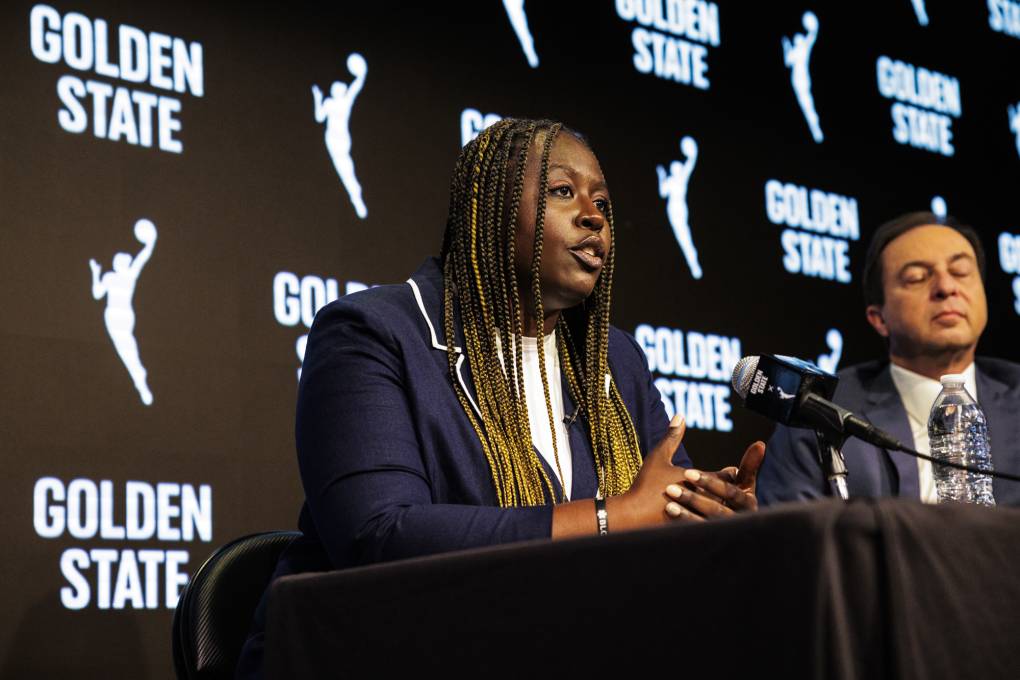
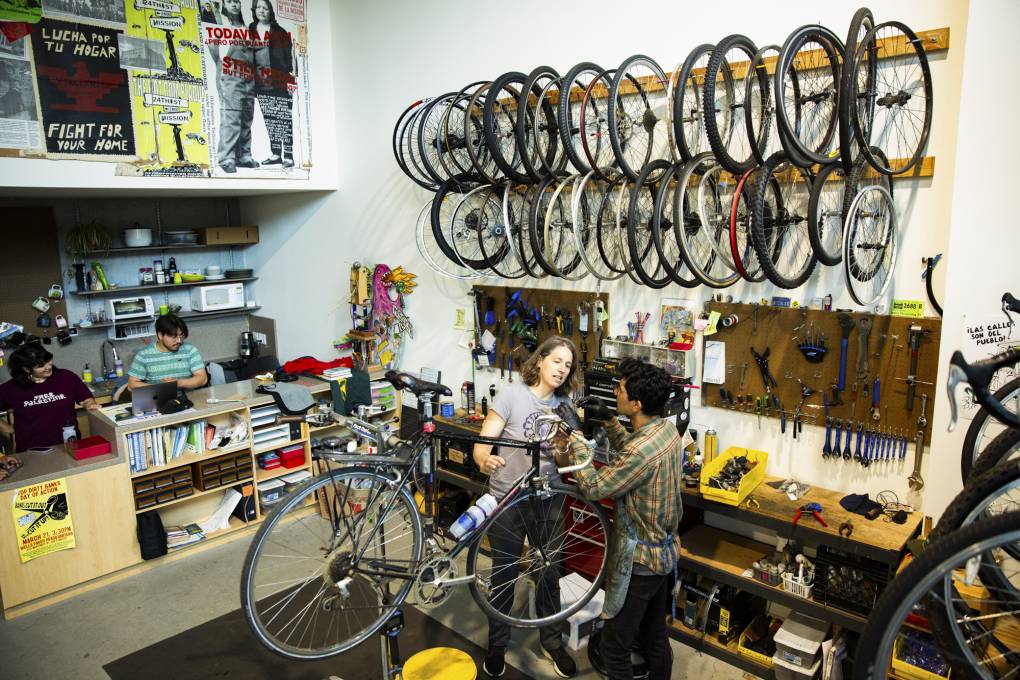
window.__IS_SSR__=true
window.__INITIAL_STATE__={
"attachmentsReducer": {
"audio_0": {
"type": "attachments",
"id": "audio_0",
"imgSizes": {
"kqedFullSize": {
"file": "https://ww2.kqed.org/news/wp-content/themes/KQED-unified/img/audio_bgs/background0.jpg"
}
}
},
"audio_1": {
"type": "attachments",
"id": "audio_1",
"imgSizes": {
"kqedFullSize": {
"file": "https://ww2.kqed.org/news/wp-content/themes/KQED-unified/img/audio_bgs/background1.jpg"
}
}
},
"audio_2": {
"type": "attachments",
"id": "audio_2",
"imgSizes": {
"kqedFullSize": {
"file": "https://ww2.kqed.org/news/wp-content/themes/KQED-unified/img/audio_bgs/background2.jpg"
}
}
},
"audio_3": {
"type": "attachments",
"id": "audio_3",
"imgSizes": {
"kqedFullSize": {
"file": "https://ww2.kqed.org/news/wp-content/themes/KQED-unified/img/audio_bgs/background3.jpg"
}
}
},
"audio_4": {
"type": "attachments",
"id": "audio_4",
"imgSizes": {
"kqedFullSize": {
"file": "https://ww2.kqed.org/news/wp-content/themes/KQED-unified/img/audio_bgs/background4.jpg"
}
}
},
"placeholder": {
"type": "attachments",
"id": "placeholder",
"imgSizes": {
"thumbnail": {
"file": "https://cdn.kqed.org/wp-content/uploads/2024/12/KQED-Default-Image-816638274-2000x1333-1-160x107.jpg",
"width": 160,
"height": 107,
"mimeType": "image/jpeg"
},
"medium": {
"file": "https://cdn.kqed.org/wp-content/uploads/2024/12/KQED-Default-Image-816638274-2000x1333-1-800x533.jpg",
"width": 800,
"height": 533,
"mimeType": "image/jpeg"
},
"medium_large": {
"file": "https://cdn.kqed.org/wp-content/uploads/2024/12/KQED-Default-Image-816638274-2000x1333-1-768x512.jpg",
"width": 768,
"height": 512,
"mimeType": "image/jpeg"
},
"large": {
"file": "https://cdn.kqed.org/wp-content/uploads/2024/12/KQED-Default-Image-816638274-2000x1333-1-1020x680.jpg",
"width": 1020,
"height": 680,
"mimeType": "image/jpeg"
},
"1536x1536": {
"file": "https://cdn.kqed.org/wp-content/uploads/2024/12/KQED-Default-Image-816638274-2000x1333-1-1536x1024.jpg",
"width": 1536,
"height": 1024,
"mimeType": "image/jpeg"
},
"fd-lrg": {
"file": "https://cdn.kqed.org/wp-content/uploads/2024/12/KQED-Default-Image-816638274-2000x1333-1-1536x1024.jpg",
"width": 1536,
"height": 1024,
"mimeType": "image/jpeg"
},
"fd-med": {
"file": "https://cdn.kqed.org/wp-content/uploads/2024/12/KQED-Default-Image-816638274-2000x1333-1-1020x680.jpg",
"width": 1020,
"height": 680,
"mimeType": "image/jpeg"
},
"fd-sm": {
"file": "https://cdn.kqed.org/wp-content/uploads/2024/12/KQED-Default-Image-816638274-2000x1333-1-800x533.jpg",
"width": 800,
"height": 533,
"mimeType": "image/jpeg"
},
"post-thumbnail": {
"file": "https://cdn.kqed.org/wp-content/uploads/2024/12/KQED-Default-Image-816638274-2000x1333-1-672x372.jpg",
"width": 672,
"height": 372,
"mimeType": "image/jpeg"
},
"twentyfourteen-full-width": {
"file": "https://cdn.kqed.org/wp-content/uploads/2024/12/KQED-Default-Image-816638274-2000x1333-1-1038x576.jpg",
"width": 1038,
"height": 576,
"mimeType": "image/jpeg"
},
"xxsmall": {
"file": "https://cdn.kqed.org/wp-content/uploads/2024/12/KQED-Default-Image-816638274-2000x1333-1-160x107.jpg",
"width": 160,
"height": 107,
"mimeType": "image/jpeg"
},
"xsmall": {
"file": "https://cdn.kqed.org/wp-content/uploads/2024/12/KQED-Default-Image-816638274-2000x1333-1-672x372.jpg",
"width": 672,
"height": 372,
"mimeType": "image/jpeg"
},
"small": {
"file": "https://cdn.kqed.org/wp-content/uploads/2024/12/KQED-Default-Image-816638274-2000x1333-1-672x372.jpg",
"width": 672,
"height": 372,
"mimeType": "image/jpeg"
},
"xlarge": {
"file": "https://cdn.kqed.org/wp-content/uploads/2024/12/KQED-Default-Image-816638274-2000x1333-1-1020x680.jpg",
"width": 1020,
"height": 680,
"mimeType": "image/jpeg"
},
"full-width": {
"file": "https://cdn.kqed.org/wp-content/uploads/2024/12/KQED-Default-Image-816638274-2000x1333-1-1920x1280.jpg",
"width": 1920,
"height": 1280,
"mimeType": "image/jpeg"
},
"guest-author-32": {
"file": "https://cdn.kqed.org/wp-content/uploads/2025/01/KQED-Default-Image-816638274-1333x1333-1-160x160.jpg",
"width": 32,
"height": 32,
"mimeType": "image/jpeg"
},
"guest-author-50": {
"file": "https://cdn.kqed.org/wp-content/uploads/2025/01/KQED-Default-Image-816638274-1333x1333-1-160x160.jpg",
"width": 50,
"height": 50,
"mimeType": "image/jpeg"
},
"guest-author-64": {
"file": "https://cdn.kqed.org/wp-content/uploads/2025/01/KQED-Default-Image-816638274-1333x1333-1-160x160.jpg",
"width": 64,
"height": 64,
"mimeType": "image/jpeg"
},
"guest-author-96": {
"file": "https://cdn.kqed.org/wp-content/uploads/2025/01/KQED-Default-Image-816638274-1333x1333-1-160x160.jpg",
"width": 96,
"height": 96,
"mimeType": "image/jpeg"
},
"guest-author-128": {
"file": "https://cdn.kqed.org/wp-content/uploads/2025/01/KQED-Default-Image-816638274-1333x1333-1-160x160.jpg",
"width": 128,
"height": 128,
"mimeType": "image/jpeg"
},
"detail": {
"file": "https://cdn.kqed.org/wp-content/uploads/2025/01/KQED-Default-Image-816638274-1333x1333-1-160x160.jpg",
"width": 160,
"height": 160,
"mimeType": "image/jpeg"
},
"kqedFullSize": {
"file": "https://cdn.kqed.org/wp-content/uploads/2024/12/KQED-Default-Image-816638274-2000x1333-1.jpg",
"width": 2000,
"height": 1333
}
}
},
"news_11986924": {
"type": "attachments",
"id": "news_11986924",
"meta": {
"index": "attachments_1716263798",
"site": "news",
"id": "11986924",
"found": true
},
"parent": 0,
"imgSizes": {
"twentyfourteen-full-width": {
"file": "https://cdn.kqed.org/wp-content/uploads/sites/10/2024/05/240517-CCSFProfileMadelineMueller-26-BL-1038x576.jpg",
"width": 1038,
"mimeType": "image/jpeg",
"height": 576
},
"thumbnail": {
"file": "https://cdn.kqed.org/wp-content/uploads/sites/10/2024/05/240517-CCSFProfileMadelineMueller-26-BL-160x107.jpg",
"width": 160,
"mimeType": "image/jpeg",
"height": 107
},
"post-thumbnail": {
"file": "https://cdn.kqed.org/wp-content/uploads/sites/10/2024/05/240517-CCSFProfileMadelineMueller-26-BL-672x372.jpg",
"width": 672,
"mimeType": "image/jpeg",
"height": 372
},
"kqedFullSize": {
"file": "https://cdn.kqed.org/wp-content/uploads/sites/10/2024/05/240517-CCSFProfileMadelineMueller-26-BL.jpg",
"width": 2000,
"height": 1333
},
"large": {
"file": "https://cdn.kqed.org/wp-content/uploads/sites/10/2024/05/240517-CCSFProfileMadelineMueller-26-BL-1020x680.jpg",
"width": 1020,
"mimeType": "image/jpeg",
"height": 680
},
"1536x1536": {
"file": "https://cdn.kqed.org/wp-content/uploads/sites/10/2024/05/240517-CCSFProfileMadelineMueller-26-BL-1536x1024.jpg",
"width": 1536,
"mimeType": "image/jpeg",
"height": 1024
},
"full-width": {
"file": "https://cdn.kqed.org/wp-content/uploads/sites/10/2024/05/240517-CCSFProfileMadelineMueller-26-BL-1920x1280.jpg",
"width": 1920,
"mimeType": "image/jpeg",
"height": 1280
},
"medium": {
"file": "https://cdn.kqed.org/wp-content/uploads/sites/10/2024/05/240517-CCSFProfileMadelineMueller-26-BL-800x533.jpg",
"width": 800,
"mimeType": "image/jpeg",
"height": 533
}
},
"publishDate": 1716227052,
"modified": 1716233292,
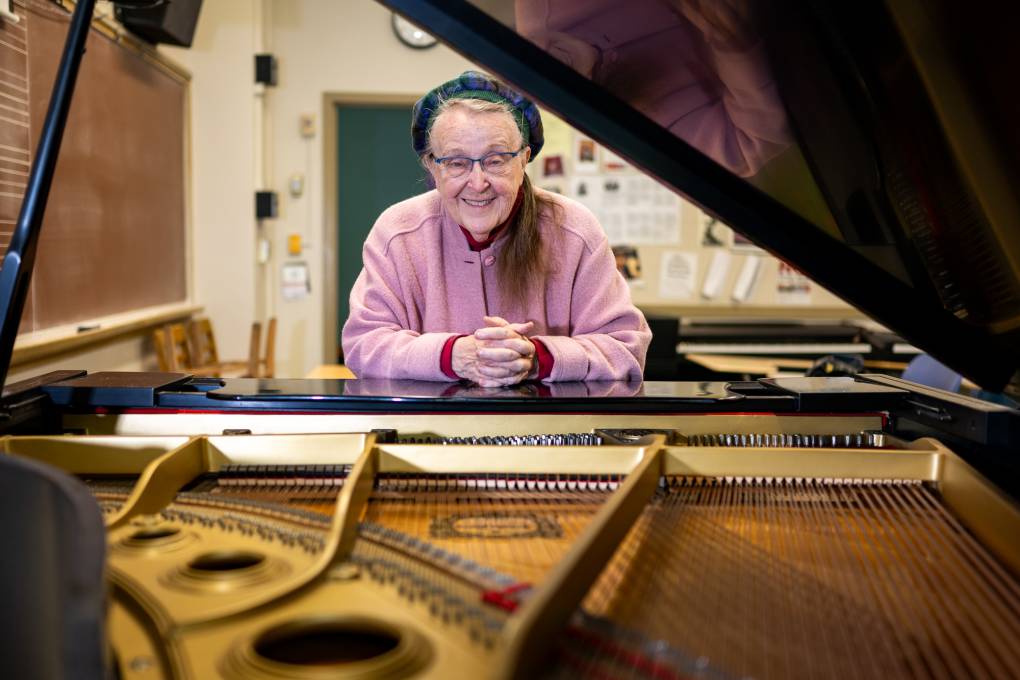
"caption": "Music department chair Madeline Mueller poses for a portrait at City College of San Francisco on May 17, 2024. Mueller has taught at the college for 58 years and is the college’s longest-tenured employee.",
"description": null,
"title": "240517-CCSFProfileMadelineMueller-26-BL",
"credit": "Beth LaBerge/KQED",
"status": "inherit",
"altTag": "An older woman wearing glasses and a pink coat smiles as she leans on a grand piano",
"isLoading": false,
"fetchFailed": false
},
"news_11986980": {
"type": "attachments",
"id": "news_11986980",
"meta": {
"index": "attachments_1716263798",
"site": "news",
"id": "11986980",
"found": true
},
"title": "PXL_20240520_185856861_qut",
"publishDate": 1716238332,
"status": "inherit",
"parent": 12084761,
"modified": 1779404907,
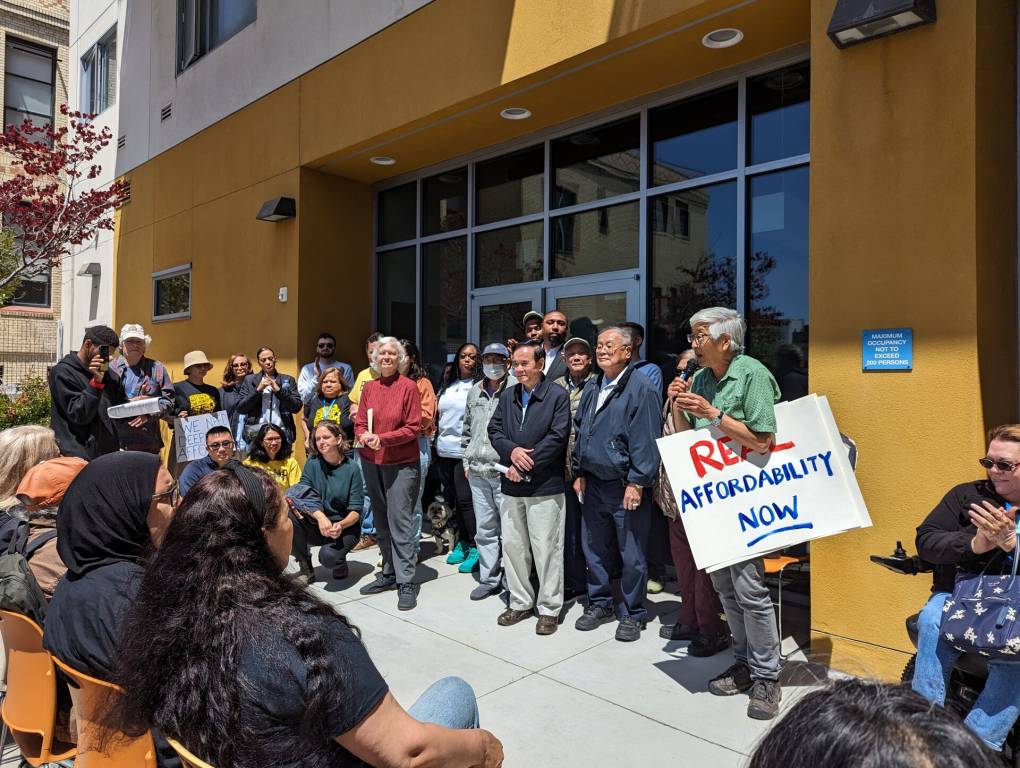
"caption": "Gen Fujioka, policy director for the Chinatown Community Development Center, speaks at a rally on May 20, 2024, in support of a San Francisco proposal to expand funding for affordable housing for seniors and others with low incomes.",
"credit": "Joe Fitzgerald Rodriguez/KQED",
"altTag": null,
"description": null,
"imgSizes": {
"medium": {
"file": "https://cdn.kqed.org/wp-content/uploads/sites/10/2024/05/PXL_20240520_185856861_qut-800x603.jpg",
"width": 800,
"height": 603,
"mimeType": "image/jpeg"
},
"large": {
"file": "https://cdn.kqed.org/wp-content/uploads/sites/10/2024/05/PXL_20240520_185856861_qut-1020x768.jpg",
"width": 1020,
"height": 768,
"mimeType": "image/jpeg"
},
"thumbnail": {
"file": "https://cdn.kqed.org/wp-content/uploads/sites/10/2024/05/PXL_20240520_185856861_qut-160x121.jpg",
"width": 160,
"height": 121,
"mimeType": "image/jpeg"
},
"1536x1536": {
"file": "https://cdn.kqed.org/wp-content/uploads/sites/10/2024/05/PXL_20240520_185856861_qut-1536x1157.jpg",
"width": 1536,
"height": 1157,
"mimeType": "image/jpeg"
},
"post-thumbnail": {
"file": "https://cdn.kqed.org/wp-content/uploads/sites/10/2024/05/PXL_20240520_185856861_qut-672x372.jpg",
"width": 672,
"height": 372,
"mimeType": "image/jpeg"
},
"twentyfourteen-full-width": {
"file": "https://cdn.kqed.org/wp-content/uploads/sites/10/2024/05/PXL_20240520_185856861_qut-1038x576.jpg",
"width": 1038,
"height": 576,
"mimeType": "image/jpeg"
},
"kqedFullSize": {
"file": "https://cdn.kqed.org/wp-content/uploads/sites/10/2024/05/PXL_20240520_185856861_qut.jpg",
"width": 1920,
"height": 1446
}
},
"isLoading": false,
"fetchFailed": false
},
"news_11954568": {
"type": "attachments",
"id": "news_11954568",
"meta": {
"index": "attachments_1716263798",
"site": "news",
"id": "11954568",
"found": true
},
"parent": 0,
"imgSizes": {
"twentyfourteen-full-width": {
"file": "https://ww2.kqed.org/app/uploads/sites/10/2023/06/015_KQED_LondonBreedQA_05232023-1038x576.jpg",
"width": 1038,
"mimeType": "image/jpeg",
"height": 576
},
"thumbnail": {
"file": "https://ww2.kqed.org/app/uploads/sites/10/2023/06/015_KQED_LondonBreedQA_05232023-160x107.jpg",
"width": 160,
"mimeType": "image/jpeg",
"height": 107
},
"post-thumbnail": {
"file": "https://ww2.kqed.org/app/uploads/sites/10/2023/06/015_KQED_LondonBreedQA_05232023-672x372.jpg",
"width": 672,
"mimeType": "image/jpeg",
"height": 372
},
"kqedFullSize": {
"file": "https://ww2.kqed.org/app/uploads/sites/10/2023/06/015_KQED_LondonBreedQA_05232023.jpg",
"width": 1920,
"height": 1280
},
"large": {
"file": "https://ww2.kqed.org/app/uploads/sites/10/2023/06/015_KQED_LondonBreedQA_05232023-1020x680.jpg",
"width": 1020,
"mimeType": "image/jpeg",
"height": 680
},
"1536x1536": {
"file": "https://ww2.kqed.org/app/uploads/sites/10/2023/06/015_KQED_LondonBreedQA_05232023-1536x1024.jpg",
"width": 1536,
"mimeType": "image/jpeg",
"height": 1024
},
"medium": {
"file": "https://ww2.kqed.org/app/uploads/sites/10/2023/06/015_KQED_LondonBreedQA_05232023-800x533.jpg",
"width": 800,
"mimeType": "image/jpeg",
"height": 533
}
},
"publishDate": 1688063923,
"modified": 1695771204,
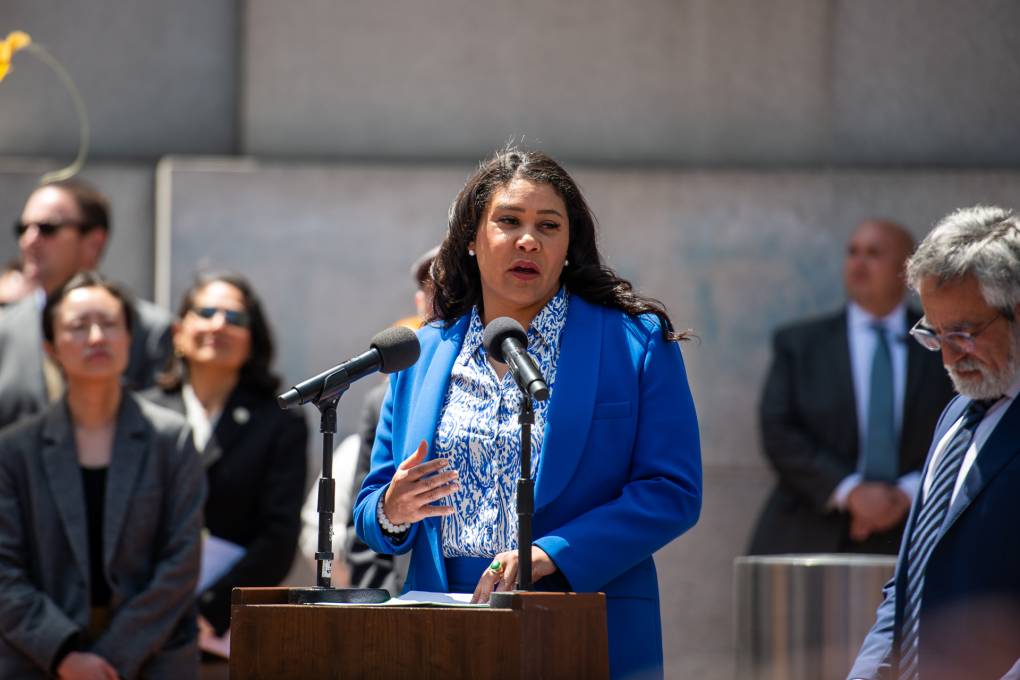
"caption": "San Francisco Mayor London Breed and San Francisco Board of Supervisors President Aaron Peskin speak with a crowd gathered for a Q&A about the fentanyl drug crisis in San Francisco at UN Plaza on May 23, 2023.",
"description": null,
"title": "015_KQED_LondonBreedQA_05232023",
"credit": "Beth LaBerge/KQED",
"status": "inherit",
"altTag": "Mayor London Breed speaks outside at a lectern, next to a bearded white man",
"isLoading": false,
"fetchFailed": false
},
"news_11986623": {
"type": "attachments",
"id": "news_11986623",
"meta": {
"index": "attachments_1716263798",
"site": "news",
"id": "11986623",
"found": true
},
"parent": 11986620,
"imgSizes": {
"twentyfourteen-full-width": {
"file": "https://cdn.kqed.org/wp-content/uploads/sites/10/2024/05/011_KQED_SanFrancisco_TentEncampments_05052020_qut-1038x576.jpg",
"width": 1038,
"mimeType": "image/jpeg",
"height": 576
},
"thumbnail": {
"file": "https://cdn.kqed.org/wp-content/uploads/sites/10/2024/05/011_KQED_SanFrancisco_TentEncampments_05052020_qut-160x107.jpg",
"width": 160,
"mimeType": "image/jpeg",
"height": 107
},
"post-thumbnail": {
"file": "https://cdn.kqed.org/wp-content/uploads/sites/10/2024/05/011_KQED_SanFrancisco_TentEncampments_05052020_qut-672x372.jpg",
"width": 672,
"mimeType": "image/jpeg",
"height": 372
},
"kqedFullSize": {
"file": "https://cdn.kqed.org/wp-content/uploads/sites/10/2024/05/011_KQED_SanFrancisco_TentEncampments_05052020_qut.jpg",
"width": 1920,
"height": 1280
},
"large": {
"file": "https://cdn.kqed.org/wp-content/uploads/sites/10/2024/05/011_KQED_SanFrancisco_TentEncampments_05052020_qut-1020x680.jpg",
"width": 1020,
"mimeType": "image/jpeg",
"height": 680
},
"1536x1536": {
"file": "https://cdn.kqed.org/wp-content/uploads/sites/10/2024/05/011_KQED_SanFrancisco_TentEncampments_05052020_qut-1536x1024.jpg",
"width": 1536,
"mimeType": "image/jpeg",
"height": 1024
},
"medium": {
"file": "https://cdn.kqed.org/wp-content/uploads/sites/10/2024/05/011_KQED_SanFrancisco_TentEncampments_05052020_qut-800x533.jpg",
"width": 800,
"mimeType": "image/jpeg",
"height": 533
}
},
"publishDate": 1715902127,
"modified": 1715902152,
"caption": "Tents line Fulton Street near City Hall on April 5, 2020.",
"description": null,
"title": "Tents line Fulton Street near City Hall on April 5, 2020.",
"credit": "Beth LaBerge/KQED",
"status": "inherit",
"altTag": null,
"isLoading": false,
"fetchFailed": false
},
"news_11986529": {
"type": "attachments",
"id": "news_11986529",
"meta": {
"index": "attachments_1716263798",
"site": "news",
"id": "11986529",
"found": true
},
"parent": 11986508,
"imgSizes": {
"twentyfourteen-full-width": {
"file": "https://cdn.kqed.org/wp-content/uploads/sites/10/2024/05/023_KQED_OBICBuprenorphineClinic_03292023_qut-1038x576.jpg",
"width": 1038,
"mimeType": "image/jpeg",
"height": 576
},
"thumbnail": {
"file": "https://cdn.kqed.org/wp-content/uploads/sites/10/2024/05/023_KQED_OBICBuprenorphineClinic_03292023_qut-160x107.jpg",
"width": 160,
"mimeType": "image/jpeg",
"height": 107
},
"post-thumbnail": {
"file": "https://cdn.kqed.org/wp-content/uploads/sites/10/2024/05/023_KQED_OBICBuprenorphineClinic_03292023_qut-672x372.jpg",
"width": 672,
"mimeType": "image/jpeg",
"height": 372
},
"kqedFullSize": {
"file": "https://cdn.kqed.org/wp-content/uploads/sites/10/2024/05/023_KQED_OBICBuprenorphineClinic_03292023_qut.jpg",
"width": 1920,
"height": 1280
},
"large": {
"file": "https://cdn.kqed.org/wp-content/uploads/sites/10/2024/05/023_KQED_OBICBuprenorphineClinic_03292023_qut-1020x680.jpg",
"width": 1020,
"mimeType": "image/jpeg",
"height": 680
},
"1536x1536": {
"file": "https://cdn.kqed.org/wp-content/uploads/sites/10/2024/05/023_KQED_OBICBuprenorphineClinic_03292023_qut-1536x1024.jpg",
"width": 1536,
"mimeType": "image/jpeg",
"height": 1024
},
"medium": {
"file": "https://cdn.kqed.org/wp-content/uploads/sites/10/2024/05/023_KQED_OBICBuprenorphineClinic_03292023_qut-800x533.jpg",
"width": 800,
"mimeType": "image/jpeg",
"height": 533
}
},
"publishDate": 1715882613,
"modified": 1715882636,
"caption": "Buprenorphine and Naloxone tablets at the Community Behavior Health Services pharmacy in San Francisco on March 29, 2023.",
"description": null,
"title": "023_KQED_OBICBuprenorphineClinic_03292023_qut",
"credit": "Beth LaBerge/KQED",
"status": "inherit",
"altTag": null,
"isLoading": false,
"fetchFailed": false
},
"news_11634607": {
"type": "attachments",
"id": "news_11634607",
"meta": {
"index": "attachments_1716263798",
"site": "news",
"id": "11634607",
"found": true
},
"parent": 11634601,
"imgSizes": {
"small": {
"file": "https://cdn.kqed.org/wp-content/uploads/sites/10/2017/12/RS28194_Castro-2-qut-520x345.jpg",
"width": 520,
"mimeType": "image/jpeg",
"height": 345
},
"twentyfourteen-full-width": {
"file": "https://cdn.kqed.org/wp-content/uploads/sites/10/2017/12/RS28194_Castro-2-qut-1038x576.jpg",
"width": 1038,
"mimeType": "image/jpeg",
"height": 576
},
"thumbnail": {
"file": "https://cdn.kqed.org/wp-content/uploads/sites/10/2017/12/RS28194_Castro-2-qut-160x106.jpg",
"width": 160,
"mimeType": "image/jpeg",
"height": 106
},
"fd-sm": {
"file": "https://cdn.kqed.org/wp-content/uploads/sites/10/2017/12/RS28194_Castro-2-qut-960x636.jpg",
"width": 960,
"mimeType": "image/jpeg",
"height": 636
},
"post-thumbnail": {
"file": "https://cdn.kqed.org/wp-content/uploads/sites/10/2017/12/RS28194_Castro-2-qut-672x372.jpg",
"width": 672,
"mimeType": "image/jpeg",
"height": 372
},
"xsmall": {
"file": "https://cdn.kqed.org/wp-content/uploads/sites/10/2017/12/RS28194_Castro-2-qut-375x248.jpg",
"width": 375,
"mimeType": "image/jpeg",
"height": 248
},
"kqedFullSize": {
"file": "https://cdn.kqed.org/wp-content/uploads/sites/10/2017/12/RS28194_Castro-2-qut.jpg",
"width": 1920,
"height": 1272
},
"large": {
"file": "https://cdn.kqed.org/wp-content/uploads/sites/10/2017/12/RS28194_Castro-2-qut-1020x676.jpg",
"width": 1020,
"mimeType": "image/jpeg",
"height": 676
},
"xlarge": {
"file": "https://cdn.kqed.org/wp-content/uploads/sites/10/2017/12/RS28194_Castro-2-qut-1180x782.jpg",
"width": 1180,
"mimeType": "image/jpeg",
"height": 782
},
"guest-author-50": {
"file": "https://cdn.kqed.org/wp-content/uploads/sites/10/2017/12/RS28194_Castro-2-qut-50x50.jpg",
"width": 50,
"mimeType": "image/jpeg",
"height": 50
},
"guest-author-96": {
"file": "https://cdn.kqed.org/wp-content/uploads/sites/10/2017/12/RS28194_Castro-2-qut-96x96.jpg",
"width": 96,
"mimeType": "image/jpeg",
"height": 96
},
"medium": {
"file": "https://cdn.kqed.org/wp-content/uploads/sites/10/2017/12/RS28194_Castro-2-qut-800x530.jpg",
"width": 800,
"mimeType": "image/jpeg",
"height": 530
},
"guest-author-64": {
"file": "https://cdn.kqed.org/wp-content/uploads/sites/10/2017/12/RS28194_Castro-2-qut-64x64.jpg",
"width": 64,
"mimeType": "image/jpeg",
"height": 64
},
"guest-author-32": {
"file": "https://cdn.kqed.org/wp-content/uploads/sites/10/2017/12/RS28194_Castro-2-qut-32x32.jpg",
"width": 32,
"mimeType": "image/jpeg",
"height": 32
},
"fd-lrg": {
"file": "https://cdn.kqed.org/wp-content/uploads/sites/10/2017/12/RS28194_Castro-2-qut-1920x1272.jpg",
"width": 1920,
"mimeType": "image/jpeg",
"height": 1272
},
"fd-med": {
"file": "https://cdn.kqed.org/wp-content/uploads/sites/10/2017/12/RS28194_Castro-2-qut-1180x782.jpg",
"width": 1180,
"mimeType": "image/jpeg",
"height": 782
},
"full-width": {
"file": "https://cdn.kqed.org/wp-content/uploads/sites/10/2017/12/RS28194_Castro-2-qut-1920x1272.jpg",
"width": 1920,
"mimeType": "image/jpeg",
"height": 1272
},
"detail": {
"file": "https://cdn.kqed.org/wp-content/uploads/sites/10/2017/12/RS28194_Castro-2-qut-150x150.jpg",
"width": 150,
"mimeType": "image/jpeg",
"height": 150
},
"guest-author-128": {
"file": "https://cdn.kqed.org/wp-content/uploads/sites/10/2017/12/RS28194_Castro-2-qut-128x128.jpg",
"width": 128,
"mimeType": "image/jpeg",
"height": 128
},
"xxsmall": {
"file": "https://cdn.kqed.org/wp-content/uploads/sites/10/2017/12/RS28194_Castro-2-qut-240x159.jpg",
"width": 240,
"mimeType": "image/jpeg",
"height": 159
}
},
"publishDate": 1512339647,
"modified": 1715816619,
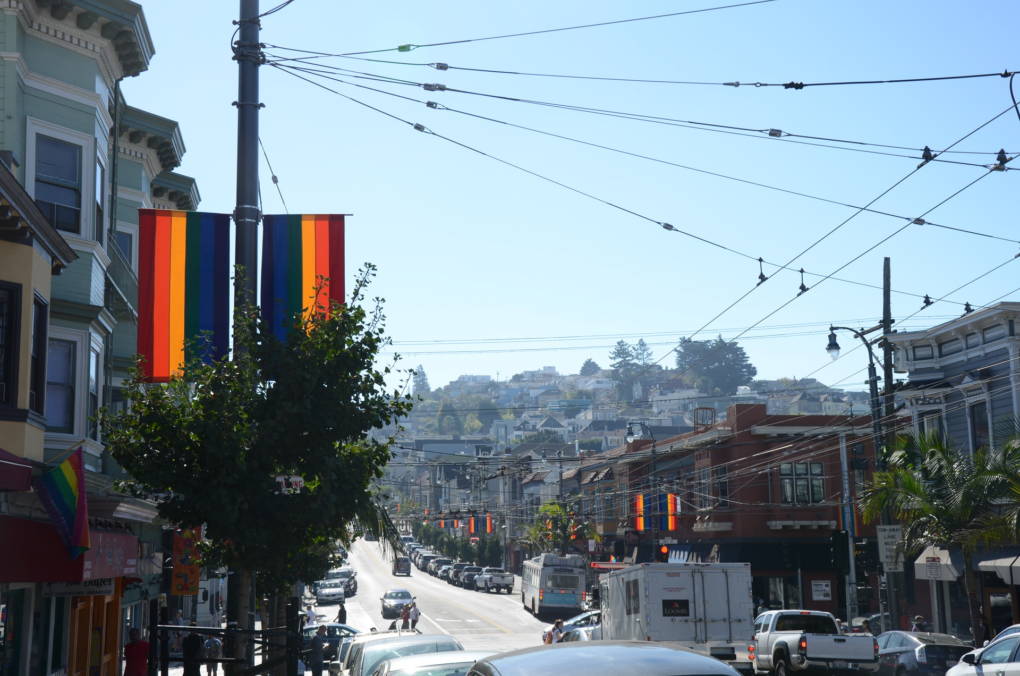
"caption": "San Francisco's Castro District on Oct. 27, 2017.",
"description": "San Francisco's Castro District on Oct. 27, 2017. Many of the neighborhood's gay residents have been priced out in recent years.",
"title": "RS28194_Castro 2-qut",
"credit": "Ryan Levi/KQED",
"status": "inherit",
"altTag": null,
"isLoading": false,
"fetchFailed": false
},
"news_11986424": {
"type": "attachments",
"id": "news_11986424",
"meta": {
"index": "attachments_1716263798",
"site": "news",
"id": "11986424",
"found": true
},
"title": "230926-DANIEL LURIE-MD-13-KQED",
"publishDate": 1715813187,
"status": "inherit",
"parent": 11986393,
"modified": 1736285305,
"caption": "Daniel Lurie when he announced his candidacy for Mayor of San Francisco at the Portrero Hill Neighborhood House in San Francisco on Sept. 26, 2023.",
"credit": "Martin do Nascimento/KQED",
"altTag": null,
"description": null,
"imgSizes": {
"medium": {
"file": "https://cdn.kqed.org/wp-content/uploads/sites/10/2024/05/230926-DANIEL-LURIE-MD-13-KQED-800x533.jpg",
"width": 800,
"height": 533,
"mimeType": "image/jpeg"
},
"large": {
"file": "https://cdn.kqed.org/wp-content/uploads/sites/10/2024/05/230926-DANIEL-LURIE-MD-13-KQED-1020x680.jpg",
"width": 1020,
"height": 680,
"mimeType": "image/jpeg"
},
"thumbnail": {
"file": "https://cdn.kqed.org/wp-content/uploads/sites/10/2024/05/230926-DANIEL-LURIE-MD-13-KQED-160x107.jpg",
"width": 160,
"height": 107,
"mimeType": "image/jpeg"
},
"1536x1536": {
"file": "https://cdn.kqed.org/wp-content/uploads/sites/10/2024/05/230926-DANIEL-LURIE-MD-13-KQED-1536x1024.jpg",
"width": 1536,
"height": 1024,
"mimeType": "image/jpeg"
},
"post-thumbnail": {
"file": "https://cdn.kqed.org/wp-content/uploads/sites/10/2024/05/230926-DANIEL-LURIE-MD-13-KQED-672x372.jpg",
"width": 672,
"height": 372,
"mimeType": "image/jpeg"
},
"twentyfourteen-full-width": {
"file": "https://cdn.kqed.org/wp-content/uploads/sites/10/2024/05/230926-DANIEL-LURIE-MD-13-KQED-1038x576.jpg",
"width": 1038,
"height": 576,
"mimeType": "image/jpeg"
},
"full-width": {
"file": "https://cdn.kqed.org/wp-content/uploads/sites/10/2024/05/230926-DANIEL-LURIE-MD-13-KQED-1920x1280.jpg",
"width": 1920,
"height": 1280,
"mimeType": "image/jpeg"
},
"kqedFullSize": {
"file": "https://cdn.kqed.org/wp-content/uploads/sites/10/2024/05/230926-DANIEL-LURIE-MD-13-KQED.jpg",
"width": 2000,
"height": 1333
}
},
"isLoading": false,
"fetchFailed": false
},
"news_11986150": {
"type": "attachments",
"id": "news_11986150",
"meta": {
"index": "attachments_1716263798",
"site": "news",
"id": "11986150",
"found": true
},
"parent": 0,
"imgSizes": {
"twentyfourteen-full-width": {
"file": "https://cdn.kqed.org/wp-content/uploads/sites/10/2024/05/240514-OVERDOSE-DEATH-RALLY-SJ-01-KQED-1038x576.jpg",
"width": 1038,
"mimeType": "image/jpeg",
"height": 576
},
"thumbnail": {
"file": "https://cdn.kqed.org/wp-content/uploads/sites/10/2024/05/240514-OVERDOSE-DEATH-RALLY-SJ-01-KQED-160x107.jpg",
"width": 160,
"mimeType": "image/jpeg",
"height": 107
},
"post-thumbnail": {
"file": "https://cdn.kqed.org/wp-content/uploads/sites/10/2024/05/240514-OVERDOSE-DEATH-RALLY-SJ-01-KQED-672x372.jpg",
"width": 672,
"mimeType": "image/jpeg",
"height": 372
},
"kqedFullSize": {
"file": "https://cdn.kqed.org/wp-content/uploads/sites/10/2024/05/240514-OVERDOSE-DEATH-RALLY-SJ-01-KQED.jpg",
"width": 2000,
"height": 1333
},
"large": {
"file": "https://cdn.kqed.org/wp-content/uploads/sites/10/2024/05/240514-OVERDOSE-DEATH-RALLY-SJ-01-KQED-1020x680.jpg",
"width": 1020,
"mimeType": "image/jpeg",
"height": 680
},
"1536x1536": {
"file": "https://cdn.kqed.org/wp-content/uploads/sites/10/2024/05/240514-OVERDOSE-DEATH-RALLY-SJ-01-KQED-1536x1024.jpg",
"width": 1536,
"mimeType": "image/jpeg",
"height": 1024
},
"full-width": {
"file": "https://cdn.kqed.org/wp-content/uploads/sites/10/2024/05/240514-OVERDOSE-DEATH-RALLY-SJ-01-KQED-1920x1280.jpg",
"width": 1920,
"mimeType": "image/jpeg",
"height": 1280
},
"medium": {
"file": "https://cdn.kqed.org/wp-content/uploads/sites/10/2024/05/240514-OVERDOSE-DEATH-RALLY-SJ-01-KQED-800x533.jpg",
"width": 800,
"mimeType": "image/jpeg",
"height": 533
}
},
"publishDate": 1715718523,
"modified": 1715722481,
"caption": "Juju Pikes-Prince, an organizer with the Young Women's Freedom Center (left), stands alongside other advocates calling for more public health-centered solutions to overdoses on May 14, 2024.",
"description": null,
"title": "240514-OVERDOSE DEATH RALLY-SJ-01-KQED",
"credit": "Sydney Johnson/KQED",
"status": "inherit",
"altTag": null,
"isLoading": false,
"fetchFailed": false
},
"news_11985089": {
"type": "attachments",
"id": "news_11985089",
"meta": {
"index": "attachments_1716263798",
"site": "news",
"id": "11985089",
"found": true
},
"parent": 0,
"imgSizes": {
"twentyfourteen-full-width": {
"file": "https://cdn.kqed.org/wp-content/uploads/sites/10/2024/05/240506-GOLDEN-STATE-WNBA-ANNOUNCEMENT-MD-01-KQED-1038x576.jpg",
"width": 1038,
"mimeType": "image/jpeg",
"height": 576
},
"thumbnail": {
"file": "https://cdn.kqed.org/wp-content/uploads/sites/10/2024/05/240506-GOLDEN-STATE-WNBA-ANNOUNCEMENT-MD-01-KQED-160x107.jpg",
"width": 160,
"mimeType": "image/jpeg",
"height": 107
},
"post-thumbnail": {
"file": "https://cdn.kqed.org/wp-content/uploads/sites/10/2024/05/240506-GOLDEN-STATE-WNBA-ANNOUNCEMENT-MD-01-KQED-672x372.jpg",
"width": 672,
"mimeType": "image/jpeg",
"height": 372
},
"kqedFullSize": {
"file": "https://cdn.kqed.org/wp-content/uploads/sites/10/2024/05/240506-GOLDEN-STATE-WNBA-ANNOUNCEMENT-MD-01-KQED.jpg",
"width": 2000,
"height": 1333
},
"large": {
"file": "https://cdn.kqed.org/wp-content/uploads/sites/10/2024/05/240506-GOLDEN-STATE-WNBA-ANNOUNCEMENT-MD-01-KQED-1020x680.jpg",
"width": 1020,
"mimeType": "image/jpeg",
"height": 680
},
"1536x1536": {
"file": "https://cdn.kqed.org/wp-content/uploads/sites/10/2024/05/240506-GOLDEN-STATE-WNBA-ANNOUNCEMENT-MD-01-KQED-1536x1024.jpg",
"width": 1536,
"mimeType": "image/jpeg",
"height": 1024
},
"full-width": {
"file": "https://cdn.kqed.org/wp-content/uploads/sites/10/2024/05/240506-GOLDEN-STATE-WNBA-ANNOUNCEMENT-MD-01-KQED-1920x1280.jpg",
"width": 1920,
"mimeType": "image/jpeg",
"height": 1280
},
"medium": {
"file": "https://cdn.kqed.org/wp-content/uploads/sites/10/2024/05/240506-GOLDEN-STATE-WNBA-ANNOUNCEMENT-MD-01-KQED-800x533.jpg",
"width": 800,
"mimeType": "image/jpeg",
"height": 533
}
},
"publishDate": 1715023967,
"modified": 1715023999,
"caption": "Ohemaa Nyanin (left) and Joe Lacob speak at a press conference announcing Nyanin as the team’s new general manager at the Chase Center in San Francisco on May 6, 2024.",
"description": null,
"title": "240506-GOLDEN STATE WNBA ANNOUNCEMENT-MD-01-KQED",
"credit": "Martin do Nascimento/KQED",
"status": "inherit",
"altTag": null,
"isLoading": false,
"fetchFailed": false
},
"news_11985970": {
"type": "attachments",
"id": "news_11985970",
"meta": {
"index": "attachments_1716263798",
"site": "news",
"id": "11985970",
"found": true
},
"parent": 0,
"imgSizes": {
"twentyfourteen-full-width": {
"file": "https://cdn.kqed.org/wp-content/uploads/sites/10/2024/05/GETTYIMAGES-520857436-KQED-1038x576.jpg",
"width": 1038,
"mimeType": "image/jpeg",
"height": 576
},
"thumbnail": {
"file": "https://cdn.kqed.org/wp-content/uploads/sites/10/2024/05/GETTYIMAGES-520857436-KQED-160x120.jpg",
"width": 160,
"mimeType": "image/jpeg",
"height": 120
},
"post-thumbnail": {
"file": "https://cdn.kqed.org/wp-content/uploads/sites/10/2024/05/GETTYIMAGES-520857436-KQED-672x372.jpg",
"width": 672,
"mimeType": "image/jpeg",
"height": 372
},
"kqedFullSize": {
"file": "https://cdn.kqed.org/wp-content/uploads/sites/10/2024/05/GETTYIMAGES-520857436-KQED.jpg",
"width": 2000,
"height": 1500
},
"large": {
"file": "https://cdn.kqed.org/wp-content/uploads/sites/10/2024/05/GETTYIMAGES-520857436-KQED-1020x765.jpg",
"width": 1020,
"mimeType": "image/jpeg",
"height": 765
},
"1536x1536": {
"file": "https://cdn.kqed.org/wp-content/uploads/sites/10/2024/05/GETTYIMAGES-520857436-KQED-1536x1152.jpg",
"width": 1536,
"mimeType": "image/jpeg",
"height": 1152
},
"full-width": {
"file": "https://cdn.kqed.org/wp-content/uploads/sites/10/2024/05/GETTYIMAGES-520857436-KQED-1920x1440.jpg",
"width": 1920,
"mimeType": "image/jpeg",
"height": 1440
},
"medium": {
"file": "https://cdn.kqed.org/wp-content/uploads/sites/10/2024/05/GETTYIMAGES-520857436-KQED-800x600.jpg",
"width": 800,
"mimeType": "image/jpeg",
"height": 600
}
},
"publishDate": 1715644984,
"modified": 1715645124,
"caption": "San Francisco’s Managed Alcohol Program, or MAP, was started in 2020 as public health officials responded to the COVID-19 pandemic, and its goal isn’t to reduce patients’ alcohol use or lead to abstinence, but to increase their safety and overall quality of life.",
"description": null,
"title": null,
"credit": "Getty Images",
"status": "inherit",
"altTag": null,
"isLoading": false,
"fetchFailed": false
},
"news_11985952": {
"type": "attachments",
"id": "news_11985952",
"meta": {
"index": "attachments_1716263798",
"site": "news",
"id": "11985952",
"found": true
},
"title": "Open AI ChatGPT Update",
"publishDate": 1715640590,
"status": "inherit",
"parent": 11985949,
"modified": 1783528918,
"caption": "The OpenAI logo is seen on a mobile phone in front of a computer screen displaying output from ChatGPT, March 21, 2023, in Boston, Massachusetts. ",
"credit": "Michael Dwyer/Associated Press",
"altTag": null,
"description": null,
"imgSizes": {
"medium": {
"file": "https://cdn.kqed.org/wp-content/uploads/sites/10/2024/05/AP24134775174210-800x533.jpg",
"width": 800,
"height": 533,
"mimeType": "image/jpeg"
},
"large": {
"file": "https://cdn.kqed.org/wp-content/uploads/sites/10/2024/05/AP24134775174210-1020x680.jpg",
"width": 1020,
"height": 680,
"mimeType": "image/jpeg"
},
"thumbnail": {
"file": "https://cdn.kqed.org/wp-content/uploads/sites/10/2024/05/AP24134775174210-160x107.jpg",
"width": 160,
"height": 107,
"mimeType": "image/jpeg"
},
"1536x1536": {
"file": "https://cdn.kqed.org/wp-content/uploads/sites/10/2024/05/AP24134775174210-1536x1024.jpg",
"width": 1536,
"height": 1024,
"mimeType": "image/jpeg"
},
"2048x2048": {
"file": "https://cdn.kqed.org/wp-content/uploads/sites/10/2024/05/AP24134775174210-2048x1365.jpg",
"width": 2048,
"height": 1365,
"mimeType": "image/jpeg"
},
"post-thumbnail": {
"file": "https://cdn.kqed.org/wp-content/uploads/sites/10/2024/05/AP24134775174210-672x372.jpg",
"width": 672,
"height": 372,
"mimeType": "image/jpeg"
},
"twentyfourteen-full-width": {
"file": "https://cdn.kqed.org/wp-content/uploads/sites/10/2024/05/AP24134775174210-1038x576.jpg",
"width": 1038,
"height": 576,
"mimeType": "image/jpeg"
},
"full-width": {
"file": "https://cdn.kqed.org/wp-content/uploads/sites/10/2024/05/AP24134775174210-1920x1280.jpg",
"width": 1920,
"height": 1280,
"mimeType": "image/jpeg"
},
"kqedFullSize": {
"file": "https://cdn.kqed.org/wp-content/uploads/sites/10/2024/05/AP24134775174210-scaled-e1770337042768.jpg",
"width": 2000,
"height": 1334
}
},
"isLoading": false,
"fetchFailed": false
},
"news_11984797": {
"type": "attachments",
"id": "news_11984797",
"meta": {
"index": "attachments_1716263798",
"site": "news",
"id": "11984797",
"found": true
},
"parent": 11985510,
"imgSizes": {
"twentyfourteen-full-width": {
"file": "https://cdn.kqed.org/wp-content/uploads/sites/10/2024/05/20240430_STOLENBIKESGUIDE-18-GC-KQED-1038x576.jpg",
"width": 1038,
"mimeType": "image/jpeg",
"height": 576
},
"thumbnail": {
"file": "https://cdn.kqed.org/wp-content/uploads/sites/10/2024/05/20240430_STOLENBIKESGUIDE-18-GC-KQED-160x107.jpg",
"width": 160,
"mimeType": "image/jpeg",
"height": 107
},
"post-thumbnail": {
"file": "https://cdn.kqed.org/wp-content/uploads/sites/10/2024/05/20240430_STOLENBIKESGUIDE-18-GC-KQED-672x372.jpg",
"width": 672,
"mimeType": "image/jpeg",
"height": 372
},
"kqedFullSize": {
"file": "https://cdn.kqed.org/wp-content/uploads/sites/10/2024/05/20240430_STOLENBIKESGUIDE-18-GC-KQED.jpg",
"width": 2000,
"height": 1333
},
"large": {
"file": "https://cdn.kqed.org/wp-content/uploads/sites/10/2024/05/20240430_STOLENBIKESGUIDE-18-GC-KQED-1020x680.jpg",
"width": 1020,
"mimeType": "image/jpeg",
"height": 680
},
"1536x1536": {
"file": "https://cdn.kqed.org/wp-content/uploads/sites/10/2024/05/20240430_STOLENBIKESGUIDE-18-GC-KQED-1536x1024.jpg",
"width": 1536,
"mimeType": "image/jpeg",
"height": 1024
},
"full-width": {
"file": "https://cdn.kqed.org/wp-content/uploads/sites/10/2024/05/20240430_STOLENBIKESGUIDE-18-GC-KQED-1920x1280.jpg",
"width": 1920,
"mimeType": "image/jpeg",
"height": 1280
},
"medium": {
"file": "https://cdn.kqed.org/wp-content/uploads/sites/10/2024/05/20240430_STOLENBIKESGUIDE-18-GC-KQED-800x533.jpg",
"width": 800,
"mimeType": "image/jpeg",
"height": 533
}
},
"publishDate": 1714672533,
"modified": 1715286250,
"caption": "Alison LaBonte, left, and Jessie Fernandez, right, install brakes on her bike at the Bicis del Pueblo bike repair shop in the Mission district on Tuesday April 30, 2024. Bicis del Pueblo has been operating since 2011 and through their earn-a-bike program, individuals get a free refurbished bike, donated by the city, and receive lessons on the mechanics and operation of the bike.",
"description": null,
"title": "20240430_STOLENBIKESGUIDE-18-GC-KQED",
"credit": "Gina Castro/KQED",
"status": "inherit",
"altTag": null,
"isLoading": false,
"fetchFailed": false
}
},
"audioPlayerReducer": {
"postId": "stream_live",
"isPaused": true,
"isPlaying": false,
"pfsActive": false,
"pledgeModalIsOpen": true,
"playerDrawerIsOpen": false,
"liveAudioPlayStartedAt": 0,
"liveAudioPlayContext": ""
},
"authorsReducer": {
"byline_news_11986950": {
"type": "authors",
"id": "byline_news_11986950",
"meta": {
"override": true
},
"slug": "byline_news_11986950",
"name": "Jakob Hofso",
"isLoading": false
},
"byline_news_11986061": {
"type": "authors",
"id": "byline_news_11986061",
"meta": {
"override": true
},
"slug": "byline_news_11986061",
"name": "\u003ca href=\"https://twitter.com/katie_debe?lang=en\">Katie DeBenedetti\u003c/a>",
"isLoading": false
},
"vrancano": {
"type": "authors",
"id": "11276",
"meta": {
"index": "authors_1716337520",
"id": "11276",
"found": true
},
"name": "Vanessa Rancaño",
"firstName": "Vanessa",
"lastName": "Rancaño",
"slug": "vrancano",
"email": "vrancano@kqed.org",
"display_author_email": false,
"staff_mastheads": [
"news"
],
"title": "Reporter",
"bio": "Vanessa Rancaño is a features reporter for KQED. She’s also covered homelessness and education for the station and reported from the Central Valley. Her work has aired across public radio, from flagship national news shows to longform narrative podcasts. Before taking up a mic, she worked as a freelance print journalist. She’s been recognized with a number of national and regional awards. Vanessa grew up in California's Central Valley. She's a former NPR Kroc Fellow, and a graduate of the UC Berkeley Graduate School of Journalism.",
"avatar": "https://secure.gravatar.com/avatar/b3a383dfb0e7ee1c17568f2cf067904ab654d6e3de9743fc661f3c788ade1bed?s=600&d=blank&r=g",
"twitter": "vanessarancano",
"bluesky": null,
"facebook": null,
"instagram": null,
"linkedin": null,
"sites": [
{
"site": "arts",
"roles": [
"editor"
]
},
{
"site": "news",
"roles": [
"editor"
]
},
{
"site": "liveblog",
"roles": [
"contributor"
]
}
],
"headData": {
"title": "Vanessa Rancaño | KQED",
"description": "Reporter",
"ogImgSrc": "https://secure.gravatar.com/avatar/b3a383dfb0e7ee1c17568f2cf067904ab654d6e3de9743fc661f3c788ade1bed?s=600&d=blank&r=g",
"twImgSrc": "https://secure.gravatar.com/avatar/b3a383dfb0e7ee1c17568f2cf067904ab654d6e3de9743fc661f3c788ade1bed?s=600&d=blank&r=g"
},
"isLoading": false,
"link": "/author/vrancano"
},
"jrodriguez": {
"type": "authors",
"id": "11690",
"meta": {
"index": "authors_1716337520",
"id": "11690",
"found": true
},
"name": "Joe Fitzgerald Rodriguez",
"firstName": "Joe",
"lastName": "Fitzgerald Rodriguez",
"slug": "jrodriguez",
"email": "jrodriguez@kqed.org",
"display_author_email": true,
"staff_mastheads": [
"news"
],
"title": "Reporter and Producer",
"bio": "Joe Fitzgerald Rodriguez is a reporter and digital producer for KQED covering politics. Joe most recently wrote for the \u003cem>San Francisco Examiner\u003c/em> as a political columnist covering The City. He was raised in San Francisco and has spent his reporting career in his beloved, foggy, city by the bay. Joe was 12-years-old when he conducted his first interview in journalism, grilling former San Francisco Mayor Willie Brown for the Marina Middle School newspaper, \u003cem>The Penguin Press, \u003c/em>and he continues to report on the San Francisco Bay Area to this day.",
"avatar": "https://secure.gravatar.com/avatar/2247beb0564c1e9c62228d5649d2edac?s=600&d=blank&r=g",
"twitter": "FitztheReporter",
"facebook": null,
"instagram": "https://www.instagram.com/fitzthereporter/",
"linkedin": null,
"sites": [
{
"site": "",
"roles": [
"editor"
]
},
{
"site": "arts",
"roles": [
"editor"
]
},
{
"site": "news",
"roles": [
"editor"
]
},
{
"site": "science",
"roles": [
"editor"
]
},
{
"site": "elections",
"roles": [
"editor"
]
},
{
"site": "liveblog",
"roles": [
"editor"
]
}
],
"headData": {
"title": "Joe Fitzgerald Rodriguez | KQED",
"description": "Reporter and Producer",
"ogImgSrc": "https://secure.gravatar.com/avatar/2247beb0564c1e9c62228d5649d2edac?s=600&d=blank&r=g",
"twImgSrc": "https://secure.gravatar.com/avatar/2247beb0564c1e9c62228d5649d2edac?s=600&d=blank&r=g"
},
"isLoading": false,
"link": "/author/jrodriguez"
},
"ccabreralomeli": {
"type": "authors",
"id": "11708",
"meta": {
"index": "authors_1716337520",
"id": "11708",
"found": true
},
"name": "Carlos Cabrera-Lomelí",
"firstName": "Carlos",
"lastName": "Cabrera-Lomelí",
"slug": "ccabreralomeli",
"email": "ccabreralomeli@KQED.org",
"display_author_email": true,
"staff_mastheads": [
"news"
],
"title": "Community Reporter",
"bio": "Carlos Cabrera-Lomelí is a community reporter with KQED's digital engagement team. He also reports and co-produces for KQED's bilingual news hub KQED en Español. He grew up in San Francisco's Mission District and has previously worked with Univision, 48 Hills and REFORMA in Mexico City.",
"avatar": "https://secure.gravatar.com/avatar/c309be9665e484f887b818c89e273ecc673004f426f36b24d00a4d813a2e0518?s=600&d=blank&r=g",
"twitter": "@LomeliCabrera",
"bluesky": null,
"facebook": null,
"instagram": null,
"linkedin": null,
"sites": [
{
"site": "arts",
"roles": [
"editor"
]
},
{
"site": "news",
"roles": [
"editor"
]
},
{
"site": "about",
"roles": [
"editor"
]
},
{
"site": "science",
"roles": [
"editor"
]
},
{
"site": "perspectives",
"roles": [
"editor"
]
},
{
"site": "elections",
"roles": [
"editor"
]
},
{
"site": "liveblog",
"roles": [
"contributor"
]
}
],
"headData": {
"title": "Carlos Cabrera-Lomelí | KQED",
"description": "Community Reporter",
"ogImgSrc": "https://secure.gravatar.com/avatar/c309be9665e484f887b818c89e273ecc673004f426f36b24d00a4d813a2e0518?s=600&d=blank&r=g",
"twImgSrc": "https://secure.gravatar.com/avatar/c309be9665e484f887b818c89e273ecc673004f426f36b24d00a4d813a2e0518?s=600&d=blank&r=g"
},
"isLoading": false,
"link": "/author/ccabreralomeli"
},
"sjohnson": {
"type": "authors",
"id": "11840",
"meta": {
"index": "authors_1716337520",
"id": "11840",
"found": true
},
"name": "Sydney Johnson",
"firstName": "Sydney",
"lastName": "Johnson",
"slug": "sjohnson",
"email": "sjohnson@kqed.org",
"display_author_email": false,
"staff_mastheads": [
"news"
],
"title": "KQED Reporter",
"bio": "Sydney Johnson is a general assignment reporter at KQED. She previously reported on public health and city government at the San Francisco Examiner, and before that, she covered statewide education policy for EdSource. Her reporting has won multiple local, state and national awards. Sydney is a graduate of the University of California, Berkeley and lives in San Francisco.",
"avatar": "https://secure.gravatar.com/avatar/97855f2719b72ad6190b7c535fe642c8?s=600&d=blank&r=g",
"twitter": "sydneyfjohnson",
"facebook": null,
"instagram": null,
"linkedin": null,
"sites": [
{
"site": "news",
"roles": [
"editor"
]
}
],
"headData": {
"title": "Sydney Johnson | KQED",
"description": "KQED Reporter",
"ogImgSrc": "https://secure.gravatar.com/avatar/97855f2719b72ad6190b7c535fe642c8?s=600&d=blank&r=g",
"twImgSrc": "https://secure.gravatar.com/avatar/97855f2719b72ad6190b7c535fe642c8?s=600&d=blank&r=g"
},
"isLoading": false,
"link": "/author/sjohnson"
},
"kdebenedetti": {
"type": "authors",
"id": "11913",
"meta": {
"index": "authors_1716337520",
"id": "11913",
"found": true
},
"name": "Katie DeBenedetti",
"firstName": "Katie",
"lastName": "DeBenedetti",
"slug": "kdebenedetti",
"email": "kdebenedetti@kqed.org",
"display_author_email": false,
"staff_mastheads": [
"news",
"science"
],
"title": "KQED Contributor",
"bio": "Katie DeBenedetti is a digital reporter covering daily news for the Express Desk. Prior to joining KQED as a culture reporting intern in January 2024, she covered education and city government for the Napa Valley Register.",
"avatar": "https://secure.gravatar.com/avatar/6e31073cb8f7e4214ab03f42771d0f45?s=600&d=blank&r=g",
"twitter": null,
"facebook": null,
"instagram": null,
"linkedin": null,
"sites": [
{
"site": "news",
"roles": [
"author"
]
},
{
"site": "science",
"roles": [
"author"
]
},
{
"site": "liveblog",
"roles": [
"author"
]
}
],
"headData": {
"title": "Katie DeBenedetti | KQED",
"description": "KQED Contributor",
"ogImgSrc": "https://secure.gravatar.com/avatar/6e31073cb8f7e4214ab03f42771d0f45?s=600&d=blank&r=g",
"twImgSrc": "https://secure.gravatar.com/avatar/6e31073cb8f7e4214ab03f42771d0f45?s=600&d=blank&r=g"
},
"isLoading": false,
"link": "/author/kdebenedetti"
}
},
"pagesReducer": {
"news_tag_san-francisco": {
"type": "terms",
"id": "news_38",
"meta": {
"index": "terms_1716263798",
"site": "news",
"id": "38",
"score": 6.7230043
},
"featImg": null,
"name": "San Francisco",
"description": null,
"taxonomy": "tag",
"headData": {
"twImgId": null,
"twTitle": null,
"ogTitle": null,
"ogImgId": null,
"twDescription": null,
"description": null,
"title": "San Francisco Archives | KQED News",
"ogDescription": null
},
"ttid": 58,
"slug": "san-francisco",
"isLoading": false,
"title": "San Francisco",
"pageMeta": {
"site": "news",
"WpPageTemplate": "page-topic-editorial",
"currentPage": 104
},
"blocks": [
{
"blockName": "kqed/post-list",
"attrs": {
"layout": "cardArticle2",
"query": "posts/news?tag=san-francisco",
"seeMore": false,
"paginated": true,
"page": 104
}
},
{
"blockName": "kqed/ad"
}
]
}
},
"pfsSessionReducer": {},
"postsReducer": {
"stream_live": {
"type": "live",
"id": "stream_live",
"audioUrl": "https://streams.kqed.org/kqedradio",
"title": "Live Stream",
"excerpt": "Live Stream information currently unavailable.",
"link": "/radio",
"featImg": "",
"label": {
"name": "KQED Live",
"link": "/"
}
},
"stream_kqedNewscast": {
"type": "posts",
"id": "stream_kqedNewscast",
"audioUrl": "https://www.kqed.org/.stream/anon/radio/RDnews/newscast.mp3?_=1",
"title": "KQED Newscast",
"featImg": "",
"label": {
"name": "88.5 FM",
"link": "/"
}
},
"news_11986950": {
"type": "posts",
"id": "news_11986950",
"meta": {
"index": "posts_1716263798",
"site": "news",
"id": "11986950",
"score": null,
"sort": [
1716289224000
]
},
"guestAuthors": [],
"slug": "after-58-years-ccsfs-longest-tenured-professor-nears-landmark-achievement",
"title": "After 58 Years, CCSF Music Chair Closer Than Ever to Realizing Her Dream",
"publishDate": 1716289224,
"format": "standard",
"headTitle": "After 58 Years, CCSF Music Chair Closer Than Ever to Realizing Her Dream | KQED",
"labelTerm": {},
"content": "\u003cp>After 58 years of sharing her passion for music and the arts with City College of San Francisco students, music department chair Madeline Mueller may finally get what she’s always wanted.\u003c/p>\n\u003cp>As the college’s longest-tenured employee, Mueller is just as committed to advocating for a much overdue performing arts auditorium as she is to using her vast musical knowledge, sharp eye for detail and willingness to do any job to keep the music department running.\u003c/p>\n\u003cp>Only then, Mueller said, will she consider retirement.\u003c/p>\n\u003cp>“I could have retired years ago,” Mueller said. “But I made a promise to myself and to the administration that I wouldn’t retire — I used to say until they built the auditorium.”\u003c/p>\n\u003cp>[ad fullwidth]\u003c/p>\n\u003cp>For Mueller, the issue is simple: City College is an incomplete campus without a proper auditorium to support its performing arts majors, including music and theater.\u003c/p>\n\u003cp>The college has been discussing the project for years and even came close to breaking ground in 2012. However, after budget cuts and state roadblocks, Mueller said she was left feeling more like Charlie Brown from the \u003cem>Peanuts\u003c/em> comic strips.\u003c/p>\n\u003cp>“It’s like Lucy and the football,” Mueller said.\u003c/p>\n\u003cp>Lucy is the state, the administration and budget cuts — everything that has stopped the theater from being built. Mueller is Charlie Brown.\u003c/p>\n\u003cp>However, with renewed plans for the theater to go to the state for approval, City College seems closer than ever to building the performing arts auditorium of Mueller’s dreams. The project has an architect, design plans and a contractor.\u003c/p>\n\u003cfigure id=\"attachment_11986926\" class=\"wp-caption aligncenter\" style=\"max-width: 2000px\">\u003cimg loading=\"lazy\" decoding=\"async\" class=\"size-full wp-image-11986926\" src=\"https://cdn.kqed.org/wp-content/uploads/sites/10/2024/05/240517-CCSFProfileMadelineMueller-28-BL.jpg\" alt=\"What appear to be detailed architectural renderings, including mock-up illustrations of an interior space, are displayed in a glass case\" width=\"2000\" height=\"1333\" srcset=\"https://cdn.kqed.org/wp-content/uploads/sites/10/2024/05/240517-CCSFProfileMadelineMueller-28-BL.jpg 2000w, https://cdn.kqed.org/wp-content/uploads/sites/10/2024/05/240517-CCSFProfileMadelineMueller-28-BL-800x533.jpg 800w, https://cdn.kqed.org/wp-content/uploads/sites/10/2024/05/240517-CCSFProfileMadelineMueller-28-BL-1020x680.jpg 1020w, https://cdn.kqed.org/wp-content/uploads/sites/10/2024/05/240517-CCSFProfileMadelineMueller-28-BL-160x107.jpg 160w, https://cdn.kqed.org/wp-content/uploads/sites/10/2024/05/240517-CCSFProfileMadelineMueller-28-BL-1536x1024.jpg 1536w, https://cdn.kqed.org/wp-content/uploads/sites/10/2024/05/240517-CCSFProfileMadelineMueller-28-BL-1920x1280.jpg 1920w\" sizes=\"(max-width: 2000px) 100vw, 2000px\">\u003cfigcaption class=\"wp-caption-text\">Plans for a new performing arts center hang in the City College of San Francisco music department on May 17, 2024. \u003ccite>(Beth LaBerge/KQED)\u003c/cite>\u003c/figcaption>\u003c/figure>\n\u003cp>City College is hopeful the state will approve the plans before the end of 2024, and media reports have the auditorium tentatively \u003ca href=\"https://www.theartnewspaper.com/2023/06/21/new-theatre-building-will-house-famous-diego-rivera-mural-in-san-francisco\">scheduled to open in 2027\u003c/a>.\u003c/p>\n\u003cp>“She’s been working for over 40 years to get our performing arts center designed,” said Steven Brown, horticulture department chair, who sits on the facilities committee with Mueller.\u003c/p>\n\u003cp>But before Mueller started her quest for a major auditorium at City College, she was an aspiring concert pianist, following in Beethoven’s footsteps.\u003c/p>\n\u003ch2>‘She’s a brilliant pianist’\u003c/h2>\n\u003cp>As a girl in Bakersfield, Mueller studied under Ethel McManus Shaver, her link to an illustrious chain of five pianists that stretches back to Beethoven. But like many aspiring performers, Mueller needed a backup plan, and hers was a community college teaching credential.\u003c/p>\n\u003cp>In 1965, two weeks into its fall semester, City College’s band director departed for a new position at San Francisco State, leaving his old post vacant. The music department suddenly needed a full-time substitute teacher.\u003c/p>\n\u003cfigure id=\"attachment_11986922\" class=\"wp-caption aligncenter\" style=\"max-width: 2000px\">\u003cimg loading=\"lazy\" decoding=\"async\" class=\"size-full wp-image-11986922\" src=\"https://cdn.kqed.org/wp-content/uploads/sites/10/2024/05/240517-CCSFProfileMadelineMueller-23-BL.jpg\" alt=\"A detailed close-up photograph of hands playing a piano\" width=\"2000\" height=\"1333\" srcset=\"https://cdn.kqed.org/wp-content/uploads/sites/10/2024/05/240517-CCSFProfileMadelineMueller-23-BL.jpg 2000w, https://cdn.kqed.org/wp-content/uploads/sites/10/2024/05/240517-CCSFProfileMadelineMueller-23-BL-800x533.jpg 800w, https://cdn.kqed.org/wp-content/uploads/sites/10/2024/05/240517-CCSFProfileMadelineMueller-23-BL-1020x680.jpg 1020w, https://cdn.kqed.org/wp-content/uploads/sites/10/2024/05/240517-CCSFProfileMadelineMueller-23-BL-160x107.jpg 160w, https://cdn.kqed.org/wp-content/uploads/sites/10/2024/05/240517-CCSFProfileMadelineMueller-23-BL-1536x1024.jpg 1536w, https://cdn.kqed.org/wp-content/uploads/sites/10/2024/05/240517-CCSFProfileMadelineMueller-23-BL-1920x1280.jpg 1920w\" sizes=\"(max-width: 2000px) 100vw, 2000px\">\u003cfigcaption class=\"wp-caption-text\">Music department chair Madeline Mueller plays piano at the City College of San Francisco on May 17, 2024. \u003ccite>(Beth LaBerge/KQED)\u003c/cite>\u003c/figcaption>\u003c/figure>\n\u003cp>Mueller stepped into her new teaching role that year. She fell in love with the college immediately.\u003c/p>\n\u003cp>“I was enchanted,” she said. “The school had such diversity. And the students were so smart and appreciative.”\u003c/p>\n\u003cp>Even after she began teaching, Mueller continued to perform — and not just at faculty recitals — at concerts throughout the Bay Area.\u003c/p>\n\u003cp>“She could have gone on to a career as an accompanist,” said Lenny Carlson, a retired City College music professor and jazz musician. “She’s a brilliant pianist.”\u003c/p>\n\u003cp>Carlson often chose Mueller, who’s premiered a lot of modern music as a soloist and as a part of an ensemble, to debut his compositions.\u003c/p>\n\u003cp>“I really enjoy writing music that has humor in it because I know that she will get it, however subtle it is,” Carlson said, who’s an accomplished jazz guitarist and composer.\u003c/p>\n\u003cp>Many of Mueller’s colleagues agree she has been the primary force in shaping the college’s music department over the decades. Her influence, whether teaching music or championing the department’s auditorium, is significant.\u003c/p>\n\u003cp>“This department wouldn’t exist without Madeline,” said Lynette Warfield, the former music department secretary. “And if it did, it would be an empty shell.”\u003c/p>\n\u003cfigure id=\"attachment_11986920\" class=\"wp-caption aligncenter\" style=\"max-width: 2000px\">\u003cimg loading=\"lazy\" decoding=\"async\" class=\"size-full wp-image-11986920\" src=\"https://cdn.kqed.org/wp-content/uploads/sites/10/2024/05/240517-CCSFProfileMadelineMueller-10-BL.jpg\" alt=\"An older woman wearing glasses and a pink coat speaks to a younger student as he plays a grand piano\" width=\"2000\" height=\"1333\" srcset=\"https://cdn.kqed.org/wp-content/uploads/sites/10/2024/05/240517-CCSFProfileMadelineMueller-10-BL.jpg 2000w, https://cdn.kqed.org/wp-content/uploads/sites/10/2024/05/240517-CCSFProfileMadelineMueller-10-BL-800x533.jpg 800w, https://cdn.kqed.org/wp-content/uploads/sites/10/2024/05/240517-CCSFProfileMadelineMueller-10-BL-1020x680.jpg 1020w, https://cdn.kqed.org/wp-content/uploads/sites/10/2024/05/240517-CCSFProfileMadelineMueller-10-BL-160x107.jpg 160w, https://cdn.kqed.org/wp-content/uploads/sites/10/2024/05/240517-CCSFProfileMadelineMueller-10-BL-1536x1024.jpg 1536w, https://cdn.kqed.org/wp-content/uploads/sites/10/2024/05/240517-CCSFProfileMadelineMueller-10-BL-1920x1280.jpg 1920w\" sizes=\"(max-width: 2000px) 100vw, 2000px\">\u003cfigcaption class=\"wp-caption-text\">Music department chair Madeline Mueller works with piano student Francisco Guijarro at the City College of San Francisco on May 17, 2024. \u003ccite>(Beth LaBerge/KQED)\u003c/cite>\u003c/figcaption>\u003c/figure>\n\u003cp>Once, Warfield said she witnessed an intradepartmental argument reach what she described as the point of no return — one person accused the other of having a terrible voice.\u003c/p>\n\u003cp>“After they talked to Madeline, the two were singing together,” Warfield said. “When Madeline is in the office, there’s harmony.”\u003c/p>\n\u003cp>For nearly 60 years, Mueller’s advocacy for the performing arts department at City College was witnessed at local gatherings with City College’s Board of Trustees, the Academic Senate and the Facilities Committee. Without fail, Mueller always made it a point to be present, often remaining until she was the sole occupant in the room.\u003c/p>\n\u003cp>“She’s always been an advocate,” Carlson said. “She was one of the founders of the Academic Senate and the Department Chairs’ Council.”\u003c/p>\n\u003cp>Mueller also serves on the Facilities Committee, which has overseen the planning of the new performing arts theater. Now, the project is the top priority on the Facilities Committee’s latest five-year plan and has a $185 million budget. Plans for the new theater are currently in front of the Division of the State Architect — and the committee hopes to have approval by December 2024.\u003c/p>\n\u003ch2>‘We’re clawing back’\u003c/h2>\n\u003cp>As plans slowly inch forward, City College’s lack of an auditorium to support its performing arts majors continues to be a goal Mueller and other faculty members rally around.\u003c/p>\n\u003cp>“We’re the only school in the whole system that doesn’t have an auditorium,” Mueller said. “It’s embarrassing.”\u003c/p>\n\u003cfigure id=\"attachment_11986925\" class=\"wp-caption aligncenter\" style=\"max-width: 2000px\">\u003cimg loading=\"lazy\" decoding=\"async\" class=\"size-full wp-image-11986925\" src=\"https://cdn.kqed.org/wp-content/uploads/sites/10/2024/05/240517-CCSFProfileMadelineMueller-33-BL.jpg\" alt=\"\" width=\"2000\" height=\"1333\" srcset=\"https://cdn.kqed.org/wp-content/uploads/sites/10/2024/05/240517-CCSFProfileMadelineMueller-33-BL.jpg 2000w, https://cdn.kqed.org/wp-content/uploads/sites/10/2024/05/240517-CCSFProfileMadelineMueller-33-BL-800x533.jpg 800w, https://cdn.kqed.org/wp-content/uploads/sites/10/2024/05/240517-CCSFProfileMadelineMueller-33-BL-1020x680.jpg 1020w, https://cdn.kqed.org/wp-content/uploads/sites/10/2024/05/240517-CCSFProfileMadelineMueller-33-BL-160x107.jpg 160w, https://cdn.kqed.org/wp-content/uploads/sites/10/2024/05/240517-CCSFProfileMadelineMueller-33-BL-1536x1024.jpg 1536w, https://cdn.kqed.org/wp-content/uploads/sites/10/2024/05/240517-CCSFProfileMadelineMueller-33-BL-1920x1280.jpg 1920w\" sizes=\"(max-width: 2000px) 100vw, 2000px\">\u003cfigcaption class=\"wp-caption-text\">Students walk down steps leading to the planned site for a new performing arts center at the City College of San Francisco on May 17, 2024. \u003ccite>(Beth LaBerge/KQED)\u003c/cite>\u003c/figcaption>\u003c/figure>\n\u003cp>The music department is not alone.\u003c/p>\n\u003cp>Brown, of the City College horticulture department, recalled a faculty meeting from early in his tenure with such a large number of participants that it couldn’t be hosted at the school’s Diego Rivera Theater.\u003c/p>\n\u003cp>“We had to rent the Riordan auditorium,” Brown said. “The private Catholic high school across the street has a bigger auditorium than City College, even though City College’s student body is 10 times bigger.”\u003c/p>\n\u003cp>During her tenure, Mueller said she’s watched CCSF prioritize other department buildings over the proposed performing arts center.\u003c/p>\n\u003cp>In 2000, Mueller said planning for a new auditorium began in earnest. Yet, after the performing arts and PE departments expressed a need for new facilities in 2001, an internal agreement stipulated that the PE department would prioritize the first portion of the construction.\u003c/p>\n\u003cp>The Wellness Center, which contains new gym facilities, was completed in 2008.\u003c/p>\n\u003cfigure id=\"attachment_11986919\" class=\"wp-caption aligncenter\" style=\"max-width: 2000px\">\u003cimg loading=\"lazy\" decoding=\"async\" class=\"size-full wp-image-11986919\" src=\"https://cdn.kqed.org/wp-content/uploads/sites/10/2024/05/240517-CCSFProfileMadelineMueller-02-BL.jpg\" alt=\"\" width=\"2000\" height=\"1333\" srcset=\"https://cdn.kqed.org/wp-content/uploads/sites/10/2024/05/240517-CCSFProfileMadelineMueller-02-BL.jpg 2000w, https://cdn.kqed.org/wp-content/uploads/sites/10/2024/05/240517-CCSFProfileMadelineMueller-02-BL-800x533.jpg 800w, https://cdn.kqed.org/wp-content/uploads/sites/10/2024/05/240517-CCSFProfileMadelineMueller-02-BL-1020x680.jpg 1020w, https://cdn.kqed.org/wp-content/uploads/sites/10/2024/05/240517-CCSFProfileMadelineMueller-02-BL-160x107.jpg 160w, https://cdn.kqed.org/wp-content/uploads/sites/10/2024/05/240517-CCSFProfileMadelineMueller-02-BL-1536x1024.jpg 1536w, https://cdn.kqed.org/wp-content/uploads/sites/10/2024/05/240517-CCSFProfileMadelineMueller-02-BL-1920x1280.jpg 1920w\" sizes=\"(max-width: 2000px) 100vw, 2000px\">\u003cfigcaption class=\"wp-caption-text\">Music department chair Madeline Mueller looks through a 2016 issue of Etc Magazine, which features photos of herself at the City College of San Francisco on May 17, 2024. \u003ccite>(Beth LaBerge/KQED)\u003c/cite>\u003c/figcaption>\u003c/figure>\n\u003cp>In the following years, the college hired an architecture firm, TEF Design, to draw up plans for the new performing arts center, but it was unable to obtain state-matching funds for several years. Instead, City College prioritized the construction of the new Multi-Use Building (MUB).\u003c/p>\n\u003cp>The MUB was finished in 2012 and cost $77 million.\u003c/p>\n\u003cp>Since 2000, when the initial planning for the performing arts center began, San Francisco voters have passed three propositions to fund new CCSF construction. These propositions in 2000, 2005 and 2020, all called Proposition A, authorized nearly $1.3 billion combined in bond funds for City College.[aside postID=news_11966741 hero='https://ww2.kqed.org/app/uploads/sites/10/2023/11/231101-MusicTherapyHMBFarmworkers-24-BL-KQED-1020x680.jpg']Still, Mueller points to the delays her department has endured over the last 20 years as tantamount to ignoring the will of the voters.\u003c/p>\n\u003cp>“Three times the voters of San Francisco have put up major funding for this project,” Mueller said. “They said: Do it.”\u003c/p>\n\u003cp>But City College hindered its progress, Mueller claims.\u003c/p>\n\u003cp>In 2012, the Accrediting Commission for Community and Junior College (ACCJC) produced a “show-cause” order against CCSF, accusing the college of poor financial management. A show-cause order is a warning that a college is in danger of losing its accreditation unless it changes its practices. City College had to make immediate budget cuts.\u003c/p>\n\u003cp>In a February 2013 interview with \u003cem>The Guardsman\u003c/em>, interim chancellor Thelma Scott-Skillman announced that she asked the board not to move forward with constructing the new performing arts center.\u003c/p>\n\u003cp>Then, in September 2013, special trustee Robert Agrella officially announced that the project would not break ground.\u003c/p>\n\u003cp>“The college has no means to fund this excess cost,” Agrella said in an open letter to the college.\u003c/p>\n\u003cfigure id=\"attachment_11986923\" class=\"wp-caption aligncenter\" style=\"max-width: 2000px\">\u003cimg loading=\"lazy\" decoding=\"async\" class=\"size-full wp-image-11986923\" src=\"https://cdn.kqed.org/wp-content/uploads/sites/10/2024/05/240517-CCSFProfileMadelineMueller-24-BL.jpg\" alt=\"An older woman wearing glasses and a pink coat smiles as she leans on a grand piano\" width=\"2000\" height=\"1333\" srcset=\"https://cdn.kqed.org/wp-content/uploads/sites/10/2024/05/240517-CCSFProfileMadelineMueller-24-BL.jpg 2000w, https://cdn.kqed.org/wp-content/uploads/sites/10/2024/05/240517-CCSFProfileMadelineMueller-24-BL-800x533.jpg 800w, https://cdn.kqed.org/wp-content/uploads/sites/10/2024/05/240517-CCSFProfileMadelineMueller-24-BL-1020x680.jpg 1020w, https://cdn.kqed.org/wp-content/uploads/sites/10/2024/05/240517-CCSFProfileMadelineMueller-24-BL-160x107.jpg 160w, https://cdn.kqed.org/wp-content/uploads/sites/10/2024/05/240517-CCSFProfileMadelineMueller-24-BL-1536x1024.jpg 1536w, https://cdn.kqed.org/wp-content/uploads/sites/10/2024/05/240517-CCSFProfileMadelineMueller-24-BL-1920x1280.jpg 1920w\" sizes=\"(max-width: 2000px) 100vw, 2000px\">\u003cfigcaption class=\"wp-caption-text\">Music department chair Madeline Mueller poses for a portrait at the City College of San Francisco on May 17, 2024. \u003ccite>(Beth LaBerge/KQED)\u003c/cite>\u003c/figcaption>\u003c/figure>\n\u003cp>Mueller felt like Charlie Brown once again.\u003c/p>\n\u003cp>“Madeline wasn’t happy about it, but there was nothing she could do,” said Brown, who is also the co-chair of the Facilities Committee.\u003c/p>\n\u003cp>Adding to the frustration, Folsom Lake College, another California community college campus, received what Carlson deemed as “an exact replica of the design” that was meant for CCSF. Folsom’s performing arts theater was completed in 2011 before Agrella announced that CCSF’s project would be delayed.\u003c/p>\n\u003cp>“This was personal,” Carlson said. “This was a thumb in Madeline’s eye by administrators at the state level.”\u003c/p>\n\u003cp>The delay had a financial cost, too.\u003c/p>\n\u003cp>City College had to forfeit $22 million in matching funds from the state that it had planned to use in the construction of the performing arts theater.[aside postID=news_11966749 hero='https://ww2.kqed.org/app/uploads/sites/10/2023/11/230928-ArleneOwseichik-024-BL-qut-1020x680.jpg']In 2017, the ACCJC reaffirmed City College’s accreditation status, restoring some stability to the struggling school. Mueller, who had spent the last four years fighting against budget cuts in the music department, once again started to think about a new performing arts theater.\u003c/p>\n\u003cp>“We’re clawing back,” she said. “We’ve got our band back, we’ve got our choir back, and we’re desperately nagging them to get my orchestra back.”\u003c/p>\n\u003cp>For the first time in years, she’s cautiously optimistic about the future of the performing arts center. In late December, plans for it went before California’s Division of the State Architect, a key part of the approval process.\u003c/p>\n\u003cp>“It’s the first time we’ve had all our ducks in a row,” Mueller said.\u003c/p>\n\u003cp>Talks to build the new theater were restarted in 2020, according to Mueller, the same year San Francisco voters approved \u003ca href=\"https://www.spur.org/voter-guide/2020-03/sf-prop-a-city-college-facilities-bond#:~:text=What%20the%20Measure%20Would%20Do,major%20renovations%20since%20the%201970s.\">Proposition A, an $845 million bond measure for City College\u003c/a>. In 2021, the City College board approved a new design for the Performing Arts Center. Two years later, the architects for the new building, LMN Architects and TEF Design, were officially announced.\u003c/p>\n\u003cp>There was one change to the design: a large glass lobby to hold Diego Rivera’s \u003cem>Pan American Unity\u003c/em> mural, one of City College’s crown jewels.\u003c/p>\n\u003cp>“That was the component we never thought of,” Mueller said. “It did raise the cost, but it will preserve the iconic mural.”\u003c/p>\n\u003cp>With so many projects on her plate, it’s hard to imagine Mueller retiring any time soon.\u003c/p>\n\u003cp>For most of her career, her promise to bow out once the performing arts center was complete was an empty threat. Now, that time may come, after all.\u003c/p>\n\u003cp>“I’ll play it by ear,” she said.\u003c/p>\n\u003cp>[ad floatright]\u003c/p>\n",
"blocks": [],
"excerpt": "After nearly six decades of teaching at City College of San Francisco, music department chair Madeline Mueller may finally get what she's always wanted: a performing arts auditorium on campus.",
"status": "publish",
"parent": 0,
"modified": 1716309990,
"stats": {
"hasAudio": false,
"hasVideo": false,
"hasChartOrMap": false,
"iframeSrcs": [],
"hasGoogleForm": false,
"hasGallery": false,
"hasHearkenModule": false,
"hasPolis": false,
"paragraphCount": 61,
"wordCount": 2050
},
"headData": {
"title": "After 58 Years, CCSF Music Chair Closer Than Ever to Realizing Her Dream | KQED",
"description": "After nearly six decades of teaching at City College of San Francisco, music department chair Madeline Mueller may finally get what she's always wanted: a performing arts auditorium on campus.",
"ogTitle": "",
"ogDescription": "",
"ogImgId": "",
"twTitle": "",
"twDescription": "",
"twImgId": "",
"schema": {
"@context": "https://schema.org",
"@type": "NewsArticle",
"headline": "After 58 Years, CCSF Music Chair Closer Than Ever to Realizing Her Dream",
"datePublished": "2024-05-21T04:00:24-07:00",
"dateModified": "2024-05-21T09:46:30-07:00",
"image": "https://cdn.kqed.org/wp-content/uploads/2020/02/KQED-OG-Image@1x.png",
"isAccessibleForFree": "True",
"publisher": {
"@type": "NewsMediaOrganization",
"@id": "https://www.kqed.org/#organization",
"name": "KQED",
"logo": "https://cdn.kqed.org/wp-content/uploads/2020/02/KQED-OG-Image@1x.png",
"url": "https://www.kqed.org",
"sameAs": [
"https://www.facebook.com/KQED",
"https://twitter.com/KQED",
"https://www.instagram.com/kqed/",
"https://www.tiktok.com/@kqedofficial",
"https://www.linkedin.com/company/kqed",
"https://www.youtube.com/channel/UCeC0IOo7i1P_61zVUWbJ4nw"
]
}
}
},
"source": "City College of San Francisco Journalism Department",
"sourceUrl": "https://www.ccsf.edu/degrees-certificates/journalism",
"sticky": false,
"nprByline": "Jakob Hofso",
"nprStoryId": "kqed-11986950",
"excludeFromSiteSearch": "Include",
"showOnAuthorArchivePages": "No",
"articleAge": "0",
"path": "/news/11986950/after-58-years-ccsfs-longest-tenured-professor-nears-landmark-achievement",
"audioTrackLength": null,
"parsedContent": [
{
"type": "contentString",
"content": "\u003cdiv class=\"post-body\">\u003cp>\u003cp>After 58 years of sharing her passion for music and the arts with City College of San Francisco students, music department chair Madeline Mueller may finally get what she’s always wanted.\u003c/p>\n\u003cp>As the college’s longest-tenured employee, Mueller is just as committed to advocating for a much overdue performing arts auditorium as she is to using her vast musical knowledge, sharp eye for detail and willingness to do any job to keep the music department running.\u003c/p>\n\u003cp>Only then, Mueller said, will she consider retirement.\u003c/p>\n\u003cp>“I could have retired years ago,” Mueller said. “But I made a promise to myself and to the administration that I wouldn’t retire — I used to say until they built the auditorium.”\u003c/p>\n\u003cp>\u003c/p>\u003c/div>",
"attributes": {
"named": {},
"numeric": []
}
},
{
"type": "component",
"content": "",
"name": "ad",
"attributes": {
"named": {
"label": "fullwidth"
},
"numeric": [
"fullwidth"
]
}
},
{
"type": "contentString",
"content": "\u003cdiv class=\"post-body\">\u003cp>\u003c/p>\n\u003cp>For Mueller, the issue is simple: City College is an incomplete campus without a proper auditorium to support its performing arts majors, including music and theater.\u003c/p>\n\u003cp>The college has been discussing the project for years and even came close to breaking ground in 2012. However, after budget cuts and state roadblocks, Mueller said she was left feeling more like Charlie Brown from the \u003cem>Peanuts\u003c/em> comic strips.\u003c/p>\n\u003cp>“It’s like Lucy and the football,” Mueller said.\u003c/p>\n\u003cp>Lucy is the state, the administration and budget cuts — everything that has stopped the theater from being built. Mueller is Charlie Brown.\u003c/p>\n\u003cp>However, with renewed plans for the theater to go to the state for approval, City College seems closer than ever to building the performing arts auditorium of Mueller’s dreams. The project has an architect, design plans and a contractor.\u003c/p>\n\u003cfigure id=\"attachment_11986926\" class=\"wp-caption aligncenter\" style=\"max-width: 2000px\">\u003cimg loading=\"lazy\" decoding=\"async\" class=\"size-full wp-image-11986926\" src=\"https://cdn.kqed.org/wp-content/uploads/sites/10/2024/05/240517-CCSFProfileMadelineMueller-28-BL.jpg\" alt=\"What appear to be detailed architectural renderings, including mock-up illustrations of an interior space, are displayed in a glass case\" width=\"2000\" height=\"1333\" srcset=\"https://cdn.kqed.org/wp-content/uploads/sites/10/2024/05/240517-CCSFProfileMadelineMueller-28-BL.jpg 2000w, https://cdn.kqed.org/wp-content/uploads/sites/10/2024/05/240517-CCSFProfileMadelineMueller-28-BL-800x533.jpg 800w, https://cdn.kqed.org/wp-content/uploads/sites/10/2024/05/240517-CCSFProfileMadelineMueller-28-BL-1020x680.jpg 1020w, https://cdn.kqed.org/wp-content/uploads/sites/10/2024/05/240517-CCSFProfileMadelineMueller-28-BL-160x107.jpg 160w, https://cdn.kqed.org/wp-content/uploads/sites/10/2024/05/240517-CCSFProfileMadelineMueller-28-BL-1536x1024.jpg 1536w, https://cdn.kqed.org/wp-content/uploads/sites/10/2024/05/240517-CCSFProfileMadelineMueller-28-BL-1920x1280.jpg 1920w\" sizes=\"(max-width: 2000px) 100vw, 2000px\">\u003cfigcaption class=\"wp-caption-text\">Plans for a new performing arts center hang in the City College of San Francisco music department on May 17, 2024. \u003ccite>(Beth LaBerge/KQED)\u003c/cite>\u003c/figcaption>\u003c/figure>\n\u003cp>City College is hopeful the state will approve the plans before the end of 2024, and media reports have the auditorium tentatively \u003ca href=\"https://www.theartnewspaper.com/2023/06/21/new-theatre-building-will-house-famous-diego-rivera-mural-in-san-francisco\">scheduled to open in 2027\u003c/a>.\u003c/p>\n\u003cp>“She’s been working for over 40 years to get our performing arts center designed,” said Steven Brown, horticulture department chair, who sits on the facilities committee with Mueller.\u003c/p>\n\u003cp>But before Mueller started her quest for a major auditorium at City College, she was an aspiring concert pianist, following in Beethoven’s footsteps.\u003c/p>\n\u003ch2>‘She’s a brilliant pianist’\u003c/h2>\n\u003cp>As a girl in Bakersfield, Mueller studied under Ethel McManus Shaver, her link to an illustrious chain of five pianists that stretches back to Beethoven. But like many aspiring performers, Mueller needed a backup plan, and hers was a community college teaching credential.\u003c/p>\n\u003cp>In 1965, two weeks into its fall semester, City College’s band director departed for a new position at San Francisco State, leaving his old post vacant. The music department suddenly needed a full-time substitute teacher.\u003c/p>\n\u003cfigure id=\"attachment_11986922\" class=\"wp-caption aligncenter\" style=\"max-width: 2000px\">\u003cimg loading=\"lazy\" decoding=\"async\" class=\"size-full wp-image-11986922\" src=\"https://cdn.kqed.org/wp-content/uploads/sites/10/2024/05/240517-CCSFProfileMadelineMueller-23-BL.jpg\" alt=\"A detailed close-up photograph of hands playing a piano\" width=\"2000\" height=\"1333\" srcset=\"https://cdn.kqed.org/wp-content/uploads/sites/10/2024/05/240517-CCSFProfileMadelineMueller-23-BL.jpg 2000w, https://cdn.kqed.org/wp-content/uploads/sites/10/2024/05/240517-CCSFProfileMadelineMueller-23-BL-800x533.jpg 800w, https://cdn.kqed.org/wp-content/uploads/sites/10/2024/05/240517-CCSFProfileMadelineMueller-23-BL-1020x680.jpg 1020w, https://cdn.kqed.org/wp-content/uploads/sites/10/2024/05/240517-CCSFProfileMadelineMueller-23-BL-160x107.jpg 160w, https://cdn.kqed.org/wp-content/uploads/sites/10/2024/05/240517-CCSFProfileMadelineMueller-23-BL-1536x1024.jpg 1536w, https://cdn.kqed.org/wp-content/uploads/sites/10/2024/05/240517-CCSFProfileMadelineMueller-23-BL-1920x1280.jpg 1920w\" sizes=\"(max-width: 2000px) 100vw, 2000px\">\u003cfigcaption class=\"wp-caption-text\">Music department chair Madeline Mueller plays piano at the City College of San Francisco on May 17, 2024. \u003ccite>(Beth LaBerge/KQED)\u003c/cite>\u003c/figcaption>\u003c/figure>\n\u003cp>Mueller stepped into her new teaching role that year. She fell in love with the college immediately.\u003c/p>\n\u003cp>“I was enchanted,” she said. “The school had such diversity. And the students were so smart and appreciative.”\u003c/p>\n\u003cp>Even after she began teaching, Mueller continued to perform — and not just at faculty recitals — at concerts throughout the Bay Area.\u003c/p>\n\u003cp>“She could have gone on to a career as an accompanist,” said Lenny Carlson, a retired City College music professor and jazz musician. “She’s a brilliant pianist.”\u003c/p>\n\u003cp>Carlson often chose Mueller, who’s premiered a lot of modern music as a soloist and as a part of an ensemble, to debut his compositions.\u003c/p>\n\u003cp>“I really enjoy writing music that has humor in it because I know that she will get it, however subtle it is,” Carlson said, who’s an accomplished jazz guitarist and composer.\u003c/p>\n\u003cp>Many of Mueller’s colleagues agree she has been the primary force in shaping the college’s music department over the decades. Her influence, whether teaching music or championing the department’s auditorium, is significant.\u003c/p>\n\u003cp>“This department wouldn’t exist without Madeline,” said Lynette Warfield, the former music department secretary. “And if it did, it would be an empty shell.”\u003c/p>\n\u003cfigure id=\"attachment_11986920\" class=\"wp-caption aligncenter\" style=\"max-width: 2000px\">\u003cimg loading=\"lazy\" decoding=\"async\" class=\"size-full wp-image-11986920\" src=\"https://cdn.kqed.org/wp-content/uploads/sites/10/2024/05/240517-CCSFProfileMadelineMueller-10-BL.jpg\" alt=\"An older woman wearing glasses and a pink coat speaks to a younger student as he plays a grand piano\" width=\"2000\" height=\"1333\" srcset=\"https://cdn.kqed.org/wp-content/uploads/sites/10/2024/05/240517-CCSFProfileMadelineMueller-10-BL.jpg 2000w, https://cdn.kqed.org/wp-content/uploads/sites/10/2024/05/240517-CCSFProfileMadelineMueller-10-BL-800x533.jpg 800w, https://cdn.kqed.org/wp-content/uploads/sites/10/2024/05/240517-CCSFProfileMadelineMueller-10-BL-1020x680.jpg 1020w, https://cdn.kqed.org/wp-content/uploads/sites/10/2024/05/240517-CCSFProfileMadelineMueller-10-BL-160x107.jpg 160w, https://cdn.kqed.org/wp-content/uploads/sites/10/2024/05/240517-CCSFProfileMadelineMueller-10-BL-1536x1024.jpg 1536w, https://cdn.kqed.org/wp-content/uploads/sites/10/2024/05/240517-CCSFProfileMadelineMueller-10-BL-1920x1280.jpg 1920w\" sizes=\"(max-width: 2000px) 100vw, 2000px\">\u003cfigcaption class=\"wp-caption-text\">Music department chair Madeline Mueller works with piano student Francisco Guijarro at the City College of San Francisco on May 17, 2024. \u003ccite>(Beth LaBerge/KQED)\u003c/cite>\u003c/figcaption>\u003c/figure>\n\u003cp>Once, Warfield said she witnessed an intradepartmental argument reach what she described as the point of no return — one person accused the other of having a terrible voice.\u003c/p>\n\u003cp>“After they talked to Madeline, the two were singing together,” Warfield said. “When Madeline is in the office, there’s harmony.”\u003c/p>\n\u003cp>For nearly 60 years, Mueller’s advocacy for the performing arts department at City College was witnessed at local gatherings with City College’s Board of Trustees, the Academic Senate and the Facilities Committee. Without fail, Mueller always made it a point to be present, often remaining until she was the sole occupant in the room.\u003c/p>\n\u003cp>“She’s always been an advocate,” Carlson said. “She was one of the founders of the Academic Senate and the Department Chairs’ Council.”\u003c/p>\n\u003cp>Mueller also serves on the Facilities Committee, which has overseen the planning of the new performing arts theater. Now, the project is the top priority on the Facilities Committee’s latest five-year plan and has a $185 million budget. Plans for the new theater are currently in front of the Division of the State Architect — and the committee hopes to have approval by December 2024.\u003c/p>\n\u003ch2>‘We’re clawing back’\u003c/h2>\n\u003cp>As plans slowly inch forward, City College’s lack of an auditorium to support its performing arts majors continues to be a goal Mueller and other faculty members rally around.\u003c/p>\n\u003cp>“We’re the only school in the whole system that doesn’t have an auditorium,” Mueller said. “It’s embarrassing.”\u003c/p>\n\u003cfigure id=\"attachment_11986925\" class=\"wp-caption aligncenter\" style=\"max-width: 2000px\">\u003cimg loading=\"lazy\" decoding=\"async\" class=\"size-full wp-image-11986925\" src=\"https://cdn.kqed.org/wp-content/uploads/sites/10/2024/05/240517-CCSFProfileMadelineMueller-33-BL.jpg\" alt=\"\" width=\"2000\" height=\"1333\" srcset=\"https://cdn.kqed.org/wp-content/uploads/sites/10/2024/05/240517-CCSFProfileMadelineMueller-33-BL.jpg 2000w, https://cdn.kqed.org/wp-content/uploads/sites/10/2024/05/240517-CCSFProfileMadelineMueller-33-BL-800x533.jpg 800w, https://cdn.kqed.org/wp-content/uploads/sites/10/2024/05/240517-CCSFProfileMadelineMueller-33-BL-1020x680.jpg 1020w, https://cdn.kqed.org/wp-content/uploads/sites/10/2024/05/240517-CCSFProfileMadelineMueller-33-BL-160x107.jpg 160w, https://cdn.kqed.org/wp-content/uploads/sites/10/2024/05/240517-CCSFProfileMadelineMueller-33-BL-1536x1024.jpg 1536w, https://cdn.kqed.org/wp-content/uploads/sites/10/2024/05/240517-CCSFProfileMadelineMueller-33-BL-1920x1280.jpg 1920w\" sizes=\"(max-width: 2000px) 100vw, 2000px\">\u003cfigcaption class=\"wp-caption-text\">Students walk down steps leading to the planned site for a new performing arts center at the City College of San Francisco on May 17, 2024. \u003ccite>(Beth LaBerge/KQED)\u003c/cite>\u003c/figcaption>\u003c/figure>\n\u003cp>The music department is not alone.\u003c/p>\n\u003cp>Brown, of the City College horticulture department, recalled a faculty meeting from early in his tenure with such a large number of participants that it couldn’t be hosted at the school’s Diego Rivera Theater.\u003c/p>\n\u003cp>“We had to rent the Riordan auditorium,” Brown said. “The private Catholic high school across the street has a bigger auditorium than City College, even though City College’s student body is 10 times bigger.”\u003c/p>\n\u003cp>During her tenure, Mueller said she’s watched CCSF prioritize other department buildings over the proposed performing arts center.\u003c/p>\n\u003cp>In 2000, Mueller said planning for a new auditorium began in earnest. Yet, after the performing arts and PE departments expressed a need for new facilities in 2001, an internal agreement stipulated that the PE department would prioritize the first portion of the construction.\u003c/p>\n\u003cp>The Wellness Center, which contains new gym facilities, was completed in 2008.\u003c/p>\n\u003cfigure id=\"attachment_11986919\" class=\"wp-caption aligncenter\" style=\"max-width: 2000px\">\u003cimg loading=\"lazy\" decoding=\"async\" class=\"size-full wp-image-11986919\" src=\"https://cdn.kqed.org/wp-content/uploads/sites/10/2024/05/240517-CCSFProfileMadelineMueller-02-BL.jpg\" alt=\"\" width=\"2000\" height=\"1333\" srcset=\"https://cdn.kqed.org/wp-content/uploads/sites/10/2024/05/240517-CCSFProfileMadelineMueller-02-BL.jpg 2000w, https://cdn.kqed.org/wp-content/uploads/sites/10/2024/05/240517-CCSFProfileMadelineMueller-02-BL-800x533.jpg 800w, https://cdn.kqed.org/wp-content/uploads/sites/10/2024/05/240517-CCSFProfileMadelineMueller-02-BL-1020x680.jpg 1020w, https://cdn.kqed.org/wp-content/uploads/sites/10/2024/05/240517-CCSFProfileMadelineMueller-02-BL-160x107.jpg 160w, https://cdn.kqed.org/wp-content/uploads/sites/10/2024/05/240517-CCSFProfileMadelineMueller-02-BL-1536x1024.jpg 1536w, https://cdn.kqed.org/wp-content/uploads/sites/10/2024/05/240517-CCSFProfileMadelineMueller-02-BL-1920x1280.jpg 1920w\" sizes=\"(max-width: 2000px) 100vw, 2000px\">\u003cfigcaption class=\"wp-caption-text\">Music department chair Madeline Mueller looks through a 2016 issue of Etc Magazine, which features photos of herself at the City College of San Francisco on May 17, 2024. \u003ccite>(Beth LaBerge/KQED)\u003c/cite>\u003c/figcaption>\u003c/figure>\n\u003cp>In the following years, the college hired an architecture firm, TEF Design, to draw up plans for the new performing arts center, but it was unable to obtain state-matching funds for several years. Instead, City College prioritized the construction of the new Multi-Use Building (MUB).\u003c/p>\n\u003cp>The MUB was finished in 2012 and cost $77 million.\u003c/p>\n\u003cp>Since 2000, when the initial planning for the performing arts center began, San Francisco voters have passed three propositions to fund new CCSF construction. These propositions in 2000, 2005 and 2020, all called Proposition A, authorized nearly $1.3 billion combined in bond funds for City College.\u003c/p>\u003c/div>",
"attributes": {
"named": {},
"numeric": []
}
},
{
"type": "component",
"content": "",
"name": "aside",
"attributes": {
"named": {
"postid": "news_11966741",
"hero": "https://ww2.kqed.org/app/uploads/sites/10/2023/11/231101-MusicTherapyHMBFarmworkers-24-BL-KQED-1020x680.jpg",
"label": ""
},
"numeric": []
}
},
{
"type": "contentString",
"content": "\u003cdiv class=\"post-body\">\u003cp>Still, Mueller points to the delays her department has endured over the last 20 years as tantamount to ignoring the will of the voters.\u003c/p>\n\u003cp>“Three times the voters of San Francisco have put up major funding for this project,” Mueller said. “They said: Do it.”\u003c/p>\n\u003cp>But City College hindered its progress, Mueller claims.\u003c/p>\n\u003cp>In 2012, the Accrediting Commission for Community and Junior College (ACCJC) produced a “show-cause” order against CCSF, accusing the college of poor financial management. A show-cause order is a warning that a college is in danger of losing its accreditation unless it changes its practices. City College had to make immediate budget cuts.\u003c/p>\n\u003cp>In a February 2013 interview with \u003cem>The Guardsman\u003c/em>, interim chancellor Thelma Scott-Skillman announced that she asked the board not to move forward with constructing the new performing arts center.\u003c/p>\n\u003cp>Then, in September 2013, special trustee Robert Agrella officially announced that the project would not break ground.\u003c/p>\n\u003cp>“The college has no means to fund this excess cost,” Agrella said in an open letter to the college.\u003c/p>\n\u003cfigure id=\"attachment_11986923\" class=\"wp-caption aligncenter\" style=\"max-width: 2000px\">\u003cimg loading=\"lazy\" decoding=\"async\" class=\"size-full wp-image-11986923\" src=\"https://cdn.kqed.org/wp-content/uploads/sites/10/2024/05/240517-CCSFProfileMadelineMueller-24-BL.jpg\" alt=\"An older woman wearing glasses and a pink coat smiles as she leans on a grand piano\" width=\"2000\" height=\"1333\" srcset=\"https://cdn.kqed.org/wp-content/uploads/sites/10/2024/05/240517-CCSFProfileMadelineMueller-24-BL.jpg 2000w, https://cdn.kqed.org/wp-content/uploads/sites/10/2024/05/240517-CCSFProfileMadelineMueller-24-BL-800x533.jpg 800w, https://cdn.kqed.org/wp-content/uploads/sites/10/2024/05/240517-CCSFProfileMadelineMueller-24-BL-1020x680.jpg 1020w, https://cdn.kqed.org/wp-content/uploads/sites/10/2024/05/240517-CCSFProfileMadelineMueller-24-BL-160x107.jpg 160w, https://cdn.kqed.org/wp-content/uploads/sites/10/2024/05/240517-CCSFProfileMadelineMueller-24-BL-1536x1024.jpg 1536w, https://cdn.kqed.org/wp-content/uploads/sites/10/2024/05/240517-CCSFProfileMadelineMueller-24-BL-1920x1280.jpg 1920w\" sizes=\"(max-width: 2000px) 100vw, 2000px\">\u003cfigcaption class=\"wp-caption-text\">Music department chair Madeline Mueller poses for a portrait at the City College of San Francisco on May 17, 2024. \u003ccite>(Beth LaBerge/KQED)\u003c/cite>\u003c/figcaption>\u003c/figure>\n\u003cp>Mueller felt like Charlie Brown once again.\u003c/p>\n\u003cp>“Madeline wasn’t happy about it, but there was nothing she could do,” said Brown, who is also the co-chair of the Facilities Committee.\u003c/p>\n\u003cp>Adding to the frustration, Folsom Lake College, another California community college campus, received what Carlson deemed as “an exact replica of the design” that was meant for CCSF. Folsom’s performing arts theater was completed in 2011 before Agrella announced that CCSF’s project would be delayed.\u003c/p>\n\u003cp>“This was personal,” Carlson said. “This was a thumb in Madeline’s eye by administrators at the state level.”\u003c/p>\n\u003cp>The delay had a financial cost, too.\u003c/p>\n\u003cp>City College had to forfeit $22 million in matching funds from the state that it had planned to use in the construction of the performing arts theater.\u003c/p>\u003c/div>",
"attributes": {
"named": {},
"numeric": []
}
},
{
"type": "component",
"content": "",
"name": "aside",
"attributes": {
"named": {
"postid": "news_11966749",
"hero": "https://ww2.kqed.org/app/uploads/sites/10/2023/11/230928-ArleneOwseichik-024-BL-qut-1020x680.jpg",
"label": ""
},
"numeric": []
}
},
{
"type": "contentString",
"content": "\u003cdiv class=\"post-body\">\u003cp>In 2017, the ACCJC reaffirmed City College’s accreditation status, restoring some stability to the struggling school. Mueller, who had spent the last four years fighting against budget cuts in the music department, once again started to think about a new performing arts theater.\u003c/p>\n\u003cp>“We’re clawing back,” she said. “We’ve got our band back, we’ve got our choir back, and we’re desperately nagging them to get my orchestra back.”\u003c/p>\n\u003cp>For the first time in years, she’s cautiously optimistic about the future of the performing arts center. In late December, plans for it went before California’s Division of the State Architect, a key part of the approval process.\u003c/p>\n\u003cp>“It’s the first time we’ve had all our ducks in a row,” Mueller said.\u003c/p>\n\u003cp>Talks to build the new theater were restarted in 2020, according to Mueller, the same year San Francisco voters approved \u003ca href=\"https://www.spur.org/voter-guide/2020-03/sf-prop-a-city-college-facilities-bond#:~:text=What%20the%20Measure%20Would%20Do,major%20renovations%20since%20the%201970s.\">Proposition A, an $845 million bond measure for City College\u003c/a>. In 2021, the City College board approved a new design for the Performing Arts Center. Two years later, the architects for the new building, LMN Architects and TEF Design, were officially announced.\u003c/p>\n\u003cp>There was one change to the design: a large glass lobby to hold Diego Rivera’s \u003cem>Pan American Unity\u003c/em> mural, one of City College’s crown jewels.\u003c/p>\n\u003cp>“That was the component we never thought of,” Mueller said. “It did raise the cost, but it will preserve the iconic mural.”\u003c/p>\n\u003cp>With so many projects on her plate, it’s hard to imagine Mueller retiring any time soon.\u003c/p>\n\u003cp>For most of her career, her promise to bow out once the performing arts center was complete was an empty threat. Now, that time may come, after all.\u003c/p>\n\u003cp>“I’ll play it by ear,” she said.\u003c/p>\n\u003cp>\u003c/p>\u003c/div>",
"attributes": {
"named": {},
"numeric": []
}
},
{
"type": "component",
"content": "",
"name": "ad",
"attributes": {
"named": {
"label": "floatright"
},
"numeric": [
"floatright"
]
}
},
{
"type": "contentString",
"content": "\u003cdiv class=\"post-body\">\u003cp>\u003c/p>\n\u003c/div>\u003c/p>",
"attributes": {
"named": {},
"numeric": []
}
}
],
"link": "/news/11986950/after-58-years-ccsfs-longest-tenured-professor-nears-landmark-achievement",
"authors": [
"byline_news_11986950"
],
"categories": [
"news_223",
"news_18540",
"news_8"
],
"tags": [
"news_19133",
"news_32662",
"news_18538",
"news_20652",
"news_20013",
"news_27626",
"news_1425",
"news_38"
],
"featImg": "news_11986924",
"label": "source_news_11986950"
},
"news_11986991": {
"type": "posts",
"id": "news_11986991",
"meta": {
"index": "posts_1716263798",
"site": "news",
"id": "11986991",
"score": null,
"sort": [
1716246739000
]
},
"guestAuthors": [],
"slug": "peskin-ballot-measure-aims-to-pay-rent-for-thousands-of-low-income-households-in-sf",
"title": "Peskin Ballot Measure Aims to Pay Rent for Thousands of Low-Income Households in SF",
"publishDate": 1716246739,
"format": "standard",
"headTitle": "Peskin Ballot Measure Aims to Pay Rent for Thousands of Low-Income Households in SF | KQED",
"labelTerm": {
"site": "news"
},
"content": "\u003cp>Thousands of impoverished San Francisco seniors and people with disabilities may soon get help paying the rent under a proposed amendment to the city charter.\u003c/p>\n\u003cp>The charter amendment, which Board of Supervisors President Aaron Peskin plans to introduce Tuesday, would dedicate millions of dollars a year to creating a Housing Opportunity Fund primarily to help pay rent for people 62 or older living in affordable housing developments.\u003c/p>\n\u003cp>“A just society takes care of our grandmas and grandpas, our seniors, and our disabled,” Peskin told a crowd of more than 100 supporters gathered Monday in the courtyard of the Mary Helen Rogers Senior Community housing development, where he announced the proposal.\u003c/p>\n\u003cp>One potential recipient of the new funding is the Senior Operating Subsidy program, which was created in 2019 by the Board of Supervisors and first funded by the California Department of Housing and Community Development. It has helped hundreds of extremely low-income seniors pay their rent so far, Peskin said. However, housing advocates at the event said the city hasn’t consistently funded the program.\u003c/p>\n\u003cp>Advocates say the need for rental assistance among seniors is growing: 18% of San Francisco’s 897,000 residents were seniors in 2020, but that is expected to jump to 26% by 2030, according to a Senior Operating Subsidy program policy brief authored by the city last year.\u003c/p>\n\u003cp>[ad fullwidth]\u003c/p>\n\u003cp>Under Peskin’s new charter amendment, the Housing Opportunity Fund would increase by $8.3 million a year for four years starting in 2026 but would be capped at $33 million in fiscal year 2029–2030. That would help pay rent for roughly 2,200 households, Peskin’s office estimates.\u003c/p>\n\u003cp>Single seniors with a monthly income of $1,500 would qualify, as would single people with a disability making $1,493 monthly. Some families would also qualify, including those with single parents working a full-time minimum-wage job with two kids making $3,111 monthly.\u003c/p>\n\u003cp>[aside label='More Housing Stories' tag='housing']\u003c/p>\n\u003cp>Chinese seniors who are members of the Community Tenants Association, an organization that supported Peskin’s mayoral campaign kickoff in April, attended the rally in support. They carried signs reading “Real Affordability Now” in English and with Chinese-language messages such as “Waited for 17 years, still no affordable housing.”\u003c/p>\n\u003cp>The organization’s president, Wing Hoo Leung, said this measure was long overdue.\u003c/p>\n\u003cp>“We have many members who have been waiting for senior housing for over 10 years on the waiting list,” Leung said in Cantonese, with the aid of an English-speaking interpreter. “Then some of them finally receive offer of housing, but are then told they do not qualify because their income is way too low. This is not justice.”\u003c/p>\n\u003cp>The proposal comes as Peskin, who has long counted on the support of Chinatown groups that aid low-income seniors and families, aims to strengthen his bona fides with his core supporters ahead of November’s mayoral election.\u003c/p>\n\u003cp>Gen Fujioka, a policy director with the Chinatown Community Development Center, said Peskin’s proposal was based on community frustration. Many tenants would come to the Chinatown Community Development Center’s housing clinic on Clay Street and ask the staff for help when they could no longer afford their rent as they grew older.\u003c/p>\n\u003cp>The housing clinic staffers often have no city resources to offer extremely low-income seniors, Fujioka told KQED.\u003c/p>\n\u003cp>“We have no place to tell them except when you actually get put on the street, where you go to find shelter. That’s it,” Fujioka said. “That wears down our souls.”\u003c/p>\n\u003cp>Theresa Flandrich, a North Beach resident \u003ca href=\"https://www.sfgate.com/bayarea/article/2-North-Beach-tenants-landlord-settle-Ellis-Act-6451988.php\">who famously fought back an Ellis Act eviction in 2015\u003c/a>, said the senior housing funding would have given her neighbors another option during their eviction battle.\u003c/p>\n\u003cp>“My upstairs neighbor actually died during our eviction because there was no place to go,” Flandrich said. “She had crossed the entire city trying to find housing that was affordable, and there were waitlists that were closed for five years, for eight years. And that hasn’t changed much in the last decade because there’s not enough truly affordable housing.”\u003c/p>\n\u003cp>The measure does not involve tax increases or bonds; instead, it would draw from the city’s general fund to create the Housing Opportunity Fund, which would exclusively help extremely low-income households.\u003c/p>\n\u003cp>Funding increases may be a tough sell with the Board of Supervisors \u003ca href=\"https://www.kqed.org/news/11985465/youth-and-nonprofits-rally-against-cuts-to-sf-family-support-programs\">as the city faces a budget deficit of $1.3 billion over the next five years\u003c/a>. In a December memo, Mayor London Breed asked departments to freeze the creation of new positions and to make reductions. Peskin said he’s open to tweaking the charter amendment should his colleagues have budgetary concerns.\u003c/p>\n\u003cp>“It’s going to be tough to do,” Peskin said. “But there’s never a good time, and now is the time.”\u003c/p>\n\u003cp>A state-mandated goal for San Francisco to build 82,000 housing units by 2031 may favor the proposal. Of that housing, 14,000 units are supposed to be for extremely low-income households.\u003c/p>\n\u003cp>\u003c/p>\n\u003cp>If passed by the Board of Supervisors, Peskin’s proposed charter amendment would appear before voters this November and require a simple majority for approval.\u003c/p>\n\n",
"blocks": [],
"excerpt": "The proposed amendment to the San Francisco city charter would dedicate millions of dollars a year to expand the Senior Operating Subsidy program.",
"status": "publish",
"parent": 0,
"modified": 1725921860,
"stats": {
"hasAudio": false,
"hasVideo": false,
"hasChartOrMap": false,
"iframeSrcs": [],
"hasGoogleForm": false,
"hasGallery": false,
"hasHearkenModule": false,
"hasPolis": false,
"paragraphCount": 24,
"wordCount": 904
},
"headData": {
"title": "Peskin Ballot Measure Aims to Pay Rent for Thousands of Low-Income Households in SF | KQED",
"description": "The proposed amendment to the San Francisco city charter would dedicate millions of dollars a year to expand the Senior Operating Subsidy program.",
"ogTitle": "",
"ogDescription": "",
"ogImgId": "",
"twTitle": "",
"twDescription": "",
"twImgId": "",
"schema": {
"@context": "https://schema.org",
"@type": "NewsArticle",
"headline": "Peskin Ballot Measure Aims to Pay Rent for Thousands of Low-Income Households in SF",
"datePublished": "2024-05-20T16:12:19-07:00",
"dateModified": "2024-09-09T15:44:20-07:00",
"image": "https://cdn.kqed.org/wp-content/uploads/2020/02/KQED-OG-Image@1x.png",
"isAccessibleForFree": "True",
"publisher": {
"@type": "NewsMediaOrganization",
"@id": "https://www.kqed.org/#organization",
"name": "KQED",
"logo": "https://cdn.kqed.org/wp-content/uploads/2020/02/KQED-OG-Image@1x.png",
"url": "https://www.kqed.org",
"sameAs": [
"https://www.facebook.com/KQED",
"https://twitter.com/KQED",
"https://www.instagram.com/kqed/",
"https://www.tiktok.com/@kqedofficial",
"https://www.linkedin.com/company/kqed",
"https://www.youtube.com/channel/UCeC0IOo7i1P_61zVUWbJ4nw"
]
}
}
},
"sticky": false,
"nprStoryId": "kqed-11986991",
"excludeFromSiteSearch": "Include",
"articleAge": "0",
"path": "/news/11986991/peskin-ballot-measure-aims-to-pay-rent-for-thousands-of-low-income-households-in-sf",
"audioTrackLength": null,
"parsedContent": [
{
"type": "contentString",
"content": "\u003cdiv class=\"post-body\">\u003cp>\u003cp>Thousands of impoverished San Francisco seniors and people with disabilities may soon get help paying the rent under a proposed amendment to the city charter.\u003c/p>\n\u003cp>The charter amendment, which Board of Supervisors President Aaron Peskin plans to introduce Tuesday, would dedicate millions of dollars a year to creating a Housing Opportunity Fund primarily to help pay rent for people 62 or older living in affordable housing developments.\u003c/p>\n\u003cp>“A just society takes care of our grandmas and grandpas, our seniors, and our disabled,” Peskin told a crowd of more than 100 supporters gathered Monday in the courtyard of the Mary Helen Rogers Senior Community housing development, where he announced the proposal.\u003c/p>\n\u003cp>One potential recipient of the new funding is the Senior Operating Subsidy program, which was created in 2019 by the Board of Supervisors and first funded by the California Department of Housing and Community Development. It has helped hundreds of extremely low-income seniors pay their rent so far, Peskin said. However, housing advocates at the event said the city hasn’t consistently funded the program.\u003c/p>\n\u003cp>Advocates say the need for rental assistance among seniors is growing: 18% of San Francisco’s 897,000 residents were seniors in 2020, but that is expected to jump to 26% by 2030, according to a Senior Operating Subsidy program policy brief authored by the city last year.\u003c/p>\n\u003cp>\u003c/p>\u003c/div>",
"attributes": {
"named": {},
"numeric": []
}
},
{
"type": "component",
"content": "",
"name": "ad",
"attributes": {
"named": {
"label": "fullwidth"
},
"numeric": [
"fullwidth"
]
}
},
{
"type": "contentString",
"content": "\u003cdiv class=\"post-body\">\u003cp>\u003c/p>\n\u003cp>Under Peskin’s new charter amendment, the Housing Opportunity Fund would increase by $8.3 million a year for four years starting in 2026 but would be capped at $33 million in fiscal year 2029–2030. That would help pay rent for roughly 2,200 households, Peskin’s office estimates.\u003c/p>\n\u003cp>Single seniors with a monthly income of $1,500 would qualify, as would single people with a disability making $1,493 monthly. Some families would also qualify, including those with single parents working a full-time minimum-wage job with two kids making $3,111 monthly.\u003c/p>\n\u003cp>\u003c/p>\u003c/div>",
"attributes": {
"named": {},
"numeric": []
}
},
{
"type": "component",
"content": "",
"name": "aside",
"attributes": {
"named": {
"label": "More Housing Stories ",
"tag": "housing"
},
"numeric": []
}
},
{
"type": "contentString",
"content": "\u003cdiv class=\"post-body\">\u003cp>\u003c/p>\n\u003cp>Chinese seniors who are members of the Community Tenants Association, an organization that supported Peskin’s mayoral campaign kickoff in April, attended the rally in support. They carried signs reading “Real Affordability Now” in English and with Chinese-language messages such as “Waited for 17 years, still no affordable housing.”\u003c/p>\n\u003cp>The organization’s president, Wing Hoo Leung, said this measure was long overdue.\u003c/p>\n\u003cp>“We have many members who have been waiting for senior housing for over 10 years on the waiting list,” Leung said in Cantonese, with the aid of an English-speaking interpreter. “Then some of them finally receive offer of housing, but are then told they do not qualify because their income is way too low. This is not justice.”\u003c/p>\n\u003cp>The proposal comes as Peskin, who has long counted on the support of Chinatown groups that aid low-income seniors and families, aims to strengthen his bona fides with his core supporters ahead of November’s mayoral election.\u003c/p>\n\u003cp>Gen Fujioka, a policy director with the Chinatown Community Development Center, said Peskin’s proposal was based on community frustration. Many tenants would come to the Chinatown Community Development Center’s housing clinic on Clay Street and ask the staff for help when they could no longer afford their rent as they grew older.\u003c/p>\n\u003cp>The housing clinic staffers often have no city resources to offer extremely low-income seniors, Fujioka told KQED.\u003c/p>\n\u003cp>“We have no place to tell them except when you actually get put on the street, where you go to find shelter. That’s it,” Fujioka said. “That wears down our souls.”\u003c/p>\n\u003cp>Theresa Flandrich, a North Beach resident \u003ca href=\"https://www.sfgate.com/bayarea/article/2-North-Beach-tenants-landlord-settle-Ellis-Act-6451988.php\">who famously fought back an Ellis Act eviction in 2015\u003c/a>, said the senior housing funding would have given her neighbors another option during their eviction battle.\u003c/p>\n\u003cp>“My upstairs neighbor actually died during our eviction because there was no place to go,” Flandrich said. “She had crossed the entire city trying to find housing that was affordable, and there were waitlists that were closed for five years, for eight years. And that hasn’t changed much in the last decade because there’s not enough truly affordable housing.”\u003c/p>\n\u003cp>The measure does not involve tax increases or bonds; instead, it would draw from the city’s general fund to create the Housing Opportunity Fund, which would exclusively help extremely low-income households.\u003c/p>\n\u003cp>Funding increases may be a tough sell with the Board of Supervisors \u003ca href=\"https://www.kqed.org/news/11985465/youth-and-nonprofits-rally-against-cuts-to-sf-family-support-programs\">as the city faces a budget deficit of $1.3 billion over the next five years\u003c/a>. In a December memo, Mayor London Breed asked departments to freeze the creation of new positions and to make reductions. Peskin said he’s open to tweaking the charter amendment should his colleagues have budgetary concerns.\u003c/p>\n\u003cp>“It’s going to be tough to do,” Peskin said. “But there’s never a good time, and now is the time.”\u003c/p>\n\u003cp>A state-mandated goal for San Francisco to build 82,000 housing units by 2031 may favor the proposal. Of that housing, 14,000 units are supposed to be for extremely low-income households.\u003c/p>\n\u003cp>\u003c/p>\n\u003cp>If passed by the Board of Supervisors, Peskin’s proposed charter amendment would appear before voters this November and require a simple majority for approval.\u003c/p>\n\n\u003c/div>\u003c/p>",
"attributes": {
"named": {},
"numeric": []
}
}
],
"link": "/news/11986991/peskin-ballot-measure-aims-to-pay-rent-for-thousands-of-low-income-households-in-sf",
"authors": [
"11690"
],
"categories": [
"news_6266",
"news_8",
"news_13"
],
"tags": [
"news_195",
"news_3921",
"news_27626",
"news_1775",
"news_38"
],
"featImg": "news_11986980",
"label": "news"
},
"news_11986642": {
"type": "posts",
"id": "news_11986642",
"meta": {
"index": "posts_1716263798",
"site": "news",
"id": "11986642",
"score": null,
"sort": [
1715905455000
]
},
"guestAuthors": [],
"slug": "heres-san-franciscos-first-chance-to-hear-from-top-mayoral-candidates",
"title": "Here’s San Francisco’s First Chance to Hear from Top Mayoral Candidates",
"publishDate": 1715905455,
"format": "standard",
"headTitle": "Here’s San Francisco’s First Chance to Hear from Top Mayoral Candidates | KQED",
"labelTerm": {
"site": "news"
},
"content": "\u003cp>The Harvey Milk LGBTQ Democratic Club announced Thursday that it will host a forum for the top five mayoral candidates, the first time they will share a stage to speak about their policy platforms.\u003c/p>\n\u003cp>It will take place at 6:30 p.m. Tuesday at the First Unitarian Universalist Church & Center on Franklin Street. There won’t be a debate. Instead, the format will allow each candidate to discuss their campaigns for half an hour.\u003c/p>\n\u003cp>It’s been a roller coaster week for San Franciscans wanting to hear candidates argue ideas to chart the city’s future. First, the candidates were set to debate on Monday hosted by the political advocacy group TogetherSF Action. But last week Mission Local reported that \u003ca href=\"https://missionlocal.org/2024/05/mark-farrell-consultant-texts-that-togethersf-head-is-guiding-the-ship/\">TogetherSF Action may be working with candidate and former supervisor Mark Farrell’s campaign\u003c/a>.\u003c/p>\n\u003cp>The event subsequently \u003ca href=\"https://www.kqed.org/news/11986393/first-sf-mayoral-debate-continues-to-crumble-as-third-candidate-may-drop-out\">crumbled\u003c/a> as two candidates — Mayor London Breed and Board of Supervisors President Aaron Peskin — lost faith in the group’s independence. When journalist moderators then jumped ship, candidate Daniel Lurie, the Levi Strauss heir and former nonprofit CEO, threatened to also abandon the event. He has now fully backed out, his campaign confirmed on Thursday.\u003c/p>\n\u003cp>“Daniel remains eager to debate these insiders but with only 72 hours to go there remains too much uncertainty and things continue changing,” Lurie’s campaign said in a statement.\u003c/p>\n\u003cp>[ad fullwidth]\u003c/p>\n\u003cp>The Milk Club said it drew a contrast between itself and TogetherSF Action.\u003c/p>\n\u003cp>“Milk Club is clearly progressive and we clearly don’t have anything to hide in terms of our biases and views,” said club president Jeffrey Kwong. “So that’s how I sold it to them.”\u003c/p>\n\u003cp>Breed and Peskin were also set to hold an alternative debate together on the same night as the TogetherSF Action event at Manny’s, a venue in the Mission. That fell through on Thursday, too.\u003c/p>\n\u003cp>In a text message, the venue’s owner, Manny Yekutiel, said that it made sense to cancel the event since he’s hosting another candidate debate with City Arts & Lectures next month.\u003c/p>\n\u003cp>“We’re disappointed that the voters won’t have a chance to hear from Mayor Breed and Aaron Peskin at Manny’s,” Joe Arellano, a spokesperson for Breed’s campaign, said in a statement. “There will be plenty of debates over the next several months. We look forward to participating in those.”\u003c/p>\n\u003cp>Peskin’s campaign thinks there may be another reason Yekutiel canceled the event.\u003c/p>\n\u003cp>“I believe both campaigns are confused about why Manny would offer his space, sell tickets and then out of the blue cancel,” Jim Stearns, a campaign consultant for Peskin, told KQED. “Obviously, TogetherSF was embarrassed and they may have applied pressure. Not sure if it was financial or political.”\u003c/p>\n\u003cp>Jane Natoli, organizing director for San Francisco YIMBY, a housing advocacy group, characterized the whole situation as ridiculous, citing a \u003ca href=\"https://www.sfchronicle.com/bayarea/nevius/article/Chiu-a-moderate-in-SF-but-a-radical-in-Sacramento-8348850.php\">locally famous line about how fierce San Francisco politics can be\u003c/a>.\u003c/p>\n\u003cp>\u003c/p>\n\u003cp>“I’m downgrading San Francisco politics from ‘knife fight in a phone booth’ to ‘slap fight in a phone booth’ after watching this debate debacle,” she said.\u003c/p>\n\n",
"blocks": [],
"excerpt": "It's not a debate. Instead, the format will allow each candidate to discuss their campaigns for half an hour. \r\n",
"status": "publish",
"parent": 0,
"modified": 1722986770,
"stats": {
"hasAudio": false,
"hasVideo": false,
"hasChartOrMap": false,
"iframeSrcs": [],
"hasGoogleForm": false,
"hasGallery": false,
"hasHearkenModule": false,
"hasPolis": false,
"paragraphCount": 16,
"wordCount": 553
},
"headData": {
"title": "Here’s San Francisco’s First Chance to Hear from Top Mayoral Candidates | KQED",
"description": "It's not a debate. Instead, the format will allow each candidate to discuss their campaigns for half an hour. \r\n",
"ogTitle": "",
"ogDescription": "",
"ogImgId": "",
"twTitle": "",
"twDescription": "",
"twImgId": "",
"schema": {
"@context": "https://schema.org",
"@type": "NewsArticle",
"headline": "Here’s San Francisco’s First Chance to Hear from Top Mayoral Candidates",
"datePublished": "2024-05-16T17:24:15-07:00",
"dateModified": "2024-08-06T16:26:10-07:00",
"image": "https://cdn.kqed.org/wp-content/uploads/2020/02/KQED-OG-Image@1x.png",
"isAccessibleForFree": "True",
"publisher": {
"@type": "NewsMediaOrganization",
"@id": "https://www.kqed.org/#organization",
"name": "KQED",
"logo": "https://cdn.kqed.org/wp-content/uploads/2020/02/KQED-OG-Image@1x.png",
"url": "https://www.kqed.org",
"sameAs": [
"https://www.facebook.com/KQED",
"https://twitter.com/KQED",
"https://www.instagram.com/kqed/",
"https://www.tiktok.com/@kqedofficial",
"https://www.linkedin.com/company/kqed",
"https://www.youtube.com/channel/UCeC0IOo7i1P_61zVUWbJ4nw"
]
}
}
},
"sticky": false,
"nprStoryId": "kqed-11986642",
"excludeFromSiteSearch": "Include",
"articleAge": "0",
"path": "/news/11986642/heres-san-franciscos-first-chance-to-hear-from-top-mayoral-candidates",
"audioTrackLength": null,
"parsedContent": [
{
"type": "contentString",
"content": "\u003cdiv class=\"post-body\">\u003cp>\u003cp>The Harvey Milk LGBTQ Democratic Club announced Thursday that it will host a forum for the top five mayoral candidates, the first time they will share a stage to speak about their policy platforms.\u003c/p>\n\u003cp>It will take place at 6:30 p.m. Tuesday at the First Unitarian Universalist Church & Center on Franklin Street. There won’t be a debate. Instead, the format will allow each candidate to discuss their campaigns for half an hour.\u003c/p>\n\u003cp>It’s been a roller coaster week for San Franciscans wanting to hear candidates argue ideas to chart the city’s future. First, the candidates were set to debate on Monday hosted by the political advocacy group TogetherSF Action. But last week Mission Local reported that \u003ca href=\"https://missionlocal.org/2024/05/mark-farrell-consultant-texts-that-togethersf-head-is-guiding-the-ship/\">TogetherSF Action may be working with candidate and former supervisor Mark Farrell’s campaign\u003c/a>.\u003c/p>\n\u003cp>The event subsequently \u003ca href=\"https://www.kqed.org/news/11986393/first-sf-mayoral-debate-continues-to-crumble-as-third-candidate-may-drop-out\">crumbled\u003c/a> as two candidates — Mayor London Breed and Board of Supervisors President Aaron Peskin — lost faith in the group’s independence. When journalist moderators then jumped ship, candidate Daniel Lurie, the Levi Strauss heir and former nonprofit CEO, threatened to also abandon the event. He has now fully backed out, his campaign confirmed on Thursday.\u003c/p>\n\u003cp>“Daniel remains eager to debate these insiders but with only 72 hours to go there remains too much uncertainty and things continue changing,” Lurie’s campaign said in a statement.\u003c/p>\n\u003cp>\u003c/p>\u003c/div>",
"attributes": {
"named": {},
"numeric": []
}
},
{
"type": "component",
"content": "",
"name": "ad",
"attributes": {
"named": {
"label": "fullwidth"
},
"numeric": [
"fullwidth"
]
}
},
{
"type": "contentString",
"content": "\u003cdiv class=\"post-body\">\u003cp>\u003c/p>\n\u003cp>The Milk Club said it drew a contrast between itself and TogetherSF Action.\u003c/p>\n\u003cp>“Milk Club is clearly progressive and we clearly don’t have anything to hide in terms of our biases and views,” said club president Jeffrey Kwong. “So that’s how I sold it to them.”\u003c/p>\n\u003cp>Breed and Peskin were also set to hold an alternative debate together on the same night as the TogetherSF Action event at Manny’s, a venue in the Mission. That fell through on Thursday, too.\u003c/p>\n\u003cp>In a text message, the venue’s owner, Manny Yekutiel, said that it made sense to cancel the event since he’s hosting another candidate debate with City Arts & Lectures next month.\u003c/p>\n\u003cp>“We’re disappointed that the voters won’t have a chance to hear from Mayor Breed and Aaron Peskin at Manny’s,” Joe Arellano, a spokesperson for Breed’s campaign, said in a statement. “There will be plenty of debates over the next several months. We look forward to participating in those.”\u003c/p>\n\u003cp>Peskin’s campaign thinks there may be another reason Yekutiel canceled the event.\u003c/p>\n\u003cp>“I believe both campaigns are confused about why Manny would offer his space, sell tickets and then out of the blue cancel,” Jim Stearns, a campaign consultant for Peskin, told KQED. “Obviously, TogetherSF was embarrassed and they may have applied pressure. Not sure if it was financial or political.”\u003c/p>\n\u003cp>Jane Natoli, organizing director for San Francisco YIMBY, a housing advocacy group, characterized the whole situation as ridiculous, citing a \u003ca href=\"https://www.sfchronicle.com/bayarea/nevius/article/Chiu-a-moderate-in-SF-but-a-radical-in-Sacramento-8348850.php\">locally famous line about how fierce San Francisco politics can be\u003c/a>.\u003c/p>\n\u003cp>\u003c/p>\n\u003cp>“I’m downgrading San Francisco politics from ‘knife fight in a phone booth’ to ‘slap fight in a phone booth’ after watching this debate debacle,” she said.\u003c/p>\n\n\u003c/div>\u003c/p>",
"attributes": {
"named": {},
"numeric": []
}
}
],
"link": "/news/11986642/heres-san-franciscos-first-chance-to-hear-from-top-mayoral-candidates",
"authors": [
"11690"
],
"categories": [
"news_28250",
"news_8",
"news_13"
],
"tags": [
"news_6931",
"news_38",
"news_34371"
],
"featImg": "news_11954568",
"label": "news"
},
"news_11986620": {
"type": "posts",
"id": "news_11986620",
"meta": {
"index": "posts_1716263798",
"site": "news",
"id": "11986620",
"score": null,
"sort": [
1715904595000
]
},
"guestAuthors": [],
"slug": "san-francisco-homelessness-up-7-despite-decline-in-street-camping",
"title": "San Francisco Homelessness Up 7% Despite Decline in Street Camping",
"publishDate": 1715904595,
"format": "standard",
"headTitle": "San Francisco Homelessness Up 7% Despite Decline in Street Camping | KQED",
"labelTerm": {
"site": "news"
},
"content": "\u003cp>The overall number of people experiencing homelessness in San Francisco increased 7% to more than 8,300 people since the last count in 2022, according to \u003ca href=\"https://hsh.sfgov.org/about/research-and-reports/pit/\">data\u003c/a> released Thursday.\u003c/p>\n\u003cp>Every two years, the federal government requires cities to survey their unhoused populations for one night, called the \u003ca href=\"https://www.kqed.org/news/11974385/heres-how-san-francisco-counts-unhoused-residents\">Point in Time Count\u003c/a>. The data is used to allocate funding to local governments to spend on homeless services, such as shelters, and is generally believed to be an undercount.\u003c/p>\n\u003cp>Results released Thursday found that while the overall total number of homeless people has climbed, the number of people in San Francisco sleeping in tents, cars and RVs — or what’s known as “unsheltered homelessness” — decreased 1% since 2022 and 16% since 2019. In January this year, \u003ca href=\"https://www.kqed.org/news/11974385/heres-how-san-francisco-counts-unhoused-residents\">volunteers and city workers counted\u003c/a> 2,912 people sleeping unsheltered on San Francisco’s streets.\u003c/p>\n\u003cp>Nearly half, or 48%, of the city’s more than 8,300 unhoused residents are now living in shelters. In 2022, there were 43%.\u003c/p>\n\u003cp>[ad fullwidth]\u003c/p>\n\u003cp>“As we grapple with the repercussions of the housing crisis, it is crucial that we continue to invest in the city’s homelessness response system that includes programs to problem solve and prevent people from ever having to experience homelessness,” San Francisco Department of Homelessness and Supportive Housing (HSH) executive director, Shireen McSpadden, said in a statement. “The Point in Time Count’s data will inform our programs and our mission to make homelessness rare, brief and one-time.”\u003c/p>\n\u003cp>However, HSH also found a significant and disturbing spike in the number of families who are experiencing homelessness. There were 437 unhoused families counted in 2024, up 94% since 2022.\u003c/p>\n\u003cp>“The loss of COVID protections and end of eviction moratorium absolutely is driving some of these numbers,” said Jennifer Friedenbach, director of the Coalition on Homelessness. “We continue to underinvest in affordable housing, and we need to restore the nation’s commitment to low-income housing. We will continue to see homelessness increase until we get serious about this issue.”\u003c/p>\n\u003cp>San Francisco has increased shelter availability by 60% since 2018, according to HSH. Earlier this year, officials announced they were bringing 300 shelter beds back online, returning the shelters to their pre-pandemic size after cutting capacity to prevent COVID-19 transmission.\u003c/p>\n\u003cp>As of Thursday, 108 people were still \u003ca href=\"https://hsh.sfgov.org/services/how-to-get-services/accessing-temporary-shelter/adult-temporary-shelter/shelter-reservation-waitlist/\">on the waiting list\u003c/a>.\u003c/p>\n\u003cp>\u003c!-- iframe plugin v.4.3 wordpress.org/plugins/iframe/ -->\u003cbr>\n\u003ciframe loading=\"lazy\" title=\"San Francisco PIT homeless count results since 2013\" aria-label=\"Stacked Columns\" id=\"datawrapper-chart-aVh0x\" src=\"https://datawrapper.dwcdn.net/aVh0x/3/\" scrolling=\"no\" frameborder=\"0\" style=\"border: none;\" width=\"800\" height=\"600\" data-external=\"1\" class=\"iframe-class\">\u003c/iframe>\u003c/p>\n\u003cp>“It’s not great to see an increase, but it could have been much, much worse,” said Shanti Singh, communications and legislative director for Tenants Together. She said the city’s right-to-counsel program, which provides all renters access to legal representation, and rent relief program played a role in preventing even more people from experiencing homelessness.\u003c/p>\n\u003cp>According to city data, over 5,400 San Franciscans avoided homelessness since 2019 because of the right-to-counsel program. The emergency rent relief program prevented 10,000 evictions, \u003ca href=\"https://sfbos.org/sites/default/files/BLA.ERAP_.042324.pdf\">a city analysis released \u003c/a>in April found.\u003c/p>\n\u003cp>Along with opening more temporary and permanent housing, city teams placed around 1,500 people from the streets into shelter or housing last year — 22% more than the year before, according to homeless street operations data released earlier this year. It tracked a 17% drop in the number of tents on city streets.\u003c/p>\n\u003cp>The city made a major push to clear downtown encampments ahead of the APEC summit in November. As of April, the city \u003ca href=\"https://www.sf.gov/data/healthy-streets-data-and-information\">counted 513 encampments\u003c/a>.\u003c/p>\n\u003cp>“We are working every day to move people off our streets and into shelter, housing and care,” Mayor London Breed said in a press statement. “This is safer and healthier for people on our streets, and it is better for all of us that want a cleaner and safer San Francisco.”[aside label='Related Coverage' tag='housing']Those operations have come under fire, however, after advocates for people experiencing homelessness \u003ca href=\"https://www.kqed.org/news/11926891/unhoused-san-francisco-residents-sue-city-over-displacement-rights-violations\">sued the city in 2022\u003c/a> for violating its own policies around how it clears homeless encampments.\u003c/p>\n\u003cp>That court battle is currently \u003ca href=\"https://www.sfexaminer.com/news/politics/major-san-francisco-homeless-case-paused-for-supreme-court/article_51b1deac-d29a-11ee-9181-cbcb211887f1.html\">paused\u003c/a> until the \u003ca href=\"https://www.kqed.org/news/11983492/how-a-pivotal-case-on-homelessness-could-redefine-policies-in-california-and-the-nation\">U.S. Supreme Court takes up a similar case in Grants Pass, Oregon\u003c/a>. Still, the Ninth Circuit in 2023 agreed to uphold an injunction that allowed the city to clear encampments so long as it follows its policies, including offering shelter to people and that those who refuse offers of shelter can be required to move.\u003c/p>\n\u003cp>But helping people afford to stay in their homes permanently to slow the rate of homelessness is an ongoing struggle in the Bay Area’s expensive housing market. Officials at HSH estimate that for every person the department resolves homelessness for annually, three people become homeless.\u003c/p>\n\u003cp>It’s a dilemma shared by other communities.\u003c/p>\n\u003cp>\u003ca href=\"https://www.kqed.org/news/11977258/despite-progress-santa-clara-county-sees-sharp-rise-in-first-time-homelessness\">A report on Santa Clara County’s efforts\u003c/a> found the rate of new people falling into homelessness spiked 24% last year, even as the county housed more people than ever before in a single year. Service providers in Santa Clara County point to ongoing rent increases, stagnant wages and the expiration of pandemic-era protections as the source of the increase.\u003c/p>\n\u003cp>Meanwhile, across the Bay, total \u003ca href=\"https://www.kqed.org/news/11986443/alameda-countys-homeless-count-decreases-for-first-time-in-a-decade\">homelessness across Alameda County dipped 3%\u003c/a> since the last count — marking the first decrease in nearly a decade, according to preliminary data from its Point in Time count — dropping to 9,450 from 9,747 unhoused people in 2022. Oakland experienced an increase in the total number of people experiencing homelessness, though the increase was at a slower rate than in past years.\u003c/p>\n\u003cp>After the count in January, teams of researchers in San Francisco followed up with survey respondents to gather more information about their demographics, such as race, gender and sexual identities. That more detailed report will be released later this summer.\u003c/p>\n\u003cp>“Our city workforce is dedicated to making a difference,” Breed said. “We will keep working to get tents off our streets, bring people indoors and change the conditions in our neighborhoods.”\u003c/p>\n\u003cp>\u003c/p>\n",
"blocks": [],
"excerpt": "The one-night snapshot in San Francisco found that the number of people sleeping in tents and on sidewalks has decreased while the number of unhoused people increased.",
"status": "publish",
"parent": 0,
"modified": 1740516833,
"stats": {
"hasAudio": false,
"hasVideo": false,
"hasChartOrMap": true,
"iframeSrcs": [
"https://datawrapper.dwcdn.net/aVh0x/3/"
],
"hasGoogleForm": false,
"hasGallery": false,
"hasHearkenModule": false,
"hasPolis": false,
"paragraphCount": 24,
"wordCount": 999
},
"headData": {
"title": "San Francisco Homelessness Up 7% Despite Decline in Street Camping | KQED",
"description": "The one-night snapshot in San Francisco found that the number of people sleeping in tents and on sidewalks has decreased while the number of unhoused people increased.",
"ogTitle": "",
"ogDescription": "",
"ogImgId": "",
"twTitle": "",
"twDescription": "",
"twImgId": "",
"schema": {
"@context": "https://schema.org",
"@type": "NewsArticle",
"headline": "San Francisco Homelessness Up 7% Despite Decline in Street Camping",
"datePublished": "2024-05-16T17:09:55-07:00",
"dateModified": "2025-02-25T12:53:53-08:00",
"image": "https://cdn.kqed.org/wp-content/uploads/2020/02/KQED-OG-Image@1x.png",
"isAccessibleForFree": "True",
"publisher": {
"@type": "NewsMediaOrganization",
"@id": "https://www.kqed.org/#organization",
"name": "KQED",
"logo": "https://cdn.kqed.org/wp-content/uploads/2020/02/KQED-OG-Image@1x.png",
"url": "https://www.kqed.org",
"sameAs": [
"https://www.facebook.com/KQED",
"https://twitter.com/KQED",
"https://www.instagram.com/kqed/",
"https://www.tiktok.com/@kqedofficial",
"https://www.linkedin.com/company/kqed",
"https://www.youtube.com/channel/UCeC0IOo7i1P_61zVUWbJ4nw"
]
}
}
},
"sticky": false,
"nprStoryId": "kqed-11986620",
"excludeFromSiteSearch": "Include",
"articleAge": "0",
"path": "/news/11986620/san-francisco-homelessness-up-7-despite-decline-in-street-camping",
"audioTrackLength": null,
"parsedContent": [
{
"type": "contentString",
"content": "\u003cdiv class=\"post-body\">\u003cp>\u003cp>The overall number of people experiencing homelessness in San Francisco increased 7% to more than 8,300 people since the last count in 2022, according to \u003ca href=\"https://hsh.sfgov.org/about/research-and-reports/pit/\">data\u003c/a> released Thursday.\u003c/p>\n\u003cp>Every two years, the federal government requires cities to survey their unhoused populations for one night, called the \u003ca href=\"https://www.kqed.org/news/11974385/heres-how-san-francisco-counts-unhoused-residents\">Point in Time Count\u003c/a>. The data is used to allocate funding to local governments to spend on homeless services, such as shelters, and is generally believed to be an undercount.\u003c/p>\n\u003cp>Results released Thursday found that while the overall total number of homeless people has climbed, the number of people in San Francisco sleeping in tents, cars and RVs — or what’s known as “unsheltered homelessness” — decreased 1% since 2022 and 16% since 2019. In January this year, \u003ca href=\"https://www.kqed.org/news/11974385/heres-how-san-francisco-counts-unhoused-residents\">volunteers and city workers counted\u003c/a> 2,912 people sleeping unsheltered on San Francisco’s streets.\u003c/p>\n\u003cp>Nearly half, or 48%, of the city’s more than 8,300 unhoused residents are now living in shelters. In 2022, there were 43%.\u003c/p>\n\u003cp>\u003c/p>\u003c/div>",
"attributes": {
"named": {},
"numeric": []
}
},
{
"type": "component",
"content": "",
"name": "ad",
"attributes": {
"named": {
"label": "fullwidth"
},
"numeric": [
"fullwidth"
]
}
},
{
"type": "contentString",
"content": "\u003cdiv class=\"post-body\">\u003cp>\u003c/p>\n\u003cp>“As we grapple with the repercussions of the housing crisis, it is crucial that we continue to invest in the city’s homelessness response system that includes programs to problem solve and prevent people from ever having to experience homelessness,” San Francisco Department of Homelessness and Supportive Housing (HSH) executive director, Shireen McSpadden, said in a statement. “The Point in Time Count’s data will inform our programs and our mission to make homelessness rare, brief and one-time.”\u003c/p>\n\u003cp>However, HSH also found a significant and disturbing spike in the number of families who are experiencing homelessness. There were 437 unhoused families counted in 2024, up 94% since 2022.\u003c/p>\n\u003cp>“The loss of COVID protections and end of eviction moratorium absolutely is driving some of these numbers,” said Jennifer Friedenbach, director of the Coalition on Homelessness. “We continue to underinvest in affordable housing, and we need to restore the nation’s commitment to low-income housing. We will continue to see homelessness increase until we get serious about this issue.”\u003c/p>\n\u003cp>San Francisco has increased shelter availability by 60% since 2018, according to HSH. Earlier this year, officials announced they were bringing 300 shelter beds back online, returning the shelters to their pre-pandemic size after cutting capacity to prevent COVID-19 transmission.\u003c/p>\n\u003cp>As of Thursday, 108 people were still \u003ca href=\"https://hsh.sfgov.org/services/how-to-get-services/accessing-temporary-shelter/adult-temporary-shelter/shelter-reservation-waitlist/\">on the waiting list\u003c/a>.\u003c/p>\n\u003cp>\u003c!-- iframe plugin v.4.3 wordpress.org/plugins/iframe/ -->\u003cbr>\n\u003ciframe loading=\"lazy\" title=\"San Francisco PIT homeless count results since 2013\" aria-label=\"Stacked Columns\" id=\"datawrapper-chart-aVh0x\" src=\"https://datawrapper.dwcdn.net/aVh0x/3/\" scrolling=\"no\" frameborder=\"0\" style=\"border: none;\" width=\"800\" height=\"600\" data-external=\"1\" class=\"iframe-class\">\u003c/iframe>\u003c/p>\n\u003cp>“It’s not great to see an increase, but it could have been much, much worse,” said Shanti Singh, communications and legislative director for Tenants Together. She said the city’s right-to-counsel program, which provides all renters access to legal representation, and rent relief program played a role in preventing even more people from experiencing homelessness.\u003c/p>\n\u003cp>According to city data, over 5,400 San Franciscans avoided homelessness since 2019 because of the right-to-counsel program. The emergency rent relief program prevented 10,000 evictions, \u003ca href=\"https://sfbos.org/sites/default/files/BLA.ERAP_.042324.pdf\">a city analysis released \u003c/a>in April found.\u003c/p>\n\u003cp>Along with opening more temporary and permanent housing, city teams placed around 1,500 people from the streets into shelter or housing last year — 22% more than the year before, according to homeless street operations data released earlier this year. It tracked a 17% drop in the number of tents on city streets.\u003c/p>\n\u003cp>The city made a major push to clear downtown encampments ahead of the APEC summit in November. As of April, the city \u003ca href=\"https://www.sf.gov/data/healthy-streets-data-and-information\">counted 513 encampments\u003c/a>.\u003c/p>\n\u003cp>“We are working every day to move people off our streets and into shelter, housing and care,” Mayor London Breed said in a press statement. “This is safer and healthier for people on our streets, and it is better for all of us that want a cleaner and safer San Francisco.”\u003c/p>\u003c/div>",
"attributes": {
"named": {},
"numeric": []
}
},
{
"type": "component",
"content": "",
"name": "aside",
"attributes": {
"named": {
"label": "Related Coverage ",
"tag": "housing"
},
"numeric": []
}
},
{
"type": "contentString",
"content": "\u003cdiv class=\"post-body\">\u003cp>Those operations have come under fire, however, after advocates for people experiencing homelessness \u003ca href=\"https://www.kqed.org/news/11926891/unhoused-san-francisco-residents-sue-city-over-displacement-rights-violations\">sued the city in 2022\u003c/a> for violating its own policies around how it clears homeless encampments.\u003c/p>\n\u003cp>That court battle is currently \u003ca href=\"https://www.sfexaminer.com/news/politics/major-san-francisco-homeless-case-paused-for-supreme-court/article_51b1deac-d29a-11ee-9181-cbcb211887f1.html\">paused\u003c/a> until the \u003ca href=\"https://www.kqed.org/news/11983492/how-a-pivotal-case-on-homelessness-could-redefine-policies-in-california-and-the-nation\">U.S. Supreme Court takes up a similar case in Grants Pass, Oregon\u003c/a>. Still, the Ninth Circuit in 2023 agreed to uphold an injunction that allowed the city to clear encampments so long as it follows its policies, including offering shelter to people and that those who refuse offers of shelter can be required to move.\u003c/p>\n\u003cp>But helping people afford to stay in their homes permanently to slow the rate of homelessness is an ongoing struggle in the Bay Area’s expensive housing market. Officials at HSH estimate that for every person the department resolves homelessness for annually, three people become homeless.\u003c/p>\n\u003cp>It’s a dilemma shared by other communities.\u003c/p>\n\u003cp>\u003ca href=\"https://www.kqed.org/news/11977258/despite-progress-santa-clara-county-sees-sharp-rise-in-first-time-homelessness\">A report on Santa Clara County’s efforts\u003c/a> found the rate of new people falling into homelessness spiked 24% last year, even as the county housed more people than ever before in a single year. Service providers in Santa Clara County point to ongoing rent increases, stagnant wages and the expiration of pandemic-era protections as the source of the increase.\u003c/p>\n\u003cp>Meanwhile, across the Bay, total \u003ca href=\"https://www.kqed.org/news/11986443/alameda-countys-homeless-count-decreases-for-first-time-in-a-decade\">homelessness across Alameda County dipped 3%\u003c/a> since the last count — marking the first decrease in nearly a decade, according to preliminary data from its Point in Time count — dropping to 9,450 from 9,747 unhoused people in 2022. Oakland experienced an increase in the total number of people experiencing homelessness, though the increase was at a slower rate than in past years.\u003c/p>\n\u003cp>After the count in January, teams of researchers in San Francisco followed up with survey respondents to gather more information about their demographics, such as race, gender and sexual identities. That more detailed report will be released later this summer.\u003c/p>\n\u003cp>“Our city workforce is dedicated to making a difference,” Breed said. “We will keep working to get tents off our streets, bring people indoors and change the conditions in our neighborhoods.”\u003c/p>\n\u003cp>\u003c/p>\n\u003c/div>\u003c/p>",
"attributes": {
"named": {},
"numeric": []
}
}
],
"link": "/news/11986620/san-francisco-homelessness-up-7-despite-decline-in-street-camping",
"authors": [
"11840",
"11276"
],
"categories": [
"news_6266",
"news_8"
],
"tags": [
"news_27626",
"news_4020",
"news_1775",
"news_38",
"news_29607"
],
"featImg": "news_11986623",
"label": "news"
},
"news_11986508": {
"type": "posts",
"id": "news_11986508",
"meta": {
"index": "posts_1716263798",
"site": "news",
"id": "11986508",
"score": null,
"sort": [
1715888053000
]
},
"guestAuthors": [],
"slug": "few-pharmacies-carry-this-key-opioid-addiction-treatment-san-francisco-wants-to-change-that",
"title": "Few Pharmacies Carry This Key Opioid-Addiction Treatment. San Francisco Wants To Change That",
"publishDate": 1715888053,
"format": "standard",
"headTitle": "Few Pharmacies Carry This Key Opioid-Addiction Treatment. San Francisco Wants To Change That | KQED",
"labelTerm": {
"site": "news"
},
"content": "\u003cp>Less than half of all San Francisco pharmacies carry one of the most powerful medications used to treat opioid addiction, according to San Francisco’s Department of Public Health.\u003c/p>\n\u003cp>The lack of availability of buprenorphine, a medication that can curb cravings and withdrawal symptoms associated with opioid addiction, comes as San Francisco recently experienced its \u003ca href=\"https://www.kqed.org/news/11972898/2023-was-san-franciscos-deadliest-year-for-drug-overdoses-new-data-confirms#:~:text=2023%20Was%20San%20Francisco's%20Deadliest,KQED\">worst year for overdoses on record in 2023\u003c/a>.\u003c/p>\n\u003cp>And despite efforts to make medication-assisted treatments like buprenorphine more available, access is still so scarce that some people seeking these medications \u003ca href=\"https://www.kqed.org/news/11945418/san-francisco-has-doubled-participants-of-this-opioid-treatment-heres-why\">have had to turn to street-level dealers for it\u003c/a>.\u003c/p>\n\u003cp>“It is critical that people in recovery have easy access to effective and life-saving medications such as buprenorphine and methadone if they are going to be successful entering and staying in treatment,” says Dr. Grant Colfax, Director of the San Francisco Department of Public Health, in a press statement. “With treatment and support, recovery from opioid use disorder is possible for every individual.”\u003c/p>\n\u003cp>[ad fullwidth]\u003c/p>\n\u003cp>San Francisco is not an outlier when it comes to the availability of buprenorphine or other medications that help reduce opioid cravings, like methadone. Just 47% of retail pharmacies across California carried buprenorphine, according to a \u003ca href=\"https://www.ncbi.nlm.nih.gov/pmc/articles/PMC10220511/\">2023 study\u003c/a> published in JAMA Network Open.\u003c/p>\n\u003cp>In San Francisco, where more than 3,000 people have died of overdose since 2020, only 44% of pharmacies carried buprenorphine and were able to fill a two-week prescription within the same day, according to a DPH survey of 84 responding pharmacies.\u003c/p>\n\u003cp>The Food and Drug Administration has \u003ca href=\"https://www.fda.gov/drugs/information-drug-class/information-about-medication-assisted-treatment-mat\">approved\u003c/a> three medications to treat opioid use disorder: buprenorphine, methadone and naltrexone. All three have been found to reduce opioid cravings and withdrawal and are widely considered to be powerful tools for recovery when combined with counseling and other social support.\u003c/p>\n\u003cfigure id=\"attachment_11986534\" class=\"wp-caption aligncenter\" style=\"max-width: 1920px\">\u003cimg loading=\"lazy\" decoding=\"async\" class=\"size-full wp-image-11986534\" src=\"https://cdn.kqed.org/wp-content/uploads/sites/10/2024/05/021_KQED_OBICBuprenorphineClinic_03292023_qut.jpg\" alt=\"\" width=\"1920\" height=\"1280\" srcset=\"https://cdn.kqed.org/wp-content/uploads/sites/10/2024/05/021_KQED_OBICBuprenorphineClinic_03292023_qut.jpg 1920w, https://cdn.kqed.org/wp-content/uploads/sites/10/2024/05/021_KQED_OBICBuprenorphineClinic_03292023_qut-800x533.jpg 800w, https://cdn.kqed.org/wp-content/uploads/sites/10/2024/05/021_KQED_OBICBuprenorphineClinic_03292023_qut-1020x680.jpg 1020w, https://cdn.kqed.org/wp-content/uploads/sites/10/2024/05/021_KQED_OBICBuprenorphineClinic_03292023_qut-160x107.jpg 160w, https://cdn.kqed.org/wp-content/uploads/sites/10/2024/05/021_KQED_OBICBuprenorphineClinic_03292023_qut-1536x1024.jpg 1536w\" sizes=\"auto, (max-width: 1920px) 100vw, 1920px\">\u003cfigcaption class=\"wp-caption-text\">Buprenorphine and Naloxone tablets sit on a counter at the Community Behavior Health Services pharmacy in San Francisco on March 29, 2023, while signs in the background say, ‘You are Loved’ and ‘Recovery, Wellness, Family.’ \u003ccite>(Beth LaBerge/KQED)\u003c/cite>\u003c/figcaption>\u003c/figure>\n\u003cp>However, experts say that significant barriers to taking the medication exist. For example, people who take methadone, which has been used to treat opioid addiction since the 1970s, historically have had to meet strict prescriber regulations compared to most medications. This includes having to visit clinics daily in person to access their prescriptions under supervision and take frequent drug tests.\u003c/p>\n\u003cp>Those rules are slowly starting to shift.\u003c/p>\n\u003cp>This year, the federal government agreed to expand access to methadone by removing a requirement for practitioners to complete additional training and obtain a special waiver before prescribing the medication.\u003c/p>\n\u003cp>The regulations change also allows for take-home medications rather than showing up daily when appropriate, as well as the option to prescribe larger doses as the potency of opioids in the illicit drug market has changed. For instance, fentanyl, which was involved in the majority of overdose deaths in San Francisco in 2023, is 50 times stronger than heroin.\u003c/p>\n\u003cp>At the state level, \u003ca href=\"https://www.kqed.org/science/1992298/a-bay-area-lawmaker-pushes-to-expand-access-to-methadone\">Assemblymember Matt Haney\u003c/a>, who represents San Francisco, has proposed a bill that aims to align California law with federal regulations to reduce barriers to treatment for opioid use disorder.\u003c/p>\n\u003cp>Despite those efforts and having more people available to prescribe buprenorphine, utilization of the medication has not dramatically changed, according to one \u003ca href=\"https://www.nejm.org/doi/pdf/10.1056/NEJMc2312906\">2024 study\u003c/a>. That’s led lawmakers and health experts to seek other ways to expand access.\u003c/p>\n\u003cp>This week, a handful of city leaders announced they want to \u003ca href=\"https://www.documentcloud.org/documents/24663736-file_7040\">require pharmacies to stock the medication\u003c/a>.\u003c/p>\n\u003cp>“If San Francisco will be successful in incentivizing long-term recovery from addiction, we need to make sure that buprenorphine is available at pharmacies,” Supervisor Matt Dorsey told KQED. “I don’t know what the excuse is for not carrying it, but we need to end that excuse and make sure it’s a requirement to carry.”\u003c/p>\n\u003cp>Supervisors Rafael Mandelman, Hillary Ronen and Dean Preston are co-sponsoring the legislation, which SFDPH believes is the first of its kind in the country. The new law would update the city’s health code so that any pharmacy that carries controlled substances must stock buprenorphine for at least two new prescriptions.[aside postID=news_11986128 hero='https://cdn.kqed.org/wp-content/uploads/sites/10/2024/05/240514-OVERDOSE-DEATH-RALLY-SJ-01-KQED-1020x680.jpg']“When my office worked with DPH to create the city’s first \u003ca href=\"https://www.sf.gov/reports/october-2022/overdose-prevention-plan-2022\">Overdose Prevention Plan\u003c/a>, expanding access to buprenorphine and other medications was identified as a key area of need,” Supervisor Dean Preston told KQED, referring to the city’s 2022 blueprint to combat overdoses. “I am proud to co-sponsor this sensible and important legislation to ensure that buprenorphine is available in every neighborhood for anyone who needs it.”\u003c/p>\n\u003cp>Last year, Dorsey proposed legislation that would \u003ca href=\"https://sfstandard.com/2023/06/27/sf-pharmacies-carry-drug-overdose-reversal-meds/\">require all pharmacies to carry Naloxone\u003c/a>, a nasal spray that can reverse an opioid overdose. The \u003ca href=\"https://www.fda.gov/news-events/press-announcements/fda-approves-first-over-counter-naloxone-nasal-spray\">FDA approved over-the-counter Naloxone\u003c/a> in 2023.\u003c/p>\n\u003cp>Experts say making buprenorphine available as soon as someone decides they want to change their drug use patterns is essential to helping people move into and through recovery.\u003c/p>\n\u003cp>People who used medication-assisted treatments such as methadone or buprenorphine were 80% less likely to die of an opioid overdose compared to people in treatment without the medications, according to a \u003ca href=\"https://onlinelibrary.wiley.com/doi/10.1111/add.14991\">2020 study\u003c/a> in the medical journal \u003cem>Addiction\u003c/em>.\u003c/p>\n\u003cp>San Francisco is already building out new pathways to access buprenorphine, such as home delivery programs for people living in the city’s permanent supportive housing and expanding hours for the public behavioral health pharmacy. But leaders on both sides of the political aisle say there’s still plenty of work to do.\u003c/p>\n\u003cp>“In today’s fentanyl era, anyone who makes the brave choice to seek recovery from opioid use disorder is really in a race against the clock on overpowering cravings and debilitating withdrawal symptoms,” Dorsey told KQED. “If that medication is not readily available to offer relief, we know life-threatening drugs are available on the streets.”\u003c/p>\n\u003cp>\u003c/p>\n",
"blocks": [],
"excerpt": "San Francisco is not an outlier when it comes to the availability of buprenorphine or other medications that help reduce opioid cravings.",
"status": "publish",
"parent": 0,
"modified": 1738095884,
"stats": {
"hasAudio": false,
"hasVideo": false,
"hasChartOrMap": false,
"iframeSrcs": [],
"hasGoogleForm": false,
"hasGallery": false,
"hasHearkenModule": false,
"hasPolis": false,
"paragraphCount": 23,
"wordCount": 1018
},
"headData": {
"title": "Few Pharmacies Carry This Key Opioid-Addiction Treatment. San Francisco Wants To Change That | KQED",
"description": "San Francisco is not an outlier when it comes to the availability of buprenorphine or other medications that help reduce opioid cravings.",
"ogTitle": "",
"ogDescription": "",
"ogImgId": "",
"twTitle": "",
"twDescription": "",
"twImgId": "",
"schema": {
"@context": "https://schema.org",
"@type": "NewsArticle",
"headline": "Few Pharmacies Carry This Key Opioid-Addiction Treatment. San Francisco Wants To Change That",
"datePublished": "2024-05-16T12:34:13-07:00",
"dateModified": "2025-01-28T12:24:44-08:00",
"image": "https://cdn.kqed.org/wp-content/uploads/2020/02/KQED-OG-Image@1x.png",
"isAccessibleForFree": "True",
"publisher": {
"@type": "NewsMediaOrganization",
"@id": "https://www.kqed.org/#organization",
"name": "KQED",
"logo": "https://cdn.kqed.org/wp-content/uploads/2020/02/KQED-OG-Image@1x.png",
"url": "https://www.kqed.org",
"sameAs": [
"https://www.facebook.com/KQED",
"https://twitter.com/KQED",
"https://www.instagram.com/kqed/",
"https://www.tiktok.com/@kqedofficial",
"https://www.linkedin.com/company/kqed",
"https://www.youtube.com/channel/UCeC0IOo7i1P_61zVUWbJ4nw"
]
}
}
},
"sticky": false,
"nprStoryId": "kqed-11986508",
"excludeFromSiteSearch": "Include",
"articleAge": "0",
"path": "/news/11986508/few-pharmacies-carry-this-key-opioid-addiction-treatment-san-francisco-wants-to-change-that",
"audioTrackLength": null,
"parsedContent": [
{
"type": "contentString",
"content": "\u003cdiv class=\"post-body\">\u003cp>\u003cp>Less than half of all San Francisco pharmacies carry one of the most powerful medications used to treat opioid addiction, according to San Francisco’s Department of Public Health.\u003c/p>\n\u003cp>The lack of availability of buprenorphine, a medication that can curb cravings and withdrawal symptoms associated with opioid addiction, comes as San Francisco recently experienced its \u003ca href=\"https://www.kqed.org/news/11972898/2023-was-san-franciscos-deadliest-year-for-drug-overdoses-new-data-confirms#:~:text=2023%20Was%20San%20Francisco's%20Deadliest,KQED\">worst year for overdoses on record in 2023\u003c/a>.\u003c/p>\n\u003cp>And despite efforts to make medication-assisted treatments like buprenorphine more available, access is still so scarce that some people seeking these medications \u003ca href=\"https://www.kqed.org/news/11945418/san-francisco-has-doubled-participants-of-this-opioid-treatment-heres-why\">have had to turn to street-level dealers for it\u003c/a>.\u003c/p>\n\u003cp>“It is critical that people in recovery have easy access to effective and life-saving medications such as buprenorphine and methadone if they are going to be successful entering and staying in treatment,” says Dr. Grant Colfax, Director of the San Francisco Department of Public Health, in a press statement. “With treatment and support, recovery from opioid use disorder is possible for every individual.”\u003c/p>\n\u003cp>\u003c/p>\u003c/div>",
"attributes": {
"named": {},
"numeric": []
}
},
{
"type": "component",
"content": "",
"name": "ad",
"attributes": {
"named": {
"label": "fullwidth"
},
"numeric": [
"fullwidth"
]
}
},
{
"type": "contentString",
"content": "\u003cdiv class=\"post-body\">\u003cp>\u003c/p>\n\u003cp>San Francisco is not an outlier when it comes to the availability of buprenorphine or other medications that help reduce opioid cravings, like methadone. Just 47% of retail pharmacies across California carried buprenorphine, according to a \u003ca href=\"https://www.ncbi.nlm.nih.gov/pmc/articles/PMC10220511/\">2023 study\u003c/a> published in JAMA Network Open.\u003c/p>\n\u003cp>In San Francisco, where more than 3,000 people have died of overdose since 2020, only 44% of pharmacies carried buprenorphine and were able to fill a two-week prescription within the same day, according to a DPH survey of 84 responding pharmacies.\u003c/p>\n\u003cp>The Food and Drug Administration has \u003ca href=\"https://www.fda.gov/drugs/information-drug-class/information-about-medication-assisted-treatment-mat\">approved\u003c/a> three medications to treat opioid use disorder: buprenorphine, methadone and naltrexone. All three have been found to reduce opioid cravings and withdrawal and are widely considered to be powerful tools for recovery when combined with counseling and other social support.\u003c/p>\n\u003cfigure id=\"attachment_11986534\" class=\"wp-caption aligncenter\" style=\"max-width: 1920px\">\u003cimg loading=\"lazy\" decoding=\"async\" class=\"size-full wp-image-11986534\" src=\"https://cdn.kqed.org/wp-content/uploads/sites/10/2024/05/021_KQED_OBICBuprenorphineClinic_03292023_qut.jpg\" alt=\"\" width=\"1920\" height=\"1280\" srcset=\"https://cdn.kqed.org/wp-content/uploads/sites/10/2024/05/021_KQED_OBICBuprenorphineClinic_03292023_qut.jpg 1920w, https://cdn.kqed.org/wp-content/uploads/sites/10/2024/05/021_KQED_OBICBuprenorphineClinic_03292023_qut-800x533.jpg 800w, https://cdn.kqed.org/wp-content/uploads/sites/10/2024/05/021_KQED_OBICBuprenorphineClinic_03292023_qut-1020x680.jpg 1020w, https://cdn.kqed.org/wp-content/uploads/sites/10/2024/05/021_KQED_OBICBuprenorphineClinic_03292023_qut-160x107.jpg 160w, https://cdn.kqed.org/wp-content/uploads/sites/10/2024/05/021_KQED_OBICBuprenorphineClinic_03292023_qut-1536x1024.jpg 1536w\" sizes=\"auto, (max-width: 1920px) 100vw, 1920px\">\u003cfigcaption class=\"wp-caption-text\">Buprenorphine and Naloxone tablets sit on a counter at the Community Behavior Health Services pharmacy in San Francisco on March 29, 2023, while signs in the background say, ‘You are Loved’ and ‘Recovery, Wellness, Family.’ \u003ccite>(Beth LaBerge/KQED)\u003c/cite>\u003c/figcaption>\u003c/figure>\n\u003cp>However, experts say that significant barriers to taking the medication exist. For example, people who take methadone, which has been used to treat opioid addiction since the 1970s, historically have had to meet strict prescriber regulations compared to most medications. This includes having to visit clinics daily in person to access their prescriptions under supervision and take frequent drug tests.\u003c/p>\n\u003cp>Those rules are slowly starting to shift.\u003c/p>\n\u003cp>This year, the federal government agreed to expand access to methadone by removing a requirement for practitioners to complete additional training and obtain a special waiver before prescribing the medication.\u003c/p>\n\u003cp>The regulations change also allows for take-home medications rather than showing up daily when appropriate, as well as the option to prescribe larger doses as the potency of opioids in the illicit drug market has changed. For instance, fentanyl, which was involved in the majority of overdose deaths in San Francisco in 2023, is 50 times stronger than heroin.\u003c/p>\n\u003cp>At the state level, \u003ca href=\"https://www.kqed.org/science/1992298/a-bay-area-lawmaker-pushes-to-expand-access-to-methadone\">Assemblymember Matt Haney\u003c/a>, who represents San Francisco, has proposed a bill that aims to align California law with federal regulations to reduce barriers to treatment for opioid use disorder.\u003c/p>\n\u003cp>Despite those efforts and having more people available to prescribe buprenorphine, utilization of the medication has not dramatically changed, according to one \u003ca href=\"https://www.nejm.org/doi/pdf/10.1056/NEJMc2312906\">2024 study\u003c/a>. That’s led lawmakers and health experts to seek other ways to expand access.\u003c/p>\n\u003cp>This week, a handful of city leaders announced they want to \u003ca href=\"https://www.documentcloud.org/documents/24663736-file_7040\">require pharmacies to stock the medication\u003c/a>.\u003c/p>\n\u003cp>“If San Francisco will be successful in incentivizing long-term recovery from addiction, we need to make sure that buprenorphine is available at pharmacies,” Supervisor Matt Dorsey told KQED. “I don’t know what the excuse is for not carrying it, but we need to end that excuse and make sure it’s a requirement to carry.”\u003c/p>\n\u003cp>Supervisors Rafael Mandelman, Hillary Ronen and Dean Preston are co-sponsoring the legislation, which SFDPH believes is the first of its kind in the country. The new law would update the city’s health code so that any pharmacy that carries controlled substances must stock buprenorphine for at least two new prescriptions.\u003c/p>\u003c/div>",
"attributes": {
"named": {},
"numeric": []
}
},
{
"type": "component",
"content": "",
"name": "aside",
"attributes": {
"named": {
"postid": "news_11986128",
"hero": "https://cdn.kqed.org/wp-content/uploads/sites/10/2024/05/240514-OVERDOSE-DEATH-RALLY-SJ-01-KQED-1020x680.jpg",
"label": ""
},
"numeric": []
}
},
{
"type": "contentString",
"content": "\u003cdiv class=\"post-body\">\u003cp>“When my office worked with DPH to create the city’s first \u003ca href=\"https://www.sf.gov/reports/october-2022/overdose-prevention-plan-2022\">Overdose Prevention Plan\u003c/a>, expanding access to buprenorphine and other medications was identified as a key area of need,” Supervisor Dean Preston told KQED, referring to the city’s 2022 blueprint to combat overdoses. “I am proud to co-sponsor this sensible and important legislation to ensure that buprenorphine is available in every neighborhood for anyone who needs it.”\u003c/p>\n\u003cp>Last year, Dorsey proposed legislation that would \u003ca href=\"https://sfstandard.com/2023/06/27/sf-pharmacies-carry-drug-overdose-reversal-meds/\">require all pharmacies to carry Naloxone\u003c/a>, a nasal spray that can reverse an opioid overdose. The \u003ca href=\"https://www.fda.gov/news-events/press-announcements/fda-approves-first-over-counter-naloxone-nasal-spray\">FDA approved over-the-counter Naloxone\u003c/a> in 2023.\u003c/p>\n\u003cp>Experts say making buprenorphine available as soon as someone decides they want to change their drug use patterns is essential to helping people move into and through recovery.\u003c/p>\n\u003cp>People who used medication-assisted treatments such as methadone or buprenorphine were 80% less likely to die of an opioid overdose compared to people in treatment without the medications, according to a \u003ca href=\"https://onlinelibrary.wiley.com/doi/10.1111/add.14991\">2020 study\u003c/a> in the medical journal \u003cem>Addiction\u003c/em>.\u003c/p>\n\u003cp>San Francisco is already building out new pathways to access buprenorphine, such as home delivery programs for people living in the city’s permanent supportive housing and expanding hours for the public behavioral health pharmacy. But leaders on both sides of the political aisle say there’s still plenty of work to do.\u003c/p>\n\u003cp>“In today’s fentanyl era, anyone who makes the brave choice to seek recovery from opioid use disorder is really in a race against the clock on overpowering cravings and debilitating withdrawal symptoms,” Dorsey told KQED. “If that medication is not readily available to offer relief, we know life-threatening drugs are available on the streets.”\u003c/p>\n\u003cp>\u003c/p>\n\u003c/div>\u003c/p>",
"attributes": {
"named": {},
"numeric": []
}
}
],
"link": "/news/11986508/few-pharmacies-carry-this-key-opioid-addiction-treatment-san-francisco-wants-to-change-that",
"authors": [
"11840"
],
"categories": [
"news_457",
"news_8"
],
"tags": [
"news_27626",
"news_18543",
"news_22774",
"news_19960",
"news_38"
],
"featImg": "news_11986529",
"label": "news"
},
"news_11986422": {
"type": "posts",
"id": "news_11986422",
"meta": {
"index": "posts_1716263798",
"site": "news",
"id": "11986422",
"score": null,
"sort": [
1715813697000
]
},
"parent": 0,
"labelTerm": {
"site": "news"
},
"blocks": [],
"publishDate": 1715813697,
"format": "standard",
"title": "SF Jury Acquits Man Accused of Castro Hate Crimes After Nearly a Year in Jail",
"headTitle": "SF Jury Acquits Man Accused of Castro Hate Crimes After Nearly a Year in Jail | KQED",
"content": "\u003cp>A San Francisco jury acquitted a man who spent nearly a year in custody after he was accused of shouting anti-gay slurs and throwing a glass object at two men in the Castro, his attorneys said Wednesday.\u003c/p>\n\u003cp>Muhammed Abdullah, 21, was wrongly charged with battery, theft, assault and hate crime allegations in connection with two incidents from last June, according to the San Francisco public defender’s office. He had no previous criminal record.\u003c/p>\n\u003cp>A police officer admitted in court that “he had misrepresented the facts in a police report” from June 3, the public defender’s office said, adding that police also failed to investigate a separate June 5 incident properly.\u003c/p>\n\u003cp>The San Francisco Police Department and the district attorney’s office did not immediately respond to a request for comment.\u003c/p>\n\u003cp>In the June 3 incident, the original police report said Abdullah attacked someone unprovoked. But Abdullah was acquitted of battery because he fought back in self-defense after he was grabbed from behind by someone offended by a sign Abdullah was carrying, the public defender’s office wrote.\u003c/p>\n\u003cp>[ad fullwidth]\u003c/p>\n\u003cp>In the June 5 incident, Mission Station SFPD officers detained Abdullah on 18th and Church streets after reports of an aggravated assault, according to an SFPD statement at the time. Police alleged Abdullah was following two men down the street, shouting anti-LGBTQ language at them. Abdullah was booked on counts of assault with a deadly weapon and two counts of committing a hate crime, as well as resisting arrest.\u003c/p>\n\u003cp>“These kinds of attacks are unacceptable,” Police Chief William Scott said in a statement last year. “It’s especially troubling that this incident took place as we celebrate Pride month in San Francisco. Anyone who threatens or harms someone based on being a member of the LGBTQ community will be held accountable.”\u003c/p>\n\u003cp>The district attorney’s office wrote, in a statement, that they take every case seriously and put forward their best case based on the evidence and legal burden of proof. \u003c/p>\n\u003cp>“Our office was presented with evidence that Mr. Abdullah attacked three members of the LGBTQ community in the Castro on June 3, 2023, and June 5, 2023, and when he did so, he expressed homophobic views verbally and in writing,” said the DA’s statement sent to KQED.\u003c/p>\n\u003cp>However, according to the public defender’s office, “police failed to gather any forensic evidence or available surveillance footage to support” the claim that Abdullah had thrown a glass object at the men.\u003c/p>\n\u003cp>“The jury was rightfully critical of the misleading police work and held the state to its burden of proof, which was wholly insufficient in this case,” said Tal Klement, a deputy public defender who represented Abdullah.\u003c/p>\n\u003cp>Abdullah was in a mental health crisis the day he was arrested, the public defender’s office said. \u003c/p>\n\u003cp>He continued to speak out against LGTBQ people in court, the Bay Area Reporter wrote in June last year. The LGBTQ community is “against God” and “going against families,” Abdullah said, \u003ca href=\"https://www.ebar.com/story.php?ch=news&sc=crime&id=325948\">according to the newspaper\u003c/a>.\u003c/p>\n\u003cp>The newspaper also reported Abdullah was screaming to himself in jail before he appeared before Superior Court Judge Victor Hwang in June.\u003c/p>\n\u003cp>\u003c/p>\n\u003cp>Abdullah was jailed ahead of trial because the court ruled he was a risk to public safety, denying his petition for a mental health diversion, according to the district attorney’s office.\u003c/p>\n\n",
"stats": {
"hasVideo": false,
"hasChartOrMap": false,
"hasAudio": false,
"hasPolis": false,
"wordCount": 585,
"hasGoogleForm": false,
"hasGallery": false,
"hasHearkenModule": false,
"iframeSrcs": [],
"paragraphCount": 17
},
"modified": 1715821831,
"excerpt": "The man accused of shouting anti-gay slurs and throwing glass at men was wrongly charged on the basis of \"misleading police work\" and insufficient evidence, the San Francisco public defender's office said.",
"headData": {
"twImgId": "",
"twTitle": "",
"ogTitle": "",
"ogImgId": "",
"twDescription": "",
"description": "The man accused of shouting anti-gay slurs and throwing glass at men was wrongly charged on the basis of "misleading police work" and insufficient evidence, the San Francisco public defender's office said.",
"title": "SF Jury Acquits Man Accused of Castro Hate Crimes After Nearly a Year in Jail | KQED",
"ogDescription": "",
"schema": {
"@context": "https://schema.org",
"@type": "NewsArticle",
"headline": "SF Jury Acquits Man Accused of Castro Hate Crimes After Nearly a Year in Jail",
"datePublished": "2024-05-15T15:54:57-07:00",
"dateModified": "2024-05-15T18:10:31-07:00",
"image": "https://cdn.kqed.org/wp-content/uploads/2020/02/KQED-OG-Image@1x.png",
"isAccessibleForFree": "True",
"publisher": {
"@type": "NewsMediaOrganization",
"@id": "https://www.kqed.org/#organization",
"name": "KQED",
"logo": "https://cdn.kqed.org/wp-content/uploads/2020/02/KQED-OG-Image@1x.png",
"url": "https://www.kqed.org",
"sameAs": [
"https://www.facebook.com/KQED",
"https://twitter.com/KQED",
"https://www.instagram.com/kqed/",
"https://www.tiktok.com/@kqedofficial",
"https://www.linkedin.com/company/kqed",
"https://www.youtube.com/channel/UCeC0IOo7i1P_61zVUWbJ4nw"
]
}
}
},
"guestAuthors": [],
"slug": "sf-jury-acquits-man-accused-of-castro-hate-crimes-after-nearly-a-year-in-jail",
"status": "publish",
"excludeFromSiteSearch": "Include",
"sticky": false,
"articleAge": "0",
"nprStoryId": "kqed-11986422",
"path": "/news/11986422/sf-jury-acquits-man-accused-of-castro-hate-crimes-after-nearly-a-year-in-jail",
"audioTrackLength": null,
"parsedContent": [
{
"type": "contentString",
"content": "\u003cdiv class=\"post-body\">\u003cp>\u003cp>A San Francisco jury acquitted a man who spent nearly a year in custody after he was accused of shouting anti-gay slurs and throwing a glass object at two men in the Castro, his attorneys said Wednesday.\u003c/p>\n\u003cp>Muhammed Abdullah, 21, was wrongly charged with battery, theft, assault and hate crime allegations in connection with two incidents from last June, according to the San Francisco public defender’s office. He had no previous criminal record.\u003c/p>\n\u003cp>A police officer admitted in court that “he had misrepresented the facts in a police report” from June 3, the public defender’s office said, adding that police also failed to investigate a separate June 5 incident properly.\u003c/p>\n\u003cp>The San Francisco Police Department and the district attorney’s office did not immediately respond to a request for comment.\u003c/p>\n\u003cp>In the June 3 incident, the original police report said Abdullah attacked someone unprovoked. But Abdullah was acquitted of battery because he fought back in self-defense after he was grabbed from behind by someone offended by a sign Abdullah was carrying, the public defender’s office wrote.\u003c/p>\n\u003cp>\u003c/p>\u003c/div>",
"attributes": {
"named": {},
"numeric": []
}
},
{
"type": "component",
"content": "",
"name": "ad",
"attributes": {
"named": {
"label": "fullwidth"
},
"numeric": [
"fullwidth"
]
}
},
{
"type": "contentString",
"content": "\u003cdiv class=\"post-body\">\u003cp>\u003c/p>\n\u003cp>In the June 5 incident, Mission Station SFPD officers detained Abdullah on 18th and Church streets after reports of an aggravated assault, according to an SFPD statement at the time. Police alleged Abdullah was following two men down the street, shouting anti-LGBTQ language at them. Abdullah was booked on counts of assault with a deadly weapon and two counts of committing a hate crime, as well as resisting arrest.\u003c/p>\n\u003cp>“These kinds of attacks are unacceptable,” Police Chief William Scott said in a statement last year. “It’s especially troubling that this incident took place as we celebrate Pride month in San Francisco. Anyone who threatens or harms someone based on being a member of the LGBTQ community will be held accountable.”\u003c/p>\n\u003cp>The district attorney’s office wrote, in a statement, that they take every case seriously and put forward their best case based on the evidence and legal burden of proof. \u003c/p>\n\u003cp>“Our office was presented with evidence that Mr. Abdullah attacked three members of the LGBTQ community in the Castro on June 3, 2023, and June 5, 2023, and when he did so, he expressed homophobic views verbally and in writing,” said the DA’s statement sent to KQED.\u003c/p>\n\u003cp>However, according to the public defender’s office, “police failed to gather any forensic evidence or available surveillance footage to support” the claim that Abdullah had thrown a glass object at the men.\u003c/p>\n\u003cp>“The jury was rightfully critical of the misleading police work and held the state to its burden of proof, which was wholly insufficient in this case,” said Tal Klement, a deputy public defender who represented Abdullah.\u003c/p>\n\u003cp>Abdullah was in a mental health crisis the day he was arrested, the public defender’s office said. \u003c/p>\n\u003cp>He continued to speak out against LGTBQ people in court, the Bay Area Reporter wrote in June last year. The LGBTQ community is “against God” and “going against families,” Abdullah said, \u003ca href=\"https://www.ebar.com/story.php?ch=news&sc=crime&id=325948\">according to the newspaper\u003c/a>.\u003c/p>\n\u003cp>The newspaper also reported Abdullah was screaming to himself in jail before he appeared before Superior Court Judge Victor Hwang in June.\u003c/p>\n\u003cp>\u003c/p>\n\u003cp>Abdullah was jailed ahead of trial because the court ruled he was a risk to public safety, denying his petition for a mental health diversion, according to the district attorney’s office.\u003c/p>\n\n\u003c/div>\u003c/p>",
"attributes": {
"named": {},
"numeric": []
}
}
],
"link": "/news/11986422/sf-jury-acquits-man-accused-of-castro-hate-crimes-after-nearly-a-year-in-jail",
"authors": [
"11690"
],
"categories": [
"news_6188",
"news_8"
],
"tags": [
"news_21534",
"news_17725",
"news_4273",
"news_38"
],
"featImg": "news_11634607",
"label": "news"
},
"news_11986393": {
"type": "posts",
"id": "news_11986393",
"meta": {
"index": "posts_1716263798",
"site": "news",
"id": "11986393",
"score": null,
"sort": [
1715810731000
]
},
"guestAuthors": [],
"slug": "first-sf-mayoral-debate-continues-to-crumble-as-third-candidate-may-drop-out",
"title": "1st SF Mayoral Debate Continues to Crumble as 3rd Candidate May Drop Out",
"publishDate": 1715810731,
"format": "standard",
"headTitle": "1st SF Mayoral Debate Continues to Crumble as 3rd Candidate May Drop Out | KQED",
"labelTerm": {
"site": "news"
},
"content": "\u003cp>Daniel Lurie could become the third candidate to pull out of San Francisco’s first mayoral debate, saying the event’s planning has become increasingly disorganized as the group hosting it comes under scrutiny.\u003c/p>\n\u003cp>The May 20 debate was organized by political advocacy group TogetherSF Action, which faces questions over its ties to former mayor and Supervisor Mark Farrell, another candidate in November’s mayoral election. Mayor London Breed originally agreed to participate \u003ca href=\"https://missionlocal.org/2024/05/mayor-breed-withdraws-from-togethersf-debate-citing-chaos-farrell-ties/\">but changed her mind on Tuesday\u003c/a>. Board of Supervisors President Aaron Peskin was in talks to participate but ultimately declined.\u003c/p>\n\u003cp>Journalists who were set to serve as moderators have also been dropping out of the debate; Lurie said Wednesday morning that he had only learned “in the last few hours” that the debate’s organizers lost their third such journalist, adding that they would need to find a moderator who is independent from TogetherSF for him to participate.\u003c/p>\n\u003cp>“The only remaining independent journalist backed out,” Lurie said during a press conference where he announced his emergency shelter plan to address street homelessness. “If they are able to find one, I’ll be there. I’m going back to debate prep right now. I want to debate these insiders.”\u003c/p>\n\u003cp>The event was planned as a blowout kickoff to the mayoral election, which will be in full swing after the June deadline for candidates to file. Roughly 1,000 people were expected to attend in person, and 2,500 RSVP’d to watch it online, \u003ca href=\"https://www.sfchronicle.com/sf/article/breed-pull-out-debate-togethersf-election-19457659.php?utm_source=marketing&utm_medium=copy-url-link&utm_campaign=article-share&hash=aHR0cHM6Ly93d3cuc2ZjaHJvbmljbGUuY29tL3NmL2FydGljbGUvYnJlZWQtcHVsbC1vdXQtZGViYXRlLXRvZ2V0aGVyc2YtZWxlY3Rpb24tMTk0NTc2NTkucGhw&time=MTcxNTcxODg3NjkzMQ%3D%3D&rid=MWRjZmE1YTEtYTA2NS00NDM0LThhNzctNDcxNjAwOGNkODRh&sharecount=Nw%3D%3D\">according to the \u003cem>San Francisco Chronicle\u003c/em>\u003c/a>. KQED Political Correspondent Marisa Lagos was a planned moderator, but she said she pulled out when it was clear not all candidates would participate.\u003c/p>\n\u003cp>[ad fullwidth]\u003c/p>\n\u003cp>Questions about the organization’s allegiances have led candidates to keep their distance.\u003c/p>\n\u003cp>State and city ethics commissions have long outlined rules barring political action committees and candidates from coordinating. Importantly, groups like TogetherSF Action are permitted to raise money in unlimited amounts and spend on advertisements against or in support of candidates. Individual donations to candidates, however, are limited to $500.\u003c/p>\n\u003cp>TogetherSF has repeatedly said it is independent. However, \u003ca href=\"https://missionlocal.org/2024/05/mark-farrell-consultant-texts-that-togethersf-head-is-guiding-the-ship/\">reporting from Mission Local\u003c/a> last week revealed text messages from a political consultant for Farrell to an unknown second party, in which the consultant said that TogetherSF Action CEO Kanishka Cheng is “guiding the ship” for Farrell’s campaign.\u003c/p>\n\u003cp>Cheng did not return requests for comment by press time.\u003c/p>\n\u003cp>[aside label=\"Related Stories\" postID=\"news_11986162,forum_2010101905375,news_11974740\"]Both Breed and Peskin shared concerns with KQED that Cheng would skew the debate to favor Farrell, whom she previously worked for as a legislative aide. Both Breed’s and Peskin’s campaigns said TogetherSF promised them only 20 tickets in a venue that seats 1,000, raising red flags over who would fill those other seats and whether they would be Farrell supporters.\u003c/p>\n\u003cp>“Ultimately, the collusion between the Farrell campaign and TogetherSF’s leadership gave the impression that Mark Farrell would clearly benefit much more from participating in this debate than all the other candidates on the stage,” said Joe Arellano, Breed’s campaign spokesperson. “Our campaign was not confident that TogetherSF’s leader, an individual recently mentioned as ‘guiding the ship’ for the Farrell campaign, could be trusted to organize a fair and balanced debate.”\u003c/p>\n\u003cp>Jim Stearns, a campaign consultant working on Peskin’s campaign, said TogetherSF staffers helped organize a small protest outside Peskin’s kickoff speech in Portsmouth Square last month.\u003c/p>\n\u003cp>“TogetherSF is a partisan organization masquerading as nonpartisan,” Stearns said.\u003c/p>\n\u003cp>\u003c/p>\n\u003cp>The blistering critique from two mayoral campaigns of San Francisco’s topmost officials is a reputational hit to TogetherSF, \u003ca href=\"https://www.sfexaminer.com/news/politics/togethersf-donors-want-to-empower-mayor-cut-commissions/article_5a108516-eb00-11ee-b303-4b939252db35.html\">a growing power player in city politics\u003c/a>. It is part of a coalition of groups created in the last few years, including GrowSF and Neighbors for a Better San Francisco, \u003ca href=\"https://missionlocal.org/2024/02/explore-big-money-san-francisco-growsf-togethersf-neighbors-larsen-moritz-tan-web/\">that have collectively spent millions of dollars\u003c/a> from deep-pocketed tech donors to back moderate Democrat causes and candidates in San Francisco.\u003c/p>\n\n",
"blocks": [],
"excerpt": "Daniel Lurie says he'll pull out of the mayoral debate organized by TogetherSF Action if it doesn't get an independent moderator as the group faces questions over its ties to the Mark Farrell campaign.",
"status": "publish",
"parent": 0,
"modified": 1722977455,
"stats": {
"hasAudio": false,
"hasVideo": false,
"hasChartOrMap": false,
"iframeSrcs": [],
"hasGoogleForm": false,
"hasGallery": false,
"hasHearkenModule": false,
"hasPolis": false,
"paragraphCount": 16,
"wordCount": 684
},
"headData": {
"title": "1st SF Mayoral Debate Continues to Crumble as 3rd Candidate May Drop Out | KQED",
"description": "Daniel Lurie says he'll pull out of the mayoral debate organized by TogetherSF Action if it doesn't get an independent moderator as the group faces questions over its ties to the Mark Farrell campaign.",
"ogTitle": "",
"ogDescription": "",
"ogImgId": "",
"twTitle": "",
"twDescription": "",
"twImgId": "",
"schema": {
"@context": "https://schema.org",
"@type": "NewsArticle",
"headline": "1st SF Mayoral Debate Continues to Crumble as 3rd Candidate May Drop Out",
"datePublished": "2024-05-15T15:05:31-07:00",
"dateModified": "2024-08-06T13:50:55-07:00",
"image": "https://cdn.kqed.org/wp-content/uploads/2020/02/KQED-OG-Image@1x.png",
"isAccessibleForFree": "True",
"publisher": {
"@type": "NewsMediaOrganization",
"@id": "https://www.kqed.org/#organization",
"name": "KQED",
"logo": "https://cdn.kqed.org/wp-content/uploads/2020/02/KQED-OG-Image@1x.png",
"url": "https://www.kqed.org",
"sameAs": [
"https://www.facebook.com/KQED",
"https://twitter.com/KQED",
"https://www.instagram.com/kqed/",
"https://www.tiktok.com/@kqedofficial",
"https://www.linkedin.com/company/kqed",
"https://www.youtube.com/channel/UCeC0IOo7i1P_61zVUWbJ4nw"
]
}
}
},
"sticky": false,
"nprStoryId": "kqed-11986393",
"excludeFromSiteSearch": "Include",
"articleAge": "0",
"path": "/news/11986393/first-sf-mayoral-debate-continues-to-crumble-as-third-candidate-may-drop-out",
"audioTrackLength": null,
"parsedContent": [
{
"type": "contentString",
"content": "\u003cdiv class=\"post-body\">\u003cp>\u003cp>Daniel Lurie could become the third candidate to pull out of San Francisco’s first mayoral debate, saying the event’s planning has become increasingly disorganized as the group hosting it comes under scrutiny.\u003c/p>\n\u003cp>The May 20 debate was organized by political advocacy group TogetherSF Action, which faces questions over its ties to former mayor and Supervisor Mark Farrell, another candidate in November’s mayoral election. Mayor London Breed originally agreed to participate \u003ca href=\"https://missionlocal.org/2024/05/mayor-breed-withdraws-from-togethersf-debate-citing-chaos-farrell-ties/\">but changed her mind on Tuesday\u003c/a>. Board of Supervisors President Aaron Peskin was in talks to participate but ultimately declined.\u003c/p>\n\u003cp>Journalists who were set to serve as moderators have also been dropping out of the debate; Lurie said Wednesday morning that he had only learned “in the last few hours” that the debate’s organizers lost their third such journalist, adding that they would need to find a moderator who is independent from TogetherSF for him to participate.\u003c/p>\n\u003cp>“The only remaining independent journalist backed out,” Lurie said during a press conference where he announced his emergency shelter plan to address street homelessness. “If they are able to find one, I’ll be there. I’m going back to debate prep right now. I want to debate these insiders.”\u003c/p>\n\u003cp>The event was planned as a blowout kickoff to the mayoral election, which will be in full swing after the June deadline for candidates to file. Roughly 1,000 people were expected to attend in person, and 2,500 RSVP’d to watch it online, \u003ca href=\"https://www.sfchronicle.com/sf/article/breed-pull-out-debate-togethersf-election-19457659.php?utm_source=marketing&utm_medium=copy-url-link&utm_campaign=article-share&hash=aHR0cHM6Ly93d3cuc2ZjaHJvbmljbGUuY29tL3NmL2FydGljbGUvYnJlZWQtcHVsbC1vdXQtZGViYXRlLXRvZ2V0aGVyc2YtZWxlY3Rpb24tMTk0NTc2NTkucGhw&time=MTcxNTcxODg3NjkzMQ%3D%3D&rid=MWRjZmE1YTEtYTA2NS00NDM0LThhNzctNDcxNjAwOGNkODRh&sharecount=Nw%3D%3D\">according to the \u003cem>San Francisco Chronicle\u003c/em>\u003c/a>. KQED Political Correspondent Marisa Lagos was a planned moderator, but she said she pulled out when it was clear not all candidates would participate.\u003c/p>\n\u003cp>\u003c/p>\u003c/div>",
"attributes": {
"named": {},
"numeric": []
}
},
{
"type": "component",
"content": "",
"name": "ad",
"attributes": {
"named": {
"label": "fullwidth"
},
"numeric": [
"fullwidth"
]
}
},
{
"type": "contentString",
"content": "\u003cdiv class=\"post-body\">\u003cp>\u003c/p>\n\u003cp>Questions about the organization’s allegiances have led candidates to keep their distance.\u003c/p>\n\u003cp>State and city ethics commissions have long outlined rules barring political action committees and candidates from coordinating. Importantly, groups like TogetherSF Action are permitted to raise money in unlimited amounts and spend on advertisements against or in support of candidates. Individual donations to candidates, however, are limited to $500.\u003c/p>\n\u003cp>TogetherSF has repeatedly said it is independent. However, \u003ca href=\"https://missionlocal.org/2024/05/mark-farrell-consultant-texts-that-togethersf-head-is-guiding-the-ship/\">reporting from Mission Local\u003c/a> last week revealed text messages from a political consultant for Farrell to an unknown second party, in which the consultant said that TogetherSF Action CEO Kanishka Cheng is “guiding the ship” for Farrell’s campaign.\u003c/p>\n\u003cp>Cheng did not return requests for comment by press time.\u003c/p>\n\u003cp>\u003c/p>\u003c/div>",
"attributes": {
"named": {},
"numeric": []
}
},
{
"type": "component",
"content": "",
"name": "aside",
"attributes": {
"named": {
"label": "Related Stories ",
"postid": "news_11986162,forum_2010101905375,news_11974740"
},
"numeric": []
}
},
{
"type": "contentString",
"content": "\u003cdiv class=\"post-body\">\u003cp>Both Breed and Peskin shared concerns with KQED that Cheng would skew the debate to favor Farrell, whom she previously worked for as a legislative aide. Both Breed’s and Peskin’s campaigns said TogetherSF promised them only 20 tickets in a venue that seats 1,000, raising red flags over who would fill those other seats and whether they would be Farrell supporters.\u003c/p>\n\u003cp>“Ultimately, the collusion between the Farrell campaign and TogetherSF’s leadership gave the impression that Mark Farrell would clearly benefit much more from participating in this debate than all the other candidates on the stage,” said Joe Arellano, Breed’s campaign spokesperson. “Our campaign was not confident that TogetherSF’s leader, an individual recently mentioned as ‘guiding the ship’ for the Farrell campaign, could be trusted to organize a fair and balanced debate.”\u003c/p>\n\u003cp>Jim Stearns, a campaign consultant working on Peskin’s campaign, said TogetherSF staffers helped organize a small protest outside Peskin’s kickoff speech in Portsmouth Square last month.\u003c/p>\n\u003cp>“TogetherSF is a partisan organization masquerading as nonpartisan,” Stearns said.\u003c/p>\n\u003cp>\u003c/p>\n\u003cp>The blistering critique from two mayoral campaigns of San Francisco’s topmost officials is a reputational hit to TogetherSF, \u003ca href=\"https://www.sfexaminer.com/news/politics/togethersf-donors-want-to-empower-mayor-cut-commissions/article_5a108516-eb00-11ee-b303-4b939252db35.html\">a growing power player in city politics\u003c/a>. It is part of a coalition of groups created in the last few years, including GrowSF and Neighbors for a Better San Francisco, \u003ca href=\"https://missionlocal.org/2024/02/explore-big-money-san-francisco-growsf-togethersf-neighbors-larsen-moritz-tan-web/\">that have collectively spent millions of dollars\u003c/a> from deep-pocketed tech donors to back moderate Democrat causes and candidates in San Francisco.\u003c/p>\n\n\u003c/div>\u003c/p>",
"attributes": {
"named": {},
"numeric": []
}
}
],
"link": "/news/11986393/first-sf-mayoral-debate-continues-to-crumble-as-third-candidate-may-drop-out",
"authors": [
"11690"
],
"categories": [
"news_8",
"news_13"
],
"tags": [
"news_195",
"news_34055",
"news_6931",
"news_22439",
"news_17968",
"news_38",
"news_34371"
],
"featImg": "news_11986424",
"label": "news"
},
"news_11986128": {
"type": "posts",
"id": "news_11986128",
"meta": {
"index": "posts_1716263798",
"site": "news",
"id": "11986128",
"score": null,
"sort": [
1715722286000
]
},
"guestAuthors": [],
"slug": "san-francisco-doctors-call-for-urgent-public-health-response-to-overdose-epidemic",
"title": "San Francisco Doctors Call for Urgent Public Health Response to Overdose Epidemic",
"publishDate": 1715722286,
"format": "standard",
"headTitle": "San Francisco Doctors Call for Urgent Public Health Response to Overdose Epidemic | KQED",
"labelTerm": {
"site": "news"
},
"content": "\u003cp>About a dozen physicians and overdose prevention advocates rallied on the steps of San Francisco’s Chief Medical Examiner’s office on Tuesday, demanding that the government do more to address the city’s overdose epidemic.\u003c/p>\n\u003cp>Tuesday’s action comes as San Francisco continues to face a surge in overdose deaths, largely driven by fentanyl, an opioid about 50 times stronger than heroin. More than \u003ca href=\"https://www.kqed.org/news/11972898/2023-was-san-franciscos-deadliest-year-for-drug-overdoses-new-data-confirms\">3,000 people have died from accidental drug overdose\u003c/a> in San Francisco since January 2020, including more than 200 in 2024 alone, according to data from the \u003ca href=\"https://www.sf.gov/resource/2020/ocme-accidental-overdose-reports?_gl=1*63hju*_ga*MTk2Mzg5NzE0NS4xNzE0Njc0NTIx*_ga_BT9NDE0NFC*MTcxNTcwNTY1MS40LjAuMTcxNTcwNTY1MS4wLjAuMA..*_ga_63SCS846YP*MTcxNTcwNTY1MS40LjAuMTcxNTcwNTY1MS4wLjAuMA..\">Office of the Chief Medical Examiner\u003c/a>.\u003c/p>\n\u003cp>“Three thousand deaths is an inconvenient truth. This highlights 3,000 failures and highlights how we are not listening to policy experts and doctors,” said Dr. Dan Ciccarone, who specializes in addiction medicine at the University of California, San Francisco, outside the medical examiner’s office near the Hunters Point neighborhood.\u003c/p>\n\u003cp>City leaders have rolled out several different interventions targeting the crisis in recent years. Efforts included \u003ca href=\"https://www.kqed.org/news/11915870/inside-san-franciscos-tenderloin-center-that-serves-hundreds-every-day\">a short-lived safe consumption site\u003c/a> in 2022, along with increased distribution of drug test strips and \u003ca href=\"https://www.kqed.org/news/11944267/newsom-doubles-down-on-naloxone-distribution-in-new-master-plan-to-curb-overdose-deaths\">opioid overdose reversal medicine called Narcan\u003c/a>. The city has also \u003ca href=\"https://www.kqed.org/news/11976655/sf-close-to-goal-of-400-new-residential-treatment-beds-but-obstacles-to-care-remain\">opened additional behavioral health beds\u003c/a> and \u003ca href=\"https://www.kqed.org/news/11970663/san-franciscos-hope-for-expanding-supportive-housing-treasure-island\">supportive step-down housing\u003c/a>.\u003c/p>\n\u003cp>[ad fullwidth]\u003c/p>\n\u003cp>Experts on Tuesday pointed to how overdose rates in San Francisco rapidly increased shortly following the closure of the Tenderloin Center, the drop-in social services center and safe consumption site that operated in Civic Center for nearly 10 months. There, more than 300 overdoses were reversed, and no deaths occurred.\u003c/p>\n\u003cp>“The fact that the Tenderloin Center closed after nine months is a crying shame,” Ciccarone said.\u003c/p>\n\u003cp>He added that a similar site in Melbourne, Australia, faced similar pushback from conservatives and business leaders. However, it became an accepted and embraced approach after five years of working with the community, police and other stakeholders.\u003c/p>\n\u003cp>Parallel to those public health interventions have been efforts to ramp up policing and other punitive approaches to the illicit drug economy. In 2023, San Francisco Police arrested more than 900 people for drug dealing in the Tenderloin and South of Market neighborhoods — double the year prior — according to \u003ca href=\"https://www.sf.gov/news/san-francisco-issues-six-month-update-operation-dismantle-open-air-drug-markets#:~:text=In%202023%20overall%2C%20SFPD%20officers,year%20to%20date%20since%202018.\">city data\u003c/a>. SFPD also made nearly 800 arrests for public intoxication and drug use in 2023.\u003c/p>\n\u003cfigure id=\"attachment_11986151\" class=\"wp-caption aligncenter\" style=\"max-width: 2000px\">\u003cimg loading=\"lazy\" decoding=\"async\" class=\"size-full wp-image-11986151\" src=\"https://cdn.kqed.org/wp-content/uploads/sites/10/2024/05/240514-OVERDOSE-DEATH-RALLY-SJ-02-KQED.jpg\" alt=\"\" width=\"2000\" height=\"1333\" srcset=\"https://cdn.kqed.org/wp-content/uploads/sites/10/2024/05/240514-OVERDOSE-DEATH-RALLY-SJ-02-KQED.jpg 2000w, https://cdn.kqed.org/wp-content/uploads/sites/10/2024/05/240514-OVERDOSE-DEATH-RALLY-SJ-02-KQED-800x533.jpg 800w, https://cdn.kqed.org/wp-content/uploads/sites/10/2024/05/240514-OVERDOSE-DEATH-RALLY-SJ-02-KQED-1020x680.jpg 1020w, https://cdn.kqed.org/wp-content/uploads/sites/10/2024/05/240514-OVERDOSE-DEATH-RALLY-SJ-02-KQED-160x107.jpg 160w, https://cdn.kqed.org/wp-content/uploads/sites/10/2024/05/240514-OVERDOSE-DEATH-RALLY-SJ-02-KQED-1536x1024.jpg 1536w, https://cdn.kqed.org/wp-content/uploads/sites/10/2024/05/240514-OVERDOSE-DEATH-RALLY-SJ-02-KQED-1920x1280.jpg 1920w\" sizes=\"auto, (max-width: 2000px) 100vw, 2000px\">\u003cfigcaption class=\"wp-caption-text\">Dr. Ako Jacintho, director of addiction medicine at HealthRight360, speaks at an overdose prevention rally in front of the Office of the Chief Medical Examiner on May 14, 2024. \u003ccite>(Sydney Johnson/KQED)\u003c/cite>\u003c/figcaption>\u003c/figure>\n\u003cp>In addition, Mayor London Breed and Gov. Gavin Newsom \u003ca href=\"https://www.kqed.org/news/11948062/newsom-taps-chp-national-guard-to-fight-san-franciscos-fentanyl-crisis\">sent the National Guard to assist local police\u003c/a> and the District Attorney in \u003ca href=\"https://www.kqed.org/news/11965813/sf-wants-to-charge-drug-dealers-with-homicide-but-could-it-lead-to-more-overdose-deaths\">investigating opioid-related deaths as homicide\u003c/a> cases last year.\u003c/p>\n\u003cp>“We are bringing together local, state and federal law enforcement to coordinate and hold those breaking the law in our city accountable,” Breed said in a press statement about the 2023 blitz. “We want people who need support to get help, and we will continue to offer people second chances, but San Francisco can’t be a place where anything goes and allow harmful behaviors to become the norm.”\u003c/p>\n\u003cp>But advocates say what’s needed are more public health-based strategies, like low-barrier treatment, affordable and supportive housing, and \u003ca href=\"https://www.kqed.org/news/11959803/in-act-of-civil-disobedience-activists-set-up-safe-drug-consumption-site-in-san-francisco\">safe consumption services\u003c/a>, rather than police crackdowns. On Tuesday, several said that the city’s law enforcement push has had \u003ca href=\"https://www.kqed.org/news/11948421/newsoms-plan-to-crack-down-on-fentanyl-in-san-francisco-could-cause-more-harm-than-good-some-addiction-experts-say\">unintended consequences that can exacerbate overdose deaths\u003c/a>.\u003c/p>\n\u003cp>“We are putting people at risk, and this is a policy decision,” said Fabian Fernandez, a medical student at UCSF, at Tuesday’s rally.\u003c/p>\n\u003cfigure id=\"attachment_11986152\" class=\"wp-caption aligncenter\" style=\"max-width: 2000px\">\u003cimg loading=\"lazy\" decoding=\"async\" class=\"size-full wp-image-11986152\" src=\"https://cdn.kqed.org/wp-content/uploads/sites/10/2024/05/240514-OVERDOSE-DEATH-RALLY-SJ-03-KQED.jpg\" alt=\"\" width=\"2000\" height=\"1333\" srcset=\"https://cdn.kqed.org/wp-content/uploads/sites/10/2024/05/240514-OVERDOSE-DEATH-RALLY-SJ-03-KQED.jpg 2000w, https://cdn.kqed.org/wp-content/uploads/sites/10/2024/05/240514-OVERDOSE-DEATH-RALLY-SJ-03-KQED-800x533.jpg 800w, https://cdn.kqed.org/wp-content/uploads/sites/10/2024/05/240514-OVERDOSE-DEATH-RALLY-SJ-03-KQED-1020x680.jpg 1020w, https://cdn.kqed.org/wp-content/uploads/sites/10/2024/05/240514-OVERDOSE-DEATH-RALLY-SJ-03-KQED-160x107.jpg 160w, https://cdn.kqed.org/wp-content/uploads/sites/10/2024/05/240514-OVERDOSE-DEATH-RALLY-SJ-03-KQED-1536x1024.jpg 1536w, https://cdn.kqed.org/wp-content/uploads/sites/10/2024/05/240514-OVERDOSE-DEATH-RALLY-SJ-03-KQED-1920x1280.jpg 1920w\" sizes=\"auto, (max-width: 2000px) 100vw, 2000px\">\u003cfigcaption class=\"wp-caption-text\">Doctors, attorneys and community advocates rally outside the Office of the Chief Medical Examiner, calling for more public health approaches to rising overdose rates on May 14, 2024. \u003ccite>(Sydney Johnson/KQED)\u003c/cite>\u003c/figcaption>\u003c/figure>\n\u003cp>\u003ca href=\"https://www.ncbi.nlm.nih.gov/pmc/articles/PMC2955973/\">Studies\u003c/a> have shown that a person’s chances of overdose can \u003ca href=\"https://stacks.cdc.gov/view/cdc/145946/cdc_145946_DS1.pdf\">significantly increase\u003c/a> following an arrest and release from jail. Other critics of the city’s more aggressive law enforcement approaches say it can disrupt markets and cause some users to seek drugs elsewhere, \u003ca href=\"https://www.npr.org/2023/07/05/1183172045/fentanyl-drug-busts-overdose-police-dealers-trafficking-indianapolis\">creating opportunities for riskier use\u003c/a>.\u003c/p>\n\u003cp>Speakers on Tuesday said increasing supportive housing, treatment and services like safe consumption sites have cost-savings potential, too.\u003c/p>\n\u003cp>One study estimates \u003ca href=\"https://www.rti.org/impact/cost-benefit-analysis-opening-safe-consumption-site-san-francisco\">that San Francisco could save a minimum of $2.6 million\u003c/a> if it were to offer places where people could use drugs more safely and out of the public, as opposed to downstream interventions like jail and emergency services. A 2023 study looking at the wider community impacts of a safe consumption site in New York City also found that\u003ca href=\"https://jamanetwork.com/journals/jamanetworkopen/fullarticle/2811766\"> the facility did \u003cem>not \u003c/em>contribute\u003c/a> to increased drug use or crime in the surrounding area. Instead, it offered a place for people to use drugs out of the public way more safely. [aside postID=news_11972898 hero='https://cdn.kqed.org/wp-content/uploads/sites/10/2023/11/230831-SAFE-USE-POP-UP-MD-06-qut-1020x680.jpg']Organizations calling for more public health responses at the demonstration included the \u003ca href=\"https://url.us.m.mimecastprotect.com/s/vJomCo2OEkuvQVVXI1Iulr?domain=youngwomenfree.org\">Young Women’s Freedom Center\u003c/a>, \u003ca href=\"https://url.us.m.mimecastprotect.com/s/SI2yCpYzGliA700zsDx1YR?domain=drugpolicy.org\">Drug Policy Alliance\u003c/a>, \u003ca href=\"https://url.us.m.mimecastprotect.com/s/ZEFZCqx2JmsXVyyOfQhNrY?domain=sfpublicdefender.org\">SF Public Defender’s Office\u003c/a>, \u003ca href=\"https://url.us.m.mimecastprotect.com/s/4p29CrkYKnf2WRRACyI8TN?domain=harmreductiontherapy.org\">The Harm Reduction Therapy Center\u003c/a>, \u003ca href=\"https://url.us.m.mimecastprotect.com/s/2sV5Cv2jOruARnnWsot4PT?domain=healthright360.org\">HealthRIGHT 360\u003c/a> and the \u003ca href=\"https://url.us.m.mimecastprotect.com/s/TlpFCwpkPvsy2EELu8aQ0V?domain=donoharmcoalition.org\">Do No Harm Coalition\u003c/a>.\u003c/p>\n\u003cp>However, politics has thwarted efforts to open a safe consumption site and other approaches that public health experts call for.\u003c/p>\n\u003cp>In 2022, Newsom vetoed a bill that would have allowed San Francisco and two other major California cities to pilot such a facility. The initiative was part of the overdose response strategy in more than 200 places around the globe, including France, Denmark, Canada, Australia, Switzerland and others. In these facilities, people can use drugs and trained staff can reverse an overdose if it occurs while also connecting people with other health and social services.\u003c/p>\n\u003cp>Government and community leaders have tried to prop up a safe consumption site using private funding as well as funds from the city’s multimillion-dollar legal victory against opioid manufacturers, which states like Rhode Island have done. But those efforts have largely stalled in San Francisco, even as overdose rates have continued at epidemic levels.\u003c/p>\n\u003cp>“In San Francisco, we make it extremely difficult for people who are struggling with substance use disorder to find their way out and find their paths to recovery,” said Laura Thomas, senior director of HIV and Harm Reduction at the San Francisco Aids Foundation, during the rally. “We put so many barriers in people’s way, from needing to have an ID to needing to show up at a certain time of day, waitlists and restrictions … We can do better.”\u003c/p>\n\u003cp>[ad floatright]\u003c/p>\n",
"blocks": [],
"excerpt": "More than 3,000 people have died of a drug overdose in San Francisco since January 2020.",
"status": "publish",
"parent": 0,
"modified": 1738095887,
"stats": {
"hasAudio": false,
"hasVideo": false,
"hasChartOrMap": false,
"iframeSrcs": [],
"hasGoogleForm": false,
"hasGallery": false,
"hasHearkenModule": false,
"hasPolis": false,
"paragraphCount": 21,
"wordCount": 1099
},
"headData": {
"title": "San Francisco Doctors Call for Urgent Public Health Response to Overdose Epidemic | KQED",
"description": "More than 3,000 people have died of a drug overdose in San Francisco since January 2020.",
"ogTitle": "",
"ogDescription": "",
"ogImgId": "",
"twTitle": "",
"twDescription": "",
"twImgId": "",
"schema": {
"@context": "https://schema.org",
"@type": "NewsArticle",
"headline": "San Francisco Doctors Call for Urgent Public Health Response to Overdose Epidemic",
"datePublished": "2024-05-14T14:31:26-07:00",
"dateModified": "2025-01-28T12:24:47-08:00",
"image": "https://cdn.kqed.org/wp-content/uploads/2020/02/KQED-OG-Image@1x.png",
"isAccessibleForFree": "True",
"publisher": {
"@type": "NewsMediaOrganization",
"@id": "https://www.kqed.org/#organization",
"name": "KQED",
"logo": "https://cdn.kqed.org/wp-content/uploads/2020/02/KQED-OG-Image@1x.png",
"url": "https://www.kqed.org",
"sameAs": [
"https://www.facebook.com/KQED",
"https://twitter.com/KQED",
"https://www.instagram.com/kqed/",
"https://www.tiktok.com/@kqedofficial",
"https://www.linkedin.com/company/kqed",
"https://www.youtube.com/channel/UCeC0IOo7i1P_61zVUWbJ4nw"
]
}
}
},
"sticky": false,
"nprStoryId": "kqed-11986128",
"excludeFromSiteSearch": "Include",
"articleAge": "0",
"path": "/news/11986128/san-francisco-doctors-call-for-urgent-public-health-response-to-overdose-epidemic",
"audioTrackLength": null,
"parsedContent": [
{
"type": "contentString",
"content": "\u003cdiv class=\"post-body\">\u003cp>\u003cp>About a dozen physicians and overdose prevention advocates rallied on the steps of San Francisco’s Chief Medical Examiner’s office on Tuesday, demanding that the government do more to address the city’s overdose epidemic.\u003c/p>\n\u003cp>Tuesday’s action comes as San Francisco continues to face a surge in overdose deaths, largely driven by fentanyl, an opioid about 50 times stronger than heroin. More than \u003ca href=\"https://www.kqed.org/news/11972898/2023-was-san-franciscos-deadliest-year-for-drug-overdoses-new-data-confirms\">3,000 people have died from accidental drug overdose\u003c/a> in San Francisco since January 2020, including more than 200 in 2024 alone, according to data from the \u003ca href=\"https://www.sf.gov/resource/2020/ocme-accidental-overdose-reports?_gl=1*63hju*_ga*MTk2Mzg5NzE0NS4xNzE0Njc0NTIx*_ga_BT9NDE0NFC*MTcxNTcwNTY1MS40LjAuMTcxNTcwNTY1MS4wLjAuMA..*_ga_63SCS846YP*MTcxNTcwNTY1MS40LjAuMTcxNTcwNTY1MS4wLjAuMA..\">Office of the Chief Medical Examiner\u003c/a>.\u003c/p>\n\u003cp>“Three thousand deaths is an inconvenient truth. This highlights 3,000 failures and highlights how we are not listening to policy experts and doctors,” said Dr. Dan Ciccarone, who specializes in addiction medicine at the University of California, San Francisco, outside the medical examiner’s office near the Hunters Point neighborhood.\u003c/p>\n\u003cp>City leaders have rolled out several different interventions targeting the crisis in recent years. Efforts included \u003ca href=\"https://www.kqed.org/news/11915870/inside-san-franciscos-tenderloin-center-that-serves-hundreds-every-day\">a short-lived safe consumption site\u003c/a> in 2022, along with increased distribution of drug test strips and \u003ca href=\"https://www.kqed.org/news/11944267/newsom-doubles-down-on-naloxone-distribution-in-new-master-plan-to-curb-overdose-deaths\">opioid overdose reversal medicine called Narcan\u003c/a>. The city has also \u003ca href=\"https://www.kqed.org/news/11976655/sf-close-to-goal-of-400-new-residential-treatment-beds-but-obstacles-to-care-remain\">opened additional behavioral health beds\u003c/a> and \u003ca href=\"https://www.kqed.org/news/11970663/san-franciscos-hope-for-expanding-supportive-housing-treasure-island\">supportive step-down housing\u003c/a>.\u003c/p>\n\u003cp>\u003c/p>\u003c/div>",
"attributes": {
"named": {},
"numeric": []
}
},
{
"type": "component",
"content": "",
"name": "ad",
"attributes": {
"named": {
"label": "fullwidth"
},
"numeric": [
"fullwidth"
]
}
},
{
"type": "contentString",
"content": "\u003cdiv class=\"post-body\">\u003cp>\u003c/p>\n\u003cp>Experts on Tuesday pointed to how overdose rates in San Francisco rapidly increased shortly following the closure of the Tenderloin Center, the drop-in social services center and safe consumption site that operated in Civic Center for nearly 10 months. There, more than 300 overdoses were reversed, and no deaths occurred.\u003c/p>\n\u003cp>“The fact that the Tenderloin Center closed after nine months is a crying shame,” Ciccarone said.\u003c/p>\n\u003cp>He added that a similar site in Melbourne, Australia, faced similar pushback from conservatives and business leaders. However, it became an accepted and embraced approach after five years of working with the community, police and other stakeholders.\u003c/p>\n\u003cp>Parallel to those public health interventions have been efforts to ramp up policing and other punitive approaches to the illicit drug economy. In 2023, San Francisco Police arrested more than 900 people for drug dealing in the Tenderloin and South of Market neighborhoods — double the year prior — according to \u003ca href=\"https://www.sf.gov/news/san-francisco-issues-six-month-update-operation-dismantle-open-air-drug-markets#:~:text=In%202023%20overall%2C%20SFPD%20officers,year%20to%20date%20since%202018.\">city data\u003c/a>. SFPD also made nearly 800 arrests for public intoxication and drug use in 2023.\u003c/p>\n\u003cfigure id=\"attachment_11986151\" class=\"wp-caption aligncenter\" style=\"max-width: 2000px\">\u003cimg loading=\"lazy\" decoding=\"async\" class=\"size-full wp-image-11986151\" src=\"https://cdn.kqed.org/wp-content/uploads/sites/10/2024/05/240514-OVERDOSE-DEATH-RALLY-SJ-02-KQED.jpg\" alt=\"\" width=\"2000\" height=\"1333\" srcset=\"https://cdn.kqed.org/wp-content/uploads/sites/10/2024/05/240514-OVERDOSE-DEATH-RALLY-SJ-02-KQED.jpg 2000w, https://cdn.kqed.org/wp-content/uploads/sites/10/2024/05/240514-OVERDOSE-DEATH-RALLY-SJ-02-KQED-800x533.jpg 800w, https://cdn.kqed.org/wp-content/uploads/sites/10/2024/05/240514-OVERDOSE-DEATH-RALLY-SJ-02-KQED-1020x680.jpg 1020w, https://cdn.kqed.org/wp-content/uploads/sites/10/2024/05/240514-OVERDOSE-DEATH-RALLY-SJ-02-KQED-160x107.jpg 160w, https://cdn.kqed.org/wp-content/uploads/sites/10/2024/05/240514-OVERDOSE-DEATH-RALLY-SJ-02-KQED-1536x1024.jpg 1536w, https://cdn.kqed.org/wp-content/uploads/sites/10/2024/05/240514-OVERDOSE-DEATH-RALLY-SJ-02-KQED-1920x1280.jpg 1920w\" sizes=\"auto, (max-width: 2000px) 100vw, 2000px\">\u003cfigcaption class=\"wp-caption-text\">Dr. Ako Jacintho, director of addiction medicine at HealthRight360, speaks at an overdose prevention rally in front of the Office of the Chief Medical Examiner on May 14, 2024. \u003ccite>(Sydney Johnson/KQED)\u003c/cite>\u003c/figcaption>\u003c/figure>\n\u003cp>In addition, Mayor London Breed and Gov. Gavin Newsom \u003ca href=\"https://www.kqed.org/news/11948062/newsom-taps-chp-national-guard-to-fight-san-franciscos-fentanyl-crisis\">sent the National Guard to assist local police\u003c/a> and the District Attorney in \u003ca href=\"https://www.kqed.org/news/11965813/sf-wants-to-charge-drug-dealers-with-homicide-but-could-it-lead-to-more-overdose-deaths\">investigating opioid-related deaths as homicide\u003c/a> cases last year.\u003c/p>\n\u003cp>“We are bringing together local, state and federal law enforcement to coordinate and hold those breaking the law in our city accountable,” Breed said in a press statement about the 2023 blitz. “We want people who need support to get help, and we will continue to offer people second chances, but San Francisco can’t be a place where anything goes and allow harmful behaviors to become the norm.”\u003c/p>\n\u003cp>But advocates say what’s needed are more public health-based strategies, like low-barrier treatment, affordable and supportive housing, and \u003ca href=\"https://www.kqed.org/news/11959803/in-act-of-civil-disobedience-activists-set-up-safe-drug-consumption-site-in-san-francisco\">safe consumption services\u003c/a>, rather than police crackdowns. On Tuesday, several said that the city’s law enforcement push has had \u003ca href=\"https://www.kqed.org/news/11948421/newsoms-plan-to-crack-down-on-fentanyl-in-san-francisco-could-cause-more-harm-than-good-some-addiction-experts-say\">unintended consequences that can exacerbate overdose deaths\u003c/a>.\u003c/p>\n\u003cp>“We are putting people at risk, and this is a policy decision,” said Fabian Fernandez, a medical student at UCSF, at Tuesday’s rally.\u003c/p>\n\u003cfigure id=\"attachment_11986152\" class=\"wp-caption aligncenter\" style=\"max-width: 2000px\">\u003cimg loading=\"lazy\" decoding=\"async\" class=\"size-full wp-image-11986152\" src=\"https://cdn.kqed.org/wp-content/uploads/sites/10/2024/05/240514-OVERDOSE-DEATH-RALLY-SJ-03-KQED.jpg\" alt=\"\" width=\"2000\" height=\"1333\" srcset=\"https://cdn.kqed.org/wp-content/uploads/sites/10/2024/05/240514-OVERDOSE-DEATH-RALLY-SJ-03-KQED.jpg 2000w, https://cdn.kqed.org/wp-content/uploads/sites/10/2024/05/240514-OVERDOSE-DEATH-RALLY-SJ-03-KQED-800x533.jpg 800w, https://cdn.kqed.org/wp-content/uploads/sites/10/2024/05/240514-OVERDOSE-DEATH-RALLY-SJ-03-KQED-1020x680.jpg 1020w, https://cdn.kqed.org/wp-content/uploads/sites/10/2024/05/240514-OVERDOSE-DEATH-RALLY-SJ-03-KQED-160x107.jpg 160w, https://cdn.kqed.org/wp-content/uploads/sites/10/2024/05/240514-OVERDOSE-DEATH-RALLY-SJ-03-KQED-1536x1024.jpg 1536w, https://cdn.kqed.org/wp-content/uploads/sites/10/2024/05/240514-OVERDOSE-DEATH-RALLY-SJ-03-KQED-1920x1280.jpg 1920w\" sizes=\"auto, (max-width: 2000px) 100vw, 2000px\">\u003cfigcaption class=\"wp-caption-text\">Doctors, attorneys and community advocates rally outside the Office of the Chief Medical Examiner, calling for more public health approaches to rising overdose rates on May 14, 2024. \u003ccite>(Sydney Johnson/KQED)\u003c/cite>\u003c/figcaption>\u003c/figure>\n\u003cp>\u003ca href=\"https://www.ncbi.nlm.nih.gov/pmc/articles/PMC2955973/\">Studies\u003c/a> have shown that a person’s chances of overdose can \u003ca href=\"https://stacks.cdc.gov/view/cdc/145946/cdc_145946_DS1.pdf\">significantly increase\u003c/a> following an arrest and release from jail. Other critics of the city’s more aggressive law enforcement approaches say it can disrupt markets and cause some users to seek drugs elsewhere, \u003ca href=\"https://www.npr.org/2023/07/05/1183172045/fentanyl-drug-busts-overdose-police-dealers-trafficking-indianapolis\">creating opportunities for riskier use\u003c/a>.\u003c/p>\n\u003cp>Speakers on Tuesday said increasing supportive housing, treatment and services like safe consumption sites have cost-savings potential, too.\u003c/p>\n\u003cp>One study estimates \u003ca href=\"https://www.rti.org/impact/cost-benefit-analysis-opening-safe-consumption-site-san-francisco\">that San Francisco could save a minimum of $2.6 million\u003c/a> if it were to offer places where people could use drugs more safely and out of the public, as opposed to downstream interventions like jail and emergency services. A 2023 study looking at the wider community impacts of a safe consumption site in New York City also found that\u003ca href=\"https://jamanetwork.com/journals/jamanetworkopen/fullarticle/2811766\"> the facility did \u003cem>not \u003c/em>contribute\u003c/a> to increased drug use or crime in the surrounding area. Instead, it offered a place for people to use drugs out of the public way more safely. \u003c/p>\u003c/div>",
"attributes": {
"named": {},
"numeric": []
}
},
{
"type": "component",
"content": "",
"name": "aside",
"attributes": {
"named": {
"postid": "news_11972898",
"hero": "https://cdn.kqed.org/wp-content/uploads/sites/10/2023/11/230831-SAFE-USE-POP-UP-MD-06-qut-1020x680.jpg",
"label": ""
},
"numeric": []
}
},
{
"type": "contentString",
"content": "\u003cdiv class=\"post-body\">\u003cp>Organizations calling for more public health responses at the demonstration included the \u003ca href=\"https://url.us.m.mimecastprotect.com/s/vJomCo2OEkuvQVVXI1Iulr?domain=youngwomenfree.org\">Young Women’s Freedom Center\u003c/a>, \u003ca href=\"https://url.us.m.mimecastprotect.com/s/SI2yCpYzGliA700zsDx1YR?domain=drugpolicy.org\">Drug Policy Alliance\u003c/a>, \u003ca href=\"https://url.us.m.mimecastprotect.com/s/ZEFZCqx2JmsXVyyOfQhNrY?domain=sfpublicdefender.org\">SF Public Defender’s Office\u003c/a>, \u003ca href=\"https://url.us.m.mimecastprotect.com/s/4p29CrkYKnf2WRRACyI8TN?domain=harmreductiontherapy.org\">The Harm Reduction Therapy Center\u003c/a>, \u003ca href=\"https://url.us.m.mimecastprotect.com/s/2sV5Cv2jOruARnnWsot4PT?domain=healthright360.org\">HealthRIGHT 360\u003c/a> and the \u003ca href=\"https://url.us.m.mimecastprotect.com/s/TlpFCwpkPvsy2EELu8aQ0V?domain=donoharmcoalition.org\">Do No Harm Coalition\u003c/a>.\u003c/p>\n\u003cp>However, politics has thwarted efforts to open a safe consumption site and other approaches that public health experts call for.\u003c/p>\n\u003cp>In 2022, Newsom vetoed a bill that would have allowed San Francisco and two other major California cities to pilot such a facility. The initiative was part of the overdose response strategy in more than 200 places around the globe, including France, Denmark, Canada, Australia, Switzerland and others. In these facilities, people can use drugs and trained staff can reverse an overdose if it occurs while also connecting people with other health and social services.\u003c/p>\n\u003cp>Government and community leaders have tried to prop up a safe consumption site using private funding as well as funds from the city’s multimillion-dollar legal victory against opioid manufacturers, which states like Rhode Island have done. But those efforts have largely stalled in San Francisco, even as overdose rates have continued at epidemic levels.\u003c/p>\n\u003cp>“In San Francisco, we make it extremely difficult for people who are struggling with substance use disorder to find their way out and find their paths to recovery,” said Laura Thomas, senior director of HIV and Harm Reduction at the San Francisco Aids Foundation, during the rally. “We put so many barriers in people’s way, from needing to have an ID to needing to show up at a certain time of day, waitlists and restrictions … We can do better.”\u003c/p>\n\u003cp>\u003c/p>\u003c/div>",
"attributes": {
"named": {},
"numeric": []
}
},
{
"type": "component",
"content": "",
"name": "ad",
"attributes": {
"named": {
"label": "floatright"
},
"numeric": [
"floatright"
]
}
},
{
"type": "contentString",
"content": "\u003cdiv class=\"post-body\">\u003cp>\u003c/p>\n\u003c/div>\u003c/p>",
"attributes": {
"named": {},
"numeric": []
}
}
],
"link": "/news/11986128/san-francisco-doctors-call-for-urgent-public-health-response-to-overdose-epidemic",
"authors": [
"11840"
],
"categories": [
"news_457",
"news_8"
],
"tags": [
"news_27626",
"news_18543",
"news_22774",
"news_29747",
"news_19960",
"news_38"
],
"featImg": "news_11986150",
"label": "news"
},
"news_11986061": {
"type": "posts",
"id": "news_11986061",
"meta": {
"index": "posts_1716263798",
"site": "news",
"id": "11986061",
"score": null,
"sort": [
1715705161000
]
},
"parent": 0,
"labelTerm": {
"site": "news"
},
"blocks": [],
"publishDate": 1715705161,
"format": "standard",
"title": "Get Ready for the Golden State Valkyries, Bay Area's New WNBA Team",
"headTitle": "Get Ready for the Golden State Valkyries, Bay Area’s New WNBA Team | KQED",
"content": "\u003cp>The WNBA’s 28th season tips off on Tuesday, but Bay Area basketball fans already have their eyes on next year as the Golden State Valkyries, the league’s newest franchise, unveiled its team name, logo and colors.\u003c/p>\n\u003cp>Named after the female warriors who rode horses and carried swords onto battlefields to guide slain fighters to Valhalla in Norse mythology, \u003ca href=\"https://valkyries.com/\">the WNBA’s Valkyries\u003c/a> will step onto the basketball court to play their inaugural season in 2025.\u003c/p>\n\u003cp>The team will wear violet and black uniforms with a V-shaped logo depicting the Bay Bridge. According to a team press release, “the bridge tower doubles as a sword — a symbol of courage, power and authority.”\u003c/p>\n\u003cp>https://twitter.com/wnbagoldenstate/status/1790359326496014557?ref_src=twsrc%5Etfw%7Ctwcamp%5Etweetembed%7Ctwterm%5E1790359326496014557%7Ctwgr%5Ea351cd7635703862c5d23203678880a6f2b63f9b%7Ctwcon%5Es1_&ref_url=https%3A%2F%2Fwww.nbcsportsbayarea.com%2Fwnba%2Fgolden-state-valkyries-team-name-announced%2F1734751%2F\u003c/p>\n\u003cp>The Valkyries are the first WNBA expansion team since 2008, joining the league’s existing 12 teams as the popularity of women’s basketball soars. They will play at the Chase Center, home of the Golden State Warriors. The Warriors became the sixth NBA franchise to have a WNBA team with their announcement in October 2023.\u003c/p>\n\u003cp>Golden State will start play as women’s basketball has reached unprecedented heights thanks to players such as Caitlin Clark, a flamethrowing guard who scored more points — 3,951 — than any college player, woman or man, in history. Clark led Iowa to the championship game of this year’s NCAA tournament before falling to South Carolina, which went undefeated to claim its third title in program history.\u003c/p>\n\u003cp>More than \u003ca href=\"https://www.npr.org/2024/04/10/1243801501/womens-ncaa-championship-tv-ratings#:~:text=Women's%20NCAA%20championship%20TV%20ratings%20crush%20the%20men's%20competition&text=Morry%20Gash%2FAP-,An%20average%20of%20about%2018.7%20million%20viewers%20tuned%20in%20to,Basketball%20National%20Championship%20on%20Sunday.\">24 million people tuned in\u003c/a>, making it the most-watched basketball game — college or professional, men’s or women’s — since 2019. It was also the first time more viewers tuned into a women’s final than a men’s. Clark, who will start her professional career with the Indiana Fever, was the top pick in the WNBA draft.\u003c/p>\n\u003cp>[ad fullwidth]\u003c/p>\n\u003cp>Ohemaa Nyanin, named general manager last week, will build the Valkyries. Nyanin, who previously served as the New York Liberty’s assistant general manager, will oversee all basketball operations for the team.\u003c/p>\n\u003cp>She was the second woman to join the WNBA expansion team since it was announced last October. Jess Smith was named the squad’s president in January. Soon after, construction began on women’s locker rooms at both Chase Center and the Oakland Arena. The team has already garnered 7,500 deposits for season tickets, \u003ca href=\"https://www.nytimes.com/2024/05/14/us/wnba-golden-state-valkyries.html\">according to the \u003cem>New York Times\u003c/em>\u003c/a>.\u003c/p>\n\u003cp>Bonnie Morris, a professor of women’s sports history at UC Berkeley, believes increasing leadership roles for women in college basketball has contributed to the league’s success. She said doing the same in the WNBA is key.\u003c/p>\n\u003cp>“The participation of women and girls in sports has exploded, but we don’t see women dominating in leadership,” Morris said. “In the next generation, what we’re going to see is more women leading athletic departments at universities, and that will make a big difference in terms of athletic dollars going into women’s sports.\u003c/p>\n\u003cp>“That is very much part of the role that universities play in helping women into professional careers as athletes as well.”\u003c/p>\n\u003cfigure id=\"attachment_11985094\" class=\"wp-caption alignnone\" style=\"max-width: 2000px\">\u003cimg loading=\"lazy\" decoding=\"async\" class=\"size-full wp-image-11985094\" src=\"https://cdn.kqed.org/wp-content/uploads/sites/10/2024/05/240506-GOLDEN-STATE-WNBA-ANNOUNCEMENT-MD-04-KQED_2.jpg\" alt=\"\" width=\"2000\" height=\"1333\" srcset=\"https://cdn.kqed.org/wp-content/uploads/sites/10/2024/05/240506-GOLDEN-STATE-WNBA-ANNOUNCEMENT-MD-04-KQED_2.jpg 2000w, https://cdn.kqed.org/wp-content/uploads/sites/10/2024/05/240506-GOLDEN-STATE-WNBA-ANNOUNCEMENT-MD-04-KQED_2-800x533.jpg 800w, https://cdn.kqed.org/wp-content/uploads/sites/10/2024/05/240506-GOLDEN-STATE-WNBA-ANNOUNCEMENT-MD-04-KQED_2-1020x680.jpg 1020w, https://cdn.kqed.org/wp-content/uploads/sites/10/2024/05/240506-GOLDEN-STATE-WNBA-ANNOUNCEMENT-MD-04-KQED_2-160x107.jpg 160w, https://cdn.kqed.org/wp-content/uploads/sites/10/2024/05/240506-GOLDEN-STATE-WNBA-ANNOUNCEMENT-MD-04-KQED_2-1536x1024.jpg 1536w, https://cdn.kqed.org/wp-content/uploads/sites/10/2024/05/240506-GOLDEN-STATE-WNBA-ANNOUNCEMENT-MD-04-KQED_2-1920x1280.jpg 1920w\" sizes=\"(max-width: 2000px) 100vw, 2000px\">\u003cfigcaption class=\"wp-caption-text\">Ohemaa Nyanin (center) and Joe Lacob (left) at a press conference announcing Nyanin as the team’s new general manager at the Chase Center in San Francisco on May 6, 2024. \u003ccite>(Martin do Nascimento/KQED)\u003c/cite>\u003c/figcaption>\u003c/figure>\n\u003cp>In 2023, women held 75% of head coaching positions in the WNBA.\u003c/p>\n\u003cp>Nyanin previously worked as USA Basketball’s assistant director of the women’s national team and serves as FIBA America’s World Cup Qualifier Technical Delegate and Manager. During her time with the Liberty, she helped the team to three playoff appearances, including in the WNBA finals last season.\u003c/p>\n\u003cp>The Liberty are led by two of the game’s best, Breanna Stewart and Sabrina Ionescu. During the 2024 NBA All-Star weekend, Ionescu had a thrilling three-point shooting exhibition with the Warriors’ Stephen Curry.\u003c/p>\n\u003cp>In the coming months, Nyanin’s priority will be hiring a head coach. WNBA Commissioner Cathy Engelbert announced earlier this year that she anticipates an expansion draft — when Golden State will be given the opportunity to nab players from existing franchises — in December.\u003c/p>\n\u003cp>\u003c/p>\n",
"stats": {
"hasVideo": false,
"hasChartOrMap": false,
"hasAudio": false,
"hasPolis": false,
"wordCount": 757,
"hasGoogleForm": false,
"hasGallery": false,
"hasHearkenModule": false,
"iframeSrcs": [],
"paragraphCount": 17
},
"modified": 1715711583,
"excerpt": "The Golden State Valkyries, the WNBA's newest franchise, unveiled its team name, logo and colors on Tuesday.",
"headData": {
"twImgId": "",
"twTitle": "",
"ogTitle": "",
"ogImgId": "",
"twDescription": "",
"description": "The Golden State Valkyries, the WNBA's newest franchise, unveiled its team name, logo and colors on Tuesday.",
"title": "Get Ready for the Golden State Valkyries, Bay Area's New WNBA Team | KQED",
"ogDescription": "",
"schema": {
"@context": "https://schema.org",
"@type": "NewsArticle",
"headline": "Get Ready for the Golden State Valkyries, Bay Area's New WNBA Team",
"datePublished": "2024-05-14T09:46:01-07:00",
"dateModified": "2024-05-14T11:33:03-07:00",
"image": "https://cdn.kqed.org/wp-content/uploads/2020/02/KQED-OG-Image@1x.png",
"isAccessibleForFree": "True",
"publisher": {
"@type": "NewsMediaOrganization",
"@id": "https://www.kqed.org/#organization",
"name": "KQED",
"logo": "https://cdn.kqed.org/wp-content/uploads/2020/02/KQED-OG-Image@1x.png",
"url": "https://www.kqed.org",
"sameAs": [
"https://www.facebook.com/KQED",
"https://twitter.com/KQED",
"https://www.instagram.com/kqed/",
"https://www.tiktok.com/@kqedofficial",
"https://www.linkedin.com/company/kqed",
"https://www.youtube.com/channel/UCeC0IOo7i1P_61zVUWbJ4nw"
]
}
}
},
"guestAuthors": [],
"slug": "get-ready-for-the-golden-state-valkyries-bay-areas-new-wnba-team",
"status": "publish",
"nprByline": "\u003ca href=\"https://twitter.com/katie_debe?lang=en\">Katie DeBenedetti\u003c/a>",
"excludeFromSiteSearch": "Include",
"sticky": false,
"showOnAuthorArchivePages": "No",
"articleAge": "0",
"nprStoryId": "kqed-11986061",
"path": "/news/11986061/get-ready-for-the-golden-state-valkyries-bay-areas-new-wnba-team",
"audioTrackLength": null,
"parsedContent": [
{
"type": "contentString",
"content": "\u003cdiv class=\"post-body\">\u003cp>\u003cp>The WNBA’s 28th season tips off on Tuesday, but Bay Area basketball fans already have their eyes on next year as the Golden State Valkyries, the league’s newest franchise, unveiled its team name, logo and colors.\u003c/p>\n\u003cp>Named after the female warriors who rode horses and carried swords onto battlefields to guide slain fighters to Valhalla in Norse mythology, \u003ca href=\"https://valkyries.com/\">the WNBA’s Valkyries\u003c/a> will step onto the basketball court to play their inaugural season in 2025.\u003c/p>\n\u003cp>The team will wear violet and black uniforms with a V-shaped logo depicting the Bay Bridge. According to a team press release, “the bridge tower doubles as a sword — a symbol of courage, power and authority.”\u003c/p>\u003c/p>\u003c/div>",
"attributes": {
"named": {},
"numeric": []
}
},
{
"type": "component",
"content": "",
"name": "singleTwitterStatus",
"attributes": {
"named": {
"id": "1790359326496014557"
},
"numeric": []
}
},
{
"type": "contentString",
"content": "\u003cdiv class=\"post-body\">\u003cp>\n\u003cp>The Valkyries are the first WNBA expansion team since 2008, joining the league’s existing 12 teams as the popularity of women’s basketball soars. They will play at the Chase Center, home of the Golden State Warriors. The Warriors became the sixth NBA franchise to have a WNBA team with their announcement in October 2023.\u003c/p>\n\u003cp>Golden State will start play as women’s basketball has reached unprecedented heights thanks to players such as Caitlin Clark, a flamethrowing guard who scored more points — 3,951 — than any college player, woman or man, in history. Clark led Iowa to the championship game of this year’s NCAA tournament before falling to South Carolina, which went undefeated to claim its third title in program history.\u003c/p>\n\u003cp>More than \u003ca href=\"https://www.npr.org/2024/04/10/1243801501/womens-ncaa-championship-tv-ratings#:~:text=Women's%20NCAA%20championship%20TV%20ratings%20crush%20the%20men's%20competition&text=Morry%20Gash%2FAP-,An%20average%20of%20about%2018.7%20million%20viewers%20tuned%20in%20to,Basketball%20National%20Championship%20on%20Sunday.\">24 million people tuned in\u003c/a>, making it the most-watched basketball game — college or professional, men’s or women’s — since 2019. It was also the first time more viewers tuned into a women’s final than a men’s. Clark, who will start her professional career with the Indiana Fever, was the top pick in the WNBA draft.\u003c/p>\n\u003cp>\u003c/p>\u003c/div>",
"attributes": {
"named": {},
"numeric": []
}
},
{
"type": "component",
"content": "",
"name": "ad",
"attributes": {
"named": {
"label": "fullwidth"
},
"numeric": [
"fullwidth"
]
}
},
{
"type": "contentString",
"content": "\u003cdiv class=\"post-body\">\u003cp>\u003c/p>\n\u003cp>Ohemaa Nyanin, named general manager last week, will build the Valkyries. Nyanin, who previously served as the New York Liberty’s assistant general manager, will oversee all basketball operations for the team.\u003c/p>\n\u003cp>She was the second woman to join the WNBA expansion team since it was announced last October. Jess Smith was named the squad’s president in January. Soon after, construction began on women’s locker rooms at both Chase Center and the Oakland Arena. The team has already garnered 7,500 deposits for season tickets, \u003ca href=\"https://www.nytimes.com/2024/05/14/us/wnba-golden-state-valkyries.html\">according to the \u003cem>New York Times\u003c/em>\u003c/a>.\u003c/p>\n\u003cp>Bonnie Morris, a professor of women’s sports history at UC Berkeley, believes increasing leadership roles for women in college basketball has contributed to the league’s success. She said doing the same in the WNBA is key.\u003c/p>\n\u003cp>“The participation of women and girls in sports has exploded, but we don’t see women dominating in leadership,” Morris said. “In the next generation, what we’re going to see is more women leading athletic departments at universities, and that will make a big difference in terms of athletic dollars going into women’s sports.\u003c/p>\n\u003cp>“That is very much part of the role that universities play in helping women into professional careers as athletes as well.”\u003c/p>\n\u003cfigure id=\"attachment_11985094\" class=\"wp-caption alignnone\" style=\"max-width: 2000px\">\u003cimg loading=\"lazy\" decoding=\"async\" class=\"size-full wp-image-11985094\" src=\"https://cdn.kqed.org/wp-content/uploads/sites/10/2024/05/240506-GOLDEN-STATE-WNBA-ANNOUNCEMENT-MD-04-KQED_2.jpg\" alt=\"\" width=\"2000\" height=\"1333\" srcset=\"https://cdn.kqed.org/wp-content/uploads/sites/10/2024/05/240506-GOLDEN-STATE-WNBA-ANNOUNCEMENT-MD-04-KQED_2.jpg 2000w, https://cdn.kqed.org/wp-content/uploads/sites/10/2024/05/240506-GOLDEN-STATE-WNBA-ANNOUNCEMENT-MD-04-KQED_2-800x533.jpg 800w, https://cdn.kqed.org/wp-content/uploads/sites/10/2024/05/240506-GOLDEN-STATE-WNBA-ANNOUNCEMENT-MD-04-KQED_2-1020x680.jpg 1020w, https://cdn.kqed.org/wp-content/uploads/sites/10/2024/05/240506-GOLDEN-STATE-WNBA-ANNOUNCEMENT-MD-04-KQED_2-160x107.jpg 160w, https://cdn.kqed.org/wp-content/uploads/sites/10/2024/05/240506-GOLDEN-STATE-WNBA-ANNOUNCEMENT-MD-04-KQED_2-1536x1024.jpg 1536w, https://cdn.kqed.org/wp-content/uploads/sites/10/2024/05/240506-GOLDEN-STATE-WNBA-ANNOUNCEMENT-MD-04-KQED_2-1920x1280.jpg 1920w\" sizes=\"(max-width: 2000px) 100vw, 2000px\">\u003cfigcaption class=\"wp-caption-text\">Ohemaa Nyanin (center) and Joe Lacob (left) at a press conference announcing Nyanin as the team’s new general manager at the Chase Center in San Francisco on May 6, 2024. \u003ccite>(Martin do Nascimento/KQED)\u003c/cite>\u003c/figcaption>\u003c/figure>\n\u003cp>In 2023, women held 75% of head coaching positions in the WNBA.\u003c/p>\n\u003cp>Nyanin previously worked as USA Basketball’s assistant director of the women’s national team and serves as FIBA America’s World Cup Qualifier Technical Delegate and Manager. During her time with the Liberty, she helped the team to three playoff appearances, including in the WNBA finals last season.\u003c/p>\n\u003cp>The Liberty are led by two of the game’s best, Breanna Stewart and Sabrina Ionescu. During the 2024 NBA All-Star weekend, Ionescu had a thrilling three-point shooting exhibition with the Warriors’ Stephen Curry.\u003c/p>\n\u003cp>In the coming months, Nyanin’s priority will be hiring a head coach. WNBA Commissioner Cathy Engelbert announced earlier this year that she anticipates an expansion draft — when Golden State will be given the opportunity to nab players from existing franchises — in December.\u003c/p>\n\u003cp>\u003c/p>\n\u003c/div>\u003c/p>",
"attributes": {
"named": {},
"numeric": []
}
}
],
"link": "/news/11986061/get-ready-for-the-golden-state-valkyries-bay-areas-new-wnba-team",
"authors": [
"byline_news_11986061"
],
"categories": [
"news_8"
],
"tags": [
"news_27626",
"news_34044",
"news_935",
"news_38",
"news_111",
"news_33257"
],
"featImg": "news_11985089",
"label": "news"
},
"news_11985941": {
"type": "posts",
"id": "news_11985941",
"meta": {
"index": "posts_1716263798",
"site": "news",
"id": "11985941",
"score": null,
"sort": [
1715647853000
]
},
"guestAuthors": [],
"slug": "sf-program-isnt-just-free-beer-for-unhoused-its-backed-up-by-research",
"title": "SF Program Isn't Just 'Free Beer' for Unhoused. It's Backed Up by Research",
"publishDate": 1715647853,
"format": "standard",
"headTitle": "SF Program Isn’t Just ‘Free Beer’ for Unhoused. It’s Backed Up by Research | KQED",
"labelTerm": {
"site": "news"
},
"content": "\u003cp>Over the last few days, social media commenters and conservative news outlets have piled on after AI entrepreneur Adam Nathan asked his followers on X, formerly Twitter, “Did you know San Francisco spends $2 million a year on a ‘Managed Alcohol Program?’’’\u003c/p>\n\u003cp>Nathan, the founder of AI marketing company Blaze and chair of the Salvation Army San Francisco Metro Advisory Board, \u003ca href=\"https://twitter.com/adampnathan/status/1788049236002488678\">posted last Tuesday\u003c/a> describing the program as “giving out free beer” to unhoused people with alcohol use disorder.\u003c/p>\n\u003cp>Tech executive Garry Tan, who has often criticized San Francisco’s harm reduction policies for drug use, replied to the thread, calling the program “harm acceleration.” A \u003ca href=\"https://www.foxnews.com/us/san-francisco-buys-vodka-shots-homeless-alcoholics-taxpayer-funded-program\">Fox News headline\u003c/a> declared it “buys vodka shots for homeless alcoholics.”\u003c/p>\n\u003cp>But while providing alcohol to people with alcohol use disorder can seem counterintuitive, research shows that such harm reduction strategies can be helpful, according to Keanan Joyner, a professor and researcher in the Clinical Research on Externalizing and Addiction Mechanisms Lab at UC Berkeley.\u003c/p>\n\u003cp>[ad fullwidth]\u003c/p>\n\u003cp>“The science is very clear at this point that harm reduction as a general strategy for treating alcohol and other drug use disorders is very effective. It’s a very positive thing,” Joyner said.\u003c/p>\n\u003cp>San Francisco’s Managed Alcohol Program, or MAP, provides housing, three meals a day, nurse-administered alcohol — usually in the form of beer or vodka — dosed to keep clients at a “safe level of intoxication,” and enrichment activities. It started in 2020 as public health officials responded to the COVID-19 pandemic, and its goal isn’t to reduce patients’ alcohol use or lead to abstinence but to increase their safety and overall quality of life.\u003c/p>\n\u003cp>Nathan, who did not immediately respond to KQED’s attempts to reach out for comment, said in his thread on X that while some studies and explanations support MAP, the concept “just doesn’t feel right.”\u003c/p>\n\u003cp>Joyner said that feeling isn’t uncommon, making harm reduction strategies for alcohol and substance use disorders the “most difficult topic for academics who study this.”\u003c/p>\n\u003cp>However, harm reduction strategies can result in fewer missed work days, trips to the emergency room, ambulance rides, and other disruptions to daily life for those with alcohol use disorder.\u003c/p>\n\u003cp>“This program seems good,” Joyner said. “I think it’s very good at doing what it’s intending to do, which is to reduce drinking levels to a manageable level without inducing severe withdrawal.”\u003c/p>\n\u003cp>According to San Francisco’s Department of Public Health, an internal analysis of MAP found a fourfold reduction in the usage of emergency department services by clients in the six months after their intake compared to the six months prior. It also reported that clients called emergency medical systems and visited the hospital half as often.\u003c/p>\n\u003cp>The program is run out of a 20-bed facility on the grounds of a former hotel and bar in the Tenderloin, where clients live in a “closed campus” environment under the supervision of staff.\u003c/p>\n\u003cp>The site’s bar, which has taps that previously dispensed beer and cannot be removed due to the leasing agreement, is one element that opponents of the program have taken issue with. So is its funding.\u003c/p>\n\u003cp>“Why isn’t every public health dollar not going to prevention and treatment?” Nathan wrote in one of the posts in his X thread.\u003c/p>\n\u003cp>Funding programs like MAP, however, can actually have monetary benefits to the public, especially since not all people with alcohol use disorder are willing to go through abstinence-based treatment programs, Joyner said.\u003c/p>\n\u003cp>He explained that when someone uninsured goes to the emergency room for withdrawal, an injury or other medical emergency related to alcohol use, “the city quote-unquote ‘pays.’”[aside label='Related Coverage' tag='public-health']“When you’re trying to consider the cost of implementing programs [like MAP], you’re not doing it against zero,” Joyner said. “How many people are going to show up in our emergency departments and ambulances? How much money does that cost? You’re comparing that amount of money to the amount of money that you’re spending on funding towards this type of program.”\u003c/p>\n\u003cp>A 2022 analysis by the Department of Public Health estimated that in the six months it tracked MAP’s impact, the program saved approximately $1.7 million. MAP costs over $5 million annually, and the department said it is in the process of finding this funding through Medi-Cal reimbursement.\u003c/p>\n\u003cp>The program is not without its shortcomings. MAP has served just 55 clients in its four years of operation, and a \u003ca href=\"https://www.youtube.com/watch?v=JspY2DXvIrU\">presentation\u003c/a> from last October showed that although clients used fewer emergency services while in the program, some who left the facility returned to relatively frequent utilization of these services.\u003c/p>\n\u003cp>Still, public health officials believe the program is effective.\u003c/p>\n\u003cp>“This is a program for a really small but highly vulnerable subsection of the population of people with alcohol use disorder — really severe and pretty end-stage alcohol use,” Dr. Joanna Eveland, the chief medical officer for SFDPH’s Whole Person Integrated Care Program, told KQED.\u003c/p>\n\u003cp>“Within the SF Department of Public Health, we like to be data-driven, and the data we have for this program really support a significant decrease in [emergency medical services] utilization,” Eveland said. “Having freed up the resources that were taking people to the emergency room three, four or five times a day, now those are resources that we can use to support more people getting on the road to recovery through other SFDPH services.”\u003c/p>\n\u003cp>\u003c/p>\n",
"blocks": [],
"excerpt": "San Francisco’s Managed Alcohol Program drew a social media backlash in recent days, but research shows such harm reduction strategies can be helpful.",
"status": "publish",
"parent": 0,
"modified": 1719343416,
"stats": {
"hasAudio": false,
"hasVideo": false,
"hasChartOrMap": false,
"iframeSrcs": [],
"hasGoogleForm": false,
"hasGallery": false,
"hasHearkenModule": false,
"hasPolis": false,
"paragraphCount": 23,
"wordCount": 976
},
"headData": {
"title": "SF Program Isn't Just 'Free Beer' for Unhoused. It's Backed Up by Research | KQED",
"description": "San Francisco’s Managed Alcohol Program drew a social media backlash in recent days, but research shows such harm reduction strategies can be helpful.",
"ogTitle": "",
"ogDescription": "",
"ogImgId": "",
"twTitle": "",
"twDescription": "",
"twImgId": "",
"schema": {
"@context": "https://schema.org",
"@type": "NewsArticle",
"headline": "SF Program Isn't Just 'Free Beer' for Unhoused. It's Backed Up by Research",
"datePublished": "2024-05-13T17:50:53-07:00",
"dateModified": "2024-06-25T12:23:36-07:00",
"image": "https://cdn.kqed.org/wp-content/uploads/2020/02/KQED-OG-Image@1x.png",
"isAccessibleForFree": "True",
"publisher": {
"@type": "NewsMediaOrganization",
"@id": "https://www.kqed.org/#organization",
"name": "KQED",
"logo": "https://cdn.kqed.org/wp-content/uploads/2020/02/KQED-OG-Image@1x.png",
"url": "https://www.kqed.org",
"sameAs": [
"https://www.facebook.com/KQED",
"https://twitter.com/KQED",
"https://www.instagram.com/kqed/",
"https://www.tiktok.com/@kqedofficial",
"https://www.linkedin.com/company/kqed",
"https://www.youtube.com/channel/UCeC0IOo7i1P_61zVUWbJ4nw"
]
}
}
},
"sticky": false,
"nprStoryId": "kqed-11985941",
"excludeFromSiteSearch": "Include",
"showOnAuthorArchivePages": "No",
"articleAge": "0",
"path": "/news/11985941/sf-program-isnt-just-free-beer-for-unhoused-its-backed-up-by-research",
"audioTrackLength": null,
"parsedContent": [
{
"type": "contentString",
"content": "\u003cdiv class=\"post-body\">\u003cp>\u003cp>Over the last few days, social media commenters and conservative news outlets have piled on after AI entrepreneur Adam Nathan asked his followers on X, formerly Twitter, “Did you know San Francisco spends $2 million a year on a ‘Managed Alcohol Program?’’’\u003c/p>\n\u003cp>Nathan, the founder of AI marketing company Blaze and chair of the Salvation Army San Francisco Metro Advisory Board, \u003ca href=\"https://twitter.com/adampnathan/status/1788049236002488678\">posted last Tuesday\u003c/a> describing the program as “giving out free beer” to unhoused people with alcohol use disorder.\u003c/p>\n\u003cp>Tech executive Garry Tan, who has often criticized San Francisco’s harm reduction policies for drug use, replied to the thread, calling the program “harm acceleration.” A \u003ca href=\"https://www.foxnews.com/us/san-francisco-buys-vodka-shots-homeless-alcoholics-taxpayer-funded-program\">Fox News headline\u003c/a> declared it “buys vodka shots for homeless alcoholics.”\u003c/p>\n\u003cp>But while providing alcohol to people with alcohol use disorder can seem counterintuitive, research shows that such harm reduction strategies can be helpful, according to Keanan Joyner, a professor and researcher in the Clinical Research on Externalizing and Addiction Mechanisms Lab at UC Berkeley.\u003c/p>\n\u003cp>\u003c/p>\u003c/div>",
"attributes": {
"named": {},
"numeric": []
}
},
{
"type": "component",
"content": "",
"name": "ad",
"attributes": {
"named": {
"label": "fullwidth"
},
"numeric": [
"fullwidth"
]
}
},
{
"type": "contentString",
"content": "\u003cdiv class=\"post-body\">\u003cp>\u003c/p>\n\u003cp>“The science is very clear at this point that harm reduction as a general strategy for treating alcohol and other drug use disorders is very effective. It’s a very positive thing,” Joyner said.\u003c/p>\n\u003cp>San Francisco’s Managed Alcohol Program, or MAP, provides housing, three meals a day, nurse-administered alcohol — usually in the form of beer or vodka — dosed to keep clients at a “safe level of intoxication,” and enrichment activities. It started in 2020 as public health officials responded to the COVID-19 pandemic, and its goal isn’t to reduce patients’ alcohol use or lead to abstinence but to increase their safety and overall quality of life.\u003c/p>\n\u003cp>Nathan, who did not immediately respond to KQED’s attempts to reach out for comment, said in his thread on X that while some studies and explanations support MAP, the concept “just doesn’t feel right.”\u003c/p>\n\u003cp>Joyner said that feeling isn’t uncommon, making harm reduction strategies for alcohol and substance use disorders the “most difficult topic for academics who study this.”\u003c/p>\n\u003cp>However, harm reduction strategies can result in fewer missed work days, trips to the emergency room, ambulance rides, and other disruptions to daily life for those with alcohol use disorder.\u003c/p>\n\u003cp>“This program seems good,” Joyner said. “I think it’s very good at doing what it’s intending to do, which is to reduce drinking levels to a manageable level without inducing severe withdrawal.”\u003c/p>\n\u003cp>According to San Francisco’s Department of Public Health, an internal analysis of MAP found a fourfold reduction in the usage of emergency department services by clients in the six months after their intake compared to the six months prior. It also reported that clients called emergency medical systems and visited the hospital half as often.\u003c/p>\n\u003cp>The program is run out of a 20-bed facility on the grounds of a former hotel and bar in the Tenderloin, where clients live in a “closed campus” environment under the supervision of staff.\u003c/p>\n\u003cp>The site’s bar, which has taps that previously dispensed beer and cannot be removed due to the leasing agreement, is one element that opponents of the program have taken issue with. So is its funding.\u003c/p>\n\u003cp>“Why isn’t every public health dollar not going to prevention and treatment?” Nathan wrote in one of the posts in his X thread.\u003c/p>\n\u003cp>Funding programs like MAP, however, can actually have monetary benefits to the public, especially since not all people with alcohol use disorder are willing to go through abstinence-based treatment programs, Joyner said.\u003c/p>\n\u003cp>He explained that when someone uninsured goes to the emergency room for withdrawal, an injury or other medical emergency related to alcohol use, “the city quote-unquote ‘pays.’”\u003c/p>\u003c/div>",
"attributes": {
"named": {},
"numeric": []
}
},
{
"type": "component",
"content": "",
"name": "aside",
"attributes": {
"named": {
"label": "Related Coverage ",
"tag": "public-health"
},
"numeric": []
}
},
{
"type": "contentString",
"content": "\u003cdiv class=\"post-body\">\u003cp>“When you’re trying to consider the cost of implementing programs [like MAP], you’re not doing it against zero,” Joyner said. “How many people are going to show up in our emergency departments and ambulances? How much money does that cost? You’re comparing that amount of money to the amount of money that you’re spending on funding towards this type of program.”\u003c/p>\n\u003cp>A 2022 analysis by the Department of Public Health estimated that in the six months it tracked MAP’s impact, the program saved approximately $1.7 million. MAP costs over $5 million annually, and the department said it is in the process of finding this funding through Medi-Cal reimbursement.\u003c/p>\n\u003cp>The program is not without its shortcomings. MAP has served just 55 clients in its four years of operation, and a \u003ca href=\"https://www.youtube.com/watch?v=JspY2DXvIrU\">presentation\u003c/a> from last October showed that although clients used fewer emergency services while in the program, some who left the facility returned to relatively frequent utilization of these services.\u003c/p>\n\u003cp>Still, public health officials believe the program is effective.\u003c/p>\n\u003cp>“This is a program for a really small but highly vulnerable subsection of the population of people with alcohol use disorder — really severe and pretty end-stage alcohol use,” Dr. Joanna Eveland, the chief medical officer for SFDPH’s Whole Person Integrated Care Program, told KQED.\u003c/p>\n\u003cp>“Within the SF Department of Public Health, we like to be data-driven, and the data we have for this program really support a significant decrease in [emergency medical services] utilization,” Eveland said. “Having freed up the resources that were taking people to the emergency room three, four or five times a day, now those are resources that we can use to support more people getting on the road to recovery through other SFDPH services.”\u003c/p>\n\u003cp>\u003c/p>\n\u003c/div>\u003c/p>",
"attributes": {
"named": {},
"numeric": []
}
}
],
"link": "/news/11985941/sf-program-isnt-just-free-beer-for-unhoused-its-backed-up-by-research",
"authors": [
"11913"
],
"categories": [
"news_457",
"news_8"
],
"tags": [
"news_21434",
"news_20353",
"news_18543",
"news_19960",
"news_38"
],
"featImg": "news_11985970",
"label": "news"
},
"news_11985949": {
"type": "posts",
"id": "news_11985949",
"meta": {
"index": "posts_1716263798",
"site": "news",
"id": "11985949",
"score": null,
"sort": [
1715641435000
]
},
"guestAuthors": [],
"slug": "as-openai-unveils-big-update-protesters-call-for-pause-in-risky-frontier-tech",
"title": "As OpenAI Unveils Big Update, Protesters Call for Pause in Risky 'Frontier' Tech",
"publishDate": 1715641435,
"format": "standard",
"headTitle": "As OpenAI Unveils Big Update, Protesters Call for Pause in Risky ‘Frontier’ Tech | KQED",
"labelTerm": {
"site": "news"
},
"content": "\u003cp>About a dozen protesters rallied outside OpenAI’s San Francisco headquarters on Monday morning, calling for a measured pause in the development of the next generation of artificial intelligence ahead of a global policy meeting in Seoul.\u003c/p>\n\u003cp>The Microsoft-backed maker of ChatGPT is expected to take part in next week’s AI Seoul Summit, where industry leaders will discuss commitments made last year in a declaration on AI risks \u003ca href=\"https://www.nytimes.com/2023/11/01/world/europe/uk-ai-summit-sunak.html\">that promised technology transparency\u003c/a> and human oversight to mitigate human rights impacts, privacy harms and unwanted bias in AI models.\u003c/p>\n\u003cp>The protesters outside OpenAI urged engineers to go farther in lessening the risks of their technology, carrying signs that read “Quit your job at OpenAI. Trust your conscience,” and “When in doubt, pause.”\u003c/p>\n\u003cp>At the same time, OpenAI announced \u003ca href=\"https://www.youtube.com/watch?v=DQacCB9tDaw\">in a YouTube livecast\u003c/a> a more advanced version of its large language model and chatbot, which it touted as “a step towards much more natural human-computer interaction.” The updates boast faster response times and new audio and video capabilities — including the ability to read a person’s mood from their face — for the flagship product from OpenAI, which is valued at more than $80 billion, \u003ca href=\"https://www.cnbc.com/2024/05/13/openai-launches-new-ai-model-and-desktop-version-of-chatgpt.html\">according to CNBC\u003c/a>.\u003c/p>\n\u003cp>Representatives for the company did not return a request for comment.\u003c/p>\n\u003cp>[ad fullwidth]\u003c/p>\n\u003cp>\u003ca href=\"https://twitter.com/liron\">Liron Shapira\u003c/a>, a spokesperson for PauseAI, said the nonprofit group hopes regulators at the Seoul summit set a precedent that companies don’t have the right to unilaterally unleash increasingly advanced artificial intelligence.\u003c/p>\n\u003cp>“We think that we’re entering a regime of AI capabilities that nobody understands and nobody knows how to control, and there’s no turning back once we get there,” Shapira said. “And so we’re advocating for more research and more understanding before we plow ahead.”\u003c/p>\n\u003cp>PauseAI is advocating for a pause in the development of advanced AI systems that are more powerful than ChatGPT, called “frontier models,” which it argues could become a threat to humanity. The organization is not asking for a pause in more routine AI products.\u003c/p>\n\u003cp>“There’s only a few more steps of progress that these AI companies can take in making the AI smarter before it basically exceeds the intelligence level of humanity, which is something that nobody knows how to control,” Shapira said.\u003c/p>\n\u003cp>[aside label=\"related coverage\" tag=\"artificial-intelligence\"]PauseAI is not alone in its concerns. This year, California lawmakers have \u003ca href=\"https://leginfo.legislature.ca.gov/faces/billHistoryClient.xhtml?bill_id=202320240SB1047\">advanced roughly 30 AI-related bills\u003c/a>, some aimed at safeguarding the public, that may be seen as legal landmarks. And the declaration published at last November’s summit at Britain’s Bletchley Park, which commits world leaders to mitigating cybersecurity risks, was signed by 28 governments.\u003c/p>\n\u003cp>“There is potential for serious, even catastrophic, harm, either deliberate or unintentional, stemming from the most significant capabilities of these AI models,” the agreement notes. “Given the rapid and uncertain rate of change of AI, and in the context of the acceleration of investment in technology, we affirm that deepening our understanding of these potential risks and of actions to address them is especially urgent.”\u003c/p>\n\u003cp>Among those who signed the policy paper, which also noted AI systems have the potential to “transform and enhance human wellbeing, peace and prosperity,” were representatives of the United States, Japan, China and the Republic of Korea.\u003c/p>\n\u003cp>However, next week’s Seoul summit has far fewer attendees than the previous meetup in Bletchley Park, \u003ca href=\"https://www.reuters.com/technology/second-global-ai-safety-summit-faces-tough-questions-lower-turnout-2024-04-29/\">according to Reuters\u003c/a>, with governments like Brazil and companies like Mozilla opting out, raising concerns from PauseAI that the gathering will fall flat.\u003c/p>\n\u003cp>\u003c/p>\n\u003cp>“We need an international treaty,” PauseAI founder Joep Meindertsma said in a statement. “The 22 people inside that room in Seoul need to realize that they are the only ones who have the power to stop this race.”\u003c/p>\n\n",
"blocks": [],
"excerpt": "Protesters in San Francisco urged 'more research and more understanding before we plow ahead' on advanced artificial intelligence.",
"status": "publish",
"parent": 0,
"modified": 1729027218,
"stats": {
"hasAudio": false,
"hasVideo": false,
"hasChartOrMap": false,
"iframeSrcs": [],
"hasGoogleForm": false,
"hasGallery": false,
"hasHearkenModule": false,
"hasPolis": false,
"paragraphCount": 16,
"wordCount": 657
},
"headData": {
"title": "As OpenAI Unveils Big Update, Protesters Call for Pause in Risky 'Frontier' Tech | KQED",
"description": "Protesters in San Francisco urged 'more research and more understanding before we plow ahead' on advanced artificial intelligence.",
"ogTitle": "",
"ogDescription": "",
"ogImgId": "",
"twTitle": "",
"twDescription": "",
"twImgId": "",
"schema": {
"@context": "https://schema.org",
"@type": "NewsArticle",
"headline": "As OpenAI Unveils Big Update, Protesters Call for Pause in Risky 'Frontier' Tech",
"datePublished": "2024-05-13T16:03:55-07:00",
"dateModified": "2024-10-15T14:20:18-07:00",
"image": "https://cdn.kqed.org/wp-content/uploads/2020/02/KQED-OG-Image@1x.png",
"isAccessibleForFree": "True",
"publisher": {
"@type": "NewsMediaOrganization",
"@id": "https://www.kqed.org/#organization",
"name": "KQED",
"logo": "https://cdn.kqed.org/wp-content/uploads/2020/02/KQED-OG-Image@1x.png",
"url": "https://www.kqed.org",
"sameAs": [
"https://www.facebook.com/KQED",
"https://twitter.com/KQED",
"https://www.instagram.com/kqed/",
"https://www.tiktok.com/@kqedofficial",
"https://www.linkedin.com/company/kqed",
"https://www.youtube.com/channel/UCeC0IOo7i1P_61zVUWbJ4nw"
]
}
}
},
"sticky": false,
"nprStoryId": "kqed-11985949",
"excludeFromSiteSearch": "Include",
"articleAge": "0",
"path": "/news/11985949/as-openai-unveils-big-update-protesters-call-for-pause-in-risky-frontier-tech",
"audioTrackLength": null,
"parsedContent": [
{
"type": "contentString",
"content": "\u003cdiv class=\"post-body\">\u003cp>\u003cp>About a dozen protesters rallied outside OpenAI’s San Francisco headquarters on Monday morning, calling for a measured pause in the development of the next generation of artificial intelligence ahead of a global policy meeting in Seoul.\u003c/p>\n\u003cp>The Microsoft-backed maker of ChatGPT is expected to take part in next week’s AI Seoul Summit, where industry leaders will discuss commitments made last year in a declaration on AI risks \u003ca href=\"https://www.nytimes.com/2023/11/01/world/europe/uk-ai-summit-sunak.html\">that promised technology transparency\u003c/a> and human oversight to mitigate human rights impacts, privacy harms and unwanted bias in AI models.\u003c/p>\n\u003cp>The protesters outside OpenAI urged engineers to go farther in lessening the risks of their technology, carrying signs that read “Quit your job at OpenAI. Trust your conscience,” and “When in doubt, pause.”\u003c/p>\n\u003cp>At the same time, OpenAI announced \u003ca href=\"https://www.youtube.com/watch?v=DQacCB9tDaw\">in a YouTube livecast\u003c/a> a more advanced version of its large language model and chatbot, which it touted as “a step towards much more natural human-computer interaction.” The updates boast faster response times and new audio and video capabilities — including the ability to read a person’s mood from their face — for the flagship product from OpenAI, which is valued at more than $80 billion, \u003ca href=\"https://www.cnbc.com/2024/05/13/openai-launches-new-ai-model-and-desktop-version-of-chatgpt.html\">according to CNBC\u003c/a>.\u003c/p>\n\u003cp>Representatives for the company did not return a request for comment.\u003c/p>\n\u003cp>\u003c/p>\u003c/div>",
"attributes": {
"named": {},
"numeric": []
}
},
{
"type": "component",
"content": "",
"name": "ad",
"attributes": {
"named": {
"label": "fullwidth"
},
"numeric": [
"fullwidth"
]
}
},
{
"type": "contentString",
"content": "\u003cdiv class=\"post-body\">\u003cp>\u003c/p>\n\u003cp>\u003ca href=\"https://twitter.com/liron\">Liron Shapira\u003c/a>, a spokesperson for PauseAI, said the nonprofit group hopes regulators at the Seoul summit set a precedent that companies don’t have the right to unilaterally unleash increasingly advanced artificial intelligence.\u003c/p>\n\u003cp>“We think that we’re entering a regime of AI capabilities that nobody understands and nobody knows how to control, and there’s no turning back once we get there,” Shapira said. “And so we’re advocating for more research and more understanding before we plow ahead.”\u003c/p>\n\u003cp>PauseAI is advocating for a pause in the development of advanced AI systems that are more powerful than ChatGPT, called “frontier models,” which it argues could become a threat to humanity. The organization is not asking for a pause in more routine AI products.\u003c/p>\n\u003cp>“There’s only a few more steps of progress that these AI companies can take in making the AI smarter before it basically exceeds the intelligence level of humanity, which is something that nobody knows how to control,” Shapira said.\u003c/p>\n\u003cp>\u003c/p>\u003c/div>",
"attributes": {
"named": {},
"numeric": []
}
},
{
"type": "component",
"content": "",
"name": "aside",
"attributes": {
"named": {
"label": "related coverage ",
"tag": "artificial-intelligence"
},
"numeric": []
}
},
{
"type": "contentString",
"content": "\u003cdiv class=\"post-body\">\u003cp>PauseAI is not alone in its concerns. This year, California lawmakers have \u003ca href=\"https://leginfo.legislature.ca.gov/faces/billHistoryClient.xhtml?bill_id=202320240SB1047\">advanced roughly 30 AI-related bills\u003c/a>, some aimed at safeguarding the public, that may be seen as legal landmarks. And the declaration published at last November’s summit at Britain’s Bletchley Park, which commits world leaders to mitigating cybersecurity risks, was signed by 28 governments.\u003c/p>\n\u003cp>“There is potential for serious, even catastrophic, harm, either deliberate or unintentional, stemming from the most significant capabilities of these AI models,” the agreement notes. “Given the rapid and uncertain rate of change of AI, and in the context of the acceleration of investment in technology, we affirm that deepening our understanding of these potential risks and of actions to address them is especially urgent.”\u003c/p>\n\u003cp>Among those who signed the policy paper, which also noted AI systems have the potential to “transform and enhance human wellbeing, peace and prosperity,” were representatives of the United States, Japan, China and the Republic of Korea.\u003c/p>\n\u003cp>However, next week’s Seoul summit has far fewer attendees than the previous meetup in Bletchley Park, \u003ca href=\"https://www.reuters.com/technology/second-global-ai-safety-summit-faces-tough-questions-lower-turnout-2024-04-29/\">according to Reuters\u003c/a>, with governments like Brazil and companies like Mozilla opting out, raising concerns from PauseAI that the gathering will fall flat.\u003c/p>\n\u003cp>\u003c/p>\n\u003cp>“We need an international treaty,” PauseAI founder Joep Meindertsma said in a statement. “The 22 people inside that room in Seoul need to realize that they are the only ones who have the power to stop this race.”\u003c/p>\n\n\u003c/div>\u003c/p>",
"attributes": {
"named": {},
"numeric": []
}
}
],
"link": "/news/11985949/as-openai-unveils-big-update-protesters-call-for-pause-in-risky-frontier-tech",
"authors": [
"11690"
],
"categories": [
"news_8",
"news_248"
],
"tags": [
"news_25184",
"news_33542",
"news_38",
"news_1631"
],
"featImg": "news_11985952",
"label": "news"
},
"news_11985510": {
"type": "posts",
"id": "news_11985510",
"meta": {
"index": "posts_1716263798",
"site": "news",
"id": "11985510",
"score": null,
"sort": [
1715610638000
]
},
"guestAuthors": [],
"slug": "what-to-do-when-your-bike-is-stolen-in-the-bay-area",
"title": "What to Do When Your Bike Is Stolen in the Bay Area",
"publishDate": 1715610638,
"format": "standard",
"headTitle": "What to Do When Your Bike Is Stolen in the Bay Area | KQED",
"labelTerm": {
"site": "news"
},
"content": "\u003cp>\u003cem>Updated 4:30 p.m. Monday\u003c/em>\u003c/p>\n\u003cp>I’ve ridden my bicycle all over the Bay Area since middle school and never had a bike stolen before. But that all changed this year.\u003c/p>\n\u003cp>During a night out with friends, I locked my bike to a rack in San Francisco’s Castro District. It was a busy intersection, but I was using a sturdy U-Lock (one advertised as “anti-theft,” no less) through the wheel and frame. I’ll only be gone for a few hours, I told myself. But when I got back, both my bike and lock had disappeared without a trace.\u003c/p>\n\u003cp>Unfortunately, bike theft is common here in the Bay Area — it can happen to anyone, regardless of how much experience you have riding or even how elaborate your system of locks is. However, the Bay is also home to many communities of cyclists who support each other after these types of incidents and are also pushing local officials to boost bike protections.\u003c/p>\n\u003cp>[ad fullwidth]\u003c/p>\n\u003cp>KQED spoke to many of these folks — through interviews and Reddit — to gain insights into the necessary actions to take following a bike theft. We also delve into some of the bigger lessons learned after losing what is, for many of us, more than a mode of transport, but also a sidekick we can always depend on.”\u003c/p>\n\u003cp>If you haven’t lost your bike but are looking for ways to better protect it from theft, the San Francisco Bicycle Coalition has an extensive guide on \u003ca href=\"https://sfbike.org/resources/bike-security-and-locking/\">how to better lock your ride\u003c/a>.\u003c/p>\n\u003cp>\u003cstrong>Jump straight to:\u003c/strong>\u003c/p>\n\u003cul>\n\u003cli>\u003cstrong>\u003ca href=\"#howtoquicklygetthewordoutaboutyourmissingbike\">How to quickly get the word out about your missing bike\u003c/a>\u003c/strong>\u003c/li>\n\u003cli>\u003cstrong>\u003ca href=\"#howcanyoureportastolenbiketothepolice\">How can you report a stolen bike to the police?\u003c/a>\u003c/strong>\u003c/li>\n\u003cli>\u003cstrong>\u003ca href=\"#howcanIlookforabikeinperson\">How can I look for a bike in person?\u003c/a>\u003c/strong>\u003c/li>\n\u003cli>\u003cstrong>\u003ca href=\"#seekoutabikecommunity\">Seek out a bike community\u003c/a>\u003c/strong>\u003c/li>\n\u003c/ul>\n\u003ch2>What to do first when your bike is missing\u003c/h2>\n\u003cp>You’re looking around. Your palms are sweaty. You’re hoping that maybe you’re just — looking in the wrong place? But you feel it at the bottom of your gut: Your bike has disappeared.\u003c/p>\n\u003cfigure id=\"attachment_11984790\" class=\"wp-caption alignnone\" style=\"max-width: 2000px\">\u003cimg loading=\"lazy\" decoding=\"async\" class=\"wp-image-11984790 size-full\" src=\"https://cdn.kqed.org/wp-content/uploads/sites/10/2024/05/20240430_STOLENBIKESGUIDE-2-GC-KQED.jpg\" alt=\"\" width=\"2000\" height=\"1333\" srcset=\"https://cdn.kqed.org/wp-content/uploads/sites/10/2024/05/20240430_STOLENBIKESGUIDE-2-GC-KQED.jpg 2000w, https://cdn.kqed.org/wp-content/uploads/sites/10/2024/05/20240430_STOLENBIKESGUIDE-2-GC-KQED-800x533.jpg 800w, https://cdn.kqed.org/wp-content/uploads/sites/10/2024/05/20240430_STOLENBIKESGUIDE-2-GC-KQED-1020x680.jpg 1020w, https://cdn.kqed.org/wp-content/uploads/sites/10/2024/05/20240430_STOLENBIKESGUIDE-2-GC-KQED-160x107.jpg 160w, https://cdn.kqed.org/wp-content/uploads/sites/10/2024/05/20240430_STOLENBIKESGUIDE-2-GC-KQED-1536x1024.jpg 1536w, https://cdn.kqed.org/wp-content/uploads/sites/10/2024/05/20240430_STOLENBIKESGUIDE-2-GC-KQED-1920x1280.jpg 1920w\" sizes=\"(max-width: 2000px) 100vw, 2000px\">\u003cfigcaption class=\"wp-caption-text\">A set of bikes are displayed at the Bicis del Pueblo repair shop in the Mission District on Tuesday April 30, 2024. \u003ccite>(Gina Castro/KQED)\u003c/cite>\u003c/figcaption>\u003c/figure>\n\u003cp>\u003cstrong>Remember your No. 1 priority: Your safety\u003c/strong>\u003c/p>\n\u003cp>In that moment, what matters the most is making sure you’re safe. Experienced bike thieves can pick a lock in less than a few minutes, so whoever has your bike could still be nearby.\u003c/p>\n\u003cp>While our first instinct could be to confront whoever took our bike and try to get it back, it’s also important to remember that these situations are unpredictable and could quickly escalate. As you scan the area for any trace of your bike, also keep an eye out for anyone who could be watching \u003cem>you\u003c/em> at that moment — and get out of there if you start feeling unsafe.\u003c/p>\n\u003cp>\u003cstrong>Start documenting the scene\u003c/strong>\u003c/p>\n\u003cp>If you do feel safe staying in the area, write down the street corner you’re closest to, along with any nearby landmarks or recognizable businesses. This information will be helpful later on whether you let your friends on social media know your bike is missing or decide to file a police report.\u003c/p>\n\u003cp>Other things to look out for are pieces of your bike that were left behind, including wheels, the bike seat, or even the chain. Knowing that your bike is missing certain parts is also relevant information when identifying your bike to others.\u003c/p>\n\u003ch2>\u003ca id=\"howtoquicklygetthewordoutaboutyourmissingbike\">\u003c/a>How to quickly get the word out about your missing bike\u003c/h2>\n\u003cp>Elisa González of the San Francisco bike community \u003ca href=\"https://www.instagram.com/bicisdelpueblo/\">Bicis del Pueblo\u003c/a> has one big piece of advice for people who’ve just had their bike stolen: Get the word out on social media as soon as you can.\u003c/p>\n\u003cp>González got involved with Bicis del Pueblo — which organizes community rides, promotes bike literacy, advocates for inclusive bike infrastructure and holds weekly repair and refurbishment sessions — around the same time her bike was stolen a few years ago.\u003c/p>\n\u003cfigure id=\"attachment_11984793\" class=\"wp-caption alignnone\" style=\"max-width: 2000px\">\u003cimg loading=\"lazy\" decoding=\"async\" class=\"wp-image-11984793 size-full\" src=\"https://cdn.kqed.org/wp-content/uploads/sites/10/2024/05/20240430_STOLENBIKESGUIDE-10-GC-KQED.jpg\" alt=\"\" width=\"2000\" height=\"1333\" srcset=\"https://cdn.kqed.org/wp-content/uploads/sites/10/2024/05/20240430_STOLENBIKESGUIDE-10-GC-KQED.jpg 2000w, https://cdn.kqed.org/wp-content/uploads/sites/10/2024/05/20240430_STOLENBIKESGUIDE-10-GC-KQED-800x533.jpg 800w, https://cdn.kqed.org/wp-content/uploads/sites/10/2024/05/20240430_STOLENBIKESGUIDE-10-GC-KQED-1020x680.jpg 1020w, https://cdn.kqed.org/wp-content/uploads/sites/10/2024/05/20240430_STOLENBIKESGUIDE-10-GC-KQED-160x107.jpg 160w, https://cdn.kqed.org/wp-content/uploads/sites/10/2024/05/20240430_STOLENBIKESGUIDE-10-GC-KQED-1536x1024.jpg 1536w, https://cdn.kqed.org/wp-content/uploads/sites/10/2024/05/20240430_STOLENBIKESGUIDE-10-GC-KQED-1920x1280.jpg 1920w\" sizes=\"(max-width: 2000px) 100vw, 2000px\">\u003cfigcaption class=\"wp-caption-text\">Alison LaBonte installs brakes on her father’s old bike at the Bicis del Pueblo repair shop in the Mission District on Tuesday April 30, 2024. \u003ccite>(Gina Castro/KQED)\u003c/cite>\u003c/figcaption>\u003c/figure>\n\u003cp>“I went through the whole cycle of being shocked, in denial, feeling angry, feeling sad, and finally, in acceptance,” she said.\u003c/p>\n\u003cp>Being vocal about the theft in your community online can increase your chances of reuniting with your bike, González said. You don’t need to have a massive social media following for this to be effective — and the post can be pretty straightforward, with a photo of your bike that clearly shows the color of the frame, the handlebars and any unique markers like stickers or add-ons.\u003cem> \u003c/em>\u003c/p>\n\u003cp>If you don’t have a photo of your bike, one option is to look up the make and model online to find a photo that most closely matches what your bike looked like.\u003c/p>\n\u003cp>So what happens if a friend does spot your bike in the wild? Maybe they spot it at a \u003ca href=\"#fleamarket\">flea market\u003c/a> or a bike shop. Have them reach out to you and share your bike’s serial number with them so they can confirm if it is your bicycle. If it is yours, head over to talk with the vendor or bike shop staff and have ready your serial number along with photos of you with your bike.\u003c/p>\n\u003cp>And if you or your friends spot someone else using your bike, you may consider negotiating with this person, but keep a few things in mind first:\u003c/p>\n\u003cul>\n\u003cli>\u003cstrong>Your safety:\u003c/strong> Is this a situation that could quickly become unpredictable?\u003c/li>\n\u003cli>\u003cstrong>Once a bike is stolen:\u003c/strong> It may go through many different hands, and the person riding your bike may have bought it without knowing it was a missing bike.\u003c/li>\n\u003cli>\u003cstrong>Avoid escalation:\u003c/strong> For whatever reason, this person may not be willing to negotiate. Have a plan to exit the situation, prioritizing your safety and that of those around you.\u003c/li>\n\u003c/ul>\n\u003cfigure id=\"attachment_11984800\" class=\"wp-caption aligncenter\" style=\"max-width: 2000px\">\u003cimg loading=\"lazy\" decoding=\"async\" class=\"wp-image-11984800 size-full\" src=\"https://cdn.kqed.org/wp-content/uploads/sites/10/2024/05/20240430_STOLENBIKESGUIDE-24-GC-KQED.jpg\" alt=\"\" width=\"2000\" height=\"1196\" srcset=\"https://cdn.kqed.org/wp-content/uploads/sites/10/2024/05/20240430_STOLENBIKESGUIDE-24-GC-KQED.jpg 2000w, https://cdn.kqed.org/wp-content/uploads/sites/10/2024/05/20240430_STOLENBIKESGUIDE-24-GC-KQED-800x478.jpg 800w, https://cdn.kqed.org/wp-content/uploads/sites/10/2024/05/20240430_STOLENBIKESGUIDE-24-GC-KQED-1020x610.jpg 1020w, https://cdn.kqed.org/wp-content/uploads/sites/10/2024/05/20240430_STOLENBIKESGUIDE-24-GC-KQED-160x96.jpg 160w, https://cdn.kqed.org/wp-content/uploads/sites/10/2024/05/20240430_STOLENBIKESGUIDE-24-GC-KQED-1536x919.jpg 1536w, https://cdn.kqed.org/wp-content/uploads/sites/10/2024/05/20240430_STOLENBIKESGUIDE-24-GC-KQED-1920x1148.jpg 1920w\" sizes=\"(max-width: 2000px) 100vw, 2000px\">\u003cfigcaption class=\"wp-caption-text\">Alison LaBonte works on her bike’s brakes at the Bicis del Pueblo repair shop in the Mission District on April 30, 2024. \u003ccite>(Gina Castro/KQED)\u003c/cite>\u003c/figcaption>\u003c/figure>\n\u003cp>\u003cstrong>What to know about serial numbers\u003c/strong>\u003c/p>\n\u003cp>Knowing your bike’s serial number might prove very helpful in tracking it down — and it can also prevent it from being confused with a similar-looking bike.\u003c/p>\n\u003cp>For most bikes, the serial number is located on their underside: If you flip a bicycle upside down, next to the chainrings, you’ll see there’s a point in the frame where three of the metal tubes come together. That’s where you can usually find the serial number.\u003c/p>\n\u003cp>(This is a good opportunity to remind your friends to write down their bikes’ serial numbers somewhere — just in case.)\u003c/p>\n\u003cp>\u003cstrong>Online communities to repost missing bikes\u003c/strong>\u003c/p>\n\u003cp>There are multiple Bay Area-specific groups across social media where riders share details about their bikes and help others find theirs, including \u003ca href=\"https://www.instagram.com/stolenbikesbayarea/\">stolenbikesbayarea\u003c/a> on Instagram and \u003ca href=\"https://www.facebook.com/groups/SanJoseStolenBicycleGroup/\">San José Stolen Bicycle Group\u003c/a> on Facebook, which includes multiple cities in the South Bay.\u003c/p>\n\u003cp>You can also add your bike to an online registry, like \u003ca href=\"https://bikeindex.org/news/bike-index--now-a-nonprofit\">Bike Index\u003c/a>, which is a publicly searchable database of missing bicycles across North America. When community groups, bike shops, or police departments find an abandoned bike, they often search the serial number on Bike Index to see if there’s a rider looking for it somewhere and contact them.\u003c/p>\n\u003ch2>Check: Is the cost of my bike covered by insurance?\u003c/h2>\n\u003cp>If you have home or renters insurance, call your policy provider as soon as possible after your bicycle is stolen — because \u003ca href=\"https://www.progressive.com/answers/does-insurance-cover-bike-theft/\">some insurance plans can actually help cover the cost of a missing bike\u003c/a>.\u003c/p>\n\u003cp>However, this doesn’t mean your insurance company will pay the \u003cem>complete\u003c/em> cost of replacing the bike.\u003c/p>\n\u003cp>There’s usually a deductible you will have to pay first before your insurer doles out any cash. Let’s say you have renters insurance, and your deductible for stolen property is $1,000, but your bike is worth $1,200. This means that you may ultimately get just $200 from your insurer to buy a replacement. But if your bike is worth less than the deductible — let’s say a $800 bike with a $1,000 deductible — then sadly, your insurance won’t be much help.\u003c/p>\n\u003cp>Something else to keep in mind: \u003ca href=\"https://www.progressive.com/answers/replacement-cost-vs-actual-cash-value/\">Some insurance policies cover personal property based on its actual cash value (ACV)\u003c/a> and not its replacement cost (RCV). The difference is that RCV represents what an object is worth at purchase, while ACV is what it is worth when the owner loses it. Most insurance policies will argue that items like cars, motorcycles and bikes lose value over time. So, if you bought a $2,000 bicycle ten years ago, the RCV is $2,000 — but your insurance company may tell you that the ACV is much lower than that.\u003c/p>\n\u003cp>If you decide to file a claim with your insurance company, remember that you will have to provide a police report.\u003c/p>\n\u003ch2>\u003ca id=\"howcanyoureportastolenbiketothepolice\">\u003c/a>How can you report a stolen bike to the police?\u003c/h2>\n\u003cp>If you choose to get the police involved, keep in mind different police departments vary in how they look for missing bikes, but most will usually ask you for:\u003c/p>\n\u003cul>\n\u003cli>The bicycle’s make\u003c/li>\n\u003cli>Its model\u003c/li>\n\u003cli>Its serial number\u003c/li>\n\u003cli>Sometimes, proof of purchase as well\u003c/li>\n\u003c/ul>\n\u003cfigure id=\"attachment_11984794\" class=\"wp-caption aligncenter\" style=\"max-width: 2000px\">\u003cimg loading=\"lazy\" decoding=\"async\" class=\"wp-image-11984794 size-full\" src=\"https://cdn.kqed.org/wp-content/uploads/sites/10/2024/05/20240430_STOLENBIKESGUIDE-14-GC-KQED.jpg\" alt=\"\" width=\"2000\" height=\"1333\" srcset=\"https://cdn.kqed.org/wp-content/uploads/sites/10/2024/05/20240430_STOLENBIKESGUIDE-14-GC-KQED.jpg 2000w, https://cdn.kqed.org/wp-content/uploads/sites/10/2024/05/20240430_STOLENBIKESGUIDE-14-GC-KQED-800x533.jpg 800w, https://cdn.kqed.org/wp-content/uploads/sites/10/2024/05/20240430_STOLENBIKESGUIDE-14-GC-KQED-1020x680.jpg 1020w, https://cdn.kqed.org/wp-content/uploads/sites/10/2024/05/20240430_STOLENBIKESGUIDE-14-GC-KQED-160x107.jpg 160w, https://cdn.kqed.org/wp-content/uploads/sites/10/2024/05/20240430_STOLENBIKESGUIDE-14-GC-KQED-1536x1024.jpg 1536w, https://cdn.kqed.org/wp-content/uploads/sites/10/2024/05/20240430_STOLENBIKESGUIDE-14-GC-KQED-1920x1280.jpg 1920w\" sizes=\"(max-width: 2000px) 100vw, 2000px\">\u003cfigcaption class=\"wp-caption-text\">Alison LaBonte measures the distance between her bike’s brakes on April 30, 2024, at the Bicis del Pueblo repair shop in the Mission District. \u003ccite>(Gina Castro/KQED)\u003c/cite>\u003c/figcaption>\u003c/figure>\n\u003cp>Some cities, like San José, collect abandoned bicycles that are not on private property and \u003ca href=\"https://www.sjpd.org/reporting-crime/bicycle-theft\">compare the serial numbers of these bikes with those reported as stolen\u003c/a>.\u003c/p>\n\u003cp>It’s important to mention that not everyone is comfortable with dealing with the police. In its guide on bicycle security, the San Francisco Bicycle Coalition \u003ca href=\"https://sfbike.org/resources/bike-security-and-locking/#considerations\">notes that it ended any formal relationship with the city’s police department in 2020 due to racialized police violence\u003c/a>, adding in a statement that “because policing is interwoven into nearly all current solutions to bike theft, some of our recommendations do involve minimal contact with the police.”\u003c/p>\n\u003ch2>\u003ca id=\"howcanIlookforabikeinperson\">\u003c/a>How can I look for a bike in person?\u003c/h2>\n\u003cp>Once a bicycle is stolen, it will likely pass through many different hands. In some cases, \u003ca href=\"https://sfbike.org/news/how-to-avoid-buying-a-stolen-bike/\">someone may buy a bike — either to ride or resell later on — and not even know it was stolen from its previous owner\u003c/a>.\u003c/p>\n\u003cp>In the Bay, there are many places you can buy second-hand bikes where riders have found their stolen bikes. One option is Craigslist: If you glance through the site’s SF Bay portal, \u003ca href=\"https://sfbay.craigslist.org/search/bia#search=1~gallery~0~0\">you will find an online bike market that changes \u003c/a>every day. Make sure to use the selection tools to narrow down your search to save yourself time. If you don’t find it the first time you look, keep coming back for several days, as the listings are updated pretty frequently.\u003c/p>\n\u003cfigure id=\"attachment_11984789\" class=\"wp-caption aligncenter\" style=\"max-width: 2000px\">\u003cimg loading=\"lazy\" decoding=\"async\" class=\"wp-image-11984789 size-full\" src=\"https://cdn.kqed.org/wp-content/uploads/sites/10/2024/05/20240430_STOLENBIKESGUIDE-1-GC-KQED.jpg\" alt=\"\" width=\"2000\" height=\"1333\" srcset=\"https://cdn.kqed.org/wp-content/uploads/sites/10/2024/05/20240430_STOLENBIKESGUIDE-1-GC-KQED.jpg 2000w, https://cdn.kqed.org/wp-content/uploads/sites/10/2024/05/20240430_STOLENBIKESGUIDE-1-GC-KQED-800x533.jpg 800w, https://cdn.kqed.org/wp-content/uploads/sites/10/2024/05/20240430_STOLENBIKESGUIDE-1-GC-KQED-1020x680.jpg 1020w, https://cdn.kqed.org/wp-content/uploads/sites/10/2024/05/20240430_STOLENBIKESGUIDE-1-GC-KQED-160x107.jpg 160w, https://cdn.kqed.org/wp-content/uploads/sites/10/2024/05/20240430_STOLENBIKESGUIDE-1-GC-KQED-1536x1024.jpg 1536w, https://cdn.kqed.org/wp-content/uploads/sites/10/2024/05/20240430_STOLENBIKESGUIDE-1-GC-KQED-1920x1280.jpg 1920w\" sizes=\"(max-width: 2000px) 100vw, 2000px\">\u003cfigcaption class=\"wp-caption-text\">Sergio Navarro fixes the brakes on his bike at the Bicis del Pueblo repair shop in the Mission District on April 30, 2024. \u003ccite>(Gina Castro/KQED)\u003c/cite>\u003c/figcaption>\u003c/figure>\n\u003cp>Another option is to head out to one of the many \u003ca id=\"fleamarket\">\u003c/a>flea markets located all over the Bay Area. At some of the bigger ones, like \u003ca href=\"https://www.kqed.org/news/11972507/tales-of-celebration-stories-of-survival-at-this-beloved-east-bay-swap-meet\">Oakland’s Coliseum Swap Meet\u003c/a> or \u003ca href=\"https://www.kqed.org/arts/13905374/la-pulga-san-jose-flea-market-redevelopment-eulogy\">San José’s Berryessa Flea Market\u003c/a>, you can usually find a handful of bicycle vendors during the weekend.\u003c/p>\n\u003cp>If you do happen to spot your bike before anything else, remember once again that after a bike is stolen, it may change hands many times, and the person selling your bike may not even know it was stolen. This is especially important if you decide to talk to the vendor about the bike. For decades, Bay Area flea markets \u003ca href=\"https://www.kqed.org/news/11878548/san-jose-flea-market-leaders-end-hunger-strike-but-future-of-la-pulga-still-hangs-in-the-balance\">have provided a livelihood to hundreds of vendors and their families\u003c/a>, and folks working there are familiar with cyclists looking to find their missing bikes.\u003c/p>\n\u003cp>If you have your missing bike’s serial number handy, first make sure to compare it with the bike you’ve spotted. Let the vendor know that they have your bike, and if possible, show them the bike’s serial number or photos of you with it. You can always ask market staff for support in clarifying the situation, and it’s always a good idea to bring along a friend as well.\u003c/p>\n\u003cp>Craigslist and flea markets are also good options for finding much more affordable bikes, which you may want to consider if you need an immediate replacement — especially if your job requires you to have a bicycle.\u003c/p>\n\u003cp>\u003cstrong>Letting your bike go \u003c/strong>\u003c/p>\n\u003cp>In some cases, no matter how hard you look, your bike isn’t going to come back.\u003c/p>\n\u003cp>In 2022, Benjamin Chang’s bicycle was stolen right outside his Oakland apartment. He had placed an AirTag on the bike and saw online that the bike was somewhere in San Francisco. Despite knowing where the bike was, he decided not to go look for it.[aside postID=news_11984496 hero='https://cdn.kqed.org/wp-content/uploads/sites/10/2024/05/IMG_0768-3-1020x765.jpg']“Whoever stole it, isn’t going to resell it,” he said. “My guess is that they’re just using it, and at that point, it’s a tough loss, but the likelihood I’m going to get it back is pretty darn low.”\u003c/p>\n\u003cp>But he also felt the loss of the bike.\u003c/p>\n\u003cp>“This was the first bike I had built myself. I had spent a lot of time finding parts for it, putting it together. It was the bike that got me into cycling, so it meant a lot to me,” he said. “I wanted to memorialize it in some fashion.”\u003c/p>\n\u003cp>And he did. Using a music stand, he created a makeshift memorial for his bike in the garden where it went missing, along with several candles and the message, “Easy come, easy go.”\u003c/p>\n\u003cfigure id=\"attachment_11985948\" class=\"wp-caption aligncenter\" style=\"max-width: 1920px\">\u003cimg loading=\"lazy\" decoding=\"async\" class=\"size-full wp-image-11985948\" src=\"https://cdn.kqed.org/wp-content/uploads/sites/10/2024/05/IMG_0530-scaled.jpg\" alt=\"In a backyard, there is a music stand. On the music stand, there is a piece of paper with a photo of a bicycle printed on it. In front of the music stand, there are two candles.\" width=\"1920\" height=\"2560\" srcset=\"https://cdn.kqed.org/wp-content/uploads/sites/10/2024/05/IMG_0530-scaled.jpg 1920w, https://cdn.kqed.org/wp-content/uploads/sites/10/2024/05/IMG_0530-800x1067.jpg 800w, https://cdn.kqed.org/wp-content/uploads/sites/10/2024/05/IMG_0530-1020x1360.jpg 1020w, https://cdn.kqed.org/wp-content/uploads/sites/10/2024/05/IMG_0530-160x213.jpg 160w, https://cdn.kqed.org/wp-content/uploads/sites/10/2024/05/IMG_0530-1152x1536.jpg 1152w, https://cdn.kqed.org/wp-content/uploads/sites/10/2024/05/IMG_0530-1536x2048.jpg 1536w\" sizes=\"(max-width: 1920px) 100vw, 1920px\">\u003cfigcaption class=\"wp-caption-text\">After his bicycle was stolen outside his home in 2022, Benjamin Chang decided it would be best to accept the bike was permanently gone. Soon after, he built a small makeshift memorial in his yard. \u003ccite>(Courtesy of Benjamin Chang)\u003c/cite>\u003c/figcaption>\u003c/figure>\n\u003ch2>\u003ca id=\"seekoutabikecommunity\">\u003c/a>Seek out a bike community\u003c/h2>\n\u003cp>Compared to many other places in the country, it’s a lot easier in the Bay Area to use a bicycle daily to commute, connect with public transit, grab groceries and meet up with friends (or in my case, go to the club). Along the way, you end up forming a very close bond with your bike.\u003c/p>\n\u003cfigure id=\"attachment_11984798\" class=\"wp-caption aligncenter\" style=\"max-width: 2000px\">\u003cimg loading=\"lazy\" decoding=\"async\" class=\"wp-image-11984798 size-full\" src=\"https://cdn.kqed.org/wp-content/uploads/sites/10/2024/05/20240430_STOLENBIKESGUIDE-20-GC-KQED.jpg\" alt=\"\" width=\"2000\" height=\"1333\" srcset=\"https://cdn.kqed.org/wp-content/uploads/sites/10/2024/05/20240430_STOLENBIKESGUIDE-20-GC-KQED.jpg 2000w, https://cdn.kqed.org/wp-content/uploads/sites/10/2024/05/20240430_STOLENBIKESGUIDE-20-GC-KQED-800x533.jpg 800w, https://cdn.kqed.org/wp-content/uploads/sites/10/2024/05/20240430_STOLENBIKESGUIDE-20-GC-KQED-1020x680.jpg 1020w, https://cdn.kqed.org/wp-content/uploads/sites/10/2024/05/20240430_STOLENBIKESGUIDE-20-GC-KQED-160x107.jpg 160w, https://cdn.kqed.org/wp-content/uploads/sites/10/2024/05/20240430_STOLENBIKESGUIDE-20-GC-KQED-1536x1024.jpg 1536w, https://cdn.kqed.org/wp-content/uploads/sites/10/2024/05/20240430_STOLENBIKESGUIDE-20-GC-KQED-1920x1280.jpg 1920w\" sizes=\"(max-width: 2000px) 100vw, 2000px\">\u003cfigcaption class=\"wp-caption-text\">From left, Bicis Del Pueblo team members Jacqui Gutiérrez, Jessie Fernández and Mampu Lona pose for a portrait at the group’s repair shop in the Mission District on April 30, 2024. Bicis del Pueblo has been operating since 2011. Through their earn-a-bike program, individuals get a free refurbished bike donated by the city and receive lessons on the mechanics and operation of the bike. \u003ccite>(Gina Castro/KQED)\u003c/cite>\u003c/figcaption>\u003c/figure>\n\u003cp>“I started riding as a young adult because of Bicis del Pueblo,” said Jacqui Gutiérrez, who is also part of this San Francisco-based bike community. Other folks at Bicis showed her how to customize her bike so it felt like a better fit for her, and now she passes on this knowledge to riders starting their bike journey.\u003c/p>\n\u003cp>“Bicis del Pueblo was created for working-class communities of color,” she said, adding that one of the goals of the group is to remove financial barriers that prevent people from picking up a bike.\u003c/p>\n\u003cp>Folks who come to the group’s Tuesday workshops can earn a bike for themselves as they learn about environmental justice, bike accessibility, and how to take care of a bike.\u003c/p>\n\u003cp>“When people come in here and earn a bike, they’re going to hang out here for a couple hours, and they’re going to either work on their own bike or work on somebody else’s bike,” she said. “Maybe there isn’t money exchanged, but there is a level of reciprocity … people can use the space as a resource, but they’re also contributing in a way that is necessary to keep the space together.”\u003c/p>\n\u003cp>And as she forms deeper connections with other riders in Bicis del Pueblo, she knows they have her back if her bike disappears.\u003c/p>\n\u003cp>“I’m part of a bike community,” she said. “My friends are ready to help me look for it and figure out what I need to do.”\u003c/p>\n\u003cp>There are many groups all over the Bay Area that organize community rides, offer skill-sharing workshops or help make riding more accessible to different groups. They include:\u003c/p>\n\u003cul>\n\u003cli>\u003ca href=\"https://www.instagram.com/bicisdelpueblo/\">Bicis del Pueblo (San Francisco)\u003c/a>\u003c/li>\n\u003cli>\u003ca href=\"https://sfbike.org/\">San Francisco Bicycle Coalition\u003c/a>\u003c/li>\n\u003cli>\u003ca href=\"https://www.facebook.com/groups/BlackGirlsDoBikeBayArea/\">Black Girls Do Bike: Bay Area\u003c/a>\u003c/li>\n\u003cli>\u003ca href=\"https://bikeeastbay.org/\">Bike East Bay\u003c/a>\u003c/li>\n\u003cli>\u003ca href=\"https://www.instagram.com/eastbaybikeparty/\">East Bay Bike Party\u003c/a>\u003c/li>\n\u003cli>\u003ca href=\"https://www.instagram.com/rar.bayarea/\">Radical Adventure Riders Bay Area\u003c/a>\u003c/li>\n\u003c/ul>\n\u003cp>[ad fullwidth]\u003c/p>\n\u003chr>\n\u003ch2>\u003ca id=\"tellus\">\u003c/a>Tell us: What else do you need information about?\u003c/h2>\n\u003cp>At KQED News, we know that it can sometimes be hard to track down the answers to navigate life in the Bay Area in 2024. We’ve published \u003ca href=\"https://www.kqed.org/news/tag/coronavirus-resources-and-explainers\">clear, helpful explainers and guides about issues like COVID-19\u003c/a>, \u003ca href=\"https://www.kqed.org/news/11936674/how-to-prepare-for-this-weeks-atmospheric-river-storm-sandbags-emergency-kits-and-more\">how to cope with intense winter weather\u003c/a>, and \u003ca href=\"https://www.kqed.org/news/11821950/how-to-safely-attend-a-protest-in-the-bay-area\">how to exercise your right to protest safely\u003c/a>.\u003c/p>\n\u003cp>So tell us: What do you need to know more about? Tell us, and you could see your question answered online or on social media. What you submit will make our reporting stronger and help us decide what to cover here on our site and on KQED Public Radio, too.\u003c/p>\n\u003cp>[hearken id=\"10483\" src=\"https://modules.wearehearken.com/kqed/embed/10483.js\"]\u003c/p>\n\u003cp>[ad floatright]\u003c/p>\n",
"blocks": [],
"excerpt": "We spoke to cyclists across the Bay Area to hear about their experiences losing their bikes and what they learned after.",
"status": "publish",
"parent": 0,
"modified": 1726011919,
"stats": {
"hasAudio": false,
"hasVideo": false,
"hasChartOrMap": false,
"iframeSrcs": [],
"hasGoogleForm": false,
"hasGallery": false,
"hasHearkenModule": true,
"hasPolis": false,
"paragraphCount": 62,
"wordCount": 3026
},
"headData": {
"title": "What to Do When Your Bike Is Stolen in the Bay Area | KQED",
"description": "We spoke to cyclists across the Bay Area to hear about their experiences losing their bikes and what they learned after.",
"ogTitle": "",
"ogDescription": "",
"ogImgId": "",
"twTitle": "",
"twDescription": "",
"twImgId": "",
"schema": {
"@context": "https://schema.org",
"@type": "NewsArticle",
"headline": "What to Do When Your Bike Is Stolen in the Bay Area",
"datePublished": "2024-05-13T07:30:38-07:00",
"dateModified": "2024-09-10T16:45:19-07:00",
"image": "https://cdn.kqed.org/wp-content/uploads/2020/02/KQED-OG-Image@1x.png",
"isAccessibleForFree": "True",
"publisher": {
"@type": "NewsMediaOrganization",
"@id": "https://www.kqed.org/#organization",
"name": "KQED",
"logo": "https://cdn.kqed.org/wp-content/uploads/2020/02/KQED-OG-Image@1x.png",
"url": "https://www.kqed.org",
"sameAs": [
"https://www.facebook.com/KQED",
"https://twitter.com/KQED",
"https://www.instagram.com/kqed/",
"https://www.tiktok.com/@kqedofficial",
"https://www.linkedin.com/company/kqed",
"https://www.youtube.com/channel/UCeC0IOo7i1P_61zVUWbJ4nw"
]
}
}
},
"sticky": false,
"nprStoryId": "kqed-11985510",
"excludeFromSiteSearch": "Include",
"articleAge": "0",
"path": "/news/11985510/what-to-do-when-your-bike-is-stolen-in-the-bay-area",
"audioTrackLength": null,
"parsedContent": [
{
"type": "contentString",
"content": "\u003cdiv class=\"post-body\">\u003cp>\u003cp>\u003cem>Updated 4:30 p.m. Monday\u003c/em>\u003c/p>\n\u003cp>I’ve ridden my bicycle all over the Bay Area since middle school and never had a bike stolen before. But that all changed this year.\u003c/p>\n\u003cp>During a night out with friends, I locked my bike to a rack in San Francisco’s Castro District. It was a busy intersection, but I was using a sturdy U-Lock (one advertised as “anti-theft,” no less) through the wheel and frame. I’ll only be gone for a few hours, I told myself. But when I got back, both my bike and lock had disappeared without a trace.\u003c/p>\n\u003cp>Unfortunately, bike theft is common here in the Bay Area — it can happen to anyone, regardless of how much experience you have riding or even how elaborate your system of locks is. However, the Bay is also home to many communities of cyclists who support each other after these types of incidents and are also pushing local officials to boost bike protections.\u003c/p>\n\u003cp>\u003c/p>\u003c/div>",
"attributes": {
"named": {},
"numeric": []
}
},
{
"type": "component",
"content": "",
"name": "ad",
"attributes": {
"named": {
"label": "fullwidth"
},
"numeric": [
"fullwidth"
]
}
},
{
"type": "contentString",
"content": "\u003cdiv class=\"post-body\">\u003cp>\u003c/p>\n\u003cp>KQED spoke to many of these folks — through interviews and Reddit — to gain insights into the necessary actions to take following a bike theft. We also delve into some of the bigger lessons learned after losing what is, for many of us, more than a mode of transport, but also a sidekick we can always depend on.”\u003c/p>\n\u003cp>If you haven’t lost your bike but are looking for ways to better protect it from theft, the San Francisco Bicycle Coalition has an extensive guide on \u003ca href=\"https://sfbike.org/resources/bike-security-and-locking/\">how to better lock your ride\u003c/a>.\u003c/p>\n\u003cp>\u003cstrong>Jump straight to:\u003c/strong>\u003c/p>\n\u003cul>\n\u003cli>\u003cstrong>\u003ca href=\"#howtoquicklygetthewordoutaboutyourmissingbike\">How to quickly get the word out about your missing bike\u003c/a>\u003c/strong>\u003c/li>\n\u003cli>\u003cstrong>\u003ca href=\"#howcanyoureportastolenbiketothepolice\">How can you report a stolen bike to the police?\u003c/a>\u003c/strong>\u003c/li>\n\u003cli>\u003cstrong>\u003ca href=\"#howcanIlookforabikeinperson\">How can I look for a bike in person?\u003c/a>\u003c/strong>\u003c/li>\n\u003cli>\u003cstrong>\u003ca href=\"#seekoutabikecommunity\">Seek out a bike community\u003c/a>\u003c/strong>\u003c/li>\n\u003c/ul>\n\u003ch2>What to do first when your bike is missing\u003c/h2>\n\u003cp>You’re looking around. Your palms are sweaty. You’re hoping that maybe you’re just — looking in the wrong place? But you feel it at the bottom of your gut: Your bike has disappeared.\u003c/p>\n\u003cfigure id=\"attachment_11984790\" class=\"wp-caption alignnone\" style=\"max-width: 2000px\">\u003cimg loading=\"lazy\" decoding=\"async\" class=\"wp-image-11984790 size-full\" src=\"https://cdn.kqed.org/wp-content/uploads/sites/10/2024/05/20240430_STOLENBIKESGUIDE-2-GC-KQED.jpg\" alt=\"\" width=\"2000\" height=\"1333\" srcset=\"https://cdn.kqed.org/wp-content/uploads/sites/10/2024/05/20240430_STOLENBIKESGUIDE-2-GC-KQED.jpg 2000w, https://cdn.kqed.org/wp-content/uploads/sites/10/2024/05/20240430_STOLENBIKESGUIDE-2-GC-KQED-800x533.jpg 800w, https://cdn.kqed.org/wp-content/uploads/sites/10/2024/05/20240430_STOLENBIKESGUIDE-2-GC-KQED-1020x680.jpg 1020w, https://cdn.kqed.org/wp-content/uploads/sites/10/2024/05/20240430_STOLENBIKESGUIDE-2-GC-KQED-160x107.jpg 160w, https://cdn.kqed.org/wp-content/uploads/sites/10/2024/05/20240430_STOLENBIKESGUIDE-2-GC-KQED-1536x1024.jpg 1536w, https://cdn.kqed.org/wp-content/uploads/sites/10/2024/05/20240430_STOLENBIKESGUIDE-2-GC-KQED-1920x1280.jpg 1920w\" sizes=\"(max-width: 2000px) 100vw, 2000px\">\u003cfigcaption class=\"wp-caption-text\">A set of bikes are displayed at the Bicis del Pueblo repair shop in the Mission District on Tuesday April 30, 2024. \u003ccite>(Gina Castro/KQED)\u003c/cite>\u003c/figcaption>\u003c/figure>\n\u003cp>\u003cstrong>Remember your No. 1 priority: Your safety\u003c/strong>\u003c/p>\n\u003cp>In that moment, what matters the most is making sure you’re safe. Experienced bike thieves can pick a lock in less than a few minutes, so whoever has your bike could still be nearby.\u003c/p>\n\u003cp>While our first instinct could be to confront whoever took our bike and try to get it back, it’s also important to remember that these situations are unpredictable and could quickly escalate. As you scan the area for any trace of your bike, also keep an eye out for anyone who could be watching \u003cem>you\u003c/em> at that moment — and get out of there if you start feeling unsafe.\u003c/p>\n\u003cp>\u003cstrong>Start documenting the scene\u003c/strong>\u003c/p>\n\u003cp>If you do feel safe staying in the area, write down the street corner you’re closest to, along with any nearby landmarks or recognizable businesses. This information will be helpful later on whether you let your friends on social media know your bike is missing or decide to file a police report.\u003c/p>\n\u003cp>Other things to look out for are pieces of your bike that were left behind, including wheels, the bike seat, or even the chain. Knowing that your bike is missing certain parts is also relevant information when identifying your bike to others.\u003c/p>\n\u003ch2>\u003ca id=\"howtoquicklygetthewordoutaboutyourmissingbike\">\u003c/a>How to quickly get the word out about your missing bike\u003c/h2>\n\u003cp>Elisa González of the San Francisco bike community \u003ca href=\"https://www.instagram.com/bicisdelpueblo/\">Bicis del Pueblo\u003c/a> has one big piece of advice for people who’ve just had their bike stolen: Get the word out on social media as soon as you can.\u003c/p>\n\u003cp>González got involved with Bicis del Pueblo — which organizes community rides, promotes bike literacy, advocates for inclusive bike infrastructure and holds weekly repair and refurbishment sessions — around the same time her bike was stolen a few years ago.\u003c/p>\n\u003cfigure id=\"attachment_11984793\" class=\"wp-caption alignnone\" style=\"max-width: 2000px\">\u003cimg loading=\"lazy\" decoding=\"async\" class=\"wp-image-11984793 size-full\" src=\"https://cdn.kqed.org/wp-content/uploads/sites/10/2024/05/20240430_STOLENBIKESGUIDE-10-GC-KQED.jpg\" alt=\"\" width=\"2000\" height=\"1333\" srcset=\"https://cdn.kqed.org/wp-content/uploads/sites/10/2024/05/20240430_STOLENBIKESGUIDE-10-GC-KQED.jpg 2000w, https://cdn.kqed.org/wp-content/uploads/sites/10/2024/05/20240430_STOLENBIKESGUIDE-10-GC-KQED-800x533.jpg 800w, https://cdn.kqed.org/wp-content/uploads/sites/10/2024/05/20240430_STOLENBIKESGUIDE-10-GC-KQED-1020x680.jpg 1020w, https://cdn.kqed.org/wp-content/uploads/sites/10/2024/05/20240430_STOLENBIKESGUIDE-10-GC-KQED-160x107.jpg 160w, https://cdn.kqed.org/wp-content/uploads/sites/10/2024/05/20240430_STOLENBIKESGUIDE-10-GC-KQED-1536x1024.jpg 1536w, https://cdn.kqed.org/wp-content/uploads/sites/10/2024/05/20240430_STOLENBIKESGUIDE-10-GC-KQED-1920x1280.jpg 1920w\" sizes=\"(max-width: 2000px) 100vw, 2000px\">\u003cfigcaption class=\"wp-caption-text\">Alison LaBonte installs brakes on her father’s old bike at the Bicis del Pueblo repair shop in the Mission District on Tuesday April 30, 2024. \u003ccite>(Gina Castro/KQED)\u003c/cite>\u003c/figcaption>\u003c/figure>\n\u003cp>“I went through the whole cycle of being shocked, in denial, feeling angry, feeling sad, and finally, in acceptance,” she said.\u003c/p>\n\u003cp>Being vocal about the theft in your community online can increase your chances of reuniting with your bike, González said. You don’t need to have a massive social media following for this to be effective — and the post can be pretty straightforward, with a photo of your bike that clearly shows the color of the frame, the handlebars and any unique markers like stickers or add-ons.\u003cem> \u003c/em>\u003c/p>\n\u003cp>If you don’t have a photo of your bike, one option is to look up the make and model online to find a photo that most closely matches what your bike looked like.\u003c/p>\n\u003cp>So what happens if a friend does spot your bike in the wild? Maybe they spot it at a \u003ca href=\"#fleamarket\">flea market\u003c/a> or a bike shop. Have them reach out to you and share your bike’s serial number with them so they can confirm if it is your bicycle. If it is yours, head over to talk with the vendor or bike shop staff and have ready your serial number along with photos of you with your bike.\u003c/p>\n\u003cp>And if you or your friends spot someone else using your bike, you may consider negotiating with this person, but keep a few things in mind first:\u003c/p>\n\u003cul>\n\u003cli>\u003cstrong>Your safety:\u003c/strong> Is this a situation that could quickly become unpredictable?\u003c/li>\n\u003cli>\u003cstrong>Once a bike is stolen:\u003c/strong> It may go through many different hands, and the person riding your bike may have bought it without knowing it was a missing bike.\u003c/li>\n\u003cli>\u003cstrong>Avoid escalation:\u003c/strong> For whatever reason, this person may not be willing to negotiate. Have a plan to exit the situation, prioritizing your safety and that of those around you.\u003c/li>\n\u003c/ul>\n\u003cfigure id=\"attachment_11984800\" class=\"wp-caption aligncenter\" style=\"max-width: 2000px\">\u003cimg loading=\"lazy\" decoding=\"async\" class=\"wp-image-11984800 size-full\" src=\"https://cdn.kqed.org/wp-content/uploads/sites/10/2024/05/20240430_STOLENBIKESGUIDE-24-GC-KQED.jpg\" alt=\"\" width=\"2000\" height=\"1196\" srcset=\"https://cdn.kqed.org/wp-content/uploads/sites/10/2024/05/20240430_STOLENBIKESGUIDE-24-GC-KQED.jpg 2000w, https://cdn.kqed.org/wp-content/uploads/sites/10/2024/05/20240430_STOLENBIKESGUIDE-24-GC-KQED-800x478.jpg 800w, https://cdn.kqed.org/wp-content/uploads/sites/10/2024/05/20240430_STOLENBIKESGUIDE-24-GC-KQED-1020x610.jpg 1020w, https://cdn.kqed.org/wp-content/uploads/sites/10/2024/05/20240430_STOLENBIKESGUIDE-24-GC-KQED-160x96.jpg 160w, https://cdn.kqed.org/wp-content/uploads/sites/10/2024/05/20240430_STOLENBIKESGUIDE-24-GC-KQED-1536x919.jpg 1536w, https://cdn.kqed.org/wp-content/uploads/sites/10/2024/05/20240430_STOLENBIKESGUIDE-24-GC-KQED-1920x1148.jpg 1920w\" sizes=\"(max-width: 2000px) 100vw, 2000px\">\u003cfigcaption class=\"wp-caption-text\">Alison LaBonte works on her bike’s brakes at the Bicis del Pueblo repair shop in the Mission District on April 30, 2024. \u003ccite>(Gina Castro/KQED)\u003c/cite>\u003c/figcaption>\u003c/figure>\n\u003cp>\u003cstrong>What to know about serial numbers\u003c/strong>\u003c/p>\n\u003cp>Knowing your bike’s serial number might prove very helpful in tracking it down — and it can also prevent it from being confused with a similar-looking bike.\u003c/p>\n\u003cp>For most bikes, the serial number is located on their underside: If you flip a bicycle upside down, next to the chainrings, you’ll see there’s a point in the frame where three of the metal tubes come together. That’s where you can usually find the serial number.\u003c/p>\n\u003cp>(This is a good opportunity to remind your friends to write down their bikes’ serial numbers somewhere — just in case.)\u003c/p>\n\u003cp>\u003cstrong>Online communities to repost missing bikes\u003c/strong>\u003c/p>\n\u003cp>There are multiple Bay Area-specific groups across social media where riders share details about their bikes and help others find theirs, including \u003ca href=\"https://www.instagram.com/stolenbikesbayarea/\">stolenbikesbayarea\u003c/a> on Instagram and \u003ca href=\"https://www.facebook.com/groups/SanJoseStolenBicycleGroup/\">San José Stolen Bicycle Group\u003c/a> on Facebook, which includes multiple cities in the South Bay.\u003c/p>\n\u003cp>You can also add your bike to an online registry, like \u003ca href=\"https://bikeindex.org/news/bike-index--now-a-nonprofit\">Bike Index\u003c/a>, which is a publicly searchable database of missing bicycles across North America. When community groups, bike shops, or police departments find an abandoned bike, they often search the serial number on Bike Index to see if there’s a rider looking for it somewhere and contact them.\u003c/p>\n\u003ch2>Check: Is the cost of my bike covered by insurance?\u003c/h2>\n\u003cp>If you have home or renters insurance, call your policy provider as soon as possible after your bicycle is stolen — because \u003ca href=\"https://www.progressive.com/answers/does-insurance-cover-bike-theft/\">some insurance plans can actually help cover the cost of a missing bike\u003c/a>.\u003c/p>\n\u003cp>However, this doesn’t mean your insurance company will pay the \u003cem>complete\u003c/em> cost of replacing the bike.\u003c/p>\n\u003cp>There’s usually a deductible you will have to pay first before your insurer doles out any cash. Let’s say you have renters insurance, and your deductible for stolen property is $1,000, but your bike is worth $1,200. This means that you may ultimately get just $200 from your insurer to buy a replacement. But if your bike is worth less than the deductible — let’s say a $800 bike with a $1,000 deductible — then sadly, your insurance won’t be much help.\u003c/p>\n\u003cp>Something else to keep in mind: \u003ca href=\"https://www.progressive.com/answers/replacement-cost-vs-actual-cash-value/\">Some insurance policies cover personal property based on its actual cash value (ACV)\u003c/a> and not its replacement cost (RCV). The difference is that RCV represents what an object is worth at purchase, while ACV is what it is worth when the owner loses it. Most insurance policies will argue that items like cars, motorcycles and bikes lose value over time. So, if you bought a $2,000 bicycle ten years ago, the RCV is $2,000 — but your insurance company may tell you that the ACV is much lower than that.\u003c/p>\n\u003cp>If you decide to file a claim with your insurance company, remember that you will have to provide a police report.\u003c/p>\n\u003ch2>\u003ca id=\"howcanyoureportastolenbiketothepolice\">\u003c/a>How can you report a stolen bike to the police?\u003c/h2>\n\u003cp>If you choose to get the police involved, keep in mind different police departments vary in how they look for missing bikes, but most will usually ask you for:\u003c/p>\n\u003cul>\n\u003cli>The bicycle’s make\u003c/li>\n\u003cli>Its model\u003c/li>\n\u003cli>Its serial number\u003c/li>\n\u003cli>Sometimes, proof of purchase as well\u003c/li>\n\u003c/ul>\n\u003cfigure id=\"attachment_11984794\" class=\"wp-caption aligncenter\" style=\"max-width: 2000px\">\u003cimg loading=\"lazy\" decoding=\"async\" class=\"wp-image-11984794 size-full\" src=\"https://cdn.kqed.org/wp-content/uploads/sites/10/2024/05/20240430_STOLENBIKESGUIDE-14-GC-KQED.jpg\" alt=\"\" width=\"2000\" height=\"1333\" srcset=\"https://cdn.kqed.org/wp-content/uploads/sites/10/2024/05/20240430_STOLENBIKESGUIDE-14-GC-KQED.jpg 2000w, https://cdn.kqed.org/wp-content/uploads/sites/10/2024/05/20240430_STOLENBIKESGUIDE-14-GC-KQED-800x533.jpg 800w, https://cdn.kqed.org/wp-content/uploads/sites/10/2024/05/20240430_STOLENBIKESGUIDE-14-GC-KQED-1020x680.jpg 1020w, https://cdn.kqed.org/wp-content/uploads/sites/10/2024/05/20240430_STOLENBIKESGUIDE-14-GC-KQED-160x107.jpg 160w, https://cdn.kqed.org/wp-content/uploads/sites/10/2024/05/20240430_STOLENBIKESGUIDE-14-GC-KQED-1536x1024.jpg 1536w, https://cdn.kqed.org/wp-content/uploads/sites/10/2024/05/20240430_STOLENBIKESGUIDE-14-GC-KQED-1920x1280.jpg 1920w\" sizes=\"(max-width: 2000px) 100vw, 2000px\">\u003cfigcaption class=\"wp-caption-text\">Alison LaBonte measures the distance between her bike’s brakes on April 30, 2024, at the Bicis del Pueblo repair shop in the Mission District. \u003ccite>(Gina Castro/KQED)\u003c/cite>\u003c/figcaption>\u003c/figure>\n\u003cp>Some cities, like San José, collect abandoned bicycles that are not on private property and \u003ca href=\"https://www.sjpd.org/reporting-crime/bicycle-theft\">compare the serial numbers of these bikes with those reported as stolen\u003c/a>.\u003c/p>\n\u003cp>It’s important to mention that not everyone is comfortable with dealing with the police. In its guide on bicycle security, the San Francisco Bicycle Coalition \u003ca href=\"https://sfbike.org/resources/bike-security-and-locking/#considerations\">notes that it ended any formal relationship with the city’s police department in 2020 due to racialized police violence\u003c/a>, adding in a statement that “because policing is interwoven into nearly all current solutions to bike theft, some of our recommendations do involve minimal contact with the police.”\u003c/p>\n\u003ch2>\u003ca id=\"howcanIlookforabikeinperson\">\u003c/a>How can I look for a bike in person?\u003c/h2>\n\u003cp>Once a bicycle is stolen, it will likely pass through many different hands. In some cases, \u003ca href=\"https://sfbike.org/news/how-to-avoid-buying-a-stolen-bike/\">someone may buy a bike — either to ride or resell later on — and not even know it was stolen from its previous owner\u003c/a>.\u003c/p>\n\u003cp>In the Bay, there are many places you can buy second-hand bikes where riders have found their stolen bikes. One option is Craigslist: If you glance through the site’s SF Bay portal, \u003ca href=\"https://sfbay.craigslist.org/search/bia#search=1~gallery~0~0\">you will find an online bike market that changes \u003c/a>every day. Make sure to use the selection tools to narrow down your search to save yourself time. If you don’t find it the first time you look, keep coming back for several days, as the listings are updated pretty frequently.\u003c/p>\n\u003cfigure id=\"attachment_11984789\" class=\"wp-caption aligncenter\" style=\"max-width: 2000px\">\u003cimg loading=\"lazy\" decoding=\"async\" class=\"wp-image-11984789 size-full\" src=\"https://cdn.kqed.org/wp-content/uploads/sites/10/2024/05/20240430_STOLENBIKESGUIDE-1-GC-KQED.jpg\" alt=\"\" width=\"2000\" height=\"1333\" srcset=\"https://cdn.kqed.org/wp-content/uploads/sites/10/2024/05/20240430_STOLENBIKESGUIDE-1-GC-KQED.jpg 2000w, https://cdn.kqed.org/wp-content/uploads/sites/10/2024/05/20240430_STOLENBIKESGUIDE-1-GC-KQED-800x533.jpg 800w, https://cdn.kqed.org/wp-content/uploads/sites/10/2024/05/20240430_STOLENBIKESGUIDE-1-GC-KQED-1020x680.jpg 1020w, https://cdn.kqed.org/wp-content/uploads/sites/10/2024/05/20240430_STOLENBIKESGUIDE-1-GC-KQED-160x107.jpg 160w, https://cdn.kqed.org/wp-content/uploads/sites/10/2024/05/20240430_STOLENBIKESGUIDE-1-GC-KQED-1536x1024.jpg 1536w, https://cdn.kqed.org/wp-content/uploads/sites/10/2024/05/20240430_STOLENBIKESGUIDE-1-GC-KQED-1920x1280.jpg 1920w\" sizes=\"(max-width: 2000px) 100vw, 2000px\">\u003cfigcaption class=\"wp-caption-text\">Sergio Navarro fixes the brakes on his bike at the Bicis del Pueblo repair shop in the Mission District on April 30, 2024. \u003ccite>(Gina Castro/KQED)\u003c/cite>\u003c/figcaption>\u003c/figure>\n\u003cp>Another option is to head out to one of the many \u003ca id=\"fleamarket\">\u003c/a>flea markets located all over the Bay Area. At some of the bigger ones, like \u003ca href=\"https://www.kqed.org/news/11972507/tales-of-celebration-stories-of-survival-at-this-beloved-east-bay-swap-meet\">Oakland’s Coliseum Swap Meet\u003c/a> or \u003ca href=\"https://www.kqed.org/arts/13905374/la-pulga-san-jose-flea-market-redevelopment-eulogy\">San José’s Berryessa Flea Market\u003c/a>, you can usually find a handful of bicycle vendors during the weekend.\u003c/p>\n\u003cp>If you do happen to spot your bike before anything else, remember once again that after a bike is stolen, it may change hands many times, and the person selling your bike may not even know it was stolen. This is especially important if you decide to talk to the vendor about the bike. For decades, Bay Area flea markets \u003ca href=\"https://www.kqed.org/news/11878548/san-jose-flea-market-leaders-end-hunger-strike-but-future-of-la-pulga-still-hangs-in-the-balance\">have provided a livelihood to hundreds of vendors and their families\u003c/a>, and folks working there are familiar with cyclists looking to find their missing bikes.\u003c/p>\n\u003cp>If you have your missing bike’s serial number handy, first make sure to compare it with the bike you’ve spotted. Let the vendor know that they have your bike, and if possible, show them the bike’s serial number or photos of you with it. You can always ask market staff for support in clarifying the situation, and it’s always a good idea to bring along a friend as well.\u003c/p>\n\u003cp>Craigslist and flea markets are also good options for finding much more affordable bikes, which you may want to consider if you need an immediate replacement — especially if your job requires you to have a bicycle.\u003c/p>\n\u003cp>\u003cstrong>Letting your bike go \u003c/strong>\u003c/p>\n\u003cp>In some cases, no matter how hard you look, your bike isn’t going to come back.\u003c/p>\n\u003cp>In 2022, Benjamin Chang’s bicycle was stolen right outside his Oakland apartment. He had placed an AirTag on the bike and saw online that the bike was somewhere in San Francisco. Despite knowing where the bike was, he decided not to go look for it.\u003c/p>\u003c/div>",
"attributes": {
"named": {},
"numeric": []
}
},
{
"type": "component",
"content": "",
"name": "aside",
"attributes": {
"named": {
"postid": "news_11984496",
"hero": "https://cdn.kqed.org/wp-content/uploads/sites/10/2024/05/IMG_0768-3-1020x765.jpg",
"label": ""
},
"numeric": []
}
},
{
"type": "contentString",
"content": "\u003cdiv class=\"post-body\">\u003cp>“Whoever stole it, isn’t going to resell it,” he said. “My guess is that they’re just using it, and at that point, it’s a tough loss, but the likelihood I’m going to get it back is pretty darn low.”\u003c/p>\n\u003cp>But he also felt the loss of the bike.\u003c/p>\n\u003cp>“This was the first bike I had built myself. I had spent a lot of time finding parts for it, putting it together. It was the bike that got me into cycling, so it meant a lot to me,” he said. “I wanted to memorialize it in some fashion.”\u003c/p>\n\u003cp>And he did. Using a music stand, he created a makeshift memorial for his bike in the garden where it went missing, along with several candles and the message, “Easy come, easy go.”\u003c/p>\n\u003cfigure id=\"attachment_11985948\" class=\"wp-caption aligncenter\" style=\"max-width: 1920px\">\u003cimg loading=\"lazy\" decoding=\"async\" class=\"size-full wp-image-11985948\" src=\"https://cdn.kqed.org/wp-content/uploads/sites/10/2024/05/IMG_0530-scaled.jpg\" alt=\"In a backyard, there is a music stand. On the music stand, there is a piece of paper with a photo of a bicycle printed on it. In front of the music stand, there are two candles.\" width=\"1920\" height=\"2560\" srcset=\"https://cdn.kqed.org/wp-content/uploads/sites/10/2024/05/IMG_0530-scaled.jpg 1920w, https://cdn.kqed.org/wp-content/uploads/sites/10/2024/05/IMG_0530-800x1067.jpg 800w, https://cdn.kqed.org/wp-content/uploads/sites/10/2024/05/IMG_0530-1020x1360.jpg 1020w, https://cdn.kqed.org/wp-content/uploads/sites/10/2024/05/IMG_0530-160x213.jpg 160w, https://cdn.kqed.org/wp-content/uploads/sites/10/2024/05/IMG_0530-1152x1536.jpg 1152w, https://cdn.kqed.org/wp-content/uploads/sites/10/2024/05/IMG_0530-1536x2048.jpg 1536w\" sizes=\"(max-width: 1920px) 100vw, 1920px\">\u003cfigcaption class=\"wp-caption-text\">After his bicycle was stolen outside his home in 2022, Benjamin Chang decided it would be best to accept the bike was permanently gone. Soon after, he built a small makeshift memorial in his yard. \u003ccite>(Courtesy of Benjamin Chang)\u003c/cite>\u003c/figcaption>\u003c/figure>\n\u003ch2>\u003ca id=\"seekoutabikecommunity\">\u003c/a>Seek out a bike community\u003c/h2>\n\u003cp>Compared to many other places in the country, it’s a lot easier in the Bay Area to use a bicycle daily to commute, connect with public transit, grab groceries and meet up with friends (or in my case, go to the club). Along the way, you end up forming a very close bond with your bike.\u003c/p>\n\u003cfigure id=\"attachment_11984798\" class=\"wp-caption aligncenter\" style=\"max-width: 2000px\">\u003cimg loading=\"lazy\" decoding=\"async\" class=\"wp-image-11984798 size-full\" src=\"https://cdn.kqed.org/wp-content/uploads/sites/10/2024/05/20240430_STOLENBIKESGUIDE-20-GC-KQED.jpg\" alt=\"\" width=\"2000\" height=\"1333\" srcset=\"https://cdn.kqed.org/wp-content/uploads/sites/10/2024/05/20240430_STOLENBIKESGUIDE-20-GC-KQED.jpg 2000w, https://cdn.kqed.org/wp-content/uploads/sites/10/2024/05/20240430_STOLENBIKESGUIDE-20-GC-KQED-800x533.jpg 800w, https://cdn.kqed.org/wp-content/uploads/sites/10/2024/05/20240430_STOLENBIKESGUIDE-20-GC-KQED-1020x680.jpg 1020w, https://cdn.kqed.org/wp-content/uploads/sites/10/2024/05/20240430_STOLENBIKESGUIDE-20-GC-KQED-160x107.jpg 160w, https://cdn.kqed.org/wp-content/uploads/sites/10/2024/05/20240430_STOLENBIKESGUIDE-20-GC-KQED-1536x1024.jpg 1536w, https://cdn.kqed.org/wp-content/uploads/sites/10/2024/05/20240430_STOLENBIKESGUIDE-20-GC-KQED-1920x1280.jpg 1920w\" sizes=\"(max-width: 2000px) 100vw, 2000px\">\u003cfigcaption class=\"wp-caption-text\">From left, Bicis Del Pueblo team members Jacqui Gutiérrez, Jessie Fernández and Mampu Lona pose for a portrait at the group’s repair shop in the Mission District on April 30, 2024. Bicis del Pueblo has been operating since 2011. Through their earn-a-bike program, individuals get a free refurbished bike donated by the city and receive lessons on the mechanics and operation of the bike. \u003ccite>(Gina Castro/KQED)\u003c/cite>\u003c/figcaption>\u003c/figure>\n\u003cp>“I started riding as a young adult because of Bicis del Pueblo,” said Jacqui Gutiérrez, who is also part of this San Francisco-based bike community. Other folks at Bicis showed her how to customize her bike so it felt like a better fit for her, and now she passes on this knowledge to riders starting their bike journey.\u003c/p>\n\u003cp>“Bicis del Pueblo was created for working-class communities of color,” she said, adding that one of the goals of the group is to remove financial barriers that prevent people from picking up a bike.\u003c/p>\n\u003cp>Folks who come to the group’s Tuesday workshops can earn a bike for themselves as they learn about environmental justice, bike accessibility, and how to take care of a bike.\u003c/p>\n\u003cp>“When people come in here and earn a bike, they’re going to hang out here for a couple hours, and they’re going to either work on their own bike or work on somebody else’s bike,” she said. “Maybe there isn’t money exchanged, but there is a level of reciprocity … people can use the space as a resource, but they’re also contributing in a way that is necessary to keep the space together.”\u003c/p>\n\u003cp>And as she forms deeper connections with other riders in Bicis del Pueblo, she knows they have her back if her bike disappears.\u003c/p>\n\u003cp>“I’m part of a bike community,” she said. “My friends are ready to help me look for it and figure out what I need to do.”\u003c/p>\n\u003cp>There are many groups all over the Bay Area that organize community rides, offer skill-sharing workshops or help make riding more accessible to different groups. They include:\u003c/p>\n\u003cul>\n\u003cli>\u003ca href=\"https://www.instagram.com/bicisdelpueblo/\">Bicis del Pueblo (San Francisco)\u003c/a>\u003c/li>\n\u003cli>\u003ca href=\"https://sfbike.org/\">San Francisco Bicycle Coalition\u003c/a>\u003c/li>\n\u003cli>\u003ca href=\"https://www.facebook.com/groups/BlackGirlsDoBikeBayArea/\">Black Girls Do Bike: Bay Area\u003c/a>\u003c/li>\n\u003cli>\u003ca href=\"https://bikeeastbay.org/\">Bike East Bay\u003c/a>\u003c/li>\n\u003cli>\u003ca href=\"https://www.instagram.com/eastbaybikeparty/\">East Bay Bike Party\u003c/a>\u003c/li>\n\u003cli>\u003ca href=\"https://www.instagram.com/rar.bayarea/\">Radical Adventure Riders Bay Area\u003c/a>\u003c/li>\n\u003c/ul>\n\u003cp>\u003c/p>\u003c/div>",
"attributes": {
"named": {},
"numeric": []
}
},
{
"type": "component",
"content": "",
"name": "ad",
"attributes": {
"named": {
"label": "fullwidth"
},
"numeric": [
"fullwidth"
]
}
},
{
"type": "contentString",
"content": "\u003cdiv class=\"post-body\">\u003cp>\u003c/p>\n\u003chr>\n\u003ch2>\u003ca id=\"tellus\">\u003c/a>Tell us: What else do you need information about?\u003c/h2>\n\u003cp>At KQED News, we know that it can sometimes be hard to track down the answers to navigate life in the Bay Area in 2024. We’ve published \u003ca href=\"https://www.kqed.org/news/tag/coronavirus-resources-and-explainers\">clear, helpful explainers and guides about issues like COVID-19\u003c/a>, \u003ca href=\"https://www.kqed.org/news/11936674/how-to-prepare-for-this-weeks-atmospheric-river-storm-sandbags-emergency-kits-and-more\">how to cope with intense winter weather\u003c/a>, and \u003ca href=\"https://www.kqed.org/news/11821950/how-to-safely-attend-a-protest-in-the-bay-area\">how to exercise your right to protest safely\u003c/a>.\u003c/p>\n\u003cp>So tell us: What do you need to know more about? Tell us, and you could see your question answered online or on social media. What you submit will make our reporting stronger and help us decide what to cover here on our site and on KQED Public Radio, too.\u003c/p>\n\u003cp>\u003c/p>\u003c/div>",
"attributes": {
"named": {},
"numeric": []
}
},
{
"type": "component",
"content": "",
"name": "hearken",
"attributes": {
"named": {
"id": "10483",
"src": "https://modules.wearehearken.com/kqed/embed/10483.js",
"label": ""
},
"numeric": []
}
},
{
"type": "contentString",
"content": "\u003cdiv class=\"post-body\">\u003cp>\u003c/p>\n\u003cp>\u003c/p>\u003c/div>",
"attributes": {
"named": {},
"numeric": []
}
},
{
"type": "component",
"content": "",
"name": "ad",
"attributes": {
"named": {
"label": "floatright"
},
"numeric": [
"floatright"
]
}
},
{
"type": "contentString",
"content": "\u003cdiv class=\"post-body\">\u003cp>\u003c/p>\n\u003c/div>\u003c/p>",
"attributes": {
"named": {},
"numeric": []
}
}
],
"link": "/news/11985510/what-to-do-when-your-bike-is-stolen-in-the-bay-area",
"authors": [
"11708"
],
"categories": [
"news_34168",
"news_8"
],
"tags": [
"news_32707",
"news_1386",
"news_578",
"news_2851",
"news_18555",
"news_38"
],
"featImg": "news_11984797",
"label": "news"
}
},
"podcastsReducer": {
"isFetching": false,
"fetchFailed": false,
"hasFetched": false,
"podcasts": {}
},
"radioProgramsReducer": {
"isFetching": false,
"fetchFailed": false,
"hasFetched": false,
"radioPrograms": {}
},
"radioSearchSegmentsReducer": {},
"programsReducer": {
"all-things-considered": {
"id": "all-things-considered",
"title": "All Things Considered",
"info": "Every weekday, \u003cem>All Things Considered\u003c/em> hosts Robert Siegel, Audie Cornish, Ari Shapiro, and Kelly McEvers present the program's trademark mix of news, interviews, commentaries, reviews, and offbeat features. Michel Martin hosts on the weekends.",
"airtime": "MON-FRI 1pm-2pm, 4:30pm-6:30pm\u003cbr />SAT-SUN 5pm-6pm",
"imageSrc": "https://cdn.kqed.org/wp-content/uploads/2024/04/All-Things-Considered-Podcast-Tile-360x360-1.jpg",
"officialWebsiteLink": "https://www.npr.org/programs/all-things-considered/",
"meta": {
"site": "news",
"source": "npr"
},
"link": "/radio/program/all-things-considered"
},
"american-suburb-podcast": {
"id": "american-suburb-podcast",
"title": "American Suburb: The Podcast",
"tagline": "The flip side of gentrification, told through one town",
"info": "Gentrification is changing cities across America, forcing people from neighborhoods they have long called home. Call them the displaced. Now those priced out of the Bay Area are looking for a better life in an unlikely place. American Suburb follows this migration to one California town along the Delta, 45 miles from San Francisco. But is this once sleepy suburb ready for them?",
"imageSrc": "https://cdn.kqed.org/wp-content/uploads/2024/04/American-Suburb-Podcast-Tile-703x703-1.jpg",
"officialWebsiteLink": "/news/series/american-suburb-podcast",
"meta": {
"site": "news",
"source": "kqed",
"order": 19
},
"link": "/news/series/american-suburb-podcast/",
"subscribe": {
"npr": "https://rpb3r.app.goo.gl/RBrW",
"apple": "https://itunes.apple.com/WebObjects/MZStore.woa/wa/viewPodcast?mt=2&id=1287748328",
"tuneIn": "https://tunein.com/radio/American-Suburb-p1086805/",
"rss": "https://ww2.kqed.org/news/series/american-suburb-podcast/feed/podcast",
"google": "https://podcasts.google.com/feed/aHR0cHM6Ly9mZWVkcy5tZWdhcGhvbmUuZm0vS1FJTkMzMDExODgxNjA5"
}
},
"baycurious": {
"id": "baycurious",
"title": "Bay Curious",
"tagline": "Exploring the Bay Area, one question at a time",
"info": "KQED’s new podcast, Bay Curious, gets to the bottom of the mysteries — both profound and peculiar — that give the Bay Area its unique identity. And we’ll do it with your help! You ask the questions. You decide what Bay Curious investigates. And you join us on the journey to find the answers.",
"imageSrc": "https://cdn.kqed.org/wp-content/uploads/2024/04/Bay-Curious-Podcast-Tile-703x703-1.jpg",
"imageAlt": "KQED Bay Curious",
"officialWebsiteLink": "/news/series/baycurious",
"meta": {
"site": "news",
"source": "kqed",
"order": 3
},
"link": "/podcasts/baycurious",
"subscribe": {
"apple": "https://podcasts.apple.com/us/podcast/bay-curious/id1172473406",
"npr": "https://www.npr.org/podcasts/500557090/bay-curious",
"rss": "https://ww2.kqed.org/news/category/bay-curious-podcast/feed/podcast",
"amazon": "https://music.amazon.com/podcasts/9a90d476-aa04-455d-9a4c-0871ed6216d4/bay-curious",
"stitcher": "https://www.stitcher.com/podcast/kqed/bay-curious",
"spotify": "https://open.spotify.com/show/6O76IdmhixfijmhTZLIJ8k"
}
},
"bbc-world-service": {
"id": "bbc-world-service",
"title": "BBC World Service",
"info": "The day's top stories from BBC News compiled twice daily in the week, once at weekends.",
"airtime": "MON-FRI 9pm-10pm, TUE-FRI 1am-2am",
"imageSrc": "https://cdn.kqed.org/wp-content/uploads/2024/04/BBC-World-Service-Podcast-Tile-360x360-1.jpg",
"officialWebsiteLink": "https://www.bbc.co.uk/sounds/play/live:bbc_world_service",
"meta": {
"site": "news",
"source": "BBC World Service"
},
"link": "/radio/program/bbc-world-service",
"subscribe": {
"apple": "https://itunes.apple.com/us/podcast/global-news-podcast/id135067274?mt=2",
"tuneIn": "https://tunein.com/radio/BBC-World-Service-p455581/",
"rss": "https://podcasts.files.bbci.co.uk/p02nq0gn.rss"
}
},
"californiareport": {
"id": "californiareport",
"title": "The California Report",
"tagline": "California, day by day",
"info": "KQED’s statewide radio news program providing daily coverage of issues, trends and public policy decisions.",
"imageSrc": "https://cdn.kqed.org/wp-content/uploads/2024/04/The-California-Report-Podcast-Tile-703x703-1.jpg",
"imageAlt": "KQED The California Report",
"officialWebsiteLink": "/californiareport",
"meta": {
"site": "news",
"source": "kqed",
"order": 8
},
"link": "/californiareport",
"subscribe": {
"apple": "https://podcasts.apple.com/us/podcast/kqeds-the-california-report/id79681292",
"amazon": "https://music.amazon.com/podcasts/26099305-72af-4542-9dde-ac1807fe36d5/kqed-s-the-california-report",
"npr": "https://www.npr.org/podcasts/432285393/the-california-report",
"stitcher": "https://www.stitcher.com/podcast/kqedfm-kqeds-the-california-report-podcast-8838",
"rss": "https://ww2.kqed.org/news/tag/tcram/feed/podcast"
}
},
"californiareportmagazine": {
"id": "californiareportmagazine",
"title": "The California Report Magazine",
"tagline": "Your state, your stories",
"info": "Every week, The California Report Magazine takes you on a road trip for the ears: to visit the places and meet the people who make California unique. The in-depth storytelling podcast from the California Report.",
"airtime": "FRI 4:30pm-5pm, 6:30pm-7pm, 11pm-11:30pm",
"imageSrc": "https://cdn.kqed.org/wp-content/uploads/2024/04/The-California-Report-Magazine-Podcast-Tile-703x703-1.jpg",
"imageAlt": "KQED The California Report Magazine",
"officialWebsiteLink": "/californiareportmagazine",
"meta": {
"site": "news",
"source": "kqed",
"order": 10
},
"link": "/californiareportmagazine",
"subscribe": {
"apple": "https://podcasts.apple.com/us/podcast/the-california-report-magazine/id1314750545",
"google": "https://podcasts.google.com/feed/aHR0cHM6Ly9mZWVkcy5tZWdhcGhvbmUuZm0vS1FJTkM3NjkwNjk1OTAz",
"npr": "https://www.npr.org/podcasts/564733126/the-california-report-magazine",
"stitcher": "https://www.stitcher.com/podcast/kqed/the-california-report-magazine",
"rss": "https://ww2.kqed.org/news/tag/tcrmag/feed/podcast"
}
},
"city-arts": {
"id": "city-arts",
"title": "City Arts & Lectures",
"info": "A one-hour radio program to hear celebrated writers, artists and thinkers address contemporary ideas and values, often discussing the creative process. Please note: tapes or transcripts are not available",
"imageSrc": "https://ww2.kqed.org/radio/wp-content/uploads/sites/50/2018/05/cityartsandlecture-300x300.jpg",
"officialWebsiteLink": "https://www.cityarts.net/",
"airtime": "SUN 1pm-2pm, TUE 10pm, WED 1am",
"meta": {
"site": "news",
"source": "City Arts & Lectures"
},
"link": "https://www.cityarts.net",
"subscribe": {
"tuneIn": "https://tunein.com/radio/City-Arts-and-Lectures-p692/",
"rss": "https://www.cityarts.net/feed/"
}
},
"closealltabs": {
"id": "closealltabs",
"title": "Close All Tabs",
"tagline": "Your irreverent guide to the trends redefining our world",
"info": "Close All Tabs breaks down how digital culture shapes our world through thoughtful insights and irreverent humor.",
"imageSrc": "https://cdn.kqed.org/wp-content/uploads/2025/02/CAT_2_Tile-scaled.jpg",
"imageAlt": "KQED Close All Tabs",
"officialWebsiteLink": "/podcasts/closealltabs",
"meta": {
"site": "news",
"source": "kqed",
"order": 1
},
"link": "/podcasts/closealltabs",
"subscribe": {
"apple": "https://podcasts.apple.com/us/podcast/close-all-tabs/id214663465",
"rss": "https://feeds.megaphone.fm/KQINC6993880386",
"amazon": "https://music.amazon.com/podcasts/92d9d4ac-67a3-4eed-b10a-fb45d45b1ef2/close-all-tabs",
"spotify": "https://open.spotify.com/show/6LAJFHnGK1pYXYzv6SIol6?si=deb0cae19813417c"
}
},
"code-switch-life-kit": {
"id": "code-switch-life-kit",
"title": "Code Switch / Life Kit",
"info": "\u003cem>Code Switch\u003c/em>, which listeners will hear in the first part of the hour, has fearless and much-needed conversations about race. Hosted by journalists of color, the show tackles the subject of race head-on, exploring how it impacts every part of society — from politics and pop culture to history, sports and more.\u003cbr />\u003cbr />\u003cem>Life Kit\u003c/em>, which will be in the second part of the hour, guides you through spaces and feelings no one prepares you for — from finances to mental health, from workplace microaggressions to imposter syndrome, from relationships to parenting. The show features experts with real world experience and shares their knowledge. Because everyone needs a little help being human.\u003cbr />\u003cbr />\u003ca href=\"https://www.npr.org/podcasts/510312/codeswitch\">\u003cem>Code Switch\u003c/em> offical site and podcast\u003c/a>\u003cbr />\u003ca href=\"https://www.npr.org/lifekit\">\u003cem>Life Kit\u003c/em> offical site and podcast\u003c/a>\u003cbr />",
"airtime": "SUN 9pm-10pm",
"imageSrc": "https://cdn.kqed.org/wp-content/uploads/2024/04/Code-Switch-Life-Kit-Podcast-Tile-360x360-1.jpg",
"meta": {
"site": "radio",
"source": "npr"
},
"link": "/radio/program/code-switch-life-kit",
"subscribe": {
"apple": "https://podcasts.apple.com/podcast/1112190608?mt=2&at=11l79Y&ct=nprdirectory",
"google": "https://podcasts.google.com/feed/aHR0cHM6Ly93d3cubnByLm9yZy9yc3MvcG9kY2FzdC5waHA_aWQ9NTEwMzEy",
"spotify": "https://open.spotify.com/show/3bExJ9JQpkwNhoHvaIIuyV",
"rss": "https://feeds.npr.org/510312/podcast.xml"
}
},
"commonwealth-club": {
"id": "commonwealth-club",
"title": "Commonwealth Club of California Podcast",
"info": "The Commonwealth Club of California is the nation's oldest and largest public affairs forum. As a non-partisan forum, The Club brings to the public airwaves diverse viewpoints on important topics. The Club's weekly radio broadcast - the oldest in the U.S., dating back to 1924 - is carried across the nation on public radio stations and is now podcasting. Our website archive features audio of our recent programs, as well as selected speeches from our long and distinguished history. This podcast feed is usually updated twice a week and is always un-edited.",
"airtime": "THU 10pm, FRI 1am",
"imageSrc": "https://cdn.kqed.org/wp-content/uploads/2024/04/Commonwealth-Club-Podcast-Tile-360x360-1.jpg",
"officialWebsiteLink": "https://www.commonwealthclub.org/podcasts",
"meta": {
"site": "news",
"source": "Commonwealth Club of California"
},
"link": "/radio/program/commonwealth-club",
"subscribe": {
"apple": "https://itunes.apple.com/us/podcast/commonwealth-club-of-california-podcast/id976334034?mt=2",
"google": "https://podcasts.google.com/feed/aHR0cDovL3d3dy5jb21tb253ZWFsdGhjbHViLm9yZy9hdWRpby9wb2RjYXN0L3dlZWtseS54bWw",
"tuneIn": "https://tunein.com/radio/Commonwealth-Club-of-California-p1060/"
}
},
"forum": {
"id": "forum",
"title": "Forum",
"tagline": "The conversation starts here",
"info": "KQED’s live call-in program discussing local, state, national and international issues, as well as in-depth interviews.",
"airtime": "MON-FRI 9am-11am, 10pm-11pm",
"imageSrc": "https://cdn.kqed.org/wp-content/uploads/2024/04/Forum-Podcast-Tile-703x703-1.jpg",
"imageAlt": "KQED Forum with Mina Kim and Alexis Madrigal",
"officialWebsiteLink": "/forum",
"meta": {
"site": "news",
"source": "kqed",
"order": 9
},
"link": "/forum",
"subscribe": {
"apple": "https://podcasts.apple.com/us/podcast/kqeds-forum/id73329719",
"google": "https://podcasts.google.com/feed/aHR0cHM6Ly9mZWVkcy5tZWdhcGhvbmUuZm0vS1FJTkM5NTU3MzgxNjMz",
"npr": "https://www.npr.org/podcasts/432307980/forum",
"stitcher": "https://www.stitcher.com/podcast/kqedfm-kqeds-forum-podcast",
"rss": "https://feeds.megaphone.fm/KQINC9557381633"
}
},
"freakonomics-radio": {
"id": "freakonomics-radio",
"title": "Freakonomics Radio",
"info": "Freakonomics Radio is a one-hour award-winning podcast and public-radio project hosted by Stephen Dubner, with co-author Steve Levitt as a regular guest. It is produced in partnership with WNYC.",
"imageSrc": "https://ww2.kqed.org/news/wp-content/uploads/sites/10/2018/05/freakonomicsRadio.png",
"officialWebsiteLink": "http://freakonomics.com/",
"airtime": "SUN 1am-2am, SAT 3pm-4pm",
"meta": {
"site": "radio",
"source": "WNYC"
},
"link": "/radio/program/freakonomics-radio",
"subscribe": {
"npr": "https://rpb3r.app.goo.gl/4s8b",
"apple": "https://itunes.apple.com/us/podcast/freakonomics-radio/id354668519",
"tuneIn": "https://tunein.com/podcasts/WNYC-Podcasts/Freakonomics-Radio-p272293/",
"rss": "https://feeds.feedburner.com/freakonomicsradio"
}
},
"fresh-air": {
"id": "fresh-air",
"title": "Fresh Air",
"info": "Hosted by Terry Gross, \u003cem>Fresh Air from WHYY\u003c/em> is the Peabody Award-winning weekday magazine of contemporary arts and issues. One of public radio's most popular programs, Fresh Air features intimate conversations with today's biggest luminaries.",
"airtime": "MON-FRI 7pm-8pm",
"imageSrc": "https://cdn.kqed.org/wp-content/uploads/2024/04/Fresh-Air-Podcast-Tile-360x360-1.jpg",
"officialWebsiteLink": "https://www.npr.org/programs/fresh-air/",
"meta": {
"site": "radio",
"source": "npr"
},
"link": "/radio/program/fresh-air",
"subscribe": {
"npr": "https://rpb3r.app.goo.gl/4s8b",
"apple": "https://itunes.apple.com/WebObjects/MZStore.woa/wa/viewPodcast?s=143441&mt=2&id=214089682&at=11l79Y&ct=nprdirectory",
"tuneIn": "https://tunein.com/radio/Fresh-Air-p17/",
"rss": "https://feeds.npr.org/381444908/podcast.xml"
}
},
"here-and-now": {
"id": "here-and-now",
"title": "Here & Now",
"info": "A live production of NPR and WBUR Boston, in collaboration with stations across the country, Here & Now reflects the fluid world of news as it's happening in the middle of the day, with timely, in-depth news, interviews and conversation. Hosted by Robin Young, Jeremy Hobson and Tonya Mosley.",
"airtime": "MON-THU 11am-12pm",
"imageSrc": "https://cdn.kqed.org/wp-content/uploads/2024/04/Here-And-Now-Podcast-Tile-360x360-1.jpg",
"officialWebsiteLink": "http://www.wbur.org/hereandnow",
"meta": {
"site": "news",
"source": "npr"
},
"link": "/radio/program/here-and-now",
"subsdcribe": {
"apple": "https://itunes.apple.com/WebObjects/MZStore.woa/wa/viewPodcast?mt=2&id=426698661",
"tuneIn": "https://tunein.com/radio/Here--Now-p211/",
"rss": "https://feeds.npr.org/510051/podcast.xml"
}
},
"hidden-brain": {
"id": "hidden-brain",
"title": "Hidden Brain",
"info": "Shankar Vedantam uses science and storytelling to reveal the unconscious patterns that drive human behavior, shape our choices and direct our relationships.",
"imageSrc": "https://ww2.kqed.org/radio/wp-content/uploads/sites/50/2018/05/hiddenbrain.jpg",
"officialWebsiteLink": "https://www.npr.org/series/423302056/hidden-brain",
"airtime": "SUN 7pm-8pm",
"meta": {
"site": "news",
"source": "NPR"
},
"link": "/radio/program/hidden-brain",
"subscribe": {
"apple": "https://itunes.apple.com/us/podcast/hidden-brain/id1028908750?mt=2",
"tuneIn": "https://tunein.com/podcasts/Science-Podcasts/Hidden-Brain-p787503/",
"rss": "https://feeds.npr.org/510308/podcast.xml"
}
},
"how-i-built-this": {
"id": "how-i-built-this",
"title": "How I Built This with Guy Raz",
"info": "Guy Raz dives into the stories behind some of the world's best known companies. How I Built This weaves a narrative journey about innovators, entrepreneurs and idealists—and the movements they built.",
"imageSrc": "https://ww2.kqed.org/news/wp-content/uploads/sites/10/2018/05/howIBuiltThis.png",
"officialWebsiteLink": "https://www.npr.org/podcasts/510313/how-i-built-this",
"airtime": "SUN 7:30pm-8pm",
"meta": {
"site": "news",
"source": "npr"
},
"link": "/radio/program/how-i-built-this",
"subscribe": {
"npr": "https://rpb3r.app.goo.gl/3zxy",
"apple": "https://itunes.apple.com/us/podcast/how-i-built-this-with-guy-raz/id1150510297?mt=2",
"tuneIn": "https://tunein.com/podcasts/Arts--Culture-Podcasts/How-I-Built-This-p910896/",
"rss": "https://feeds.npr.org/510313/podcast.xml"
}
},
"hyphenacion": {
"id": "hyphenacion",
"title": "Hyphenación",
"tagline": "Where conversation and cultura meet",
"info": "What kind of no sabo word is Hyphenación? For us, it’s about living within a hyphenation. Like being a third-gen Mexican-American from the Texas border now living that Bay Area Chicano life. Like Xorje! Each week we bring together a couple of hyphenated Latinos to talk all about personal life choices: family, careers, relationships, belonging … everything is on the table. ",
"imageSrc": "https://cdn.kqed.org/wp-content/uploads/2025/03/Hyphenacion_FinalAssets_PodcastTile.png",
"imageAlt": "KQED Hyphenación",
"officialWebsiteLink": "/podcasts/hyphenacion",
"meta": {
"site": "news",
"source": "kqed",
"order": 15
},
"link": "/podcasts/hyphenacion",
"subscribe": {
"apple": "https://podcasts.apple.com/us/podcast/hyphenaci%C3%B3n/id1191591838",
"spotify": "https://open.spotify.com/show/2p3Fifq96nw9BPcmFdIq0o?si=39209f7b25774f38",
"youtube": "https://www.youtube.com/c/kqedarts",
"amazon": "https://music.amazon.com/podcasts/6c3dd23c-93fb-4aab-97ba-1725fa6315f1/hyphenaci%C3%B3n",
"rss": "https://feeds.megaphone.fm/KQINC2275451163"
}
},
"jerrybrown": {
"id": "jerrybrown",
"title": "The Political Mind of Jerry Brown",
"tagline": "Lessons from a lifetime in politics",
"info": "The Political Mind of Jerry Brown brings listeners the wisdom of the former Governor, Mayor, and presidential candidate. Scott Shafer interviewed Brown for more than 40 hours, covering the former governor's life and half-century in the political game – and Brown has some lessons he'd like to share. ",
"imageSrc": "https://cdn.kqed.org/wp-content/uploads/2024/04/The-Political-Mind-of-Jerry-Brown-Podcast-Tile-703x703-1.jpg",
"imageAlt": "KQED The Political Mind of Jerry Brown",
"officialWebsiteLink": "/podcasts/jerrybrown",
"meta": {
"site": "news",
"source": "kqed",
"order": 18
},
"link": "/podcasts/jerrybrown",
"subscribe": {
"npr": "https://www.npr.org/podcasts/790253322/the-political-mind-of-jerry-brown",
"apple": "https://itunes.apple.com/us/podcast/id1492194549",
"rss": "https://ww2.kqed.org/news/series/jerrybrown/feed/podcast/",
"tuneIn": "http://tun.in/pjGcK",
"stitcher": "https://www.stitcher.com/podcast/kqed/the-political-mind-of-jerry-brown",
"spotify": "https://open.spotify.com/show/54C1dmuyFyKMFttY6X2j6r?si=K8SgRCoISNK6ZbjpXrX5-w",
"amazon": "https://music.amazon.com/podcasts/44420f75-3b0e-4301-ab3b-16da6b09e543/the-political-mind-of-jerry-brown"
}
},
"latino-usa": {
"id": "latino-usa",
"title": "Latino USA",
"airtime": "MON 1am-2am, SUN 6pm-7pm",
"info": "Latino USA, the radio journal of news and culture, is the only national, English-language radio program produced from a Latino perspective.",
"imageSrc": "https://ww2.kqed.org/radio/wp-content/uploads/sites/50/2018/04/latinoUsa.jpg",
"officialWebsiteLink": "http://latinousa.org/",
"meta": {
"site": "news",
"source": "npr"
},
"link": "/radio/program/latino-usa",
"subscribe": {
"npr": "https://rpb3r.app.goo.gl/xtTd",
"apple": "https://itunes.apple.com/WebObjects/MZStore.woa/wa/viewPodcast?s=143441&mt=2&id=79681317&at=11l79Y&ct=nprdirectory",
"tuneIn": "https://tunein.com/radio/Latino-USA-p621/",
"rss": "https://feeds.npr.org/510016/podcast.xml"
}
},
"marketplace": {
"id": "marketplace",
"title": "Marketplace",
"info": "Our flagship program, helmed by Kai Ryssdal, examines what the day in money delivered, through stories, conversations, newsworthy numbers and more. Updated Monday through Friday at about 3:30 p.m. PT.",
"airtime": "MON-FRI 4pm-4:30pm, MON-WED 6:30pm-7pm",
"imageSrc": "https://cdn.kqed.org/wp-content/uploads/2024/04/Marketplace-Podcast-Tile-360x360-1.jpg",
"officialWebsiteLink": "https://www.marketplace.org/",
"meta": {
"site": "news",
"source": "American Public Media"
},
"link": "/radio/program/marketplace",
"subscribe": {
"apple": "https://itunes.apple.com/WebObjects/MZStore.woa/wa/viewPodcast?s=143441&mt=2&id=201853034&at=11l79Y&ct=nprdirectory",
"tuneIn": "https://tunein.com/radio/APM-Marketplace-p88/",
"rss": "https://feeds.publicradio.org/public_feeds/marketplace-pm/rss/rss"
}
},
"masters-of-scale": {
"id": "masters-of-scale",
"title": "Masters of Scale",
"info": "Masters of Scale is an original podcast in which LinkedIn co-founder and Greylock Partner Reid Hoffman sets out to describe and prove theories that explain how great entrepreneurs take their companies from zero to a gazillion in ingenious fashion.",
"airtime": "Every other Wednesday June 12 through October 16 at 8pm (repeats Thursdays at 2am)",
"imageSrc": "https://cdn.kqed.org/wp-content/uploads/2024/04/Masters-of-Scale-Podcast-Tile-360x360-1.jpg",
"officialWebsiteLink": "https://mastersofscale.com/",
"meta": {
"site": "radio",
"source": "WaitWhat"
},
"link": "/radio/program/masters-of-scale",
"subscribe": {
"apple": "http://mastersofscale.app.link/",
"rss": "https://rss.art19.com/masters-of-scale"
}
},
"mindshift": {
"id": "mindshift",
"title": "MindShift",
"tagline": "A podcast about the future of learning and how we raise our kids",
"info": "The MindShift podcast explores the innovations in education that are shaping how kids learn. Hosts Ki Sung and Katrina Schwartz introduce listeners to educators, researchers, parents and students who are developing effective ways to improve how kids learn. We cover topics like how fed-up administrators are developing surprising tactics to deal with classroom disruptions; how listening to podcasts are helping kids develop reading skills; the consequences of overparenting; and why interdisciplinary learning can engage students on all ends of the traditional achievement spectrum. This podcast is part of the MindShift education site, a division of KQED News. KQED is an NPR/PBS member station based in San Francisco. You can also visit the MindShift website for episodes and supplemental blog posts or tweet us \u003ca href=\"https://twitter.com/MindShiftKQED\">@MindShiftKQED\u003c/a> or visit us at \u003ca href=\"/mindshift\">MindShift.KQED.org\u003c/a>",
"imageSrc": "https://cdn.kqed.org/wp-content/uploads/2024/04/Mindshift-Podcast-Tile-703x703-1.jpg",
"imageAlt": "KQED MindShift: How We Will Learn",
"officialWebsiteLink": "/mindshift/",
"meta": {
"site": "news",
"source": "kqed",
"order": 12
},
"link": "/podcasts/mindshift",
"subscribe": {
"apple": "https://podcasts.apple.com/us/podcast/mindshift-podcast/id1078765985",
"google": "https://podcasts.google.com/feed/aHR0cHM6Ly9mZWVkcy5tZWdhcGhvbmUuZm0vS1FJTkM1NzY0NjAwNDI5",
"npr": "https://www.npr.org/podcasts/464615685/mind-shift-podcast",
"stitcher": "https://www.stitcher.com/podcast/kqed/stories-teachers-share",
"spotify": "https://open.spotify.com/show/0MxSpNYZKNprFLCl7eEtyx"
}
},
"morning-edition": {
"id": "morning-edition",
"title": "Morning Edition",
"info": "\u003cem>Morning Edition\u003c/em> takes listeners around the country and the world with multi-faceted stories and commentaries every weekday. Hosts Steve Inskeep, David Greene and Rachel Martin bring you the latest breaking news and features to prepare you for the day.",
"airtime": "MON-FRI 3am-9am",
"imageSrc": "https://cdn.kqed.org/wp-content/uploads/2024/04/Morning-Edition-Podcast-Tile-360x360-1.jpg",
"officialWebsiteLink": "https://www.npr.org/programs/morning-edition/",
"meta": {
"site": "news",
"source": "npr"
},
"link": "/radio/program/morning-edition"
},
"onourwatch": {
"id": "onourwatch",
"title": "On Our Watch",
"tagline": "Deeply-reported investigative journalism",
"info": "For decades, the process for how police police themselves has been inconsistent – if not opaque. In some states, like California, these proceedings were completely hidden. After a new police transparency law unsealed scores of internal affairs files, our reporters set out to examine these cases and the shadow world of police discipline. On Our Watch brings listeners into the rooms where officers are questioned and witnesses are interrogated to find out who this system is really protecting. Is it the officers, or the public they've sworn to serve?",
"imageSrc": "https://cdn.kqed.org/wp-content/uploads/2024/04/On-Our-Watch-Podcast-Tile-703x703-1.jpg",
"imageAlt": "On Our Watch from NPR and KQED",
"officialWebsiteLink": "/podcasts/onourwatch",
"meta": {
"site": "news",
"source": "kqed",
"order": 11
},
"link": "/podcasts/onourwatch",
"subscribe": {
"apple": "https://podcasts.apple.com/podcast/id1567098962",
"google": "https://podcasts.google.com/feed/aHR0cHM6Ly9mZWVkcy5ucHIub3JnLzUxMDM2MC9wb2RjYXN0LnhtbD9zYz1nb29nbGVwb2RjYXN0cw",
"npr": "https://rpb3r.app.goo.gl/onourwatch",
"spotify": "https://open.spotify.com/show/0OLWoyizopu6tY1XiuX70x",
"tuneIn": "https://tunein.com/radio/On-Our-Watch-p1436229/",
"stitcher": "https://www.stitcher.com/show/on-our-watch",
"rss": "https://feeds.npr.org/510360/podcast.xml"
}
},
"on-the-media": {
"id": "on-the-media",
"title": "On The Media",
"info": "Our weekly podcast explores how the media 'sausage' is made, casts an incisive eye on fluctuations in the marketplace of ideas, and examines threats to the freedom of information and expression in America and abroad. For one hour a week, the show tries to lift the veil from the process of \"making media,\" especially news media, because it's through that lens that we see the world and the world sees us",
"airtime": "SUN 2pm-3pm, MON 12am-1am",
"imageSrc": "https://ww2.kqed.org/radio/wp-content/uploads/sites/50/2018/04/onTheMedia.png",
"officialWebsiteLink": "https://www.wnycstudios.org/shows/otm",
"meta": {
"site": "news",
"source": "wnyc"
},
"link": "/radio/program/on-the-media",
"subscribe": {
"apple": "https://itunes.apple.com/us/podcast/on-the-media/id73330715?mt=2",
"tuneIn": "https://tunein.com/radio/On-the-Media-p69/",
"rss": "http://feeds.wnyc.org/onthemedia"
}
},
"pbs-newshour": {
"id": "pbs-newshour",
"title": "PBS NewsHour",
"info": "Analysis, background reports and updates from the PBS NewsHour putting today's news in context.",
"airtime": "MON-FRI 3pm-4pm",
"imageSrc": "https://cdn.kqed.org/wp-content/uploads/2024/04/PBS-News-Hour-Podcast-Tile-360x360-1.jpg",
"officialWebsiteLink": "https://www.pbs.org/newshour/",
"meta": {
"site": "news",
"source": "pbs"
},
"link": "/radio/program/pbs-newshour",
"subscribe": {
"apple": "https://itunes.apple.com/us/podcast/pbs-newshour-full-show/id394432287?mt=2",
"tuneIn": "https://tunein.com/radio/PBS-NewsHour---Full-Show-p425698/",
"rss": "https://www.pbs.org/newshour/feeds/rss/podcasts/show"
}
},
"perspectives": {
"id": "perspectives",
"title": "Perspectives",
"tagline": "KQED's series of daily listener commentaries since 1991",
"info": "KQED's series of daily listener commentaries since 1991.",
"imageSrc": "https://cdn.kqed.org/wp-content/uploads/2025/01/Perspectives_Tile_Final.jpg",
"imageAlt": "KQED Perspectives",
"officialWebsiteLink": "/perspectives/",
"meta": {
"site": "radio",
"source": "kqed",
"order": 14
},
"link": "/perspectives",
"subscribe": {
"apple": "https://podcasts.apple.com/us/podcast/id73801135",
"npr": "https://www.npr.org/podcasts/432309616/perspectives",
"rss": "https://ww2.kqed.org/perspectives/category/perspectives/feed/",
"google": "https://podcasts.google.com/feed/aHR0cHM6Ly93dzIua3FlZC5vcmcvcGVyc3BlY3RpdmVzL2NhdGVnb3J5L3BlcnNwZWN0aXZlcy9mZWVkLw"
}
},
"planet-money": {
"id": "planet-money",
"title": "Planet Money",
"info": "The economy explained. Imagine you could call up a friend and say, Meet me at the bar and tell me what's going on with the economy. Now imagine that's actually a fun evening.",
"airtime": "SUN 3pm-4pm",
"imageSrc": "https://ww2.kqed.org/radio/wp-content/uploads/sites/50/2018/04/planetmoney.jpg",
"officialWebsiteLink": "https://www.npr.org/sections/money/",
"meta": {
"site": "news",
"source": "npr"
},
"link": "/radio/program/planet-money",
"subscribe": {
"npr": "https://rpb3r.app.goo.gl/M4f5",
"apple": "https://itunes.apple.com/us/podcast/planet-money/id290783428?mt=2",
"tuneIn": "https://tunein.com/podcasts/Business--Economics-Podcasts/Planet-Money-p164680/",
"rss": "https://feeds.npr.org/510289/podcast.xml"
}
},
"politicalbreakdown": {
"id": "politicalbreakdown",
"title": "Political Breakdown",
"tagline": "Politics from a personal perspective",
"info": "Political Breakdown is a new series that explores the political intersection of California and the nation. Each week hosts Scott Shafer and Marisa Lagos are joined with a new special guest to unpack politics -- with personality — and offer an insider’s glimpse at how politics happens.",
"airtime": "THU 6:30pm-7pm",
"imageSrc": "https://cdn.kqed.org/wp-content/uploads/2024/04/Political-Breakdown-2024-Podcast-Tile-703x703-1.jpg",
"imageAlt": "KQED Political Breakdown",
"officialWebsiteLink": "/podcasts/politicalbreakdown",
"meta": {
"site": "radio",
"source": "kqed",
"order": 5
},
"link": "/podcasts/politicalbreakdown",
"subscribe": {
"apple": "https://podcasts.apple.com/us/podcast/political-breakdown/id1327641087",
"amazon": "https://music.amazon.com/podcasts/e0c2d153-ad36-4c8d-901d-f1da6a724824/political-breakdown",
"npr": "https://www.npr.org/podcasts/572155894/political-breakdown",
"stitcher": "https://www.stitcher.com/podcast/kqed/political-breakdown",
"spotify": "https://open.spotify.com/show/07RVyIjIdk2WDuVehvBMoN",
"rss": "https://ww2.kqed.org/news/tag/political-breakdown/feed/podcast"
}
},
"possible": {
"id": "possible",
"title": "Possible",
"info": "Possible is hosted by entrepreneur Reid Hoffman and writer Aria Finger. Together in Possible, Hoffman and Finger lead enlightening discussions about building a brighter collective future. The show features interviews with visionary guests like Trevor Noah, Sam Altman and Janette Sadik-Khan. Possible paints an optimistic portrait of the world we can create through science, policy, business, art and our shared humanity. It asks: What if everything goes right for once? How can we get there? Each episode also includes a short fiction story generated by advanced AI GPT-4, serving as a thought-provoking springboard to speculate how humanity could leverage technology for good.",
"airtime": "SUN 2pm",
"imageSrc": "https://cdn.kqed.org/wp-content/uploads/2024/04/Possible-Podcast-Tile-360x360-1.jpg",
"officialWebsiteLink": "https://www.possible.fm/",
"meta": {
"site": "news",
"source": "Possible"
},
"link": "/radio/program/possible",
"subscribe": {
"apple": "https://podcasts.apple.com/us/podcast/possible/id1677184070",
"spotify": "https://open.spotify.com/show/730YpdUSNlMyPQwNnyjp4k"
}
},
"pri-the-world": {
"id": "pri-the-world",
"title": "PRI's The World: Latest Edition",
"info": "Each weekday, host Marco Werman and his team of producers bring you the world's most interesting stories in an hour of radio that reminds us just how small our planet really is.",
"airtime": "MON-FRI 2pm-3pm",
"imageSrc": "https://cdn.kqed.org/wp-content/uploads/2024/04/The-World-Podcast-Tile-360x360-1.jpg",
"officialWebsiteLink": "https://www.pri.org/programs/the-world",
"meta": {
"site": "news",
"source": "PRI"
},
"link": "/radio/program/pri-the-world",
"subscribe": {
"apple": "https://itunes.apple.com/us/podcast/pris-the-world-latest-edition/id278196007?mt=2",
"tuneIn": "https://tunein.com/podcasts/News--Politics-Podcasts/PRIs-The-World-p24/",
"rss": "http://feeds.feedburner.com/pri/theworld"
}
},
"radiolab": {
"id": "radiolab",
"title": "Radiolab",
"info": "A two-time Peabody Award-winner, Radiolab is an investigation told through sounds and stories, and centered around one big idea. In the Radiolab world, information sounds like music and science and culture collide. Hosted by Jad Abumrad and Robert Krulwich, the show is designed for listeners who demand skepticism, but appreciate wonder. WNYC Studios is the producer of other leading podcasts including Freakonomics Radio, Death, Sex & Money, On the Media and many more.",
"airtime": "SUN 12am-1am, SAT 2pm-3pm",
"imageSrc": "https://ww2.kqed.org/radio/wp-content/uploads/sites/50/2018/04/radiolab1400.png",
"officialWebsiteLink": "https://www.wnycstudios.org/shows/radiolab/",
"meta": {
"site": "science",
"source": "WNYC"
},
"link": "/radio/program/radiolab",
"subscribe": {
"apple": "https://itunes.apple.com/us/podcast/radiolab/id152249110?mt=2",
"tuneIn": "https://tunein.com/radio/RadioLab-p68032/",
"rss": "https://feeds.wnyc.org/radiolab"
}
},
"reveal": {
"id": "reveal",
"title": "Reveal",
"info": "Created by The Center for Investigative Reporting and PRX, Reveal is public radios first one-hour weekly radio show and podcast dedicated to investigative reporting. Credible, fact based and without a partisan agenda, Reveal combines the power and artistry of driveway moment storytelling with data-rich reporting on critically important issues. The result is stories that inform and inspire, arming our listeners with information to right injustices, hold the powerful accountable and improve lives.Reveal is hosted by Al Letson and showcases the award-winning work of CIR and newsrooms large and small across the nation. In a radio and podcast market crowded with choices, Reveal focuses on important and often surprising stories that illuminate the world for our listeners.",
"airtime": "SAT 4pm-5pm",
"imageSrc": "https://ww2.kqed.org/radio/wp-content/uploads/sites/50/2018/04/reveal300px.png",
"officialWebsiteLink": "https://www.revealnews.org/episodes/",
"meta": {
"site": "news",
"source": "npr"
},
"link": "/radio/program/reveal",
"subscribe": {
"apple": "https://itunes.apple.com/us/podcast/reveal/id886009669",
"tuneIn": "https://tunein.com/radio/Reveal-p679597/",
"rss": "http://feeds.revealradio.org/revealpodcast"
}
},
"rightnowish": {
"id": "rightnowish",
"title": "Rightnowish",
"tagline": "Art is where you find it",
"info": "Rightnowish digs into life in the Bay Area right now… ish. Journalist Pendarvis Harshaw takes us to galleries painted on the sides of liquor stores in West Oakland. We'll dance in warehouses in the Bayview, make smoothies with kids in South Berkeley, and listen to classical music in a 1984 Cutlass Supreme in Richmond. Every week, Pen talks to movers and shakers about how the Bay Area shapes what they create, and how they shape the place we call home.",
"imageSrc": "https://cdn.kqed.org/wp-content/uploads/2024/04/Rightnowish-Podcast-Tile-500x500-1.jpg",
"imageAlt": "KQED Rightnowish with Pendarvis Harshaw",
"officialWebsiteLink": "/podcasts/rightnowish",
"meta": {
"site": "arts",
"source": "kqed",
"order": 16
},
"link": "/podcasts/rightnowish",
"subscribe": {
"npr": "https://www.npr.org/podcasts/721590300/rightnowish",
"rss": "https://ww2.kqed.org/arts/programs/rightnowish/feed/podcast",
"apple": "https://podcasts.apple.com/us/podcast/rightnowish/id1482187648",
"stitcher": "https://www.stitcher.com/podcast/kqed/rightnowish",
"google": "https://podcasts.google.com/feed/aHR0cHM6Ly9mZWVkcy5tZWdhcGhvbmUuZm0vS1FJTkMxMjU5MTY3NDc4",
"spotify": "https://open.spotify.com/show/7kEJuafTzTVan7B78ttz1I"
}
},
"science-friday": {
"id": "science-friday",
"title": "Science Friday",
"info": "Science Friday is a weekly science talk show, broadcast live over public radio stations nationwide. Each week, the show focuses on science topics that are in the news and tries to bring an educated, balanced discussion to bear on the scientific issues at hand. Panels of expert guests join host Ira Flatow, a veteran science journalist, to discuss science and to take questions from listeners during the call-in portion of the program.",
"airtime": "FRI 11am-1pm",
"imageSrc": "https://cdn.kqed.org/wp-content/uploads/2024/04/Science-Friday-Podcast-Tile-360x360-1.jpg",
"officialWebsiteLink": "https://www.wnycstudios.org/shows/science-friday",
"meta": {
"site": "news",
"source": "npr"
},
"link": "/radio/program/science-friday",
"subscribe": {
"apple": "https://itunes.apple.com/WebObjects/MZStore.woa/wa/viewPodcast?s=143441&mt=2&id=73329284&at=11l79Y&ct=nprdirectory",
"tuneIn": "https://tunein.com/radio/Science-Friday-p394/",
"rss": "http://feeds.wnyc.org/science-friday"
}
},
"snap-judgment": {
"id": "snap-judgment",
"title": "Snap Judgment",
"tagline": "Real stories with killer beats",
"info": "The Snap Judgment radio show and podcast mixes real stories with killer beats to produce cinematic, dramatic radio. Snap's musical brand of storytelling dares listeners to see the world through the eyes of another. This is storytelling... with a BEAT!! Snap first aired on public radio stations nationwide in July 2010. Today, Snap Judgment airs on over 450 public radio stations and is brought to the airwaves by KQED & PRX.",
"airtime": "SAT 1pm-2pm, 9pm-10pm",
"imageSrc": "https://cdn.kqed.org/wp-content/uploads/2024/05/Snap-Judgment-Podcast-Tile-703x703-1.jpg",
"imageAlt": "KQED Snap Judgment",
"officialWebsiteLink": "https://snapjudgment.org",
"meta": {
"site": "arts",
"source": "kqed",
"order": 4
},
"link": "https://snapjudgment.org",
"subscribe": {
"apple": "https://podcasts.apple.com/us/podcast/snap-judgment/id283657561",
"npr": "https://www.npr.org/podcasts/449018144/snap-judgment",
"stitcher": "https://www.pandora.com/podcast/snap-judgment/PC:241?source=stitcher-sunset",
"spotify": "https://open.spotify.com/show/3Cct7ZWmxHNAtLgBTqjC5v",
"rss": "https://snap.feed.snapjudgment.org/"
}
},
"soldout": {
"id": "soldout",
"title": "SOLD OUT: Rethinking Housing in America",
"tagline": "A new future for housing",
"info": "Sold Out: Rethinking Housing in America",
"imageSrc": "https://cdn.kqed.org/wp-content/uploads/2024/04/Sold-Out-Podcast-Tile-703x703-1.jpg",
"imageAlt": "KQED Sold Out: Rethinking Housing in America",
"officialWebsiteLink": "/podcasts/soldout",
"meta": {
"site": "news",
"source": "kqed",
"order": 13
},
"link": "/podcasts/soldout",
"subscribe": {
"npr": "https://www.npr.org/podcasts/911586047/s-o-l-d-o-u-t-a-new-future-for-housing",
"apple": "https://podcasts.apple.com/us/podcast/introducing-sold-out-rethinking-housing-in-america/id1531354937",
"rss": "https://feeds.megaphone.fm/soldout",
"spotify": "https://open.spotify.com/show/38dTBSk2ISFoPiyYNoKn1X",
"stitcher": "https://www.stitcher.com/podcast/kqed/sold-out-rethinking-housing-in-america",
"tunein": "https://tunein.com/radio/SOLD-OUT-Rethinking-Housing-in-America-p1365871/"
}
},
"spooked": {
"id": "spooked",
"title": "Spooked",
"tagline": "True-life supernatural stories",
"info": "",
"imageSrc": "https://cdn.kqed.org/wp-content/uploads/2024/10/Spooked-Podcast-Tile-703x703-1.jpg",
"imageAlt": "KQED Spooked",
"officialWebsiteLink": "https://spookedpodcast.org/",
"meta": {
"site": "news",
"source": "kqed",
"order": 7
},
"link": "https://spookedpodcast.org/",
"subscribe": {
"apple": "https://podcasts.apple.com/us/podcast/spooked/id1279361017",
"npr": "https://www.npr.org/podcasts/549547848/snap-judgment-presents-spooked",
"spotify": "https://open.spotify.com/show/76571Rfl3m7PLJQZKQIGCT",
"rss": "https://feeds.simplecast.com/TBotaapn"
}
},
"tech-nation": {
"id": "tech-nation",
"title": "Tech Nation Radio Podcast",
"info": "Tech Nation is a weekly public radio program, hosted by Dr. Moira Gunn. Founded in 1993, it has grown from a simple interview show to a multi-faceted production, featuring conversations with noted technology and science leaders, and a weekly science and technology-related commentary.",
"airtime": "FRI 10pm",
"imageSrc": "https://cdn.kqed.org/wp-content/uploads/2024/04/Tech-Nation-Radio-Podcast-Tile-360x360-1.jpg",
"officialWebsiteLink": "http://technation.podomatic.com/",
"meta": {
"site": "science",
"source": "Tech Nation Media"
},
"link": "/radio/program/tech-nation",
"subscribe": {
"rss": "https://technation.podomatic.com/rss2.xml"
}
},
"ted-radio-hour": {
"id": "ted-radio-hour",
"title": "TED Radio Hour",
"info": "The TED Radio Hour is a journey through fascinating ideas, astonishing inventions, fresh approaches to old problems, and new ways to think and create.",
"airtime": "SUN 3pm-4pm, SAT 10pm-11pm",
"imageSrc": "https://ww2.kqed.org/radio/wp-content/uploads/sites/50/2018/04/tedRadioHour.jpg",
"officialWebsiteLink": "https://www.npr.org/programs/ted-radio-hour/?showDate=2018-06-22",
"meta": {
"site": "news",
"source": "npr"
},
"link": "/radio/program/ted-radio-hour",
"subscribe": {
"npr": "https://rpb3r.app.goo.gl/8vsS",
"apple": "https://itunes.apple.com/WebObjects/MZStore.woa/wa/viewPodcast?s=143441&mt=2&id=523121474&at=11l79Y&ct=nprdirectory",
"tuneIn": "https://tunein.com/radio/TED-Radio-Hour-p418021/",
"rss": "https://feeds.npr.org/510298/podcast.xml"
}
},
"thebay": {
"id": "thebay",
"title": "The Bay",
"tagline": "Local news to keep you rooted",
"info": "Host Devin Katayama walks you through the biggest story of the day with reporters and newsmakers.",
"imageSrc": "https://cdn.kqed.org/wp-content/uploads/2024/04/The-Bay-Podcast-Tile-703x703-1.jpg",
"imageAlt": "KQED The Bay",
"officialWebsiteLink": "/podcasts/thebay",
"meta": {
"site": "radio",
"source": "kqed",
"order": 2
},
"link": "/podcasts/thebay",
"subscribe": {
"apple": "https://podcasts.apple.com/us/podcast/the-bay/id1350043452",
"amazon": "https://music.amazon.com/podcasts/d800ea4c-7a2c-42f2-b861-edaf78a5db0b/the-bay",
"npr": "https://www.npr.org/podcasts/586725995/the-bay",
"stitcher": "https://www.stitcher.com/podcast/kqed/the-bay",
"spotify": "https://open.spotify.com/show/4BIKBKIujizLHlIlBNaAqQ",
"rss": "https://feeds.megaphone.fm/KQINC8259786327"
}
},
"thelatest": {
"id": "thelatest",
"title": "The Latest",
"tagline": "Trusted local news in real time",
"info": "",
"imageSrc": "https://cdn.kqed.org/wp-content/uploads/2025/05/The-Latest-2025-Podcast-Tile-703x703-1.jpg",
"imageAlt": "KQED The Latest",
"officialWebsiteLink": "/thelatest",
"meta": {
"site": "news",
"source": "kqed",
"order": 6
},
"link": "/thelatest",
"subscribe": {
"apple": "https://podcasts.apple.com/us/podcast/the-latest-from-kqed/id1197721799",
"npr": "https://www.npr.org/podcasts/1257949365/the-latest-from-k-q-e-d",
"spotify": "https://open.spotify.com/show/5KIIXMgM9GTi5AepwOYvIZ?si=bd3053fec7244dba",
"rss": "https://feeds.megaphone.fm/KQINC9137121918"
}
},
"theleap": {
"id": "theleap",
"title": "The Leap",
"tagline": "What if you closed your eyes, and jumped?",
"info": "Stories about people making dramatic, risky changes, told by award-winning public radio reporter Judy Campbell.",
"imageSrc": "https://cdn.kqed.org/wp-content/uploads/2024/04/The-Leap-Podcast-Tile-703x703-1.jpg",
"imageAlt": "KQED The Leap",
"officialWebsiteLink": "/podcasts/theleap",
"meta": {
"site": "news",
"source": "kqed",
"order": 17
},
"link": "/podcasts/theleap",
"subscribe": {
"apple": "https://podcasts.apple.com/us/podcast/the-leap/id1046668171",
"npr": "https://www.npr.org/podcasts/447248267/the-leap",
"stitcher": "https://www.stitcher.com/podcast/kqed/the-leap",
"spotify": "https://open.spotify.com/show/3sSlVHHzU0ytLwuGs1SD1U",
"rss": "https://ww2.kqed.org/news/programs/the-leap/feed/podcast"
}
},
"the-moth-radio-hour": {
"id": "the-moth-radio-hour",
"title": "The Moth Radio Hour",
"info": "Since its launch in 1997, The Moth has presented thousands of true stories, told live and without notes, to standing-room-only crowds worldwide. Moth storytellers stand alone, under a spotlight, with only a microphone and a roomful of strangers. The storyteller and the audience embark on a high-wire act of shared experience which is both terrifying and exhilarating. Since 2008, The Moth podcast has featured many of our favorite stories told live on Moth stages around the country. For information on all of our programs and live events, visit themoth.org.",
"airtime": "SAT 8pm-9pm and SUN 11am-12pm",
"imageSrc": "https://ww2.kqed.org/radio/wp-content/uploads/sites/50/2018/04/theMoth.jpg",
"officialWebsiteLink": "https://themoth.org/",
"meta": {
"site": "arts",
"source": "prx"
},
"link": "/radio/program/the-moth-radio-hour",
"subscribe": {
"apple": "https://itunes.apple.com/us/podcast/the-moth-podcast/id275699983?mt=2",
"tuneIn": "https://tunein.com/radio/The-Moth-p273888/",
"rss": "http://feeds.themoth.org/themothpodcast"
}
},
"the-new-yorker-radio-hour": {
"id": "the-new-yorker-radio-hour",
"title": "The New Yorker Radio Hour",
"info": "The New Yorker Radio Hour is a weekly program presented by the magazine's editor, David Remnick, and produced by WNYC Studios and The New Yorker. Each episode features a diverse mix of interviews, profiles, storytelling, and an occasional burst of humor inspired by the magazine, and shaped by its writers, artists, and editors. This isn't a radio version of a magazine, but something all its own, reflecting the rich possibilities of audio storytelling and conversation. Theme music for the show was composed and performed by Merrill Garbus of tUnE-YArDs.",
"airtime": "SAT 10am-11am",
"imageSrc": "https://cdn.kqed.org/wp-content/uploads/2024/04/The-New-Yorker-Podcast-Tile-360x360-1.jpg",
"officialWebsiteLink": "https://www.wnycstudios.org/shows/tnyradiohour",
"meta": {
"site": "arts",
"source": "WNYC"
},
"link": "/radio/program/the-new-yorker-radio-hour",
"subscribe": {
"apple": "https://itunes.apple.com/us/podcast/id1050430296",
"tuneIn": "https://tunein.com/podcasts/WNYC-Podcasts/New-Yorker-Radio-Hour-p803804/",
"rss": "https://feeds.feedburner.com/newyorkerradiohour"
}
},
"the-sam-sanders-show": {
"id": "the-sam-sanders-show",
"title": "The Sam Sanders Show",
"info": "One of public radio's most dynamic voices, Sam Sanders helped launch The NPR Politics Podcast and hosted NPR's hit show It's Been A Minute. Now, the award-winning host returns with something brand new, The Sam Sanders Show. Every week, Sam Sanders and friends dig into the culture that shapes our lives: what's driving the biggest trends, how artists really think, and even the memes you can't stop scrolling past. Sam is beloved for his way of unpacking the world and bringing you up close to fresh currents and engaging conversations. The Sam Sanders Show is smart, funny and always a good time.",
"airtime": "FRI 12-1pm AND SAT 11am-12pm",
"imageSrc": "https://cdn.kqed.org/wp-content/uploads/2025/11/The-Sam-Sanders-Show-Podcast-Tile-400x400-1.jpg",
"officialWebsiteLink": "https://www.kcrw.com/shows/the-sam-sanders-show/latest",
"meta": {
"site": "arts",
"source": "KCRW"
},
"link": "https://www.kcrw.com/shows/the-sam-sanders-show/latest",
"subscribe": {
"rss": "https://feed.cdnstream1.com/zjb/feed/download/ac/28/59/ac28594c-e1d0-4231-8728-61865cdc80e8.xml"
}
},
"the-splendid-table": {
"id": "the-splendid-table",
"title": "The Splendid Table",
"info": "\u003cem>The Splendid Table\u003c/em> hosts our nation's conversations about cooking, sustainability and food culture.",
"imageSrc": "https://cdn.kqed.org/wp-content/uploads/2024/04/The-Splendid-Table-Podcast-Tile-360x360-1.jpg",
"officialWebsiteLink": "https://www.splendidtable.org/",
"airtime": "SUN 10-11 pm",
"meta": {
"site": "radio",
"source": "npr"
},
"link": "/radio/program/the-splendid-table"
},
"this-american-life": {
"id": "this-american-life",
"title": "This American Life",
"info": "This American Life is a weekly public radio show, heard by 2.2 million people on more than 500 stations. Another 2.5 million people download the weekly podcast. It is hosted by Ira Glass, produced in collaboration with Chicago Public Media, delivered to stations by PRX The Public Radio Exchange, and has won all of the major broadcasting awards.",
"airtime": "SAT 12pm-1pm, 7pm-8pm",
"imageSrc": "https://ww2.kqed.org/radio/wp-content/uploads/sites/50/2018/04/thisAmericanLife.png",
"officialWebsiteLink": "https://www.thisamericanlife.org/",
"meta": {
"site": "news",
"source": "wbez"
},
"link": "/radio/program/this-american-life",
"subscribe": {
"apple": "https://itunes.apple.com/WebObjects/MZStore.woa/wa/viewPodcast?s=143441&mt=2&id=201671138&at=11l79Y&ct=nprdirectory",
"rss": "https://www.thisamericanlife.org/podcast/rss.xml"
}
},
"tinydeskradio": {
"id": "tinydeskradio",
"title": "Tiny Desk Radio",
"info": "We're bringing the best of Tiny Desk to the airwaves, only on public radio.",
"airtime": "SUN 8pm and SAT 9pm",
"imageSrc": "https://cdn.kqed.org/wp-content/uploads/2025/04/300x300-For-Member-Station-Logo-Tiny-Desk-Radio-@2x.png",
"officialWebsiteLink": "https://www.npr.org/series/g-s1-52030/tiny-desk-radio",
"meta": {
"site": "news",
"source": "npr"
},
"link": "/radio/program/tinydeskradio",
"subscribe": {
"rss": "https://feeds.npr.org/g-s1-52030/rss.xml"
}
},
"wait-wait-dont-tell-me": {
"id": "wait-wait-dont-tell-me",
"title": "Wait Wait... Don't Tell Me!",
"info": "Peter Sagal and Bill Kurtis host the weekly NPR News quiz show alongside some of the best and brightest news and entertainment personalities.",
"airtime": "SUN 10am-11am, SAT 11am-12pm, SAT 6pm-7pm",
"imageSrc": "https://cdn.kqed.org/wp-content/uploads/2024/04/Wait-Wait-Podcast-Tile-300x300-1.jpg",
"officialWebsiteLink": "https://www.npr.org/programs/wait-wait-dont-tell-me/",
"meta": {
"site": "news",
"source": "npr"
},
"link": "/radio/program/wait-wait-dont-tell-me",
"subscribe": {
"npr": "https://rpb3r.app.goo.gl/Xogv",
"apple": "https://itunes.apple.com/WebObjects/MZStore.woa/wa/viewPodcast?s=143441&mt=2&id=121493804&at=11l79Y&ct=nprdirectory",
"tuneIn": "https://tunein.com/radio/Wait-Wait-Dont-Tell-Me-p46/",
"rss": "https://feeds.npr.org/344098539/podcast.xml"
}
},
"weekend-edition-saturday": {
"id": "weekend-edition-saturday",
"title": "Weekend Edition Saturday",
"info": "Weekend Edition Saturday wraps up the week's news and offers a mix of analysis and features on a wide range of topics, including arts, sports, entertainment, and human interest stories. The two-hour program is hosted by NPR's Peabody Award-winning Scott Simon.",
"airtime": "SAT 5am-10am",
"imageSrc": "https://cdn.kqed.org/wp-content/uploads/2024/04/Weekend-Edition-Podcast-Tile-360x360-1.jpg",
"officialWebsiteLink": "https://www.npr.org/programs/weekend-edition-saturday/",
"meta": {
"site": "news",
"source": "npr"
},
"link": "/radio/program/weekend-edition-saturday"
},
"weekend-edition-sunday": {
"id": "weekend-edition-sunday",
"title": "Weekend Edition Sunday",
"info": "Weekend Edition Sunday features interviews with newsmakers, artists, scientists, politicians, musicians, writers, theologians and historians. The program has covered news events from Nelson Mandela's 1990 release from a South African prison to the capture of Saddam Hussein.",
"airtime": "SUN 5am-10am",
"imageSrc": "https://cdn.kqed.org/wp-content/uploads/2024/04/Weekend-Edition-Podcast-Tile-360x360-1.jpg",
"officialWebsiteLink": "https://www.npr.org/programs/weekend-edition-sunday/",
"meta": {
"site": "news",
"source": "npr"
},
"link": "/radio/program/weekend-edition-sunday"
}
},
"racesReducer": {},
"racesGenElectionReducer": {},
"racesGenElection2026Reducer": {},
"radioSchedulesReducer": {},
"listsReducer": {
"posts/news?tag=san-francisco": {
"isFetching": false,
"latestQuery": {
"from": 1236,
"size": 12
},
"vitalsOnly": false,
"totalRequested": 12,
"isLoading": false,
"isLoadingMore": true,
"total": {
"value": 3222,
"relation": "eq"
},
"items": [
"news_11986950",
"news_11986991",
"news_11986642",
"news_11986620",
"news_11986508",
"news_11986422",
"news_11986393",
"news_11986128",
"news_11986061",
"news_11985941",
"news_11985949",
"news_11985510"
],
"complete": true
}
},
"recallGuideReducer": {
"intros": {},
"policy": {},
"candidates": {}
},
"savedArticleReducer": {
"articles": [],
"status": {}
},
"newslettersReducer": {
"isFetching": false,
"fetchFailed": false,
"hasFetched": false,
"newsletters": {},
"isSubscribing": false,
"isUnsubscribing": false,
"subscribedNewsletters": {}
},
"termsReducer": {
"about": {
"name": "About",
"type": "terms",
"id": "about",
"slug": "about",
"link": "/about",
"taxonomy": "site"
},
"arts": {
"name": "Arts & Culture",
"grouping": [
"arts",
"pop",
"trulyca"
],
"description": "KQED Arts provides daily in-depth coverage of the Bay Area's music, art, film, performing arts, literature and arts news, as well as cultural commentary and criticism.",
"type": "terms",
"id": "arts",
"slug": "arts",
"link": "/arts",
"taxonomy": "site"
},
"artschool": {
"name": "Art School",
"parent": "arts",
"type": "terms",
"id": "artschool",
"slug": "artschool",
"link": "/artschool",
"taxonomy": "site"
},
"bayareabites": {
"name": "KQED food",
"grouping": [
"food",
"bayareabites",
"checkplease"
],
"parent": "food",
"type": "terms",
"id": "bayareabites",
"slug": "bayareabites",
"link": "/food",
"taxonomy": "site"
},
"bayareahiphop": {
"name": "Bay Area Hiphop",
"type": "terms",
"id": "bayareahiphop",
"slug": "bayareahiphop",
"link": "/bayareahiphop",
"taxonomy": "site"
},
"campaign21": {
"name": "Campaign 21",
"type": "terms",
"id": "campaign21",
"slug": "campaign21",
"link": "/campaign21",
"taxonomy": "site"
},
"careers": {
"name": "Careers",
"type": "terms",
"id": "careers",
"slug": "careers",
"link": "/careers",
"taxonomy": "site"
},
"checkplease": {
"name": "KQED food",
"grouping": [
"food",
"bayareabites",
"checkplease"
],
"parent": "food",
"type": "terms",
"id": "checkplease",
"slug": "checkplease",
"link": "/food",
"taxonomy": "site"
},
"education": {
"name": "Education",
"grouping": [
"education"
],
"type": "terms",
"id": "education",
"slug": "education",
"link": "/education",
"taxonomy": "site"
},
"elections": {
"name": "Elections",
"type": "terms",
"id": "elections",
"slug": "elections",
"link": "/elections",
"taxonomy": "site"
},
"events": {
"name": "Events",
"type": "terms",
"id": "events",
"slug": "events",
"link": "/events",
"taxonomy": "site"
},
"event": {
"name": "Event",
"alias": "events",
"type": "terms",
"id": "event",
"slug": "event",
"link": "/event",
"taxonomy": "site"
},
"filmschoolshorts": {
"name": "Film School Shorts",
"type": "terms",
"id": "filmschoolshorts",
"slug": "filmschoolshorts",
"link": "/filmschoolshorts",
"taxonomy": "site"
},
"food": {
"name": "KQED food",
"grouping": [
"food",
"bayareabites",
"checkplease"
],
"type": "terms",
"id": "food",
"slug": "food",
"link": "/food",
"taxonomy": "site"
},
"forum": {
"name": "Forum",
"relatedContentQuery": "posts/forum?",
"parent": "news",
"type": "terms",
"id": "forum",
"slug": "forum",
"link": "/forum",
"taxonomy": "site"
},
"futureofyou": {
"name": "Future of You",
"grouping": [
"science",
"futureofyou"
],
"parent": "science",
"type": "terms",
"id": "futureofyou",
"slug": "futureofyou",
"link": "/futureofyou",
"taxonomy": "site"
},
"jpepinheart": {
"name": "KQED food",
"relatedContentQuery": "posts/food,bayareabites,checkplease",
"parent": "food",
"type": "terms",
"id": "jpepinheart",
"slug": "jpepinheart",
"link": "/food",
"taxonomy": "site"
},
"liveblog": {
"name": "Live Blog",
"type": "terms",
"id": "liveblog",
"slug": "liveblog",
"link": "/liveblog",
"taxonomy": "site"
},
"livetv": {
"name": "Live TV",
"parent": "tv",
"type": "terms",
"id": "livetv",
"slug": "livetv",
"link": "/livetv",
"taxonomy": "site"
},
"lowdown": {
"name": "The Lowdown",
"relatedContentQuery": "posts/lowdown?",
"parent": "news",
"type": "terms",
"id": "lowdown",
"slug": "lowdown",
"link": "/lowdown",
"taxonomy": "site"
},
"mindshift": {
"name": "Mindshift",
"parent": "news",
"description": "MindShift explores the future of education by highlighting the innovative – and sometimes counterintuitive – ways educators and parents are helping all children succeed.",
"type": "terms",
"id": "mindshift",
"slug": "mindshift",
"link": "/mindshift",
"taxonomy": "site"
},
"news": {
"name": "News",
"grouping": [
"news",
"forum"
],
"type": "terms",
"id": "news",
"slug": "news",
"link": "/news",
"taxonomy": "site"
},
"newsletters": {
"name": "newsletters",
"type": "terms",
"id": "newsletters",
"slug": "newsletters",
"link": "/newsletters",
"taxonomy": "site"
},
"perspectives": {
"name": "Perspectives",
"parent": "radio",
"type": "terms",
"id": "perspectives",
"slug": "perspectives",
"link": "/perspectives",
"taxonomy": "site"
},
"podcasts": {
"name": "Podcasts",
"type": "terms",
"id": "podcasts",
"slug": "podcasts",
"link": "/podcasts",
"taxonomy": "site"
},
"pop": {
"name": "Pop",
"parent": "arts",
"type": "terms",
"id": "pop",
"slug": "pop",
"link": "/pop",
"taxonomy": "site"
},
"pressroom": {
"name": "Pressroom",
"type": "terms",
"id": "pressroom",
"slug": "pressroom",
"link": "/pressroom",
"taxonomy": "site"
},
"quest": {
"name": "Quest",
"parent": "science",
"type": "terms",
"id": "quest",
"slug": "quest",
"link": "/quest",
"taxonomy": "site"
},
"radio": {
"name": "Radio",
"grouping": [
"forum",
"perspectives"
],
"description": "Listen to KQED Public Radio – home of Forum and The California Report – on 88.5 FM in San Francisco, 89.3 FM in Sacramento, 88.3 FM in Santa Rosa and 88.1 FM in Martinez.",
"type": "terms",
"id": "radio",
"slug": "radio",
"link": "/radio",
"taxonomy": "site"
},
"root": {
"name": "KQED",
"image": "https://ww2.kqed.org/app/uploads/2020/02/KQED-OG-Image@1x.png",
"imageWidth": 1200,
"imageHeight": 630,
"headData": {
"title": "KQED | News, Radio, Podcasts, TV | Public Media for Northern California",
"description": "KQED provides public radio, television, and independent reporting on issues that matter to the Bay Area. We’re the NPR and PBS member station for Northern California."
},
"type": "terms",
"id": "root",
"slug": "root",
"link": "/root",
"taxonomy": "site"
},
"science": {
"name": "Science",
"grouping": [
"science",
"futureofyou"
],
"description": "KQED Science brings you award-winning science and environment coverage from the Bay Area and beyond.",
"type": "terms",
"id": "science",
"slug": "science",
"link": "/science",
"taxonomy": "site"
},
"stateofhealth": {
"name": "State of Health",
"parent": "science",
"type": "terms",
"id": "stateofhealth",
"slug": "stateofhealth",
"link": "/stateofhealth",
"taxonomy": "site"
},
"support": {
"name": "Support",
"type": "terms",
"id": "support",
"slug": "support",
"link": "/support",
"taxonomy": "site"
},
"thedolist": {
"name": "The Do List",
"parent": "arts",
"type": "terms",
"id": "thedolist",
"slug": "thedolist",
"link": "/thedolist",
"taxonomy": "site"
},
"trulyca": {
"name": "Truly CA",
"grouping": [
"arts",
"pop",
"trulyca"
],
"parent": "arts",
"type": "terms",
"id": "trulyca",
"slug": "trulyca",
"link": "/trulyca",
"taxonomy": "site"
},
"tv": {
"name": "TV",
"type": "terms",
"id": "tv",
"slug": "tv",
"link": "/tv",
"taxonomy": "site"
},
"voterguide": {
"name": "Voter Guide",
"parent": "elections",
"alias": "elections",
"type": "terms",
"id": "voterguide",
"slug": "voterguide",
"link": "/voterguide",
"taxonomy": "site"
},
"guiaelectoral": {
"name": "Guia Electoral",
"parent": "elections",
"alias": "elections",
"type": "terms",
"id": "guiaelectoral",
"slug": "guiaelectoral",
"link": "/guiaelectoral",
"taxonomy": "site"
},
"news_tag_san-francisco": {
"isLoading": true
},
"news_38": {
"type": "terms",
"id": "news_38",
"meta": {
"index": "terms_1716263798",
"site": "news",
"id": "38",
"found": true
},
"relationships": {},
"featImg": null,
"name": "San Francisco",
"description": null,
"taxonomy": "tag",
"headData": {
"twImgId": null,
"twTitle": null,
"ogTitle": null,
"ogImgId": null,
"twDescription": null,
"description": null,
"title": "San Francisco Archives | KQED News",
"ogDescription": null
},
"ttid": 58,
"slug": "san-francisco",
"isLoading": false,
"link": "/news/tag/san-francisco"
},
"source_news_11986950": {
"type": "terms",
"id": "source_news_11986950",
"meta": {
"override": true
},
"name": "City College of San Francisco Journalism Department",
"link": "https://www.ccsf.edu/degrees-certificates/journalism",
"isLoading": false
},
"news_223": {
"type": "terms",
"id": "news_223",
"meta": {
"index": "terms_1716263798",
"site": "news",
"id": "223",
"found": true
},
"relationships": {},
"featImg": null,
"name": "Arts and Culture",
"description": null,
"taxonomy": "category",
"headData": {
"twImgId": null,
"twTitle": null,
"ogTitle": null,
"ogImgId": null,
"twDescription": null,
"description": null,
"title": "Arts and Culture Archives | KQED News",
"ogDescription": null
},
"ttid": 231,
"slug": "arts-and-culture",
"isLoading": false,
"link": "/news/category/arts-and-culture"
},
"news_18540": {
"type": "terms",
"id": "news_18540",
"meta": {
"index": "terms_1716263798",
"site": "news",
"id": "18540",
"found": true
},
"relationships": {},
"featImg": null,
"name": "Education",
"description": null,
"taxonomy": "category",
"headData": {
"twImgId": null,
"twTitle": null,
"ogTitle": null,
"ogImgId": null,
"twDescription": null,
"description": null,
"title": "Education Archives | KQED News",
"ogDescription": null
},
"ttid": 2595,
"slug": "education",
"isLoading": false,
"link": "/news/category/education"
},
"news_8": {
"type": "terms",
"id": "news_8",
"meta": {
"index": "terms_1716263798",
"site": "news",
"id": "8",
"found": true
},
"relationships": {},
"featImg": null,
"name": "News",
"description": null,
"taxonomy": "category",
"headData": {
"twImgId": null,
"twTitle": null,
"ogTitle": null,
"ogImgId": null,
"twDescription": null,
"description": null,
"title": "News Archives | KQED News",
"ogDescription": null
},
"ttid": 8,
"slug": "news",
"isLoading": false,
"link": "/news/category/news"
},
"news_19133": {
"type": "terms",
"id": "news_19133",
"meta": {
"index": "terms_1716263798",
"site": "news",
"id": "19133",
"found": true
},
"relationships": {},
"featImg": null,
"name": "Arts",
"description": null,
"taxonomy": "tag",
"headData": {
"twImgId": null,
"twTitle": null,
"ogTitle": null,
"ogImgId": null,
"twDescription": null,
"description": null,
"title": "Arts Archives | KQED News",
"ogDescription": null
},
"ttid": 19150,
"slug": "arts",
"isLoading": false,
"link": "/news/tag/arts"
},
"news_32662": {
"type": "terms",
"id": "news_32662",
"meta": {
"index": "terms_1716263798",
"site": "news",
"id": "32662",
"found": true
},
"relationships": {},
"featImg": null,
"name": "arts and culture",
"description": null,
"taxonomy": "tag",
"headData": {
"twImgId": null,
"twTitle": null,
"ogTitle": null,
"ogImgId": null,
"twDescription": null,
"description": null,
"title": "arts and culture Archives | KQED News",
"ogDescription": null
},
"ttid": 32679,
"slug": "arts-and-culture",
"isLoading": false,
"link": "/news/tag/arts-and-culture"
},
"news_18538": {
"type": "terms",
"id": "news_18538",
"meta": {
"index": "terms_1716263798",
"site": "news",
"id": "18538",
"found": true
},
"relationships": {},
"featImg": null,
"name": "California",
"description": null,
"taxonomy": "tag",
"headData": {
"twImgId": null,
"twTitle": null,
"ogTitle": null,
"ogImgId": null,
"twDescription": null,
"description": null,
"title": "California Archives | KQED News",
"ogDescription": null
},
"ttid": 31,
"slug": "california",
"isLoading": false,
"link": "/news/tag/california"
},
"news_20652": {
"type": "terms",
"id": "news_20652",
"meta": {
"index": "terms_1716263798",
"site": "news",
"id": "20652",
"found": true
},
"relationships": {},
"featImg": null,
"name": "community college",
"description": null,
"taxonomy": "tag",
"headData": {
"twImgId": null,
"twTitle": null,
"ogTitle": null,
"ogImgId": null,
"twDescription": null,
"description": null,
"title": "community college Archives | KQED News",
"ogDescription": null
},
"ttid": 20669,
"slug": "community-college",
"isLoading": false,
"link": "/news/tag/community-college"
},
"news_20013": {
"type": "terms",
"id": "news_20013",
"meta": {
"index": "terms_1716263798",
"site": "news",
"id": "20013",
"found": true
},
"relationships": {},
"featImg": null,
"name": "education",
"description": null,
"taxonomy": "tag",
"headData": {
"twImgId": null,
"twTitle": null,
"ogTitle": null,
"ogImgId": null,
"twDescription": null,
"description": null,
"title": "education Archives | KQED News",
"ogDescription": null
},
"ttid": 20030,
"slug": "education",
"isLoading": false,
"link": "/news/tag/education"
},
"news_27626": {
"type": "terms",
"id": "news_27626",
"meta": {
"index": "terms_1716263798",
"site": "news",
"id": "27626",
"found": true
},
"relationships": {},
"featImg": null,
"name": "featured-news",
"description": null,
"taxonomy": "tag",
"headData": {
"twImgId": null,
"twTitle": null,
"ogTitle": null,
"ogImgId": null,
"twDescription": null,
"description": null,
"title": "featured-news Archives | KQED News",
"ogDescription": null
},
"ttid": 27643,
"slug": "featured-news",
"isLoading": false,
"link": "/news/tag/featured-news"
},
"news_1425": {
"type": "terms",
"id": "news_1425",
"meta": {
"index": "terms_1716263798",
"site": "news",
"id": "1425",
"found": true
},
"relationships": {},
"featImg": null,
"name": "music",
"description": null,
"taxonomy": "tag",
"headData": {
"twImgId": null,
"twTitle": null,
"ogTitle": null,
"ogImgId": null,
"twDescription": null,
"description": null,
"title": "music Archives | KQED News",
"ogDescription": null
},
"ttid": 1437,
"slug": "music",
"isLoading": false,
"link": "/news/tag/music"
},
"news_33746": {
"type": "terms",
"id": "news_33746",
"meta": {
"index": "terms_1716263798",
"site": "news",
"id": "33746",
"found": true
},
"relationships": {},
"featImg": null,
"name": "Education",
"description": null,
"taxonomy": "interest",
"headData": {
"twImgId": null,
"twTitle": null,
"ogTitle": null,
"ogImgId": null,
"twDescription": null,
"description": null,
"title": "Education Archives | KQED News",
"ogDescription": null
},
"ttid": 33763,
"slug": "education",
"isLoading": false,
"link": "/news/interest/education"
},
"news_33733": {
"type": "terms",
"id": "news_33733",
"meta": {
"index": "terms_1716263798",
"site": "news",
"id": "33733",
"found": true
},
"relationships": {},
"featImg": null,
"name": "News",
"description": null,
"taxonomy": "interest",
"headData": {
"twImgId": null,
"twTitle": null,
"ogTitle": null,
"ogImgId": null,
"twDescription": null,
"description": null,
"title": "News Archives | KQED News",
"ogDescription": null
},
"ttid": 33750,
"slug": "news",
"isLoading": false,
"link": "/news/interest/news"
},
"news_33729": {
"type": "terms",
"id": "news_33729",
"meta": {
"index": "terms_1716263798",
"site": "news",
"id": "33729",
"found": true
},
"relationships": {},
"featImg": null,
"name": "San Francisco",
"description": null,
"taxonomy": "interest",
"headData": {
"twImgId": null,
"twTitle": null,
"ogTitle": null,
"ogImgId": null,
"twDescription": null,
"description": null,
"title": "San Francisco Archives | KQED News",
"ogDescription": null
},
"ttid": 33746,
"slug": "san-francisco",
"isLoading": false,
"link": "/news/interest/san-francisco"
},
"news_6266": {
"type": "terms",
"id": "news_6266",
"meta": {
"index": "terms_1716263798",
"site": "news",
"id": "6266",
"found": true
},
"relationships": {},
"featImg": null,
"name": "Housing",
"description": null,
"taxonomy": "category",
"headData": {
"twImgId": null,
"twTitle": null,
"ogTitle": null,
"ogImgId": null,
"twDescription": null,
"description": null,
"title": "Housing Archives | KQED News",
"ogDescription": null
},
"ttid": 6290,
"slug": "housing",
"isLoading": false,
"link": "/news/category/housing"
},
"news_13": {
"type": "terms",
"id": "news_13",
"meta": {
"index": "terms_1716263798",
"site": "news",
"id": "13",
"found": true
},
"relationships": {},
"name": "Politics",
"slug": "politics",
"taxonomy": "category",
"description": null,
"featImg": null,
"headData": {
"title": "Politics | KQED News",
"description": null,
"ogTitle": null,
"ogDescription": null,
"ogImgId": null,
"twTitle": null,
"twDescription": null,
"twImgId": null
},
"ttid": 13,
"isLoading": false,
"link": "/news/category/politics"
},
"news_195": {
"type": "terms",
"id": "news_195",
"meta": {
"index": "terms_1716263798",
"site": "news",
"id": "195",
"found": true
},
"relationships": {},
"featImg": null,
"name": "Aaron Peskin",
"description": null,
"taxonomy": "tag",
"headData": {
"twImgId": null,
"twTitle": null,
"ogTitle": null,
"ogImgId": null,
"twDescription": null,
"description": null,
"title": "Aaron Peskin Archives | KQED News",
"ogDescription": null
},
"ttid": 203,
"slug": "aaron-peskin",
"isLoading": false,
"link": "/news/tag/aaron-peskin"
},
"news_3921": {
"type": "terms",
"id": "news_3921",
"meta": {
"index": "terms_1716263798",
"site": "news",
"id": "3921",
"found": true
},
"relationships": {},
"featImg": null,
"name": "affordable housing",
"description": null,
"taxonomy": "tag",
"headData": {
"twImgId": null,
"twTitle": null,
"ogTitle": null,
"ogImgId": null,
"twDescription": null,
"description": null,
"title": "affordable housing Archives | KQED News",
"ogDescription": null
},
"ttid": 3940,
"slug": "affordable-housing",
"isLoading": false,
"link": "/news/tag/affordable-housing"
},
"news_1775": {
"type": "terms",
"id": "news_1775",
"meta": {
"index": "terms_1716263798",
"site": "news",
"id": "1775",
"found": true
},
"relationships": {},
"featImg": null,
"name": "housing",
"description": null,
"taxonomy": "tag",
"headData": {
"twImgId": null,
"twTitle": null,
"ogTitle": null,
"ogImgId": null,
"twDescription": null,
"description": null,
"title": "housing Archives | KQED News",
"ogDescription": null
},
"ttid": 1790,
"slug": "housing",
"isLoading": false,
"link": "/news/tag/housing"
},
"news_33738": {
"type": "terms",
"id": "news_33738",
"meta": {
"index": "terms_1716263798",
"site": "news",
"id": "33738",
"found": true
},
"relationships": {},
"featImg": null,
"name": "California",
"description": null,
"taxonomy": "interest",
"headData": {
"twImgId": null,
"twTitle": null,
"ogTitle": null,
"ogImgId": null,
"twDescription": null,
"description": null,
"title": "California Archives | KQED News",
"ogDescription": null
},
"ttid": 33755,
"slug": "california",
"isLoading": false,
"link": "/news/interest/california"
},
"news_33739": {
"type": "terms",
"id": "news_33739",
"meta": {
"index": "terms_1716263798",
"site": "news",
"id": "33739",
"found": true
},
"relationships": {},
"featImg": null,
"name": "Housing",
"description": null,
"taxonomy": "interest",
"headData": {
"twImgId": null,
"twTitle": null,
"ogTitle": null,
"ogImgId": null,
"twDescription": null,
"description": null,
"title": "Housing Archives | KQED News",
"ogDescription": null
},
"ttid": 33756,
"slug": "housing",
"isLoading": false,
"link": "/news/interest/housing"
},
"news_33734": {
"type": "terms",
"id": "news_33734",
"meta": {
"index": "terms_1716263798",
"site": "news",
"id": "33734",
"found": true
},
"relationships": {},
"featImg": null,
"name": "Local Politics",
"description": null,
"taxonomy": "interest",
"headData": {
"twImgId": null,
"twTitle": null,
"ogTitle": null,
"ogImgId": null,
"twDescription": null,
"description": null,
"title": "Local Politics Archives | KQED News",
"ogDescription": null
},
"ttid": 33751,
"slug": "local-politics",
"isLoading": false,
"link": "/news/interest/local-politics"
},
"news_28250": {
"type": "terms",
"id": "news_28250",
"meta": {
"index": "terms_1716263798",
"site": "news",
"id": "28250",
"found": true
},
"relationships": {},
"featImg": null,
"name": "Local",
"description": null,
"taxonomy": "category",
"headData": {
"twImgId": null,
"twTitle": null,
"ogTitle": null,
"ogImgId": null,
"twDescription": null,
"description": null,
"title": "Local Archives | KQED News",
"ogDescription": null
},
"ttid": 28267,
"slug": "local",
"isLoading": false,
"link": "/news/category/local"
},
"news_6931": {
"type": "terms",
"id": "news_6931",
"meta": {
"index": "terms_1716263798",
"site": "news",
"id": "6931",
"found": true
},
"relationships": {},
"featImg": null,
"name": "London Breed",
"description": null,
"taxonomy": "tag",
"headData": {
"twImgId": null,
"twTitle": null,
"ogTitle": null,
"ogImgId": null,
"twDescription": null,
"description": null,
"title": "London Breed Archives | KQED News",
"ogDescription": null
},
"ttid": 6955,
"slug": "london-breed",
"isLoading": false,
"link": "/news/tag/london-breed"
},
"news_34371": {
"type": "terms",
"id": "news_34371",
"meta": {
"index": "terms_1716263798",
"site": "news",
"id": "34371",
"found": true
},
"relationships": {},
"name": "San Francisco Mayor Election",
"slug": "san-francisco-mayor-election",
"taxonomy": "tag",
"description": null,
"featImg": null,
"headData": {
"title": "San Francisco Mayor Election Archives | KQED News",
"description": null,
"ogTitle": null,
"ogDescription": null,
"ogImgId": null,
"twTitle": null,
"twDescription": null,
"twImgId": null
},
"ttid": 34388,
"isLoading": false,
"link": "/news/tag/san-francisco-mayor-election"
},
"news_4020": {
"type": "terms",
"id": "news_4020",
"meta": {
"index": "terms_1716263798",
"site": "news",
"id": "4020",
"found": true
},
"relationships": {},
"name": "Homelessness",
"slug": "homelessness",
"taxonomy": "tag",
"description": null,
"featImg": null,
"headData": {
"title": "Homelessness | KQED News",
"description": null,
"ogTitle": null,
"ogDescription": null,
"ogImgId": null,
"twTitle": null,
"twDescription": null,
"twImgId": null,
"metaRobotsNoIndex": "index"
},
"ttid": 4039,
"isLoading": false,
"link": "/news/tag/homelessness"
},
"news_29607": {
"type": "terms",
"id": "news_29607",
"meta": {
"index": "terms_1716263798",
"site": "news",
"id": "29607",
"found": true
},
"relationships": {},
"featImg": null,
"name": "unhoused",
"description": null,
"taxonomy": "tag",
"headData": {
"twImgId": null,
"twTitle": null,
"ogTitle": null,
"ogImgId": null,
"twDescription": null,
"description": null,
"title": "unhoused Archives | KQED News",
"ogDescription": null
},
"ttid": 29624,
"slug": "unhoused",
"isLoading": false,
"link": "/news/tag/unhoused"
},
"news_457": {
"type": "terms",
"id": "news_457",
"meta": {
"index": "terms_1716263798",
"site": "news",
"id": "457",
"found": true
},
"relationships": {},
"featImg": null,
"name": "Health",
"description": null,
"taxonomy": "category",
"headData": {
"twImgId": null,
"twTitle": null,
"ogTitle": null,
"ogImgId": null,
"twDescription": null,
"description": null,
"title": "Health Archives | KQED News",
"ogDescription": null
},
"ttid": 16998,
"slug": "health",
"isLoading": false,
"link": "/news/category/health"
},
"news_18543": {
"type": "terms",
"id": "news_18543",
"meta": {
"index": "terms_1716263798",
"site": "news",
"id": "18543",
"found": true
},
"relationships": {},
"featImg": null,
"name": "Health",
"description": null,
"taxonomy": "tag",
"headData": {
"twImgId": null,
"twTitle": null,
"ogTitle": null,
"ogImgId": null,
"twDescription": null,
"description": null,
"title": "Health Archives | KQED News",
"ogDescription": null
},
"ttid": 466,
"slug": "health",
"isLoading": false,
"link": "/news/tag/health"
},
"news_22774": {
"type": "terms",
"id": "news_22774",
"meta": {
"index": "terms_1716263798",
"site": "news",
"id": "22774",
"found": true
},
"relationships": {},
"featImg": null,
"name": "opioids",
"description": null,
"taxonomy": "tag",
"headData": {
"twImgId": null,
"twTitle": null,
"ogTitle": null,
"ogImgId": null,
"twDescription": null,
"description": null,
"title": "opioids Archives | KQED News",
"ogDescription": null
},
"ttid": 22791,
"slug": "opioids",
"isLoading": false,
"link": "/news/tag/opioids"
},
"news_19960": {
"type": "terms",
"id": "news_19960",
"meta": {
"index": "terms_1716263798",
"site": "news",
"id": "19960",
"found": true
},
"relationships": {},
"featImg": null,
"name": "public health",
"description": null,
"taxonomy": "tag",
"headData": {
"twImgId": null,
"twTitle": null,
"ogTitle": null,
"ogImgId": null,
"twDescription": null,
"description": null,
"title": "public health Archives | KQED News",
"ogDescription": null
},
"ttid": 19977,
"slug": "public-health",
"isLoading": false,
"link": "/news/tag/public-health"
},
"news_33747": {
"type": "terms",
"id": "news_33747",
"meta": {
"index": "terms_1716263798",
"site": "news",
"id": "33747",
"found": true
},
"relationships": {},
"featImg": null,
"name": "Health",
"description": null,
"taxonomy": "interest",
"headData": {
"twImgId": null,
"twTitle": null,
"ogTitle": null,
"ogImgId": null,
"twDescription": null,
"description": null,
"title": "Health Archives | KQED News",
"ogDescription": null
},
"ttid": 33764,
"slug": "health",
"isLoading": false,
"link": "/news/interest/health"
},
"news_6188": {
"type": "terms",
"id": "news_6188",
"meta": {
"index": "terms_1716263798",
"site": "news",
"id": "6188",
"found": true
},
"relationships": {},
"featImg": null,
"name": "Law and Justice",
"description": null,
"taxonomy": "category",
"headData": {
"twImgId": null,
"twTitle": null,
"ogTitle": null,
"ogImgId": null,
"twDescription": null,
"description": null,
"title": "Law and Justice Archives | KQED News",
"ogDescription": null
},
"ttid": 6212,
"slug": "law-and-justice",
"isLoading": false,
"link": "/news/category/law-and-justice"
},
"news_21534": {
"type": "terms",
"id": "news_21534",
"meta": {
"index": "terms_1716263798",
"site": "news",
"id": "21534",
"found": true
},
"relationships": {},
"featImg": null,
"name": "Castro",
"description": null,
"taxonomy": "tag",
"headData": {
"twImgId": null,
"twTitle": null,
"ogTitle": null,
"ogImgId": null,
"twDescription": null,
"description": null,
"title": "Castro Archives | KQED News",
"ogDescription": null
},
"ttid": 21551,
"slug": "castro",
"isLoading": false,
"link": "/news/tag/castro"
},
"news_17725": {
"type": "terms",
"id": "news_17725",
"meta": {
"index": "terms_1716263798",
"site": "news",
"id": "17725",
"found": true
},
"relationships": {},
"featImg": null,
"name": "criminal justice",
"description": null,
"taxonomy": "tag",
"headData": {
"twImgId": null,
"twTitle": null,
"ogTitle": null,
"ogImgId": null,
"twDescription": null,
"description": null,
"title": "criminal justice Archives | KQED News",
"ogDescription": null
},
"ttid": 17759,
"slug": "criminal-justice",
"isLoading": false,
"link": "/news/tag/criminal-justice"
},
"news_4273": {
"type": "terms",
"id": "news_4273",
"meta": {
"index": "terms_1716263798",
"site": "news",
"id": "4273",
"found": true
},
"relationships": {},
"featImg": null,
"name": "hate crimes",
"description": null,
"taxonomy": "tag",
"headData": {
"twImgId": null,
"twTitle": null,
"ogTitle": null,
"ogImgId": null,
"twDescription": null,
"description": null,
"title": "hate crimes Archives | KQED News",
"ogDescription": null
},
"ttid": 4292,
"slug": "hate-crimes",
"isLoading": false,
"link": "/news/tag/hate-crimes"
},
"news_33745": {
"type": "terms",
"id": "news_33745",
"meta": {
"index": "terms_1716263798",
"site": "news",
"id": "33745",
"found": true
},
"relationships": {},
"featImg": null,
"name": "Criminal Justice",
"description": null,
"taxonomy": "interest",
"headData": {
"twImgId": null,
"twTitle": null,
"ogTitle": null,
"ogImgId": null,
"twDescription": null,
"description": null,
"title": "Criminal Justice Archives | KQED News",
"ogDescription": null
},
"ttid": 33762,
"slug": "criminal-justice",
"isLoading": false,
"link": "/news/interest/criminal-justice"
},
"news_34055": {
"type": "terms",
"id": "news_34055",
"meta": {
"index": "terms_1716263798",
"site": "news",
"id": "34055",
"found": true
},
"relationships": {},
"name": "Daniel Lurie",
"slug": "daniel-lurie",
"taxonomy": "tag",
"description": null,
"featImg": null,
"headData": {
"title": "Daniel Lurie | KQED News",
"description": null,
"ogTitle": null,
"ogDescription": null,
"ogImgId": null,
"twTitle": null,
"twDescription": null,
"twImgId": null
},
"ttid": 34072,
"isLoading": false,
"link": "/news/tag/daniel-lurie"
},
"news_22439": {
"type": "terms",
"id": "news_22439",
"meta": {
"index": "terms_1716263798",
"site": "news",
"id": "22439",
"found": true
},
"relationships": {},
"featImg": null,
"name": "Mark Farrell",
"description": null,
"taxonomy": "tag",
"headData": {
"twImgId": null,
"twTitle": null,
"ogTitle": null,
"ogImgId": null,
"twDescription": null,
"description": null,
"title": "Mark Farrell Archives | KQED News",
"ogDescription": null
},
"ttid": 22456,
"slug": "mark-farrell",
"isLoading": false,
"link": "/news/tag/mark-farrell"
},
"news_17968": {
"type": "terms",
"id": "news_17968",
"meta": {
"index": "terms_1716263798",
"site": "news",
"id": "17968",
"found": true
},
"relationships": {},
"name": "Politics",
"slug": "politics",
"taxonomy": "tag",
"description": null,
"featImg": null,
"headData": {
"title": "Politics | KQED News",
"description": null,
"ogTitle": null,
"ogDescription": null,
"ogImgId": null,
"twTitle": null,
"twDescription": null,
"twImgId": null
},
"ttid": 18002,
"isLoading": false,
"link": "/news/tag/politics"
},
"news_29747": {
"type": "terms",
"id": "news_29747",
"meta": {
"index": "terms_1716263798",
"site": "news",
"id": "29747",
"found": true
},
"relationships": {},
"featImg": null,
"name": "overdose deaths",
"description": null,
"taxonomy": "tag",
"headData": {
"twImgId": null,
"twTitle": null,
"ogTitle": null,
"ogImgId": null,
"twDescription": null,
"description": null,
"title": "overdose deaths Archives | KQED News",
"ogDescription": null
},
"ttid": 29764,
"slug": "overdose-deaths",
"isLoading": false,
"link": "/news/tag/overdose-deaths"
},
"news_34044": {
"type": "terms",
"id": "news_34044",
"meta": {
"index": "terms_1716263798",
"site": "news",
"id": "34044",
"found": true
},
"relationships": {},
"name": "Golden State Valkyries",
"slug": "golden-state-valkyries",
"taxonomy": "tag",
"description": null,
"featImg": null,
"headData": {
"title": "Golden State Valkyries | KQED News",
"description": null,
"ogTitle": null,
"ogDescription": null,
"ogImgId": null,
"twTitle": null,
"twDescription": null,
"twImgId": null
},
"ttid": 34061,
"isLoading": false,
"link": "/news/tag/golden-state-valkyries"
},
"news_935": {
"type": "terms",
"id": "news_935",
"meta": {
"index": "terms_1716263798",
"site": "news",
"id": "935",
"found": true
},
"relationships": {},
"featImg": null,
"name": "golden state warriors",
"description": null,
"taxonomy": "tag",
"headData": {
"twImgId": null,
"twTitle": null,
"ogTitle": null,
"ogImgId": null,
"twDescription": null,
"description": null,
"title": "golden state warriors Archives | KQED News",
"ogDescription": null
},
"ttid": 945,
"slug": "golden-state-warriors",
"isLoading": false,
"link": "/news/tag/golden-state-warriors"
},
"news_33257": {
"type": "terms",
"id": "news_33257",
"meta": {
"index": "terms_1716263798",
"site": "news",
"id": "33257",
"found": true
},
"relationships": {},
"featImg": null,
"name": "WNBA",
"description": null,
"taxonomy": "tag",
"headData": {
"twImgId": null,
"twTitle": null,
"ogTitle": null,
"ogImgId": null,
"twDescription": null,
"description": null,
"title": "WNBA Archives | KQED News",
"ogDescription": null
},
"ttid": 33274,
"slug": "wnba",
"isLoading": false,
"link": "/news/tag/wnba"
},
"news_33749": {
"type": "terms",
"id": "news_33749",
"meta": {
"index": "terms_1716263798",
"site": "news",
"id": "33749",
"found": true
},
"relationships": {},
"featImg": null,
"name": "Entertainment",
"description": null,
"taxonomy": "interest",
"headData": {
"twImgId": null,
"twTitle": null,
"ogTitle": null,
"ogImgId": null,
"twDescription": null,
"description": null,
"title": "Entertainment Archives | KQED News",
"ogDescription": null
},
"ttid": 33766,
"slug": "entertainment",
"isLoading": false,
"link": "/news/interest/entertainment"
},
"news_21434": {
"type": "terms",
"id": "news_21434",
"meta": {
"index": "terms_1716263798",
"site": "news",
"id": "21434",
"found": true
},
"relationships": {},
"featImg": null,
"name": "addiction",
"description": null,
"taxonomy": "tag",
"headData": {
"twImgId": null,
"twTitle": null,
"ogTitle": null,
"ogImgId": null,
"twDescription": null,
"description": null,
"title": "addiction Archives | KQED News",
"ogDescription": null
},
"ttid": 21451,
"slug": "addiction",
"isLoading": false,
"link": "/news/tag/addiction"
},
"news_20353": {
"type": "terms",
"id": "news_20353",
"meta": {
"index": "terms_1716263798",
"site": "news",
"id": "20353",
"found": true
},
"relationships": {},
"name": "alcohol",
"slug": "alcohol",
"taxonomy": "tag",
"description": null,
"featImg": null,
"headData": {
"title": "alcohol | KQED News",
"description": null,
"ogTitle": null,
"ogDescription": null,
"ogImgId": null,
"twTitle": null,
"twDescription": null,
"twImgId": null,
"metaRobotsNoIndex": "noindex"
},
"ttid": 20370,
"isLoading": false,
"link": "/news/tag/alcohol"
},
"news_248": {
"type": "terms",
"id": "news_248",
"meta": {
"index": "terms_1716263798",
"site": "news",
"id": "248",
"found": true
},
"relationships": {},
"featImg": null,
"name": "Technology",
"description": null,
"taxonomy": "category",
"headData": {
"twImgId": null,
"twTitle": null,
"ogTitle": null,
"ogImgId": null,
"twDescription": null,
"description": null,
"title": "Technology Archives | KQED News",
"ogDescription": null
},
"ttid": 256,
"slug": "technology",
"isLoading": false,
"link": "/news/category/technology"
},
"news_25184": {
"type": "terms",
"id": "news_25184",
"meta": {
"index": "terms_1716263798",
"site": "news",
"id": "25184",
"found": true
},
"relationships": {},
"featImg": null,
"name": "AI",
"description": null,
"taxonomy": "tag",
"headData": {
"twImgId": null,
"twTitle": null,
"ogTitle": null,
"ogImgId": null,
"twDescription": null,
"description": null,
"title": "AI Archives | KQED News",
"ogDescription": null
},
"ttid": 25201,
"slug": "ai",
"isLoading": false,
"link": "/news/tag/ai"
},
"news_33542": {
"type": "terms",
"id": "news_33542",
"meta": {
"index": "terms_1716263798",
"site": "news",
"id": "33542",
"found": true
},
"relationships": {},
"featImg": null,
"name": "OpenAI",
"description": null,
"taxonomy": "tag",
"headData": {
"twImgId": null,
"twTitle": null,
"ogTitle": null,
"ogImgId": null,
"twDescription": null,
"description": null,
"title": "OpenAI Archives | KQED News",
"ogDescription": null
},
"ttid": 33559,
"slug": "openai",
"isLoading": false,
"link": "/news/tag/openai"
},
"news_1631": {
"type": "terms",
"id": "news_1631",
"meta": {
"index": "terms_1716263798",
"site": "news",
"id": "1631",
"found": true
},
"relationships": {},
"name": "Technology",
"slug": "technology",
"taxonomy": "tag",
"description": null,
"featImg": null,
"headData": {
"title": "Technology | KQED News",
"description": null,
"ogTitle": null,
"ogDescription": null,
"ogImgId": null,
"twTitle": null,
"twDescription": null,
"twImgId": null
},
"ttid": 1643,
"isLoading": false,
"link": "/news/tag/technology"
},
"news_33732": {
"type": "terms",
"id": "news_33732",
"meta": {
"index": "terms_1716263798",
"site": "news",
"id": "33732",
"found": true
},
"relationships": {},
"featImg": null,
"name": "Technology",
"description": null,
"taxonomy": "interest",
"headData": {
"twImgId": null,
"twTitle": null,
"ogTitle": null,
"ogImgId": null,
"twDescription": null,
"description": null,
"title": "Technology Archives | KQED News",
"ogDescription": null
},
"ttid": 33749,
"slug": "technology",
"isLoading": false,
"link": "/news/interest/technology"
},
"news_34168": {
"type": "terms",
"id": "news_34168",
"meta": {
"index": "terms_1716263798",
"site": "news",
"id": "34168",
"found": true
},
"relationships": {},
"name": "Guides and Explainers",
"slug": "guides-and-explainers",
"taxonomy": "category",
"description": null,
"featImg": null,
"headData": {
"title": "Guides and Explainers Archives | KQED News",
"description": null,
"ogTitle": null,
"ogDescription": null,
"ogImgId": null,
"twTitle": null,
"twDescription": null,
"twImgId": null
},
"ttid": 34185,
"isLoading": false,
"link": "/news/category/guides-and-explainers"
},
"news_32707": {
"type": "terms",
"id": "news_32707",
"meta": {
"index": "terms_1716263798",
"site": "news",
"id": "32707",
"found": true
},
"relationships": {},
"featImg": null,
"name": "audience-news",
"description": null,
"taxonomy": "tag",
"headData": {
"twImgId": null,
"twTitle": null,
"ogTitle": null,
"ogImgId": null,
"twDescription": null,
"description": null,
"title": "audience-news Archives | KQED News",
"ogDescription": null
},
"ttid": 32724,
"slug": "audience-news",
"isLoading": false,
"link": "/news/tag/audience-news"
},
"news_1386": {
"type": "terms",
"id": "news_1386",
"meta": {
"index": "terms_1716263798",
"site": "news",
"id": "1386",
"found": true
},
"relationships": {},
"featImg": null,
"name": "Bay Area",
"description": null,
"taxonomy": "tag",
"headData": {
"twImgId": null,
"twTitle": null,
"ogTitle": null,
"ogImgId": null,
"twDescription": null,
"description": null,
"title": "Bay Area Archives | KQED News",
"ogDescription": null
},
"ttid": 1398,
"slug": "bay-area",
"isLoading": false,
"link": "/news/tag/bay-area"
},
"news_578": {
"type": "terms",
"id": "news_578",
"meta": {
"index": "terms_1716263798",
"site": "news",
"id": "578",
"found": true
},
"relationships": {},
"featImg": null,
"name": "bicycles",
"description": null,
"taxonomy": "tag",
"headData": {
"twImgId": null,
"twTitle": null,
"ogTitle": null,
"ogImgId": null,
"twDescription": null,
"description": null,
"title": "bicycles Archives | KQED News",
"ogDescription": null
},
"ttid": 587,
"slug": "bicycles",
"isLoading": false,
"link": "/news/tag/bicycles"
},
"news_2851": {
"type": "terms",
"id": "news_2851",
"meta": {
"index": "terms_1716263798",
"site": "news",
"id": "2851",
"found": true
},
"relationships": {},
"featImg": null,
"name": "bicycling",
"description": null,
"taxonomy": "tag",
"headData": {
"twImgId": null,
"twTitle": null,
"ogTitle": null,
"ogImgId": null,
"twDescription": null,
"description": null,
"title": "bicycling Archives | KQED News",
"ogDescription": null
},
"ttid": 2869,
"slug": "bicycling",
"isLoading": false,
"link": "/news/tag/bicycling"
},
"news_18555": {
"type": "terms",
"id": "news_18555",
"meta": {
"index": "terms_1716263798",
"site": "news",
"id": "18555",
"found": true
},
"relationships": {},
"featImg": null,
"name": "cycling",
"description": null,
"taxonomy": "tag",
"headData": {
"twImgId": null,
"twTitle": null,
"ogTitle": null,
"ogImgId": null,
"twDescription": null,
"description": null,
"title": "cycling Archives | KQED News",
"ogDescription": null
},
"ttid": 18572,
"slug": "cycling",
"isLoading": false,
"link": "/news/tag/cycling"
},
"news_33741": {
"type": "terms",
"id": "news_33741",
"meta": {
"index": "terms_1716263798",
"site": "news",
"id": "33741",
"found": true
},
"relationships": {},
"featImg": null,
"name": "East Bay",
"description": null,
"taxonomy": "interest",
"headData": {
"twImgId": null,
"twTitle": null,
"ogTitle": null,
"ogImgId": null,
"twDescription": null,
"description": null,
"title": "East Bay Archives | KQED News",
"ogDescription": null
},
"ttid": 33758,
"slug": "east-bay",
"isLoading": false,
"link": "/news/interest/east-bay"
}
},
"userPermissionsReducer": {
"wpLoggedIn": false
},
"eventsReducer": {},
"fssReducer": {},
"tvDailyScheduleReducer": {},
"tvWeeklyScheduleReducer": {},
"tvPrimetimeScheduleReducer": {},
"tvMonthlyScheduleReducer": {},
"userAccountReducer": {
"user": {
"email": null,
"emailStatus": "EMAIL_UNVALIDATED",
"loggedStatus": "LOGGED_OUT",
"loggingChecked": false,
"articles": [],
"firstName": null,
"lastName": null,
"phoneNumber": null,
"fetchingMembership": false,
"membershipError": false,
"memberships": [
{
"id": null,
"startDate": null,
"firstName": null,
"lastName": null,
"familyNumber": null,
"memberNumber": null,
"memberSince": null,
"expirationDate": null,
"pfsEligible": false,
"isSustaining": false,
"membershipLevel": "Prospect",
"membershipStatus": "Non Member",
"lastGiftDate": null,
"renewalDate": null,
"lastDonationAmount": null
}
]
},
"authModal": {
"isOpen": false,
"view": "LANDING_VIEW"
},
"error": null
},
"youthMediaReducer": {},
"checkPleaseReducer": {
"filterData": {
"region": {
"key": "Restaurant Region",
"filters": [
"Any Region"
]
},
"cuisine": {
"key": "Restaurant Cuisine",
"filters": [
"Any Cuisine"
]
}
},
"restaurantDataById": {},
"restaurantIdsSorted": [],
"error": null
},
"userAgentReducer": {
"userAgent": "Mozilla/5.0 AppleWebKit/537.36 (KHTML, like Gecko; compatible; ClaudeBot/1.0; +claudebot@anthropic.com)",
"isBot": true
},
"requestOutcomesReducer": {
"notFound": []
}
}