window.__IS_SSR__=true
window.__INITIAL_STATE__={
"attachmentsReducer": {
"audio_0": {
"type": "attachments",
"id": "audio_0",
"imgSizes": {
"kqedFullSize": {
"file": "https://ww2.kqed.org/news/wp-content/themes/KQED-unified/img/audio_bgs/background0.jpg"
}
}
},
"audio_1": {
"type": "attachments",
"id": "audio_1",
"imgSizes": {
"kqedFullSize": {
"file": "https://ww2.kqed.org/news/wp-content/themes/KQED-unified/img/audio_bgs/background1.jpg"
}
}
},
"audio_2": {
"type": "attachments",
"id": "audio_2",
"imgSizes": {
"kqedFullSize": {
"file": "https://ww2.kqed.org/news/wp-content/themes/KQED-unified/img/audio_bgs/background2.jpg"
}
}
},
"audio_3": {
"type": "attachments",
"id": "audio_3",
"imgSizes": {
"kqedFullSize": {
"file": "https://ww2.kqed.org/news/wp-content/themes/KQED-unified/img/audio_bgs/background3.jpg"
}
}
},
"audio_4": {
"type": "attachments",
"id": "audio_4",
"imgSizes": {
"kqedFullSize": {
"file": "https://ww2.kqed.org/news/wp-content/themes/KQED-unified/img/audio_bgs/background4.jpg"
}
}
},
"placeholder": {
"type": "attachments",
"id": "placeholder",
"imgSizes": {
"thumbnail": {
"file": "https://cdn.kqed.org/wp-content/uploads/2024/12/KQED-Default-Image-816638274-2000x1333-1-160x107.jpg",
"width": 160,
"height": 107,
"mimeType": "image/jpeg"
},
"medium": {
"file": "https://cdn.kqed.org/wp-content/uploads/2024/12/KQED-Default-Image-816638274-2000x1333-1-800x533.jpg",
"width": 800,
"height": 533,
"mimeType": "image/jpeg"
},
"medium_large": {
"file": "https://cdn.kqed.org/wp-content/uploads/2024/12/KQED-Default-Image-816638274-2000x1333-1-768x512.jpg",
"width": 768,
"height": 512,
"mimeType": "image/jpeg"
},
"large": {
"file": "https://cdn.kqed.org/wp-content/uploads/2024/12/KQED-Default-Image-816638274-2000x1333-1-1020x680.jpg",
"width": 1020,
"height": 680,
"mimeType": "image/jpeg"
},
"1536x1536": {
"file": "https://cdn.kqed.org/wp-content/uploads/2024/12/KQED-Default-Image-816638274-2000x1333-1-1536x1024.jpg",
"width": 1536,
"height": 1024,
"mimeType": "image/jpeg"
},
"fd-lrg": {
"file": "https://cdn.kqed.org/wp-content/uploads/2024/12/KQED-Default-Image-816638274-2000x1333-1-1536x1024.jpg",
"width": 1536,
"height": 1024,
"mimeType": "image/jpeg"
},
"fd-med": {
"file": "https://cdn.kqed.org/wp-content/uploads/2024/12/KQED-Default-Image-816638274-2000x1333-1-1020x680.jpg",
"width": 1020,
"height": 680,
"mimeType": "image/jpeg"
},
"fd-sm": {
"file": "https://cdn.kqed.org/wp-content/uploads/2024/12/KQED-Default-Image-816638274-2000x1333-1-800x533.jpg",
"width": 800,
"height": 533,
"mimeType": "image/jpeg"
},
"post-thumbnail": {
"file": "https://cdn.kqed.org/wp-content/uploads/2024/12/KQED-Default-Image-816638274-2000x1333-1-672x372.jpg",
"width": 672,
"height": 372,
"mimeType": "image/jpeg"
},
"twentyfourteen-full-width": {
"file": "https://cdn.kqed.org/wp-content/uploads/2024/12/KQED-Default-Image-816638274-2000x1333-1-1038x576.jpg",
"width": 1038,
"height": 576,
"mimeType": "image/jpeg"
},
"xxsmall": {
"file": "https://cdn.kqed.org/wp-content/uploads/2024/12/KQED-Default-Image-816638274-2000x1333-1-160x107.jpg",
"width": 160,
"height": 107,
"mimeType": "image/jpeg"
},
"xsmall": {
"file": "https://cdn.kqed.org/wp-content/uploads/2024/12/KQED-Default-Image-816638274-2000x1333-1-672x372.jpg",
"width": 672,
"height": 372,
"mimeType": "image/jpeg"
},
"small": {
"file": "https://cdn.kqed.org/wp-content/uploads/2024/12/KQED-Default-Image-816638274-2000x1333-1-672x372.jpg",
"width": 672,
"height": 372,
"mimeType": "image/jpeg"
},
"xlarge": {
"file": "https://cdn.kqed.org/wp-content/uploads/2024/12/KQED-Default-Image-816638274-2000x1333-1-1020x680.jpg",
"width": 1020,
"height": 680,
"mimeType": "image/jpeg"
},
"full-width": {
"file": "https://cdn.kqed.org/wp-content/uploads/2024/12/KQED-Default-Image-816638274-2000x1333-1-1920x1280.jpg",
"width": 1920,
"height": 1280,
"mimeType": "image/jpeg"
},
"guest-author-32": {
"file": "https://cdn.kqed.org/wp-content/uploads/2025/01/KQED-Default-Image-816638274-1333x1333-1-160x160.jpg",
"width": 32,
"height": 32,
"mimeType": "image/jpeg"
},
"guest-author-50": {
"file": "https://cdn.kqed.org/wp-content/uploads/2025/01/KQED-Default-Image-816638274-1333x1333-1-160x160.jpg",
"width": 50,
"height": 50,
"mimeType": "image/jpeg"
},
"guest-author-64": {
"file": "https://cdn.kqed.org/wp-content/uploads/2025/01/KQED-Default-Image-816638274-1333x1333-1-160x160.jpg",
"width": 64,
"height": 64,
"mimeType": "image/jpeg"
},
"guest-author-96": {
"file": "https://cdn.kqed.org/wp-content/uploads/2025/01/KQED-Default-Image-816638274-1333x1333-1-160x160.jpg",
"width": 96,
"height": 96,
"mimeType": "image/jpeg"
},
"guest-author-128": {
"file": "https://cdn.kqed.org/wp-content/uploads/2025/01/KQED-Default-Image-816638274-1333x1333-1-160x160.jpg",
"width": 128,
"height": 128,
"mimeType": "image/jpeg"
},
"detail": {
"file": "https://cdn.kqed.org/wp-content/uploads/2025/01/KQED-Default-Image-816638274-1333x1333-1-160x160.jpg",
"width": 160,
"height": 160,
"mimeType": "image/jpeg"
},
"kqedFullSize": {
"file": "https://cdn.kqed.org/wp-content/uploads/2024/12/KQED-Default-Image-816638274-2000x1333-1.jpg",
"width": 2000,
"height": 1333
}
}
},
"news_11959900": {
"type": "attachments",
"id": "news_11959900",
"meta": {
"index": "attachments_1716263798",
"site": "news",
"id": "11959900",
"found": true
},
"parent": 0,
"imgSizes": {
"twentyfourteen-full-width": {
"file": "https://ww2.kqed.org/app/uploads/sites/10/2023/09/230901-CARS-SAN-FRANCISCO-Getty-JE-KQED-1038x576.jpg",
"width": 1038,
"mimeType": "image/jpeg",
"height": 576
},
"thumbnail": {
"file": "https://ww2.kqed.org/app/uploads/sites/10/2023/09/230901-CARS-SAN-FRANCISCO-Getty-JE-KQED-160x102.jpg",
"width": 160,
"mimeType": "image/jpeg",
"height": 102
},
"post-thumbnail": {
"file": "https://ww2.kqed.org/app/uploads/sites/10/2023/09/230901-CARS-SAN-FRANCISCO-Getty-JE-KQED-672x372.jpg",
"width": 672,
"mimeType": "image/jpeg",
"height": 372
},
"kqedFullSize": {
"file": "https://ww2.kqed.org/app/uploads/sites/10/2023/09/230901-CARS-SAN-FRANCISCO-Getty-JE-KQED.jpg",
"width": 2000,
"height": 1276
},
"large": {
"file": "https://ww2.kqed.org/app/uploads/sites/10/2023/09/230901-CARS-SAN-FRANCISCO-Getty-JE-KQED-1020x651.jpg",
"width": 1020,
"mimeType": "image/jpeg",
"height": 651
},
"1536x1536": {
"file": "https://ww2.kqed.org/app/uploads/sites/10/2023/09/230901-CARS-SAN-FRANCISCO-Getty-JE-KQED-1536x980.jpg",
"width": 1536,
"mimeType": "image/jpeg",
"height": 980
},
"full-width": {
"file": "https://ww2.kqed.org/app/uploads/sites/10/2023/09/230901-CARS-SAN-FRANCISCO-Getty-JE-KQED-1920x1225.jpg",
"width": 1920,
"mimeType": "image/jpeg",
"height": 1225
},
"medium": {
"file": "https://ww2.kqed.org/app/uploads/sites/10/2023/09/230901-CARS-SAN-FRANCISCO-Getty-JE-KQED-800x510.jpg",
"width": 800,
"mimeType": "image/jpeg",
"height": 510
}
},
"publishDate": 1693592501,
"modified": 1693592584,
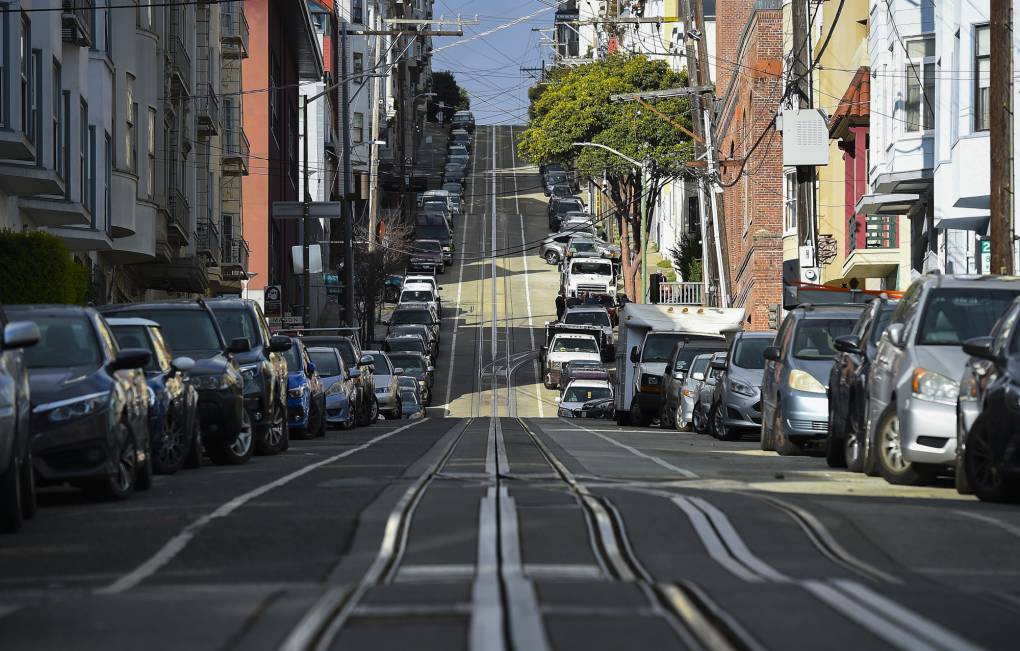
"caption": "Cars parked along Washington Street in San Francisco on March 17, 2020.",
"description": null,
"title": "US-VIRUS-HEALTH-EPIDEMIC",
"credit": "Josh Edelson/AFP via Getty Images",
"status": "inherit",
"altTag": "Cars parked along a city street.",
"isLoading": false,
"fetchFailed": false
},
"news_11957423": {
"type": "attachments",
"id": "news_11957423",
"meta": {
"index": "attachments_1716263798",
"site": "news",
"id": "11957423",
"found": true
},
"title": "RS67658_230802-CityHallSanFrancisco-16-BL-KQED",
"publishDate": 1691170996,
"status": "inherit",
"parent": 12072739,
"modified": 1770680128,
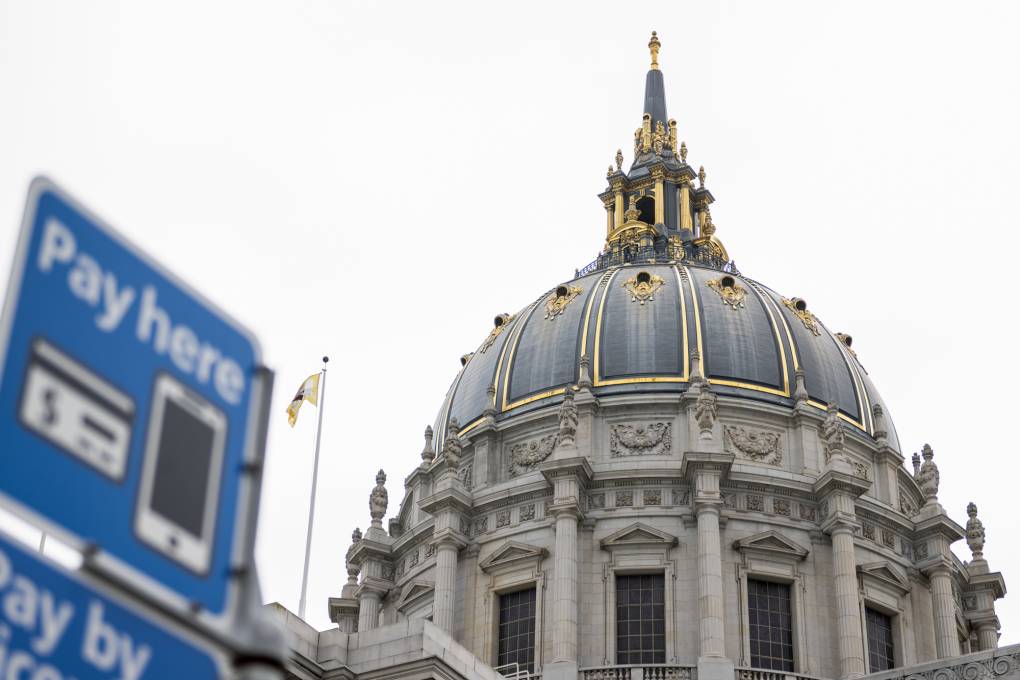
"caption": "San Francisco City Hall on Aug. 2, 2023. Mayor London Breed signed a $14.6 billion budget on July 26 after weeks of negotiations with the Board of Supervisors.",
"credit": "Beth LaBerge/KQED",
"altTag": "The dome of an ornate building.",
"description": null,
"imgSizes": {
"medium": {
"file": "https://cdn.kqed.org/wp-content/uploads/sites/10/2023/08/RS67658_230802-CityHallSanFrancisco-16-BL-KQED-800x533.jpg",
"width": 800,
"height": 533,
"mimeType": "image/jpeg"
},
"large": {
"file": "https://cdn.kqed.org/wp-content/uploads/sites/10/2023/08/RS67658_230802-CityHallSanFrancisco-16-BL-KQED-1020x680.jpg",
"width": 1020,
"height": 680,
"mimeType": "image/jpeg"
},
"thumbnail": {
"file": "https://cdn.kqed.org/wp-content/uploads/sites/10/2023/08/RS67658_230802-CityHallSanFrancisco-16-BL-KQED-160x107.jpg",
"width": 160,
"height": 107,
"mimeType": "image/jpeg"
},
"1536x1536": {
"file": "https://cdn.kqed.org/wp-content/uploads/sites/10/2023/08/RS67658_230802-CityHallSanFrancisco-16-BL-KQED-1536x1024.jpg",
"width": 1536,
"height": 1024,
"mimeType": "image/jpeg"
},
"post-thumbnail": {
"file": "https://cdn.kqed.org/wp-content/uploads/sites/10/2023/08/RS67658_230802-CityHallSanFrancisco-16-BL-KQED-672x372.jpg",
"width": 672,
"height": 372,
"mimeType": "image/jpeg"
},
"twentyfourteen-full-width": {
"file": "https://cdn.kqed.org/wp-content/uploads/sites/10/2023/08/RS67658_230802-CityHallSanFrancisco-16-BL-KQED-1038x576.jpg",
"width": 1038,
"height": 576,
"mimeType": "image/jpeg"
},
"full-width": {
"file": "https://cdn.kqed.org/wp-content/uploads/sites/10/2023/08/RS67658_230802-CityHallSanFrancisco-16-BL-KQED-1920x1280.jpg",
"width": 1920,
"height": 1280,
"mimeType": "image/jpeg"
},
"kqedFullSize": {
"file": "https://cdn.kqed.org/wp-content/uploads/sites/10/2023/08/RS67658_230802-CityHallSanFrancisco-16-BL-KQED.jpg",
"width": 2000,
"height": 1333
}
},
"isLoading": false,
"fetchFailed": false
},
"news_11956120": {
"type": "attachments",
"id": "news_11956120",
"meta": {
"index": "attachments_1716263798",
"site": "news",
"id": "11956120",
"found": true
},
"title": "RS67112_20230719-cityhallrally-07-JY-qut",
"publishDate": 1689883979,
"status": "inherit",
"parent": 11956110,
"modified": 1743032045,
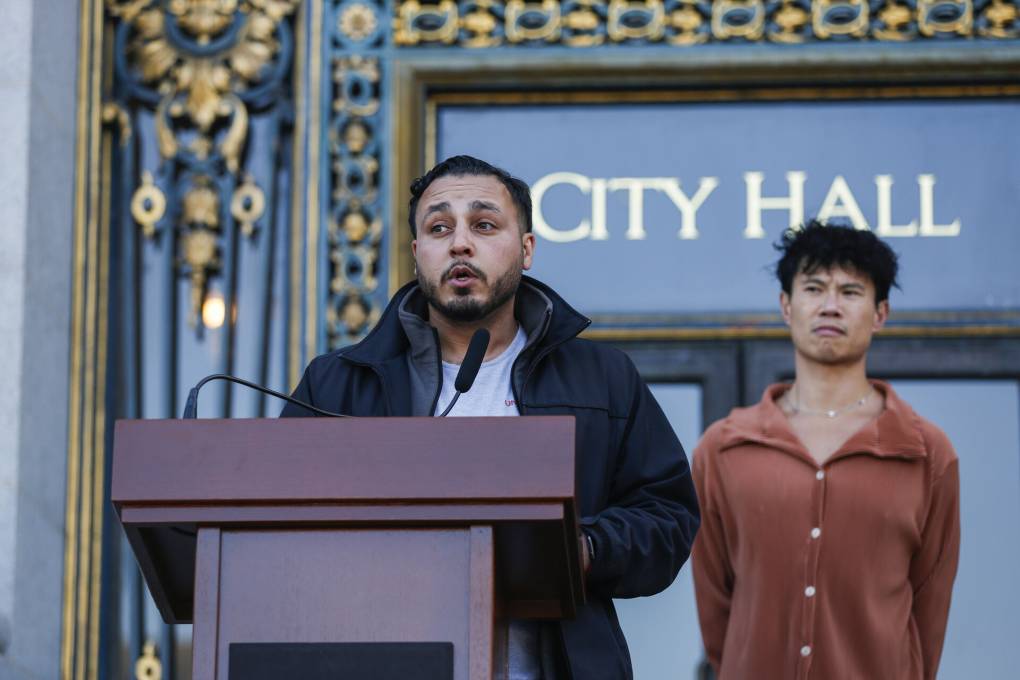
"caption": "SF Latinx Democratic Club President Kevin Ortiz speaks at a rally in front of City Hall before the San Francisco Police Commission meeting in San Francisco on Wednesday, July 19, 2023. ",
"credit": "Juliana Yamada/KQED",
"altTag": "A man wearing a dark hooded sweatshirt stands at a podium with another man standing to his right wearing a reddish shirt in front of a building that has a sign reading \"City Hall.\"",
"description": null,
"imgSizes": {
"medium": {
"file": "https://cdn.kqed.org/wp-content/uploads/sites/10/2023/07/RS67112_20230719-cityhallrally-07-JY-qut-800x533.jpg",
"width": 800,
"height": 533,
"mimeType": "image/jpeg"
},
"large": {
"file": "https://cdn.kqed.org/wp-content/uploads/sites/10/2023/07/RS67112_20230719-cityhallrally-07-JY-qut-1020x680.jpg",
"width": 1020,
"height": 680,
"mimeType": "image/jpeg"
},
"thumbnail": {
"file": "https://cdn.kqed.org/wp-content/uploads/sites/10/2023/07/RS67112_20230719-cityhallrally-07-JY-qut-160x107.jpg",
"width": 160,
"height": 107,
"mimeType": "image/jpeg"
},
"1536x1536": {
"file": "https://cdn.kqed.org/wp-content/uploads/sites/10/2023/07/RS67112_20230719-cityhallrally-07-JY-qut-1536x1024.jpg",
"width": 1536,
"height": 1024,
"mimeType": "image/jpeg"
},
"post-thumbnail": {
"file": "https://cdn.kqed.org/wp-content/uploads/sites/10/2023/07/RS67112_20230719-cityhallrally-07-JY-qut-672x372.jpg",
"width": 672,
"height": 372,
"mimeType": "image/jpeg"
},
"twentyfourteen-full-width": {
"file": "https://cdn.kqed.org/wp-content/uploads/sites/10/2023/07/RS67112_20230719-cityhallrally-07-JY-qut-1038x576.jpg",
"width": 1038,
"height": 576,
"mimeType": "image/jpeg"
},
"kqedFullSize": {
"file": "https://cdn.kqed.org/wp-content/uploads/sites/10/2023/07/RS67112_20230719-cityhallrally-07-JY-qut.jpg",
"width": 1920,
"height": 1280
}
},
"isLoading": false,
"fetchFailed": false
},
"news_11955507": {
"type": "attachments",
"id": "news_11955507",
"meta": {
"index": "attachments_1716263798",
"site": "news",
"id": "11955507",
"found": true
},
"parent": 11955465,
"imgSizes": {
"twentyfourteen-full-width": {
"file": "https://ww2.kqed.org/app/uploads/sites/10/2023/07/RS66907_GettyImages-1244393646-qut-1038x576.jpg",
"width": 1038,
"mimeType": "image/jpeg",
"height": 576
},
"thumbnail": {
"file": "https://ww2.kqed.org/app/uploads/sites/10/2023/07/RS66907_GettyImages-1244393646-qut-160x107.jpg",
"width": 160,
"mimeType": "image/jpeg",
"height": 107
},
"post-thumbnail": {
"file": "https://ww2.kqed.org/app/uploads/sites/10/2023/07/RS66907_GettyImages-1244393646-qut-672x372.jpg",
"width": 672,
"mimeType": "image/jpeg",
"height": 372
},
"kqedFullSize": {
"file": "https://ww2.kqed.org/app/uploads/sites/10/2023/07/RS66907_GettyImages-1244393646-qut.jpg",
"width": 1920,
"height": 1280
},
"large": {
"file": "https://ww2.kqed.org/app/uploads/sites/10/2023/07/RS66907_GettyImages-1244393646-qut-1020x680.jpg",
"width": 1020,
"mimeType": "image/jpeg",
"height": 680
},
"1536x1536": {
"file": "https://ww2.kqed.org/app/uploads/sites/10/2023/07/RS66907_GettyImages-1244393646-qut-1536x1024.jpg",
"width": 1536,
"mimeType": "image/jpeg",
"height": 1024
},
"medium": {
"file": "https://ww2.kqed.org/app/uploads/sites/10/2023/07/RS66907_GettyImages-1244393646-qut-800x533.jpg",
"width": 800,
"mimeType": "image/jpeg",
"height": 533
}
},
"publishDate": 1689193390,
"modified": 1689194554,
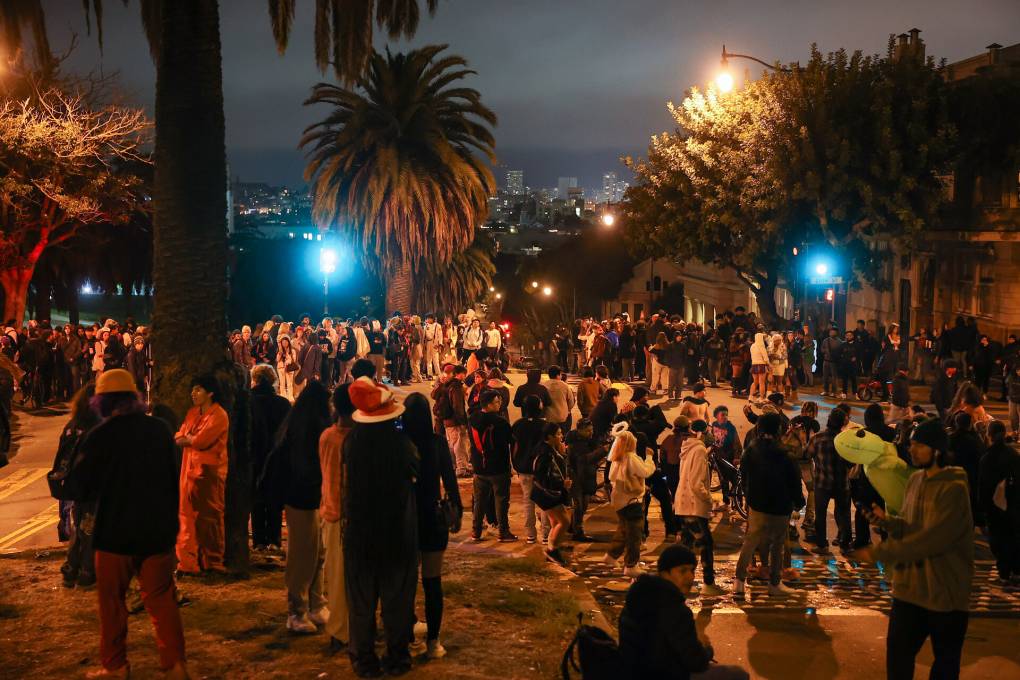
"caption": "Hundreds of young people gather on Dolores and 20th streets for last year's Dolores Park 'hill bomb' in San Francisco, on Oct. 31, 2022.",
"description": null,
"title": "dolores-park-hill-bom",
"credit": "Tayfun Coskun/Anadolu Agency via Getty Images",
"status": "inherit",
"altTag": "A nighttime image of a palm tree-lined street, with many people gathered under the street lights.",
"isLoading": false,
"fetchFailed": false
},
"news_11954970": {
"type": "attachments",
"id": "news_11954970",
"meta": {
"index": "attachments_1716263798",
"site": "news",
"id": "11954970",
"found": true
},
"parent": 11954965,
"imgSizes": {
"twentyfourteen-full-width": {
"file": "https://ww2.kqed.org/app/uploads/sites/10/2023/07/RS57143_030_KQED_DABrookeJenkins_07072022-qut-1038x576.jpg",
"width": 1038,
"mimeType": "image/jpeg",
"height": 576
},
"thumbnail": {
"file": "https://ww2.kqed.org/app/uploads/sites/10/2023/07/RS57143_030_KQED_DABrookeJenkins_07072022-qut-160x107.jpg",
"width": 160,
"mimeType": "image/jpeg",
"height": 107
},
"post-thumbnail": {
"file": "https://ww2.kqed.org/app/uploads/sites/10/2023/07/RS57143_030_KQED_DABrookeJenkins_07072022-qut-672x372.jpg",
"width": 672,
"mimeType": "image/jpeg",
"height": 372
},
"kqedFullSize": {
"file": "https://ww2.kqed.org/app/uploads/sites/10/2023/07/RS57143_030_KQED_DABrookeJenkins_07072022-qut.jpg",
"width": 1920,
"height": 1280
},
"large": {
"file": "https://ww2.kqed.org/app/uploads/sites/10/2023/07/RS57143_030_KQED_DABrookeJenkins_07072022-qut-1020x680.jpg",
"width": 1020,
"mimeType": "image/jpeg",
"height": 680
},
"1536x1536": {
"file": "https://ww2.kqed.org/app/uploads/sites/10/2023/07/RS57143_030_KQED_DABrookeJenkins_07072022-qut-1536x1024.jpg",
"width": 1536,
"mimeType": "image/jpeg",
"height": 1024
},
"medium": {
"file": "https://ww2.kqed.org/app/uploads/sites/10/2023/07/RS57143_030_KQED_DABrookeJenkins_07072022-qut-800x533.jpg",
"width": 800,
"mimeType": "image/jpeg",
"height": 533
}
},
"publishDate": 1688425379,
"modified": 1688427886,
"caption": "San Francisco District Attorney Brooke Jenkins speaks during a press conference at City Hall on July 7, 2022.",
"description": null,
"title": "RS57143_030_KQED_DABrookeJenkins_07072022-qut",
"credit": "Beth LaBerge/KQED",
"status": "inherit",
"altTag": "a woman in a suit stands at a pulpit with a microphone. Behind her is a San Francisco flag",
"isLoading": false,
"fetchFailed": false
},
"news_11950920": {
"type": "attachments",
"id": "news_11950920",
"meta": {
"index": "attachments_1716263798",
"site": "news",
"id": "11950920",
"found": true
},
"parent": 11950914,
"imgSizes": {
"twentyfourteen-full-width": {
"file": "https://ww2.kqed.org/app/uploads/sites/10/2023/05/019_KQED_SeanMoorePressConf_05262023-1038x576.jpg",
"width": 1038,
"mimeType": "image/jpeg",
"height": 576
},
"thumbnail": {
"file": "https://ww2.kqed.org/app/uploads/sites/10/2023/05/019_KQED_SeanMoorePressConf_05262023-160x107.jpg",
"width": 160,
"mimeType": "image/jpeg",
"height": 107
},
"post-thumbnail": {
"file": "https://ww2.kqed.org/app/uploads/sites/10/2023/05/019_KQED_SeanMoorePressConf_05262023-672x372.jpg",
"width": 672,
"mimeType": "image/jpeg",
"height": 372
},
"kqedFullSize": {
"file": "https://ww2.kqed.org/app/uploads/sites/10/2023/05/019_KQED_SeanMoorePressConf_05262023.jpg",
"width": 1920,
"height": 1280
},
"large": {
"file": "https://ww2.kqed.org/app/uploads/sites/10/2023/05/019_KQED_SeanMoorePressConf_05262023-1020x680.jpg",
"width": 1020,
"mimeType": "image/jpeg",
"height": 680
},
"1536x1536": {
"file": "https://ww2.kqed.org/app/uploads/sites/10/2023/05/019_KQED_SeanMoorePressConf_05262023-1536x1024.jpg",
"width": 1536,
"mimeType": "image/jpeg",
"height": 1024
},
"medium": {
"file": "https://ww2.kqed.org/app/uploads/sites/10/2023/05/019_KQED_SeanMoorePressConf_05262023-800x533.jpg",
"width": 800,
"mimeType": "image/jpeg",
"height": 533
}
},
"publishDate": 1685128196,
"modified": 1685132922,
"caption": "Cleo Moore, the mother of Sean Moore, gathers with supporters outside the Hall of Justice in San Francisco on May 26, 2023, after it was announced that the case against SFPD officer Kenneth Cha has been further delayed.",
"description": null,
"title": "019_KQED_SeanMoorePressConf_05262023",
"credit": "Beth LaBerge/KQED",
"status": "inherit",
"altTag": "An older woman with a somber face wears a blue blazer with pastel flowers on it. She looks to the left. A yellow sign behind her reads, \"Decriminalize mental illness now!\"",
"isLoading": false,
"fetchFailed": false
},
"news_11948106": {
"type": "attachments",
"id": "news_11948106",
"meta": {
"index": "attachments_1716263798",
"site": "news",
"id": "11948106",
"found": true
},
"parent": 0,
"imgSizes": {
"twentyfourteen-full-width": {
"file": "https://ww2.kqed.org/app/uploads/sites/10/2023/04/RS28905_GettyImages-678967-qut-1038x576.jpg",
"width": 1038,
"mimeType": "image/jpeg",
"height": 576
},
"thumbnail": {
"file": "https://ww2.kqed.org/app/uploads/sites/10/2023/04/RS28905_GettyImages-678967-qut-160x110.jpg",
"width": 160,
"mimeType": "image/jpeg",
"height": 110
},
"post-thumbnail": {
"file": "https://ww2.kqed.org/app/uploads/sites/10/2023/04/RS28905_GettyImages-678967-qut-672x372.jpg",
"width": 672,
"mimeType": "image/jpeg",
"height": 372
},
"kqedFullSize": {
"file": "https://ww2.kqed.org/app/uploads/sites/10/2023/04/RS28905_GettyImages-678967-qut.jpg",
"width": 1920,
"height": 1320
},
"large": {
"file": "https://ww2.kqed.org/app/uploads/sites/10/2023/04/RS28905_GettyImages-678967-qut-1020x701.jpg",
"width": 1020,
"mimeType": "image/jpeg",
"height": 701
},
"1536x1536": {
"file": "https://ww2.kqed.org/app/uploads/sites/10/2023/04/RS28905_GettyImages-678967-qut-1536x1056.jpg",
"width": 1536,
"mimeType": "image/jpeg",
"height": 1056
},
"medium": {
"file": "https://ww2.kqed.org/app/uploads/sites/10/2023/04/RS28905_GettyImages-678967-qut-800x550.jpg",
"width": 800,
"mimeType": "image/jpeg",
"height": 550
}
},
"publishDate": 1682724819,
"modified": 1682730769,
"caption": "A California Highway Patrol car stands guard at the Golden Gate Bridge toll plaza on Nov. 2, 2001, in San Francisco. Gov. Gavin Newsom is utilizing the CHP and the National Guard to fight the city's fentanyl crisis.",
"description": null,
"title": "Golden Gate Bridge Security",
"credit": "Justin Sullivan/Getty Images",
"status": "inherit",
"altTag": "A black and white California High Patrol vehicle is parked near the Golden Gate Bridge in San Francisco. A gray car passes through the toll bridge.",
"isLoading": false,
"fetchFailed": false
},
"news_11934365": {
"type": "attachments",
"id": "news_11934365",
"meta": {
"index": "attachments_1716263798",
"site": "news",
"id": "11934365",
"found": true
},
"parent": 11934343,
"imgSizes": {
"twentyfourteen-full-width": {
"file": "https://ww2.kqed.org/app/uploads/sites/10/2022/12/GettyImages-1321971276-1024x576.jpg",
"width": 1024,
"mimeType": "image/jpeg",
"height": 576
},
"thumbnail": {
"file": "https://ww2.kqed.org/app/uploads/sites/10/2022/12/GettyImages-1321971276-160x95.jpg",
"width": 160,
"mimeType": "image/jpeg",
"height": 95
},
"post-thumbnail": {
"file": "https://ww2.kqed.org/app/uploads/sites/10/2022/12/GettyImages-1321971276-672x372.jpg",
"width": 672,
"mimeType": "image/jpeg",
"height": 372
},
"kqedFullSize": {
"file": "https://ww2.kqed.org/app/uploads/sites/10/2022/12/GettyImages-1321971276.jpg",
"width": 1024,
"height": 610
},
"large": {
"file": "https://ww2.kqed.org/app/uploads/sites/10/2022/12/GettyImages-1321971276-1020x608.jpg",
"width": 1020,
"mimeType": "image/jpeg",
"height": 608
},
"medium": {
"file": "https://ww2.kqed.org/app/uploads/sites/10/2022/12/GettyImages-1321971276-800x477.jpg",
"width": 800,
"mimeType": "image/jpeg",
"height": 477
}
},
"publishDate": 1670370595,
"modified": 1670392054,
"caption": "The San Francisco Police Department's bomb-investigating robot returns from down 16th Street after looking over a device. The San Francisco police bomb squad closed off 16th Street between Folsom and Harrison streets in San Francisco after a report of a suspicious cart tied to a tree, on Friday, July 25, 2008.",
"description": null,
"title": "The San Francisco Police, bomb investigating robot, returns from down 16th street after looking over the device. The San Francsico Police bomb squard closed of 16th street between Folson and Harrison Streets, in San Francsico, Calif., after a report of",
"credit": "Michael Macor/The San Francisco Chronicle via Getty Images",
"status": "inherit",
"altTag": "A man dressed in a police uniform holds a device that is attached to a robot in the middle of the street with police cars in the background.",
"isLoading": false,
"fetchFailed": false
},
"news_11926415": {
"type": "attachments",
"id": "news_11926415",
"meta": {
"index": "attachments_1716263798",
"site": "news",
"id": "11926415",
"found": true
},
"parent": 11926357,
"imgSizes": {
"twentyfourteen-full-width": {
"file": "https://ww2.kqed.org/app/uploads/sites/10/2022/09/SFPD-Surveillance-1038x576.jpg",
"width": 1038,
"mimeType": "image/jpeg",
"height": 576
},
"thumbnail": {
"file": "https://ww2.kqed.org/app/uploads/sites/10/2022/09/SFPD-Surveillance-160x107.jpg",
"width": 160,
"mimeType": "image/jpeg",
"height": 107
},
"post-thumbnail": {
"file": "https://ww2.kqed.org/app/uploads/sites/10/2022/09/SFPD-Surveillance-672x372.jpg",
"width": 672,
"mimeType": "image/jpeg",
"height": 372
},
"kqedFullSize": {
"file": "https://ww2.kqed.org/app/uploads/sites/10/2022/09/SFPD-Surveillance.jpg",
"width": 1920,
"height": 1281
},
"large": {
"file": "https://ww2.kqed.org/app/uploads/sites/10/2022/09/SFPD-Surveillance-1020x681.jpg",
"width": 1020,
"mimeType": "image/jpeg",
"height": 681
},
"1536x1536": {
"file": "https://ww2.kqed.org/app/uploads/sites/10/2022/09/SFPD-Surveillance-1536x1025.jpg",
"width": 1536,
"mimeType": "image/jpeg",
"height": 1025
},
"medium": {
"file": "https://ww2.kqed.org/app/uploads/sites/10/2022/09/SFPD-Surveillance-800x534.jpg",
"width": 800,
"mimeType": "image/jpeg",
"height": 534
}
},
"publishDate": 1663793340,
"modified": 1663801183,
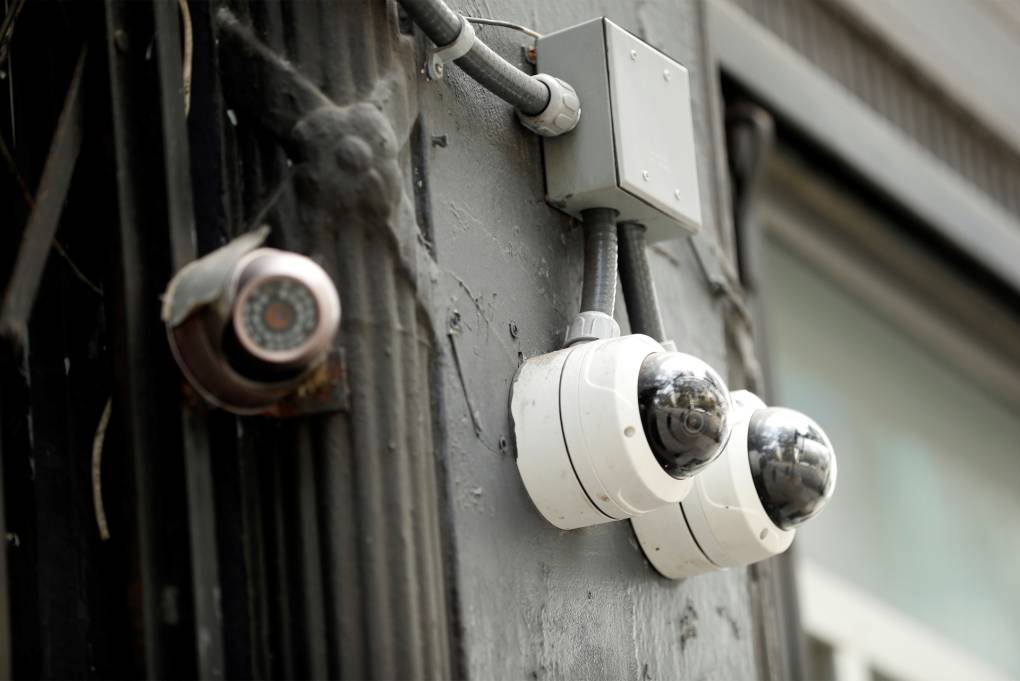
"caption": "A surveillance camera on Howard Street in San Francisco.",
"description": "A surveillance camera on Howard Street in San Francisco, Calif., on Wednesday, October 7, 2020.",
"title": "SFPD Surveillance",
"credit": "Scott Strazzante/The San Francisco Chronicle via Getty Images",
"status": "inherit",
"altTag": "An upward-angled photo of a black almost round surveillance camera attached to the side of a darkly painted building. The camera points directly at the camera that took the picture. To the right appear to be two more surveillance cameras, white bases with rounded domes attached to the same building.",
"isLoading": false,
"fetchFailed": false
},
"news_11908887": {
"type": "attachments",
"id": "news_11908887",
"meta": {
"index": "attachments_1716263798",
"site": "news",
"id": "11908887",
"found": true
},
"parent": 11908825,
"imgSizes": {
"twentyfourteen-full-width": {
"file": "https://ww2.kqed.org/app/uploads/sites/10/2022/03/RS54314_007_KQED_SFUSDProtest_03142022-qut-1038x576.jpg",
"width": 1038,
"mimeType": "image/jpeg",
"height": 576
},
"thumbnail": {
"file": "https://ww2.kqed.org/app/uploads/sites/10/2022/03/RS54314_007_KQED_SFUSDProtest_03142022-qut-160x107.jpg",
"width": 160,
"mimeType": "image/jpeg",
"height": 107
},
"post-thumbnail": {
"file": "https://ww2.kqed.org/app/uploads/sites/10/2022/03/RS54314_007_KQED_SFUSDProtest_03142022-qut-672x372.jpg",
"width": 672,
"mimeType": "image/jpeg",
"height": 372
},
"kqedFullSize": {
"file": "https://ww2.kqed.org/app/uploads/sites/10/2022/03/RS54314_007_KQED_SFUSDProtest_03142022-qut.jpg",
"width": 1920,
"height": 1280
},
"large": {
"file": "https://ww2.kqed.org/app/uploads/sites/10/2022/03/RS54314_007_KQED_SFUSDProtest_03142022-qut-1020x680.jpg",
"width": 1020,
"mimeType": "image/jpeg",
"height": 680
},
"1536x1536": {
"file": "https://ww2.kqed.org/app/uploads/sites/10/2022/03/RS54314_007_KQED_SFUSDProtest_03142022-qut-1536x1024.jpg",
"width": 1536,
"mimeType": "image/jpeg",
"height": 1024
},
"medium": {
"file": "https://ww2.kqed.org/app/uploads/sites/10/2022/03/RS54314_007_KQED_SFUSDProtest_03142022-qut-800x533.jpg",
"width": 800,
"mimeType": "image/jpeg",
"height": 533
}
},
"publishDate": 1647981010,
"modified": 1652909843,
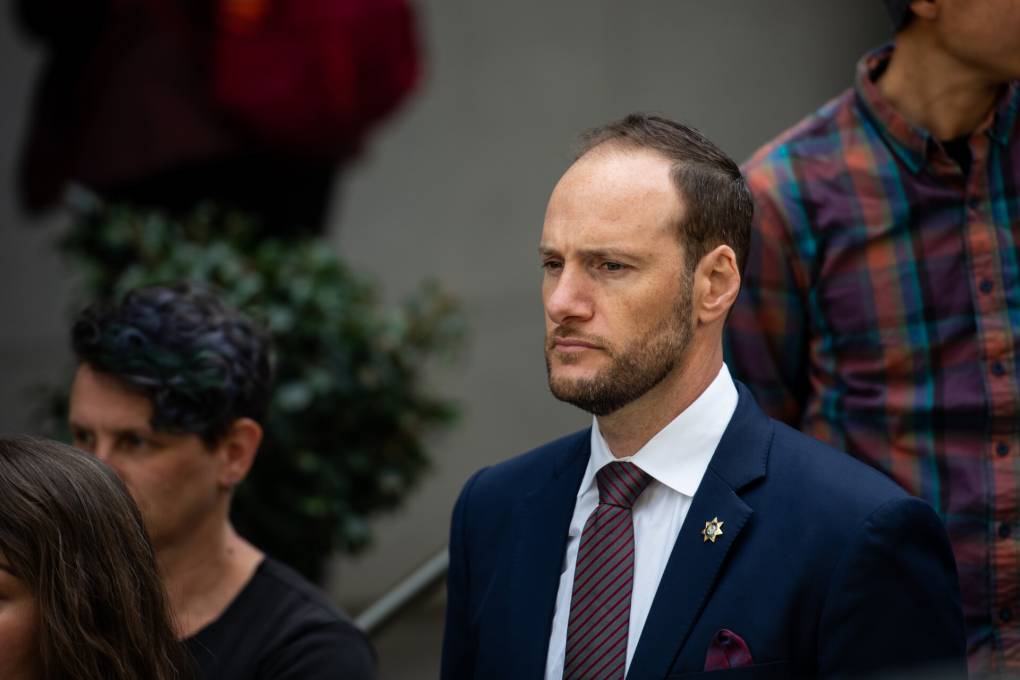
"caption": "Chesa Boudin stands with SFUSD staff in front of the district headquarters in San Francisco on March 14, 2022, to protest the mismanagement of paychecks of district staff.",
"description": null,
"title": "RS54314_007_KQED_SFUSDProtest_03142022-qut",
"credit": "Beth LaBerge/KQED",
"status": "inherit",
"altTag": "A middle-aged white man, Chesa Boudin, wears a white shirt, gray-and-red-striped tie, and navy suit jacket with a red pocket square next to a lapel pin that's a seven-pointed star (the seal of the SF District Attorney's Office). Chesa has a brown beard, a trim haircut a bit longer on top, and a receding hairline. He looks somber. He appears to be standing on an outdoor stairway, amid three other people who are partially visible, all dressed casually.",
"isLoading": false,
"fetchFailed": false
},
"news_11907421": {
"type": "attachments",
"id": "news_11907421",
"meta": {
"index": "attachments_1716263798",
"site": "news",
"id": "11907421",
"found": true
},
"parent": 11907396,
"imgSizes": {
"twentyfourteen-full-width": {
"file": "https://ww2.kqed.org/app/uploads/sites/10/2022/03/GettyImages-1369474163-1024x576.jpg",
"width": 1024,
"mimeType": "image/jpeg",
"height": 576
},
"thumbnail": {
"file": "https://ww2.kqed.org/app/uploads/sites/10/2022/03/GettyImages-1369474163-160x107.jpg",
"width": 160,
"mimeType": "image/jpeg",
"height": 107
},
"post-thumbnail": {
"file": "https://ww2.kqed.org/app/uploads/sites/10/2022/03/GettyImages-1369474163-672x372.jpg",
"width": 672,
"mimeType": "image/jpeg",
"height": 372
},
"kqedFullSize": {
"file": "https://ww2.kqed.org/app/uploads/sites/10/2022/03/GettyImages-1369474163.jpg",
"width": 1024,
"height": 683
},
"large": {
"file": "https://ww2.kqed.org/app/uploads/sites/10/2022/03/GettyImages-1369474163-1020x680.jpg",
"width": 1020,
"mimeType": "image/jpeg",
"height": 680
},
"medium": {
"file": "https://ww2.kqed.org/app/uploads/sites/10/2022/03/GettyImages-1369474163-800x534.jpg",
"width": 800,
"mimeType": "image/jpeg",
"height": 534
}
},
"publishDate": 1646703121,
"modified": 1646704146,
"caption": "San Francisco Police Officer Terrance Stangel (center) and lawyer Nicole Pifari (right) walk into the courtroom at the San Francisco Hall of Justice on Feb. 8, 2022. Stangel, who faced assault and battery charges, was found not guilty on March 7, 2022.",
"description": null,
"title": "SFChronicleNews",
"credit": "Gabrielle Lurie/San Francisco Chronicle via Getty Images",
"status": "inherit",
"altTag": "A man and a woman wearing face masks walk into a courtroom.",
"isLoading": false,
"fetchFailed": false
},
"news_11905285": {
"type": "attachments",
"id": "news_11905285",
"meta": {
"index": "attachments_1716263798",
"site": "news",
"id": "11905285",
"found": true
},
"parent": 11905239,
"imgSizes": {
"twentyfourteen-full-width": {
"file": "https://ww2.kqed.org/app/uploads/sites/10/2022/02/GettyImages-1370768384-1024x576.jpg",
"width": 1024,
"mimeType": "image/jpeg",
"height": 576
},
"thumbnail": {
"file": "https://ww2.kqed.org/app/uploads/sites/10/2022/02/GettyImages-1370768384-160x104.jpg",
"width": 160,
"mimeType": "image/jpeg",
"height": 104
},
"post-thumbnail": {
"file": "https://ww2.kqed.org/app/uploads/sites/10/2022/02/GettyImages-1370768384-672x372.jpg",
"width": 672,
"mimeType": "image/jpeg",
"height": 372
},
"kqedFullSize": {
"file": "https://ww2.kqed.org/app/uploads/sites/10/2022/02/GettyImages-1370768384.jpg",
"width": 1024,
"height": 665
},
"large": {
"file": "https://ww2.kqed.org/app/uploads/sites/10/2022/02/GettyImages-1370768384-1020x662.jpg",
"width": 1020,
"mimeType": "image/jpeg",
"height": 662
},
"medium": {
"file": "https://ww2.kqed.org/app/uploads/sites/10/2022/02/GettyImages-1370768384-800x520.jpg",
"width": 800,
"mimeType": "image/jpeg",
"height": 520
}
},
"publishDate": 1644975913,
"modified": 1644976088,
"caption": "San Francisco District Attorney Chesa Boudin speaks during a press conference at his office on Feb. 15, 2022, discussing the SFPD's alleged practice of logging DNA evidence from rape kits into a crime database to use as evidence in other crimes. ",
"description": null,
"title": "San Francisco DA Boudin Discusses Use Of Rape Kit DNA To Identify Crime Suspects",
"credit": "Justin Sullivan/Getty Images",
"status": "inherit",
"altTag": "A man wearing a face mask stands behind a lectern, with two women on either side of him.",
"isLoading": false,
"fetchFailed": false
}
},
"audioPlayerReducer": {
"postId": "stream_live",
"isPaused": true,
"isPlaying": false,
"pfsActive": false,
"pledgeModalIsOpen": true,
"playerDrawerIsOpen": false,
"liveAudioPlayStartedAt": 0,
"liveAudioPlayContext": ""
},
"authorsReducer": {
"byline_news_11926357": {
"type": "authors",
"id": "byline_news_11926357",
"meta": {
"override": true
},
"slug": "byline_news_11926357",
"name": "Janie Har, Associated Press and KQED Staff",
"isLoading": false
},
"kqednewsstaffandwires": {
"type": "authors",
"id": "237",
"meta": {
"index": "authors_1716337520",
"id": "237",
"found": true
},
"name": "KQED News Staff and Wires",
"firstName": "KQED News Staff and Wires",
"lastName": null,
"slug": "kqednewsstaffandwires",
"email": "onlinenewsstaff@kqed.org",
"display_author_email": false,
"staff_mastheads": [],
"title": null,
"bio": null,
"avatar": "https://secure.gravatar.com/avatar/72295af8ebbfbd19a4948f5271285664?s=600&d=blank&r=g",
"twitter": null,
"facebook": null,
"instagram": null,
"linkedin": null,
"sites": [
{
"site": "arts",
"roles": [
"contributor"
]
},
{
"site": "news",
"roles": [
"contributor"
]
},
{
"site": "lowdown",
"roles": [
"author"
]
},
{
"site": "stateofhealth",
"roles": [
"contributor"
]
},
{
"site": "food",
"roles": [
"author"
]
}
],
"headData": {
"title": "KQED News Staff and Wires | KQED",
"description": null,
"ogImgSrc": "https://secure.gravatar.com/avatar/72295af8ebbfbd19a4948f5271285664?s=600&d=blank&r=g",
"twImgSrc": "https://secure.gravatar.com/avatar/72295af8ebbfbd19a4948f5271285664?s=600&d=blank&r=g"
},
"isLoading": false,
"link": "/author/kqednewsstaffandwires"
},
"matthewgreen": {
"type": "authors",
"id": "1263",
"meta": {
"index": "authors_1716337520",
"id": "1263",
"found": true
},
"name": "Matthew Green",
"firstName": "Matthew",
"lastName": "Green",
"slug": "matthewgreen",
"email": "mgreen@kqed.org",
"display_author_email": false,
"staff_mastheads": [],
"title": "KQED Editor/Reporter",
"bio": "Matthew Green is a digital media producer for KQED News. He previously produced \u003ca href=\"http://www.kqed.org/lowdown\">The Lowdown\u003c/a>, KQED’s multimedia news education blog. Matthew's written for numerous Bay Area publications, including the Oakland Tribune and San Francisco Chronicle. He also taught journalism classes at Fremont High School in East Oakland.\r\n\r\nEmail: mgreen@kqed.org; Twitter: @MGreenKQED",
"avatar": "https://secure.gravatar.com/avatar/3bf498d1267ca02c8494f33d8cfc575e?s=600&d=blank&r=g",
"twitter": "MGreenKQED",
"facebook": null,
"instagram": null,
"linkedin": null,
"sites": [
{
"site": "news",
"roles": []
},
{
"site": "lowdown",
"roles": []
},
{
"site": "science",
"roles": []
},
{
"site": "education",
"roles": []
},
{
"site": "quest",
"roles": []
},
{
"site": "liveblog",
"roles": []
}
],
"headData": {
"title": "Matthew Green | KQED",
"description": "KQED Editor/Reporter",
"ogImgSrc": "https://secure.gravatar.com/avatar/3bf498d1267ca02c8494f33d8cfc575e?s=600&d=blank&r=g",
"twImgSrc": "https://secure.gravatar.com/avatar/3bf498d1267ca02c8494f33d8cfc575e?s=600&d=blank&r=g"
},
"isLoading": false,
"link": "/author/matthewgreen"
},
"aemslie": {
"type": "authors",
"id": "3206",
"meta": {
"index": "authors_1716337520",
"id": "3206",
"found": true
},
"name": "Alex Emslie",
"firstName": "Alex",
"lastName": "Emslie",
"slug": "aemslie",
"email": "aemslie@kqed.org",
"display_author_email": true,
"staff_mastheads": [
"news"
],
"title": "KQED Senior Editor",
"bio": "Alex Emslie is senior editor of talent and development at KQED, where he manages dozens of early career journalists and oversees news department internships.\r\n\r\nHe is a former carpenter and proud graduate of City College of San Francisco and San Francisco State University, where he studied journalism and criminal justice before joining KQED in 2013.\r\n\r\nAlex produced investigative journalism focused on \u003ca href=\"https://www.kqed.org/news/11667594/the-trials-of-marvin-mutch-video\">criminal justice\u003c/a> and policing for most of a decade. He has broken major stories about \u003ca href=\"https://www.kqed.org/news/135682/amid-a-series-of-vallejo-police-shootings-one-officers-name-stands-out\">police use of deadly force\u003c/a>, \u003ca href=\"https://www.kqed.org/news/10454955/racist-texts-prompt-sfpd-internal-investigation\">officer misconduct\u003c/a> and \u003ca href=\"https://www.kqed.org/news/11712239/terrorist-or-troll-judge-to-weigh-whether-oakland-man-really-intended-to-attack-bay-area\">other\u003c/a> \u003ca href=\"https://www.kqed.org/news/11221414/hayward-paid-159000-to-husband-of-retired-police-chief-documents-show\">high\u003c/a>-\u003ca href=\"https://www.kqed.org/news/10622762/the-forgotten-tracking-two-homicides-in-san-francisco-public-housing\">profile\u003c/a> \u003ca href=\"https://www.kqed.org/news/11624516/federal-agency-promoted-ranger-just-months-after-his-gun-was-stolen-and-used-in-steinle-killing\">cases\u003c/a>. He co-founded the \u003ca href=\"https://projects.scpr.org/california-reporting-project/\">California Reporting Project\u003c/a> in 2019 to obtain and report on previously confidential police internal investigations. The effort produced well over 100 original stories and changed the course of multiple criminal cases.\r\n\r\nHis work has been recognized with numerous journalism awards, including a national Edward R. Murrow award for several years of \u003ca href=\"https://www.kqed.org/news/11688481/sfpd-officers-in-mario-woods-case-recount-shooting-in-newly-filed-depositions\">reporting\u003c/a> on the San Francisco Police shooting of Mario Woods. His \u003ca href=\"https://www.kqed.org/news/147854/half-of-those-killed-by-san-francisco-police-are-mentally-ill\">reporting\u003c/a> on police killings of people in psychiatric crisis was cited in amicus briefs before the U.S. Supreme Court.\r\n\r\nAlex now enjoys mentoring the next generation of journalists at KQED.",
"avatar": "https://secure.gravatar.com/avatar/e691e65209f20e9da202bd730ead5663?s=600&d=blank&r=g",
"twitter": "SFNewsReporter",
"facebook": null,
"instagram": null,
"linkedin": null,
"sites": [
{
"site": "arts",
"roles": [
"editor"
]
},
{
"site": "news",
"roles": [
"editor"
]
},
{
"site": "mindshift",
"roles": [
"editor"
]
},
{
"site": "stateofhealth",
"roles": [
"editor"
]
},
{
"site": "science",
"roles": [
"administrator"
]
}
],
"headData": {
"title": "Alex Emslie | KQED",
"description": "KQED Senior Editor",
"ogImgSrc": "https://secure.gravatar.com/avatar/e691e65209f20e9da202bd730ead5663?s=600&d=blank&r=g",
"twImgSrc": "https://secure.gravatar.com/avatar/e691e65209f20e9da202bd730ead5663?s=600&d=blank&r=g"
},
"isLoading": false,
"link": "/author/aemslie"
},
"jrodriguez": {
"type": "authors",
"id": "11690",
"meta": {
"index": "authors_1716337520",
"id": "11690",
"found": true
},
"name": "Joe Fitzgerald Rodriguez",
"firstName": "Joe",
"lastName": "Fitzgerald Rodriguez",
"slug": "jrodriguez",
"email": "jrodriguez@kqed.org",
"display_author_email": true,
"staff_mastheads": [
"news"
],
"title": "Reporter and Producer",
"bio": "Joe Fitzgerald Rodriguez is a reporter and digital producer for KQED covering politics. Joe most recently wrote for the \u003cem>San Francisco Examiner\u003c/em> as a political columnist covering The City. He was raised in San Francisco and has spent his reporting career in his beloved, foggy, city by the bay. Joe was 12-years-old when he conducted his first interview in journalism, grilling former San Francisco Mayor Willie Brown for the Marina Middle School newspaper, \u003cem>The Penguin Press, \u003c/em>and he continues to report on the San Francisco Bay Area to this day.",
"avatar": "https://secure.gravatar.com/avatar/2247beb0564c1e9c62228d5649d2edac?s=600&d=blank&r=g",
"twitter": "FitztheReporter",
"facebook": null,
"instagram": "https://www.instagram.com/fitzthereporter/",
"linkedin": null,
"sites": [
{
"site": "",
"roles": [
"editor"
]
},
{
"site": "arts",
"roles": [
"editor"
]
},
{
"site": "news",
"roles": [
"editor"
]
},
{
"site": "science",
"roles": [
"editor"
]
},
{
"site": "elections",
"roles": [
"editor"
]
},
{
"site": "liveblog",
"roles": [
"editor"
]
}
],
"headData": {
"title": "Joe Fitzgerald Rodriguez | KQED",
"description": "Reporter and Producer",
"ogImgSrc": "https://secure.gravatar.com/avatar/2247beb0564c1e9c62228d5649d2edac?s=600&d=blank&r=g",
"twImgSrc": "https://secure.gravatar.com/avatar/2247beb0564c1e9c62228d5649d2edac?s=600&d=blank&r=g"
},
"isLoading": false,
"link": "/author/jrodriguez"
},
"swhitney": {
"type": "authors",
"id": "11784",
"meta": {
"index": "authors_1716337520",
"id": "11784",
"found": true
},
"name": "Spencer Whitney",
"firstName": "Spencer",
"lastName": "Whitney",
"slug": "swhitney",
"email": "swhitney@kqed.org",
"display_author_email": false,
"staff_mastheads": [],
"title": "KQED Digital Editor",
"bio": "Spencer Whitney is currently a Digital Editor for KQED News. Prior to joining KQED News, Spencer worked as the Multimedia Editor at the Oakland Post and an Assistant Editor in the Editorial department at the San Francisco Chronicle. He attended Howard University as an undergraduate and interned with SiriusXM. He also attended UC Berkeley's Graduate School of Journalism and had the opportunity to write for the hyperlocal news sites Richmond Confidential and Oakland North.",
"avatar": "https://secure.gravatar.com/avatar/e33ff4fd8b8f0d2796f36472fb32607ca8fc46ef5e537dcfdbdee688d8ea5b80?s=600&d=mm&r=g",
"twitter": null,
"bluesky": null,
"facebook": null,
"instagram": null,
"linkedin": null,
"sites": [
{
"site": "arts",
"roles": [
"editor"
]
},
{
"site": "news",
"roles": [
"editor"
]
},
{
"site": "science",
"roles": [
"editor"
]
},
{
"site": "perspectives",
"roles": [
"editor"
]
}
],
"headData": {
"title": "Spencer Whitney | KQED",
"description": "KQED Digital Editor",
"ogImgSrc": "https://secure.gravatar.com/avatar/e33ff4fd8b8f0d2796f36472fb32607ca8fc46ef5e537dcfdbdee688d8ea5b80?s=600&d=mm&r=g",
"twImgSrc": "https://secure.gravatar.com/avatar/e33ff4fd8b8f0d2796f36472fb32607ca8fc46ef5e537dcfdbdee688d8ea5b80?s=600&d=mm&r=g"
},
"isLoading": false,
"link": "/author/swhitney"
},
"sjohnson": {
"type": "authors",
"id": "11840",
"meta": {
"index": "authors_1716337520",
"id": "11840",
"found": true
},
"name": "Sydney Johnson",
"firstName": "Sydney",
"lastName": "Johnson",
"slug": "sjohnson",
"email": "sjohnson@kqed.org",
"display_author_email": false,
"staff_mastheads": [
"news"
],
"title": "KQED Reporter",
"bio": "Sydney Johnson is a general assignment reporter at KQED. She previously reported on public health and city government at the San Francisco Examiner, and before that, she covered statewide education policy for EdSource. Her reporting has won multiple local, state and national awards. Sydney is a graduate of the University of California, Berkeley and lives in San Francisco.",
"avatar": "https://secure.gravatar.com/avatar/97855f2719b72ad6190b7c535fe642c8?s=600&d=blank&r=g",
"twitter": "sydneyfjohnson",
"facebook": null,
"instagram": null,
"linkedin": null,
"sites": [
{
"site": "news",
"roles": [
"editor"
]
}
],
"headData": {
"title": "Sydney Johnson | KQED",
"description": "KQED Reporter",
"ogImgSrc": "https://secure.gravatar.com/avatar/97855f2719b72ad6190b7c535fe642c8?s=600&d=blank&r=g",
"twImgSrc": "https://secure.gravatar.com/avatar/97855f2719b72ad6190b7c535fe642c8?s=600&d=blank&r=g"
},
"isLoading": false,
"link": "/author/sjohnson"
},
"nkhan": {
"type": "authors",
"id": "11867",
"meta": {
"index": "authors_1716337520",
"id": "11867",
"found": true
},
"name": "Nisa Khan",
"firstName": "Nisa",
"lastName": "Khan",
"slug": "nkhan",
"email": "nkhan@kqed.org",
"display_author_email": false,
"staff_mastheads": [],
"title": "KQED Contributor",
"bio": "Nisa Khan is a reporter for KQED's Audience News Desk. She was formerly a data reporter at Michigan Radio. She earned a Bachelor of Science in Information from the University of Michigan and a Master of Arts in Communication from Stanford University.",
"avatar": "https://secure.gravatar.com/avatar/8720459eef081ff64582b3506b124d58523e80e120704a0cbd9892533c914991?s=600&d=blank&r=g",
"twitter": "mnisakhan",
"bluesky": null,
"facebook": null,
"instagram": null,
"linkedin": null,
"sites": [
{
"site": "arts",
"roles": [
"editor"
]
},
{
"site": "news",
"roles": [
"editor"
]
},
{
"site": "science",
"roles": [
"editor",
"author"
]
},
{
"site": "forum",
"roles": [
"editor"
]
},
{
"site": "liveblog",
"roles": [
"contributor"
]
}
],
"headData": {
"title": "Nisa Khan | KQED",
"description": "KQED Contributor",
"ogImgSrc": "https://secure.gravatar.com/avatar/8720459eef081ff64582b3506b124d58523e80e120704a0cbd9892533c914991?s=600&d=blank&r=g",
"twImgSrc": "https://secure.gravatar.com/avatar/8720459eef081ff64582b3506b124d58523e80e120704a0cbd9892533c914991?s=600&d=blank&r=g"
},
"isLoading": false,
"link": "/author/nkhan"
}
},
"pagesReducer": {
"news_tag_san-francisco-police-department": {
"type": "terms",
"id": "news_545",
"meta": {
"index": "terms_1716263798",
"site": "news",
"id": "545",
"score": 9.892343
},
"featImg": null,
"name": "San Francisco Police Department",
"description": null,
"taxonomy": "tag",
"headData": {
"twImgId": null,
"twTitle": null,
"ogTitle": null,
"ogImgId": null,
"twDescription": null,
"description": null,
"title": "San Francisco Police Department Archives | KQED News",
"ogDescription": null
},
"ttid": 554,
"slug": "san-francisco-police-department",
"isLoading": false,
"title": "San Francisco Police Department",
"pageMeta": {
"site": "news",
"WpPageTemplate": "page-topic-editorial",
"currentPage": 7
},
"blocks": [
{
"blockName": "kqed/post-list",
"attrs": {
"layout": "cardArticle2",
"query": "posts/news?tag=san-francisco-police-department",
"seeMore": false,
"paginated": true,
"page": 7
}
},
{
"blockName": "kqed/ad"
}
]
}
},
"pfsSessionReducer": {},
"postsReducer": {
"stream_live": {
"type": "live",
"id": "stream_live",
"audioUrl": "https://streams.kqed.org/kqedradio",
"title": "Live Stream",
"excerpt": "Live Stream information currently unavailable.",
"link": "/radio",
"featImg": "",
"label": {
"name": "KQED Live",
"link": "/"
}
},
"stream_kqedNewscast": {
"type": "posts",
"id": "stream_kqedNewscast",
"audioUrl": "https://www.kqed.org/.stream/anon/radio/RDnews/newscast.mp3?_=1",
"title": "KQED Newscast",
"featImg": "",
"label": {
"name": "88.5 FM",
"link": "/"
}
},
"news_11959352": {
"type": "posts",
"id": "news_11959352",
"meta": {
"index": "posts_1716263798",
"site": "news",
"id": "11959352",
"score": null,
"sort": [
1693600172000
]
},
"guestAuthors": [],
"slug": "is-sfpds-bait-car-plan-the-answer-to-stop-over-13000-vehicle-break-ins",
"title": "Is SFPD's 'Bait Car' Plan the Answer to Stop Over 13,000 Vehicle Break-Ins?",
"publishDate": 1693600172,
"format": "standard",
"headTitle": "Is SFPD’s ‘Bait Car’ Plan the Answer to Stop Over 13,000 Vehicle Break-Ins? | KQED",
"labelTerm": {
"site": "news"
},
"content": "\u003cp>A week after the San Francisco Police Department announced new plans to increase its patrols in areas where car burglaries are highest — and to deploy new strategies to catch those committing crimes — questions remain about how effective those efforts will be.\u003c/p>\n\u003cp>District Attorney Brooke Jenkins, Supervisor Catherine Stefani and police Chief Bill Scott held a press conference in front of the Palace of Fine Arts last week, citing a plan for police to stop getaway cars by using spike strips as well as stationing bait cars equipped with cameras and GPS to catch thieves.\u003c/p>\n\u003cp>“Tourism deployment was something that we did a couple of years ago,” said Scott, during the press conference. “We saw all kinds of property crimes go down — and then due to funding, due to staffing shortages — we weren’t able to sustain that well. We have staffed those units back up and we plan to do that.”\u003c/p>\n\u003cp>[ad fullwidth]\u003c/p>\n\u003cp>With over 13,000 car break-ins reported in San Francisco this year so far, according to SFPD, the public outcry for police to combat theft has steadily grown.\u003c/p>\n\u003cp>Reports of auto break-ins have become a common discussion among residents and one of the most visible signs of property crimes that have plagued the city in recent years.\u003c/p>\n\u003cp>According to \u003ca href=\"https://www.sanfranciscopolice.org/sites/default/files/2023-01/SFPDCompstat-Dec2022-20230111.pdf\">SFPD data (PDF)\u003c/a>, there were 22,700 car break-ins reported in 2022. The highest number of break-ins was in 2017 with 31,000. Those figures could potentially be higher, in part, because not all crimes are reported.\u003c/p>\n\u003cp>According to San Francisco resident Marina Greenwood, car break-ins near the Palace of Fine Arts happen at least five times a day.[pullquote size=\"medium\" align=\"right\" citation=\"Marina Greenwood, San Francisco resident\"]‘I can’t tell you how many times I’ve had a tourist come to my house and [ask] if we have video surveillance because all of their passports have been stolen.’[/pullquote]“People are just shaking their heads in disbelief that it will take, not even two minutes, to go take a quick picture [and when] they come back … the back [of the] car is totally broken,” she said. “I can’t tell you how many times I’ve had a tourist come to my house and [ask] if we have video surveillance because all of their passports have been stolen and they’re on their way to the airport.”\u003c/p>\n\u003cp>Local law enforcement’s announcement comes months before San Francisco’s busy tourist seasons in October and November, with concerns over the frequency that rental cars and vehicles with out-of-state plates are targeted.\u003c/p>\n\u003cp>Police Chief Scott added that the department plans to deploy more officers in major tourist areas such as Lombard Street and Fisherman’s Wharf. Kevin Benedicto, a member of the commission, helped draft a policy that the chief will introduce in September.\u003c/p>\n\u003cp>“It can actually work as a de-escalation tactic because it prevents suspects from fleeing at high speeds,” Benedicto said in reference to deploying spike strips.[aside postID=news_11959477 hero='https://ww2.kqed.org/app/uploads/sites/10/2023/08/081723-CAR-BREAK-IN-BIPPED-AV-KQED-1020x680.jpg']Yet, Lara Bazelon, a law professor at the University of San Francisco, said it’s an expensive tactic.\u003c/p>\n\u003cp>“You’ve gotta actually have the vehicle outfitted and then you have to stock it with all of this stuff that can be traced. Then, you have to actually trace it and you have to do it in significant numbers such that car thieves are going to be deterred,” Bazelon said.\u003c/p>\n\u003cp>She said the strategy is unlikely to be successful, especially when over 80% of San Francisco’s auto burglaries are currently unsolved.\u003c/p>\n\u003cp>Bazelon noted that it is very difficult to get statistics for how well bait-car programs work, partly because only a small number of vehicles are used. This makes it harder to track.\u003c/p>\n\u003cp>She noted that the public perception and conversation around car break-ins began to ramp up during the pandemic and has only gotten worse since.\u003c/p>\n\u003cp>“I think part of it is that it’s now part of an organized crime ring where it’s gotten incredibly sophisticated,” Bazelon said. “People smash and grab in a very efficient way.”[pullquote size=\"medium\" align=\"right\" citation=\"Lara Bazelon, law professor, University of San Francisco\"]‘ … It’s now part of an organized crime ring where it’s gotten incredibly sophisticated. People smash and grab in a very efficient way.’[/pullquote]Bazelon said the other problem is that people committing car break-ins in the city are not deterred from stopping partly because of the low clearance rates, which include the initial arrest, prosecution and conviction of a crime.\u003c/p>\n\u003cp>“At one point, [the clearance rate] was hovering around 9%,” she said. “So, if you have a 91% chance of getting away with a crime, you’re not going to be deterred by the police.”\u003c/p>\n\u003cp>Scott, however, said he is confident that with additional funding from the city budget and two police academies graduating this fall, SFPD will be ready to use these new tools.\u003c/p>\n\u003cp>He added that the department plans to use bait cars immediately, but didn’t specify the details of the operation to ensure would-be car thieves aren’t privy to the information.\u003c/p>\n\u003cp>\u003cem>KQED’s Annelise Finney and Azul Dahlstrom-Eckman contributed reporting to this story.\u003c/em>\u003c/p>\n\u003cp>\u003c/p>\n",
"blocks": [],
"excerpt": "In San Francisco, 80% of auto burglaries are currently unsolved. SFPD announced new plans to increase its patrols in areas where incidents are highest.",
"status": "publish",
"parent": 0,
"modified": 1721114177,
"stats": {
"hasAudio": false,
"hasVideo": false,
"hasChartOrMap": false,
"iframeSrcs": [],
"hasGoogleForm": false,
"hasGallery": false,
"hasHearkenModule": false,
"hasPolis": false,
"paragraphCount": 21,
"wordCount": 944
},
"headData": {
"title": "Is SFPD's 'Bait Car' Plan the Answer to Stop Over 13,000 Vehicle Break-Ins? | KQED",
"description": "In San Francisco, 80% of auto burglaries are currently unsolved. SFPD announced new plans to increase its patrols in areas where incidents are highest.",
"ogTitle": "",
"ogDescription": "",
"ogImgId": "",
"twTitle": "",
"twDescription": "",
"twImgId": "",
"schema": {
"@context": "https://schema.org",
"@type": "NewsArticle",
"headline": "Is SFPD's 'Bait Car' Plan the Answer to Stop Over 13,000 Vehicle Break-Ins?",
"datePublished": "2023-09-01T13:29:32-07:00",
"dateModified": "2024-07-16T00:16:17-07:00",
"image": "https://cdn.kqed.org/wp-content/uploads/2020/02/KQED-OG-Image@1x.png",
"isAccessibleForFree": "True",
"publisher": {
"@type": "NewsMediaOrganization",
"@id": "https://www.kqed.org/#organization",
"name": "KQED",
"logo": "https://cdn.kqed.org/wp-content/uploads/2020/02/KQED-OG-Image@1x.png",
"url": "https://www.kqed.org",
"sameAs": [
"https://www.facebook.com/KQED",
"https://twitter.com/KQED",
"https://www.instagram.com/kqed/",
"https://www.tiktok.com/@kqedofficial",
"https://www.linkedin.com/company/kqed",
"https://www.youtube.com/channel/UCeC0IOo7i1P_61zVUWbJ4nw"
]
}
}
},
"sticky": false,
"excludeFromSiteSearch": "Include",
"articleAge": "0",
"path": "/news/11959352/is-sfpds-bait-car-plan-the-answer-to-stop-over-13000-vehicle-break-ins",
"audioTrackLength": null,
"parsedContent": [
{
"type": "contentString",
"content": "\u003cdiv class=\"post-body\">\u003cp>\u003cp>A week after the San Francisco Police Department announced new plans to increase its patrols in areas where car burglaries are highest — and to deploy new strategies to catch those committing crimes — questions remain about how effective those efforts will be.\u003c/p>\n\u003cp>District Attorney Brooke Jenkins, Supervisor Catherine Stefani and police Chief Bill Scott held a press conference in front of the Palace of Fine Arts last week, citing a plan for police to stop getaway cars by using spike strips as well as stationing bait cars equipped with cameras and GPS to catch thieves.\u003c/p>\n\u003cp>“Tourism deployment was something that we did a couple of years ago,” said Scott, during the press conference. “We saw all kinds of property crimes go down — and then due to funding, due to staffing shortages — we weren’t able to sustain that well. We have staffed those units back up and we plan to do that.”\u003c/p>\n\u003cp>\u003c/p>\u003c/div>",
"attributes": {
"named": {},
"numeric": []
}
},
{
"type": "component",
"content": "",
"name": "ad",
"attributes": {
"named": {
"label": "fullwidth"
},
"numeric": [
"fullwidth"
]
}
},
{
"type": "contentString",
"content": "\u003cdiv class=\"post-body\">\u003cp>\u003c/p>\n\u003cp>With over 13,000 car break-ins reported in San Francisco this year so far, according to SFPD, the public outcry for police to combat theft has steadily grown.\u003c/p>\n\u003cp>Reports of auto break-ins have become a common discussion among residents and one of the most visible signs of property crimes that have plagued the city in recent years.\u003c/p>\n\u003cp>According to \u003ca href=\"https://www.sanfranciscopolice.org/sites/default/files/2023-01/SFPDCompstat-Dec2022-20230111.pdf\">SFPD data (PDF)\u003c/a>, there were 22,700 car break-ins reported in 2022. The highest number of break-ins was in 2017 with 31,000. Those figures could potentially be higher, in part, because not all crimes are reported.\u003c/p>\n\u003cp>According to San Francisco resident Marina Greenwood, car break-ins near the Palace of Fine Arts happen at least five times a day.\u003c/p>\u003c/div>",
"attributes": {
"named": {},
"numeric": []
}
},
{
"type": "component",
"content": "‘I can’t tell you how many times I’ve had a tourist come to my house and [ask] if we have video surveillance because all of their passports have been stolen.’",
"name": "pullquote",
"attributes": {
"named": {
"size": "medium",
"align": "right",
"citation": "Marina Greenwood, San Francisco resident",
"label": ""
},
"numeric": []
}
},
{
"type": "contentString",
"content": "\u003cdiv class=\"post-body\">\u003cp>“People are just shaking their heads in disbelief that it will take, not even two minutes, to go take a quick picture [and when] they come back … the back [of the] car is totally broken,” she said. “I can’t tell you how many times I’ve had a tourist come to my house and [ask] if we have video surveillance because all of their passports have been stolen and they’re on their way to the airport.”\u003c/p>\n\u003cp>Local law enforcement’s announcement comes months before San Francisco’s busy tourist seasons in October and November, with concerns over the frequency that rental cars and vehicles with out-of-state plates are targeted.\u003c/p>\n\u003cp>Police Chief Scott added that the department plans to deploy more officers in major tourist areas such as Lombard Street and Fisherman’s Wharf. Kevin Benedicto, a member of the commission, helped draft a policy that the chief will introduce in September.\u003c/p>\n\u003cp>“It can actually work as a de-escalation tactic because it prevents suspects from fleeing at high speeds,” Benedicto said in reference to deploying spike strips.\u003c/p>\u003c/div>",
"attributes": {
"named": {},
"numeric": []
}
},
{
"type": "component",
"content": "",
"name": "aside",
"attributes": {
"named": {
"postid": "news_11959477",
"hero": "https://ww2.kqed.org/app/uploads/sites/10/2023/08/081723-CAR-BREAK-IN-BIPPED-AV-KQED-1020x680.jpg",
"label": ""
},
"numeric": []
}
},
{
"type": "contentString",
"content": "\u003cdiv class=\"post-body\">\u003cp>Yet, Lara Bazelon, a law professor at the University of San Francisco, said it’s an expensive tactic.\u003c/p>\n\u003cp>“You’ve gotta actually have the vehicle outfitted and then you have to stock it with all of this stuff that can be traced. Then, you have to actually trace it and you have to do it in significant numbers such that car thieves are going to be deterred,” Bazelon said.\u003c/p>\n\u003cp>She said the strategy is unlikely to be successful, especially when over 80% of San Francisco’s auto burglaries are currently unsolved.\u003c/p>\n\u003cp>Bazelon noted that it is very difficult to get statistics for how well bait-car programs work, partly because only a small number of vehicles are used. This makes it harder to track.\u003c/p>\n\u003cp>She noted that the public perception and conversation around car break-ins began to ramp up during the pandemic and has only gotten worse since.\u003c/p>\n\u003cp>“I think part of it is that it’s now part of an organized crime ring where it’s gotten incredibly sophisticated,” Bazelon said. “People smash and grab in a very efficient way.”\u003c/p>\u003c/div>",
"attributes": {
"named": {},
"numeric": []
}
},
{
"type": "component",
"content": "‘ … It’s now part of an organized crime ring where it’s gotten incredibly sophisticated. People smash and grab in a very efficient way.’",
"name": "pullquote",
"attributes": {
"named": {
"size": "medium",
"align": "right",
"citation": "Lara Bazelon, law professor, University of San Francisco",
"label": ""
},
"numeric": []
}
},
{
"type": "contentString",
"content": "\u003cdiv class=\"post-body\">\u003cp>Bazelon said the other problem is that people committing car break-ins in the city are not deterred from stopping partly because of the low clearance rates, which include the initial arrest, prosecution and conviction of a crime.\u003c/p>\n\u003cp>“At one point, [the clearance rate] was hovering around 9%,” she said. “So, if you have a 91% chance of getting away with a crime, you’re not going to be deterred by the police.”\u003c/p>\n\u003cp>Scott, however, said he is confident that with additional funding from the city budget and two police academies graduating this fall, SFPD will be ready to use these new tools.\u003c/p>\n\u003cp>He added that the department plans to use bait cars immediately, but didn’t specify the details of the operation to ensure would-be car thieves aren’t privy to the information.\u003c/p>\n\u003cp>\u003cem>KQED’s Annelise Finney and Azul Dahlstrom-Eckman contributed reporting to this story.\u003c/em>\u003c/p>\n\u003cp>\u003c/p>\n\u003c/div>\u003c/p>",
"attributes": {
"named": {},
"numeric": []
}
}
],
"link": "/news/11959352/is-sfpds-bait-car-plan-the-answer-to-stop-over-13000-vehicle-break-ins",
"authors": [
"11784"
],
"categories": [
"news_8"
],
"tags": [
"news_30101",
"news_32949",
"news_25782",
"news_31298",
"news_17725",
"news_6931",
"news_38",
"news_545"
],
"featImg": "news_11959900",
"label": "news"
},
"news_11957640": {
"type": "posts",
"id": "news_11957640",
"meta": {
"index": "posts_1716263798",
"site": "news",
"id": "11957640",
"score": null,
"sort": [
1691578852000
]
},
"guestAuthors": [],
"slug": "budget-deep-dive-san-francisco",
"title": "Budget Deep Dive: Here’s What SF’s Near $15 Billion Budget Funds",
"publishDate": 1691578852,
"format": "standard",
"headTitle": "Budget Deep Dive: Here’s What SF’s Near $15 Billion Budget Funds | KQED",
"labelTerm": {
"site": "news"
},
"content": "\u003cp>\u003cem>After three years of economic growth and historic federal pandemic relief, local budgets in the Bay Area are looking a little different this year. Much of that federal aid has been spent, and cities are grappling with the economic fallout of a rise in working from home and empty downtown office buildings and storefronts. Elected officials often say that budgets are “statements of values.” So KQED is checking the receipts of the \u003ca href=\"https://www.kqed.org/news/tag/city-budgets\">spending plans recently passed in San Francisco, San José and Oakland\u003c/a> to see how leaders in the region’s three largest cities are prioritizing taxpayer dollars.\u003c/em>\u003c/p>\n\u003cp>On July 26, San Francisco Mayor London Breed signed a $14.6 billion budget, after weeks of negotiations with the San Francisco Board of Supervisors over how to address a projected $780 million two-year deficit.\u003c/p>\n\u003cp>While that’s an eye-popping number compared to the budgets of San José and Oakland, it’s helpful to remember San Francisco is a county, as well as a city, and therefore funds additional expenses that Oakland and San José do not.\u003c/p>\n\u003cp>\u003cimg loading=\"lazy\" decoding=\"async\" class=\"aligncenter size-full wp-image-11957666\" src=\"https://ww2.kqed.org/app/uploads/sites/10/2023/08/V9yeN-san-francisco-2023-24-budget-1.png\" alt=\"A graph that shows San Francisco's 2023-24 $14.6 Billion Budget\" width=\"1788\" height=\"416\" srcset=\"https://cdn.kqed.org/wp-content/uploads/sites/10/2023/08/V9yeN-san-francisco-2023-24-budget-1.png 1788w, https://cdn.kqed.org/wp-content/uploads/sites/10/2023/08/V9yeN-san-francisco-2023-24-budget-1-800x186.png 800w, https://cdn.kqed.org/wp-content/uploads/sites/10/2023/08/V9yeN-san-francisco-2023-24-budget-1-1020x237.png 1020w, https://cdn.kqed.org/wp-content/uploads/sites/10/2023/08/V9yeN-san-francisco-2023-24-budget-1-160x37.png 160w, https://cdn.kqed.org/wp-content/uploads/sites/10/2023/08/V9yeN-san-francisco-2023-24-budget-1-1536x357.png 1536w\" sizes=\"(max-width: 1788px) 100vw, 1788px\">\u003c/p>\n\u003cp>The biggest budget battle in San Francisco centered on redirecting permanent housing funds to homeless shelters and temporary housing, similar to a controversial budget proposal in San José over homelessness spending. Breed proposed using $60 million earmarked by voters for permanent housing to fund her plan. Similarly, she also proposed dipping into a voter-approved tax that funds early childhood education and child care.\u003c/p>\n\u003cp>The Board of Supervisors tussled with the mayor’s office over those proposed changes in negotiations for weeks. Ultimately, they reached a compromise using money they only later realized was available, using accrued interest from those two tax measures.\u003c/p>\n\u003cp>[ad fullwidth]\u003c/p>\n\u003cp>Like San José, San Francisco’s budget also includes funding to increase the city’s police force. The police department budget grew by 8.5%, enough to hire 220 officers in the coming years. Public pressure to address a feared rise in crime prompted most lawmakers to back the mayor’s plan to increase the police department, one of the largest expansions in San Francisco’s spending plan, even as other departments were asked to take a cut.\u003c/p>\n\u003cp>\u003c!-- iframe plugin v.4.3 wordpress.org/plugins/iframe/ -->\u003cbr>\n\u003ciframe loading=\"lazy\" title=\"One-Time Funding Solutions in San Francisco's 2023–24 Budget\" aria-label=\"Bar Chart\" id=\"datawrapper-chart-cD4o8\" src=\"https://datawrapper.dwcdn.net/cD4o8/3/\" scrolling=\"no\" frameborder=\"0\" style=\"border: none;\" width=\"800\" height=\"654\" data-external=\"1\" class=\"iframe-class\">\u003c/iframe>\u003c/p>\n\u003cp>San Francisco’s shrinking daytime population and vacant office space blew a $780 million hole in San Francisco’s budget. Escalating health insurance costs and pensions contributed, as well.\u003c/p>\n\u003cp>But the way lawmakers plugged that hole won’t hold for long. The city’s two-year budget was balanced using nearly $1 billion in one-time funds.\u003c/p>\n\u003cp>This funding comes from a number of sources, including an opioid lawsuit settlement against Walgreens, FEMA reimbursements for emergency pandemic spending and various reserve funds.\u003c/p>\n\u003cp>The use of one-time sources to meet a budget need isn’t unheard of. And according to the City Controller’s Office, the use of one-time funding falls within the city’s legally mandated limits. But in a budget briefing letter, the controller also warned, “The use of one-time or nonrecurring sources to support ongoing operations creates a future budget shortfall, requiring expenditures to be reduced or replacement resources identified.”\u003c/p>\n\u003cp>That means it’s the budget equivalent of using chewing gum to plug a leak. If downtown doesn’t boom like a Gold Rush in the near future, then San Francisco lawmakers will need to make drastic cuts in future budgets.\u003c/p>\n\u003cp>The two-year budget is often revised in its second year so lawmakers can adjust it to the realities of tax revenue projections. If the projections don’t hold, Breed can look forward to a bitter fight over what departments to cut during her mayoral re-election bid.\u003c/p>\n\u003cp>\u003c!-- iframe plugin v.4.3 wordpress.org/plugins/iframe/ -->\u003cbr>\n\u003ciframe loading=\"lazy\" title=\"San Francisco's Projected Deficit in Upcoming Fiscal Years \" aria-label=\"Interactive line chart\" id=\"datawrapper-chart-cMZn6\" src=\"https://datawrapper.dwcdn.net/cMZn6/5/\" scrolling=\"no\" frameborder=\"0\" style=\"border: none;\" width=\"800\" height=\"400\" data-external=\"1\" class=\"iframe-class\">\u003c/iframe>\u003c/p>\n\u003cp>This year’s budget process didn’t turn into the bloodbath many predicted it would. But that could happen soon.\u003c/p>\n\u003cp>A five-year estimate issued by the City Controller’s Office, Mayor’s Office and Board of Supervisors’ Budget and Legislative Analyst foresees growing budget shortfalls in the coming years, starting at $488.9 million in 2024–2025 and reaching $1.3 billion in the 2027–2028 budget.\u003c/p>\n\u003cp>In some good news for the city, San Francisco’s tourism tax dollars are already rebounding. But it’s not enough money to offset a shrinking tax base from a massive dip in office use. A variety of taxes are tied to how many people work in San Francisco, from property taxes to various business taxes, and all of those have taken a hit post-pandemic.\u003c/p>\n\u003cp>Seeing this all coming down the pike, Mayor Breed and Board of Supervisors President Aaron Peskin passed legislation to foster economic growth downtown. Much of that was supported in this year’s budget, including a program to waive city fees for small businesses in their first year of operation, and the “vacant to vibrant” program which will help artists beautify empty ground-floor spaces, and give grants to business owners to fill those storefronts.\u003c/p>\n\u003cp>Studies have cited San Francisco’s reliance on the tech industry and the outsized impact of work-from-home as a major factor in its slow recovery from the pandemic. Now the city is trying to attract new businesses downtown to generate more city revenue.\u003c/p>\n\u003cp>\u003c!-- iframe plugin v.4.3 wordpress.org/plugins/iframe/ -->\u003cbr>\n\u003ciframe loading=\"lazy\" title=\"Under-the-Radar Projects Funded in SF's 2023–24 Budget\" aria-label=\"Map\" id=\"datawrapper-chart-0ampp\" src=\"https://datawrapper.dwcdn.net/0ampp/4/\" scrolling=\"no\" frameborder=\"0\" style=\"border: none;\" width=\"800\" height=\"729\" data-external=\"1\" class=\"iframe-class\">\u003c/iframe>\u003c/p>\n\u003cp>When the mayor and Board of Supervisors clash over the budget, it’s actually over a very small slice of the overall $14.6 billion pie. Ultimately, the Board of Supervisors reallocated $70 million after their weeks-long negotiations with the mayor.\u003c/p>\n\u003cp>To put that into perspective, that’s less than 1% of the budget.[aside label=\"Related Stories\" postID=\"forum_2010101893348,news_11953006,news_11954871\"]And while it may be a small piece of the pie, the impact on the people and programs who need it is incalculable. Here are some of the program investments that caught our eye:\u003c/p>\n\u003cp>Sisterhood Gardens near the Ocean View neighborhood received $115,000 to continue operating a community garden that serves the area’s large population of seniors and monolingual immigrants.\u003c/p>\n\u003cp>Another $4.8 million went to the SRO Collaborative to keep up its code enforcement efforts in single-room occupancy hotels. The program helps SRO tenants, many of whom are monolingual immigrants, negotiate with landlords over housing disputes.\u003c/p>\n\u003cp>Nature programming at Golden Gate Park’s Stow Lake netted $15,000, ensuring plenty of families can still enjoy a sunny (or foggy) day at the scenic lake. An additional $250,000 will keep the music playing at the Jerry Garcia Amphitheater, and $1 million will go toward an expansion of a homeless navigation center on Hyde Street for young adults, aged 18–24.\u003c/p>\n\u003cp>For a full list of programs the supervisors added back into the budget, \u003ca href=\"https://s3.documentcloud.org/documents/23903018/fy-2023-2024-and-fy-2024-2025-final-spending-plan-and-sources_weds-6-28-23-1130pm-final-1.pdf\">click here (PDF)\u003c/a>.\u003c/p>\n\u003cp>[ad floatright]\u003c/p>\n",
"blocks": [],
"excerpt": "SFPD receives a budget increase in addition to program investments that will waive fees for small businesses, and a homeless navigation center gets an expansion.",
"status": "publish",
"parent": 0,
"modified": 1721124843,
"stats": {
"hasAudio": false,
"hasVideo": false,
"hasChartOrMap": true,
"iframeSrcs": [
"https://datawrapper.dwcdn.net/cD4o8/3/",
"https://datawrapper.dwcdn.net/cMZn6/5/",
"https://datawrapper.dwcdn.net/0ampp/4/"
],
"hasGoogleForm": false,
"hasGallery": false,
"hasHearkenModule": false,
"hasPolis": false,
"paragraphCount": 29,
"wordCount": 1147
},
"headData": {
"title": "Budget Deep Dive: Here’s What SF’s Near $15 Billion Budget Funds | KQED",
"description": "SFPD receives a budget increase in addition to program investments that will waive fees for small businesses, and a homeless navigation center gets an expansion.",
"ogTitle": "",
"ogDescription": "",
"ogImgId": "",
"twTitle": "",
"twDescription": "",
"twImgId": "",
"schema": {
"@context": "https://schema.org",
"@type": "NewsArticle",
"headline": "Budget Deep Dive: Here’s What SF’s Near $15 Billion Budget Funds",
"datePublished": "2023-08-09T04:00:52-07:00",
"dateModified": "2024-07-16T03:14:03-07:00",
"image": "https://cdn.kqed.org/wp-content/uploads/2020/02/KQED-OG-Image@1x.png",
"isAccessibleForFree": "True",
"publisher": {
"@type": "NewsMediaOrganization",
"@id": "https://www.kqed.org/#organization",
"name": "KQED",
"logo": "https://cdn.kqed.org/wp-content/uploads/2020/02/KQED-OG-Image@1x.png",
"url": "https://www.kqed.org",
"sameAs": [
"https://www.facebook.com/KQED",
"https://twitter.com/KQED",
"https://www.instagram.com/kqed/",
"https://www.tiktok.com/@kqedofficial",
"https://www.linkedin.com/company/kqed",
"https://www.youtube.com/channel/UCeC0IOo7i1P_61zVUWbJ4nw"
]
}
}
},
"sticky": false,
"excludeFromSiteSearch": "Include",
"articleAge": "0",
"path": "/news/11957640/budget-deep-dive-san-francisco",
"audioTrackLength": null,
"parsedContent": [
{
"type": "contentString",
"content": "\u003cdiv class=\"post-body\">\u003cp>\u003cp>\u003cem>After three years of economic growth and historic federal pandemic relief, local budgets in the Bay Area are looking a little different this year. Much of that federal aid has been spent, and cities are grappling with the economic fallout of a rise in working from home and empty downtown office buildings and storefronts. Elected officials often say that budgets are “statements of values.” So KQED is checking the receipts of the \u003ca href=\"https://www.kqed.org/news/tag/city-budgets\">spending plans recently passed in San Francisco, San José and Oakland\u003c/a> to see how leaders in the region’s three largest cities are prioritizing taxpayer dollars.\u003c/em>\u003c/p>\n\u003cp>On July 26, San Francisco Mayor London Breed signed a $14.6 billion budget, after weeks of negotiations with the San Francisco Board of Supervisors over how to address a projected $780 million two-year deficit.\u003c/p>\n\u003cp>While that’s an eye-popping number compared to the budgets of San José and Oakland, it’s helpful to remember San Francisco is a county, as well as a city, and therefore funds additional expenses that Oakland and San José do not.\u003c/p>\n\u003cp>\u003cimg loading=\"lazy\" decoding=\"async\" class=\"aligncenter size-full wp-image-11957666\" src=\"https://ww2.kqed.org/app/uploads/sites/10/2023/08/V9yeN-san-francisco-2023-24-budget-1.png\" alt=\"A graph that shows San Francisco's 2023-24 $14.6 Billion Budget\" width=\"1788\" height=\"416\" srcset=\"https://cdn.kqed.org/wp-content/uploads/sites/10/2023/08/V9yeN-san-francisco-2023-24-budget-1.png 1788w, https://cdn.kqed.org/wp-content/uploads/sites/10/2023/08/V9yeN-san-francisco-2023-24-budget-1-800x186.png 800w, https://cdn.kqed.org/wp-content/uploads/sites/10/2023/08/V9yeN-san-francisco-2023-24-budget-1-1020x237.png 1020w, https://cdn.kqed.org/wp-content/uploads/sites/10/2023/08/V9yeN-san-francisco-2023-24-budget-1-160x37.png 160w, https://cdn.kqed.org/wp-content/uploads/sites/10/2023/08/V9yeN-san-francisco-2023-24-budget-1-1536x357.png 1536w\" sizes=\"(max-width: 1788px) 100vw, 1788px\">\u003c/p>\n\u003cp>The biggest budget battle in San Francisco centered on redirecting permanent housing funds to homeless shelters and temporary housing, similar to a controversial budget proposal in San José over homelessness spending. Breed proposed using $60 million earmarked by voters for permanent housing to fund her plan. Similarly, she also proposed dipping into a voter-approved tax that funds early childhood education and child care.\u003c/p>\n\u003cp>The Board of Supervisors tussled with the mayor’s office over those proposed changes in negotiations for weeks. Ultimately, they reached a compromise using money they only later realized was available, using accrued interest from those two tax measures.\u003c/p>\n\u003cp>\u003c/p>\u003c/div>",
"attributes": {
"named": {},
"numeric": []
}
},
{
"type": "component",
"content": "",
"name": "ad",
"attributes": {
"named": {
"label": "fullwidth"
},
"numeric": [
"fullwidth"
]
}
},
{
"type": "contentString",
"content": "\u003cdiv class=\"post-body\">\u003cp>\u003c/p>\n\u003cp>Like San José, San Francisco’s budget also includes funding to increase the city’s police force. The police department budget grew by 8.5%, enough to hire 220 officers in the coming years. Public pressure to address a feared rise in crime prompted most lawmakers to back the mayor’s plan to increase the police department, one of the largest expansions in San Francisco’s spending plan, even as other departments were asked to take a cut.\u003c/p>\n\u003cp>\u003c!-- iframe plugin v.4.3 wordpress.org/plugins/iframe/ -->\u003cbr>\n\u003ciframe loading=\"lazy\" title=\"One-Time Funding Solutions in San Francisco's 2023–24 Budget\" aria-label=\"Bar Chart\" id=\"datawrapper-chart-cD4o8\" src=\"https://datawrapper.dwcdn.net/cD4o8/3/\" scrolling=\"no\" frameborder=\"0\" style=\"border: none;\" width=\"800\" height=\"654\" data-external=\"1\" class=\"iframe-class\">\u003c/iframe>\u003c/p>\n\u003cp>San Francisco’s shrinking daytime population and vacant office space blew a $780 million hole in San Francisco’s budget. Escalating health insurance costs and pensions contributed, as well.\u003c/p>\n\u003cp>But the way lawmakers plugged that hole won’t hold for long. The city’s two-year budget was balanced using nearly $1 billion in one-time funds.\u003c/p>\n\u003cp>This funding comes from a number of sources, including an opioid lawsuit settlement against Walgreens, FEMA reimbursements for emergency pandemic spending and various reserve funds.\u003c/p>\n\u003cp>The use of one-time sources to meet a budget need isn’t unheard of. And according to the City Controller’s Office, the use of one-time funding falls within the city’s legally mandated limits. But in a budget briefing letter, the controller also warned, “The use of one-time or nonrecurring sources to support ongoing operations creates a future budget shortfall, requiring expenditures to be reduced or replacement resources identified.”\u003c/p>\n\u003cp>That means it’s the budget equivalent of using chewing gum to plug a leak. If downtown doesn’t boom like a Gold Rush in the near future, then San Francisco lawmakers will need to make drastic cuts in future budgets.\u003c/p>\n\u003cp>The two-year budget is often revised in its second year so lawmakers can adjust it to the realities of tax revenue projections. If the projections don’t hold, Breed can look forward to a bitter fight over what departments to cut during her mayoral re-election bid.\u003c/p>\n\u003cp>\u003c!-- iframe plugin v.4.3 wordpress.org/plugins/iframe/ -->\u003cbr>\n\u003ciframe loading=\"lazy\" title=\"San Francisco's Projected Deficit in Upcoming Fiscal Years \" aria-label=\"Interactive line chart\" id=\"datawrapper-chart-cMZn6\" src=\"https://datawrapper.dwcdn.net/cMZn6/5/\" scrolling=\"no\" frameborder=\"0\" style=\"border: none;\" width=\"800\" height=\"400\" data-external=\"1\" class=\"iframe-class\">\u003c/iframe>\u003c/p>\n\u003cp>This year’s budget process didn’t turn into the bloodbath many predicted it would. But that could happen soon.\u003c/p>\n\u003cp>A five-year estimate issued by the City Controller’s Office, Mayor’s Office and Board of Supervisors’ Budget and Legislative Analyst foresees growing budget shortfalls in the coming years, starting at $488.9 million in 2024–2025 and reaching $1.3 billion in the 2027–2028 budget.\u003c/p>\n\u003cp>In some good news for the city, San Francisco’s tourism tax dollars are already rebounding. But it’s not enough money to offset a shrinking tax base from a massive dip in office use. A variety of taxes are tied to how many people work in San Francisco, from property taxes to various business taxes, and all of those have taken a hit post-pandemic.\u003c/p>\n\u003cp>Seeing this all coming down the pike, Mayor Breed and Board of Supervisors President Aaron Peskin passed legislation to foster economic growth downtown. Much of that was supported in this year’s budget, including a program to waive city fees for small businesses in their first year of operation, and the “vacant to vibrant” program which will help artists beautify empty ground-floor spaces, and give grants to business owners to fill those storefronts.\u003c/p>\n\u003cp>Studies have cited San Francisco’s reliance on the tech industry and the outsized impact of work-from-home as a major factor in its slow recovery from the pandemic. Now the city is trying to attract new businesses downtown to generate more city revenue.\u003c/p>\n\u003cp>\u003c!-- iframe plugin v.4.3 wordpress.org/plugins/iframe/ -->\u003cbr>\n\u003ciframe loading=\"lazy\" title=\"Under-the-Radar Projects Funded in SF's 2023–24 Budget\" aria-label=\"Map\" id=\"datawrapper-chart-0ampp\" src=\"https://datawrapper.dwcdn.net/0ampp/4/\" scrolling=\"no\" frameborder=\"0\" style=\"border: none;\" width=\"800\" height=\"729\" data-external=\"1\" class=\"iframe-class\">\u003c/iframe>\u003c/p>\n\u003cp>When the mayor and Board of Supervisors clash over the budget, it’s actually over a very small slice of the overall $14.6 billion pie. Ultimately, the Board of Supervisors reallocated $70 million after their weeks-long negotiations with the mayor.\u003c/p>\n\u003cp>To put that into perspective, that’s less than 1% of the budget.\u003c/p>\u003c/div>",
"attributes": {
"named": {},
"numeric": []
}
},
{
"type": "component",
"content": "",
"name": "aside",
"attributes": {
"named": {
"label": "Related Stories ",
"postid": "forum_2010101893348,news_11953006,news_11954871"
},
"numeric": []
}
},
{
"type": "contentString",
"content": "\u003cdiv class=\"post-body\">\u003cp>And while it may be a small piece of the pie, the impact on the people and programs who need it is incalculable. Here are some of the program investments that caught our eye:\u003c/p>\n\u003cp>Sisterhood Gardens near the Ocean View neighborhood received $115,000 to continue operating a community garden that serves the area’s large population of seniors and monolingual immigrants.\u003c/p>\n\u003cp>Another $4.8 million went to the SRO Collaborative to keep up its code enforcement efforts in single-room occupancy hotels. The program helps SRO tenants, many of whom are monolingual immigrants, negotiate with landlords over housing disputes.\u003c/p>\n\u003cp>Nature programming at Golden Gate Park’s Stow Lake netted $15,000, ensuring plenty of families can still enjoy a sunny (or foggy) day at the scenic lake. An additional $250,000 will keep the music playing at the Jerry Garcia Amphitheater, and $1 million will go toward an expansion of a homeless navigation center on Hyde Street for young adults, aged 18–24.\u003c/p>\n\u003cp>For a full list of programs the supervisors added back into the budget, \u003ca href=\"https://s3.documentcloud.org/documents/23903018/fy-2023-2024-and-fy-2024-2025-final-spending-plan-and-sources_weds-6-28-23-1130pm-final-1.pdf\">click here (PDF)\u003c/a>.\u003c/p>\n\u003cp>\u003c/p>\u003c/div>",
"attributes": {
"named": {},
"numeric": []
}
},
{
"type": "component",
"content": "",
"name": "ad",
"attributes": {
"named": {
"label": "floatright"
},
"numeric": [
"floatright"
]
}
},
{
"type": "contentString",
"content": "\u003cdiv class=\"post-body\">\u003cp>\u003c/p>\n\u003c/div>\u003c/p>",
"attributes": {
"named": {},
"numeric": []
}
}
],
"link": "/news/11957640/budget-deep-dive-san-francisco",
"authors": [
"11690"
],
"categories": [
"news_1758",
"news_8",
"news_13"
],
"tags": [
"news_1759",
"news_18538",
"news_32983",
"news_6931",
"news_17968",
"news_38",
"news_545",
"news_27734"
],
"featImg": "news_11957423",
"label": "news"
},
"news_11956110": {
"type": "posts",
"id": "news_11956110",
"meta": {
"index": "posts_1716263798",
"site": "news",
"id": "11956110",
"score": null,
"sort": [
1689889850000
]
},
"parent": 0,
"labelTerm": {
"site": "news"
},
"blocks": [],
"publishDate": 1689889850,
"format": "standard",
"title": "SFPD Releases Video Footage From Skateboarding 'Hill Bomb'",
"headTitle": "SFPD Releases Video Footage From Skateboarding ‘Hill Bomb’ | KQED",
"content": "\u003cp>San Francisco’s Department of Police Accountability and SFPD’s internal affairs division are separately investigating SFPD’s response to a youth-led skateboarding event that took place on Saturday, July 8, law enforcement officials said at a police commission meeting on Wednesday.\u003c/p>\n\u003cp>At this year’s Dolores Park “hill bomb,” more than 110 people — 83 youth and 34 adults — were detained for inciting a riot, as well as for remaining present at an unlawful assembly and conspiracy, after the annual skateboarding event was shut down by police. Most were cited for misdemeanors.\u003c/p>\n\u003cp>[pullquote size=\"medium\" align=\"right\" citation=\"Kevin Ortiz, co-president, San Francisco Latinx Democratic Club\"]‘They never had any justification in the first place to charge these youth.’[/pullquote]“If there’s one group that the police should be trained to deescalate, it’s with the youth, and there is no excuse,” said Kevin Ortiz, co-president of the San Francisco Latinx Democratic Club.\u003c/p>\n\u003cp>The hill bomb is an unsanctioned skateboarding event where skateboarders test their tricks down San Francisco’s steep hills. It is not permitted by the city and is organized mostly through word of mouth and social media.\u003c/p>\n\u003cp>Many parents on Wednesday expressed outrage over the militarized police response to the annual skateboarding event this year. Video footage from July 8 shows officers in riot gear pointing less-lethal rifles at teenagers in an attempt to close down the event.\u003c/p>\n\u003cfigure id=\"attachment_11956080\" class=\"wp-caption aligncenter\" style=\"max-width: 800px\">\u003ca href=\"https://ww2.kqed.org/app/uploads/sites/10/2023/07/RS67115_20230719-cityhallrally-10-JY-KQED.jpg\">\u003cimg decoding=\"async\" loading=\"lazy\" class=\"wp-image-11956080 size-medium\" src=\"https://ww2.kqed.org/app/uploads/sites/10/2023/07/RS67115_20230719-cityhallrally-10-JY-KQED-800x534.jpg\" alt=\"A Black man with glasses and wearing a police uniform speaks into a microphone.\" width=\"800\" height=\"534\" srcset=\"https://ww2.kqed.org/app/uploads/sites/10/2023/07/RS67115_20230719-cityhallrally-10-JY-KQED-800x534.jpg 800w, https://ww2.kqed.org/app/uploads/sites/10/2023/07/RS67115_20230719-cityhallrally-10-JY-KQED-1020x680.jpg 1020w, https://ww2.kqed.org/app/uploads/sites/10/2023/07/RS67115_20230719-cityhallrally-10-JY-KQED-160x107.jpg 160w, https://ww2.kqed.org/app/uploads/sites/10/2023/07/RS67115_20230719-cityhallrally-10-JY-KQED-1536x1025.jpg 1536w, https://ww2.kqed.org/app/uploads/sites/10/2023/07/RS67115_20230719-cityhallrally-10-JY-KQED-1920x1281.jpg 1920w, https://ww2.kqed.org/app/uploads/sites/10/2023/07/RS67115_20230719-cityhallrally-10-JY-KQED.jpg 2000w\" sizes=\"(max-width: 800px) 100vw, 800px\">\u003c/a>\u003cfigcaption class=\"wp-caption-text\">Police Chief William Scott speaks during a police commission meeting at City Hall in San Francisco on Wednesday, July 19, 2023. \u003ccite>(Juliana Yamada/KQED)\u003c/cite>\u003c/figcaption>\u003c/figure>\n\u003cp>Nearly half of all youth arrested were Latino, according to demographic data shared by Chief Bill Scott at the police commission meeting on Wednesday. Scott says his department is reviewing its policies for detaining juveniles in response to the incident.\u003c/p>\n\u003cp>Officer body camera footage shows San Francisco police telling youth to disperse before the event spiraled into chaos. The videos show a can, a glass bottle and a firework launched toward officers. They also show an officer firing a less-lethal weapon at people climbing a Muni vehicle.\u003c/p>\n\u003cp>Officers discharged these “less-lethal” foam rifles 15 times that day, and used physical force to take down someone three times, Scott said. Only a small portion of the available video footage has been released. Footage of the juveniles’ arrests could not be shown due to state and local privacy laws.\u003c/p>\n\u003cp>Parents and youth who spoke before the meeting described the youth waiting for hours with their hands zip-tied without access to bathrooms or the ability to call their parents.\u003c/p>\n\u003cp>[aside postID=\"news_11955479,news_11955465\" label=\"Related Posts\"]One parent named Lisa E., who asked not to use her last name to protect her son’s privacy, said she was sitting with her son at home around 8 p.m. when he left to take a scooter to a friend’s house near the skateboarding event.\u003c/p>\n\u003cp>“They asked the policeman, where should we go? And the cops said, go that way. So they went that way right into the riot cops, where the riot cops grabbed the three kids,” she said to reporters before the commission meeting. “They were detained. They were told to stay. They were not allowed to call us. They were zip-tied and he was forced to stay with a group of kids, this very large crowd of kids, until 1:00 in the morning. No jacket.”\u003c/p>\n\u003cp>On Sunday, Lisa E. said, she received a call from the Juvenile Probation Department saying her son’s case had not been dismissed.\u003c/p>\n\u003cp>Jennifer Blanco, a trustee for the San Bruno Park School District, said that seven youth from her district were caught up in the arrests, including her own daughter’s friends, who spoke at the commission meeting on Wednesday.\u003c/p>\n\u003cp>One of her daughter’s friends included 16-year-old Lesley, whose last name is omitted for privacy concerns.\u003c/p>\n\u003cp>“I just remember when they were trying to close down the event, they were getting really aggressive. And when they closed the street they kept saying we are under arrest but not why,” Lesley told KQED. “Then they zip-tied us and put us on the busses. A bunch of people needed to use the bathroom and I got pushed into a seat and my elbow was bruised. The zip-ties were really tight. I don’t know why we were treated that way. There was a 12-year-old on our bus and she didn’t know why she was there. We had to wait until after we got processed to get a phone call. Probably like 12 to 1 in the morning.”\u003c/p>\n\u003cfigure id=\"attachment_11956078\" class=\"wp-caption aligncenter\" style=\"max-width: 800px\">\u003ca href=\"https://ww2.kqed.org/app/uploads/sites/10/2023/07/RS67117_20230719-cityhallrally-11-JY-KQED.jpg\">\u003cimg decoding=\"async\" loading=\"lazy\" class=\"size-medium wp-image-11956078\" src=\"https://ww2.kqed.org/app/uploads/sites/10/2023/07/RS67117_20230719-cityhallrally-11-JY-KQED-800x533.jpg\" alt=\"A group of people seated in an official looking building.\" width=\"800\" height=\"533\" srcset=\"https://ww2.kqed.org/app/uploads/sites/10/2023/07/RS67117_20230719-cityhallrally-11-JY-KQED-800x533.jpg 800w, https://ww2.kqed.org/app/uploads/sites/10/2023/07/RS67117_20230719-cityhallrally-11-JY-KQED-1020x680.jpg 1020w, https://ww2.kqed.org/app/uploads/sites/10/2023/07/RS67117_20230719-cityhallrally-11-JY-KQED-160x107.jpg 160w, https://ww2.kqed.org/app/uploads/sites/10/2023/07/RS67117_20230719-cityhallrally-11-JY-KQED-1536x1024.jpg 1536w, https://ww2.kqed.org/app/uploads/sites/10/2023/07/RS67117_20230719-cityhallrally-11-JY-KQED-1920x1280.jpg 1920w, https://ww2.kqed.org/app/uploads/sites/10/2023/07/RS67117_20230719-cityhallrally-11-JY-KQED.jpg 2000w\" sizes=\"(max-width: 800px) 100vw, 800px\">\u003c/a>\u003cfigcaption class=\"wp-caption-text\">Community members attend a police commission meeting at City Hall in San Francisco on Wednesday, July 19, 2023. \u003ccite>(Juliana Yamada/KQED)\u003c/cite>\u003c/figcaption>\u003c/figure>\n\u003cp>Lisa E. said the event has warped her son’s ideas on policing.\u003c/p>\n\u003cp>“He’s a good kid. He gets straight A’s. He volunteers at the rec center and his perspective is changed now,” she said. “It’s been altered of how he thinks about law enforcement.”\u003c/p>\n\u003cp>Charges against the majority of \u003ca href=\"https://www.kqed.org/news/11955479/a-step-backward-sf-police-commission-questions-mass-arrest-at-skateboarding-event\">teenagers swept up in the mass arrest following the skateboarding event\u003c/a> at Dolores Park will likely be dropped, \u003ca href=\"https://missionlocal.org/2023/07/hill-bomb-sf-to-dismiss-almost-all-charges-against-teens/?utm_medium=email&utm_source=Mission%20Local&utm_campaign=2f38168f69-EMAIL_CAMPAIGN_2023_07_17_12_00&utm_term=0_-2f38168f69-%5BLIST_EMAIL_ID%5D&mc_cid=2f38168f69&mc_eid=e089857c8e\">Mission Local reports\u003c/a>. Some families have already been told they won’t need to show up to a court hearing and the cases will be dropped, according to Ortiz.\u003c/p>\n\u003cp>But many parents at the commission meeting said they had not yet received that guidance. Many are still confused about the status of their cases.\u003c/p>\n\u003cp>“They never had any justification in the first place to charge these youth,” Ortiz told KQED. “For the majority of cases to be dropped like that, it clearly shows SFPD overreached.”\u003c/p>\n\u003cp>The San Francisco Juvenile Probation Department did not confirm the exact number of people whose cases will be dropped. Officials from the San Francisco District Attorney’s Office also did not confirm the number of youth whose cases would be cleared when asked by KQED on Monday.\u003c/p>\n\u003cp>At least one case involving an adult has been discharged, KQED confirmed.\u003c/p>\n\u003cp>“Each case will be assessed individually to determine if it can be proved beyond a reasonable doubt,” said Randy Quezada, communications director for the San Francisco District Attorney’s Office. “All avenues to ensure there is appropriate accountability will be explored.”\u003c/p>\n\u003cp>Youth probation officials said they are still awaiting results of the police department’s investigation into the incident.\u003c/p>\n\u003cfigure id=\"attachment_11956084\" class=\"wp-caption aligncenter\" style=\"max-width: 800px\">\u003ca href=\"https://ww2.kqed.org/app/uploads/sites/10/2023/07/RS67118_20230719-cityhallrally-13-JY-KQED_1.jpg\">\u003cimg decoding=\"async\" loading=\"lazy\" class=\"size-medium wp-image-11956084\" src=\"https://ww2.kqed.org/app/uploads/sites/10/2023/07/RS67118_20230719-cityhallrally-13-JY-KQED_1-800x533.jpg\" alt=\"Several people stand behind a person speaking at a podium.\" width=\"800\" height=\"533\" srcset=\"https://ww2.kqed.org/app/uploads/sites/10/2023/07/RS67118_20230719-cityhallrally-13-JY-KQED_1-800x533.jpg 800w, https://ww2.kqed.org/app/uploads/sites/10/2023/07/RS67118_20230719-cityhallrally-13-JY-KQED_1-1020x680.jpg 1020w, https://ww2.kqed.org/app/uploads/sites/10/2023/07/RS67118_20230719-cityhallrally-13-JY-KQED_1-160x107.jpg 160w, https://ww2.kqed.org/app/uploads/sites/10/2023/07/RS67118_20230719-cityhallrally-13-JY-KQED_1-1536x1024.jpg 1536w, https://ww2.kqed.org/app/uploads/sites/10/2023/07/RS67118_20230719-cityhallrally-13-JY-KQED_1-1920x1280.jpg 1920w, https://ww2.kqed.org/app/uploads/sites/10/2023/07/RS67118_20230719-cityhallrally-13-JY-KQED_1.jpg 2000w\" sizes=\"(max-width: 800px) 100vw, 800px\">\u003c/a>\u003cfigcaption class=\"wp-caption-text\">Community members hold a rally in front of City Hall before the Police Commission meeting in San Francisco on Wednesday, July 19, 2023. \u003ccite>(Juliana Yamada/KQED)\u003c/cite>\u003c/figcaption>\u003c/figure>\n\u003cp>“We are in the process of contacting all parents/guardians to let them know that we will reach back out to them when we have more information,” said Katherine Weinstein Miller, chief juvenile probation officer for the San Francisco Juvenile Probation Department.\u003c/p>\n\u003cp>One attorney is exploring a lawsuit on behalf of the youth and families who believe they were wrongfully detained at the skateboarding event.\u003c/p>\n\u003cp>Rachel Lederman, senior counsel at the Partnership for Civil Justice Fund, told KQED she had heard from multiple parents whose children were not even at the event but got swept up in the mass arrest when they were walking, or in one case riding a scooter, through the area.\u003c/p>\n\u003cp>“I’m just appalled by this,” said Lederman. “I’m talking to kids who were simply passersby or were trying to go home, just in the general vicinity of where the event had been when they were trapped between police lines, not allowed to leave, [[arrested] and detained in appalling conditions.”\u003c/p>\n\u003cp>[ad fullwidth]\u003c/p>\n\u003cp>Supporters of the police crackdown on the event said that it has been problematic in the past. Injuries are common, and one death took place in 2020 when a cyclist collided with the hill bomb.\u003c/p>\n\u003cp>“They were correct to try to bring it to a speedy end,” said Supervisor Rafael Mandelman, whose district includes Dolores Park. SFPD, he said, “will continue to need to do police work and I don’t think they could allow an event like this to go on.”\u003c/p>\n\u003cp>This year’s hill bomb caused public transit vehicles to come to a halt as participants and onlookers crowded streets. Photos show one group of teenagers climbing on top of a Muni train and spray-painting graffiti on its outside.\u003c/p>\n\u003cp>“There needs to be healing,” Ortiz said. “But there is a silver lining, and this kind of experience can lead to organizing that can push for more resources for young people”\u003c/p>\n\u003cp>[ad floatright]\u003c/p>\n",
"stats": {
"hasVideo": false,
"hasChartOrMap": false,
"hasAudio": false,
"hasPolis": false,
"wordCount": 1487,
"hasGoogleForm": false,
"hasGallery": false,
"hasHearkenModule": false,
"iframeSrcs": [],
"paragraphCount": 34
},
"modified": 1689890581,
"excerpt": "'They never had any justification in the first place to charge these youth,' said Kevin Ortiz of the San Francisco Latinx Democratic Club.",
"headData": {
"twImgId": "",
"twTitle": "",
"ogTitle": "",
"ogImgId": "",
"twDescription": "",
"description": "'They never had any justification in the first place to charge these youth,' said Kevin Ortiz of the San Francisco Latinx Democratic Club.",
"title": "SFPD Releases Video Footage From Skateboarding 'Hill Bomb' | KQED",
"ogDescription": "",
"schema": {
"@context": "https://schema.org",
"@type": "NewsArticle",
"headline": "SFPD Releases Video Footage From Skateboarding 'Hill Bomb'",
"datePublished": "2023-07-20T14:50:50-07:00",
"dateModified": "2023-07-20T15:03:01-07:00",
"image": "https://cdn.kqed.org/wp-content/uploads/2020/02/KQED-OG-Image@1x.png",
"isAccessibleForFree": "True",
"publisher": {
"@type": "NewsMediaOrganization",
"@id": "https://www.kqed.org/#organization",
"name": "KQED",
"logo": "https://cdn.kqed.org/wp-content/uploads/2020/02/KQED-OG-Image@1x.png",
"url": "https://www.kqed.org",
"sameAs": [
"https://www.facebook.com/KQED",
"https://twitter.com/KQED",
"https://www.instagram.com/kqed/",
"https://www.tiktok.com/@kqedofficial",
"https://www.linkedin.com/company/kqed",
"https://www.youtube.com/channel/UCeC0IOo7i1P_61zVUWbJ4nw"
]
}
}
},
"guestAuthors": [],
"slug": "sfpd-releases-video-footage-from-skateboarding-hill-bomb",
"status": "publish",
"excludeFromSiteSearch": "Include",
"articleAge": "0",
"path": "/news/11956110/sfpd-releases-video-footage-from-skateboarding-hill-bomb",
"audioTrackLength": null,
"parsedContent": [
{
"type": "contentString",
"content": "\u003cdiv class=\"post-body\">\u003cp>\u003cp>San Francisco’s Department of Police Accountability and SFPD’s internal affairs division are separately investigating SFPD’s response to a youth-led skateboarding event that took place on Saturday, July 8, law enforcement officials said at a police commission meeting on Wednesday.\u003c/p>\n\u003cp>At this year’s Dolores Park “hill bomb,” more than 110 people — 83 youth and 34 adults — were detained for inciting a riot, as well as for remaining present at an unlawful assembly and conspiracy, after the annual skateboarding event was shut down by police. Most were cited for misdemeanors.\u003c/p>\n\u003cp>\u003c/p>\u003c/div>",
"attributes": {
"named": {},
"numeric": []
}
},
{
"type": "component",
"content": "‘They never had any justification in the first place to charge these youth.’",
"name": "pullquote",
"attributes": {
"named": {
"size": "medium",
"align": "right",
"citation": "Kevin Ortiz, co-president, San Francisco Latinx Democratic Club",
"label": ""
},
"numeric": []
}
},
{
"type": "contentString",
"content": "\u003cdiv class=\"post-body\">\u003cp>“If there’s one group that the police should be trained to deescalate, it’s with the youth, and there is no excuse,” said Kevin Ortiz, co-president of the San Francisco Latinx Democratic Club.\u003c/p>\n\u003cp>The hill bomb is an unsanctioned skateboarding event where skateboarders test their tricks down San Francisco’s steep hills. It is not permitted by the city and is organized mostly through word of mouth and social media.\u003c/p>\n\u003cp>Many parents on Wednesday expressed outrage over the militarized police response to the annual skateboarding event this year. Video footage from July 8 shows officers in riot gear pointing less-lethal rifles at teenagers in an attempt to close down the event.\u003c/p>\n\u003cfigure id=\"attachment_11956080\" class=\"wp-caption aligncenter\" style=\"max-width: 800px\">\u003ca href=\"https://ww2.kqed.org/app/uploads/sites/10/2023/07/RS67115_20230719-cityhallrally-10-JY-KQED.jpg\">\u003cimg decoding=\"async\" loading=\"lazy\" class=\"wp-image-11956080 size-medium\" src=\"https://ww2.kqed.org/app/uploads/sites/10/2023/07/RS67115_20230719-cityhallrally-10-JY-KQED-800x534.jpg\" alt=\"A Black man with glasses and wearing a police uniform speaks into a microphone.\" width=\"800\" height=\"534\" srcset=\"https://ww2.kqed.org/app/uploads/sites/10/2023/07/RS67115_20230719-cityhallrally-10-JY-KQED-800x534.jpg 800w, https://ww2.kqed.org/app/uploads/sites/10/2023/07/RS67115_20230719-cityhallrally-10-JY-KQED-1020x680.jpg 1020w, https://ww2.kqed.org/app/uploads/sites/10/2023/07/RS67115_20230719-cityhallrally-10-JY-KQED-160x107.jpg 160w, https://ww2.kqed.org/app/uploads/sites/10/2023/07/RS67115_20230719-cityhallrally-10-JY-KQED-1536x1025.jpg 1536w, https://ww2.kqed.org/app/uploads/sites/10/2023/07/RS67115_20230719-cityhallrally-10-JY-KQED-1920x1281.jpg 1920w, https://ww2.kqed.org/app/uploads/sites/10/2023/07/RS67115_20230719-cityhallrally-10-JY-KQED.jpg 2000w\" sizes=\"(max-width: 800px) 100vw, 800px\">\u003c/a>\u003cfigcaption class=\"wp-caption-text\">Police Chief William Scott speaks during a police commission meeting at City Hall in San Francisco on Wednesday, July 19, 2023. \u003ccite>(Juliana Yamada/KQED)\u003c/cite>\u003c/figcaption>\u003c/figure>\n\u003cp>Nearly half of all youth arrested were Latino, according to demographic data shared by Chief Bill Scott at the police commission meeting on Wednesday. Scott says his department is reviewing its policies for detaining juveniles in response to the incident.\u003c/p>\n\u003cp>Officer body camera footage shows San Francisco police telling youth to disperse before the event spiraled into chaos. The videos show a can, a glass bottle and a firework launched toward officers. They also show an officer firing a less-lethal weapon at people climbing a Muni vehicle.\u003c/p>\n\u003cp>Officers discharged these “less-lethal” foam rifles 15 times that day, and used physical force to take down someone three times, Scott said. Only a small portion of the available video footage has been released. Footage of the juveniles’ arrests could not be shown due to state and local privacy laws.\u003c/p>\n\u003cp>Parents and youth who spoke before the meeting described the youth waiting for hours with their hands zip-tied without access to bathrooms or the ability to call their parents.\u003c/p>\n\u003cp>\u003c/p>\u003c/div>",
"attributes": {
"named": {},
"numeric": []
}
},
{
"type": "component",
"content": "",
"name": "aside",
"attributes": {
"named": {
"postid": "news_11955479,news_11955465",
"label": "Related Posts "
},
"numeric": []
}
},
{
"type": "contentString",
"content": "\u003cdiv class=\"post-body\">\u003cp>One parent named Lisa E., who asked not to use her last name to protect her son’s privacy, said she was sitting with her son at home around 8 p.m. when he left to take a scooter to a friend’s house near the skateboarding event.\u003c/p>\n\u003cp>“They asked the policeman, where should we go? And the cops said, go that way. So they went that way right into the riot cops, where the riot cops grabbed the three kids,” she said to reporters before the commission meeting. “They were detained. They were told to stay. They were not allowed to call us. They were zip-tied and he was forced to stay with a group of kids, this very large crowd of kids, until 1:00 in the morning. No jacket.”\u003c/p>\n\u003cp>On Sunday, Lisa E. said, she received a call from the Juvenile Probation Department saying her son’s case had not been dismissed.\u003c/p>\n\u003cp>Jennifer Blanco, a trustee for the San Bruno Park School District, said that seven youth from her district were caught up in the arrests, including her own daughter’s friends, who spoke at the commission meeting on Wednesday.\u003c/p>\n\u003cp>One of her daughter’s friends included 16-year-old Lesley, whose last name is omitted for privacy concerns.\u003c/p>\n\u003cp>“I just remember when they were trying to close down the event, they were getting really aggressive. And when they closed the street they kept saying we are under arrest but not why,” Lesley told KQED. “Then they zip-tied us and put us on the busses. A bunch of people needed to use the bathroom and I got pushed into a seat and my elbow was bruised. The zip-ties were really tight. I don’t know why we were treated that way. There was a 12-year-old on our bus and she didn’t know why she was there. We had to wait until after we got processed to get a phone call. Probably like 12 to 1 in the morning.”\u003c/p>\n\u003cfigure id=\"attachment_11956078\" class=\"wp-caption aligncenter\" style=\"max-width: 800px\">\u003ca href=\"https://ww2.kqed.org/app/uploads/sites/10/2023/07/RS67117_20230719-cityhallrally-11-JY-KQED.jpg\">\u003cimg decoding=\"async\" loading=\"lazy\" class=\"size-medium wp-image-11956078\" src=\"https://ww2.kqed.org/app/uploads/sites/10/2023/07/RS67117_20230719-cityhallrally-11-JY-KQED-800x533.jpg\" alt=\"A group of people seated in an official looking building.\" width=\"800\" height=\"533\" srcset=\"https://ww2.kqed.org/app/uploads/sites/10/2023/07/RS67117_20230719-cityhallrally-11-JY-KQED-800x533.jpg 800w, https://ww2.kqed.org/app/uploads/sites/10/2023/07/RS67117_20230719-cityhallrally-11-JY-KQED-1020x680.jpg 1020w, https://ww2.kqed.org/app/uploads/sites/10/2023/07/RS67117_20230719-cityhallrally-11-JY-KQED-160x107.jpg 160w, https://ww2.kqed.org/app/uploads/sites/10/2023/07/RS67117_20230719-cityhallrally-11-JY-KQED-1536x1024.jpg 1536w, https://ww2.kqed.org/app/uploads/sites/10/2023/07/RS67117_20230719-cityhallrally-11-JY-KQED-1920x1280.jpg 1920w, https://ww2.kqed.org/app/uploads/sites/10/2023/07/RS67117_20230719-cityhallrally-11-JY-KQED.jpg 2000w\" sizes=\"(max-width: 800px) 100vw, 800px\">\u003c/a>\u003cfigcaption class=\"wp-caption-text\">Community members attend a police commission meeting at City Hall in San Francisco on Wednesday, July 19, 2023. \u003ccite>(Juliana Yamada/KQED)\u003c/cite>\u003c/figcaption>\u003c/figure>\n\u003cp>Lisa E. said the event has warped her son’s ideas on policing.\u003c/p>\n\u003cp>“He’s a good kid. He gets straight A’s. He volunteers at the rec center and his perspective is changed now,” she said. “It’s been altered of how he thinks about law enforcement.”\u003c/p>\n\u003cp>Charges against the majority of \u003ca href=\"https://www.kqed.org/news/11955479/a-step-backward-sf-police-commission-questions-mass-arrest-at-skateboarding-event\">teenagers swept up in the mass arrest following the skateboarding event\u003c/a> at Dolores Park will likely be dropped, \u003ca href=\"https://missionlocal.org/2023/07/hill-bomb-sf-to-dismiss-almost-all-charges-against-teens/?utm_medium=email&utm_source=Mission%20Local&utm_campaign=2f38168f69-EMAIL_CAMPAIGN_2023_07_17_12_00&utm_term=0_-2f38168f69-%5BLIST_EMAIL_ID%5D&mc_cid=2f38168f69&mc_eid=e089857c8e\">Mission Local reports\u003c/a>. Some families have already been told they won’t need to show up to a court hearing and the cases will be dropped, according to Ortiz.\u003c/p>\n\u003cp>But many parents at the commission meeting said they had not yet received that guidance. Many are still confused about the status of their cases.\u003c/p>\n\u003cp>“They never had any justification in the first place to charge these youth,” Ortiz told KQED. “For the majority of cases to be dropped like that, it clearly shows SFPD overreached.”\u003c/p>\n\u003cp>The San Francisco Juvenile Probation Department did not confirm the exact number of people whose cases will be dropped. Officials from the San Francisco District Attorney’s Office also did not confirm the number of youth whose cases would be cleared when asked by KQED on Monday.\u003c/p>\n\u003cp>At least one case involving an adult has been discharged, KQED confirmed.\u003c/p>\n\u003cp>“Each case will be assessed individually to determine if it can be proved beyond a reasonable doubt,” said Randy Quezada, communications director for the San Francisco District Attorney’s Office. “All avenues to ensure there is appropriate accountability will be explored.”\u003c/p>\n\u003cp>Youth probation officials said they are still awaiting results of the police department’s investigation into the incident.\u003c/p>\n\u003cfigure id=\"attachment_11956084\" class=\"wp-caption aligncenter\" style=\"max-width: 800px\">\u003ca href=\"https://ww2.kqed.org/app/uploads/sites/10/2023/07/RS67118_20230719-cityhallrally-13-JY-KQED_1.jpg\">\u003cimg decoding=\"async\" loading=\"lazy\" class=\"size-medium wp-image-11956084\" src=\"https://ww2.kqed.org/app/uploads/sites/10/2023/07/RS67118_20230719-cityhallrally-13-JY-KQED_1-800x533.jpg\" alt=\"Several people stand behind a person speaking at a podium.\" width=\"800\" height=\"533\" srcset=\"https://ww2.kqed.org/app/uploads/sites/10/2023/07/RS67118_20230719-cityhallrally-13-JY-KQED_1-800x533.jpg 800w, https://ww2.kqed.org/app/uploads/sites/10/2023/07/RS67118_20230719-cityhallrally-13-JY-KQED_1-1020x680.jpg 1020w, https://ww2.kqed.org/app/uploads/sites/10/2023/07/RS67118_20230719-cityhallrally-13-JY-KQED_1-160x107.jpg 160w, https://ww2.kqed.org/app/uploads/sites/10/2023/07/RS67118_20230719-cityhallrally-13-JY-KQED_1-1536x1024.jpg 1536w, https://ww2.kqed.org/app/uploads/sites/10/2023/07/RS67118_20230719-cityhallrally-13-JY-KQED_1-1920x1280.jpg 1920w, https://ww2.kqed.org/app/uploads/sites/10/2023/07/RS67118_20230719-cityhallrally-13-JY-KQED_1.jpg 2000w\" sizes=\"(max-width: 800px) 100vw, 800px\">\u003c/a>\u003cfigcaption class=\"wp-caption-text\">Community members hold a rally in front of City Hall before the Police Commission meeting in San Francisco on Wednesday, July 19, 2023. \u003ccite>(Juliana Yamada/KQED)\u003c/cite>\u003c/figcaption>\u003c/figure>\n\u003cp>“We are in the process of contacting all parents/guardians to let them know that we will reach back out to them when we have more information,” said Katherine Weinstein Miller, chief juvenile probation officer for the San Francisco Juvenile Probation Department.\u003c/p>\n\u003cp>One attorney is exploring a lawsuit on behalf of the youth and families who believe they were wrongfully detained at the skateboarding event.\u003c/p>\n\u003cp>Rachel Lederman, senior counsel at the Partnership for Civil Justice Fund, told KQED she had heard from multiple parents whose children were not even at the event but got swept up in the mass arrest when they were walking, or in one case riding a scooter, through the area.\u003c/p>\n\u003cp>“I’m just appalled by this,” said Lederman. “I’m talking to kids who were simply passersby or were trying to go home, just in the general vicinity of where the event had been when they were trapped between police lines, not allowed to leave, [[arrested] and detained in appalling conditions.”\u003c/p>\n\u003cp>\u003c/p>\u003c/div>",
"attributes": {
"named": {},
"numeric": []
}
},
{
"type": "component",
"content": "",
"name": "ad",
"attributes": {
"named": {
"label": "fullwidth"
},
"numeric": [
"fullwidth"
]
}
},
{
"type": "contentString",
"content": "\u003cdiv class=\"post-body\">\u003cp>\u003c/p>\n\u003cp>Supporters of the police crackdown on the event said that it has been problematic in the past. Injuries are common, and one death took place in 2020 when a cyclist collided with the hill bomb.\u003c/p>\n\u003cp>“They were correct to try to bring it to a speedy end,” said Supervisor Rafael Mandelman, whose district includes Dolores Park. SFPD, he said, “will continue to need to do police work and I don’t think they could allow an event like this to go on.”\u003c/p>\n\u003cp>This year’s hill bomb caused public transit vehicles to come to a halt as participants and onlookers crowded streets. Photos show one group of teenagers climbing on top of a Muni train and spray-painting graffiti on its outside.\u003c/p>\n\u003cp>“There needs to be healing,” Ortiz said. “But there is a silver lining, and this kind of experience can lead to organizing that can push for more resources for young people”\u003c/p>\n\u003cp>\u003c/p>\u003c/div>",
"attributes": {
"named": {},
"numeric": []
}
},
{
"type": "component",
"content": "",
"name": "ad",
"attributes": {
"named": {
"label": "floatright"
},
"numeric": [
"floatright"
]
}
},
{
"type": "contentString",
"content": "\u003cdiv class=\"post-body\">\u003cp>\u003c/p>\n\u003c/div>\u003c/p>",
"attributes": {
"named": {},
"numeric": []
}
}
],
"link": "/news/11956110/sfpd-releases-video-footage-from-skateboarding-hill-bomb",
"authors": [
"11840"
],
"categories": [
"news_8"
],
"tags": [
"news_27626",
"news_32905",
"news_32906",
"news_545",
"news_32935",
"news_6576"
],
"featImg": "news_11956120",
"label": "news"
},
"news_11955465": {
"type": "posts",
"id": "news_11955465",
"meta": {
"index": "posts_1716263798",
"site": "news",
"id": "11955465",
"score": null,
"sort": [
1689194700000
]
},
"guestAuthors": [],
"slug": "dolores-hill-bomb-legal-rights-spectator-onlooker",
"title": "Dolores Hill Bomb: Understanding Your Legal Rights as a Spectator",
"publishDate": 1689194700,
"format": "standard",
"headTitle": "Dolores Hill Bomb: Understanding Your Legal Rights as a Spectator | KQED",
"labelTerm": {
"site": "news"
},
"content": "\u003cp>\u003ca href=\"https://www.kqed.org/news/11955479/a-step-backward-sf-police-commission-questions-mass-arrest-at-skateboarding-event\">San Francisco police arrested over a hundred people in the city’s Mission District\u003c/a> Saturday night at an annual “hill bomb” event, where skaters and bikers ride down Dolores Street.\u003c/p>\n\u003cp>Most of the individuals arrested were under 18 years old, and had been surrounded by police at the event and prevented from leaving — \u003ca href=\"https://en.wikipedia.org/wiki/Kettling\">a law enforcement tactic known as “kettling.”\u003c/a> This police action has prompted severe criticism from residents and officials alike — plus a possible lawsuit by nonprofit legal organization \u003ca href=\"https://www.justiceonline.org/\">Partnership for Civil Justice\u003c/a>.\u003c/p>\n\u003cp>https://twitter.com/kqednews/status/1678204378665168897?s=21&t=Zlo82S9jhTVmhzmwTP19nA\u003c/p>\n\u003cp>Rachel Lederman, an attorney with Partnership for Civil Justice Fund and with the Center for Protest Law and Litigation, says she’s hoping to talk to more of the youth who were arrested — or their parents — “to explore what to do to challenge this outrageous conduct” by SFPD.\u003c/p>\n\u003cp>\u003cstrong>Jump straight to:\u003c/strong>\u003c/p>\n\u003cul>\n\u003cli>\u003cstrong>\u003ca href=\"#doloreshillbombonlooker\">What are your legal rights as a spectator at an event like this?\u003c/a>\u003c/strong>\u003c/li>\n\u003cli>\u003cstrong>\u003ca href=\"#childrendetained\">What should parents and caregivers know about their children being detained?\u003c/a>\u003c/strong>\u003c/li>\n\u003c/ul>\n\u003cp>“You have a right to be an onlooker on the street, as long as you’re not directly interfering in a police action,” Lederman said. “The police can’t just round everybody up. That’s what this sounds like, to me, happened on Saturday night, when \u003ca href=\"https://www.kqed.org/news/11955479/a-step-backward-sf-police-commission-questions-mass-arrest-at-skateboarding-event\">they just simply kettled the kids in a number of different areas, by just closing off the block\u003c/a>.”\u003c/p>\n\u003cfigure id=\"attachment_11955485\" class=\"wp-caption alignnone\" style=\"max-width: 1900px\">\u003cimg loading=\"lazy\" decoding=\"async\" class=\"size-full wp-image-11955485\" src=\"https://ww2.kqed.org/app/uploads/sites/10/2023/07/ig-SCREENSHOT.jpg\" alt=\"\" width=\"1900\" height=\"1240\" srcset=\"https://cdn.kqed.org/wp-content/uploads/sites/10/2023/07/ig-SCREENSHOT.jpg 1900w, https://cdn.kqed.org/wp-content/uploads/sites/10/2023/07/ig-SCREENSHOT-800x522.jpg 800w, https://cdn.kqed.org/wp-content/uploads/sites/10/2023/07/ig-SCREENSHOT-1020x666.jpg 1020w, https://cdn.kqed.org/wp-content/uploads/sites/10/2023/07/ig-SCREENSHOT-160x104.jpg 160w, https://cdn.kqed.org/wp-content/uploads/sites/10/2023/07/ig-SCREENSHOT-1536x1002.jpg 1536w\" sizes=\"auto, (max-width: 1900px) 100vw, 1900px\">\u003cfigcaption class=\"wp-caption-text\">An Instagram post from @sfskateclub that reads: ‘If you or your child was arrested at Dolores Park this weekend, attorneys at the Partnership for Civil Justice Fund (PCJF) would like to talk to you. They are exploring a possible lawsuit to challenge these arrests. Reach out to 415.508.4955 / rachel.lederman@justiceonline.org’ \u003ccite>(@sfskateclub on Instagram)\u003c/cite>\u003c/figcaption>\u003c/figure>\n\u003cp>Mission Local, a news organization serving the San Francisco district, reported that \u003ca href=\"https://missionlocal.org/2023/07/breaking-sfpd-shuts-down-dolores-park-hill-bomb-arrests-teenagers/\">young people were handcuffed by plastic zip ties\u003c/a> and made to sit on the street. The story also quoted a 15-year-old named Carmen who told Mission Local that other girls there were hyperventilating, with several peeing their pants while being kept zip-tied on the bus that was used to transfer them to the Mission police station. The last person arrested was released early the next morning.\u003c/p>\n\u003cp>In a statement, SFPD said that they declared the event an \u003ca href=\"https://www.law.cornell.edu/wex/unlawful_assembly\">unlawful assembly\u003c/a> after an officer was assaulted by a 15-year-old and a 16-year-old, according to police. An unlawful assembly is a gathering (of three or more people) with an intent to disturb the peace. In the same statement, SFPD claimed the skaters set off fireworks and vandalized Muni vehicles, and “it was decided that a mass arrest of the crowd was to be conducted to stop the ongoing unlawful assembly and destruction of property.”\u003c/p>\n\u003cp>Lederman said that in her conversations with the families of young people at the event, she talked to parents “whose kids were simply taking scooters to go to a friend’s house and they happened to pass by the area where this was happening. And they actually made the mistake of asking for instructions from the police and were told, ‘Oh, turn around and go that way.’”\u003c/p>\n\u003cp>Then, she said, those young people report being “confronted by another police line and not allowed to leave, and arrested and held for hours and hours.”\u003c/p>\n\u003cp>“This mass arrest was illegal as far as I’m concerned … There’s no guilt by association under the United States law or California law,” Lederman said. “And the police can’t just simply kettle people and arrest everyone in order to get rid of an event that they don’t like [which] in this case, happened to involve primarily children.”\u003c/p>\n\u003cul>\n\u003cli>\u003cstrong>\u003ca href=\"#tellus\">Tell us: What else do you need information about right now?\u003c/a>\u003c/strong>\u003c/li>\n\u003c/ul>\n\u003cp>“I’m demanding that all of these charges be dropped, and I hope nobody will face charges,” Lederman said.\u003c/p>\n\u003cp>It’s not the first time the police have cracked down on the Dolores Hill bomb — and \u003ca href=\"https://sfist.com/2023/07/09/annual-dolores-hill-bomb-shut-down-by-police-dozens-detained/\">the SFPD has faced lawsuits for use of force\u003c/a> when, in 2017, a skater sued the city and won over a quarter of million dollars after an officer pushed them down the hill and into a police vehicle.\u003c/p>\n\u003cp>https://twitter.com/j_oelhamill/status/884970060237766656?s=20\u003c/p>\n\u003cp>So if you — or your child — are ever an onlooker in the vicinity of an event like the hill bomb, or spectating an activity the police have deemed illegal: What are your rights? And \u003ca href=\"#childrendetained\">what should parents and caregivers especially know about their children being detained?\u003c/a>\u003c/p>\n\u003ch2>\u003ca id=\"doloreshillbombonlooker\">\u003c/a>What are the laws around being a spectator at an event like this?\u003c/h2>\n\u003cp>It’s tricky — and not always clean-cut, legally\u003c/p>\n\u003cp>“In general, you and I, and everyone has a right to travel safely and freely in public places,” said Chessie Thacher, senior attorney with ACLU NorCal’s Democracy and Civic Engagement Program.\u003c/p>\n\u003cp>“If you’re walking down the street and you see something that’s interesting — or you’re worried that something suspicious or unlawful is happening — then you stop: You look at it, you’re standing there, you want to record it,” Thacher said. “You have a First Amendment right to do that. And if you want to publish that out to the world, the public also has a First Amendment right to receive that information about newsworthy public events.”\u003c/p>\n\u003cp>Where it “gets tricky,” says Thacher, is if you’re planning to be present in a place that you know something unlawful will be happening. But even in those instances, Thacher says that the ACLU and other civil liberties organizations “believe that the laws that criminalize spectators are often too overbroad. They sweep in too many innocent people who are really not supposed to be caught up in any kind of a criminalization effort.”[aside postID=news_11871364 hero='https://ww2.kqed.org/app/uploads/sites/10/2021/04/GettyImages-1228205020-1.jpg']\u003c/p>\n\u003cp>But, she said, “the government is always trying to take a run at criminalizing spectators, and that’s a problem.”\u003c/p>\n\u003cp>Something that is clearer: Cities will have their own ordinances that say if participating in or spectating at a certain event is illegal, notes Robert Weisberg, faculty co-director at the Stanford Criminal Justice Center. And “if the city has that ordinance that you can’t do it, especially in a certain place, then you just can’t do it — and it’s not going to help you at all if you say, ‘Gee, I had no idea,’” he said.\u003c/p>\n\u003cp>Weidberg acknowledges that he finds these kinds of ordinances a “bit of a legal stretch” with the exception of illegal fireworks, given the elevated risk of wildfires in California. He said that that he can imagine a person challenging such an ordinance “ as unconstitutional, on the grounds that if you’re merely observing — and if the activity is not something that’s inherently illegal — then […] that’s a pretty rough ordinance.”\u003c/p>\n\u003cp>But regardless of whether there’s such an ordinance in the place you’re spectating, ignoring a police order to disperse from that place — even if you think it’s without legal justification — remains something that can nonetheless get you “in big trouble,” Weidberg warned.\u003c/p>\n\u003cp>You can read \u003ca href=\"https://sf.gov/sites/default/files/2023-04/Res%2023-14%20Approval%20of%20Revised%20DGO%205.07%20Rights%20of%20On-lookers%20for%20meet%20%26%20confer_0.pdf\">SFPD’s policy on the Rights of Onlookers here (PDF)\u003c/a>, which the department says it wants to revise once labor negotiations with the police association, according to San Francisco Commissioner Kevin M. Benedicto in an email to KQED.\u003c/p>\n\u003ch2>What kinds of events can get onlookers in trouble with police?\u003c/h2>\n\u003cp>Partnership for Civil Justice’s Lederman referenced the recent \u003ca href=\"https://missionlocal.org/2023/07/sfpd-rushes-disperses-july-4th-crowd-in-the-mission/\">crackdown by officers on a Fourth of July firework display\u003c/a> in San Francisco’s Mission District, calling it “alarming.” (In fact, \u003ca href=\"https://www.kqed.org/news/11954298/fireworks-near-me-fourth-of-july-safety\">being present at an illegal firework show is explicitly criminalized in San José\u003c/a>).\u003c/p>\n\u003cp>Such a crackdown, she says, seems “pretty extreme to me … I saw a bunch right outside my window. I live in the Mission. So am I guilty of watching illegal fireworks?”[pullquote size='medium' align='right' citation=\"Chessie Thacher, senior attorney, ACLU NorCal’s Democracy and Civic Engagement Program\"]‘The government is always trying to take a run at criminalizing spectators, and that’s a problem.’[/pullquote]\u003c/p>\n\u003cp>“It seems like a slippery slope,” she said. Although experts disagree, as Stanford’s Weisberg points out the wildfire problem in California.\u003c/p>\n\u003cp>For Lederman, this kind of criminalization of gathered onlookers is “part of the mayor and the police department’s attempt to look like they are getting tough on crime,” Lederman said. But the hill bomb event, she says, “was really not a crime. It was simply a kids and youth skateboarding event.”\u003c/p>\n\u003cp>Lederman said often the risks of spectating is a “judgment call,” with most tools people having if they are arrested are to challenge it in court afterwards.\u003c/p>\n\u003cp>The First Amendment Coalition and the Northern California chapter of the Society of Professional Journalists also sent a letter to the Alameda County Board of Supervisors last month expressing concern about \u003ca href=\"https://www.kron4.com/news/bay-area/supervisors-approve-law-targeting-sideshows-in-alameda-county/\">an ordinance that makes it illegal to be a spectator at a sideshow\u003c/a>, which was approved this week. (\u003ca href=\"https://www.modbee.com/article273963745.html\">Being an onlooker at a sideshow is already illegal elsewhere in California\u003c/a>, such as within the city of Turlock in Stanislaus County.)\u003c/p>\n\u003cp>The First Amendment Coalition Legal Director’s David Loy argued it would allow the arrest of people simply watching the cars, even if they were trying to record or report on it. Loy also said it could open the county up to litigation.\u003c/p>\n\u003cp>“We take no issue with appropriate enforcement of otherwise valid laws against unlawful conduct, but the First Amendment does not allow the government to punish the protected speech of observers or reporters as a means to address the illegal acts of others,” the letter reads.\u003c/p>\n\u003cp>“We therefore ask the Board to refrain from adopting an ordinance that would criminalize the exercise of First Amendment rights. The County need not and should not trample on freedom of speech to protect public safety.”\u003c/p>\n\u003cp>[ad fullwidth]\u003c/p>\n\u003ch2>What should you do if approached by police as an onlooker?\u003c/h2>\n\u003cp>Your main priority is keeping yourself safe, ACLU’s Thacher said.\u003c/p>\n\u003cp>“So if the police attempt to interact with you at a public event, you should stay calm,” she said. “You shouldn’t run, or resist, or argue. Keep your hands where officers can see them.”\u003c/p>\n\u003cp>In a typical encounter, police may approach and try to talk to you. It’s important to establish whether you’re free to leave this interaction, or the police are in fact detaining you. If you ask an officer if you are free to go and they say yes, “just calmly walk away,” Thacher said.\u003c/p>\n\u003cp>“If they say, ‘No, you’re not free to go,’ that means that you’re under arrest,” confirmed Thacher.\u003c/p>\n\u003cp>In California, if you are not being arrested, you do not need to show your ID or give your name to a police officer when asked for it “although sometimes it’s a judgment call about whether that might arouse suspicion,” Lederman said. \u003ca href=\"https://www.aclu.org/know-your-rights/immigrants-rights#:~:text=You%20have%20the%20right%20to,against%20you%20in%20immigration%20court.\">Officers can’t also ask about your immigrant status.\u003c/a>\u003c/p>\n\u003ch2>What if I’m arrested by police as an onlooker?\u003c/h2>\n\u003cp>At that point, ACLU’S Thacher recommends that you reply, “‘I’m not going to answer any questions. I’d like to talk to a lawyer.’ Say this as respectfully and as calmly as you can at that moment.”\u003c/p>\n\u003cp>“And if you end up being put under arrest, always ask the officers, ‘Why?’ Don’t try to argue. ‘Why am I being arrested?’ And then say you wish to remain silent after that,” Thacher said.\u003c/p>\n\u003cp>“The main advice that I would give is for anyone who was arrested [at the Dolores Hill bomb event is] if they’re asked to give a statement by the district attorney or juvenile probation or the police there, they’re not required to give a statement, or submit to an interview,” Lederman said. She would advise not giving such a statement or interview “without getting advice from an attorney.”\u003c/p>\n\u003cp>“If you are detained and the police say you’re not free to leave, you still don’t have to give a statement or submit or answer any questions,” said Lederman.\u003c/p>\n\u003cp>“If police are seeking to question you when you’re under arrest, when you’re taken into the jail, you will have to answer some basic booking questions,” said Lederman. “But you don’t have to answer questions about the incident that has led to your arrest. Only a judge can order you to answer questions.\u003c/p>\n\u003cp>What if you forget this advice in the moment, and begin talking to the police? Even after you’ve done this, “you can still invoke your right to remain silent,” Lederman said.\u003c/p>\n\u003cp>\u003cstrong>Where can I find a free attorney?\u003c/strong>\u003c/p>\n\u003cp>If you are lower-income or if you are under 18, you’re entitled to a free lawyer, a public defender, or court-appointed free lawyer, affirms Lederman.\u003c/p>\n\u003cp>You can \u003ca href=\"https://www.calbar.ca.gov/Access-to-Justice/Pro-Bono/Pro-Bono-Directory/San-Francisco-Area\">find pro bono (free) legal services for the San Francisco Bay Area in this resource\u003c/a> from the State Bar of California.\u003c/p>\n\u003cp>\u003cstrong>Can the police search my belongings?\u003c/strong>\u003c/p>\n\u003cp>Because police may try to conduct a search, and track you down at an event in order to do so, Lederman said that “it’s a good idea to actually say out loud, ‘I do not consent to a search.’ Because silence can be interpreted as consent.”\u003c/p>\n\u003cp>Even if your instinct is to cooperate, you can still say no, said Lederman — who also notes that “in general, police are more likely to ask for consent when they don’t have the legal right to do a search without your consent.”\u003c/p>\n\u003cp>For that reason, she said, “it’s really best just to decline and say ‘I don’t consent to a search.’ Even if they start searching, it’s important to just verbalize that you don’t consent.”\u003c/p>\n\u003cp>Lederman said it is important not to physically resist the search, because it could result in getting hurt or getting an extra criminal charge.\u003c/p>\n\u003cp>“If you are actually under arrest, the police can search your person and they can search the belongings that you have with you without your consent, and without a warrant,” Lederman said.\u003c/p>\n\u003cp>What about your phone? Lederman said that if the police don’t have a warrant, they can take your phone from you, “but if they ask you to unlock your phone, you don’t have to do that.”\u003c/p>\n\u003cp>If you’re heading into a situation that may potentially become intense or volatile, like a protest, technology and civil rights experts often recommend you investigate ways to \u003ca href=\"https://www.kqed.org/news/11871364/recording-the-police-what-to-know-and-how-to-stay-safe-doing-it\">temporarily turn off your phone’s ability to be unlocked with Face ID or your fingerprint\u003c/a> — because these unlocking techniques may allow anyone, including the police, to try to access your phone by holding it up to your face, or putting your thumb on it. Instead, you might consider using a multi-digit passcode to unlock your phone, which you cannot be forced to give.\u003c/p>\n\u003cp>\u003cstrong>Can I record the police?\u003c/strong>\u003c/p>\n\u003cp>“There’s a clearly established right in California, and pretty much all over the country, to record or video police action,” Lederman said.\u003c/p>\n\u003cp>Remember that if you’re so close to a police officer that you’re actually interfering with or obstructing their action, “You could get in trouble for that” said Lederman. “But you have a clear legal right — a First Amendment right — to video the police.”\u003c/p>\n\u003cp>“Videotaping and recording is a really good tool for police accountability,” Lederman said. “We can’t really count on the police body cameras to fill that need necessarily because police can switch them on and off. They don’t necessarily capture everything: So the citizen footage can be quite important.\u003c/p>\n\u003cp>\u003ca href=\"https://www.kqed.org/news/11871364/recording-the-police-what-to-know-and-how-to-stay-safe-doing-it\">KQED has a lengthy explainer on your rights to record the police\u003c/a> — and how to stay safe doing it and what possible pitfalls there are.\u003c/p>\n\u003cp>Thacher said people should remember the details of problematic encounters with the police they might be troubled by.\u003c/p>\n\u003cp>“Try to include the time, the date, the location, the officers’ badges and patrol car numbers,” she advised. “Just that information can be helpful.”\u003c/p>\n\u003cp>\u003cstrong>Document any injuries you’ve sustained as an onlooker\u003c/strong>\u003c/p>\n\u003cp>If a person has been injured — “for example, by the plastic zip tie handcuffs” that appear to have been used on minors by police at the Dolores Hill bomb — they should document these injuries with photographs ASAP, Lederman said. People should document if they have marks or any continuing problems with those injuries and what medical attention they got to take care of them if they wish to seek compensation for them.[pullquote size='medium' align='right' citation=\"Rachel Lederman, attorney, Partnership for Civil Justice Fund/Center for Protest Law and Litigation\"]‘Videotaping and recording is a really good tool for police accountability. We can’t really count on the police body cameras to fill that need necessarily because police can switch them on and off.’[/pullquote]People should also document things like missing work, or having to seek counseling.\u003c/p>\n\u003cp>“If kids were forced to miss work, like older teenagers, or if parents have to take off work in order to deal with this? I would just document all that,” Lederman said.\u003c/p>\n\u003ch2>\u003ca id=\"childrendetained\">\u003c/a>What should parents and caregivers know about minors being arrested at an event like the Dolores Hill bomb?\u003c/h2>\n\u003cp>Lederman said while kids are being held by the police, “there’s just not a lot that the parents can do” — besides calling and going to the station.\u003c/p>\n\u003cp>“There was a sizable group of parents who went out to try to pick up their kids, even while the kids were being held for hours and hours just sitting on the street,” Lederman said. “The police refused to release the kids to their parents, and instead put them on buses to drive them to Mission Station, which is just very close to where they’re being held [at the event].”\u003c/p>\n\u003cp>Because of police choosing to do a full processing on these minors, Lederman said, “some of the kids didn’t get out until four in the morning. I heard about kids having to walk home by themselves.”\u003c/p>\n\u003cp>“The police didn’t call families until maybe just before they were going to release the kids and so, because they had taken the kids’ phones when they detained them, really a lot of these children were just held incommunicado — and parents didn’t know where they were,” said Lederman.\u003c/p>\n\u003cp>Here’s what parents and caregiver can do in a situation like this:\u003c/p>\n\u003cp>\u003cstrong>Seek counseling, document any injuries\u003c/strong>\u003c/p>\n\u003cp>Lederman recommends that if possible, parents and caregivers explore seeking counseling for their kids if they were arrested at the Dolores Hill bomb — and again, that any injuries are documented swiftly.\u003c/p>\n\u003cp>\u003cstrong>Resist the impulse to insert yourself at the police station\u003c/strong>\u003c/p>\n\u003cp>Thacher said families should “not to try to go to the police station and explain your child’s current conduct, or what you view your child’s conduct was.”\u003c/p>\n\u003cp>”Really, it’s better to remain silent and get a lawyer and figure out what happened,” she advised.\u003c/p>\n\u003cp>\u003cstrong>Prep your kids for a situation like this\u003c/strong>\u003c/p>\n\u003cp>People who’ve been arrested have the right to make a phone call, and for this reason, your child should be able to memorize their parents’ or caretakers’ number. Because of kids’ access to cellphones, knowing a parent’s number by heart is not as common as it once was, notes Thacher.\u003c/p>\n\u003cp>Also,\u003ca href=\"https://www.aclu.org/know-your-rights/stopped-by-police\"> make sure kids know their rights around the police\u003c/a>.\u003c/p>\n\u003cp>\u003cstrong>Contact your local officials\u003c/strong>\u003c/p>\n\u003cp>Lederman said parents should think about reaching out to their officials “demanding that not only the charges be dropped, but there should be some accountability.”\u003c/p>\n\u003cp>For Lederman, the police action at the Dolores Hill bomb is “clearly just using these children as political pawns to try to seem tough on crime,” and if people feel similarly, she advises them to contact Mayor London Breed’s office to communicate that this “isn’t something that the people that vote in San Francisco are going to tolerate.”\u003c/p>\n\u003cul>\n\u003cli>To contact the mayor of San Francisco, email mayorlondonbreed@sfgov.org or call (415) 554-6141.\u003c/li>\n\u003cli>To contact the Department of Police Accountability, \u003ca href=\"https://sf.gov/file-complaint-about-police-services\">you can file a complaint online\u003c/a> or call (415) 241-7711.\u003c/li>\n\u003cli>To contact the \u003ca href=\"https://sf.gov/departments/police-commission\">San Francisco Police Commission\u003c/a>, email sfpd.commission@sfgov.org or call (415) 837-7070. Individual phone numbers are also made available to the public on \u003ca href=\"https://sf.gov/departments/police-commission\">the SF Police Commission site\u003c/a>. \u003ca href=\"https://sf.gov/meeting/july-12-2023/july-12-2023-police-commission-meeting\">The next meeting of the commission\u003c/a> is July 12 at 5:30 p.m.\u003c/li>\n\u003c/ul>\n\u003cp>Thacher said if people were to be swept up in an event like this, they are invited to contact a civil liberties organization for advice and potential legal next steps:\u003c/p>\n\u003cul>\n\u003cli>\u003ca href=\"https://www.aclunc.org/our-work/get-help\">ACLU Northern California’s page on needing legal help\u003c/a>\u003c/li>\n\u003cli>\u003ca href=\"https://firstamendmentcoalition.org/legal-hotline/\">First Amendment Coalition’s legal hotline\u003c/a>\u003c/li>\n\u003c/ul>\n\u003ch2>\u003ca id=\"tellus\">\u003c/a>Tell us: What else do you need information about?\u003c/h2>\n\u003cp>At KQED News, we know that it can sometimes be hard to track down the answers to navigate life in the Bay Area in 2023. We’ve published \u003ca href=\"https://www.kqed.org/news/tag/coronavirus-resources-and-explainers\">clear, practical explainers and guides about COVID\u003c/a>, \u003ca href=\"https://www.kqed.org/news/11936674/how-to-prepare-for-this-weeks-atmospheric-river-storm-sandbags-emergency-kits-and-more\">how to cope with intense winter weather\u003c/a> and \u003ca href=\"https://www.kqed.org/news/11821950/how-to-safely-attend-a-protest-in-the-bay-area\">how to exercise your right to protest safely\u003c/a>.\u003c/p>\n\u003cp>So tell us: What do you need to know more about? Tell us, and you could see your question answered online or on social media. What you submit will make our reporting stronger, and help us decide what to cover here on our site, and on KQED Public Radio, too.\u003c/p>\n\u003cp>[hearken id=\"10483\" src=\"https://modules.wearehearken.com/kqed/embed/10483.js\"]\u003c/p>\n\u003cp>\u003cem>This story has been updated to reflect that the letter sent to the Alameda County Board of Supervisors regarding the sideshow ordinance was sent by the First Amendment Coalition and the Northern California chapter of the Society of Professional Journalists, and not the NorCal ACLU.\u003c/em>\u003c/p>\n\u003cp>[ad floatright]\u003c/p>\n",
"blocks": [],
"excerpt": "Just being an onlooker at an event like a sideshow, an illegal fireworks display or a gathering like Saturday's Mission District 'hill bomb' in San Francisco could bring police interactions. Here are your legal rights as a spectator if you're arrested.",
"status": "publish",
"parent": 0,
"modified": 1746617650,
"stats": {
"hasAudio": false,
"hasVideo": false,
"hasChartOrMap": false,
"iframeSrcs": [],
"hasGoogleForm": false,
"hasGallery": false,
"hasHearkenModule": true,
"hasPolis": false,
"paragraphCount": 86,
"wordCount": 3904
},
"headData": {
"title": "Dolores Hill Bomb: Spectator Rights & Legal Info | KQED",
"description": "Identify your legal standing if you were a spectator at the Dolores Hill bomb. Learn your rights and potential liabilities now. Get informed today.",
"ogTitle": "",
"ogDescription": "",
"ogImgId": "",
"twTitle": "",
"twDescription": "",
"twImgId": "",
"socialTitle": "Dolores Hill Bomb: Spectator Rights & Legal Info | KQED",
"socialDescription": "Identify your legal standing if you were a spectator at the Dolores Hill bomb. Learn your rights and potential liabilities now. Get informed today.",
"schema": {
"@context": "https://schema.org",
"@type": "NewsArticle",
"headline": "Dolores Hill Bomb: Understanding Your Legal Rights as a Spectator",
"datePublished": "2023-07-12T13:45:00-07:00",
"dateModified": "2025-05-07T04:34:10-07:00",
"image": "https://cdn.kqed.org/wp-content/uploads/2020/02/KQED-OG-Image@1x.png",
"isAccessibleForFree": "True",
"publisher": {
"@type": "NewsMediaOrganization",
"@id": "https://www.kqed.org/#organization",
"name": "KQED",
"logo": "https://cdn.kqed.org/wp-content/uploads/2020/02/KQED-OG-Image@1x.png",
"url": "https://www.kqed.org",
"sameAs": [
"https://www.facebook.com/KQED",
"https://twitter.com/KQED",
"https://www.instagram.com/kqed/",
"https://www.tiktok.com/@kqedofficial",
"https://www.linkedin.com/company/kqed",
"https://www.youtube.com/channel/UCeC0IOo7i1P_61zVUWbJ4nw"
]
}
}
},
"sticky": false,
"templateType": "standard",
"featuredImageType": "standard",
"excludeFromSiteSearch": "Include",
"articleAge": "0",
"path": "/news/11955465/dolores-hill-bomb-legal-rights-spectator-onlooker",
"audioTrackLength": null,
"parsedContent": [
{
"type": "contentString",
"content": "\u003cdiv class=\"post-body\">\u003cp>\u003cp>\u003ca href=\"https://www.kqed.org/news/11955479/a-step-backward-sf-police-commission-questions-mass-arrest-at-skateboarding-event\">San Francisco police arrested over a hundred people in the city’s Mission District\u003c/a> Saturday night at an annual “hill bomb” event, where skaters and bikers ride down Dolores Street.\u003c/p>\n\u003cp>Most of the individuals arrested were under 18 years old, and had been surrounded by police at the event and prevented from leaving — \u003ca href=\"https://en.wikipedia.org/wiki/Kettling\">a law enforcement tactic known as “kettling.”\u003c/a> This police action has prompted severe criticism from residents and officials alike — plus a possible lawsuit by nonprofit legal organization \u003ca href=\"https://www.justiceonline.org/\">Partnership for Civil Justice\u003c/a>.\u003c/p>\u003c/p>\u003c/div>",
"attributes": {
"named": {},
"numeric": []
}
},
{
"type": "component",
"content": "",
"name": "singleTwitterStatus",
"attributes": {
"named": {
"id": "1678204378665168897"
},
"numeric": []
}
},
{
"type": "contentString",
"content": "\u003cdiv class=\"post-body\">\u003cp>\n\u003cp>Rachel Lederman, an attorney with Partnership for Civil Justice Fund and with the Center for Protest Law and Litigation, says she’s hoping to talk to more of the youth who were arrested — or their parents — “to explore what to do to challenge this outrageous conduct” by SFPD.\u003c/p>\n\u003cp>\u003cstrong>Jump straight to:\u003c/strong>\u003c/p>\n\u003cul>\n\u003cli>\u003cstrong>\u003ca href=\"#doloreshillbombonlooker\">What are your legal rights as a spectator at an event like this?\u003c/a>\u003c/strong>\u003c/li>\n\u003cli>\u003cstrong>\u003ca href=\"#childrendetained\">What should parents and caregivers know about their children being detained?\u003c/a>\u003c/strong>\u003c/li>\n\u003c/ul>\n\u003cp>“You have a right to be an onlooker on the street, as long as you’re not directly interfering in a police action,” Lederman said. “The police can’t just round everybody up. That’s what this sounds like, to me, happened on Saturday night, when \u003ca href=\"https://www.kqed.org/news/11955479/a-step-backward-sf-police-commission-questions-mass-arrest-at-skateboarding-event\">they just simply kettled the kids in a number of different areas, by just closing off the block\u003c/a>.”\u003c/p>\n\u003cfigure id=\"attachment_11955485\" class=\"wp-caption alignnone\" style=\"max-width: 1900px\">\u003cimg loading=\"lazy\" decoding=\"async\" class=\"size-full wp-image-11955485\" src=\"https://ww2.kqed.org/app/uploads/sites/10/2023/07/ig-SCREENSHOT.jpg\" alt=\"\" width=\"1900\" height=\"1240\" srcset=\"https://cdn.kqed.org/wp-content/uploads/sites/10/2023/07/ig-SCREENSHOT.jpg 1900w, https://cdn.kqed.org/wp-content/uploads/sites/10/2023/07/ig-SCREENSHOT-800x522.jpg 800w, https://cdn.kqed.org/wp-content/uploads/sites/10/2023/07/ig-SCREENSHOT-1020x666.jpg 1020w, https://cdn.kqed.org/wp-content/uploads/sites/10/2023/07/ig-SCREENSHOT-160x104.jpg 160w, https://cdn.kqed.org/wp-content/uploads/sites/10/2023/07/ig-SCREENSHOT-1536x1002.jpg 1536w\" sizes=\"auto, (max-width: 1900px) 100vw, 1900px\">\u003cfigcaption class=\"wp-caption-text\">An Instagram post from @sfskateclub that reads: ‘If you or your child was arrested at Dolores Park this weekend, attorneys at the Partnership for Civil Justice Fund (PCJF) would like to talk to you. They are exploring a possible lawsuit to challenge these arrests. Reach out to 415.508.4955 / rachel.lederman@justiceonline.org’ \u003ccite>(@sfskateclub on Instagram)\u003c/cite>\u003c/figcaption>\u003c/figure>\n\u003cp>Mission Local, a news organization serving the San Francisco district, reported that \u003ca href=\"https://missionlocal.org/2023/07/breaking-sfpd-shuts-down-dolores-park-hill-bomb-arrests-teenagers/\">young people were handcuffed by plastic zip ties\u003c/a> and made to sit on the street. The story also quoted a 15-year-old named Carmen who told Mission Local that other girls there were hyperventilating, with several peeing their pants while being kept zip-tied on the bus that was used to transfer them to the Mission police station. The last person arrested was released early the next morning.\u003c/p>\n\u003cp>In a statement, SFPD said that they declared the event an \u003ca href=\"https://www.law.cornell.edu/wex/unlawful_assembly\">unlawful assembly\u003c/a> after an officer was assaulted by a 15-year-old and a 16-year-old, according to police. An unlawful assembly is a gathering (of three or more people) with an intent to disturb the peace. In the same statement, SFPD claimed the skaters set off fireworks and vandalized Muni vehicles, and “it was decided that a mass arrest of the crowd was to be conducted to stop the ongoing unlawful assembly and destruction of property.”\u003c/p>\n\u003cp>Lederman said that in her conversations with the families of young people at the event, she talked to parents “whose kids were simply taking scooters to go to a friend’s house and they happened to pass by the area where this was happening. And they actually made the mistake of asking for instructions from the police and were told, ‘Oh, turn around and go that way.’”\u003c/p>\n\u003cp>Then, she said, those young people report being “confronted by another police line and not allowed to leave, and arrested and held for hours and hours.”\u003c/p>\n\u003cp>“This mass arrest was illegal as far as I’m concerned … There’s no guilt by association under the United States law or California law,” Lederman said. “And the police can’t just simply kettle people and arrest everyone in order to get rid of an event that they don’t like [which] in this case, happened to involve primarily children.”\u003c/p>\n\u003cul>\n\u003cli>\u003cstrong>\u003ca href=\"#tellus\">Tell us: What else do you need information about right now?\u003c/a>\u003c/strong>\u003c/li>\n\u003c/ul>\n\u003cp>“I’m demanding that all of these charges be dropped, and I hope nobody will face charges,” Lederman said.\u003c/p>\n\u003cp>It’s not the first time the police have cracked down on the Dolores Hill bomb — and \u003ca href=\"https://sfist.com/2023/07/09/annual-dolores-hill-bomb-shut-down-by-police-dozens-detained/\">the SFPD has faced lawsuits for use of force\u003c/a> when, in 2017, a skater sued the city and won over a quarter of million dollars after an officer pushed them down the hill and into a police vehicle.\u003c/p>\u003c/p>\u003c/div>",
"attributes": {
"named": {},
"numeric": []
}
},
{
"type": "component",
"content": "",
"name": "singleTwitterStatus",
"attributes": {
"named": {
"id": "884970060237766656"
},
"numeric": []
}
},
{
"type": "contentString",
"content": "\u003cdiv class=\"post-body\">\u003cp>\n\u003cp>So if you — or your child — are ever an onlooker in the vicinity of an event like the hill bomb, or spectating an activity the police have deemed illegal: What are your rights? And \u003ca href=\"#childrendetained\">what should parents and caregivers especially know about their children being detained?\u003c/a>\u003c/p>\n\u003ch2>\u003ca id=\"doloreshillbombonlooker\">\u003c/a>What are the laws around being a spectator at an event like this?\u003c/h2>\n\u003cp>It’s tricky — and not always clean-cut, legally\u003c/p>\n\u003cp>“In general, you and I, and everyone has a right to travel safely and freely in public places,” said Chessie Thacher, senior attorney with ACLU NorCal’s Democracy and Civic Engagement Program.\u003c/p>\n\u003cp>“If you’re walking down the street and you see something that’s interesting — or you’re worried that something suspicious or unlawful is happening — then you stop: You look at it, you’re standing there, you want to record it,” Thacher said. “You have a First Amendment right to do that. And if you want to publish that out to the world, the public also has a First Amendment right to receive that information about newsworthy public events.”\u003c/p>\n\u003cp>Where it “gets tricky,” says Thacher, is if you’re planning to be present in a place that you know something unlawful will be happening. But even in those instances, Thacher says that the ACLU and other civil liberties organizations “believe that the laws that criminalize spectators are often too overbroad. They sweep in too many innocent people who are really not supposed to be caught up in any kind of a criminalization effort.”\u003c/p>\u003c/div>",
"attributes": {
"named": {},
"numeric": []
}
},
{
"type": "component",
"content": "",
"name": "aside",
"attributes": {
"named": {
"postid": "news_11871364",
"hero": "https://ww2.kqed.org/app/uploads/sites/10/2021/04/GettyImages-1228205020-1.jpg",
"label": ""
},
"numeric": []
}
},
{
"type": "contentString",
"content": "\u003cdiv class=\"post-body\">\u003cp>\u003c/p>\n\u003cp>But, she said, “the government is always trying to take a run at criminalizing spectators, and that’s a problem.”\u003c/p>\n\u003cp>Something that is clearer: Cities will have their own ordinances that say if participating in or spectating at a certain event is illegal, notes Robert Weisberg, faculty co-director at the Stanford Criminal Justice Center. And “if the city has that ordinance that you can’t do it, especially in a certain place, then you just can’t do it — and it’s not going to help you at all if you say, ‘Gee, I had no idea,’” he said.\u003c/p>\n\u003cp>Weidberg acknowledges that he finds these kinds of ordinances a “bit of a legal stretch” with the exception of illegal fireworks, given the elevated risk of wildfires in California. He said that that he can imagine a person challenging such an ordinance “ as unconstitutional, on the grounds that if you’re merely observing — and if the activity is not something that’s inherently illegal — then […] that’s a pretty rough ordinance.”\u003c/p>\n\u003cp>But regardless of whether there’s such an ordinance in the place you’re spectating, ignoring a police order to disperse from that place — even if you think it’s without legal justification — remains something that can nonetheless get you “in big trouble,” Weidberg warned.\u003c/p>\n\u003cp>You can read \u003ca href=\"https://sf.gov/sites/default/files/2023-04/Res%2023-14%20Approval%20of%20Revised%20DGO%205.07%20Rights%20of%20On-lookers%20for%20meet%20%26%20confer_0.pdf\">SFPD’s policy on the Rights of Onlookers here (PDF)\u003c/a>, which the department says it wants to revise once labor negotiations with the police association, according to San Francisco Commissioner Kevin M. Benedicto in an email to KQED.\u003c/p>\n\u003ch2>What kinds of events can get onlookers in trouble with police?\u003c/h2>\n\u003cp>Partnership for Civil Justice’s Lederman referenced the recent \u003ca href=\"https://missionlocal.org/2023/07/sfpd-rushes-disperses-july-4th-crowd-in-the-mission/\">crackdown by officers on a Fourth of July firework display\u003c/a> in San Francisco’s Mission District, calling it “alarming.” (In fact, \u003ca href=\"https://www.kqed.org/news/11954298/fireworks-near-me-fourth-of-july-safety\">being present at an illegal firework show is explicitly criminalized in San José\u003c/a>).\u003c/p>\n\u003cp>Such a crackdown, she says, seems “pretty extreme to me … I saw a bunch right outside my window. I live in the Mission. So am I guilty of watching illegal fireworks?”\u003c/p>\u003c/div>",
"attributes": {
"named": {},
"numeric": []
}
},
{
"type": "component",
"content": "‘The government is always trying to take a run at criminalizing spectators, and that’s a problem.’",
"name": "pullquote",
"attributes": {
"named": {
"size": "medium",
"align": "right",
"citation": "Chessie Thacher, senior attorney, ACLU NorCal’s Democracy and Civic Engagement Program",
"label": ""
},
"numeric": []
}
},
{
"type": "contentString",
"content": "\u003cdiv class=\"post-body\">\u003cp>\u003c/p>\n\u003cp>“It seems like a slippery slope,” she said. Although experts disagree, as Stanford’s Weisberg points out the wildfire problem in California.\u003c/p>\n\u003cp>For Lederman, this kind of criminalization of gathered onlookers is “part of the mayor and the police department’s attempt to look like they are getting tough on crime,” Lederman said. But the hill bomb event, she says, “was really not a crime. It was simply a kids and youth skateboarding event.”\u003c/p>\n\u003cp>Lederman said often the risks of spectating is a “judgment call,” with most tools people having if they are arrested are to challenge it in court afterwards.\u003c/p>\n\u003cp>The First Amendment Coalition and the Northern California chapter of the Society of Professional Journalists also sent a letter to the Alameda County Board of Supervisors last month expressing concern about \u003ca href=\"https://www.kron4.com/news/bay-area/supervisors-approve-law-targeting-sideshows-in-alameda-county/\">an ordinance that makes it illegal to be a spectator at a sideshow\u003c/a>, which was approved this week. (\u003ca href=\"https://www.modbee.com/article273963745.html\">Being an onlooker at a sideshow is already illegal elsewhere in California\u003c/a>, such as within the city of Turlock in Stanislaus County.)\u003c/p>\n\u003cp>The First Amendment Coalition Legal Director’s David Loy argued it would allow the arrest of people simply watching the cars, even if they were trying to record or report on it. Loy also said it could open the county up to litigation.\u003c/p>\n\u003cp>“We take no issue with appropriate enforcement of otherwise valid laws against unlawful conduct, but the First Amendment does not allow the government to punish the protected speech of observers or reporters as a means to address the illegal acts of others,” the letter reads.\u003c/p>\n\u003cp>“We therefore ask the Board to refrain from adopting an ordinance that would criminalize the exercise of First Amendment rights. The County need not and should not trample on freedom of speech to protect public safety.”\u003c/p>\n\u003cp>\u003c/p>\u003c/div>",
"attributes": {
"named": {},
"numeric": []
}
},
{
"type": "component",
"content": "",
"name": "ad",
"attributes": {
"named": {
"label": "fullwidth"
},
"numeric": [
"fullwidth"
]
}
},
{
"type": "contentString",
"content": "\u003cdiv class=\"post-body\">\u003cp>\u003c/p>\n\u003ch2>What should you do if approached by police as an onlooker?\u003c/h2>\n\u003cp>Your main priority is keeping yourself safe, ACLU’s Thacher said.\u003c/p>\n\u003cp>“So if the police attempt to interact with you at a public event, you should stay calm,” she said. “You shouldn’t run, or resist, or argue. Keep your hands where officers can see them.”\u003c/p>\n\u003cp>In a typical encounter, police may approach and try to talk to you. It’s important to establish whether you’re free to leave this interaction, or the police are in fact detaining you. If you ask an officer if you are free to go and they say yes, “just calmly walk away,” Thacher said.\u003c/p>\n\u003cp>“If they say, ‘No, you’re not free to go,’ that means that you’re under arrest,” confirmed Thacher.\u003c/p>\n\u003cp>In California, if you are not being arrested, you do not need to show your ID or give your name to a police officer when asked for it “although sometimes it’s a judgment call about whether that might arouse suspicion,” Lederman said. \u003ca href=\"https://www.aclu.org/know-your-rights/immigrants-rights#:~:text=You%20have%20the%20right%20to,against%20you%20in%20immigration%20court.\">Officers can’t also ask about your immigrant status.\u003c/a>\u003c/p>\n\u003ch2>What if I’m arrested by police as an onlooker?\u003c/h2>\n\u003cp>At that point, ACLU’S Thacher recommends that you reply, “‘I’m not going to answer any questions. I’d like to talk to a lawyer.’ Say this as respectfully and as calmly as you can at that moment.”\u003c/p>\n\u003cp>“And if you end up being put under arrest, always ask the officers, ‘Why?’ Don’t try to argue. ‘Why am I being arrested?’ And then say you wish to remain silent after that,” Thacher said.\u003c/p>\n\u003cp>“The main advice that I would give is for anyone who was arrested [at the Dolores Hill bomb event is] if they’re asked to give a statement by the district attorney or juvenile probation or the police there, they’re not required to give a statement, or submit to an interview,” Lederman said. She would advise not giving such a statement or interview “without getting advice from an attorney.”\u003c/p>\n\u003cp>“If you are detained and the police say you’re not free to leave, you still don’t have to give a statement or submit or answer any questions,” said Lederman.\u003c/p>\n\u003cp>“If police are seeking to question you when you’re under arrest, when you’re taken into the jail, you will have to answer some basic booking questions,” said Lederman. “But you don’t have to answer questions about the incident that has led to your arrest. Only a judge can order you to answer questions.\u003c/p>\n\u003cp>What if you forget this advice in the moment, and begin talking to the police? Even after you’ve done this, “you can still invoke your right to remain silent,” Lederman said.\u003c/p>\n\u003cp>\u003cstrong>Where can I find a free attorney?\u003c/strong>\u003c/p>\n\u003cp>If you are lower-income or if you are under 18, you’re entitled to a free lawyer, a public defender, or court-appointed free lawyer, affirms Lederman.\u003c/p>\n\u003cp>You can \u003ca href=\"https://www.calbar.ca.gov/Access-to-Justice/Pro-Bono/Pro-Bono-Directory/San-Francisco-Area\">find pro bono (free) legal services for the San Francisco Bay Area in this resource\u003c/a> from the State Bar of California.\u003c/p>\n\u003cp>\u003cstrong>Can the police search my belongings?\u003c/strong>\u003c/p>\n\u003cp>Because police may try to conduct a search, and track you down at an event in order to do so, Lederman said that “it’s a good idea to actually say out loud, ‘I do not consent to a search.’ Because silence can be interpreted as consent.”\u003c/p>\n\u003cp>Even if your instinct is to cooperate, you can still say no, said Lederman — who also notes that “in general, police are more likely to ask for consent when they don’t have the legal right to do a search without your consent.”\u003c/p>\n\u003cp>For that reason, she said, “it’s really best just to decline and say ‘I don’t consent to a search.’ Even if they start searching, it’s important to just verbalize that you don’t consent.”\u003c/p>\n\u003cp>Lederman said it is important not to physically resist the search, because it could result in getting hurt or getting an extra criminal charge.\u003c/p>\n\u003cp>“If you are actually under arrest, the police can search your person and they can search the belongings that you have with you without your consent, and without a warrant,” Lederman said.\u003c/p>\n\u003cp>What about your phone? Lederman said that if the police don’t have a warrant, they can take your phone from you, “but if they ask you to unlock your phone, you don’t have to do that.”\u003c/p>\n\u003cp>If you’re heading into a situation that may potentially become intense or volatile, like a protest, technology and civil rights experts often recommend you investigate ways to \u003ca href=\"https://www.kqed.org/news/11871364/recording-the-police-what-to-know-and-how-to-stay-safe-doing-it\">temporarily turn off your phone’s ability to be unlocked with Face ID or your fingerprint\u003c/a> — because these unlocking techniques may allow anyone, including the police, to try to access your phone by holding it up to your face, or putting your thumb on it. Instead, you might consider using a multi-digit passcode to unlock your phone, which you cannot be forced to give.\u003c/p>\n\u003cp>\u003cstrong>Can I record the police?\u003c/strong>\u003c/p>\n\u003cp>“There’s a clearly established right in California, and pretty much all over the country, to record or video police action,” Lederman said.\u003c/p>\n\u003cp>Remember that if you’re so close to a police officer that you’re actually interfering with or obstructing their action, “You could get in trouble for that” said Lederman. “But you have a clear legal right — a First Amendment right — to video the police.”\u003c/p>\n\u003cp>“Videotaping and recording is a really good tool for police accountability,” Lederman said. “We can’t really count on the police body cameras to fill that need necessarily because police can switch them on and off. They don’t necessarily capture everything: So the citizen footage can be quite important.\u003c/p>\n\u003cp>\u003ca href=\"https://www.kqed.org/news/11871364/recording-the-police-what-to-know-and-how-to-stay-safe-doing-it\">KQED has a lengthy explainer on your rights to record the police\u003c/a> — and how to stay safe doing it and what possible pitfalls there are.\u003c/p>\n\u003cp>Thacher said people should remember the details of problematic encounters with the police they might be troubled by.\u003c/p>\n\u003cp>“Try to include the time, the date, the location, the officers’ badges and patrol car numbers,” she advised. “Just that information can be helpful.”\u003c/p>\n\u003cp>\u003cstrong>Document any injuries you’ve sustained as an onlooker\u003c/strong>\u003c/p>\n\u003cp>If a person has been injured — “for example, by the plastic zip tie handcuffs” that appear to have been used on minors by police at the Dolores Hill bomb — they should document these injuries with photographs ASAP, Lederman said. People should document if they have marks or any continuing problems with those injuries and what medical attention they got to take care of them if they wish to seek compensation for them.\u003c/p>\u003c/div>",
"attributes": {
"named": {},
"numeric": []
}
},
{
"type": "component",
"content": "‘Videotaping and recording is a really good tool for police accountability. We can’t really count on the police body cameras to fill that need necessarily because police can switch them on and off.’",
"name": "pullquote",
"attributes": {
"named": {
"size": "medium",
"align": "right",
"citation": "Rachel Lederman, attorney, Partnership for Civil Justice Fund/Center for Protest Law and Litigation",
"label": ""
},
"numeric": []
}
},
{
"type": "contentString",
"content": "\u003cdiv class=\"post-body\">\u003cp>People should also document things like missing work, or having to seek counseling.\u003c/p>\n\u003cp>“If kids were forced to miss work, like older teenagers, or if parents have to take off work in order to deal with this? I would just document all that,” Lederman said.\u003c/p>\n\u003ch2>\u003ca id=\"childrendetained\">\u003c/a>What should parents and caregivers know about minors being arrested at an event like the Dolores Hill bomb?\u003c/h2>\n\u003cp>Lederman said while kids are being held by the police, “there’s just not a lot that the parents can do” — besides calling and going to the station.\u003c/p>\n\u003cp>“There was a sizable group of parents who went out to try to pick up their kids, even while the kids were being held for hours and hours just sitting on the street,” Lederman said. “The police refused to release the kids to their parents, and instead put them on buses to drive them to Mission Station, which is just very close to where they’re being held [at the event].”\u003c/p>\n\u003cp>Because of police choosing to do a full processing on these minors, Lederman said, “some of the kids didn’t get out until four in the morning. I heard about kids having to walk home by themselves.”\u003c/p>\n\u003cp>“The police didn’t call families until maybe just before they were going to release the kids and so, because they had taken the kids’ phones when they detained them, really a lot of these children were just held incommunicado — and parents didn’t know where they were,” said Lederman.\u003c/p>\n\u003cp>Here’s what parents and caregiver can do in a situation like this:\u003c/p>\n\u003cp>\u003cstrong>Seek counseling, document any injuries\u003c/strong>\u003c/p>\n\u003cp>Lederman recommends that if possible, parents and caregivers explore seeking counseling for their kids if they were arrested at the Dolores Hill bomb — and again, that any injuries are documented swiftly.\u003c/p>\n\u003cp>\u003cstrong>Resist the impulse to insert yourself at the police station\u003c/strong>\u003c/p>\n\u003cp>Thacher said families should “not to try to go to the police station and explain your child’s current conduct, or what you view your child’s conduct was.”\u003c/p>\n\u003cp>”Really, it’s better to remain silent and get a lawyer and figure out what happened,” she advised.\u003c/p>\n\u003cp>\u003cstrong>Prep your kids for a situation like this\u003c/strong>\u003c/p>\n\u003cp>People who’ve been arrested have the right to make a phone call, and for this reason, your child should be able to memorize their parents’ or caretakers’ number. Because of kids’ access to cellphones, knowing a parent’s number by heart is not as common as it once was, notes Thacher.\u003c/p>\n\u003cp>Also,\u003ca href=\"https://www.aclu.org/know-your-rights/stopped-by-police\"> make sure kids know their rights around the police\u003c/a>.\u003c/p>\n\u003cp>\u003cstrong>Contact your local officials\u003c/strong>\u003c/p>\n\u003cp>Lederman said parents should think about reaching out to their officials “demanding that not only the charges be dropped, but there should be some accountability.”\u003c/p>\n\u003cp>For Lederman, the police action at the Dolores Hill bomb is “clearly just using these children as political pawns to try to seem tough on crime,” and if people feel similarly, she advises them to contact Mayor London Breed’s office to communicate that this “isn’t something that the people that vote in San Francisco are going to tolerate.”\u003c/p>\n\u003cul>\n\u003cli>To contact the mayor of San Francisco, email mayorlondonbreed@sfgov.org or call (415) 554-6141.\u003c/li>\n\u003cli>To contact the Department of Police Accountability, \u003ca href=\"https://sf.gov/file-complaint-about-police-services\">you can file a complaint online\u003c/a> or call (415) 241-7711.\u003c/li>\n\u003cli>To contact the \u003ca href=\"https://sf.gov/departments/police-commission\">San Francisco Police Commission\u003c/a>, email sfpd.commission@sfgov.org or call (415) 837-7070. Individual phone numbers are also made available to the public on \u003ca href=\"https://sf.gov/departments/police-commission\">the SF Police Commission site\u003c/a>. \u003ca href=\"https://sf.gov/meeting/july-12-2023/july-12-2023-police-commission-meeting\">The next meeting of the commission\u003c/a> is July 12 at 5:30 p.m.\u003c/li>\n\u003c/ul>\n\u003cp>Thacher said if people were to be swept up in an event like this, they are invited to contact a civil liberties organization for advice and potential legal next steps:\u003c/p>\n\u003cul>\n\u003cli>\u003ca href=\"https://www.aclunc.org/our-work/get-help\">ACLU Northern California’s page on needing legal help\u003c/a>\u003c/li>\n\u003cli>\u003ca href=\"https://firstamendmentcoalition.org/legal-hotline/\">First Amendment Coalition’s legal hotline\u003c/a>\u003c/li>\n\u003c/ul>\n\u003ch2>\u003ca id=\"tellus\">\u003c/a>Tell us: What else do you need information about?\u003c/h2>\n\u003cp>At KQED News, we know that it can sometimes be hard to track down the answers to navigate life in the Bay Area in 2023. We’ve published \u003ca href=\"https://www.kqed.org/news/tag/coronavirus-resources-and-explainers\">clear, practical explainers and guides about COVID\u003c/a>, \u003ca href=\"https://www.kqed.org/news/11936674/how-to-prepare-for-this-weeks-atmospheric-river-storm-sandbags-emergency-kits-and-more\">how to cope with intense winter weather\u003c/a> and \u003ca href=\"https://www.kqed.org/news/11821950/how-to-safely-attend-a-protest-in-the-bay-area\">how to exercise your right to protest safely\u003c/a>.\u003c/p>\n\u003cp>So tell us: What do you need to know more about? Tell us, and you could see your question answered online or on social media. What you submit will make our reporting stronger, and help us decide what to cover here on our site, and on KQED Public Radio, too.\u003c/p>\n\u003cp>\u003c/p>\u003c/div>",
"attributes": {
"named": {},
"numeric": []
}
},
{
"type": "component",
"content": "",
"name": "hearken",
"attributes": {
"named": {
"id": "10483",
"src": "https://modules.wearehearken.com/kqed/embed/10483.js",
"label": ""
},
"numeric": []
}
},
{
"type": "contentString",
"content": "\u003cdiv class=\"post-body\">\u003cp>\u003c/p>\n\u003cp>\u003cem>This story has been updated to reflect that the letter sent to the Alameda County Board of Supervisors regarding the sideshow ordinance was sent by the First Amendment Coalition and the Northern California chapter of the Society of Professional Journalists, and not the NorCal ACLU.\u003c/em>\u003c/p>\n\u003cp>\u003c/p>\u003c/div>",
"attributes": {
"named": {},
"numeric": []
}
},
{
"type": "component",
"content": "",
"name": "ad",
"attributes": {
"named": {
"label": "floatright"
},
"numeric": [
"floatright"
]
}
},
{
"type": "contentString",
"content": "\u003cdiv class=\"post-body\">\u003cp>\u003c/p>\n\u003c/div>\u003c/p>",
"attributes": {
"named": {},
"numeric": []
}
}
],
"link": "/news/11955465/dolores-hill-bomb-legal-rights-spectator-onlooker",
"authors": [
"11867"
],
"categories": [
"news_8"
],
"tags": [
"news_350",
"news_32707",
"news_4750",
"news_27626",
"news_17968",
"news_545"
],
"featImg": "news_11955507",
"label": "news"
},
"news_11954965": {
"type": "posts",
"id": "news_11954965",
"meta": {
"index": "posts_1716263798",
"site": "news",
"id": "11954965",
"score": null,
"sort": [
1688428771000
]
},
"guestAuthors": [],
"slug": "sf-district-attorney-wont-charge-police-officer-who-shot-killed-sean-moore",
"title": "SF District Attorney Won't Charge Police Officer Who Shot, Killed Sean Moore",
"publishDate": 1688428771,
"format": "standard",
"headTitle": "SF District Attorney Won’t Charge Police Officer Who Shot, Killed Sean Moore | KQED",
"labelTerm": {
"site": "news"
},
"content": "\u003cp>San Francisco District Attorney Brooke Jenkins’ office confirmed Monday she is dismissing charges against former San Francisco Police officer Kenneth Cha, who \u003ca href=\"https://www.kqed.org/news/11894821/sf-da-charges-officer-with-homicide-in-2017-on-duty-shooting-of-sean-moore\">fatally shot Sean Moore at his home in 2017\u003c/a>. Her predecessor, Chesa Boudin, had \u003ca href=\"https://www.kqed.org/news/11894821/sf-da-charges-officer-with-homicide-in-2017-on-duty-shooting-of-sean-moore\">filed voluntary manslaughter charges\u003c/a> against Cha in 2021.\u003c/p>\n\u003cp>“It’s awful,” \u003ca href=\"https://www.kqed.org/news/11949359/i-need-to-be-able-to-go-on-with-my-life-sean-moores-mother-is-still-awaiting-justice-years-after-her-son-was-killed-by-sfpd\">Cleo Moore, Sean Moore’s mother\u003c/a>, told KQED. “He killed him. And I can’t change that.”\u003c/p>\n\u003cp>However, Jenkins said she could not prove beyond a reasonable doubt that Cha did not act in self-defense. In \u003ca href=\"https://www.documentcloud.org/documents/23866697-screenshot-2023-07-03-at-32526-pm\">her explanation for dropping Moore’s case (PDF)\u003c/a>, Jenkins pointed to the fact that former District Attorney George Gascón did not originally prosecute Cha when he was in office. Boudin, once he took over the DA role, did later file charges against the officer. Jenkins has said Boudin took on the police shooting case for “political reasons.”\u003c/p>\n\u003cp>[aside postID=news_11949359,news_11950914,news_11950110 label='Related Stories']Jenkins has now dropped all three police shooting cases that Boudin initially filed.\u003c/p>\n\u003cp>“Mr. Moore’s subsequent death, tragic as it is, did not change the analysis, which is grounded in the events that occurred at the time of the incident,” Jenkins said in an email to KQED. “At this time we draw the same conclusion that was explained in the declination under Gascón, and can not ethically prosecute this case in good faith.”\u003c/p>\n\u003cp>\u003ca href=\"https://missionlocal.org/2023/07/da-brooke-jenkins-to-drop-last-sfpd-police-shooting-case-family-says/\">Mission Local first reported Jenkins’ decision\u003c/a> on Sunday.\u003c/p>\n\u003cp>Moore, 46, was in his Ocean View apartment on Jan. 6, 2017, when police knocked on his front gate to respond to a neighbor’s noise complaint. He yelled at the officers to leave, and when he finally opened the gate and stood at the top of the stairs, officers yelled at him to get to the ground. Moore refused, and Cha’s partner struck Moore with a baton just before Cha shot Moore twice.\u003c/p>\n\u003cp>\u003ca href=\"https://www.kqed.org/news/11267532/s-f-police-shooting-wounded-man-in-psychiatric-crisis-body-camera-footage-withheld\">Moore had been struggling with mental health challenges\u003c/a>, including bipolar disorder and schizophrenia, and appeared aggravated when officers responded to the neighbor’s complaint, according to video footage.\u003c/p>\n\u003cp>He died of his injuries three years later, while serving an unrelated sentence at San Quentin State Prison. The cause of death was found to be an obstruction in his stomach related to scar tissue from the earlier gunshot wound.\u003c/p>\n\u003cp>Boudin took office in 2020, and in 2021 he filed a case against Cha for Moore’s death.\u003c/p>\n\u003cp>Jenkins later replaced Boudin \u003ca href=\"https://www.kqed.org/news/11916212/chesa-boudin-recall-sf-voters-on-track-to-oust-district-attorney\">in a recall election in 2022\u003c/a>. This case is the third and final police shooting Boudin pursued during his term. Jenkins has since moved to dismiss all three.\u003c/p>\n\u003cp>No district attorney has ever successfully brought charges against a San Francisco police officer for an officer-involved shooting.\u003c/p>\n\u003cp>“While I will hold law enforcement or anyone accountable who violates the law, I have a sworn duty to follow the facts and evidence—period,” Jenkins wrote in her decision.\u003c/p>\n\u003cp>In May, Jenkins dropped charges against a police officer who in 2019 shot Jamaica Hampton. Hampton survived his injuries but had to have his leg amputated.\u003c/p>\n\u003cp>Earlier this year, Jenkins also dropped a case involving former SFPD officer Christopher Samayoa, who shot and killed Keita O’Neil, who was fleeing on foot after a suspected carjacking. \u003ca href=\"https://www.kqed.org/news/11942654/demonstrators-demand-state-take-up-keita-oneil-homicide-case-ahead-of-tuesday-deadline\">After public outcry\u003c/a>, California Attorney General Rob Bonta reviewed Jenkins’ decision in O’Neil’s case, but \u003ca href=\"https://www.kqed.org/news/11950226/judge-dismisses-case-for-san-francisco-police-officer-who-shot-and-killed-keita-oneil\">he ultimately sided with Jenkins\u003c/a>. In her most recent explanation letter, Jenkins invited the attorney general to also review her latest decision in Moore’s case.\u003c/p>\n\u003cp>“We understand the complexity of this case and welcome review by the Attorney General’s Office should the need arise,” Jenkins wrote. “The Attorney General noted in his May 18 letter, regarding my decision to seek a dismissal in People v. Samayoa, that prosecutors ‘should only file charges only if they believe there is sufficient admissible evidence to prove the charges beyond a reasonable doubt at trial.’ We agree.”\u003c/p>\n\u003cp>The years-long back and forth between city-elected prosecutors over her son’s case has taken an enormous toll on Cleo Moore, who is 84 and has health challenges.\u003c/p>\n\u003cp>“Ms. Brooke Jenkins, she’s got to answer to God,” she said. “I truly believe in that, because I am a Christian, and I know that she has to answer for the wrongs that she is doing.”\u003c/p>\n\u003cp>\u003cem>KQED reporter Sara Hossaini contributed to this story.\u003c/em>\u003c/p>\n\u003cp>[ad fullwidth]\u003c/p>\n\u003cp>\u003c/p>\n",
"blocks": [],
"excerpt": "District Attorney Brooke Jenkins has now dismissed all three police shooting cases that previous DA Chesa Boudin initially filed. ",
"status": "publish",
"parent": 0,
"modified": 1721158072,
"stats": {
"hasAudio": false,
"hasVideo": false,
"hasChartOrMap": false,
"iframeSrcs": [],
"hasGoogleForm": false,
"hasGallery": false,
"hasHearkenModule": false,
"hasPolis": false,
"paragraphCount": 21,
"wordCount": 764
},
"headData": {
"title": "SF District Attorney Won't Charge Police Officer Who Shot, Killed Sean Moore | KQED",
"description": "District Attorney Brooke Jenkins has now dismissed all three police shooting cases that previous DA Chesa Boudin initially filed. ",
"ogTitle": "",
"ogDescription": "",
"ogImgId": "",
"twTitle": "",
"twDescription": "",
"twImgId": "",
"schema": {
"@context": "https://schema.org",
"@type": "NewsArticle",
"headline": "SF District Attorney Won't Charge Police Officer Who Shot, Killed Sean Moore",
"datePublished": "2023-07-03T16:59:31-07:00",
"dateModified": "2024-07-16T12:27:52-07:00",
"image": "https://cdn.kqed.org/wp-content/uploads/2020/02/KQED-OG-Image@1x.png",
"isAccessibleForFree": "True",
"publisher": {
"@type": "NewsMediaOrganization",
"@id": "https://www.kqed.org/#organization",
"name": "KQED",
"logo": "https://cdn.kqed.org/wp-content/uploads/2020/02/KQED-OG-Image@1x.png",
"url": "https://www.kqed.org",
"sameAs": [
"https://www.facebook.com/KQED",
"https://twitter.com/KQED",
"https://www.instagram.com/kqed/",
"https://www.tiktok.com/@kqedofficial",
"https://www.linkedin.com/company/kqed",
"https://www.youtube.com/channel/UCeC0IOo7i1P_61zVUWbJ4nw"
]
}
}
},
"sticky": false,
"excludeFromSiteSearch": "Include",
"articleAge": "0",
"path": "/news/11954965/sf-district-attorney-wont-charge-police-officer-who-shot-killed-sean-moore",
"audioTrackLength": null,
"parsedContent": [
{
"type": "contentString",
"content": "\u003cdiv class=\"post-body\">\u003cp>\u003cp>San Francisco District Attorney Brooke Jenkins’ office confirmed Monday she is dismissing charges against former San Francisco Police officer Kenneth Cha, who \u003ca href=\"https://www.kqed.org/news/11894821/sf-da-charges-officer-with-homicide-in-2017-on-duty-shooting-of-sean-moore\">fatally shot Sean Moore at his home in 2017\u003c/a>. Her predecessor, Chesa Boudin, had \u003ca href=\"https://www.kqed.org/news/11894821/sf-da-charges-officer-with-homicide-in-2017-on-duty-shooting-of-sean-moore\">filed voluntary manslaughter charges\u003c/a> against Cha in 2021.\u003c/p>\n\u003cp>“It’s awful,” \u003ca href=\"https://www.kqed.org/news/11949359/i-need-to-be-able-to-go-on-with-my-life-sean-moores-mother-is-still-awaiting-justice-years-after-her-son-was-killed-by-sfpd\">Cleo Moore, Sean Moore’s mother\u003c/a>, told KQED. “He killed him. And I can’t change that.”\u003c/p>\n\u003cp>However, Jenkins said she could not prove beyond a reasonable doubt that Cha did not act in self-defense. In \u003ca href=\"https://www.documentcloud.org/documents/23866697-screenshot-2023-07-03-at-32526-pm\">her explanation for dropping Moore’s case (PDF)\u003c/a>, Jenkins pointed to the fact that former District Attorney George Gascón did not originally prosecute Cha when he was in office. Boudin, once he took over the DA role, did later file charges against the officer. Jenkins has said Boudin took on the police shooting case for “political reasons.”\u003c/p>\n\u003cp>\u003c/p>\u003c/div>",
"attributes": {
"named": {},
"numeric": []
}
},
{
"type": "component",
"content": "",
"name": "aside",
"attributes": {
"named": {
"postid": "news_11949359,news_11950914,news_11950110",
"label": "Related Stories "
},
"numeric": []
}
},
{
"type": "contentString",
"content": "\u003cdiv class=\"post-body\">\u003cp>Jenkins has now dropped all three police shooting cases that Boudin initially filed.\u003c/p>\n\u003cp>“Mr. Moore’s subsequent death, tragic as it is, did not change the analysis, which is grounded in the events that occurred at the time of the incident,” Jenkins said in an email to KQED. “At this time we draw the same conclusion that was explained in the declination under Gascón, and can not ethically prosecute this case in good faith.”\u003c/p>\n\u003cp>\u003ca href=\"https://missionlocal.org/2023/07/da-brooke-jenkins-to-drop-last-sfpd-police-shooting-case-family-says/\">Mission Local first reported Jenkins’ decision\u003c/a> on Sunday.\u003c/p>\n\u003cp>Moore, 46, was in his Ocean View apartment on Jan. 6, 2017, when police knocked on his front gate to respond to a neighbor’s noise complaint. He yelled at the officers to leave, and when he finally opened the gate and stood at the top of the stairs, officers yelled at him to get to the ground. Moore refused, and Cha’s partner struck Moore with a baton just before Cha shot Moore twice.\u003c/p>\n\u003cp>\u003ca href=\"https://www.kqed.org/news/11267532/s-f-police-shooting-wounded-man-in-psychiatric-crisis-body-camera-footage-withheld\">Moore had been struggling with mental health challenges\u003c/a>, including bipolar disorder and schizophrenia, and appeared aggravated when officers responded to the neighbor’s complaint, according to video footage.\u003c/p>\n\u003cp>He died of his injuries three years later, while serving an unrelated sentence at San Quentin State Prison. The cause of death was found to be an obstruction in his stomach related to scar tissue from the earlier gunshot wound.\u003c/p>\n\u003cp>Boudin took office in 2020, and in 2021 he filed a case against Cha for Moore’s death.\u003c/p>\n\u003cp>Jenkins later replaced Boudin \u003ca href=\"https://www.kqed.org/news/11916212/chesa-boudin-recall-sf-voters-on-track-to-oust-district-attorney\">in a recall election in 2022\u003c/a>. This case is the third and final police shooting Boudin pursued during his term. Jenkins has since moved to dismiss all three.\u003c/p>\n\u003cp>No district attorney has ever successfully brought charges against a San Francisco police officer for an officer-involved shooting.\u003c/p>\n\u003cp>“While I will hold law enforcement or anyone accountable who violates the law, I have a sworn duty to follow the facts and evidence—period,” Jenkins wrote in her decision.\u003c/p>\n\u003cp>In May, Jenkins dropped charges against a police officer who in 2019 shot Jamaica Hampton. Hampton survived his injuries but had to have his leg amputated.\u003c/p>\n\u003cp>Earlier this year, Jenkins also dropped a case involving former SFPD officer Christopher Samayoa, who shot and killed Keita O’Neil, who was fleeing on foot after a suspected carjacking. \u003ca href=\"https://www.kqed.org/news/11942654/demonstrators-demand-state-take-up-keita-oneil-homicide-case-ahead-of-tuesday-deadline\">After public outcry\u003c/a>, California Attorney General Rob Bonta reviewed Jenkins’ decision in O’Neil’s case, but \u003ca href=\"https://www.kqed.org/news/11950226/judge-dismisses-case-for-san-francisco-police-officer-who-shot-and-killed-keita-oneil\">he ultimately sided with Jenkins\u003c/a>. In her most recent explanation letter, Jenkins invited the attorney general to also review her latest decision in Moore’s case.\u003c/p>\n\u003cp>“We understand the complexity of this case and welcome review by the Attorney General’s Office should the need arise,” Jenkins wrote. “The Attorney General noted in his May 18 letter, regarding my decision to seek a dismissal in People v. Samayoa, that prosecutors ‘should only file charges only if they believe there is sufficient admissible evidence to prove the charges beyond a reasonable doubt at trial.’ We agree.”\u003c/p>\n\u003cp>The years-long back and forth between city-elected prosecutors over her son’s case has taken an enormous toll on Cleo Moore, who is 84 and has health challenges.\u003c/p>\n\u003cp>“Ms. Brooke Jenkins, she’s got to answer to God,” she said. “I truly believe in that, because I am a Christian, and I know that she has to answer for the wrongs that she is doing.”\u003c/p>\n\u003cp>\u003cem>KQED reporter Sara Hossaini contributed to this story.\u003c/em>\u003c/p>\n\u003cp>\u003c/p>\u003c/div>",
"attributes": {
"named": {},
"numeric": []
}
},
{
"type": "component",
"content": "",
"name": "ad",
"attributes": {
"named": {
"label": "fullwidth"
},
"numeric": [
"fullwidth"
]
}
},
{
"type": "contentString",
"content": "\u003cdiv class=\"post-body\">\u003cp>\u003c/p>\n\u003cp>\u003c/p>\n\u003c/div>\u003c/p>",
"attributes": {
"named": {},
"numeric": []
}
}
],
"link": "/news/11954965/sf-district-attorney-wont-charge-police-officer-who-shot-killed-sean-moore",
"authors": [
"11840"
],
"categories": [
"news_8"
],
"tags": [
"news_31298",
"news_24162",
"news_4379",
"news_545"
],
"featImg": "news_11954970",
"label": "news"
},
"news_11950914": {
"type": "posts",
"id": "news_11950914",
"meta": {
"index": "posts_1716263798",
"site": "news",
"id": "11950914",
"score": null,
"sort": [
1685134246000
]
},
"guestAuthors": [],
"slug": "delays-continue-as-attorney-for-sfpd-officer-who-killed-sean-moore-questions-boudins-handling-of-case",
"title": "Delays Continue as Attorney for SFPD Officer Who Killed Sean Moore Questions Boudin's Handling of Case",
"publishDate": 1685134246,
"format": "standard",
"headTitle": "Delays Continue as Attorney for SFPD Officer Who Killed Sean Moore Questions Boudin’s Handling of Case | KQED",
"labelTerm": {
"site": "news"
},
"content": "\u003cp>A San Francisco Superior Court judge granted another delay before the first hearing of the police officer who shot \u003ca href=\"https://www.kqed.org/news/11950110/the-family-of-sean-moore-waits-for-justice-sean-moores-family-waits-for-justice\">Sean Moore\u003c/a>, an unarmed Black man, on the steps of his Ingleside neighborhood home in 2017.\u003c/p>\n\u003cp>The case has languished in its earliest stages since 2021. The hearing was rescheduled for June 23.\u003c/p>\n\u003cp>Moore died of his injuries in 2020. The next year, then-San Francisco District Attorney Chesa Boudin charged SFPD Officer Kenneth Cha with manslaughter, only the second time in city history an officer was charged regarding an on-duty killing.\u003c/p>\n\u003cfigure id=\"attachment_11950921\" class=\"wp-caption aligncenter\" style=\"max-width: 1920px\">\u003cimg loading=\"lazy\" decoding=\"async\" class=\"wp-image-11950921 size-full\" src=\"https://ww2.kqed.org/app/uploads/sites/10/2023/05/020_KQED_SeanMoorePressConf_05262023.jpg\" alt='A group of people are gathered on the steps of the Hall of Justice in San Francisco. One woman is behind a walker. Many have signs in their hands that read, \"Justice for Sean Moore,\" \"Say his name Sean Moore.\"' width=\"1920\" height=\"1280\" srcset=\"https://cdn.kqed.org/wp-content/uploads/sites/10/2023/05/020_KQED_SeanMoorePressConf_05262023.jpg 1920w, https://cdn.kqed.org/wp-content/uploads/sites/10/2023/05/020_KQED_SeanMoorePressConf_05262023-800x533.jpg 800w, https://cdn.kqed.org/wp-content/uploads/sites/10/2023/05/020_KQED_SeanMoorePressConf_05262023-1020x680.jpg 1020w, https://cdn.kqed.org/wp-content/uploads/sites/10/2023/05/020_KQED_SeanMoorePressConf_05262023-160x107.jpg 160w, https://cdn.kqed.org/wp-content/uploads/sites/10/2023/05/020_KQED_SeanMoorePressConf_05262023-1536x1024.jpg 1536w\" sizes=\"(max-width: 1920px) 100vw, 1920px\">\u003cfigcaption class=\"wp-caption-text\">The family of Sean Moore and their supporters gather outside the Hall of Justice in San Francisco. \u003ccite>(Beth LaBerge/KQED)\u003c/cite>\u003c/figcaption>\u003c/figure>\n\u003cp>But in this newest delay, the defense attorney for Cha, Scott Burrell, hinted how he may seek to have the case thrown out. In court Friday, which he attended via Zoom, Burrell said the San Francisco District Attorney’s Office under Boudin may have withheld evidence helpful to his client.\u003c/p>\n\u003cp>[ad fullwidth]\u003c/p>\n\u003cp>“I’m preparing a motion, an important motion, based on irregularities of this case, based on information I just received, related to Brady issues, related to how this case was handled from the very beginning,” Burrell told Superior Court Judge Loretta M. Giorgi.\u003c/p>\n\u003cp>The Brady rule that Burrell invoked prevents prosecutors from withholding evidence that could help the defense in their case.\u003c/p>\n\u003cp>[aside label='More Stories on Sean Moore' tag='sean-moore']\u003c/p>\n\u003cp>“This case was initially prosecuted by the previous office,” Burrell said, referring to Boudin, who was recalled by voters last year.\u003c/p>\n\u003cp>“I’m aware,” Giorgi dryly responded.\u003c/p>\n\u003cp>The DA’s office is now under the purview of Brooke Jenkins. The prosecutor assigned to the case, Darby Williams, did not object to Burrell’s request for an extension. In fact, she asked for an additional week of delay due to what she called a “personal issue.”\u003c/p>\n\u003cp>Cha was responding to a noise complaint at 4 a.m. on Jan. 6, 2017, when he and his partner arrived at Moore’s front gate. Moore, who was diagnosed with bipolar disorder and schizophrenia, argued with officers and a fight ensued. Cha shot Moore twice.\u003c/p>\n\u003cfigure id=\"attachment_11950923\" class=\"wp-caption aligncenter\" style=\"max-width: 1920px\">\u003cimg loading=\"lazy\" decoding=\"async\" class=\"wp-image-11950923 size-full\" src=\"https://ww2.kqed.org/app/uploads/sites/10/2023/05/007_KQED_SeanMoorePressConf_05262023.jpg\" alt='People gather on the steps of the Hall of Justice in San Francisco. A news reporter holds out an ABC7 microphone toward a woman with shoulder-length, brown hair and a navy coat on. Many people surround her. Some people hold signs that read, \"Police accountability now!\"' width=\"1920\" height=\"1280\" srcset=\"https://cdn.kqed.org/wp-content/uploads/sites/10/2023/05/007_KQED_SeanMoorePressConf_05262023.jpg 1920w, https://cdn.kqed.org/wp-content/uploads/sites/10/2023/05/007_KQED_SeanMoorePressConf_05262023-800x533.jpg 800w, https://cdn.kqed.org/wp-content/uploads/sites/10/2023/05/007_KQED_SeanMoorePressConf_05262023-1020x680.jpg 1020w, https://cdn.kqed.org/wp-content/uploads/sites/10/2023/05/007_KQED_SeanMoorePressConf_05262023-160x107.jpg 160w, https://cdn.kqed.org/wp-content/uploads/sites/10/2023/05/007_KQED_SeanMoorePressConf_05262023-1536x1024.jpg 1536w\" sizes=\"(max-width: 1920px) 100vw, 1920px\">\u003cfigcaption class=\"wp-caption-text\">Attorney Rebecca Young speaks alongside the family of Sean Moore and their supporters outside the Hall of Justice in San Francisco. \u003ccite>(Beth LaBerge/KQED)\u003c/cite>\u003c/figcaption>\u003c/figure>\n\u003cp>Rebecca Young, a private attorney who headed the Cha case before being fired by Jenkins — among many Boudin-era staffers — said she believes Burrell will seek to dismiss the case using arguments from a letter Jenkins wrote when she sought to dismiss the Keita O’Neil case in February. Jenkins claimed Boudin acted improperly when he brought charges against SFPD Officer Christopher Samayoa, who fatally shot the unarmed O’Neil in 2017.\u003c/p>\n\u003cfigure id=\"attachment_11950922\" class=\"wp-caption aligncenter\" style=\"max-width: 1920px\">\u003cimg loading=\"lazy\" decoding=\"async\" class=\"wp-image-11950922 size-full\" src=\"https://ww2.kqed.org/app/uploads/sites/10/2023/05/006_KQED_SeanMoorePressConf_05262023.jpg\" alt='A woman with a green headscarf and black face mask holds a green sign that reads, \"Justice for Sean Moore!\"' width=\"1920\" height=\"1280\" srcset=\"https://cdn.kqed.org/wp-content/uploads/sites/10/2023/05/006_KQED_SeanMoorePressConf_05262023.jpg 1920w, https://cdn.kqed.org/wp-content/uploads/sites/10/2023/05/006_KQED_SeanMoorePressConf_05262023-800x533.jpg 800w, https://cdn.kqed.org/wp-content/uploads/sites/10/2023/05/006_KQED_SeanMoorePressConf_05262023-1020x680.jpg 1020w, https://cdn.kqed.org/wp-content/uploads/sites/10/2023/05/006_KQED_SeanMoorePressConf_05262023-160x107.jpg 160w, https://cdn.kqed.org/wp-content/uploads/sites/10/2023/05/006_KQED_SeanMoorePressConf_05262023-1536x1024.jpg 1536w\" sizes=\"(max-width: 1920px) 100vw, 1920px\">\u003cfigcaption class=\"wp-caption-text\">A supporter holds a sign that reads, ‘Justice for Sean Moore.’ Many gathered outside the Hall of Justice to support Cleo Moore, the mother of Sean Moore. \u003ccite>(Beth LaBerge/KQED)\u003c/cite>\u003c/figcaption>\u003c/figure>\n\u003cp>“Think he’s taking his lead from what Brooke Jenkins said when she dismissed the case against Officer Samayoa,” said Young, who attended the court hearing Friday.\u003c/p>\n\u003cp>Moore’s mother, Cleo Moore, 84, expressed frustration that the case against the officer who killed her son would be delayed yet again.[pullquote size=\"medium\" align=\"right\" citation=\"Cleo Moore, mother of Sean Moore\"]‘That’s my child. He did not deserve to be killed.’[/pullquote]“I’ve heard from different people how sometimes [attorneys try to] delay the system,” she said. “They wear you out and you get tired, and then you don’t show up to represent. I don’t know if that’s true. But I’m coming. I’m coming. I’m not tired.\u003c/p>\n\u003cp>“That’s my child. He did not deserve to be killed.”\u003c/p>\n\u003cp>\u003c/p>\n",
"blocks": [],
"excerpt": "A San Francisco judge granted another delay before the first hearing of SFPD Officer Kenneth Cha, who was charged with manslaughter in the 2017 killing of Sean Moore, an unarmed Black man.",
"status": "publish",
"parent": 0,
"modified": 1721158101,
"stats": {
"hasAudio": false,
"hasVideo": false,
"hasChartOrMap": false,
"iframeSrcs": [],
"hasGoogleForm": false,
"hasGallery": false,
"hasHearkenModule": false,
"hasPolis": false,
"paragraphCount": 17,
"wordCount": 660
},
"headData": {
"title": "Delays Continue as Attorney for SFPD Officer Who Killed Sean Moore Questions Boudin's Handling of Case | KQED",
"description": "A San Francisco judge granted another delay before the first hearing of SFPD Officer Kenneth Cha, who was charged with manslaughter in the 2017 killing of Sean Moore, an unarmed Black man.",
"ogTitle": "",
"ogDescription": "",
"ogImgId": "",
"twTitle": "",
"twDescription": "",
"twImgId": "",
"schema": {
"@context": "https://schema.org",
"@type": "NewsArticle",
"headline": "Delays Continue as Attorney for SFPD Officer Who Killed Sean Moore Questions Boudin's Handling of Case",
"datePublished": "2023-05-26T13:50:46-07:00",
"dateModified": "2024-07-16T12:28:21-07:00",
"image": "https://cdn.kqed.org/wp-content/uploads/2020/02/KQED-OG-Image@1x.png",
"isAccessibleForFree": "True",
"publisher": {
"@type": "NewsMediaOrganization",
"@id": "https://www.kqed.org/#organization",
"name": "KQED",
"logo": "https://cdn.kqed.org/wp-content/uploads/2020/02/KQED-OG-Image@1x.png",
"url": "https://www.kqed.org",
"sameAs": [
"https://www.facebook.com/KQED",
"https://twitter.com/KQED",
"https://www.instagram.com/kqed/",
"https://www.tiktok.com/@kqedofficial",
"https://www.linkedin.com/company/kqed",
"https://www.youtube.com/channel/UCeC0IOo7i1P_61zVUWbJ4nw"
]
}
}
},
"sticky": false,
"excludeFromSiteSearch": "Include",
"articleAge": "0",
"path": "/news/11950914/delays-continue-as-attorney-for-sfpd-officer-who-killed-sean-moore-questions-boudins-handling-of-case",
"audioTrackLength": null,
"parsedContent": [
{
"type": "contentString",
"content": "\u003cdiv class=\"post-body\">\u003cp>\u003cp>A San Francisco Superior Court judge granted another delay before the first hearing of the police officer who shot \u003ca href=\"https://www.kqed.org/news/11950110/the-family-of-sean-moore-waits-for-justice-sean-moores-family-waits-for-justice\">Sean Moore\u003c/a>, an unarmed Black man, on the steps of his Ingleside neighborhood home in 2017.\u003c/p>\n\u003cp>The case has languished in its earliest stages since 2021. The hearing was rescheduled for June 23.\u003c/p>\n\u003cp>Moore died of his injuries in 2020. The next year, then-San Francisco District Attorney Chesa Boudin charged SFPD Officer Kenneth Cha with manslaughter, only the second time in city history an officer was charged regarding an on-duty killing.\u003c/p>\n\u003cfigure id=\"attachment_11950921\" class=\"wp-caption aligncenter\" style=\"max-width: 1920px\">\u003cimg loading=\"lazy\" decoding=\"async\" class=\"wp-image-11950921 size-full\" src=\"https://ww2.kqed.org/app/uploads/sites/10/2023/05/020_KQED_SeanMoorePressConf_05262023.jpg\" alt='A group of people are gathered on the steps of the Hall of Justice in San Francisco. One woman is behind a walker. Many have signs in their hands that read, \"Justice for Sean Moore,\" \"Say his name Sean Moore.\"' width=\"1920\" height=\"1280\" srcset=\"https://cdn.kqed.org/wp-content/uploads/sites/10/2023/05/020_KQED_SeanMoorePressConf_05262023.jpg 1920w, https://cdn.kqed.org/wp-content/uploads/sites/10/2023/05/020_KQED_SeanMoorePressConf_05262023-800x533.jpg 800w, https://cdn.kqed.org/wp-content/uploads/sites/10/2023/05/020_KQED_SeanMoorePressConf_05262023-1020x680.jpg 1020w, https://cdn.kqed.org/wp-content/uploads/sites/10/2023/05/020_KQED_SeanMoorePressConf_05262023-160x107.jpg 160w, https://cdn.kqed.org/wp-content/uploads/sites/10/2023/05/020_KQED_SeanMoorePressConf_05262023-1536x1024.jpg 1536w\" sizes=\"(max-width: 1920px) 100vw, 1920px\">\u003cfigcaption class=\"wp-caption-text\">The family of Sean Moore and their supporters gather outside the Hall of Justice in San Francisco. \u003ccite>(Beth LaBerge/KQED)\u003c/cite>\u003c/figcaption>\u003c/figure>\n\u003cp>But in this newest delay, the defense attorney for Cha, Scott Burrell, hinted how he may seek to have the case thrown out. In court Friday, which he attended via Zoom, Burrell said the San Francisco District Attorney’s Office under Boudin may have withheld evidence helpful to his client.\u003c/p>\n\u003cp>\u003c/p>\u003c/div>",
"attributes": {
"named": {},
"numeric": []
}
},
{
"type": "component",
"content": "",
"name": "ad",
"attributes": {
"named": {
"label": "fullwidth"
},
"numeric": [
"fullwidth"
]
}
},
{
"type": "contentString",
"content": "\u003cdiv class=\"post-body\">\u003cp>\u003c/p>\n\u003cp>“I’m preparing a motion, an important motion, based on irregularities of this case, based on information I just received, related to Brady issues, related to how this case was handled from the very beginning,” Burrell told Superior Court Judge Loretta M. Giorgi.\u003c/p>\n\u003cp>The Brady rule that Burrell invoked prevents prosecutors from withholding evidence that could help the defense in their case.\u003c/p>\n\u003cp>\u003c/p>\u003c/div>",
"attributes": {
"named": {},
"numeric": []
}
},
{
"type": "component",
"content": "",
"name": "aside",
"attributes": {
"named": {
"label": "More Stories on Sean Moore ",
"tag": "sean-moore"
},
"numeric": []
}
},
{
"type": "contentString",
"content": "\u003cdiv class=\"post-body\">\u003cp>\u003c/p>\n\u003cp>“This case was initially prosecuted by the previous office,” Burrell said, referring to Boudin, who was recalled by voters last year.\u003c/p>\n\u003cp>“I’m aware,” Giorgi dryly responded.\u003c/p>\n\u003cp>The DA’s office is now under the purview of Brooke Jenkins. The prosecutor assigned to the case, Darby Williams, did not object to Burrell’s request for an extension. In fact, she asked for an additional week of delay due to what she called a “personal issue.”\u003c/p>\n\u003cp>Cha was responding to a noise complaint at 4 a.m. on Jan. 6, 2017, when he and his partner arrived at Moore’s front gate. Moore, who was diagnosed with bipolar disorder and schizophrenia, argued with officers and a fight ensued. Cha shot Moore twice.\u003c/p>\n\u003cfigure id=\"attachment_11950923\" class=\"wp-caption aligncenter\" style=\"max-width: 1920px\">\u003cimg loading=\"lazy\" decoding=\"async\" class=\"wp-image-11950923 size-full\" src=\"https://ww2.kqed.org/app/uploads/sites/10/2023/05/007_KQED_SeanMoorePressConf_05262023.jpg\" alt='People gather on the steps of the Hall of Justice in San Francisco. A news reporter holds out an ABC7 microphone toward a woman with shoulder-length, brown hair and a navy coat on. Many people surround her. Some people hold signs that read, \"Police accountability now!\"' width=\"1920\" height=\"1280\" srcset=\"https://cdn.kqed.org/wp-content/uploads/sites/10/2023/05/007_KQED_SeanMoorePressConf_05262023.jpg 1920w, https://cdn.kqed.org/wp-content/uploads/sites/10/2023/05/007_KQED_SeanMoorePressConf_05262023-800x533.jpg 800w, https://cdn.kqed.org/wp-content/uploads/sites/10/2023/05/007_KQED_SeanMoorePressConf_05262023-1020x680.jpg 1020w, https://cdn.kqed.org/wp-content/uploads/sites/10/2023/05/007_KQED_SeanMoorePressConf_05262023-160x107.jpg 160w, https://cdn.kqed.org/wp-content/uploads/sites/10/2023/05/007_KQED_SeanMoorePressConf_05262023-1536x1024.jpg 1536w\" sizes=\"(max-width: 1920px) 100vw, 1920px\">\u003cfigcaption class=\"wp-caption-text\">Attorney Rebecca Young speaks alongside the family of Sean Moore and their supporters outside the Hall of Justice in San Francisco. \u003ccite>(Beth LaBerge/KQED)\u003c/cite>\u003c/figcaption>\u003c/figure>\n\u003cp>Rebecca Young, a private attorney who headed the Cha case before being fired by Jenkins — among many Boudin-era staffers — said she believes Burrell will seek to dismiss the case using arguments from a letter Jenkins wrote when she sought to dismiss the Keita O’Neil case in February. Jenkins claimed Boudin acted improperly when he brought charges against SFPD Officer Christopher Samayoa, who fatally shot the unarmed O’Neil in 2017.\u003c/p>\n\u003cfigure id=\"attachment_11950922\" class=\"wp-caption aligncenter\" style=\"max-width: 1920px\">\u003cimg loading=\"lazy\" decoding=\"async\" class=\"wp-image-11950922 size-full\" src=\"https://ww2.kqed.org/app/uploads/sites/10/2023/05/006_KQED_SeanMoorePressConf_05262023.jpg\" alt='A woman with a green headscarf and black face mask holds a green sign that reads, \"Justice for Sean Moore!\"' width=\"1920\" height=\"1280\" srcset=\"https://cdn.kqed.org/wp-content/uploads/sites/10/2023/05/006_KQED_SeanMoorePressConf_05262023.jpg 1920w, https://cdn.kqed.org/wp-content/uploads/sites/10/2023/05/006_KQED_SeanMoorePressConf_05262023-800x533.jpg 800w, https://cdn.kqed.org/wp-content/uploads/sites/10/2023/05/006_KQED_SeanMoorePressConf_05262023-1020x680.jpg 1020w, https://cdn.kqed.org/wp-content/uploads/sites/10/2023/05/006_KQED_SeanMoorePressConf_05262023-160x107.jpg 160w, https://cdn.kqed.org/wp-content/uploads/sites/10/2023/05/006_KQED_SeanMoorePressConf_05262023-1536x1024.jpg 1536w\" sizes=\"(max-width: 1920px) 100vw, 1920px\">\u003cfigcaption class=\"wp-caption-text\">A supporter holds a sign that reads, ‘Justice for Sean Moore.’ Many gathered outside the Hall of Justice to support Cleo Moore, the mother of Sean Moore. \u003ccite>(Beth LaBerge/KQED)\u003c/cite>\u003c/figcaption>\u003c/figure>\n\u003cp>“Think he’s taking his lead from what Brooke Jenkins said when she dismissed the case against Officer Samayoa,” said Young, who attended the court hearing Friday.\u003c/p>\n\u003cp>Moore’s mother, Cleo Moore, 84, expressed frustration that the case against the officer who killed her son would be delayed yet again.\u003c/p>\u003c/div>",
"attributes": {
"named": {},
"numeric": []
}
},
{
"type": "component",
"content": "‘That’s my child. He did not deserve to be killed.’",
"name": "pullquote",
"attributes": {
"named": {
"size": "medium",
"align": "right",
"citation": "Cleo Moore, mother of Sean Moore",
"label": ""
},
"numeric": []
}
},
{
"type": "contentString",
"content": "\u003cdiv class=\"post-body\">\u003cp>“I’ve heard from different people how sometimes [attorneys try to] delay the system,” she said. “They wear you out and you get tired, and then you don’t show up to represent. I don’t know if that’s true. But I’m coming. I’m coming. I’m not tired.\u003c/p>\n\u003cp>“That’s my child. He did not deserve to be killed.”\u003c/p>\n\u003cp>\u003c/p>\n\u003c/div>\u003c/p>",
"attributes": {
"named": {},
"numeric": []
}
}
],
"link": "/news/11950914/delays-continue-as-attorney-for-sfpd-officer-who-killed-sean-moore-questions-boudins-handling-of-case",
"authors": [
"11690"
],
"categories": [
"news_6188",
"news_8"
],
"tags": [
"news_31298",
"news_24162",
"news_116",
"news_559",
"news_545"
],
"featImg": "news_11950920",
"label": "news"
},
"news_11948062": {
"type": "posts",
"id": "news_11948062",
"meta": {
"index": "posts_1716263798",
"site": "news",
"id": "11948062",
"score": null,
"sort": [
1682726271000
]
},
"guestAuthors": [],
"slug": "newsom-taps-chp-national-guard-to-fight-san-franciscos-fentanyl-crisis",
"title": "Newsom Taps California Highway Patrol, National Guard to Fight San Francisco’s Fentanyl Crisis",
"publishDate": 1682726271,
"format": "standard",
"headTitle": "Newsom Taps California Highway Patrol, National Guard to Fight San Francisco’s Fentanyl Crisis | KQED",
"labelTerm": {
"site": "news"
},
"content": "\u003cp>A new team of officers from the California Highway Patrol and the California National Guard will step in to train and assist San Francisco Police in \u003ca href=\"https://www.kqed.org/news/11947448/there-to-save-a-life-san-francisco-bars-fight-fentanyl-overdoses-with-narcan\">disrupting fentanyl\u003c/a> dealing and trafficking, Gov. Gavin Newsom announced Friday.\u003c/p>\n\u003cp>The mobilization comes as overdose rates in the city have increased 41% across \u003ca href=\"https://sf.gov/sites/default/files/2023-04/2023%2004_OCME%20Overdose%20Report_0.pdf\">the first three months of this year (PDF)\u003c/a> compared with \u003ca href=\"https://sf.gov/sites/default/files/2023-03/2022_OCME%20Overdose%20Report_0.pdf\">the same time period in 2022 (PDF)\u003c/a>, when the city was operating a supervised consumption site. Trained staff at \u003ca href=\"https://sf.gov/data/reducing-fatal-and-non-fatal-overdoses-tenderloin#overdoses-reversed-at-the-tenderloin-center\">the facility reversed 333 overdoses in 11 months\u003c/a> before the facility closed, according to city data.\u003c/p>\n\u003cp>“Those who traffic drugs, guns, and human beings are not welcome in our communities,” said Newsom in a press release. “That’s why we’re launching this operation. This is not about criminalizing people struggling with substance use — this is about taking down the prominent poison peddlers and their connected crime rings that prey on the most vulnerable, and harm our residents. While it’s true that San Francisco is safer than many cities its size, we cannot let rampant crime continue.”\u003c/p>\n\u003cfigure id=\"attachment_11948099\" class=\"wp-caption aligncenter\" style=\"max-width: 1920px\">\u003cimg loading=\"lazy\" decoding=\"async\" class=\"size-full wp-image-11948099\" src=\"https://ww2.kqed.org/app/uploads/sites/10/2023/04/RS31296_GettyImages-968048630-qut.jpg\" alt=\"A photo of a politician in a navy blue suit with navy and white tie, stands speaking from a podium with the U.S. and California state flags behind him.\" width=\"1920\" height=\"1280\" srcset=\"https://cdn.kqed.org/wp-content/uploads/sites/10/2023/04/RS31296_GettyImages-968048630-qut.jpg 1920w, https://cdn.kqed.org/wp-content/uploads/sites/10/2023/04/RS31296_GettyImages-968048630-qut-800x533.jpg 800w, https://cdn.kqed.org/wp-content/uploads/sites/10/2023/04/RS31296_GettyImages-968048630-qut-1020x680.jpg 1020w, https://cdn.kqed.org/wp-content/uploads/sites/10/2023/04/RS31296_GettyImages-968048630-qut-160x107.jpg 160w, https://cdn.kqed.org/wp-content/uploads/sites/10/2023/04/RS31296_GettyImages-968048630-qut-1536x1024.jpg 1536w\" sizes=\"auto, (max-width: 1920px) 100vw, 1920px\">\u003cfigcaption class=\"wp-caption-text\">Gov. Gavin Newsom announced on Friday, April 28, 2023, that a new team of officers from the California Highway Patrol and the California National Guard will step in to train and assist San Francisco police in disrupting fentanyl dealing and trafficking. \u003ccite>(Justin Sullivan/Getty Images)\u003c/cite>\u003c/figcaption>\u003c/figure>\n\u003cp>Starting May 1, CHP officers will help investigate opioid trafficking cases and train local police in identifying intoxicated drivers, city officials said on Friday. The effort will have a particular focus on the Tenderloin neighborhood, where the majority of overdose deaths have occurred this year.\u003c/p>\n\u003cp>Additional CHP units will also patrol hot spots for drug dealing in the city “as workload allows,” according to the press release about the plan. So far, 75 CHP officers have been stationed in the San Francisco area, CHP Commissioner Sean Duryee told reporters at a press conference on Friday. He said he expects that number to increase to 84 in the coming weeks.\u003c/p>\n\u003cp>[ad fullwidth]\u003c/p>\n\u003cp>Meanwhile, 14 members of the California National Guard (Cal Guard) will work remotely with SFPD on non-patrol operations such as improving administrative systems and responses to drug-related crime.\u003c/p>\n\u003cp>Since January, San Francisco police have made more than 300 arrests for possession with intent to sell and seized 150% more fentanyl in the first three months of 2023 compared to 2022, according to the mayor’s office. On Tuesday, District Attorney Brooke Jenkins announced multiple charges against a 23-year-old arrested for carrying 11 pounds of fentanyl, an opioid about 50 times more potent than heroin.\u003c/p>\n\u003cp>Fentanyl has been involved in the vast majority of recent overdose deaths in San Francisco, data from the Office of the Medical Examiner shows.\u003c/p>\n\u003cp>Officials on Friday did not state what the long-term plan for the intervention would entail, but seemed aware of how \u003ca href=\"https://sfstandard.com/politics/city-hall/analysis-political-history-haunts-mayor-breed-as-she-attempts-another-tenderloin-cleanup/\">similar crackdown efforts\u003c/a> in the neighborhood in the past and even \u003ca href=\"https://sfstandard.com/criminal-justice/da-jenkins-threatens-drug-dealers-with-more-jail-time-harsher-penalties-as-sf-fentanyl-crackdown-expands/\">more recently\u003c/a> have \u003ca href=\"https://www.sfchronicle.com/sf/article/drug-overdose-deaths-2023-17904060.php#:~:text=Quarterly%20accidental%20overdose%20deaths%20in%20San%20Francisco&text=Deaths%20reached%20a%20peak%20of,in%20Quarter%201%20of%202023.&text=Fentanyl%2Drelated-,The%20numbers%20are%20preliminary%20and%20subject%20to,more%20death%20investigations%20are%20completed.\">not shown success at slowing down sales, public drug use or overdose deaths\u003c/a> in the long run.\u003c/p>\n\u003cp>[aside label='More Stories on Fentanyl' tag='fentanyl']\u003c/p>\n\u003cp>“When we deploy large amounts of officers, the problem tends to go away while we are there,” said San Francisco Police Chief Bill Scott. “The last thing we want to do is clean the streets up for a week, a month, then everyone goes back to what they were doing again.”\u003c/p>\n\u003cp>The California Department of Justice and the San Francisco District Attorney’s Office, both of which have called for tougher enforcement around drug dealing as public scrutiny over the overdose crisis mounts, are also supportive of the plan.\u003c/p>\n\u003cp>“The fentanyl crisis is impacting our residents, workers, and businesses, and it requires all of us working together to disrupt the flow of drugs in San Francisco while also making sure we have treatment for those struggling with addiction,” San Francisco Mayor London Breed said in a press release.\u003c/p>\n\u003cp>“This will send a strong message to those who are perpetrating these crimes,” she later said at Friday’s press conference.[pullquote size=\"medium\" align=\"right\" citation=\"San Francisco Mayor London Breed\"]‘The fentanyl crisis is impacting our residents, workers, and businesses, and it requires all of us working together to disrupt the flow of drugs in San Francisco while also making sure we have treatment for those struggling with addiction.’[/pullquote]The proclamation Friday was reminiscent of Breed’s bold claim in 2021 that the city would crack down on the “bulls— that has destroyed our city,” which she said in \u003ca href=\"https://www.cbsnews.com/sanfrancisco/news/mayor-london-breed-declares-state-of-emergency-in-san-franciscos-troubled-tenderloin/\">announcing an emergency plan\u003c/a> to address the drug and overdose crisis in the Tenderloin.\u003c/p>\n\u003cp>That effort brought together multiple city agencies to ramp up enforcement of dealing, clear sidewalks and offer new public health responses to drug use such as opening what became a supervised consumption site called the Tenderloin Center.\u003c/p>\n\u003cp>The facility closed at the end of 2022, a few months after Newsom vetoed legislation that would have allowed San Francisco, Los Angeles and Oakland to pilot safe consumption sites. Breed said the plan was only meant to be temporary and, on Friday, added the center “didn’t quite work out.”\u003c/p>\n\u003cfigure id=\"attachment_11948101\" class=\"wp-caption aligncenter\" style=\"max-width: 1920px\">\u003cimg loading=\"lazy\" decoding=\"async\" class=\"size-full wp-image-11948101\" src=\"https://ww2.kqed.org/app/uploads/sites/10/2023/04/RS53605_010_SanFrancisco_TLLinkageCenter_02082022-qut.jpg\" alt='A blue and yellow sign reads, \"Tenderloin Linkage Center Entrance.\"' width=\"1920\" height=\"1280\" srcset=\"https://cdn.kqed.org/wp-content/uploads/sites/10/2023/04/RS53605_010_SanFrancisco_TLLinkageCenter_02082022-qut.jpg 1920w, https://cdn.kqed.org/wp-content/uploads/sites/10/2023/04/RS53605_010_SanFrancisco_TLLinkageCenter_02082022-qut-800x533.jpg 800w, https://cdn.kqed.org/wp-content/uploads/sites/10/2023/04/RS53605_010_SanFrancisco_TLLinkageCenter_02082022-qut-1020x680.jpg 1020w, https://cdn.kqed.org/wp-content/uploads/sites/10/2023/04/RS53605_010_SanFrancisco_TLLinkageCenter_02082022-qut-160x107.jpg 160w, https://cdn.kqed.org/wp-content/uploads/sites/10/2023/04/RS53605_010_SanFrancisco_TLLinkageCenter_02082022-qut-1536x1024.jpg 1536w\" sizes=\"auto, (max-width: 1920px) 100vw, 1920px\">\u003cfigcaption class=\"wp-caption-text\">Residents wait in line to get into the Tenderloin Linkage Center (also known as the Tenderloin Center), a now-defunct safe consumption site in San Francisco, on Feb. 8, 2022. \u003ccite>(Beth LaBerge/KQED)\u003c/cite>\u003c/figcaption>\u003c/figure>\n\u003cp>After the closing of the Tenderloin Center and the emergency plan’s winding down, overdose rates have again increased in 2023, data from the Office of the Medical Examiner shows.\u003c/p>\n\u003cp>Meanwhile, public safety advocates applauded the governor’s decision to increase law enforcement around the issue, at a time when the \u003ca href=\"https://missionlocal.org/2023/03/police-staffing-crisis-san-francisco/\">San Francisco Police Department is struggling\u003c/a> to recruit and retain a full workforce.\u003c/p>\n\u003cp>“Just the mere presence of our officers we believe will help deter and disrupt criminal activity,” Duryee said.\u003c/p>\n\u003cp>Newsom said that his plan “will not seek to criminalize those struggling with substance use and instead focus on disrupting the supply fueling the fentanyl crisis by holding drug suppliers and traffickers accountable,” according to a press release on the plan.\u003c/p>\n\u003cp>But addiction experts and advocates for people who use drugs say the move could nonetheless have unintended consequences, and negatively affect people who struggle with addiction and lack access to housing, health care or other support systems.[pullquote size=\"medium\" align=\"right\" citation=\"Dan Ciccarone, professor, UCSF\"]‘The outcome they want is to disturb the fentanyl supply. But usually these events are short-lived, and when they go away, the drug supply rebounds.’[/pullquote]“The outcome they want is to disturb the fentanyl supply. But usually these events are short-lived, and when they go away, the drug supply rebounds,” said Dan Ciccarone, professor and expert in addiction at UCSF. “When that happens, people die. People reduce their tolerance during the prohibition and go back to normal use when the supply rebounds and overdose rates shoot up.”\u003c/p>\n\u003cp>Reporters on Friday asked Breed whether she shared concerns from some community members that the federal support and stricter law enforcement approach could replicate some of the devastation of the war on drugs, which \u003ca href=\"https://ldi.upenn.edu/our-work/research-updates/the-war-on-drugs-as-structural-racism/\">fueled overrepresentation\u003c/a> of Black and Latino people imprisoned for drug-related crimes.\u003c/p>\n\u003cp>“I have more concerns about the number of people who are dying of drug overdoses and the families and people struggling in their neighborhoods,” Breed responded. “I want the streets to be safe … and part of that includes all of the great programs we are doing, but there has to be accountability attached to this.”\u003c/p>\n\u003cp>[ad floatright]\u003c/p>\n",
"blocks": [],
"excerpt": "Gov. Gavin Newsom’s approach has divided addiction experts and public safety advocates who share a similar goal in reducing drug-related violence and overdose deaths.",
"status": "publish",
"parent": 0,
"modified": 1738095931,
"stats": {
"hasAudio": false,
"hasVideo": false,
"hasChartOrMap": false,
"iframeSrcs": [],
"hasGoogleForm": false,
"hasGallery": false,
"hasHearkenModule": false,
"hasPolis": false,
"paragraphCount": 25,
"wordCount": 1299
},
"headData": {
"title": "Newsom Taps California Highway Patrol, National Guard to Fight San Francisco’s Fentanyl Crisis | KQED",
"description": "Gov. Gavin Newsom’s approach has divided addiction experts and public safety advocates who share a similar goal in reducing drug-related violence and overdose deaths.",
"ogTitle": "",
"ogDescription": "",
"ogImgId": "",
"twTitle": "",
"twDescription": "",
"twImgId": "",
"schema": {
"@context": "https://schema.org",
"@type": "NewsArticle",
"headline": "Newsom Taps California Highway Patrol, National Guard to Fight San Francisco’s Fentanyl Crisis",
"datePublished": "2023-04-28T16:57:51-07:00",
"dateModified": "2025-01-28T12:25:31-08:00",
"image": "https://cdn.kqed.org/wp-content/uploads/2020/02/KQED-OG-Image@1x.png",
"isAccessibleForFree": "True",
"publisher": {
"@type": "NewsMediaOrganization",
"@id": "https://www.kqed.org/#organization",
"name": "KQED",
"logo": "https://cdn.kqed.org/wp-content/uploads/2020/02/KQED-OG-Image@1x.png",
"url": "https://www.kqed.org",
"sameAs": [
"https://www.facebook.com/KQED",
"https://twitter.com/KQED",
"https://www.instagram.com/kqed/",
"https://www.tiktok.com/@kqedofficial",
"https://www.linkedin.com/company/kqed",
"https://www.youtube.com/channel/UCeC0IOo7i1P_61zVUWbJ4nw"
]
}
}
},
"sticky": false,
"excludeFromSiteSearch": "Include",
"articleAge": "0",
"path": "/news/11948062/newsom-taps-chp-national-guard-to-fight-san-franciscos-fentanyl-crisis",
"audioTrackLength": null,
"parsedContent": [
{
"type": "contentString",
"content": "\u003cdiv class=\"post-body\">\u003cp>\u003cp>A new team of officers from the California Highway Patrol and the California National Guard will step in to train and assist San Francisco Police in \u003ca href=\"https://www.kqed.org/news/11947448/there-to-save-a-life-san-francisco-bars-fight-fentanyl-overdoses-with-narcan\">disrupting fentanyl\u003c/a> dealing and trafficking, Gov. Gavin Newsom announced Friday.\u003c/p>\n\u003cp>The mobilization comes as overdose rates in the city have increased 41% across \u003ca href=\"https://sf.gov/sites/default/files/2023-04/2023%2004_OCME%20Overdose%20Report_0.pdf\">the first three months of this year (PDF)\u003c/a> compared with \u003ca href=\"https://sf.gov/sites/default/files/2023-03/2022_OCME%20Overdose%20Report_0.pdf\">the same time period in 2022 (PDF)\u003c/a>, when the city was operating a supervised consumption site. Trained staff at \u003ca href=\"https://sf.gov/data/reducing-fatal-and-non-fatal-overdoses-tenderloin#overdoses-reversed-at-the-tenderloin-center\">the facility reversed 333 overdoses in 11 months\u003c/a> before the facility closed, according to city data.\u003c/p>\n\u003cp>“Those who traffic drugs, guns, and human beings are not welcome in our communities,” said Newsom in a press release. “That’s why we’re launching this operation. This is not about criminalizing people struggling with substance use — this is about taking down the prominent poison peddlers and their connected crime rings that prey on the most vulnerable, and harm our residents. While it’s true that San Francisco is safer than many cities its size, we cannot let rampant crime continue.”\u003c/p>\n\u003cfigure id=\"attachment_11948099\" class=\"wp-caption aligncenter\" style=\"max-width: 1920px\">\u003cimg loading=\"lazy\" decoding=\"async\" class=\"size-full wp-image-11948099\" src=\"https://ww2.kqed.org/app/uploads/sites/10/2023/04/RS31296_GettyImages-968048630-qut.jpg\" alt=\"A photo of a politician in a navy blue suit with navy and white tie, stands speaking from a podium with the U.S. and California state flags behind him.\" width=\"1920\" height=\"1280\" srcset=\"https://cdn.kqed.org/wp-content/uploads/sites/10/2023/04/RS31296_GettyImages-968048630-qut.jpg 1920w, https://cdn.kqed.org/wp-content/uploads/sites/10/2023/04/RS31296_GettyImages-968048630-qut-800x533.jpg 800w, https://cdn.kqed.org/wp-content/uploads/sites/10/2023/04/RS31296_GettyImages-968048630-qut-1020x680.jpg 1020w, https://cdn.kqed.org/wp-content/uploads/sites/10/2023/04/RS31296_GettyImages-968048630-qut-160x107.jpg 160w, https://cdn.kqed.org/wp-content/uploads/sites/10/2023/04/RS31296_GettyImages-968048630-qut-1536x1024.jpg 1536w\" sizes=\"auto, (max-width: 1920px) 100vw, 1920px\">\u003cfigcaption class=\"wp-caption-text\">Gov. Gavin Newsom announced on Friday, April 28, 2023, that a new team of officers from the California Highway Patrol and the California National Guard will step in to train and assist San Francisco police in disrupting fentanyl dealing and trafficking. \u003ccite>(Justin Sullivan/Getty Images)\u003c/cite>\u003c/figcaption>\u003c/figure>\n\u003cp>Starting May 1, CHP officers will help investigate opioid trafficking cases and train local police in identifying intoxicated drivers, city officials said on Friday. The effort will have a particular focus on the Tenderloin neighborhood, where the majority of overdose deaths have occurred this year.\u003c/p>\n\u003cp>Additional CHP units will also patrol hot spots for drug dealing in the city “as workload allows,” according to the press release about the plan. So far, 75 CHP officers have been stationed in the San Francisco area, CHP Commissioner Sean Duryee told reporters at a press conference on Friday. He said he expects that number to increase to 84 in the coming weeks.\u003c/p>\n\u003cp>\u003c/p>\u003c/div>",
"attributes": {
"named": {},
"numeric": []
}
},
{
"type": "component",
"content": "",
"name": "ad",
"attributes": {
"named": {
"label": "fullwidth"
},
"numeric": [
"fullwidth"
]
}
},
{
"type": "contentString",
"content": "\u003cdiv class=\"post-body\">\u003cp>\u003c/p>\n\u003cp>Meanwhile, 14 members of the California National Guard (Cal Guard) will work remotely with SFPD on non-patrol operations such as improving administrative systems and responses to drug-related crime.\u003c/p>\n\u003cp>Since January, San Francisco police have made more than 300 arrests for possession with intent to sell and seized 150% more fentanyl in the first three months of 2023 compared to 2022, according to the mayor’s office. On Tuesday, District Attorney Brooke Jenkins announced multiple charges against a 23-year-old arrested for carrying 11 pounds of fentanyl, an opioid about 50 times more potent than heroin.\u003c/p>\n\u003cp>Fentanyl has been involved in the vast majority of recent overdose deaths in San Francisco, data from the Office of the Medical Examiner shows.\u003c/p>\n\u003cp>Officials on Friday did not state what the long-term plan for the intervention would entail, but seemed aware of how \u003ca href=\"https://sfstandard.com/politics/city-hall/analysis-political-history-haunts-mayor-breed-as-she-attempts-another-tenderloin-cleanup/\">similar crackdown efforts\u003c/a> in the neighborhood in the past and even \u003ca href=\"https://sfstandard.com/criminal-justice/da-jenkins-threatens-drug-dealers-with-more-jail-time-harsher-penalties-as-sf-fentanyl-crackdown-expands/\">more recently\u003c/a> have \u003ca href=\"https://www.sfchronicle.com/sf/article/drug-overdose-deaths-2023-17904060.php#:~:text=Quarterly%20accidental%20overdose%20deaths%20in%20San%20Francisco&text=Deaths%20reached%20a%20peak%20of,in%20Quarter%201%20of%202023.&text=Fentanyl%2Drelated-,The%20numbers%20are%20preliminary%20and%20subject%20to,more%20death%20investigations%20are%20completed.\">not shown success at slowing down sales, public drug use or overdose deaths\u003c/a> in the long run.\u003c/p>\n\u003cp>\u003c/p>\u003c/div>",
"attributes": {
"named": {},
"numeric": []
}
},
{
"type": "component",
"content": "",
"name": "aside",
"attributes": {
"named": {
"label": "More Stories on Fentanyl ",
"tag": "fentanyl"
},
"numeric": []
}
},
{
"type": "contentString",
"content": "\u003cdiv class=\"post-body\">\u003cp>\u003c/p>\n\u003cp>“When we deploy large amounts of officers, the problem tends to go away while we are there,” said San Francisco Police Chief Bill Scott. “The last thing we want to do is clean the streets up for a week, a month, then everyone goes back to what they were doing again.”\u003c/p>\n\u003cp>The California Department of Justice and the San Francisco District Attorney’s Office, both of which have called for tougher enforcement around drug dealing as public scrutiny over the overdose crisis mounts, are also supportive of the plan.\u003c/p>\n\u003cp>“The fentanyl crisis is impacting our residents, workers, and businesses, and it requires all of us working together to disrupt the flow of drugs in San Francisco while also making sure we have treatment for those struggling with addiction,” San Francisco Mayor London Breed said in a press release.\u003c/p>\n\u003cp>“This will send a strong message to those who are perpetrating these crimes,” she later said at Friday’s press conference.\u003c/p>\u003c/div>",
"attributes": {
"named": {},
"numeric": []
}
},
{
"type": "component",
"content": "‘The fentanyl crisis is impacting our residents, workers, and businesses, and it requires all of us working together to disrupt the flow of drugs in San Francisco while also making sure we have treatment for those struggling with addiction.’",
"name": "pullquote",
"attributes": {
"named": {
"size": "medium",
"align": "right",
"citation": "San Francisco Mayor London Breed",
"label": ""
},
"numeric": []
}
},
{
"type": "contentString",
"content": "\u003cdiv class=\"post-body\">\u003cp>The proclamation Friday was reminiscent of Breed’s bold claim in 2021 that the city would crack down on the “bulls— that has destroyed our city,” which she said in \u003ca href=\"https://www.cbsnews.com/sanfrancisco/news/mayor-london-breed-declares-state-of-emergency-in-san-franciscos-troubled-tenderloin/\">announcing an emergency plan\u003c/a> to address the drug and overdose crisis in the Tenderloin.\u003c/p>\n\u003cp>That effort brought together multiple city agencies to ramp up enforcement of dealing, clear sidewalks and offer new public health responses to drug use such as opening what became a supervised consumption site called the Tenderloin Center.\u003c/p>\n\u003cp>The facility closed at the end of 2022, a few months after Newsom vetoed legislation that would have allowed San Francisco, Los Angeles and Oakland to pilot safe consumption sites. Breed said the plan was only meant to be temporary and, on Friday, added the center “didn’t quite work out.”\u003c/p>\n\u003cfigure id=\"attachment_11948101\" class=\"wp-caption aligncenter\" style=\"max-width: 1920px\">\u003cimg loading=\"lazy\" decoding=\"async\" class=\"size-full wp-image-11948101\" src=\"https://ww2.kqed.org/app/uploads/sites/10/2023/04/RS53605_010_SanFrancisco_TLLinkageCenter_02082022-qut.jpg\" alt='A blue and yellow sign reads, \"Tenderloin Linkage Center Entrance.\"' width=\"1920\" height=\"1280\" srcset=\"https://cdn.kqed.org/wp-content/uploads/sites/10/2023/04/RS53605_010_SanFrancisco_TLLinkageCenter_02082022-qut.jpg 1920w, https://cdn.kqed.org/wp-content/uploads/sites/10/2023/04/RS53605_010_SanFrancisco_TLLinkageCenter_02082022-qut-800x533.jpg 800w, https://cdn.kqed.org/wp-content/uploads/sites/10/2023/04/RS53605_010_SanFrancisco_TLLinkageCenter_02082022-qut-1020x680.jpg 1020w, https://cdn.kqed.org/wp-content/uploads/sites/10/2023/04/RS53605_010_SanFrancisco_TLLinkageCenter_02082022-qut-160x107.jpg 160w, https://cdn.kqed.org/wp-content/uploads/sites/10/2023/04/RS53605_010_SanFrancisco_TLLinkageCenter_02082022-qut-1536x1024.jpg 1536w\" sizes=\"auto, (max-width: 1920px) 100vw, 1920px\">\u003cfigcaption class=\"wp-caption-text\">Residents wait in line to get into the Tenderloin Linkage Center (also known as the Tenderloin Center), a now-defunct safe consumption site in San Francisco, on Feb. 8, 2022. \u003ccite>(Beth LaBerge/KQED)\u003c/cite>\u003c/figcaption>\u003c/figure>\n\u003cp>After the closing of the Tenderloin Center and the emergency plan’s winding down, overdose rates have again increased in 2023, data from the Office of the Medical Examiner shows.\u003c/p>\n\u003cp>Meanwhile, public safety advocates applauded the governor’s decision to increase law enforcement around the issue, at a time when the \u003ca href=\"https://missionlocal.org/2023/03/police-staffing-crisis-san-francisco/\">San Francisco Police Department is struggling\u003c/a> to recruit and retain a full workforce.\u003c/p>\n\u003cp>“Just the mere presence of our officers we believe will help deter and disrupt criminal activity,” Duryee said.\u003c/p>\n\u003cp>Newsom said that his plan “will not seek to criminalize those struggling with substance use and instead focus on disrupting the supply fueling the fentanyl crisis by holding drug suppliers and traffickers accountable,” according to a press release on the plan.\u003c/p>\n\u003cp>But addiction experts and advocates for people who use drugs say the move could nonetheless have unintended consequences, and negatively affect people who struggle with addiction and lack access to housing, health care or other support systems.\u003c/p>\u003c/div>",
"attributes": {
"named": {},
"numeric": []
}
},
{
"type": "component",
"content": "‘The outcome they want is to disturb the fentanyl supply. But usually these events are short-lived, and when they go away, the drug supply rebounds.’",
"name": "pullquote",
"attributes": {
"named": {
"size": "medium",
"align": "right",
"citation": "Dan Ciccarone, professor, UCSF",
"label": ""
},
"numeric": []
}
},
{
"type": "contentString",
"content": "\u003cdiv class=\"post-body\">\u003cp>“The outcome they want is to disturb the fentanyl supply. But usually these events are short-lived, and when they go away, the drug supply rebounds,” said Dan Ciccarone, professor and expert in addiction at UCSF. “When that happens, people die. People reduce their tolerance during the prohibition and go back to normal use when the supply rebounds and overdose rates shoot up.”\u003c/p>\n\u003cp>Reporters on Friday asked Breed whether she shared concerns from some community members that the federal support and stricter law enforcement approach could replicate some of the devastation of the war on drugs, which \u003ca href=\"https://ldi.upenn.edu/our-work/research-updates/the-war-on-drugs-as-structural-racism/\">fueled overrepresentation\u003c/a> of Black and Latino people imprisoned for drug-related crimes.\u003c/p>\n\u003cp>“I have more concerns about the number of people who are dying of drug overdoses and the families and people struggling in their neighborhoods,” Breed responded. “I want the streets to be safe … and part of that includes all of the great programs we are doing, but there has to be accountability attached to this.”\u003c/p>\n\u003cp>\u003c/p>\u003c/div>",
"attributes": {
"named": {},
"numeric": []
}
},
{
"type": "component",
"content": "",
"name": "ad",
"attributes": {
"named": {
"label": "floatright"
},
"numeric": [
"floatright"
]
}
},
{
"type": "contentString",
"content": "\u003cdiv class=\"post-body\">\u003cp>\u003c/p>\n\u003c/div>\u003c/p>",
"attributes": {
"named": {},
"numeric": []
}
}
],
"link": "/news/11948062/newsom-taps-chp-national-guard-to-fight-san-franciscos-fentanyl-crisis",
"authors": [
"11840"
],
"categories": [
"news_34167",
"news_457",
"news_8"
],
"tags": [
"news_31298",
"news_18538",
"news_21546",
"news_20098",
"news_17725",
"news_25968",
"news_26003",
"news_25959",
"news_23051",
"news_29524",
"news_16",
"news_18543",
"news_6931",
"news_22774",
"news_29747",
"news_38",
"news_545"
],
"featImg": "news_11948106",
"label": "news"
},
"news_11934343": {
"type": "posts",
"id": "news_11934343",
"meta": {
"index": "posts_1716263798",
"site": "news",
"id": "11934343",
"score": null,
"sort": [
1670373228000
]
},
"guestAuthors": [],
"slug": "sf-votes-to-temporarily-ban-police-from-using-remote-controlled-robots-to-kill-will-continue-debating-policy",
"title": "In Reversal, SF Temporarily Bans Police From Using Robots to Kill",
"publishDate": 1670373228,
"format": "standard",
"headTitle": "In Reversal, SF Temporarily Bans Police From Using Robots to Kill | KQED",
"labelTerm": {
"site": "news"
},
"content": "\u003cp>San Francisco’s policy to allow police to kill using remote-controlled robots will be sent back to the workbench.\u003c/p>\n\u003cp>But in the meantime, police will be barred from using remote-controlled drones to kill.\u003c/p>\n\u003cp>“I think it allows us to have that time and really allow experts to weigh in where necessary,” said Supervisor Connie Chan, who represents part of the city’s west side.\u003c/p>\n\u003cp>That’s after a Tuesday vote by the San Francisco Board of Supervisors, who approved new legislation to require the San Francisco Police Department to seek board permission to acquire military-style weapons. Because this amendment was a change from the original legislation, which was voted on last week, it will require a second vote for approval. That vote may take place as soon as next week.[pullquote size=\"medium\" align=\"right\" citation=\"Supervisor Gordon Mar\"]‘I simply do not think arming robots and giving them license to kill will keep us safer.’[/pullquote]\u003c/p>\n\u003cp>Tucked into wider legislation regarding military weapons was a policy to allow police to use remote-controlled robots with deadly force in extreme situations, as long as permission was obtained from top police brass.\u003c/p>\n\u003cp class=\"Component-root-0-2-67 p Component-p-0-2-58\">San Francisco police currently have a dozen functioning ground robots used to assess bombs or provide eyes in low-visibility situations, the department says. They were acquired between 2010 and 2017, and have not been used once to deliver an explosive device, police officials said.\u003c/p>\n\u003cp>While the supervisors approved that legislation 8–3 last week in a hotly contested meeting, board legislation requires two rounds of votes in two separate board meetings for full approval.[aside postID=\"news_11934134,news_11933419,news_11933679\" label=\"Related Posts\"]Those second votes are usually procedural, foregone conclusions that pass by in a wink. Tuesday’s vote was a rare exception.\u003c/p>\n\u003cp>The controversy around last week’s vote grew so hot that one supervisor indicated he would flip his vote. Supervisor Gordon Mar, who lost his election to challenger Joel Engardio this past November, said he had a change of heart.\u003c/p>\n\u003cp>“I simply do not think arming robots and giving them license to kill will keep us safer,” Mar said at Tuesday’s meeting.\u003c/p>\n\u003cp>He wasn’t the only one. A total of five supervisors who approved the “killer robot” policy, as it has been referred to, decided to flip the off switch on the literal remote-controlled killing machines this week.\u003c/p>\n\u003cp>Much has changed in seven days. San Francisco’s vote has renewed a fierce national debate sparked years ago over the ethics of using robots to kill a suspect and the doors such policies might open. Largely, experts say, the use of such robots remains rare even as technology advances.\u003c/p>\n\u003cp>Michael White, professor in the School of Criminology and Criminal Justice at Arizona State University, said even if robotics companies present deadlier options at trade shows, police departments won’t necessarily buy them. White said companies scrambled to equip body-worn cameras with facial recognition software, but departments didn’t want them.\u003c/p>\n\u003cp>“Because communities didn’t support that level of surveillance,” White said. “It’s hard to say what will happen in the future, but I think weaponized robots very well could be the next thing that departments don’t want because communities are saying they don’t want them.”\u003c/p>\n\u003cp>Groups like the American Civil Liberties Union and the Asian Law Caucus voiced concerns about the policy after the vote, they said.\u003c/p>\n\u003cp>“This is a horror and an outrage,” wrote one local group, called Wealth and Disparities in the Black Community, in an email to the Board of Supervisors on Monday.\u003c/p>\n\u003cp>The group said it did not trust SFPD to yield robots with lethal force due to their track record of alleged racism against Black and brown communities. They also argued that the policy flew under the radar for far too long.\u003c/p>\n\u003cp>“Wealth and Disparities in the Black Community has been working on the issue of racist policing and police violence for six years, but we only became aware of the vote a few days prior to the meeting. If we who have been working on this issue daily for years were blindsided by this – we know for certain that the general public, and those Black San Franciscans who will be most impacted, were kept completely in the dark,” the group wrote.\u003c/p>\n\u003cp>In an interview with KQED last week, following the vote, \u003ca href=\"https://www.kqed.org/news/11933679/breed-defends-new-policy-letting-sfpd-deploy-robots-that-use-lethal-force\">Mayor London Breed defended the policy\u003c/a> and dismissed concerns that it would lead to more militarization of local law enforcement.\u003c/p>\n\u003cp>“[The robots are] not trained to shoot people. There’s a lot of misinformation about what they actually will do,” said Breed.\u003c/p>\n\u003cp>The San Francisco Police Department said it does not have pre-armed robots and has no plans to arm robots with guns. But the department could deploy robots equipped with explosive charges “to contact, incapacitate, or disorient violent, armed, or dangerous suspects” when lives are at stake, SFPD spokesperson Allison Maxie said in a statement.\u003c/p>\n\u003cp>Three members of the board objected to barring police from using drones with lethal force: Supervisors Rafael Mandelman, Catherine Stefani and Matt Dorsey, who is a former police department spokesperson.\u003c/p>\n\u003cp>“I think we have spent far too much time on it already,” Mandelman told the board at Tuesday’s vote.\u003c/p>\n\u003cp class=\"Component-root-0-2-67 p Component-p-0-2-58\">Explicit authorization was required after a new California law went into effect this year requiring police and sheriff’s departments to inventory military-grade equipment and seek approval for their use.\u003c/p>\n\u003cp class=\"Component-root-0-2-67 p Component-p-0-2-58\">The state law was authored last year by San Francisco City Attorney David Chiu while he was an Assembly member. It is aimed at giving the public a forum and voice in the acquisition and use of military-grade weapons that have a negative effect on communities, according to the legislation.\u003c/p>\n\u003cp class=\"Component-root-0-2-67 p Component-p-0-2-58\">A federal program has long dispensed grenade launchers, camouflage uniforms, bayonets, armored vehicles and other surplus military equipment to help local law enforcement.\u003c/p>\n\u003cp>\u003cem>This story includes reporting from KQED’s Sara Hossaini and Spencer Whitney, as well as The Associated Press and Bay City News.\u003c/em>\u003c/p>\n\u003cp>[ad fullwidth]\u003c/p>\n\u003cp>\u003c/p>\n",
"blocks": [],
"excerpt": "The San Francisco Board of Supervisors will send a policy on police use of lethal robots back to committee, and intend to have a more robust public input process before making a decision.",
"status": "publish",
"parent": 0,
"modified": 1721158244,
"stats": {
"hasAudio": false,
"hasVideo": false,
"hasChartOrMap": false,
"iframeSrcs": [],
"hasGoogleForm": false,
"hasGallery": false,
"hasHearkenModule": false,
"hasPolis": false,
"paragraphCount": 24,
"wordCount": 1050
},
"headData": {
"title": "In Reversal, SF Temporarily Bans Police From Using Robots to Kill | KQED",
"description": "The San Francisco Board of Supervisors will send a policy on police use of lethal robots back to committee, and intend to have a more robust public input process before making a decision.",
"ogTitle": "",
"ogDescription": "",
"ogImgId": "",
"twTitle": "",
"twDescription": "",
"twImgId": "",
"schema": {
"@context": "https://schema.org",
"@type": "NewsArticle",
"headline": "In Reversal, SF Temporarily Bans Police From Using Robots to Kill",
"datePublished": "2022-12-06T16:33:48-08:00",
"dateModified": "2024-07-16T12:30:44-07:00",
"image": "https://cdn.kqed.org/wp-content/uploads/2020/02/KQED-OG-Image@1x.png",
"isAccessibleForFree": "True",
"publisher": {
"@type": "NewsMediaOrganization",
"@id": "https://www.kqed.org/#organization",
"name": "KQED",
"logo": "https://cdn.kqed.org/wp-content/uploads/2020/02/KQED-OG-Image@1x.png",
"url": "https://www.kqed.org",
"sameAs": [
"https://www.facebook.com/KQED",
"https://twitter.com/KQED",
"https://www.instagram.com/kqed/",
"https://www.tiktok.com/@kqedofficial",
"https://www.linkedin.com/company/kqed",
"https://www.youtube.com/channel/UCeC0IOo7i1P_61zVUWbJ4nw"
]
}
}
},
"sticky": false,
"excludeFromSiteSearch": "Include",
"path": "/news/11934343/sf-votes-to-temporarily-ban-police-from-using-remote-controlled-robots-to-kill-will-continue-debating-policy",
"audioTrackLength": null,
"parsedContent": [
{
"type": "contentString",
"content": "\u003cdiv class=\"post-body\">\u003cp>\u003cp>San Francisco’s policy to allow police to kill using remote-controlled robots will be sent back to the workbench.\u003c/p>\n\u003cp>But in the meantime, police will be barred from using remote-controlled drones to kill.\u003c/p>\n\u003cp>“I think it allows us to have that time and really allow experts to weigh in where necessary,” said Supervisor Connie Chan, who represents part of the city’s west side.\u003c/p>\n\u003cp>That’s after a Tuesday vote by the San Francisco Board of Supervisors, who approved new legislation to require the San Francisco Police Department to seek board permission to acquire military-style weapons. Because this amendment was a change from the original legislation, which was voted on last week, it will require a second vote for approval. That vote may take place as soon as next week.\u003c/p>\u003c/div>",
"attributes": {
"named": {},
"numeric": []
}
},
{
"type": "component",
"content": "‘I simply do not think arming robots and giving them license to kill will keep us safer.’",
"name": "pullquote",
"attributes": {
"named": {
"size": "medium",
"align": "right",
"citation": "Supervisor Gordon Mar",
"label": ""
},
"numeric": []
}
},
{
"type": "contentString",
"content": "\u003cdiv class=\"post-body\">\u003cp>\u003c/p>\n\u003cp>Tucked into wider legislation regarding military weapons was a policy to allow police to use remote-controlled robots with deadly force in extreme situations, as long as permission was obtained from top police brass.\u003c/p>\n\u003cp class=\"Component-root-0-2-67 p Component-p-0-2-58\">San Francisco police currently have a dozen functioning ground robots used to assess bombs or provide eyes in low-visibility situations, the department says. They were acquired between 2010 and 2017, and have not been used once to deliver an explosive device, police officials said.\u003c/p>\n\u003cp>While the supervisors approved that legislation 8–3 last week in a hotly contested meeting, board legislation requires two rounds of votes in two separate board meetings for full approval.\u003c/p>\u003c/div>",
"attributes": {
"named": {},
"numeric": []
}
},
{
"type": "component",
"content": "",
"name": "aside",
"attributes": {
"named": {
"postid": "news_11934134,news_11933419,news_11933679",
"label": "Related Posts "
},
"numeric": []
}
},
{
"type": "contentString",
"content": "\u003cdiv class=\"post-body\">\u003cp>Those second votes are usually procedural, foregone conclusions that pass by in a wink. Tuesday’s vote was a rare exception.\u003c/p>\n\u003cp>The controversy around last week’s vote grew so hot that one supervisor indicated he would flip his vote. Supervisor Gordon Mar, who lost his election to challenger Joel Engardio this past November, said he had a change of heart.\u003c/p>\n\u003cp>“I simply do not think arming robots and giving them license to kill will keep us safer,” Mar said at Tuesday’s meeting.\u003c/p>\n\u003cp>He wasn’t the only one. A total of five supervisors who approved the “killer robot” policy, as it has been referred to, decided to flip the off switch on the literal remote-controlled killing machines this week.\u003c/p>\n\u003cp>Much has changed in seven days. San Francisco’s vote has renewed a fierce national debate sparked years ago over the ethics of using robots to kill a suspect and the doors such policies might open. Largely, experts say, the use of such robots remains rare even as technology advances.\u003c/p>\n\u003cp>Michael White, professor in the School of Criminology and Criminal Justice at Arizona State University, said even if robotics companies present deadlier options at trade shows, police departments won’t necessarily buy them. White said companies scrambled to equip body-worn cameras with facial recognition software, but departments didn’t want them.\u003c/p>\n\u003cp>“Because communities didn’t support that level of surveillance,” White said. “It’s hard to say what will happen in the future, but I think weaponized robots very well could be the next thing that departments don’t want because communities are saying they don’t want them.”\u003c/p>\n\u003cp>Groups like the American Civil Liberties Union and the Asian Law Caucus voiced concerns about the policy after the vote, they said.\u003c/p>\n\u003cp>“This is a horror and an outrage,” wrote one local group, called Wealth and Disparities in the Black Community, in an email to the Board of Supervisors on Monday.\u003c/p>\n\u003cp>The group said it did not trust SFPD to yield robots with lethal force due to their track record of alleged racism against Black and brown communities. They also argued that the policy flew under the radar for far too long.\u003c/p>\n\u003cp>“Wealth and Disparities in the Black Community has been working on the issue of racist policing and police violence for six years, but we only became aware of the vote a few days prior to the meeting. If we who have been working on this issue daily for years were blindsided by this – we know for certain that the general public, and those Black San Franciscans who will be most impacted, were kept completely in the dark,” the group wrote.\u003c/p>\n\u003cp>In an interview with KQED last week, following the vote, \u003ca href=\"https://www.kqed.org/news/11933679/breed-defends-new-policy-letting-sfpd-deploy-robots-that-use-lethal-force\">Mayor London Breed defended the policy\u003c/a> and dismissed concerns that it would lead to more militarization of local law enforcement.\u003c/p>\n\u003cp>“[The robots are] not trained to shoot people. There’s a lot of misinformation about what they actually will do,” said Breed.\u003c/p>\n\u003cp>The San Francisco Police Department said it does not have pre-armed robots and has no plans to arm robots with guns. But the department could deploy robots equipped with explosive charges “to contact, incapacitate, or disorient violent, armed, or dangerous suspects” when lives are at stake, SFPD spokesperson Allison Maxie said in a statement.\u003c/p>\n\u003cp>Three members of the board objected to barring police from using drones with lethal force: Supervisors Rafael Mandelman, Catherine Stefani and Matt Dorsey, who is a former police department spokesperson.\u003c/p>\n\u003cp>“I think we have spent far too much time on it already,” Mandelman told the board at Tuesday’s vote.\u003c/p>\n\u003cp class=\"Component-root-0-2-67 p Component-p-0-2-58\">Explicit authorization was required after a new California law went into effect this year requiring police and sheriff’s departments to inventory military-grade equipment and seek approval for their use.\u003c/p>\n\u003cp class=\"Component-root-0-2-67 p Component-p-0-2-58\">The state law was authored last year by San Francisco City Attorney David Chiu while he was an Assembly member. It is aimed at giving the public a forum and voice in the acquisition and use of military-grade weapons that have a negative effect on communities, according to the legislation.\u003c/p>\n\u003cp class=\"Component-root-0-2-67 p Component-p-0-2-58\">A federal program has long dispensed grenade launchers, camouflage uniforms, bayonets, armored vehicles and other surplus military equipment to help local law enforcement.\u003c/p>\n\u003cp>\u003cem>This story includes reporting from KQED’s Sara Hossaini and Spencer Whitney, as well as The Associated Press and Bay City News.\u003c/em>\u003c/p>\n\u003cp>\u003c/p>\u003c/div>",
"attributes": {
"named": {},
"numeric": []
}
},
{
"type": "component",
"content": "",
"name": "ad",
"attributes": {
"named": {
"label": "fullwidth"
},
"numeric": [
"fullwidth"
]
}
},
{
"type": "contentString",
"content": "\u003cdiv class=\"post-body\">\u003cp>\u003c/p>\n\u003cp>\u003c/p>\n\u003c/div>\u003c/p>",
"attributes": {
"named": {},
"numeric": []
}
}
],
"link": "/news/11934343/sf-votes-to-temporarily-ban-police-from-using-remote-controlled-robots-to-kill-will-continue-debating-policy",
"authors": [
"11690"
],
"categories": [
"news_8"
],
"tags": [
"news_195",
"news_17968",
"news_545"
],
"featImg": "news_11934365",
"label": "news"
},
"news_11926357": {
"type": "posts",
"id": "news_11926357",
"meta": {
"index": "posts_1716263798",
"site": "news",
"id": "11926357",
"score": null,
"sort": [
1663802124000
]
},
"guestAuthors": [],
"slug": "despite-privacy-concerns-san-francisco-supervisors-expand-police-access-to-live-camera-feeds",
"title": "Despite Privacy Concerns, San Francisco Supervisors Expand Police Access to Live Camera Feeds",
"publishDate": 1663802124,
"format": "standard",
"headTitle": "Despite Privacy Concerns, San Francisco Supervisors Expand Police Access to Live Camera Feeds | KQED",
"labelTerm": {
"site": "news"
},
"content": "\u003cp>San Francisco \u003ca href=\"https://sfgov.legistar.com/View.ashx?M=F&ID=11240602&GUID=8E192C3D-24AF-4851-A25A-DC5DA85E7E77\">supervisors voted Tuesday for a trial run allowing police to monitor, in real time, private surveillance cameras\u003c/a> in certain circumstances, despite strong objections from civil liberties groups alarmed by the potential impact on privacy.\u003c/p>\n\u003cp>Mayor London Breed requested the ability to monitor in real time and was supported by merchants and residents who say police officers need more tools to combat drug dealing and retail theft they say have marred the city’s quality of life. It is temporary and will sunset in 15 months.\u003c/p>\n\u003cp>The vote was 7-4, with some supervisors astonished that the governing board of politically liberal San Francisco would consider granting more powers to law enforcement in a city that celebrates its activism. Others pushed back, saying they were tired of sophisticated criminal networks taking advantage of San Francisco’s lax attitude toward retail theft and other property crimes.\u003c/p>\n\u003cp>Supervisor Aaron Peskin, a privacy advocate who successfully passed legislation in 2019 to \u003ca href=\"https://www.kqed.org/news/11746658/san-francisco-may-ban-police-city-use-of-facial-recognition-technology\">ban the use of facial recognition software\u003c/a> by San Francisco police and other city departments, voted for the expansion. He said his team worked hard with the mayor and other members of the board to negotiate safeguards, including strict reporting requirements on when live monitoring was used and whether it improved safety.\u003c/p>\n\u003cp>“I realized that is anathema to some,” said Peskin. “I am willing to give it a try.”\u003c/p>\n\u003cp>[ad fullwidth]\u003c/p>\n\u003cp>Police use of private surveillance equipment has ramped up across the country as a way to deter and investigate crime. Most use is voluntary, as it is in San Francisco, although a new ordinance in Houston, Texas, mandates certain businesses — bars, nightclubs and convenience stores — to record outside their premises at all times and share footage with police when requested.\u003c/p>\n\u003cp>In San Francisco, the new policy comes after years of a tumultuous pandemic in which viral footage of rampant shoplifting and brutal attacks on Asian Americans fueled a sense of unease and lawlessness.\u003c/p>\n\u003cp>Under the new rules, police can monitor live for up to 24 hours, but only in emergencies where lives are at stake or in criminal investigations with a captain’s written approval. They can also monitor high-profile events to decide where to deploy officers. Permission must be received from the individual, business or community district for access to their cameras. Only outdoor areas can be monitored.[aside label=\"Related Stories\" postID=\"news_11841385,news_11899726,news_11747249\"]The trial period will last 15 months, giving supervisors about a year’s worth of data to review before they decide whether to extend the pilot program, tweak it or end it, Peskin said.\u003c/p>\n\u003cp>The ACLU of Northern California was among more than two dozen groups that called on supervisors to prohibit live surveillance except in emergencies, saying it would disproportionately affect African Americans and other vulnerable communities.\u003c/p>\n\u003cp>The ACLU and the Electronic Frontier Foundation sued San Francisco on behalf of protestors in 2020, claiming \u003ca href=\"https://www.kqed.org/news/11841385/sf-police-used-camera-network-to-illegally-spy-on-protestors-new-lawsuit-alleges\">San Francisco police illegally monitored live feeds of protestors\u003c/a> who were marching in the wake of George Floyd’s death.\u003c/p>\n\u003cp>Privacy advocates argued that police violated a local ordinance requiring the department to gain permission from the Board of Supervisors to monitor live feeds when they accessed a camera network operated by the Union Square Business Improvement District.\u003c/p>\n\u003cp>They also said police surveillance of public demonstrations can discourage people from exercising their rights to free speech and assembly.\u003c/p>\n\u003cp>In February, a judge decided in favor of San Francisco. In his ruling, San Francisco Superior Court Judge Richard Ulmer said the Union Square group gave police access to the cameras for the 2019 Pride Parade, before the ordinance was implemented, and therefore the police were allowed to continue accessing the network.\u003c/p>\n\u003cp>The two advocacy groups announced last month that they will appeal the decision.\u003c/p>\n\u003cp>Board President Shamann Walton, who is Black and voted against the legislation, said police already have the tools to request video footage from private citizens and make arrests.\u003c/p>\n\u003cp>“I know the thought process is, ‘Just trust us, just trust the police department.’ But the reality is people have been violating civil liberties since my ancestors were brought here from an entirely, completely different continent,” he said.\u003c/p>\n\u003cp>Mayor Breed thanked the board, saying live surveillance would allow the police “to respond to the challenges presented by organized criminal activity, homicides, gun violence,” and even officer misconduct.\u003c/p>\n\u003cp>\u003ca href=\"https://www.kqed.org/news/11899726/sf-mayor-breed-declares-state-of-emergency-in-tenderloin\">In December, the mayor called for a crackdown\u003c/a> on illegal vending and drug dealing in the Tenderloin, one of the most economically disadvantaged neighborhoods in the city with among the highest overdose rates. At the time, she announced she would seek legislation allowing law enforcement real-time access to surveillance video.\u003c/p>\n\u003cp>Despite her harsh words — Breed said it was time to be “less tolerant of all the bull— that has destroyed our city” — the neighborhood remains troubled.\u003c/p>\n\u003cp>In June, \u003ca href=\"https://www.kqed.org/news/11916212/chesa-boudin-recall-sf-voters-on-track-to-oust-district-attorney\">San Francisco’s progressive prosecutor Chesa Boudin was ousted\u003c/a> from the district attorney’s office in a rare recall and replaced by Brooke Jenkins, who supports the trial program.\u003c/p>\n\u003cp>\u003c/p>\n\u003cp>To become law, the proposal needs a second vote, which is usually perfunctory and given the following week. Two members of the city’s five-member police commission, a citizen-led oversight body, have requested that the board hold off on the final vote until they have an opportunity to review the legislation.\u003c/p>\n\n",
"blocks": [],
"excerpt": "For the next 15 months, San Francisco police will be allowed to monitor live feeds from camera networks in cases of life-threatening emergencies, large events with safety concerns and criminal investigations with a captain's written approval.",
"status": "publish",
"parent": 0,
"modified": 1729027639,
"stats": {
"hasAudio": false,
"hasVideo": false,
"hasChartOrMap": false,
"iframeSrcs": [],
"hasGoogleForm": false,
"hasGallery": false,
"hasHearkenModule": false,
"hasPolis": false,
"paragraphCount": 23,
"wordCount": 909
},
"headData": {
"title": "Despite Privacy Concerns, San Francisco Supervisors Expand Police Access to Live Camera Feeds | KQED",
"description": "For the next 15 months, San Francisco police will be allowed to monitor live feeds from camera networks in cases of life-threatening emergencies, large events with safety concerns and criminal investigations with a captain's written approval.",
"ogTitle": "",
"ogDescription": "",
"ogImgId": "",
"twTitle": "",
"twDescription": "",
"twImgId": "",
"schema": {
"@context": "https://schema.org",
"@type": "NewsArticle",
"headline": "Despite Privacy Concerns, San Francisco Supervisors Expand Police Access to Live Camera Feeds",
"datePublished": "2022-09-21T16:15:24-07:00",
"dateModified": "2024-10-15T14:27:19-07:00",
"image": "https://cdn.kqed.org/wp-content/uploads/2020/02/KQED-OG-Image@1x.png",
"isAccessibleForFree": "True",
"publisher": {
"@type": "NewsMediaOrganization",
"@id": "https://www.kqed.org/#organization",
"name": "KQED",
"logo": "https://cdn.kqed.org/wp-content/uploads/2020/02/KQED-OG-Image@1x.png",
"url": "https://www.kqed.org",
"sameAs": [
"https://www.facebook.com/KQED",
"https://twitter.com/KQED",
"https://www.instagram.com/kqed/",
"https://www.tiktok.com/@kqedofficial",
"https://www.linkedin.com/company/kqed",
"https://www.youtube.com/channel/UCeC0IOo7i1P_61zVUWbJ4nw"
]
}
}
},
"sticky": false,
"nprByline": "Janie Har, Associated Press and KQED Staff",
"excludeFromSiteSearch": "Include",
"showOnAuthorArchivePages": "No",
"path": "/news/11926357/despite-privacy-concerns-san-francisco-supervisors-expand-police-access-to-live-camera-feeds",
"audioTrackLength": null,
"parsedContent": [
{
"type": "contentString",
"content": "\u003cdiv class=\"post-body\">\u003cp>\u003cp>San Francisco \u003ca href=\"https://sfgov.legistar.com/View.ashx?M=F&ID=11240602&GUID=8E192C3D-24AF-4851-A25A-DC5DA85E7E77\">supervisors voted Tuesday for a trial run allowing police to monitor, in real time, private surveillance cameras\u003c/a> in certain circumstances, despite strong objections from civil liberties groups alarmed by the potential impact on privacy.\u003c/p>\n\u003cp>Mayor London Breed requested the ability to monitor in real time and was supported by merchants and residents who say police officers need more tools to combat drug dealing and retail theft they say have marred the city’s quality of life. It is temporary and will sunset in 15 months.\u003c/p>\n\u003cp>The vote was 7-4, with some supervisors astonished that the governing board of politically liberal San Francisco would consider granting more powers to law enforcement in a city that celebrates its activism. Others pushed back, saying they were tired of sophisticated criminal networks taking advantage of San Francisco’s lax attitude toward retail theft and other property crimes.\u003c/p>\n\u003cp>Supervisor Aaron Peskin, a privacy advocate who successfully passed legislation in 2019 to \u003ca href=\"https://www.kqed.org/news/11746658/san-francisco-may-ban-police-city-use-of-facial-recognition-technology\">ban the use of facial recognition software\u003c/a> by San Francisco police and other city departments, voted for the expansion. He said his team worked hard with the mayor and other members of the board to negotiate safeguards, including strict reporting requirements on when live monitoring was used and whether it improved safety.\u003c/p>\n\u003cp>“I realized that is anathema to some,” said Peskin. “I am willing to give it a try.”\u003c/p>\n\u003cp>\u003c/p>\u003c/div>",
"attributes": {
"named": {},
"numeric": []
}
},
{
"type": "component",
"content": "",
"name": "ad",
"attributes": {
"named": {
"label": "fullwidth"
},
"numeric": [
"fullwidth"
]
}
},
{
"type": "contentString",
"content": "\u003cdiv class=\"post-body\">\u003cp>\u003c/p>\n\u003cp>Police use of private surveillance equipment has ramped up across the country as a way to deter and investigate crime. Most use is voluntary, as it is in San Francisco, although a new ordinance in Houston, Texas, mandates certain businesses — bars, nightclubs and convenience stores — to record outside their premises at all times and share footage with police when requested.\u003c/p>\n\u003cp>In San Francisco, the new policy comes after years of a tumultuous pandemic in which viral footage of rampant shoplifting and brutal attacks on Asian Americans fueled a sense of unease and lawlessness.\u003c/p>\n\u003cp>Under the new rules, police can monitor live for up to 24 hours, but only in emergencies where lives are at stake or in criminal investigations with a captain’s written approval. They can also monitor high-profile events to decide where to deploy officers. Permission must be received from the individual, business or community district for access to their cameras. Only outdoor areas can be monitored.\u003c/p>\u003c/div>",
"attributes": {
"named": {},
"numeric": []
}
},
{
"type": "component",
"content": "",
"name": "aside",
"attributes": {
"named": {
"label": "Related Stories ",
"postid": "news_11841385,news_11899726,news_11747249"
},
"numeric": []
}
},
{
"type": "contentString",
"content": "\u003cdiv class=\"post-body\">\u003cp>The trial period will last 15 months, giving supervisors about a year’s worth of data to review before they decide whether to extend the pilot program, tweak it or end it, Peskin said.\u003c/p>\n\u003cp>The ACLU of Northern California was among more than two dozen groups that called on supervisors to prohibit live surveillance except in emergencies, saying it would disproportionately affect African Americans and other vulnerable communities.\u003c/p>\n\u003cp>The ACLU and the Electronic Frontier Foundation sued San Francisco on behalf of protestors in 2020, claiming \u003ca href=\"https://www.kqed.org/news/11841385/sf-police-used-camera-network-to-illegally-spy-on-protestors-new-lawsuit-alleges\">San Francisco police illegally monitored live feeds of protestors\u003c/a> who were marching in the wake of George Floyd’s death.\u003c/p>\n\u003cp>Privacy advocates argued that police violated a local ordinance requiring the department to gain permission from the Board of Supervisors to monitor live feeds when they accessed a camera network operated by the Union Square Business Improvement District.\u003c/p>\n\u003cp>They also said police surveillance of public demonstrations can discourage people from exercising their rights to free speech and assembly.\u003c/p>\n\u003cp>In February, a judge decided in favor of San Francisco. In his ruling, San Francisco Superior Court Judge Richard Ulmer said the Union Square group gave police access to the cameras for the 2019 Pride Parade, before the ordinance was implemented, and therefore the police were allowed to continue accessing the network.\u003c/p>\n\u003cp>The two advocacy groups announced last month that they will appeal the decision.\u003c/p>\n\u003cp>Board President Shamann Walton, who is Black and voted against the legislation, said police already have the tools to request video footage from private citizens and make arrests.\u003c/p>\n\u003cp>“I know the thought process is, ‘Just trust us, just trust the police department.’ But the reality is people have been violating civil liberties since my ancestors were brought here from an entirely, completely different continent,” he said.\u003c/p>\n\u003cp>Mayor Breed thanked the board, saying live surveillance would allow the police “to respond to the challenges presented by organized criminal activity, homicides, gun violence,” and even officer misconduct.\u003c/p>\n\u003cp>\u003ca href=\"https://www.kqed.org/news/11899726/sf-mayor-breed-declares-state-of-emergency-in-tenderloin\">In December, the mayor called for a crackdown\u003c/a> on illegal vending and drug dealing in the Tenderloin, one of the most economically disadvantaged neighborhoods in the city with among the highest overdose rates. At the time, she announced she would seek legislation allowing law enforcement real-time access to surveillance video.\u003c/p>\n\u003cp>Despite her harsh words — Breed said it was time to be “less tolerant of all the bull— that has destroyed our city” — the neighborhood remains troubled.\u003c/p>\n\u003cp>In June, \u003ca href=\"https://www.kqed.org/news/11916212/chesa-boudin-recall-sf-voters-on-track-to-oust-district-attorney\">San Francisco’s progressive prosecutor Chesa Boudin was ousted\u003c/a> from the district attorney’s office in a rare recall and replaced by Brooke Jenkins, who supports the trial program.\u003c/p>\n\u003cp>\u003c/p>\n\u003cp>To become law, the proposal needs a second vote, which is usually perfunctory and given the following week. Two members of the city’s five-member police commission, a citizen-led oversight body, have requested that the board hold off on the final vote until they have an opportunity to review the legislation.\u003c/p>\n\n\u003c/div>\u003c/p>",
"attributes": {
"named": {},
"numeric": []
}
}
],
"link": "/news/11926357/despite-privacy-concerns-san-francisco-supervisors-expand-police-access-to-live-camera-feeds",
"authors": [
"byline_news_11926357"
],
"categories": [
"news_6188",
"news_8",
"news_13",
"news_248"
],
"tags": [
"news_196",
"news_545",
"news_168",
"news_20331",
"news_4289",
"news_1631"
],
"featImg": "news_11926415",
"label": "news"
},
"news_11908825": {
"type": "posts",
"id": "news_11908825",
"meta": {
"index": "posts_1716263798",
"site": "news",
"id": "11908825",
"score": null,
"sort": [
1648059663000
]
},
"guestAuthors": [],
"slug": "a-blame-game-criminal-justice-experts-debate-effort-to-recall-sf-da-chesa-boudin",
"title": "A 'Blame Game'? Criminal Justice Experts Debate Effort to Recall SF DA Chesa Boudin",
"publishDate": 1648059663,
"format": "standard",
"headTitle": "A ‘Blame Game’? Criminal Justice Experts Debate Effort to Recall SF DA Chesa Boudin | KQED",
"labelTerm": {
"site": "news"
},
"content": "\u003cp>\u003cspan style=\"font-weight: 400\">Arguing about San Francisco District Attorney Chesa Boudin’s performance in office is practically the city’s pastime these days. Is “Chesa” the root cause of the city’s assaults, its thefts, its \u003cem>anarchy\u003c/em>, as some publicly put it?\u003c/span>\u003c/p>\n\u003cp>\u003cspan style=\"font-weight: 400\">Those are the salvos launched by keyboard warriors on social media every day, but Monday night, those experienced in criminal justice took the debate to center stage.\u003c/span>\u003c/p>\n\u003cp>\u003cspan style=\"font-weight: 400\">San Francisco’s United Democratic Club, Eastern Neighborhoods Democratic Club, Edwin M. Lee Asian Pacific Democratic Club, and Willie B. Kennedy Democratic Club hosted a virtual debate among professionals who have seen different sides of the criminal justice system, to get at the heart of Boudin’s time in office.\u003c/span>\u003c/p>\n\u003cp>The evening’s talks were moderated over Zoom by KQED politics correspondent \u003ca href=\"https://twitter.com/mlagos\">Marisa Lagos\u003c/a> and San Francisco Chronicle criminal justice reporter \u003ca href=\"https://twitter.com/meganrcassidy?ref_src=twsrc%5Egoogle%7Ctwcamp%5Eserp%7Ctwgr%5Eauthor\">Megan Cassidy\u003c/a>.\u003c/p>\n\u003cp>While many in virtual attendance seemed dug in on either side — for, or against, the upcoming recall election against Boudin — organizers hoped the night’s discussions could illuminate Boudin’s career for those finding themselves on the electoral fence.\u003c/p>\n\u003cp>[ad fullwidth]\u003c/p>\n\u003cp>It’s been a particularly rough few weeks for Boudin’s political prospects, \u003ca href=\"https://sfstandard.com/criminal-justice/da-chesa-boudin-recall-campaign-poll-crime/\">as a recent poll, paid for by proponents of his recall\u003c/a>, found that 68% of San Franciscans would remove him from office if the recall election were today. (The recall is set for June.) In another public blow, his office recently lost a case against San Francisco Police Department officer Terrance Stangel, in what may be the city’s first trial against an officer for excessive force allegations in the line of duty, \u003ca href=\"https://www.kqed.org/news/11907396/san-francisco-officer-not-guilty-of-using-excessive-force\">KQED previously reported\u003c/a>.\u003c/p>\n\u003cp>At Monday’s debate, two prosecuting attorneys formerly with Boudin’s office, Brooke Jenkins and Don du Bain, argued Boudin needed to be recalled in light of the fear of crime pervading San Francisco. Jenkins was assigned to the homicide unit in the DA’s office and has been a sex crimes prosecutor. Du Bain is a 30-year prosecutor and also has served as Solano County district attorney.[pullquote size=\"medium\" align=\"right\" citation=\"Brooke Jenkins, attorney\"]‘The issue for us is Chesa creates the landscape where criminals think this is OK behavior.’[/pullquote]Those arguing against the recall characterized crime statistics used against Boudin as cherry-picked, with fear-mongering used to drive a wedge between Boudin and the public. The debaters against the recall included Tinisch Hollins, who is a crime survivor and also executive director of \u003ca href=\"https://safeandjust.org/staff/tinisch-hollins/\">Californians for Safety and Justice\u003c/a>, and Richard Corriea, a retired San Francisco police commander who is now the director of the International Institute of Criminal Justice Leadership at the University of San Francisco.\u003c/p>\n\u003cp>\u003cspan style=\"font-weight: 400\">“The role of people who prosecute was not viewed as something people who look like me do,” said Jenkins, the former prosecutor for Boudin, speaking of people of color. She joined the San Francisco District Attorney’s office specifically to serve former DA George Gascón, whom she described as “leading the way” on alternative forms of incarceration.\u003c/span>\u003c/p>\n\u003cp>“He was able to help us balance reform with making sure we kept the community safe,” she said.\u003c/p>\n\u003cp>Boudin, she said, is “failing to keep San Franciscans safe.”[aside label=\"Boudin comes to KQED on May 3\" link1=\"https://www.kqed.org/event/1814,San Francisco District Attorney Chesa Boudin with Political Breakdown\"]\u003c/p>\n\u003cp>Speaking against the recall, Richard Corriea said his family has been in the San Francisco Police Department since the 1906 earthquake. He’s a fourth-generation San Franciscan who attended George Washington High School.\u003c/p>\n\u003cp>“I did not support Chesa Boudin in his race for district attorney,” Corriea said.\u003c/p>\n\u003cp>So what is he doing opposing the Boudin recall? Corriea said he’s seen half-truths and “lies” take hold of crime statistics.\u003c/p>\n\u003cp>“It’s been disturbing, and seems bent on fomenting fear,” he said. “I object to the recall because the promoters said San Francisco would be safer if we’d just dump the district attorney, which is absurd.”\u003c/p>\n\u003cp>Throughout the night, the criminal justice experts tackled homicide rates, shoplifters, and the records of previous district attorneys.\u003c/p>\n\u003cp>In response to the first question, Jenkins suggested that diversion, a procedure by which defendants avoid criminal conviction if they agree to rehabilitation and a period of probation, is overused by DA Boudin.\u003c/p>\n\u003cp>\u003cem>This conversation has been edited for length and clarity.\u003c/em>\u003c/p>\n\u003cp>\u003cstrong>MEGAN CASSIDY: Why is it we should blame the DA for increases in property crimes, but not credit his policies, let’s say, for the relatively low murder rate? If the murder rate goes up somewhat here, but is consistent with the rest of the country, why should we blame the DA’s office for this?\u003c/strong>[pullquote size=\"medium\" align=\"right\" citation=\"Richard Correia, retired San Francisco police commander\"]‘The idea that a DA is going to change property crime in the city? I just don’t see it.’[/pullquote]\u003cstrong>JENKINS\u003c/strong>: \u003cspan style=\"font-weight: 400\">For the most part I think everyone agrees, even in the street, murder is wrong and it won’t go unpunished, but when the DA creates an environment where property crime, where assault, where burglary is acceptable, where there is no consequence, where even if you are arrested, you are released within hours, at most a day or two, and you’re back out into the street, it doesn’t matter if you commit five more burglaries, you’re going to be released each time and at most get probation. At best you get diversion regardless of how many offenses you pick up.\u003c/span>\u003c/p>\n\u003cp>\u003cspan style=\"font-weight: 400\">He’s creating a landscape where criminal offenders desire to come here and commit crimes. They know that there’s no penalty.\u003c/span>\u003c/p>\n\u003cp>\u003cstrong>CORRIEA\u003c/strong>: \u003cspan style=\"font-weight: 400\">I’d just like to say, after 35 years of police work, I don’t believe criminals in their calculation are thinking about what Chesa Boudin is going to do or not do to them.\u003c/span>\u003c/p>\n\u003cp>\u003cspan style=\"font-weight: 400\">What they think about is, “What are the chances of getting maybe a tourist car with valuable items in it? What are their chances of getting caught?” Those factors weigh in. What are their chances of blending into the surroundings? How many ways can they escape? But honestly, they’re not sitting there going, “Well, in the marketplace of the Hall of Justice, how will I do?”\u003c/span>\u003c/p>\n\u003cfigure id=\"attachment_11908889\" class=\"wp-caption alignnone\" style=\"max-width: 1920px\">\u003cimg loading=\"lazy\" decoding=\"async\" class=\"size-full wp-image-11908889\" src=\"https://ww2.kqed.org/app/uploads/sites/10/2022/03/Screenshot-2022-03-21-192521-1.jpg\" alt=\"A zoom call with nine windows featuring various experts on criminal justice, two journalists, and community members. \" width=\"1920\" height=\"1081\" srcset=\"https://cdn.kqed.org/wp-content/uploads/sites/10/2022/03/Screenshot-2022-03-21-192521-1.jpg 1920w, https://cdn.kqed.org/wp-content/uploads/sites/10/2022/03/Screenshot-2022-03-21-192521-1-800x450.jpg 800w, https://cdn.kqed.org/wp-content/uploads/sites/10/2022/03/Screenshot-2022-03-21-192521-1-1020x574.jpg 1020w, https://cdn.kqed.org/wp-content/uploads/sites/10/2022/03/Screenshot-2022-03-21-192521-1-160x90.jpg 160w, https://cdn.kqed.org/wp-content/uploads/sites/10/2022/03/Screenshot-2022-03-21-192521-1-1536x865.jpg 1536w\" sizes=\"(max-width: 1920px) 100vw, 1920px\">\u003cfigcaption class=\"wp-caption-text\">Criminal justice experts gathered Monday night for a debate on San Francisco DA Chesa Boudin’s recall. Top row, left to right: Megan Cassidy (San Francisco Chronicle), Marisa Lagos (KQED), Richard Corriea (retired San Francisco police commander). Middle row, left to right: Don du Bain (attorney), Brooke Jenkins (attorney), Tinisch Hollins (Californians for Safety and Justice). Bottom row, left to right: Kristen Webb (United Democratic Club); Bruce Agid (Eastern Neighborhoods Democratic Club). \u003ccite>(Courtesy United Democratic Club)\u003c/cite>\u003c/figcaption>\u003c/figure>\n\u003cp>\u003cstrong>MARISA LAGOS: Even if you support this district attorney, there’s no question that people feel unsafe. \u003c/strong>\u003cstrong>So why shouldn’t the DA be held accountable for some of the really horrific or just upsetting things we’ve seen, particularly around property crimes?\u003cbr>\n\u003c/strong>\u003c/p>\n\u003cp>\u003cstrong>CORRIEA\u003c/strong>: \u003cspan style=\"font-weight: 400\">Property crimes are changing because of the pandemic. The issue of poverty, drug addiction, mental illness, failed public policy, mass incarceration, discrimination, all those factors come into play.\u003c/span>\u003c/p>\n\u003cp>\u003cspan style=\"font-weight: 400\">So to say, hmm, someone is here shoplifting, it’s the DA’s fault … What about retailers that have gone from stopping people and holding them and arresting them, to not using security and passing on the cost to the consumer?\u003c/span>\u003c/p>\n\u003cp>\u003cspan style=\"font-weight: 400\">I can tell you that I never made a shoplifting arrest, ever, because they were done by private security in the stores who would call the police and sign a citizen’s arrest card, and we would take them down and book them.\u003c/span>\u003c/p>\n\u003cp>\u003cspan style=\"font-weight: 400\">The idea that a DA is going to change property crime in the city? I just don’t see it.\u003c/span>\u003c/p>\n\u003cp>\u003cstrong>HOLLINS\u003c/strong>: \u003cspan style=\"font-weight: 400\">It’s also important to mention that property crime closure rates have been sadly low in San Francisco for a very long time. That did not just start. That’s not really related to who the DA is.\u003c/span>\u003c/p>\n\u003cp>\u003cstrong>CASSIDY: The DA’s office is just one arm of the criminal justice system. We’ve seen police clearance rates, particularly with property crimes, drop significantly. A lot of these crimes are not getting arrested in the first place. Do the police also share the blame for crime rates? Particularly with property crimes?\u003c/strong>\u003c/p>\n\u003cp>\u003cstrong>JENKINS\u003c/strong>: \u003cspan style=\"font-weight: 400\">The issue for us is Chesa creates the landscape where criminals think this is OK behavior.\u003c/span>\u003c/p>\n\u003cp>\u003cspan style=\"font-weight: 400\">We can talk about examples where we’ve heard from the police that they will make an arrest and somebody will tell them, “That’s fine because I’ll be out in a few hours. The DA’s office isn’t going to do anything about it.” Or jail calls where they’re saying, you know what, pretty much theft is legal in San Francisco. These are the stories that we are hearing. It doesn’t take the responsibility off of the police to make arrests, of course.\u003c/span>\u003c/p>\n\u003cp>\u003cspan style=\"font-weight: 400\">I think we have to understand we are in a universe now where morale is low, I think in law enforcement, period. We keep hearing, “The DA’s office isn’t going to do anything about it, so why should I risk my safety to make an arrest?”\u003c/span>\u003c/p>\n\u003cp>\u003cstrong>CORRIEA\u003c/strong>: \u003cstrong>\u003cspan style=\"font-weight: 400\">Point of fact, Chesa has reached out to the unions and department, over and over again. What people don’t know about city government is, it’s a large blame game, and now Chesa is being blamed.\u003c/span>\u003c/strong>\u003c/p>\n\u003cp>\u003cstrong>LAGOS: What is criminal justice reform, if not what Chesa is doing? \u003c/strong>\u003c/p>\n\u003cp>\u003cstrong>DU BAIN\u003c/strong>: \u003cspan style=\"font-weight: 400\">Like Mr. Corriea, I’ve been in law enforcement myself for 30 years as a prosecutor, in various counties in California. I recognize the complexity of what we do in criminal justice. I’ve known plenty of progressive district attorneys in my time, [such as] Nancy O’Malley in Alameda County. Here in San Francisco, we had both Kamala Harris and George Gascón, who were very progressive district attorneys.\u003c/span>[pullquote size=\"medium\" align=\"right\" citation=\"Brooke Jenkins, attorney\"]‘Boudin is failing to keep San Francisco safe.’[/pullquote]\u003cspan style=\"font-weight: 400\">They were progressive because they created new, innovative programs to try to keep our young people out of the criminal justice system in the first place and to rehabilitate those criminal offenders who ended up in the system.\u003c/span>\u003c/p>\n\u003cp>\u003cspan style=\"font-weight: 400\">Kamala Harris created Back on Track, which was a successful program to keep kids out of the criminal justice system, employed and in a productive lifestyle. George Gascón expanded that program into young adult court. He also created a mental health court called Behavioral Health Court … and Intensive Supervision Court for adult offenders who are recidivists.\u003c/span>\u003c/p>\n\u003cp>\u003cspan style=\"font-weight: 400\">Those are true progressive prosecutors. Chesa hasn’t developed a single rehabilitative program.\u003c/span>\u003c/p>\n\u003cp>\u003cstrong>CORRIEA\u003c/strong>: \u003cstrong>\u003cspan style=\"font-weight: 400\">Well, I’m looking at five pages of accomplishments that would hurt your eyes to look at. My brother was murdered in 1988 and my worst memories are dealing with the criminal justice system. The rest of it has faded for me, over time.\u003c/span>\u003c/strong>\u003c/p>\n\u003cp>\u003cstrong>CASSIDY: Including crime, one of the things polls show people are worried about [is] drug overdoses, open-air drug use on the streets, particularly in the Tenderloin. What role should the DA’s office be playing to stem this tide?\u003c/strong>[aside postID=news_11907396 label='Related Coverage']\u003cstrong>JENKINS\u003c/strong>: \u003cspan style=\"font-weight: 400\">The DA’s office plays a huge role in that. We make the decisions on what to do with drug-dealing offenses. We have the ability to use the consequence for that … to incentivize them to engage in drug treatment, or go to drug court where they can engage in substance abuse counseling or treatment.\u003c/span>\u003c/p>\n\u003cp>\u003cspan style=\"font-weight: 400\">So it’s imperative the chief law enforcement officer, the district attorney, use that office to compel people who need treatment into treatment, and to hold drug dealers accountable for taking advantage of this vulnerable population.\u003c/span>\u003c/p>\n\u003cp>\u003cspan style=\"font-weight: 400\">That, again, does not necessarily mean sending people to prison. It means you have to use the consequence as an incentive. It could be an incentive for vocational training.\u003c/span>\u003c/p>\n\u003cp>\u003cstrong>HOLLINS\u003c/strong>: \u003cspan style=\"font-weight: 400\">We’re having a conversation about a public health issue with a criminal justice lens. We know we don’t have enough treatment beds. I had a brother who struggled with addiction and later lost his life. Both of my brothers were on probation when they passed away. That’s a sad failure of the systems.\u003c/span>\u003c/p>\n\u003cp>\u003cspan style=\"font-weight: 400\">The DA should focus on crime, I agree. But the drug crisis is much bigger than the DA’s office.\u003c/span>[pullquote size=\"medium\" align=\"right\" citation=\"Richard Correia, retired San Francisco police commander\"]‘We’ve seen in these high-charging, hard-on-crime jurisdictions increases in crime when some folks would suggest it should be the opposite.’[/pullquote]\u003cspan style=\"font-weight: 400\">I don’t think it’s been any better under any of the previous DAs.\u003c/span>\u003c/p>\n\u003cp>\u003cspan style=\"font-weight: 400\">Just to reference the programs that had been implemented under District Attorney Harris and Gascón, I worked very closely with people who implemented those programs. Again it is a national crisis, not one that’s just focused here in San Francisco. It’s a public health issue that needs to be dealt with with a public health lens.\u003c/span>\u003c/p>\n\u003cp>\u003cstrong>CASSIDY: Diversion rates are up, conviction rates are down. What should voters take away from that?\u003cbr>\n\u003c/strong>\u003c/p>\n\u003cp>\u003cstrong>CORRIEA\u003c/strong>: \u003cspan style=\"font-weight: 400\">I think that the statistics, if you read them, are really mind-numbing, you know? How many cases came in the door and where they went, and which had action and which didn’t.\u003c/span>\u003c/p>\n\u003cp>\u003cspan style=\"font-weight: 400\">What equates to safety?\u003c/span>\u003c/p>\n\u003cp>\u003cspan style=\"font-weight: 400\">We’ve seen in these high-charging, hard-on-crime jurisdictions increases in crime when some folks would suggest it should be the opposite.\u003c/span>\u003c/p>\n\u003cp>\u003cspan style=\"font-weight: 400\">What I want to say about statistics, this is the most telling: The burglary rates in some neighborhoods in San Francisco grew during the pandemic as crime patterns changed. I noticed that they were up in the Richmond and people were very upset about that, and I noticed they were down in other parts of town.\u003c/span>\u003c/p>\n\u003cp>\u003cspan style=\"font-weight: 400\">Folks tore into that the day after: “Look at burglaries out of control.” I always wondered, “Well, what about where it’s dropped?” Shouldn’t you get an offsetting penalty there? I think statistics are not ultimately very helpful.\u003c/span>\u003c/p>\n\u003cp>[ad floatright]\u003c/p>\n\u003cp>\u003cspan style=\"font-weight: 400\">If you look at the chat [of viewer comments in the Zoom debate], it’s almost scary how worried people are and the level of hostility. I would love to see more conversations like this.\u003c/span>\u003c/p>\n\n",
"blocks": [],
"excerpt": "Two former prosecutors, a criminal justice reformer and a former SFPD commander took to a virtual stage to talk property crime, criminal justice reform, and the records of former district attorneys, to help inform voters before the June recall election of Chesa Boudin. ",
"status": "publish",
"parent": 0,
"modified": 1721132742,
"stats": {
"hasAudio": false,
"hasVideo": false,
"hasChartOrMap": false,
"iframeSrcs": [],
"hasGoogleForm": false,
"hasGallery": false,
"hasHearkenModule": false,
"hasPolis": false,
"paragraphCount": 52,
"wordCount": 2524
},
"headData": {
"title": "A 'Blame Game'? Criminal Justice Experts Debate Effort to Recall SF DA Chesa Boudin | KQED",
"description": "Two former prosecutors, a criminal justice reformer and a former SFPD commander took to a virtual stage to talk property crime, criminal justice reform, and the records of former district attorneys, to help inform voters before the June recall election of Chesa Boudin. ",
"ogTitle": "",
"ogDescription": "",
"ogImgId": "",
"twTitle": "",
"twDescription": "",
"twImgId": "",
"schema": {
"@context": "https://schema.org",
"@type": "NewsArticle",
"headline": "A 'Blame Game'? Criminal Justice Experts Debate Effort to Recall SF DA Chesa Boudin",
"datePublished": "2022-03-23T11:21:03-07:00",
"dateModified": "2024-07-16T05:25:42-07:00",
"image": "https://cdn.kqed.org/wp-content/uploads/2020/02/KQED-OG-Image@1x.png",
"isAccessibleForFree": "True",
"publisher": {
"@type": "NewsMediaOrganization",
"@id": "https://www.kqed.org/#organization",
"name": "KQED",
"logo": "https://cdn.kqed.org/wp-content/uploads/2020/02/KQED-OG-Image@1x.png",
"url": "https://www.kqed.org",
"sameAs": [
"https://www.facebook.com/KQED",
"https://twitter.com/KQED",
"https://www.instagram.com/kqed/",
"https://www.tiktok.com/@kqedofficial",
"https://www.linkedin.com/company/kqed",
"https://www.youtube.com/channel/UCeC0IOo7i1P_61zVUWbJ4nw"
]
}
}
},
"sticky": false,
"excludeFromSiteSearch": "Include",
"path": "/news/11908825/a-blame-game-criminal-justice-experts-debate-effort-to-recall-sf-da-chesa-boudin",
"audioTrackLength": null,
"parsedContent": [
{
"type": "contentString",
"content": "\u003cdiv class=\"post-body\">\u003cp>\u003cp>\u003cspan style=\"font-weight: 400\">Arguing about San Francisco District Attorney Chesa Boudin’s performance in office is practically the city’s pastime these days. Is “Chesa” the root cause of the city’s assaults, its thefts, its \u003cem>anarchy\u003c/em>, as some publicly put it?\u003c/span>\u003c/p>\n\u003cp>\u003cspan style=\"font-weight: 400\">Those are the salvos launched by keyboard warriors on social media every day, but Monday night, those experienced in criminal justice took the debate to center stage.\u003c/span>\u003c/p>\n\u003cp>\u003cspan style=\"font-weight: 400\">San Francisco’s United Democratic Club, Eastern Neighborhoods Democratic Club, Edwin M. Lee Asian Pacific Democratic Club, and Willie B. Kennedy Democratic Club hosted a virtual debate among professionals who have seen different sides of the criminal justice system, to get at the heart of Boudin’s time in office.\u003c/span>\u003c/p>\n\u003cp>The evening’s talks were moderated over Zoom by KQED politics correspondent \u003ca href=\"https://twitter.com/mlagos\">Marisa Lagos\u003c/a> and San Francisco Chronicle criminal justice reporter \u003ca href=\"https://twitter.com/meganrcassidy?ref_src=twsrc%5Egoogle%7Ctwcamp%5Eserp%7Ctwgr%5Eauthor\">Megan Cassidy\u003c/a>.\u003c/p>\n\u003cp>While many in virtual attendance seemed dug in on either side — for, or against, the upcoming recall election against Boudin — organizers hoped the night’s discussions could illuminate Boudin’s career for those finding themselves on the electoral fence.\u003c/p>\n\u003cp>\u003c/p>\u003c/div>",
"attributes": {
"named": {},
"numeric": []
}
},
{
"type": "component",
"content": "",
"name": "ad",
"attributes": {
"named": {
"label": "fullwidth"
},
"numeric": [
"fullwidth"
]
}
},
{
"type": "contentString",
"content": "\u003cdiv class=\"post-body\">\u003cp>\u003c/p>\n\u003cp>It’s been a particularly rough few weeks for Boudin’s political prospects, \u003ca href=\"https://sfstandard.com/criminal-justice/da-chesa-boudin-recall-campaign-poll-crime/\">as a recent poll, paid for by proponents of his recall\u003c/a>, found that 68% of San Franciscans would remove him from office if the recall election were today. (The recall is set for June.) In another public blow, his office recently lost a case against San Francisco Police Department officer Terrance Stangel, in what may be the city’s first trial against an officer for excessive force allegations in the line of duty, \u003ca href=\"https://www.kqed.org/news/11907396/san-francisco-officer-not-guilty-of-using-excessive-force\">KQED previously reported\u003c/a>.\u003c/p>\n\u003cp>At Monday’s debate, two prosecuting attorneys formerly with Boudin’s office, Brooke Jenkins and Don du Bain, argued Boudin needed to be recalled in light of the fear of crime pervading San Francisco. Jenkins was assigned to the homicide unit in the DA’s office and has been a sex crimes prosecutor. Du Bain is a 30-year prosecutor and also has served as Solano County district attorney.\u003c/p>\u003c/div>",
"attributes": {
"named": {},
"numeric": []
}
},
{
"type": "component",
"content": "‘The issue for us is Chesa creates the landscape where criminals think this is OK behavior.’",
"name": "pullquote",
"attributes": {
"named": {
"size": "medium",
"align": "right",
"citation": "Brooke Jenkins, attorney",
"label": ""
},
"numeric": []
}
},
{
"type": "contentString",
"content": "\u003cdiv class=\"post-body\">\u003cp>Those arguing against the recall characterized crime statistics used against Boudin as cherry-picked, with fear-mongering used to drive a wedge between Boudin and the public. The debaters against the recall included Tinisch Hollins, who is a crime survivor and also executive director of \u003ca href=\"https://safeandjust.org/staff/tinisch-hollins/\">Californians for Safety and Justice\u003c/a>, and Richard Corriea, a retired San Francisco police commander who is now the director of the International Institute of Criminal Justice Leadership at the University of San Francisco.\u003c/p>\n\u003cp>\u003cspan style=\"font-weight: 400\">“The role of people who prosecute was not viewed as something people who look like me do,” said Jenkins, the former prosecutor for Boudin, speaking of people of color. She joined the San Francisco District Attorney’s office specifically to serve former DA George Gascón, whom she described as “leading the way” on alternative forms of incarceration.\u003c/span>\u003c/p>\n\u003cp>“He was able to help us balance reform with making sure we kept the community safe,” she said.\u003c/p>\n\u003cp>Boudin, she said, is “failing to keep San Franciscans safe.”\u003c/p>\u003c/div>",
"attributes": {
"named": {},
"numeric": []
}
},
{
"type": "component",
"content": "",
"name": "aside",
"attributes": {
"named": {
"label": "Boudin comes to KQED on May 3 ",
"link1": "https://www.kqed.org/event/1814,San Francisco District Attorney Chesa Boudin with Political Breakdown"
},
"numeric": []
}
},
{
"type": "contentString",
"content": "\u003cdiv class=\"post-body\">\u003cp>\u003c/p>\n\u003cp>Speaking against the recall, Richard Corriea said his family has been in the San Francisco Police Department since the 1906 earthquake. He’s a fourth-generation San Franciscan who attended George Washington High School.\u003c/p>\n\u003cp>“I did not support Chesa Boudin in his race for district attorney,” Corriea said.\u003c/p>\n\u003cp>So what is he doing opposing the Boudin recall? Corriea said he’s seen half-truths and “lies” take hold of crime statistics.\u003c/p>\n\u003cp>“It’s been disturbing, and seems bent on fomenting fear,” he said. “I object to the recall because the promoters said San Francisco would be safer if we’d just dump the district attorney, which is absurd.”\u003c/p>\n\u003cp>Throughout the night, the criminal justice experts tackled homicide rates, shoplifters, and the records of previous district attorneys.\u003c/p>\n\u003cp>In response to the first question, Jenkins suggested that diversion, a procedure by which defendants avoid criminal conviction if they agree to rehabilitation and a period of probation, is overused by DA Boudin.\u003c/p>\n\u003cp>\u003cem>This conversation has been edited for length and clarity.\u003c/em>\u003c/p>\n\u003cp>\u003cstrong>MEGAN CASSIDY: Why is it we should blame the DA for increases in property crimes, but not credit his policies, let’s say, for the relatively low murder rate? If the murder rate goes up somewhat here, but is consistent with the rest of the country, why should we blame the DA’s office for this?\u003c/strong>\u003c/p>\u003c/div>",
"attributes": {
"named": {},
"numeric": []
}
},
{
"type": "component",
"content": "‘The idea that a DA is going to change property crime in the city? I just don’t see it.’",
"name": "pullquote",
"attributes": {
"named": {
"size": "medium",
"align": "right",
"citation": "Richard Correia, retired San Francisco police commander",
"label": ""
},
"numeric": []
}
},
{
"type": "contentString",
"content": "\u003cdiv class=\"post-body\">\u003cp>\u003cstrong>JENKINS\u003c/strong>: \u003cspan style=\"font-weight: 400\">For the most part I think everyone agrees, even in the street, murder is wrong and it won’t go unpunished, but when the DA creates an environment where property crime, where assault, where burglary is acceptable, where there is no consequence, where even if you are arrested, you are released within hours, at most a day or two, and you’re back out into the street, it doesn’t matter if you commit five more burglaries, you’re going to be released each time and at most get probation. At best you get diversion regardless of how many offenses you pick up.\u003c/span>\u003c/p>\n\u003cp>\u003cspan style=\"font-weight: 400\">He’s creating a landscape where criminal offenders desire to come here and commit crimes. They know that there’s no penalty.\u003c/span>\u003c/p>\n\u003cp>\u003cstrong>CORRIEA\u003c/strong>: \u003cspan style=\"font-weight: 400\">I’d just like to say, after 35 years of police work, I don’t believe criminals in their calculation are thinking about what Chesa Boudin is going to do or not do to them.\u003c/span>\u003c/p>\n\u003cp>\u003cspan style=\"font-weight: 400\">What they think about is, “What are the chances of getting maybe a tourist car with valuable items in it? What are their chances of getting caught?” Those factors weigh in. What are their chances of blending into the surroundings? How many ways can they escape? But honestly, they’re not sitting there going, “Well, in the marketplace of the Hall of Justice, how will I do?”\u003c/span>\u003c/p>\n\u003cfigure id=\"attachment_11908889\" class=\"wp-caption alignnone\" style=\"max-width: 1920px\">\u003cimg loading=\"lazy\" decoding=\"async\" class=\"size-full wp-image-11908889\" src=\"https://ww2.kqed.org/app/uploads/sites/10/2022/03/Screenshot-2022-03-21-192521-1.jpg\" alt=\"A zoom call with nine windows featuring various experts on criminal justice, two journalists, and community members. \" width=\"1920\" height=\"1081\" srcset=\"https://cdn.kqed.org/wp-content/uploads/sites/10/2022/03/Screenshot-2022-03-21-192521-1.jpg 1920w, https://cdn.kqed.org/wp-content/uploads/sites/10/2022/03/Screenshot-2022-03-21-192521-1-800x450.jpg 800w, https://cdn.kqed.org/wp-content/uploads/sites/10/2022/03/Screenshot-2022-03-21-192521-1-1020x574.jpg 1020w, https://cdn.kqed.org/wp-content/uploads/sites/10/2022/03/Screenshot-2022-03-21-192521-1-160x90.jpg 160w, https://cdn.kqed.org/wp-content/uploads/sites/10/2022/03/Screenshot-2022-03-21-192521-1-1536x865.jpg 1536w\" sizes=\"(max-width: 1920px) 100vw, 1920px\">\u003cfigcaption class=\"wp-caption-text\">Criminal justice experts gathered Monday night for a debate on San Francisco DA Chesa Boudin’s recall. Top row, left to right: Megan Cassidy (San Francisco Chronicle), Marisa Lagos (KQED), Richard Corriea (retired San Francisco police commander). Middle row, left to right: Don du Bain (attorney), Brooke Jenkins (attorney), Tinisch Hollins (Californians for Safety and Justice). Bottom row, left to right: Kristen Webb (United Democratic Club); Bruce Agid (Eastern Neighborhoods Democratic Club). \u003ccite>(Courtesy United Democratic Club)\u003c/cite>\u003c/figcaption>\u003c/figure>\n\u003cp>\u003cstrong>MARISA LAGOS: Even if you support this district attorney, there’s no question that people feel unsafe. \u003c/strong>\u003cstrong>So why shouldn’t the DA be held accountable for some of the really horrific or just upsetting things we’ve seen, particularly around property crimes?\u003cbr>\n\u003c/strong>\u003c/p>\n\u003cp>\u003cstrong>CORRIEA\u003c/strong>: \u003cspan style=\"font-weight: 400\">Property crimes are changing because of the pandemic. The issue of poverty, drug addiction, mental illness, failed public policy, mass incarceration, discrimination, all those factors come into play.\u003c/span>\u003c/p>\n\u003cp>\u003cspan style=\"font-weight: 400\">So to say, hmm, someone is here shoplifting, it’s the DA’s fault … What about retailers that have gone from stopping people and holding them and arresting them, to not using security and passing on the cost to the consumer?\u003c/span>\u003c/p>\n\u003cp>\u003cspan style=\"font-weight: 400\">I can tell you that I never made a shoplifting arrest, ever, because they were done by private security in the stores who would call the police and sign a citizen’s arrest card, and we would take them down and book them.\u003c/span>\u003c/p>\n\u003cp>\u003cspan style=\"font-weight: 400\">The idea that a DA is going to change property crime in the city? I just don’t see it.\u003c/span>\u003c/p>\n\u003cp>\u003cstrong>HOLLINS\u003c/strong>: \u003cspan style=\"font-weight: 400\">It’s also important to mention that property crime closure rates have been sadly low in San Francisco for a very long time. That did not just start. That’s not really related to who the DA is.\u003c/span>\u003c/p>\n\u003cp>\u003cstrong>CASSIDY: The DA’s office is just one arm of the criminal justice system. We’ve seen police clearance rates, particularly with property crimes, drop significantly. A lot of these crimes are not getting arrested in the first place. Do the police also share the blame for crime rates? Particularly with property crimes?\u003c/strong>\u003c/p>\n\u003cp>\u003cstrong>JENKINS\u003c/strong>: \u003cspan style=\"font-weight: 400\">The issue for us is Chesa creates the landscape where criminals think this is OK behavior.\u003c/span>\u003c/p>\n\u003cp>\u003cspan style=\"font-weight: 400\">We can talk about examples where we’ve heard from the police that they will make an arrest and somebody will tell them, “That’s fine because I’ll be out in a few hours. The DA’s office isn’t going to do anything about it.” Or jail calls where they’re saying, you know what, pretty much theft is legal in San Francisco. These are the stories that we are hearing. It doesn’t take the responsibility off of the police to make arrests, of course.\u003c/span>\u003c/p>\n\u003cp>\u003cspan style=\"font-weight: 400\">I think we have to understand we are in a universe now where morale is low, I think in law enforcement, period. We keep hearing, “The DA’s office isn’t going to do anything about it, so why should I risk my safety to make an arrest?”\u003c/span>\u003c/p>\n\u003cp>\u003cstrong>CORRIEA\u003c/strong>: \u003cstrong>\u003cspan style=\"font-weight: 400\">Point of fact, Chesa has reached out to the unions and department, over and over again. What people don’t know about city government is, it’s a large blame game, and now Chesa is being blamed.\u003c/span>\u003c/strong>\u003c/p>\n\u003cp>\u003cstrong>LAGOS: What is criminal justice reform, if not what Chesa is doing? \u003c/strong>\u003c/p>\n\u003cp>\u003cstrong>DU BAIN\u003c/strong>: \u003cspan style=\"font-weight: 400\">Like Mr. Corriea, I’ve been in law enforcement myself for 30 years as a prosecutor, in various counties in California. I recognize the complexity of what we do in criminal justice. I’ve known plenty of progressive district attorneys in my time, [such as] Nancy O’Malley in Alameda County. Here in San Francisco, we had both Kamala Harris and George Gascón, who were very progressive district attorneys.\u003c/span>\u003c/p>\u003c/div>",
"attributes": {
"named": {},
"numeric": []
}
},
{
"type": "component",
"content": "‘Boudin is failing to keep San Francisco safe.’",
"name": "pullquote",
"attributes": {
"named": {
"size": "medium",
"align": "right",
"citation": "Brooke Jenkins, attorney",
"label": ""
},
"numeric": []
}
},
{
"type": "contentString",
"content": "\u003cdiv class=\"post-body\">\u003cp>\u003cspan style=\"font-weight: 400\">They were progressive because they created new, innovative programs to try to keep our young people out of the criminal justice system in the first place and to rehabilitate those criminal offenders who ended up in the system.\u003c/span>\u003c/p>\n\u003cp>\u003cspan style=\"font-weight: 400\">Kamala Harris created Back on Track, which was a successful program to keep kids out of the criminal justice system, employed and in a productive lifestyle. George Gascón expanded that program into young adult court. He also created a mental health court called Behavioral Health Court … and Intensive Supervision Court for adult offenders who are recidivists.\u003c/span>\u003c/p>\n\u003cp>\u003cspan style=\"font-weight: 400\">Those are true progressive prosecutors. Chesa hasn’t developed a single rehabilitative program.\u003c/span>\u003c/p>\n\u003cp>\u003cstrong>CORRIEA\u003c/strong>: \u003cstrong>\u003cspan style=\"font-weight: 400\">Well, I’m looking at five pages of accomplishments that would hurt your eyes to look at. My brother was murdered in 1988 and my worst memories are dealing with the criminal justice system. The rest of it has faded for me, over time.\u003c/span>\u003c/strong>\u003c/p>\n\u003cp>\u003cstrong>CASSIDY: Including crime, one of the things polls show people are worried about [is] drug overdoses, open-air drug use on the streets, particularly in the Tenderloin. What role should the DA’s office be playing to stem this tide?\u003c/strong>\u003c/p>\u003c/div>",
"attributes": {
"named": {},
"numeric": []
}
},
{
"type": "component",
"content": "",
"name": "aside",
"attributes": {
"named": {
"postid": "news_11907396",
"label": "Related Coverage "
},
"numeric": []
}
},
{
"type": "contentString",
"content": "\u003cdiv class=\"post-body\">\u003cp>\u003cstrong>JENKINS\u003c/strong>: \u003cspan style=\"font-weight: 400\">The DA’s office plays a huge role in that. We make the decisions on what to do with drug-dealing offenses. We have the ability to use the consequence for that … to incentivize them to engage in drug treatment, or go to drug court where they can engage in substance abuse counseling or treatment.\u003c/span>\u003c/p>\n\u003cp>\u003cspan style=\"font-weight: 400\">So it’s imperative the chief law enforcement officer, the district attorney, use that office to compel people who need treatment into treatment, and to hold drug dealers accountable for taking advantage of this vulnerable population.\u003c/span>\u003c/p>\n\u003cp>\u003cspan style=\"font-weight: 400\">That, again, does not necessarily mean sending people to prison. It means you have to use the consequence as an incentive. It could be an incentive for vocational training.\u003c/span>\u003c/p>\n\u003cp>\u003cstrong>HOLLINS\u003c/strong>: \u003cspan style=\"font-weight: 400\">We’re having a conversation about a public health issue with a criminal justice lens. We know we don’t have enough treatment beds. I had a brother who struggled with addiction and later lost his life. Both of my brothers were on probation when they passed away. That’s a sad failure of the systems.\u003c/span>\u003c/p>\n\u003cp>\u003cspan style=\"font-weight: 400\">The DA should focus on crime, I agree. But the drug crisis is much bigger than the DA’s office.\u003c/span>\u003c/p>\u003c/div>",
"attributes": {
"named": {},
"numeric": []
}
},
{
"type": "component",
"content": "‘We’ve seen in these high-charging, hard-on-crime jurisdictions increases in crime when some folks would suggest it should be the opposite.’",
"name": "pullquote",
"attributes": {
"named": {
"size": "medium",
"align": "right",
"citation": "Richard Correia, retired San Francisco police commander",
"label": ""
},
"numeric": []
}
},
{
"type": "contentString",
"content": "\u003cdiv class=\"post-body\">\u003cp>\u003cspan style=\"font-weight: 400\">I don’t think it’s been any better under any of the previous DAs.\u003c/span>\u003c/p>\n\u003cp>\u003cspan style=\"font-weight: 400\">Just to reference the programs that had been implemented under District Attorney Harris and Gascón, I worked very closely with people who implemented those programs. Again it is a national crisis, not one that’s just focused here in San Francisco. It’s a public health issue that needs to be dealt with with a public health lens.\u003c/span>\u003c/p>\n\u003cp>\u003cstrong>CASSIDY: Diversion rates are up, conviction rates are down. What should voters take away from that?\u003cbr>\n\u003c/strong>\u003c/p>\n\u003cp>\u003cstrong>CORRIEA\u003c/strong>: \u003cspan style=\"font-weight: 400\">I think that the statistics, if you read them, are really mind-numbing, you know? How many cases came in the door and where they went, and which had action and which didn’t.\u003c/span>\u003c/p>\n\u003cp>\u003cspan style=\"font-weight: 400\">What equates to safety?\u003c/span>\u003c/p>\n\u003cp>\u003cspan style=\"font-weight: 400\">We’ve seen in these high-charging, hard-on-crime jurisdictions increases in crime when some folks would suggest it should be the opposite.\u003c/span>\u003c/p>\n\u003cp>\u003cspan style=\"font-weight: 400\">What I want to say about statistics, this is the most telling: The burglary rates in some neighborhoods in San Francisco grew during the pandemic as crime patterns changed. I noticed that they were up in the Richmond and people were very upset about that, and I noticed they were down in other parts of town.\u003c/span>\u003c/p>\n\u003cp>\u003cspan style=\"font-weight: 400\">Folks tore into that the day after: “Look at burglaries out of control.” I always wondered, “Well, what about where it’s dropped?” Shouldn’t you get an offsetting penalty there? I think statistics are not ultimately very helpful.\u003c/span>\u003c/p>\n\u003cp>\u003c/p>\u003c/div>",
"attributes": {
"named": {},
"numeric": []
}
},
{
"type": "component",
"content": "",
"name": "ad",
"attributes": {
"named": {
"label": "floatright"
},
"numeric": [
"floatright"
]
}
},
{
"type": "contentString",
"content": "\u003cdiv class=\"post-body\">\u003cp>\u003c/p>\n\u003cp>\u003cspan style=\"font-weight: 400\">If you look at the chat [of viewer comments in the Zoom debate], it’s almost scary how worried people are and the level of hostility. I would love to see more conversations like this.\u003c/span>\u003c/p>\n\n\u003c/div>\u003c/p>",
"attributes": {
"named": {},
"numeric": []
}
}
],
"link": "/news/11908825/a-blame-game-criminal-justice-experts-debate-effort-to-recall-sf-da-chesa-boudin",
"authors": [
"11690"
],
"categories": [
"news_8",
"news_13"
],
"tags": [
"news_24162",
"news_30830",
"news_30879",
"news_20081",
"news_17968",
"news_21509",
"news_559",
"news_545"
],
"featImg": "news_11908887",
"label": "news"
},
"news_11907396": {
"type": "posts",
"id": "news_11907396",
"meta": {
"index": "posts_1716263798",
"site": "news",
"id": "11907396",
"score": null,
"sort": [
1646703354000
]
},
"parent": 0,
"labelTerm": {
"site": "news"
},
"blocks": [],
"publishDate": 1646703354,
"format": "standard",
"disqusTitle": "San Francisco Officer Not Guilty of Using Excessive Force",
"title": "San Francisco Officer Not Guilty of Using Excessive Force",
"headTitle": "KQED News",
"content": "\u003cp>A San Francisco police officer was found not guilty in the 2019 beating of a man with a baton in what’s believed to be the city’s first trial against an officer over excessive force allegations while on duty.\u003c/p>\n\u003cp>A jury on Monday found Terrance Stangel not guilty of three charges of assault and battery he faced after striking Dacari Spiers with his baton several times, breaking his wrist and leg.\u003c/p>\n\u003cp>The jury deadlocked on a fourth charge of unlawfully beating Spiers under color of authority.\u003c/p>\n\u003cp>Stangel and his partner, Officer Cuauhtémoc Martínez, were responding to 911 calls about a man choking and dragging a woman near Fisherman’s Wharf when they encountered Spiers and his then-girlfriend on Oct. 7, 2019.\u003c/p>\n\u003cp>Martínez, who was not charged in the case, immediately grabbed Spiers while ordering him to get against the wall. Neither officer gave him reasonable commands before Stangel started beating him with his baton, landing at least seven blows, prosecutors said.\u003c/p>\n\u003cp>[ad fullwidth]\u003c/p>\n\u003cp>“Five strikes when he’s lying on the ground, in the fetal position, writhing in pain, is proof beyond a reasonable doubt of assault and battery,” Assistant District Attorney Rebecca Young said during closing arguments in the three-week trial.\u003c/p>\n\u003cp>Stangel was charged with four felonies, including battery causing serious bodily injury, assault with a deadly weapon, assault with force likely to cause great bodily injury and assault under the color of authority.\u003c/p>\n\u003cp>Spiers was never charged with any crime and later received a $700,000 civil settlement from the city.\u003c/p>\n\u003cp>[aside label=\"Related Coverage\" tag=\"sfpd\"]“This case was sabotaged from day one by police officers and investigators who simply will not allow police officers to be held accountable for perpetrating violence,” Curtis Briggs, Spiers's attorney, said in a statement. “The system for investigating police misconduct is completely dysfunctional and broken. This case has highlighted that.”\u003c/p>\n\u003cp>Stangel testified that his aim was to protect his partner from a violent man after the interaction between Martínez and Spiers quickly turned into a melee.\u003c/p>\n\u003cp>“I was trying to get him to stop fighting my partner and I was trying to get us out of the situation without getting hurt,” Stangel said.\u003c/p>\n\u003cp>His defense attorney, Nicole Pifari, said Stangel used necessary force to control a violent situation created by Spiers. She called the case politically motivated.\u003c/p>\n\u003cp>”We are thankful that the jury was able to see through the dishonesty of the DA’s office in this case and see it for what it was—unjust and unsupported,” she said in a statement. “Everyone should be deeply concerned about this case, about this District Attorney, and about the rule of law in San Francisco. It doesn’t matter if the DA is from the right or the left, he or she should apply the law fairly and honestly, without tipping the scales of justice to meet a political agenda.”\u003c/p>\n\u003cp>Stangel is one of six officers who have been charged by San Francisco District Attorney Chesa Boudin, a former public defender who was elected DA in 2019 as part of a national wave of progressive prosecutors opposed to mass incarceration.\u003c/p>\n\u003cp>The prosecution became a flashpoint between Boudin and San Francisco Police Chief William Scott amid competing claims that both agencies had withheld evidence.\u003c/p>\n\u003cp>A district attorney’s office investigator testified that she felt pressured to sign an affidavit against Stangel that left out evidence that could possibly have helped him, but U.S. District Court Judge Jacqueline Scott Corley ruled that the evidence would not have affected the case. The judge also fined the city, saying that the police department failed to disclose three interviews with officers who were involved, \u003ca href=\"https://missionlocal.org/2022/03/sfpd-sanctioned-for-withholding-evidence-in-dacari-spiers-sfpd-beating-case/\">Mission Local first reported\u003c/a>.\u003c/p>\n\u003cp>During the trial, Scott terminated an agreement that allows the district attorney’s office to investigate police shootings, excessive use of force and in-custody deaths, citing serious concerns over the office’s impartiality. Both agreed to let the agreement stand for another two months \u003ca href=\"https://www.usnews.com/news/best-states/california/articles/2022-02-14/california-ag-others-to-help-with-new-sf-investigation-pact\">after the state attorney general’s office intervened\u003c/a>.\u003c/p>\n\u003cp>After the verdict was announced, the San Francisco Police Officers Association said it was satisfied with the trial's outcome and that the focus should be on keeping San Francisco safe.\u003c/p>\n\u003cp>“We are pleased that this jury focused on the facts, evidence, and the law and was not distracted by other factors in reaching their not guilty verdicts on three of the four charges before them,” Tracy McCray, the association's acting president, said in a statement.\u003c/p>\n\u003cp>But Rachel Marshall, a spokesperson for the San Francisco District Attorney's Office, said the trial underscored the myriad challenges of holding police accountable.\u003c/p>\n\u003cp>“We've seen the ways in which a victim of police violence, as often is the case, is really dirtied up by the defense and has tried to be criminalized and be dehumanized,” she said. “Dacari Spiers was the victim of a brutal beating that resulted in a $700,000 settlement. And at the same time, just throughout this trial, the defense tried to criminalize him and tried to put him on trial as they dragged him through the mud.”\u003c/p>\n\u003cp>\u003c/p>\n\u003cp>\u003cem>This article includes reporting from The Associated Press and KQED's Alex Emslie.\u003c/em>\u003c/p>\n\n",
"disqusIdentifier": "11907396 https://ww2.kqed.org/news/?p=11907396",
"disqusUrl": "https://ww2.kqed.org/news/2022/03/07/san-francisco-officer-not-guilty-of-using-excessive-force/",
"stats": {
"hasVideo": false,
"hasChartOrMap": false,
"hasAudio": false,
"hasPolis": false,
"wordCount": 900,
"hasGoogleForm": false,
"hasGallery": false,
"hasHearkenModule": false,
"iframeSrcs": [],
"paragraphCount": 24
},
"modified": 1646764801,
"excerpt": "A jury on Monday found Terrance Stangel not guilty of three charges of assault and battery he faced after striking Dacari Spiers with his baton several times in 2019, breaking his wrist and leg.",
"headData": {
"twImgId": "",
"twTitle": "",
"ogTitle": "",
"ogImgId": "",
"twDescription": "",
"description": "A jury on Monday found Terrance Stangel not guilty of three charges of assault and battery he faced after striking Dacari Spiers with his baton several times in 2019, breaking his wrist and leg.",
"title": "San Francisco Officer Not Guilty of Using Excessive Force | KQED",
"ogDescription": "",
"schema": {
"@context": "https://schema.org",
"@type": "NewsArticle",
"headline": "San Francisco Officer Not Guilty of Using Excessive Force",
"datePublished": "2022-03-07T17:35:54-08:00",
"dateModified": "2022-03-08T10:40:01-08:00",
"image": "https://cdn.kqed.org/wp-content/uploads/2020/02/KQED-OG-Image@1x.png",
"isAccessibleForFree": "True",
"publisher": {
"@type": "NewsMediaOrganization",
"@id": "https://www.kqed.org/#organization",
"name": "KQED",
"logo": "https://cdn.kqed.org/wp-content/uploads/2020/02/KQED-OG-Image@1x.png",
"url": "https://www.kqed.org",
"sameAs": [
"https://www.facebook.com/KQED",
"https://twitter.com/KQED",
"https://www.instagram.com/kqed/",
"https://www.tiktok.com/@kqedofficial",
"https://www.linkedin.com/company/kqed",
"https://www.youtube.com/channel/UCeC0IOo7i1P_61zVUWbJ4nw"
]
}
}
},
"guestAuthors": [],
"slug": "san-francisco-officer-not-guilty-of-using-excessive-force",
"status": "publish",
"excludeFromSiteSearch": "Include",
"showOnAuthorArchivePages": "No",
"path": "/news/11907396/san-francisco-officer-not-guilty-of-using-excessive-force",
"audioTrackLength": null,
"parsedContent": [
{
"type": "contentString",
"content": "\u003cdiv class=\"post-body\">\u003cp>\u003cp>A San Francisco police officer was found not guilty in the 2019 beating of a man with a baton in what’s believed to be the city’s first trial against an officer over excessive force allegations while on duty.\u003c/p>\n\u003cp>A jury on Monday found Terrance Stangel not guilty of three charges of assault and battery he faced after striking Dacari Spiers with his baton several times, breaking his wrist and leg.\u003c/p>\n\u003cp>The jury deadlocked on a fourth charge of unlawfully beating Spiers under color of authority.\u003c/p>\n\u003cp>Stangel and his partner, Officer Cuauhtémoc Martínez, were responding to 911 calls about a man choking and dragging a woman near Fisherman’s Wharf when they encountered Spiers and his then-girlfriend on Oct. 7, 2019.\u003c/p>\n\u003cp>Martínez, who was not charged in the case, immediately grabbed Spiers while ordering him to get against the wall. Neither officer gave him reasonable commands before Stangel started beating him with his baton, landing at least seven blows, prosecutors said.\u003c/p>\n\u003cp>\u003c/p>\u003c/div>",
"attributes": {
"named": {},
"numeric": []
}
},
{
"type": "component",
"content": "",
"name": "ad",
"attributes": {
"named": {
"label": "fullwidth"
},
"numeric": [
"fullwidth"
]
}
},
{
"type": "contentString",
"content": "\u003cdiv class=\"post-body\">\u003cp>\u003c/p>\n\u003cp>“Five strikes when he’s lying on the ground, in the fetal position, writhing in pain, is proof beyond a reasonable doubt of assault and battery,” Assistant District Attorney Rebecca Young said during closing arguments in the three-week trial.\u003c/p>\n\u003cp>Stangel was charged with four felonies, including battery causing serious bodily injury, assault with a deadly weapon, assault with force likely to cause great bodily injury and assault under the color of authority.\u003c/p>\n\u003cp>Spiers was never charged with any crime and later received a $700,000 civil settlement from the city.\u003c/p>\n\u003cp>\u003c/p>\u003c/div>",
"attributes": {
"named": {},
"numeric": []
}
},
{
"type": "component",
"content": "",
"name": "aside",
"attributes": {
"named": {
"label": "Related Coverage ",
"tag": "sfpd"
},
"numeric": []
}
},
{
"type": "contentString",
"content": "\u003cdiv class=\"post-body\">\u003cp>“This case was sabotaged from day one by police officers and investigators who simply will not allow police officers to be held accountable for perpetrating violence,” Curtis Briggs, Spiers's attorney, said in a statement. “The system for investigating police misconduct is completely dysfunctional and broken. This case has highlighted that.”\u003c/p>\n\u003cp>Stangel testified that his aim was to protect his partner from a violent man after the interaction between Martínez and Spiers quickly turned into a melee.\u003c/p>\n\u003cp>“I was trying to get him to stop fighting my partner and I was trying to get us out of the situation without getting hurt,” Stangel said.\u003c/p>\n\u003cp>His defense attorney, Nicole Pifari, said Stangel used necessary force to control a violent situation created by Spiers. She called the case politically motivated.\u003c/p>\n\u003cp>”We are thankful that the jury was able to see through the dishonesty of the DA’s office in this case and see it for what it was—unjust and unsupported,” she said in a statement. “Everyone should be deeply concerned about this case, about this District Attorney, and about the rule of law in San Francisco. It doesn’t matter if the DA is from the right or the left, he or she should apply the law fairly and honestly, without tipping the scales of justice to meet a political agenda.”\u003c/p>\n\u003cp>Stangel is one of six officers who have been charged by San Francisco District Attorney Chesa Boudin, a former public defender who was elected DA in 2019 as part of a national wave of progressive prosecutors opposed to mass incarceration.\u003c/p>\n\u003cp>The prosecution became a flashpoint between Boudin and San Francisco Police Chief William Scott amid competing claims that both agencies had withheld evidence.\u003c/p>\n\u003cp>A district attorney’s office investigator testified that she felt pressured to sign an affidavit against Stangel that left out evidence that could possibly have helped him, but U.S. District Court Judge Jacqueline Scott Corley ruled that the evidence would not have affected the case. The judge also fined the city, saying that the police department failed to disclose three interviews with officers who were involved, \u003ca href=\"https://missionlocal.org/2022/03/sfpd-sanctioned-for-withholding-evidence-in-dacari-spiers-sfpd-beating-case/\">Mission Local first reported\u003c/a>.\u003c/p>\n\u003cp>During the trial, Scott terminated an agreement that allows the district attorney’s office to investigate police shootings, excessive use of force and in-custody deaths, citing serious concerns over the office’s impartiality. Both agreed to let the agreement stand for another two months \u003ca href=\"https://www.usnews.com/news/best-states/california/articles/2022-02-14/california-ag-others-to-help-with-new-sf-investigation-pact\">after the state attorney general’s office intervened\u003c/a>.\u003c/p>\n\u003cp>After the verdict was announced, the San Francisco Police Officers Association said it was satisfied with the trial's outcome and that the focus should be on keeping San Francisco safe.\u003c/p>\n\u003cp>“We are pleased that this jury focused on the facts, evidence, and the law and was not distracted by other factors in reaching their not guilty verdicts on three of the four charges before them,” Tracy McCray, the association's acting president, said in a statement.\u003c/p>\n\u003cp>But Rachel Marshall, a spokesperson for the San Francisco District Attorney's Office, said the trial underscored the myriad challenges of holding police accountable.\u003c/p>\n\u003cp>“We've seen the ways in which a victim of police violence, as often is the case, is really dirtied up by the defense and has tried to be criminalized and be dehumanized,” she said. “Dacari Spiers was the victim of a brutal beating that resulted in a $700,000 settlement. And at the same time, just throughout this trial, the defense tried to criminalize him and tried to put him on trial as they dragged him through the mud.”\u003c/p>\n\u003cp>\u003c/p>\n\u003cp>\u003cem>This article includes reporting from The Associated Press and KQED's Alex Emslie.\u003c/em>\u003c/p>\n\n\u003c/div>\u003c/p>",
"attributes": {
"named": {},
"numeric": []
}
}
],
"link": "/news/11907396/san-francisco-officer-not-guilty-of-using-excessive-force",
"authors": [
"237"
],
"categories": [
"news_6188",
"news_8"
],
"tags": [
"news_25782",
"news_24162",
"news_27626",
"news_27858",
"news_545",
"news_20331"
],
"featImg": "news_11907421",
"label": "news"
},
"news_11905239": {
"type": "posts",
"id": "news_11905239",
"meta": {
"index": "posts_1716263798",
"site": "news",
"id": "11905239",
"score": null,
"sort": [
1644976875000
]
},
"parent": 0,
"labelTerm": {
"site": "news"
},
"blocks": [],
"publishDate": 1644976875,
"format": "standard",
"disqusTitle": "SF Police Use DNA From Rape Exams to Identify Suspects in Unrelated Cases, DA Says",
"title": "SF Police Use DNA From Rape Exams to Identify Suspects in Unrelated Cases, DA Says",
"headTitle": "KQED News",
"content": "\u003cp>San Francisco police regularly log rape victims’ DNA information into a database to use as evidence in unrelated crimes.\u003c/p>\n\u003cp>That's according to an explosive allegation made this week by the city’s top prosecutor, who is calling for local and state legislation to specifically outlaw the practice.\u003c/p>\n\u003cp>\"We are here to end a routine practice that violates the law and abuses the trust of survivors,\" District Attorney Chesa Boudin said at a press conference Tuesday. \"It is my commitment going forward to never use DNA obtained in this unlawful way.\"\u003c/p>\n\u003cp>Boudin said he recently became aware of the practice when one of his prosecutor's working on a property crime case received a set of records from police detailing how a female suspect had been identified and subsequently arrested. In the documents, investigators described conducting a \"routine search\" of an internal database that revealed a match with a 2016 sample, collected after she had been sexually assaulted.\u003c/p>\n\u003cp>Following the press conference Tuesday, \u003ca href=\"https://www.sfchronicle.com/sf/article/D-A-Chesa-Boudin-drops-case-against-suspect-16921640.php\">Boudin's office said it was dismissing the charge\u003c/a> against the woman in question, claiming that the evidence that led to the arrest had been gathered unlawfully, in violation of her rights.\u003c/p>\n\u003cp>[ad fullwidth]\u003c/p>\n\u003cp>Victims of sexual assault can voluntarily submit DNA evidence through a forensic exam as part of what's commonly called a \"rape kit,\" used to distinguish and identify perpetrators.\u003c/p>\n\u003cp>Boudin, who faces a June recall election, said the recent revelation makes clear that the SFPD crime lab, and likely many other crime labs around the state, routinely use DNA collected from rape kits to investigate unrelated crimes.\u003c/p>\n\u003cp>\"We don't know how many thousands of survivors of sexual assault have their DNA without their consent — in violation of Marsy’s Law and violation of the Fourth Amendment — stored in this database,\" Boudin said, referring to California's victims' bill of rights law, and the right to privacy guaranteed in the U.S. Constitution. \"We don't know if there are children who have survived sexual assault who have their DNA in this database. We don't know because the process has been opaque and it has been hidden from public view, and it must stop today.\"\u003c/p>\n\u003cp>In a statement, San Francisco Police Chief Bill Scott said police officials would thoroughly investigate the allegation, emphasizing that his department's existing DNA collection policies have been \"legally vetted and conform with state and national forensic standards.\" He also suggested the possibility that the victim's DNA had been found in an unrelated database.\u003c/p>\n\u003cp>[aside label=\"Related Coverage\" tag=\"chesa-boudin\"]\"We must never create disincentives for crime victims to cooperate with police, and if it's true that DNA collected from a rape or sexual assault victim has been used by SFPD to identify and apprehend that person as a suspect in another crime, I'm committed to ending the practice,\" Scott said. \"Although I am informed of the possibility that the suspect in this case may have been identified through a DNA hit in a nonvictim DNA database, I think the questions raised by our district attorney today are sufficiently concerning.\"\u003c/p>\n\u003cp>Despite ongoing tensions between the police department and Boudin's office, including a recent rift over a \u003ca href=\"https://www.usnews.com/news/best-states/california/articles/2022-02-14/california-ag-others-to-help-with-new-sf-investigation-pact\">terminated investigative agreement\u003c/a> regarding police use-of-force incidents, Scott said he's willing to work with Boudin to address the matter and build trust with victims of sexual assault.\u003c/p>\n\u003cp>\"Whatever disagreements District Attorney Boudin and I may have, we agree that this issue needs to be addressed,\" Scott said. \"At the end of the day, our respective departments exist to do justice for victims of crime. The last thing we should ever do is discourage their cooperation with us to accomplish that.\"\u003c/p>\n\u003cp>Following Boudin’s allegation, state Sen. Scott Wiener, D-San Francisco, and San Francisco Supervisor Hillary Ronen were quick to voice their support for new legislation barring the practice.\u003c/p>\n\u003cp>\"If survivors believe their DNA may end up being used against them in the future, they'll have one more reason not to participate in the rape kit process,\" Wiener said on Monday. \"That's why I'm working with the DA's office to address this problem through state legislation, if needed.\"\u003c/p>\n\u003cp>Ronen said she had already asked the city attorney to draft legislation to prevent DNA evidence — or any sort of evidence from a victim's rape kit — to be used for anything other than investigating that incident.\u003c/p>\n\u003cp>\"There are already enormous barriers for victims of rape to come forward to report the crime,\" she said.\u003c/p>\n\u003cp>Ilse Knecht, the advocacy and policy director for the Joyful Heart Foundation, which advocates for survivors of sexual assault, said she fears the recent revelation will further discourage sexual assault victims from coming forward.\u003c/p>\n\u003cp>\"Survivors often feel shame and blame, and they really fear the societal response to coming forward, and this type of action just continues to increase their fear and breaks their trust,\" she said, noting that fewer than a third of sexual assault victims report the incidents. \"It just makes me sick. If survivors think that their DNA is going to be run through databases, they're not going to report.\"\u003c/p>\n\u003cp>\u003c/p>\n\u003cp>\u003cem>This post includes reporting from Bay City News's Daniel Montes.\u003c/em>\u003c/p>\n\n",
"disqusIdentifier": "11905239 https://ww2.kqed.org/news/?p=11905239",
"disqusUrl": "https://ww2.kqed.org/news/2022/02/15/sf-police-use-dna-from-rape-exams-to-identify-suspects-in-unrelated-cases-da-says/",
"stats": {
"hasVideo": false,
"hasChartOrMap": false,
"hasAudio": false,
"hasPolis": false,
"wordCount": 878,
"hasGoogleForm": false,
"hasGallery": false,
"hasHearkenModule": false,
"iframeSrcs": [],
"paragraphCount": 21
},
"modified": 1645038174,
"excerpt": "Following the explosive allegation this week, SF District Attorney Chesa Boudin called for local and state legislation to prohibit the practice. ",
"headData": {
"twImgId": "",
"twTitle": "",
"ogTitle": "",
"ogImgId": "",
"twDescription": "",
"description": "Following the explosive allegation this week, SF District Attorney Chesa Boudin called for local and state legislation to prohibit the practice. ",
"title": "SF Police Use DNA From Rape Exams to Identify Suspects in Unrelated Cases, DA Says | KQED",
"ogDescription": "",
"schema": {
"@context": "https://schema.org",
"@type": "NewsArticle",
"headline": "SF Police Use DNA From Rape Exams to Identify Suspects in Unrelated Cases, DA Says",
"datePublished": "2022-02-15T18:01:15-08:00",
"dateModified": "2022-02-16T11:02:54-08:00",
"image": "https://cdn.kqed.org/wp-content/uploads/2020/02/KQED-OG-Image@1x.png",
"isAccessibleForFree": "True",
"publisher": {
"@type": "NewsMediaOrganization",
"@id": "https://www.kqed.org/#organization",
"name": "KQED",
"logo": "https://cdn.kqed.org/wp-content/uploads/2020/02/KQED-OG-Image@1x.png",
"url": "https://www.kqed.org",
"sameAs": [
"https://www.facebook.com/KQED",
"https://twitter.com/KQED",
"https://www.instagram.com/kqed/",
"https://www.tiktok.com/@kqedofficial",
"https://www.linkedin.com/company/kqed",
"https://www.youtube.com/channel/UCeC0IOo7i1P_61zVUWbJ4nw"
]
}
}
},
"guestAuthors": [],
"slug": "sf-police-use-dna-from-rape-exams-to-identify-suspects-in-unrelated-cases-da-says",
"status": "publish",
"excludeFromSiteSearch": "Include",
"path": "/news/11905239/sf-police-use-dna-from-rape-exams-to-identify-suspects-in-unrelated-cases-da-says",
"audioTrackLength": null,
"parsedContent": [
{
"type": "contentString",
"content": "\u003cdiv class=\"post-body\">\u003cp>\u003cp>San Francisco police regularly log rape victims’ DNA information into a database to use as evidence in unrelated crimes.\u003c/p>\n\u003cp>That's according to an explosive allegation made this week by the city’s top prosecutor, who is calling for local and state legislation to specifically outlaw the practice.\u003c/p>\n\u003cp>\"We are here to end a routine practice that violates the law and abuses the trust of survivors,\" District Attorney Chesa Boudin said at a press conference Tuesday. \"It is my commitment going forward to never use DNA obtained in this unlawful way.\"\u003c/p>\n\u003cp>Boudin said he recently became aware of the practice when one of his prosecutor's working on a property crime case received a set of records from police detailing how a female suspect had been identified and subsequently arrested. In the documents, investigators described conducting a \"routine search\" of an internal database that revealed a match with a 2016 sample, collected after she had been sexually assaulted.\u003c/p>\n\u003cp>Following the press conference Tuesday, \u003ca href=\"https://www.sfchronicle.com/sf/article/D-A-Chesa-Boudin-drops-case-against-suspect-16921640.php\">Boudin's office said it was dismissing the charge\u003c/a> against the woman in question, claiming that the evidence that led to the arrest had been gathered unlawfully, in violation of her rights.\u003c/p>\n\u003cp>\u003c/p>\u003c/div>",
"attributes": {
"named": {},
"numeric": []
}
},
{
"type": "component",
"content": "",
"name": "ad",
"attributes": {
"named": {
"label": "fullwidth"
},
"numeric": [
"fullwidth"
]
}
},
{
"type": "contentString",
"content": "\u003cdiv class=\"post-body\">\u003cp>\u003c/p>\n\u003cp>Victims of sexual assault can voluntarily submit DNA evidence through a forensic exam as part of what's commonly called a \"rape kit,\" used to distinguish and identify perpetrators.\u003c/p>\n\u003cp>Boudin, who faces a June recall election, said the recent revelation makes clear that the SFPD crime lab, and likely many other crime labs around the state, routinely use DNA collected from rape kits to investigate unrelated crimes.\u003c/p>\n\u003cp>\"We don't know how many thousands of survivors of sexual assault have their DNA without their consent — in violation of Marsy’s Law and violation of the Fourth Amendment — stored in this database,\" Boudin said, referring to California's victims' bill of rights law, and the right to privacy guaranteed in the U.S. Constitution. \"We don't know if there are children who have survived sexual assault who have their DNA in this database. We don't know because the process has been opaque and it has been hidden from public view, and it must stop today.\"\u003c/p>\n\u003cp>In a statement, San Francisco Police Chief Bill Scott said police officials would thoroughly investigate the allegation, emphasizing that his department's existing DNA collection policies have been \"legally vetted and conform with state and national forensic standards.\" He also suggested the possibility that the victim's DNA had been found in an unrelated database.\u003c/p>\n\u003cp>\u003c/p>\u003c/div>",
"attributes": {
"named": {},
"numeric": []
}
},
{
"type": "component",
"content": "",
"name": "aside",
"attributes": {
"named": {
"label": "Related Coverage ",
"tag": "chesa-boudin"
},
"numeric": []
}
},
{
"type": "contentString",
"content": "\u003cdiv class=\"post-body\">\u003cp>\"We must never create disincentives for crime victims to cooperate with police, and if it's true that DNA collected from a rape or sexual assault victim has been used by SFPD to identify and apprehend that person as a suspect in another crime, I'm committed to ending the practice,\" Scott said. \"Although I am informed of the possibility that the suspect in this case may have been identified through a DNA hit in a nonvictim DNA database, I think the questions raised by our district attorney today are sufficiently concerning.\"\u003c/p>\n\u003cp>Despite ongoing tensions between the police department and Boudin's office, including a recent rift over a \u003ca href=\"https://www.usnews.com/news/best-states/california/articles/2022-02-14/california-ag-others-to-help-with-new-sf-investigation-pact\">terminated investigative agreement\u003c/a> regarding police use-of-force incidents, Scott said he's willing to work with Boudin to address the matter and build trust with victims of sexual assault.\u003c/p>\n\u003cp>\"Whatever disagreements District Attorney Boudin and I may have, we agree that this issue needs to be addressed,\" Scott said. \"At the end of the day, our respective departments exist to do justice for victims of crime. The last thing we should ever do is discourage their cooperation with us to accomplish that.\"\u003c/p>\n\u003cp>Following Boudin’s allegation, state Sen. Scott Wiener, D-San Francisco, and San Francisco Supervisor Hillary Ronen were quick to voice their support for new legislation barring the practice.\u003c/p>\n\u003cp>\"If survivors believe their DNA may end up being used against them in the future, they'll have one more reason not to participate in the rape kit process,\" Wiener said on Monday. \"That's why I'm working with the DA's office to address this problem through state legislation, if needed.\"\u003c/p>\n\u003cp>Ronen said she had already asked the city attorney to draft legislation to prevent DNA evidence — or any sort of evidence from a victim's rape kit — to be used for anything other than investigating that incident.\u003c/p>\n\u003cp>\"There are already enormous barriers for victims of rape to come forward to report the crime,\" she said.\u003c/p>\n\u003cp>Ilse Knecht, the advocacy and policy director for the Joyful Heart Foundation, which advocates for survivors of sexual assault, said she fears the recent revelation will further discourage sexual assault victims from coming forward.\u003c/p>\n\u003cp>\"Survivors often feel shame and blame, and they really fear the societal response to coming forward, and this type of action just continues to increase their fear and breaks their trust,\" she said, noting that fewer than a third of sexual assault victims report the incidents. \"It just makes me sick. If survivors think that their DNA is going to be run through databases, they're not going to report.\"\u003c/p>\n\u003cp>\u003c/p>\n\u003cp>\u003cem>This post includes reporting from Bay City News's Daniel Montes.\u003c/em>\u003c/p>\n\n\u003c/div>\u003c/p>",
"attributes": {
"named": {},
"numeric": []
}
}
],
"link": "/news/11905239/sf-police-use-dna-from-rape-exams-to-identify-suspects-in-unrelated-cases-da-says",
"authors": [
"3206",
"1263"
],
"categories": [
"news_8"
],
"tags": [
"news_24162",
"news_17725",
"news_559",
"news_545",
"news_20331"
],
"featImg": "news_11905285",
"label": "news"
}
},
"podcastsReducer": {
"isFetching": false,
"fetchFailed": false,
"hasFetched": false,
"podcasts": {}
},
"radioProgramsReducer": {
"isFetching": false,
"fetchFailed": false,
"hasFetched": false,
"radioPrograms": {}
},
"radioSearchSegmentsReducer": {},
"programsReducer": {
"all-things-considered": {
"id": "all-things-considered",
"title": "All Things Considered",
"info": "Every weekday, \u003cem>All Things Considered\u003c/em> hosts Robert Siegel, Audie Cornish, Ari Shapiro, and Kelly McEvers present the program's trademark mix of news, interviews, commentaries, reviews, and offbeat features. Michel Martin hosts on the weekends.",
"airtime": "MON-FRI 1pm-2pm, 4:30pm-6:30pm\u003cbr />SAT-SUN 5pm-6pm",
"imageSrc": "https://cdn.kqed.org/wp-content/uploads/2024/04/All-Things-Considered-Podcast-Tile-360x360-1.jpg",
"officialWebsiteLink": "https://www.npr.org/programs/all-things-considered/",
"meta": {
"site": "news",
"source": "npr"
},
"link": "/radio/program/all-things-considered"
},
"american-suburb-podcast": {
"id": "american-suburb-podcast",
"title": "American Suburb: The Podcast",
"tagline": "The flip side of gentrification, told through one town",
"info": "Gentrification is changing cities across America, forcing people from neighborhoods they have long called home. Call them the displaced. Now those priced out of the Bay Area are looking for a better life in an unlikely place. American Suburb follows this migration to one California town along the Delta, 45 miles from San Francisco. But is this once sleepy suburb ready for them?",
"imageSrc": "https://cdn.kqed.org/wp-content/uploads/2024/04/American-Suburb-Podcast-Tile-703x703-1.jpg",
"officialWebsiteLink": "/news/series/american-suburb-podcast",
"meta": {
"site": "news",
"source": "kqed",
"order": 19
},
"link": "/news/series/american-suburb-podcast/",
"subscribe": {
"npr": "https://rpb3r.app.goo.gl/RBrW",
"apple": "https://itunes.apple.com/WebObjects/MZStore.woa/wa/viewPodcast?mt=2&id=1287748328",
"tuneIn": "https://tunein.com/radio/American-Suburb-p1086805/",
"rss": "https://ww2.kqed.org/news/series/american-suburb-podcast/feed/podcast",
"google": "https://podcasts.google.com/feed/aHR0cHM6Ly9mZWVkcy5tZWdhcGhvbmUuZm0vS1FJTkMzMDExODgxNjA5"
}
},
"baycurious": {
"id": "baycurious",
"title": "Bay Curious",
"tagline": "Exploring the Bay Area, one question at a time",
"info": "KQED’s new podcast, Bay Curious, gets to the bottom of the mysteries — both profound and peculiar — that give the Bay Area its unique identity. And we’ll do it with your help! You ask the questions. You decide what Bay Curious investigates. And you join us on the journey to find the answers.",
"imageSrc": "https://cdn.kqed.org/wp-content/uploads/2024/04/Bay-Curious-Podcast-Tile-703x703-1.jpg",
"imageAlt": "KQED Bay Curious",
"officialWebsiteLink": "/news/series/baycurious",
"meta": {
"site": "news",
"source": "kqed",
"order": 3
},
"link": "/podcasts/baycurious",
"subscribe": {
"apple": "https://podcasts.apple.com/us/podcast/bay-curious/id1172473406",
"npr": "https://www.npr.org/podcasts/500557090/bay-curious",
"rss": "https://ww2.kqed.org/news/category/bay-curious-podcast/feed/podcast",
"amazon": "https://music.amazon.com/podcasts/9a90d476-aa04-455d-9a4c-0871ed6216d4/bay-curious",
"stitcher": "https://www.stitcher.com/podcast/kqed/bay-curious",
"spotify": "https://open.spotify.com/show/6O76IdmhixfijmhTZLIJ8k"
}
},
"bbc-world-service": {
"id": "bbc-world-service",
"title": "BBC World Service",
"info": "The day's top stories from BBC News compiled twice daily in the week, once at weekends.",
"airtime": "MON-FRI 9pm-10pm, TUE-FRI 1am-2am",
"imageSrc": "https://cdn.kqed.org/wp-content/uploads/2024/04/BBC-World-Service-Podcast-Tile-360x360-1.jpg",
"officialWebsiteLink": "https://www.bbc.co.uk/sounds/play/live:bbc_world_service",
"meta": {
"site": "news",
"source": "BBC World Service"
},
"link": "/radio/program/bbc-world-service",
"subscribe": {
"apple": "https://itunes.apple.com/us/podcast/global-news-podcast/id135067274?mt=2",
"tuneIn": "https://tunein.com/radio/BBC-World-Service-p455581/",
"rss": "https://podcasts.files.bbci.co.uk/p02nq0gn.rss"
}
},
"californiareport": {
"id": "californiareport",
"title": "The California Report",
"tagline": "California, day by day",
"info": "KQED’s statewide radio news program providing daily coverage of issues, trends and public policy decisions.",
"imageSrc": "https://cdn.kqed.org/wp-content/uploads/2024/04/The-California-Report-Podcast-Tile-703x703-1.jpg",
"imageAlt": "KQED The California Report",
"officialWebsiteLink": "/californiareport",
"meta": {
"site": "news",
"source": "kqed",
"order": 8
},
"link": "/californiareport",
"subscribe": {
"apple": "https://podcasts.apple.com/us/podcast/kqeds-the-california-report/id79681292",
"amazon": "https://music.amazon.com/podcasts/26099305-72af-4542-9dde-ac1807fe36d5/kqed-s-the-california-report",
"npr": "https://www.npr.org/podcasts/432285393/the-california-report",
"stitcher": "https://www.stitcher.com/podcast/kqedfm-kqeds-the-california-report-podcast-8838",
"rss": "https://ww2.kqed.org/news/tag/tcram/feed/podcast"
}
},
"californiareportmagazine": {
"id": "californiareportmagazine",
"title": "The California Report Magazine",
"tagline": "Your state, your stories",
"info": "Every week, The California Report Magazine takes you on a road trip for the ears: to visit the places and meet the people who make California unique. The in-depth storytelling podcast from the California Report.",
"airtime": "FRI 4:30pm-5pm, 6:30pm-7pm, 11pm-11:30pm",
"imageSrc": "https://cdn.kqed.org/wp-content/uploads/2024/04/The-California-Report-Magazine-Podcast-Tile-703x703-1.jpg",
"imageAlt": "KQED The California Report Magazine",
"officialWebsiteLink": "/californiareportmagazine",
"meta": {
"site": "news",
"source": "kqed",
"order": 10
},
"link": "/californiareportmagazine",
"subscribe": {
"apple": "https://podcasts.apple.com/us/podcast/the-california-report-magazine/id1314750545",
"google": "https://podcasts.google.com/feed/aHR0cHM6Ly9mZWVkcy5tZWdhcGhvbmUuZm0vS1FJTkM3NjkwNjk1OTAz",
"npr": "https://www.npr.org/podcasts/564733126/the-california-report-magazine",
"stitcher": "https://www.stitcher.com/podcast/kqed/the-california-report-magazine",
"rss": "https://ww2.kqed.org/news/tag/tcrmag/feed/podcast"
}
},
"city-arts": {
"id": "city-arts",
"title": "City Arts & Lectures",
"info": "A one-hour radio program to hear celebrated writers, artists and thinkers address contemporary ideas and values, often discussing the creative process. Please note: tapes or transcripts are not available",
"imageSrc": "https://ww2.kqed.org/radio/wp-content/uploads/sites/50/2018/05/cityartsandlecture-300x300.jpg",
"officialWebsiteLink": "https://www.cityarts.net/",
"airtime": "SUN 1pm-2pm, TUE 10pm, WED 1am",
"meta": {
"site": "news",
"source": "City Arts & Lectures"
},
"link": "https://www.cityarts.net",
"subscribe": {
"tuneIn": "https://tunein.com/radio/City-Arts-and-Lectures-p692/",
"rss": "https://www.cityarts.net/feed/"
}
},
"closealltabs": {
"id": "closealltabs",
"title": "Close All Tabs",
"tagline": "Your irreverent guide to the trends redefining our world",
"info": "Close All Tabs breaks down how digital culture shapes our world through thoughtful insights and irreverent humor.",
"imageSrc": "https://cdn.kqed.org/wp-content/uploads/2025/02/CAT_2_Tile-scaled.jpg",
"imageAlt": "KQED Close All Tabs",
"officialWebsiteLink": "/podcasts/closealltabs",
"meta": {
"site": "news",
"source": "kqed",
"order": 1
},
"link": "/podcasts/closealltabs",
"subscribe": {
"apple": "https://podcasts.apple.com/us/podcast/close-all-tabs/id214663465",
"rss": "https://feeds.megaphone.fm/KQINC6993880386",
"amazon": "https://music.amazon.com/podcasts/92d9d4ac-67a3-4eed-b10a-fb45d45b1ef2/close-all-tabs",
"spotify": "https://open.spotify.com/show/6LAJFHnGK1pYXYzv6SIol6?si=deb0cae19813417c"
}
},
"code-switch-life-kit": {
"id": "code-switch-life-kit",
"title": "Code Switch / Life Kit",
"info": "\u003cem>Code Switch\u003c/em>, which listeners will hear in the first part of the hour, has fearless and much-needed conversations about race. Hosted by journalists of color, the show tackles the subject of race head-on, exploring how it impacts every part of society — from politics and pop culture to history, sports and more.\u003cbr />\u003cbr />\u003cem>Life Kit\u003c/em>, which will be in the second part of the hour, guides you through spaces and feelings no one prepares you for — from finances to mental health, from workplace microaggressions to imposter syndrome, from relationships to parenting. The show features experts with real world experience and shares their knowledge. Because everyone needs a little help being human.\u003cbr />\u003cbr />\u003ca href=\"https://www.npr.org/podcasts/510312/codeswitch\">\u003cem>Code Switch\u003c/em> offical site and podcast\u003c/a>\u003cbr />\u003ca href=\"https://www.npr.org/lifekit\">\u003cem>Life Kit\u003c/em> offical site and podcast\u003c/a>\u003cbr />",
"airtime": "SUN 9pm-10pm",
"imageSrc": "https://cdn.kqed.org/wp-content/uploads/2024/04/Code-Switch-Life-Kit-Podcast-Tile-360x360-1.jpg",
"meta": {
"site": "radio",
"source": "npr"
},
"link": "/radio/program/code-switch-life-kit",
"subscribe": {
"apple": "https://podcasts.apple.com/podcast/1112190608?mt=2&at=11l79Y&ct=nprdirectory",
"google": "https://podcasts.google.com/feed/aHR0cHM6Ly93d3cubnByLm9yZy9yc3MvcG9kY2FzdC5waHA_aWQ9NTEwMzEy",
"spotify": "https://open.spotify.com/show/3bExJ9JQpkwNhoHvaIIuyV",
"rss": "https://feeds.npr.org/510312/podcast.xml"
}
},
"commonwealth-club": {
"id": "commonwealth-club",
"title": "Commonwealth Club of California Podcast",
"info": "The Commonwealth Club of California is the nation's oldest and largest public affairs forum. As a non-partisan forum, The Club brings to the public airwaves diverse viewpoints on important topics. The Club's weekly radio broadcast - the oldest in the U.S., dating back to 1924 - is carried across the nation on public radio stations and is now podcasting. Our website archive features audio of our recent programs, as well as selected speeches from our long and distinguished history. This podcast feed is usually updated twice a week and is always un-edited.",
"airtime": "THU 10pm, FRI 1am",
"imageSrc": "https://cdn.kqed.org/wp-content/uploads/2024/04/Commonwealth-Club-Podcast-Tile-360x360-1.jpg",
"officialWebsiteLink": "https://www.commonwealthclub.org/podcasts",
"meta": {
"site": "news",
"source": "Commonwealth Club of California"
},
"link": "/radio/program/commonwealth-club",
"subscribe": {
"apple": "https://itunes.apple.com/us/podcast/commonwealth-club-of-california-podcast/id976334034?mt=2",
"google": "https://podcasts.google.com/feed/aHR0cDovL3d3dy5jb21tb253ZWFsdGhjbHViLm9yZy9hdWRpby9wb2RjYXN0L3dlZWtseS54bWw",
"tuneIn": "https://tunein.com/radio/Commonwealth-Club-of-California-p1060/"
}
},
"forum": {
"id": "forum",
"title": "Forum",
"tagline": "The conversation starts here",
"info": "KQED’s live call-in program discussing local, state, national and international issues, as well as in-depth interviews.",
"airtime": "MON-FRI 9am-11am, 10pm-11pm",
"imageSrc": "https://cdn.kqed.org/wp-content/uploads/2024/04/Forum-Podcast-Tile-703x703-1.jpg",
"imageAlt": "KQED Forum with Mina Kim and Alexis Madrigal",
"officialWebsiteLink": "/forum",
"meta": {
"site": "news",
"source": "kqed",
"order": 9
},
"link": "/forum",
"subscribe": {
"apple": "https://podcasts.apple.com/us/podcast/kqeds-forum/id73329719",
"google": "https://podcasts.google.com/feed/aHR0cHM6Ly9mZWVkcy5tZWdhcGhvbmUuZm0vS1FJTkM5NTU3MzgxNjMz",
"npr": "https://www.npr.org/podcasts/432307980/forum",
"stitcher": "https://www.stitcher.com/podcast/kqedfm-kqeds-forum-podcast",
"rss": "https://feeds.megaphone.fm/KQINC9557381633"
}
},
"freakonomics-radio": {
"id": "freakonomics-radio",
"title": "Freakonomics Radio",
"info": "Freakonomics Radio is a one-hour award-winning podcast and public-radio project hosted by Stephen Dubner, with co-author Steve Levitt as a regular guest. It is produced in partnership with WNYC.",
"imageSrc": "https://ww2.kqed.org/news/wp-content/uploads/sites/10/2018/05/freakonomicsRadio.png",
"officialWebsiteLink": "http://freakonomics.com/",
"airtime": "SUN 1am-2am, SAT 3pm-4pm",
"meta": {
"site": "radio",
"source": "WNYC"
},
"link": "/radio/program/freakonomics-radio",
"subscribe": {
"npr": "https://rpb3r.app.goo.gl/4s8b",
"apple": "https://itunes.apple.com/us/podcast/freakonomics-radio/id354668519",
"tuneIn": "https://tunein.com/podcasts/WNYC-Podcasts/Freakonomics-Radio-p272293/",
"rss": "https://feeds.feedburner.com/freakonomicsradio"
}
},
"fresh-air": {
"id": "fresh-air",
"title": "Fresh Air",
"info": "Hosted by Terry Gross, \u003cem>Fresh Air from WHYY\u003c/em> is the Peabody Award-winning weekday magazine of contemporary arts and issues. One of public radio's most popular programs, Fresh Air features intimate conversations with today's biggest luminaries.",
"airtime": "MON-FRI 7pm-8pm",
"imageSrc": "https://cdn.kqed.org/wp-content/uploads/2024/04/Fresh-Air-Podcast-Tile-360x360-1.jpg",
"officialWebsiteLink": "https://www.npr.org/programs/fresh-air/",
"meta": {
"site": "radio",
"source": "npr"
},
"link": "/radio/program/fresh-air",
"subscribe": {
"npr": "https://rpb3r.app.goo.gl/4s8b",
"apple": "https://itunes.apple.com/WebObjects/MZStore.woa/wa/viewPodcast?s=143441&mt=2&id=214089682&at=11l79Y&ct=nprdirectory",
"tuneIn": "https://tunein.com/radio/Fresh-Air-p17/",
"rss": "https://feeds.npr.org/381444908/podcast.xml"
}
},
"here-and-now": {
"id": "here-and-now",
"title": "Here & Now",
"info": "A live production of NPR and WBUR Boston, in collaboration with stations across the country, Here & Now reflects the fluid world of news as it's happening in the middle of the day, with timely, in-depth news, interviews and conversation. Hosted by Robin Young, Jeremy Hobson and Tonya Mosley.",
"airtime": "MON-THU 11am-12pm",
"imageSrc": "https://cdn.kqed.org/wp-content/uploads/2024/04/Here-And-Now-Podcast-Tile-360x360-1.jpg",
"officialWebsiteLink": "http://www.wbur.org/hereandnow",
"meta": {
"site": "news",
"source": "npr"
},
"link": "/radio/program/here-and-now",
"subsdcribe": {
"apple": "https://itunes.apple.com/WebObjects/MZStore.woa/wa/viewPodcast?mt=2&id=426698661",
"tuneIn": "https://tunein.com/radio/Here--Now-p211/",
"rss": "https://feeds.npr.org/510051/podcast.xml"
}
},
"hidden-brain": {
"id": "hidden-brain",
"title": "Hidden Brain",
"info": "Shankar Vedantam uses science and storytelling to reveal the unconscious patterns that drive human behavior, shape our choices and direct our relationships.",
"imageSrc": "https://ww2.kqed.org/radio/wp-content/uploads/sites/50/2018/05/hiddenbrain.jpg",
"officialWebsiteLink": "https://www.npr.org/series/423302056/hidden-brain",
"airtime": "SUN 7pm-8pm",
"meta": {
"site": "news",
"source": "NPR"
},
"link": "/radio/program/hidden-brain",
"subscribe": {
"apple": "https://itunes.apple.com/us/podcast/hidden-brain/id1028908750?mt=2",
"tuneIn": "https://tunein.com/podcasts/Science-Podcasts/Hidden-Brain-p787503/",
"rss": "https://feeds.npr.org/510308/podcast.xml"
}
},
"how-i-built-this": {
"id": "how-i-built-this",
"title": "How I Built This with Guy Raz",
"info": "Guy Raz dives into the stories behind some of the world's best known companies. How I Built This weaves a narrative journey about innovators, entrepreneurs and idealists—and the movements they built.",
"imageSrc": "https://ww2.kqed.org/news/wp-content/uploads/sites/10/2018/05/howIBuiltThis.png",
"officialWebsiteLink": "https://www.npr.org/podcasts/510313/how-i-built-this",
"airtime": "SUN 7:30pm-8pm",
"meta": {
"site": "news",
"source": "npr"
},
"link": "/radio/program/how-i-built-this",
"subscribe": {
"npr": "https://rpb3r.app.goo.gl/3zxy",
"apple": "https://itunes.apple.com/us/podcast/how-i-built-this-with-guy-raz/id1150510297?mt=2",
"tuneIn": "https://tunein.com/podcasts/Arts--Culture-Podcasts/How-I-Built-This-p910896/",
"rss": "https://feeds.npr.org/510313/podcast.xml"
}
},
"hyphenacion": {
"id": "hyphenacion",
"title": "Hyphenación",
"tagline": "Where conversation and cultura meet",
"info": "What kind of no sabo word is Hyphenación? For us, it’s about living within a hyphenation. Like being a third-gen Mexican-American from the Texas border now living that Bay Area Chicano life. Like Xorje! Each week we bring together a couple of hyphenated Latinos to talk all about personal life choices: family, careers, relationships, belonging … everything is on the table. ",
"imageSrc": "https://cdn.kqed.org/wp-content/uploads/2025/03/Hyphenacion_FinalAssets_PodcastTile.png",
"imageAlt": "KQED Hyphenación",
"officialWebsiteLink": "/podcasts/hyphenacion",
"meta": {
"site": "news",
"source": "kqed",
"order": 15
},
"link": "/podcasts/hyphenacion",
"subscribe": {
"apple": "https://podcasts.apple.com/us/podcast/hyphenaci%C3%B3n/id1191591838",
"spotify": "https://open.spotify.com/show/2p3Fifq96nw9BPcmFdIq0o?si=39209f7b25774f38",
"youtube": "https://www.youtube.com/c/kqedarts",
"amazon": "https://music.amazon.com/podcasts/6c3dd23c-93fb-4aab-97ba-1725fa6315f1/hyphenaci%C3%B3n",
"rss": "https://feeds.megaphone.fm/KQINC2275451163"
}
},
"jerrybrown": {
"id": "jerrybrown",
"title": "The Political Mind of Jerry Brown",
"tagline": "Lessons from a lifetime in politics",
"info": "The Political Mind of Jerry Brown brings listeners the wisdom of the former Governor, Mayor, and presidential candidate. Scott Shafer interviewed Brown for more than 40 hours, covering the former governor's life and half-century in the political game – and Brown has some lessons he'd like to share. ",
"imageSrc": "https://cdn.kqed.org/wp-content/uploads/2024/04/The-Political-Mind-of-Jerry-Brown-Podcast-Tile-703x703-1.jpg",
"imageAlt": "KQED The Political Mind of Jerry Brown",
"officialWebsiteLink": "/podcasts/jerrybrown",
"meta": {
"site": "news",
"source": "kqed",
"order": 18
},
"link": "/podcasts/jerrybrown",
"subscribe": {
"npr": "https://www.npr.org/podcasts/790253322/the-political-mind-of-jerry-brown",
"apple": "https://itunes.apple.com/us/podcast/id1492194549",
"rss": "https://ww2.kqed.org/news/series/jerrybrown/feed/podcast/",
"tuneIn": "http://tun.in/pjGcK",
"stitcher": "https://www.stitcher.com/podcast/kqed/the-political-mind-of-jerry-brown",
"spotify": "https://open.spotify.com/show/54C1dmuyFyKMFttY6X2j6r?si=K8SgRCoISNK6ZbjpXrX5-w",
"amazon": "https://music.amazon.com/podcasts/44420f75-3b0e-4301-ab3b-16da6b09e543/the-political-mind-of-jerry-brown"
}
},
"latino-usa": {
"id": "latino-usa",
"title": "Latino USA",
"airtime": "MON 1am-2am, SUN 6pm-7pm",
"info": "Latino USA, the radio journal of news and culture, is the only national, English-language radio program produced from a Latino perspective.",
"imageSrc": "https://ww2.kqed.org/radio/wp-content/uploads/sites/50/2018/04/latinoUsa.jpg",
"officialWebsiteLink": "http://latinousa.org/",
"meta": {
"site": "news",
"source": "npr"
},
"link": "/radio/program/latino-usa",
"subscribe": {
"npr": "https://rpb3r.app.goo.gl/xtTd",
"apple": "https://itunes.apple.com/WebObjects/MZStore.woa/wa/viewPodcast?s=143441&mt=2&id=79681317&at=11l79Y&ct=nprdirectory",
"tuneIn": "https://tunein.com/radio/Latino-USA-p621/",
"rss": "https://feeds.npr.org/510016/podcast.xml"
}
},
"marketplace": {
"id": "marketplace",
"title": "Marketplace",
"info": "Our flagship program, helmed by Kai Ryssdal, examines what the day in money delivered, through stories, conversations, newsworthy numbers and more. Updated Monday through Friday at about 3:30 p.m. PT.",
"airtime": "MON-FRI 4pm-4:30pm, MON-WED 6:30pm-7pm",
"imageSrc": "https://cdn.kqed.org/wp-content/uploads/2024/04/Marketplace-Podcast-Tile-360x360-1.jpg",
"officialWebsiteLink": "https://www.marketplace.org/",
"meta": {
"site": "news",
"source": "American Public Media"
},
"link": "/radio/program/marketplace",
"subscribe": {
"apple": "https://itunes.apple.com/WebObjects/MZStore.woa/wa/viewPodcast?s=143441&mt=2&id=201853034&at=11l79Y&ct=nprdirectory",
"tuneIn": "https://tunein.com/radio/APM-Marketplace-p88/",
"rss": "https://feeds.publicradio.org/public_feeds/marketplace-pm/rss/rss"
}
},
"masters-of-scale": {
"id": "masters-of-scale",
"title": "Masters of Scale",
"info": "Masters of Scale is an original podcast in which LinkedIn co-founder and Greylock Partner Reid Hoffman sets out to describe and prove theories that explain how great entrepreneurs take their companies from zero to a gazillion in ingenious fashion.",
"airtime": "Every other Wednesday June 12 through October 16 at 8pm (repeats Thursdays at 2am)",
"imageSrc": "https://cdn.kqed.org/wp-content/uploads/2024/04/Masters-of-Scale-Podcast-Tile-360x360-1.jpg",
"officialWebsiteLink": "https://mastersofscale.com/",
"meta": {
"site": "radio",
"source": "WaitWhat"
},
"link": "/radio/program/masters-of-scale",
"subscribe": {
"apple": "http://mastersofscale.app.link/",
"rss": "https://rss.art19.com/masters-of-scale"
}
},
"mindshift": {
"id": "mindshift",
"title": "MindShift",
"tagline": "A podcast about the future of learning and how we raise our kids",
"info": "The MindShift podcast explores the innovations in education that are shaping how kids learn. Hosts Ki Sung and Katrina Schwartz introduce listeners to educators, researchers, parents and students who are developing effective ways to improve how kids learn. We cover topics like how fed-up administrators are developing surprising tactics to deal with classroom disruptions; how listening to podcasts are helping kids develop reading skills; the consequences of overparenting; and why interdisciplinary learning can engage students on all ends of the traditional achievement spectrum. This podcast is part of the MindShift education site, a division of KQED News. KQED is an NPR/PBS member station based in San Francisco. You can also visit the MindShift website for episodes and supplemental blog posts or tweet us \u003ca href=\"https://twitter.com/MindShiftKQED\">@MindShiftKQED\u003c/a> or visit us at \u003ca href=\"/mindshift\">MindShift.KQED.org\u003c/a>",
"imageSrc": "https://cdn.kqed.org/wp-content/uploads/2024/04/Mindshift-Podcast-Tile-703x703-1.jpg",
"imageAlt": "KQED MindShift: How We Will Learn",
"officialWebsiteLink": "/mindshift/",
"meta": {
"site": "news",
"source": "kqed",
"order": 12
},
"link": "/podcasts/mindshift",
"subscribe": {
"apple": "https://podcasts.apple.com/us/podcast/mindshift-podcast/id1078765985",
"google": "https://podcasts.google.com/feed/aHR0cHM6Ly9mZWVkcy5tZWdhcGhvbmUuZm0vS1FJTkM1NzY0NjAwNDI5",
"npr": "https://www.npr.org/podcasts/464615685/mind-shift-podcast",
"stitcher": "https://www.stitcher.com/podcast/kqed/stories-teachers-share",
"spotify": "https://open.spotify.com/show/0MxSpNYZKNprFLCl7eEtyx"
}
},
"morning-edition": {
"id": "morning-edition",
"title": "Morning Edition",
"info": "\u003cem>Morning Edition\u003c/em> takes listeners around the country and the world with multi-faceted stories and commentaries every weekday. Hosts Steve Inskeep, David Greene and Rachel Martin bring you the latest breaking news and features to prepare you for the day.",
"airtime": "MON-FRI 3am-9am",
"imageSrc": "https://cdn.kqed.org/wp-content/uploads/2024/04/Morning-Edition-Podcast-Tile-360x360-1.jpg",
"officialWebsiteLink": "https://www.npr.org/programs/morning-edition/",
"meta": {
"site": "news",
"source": "npr"
},
"link": "/radio/program/morning-edition"
},
"onourwatch": {
"id": "onourwatch",
"title": "On Our Watch",
"tagline": "Deeply-reported investigative journalism",
"info": "For decades, the process for how police police themselves has been inconsistent – if not opaque. In some states, like California, these proceedings were completely hidden. After a new police transparency law unsealed scores of internal affairs files, our reporters set out to examine these cases and the shadow world of police discipline. On Our Watch brings listeners into the rooms where officers are questioned and witnesses are interrogated to find out who this system is really protecting. Is it the officers, or the public they've sworn to serve?",
"imageSrc": "https://cdn.kqed.org/wp-content/uploads/2024/04/On-Our-Watch-Podcast-Tile-703x703-1.jpg",
"imageAlt": "On Our Watch from NPR and KQED",
"officialWebsiteLink": "/podcasts/onourwatch",
"meta": {
"site": "news",
"source": "kqed",
"order": 11
},
"link": "/podcasts/onourwatch",
"subscribe": {
"apple": "https://podcasts.apple.com/podcast/id1567098962",
"google": "https://podcasts.google.com/feed/aHR0cHM6Ly9mZWVkcy5ucHIub3JnLzUxMDM2MC9wb2RjYXN0LnhtbD9zYz1nb29nbGVwb2RjYXN0cw",
"npr": "https://rpb3r.app.goo.gl/onourwatch",
"spotify": "https://open.spotify.com/show/0OLWoyizopu6tY1XiuX70x",
"tuneIn": "https://tunein.com/radio/On-Our-Watch-p1436229/",
"stitcher": "https://www.stitcher.com/show/on-our-watch",
"rss": "https://feeds.npr.org/510360/podcast.xml"
}
},
"on-the-media": {
"id": "on-the-media",
"title": "On The Media",
"info": "Our weekly podcast explores how the media 'sausage' is made, casts an incisive eye on fluctuations in the marketplace of ideas, and examines threats to the freedom of information and expression in America and abroad. For one hour a week, the show tries to lift the veil from the process of \"making media,\" especially news media, because it's through that lens that we see the world and the world sees us",
"airtime": "SUN 2pm-3pm, MON 12am-1am",
"imageSrc": "https://ww2.kqed.org/radio/wp-content/uploads/sites/50/2018/04/onTheMedia.png",
"officialWebsiteLink": "https://www.wnycstudios.org/shows/otm",
"meta": {
"site": "news",
"source": "wnyc"
},
"link": "/radio/program/on-the-media",
"subscribe": {
"apple": "https://itunes.apple.com/us/podcast/on-the-media/id73330715?mt=2",
"tuneIn": "https://tunein.com/radio/On-the-Media-p69/",
"rss": "http://feeds.wnyc.org/onthemedia"
}
},
"pbs-newshour": {
"id": "pbs-newshour",
"title": "PBS NewsHour",
"info": "Analysis, background reports and updates from the PBS NewsHour putting today's news in context.",
"airtime": "MON-FRI 3pm-4pm",
"imageSrc": "https://cdn.kqed.org/wp-content/uploads/2024/04/PBS-News-Hour-Podcast-Tile-360x360-1.jpg",
"officialWebsiteLink": "https://www.pbs.org/newshour/",
"meta": {
"site": "news",
"source": "pbs"
},
"link": "/radio/program/pbs-newshour",
"subscribe": {
"apple": "https://itunes.apple.com/us/podcast/pbs-newshour-full-show/id394432287?mt=2",
"tuneIn": "https://tunein.com/radio/PBS-NewsHour---Full-Show-p425698/",
"rss": "https://www.pbs.org/newshour/feeds/rss/podcasts/show"
}
},
"perspectives": {
"id": "perspectives",
"title": "Perspectives",
"tagline": "KQED's series of daily listener commentaries since 1991",
"info": "KQED's series of daily listener commentaries since 1991.",
"imageSrc": "https://cdn.kqed.org/wp-content/uploads/2025/01/Perspectives_Tile_Final.jpg",
"imageAlt": "KQED Perspectives",
"officialWebsiteLink": "/perspectives/",
"meta": {
"site": "radio",
"source": "kqed",
"order": 14
},
"link": "/perspectives",
"subscribe": {
"apple": "https://podcasts.apple.com/us/podcast/id73801135",
"npr": "https://www.npr.org/podcasts/432309616/perspectives",
"rss": "https://ww2.kqed.org/perspectives/category/perspectives/feed/",
"google": "https://podcasts.google.com/feed/aHR0cHM6Ly93dzIua3FlZC5vcmcvcGVyc3BlY3RpdmVzL2NhdGVnb3J5L3BlcnNwZWN0aXZlcy9mZWVkLw"
}
},
"planet-money": {
"id": "planet-money",
"title": "Planet Money",
"info": "The economy explained. Imagine you could call up a friend and say, Meet me at the bar and tell me what's going on with the economy. Now imagine that's actually a fun evening.",
"airtime": "SUN 3pm-4pm",
"imageSrc": "https://ww2.kqed.org/radio/wp-content/uploads/sites/50/2018/04/planetmoney.jpg",
"officialWebsiteLink": "https://www.npr.org/sections/money/",
"meta": {
"site": "news",
"source": "npr"
},
"link": "/radio/program/planet-money",
"subscribe": {
"npr": "https://rpb3r.app.goo.gl/M4f5",
"apple": "https://itunes.apple.com/us/podcast/planet-money/id290783428?mt=2",
"tuneIn": "https://tunein.com/podcasts/Business--Economics-Podcasts/Planet-Money-p164680/",
"rss": "https://feeds.npr.org/510289/podcast.xml"
}
},
"politicalbreakdown": {
"id": "politicalbreakdown",
"title": "Political Breakdown",
"tagline": "Politics from a personal perspective",
"info": "Political Breakdown is a new series that explores the political intersection of California and the nation. Each week hosts Scott Shafer and Marisa Lagos are joined with a new special guest to unpack politics -- with personality — and offer an insider’s glimpse at how politics happens.",
"airtime": "THU 6:30pm-7pm",
"imageSrc": "https://cdn.kqed.org/wp-content/uploads/2024/04/Political-Breakdown-2024-Podcast-Tile-703x703-1.jpg",
"imageAlt": "KQED Political Breakdown",
"officialWebsiteLink": "/podcasts/politicalbreakdown",
"meta": {
"site": "radio",
"source": "kqed",
"order": 5
},
"link": "/podcasts/politicalbreakdown",
"subscribe": {
"apple": "https://podcasts.apple.com/us/podcast/political-breakdown/id1327641087",
"amazon": "https://music.amazon.com/podcasts/e0c2d153-ad36-4c8d-901d-f1da6a724824/political-breakdown",
"npr": "https://www.npr.org/podcasts/572155894/political-breakdown",
"stitcher": "https://www.stitcher.com/podcast/kqed/political-breakdown",
"spotify": "https://open.spotify.com/show/07RVyIjIdk2WDuVehvBMoN",
"rss": "https://ww2.kqed.org/news/tag/political-breakdown/feed/podcast"
}
},
"possible": {
"id": "possible",
"title": "Possible",
"info": "Possible is hosted by entrepreneur Reid Hoffman and writer Aria Finger. Together in Possible, Hoffman and Finger lead enlightening discussions about building a brighter collective future. The show features interviews with visionary guests like Trevor Noah, Sam Altman and Janette Sadik-Khan. Possible paints an optimistic portrait of the world we can create through science, policy, business, art and our shared humanity. It asks: What if everything goes right for once? How can we get there? Each episode also includes a short fiction story generated by advanced AI GPT-4, serving as a thought-provoking springboard to speculate how humanity could leverage technology for good.",
"airtime": "SUN 2pm",
"imageSrc": "https://cdn.kqed.org/wp-content/uploads/2024/04/Possible-Podcast-Tile-360x360-1.jpg",
"officialWebsiteLink": "https://www.possible.fm/",
"meta": {
"site": "news",
"source": "Possible"
},
"link": "/radio/program/possible",
"subscribe": {
"apple": "https://podcasts.apple.com/us/podcast/possible/id1677184070",
"spotify": "https://open.spotify.com/show/730YpdUSNlMyPQwNnyjp4k"
}
},
"pri-the-world": {
"id": "pri-the-world",
"title": "PRI's The World: Latest Edition",
"info": "Each weekday, host Marco Werman and his team of producers bring you the world's most interesting stories in an hour of radio that reminds us just how small our planet really is.",
"airtime": "MON-FRI 2pm-3pm",
"imageSrc": "https://cdn.kqed.org/wp-content/uploads/2024/04/The-World-Podcast-Tile-360x360-1.jpg",
"officialWebsiteLink": "https://www.pri.org/programs/the-world",
"meta": {
"site": "news",
"source": "PRI"
},
"link": "/radio/program/pri-the-world",
"subscribe": {
"apple": "https://itunes.apple.com/us/podcast/pris-the-world-latest-edition/id278196007?mt=2",
"tuneIn": "https://tunein.com/podcasts/News--Politics-Podcasts/PRIs-The-World-p24/",
"rss": "http://feeds.feedburner.com/pri/theworld"
}
},
"radiolab": {
"id": "radiolab",
"title": "Radiolab",
"info": "A two-time Peabody Award-winner, Radiolab is an investigation told through sounds and stories, and centered around one big idea. In the Radiolab world, information sounds like music and science and culture collide. Hosted by Jad Abumrad and Robert Krulwich, the show is designed for listeners who demand skepticism, but appreciate wonder. WNYC Studios is the producer of other leading podcasts including Freakonomics Radio, Death, Sex & Money, On the Media and many more.",
"airtime": "SUN 12am-1am, SAT 2pm-3pm",
"imageSrc": "https://ww2.kqed.org/radio/wp-content/uploads/sites/50/2018/04/radiolab1400.png",
"officialWebsiteLink": "https://www.wnycstudios.org/shows/radiolab/",
"meta": {
"site": "science",
"source": "WNYC"
},
"link": "/radio/program/radiolab",
"subscribe": {
"apple": "https://itunes.apple.com/us/podcast/radiolab/id152249110?mt=2",
"tuneIn": "https://tunein.com/radio/RadioLab-p68032/",
"rss": "https://feeds.wnyc.org/radiolab"
}
},
"reveal": {
"id": "reveal",
"title": "Reveal",
"info": "Created by The Center for Investigative Reporting and PRX, Reveal is public radios first one-hour weekly radio show and podcast dedicated to investigative reporting. Credible, fact based and without a partisan agenda, Reveal combines the power and artistry of driveway moment storytelling with data-rich reporting on critically important issues. The result is stories that inform and inspire, arming our listeners with information to right injustices, hold the powerful accountable and improve lives.Reveal is hosted by Al Letson and showcases the award-winning work of CIR and newsrooms large and small across the nation. In a radio and podcast market crowded with choices, Reveal focuses on important and often surprising stories that illuminate the world for our listeners.",
"airtime": "SAT 4pm-5pm",
"imageSrc": "https://ww2.kqed.org/radio/wp-content/uploads/sites/50/2018/04/reveal300px.png",
"officialWebsiteLink": "https://www.revealnews.org/episodes/",
"meta": {
"site": "news",
"source": "npr"
},
"link": "/radio/program/reveal",
"subscribe": {
"apple": "https://itunes.apple.com/us/podcast/reveal/id886009669",
"tuneIn": "https://tunein.com/radio/Reveal-p679597/",
"rss": "http://feeds.revealradio.org/revealpodcast"
}
},
"rightnowish": {
"id": "rightnowish",
"title": "Rightnowish",
"tagline": "Art is where you find it",
"info": "Rightnowish digs into life in the Bay Area right now… ish. Journalist Pendarvis Harshaw takes us to galleries painted on the sides of liquor stores in West Oakland. We'll dance in warehouses in the Bayview, make smoothies with kids in South Berkeley, and listen to classical music in a 1984 Cutlass Supreme in Richmond. Every week, Pen talks to movers and shakers about how the Bay Area shapes what they create, and how they shape the place we call home.",
"imageSrc": "https://cdn.kqed.org/wp-content/uploads/2024/04/Rightnowish-Podcast-Tile-500x500-1.jpg",
"imageAlt": "KQED Rightnowish with Pendarvis Harshaw",
"officialWebsiteLink": "/podcasts/rightnowish",
"meta": {
"site": "arts",
"source": "kqed",
"order": 16
},
"link": "/podcasts/rightnowish",
"subscribe": {
"npr": "https://www.npr.org/podcasts/721590300/rightnowish",
"rss": "https://ww2.kqed.org/arts/programs/rightnowish/feed/podcast",
"apple": "https://podcasts.apple.com/us/podcast/rightnowish/id1482187648",
"stitcher": "https://www.stitcher.com/podcast/kqed/rightnowish",
"google": "https://podcasts.google.com/feed/aHR0cHM6Ly9mZWVkcy5tZWdhcGhvbmUuZm0vS1FJTkMxMjU5MTY3NDc4",
"spotify": "https://open.spotify.com/show/7kEJuafTzTVan7B78ttz1I"
}
},
"science-friday": {
"id": "science-friday",
"title": "Science Friday",
"info": "Science Friday is a weekly science talk show, broadcast live over public radio stations nationwide. Each week, the show focuses on science topics that are in the news and tries to bring an educated, balanced discussion to bear on the scientific issues at hand. Panels of expert guests join host Ira Flatow, a veteran science journalist, to discuss science and to take questions from listeners during the call-in portion of the program.",
"airtime": "FRI 11am-1pm",
"imageSrc": "https://cdn.kqed.org/wp-content/uploads/2024/04/Science-Friday-Podcast-Tile-360x360-1.jpg",
"officialWebsiteLink": "https://www.wnycstudios.org/shows/science-friday",
"meta": {
"site": "news",
"source": "npr"
},
"link": "/radio/program/science-friday",
"subscribe": {
"apple": "https://itunes.apple.com/WebObjects/MZStore.woa/wa/viewPodcast?s=143441&mt=2&id=73329284&at=11l79Y&ct=nprdirectory",
"tuneIn": "https://tunein.com/radio/Science-Friday-p394/",
"rss": "http://feeds.wnyc.org/science-friday"
}
},
"snap-judgment": {
"id": "snap-judgment",
"title": "Snap Judgment",
"tagline": "Real stories with killer beats",
"info": "The Snap Judgment radio show and podcast mixes real stories with killer beats to produce cinematic, dramatic radio. Snap's musical brand of storytelling dares listeners to see the world through the eyes of another. This is storytelling... with a BEAT!! Snap first aired on public radio stations nationwide in July 2010. Today, Snap Judgment airs on over 450 public radio stations and is brought to the airwaves by KQED & PRX.",
"airtime": "SAT 1pm-2pm, 9pm-10pm",
"imageSrc": "https://cdn.kqed.org/wp-content/uploads/2024/05/Snap-Judgment-Podcast-Tile-703x703-1.jpg",
"imageAlt": "KQED Snap Judgment",
"officialWebsiteLink": "https://snapjudgment.org",
"meta": {
"site": "arts",
"source": "kqed",
"order": 4
},
"link": "https://snapjudgment.org",
"subscribe": {
"apple": "https://podcasts.apple.com/us/podcast/snap-judgment/id283657561",
"npr": "https://www.npr.org/podcasts/449018144/snap-judgment",
"stitcher": "https://www.pandora.com/podcast/snap-judgment/PC:241?source=stitcher-sunset",
"spotify": "https://open.spotify.com/show/3Cct7ZWmxHNAtLgBTqjC5v",
"rss": "https://snap.feed.snapjudgment.org/"
}
},
"soldout": {
"id": "soldout",
"title": "SOLD OUT: Rethinking Housing in America",
"tagline": "A new future for housing",
"info": "Sold Out: Rethinking Housing in America",
"imageSrc": "https://cdn.kqed.org/wp-content/uploads/2024/04/Sold-Out-Podcast-Tile-703x703-1.jpg",
"imageAlt": "KQED Sold Out: Rethinking Housing in America",
"officialWebsiteLink": "/podcasts/soldout",
"meta": {
"site": "news",
"source": "kqed",
"order": 13
},
"link": "/podcasts/soldout",
"subscribe": {
"npr": "https://www.npr.org/podcasts/911586047/s-o-l-d-o-u-t-a-new-future-for-housing",
"apple": "https://podcasts.apple.com/us/podcast/introducing-sold-out-rethinking-housing-in-america/id1531354937",
"rss": "https://feeds.megaphone.fm/soldout",
"spotify": "https://open.spotify.com/show/38dTBSk2ISFoPiyYNoKn1X",
"stitcher": "https://www.stitcher.com/podcast/kqed/sold-out-rethinking-housing-in-america",
"tunein": "https://tunein.com/radio/SOLD-OUT-Rethinking-Housing-in-America-p1365871/"
}
},
"spooked": {
"id": "spooked",
"title": "Spooked",
"tagline": "True-life supernatural stories",
"info": "",
"imageSrc": "https://cdn.kqed.org/wp-content/uploads/2024/10/Spooked-Podcast-Tile-703x703-1.jpg",
"imageAlt": "KQED Spooked",
"officialWebsiteLink": "https://spookedpodcast.org/",
"meta": {
"site": "news",
"source": "kqed",
"order": 7
},
"link": "https://spookedpodcast.org/",
"subscribe": {
"apple": "https://podcasts.apple.com/us/podcast/spooked/id1279361017",
"npr": "https://www.npr.org/podcasts/549547848/snap-judgment-presents-spooked",
"spotify": "https://open.spotify.com/show/76571Rfl3m7PLJQZKQIGCT",
"rss": "https://feeds.simplecast.com/TBotaapn"
}
},
"tech-nation": {
"id": "tech-nation",
"title": "Tech Nation Radio Podcast",
"info": "Tech Nation is a weekly public radio program, hosted by Dr. Moira Gunn. Founded in 1993, it has grown from a simple interview show to a multi-faceted production, featuring conversations with noted technology and science leaders, and a weekly science and technology-related commentary.",
"airtime": "FRI 10pm",
"imageSrc": "https://cdn.kqed.org/wp-content/uploads/2024/04/Tech-Nation-Radio-Podcast-Tile-360x360-1.jpg",
"officialWebsiteLink": "http://technation.podomatic.com/",
"meta": {
"site": "science",
"source": "Tech Nation Media"
},
"link": "/radio/program/tech-nation",
"subscribe": {
"rss": "https://technation.podomatic.com/rss2.xml"
}
},
"ted-radio-hour": {
"id": "ted-radio-hour",
"title": "TED Radio Hour",
"info": "The TED Radio Hour is a journey through fascinating ideas, astonishing inventions, fresh approaches to old problems, and new ways to think and create.",
"airtime": "SUN 3pm-4pm, SAT 10pm-11pm",
"imageSrc": "https://ww2.kqed.org/radio/wp-content/uploads/sites/50/2018/04/tedRadioHour.jpg",
"officialWebsiteLink": "https://www.npr.org/programs/ted-radio-hour/?showDate=2018-06-22",
"meta": {
"site": "news",
"source": "npr"
},
"link": "/radio/program/ted-radio-hour",
"subscribe": {
"npr": "https://rpb3r.app.goo.gl/8vsS",
"apple": "https://itunes.apple.com/WebObjects/MZStore.woa/wa/viewPodcast?s=143441&mt=2&id=523121474&at=11l79Y&ct=nprdirectory",
"tuneIn": "https://tunein.com/radio/TED-Radio-Hour-p418021/",
"rss": "https://feeds.npr.org/510298/podcast.xml"
}
},
"thebay": {
"id": "thebay",
"title": "The Bay",
"tagline": "Local news to keep you rooted",
"info": "Host Devin Katayama walks you through the biggest story of the day with reporters and newsmakers.",
"imageSrc": "https://cdn.kqed.org/wp-content/uploads/2024/04/The-Bay-Podcast-Tile-703x703-1.jpg",
"imageAlt": "KQED The Bay",
"officialWebsiteLink": "/podcasts/thebay",
"meta": {
"site": "radio",
"source": "kqed",
"order": 2
},
"link": "/podcasts/thebay",
"subscribe": {
"apple": "https://podcasts.apple.com/us/podcast/the-bay/id1350043452",
"amazon": "https://music.amazon.com/podcasts/d800ea4c-7a2c-42f2-b861-edaf78a5db0b/the-bay",
"npr": "https://www.npr.org/podcasts/586725995/the-bay",
"stitcher": "https://www.stitcher.com/podcast/kqed/the-bay",
"spotify": "https://open.spotify.com/show/4BIKBKIujizLHlIlBNaAqQ",
"rss": "https://feeds.megaphone.fm/KQINC8259786327"
}
},
"thelatest": {
"id": "thelatest",
"title": "The Latest",
"tagline": "Trusted local news in real time",
"info": "",
"imageSrc": "https://cdn.kqed.org/wp-content/uploads/2025/05/The-Latest-2025-Podcast-Tile-703x703-1.jpg",
"imageAlt": "KQED The Latest",
"officialWebsiteLink": "/thelatest",
"meta": {
"site": "news",
"source": "kqed",
"order": 6
},
"link": "/thelatest",
"subscribe": {
"apple": "https://podcasts.apple.com/us/podcast/the-latest-from-kqed/id1197721799",
"npr": "https://www.npr.org/podcasts/1257949365/the-latest-from-k-q-e-d",
"spotify": "https://open.spotify.com/show/5KIIXMgM9GTi5AepwOYvIZ?si=bd3053fec7244dba",
"rss": "https://feeds.megaphone.fm/KQINC9137121918"
}
},
"theleap": {
"id": "theleap",
"title": "The Leap",
"tagline": "What if you closed your eyes, and jumped?",
"info": "Stories about people making dramatic, risky changes, told by award-winning public radio reporter Judy Campbell.",
"imageSrc": "https://cdn.kqed.org/wp-content/uploads/2024/04/The-Leap-Podcast-Tile-703x703-1.jpg",
"imageAlt": "KQED The Leap",
"officialWebsiteLink": "/podcasts/theleap",
"meta": {
"site": "news",
"source": "kqed",
"order": 17
},
"link": "/podcasts/theleap",
"subscribe": {
"apple": "https://podcasts.apple.com/us/podcast/the-leap/id1046668171",
"npr": "https://www.npr.org/podcasts/447248267/the-leap",
"stitcher": "https://www.stitcher.com/podcast/kqed/the-leap",
"spotify": "https://open.spotify.com/show/3sSlVHHzU0ytLwuGs1SD1U",
"rss": "https://ww2.kqed.org/news/programs/the-leap/feed/podcast"
}
},
"the-moth-radio-hour": {
"id": "the-moth-radio-hour",
"title": "The Moth Radio Hour",
"info": "Since its launch in 1997, The Moth has presented thousands of true stories, told live and without notes, to standing-room-only crowds worldwide. Moth storytellers stand alone, under a spotlight, with only a microphone and a roomful of strangers. The storyteller and the audience embark on a high-wire act of shared experience which is both terrifying and exhilarating. Since 2008, The Moth podcast has featured many of our favorite stories told live on Moth stages around the country. For information on all of our programs and live events, visit themoth.org.",
"airtime": "SAT 8pm-9pm and SUN 11am-12pm",
"imageSrc": "https://ww2.kqed.org/radio/wp-content/uploads/sites/50/2018/04/theMoth.jpg",
"officialWebsiteLink": "https://themoth.org/",
"meta": {
"site": "arts",
"source": "prx"
},
"link": "/radio/program/the-moth-radio-hour",
"subscribe": {
"apple": "https://itunes.apple.com/us/podcast/the-moth-podcast/id275699983?mt=2",
"tuneIn": "https://tunein.com/radio/The-Moth-p273888/",
"rss": "http://feeds.themoth.org/themothpodcast"
}
},
"the-new-yorker-radio-hour": {
"id": "the-new-yorker-radio-hour",
"title": "The New Yorker Radio Hour",
"info": "The New Yorker Radio Hour is a weekly program presented by the magazine's editor, David Remnick, and produced by WNYC Studios and The New Yorker. Each episode features a diverse mix of interviews, profiles, storytelling, and an occasional burst of humor inspired by the magazine, and shaped by its writers, artists, and editors. This isn't a radio version of a magazine, but something all its own, reflecting the rich possibilities of audio storytelling and conversation. Theme music for the show was composed and performed by Merrill Garbus of tUnE-YArDs.",
"airtime": "SAT 10am-11am",
"imageSrc": "https://cdn.kqed.org/wp-content/uploads/2024/04/The-New-Yorker-Podcast-Tile-360x360-1.jpg",
"officialWebsiteLink": "https://www.wnycstudios.org/shows/tnyradiohour",
"meta": {
"site": "arts",
"source": "WNYC"
},
"link": "/radio/program/the-new-yorker-radio-hour",
"subscribe": {
"apple": "https://itunes.apple.com/us/podcast/id1050430296",
"tuneIn": "https://tunein.com/podcasts/WNYC-Podcasts/New-Yorker-Radio-Hour-p803804/",
"rss": "https://feeds.feedburner.com/newyorkerradiohour"
}
},
"the-sam-sanders-show": {
"id": "the-sam-sanders-show",
"title": "The Sam Sanders Show",
"info": "One of public radio's most dynamic voices, Sam Sanders helped launch The NPR Politics Podcast and hosted NPR's hit show It's Been A Minute. Now, the award-winning host returns with something brand new, The Sam Sanders Show. Every week, Sam Sanders and friends dig into the culture that shapes our lives: what's driving the biggest trends, how artists really think, and even the memes you can't stop scrolling past. Sam is beloved for his way of unpacking the world and bringing you up close to fresh currents and engaging conversations. The Sam Sanders Show is smart, funny and always a good time.",
"airtime": "FRI 12-1pm AND SAT 11am-12pm",
"imageSrc": "https://cdn.kqed.org/wp-content/uploads/2025/11/The-Sam-Sanders-Show-Podcast-Tile-400x400-1.jpg",
"officialWebsiteLink": "https://www.kcrw.com/shows/the-sam-sanders-show/latest",
"meta": {
"site": "arts",
"source": "KCRW"
},
"link": "https://www.kcrw.com/shows/the-sam-sanders-show/latest",
"subscribe": {
"rss": "https://feed.cdnstream1.com/zjb/feed/download/ac/28/59/ac28594c-e1d0-4231-8728-61865cdc80e8.xml"
}
},
"the-splendid-table": {
"id": "the-splendid-table",
"title": "The Splendid Table",
"info": "\u003cem>The Splendid Table\u003c/em> hosts our nation's conversations about cooking, sustainability and food culture.",
"imageSrc": "https://cdn.kqed.org/wp-content/uploads/2024/04/The-Splendid-Table-Podcast-Tile-360x360-1.jpg",
"officialWebsiteLink": "https://www.splendidtable.org/",
"airtime": "SUN 10-11 pm",
"meta": {
"site": "radio",
"source": "npr"
},
"link": "/radio/program/the-splendid-table"
},
"this-american-life": {
"id": "this-american-life",
"title": "This American Life",
"info": "This American Life is a weekly public radio show, heard by 2.2 million people on more than 500 stations. Another 2.5 million people download the weekly podcast. It is hosted by Ira Glass, produced in collaboration with Chicago Public Media, delivered to stations by PRX The Public Radio Exchange, and has won all of the major broadcasting awards.",
"airtime": "SAT 12pm-1pm, 7pm-8pm",
"imageSrc": "https://ww2.kqed.org/radio/wp-content/uploads/sites/50/2018/04/thisAmericanLife.png",
"officialWebsiteLink": "https://www.thisamericanlife.org/",
"meta": {
"site": "news",
"source": "wbez"
},
"link": "/radio/program/this-american-life",
"subscribe": {
"apple": "https://itunes.apple.com/WebObjects/MZStore.woa/wa/viewPodcast?s=143441&mt=2&id=201671138&at=11l79Y&ct=nprdirectory",
"rss": "https://www.thisamericanlife.org/podcast/rss.xml"
}
},
"tinydeskradio": {
"id": "tinydeskradio",
"title": "Tiny Desk Radio",
"info": "We're bringing the best of Tiny Desk to the airwaves, only on public radio.",
"airtime": "SUN 8pm and SAT 9pm",
"imageSrc": "https://cdn.kqed.org/wp-content/uploads/2025/04/300x300-For-Member-Station-Logo-Tiny-Desk-Radio-@2x.png",
"officialWebsiteLink": "https://www.npr.org/series/g-s1-52030/tiny-desk-radio",
"meta": {
"site": "news",
"source": "npr"
},
"link": "/radio/program/tinydeskradio",
"subscribe": {
"rss": "https://feeds.npr.org/g-s1-52030/rss.xml"
}
},
"wait-wait-dont-tell-me": {
"id": "wait-wait-dont-tell-me",
"title": "Wait Wait... Don't Tell Me!",
"info": "Peter Sagal and Bill Kurtis host the weekly NPR News quiz show alongside some of the best and brightest news and entertainment personalities.",
"airtime": "SUN 10am-11am, SAT 11am-12pm, SAT 6pm-7pm",
"imageSrc": "https://cdn.kqed.org/wp-content/uploads/2024/04/Wait-Wait-Podcast-Tile-300x300-1.jpg",
"officialWebsiteLink": "https://www.npr.org/programs/wait-wait-dont-tell-me/",
"meta": {
"site": "news",
"source": "npr"
},
"link": "/radio/program/wait-wait-dont-tell-me",
"subscribe": {
"npr": "https://rpb3r.app.goo.gl/Xogv",
"apple": "https://itunes.apple.com/WebObjects/MZStore.woa/wa/viewPodcast?s=143441&mt=2&id=121493804&at=11l79Y&ct=nprdirectory",
"tuneIn": "https://tunein.com/radio/Wait-Wait-Dont-Tell-Me-p46/",
"rss": "https://feeds.npr.org/344098539/podcast.xml"
}
},
"weekend-edition-saturday": {
"id": "weekend-edition-saturday",
"title": "Weekend Edition Saturday",
"info": "Weekend Edition Saturday wraps up the week's news and offers a mix of analysis and features on a wide range of topics, including arts, sports, entertainment, and human interest stories. The two-hour program is hosted by NPR's Peabody Award-winning Scott Simon.",
"airtime": "SAT 5am-10am",
"imageSrc": "https://cdn.kqed.org/wp-content/uploads/2024/04/Weekend-Edition-Podcast-Tile-360x360-1.jpg",
"officialWebsiteLink": "https://www.npr.org/programs/weekend-edition-saturday/",
"meta": {
"site": "news",
"source": "npr"
},
"link": "/radio/program/weekend-edition-saturday"
},
"weekend-edition-sunday": {
"id": "weekend-edition-sunday",
"title": "Weekend Edition Sunday",
"info": "Weekend Edition Sunday features interviews with newsmakers, artists, scientists, politicians, musicians, writers, theologians and historians. The program has covered news events from Nelson Mandela's 1990 release from a South African prison to the capture of Saddam Hussein.",
"airtime": "SUN 5am-10am",
"imageSrc": "https://cdn.kqed.org/wp-content/uploads/2024/04/Weekend-Edition-Podcast-Tile-360x360-1.jpg",
"officialWebsiteLink": "https://www.npr.org/programs/weekend-edition-sunday/",
"meta": {
"site": "news",
"source": "npr"
},
"link": "/radio/program/weekend-edition-sunday"
}
},
"racesReducer": {},
"racesGenElectionReducer": {},
"racesGenElection2026Reducer": {},
"radioSchedulesReducer": {},
"listsReducer": {
"posts/news?tag=san-francisco-police-department": {
"isFetching": false,
"latestQuery": {
"from": 72,
"size": 12
},
"vitalsOnly": false,
"totalRequested": 12,
"isLoading": false,
"isLoadingMore": true,
"total": {
"value": 328,
"relation": "eq"
},
"items": [
"news_11959352",
"news_11957640",
"news_11956110",
"news_11955465",
"news_11954965",
"news_11950914",
"news_11948062",
"news_11934343",
"news_11926357",
"news_11908825",
"news_11907396",
"news_11905239"
],
"complete": true
}
},
"recallGuideReducer": {
"intros": {},
"policy": {},
"candidates": {}
},
"savedArticleReducer": {
"articles": [],
"status": {}
},
"newslettersReducer": {
"isFetching": false,
"fetchFailed": false,
"hasFetched": false,
"newsletters": {},
"isSubscribing": false,
"isUnsubscribing": false,
"subscribedNewsletters": {}
},
"termsReducer": {
"about": {
"name": "About",
"type": "terms",
"id": "about",
"slug": "about",
"link": "/about",
"taxonomy": "site"
},
"arts": {
"name": "Arts & Culture",
"grouping": [
"arts",
"pop",
"trulyca"
],
"description": "KQED Arts provides daily in-depth coverage of the Bay Area's music, art, film, performing arts, literature and arts news, as well as cultural commentary and criticism.",
"type": "terms",
"id": "arts",
"slug": "arts",
"link": "/arts",
"taxonomy": "site"
},
"artschool": {
"name": "Art School",
"parent": "arts",
"type": "terms",
"id": "artschool",
"slug": "artschool",
"link": "/artschool",
"taxonomy": "site"
},
"bayareabites": {
"name": "KQED food",
"grouping": [
"food",
"bayareabites",
"checkplease"
],
"parent": "food",
"type": "terms",
"id": "bayareabites",
"slug": "bayareabites",
"link": "/food",
"taxonomy": "site"
},
"bayareahiphop": {
"name": "Bay Area Hiphop",
"type": "terms",
"id": "bayareahiphop",
"slug": "bayareahiphop",
"link": "/bayareahiphop",
"taxonomy": "site"
},
"campaign21": {
"name": "Campaign 21",
"type": "terms",
"id": "campaign21",
"slug": "campaign21",
"link": "/campaign21",
"taxonomy": "site"
},
"careers": {
"name": "Careers",
"type": "terms",
"id": "careers",
"slug": "careers",
"link": "/careers",
"taxonomy": "site"
},
"checkplease": {
"name": "KQED food",
"grouping": [
"food",
"bayareabites",
"checkplease"
],
"parent": "food",
"type": "terms",
"id": "checkplease",
"slug": "checkplease",
"link": "/food",
"taxonomy": "site"
},
"education": {
"name": "Education",
"grouping": [
"education"
],
"type": "terms",
"id": "education",
"slug": "education",
"link": "/education",
"taxonomy": "site"
},
"elections": {
"name": "Elections",
"type": "terms",
"id": "elections",
"slug": "elections",
"link": "/elections",
"taxonomy": "site"
},
"events": {
"name": "Events",
"type": "terms",
"id": "events",
"slug": "events",
"link": "/events",
"taxonomy": "site"
},
"event": {
"name": "Event",
"alias": "events",
"type": "terms",
"id": "event",
"slug": "event",
"link": "/event",
"taxonomy": "site"
},
"filmschoolshorts": {
"name": "Film School Shorts",
"type": "terms",
"id": "filmschoolshorts",
"slug": "filmschoolshorts",
"link": "/filmschoolshorts",
"taxonomy": "site"
},
"food": {
"name": "KQED food",
"grouping": [
"food",
"bayareabites",
"checkplease"
],
"type": "terms",
"id": "food",
"slug": "food",
"link": "/food",
"taxonomy": "site"
},
"forum": {
"name": "Forum",
"relatedContentQuery": "posts/forum?",
"parent": "news",
"type": "terms",
"id": "forum",
"slug": "forum",
"link": "/forum",
"taxonomy": "site"
},
"futureofyou": {
"name": "Future of You",
"grouping": [
"science",
"futureofyou"
],
"parent": "science",
"type": "terms",
"id": "futureofyou",
"slug": "futureofyou",
"link": "/futureofyou",
"taxonomy": "site"
},
"jpepinheart": {
"name": "KQED food",
"relatedContentQuery": "posts/food,bayareabites,checkplease",
"parent": "food",
"type": "terms",
"id": "jpepinheart",
"slug": "jpepinheart",
"link": "/food",
"taxonomy": "site"
},
"liveblog": {
"name": "Live Blog",
"type": "terms",
"id": "liveblog",
"slug": "liveblog",
"link": "/liveblog",
"taxonomy": "site"
},
"livetv": {
"name": "Live TV",
"parent": "tv",
"type": "terms",
"id": "livetv",
"slug": "livetv",
"link": "/livetv",
"taxonomy": "site"
},
"lowdown": {
"name": "The Lowdown",
"relatedContentQuery": "posts/lowdown?",
"parent": "news",
"type": "terms",
"id": "lowdown",
"slug": "lowdown",
"link": "/lowdown",
"taxonomy": "site"
},
"mindshift": {
"name": "Mindshift",
"parent": "news",
"description": "MindShift explores the future of education by highlighting the innovative – and sometimes counterintuitive – ways educators and parents are helping all children succeed.",
"type": "terms",
"id": "mindshift",
"slug": "mindshift",
"link": "/mindshift",
"taxonomy": "site"
},
"news": {
"name": "News",
"grouping": [
"news",
"forum"
],
"type": "terms",
"id": "news",
"slug": "news",
"link": "/news",
"taxonomy": "site"
},
"newsletters": {
"name": "newsletters",
"type": "terms",
"id": "newsletters",
"slug": "newsletters",
"link": "/newsletters",
"taxonomy": "site"
},
"perspectives": {
"name": "Perspectives",
"parent": "radio",
"type": "terms",
"id": "perspectives",
"slug": "perspectives",
"link": "/perspectives",
"taxonomy": "site"
},
"podcasts": {
"name": "Podcasts",
"type": "terms",
"id": "podcasts",
"slug": "podcasts",
"link": "/podcasts",
"taxonomy": "site"
},
"pop": {
"name": "Pop",
"parent": "arts",
"type": "terms",
"id": "pop",
"slug": "pop",
"link": "/pop",
"taxonomy": "site"
},
"pressroom": {
"name": "Pressroom",
"type": "terms",
"id": "pressroom",
"slug": "pressroom",
"link": "/pressroom",
"taxonomy": "site"
},
"quest": {
"name": "Quest",
"parent": "science",
"type": "terms",
"id": "quest",
"slug": "quest",
"link": "/quest",
"taxonomy": "site"
},
"radio": {
"name": "Radio",
"grouping": [
"forum",
"perspectives"
],
"description": "Listen to KQED Public Radio – home of Forum and The California Report – on 88.5 FM in San Francisco, 89.3 FM in Sacramento, 88.3 FM in Santa Rosa and 88.1 FM in Martinez.",
"type": "terms",
"id": "radio",
"slug": "radio",
"link": "/radio",
"taxonomy": "site"
},
"root": {
"name": "KQED",
"image": "https://ww2.kqed.org/app/uploads/2020/02/KQED-OG-Image@1x.png",
"imageWidth": 1200,
"imageHeight": 630,
"headData": {
"title": "KQED | News, Radio, Podcasts, TV | Public Media for Northern California",
"description": "KQED provides public radio, television, and independent reporting on issues that matter to the Bay Area. We’re the NPR and PBS member station for Northern California."
},
"type": "terms",
"id": "root",
"slug": "root",
"link": "/root",
"taxonomy": "site"
},
"science": {
"name": "Science",
"grouping": [
"science",
"futureofyou"
],
"description": "KQED Science brings you award-winning science and environment coverage from the Bay Area and beyond.",
"type": "terms",
"id": "science",
"slug": "science",
"link": "/science",
"taxonomy": "site"
},
"stateofhealth": {
"name": "State of Health",
"parent": "science",
"type": "terms",
"id": "stateofhealth",
"slug": "stateofhealth",
"link": "/stateofhealth",
"taxonomy": "site"
},
"support": {
"name": "Support",
"type": "terms",
"id": "support",
"slug": "support",
"link": "/support",
"taxonomy": "site"
},
"thedolist": {
"name": "The Do List",
"parent": "arts",
"type": "terms",
"id": "thedolist",
"slug": "thedolist",
"link": "/thedolist",
"taxonomy": "site"
},
"trulyca": {
"name": "Truly CA",
"grouping": [
"arts",
"pop",
"trulyca"
],
"parent": "arts",
"type": "terms",
"id": "trulyca",
"slug": "trulyca",
"link": "/trulyca",
"taxonomy": "site"
},
"tv": {
"name": "TV",
"type": "terms",
"id": "tv",
"slug": "tv",
"link": "/tv",
"taxonomy": "site"
},
"voterguide": {
"name": "Voter Guide",
"parent": "elections",
"alias": "elections",
"type": "terms",
"id": "voterguide",
"slug": "voterguide",
"link": "/voterguide",
"taxonomy": "site"
},
"guiaelectoral": {
"name": "Guia Electoral",
"parent": "elections",
"alias": "elections",
"type": "terms",
"id": "guiaelectoral",
"slug": "guiaelectoral",
"link": "/guiaelectoral",
"taxonomy": "site"
},
"news_tag_san-francisco-police-department": {
"isLoading": true
},
"news_545": {
"type": "terms",
"id": "news_545",
"meta": {
"index": "terms_1716263798",
"site": "news",
"id": "545",
"found": true
},
"relationships": {},
"featImg": null,
"name": "San Francisco Police Department",
"description": null,
"taxonomy": "tag",
"headData": {
"twImgId": null,
"twTitle": null,
"ogTitle": null,
"ogImgId": null,
"twDescription": null,
"description": null,
"title": "San Francisco Police Department Archives | KQED News",
"ogDescription": null
},
"ttid": 554,
"slug": "san-francisco-police-department",
"isLoading": false,
"link": "/news/tag/san-francisco-police-department"
},
"news_8": {
"type": "terms",
"id": "news_8",
"meta": {
"index": "terms_1716263798",
"site": "news",
"id": "8",
"found": true
},
"relationships": {},
"featImg": null,
"name": "News",
"description": null,
"taxonomy": "category",
"headData": {
"twImgId": null,
"twTitle": null,
"ogTitle": null,
"ogImgId": null,
"twDescription": null,
"description": null,
"title": "News Archives | KQED News",
"ogDescription": null
},
"ttid": 8,
"slug": "news",
"isLoading": false,
"link": "/news/category/news"
},
"news_30101": {
"type": "terms",
"id": "news_30101",
"meta": {
"index": "terms_1716263798",
"site": "news",
"id": "30101",
"found": true
},
"relationships": {},
"name": "auto burglaries",
"slug": "auto-burglaries",
"taxonomy": "tag",
"description": null,
"featImg": null,
"headData": {
"title": "auto burglaries | KQED News",
"description": null,
"ogTitle": null,
"ogDescription": null,
"ogImgId": null,
"twTitle": null,
"twDescription": null,
"twImgId": null,
"metaRobotsNoIndex": "noindex"
},
"ttid": 30118,
"isLoading": false,
"link": "/news/tag/auto-burglaries"
},
"news_32949": {
"type": "terms",
"id": "news_32949",
"meta": {
"index": "terms_1716263798",
"site": "news",
"id": "32949",
"found": true
},
"relationships": {},
"featImg": null,
"name": "auto theft",
"description": null,
"taxonomy": "tag",
"headData": {
"twImgId": null,
"twTitle": null,
"ogTitle": null,
"ogImgId": null,
"twDescription": null,
"description": null,
"title": "auto theft Archives | KQED News",
"ogDescription": null
},
"ttid": 32966,
"slug": "auto-theft",
"isLoading": false,
"link": "/news/tag/auto-theft"
},
"news_25782": {
"type": "terms",
"id": "news_25782",
"meta": {
"index": "terms_1716263798",
"site": "news",
"id": "25782",
"found": true
},
"relationships": {},
"featImg": null,
"name": "Bill Scott",
"description": null,
"taxonomy": "tag",
"headData": {
"twImgId": null,
"twTitle": null,
"ogTitle": null,
"ogImgId": null,
"twDescription": null,
"description": null,
"title": "Bill Scott Archives | KQED News",
"ogDescription": null
},
"ttid": 25799,
"slug": "bill-scott",
"isLoading": false,
"link": "/news/tag/bill-scott"
},
"news_31298": {
"type": "terms",
"id": "news_31298",
"meta": {
"index": "terms_1716263798",
"site": "news",
"id": "31298",
"found": true
},
"relationships": {},
"name": "Brooke Jenkins",
"slug": "brooke-jenkins",
"taxonomy": "tag",
"description": null,
"featImg": null,
"headData": {
"title": "Brooke Jenkins | KQED News",
"description": null,
"ogTitle": null,
"ogDescription": null,
"ogImgId": null,
"twTitle": null,
"twDescription": null,
"twImgId": null,
"metaRobotsNoIndex": "index"
},
"ttid": 31315,
"isLoading": false,
"link": "/news/tag/brooke-jenkins"
},
"news_17725": {
"type": "terms",
"id": "news_17725",
"meta": {
"index": "terms_1716263798",
"site": "news",
"id": "17725",
"found": true
},
"relationships": {},
"featImg": null,
"name": "criminal justice",
"description": null,
"taxonomy": "tag",
"headData": {
"twImgId": null,
"twTitle": null,
"ogTitle": null,
"ogImgId": null,
"twDescription": null,
"description": null,
"title": "criminal justice Archives | KQED News",
"ogDescription": null
},
"ttid": 17759,
"slug": "criminal-justice",
"isLoading": false,
"link": "/news/tag/criminal-justice"
},
"news_6931": {
"type": "terms",
"id": "news_6931",
"meta": {
"index": "terms_1716263798",
"site": "news",
"id": "6931",
"found": true
},
"relationships": {},
"featImg": null,
"name": "London Breed",
"description": null,
"taxonomy": "tag",
"headData": {
"twImgId": null,
"twTitle": null,
"ogTitle": null,
"ogImgId": null,
"twDescription": null,
"description": null,
"title": "London Breed Archives | KQED News",
"ogDescription": null
},
"ttid": 6955,
"slug": "london-breed",
"isLoading": false,
"link": "/news/tag/london-breed"
},
"news_38": {
"type": "terms",
"id": "news_38",
"meta": {
"index": "terms_1716263798",
"site": "news",
"id": "38",
"found": true
},
"relationships": {},
"featImg": null,
"name": "San Francisco",
"description": null,
"taxonomy": "tag",
"headData": {
"twImgId": null,
"twTitle": null,
"ogTitle": null,
"ogImgId": null,
"twDescription": null,
"description": null,
"title": "San Francisco Archives | KQED News",
"ogDescription": null
},
"ttid": 58,
"slug": "san-francisco",
"isLoading": false,
"link": "/news/tag/san-francisco"
},
"news_1758": {
"type": "terms",
"id": "news_1758",
"meta": {
"index": "terms_1716263798",
"site": "news",
"id": "1758",
"found": true
},
"relationships": {},
"featImg": null,
"name": "Economy",
"description": null,
"taxonomy": "category",
"headData": {
"twImgId": null,
"twTitle": null,
"ogTitle": null,
"ogImgId": null,
"twDescription": null,
"description": "Full coverage of the economy",
"title": "Economy Archives | KQED News",
"ogDescription": null
},
"ttid": 2648,
"slug": "economy",
"isLoading": false,
"link": "/news/category/economy"
},
"news_13": {
"type": "terms",
"id": "news_13",
"meta": {
"index": "terms_1716263798",
"site": "news",
"id": "13",
"found": true
},
"relationships": {},
"name": "Politics",
"slug": "politics",
"taxonomy": "category",
"description": null,
"featImg": null,
"headData": {
"title": "Politics | KQED News",
"description": null,
"ogTitle": null,
"ogDescription": null,
"ogImgId": null,
"twTitle": null,
"twDescription": null,
"twImgId": null
},
"ttid": 13,
"isLoading": false,
"link": "/news/category/politics"
},
"news_1759": {
"type": "terms",
"id": "news_1759",
"meta": {
"index": "terms_1716263798",
"site": "news",
"id": "1759",
"found": true
},
"relationships": {},
"featImg": null,
"name": "budget",
"description": null,
"taxonomy": "tag",
"headData": {
"twImgId": null,
"twTitle": null,
"ogTitle": null,
"ogImgId": null,
"twDescription": null,
"description": null,
"title": "budget Archives | KQED News",
"ogDescription": null
},
"ttid": 1772,
"slug": "budget",
"isLoading": false,
"link": "/news/tag/budget"
},
"news_18538": {
"type": "terms",
"id": "news_18538",
"meta": {
"index": "terms_1716263798",
"site": "news",
"id": "18538",
"found": true
},
"relationships": {},
"featImg": null,
"name": "California",
"description": null,
"taxonomy": "tag",
"headData": {
"twImgId": null,
"twTitle": null,
"ogTitle": null,
"ogImgId": null,
"twDescription": null,
"description": null,
"title": "California Archives | KQED News",
"ogDescription": null
},
"ttid": 31,
"slug": "california",
"isLoading": false,
"link": "/news/tag/california"
},
"news_32983": {
"type": "terms",
"id": "news_32983",
"meta": {
"index": "terms_1716263798",
"site": "news",
"id": "32983",
"found": true
},
"relationships": {},
"featImg": null,
"name": "city budgets",
"description": null,
"taxonomy": "tag",
"headData": {
"twImgId": null,
"twTitle": null,
"ogTitle": null,
"ogImgId": null,
"twDescription": null,
"description": null,
"title": "city budgets Archives | KQED News",
"ogDescription": null
},
"ttid": 33000,
"slug": "city-budgets",
"isLoading": false,
"link": "/news/tag/city-budgets"
},
"news_17968": {
"type": "terms",
"id": "news_17968",
"meta": {
"index": "terms_1716263798",
"site": "news",
"id": "17968",
"found": true
},
"relationships": {},
"name": "Politics",
"slug": "politics",
"taxonomy": "tag",
"description": null,
"featImg": null,
"headData": {
"title": "Politics | KQED News",
"description": null,
"ogTitle": null,
"ogDescription": null,
"ogImgId": null,
"twTitle": null,
"twDescription": null,
"twImgId": null
},
"ttid": 18002,
"isLoading": false,
"link": "/news/tag/politics"
},
"news_27734": {
"type": "terms",
"id": "news_27734",
"meta": {
"index": "terms_1716263798",
"site": "news",
"id": "27734",
"found": true
},
"relationships": {},
"featImg": null,
"name": "small businesses",
"description": null,
"taxonomy": "tag",
"headData": {
"twImgId": null,
"twTitle": null,
"ogTitle": null,
"ogImgId": null,
"twDescription": null,
"description": null,
"title": "small businesses Archives | KQED News",
"ogDescription": null
},
"ttid": 27751,
"slug": "small-businesses",
"isLoading": false,
"link": "/news/tag/small-businesses"
},
"news_27626": {
"type": "terms",
"id": "news_27626",
"meta": {
"index": "terms_1716263798",
"site": "news",
"id": "27626",
"found": true
},
"relationships": {},
"featImg": null,
"name": "featured-news",
"description": null,
"taxonomy": "tag",
"headData": {
"twImgId": null,
"twTitle": null,
"ogTitle": null,
"ogImgId": null,
"twDescription": null,
"description": null,
"title": "featured-news Archives | KQED News",
"ogDescription": null
},
"ttid": 27643,
"slug": "featured-news",
"isLoading": false,
"link": "/news/tag/featured-news"
},
"news_32905": {
"type": "terms",
"id": "news_32905",
"meta": {
"index": "terms_1716263798",
"site": "news",
"id": "32905",
"found": true
},
"relationships": {},
"name": "hill bomb",
"slug": "hill-bomb",
"taxonomy": "tag",
"description": null,
"featImg": null,
"headData": {
"title": "hill bomb | KQED News",
"description": null,
"ogTitle": null,
"ogDescription": null,
"ogImgId": null,
"twTitle": null,
"twDescription": null,
"twImgId": null,
"metaRobotsNoIndex": "noindex"
},
"ttid": 32922,
"isLoading": false,
"link": "/news/tag/hill-bomb"
},
"news_32906": {
"type": "terms",
"id": "news_32906",
"meta": {
"index": "terms_1716263798",
"site": "news",
"id": "32906",
"found": true
},
"relationships": {},
"featImg": null,
"name": "mass arrests",
"description": null,
"taxonomy": "tag",
"headData": {
"twImgId": null,
"twTitle": null,
"ogTitle": null,
"ogImgId": null,
"twDescription": null,
"description": null,
"title": "mass arrests Archives | KQED News",
"ogDescription": null
},
"ttid": 32923,
"slug": "mass-arrests",
"isLoading": false,
"link": "/news/tag/mass-arrests"
},
"news_6576": {
"type": "terms",
"id": "news_6576",
"meta": {
"index": "terms_1716263798",
"site": "news",
"id": "6576",
"found": true
},
"relationships": {},
"featImg": null,
"name": "skateboarding",
"description": null,
"taxonomy": "tag",
"headData": {
"twImgId": null,
"twTitle": null,
"ogTitle": null,
"ogImgId": null,
"twDescription": null,
"description": null,
"title": "skateboarding Archives | KQED News",
"ogDescription": null
},
"ttid": 6600,
"slug": "skateboarding",
"isLoading": false,
"link": "/news/tag/skateboarding"
},
"news_350": {
"type": "terms",
"id": "news_350",
"meta": {
"index": "terms_1716263798",
"site": "news",
"id": "350",
"found": true
},
"relationships": {},
"featImg": null,
"name": "ACLU",
"description": null,
"taxonomy": "tag",
"headData": {
"twImgId": null,
"twTitle": null,
"ogTitle": null,
"ogImgId": null,
"twDescription": null,
"description": null,
"title": "ACLU Archives | KQED News",
"ogDescription": null
},
"ttid": 358,
"slug": "aclu",
"isLoading": false,
"link": "/news/tag/aclu"
},
"news_32707": {
"type": "terms",
"id": "news_32707",
"meta": {
"index": "terms_1716263798",
"site": "news",
"id": "32707",
"found": true
},
"relationships": {},
"featImg": null,
"name": "audience-news",
"description": null,
"taxonomy": "tag",
"headData": {
"twImgId": null,
"twTitle": null,
"ogTitle": null,
"ogImgId": null,
"twDescription": null,
"description": null,
"title": "audience-news Archives | KQED News",
"ogDescription": null
},
"ttid": 32724,
"slug": "audience-news",
"isLoading": false,
"link": "/news/tag/audience-news"
},
"news_4750": {
"type": "terms",
"id": "news_4750",
"meta": {
"index": "terms_1716263798",
"site": "news",
"id": "4750",
"found": true
},
"relationships": {},
"featImg": null,
"name": "civil rights",
"description": null,
"taxonomy": "tag",
"headData": {
"twImgId": null,
"twTitle": null,
"ogTitle": null,
"ogImgId": null,
"twDescription": null,
"description": null,
"title": "civil rights Archives | KQED News",
"ogDescription": null
},
"ttid": 4769,
"slug": "civil-rights",
"isLoading": false,
"link": "/news/tag/civil-rights"
},
"news_24162": {
"type": "terms",
"id": "news_24162",
"meta": {
"index": "terms_1716263798",
"site": "news",
"id": "24162",
"found": true
},
"relationships": {},
"featImg": null,
"name": "Chesa Boudin",
"description": null,
"taxonomy": "tag",
"headData": {
"twImgId": null,
"twTitle": null,
"ogTitle": null,
"ogImgId": null,
"twDescription": null,
"description": null,
"title": "Chesa Boudin Archives | KQED News",
"ogDescription": null
},
"ttid": 24179,
"slug": "chesa-boudin",
"isLoading": false,
"link": "/news/tag/chesa-boudin"
},
"news_4379": {
"type": "terms",
"id": "news_4379",
"meta": {
"index": "terms_1716263798",
"site": "news",
"id": "4379",
"found": true
},
"relationships": {},
"featImg": null,
"name": "police shootings",
"description": null,
"taxonomy": "tag",
"headData": {
"twImgId": null,
"twTitle": null,
"ogTitle": null,
"ogImgId": null,
"twDescription": null,
"description": null,
"title": "police shootings Archives | KQED News",
"ogDescription": null
},
"ttid": 4398,
"slug": "police-shootings",
"isLoading": false,
"link": "/news/tag/police-shootings"
},
"news_6188": {
"type": "terms",
"id": "news_6188",
"meta": {
"index": "terms_1716263798",
"site": "news",
"id": "6188",
"found": true
},
"relationships": {},
"featImg": null,
"name": "Law and Justice",
"description": null,
"taxonomy": "category",
"headData": {
"twImgId": null,
"twTitle": null,
"ogTitle": null,
"ogImgId": null,
"twDescription": null,
"description": null,
"title": "Law and Justice Archives | KQED News",
"ogDescription": null
},
"ttid": 6212,
"slug": "law-and-justice",
"isLoading": false,
"link": "/news/category/law-and-justice"
},
"news_116": {
"type": "terms",
"id": "news_116",
"meta": {
"index": "terms_1716263798",
"site": "news",
"id": "116",
"found": true
},
"relationships": {},
"featImg": null,
"name": "police",
"description": null,
"taxonomy": "tag",
"headData": {
"twImgId": null,
"twTitle": null,
"ogTitle": null,
"ogImgId": null,
"twDescription": null,
"description": null,
"title": "police Archives | KQED News",
"ogDescription": null
},
"ttid": 120,
"slug": "police",
"isLoading": false,
"link": "/news/tag/police"
},
"news_559": {
"type": "terms",
"id": "news_559",
"meta": {
"index": "terms_1716263798",
"site": "news",
"id": "559",
"found": true
},
"relationships": {},
"featImg": null,
"name": "San Francisco District Attorney",
"description": null,
"taxonomy": "tag",
"headData": {
"twImgId": null,
"twTitle": null,
"ogTitle": null,
"ogImgId": null,
"twDescription": null,
"description": null,
"title": "San Francisco District Attorney Archives | KQED News",
"ogDescription": null
},
"ttid": 568,
"slug": "san-francisco-district-attorney",
"isLoading": false,
"link": "/news/tag/san-francisco-district-attorney"
},
"news_34167": {
"type": "terms",
"id": "news_34167",
"meta": {
"index": "terms_1716263798",
"site": "news",
"id": "34167",
"found": true
},
"relationships": {},
"name": "Criminal Justice",
"slug": "criminal-justice",
"taxonomy": "category",
"description": null,
"featImg": null,
"headData": {
"title": "Criminal Justice Archives | KQED News",
"description": null,
"ogTitle": null,
"ogDescription": null,
"ogImgId": null,
"twTitle": null,
"twDescription": null,
"twImgId": null
},
"ttid": 34184,
"isLoading": false,
"link": "/news/category/criminal-justice"
},
"news_457": {
"type": "terms",
"id": "news_457",
"meta": {
"index": "terms_1716263798",
"site": "news",
"id": "457",
"found": true
},
"relationships": {},
"featImg": null,
"name": "Health",
"description": null,
"taxonomy": "category",
"headData": {
"twImgId": null,
"twTitle": null,
"ogTitle": null,
"ogImgId": null,
"twDescription": null,
"description": null,
"title": "Health Archives | KQED News",
"ogDescription": null
},
"ttid": 16998,
"slug": "health",
"isLoading": false,
"link": "/news/category/health"
},
"news_21546": {
"type": "terms",
"id": "news_21546",
"meta": {
"index": "terms_1716263798",
"site": "news",
"id": "21546",
"found": true
},
"relationships": {},
"featImg": null,
"name": "California Highway Patrol",
"description": null,
"taxonomy": "tag",
"headData": {
"twImgId": null,
"twTitle": null,
"ogTitle": null,
"ogImgId": null,
"twDescription": null,
"description": null,
"title": "California Highway Patrol Archives | KQED News",
"ogDescription": null
},
"ttid": 21563,
"slug": "california-highway-patrol",
"isLoading": false,
"link": "/news/tag/california-highway-patrol"
},
"news_20098": {
"type": "terms",
"id": "news_20098",
"meta": {
"index": "terms_1716263798",
"site": "news",
"id": "20098",
"found": true
},
"relationships": {},
"featImg": null,
"name": "California National Guard",
"description": null,
"taxonomy": "tag",
"headData": {
"twImgId": null,
"twTitle": null,
"ogTitle": null,
"ogImgId": null,
"twDescription": null,
"description": null,
"title": "California National Guard Archives | KQED News",
"ogDescription": null
},
"ttid": 20115,
"slug": "california-national-guard",
"isLoading": false,
"link": "/news/tag/california-national-guard"
},
"news_25968": {
"type": "terms",
"id": "news_25968",
"meta": {
"index": "terms_1716263798",
"site": "news",
"id": "25968",
"found": true
},
"relationships": {},
"featImg": null,
"name": "drug addiction",
"description": null,
"taxonomy": "tag",
"headData": {
"twImgId": null,
"twTitle": null,
"ogTitle": null,
"ogImgId": null,
"twDescription": null,
"description": null,
"title": "drug addiction Archives | KQED News",
"ogDescription": null
},
"ttid": 25985,
"slug": "drug-addiction",
"isLoading": false,
"link": "/news/tag/drug-addiction"
},
"news_26003": {
"type": "terms",
"id": "news_26003",
"meta": {
"index": "terms_1716263798",
"site": "news",
"id": "26003",
"found": true
},
"relationships": {},
"featImg": null,
"name": "drug overdose",
"description": null,
"taxonomy": "tag",
"headData": {
"twImgId": null,
"twTitle": null,
"ogTitle": null,
"ogImgId": null,
"twDescription": null,
"description": null,
"title": "drug overdose Archives | KQED News",
"ogDescription": null
},
"ttid": 26020,
"slug": "drug-overdose",
"isLoading": false,
"link": "/news/tag/drug-overdose"
},
"news_25959": {
"type": "terms",
"id": "news_25959",
"meta": {
"index": "terms_1716263798",
"site": "news",
"id": "25959",
"found": true
},
"relationships": {},
"featImg": null,
"name": "drug treatment",
"description": null,
"taxonomy": "tag",
"headData": {
"twImgId": null,
"twTitle": null,
"ogTitle": null,
"ogImgId": null,
"twDescription": null,
"description": null,
"title": "drug treatment Archives | KQED News",
"ogDescription": null
},
"ttid": 25976,
"slug": "drug-treatment",
"isLoading": false,
"link": "/news/tag/drug-treatment"
},
"news_23051": {
"type": "terms",
"id": "news_23051",
"meta": {
"index": "terms_1716263798",
"site": "news",
"id": "23051",
"found": true
},
"relationships": {},
"featImg": null,
"name": "fentanyl",
"description": null,
"taxonomy": "tag",
"headData": {
"twImgId": null,
"twTitle": null,
"ogTitle": null,
"ogImgId": null,
"twDescription": null,
"description": null,
"title": "fentanyl Archives | KQED News",
"ogDescription": null
},
"ttid": 23068,
"slug": "fentanyl",
"isLoading": false,
"link": "/news/tag/fentanyl"
},
"news_29524": {
"type": "terms",
"id": "news_29524",
"meta": {
"index": "terms_1716263798",
"site": "news",
"id": "29524",
"found": true
},
"relationships": {},
"featImg": null,
"name": "Fentanyl overdoses",
"description": null,
"taxonomy": "tag",
"headData": {
"twImgId": null,
"twTitle": null,
"ogTitle": null,
"ogImgId": null,
"twDescription": null,
"description": null,
"title": "Fentanyl overdoses Archives | KQED News",
"ogDescription": null
},
"ttid": 29541,
"slug": "fentanyl-overdoses",
"isLoading": false,
"link": "/news/tag/fentanyl-overdoses"
},
"news_16": {
"type": "terms",
"id": "news_16",
"meta": {
"index": "terms_1716263798",
"site": "news",
"id": "16",
"found": true
},
"relationships": {},
"featImg": null,
"name": "Gavin Newsom",
"description": null,
"taxonomy": "tag",
"headData": {
"twImgId": null,
"twTitle": null,
"ogTitle": null,
"ogImgId": null,
"twDescription": null,
"description": null,
"title": "Gavin Newsom Archives | KQED News",
"ogDescription": null
},
"ttid": 16,
"slug": "gavin-newsom",
"isLoading": false,
"link": "/news/tag/gavin-newsom"
},
"news_18543": {
"type": "terms",
"id": "news_18543",
"meta": {
"index": "terms_1716263798",
"site": "news",
"id": "18543",
"found": true
},
"relationships": {},
"featImg": null,
"name": "Health",
"description": null,
"taxonomy": "tag",
"headData": {
"twImgId": null,
"twTitle": null,
"ogTitle": null,
"ogImgId": null,
"twDescription": null,
"description": null,
"title": "Health Archives | KQED News",
"ogDescription": null
},
"ttid": 466,
"slug": "health",
"isLoading": false,
"link": "/news/tag/health"
},
"news_22774": {
"type": "terms",
"id": "news_22774",
"meta": {
"index": "terms_1716263798",
"site": "news",
"id": "22774",
"found": true
},
"relationships": {},
"featImg": null,
"name": "opioids",
"description": null,
"taxonomy": "tag",
"headData": {
"twImgId": null,
"twTitle": null,
"ogTitle": null,
"ogImgId": null,
"twDescription": null,
"description": null,
"title": "opioids Archives | KQED News",
"ogDescription": null
},
"ttid": 22791,
"slug": "opioids",
"isLoading": false,
"link": "/news/tag/opioids"
},
"news_29747": {
"type": "terms",
"id": "news_29747",
"meta": {
"index": "terms_1716263798",
"site": "news",
"id": "29747",
"found": true
},
"relationships": {},
"featImg": null,
"name": "overdose deaths",
"description": null,
"taxonomy": "tag",
"headData": {
"twImgId": null,
"twTitle": null,
"ogTitle": null,
"ogImgId": null,
"twDescription": null,
"description": null,
"title": "overdose deaths Archives | KQED News",
"ogDescription": null
},
"ttid": 29764,
"slug": "overdose-deaths",
"isLoading": false,
"link": "/news/tag/overdose-deaths"
},
"news_195": {
"type": "terms",
"id": "news_195",
"meta": {
"index": "terms_1716263798",
"site": "news",
"id": "195",
"found": true
},
"relationships": {},
"featImg": null,
"name": "Aaron Peskin",
"description": null,
"taxonomy": "tag",
"headData": {
"twImgId": null,
"twTitle": null,
"ogTitle": null,
"ogImgId": null,
"twDescription": null,
"description": null,
"title": "Aaron Peskin Archives | KQED News",
"ogDescription": null
},
"ttid": 203,
"slug": "aaron-peskin",
"isLoading": false,
"link": "/news/tag/aaron-peskin"
},
"news_248": {
"type": "terms",
"id": "news_248",
"meta": {
"index": "terms_1716263798",
"site": "news",
"id": "248",
"found": true
},
"relationships": {},
"featImg": null,
"name": "Technology",
"description": null,
"taxonomy": "category",
"headData": {
"twImgId": null,
"twTitle": null,
"ogTitle": null,
"ogImgId": null,
"twDescription": null,
"description": null,
"title": "Technology Archives | KQED News",
"ogDescription": null
},
"ttid": 256,
"slug": "technology",
"isLoading": false,
"link": "/news/category/technology"
},
"news_196": {
"type": "terms",
"id": "news_196",
"meta": {
"index": "terms_1716263798",
"site": "news",
"id": "196",
"found": true
},
"relationships": {},
"featImg": null,
"name": "San Francisco Board of Supervisors",
"description": null,
"taxonomy": "tag",
"headData": {
"twImgId": null,
"twTitle": null,
"ogTitle": null,
"ogImgId": null,
"twDescription": null,
"description": null,
"title": "San Francisco Board of Supervisors Archives | KQED News",
"ogDescription": null
},
"ttid": 204,
"slug": "san-francisco-board-of-supervisors",
"isLoading": false,
"link": "/news/tag/san-francisco-board-of-supervisors"
},
"news_168": {
"type": "terms",
"id": "news_168",
"meta": {
"index": "terms_1716263798",
"site": "news",
"id": "168",
"found": true
},
"relationships": {},
"featImg": null,
"name": "San Francisco Supervisors",
"description": null,
"taxonomy": "tag",
"headData": {
"twImgId": null,
"twTitle": null,
"ogTitle": null,
"ogImgId": null,
"twDescription": null,
"description": null,
"title": "San Francisco Supervisors Archives | KQED News",
"ogDescription": null
},
"ttid": 175,
"slug": "san-francisco-supervisors",
"isLoading": false,
"link": "/news/tag/san-francisco-supervisors"
},
"news_20331": {
"type": "terms",
"id": "news_20331",
"meta": {
"index": "terms_1716263798",
"site": "news",
"id": "20331",
"found": true
},
"relationships": {},
"featImg": null,
"name": "SFPD",
"description": null,
"taxonomy": "tag",
"headData": {
"twImgId": null,
"twTitle": null,
"ogTitle": null,
"ogImgId": null,
"twDescription": null,
"description": null,
"title": "SFPD Archives | KQED News",
"ogDescription": null
},
"ttid": 20348,
"slug": "sfpd",
"isLoading": false,
"link": "/news/tag/sfpd"
},
"news_4289": {
"type": "terms",
"id": "news_4289",
"meta": {
"index": "terms_1716263798",
"site": "news",
"id": "4289",
"found": true
},
"relationships": {},
"featImg": null,
"name": "surveillance",
"description": null,
"taxonomy": "tag",
"headData": {
"twImgId": null,
"twTitle": null,
"ogTitle": null,
"ogImgId": null,
"twDescription": null,
"description": null,
"title": "surveillance Archives | KQED News",
"ogDescription": null
},
"ttid": 4308,
"slug": "surveillance",
"isLoading": false,
"link": "/news/tag/surveillance"
},
"news_1631": {
"type": "terms",
"id": "news_1631",
"meta": {
"index": "terms_1716263798",
"site": "news",
"id": "1631",
"found": true
},
"relationships": {},
"name": "Technology",
"slug": "technology",
"taxonomy": "tag",
"description": null,
"featImg": null,
"headData": {
"title": "Technology | KQED News",
"description": null,
"ogTitle": null,
"ogDescription": null,
"ogImgId": null,
"twTitle": null,
"twDescription": null,
"twImgId": null
},
"ttid": 1643,
"isLoading": false,
"link": "/news/tag/technology"
},
"news_30830": {
"type": "terms",
"id": "news_30830",
"meta": {
"index": "terms_1716263798",
"site": "news",
"id": "30830",
"found": true
},
"relationships": {},
"featImg": null,
"name": "District Attorney recall",
"description": null,
"taxonomy": "tag",
"headData": {
"twImgId": null,
"twTitle": null,
"ogTitle": null,
"ogImgId": null,
"twDescription": null,
"description": null,
"title": "District Attorney recall Archives | KQED News",
"ogDescription": null
},
"ttid": 30847,
"slug": "district-attorney-recall",
"isLoading": false,
"link": "/news/tag/district-attorney-recall"
},
"news_30879": {
"type": "terms",
"id": "news_30879",
"meta": {
"index": "terms_1716263798",
"site": "news",
"id": "30879",
"found": true
},
"relationships": {},
"name": "Election 2022",
"slug": "election-2022",
"taxonomy": "tag",
"description": null,
"featImg": null,
"headData": {
"title": "Election 2022 | KQED News",
"description": null,
"ogTitle": null,
"ogDescription": null,
"ogImgId": null,
"twTitle": null,
"twDescription": null,
"twImgId": null
},
"ttid": 30896,
"isLoading": false,
"link": "/news/tag/election-2022"
},
"news_20081": {
"type": "terms",
"id": "news_20081",
"meta": {
"index": "terms_1716263798",
"site": "news",
"id": "20081",
"found": true
},
"relationships": {},
"featImg": null,
"name": "police reform",
"description": null,
"taxonomy": "tag",
"headData": {
"twImgId": null,
"twTitle": null,
"ogTitle": null,
"ogImgId": null,
"twDescription": null,
"description": null,
"title": "police reform Archives | KQED News",
"ogDescription": null
},
"ttid": 20098,
"slug": "police-reform",
"isLoading": false,
"link": "/news/tag/police-reform"
},
"news_21509": {
"type": "terms",
"id": "news_21509",
"meta": {
"index": "terms_1716263798",
"site": "news",
"id": "21509",
"found": true
},
"relationships": {},
"featImg": null,
"name": "recall",
"description": null,
"taxonomy": "tag",
"headData": {
"twImgId": null,
"twTitle": null,
"ogTitle": null,
"ogImgId": null,
"twDescription": null,
"description": null,
"title": "recall Archives | KQED News",
"ogDescription": null
},
"ttid": 21526,
"slug": "recall",
"isLoading": false,
"link": "/news/tag/recall"
},
"news_27858": {
"type": "terms",
"id": "news_27858",
"meta": {
"index": "terms_1716263798",
"site": "news",
"id": "27858",
"found": true
},
"relationships": {},
"featImg": null,
"name": "police use of force",
"description": null,
"taxonomy": "tag",
"headData": {
"twImgId": null,
"twTitle": null,
"ogTitle": null,
"ogImgId": null,
"twDescription": null,
"description": null,
"title": "police use of force Archives | KQED News",
"ogDescription": null
},
"ttid": 27875,
"slug": "police-use-of-force",
"isLoading": false,
"link": "/news/tag/police-use-of-force"
}
},
"userPermissionsReducer": {
"wpLoggedIn": false
},
"eventsReducer": {},
"fssReducer": {},
"tvDailyScheduleReducer": {},
"tvWeeklyScheduleReducer": {},
"tvPrimetimeScheduleReducer": {},
"tvMonthlyScheduleReducer": {},
"userAccountReducer": {
"user": {
"email": null,
"emailStatus": "EMAIL_UNVALIDATED",
"loggedStatus": "LOGGED_OUT",
"loggingChecked": false,
"articles": [],
"firstName": null,
"lastName": null,
"phoneNumber": null,
"fetchingMembership": false,
"membershipError": false,
"memberships": [
{
"id": null,
"startDate": null,
"firstName": null,
"lastName": null,
"familyNumber": null,
"memberNumber": null,
"memberSince": null,
"expirationDate": null,
"pfsEligible": false,
"isSustaining": false,
"membershipLevel": "Prospect",
"membershipStatus": "Non Member",
"lastGiftDate": null,
"renewalDate": null,
"lastDonationAmount": null
}
]
},
"authModal": {
"isOpen": false,
"view": "LANDING_VIEW"
},
"error": null
},
"youthMediaReducer": {},
"checkPleaseReducer": {
"filterData": {
"region": {
"key": "Restaurant Region",
"filters": [
"Any Region"
]
},
"cuisine": {
"key": "Restaurant Cuisine",
"filters": [
"Any Cuisine"
]
}
},
"restaurantDataById": {},
"restaurantIdsSorted": [],
"error": null
},
"userAgentReducer": {
"userAgent": "Mozilla/5.0 AppleWebKit/537.36 (KHTML, like Gecko; compatible; ClaudeBot/1.0; +claudebot@anthropic.com)",
"isBot": true
},
"requestOutcomesReducer": {
"notFound": []
}
}