window.__IS_SSR__=true
window.__INITIAL_STATE__={
"attachmentsReducer": {
"audio_0": {
"type": "attachments",
"id": "audio_0",
"imgSizes": {
"kqedFullSize": {
"file": "https://ww2.kqed.org/news/wp-content/themes/KQED-unified/img/audio_bgs/background0.jpg"
}
}
},
"audio_1": {
"type": "attachments",
"id": "audio_1",
"imgSizes": {
"kqedFullSize": {
"file": "https://ww2.kqed.org/news/wp-content/themes/KQED-unified/img/audio_bgs/background1.jpg"
}
}
},
"audio_2": {
"type": "attachments",
"id": "audio_2",
"imgSizes": {
"kqedFullSize": {
"file": "https://ww2.kqed.org/news/wp-content/themes/KQED-unified/img/audio_bgs/background2.jpg"
}
}
},
"audio_3": {
"type": "attachments",
"id": "audio_3",
"imgSizes": {
"kqedFullSize": {
"file": "https://ww2.kqed.org/news/wp-content/themes/KQED-unified/img/audio_bgs/background3.jpg"
}
}
},
"audio_4": {
"type": "attachments",
"id": "audio_4",
"imgSizes": {
"kqedFullSize": {
"file": "https://ww2.kqed.org/news/wp-content/themes/KQED-unified/img/audio_bgs/background4.jpg"
}
}
},
"placeholder": {
"type": "attachments",
"id": "placeholder",
"imgSizes": {
"thumbnail": {
"file": "https://cdn.kqed.org/wp-content/uploads/2024/12/KQED-Default-Image-816638274-2000x1333-1-160x107.jpg",
"width": 160,
"height": 107,
"mimeType": "image/jpeg"
},
"medium": {
"file": "https://cdn.kqed.org/wp-content/uploads/2024/12/KQED-Default-Image-816638274-2000x1333-1-800x533.jpg",
"width": 800,
"height": 533,
"mimeType": "image/jpeg"
},
"medium_large": {
"file": "https://cdn.kqed.org/wp-content/uploads/2024/12/KQED-Default-Image-816638274-2000x1333-1-768x512.jpg",
"width": 768,
"height": 512,
"mimeType": "image/jpeg"
},
"large": {
"file": "https://cdn.kqed.org/wp-content/uploads/2024/12/KQED-Default-Image-816638274-2000x1333-1-1020x680.jpg",
"width": 1020,
"height": 680,
"mimeType": "image/jpeg"
},
"1536x1536": {
"file": "https://cdn.kqed.org/wp-content/uploads/2024/12/KQED-Default-Image-816638274-2000x1333-1-1536x1024.jpg",
"width": 1536,
"height": 1024,
"mimeType": "image/jpeg"
},
"fd-lrg": {
"file": "https://cdn.kqed.org/wp-content/uploads/2024/12/KQED-Default-Image-816638274-2000x1333-1-1536x1024.jpg",
"width": 1536,
"height": 1024,
"mimeType": "image/jpeg"
},
"fd-med": {
"file": "https://cdn.kqed.org/wp-content/uploads/2024/12/KQED-Default-Image-816638274-2000x1333-1-1020x680.jpg",
"width": 1020,
"height": 680,
"mimeType": "image/jpeg"
},
"fd-sm": {
"file": "https://cdn.kqed.org/wp-content/uploads/2024/12/KQED-Default-Image-816638274-2000x1333-1-800x533.jpg",
"width": 800,
"height": 533,
"mimeType": "image/jpeg"
},
"post-thumbnail": {
"file": "https://cdn.kqed.org/wp-content/uploads/2024/12/KQED-Default-Image-816638274-2000x1333-1-672x372.jpg",
"width": 672,
"height": 372,
"mimeType": "image/jpeg"
},
"twentyfourteen-full-width": {
"file": "https://cdn.kqed.org/wp-content/uploads/2024/12/KQED-Default-Image-816638274-2000x1333-1-1038x576.jpg",
"width": 1038,
"height": 576,
"mimeType": "image/jpeg"
},
"xxsmall": {
"file": "https://cdn.kqed.org/wp-content/uploads/2024/12/KQED-Default-Image-816638274-2000x1333-1-160x107.jpg",
"width": 160,
"height": 107,
"mimeType": "image/jpeg"
},
"xsmall": {
"file": "https://cdn.kqed.org/wp-content/uploads/2024/12/KQED-Default-Image-816638274-2000x1333-1-672x372.jpg",
"width": 672,
"height": 372,
"mimeType": "image/jpeg"
},
"small": {
"file": "https://cdn.kqed.org/wp-content/uploads/2024/12/KQED-Default-Image-816638274-2000x1333-1-672x372.jpg",
"width": 672,
"height": 372,
"mimeType": "image/jpeg"
},
"xlarge": {
"file": "https://cdn.kqed.org/wp-content/uploads/2024/12/KQED-Default-Image-816638274-2000x1333-1-1020x680.jpg",
"width": 1020,
"height": 680,
"mimeType": "image/jpeg"
},
"full-width": {
"file": "https://cdn.kqed.org/wp-content/uploads/2024/12/KQED-Default-Image-816638274-2000x1333-1-1920x1280.jpg",
"width": 1920,
"height": 1280,
"mimeType": "image/jpeg"
},
"guest-author-32": {
"file": "https://cdn.kqed.org/wp-content/uploads/2025/01/KQED-Default-Image-816638274-1333x1333-1-160x160.jpg",
"width": 32,
"height": 32,
"mimeType": "image/jpeg"
},
"guest-author-50": {
"file": "https://cdn.kqed.org/wp-content/uploads/2025/01/KQED-Default-Image-816638274-1333x1333-1-160x160.jpg",
"width": 50,
"height": 50,
"mimeType": "image/jpeg"
},
"guest-author-64": {
"file": "https://cdn.kqed.org/wp-content/uploads/2025/01/KQED-Default-Image-816638274-1333x1333-1-160x160.jpg",
"width": 64,
"height": 64,
"mimeType": "image/jpeg"
},
"guest-author-96": {
"file": "https://cdn.kqed.org/wp-content/uploads/2025/01/KQED-Default-Image-816638274-1333x1333-1-160x160.jpg",
"width": 96,
"height": 96,
"mimeType": "image/jpeg"
},
"guest-author-128": {
"file": "https://cdn.kqed.org/wp-content/uploads/2025/01/KQED-Default-Image-816638274-1333x1333-1-160x160.jpg",
"width": 128,
"height": 128,
"mimeType": "image/jpeg"
},
"detail": {
"file": "https://cdn.kqed.org/wp-content/uploads/2025/01/KQED-Default-Image-816638274-1333x1333-1-160x160.jpg",
"width": 160,
"height": 160,
"mimeType": "image/jpeg"
},
"kqedFullSize": {
"file": "https://cdn.kqed.org/wp-content/uploads/2024/12/KQED-Default-Image-816638274-2000x1333-1.jpg",
"width": 2000,
"height": 1333
}
}
},
"news_12084362": {
"type": "attachments",
"id": "news_12084362",
"meta": {
"index": "attachments_1716263798",
"site": "news",
"id": "12084362",
"found": true
},
"title": "San Francisco Zoo Faces Internal Struggles Ahead Of Giant Panda Arrival",
"publishDate": 1779220790,
"status": "inherit",
"parent": 12084352,
"modified": 1779220892,
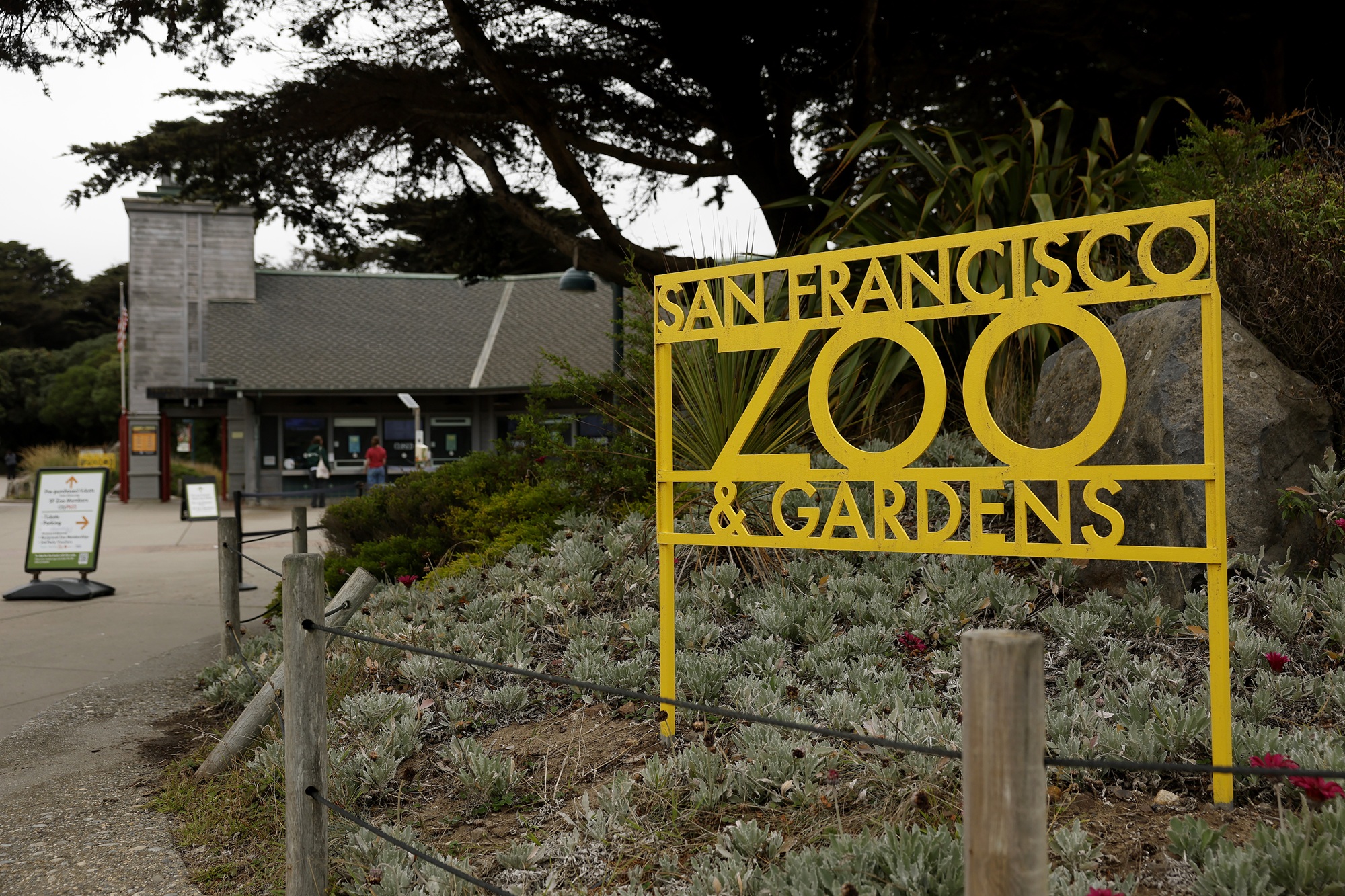
"caption": "A view of zoo signage at the San Francisco Zoo on July 22, 2025, in San Francisco, California.",
"credit": "Justin Sullivan/Getty Images",
"altTag": null,
"description": null,
"imgSizes": {
"thumbnail": {
"file": "https://cdn.kqed.org/wp-content/uploads/sites/10/2026/05/SFZooGetty-160x107.jpg",
"width": 160,
"height": 107,
"mimeType": "image/jpeg"
},
"1536x1536": {
"file": "https://cdn.kqed.org/wp-content/uploads/sites/10/2026/05/SFZooGetty-1536x1024.jpg",
"width": 1536,
"height": 1024,
"mimeType": "image/jpeg"
},
"post-thumbnail": {
"file": "https://cdn.kqed.org/wp-content/uploads/sites/10/2026/05/SFZooGetty-672x372.jpg",
"width": 672,
"height": 372,
"mimeType": "image/jpeg"
},
"twentyfourteen-full-width": {
"file": "https://cdn.kqed.org/wp-content/uploads/sites/10/2026/05/SFZooGetty-1038x576.jpg",
"width": 1038,
"height": 576,
"mimeType": "image/jpeg"
},
"npr-cds-wide": {
"file": "https://cdn.kqed.org/wp-content/uploads/sites/10/2026/05/SFZooGetty-1200x675.jpg",
"width": 1200,
"height": 675,
"mimeType": "image/jpeg"
},
"npr-cds-square": {
"file": "https://cdn.kqed.org/wp-content/uploads/sites/10/2026/05/SFZooGetty-600x600.jpg",
"width": 600,
"height": 600,
"mimeType": "image/jpeg"
},
"kqedFullSize": {
"file": "https://cdn.kqed.org/wp-content/uploads/sites/10/2026/05/SFZooGetty.jpg",
"width": 2000,
"height": 1333
}
},
"isLoading": false,
"fetchFailed": false
},
"news_11097463": {
"type": "attachments",
"id": "news_11097463",
"meta": {
"index": "attachments_1716263798",
"site": "news",
"id": "11097463",
"found": true
},
"title": "CigaretteButts",
"publishDate": 1474494079,
"status": "inherit",
"parent": 11097450,
"modified": 1779121607,
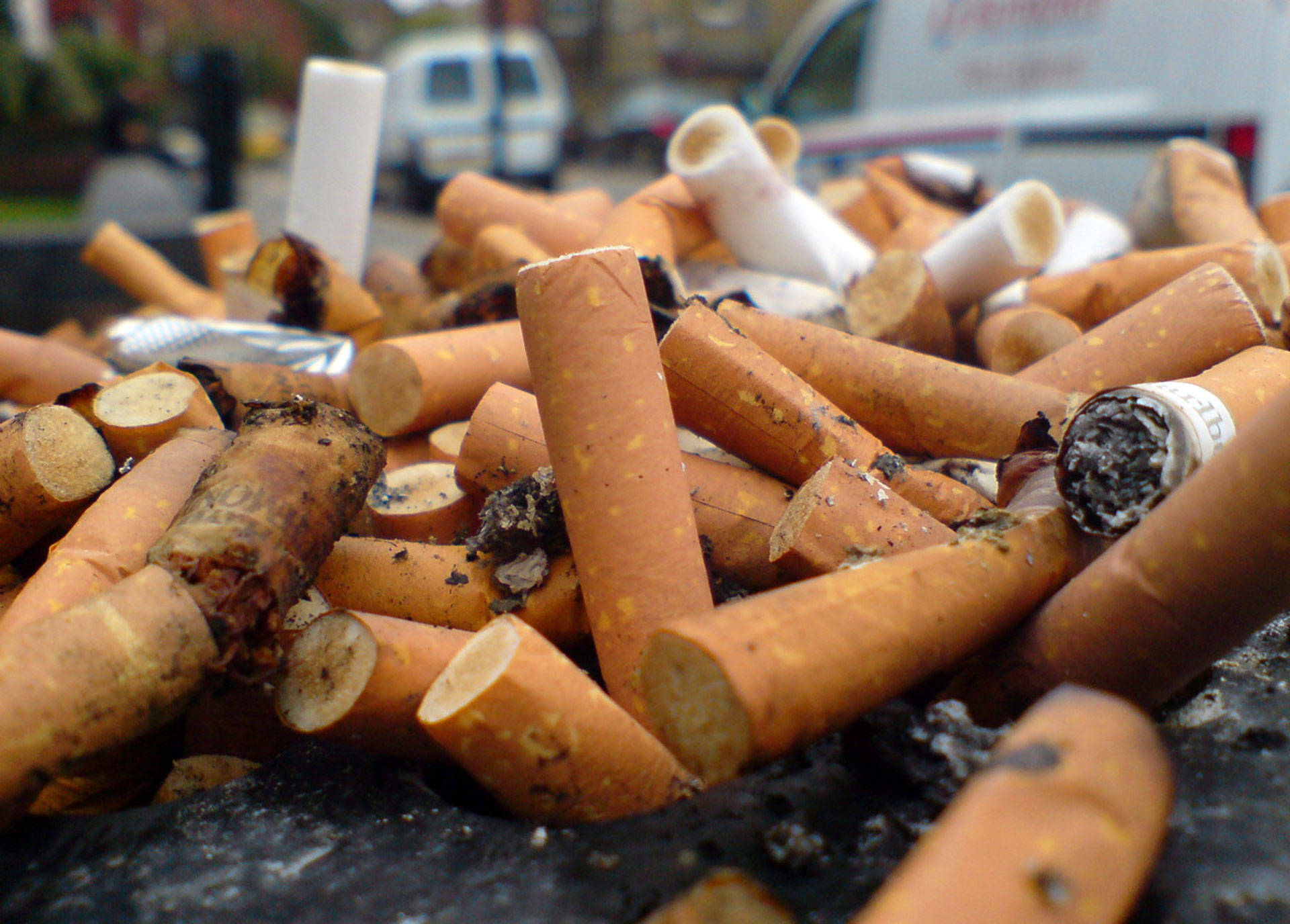
"caption": "A pile of cigarette stubs.",
"credit": "clyde tombaugh/Flickr",
"altTag": "Cigarette butts",
"description": "Backers of Proposition 56 hope to hit people hard enough in the wallet that they quit smoking.",
"imgSizes": {
"thumbnail": {
"file": "https://cdn.kqed.org/wp-content/uploads/sites/10/2016/09/CigaretteButts-400x287.jpg",
"width": 400,
"height": 287,
"mimeType": "image/jpeg"
},
"medium": {
"file": "https://cdn.kqed.org/wp-content/uploads/sites/10/2016/09/CigaretteButts-800x573.jpg",
"width": 800,
"height": 573,
"mimeType": "image/jpeg"
},
"large": {
"file": "https://cdn.kqed.org/wp-content/uploads/sites/10/2016/09/CigaretteButts-1920x1376.jpg",
"width": 1920,
"height": 1376,
"mimeType": "image/jpeg"
},
"fd-lrg": {
"file": "https://cdn.kqed.org/wp-content/uploads/sites/10/2016/09/CigaretteButts-1920x1376.jpg",
"width": 1920,
"height": 1376,
"mimeType": "image/jpeg"
},
"fd-med": {
"file": "https://cdn.kqed.org/wp-content/uploads/sites/10/2016/09/CigaretteButts-1180x846.jpg",
"width": 1180,
"height": 846,
"mimeType": "image/jpeg"
},
"fd-sm": {
"file": "https://cdn.kqed.org/wp-content/uploads/sites/10/2016/09/CigaretteButts-960x688.jpg",
"width": 960,
"height": 688,
"mimeType": "image/jpeg"
},
"post-thumbnail": {
"file": "https://cdn.kqed.org/wp-content/uploads/sites/10/2016/09/CigaretteButts-672x372.jpg",
"width": 672,
"height": 372,
"mimeType": "image/jpeg"
},
"twentyfourteen-full-width": {
"file": "https://cdn.kqed.org/wp-content/uploads/sites/10/2016/09/CigaretteButts-1038x576.jpg",
"width": 1038,
"height": 576,
"mimeType": "image/jpeg"
},
"guest-author-32": {
"file": "https://cdn.kqed.org/wp-content/uploads/sites/10/2016/09/CigaretteButts-32x32.jpg",
"width": 32,
"height": 32,
"mimeType": "image/jpeg"
},
"guest-author-50": {
"file": "https://cdn.kqed.org/wp-content/uploads/sites/10/2016/09/CigaretteButts-50x50.jpg",
"width": 50,
"height": 50,
"mimeType": "image/jpeg"
},
"guest-author-64": {
"file": "https://cdn.kqed.org/wp-content/uploads/sites/10/2016/09/CigaretteButts-64x64.jpg",
"width": 64,
"height": 64,
"mimeType": "image/jpeg"
},
"guest-author-96": {
"file": "https://cdn.kqed.org/wp-content/uploads/sites/10/2016/09/CigaretteButts-96x96.jpg",
"width": 96,
"height": 96,
"mimeType": "image/jpeg"
},
"guest-author-128": {
"file": "https://cdn.kqed.org/wp-content/uploads/sites/10/2016/09/CigaretteButts-128x128.jpg",
"width": 128,
"height": 128,
"mimeType": "image/jpeg"
},
"detail": {
"file": "https://cdn.kqed.org/wp-content/uploads/sites/10/2016/09/CigaretteButts-150x150.jpg",
"width": 150,
"height": 150,
"mimeType": "image/jpeg"
},
"jmtc-small-thumb": {
"file": "https://cdn.kqed.org/wp-content/uploads/sites/10/2016/09/CigaretteButts-280x150.jpg",
"width": 280,
"height": 150,
"mimeType": "image/jpeg"
},
"kqedFullSize": {
"file": "https://cdn.kqed.org/wp-content/uploads/sites/10/2016/09/CigaretteButts.jpg",
"width": 1920,
"height": 1376
}
},
"isLoading": false,
"fetchFailed": false
},
"news_12083968": {
"type": "attachments",
"id": "news_12083968",
"meta": {
"index": "attachments_1716263798",
"site": "news",
"id": "12083968",
"found": true
},
"title": "China Hassan (left) and Devin Hassan (right) having coffee and a cigarette at the Revolution, an outdoor club and cafe in the mission in San Francisco, Ca., on Tuesday, March 9, 2010. The San Francisco Board of Supervisors is set to approve a plan that w",
"publishDate": 1778875835,
"status": "inherit",
"parent": 12083893,
"modified": 1778891213,
"caption": "China Hassan (left) and Devin Hassan (right) having coffee and a cigarette at the Revolution, an outdoor club and cafe in the Mission in San Francisco, California, on March 9, 2010. The San Francisco Board of Supervisors is set to approve a plan that would extend smoking bans to outside public spaces.",
"credit": "Liz Hafalia/The San Francisco Chronicle via Getty Images",
"altTag": null,
"description": null,
"imgSizes": {
"thumbnail": {
"file": "https://cdn.kqed.org/wp-content/uploads/sites/10/2026/05/SFSmokingGetty-160x107.jpg",
"width": 160,
"height": 107,
"mimeType": "image/jpeg"
},
"1536x1536": {
"file": "https://cdn.kqed.org/wp-content/uploads/sites/10/2026/05/SFSmokingGetty-1536x1024.jpg",
"width": 1536,
"height": 1024,
"mimeType": "image/jpeg"
},
"post-thumbnail": {
"file": "https://cdn.kqed.org/wp-content/uploads/sites/10/2026/05/SFSmokingGetty-672x372.jpg",
"width": 672,
"height": 372,
"mimeType": "image/jpeg"
},
"twentyfourteen-full-width": {
"file": "https://cdn.kqed.org/wp-content/uploads/sites/10/2026/05/SFSmokingGetty-1038x576.jpg",
"width": 1038,
"height": 576,
"mimeType": "image/jpeg"
},
"npr-cds-wide": {
"file": "https://cdn.kqed.org/wp-content/uploads/sites/10/2026/05/SFSmokingGetty-1200x675.jpg",
"width": 1200,
"height": 675,
"mimeType": "image/jpeg"
},
"npr-cds-square": {
"file": "https://cdn.kqed.org/wp-content/uploads/sites/10/2026/05/SFSmokingGetty-600x600.jpg",
"width": 600,
"height": 600,
"mimeType": "image/jpeg"
},
"kqedFullSize": {
"file": "https://cdn.kqed.org/wp-content/uploads/sites/10/2026/05/SFSmokingGetty.jpg",
"width": 2000,
"height": 1333
}
},
"isLoading": false,
"fetchFailed": false
},
"news_11962972": {
"type": "attachments",
"id": "news_11962972",
"meta": {
"index": "attachments_1716263798",
"site": "news",
"id": "11962972",
"found": true
},
"title": "Planes at San Francisco International Airport (SFO)",
"publishDate": 1696036126,
"status": "inherit",
"parent": 11962810,
"modified": 1781817413,
"caption": "A JetBlue passenger plane takes off from San Francisco International Airport in San Francisco, California, on June 21, 2023.",
"credit": "Tayfun Coskun/Anadolu Agency via Getty Images",
"altTag": "A passenger jet with JETBLUE on the side takes off from a runway.",
"description": null,
"imgSizes": {
"medium": {
"file": "https://cdn.kqed.org/wp-content/uploads/sites/10/2023/09/GettyImages-1258924953-qut-800x533.jpg",
"width": 800,
"height": 533,
"mimeType": "image/jpeg"
},
"large": {
"file": "https://cdn.kqed.org/wp-content/uploads/sites/10/2023/09/GettyImages-1258924953-qut-1020x680.jpg",
"width": 1020,
"height": 680,
"mimeType": "image/jpeg"
},
"thumbnail": {
"file": "https://cdn.kqed.org/wp-content/uploads/sites/10/2023/09/GettyImages-1258924953-qut-160x107.jpg",
"width": 160,
"height": 107,
"mimeType": "image/jpeg"
},
"1536x1536": {
"file": "https://cdn.kqed.org/wp-content/uploads/sites/10/2023/09/GettyImages-1258924953-qut-1536x1024.jpg",
"width": 1536,
"height": 1024,
"mimeType": "image/jpeg"
},
"post-thumbnail": {
"file": "https://cdn.kqed.org/wp-content/uploads/sites/10/2023/09/GettyImages-1258924953-qut-672x372.jpg",
"width": 672,
"height": 372,
"mimeType": "image/jpeg"
},
"twentyfourteen-full-width": {
"file": "https://cdn.kqed.org/wp-content/uploads/sites/10/2023/09/GettyImages-1258924953-qut-1038x576.jpg",
"width": 1038,
"height": 576,
"mimeType": "image/jpeg"
},
"kqedFullSize": {
"file": "https://cdn.kqed.org/wp-content/uploads/sites/10/2023/09/GettyImages-1258924953-qut.jpg",
"width": 1920,
"height": 1280
}
},
"isLoading": false,
"fetchFailed": false
},
"news_12063854": {
"type": "attachments",
"id": "news_12063854",
"meta": {
"index": "attachments_1716263798",
"site": "news",
"id": "12063854",
"found": true
},
"title": "Immigration Commentator Detained",
"publishDate": 1762977194,
"status": "inherit",
"parent": 12063851,
"modified": 1762977232,
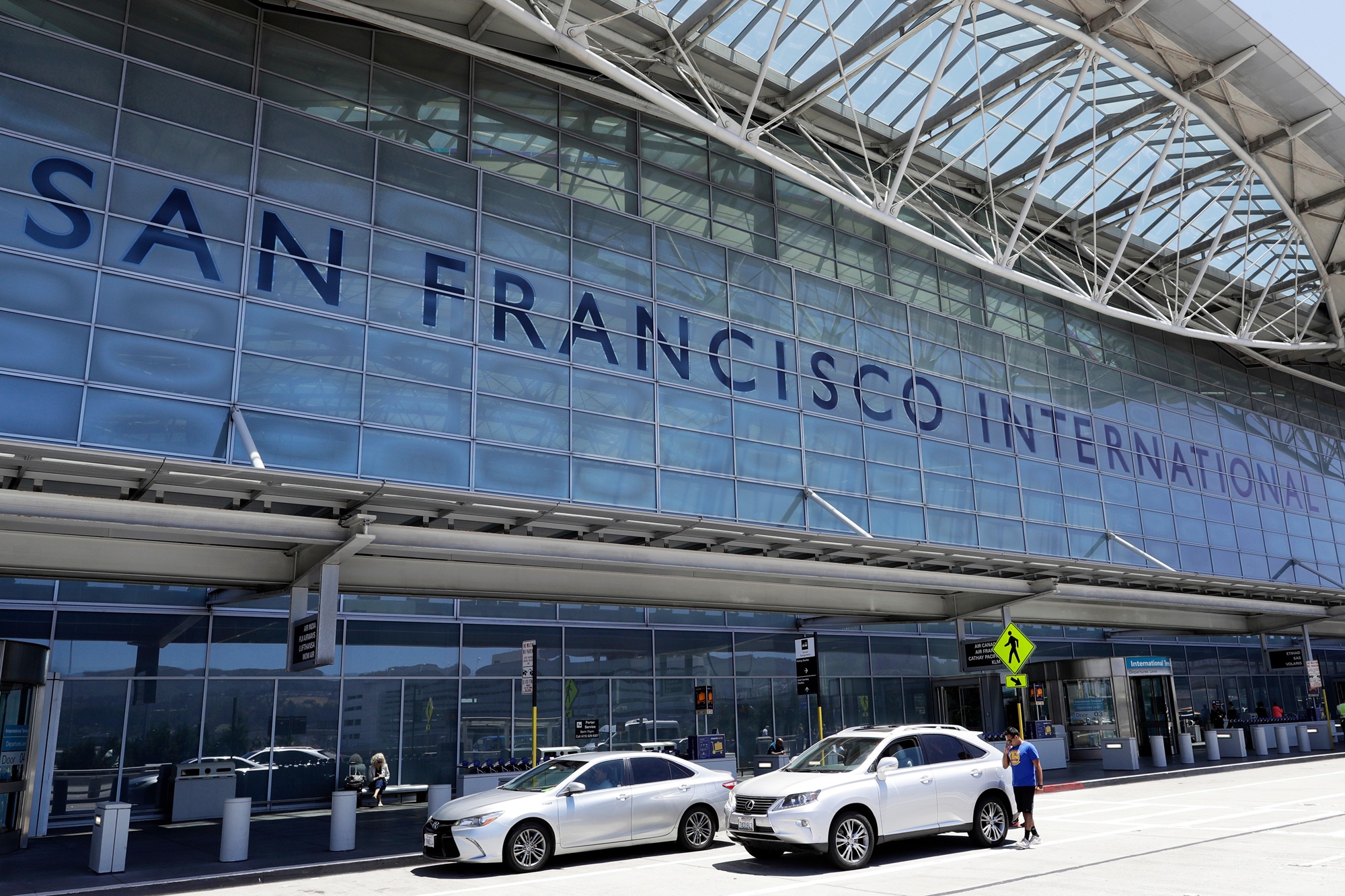
"caption": "Vehicles wait outside the international terminal at San Francisco International Airport in San Francisco, California, on July 11, 2017. ",
"credit": "Marcio Jose Sanchez/AP Photo",
"altTag": null,
"description": null,
"imgSizes": {
"thumbnail": {
"file": "https://cdn.kqed.org/wp-content/uploads/sites/10/2025/11/SFInternationalAirportAP-160x107.jpg",
"width": 160,
"height": 107,
"mimeType": "image/jpeg"
},
"1536x1536": {
"file": "https://cdn.kqed.org/wp-content/uploads/sites/10/2025/11/SFInternationalAirportAP-1536x1024.jpg",
"width": 1536,
"height": 1024,
"mimeType": "image/jpeg"
},
"post-thumbnail": {
"file": "https://cdn.kqed.org/wp-content/uploads/sites/10/2025/11/SFInternationalAirportAP-672x372.jpg",
"width": 672,
"height": 372,
"mimeType": "image/jpeg"
},
"twentyfourteen-full-width": {
"file": "https://cdn.kqed.org/wp-content/uploads/sites/10/2025/11/SFInternationalAirportAP-1038x576.jpg",
"width": 1038,
"height": 576,
"mimeType": "image/jpeg"
},
"npr-cds-wide": {
"file": "https://cdn.kqed.org/wp-content/uploads/sites/10/2025/11/SFInternationalAirportAP-1200x675.jpg",
"width": 1200,
"height": 675,
"mimeType": "image/jpeg"
},
"kqedFullSize": {
"file": "https://cdn.kqed.org/wp-content/uploads/sites/10/2025/11/SFInternationalAirportAP.jpg",
"width": 2000,
"height": 1333
}
},
"isLoading": false,
"fetchFailed": false
},
"news_11794881": {
"type": "attachments",
"id": "news_11794881",
"meta": {
"index": "attachments_1716263798",
"site": "news",
"id": "11794881",
"found": true
},
"parent": 11794871,
"imgSizes": {
"apple_news_ca_landscape_5_5": {
"file": "https://ww2.kqed.org/app/uploads/sites/10/2020/01/marketstreetscooter-1044x783.jpg",
"width": 1044,
"mimeType": "image/jpeg",
"height": 783
},
"apple_news_ca_square_4_0": {
"file": "https://ww2.kqed.org/app/uploads/sites/10/2020/01/marketstreetscooter-470x470.jpg",
"width": 470,
"mimeType": "image/jpeg",
"height": 470
},
"twentyfourteen-full-width": {
"file": "https://ww2.kqed.org/app/uploads/sites/10/2020/01/marketstreetscooter-1038x576.jpg",
"width": 1038,
"mimeType": "image/jpeg",
"height": 576
},
"thumbnail": {
"file": "https://ww2.kqed.org/app/uploads/sites/10/2020/01/marketstreetscooter-160x105.jpg",
"width": 160,
"mimeType": "image/jpeg",
"height": 105
},
"post-thumbnail": {
"file": "https://ww2.kqed.org/app/uploads/sites/10/2020/01/marketstreetscooter-672x372.jpg",
"width": 672,
"mimeType": "image/jpeg",
"height": 372
},
"kqedFullSize": {
"file": "https://ww2.kqed.org/app/uploads/sites/10/2020/01/marketstreetscooter.jpg",
"width": 1920,
"height": 1260
},
"apple_news_ca_landscape_4_7": {
"file": "https://ww2.kqed.org/app/uploads/sites/10/2020/01/marketstreetscooter-632x474.jpg",
"width": 632,
"mimeType": "image/jpeg",
"height": 474
},
"large": {
"file": "https://ww2.kqed.org/app/uploads/sites/10/2020/01/marketstreetscooter-1020x669.jpg",
"width": 1020,
"mimeType": "image/jpeg",
"height": 669
},
"complete_open_graph": {
"file": "https://ww2.kqed.org/app/uploads/sites/10/2020/01/marketstreetscooter-1200x788.jpg",
"width": 1200,
"mimeType": "image/jpeg",
"height": 788
},
"apple_news_ca_landscape_4_0": {
"file": "https://ww2.kqed.org/app/uploads/sites/10/2020/01/marketstreetscooter-536x402.jpg",
"width": 536,
"mimeType": "image/jpeg",
"height": 402
},
"apple_news_ca_portrait_12_9": {
"file": "https://ww2.kqed.org/app/uploads/sites/10/2020/01/marketstreetscooter-1122x1260.jpg",
"width": 1122,
"mimeType": "image/jpeg",
"height": 1260
},
"medium": {
"file": "https://ww2.kqed.org/app/uploads/sites/10/2020/01/marketstreetscooter-800x525.jpg",
"width": 800,
"mimeType": "image/jpeg",
"height": 525
},
"apple_news_ca_portrait_4_0": {
"file": "https://ww2.kqed.org/app/uploads/sites/10/2020/01/marketstreetscooter-354x472.jpg",
"width": 354,
"mimeType": "image/jpeg",
"height": 472
},
"apple_news_ca_portrait_9_7": {
"file": "https://ww2.kqed.org/app/uploads/sites/10/2020/01/marketstreetscooter-840x1120.jpg",
"width": 840,
"mimeType": "image/jpeg",
"height": 1120
},
"apple_news_ca_landscape_12_9": {
"file": "https://ww2.kqed.org/app/uploads/sites/10/2020/01/marketstreetscooter-1832x1260.jpg",
"width": 1832,
"mimeType": "image/jpeg",
"height": 1260
},
"apple_news_ca_square_9_7": {
"file": "https://ww2.kqed.org/app/uploads/sites/10/2020/01/marketstreetscooter-1104x1104.jpg",
"width": 1104,
"mimeType": "image/jpeg",
"height": 1104
},
"apple_news_ca_portrait_4_7": {
"file": "https://ww2.kqed.org/app/uploads/sites/10/2020/01/marketstreetscooter-414x552.jpg",
"width": 414,
"mimeType": "image/jpeg",
"height": 552
},
"apple_news_ca_square_12_9": {
"file": "https://ww2.kqed.org/app/uploads/sites/10/2020/01/marketstreetscooter-1472x1260.jpg",
"width": 1472,
"mimeType": "image/jpeg",
"height": 1260
},
"apple_news_ca_portrait_5_5": {
"file": "https://ww2.kqed.org/app/uploads/sites/10/2020/01/marketstreetscooter-687x916.jpg",
"width": 687,
"mimeType": "image/jpeg",
"height": 916
},
"full-width": {
"file": "https://ww2.kqed.org/app/uploads/sites/10/2020/01/marketstreetscooter-1920x1260.jpg",
"width": 1920,
"mimeType": "image/jpeg",
"height": 1260
},
"apple_news_ca_square_4_7": {
"file": "https://ww2.kqed.org/app/uploads/sites/10/2020/01/marketstreetscooter-550x550.jpg",
"width": 550,
"mimeType": "image/jpeg",
"height": 550
},
"apple_news_ca_landscape_9_7": {
"file": "https://ww2.kqed.org/app/uploads/sites/10/2020/01/marketstreetscooter-1376x1032.jpg",
"width": 1376,
"mimeType": "image/jpeg",
"height": 1032
},
"apple_news_ca_square_5_5": {
"file": "https://ww2.kqed.org/app/uploads/sites/10/2020/01/marketstreetscooter-912x912.jpg",
"width": 912,
"mimeType": "image/jpeg",
"height": 912
}
},
"publishDate": 1578525711,
"modified": 1578525845,
"caption": "An e-scooter rider on San Francisco's Market Street in April 2018, soon after the mini-vehicles were first deployed in the city.",
"description": null,
"title": "E-scooters-San Francisco",
"credit": "Justin Sullivan/Getty Images",
"status": "inherit",
"isLoading": false,
"fetchFailed": false
},
"news_12024435": {
"type": "attachments",
"id": "news_12024435",
"meta": {
"index": "attachments_1716263798",
"site": "news",
"id": "12024435",
"found": true
},
"title": "250128-SFImmigration-30-BL",
"publishDate": 1738105128,
"status": "inherit",
"parent": 12028703,
"modified": 1740618033,
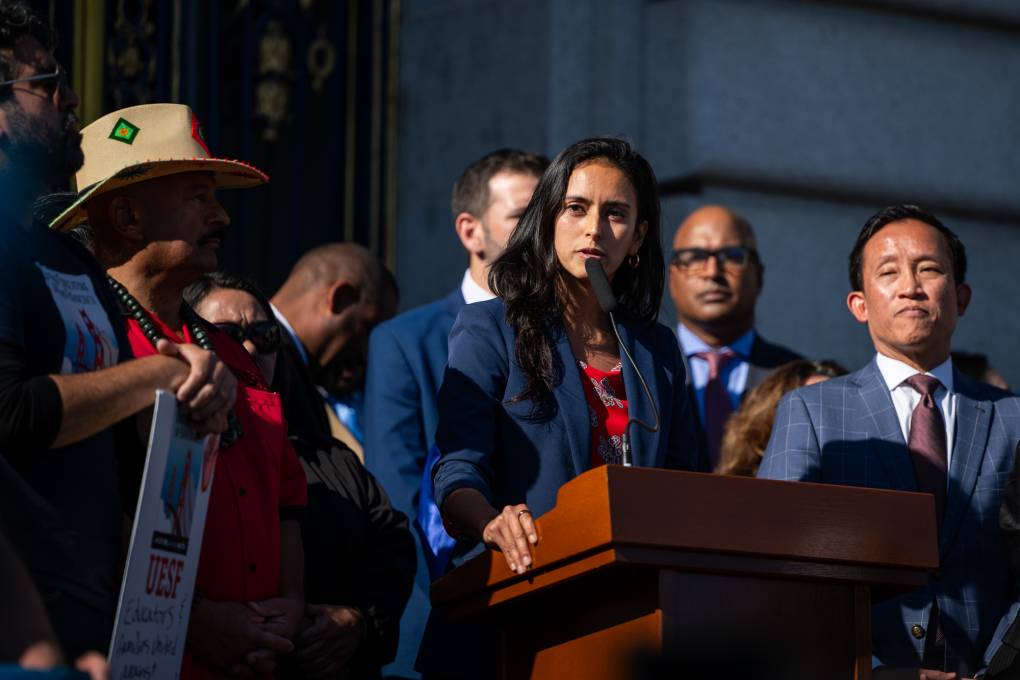
"caption": "San Francisco Supervisor Jackie Fielder speaks during a press conference with elected and public safety officials and labor leaders in front of City Hall in San Francisco on Tuesday, Jan. 28, 2025, to reaffirm San Francisco’s commitment to being a Sanctuary City.",
"credit": "Beth LaBerge/KQED",
"altTag": null,
"description": null,
"imgSizes": {
"medium": {
"file": "https://cdn.kqed.org/wp-content/uploads/sites/10/2025/01/250128-SFImmigration-30-BL-800x533.jpg",
"width": 800,
"height": 533,
"mimeType": "image/jpeg"
},
"large": {
"file": "https://cdn.kqed.org/wp-content/uploads/sites/10/2025/01/250128-SFImmigration-30-BL-1020x680.jpg",
"width": 1020,
"height": 680,
"mimeType": "image/jpeg"
},
"thumbnail": {
"file": "https://cdn.kqed.org/wp-content/uploads/sites/10/2025/01/250128-SFImmigration-30-BL-160x107.jpg",
"width": 160,
"height": 107,
"mimeType": "image/jpeg"
},
"1536x1536": {
"file": "https://cdn.kqed.org/wp-content/uploads/sites/10/2025/01/250128-SFImmigration-30-BL-1536x1024.jpg",
"width": 1536,
"height": 1024,
"mimeType": "image/jpeg"
},
"post-thumbnail": {
"file": "https://cdn.kqed.org/wp-content/uploads/sites/10/2025/01/250128-SFImmigration-30-BL-672x372.jpg",
"width": 672,
"height": 372,
"mimeType": "image/jpeg"
},
"twentyfourteen-full-width": {
"file": "https://cdn.kqed.org/wp-content/uploads/sites/10/2025/01/250128-SFImmigration-30-BL-1038x576.jpg",
"width": 1038,
"height": 576,
"mimeType": "image/jpeg"
},
"full-width": {
"file": "https://cdn.kqed.org/wp-content/uploads/sites/10/2025/01/250128-SFImmigration-30-BL-1920x1280.jpg",
"width": 1920,
"height": 1280,
"mimeType": "image/jpeg"
},
"kqedFullSize": {
"file": "https://cdn.kqed.org/wp-content/uploads/sites/10/2025/01/250128-SFImmigration-30-BL.jpg",
"width": 2000,
"height": 1333
}
},
"isLoading": false,
"fetchFailed": false
},
"news_12073370": {
"type": "attachments",
"id": "news_12073370",
"meta": {
"index": "attachments_1716263798",
"site": "news",
"id": "12073370",
"found": true
},
"title": "250519-AffordableHousingFile-04-BL_qed",
"publishDate": 1770935618,
"status": "inherit",
"parent": 12073193,
"modified": 1772759203,
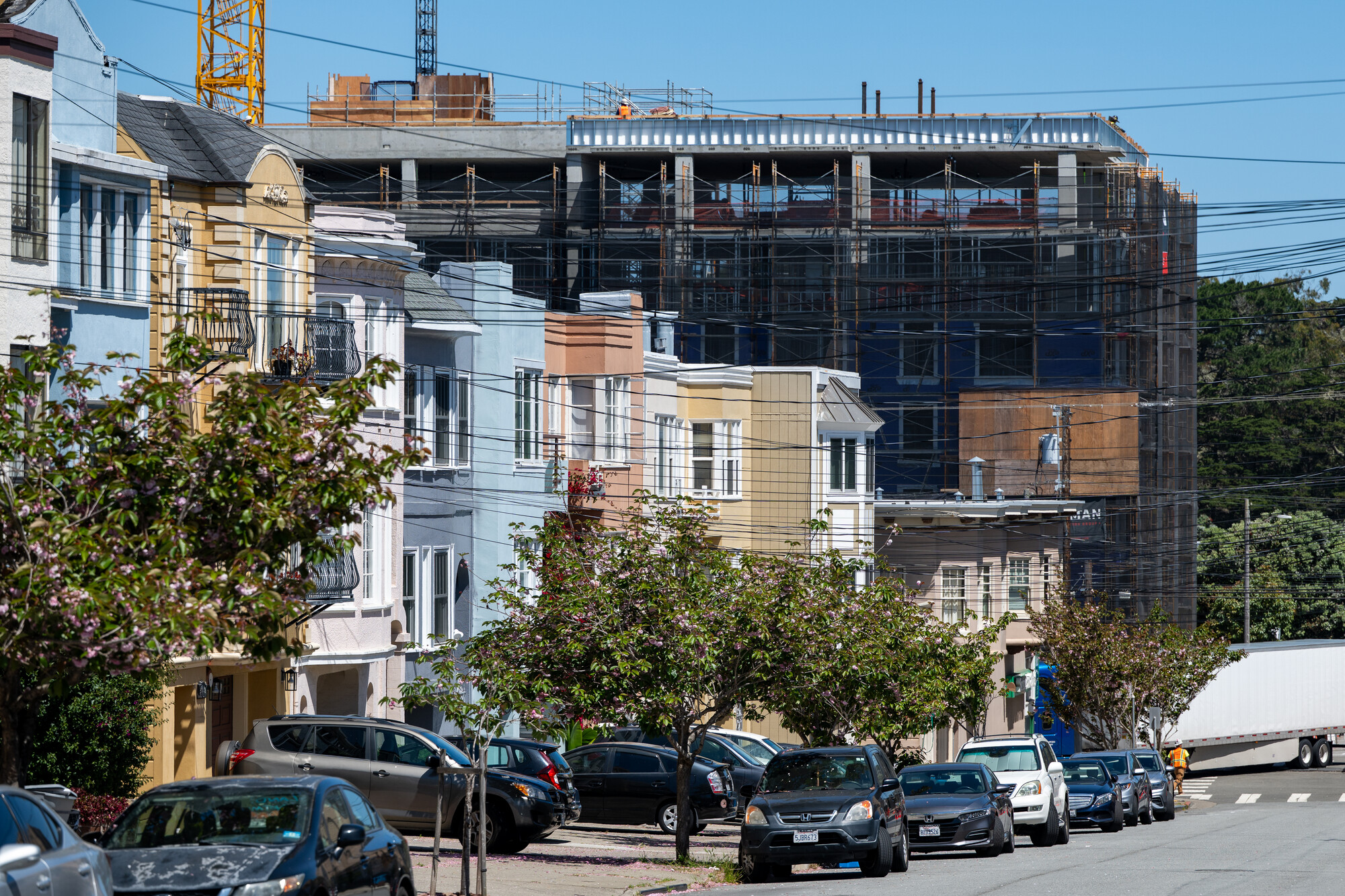
"caption": "Construction is underway on an affordable housing apartment building at 2550 Irving St. in San Francisco’s Sunset District on May 19, 2025.",
"credit": "Beth LaBerge/KQED",
"altTag": null,
"description": null,
"imgSizes": {
"thumbnail": {
"file": "https://cdn.kqed.org/wp-content/uploads/sites/10/2026/02/250519-AffordableHousingFile-04-BL_qed-160x107.jpg",
"width": 160,
"height": 107,
"mimeType": "image/jpeg"
},
"1536x1536": {
"file": "https://cdn.kqed.org/wp-content/uploads/sites/10/2026/02/250519-AffordableHousingFile-04-BL_qed-1536x1024.jpg",
"width": 1536,
"height": 1024,
"mimeType": "image/jpeg"
},
"post-thumbnail": {
"file": "https://cdn.kqed.org/wp-content/uploads/sites/10/2026/02/250519-AffordableHousingFile-04-BL_qed-672x372.jpg",
"width": 672,
"height": 372,
"mimeType": "image/jpeg"
},
"twentyfourteen-full-width": {
"file": "https://cdn.kqed.org/wp-content/uploads/sites/10/2026/02/250519-AffordableHousingFile-04-BL_qed-1038x576.jpg",
"width": 1038,
"height": 576,
"mimeType": "image/jpeg"
},
"npr-cds-wide": {
"file": "https://cdn.kqed.org/wp-content/uploads/sites/10/2026/02/250519-AffordableHousingFile-04-BL_qed-1200x675.jpg",
"width": 1200,
"height": 675,
"mimeType": "image/jpeg"
},
"kqedFullSize": {
"file": "https://cdn.kqed.org/wp-content/uploads/sites/10/2026/02/250519-AffordableHousingFile-04-BL_qed.jpg",
"width": 2000,
"height": 1333
}
},
"isLoading": false,
"fetchFailed": false
},
"news_12075117": {
"type": "attachments",
"id": "news_12075117",
"meta": {
"index": "attachments_1716263798",
"site": "news",
"id": "12075117",
"found": true
},
"title": "260302-WAYMOOUTAGEREPORT-23-BL-KQED",
"publishDate": 1772497069,
"status": "inherit",
"parent": 0,
"modified": 1772497101,
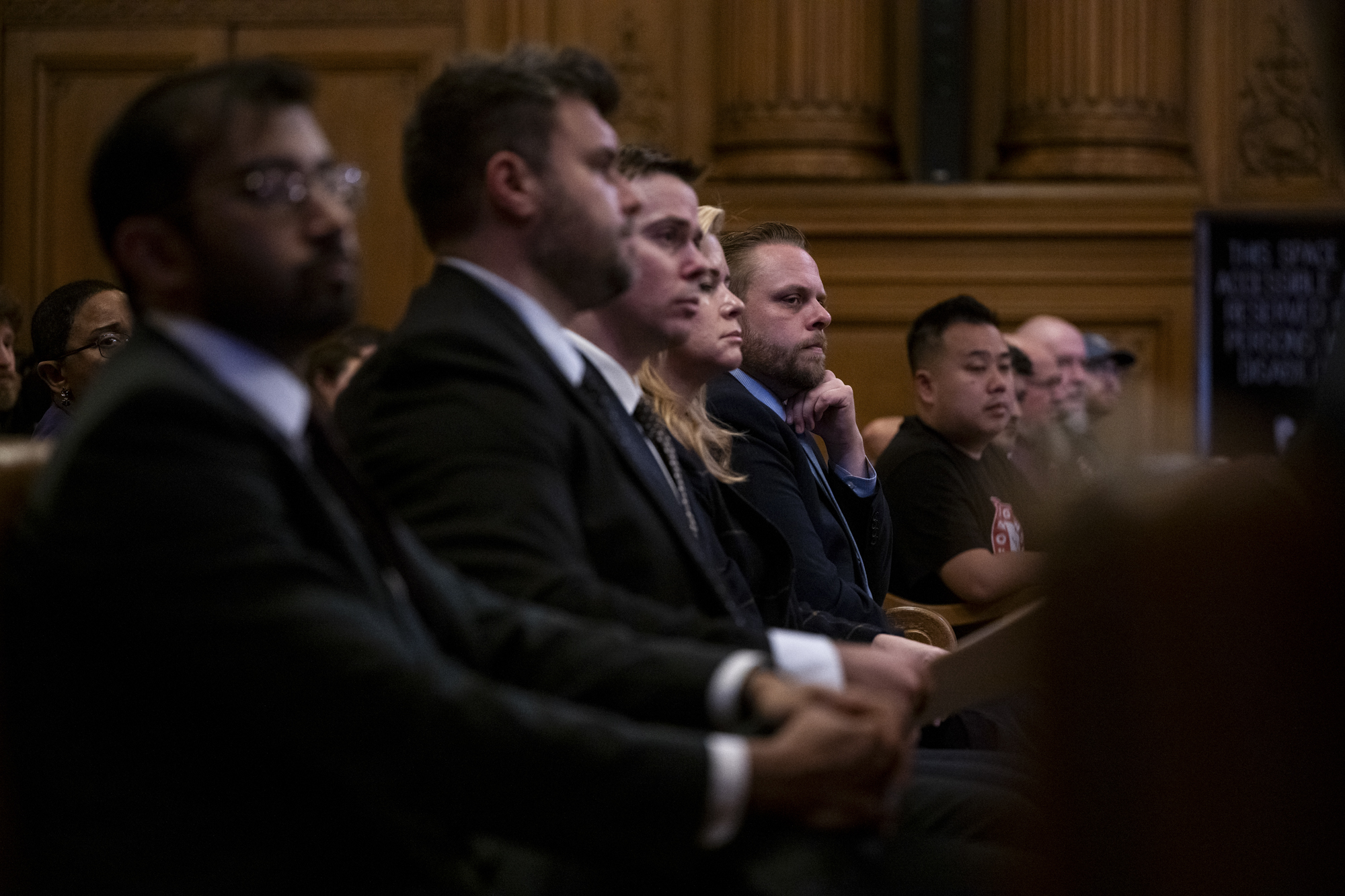
"caption": "Waymo representatives wait to speak during a Board of Supervisors hearing on Waymo’s emergency operations at City Hall in San Francisco on March 2, 2026. A December power outage left Waymo’s autonomous vehicles stalled on city streets.",
"credit": "Beth LaBerge/KQED",
"altTag": null,
"description": null,
"imgSizes": {
"thumbnail": {
"file": "https://cdn.kqed.org/wp-content/uploads/sites/10/2026/03/260302-WAYMOOUTAGEREPORT-23-BL-KQED-160x107.jpg",
"width": 160,
"height": 107,
"mimeType": "image/jpeg"
},
"1536x1536": {
"file": "https://cdn.kqed.org/wp-content/uploads/sites/10/2026/03/260302-WAYMOOUTAGEREPORT-23-BL-KQED-1536x1024.jpg",
"width": 1536,
"height": 1024,
"mimeType": "image/jpeg"
},
"post-thumbnail": {
"file": "https://cdn.kqed.org/wp-content/uploads/sites/10/2026/03/260302-WAYMOOUTAGEREPORT-23-BL-KQED-672x372.jpg",
"width": 672,
"height": 372,
"mimeType": "image/jpeg"
},
"twentyfourteen-full-width": {
"file": "https://cdn.kqed.org/wp-content/uploads/sites/10/2026/03/260302-WAYMOOUTAGEREPORT-23-BL-KQED-1038x576.jpg",
"width": 1038,
"height": 576,
"mimeType": "image/jpeg"
},
"npr-cds-wide": {
"file": "https://cdn.kqed.org/wp-content/uploads/sites/10/2026/03/260302-WAYMOOUTAGEREPORT-23-BL-KQED-1200x675.jpg",
"width": 1200,
"height": 675,
"mimeType": "image/jpeg"
},
"kqedFullSize": {
"file": "https://cdn.kqed.org/wp-content/uploads/sites/10/2026/03/260302-WAYMOOUTAGEREPORT-23-BL-KQED.jpg",
"width": 2000,
"height": 1333
}
},
"isLoading": false,
"fetchFailed": false
},
"news_12068297": {
"type": "attachments",
"id": "news_12068297",
"meta": {
"index": "attachments_1716263798",
"site": "news",
"id": "12068297",
"found": true
},
"title": "251222-PGEUpdates-24-BL_qed",
"publishDate": 1766442993,
"status": "inherit",
"parent": 0,
"modified": 1770856815,
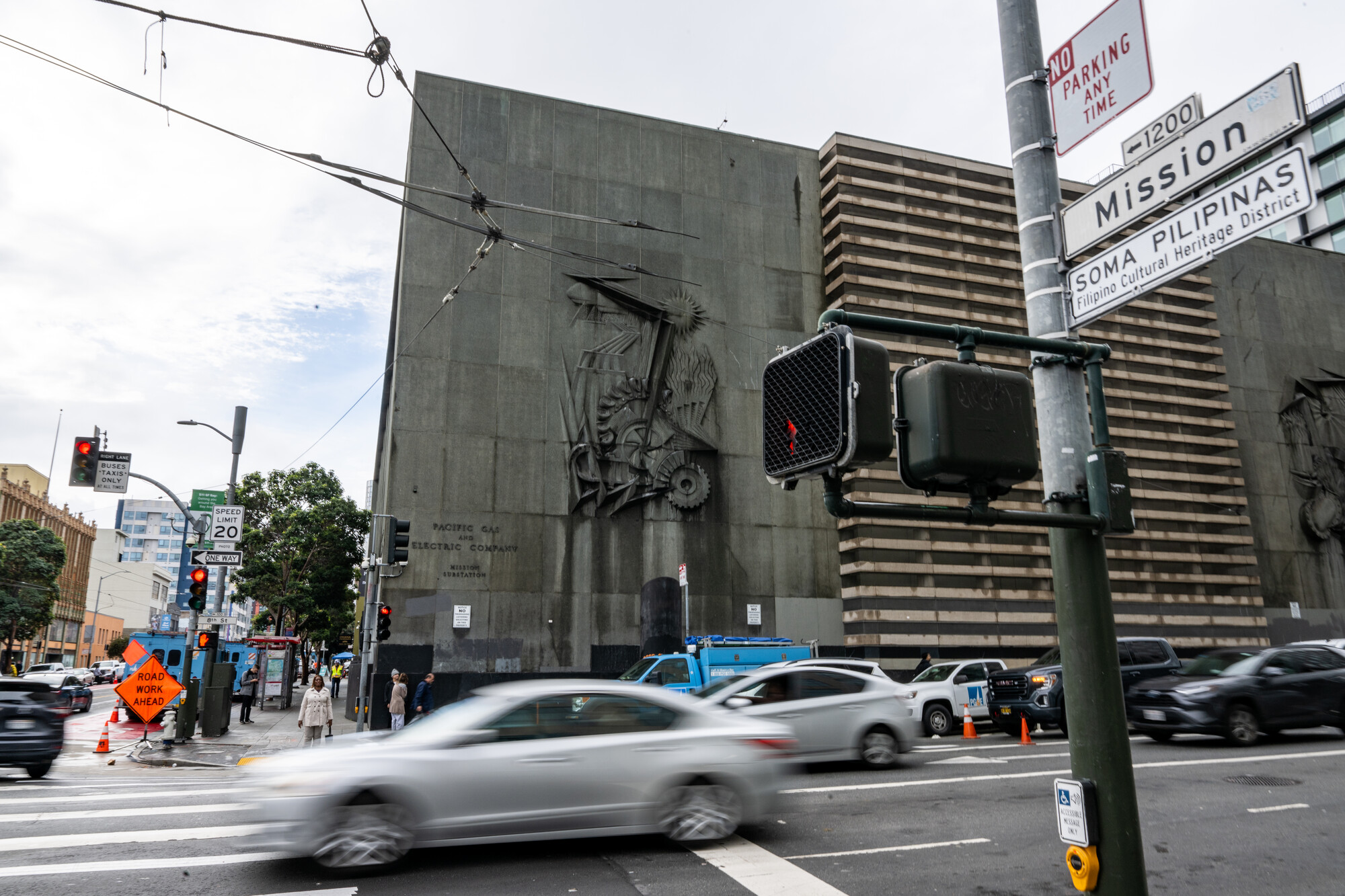
"caption": "A PG&E substation on Mission and Eighth streets in San Francisco on Dec. 22, 2025, after a fire at the site over the weekend contributed to a major citywide power outage.",
"credit": "Beth LaBerge/KQED",
"altTag": null,
"description": null,
"imgSizes": {
"thumbnail": {
"file": "https://cdn.kqed.org/wp-content/uploads/sites/10/2025/12/251222-PGEUpdates-24-BL_qed-160x107.jpg",
"width": 160,
"height": 107,
"mimeType": "image/jpeg"
},
"1536x1536": {
"file": "https://cdn.kqed.org/wp-content/uploads/sites/10/2025/12/251222-PGEUpdates-24-BL_qed-1536x1024.jpg",
"width": 1536,
"height": 1024,
"mimeType": "image/jpeg"
},
"post-thumbnail": {
"file": "https://cdn.kqed.org/wp-content/uploads/sites/10/2025/12/251222-PGEUpdates-24-BL_qed-672x372.jpg",
"width": 672,
"height": 372,
"mimeType": "image/jpeg"
},
"twentyfourteen-full-width": {
"file": "https://cdn.kqed.org/wp-content/uploads/sites/10/2025/12/251222-PGEUpdates-24-BL_qed-1038x576.jpg",
"width": 1038,
"height": 576,
"mimeType": "image/jpeg"
},
"npr-cds-wide": {
"file": "https://cdn.kqed.org/wp-content/uploads/sites/10/2025/12/251222-PGEUpdates-24-BL_qed-1200x675.jpg",
"width": 1200,
"height": 675,
"mimeType": "image/jpeg"
},
"kqedFullSize": {
"file": "https://cdn.kqed.org/wp-content/uploads/sites/10/2025/12/251222-PGEUpdates-24-BL_qed.jpg",
"width": 2000,
"height": 1333
}
},
"isLoading": false,
"fetchFailed": false
},
"news_12033006": {
"type": "attachments",
"id": "news_12033006",
"meta": {
"index": "attachments_1716263798",
"site": "news",
"id": "12033006",
"found": true
},
"title": "250325-APARTMENTSONWESTSIDE-10-BL-KQED",
"publishDate": 1742939679,
"status": "inherit",
"parent": 12033966,
"modified": 1743714415,
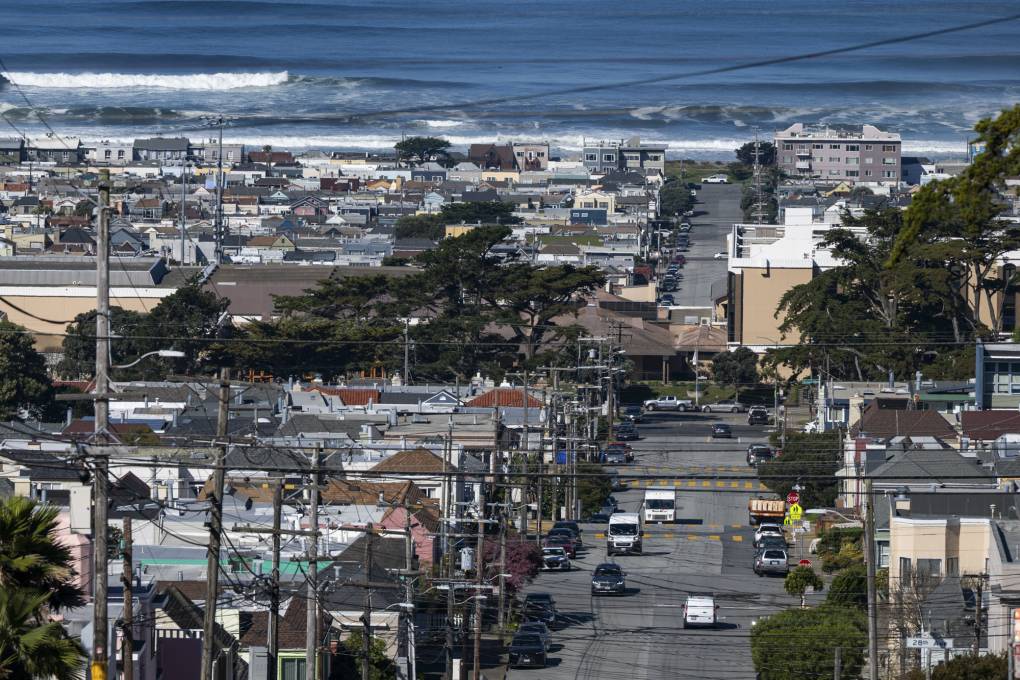
"caption": "A view of the Sunset District and Ocean Beach in San Francisco on March 25, 2025.",
"credit": "Beth LaBerge/KQED",
"altTag": null,
"description": null,
"imgSizes": {
"medium": {
"file": "https://cdn.kqed.org/wp-content/uploads/sites/10/2025/03/250325-APARTMENTSONWESTSIDE-10-BL-KQED-800x533.jpg",
"width": 800,
"height": 533,
"mimeType": "image/jpeg"
},
"large": {
"file": "https://cdn.kqed.org/wp-content/uploads/sites/10/2025/03/250325-APARTMENTSONWESTSIDE-10-BL-KQED-1020x680.jpg",
"width": 1020,
"height": 680,
"mimeType": "image/jpeg"
},
"thumbnail": {
"file": "https://cdn.kqed.org/wp-content/uploads/sites/10/2025/03/250325-APARTMENTSONWESTSIDE-10-BL-KQED-160x107.jpg",
"width": 160,
"height": 107,
"mimeType": "image/jpeg"
},
"1536x1536": {
"file": "https://cdn.kqed.org/wp-content/uploads/sites/10/2025/03/250325-APARTMENTSONWESTSIDE-10-BL-KQED-1536x1024.jpg",
"width": 1536,
"height": 1024,
"mimeType": "image/jpeg"
},
"post-thumbnail": {
"file": "https://cdn.kqed.org/wp-content/uploads/sites/10/2025/03/250325-APARTMENTSONWESTSIDE-10-BL-KQED-672x372.jpg",
"width": 672,
"height": 372,
"mimeType": "image/jpeg"
},
"twentyfourteen-full-width": {
"file": "https://cdn.kqed.org/wp-content/uploads/sites/10/2025/03/250325-APARTMENTSONWESTSIDE-10-BL-KQED-1038x576.jpg",
"width": 1038,
"height": 576,
"mimeType": "image/jpeg"
},
"full-width": {
"file": "https://cdn.kqed.org/wp-content/uploads/sites/10/2025/03/250325-APARTMENTSONWESTSIDE-10-BL-KQED-1920x1280.jpg",
"width": 1920,
"height": 1280,
"mimeType": "image/jpeg"
},
"kqedFullSize": {
"file": "https://cdn.kqed.org/wp-content/uploads/sites/10/2025/03/250325-APARTMENTSONWESTSIDE-10-BL-KQED.jpg",
"width": 2000,
"height": 1333
}
},
"isLoading": false,
"fetchFailed": false
},
"news_12066517": {
"type": "attachments",
"id": "news_12066517",
"meta": {
"index": "attachments_1716263798",
"site": "news",
"id": "12066517",
"found": true
},
"title": "BilalMahmoodKQED1",
"publishDate": 1765323538,
"status": "inherit",
"parent": 12066486,
"modified": 1765323820,
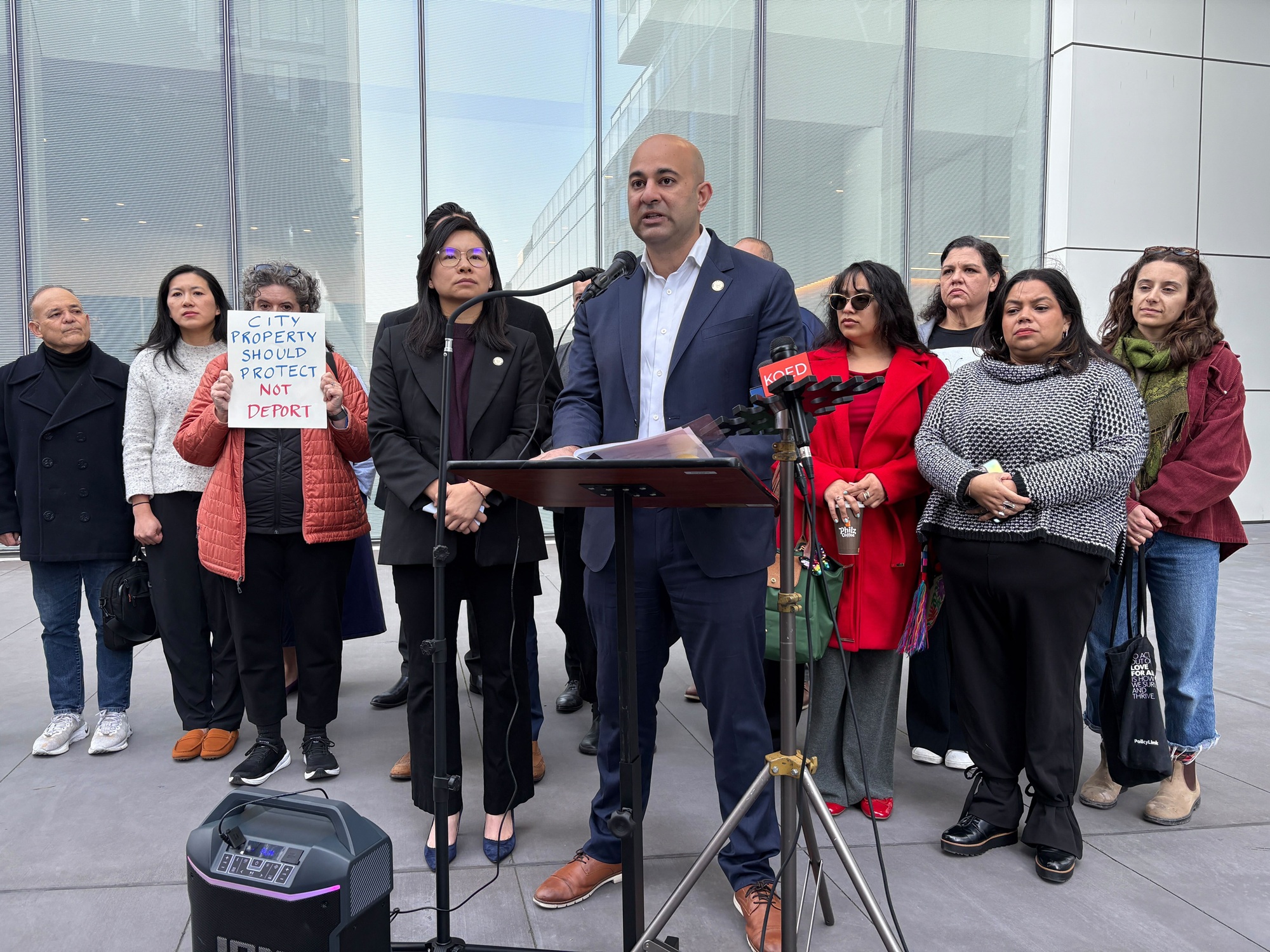
"caption": "Supervisors Bilal Mahmood and Chyanne Chen are proposing to block federal immigration activity from city-owned spaces.",
"credit": "Sydney Johnson/KQED",
"altTag": null,
"description": null,
"imgSizes": {
"thumbnail": {
"file": "https://cdn.kqed.org/wp-content/uploads/sites/10/2025/12/BilalMahmoodKQED1-160x120.jpg",
"width": 160,
"height": 120,
"mimeType": "image/jpeg"
},
"1536x1536": {
"file": "https://cdn.kqed.org/wp-content/uploads/sites/10/2025/12/BilalMahmoodKQED1-1536x1152.jpg",
"width": 1536,
"height": 1152,
"mimeType": "image/jpeg"
},
"post-thumbnail": {
"file": "https://cdn.kqed.org/wp-content/uploads/sites/10/2025/12/BilalMahmoodKQED1-672x372.jpg",
"width": 672,
"height": 372,
"mimeType": "image/jpeg"
},
"twentyfourteen-full-width": {
"file": "https://cdn.kqed.org/wp-content/uploads/sites/10/2025/12/BilalMahmoodKQED1-1038x576.jpg",
"width": 1038,
"height": 576,
"mimeType": "image/jpeg"
},
"npr-cds-wide": {
"file": "https://cdn.kqed.org/wp-content/uploads/sites/10/2025/12/BilalMahmoodKQED1-1200x675.jpg",
"width": 1200,
"height": 675,
"mimeType": "image/jpeg"
},
"kqedFullSize": {
"file": "https://cdn.kqed.org/wp-content/uploads/sites/10/2025/12/BilalMahmoodKQED1.jpg",
"width": 2000,
"height": 1500
}
},
"isLoading": false,
"fetchFailed": false
}
},
"audioPlayerReducer": {
"postId": "stream_live",
"isPaused": true,
"isPlaying": false,
"pfsActive": false,
"pledgeModalIsOpen": true,
"playerDrawerIsOpen": false,
"liveAudioPlayStartedAt": 0,
"liveAudioPlayContext": ""
},
"authorsReducer": {
"ecruzguevarra": {
"type": "authors",
"id": "8654",
"meta": {
"index": "authors_1716337520",
"id": "8654",
"found": true
},
"name": "Ericka Cruz Guevarra",
"firstName": "Ericka",
"lastName": "Cruz Guevarra",
"slug": "ecruzguevarra",
"email": "ecruzguevarra@kqed.org",
"display_author_email": true,
"staff_mastheads": [
"news"
],
"title": "Producer, The Bay Podcast",
"bio": "Ericka Cruz Guevarra is host of \u003ca href=\"https://www.kqed.org/podcasts/thebay\">\u003cem>The Bay\u003c/em>\u003c/a> podcast at KQED. Before host, she was the show’s producer. Her work in that capacity includes a three-part reported series on policing in Vallejo, which won a 2020 excellence in journalism award from the Society of Professional Journalists. Ericka has worked as a breaking news reporter at Oregon Public Broadcasting, helped produce the Code Switch podcast, and was KQED’s inaugural Raul Ramirez Diversity Fund intern. She’s also an alumna of NPR’s Next Generation Radio program. Send her an email if you have strong feelings about whether Fairfield and Suisun City are the Bay. Ericka is represented by SAG-AFTRA.",
"avatar": "https://secure.gravatar.com/avatar/accefc1de4bafc7e234b69bcb9b6f6536c130fd84709bc3069ef11a78787e1bb?s=600&d=blank&r=g",
"twitter": "NotoriousECG",
"bluesky": null,
"facebook": null,
"instagram": null,
"linkedin": null,
"sites": [
{
"site": "arts",
"roles": [
"subscriber"
]
},
{
"site": "news",
"roles": [
"editor",
"manage_categories"
]
},
{
"site": "futureofyou",
"roles": [
"subscriber"
]
},
{
"site": "stateofhealth",
"roles": [
"subscriber"
]
},
{
"site": "science",
"roles": [
"editor"
]
},
{
"site": "forum",
"roles": [
"subscriber"
]
}
],
"headData": {
"title": "Ericka Cruz Guevarra | KQED",
"description": "Producer, The Bay Podcast",
"ogImgSrc": "https://secure.gravatar.com/avatar/accefc1de4bafc7e234b69bcb9b6f6536c130fd84709bc3069ef11a78787e1bb?s=600&d=blank&r=g",
"twImgSrc": "https://secure.gravatar.com/avatar/accefc1de4bafc7e234b69bcb9b6f6536c130fd84709bc3069ef11a78787e1bb?s=600&d=blank&r=g"
},
"isLoading": false,
"link": "/author/ecruzguevarra"
},
"amontecillo": {
"type": "authors",
"id": "11649",
"meta": {
"index": "authors_1716337520",
"id": "11649",
"found": true
},
"name": "Alan Montecillo",
"firstName": "Alan",
"lastName": "Montecillo",
"slug": "amontecillo",
"email": "amontecillo@kqed.org",
"display_author_email": false,
"staff_mastheads": [
"news"
],
"title": "KQED Contributor",
"bio": "Alan Montecillo is the senior editor of \u003cem>\u003ca href=\"http://kqed.org/thebay\">The Bay\u003c/a>, \u003c/em> KQED's local news podcast. Before moving to the Bay Area, he worked as a senior talk show producer for WILL in Champaign-Urbana, Illinois and at Oregon Public Broadcasting in Portland, Oregon. He has won journalism awards from the Society of Professional Journalists Northern California, the Public Media Journalists Association, The Signal Awards, and has also received a regional Edward R. Murrow award. Alan is a Filipino American from Hong Kong and a graduate of Reed College.",
"avatar": "https://secure.gravatar.com/avatar/268f53a2066899ea9efdd8a5900218b17c822d9862cbc9326cccec53ef41d349?s=600&d=blank&r=g",
"twitter": "alanmontecillo",
"bluesky": null,
"facebook": null,
"instagram": null,
"linkedin": null,
"sites": [
{
"site": "",
"roles": [
"editor"
]
},
{
"site": "news",
"roles": [
"editor",
"manage_categories"
]
}
],
"headData": {
"title": "Alan Montecillo | KQED",
"description": "KQED Contributor",
"ogImgSrc": "https://secure.gravatar.com/avatar/268f53a2066899ea9efdd8a5900218b17c822d9862cbc9326cccec53ef41d349?s=600&d=blank&r=g",
"twImgSrc": "https://secure.gravatar.com/avatar/268f53a2066899ea9efdd8a5900218b17c822d9862cbc9326cccec53ef41d349?s=600&d=blank&r=g"
},
"isLoading": false,
"link": "/author/amontecillo"
},
"adahlstromeckman": {
"type": "authors",
"id": "11785",
"meta": {
"index": "authors_1716337520",
"id": "11785",
"found": true
},
"name": "Azul Dahlstrom-Eckman",
"firstName": "Azul",
"lastName": "Dahlstrom-Eckman",
"slug": "adahlstromeckman",
"email": "adahlstrom-eckman@kqed.org",
"display_author_email": true,
"staff_mastheads": [],
"title": "Reporter",
"bio": "Azul is a reporter for KQED focusing on transportation and features. He joined KQED in 2021 as an alumna of KALW's Audio Academy radio journalism training program.",
"avatar": "https://secure.gravatar.com/avatar/9cb750298435add7815a777f55bf1f46845c1386bb8452555c60a7b820b5aba3?s=600&d=blank&r=g",
"twitter": "@zuliemann",
"bluesky": "@azul415.bsky.social",
"facebook": null,
"instagram": null,
"linkedin": null,
"sites": [
{
"site": "arts",
"roles": [
"editor"
]
},
{
"site": "news",
"roles": [
"editor"
]
},
{
"site": "science",
"roles": [
"editor"
]
},
{
"site": "liveblog",
"roles": [
"author"
]
}
],
"headData": {
"title": "Azul Dahlstrom-Eckman | KQED",
"description": "Reporter",
"ogImgSrc": "https://secure.gravatar.com/avatar/9cb750298435add7815a777f55bf1f46845c1386bb8452555c60a7b820b5aba3?s=600&d=blank&r=g",
"twImgSrc": "https://secure.gravatar.com/avatar/9cb750298435add7815a777f55bf1f46845c1386bb8452555c60a7b820b5aba3?s=600&d=blank&r=g"
},
"isLoading": false,
"link": "/author/adahlstromeckman"
},
"sjohnson": {
"type": "authors",
"id": "11840",
"meta": {
"index": "authors_1716337520",
"id": "11840",
"found": true
},
"name": "Sydney Johnson",
"firstName": "Sydney",
"lastName": "Johnson",
"slug": "sjohnson",
"email": "sjohnson@kqed.org",
"display_author_email": false,
"staff_mastheads": [
"news"
],
"title": "KQED Reporter",
"bio": "Sydney Johnson is a general assignment reporter at KQED. She previously reported on public health and city government at the San Francisco Examiner, and before that, she covered statewide education policy for EdSource. Her reporting has won multiple local, state and national awards. Sydney is a graduate of the University of California, Berkeley and lives in San Francisco.",
"avatar": "https://secure.gravatar.com/avatar/97855f2719b72ad6190b7c535fe642c8?s=600&d=blank&r=g",
"twitter": "sydneyfjohnson",
"facebook": null,
"instagram": null,
"linkedin": null,
"sites": [
{
"site": "news",
"roles": [
"editor"
]
}
],
"headData": {
"title": "Sydney Johnson | KQED",
"description": "KQED Reporter",
"ogImgSrc": "https://secure.gravatar.com/avatar/97855f2719b72ad6190b7c535fe642c8?s=600&d=blank&r=g",
"twImgSrc": "https://secure.gravatar.com/avatar/97855f2719b72ad6190b7c535fe642c8?s=600&d=blank&r=g"
},
"isLoading": false,
"link": "/author/sjohnson"
},
"kdebenedetti": {
"type": "authors",
"id": "11913",
"meta": {
"index": "authors_1716337520",
"id": "11913",
"found": true
},
"name": "Katie DeBenedetti",
"firstName": "Katie",
"lastName": "DeBenedetti",
"slug": "kdebenedetti",
"email": "kdebenedetti@kqed.org",
"display_author_email": false,
"staff_mastheads": [
"news",
"science"
],
"title": "KQED Contributor",
"bio": "Katie DeBenedetti is a digital reporter covering daily news for the Express Desk. Prior to joining KQED as a culture reporting intern in January 2024, she covered education and city government for the Napa Valley Register.",
"avatar": "https://secure.gravatar.com/avatar/6e31073cb8f7e4214ab03f42771d0f45?s=600&d=blank&r=g",
"twitter": null,
"facebook": null,
"instagram": null,
"linkedin": null,
"sites": [
{
"site": "news",
"roles": [
"author"
]
},
{
"site": "science",
"roles": [
"author"
]
},
{
"site": "liveblog",
"roles": [
"author"
]
}
],
"headData": {
"title": "Katie DeBenedetti | KQED",
"description": "KQED Contributor",
"ogImgSrc": "https://secure.gravatar.com/avatar/6e31073cb8f7e4214ab03f42771d0f45?s=600&d=blank&r=g",
"twImgSrc": "https://secure.gravatar.com/avatar/6e31073cb8f7e4214ab03f42771d0f45?s=600&d=blank&r=g"
},
"isLoading": false,
"link": "/author/kdebenedetti"
},
"dmeagley": {
"type": "authors",
"id": "12002",
"meta": {
"index": "authors_1716337520",
"id": "12002",
"found": true
},
"name": "Desmond Meagley",
"firstName": "Desmond",
"lastName": "Meagley",
"slug": "dmeagley",
"email": "dmeagley@kqed.org",
"display_author_email": false,
"staff_mastheads": [],
"title": "KQED Contributor",
"bio": null,
"avatar": "https://secure.gravatar.com/avatar/16f71d550a6f42fe4d2195a89ee3ac21649feb17ca382d5cd0ad019d930a00ae?s=600&d=blank&r=g",
"twitter": null,
"bluesky": null,
"facebook": null,
"instagram": null,
"linkedin": null,
"sites": [
{
"site": "news",
"roles": [
"author"
]
}
],
"headData": {
"title": "Desmond Meagley | KQED",
"description": "KQED Contributor",
"ogImgSrc": "https://secure.gravatar.com/avatar/16f71d550a6f42fe4d2195a89ee3ac21649feb17ca382d5cd0ad019d930a00ae?s=600&d=blank&r=g",
"twImgSrc": "https://secure.gravatar.com/avatar/16f71d550a6f42fe4d2195a89ee3ac21649feb17ca382d5cd0ad019d930a00ae?s=600&d=blank&r=g"
},
"isLoading": false,
"link": "/author/dmeagley"
},
"ejackson": {
"type": "authors",
"id": "12003",
"meta": {
"index": "authors_1716337520",
"id": "12003",
"found": true
},
"name": "Ella Jackson",
"firstName": "Ella",
"lastName": "Jackson",
"slug": "ejackson",
"email": "ejackson@kqed.org",
"display_author_email": false,
"staff_mastheads": [],
"title": "KQED Contributor",
"bio": null,
"avatar": "https://secure.gravatar.com/avatar/3c688edc62aec1dcae096e1475956d245f72bde99cff316455871c9b22a7205b?s=600&d=blank&r=g",
"twitter": null,
"bluesky": null,
"facebook": null,
"instagram": null,
"linkedin": null,
"sites": [
{
"site": "news",
"roles": [
"author"
]
},
{
"site": "science",
"roles": [
"author"
]
}
],
"headData": {
"title": "Ella Jackson | KQED",
"description": "KQED Contributor",
"ogImgSrc": "https://secure.gravatar.com/avatar/3c688edc62aec1dcae096e1475956d245f72bde99cff316455871c9b22a7205b?s=600&d=blank&r=g",
"twImgSrc": "https://secure.gravatar.com/avatar/3c688edc62aec1dcae096e1475956d245f72bde99cff316455871c9b22a7205b?s=600&d=blank&r=g"
},
"isLoading": false,
"link": "/author/ejackson"
}
},
"pagesReducer": {
"news_tag_san-francisco-board-of-supervisors": {
"type": "terms",
"id": "news_196",
"meta": {
"index": "terms_1716263798",
"site": "news",
"id": "196",
"score": 10.404507
},
"featImg": null,
"name": "San Francisco Board of Supervisors",
"description": null,
"taxonomy": "tag",
"headData": {
"twImgId": null,
"twTitle": null,
"ogTitle": null,
"ogImgId": null,
"twDescription": null,
"description": null,
"title": "San Francisco Board of Supervisors Archives | KQED News",
"ogDescription": null
},
"ttid": 204,
"slug": "san-francisco-board-of-supervisors",
"isLoading": false,
"title": "San Francisco Board of Supervisors",
"pageMeta": {
"site": "news",
"WpPageTemplate": "page-topic-editorial",
"currentPage": 2
},
"blocks": [
{
"blockName": "kqed/post-list",
"attrs": {
"layout": "cardArticle2",
"query": "posts/news?tag=san-francisco-board-of-supervisors",
"seeMore": false,
"paginated": true,
"page": 2
}
},
{
"blockName": "kqed/ad"
}
]
}
},
"pfsSessionReducer": {},
"postsReducer": {
"stream_live": {
"type": "live",
"id": "stream_live",
"audioUrl": "https://streams.kqed.org/kqedradio",
"title": "Live Stream",
"excerpt": "Live Stream information currently unavailable.",
"link": "/radio",
"featImg": "",
"label": {
"name": "KQED Live",
"link": "/"
}
},
"stream_kqedNewscast": {
"type": "posts",
"id": "stream_kqedNewscast",
"audioUrl": "https://www.kqed.org/.stream/anon/radio/RDnews/newscast.mp3?_=1",
"title": "KQED Newscast",
"featImg": "",
"label": {
"name": "88.5 FM",
"link": "/"
}
},
"news_12084352": {
"type": "posts",
"id": "news_12084352",
"meta": {
"index": "posts_1716263798",
"site": "news",
"id": "12084352",
"score": null,
"sort": [
1779226756000
]
},
"guestAuthors": [],
"slug": "struggling-san-francisco-zoo-will-get-8-5-million-bailout",
"title": "Struggling San Francisco Zoo Will Get $8.5 Million Bailout",
"publishDate": 1779226756,
"format": "standard",
"headTitle": "Struggling San Francisco Zoo Will Get $8.5 Million Bailout | KQED",
"labelTerm": {
"site": "news"
},
"content": "\u003cp>San Francisco supervisors on Tuesday voted to award an $8.5 million loan to the nonprofit that \u003ca href=\"https://www.kqed.org/news/12082542/san-francisco-zoo-asks-for-8-5m-loan-after-audit-reveals-millions-in-unapproved-spending\">manages the city’s zoo\u003c/a>.\u003c/p>\n\u003cp>The agreement comes after years of turmoil for the zoo, including concerns about unapproved spending, worker safety and animal welfare.\u003c/p>\n\u003cp>Cassandra Costello, the zoo’s new CEO, said the money will allow the staff of the zoo, which is managed by the San Francisco Zoological Society, to continue caring for animals and welcoming visitors as it conducts a necessary facilities assessment and makes other structural changes recommended in a recent city audit.\u003c/p>\n\u003cp>[ad fullwidth]\u003c/p>\n\u003cp>“It’ll continue our ability to operate without major disruption, continue our ability to fundraise and secure sponsorship for future exhibits and events, continue our capital campaign to bring giant pandas to the zoo, and launch our strategic business and master plan work, which will set the stage for the future of the zoo and inspire investment,” Costello said at a recent public hearing.\u003c/p>\n\u003cp>As part of the loan agreement, zoo officials agreed to a series of conditions, including developing a five-year strategic plan, cutting expenses by at least 10% and producing quarterly reports on zoo attendance and other metrics.\u003c/p>\n\u003cp>The zoo \u003ca href=\"https://www.kqed.org/news/12046822/embattled-sf-zoo-chief-steps-down-just-days-after-saying-shed-keep-the-job\">has struggled\u003c/a> to attract visitors since the pandemic, and the attendance slump has hit everything from ticket revenue to concessions sales, even as costs to run the facility have increased.[aside postID=news_12082542 hero='https://cdn.kqed.org/wp-content/uploads/sites/10/2025/06/SFZooGetty3.jpg']But opponents like the group In Defense of Animals have noted the bailout comes after a recent \u003ca href=\"https://www.kqed.org/news/12042683/as-turmoil-mounts-at-sf-zoo-city-auditor-threatens-to-step-up-investigation\">city audit\u003c/a> found the zoo spent at least $12 million on unapproved capital improvement projects. The nonprofit, they said, hasn’t shown it can manage more funds effectively.\u003c/p>\n\u003cp>Some residents have proposed converting the zoo into an EcoPark, although the proposal hasn’t gained substantial traction.\u003c/p>\n\u003cp>Supervisors said they will be paying attention to how the zoo moves forward.\u003c/p>\n\u003cp>“Please consider the next two years your most critical time,” Supervisor Connie Chan said at a recent committee hearing about the loan. “Use your staffing and resources wisely to be able to invest in something that truly can build a foundation for the long haul.”\u003c/p>\n\u003cp>\u003c/p>\n",
"blocks": [],
"excerpt": "The nonprofit that manages the zoo says it needs the money to make improvements to the nearly century-old institution. ",
"status": "publish",
"parent": 0,
"modified": 1779227680,
"stats": {
"hasAudio": false,
"hasVideo": false,
"hasChartOrMap": false,
"iframeSrcs": [],
"hasGoogleForm": false,
"hasGallery": false,
"hasHearkenModule": false,
"hasPolis": false,
"paragraphCount": 11,
"wordCount": 378
},
"headData": {
"title": "Struggling San Francisco Zoo Will Get $8.5 Million Bailout | KQED",
"description": "The nonprofit that manages the zoo says it needs the money to make improvements to the nearly century-old institution. ",
"ogTitle": "",
"ogDescription": "",
"ogImgId": "",
"twTitle": "",
"twDescription": "",
"twImgId": "",
"schema": {
"@context": "https://schema.org",
"@type": "NewsArticle",
"headline": "Struggling San Francisco Zoo Will Get $8.5 Million Bailout",
"datePublished": "2026-05-19T14:39:16-07:00",
"dateModified": "2026-05-19T14:54:40-07:00",
"image": "https://cdn.kqed.org/wp-content/uploads/2020/02/KQED-OG-Image@1x.png",
"isAccessibleForFree": "True",
"publisher": {
"@type": "NewsMediaOrganization",
"@id": "https://www.kqed.org/#organization",
"name": "KQED",
"logo": "https://cdn.kqed.org/wp-content/uploads/2020/02/KQED-OG-Image@1x.png",
"url": "https://www.kqed.org",
"sameAs": [
"https://www.facebook.com/KQED",
"https://twitter.com/KQED",
"https://www.instagram.com/kqed/",
"https://www.tiktok.com/@kqedofficial",
"https://www.linkedin.com/company/kqed",
"https://www.youtube.com/channel/UCeC0IOo7i1P_61zVUWbJ4nw"
]
}
}
},
"primaryCategory": {
"termId": 28250,
"slug": "local",
"name": "Local"
},
"sticky": false,
"nprStoryId": "kqed-12084352",
"templateType": "standard",
"featuredImageType": "standard",
"excludeFromSiteSearch": "Include",
"articleAge": "0",
"path": "/news/12084352/struggling-san-francisco-zoo-will-get-8-5-million-bailout",
"audioTrackLength": null,
"parsedContent": [
{
"type": "contentString",
"content": "\u003cdiv class=\"post-body\">\u003cp>\u003cp>San Francisco supervisors on Tuesday voted to award an $8.5 million loan to the nonprofit that \u003ca href=\"https://www.kqed.org/news/12082542/san-francisco-zoo-asks-for-8-5m-loan-after-audit-reveals-millions-in-unapproved-spending\">manages the city’s zoo\u003c/a>.\u003c/p>\n\u003cp>The agreement comes after years of turmoil for the zoo, including concerns about unapproved spending, worker safety and animal welfare.\u003c/p>\n\u003cp>Cassandra Costello, the zoo’s new CEO, said the money will allow the staff of the zoo, which is managed by the San Francisco Zoological Society, to continue caring for animals and welcoming visitors as it conducts a necessary facilities assessment and makes other structural changes recommended in a recent city audit.\u003c/p>\n\u003cp>\u003c/p>\u003c/div>",
"attributes": {
"named": {},
"numeric": []
}
},
{
"type": "component",
"content": "",
"name": "ad",
"attributes": {
"named": {
"label": "fullwidth"
},
"numeric": [
"fullwidth"
]
}
},
{
"type": "contentString",
"content": "\u003cdiv class=\"post-body\">\u003cp>\u003c/p>\n\u003cp>“It’ll continue our ability to operate without major disruption, continue our ability to fundraise and secure sponsorship for future exhibits and events, continue our capital campaign to bring giant pandas to the zoo, and launch our strategic business and master plan work, which will set the stage for the future of the zoo and inspire investment,” Costello said at a recent public hearing.\u003c/p>\n\u003cp>As part of the loan agreement, zoo officials agreed to a series of conditions, including developing a five-year strategic plan, cutting expenses by at least 10% and producing quarterly reports on zoo attendance and other metrics.\u003c/p>\n\u003cp>The zoo \u003ca href=\"https://www.kqed.org/news/12046822/embattled-sf-zoo-chief-steps-down-just-days-after-saying-shed-keep-the-job\">has struggled\u003c/a> to attract visitors since the pandemic, and the attendance slump has hit everything from ticket revenue to concessions sales, even as costs to run the facility have increased.\u003c/p>\u003c/div>",
"attributes": {
"named": {},
"numeric": []
}
},
{
"type": "component",
"content": "",
"name": "aside",
"attributes": {
"named": {
"postid": "news_12082542",
"hero": "https://cdn.kqed.org/wp-content/uploads/sites/10/2025/06/SFZooGetty3.jpg",
"label": ""
},
"numeric": []
}
},
{
"type": "contentString",
"content": "\u003cdiv class=\"post-body\">\u003cp>But opponents like the group In Defense of Animals have noted the bailout comes after a recent \u003ca href=\"https://www.kqed.org/news/12042683/as-turmoil-mounts-at-sf-zoo-city-auditor-threatens-to-step-up-investigation\">city audit\u003c/a> found the zoo spent at least $12 million on unapproved capital improvement projects. The nonprofit, they said, hasn’t shown it can manage more funds effectively.\u003c/p>\n\u003cp>Some residents have proposed converting the zoo into an EcoPark, although the proposal hasn’t gained substantial traction.\u003c/p>\n\u003cp>Supervisors said they will be paying attention to how the zoo moves forward.\u003c/p>\n\u003cp>“Please consider the next two years your most critical time,” Supervisor Connie Chan said at a recent committee hearing about the loan. “Use your staffing and resources wisely to be able to invest in something that truly can build a foundation for the long haul.”\u003c/p>\n\u003cp>\u003c/p>\n\u003c/div>\u003c/p>",
"attributes": {
"named": {},
"numeric": []
}
}
],
"link": "/news/12084352/struggling-san-francisco-zoo-will-get-8-5-million-bailout",
"authors": [
"11840"
],
"categories": [
"news_28250",
"news_8"
],
"tags": [
"news_38",
"news_196",
"news_303",
"news_35597"
],
"featImg": "news_12084362",
"label": "news"
},
"news_12084031": {
"type": "posts",
"id": "news_12084031",
"meta": {
"index": "posts_1716263798",
"site": "news",
"id": "12084031",
"score": null,
"sort": [
1779145435000
]
},
"guestAuthors": [],
"slug": "bar-owners-health-advocates-clash-over-smoking-ban-on-outdoor-patios-in-san-francisco",
"title": "Bar Owners, Health Advocates Clash Over Smoking Ban on Outdoor Patios in San Francisco",
"publishDate": 1779145435,
"format": "standard",
"headTitle": "Bar Owners, Health Advocates Clash Over Smoking Ban on Outdoor Patios in San Francisco | KQED",
"labelTerm": {
"site": "news"
},
"content": "\u003cp>A proposal to \u003ca href=\"https://www.kqed.org/news/12083893/could-san-francisco-ban-smoking-on-bar-patios\">ban smoking on outdoor patios\u003c/a> in San Francisco has sparked tension between health advocates and small businesses, particularly bars and restaurant owners, who fear it will drive away customers at a time when many are struggling to stay afloat.\u003c/p>\n\u003cp>The ordinance, proposed by Supervisor Myrna Melgar, would prohibit smoking on outdoor patios at bars and taverns.\u003c/p>\n\u003cp>Melgar said that, in addition to promoting public health, the move would “close an existing loophole” in the city’s health code that already prohibits smoking inside restaurants and bars, as well as in parks and other public spaces.\u003c/p>\n\u003cp>[ad fullwidth]\u003c/p>\n\u003cp>On Monday, supervisors agreed to delay a scheduled vote on the ordinance to the June 8 land use and transportation committee meeting, after an outpouring of concern over the issue, both in support and opposition.\u003c/p>\n\u003cp>“People feel very differently about this issue. I do think that there can be a path forward that negotiates timing, definitions, enforcement, all of these things,” said Melgar, who chairs the committee and said amendments will be considered before the item comes back for a vote. “I don’t want to withdraw this legislation because I think it is a legitimate public health issue.”\u003c/p>\n\u003cfigure id=\"attachment_12010987\" class=\"wp-caption aligncenter\" style=\"max-width: 2000px\">\u003cimg loading=\"lazy\" decoding=\"async\" class=\"size-full wp-image-12010987\" src=\"https://cdn.kqed.org/wp-content/uploads/sites/10/2024/10/241024-SFCOURTCLERKSSTRIKE-23-BL-KQED.jpg\" alt=\"\" width=\"2000\" height=\"1333\" srcset=\"https://cdn.kqed.org/wp-content/uploads/sites/10/2024/10/241024-SFCOURTCLERKSSTRIKE-23-BL-KQED.jpg 2000w, https://cdn.kqed.org/wp-content/uploads/sites/10/2024/10/241024-SFCOURTCLERKSSTRIKE-23-BL-KQED-800x533.jpg 800w, https://cdn.kqed.org/wp-content/uploads/sites/10/2024/10/241024-SFCOURTCLERKSSTRIKE-23-BL-KQED-1020x680.jpg 1020w, https://cdn.kqed.org/wp-content/uploads/sites/10/2024/10/241024-SFCOURTCLERKSSTRIKE-23-BL-KQED-160x107.jpg 160w, https://cdn.kqed.org/wp-content/uploads/sites/10/2024/10/241024-SFCOURTCLERKSSTRIKE-23-BL-KQED-1536x1024.jpg 1536w, https://cdn.kqed.org/wp-content/uploads/sites/10/2024/10/241024-SFCOURTCLERKSSTRIKE-23-BL-KQED-1920x1280.jpg 1920w\" sizes=\"auto, (max-width: 2000px) 100vw, 2000px\">\u003cfigcaption class=\"wp-caption-text\">Supervisor Myrna Melgar speaks during a strike by San Francisco Superior Court clerks in front of the 850 Bryant St. Courthouse in San Francisco on Oct. 24, 2024. \u003ccite>(Beth LaBerge/KQED)\u003c/cite>\u003c/figcaption>\u003c/figure>\n\u003cp>Health advocacy groups, including the San Francisco Marin Medical Society, the American Cancer Society Cancer Action Network and the American Lung Association, have expressed support for the proposal.\u003c/p>\n\u003cp>“Many of the smoking patios in San Francisco are covered, which makes the pollution worse, or surrounded by apartment buildings, which exposes more people,” read a letter signed by five physicians at the University of California, San Francisco. “The cardiovascular effects (heart attacks and stroke) of smoke exposure happen within minutes and anyone who has risk factors like high blood pressure, cholesterol, weight or age is immediately endangered by secondhand smoke.”\u003c/p>\n\u003cp>About 9% of adults 18 and older in San Francisco are estimated to smoke, according to \u003ca href=\"https://www.cdc.gov/places/tools/interactive-map-tool.html\">2023 data\u003c/a> from the Centers for Disease Control and Prevention.[aside postID=news_12083893 hero='https://cdn.kqed.org/wp-content/uploads/sites/10/2026/05/SFSmokingGetty.jpg']But some residents and business owners are pushing back against the proposal, saying it could hurt business, limit gathering spaces where people can still smoke outdoors and potentially create new tensions with neighbors if smokers move to sidewalks and other nearby areas.\u003c/p>\n\u003cp>“It would affect our income significantly to have smoking removed, especially quite so suddenly,” said Sophie Lewis, a manager at El Rio, a LGBTQ bar and music venue in the Mission. “El Rio has, for most of our 40-plus-year history, allowed smoking on our patio, and that is one of the reasons that people do come there.”\u003c/p>\n\u003cp>The proposal comes as studies have shown that young people are drinking less and spending fewer dollars at bars.\u003c/p>\n\u003cp>A \u003ca href=\"https://news.gallup.com/poll/693362/drinking-rate-new-low-alcohol-concerns-surge.aspx\">2025 Gallup survey\u003c/a> found that the percentage of adults in the U.S. who say they consume alcohol has dropped to 54%, continuing a downward trend and marking a historic 90-year low.\u003c/p>\n\u003cp>Dan Surratt, who co-owns Finnegan’s Wake in Cole Valley, said that the 50-year-old business has never received a complaint for allowing smoking in its beer garden.\u003c/p>\n\u003cp>“If this was an issue, we would make adjustments,” Surratt said. “We have so many other important things for this city to be focusing on.”\u003c/p>\n\u003cfigure id=\"attachment_10951609\" class=\"wp-caption aligncenter\" style=\"max-width: 1920px\">\u003cimg loading=\"lazy\" decoding=\"async\" class=\"size-full wp-image-10951609\" src=\"https://cdn.kqed.org/wp-content/uploads/sites/10/2016/05/GettyImages-522696364-e1462915431888.jpg\" alt=\"\" width=\"1920\" height=\"1280\">\u003cfigcaption class=\"wp-caption-text\">A man smokes during a rally to celebrate National Marijuana Day on Parliament Hill in Ottawa, Canada, on April 20, 2016. \u003ccite>(Chris Roussakis/AFP-Getty Images)\u003c/cite>\u003c/figcaption>\u003c/figure>\n\u003cp>The proposal does not specifically include any language around smoking cannabis.\u003c/p>\n\u003cp>However, the city’s \u003ca href=\"https://www.sf.gov/information--know-your-rights-cannabis-consumer\">Office of Cannabis states\u003c/a> that, generally, users cannot smoke or vape cannabis in places where they cannot smoke tobacco.\u003c/p>\n\u003cp>A petition signed by several San Francisco bars, including Zeitgeist, El Rio and The Stud, has gathered nearly 2,500 signatures to oppose the smoking ban.\u003c/p>\n\u003cp>“What it does is send a message — and that message is not directed at the problems San Franciscans are living with every day. It is directed at a particular lifestyle, a particular set of businesses and a particular class of customer,” the petition read.\u003c/p>\n\u003cp>The city’s Office of Small Business \u003ca href=\"https://sfgov.legistar.com/View.ashx?M=F&ID=15431142&GUID=C946B4A1-BF0F-44C5-AE40-20C8CF4B389E\">unanimously voted to oppose\u003c/a> the proposal in April.\u003c/p>\n\u003cp>Some bars already prohibit smoking on their premises. The proposal is expected to impact about 50 bars.\u003c/p>\n\u003cp>Other \u003ca href=\"https://no-smoke.org/wp-content/uploads/pdf/SmokefreeOutdoorDining.pdf\">Bay Area cities\u003c/a>, including Oakland and San José, have passed similar legislation.\u003c/p>\n\u003cfigure id=\"attachment_12055941\" class=\"wp-caption aligncenter\" style=\"max-width: 2000px\">\u003cimg loading=\"lazy\" decoding=\"async\" class=\"size-full wp-image-12055941\" src=\"https://cdn.kqed.org/wp-content/uploads/sites/10/2025/09/250911_SPAREROOM_GH-7-KQED-1.jpg\" alt=\"\" width=\"2000\" height=\"1333\" srcset=\"https://cdn.kqed.org/wp-content/uploads/sites/10/2025/09/250911_SPAREROOM_GH-7-KQED-1.jpg 2000w, https://cdn.kqed.org/wp-content/uploads/sites/10/2025/09/250911_SPAREROOM_GH-7-KQED-1-160x107.jpg 160w, https://cdn.kqed.org/wp-content/uploads/sites/10/2025/09/250911_SPAREROOM_GH-7-KQED-1-1536x1024.jpg 1536w\" sizes=\"auto, (max-width: 2000px) 100vw, 2000px\">\u003cfigcaption class=\"wp-caption-text\">The exterior of Casements Bar in the Mission District on Sept. 11, 2025. \u003ccite>(Gustavo Hernandez/KQED)\u003c/cite>\u003c/figcaption>\u003c/figure>\n\u003cp>UCSF researchers supporting the legislation point to studies that showed sales for hospitality businesses did not drop when bars and other venues banned outdoor smoking, and noted that some studies found a positive impact for some venues because they attracted customers who avoided places where there was smoke.\u003c/p>\n\u003cp>Proponents of the ban also said smoking on patios exposes workers to smoke. But bar owners said the new regulation would also harm workers by putting them in an uncomfortable position of having to police patrons at venues where they previously could smoke, or add costs for security to handle enforcement.\u003c/p>\n\u003cp>“It is very difficult to make a living in San Francisco on service industry wages,” Lewis said, “and putting the burden of enforcement on employees who are already struggling to survive right now in San Francisco puts one more barrier in the way of people having a successful life in San Francisco.”\u003c/p>\n\u003cp>\u003c/p>\n",
"blocks": [],
"excerpt": "San Francisco supervisors delayed their vote on a ban on smoking on outdoor patios until June after pushback from small businesses.",
"status": "publish",
"parent": 0,
"modified": 1779146994,
"stats": {
"hasAudio": false,
"hasVideo": false,
"hasChartOrMap": false,
"iframeSrcs": [],
"hasGoogleForm": false,
"hasGallery": false,
"hasHearkenModule": false,
"hasPolis": false,
"paragraphCount": 25,
"wordCount": 954
},
"headData": {
"title": "Bar Owners, Health Advocates Clash Over Smoking Ban on Outdoor Patios in San Francisco | KQED",
"description": "San Francisco supervisors delayed their vote on a ban on smoking on outdoor patios until June after pushback from small businesses.",
"ogTitle": "",
"ogDescription": "",
"ogImgId": "",
"twTitle": "",
"twDescription": "",
"twImgId": "",
"schema": {
"@context": "https://schema.org",
"@type": "NewsArticle",
"headline": "Bar Owners, Health Advocates Clash Over Smoking Ban on Outdoor Patios in San Francisco",
"datePublished": "2026-05-18T16:03:55-07:00",
"dateModified": "2026-05-18T16:29:54-07:00",
"image": "https://cdn.kqed.org/wp-content/uploads/2020/02/KQED-OG-Image@1x.png",
"isAccessibleForFree": "True",
"publisher": {
"@type": "NewsMediaOrganization",
"@id": "https://www.kqed.org/#organization",
"name": "KQED",
"logo": "https://cdn.kqed.org/wp-content/uploads/2020/02/KQED-OG-Image@1x.png",
"url": "https://www.kqed.org",
"sameAs": [
"https://www.facebook.com/KQED",
"https://twitter.com/KQED",
"https://www.instagram.com/kqed/",
"https://www.tiktok.com/@kqedofficial",
"https://www.linkedin.com/company/kqed",
"https://www.youtube.com/channel/UCeC0IOo7i1P_61zVUWbJ4nw"
]
}
}
},
"primaryCategory": {
"termId": 28250,
"slug": "local",
"name": "Local"
},
"sticky": false,
"nprStoryId": "kqed-12084031",
"templateType": "standard",
"featuredImageType": "standard",
"excludeFromSiteSearch": "Include",
"articleAge": "0",
"path": "/news/12084031/bar-owners-health-advocates-clash-over-smoking-ban-on-outdoor-patios-in-san-francisco",
"audioTrackLength": null,
"parsedContent": [
{
"type": "contentString",
"content": "\u003cdiv class=\"post-body\">\u003cp>\u003cp>A proposal to \u003ca href=\"https://www.kqed.org/news/12083893/could-san-francisco-ban-smoking-on-bar-patios\">ban smoking on outdoor patios\u003c/a> in San Francisco has sparked tension between health advocates and small businesses, particularly bars and restaurant owners, who fear it will drive away customers at a time when many are struggling to stay afloat.\u003c/p>\n\u003cp>The ordinance, proposed by Supervisor Myrna Melgar, would prohibit smoking on outdoor patios at bars and taverns.\u003c/p>\n\u003cp>Melgar said that, in addition to promoting public health, the move would “close an existing loophole” in the city’s health code that already prohibits smoking inside restaurants and bars, as well as in parks and other public spaces.\u003c/p>\n\u003cp>\u003c/p>\u003c/div>",
"attributes": {
"named": {},
"numeric": []
}
},
{
"type": "component",
"content": "",
"name": "ad",
"attributes": {
"named": {
"label": "fullwidth"
},
"numeric": [
"fullwidth"
]
}
},
{
"type": "contentString",
"content": "\u003cdiv class=\"post-body\">\u003cp>\u003c/p>\n\u003cp>On Monday, supervisors agreed to delay a scheduled vote on the ordinance to the June 8 land use and transportation committee meeting, after an outpouring of concern over the issue, both in support and opposition.\u003c/p>\n\u003cp>“People feel very differently about this issue. I do think that there can be a path forward that negotiates timing, definitions, enforcement, all of these things,” said Melgar, who chairs the committee and said amendments will be considered before the item comes back for a vote. “I don’t want to withdraw this legislation because I think it is a legitimate public health issue.”\u003c/p>\n\u003cfigure id=\"attachment_12010987\" class=\"wp-caption aligncenter\" style=\"max-width: 2000px\">\u003cimg loading=\"lazy\" decoding=\"async\" class=\"size-full wp-image-12010987\" src=\"https://cdn.kqed.org/wp-content/uploads/sites/10/2024/10/241024-SFCOURTCLERKSSTRIKE-23-BL-KQED.jpg\" alt=\"\" width=\"2000\" height=\"1333\" srcset=\"https://cdn.kqed.org/wp-content/uploads/sites/10/2024/10/241024-SFCOURTCLERKSSTRIKE-23-BL-KQED.jpg 2000w, https://cdn.kqed.org/wp-content/uploads/sites/10/2024/10/241024-SFCOURTCLERKSSTRIKE-23-BL-KQED-800x533.jpg 800w, https://cdn.kqed.org/wp-content/uploads/sites/10/2024/10/241024-SFCOURTCLERKSSTRIKE-23-BL-KQED-1020x680.jpg 1020w, https://cdn.kqed.org/wp-content/uploads/sites/10/2024/10/241024-SFCOURTCLERKSSTRIKE-23-BL-KQED-160x107.jpg 160w, https://cdn.kqed.org/wp-content/uploads/sites/10/2024/10/241024-SFCOURTCLERKSSTRIKE-23-BL-KQED-1536x1024.jpg 1536w, https://cdn.kqed.org/wp-content/uploads/sites/10/2024/10/241024-SFCOURTCLERKSSTRIKE-23-BL-KQED-1920x1280.jpg 1920w\" sizes=\"auto, (max-width: 2000px) 100vw, 2000px\">\u003cfigcaption class=\"wp-caption-text\">Supervisor Myrna Melgar speaks during a strike by San Francisco Superior Court clerks in front of the 850 Bryant St. Courthouse in San Francisco on Oct. 24, 2024. \u003ccite>(Beth LaBerge/KQED)\u003c/cite>\u003c/figcaption>\u003c/figure>\n\u003cp>Health advocacy groups, including the San Francisco Marin Medical Society, the American Cancer Society Cancer Action Network and the American Lung Association, have expressed support for the proposal.\u003c/p>\n\u003cp>“Many of the smoking patios in San Francisco are covered, which makes the pollution worse, or surrounded by apartment buildings, which exposes more people,” read a letter signed by five physicians at the University of California, San Francisco. “The cardiovascular effects (heart attacks and stroke) of smoke exposure happen within minutes and anyone who has risk factors like high blood pressure, cholesterol, weight or age is immediately endangered by secondhand smoke.”\u003c/p>\n\u003cp>About 9% of adults 18 and older in San Francisco are estimated to smoke, according to \u003ca href=\"https://www.cdc.gov/places/tools/interactive-map-tool.html\">2023 data\u003c/a> from the Centers for Disease Control and Prevention.\u003c/p>\u003c/div>",
"attributes": {
"named": {},
"numeric": []
}
},
{
"type": "component",
"content": "",
"name": "aside",
"attributes": {
"named": {
"postid": "news_12083893",
"hero": "https://cdn.kqed.org/wp-content/uploads/sites/10/2026/05/SFSmokingGetty.jpg",
"label": ""
},
"numeric": []
}
},
{
"type": "contentString",
"content": "\u003cdiv class=\"post-body\">\u003cp>But some residents and business owners are pushing back against the proposal, saying it could hurt business, limit gathering spaces where people can still smoke outdoors and potentially create new tensions with neighbors if smokers move to sidewalks and other nearby areas.\u003c/p>\n\u003cp>“It would affect our income significantly to have smoking removed, especially quite so suddenly,” said Sophie Lewis, a manager at El Rio, a LGBTQ bar and music venue in the Mission. “El Rio has, for most of our 40-plus-year history, allowed smoking on our patio, and that is one of the reasons that people do come there.”\u003c/p>\n\u003cp>The proposal comes as studies have shown that young people are drinking less and spending fewer dollars at bars.\u003c/p>\n\u003cp>A \u003ca href=\"https://news.gallup.com/poll/693362/drinking-rate-new-low-alcohol-concerns-surge.aspx\">2025 Gallup survey\u003c/a> found that the percentage of adults in the U.S. who say they consume alcohol has dropped to 54%, continuing a downward trend and marking a historic 90-year low.\u003c/p>\n\u003cp>Dan Surratt, who co-owns Finnegan’s Wake in Cole Valley, said that the 50-year-old business has never received a complaint for allowing smoking in its beer garden.\u003c/p>\n\u003cp>“If this was an issue, we would make adjustments,” Surratt said. “We have so many other important things for this city to be focusing on.”\u003c/p>\n\u003cfigure id=\"attachment_10951609\" class=\"wp-caption aligncenter\" style=\"max-width: 1920px\">\u003cimg loading=\"lazy\" decoding=\"async\" class=\"size-full wp-image-10951609\" src=\"https://cdn.kqed.org/wp-content/uploads/sites/10/2016/05/GettyImages-522696364-e1462915431888.jpg\" alt=\"\" width=\"1920\" height=\"1280\">\u003cfigcaption class=\"wp-caption-text\">A man smokes during a rally to celebrate National Marijuana Day on Parliament Hill in Ottawa, Canada, on April 20, 2016. \u003ccite>(Chris Roussakis/AFP-Getty Images)\u003c/cite>\u003c/figcaption>\u003c/figure>\n\u003cp>The proposal does not specifically include any language around smoking cannabis.\u003c/p>\n\u003cp>However, the city’s \u003ca href=\"https://www.sf.gov/information--know-your-rights-cannabis-consumer\">Office of Cannabis states\u003c/a> that, generally, users cannot smoke or vape cannabis in places where they cannot smoke tobacco.\u003c/p>\n\u003cp>A petition signed by several San Francisco bars, including Zeitgeist, El Rio and The Stud, has gathered nearly 2,500 signatures to oppose the smoking ban.\u003c/p>\n\u003cp>“What it does is send a message — and that message is not directed at the problems San Franciscans are living with every day. It is directed at a particular lifestyle, a particular set of businesses and a particular class of customer,” the petition read.\u003c/p>\n\u003cp>The city’s Office of Small Business \u003ca href=\"https://sfgov.legistar.com/View.ashx?M=F&ID=15431142&GUID=C946B4A1-BF0F-44C5-AE40-20C8CF4B389E\">unanimously voted to oppose\u003c/a> the proposal in April.\u003c/p>\n\u003cp>Some bars already prohibit smoking on their premises. The proposal is expected to impact about 50 bars.\u003c/p>\n\u003cp>Other \u003ca href=\"https://no-smoke.org/wp-content/uploads/pdf/SmokefreeOutdoorDining.pdf\">Bay Area cities\u003c/a>, including Oakland and San José, have passed similar legislation.\u003c/p>\n\u003cfigure id=\"attachment_12055941\" class=\"wp-caption aligncenter\" style=\"max-width: 2000px\">\u003cimg loading=\"lazy\" decoding=\"async\" class=\"size-full wp-image-12055941\" src=\"https://cdn.kqed.org/wp-content/uploads/sites/10/2025/09/250911_SPAREROOM_GH-7-KQED-1.jpg\" alt=\"\" width=\"2000\" height=\"1333\" srcset=\"https://cdn.kqed.org/wp-content/uploads/sites/10/2025/09/250911_SPAREROOM_GH-7-KQED-1.jpg 2000w, https://cdn.kqed.org/wp-content/uploads/sites/10/2025/09/250911_SPAREROOM_GH-7-KQED-1-160x107.jpg 160w, https://cdn.kqed.org/wp-content/uploads/sites/10/2025/09/250911_SPAREROOM_GH-7-KQED-1-1536x1024.jpg 1536w\" sizes=\"auto, (max-width: 2000px) 100vw, 2000px\">\u003cfigcaption class=\"wp-caption-text\">The exterior of Casements Bar in the Mission District on Sept. 11, 2025. \u003ccite>(Gustavo Hernandez/KQED)\u003c/cite>\u003c/figcaption>\u003c/figure>\n\u003cp>UCSF researchers supporting the legislation point to studies that showed sales for hospitality businesses did not drop when bars and other venues banned outdoor smoking, and noted that some studies found a positive impact for some venues because they attracted customers who avoided places where there was smoke.\u003c/p>\n\u003cp>Proponents of the ban also said smoking on patios exposes workers to smoke. But bar owners said the new regulation would also harm workers by putting them in an uncomfortable position of having to police patrons at venues where they previously could smoke, or add costs for security to handle enforcement.\u003c/p>\n\u003cp>“It is very difficult to make a living in San Francisco on service industry wages,” Lewis said, “and putting the burden of enforcement on employees who are already struggling to survive right now in San Francisco puts one more barrier in the way of people having a successful life in San Francisco.”\u003c/p>\n\u003cp>\u003c/p>\n\u003c/div>\u003c/p>",
"attributes": {
"named": {},
"numeric": []
}
}
],
"link": "/news/12084031/bar-owners-health-advocates-clash-over-smoking-ban-on-outdoor-patios-in-san-francisco",
"authors": [
"11840"
],
"categories": [
"news_31795",
"news_28250",
"news_8"
],
"tags": [
"news_2960",
"news_59",
"news_38",
"news_196",
"news_458",
"news_2629"
],
"featImg": "news_11097463",
"label": "news"
},
"news_12083893": {
"type": "posts",
"id": "news_12083893",
"meta": {
"index": "posts_1716263798",
"site": "news",
"id": "12083893",
"score": null,
"sort": [
1778932801000
]
},
"guestAuthors": [],
"slug": "could-san-francisco-ban-smoking-on-bar-patios",
"title": "Could San Francisco Ban Smoking on Bar Patios?",
"publishDate": 1778932801,
"format": "standard",
"headTitle": "Could San Francisco Ban Smoking on Bar Patios? | KQED",
"labelTerm": {
"site": "news"
},
"content": "\u003cp>Bar patios are one of the few remaining places \u003ca href=\"https://www.kqed.org/news/tag/san-francisco\">San Franciscans\u003c/a> can legally smoke in public. But on Monday, a committee of city supervisors will consider eliminating the exception for patio smoking, and join over 50 other cities in the Bay Area with similar bans.\u003c/p>\n\u003cp>The proposal has sparked a heated debate between patrons and bar owners, who say their businesses are already hurting, and public health experts — who say anti-smoking laws have played a significant role in reducing tobacco consumption from 42% to less than 15% nationally, since the 1960s.\u003c/p>\n\u003cp>“ Rather than allowing or even encouraging this behavior, we should take every effort to try to educate the public, and to try to protect both the customers as well as the employees of these establishments,” Dr. John Maa, a surgeon at Chinese Hospital, said. “We want to reduce their risks of heart disease, of stroke, and of cancers.”\u003c/p>\n\u003cp>[ad fullwidth]\u003c/p>\n\u003cp>Maa is the former president of the San Francisco Marin Medical Society, which co-sponsored the proposal, along with major medical groups such as the American Heart Association and the American Lung Association.\u003c/p>\n\u003cp>Maa said the ban builds off of a 2014 city law, which prohibited outdoor smoking at restaurants, but granted an exception for bars and taverns with outdoor patios after pushback from bar owners.\u003c/p>\n\u003cp>That pushback has carried over into this fight: more than 2,000 small business owners and residents have signed an online \u003ca href=\"https://www.change.org/p/small-businesses-and-residents-of-san-francisco-oppose-the-smoke-free-places-ordinance\">petition\u003c/a> opposing the ban.\u003c/p>\n\u003cp>“While we respect the Board’s concern for public health, we believe this legislation is misguided in its scope, timing, and priorities — and we urge the Board to reject it,” the petition reads.\u003c/p>\n\u003cfigure id=\"attachment_12084014\" class=\"wp-caption aligncenter\" style=\"max-width: 2000px\">\u003cimg loading=\"lazy\" decoding=\"async\" class=\"size-full wp-image-12084014\" src=\"https://cdn.kqed.org/wp-content/uploads/sites/10/2026/05/PXL_20260515_172446739-scaled-e1778890672540.jpg\" alt=\"\" width=\"2000\" height=\"1506\">\u003cfigcaption class=\"wp-caption-text\">Lex Montiel, who owns and operates the San Francisco Eagle, said he’s worried about the indirect impact the city’s proposed anti-smoking ordinance would have on business, on May 15, 2025. \u003ccite>(Desmond Meagley/KQED)\u003c/cite>\u003c/figcaption>\u003c/figure>\n\u003cp>Lex Montiel, who owns and operates the San Francisco Eagle, said he’s worried about the indirect impact the ordinance would have on business.\u003c/p>\n\u003cp>The Eagle is a historic leather bar in SoMa, with a large covered patio — an important draw for customers, many of whom enjoy cigars and cigarettes in the space, Montiel said.\u003c/p>\n\u003cp>Since COVID, the bar’s economic position has been tenuous, he said, and his clientele relies on the covered patio to provide them a space to dress freely and socialize with others in the community.\u003c/p>\n\u003cp>“If [a customer] is smoking and we have to push them out to the street on a jockstrap, we definitely would lose that customer,” he said. “We will not be able to offer a safe space.”\u003c/p>\n\u003cp>Montiel said the city is “overreaching” with the ban. While the health of his clientele and his employees is important to him, he said, he doubts that his employees are exposed to dangerous levels of secondhand smoke while at work. Montiel said that he hasn’t received complaints, and he is “very, very strict” about preventing smoking and vaping inside the bar.[aside postID=news_12068987 hero='https://cdn.kqed.org/wp-content/uploads/sites/10/2026/01/zyngetty.jpg']Maa said Montiel’s claims, and other arguments against the ban, are based on misinformation. He pointed to decades of public health research, which shows that whenever someone smokes outside, others around them risk inhaling particles in concentrations that can increase the risk of disease.\u003c/p>\n\u003cp>He also said the tobacco industry has “targeted” the LGBTQ+ community and other minority groups in their marketing, and credited the San Francisco-based nonprofit LGBTQ Minus Tobacco for their contributions to “championing” the ban.\u003c/p>\n\u003cp>“It’s only a small incremental step forward — that over 400 cities in America have already done,” he said. “San Francisco is simply trying to catch up with the rest of the nation here.”\u003c/p>\n\u003cp>Though Maa said, it’s hard to evaluate whether changing the law will also change the behavior of existing smokers.\u003c/p>\n\u003cp>Supervisor Myrna Melgar, who wrote and sponsored the legislation, said she knows her proposal has been controversial.\u003c/p>\n\u003cp>“As with all things in San Francisco, everybody has an opinion,” she said. Some of the messages she’s received, however, have been “ very personal, very toxic” and, in some cases, threatening.\u003c/p>\n\u003cp>She told KQED that she empathizes with the concerns of both smokers and business owners, but nonetheless, “there’s no question” that “secondhand smoke causes cancer.”\u003c/p>\n\u003cp>The bill faces its first hurdle in front of the city’s Land Use and Transportation Committee on May 18. To pass, it must be approved by at least two members of the committee.\u003c/p>\n\u003cp>\u003c/p>\n",
"blocks": [],
"excerpt": "While legal in California, more than 50 cities in the Bay Area have already banned smoking on bar patios.",
"status": "publish",
"parent": 0,
"modified": 1783375150,
"stats": {
"hasAudio": false,
"hasVideo": false,
"hasChartOrMap": false,
"iframeSrcs": [],
"hasGoogleForm": false,
"hasGallery": false,
"hasHearkenModule": false,
"hasPolis": false,
"paragraphCount": 21,
"wordCount": 808
},
"headData": {
"title": "Could San Francisco Ban Smoking on Bar Patios? | KQED",
"description": "While legal in California, more than 50 cities in the Bay Area have already banned smoking on bar patios.",
"ogTitle": "",
"ogDescription": "",
"ogImgId": "",
"twTitle": "",
"twDescription": "",
"twImgId": "",
"schema": {
"@context": "https://schema.org",
"@type": "NewsArticle",
"headline": "Could San Francisco Ban Smoking on Bar Patios?",
"datePublished": "2026-05-16T05:00:01-07:00",
"dateModified": "2026-07-06T14:59:10-07:00",
"image": "https://cdn.kqed.org/wp-content/uploads/2020/02/KQED-OG-Image@1x.png",
"isAccessibleForFree": "True",
"publisher": {
"@type": "NewsMediaOrganization",
"@id": "https://www.kqed.org/#organization",
"name": "KQED",
"logo": "https://cdn.kqed.org/wp-content/uploads/2020/02/KQED-OG-Image@1x.png",
"url": "https://www.kqed.org",
"sameAs": [
"https://www.facebook.com/KQED",
"https://twitter.com/KQED",
"https://www.instagram.com/kqed/",
"https://www.tiktok.com/@kqedofficial",
"https://www.linkedin.com/company/kqed",
"https://www.youtube.com/channel/UCeC0IOo7i1P_61zVUWbJ4nw"
]
}
}
},
"primaryCategory": {
"termId": 28250,
"slug": "local",
"name": "Local"
},
"sticky": false,
"nprStoryId": "kqed-12083893",
"templateType": "standard",
"featuredImageType": "standard",
"excludeFromSiteSearch": "Include",
"showOnAuthorArchivePages": "No",
"articleAge": "0",
"path": "/news/12083893/could-san-francisco-ban-smoking-on-bar-patios",
"audioTrackLength": null,
"parsedContent": [
{
"type": "contentString",
"content": "\u003cdiv class=\"post-body\">\u003cp>\u003cp>Bar patios are one of the few remaining places \u003ca href=\"https://www.kqed.org/news/tag/san-francisco\">San Franciscans\u003c/a> can legally smoke in public. But on Monday, a committee of city supervisors will consider eliminating the exception for patio smoking, and join over 50 other cities in the Bay Area with similar bans.\u003c/p>\n\u003cp>The proposal has sparked a heated debate between patrons and bar owners, who say their businesses are already hurting, and public health experts — who say anti-smoking laws have played a significant role in reducing tobacco consumption from 42% to less than 15% nationally, since the 1960s.\u003c/p>\n\u003cp>“ Rather than allowing or even encouraging this behavior, we should take every effort to try to educate the public, and to try to protect both the customers as well as the employees of these establishments,” Dr. John Maa, a surgeon at Chinese Hospital, said. “We want to reduce their risks of heart disease, of stroke, and of cancers.”\u003c/p>\n\u003cp>\u003c/p>\u003c/div>",
"attributes": {
"named": {},
"numeric": []
}
},
{
"type": "component",
"content": "",
"name": "ad",
"attributes": {
"named": {
"label": "fullwidth"
},
"numeric": [
"fullwidth"
]
}
},
{
"type": "contentString",
"content": "\u003cdiv class=\"post-body\">\u003cp>\u003c/p>\n\u003cp>Maa is the former president of the San Francisco Marin Medical Society, which co-sponsored the proposal, along with major medical groups such as the American Heart Association and the American Lung Association.\u003c/p>\n\u003cp>Maa said the ban builds off of a 2014 city law, which prohibited outdoor smoking at restaurants, but granted an exception for bars and taverns with outdoor patios after pushback from bar owners.\u003c/p>\n\u003cp>That pushback has carried over into this fight: more than 2,000 small business owners and residents have signed an online \u003ca href=\"https://www.change.org/p/small-businesses-and-residents-of-san-francisco-oppose-the-smoke-free-places-ordinance\">petition\u003c/a> opposing the ban.\u003c/p>\n\u003cp>“While we respect the Board’s concern for public health, we believe this legislation is misguided in its scope, timing, and priorities — and we urge the Board to reject it,” the petition reads.\u003c/p>\n\u003cfigure id=\"attachment_12084014\" class=\"wp-caption aligncenter\" style=\"max-width: 2000px\">\u003cimg loading=\"lazy\" decoding=\"async\" class=\"size-full wp-image-12084014\" src=\"https://cdn.kqed.org/wp-content/uploads/sites/10/2026/05/PXL_20260515_172446739-scaled-e1778890672540.jpg\" alt=\"\" width=\"2000\" height=\"1506\">\u003cfigcaption class=\"wp-caption-text\">Lex Montiel, who owns and operates the San Francisco Eagle, said he’s worried about the indirect impact the city’s proposed anti-smoking ordinance would have on business, on May 15, 2025. \u003ccite>(Desmond Meagley/KQED)\u003c/cite>\u003c/figcaption>\u003c/figure>\n\u003cp>Lex Montiel, who owns and operates the San Francisco Eagle, said he’s worried about the indirect impact the ordinance would have on business.\u003c/p>\n\u003cp>The Eagle is a historic leather bar in SoMa, with a large covered patio — an important draw for customers, many of whom enjoy cigars and cigarettes in the space, Montiel said.\u003c/p>\n\u003cp>Since COVID, the bar’s economic position has been tenuous, he said, and his clientele relies on the covered patio to provide them a space to dress freely and socialize with others in the community.\u003c/p>\n\u003cp>“If [a customer] is smoking and we have to push them out to the street on a jockstrap, we definitely would lose that customer,” he said. “We will not be able to offer a safe space.”\u003c/p>\n\u003cp>Montiel said the city is “overreaching” with the ban. While the health of his clientele and his employees is important to him, he said, he doubts that his employees are exposed to dangerous levels of secondhand smoke while at work. Montiel said that he hasn’t received complaints, and he is “very, very strict” about preventing smoking and vaping inside the bar.\u003c/p>\u003c/div>",
"attributes": {
"named": {},
"numeric": []
}
},
{
"type": "component",
"content": "",
"name": "aside",
"attributes": {
"named": {
"postid": "news_12068987",
"hero": "https://cdn.kqed.org/wp-content/uploads/sites/10/2026/01/zyngetty.jpg",
"label": ""
},
"numeric": []
}
},
{
"type": "contentString",
"content": "\u003cdiv class=\"post-body\">\u003cp>Maa said Montiel’s claims, and other arguments against the ban, are based on misinformation. He pointed to decades of public health research, which shows that whenever someone smokes outside, others around them risk inhaling particles in concentrations that can increase the risk of disease.\u003c/p>\n\u003cp>He also said the tobacco industry has “targeted” the LGBTQ+ community and other minority groups in their marketing, and credited the San Francisco-based nonprofit LGBTQ Minus Tobacco for their contributions to “championing” the ban.\u003c/p>\n\u003cp>“It’s only a small incremental step forward — that over 400 cities in America have already done,” he said. “San Francisco is simply trying to catch up with the rest of the nation here.”\u003c/p>\n\u003cp>Though Maa said, it’s hard to evaluate whether changing the law will also change the behavior of existing smokers.\u003c/p>\n\u003cp>Supervisor Myrna Melgar, who wrote and sponsored the legislation, said she knows her proposal has been controversial.\u003c/p>\n\u003cp>“As with all things in San Francisco, everybody has an opinion,” she said. Some of the messages she’s received, however, have been “ very personal, very toxic” and, in some cases, threatening.\u003c/p>\n\u003cp>She told KQED that she empathizes with the concerns of both smokers and business owners, but nonetheless, “there’s no question” that “secondhand smoke causes cancer.”\u003c/p>\n\u003cp>The bill faces its first hurdle in front of the city’s Land Use and Transportation Committee on May 18. To pass, it must be approved by at least two members of the committee.\u003c/p>\n\u003cp>\u003c/p>\n\u003c/div>\u003c/p>",
"attributes": {
"named": {},
"numeric": []
}
}
],
"link": "/news/12083893/could-san-francisco-ban-smoking-on-bar-patios",
"authors": [
"12002"
],
"categories": [
"news_457",
"news_28250",
"news_8"
],
"tags": [
"news_18543",
"news_2960",
"news_59",
"news_17968",
"news_19960",
"news_38",
"news_196",
"news_458",
"news_2629"
],
"featImg": "news_12083968",
"label": "news"
},
"news_12082724": {
"type": "posts",
"id": "news_12082724",
"meta": {
"index": "posts_1716263798",
"site": "news",
"id": "12082724",
"score": null,
"sort": [
1778196369000
]
},
"guestAuthors": [],
"slug": "san-francisco-airport-labor-fight-hits-city-hall-this-week",
"title": "San Francisco Airport Labor Fight Hits City Hall This Week",
"publishDate": 1778196369,
"format": "standard",
"headTitle": "San Francisco Airport Labor Fight Hits City Hall This Week | KQED",
"labelTerm": {
"site": "news"
},
"content": "\u003cp>Service workers at \u003ca href=\"https://www.kqed.org/news/tag/san-francisco-international-airport\">San Francisco’s airport\u003c/a> called for a $30 an hour minimum wage and other improved benefits during a Board of Supervisors hearing on Thursday.\u003c/p>\n\u003cp>Workers at San Francisco International Airport who clean airplane cabins, handle baggage, work security, push wheelchairs and more currently make about $22 per hour. This translates to a little over $45,000, before taxes, for a 40-hour work week — well below the poverty line in San Francisco.\u003c/p>\n\u003cp>Nestor Dolde, 73, said he works two separate jobs at the airport — totalling 16 hours a day — to earn enough for his family of four to survive.\u003c/p>\n\u003cp>“I sacrifice the health and safety of myself just to give a decent living [to] my family because the transportation now is so expensive … I don’t sleep too much,” Dolde said at the hearing.\u003c/p>\n\u003cp>[ad fullwidth]\u003c/p>\n\u003cp>The hearing comes days after a \u003ca href=\"https://www.kqed.org/news/12082129/bay-area-elected-officials-among-several-arrested-at-may-day-protest-at-sfo\">May Day protest at the airport\u003c/a> over the labor fight ended in arrests of Supervisors Rafael Mandelman and Connie Chan, and state Sen. Josh Becker, D-San Mateo, along with around 20 others.\u003c/p>\n\u003cp>The officials had gathered with dozens of janitors, security officers and airport workers with Service Employees International Union United Service Workers West, who said at the rally that their stagnant pay could not keep up with the high cost of living in the Bay Area.\u003c/p>\n\u003cp>Mandelman scheduled Thursday’s hearing in April to check on the lengthy contract negotiations between nearly 2,000 SFO employees represented by SEIU-USWW and a group of multi-national corporate contractors that employ them, including G2/Menzies, PrimeFlight, Unifi, ABM and Compass/Flix.\u003c/p>\n\u003cfigure id=\"attachment_12082139\" class=\"wp-caption aligncenter\" style=\"max-width: 2000px\">\u003cimg loading=\"lazy\" decoding=\"async\" class=\"size-full wp-image-12082139\" src=\"https://cdn.kqed.org/wp-content/uploads/sites/10/2026/05/MayDaySFGetty2.jpg\" alt=\"\" width=\"2000\" height=\"1333\" srcset=\"https://cdn.kqed.org/wp-content/uploads/sites/10/2026/05/MayDaySFGetty2.jpg 2000w, https://cdn.kqed.org/wp-content/uploads/sites/10/2026/05/MayDaySFGetty2-160x107.jpg 160w, https://cdn.kqed.org/wp-content/uploads/sites/10/2026/05/MayDaySFGetty2-1536x1024.jpg 1536w\" sizes=\"auto, (max-width: 2000px) 100vw, 2000px\">\u003cfigcaption class=\"wp-caption-text\">Supervisor Rafael Mandelman is arrested as he stands with other demonstrators blocking the road in front of San Francisco International terminal during ICE Out of San Francisco protest at SFO on May Day at San Francisco International Airport on Friday, May 1, 2026, in San Francisco. \u003ccite>(Lea Suzuki/San Francisco Chronicle via Getty Images)\u003c/cite>\u003c/figcaption>\u003c/figure>\n\u003cp>The protest and the hearing follow a year of fruitless negotiations with the airport contractors, union representatives said. They also said that the airport contractors have not yet offered a full response to workers’demands.\u003c/p>\n\u003cp>None of the five contractors involved in the negotiations sent a representative to the hearing, nor did they respond to KQED’s requests for comment.\u003c/p>\n\u003cp>Throughout the hearing, airport workers shared emotional stories about struggling to make enough to survive in the Bay Area — doing everything from taking on second jobs to subsisting on diets of rice and oatmeal.\u003c/p>\n\u003cp>And yet, the employees displayed immense pride in their work, sporting T-shirts with the slogan “We Make SFO Fly” splashed across the back.[aside postID=news_12081923 hero='https://cdn.kqed.org/wp-content/uploads/sites/10/2024/04/20240426_DEPTOFLABORANNOUNCEMENT-16-GC-KQED-1020x680.jpg']Noyra Gonzalez, a wheelchair agent who spends her days helping people get to and from their gates, told KQED: “At the end of the day, it’s a very fulfilling job because we’re helping people that actually need the help.”\u003c/p>\n\u003cp>Gonzalez said that she cannot afford her own apartment and only recently upgraded from her aunt’s couch to a room in a shared home.\u003c/p>\n\u003cp>“I had to sleep on a couch in order to make ends meet … Many of my co-workers sleep at the parking lot in their cars, and some others sleep in the airport because they have two or three jobs, so they basically live at the airport,” Gonzalez said.\u003c/p>\n\u003cp>Last year, airport workers in Los Angeles won a $30 an hour wage, to be phased in by 2028. There, a coalition of airlines — along with other industry groups that employ service workers — tried to force a citywide vote on the new laws, claiming they would lead to layoffs and deliver a fresh blow to the tourism industry, after COVID-19 led to major losses, the \u003ca href=\"https://www.latimes.com/california/story/2025-05-14/council-hikes-hotel-minimum-wage-despite-warnings-from-tourism-companies\">\u003cem>Los Angeles Times\u003c/em>\u003c/a> reported.\u003c/p>\n\u003cp>Sanjay Garla, first vice president of SEIU-USWW, a 50,000-person union that fought for the gains in Los Angeles, said that the low wages are ultimately the airline’s responsibility. The airlines, which set the overall contracting prices, have pushed to keep them low despite record profits, Garla said.\u003c/p>\n\u003cp>A report by Airport Workers United, a national airport workers union, shared ahead of the meeting, stated that every individual domestic airline in the “Big Four” — American Airlines, Delta Air Lines, Southwest Airlines and United Airlines — saw record revenues in 2025 and net profits of about $39.5 billion.\u003c/p>\n\u003cp>“It is just such a contrast between the evident wealth of that airport and the working conditions of the lowest wage workers at the airport,” Mandelman told KQED after the hearing.\u003c/p>\n\u003cp>He confirmed that the board could step in, saying, “We have legislated around the airport in the past, and we could do it again.”\u003c/p>\n\u003cp>\u003cem>KQED’s \u003c/em>\u003ca href=\"https://www.kqed.org/author/adahlstromeckman\">\u003cem>Azul Dahlstrom-Eckman\u003c/em>\u003c/a>\u003cem> contributed to this report.\u003c/em>\u003c/p>\n\u003cp>\u003c/p>\n",
"blocks": [],
"excerpt": "San Francisco International Airport service workers said they are sleeping in their cars, living on oatmeal and working multiple jobs just to get by in the Bay Area.\r\n",
"status": "publish",
"parent": 0,
"modified": 1783641468,
"stats": {
"hasAudio": false,
"hasVideo": false,
"hasChartOrMap": false,
"iframeSrcs": [],
"hasGoogleForm": false,
"hasGallery": false,
"hasHearkenModule": false,
"hasPolis": false,
"paragraphCount": 21,
"wordCount": 843
},
"headData": {
"title": "San Francisco Airport Labor Fight Hits City Hall This Week | KQED",
"description": "San Francisco International Airport service workers said they are sleeping in their cars, living on oatmeal and working multiple jobs just to get by in the Bay Area.\r\n",
"ogTitle": "",
"ogDescription": "",
"ogImgId": "",
"twTitle": "",
"twDescription": "",
"twImgId": "",
"schema": {
"@context": "https://schema.org",
"@type": "NewsArticle",
"headline": "San Francisco Airport Labor Fight Hits City Hall This Week",
"datePublished": "2026-05-07T16:26:09-07:00",
"dateModified": "2026-07-09T16:57:48-07:00",
"image": "https://cdn.kqed.org/wp-content/uploads/2020/02/KQED-OG-Image@1x.png",
"isAccessibleForFree": "True",
"publisher": {
"@type": "NewsMediaOrganization",
"@id": "https://www.kqed.org/#organization",
"name": "KQED",
"logo": "https://cdn.kqed.org/wp-content/uploads/2020/02/KQED-OG-Image@1x.png",
"url": "https://www.kqed.org",
"sameAs": [
"https://www.facebook.com/KQED",
"https://twitter.com/KQED",
"https://www.instagram.com/kqed/",
"https://www.tiktok.com/@kqedofficial",
"https://www.linkedin.com/company/kqed",
"https://www.youtube.com/channel/UCeC0IOo7i1P_61zVUWbJ4nw"
]
}
}
},
"primaryCategory": {
"termId": 34551,
"slug": "labor",
"name": "Labor"
},
"audioUrl": "https://traffic.omny.fm/d/clips/0af137ef-751e-4b19-a055-aaef00d2d578/ffca7e9f-6831-41c5-bcaf-aaef00f5a073/9c1b43d6-4aa6-46cf-bec0-b452010cf06b/audio.mp3",
"sticky": false,
"nprStoryId": "kqed-12082724",
"templateType": "standard",
"featuredImageType": "standard",
"excludeFromSiteSearch": "Include",
"showOnAuthorArchivePages": "No",
"articleAge": "0",
"path": "/news/12082724/san-francisco-airport-labor-fight-hits-city-hall-this-week",
"audioTrackLength": null,
"parsedContent": [
{
"type": "contentString",
"content": "\u003cdiv class=\"post-body\">\u003cp>\u003cp>Service workers at \u003ca href=\"https://www.kqed.org/news/tag/san-francisco-international-airport\">San Francisco’s airport\u003c/a> called for a $30 an hour minimum wage and other improved benefits during a Board of Supervisors hearing on Thursday.\u003c/p>\n\u003cp>Workers at San Francisco International Airport who clean airplane cabins, handle baggage, work security, push wheelchairs and more currently make about $22 per hour. This translates to a little over $45,000, before taxes, for a 40-hour work week — well below the poverty line in San Francisco.\u003c/p>\n\u003cp>Nestor Dolde, 73, said he works two separate jobs at the airport — totalling 16 hours a day — to earn enough for his family of four to survive.\u003c/p>\n\u003cp>“I sacrifice the health and safety of myself just to give a decent living [to] my family because the transportation now is so expensive … I don’t sleep too much,” Dolde said at the hearing.\u003c/p>\n\u003cp>\u003c/p>\u003c/div>",
"attributes": {
"named": {},
"numeric": []
}
},
{
"type": "component",
"content": "",
"name": "ad",
"attributes": {
"named": {
"label": "fullwidth"
},
"numeric": [
"fullwidth"
]
}
},
{
"type": "contentString",
"content": "\u003cdiv class=\"post-body\">\u003cp>\u003c/p>\n\u003cp>The hearing comes days after a \u003ca href=\"https://www.kqed.org/news/12082129/bay-area-elected-officials-among-several-arrested-at-may-day-protest-at-sfo\">May Day protest at the airport\u003c/a> over the labor fight ended in arrests of Supervisors Rafael Mandelman and Connie Chan, and state Sen. Josh Becker, D-San Mateo, along with around 20 others.\u003c/p>\n\u003cp>The officials had gathered with dozens of janitors, security officers and airport workers with Service Employees International Union United Service Workers West, who said at the rally that their stagnant pay could not keep up with the high cost of living in the Bay Area.\u003c/p>\n\u003cp>Mandelman scheduled Thursday’s hearing in April to check on the lengthy contract negotiations between nearly 2,000 SFO employees represented by SEIU-USWW and a group of multi-national corporate contractors that employ them, including G2/Menzies, PrimeFlight, Unifi, ABM and Compass/Flix.\u003c/p>\n\u003cfigure id=\"attachment_12082139\" class=\"wp-caption aligncenter\" style=\"max-width: 2000px\">\u003cimg loading=\"lazy\" decoding=\"async\" class=\"size-full wp-image-12082139\" src=\"https://cdn.kqed.org/wp-content/uploads/sites/10/2026/05/MayDaySFGetty2.jpg\" alt=\"\" width=\"2000\" height=\"1333\" srcset=\"https://cdn.kqed.org/wp-content/uploads/sites/10/2026/05/MayDaySFGetty2.jpg 2000w, https://cdn.kqed.org/wp-content/uploads/sites/10/2026/05/MayDaySFGetty2-160x107.jpg 160w, https://cdn.kqed.org/wp-content/uploads/sites/10/2026/05/MayDaySFGetty2-1536x1024.jpg 1536w\" sizes=\"auto, (max-width: 2000px) 100vw, 2000px\">\u003cfigcaption class=\"wp-caption-text\">Supervisor Rafael Mandelman is arrested as he stands with other demonstrators blocking the road in front of San Francisco International terminal during ICE Out of San Francisco protest at SFO on May Day at San Francisco International Airport on Friday, May 1, 2026, in San Francisco. \u003ccite>(Lea Suzuki/San Francisco Chronicle via Getty Images)\u003c/cite>\u003c/figcaption>\u003c/figure>\n\u003cp>The protest and the hearing follow a year of fruitless negotiations with the airport contractors, union representatives said. They also said that the airport contractors have not yet offered a full response to workers’demands.\u003c/p>\n\u003cp>None of the five contractors involved in the negotiations sent a representative to the hearing, nor did they respond to KQED’s requests for comment.\u003c/p>\n\u003cp>Throughout the hearing, airport workers shared emotional stories about struggling to make enough to survive in the Bay Area — doing everything from taking on second jobs to subsisting on diets of rice and oatmeal.\u003c/p>\n\u003cp>And yet, the employees displayed immense pride in their work, sporting T-shirts with the slogan “We Make SFO Fly” splashed across the back.\u003c/p>\u003c/div>",
"attributes": {
"named": {},
"numeric": []
}
},
{
"type": "component",
"content": "",
"name": "aside",
"attributes": {
"named": {
"postid": "news_12081923",
"hero": "https://cdn.kqed.org/wp-content/uploads/sites/10/2024/04/20240426_DEPTOFLABORANNOUNCEMENT-16-GC-KQED-1020x680.jpg",
"label": ""
},
"numeric": []
}
},
{
"type": "contentString",
"content": "\u003cdiv class=\"post-body\">\u003cp>Noyra Gonzalez, a wheelchair agent who spends her days helping people get to and from their gates, told KQED: “At the end of the day, it’s a very fulfilling job because we’re helping people that actually need the help.”\u003c/p>\n\u003cp>Gonzalez said that she cannot afford her own apartment and only recently upgraded from her aunt’s couch to a room in a shared home.\u003c/p>\n\u003cp>“I had to sleep on a couch in order to make ends meet … Many of my co-workers sleep at the parking lot in their cars, and some others sleep in the airport because they have two or three jobs, so they basically live at the airport,” Gonzalez said.\u003c/p>\n\u003cp>Last year, airport workers in Los Angeles won a $30 an hour wage, to be phased in by 2028. There, a coalition of airlines — along with other industry groups that employ service workers — tried to force a citywide vote on the new laws, claiming they would lead to layoffs and deliver a fresh blow to the tourism industry, after COVID-19 led to major losses, the \u003ca href=\"https://www.latimes.com/california/story/2025-05-14/council-hikes-hotel-minimum-wage-despite-warnings-from-tourism-companies\">\u003cem>Los Angeles Times\u003c/em>\u003c/a> reported.\u003c/p>\n\u003cp>Sanjay Garla, first vice president of SEIU-USWW, a 50,000-person union that fought for the gains in Los Angeles, said that the low wages are ultimately the airline’s responsibility. The airlines, which set the overall contracting prices, have pushed to keep them low despite record profits, Garla said.\u003c/p>\n\u003cp>A report by Airport Workers United, a national airport workers union, shared ahead of the meeting, stated that every individual domestic airline in the “Big Four” — American Airlines, Delta Air Lines, Southwest Airlines and United Airlines — saw record revenues in 2025 and net profits of about $39.5 billion.\u003c/p>\n\u003cp>“It is just such a contrast between the evident wealth of that airport and the working conditions of the lowest wage workers at the airport,” Mandelman told KQED after the hearing.\u003c/p>\n\u003cp>He confirmed that the board could step in, saying, “We have legislated around the airport in the past, and we could do it again.”\u003c/p>\n\u003cp>\u003cem>KQED’s \u003c/em>\u003ca href=\"https://www.kqed.org/author/adahlstromeckman\">\u003cem>Azul Dahlstrom-Eckman\u003c/em>\u003c/a>\u003cem> contributed to this report.\u003c/em>\u003c/p>\n\u003cp>\u003c/p>\n\u003c/div>\u003c/p>",
"attributes": {
"named": {},
"numeric": []
}
}
],
"link": "/news/12082724/san-francisco-airport-labor-fight-hits-city-hall-this-week",
"authors": [
"12003"
],
"categories": [
"news_34551",
"news_8",
"news_13",
"news_1397"
],
"tags": [
"news_36485",
"news_19904",
"news_17968",
"news_38",
"news_196",
"news_2767",
"news_451"
],
"featImg": "news_11962972",
"label": "news"
},
"news_12082395": {
"type": "posts",
"id": "news_12082395",
"meta": {
"index": "posts_1716263798",
"site": "news",
"id": "12082395",
"score": null,
"sort": [
1778021661000
]
},
"guestAuthors": [],
"slug": "san-francisco-condemns-immigration-and-customs-enforcement-actions-at-sfo-airport",
"title": "San Francisco Condemns Immigration and Customs Enforcement Actions at SFO Airport",
"publishDate": 1778021661,
"format": "standard",
"headTitle": "San Francisco Condemns Immigration and Customs Enforcement Actions at SFO Airport | KQED",
"labelTerm": {
"site": "news"
},
"content": "\u003cp>San Francisco supervisors this week uniformly decried local Immigration and Customs Enforcement (ICE) actions in March, when the agency forcibly \u003ca href=\"https://www.kqed.org/news/12077292/is-ice-at-sfo-heres-what-we-know-about-videos-of-woman-being-forcefully-detained\">detained a woman\u003c/a> at San Francisco International Airport.\u003c/p>\n\u003cp>The Board of Supervisors on Tuesday adopted a \u003ca href=\"https://sfgov.legistar.com/View.ashx?M=F&ID=15415210&GUID=07BF3D55-6A67-45A9-AE71-BA6842A1641F\">resolution\u003c/a> condemning the incident “and any further enforcement” in San Francisco.\u003c/p>\n\u003cp>The vote comes amid a widespread immigration crackdown nationwide and simmering tensions over the city’s sanctuary policies, which prevent local law enforcement from assisting in federal immigration enforcement.\u003c/p>\n\u003cp>[ad fullwidth]\u003c/p>\n\u003cp>“When there are public incidents that might alter public perception, it is important for the board and us as a city to clarify and double down on our intent… to ensure that residents, immigrants and refugees around San Francisco know that we are a sanctuary city,” Supervisor Bilal Mahmood, a sponsor of the resolution, said at a recent public meeting.\u003c/p>\n\u003cp>On the evening of March 22, Angelina Lopez-Jimenez was traveling from SFO to Miami with her young daughter. Video footage from bystanders shows ICE agents in plain clothes aggressively handcuffing Lopez-Jimenez, who lived in Contra Costa County with her child and was born in Guatemala.\u003c/p>\n\u003cfigure id=\"attachment_12077588\" class=\"wp-caption aligncenter\" style=\"max-width: 2560px\">\u003cimg loading=\"lazy\" decoding=\"async\" class=\"size-full wp-image-12077588\" src=\"https://cdn.kqed.org/wp-content/uploads/sites/10/2026/03/GettyImages-2267820367-scaled.jpg\" alt='Two people speak into news microphones as a crowd of protesters surrounds them. A sign says \"ICE out of SF\"' width=\"2560\" height=\"1707\" srcset=\"https://cdn.kqed.org/wp-content/uploads/sites/10/2026/03/GettyImages-2267820367-scaled.jpg 2560w, https://cdn.kqed.org/wp-content/uploads/sites/10/2026/03/GettyImages-2267820367-2000x1333.jpg 2000w, https://cdn.kqed.org/wp-content/uploads/sites/10/2026/03/GettyImages-2267820367-160x107.jpg 160w, https://cdn.kqed.org/wp-content/uploads/sites/10/2026/03/GettyImages-2267820367-1536x1024.jpg 1536w, https://cdn.kqed.org/wp-content/uploads/sites/10/2026/03/GettyImages-2267820367-2048x1365.jpg 2048w\" sizes=\"auto, (max-width: 2560px) 100vw, 2560px\">\u003cfigcaption class=\"wp-caption-text\">Laura Valdez, left, executive director of Mission Action, and Angela Chan, assistant chief attorney at the San Francisco public defender’s office, speak as protesters gather outside the San Francisco Police Department headquarters on March 25, 2026. They criticized the SFPD’s presence at the scene where ICE officers arrested a mother at San Francisco International Airport. \u003ccite>(Tayfun Coskun /Anadolu via Getty Images)\u003c/cite>\u003c/figcaption>\u003c/figure>\n\u003cp>The video shows the mother on the ground crying before agents force her into a wheelchair. Within two days after the arrest, Lopez-Jimenez and her daughter were deported to Guatemala.\u003c/p>\n\u003cp>The Department of Homeland Security said that the mother and daughter had received a final order of removal from an immigration judge in 2019.\u003c/p>\n\u003cp>“While being escorted to the international terminal for processing, Lopez-Jimenez attempted to flee and resisted law enforcement officers. ICE is working as quickly as possible to repatriate the family unit to their home country of Guatemala,” the agency said in a \u003ca href=\"https://x.com/DHSgov/status/2036158826341077203\">post\u003c/a> on social media shortly after the incident.[aside postID=news_12082287 hero='https://cdn.kqed.org/wp-content/uploads/sites/10/2026/01/250820-ICEActivity-05_qed.jpg']The new resolution urges Congress to fully fund the Transportation and Security Agency (TSA) and withhold funding to ICE. Around the country, TSA agents went without pay during a partial government shutdown and the Trump Administration responded by sending ICE agents to airports to conduct security.\u003c/p>\n\u003cp>SFO works with a private contractor for security screening rather than government-paid TSA agents, so ICE agents did not replace security officials there. But that security structure does not prevent ICE from being at the airport and supervisors cannot bar them.\u003c/p>\n\u003cp>Government officials across the Bay Area have \u003ca href=\"https://www.kqed.org/news/12077581/bay-area-officials-raise-privacy-concerns-after-ice-arrest-at-sfo\">raised safety and privacy concerns\u003c/a> since the March 22 arrest at SFO, which reporting from the \u003ca href=\"https://www.nytimes.com/2026/03/24/us/tsa-data-ice-deportation-san-francisco-airport.html\">\u003cem>New York Times\u003c/em>\u003c/a> revealed was prompted after TSA tipped off ICE about Lopez-Jimenez’s travel plans.\u003c/p>\n\u003cp>The arrest also sparked criticism of San Francisco police, who are shown in the video in significant numbers blocking bystanders from interfering with ICE agents.\u003c/p>\n\u003cp>“Officers were present solely in a public safety capacity, and their positioning on scene was for crowd management and deescalation only,” SFPD Chief Derrick Lew said in a letter to Supervisor Matt Dorsey, who chairs the Public Safety and Neighborhood Services Committee. “To be clear, there was no planning or coordination with federal agencies.”\u003c/p>\n\u003cfigure id=\"attachment_12080227\" class=\"wp-caption aligncenter\" style=\"max-width: 2000px\">\u003cimg loading=\"lazy\" decoding=\"async\" class=\"size-full wp-image-12080227\" src=\"https://cdn.kqed.org/wp-content/uploads/sites/10/2026/04/260203-Teen-Shooting-Arrest-MD-04_qed.jpg\" alt=\"\" width=\"2000\" height=\"1333\" srcset=\"https://cdn.kqed.org/wp-content/uploads/sites/10/2026/04/260203-Teen-Shooting-Arrest-MD-04_qed.jpg 2000w, https://cdn.kqed.org/wp-content/uploads/sites/10/2026/04/260203-Teen-Shooting-Arrest-MD-04_qed-160x107.jpg 160w, https://cdn.kqed.org/wp-content/uploads/sites/10/2026/04/260203-Teen-Shooting-Arrest-MD-04_qed-1536x1024.jpg 1536w\" sizes=\"auto, (max-width: 2000px) 100vw, 2000px\">\u003cfigcaption class=\"wp-caption-text\">San Francisco Police Department Chief Derrick Lew addresses the press at SFPD Headquarters in San Francisco on Feb. 3, 2026. \u003ccite>(Martin do Nascimento/KQED)\u003c/cite>\u003c/figcaption>\u003c/figure>\n\u003cp>The resolution adopted on Tuesday was an amended version of an original proposal, which previously stated that SFPD “formed a barrier around the ICE agents, without requesting to see proper documentation.”\u003c/p>\n\u003cp>After pushback from law enforcement officials who described that framing as a mischaracterization, supervisors on the public safety committee pushed forward the amended version, which changed the language to say that officers “responded to a 911 call for service, made contact with the involved parties and confirmed the individuals were ICE agents.”\u003c/p>\n\u003cp>Dorsey, who put forward the amendments, urged his colleagues on the board to be cautious with the language in the resolution.\u003c/p>\n\u003cp>“We still have a legal obligation to do the work that police departments have to do. That doesn’t mean that we are facilitating or doing the federal government’s job,” he said at a recent Public Safety and Neighborhood Services Committee meeting. “So we have to walk a fine line on this.”\u003c/p>\n\u003cp>Last year, San Francisco avoided an immigration enforcement crackdown.\u003c/p>\n\u003cp>President Donald Trump \u003ca href=\"https://www.kqed.org/news/12060033/trump-calls-out-san-francisco-as-next-target-for-national-guard-deployment\">planned to send National Guard troops\u003c/a> to the Bay Area, but later pivoted after saying he had conversations with tech billionaires Nvidia CEO Jensen Huang, Salesforce CEO Marc Benioff (\u003ca href=\"https://www.kqed.org/news/12060384/salesforce-ceo-marc-benioff-walks-back-call-for-national-guard-to-san-francisco\">who walked back his previous support for the deployment\u003c/a>) and Mayor Daniel Lurie. Still, ICE has continued to make arrests in the city and broader Bay Area.\u003c/p>\n\u003cfigure id=\"attachment_12082139\" class=\"wp-caption aligncenter\" style=\"max-width: 2000px\">\u003cimg loading=\"lazy\" decoding=\"async\" class=\"size-full wp-image-12082139\" src=\"https://cdn.kqed.org/wp-content/uploads/sites/10/2026/05/MayDaySFGetty2.jpg\" alt=\"\" width=\"2000\" height=\"1333\" srcset=\"https://cdn.kqed.org/wp-content/uploads/sites/10/2026/05/MayDaySFGetty2.jpg 2000w, https://cdn.kqed.org/wp-content/uploads/sites/10/2026/05/MayDaySFGetty2-160x107.jpg 160w, https://cdn.kqed.org/wp-content/uploads/sites/10/2026/05/MayDaySFGetty2-1536x1024.jpg 1536w\" sizes=\"auto, (max-width: 2000px) 100vw, 2000px\">\u003cfigcaption class=\"wp-caption-text\">Supervisor Rafael Mandelman is arrested as he stands with other demonstrators blocking the road in front of San Francisco International terminal during ICE Out of San Francisco protest at SFO on May Day at San Francisco International Airport on Friday, May 1, 2026, in San Francisco. \u003ccite>(Lea Suzuki/San Francisco Chronicle via Getty Images)\u003c/cite>\u003c/figcaption>\u003c/figure>\n\u003cp>Protests against ICE actions in San Francisco have taken place alongside increased enforcement. Multiple current and former \u003ca href=\"https://www.kqed.org/news/12082129/bay-area-elected-officials-among-several-arrested-at-may-day-protest-at-sfo\">supervisors were arrested at SFO\u003c/a> during a May Day rally where demonstrators holding signs, some reading “support workers not ICE,” blocked off a roadway.\u003c/p>\n\u003cp>Mahmood said at a later May Day rally that he appreciated seeing his colleagues in leadership positions supporting airport employees and other protestors demanding protections for workers and immigrants.\u003c/p>\n\u003cp>“You can’t divorce workers’ rights, inequality, immigration and the federal government. They’re all intertwined,” Mahmood said. “You can’t have justice on one issue without justice on another.”\u003c/p>\n\u003cp>\u003c/p>\n",
"blocks": [],
"excerpt": "The Board of Supervisors passed a resolution on Tuesday urging the city to uphold its sanctuary policies after a woman was detained by ICE at San Francisco International Airport in March.",
"status": "publish",
"parent": 0,
"modified": 1778021661,
"stats": {
"hasAudio": false,
"hasVideo": false,
"hasChartOrMap": false,
"iframeSrcs": [],
"hasGoogleForm": false,
"hasGallery": false,
"hasHearkenModule": false,
"hasPolis": false,
"paragraphCount": 23,
"wordCount": 1017
},
"headData": {
"title": "San Francisco Condemns Immigration and Customs Enforcement Actions at SFO Airport | KQED",
"description": "The Board of Supervisors passed a resolution on Tuesday urging the city to uphold its sanctuary policies after a woman was detained by ICE at San Francisco International Airport in March.",
"ogTitle": "",
"ogDescription": "",
"ogImgId": "",
"twTitle": "",
"twDescription": "",
"twImgId": "",
"schema": {
"@context": "https://schema.org",
"@type": "NewsArticle",
"headline": "San Francisco Condemns Immigration and Customs Enforcement Actions at SFO Airport",
"datePublished": "2026-05-05T15:54:21-07:00",
"dateModified": "2026-05-05T15:54:21-07:00",
"image": "https://cdn.kqed.org/wp-content/uploads/2020/02/KQED-OG-Image@1x.png",
"isAccessibleForFree": "True",
"publisher": {
"@type": "NewsMediaOrganization",
"@id": "https://www.kqed.org/#organization",
"name": "KQED",
"logo": "https://cdn.kqed.org/wp-content/uploads/2020/02/KQED-OG-Image@1x.png",
"url": "https://www.kqed.org",
"sameAs": [
"https://www.facebook.com/KQED",
"https://twitter.com/KQED",
"https://www.instagram.com/kqed/",
"https://www.tiktok.com/@kqedofficial",
"https://www.linkedin.com/company/kqed",
"https://www.youtube.com/channel/UCeC0IOo7i1P_61zVUWbJ4nw"
]
}
}
},
"primaryCategory": {
"termId": 1169,
"slug": "immigration",
"name": "Immigration"
},
"sticky": false,
"nprStoryId": "kqed-12082395",
"templateType": "standard",
"featuredImageType": "standard",
"excludeFromSiteSearch": "Include",
"articleAge": "0",
"path": "/news/12082395/san-francisco-condemns-immigration-and-customs-enforcement-actions-at-sfo-airport",
"audioTrackLength": null,
"parsedContent": [
{
"type": "contentString",
"content": "\u003cdiv class=\"post-body\">\u003cp>\u003cp>San Francisco supervisors this week uniformly decried local Immigration and Customs Enforcement (ICE) actions in March, when the agency forcibly \u003ca href=\"https://www.kqed.org/news/12077292/is-ice-at-sfo-heres-what-we-know-about-videos-of-woman-being-forcefully-detained\">detained a woman\u003c/a> at San Francisco International Airport.\u003c/p>\n\u003cp>The Board of Supervisors on Tuesday adopted a \u003ca href=\"https://sfgov.legistar.com/View.ashx?M=F&ID=15415210&GUID=07BF3D55-6A67-45A9-AE71-BA6842A1641F\">resolution\u003c/a> condemning the incident “and any further enforcement” in San Francisco.\u003c/p>\n\u003cp>The vote comes amid a widespread immigration crackdown nationwide and simmering tensions over the city’s sanctuary policies, which prevent local law enforcement from assisting in federal immigration enforcement.\u003c/p>\n\u003cp>\u003c/p>\u003c/div>",
"attributes": {
"named": {},
"numeric": []
}
},
{
"type": "component",
"content": "",
"name": "ad",
"attributes": {
"named": {
"label": "fullwidth"
},
"numeric": [
"fullwidth"
]
}
},
{
"type": "contentString",
"content": "\u003cdiv class=\"post-body\">\u003cp>\u003c/p>\n\u003cp>“When there are public incidents that might alter public perception, it is important for the board and us as a city to clarify and double down on our intent… to ensure that residents, immigrants and refugees around San Francisco know that we are a sanctuary city,” Supervisor Bilal Mahmood, a sponsor of the resolution, said at a recent public meeting.\u003c/p>\n\u003cp>On the evening of March 22, Angelina Lopez-Jimenez was traveling from SFO to Miami with her young daughter. Video footage from bystanders shows ICE agents in plain clothes aggressively handcuffing Lopez-Jimenez, who lived in Contra Costa County with her child and was born in Guatemala.\u003c/p>\n\u003cfigure id=\"attachment_12077588\" class=\"wp-caption aligncenter\" style=\"max-width: 2560px\">\u003cimg loading=\"lazy\" decoding=\"async\" class=\"size-full wp-image-12077588\" src=\"https://cdn.kqed.org/wp-content/uploads/sites/10/2026/03/GettyImages-2267820367-scaled.jpg\" alt='Two people speak into news microphones as a crowd of protesters surrounds them. A sign says \"ICE out of SF\"' width=\"2560\" height=\"1707\" srcset=\"https://cdn.kqed.org/wp-content/uploads/sites/10/2026/03/GettyImages-2267820367-scaled.jpg 2560w, https://cdn.kqed.org/wp-content/uploads/sites/10/2026/03/GettyImages-2267820367-2000x1333.jpg 2000w, https://cdn.kqed.org/wp-content/uploads/sites/10/2026/03/GettyImages-2267820367-160x107.jpg 160w, https://cdn.kqed.org/wp-content/uploads/sites/10/2026/03/GettyImages-2267820367-1536x1024.jpg 1536w, https://cdn.kqed.org/wp-content/uploads/sites/10/2026/03/GettyImages-2267820367-2048x1365.jpg 2048w\" sizes=\"auto, (max-width: 2560px) 100vw, 2560px\">\u003cfigcaption class=\"wp-caption-text\">Laura Valdez, left, executive director of Mission Action, and Angela Chan, assistant chief attorney at the San Francisco public defender’s office, speak as protesters gather outside the San Francisco Police Department headquarters on March 25, 2026. They criticized the SFPD’s presence at the scene where ICE officers arrested a mother at San Francisco International Airport. \u003ccite>(Tayfun Coskun /Anadolu via Getty Images)\u003c/cite>\u003c/figcaption>\u003c/figure>\n\u003cp>The video shows the mother on the ground crying before agents force her into a wheelchair. Within two days after the arrest, Lopez-Jimenez and her daughter were deported to Guatemala.\u003c/p>\n\u003cp>The Department of Homeland Security said that the mother and daughter had received a final order of removal from an immigration judge in 2019.\u003c/p>\n\u003cp>“While being escorted to the international terminal for processing, Lopez-Jimenez attempted to flee and resisted law enforcement officers. ICE is working as quickly as possible to repatriate the family unit to their home country of Guatemala,” the agency said in a \u003ca href=\"https://x.com/DHSgov/status/2036158826341077203\">post\u003c/a> on social media shortly after the incident.\u003c/p>\u003c/div>",
"attributes": {
"named": {},
"numeric": []
}
},
{
"type": "component",
"content": "",
"name": "aside",
"attributes": {
"named": {
"postid": "news_12082287",
"hero": "https://cdn.kqed.org/wp-content/uploads/sites/10/2026/01/250820-ICEActivity-05_qed.jpg",
"label": ""
},
"numeric": []
}
},
{
"type": "contentString",
"content": "\u003cdiv class=\"post-body\">\u003cp>The new resolution urges Congress to fully fund the Transportation and Security Agency (TSA) and withhold funding to ICE. Around the country, TSA agents went without pay during a partial government shutdown and the Trump Administration responded by sending ICE agents to airports to conduct security.\u003c/p>\n\u003cp>SFO works with a private contractor for security screening rather than government-paid TSA agents, so ICE agents did not replace security officials there. But that security structure does not prevent ICE from being at the airport and supervisors cannot bar them.\u003c/p>\n\u003cp>Government officials across the Bay Area have \u003ca href=\"https://www.kqed.org/news/12077581/bay-area-officials-raise-privacy-concerns-after-ice-arrest-at-sfo\">raised safety and privacy concerns\u003c/a> since the March 22 arrest at SFO, which reporting from the \u003ca href=\"https://www.nytimes.com/2026/03/24/us/tsa-data-ice-deportation-san-francisco-airport.html\">\u003cem>New York Times\u003c/em>\u003c/a> revealed was prompted after TSA tipped off ICE about Lopez-Jimenez’s travel plans.\u003c/p>\n\u003cp>The arrest also sparked criticism of San Francisco police, who are shown in the video in significant numbers blocking bystanders from interfering with ICE agents.\u003c/p>\n\u003cp>“Officers were present solely in a public safety capacity, and their positioning on scene was for crowd management and deescalation only,” SFPD Chief Derrick Lew said in a letter to Supervisor Matt Dorsey, who chairs the Public Safety and Neighborhood Services Committee. “To be clear, there was no planning or coordination with federal agencies.”\u003c/p>\n\u003cfigure id=\"attachment_12080227\" class=\"wp-caption aligncenter\" style=\"max-width: 2000px\">\u003cimg loading=\"lazy\" decoding=\"async\" class=\"size-full wp-image-12080227\" src=\"https://cdn.kqed.org/wp-content/uploads/sites/10/2026/04/260203-Teen-Shooting-Arrest-MD-04_qed.jpg\" alt=\"\" width=\"2000\" height=\"1333\" srcset=\"https://cdn.kqed.org/wp-content/uploads/sites/10/2026/04/260203-Teen-Shooting-Arrest-MD-04_qed.jpg 2000w, https://cdn.kqed.org/wp-content/uploads/sites/10/2026/04/260203-Teen-Shooting-Arrest-MD-04_qed-160x107.jpg 160w, https://cdn.kqed.org/wp-content/uploads/sites/10/2026/04/260203-Teen-Shooting-Arrest-MD-04_qed-1536x1024.jpg 1536w\" sizes=\"auto, (max-width: 2000px) 100vw, 2000px\">\u003cfigcaption class=\"wp-caption-text\">San Francisco Police Department Chief Derrick Lew addresses the press at SFPD Headquarters in San Francisco on Feb. 3, 2026. \u003ccite>(Martin do Nascimento/KQED)\u003c/cite>\u003c/figcaption>\u003c/figure>\n\u003cp>The resolution adopted on Tuesday was an amended version of an original proposal, which previously stated that SFPD “formed a barrier around the ICE agents, without requesting to see proper documentation.”\u003c/p>\n\u003cp>After pushback from law enforcement officials who described that framing as a mischaracterization, supervisors on the public safety committee pushed forward the amended version, which changed the language to say that officers “responded to a 911 call for service, made contact with the involved parties and confirmed the individuals were ICE agents.”\u003c/p>\n\u003cp>Dorsey, who put forward the amendments, urged his colleagues on the board to be cautious with the language in the resolution.\u003c/p>\n\u003cp>“We still have a legal obligation to do the work that police departments have to do. That doesn’t mean that we are facilitating or doing the federal government’s job,” he said at a recent Public Safety and Neighborhood Services Committee meeting. “So we have to walk a fine line on this.”\u003c/p>\n\u003cp>Last year, San Francisco avoided an immigration enforcement crackdown.\u003c/p>\n\u003cp>President Donald Trump \u003ca href=\"https://www.kqed.org/news/12060033/trump-calls-out-san-francisco-as-next-target-for-national-guard-deployment\">planned to send National Guard troops\u003c/a> to the Bay Area, but later pivoted after saying he had conversations with tech billionaires Nvidia CEO Jensen Huang, Salesforce CEO Marc Benioff (\u003ca href=\"https://www.kqed.org/news/12060384/salesforce-ceo-marc-benioff-walks-back-call-for-national-guard-to-san-francisco\">who walked back his previous support for the deployment\u003c/a>) and Mayor Daniel Lurie. Still, ICE has continued to make arrests in the city and broader Bay Area.\u003c/p>\n\u003cfigure id=\"attachment_12082139\" class=\"wp-caption aligncenter\" style=\"max-width: 2000px\">\u003cimg loading=\"lazy\" decoding=\"async\" class=\"size-full wp-image-12082139\" src=\"https://cdn.kqed.org/wp-content/uploads/sites/10/2026/05/MayDaySFGetty2.jpg\" alt=\"\" width=\"2000\" height=\"1333\" srcset=\"https://cdn.kqed.org/wp-content/uploads/sites/10/2026/05/MayDaySFGetty2.jpg 2000w, https://cdn.kqed.org/wp-content/uploads/sites/10/2026/05/MayDaySFGetty2-160x107.jpg 160w, https://cdn.kqed.org/wp-content/uploads/sites/10/2026/05/MayDaySFGetty2-1536x1024.jpg 1536w\" sizes=\"auto, (max-width: 2000px) 100vw, 2000px\">\u003cfigcaption class=\"wp-caption-text\">Supervisor Rafael Mandelman is arrested as he stands with other demonstrators blocking the road in front of San Francisco International terminal during ICE Out of San Francisco protest at SFO on May Day at San Francisco International Airport on Friday, May 1, 2026, in San Francisco. \u003ccite>(Lea Suzuki/San Francisco Chronicle via Getty Images)\u003c/cite>\u003c/figcaption>\u003c/figure>\n\u003cp>Protests against ICE actions in San Francisco have taken place alongside increased enforcement. Multiple current and former \u003ca href=\"https://www.kqed.org/news/12082129/bay-area-elected-officials-among-several-arrested-at-may-day-protest-at-sfo\">supervisors were arrested at SFO\u003c/a> during a May Day rally where demonstrators holding signs, some reading “support workers not ICE,” blocked off a roadway.\u003c/p>\n\u003cp>Mahmood said at a later May Day rally that he appreciated seeing his colleagues in leadership positions supporting airport employees and other protestors demanding protections for workers and immigrants.\u003c/p>\n\u003cp>“You can’t divorce workers’ rights, inequality, immigration and the federal government. They’re all intertwined,” Mahmood said. “You can’t have justice on one issue without justice on another.”\u003c/p>\n\u003cp>\u003c/p>\n\u003c/div>\u003c/p>",
"attributes": {
"named": {},
"numeric": []
}
}
],
"link": "/news/12082395/san-francisco-condemns-immigration-and-customs-enforcement-actions-at-sfo-airport",
"authors": [
"11840"
],
"categories": [
"news_1169",
"news_8",
"news_13"
],
"tags": [
"news_1323",
"news_2494",
"news_196",
"news_20331",
"news_20529",
"news_21616"
],
"featImg": "news_12063854",
"label": "news"
},
"news_12078969": {
"type": "posts",
"id": "news_12078969",
"meta": {
"index": "posts_1716263798",
"site": "news",
"id": "12078969",
"score": null,
"sort": [
1775605172000
]
},
"guestAuthors": [],
"slug": "sf-legislation-aims-to-crack-down-on-uncertified-batteries-as-fires-grow-more-common",
"title": "SF Legislation Aims to Crack Down on Uncertified Batteries as Fires Grow More Common",
"publishDate": 1775605172,
"format": "standard",
"headTitle": "SF Legislation Aims to Crack Down on Uncertified Batteries as Fires Grow More Common | KQED",
"labelTerm": {
"site": "news"
},
"content": "\u003cp>As fires sparked by lithium-ion batteries become more common, San Francisco Supervisor \u003ca href=\"https://www.kqed.org/news/tag/bilal-mahmood\">Bilal Mahmood\u003c/a> and the Fire Department are introducing legislation to outlaw uncertified batteries and devices in the city.\u003c/p>\n\u003cp>Mahmood drafted the legislation in response to a fire started by a lithium-ion battery that ripped through a Tenderloin apartment building in \u003ca href=\"https://www.kqed.org/news/12068668/after-tenderloin-apartment-fire-rent-controlled-tenants-fear-theyre-being-pushed-out\">December\u003c/a>, displacing dozens of families in Mahmood’s district.\u003c/p>\n\u003cp>The blaze is part of a growing trend in San Francisco. According to a press release from Mahmood’s office, the city saw 120 lithium-ion battery-related incidents from 2024 to 2025, with dozens concentrated in and around the Tenderloin, and Fire Department data shows related structure fires have been on the rise for several years.\u003c/p>\n\u003cp>[ad fullwidth]\u003c/p>\n\u003cp>Other cities are also seeing increases in lithium-ion battery fires; in San José, officials raised warnings about buying, storing and charging devices with the batteries after a man \u003ca href=\"https://www.kqed.org/news/12078862/fire-bike-officials-urge-caution-after-e-bike-fire-death-in-san-jose\">died\u003c/a> in an apartment fire on Friday linked to an e-bike.\u003c/p>\n\u003cp>In addition to e-bikes, lithium-ion batteries can be found in common household items such as phones, computers and cordless vacuums. While the batteries are \u003ca href=\"https://climate.mit.edu/ask-mit/why-are-lithium-ion-batteries-and-not-some-other-kind-battery-used-electric-cars-and-grid\">favored\u003c/a> for being lightweight and rechargeable, these qualities can also make them a fire hazard — especially when they lack certification or are improperly charged and stored.\u003c/p>\n\u003cp>“There’s no real warning,” Fire Lt. Mariano Elias said. They start with a bit of smoke before sparks begin to fly and they explode in a big, bright flash. After that, “the fire is off and running very quickly,” releasing clouds of toxic smoke that \u003ca href=\"https://www.instagram.com/p/DW1Yb9uDpYw/\">pose a danger\u003c/a> to firefighters and the community.\u003c/p>\n\u003cfigure id=\"attachment_11100824\" class=\"wp-caption aligncenter\" style=\"max-width: 2000px\">\u003cimg loading=\"lazy\" decoding=\"async\" class=\"wp-image-11100824 size-full\" src=\"https://cdn.kqed.org/wp-content/uploads/sites/10/2016/09/25114840899_e4ac084aab_o-e1765481604471.jpg\" alt=\"\" width=\"2000\" height=\"1398\">\u003cfigcaption class=\"wp-caption-text\">San Francisco Fire Department Engine 13. \u003ccite>(Alexander Russy/Flickr)\u003c/cite>\u003c/figcaption>\u003c/figure>\n\u003cp>Not only do they start fast, but they are hard to put out. The fire becomes more difficult to extinguish because “we’re kind of fighting the casing of the battery,” Elias said, referring to a plastic coating designed to keep water out.\u003c/p>\n\u003cp>Batteries sold commercially in the U.S. are often tested and certified by labs such as UL Solutions to ensure they meet safety standards. But the San Francisco Fire Department found that many of the city’s battery-sparked blazes were caused by non-certified lithium-ion batteries.\u003c/p>\n\u003cp>\u003ca href=\"https://electrek.co/2025/06/30/the-dangers-of-low-cost-electric-bikes-what-youre-really-getting-for-500/\">Consumer watchdogs and reviewers\u003c/a> have noted that while fires caused by devices like e-bikes are still relatively rare, some budget models with less reputable, unbranded parts are more likely to include dangerous non-certified batteries.[aside postID=news_12078862 hero='https://cdn.kqed.org/wp-content/uploads/sites/10/2026/04/250724-MARIN-EBIKES-MD-06_qed.jpg']“The problem here is not e-bikes and scooters, the problem is when people are using non-UL certified batteries in them,” Mahmood said.\u003c/p>\n\u003cp>His ordinance, which was set to be introduced at Tuesday afternoon’s Board of Supervisors meeting, aims to solve this problem upstream by prohibiting the sale of uncertified lithium-ion batteries, authorizing enforcement by the San Francisco Fire Department and establishing penalties of up to $1,000 per violation.\u003c/p>\n\u003cp>Glen Martin, the owner of In and Out E-Bike Repair in the Mission District, believes this legislation will have a positive impact. “I think the highest standards need to be employed behind these batteries,” Martin said.\u003c/p>\n\u003cp>While there is a state law in California that regulates lithium-ion batteries, Mahmood said his law would go further by regulating the online delivery component and giving the fire chief authority to issue citations.\u003c/p>\n\u003cp>In addition to the new legislation, the Fire Department is working hard to increase public awareness around lithium-ion battery safety and telling citizens to spot fires early.\u003c/p>\n\u003cp>The Fire Department \u003ca href=\"https://sf-fire.org/safety-resources-and-information/lithium-ion-battery-safety\">recommends\u003c/a> taking precautions such as only using the manufacturer’s charger, storing your e-bikes and scooters away from exits, and charging on flat, non-combustible surfaces out of direct sunlight (i.e., don’t leave your phone on the bed while it’s charging). If you hear popping or hissing, see a bulging battery or feel the device temperature rising, you may be in trouble.\u003c/p>\n\u003cp>\u003cem>KQED’s \u003c/em>\u003ca href=\"https://www.kqed.org/author/aaliahmad\">\u003cem>Ayah Ali-Ahmad\u003c/em>\u003c/a>\u003cem> contributed to this report.\u003c/em>\u003c/p>\n\u003cp>\u003c/p>\n",
"blocks": [],
"excerpt": "Lithium-ion battery fires, which spread quickly and release harmful toxins, can be a danger with uncertified batteries in devices such as e-bikes.",
"status": "publish",
"parent": 0,
"modified": 1783642021,
"stats": {
"hasAudio": false,
"hasVideo": false,
"hasChartOrMap": false,
"iframeSrcs": [],
"hasGoogleForm": false,
"hasGallery": false,
"hasHearkenModule": false,
"hasPolis": false,
"paragraphCount": 17,
"wordCount": 699
},
"headData": {
"title": "SF Legislation Aims to Crack Down on Uncertified Batteries as Fires Grow More Common | KQED",
"description": "Lithium-ion battery fires, which spread quickly and release harmful toxins, can be a danger with uncertified batteries in devices such as e-bikes.",
"ogTitle": "",
"ogDescription": "",
"ogImgId": "",
"twTitle": "",
"twDescription": "",
"twImgId": "",
"schema": {
"@context": "https://schema.org",
"@type": "NewsArticle",
"headline": "SF Legislation Aims to Crack Down on Uncertified Batteries as Fires Grow More Common",
"datePublished": "2026-04-07T16:39:32-07:00",
"dateModified": "2026-07-09T17:07:01-07:00",
"image": "https://cdn.kqed.org/wp-content/uploads/2020/02/KQED-OG-Image@1x.png",
"isAccessibleForFree": "True",
"publisher": {
"@type": "NewsMediaOrganization",
"@id": "https://www.kqed.org/#organization",
"name": "KQED",
"logo": "https://cdn.kqed.org/wp-content/uploads/2020/02/KQED-OG-Image@1x.png",
"url": "https://www.kqed.org",
"sameAs": [
"https://www.facebook.com/KQED",
"https://twitter.com/KQED",
"https://www.instagram.com/kqed/",
"https://www.tiktok.com/@kqedofficial",
"https://www.linkedin.com/company/kqed",
"https://www.youtube.com/channel/UCeC0IOo7i1P_61zVUWbJ4nw"
]
}
}
},
"primaryCategory": {
"termId": 28250,
"slug": "local",
"name": "Local"
},
"sticky": false,
"nprStoryId": "kqed-12078969",
"templateType": "standard",
"featuredImageType": "standard",
"excludeFromSiteSearch": "Include",
"showOnAuthorArchivePages": "No",
"articleAge": "0",
"path": "/news/12078969/sf-legislation-aims-to-crack-down-on-uncertified-batteries-as-fires-grow-more-common",
"audioTrackLength": null,
"parsedContent": [
{
"type": "contentString",
"content": "\u003cdiv class=\"post-body\">\u003cp>\u003cp>As fires sparked by lithium-ion batteries become more common, San Francisco Supervisor \u003ca href=\"https://www.kqed.org/news/tag/bilal-mahmood\">Bilal Mahmood\u003c/a> and the Fire Department are introducing legislation to outlaw uncertified batteries and devices in the city.\u003c/p>\n\u003cp>Mahmood drafted the legislation in response to a fire started by a lithium-ion battery that ripped through a Tenderloin apartment building in \u003ca href=\"https://www.kqed.org/news/12068668/after-tenderloin-apartment-fire-rent-controlled-tenants-fear-theyre-being-pushed-out\">December\u003c/a>, displacing dozens of families in Mahmood’s district.\u003c/p>\n\u003cp>The blaze is part of a growing trend in San Francisco. According to a press release from Mahmood’s office, the city saw 120 lithium-ion battery-related incidents from 2024 to 2025, with dozens concentrated in and around the Tenderloin, and Fire Department data shows related structure fires have been on the rise for several years.\u003c/p>\n\u003cp>\u003c/p>\u003c/div>",
"attributes": {
"named": {},
"numeric": []
}
},
{
"type": "component",
"content": "",
"name": "ad",
"attributes": {
"named": {
"label": "fullwidth"
},
"numeric": [
"fullwidth"
]
}
},
{
"type": "contentString",
"content": "\u003cdiv class=\"post-body\">\u003cp>\u003c/p>\n\u003cp>Other cities are also seeing increases in lithium-ion battery fires; in San José, officials raised warnings about buying, storing and charging devices with the batteries after a man \u003ca href=\"https://www.kqed.org/news/12078862/fire-bike-officials-urge-caution-after-e-bike-fire-death-in-san-jose\">died\u003c/a> in an apartment fire on Friday linked to an e-bike.\u003c/p>\n\u003cp>In addition to e-bikes, lithium-ion batteries can be found in common household items such as phones, computers and cordless vacuums. While the batteries are \u003ca href=\"https://climate.mit.edu/ask-mit/why-are-lithium-ion-batteries-and-not-some-other-kind-battery-used-electric-cars-and-grid\">favored\u003c/a> for being lightweight and rechargeable, these qualities can also make them a fire hazard — especially when they lack certification or are improperly charged and stored.\u003c/p>\n\u003cp>“There’s no real warning,” Fire Lt. Mariano Elias said. They start with a bit of smoke before sparks begin to fly and they explode in a big, bright flash. After that, “the fire is off and running very quickly,” releasing clouds of toxic smoke that \u003ca href=\"https://www.instagram.com/p/DW1Yb9uDpYw/\">pose a danger\u003c/a> to firefighters and the community.\u003c/p>\n\u003cfigure id=\"attachment_11100824\" class=\"wp-caption aligncenter\" style=\"max-width: 2000px\">\u003cimg loading=\"lazy\" decoding=\"async\" class=\"wp-image-11100824 size-full\" src=\"https://cdn.kqed.org/wp-content/uploads/sites/10/2016/09/25114840899_e4ac084aab_o-e1765481604471.jpg\" alt=\"\" width=\"2000\" height=\"1398\">\u003cfigcaption class=\"wp-caption-text\">San Francisco Fire Department Engine 13. \u003ccite>(Alexander Russy/Flickr)\u003c/cite>\u003c/figcaption>\u003c/figure>\n\u003cp>Not only do they start fast, but they are hard to put out. The fire becomes more difficult to extinguish because “we’re kind of fighting the casing of the battery,” Elias said, referring to a plastic coating designed to keep water out.\u003c/p>\n\u003cp>Batteries sold commercially in the U.S. are often tested and certified by labs such as UL Solutions to ensure they meet safety standards. But the San Francisco Fire Department found that many of the city’s battery-sparked blazes were caused by non-certified lithium-ion batteries.\u003c/p>\n\u003cp>\u003ca href=\"https://electrek.co/2025/06/30/the-dangers-of-low-cost-electric-bikes-what-youre-really-getting-for-500/\">Consumer watchdogs and reviewers\u003c/a> have noted that while fires caused by devices like e-bikes are still relatively rare, some budget models with less reputable, unbranded parts are more likely to include dangerous non-certified batteries.\u003c/p>\u003c/div>",
"attributes": {
"named": {},
"numeric": []
}
},
{
"type": "component",
"content": "",
"name": "aside",
"attributes": {
"named": {
"postid": "news_12078862",
"hero": "https://cdn.kqed.org/wp-content/uploads/sites/10/2026/04/250724-MARIN-EBIKES-MD-06_qed.jpg",
"label": ""
},
"numeric": []
}
},
{
"type": "contentString",
"content": "\u003cdiv class=\"post-body\">\u003cp>“The problem here is not e-bikes and scooters, the problem is when people are using non-UL certified batteries in them,” Mahmood said.\u003c/p>\n\u003cp>His ordinance, which was set to be introduced at Tuesday afternoon’s Board of Supervisors meeting, aims to solve this problem upstream by prohibiting the sale of uncertified lithium-ion batteries, authorizing enforcement by the San Francisco Fire Department and establishing penalties of up to $1,000 per violation.\u003c/p>\n\u003cp>Glen Martin, the owner of In and Out E-Bike Repair in the Mission District, believes this legislation will have a positive impact. “I think the highest standards need to be employed behind these batteries,” Martin said.\u003c/p>\n\u003cp>While there is a state law in California that regulates lithium-ion batteries, Mahmood said his law would go further by regulating the online delivery component and giving the fire chief authority to issue citations.\u003c/p>\n\u003cp>In addition to the new legislation, the Fire Department is working hard to increase public awareness around lithium-ion battery safety and telling citizens to spot fires early.\u003c/p>\n\u003cp>The Fire Department \u003ca href=\"https://sf-fire.org/safety-resources-and-information/lithium-ion-battery-safety\">recommends\u003c/a> taking precautions such as only using the manufacturer’s charger, storing your e-bikes and scooters away from exits, and charging on flat, non-combustible surfaces out of direct sunlight (i.e., don’t leave your phone on the bed while it’s charging). If you hear popping or hissing, see a bulging battery or feel the device temperature rising, you may be in trouble.\u003c/p>\n\u003cp>\u003cem>KQED’s \u003c/em>\u003ca href=\"https://www.kqed.org/author/aaliahmad\">\u003cem>Ayah Ali-Ahmad\u003c/em>\u003c/a>\u003cem> contributed to this report.\u003c/em>\u003c/p>\n\u003cp>\u003c/p>\n\u003c/div>\u003c/p>",
"attributes": {
"named": {},
"numeric": []
}
}
],
"link": "/news/12078969/sf-legislation-aims-to-crack-down-on-uncertified-batteries-as-fires-grow-more-common",
"authors": [
"12003"
],
"categories": [
"news_28250",
"news_8",
"news_1397"
],
"tags": [
"news_35666",
"news_36306",
"news_21348",
"news_4462",
"news_34990",
"news_22456",
"news_38",
"news_196",
"news_22983",
"news_20517"
],
"featImg": "news_11794881",
"label": "news"
},
"news_12078055": {
"type": "posts",
"id": "news_12078055",
"meta": {
"index": "posts_1716263798",
"site": "news",
"id": "12078055",
"score": null,
"sort": [
1774906591000
]
},
"guestAuthors": [],
"slug": "san-francisco-supervisor-jackie-fielder-takes-medical-leave-for-mental-health",
"title": "San Francisco Supervisor Jackie Fielder Takes Medical Leave for Mental Health",
"publishDate": 1774906591,
"format": "standard",
"headTitle": "San Francisco Supervisor Jackie Fielder Takes Medical Leave for Mental Health | KQED",
"labelTerm": {
"site": "news"
},
"content": "\u003cp>\u003ca href=\"https://www.kqed.org/news/tag/san-francisco\">San Francisco\u003c/a> Supervisor Jackie Fielder is taking a leave of absence from City Hall due to an unspecified mental health condition, according to her office, capping a weekend of confusion and concern for the District 9 representative.\u003c/p>\n\u003cp>On Friday afternoon, Fielder told reporters she had checked into a hospital and would resign from her post. About 48 hours later, representatives from her office said she could still decide to remain in her position.\u003c/p>\n\u003cp>“She has not resigned. Supervisor Fielder is currently navigating a mental health condition and needs time and space to recover before making any major decisions,” said Sasha Gaona, chief of staff for Fielder’s office. “She wants to regain stable health so she can thoughtfully and responsibly consider her options.”\u003c/p>\n\u003cp>[ad fullwidth]\u003c/p>\n\u003cp>First elected in 2024, Fielder represents the Mission, Portola and Bernal Heights neighborhoods. She is widely viewed as the most progressive member of a Board of Supervisors that is dominated by moderate Democrats.\u003c/p>\n\u003cp>Before announcing her medical leave, Fielder had been absent from multiple Board of Supervisors and committee meetings in the last month. The full board is currently on a spring recess and will not reconvene until April 7.\u003c/p>\n\u003cp>Mayor Daniel Lurie released a statement wishing Fielder a speedy recovery.\u003c/p>\n\u003cfigure id=\"attachment_12073557\" class=\"wp-caption aligncenter\" style=\"max-width: 2000px\">\u003cimg loading=\"lazy\" decoding=\"async\" class=\"wp-image-12073557 size-full\" src=\"https://cdn.kqed.org/wp-content/uploads/sites/10/2026/02/DanielLurieSFUSDStrike.jpg\" alt=\"\" width=\"2000\" height=\"1500\" srcset=\"https://cdn.kqed.org/wp-content/uploads/sites/10/2026/02/DanielLurieSFUSDStrike.jpg 2000w, https://cdn.kqed.org/wp-content/uploads/sites/10/2026/02/DanielLurieSFUSDStrike-160x120.jpg 160w, https://cdn.kqed.org/wp-content/uploads/sites/10/2026/02/DanielLurieSFUSDStrike-1536x1152.jpg 1536w\" sizes=\"auto, (max-width: 2000px) 100vw, 2000px\">\u003cfigcaption class=\"wp-caption-text\">Mayor Daniel Lurie speaks at a press conference on Feb. 13, 2026, in San Francisco. \u003ccite>(Sydney Johnson/KQED)\u003c/cite>\u003c/figcaption>\u003c/figure>\n\u003cp>“She is a dedicated advocate for her community,” Lurie said. “I am encouraging everyone to give her the time and space to get better so she can do that work fully, and I’m wishing her strength and all the best for her health.”\u003c/p>\n\u003cp>If Fielder were to resign, Lurie would select her appointment, extending his influence over the Board of Supervisors. Rumors have already circulated about potential replacements and how Lurie could bring the board’s political tilt closer to the center.\u003c/p>\n\u003cp>It would be his third supervisorial appointment since he took office. In November, Lurie \u003ca href=\"https://www.kqed.org/news/12063157/lurie-names-29-year-old-isabella-beya-alcaraz-as-san-francisco-supervisor\">appointed Beya Alcaraz\u003c/a> to replace recalled Supervisor Joel Engardio in the Sunset District. But the young Filipina supervisor quickly resigned after reporting showed she had potentially attempted to skirt taxes for the pet shop she ran in the neighborhood. Lurie later \u003ca href=\"https://www.kqed.org/news/12065576/sf-mayor-lurie-appoints-city-college-trustee-alan-wong-as-sunset-district-supervisor\">appointed Alan Wong\u003c/a>, who is now running for a permanent seat to represent the westside district.\u003c/p>\n\u003cp>Fielder, a Latina and indigenous woman, has been one of the most vocal supervisors opposing President Donald Trump’s agenda around issues such as immigration enforcement and federal funding cuts. She’s drawn a stark contrast to several of her more moderate colleagues and particularly Lurie, who has often refrained from speaking publicly about Trump.[aside postID=news_12061453 hero='https://cdn.kqed.org/wp-content/uploads/sites/10/2025/05/250128-SFImmigration-25-BL_qed-1020x680.jpg']Jen Snyder, a progressive political strategist with Red Bridge Strategies, said District 9 voters would likely reject a moderate supervisor if Fielder resigns and Lurie has the opportunity to fill her seat.\u003c/p>\n\u003cp>“District 9 is progressive. And there is an army of volunteers and neighbors who will make sure that it remains that way regardless of what Jackie chooses to do,” Snyder said. “I’m positive that a big part of Jackie’s leave of absence will be considering what is best for her district, which she cares deeply for. But just a reminder that it wasn’t just Jackie that won. It was her unapologetically progressive platform that won an astounding majority of votes.”\u003c/p>\n\u003cp>Former Supervisor Aaron Peskin said he hopes that Fielder gets the help and support she needs, and ultimately that she chooses to stay.\u003c/p>\n\u003cp>“But I respect any decision she makes. And I have every confidence that the sophisticated progressive voters of District 9 will ultimately, as they have for decades, will elect progressive supervisors no matter who the mayor should appoint,” Peskin said.\u003c/p>\n\u003cp>Over the weekend, remarks poured in from community groups and political leaders across the city.\u003c/p>\n\u003cp>“The Native community is sending you prayers during your healing. We look forward to you coming back to work soon to lead and protect our families in our community,” reads a statement from the American Indian Cultural Center.\u003c/p>\n\u003cp>“We stand unequivocally with Supervisor Fielder and offer her our full support. We are holding her in our hearts and surrounding her with strength, care and deep respect, and we call on the community to do the same,” the Latino Task Force said in a statement. “We encourage her to prioritize her health and not feel pressure to make decisions about her role during an acute health crisis.”\u003c/p>\n\u003cfigure id=\"attachment_12051931\" class=\"wp-caption aligncenter\" style=\"max-width: 2000px\">\u003cimg loading=\"lazy\" decoding=\"async\" class=\"wp-image-12051931 size-full\" src=\"https://cdn.kqed.org/wp-content/uploads/sites/10/2025/08/250812-TNDC-UNION-MD-07-KQED.jpg\" alt=\"\" width=\"2000\" height=\"1334\" srcset=\"https://cdn.kqed.org/wp-content/uploads/sites/10/2025/08/250812-TNDC-UNION-MD-07-KQED.jpg 2000w, https://cdn.kqed.org/wp-content/uploads/sites/10/2025/08/250812-TNDC-UNION-MD-07-KQED-160x107.jpg 160w, https://cdn.kqed.org/wp-content/uploads/sites/10/2025/08/250812-TNDC-UNION-MD-07-KQED-1536x1025.jpg 1536w\" sizes=\"auto, (max-width: 2000px) 100vw, 2000px\">\u003cfigcaption class=\"wp-caption-text\">Supervisor Bilal Mahmood speaks at an event celebrating the creation of a union by the workers at the Tenderloin Neighborhood Development Corporation at Boeddeker Park in San Francisco on Aug. 12, 2025. \u003ccite>(Martin do Nascimento/KQED)\u003c/cite>\u003c/figcaption>\u003c/figure>\n\u003cp>Fielder’s colleagues on the Board of Supervisors also wished her healing over the weekend.\u003c/p>\n\u003cp>“Supervisor Fielder has been a powerful leader on civil rights, immigration and for working people, and I’ve valued the chance to work with her and learn from her leadership on those issues,” Supervisor Bilal Mahmood said in a statement. “Whatever path she chooses, I know she will remain a fierce advocate for those communities.”\u003c/p>\n\u003cp>Supervisor Connie Chan, another progressive member of the board who is also running to represent San Francisco in Congress, said in a statement, “We will support Supervisor Fielder and her team during this time to make decisions that are in the best interest of Supervisor Fielder’s health and the people she represents.”\u003c/p>\n\u003cfigure id=\"attachment_12069070\" class=\"wp-caption aligncenter\" style=\"max-width: 2000px\">\u003cimg loading=\"lazy\" decoding=\"async\" class=\"size-full wp-image-12069070\" src=\"https://cdn.kqed.org/wp-content/uploads/sites/10/2026/01/260107-SFCongressionalCandidateForum-37-BL_qed.jpg\" alt=\"\" width=\"2000\" height=\"1333\" srcset=\"https://cdn.kqed.org/wp-content/uploads/sites/10/2026/01/260107-SFCongressionalCandidateForum-37-BL_qed.jpg 2000w, https://cdn.kqed.org/wp-content/uploads/sites/10/2026/01/260107-SFCongressionalCandidateForum-37-BL_qed-160x107.jpg 160w, https://cdn.kqed.org/wp-content/uploads/sites/10/2026/01/260107-SFCongressionalCandidateForum-37-BL_qed-1536x1024.jpg 1536w\" sizes=\"auto, (max-width: 2000px) 100vw, 2000px\">\u003cfigcaption class=\"wp-caption-text\">San Francisco Supervisor Connie Chan, a candidate for California’s 11th Congressional District, participates in a forum with other candidates at UC Law San Francisco on Jan. 7, 2026. \u003ccite>(Beth LaBerge/KQED)\u003c/cite>\u003c/figcaption>\u003c/figure>\n\u003cp>“This is a tough world we’re in, in terms of the political world, and it’s intense, it’s spirited, and there’s all that, but at the end of the day, there are real humans behind these decisions,” Supervisor Danny Sauter told KQED on Monday. “Supervisor Fielder is a good person who cares about her community, and I want her to take time to heal.”\u003c/p>\n\u003cp>Fielder’s staff said they would continue to meet with constituents during her medical leave.\u003c/p>\n\u003cp>“On matters of her personal health, we respectfully ask the press to give her the privacy and space necessary for healing, and not to report on unsubstantiated rumors,” Fielder’s aides said in a statement. “We urge everyone to treat this situation with the same respect and sensitivity as they would if she were recovering from any other medical emergency.”\u003c/p>\n\u003cp>[ad floatright]\u003c/p>\n",
"blocks": [],
"excerpt": "The Mission District supervisor had missed multiple board meetings before her recent hospitalization.",
"status": "publish",
"parent": 0,
"modified": 1774909200,
"stats": {
"hasAudio": false,
"hasVideo": false,
"hasChartOrMap": false,
"iframeSrcs": [],
"hasGoogleForm": false,
"hasGallery": false,
"hasHearkenModule": false,
"hasPolis": false,
"paragraphCount": 24,
"wordCount": 1140
},
"headData": {
"title": "San Francisco Supervisor Jackie Fielder Takes Medical Leave for Mental Health | KQED",
"description": "The Mission District supervisor had missed multiple board meetings before her recent hospitalization.",
"ogTitle": "",
"ogDescription": "",
"ogImgId": "",
"twTitle": "",
"twDescription": "",
"twImgId": "",
"schema": {
"@context": "https://schema.org",
"@type": "NewsArticle",
"headline": "San Francisco Supervisor Jackie Fielder Takes Medical Leave for Mental Health",
"datePublished": "2026-03-30T14:36:31-07:00",
"dateModified": "2026-03-30T15:20:00-07:00",
"image": "https://cdn.kqed.org/wp-content/uploads/2020/02/KQED-OG-Image@1x.png",
"isAccessibleForFree": "True",
"publisher": {
"@type": "NewsMediaOrganization",
"@id": "https://www.kqed.org/#organization",
"name": "KQED",
"logo": "https://cdn.kqed.org/wp-content/uploads/2020/02/KQED-OG-Image@1x.png",
"url": "https://www.kqed.org",
"sameAs": [
"https://www.facebook.com/KQED",
"https://twitter.com/KQED",
"https://www.instagram.com/kqed/",
"https://www.tiktok.com/@kqedofficial",
"https://www.linkedin.com/company/kqed",
"https://www.youtube.com/channel/UCeC0IOo7i1P_61zVUWbJ4nw"
]
}
}
},
"primaryCategory": {
"termId": 13,
"slug": "politics",
"name": "Politics"
},
"sticky": false,
"nprStoryId": "kqed-12078055",
"templateType": "standard",
"featuredImageType": "standard",
"excludeFromSiteSearch": "Include",
"articleAge": "0",
"path": "/news/12078055/san-francisco-supervisor-jackie-fielder-takes-medical-leave-for-mental-health",
"audioTrackLength": null,
"parsedContent": [
{
"type": "contentString",
"content": "\u003cdiv class=\"post-body\">\u003cp>\u003cp>\u003ca href=\"https://www.kqed.org/news/tag/san-francisco\">San Francisco\u003c/a> Supervisor Jackie Fielder is taking a leave of absence from City Hall due to an unspecified mental health condition, according to her office, capping a weekend of confusion and concern for the District 9 representative.\u003c/p>\n\u003cp>On Friday afternoon, Fielder told reporters she had checked into a hospital and would resign from her post. About 48 hours later, representatives from her office said she could still decide to remain in her position.\u003c/p>\n\u003cp>“She has not resigned. Supervisor Fielder is currently navigating a mental health condition and needs time and space to recover before making any major decisions,” said Sasha Gaona, chief of staff for Fielder’s office. “She wants to regain stable health so she can thoughtfully and responsibly consider her options.”\u003c/p>\n\u003cp>\u003c/p>\u003c/div>",
"attributes": {
"named": {},
"numeric": []
}
},
{
"type": "component",
"content": "",
"name": "ad",
"attributes": {
"named": {
"label": "fullwidth"
},
"numeric": [
"fullwidth"
]
}
},
{
"type": "contentString",
"content": "\u003cdiv class=\"post-body\">\u003cp>\u003c/p>\n\u003cp>First elected in 2024, Fielder represents the Mission, Portola and Bernal Heights neighborhoods. She is widely viewed as the most progressive member of a Board of Supervisors that is dominated by moderate Democrats.\u003c/p>\n\u003cp>Before announcing her medical leave, Fielder had been absent from multiple Board of Supervisors and committee meetings in the last month. The full board is currently on a spring recess and will not reconvene until April 7.\u003c/p>\n\u003cp>Mayor Daniel Lurie released a statement wishing Fielder a speedy recovery.\u003c/p>\n\u003cfigure id=\"attachment_12073557\" class=\"wp-caption aligncenter\" style=\"max-width: 2000px\">\u003cimg loading=\"lazy\" decoding=\"async\" class=\"wp-image-12073557 size-full\" src=\"https://cdn.kqed.org/wp-content/uploads/sites/10/2026/02/DanielLurieSFUSDStrike.jpg\" alt=\"\" width=\"2000\" height=\"1500\" srcset=\"https://cdn.kqed.org/wp-content/uploads/sites/10/2026/02/DanielLurieSFUSDStrike.jpg 2000w, https://cdn.kqed.org/wp-content/uploads/sites/10/2026/02/DanielLurieSFUSDStrike-160x120.jpg 160w, https://cdn.kqed.org/wp-content/uploads/sites/10/2026/02/DanielLurieSFUSDStrike-1536x1152.jpg 1536w\" sizes=\"auto, (max-width: 2000px) 100vw, 2000px\">\u003cfigcaption class=\"wp-caption-text\">Mayor Daniel Lurie speaks at a press conference on Feb. 13, 2026, in San Francisco. \u003ccite>(Sydney Johnson/KQED)\u003c/cite>\u003c/figcaption>\u003c/figure>\n\u003cp>“She is a dedicated advocate for her community,” Lurie said. “I am encouraging everyone to give her the time and space to get better so she can do that work fully, and I’m wishing her strength and all the best for her health.”\u003c/p>\n\u003cp>If Fielder were to resign, Lurie would select her appointment, extending his influence over the Board of Supervisors. Rumors have already circulated about potential replacements and how Lurie could bring the board’s political tilt closer to the center.\u003c/p>\n\u003cp>It would be his third supervisorial appointment since he took office. In November, Lurie \u003ca href=\"https://www.kqed.org/news/12063157/lurie-names-29-year-old-isabella-beya-alcaraz-as-san-francisco-supervisor\">appointed Beya Alcaraz\u003c/a> to replace recalled Supervisor Joel Engardio in the Sunset District. But the young Filipina supervisor quickly resigned after reporting showed she had potentially attempted to skirt taxes for the pet shop she ran in the neighborhood. Lurie later \u003ca href=\"https://www.kqed.org/news/12065576/sf-mayor-lurie-appoints-city-college-trustee-alan-wong-as-sunset-district-supervisor\">appointed Alan Wong\u003c/a>, who is now running for a permanent seat to represent the westside district.\u003c/p>\n\u003cp>Fielder, a Latina and indigenous woman, has been one of the most vocal supervisors opposing President Donald Trump’s agenda around issues such as immigration enforcement and federal funding cuts. She’s drawn a stark contrast to several of her more moderate colleagues and particularly Lurie, who has often refrained from speaking publicly about Trump.\u003c/p>\u003c/div>",
"attributes": {
"named": {},
"numeric": []
}
},
{
"type": "component",
"content": "",
"name": "aside",
"attributes": {
"named": {
"postid": "news_12061453",
"hero": "https://cdn.kqed.org/wp-content/uploads/sites/10/2025/05/250128-SFImmigration-25-BL_qed-1020x680.jpg",
"label": ""
},
"numeric": []
}
},
{
"type": "contentString",
"content": "\u003cdiv class=\"post-body\">\u003cp>Jen Snyder, a progressive political strategist with Red Bridge Strategies, said District 9 voters would likely reject a moderate supervisor if Fielder resigns and Lurie has the opportunity to fill her seat.\u003c/p>\n\u003cp>“District 9 is progressive. And there is an army of volunteers and neighbors who will make sure that it remains that way regardless of what Jackie chooses to do,” Snyder said. “I’m positive that a big part of Jackie’s leave of absence will be considering what is best for her district, which she cares deeply for. But just a reminder that it wasn’t just Jackie that won. It was her unapologetically progressive platform that won an astounding majority of votes.”\u003c/p>\n\u003cp>Former Supervisor Aaron Peskin said he hopes that Fielder gets the help and support she needs, and ultimately that she chooses to stay.\u003c/p>\n\u003cp>“But I respect any decision she makes. And I have every confidence that the sophisticated progressive voters of District 9 will ultimately, as they have for decades, will elect progressive supervisors no matter who the mayor should appoint,” Peskin said.\u003c/p>\n\u003cp>Over the weekend, remarks poured in from community groups and political leaders across the city.\u003c/p>\n\u003cp>“The Native community is sending you prayers during your healing. We look forward to you coming back to work soon to lead and protect our families in our community,” reads a statement from the American Indian Cultural Center.\u003c/p>\n\u003cp>“We stand unequivocally with Supervisor Fielder and offer her our full support. We are holding her in our hearts and surrounding her with strength, care and deep respect, and we call on the community to do the same,” the Latino Task Force said in a statement. “We encourage her to prioritize her health and not feel pressure to make decisions about her role during an acute health crisis.”\u003c/p>\n\u003cfigure id=\"attachment_12051931\" class=\"wp-caption aligncenter\" style=\"max-width: 2000px\">\u003cimg loading=\"lazy\" decoding=\"async\" class=\"wp-image-12051931 size-full\" src=\"https://cdn.kqed.org/wp-content/uploads/sites/10/2025/08/250812-TNDC-UNION-MD-07-KQED.jpg\" alt=\"\" width=\"2000\" height=\"1334\" srcset=\"https://cdn.kqed.org/wp-content/uploads/sites/10/2025/08/250812-TNDC-UNION-MD-07-KQED.jpg 2000w, https://cdn.kqed.org/wp-content/uploads/sites/10/2025/08/250812-TNDC-UNION-MD-07-KQED-160x107.jpg 160w, https://cdn.kqed.org/wp-content/uploads/sites/10/2025/08/250812-TNDC-UNION-MD-07-KQED-1536x1025.jpg 1536w\" sizes=\"auto, (max-width: 2000px) 100vw, 2000px\">\u003cfigcaption class=\"wp-caption-text\">Supervisor Bilal Mahmood speaks at an event celebrating the creation of a union by the workers at the Tenderloin Neighborhood Development Corporation at Boeddeker Park in San Francisco on Aug. 12, 2025. \u003ccite>(Martin do Nascimento/KQED)\u003c/cite>\u003c/figcaption>\u003c/figure>\n\u003cp>Fielder’s colleagues on the Board of Supervisors also wished her healing over the weekend.\u003c/p>\n\u003cp>“Supervisor Fielder has been a powerful leader on civil rights, immigration and for working people, and I’ve valued the chance to work with her and learn from her leadership on those issues,” Supervisor Bilal Mahmood said in a statement. “Whatever path she chooses, I know she will remain a fierce advocate for those communities.”\u003c/p>\n\u003cp>Supervisor Connie Chan, another progressive member of the board who is also running to represent San Francisco in Congress, said in a statement, “We will support Supervisor Fielder and her team during this time to make decisions that are in the best interest of Supervisor Fielder’s health and the people she represents.”\u003c/p>\n\u003cfigure id=\"attachment_12069070\" class=\"wp-caption aligncenter\" style=\"max-width: 2000px\">\u003cimg loading=\"lazy\" decoding=\"async\" class=\"size-full wp-image-12069070\" src=\"https://cdn.kqed.org/wp-content/uploads/sites/10/2026/01/260107-SFCongressionalCandidateForum-37-BL_qed.jpg\" alt=\"\" width=\"2000\" height=\"1333\" srcset=\"https://cdn.kqed.org/wp-content/uploads/sites/10/2026/01/260107-SFCongressionalCandidateForum-37-BL_qed.jpg 2000w, https://cdn.kqed.org/wp-content/uploads/sites/10/2026/01/260107-SFCongressionalCandidateForum-37-BL_qed-160x107.jpg 160w, https://cdn.kqed.org/wp-content/uploads/sites/10/2026/01/260107-SFCongressionalCandidateForum-37-BL_qed-1536x1024.jpg 1536w\" sizes=\"auto, (max-width: 2000px) 100vw, 2000px\">\u003cfigcaption class=\"wp-caption-text\">San Francisco Supervisor Connie Chan, a candidate for California’s 11th Congressional District, participates in a forum with other candidates at UC Law San Francisco on Jan. 7, 2026. \u003ccite>(Beth LaBerge/KQED)\u003c/cite>\u003c/figcaption>\u003c/figure>\n\u003cp>“This is a tough world we’re in, in terms of the political world, and it’s intense, it’s spirited, and there’s all that, but at the end of the day, there are real humans behind these decisions,” Supervisor Danny Sauter told KQED on Monday. “Supervisor Fielder is a good person who cares about her community, and I want her to take time to heal.”\u003c/p>\n\u003cp>Fielder’s staff said they would continue to meet with constituents during her medical leave.\u003c/p>\n\u003cp>“On matters of her personal health, we respectfully ask the press to give her the privacy and space necessary for healing, and not to report on unsubstantiated rumors,” Fielder’s aides said in a statement. “We urge everyone to treat this situation with the same respect and sensitivity as they would if she were recovering from any other medical emergency.”\u003c/p>\n\u003cp>\u003c/p>\u003c/div>",
"attributes": {
"named": {},
"numeric": []
}
},
{
"type": "component",
"content": "",
"name": "ad",
"attributes": {
"named": {
"label": "floatright"
},
"numeric": [
"floatright"
]
}
},
{
"type": "contentString",
"content": "\u003cdiv class=\"post-body\">\u003cp>\u003c/p>\n\u003c/div>\u003c/p>",
"attributes": {
"named": {},
"numeric": []
}
}
],
"link": "/news/12078055/san-francisco-supervisor-jackie-fielder-takes-medical-leave-for-mental-health",
"authors": [
"11840"
],
"categories": [
"news_28250",
"news_8",
"news_13"
],
"tags": [
"news_34377",
"news_17968",
"news_38",
"news_196"
],
"featImg": "news_12024435",
"label": "news"
},
"news_12075520": {
"type": "posts",
"id": "news_12075520",
"meta": {
"index": "posts_1716263798",
"site": "news",
"id": "12075520",
"score": null,
"sort": [
1772798438000
]
},
"guestAuthors": [],
"slug": "one-of-the-slowest-us-cities-to-build-san-francisco-is-accelerating-housing-permits",
"title": "One of the Slowest US Cities to Build, San Francisco Is Accelerating Housing Permits",
"publishDate": 1772798438,
"format": "standard",
"headTitle": "One of the Slowest US Cities to Build, San Francisco Is Accelerating Housing Permits | KQED",
"labelTerm": {
"site": "news"
},
"content": "\u003cp>San Francisco’s \u003ca href=\"https://www.kqed.org/news/12055982/supervisors-proposal-seeks-to-address-housing-death-spiral-in-san-francisco\">infamously slow\u003c/a> building permitting process may be getting faster.\u003c/p>\n\u003cp>A city study published Thursday found that between January 2024 and August 2025, the timeline on permit approvals for new housing in San Francisco was cut by half — from an average of 605 days down to around 280 days.\u003c/p>\n\u003cp>And permit applications that were filed within that 19-month window had even shorter turnaround times, at 114 days on average.\u003c/p>\n\u003cp>San Francisco has addressed much of the “low-hanging fruit” to speed up its operation over the last two years, said San Francisco Supervisor Bilal Mahmood, who commissioned the report.\u003c/p>\n\u003cp>[ad fullwidth]\u003c/p>\n\u003cp>But, he said the city still has a backlog of years-old permit applications, and tens of thousands of entitled units without approval to build — issues he said could require a ballot measure to fix.\u003c/p>\n\u003cp>“We’re also now getting to this point where, despite all of those changes, we’re still the slowest city to build,” he said. “We have to now take a stab at the harder problems, including Charter reform, to enable us to be able to make those changes.”\u003c/p>\n\u003cp>For years, city leaders have lambasted San Francisco’s permitting process as disjointed and archaic. And a state-commissioned report published in 2022 found that San Francisco was the slowest California jurisdiction to approve permit applications for housing projects.\u003c/p>\n\u003cfigure id=\"attachment_12051931\" class=\"wp-caption aligncenter\" style=\"max-width: 2000px\">\u003cimg loading=\"lazy\" decoding=\"async\" class=\"size-full wp-image-12051931\" src=\"https://cdn.kqed.org/wp-content/uploads/sites/10/2025/08/250812-TNDC-UNION-MD-07-KQED.jpg\" alt=\"\" width=\"2000\" height=\"1334\" srcset=\"https://cdn.kqed.org/wp-content/uploads/sites/10/2025/08/250812-TNDC-UNION-MD-07-KQED.jpg 2000w, https://cdn.kqed.org/wp-content/uploads/sites/10/2025/08/250812-TNDC-UNION-MD-07-KQED-160x107.jpg 160w, https://cdn.kqed.org/wp-content/uploads/sites/10/2025/08/250812-TNDC-UNION-MD-07-KQED-1536x1025.jpg 1536w\" sizes=\"auto, (max-width: 2000px) 100vw, 2000px\">\u003cfigcaption class=\"wp-caption-text\">Supervisor Bilal Mahmood speaks at an event celebrating the creation of a union by the workers at the Tenderloin Neighborhood Development Corporation at Boeddeker Park in San Francisco on Aug. 12, 2025. \u003ccite>(Martin do Nascimento/KQED)\u003c/cite>\u003c/figcaption>\u003c/figure>\n\u003cp>In 2024, Mahmood campaigned on cutting red tape that made development in the city challenging — including a \u003ca href=\"https://www.kqed.org/news/12055982/supervisors-proposal-seeks-to-address-housing-death-spiral-in-san-francisco\">still-vacant former car wash\u003c/a> lot in his district.\u003c/p>\n\u003cp>Mayor Daniel Lurie has also focused on improving the city’s buildability, launching his landmark ‘PermitSF’ initiative to centralize the application process last year. In February, his office introduced an online portal that allows people to apply for certain types of permits. The state also passed \u003ca href=\"https://www.kqed.org/news/11965492/san-francisco-takes-forever-to-approve-new-housing-california-officials-are-forcing-change\">new laws in 2023\u003c/a> aimed at expediting the application review process.\u003c/p>\n\u003cp>While a marked improvement, Mahmood said the process still takes significantly longer than other cities analyzed in the report — including San Diego, where permitting approvals took an average of 134 days, and Austin, Texas, where the same process spanned just 91 days.[aside postID=news_12075043 hero='https://cdn.kqed.org/wp-content/uploads/sites/10/2026/03/026_KQED_Vallejo_FactoryOS_08062020_qed.jpg']“Yes, we’re getting faster at the ones we’re approving, but there’s still a lot that aren’t even approved,” he said. Mahmood said that the report’s timeline is based on about 740 permits approved in that time, but there’s a backlog of more than 1,300 applications that haven’t yet been issued.\u003c/p>\n\u003cp>Some of those pending applications have been in the pipeline since 2017 — as of Oct. 29, the average number of days that those permits had been awaiting approval was 1,489 days, or more than four years.\u003c/p>\n\u003cp>The city also needs to allow for more than 80,000 new housing units by 2031, in line with the state’s mandate.\u003c/p>\n\u003cp>According to the report, five city departments are involved in approving a permit application, with no single point of contact that oversees applications all the way from filing to permit issuance.\u003c/p>\n\u003cp>In some cases, one or more departments start their review process later than others, the report said, causing delays.\u003c/p>\n\u003cp>Mahmood said it can also be complicated for developers to communicate with the many departments and fulfill requests of each of their reviews.\u003c/p>\n\u003cp>One of the ways he’s proposed to ease these problems is by consolidating the number of departments involved in the process. In January, Lurie announced plans to merge the Planning Department, the Department of Building Inspection and Permit Center, an effort he said would “mean better coordination, time and cost savings.”\u003c/p>\n\u003cfigure id=\"attachment_11965531\" class=\"wp-caption aligncenter\" style=\"max-width: 1920px\">\u003cimg loading=\"lazy\" decoding=\"async\" class=\"wp-image-11965531 size-full\" src=\"https://cdn.kqed.org/wp-content/uploads/sites/10/2023/10/GettyImages-1282775801-qut.jpg\" alt=\"\" width=\"1920\" height=\"1280\" srcset=\"https://cdn.kqed.org/wp-content/uploads/sites/10/2023/10/GettyImages-1282775801-qut.jpg 1920w, https://cdn.kqed.org/wp-content/uploads/sites/10/2023/10/GettyImages-1282775801-qut-800x533.jpg 800w, https://cdn.kqed.org/wp-content/uploads/sites/10/2023/10/GettyImages-1282775801-qut-1020x680.jpg 1020w, https://cdn.kqed.org/wp-content/uploads/sites/10/2023/10/GettyImages-1282775801-qut-160x107.jpg 160w, https://cdn.kqed.org/wp-content/uploads/sites/10/2023/10/GettyImages-1282775801-qut-1536x1024.jpg 1536w\" sizes=\"auto, (max-width: 1920px) 100vw, 1920px\">\u003cfigcaption class=\"wp-caption-text\">The TransAmerica Pyramid peeks out behind wooden walls as workers construct two affordable housing developments in San Francisco in February 2020. \u003ccite>(Jessica Christian/The San Francisco Chronicle via Getty Images)\u003c/cite>\u003c/figcaption>\u003c/figure>\n\u003cp>But to achieve that goal, Mahmood said, voters would need to approve reforms to the city’s charter.\u003c/p>\n\u003cp>Right now, the charter outlines each department’s responsibilities. Mahmood said the ballot measure he’s considering would move those department responsibilities into the city’s administrative code, giving the Mayor and Board of Supervisors flexibility to restructure the departments.\u003c/p>\n\u003cp>“That will help to fully realize that vision that the Mayor’s already announced,” he told KQED. Lurie and Board of Supervisors President Rafael Mandelman also \u003ca href=\"https://www.sf.gov/news-mayor-lurie-president-mandelman-launch-effort-to-reform-bloated-outdated-city-charter-improve-services-for-san-franciscans\">launched plans in December\u003c/a> to reform the city’s charter.\u003c/p>\n\u003cp>If he chooses to do so, Mahmood will have until June to submit a proposed ordinance, with the support of at least four members of the Board of Supervisors or the Mayor’s office, in time for the November election.\u003c/p>\n\u003cp>\u003c/p>\n",
"blocks": [],
"excerpt": "In the last few years, San Francisco cut its new housing permit processing time in half, despite trailing U.S. cities like San Diego and Austin.",
"status": "publish",
"parent": 0,
"modified": 1772840703,
"stats": {
"hasAudio": false,
"hasVideo": false,
"hasChartOrMap": false,
"iframeSrcs": [],
"hasGoogleForm": false,
"hasGallery": false,
"hasHearkenModule": false,
"hasPolis": false,
"paragraphCount": 22,
"wordCount": 851
},
"headData": {
"title": "One of the Slowest US Cities to Build, San Francisco Is Accelerating Housing Permits | KQED",
"description": "In the last few years, San Francisco cut its new housing permit processing time in half, despite trailing U.S. cities like San Diego and Austin.",
"ogTitle": "",
"ogDescription": "",
"ogImgId": "",
"twTitle": "",
"twDescription": "",
"twImgId": "",
"schema": {
"@context": "https://schema.org",
"@type": "NewsArticle",
"headline": "One of the Slowest US Cities to Build, San Francisco Is Accelerating Housing Permits",
"datePublished": "2026-03-06T04:00:38-08:00",
"dateModified": "2026-03-06T15:45:03-08:00",
"image": "https://cdn.kqed.org/wp-content/uploads/2020/02/KQED-OG-Image@1x.png",
"isAccessibleForFree": "True",
"publisher": {
"@type": "NewsMediaOrganization",
"@id": "https://www.kqed.org/#organization",
"name": "KQED",
"logo": "https://cdn.kqed.org/wp-content/uploads/2020/02/KQED-OG-Image@1x.png",
"url": "https://www.kqed.org",
"sameAs": [
"https://www.facebook.com/KQED",
"https://twitter.com/KQED",
"https://www.instagram.com/kqed/",
"https://www.tiktok.com/@kqedofficial",
"https://www.linkedin.com/company/kqed",
"https://www.youtube.com/channel/UCeC0IOo7i1P_61zVUWbJ4nw"
]
}
}
},
"primaryCategory": {
"termId": 6266,
"slug": "housing",
"name": "Housing"
},
"sticky": false,
"nprStoryId": "kqed-12075520",
"templateType": "standard",
"featuredImageType": "standard",
"excludeFromSiteSearch": "Include",
"articleAge": "0",
"path": "/news/12075520/one-of-the-slowest-us-cities-to-build-san-francisco-is-accelerating-housing-permits",
"audioTrackLength": null,
"parsedContent": [
{
"type": "contentString",
"content": "\u003cdiv class=\"post-body\">\u003cp>\u003cp>San Francisco’s \u003ca href=\"https://www.kqed.org/news/12055982/supervisors-proposal-seeks-to-address-housing-death-spiral-in-san-francisco\">infamously slow\u003c/a> building permitting process may be getting faster.\u003c/p>\n\u003cp>A city study published Thursday found that between January 2024 and August 2025, the timeline on permit approvals for new housing in San Francisco was cut by half — from an average of 605 days down to around 280 days.\u003c/p>\n\u003cp>And permit applications that were filed within that 19-month window had even shorter turnaround times, at 114 days on average.\u003c/p>\n\u003cp>San Francisco has addressed much of the “low-hanging fruit” to speed up its operation over the last two years, said San Francisco Supervisor Bilal Mahmood, who commissioned the report.\u003c/p>\n\u003cp>\u003c/p>\u003c/div>",
"attributes": {
"named": {},
"numeric": []
}
},
{
"type": "component",
"content": "",
"name": "ad",
"attributes": {
"named": {
"label": "fullwidth"
},
"numeric": [
"fullwidth"
]
}
},
{
"type": "contentString",
"content": "\u003cdiv class=\"post-body\">\u003cp>\u003c/p>\n\u003cp>But, he said the city still has a backlog of years-old permit applications, and tens of thousands of entitled units without approval to build — issues he said could require a ballot measure to fix.\u003c/p>\n\u003cp>“We’re also now getting to this point where, despite all of those changes, we’re still the slowest city to build,” he said. “We have to now take a stab at the harder problems, including Charter reform, to enable us to be able to make those changes.”\u003c/p>\n\u003cp>For years, city leaders have lambasted San Francisco’s permitting process as disjointed and archaic. And a state-commissioned report published in 2022 found that San Francisco was the slowest California jurisdiction to approve permit applications for housing projects.\u003c/p>\n\u003cfigure id=\"attachment_12051931\" class=\"wp-caption aligncenter\" style=\"max-width: 2000px\">\u003cimg loading=\"lazy\" decoding=\"async\" class=\"size-full wp-image-12051931\" src=\"https://cdn.kqed.org/wp-content/uploads/sites/10/2025/08/250812-TNDC-UNION-MD-07-KQED.jpg\" alt=\"\" width=\"2000\" height=\"1334\" srcset=\"https://cdn.kqed.org/wp-content/uploads/sites/10/2025/08/250812-TNDC-UNION-MD-07-KQED.jpg 2000w, https://cdn.kqed.org/wp-content/uploads/sites/10/2025/08/250812-TNDC-UNION-MD-07-KQED-160x107.jpg 160w, https://cdn.kqed.org/wp-content/uploads/sites/10/2025/08/250812-TNDC-UNION-MD-07-KQED-1536x1025.jpg 1536w\" sizes=\"auto, (max-width: 2000px) 100vw, 2000px\">\u003cfigcaption class=\"wp-caption-text\">Supervisor Bilal Mahmood speaks at an event celebrating the creation of a union by the workers at the Tenderloin Neighborhood Development Corporation at Boeddeker Park in San Francisco on Aug. 12, 2025. \u003ccite>(Martin do Nascimento/KQED)\u003c/cite>\u003c/figcaption>\u003c/figure>\n\u003cp>In 2024, Mahmood campaigned on cutting red tape that made development in the city challenging — including a \u003ca href=\"https://www.kqed.org/news/12055982/supervisors-proposal-seeks-to-address-housing-death-spiral-in-san-francisco\">still-vacant former car wash\u003c/a> lot in his district.\u003c/p>\n\u003cp>Mayor Daniel Lurie has also focused on improving the city’s buildability, launching his landmark ‘PermitSF’ initiative to centralize the application process last year. In February, his office introduced an online portal that allows people to apply for certain types of permits. The state also passed \u003ca href=\"https://www.kqed.org/news/11965492/san-francisco-takes-forever-to-approve-new-housing-california-officials-are-forcing-change\">new laws in 2023\u003c/a> aimed at expediting the application review process.\u003c/p>\n\u003cp>While a marked improvement, Mahmood said the process still takes significantly longer than other cities analyzed in the report — including San Diego, where permitting approvals took an average of 134 days, and Austin, Texas, where the same process spanned just 91 days.\u003c/p>\u003c/div>",
"attributes": {
"named": {},
"numeric": []
}
},
{
"type": "component",
"content": "",
"name": "aside",
"attributes": {
"named": {
"postid": "news_12075043",
"hero": "https://cdn.kqed.org/wp-content/uploads/sites/10/2026/03/026_KQED_Vallejo_FactoryOS_08062020_qed.jpg",
"label": ""
},
"numeric": []
}
},
{
"type": "contentString",
"content": "\u003cdiv class=\"post-body\">\u003cp>“Yes, we’re getting faster at the ones we’re approving, but there’s still a lot that aren’t even approved,” he said. Mahmood said that the report’s timeline is based on about 740 permits approved in that time, but there’s a backlog of more than 1,300 applications that haven’t yet been issued.\u003c/p>\n\u003cp>Some of those pending applications have been in the pipeline since 2017 — as of Oct. 29, the average number of days that those permits had been awaiting approval was 1,489 days, or more than four years.\u003c/p>\n\u003cp>The city also needs to allow for more than 80,000 new housing units by 2031, in line with the state’s mandate.\u003c/p>\n\u003cp>According to the report, five city departments are involved in approving a permit application, with no single point of contact that oversees applications all the way from filing to permit issuance.\u003c/p>\n\u003cp>In some cases, one or more departments start their review process later than others, the report said, causing delays.\u003c/p>\n\u003cp>Mahmood said it can also be complicated for developers to communicate with the many departments and fulfill requests of each of their reviews.\u003c/p>\n\u003cp>One of the ways he’s proposed to ease these problems is by consolidating the number of departments involved in the process. In January, Lurie announced plans to merge the Planning Department, the Department of Building Inspection and Permit Center, an effort he said would “mean better coordination, time and cost savings.”\u003c/p>\n\u003cfigure id=\"attachment_11965531\" class=\"wp-caption aligncenter\" style=\"max-width: 1920px\">\u003cimg loading=\"lazy\" decoding=\"async\" class=\"wp-image-11965531 size-full\" src=\"https://cdn.kqed.org/wp-content/uploads/sites/10/2023/10/GettyImages-1282775801-qut.jpg\" alt=\"\" width=\"1920\" height=\"1280\" srcset=\"https://cdn.kqed.org/wp-content/uploads/sites/10/2023/10/GettyImages-1282775801-qut.jpg 1920w, https://cdn.kqed.org/wp-content/uploads/sites/10/2023/10/GettyImages-1282775801-qut-800x533.jpg 800w, https://cdn.kqed.org/wp-content/uploads/sites/10/2023/10/GettyImages-1282775801-qut-1020x680.jpg 1020w, https://cdn.kqed.org/wp-content/uploads/sites/10/2023/10/GettyImages-1282775801-qut-160x107.jpg 160w, https://cdn.kqed.org/wp-content/uploads/sites/10/2023/10/GettyImages-1282775801-qut-1536x1024.jpg 1536w\" sizes=\"auto, (max-width: 1920px) 100vw, 1920px\">\u003cfigcaption class=\"wp-caption-text\">The TransAmerica Pyramid peeks out behind wooden walls as workers construct two affordable housing developments in San Francisco in February 2020. \u003ccite>(Jessica Christian/The San Francisco Chronicle via Getty Images)\u003c/cite>\u003c/figcaption>\u003c/figure>\n\u003cp>But to achieve that goal, Mahmood said, voters would need to approve reforms to the city’s charter.\u003c/p>\n\u003cp>Right now, the charter outlines each department’s responsibilities. Mahmood said the ballot measure he’s considering would move those department responsibilities into the city’s administrative code, giving the Mayor and Board of Supervisors flexibility to restructure the departments.\u003c/p>\n\u003cp>“That will help to fully realize that vision that the Mayor’s already announced,” he told KQED. Lurie and Board of Supervisors President Rafael Mandelman also \u003ca href=\"https://www.sf.gov/news-mayor-lurie-president-mandelman-launch-effort-to-reform-bloated-outdated-city-charter-improve-services-for-san-franciscans\">launched plans in December\u003c/a> to reform the city’s charter.\u003c/p>\n\u003cp>If he chooses to do so, Mahmood will have until June to submit a proposed ordinance, with the support of at least four members of the Board of Supervisors or the Mayor’s office, in time for the November election.\u003c/p>\n\u003cp>\u003c/p>\n\u003c/div>\u003c/p>",
"attributes": {
"named": {},
"numeric": []
}
}
],
"link": "/news/12075520/one-of-the-slowest-us-cities-to-build-san-francisco-is-accelerating-housing-permits",
"authors": [
"11913"
],
"categories": [
"news_31795",
"news_6266",
"news_28250",
"news_8"
],
"tags": [
"news_3921",
"news_1386",
"news_35666",
"news_18538",
"news_34055",
"news_21863",
"news_27626",
"news_1775",
"news_36339",
"news_38",
"news_196"
],
"featImg": "news_12073370",
"label": "news"
},
"news_12075147": {
"type": "posts",
"id": "news_12075147",
"meta": {
"index": "posts_1716263798",
"site": "news",
"id": "12075147",
"score": null,
"sort": [
1772575930000
]
},
"guestAuthors": [],
"slug": "is-waymo-ready-for-another-emergency-san-francisco-supervisors-are-skeptical",
"title": "Is Waymo Ready for Another Emergency? San Francisco Supervisors Are Skeptical",
"publishDate": 1772575930,
"format": "standard",
"headTitle": "Is Waymo Ready for Another Emergency? San Francisco Supervisors Are Skeptical | KQED",
"labelTerm": {
"site": "news"
},
"content": "\u003cp>As a fire at a \u003ca href=\"https://www.kqed.org/pge\">PG&E\u003c/a> substation plunged a third of \u003ca href=\"https://www.kqed.org/news/tag/san-francisco\">San Francisco\u003c/a> into darkness on the evening of Dec. 20, one of the city’s 911 dispatchers sat on hold with Waymo’s first responder hotline for 53 minutes.\u003c/p>\n\u003cp>The company’s systems had become overwhelmed with requests from the more than 1,500 confused robotaxis trying to navigate intersections without functioning traffic signals, rendering them inoperable for two minutes or more.\u003c/p>\n\u003cp>How the stalled Waymos complicated the city’s emergency response efforts and what measures the company is putting in place to prevent service stoppages during a future emergency were the subject of a meeting of the city’s Land Use and Transportation Committee on Monday.\u003c/p>\n\u003cp>[ad fullwidth]\u003c/p>\n\u003cp>In it, representatives from city departments revealed the severity of Waymo’s service outage and its effect on the city, which lasted overnight and into the next day.\u003c/p>\n\u003cp>Department of Emergency Management Executive Director Mary Ellen Carroll, whose department staffs the city’s 911 dispatch center, said she lost sleep over the incident.\u003c/p>\n\u003cp>“ I definitely stay awake at night thinking about things that could happen and how do we integrate this new technology into our emergency response,” Carroll told city supervisors.\u003c/p>\n\u003cfigure id=\"attachment_12075233\" class=\"wp-caption aligncenter\" style=\"max-width: 2000px\">\u003cimg loading=\"lazy\" decoding=\"async\" class=\"size-full wp-image-12075233\" src=\"https://cdn.kqed.org/wp-content/uploads/sites/10/2026/03/260302-WaymoOutageReport-24-BL_qed.jpg\" alt=\"\" width=\"2000\" height=\"1333\" srcset=\"https://cdn.kqed.org/wp-content/uploads/sites/10/2026/03/260302-WaymoOutageReport-24-BL_qed.jpg 2000w, https://cdn.kqed.org/wp-content/uploads/sites/10/2026/03/260302-WaymoOutageReport-24-BL_qed-160x107.jpg 160w, https://cdn.kqed.org/wp-content/uploads/sites/10/2026/03/260302-WaymoOutageReport-24-BL_qed-1536x1024.jpg 1536w\" sizes=\"auto, (max-width: 2000px) 100vw, 2000px\">\u003cfigcaption class=\"wp-caption-text\">Mary Ellen Carroll, executive director of the San Francisco Department of Emergency Management, speaks during a Board of Supervisors hearing on Waymo’s emergency operations at City Hall in San Francisco on March 2, 2026. \u003ccite>(Beth LaBerge/KQED)\u003c/cite>\u003c/figcaption>\u003c/figure>\n\u003cp>Broadly, representatives from Waymo apologized for the inconveniences their vehicles caused that day and said they were putting in place safeguards to prevent a similar service outage from happening again.\u003c/p>\n\u003cp>“ I want to be very clear that Waymo takes full responsibility for the communication gaps that occurred that evening,” said Sam Cooper, the program manager for incident response at Waymo.\u003c/p>\n\u003cp>But it did little to mollify some supervisors, who expressed ire over stalled Waymos blocking intersections and the path of emergency vehicles, a problem that sometimes required intervention by first responders. The hearing came just a day after a \u003ca href=\"https://www.axios.com/local/austin/2026/03/02/waymo-vehicle-blocks-ems-austin-mass-shooting\">Waymo blocked an ambulance\u003c/a> responding to a mass shooting in Austin, Texas.\u003c/p>\n\u003cp>Patrick Rabbitt, the deputy chief of operations for the San Francisco Fire Department, said firefighters can call Waymo and request a remote operator to move a stalled vehicle, but they can’t always reach the company by phone, and sometimes the remote operators are unable to move the vehicle, requiring first responders to do it themselves.[aside postID=news_12074861 hero='https://cdn.kqed.org/wp-content/uploads/sites/10/2026/02/250730-waymofile_00306_TV_qed.jpg']Waymo spokesperson Ethan Teicher told KQED Waymo is aware of 62 manual retrievals of its stalled vehicles during the blackout, which were done by Waymo’s own roadside assistance or tow trucks. In two instances, he said, first responders had to manually move a Waymo.\u003c/p>\n\u003cp>Carroll and other city leaders lamented that when that happens, it forces valuable first responders to become “default roadside assistance.”\u003c/p>\n\u003cp>“ Anything that brings a high volume of calls to 911 can delay our response time for people that have true life-and-death situations,” Caroll said.\u003c/p>\n\u003cp>The main reason for the service stoppage, according to Waymo, was a high number of remote assistance requests generated by the vehicles attempting to navigate intersections without functioning streetlights, although the company did note that its vehicles traversed 7,000 darkened intersections during the blackout without incident.\u003c/p>\n\u003cp>The cars idled as they waited for their remote assistance requests to be fulfilled.\u003c/p>\n\u003cp>Remote assistance requests are handled by operators located in countries as far away as the Philippines, who can provide guidance to the autonomous vehicles. The company said it currently employs 70 remote operators, who are responsible for handling requests from its fleet of about 3,000 vehicles across the country.\u003c/p>\n\u003cp>San Francisco Supervisor Bilal Mahmood was incredulous that Waymo representatives didn’t think the location or number of remote operators would be an issue in future emergencies.\u003c/p>\n\u003cp>“If we’re reliant in an emergency situation on operators in the Philippines to have to assess the condition here, how can you explain or justify that?” Mahmood asked.\u003c/p>\n\u003cfigure id=\"attachment_12075118\" class=\"wp-caption aligncenter\" style=\"max-width: 2000px\">\u003cimg loading=\"lazy\" decoding=\"async\" class=\"size-full wp-image-12075118\" src=\"https://cdn.kqed.org/wp-content/uploads/sites/10/2026/03/260302-WAYMOOUTAGEREPORT-30-BL-KQED.jpg\" alt=\"\" width=\"2000\" height=\"1333\" srcset=\"https://cdn.kqed.org/wp-content/uploads/sites/10/2026/03/260302-WAYMOOUTAGEREPORT-30-BL-KQED.jpg 2000w, https://cdn.kqed.org/wp-content/uploads/sites/10/2026/03/260302-WAYMOOUTAGEREPORT-30-BL-KQED-160x107.jpg 160w, https://cdn.kqed.org/wp-content/uploads/sites/10/2026/03/260302-WAYMOOUTAGEREPORT-30-BL-KQED-1536x1024.jpg 1536w\" sizes=\"auto, (max-width: 2000px) 100vw, 2000px\">\u003cfigcaption class=\"wp-caption-text\">Chinmay Jain, director of product management at Waymo, speaks during a Board of Supervisors hearing on Waymo’s emergency operations at City Hall in San Francisco on March 2, 2026. \u003ccite>(Beth LaBerge/KQED)\u003c/cite>\u003c/figcaption>\u003c/figure>\n\u003cp>Chinmay Jain, Waymo’s director of product management, said the location of the remote assistants “had no implications” in the San Francisco power outage.\u003c/p>\n\u003cp>“ We do a very detailed analysis on the demand for such requests, and hence, have these dynamic systems where we can increase the supply of remote assistance accordingly,” Jain said.\u003c/p>\n\u003cp>But Cooper said the company did change its practices in response to the December outage in other ways. Waymo rolled out fleet-wide updates that allow its vehicles to better navigate intersections without working traffic signals, revised how its operations team responds to power outage events, and improved its staffing capabilities during significant incidents, he said.\u003c/p>\n\u003cp>But the representatives largely dodged questions from supervisors seeking explicit commitments. Cooper said he could not provide numbers at the time on the number of additional staff the company had hired to handle surges.\u003c/p>\n\u003cp>Both the San Francisco Department of Emergency Management and Fire Department recommended integrating their “avoid the area” notifications with Waymo software to prevent the driverless cars from entering emergency response zones, but Cooper said he couldn’t commit to that in the meeting.\u003c/p>\n\u003cfigure id=\"attachment_12075116\" class=\"wp-caption aligncenter\" style=\"max-width: 2000px\">\u003cimg loading=\"lazy\" decoding=\"async\" class=\"size-full wp-image-12075116\" src=\"https://cdn.kqed.org/wp-content/uploads/sites/10/2026/03/260302-WAYMOOUTAGEREPORT-13-BL-KQED.jpg\" alt=\"\" width=\"2000\" height=\"1333\" srcset=\"https://cdn.kqed.org/wp-content/uploads/sites/10/2026/03/260302-WAYMOOUTAGEREPORT-13-BL-KQED.jpg 2000w, https://cdn.kqed.org/wp-content/uploads/sites/10/2026/03/260302-WAYMOOUTAGEREPORT-13-BL-KQED-160x107.jpg 160w, https://cdn.kqed.org/wp-content/uploads/sites/10/2026/03/260302-WAYMOOUTAGEREPORT-13-BL-KQED-1536x1024.jpg 1536w\" sizes=\"auto, (max-width: 2000px) 100vw, 2000px\">\u003cfigcaption class=\"wp-caption-text\">Gig workers, union members and labor advocates fill a Board of Supervisors meeting at City Hall in San Francisco on March 2, 2026, to discuss Waymo’s emergency operations following a December power outage that left the company’s autonomous vehicles stalled on city streets. \u003ccite>(Beth LaBerge/KQED)\u003c/cite>\u003c/figcaption>\u003c/figure>\n\u003cp>“ We’re absolutely willing to have the conversations at the conclusion of this hearing to make sure that we are hearing everyone on the table,” he said.\u003c/p>\n\u003cp>Local unions and gig workers for Uber and Lyft hosted a rally on the steps of City Hall before the meeting, calling for greater regulation of Waymo.\u003c/p>\n\u003cp>“ We just want to be part of the conversation and make sure that these vehicles operate safely in emergencies. We can’t have roads being blocked,” said Sam Gebler, the president of San Francisco Firefighters Local 798.\u003c/p>\n\u003cp>The meeting also featured lengthy public comment with many speakers largely expressing their opposition to Waymo over safety and other concerns.\u003c/p>\n\u003cp>Kristin Hardy, the regional vice president of SEIU 1021, read a statement written by her daughter, who said her dog, Leo, was hit and killed by a Waymo in the city’s Western Addition neighborhood.\u003c/p>\n\u003cfigure id=\"attachment_12075120\" class=\"wp-caption aligncenter\" style=\"max-width: 2000px\">\u003cimg loading=\"lazy\" decoding=\"async\" class=\"size-full wp-image-12075120\" src=\"https://cdn.kqed.org/wp-content/uploads/sites/10/2026/03/260302-WAYMOOUTAGEREPORT-42-BL-KQED.jpg\" alt=\"\" width=\"2000\" height=\"1333\" srcset=\"https://cdn.kqed.org/wp-content/uploads/sites/10/2026/03/260302-WAYMOOUTAGEREPORT-42-BL-KQED.jpg 2000w, https://cdn.kqed.org/wp-content/uploads/sites/10/2026/03/260302-WAYMOOUTAGEREPORT-42-BL-KQED-160x107.jpg 160w, https://cdn.kqed.org/wp-content/uploads/sites/10/2026/03/260302-WAYMOOUTAGEREPORT-42-BL-KQED-1536x1024.jpg 1536w\" sizes=\"auto, (max-width: 2000px) 100vw, 2000px\">\u003cfigcaption class=\"wp-caption-text\">Kristin Hardy, region vice president for SEIU 1021, speaks on behalf of her daughter, Kayla Craig, whose dog, Leo, had to be put down after being hit by a Waymo, during a Board of Supervisors hearing on Waymo’s emergency operations at City Hall in San Francisco on March 2, 2026. \u003ccite>(Beth LaBerge/KQED)\u003c/cite>\u003c/figcaption>\u003c/figure>\n\u003cp>“When a self-driving car makes a mistake, who suffers? Not the company, not the executives, the community does. Safety should never come second. It should never be tested on real people in real time,” Hardy said.\u003c/p>\n\u003cp>Waymo said its vehicles have shown an 88% reduction in serious injury-or-worse crashes compared to human drivers in San Francisco.\u003c/p>\n\u003cp>That safety record, however, came into question last year when \u003ca href=\"https://www.kqed.org/news/12062777/san-francisco-supervisor-calls-for-robotaxi-reform-after-waymo-kills-neighborhood-cat\">one of its vehicles ran over a beloved bodega cat in the city’s Mission District\u003c/a>.[aside postID=news_12071764 hero='https://cdn.kqed.org/wp-content/uploads/sites/10/2026/01/WaymoLosAngelesGetty.jpg']The incident sparked calls by city Supervisor Jackie Fielder for more local control over autonomous vehicle regulations, but she has yet to introduce a resolution that could drive that process forward. Most of the jurisdiction for regulating Waymo currently sits with state agencies, not San Francisco.\u003c/p>\n\u003cp>Casting a long shadow over the meeting is AB 1777, a 2024 state law that by July 1 of this year will require, among other things, that autonomous vehicle operators staff a phone line that allows first responders to reach a human operator within \u003ca href=\"https://leginfo.legislature.ca.gov/faces/billTextClient.xhtml?bill_id=202320240AB1777\">30 seconds\u003c/a>.\u003c/p>\n\u003cp>“The gulf between the 30 seconds that the law requires and the 50 minutes that we heard about today is massive,” Mahmood said. “The results of today show that there are dire consequences if we don’t get public safety right.”\u003c/p>\n\u003cp>Speaking to KQED on Tuesday at a separate event, Supervisor Myrna Melgar said she was “disappointed that Waymo had no answers at all.”\u003c/p>\n\u003cp>“ I feel like their whole support infrastructure — it is not adequate for disaster preparedness,” Melgar said. “It’s adequate for the day-to-day. So I hope this prompts them to rethink that.”\u003c/p>\n\u003cp>\u003cem>Editor’s Note: This story was updated to clarify the number of times first responders had to manually move a Waymo during the December power outage.\u003c/em>\u003c/p>\n\u003cp>[ad floatright]\u003c/p>\n",
"blocks": [],
"excerpt": "Representatives from Waymo answered questions about cars left inoperable during a recent blackout and promised changes. Supervisors weren’t convinced those promises were sufficient.",
"status": "publish",
"parent": 0,
"modified": 1772654123,
"stats": {
"hasAudio": false,
"hasVideo": false,
"hasChartOrMap": false,
"iframeSrcs": [],
"hasGoogleForm": false,
"hasGallery": false,
"hasHearkenModule": false,
"hasPolis": false,
"paragraphCount": 37,
"wordCount": 1537
},
"headData": {
"title": "Is Waymo Ready for Another Emergency? San Francisco Supervisors Are Skeptical | KQED",
"description": "Representatives from Waymo answered questions about cars left inoperable during a recent blackout and promised changes. Supervisors weren’t convinced those promises were sufficient.",
"ogTitle": "",
"ogDescription": "",
"ogImgId": "",
"twTitle": "",
"twDescription": "",
"twImgId": "",
"schema": {
"@context": "https://schema.org",
"@type": "NewsArticle",
"headline": "Is Waymo Ready for Another Emergency? San Francisco Supervisors Are Skeptical",
"datePublished": "2026-03-03T14:12:10-08:00",
"dateModified": "2026-03-04T11:55:23-08:00",
"image": "https://cdn.kqed.org/wp-content/uploads/2020/02/KQED-OG-Image@1x.png",
"isAccessibleForFree": "True",
"publisher": {
"@type": "NewsMediaOrganization",
"@id": "https://www.kqed.org/#organization",
"name": "KQED",
"logo": "https://cdn.kqed.org/wp-content/uploads/2020/02/KQED-OG-Image@1x.png",
"url": "https://www.kqed.org",
"sameAs": [
"https://www.facebook.com/KQED",
"https://twitter.com/KQED",
"https://www.instagram.com/kqed/",
"https://www.tiktok.com/@kqedofficial",
"https://www.linkedin.com/company/kqed",
"https://www.youtube.com/channel/UCeC0IOo7i1P_61zVUWbJ4nw"
]
}
}
},
"primaryCategory": {
"termId": 1397,
"slug": "transportation",
"name": "Transportation"
},
"audioUrl": "https://traffic.omny.fm/d/clips/0af137ef-751e-4b19-a055-aaef00d2d578/ffca7e9f-6831-41c5-bcaf-aaef00f5a073/963f291d-6abc-43c2-a6b1-b403012ced08/audio.mp3",
"sticky": false,
"nprStoryId": "kqed-12075147",
"templateType": "standard",
"featuredImageType": "standard",
"excludeFromSiteSearch": "Include",
"articleAge": "0",
"path": "/news/12075147/is-waymo-ready-for-another-emergency-san-francisco-supervisors-are-skeptical",
"audioTrackLength": null,
"parsedContent": [
{
"type": "contentString",
"content": "\u003cdiv class=\"post-body\">\u003cp>\u003cp>As a fire at a \u003ca href=\"https://www.kqed.org/pge\">PG&E\u003c/a> substation plunged a third of \u003ca href=\"https://www.kqed.org/news/tag/san-francisco\">San Francisco\u003c/a> into darkness on the evening of Dec. 20, one of the city’s 911 dispatchers sat on hold with Waymo’s first responder hotline for 53 minutes.\u003c/p>\n\u003cp>The company’s systems had become overwhelmed with requests from the more than 1,500 confused robotaxis trying to navigate intersections without functioning traffic signals, rendering them inoperable for two minutes or more.\u003c/p>\n\u003cp>How the stalled Waymos complicated the city’s emergency response efforts and what measures the company is putting in place to prevent service stoppages during a future emergency were the subject of a meeting of the city’s Land Use and Transportation Committee on Monday.\u003c/p>\n\u003cp>\u003c/p>\u003c/div>",
"attributes": {
"named": {},
"numeric": []
}
},
{
"type": "component",
"content": "",
"name": "ad",
"attributes": {
"named": {
"label": "fullwidth"
},
"numeric": [
"fullwidth"
]
}
},
{
"type": "contentString",
"content": "\u003cdiv class=\"post-body\">\u003cp>\u003c/p>\n\u003cp>In it, representatives from city departments revealed the severity of Waymo’s service outage and its effect on the city, which lasted overnight and into the next day.\u003c/p>\n\u003cp>Department of Emergency Management Executive Director Mary Ellen Carroll, whose department staffs the city’s 911 dispatch center, said she lost sleep over the incident.\u003c/p>\n\u003cp>“ I definitely stay awake at night thinking about things that could happen and how do we integrate this new technology into our emergency response,” Carroll told city supervisors.\u003c/p>\n\u003cfigure id=\"attachment_12075233\" class=\"wp-caption aligncenter\" style=\"max-width: 2000px\">\u003cimg loading=\"lazy\" decoding=\"async\" class=\"size-full wp-image-12075233\" src=\"https://cdn.kqed.org/wp-content/uploads/sites/10/2026/03/260302-WaymoOutageReport-24-BL_qed.jpg\" alt=\"\" width=\"2000\" height=\"1333\" srcset=\"https://cdn.kqed.org/wp-content/uploads/sites/10/2026/03/260302-WaymoOutageReport-24-BL_qed.jpg 2000w, https://cdn.kqed.org/wp-content/uploads/sites/10/2026/03/260302-WaymoOutageReport-24-BL_qed-160x107.jpg 160w, https://cdn.kqed.org/wp-content/uploads/sites/10/2026/03/260302-WaymoOutageReport-24-BL_qed-1536x1024.jpg 1536w\" sizes=\"auto, (max-width: 2000px) 100vw, 2000px\">\u003cfigcaption class=\"wp-caption-text\">Mary Ellen Carroll, executive director of the San Francisco Department of Emergency Management, speaks during a Board of Supervisors hearing on Waymo’s emergency operations at City Hall in San Francisco on March 2, 2026. \u003ccite>(Beth LaBerge/KQED)\u003c/cite>\u003c/figcaption>\u003c/figure>\n\u003cp>Broadly, representatives from Waymo apologized for the inconveniences their vehicles caused that day and said they were putting in place safeguards to prevent a similar service outage from happening again.\u003c/p>\n\u003cp>“ I want to be very clear that Waymo takes full responsibility for the communication gaps that occurred that evening,” said Sam Cooper, the program manager for incident response at Waymo.\u003c/p>\n\u003cp>But it did little to mollify some supervisors, who expressed ire over stalled Waymos blocking intersections and the path of emergency vehicles, a problem that sometimes required intervention by first responders. The hearing came just a day after a \u003ca href=\"https://www.axios.com/local/austin/2026/03/02/waymo-vehicle-blocks-ems-austin-mass-shooting\">Waymo blocked an ambulance\u003c/a> responding to a mass shooting in Austin, Texas.\u003c/p>\n\u003cp>Patrick Rabbitt, the deputy chief of operations for the San Francisco Fire Department, said firefighters can call Waymo and request a remote operator to move a stalled vehicle, but they can’t always reach the company by phone, and sometimes the remote operators are unable to move the vehicle, requiring first responders to do it themselves.\u003c/p>\u003c/div>",
"attributes": {
"named": {},
"numeric": []
}
},
{
"type": "component",
"content": "",
"name": "aside",
"attributes": {
"named": {
"postid": "news_12074861",
"hero": "https://cdn.kqed.org/wp-content/uploads/sites/10/2026/02/250730-waymofile_00306_TV_qed.jpg",
"label": ""
},
"numeric": []
}
},
{
"type": "contentString",
"content": "\u003cdiv class=\"post-body\">\u003cp>Waymo spokesperson Ethan Teicher told KQED Waymo is aware of 62 manual retrievals of its stalled vehicles during the blackout, which were done by Waymo’s own roadside assistance or tow trucks. In two instances, he said, first responders had to manually move a Waymo.\u003c/p>\n\u003cp>Carroll and other city leaders lamented that when that happens, it forces valuable first responders to become “default roadside assistance.”\u003c/p>\n\u003cp>“ Anything that brings a high volume of calls to 911 can delay our response time for people that have true life-and-death situations,” Caroll said.\u003c/p>\n\u003cp>The main reason for the service stoppage, according to Waymo, was a high number of remote assistance requests generated by the vehicles attempting to navigate intersections without functioning streetlights, although the company did note that its vehicles traversed 7,000 darkened intersections during the blackout without incident.\u003c/p>\n\u003cp>The cars idled as they waited for their remote assistance requests to be fulfilled.\u003c/p>\n\u003cp>Remote assistance requests are handled by operators located in countries as far away as the Philippines, who can provide guidance to the autonomous vehicles. The company said it currently employs 70 remote operators, who are responsible for handling requests from its fleet of about 3,000 vehicles across the country.\u003c/p>\n\u003cp>San Francisco Supervisor Bilal Mahmood was incredulous that Waymo representatives didn’t think the location or number of remote operators would be an issue in future emergencies.\u003c/p>\n\u003cp>“If we’re reliant in an emergency situation on operators in the Philippines to have to assess the condition here, how can you explain or justify that?” Mahmood asked.\u003c/p>\n\u003cfigure id=\"attachment_12075118\" class=\"wp-caption aligncenter\" style=\"max-width: 2000px\">\u003cimg loading=\"lazy\" decoding=\"async\" class=\"size-full wp-image-12075118\" src=\"https://cdn.kqed.org/wp-content/uploads/sites/10/2026/03/260302-WAYMOOUTAGEREPORT-30-BL-KQED.jpg\" alt=\"\" width=\"2000\" height=\"1333\" srcset=\"https://cdn.kqed.org/wp-content/uploads/sites/10/2026/03/260302-WAYMOOUTAGEREPORT-30-BL-KQED.jpg 2000w, https://cdn.kqed.org/wp-content/uploads/sites/10/2026/03/260302-WAYMOOUTAGEREPORT-30-BL-KQED-160x107.jpg 160w, https://cdn.kqed.org/wp-content/uploads/sites/10/2026/03/260302-WAYMOOUTAGEREPORT-30-BL-KQED-1536x1024.jpg 1536w\" sizes=\"auto, (max-width: 2000px) 100vw, 2000px\">\u003cfigcaption class=\"wp-caption-text\">Chinmay Jain, director of product management at Waymo, speaks during a Board of Supervisors hearing on Waymo’s emergency operations at City Hall in San Francisco on March 2, 2026. \u003ccite>(Beth LaBerge/KQED)\u003c/cite>\u003c/figcaption>\u003c/figure>\n\u003cp>Chinmay Jain, Waymo’s director of product management, said the location of the remote assistants “had no implications” in the San Francisco power outage.\u003c/p>\n\u003cp>“ We do a very detailed analysis on the demand for such requests, and hence, have these dynamic systems where we can increase the supply of remote assistance accordingly,” Jain said.\u003c/p>\n\u003cp>But Cooper said the company did change its practices in response to the December outage in other ways. Waymo rolled out fleet-wide updates that allow its vehicles to better navigate intersections without working traffic signals, revised how its operations team responds to power outage events, and improved its staffing capabilities during significant incidents, he said.\u003c/p>\n\u003cp>But the representatives largely dodged questions from supervisors seeking explicit commitments. Cooper said he could not provide numbers at the time on the number of additional staff the company had hired to handle surges.\u003c/p>\n\u003cp>Both the San Francisco Department of Emergency Management and Fire Department recommended integrating their “avoid the area” notifications with Waymo software to prevent the driverless cars from entering emergency response zones, but Cooper said he couldn’t commit to that in the meeting.\u003c/p>\n\u003cfigure id=\"attachment_12075116\" class=\"wp-caption aligncenter\" style=\"max-width: 2000px\">\u003cimg loading=\"lazy\" decoding=\"async\" class=\"size-full wp-image-12075116\" src=\"https://cdn.kqed.org/wp-content/uploads/sites/10/2026/03/260302-WAYMOOUTAGEREPORT-13-BL-KQED.jpg\" alt=\"\" width=\"2000\" height=\"1333\" srcset=\"https://cdn.kqed.org/wp-content/uploads/sites/10/2026/03/260302-WAYMOOUTAGEREPORT-13-BL-KQED.jpg 2000w, https://cdn.kqed.org/wp-content/uploads/sites/10/2026/03/260302-WAYMOOUTAGEREPORT-13-BL-KQED-160x107.jpg 160w, https://cdn.kqed.org/wp-content/uploads/sites/10/2026/03/260302-WAYMOOUTAGEREPORT-13-BL-KQED-1536x1024.jpg 1536w\" sizes=\"auto, (max-width: 2000px) 100vw, 2000px\">\u003cfigcaption class=\"wp-caption-text\">Gig workers, union members and labor advocates fill a Board of Supervisors meeting at City Hall in San Francisco on March 2, 2026, to discuss Waymo’s emergency operations following a December power outage that left the company’s autonomous vehicles stalled on city streets. \u003ccite>(Beth LaBerge/KQED)\u003c/cite>\u003c/figcaption>\u003c/figure>\n\u003cp>“ We’re absolutely willing to have the conversations at the conclusion of this hearing to make sure that we are hearing everyone on the table,” he said.\u003c/p>\n\u003cp>Local unions and gig workers for Uber and Lyft hosted a rally on the steps of City Hall before the meeting, calling for greater regulation of Waymo.\u003c/p>\n\u003cp>“ We just want to be part of the conversation and make sure that these vehicles operate safely in emergencies. We can’t have roads being blocked,” said Sam Gebler, the president of San Francisco Firefighters Local 798.\u003c/p>\n\u003cp>The meeting also featured lengthy public comment with many speakers largely expressing their opposition to Waymo over safety and other concerns.\u003c/p>\n\u003cp>Kristin Hardy, the regional vice president of SEIU 1021, read a statement written by her daughter, who said her dog, Leo, was hit and killed by a Waymo in the city’s Western Addition neighborhood.\u003c/p>\n\u003cfigure id=\"attachment_12075120\" class=\"wp-caption aligncenter\" style=\"max-width: 2000px\">\u003cimg loading=\"lazy\" decoding=\"async\" class=\"size-full wp-image-12075120\" src=\"https://cdn.kqed.org/wp-content/uploads/sites/10/2026/03/260302-WAYMOOUTAGEREPORT-42-BL-KQED.jpg\" alt=\"\" width=\"2000\" height=\"1333\" srcset=\"https://cdn.kqed.org/wp-content/uploads/sites/10/2026/03/260302-WAYMOOUTAGEREPORT-42-BL-KQED.jpg 2000w, https://cdn.kqed.org/wp-content/uploads/sites/10/2026/03/260302-WAYMOOUTAGEREPORT-42-BL-KQED-160x107.jpg 160w, https://cdn.kqed.org/wp-content/uploads/sites/10/2026/03/260302-WAYMOOUTAGEREPORT-42-BL-KQED-1536x1024.jpg 1536w\" sizes=\"auto, (max-width: 2000px) 100vw, 2000px\">\u003cfigcaption class=\"wp-caption-text\">Kristin Hardy, region vice president for SEIU 1021, speaks on behalf of her daughter, Kayla Craig, whose dog, Leo, had to be put down after being hit by a Waymo, during a Board of Supervisors hearing on Waymo’s emergency operations at City Hall in San Francisco on March 2, 2026. \u003ccite>(Beth LaBerge/KQED)\u003c/cite>\u003c/figcaption>\u003c/figure>\n\u003cp>“When a self-driving car makes a mistake, who suffers? Not the company, not the executives, the community does. Safety should never come second. It should never be tested on real people in real time,” Hardy said.\u003c/p>\n\u003cp>Waymo said its vehicles have shown an 88% reduction in serious injury-or-worse crashes compared to human drivers in San Francisco.\u003c/p>\n\u003cp>That safety record, however, came into question last year when \u003ca href=\"https://www.kqed.org/news/12062777/san-francisco-supervisor-calls-for-robotaxi-reform-after-waymo-kills-neighborhood-cat\">one of its vehicles ran over a beloved bodega cat in the city’s Mission District\u003c/a>.\u003c/p>\u003c/div>",
"attributes": {
"named": {},
"numeric": []
}
},
{
"type": "component",
"content": "",
"name": "aside",
"attributes": {
"named": {
"postid": "news_12071764",
"hero": "https://cdn.kqed.org/wp-content/uploads/sites/10/2026/01/WaymoLosAngelesGetty.jpg",
"label": ""
},
"numeric": []
}
},
{
"type": "contentString",
"content": "\u003cdiv class=\"post-body\">\u003cp>The incident sparked calls by city Supervisor Jackie Fielder for more local control over autonomous vehicle regulations, but she has yet to introduce a resolution that could drive that process forward. Most of the jurisdiction for regulating Waymo currently sits with state agencies, not San Francisco.\u003c/p>\n\u003cp>Casting a long shadow over the meeting is AB 1777, a 2024 state law that by July 1 of this year will require, among other things, that autonomous vehicle operators staff a phone line that allows first responders to reach a human operator within \u003ca href=\"https://leginfo.legislature.ca.gov/faces/billTextClient.xhtml?bill_id=202320240AB1777\">30 seconds\u003c/a>.\u003c/p>\n\u003cp>“The gulf between the 30 seconds that the law requires and the 50 minutes that we heard about today is massive,” Mahmood said. “The results of today show that there are dire consequences if we don’t get public safety right.”\u003c/p>\n\u003cp>Speaking to KQED on Tuesday at a separate event, Supervisor Myrna Melgar said she was “disappointed that Waymo had no answers at all.”\u003c/p>\n\u003cp>“ I feel like their whole support infrastructure — it is not adequate for disaster preparedness,” Melgar said. “It’s adequate for the day-to-day. So I hope this prompts them to rethink that.”\u003c/p>\n\u003cp>\u003cem>Editor’s Note: This story was updated to clarify the number of times first responders had to manually move a Waymo during the December power outage.\u003c/em>\u003c/p>\n\u003cp>\u003c/p>\u003c/div>",
"attributes": {
"named": {},
"numeric": []
}
},
{
"type": "component",
"content": "",
"name": "ad",
"attributes": {
"named": {
"label": "floatright"
},
"numeric": [
"floatright"
]
}
},
{
"type": "contentString",
"content": "\u003cdiv class=\"post-body\">\u003cp>\u003c/p>\n\u003c/div>\u003c/p>",
"attributes": {
"named": {},
"numeric": []
}
}
],
"link": "/news/12075147/is-waymo-ready-for-another-emergency-san-francisco-supervisors-are-skeptical",
"authors": [
"11785"
],
"categories": [
"news_28250",
"news_8",
"news_1397"
],
"tags": [
"news_34043",
"news_33010",
"news_27626",
"news_38",
"news_196",
"news_20517",
"news_20576"
],
"featImg": "news_12075117",
"label": "news"
},
"news_12073229": {
"type": "posts",
"id": "news_12073229",
"meta": {
"index": "posts_1716263798",
"site": "news",
"id": "12073229",
"score": null,
"sort": [
1770940622000
]
},
"guestAuthors": [],
"slug": "san-francisco-supervisors-probe-pge-after-widespread-winter-power-outages",
"title": "San Francisco Supervisors Probe PG&E After Widespread Winter Power Outages",
"publishDate": 1770940622,
"format": "standard",
"headTitle": "San Francisco Supervisors Probe PG&E After Widespread Winter Power Outages | KQED",
"labelTerm": {
"site": "news"
},
"content": "\u003cp>A circuit breaker issue sparked a fire at an indoor substation in the South of Market neighborhood in December, which subsequently cut off power for hundreds of thousands of San Francisco residents. That’s according to officials at \u003ca href=\"https://www.kqed.org/pge\">Pacific Gas & Electric\u003c/a> Company, the city’s main power supplier, who gave a report during a public hearing on Thursday about widespread power outages that left swaths of the city in the dark for days this winter.\u003c/p>\n\u003cp>San Francisco supervisors, residents and merchants drilled representatives from PG&E about what happened when the circuit breaker failure and fire generated a multi-day power outage impacting about 130,000 customers.\u003c/p>\n\u003cp>“Let’s be clear, that is not a blip. That is not weathering a storm. That’s a third of the city being told to just ‘figure it out,’” said Supervisor Alan Wong, who led the hearing. “It’s food spoiling, it’s medical equipment without power. It’s a family sitting in the dark. It’s caregivers scrambling to protect loved ones, workers losing shifts, and merchants bleeding money by the hour.”\u003c/p>\n\u003cp>[ad fullwidth]\u003c/p>\n\u003cp>Thursday’s meeting of the city’s Public Safety and Neighborhood Services Committee included a report from PG&E on the outages’ causes and duration, impacts on residents and businesses and potential remedies, as well as the city’s emergency response coordination.\u003c/p>\n\u003cp>PG&E leaders detailed the company’s response timeline during the event, as well as changes and improvements that are underway, such as better communication structures and platforms.\u003c/p>\n\u003cp>Repairs at the Mission substation are now complete. An investigation into the initial fire and power failure, as well as follow-up power outages in the following days, is still underway.\u003c/p>\n\u003cfigure id=\"attachment_12068292\" class=\"wp-caption aligncenter\" style=\"max-width: 1999px\">\u003cimg loading=\"lazy\" decoding=\"async\" class=\"size-full wp-image-12068292\" src=\"https://cdn.kqed.org/wp-content/uploads/sites/10/2025/12/251222-PGEUpdates-14-BL_qed.jpg\" alt=\"\" width=\"1999\" height=\"1333\" srcset=\"https://cdn.kqed.org/wp-content/uploads/sites/10/2025/12/251222-PGEUpdates-14-BL_qed.jpg 1999w, https://cdn.kqed.org/wp-content/uploads/sites/10/2025/12/251222-PGEUpdates-14-BL_qed-160x107.jpg 160w, https://cdn.kqed.org/wp-content/uploads/sites/10/2025/12/251222-PGEUpdates-14-BL_qed-1536x1024.jpg 1536w\" sizes=\"auto, (max-width: 1999px) 100vw, 1999px\">\u003cfigcaption class=\"wp-caption-text\">PG&E CEO Sumeet Singh speaks during a press conference at a PG&E substation on Mission and 8th Streets in San Francisco on Dec. 22, 2025, after a fire at the site over the weekend contributed to a major citywide power outage. \u003ccite>(Beth LaBerge/KQED)\u003c/cite>\u003c/figcaption>\u003c/figure>\n\u003cp>“I want to be very clear that we take responsibility for the outage that took place last December, and our response to that outage … was unacceptable,” said Sumeet Singh, PG&E CEO, at the hearing. “We are bringing in another third party that’s focused specifically on how we can improve our restoration time estimates during large localized events, particularly when operating conditions are otherwise normal. But in the meantime, we have already implemented a rapid escalation process for large-impact localized events.”\u003c/p>\n\u003cp>PG&E leaders said that immediately following reports of the fire at the substation, customers were sent automatic updates on restoration times. But due to the complexity of the fire activity at the substation, the power company issued multiple inaccurate estimates for when lights might come back on, frustrating many residents and sending some businesses into a spiral over whether they could ask their staff to return or not.\u003c/p>\n\u003cp>“We are reviewing our process around automatic customer notification to improve clarity, consistency and accuracy within language messages,” Singh said. “We obviously don’t experience the substation outages to this level, which ends up impacting multiple distribution circuits and lines.”\u003c/p>\n\u003cp>At a recent Fire Commission meeting, Fire Chief Dean Crispen said communication with PG&E during the crisis was OK, but many challenges remain with the overall system.[aside postID=news_12071937 hero='https://cdn.kqed.org/wp-content/uploads/sites/10/2025/12/251222-PGEUpdates-22-BL_qed.jpg']“There clearly needs to be some upgrades to some of their infrastructure,” Crispen said. “That’s a big challenge.”\u003c/p>\n\u003cp>The power outages in December caused severe disruptions across the city, affecting households, restaurants and even City Hall. Shortly after the power outages began, PG&E offered customers relief in the form of reimbursements and some hotel stays.\u003c/p>\n\u003cp>Officials at PG&E on Thursday said the company provided automatic bill credits totalling $50 million to all impacted customers. Residential customers were credited $200, and non-residential customers received $2,500, and the company said about 2,700 claims, or 90% of those submitted, have been resolved.\u003c/p>\n\u003cp>Still, many residents said they struggled to secure claims.\u003c/p>\n\u003cp>Sean Kim, owner of the Richmond District ice cream shop Joe’s Ice Cream, said gallons of product spoiled during the outage, leading to a major loss of revenue. During the hearing, Kim detailed the tedious requirements he faced trying to file claims for his business after the outage and what he and other merchants said was a cumbersome, fruitless endeavor.\u003c/p>\n\u003cp>“Let’s be clear about what accountability means. It does not mean a press release. It does mean a website update … It does not mean bill credits that don’t come close to covering actual losses. It does not mean an opaque claims process that’s slow, confusing and difficult to navigate,” Wong said.\u003c/p>\n\u003cp>In the wake of the electrical failures, which were in some cases caused by a fire, some city supervisors have suggested breaking ties with PG&E. The city is actively exploring options for a public utility alternative.\u003c/p>\n\u003cfigure id=\"attachment_12072113\" class=\"wp-caption aligncenter\" style=\"max-width: 2000px\">\u003cimg loading=\"lazy\" decoding=\"async\" class=\"size-full wp-image-12072113\" src=\"https://cdn.kqed.org/wp-content/uploads/sites/10/2026/02/260203-TEEN-SHOOTING-ARREST-MD-10-KQED-1.jpg\" alt=\"\" width=\"2000\" height=\"1333\" srcset=\"https://cdn.kqed.org/wp-content/uploads/sites/10/2026/02/260203-TEEN-SHOOTING-ARREST-MD-10-KQED-1.jpg 2000w, https://cdn.kqed.org/wp-content/uploads/sites/10/2026/02/260203-TEEN-SHOOTING-ARREST-MD-10-KQED-1-160x107.jpg 160w, https://cdn.kqed.org/wp-content/uploads/sites/10/2026/02/260203-TEEN-SHOOTING-ARREST-MD-10-KQED-1-1536x1024.jpg 1536w\" sizes=\"auto, (max-width: 2000px) 100vw, 2000px\">\u003cfigcaption class=\"wp-caption-text\">San Francisco Supervisor Bilal Mahmood addresses the press at SFPD Headquarters in San Francisco on Feb. 3, 2026. \u003ccite>(Martin do Nascimento/KQED)\u003c/cite>\u003c/figcaption>\u003c/figure>\n\u003cp>“We’re a city that’s prone to earthquakes and fires. That could have been much worse,” Supervisor Bilal Mahmood said.\u003c/p>\n\u003cp>The city’s director of the Department of Emergency Management, Mary Ellen Carroll, said that despite how many residents were impacted, “this was a relatively small event for the larger population of San Francisco. But even on a relatively smaller type event, the impacts were significant.”\u003c/p>\n\u003cp>Moving forward, she said, “We need better coordination and communication with PG&E as the energy provider and the city … Within PG&E, there was issues of communication within the organization.”\u003c/p>\n\u003cp>Mahmood is sponsoring a separate hearing with PG&E, set to take place on March 2 at the Land Use and Transportation Committee.\u003c/p>\n\u003cfigure id=\"attachment_12053307\" class=\"wp-caption aligncenter\" style=\"max-width: 2000px\">\u003cimg loading=\"lazy\" decoding=\"async\" class=\"size-full wp-image-12053307\" src=\"https://cdn.kqed.org/wp-content/uploads/sites/10/2025/08/231102-DriverlessTaxi-15-BL_qed.jpg\" alt=\"\" width=\"2000\" height=\"1333\" srcset=\"https://cdn.kqed.org/wp-content/uploads/sites/10/2025/08/231102-DriverlessTaxi-15-BL_qed.jpg 2000w, https://cdn.kqed.org/wp-content/uploads/sites/10/2025/08/231102-DriverlessTaxi-15-BL_qed-160x107.jpg 160w, https://cdn.kqed.org/wp-content/uploads/sites/10/2025/08/231102-DriverlessTaxi-15-BL_qed-1536x1024.jpg 1536w\" sizes=\"auto, (max-width: 2000px) 100vw, 2000px\">\u003cfigcaption class=\"wp-caption-text\">A Waymo driverless taxi drives through Downtown San Francisco, California, on Nov. 2, 2023. \u003ccite>(Carlos Avila Gonzalez/SF Chronicle )\u003c/cite>\u003c/figcaption>\u003c/figure>\n\u003cp>That hearing will focus on robotaxis, such as Waymos, which stalled in the street and caused traffic jams blocking public safety responders during the December power outages.\u003c/p>\n\u003cp>“This wasn’t just one of those outages where the most difficult consequence is resetting your alarm clock. This was an emergency citywide,” Mahmood said during Thursday’s hearing. “There was traffic chaos with Waymos struggling with the failing stoplights. Cell networks were unreliable.”\u003c/p>\n\u003cp>Wong said he’s aware of an additional planned power outage expected for next week.\u003c/p>\n\u003cp>“Now, we’re hearing about another planned outage next Tuesday, Feb. 17, on Lunar New Year,” he said at the hearing. “Another holiday, another disruption for our residents and small businesses.”\u003c/p>\n\u003cp>[ad floatright]\u003c/p>\n",
"blocks": [],
"excerpt": "A second hearing on the December power outages will take place in March, focusing on how Waymos stalled and blocked traffic during the blackout. ",
"status": "publish",
"parent": 0,
"modified": 1772213153,
"stats": {
"hasAudio": false,
"hasVideo": false,
"hasChartOrMap": false,
"iframeSrcs": [],
"hasGoogleForm": false,
"hasGallery": false,
"hasHearkenModule": false,
"hasPolis": false,
"paragraphCount": 26,
"wordCount": 1195
},
"headData": {
"title": "San Francisco Supervisors Probe PG&E After Widespread Winter Power Outages | KQED",
"description": "A second hearing on the December power outages will take place in March, focusing on how Waymos stalled and blocked traffic during the blackout. ",
"ogTitle": "",
"ogDescription": "",
"ogImgId": "",
"twTitle": "",
"twDescription": "",
"twImgId": "",
"schema": {
"@context": "https://schema.org",
"@type": "NewsArticle",
"headline": "San Francisco Supervisors Probe PG&E After Widespread Winter Power Outages",
"datePublished": "2026-02-12T15:57:02-08:00",
"dateModified": "2026-02-27T09:25:53-08:00",
"image": "https://cdn.kqed.org/wp-content/uploads/2020/02/KQED-OG-Image@1x.png",
"isAccessibleForFree": "True",
"publisher": {
"@type": "NewsMediaOrganization",
"@id": "https://www.kqed.org/#organization",
"name": "KQED",
"logo": "https://cdn.kqed.org/wp-content/uploads/2020/02/KQED-OG-Image@1x.png",
"url": "https://www.kqed.org",
"sameAs": [
"https://www.facebook.com/KQED",
"https://twitter.com/KQED",
"https://www.instagram.com/kqed/",
"https://www.tiktok.com/@kqedofficial",
"https://www.linkedin.com/company/kqed",
"https://www.youtube.com/channel/UCeC0IOo7i1P_61zVUWbJ4nw"
]
}
}
},
"primaryCategory": {
"termId": 28250,
"slug": "local",
"name": "Local"
},
"sticky": false,
"nprStoryId": "kqed-12073229",
"templateType": "standard",
"featuredImageType": "standard",
"excludeFromSiteSearch": "Include",
"articleAge": "0",
"path": "/news/12073229/san-francisco-supervisors-probe-pge-after-widespread-winter-power-outages",
"audioTrackLength": null,
"parsedContent": [
{
"type": "contentString",
"content": "\u003cdiv class=\"post-body\">\u003cp>\u003cp>A circuit breaker issue sparked a fire at an indoor substation in the South of Market neighborhood in December, which subsequently cut off power for hundreds of thousands of San Francisco residents. That’s according to officials at \u003ca href=\"https://www.kqed.org/pge\">Pacific Gas & Electric\u003c/a> Company, the city’s main power supplier, who gave a report during a public hearing on Thursday about widespread power outages that left swaths of the city in the dark for days this winter.\u003c/p>\n\u003cp>San Francisco supervisors, residents and merchants drilled representatives from PG&E about what happened when the circuit breaker failure and fire generated a multi-day power outage impacting about 130,000 customers.\u003c/p>\n\u003cp>“Let’s be clear, that is not a blip. That is not weathering a storm. That’s a third of the city being told to just ‘figure it out,’” said Supervisor Alan Wong, who led the hearing. “It’s food spoiling, it’s medical equipment without power. It’s a family sitting in the dark. It’s caregivers scrambling to protect loved ones, workers losing shifts, and merchants bleeding money by the hour.”\u003c/p>\n\u003cp>\u003c/p>\u003c/div>",
"attributes": {
"named": {},
"numeric": []
}
},
{
"type": "component",
"content": "",
"name": "ad",
"attributes": {
"named": {
"label": "fullwidth"
},
"numeric": [
"fullwidth"
]
}
},
{
"type": "contentString",
"content": "\u003cdiv class=\"post-body\">\u003cp>\u003c/p>\n\u003cp>Thursday’s meeting of the city’s Public Safety and Neighborhood Services Committee included a report from PG&E on the outages’ causes and duration, impacts on residents and businesses and potential remedies, as well as the city’s emergency response coordination.\u003c/p>\n\u003cp>PG&E leaders detailed the company’s response timeline during the event, as well as changes and improvements that are underway, such as better communication structures and platforms.\u003c/p>\n\u003cp>Repairs at the Mission substation are now complete. An investigation into the initial fire and power failure, as well as follow-up power outages in the following days, is still underway.\u003c/p>\n\u003cfigure id=\"attachment_12068292\" class=\"wp-caption aligncenter\" style=\"max-width: 1999px\">\u003cimg loading=\"lazy\" decoding=\"async\" class=\"size-full wp-image-12068292\" src=\"https://cdn.kqed.org/wp-content/uploads/sites/10/2025/12/251222-PGEUpdates-14-BL_qed.jpg\" alt=\"\" width=\"1999\" height=\"1333\" srcset=\"https://cdn.kqed.org/wp-content/uploads/sites/10/2025/12/251222-PGEUpdates-14-BL_qed.jpg 1999w, https://cdn.kqed.org/wp-content/uploads/sites/10/2025/12/251222-PGEUpdates-14-BL_qed-160x107.jpg 160w, https://cdn.kqed.org/wp-content/uploads/sites/10/2025/12/251222-PGEUpdates-14-BL_qed-1536x1024.jpg 1536w\" sizes=\"auto, (max-width: 1999px) 100vw, 1999px\">\u003cfigcaption class=\"wp-caption-text\">PG&E CEO Sumeet Singh speaks during a press conference at a PG&E substation on Mission and 8th Streets in San Francisco on Dec. 22, 2025, after a fire at the site over the weekend contributed to a major citywide power outage. \u003ccite>(Beth LaBerge/KQED)\u003c/cite>\u003c/figcaption>\u003c/figure>\n\u003cp>“I want to be very clear that we take responsibility for the outage that took place last December, and our response to that outage … was unacceptable,” said Sumeet Singh, PG&E CEO, at the hearing. “We are bringing in another third party that’s focused specifically on how we can improve our restoration time estimates during large localized events, particularly when operating conditions are otherwise normal. But in the meantime, we have already implemented a rapid escalation process for large-impact localized events.”\u003c/p>\n\u003cp>PG&E leaders said that immediately following reports of the fire at the substation, customers were sent automatic updates on restoration times. But due to the complexity of the fire activity at the substation, the power company issued multiple inaccurate estimates for when lights might come back on, frustrating many residents and sending some businesses into a spiral over whether they could ask their staff to return or not.\u003c/p>\n\u003cp>“We are reviewing our process around automatic customer notification to improve clarity, consistency and accuracy within language messages,” Singh said. “We obviously don’t experience the substation outages to this level, which ends up impacting multiple distribution circuits and lines.”\u003c/p>\n\u003cp>At a recent Fire Commission meeting, Fire Chief Dean Crispen said communication with PG&E during the crisis was OK, but many challenges remain with the overall system.\u003c/p>\u003c/div>",
"attributes": {
"named": {},
"numeric": []
}
},
{
"type": "component",
"content": "",
"name": "aside",
"attributes": {
"named": {
"postid": "news_12071937",
"hero": "https://cdn.kqed.org/wp-content/uploads/sites/10/2025/12/251222-PGEUpdates-22-BL_qed.jpg",
"label": ""
},
"numeric": []
}
},
{
"type": "contentString",
"content": "\u003cdiv class=\"post-body\">\u003cp>“There clearly needs to be some upgrades to some of their infrastructure,” Crispen said. “That’s a big challenge.”\u003c/p>\n\u003cp>The power outages in December caused severe disruptions across the city, affecting households, restaurants and even City Hall. Shortly after the power outages began, PG&E offered customers relief in the form of reimbursements and some hotel stays.\u003c/p>\n\u003cp>Officials at PG&E on Thursday said the company provided automatic bill credits totalling $50 million to all impacted customers. Residential customers were credited $200, and non-residential customers received $2,500, and the company said about 2,700 claims, or 90% of those submitted, have been resolved.\u003c/p>\n\u003cp>Still, many residents said they struggled to secure claims.\u003c/p>\n\u003cp>Sean Kim, owner of the Richmond District ice cream shop Joe’s Ice Cream, said gallons of product spoiled during the outage, leading to a major loss of revenue. During the hearing, Kim detailed the tedious requirements he faced trying to file claims for his business after the outage and what he and other merchants said was a cumbersome, fruitless endeavor.\u003c/p>\n\u003cp>“Let’s be clear about what accountability means. It does not mean a press release. It does mean a website update … It does not mean bill credits that don’t come close to covering actual losses. It does not mean an opaque claims process that’s slow, confusing and difficult to navigate,” Wong said.\u003c/p>\n\u003cp>In the wake of the electrical failures, which were in some cases caused by a fire, some city supervisors have suggested breaking ties with PG&E. The city is actively exploring options for a public utility alternative.\u003c/p>\n\u003cfigure id=\"attachment_12072113\" class=\"wp-caption aligncenter\" style=\"max-width: 2000px\">\u003cimg loading=\"lazy\" decoding=\"async\" class=\"size-full wp-image-12072113\" src=\"https://cdn.kqed.org/wp-content/uploads/sites/10/2026/02/260203-TEEN-SHOOTING-ARREST-MD-10-KQED-1.jpg\" alt=\"\" width=\"2000\" height=\"1333\" srcset=\"https://cdn.kqed.org/wp-content/uploads/sites/10/2026/02/260203-TEEN-SHOOTING-ARREST-MD-10-KQED-1.jpg 2000w, https://cdn.kqed.org/wp-content/uploads/sites/10/2026/02/260203-TEEN-SHOOTING-ARREST-MD-10-KQED-1-160x107.jpg 160w, https://cdn.kqed.org/wp-content/uploads/sites/10/2026/02/260203-TEEN-SHOOTING-ARREST-MD-10-KQED-1-1536x1024.jpg 1536w\" sizes=\"auto, (max-width: 2000px) 100vw, 2000px\">\u003cfigcaption class=\"wp-caption-text\">San Francisco Supervisor Bilal Mahmood addresses the press at SFPD Headquarters in San Francisco on Feb. 3, 2026. \u003ccite>(Martin do Nascimento/KQED)\u003c/cite>\u003c/figcaption>\u003c/figure>\n\u003cp>“We’re a city that’s prone to earthquakes and fires. That could have been much worse,” Supervisor Bilal Mahmood said.\u003c/p>\n\u003cp>The city’s director of the Department of Emergency Management, Mary Ellen Carroll, said that despite how many residents were impacted, “this was a relatively small event for the larger population of San Francisco. But even on a relatively smaller type event, the impacts were significant.”\u003c/p>\n\u003cp>Moving forward, she said, “We need better coordination and communication with PG&E as the energy provider and the city … Within PG&E, there was issues of communication within the organization.”\u003c/p>\n\u003cp>Mahmood is sponsoring a separate hearing with PG&E, set to take place on March 2 at the Land Use and Transportation Committee.\u003c/p>\n\u003cfigure id=\"attachment_12053307\" class=\"wp-caption aligncenter\" style=\"max-width: 2000px\">\u003cimg loading=\"lazy\" decoding=\"async\" class=\"size-full wp-image-12053307\" src=\"https://cdn.kqed.org/wp-content/uploads/sites/10/2025/08/231102-DriverlessTaxi-15-BL_qed.jpg\" alt=\"\" width=\"2000\" height=\"1333\" srcset=\"https://cdn.kqed.org/wp-content/uploads/sites/10/2025/08/231102-DriverlessTaxi-15-BL_qed.jpg 2000w, https://cdn.kqed.org/wp-content/uploads/sites/10/2025/08/231102-DriverlessTaxi-15-BL_qed-160x107.jpg 160w, https://cdn.kqed.org/wp-content/uploads/sites/10/2025/08/231102-DriverlessTaxi-15-BL_qed-1536x1024.jpg 1536w\" sizes=\"auto, (max-width: 2000px) 100vw, 2000px\">\u003cfigcaption class=\"wp-caption-text\">A Waymo driverless taxi drives through Downtown San Francisco, California, on Nov. 2, 2023. \u003ccite>(Carlos Avila Gonzalez/SF Chronicle )\u003c/cite>\u003c/figcaption>\u003c/figure>\n\u003cp>That hearing will focus on robotaxis, such as Waymos, which stalled in the street and caused traffic jams blocking public safety responders during the December power outages.\u003c/p>\n\u003cp>“This wasn’t just one of those outages where the most difficult consequence is resetting your alarm clock. This was an emergency citywide,” Mahmood said during Thursday’s hearing. “There was traffic chaos with Waymos struggling with the failing stoplights. Cell networks were unreliable.”\u003c/p>\n\u003cp>Wong said he’s aware of an additional planned power outage expected for next week.\u003c/p>\n\u003cp>“Now, we’re hearing about another planned outage next Tuesday, Feb. 17, on Lunar New Year,” he said at the hearing. “Another holiday, another disruption for our residents and small businesses.”\u003c/p>\n\u003cp>\u003c/p>\u003c/div>",
"attributes": {
"named": {},
"numeric": []
}
},
{
"type": "component",
"content": "",
"name": "ad",
"attributes": {
"named": {
"label": "floatright"
},
"numeric": [
"floatright"
]
}
},
{
"type": "contentString",
"content": "\u003cdiv class=\"post-body\">\u003cp>\u003c/p>\n\u003c/div>\u003c/p>",
"attributes": {
"named": {},
"numeric": []
}
}
],
"link": "/news/12073229/san-francisco-supervisors-probe-pge-after-widespread-winter-power-outages",
"authors": [
"11840"
],
"categories": [
"news_28250",
"news_8"
],
"tags": [
"news_140",
"news_26823",
"news_38",
"news_196"
],
"featImg": "news_12068297",
"label": "news"
},
"news_12066478": {
"type": "posts",
"id": "news_12066478",
"meta": {
"index": "posts_1716263798",
"site": "news",
"id": "12066478",
"score": null,
"sort": [
1765364441000
]
},
"guestAuthors": [],
"slug": "san-francisco-passed-a-new-zoning-plan-how-will-it-change-the-city",
"title": "San Francisco Passed a New Zoning Plan. How Will It Change the City?",
"publishDate": 1765364441,
"format": "audio",
"headTitle": "San Francisco Passed a New Zoning Plan. How Will It Change the City? | KQED",
"labelTerm": {},
"content": "\u003cp>San Francisco could see taller and more dense buildings in the city’s north and west side after the Board of Supervisors approved Mayor Daniel Lurie’s ‘Family Zoning’ plan last week.\u003c/p>\n\u003cp>Some believe it will lead to more housing and lower rents, while others worry that new construction will change their neighborhoods and lead to displacement. But how soon — and how much — could it really change the city?\u003c/p>\n\u003cp>\u003ci>Some members of the KQED podcast team are represented by The Screen Actors Guild, American Federation of Television and Radio Artists, San Francisco-Northern California Local.\u003c/i>\u003c/p>\n\u003cp>\u003c!-- iframe plugin v.4.3 wordpress.org/plugins/iframe/ -->\u003cbr>\n\u003ciframe loading=\"lazy\" frameborder=\"0\" height=\"200\" scrolling=\"no\" src=\"https://playlist.megaphone.fm?e=KQINC4340668956&light=true\" width=\"100%\" class=\"iframe-class\">\u003c/iframe>\u003c/p>\n\u003cp>\u003cem>This is a computer-generated transcript. While our team has reviewed it, there may be errors.\u003c/em>\u003c/p>\n\u003cp>[ad fullwidth]\u003c/p>\n\u003cp>\u003cb>Ericka Cruz Guevarra: \u003c/b>\u003cem>[00:00:45] \u003c/em>I’m Ericka Cruz Guevara and welcome to the Bay. Local news to keep you rooted. You’ve probably noticed that there are some parts of San Francisco that are just much taller than others. Like downtown with its high-rises and skyscrapers, versus neighborhoods like The Richmond and Sunset, with its rows of single-family homes and views of Ocean Beach. And that is by design. Since the late 70s, San Francisco has had strict limits on how tall buildings could be in the city’s north and west sides. Limits that some argue have made it hard to build enough housing and keep rents from skyrocketing.\u003c/p>\n\u003cp>\u003cb>Mayor Daniel Lurie: \u003c/b>\u003cem>[00:01:36] \u003c/em>Even though our needs have changed, our zoning didn’t today. We write a new chapter.\u003c/p>\n\u003cp>\u003cb>Ericka Cruz Guevarra: \u003c/b>\u003cem>[00:01:44] \u003c/em>San Francisco supervisors approved Mayor Daniel Lurie’s new family zoning plan, one that paves the way for taller and denser buildings in parts of the city that haven’t been upzoned for decades. Some hope it’ll lead to more housing and lower rents, while others are afraid of what these changes will mean for their neighborhoods.\u003c/p>\n\u003cp>\u003cb>Justine Escalada: \u003c/b>\u003cem>[00:02:10] \u003c/em>No, we don’t want these giant high rises to to take over. Like what about the the charm of the the buildings, the businesses? Like it’s gonna be all No soul.\u003c/p>\n\u003cp>\u003cb>Darya Bolgovia: \u003c/b>\u003cem>[00:02:21] \u003c/em>So like it’s a city, like we should look like a city. It’s okay. Like the houses are nice and cute, but we can keep some and then like build up for the rest of the people to enjoy it too.\u003c/p>\n\u003cp>\u003cb>Ericka Cruz Guevarra: \u003c/b>\u003cem>[00:02:32] \u003c/em>Today, how San Francisco’s new rezoning plan could change the city.\u003c/p>\n\u003cp>\u003cb>Sydney Johnson: \u003c/b>\u003cem>[00:02:44] \u003c/em>The rezoning plan is intended to actually make it easier for the city to build taller buildings in certain areas in neighborhoods where they’re frankly just not permitted right now.\u003c/p>\n\u003cp>\u003cb>Ericka Cruz Guevarra: \u003c/b>\u003cem>[00:03:00] \u003c/em>Sydney Johnson is a reporter for KQED.\u003c/p>\n\u003cp>\u003cb>Sydney Johnson: \u003c/b>\u003cem>[00:03:04] \u003c/em>Rezoning is really just one slice of the pie for the city to meet its housing goals. There still are height limits even in those residential areas, so it’s like you’re not gonna see a giant skyscraper in between two single family homes in in the Richmond, but you could see a multi story, you know, apartment building.\u003c/p>\n\u003cp>\u003cb>Ericka Cruz Guevarra: \u003c/b>\u003cem>[00:03:31] \u003c/em>I guess why is this zoning change happening now?\u003c/p>\n\u003cp>\u003cb>Sydney Johnson: \u003c/b>\u003cem>[00:03:34] \u003c/em>So there’s a couple of reasons. One of the biggest and you know, probably most obvious is the state is requiring it. So California has said that cities, including San Francisco, have to make way for more housing because for decades in certain parts of the city, and and this is true, you know, in cities all across the state, there have been rules and restrictions that make it harder to build housing. And places have been downzoned in the past for a variety of reasons, you know, to preserve neighborhood character or in some cases for environmental protections. But what that has also meant is that it’s made way for a housing crunch in places like San Francisco. And so the state has said you need to come up with a plan to make room for thousands of more units. The state of California has said that San Francisco has to build 82,000 new homes by 2031. That includes some tens of thousands of units that have actually already been approved but haven’t been built yet. But this plan in particular is designed to make way for around 36,000 new housing units in San Francisco. So, you know, most of the plan to increase height limits is concentrated in areas like The sunset, the Richmond, closer to the Marina and some parts of Nobb Hill, but also North Beach.\u003c/p>\n\u003cp>\u003cb>Ericka Cruz Guevarra: \u003c/b>\u003cem>[00:05:10] \u003c/em>Are there any parts of the plan that specify, I mean, what kind of housing should be built where? Like I mean i whether any of it has to be affordable, for example.\u003c/p>\n\u003cp>\u003cb>Sydney Johnson: \u003c/b>\u003cem>[00:05:23] \u003c/em>The people who wrote this plan estimate that out of the 82,000 new units that the city is mandated to build, over 30,000 should be affordable to low income families, which for a family of four in San Francisco earns less than $156,000. But there’s nothing in this plan that says you need to build housing that’s affordable for this income level, you know, on this corner. That is it the plan does not get into those kind of specifics at all, really.\u003c/p>\n\u003cp>\u003cb>Ericka Cruz Guevarra: \u003c/b>\u003cem>[00:05:53] \u003c/em>Well, that’s probably a great transition into the arguments for and against this plan. Because it seems like it was a a little controversial. This was I mean, to start Mayor Daniel Lurie’s first really big policy fight, right? And he was probably the biggest champion for passing this new rezoning plan. What were his arguments for passing this?\u003c/p>\n\u003cp>\u003cb>Sydney Johnson: \u003c/b>\u003cem>[00:06:17] \u003c/em>Yeah, I mean, just to echo what you said, I I have been following this mayor’s administration, you know, from the campaign trail and and I really do believe that this was probably one of the most controversial, you know, more or less difficult things he had to get through so far and and was a real test for our new mayor.\u003c/p>\n\u003cp>\u003cb>Mayor Daniel Lurie: \u003c/b>\u003cem>[00:06:35] \u003c/em>People in San Francisco have built the future. They’ve created businesses, families, and diverse and vibrant neighborhoods. But that promise to build a life and belong to your community is slipping away for far too many.\u003c/p>\n\u003cp>\u003cb>Sydney Johnson: \u003c/b>\u003cem>[00:06:53] \u003c/em>He has been out in public forums and community meetings and you know, sometimes appearing at actual board of supervisors meetings to make the case that San Francisco needs to do this in order to increase housing supply to make it affordable for future generations. That’s kind of the big reason why is is folks are saying, Hey, like I grew up in this city and I can’t afford to stay.\u003c/p>\n\u003cp>\u003cb>Mayor Daniel Lurie: \u003c/b>\u003cem>[00:07:18] \u003c/em>At the heart of family zoning is a simple idea. Families deserve to live in San Francisco. Not just visit, not just commute, but live here, grow here and thrive.\u003c/p>\n\u003cp>\u003cb>Sydney Johnson: \u003c/b>\u003cem>[00:07:31] \u003c/em>You know, he had a lot of support from groups like SF Yumby and the Chamber of Commerce and you know, other groups that said we need this housing, you know, more housing might mean more customers and more foot traffic.\u003c/p>\n\u003cp>\u003cb>Mayor Daniel Lurie: \u003c/b>\u003cem>[00:07:43] \u003c/em>Even though our needs have changed, our zoning didn’t. Today we write a new chapter. We want to build enough housing so kids growing up here will be able to raise their own families here in San Francisco. We want businesses to stay and grow, confident that their employees can afford to live here. We want firefighters, police officers, teachers, and nurses to live in the communities in which they serve.\u003c/p>\n\u003cp>\u003cb>Sydney Johnson: \u003c/b>\u003cem>[00:08:14] \u003c/em>He and other supporters have stressed that this is something that the state is mandating and that if the city doesn’t pass this plan, that we could risk losing essential funding. The city already faced a huge budget deficit this year and had to make a lot of cuts. We’re facing more cuts from the federal government. And so any, you know, potential further loss of funding, I think, you know, is sort of like putting up the alarm signals of like, hey, we have to do this.\u003c/p>\n\u003cp>\u003cb>Mayor Daniel Lurie: \u003c/b>\u003cem>[00:08:45] \u003c/em>The state has given us a clear mandate, and if we don’t ask, we risk losing funding and our ability to decide what gets built here. Our plan it keeps control right here where it belongs.\u003c/p>\n\u003cp>\u003cb>Ericka Cruz Guevarra: \u003c/b>\u003cem>[00:09:00] \u003c/em>And I know that you and our colleague Adhiti Bandlamudi spoke with residents of some of these areas that would be most impacted by this new zoning plan. What’s your sense of how residents who live in these areas are feeling about this? I mean, presumably they’ll be the most impacted. Does anyone think this is a good idea?\u003c/p>\n\u003cp>\u003cb>Sydney Johnson: \u003c/b>\u003cem>[00:09:21] \u003c/em>Sure, you know, I think there are plenty of people, you know, regardless of whether or not they support this plan that recognize that San Francisco and really the Bay Area as a region needs more housing and specifically needs more affordable housing. I’ve been doing a lot of reporting with our colleague Aditi, who actually lives on one of the streets that is slated to be upzoned, and she spoke with a resident named Darya Bulgova about this.\u003c/p>\n\u003cp>\u003cb>Darya Bolgovia: \u003c/b>\u003cem>[00:09:48] \u003c/em>Like like it’s so many people who teach in the city commute into the city from somewhere else. It’s like super messed up.\u003c/p>\n\u003cp>\u003cb>Sydney Johnson: \u003c/b>\u003cem>[00:09:57] \u003c/em>And she actually supports upzoning and says that the city needs to make room for more housing.\u003c/p>\n\u003cp>\u003cb>Darya Bolgovia: \u003c/b>\u003cem>[00:10:03] \u003c/em>Like yes, we we even joke whenever people ask what neighborhood we live in, when we say Sunset we’re like, It’s the ‘burbs of San Francisco. But I I think, yeah, at the end of the day, like we should make the city more accessible and whatever way we get there is is better. So like it’s a city, like we should look like a city, it’s okay.\u003cem> \u003c/em>\u003c/p>\n\u003cp>\u003cb>Ericka Cruz Guevarra: \u003c/b>\u003cem>[00:10:29] \u003c/em>Coming up, the people and the arguments against the rezoning plan. Stay with us.\u003c/p>\n\u003cp>\u003cb>Ericka Cruz Guevarra: \u003c/b>\u003cem>[00:11:30] \u003c/em>Let’s dive a little bit more into the arguments against this plan. It didn’t pass easily by the Board of Supervisors. Who was really coming out against this, especially on the city side of things?\u003c/p>\n\u003cp>\u003cb>Sydney Johnson: \u003c/b>\u003cem>[00:11:42] \u003c/em>So supervisors like Connie Chan and residents and neighborhood groups that have opposed this plan are concerned that it’s not gonna actually lead to more affordable housing, but that it actually might just lead to real estate speculation, you know, drive up the rent in certain areas and displace families who have been here for a long time while not actually guaranteeing to include and build that affordable housing that the city still desperately needs. One main concern is the fate of rent-controlled units. Because when you upzone, you can open up the possibility of old buildings getting torn down or redeveloped. And that can include possibly rent-controlled units. And some people are really worried about that. There was an amendment that was incorporated into this plan that actually removed any buildings that have three or more rent-controlled units.\u003c/p>\n\u003cp>\u003cb>Connie Chan: \u003c/b>\u003cem>[00:12:42] \u003c/em>I’m disappointed. I’m disappointed where we’re at.\u003c/p>\n\u003cp>\u003cb>Sydney Johnson: \u003c/b>\u003cem>[00:12:46] \u003c/em>Chan, who represents the Richmond, said, I actually believe that there should be no rent-controlled units that are at risk of demolition under this plan. You know, she put forward an amendment that would have excluded potentially all rent-controlled buildings. That did not ultimately get incorporated. But she was saying that it doesn’t make sense to remove buildings that have rent-controlled units where people already have kind of that security baked into their living situation and potentially, you know, bulldoze and then develop a a building that they wouldn’t be able to afford potentially after it got completed.\u003c/p>\n\u003cp>\u003cb>Connie Chan: \u003c/b>\u003cem>[00:13:25] \u003c/em>My mother, a single mother, an immigrant, longtime worker in Chinatown, she was able to work and live in Chinatown boarding North Beach area because of the rent control units where she reside for three decades, where I grew up until she passed in 2021. People, San Franciscans, need housing, both existing and new. We know that our existing housing stock, especially rent control housing, is our most valuable and affordable housing stock.\u003c/p>\n\u003cp>\u003cb>Ericka Cruz Guevarra: \u003c/b>\u003cem>[00:13:57] \u003c/em>It sort of sounds like the impact that this could have on rent control apartments is one of the big sticking points, but also it sounds like people are just concerned that this is just gonna make way for more buildings that actually don’t make the city more affordable.\u003c/p>\n\u003cp>\u003cb>Sydney Johnson: \u003c/b>\u003cem>[00:14:14] \u003c/em>Yeah, that seems to be one of the most salient, you know, criticisms of this plan is like, sure, even if it does lead the way for more housing, what part of this plan is actually guaranteeing that that will be affordable to folks who are low income or even, you know, have the average median income? And then of course there are small business owners that have shops in these corridors that are also slated to be upzoned.\u003c/p>\n\u003cp>\u003cb>Justine Escalada: \u003c/b>\u003cem>[00:14:40] \u003c/em>Yeah, I mean definitely more construction is not — we we really dislike it.\u003cem> \u003c/em>\u003c/p>\n\u003cp>\u003cb>Sydney Johnson: \u003c/b>\u003cem>[00:14:47] \u003c/em>I spoke with Justine Escalada. She runs a vintage shop over in the inner Richmond. And she was there working with her partner and their little baby sleeping in a stroller.\u003c/p>\n\u003cp>\u003cb>Justine Escalada: \u003c/b>\u003cem>[00:14:58] \u003c/em>Like but prior to this I was a preschool teacher and like very involved in the families’ lives as in there as well and like a lot of them were even like having to leave the city. So I don’t know if this would just continue it.\u003c/p>\n\u003cp>\u003cb>Sydney Johnson: \u003c/b>\u003cem>[00:15:13] \u003c/em>She was worried that if the building owner, you know, decides one day to sell to a developer to, you know, build more housing on that block, she said that they would probably have to move and and potentially even leave the city entirely because they don’t have this, you know, stack of cash that can keep them afloat during that construction process.\u003c/p>\n\u003cp>\u003cb>Justine Escalada: \u003c/b>\u003cem>[00:15:37] \u003c/em>So I think it would drive away a lot of people who have been a part of the community.\u003c/p>\n\u003cp>\u003cb>Sydney Johnson: \u003c/b>\u003cem>[00:15:46] \u003c/em>For every person that said, Yes, let’s build more housing, there’ll be more foot traffic, there’ll be more nightlife. There was also someone out there that said, I don’t want to have to, you know, drive around my block ten times before I can find parking. Or, you know, it’s already expensive. How is this going to, you know, help keep my rents down? And then also just frankly, from some folks who said, you know, I bought this home 20 years ago for the neighborhood and and the way that it looks, and I don’t want that to change. Or, you know, I moved here six months ago and I’m starting a family and and you know, I don’t want this neighborhood to change. You know, that is that is still very much an opinion that is out there too.\u003c/p>\n\u003cp>\u003cb>Ericka Cruz Guevarra: \u003c/b>\u003cem>[00:16:34] \u003c/em>Well, I mean, as we were just talking about Zini, this was a pretty contentious plan, and that the Board of Supervisors ultimately had to vote on. How did the board vote?\u003c/p>\n\u003cp>\u003cb>Sydney Johnson: \u003c/b>\u003cem>[00:16:45] \u003c/em>This was a pretty long discussion. I mean, I’ve been following this for months now and and have sat through some hours and hours of public comment. There was no public comment at this particular meeting because it was one of the final votes. But each supervisor went around and shared their thoughts about why they support it and don’t and it got, you know, pretty heated. Ultimately it came down to a seven to four vote in support of the plan.\u003c/p>\n\u003cp>\u003cb>Ericka Cruz Guevarra: \u003c/b>\u003cem>[00:17:16] \u003c/em>I mean, Sydney, I feel like there’s a lot of concern around how much this plan can change San Francisco or p big parts of the city. I mean, how much could this plan on its own actually change San Francisco?\u003c/p>\n\u003cp>\u003cb>Sydney Johnson: \u003c/b>\u003cem>[00:17:32] \u003c/em>You know, there’s been actually a couple analyzes of this that have come out. One from the city’s economist actually said that because of constraints in the market, you know, construction cost, financing that is or is not available and funding, that the number of units that could actually be built as a result of this plan is, you know, pretty shy of what the plan’s goal is. So for better or for worse, this, you know, may not actually result in 36,000 new units, and it certainly won’t right away. Actually, it was really interesting going to some of these public forums and hearing the city’s planning commission and and representatives from the mayor’s office talk to people who were concerned about their neighborhoods, you know, just being transformed and and looking radically different from the place that they moved to and and love, you know, saying things like, actually this plan isn’t gonna change that much. And these are the people who are actually, you know, supporting the plan and saying we need to pass this, but are also kind of being like, Well, realistically, we know that this isn’t gonna like dramatically change the city. So.\u003c/p>\n\u003cp>\u003cb>Ericka Cruz Guevarra: \u003c/b>\u003cem>[00:18:42] \u003c/em>Cause It doesn’t change the fact that it just takes a long time to build in the state of California, period. Right?\u003c/p>\n\u003cp>\u003cb>Sydney Johnson: \u003c/b>\u003cem>[00:18:52] \u003c/em>Exactly.\u003c/p>\n\u003cp>\u003cb>Ericka Cruz Guevarra: \u003c/b>\u003cem>[00:18:52] \u003c/em>And I mean, San Francisco is not the only city in the state that is really under pressure from the state of California to build more, right? But but why do you think what is happening in San Francisco around housing and around its rezoning plan is important to watch.\u003c/p>\n\u003cp>\u003cb>Sydney Johnson: \u003c/b>\u003cem>[00:19:11] \u003c/em>I think San Francisco is a really interesting place to watch because we brand ourselves as a sanctuary city. You know, we brand ourselves as this place that is welcoming to all. But when it comes down to it, we’re one of the most unaffordable and difficult places to live. It’s not the same as it was, you know, back in the 60s, where you could, you know, move here and start a new life so easily. It’s actually really hard to do that. So I think that, you know, this plan is a really interesting test case of our values of a city. Is that gonna actually work? Is that gonna actually like lead to more housing and and particularly lead to housing that can be affordable to future generations? Or is it going to lead to more gentrification and you know, potentially, you know, maybe make way for, you know, higher income folks, but not necessarily preserve that opportunity for lower income families to stay here and work here and live here.\u003c/p>\n\u003cp>\u003cb>Ericka Cruz Guevarra: \u003c/b>\u003cem>[00:20:18] \u003c/em>Well, Sydney, thank you so much for breaking this down. I appreciate it.\u003c/p>\n\u003cp>\u003cb>Sydney Johnson: \u003c/b>\u003cem>[00:20:21] \u003c/em>Thank you.\u003c/p>\n\u003cp>[ad floatright]\u003c/p>\n\u003cp>\u003cstrong>Links:\u003c/strong>\u003c/p>\n\u003cul>\n\u003cli>\u003ca href=\"https://www.kqed.org/news/12065708/san-francisco-supervisors-pass-rezoning-plan-making-way-for-taller-denser-housing\">San Francisco Supervisors Pass Rezoning Plan, Making Way for Taller, Denser Housing\u003c/a>\u003c/li>\n\u003c/ul>\n\n",
"blocks": [],
"excerpt": "San Francisco could see taller and more dense buildings in the city’s north and west side after the Board of Supervisors approved Mayor Daniel Lurie’s ‘Family Zoning’ plan last week. ",
"status": "publish",
"parent": 0,
"modified": 1765392398,
"stats": {
"hasAudio": true,
"hasVideo": false,
"hasChartOrMap": false,
"iframeSrcs": [],
"hasGoogleForm": false,
"hasGallery": false,
"hasHearkenModule": false,
"hasPolis": false,
"paragraphCount": 59,
"wordCount": 3445
},
"headData": {
"title": "San Francisco Passed a New Zoning Plan. How Will It Change the City? | KQED",
"description": "San Francisco could see taller and more dense buildings in the city’s north and west side after the Board of Supervisors approved Mayor Daniel Lurie’s ‘Family Zoning’ plan last week. ",
"ogTitle": "",
"ogDescription": "",
"ogImgId": "",
"twTitle": "",
"twDescription": "",
"twImgId": "",
"schema": {
"@context": "https://schema.org",
"@type": "NewsArticle",
"headline": "San Francisco Passed a New Zoning Plan. How Will It Change the City?",
"datePublished": "2025-12-10T03:00:41-08:00",
"dateModified": "2025-12-10T10:46:38-08:00",
"image": "https://cdn.kqed.org/wp-content/uploads/2020/02/KQED-OG-Image@1x.png",
"isAccessibleForFree": "True",
"publisher": {
"@type": "NewsMediaOrganization",
"@id": "https://www.kqed.org/#organization",
"name": "KQED",
"logo": "https://cdn.kqed.org/wp-content/uploads/2020/02/KQED-OG-Image@1x.png",
"url": "https://www.kqed.org",
"sameAs": [
"https://www.facebook.com/KQED",
"https://twitter.com/KQED",
"https://www.instagram.com/kqed/",
"https://www.tiktok.com/@kqedofficial",
"https://www.linkedin.com/company/kqed",
"https://www.youtube.com/channel/UCeC0IOo7i1P_61zVUWbJ4nw"
]
}
}
},
"primaryCategory": {
"termId": 8,
"slug": "news",
"name": "News"
},
"source": "The Bay",
"sourceUrl": "https://www.kqed.org/podcasts/thebay",
"audioUrl": "https://www.podtrac.com/pts/redirect.mp3/traffic.megaphone.fm/KQINC4340668956.mp3",
"sticky": false,
"nprStoryId": "kqed-12066478",
"templateType": "standard",
"featuredImageType": "standard",
"excludeFromSiteSearch": "Include",
"articleAge": "0",
"path": "/news/12066478/san-francisco-passed-a-new-zoning-plan-how-will-it-change-the-city",
"audioTrackLength": null,
"parsedContent": [
{
"type": "contentString",
"content": "\u003cdiv class=\"post-body\">\u003cp>\u003cp>San Francisco could see taller and more dense buildings in the city’s north and west side after the Board of Supervisors approved Mayor Daniel Lurie’s ‘Family Zoning’ plan last week.\u003c/p>\n\u003cp>Some believe it will lead to more housing and lower rents, while others worry that new construction will change their neighborhoods and lead to displacement. But how soon — and how much — could it really change the city?\u003c/p>\n\u003cp>\u003ci>Some members of the KQED podcast team are represented by The Screen Actors Guild, American Federation of Television and Radio Artists, San Francisco-Northern California Local.\u003c/i>\u003c/p>\n\u003cp>\u003c!-- iframe plugin v.4.3 wordpress.org/plugins/iframe/ -->\u003cbr>\n\u003ciframe loading=\"lazy\" frameborder=\"0\" height=\"200\" scrolling=\"no\" src=\"https://playlist.megaphone.fm?e=KQINC4340668956&light=true\" width=\"100%\" class=\"iframe-class\">\u003c/iframe>\u003c/p>\n\u003cp>\u003cem>This is a computer-generated transcript. While our team has reviewed it, there may be errors.\u003c/em>\u003c/p>\n\u003cp>\u003c/p>\u003c/div>",
"attributes": {
"named": {},
"numeric": []
}
},
{
"type": "component",
"content": "",
"name": "ad",
"attributes": {
"named": {
"label": "fullwidth"
},
"numeric": [
"fullwidth"
]
}
},
{
"type": "contentString",
"content": "\u003cdiv class=\"post-body\">\u003cp>\u003c/p>\n\u003cp>\u003cb>Ericka Cruz Guevarra: \u003c/b>\u003cem>[00:00:45] \u003c/em>I’m Ericka Cruz Guevara and welcome to the Bay. Local news to keep you rooted. You’ve probably noticed that there are some parts of San Francisco that are just much taller than others. Like downtown with its high-rises and skyscrapers, versus neighborhoods like The Richmond and Sunset, with its rows of single-family homes and views of Ocean Beach. And that is by design. Since the late 70s, San Francisco has had strict limits on how tall buildings could be in the city’s north and west sides. Limits that some argue have made it hard to build enough housing and keep rents from skyrocketing.\u003c/p>\n\u003cp>\u003cb>Mayor Daniel Lurie: \u003c/b>\u003cem>[00:01:36] \u003c/em>Even though our needs have changed, our zoning didn’t today. We write a new chapter.\u003c/p>\n\u003cp>\u003cb>Ericka Cruz Guevarra: \u003c/b>\u003cem>[00:01:44] \u003c/em>San Francisco supervisors approved Mayor Daniel Lurie’s new family zoning plan, one that paves the way for taller and denser buildings in parts of the city that haven’t been upzoned for decades. Some hope it’ll lead to more housing and lower rents, while others are afraid of what these changes will mean for their neighborhoods.\u003c/p>\n\u003cp>\u003cb>Justine Escalada: \u003c/b>\u003cem>[00:02:10] \u003c/em>No, we don’t want these giant high rises to to take over. Like what about the the charm of the the buildings, the businesses? Like it’s gonna be all No soul.\u003c/p>\n\u003cp>\u003cb>Darya Bolgovia: \u003c/b>\u003cem>[00:02:21] \u003c/em>So like it’s a city, like we should look like a city. It’s okay. Like the houses are nice and cute, but we can keep some and then like build up for the rest of the people to enjoy it too.\u003c/p>\n\u003cp>\u003cb>Ericka Cruz Guevarra: \u003c/b>\u003cem>[00:02:32] \u003c/em>Today, how San Francisco’s new rezoning plan could change the city.\u003c/p>\n\u003cp>\u003cb>Sydney Johnson: \u003c/b>\u003cem>[00:02:44] \u003c/em>The rezoning plan is intended to actually make it easier for the city to build taller buildings in certain areas in neighborhoods where they’re frankly just not permitted right now.\u003c/p>\n\u003cp>\u003cb>Ericka Cruz Guevarra: \u003c/b>\u003cem>[00:03:00] \u003c/em>Sydney Johnson is a reporter for KQED.\u003c/p>\n\u003cp>\u003cb>Sydney Johnson: \u003c/b>\u003cem>[00:03:04] \u003c/em>Rezoning is really just one slice of the pie for the city to meet its housing goals. There still are height limits even in those residential areas, so it’s like you’re not gonna see a giant skyscraper in between two single family homes in in the Richmond, but you could see a multi story, you know, apartment building.\u003c/p>\n\u003cp>\u003cb>Ericka Cruz Guevarra: \u003c/b>\u003cem>[00:03:31] \u003c/em>I guess why is this zoning change happening now?\u003c/p>\n\u003cp>\u003cb>Sydney Johnson: \u003c/b>\u003cem>[00:03:34] \u003c/em>So there’s a couple of reasons. One of the biggest and you know, probably most obvious is the state is requiring it. So California has said that cities, including San Francisco, have to make way for more housing because for decades in certain parts of the city, and and this is true, you know, in cities all across the state, there have been rules and restrictions that make it harder to build housing. And places have been downzoned in the past for a variety of reasons, you know, to preserve neighborhood character or in some cases for environmental protections. But what that has also meant is that it’s made way for a housing crunch in places like San Francisco. And so the state has said you need to come up with a plan to make room for thousands of more units. The state of California has said that San Francisco has to build 82,000 new homes by 2031. That includes some tens of thousands of units that have actually already been approved but haven’t been built yet. But this plan in particular is designed to make way for around 36,000 new housing units in San Francisco. So, you know, most of the plan to increase height limits is concentrated in areas like The sunset, the Richmond, closer to the Marina and some parts of Nobb Hill, but also North Beach.\u003c/p>\n\u003cp>\u003cb>Ericka Cruz Guevarra: \u003c/b>\u003cem>[00:05:10] \u003c/em>Are there any parts of the plan that specify, I mean, what kind of housing should be built where? Like I mean i whether any of it has to be affordable, for example.\u003c/p>\n\u003cp>\u003cb>Sydney Johnson: \u003c/b>\u003cem>[00:05:23] \u003c/em>The people who wrote this plan estimate that out of the 82,000 new units that the city is mandated to build, over 30,000 should be affordable to low income families, which for a family of four in San Francisco earns less than $156,000. But there’s nothing in this plan that says you need to build housing that’s affordable for this income level, you know, on this corner. That is it the plan does not get into those kind of specifics at all, really.\u003c/p>\n\u003cp>\u003cb>Ericka Cruz Guevarra: \u003c/b>\u003cem>[00:05:53] \u003c/em>Well, that’s probably a great transition into the arguments for and against this plan. Because it seems like it was a a little controversial. This was I mean, to start Mayor Daniel Lurie’s first really big policy fight, right? And he was probably the biggest champion for passing this new rezoning plan. What were his arguments for passing this?\u003c/p>\n\u003cp>\u003cb>Sydney Johnson: \u003c/b>\u003cem>[00:06:17] \u003c/em>Yeah, I mean, just to echo what you said, I I have been following this mayor’s administration, you know, from the campaign trail and and I really do believe that this was probably one of the most controversial, you know, more or less difficult things he had to get through so far and and was a real test for our new mayor.\u003c/p>\n\u003cp>\u003cb>Mayor Daniel Lurie: \u003c/b>\u003cem>[00:06:35] \u003c/em>People in San Francisco have built the future. They’ve created businesses, families, and diverse and vibrant neighborhoods. But that promise to build a life and belong to your community is slipping away for far too many.\u003c/p>\n\u003cp>\u003cb>Sydney Johnson: \u003c/b>\u003cem>[00:06:53] \u003c/em>He has been out in public forums and community meetings and you know, sometimes appearing at actual board of supervisors meetings to make the case that San Francisco needs to do this in order to increase housing supply to make it affordable for future generations. That’s kind of the big reason why is is folks are saying, Hey, like I grew up in this city and I can’t afford to stay.\u003c/p>\n\u003cp>\u003cb>Mayor Daniel Lurie: \u003c/b>\u003cem>[00:07:18] \u003c/em>At the heart of family zoning is a simple idea. Families deserve to live in San Francisco. Not just visit, not just commute, but live here, grow here and thrive.\u003c/p>\n\u003cp>\u003cb>Sydney Johnson: \u003c/b>\u003cem>[00:07:31] \u003c/em>You know, he had a lot of support from groups like SF Yumby and the Chamber of Commerce and you know, other groups that said we need this housing, you know, more housing might mean more customers and more foot traffic.\u003c/p>\n\u003cp>\u003cb>Mayor Daniel Lurie: \u003c/b>\u003cem>[00:07:43] \u003c/em>Even though our needs have changed, our zoning didn’t. Today we write a new chapter. We want to build enough housing so kids growing up here will be able to raise their own families here in San Francisco. We want businesses to stay and grow, confident that their employees can afford to live here. We want firefighters, police officers, teachers, and nurses to live in the communities in which they serve.\u003c/p>\n\u003cp>\u003cb>Sydney Johnson: \u003c/b>\u003cem>[00:08:14] \u003c/em>He and other supporters have stressed that this is something that the state is mandating and that if the city doesn’t pass this plan, that we could risk losing essential funding. The city already faced a huge budget deficit this year and had to make a lot of cuts. We’re facing more cuts from the federal government. And so any, you know, potential further loss of funding, I think, you know, is sort of like putting up the alarm signals of like, hey, we have to do this.\u003c/p>\n\u003cp>\u003cb>Mayor Daniel Lurie: \u003c/b>\u003cem>[00:08:45] \u003c/em>The state has given us a clear mandate, and if we don’t ask, we risk losing funding and our ability to decide what gets built here. Our plan it keeps control right here where it belongs.\u003c/p>\n\u003cp>\u003cb>Ericka Cruz Guevarra: \u003c/b>\u003cem>[00:09:00] \u003c/em>And I know that you and our colleague Adhiti Bandlamudi spoke with residents of some of these areas that would be most impacted by this new zoning plan. What’s your sense of how residents who live in these areas are feeling about this? I mean, presumably they’ll be the most impacted. Does anyone think this is a good idea?\u003c/p>\n\u003cp>\u003cb>Sydney Johnson: \u003c/b>\u003cem>[00:09:21] \u003c/em>Sure, you know, I think there are plenty of people, you know, regardless of whether or not they support this plan that recognize that San Francisco and really the Bay Area as a region needs more housing and specifically needs more affordable housing. I’ve been doing a lot of reporting with our colleague Aditi, who actually lives on one of the streets that is slated to be upzoned, and she spoke with a resident named Darya Bulgova about this.\u003c/p>\n\u003cp>\u003cb>Darya Bolgovia: \u003c/b>\u003cem>[00:09:48] \u003c/em>Like like it’s so many people who teach in the city commute into the city from somewhere else. It’s like super messed up.\u003c/p>\n\u003cp>\u003cb>Sydney Johnson: \u003c/b>\u003cem>[00:09:57] \u003c/em>And she actually supports upzoning and says that the city needs to make room for more housing.\u003c/p>\n\u003cp>\u003cb>Darya Bolgovia: \u003c/b>\u003cem>[00:10:03] \u003c/em>Like yes, we we even joke whenever people ask what neighborhood we live in, when we say Sunset we’re like, It’s the ‘burbs of San Francisco. But I I think, yeah, at the end of the day, like we should make the city more accessible and whatever way we get there is is better. So like it’s a city, like we should look like a city, it’s okay.\u003cem> \u003c/em>\u003c/p>\n\u003cp>\u003cb>Ericka Cruz Guevarra: \u003c/b>\u003cem>[00:10:29] \u003c/em>Coming up, the people and the arguments against the rezoning plan. Stay with us.\u003c/p>\n\u003cp>\u003cb>Ericka Cruz Guevarra: \u003c/b>\u003cem>[00:11:30] \u003c/em>Let’s dive a little bit more into the arguments against this plan. It didn’t pass easily by the Board of Supervisors. Who was really coming out against this, especially on the city side of things?\u003c/p>\n\u003cp>\u003cb>Sydney Johnson: \u003c/b>\u003cem>[00:11:42] \u003c/em>So supervisors like Connie Chan and residents and neighborhood groups that have opposed this plan are concerned that it’s not gonna actually lead to more affordable housing, but that it actually might just lead to real estate speculation, you know, drive up the rent in certain areas and displace families who have been here for a long time while not actually guaranteeing to include and build that affordable housing that the city still desperately needs. One main concern is the fate of rent-controlled units. Because when you upzone, you can open up the possibility of old buildings getting torn down or redeveloped. And that can include possibly rent-controlled units. And some people are really worried about that. There was an amendment that was incorporated into this plan that actually removed any buildings that have three or more rent-controlled units.\u003c/p>\n\u003cp>\u003cb>Connie Chan: \u003c/b>\u003cem>[00:12:42] \u003c/em>I’m disappointed. I’m disappointed where we’re at.\u003c/p>\n\u003cp>\u003cb>Sydney Johnson: \u003c/b>\u003cem>[00:12:46] \u003c/em>Chan, who represents the Richmond, said, I actually believe that there should be no rent-controlled units that are at risk of demolition under this plan. You know, she put forward an amendment that would have excluded potentially all rent-controlled buildings. That did not ultimately get incorporated. But she was saying that it doesn’t make sense to remove buildings that have rent-controlled units where people already have kind of that security baked into their living situation and potentially, you know, bulldoze and then develop a a building that they wouldn’t be able to afford potentially after it got completed.\u003c/p>\n\u003cp>\u003cb>Connie Chan: \u003c/b>\u003cem>[00:13:25] \u003c/em>My mother, a single mother, an immigrant, longtime worker in Chinatown, she was able to work and live in Chinatown boarding North Beach area because of the rent control units where she reside for three decades, where I grew up until she passed in 2021. People, San Franciscans, need housing, both existing and new. We know that our existing housing stock, especially rent control housing, is our most valuable and affordable housing stock.\u003c/p>\n\u003cp>\u003cb>Ericka Cruz Guevarra: \u003c/b>\u003cem>[00:13:57] \u003c/em>It sort of sounds like the impact that this could have on rent control apartments is one of the big sticking points, but also it sounds like people are just concerned that this is just gonna make way for more buildings that actually don’t make the city more affordable.\u003c/p>\n\u003cp>\u003cb>Sydney Johnson: \u003c/b>\u003cem>[00:14:14] \u003c/em>Yeah, that seems to be one of the most salient, you know, criticisms of this plan is like, sure, even if it does lead the way for more housing, what part of this plan is actually guaranteeing that that will be affordable to folks who are low income or even, you know, have the average median income? And then of course there are small business owners that have shops in these corridors that are also slated to be upzoned.\u003c/p>\n\u003cp>\u003cb>Justine Escalada: \u003c/b>\u003cem>[00:14:40] \u003c/em>Yeah, I mean definitely more construction is not — we we really dislike it.\u003cem> \u003c/em>\u003c/p>\n\u003cp>\u003cb>Sydney Johnson: \u003c/b>\u003cem>[00:14:47] \u003c/em>I spoke with Justine Escalada. She runs a vintage shop over in the inner Richmond. And she was there working with her partner and their little baby sleeping in a stroller.\u003c/p>\n\u003cp>\u003cb>Justine Escalada: \u003c/b>\u003cem>[00:14:58] \u003c/em>Like but prior to this I was a preschool teacher and like very involved in the families’ lives as in there as well and like a lot of them were even like having to leave the city. So I don’t know if this would just continue it.\u003c/p>\n\u003cp>\u003cb>Sydney Johnson: \u003c/b>\u003cem>[00:15:13] \u003c/em>She was worried that if the building owner, you know, decides one day to sell to a developer to, you know, build more housing on that block, she said that they would probably have to move and and potentially even leave the city entirely because they don’t have this, you know, stack of cash that can keep them afloat during that construction process.\u003c/p>\n\u003cp>\u003cb>Justine Escalada: \u003c/b>\u003cem>[00:15:37] \u003c/em>So I think it would drive away a lot of people who have been a part of the community.\u003c/p>\n\u003cp>\u003cb>Sydney Johnson: \u003c/b>\u003cem>[00:15:46] \u003c/em>For every person that said, Yes, let’s build more housing, there’ll be more foot traffic, there’ll be more nightlife. There was also someone out there that said, I don’t want to have to, you know, drive around my block ten times before I can find parking. Or, you know, it’s already expensive. How is this going to, you know, help keep my rents down? And then also just frankly, from some folks who said, you know, I bought this home 20 years ago for the neighborhood and and the way that it looks, and I don’t want that to change. Or, you know, I moved here six months ago and I’m starting a family and and you know, I don’t want this neighborhood to change. You know, that is that is still very much an opinion that is out there too.\u003c/p>\n\u003cp>\u003cb>Ericka Cruz Guevarra: \u003c/b>\u003cem>[00:16:34] \u003c/em>Well, I mean, as we were just talking about Zini, this was a pretty contentious plan, and that the Board of Supervisors ultimately had to vote on. How did the board vote?\u003c/p>\n\u003cp>\u003cb>Sydney Johnson: \u003c/b>\u003cem>[00:16:45] \u003c/em>This was a pretty long discussion. I mean, I’ve been following this for months now and and have sat through some hours and hours of public comment. There was no public comment at this particular meeting because it was one of the final votes. But each supervisor went around and shared their thoughts about why they support it and don’t and it got, you know, pretty heated. Ultimately it came down to a seven to four vote in support of the plan.\u003c/p>\n\u003cp>\u003cb>Ericka Cruz Guevarra: \u003c/b>\u003cem>[00:17:16] \u003c/em>I mean, Sydney, I feel like there’s a lot of concern around how much this plan can change San Francisco or p big parts of the city. I mean, how much could this plan on its own actually change San Francisco?\u003c/p>\n\u003cp>\u003cb>Sydney Johnson: \u003c/b>\u003cem>[00:17:32] \u003c/em>You know, there’s been actually a couple analyzes of this that have come out. One from the city’s economist actually said that because of constraints in the market, you know, construction cost, financing that is or is not available and funding, that the number of units that could actually be built as a result of this plan is, you know, pretty shy of what the plan’s goal is. So for better or for worse, this, you know, may not actually result in 36,000 new units, and it certainly won’t right away. Actually, it was really interesting going to some of these public forums and hearing the city’s planning commission and and representatives from the mayor’s office talk to people who were concerned about their neighborhoods, you know, just being transformed and and looking radically different from the place that they moved to and and love, you know, saying things like, actually this plan isn’t gonna change that much. And these are the people who are actually, you know, supporting the plan and saying we need to pass this, but are also kind of being like, Well, realistically, we know that this isn’t gonna like dramatically change the city. So.\u003c/p>\n\u003cp>\u003cb>Ericka Cruz Guevarra: \u003c/b>\u003cem>[00:18:42] \u003c/em>Cause It doesn’t change the fact that it just takes a long time to build in the state of California, period. Right?\u003c/p>\n\u003cp>\u003cb>Sydney Johnson: \u003c/b>\u003cem>[00:18:52] \u003c/em>Exactly.\u003c/p>\n\u003cp>\u003cb>Ericka Cruz Guevarra: \u003c/b>\u003cem>[00:18:52] \u003c/em>And I mean, San Francisco is not the only city in the state that is really under pressure from the state of California to build more, right? But but why do you think what is happening in San Francisco around housing and around its rezoning plan is important to watch.\u003c/p>\n\u003cp>\u003cb>Sydney Johnson: \u003c/b>\u003cem>[00:19:11] \u003c/em>I think San Francisco is a really interesting place to watch because we brand ourselves as a sanctuary city. You know, we brand ourselves as this place that is welcoming to all. But when it comes down to it, we’re one of the most unaffordable and difficult places to live. It’s not the same as it was, you know, back in the 60s, where you could, you know, move here and start a new life so easily. It’s actually really hard to do that. So I think that, you know, this plan is a really interesting test case of our values of a city. Is that gonna actually work? Is that gonna actually like lead to more housing and and particularly lead to housing that can be affordable to future generations? Or is it going to lead to more gentrification and you know, potentially, you know, maybe make way for, you know, higher income folks, but not necessarily preserve that opportunity for lower income families to stay here and work here and live here.\u003c/p>\n\u003cp>\u003cb>Ericka Cruz Guevarra: \u003c/b>\u003cem>[00:20:18] \u003c/em>Well, Sydney, thank you so much for breaking this down. I appreciate it.\u003c/p>\n\u003cp>\u003cb>Sydney Johnson: \u003c/b>\u003cem>[00:20:21] \u003c/em>Thank you.\u003c/p>\n\u003cp>\u003c/p>\u003c/div>",
"attributes": {
"named": {},
"numeric": []
}
},
{
"type": "component",
"content": "",
"name": "ad",
"attributes": {
"named": {
"label": "floatright"
},
"numeric": [
"floatright"
]
}
},
{
"type": "contentString",
"content": "\u003cdiv class=\"post-body\">\u003cp>\u003c/p>\n\u003cp>\u003cstrong>Links:\u003c/strong>\u003c/p>\n\u003cul>\n\u003cli>\u003ca href=\"https://www.kqed.org/news/12065708/san-francisco-supervisors-pass-rezoning-plan-making-way-for-taller-denser-housing\">San Francisco Supervisors Pass Rezoning Plan, Making Way for Taller, Denser Housing\u003c/a>\u003c/li>\n\u003c/ul>\n\n\u003c/div>\u003c/p>",
"attributes": {
"named": {},
"numeric": []
}
}
],
"link": "/news/12066478/san-francisco-passed-a-new-zoning-plan-how-will-it-change-the-city",
"authors": [
"8654",
"11840",
"11649"
],
"categories": [
"news_8"
],
"tags": [
"news_34055",
"news_1775",
"news_33812",
"news_25160",
"news_38",
"news_196",
"news_22598",
"news_35898",
"news_25372"
],
"featImg": "news_12033006",
"label": "source_news_12066478"
},
"news_12066486": {
"type": "posts",
"id": "news_12066486",
"meta": {
"index": "posts_1716263798",
"site": "news",
"id": "12066486",
"score": null,
"sort": [
1765324437000
]
},
"guestAuthors": [],
"slug": "san-francisco-supervisors-look-to-block-ice-from-city-property",
"title": "San Francisco Supervisors Look to Block ICE From City Property",
"publishDate": 1765324437,
"format": "standard",
"headTitle": "San Francisco Supervisors Look to Block ICE From City Property | KQED",
"labelTerm": {
"site": "news"
},
"content": "\u003cp>San Francisco is looking to strengthen its \u003ca href=\"https://www.kqed.org/news/12027607/sfs-long-history-as-sanctuary-city-faces-renewed-challenges-under-trump\">sanctuary city status\u003c/a> by prohibiting federal law enforcement agencies from using city-owned properties for immigration enforcement.\u003c/p>\n\u003cp>The new proposal from Supervisor Bilal Mahmood comes amid an uptick in U.S. Immigration and Customs Enforcement (ICE) activity both locally and around the country, and just weeks after San Francisco narrowly averted President Donald Trump’s call for a federal immigration surge in the city.\u003c/p>\n\u003cp>“We can’t blur the lines between local government and federal immigration enforcement,” Mahmood, who is the son of immigrants, said at a press conference on Tuesday. “It is our job to deliver services. It is our job to make residents feel they can trust us. And it is our job to make sure that this city works for everyone.”\u003c/p>\n\u003cp>[ad fullwidth]\u003c/p>\n\u003cp>The proposed legislation would block agencies like ICE from using city-owned buildings, parks and even parking lots for anything that could disrupt public services.\u003c/p>\n\u003cp>It would also amend San Francisco’s Administrative Code to clarify that federal immigration enforcement is not a city purpose, and allow the city attorney to take legal action for unauthorized use of city property.\u003c/p>\n\u003cp>Other cities with dense immigrant populations, like San José, have similarly sought to create so-called “\u003ca href=\"https://www.kqed.org/news/12060893/south-bay-leaders-aim-to-create-ice-free-zones\">ICE-free zones\u003c/a>” in the wake of rising deportations and increased immigration raids across the country.\u003c/p>\n\u003cfigure id=\"attachment_12066528\" class=\"wp-caption aligncenter\" style=\"max-width: 2000px\">\u003cimg loading=\"lazy\" decoding=\"async\" class=\"size-full wp-image-12066528\" src=\"https://cdn.kqed.org/wp-content/uploads/sites/10/2025/12/ChyanneChenKQED1.jpg\" alt=\"\" width=\"2000\" height=\"1500\" srcset=\"https://cdn.kqed.org/wp-content/uploads/sites/10/2025/12/ChyanneChenKQED1.jpg 2000w, https://cdn.kqed.org/wp-content/uploads/sites/10/2025/12/ChyanneChenKQED1-160x120.jpg 160w, https://cdn.kqed.org/wp-content/uploads/sites/10/2025/12/ChyanneChenKQED1-1536x1152.jpg 1536w\" sizes=\"auto, (max-width: 2000px) 100vw, 2000px\">\u003cfigcaption class=\"wp-caption-text\">A proposal co-sponsored by Supervisor Chyanne Chen and written by City Attorney David Chiu goes to the Board of Supervisors in January. It would let the city attorney take legal action if federal agents use city property for unauthorized purposes, including immigration enforcement. \u003ccite>(Sydney Johnson/KQED)\u003c/cite>\u003c/figcaption>\u003c/figure>\n\u003cp>San Francisco would be among the first cities in the nation to codify what federal law enforcement can and cannot do on city properties, which Mahmood said gives the proposal stronger teeth than some approaches other cities are taking.\u003c/p>\n\u003cp>“Other actions that we’ve heard about across the country that we learned from were non-binding resolutions, or they were executive orders by the respective mayor,” Mahmood said. “Here, as a legislative body, we are taking action to make this into law.”\u003c/p>\n\u003cp>California also recently moved to bar law enforcement, including ICE agents, from \u003ca href=\"https://www.kqed.org/news/12059088/masking-law-just-part-of-bigger-fight-over-immigration-enforcement\">wearing masks during operations\u003c/a>; however, the Trump administration is fighting the ban in court.\u003c/p>\n\u003cp>“Our immigration unit sees the human costs of detention and deportation every single day. People are taken from their families with little warning, held in remote facilities, and forced to navigate a system where due process is far from assured,” said San Francisco Public Defender Mano Raju, who is supporting the legislation.[aside postID=news_12065708 hero='https://cdn.kqed.org/wp-content/uploads/sites/10/2025/04/250325-ApartmentsonWestside-06-BL_qed-1020x680.jpg']Mayor Daniel Lurie, who has refrained from mentioning Trump by name, recently helped the city navigate the president’s threats to send in the National Guard and other federal agencies to carry out a large-scale federal immigration crackdown.\u003c/p>\n\u003cp>Lurie, along with wealthy billionaires like Salesforce CEO Marc Benioff and Nvidia CEO Jensen Huang, managed to convince the president to \u003ca href=\"https://www.kqed.org/news/12061209/lurie-trump-is-calling-off-plans-to-send-federal-troops-to-san-francisco\">hold off on sending troops\u003c/a> directly to the city.\u003c/p>\n\u003cp>But federal immigration enforcement has increased overall this year. Arrests outside the city’s immigration court and high-profile incidents, like when a \u003ca href=\"https://www.kqed.org/news/12047397/ice-officers-drive-through-protesters-trying-to-stop-arrest-at-sf-immigration-court\">van drove through a group\u003c/a> of anti-ICE protestors, have all led to rising tensions.\u003c/p>\n\u003cp>At Tuesday’s press conference, Mahmood and other immigrant advocates said many of the communities they serve are fearful of escalating ICE arrests and other demonstrations of force.\u003c/p>\n\u003cp>Mahmood, whose district includes the Tenderloin, where many immigrant families live, explained how undocumented families have stayed home from school, work, medical appointments or other public services to avoid encountering immigration officials.\u003c/p>\n\u003cfigure id=\"attachment_12028393\" class=\"wp-caption aligncenter\" style=\"max-width: 2000px\">\u003cimg loading=\"lazy\" decoding=\"async\" class=\"size-full wp-image-12028393\" src=\"https://cdn.kqed.org/wp-content/uploads/sites/10/2025/02/250224-SFPD-POLICE-COMMISSIONER-PROTEST-MD-23.jpg\" alt=\"\" width=\"2000\" height=\"1333\" srcset=\"https://cdn.kqed.org/wp-content/uploads/sites/10/2025/02/250224-SFPD-POLICE-COMMISSIONER-PROTEST-MD-23.jpg 2000w, https://cdn.kqed.org/wp-content/uploads/sites/10/2025/02/250224-SFPD-POLICE-COMMISSIONER-PROTEST-MD-23-800x533.jpg 800w, https://cdn.kqed.org/wp-content/uploads/sites/10/2025/02/250224-SFPD-POLICE-COMMISSIONER-PROTEST-MD-23-1020x680.jpg 1020w, https://cdn.kqed.org/wp-content/uploads/sites/10/2025/02/250224-SFPD-POLICE-COMMISSIONER-PROTEST-MD-23-160x107.jpg 160w, https://cdn.kqed.org/wp-content/uploads/sites/10/2025/02/250224-SFPD-POLICE-COMMISSIONER-PROTEST-MD-23-1536x1024.jpg 1536w, https://cdn.kqed.org/wp-content/uploads/sites/10/2025/02/250224-SFPD-POLICE-COMMISSIONER-PROTEST-MD-23-1920x1280.jpg 1920w\" sizes=\"auto, (max-width: 2000px) 100vw, 2000px\">\u003cfigcaption class=\"wp-caption-text\">San Francisco Public Defender Mano Raju speaks at a rally protesting Mayor Daniel Lurie’s attempt to remove Max Carter-Oberstone from the Police Commission on the steps of San Francisco City Hall, on Feb. 24, 2025. \u003ccite>(Martin do Nascimento/KQED)\u003c/cite>\u003c/figcaption>\u003c/figure>\n\u003cp>“San Francisco works best when people can move through our city without fear,” Raju said. “The ICE-free zones ordinance reinforces that vision by making clear that city property cannot be repurposed in ways that create fear or that undermine the trust our communities place in public institutions.”\u003c/p>\n\u003cp>Nearly four in five Chinatown residents are also immigrants, according to Annie Lee, managing director for policy at Chinese for Affirmative Action, which is based in the neighborhood.\u003c/p>\n\u003cp>“Immigrant safety must be paramount for San Francisco because immigrants are our neighbors, they are our friends, they are our students. They drive our buses, deliver mail, they open the shops and the restaurants that we love,” Lee said at the press conference. “They make up the very fabric of this city, which has long been a beacon around the world as a place of opportunity, freedom and inclusion.”\u003c/p>\n\u003cp>The proposal, which was co-sponsored by Supervisor Chyanne Chen and written by City Attorney David Chiu, is expected to go before the full Board of Supervisors for a vote in January.\u003c/p>\n\u003cp>\u003c/p>\n",
"blocks": [],
"excerpt": "The plan would allow the city attorney to take legal action if federal law enforcement uses city property for unauthorized means, including immigration enforcement.",
"status": "publish",
"parent": 0,
"modified": 1765403974,
"stats": {
"hasAudio": false,
"hasVideo": false,
"hasChartOrMap": false,
"iframeSrcs": [],
"hasGoogleForm": false,
"hasGallery": false,
"hasHearkenModule": false,
"hasPolis": false,
"paragraphCount": 20,
"wordCount": 867
},
"headData": {
"title": "San Francisco Supervisors Look to Block ICE From City Property | KQED",
"description": "The plan would allow the city attorney to take legal action if federal law enforcement uses city property for unauthorized means, including immigration enforcement.",
"ogTitle": "",
"ogDescription": "",
"ogImgId": "",
"twTitle": "",
"twDescription": "",
"twImgId": "",
"schema": {
"@context": "https://schema.org",
"@type": "NewsArticle",
"headline": "San Francisco Supervisors Look to Block ICE From City Property",
"datePublished": "2025-12-09T15:53:57-08:00",
"dateModified": "2025-12-10T13:59:34-08:00",
"image": "https://cdn.kqed.org/wp-content/uploads/2020/02/KQED-OG-Image@1x.png",
"isAccessibleForFree": "True",
"publisher": {
"@type": "NewsMediaOrganization",
"@id": "https://www.kqed.org/#organization",
"name": "KQED",
"logo": "https://cdn.kqed.org/wp-content/uploads/2020/02/KQED-OG-Image@1x.png",
"url": "https://www.kqed.org",
"sameAs": [
"https://www.facebook.com/KQED",
"https://twitter.com/KQED",
"https://www.instagram.com/kqed/",
"https://www.tiktok.com/@kqedofficial",
"https://www.linkedin.com/company/kqed",
"https://www.youtube.com/channel/UCeC0IOo7i1P_61zVUWbJ4nw"
]
}
}
},
"primaryCategory": {
"termId": 1169,
"slug": "immigration",
"name": "Immigration"
},
"sticky": false,
"nprStoryId": "kqed-12066486",
"templateType": "standard",
"featuredImageType": "standard",
"excludeFromSiteSearch": "Include",
"articleAge": "0",
"path": "/news/12066486/san-francisco-supervisors-look-to-block-ice-from-city-property",
"audioTrackLength": null,
"parsedContent": [
{
"type": "contentString",
"content": "\u003cdiv class=\"post-body\">\u003cp>\u003cp>San Francisco is looking to strengthen its \u003ca href=\"https://www.kqed.org/news/12027607/sfs-long-history-as-sanctuary-city-faces-renewed-challenges-under-trump\">sanctuary city status\u003c/a> by prohibiting federal law enforcement agencies from using city-owned properties for immigration enforcement.\u003c/p>\n\u003cp>The new proposal from Supervisor Bilal Mahmood comes amid an uptick in U.S. Immigration and Customs Enforcement (ICE) activity both locally and around the country, and just weeks after San Francisco narrowly averted President Donald Trump’s call for a federal immigration surge in the city.\u003c/p>\n\u003cp>“We can’t blur the lines between local government and federal immigration enforcement,” Mahmood, who is the son of immigrants, said at a press conference on Tuesday. “It is our job to deliver services. It is our job to make residents feel they can trust us. And it is our job to make sure that this city works for everyone.”\u003c/p>\n\u003cp>\u003c/p>\u003c/div>",
"attributes": {
"named": {},
"numeric": []
}
},
{
"type": "component",
"content": "",
"name": "ad",
"attributes": {
"named": {
"label": "fullwidth"
},
"numeric": [
"fullwidth"
]
}
},
{
"type": "contentString",
"content": "\u003cdiv class=\"post-body\">\u003cp>\u003c/p>\n\u003cp>The proposed legislation would block agencies like ICE from using city-owned buildings, parks and even parking lots for anything that could disrupt public services.\u003c/p>\n\u003cp>It would also amend San Francisco’s Administrative Code to clarify that federal immigration enforcement is not a city purpose, and allow the city attorney to take legal action for unauthorized use of city property.\u003c/p>\n\u003cp>Other cities with dense immigrant populations, like San José, have similarly sought to create so-called “\u003ca href=\"https://www.kqed.org/news/12060893/south-bay-leaders-aim-to-create-ice-free-zones\">ICE-free zones\u003c/a>” in the wake of rising deportations and increased immigration raids across the country.\u003c/p>\n\u003cfigure id=\"attachment_12066528\" class=\"wp-caption aligncenter\" style=\"max-width: 2000px\">\u003cimg loading=\"lazy\" decoding=\"async\" class=\"size-full wp-image-12066528\" src=\"https://cdn.kqed.org/wp-content/uploads/sites/10/2025/12/ChyanneChenKQED1.jpg\" alt=\"\" width=\"2000\" height=\"1500\" srcset=\"https://cdn.kqed.org/wp-content/uploads/sites/10/2025/12/ChyanneChenKQED1.jpg 2000w, https://cdn.kqed.org/wp-content/uploads/sites/10/2025/12/ChyanneChenKQED1-160x120.jpg 160w, https://cdn.kqed.org/wp-content/uploads/sites/10/2025/12/ChyanneChenKQED1-1536x1152.jpg 1536w\" sizes=\"auto, (max-width: 2000px) 100vw, 2000px\">\u003cfigcaption class=\"wp-caption-text\">A proposal co-sponsored by Supervisor Chyanne Chen and written by City Attorney David Chiu goes to the Board of Supervisors in January. It would let the city attorney take legal action if federal agents use city property for unauthorized purposes, including immigration enforcement. \u003ccite>(Sydney Johnson/KQED)\u003c/cite>\u003c/figcaption>\u003c/figure>\n\u003cp>San Francisco would be among the first cities in the nation to codify what federal law enforcement can and cannot do on city properties, which Mahmood said gives the proposal stronger teeth than some approaches other cities are taking.\u003c/p>\n\u003cp>“Other actions that we’ve heard about across the country that we learned from were non-binding resolutions, or they were executive orders by the respective mayor,” Mahmood said. “Here, as a legislative body, we are taking action to make this into law.”\u003c/p>\n\u003cp>California also recently moved to bar law enforcement, including ICE agents, from \u003ca href=\"https://www.kqed.org/news/12059088/masking-law-just-part-of-bigger-fight-over-immigration-enforcement\">wearing masks during operations\u003c/a>; however, the Trump administration is fighting the ban in court.\u003c/p>\n\u003cp>“Our immigration unit sees the human costs of detention and deportation every single day. People are taken from their families with little warning, held in remote facilities, and forced to navigate a system where due process is far from assured,” said San Francisco Public Defender Mano Raju, who is supporting the legislation.\u003c/p>\u003c/div>",
"attributes": {
"named": {},
"numeric": []
}
},
{
"type": "component",
"content": "",
"name": "aside",
"attributes": {
"named": {
"postid": "news_12065708",
"hero": "https://cdn.kqed.org/wp-content/uploads/sites/10/2025/04/250325-ApartmentsonWestside-06-BL_qed-1020x680.jpg",
"label": ""
},
"numeric": []
}
},
{
"type": "contentString",
"content": "\u003cdiv class=\"post-body\">\u003cp>Mayor Daniel Lurie, who has refrained from mentioning Trump by name, recently helped the city navigate the president’s threats to send in the National Guard and other federal agencies to carry out a large-scale federal immigration crackdown.\u003c/p>\n\u003cp>Lurie, along with wealthy billionaires like Salesforce CEO Marc Benioff and Nvidia CEO Jensen Huang, managed to convince the president to \u003ca href=\"https://www.kqed.org/news/12061209/lurie-trump-is-calling-off-plans-to-send-federal-troops-to-san-francisco\">hold off on sending troops\u003c/a> directly to the city.\u003c/p>\n\u003cp>But federal immigration enforcement has increased overall this year. Arrests outside the city’s immigration court and high-profile incidents, like when a \u003ca href=\"https://www.kqed.org/news/12047397/ice-officers-drive-through-protesters-trying-to-stop-arrest-at-sf-immigration-court\">van drove through a group\u003c/a> of anti-ICE protestors, have all led to rising tensions.\u003c/p>\n\u003cp>At Tuesday’s press conference, Mahmood and other immigrant advocates said many of the communities they serve are fearful of escalating ICE arrests and other demonstrations of force.\u003c/p>\n\u003cp>Mahmood, whose district includes the Tenderloin, where many immigrant families live, explained how undocumented families have stayed home from school, work, medical appointments or other public services to avoid encountering immigration officials.\u003c/p>\n\u003cfigure id=\"attachment_12028393\" class=\"wp-caption aligncenter\" style=\"max-width: 2000px\">\u003cimg loading=\"lazy\" decoding=\"async\" class=\"size-full wp-image-12028393\" src=\"https://cdn.kqed.org/wp-content/uploads/sites/10/2025/02/250224-SFPD-POLICE-COMMISSIONER-PROTEST-MD-23.jpg\" alt=\"\" width=\"2000\" height=\"1333\" srcset=\"https://cdn.kqed.org/wp-content/uploads/sites/10/2025/02/250224-SFPD-POLICE-COMMISSIONER-PROTEST-MD-23.jpg 2000w, https://cdn.kqed.org/wp-content/uploads/sites/10/2025/02/250224-SFPD-POLICE-COMMISSIONER-PROTEST-MD-23-800x533.jpg 800w, https://cdn.kqed.org/wp-content/uploads/sites/10/2025/02/250224-SFPD-POLICE-COMMISSIONER-PROTEST-MD-23-1020x680.jpg 1020w, https://cdn.kqed.org/wp-content/uploads/sites/10/2025/02/250224-SFPD-POLICE-COMMISSIONER-PROTEST-MD-23-160x107.jpg 160w, https://cdn.kqed.org/wp-content/uploads/sites/10/2025/02/250224-SFPD-POLICE-COMMISSIONER-PROTEST-MD-23-1536x1024.jpg 1536w, https://cdn.kqed.org/wp-content/uploads/sites/10/2025/02/250224-SFPD-POLICE-COMMISSIONER-PROTEST-MD-23-1920x1280.jpg 1920w\" sizes=\"auto, (max-width: 2000px) 100vw, 2000px\">\u003cfigcaption class=\"wp-caption-text\">San Francisco Public Defender Mano Raju speaks at a rally protesting Mayor Daniel Lurie’s attempt to remove Max Carter-Oberstone from the Police Commission on the steps of San Francisco City Hall, on Feb. 24, 2025. \u003ccite>(Martin do Nascimento/KQED)\u003c/cite>\u003c/figcaption>\u003c/figure>\n\u003cp>“San Francisco works best when people can move through our city without fear,” Raju said. “The ICE-free zones ordinance reinforces that vision by making clear that city property cannot be repurposed in ways that create fear or that undermine the trust our communities place in public institutions.”\u003c/p>\n\u003cp>Nearly four in five Chinatown residents are also immigrants, according to Annie Lee, managing director for policy at Chinese for Affirmative Action, which is based in the neighborhood.\u003c/p>\n\u003cp>“Immigrant safety must be paramount for San Francisco because immigrants are our neighbors, they are our friends, they are our students. They drive our buses, deliver mail, they open the shops and the restaurants that we love,” Lee said at the press conference. “They make up the very fabric of this city, which has long been a beacon around the world as a place of opportunity, freedom and inclusion.”\u003c/p>\n\u003cp>The proposal, which was co-sponsored by Supervisor Chyanne Chen and written by City Attorney David Chiu, is expected to go before the full Board of Supervisors for a vote in January.\u003c/p>\n\u003cp>\u003c/p>\n\u003c/div>\u003c/p>",
"attributes": {
"named": {},
"numeric": []
}
}
],
"link": "/news/12066486/san-francisco-supervisors-look-to-block-ice-from-city-property",
"authors": [
"11840"
],
"categories": [
"news_1169",
"news_28250",
"news_8",
"news_13"
],
"tags": [
"news_1386",
"news_35666",
"news_167",
"news_1323",
"news_35606",
"news_20202",
"news_17968",
"news_38",
"news_196",
"news_18541",
"news_18775",
"news_20529"
],
"featImg": "news_12066517",
"label": "news"
}
},
"podcastsReducer": {
"isFetching": false,
"fetchFailed": false,
"hasFetched": false,
"podcasts": {}
},
"radioProgramsReducer": {
"isFetching": false,
"fetchFailed": false,
"hasFetched": false,
"radioPrograms": {}
},
"radioSearchSegmentsReducer": {},
"programsReducer": {
"all-things-considered": {
"id": "all-things-considered",
"title": "All Things Considered",
"info": "Every weekday, \u003cem>All Things Considered\u003c/em> hosts Robert Siegel, Audie Cornish, Ari Shapiro, and Kelly McEvers present the program's trademark mix of news, interviews, commentaries, reviews, and offbeat features. Michel Martin hosts on the weekends.",
"airtime": "MON-FRI 1pm-2pm, 4:30pm-6:30pm\u003cbr />SAT-SUN 5pm-6pm",
"imageSrc": "https://cdn.kqed.org/wp-content/uploads/2024/04/All-Things-Considered-Podcast-Tile-360x360-1.jpg",
"officialWebsiteLink": "https://www.npr.org/programs/all-things-considered/",
"meta": {
"site": "news",
"source": "npr"
},
"link": "/radio/program/all-things-considered"
},
"american-suburb-podcast": {
"id": "american-suburb-podcast",
"title": "American Suburb: The Podcast",
"tagline": "The flip side of gentrification, told through one town",
"info": "Gentrification is changing cities across America, forcing people from neighborhoods they have long called home. Call them the displaced. Now those priced out of the Bay Area are looking for a better life in an unlikely place. American Suburb follows this migration to one California town along the Delta, 45 miles from San Francisco. But is this once sleepy suburb ready for them?",
"imageSrc": "https://cdn.kqed.org/wp-content/uploads/2024/04/American-Suburb-Podcast-Tile-703x703-1.jpg",
"officialWebsiteLink": "/news/series/american-suburb-podcast",
"meta": {
"site": "news",
"source": "kqed",
"order": 19
},
"link": "/news/series/american-suburb-podcast/",
"subscribe": {
"npr": "https://rpb3r.app.goo.gl/RBrW",
"apple": "https://itunes.apple.com/WebObjects/MZStore.woa/wa/viewPodcast?mt=2&id=1287748328",
"tuneIn": "https://tunein.com/radio/American-Suburb-p1086805/",
"rss": "https://ww2.kqed.org/news/series/american-suburb-podcast/feed/podcast",
"google": "https://podcasts.google.com/feed/aHR0cHM6Ly9mZWVkcy5tZWdhcGhvbmUuZm0vS1FJTkMzMDExODgxNjA5"
}
},
"baycurious": {
"id": "baycurious",
"title": "Bay Curious",
"tagline": "Exploring the Bay Area, one question at a time",
"info": "KQED’s new podcast, Bay Curious, gets to the bottom of the mysteries — both profound and peculiar — that give the Bay Area its unique identity. And we’ll do it with your help! You ask the questions. You decide what Bay Curious investigates. And you join us on the journey to find the answers.",
"imageSrc": "https://cdn.kqed.org/wp-content/uploads/2024/04/Bay-Curious-Podcast-Tile-703x703-1.jpg",
"imageAlt": "KQED Bay Curious",
"officialWebsiteLink": "/news/series/baycurious",
"meta": {
"site": "news",
"source": "kqed",
"order": 3
},
"link": "/podcasts/baycurious",
"subscribe": {
"apple": "https://podcasts.apple.com/us/podcast/bay-curious/id1172473406",
"npr": "https://www.npr.org/podcasts/500557090/bay-curious",
"rss": "https://ww2.kqed.org/news/category/bay-curious-podcast/feed/podcast",
"amazon": "https://music.amazon.com/podcasts/9a90d476-aa04-455d-9a4c-0871ed6216d4/bay-curious",
"stitcher": "https://www.stitcher.com/podcast/kqed/bay-curious",
"spotify": "https://open.spotify.com/show/6O76IdmhixfijmhTZLIJ8k"
}
},
"bbc-world-service": {
"id": "bbc-world-service",
"title": "BBC World Service",
"info": "The day's top stories from BBC News compiled twice daily in the week, once at weekends.",
"airtime": "MON-FRI 9pm-10pm, TUE-FRI 1am-2am",
"imageSrc": "https://cdn.kqed.org/wp-content/uploads/2024/04/BBC-World-Service-Podcast-Tile-360x360-1.jpg",
"officialWebsiteLink": "https://www.bbc.co.uk/sounds/play/live:bbc_world_service",
"meta": {
"site": "news",
"source": "BBC World Service"
},
"link": "/radio/program/bbc-world-service",
"subscribe": {
"apple": "https://itunes.apple.com/us/podcast/global-news-podcast/id135067274?mt=2",
"tuneIn": "https://tunein.com/radio/BBC-World-Service-p455581/",
"rss": "https://podcasts.files.bbci.co.uk/p02nq0gn.rss"
}
},
"californiareport": {
"id": "californiareport",
"title": "The California Report",
"tagline": "California, day by day",
"info": "KQED’s statewide radio news program providing daily coverage of issues, trends and public policy decisions.",
"imageSrc": "https://cdn.kqed.org/wp-content/uploads/2024/04/The-California-Report-Podcast-Tile-703x703-1.jpg",
"imageAlt": "KQED The California Report",
"officialWebsiteLink": "/californiareport",
"meta": {
"site": "news",
"source": "kqed",
"order": 8
},
"link": "/californiareport",
"subscribe": {
"apple": "https://podcasts.apple.com/us/podcast/kqeds-the-california-report/id79681292",
"amazon": "https://music.amazon.com/podcasts/26099305-72af-4542-9dde-ac1807fe36d5/kqed-s-the-california-report",
"npr": "https://www.npr.org/podcasts/432285393/the-california-report",
"stitcher": "https://www.stitcher.com/podcast/kqedfm-kqeds-the-california-report-podcast-8838",
"rss": "https://ww2.kqed.org/news/tag/tcram/feed/podcast"
}
},
"californiareportmagazine": {
"id": "californiareportmagazine",
"title": "The California Report Magazine",
"tagline": "Your state, your stories",
"info": "Every week, The California Report Magazine takes you on a road trip for the ears: to visit the places and meet the people who make California unique. The in-depth storytelling podcast from the California Report.",
"airtime": "FRI 4:30pm-5pm, 6:30pm-7pm, 11pm-11:30pm",
"imageSrc": "https://cdn.kqed.org/wp-content/uploads/2024/04/The-California-Report-Magazine-Podcast-Tile-703x703-1.jpg",
"imageAlt": "KQED The California Report Magazine",
"officialWebsiteLink": "/californiareportmagazine",
"meta": {
"site": "news",
"source": "kqed",
"order": 10
},
"link": "/californiareportmagazine",
"subscribe": {
"apple": "https://podcasts.apple.com/us/podcast/the-california-report-magazine/id1314750545",
"google": "https://podcasts.google.com/feed/aHR0cHM6Ly9mZWVkcy5tZWdhcGhvbmUuZm0vS1FJTkM3NjkwNjk1OTAz",
"npr": "https://www.npr.org/podcasts/564733126/the-california-report-magazine",
"stitcher": "https://www.stitcher.com/podcast/kqed/the-california-report-magazine",
"rss": "https://ww2.kqed.org/news/tag/tcrmag/feed/podcast"
}
},
"city-arts": {
"id": "city-arts",
"title": "City Arts & Lectures",
"info": "A one-hour radio program to hear celebrated writers, artists and thinkers address contemporary ideas and values, often discussing the creative process. Please note: tapes or transcripts are not available",
"imageSrc": "https://ww2.kqed.org/radio/wp-content/uploads/sites/50/2018/05/cityartsandlecture-300x300.jpg",
"officialWebsiteLink": "https://www.cityarts.net/",
"airtime": "SUN 1pm-2pm, TUE 10pm, WED 1am",
"meta": {
"site": "news",
"source": "City Arts & Lectures"
},
"link": "https://www.cityarts.net",
"subscribe": {
"tuneIn": "https://tunein.com/radio/City-Arts-and-Lectures-p692/",
"rss": "https://www.cityarts.net/feed/"
}
},
"closealltabs": {
"id": "closealltabs",
"title": "Close All Tabs",
"tagline": "Your irreverent guide to the trends redefining our world",
"info": "Close All Tabs breaks down how digital culture shapes our world through thoughtful insights and irreverent humor.",
"imageSrc": "https://cdn.kqed.org/wp-content/uploads/2025/02/CAT_2_Tile-scaled.jpg",
"imageAlt": "KQED Close All Tabs",
"officialWebsiteLink": "/podcasts/closealltabs",
"meta": {
"site": "news",
"source": "kqed",
"order": 1
},
"link": "/podcasts/closealltabs",
"subscribe": {
"apple": "https://podcasts.apple.com/us/podcast/close-all-tabs/id214663465",
"rss": "https://feeds.megaphone.fm/KQINC6993880386",
"amazon": "https://music.amazon.com/podcasts/92d9d4ac-67a3-4eed-b10a-fb45d45b1ef2/close-all-tabs",
"spotify": "https://open.spotify.com/show/6LAJFHnGK1pYXYzv6SIol6?si=deb0cae19813417c"
}
},
"code-switch-life-kit": {
"id": "code-switch-life-kit",
"title": "Code Switch / Life Kit",
"info": "\u003cem>Code Switch\u003c/em>, which listeners will hear in the first part of the hour, has fearless and much-needed conversations about race. Hosted by journalists of color, the show tackles the subject of race head-on, exploring how it impacts every part of society — from politics and pop culture to history, sports and more.\u003cbr />\u003cbr />\u003cem>Life Kit\u003c/em>, which will be in the second part of the hour, guides you through spaces and feelings no one prepares you for — from finances to mental health, from workplace microaggressions to imposter syndrome, from relationships to parenting. The show features experts with real world experience and shares their knowledge. Because everyone needs a little help being human.\u003cbr />\u003cbr />\u003ca href=\"https://www.npr.org/podcasts/510312/codeswitch\">\u003cem>Code Switch\u003c/em> offical site and podcast\u003c/a>\u003cbr />\u003ca href=\"https://www.npr.org/lifekit\">\u003cem>Life Kit\u003c/em> offical site and podcast\u003c/a>\u003cbr />",
"airtime": "SUN 9pm-10pm",
"imageSrc": "https://cdn.kqed.org/wp-content/uploads/2024/04/Code-Switch-Life-Kit-Podcast-Tile-360x360-1.jpg",
"meta": {
"site": "radio",
"source": "npr"
},
"link": "/radio/program/code-switch-life-kit",
"subscribe": {
"apple": "https://podcasts.apple.com/podcast/1112190608?mt=2&at=11l79Y&ct=nprdirectory",
"google": "https://podcasts.google.com/feed/aHR0cHM6Ly93d3cubnByLm9yZy9yc3MvcG9kY2FzdC5waHA_aWQ9NTEwMzEy",
"spotify": "https://open.spotify.com/show/3bExJ9JQpkwNhoHvaIIuyV",
"rss": "https://feeds.npr.org/510312/podcast.xml"
}
},
"commonwealth-club": {
"id": "commonwealth-club",
"title": "Commonwealth Club of California Podcast",
"info": "The Commonwealth Club of California is the nation's oldest and largest public affairs forum. As a non-partisan forum, The Club brings to the public airwaves diverse viewpoints on important topics. The Club's weekly radio broadcast - the oldest in the U.S., dating back to 1924 - is carried across the nation on public radio stations and is now podcasting. Our website archive features audio of our recent programs, as well as selected speeches from our long and distinguished history. This podcast feed is usually updated twice a week and is always un-edited.",
"airtime": "THU 10pm, FRI 1am",
"imageSrc": "https://cdn.kqed.org/wp-content/uploads/2024/04/Commonwealth-Club-Podcast-Tile-360x360-1.jpg",
"officialWebsiteLink": "https://www.commonwealthclub.org/podcasts",
"meta": {
"site": "news",
"source": "Commonwealth Club of California"
},
"link": "/radio/program/commonwealth-club",
"subscribe": {
"apple": "https://itunes.apple.com/us/podcast/commonwealth-club-of-california-podcast/id976334034?mt=2",
"google": "https://podcasts.google.com/feed/aHR0cDovL3d3dy5jb21tb253ZWFsdGhjbHViLm9yZy9hdWRpby9wb2RjYXN0L3dlZWtseS54bWw",
"tuneIn": "https://tunein.com/radio/Commonwealth-Club-of-California-p1060/"
}
},
"forum": {
"id": "forum",
"title": "Forum",
"tagline": "The conversation starts here",
"info": "KQED’s live call-in program discussing local, state, national and international issues, as well as in-depth interviews.",
"airtime": "MON-FRI 9am-11am, 10pm-11pm",
"imageSrc": "https://cdn.kqed.org/wp-content/uploads/2024/04/Forum-Podcast-Tile-703x703-1.jpg",
"imageAlt": "KQED Forum with Mina Kim and Alexis Madrigal",
"officialWebsiteLink": "/forum",
"meta": {
"site": "news",
"source": "kqed",
"order": 9
},
"link": "/forum",
"subscribe": {
"apple": "https://podcasts.apple.com/us/podcast/kqeds-forum/id73329719",
"google": "https://podcasts.google.com/feed/aHR0cHM6Ly9mZWVkcy5tZWdhcGhvbmUuZm0vS1FJTkM5NTU3MzgxNjMz",
"npr": "https://www.npr.org/podcasts/432307980/forum",
"stitcher": "https://www.stitcher.com/podcast/kqedfm-kqeds-forum-podcast",
"rss": "https://feeds.megaphone.fm/KQINC9557381633"
}
},
"freakonomics-radio": {
"id": "freakonomics-radio",
"title": "Freakonomics Radio",
"info": "Freakonomics Radio is a one-hour award-winning podcast and public-radio project hosted by Stephen Dubner, with co-author Steve Levitt as a regular guest. It is produced in partnership with WNYC.",
"imageSrc": "https://ww2.kqed.org/news/wp-content/uploads/sites/10/2018/05/freakonomicsRadio.png",
"officialWebsiteLink": "http://freakonomics.com/",
"airtime": "SUN 1am-2am, SAT 3pm-4pm",
"meta": {
"site": "radio",
"source": "WNYC"
},
"link": "/radio/program/freakonomics-radio",
"subscribe": {
"npr": "https://rpb3r.app.goo.gl/4s8b",
"apple": "https://itunes.apple.com/us/podcast/freakonomics-radio/id354668519",
"tuneIn": "https://tunein.com/podcasts/WNYC-Podcasts/Freakonomics-Radio-p272293/",
"rss": "https://feeds.feedburner.com/freakonomicsradio"
}
},
"fresh-air": {
"id": "fresh-air",
"title": "Fresh Air",
"info": "Hosted by Terry Gross, \u003cem>Fresh Air from WHYY\u003c/em> is the Peabody Award-winning weekday magazine of contemporary arts and issues. One of public radio's most popular programs, Fresh Air features intimate conversations with today's biggest luminaries.",
"airtime": "MON-FRI 7pm-8pm",
"imageSrc": "https://cdn.kqed.org/wp-content/uploads/2024/04/Fresh-Air-Podcast-Tile-360x360-1.jpg",
"officialWebsiteLink": "https://www.npr.org/programs/fresh-air/",
"meta": {
"site": "radio",
"source": "npr"
},
"link": "/radio/program/fresh-air",
"subscribe": {
"npr": "https://rpb3r.app.goo.gl/4s8b",
"apple": "https://itunes.apple.com/WebObjects/MZStore.woa/wa/viewPodcast?s=143441&mt=2&id=214089682&at=11l79Y&ct=nprdirectory",
"tuneIn": "https://tunein.com/radio/Fresh-Air-p17/",
"rss": "https://feeds.npr.org/381444908/podcast.xml"
}
},
"here-and-now": {
"id": "here-and-now",
"title": "Here & Now",
"info": "A live production of NPR and WBUR Boston, in collaboration with stations across the country, Here & Now reflects the fluid world of news as it's happening in the middle of the day, with timely, in-depth news, interviews and conversation. Hosted by Robin Young, Jeremy Hobson and Tonya Mosley.",
"airtime": "MON-THU 11am-12pm",
"imageSrc": "https://cdn.kqed.org/wp-content/uploads/2024/04/Here-And-Now-Podcast-Tile-360x360-1.jpg",
"officialWebsiteLink": "http://www.wbur.org/hereandnow",
"meta": {
"site": "news",
"source": "npr"
},
"link": "/radio/program/here-and-now",
"subsdcribe": {
"apple": "https://itunes.apple.com/WebObjects/MZStore.woa/wa/viewPodcast?mt=2&id=426698661",
"tuneIn": "https://tunein.com/radio/Here--Now-p211/",
"rss": "https://feeds.npr.org/510051/podcast.xml"
}
},
"hidden-brain": {
"id": "hidden-brain",
"title": "Hidden Brain",
"info": "Shankar Vedantam uses science and storytelling to reveal the unconscious patterns that drive human behavior, shape our choices and direct our relationships.",
"imageSrc": "https://ww2.kqed.org/radio/wp-content/uploads/sites/50/2018/05/hiddenbrain.jpg",
"officialWebsiteLink": "https://www.npr.org/series/423302056/hidden-brain",
"airtime": "SUN 7pm-8pm",
"meta": {
"site": "news",
"source": "NPR"
},
"link": "/radio/program/hidden-brain",
"subscribe": {
"apple": "https://itunes.apple.com/us/podcast/hidden-brain/id1028908750?mt=2",
"tuneIn": "https://tunein.com/podcasts/Science-Podcasts/Hidden-Brain-p787503/",
"rss": "https://feeds.npr.org/510308/podcast.xml"
}
},
"how-i-built-this": {
"id": "how-i-built-this",
"title": "How I Built This with Guy Raz",
"info": "Guy Raz dives into the stories behind some of the world's best known companies. How I Built This weaves a narrative journey about innovators, entrepreneurs and idealists—and the movements they built.",
"imageSrc": "https://ww2.kqed.org/news/wp-content/uploads/sites/10/2018/05/howIBuiltThis.png",
"officialWebsiteLink": "https://www.npr.org/podcasts/510313/how-i-built-this",
"airtime": "SUN 7:30pm-8pm",
"meta": {
"site": "news",
"source": "npr"
},
"link": "/radio/program/how-i-built-this",
"subscribe": {
"npr": "https://rpb3r.app.goo.gl/3zxy",
"apple": "https://itunes.apple.com/us/podcast/how-i-built-this-with-guy-raz/id1150510297?mt=2",
"tuneIn": "https://tunein.com/podcasts/Arts--Culture-Podcasts/How-I-Built-This-p910896/",
"rss": "https://feeds.npr.org/510313/podcast.xml"
}
},
"hyphenacion": {
"id": "hyphenacion",
"title": "Hyphenación",
"tagline": "Where conversation and cultura meet",
"info": "What kind of no sabo word is Hyphenación? For us, it’s about living within a hyphenation. Like being a third-gen Mexican-American from the Texas border now living that Bay Area Chicano life. Like Xorje! Each week we bring together a couple of hyphenated Latinos to talk all about personal life choices: family, careers, relationships, belonging … everything is on the table. ",
"imageSrc": "https://cdn.kqed.org/wp-content/uploads/2025/03/Hyphenacion_FinalAssets_PodcastTile.png",
"imageAlt": "KQED Hyphenación",
"officialWebsiteLink": "/podcasts/hyphenacion",
"meta": {
"site": "news",
"source": "kqed",
"order": 15
},
"link": "/podcasts/hyphenacion",
"subscribe": {
"apple": "https://podcasts.apple.com/us/podcast/hyphenaci%C3%B3n/id1191591838",
"spotify": "https://open.spotify.com/show/2p3Fifq96nw9BPcmFdIq0o?si=39209f7b25774f38",
"youtube": "https://www.youtube.com/c/kqedarts",
"amazon": "https://music.amazon.com/podcasts/6c3dd23c-93fb-4aab-97ba-1725fa6315f1/hyphenaci%C3%B3n",
"rss": "https://feeds.megaphone.fm/KQINC2275451163"
}
},
"jerrybrown": {
"id": "jerrybrown",
"title": "The Political Mind of Jerry Brown",
"tagline": "Lessons from a lifetime in politics",
"info": "The Political Mind of Jerry Brown brings listeners the wisdom of the former Governor, Mayor, and presidential candidate. Scott Shafer interviewed Brown for more than 40 hours, covering the former governor's life and half-century in the political game – and Brown has some lessons he'd like to share. ",
"imageSrc": "https://cdn.kqed.org/wp-content/uploads/2024/04/The-Political-Mind-of-Jerry-Brown-Podcast-Tile-703x703-1.jpg",
"imageAlt": "KQED The Political Mind of Jerry Brown",
"officialWebsiteLink": "/podcasts/jerrybrown",
"meta": {
"site": "news",
"source": "kqed",
"order": 18
},
"link": "/podcasts/jerrybrown",
"subscribe": {
"npr": "https://www.npr.org/podcasts/790253322/the-political-mind-of-jerry-brown",
"apple": "https://itunes.apple.com/us/podcast/id1492194549",
"rss": "https://ww2.kqed.org/news/series/jerrybrown/feed/podcast/",
"tuneIn": "http://tun.in/pjGcK",
"stitcher": "https://www.stitcher.com/podcast/kqed/the-political-mind-of-jerry-brown",
"spotify": "https://open.spotify.com/show/54C1dmuyFyKMFttY6X2j6r?si=K8SgRCoISNK6ZbjpXrX5-w",
"amazon": "https://music.amazon.com/podcasts/44420f75-3b0e-4301-ab3b-16da6b09e543/the-political-mind-of-jerry-brown"
}
},
"latino-usa": {
"id": "latino-usa",
"title": "Latino USA",
"airtime": "MON 1am-2am, SUN 6pm-7pm",
"info": "Latino USA, the radio journal of news and culture, is the only national, English-language radio program produced from a Latino perspective.",
"imageSrc": "https://ww2.kqed.org/radio/wp-content/uploads/sites/50/2018/04/latinoUsa.jpg",
"officialWebsiteLink": "http://latinousa.org/",
"meta": {
"site": "news",
"source": "npr"
},
"link": "/radio/program/latino-usa",
"subscribe": {
"npr": "https://rpb3r.app.goo.gl/xtTd",
"apple": "https://itunes.apple.com/WebObjects/MZStore.woa/wa/viewPodcast?s=143441&mt=2&id=79681317&at=11l79Y&ct=nprdirectory",
"tuneIn": "https://tunein.com/radio/Latino-USA-p621/",
"rss": "https://feeds.npr.org/510016/podcast.xml"
}
},
"marketplace": {
"id": "marketplace",
"title": "Marketplace",
"info": "Our flagship program, helmed by Kai Ryssdal, examines what the day in money delivered, through stories, conversations, newsworthy numbers and more. Updated Monday through Friday at about 3:30 p.m. PT.",
"airtime": "MON-FRI 4pm-4:30pm, MON-WED 6:30pm-7pm",
"imageSrc": "https://cdn.kqed.org/wp-content/uploads/2024/04/Marketplace-Podcast-Tile-360x360-1.jpg",
"officialWebsiteLink": "https://www.marketplace.org/",
"meta": {
"site": "news",
"source": "American Public Media"
},
"link": "/radio/program/marketplace",
"subscribe": {
"apple": "https://itunes.apple.com/WebObjects/MZStore.woa/wa/viewPodcast?s=143441&mt=2&id=201853034&at=11l79Y&ct=nprdirectory",
"tuneIn": "https://tunein.com/radio/APM-Marketplace-p88/",
"rss": "https://feeds.publicradio.org/public_feeds/marketplace-pm/rss/rss"
}
},
"masters-of-scale": {
"id": "masters-of-scale",
"title": "Masters of Scale",
"info": "Masters of Scale is an original podcast in which LinkedIn co-founder and Greylock Partner Reid Hoffman sets out to describe and prove theories that explain how great entrepreneurs take their companies from zero to a gazillion in ingenious fashion.",
"airtime": "Every other Wednesday June 12 through October 16 at 8pm (repeats Thursdays at 2am)",
"imageSrc": "https://cdn.kqed.org/wp-content/uploads/2024/04/Masters-of-Scale-Podcast-Tile-360x360-1.jpg",
"officialWebsiteLink": "https://mastersofscale.com/",
"meta": {
"site": "radio",
"source": "WaitWhat"
},
"link": "/radio/program/masters-of-scale",
"subscribe": {
"apple": "http://mastersofscale.app.link/",
"rss": "https://rss.art19.com/masters-of-scale"
}
},
"mindshift": {
"id": "mindshift",
"title": "MindShift",
"tagline": "A podcast about the future of learning and how we raise our kids",
"info": "The MindShift podcast explores the innovations in education that are shaping how kids learn. Hosts Ki Sung and Katrina Schwartz introduce listeners to educators, researchers, parents and students who are developing effective ways to improve how kids learn. We cover topics like how fed-up administrators are developing surprising tactics to deal with classroom disruptions; how listening to podcasts are helping kids develop reading skills; the consequences of overparenting; and why interdisciplinary learning can engage students on all ends of the traditional achievement spectrum. This podcast is part of the MindShift education site, a division of KQED News. KQED is an NPR/PBS member station based in San Francisco. You can also visit the MindShift website for episodes and supplemental blog posts or tweet us \u003ca href=\"https://twitter.com/MindShiftKQED\">@MindShiftKQED\u003c/a> or visit us at \u003ca href=\"/mindshift\">MindShift.KQED.org\u003c/a>",
"imageSrc": "https://cdn.kqed.org/wp-content/uploads/2024/04/Mindshift-Podcast-Tile-703x703-1.jpg",
"imageAlt": "KQED MindShift: How We Will Learn",
"officialWebsiteLink": "/mindshift/",
"meta": {
"site": "news",
"source": "kqed",
"order": 12
},
"link": "/podcasts/mindshift",
"subscribe": {
"apple": "https://podcasts.apple.com/us/podcast/mindshift-podcast/id1078765985",
"google": "https://podcasts.google.com/feed/aHR0cHM6Ly9mZWVkcy5tZWdhcGhvbmUuZm0vS1FJTkM1NzY0NjAwNDI5",
"npr": "https://www.npr.org/podcasts/464615685/mind-shift-podcast",
"stitcher": "https://www.stitcher.com/podcast/kqed/stories-teachers-share",
"spotify": "https://open.spotify.com/show/0MxSpNYZKNprFLCl7eEtyx"
}
},
"morning-edition": {
"id": "morning-edition",
"title": "Morning Edition",
"info": "\u003cem>Morning Edition\u003c/em> takes listeners around the country and the world with multi-faceted stories and commentaries every weekday. Hosts Steve Inskeep, David Greene and Rachel Martin bring you the latest breaking news and features to prepare you for the day.",
"airtime": "MON-FRI 3am-9am",
"imageSrc": "https://cdn.kqed.org/wp-content/uploads/2024/04/Morning-Edition-Podcast-Tile-360x360-1.jpg",
"officialWebsiteLink": "https://www.npr.org/programs/morning-edition/",
"meta": {
"site": "news",
"source": "npr"
},
"link": "/radio/program/morning-edition"
},
"onourwatch": {
"id": "onourwatch",
"title": "On Our Watch",
"tagline": "Deeply-reported investigative journalism",
"info": "For decades, the process for how police police themselves has been inconsistent – if not opaque. In some states, like California, these proceedings were completely hidden. After a new police transparency law unsealed scores of internal affairs files, our reporters set out to examine these cases and the shadow world of police discipline. On Our Watch brings listeners into the rooms where officers are questioned and witnesses are interrogated to find out who this system is really protecting. Is it the officers, or the public they've sworn to serve?",
"imageSrc": "https://cdn.kqed.org/wp-content/uploads/2024/04/On-Our-Watch-Podcast-Tile-703x703-1.jpg",
"imageAlt": "On Our Watch from NPR and KQED",
"officialWebsiteLink": "/podcasts/onourwatch",
"meta": {
"site": "news",
"source": "kqed",
"order": 11
},
"link": "/podcasts/onourwatch",
"subscribe": {
"apple": "https://podcasts.apple.com/podcast/id1567098962",
"google": "https://podcasts.google.com/feed/aHR0cHM6Ly9mZWVkcy5ucHIub3JnLzUxMDM2MC9wb2RjYXN0LnhtbD9zYz1nb29nbGVwb2RjYXN0cw",
"npr": "https://rpb3r.app.goo.gl/onourwatch",
"spotify": "https://open.spotify.com/show/0OLWoyizopu6tY1XiuX70x",
"tuneIn": "https://tunein.com/radio/On-Our-Watch-p1436229/",
"stitcher": "https://www.stitcher.com/show/on-our-watch",
"rss": "https://feeds.npr.org/510360/podcast.xml"
}
},
"on-the-media": {
"id": "on-the-media",
"title": "On The Media",
"info": "Our weekly podcast explores how the media 'sausage' is made, casts an incisive eye on fluctuations in the marketplace of ideas, and examines threats to the freedom of information and expression in America and abroad. For one hour a week, the show tries to lift the veil from the process of \"making media,\" especially news media, because it's through that lens that we see the world and the world sees us",
"airtime": "SUN 2pm-3pm, MON 12am-1am",
"imageSrc": "https://ww2.kqed.org/radio/wp-content/uploads/sites/50/2018/04/onTheMedia.png",
"officialWebsiteLink": "https://www.wnycstudios.org/shows/otm",
"meta": {
"site": "news",
"source": "wnyc"
},
"link": "/radio/program/on-the-media",
"subscribe": {
"apple": "https://itunes.apple.com/us/podcast/on-the-media/id73330715?mt=2",
"tuneIn": "https://tunein.com/radio/On-the-Media-p69/",
"rss": "http://feeds.wnyc.org/onthemedia"
}
},
"pbs-newshour": {
"id": "pbs-newshour",
"title": "PBS NewsHour",
"info": "Analysis, background reports and updates from the PBS NewsHour putting today's news in context.",
"airtime": "MON-FRI 3pm-4pm",
"imageSrc": "https://cdn.kqed.org/wp-content/uploads/2024/04/PBS-News-Hour-Podcast-Tile-360x360-1.jpg",
"officialWebsiteLink": "https://www.pbs.org/newshour/",
"meta": {
"site": "news",
"source": "pbs"
},
"link": "/radio/program/pbs-newshour",
"subscribe": {
"apple": "https://itunes.apple.com/us/podcast/pbs-newshour-full-show/id394432287?mt=2",
"tuneIn": "https://tunein.com/radio/PBS-NewsHour---Full-Show-p425698/",
"rss": "https://www.pbs.org/newshour/feeds/rss/podcasts/show"
}
},
"perspectives": {
"id": "perspectives",
"title": "Perspectives",
"tagline": "KQED's series of daily listener commentaries since 1991",
"info": "KQED's series of daily listener commentaries since 1991.",
"imageSrc": "https://cdn.kqed.org/wp-content/uploads/2025/01/Perspectives_Tile_Final.jpg",
"imageAlt": "KQED Perspectives",
"officialWebsiteLink": "/perspectives/",
"meta": {
"site": "radio",
"source": "kqed",
"order": 14
},
"link": "/perspectives",
"subscribe": {
"apple": "https://podcasts.apple.com/us/podcast/id73801135",
"npr": "https://www.npr.org/podcasts/432309616/perspectives",
"rss": "https://ww2.kqed.org/perspectives/category/perspectives/feed/",
"google": "https://podcasts.google.com/feed/aHR0cHM6Ly93dzIua3FlZC5vcmcvcGVyc3BlY3RpdmVzL2NhdGVnb3J5L3BlcnNwZWN0aXZlcy9mZWVkLw"
}
},
"planet-money": {
"id": "planet-money",
"title": "Planet Money",
"info": "The economy explained. Imagine you could call up a friend and say, Meet me at the bar and tell me what's going on with the economy. Now imagine that's actually a fun evening.",
"airtime": "SUN 3pm-4pm",
"imageSrc": "https://ww2.kqed.org/radio/wp-content/uploads/sites/50/2018/04/planetmoney.jpg",
"officialWebsiteLink": "https://www.npr.org/sections/money/",
"meta": {
"site": "news",
"source": "npr"
},
"link": "/radio/program/planet-money",
"subscribe": {
"npr": "https://rpb3r.app.goo.gl/M4f5",
"apple": "https://itunes.apple.com/us/podcast/planet-money/id290783428?mt=2",
"tuneIn": "https://tunein.com/podcasts/Business--Economics-Podcasts/Planet-Money-p164680/",
"rss": "https://feeds.npr.org/510289/podcast.xml"
}
},
"politicalbreakdown": {
"id": "politicalbreakdown",
"title": "Political Breakdown",
"tagline": "Politics from a personal perspective",
"info": "Political Breakdown is a new series that explores the political intersection of California and the nation. Each week hosts Scott Shafer and Marisa Lagos are joined with a new special guest to unpack politics -- with personality — and offer an insider’s glimpse at how politics happens.",
"airtime": "THU 6:30pm-7pm",
"imageSrc": "https://cdn.kqed.org/wp-content/uploads/2024/04/Political-Breakdown-2024-Podcast-Tile-703x703-1.jpg",
"imageAlt": "KQED Political Breakdown",
"officialWebsiteLink": "/podcasts/politicalbreakdown",
"meta": {
"site": "radio",
"source": "kqed",
"order": 5
},
"link": "/podcasts/politicalbreakdown",
"subscribe": {
"apple": "https://podcasts.apple.com/us/podcast/political-breakdown/id1327641087",
"amazon": "https://music.amazon.com/podcasts/e0c2d153-ad36-4c8d-901d-f1da6a724824/political-breakdown",
"npr": "https://www.npr.org/podcasts/572155894/political-breakdown",
"stitcher": "https://www.stitcher.com/podcast/kqed/political-breakdown",
"spotify": "https://open.spotify.com/show/07RVyIjIdk2WDuVehvBMoN",
"rss": "https://ww2.kqed.org/news/tag/political-breakdown/feed/podcast"
}
},
"possible": {
"id": "possible",
"title": "Possible",
"info": "Possible is hosted by entrepreneur Reid Hoffman and writer Aria Finger. Together in Possible, Hoffman and Finger lead enlightening discussions about building a brighter collective future. The show features interviews with visionary guests like Trevor Noah, Sam Altman and Janette Sadik-Khan. Possible paints an optimistic portrait of the world we can create through science, policy, business, art and our shared humanity. It asks: What if everything goes right for once? How can we get there? Each episode also includes a short fiction story generated by advanced AI GPT-4, serving as a thought-provoking springboard to speculate how humanity could leverage technology for good.",
"airtime": "SUN 2pm",
"imageSrc": "https://cdn.kqed.org/wp-content/uploads/2024/04/Possible-Podcast-Tile-360x360-1.jpg",
"officialWebsiteLink": "https://www.possible.fm/",
"meta": {
"site": "news",
"source": "Possible"
},
"link": "/radio/program/possible",
"subscribe": {
"apple": "https://podcasts.apple.com/us/podcast/possible/id1677184070",
"spotify": "https://open.spotify.com/show/730YpdUSNlMyPQwNnyjp4k"
}
},
"pri-the-world": {
"id": "pri-the-world",
"title": "PRI's The World: Latest Edition",
"info": "Each weekday, host Marco Werman and his team of producers bring you the world's most interesting stories in an hour of radio that reminds us just how small our planet really is.",
"airtime": "MON-FRI 2pm-3pm",
"imageSrc": "https://cdn.kqed.org/wp-content/uploads/2024/04/The-World-Podcast-Tile-360x360-1.jpg",
"officialWebsiteLink": "https://www.pri.org/programs/the-world",
"meta": {
"site": "news",
"source": "PRI"
},
"link": "/radio/program/pri-the-world",
"subscribe": {
"apple": "https://itunes.apple.com/us/podcast/pris-the-world-latest-edition/id278196007?mt=2",
"tuneIn": "https://tunein.com/podcasts/News--Politics-Podcasts/PRIs-The-World-p24/",
"rss": "http://feeds.feedburner.com/pri/theworld"
}
},
"radiolab": {
"id": "radiolab",
"title": "Radiolab",
"info": "A two-time Peabody Award-winner, Radiolab is an investigation told through sounds and stories, and centered around one big idea. In the Radiolab world, information sounds like music and science and culture collide. Hosted by Jad Abumrad and Robert Krulwich, the show is designed for listeners who demand skepticism, but appreciate wonder. WNYC Studios is the producer of other leading podcasts including Freakonomics Radio, Death, Sex & Money, On the Media and many more.",
"airtime": "SUN 12am-1am, SAT 2pm-3pm",
"imageSrc": "https://ww2.kqed.org/radio/wp-content/uploads/sites/50/2018/04/radiolab1400.png",
"officialWebsiteLink": "https://www.wnycstudios.org/shows/radiolab/",
"meta": {
"site": "science",
"source": "WNYC"
},
"link": "/radio/program/radiolab",
"subscribe": {
"apple": "https://itunes.apple.com/us/podcast/radiolab/id152249110?mt=2",
"tuneIn": "https://tunein.com/radio/RadioLab-p68032/",
"rss": "https://feeds.wnyc.org/radiolab"
}
},
"reveal": {
"id": "reveal",
"title": "Reveal",
"info": "Created by The Center for Investigative Reporting and PRX, Reveal is public radios first one-hour weekly radio show and podcast dedicated to investigative reporting. Credible, fact based and without a partisan agenda, Reveal combines the power and artistry of driveway moment storytelling with data-rich reporting on critically important issues. The result is stories that inform and inspire, arming our listeners with information to right injustices, hold the powerful accountable and improve lives.Reveal is hosted by Al Letson and showcases the award-winning work of CIR and newsrooms large and small across the nation. In a radio and podcast market crowded with choices, Reveal focuses on important and often surprising stories that illuminate the world for our listeners.",
"airtime": "SAT 4pm-5pm",
"imageSrc": "https://ww2.kqed.org/radio/wp-content/uploads/sites/50/2018/04/reveal300px.png",
"officialWebsiteLink": "https://www.revealnews.org/episodes/",
"meta": {
"site": "news",
"source": "npr"
},
"link": "/radio/program/reveal",
"subscribe": {
"apple": "https://itunes.apple.com/us/podcast/reveal/id886009669",
"tuneIn": "https://tunein.com/radio/Reveal-p679597/",
"rss": "http://feeds.revealradio.org/revealpodcast"
}
},
"rightnowish": {
"id": "rightnowish",
"title": "Rightnowish",
"tagline": "Art is where you find it",
"info": "Rightnowish digs into life in the Bay Area right now… ish. Journalist Pendarvis Harshaw takes us to galleries painted on the sides of liquor stores in West Oakland. We'll dance in warehouses in the Bayview, make smoothies with kids in South Berkeley, and listen to classical music in a 1984 Cutlass Supreme in Richmond. Every week, Pen talks to movers and shakers about how the Bay Area shapes what they create, and how they shape the place we call home.",
"imageSrc": "https://cdn.kqed.org/wp-content/uploads/2024/04/Rightnowish-Podcast-Tile-500x500-1.jpg",
"imageAlt": "KQED Rightnowish with Pendarvis Harshaw",
"officialWebsiteLink": "/podcasts/rightnowish",
"meta": {
"site": "arts",
"source": "kqed",
"order": 16
},
"link": "/podcasts/rightnowish",
"subscribe": {
"npr": "https://www.npr.org/podcasts/721590300/rightnowish",
"rss": "https://ww2.kqed.org/arts/programs/rightnowish/feed/podcast",
"apple": "https://podcasts.apple.com/us/podcast/rightnowish/id1482187648",
"stitcher": "https://www.stitcher.com/podcast/kqed/rightnowish",
"google": "https://podcasts.google.com/feed/aHR0cHM6Ly9mZWVkcy5tZWdhcGhvbmUuZm0vS1FJTkMxMjU5MTY3NDc4",
"spotify": "https://open.spotify.com/show/7kEJuafTzTVan7B78ttz1I"
}
},
"science-friday": {
"id": "science-friday",
"title": "Science Friday",
"info": "Science Friday is a weekly science talk show, broadcast live over public radio stations nationwide. Each week, the show focuses on science topics that are in the news and tries to bring an educated, balanced discussion to bear on the scientific issues at hand. Panels of expert guests join host Ira Flatow, a veteran science journalist, to discuss science and to take questions from listeners during the call-in portion of the program.",
"airtime": "FRI 11am-1pm",
"imageSrc": "https://cdn.kqed.org/wp-content/uploads/2024/04/Science-Friday-Podcast-Tile-360x360-1.jpg",
"officialWebsiteLink": "https://www.wnycstudios.org/shows/science-friday",
"meta": {
"site": "news",
"source": "npr"
},
"link": "/radio/program/science-friday",
"subscribe": {
"apple": "https://itunes.apple.com/WebObjects/MZStore.woa/wa/viewPodcast?s=143441&mt=2&id=73329284&at=11l79Y&ct=nprdirectory",
"tuneIn": "https://tunein.com/radio/Science-Friday-p394/",
"rss": "http://feeds.wnyc.org/science-friday"
}
},
"snap-judgment": {
"id": "snap-judgment",
"title": "Snap Judgment",
"tagline": "Real stories with killer beats",
"info": "The Snap Judgment radio show and podcast mixes real stories with killer beats to produce cinematic, dramatic radio. Snap's musical brand of storytelling dares listeners to see the world through the eyes of another. This is storytelling... with a BEAT!! Snap first aired on public radio stations nationwide in July 2010. Today, Snap Judgment airs on over 450 public radio stations and is brought to the airwaves by KQED & PRX.",
"airtime": "SAT 1pm-2pm, 9pm-10pm",
"imageSrc": "https://cdn.kqed.org/wp-content/uploads/2024/05/Snap-Judgment-Podcast-Tile-703x703-1.jpg",
"imageAlt": "KQED Snap Judgment",
"officialWebsiteLink": "https://snapjudgment.org",
"meta": {
"site": "arts",
"source": "kqed",
"order": 4
},
"link": "https://snapjudgment.org",
"subscribe": {
"apple": "https://podcasts.apple.com/us/podcast/snap-judgment/id283657561",
"npr": "https://www.npr.org/podcasts/449018144/snap-judgment",
"stitcher": "https://www.pandora.com/podcast/snap-judgment/PC:241?source=stitcher-sunset",
"spotify": "https://open.spotify.com/show/3Cct7ZWmxHNAtLgBTqjC5v",
"rss": "https://snap.feed.snapjudgment.org/"
}
},
"soldout": {
"id": "soldout",
"title": "SOLD OUT: Rethinking Housing in America",
"tagline": "A new future for housing",
"info": "Sold Out: Rethinking Housing in America",
"imageSrc": "https://cdn.kqed.org/wp-content/uploads/2024/04/Sold-Out-Podcast-Tile-703x703-1.jpg",
"imageAlt": "KQED Sold Out: Rethinking Housing in America",
"officialWebsiteLink": "/podcasts/soldout",
"meta": {
"site": "news",
"source": "kqed",
"order": 13
},
"link": "/podcasts/soldout",
"subscribe": {
"npr": "https://www.npr.org/podcasts/911586047/s-o-l-d-o-u-t-a-new-future-for-housing",
"apple": "https://podcasts.apple.com/us/podcast/introducing-sold-out-rethinking-housing-in-america/id1531354937",
"rss": "https://feeds.megaphone.fm/soldout",
"spotify": "https://open.spotify.com/show/38dTBSk2ISFoPiyYNoKn1X",
"stitcher": "https://www.stitcher.com/podcast/kqed/sold-out-rethinking-housing-in-america",
"tunein": "https://tunein.com/radio/SOLD-OUT-Rethinking-Housing-in-America-p1365871/"
}
},
"spooked": {
"id": "spooked",
"title": "Spooked",
"tagline": "True-life supernatural stories",
"info": "",
"imageSrc": "https://cdn.kqed.org/wp-content/uploads/2024/10/Spooked-Podcast-Tile-703x703-1.jpg",
"imageAlt": "KQED Spooked",
"officialWebsiteLink": "https://spookedpodcast.org/",
"meta": {
"site": "news",
"source": "kqed",
"order": 7
},
"link": "https://spookedpodcast.org/",
"subscribe": {
"apple": "https://podcasts.apple.com/us/podcast/spooked/id1279361017",
"npr": "https://www.npr.org/podcasts/549547848/snap-judgment-presents-spooked",
"spotify": "https://open.spotify.com/show/76571Rfl3m7PLJQZKQIGCT",
"rss": "https://feeds.simplecast.com/TBotaapn"
}
},
"tech-nation": {
"id": "tech-nation",
"title": "Tech Nation Radio Podcast",
"info": "Tech Nation is a weekly public radio program, hosted by Dr. Moira Gunn. Founded in 1993, it has grown from a simple interview show to a multi-faceted production, featuring conversations with noted technology and science leaders, and a weekly science and technology-related commentary.",
"airtime": "FRI 10pm",
"imageSrc": "https://cdn.kqed.org/wp-content/uploads/2024/04/Tech-Nation-Radio-Podcast-Tile-360x360-1.jpg",
"officialWebsiteLink": "http://technation.podomatic.com/",
"meta": {
"site": "science",
"source": "Tech Nation Media"
},
"link": "/radio/program/tech-nation",
"subscribe": {
"rss": "https://technation.podomatic.com/rss2.xml"
}
},
"ted-radio-hour": {
"id": "ted-radio-hour",
"title": "TED Radio Hour",
"info": "The TED Radio Hour is a journey through fascinating ideas, astonishing inventions, fresh approaches to old problems, and new ways to think and create.",
"airtime": "SUN 3pm-4pm, SAT 10pm-11pm",
"imageSrc": "https://ww2.kqed.org/radio/wp-content/uploads/sites/50/2018/04/tedRadioHour.jpg",
"officialWebsiteLink": "https://www.npr.org/programs/ted-radio-hour/?showDate=2018-06-22",
"meta": {
"site": "news",
"source": "npr"
},
"link": "/radio/program/ted-radio-hour",
"subscribe": {
"npr": "https://rpb3r.app.goo.gl/8vsS",
"apple": "https://itunes.apple.com/WebObjects/MZStore.woa/wa/viewPodcast?s=143441&mt=2&id=523121474&at=11l79Y&ct=nprdirectory",
"tuneIn": "https://tunein.com/radio/TED-Radio-Hour-p418021/",
"rss": "https://feeds.npr.org/510298/podcast.xml"
}
},
"thebay": {
"id": "thebay",
"title": "The Bay",
"tagline": "Local news to keep you rooted",
"info": "Host Devin Katayama walks you through the biggest story of the day with reporters and newsmakers.",
"imageSrc": "https://cdn.kqed.org/wp-content/uploads/2024/04/The-Bay-Podcast-Tile-703x703-1.jpg",
"imageAlt": "KQED The Bay",
"officialWebsiteLink": "/podcasts/thebay",
"meta": {
"site": "radio",
"source": "kqed",
"order": 2
},
"link": "/podcasts/thebay",
"subscribe": {
"apple": "https://podcasts.apple.com/us/podcast/the-bay/id1350043452",
"amazon": "https://music.amazon.com/podcasts/d800ea4c-7a2c-42f2-b861-edaf78a5db0b/the-bay",
"npr": "https://www.npr.org/podcasts/586725995/the-bay",
"stitcher": "https://www.stitcher.com/podcast/kqed/the-bay",
"spotify": "https://open.spotify.com/show/4BIKBKIujizLHlIlBNaAqQ",
"rss": "https://feeds.megaphone.fm/KQINC8259786327"
}
},
"thelatest": {
"id": "thelatest",
"title": "The Latest",
"tagline": "Trusted local news in real time",
"info": "",
"imageSrc": "https://cdn.kqed.org/wp-content/uploads/2025/05/The-Latest-2025-Podcast-Tile-703x703-1.jpg",
"imageAlt": "KQED The Latest",
"officialWebsiteLink": "/thelatest",
"meta": {
"site": "news",
"source": "kqed",
"order": 6
},
"link": "/thelatest",
"subscribe": {
"apple": "https://podcasts.apple.com/us/podcast/the-latest-from-kqed/id1197721799",
"npr": "https://www.npr.org/podcasts/1257949365/the-latest-from-k-q-e-d",
"spotify": "https://open.spotify.com/show/5KIIXMgM9GTi5AepwOYvIZ?si=bd3053fec7244dba",
"rss": "https://feeds.megaphone.fm/KQINC9137121918"
}
},
"theleap": {
"id": "theleap",
"title": "The Leap",
"tagline": "What if you closed your eyes, and jumped?",
"info": "Stories about people making dramatic, risky changes, told by award-winning public radio reporter Judy Campbell.",
"imageSrc": "https://cdn.kqed.org/wp-content/uploads/2024/04/The-Leap-Podcast-Tile-703x703-1.jpg",
"imageAlt": "KQED The Leap",
"officialWebsiteLink": "/podcasts/theleap",
"meta": {
"site": "news",
"source": "kqed",
"order": 17
},
"link": "/podcasts/theleap",
"subscribe": {
"apple": "https://podcasts.apple.com/us/podcast/the-leap/id1046668171",
"npr": "https://www.npr.org/podcasts/447248267/the-leap",
"stitcher": "https://www.stitcher.com/podcast/kqed/the-leap",
"spotify": "https://open.spotify.com/show/3sSlVHHzU0ytLwuGs1SD1U",
"rss": "https://ww2.kqed.org/news/programs/the-leap/feed/podcast"
}
},
"the-moth-radio-hour": {
"id": "the-moth-radio-hour",
"title": "The Moth Radio Hour",
"info": "Since its launch in 1997, The Moth has presented thousands of true stories, told live and without notes, to standing-room-only crowds worldwide. Moth storytellers stand alone, under a spotlight, with only a microphone and a roomful of strangers. The storyteller and the audience embark on a high-wire act of shared experience which is both terrifying and exhilarating. Since 2008, The Moth podcast has featured many of our favorite stories told live on Moth stages around the country. For information on all of our programs and live events, visit themoth.org.",
"airtime": "SAT 8pm-9pm and SUN 11am-12pm",
"imageSrc": "https://ww2.kqed.org/radio/wp-content/uploads/sites/50/2018/04/theMoth.jpg",
"officialWebsiteLink": "https://themoth.org/",
"meta": {
"site": "arts",
"source": "prx"
},
"link": "/radio/program/the-moth-radio-hour",
"subscribe": {
"apple": "https://itunes.apple.com/us/podcast/the-moth-podcast/id275699983?mt=2",
"tuneIn": "https://tunein.com/radio/The-Moth-p273888/",
"rss": "http://feeds.themoth.org/themothpodcast"
}
},
"the-new-yorker-radio-hour": {
"id": "the-new-yorker-radio-hour",
"title": "The New Yorker Radio Hour",
"info": "The New Yorker Radio Hour is a weekly program presented by the magazine's editor, David Remnick, and produced by WNYC Studios and The New Yorker. Each episode features a diverse mix of interviews, profiles, storytelling, and an occasional burst of humor inspired by the magazine, and shaped by its writers, artists, and editors. This isn't a radio version of a magazine, but something all its own, reflecting the rich possibilities of audio storytelling and conversation. Theme music for the show was composed and performed by Merrill Garbus of tUnE-YArDs.",
"airtime": "SAT 10am-11am",
"imageSrc": "https://cdn.kqed.org/wp-content/uploads/2024/04/The-New-Yorker-Podcast-Tile-360x360-1.jpg",
"officialWebsiteLink": "https://www.wnycstudios.org/shows/tnyradiohour",
"meta": {
"site": "arts",
"source": "WNYC"
},
"link": "/radio/program/the-new-yorker-radio-hour",
"subscribe": {
"apple": "https://itunes.apple.com/us/podcast/id1050430296",
"tuneIn": "https://tunein.com/podcasts/WNYC-Podcasts/New-Yorker-Radio-Hour-p803804/",
"rss": "https://feeds.feedburner.com/newyorkerradiohour"
}
},
"the-sam-sanders-show": {
"id": "the-sam-sanders-show",
"title": "The Sam Sanders Show",
"info": "One of public radio's most dynamic voices, Sam Sanders helped launch The NPR Politics Podcast and hosted NPR's hit show It's Been A Minute. Now, the award-winning host returns with something brand new, The Sam Sanders Show. Every week, Sam Sanders and friends dig into the culture that shapes our lives: what's driving the biggest trends, how artists really think, and even the memes you can't stop scrolling past. Sam is beloved for his way of unpacking the world and bringing you up close to fresh currents and engaging conversations. The Sam Sanders Show is smart, funny and always a good time.",
"airtime": "FRI 12-1pm AND SAT 11am-12pm",
"imageSrc": "https://cdn.kqed.org/wp-content/uploads/2025/11/The-Sam-Sanders-Show-Podcast-Tile-400x400-1.jpg",
"officialWebsiteLink": "https://www.kcrw.com/shows/the-sam-sanders-show/latest",
"meta": {
"site": "arts",
"source": "KCRW"
},
"link": "https://www.kcrw.com/shows/the-sam-sanders-show/latest",
"subscribe": {
"rss": "https://feed.cdnstream1.com/zjb/feed/download/ac/28/59/ac28594c-e1d0-4231-8728-61865cdc80e8.xml"
}
},
"the-splendid-table": {
"id": "the-splendid-table",
"title": "The Splendid Table",
"info": "\u003cem>The Splendid Table\u003c/em> hosts our nation's conversations about cooking, sustainability and food culture.",
"imageSrc": "https://cdn.kqed.org/wp-content/uploads/2024/04/The-Splendid-Table-Podcast-Tile-360x360-1.jpg",
"officialWebsiteLink": "https://www.splendidtable.org/",
"airtime": "SUN 10-11 pm",
"meta": {
"site": "radio",
"source": "npr"
},
"link": "/radio/program/the-splendid-table"
},
"this-american-life": {
"id": "this-american-life",
"title": "This American Life",
"info": "This American Life is a weekly public radio show, heard by 2.2 million people on more than 500 stations. Another 2.5 million people download the weekly podcast. It is hosted by Ira Glass, produced in collaboration with Chicago Public Media, delivered to stations by PRX The Public Radio Exchange, and has won all of the major broadcasting awards.",
"airtime": "SAT 12pm-1pm, 7pm-8pm",
"imageSrc": "https://ww2.kqed.org/radio/wp-content/uploads/sites/50/2018/04/thisAmericanLife.png",
"officialWebsiteLink": "https://www.thisamericanlife.org/",
"meta": {
"site": "news",
"source": "wbez"
},
"link": "/radio/program/this-american-life",
"subscribe": {
"apple": "https://itunes.apple.com/WebObjects/MZStore.woa/wa/viewPodcast?s=143441&mt=2&id=201671138&at=11l79Y&ct=nprdirectory",
"rss": "https://www.thisamericanlife.org/podcast/rss.xml"
}
},
"tinydeskradio": {
"id": "tinydeskradio",
"title": "Tiny Desk Radio",
"info": "We're bringing the best of Tiny Desk to the airwaves, only on public radio.",
"airtime": "SUN 8pm and SAT 9pm",
"imageSrc": "https://cdn.kqed.org/wp-content/uploads/2025/04/300x300-For-Member-Station-Logo-Tiny-Desk-Radio-@2x.png",
"officialWebsiteLink": "https://www.npr.org/series/g-s1-52030/tiny-desk-radio",
"meta": {
"site": "news",
"source": "npr"
},
"link": "/radio/program/tinydeskradio",
"subscribe": {
"rss": "https://feeds.npr.org/g-s1-52030/rss.xml"
}
},
"wait-wait-dont-tell-me": {
"id": "wait-wait-dont-tell-me",
"title": "Wait Wait... Don't Tell Me!",
"info": "Peter Sagal and Bill Kurtis host the weekly NPR News quiz show alongside some of the best and brightest news and entertainment personalities.",
"airtime": "SUN 10am-11am, SAT 11am-12pm, SAT 6pm-7pm",
"imageSrc": "https://cdn.kqed.org/wp-content/uploads/2024/04/Wait-Wait-Podcast-Tile-300x300-1.jpg",
"officialWebsiteLink": "https://www.npr.org/programs/wait-wait-dont-tell-me/",
"meta": {
"site": "news",
"source": "npr"
},
"link": "/radio/program/wait-wait-dont-tell-me",
"subscribe": {
"npr": "https://rpb3r.app.goo.gl/Xogv",
"apple": "https://itunes.apple.com/WebObjects/MZStore.woa/wa/viewPodcast?s=143441&mt=2&id=121493804&at=11l79Y&ct=nprdirectory",
"tuneIn": "https://tunein.com/radio/Wait-Wait-Dont-Tell-Me-p46/",
"rss": "https://feeds.npr.org/344098539/podcast.xml"
}
},
"weekend-edition-saturday": {
"id": "weekend-edition-saturday",
"title": "Weekend Edition Saturday",
"info": "Weekend Edition Saturday wraps up the week's news and offers a mix of analysis and features on a wide range of topics, including arts, sports, entertainment, and human interest stories. The two-hour program is hosted by NPR's Peabody Award-winning Scott Simon.",
"airtime": "SAT 5am-10am",
"imageSrc": "https://cdn.kqed.org/wp-content/uploads/2024/04/Weekend-Edition-Podcast-Tile-360x360-1.jpg",
"officialWebsiteLink": "https://www.npr.org/programs/weekend-edition-saturday/",
"meta": {
"site": "news",
"source": "npr"
},
"link": "/radio/program/weekend-edition-saturday"
},
"weekend-edition-sunday": {
"id": "weekend-edition-sunday",
"title": "Weekend Edition Sunday",
"info": "Weekend Edition Sunday features interviews with newsmakers, artists, scientists, politicians, musicians, writers, theologians and historians. The program has covered news events from Nelson Mandela's 1990 release from a South African prison to the capture of Saddam Hussein.",
"airtime": "SUN 5am-10am",
"imageSrc": "https://cdn.kqed.org/wp-content/uploads/2024/04/Weekend-Edition-Podcast-Tile-360x360-1.jpg",
"officialWebsiteLink": "https://www.npr.org/programs/weekend-edition-sunday/",
"meta": {
"site": "news",
"source": "npr"
},
"link": "/radio/program/weekend-edition-sunday"
}
},
"racesReducer": {},
"racesGenElectionReducer": {},
"racesGenElection2026Reducer": {},
"racesGenElection2026PresidentialReducer": {},
"radioSchedulesReducer": {},
"listsReducer": {
"posts/news?tag=san-francisco-board-of-supervisors": {
"isFetching": false,
"latestQuery": {
"from": 12,
"size": 12
},
"vitalsOnly": false,
"totalRequested": 12,
"isLoading": false,
"isLoadingMore": true,
"total": {
"value": 130,
"relation": "eq"
},
"items": [
"news_12084352",
"news_12084031",
"news_12083893",
"news_12082724",
"news_12082395",
"news_12078969",
"news_12078055",
"news_12075520",
"news_12075147",
"news_12073229",
"news_12066478",
"news_12066486"
],
"complete": true
}
},
"recallGuideReducer": {
"intros": {},
"policy": {},
"candidates": {}
},
"savedArticleReducer": {
"articles": [],
"status": {}
},
"newslettersReducer": {
"isFetching": false,
"fetchFailed": false,
"hasFetched": false,
"newsletters": {},
"isSubscribing": false,
"isUnsubscribing": false,
"subscribedNewsletters": {}
},
"termsReducer": {
"about": {
"name": "About",
"type": "terms",
"id": "about",
"slug": "about",
"link": "/about",
"taxonomy": "site"
},
"arts": {
"name": "Arts & Culture",
"grouping": [
"arts",
"pop",
"trulyca"
],
"description": "KQED Arts provides daily in-depth coverage of the Bay Area's music, art, film, performing arts, literature and arts news, as well as cultural commentary and criticism.",
"type": "terms",
"id": "arts",
"slug": "arts",
"link": "/arts",
"taxonomy": "site"
},
"artschool": {
"name": "Art School",
"parent": "arts",
"type": "terms",
"id": "artschool",
"slug": "artschool",
"link": "/artschool",
"taxonomy": "site"
},
"bayareabites": {
"name": "KQED food",
"grouping": [
"food",
"bayareabites",
"checkplease"
],
"parent": "food",
"type": "terms",
"id": "bayareabites",
"slug": "bayareabites",
"link": "/food",
"taxonomy": "site"
},
"bayareahiphop": {
"name": "Bay Area Hiphop",
"type": "terms",
"id": "bayareahiphop",
"slug": "bayareahiphop",
"link": "/bayareahiphop",
"taxonomy": "site"
},
"campaign21": {
"name": "Campaign 21",
"type": "terms",
"id": "campaign21",
"slug": "campaign21",
"link": "/campaign21",
"taxonomy": "site"
},
"careers": {
"name": "Careers",
"type": "terms",
"id": "careers",
"slug": "careers",
"link": "/careers",
"taxonomy": "site"
},
"checkplease": {
"name": "KQED food",
"grouping": [
"food",
"bayareabites",
"checkplease"
],
"parent": "food",
"type": "terms",
"id": "checkplease",
"slug": "checkplease",
"link": "/food",
"taxonomy": "site"
},
"education": {
"name": "Education",
"grouping": [
"education"
],
"type": "terms",
"id": "education",
"slug": "education",
"link": "/education",
"taxonomy": "site"
},
"elections": {
"name": "Elections",
"type": "terms",
"id": "elections",
"slug": "elections",
"link": "/elections",
"taxonomy": "site"
},
"events": {
"name": "Events",
"type": "terms",
"id": "events",
"slug": "events",
"link": "/events",
"taxonomy": "site"
},
"event": {
"name": "Event",
"alias": "events",
"type": "terms",
"id": "event",
"slug": "event",
"link": "/event",
"taxonomy": "site"
},
"filmschoolshorts": {
"name": "Film School Shorts",
"type": "terms",
"id": "filmschoolshorts",
"slug": "filmschoolshorts",
"link": "/filmschoolshorts",
"taxonomy": "site"
},
"food": {
"name": "KQED food",
"grouping": [
"food",
"bayareabites",
"checkplease"
],
"type": "terms",
"id": "food",
"slug": "food",
"link": "/food",
"taxonomy": "site"
},
"forum": {
"name": "Forum",
"relatedContentQuery": "posts/forum?",
"parent": "news",
"type": "terms",
"id": "forum",
"slug": "forum",
"link": "/forum",
"taxonomy": "site"
},
"futureofyou": {
"name": "Future of You",
"grouping": [
"science",
"futureofyou"
],
"parent": "science",
"type": "terms",
"id": "futureofyou",
"slug": "futureofyou",
"link": "/futureofyou",
"taxonomy": "site"
},
"jpepinheart": {
"name": "KQED food",
"relatedContentQuery": "posts/food,bayareabites,checkplease",
"parent": "food",
"type": "terms",
"id": "jpepinheart",
"slug": "jpepinheart",
"link": "/food",
"taxonomy": "site"
},
"liveblog": {
"name": "Live Blog",
"type": "terms",
"id": "liveblog",
"slug": "liveblog",
"link": "/liveblog",
"taxonomy": "site"
},
"livetv": {
"name": "Live TV",
"parent": "tv",
"type": "terms",
"id": "livetv",
"slug": "livetv",
"link": "/livetv",
"taxonomy": "site"
},
"lowdown": {
"name": "The Lowdown",
"relatedContentQuery": "posts/lowdown?",
"parent": "news",
"type": "terms",
"id": "lowdown",
"slug": "lowdown",
"link": "/lowdown",
"taxonomy": "site"
},
"mindshift": {
"name": "Mindshift",
"parent": "news",
"description": "MindShift explores the future of education by highlighting the innovative – and sometimes counterintuitive – ways educators and parents are helping all children succeed.",
"type": "terms",
"id": "mindshift",
"slug": "mindshift",
"link": "/mindshift",
"taxonomy": "site"
},
"news": {
"name": "News",
"grouping": [
"news",
"forum"
],
"type": "terms",
"id": "news",
"slug": "news",
"link": "/news",
"taxonomy": "site"
},
"newsletters": {
"name": "newsletters",
"type": "terms",
"id": "newsletters",
"slug": "newsletters",
"link": "/newsletters",
"taxonomy": "site"
},
"perspectives": {
"name": "Perspectives",
"parent": "radio",
"type": "terms",
"id": "perspectives",
"slug": "perspectives",
"link": "/perspectives",
"taxonomy": "site"
},
"podcasts": {
"name": "Podcasts",
"type": "terms",
"id": "podcasts",
"slug": "podcasts",
"link": "/podcasts",
"taxonomy": "site"
},
"pop": {
"name": "Pop",
"parent": "arts",
"type": "terms",
"id": "pop",
"slug": "pop",
"link": "/pop",
"taxonomy": "site"
},
"pressroom": {
"name": "Pressroom",
"type": "terms",
"id": "pressroom",
"slug": "pressroom",
"link": "/pressroom",
"taxonomy": "site"
},
"quest": {
"name": "Quest",
"parent": "science",
"type": "terms",
"id": "quest",
"slug": "quest",
"link": "/quest",
"taxonomy": "site"
},
"radio": {
"name": "Radio",
"grouping": [
"forum",
"perspectives"
],
"description": "Listen to KQED Public Radio – home of Forum and The California Report – on 88.5 FM in San Francisco, 89.3 FM in Sacramento, 88.3 FM in Santa Rosa and 88.1 FM in Martinez.",
"type": "terms",
"id": "radio",
"slug": "radio",
"link": "/radio",
"taxonomy": "site"
},
"root": {
"name": "KQED",
"image": "https://ww2.kqed.org/app/uploads/2020/02/KQED-OG-Image@1x.png",
"imageWidth": 1200,
"imageHeight": 630,
"headData": {
"title": "KQED | News, Radio, Podcasts, TV | Public Media for Northern California",
"description": "KQED provides public radio, television, and independent reporting on issues that matter to the Bay Area. We’re the NPR and PBS member station for Northern California."
},
"type": "terms",
"id": "root",
"slug": "root",
"link": "/root",
"taxonomy": "site"
},
"science": {
"name": "Science",
"grouping": [
"science",
"futureofyou"
],
"description": "KQED Science brings you award-winning science and environment coverage from the Bay Area and beyond.",
"type": "terms",
"id": "science",
"slug": "science",
"link": "/science",
"taxonomy": "site"
},
"stateofhealth": {
"name": "State of Health",
"parent": "science",
"type": "terms",
"id": "stateofhealth",
"slug": "stateofhealth",
"link": "/stateofhealth",
"taxonomy": "site"
},
"support": {
"name": "Support",
"type": "terms",
"id": "support",
"slug": "support",
"link": "/support",
"taxonomy": "site"
},
"thedolist": {
"name": "The Do List",
"parent": "arts",
"type": "terms",
"id": "thedolist",
"slug": "thedolist",
"link": "/thedolist",
"taxonomy": "site"
},
"trulyca": {
"name": "Truly CA",
"grouping": [
"arts",
"pop",
"trulyca"
],
"parent": "arts",
"type": "terms",
"id": "trulyca",
"slug": "trulyca",
"link": "/trulyca",
"taxonomy": "site"
},
"tv": {
"name": "TV",
"type": "terms",
"id": "tv",
"slug": "tv",
"link": "/tv",
"taxonomy": "site"
},
"voterguide": {
"name": "Voter Guide",
"parent": "elections",
"alias": "elections",
"type": "terms",
"id": "voterguide",
"slug": "voterguide",
"link": "/voterguide",
"taxonomy": "site"
},
"guiaelectoral": {
"name": "Guia Electoral",
"parent": "elections",
"alias": "elections",
"type": "terms",
"id": "guiaelectoral",
"slug": "guiaelectoral",
"link": "/guiaelectoral",
"taxonomy": "site"
},
"news_tag_san-francisco-board-of-supervisors": {
"isLoading": true
},
"news_196": {
"type": "terms",
"id": "news_196",
"meta": {
"index": "terms_1716263798",
"site": "news",
"id": "196",
"found": true
},
"relationships": {},
"featImg": null,
"name": "San Francisco Board of Supervisors",
"description": null,
"taxonomy": "tag",
"headData": {
"twImgId": null,
"twTitle": null,
"ogTitle": null,
"ogImgId": null,
"twDescription": null,
"description": null,
"title": "San Francisco Board of Supervisors Archives | KQED News",
"ogDescription": null
},
"ttid": 204,
"slug": "san-francisco-board-of-supervisors",
"isLoading": false,
"link": "/news/tag/san-francisco-board-of-supervisors"
},
"source_news_12066478": {
"type": "terms",
"id": "source_news_12066478",
"meta": {
"override": true
},
"name": "The Bay",
"link": "https://www.kqed.org/podcasts/thebay",
"isLoading": false
},
"news_28250": {
"type": "terms",
"id": "news_28250",
"meta": {
"index": "terms_1716263798",
"site": "news",
"id": "28250",
"found": true
},
"relationships": {},
"featImg": null,
"name": "Local",
"description": null,
"taxonomy": "category",
"headData": {
"twImgId": null,
"twTitle": null,
"ogTitle": null,
"ogImgId": null,
"twDescription": null,
"description": null,
"title": "Local Archives | KQED News",
"ogDescription": null
},
"ttid": 28267,
"slug": "local",
"isLoading": false,
"link": "/news/category/local"
},
"news_8": {
"type": "terms",
"id": "news_8",
"meta": {
"index": "terms_1716263798",
"site": "news",
"id": "8",
"found": true
},
"relationships": {},
"featImg": null,
"name": "News",
"description": null,
"taxonomy": "category",
"headData": {
"twImgId": null,
"twTitle": null,
"ogTitle": null,
"ogImgId": null,
"twDescription": null,
"description": null,
"title": "News Archives | KQED News",
"ogDescription": null
},
"ttid": 8,
"slug": "news",
"isLoading": false,
"link": "/news/category/news"
},
"news_38": {
"type": "terms",
"id": "news_38",
"meta": {
"index": "terms_1716263798",
"site": "news",
"id": "38",
"found": true
},
"relationships": {},
"featImg": null,
"name": "San Francisco",
"description": null,
"taxonomy": "tag",
"headData": {
"twImgId": null,
"twTitle": null,
"ogTitle": null,
"ogImgId": null,
"twDescription": null,
"description": null,
"title": "San Francisco Archives | KQED News",
"ogDescription": null
},
"ttid": 58,
"slug": "san-francisco",
"isLoading": false,
"link": "/news/tag/san-francisco"
},
"news_303": {
"type": "terms",
"id": "news_303",
"meta": {
"index": "terms_1716263798",
"site": "news",
"id": "303",
"found": true
},
"relationships": {},
"featImg": null,
"name": "San Francisco Zoo",
"description": null,
"taxonomy": "tag",
"headData": {
"twImgId": null,
"twTitle": null,
"ogTitle": null,
"ogImgId": null,
"twDescription": null,
"description": null,
"title": "San Francisco Zoo Archives | KQED News",
"ogDescription": null
},
"ttid": 311,
"slug": "san-francisco-zoo",
"isLoading": false,
"link": "/news/tag/san-francisco-zoo"
},
"news_35597": {
"type": "terms",
"id": "news_35597",
"meta": {
"index": "terms_1716263798",
"site": "news",
"id": "35597",
"found": true
},
"relationships": {},
"name": "zoo",
"slug": "zoo",
"taxonomy": "tag",
"description": null,
"featImg": null,
"headData": {
"title": "zoo | KQED News",
"description": null,
"ogTitle": null,
"ogDescription": null,
"ogImgId": null,
"twTitle": null,
"twDescription": null,
"twImgId": null
},
"ttid": 35614,
"isLoading": false,
"link": "/news/tag/zoo"
},
"news_33733": {
"type": "terms",
"id": "news_33733",
"meta": {
"index": "terms_1716263798",
"site": "news",
"id": "33733",
"found": true
},
"relationships": {},
"featImg": null,
"name": "News",
"description": null,
"taxonomy": "interest",
"headData": {
"twImgId": null,
"twTitle": null,
"ogTitle": null,
"ogImgId": null,
"twDescription": null,
"description": null,
"title": "News Archives | KQED News",
"ogDescription": null
},
"ttid": 33750,
"slug": "news",
"isLoading": false,
"link": "/news/interest/news"
},
"news_33729": {
"type": "terms",
"id": "news_33729",
"meta": {
"index": "terms_1716263798",
"site": "news",
"id": "33729",
"found": true
},
"relationships": {},
"featImg": null,
"name": "San Francisco",
"description": null,
"taxonomy": "interest",
"headData": {
"twImgId": null,
"twTitle": null,
"ogTitle": null,
"ogImgId": null,
"twDescription": null,
"description": null,
"title": "San Francisco Archives | KQED News",
"ogDescription": null
},
"ttid": 33746,
"slug": "san-francisco",
"isLoading": false,
"link": "/news/interest/san-francisco"
},
"news_31795": {
"type": "terms",
"id": "news_31795",
"meta": {
"index": "terms_1716263798",
"site": "news",
"id": "31795",
"found": true
},
"relationships": {},
"featImg": null,
"name": "California",
"description": null,
"taxonomy": "category",
"headData": {
"twImgId": null,
"twTitle": null,
"ogTitle": null,
"ogImgId": null,
"twDescription": null,
"description": null,
"title": "California Archives | KQED News",
"ogDescription": null
},
"ttid": 31812,
"slug": "california",
"isLoading": false,
"link": "/news/category/california"
},
"news_2960": {
"type": "terms",
"id": "news_2960",
"meta": {
"index": "terms_1716263798",
"site": "news",
"id": "2960",
"found": true
},
"relationships": {},
"featImg": null,
"name": "legislation",
"description": null,
"taxonomy": "tag",
"headData": {
"twImgId": null,
"twTitle": null,
"ogTitle": null,
"ogImgId": null,
"twDescription": null,
"description": null,
"title": "legislation Archives | KQED News",
"ogDescription": null
},
"ttid": 2978,
"slug": "legislation",
"isLoading": false,
"link": "/news/tag/legislation"
},
"news_59": {
"type": "terms",
"id": "news_59",
"meta": {
"index": "terms_1716263798",
"site": "news",
"id": "59",
"found": true
},
"relationships": {},
"featImg": null,
"name": "night life",
"description": null,
"taxonomy": "tag",
"headData": {
"twImgId": null,
"twTitle": null,
"ogTitle": null,
"ogImgId": null,
"twDescription": null,
"description": null,
"title": "night life Archives | KQED News",
"ogDescription": null
},
"ttid": 60,
"slug": "night-life",
"isLoading": false,
"link": "/news/tag/night-life"
},
"news_458": {
"type": "terms",
"id": "news_458",
"meta": {
"index": "terms_1716263798",
"site": "news",
"id": "458",
"found": true
},
"relationships": {},
"featImg": null,
"name": "smoking",
"description": null,
"taxonomy": "tag",
"headData": {
"twImgId": null,
"twTitle": null,
"ogTitle": null,
"ogImgId": null,
"twDescription": null,
"description": null,
"title": "smoking Archives | KQED News",
"ogDescription": null
},
"ttid": 467,
"slug": "smoking",
"isLoading": false,
"link": "/news/tag/smoking"
},
"news_2629": {
"type": "terms",
"id": "news_2629",
"meta": {
"index": "terms_1716263798",
"site": "news",
"id": "2629",
"found": true
},
"relationships": {},
"featImg": null,
"name": "tobacco",
"description": null,
"taxonomy": "tag",
"headData": {
"twImgId": null,
"twTitle": null,
"ogTitle": null,
"ogImgId": null,
"twDescription": null,
"description": null,
"title": "tobacco Archives | KQED News",
"ogDescription": null
},
"ttid": 2645,
"slug": "tobacco",
"isLoading": false,
"link": "/news/tag/tobacco"
},
"news_33734": {
"type": "terms",
"id": "news_33734",
"meta": {
"index": "terms_1716263798",
"site": "news",
"id": "33734",
"found": true
},
"relationships": {},
"featImg": null,
"name": "Local Politics",
"description": null,
"taxonomy": "interest",
"headData": {
"twImgId": null,
"twTitle": null,
"ogTitle": null,
"ogImgId": null,
"twDescription": null,
"description": null,
"title": "Local Politics Archives | KQED News",
"ogDescription": null
},
"ttid": 33751,
"slug": "local-politics",
"isLoading": false,
"link": "/news/interest/local-politics"
},
"news_457": {
"type": "terms",
"id": "news_457",
"meta": {
"index": "terms_1716263798",
"site": "news",
"id": "457",
"found": true
},
"relationships": {},
"featImg": null,
"name": "Health",
"description": null,
"taxonomy": "category",
"headData": {
"twImgId": null,
"twTitle": null,
"ogTitle": null,
"ogImgId": null,
"twDescription": null,
"description": null,
"title": "Health Archives | KQED News",
"ogDescription": null
},
"ttid": 16998,
"slug": "health",
"isLoading": false,
"link": "/news/category/health"
},
"news_18543": {
"type": "terms",
"id": "news_18543",
"meta": {
"index": "terms_1716263798",
"site": "news",
"id": "18543",
"found": true
},
"relationships": {},
"featImg": null,
"name": "Health",
"description": null,
"taxonomy": "tag",
"headData": {
"twImgId": null,
"twTitle": null,
"ogTitle": null,
"ogImgId": null,
"twDescription": null,
"description": null,
"title": "Health Archives | KQED News",
"ogDescription": null
},
"ttid": 466,
"slug": "health",
"isLoading": false,
"link": "/news/tag/health"
},
"news_17968": {
"type": "terms",
"id": "news_17968",
"meta": {
"index": "terms_1716263798",
"site": "news",
"id": "17968",
"found": true
},
"relationships": {},
"name": "Politics",
"slug": "politics",
"taxonomy": "tag",
"description": null,
"featImg": null,
"headData": {
"title": "Politics | KQED News",
"description": null,
"ogTitle": null,
"ogDescription": null,
"ogImgId": null,
"twTitle": null,
"twDescription": null,
"twImgId": null
},
"ttid": 18002,
"isLoading": false,
"link": "/news/tag/politics"
},
"news_19960": {
"type": "terms",
"id": "news_19960",
"meta": {
"index": "terms_1716263798",
"site": "news",
"id": "19960",
"found": true
},
"relationships": {},
"featImg": null,
"name": "public health",
"description": null,
"taxonomy": "tag",
"headData": {
"twImgId": null,
"twTitle": null,
"ogTitle": null,
"ogImgId": null,
"twDescription": null,
"description": null,
"title": "public health Archives | KQED News",
"ogDescription": null
},
"ttid": 19977,
"slug": "public-health",
"isLoading": false,
"link": "/news/tag/public-health"
},
"news_34551": {
"type": "terms",
"id": "news_34551",
"meta": {
"index": "terms_1716263798",
"site": "news",
"id": "34551",
"found": true
},
"relationships": {},
"name": "Labor",
"slug": "labor",
"taxonomy": "category",
"description": "We examine worker safety, workplace regulation, employment trends and union organizing.",
"featImg": null,
"headData": {
"title": "Labor | KQED News",
"description": "We examine worker safety, workplace regulation, employment trends and union organizing.",
"ogTitle": null,
"ogDescription": null,
"ogImgId": null,
"twTitle": null,
"twDescription": null,
"twImgId": null
},
"ttid": 34568,
"isLoading": false,
"link": "/news/category/labor"
},
"news_13": {
"type": "terms",
"id": "news_13",
"meta": {
"index": "terms_1716263798",
"site": "news",
"id": "13",
"found": true
},
"relationships": {},
"name": "Politics",
"slug": "politics",
"taxonomy": "category",
"description": null,
"featImg": null,
"headData": {
"title": "Politics | KQED News",
"description": null,
"ogTitle": null,
"ogDescription": null,
"ogImgId": null,
"twTitle": null,
"twDescription": null,
"twImgId": null
},
"ttid": 13,
"isLoading": false,
"link": "/news/category/politics"
},
"news_1397": {
"type": "terms",
"id": "news_1397",
"meta": {
"index": "terms_1716263798",
"site": "news",
"id": "1397",
"found": true
},
"relationships": {},
"featImg": null,
"name": "Transportation",
"description": null,
"taxonomy": "category",
"headData": {
"twImgId": null,
"twTitle": null,
"ogTitle": null,
"ogImgId": null,
"twDescription": null,
"description": null,
"title": "Transportation Archives | KQED News",
"ogDescription": null
},
"ttid": 1409,
"slug": "transportation",
"isLoading": false,
"link": "/news/category/transportation"
},
"news_36485": {
"type": "terms",
"id": "news_36485",
"meta": {
"index": "terms_1716263798",
"site": "news",
"id": "36485",
"found": true
},
"relationships": {},
"name": "contract negotiations",
"slug": "contract-negotiations",
"taxonomy": "tag",
"description": null,
"featImg": null,
"headData": {
"title": "contract negotiations | KQED News",
"description": null,
"ogTitle": null,
"ogDescription": null,
"ogImgId": null,
"twTitle": null,
"twDescription": null,
"twImgId": null
},
"ttid": 36502,
"isLoading": false,
"link": "/news/tag/contract-negotiations"
},
"news_19904": {
"type": "terms",
"id": "news_19904",
"meta": {
"index": "terms_1716263798",
"site": "news",
"id": "19904",
"found": true
},
"relationships": {},
"name": "Labor",
"slug": "labor",
"taxonomy": "tag",
"description": null,
"featImg": null,
"headData": {
"title": "Labor | KQED News",
"description": null,
"ogTitle": null,
"ogDescription": null,
"ogImgId": null,
"twTitle": null,
"twDescription": null,
"twImgId": null
},
"ttid": 19921,
"isLoading": false,
"link": "/news/tag/labor"
},
"news_2767": {
"type": "terms",
"id": "news_2767",
"meta": {
"index": "terms_1716263798",
"site": "news",
"id": "2767",
"found": true
},
"relationships": {},
"featImg": null,
"name": "San Francisco international Airport",
"description": null,
"taxonomy": "tag",
"headData": {
"twImgId": null,
"twTitle": null,
"ogTitle": null,
"ogImgId": null,
"twDescription": null,
"description": null,
"title": "San Francisco international Airport Archives | KQED News",
"ogDescription": null
},
"ttid": 2785,
"slug": "san-francisco-international-airport",
"isLoading": false,
"link": "/news/tag/san-francisco-international-airport"
},
"news_451": {
"type": "terms",
"id": "news_451",
"meta": {
"index": "terms_1716263798",
"site": "news",
"id": "451",
"found": true
},
"relationships": {},
"featImg": null,
"name": "SFO",
"description": null,
"taxonomy": "tag",
"headData": {
"twImgId": null,
"twTitle": null,
"ogTitle": null,
"ogImgId": null,
"twDescription": null,
"description": null,
"title": "SFO Archives | KQED News",
"ogDescription": null
},
"ttid": 460,
"slug": "sfo",
"isLoading": false,
"link": "/news/tag/sfo"
},
"news_33738": {
"type": "terms",
"id": "news_33738",
"meta": {
"index": "terms_1716263798",
"site": "news",
"id": "33738",
"found": true
},
"relationships": {},
"featImg": null,
"name": "California",
"description": null,
"taxonomy": "interest",
"headData": {
"twImgId": null,
"twTitle": null,
"ogTitle": null,
"ogImgId": null,
"twDescription": null,
"description": null,
"title": "California Archives | KQED News",
"ogDescription": null
},
"ttid": 33755,
"slug": "california",
"isLoading": false,
"link": "/news/interest/california"
},
"news_1169": {
"type": "terms",
"id": "news_1169",
"meta": {
"index": "terms_1716263798",
"site": "news",
"id": "1169",
"found": true
},
"relationships": {},
"featImg": null,
"name": "Immigration",
"description": null,
"taxonomy": "category",
"headData": {
"twImgId": null,
"twTitle": null,
"ogTitle": null,
"ogImgId": null,
"twDescription": null,
"description": null,
"title": "Immigration Archives | KQED News",
"ogDescription": null
},
"ttid": 1180,
"slug": "immigration",
"isLoading": false,
"link": "/news/category/immigration"
},
"news_1323": {
"type": "terms",
"id": "news_1323",
"meta": {
"index": "terms_1716263798",
"site": "news",
"id": "1323",
"found": true
},
"relationships": {},
"featImg": null,
"name": "Donald Trump",
"description": null,
"taxonomy": "tag",
"headData": {
"twImgId": null,
"twTitle": null,
"ogTitle": null,
"ogImgId": null,
"twDescription": null,
"description": null,
"title": "Donald Trump Archives | KQED News",
"ogDescription": null
},
"ttid": 1335,
"slug": "donald-trump",
"isLoading": false,
"link": "/news/tag/donald-trump"
},
"news_2494": {
"type": "terms",
"id": "news_2494",
"meta": {
"index": "terms_1716263798",
"site": "news",
"id": "2494",
"found": true
},
"relationships": {},
"featImg": null,
"name": "May Day",
"description": null,
"taxonomy": "tag",
"headData": {
"twImgId": null,
"twTitle": null,
"ogTitle": null,
"ogImgId": null,
"twDescription": null,
"description": null,
"title": "May Day Archives | KQED News",
"ogDescription": null
},
"ttid": 2509,
"slug": "may-day",
"isLoading": false,
"link": "/news/tag/may-day"
},
"news_20331": {
"type": "terms",
"id": "news_20331",
"meta": {
"index": "terms_1716263798",
"site": "news",
"id": "20331",
"found": true
},
"relationships": {},
"featImg": null,
"name": "SFPD",
"description": null,
"taxonomy": "tag",
"headData": {
"twImgId": null,
"twTitle": null,
"ogTitle": null,
"ogImgId": null,
"twDescription": null,
"description": null,
"title": "SFPD Archives | KQED News",
"ogDescription": null
},
"ttid": 20348,
"slug": "sfpd",
"isLoading": false,
"link": "/news/tag/sfpd"
},
"news_20529": {
"type": "terms",
"id": "news_20529",
"meta": {
"index": "terms_1716263798",
"site": "news",
"id": "20529",
"found": true
},
"relationships": {},
"featImg": null,
"name": "U.S. Immigration and Customs Enforcement",
"description": null,
"taxonomy": "tag",
"headData": {
"twImgId": null,
"twTitle": null,
"ogTitle": null,
"ogImgId": null,
"twDescription": null,
"description": null,
"title": "U.S. Immigration and Customs Enforcement Archives | KQED News",
"ogDescription": null
},
"ttid": 20546,
"slug": "u-s-immigration-and-customs-enforcement",
"isLoading": false,
"link": "/news/tag/u-s-immigration-and-customs-enforcement"
},
"news_21616": {
"type": "terms",
"id": "news_21616",
"meta": {
"index": "terms_1716263798",
"site": "news",
"id": "21616",
"found": true
},
"relationships": {},
"featImg": null,
"name": "vote",
"description": null,
"taxonomy": "tag",
"headData": {
"twImgId": null,
"twTitle": null,
"ogTitle": null,
"ogImgId": null,
"twDescription": null,
"description": null,
"title": "vote Archives | KQED News",
"ogDescription": null
},
"ttid": 21633,
"slug": "vote",
"isLoading": false,
"link": "/news/tag/vote"
},
"news_33748": {
"type": "terms",
"id": "news_33748",
"meta": {
"index": "terms_1716263798",
"site": "news",
"id": "33748",
"found": true
},
"relationships": {},
"featImg": null,
"name": "Immigration",
"description": null,
"taxonomy": "interest",
"headData": {
"twImgId": null,
"twTitle": null,
"ogTitle": null,
"ogImgId": null,
"twDescription": null,
"description": null,
"title": "Immigration Archives | KQED News",
"ogDescription": null
},
"ttid": 33765,
"slug": "immigration",
"isLoading": false,
"link": "/news/interest/immigration"
},
"news_35666": {
"type": "terms",
"id": "news_35666",
"meta": {
"index": "terms_1716263798",
"site": "news",
"id": "35666",
"found": true
},
"relationships": {},
"name": "bilal mahmood",
"slug": "bilal-mahmood",
"taxonomy": "tag",
"description": null,
"featImg": null,
"headData": {
"title": "bilal mahmood | KQED News",
"description": null,
"ogTitle": null,
"ogDescription": null,
"ogImgId": null,
"twTitle": null,
"twDescription": null,
"twImgId": null
},
"ttid": 35683,
"isLoading": false,
"link": "/news/tag/bilal-mahmood"
},
"news_36306": {
"type": "terms",
"id": "news_36306",
"meta": {
"index": "terms_1716263798",
"site": "news",
"id": "36306",
"found": true
},
"relationships": {},
"name": "e-bikes",
"slug": "e-bikes",
"taxonomy": "tag",
"description": null,
"featImg": null,
"headData": {
"title": "e-bikes | KQED News",
"description": null,
"ogTitle": null,
"ogDescription": null,
"ogImgId": null,
"twTitle": null,
"twDescription": null,
"twImgId": null
},
"ttid": 36323,
"isLoading": false,
"link": "/news/tag/e-bikes"
},
"news_21348": {
"type": "terms",
"id": "news_21348",
"meta": {
"index": "terms_1716263798",
"site": "news",
"id": "21348",
"found": true
},
"relationships": {},
"featImg": null,
"name": "electric vehicles;",
"description": null,
"taxonomy": "tag",
"headData": {
"twImgId": null,
"twTitle": null,
"ogTitle": null,
"ogImgId": null,
"twDescription": null,
"description": null,
"title": "electric vehicles; Archives | KQED News",
"ogDescription": null
},
"ttid": 21365,
"slug": "electric-vehicles",
"isLoading": false,
"link": "/news/tag/electric-vehicles"
},
"news_4462": {
"type": "terms",
"id": "news_4462",
"meta": {
"index": "terms_1716263798",
"site": "news",
"id": "4462",
"found": true
},
"relationships": {},
"featImg": null,
"name": "fires",
"description": null,
"taxonomy": "tag",
"headData": {
"twImgId": null,
"twTitle": null,
"ogTitle": null,
"ogImgId": null,
"twDescription": null,
"description": null,
"title": "fires Archives | KQED News",
"ogDescription": null
},
"ttid": 4481,
"slug": "fires",
"isLoading": false,
"link": "/news/tag/fires"
},
"news_34990": {
"type": "terms",
"id": "news_34990",
"meta": {
"index": "terms_1716263798",
"site": "news",
"id": "34990",
"found": true
},
"relationships": {},
"name": "lithium",
"slug": "lithium",
"taxonomy": "tag",
"description": null,
"featImg": null,
"headData": {
"title": "lithium | KQED News",
"description": null,
"ogTitle": null,
"ogDescription": null,
"ogImgId": null,
"twTitle": null,
"twDescription": null,
"twImgId": null
},
"ttid": 35007,
"isLoading": false,
"link": "/news/tag/lithium"
},
"news_22456": {
"type": "terms",
"id": "news_22456",
"meta": {
"index": "terms_1716263798",
"site": "news",
"id": "22456",
"found": true
},
"relationships": {},
"featImg": null,
"name": "public safety",
"description": null,
"taxonomy": "tag",
"headData": {
"twImgId": null,
"twTitle": null,
"ogTitle": null,
"ogImgId": null,
"twDescription": null,
"description": null,
"title": "public safety Archives | KQED News",
"ogDescription": null
},
"ttid": 22473,
"slug": "public-safety",
"isLoading": false,
"link": "/news/tag/public-safety"
},
"news_22983": {
"type": "terms",
"id": "news_22983",
"meta": {
"index": "terms_1716263798",
"site": "news",
"id": "22983",
"found": true
},
"relationships": {},
"featImg": null,
"name": "scooters",
"description": null,
"taxonomy": "tag",
"headData": {
"twImgId": null,
"twTitle": null,
"ogTitle": null,
"ogImgId": null,
"twDescription": null,
"description": null,
"title": "scooters Archives | KQED News",
"ogDescription": null
},
"ttid": 23000,
"slug": "scooters",
"isLoading": false,
"link": "/news/tag/scooters"
},
"news_20517": {
"type": "terms",
"id": "news_20517",
"meta": {
"index": "terms_1716263798",
"site": "news",
"id": "20517",
"found": true
},
"relationships": {},
"featImg": null,
"name": "transportation",
"description": null,
"taxonomy": "tag",
"headData": {
"twImgId": null,
"twTitle": null,
"ogTitle": null,
"ogImgId": null,
"twDescription": null,
"description": null,
"title": "transportation Archives | KQED News",
"ogDescription": null
},
"ttid": 20534,
"slug": "transportation",
"isLoading": false,
"link": "/news/tag/transportation"
},
"news_34377": {
"type": "terms",
"id": "news_34377",
"meta": {
"index": "terms_1716263798",
"site": "news",
"id": "34377",
"found": true
},
"relationships": {},
"name": "featured-politics",
"slug": "featured-politics",
"taxonomy": "tag",
"description": null,
"featImg": null,
"headData": {
"title": "featured-politics Archives | KQED News",
"description": null,
"ogTitle": null,
"ogDescription": null,
"ogImgId": null,
"twTitle": null,
"twDescription": null,
"twImgId": null
},
"ttid": 34394,
"isLoading": false,
"link": "/news/tag/featured-politics"
},
"news_6266": {
"type": "terms",
"id": "news_6266",
"meta": {
"index": "terms_1716263798",
"site": "news",
"id": "6266",
"found": true
},
"relationships": {},
"featImg": null,
"name": "Housing",
"description": null,
"taxonomy": "category",
"headData": {
"twImgId": null,
"twTitle": null,
"ogTitle": null,
"ogImgId": null,
"twDescription": null,
"description": null,
"title": "Housing Archives | KQED News",
"ogDescription": null
},
"ttid": 6290,
"slug": "housing",
"isLoading": false,
"link": "/news/category/housing"
},
"news_3921": {
"type": "terms",
"id": "news_3921",
"meta": {
"index": "terms_1716263798",
"site": "news",
"id": "3921",
"found": true
},
"relationships": {},
"featImg": null,
"name": "affordable housing",
"description": null,
"taxonomy": "tag",
"headData": {
"twImgId": null,
"twTitle": null,
"ogTitle": null,
"ogImgId": null,
"twDescription": null,
"description": null,
"title": "affordable housing Archives | KQED News",
"ogDescription": null
},
"ttid": 3940,
"slug": "affordable-housing",
"isLoading": false,
"link": "/news/tag/affordable-housing"
},
"news_1386": {
"type": "terms",
"id": "news_1386",
"meta": {
"index": "terms_1716263798",
"site": "news",
"id": "1386",
"found": true
},
"relationships": {},
"featImg": null,
"name": "Bay Area",
"description": null,
"taxonomy": "tag",
"headData": {
"twImgId": null,
"twTitle": null,
"ogTitle": null,
"ogImgId": null,
"twDescription": null,
"description": null,
"title": "Bay Area Archives | KQED News",
"ogDescription": null
},
"ttid": 1398,
"slug": "bay-area",
"isLoading": false,
"link": "/news/tag/bay-area"
},
"news_18538": {
"type": "terms",
"id": "news_18538",
"meta": {
"index": "terms_1716263798",
"site": "news",
"id": "18538",
"found": true
},
"relationships": {},
"featImg": null,
"name": "California",
"description": null,
"taxonomy": "tag",
"headData": {
"twImgId": null,
"twTitle": null,
"ogTitle": null,
"ogImgId": null,
"twDescription": null,
"description": null,
"title": "California Archives | KQED News",
"ogDescription": null
},
"ttid": 31,
"slug": "california",
"isLoading": false,
"link": "/news/tag/california"
},
"news_34055": {
"type": "terms",
"id": "news_34055",
"meta": {
"index": "terms_1716263798",
"site": "news",
"id": "34055",
"found": true
},
"relationships": {},
"name": "Daniel Lurie",
"slug": "daniel-lurie",
"taxonomy": "tag",
"description": null,
"featImg": null,
"headData": {
"title": "Daniel Lurie | KQED News",
"description": null,
"ogTitle": null,
"ogDescription": null,
"ogImgId": null,
"twTitle": null,
"twDescription": null,
"twImgId": null
},
"ttid": 34072,
"isLoading": false,
"link": "/news/tag/daniel-lurie"
},
"news_21863": {
"type": "terms",
"id": "news_21863",
"meta": {
"index": "terms_1716263798",
"site": "news",
"id": "21863",
"found": true
},
"relationships": {},
"featImg": null,
"name": "development",
"description": null,
"taxonomy": "tag",
"headData": {
"twImgId": null,
"twTitle": null,
"ogTitle": null,
"ogImgId": null,
"twDescription": null,
"description": null,
"title": "development Archives | KQED News",
"ogDescription": null
},
"ttid": 21880,
"slug": "development",
"isLoading": false,
"link": "/news/tag/development"
},
"news_27626": {
"type": "terms",
"id": "news_27626",
"meta": {
"index": "terms_1716263798",
"site": "news",
"id": "27626",
"found": true
},
"relationships": {},
"featImg": null,
"name": "featured-news",
"description": null,
"taxonomy": "tag",
"headData": {
"twImgId": null,
"twTitle": null,
"ogTitle": null,
"ogImgId": null,
"twDescription": null,
"description": null,
"title": "featured-news Archives | KQED News",
"ogDescription": null
},
"ttid": 27643,
"slug": "featured-news",
"isLoading": false,
"link": "/news/tag/featured-news"
},
"news_1775": {
"type": "terms",
"id": "news_1775",
"meta": {
"index": "terms_1716263798",
"site": "news",
"id": "1775",
"found": true
},
"relationships": {},
"featImg": null,
"name": "housing",
"description": null,
"taxonomy": "tag",
"headData": {
"twImgId": null,
"twTitle": null,
"ogTitle": null,
"ogImgId": null,
"twDescription": null,
"description": null,
"title": "housing Archives | KQED News",
"ogDescription": null
},
"ttid": 1790,
"slug": "housing",
"isLoading": false,
"link": "/news/tag/housing"
},
"news_36339": {
"type": "terms",
"id": "news_36339",
"meta": {
"index": "terms_1716263798",
"site": "news",
"id": "36339",
"found": true
},
"relationships": {},
"name": "permits",
"slug": "permits",
"taxonomy": "tag",
"description": null,
"featImg": null,
"headData": {
"title": "permits | KQED News",
"description": null,
"ogTitle": null,
"ogDescription": null,
"ogImgId": null,
"twTitle": null,
"twDescription": null,
"twImgId": null
},
"ttid": 36356,
"isLoading": false,
"link": "/news/tag/permits"
},
"news_33739": {
"type": "terms",
"id": "news_33739",
"meta": {
"index": "terms_1716263798",
"site": "news",
"id": "33739",
"found": true
},
"relationships": {},
"featImg": null,
"name": "Housing",
"description": null,
"taxonomy": "interest",
"headData": {
"twImgId": null,
"twTitle": null,
"ogTitle": null,
"ogImgId": null,
"twDescription": null,
"description": null,
"title": "Housing Archives | KQED News",
"ogDescription": null
},
"ttid": 33756,
"slug": "housing",
"isLoading": false,
"link": "/news/interest/housing"
},
"news_34043": {
"type": "terms",
"id": "news_34043",
"meta": {
"index": "terms_1716263798",
"site": "news",
"id": "34043",
"found": true
},
"relationships": {},
"featImg": null,
"name": "autonomous vehicles",
"description": null,
"taxonomy": "tag",
"headData": {
"twImgId": null,
"twTitle": null,
"ogTitle": null,
"ogImgId": null,
"twDescription": null,
"description": null,
"title": "autonomous vehicles Archives | KQED News",
"ogDescription": null
},
"ttid": 34060,
"slug": "autonomous-vehicles",
"isLoading": false,
"link": "/news/tag/autonomous-vehicles"
},
"news_33010": {
"type": "terms",
"id": "news_33010",
"meta": {
"index": "terms_1716263798",
"site": "news",
"id": "33010",
"found": true
},
"relationships": {},
"featImg": null,
"name": "driverless taxis",
"description": null,
"taxonomy": "tag",
"headData": {
"twImgId": null,
"twTitle": null,
"ogTitle": null,
"ogImgId": null,
"twDescription": null,
"description": null,
"title": "driverless taxis Archives | KQED News",
"ogDescription": null
},
"ttid": 33027,
"slug": "driverless-taxis",
"isLoading": false,
"link": "/news/tag/driverless-taxis"
},
"news_20576": {
"type": "terms",
"id": "news_20576",
"meta": {
"index": "terms_1716263798",
"site": "news",
"id": "20576",
"found": true
},
"relationships": {},
"featImg": null,
"name": "Waymo",
"description": null,
"taxonomy": "tag",
"headData": {
"twImgId": null,
"twTitle": null,
"ogTitle": null,
"ogImgId": null,
"twDescription": null,
"description": null,
"title": "Waymo Archives | KQED News",
"ogDescription": null
},
"ttid": 20593,
"slug": "waymo",
"isLoading": false,
"link": "/news/tag/waymo"
},
"news_140": {
"type": "terms",
"id": "news_140",
"meta": {
"index": "terms_1716263798",
"site": "news",
"id": "140",
"found": true
},
"relationships": {},
"featImg": null,
"name": "PG&E",
"description": null,
"taxonomy": "tag",
"headData": {
"twImgId": null,
"twTitle": null,
"ogTitle": null,
"ogImgId": null,
"twDescription": null,
"description": null,
"title": "PG&E Archives | KQED News",
"ogDescription": null
},
"ttid": 144,
"slug": "pge",
"isLoading": false,
"link": "/news/tag/pge"
},
"news_26823": {
"type": "terms",
"id": "news_26823",
"meta": {
"index": "terms_1716263798",
"site": "news",
"id": "26823",
"found": true
},
"relationships": {},
"featImg": null,
"name": "power outages",
"description": null,
"taxonomy": "tag",
"headData": {
"twImgId": null,
"twTitle": null,
"ogTitle": null,
"ogImgId": null,
"twDescription": null,
"description": null,
"title": "power outages Archives | KQED News",
"ogDescription": null
},
"ttid": 26840,
"slug": "power-outages",
"isLoading": false,
"link": "/news/tag/power-outages"
},
"news_33812": {
"type": "terms",
"id": "news_33812",
"meta": {
"index": "terms_1716263798",
"site": "news",
"id": "33812",
"found": true
},
"relationships": {},
"featImg": null,
"name": "Interests",
"description": null,
"taxonomy": "tag",
"headData": {
"twImgId": null,
"twTitle": null,
"ogTitle": null,
"ogImgId": null,
"twDescription": null,
"description": null,
"title": "Interests Archives | KQED News",
"ogDescription": null
},
"ttid": 33829,
"slug": "interests",
"isLoading": false,
"link": "/news/tag/interests"
},
"news_25160": {
"type": "terms",
"id": "news_25160",
"meta": {
"index": "terms_1716263798",
"site": "news",
"id": "25160",
"found": true
},
"relationships": {},
"featImg": null,
"name": "NIMBY",
"description": null,
"taxonomy": "tag",
"headData": {
"twImgId": null,
"twTitle": null,
"ogTitle": null,
"ogImgId": null,
"twDescription": null,
"description": null,
"title": "NIMBY Archives | KQED News",
"ogDescription": null
},
"ttid": 25177,
"slug": "nimby",
"isLoading": false,
"link": "/news/tag/nimby"
},
"news_22598": {
"type": "terms",
"id": "news_22598",
"meta": {
"index": "terms_1716263798",
"site": "news",
"id": "22598",
"found": true
},
"relationships": {},
"featImg": null,
"name": "The Bay",
"description": "\u003cimg class=\"alignnone size-medium wp-image-11638190\" src=\"https://ww2.kqed.org/news/wp-content/uploads/sites/10/2018/02/TheBay_1200x6301.png\" alt=\"\" />\r\n\u003cbr/>\r\n\r\nEvery good story starts local. So that’s where we start. \u003ci>The Bay\u003c/i> is storytelling for daily news. KQED host Devin Katayama talks with reporters to help us make sense of what’s happening in the Bay Area. One story. One conversation. One idea.\r\n\r\n\u003cstrong>Subscribe to The Bay:\u003c/strong>\r\n\r\n\u003ca href=\"https://itunes.apple.com/us/podcast/the-bay/id1350043452?mt=2\">\u003cimg src=\"https://ww2.kqed.org/news/wp-content/uploads/sites/10/2018/01/Listen_on_Apple_Podcasts_sRGB_US-e1515635079510.png\" />\u003c/a>",
"taxonomy": "tag",
"headData": {
"twImgId": null,
"twTitle": null,
"ogTitle": null,
"ogImgId": null,
"twDescription": null,
"description": "Every good story starts local. So that’s where we start. The Bay is storytelling for daily news. KQED host Devin Katayama talks with reporters to help us make sense of what’s happening in the Bay Area. One story. One conversation. One idea. Subscribe to The Bay:",
"title": "The Bay Archives | KQED News",
"ogDescription": null
},
"ttid": 22615,
"slug": "the-bay",
"isLoading": false,
"link": "/news/tag/the-bay"
},
"news_35898": {
"type": "terms",
"id": "news_35898",
"meta": {
"index": "terms_1716263798",
"site": "news",
"id": "35898",
"found": true
},
"relationships": {},
"name": "yimby",
"slug": "yimby",
"taxonomy": "tag",
"description": null,
"featImg": null,
"headData": {
"title": "yimby | KQED News",
"description": null,
"ogTitle": null,
"ogDescription": null,
"ogImgId": null,
"twTitle": null,
"twDescription": null,
"twImgId": null
},
"ttid": 35915,
"isLoading": false,
"link": "/news/tag/yimby"
},
"news_25372": {
"type": "terms",
"id": "news_25372",
"meta": {
"index": "terms_1716263798",
"site": "news",
"id": "25372",
"found": true
},
"relationships": {},
"featImg": null,
"name": "zoning",
"description": null,
"taxonomy": "tag",
"headData": {
"twImgId": null,
"twTitle": null,
"ogTitle": null,
"ogImgId": null,
"twDescription": null,
"description": null,
"title": "zoning Archives | KQED News",
"ogDescription": null
},
"ttid": 25389,
"slug": "zoning",
"isLoading": false,
"link": "/news/tag/zoning"
},
"news_167": {
"type": "terms",
"id": "news_167",
"meta": {
"index": "terms_1716263798",
"site": "news",
"id": "167",
"found": true
},
"relationships": {},
"featImg": null,
"name": "David Chiu",
"description": null,
"taxonomy": "tag",
"headData": {
"twImgId": null,
"twTitle": null,
"ogTitle": null,
"ogImgId": null,
"twDescription": null,
"description": null,
"title": "David Chiu Archives | KQED News",
"ogDescription": null
},
"ttid": 174,
"slug": "david-chiu",
"isLoading": false,
"link": "/news/tag/david-chiu"
},
"news_35606": {
"type": "terms",
"id": "news_35606",
"meta": {
"index": "terms_1716263798",
"site": "news",
"id": "35606",
"found": true
},
"relationships": {},
"name": "ICE raids",
"slug": "ice-raids",
"taxonomy": "tag",
"description": null,
"featImg": null,
"headData": {
"title": "ICE raids | KQED News",
"description": null,
"ogTitle": null,
"ogDescription": null,
"ogImgId": null,
"twTitle": null,
"twDescription": null,
"twImgId": null
},
"ttid": 35623,
"isLoading": false,
"link": "/news/tag/ice-raids"
},
"news_20202": {
"type": "terms",
"id": "news_20202",
"meta": {
"index": "terms_1716263798",
"site": "news",
"id": "20202",
"found": true
},
"relationships": {},
"featImg": null,
"name": "immigration",
"description": null,
"taxonomy": "tag",
"headData": {
"twImgId": null,
"twTitle": null,
"ogTitle": null,
"ogImgId": null,
"twDescription": null,
"description": null,
"title": "immigration Archives | KQED News",
"ogDescription": null
},
"ttid": 20219,
"slug": "immigration",
"isLoading": false,
"link": "/news/tag/immigration"
},
"news_18541": {
"type": "terms",
"id": "news_18541",
"meta": {
"index": "terms_1716263798",
"site": "news",
"id": "18541",
"found": true
},
"relationships": {},
"featImg": null,
"name": "San Jose",
"description": null,
"taxonomy": "tag",
"headData": {
"twImgId": null,
"twTitle": null,
"ogTitle": null,
"ogImgId": null,
"twDescription": null,
"description": null,
"title": "San Jose Archives | KQED News",
"ogDescription": null
},
"ttid": 91,
"slug": "san-jose",
"isLoading": false,
"link": "/news/tag/san-jose"
},
"news_18775": {
"type": "terms",
"id": "news_18775",
"meta": {
"index": "terms_1716263798",
"site": "news",
"id": "18775",
"found": true
},
"relationships": {},
"featImg": null,
"name": "sanctuary city",
"description": null,
"taxonomy": "tag",
"headData": {
"twImgId": null,
"twTitle": null,
"ogTitle": null,
"ogImgId": null,
"twDescription": null,
"description": null,
"title": "sanctuary city Archives | KQED News",
"ogDescription": null
},
"ttid": 18792,
"slug": "sanctuary-city",
"isLoading": false,
"link": "/news/tag/sanctuary-city"
}
},
"userPermissionsReducer": {
"wpLoggedIn": false
},
"eventsReducer": {},
"fssReducer": {},
"tvDailyScheduleReducer": {},
"tvWeeklyScheduleReducer": {},
"tvPrimetimeScheduleReducer": {},
"tvMonthlyScheduleReducer": {},
"userAccountReducer": {
"user": {
"email": null,
"emailStatus": "EMAIL_UNVALIDATED",
"loggedStatus": "LOGGED_OUT",
"loggingChecked": false,
"articles": [],
"firstName": null,
"lastName": null,
"phoneNumber": null,
"fetchingMembership": false,
"membershipError": false,
"memberships": [
{
"id": null,
"startDate": null,
"firstName": null,
"lastName": null,
"familyNumber": null,
"memberNumber": null,
"memberSince": null,
"expirationDate": null,
"pfsEligible": false,
"isSustaining": false,
"membershipLevel": "Prospect",
"membershipStatus": "Non Member",
"lastGiftDate": null,
"renewalDate": null,
"lastDonationAmount": null
}
]
},
"authModal": {
"isOpen": false,
"view": "LANDING_VIEW"
},
"error": null
},
"youthMediaReducer": {},
"checkPleaseReducer": {
"filterData": {
"region": {
"key": "Restaurant Region",
"filters": [
"Any Region"
]
},
"cuisine": {
"key": "Restaurant Cuisine",
"filters": [
"Any Cuisine"
]
}
},
"restaurantDataById": {},
"restaurantIdsSorted": [],
"error": null
},
"userAgentReducer": {
"userAgent": "Mozilla/5.0 AppleWebKit/537.36 (KHTML, like Gecko; compatible; ClaudeBot/1.0; +claudebot@anthropic.com)",
"isBot": true
},
"requestOutcomesReducer": {
"notFound": []
}
}