window.__IS_SSR__=true
window.__INITIAL_STATE__={
"attachmentsReducer": {
"audio_0": {
"type": "attachments",
"id": "audio_0",
"imgSizes": {
"kqedFullSize": {
"file": "https://ww2.kqed.org/news/wp-content/themes/KQED-unified/img/audio_bgs/background0.jpg"
}
}
},
"audio_1": {
"type": "attachments",
"id": "audio_1",
"imgSizes": {
"kqedFullSize": {
"file": "https://ww2.kqed.org/news/wp-content/themes/KQED-unified/img/audio_bgs/background1.jpg"
}
}
},
"audio_2": {
"type": "attachments",
"id": "audio_2",
"imgSizes": {
"kqedFullSize": {
"file": "https://ww2.kqed.org/news/wp-content/themes/KQED-unified/img/audio_bgs/background2.jpg"
}
}
},
"audio_3": {
"type": "attachments",
"id": "audio_3",
"imgSizes": {
"kqedFullSize": {
"file": "https://ww2.kqed.org/news/wp-content/themes/KQED-unified/img/audio_bgs/background3.jpg"
}
}
},
"audio_4": {
"type": "attachments",
"id": "audio_4",
"imgSizes": {
"kqedFullSize": {
"file": "https://ww2.kqed.org/news/wp-content/themes/KQED-unified/img/audio_bgs/background4.jpg"
}
}
},
"placeholder": {
"type": "attachments",
"id": "placeholder",
"imgSizes": {
"thumbnail": {
"file": "https://cdn.kqed.org/wp-content/uploads/2024/12/KQED-Default-Image-816638274-2000x1333-1-160x107.jpg",
"width": 160,
"height": 107,
"mimeType": "image/jpeg"
},
"medium": {
"file": "https://cdn.kqed.org/wp-content/uploads/2024/12/KQED-Default-Image-816638274-2000x1333-1-800x533.jpg",
"width": 800,
"height": 533,
"mimeType": "image/jpeg"
},
"medium_large": {
"file": "https://cdn.kqed.org/wp-content/uploads/2024/12/KQED-Default-Image-816638274-2000x1333-1-768x512.jpg",
"width": 768,
"height": 512,
"mimeType": "image/jpeg"
},
"large": {
"file": "https://cdn.kqed.org/wp-content/uploads/2024/12/KQED-Default-Image-816638274-2000x1333-1-1020x680.jpg",
"width": 1020,
"height": 680,
"mimeType": "image/jpeg"
},
"1536x1536": {
"file": "https://cdn.kqed.org/wp-content/uploads/2024/12/KQED-Default-Image-816638274-2000x1333-1-1536x1024.jpg",
"width": 1536,
"height": 1024,
"mimeType": "image/jpeg"
},
"fd-lrg": {
"file": "https://cdn.kqed.org/wp-content/uploads/2024/12/KQED-Default-Image-816638274-2000x1333-1-1536x1024.jpg",
"width": 1536,
"height": 1024,
"mimeType": "image/jpeg"
},
"fd-med": {
"file": "https://cdn.kqed.org/wp-content/uploads/2024/12/KQED-Default-Image-816638274-2000x1333-1-1020x680.jpg",
"width": 1020,
"height": 680,
"mimeType": "image/jpeg"
},
"fd-sm": {
"file": "https://cdn.kqed.org/wp-content/uploads/2024/12/KQED-Default-Image-816638274-2000x1333-1-800x533.jpg",
"width": 800,
"height": 533,
"mimeType": "image/jpeg"
},
"post-thumbnail": {
"file": "https://cdn.kqed.org/wp-content/uploads/2024/12/KQED-Default-Image-816638274-2000x1333-1-672x372.jpg",
"width": 672,
"height": 372,
"mimeType": "image/jpeg"
},
"twentyfourteen-full-width": {
"file": "https://cdn.kqed.org/wp-content/uploads/2024/12/KQED-Default-Image-816638274-2000x1333-1-1038x576.jpg",
"width": 1038,
"height": 576,
"mimeType": "image/jpeg"
},
"xxsmall": {
"file": "https://cdn.kqed.org/wp-content/uploads/2024/12/KQED-Default-Image-816638274-2000x1333-1-160x107.jpg",
"width": 160,
"height": 107,
"mimeType": "image/jpeg"
},
"xsmall": {
"file": "https://cdn.kqed.org/wp-content/uploads/2024/12/KQED-Default-Image-816638274-2000x1333-1-672x372.jpg",
"width": 672,
"height": 372,
"mimeType": "image/jpeg"
},
"small": {
"file": "https://cdn.kqed.org/wp-content/uploads/2024/12/KQED-Default-Image-816638274-2000x1333-1-672x372.jpg",
"width": 672,
"height": 372,
"mimeType": "image/jpeg"
},
"xlarge": {
"file": "https://cdn.kqed.org/wp-content/uploads/2024/12/KQED-Default-Image-816638274-2000x1333-1-1020x680.jpg",
"width": 1020,
"height": 680,
"mimeType": "image/jpeg"
},
"full-width": {
"file": "https://cdn.kqed.org/wp-content/uploads/2024/12/KQED-Default-Image-816638274-2000x1333-1-1920x1280.jpg",
"width": 1920,
"height": 1280,
"mimeType": "image/jpeg"
},
"guest-author-32": {
"file": "https://cdn.kqed.org/wp-content/uploads/2025/01/KQED-Default-Image-816638274-1333x1333-1-160x160.jpg",
"width": 32,
"height": 32,
"mimeType": "image/jpeg"
},
"guest-author-50": {
"file": "https://cdn.kqed.org/wp-content/uploads/2025/01/KQED-Default-Image-816638274-1333x1333-1-160x160.jpg",
"width": 50,
"height": 50,
"mimeType": "image/jpeg"
},
"guest-author-64": {
"file": "https://cdn.kqed.org/wp-content/uploads/2025/01/KQED-Default-Image-816638274-1333x1333-1-160x160.jpg",
"width": 64,
"height": 64,
"mimeType": "image/jpeg"
},
"guest-author-96": {
"file": "https://cdn.kqed.org/wp-content/uploads/2025/01/KQED-Default-Image-816638274-1333x1333-1-160x160.jpg",
"width": 96,
"height": 96,
"mimeType": "image/jpeg"
},
"guest-author-128": {
"file": "https://cdn.kqed.org/wp-content/uploads/2025/01/KQED-Default-Image-816638274-1333x1333-1-160x160.jpg",
"width": 128,
"height": 128,
"mimeType": "image/jpeg"
},
"detail": {
"file": "https://cdn.kqed.org/wp-content/uploads/2025/01/KQED-Default-Image-816638274-1333x1333-1-160x160.jpg",
"width": 160,
"height": 160,
"mimeType": "image/jpeg"
},
"kqedFullSize": {
"file": "https://cdn.kqed.org/wp-content/uploads/2024/12/KQED-Default-Image-816638274-2000x1333-1.jpg",
"width": 2000,
"height": 1333
}
}
},
"news_11797439": {
"type": "attachments",
"id": "news_11797439",
"meta": {
"index": "attachments_1716263798",
"site": "news",
"id": "11797439",
"found": true
},
"parent": 11797325,
"imgSizes": {
"apple_news_ca_landscape_5_5": {
"file": "https://ww2.kqed.org/app/uploads/sites/10/2020/01/KQED19DreamingGS_CRM-318-1044x783.jpg",
"width": 1044,
"mimeType": "image/jpeg",
"height": 783
},
"apple_news_ca_square_4_0": {
"file": "https://ww2.kqed.org/app/uploads/sites/10/2020/01/KQED19DreamingGS_CRM-318-470x470.jpg",
"width": 470,
"mimeType": "image/jpeg",
"height": 470
},
"twentyfourteen-full-width": {
"file": "https://ww2.kqed.org/app/uploads/sites/10/2020/01/KQED19DreamingGS_CRM-318-1038x576.jpg",
"width": 1038,
"mimeType": "image/jpeg",
"height": 576
},
"thumbnail": {
"file": "https://ww2.kqed.org/app/uploads/sites/10/2020/01/KQED19DreamingGS_CRM-318-160x103.jpg",
"width": 160,
"mimeType": "image/jpeg",
"height": 103
},
"post-thumbnail": {
"file": "https://ww2.kqed.org/app/uploads/sites/10/2020/01/KQED19DreamingGS_CRM-318-672x372.jpg",
"width": 672,
"mimeType": "image/jpeg",
"height": 372
},
"kqedFullSize": {
"file": "https://ww2.kqed.org/app/uploads/sites/10/2020/01/KQED19DreamingGS_CRM-318.jpg",
"width": 1920,
"height": 1232
},
"apple_news_ca_landscape_4_7": {
"file": "https://ww2.kqed.org/app/uploads/sites/10/2020/01/KQED19DreamingGS_CRM-318-632x474.jpg",
"width": 632,
"mimeType": "image/jpeg",
"height": 474
},
"large": {
"file": "https://ww2.kqed.org/app/uploads/sites/10/2020/01/KQED19DreamingGS_CRM-318-1020x655.jpg",
"width": 1020,
"mimeType": "image/jpeg",
"height": 655
},
"apple_news_ca_landscape_4_0": {
"file": "https://ww2.kqed.org/app/uploads/sites/10/2020/01/KQED19DreamingGS_CRM-318-536x402.jpg",
"width": 536,
"mimeType": "image/jpeg",
"height": 402
},
"apple_news_ca_portrait_12_9": {
"file": "https://ww2.kqed.org/app/uploads/sites/10/2020/01/KQED19DreamingGS_CRM-318-1122x1232.jpg",
"width": 1122,
"mimeType": "image/jpeg",
"height": 1232
},
"medium": {
"file": "https://ww2.kqed.org/app/uploads/sites/10/2020/01/KQED19DreamingGS_CRM-318-800x513.jpg",
"width": 800,
"mimeType": "image/jpeg",
"height": 513
},
"apple_news_ca_portrait_4_0": {
"file": "https://ww2.kqed.org/app/uploads/sites/10/2020/01/KQED19DreamingGS_CRM-318-354x472.jpg",
"width": 354,
"mimeType": "image/jpeg",
"height": 472
},
"apple_news_ca_portrait_9_7": {
"file": "https://ww2.kqed.org/app/uploads/sites/10/2020/01/KQED19DreamingGS_CRM-318-840x1120.jpg",
"width": 840,
"mimeType": "image/jpeg",
"height": 1120
},
"apple_news_ca_landscape_12_9": {
"file": "https://ww2.kqed.org/app/uploads/sites/10/2020/01/KQED19DreamingGS_CRM-318-1832x1232.jpg",
"width": 1832,
"mimeType": "image/jpeg",
"height": 1232
},
"apple_news_ca_square_9_7": {
"file": "https://ww2.kqed.org/app/uploads/sites/10/2020/01/KQED19DreamingGS_CRM-318-1104x1104.jpg",
"width": 1104,
"mimeType": "image/jpeg",
"height": 1104
},
"apple_news_ca_portrait_4_7": {
"file": "https://ww2.kqed.org/app/uploads/sites/10/2020/01/KQED19DreamingGS_CRM-318-414x552.jpg",
"width": 414,
"mimeType": "image/jpeg",
"height": 552
},
"apple_news_ca_square_12_9": {
"file": "https://ww2.kqed.org/app/uploads/sites/10/2020/01/KQED19DreamingGS_CRM-318-1472x1232.jpg",
"width": 1472,
"mimeType": "image/jpeg",
"height": 1232
},
"apple_news_ca_portrait_5_5": {
"file": "https://ww2.kqed.org/app/uploads/sites/10/2020/01/KQED19DreamingGS_CRM-318-687x916.jpg",
"width": 687,
"mimeType": "image/jpeg",
"height": 916
},
"full-width": {
"file": "https://ww2.kqed.org/app/uploads/sites/10/2020/01/KQED19DreamingGS_CRM-318-1920x1232.jpg",
"width": 1920,
"mimeType": "image/jpeg",
"height": 1232
},
"apple_news_ca_square_4_7": {
"file": "https://ww2.kqed.org/app/uploads/sites/10/2020/01/KQED19DreamingGS_CRM-318-550x550.jpg",
"width": 550,
"mimeType": "image/jpeg",
"height": 550
},
"apple_news_ca_landscape_9_7": {
"file": "https://ww2.kqed.org/app/uploads/sites/10/2020/01/KQED19DreamingGS_CRM-318-1376x1032.jpg",
"width": 1376,
"mimeType": "image/jpeg",
"height": 1032
},
"apple_news_ca_square_5_5": {
"file": "https://ww2.kqed.org/app/uploads/sites/10/2020/01/KQED19DreamingGS_CRM-318-912x912.jpg",
"width": 912,
"mimeType": "image/jpeg",
"height": 912
}
},
"publishDate": 1579744006,
"modified": 1580503250,
"caption": "In November 2019, The California Report Magazine held a live event at the Brava Theater in San Francisco.",
"description": null,
"title": "KQED19DreamingGS_CRM-318",
"credit": "Courtesy of Alain McLaughlin",
"status": "inherit",
"isLoading": false,
"fetchFailed": false
},
"news_11780792": {
"type": "attachments",
"id": "news_11780792",
"meta": {
"index": "attachments_1716263798",
"site": "news",
"id": "11780792",
"found": true
},
"parent": 11780752,
"imgSizes": {
"apple_news_ca_landscape_5_5": {
"file": "https://ww2.kqed.org/app/uploads/sites/10/2019/10/RS18893_GettyImages-453973236-1044x783.jpg",
"width": 1044,
"mimeType": "image/jpeg",
"height": 783
},
"apple_news_ca_square_4_0": {
"file": "https://ww2.kqed.org/app/uploads/sites/10/2019/10/RS18893_GettyImages-453973236-470x470.jpg",
"width": 470,
"mimeType": "image/jpeg",
"height": 470
},
"twentyfourteen-full-width": {
"file": "https://ww2.kqed.org/app/uploads/sites/10/2019/10/RS18893_GettyImages-453973236-1038x576.jpg",
"width": 1038,
"mimeType": "image/jpeg",
"height": 576
},
"thumbnail": {
"file": "https://ww2.kqed.org/app/uploads/sites/10/2019/10/RS18893_GettyImages-453973236-160x106.jpg",
"width": 160,
"mimeType": "image/jpeg",
"height": 106
},
"post-thumbnail": {
"file": "https://ww2.kqed.org/app/uploads/sites/10/2019/10/RS18893_GettyImages-453973236-672x372.jpg",
"width": 672,
"mimeType": "image/jpeg",
"height": 372
},
"kqedFullSize": {
"file": "https://ww2.kqed.org/app/uploads/sites/10/2019/10/RS18893_GettyImages-453973236-e1571349162302.jpg",
"width": 1920,
"height": 1274
},
"apple_news_ca_landscape_4_7": {
"file": "https://ww2.kqed.org/app/uploads/sites/10/2019/10/RS18893_GettyImages-453973236-632x474.jpg",
"width": 632,
"mimeType": "image/jpeg",
"height": 474
},
"large": {
"file": "https://ww2.kqed.org/app/uploads/sites/10/2019/10/RS18893_GettyImages-453973236-1020x677.jpg",
"width": 1020,
"mimeType": "image/jpeg",
"height": 677
},
"complete_open_graph": {
"file": "https://ww2.kqed.org/app/uploads/sites/10/2019/10/RS18893_GettyImages-453973236-1200x796.jpg",
"width": 1200,
"mimeType": "image/jpeg",
"height": 796
},
"apple_news_ca_landscape_4_0": {
"file": "https://ww2.kqed.org/app/uploads/sites/10/2019/10/RS18893_GettyImages-453973236-536x402.jpg",
"width": 536,
"mimeType": "image/jpeg",
"height": 402
},
"apple_news_ca_portrait_12_9": {
"file": "https://ww2.kqed.org/app/uploads/sites/10/2019/10/RS18893_GettyImages-453973236-1122x1496.jpg",
"width": 1122,
"mimeType": "image/jpeg",
"height": 1496
},
"medium": {
"file": "https://ww2.kqed.org/app/uploads/sites/10/2019/10/RS18893_GettyImages-453973236-800x531.jpg",
"width": 800,
"mimeType": "image/jpeg",
"height": 531
},
"apple_news_ca_portrait_4_0": {
"file": "https://ww2.kqed.org/app/uploads/sites/10/2019/10/RS18893_GettyImages-453973236-354x472.jpg",
"width": 354,
"mimeType": "image/jpeg",
"height": 472
},
"apple_news_ca_portrait_9_7": {
"file": "https://ww2.kqed.org/app/uploads/sites/10/2019/10/RS18893_GettyImages-453973236-840x1120.jpg",
"width": 840,
"mimeType": "image/jpeg",
"height": 1120
},
"apple_news_ca_landscape_12_9": {
"file": "https://ww2.kqed.org/app/uploads/sites/10/2019/10/RS18893_GettyImages-453973236-1832x1374.jpg",
"width": 1832,
"mimeType": "image/jpeg",
"height": 1374
},
"apple_news_ca_square_9_7": {
"file": "https://ww2.kqed.org/app/uploads/sites/10/2019/10/RS18893_GettyImages-453973236-1104x1104.jpg",
"width": 1104,
"mimeType": "image/jpeg",
"height": 1104
},
"apple_news_ca_portrait_4_7": {
"file": "https://ww2.kqed.org/app/uploads/sites/10/2019/10/RS18893_GettyImages-453973236-414x552.jpg",
"width": 414,
"mimeType": "image/jpeg",
"height": 552
},
"apple_news_ca_square_12_9": {
"file": "https://ww2.kqed.org/app/uploads/sites/10/2019/10/RS18893_GettyImages-453973236-1472x1472.jpg",
"width": 1472,
"mimeType": "image/jpeg",
"height": 1472
},
"apple_news_ca_portrait_5_5": {
"file": "https://ww2.kqed.org/app/uploads/sites/10/2019/10/RS18893_GettyImages-453973236-687x916.jpg",
"width": 687,
"mimeType": "image/jpeg",
"height": 916
},
"full-width": {
"file": "https://ww2.kqed.org/app/uploads/sites/10/2019/10/RS18893_GettyImages-453973236-1920x1274.jpg",
"width": 1920,
"mimeType": "image/jpeg",
"height": 1274
},
"apple_news_ca_square_4_7": {
"file": "https://ww2.kqed.org/app/uploads/sites/10/2019/10/RS18893_GettyImages-453973236-550x550.jpg",
"width": 550,
"mimeType": "image/jpeg",
"height": 550
},
"apple_news_ca_landscape_9_7": {
"file": "https://ww2.kqed.org/app/uploads/sites/10/2019/10/RS18893_GettyImages-453973236-1376x1032.jpg",
"width": 1376,
"mimeType": "image/jpeg",
"height": 1032
},
"apple_news_ca_square_5_5": {
"file": "https://ww2.kqed.org/app/uploads/sites/10/2019/10/RS18893_GettyImages-453973236-912x912.jpg",
"width": 912,
"mimeType": "image/jpeg",
"height": 912
}
},
"publishDate": 1571341488,
"modified": 1585093562,
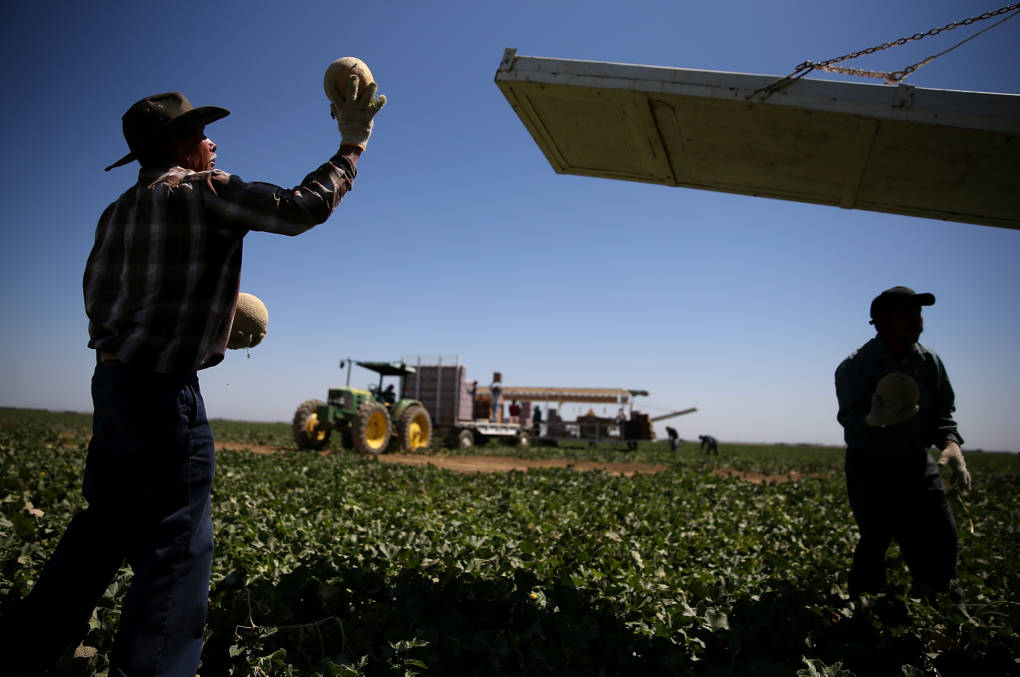
"caption": "A worker harvests cantaloupes on a farm near Firebaugh, California, on August 22, 2014.",
"description": "A worker harvests cantaloupes on a farm near Firebaugh, California, on August 22, 2014.",
"title": "California Central Valley Farming Communities Struggle With Drought",
"credit": "Justin Sullivan/Getty Images",
"status": "inherit",
"isLoading": false,
"fetchFailed": false
},
"news_11778747": {
"type": "attachments",
"id": "news_11778747",
"meta": {
"index": "attachments_1716263798",
"site": "news",
"id": "11778747",
"found": true
},
"parent": 11778741,
"imgSizes": {
"apple_news_ca_landscape_5_5": {
"file": "https://ww2.kqed.org/app/uploads/sites/10/2019/10/Harraway-Homelessness-1044x783.jpg",
"width": 1044,
"mimeType": "image/jpeg",
"height": 783
},
"apple_news_ca_square_4_0": {
"file": "https://ww2.kqed.org/app/uploads/sites/10/2019/10/Harraway-Homelessness-470x470.jpg",
"width": 470,
"mimeType": "image/jpeg",
"height": 470
},
"twentyfourteen-full-width": {
"file": "https://ww2.kqed.org/app/uploads/sites/10/2019/10/Harraway-Homelessness-1038x576.jpg",
"width": 1038,
"mimeType": "image/jpeg",
"height": 576
},
"thumbnail": {
"file": "https://ww2.kqed.org/app/uploads/sites/10/2019/10/Harraway-Homelessness-160x104.jpg",
"width": 160,
"mimeType": "image/jpeg",
"height": 104
},
"post-thumbnail": {
"file": "https://ww2.kqed.org/app/uploads/sites/10/2019/10/Harraway-Homelessness-672x372.jpg",
"width": 672,
"mimeType": "image/jpeg",
"height": 372
},
"kqedFullSize": {
"file": "https://ww2.kqed.org/app/uploads/sites/10/2019/10/Harraway-Homelessness.jpg",
"width": 1920,
"height": 1251
},
"apple_news_ca_landscape_4_7": {
"file": "https://ww2.kqed.org/app/uploads/sites/10/2019/10/Harraway-Homelessness-632x474.jpg",
"width": 632,
"mimeType": "image/jpeg",
"height": 474
},
"large": {
"file": "https://ww2.kqed.org/app/uploads/sites/10/2019/10/Harraway-Homelessness-1020x665.jpg",
"width": 1020,
"mimeType": "image/jpeg",
"height": 665
},
"complete_open_graph": {
"file": "https://ww2.kqed.org/app/uploads/sites/10/2019/10/Harraway-Homelessness-1200x782.jpg",
"width": 1200,
"mimeType": "image/jpeg",
"height": 782
},
"apple_news_ca_landscape_4_0": {
"file": "https://ww2.kqed.org/app/uploads/sites/10/2019/10/Harraway-Homelessness-536x402.jpg",
"width": 536,
"mimeType": "image/jpeg",
"height": 402
},
"apple_news_ca_portrait_12_9": {
"file": "https://ww2.kqed.org/app/uploads/sites/10/2019/10/Harraway-Homelessness-1122x1251.jpg",
"width": 1122,
"mimeType": "image/jpeg",
"height": 1251
},
"medium": {
"file": "https://ww2.kqed.org/app/uploads/sites/10/2019/10/Harraway-Homelessness-800x521.jpg",
"width": 800,
"mimeType": "image/jpeg",
"height": 521
},
"apple_news_ca_portrait_4_0": {
"file": "https://ww2.kqed.org/app/uploads/sites/10/2019/10/Harraway-Homelessness-354x472.jpg",
"width": 354,
"mimeType": "image/jpeg",
"height": 472
},
"apple_news_ca_portrait_9_7": {
"file": "https://ww2.kqed.org/app/uploads/sites/10/2019/10/Harraway-Homelessness-840x1120.jpg",
"width": 840,
"mimeType": "image/jpeg",
"height": 1120
},
"apple_news_ca_landscape_12_9": {
"file": "https://ww2.kqed.org/app/uploads/sites/10/2019/10/Harraway-Homelessness-1832x1251.jpg",
"width": 1832,
"mimeType": "image/jpeg",
"height": 1251
},
"apple_news_ca_square_9_7": {
"file": "https://ww2.kqed.org/app/uploads/sites/10/2019/10/Harraway-Homelessness-1104x1104.jpg",
"width": 1104,
"mimeType": "image/jpeg",
"height": 1104
},
"apple_news_ca_portrait_4_7": {
"file": "https://ww2.kqed.org/app/uploads/sites/10/2019/10/Harraway-Homelessness-414x552.jpg",
"width": 414,
"mimeType": "image/jpeg",
"height": 552
},
"apple_news_ca_square_12_9": {
"file": "https://ww2.kqed.org/app/uploads/sites/10/2019/10/Harraway-Homelessness-1472x1251.jpg",
"width": 1472,
"mimeType": "image/jpeg",
"height": 1251
},
"apple_news_ca_portrait_5_5": {
"file": "https://ww2.kqed.org/app/uploads/sites/10/2019/10/Harraway-Homelessness-687x916.jpg",
"width": 687,
"mimeType": "image/jpeg",
"height": 916
},
"full-width": {
"file": "https://ww2.kqed.org/app/uploads/sites/10/2019/10/Harraway-Homelessness-1920x1251.jpg",
"width": 1920,
"mimeType": "image/jpeg",
"height": 1251
},
"apple_news_ca_square_4_7": {
"file": "https://ww2.kqed.org/app/uploads/sites/10/2019/10/Harraway-Homelessness-550x550.jpg",
"width": 550,
"mimeType": "image/jpeg",
"height": 550
},
"apple_news_ca_landscape_9_7": {
"file": "https://ww2.kqed.org/app/uploads/sites/10/2019/10/Harraway-Homelessness-1376x1032.jpg",
"width": 1376,
"mimeType": "image/jpeg",
"height": 1032
},
"apple_news_ca_square_5_5": {
"file": "https://ww2.kqed.org/app/uploads/sites/10/2019/10/Harraway-Homelessness-912x912.jpg",
"width": 912,
"mimeType": "image/jpeg",
"height": 912
}
},
"publishDate": 1570563889,
"modified": 1570563970,
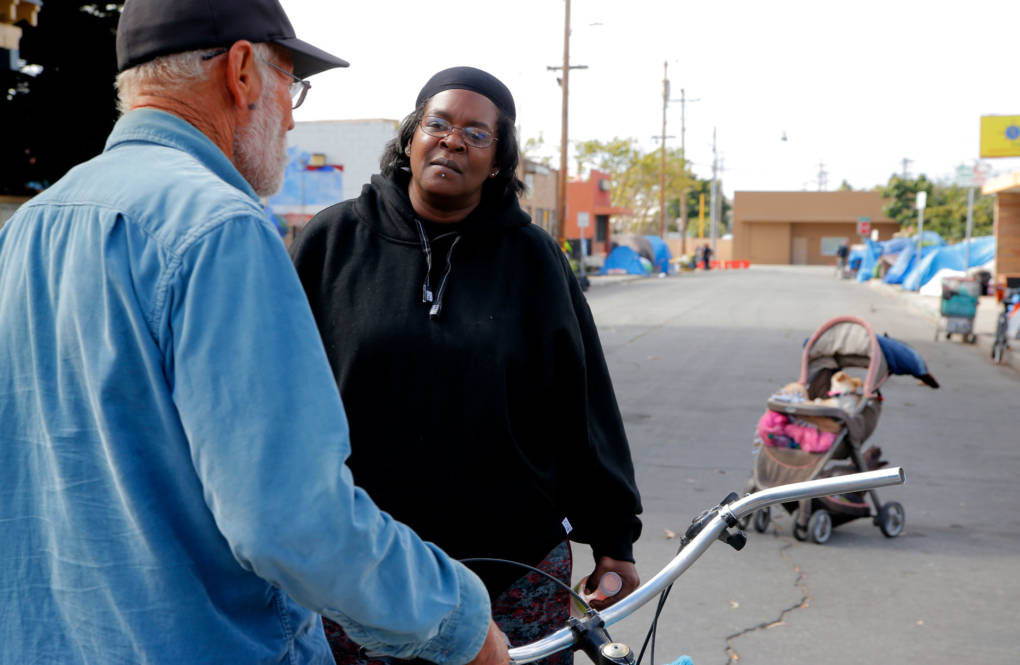
"caption": "Yolanda Harraway, who used to be homeless in the Chinatown area of Salinas, has found permanent housing and earned her high school diploma.",
"description": "Yolanda Harraway, who used to be homeless in the Chinatown area of Salinas, has found permanent housing and earned her high school diploma.",
"title": "Harraway-Homelessness",
"credit": "Photo: Chelcey Adami",
"status": "inherit",
"isLoading": false,
"fetchFailed": false
},
"news_11716792": {
"type": "attachments",
"id": "news_11716792",
"meta": {
"index": "attachments_1716263798",
"site": "news",
"id": "11716792",
"found": true
},
"parent": 11716780,
"imgSizes": {
"twentyfourteen-full-width": {
"file": "https://ww2.kqed.org/app/uploads/sites/10/2019/01/IMG_0699-1038x576.jpg",
"width": 1038,
"mimeType": "image/jpeg",
"height": 576
},
"thumbnail": {
"file": "https://ww2.kqed.org/app/uploads/sites/10/2019/01/IMG_0699-160x120.jpg",
"width": 160,
"mimeType": "image/jpeg",
"height": 120
},
"post-thumbnail": {
"file": "https://ww2.kqed.org/app/uploads/sites/10/2019/01/IMG_0699-672x372.jpg",
"width": 672,
"mimeType": "image/jpeg",
"height": 372
},
"kqedFullSize": {
"file": "https://ww2.kqed.org/app/uploads/sites/10/2019/01/IMG_0699.jpg",
"width": 2016,
"height": 1512
},
"large": {
"file": "https://ww2.kqed.org/app/uploads/sites/10/2019/01/IMG_0699-1020x765.jpg",
"width": 1020,
"mimeType": "image/jpeg",
"height": 765
},
"complete_open_graph": {
"file": "https://ww2.kqed.org/app/uploads/sites/10/2019/01/IMG_0699-1200x900.jpg",
"width": 1200,
"mimeType": "image/jpeg",
"height": 900
},
"guest-author-50": {
"file": "https://ww2.kqed.org/app/uploads/sites/10/2019/01/IMG_0699-50x50.jpg",
"width": 50,
"mimeType": "image/jpeg",
"height": 50
},
"guest-author-96": {
"file": "https://ww2.kqed.org/app/uploads/sites/10/2019/01/IMG_0699-96x96.jpg",
"width": 96,
"mimeType": "image/jpeg",
"height": 96
},
"medium": {
"file": "https://ww2.kqed.org/app/uploads/sites/10/2019/01/IMG_0699-800x600.jpg",
"width": 800,
"mimeType": "image/jpeg",
"height": 600
},
"guest-author-64": {
"file": "https://ww2.kqed.org/app/uploads/sites/10/2019/01/IMG_0699-64x64.jpg",
"width": 64,
"mimeType": "image/jpeg",
"height": 64
},
"guest-author-32": {
"file": "https://ww2.kqed.org/app/uploads/sites/10/2019/01/IMG_0699-32x32.jpg",
"width": 32,
"mimeType": "image/jpeg",
"height": 32
},
"full-width": {
"file": "https://ww2.kqed.org/app/uploads/sites/10/2019/01/IMG_0699-1920x1440.jpg",
"width": 1920,
"mimeType": "image/jpeg",
"height": 1440
},
"detail": {
"file": "https://ww2.kqed.org/app/uploads/sites/10/2019/01/IMG_0699-150x150.jpg",
"width": 150,
"mimeType": "image/jpeg",
"height": 150
},
"guest-author-128": {
"file": "https://ww2.kqed.org/app/uploads/sites/10/2019/01/IMG_0699-128x128.jpg",
"width": 128,
"mimeType": "image/jpeg",
"height": 128
}
},
"publishDate": 1546984911,
"modified": 1582577438,
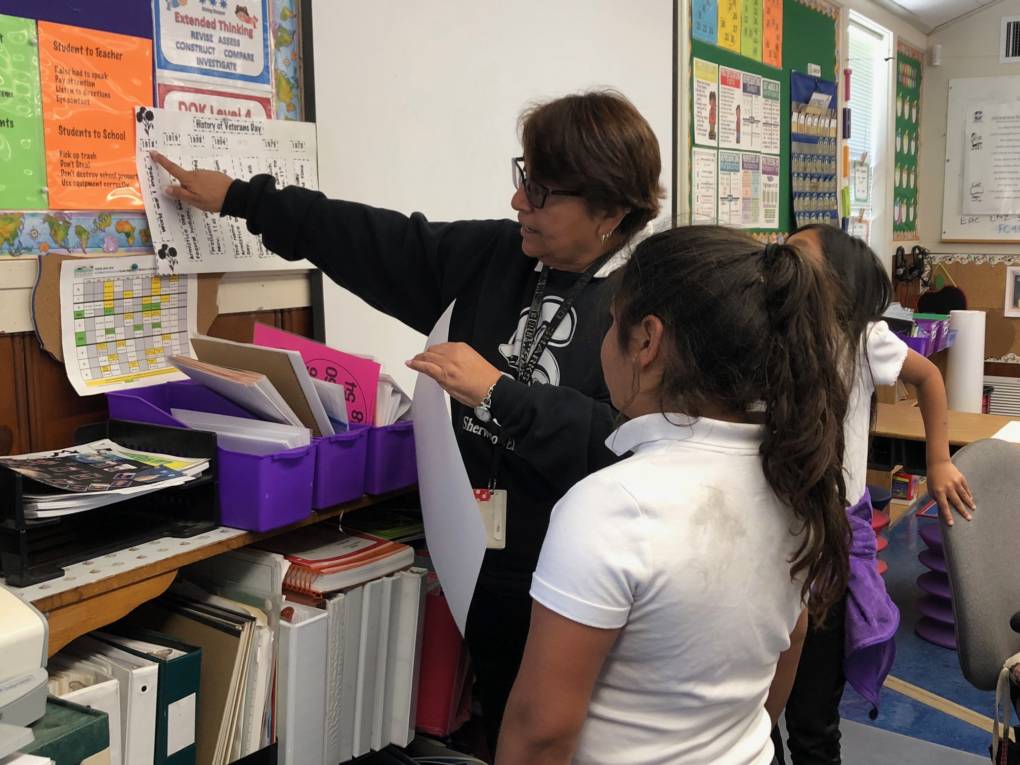
"caption": "Maria Castellanoz, a third-grade teacher at Sherwood Elementary School in Salinas, says about 80 percent of her students this year are homeless.",
"description": null,
"title": "IMG_0699",
"credit": "Vanessa Rancaño/KQED",
"status": "inherit",
"isLoading": false,
"fetchFailed": false
},
"news_11682544": {
"type": "attachments",
"id": "news_11682544",
"meta": {
"index": "attachments_1716263798",
"site": "news",
"id": "11682544",
"found": true
},
"parent": 11681690,
"imgSizes": {
"small": {
"file": "https://ww2.kqed.org/app/uploads/sites/10/2018/07/field_cropped-520x296.jpg",
"width": 520,
"mimeType": "image/jpeg",
"height": 296
},
"twentyfourteen-full-width": {
"file": "https://ww2.kqed.org/app/uploads/sites/10/2018/07/field_cropped-1038x576.jpg",
"width": 1038,
"mimeType": "image/jpeg",
"height": 576
},
"thumbnail": {
"file": "https://ww2.kqed.org/app/uploads/sites/10/2018/07/field_cropped-160x91.jpg",
"width": 160,
"mimeType": "image/jpeg",
"height": 91
},
"fd-sm": {
"file": "https://ww2.kqed.org/app/uploads/sites/10/2018/07/field_cropped-960x547.jpg",
"width": 960,
"mimeType": "image/jpeg",
"height": 547
},
"post-thumbnail": {
"file": "https://ww2.kqed.org/app/uploads/sites/10/2018/07/field_cropped-672x372.jpg",
"width": 672,
"mimeType": "image/jpeg",
"height": 372
},
"xsmall": {
"file": "https://ww2.kqed.org/app/uploads/sites/10/2018/07/field_cropped-375x214.jpg",
"width": 375,
"mimeType": "image/jpeg",
"height": 214
},
"kqedFullSize": {
"file": "https://ww2.kqed.org/app/uploads/sites/10/2018/07/field_cropped-e1533052851889.jpg",
"width": 1920,
"height": 1094
},
"large": {
"file": "https://ww2.kqed.org/app/uploads/sites/10/2018/07/field_cropped-1020x581.jpg",
"width": 1020,
"mimeType": "image/jpeg",
"height": 581
},
"xlarge": {
"file": "https://ww2.kqed.org/app/uploads/sites/10/2018/07/field_cropped-1180x672.jpg",
"width": 1180,
"mimeType": "image/jpeg",
"height": 672
},
"complete_open_graph": {
"file": "https://ww2.kqed.org/app/uploads/sites/10/2018/07/field_cropped-1200x683.jpg",
"width": 1200,
"mimeType": "image/jpeg",
"height": 683
},
"guest-author-50": {
"file": "https://ww2.kqed.org/app/uploads/sites/10/2018/07/field_cropped-50x50.jpg",
"width": 50,
"mimeType": "image/jpeg",
"height": 50
},
"guest-author-96": {
"file": "https://ww2.kqed.org/app/uploads/sites/10/2018/07/field_cropped-96x96.jpg",
"width": 96,
"mimeType": "image/jpeg",
"height": 96
},
"medium": {
"file": "https://ww2.kqed.org/app/uploads/sites/10/2018/07/field_cropped-800x456.jpg",
"width": 800,
"mimeType": "image/jpeg",
"height": 456
},
"guest-author-64": {
"file": "https://ww2.kqed.org/app/uploads/sites/10/2018/07/field_cropped-64x64.jpg",
"width": 64,
"mimeType": "image/jpeg",
"height": 64
},
"guest-author-32": {
"file": "https://ww2.kqed.org/app/uploads/sites/10/2018/07/field_cropped-32x32.jpg",
"width": 32,
"mimeType": "image/jpeg",
"height": 32
},
"fd-lrg": {
"file": "https://ww2.kqed.org/app/uploads/sites/10/2018/07/field_cropped-1920x1094.jpg",
"width": 1920,
"mimeType": "image/jpeg",
"height": 1094
},
"fd-med": {
"file": "https://ww2.kqed.org/app/uploads/sites/10/2018/07/field_cropped-1180x672.jpg",
"width": 1180,
"mimeType": "image/jpeg",
"height": 672
},
"full-width": {
"file": "https://ww2.kqed.org/app/uploads/sites/10/2018/07/field_cropped-1920x1094.jpg",
"width": 1920,
"mimeType": "image/jpeg",
"height": 1094
},
"detail": {
"file": "https://ww2.kqed.org/app/uploads/sites/10/2018/07/field_cropped-150x150.jpg",
"width": 150,
"mimeType": "image/jpeg",
"height": 150
},
"guest-author-128": {
"file": "https://ww2.kqed.org/app/uploads/sites/10/2018/07/field_cropped-128x128.jpg",
"width": 128,
"mimeType": "image/jpeg",
"height": 128
},
"xxsmall": {
"file": "https://ww2.kqed.org/app/uploads/sites/10/2018/07/field_cropped-240x137.jpg",
"width": 240,
"mimeType": "image/jpeg",
"height": 137
}
},
"publishDate": 1532544215,
"modified": 1533073478,
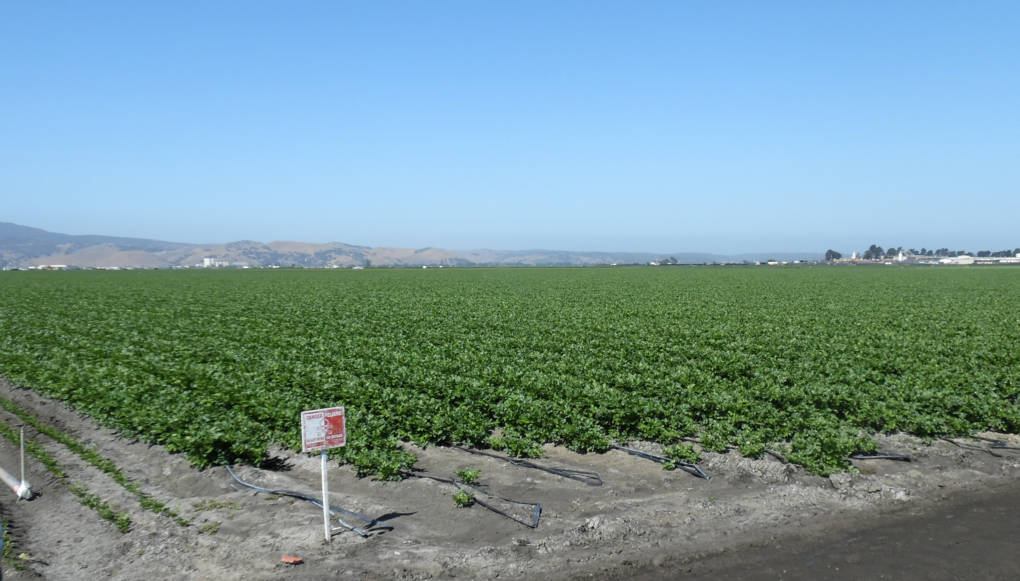
"caption": "A pesticide warning -- the red sign at lower left -- at a field near Salinas that was sprayed with chemicals in June 2017 hours before nearby workers began falling ill.",
"description": "A pesticide warning on Block 6 of Moresco Farms at Harden Ranch in Salinas sprayed with chemicals that sickened workers on June 22,2017",
"title": "field_cropped",
"credit": "Monterey County Agricultural Commissioner's Office",
"status": "inherit",
"isLoading": false,
"fetchFailed": false
},
"news_11675260": {
"type": "attachments",
"id": "news_11675260",
"meta": {
"index": "attachments_1716263798",
"site": "news",
"id": "11675260",
"found": true
},
"parent": 11674420,
"imgSizes": {
"small": {
"file": "https://ww2.kqed.org/app/uploads/sites/10/2018/06/humberto-sandra-1920-520x372.png",
"width": 520,
"mimeType": "image/png",
"height": 372
},
"twentyfourteen-full-width": {
"file": "https://ww2.kqed.org/app/uploads/sites/10/2018/06/humberto-sandra-1920-1038x576.png",
"width": 1038,
"mimeType": "image/png",
"height": 576
},
"thumbnail": {
"file": "https://ww2.kqed.org/app/uploads/sites/10/2018/06/humberto-sandra-1920-160x114.png",
"width": 160,
"mimeType": "image/png",
"height": 114
},
"fd-sm": {
"file": "https://ww2.kqed.org/app/uploads/sites/10/2018/06/humberto-sandra-1920-960x687.png",
"width": 960,
"mimeType": "image/png",
"height": 687
},
"post-thumbnail": {
"file": "https://ww2.kqed.org/app/uploads/sites/10/2018/06/humberto-sandra-1920-672x372.png",
"width": 672,
"mimeType": "image/png",
"height": 372
},
"xsmall": {
"file": "https://ww2.kqed.org/app/uploads/sites/10/2018/06/humberto-sandra-1920-375x268.png",
"width": 375,
"mimeType": "image/png",
"height": 268
},
"kqedFullSize": {
"file": "https://ww2.kqed.org/app/uploads/sites/10/2018/06/humberto-sandra-1920.png",
"width": 1920,
"height": 1373
},
"large": {
"file": "https://ww2.kqed.org/app/uploads/sites/10/2018/06/humberto-sandra-1920-1020x729.png",
"width": 1020,
"mimeType": "image/png",
"height": 729
},
"xlarge": {
"file": "https://ww2.kqed.org/app/uploads/sites/10/2018/06/humberto-sandra-1920-1180x844.png",
"width": 1180,
"mimeType": "image/png",
"height": 844
},
"complete_open_graph": {
"file": "https://ww2.kqed.org/app/uploads/sites/10/2018/06/humberto-sandra-1920-1200x858.png",
"width": 1200,
"mimeType": "image/png",
"height": 858
},
"guest-author-50": {
"file": "https://ww2.kqed.org/app/uploads/sites/10/2018/06/humberto-sandra-1920-50x50.png",
"width": 50,
"mimeType": "image/png",
"height": 50
},
"guest-author-96": {
"file": "https://ww2.kqed.org/app/uploads/sites/10/2018/06/humberto-sandra-1920-96x96.png",
"width": 96,
"mimeType": "image/png",
"height": 96
},
"medium": {
"file": "https://ww2.kqed.org/app/uploads/sites/10/2018/06/humberto-sandra-1920-800x572.png",
"width": 800,
"mimeType": "image/png",
"height": 572
},
"guest-author-64": {
"file": "https://ww2.kqed.org/app/uploads/sites/10/2018/06/humberto-sandra-1920-64x64.png",
"width": 64,
"mimeType": "image/png",
"height": 64
},
"guest-author-32": {
"file": "https://ww2.kqed.org/app/uploads/sites/10/2018/06/humberto-sandra-1920-32x32.png",
"width": 32,
"mimeType": "image/png",
"height": 32
},
"fd-lrg": {
"file": "https://ww2.kqed.org/app/uploads/sites/10/2018/06/humberto-sandra-1920-1920x1373.png",
"width": 1920,
"mimeType": "image/png",
"height": 1373
},
"fd-med": {
"file": "https://ww2.kqed.org/app/uploads/sites/10/2018/06/humberto-sandra-1920-1180x844.png",
"width": 1180,
"mimeType": "image/png",
"height": 844
},
"full-width": {
"file": "https://ww2.kqed.org/app/uploads/sites/10/2018/06/humberto-sandra-1920-1920x1373.png",
"width": 1920,
"mimeType": "image/png",
"height": 1373
},
"detail": {
"file": "https://ww2.kqed.org/app/uploads/sites/10/2018/06/humberto-sandra-1920-150x150.png",
"width": 150,
"mimeType": "image/png",
"height": 150
},
"guest-author-128": {
"file": "https://ww2.kqed.org/app/uploads/sites/10/2018/06/humberto-sandra-1920-128x128.png",
"width": 128,
"mimeType": "image/png",
"height": 128
},
"xxsmall": {
"file": "https://ww2.kqed.org/app/uploads/sites/10/2018/06/humberto-sandra-1920-240x172.png",
"width": 240,
"mimeType": "image/png",
"height": 172
}
},
"publishDate": 1529109158,
"modified": 1529109457,
"caption": "Sandra Barocio and her brother Humberto",
"description": null,
"title": "humberto-sandra-1920",
"credit": "Courtesy of Sandra Barocio",
"status": "inherit",
"isLoading": false,
"fetchFailed": false
},
"news_11672269": {
"type": "attachments",
"id": "news_11672269",
"meta": {
"index": "attachments_1716263798",
"site": "news",
"id": "11672269",
"found": true
},
"parent": 11672268,
"imgSizes": {
"small": {
"file": "https://ww2.kqed.org/app/uploads/sites/10/2018/06/8131588705_2800f4ab57_o-520x257.jpg",
"width": 520,
"mimeType": "image/jpeg",
"height": 257
},
"twentyfourteen-full-width": {
"file": "https://ww2.kqed.org/app/uploads/sites/10/2018/06/8131588705_2800f4ab57_o-1038x576.jpg",
"width": 1038,
"mimeType": "image/jpeg",
"height": 576
},
"thumbnail": {
"file": "https://ww2.kqed.org/app/uploads/sites/10/2018/06/8131588705_2800f4ab57_o-160x79.jpg",
"width": 160,
"mimeType": "image/jpeg",
"height": 79
},
"fd-sm": {
"file": "https://ww2.kqed.org/app/uploads/sites/10/2018/06/8131588705_2800f4ab57_o-960x475.jpg",
"width": 960,
"mimeType": "image/jpeg",
"height": 475
},
"post-thumbnail": {
"file": "https://ww2.kqed.org/app/uploads/sites/10/2018/06/8131588705_2800f4ab57_o-672x372.jpg",
"width": 672,
"mimeType": "image/jpeg",
"height": 372
},
"xsmall": {
"file": "https://ww2.kqed.org/app/uploads/sites/10/2018/06/8131588705_2800f4ab57_o-375x186.jpg",
"width": 375,
"mimeType": "image/jpeg",
"height": 186
},
"kqedFullSize": {
"file": "https://ww2.kqed.org/app/uploads/sites/10/2018/06/8131588705_2800f4ab57_o.jpg",
"width": 1920,
"height": 950
},
"large": {
"file": "https://ww2.kqed.org/app/uploads/sites/10/2018/06/8131588705_2800f4ab57_o-1020x505.jpg",
"width": 1020,
"mimeType": "image/jpeg",
"height": 505
},
"xlarge": {
"file": "https://ww2.kqed.org/app/uploads/sites/10/2018/06/8131588705_2800f4ab57_o-1180x584.jpg",
"width": 1180,
"mimeType": "image/jpeg",
"height": 584
},
"complete_open_graph": {
"file": "https://ww2.kqed.org/app/uploads/sites/10/2018/06/8131588705_2800f4ab57_o-1200x594.jpg",
"width": 1200,
"mimeType": "image/jpeg",
"height": 594
},
"guest-author-50": {
"file": "https://ww2.kqed.org/app/uploads/sites/10/2018/06/8131588705_2800f4ab57_o-50x50.jpg",
"width": 50,
"mimeType": "image/jpeg",
"height": 50
},
"guest-author-96": {
"file": "https://ww2.kqed.org/app/uploads/sites/10/2018/06/8131588705_2800f4ab57_o-96x96.jpg",
"width": 96,
"mimeType": "image/jpeg",
"height": 96
},
"medium": {
"file": "https://ww2.kqed.org/app/uploads/sites/10/2018/06/8131588705_2800f4ab57_o-800x396.jpg",
"width": 800,
"mimeType": "image/jpeg",
"height": 396
},
"guest-author-64": {
"file": "https://ww2.kqed.org/app/uploads/sites/10/2018/06/8131588705_2800f4ab57_o-64x64.jpg",
"width": 64,
"mimeType": "image/jpeg",
"height": 64
},
"guest-author-32": {
"file": "https://ww2.kqed.org/app/uploads/sites/10/2018/06/8131588705_2800f4ab57_o-32x32.jpg",
"width": 32,
"mimeType": "image/jpeg",
"height": 32
},
"fd-lrg": {
"file": "https://ww2.kqed.org/app/uploads/sites/10/2018/06/8131588705_2800f4ab57_o-1920x950.jpg",
"width": 1920,
"mimeType": "image/jpeg",
"height": 950
},
"fd-med": {
"file": "https://ww2.kqed.org/app/uploads/sites/10/2018/06/8131588705_2800f4ab57_o-1180x584.jpg",
"width": 1180,
"mimeType": "image/jpeg",
"height": 584
},
"full-width": {
"file": "https://ww2.kqed.org/app/uploads/sites/10/2018/06/8131588705_2800f4ab57_o-1920x950.jpg",
"width": 1920,
"mimeType": "image/jpeg",
"height": 950
},
"detail": {
"file": "https://ww2.kqed.org/app/uploads/sites/10/2018/06/8131588705_2800f4ab57_o-150x150.jpg",
"width": 150,
"mimeType": "image/jpeg",
"height": 150
},
"guest-author-128": {
"file": "https://ww2.kqed.org/app/uploads/sites/10/2018/06/8131588705_2800f4ab57_o-128x128.jpg",
"width": 128,
"mimeType": "image/jpeg",
"height": 128
},
"xxsmall": {
"file": "https://ww2.kqed.org/app/uploads/sites/10/2018/06/8131588705_2800f4ab57_o-240x119.jpg",
"width": 240,
"mimeType": "image/jpeg",
"height": 119
}
},
"publishDate": 1528047099,
"modified": 1528047189,
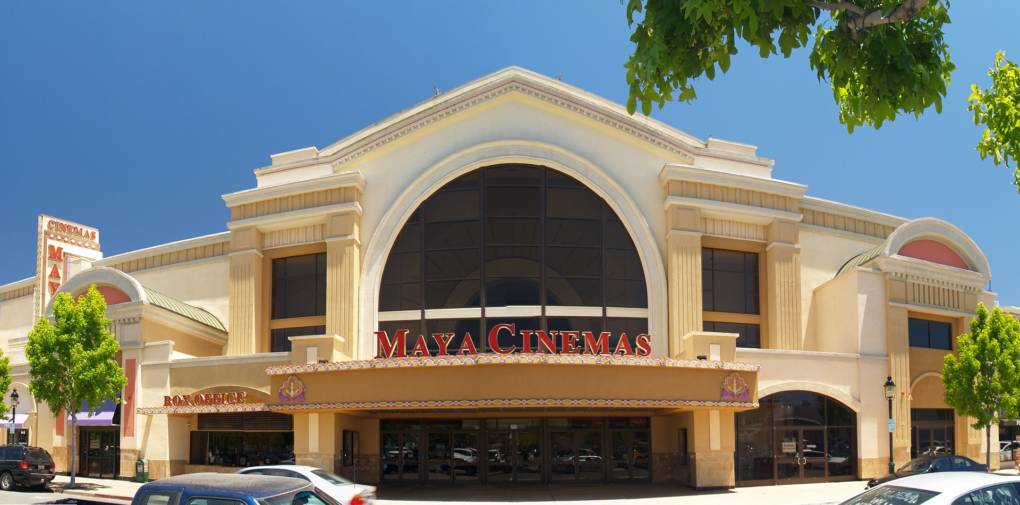
"caption": "The Maya Cinemas in Salinas.",
"description": "The Maya Cinemas in Salinas.",
"title": "Maya Cinemas Salinas",
"credit": "Stephen Gough/Flickr",
"status": "inherit",
"isLoading": false,
"fetchFailed": false
},
"news_11541311": {
"type": "attachments",
"id": "news_11541311",
"meta": {
"index": "attachments_1716263798",
"site": "news",
"id": "11541311",
"found": true
},
"parent": 11540965,
"imgSizes": {
"small": {
"file": "https://ww2.kqed.org/app/uploads/sites/10/2017/06/RS4606_alt_587-520x347.jpg",
"width": 520,
"mimeType": "image/jpeg",
"height": 347
},
"twentyfourteen-full-width": {
"file": "https://ww2.kqed.org/app/uploads/sites/10/2017/06/RS4606_alt_587-1038x576.jpg",
"width": 1038,
"mimeType": "image/jpeg",
"height": 576
},
"thumbnail": {
"file": "https://ww2.kqed.org/app/uploads/sites/10/2017/06/RS4606_alt_587-160x107.jpg",
"width": 160,
"mimeType": "image/jpeg",
"height": 107
},
"fd-sm": {
"file": "https://ww2.kqed.org/app/uploads/sites/10/2017/06/RS4606_alt_587-960x640.jpg",
"width": 960,
"mimeType": "image/jpeg",
"height": 640
},
"post-thumbnail": {
"file": "https://ww2.kqed.org/app/uploads/sites/10/2017/06/RS4606_alt_587-672x372.jpg",
"width": 672,
"mimeType": "image/jpeg",
"height": 372
},
"xsmall": {
"file": "https://ww2.kqed.org/app/uploads/sites/10/2017/06/RS4606_alt_587-375x250.jpg",
"width": 375,
"mimeType": "image/jpeg",
"height": 250
},
"kqedFullSize": {
"file": "https://ww2.kqed.org/app/uploads/sites/10/2017/06/RS4606_alt_587.jpg",
"width": 1920,
"height": 1280
},
"large": {
"file": "https://ww2.kqed.org/app/uploads/sites/10/2017/06/RS4606_alt_587-1020x680.jpg",
"width": 1020,
"mimeType": "image/jpeg",
"height": 680
},
"xlarge": {
"file": "https://ww2.kqed.org/app/uploads/sites/10/2017/06/RS4606_alt_587-1180x787.jpg",
"width": 1180,
"mimeType": "image/jpeg",
"height": 787
},
"guest-author-50": {
"file": "https://ww2.kqed.org/app/uploads/sites/10/2017/06/RS4606_alt_587-50x50.jpg",
"width": 50,
"mimeType": "image/jpeg",
"height": 50
},
"guest-author-96": {
"file": "https://ww2.kqed.org/app/uploads/sites/10/2017/06/RS4606_alt_587-96x96.jpg",
"width": 96,
"mimeType": "image/jpeg",
"height": 96
},
"medium": {
"file": "https://ww2.kqed.org/app/uploads/sites/10/2017/06/RS4606_alt_587-800x533.jpg",
"width": 800,
"mimeType": "image/jpeg",
"height": 533
},
"guest-author-64": {
"file": "https://ww2.kqed.org/app/uploads/sites/10/2017/06/RS4606_alt_587-64x64.jpg",
"width": 64,
"mimeType": "image/jpeg",
"height": 64
},
"guest-author-32": {
"file": "https://ww2.kqed.org/app/uploads/sites/10/2017/06/RS4606_alt_587-32x32.jpg",
"width": 32,
"mimeType": "image/jpeg",
"height": 32
},
"fd-lrg": {
"file": "https://ww2.kqed.org/app/uploads/sites/10/2017/06/RS4606_alt_587-1920x1280.jpg",
"width": 1920,
"mimeType": "image/jpeg",
"height": 1280
},
"fd-med": {
"file": "https://ww2.kqed.org/app/uploads/sites/10/2017/06/RS4606_alt_587-1180x787.jpg",
"width": 1180,
"mimeType": "image/jpeg",
"height": 787
},
"full-width": {
"file": "https://ww2.kqed.org/app/uploads/sites/10/2017/06/RS4606_alt_587-1920x1280.jpg",
"width": 1920,
"mimeType": "image/jpeg",
"height": 1280
},
"detail": {
"file": "https://ww2.kqed.org/app/uploads/sites/10/2017/06/RS4606_alt_587-150x150.jpg",
"width": 150,
"mimeType": "image/jpeg",
"height": 150
},
"guest-author-128": {
"file": "https://ww2.kqed.org/app/uploads/sites/10/2017/06/RS4606_alt_587-128x128.jpg",
"width": 128,
"mimeType": "image/jpeg",
"height": 128
},
"xxsmall": {
"file": "https://ww2.kqed.org/app/uploads/sites/10/2017/06/RS4606_alt_587-240x160.jpg",
"width": 240,
"mimeType": "image/jpeg",
"height": 160
}
},
"publishDate": 1498864280,
"modified": 1498864332,
"caption": "Farm fields in Salinas.",
"description": "Farm fields in Salinas.",
"title": "RS4606_alt_587",
"credit": "Deborah Svoboda/KQED",
"status": "inherit",
"isLoading": false,
"fetchFailed": false
},
"news_11475935": {
"type": "attachments",
"id": "news_11475935",
"meta": {
"index": "attachments_1716263798",
"site": "news",
"id": "11475935",
"found": true
},
"parent": 11475927,
"imgSizes": {
"small": {
"file": "https://ww2.kqed.org/app/uploads/sites/10/2017/05/WeedGrower-520x348.jpg",
"width": 520,
"mimeType": "image/jpeg",
"height": 348
},
"twentyfourteen-full-width": {
"file": "https://ww2.kqed.org/app/uploads/sites/10/2017/05/WeedGrower-1038x576.jpg",
"width": 1038,
"mimeType": "image/jpeg",
"height": 576
},
"thumbnail": {
"file": "https://ww2.kqed.org/app/uploads/sites/10/2017/05/WeedGrower-160x107.jpg",
"width": 160,
"mimeType": "image/jpeg",
"height": 107
},
"fd-sm": {
"file": "https://ww2.kqed.org/app/uploads/sites/10/2017/05/WeedGrower-960x642.jpg",
"width": 960,
"mimeType": "image/jpeg",
"height": 642
},
"post-thumbnail": {
"file": "https://ww2.kqed.org/app/uploads/sites/10/2017/05/WeedGrower-672x372.jpg",
"width": 672,
"mimeType": "image/jpeg",
"height": 372
},
"xsmall": {
"file": "https://ww2.kqed.org/app/uploads/sites/10/2017/05/WeedGrower-375x251.jpg",
"width": 375,
"mimeType": "image/jpeg",
"height": 251
},
"kqedFullSize": {
"file": "https://ww2.kqed.org/app/uploads/sites/10/2017/05/WeedGrower.jpg",
"width": 1920,
"height": 1284
},
"large": {
"file": "https://ww2.kqed.org/app/uploads/sites/10/2017/05/WeedGrower-1020x682.jpg",
"width": 1020,
"mimeType": "image/jpeg",
"height": 682
},
"xlarge": {
"file": "https://ww2.kqed.org/app/uploads/sites/10/2017/05/WeedGrower-1180x789.jpg",
"width": 1180,
"mimeType": "image/jpeg",
"height": 789
},
"guest-author-50": {
"file": "https://ww2.kqed.org/app/uploads/sites/10/2017/05/WeedGrower-50x50.jpg",
"width": 50,
"mimeType": "image/jpeg",
"height": 50
},
"guest-author-96": {
"file": "https://ww2.kqed.org/app/uploads/sites/10/2017/05/WeedGrower-96x96.jpg",
"width": 96,
"mimeType": "image/jpeg",
"height": 96
},
"medium": {
"file": "https://ww2.kqed.org/app/uploads/sites/10/2017/05/WeedGrower-800x535.jpg",
"width": 800,
"mimeType": "image/jpeg",
"height": 535
},
"guest-author-64": {
"file": "https://ww2.kqed.org/app/uploads/sites/10/2017/05/WeedGrower-64x64.jpg",
"width": 64,
"mimeType": "image/jpeg",
"height": 64
},
"guest-author-32": {
"file": "https://ww2.kqed.org/app/uploads/sites/10/2017/05/WeedGrower-32x32.jpg",
"width": 32,
"mimeType": "image/jpeg",
"height": 32
},
"fd-lrg": {
"file": "https://ww2.kqed.org/app/uploads/sites/10/2017/05/WeedGrower-1920x1284.jpg",
"width": 1920,
"mimeType": "image/jpeg",
"height": 1284
},
"fd-med": {
"file": "https://ww2.kqed.org/app/uploads/sites/10/2017/05/WeedGrower-1180x789.jpg",
"width": 1180,
"mimeType": "image/jpeg",
"height": 789
},
"full-width": {
"file": "https://ww2.kqed.org/app/uploads/sites/10/2017/05/WeedGrower-1920x1284.jpg",
"width": 1920,
"mimeType": "image/jpeg",
"height": 1284
},
"detail": {
"file": "https://ww2.kqed.org/app/uploads/sites/10/2017/05/WeedGrower-150x150.jpg",
"width": 150,
"mimeType": "image/jpeg",
"height": 150
},
"guest-author-128": {
"file": "https://ww2.kqed.org/app/uploads/sites/10/2017/05/WeedGrower-128x128.jpg",
"width": 128,
"mimeType": "image/jpeg",
"height": 128
},
"xxsmall": {
"file": "https://ww2.kqed.org/app/uploads/sites/10/2017/05/WeedGrower-240x161.jpg",
"width": 240,
"mimeType": "image/jpeg",
"height": 161
}
},
"publishDate": 1495668235,
"modified": 1495668286,
"caption": "A grower prunes his marijuana crops in Mendocino County.",
"description": "A grower prunes his marijuana crops in Mendocino County.",
"title": "WeedGrower",
"credit": "JOSH EDELSON/AFP/Getty Images",
"status": "inherit",
"isLoading": false,
"fetchFailed": false
},
"news_11446716": {
"type": "attachments",
"id": "news_11446716",
"meta": {
"index": "attachments_1716263798",
"site": "news",
"id": "11446716",
"found": true
},
"parent": 11416593,
"imgSizes": {
"small": {
"file": "https://ww2.kqed.org/app/uploads/sites/10/2017/05/SalinasFenceClimb-520x320.jpg",
"width": 520,
"mimeType": "image/jpeg",
"height": 320
},
"twentyfourteen-full-width": {
"file": "https://ww2.kqed.org/app/uploads/sites/10/2017/05/SalinasFenceClimb-1038x576.jpg",
"width": 1038,
"mimeType": "image/jpeg",
"height": 576
},
"thumbnail": {
"file": "https://ww2.kqed.org/app/uploads/sites/10/2017/05/SalinasFenceClimb-160x99.jpg",
"width": 160,
"mimeType": "image/jpeg",
"height": 99
},
"fd-sm": {
"file": "https://ww2.kqed.org/app/uploads/sites/10/2017/05/SalinasFenceClimb-960x592.jpg",
"width": 960,
"mimeType": "image/jpeg",
"height": 592
},
"post-thumbnail": {
"file": "https://ww2.kqed.org/app/uploads/sites/10/2017/05/SalinasFenceClimb-672x372.jpg",
"width": 672,
"mimeType": "image/jpeg",
"height": 372
},
"xsmall": {
"file": "https://ww2.kqed.org/app/uploads/sites/10/2017/05/SalinasFenceClimb-375x231.jpg",
"width": 375,
"mimeType": "image/jpeg",
"height": 231
},
"kqedFullSize": {
"file": "https://ww2.kqed.org/app/uploads/sites/10/2017/05/SalinasFenceClimb.jpg",
"width": 1920,
"height": 1183
},
"large": {
"file": "https://ww2.kqed.org/app/uploads/sites/10/2017/05/SalinasFenceClimb-1020x628.jpg",
"width": 1020,
"mimeType": "image/jpeg",
"height": 628
},
"xlarge": {
"file": "https://ww2.kqed.org/app/uploads/sites/10/2017/05/SalinasFenceClimb-1180x727.jpg",
"width": 1180,
"mimeType": "image/jpeg",
"height": 727
},
"guest-author-50": {
"file": "https://ww2.kqed.org/app/uploads/sites/10/2017/05/SalinasFenceClimb-50x50.jpg",
"width": 50,
"mimeType": "image/jpeg",
"height": 50
},
"guest-author-96": {
"file": "https://ww2.kqed.org/app/uploads/sites/10/2017/05/SalinasFenceClimb-96x96.jpg",
"width": 96,
"mimeType": "image/jpeg",
"height": 96
},
"medium": {
"file": "https://ww2.kqed.org/app/uploads/sites/10/2017/05/SalinasFenceClimb-800x493.jpg",
"width": 800,
"mimeType": "image/jpeg",
"height": 493
},
"guest-author-64": {
"file": "https://ww2.kqed.org/app/uploads/sites/10/2017/05/SalinasFenceClimb-64x64.jpg",
"width": 64,
"mimeType": "image/jpeg",
"height": 64
},
"guest-author-32": {
"file": "https://ww2.kqed.org/app/uploads/sites/10/2017/05/SalinasFenceClimb-32x32.jpg",
"width": 32,
"mimeType": "image/jpeg",
"height": 32
},
"fd-lrg": {
"file": "https://ww2.kqed.org/app/uploads/sites/10/2017/05/SalinasFenceClimb-1920x1183.jpg",
"width": 1920,
"mimeType": "image/jpeg",
"height": 1183
},
"fd-med": {
"file": "https://ww2.kqed.org/app/uploads/sites/10/2017/05/SalinasFenceClimb-1180x727.jpg",
"width": 1180,
"mimeType": "image/jpeg",
"height": 727
},
"full-width": {
"file": "https://ww2.kqed.org/app/uploads/sites/10/2017/05/SalinasFenceClimb-1920x1183.jpg",
"width": 1920,
"mimeType": "image/jpeg",
"height": 1183
},
"detail": {
"file": "https://ww2.kqed.org/app/uploads/sites/10/2017/05/SalinasFenceClimb-150x150.jpg",
"width": 150,
"mimeType": "image/jpeg",
"height": 150
},
"guest-author-128": {
"file": "https://ww2.kqed.org/app/uploads/sites/10/2017/05/SalinasFenceClimb-128x128.jpg",
"width": 128,
"mimeType": "image/jpeg",
"height": 128
},
"xxsmall": {
"file": "https://ww2.kqed.org/app/uploads/sites/10/2017/05/SalinasFenceClimb-240x148.jpg",
"width": 240,
"mimeType": "image/jpeg",
"height": 148
}
},
"publishDate": 1494267045,
"modified": 1494286469,
"caption": "A man climbs over a fence bordering the railroad tracks that separate Chinatown from the rest of downtown Salinas. It's a common route for many Chinatown residents since accessible walking routes in and out of the neighborhood are scarce.",
"description": "A man climbs over a fence bordering the railroad tracks which separate Chinatown from the rest of downtown Salinas. It's a common route for many Chinatown residents since accessible walking routes in and out of the neighborhood are scarce.",
"title": "SalinasFenceClimb",
"credit": "Sarah Craig/KQED",
"status": "inherit",
"isLoading": false,
"fetchFailed": false
},
"news_11159709": {
"type": "attachments",
"id": "news_11159709",
"meta": {
"index": "attachments_1716263798",
"site": "news",
"id": "11159709",
"found": true
},
"parent": 11155240,
"imgSizes": {
"small": {
"file": "https://ww2.kqed.org/app/uploads/sites/10/2016/11/MotherRocio-520x337.jpg",
"width": 520,
"mimeType": "image/jpeg",
"height": 337
},
"twentyfourteen-full-width": {
"file": "https://ww2.kqed.org/app/uploads/sites/10/2016/11/MotherRocio-1038x576.jpg",
"width": 1038,
"mimeType": "image/jpeg",
"height": 576
},
"thumbnail": {
"file": "https://ww2.kqed.org/app/uploads/sites/10/2016/11/MotherRocio-160x104.jpg",
"width": 160,
"mimeType": "image/jpeg",
"height": 104
},
"fd-sm": {
"file": "https://ww2.kqed.org/app/uploads/sites/10/2016/11/MotherRocio-960x622.jpg",
"width": 960,
"mimeType": "image/jpeg",
"height": 622
},
"post-thumbnail": {
"file": "https://ww2.kqed.org/app/uploads/sites/10/2016/11/MotherRocio-672x372.jpg",
"width": 672,
"mimeType": "image/jpeg",
"height": 372
},
"xsmall": {
"file": "https://ww2.kqed.org/app/uploads/sites/10/2016/11/MotherRocio-375x243.jpg",
"width": 375,
"mimeType": "image/jpeg",
"height": 243
},
"kqedFullSize": {
"file": "https://ww2.kqed.org/app/uploads/sites/10/2016/11/MotherRocio.jpg",
"width": 1920,
"height": 1244
},
"large": {
"file": "https://ww2.kqed.org/app/uploads/sites/10/2016/11/MotherRocio-1020x661.jpg",
"width": 1020,
"mimeType": "image/jpeg",
"height": 661
},
"xlarge": {
"file": "https://ww2.kqed.org/app/uploads/sites/10/2016/11/MotherRocio-1180x765.jpg",
"width": 1180,
"mimeType": "image/jpeg",
"height": 765
},
"guest-author-50": {
"file": "https://ww2.kqed.org/app/uploads/sites/10/2016/11/MotherRocio-50x50.jpg",
"width": 50,
"mimeType": "image/jpeg",
"height": 50
},
"guest-author-96": {
"file": "https://ww2.kqed.org/app/uploads/sites/10/2016/11/MotherRocio-96x96.jpg",
"width": 96,
"mimeType": "image/jpeg",
"height": 96
},
"medium": {
"file": "https://ww2.kqed.org/app/uploads/sites/10/2016/11/MotherRocio-800x518.jpg",
"width": 800,
"mimeType": "image/jpeg",
"height": 518
},
"guest-author-64": {
"file": "https://ww2.kqed.org/app/uploads/sites/10/2016/11/MotherRocio-64x64.jpg",
"width": 64,
"mimeType": "image/jpeg",
"height": 64
},
"guest-author-32": {
"file": "https://ww2.kqed.org/app/uploads/sites/10/2016/11/MotherRocio-32x32.jpg",
"width": 32,
"mimeType": "image/jpeg",
"height": 32
},
"jmtc-small-thumb": {
"file": "https://ww2.kqed.org/app/uploads/sites/10/2016/11/MotherRocio-280x150.jpg",
"width": 280,
"mimeType": "image/jpeg",
"height": 150
},
"fd-lrg": {
"file": "https://ww2.kqed.org/app/uploads/sites/10/2016/11/MotherRocio-1920x1244.jpg",
"width": 1920,
"mimeType": "image/jpeg",
"height": 1244
},
"fd-med": {
"file": "https://ww2.kqed.org/app/uploads/sites/10/2016/11/MotherRocio-1180x765.jpg",
"width": 1180,
"mimeType": "image/jpeg",
"height": 765
},
"full-width": {
"file": "https://ww2.kqed.org/app/uploads/sites/10/2016/11/MotherRocio-1920x1244.jpg",
"width": 1920,
"mimeType": "image/jpeg",
"height": 1244
},
"detail": {
"file": "https://ww2.kqed.org/app/uploads/sites/10/2016/11/MotherRocio-150x150.jpg",
"width": 150,
"mimeType": "image/jpeg",
"height": 150
},
"guest-author-128": {
"file": "https://ww2.kqed.org/app/uploads/sites/10/2016/11/MotherRocio-128x128.jpg",
"width": 128,
"mimeType": "image/jpeg",
"height": 128
},
"xxsmall": {
"file": "https://ww2.kqed.org/app/uploads/sites/10/2016/11/MotherRocio-240x156.jpg",
"width": 240,
"mimeType": "image/jpeg",
"height": 156
}
},
"publishDate": 1478298108,
"modified": 1478298264,
"caption": "Farmworker Rocio Tafoya works in the fields for $500 to $600 per week. She shares this barely two-bedroom house with 10 other people in East Salinas.",
"description": "Farmworker Rocio Tafoya works in the fields for $500 to $600 per week. She shares this barely two-bedroom house with 10 other people in East Salinas.",
"title": "motherrocio",
"credit": "Lisa Morehouse/KQED",
"status": "inherit",
"isLoading": false,
"fetchFailed": false
},
"news_10944867": {
"type": "attachments",
"id": "news_10944867",
"meta": {
"index": "attachments_1716263798",
"site": "news",
"id": "10944867",
"found": true
},
"parent": 10943955,
"imgSizes": {
"twentyfourteen-full-width": {
"file": "https://ww2.kqed.org/app/uploads/sites/10/2016/05/SalinasBookCart1-1038x576.jpg",
"width": 1038,
"mimeType": "image/jpeg",
"height": 576
},
"thumbnail": {
"file": "https://ww2.kqed.org/app/uploads/sites/10/2016/05/SalinasBookCart1-400x284.jpg",
"width": 400,
"mimeType": "image/jpeg",
"height": 284
},
"fd-sm": {
"file": "https://ww2.kqed.org/app/uploads/sites/10/2016/05/SalinasBookCart1-960x682.jpg",
"width": 960,
"mimeType": "image/jpeg",
"height": 682
},
"post-thumbnail": {
"file": "https://ww2.kqed.org/app/uploads/sites/10/2016/05/SalinasBookCart1-672x372.jpg",
"width": 672,
"mimeType": "image/jpeg",
"height": 372
},
"kqedFullSize": {
"file": "https://ww2.kqed.org/app/uploads/sites/10/2016/05/SalinasBookCart1.jpg",
"width": 1920,
"height": 1364
},
"large": {
"file": "https://ww2.kqed.org/app/uploads/sites/10/2016/05/SalinasBookCart1-1920x1364.jpg",
"width": 1920,
"mimeType": "image/jpeg",
"height": 1364
},
"guest-author-96": {
"file": "https://ww2.kqed.org/app/uploads/sites/10/2016/05/SalinasBookCart1-96x96.jpg",
"width": 96,
"mimeType": "image/jpeg",
"height": 96
},
"medium": {
"file": "https://ww2.kqed.org/app/uploads/sites/10/2016/05/SalinasBookCart1-800x568.jpg",
"width": 800,
"mimeType": "image/jpeg",
"height": 568
},
"guest-author-64": {
"file": "https://ww2.kqed.org/app/uploads/sites/10/2016/05/SalinasBookCart1-64x64.jpg",
"width": 64,
"mimeType": "image/jpeg",
"height": 64
},
"guest-author-32": {
"file": "https://ww2.kqed.org/app/uploads/sites/10/2016/05/SalinasBookCart1-32x32.jpg",
"width": 32,
"mimeType": "image/jpeg",
"height": 32
},
"jmtc-small-thumb": {
"file": "https://ww2.kqed.org/app/uploads/sites/10/2016/05/SalinasBookCart1-280x150.jpg",
"width": 280,
"mimeType": "image/jpeg",
"height": 150
},
"fd-lrg": {
"file": "https://ww2.kqed.org/app/uploads/sites/10/2016/05/SalinasBookCart1-1920x1364.jpg",
"width": 1920,
"mimeType": "image/jpeg",
"height": 1364
},
"fd-med": {
"file": "https://ww2.kqed.org/app/uploads/sites/10/2016/05/SalinasBookCart1-1180x838.jpg",
"width": 1180,
"mimeType": "image/jpeg",
"height": 838
},
"detail": {
"file": "https://ww2.kqed.org/app/uploads/sites/10/2016/05/SalinasBookCart1-150x150.jpg",
"width": 150,
"mimeType": "image/jpeg",
"height": 150
},
"guest-author-128": {
"file": "https://ww2.kqed.org/app/uploads/sites/10/2016/05/SalinasBookCart1-128x128.jpg",
"width": 128,
"mimeType": "image/jpeg",
"height": 128
}
},
"publishDate": 1462299795,
"modified": 1462313879,
"caption": "The Salinas Public Library’s Paletero cart is a Wi-Fi hot spot, so clerk Luis Moya carries an iPad to handle book checkouts and returns.",
"description": "The Salinas Public Library’s Paletero cart is a wifi hot spot, so clerk Luis Moya carries an iPad to handle book check outs and returns.",
"title": "SalinasBookCart1",
"credit": "Krista Almanzan/KQED",
"status": "inherit",
"isLoading": false,
"fetchFailed": false
}
},
"audioPlayerReducer": {
"postId": "stream_live",
"isPaused": true,
"isPlaying": false,
"pfsActive": false,
"pledgeModalIsOpen": true,
"playerDrawerIsOpen": false,
"liveAudioPlayStartedAt": 0,
"liveAudioPlayContext": ""
},
"authorsReducer": {
"byline_news_11780752": {
"type": "authors",
"id": "byline_news_11780752",
"meta": {
"override": true
},
"slug": "byline_news_11780752",
"name": "\u003cstrong>\u003ca href=\"https://calmatters.org/author/kate-cimini/\">Kate Cimini\u003c/a>\u003cbr />CalMatters\u003c/strong>",
"isLoading": false
},
"byline_news_11778741": {
"type": "authors",
"id": "byline_news_11778741",
"meta": {
"override": true
},
"slug": "byline_news_11778741",
"name": "\u003cstrong>\u003ca href=\"https://calmatters.org/author/kate-cimini/\">Kate Cimini\u003c/a>\u003c/strong>",
"isLoading": false
},
"byline_news_11674420": {
"type": "authors",
"id": "byline_news_11674420",
"meta": {
"override": true
},
"slug": "byline_news_11674420",
"name": "Sandra Barocio",
"isLoading": false
},
"byline_news_11672268": {
"type": "authors",
"id": "byline_news_11672268",
"meta": {
"override": true
},
"slug": "byline_news_11672268",
"name": "\u003cstrong>Russell Contreras\u003c/strong> \u003c/br>Associated Press",
"isLoading": false
},
"byline_news_11475927": {
"type": "authors",
"id": "byline_news_11475927",
"meta": {
"override": true
},
"slug": "byline_news_11475927",
"name": "\u003cstrong>\u003ca href=\"https://calmatters.org/articles/author/ben-christopher/\">Ben Christopher\u003c/a>\u003c/strong>",
"isLoading": false
},
"byline_news_10943955": {
"type": "authors",
"id": "byline_news_10943955",
"meta": {
"override": true
},
"slug": "byline_news_10943955",
"name": "\u003cstrong>Krista Almanzan\u003c/strong>",
"isLoading": false
},
"kqed": {
"type": "authors",
"id": "236",
"meta": {
"index": "authors_1716337520",
"id": "236",
"found": true
},
"name": "KQED News Staff",
"firstName": "KQED News Staff",
"lastName": null,
"slug": "kqed",
"email": "faq@kqed.org",
"display_author_email": false,
"staff_mastheads": [],
"title": null,
"bio": null,
"avatar": "https://secure.gravatar.com/avatar/ef0e801a68c4c54afa9180db14084167?s=600&d=blank&r=g",
"twitter": null,
"facebook": null,
"instagram": null,
"linkedin": null,
"sites": [
{
"site": "arts",
"roles": [
"contributor"
]
},
{
"site": "news",
"roles": [
"editor"
]
},
{
"site": "futureofyou",
"roles": [
"author"
]
}
],
"headData": {
"title": "KQED News Staff | KQED",
"description": null,
"ogImgSrc": "https://secure.gravatar.com/avatar/ef0e801a68c4c54afa9180db14084167?s=600&d=blank&r=g",
"twImgSrc": "https://secure.gravatar.com/avatar/ef0e801a68c4c54afa9180db14084167?s=600&d=blank&r=g"
},
"isLoading": false,
"link": "/author/kqed"
},
"tgoldberg": {
"type": "authors",
"id": "258",
"meta": {
"index": "authors_1716337520",
"id": "258",
"found": true
},
"name": "Ted Goldberg",
"firstName": "Ted",
"lastName": "Goldberg",
"slug": "tgoldberg",
"email": "tgoldberg@kqed.org",
"display_author_email": true,
"staff_mastheads": [
"news"
],
"title": "KQED Managing Editor, News and Newscasts",
"bio": "Ted Goldberg is Managing Editor of News and Newscasts at KQED. His main reporting beat is the Bay Area's oil refining industry.\r\n\r\nPrior to joining KQED in 2014, Ted worked at CBS News and WCBS AM in New York and Bay City News and KCBS Radio in San Francisco. He graduated from Oberlin College in Ohio in 1998.",
"avatar": "https://secure.gravatar.com/avatar/30ce2e4fe89135e104f89be2394d16225b9d36c121b5b3cb7651ce642978b96f?s=600&d=blank&r=g",
"twitter": "TedrickG",
"bluesky": null,
"facebook": null,
"instagram": null,
"linkedin": null,
"sites": [
{
"site": "news",
"roles": [
"editor"
]
},
{
"site": "science",
"roles": [
"editor"
]
}
],
"headData": {
"title": "Ted Goldberg | KQED",
"description": "KQED Managing Editor, News and Newscasts",
"ogImgSrc": "https://secure.gravatar.com/avatar/30ce2e4fe89135e104f89be2394d16225b9d36c121b5b3cb7651ce642978b96f?s=600&d=blank&r=g",
"twImgSrc": "https://secure.gravatar.com/avatar/30ce2e4fe89135e104f89be2394d16225b9d36c121b5b3cb7651ce642978b96f?s=600&d=blank&r=g"
},
"isLoading": false,
"link": "/author/tgoldberg"
},
"lmorehouse": {
"type": "authors",
"id": "3229",
"meta": {
"index": "authors_1716337520",
"id": "3229",
"found": true
},
"name": "Lisa Morehouse",
"firstName": "Lisa",
"lastName": "Morehouse",
"slug": "lmorehouse",
"email": "morehouse.lisa@gmail.com",
"display_author_email": false,
"staff_mastheads": [],
"title": "KQED Contributor",
"bio": "Lisa Morehouse is an award-winning public radio and print journalist, who has filed for National Public Radio, American Public Media, KQED Public Radio, Edutopia, and McSweeney’s. Her reporting has taken her from Samoan traveling circuses to Mississippi Delta classrooms to the homes of Lao refugees in rural Iowa. In addition to reporting, she teaches radio production to at-risk youth in the Bay Area. Her series \u003ca href=\"http://afterthegoldrushradio.com/\">After the Gold Rush\u003c/a> featured the changing industries, populations and identities of rural towns throughout California. She’s now producing \u003ca href=\"http://www.californiafoodways.com/\">California Foodways\u003c/a>, a series exploring the intersections of food, culture, economics, history and labor. Follow along on the \u003ca href=\"https://www.facebook.com/californiafoodways?ref=hl\">Facebook page\u003c/a> or on Twitter @cafoodways.",
"avatar": "https://secure.gravatar.com/avatar/dae74b002a6e256f39abb19d6f5acaea?s=600&d=blank&r=g",
"twitter": null,
"facebook": null,
"instagram": null,
"linkedin": null,
"sites": [
{
"site": "",
"roles": [
"editor"
]
},
{
"site": "news",
"roles": [
"author"
]
}
],
"headData": {
"title": "Lisa Morehouse | KQED",
"description": "KQED Contributor",
"ogImgSrc": "https://secure.gravatar.com/avatar/dae74b002a6e256f39abb19d6f5acaea?s=600&d=blank&r=g",
"twImgSrc": "https://secure.gravatar.com/avatar/dae74b002a6e256f39abb19d6f5acaea?s=600&d=blank&r=g"
},
"isLoading": false,
"link": "/author/lmorehouse"
},
"vrancano": {
"type": "authors",
"id": "11276",
"meta": {
"index": "authors_1716337520",
"id": "11276",
"found": true
},
"name": "Vanessa Rancaño",
"firstName": "Vanessa",
"lastName": "Rancaño",
"slug": "vrancano",
"email": "vrancano@kqed.org",
"display_author_email": false,
"staff_mastheads": [
"news"
],
"title": "Reporter",
"bio": "Vanessa Rancaño is a features reporter for KQED. She’s also covered homelessness and education for the station and reported from the Central Valley. Her work has aired across public radio, from flagship national news shows to longform narrative podcasts. Before taking up a mic, she worked as a freelance print journalist. She’s been recognized with a number of national and regional awards. Vanessa grew up in California's Central Valley. She's a former NPR Kroc Fellow, and a graduate of the UC Berkeley Graduate School of Journalism.",
"avatar": "https://secure.gravatar.com/avatar/b3a383dfb0e7ee1c17568f2cf067904ab654d6e3de9743fc661f3c788ade1bed?s=600&d=blank&r=g",
"twitter": "vanessarancano",
"bluesky": null,
"facebook": null,
"instagram": null,
"linkedin": null,
"sites": [
{
"site": "arts",
"roles": [
"editor"
]
},
{
"site": "news",
"roles": [
"editor"
]
},
{
"site": "liveblog",
"roles": [
"contributor"
]
}
],
"headData": {
"title": "Vanessa Rancaño | KQED",
"description": "Reporter",
"ogImgSrc": "https://secure.gravatar.com/avatar/b3a383dfb0e7ee1c17568f2cf067904ab654d6e3de9743fc661f3c788ade1bed?s=600&d=blank&r=g",
"twImgSrc": "https://secure.gravatar.com/avatar/b3a383dfb0e7ee1c17568f2cf067904ab654d6e3de9743fc661f3c788ade1bed?s=600&d=blank&r=g"
},
"isLoading": false,
"link": "/author/vrancano"
},
"scraig": {
"type": "authors",
"id": "11327",
"meta": {
"index": "authors_1716337520",
"id": "11327",
"found": true
},
"name": "Sarah Craig",
"firstName": "Sarah",
"lastName": "Craig",
"slug": "scraig",
"email": "scraig@KQED.org",
"display_author_email": false,
"staff_mastheads": [],
"title": "KQED Contributor",
"bio": "Sarah Craig is a freelance radio reporter and documentary photographer. She is currently working on \u003cem>Dreams of Dust\u003c/em>, @dreamsofdust, a multimedia project that documents stories of climate migration in California’s Central Valley, previously funded by the California Humanities. Her completed projects include \u003cem>\u003ca href=\"http://www.facesoffracking.org/\" target=\"_blank\" rel=\"nofollow noopener noreferrer\">Faces of Fracking\u003c/a>,\u003c/em> an investigation into the impact of fracking on the people and places of California, and \u003cem>\u003ca href=\"http://sarahcraig.visura.co/gulf-disaster-2\" target=\"_blank\" rel=\"nofollow noopener noreferrer\">The Gulf Disaster\u003c/a>,\u003c/em> stories on the lives of fishermen in the aftermath of the BP spill. Her work has been published by Marketplace, KQED's Bay Curious and Q'ed Up podcasts, KQED's California Report Magazine, KALW's Crosscurrents, Grist.org, High Country News, Earth Island Journal, and others. Sarah received a B.A. in Geography at Vassar College and attended the \u003ca href=\"http://www.salt.edu/\" target=\"_blank\" rel=\"nofollow noopener noreferrer\">Salt Institute of Documentary Studies\u003c/a> in Portland, ME. She recently received an Excellence in Journalism Award from the NorCal Society of Professional Journalists for her documentary radio piece, \u003ca href=\"http://kalw.org/post/215-will-water-come#stream/0\">\"Will the Water Come.\"\u003c/a> Email: scraig@kqed.org Twitter: @sarahcraigmedia Website: sarahcraigmedia.com",
"avatar": "https://secure.gravatar.com/avatar/97f17950c828429d3df9f2907412a50b?s=600&d=blank&r=g",
"twitter": null,
"facebook": null,
"instagram": null,
"linkedin": null,
"sites": [
{
"site": "news",
"roles": [
"subscriber"
]
},
{
"site": "science",
"roles": [
"editor"
]
}
],
"headData": {
"title": "Sarah Craig | KQED",
"description": "KQED Contributor",
"ogImgSrc": "https://secure.gravatar.com/avatar/97f17950c828429d3df9f2907412a50b?s=600&d=blank&r=g",
"twImgSrc": "https://secure.gravatar.com/avatar/97f17950c828429d3df9f2907412a50b?s=600&d=blank&r=g"
},
"isLoading": false,
"link": "/author/scraig"
}
},
"pagesReducer": {
"news_tag_salinas": {
"type": "terms",
"id": "news_4889",
"meta": {
"index": "terms_1716263798",
"site": "news",
"id": "4889",
"score": 8.9368305
},
"featImg": null,
"name": "Salinas",
"description": null,
"taxonomy": "tag",
"headData": {
"twImgId": null,
"twTitle": null,
"ogTitle": null,
"ogImgId": null,
"twDescription": null,
"description": null,
"title": "Salinas Archives | KQED News",
"ogDescription": null
},
"ttid": 4908,
"slug": "salinas",
"isLoading": false,
"title": "Salinas",
"pageMeta": {
"site": "news",
"WpPageTemplate": "page-topic-editorial",
"currentPage": 2
},
"blocks": [
{
"blockName": "kqed/post-list",
"attrs": {
"layout": "cardArticle2",
"query": "posts/news?tag=salinas",
"seeMore": false,
"paginated": true,
"page": 2
}
},
{
"blockName": "kqed/ad"
}
]
}
},
"pfsSessionReducer": {},
"postsReducer": {
"stream_live": {
"type": "live",
"id": "stream_live",
"audioUrl": "https://streams.kqed.org/kqedradio",
"title": "Live Stream",
"excerpt": "Live Stream information currently unavailable.",
"link": "/radio",
"featImg": "",
"label": {
"name": "KQED Live",
"link": "/"
}
},
"stream_kqedNewscast": {
"type": "posts",
"id": "stream_kqedNewscast",
"audioUrl": "https://www.kqed.org/.stream/anon/radio/RDnews/newscast.mp3?_=1",
"title": "KQED Newscast",
"featImg": "",
"label": {
"name": "88.5 FM",
"link": "/"
}
},
"news_11797325": {
"type": "posts",
"id": "news_11797325",
"meta": {
"index": "posts_1716263798",
"site": "news",
"id": "11797325",
"score": null,
"sort": [
1580517039000
]
},
"guestAuthors": [],
"slug": "dreaming-the-golden-state-with-the-california-report-magazine-part-two",
"title": "'Dreaming the Golden State' With The California Report Magazine (Part Two)",
"publishDate": 1580517039,
"format": "audio",
"headTitle": "‘Dreaming the Golden State’ With The California Report Magazine (Part Two) | KQED",
"labelTerm": {},
"content": "\u003cp>In late November, The California Report Magazine held a night of live storytelling that explored stories about California dreams found, and lost, and whether that dream is still alive. In Part Two, hear selected highlights from the event, “Dreaming the Golden State,” held at the Brava Theater in San Francisco. You can listen to part one of our program \u003ca href=\"https://www.kqed.org/news/11796176/dreaming-the-golden-state-with-the-california-report-magazine-part-one\" target=\"_blank\" rel=\"noopener noreferrer\">here\u003c/a>.\u003c/p>\n\u003ch2>Letter to My California Dreamer: Discovering My True Self in Modesto\u003c/h2>\n\u003cfigure id=\"attachment_11797334\" class=\"wp-caption aligncenter\" style=\"max-width: 800px\">\u003ca href=\"https://ww2.kqed.org/app/uploads/sites/10/2020/01/KQED19DreamingGS_CRM-193.jpg\">\u003cimg loading=\"lazy\" decoding=\"async\" class=\"size-medium wp-image-11797334\" src=\"https://ww2.kqed.org/app/uploads/sites/10/2020/01/KQED19DreamingGS_CRM-193-800x532.jpg\" alt=\"\" width=\"800\" height=\"532\" srcset=\"https://cdn.kqed.org/wp-content/uploads/sites/10/2020/01/KQED19DreamingGS_CRM-193-800x532.jpg 800w, https://cdn.kqed.org/wp-content/uploads/sites/10/2020/01/KQED19DreamingGS_CRM-193-160x106.jpg 160w, https://cdn.kqed.org/wp-content/uploads/sites/10/2020/01/KQED19DreamingGS_CRM-193-1020x678.jpg 1020w, https://cdn.kqed.org/wp-content/uploads/sites/10/2020/01/KQED19DreamingGS_CRM-193.jpg 1920w\" sizes=\"(max-width: 800px) 100vw, 800px\">\u003c/a>\u003cfigcaption class=\"wp-caption-text\">Toni Rodriguez of Modesto performs his ‘Letter to My California Dreamer’ that he wrote to himself, live on stage at San Francisco’s Brava Theater. \u003ccite>(Courtesy of Alain McLaughlin)\u003c/cite>\u003c/figcaption>\u003c/figure>\n\u003cp>As part of the show’s “Letter to My California Dreamer” series, several listeners shared what they had written to the first person in their family who moved to the Golden State with a dream. For Toni Rodriguez, that person was himself. He wrote a \u003ca href=\"https://www.kqed.org/news/11707691/letter-to-my-california-dreamer-discovering-my-true-self-in-modesto\" target=\"_blank\" rel=\"noopener noreferrer\">letter\u003c/a> to the kid from the Bronx who dreamed of moving west and surfing with the Beach Boys. After arriving in California, he was able to find and live as his true self.\u003c/p>\n\u003ch2>Her Double Life\u003c/h2>\n\u003cfigure id=\"attachment_11797371\" class=\"wp-caption aligncenter\" style=\"max-width: 800px\">\u003ca href=\"https://ww2.kqed.org/app/uploads/sites/10/2020/01/KQED19DreamingGS_CRM-272.jpg\">\u003cimg loading=\"lazy\" decoding=\"async\" class=\"size-medium wp-image-11797371\" src=\"https://ww2.kqed.org/app/uploads/sites/10/2020/01/KQED19DreamingGS_CRM-272-800x548.jpg\" alt=\"\" width=\"800\" height=\"548\" srcset=\"https://cdn.kqed.org/wp-content/uploads/sites/10/2020/01/KQED19DreamingGS_CRM-272-800x548.jpg 800w, https://cdn.kqed.org/wp-content/uploads/sites/10/2020/01/KQED19DreamingGS_CRM-272-160x110.jpg 160w, https://cdn.kqed.org/wp-content/uploads/sites/10/2020/01/KQED19DreamingGS_CRM-272-1020x698.jpg 1020w, https://cdn.kqed.org/wp-content/uploads/sites/10/2020/01/KQED19DreamingGS_CRM-272.jpg 1920w\" sizes=\"(max-width: 800px) 100vw, 800px\">\u003c/a>\u003cfigcaption class=\"wp-caption-text\">My Linh Le performs a dance titled ‘Underwater.’ \u003ccite>(Courtesy of Alain McLaughlin)\u003c/cite>\u003c/figcaption>\u003c/figure>\n\u003cp>My Linh Le has been lying to her family about who she really is for decades. Growing up, her Vietnamese immigrant parents were extremely strict and prone to rage. So she didn’t tell them when she decided to switch her major from biochemistry to dance. As My Linh told reporter April Dembosky, she’s had to take some big steps to cover up \u003ca href=\"https://www.kqed.org/news/11670259/her-double-life\" target=\"_blank\" rel=\"noopener noreferrer\">her double life\u003c/a>, and she has her reasons.\u003c/p>\n\u003ch2>Letter to My California Dreamer: Finding Home and Harvest in Salinas\u003c/h2>\n\u003cfigure id=\"attachment_11797386\" class=\"wp-caption aligncenter\" style=\"max-width: 800px\">\u003ca href=\"https://ww2.kqed.org/app/uploads/sites/10/2020/01/KQED19DreamingGS_CRM-254.jpg\">\u003cimg loading=\"lazy\" decoding=\"async\" class=\"size-medium wp-image-11797386\" src=\"https://ww2.kqed.org/app/uploads/sites/10/2020/01/KQED19DreamingGS_CRM-254-800x526.jpg\" alt=\"\" width=\"800\" height=\"526\" srcset=\"https://cdn.kqed.org/wp-content/uploads/sites/10/2020/01/KQED19DreamingGS_CRM-254-800x526.jpg 800w, https://cdn.kqed.org/wp-content/uploads/sites/10/2020/01/KQED19DreamingGS_CRM-254-160x105.jpg 160w, https://cdn.kqed.org/wp-content/uploads/sites/10/2020/01/KQED19DreamingGS_CRM-254-1020x670.jpg 1020w, https://cdn.kqed.org/wp-content/uploads/sites/10/2020/01/KQED19DreamingGS_CRM-254.jpg 1920w\" sizes=\"(max-width: 800px) 100vw, 800px\">\u003c/a>\u003cfigcaption class=\"wp-caption-text\">Sandra Barocio reads a letter she wrote to her big brother, Humberto. \u003ccite>(Courtesy of Alain McLaughlin)\u003c/cite>\u003c/figcaption>\u003c/figure>\n\u003cp>Sandra Barocio of Moss Beach wrote a\u003ca href=\"https://www.kqed.org/news/11674420/letter-to-my-california-dreamer-finding-home-and-harvest-in-salinas\" target=\"_blank\" rel=\"noopener noreferrer\"> letter\u003c/a> to the family member who brought her to California, her older brother, Humberto. She remembers making the long drive north from Mexico in the family’s brown Dodge Polara, and how she and her parents and siblings had to sleep under a tree, until Humberto found them shelter. Fifty-two year later, she wants to thank him for delivering their family safely to the Golden State.\u003c/p>\n\u003cp>[ad fullwidth]\u003c/p>\n\u003ch2>Daps and Hugs: I’m Moving Out of Oakland\u003c/h2>\n\u003cfigure id=\"attachment_11797412\" class=\"wp-caption aligncenter\" style=\"max-width: 800px\">\u003ca href=\"https://ww2.kqed.org/app/uploads/sites/10/2020/01/KQED19DreamingGS-Pendarvis-Harshaw.jpg\">\u003cimg loading=\"lazy\" decoding=\"async\" class=\"size-medium wp-image-11797412\" src=\"https://ww2.kqed.org/app/uploads/sites/10/2020/01/KQED19DreamingGS-Pendarvis-Harshaw-800x598.jpg\" alt=\"\" width=\"800\" height=\"598\" srcset=\"https://cdn.kqed.org/wp-content/uploads/sites/10/2020/01/KQED19DreamingGS-Pendarvis-Harshaw-800x598.jpg 800w, https://cdn.kqed.org/wp-content/uploads/sites/10/2020/01/KQED19DreamingGS-Pendarvis-Harshaw-160x120.jpg 160w, https://cdn.kqed.org/wp-content/uploads/sites/10/2020/01/KQED19DreamingGS-Pendarvis-Harshaw-1020x762.jpg 1020w, https://cdn.kqed.org/wp-content/uploads/sites/10/2020/01/KQED19DreamingGS-Pendarvis-Harshaw.jpg 1920w, https://cdn.kqed.org/wp-content/uploads/sites/10/2020/01/KQED19DreamingGS-Pendarvis-Harshaw-536x402.jpg 536w\" sizes=\"(max-width: 800px) 100vw, 800px\">\u003c/a>\u003cfigcaption class=\"wp-caption-text\">Pendarvis Harshaw, host of KQED’s arts and culture podcast ‘Rightnowish’ describes leaving his hometown. (Courtesy of Alain McLaughlin)\u003c/figcaption>\u003c/figure>\n\u003cp>\u003ca href=\"https://twitter.com/ogpenn?lang=en\" target=\"_blank\" rel=\"noopener noreferrer\">Pendarvis Harshaw\u003c/a> is a cultural icon in his own right, with deep roots in Oakland. He’s also the host of KQED’s “\u003ca href=\"https://www.kqed.org/podcasts/rightnowish\" target=\"_blank\" rel=\"noopener noreferrer\">Rightnowish\u003c/a>” podcast, which explores how Bay Area identity shapes the artists who live and create there. At the event, Pen describes the weekend he \u003ca href=\"https://www.kqed.org/arts/13865533/daps-and-hugs-im-moving-out-of-oakland\" target=\"_blank\" rel=\"noopener noreferrer\">moved away\u003c/a> from his home town.\u003c/p>\n\u003ch2>Letter to My California Dreamer: Pursuing the Next Great American Novel\u003c/h2>\n\u003cfigure id=\"attachment_11797432\" class=\"wp-caption aligncenter\" style=\"max-width: 800px\">\u003ca href=\"https://ww2.kqed.org/app/uploads/sites/10/2020/01/KQED19DreamingGS_CRM-289.jpg\">\u003cimg loading=\"lazy\" decoding=\"async\" class=\"size-medium wp-image-11797432\" src=\"https://ww2.kqed.org/app/uploads/sites/10/2020/01/KQED19DreamingGS_CRM-289-800x558.jpg\" alt=\"\" width=\"800\" height=\"558\" srcset=\"https://cdn.kqed.org/wp-content/uploads/sites/10/2020/01/KQED19DreamingGS_CRM-289-800x558.jpg 800w, https://cdn.kqed.org/wp-content/uploads/sites/10/2020/01/KQED19DreamingGS_CRM-289-160x112.jpg 160w, https://cdn.kqed.org/wp-content/uploads/sites/10/2020/01/KQED19DreamingGS_CRM-289-1020x711.jpg 1020w, https://cdn.kqed.org/wp-content/uploads/sites/10/2020/01/KQED19DreamingGS_CRM-289.jpg 1920w\" sizes=\"(max-width: 800px) 100vw, 800px\">\u003c/a>\u003cfigcaption class=\"wp-caption-text\">Tai Moses reads a letter to her father, who moved to California with dreams of becoming a writer. (Courtesy of Alain McLaughlin)\u003c/figcaption>\u003c/figure>\n\u003cp>The last “\u003ca href=\"https://www.kqed.org/news/tag/letters-to-my-california-dreamer\" target=\"_blank\" rel=\"noopener noreferrer\">Letter to My California Dreamer\u003c/a>” was read by Tai Moses. She \u003ca href=\"https://www.kqed.org/news/11694742/letter-to-my-california-dreamer-pursuing-the-next-great-american-novel\" target=\"_blank\" rel=\"noopener noreferrer\">wrote\u003c/a> to her father, who crossed the country from Coney Island to Los Angeles, with his portable typewriter in hand.\u003c/p>\n\u003ch2>Mike Marshall Gets a Second Chance\u003c/h2>\n\u003cfigure id=\"attachment_11797646\" class=\"wp-caption aligncenter\" style=\"max-width: 800px\">\u003ca href=\"https://ww2.kqed.org/app/uploads/sites/10/2020/01/KQED19DreamingGS_CRM-226.jpg\">\u003cimg loading=\"lazy\" decoding=\"async\" class=\"wp-image-11797646 size-medium\" src=\"https://ww2.kqed.org/app/uploads/sites/10/2020/01/KQED19DreamingGS_CRM-226-800x532.jpg\" alt=\"\" width=\"800\" height=\"532\" srcset=\"https://cdn.kqed.org/wp-content/uploads/sites/10/2020/01/KQED19DreamingGS_CRM-226-800x532.jpg 800w, https://cdn.kqed.org/wp-content/uploads/sites/10/2020/01/KQED19DreamingGS_CRM-226-160x106.jpg 160w, https://cdn.kqed.org/wp-content/uploads/sites/10/2020/01/KQED19DreamingGS_CRM-226-1020x678.jpg 1020w, https://cdn.kqed.org/wp-content/uploads/sites/10/2020/01/KQED19DreamingGS_CRM-226.jpg 1920w\" sizes=\"(max-width: 800px) 100vw, 800px\">\u003c/a>\u003cfigcaption class=\"wp-caption-text\">R&B singer Mike Marshall performs “I Love Music.” (Courtesy of Alain McLaughlin)\u003c/figcaption>\u003c/figure>\n\u003cp>[aside postID=news_11796176 label='Part One' hero=\"https://cdn.kqed.org/wp-content/uploads/sites/10/2020/01/DreamingGoldenState_Eventbrite-1020x538.jpg\"]\u003c/p>\n\u003cp>You may \u003ca href=\"https://www.youtube.com/watch?v=DRte0S2a_dA\" target=\"_blank\" rel=\"noopener noreferrer\">recognize\u003c/a> Mike Marshall’s voice, even if you don’t know his name. The R&B singer wasn’t always credited for his hits, and he struggled for many years with addiction. Now he’s starting to get the recognition he deserves and a \u003ca href=\"https://www.kqed.org/arts/13864913/after-last-black-man-and-us-singer-mike-marshall-gets-a-second-chance\" target=\"_blank\" rel=\"noopener noreferrer\">second chance\u003c/a>. His music has recently been featured in the films “\u003ca href=\"https://youtu.be/hNCmb-4oXJA\" target=\"_blank\" rel=\"noopener noreferrer\">Us\u003c/a>” and “\u003ca href=\"https://www.youtube.com/watch?v=C0FnJDhY9-0\" target=\"_blank\" rel=\"noopener noreferrer\">The Last Black Man in San Francisco.\u003c/a>” Mike Marshall closed out our event with a live performance.\u003c/p>\n\u003cp>\u003c/p>\n",
"blocks": [],
"excerpt": "The California Report Magazine listeners and reporters take the stage to share their stories about the 'California Dream' and whether it's still alive.",
"status": "publish",
"parent": 0,
"modified": 1721151286,
"stats": {
"hasAudio": false,
"hasVideo": false,
"hasChartOrMap": false,
"iframeSrcs": [],
"hasGoogleForm": false,
"hasGallery": false,
"hasHearkenModule": false,
"hasPolis": false,
"paragraphCount": 10,
"wordCount": 670
},
"headData": {
"title": "'Dreaming the Golden State' With The California Report Magazine (Part Two) | KQED",
"description": "The California Report Magazine listeners and reporters take the stage to share their stories about the 'California Dream' and whether it's still alive.",
"ogTitle": "",
"ogDescription": "",
"ogImgId": "",
"twTitle": "",
"twDescription": "",
"twImgId": "",
"schema": {
"@context": "https://schema.org",
"@type": "NewsArticle",
"headline": "'Dreaming the Golden State' With The California Report Magazine (Part Two)",
"datePublished": "2020-01-31T16:30:39-08:00",
"dateModified": "2024-07-16T10:34:46-07:00",
"image": "https://cdn.kqed.org/wp-content/uploads/2020/02/KQED-OG-Image@1x.png",
"isAccessibleForFree": "True",
"publisher": {
"@type": "NewsMediaOrganization",
"@id": "https://www.kqed.org/#organization",
"name": "KQED",
"logo": "https://cdn.kqed.org/wp-content/uploads/2020/02/KQED-OG-Image@1x.png",
"url": "https://www.kqed.org",
"sameAs": [
"https://www.facebook.com/KQED",
"https://twitter.com/KQED",
"https://www.instagram.com/kqed/",
"https://www.tiktok.com/@kqedofficial",
"https://www.linkedin.com/company/kqed",
"https://www.youtube.com/channel/UCeC0IOo7i1P_61zVUWbJ4nw"
]
}
}
},
"source": "The California Report Magazine",
"sourceUrl": "https://www.kqed.org/news/program/the-california-report-magazine",
"sticky": false,
"audioTrackLength": 1699,
"path": "/news/11797325/dreaming-the-golden-state-with-the-california-report-magazine-part-two",
"audioUrl": "https://www.kqed.org/.stream/anon/radio/tcrmag/2020/01/TCRPM20200131.mp3",
"audioDuration": 1703000,
"parsedContent": [
{
"type": "contentString",
"content": "\u003cdiv class=\"post-body\">\u003cp>\u003cp>In late November, The California Report Magazine held a night of live storytelling that explored stories about California dreams found, and lost, and whether that dream is still alive. In Part Two, hear selected highlights from the event, “Dreaming the Golden State,” held at the Brava Theater in San Francisco. You can listen to part one of our program \u003ca href=\"https://www.kqed.org/news/11796176/dreaming-the-golden-state-with-the-california-report-magazine-part-one\" target=\"_blank\" rel=\"noopener noreferrer\">here\u003c/a>.\u003c/p>\n\u003ch2>Letter to My California Dreamer: Discovering My True Self in Modesto\u003c/h2>\n\u003cfigure id=\"attachment_11797334\" class=\"wp-caption aligncenter\" style=\"max-width: 800px\">\u003ca href=\"https://ww2.kqed.org/app/uploads/sites/10/2020/01/KQED19DreamingGS_CRM-193.jpg\">\u003cimg loading=\"lazy\" decoding=\"async\" class=\"size-medium wp-image-11797334\" src=\"https://ww2.kqed.org/app/uploads/sites/10/2020/01/KQED19DreamingGS_CRM-193-800x532.jpg\" alt=\"\" width=\"800\" height=\"532\" srcset=\"https://cdn.kqed.org/wp-content/uploads/sites/10/2020/01/KQED19DreamingGS_CRM-193-800x532.jpg 800w, https://cdn.kqed.org/wp-content/uploads/sites/10/2020/01/KQED19DreamingGS_CRM-193-160x106.jpg 160w, https://cdn.kqed.org/wp-content/uploads/sites/10/2020/01/KQED19DreamingGS_CRM-193-1020x678.jpg 1020w, https://cdn.kqed.org/wp-content/uploads/sites/10/2020/01/KQED19DreamingGS_CRM-193.jpg 1920w\" sizes=\"(max-width: 800px) 100vw, 800px\">\u003c/a>\u003cfigcaption class=\"wp-caption-text\">Toni Rodriguez of Modesto performs his ‘Letter to My California Dreamer’ that he wrote to himself, live on stage at San Francisco’s Brava Theater. \u003ccite>(Courtesy of Alain McLaughlin)\u003c/cite>\u003c/figcaption>\u003c/figure>\n\u003cp>As part of the show’s “Letter to My California Dreamer” series, several listeners shared what they had written to the first person in their family who moved to the Golden State with a dream. For Toni Rodriguez, that person was himself. He wrote a \u003ca href=\"https://www.kqed.org/news/11707691/letter-to-my-california-dreamer-discovering-my-true-self-in-modesto\" target=\"_blank\" rel=\"noopener noreferrer\">letter\u003c/a> to the kid from the Bronx who dreamed of moving west and surfing with the Beach Boys. After arriving in California, he was able to find and live as his true self.\u003c/p>\n\u003ch2>Her Double Life\u003c/h2>\n\u003cfigure id=\"attachment_11797371\" class=\"wp-caption aligncenter\" style=\"max-width: 800px\">\u003ca href=\"https://ww2.kqed.org/app/uploads/sites/10/2020/01/KQED19DreamingGS_CRM-272.jpg\">\u003cimg loading=\"lazy\" decoding=\"async\" class=\"size-medium wp-image-11797371\" src=\"https://ww2.kqed.org/app/uploads/sites/10/2020/01/KQED19DreamingGS_CRM-272-800x548.jpg\" alt=\"\" width=\"800\" height=\"548\" srcset=\"https://cdn.kqed.org/wp-content/uploads/sites/10/2020/01/KQED19DreamingGS_CRM-272-800x548.jpg 800w, https://cdn.kqed.org/wp-content/uploads/sites/10/2020/01/KQED19DreamingGS_CRM-272-160x110.jpg 160w, https://cdn.kqed.org/wp-content/uploads/sites/10/2020/01/KQED19DreamingGS_CRM-272-1020x698.jpg 1020w, https://cdn.kqed.org/wp-content/uploads/sites/10/2020/01/KQED19DreamingGS_CRM-272.jpg 1920w\" sizes=\"(max-width: 800px) 100vw, 800px\">\u003c/a>\u003cfigcaption class=\"wp-caption-text\">My Linh Le performs a dance titled ‘Underwater.’ \u003ccite>(Courtesy of Alain McLaughlin)\u003c/cite>\u003c/figcaption>\u003c/figure>\n\u003cp>My Linh Le has been lying to her family about who she really is for decades. Growing up, her Vietnamese immigrant parents were extremely strict and prone to rage. So she didn’t tell them when she decided to switch her major from biochemistry to dance. As My Linh told reporter April Dembosky, she’s had to take some big steps to cover up \u003ca href=\"https://www.kqed.org/news/11670259/her-double-life\" target=\"_blank\" rel=\"noopener noreferrer\">her double life\u003c/a>, and she has her reasons.\u003c/p>\n\u003ch2>Letter to My California Dreamer: Finding Home and Harvest in Salinas\u003c/h2>\n\u003cfigure id=\"attachment_11797386\" class=\"wp-caption aligncenter\" style=\"max-width: 800px\">\u003ca href=\"https://ww2.kqed.org/app/uploads/sites/10/2020/01/KQED19DreamingGS_CRM-254.jpg\">\u003cimg loading=\"lazy\" decoding=\"async\" class=\"size-medium wp-image-11797386\" src=\"https://ww2.kqed.org/app/uploads/sites/10/2020/01/KQED19DreamingGS_CRM-254-800x526.jpg\" alt=\"\" width=\"800\" height=\"526\" srcset=\"https://cdn.kqed.org/wp-content/uploads/sites/10/2020/01/KQED19DreamingGS_CRM-254-800x526.jpg 800w, https://cdn.kqed.org/wp-content/uploads/sites/10/2020/01/KQED19DreamingGS_CRM-254-160x105.jpg 160w, https://cdn.kqed.org/wp-content/uploads/sites/10/2020/01/KQED19DreamingGS_CRM-254-1020x670.jpg 1020w, https://cdn.kqed.org/wp-content/uploads/sites/10/2020/01/KQED19DreamingGS_CRM-254.jpg 1920w\" sizes=\"(max-width: 800px) 100vw, 800px\">\u003c/a>\u003cfigcaption class=\"wp-caption-text\">Sandra Barocio reads a letter she wrote to her big brother, Humberto. \u003ccite>(Courtesy of Alain McLaughlin)\u003c/cite>\u003c/figcaption>\u003c/figure>\n\u003cp>Sandra Barocio of Moss Beach wrote a\u003ca href=\"https://www.kqed.org/news/11674420/letter-to-my-california-dreamer-finding-home-and-harvest-in-salinas\" target=\"_blank\" rel=\"noopener noreferrer\"> letter\u003c/a> to the family member who brought her to California, her older brother, Humberto. She remembers making the long drive north from Mexico in the family’s brown Dodge Polara, and how she and her parents and siblings had to sleep under a tree, until Humberto found them shelter. Fifty-two year later, she wants to thank him for delivering their family safely to the Golden State.\u003c/p>\n\u003cp>\u003c/p>\u003c/div>",
"attributes": {
"named": {},
"numeric": []
}
},
{
"type": "component",
"content": "",
"name": "ad",
"attributes": {
"named": {
"label": "fullwidth"
},
"numeric": [
"fullwidth"
]
}
},
{
"type": "contentString",
"content": "\u003cdiv class=\"post-body\">\u003cp>\u003c/p>\n\u003ch2>Daps and Hugs: I’m Moving Out of Oakland\u003c/h2>\n\u003cfigure id=\"attachment_11797412\" class=\"wp-caption aligncenter\" style=\"max-width: 800px\">\u003ca href=\"https://ww2.kqed.org/app/uploads/sites/10/2020/01/KQED19DreamingGS-Pendarvis-Harshaw.jpg\">\u003cimg loading=\"lazy\" decoding=\"async\" class=\"size-medium wp-image-11797412\" src=\"https://ww2.kqed.org/app/uploads/sites/10/2020/01/KQED19DreamingGS-Pendarvis-Harshaw-800x598.jpg\" alt=\"\" width=\"800\" height=\"598\" srcset=\"https://cdn.kqed.org/wp-content/uploads/sites/10/2020/01/KQED19DreamingGS-Pendarvis-Harshaw-800x598.jpg 800w, https://cdn.kqed.org/wp-content/uploads/sites/10/2020/01/KQED19DreamingGS-Pendarvis-Harshaw-160x120.jpg 160w, https://cdn.kqed.org/wp-content/uploads/sites/10/2020/01/KQED19DreamingGS-Pendarvis-Harshaw-1020x762.jpg 1020w, https://cdn.kqed.org/wp-content/uploads/sites/10/2020/01/KQED19DreamingGS-Pendarvis-Harshaw.jpg 1920w, https://cdn.kqed.org/wp-content/uploads/sites/10/2020/01/KQED19DreamingGS-Pendarvis-Harshaw-536x402.jpg 536w\" sizes=\"(max-width: 800px) 100vw, 800px\">\u003c/a>\u003cfigcaption class=\"wp-caption-text\">Pendarvis Harshaw, host of KQED’s arts and culture podcast ‘Rightnowish’ describes leaving his hometown. (Courtesy of Alain McLaughlin)\u003c/figcaption>\u003c/figure>\n\u003cp>\u003ca href=\"https://twitter.com/ogpenn?lang=en\" target=\"_blank\" rel=\"noopener noreferrer\">Pendarvis Harshaw\u003c/a> is a cultural icon in his own right, with deep roots in Oakland. He’s also the host of KQED’s “\u003ca href=\"https://www.kqed.org/podcasts/rightnowish\" target=\"_blank\" rel=\"noopener noreferrer\">Rightnowish\u003c/a>” podcast, which explores how Bay Area identity shapes the artists who live and create there. At the event, Pen describes the weekend he \u003ca href=\"https://www.kqed.org/arts/13865533/daps-and-hugs-im-moving-out-of-oakland\" target=\"_blank\" rel=\"noopener noreferrer\">moved away\u003c/a> from his home town.\u003c/p>\n\u003ch2>Letter to My California Dreamer: Pursuing the Next Great American Novel\u003c/h2>\n\u003cfigure id=\"attachment_11797432\" class=\"wp-caption aligncenter\" style=\"max-width: 800px\">\u003ca href=\"https://ww2.kqed.org/app/uploads/sites/10/2020/01/KQED19DreamingGS_CRM-289.jpg\">\u003cimg loading=\"lazy\" decoding=\"async\" class=\"size-medium wp-image-11797432\" src=\"https://ww2.kqed.org/app/uploads/sites/10/2020/01/KQED19DreamingGS_CRM-289-800x558.jpg\" alt=\"\" width=\"800\" height=\"558\" srcset=\"https://cdn.kqed.org/wp-content/uploads/sites/10/2020/01/KQED19DreamingGS_CRM-289-800x558.jpg 800w, https://cdn.kqed.org/wp-content/uploads/sites/10/2020/01/KQED19DreamingGS_CRM-289-160x112.jpg 160w, https://cdn.kqed.org/wp-content/uploads/sites/10/2020/01/KQED19DreamingGS_CRM-289-1020x711.jpg 1020w, https://cdn.kqed.org/wp-content/uploads/sites/10/2020/01/KQED19DreamingGS_CRM-289.jpg 1920w\" sizes=\"(max-width: 800px) 100vw, 800px\">\u003c/a>\u003cfigcaption class=\"wp-caption-text\">Tai Moses reads a letter to her father, who moved to California with dreams of becoming a writer. (Courtesy of Alain McLaughlin)\u003c/figcaption>\u003c/figure>\n\u003cp>The last “\u003ca href=\"https://www.kqed.org/news/tag/letters-to-my-california-dreamer\" target=\"_blank\" rel=\"noopener noreferrer\">Letter to My California Dreamer\u003c/a>” was read by Tai Moses. She \u003ca href=\"https://www.kqed.org/news/11694742/letter-to-my-california-dreamer-pursuing-the-next-great-american-novel\" target=\"_blank\" rel=\"noopener noreferrer\">wrote\u003c/a> to her father, who crossed the country from Coney Island to Los Angeles, with his portable typewriter in hand.\u003c/p>\n\u003ch2>Mike Marshall Gets a Second Chance\u003c/h2>\n\u003cfigure id=\"attachment_11797646\" class=\"wp-caption aligncenter\" style=\"max-width: 800px\">\u003ca href=\"https://ww2.kqed.org/app/uploads/sites/10/2020/01/KQED19DreamingGS_CRM-226.jpg\">\u003cimg loading=\"lazy\" decoding=\"async\" class=\"wp-image-11797646 size-medium\" src=\"https://ww2.kqed.org/app/uploads/sites/10/2020/01/KQED19DreamingGS_CRM-226-800x532.jpg\" alt=\"\" width=\"800\" height=\"532\" srcset=\"https://cdn.kqed.org/wp-content/uploads/sites/10/2020/01/KQED19DreamingGS_CRM-226-800x532.jpg 800w, https://cdn.kqed.org/wp-content/uploads/sites/10/2020/01/KQED19DreamingGS_CRM-226-160x106.jpg 160w, https://cdn.kqed.org/wp-content/uploads/sites/10/2020/01/KQED19DreamingGS_CRM-226-1020x678.jpg 1020w, https://cdn.kqed.org/wp-content/uploads/sites/10/2020/01/KQED19DreamingGS_CRM-226.jpg 1920w\" sizes=\"(max-width: 800px) 100vw, 800px\">\u003c/a>\u003cfigcaption class=\"wp-caption-text\">R&B singer Mike Marshall performs “I Love Music.” (Courtesy of Alain McLaughlin)\u003c/figcaption>\u003c/figure>\n\u003cp>\u003c/p>\u003c/div>",
"attributes": {
"named": {},
"numeric": []
}
},
{
"type": "component",
"content": "",
"name": "aside",
"attributes": {
"named": {
"postid": "news_11796176",
"label": "Part One ",
"hero": "https://cdn.kqed.org/wp-content/uploads/sites/10/2020/01/DreamingGoldenState_Eventbrite-1020x538.jpg"
},
"numeric": []
}
},
{
"type": "contentString",
"content": "\u003cdiv class=\"post-body\">\u003cp>\u003c/p>\n\u003cp>You may \u003ca href=\"https://www.youtube.com/watch?v=DRte0S2a_dA\" target=\"_blank\" rel=\"noopener noreferrer\">recognize\u003c/a> Mike Marshall’s voice, even if you don’t know his name. The R&B singer wasn’t always credited for his hits, and he struggled for many years with addiction. Now he’s starting to get the recognition he deserves and a \u003ca href=\"https://www.kqed.org/arts/13864913/after-last-black-man-and-us-singer-mike-marshall-gets-a-second-chance\" target=\"_blank\" rel=\"noopener noreferrer\">second chance\u003c/a>. His music has recently been featured in the films “\u003ca href=\"https://youtu.be/hNCmb-4oXJA\" target=\"_blank\" rel=\"noopener noreferrer\">Us\u003c/a>” and “\u003ca href=\"https://www.youtube.com/watch?v=C0FnJDhY9-0\" target=\"_blank\" rel=\"noopener noreferrer\">The Last Black Man in San Francisco.\u003c/a>” Mike Marshall closed out our event with a live performance.\u003c/p>\n\u003cp>\u003c/p>\n\u003c/div>\u003c/p>",
"attributes": {
"named": {},
"numeric": []
}
}
],
"link": "/news/11797325/dreaming-the-golden-state-with-the-california-report-magazine-part-two",
"authors": [
"236"
],
"programs": [
"news_72",
"news_26731"
],
"series": [
"news_24148"
],
"categories": [
"news_223",
"news_8"
],
"tags": [
"news_21840",
"news_20013",
"news_24389",
"news_23499",
"news_4889",
"news_21268",
"news_22018"
],
"featImg": "news_11797439",
"label": "source_news_11797325"
},
"news_11780752": {
"type": "posts",
"id": "news_11780752",
"meta": {
"index": "posts_1716263798",
"site": "news",
"id": "11780752",
"score": null,
"sort": [
1571352659000
]
},
"parent": 0,
"labelTerm": {},
"blocks": [],
"publishDate": 1571352659,
"format": "standard",
"disqusTitle": "This Trump Rule Change Will Mean Lower Wages for Farmworkers",
"title": "This Trump Rule Change Will Mean Lower Wages for Farmworkers",
"headTitle": "The California Report | KQED News",
"content": "\u003cp>Temporary seasonal farmworkers will see wages decrease if a visa rule change proposed by the Trump administration goes through, and labor advocates worry that it also could lead to pay cuts for other domestic farmworkers.\u003c/p>\n\u003cp>Agriculture industry experts say the decreased costs will provide some much-needed relief for growers. The H-2A program allows agricultural employers to temporarily employ guest workers from other countries if there is a shortage of workers willing to take the jobs they offer. Some H-2A workers said they would still participate in the program even if they saw their wages go down, as they would make far more in six months as H-2A workers than they would doing the same work at home in Mexico.\u003c/p>\n\u003cp>[pullquote size=\"medium\", citation=\"Michael Marsh, president and CEO of the National Council of Agricultural Employers\"]'This will continue to erode domestic farmers' profitability while continuing to press upward domestic workers' wages unsustainably.'[/pullquote]Orlando, who declined to give his last name for fear of losing his job, came to the Salinas Valley on an H-2A visa to pick strawberries. Picking strawberries is particularly difficult as it requires the picker to spend the day bent at the waist, gently twisting ripe strawberries off each bush.\u003c/p>\n\u003cp>Speaking in Spanish, Orlando said he sent the majority of his money home to his family in Michoacán, so his children could afford clothes and books for school. He supported his entire family, he said, and even if the wages in the U.S. dropped, he would still reapply for a job as an H-2A worker. The money was too good to pass up.\u003c/p>\n\u003cp>His roommate, César, who would only his first name for the same reason, agreed with Orlando. “It’s the reason why we come,” he added in Spanish.\u003c/p>\n\u003cp>Announced in July, the Trump administration’s proposed changes to the H-2A visa came shortly after the Adverse Effect Wage Rate (AEWR) increased across the U.S. The changes would alter how the AEWR, which is the minimum hourly wage needed to attract noncitizen, seasonal workers, is calculated, lowering the hourly wage to benefit growers.\u003c/p>\n\u003cp>The Department of Labor calculates the AEWR annually, and each state has a different one that employers must meet. Growers who employ H-2A workers have the option to pay workers whichever is higher: the AEWR, the agreed-upon amount set in a collective bargaining agreement, or the state or federal minimum wage. In some states, that list also includes the prevailing wage, based upon surveys of employees in similar positions within the same field.\u003c/p>\n\u003cfigure id=\"attachment_11780833\" class=\"wp-caption aligncenter\" style=\"max-width: 800px\">\u003cimg src=\"https://ww2.kqed.org/news/wp-content/uploads/sites/10/2019/10/GettyImages-164224998-800x551.jpg\" alt=\"Migrant workers harvest strawberries at a farm March 13, 2013 near Oxnard, California. \" width=\"800\" height=\"551\" class=\"size-medium wp-image-11780833\">\u003cfigcaption class=\"wp-caption-text\">Migrant workers harvest strawberries at a farm March 13, 2013 near Oxnard, California. \u003ccite>(Joe Klamar/Getty Images)\u003c/cite>\u003c/figcaption>\u003c/figure>\n\u003cp>From 2018 to 2019, California saw an increase of 6% in its AEWR, according to the Farm Bureau, driving the hourly wage from $13.18 to $13.92. Other states, such as Colorado, saw their AEWR increase by as much as 23%. Farmer advocates say growers and employers cannot sustain the pace of pay growth, which rarely drops. Between 2009 and 2014, the AEWR increased from $10.16 to just over $11, data from the Department of Labor shows. Today, it stands at just under $14 in California. Other states, including Washington, pay just over $15 an hour.\u003c/p>\n\u003cp>“This will continue to erode domestic farmers’ profitability while continuing to press upward domestic workers’ wages unsustainably,” said President and CEO of the National Council of Agricultural Employers, Michael Marsh. “You’ll see farmers expanding fruit and vegetable production in Canada and Mexico, where the wage rates are significantly lower than they have to pay in the U.S. About half the fresh fruit in the U.S. is produced in a foreign country, and about a third of the vegetables.”\u003c/p>\n\u003cp>[ad fullwidth]\u003c/p>\n\u003cp>And others say the wage rate is not just unsustainable, but unfairly calculated in the first place, and badly in need of a fix.\u003c/p>\n\u003cp>“We believe the AEWR is skewed, because that is based on regions of the United States,” said Sara Neagu-Reed, associate director of Federal Policy for the California Farm Bureau. “So you’re comparing a combine driver in Idaho to a blueberry picker in Salinas Valley. That’s why we think it’s flawed, and it’s better to go with the proposed rule, so you’re looking at calculations by job categories, and individuals who are all in the table grape or berry-picking category.”\u003c/p>\n\u003cp>[aside tag=\"farmworkers\" label=\"Related Content\"]\u003c/p>\n\u003cp>In the “Salad Bowl of the World,” Monterey County Farm Bureau Executive Director Norm Groot argued that revamping the AEWR calculation model, resulting in a lower hourly wage for H-2A workers, would help farmers significantly.\u003c/p>\n\u003cp>“You have temporary workers who are being paid more and domestic workers who technically could be paid less, but they have to be paid the same anyway, and so it has this wage inflation proponent in it,” Groot said. “What we’re trying to do is get that to tied not only to the inflation index, but also to the economy. If the economy goes down, then the adverse wage rate also goes down. Currently, it doesn’t get adjusted down, so you have an economy that’s slumping and you’re still paying those high wages.”\u003c/p>\n\u003cp>However, the proposed H-2A guidelines also fail to take into account year-round agriculture, as takes place in the Salinas Valley, Groot added. He said that problem could be solved by simply increasing the number of green cards with an agriculture or horticultural preference, or adding an at-will provision so H-2A workers are tied to an area, and not one specific grower. That would help growers and farmworkers, Groot said, as growers don’t always have fields that need picking and H-2A workers only get paid for the days they work.\u003c/p>\n\u003cp>If wages lower, it could put added pressure on an already struggling population.\u003c/p>\n\u003cp>Salinas tops the list of places in the U.S. with the highest concentration of farmworkers. According to the Department of Labor, 31,700 people worked as farmworkers in Salinas in 2018. In the Salinas and Pajaro valleys combined, just over 4,000 farmworkers were H-2A workers in 2017. The mean wage drawn by a farmworker in Salinas in 2018 was $28,940, statistics from the Department of Labor showed.\u003c/p>\n\u003cfigure id=\"attachment_11780790\" class=\"wp-caption aligncenter\" style=\"max-width: 800px\">\u003cimg src=\"https://ww2.kqed.org/news/wp-content/uploads/sites/10/2019/10/RS8926_Drought_JoshC-4394-800x450.jpg\" alt=\"Farm fields outside of Los Banos, California.\" width=\"800\" height=\"450\" class=\"size-medium wp-image-11780790\">\u003cfigcaption class=\"wp-caption-text\">Farm fields outside of Los Banos, California. \u003ccite>(Josh Cassidy/KQED)\u003c/cite>\u003c/figcaption>\u003c/figure>\n\u003cp>Salinas is also one of the most expensive places in the U.S. to live, with rent prices sitting at about double the national average.\u003c/p>\n\u003cp>The vast majority of farmworkers are Latino, and a new report from Oakland’s Insight Center for Community Development found 52% of Latino households have trouble paying for basic expenses, such as housing, food or electricity. The number of Latino households struggling increased from 49% in 2014, the report showed.\u003c/p>\n\u003cp>This is due, in part, to Latinos often making a lower wage. The median income for Latino households in 2016 was $56,200, far lower than the statewide average of $78,000.\u003c/p>\n\u003cp>Farmworker advocates worry the Trump administration’s proposal to drop the wages paid to H-2A workers will adversely affect domestic farmworkers.\u003c/p>\n\u003cp>“What the proposed regulation seeks to do is change the formula for how it’s calculated,” said Marichel Mejia, national field coordinator for the United Farm Workers Foundation. “One of the ways that they are adjusting this formula is basing wages based on a survey on farm labor contractors and the wages they pay. Farm labor contractors notoriously pay way less versus farmworkers who are direct hires from the company.”\u003c/p>\n\u003cp>Pay for domestic farmworkers is tied legally to H-2A pay; the hourly wage H-2A workers receive must be higher than the wages domestic workers receive. Some growers compensate domestic workers at the same rate as H-2A workers, or pay domestic workers a piece rate on top of a lower hourly wage that can help them earn higher wages overall.\u003c/p>\n\u003cp>[pullquote size=\"medium\", citation=\"Marichel Mejia, national field coordinator for the United Farm Workers Foundation\"]'Farmworkers are hardworking people who do some of the most difficult jobs in this country and they bring food to all of our tables. It’s hard, difficult work that’s dignified, so they should not have their wages going down.'[/pullquote]Advocates such as the United Farm Workers Foundation worry that when noncitizen workers are paid less under the Trump administration proposal, all farmworkers will likely see their earnings decrease. Growers may hire farm labor contractors, as opposed to hiring workers, directly in order to reduce their paperwork, cut down on worker recruitment efforts, reduce legal liability, avoid unionization or labor management disputes and cut their own costs, a 2010 report out of the California Institute for Rural Studies shows.\u003c/p>\n\u003cp>However, the same report shows abuses have been reported against farm labor contractors since the earliest days of the system in 1928. Those abuses continue to this day as wage and labor violations as well as retaliatory actions, like firing workers for complaining about being sprayed with pesticides. The administration’s proposal also would require employers to pay less for transportation of the H-2A farmworkers from their native country to their place of work as well as decrease annual housing inspections of H-2A housing, carried out by federal inspectors, to once every two years. Employers would also have the option to self-certify that housing meets H-2A standards instead of undergoing a government inspection.\u003c/p>\n\u003cp>This in particular rang alarm bells at the UFW, Mejia said. \u003c/p>\n\u003cp>“Farmworkers are hardworking people who do some of the most difficult jobs in this country and they bring food to all of our tables,” said Mejia. “It’s hard, difficult work that’s dignified, so they should not have their wages going down. There are farmworkers that have been working in this country for decades and their job security should not be threatened by being potentially displaced by H-2A guest workers.\u003c/p>\n\u003cp>“The H-2A worker program is notorious to have a lot of abuse of these guest workers coming in because they don’t have a lot of labor rights. The idea of removing some of their housing safeguards, we are against that.”\u003c/p>\n\u003cp>A decision on the proposal is expected within the next year.\u003c/p>\n\u003cp>\u003cem>Kate Cimini is a multimedia journalist for The Californian. This article is part of the California Divide project, a collaboration among newsrooms examining income inequality and economic survival in California.\u003c/em>\u003c/p>\n\u003cp>[ad floatright]\u003c/p>\n",
"disqusIdentifier": "11780752 https://ww2.kqed.org/news/?p=11780752",
"disqusUrl": "https://ww2.kqed.org/news/2019/10/17/this-trump-rule-change-will-mean-lower-wages-for-farmworkers/",
"stats": {
"hasVideo": false,
"hasChartOrMap": false,
"hasAudio": false,
"hasPolis": false,
"wordCount": 1803,
"hasGoogleForm": false,
"hasGallery": false,
"hasHearkenModule": false,
"iframeSrcs": [],
"paragraphCount": 32
},
"modified": 1571417849,
"excerpt": "The Trump administration's proposal to change the H-2A visa will lower temporary farmworker's wages, decrease their housing security rights and could potentially affect domestic farmworkers as well. ",
"headData": {
"twImgId": "",
"twTitle": "",
"ogTitle": "",
"ogImgId": "",
"twDescription": "",
"description": "The Trump administration's proposal to change the H-2A visa will lower temporary farmworker's wages, decrease their housing security rights and could potentially affect domestic farmworkers as well. ",
"title": "This Trump Rule Change Will Mean Lower Wages for Farmworkers | KQED",
"ogDescription": "",
"schema": {
"@context": "https://schema.org",
"@type": "NewsArticle",
"headline": "This Trump Rule Change Will Mean Lower Wages for Farmworkers",
"datePublished": "2019-10-17T15:50:59-07:00",
"dateModified": "2019-10-18T09:57:29-07:00",
"image": "https://cdn.kqed.org/wp-content/uploads/2020/02/KQED-OG-Image@1x.png",
"isAccessibleForFree": "True",
"publisher": {
"@type": "NewsMediaOrganization",
"@id": "https://www.kqed.org/#organization",
"name": "KQED",
"logo": "https://cdn.kqed.org/wp-content/uploads/2020/02/KQED-OG-Image@1x.png",
"url": "https://www.kqed.org",
"sameAs": [
"https://www.facebook.com/KQED",
"https://twitter.com/KQED",
"https://www.instagram.com/kqed/",
"https://www.tiktok.com/@kqedofficial",
"https://www.linkedin.com/company/kqed",
"https://www.youtube.com/channel/UCeC0IOo7i1P_61zVUWbJ4nw"
]
}
}
},
"guestAuthors": [],
"slug": "this-trump-rule-change-will-mean-lower-wages-for-farmworkers",
"status": "publish",
"sourceUrl": "https://calmatters.org/",
"nprByline": "\u003cstrong>\u003ca href=\"https://calmatters.org/author/kate-cimini/\">Kate Cimini\u003c/a>\u003cbr />CalMatters\u003c/strong>",
"source": "CaLMatters",
"path": "/news/11780752/this-trump-rule-change-will-mean-lower-wages-for-farmworkers",
"audioTrackLength": null,
"parsedContent": [
{
"type": "contentString",
"content": "\u003cdiv class=\"post-body\">\u003cp>\u003cp>Temporary seasonal farmworkers will see wages decrease if a visa rule change proposed by the Trump administration goes through, and labor advocates worry that it also could lead to pay cuts for other domestic farmworkers.\u003c/p>\n\u003cp>Agriculture industry experts say the decreased costs will provide some much-needed relief for growers. The H-2A program allows agricultural employers to temporarily employ guest workers from other countries if there is a shortage of workers willing to take the jobs they offer. Some H-2A workers said they would still participate in the program even if they saw their wages go down, as they would make far more in six months as H-2A workers than they would doing the same work at home in Mexico.\u003c/p>\n\u003cp>\u003c/p>\u003c/div>",
"attributes": {
"named": {},
"numeric": []
}
},
{
"type": "component",
"content": "'This will continue to erode domestic farmers' profitability while continuing to press upward domestic workers' wages unsustainably.'",
"name": "pullquote",
"attributes": {
"named": {
"citation": "Michael Marsh, president and CEO of the National Council of Agricultural Employers",
"label": "size=\"medium\","
},
"numeric": [
"size=\"medium\","
]
}
},
{
"type": "contentString",
"content": "\u003cdiv class=\"post-body\">\u003cp>Orlando, who declined to give his last name for fear of losing his job, came to the Salinas Valley on an H-2A visa to pick strawberries. Picking strawberries is particularly difficult as it requires the picker to spend the day bent at the waist, gently twisting ripe strawberries off each bush.\u003c/p>\n\u003cp>Speaking in Spanish, Orlando said he sent the majority of his money home to his family in Michoacán, so his children could afford clothes and books for school. He supported his entire family, he said, and even if the wages in the U.S. dropped, he would still reapply for a job as an H-2A worker. The money was too good to pass up.\u003c/p>\n\u003cp>His roommate, César, who would only his first name for the same reason, agreed with Orlando. “It’s the reason why we come,” he added in Spanish.\u003c/p>\n\u003cp>Announced in July, the Trump administration’s proposed changes to the H-2A visa came shortly after the Adverse Effect Wage Rate (AEWR) increased across the U.S. The changes would alter how the AEWR, which is the minimum hourly wage needed to attract noncitizen, seasonal workers, is calculated, lowering the hourly wage to benefit growers.\u003c/p>\n\u003cp>The Department of Labor calculates the AEWR annually, and each state has a different one that employers must meet. Growers who employ H-2A workers have the option to pay workers whichever is higher: the AEWR, the agreed-upon amount set in a collective bargaining agreement, or the state or federal minimum wage. In some states, that list also includes the prevailing wage, based upon surveys of employees in similar positions within the same field.\u003c/p>\n\u003cfigure id=\"attachment_11780833\" class=\"wp-caption aligncenter\" style=\"max-width: 800px\">\u003cimg src=\"https://ww2.kqed.org/news/wp-content/uploads/sites/10/2019/10/GettyImages-164224998-800x551.jpg\" alt=\"Migrant workers harvest strawberries at a farm March 13, 2013 near Oxnard, California. \" width=\"800\" height=\"551\" class=\"size-medium wp-image-11780833\">\u003cfigcaption class=\"wp-caption-text\">Migrant workers harvest strawberries at a farm March 13, 2013 near Oxnard, California. \u003ccite>(Joe Klamar/Getty Images)\u003c/cite>\u003c/figcaption>\u003c/figure>\n\u003cp>From 2018 to 2019, California saw an increase of 6% in its AEWR, according to the Farm Bureau, driving the hourly wage from $13.18 to $13.92. Other states, such as Colorado, saw their AEWR increase by as much as 23%. Farmer advocates say growers and employers cannot sustain the pace of pay growth, which rarely drops. Between 2009 and 2014, the AEWR increased from $10.16 to just over $11, data from the Department of Labor shows. Today, it stands at just under $14 in California. Other states, including Washington, pay just over $15 an hour.\u003c/p>\n\u003cp>“This will continue to erode domestic farmers’ profitability while continuing to press upward domestic workers’ wages unsustainably,” said President and CEO of the National Council of Agricultural Employers, Michael Marsh. “You’ll see farmers expanding fruit and vegetable production in Canada and Mexico, where the wage rates are significantly lower than they have to pay in the U.S. About half the fresh fruit in the U.S. is produced in a foreign country, and about a third of the vegetables.”\u003c/p>\n\u003cp>\u003c/p>\u003c/div>",
"attributes": {
"named": {},
"numeric": []
}
},
{
"type": "component",
"content": "",
"name": "ad",
"attributes": {
"named": {
"label": "fullwidth"
},
"numeric": [
"fullwidth"
]
}
},
{
"type": "contentString",
"content": "\u003cdiv class=\"post-body\">\u003cp>\u003c/p>\n\u003cp>And others say the wage rate is not just unsustainable, but unfairly calculated in the first place, and badly in need of a fix.\u003c/p>\n\u003cp>“We believe the AEWR is skewed, because that is based on regions of the United States,” said Sara Neagu-Reed, associate director of Federal Policy for the California Farm Bureau. “So you’re comparing a combine driver in Idaho to a blueberry picker in Salinas Valley. That’s why we think it’s flawed, and it’s better to go with the proposed rule, so you’re looking at calculations by job categories, and individuals who are all in the table grape or berry-picking category.”\u003c/p>\n\u003cp>\u003c/p>\u003c/div>",
"attributes": {
"named": {},
"numeric": []
}
},
{
"type": "component",
"content": "",
"name": "aside",
"attributes": {
"named": {
"tag": "farmworkers",
"label": "Related Content "
},
"numeric": []
}
},
{
"type": "contentString",
"content": "\u003cdiv class=\"post-body\">\u003cp>\u003c/p>\n\u003cp>In the “Salad Bowl of the World,” Monterey County Farm Bureau Executive Director Norm Groot argued that revamping the AEWR calculation model, resulting in a lower hourly wage for H-2A workers, would help farmers significantly.\u003c/p>\n\u003cp>“You have temporary workers who are being paid more and domestic workers who technically could be paid less, but they have to be paid the same anyway, and so it has this wage inflation proponent in it,” Groot said. “What we’re trying to do is get that to tied not only to the inflation index, but also to the economy. If the economy goes down, then the adverse wage rate also goes down. Currently, it doesn’t get adjusted down, so you have an economy that’s slumping and you’re still paying those high wages.”\u003c/p>\n\u003cp>However, the proposed H-2A guidelines also fail to take into account year-round agriculture, as takes place in the Salinas Valley, Groot added. He said that problem could be solved by simply increasing the number of green cards with an agriculture or horticultural preference, or adding an at-will provision so H-2A workers are tied to an area, and not one specific grower. That would help growers and farmworkers, Groot said, as growers don’t always have fields that need picking and H-2A workers only get paid for the days they work.\u003c/p>\n\u003cp>If wages lower, it could put added pressure on an already struggling population.\u003c/p>\n\u003cp>Salinas tops the list of places in the U.S. with the highest concentration of farmworkers. According to the Department of Labor, 31,700 people worked as farmworkers in Salinas in 2018. In the Salinas and Pajaro valleys combined, just over 4,000 farmworkers were H-2A workers in 2017. The mean wage drawn by a farmworker in Salinas in 2018 was $28,940, statistics from the Department of Labor showed.\u003c/p>\n\u003cfigure id=\"attachment_11780790\" class=\"wp-caption aligncenter\" style=\"max-width: 800px\">\u003cimg src=\"https://ww2.kqed.org/news/wp-content/uploads/sites/10/2019/10/RS8926_Drought_JoshC-4394-800x450.jpg\" alt=\"Farm fields outside of Los Banos, California.\" width=\"800\" height=\"450\" class=\"size-medium wp-image-11780790\">\u003cfigcaption class=\"wp-caption-text\">Farm fields outside of Los Banos, California. \u003ccite>(Josh Cassidy/KQED)\u003c/cite>\u003c/figcaption>\u003c/figure>\n\u003cp>Salinas is also one of the most expensive places in the U.S. to live, with rent prices sitting at about double the national average.\u003c/p>\n\u003cp>The vast majority of farmworkers are Latino, and a new report from Oakland’s Insight Center for Community Development found 52% of Latino households have trouble paying for basic expenses, such as housing, food or electricity. The number of Latino households struggling increased from 49% in 2014, the report showed.\u003c/p>\n\u003cp>This is due, in part, to Latinos often making a lower wage. The median income for Latino households in 2016 was $56,200, far lower than the statewide average of $78,000.\u003c/p>\n\u003cp>Farmworker advocates worry the Trump administration’s proposal to drop the wages paid to H-2A workers will adversely affect domestic farmworkers.\u003c/p>\n\u003cp>“What the proposed regulation seeks to do is change the formula for how it’s calculated,” said Marichel Mejia, national field coordinator for the United Farm Workers Foundation. “One of the ways that they are adjusting this formula is basing wages based on a survey on farm labor contractors and the wages they pay. Farm labor contractors notoriously pay way less versus farmworkers who are direct hires from the company.”\u003c/p>\n\u003cp>Pay for domestic farmworkers is tied legally to H-2A pay; the hourly wage H-2A workers receive must be higher than the wages domestic workers receive. Some growers compensate domestic workers at the same rate as H-2A workers, or pay domestic workers a piece rate on top of a lower hourly wage that can help them earn higher wages overall.\u003c/p>\n\u003cp>\u003c/p>\u003c/div>",
"attributes": {
"named": {},
"numeric": []
}
},
{
"type": "component",
"content": "'Farmworkers are hardworking people who do some of the most difficult jobs in this country and they bring food to all of our tables. It’s hard, difficult work that’s dignified, so they should not have their wages going down.'",
"name": "pullquote",
"attributes": {
"named": {
"citation": "Marichel Mejia, national field coordinator for the United Farm Workers Foundation",
"label": "size=\"medium\","
},
"numeric": [
"size=\"medium\","
]
}
},
{
"type": "contentString",
"content": "\u003cdiv class=\"post-body\">\u003cp>Advocates such as the United Farm Workers Foundation worry that when noncitizen workers are paid less under the Trump administration proposal, all farmworkers will likely see their earnings decrease. Growers may hire farm labor contractors, as opposed to hiring workers, directly in order to reduce their paperwork, cut down on worker recruitment efforts, reduce legal liability, avoid unionization or labor management disputes and cut their own costs, a 2010 report out of the California Institute for Rural Studies shows.\u003c/p>\n\u003cp>However, the same report shows abuses have been reported against farm labor contractors since the earliest days of the system in 1928. Those abuses continue to this day as wage and labor violations as well as retaliatory actions, like firing workers for complaining about being sprayed with pesticides. The administration’s proposal also would require employers to pay less for transportation of the H-2A farmworkers from their native country to their place of work as well as decrease annual housing inspections of H-2A housing, carried out by federal inspectors, to once every two years. Employers would also have the option to self-certify that housing meets H-2A standards instead of undergoing a government inspection.\u003c/p>\n\u003cp>This in particular rang alarm bells at the UFW, Mejia said. \u003c/p>\n\u003cp>“Farmworkers are hardworking people who do some of the most difficult jobs in this country and they bring food to all of our tables,” said Mejia. “It’s hard, difficult work that’s dignified, so they should not have their wages going down. There are farmworkers that have been working in this country for decades and their job security should not be threatened by being potentially displaced by H-2A guest workers.\u003c/p>\n\u003cp>“The H-2A worker program is notorious to have a lot of abuse of these guest workers coming in because they don’t have a lot of labor rights. The idea of removing some of their housing safeguards, we are against that.”\u003c/p>\n\u003cp>A decision on the proposal is expected within the next year.\u003c/p>\n\u003cp>\u003cem>Kate Cimini is a multimedia journalist for The Californian. This article is part of the California Divide project, a collaboration among newsrooms examining income inequality and economic survival in California.\u003c/em>\u003c/p>\n\u003cp>\u003c/p>\u003c/div>",
"attributes": {
"named": {},
"numeric": []
}
},
{
"type": "component",
"content": "",
"name": "ad",
"attributes": {
"named": {
"label": "floatright"
},
"numeric": [
"floatright"
]
}
},
{
"type": "contentString",
"content": "\u003cdiv class=\"post-body\">\u003cp>\u003c/p>\n\u003c/div>\u003c/p>",
"attributes": {
"named": {},
"numeric": []
}
}
],
"link": "/news/11780752/this-trump-rule-change-will-mean-lower-wages-for-farmworkers",
"authors": [
"byline_news_11780752"
],
"programs": [
"news_72"
],
"categories": [
"news_24114",
"news_1169",
"news_6188",
"news_8",
"news_13"
],
"tags": [
"news_4092",
"news_18269",
"news_19904",
"news_4889",
"news_17041"
],
"affiliates": [
"news_18481"
],
"featImg": "news_11780792",
"label": "source_news_11780752"
},
"news_11778741": {
"type": "posts",
"id": "news_11778741",
"meta": {
"index": "posts_1716263798",
"site": "news",
"id": "11778741",
"score": null,
"sort": [
1570569346000
]
},
"guestAuthors": [],
"slug": "black-people-disproportionately-homeless-in-california",
"title": "Black People Disproportionately Homeless in California",
"publishDate": 1570569346,
"format": "image",
"headTitle": "Black People Disproportionately Homeless in California | KQED",
"labelTerm": {},
"content": "\u003cp>Just a few years ago, Yolanda Harraway was living in a tent on the streets of Chinatown in Salinas, an agricultural hub struggling with a growing homeless community.\u003c/p>\n\u003cp>Harraway’s slide into homelessness began when her son was taken from her custody by Child Protective Services. She struggled with addiction and had several felonies on her record, which cut her off from various state and government-funded housing options. She also had a hard time holding a job — once her background check came back, she would be let go, time and again.\u003c/p>\n\u003cp>Harraway, who is black, has since found permanent housing, earned her high school diploma and sobriety. Yet, experts say the problems she encountered are more prevalent among black people and can lead to or perpetuate homelessness.\u003c/p>\n\u003cp>[pullquote size='medium' align='right' citation=\"Steve Berg, National Alliance to End Homelessness\"]‘Higher poverty rates among black and Native American people are quite pronounced. And race discrimination by landlords or by the corrections system, those all combine to lead to these vary disparate rates of homelessness.’[/pullquote]\u003c/p>\n\u003cp>A new homeless census carried out nationally shows that black people are greatly overrepresented in the homeless population across the United States.\u003c/p>\n\u003cp>In Monterey County, the percentage of black or African American people who are homeless is more than seven times higher than the county’s black population. It is nearly six times higher at the state level.\u003c/p>\n\u003cp>While only 3.5% of people living in Monterey County identify as “black or African American,” 25% of the county’s homeless population identifies as such, according to the homeless census, also known as the Point-in-Time Count.\u003c/p>\n\u003cp>And across the state, the U.S. Census shows about 6.5% of Californians identify as black or African American, but they account for nearly 40% of the state’s homeless, according to a Department of Housing and Urban Development report to Congress. Nationally, black people account for 13.4% of the population but are 39.8% of the homeless population.\u003c/p>\n\u003cp>A September report from Los Angeles Homeless Services Authority (LAHSA) indicates institutional racism plays a large role in the extreme over-representation of homelessness of all people of color.\u003c/p>\n\u003cp>“Black people are more likely than white people to experience homelessness in the United States, including in Los Angeles County,” the report says. “… The impact of institutional and structural racism in education, criminal justice, housing, employment, health care and access to opportunities cannot be denied: Homelessness is a by-product of racism in America.”\u003c/p>\n\u003cp>\u003cimg loading=\"lazy\" decoding=\"async\" src=\"https://ww2.kqed.org/news/wp-content/uploads/sites/10/2019/10/BLACK-HOMELESS-graphic-800x378.jpg\" alt=\"\" width=\"800\" height=\"378\" class=\"aligncenter size-medium wp-image-11778748\" srcset=\"https://cdn.kqed.org/wp-content/uploads/sites/10/2019/10/BLACK-HOMELESS-graphic-800x378.jpg 800w, https://cdn.kqed.org/wp-content/uploads/sites/10/2019/10/BLACK-HOMELESS-graphic-160x76.jpg 160w, https://cdn.kqed.org/wp-content/uploads/sites/10/2019/10/BLACK-HOMELESS-graphic-1020x482.jpg 1020w, https://cdn.kqed.org/wp-content/uploads/sites/10/2019/10/BLACK-HOMELESS-graphic.jpg 1164w\" sizes=\"auto, (max-width: 800px) 100vw, 800px\">\u003c/p>\n\u003cp>In Monterey County, estimates from the homeless census show the black homeless rate more than doubled from 2017-2019, growing from 12% of the population to 25% in that time. The numbers surprised local officials, some suggesting the count might have been at fault, as it is an imperfect snapshot.\u003c/p>\n\u003cp>“It is carried out in the dark, of a population that does not want to be seen,” said Elliott Robinson, interim executive director of the nonprofit Coalition of Homeless Service Providers.\u003c/p>\n\u003cp>Furthermore, the count is often carried out as unobtrusively as possible, meaning census takers, most of whom are volunteers, may guess at the race or ethnicity of homeless people so as not to wake or frighten them, he said.\u003c/p>\n\u003cp>However, in that same amount of time, Los Angeles County showed a large growth in its black homeless population as well, increasing 22%.\u003c/p>\n\u003ch2>Prison Reform and Homelessness\u003c/h2>\n\u003cp>Steve Berg, vice president of programs and policy for the National Alliance to End Homelessness, suggested that California’s prison reform efforts might be another factor in the increased percentage of black homeless people.\u003c/p>\n\u003cp>Thousands of people have been released from prison in California since 2008 as the state pursued aggressive policies to relieve overcrowding and handle punishment and rehabilitation outside prison walls.\u003c/p>\n\u003cp>[aside label=\"Homelessness\" tag=\"homelessness\"]According to an April report by the Pew Research Center, while the percentage of black people sentenced to prison has decreased in number in recent years, it is still disproportionately high.\u003c/p>\n\u003cp>In 2017, white people accounted for 64% of adults in the U.S. but only for 30% of prisoners, and while Hispanics represented 16% of the adult population, they accounted for 23% of inmates. Accounting for only 12% of the adult population, black people are 33% of the sentenced prison population.\u003c/p>\n\u003cp>“Coming out of corrections is a huge risk factor for homelessness,” Berg said. “That creates a sort of bounceback effect. People who come out of prison and become homeless are far more likely to go back to prison than people who come out of prison and don’t become homeless. The large racial disparities in the corrections system are both a cause and effect of disparities in homelessness.”\u003c/p>\n\u003cp>Harraway was arrested at least a dozen times, most often related to drugs, and cycled in and out of the prison system, which she said was common among the homeless residents of Chinatown. She connected with Community Homeless Solutions and entered its Women in Transition program, after which she found permanent housing.\u003c/p>\n\u003cp>Under the state’s prison reform efforts, the rate of successful parole applications has jumped from a few out of every 100 to almost one in six. In 2017, a congressional committee found that “95 percent of the prison population today will be released at some point in the future.” The share of parole hearings that ended in a recommended release jumped from under 3% in 2007 to 19.1% in 2014, according to California Department of Corrections and Rehabilitation data.\u003c/p>\n\u003cp>But felony records, stagnant wages and a rising housing crisis combined with policies that exclude or punish marginalized groups can ensnare vulnerable black people in homelessness.\u003c/p>\n\u003cp>Even without felony records, black people face more difficulties finding employment and housing than other races or ethnicities, the National Fair Housing Alliance (NFHA) demonstrated in a recent report.\u003c/p>\n\u003cp>[ad fullwidth]\u003c/p>\n\u003cp>The NFHA found that even after the Fair Housing Act of 1968 legally outlawed denying people housing based on race after redlining and exclusionary zoning targeted people of color, black people still face housing discrimination. Another analysis of the Home Mortgage Disclosure Act data evidenced that black people are charged higher fees and rates than white borrowers and are routinely denied mortgage loan applications at a much higher rate than white applicants.\u003c/p>\n\u003cp>“This is a community where the barrier is at the front door,” Berg said. “The higher poverty rates among black and Native American people are quite pronounced. And race discrimination by landlords or by the corrections system, those all combine to lead to these vary disparate rates of homelessness.”\u003c/p>\n\u003cfigure id=\"attachment_11778753\" class=\"wp-caption aligncenter\" style=\"max-width: 800px\">\u003cimg loading=\"lazy\" decoding=\"async\" src=\"https://ww2.kqed.org/news/wp-content/uploads/sites/10/2019/10/BLACK-HOMELESS-train-tracks-800x613.jpg\" alt=\"A man walks the railroad tracks along the edge of a homeless encampment where he stays on June 12, 2019.\" width=\"800\" height=\"613\" class=\"size-medium wp-image-11778753\" srcset=\"https://cdn.kqed.org/wp-content/uploads/sites/10/2019/10/BLACK-HOMELESS-train-tracks-800x613.jpg 800w, https://cdn.kqed.org/wp-content/uploads/sites/10/2019/10/BLACK-HOMELESS-train-tracks-160x123.jpg 160w, https://cdn.kqed.org/wp-content/uploads/sites/10/2019/10/BLACK-HOMELESS-train-tracks-1020x782.jpg 1020w, https://cdn.kqed.org/wp-content/uploads/sites/10/2019/10/BLACK-HOMELESS-train-tracks-1200x920.jpg 1200w, https://cdn.kqed.org/wp-content/uploads/sites/10/2019/10/BLACK-HOMELESS-train-tracks.jpg 1920w\" sizes=\"auto, (max-width: 800px) 100vw, 800px\">\u003cfigcaption class=\"wp-caption-text\">A man walks the railroad tracks along the edge of a homeless encampment where he stays on June 12, 2019. \u003ccite>(Photo: Kate Cimini)\u003c/cite>\u003c/figcaption>\u003c/figure>\n\u003ch2>‘The R-Word:’ Racism\u003c/h2>\n\u003cp>“When you get the r-word in your head, it’s bad for the whole community,” Harraway said. “It can start a riot.”\u003c/p>\n\u003cp>At shelters and programs in Chinatown, Harraway said she noticed rules were often more harshly applied to black people. While people with lighter skin might be allowed to cut in line for the bathroom in an emergency, for example, black people in the same situation might be told to wait their turn, Harraway said.\u003c/p>\n\u003cp>“It’s alienating,” Harraway said. “It hurts. Especially when you have the attitude (that) we’re all in this together.”\u003c/p>\n\u003cp>At one point, she said, racial tensions violently divided the community in Chinatown where she stayed. People began to retreat behind racial lines, with black people facing off against Latinos.\u003c/p>\n\u003cp>Harraway herself was later diagnosed with post-traumatic stress disorder from all the violence.\u003c/p>\n\u003cp>Harraway’s cousin was killed; she arrived just in time to witness his last breaths. Between Aug. 22 and Sept. 17, six people were killed in Chinatown, some shot in broad daylight.\u003c/p>\n\u003cp>When broken down by race and ethnicity, PTSD affects black people more than any other group, and black women at a greater rate than black men, according to a 2011 study published in the Journal of Psychological Medicine. A 2006 study in the Journal of Emotional Abuse also found that perceived racism contributed to emotional and psychological trauma in people of color.\u003c/p>\n\u003cp>[aside postID=news_11777759,news_11777005,news_11774832,news_11764275 label='Related Coverage']When asked by LAHSA what would have kept survey participants from becoming homeless, the most common answer was “someone who cared about me.”\u003c/p>\n\u003cp>Some homeless black residents in Monterey County say that is exacerbated by the lack of black people in decision-making positions in programs that serve the homeless.\u003c/p>\n\u003cp>Victoria Powers, a black woman in her 30s who has lived in Chinatown since she was 15, agrees. Latinos working in shelters gave special treatment to the Latinos living on the street, she said, but the same was not true for black people hired by the shelters.\u003c/p>\n\u003cp>“You’d think they’d want to help their people, but they’re too afraid of getting fired,” she said.\u003c/p>\n\u003cp>“It just shows that racism still, in some form, exists,” added Shawn Payton, a black homeless resident in Chinatown and Harraway’s cousin. “The whites, the Mexicans (working in shelters and housing) are going to look out for their own.”\u003c/p>\n\u003cp>Powers and others said they felt shut out of services, that they weren’t told certain programs existed until another black person clued them in.\u003c/p>\n\u003cp>“Where’s the money going?” Powers asked. “We don’t see it.”\u003c/p>\n\u003cp>Reyes Bonilla, executive director of Monterey County’s Community Homeless Solutions, which runs the transitional housing program Harraway went through, said he often encounters that perception by black people coming into transitional housing programs. However, he denied that race factored into the way clients are treated, calling it a misconception.\u003c/p>\n\u003cp>Berg noted that this sense of exclusion is not unusual among black homeless people, however, and added that there are ways to combat it.\u003c/p>\n\u003cp>“It’s really a matter of working with the black community to make sure, to know that these resources exist and work with people to make sure they’re as friendly as possible,” Berg said.\u003c/p>\n\u003cp>Working with people experiencing the programs as well will go a long way to improving gaps in the program and helping streamline the process, continued Berg.\u003c/p>\n\u003cp>Robinson, at the Coalition of Homeless Services, noted that the coalition has seen a gap in the number of black people enrolled in their services versus the number of white people enrolled, evidenced in its 2018 report on racial disparities in homelessness. While black people outnumber white people 12-to-1 among the homeless population, they only enroll at a rate of 3-to-1.\u003c/p>\n\u003cp>However, once enrolled in the program, the percentage of positive outcomes for black and white clients are nearly uniform, with 8.59 black people graduating to permanent housing for every 10 white people.\u003c/p>\n\u003cp>“Once you enter the system, your chance of a positive outcome is the same as anyone else,” Robinson said. “I think that’s an important point, though, that we should do a better job of outreach or building trust. We are falling short.”\u003c/p>\n\u003cp>\u003cem>Kate Cimini is a multimedia journalist for The Californian. This article is part of the California Divide project, a collaboration among newsrooms examining income inequality and economic survival in California.\u003c/em>\u003c/p>\n\u003cp>[ad floatright]\u003c/p>\n",
"blocks": [],
"excerpt": "In Monterey County, the percentage of black or African American people who are homeless is more than seven times higher than the county's black population. It is nearly six times higher at the state level.",
"status": "publish",
"parent": 0,
"modified": 1740517395,
"stats": {
"hasAudio": false,
"hasVideo": false,
"hasChartOrMap": false,
"iframeSrcs": [],
"hasGoogleForm": false,
"hasGallery": false,
"hasHearkenModule": false,
"hasPolis": false,
"paragraphCount": 50,
"wordCount": 1939
},
"headData": {
"title": "Black People Disproportionately Homeless in California | KQED",
"description": "In Monterey County, the percentage of black or African American people who are homeless is more than seven times higher than the county's black population. It is nearly six times higher at the state level.",
"ogTitle": "",
"ogDescription": "",
"ogImgId": "",
"twTitle": "",
"twDescription": "",
"twImgId": "",
"schema": {
"@context": "https://schema.org",
"@type": "NewsArticle",
"headline": "Black People Disproportionately Homeless in California",
"datePublished": "2019-10-08T14:15:46-07:00",
"dateModified": "2025-02-25T13:03:15-08:00",
"image": "https://cdn.kqed.org/wp-content/uploads/2020/02/KQED-OG-Image@1x.png",
"isAccessibleForFree": "True",
"publisher": {
"@type": "NewsMediaOrganization",
"@id": "https://www.kqed.org/#organization",
"name": "KQED",
"logo": "https://cdn.kqed.org/wp-content/uploads/2020/02/KQED-OG-Image@1x.png",
"url": "https://www.kqed.org",
"sameAs": [
"https://www.facebook.com/KQED",
"https://twitter.com/KQED",
"https://www.instagram.com/kqed/",
"https://www.tiktok.com/@kqedofficial",
"https://www.linkedin.com/company/kqed",
"https://www.youtube.com/channel/UCeC0IOo7i1P_61zVUWbJ4nw"
]
}
}
},
"source": "CalMatters",
"sourceUrl": "https://calmatters.org/",
"sticky": false,
"nprByline": "\u003cstrong>\u003ca href=\"https://calmatters.org/author/kate-cimini/\">Kate Cimini\u003c/a>\u003c/strong>",
"path": "/news/11778741/black-people-disproportionately-homeless-in-california",
"audioTrackLength": null,
"parsedContent": [
{
"type": "contentString",
"content": "\u003cdiv class=\"post-body\">\u003cp>\u003cp>Just a few years ago, Yolanda Harraway was living in a tent on the streets of Chinatown in Salinas, an agricultural hub struggling with a growing homeless community.\u003c/p>\n\u003cp>Harraway’s slide into homelessness began when her son was taken from her custody by Child Protective Services. She struggled with addiction and had several felonies on her record, which cut her off from various state and government-funded housing options. She also had a hard time holding a job — once her background check came back, she would be let go, time and again.\u003c/p>\n\u003cp>Harraway, who is black, has since found permanent housing, earned her high school diploma and sobriety. Yet, experts say the problems she encountered are more prevalent among black people and can lead to or perpetuate homelessness.\u003c/p>\n\u003cp>\u003c/p>\u003c/div>",
"attributes": {
"named": {},
"numeric": []
}
},
{
"type": "component",
"content": "‘Higher poverty rates among black and Native American people are quite pronounced. And race discrimination by landlords or by the corrections system, those all combine to lead to these vary disparate rates of homelessness.’",
"name": "pullquote",
"attributes": {
"named": {
"size": "medium",
"align": "right",
"citation": "Steve Berg, National Alliance to End Homelessness",
"label": ""
},
"numeric": []
}
},
{
"type": "contentString",
"content": "\u003cdiv class=\"post-body\">\u003cp>\u003c/p>\n\u003cp>A new homeless census carried out nationally shows that black people are greatly overrepresented in the homeless population across the United States.\u003c/p>\n\u003cp>In Monterey County, the percentage of black or African American people who are homeless is more than seven times higher than the county’s black population. It is nearly six times higher at the state level.\u003c/p>\n\u003cp>While only 3.5% of people living in Monterey County identify as “black or African American,” 25% of the county’s homeless population identifies as such, according to the homeless census, also known as the Point-in-Time Count.\u003c/p>\n\u003cp>And across the state, the U.S. Census shows about 6.5% of Californians identify as black or African American, but they account for nearly 40% of the state’s homeless, according to a Department of Housing and Urban Development report to Congress. Nationally, black people account for 13.4% of the population but are 39.8% of the homeless population.\u003c/p>\n\u003cp>A September report from Los Angeles Homeless Services Authority (LAHSA) indicates institutional racism plays a large role in the extreme over-representation of homelessness of all people of color.\u003c/p>\n\u003cp>“Black people are more likely than white people to experience homelessness in the United States, including in Los Angeles County,” the report says. “… The impact of institutional and structural racism in education, criminal justice, housing, employment, health care and access to opportunities cannot be denied: Homelessness is a by-product of racism in America.”\u003c/p>\n\u003cp>\u003cimg loading=\"lazy\" decoding=\"async\" src=\"https://ww2.kqed.org/news/wp-content/uploads/sites/10/2019/10/BLACK-HOMELESS-graphic-800x378.jpg\" alt=\"\" width=\"800\" height=\"378\" class=\"aligncenter size-medium wp-image-11778748\" srcset=\"https://cdn.kqed.org/wp-content/uploads/sites/10/2019/10/BLACK-HOMELESS-graphic-800x378.jpg 800w, https://cdn.kqed.org/wp-content/uploads/sites/10/2019/10/BLACK-HOMELESS-graphic-160x76.jpg 160w, https://cdn.kqed.org/wp-content/uploads/sites/10/2019/10/BLACK-HOMELESS-graphic-1020x482.jpg 1020w, https://cdn.kqed.org/wp-content/uploads/sites/10/2019/10/BLACK-HOMELESS-graphic.jpg 1164w\" sizes=\"auto, (max-width: 800px) 100vw, 800px\">\u003c/p>\n\u003cp>In Monterey County, estimates from the homeless census show the black homeless rate more than doubled from 2017-2019, growing from 12% of the population to 25% in that time. The numbers surprised local officials, some suggesting the count might have been at fault, as it is an imperfect snapshot.\u003c/p>\n\u003cp>“It is carried out in the dark, of a population that does not want to be seen,” said Elliott Robinson, interim executive director of the nonprofit Coalition of Homeless Service Providers.\u003c/p>\n\u003cp>Furthermore, the count is often carried out as unobtrusively as possible, meaning census takers, most of whom are volunteers, may guess at the race or ethnicity of homeless people so as not to wake or frighten them, he said.\u003c/p>\n\u003cp>However, in that same amount of time, Los Angeles County showed a large growth in its black homeless population as well, increasing 22%.\u003c/p>\n\u003ch2>Prison Reform and Homelessness\u003c/h2>\n\u003cp>Steve Berg, vice president of programs and policy for the National Alliance to End Homelessness, suggested that California’s prison reform efforts might be another factor in the increased percentage of black homeless people.\u003c/p>\n\u003cp>Thousands of people have been released from prison in California since 2008 as the state pursued aggressive policies to relieve overcrowding and handle punishment and rehabilitation outside prison walls.\u003c/p>\n\u003cp>\u003c/p>\u003c/div>",
"attributes": {
"named": {},
"numeric": []
}
},
{
"type": "component",
"content": "",
"name": "aside",
"attributes": {
"named": {
"label": "Homelessness ",
"tag": "homelessness"
},
"numeric": []
}
},
{
"type": "contentString",
"content": "\u003cdiv class=\"post-body\">\u003cp>According to an April report by the Pew Research Center, while the percentage of black people sentenced to prison has decreased in number in recent years, it is still disproportionately high.\u003c/p>\n\u003cp>In 2017, white people accounted for 64% of adults in the U.S. but only for 30% of prisoners, and while Hispanics represented 16% of the adult population, they accounted for 23% of inmates. Accounting for only 12% of the adult population, black people are 33% of the sentenced prison population.\u003c/p>\n\u003cp>“Coming out of corrections is a huge risk factor for homelessness,” Berg said. “That creates a sort of bounceback effect. People who come out of prison and become homeless are far more likely to go back to prison than people who come out of prison and don’t become homeless. The large racial disparities in the corrections system are both a cause and effect of disparities in homelessness.”\u003c/p>\n\u003cp>Harraway was arrested at least a dozen times, most often related to drugs, and cycled in and out of the prison system, which she said was common among the homeless residents of Chinatown. She connected with Community Homeless Solutions and entered its Women in Transition program, after which she found permanent housing.\u003c/p>\n\u003cp>Under the state’s prison reform efforts, the rate of successful parole applications has jumped from a few out of every 100 to almost one in six. In 2017, a congressional committee found that “95 percent of the prison population today will be released at some point in the future.” The share of parole hearings that ended in a recommended release jumped from under 3% in 2007 to 19.1% in 2014, according to California Department of Corrections and Rehabilitation data.\u003c/p>\n\u003cp>But felony records, stagnant wages and a rising housing crisis combined with policies that exclude or punish marginalized groups can ensnare vulnerable black people in homelessness.\u003c/p>\n\u003cp>Even without felony records, black people face more difficulties finding employment and housing than other races or ethnicities, the National Fair Housing Alliance (NFHA) demonstrated in a recent report.\u003c/p>\n\u003cp>\u003c/p>\u003c/div>",
"attributes": {
"named": {},
"numeric": []
}
},
{
"type": "component",
"content": "",
"name": "ad",
"attributes": {
"named": {
"label": "fullwidth"
},
"numeric": [
"fullwidth"
]
}
},
{
"type": "contentString",
"content": "\u003cdiv class=\"post-body\">\u003cp>\u003c/p>\n\u003cp>The NFHA found that even after the Fair Housing Act of 1968 legally outlawed denying people housing based on race after redlining and exclusionary zoning targeted people of color, black people still face housing discrimination. Another analysis of the Home Mortgage Disclosure Act data evidenced that black people are charged higher fees and rates than white borrowers and are routinely denied mortgage loan applications at a much higher rate than white applicants.\u003c/p>\n\u003cp>“This is a community where the barrier is at the front door,” Berg said. “The higher poverty rates among black and Native American people are quite pronounced. And race discrimination by landlords or by the corrections system, those all combine to lead to these vary disparate rates of homelessness.”\u003c/p>\n\u003cfigure id=\"attachment_11778753\" class=\"wp-caption aligncenter\" style=\"max-width: 800px\">\u003cimg loading=\"lazy\" decoding=\"async\" src=\"https://ww2.kqed.org/news/wp-content/uploads/sites/10/2019/10/BLACK-HOMELESS-train-tracks-800x613.jpg\" alt=\"A man walks the railroad tracks along the edge of a homeless encampment where he stays on June 12, 2019.\" width=\"800\" height=\"613\" class=\"size-medium wp-image-11778753\" srcset=\"https://cdn.kqed.org/wp-content/uploads/sites/10/2019/10/BLACK-HOMELESS-train-tracks-800x613.jpg 800w, https://cdn.kqed.org/wp-content/uploads/sites/10/2019/10/BLACK-HOMELESS-train-tracks-160x123.jpg 160w, https://cdn.kqed.org/wp-content/uploads/sites/10/2019/10/BLACK-HOMELESS-train-tracks-1020x782.jpg 1020w, https://cdn.kqed.org/wp-content/uploads/sites/10/2019/10/BLACK-HOMELESS-train-tracks-1200x920.jpg 1200w, https://cdn.kqed.org/wp-content/uploads/sites/10/2019/10/BLACK-HOMELESS-train-tracks.jpg 1920w\" sizes=\"auto, (max-width: 800px) 100vw, 800px\">\u003cfigcaption class=\"wp-caption-text\">A man walks the railroad tracks along the edge of a homeless encampment where he stays on June 12, 2019. \u003ccite>(Photo: Kate Cimini)\u003c/cite>\u003c/figcaption>\u003c/figure>\n\u003ch2>‘The R-Word:’ Racism\u003c/h2>\n\u003cp>“When you get the r-word in your head, it’s bad for the whole community,” Harraway said. “It can start a riot.”\u003c/p>\n\u003cp>At shelters and programs in Chinatown, Harraway said she noticed rules were often more harshly applied to black people. While people with lighter skin might be allowed to cut in line for the bathroom in an emergency, for example, black people in the same situation might be told to wait their turn, Harraway said.\u003c/p>\n\u003cp>“It’s alienating,” Harraway said. “It hurts. Especially when you have the attitude (that) we’re all in this together.”\u003c/p>\n\u003cp>At one point, she said, racial tensions violently divided the community in Chinatown where she stayed. People began to retreat behind racial lines, with black people facing off against Latinos.\u003c/p>\n\u003cp>Harraway herself was later diagnosed with post-traumatic stress disorder from all the violence.\u003c/p>\n\u003cp>Harraway’s cousin was killed; she arrived just in time to witness his last breaths. Between Aug. 22 and Sept. 17, six people were killed in Chinatown, some shot in broad daylight.\u003c/p>\n\u003cp>When broken down by race and ethnicity, PTSD affects black people more than any other group, and black women at a greater rate than black men, according to a 2011 study published in the Journal of Psychological Medicine. A 2006 study in the Journal of Emotional Abuse also found that perceived racism contributed to emotional and psychological trauma in people of color.\u003c/p>\n\u003cp>\u003c/p>\u003c/div>",
"attributes": {
"named": {},
"numeric": []
}
},
{
"type": "component",
"content": "",
"name": "aside",
"attributes": {
"named": {
"postid": "news_11777759,news_11777005,news_11774832,news_11764275",
"label": "Related Coverage "
},
"numeric": []
}
},
{
"type": "contentString",
"content": "\u003cdiv class=\"post-body\">\u003cp>When asked by LAHSA what would have kept survey participants from becoming homeless, the most common answer was “someone who cared about me.”\u003c/p>\n\u003cp>Some homeless black residents in Monterey County say that is exacerbated by the lack of black people in decision-making positions in programs that serve the homeless.\u003c/p>\n\u003cp>Victoria Powers, a black woman in her 30s who has lived in Chinatown since she was 15, agrees. Latinos working in shelters gave special treatment to the Latinos living on the street, she said, but the same was not true for black people hired by the shelters.\u003c/p>\n\u003cp>“You’d think they’d want to help their people, but they’re too afraid of getting fired,” she said.\u003c/p>\n\u003cp>“It just shows that racism still, in some form, exists,” added Shawn Payton, a black homeless resident in Chinatown and Harraway’s cousin. “The whites, the Mexicans (working in shelters and housing) are going to look out for their own.”\u003c/p>\n\u003cp>Powers and others said they felt shut out of services, that they weren’t told certain programs existed until another black person clued them in.\u003c/p>\n\u003cp>“Where’s the money going?” Powers asked. “We don’t see it.”\u003c/p>\n\u003cp>Reyes Bonilla, executive director of Monterey County’s Community Homeless Solutions, which runs the transitional housing program Harraway went through, said he often encounters that perception by black people coming into transitional housing programs. However, he denied that race factored into the way clients are treated, calling it a misconception.\u003c/p>\n\u003cp>Berg noted that this sense of exclusion is not unusual among black homeless people, however, and added that there are ways to combat it.\u003c/p>\n\u003cp>“It’s really a matter of working with the black community to make sure, to know that these resources exist and work with people to make sure they’re as friendly as possible,” Berg said.\u003c/p>\n\u003cp>Working with people experiencing the programs as well will go a long way to improving gaps in the program and helping streamline the process, continued Berg.\u003c/p>\n\u003cp>Robinson, at the Coalition of Homeless Services, noted that the coalition has seen a gap in the number of black people enrolled in their services versus the number of white people enrolled, evidenced in its 2018 report on racial disparities in homelessness. While black people outnumber white people 12-to-1 among the homeless population, they only enroll at a rate of 3-to-1.\u003c/p>\n\u003cp>However, once enrolled in the program, the percentage of positive outcomes for black and white clients are nearly uniform, with 8.59 black people graduating to permanent housing for every 10 white people.\u003c/p>\n\u003cp>“Once you enter the system, your chance of a positive outcome is the same as anyone else,” Robinson said. “I think that’s an important point, though, that we should do a better job of outreach or building trust. We are falling short.”\u003c/p>\n\u003cp>\u003cem>Kate Cimini is a multimedia journalist for The Californian. This article is part of the California Divide project, a collaboration among newsrooms examining income inequality and economic survival in California.\u003c/em>\u003c/p>\n\u003cp>\u003c/p>\u003c/div>",
"attributes": {
"named": {},
"numeric": []
}
},
{
"type": "component",
"content": "",
"name": "ad",
"attributes": {
"named": {
"label": "floatright"
},
"numeric": [
"floatright"
]
}
},
{
"type": "contentString",
"content": "\u003cdiv class=\"post-body\">\u003cp>\u003c/p>\n\u003c/div>\u003c/p>",
"attributes": {
"named": {},
"numeric": []
}
}
],
"link": "/news/11778741/black-people-disproportionately-homeless-in-california",
"authors": [
"byline_news_11778741"
],
"programs": [
"news_72"
],
"categories": [
"news_1758",
"news_457",
"news_6266",
"news_8",
"news_33520"
],
"tags": [
"news_6385",
"news_4020",
"news_4084",
"news_4889"
],
"affiliates": [
"news_18481"
],
"featImg": "news_11778747",
"label": "source_news_11778741"
},
"news_11716780": {
"type": "posts",
"id": "news_11716780",
"meta": {
"index": "posts_1716263798",
"site": "news",
"id": "11716780",
"score": null,
"sort": [
1549067406000
]
},
"guestAuthors": [],
"slug": "for-many-students-in-salinas-homelessness-is-becoming-the-norm",
"title": "For Many Students in Salinas, Homelessness Has Become the Norm",
"publishDate": 1549067406,
"format": "image",
"headTitle": "For Many Students in Salinas, Homelessness Has Become the Norm | KQED",
"labelTerm": {
"term": 72,
"site": "news"
},
"content": "\u003cp>\u003cem>\u003ca href=\"http://itunes.apple.com/us/podcast/the-california-report-magazine/id1314750545?mt=2\" target=\"_blank\" rel=\"noopener noreferrer\">Listen to this and more in-depth storytelling by subscribing to The California Report Magazine podcast.\u003c/a>\u003c/em>\u003c/p>\n\u003cp>[dropcap]O[/dropcap]n a normal school night, 5-year-old Esther has to compete with 12 other people in a cramped apartment for space at the kitchen table to do her homework. At bedtime, she and her three sisters share a queen-size bed, while her mother and father sleep on the floor. Down the hall, a family of seven shares the other bedroom. In the morning, there’s usually a line for the bathroom.\u003c/p>\n\u003cp>This kind of overcrowding has become commonplace in parts of the Central Coast, as low-income families struggle with increasingly steep rents. And it’s having serious repercussions on kids and their teachers.\u003c/p>\n\u003cp>Life in a house like Esther’s, where there is no guarantee of getting access to the bathroom or laundry, and no quiet place to study, can be so tough on students that some are actually considered homeless under the law, even if they have a roof over their heads.\u003c/p>\n\u003cp>In Monterey County, the number of homeless students has grown from fewer than 1,000 to more than 9,000 over the last decade, according to figures provided by the county. That marks one of the highest rates of student homelessness in the state.\u003c/p>\n\u003cp>[ad fullwidth]\u003c/p>\n\u003cp>\u003cstrong>Cramped quarters, limited resources \u003c/strong>\u003c/p>\n\u003cp>On a recent evening, Esther works on her vocabulary homework and her 2-year-old sister plays nearby, while their father gets ready to leave to do an odd job for some extra cash.\u003c/p>\n\u003caside class=\"alignright\">\n\u003ch3>\u003ca href=\"https://www.kqed.org/news/11716742/amid-soaring-homelessness-in-monterey-county-school-districts-scramble-to-help-vulnerable-students\">As Homelessness Rises, Salinas Officials Make Progress in Identifying Vulnerable Students\u003c/a>\u003c/h3>\n\u003cfigure>\u003ca href=\"https://www.kqed.org/news/11716742/amid-soaring-homelessness-in-monterey-county-school-districts-scramble-to-help-vulnerable-students\">\u003cimg decoding=\"async\" src=\"https://ww2.kqed.org/news/wp-content/uploads/sites/10/2019/01/IMG_0739-e1547015286399.jpg\" alt=\"\">\u003c/a>\u003c/figure>\n\u003c/aside>\n\u003cp>By day, both of Esther’s parents pick strawberries.\u003c/p>\n\u003cp>When Esther asks for scissors to cut out some letters, her dad tells her they don’t have any.\u003c/p>\n\u003cp>Esther’s parents continually worry about paying for basic necessities, including putting food on the table and coming up with their share of the rent that they split monthly with the other family.\u003c/p>\n\u003cp>Esther’s mom says the kids aren’t comfortable here. They don’t sleep well. There’s no privacy and space for their things. And it’s hard to stay organized and concentrate on schoolwork.\u003c/p>\n\u003cp>Salinas was once among the most affordable cities is this region, but rents have climbed over 50 percent in the last five years, according to \u003ca href=\"https://www.apartmentlist.com/rentonomics/rental-price-data/\" target=\"_blank\" rel=\"noopener noreferrer\">Apartment List data\u003c/a>. That’s more than twice the rate of increase in San Francisco or Oakland.\u003c/p>\n\u003cp>Housing costs are one of the key reasons \u003ca href=\"https://www.ppic.org/publication/geography-of-child-poverty-in-california/\" target=\"_blank\" rel=\"noopener noreferrer\">one in four kids\u003c/a> on the Central Coast is considered poor.\u003c/p>\n\u003cfigure id=\"attachment_11716789\" class=\"wp-caption aligncenter\" style=\"max-width: 800px\">\u003cimg loading=\"lazy\" decoding=\"async\" class=\"size-medium wp-image-11716789\" src=\"https://ww2.kqed.org/news/wp-content/uploads/sites/10/2019/01/IMG_0679-800x600.jpg\" alt=\"\" width=\"800\" height=\"600\" srcset=\"https://cdn.kqed.org/wp-content/uploads/sites/10/2019/01/IMG_0679-800x600.jpg 800w, https://cdn.kqed.org/wp-content/uploads/sites/10/2019/01/IMG_0679-160x120.jpg 160w, https://cdn.kqed.org/wp-content/uploads/sites/10/2019/01/IMG_0679-1020x765.jpg 1020w, https://cdn.kqed.org/wp-content/uploads/sites/10/2019/01/IMG_0679-1200x900.jpg 1200w, https://cdn.kqed.org/wp-content/uploads/sites/10/2019/01/IMG_0679-1920x1440.jpg 1920w, https://cdn.kqed.org/wp-content/uploads/sites/10/2019/01/IMG_0679.jpg 2016w\" sizes=\"auto, (max-width: 800px) 100vw, 800px\">\u003cfigcaption class=\"wp-caption-text\">Student artwork at Sherwood Elementary School in Salinas. \u003ccite>(Vanessa Rancaño/KQED)\u003c/cite>\u003c/figcaption>\u003c/figure>\n\u003cp>\u003cstrong>Homework without a home\u003c/strong>\u003c/p>\n\u003cp>On a recent weeknight, the homeless shelter in downtown Salinas is packed beyond capacity. Dinner is over and people are watching TV on folding chairs, or trying to sleep. Some have brought air mattresses, others are on the floor. There are no doors to keep out the noise of babies crying and children playing in the halls.\u003c/p>\n\u003cp>[audio src=\"https://www.kqed.org/.stream/anon/radio/RDnews/2019/01/RancanoHomelessStudentspt2.mp3\" Image=\"https://ww2.kqed.org/news/wp-content/uploads/sites/10/2019/01/IMG_0699.jpg\" Title=\"Homeless Students in Salinas\" program=\"The California Report\"]\u003c/p>\n\u003cp>A 12-year-old named Gisbelle, one of the 25 kids at the shelter, said it’s tough to get her homework done here.\u003c/p>\n\u003cp>“I don’t have internet here except for my mom’s hot spot,” she said. “And when it comes to typing homework, I can’t finish, because the bedtime is around 9 p.m. and I don’t finish at that time.”\u003c/p>\n\u003cp>Gisbelle’s 10-year-old sister, Sahily, is sitting nearby listening, and eating a cup of noodles. She wears a T-shirt that’s a bit dirty, a little too small. School has been hard, she said.\u003c/p>\n\u003cp>“I can’t concentrate real good to get all my work done,” she said. “My mom tells me it’s going to be OK. Sometimes I feel it’s not going to be OK.”\u003c/p>\n\u003cp>\u003cstrong>‘They’re like me’\u003c/strong>\u003c/p>\n\u003cp>Teachers at Sherwood Elementary School in Salinas are seeing firsthand the effect this is having on their students, about half of whom are considered homeless.\u003c/p>\n\u003cp>This year, 21 of the 25 students in the third-grade class Maria Castellanoz teaches are considered homeless. Some are on the streets or in shelters, but most are living in trailers and garages, or renting rooms, closets and even hallways.\u003c/p>\n\u003cp>“They fall behind,” said Castellanoz, who’s been teaching here for 20 years. “They don’t have computers. They don’t have the internet. They don’t have a desk to sit at. That would be a luxury, let alone a kitchen table, because people are using that kitchen table.”\u003c/p>\n\u003cp>Oscar Ramos, a veteran second-grade teacher, said 70 percent of his students are considered homeless. “Some of them come in hungry, some of them come in very sleepy,” he said. “You see the frustration in their face because they don’t have everything they need to enjoy the day.”\u003c/p>\n\u003cp>These factors make teaching challenging. But Castellanoz and Ramos, who both grew up in poverty, said they feel a strong personal connection to their students.\u003c/p>\n\u003cp>“The children that are here, they’re like me,” Castellanoz said. “My dad worked in the fields. We lived in a labor camp till I was 11 years old.”\u003c/p>\n\u003cp>Ramos and Castellanoz made it out of poverty. They went to college, they do work they love, and they want the same thing for their students.\u003c/p>\n\u003cp>\u003c/p>\n\u003cp>“Somebody has to be here with these kids and say ‘You know what, you can do it,’ ” Castellanoz said. “To tell the parents, ‘I did it, so your child can do it.’ “\u003c/p>\n\n",
"blocks": [],
"excerpt": "Many families are doubling and tripling up to make rent, with serious repercussions for kids and their teachers.",
"status": "publish",
"parent": 0,
"modified": 1740611875,
"stats": {
"hasAudio": true,
"hasVideo": false,
"hasChartOrMap": false,
"iframeSrcs": [],
"hasGoogleForm": false,
"hasGallery": false,
"hasHearkenModule": false,
"hasPolis": false,
"paragraphCount": 30,
"wordCount": 1021
},
"headData": {
"title": "For Many Students in Salinas, Homelessness Has Become the Norm | KQED",
"description": "Many families are doubling and tripling up to make rent, with serious repercussions for kids and their teachers.",
"ogTitle": "",
"ogDescription": "",
"ogImgId": "",
"twTitle": "",
"twDescription": "",
"twImgId": "",
"schema": {
"@context": "https://schema.org",
"@type": "NewsArticle",
"headline": "For Many Students in Salinas, Homelessness Has Become the Norm",
"datePublished": "2019-02-01T16:30:06-08:00",
"dateModified": "2025-02-26T15:17:55-08:00",
"image": "https://cdn.kqed.org/wp-content/uploads/2020/02/KQED-OG-Image@1x.png",
"isAccessibleForFree": "True",
"publisher": {
"@type": "NewsMediaOrganization",
"@id": "https://www.kqed.org/#organization",
"name": "KQED",
"logo": "https://cdn.kqed.org/wp-content/uploads/2020/02/KQED-OG-Image@1x.png",
"url": "https://www.kqed.org",
"sameAs": [
"https://www.facebook.com/KQED",
"https://twitter.com/KQED",
"https://www.instagram.com/kqed/",
"https://www.tiktok.com/@kqedofficial",
"https://www.linkedin.com/company/kqed",
"https://www.youtube.com/channel/UCeC0IOo7i1P_61zVUWbJ4nw"
]
}
}
},
"audioUrl": "https://www.kqed.org/.stream/anon/radio/tcrmag/2019/02/RancanoHomelessSalinasMag.mp3",
"sticky": false,
"audioTrackLength": 571,
"path": "/news/11716780/for-many-students-in-salinas-homelessness-is-becoming-the-norm",
"audioDuration": 582000,
"parsedContent": [
{
"type": "contentString",
"content": "\u003cdiv class=\"post-body\">\u003cp>\u003cp>\u003cem>\u003ca href=\"http://itunes.apple.com/us/podcast/the-california-report-magazine/id1314750545?mt=2\" target=\"_blank\" rel=\"noopener noreferrer\">Listen to this and more in-depth storytelling by subscribing to The California Report Magazine podcast.\u003c/a>\u003c/em>\u003c/p>\n\u003cp>\u003c/p>\u003cp>\u003cspan class=\"utils-parseShortcode-shortcodes-__dropcapShortcode__dropcap\">O\u003c/span>\u003c/p>\u003cp>n a normal school night, 5-year-old Esther has to compete with 12 other people in a cramped apartment for space at the kitchen table to do her homework. At bedtime, she and her three sisters share a queen-size bed, while her mother and father sleep on the floor. Down the hall, a family of seven shares the other bedroom. In the morning, there’s usually a line for the bathroom.\u003c/p>\n\u003cp>This kind of overcrowding has become commonplace in parts of the Central Coast, as low-income families struggle with increasingly steep rents. And it’s having serious repercussions on kids and their teachers.\u003c/p>\n\u003cp>Life in a house like Esther’s, where there is no guarantee of getting access to the bathroom or laundry, and no quiet place to study, can be so tough on students that some are actually considered homeless under the law, even if they have a roof over their heads.\u003c/p>\n\u003cp>In Monterey County, the number of homeless students has grown from fewer than 1,000 to more than 9,000 over the last decade, according to figures provided by the county. That marks one of the highest rates of student homelessness in the state.\u003c/p>\n\u003cp>\u003c/p>\u003c/div>",
"attributes": {
"named": {},
"numeric": []
}
},
{
"type": "component",
"content": "",
"name": "ad",
"attributes": {
"named": {
"label": "fullwidth"
},
"numeric": [
"fullwidth"
]
}
},
{
"type": "contentString",
"content": "\u003cdiv class=\"post-body\">\u003cp>\u003c/p>\n\u003cp>\u003cstrong>Cramped quarters, limited resources \u003c/strong>\u003c/p>\n\u003cp>On a recent evening, Esther works on her vocabulary homework and her 2-year-old sister plays nearby, while their father gets ready to leave to do an odd job for some extra cash.\u003c/p>\n\u003caside class=\"alignright\">\n\u003ch3>\u003ca href=\"https://www.kqed.org/news/11716742/amid-soaring-homelessness-in-monterey-county-school-districts-scramble-to-help-vulnerable-students\">As Homelessness Rises, Salinas Officials Make Progress in Identifying Vulnerable Students\u003c/a>\u003c/h3>\n\u003cfigure>\u003ca href=\"https://www.kqed.org/news/11716742/amid-soaring-homelessness-in-monterey-county-school-districts-scramble-to-help-vulnerable-students\">\u003cimg decoding=\"async\" src=\"https://ww2.kqed.org/news/wp-content/uploads/sites/10/2019/01/IMG_0739-e1547015286399.jpg\" alt=\"\">\u003c/a>\u003c/figure>\n\u003c/aside>\n\u003cp>By day, both of Esther’s parents pick strawberries.\u003c/p>\n\u003cp>When Esther asks for scissors to cut out some letters, her dad tells her they don’t have any.\u003c/p>\n\u003cp>Esther’s parents continually worry about paying for basic necessities, including putting food on the table and coming up with their share of the rent that they split monthly with the other family.\u003c/p>\n\u003cp>Esther’s mom says the kids aren’t comfortable here. They don’t sleep well. There’s no privacy and space for their things. And it’s hard to stay organized and concentrate on schoolwork.\u003c/p>\n\u003cp>Salinas was once among the most affordable cities is this region, but rents have climbed over 50 percent in the last five years, according to \u003ca href=\"https://www.apartmentlist.com/rentonomics/rental-price-data/\" target=\"_blank\" rel=\"noopener noreferrer\">Apartment List data\u003c/a>. That’s more than twice the rate of increase in San Francisco or Oakland.\u003c/p>\n\u003cp>Housing costs are one of the key reasons \u003ca href=\"https://www.ppic.org/publication/geography-of-child-poverty-in-california/\" target=\"_blank\" rel=\"noopener noreferrer\">one in four kids\u003c/a> on the Central Coast is considered poor.\u003c/p>\n\u003cfigure id=\"attachment_11716789\" class=\"wp-caption aligncenter\" style=\"max-width: 800px\">\u003cimg loading=\"lazy\" decoding=\"async\" class=\"size-medium wp-image-11716789\" src=\"https://ww2.kqed.org/news/wp-content/uploads/sites/10/2019/01/IMG_0679-800x600.jpg\" alt=\"\" width=\"800\" height=\"600\" srcset=\"https://cdn.kqed.org/wp-content/uploads/sites/10/2019/01/IMG_0679-800x600.jpg 800w, https://cdn.kqed.org/wp-content/uploads/sites/10/2019/01/IMG_0679-160x120.jpg 160w, https://cdn.kqed.org/wp-content/uploads/sites/10/2019/01/IMG_0679-1020x765.jpg 1020w, https://cdn.kqed.org/wp-content/uploads/sites/10/2019/01/IMG_0679-1200x900.jpg 1200w, https://cdn.kqed.org/wp-content/uploads/sites/10/2019/01/IMG_0679-1920x1440.jpg 1920w, https://cdn.kqed.org/wp-content/uploads/sites/10/2019/01/IMG_0679.jpg 2016w\" sizes=\"auto, (max-width: 800px) 100vw, 800px\">\u003cfigcaption class=\"wp-caption-text\">Student artwork at Sherwood Elementary School in Salinas. \u003ccite>(Vanessa Rancaño/KQED)\u003c/cite>\u003c/figcaption>\u003c/figure>\n\u003cp>\u003cstrong>Homework without a home\u003c/strong>\u003c/p>\n\u003cp>On a recent weeknight, the homeless shelter in downtown Salinas is packed beyond capacity. Dinner is over and people are watching TV on folding chairs, or trying to sleep. Some have brought air mattresses, others are on the floor. There are no doors to keep out the noise of babies crying and children playing in the halls.\u003c/p>\n\u003cp>\u003c/p>\u003c/div>",
"attributes": {
"named": {},
"numeric": []
}
},
{
"type": "component",
"content": "",
"name": "audio",
"attributes": {
"named": {
"src": "https://www.kqed.org/.stream/anon/radio/RDnews/2019/01/RancanoHomelessStudentspt2.mp3",
"image": "https://ww2.kqed.org/news/wp-content/uploads/sites/10/2019/01/IMG_0699.jpg",
"title": "Homeless Students in Salinas",
"program": "The California Report",
"label": ""
},
"numeric": []
}
},
{
"type": "contentString",
"content": "\u003cdiv class=\"post-body\">\u003cp>\u003c/p>\n\u003cp>A 12-year-old named Gisbelle, one of the 25 kids at the shelter, said it’s tough to get her homework done here.\u003c/p>\n\u003cp>“I don’t have internet here except for my mom’s hot spot,” she said. “And when it comes to typing homework, I can’t finish, because the bedtime is around 9 p.m. and I don’t finish at that time.”\u003c/p>\n\u003cp>Gisbelle’s 10-year-old sister, Sahily, is sitting nearby listening, and eating a cup of noodles. She wears a T-shirt that’s a bit dirty, a little too small. School has been hard, she said.\u003c/p>\n\u003cp>“I can’t concentrate real good to get all my work done,” she said. “My mom tells me it’s going to be OK. Sometimes I feel it’s not going to be OK.”\u003c/p>\n\u003cp>\u003cstrong>‘They’re like me’\u003c/strong>\u003c/p>\n\u003cp>Teachers at Sherwood Elementary School in Salinas are seeing firsthand the effect this is having on their students, about half of whom are considered homeless.\u003c/p>\n\u003cp>This year, 21 of the 25 students in the third-grade class Maria Castellanoz teaches are considered homeless. Some are on the streets or in shelters, but most are living in trailers and garages, or renting rooms, closets and even hallways.\u003c/p>\n\u003cp>“They fall behind,” said Castellanoz, who’s been teaching here for 20 years. “They don’t have computers. They don’t have the internet. They don’t have a desk to sit at. That would be a luxury, let alone a kitchen table, because people are using that kitchen table.”\u003c/p>\n\u003cp>Oscar Ramos, a veteran second-grade teacher, said 70 percent of his students are considered homeless. “Some of them come in hungry, some of them come in very sleepy,” he said. “You see the frustration in their face because they don’t have everything they need to enjoy the day.”\u003c/p>\n\u003cp>These factors make teaching challenging. But Castellanoz and Ramos, who both grew up in poverty, said they feel a strong personal connection to their students.\u003c/p>\n\u003cp>“The children that are here, they’re like me,” Castellanoz said. “My dad worked in the fields. We lived in a labor camp till I was 11 years old.”\u003c/p>\n\u003cp>Ramos and Castellanoz made it out of poverty. They went to college, they do work they love, and they want the same thing for their students.\u003c/p>\n\u003cp>\u003c/p>\n\u003cp>“Somebody has to be here with these kids and say ‘You know what, you can do it,’ ” Castellanoz said. “To tell the parents, ‘I did it, so your child can do it.’ “\u003c/p>\n\n\u003c/div>\u003c/p>",
"attributes": {
"named": {},
"numeric": []
}
}
],
"link": "/news/11716780/for-many-students-in-salinas-homelessness-is-becoming-the-norm",
"authors": [
"11276"
],
"programs": [
"news_72"
],
"series": [
"news_25328"
],
"categories": [
"news_18540",
"news_6266",
"news_8",
"news_33520"
],
"tags": [
"news_22569",
"news_4020",
"news_4084",
"news_4889",
"news_25327"
],
"featImg": "news_11716792",
"label": "news_72"
},
"news_11681690": {
"type": "posts",
"id": "news_11681690",
"meta": {
"index": "posts_1716263798",
"site": "news",
"id": "11681690",
"score": null,
"sort": [
1533058426000
]
},
"guestAuthors": [],
"slug": "2017-monterey-county-pesticide-drift-incident-near-salinas",
"title": "Company Won’t Pay More Than $5,000 After Pesticide Exposure Sickens 17 Farmworkers",
"publishDate": 1533058426,
"format": "standard",
"headTitle": "Company Won’t Pay More Than $5,000 After Pesticide Exposure Sickens 17 Farmworkers | KQED",
"labelTerm": {
"term": 72,
"site": "news"
},
"content": "\u003cp>The Monterey County agricultural commissioner plans to issue a single fine of up to $5,000 against a Salinas produce company that employed 17 celery workers sickened in a pesticide drift incident last year.\u003c/p>\n\u003cp>The commissioner’s decision has angered farmworker advocates and re-energized their push for stronger pesticide enforcement laws. An effort to increase fines \u003ca href=\"https://www.kqed.org/news/11652279/assembly-rejection-of-pesticide-bill-came-after-farm-industry-campaign-donations\" target=\"_blank\" rel=\"noopener\">failed in the Legislature\u003c/a> earlier this year.\u003c/p>\n\u003cp>“I think it’s atrocious,” said Mark Weller, co-director of the Berkeley-based Californians for Pesticide Reform. “The regulations obviously fall far short.”\u003c/p>\n\u003cp>The company involved in the incident, \u003ca href=\"http://www.taproduce.com/\" target=\"_blank\" rel=\"noopener\">Tanimura and Antle\u003c/a>, disputes claims that pesticides caused the workers’ symptoms.\u003c/p>\n\u003cp>The Monterey County agency’s findings, which KQED obtained through a California Public Records Act request, disclose a range of symptoms reported by fieldworkers who were transplanting celery starts near Salinas when they were overcome early the morning of June 22, 2017.\u003c/p>\n\u003cp>[ad fullwidth]\u003c/p>\n\u003cp>They told investigators they felt dizzy and weak, had stomach pain and headaches, and complained of sore throats, eye irritation and blurred vision.\u003c/p>\n\u003cp>Some of them vomited from the exposure.\u003c/p>\n\u003cp>“I began crying because I couldn’t breathe and my vision was blurred,” one unidentified worker said.\u003c/p>\n\u003cp>“I had a severe headache, nausea, sore throat and numb feet,” another employee said.\u003c/p>\n\u003cp>The workers were all employed by Tanimura and Antle, a produce grower that also owns the contractor that sprayed nine different pesticides on adjacent celery and lettuce fields about six hours before workers started complaining of symptoms.\u003c/p>\n\u003cp>The company took some workers to Salinas Valley Memorial Hospital in Salinas, but didn’t have enough vehicles to transport all of the sickened employees. Several fieldworkers had to get themselves to the hospital.\u003c/p>\n\u003cp>The failure to get prompt medical attention for all of the affected workers is the subject of the one violation the agricultural commissioner’s office plans to issue against Tanimura and Antle.\u003c/p>\n\u003cp>“A hazard was created when those who were experiencing illness symptoms, including dizziness and nausea, were allowed to drive themselves, and others, to (Silicon Valley Memorial Hospital), creating an unsafe condition,” wrote Ronnie Capili, a Monterey County agricultural inspector.\u003c/p>\n\u003cp>The maximum fine the commissioner’s office can levy against the company for that violation is $5,000.\u003c/p>\n\u003cp>Local farmworker advocates say the company should face stronger punishment for allowing so many of its workers to get sick.\u003c/p>\n\u003cp>“I was absolutely shocked,” Weller, with Californians for Pesticide Reform, said in an interview after reading the commissioner’s findings.\u003c/p>\n\u003cp>The county agricultural commissioner plans to issue the fine in August or September, according to Ken Allen, a deputy agricultural commissioner.\u003c/p>\n\u003cp>Despite the extreme nature of the farmworkers’ symptoms and the large number of employees who became sick, the commissioner’s office said it did not find any other violations tied to the case.\u003c/p>\n\u003cp>“There were no issues during the applications, therefore no non-compliances were noted,” wrote Capili.\u003c/p>\n\u003cp>Investigators believe the dense fog the morning of the incident contributed to the chemicals drifting over into the field were the celery employees were working.\u003c/p>\n\u003cp>Anne Katten, director of the California Rural Legal Assistance Foundation’s Pesticide and Worker Safety Project, said that finding shows that pesticides sprayed in foggy conditions can present a heightened danger.\u003c/p>\n\u003cp>“Fieldwork should not be allowed so close to fields just treated with pesticides,” Katten, who also reviewed the findings, said in an email. “This is a problem that needs to be remedied before more workers are placed in harm’s way.”\u003c/p>\n\u003cp>\u003cstrong>Nine Pesticides Were Sprayed\u003c/strong>\u003c/p>\n\u003cp>Tanimura and Antle sprayed six different insecticides, two fungicides and a product used to enhance the effects of the other chemicals on a celery field and lettuce field at Moresco Farms at 10 p.m. on June 21, 2017.\u003c/p>\n\u003cp>A field crew began showing up at 3:30 a.m. the next day to plant celery starts nearby. Several of the workers told investigators they saw a warning sign at one of the fields where the pesticide application took place, but there was little specific information on what chemicals were used.\u003c/p>\n\u003cp>“How can one part of the company know that they’ve applied extremely hazardous pesticide at 10 o’clock one night and then not inform the next morning’s crew?” Weller asked. “That’s asking for this kind of awful accident.”\u003c/p>\n\u003cp>By 4:15 a.m. the workers started getting sick.\u003c/p>\n\u003cp>After they were taken to the hospital, the agricultural commissioner’s office sent clothing from the farmworkers to a California Department of Food and Agricultural lab to test for pesticides.\u003c/p>\n\u003cp>The tests found high levels of permethrin and methomyl as well as traces of two other chemicals, chlorantraniliprole and spirotetramat.\u003c/p>\n\u003cp>Permethrin is the active ingredient in Pounce, an insecticide sprayed on close to 19 acres of celery on the farm’s Block 6, a field next to where the farmworkers parked their vehicles. The chemical is classified by the Environmental Protection Agency as a weak or likely carcinogen.\u003c/p>\n\u003cp>Methomyl is an active ingredient in the insecticide Lannate SP. That pesticide was also sprayed on Block 6, as well as on 11 acres of head lettuce on another field in the area, Block 10.\u003c/p>\n\u003cp>The EPA says methomyl is extremely toxic if ingested or “moderately toxic” if inhaled. In high enough doses the chemical can “overstimulate the nervous system”, leading to nausea, dizziness and confusion, according to the agency. Federal officials say at very high exposures, methomyl can result in respiratory paralysis and death.\u003c/p>\n\u003cp>Farmworker advocates believe it was the exposure to methomyl that got the workers sick.\u003c/p>\n\u003cp>\u003cstrong>Company Cites Changes in Safety Procedures\u003c/strong>\u003c/p>\n\u003cp>Representatives and employees of Tanimura and Antle did not respond to requests for comment.\u003c/p>\n\u003cp>But in an incident report obtained by Monterey County officials, the firm defended its employees’ actions and noted that all but one of the sickened workers returned to work “without issue” the next day.\u003c/p>\n\u003cp>“We cannot find a direct link to any chemical exposure which was the contributing factor to the symptoms felt by our employees,” Javier Medina, a human resources employee with the company, said in the report.\u003c/p>\n\u003cp>The company has, however, made some changes prompted by the incident, Medina wrote.\u003c/p>\n\u003cp>“As a result of this incident, the decision has been made to avoid working near any posted fields whenever possible,” Medina added.\u003c/p>\n\u003cp>The Monterey County agricultural commissioner’s report is the last of four investigations into pesticide drift incidents that sickened a total of 150 agricultural workers in Central California last year. Those included two episodes in Kern County and another in Santa Cruz County.\u003c/p>\n\u003cp>In June, the Santa Cruz County Agricultural Commissioner’s Office issued \u003ca href=\"https://www.kqed.org/news/11675165/santa-cruz-county-penalizes-firms-in-pesticide-incident-that-sickened-15-workers\" target=\"_blank\" rel=\"noopener\">$56,000 in fines\u003c/a> against several companies it found responsible for a chemical drift that sickened 15 raspberry workers in Watsonville last year.\u003c/p>\n\u003cp>Last, December the Kern County agricultural commissioner imposed nearly $50,000 in fines against five companies tied to a pesticide incident that \u003ca href=\"https://www.kqed.org/news/11637296/firms-fined-for-pesticide-incident-that-sickened-92-near-bakersfield\" target=\"_blank\" rel=\"noopener\">sickened 92 farmworkers\u003c/a> harvesting garlic near Bakersfield.\u003c/p>\n\u003cp>[ad floatright]\u003c/p>\n\u003cp>Last August the same agency issued a similar fine against two companies, including Sun Pacific, the produce company behind the popular \u003ca href=\"https://www.kqed.org/news/11610597/produce-company-behind-popular-cuties-fined-over-pesticide-drift\" target=\"_blank\" rel=\"noopener\">Cuties\u003c/a> mandarins and clementines, for violating pesticide rules in an incident that sickened 37 farmworkers in May 2016.\u003c/p>\n\n",
"blocks": [],
"excerpt": "Seventeen workers fell ill after chemicals were applied to fields near Salinas. Company denies 'direct link' between pesticides and workers' symptoms.",
"status": "publish",
"parent": 0,
"modified": 1721108280,
"stats": {
"hasAudio": false,
"hasVideo": false,
"hasChartOrMap": false,
"iframeSrcs": [],
"hasGoogleForm": false,
"hasGallery": false,
"hasHearkenModule": false,
"hasPolis": false,
"paragraphCount": 45,
"wordCount": 1250
},
"headData": {
"title": "Company Won’t Pay More Than $5,000 After Pesticide Exposure Sickens 17 Farmworkers | KQED",
"description": "Seventeen workers fell ill after chemicals were applied to fields near Salinas. Company denies 'direct link' between pesticides and workers' symptoms.",
"ogTitle": "",
"ogDescription": "",
"ogImgId": "",
"twTitle": "",
"twDescription": "",
"twImgId": "",
"schema": {
"@context": "https://schema.org",
"@type": "NewsArticle",
"headline": "Company Won’t Pay More Than $5,000 After Pesticide Exposure Sickens 17 Farmworkers",
"datePublished": "2018-07-31T10:33:46-07:00",
"dateModified": "2024-07-15T22:38:00-07:00",
"image": "https://cdn.kqed.org/wp-content/uploads/2020/02/KQED-OG-Image@1x.png",
"isAccessibleForFree": "True",
"publisher": {
"@type": "NewsMediaOrganization",
"@id": "https://www.kqed.org/#organization",
"name": "KQED",
"logo": "https://cdn.kqed.org/wp-content/uploads/2020/02/KQED-OG-Image@1x.png",
"url": "https://www.kqed.org",
"sameAs": [
"https://www.facebook.com/KQED",
"https://twitter.com/KQED",
"https://www.instagram.com/kqed/",
"https://www.tiktok.com/@kqedofficial",
"https://www.linkedin.com/company/kqed",
"https://www.youtube.com/channel/UCeC0IOo7i1P_61zVUWbJ4nw"
]
}
}
},
"sticky": false,
"path": "/news/11681690/2017-monterey-county-pesticide-drift-incident-near-salinas",
"audioTrackLength": null,
"parsedContent": [
{
"type": "contentString",
"content": "\u003cdiv class=\"post-body\">\u003cp>\u003cp>The Monterey County agricultural commissioner plans to issue a single fine of up to $5,000 against a Salinas produce company that employed 17 celery workers sickened in a pesticide drift incident last year.\u003c/p>\n\u003cp>The commissioner’s decision has angered farmworker advocates and re-energized their push for stronger pesticide enforcement laws. An effort to increase fines \u003ca href=\"https://www.kqed.org/news/11652279/assembly-rejection-of-pesticide-bill-came-after-farm-industry-campaign-donations\" target=\"_blank\" rel=\"noopener\">failed in the Legislature\u003c/a> earlier this year.\u003c/p>\n\u003cp>“I think it’s atrocious,” said Mark Weller, co-director of the Berkeley-based Californians for Pesticide Reform. “The regulations obviously fall far short.”\u003c/p>\n\u003cp>The company involved in the incident, \u003ca href=\"http://www.taproduce.com/\" target=\"_blank\" rel=\"noopener\">Tanimura and Antle\u003c/a>, disputes claims that pesticides caused the workers’ symptoms.\u003c/p>\n\u003cp>The Monterey County agency’s findings, which KQED obtained through a California Public Records Act request, disclose a range of symptoms reported by fieldworkers who were transplanting celery starts near Salinas when they were overcome early the morning of June 22, 2017.\u003c/p>\n\u003cp>\u003c/p>\u003c/div>",
"attributes": {
"named": {},
"numeric": []
}
},
{
"type": "component",
"content": "",
"name": "ad",
"attributes": {
"named": {
"label": "fullwidth"
},
"numeric": [
"fullwidth"
]
}
},
{
"type": "contentString",
"content": "\u003cdiv class=\"post-body\">\u003cp>\u003c/p>\n\u003cp>They told investigators they felt dizzy and weak, had stomach pain and headaches, and complained of sore throats, eye irritation and blurred vision.\u003c/p>\n\u003cp>Some of them vomited from the exposure.\u003c/p>\n\u003cp>“I began crying because I couldn’t breathe and my vision was blurred,” one unidentified worker said.\u003c/p>\n\u003cp>“I had a severe headache, nausea, sore throat and numb feet,” another employee said.\u003c/p>\n\u003cp>The workers were all employed by Tanimura and Antle, a produce grower that also owns the contractor that sprayed nine different pesticides on adjacent celery and lettuce fields about six hours before workers started complaining of symptoms.\u003c/p>\n\u003cp>The company took some workers to Salinas Valley Memorial Hospital in Salinas, but didn’t have enough vehicles to transport all of the sickened employees. Several fieldworkers had to get themselves to the hospital.\u003c/p>\n\u003cp>The failure to get prompt medical attention for all of the affected workers is the subject of the one violation the agricultural commissioner’s office plans to issue against Tanimura and Antle.\u003c/p>\n\u003cp>“A hazard was created when those who were experiencing illness symptoms, including dizziness and nausea, were allowed to drive themselves, and others, to (Silicon Valley Memorial Hospital), creating an unsafe condition,” wrote Ronnie Capili, a Monterey County agricultural inspector.\u003c/p>\n\u003cp>The maximum fine the commissioner’s office can levy against the company for that violation is $5,000.\u003c/p>\n\u003cp>Local farmworker advocates say the company should face stronger punishment for allowing so many of its workers to get sick.\u003c/p>\n\u003cp>“I was absolutely shocked,” Weller, with Californians for Pesticide Reform, said in an interview after reading the commissioner’s findings.\u003c/p>\n\u003cp>The county agricultural commissioner plans to issue the fine in August or September, according to Ken Allen, a deputy agricultural commissioner.\u003c/p>\n\u003cp>Despite the extreme nature of the farmworkers’ symptoms and the large number of employees who became sick, the commissioner’s office said it did not find any other violations tied to the case.\u003c/p>\n\u003cp>“There were no issues during the applications, therefore no non-compliances were noted,” wrote Capili.\u003c/p>\n\u003cp>Investigators believe the dense fog the morning of the incident contributed to the chemicals drifting over into the field were the celery employees were working.\u003c/p>\n\u003cp>Anne Katten, director of the California Rural Legal Assistance Foundation’s Pesticide and Worker Safety Project, said that finding shows that pesticides sprayed in foggy conditions can present a heightened danger.\u003c/p>\n\u003cp>“Fieldwork should not be allowed so close to fields just treated with pesticides,” Katten, who also reviewed the findings, said in an email. “This is a problem that needs to be remedied before more workers are placed in harm’s way.”\u003c/p>\n\u003cp>\u003cstrong>Nine Pesticides Were Sprayed\u003c/strong>\u003c/p>\n\u003cp>Tanimura and Antle sprayed six different insecticides, two fungicides and a product used to enhance the effects of the other chemicals on a celery field and lettuce field at Moresco Farms at 10 p.m. on June 21, 2017.\u003c/p>\n\u003cp>A field crew began showing up at 3:30 a.m. the next day to plant celery starts nearby. Several of the workers told investigators they saw a warning sign at one of the fields where the pesticide application took place, but there was little specific information on what chemicals were used.\u003c/p>\n\u003cp>“How can one part of the company know that they’ve applied extremely hazardous pesticide at 10 o’clock one night and then not inform the next morning’s crew?” Weller asked. “That’s asking for this kind of awful accident.”\u003c/p>\n\u003cp>By 4:15 a.m. the workers started getting sick.\u003c/p>\n\u003cp>After they were taken to the hospital, the agricultural commissioner’s office sent clothing from the farmworkers to a California Department of Food and Agricultural lab to test for pesticides.\u003c/p>\n\u003cp>The tests found high levels of permethrin and methomyl as well as traces of two other chemicals, chlorantraniliprole and spirotetramat.\u003c/p>\n\u003cp>Permethrin is the active ingredient in Pounce, an insecticide sprayed on close to 19 acres of celery on the farm’s Block 6, a field next to where the farmworkers parked their vehicles. The chemical is classified by the Environmental Protection Agency as a weak or likely carcinogen.\u003c/p>\n\u003cp>Methomyl is an active ingredient in the insecticide Lannate SP. That pesticide was also sprayed on Block 6, as well as on 11 acres of head lettuce on another field in the area, Block 10.\u003c/p>\n\u003cp>The EPA says methomyl is extremely toxic if ingested or “moderately toxic” if inhaled. In high enough doses the chemical can “overstimulate the nervous system”, leading to nausea, dizziness and confusion, according to the agency. Federal officials say at very high exposures, methomyl can result in respiratory paralysis and death.\u003c/p>\n\u003cp>Farmworker advocates believe it was the exposure to methomyl that got the workers sick.\u003c/p>\n\u003cp>\u003cstrong>Company Cites Changes in Safety Procedures\u003c/strong>\u003c/p>\n\u003cp>Representatives and employees of Tanimura and Antle did not respond to requests for comment.\u003c/p>\n\u003cp>But in an incident report obtained by Monterey County officials, the firm defended its employees’ actions and noted that all but one of the sickened workers returned to work “without issue” the next day.\u003c/p>\n\u003cp>“We cannot find a direct link to any chemical exposure which was the contributing factor to the symptoms felt by our employees,” Javier Medina, a human resources employee with the company, said in the report.\u003c/p>\n\u003cp>The company has, however, made some changes prompted by the incident, Medina wrote.\u003c/p>\n\u003cp>“As a result of this incident, the decision has been made to avoid working near any posted fields whenever possible,” Medina added.\u003c/p>\n\u003cp>The Monterey County agricultural commissioner’s report is the last of four investigations into pesticide drift incidents that sickened a total of 150 agricultural workers in Central California last year. Those included two episodes in Kern County and another in Santa Cruz County.\u003c/p>\n\u003cp>In June, the Santa Cruz County Agricultural Commissioner’s Office issued \u003ca href=\"https://www.kqed.org/news/11675165/santa-cruz-county-penalizes-firms-in-pesticide-incident-that-sickened-15-workers\" target=\"_blank\" rel=\"noopener\">$56,000 in fines\u003c/a> against several companies it found responsible for a chemical drift that sickened 15 raspberry workers in Watsonville last year.\u003c/p>\n\u003cp>Last, December the Kern County agricultural commissioner imposed nearly $50,000 in fines against five companies tied to a pesticide incident that \u003ca href=\"https://www.kqed.org/news/11637296/firms-fined-for-pesticide-incident-that-sickened-92-near-bakersfield\" target=\"_blank\" rel=\"noopener\">sickened 92 farmworkers\u003c/a> harvesting garlic near Bakersfield.\u003c/p>\n\u003cp>\u003c/p>\u003c/div>",
"attributes": {
"named": {},
"numeric": []
}
},
{
"type": "component",
"content": "",
"name": "ad",
"attributes": {
"named": {
"label": "floatright"
},
"numeric": [
"floatright"
]
}
},
{
"type": "contentString",
"content": "\u003cdiv class=\"post-body\">\u003cp>\u003c/p>\n\u003cp>Last August the same agency issued a similar fine against two companies, including Sun Pacific, the produce company behind the popular \u003ca href=\"https://www.kqed.org/news/11610597/produce-company-behind-popular-cuties-fined-over-pesticide-drift\" target=\"_blank\" rel=\"noopener\">Cuties\u003c/a> mandarins and clementines, for violating pesticide rules in an incident that sickened 37 farmworkers in May 2016.\u003c/p>\n\n\u003c/div>\u003c/p>",
"attributes": {
"named": {},
"numeric": []
}
}
],
"link": "/news/11681690/2017-monterey-county-pesticide-drift-incident-near-salinas",
"authors": [
"258"
],
"programs": [
"news_72"
],
"categories": [
"news_457",
"news_8"
],
"tags": [
"news_18269",
"news_4084",
"news_22225",
"news_4889"
],
"featImg": "news_11682544",
"label": "news_72"
},
"news_11674420": {
"type": "posts",
"id": "news_11674420",
"meta": {
"index": "posts_1716263798",
"site": "news",
"id": "11674420",
"score": null,
"sort": [
1529109483000
]
},
"parent": 0,
"labelTerm": {
"site": "news",
"term": 72
},
"blocks": [],
"publishDate": 1529109483,
"format": "audio",
"disqusTitle": "Letter to My California Dreamer: Finding Home and Harvest in Salinas",
"title": "Letter to My California Dreamer: Finding Home and Harvest in Salinas",
"headTitle": "The California Dream | The California Report | KQED News",
"content": "\u003cp>\u003cem>\u003ca href=\"http://itunes.apple.com/us/podcast/the-california-report-magazine/id1314750545?mt=2\" target=\"_blank\" rel=\"noopener\">Listen to this and more in-depth storytelling by subscribing to The California Report Magazine podcast.\u003c/a>\u003c/em>\u003c/p>\n\u003cp>For a series we’re calling “\u003ca href=\"https://www.kqed.org/news/tag/letters-to-my-california-dreamer\">Letters To My California Dreamer\u003c/a>,” we’re asking Californians from all walks of life to \u003ca href=\"https://docs.google.com/forms/d/e/1FAIpQLScVZ3sM0H_4keRP1D28mX4gSSd3IAYjzRgpMZ5xyQhF-5mxvA/viewform\">write a short letter\u003c/a> to one of the first people in their family who came to the Golden State. The letter should explain:\u003c/p>\n\u003cp>\u003cstrong>What was their California Dream?\u003c/strong>\u003cbr>\n\u003cstrong>What happened to it?\u003c/strong>\u003cbr>\n\u003cstrong>Is that California Dream still alive for you?\u003c/strong>\u003c/p>\n\u003cp>Here's a letter from Sandra Barocio, to her brother, Humberto:\u003c/p>\n\u003cp style=\"font-family: courier\">To My Big Brother Humberto,\u003c/p>\n\u003cp>[ad fullwidth]\u003c/p>\n\u003cp style=\"font-family: courier\">It’s been a long time since we spoke face to face. Fifty-two years have gone by. My gratefulness to you is long overdue. I don’t believe any of us have truly thanked you or recognized your unselfish sacrifice.\u003c/p>\n\u003cp style=\"font-family: courier\">I remember you poking me with your elbow; to wake up. You whispered, “We’re in California. I guess I’ll keep driving north to Salinas, wherever that is.”\u003c/p>\n\u003cfigure id=\"attachment_11674652\" class=\"wp-caption aligncenter\" style=\"max-width: 1318px\">\u003cimg class=\"size-full wp-image-11674652\" src=\"https://ww2.kqed.org/news/wp-content/uploads/sites/10/2018/06/RS31427_Screenshot-2018-06-13-15.09.50-qut.jpg\" alt=\"\" width=\"1318\" height=\"866\" srcset=\"https://ww2.kqed.org/app/uploads/sites/10/2018/06/RS31427_Screenshot-2018-06-13-15.09.50-qut.jpg 1318w, https://ww2.kqed.org/app/uploads/sites/10/2018/06/RS31427_Screenshot-2018-06-13-15.09.50-qut-160x105.jpg 160w, https://ww2.kqed.org/app/uploads/sites/10/2018/06/RS31427_Screenshot-2018-06-13-15.09.50-qut-800x526.jpg 800w, https://ww2.kqed.org/app/uploads/sites/10/2018/06/RS31427_Screenshot-2018-06-13-15.09.50-qut-1020x670.jpg 1020w, https://ww2.kqed.org/app/uploads/sites/10/2018/06/RS31427_Screenshot-2018-06-13-15.09.50-qut-1200x788.jpg 1200w, https://ww2.kqed.org/app/uploads/sites/10/2018/06/RS31427_Screenshot-2018-06-13-15.09.50-qut-1180x775.jpg 1180w, https://ww2.kqed.org/app/uploads/sites/10/2018/06/RS31427_Screenshot-2018-06-13-15.09.50-qut-960x631.jpg 960w, https://ww2.kqed.org/app/uploads/sites/10/2018/06/RS31427_Screenshot-2018-06-13-15.09.50-qut-240x158.jpg 240w, https://ww2.kqed.org/app/uploads/sites/10/2018/06/RS31427_Screenshot-2018-06-13-15.09.50-qut-375x246.jpg 375w, https://ww2.kqed.org/app/uploads/sites/10/2018/06/RS31427_Screenshot-2018-06-13-15.09.50-qut-520x342.jpg 520w\" sizes=\"(max-width: 1318px) 100vw, 1318px\">\u003cfigcaption class=\"wp-caption-text\">The Barocio family drove from Mexico to California in their Dodge Polara station wagon. \u003ccite>(Courtesy of Sandra Barocio)\u003c/cite>\u003c/figcaption>\u003c/figure>\n\u003cp style=\"font-family: courier\">Our Papá had asked you to drive our family to the crops of California in Papá’s Dodge Polara station wagon, filled with our belongings. You never complained about the four-day journey. You asked me to tell you stories while you drove at night to avoid the summer heat.\u003c/p>\n\u003cp style=\"font-family: courier\">“Look at all the fields to be harvested,” Papá pointed out. Signs announcing small towns: Soledad, Gonzales, Chualar and finally Salinas. You took the Main Street exit and drove slowly through town.\u003c/p>\n\u003cp style=\"font-family: courier\">It was you who spotted the tall eucalyptus trees at the end of Main Street. You made us feel like we were simply going to have a picnic. We enjoyed sitting with you under those trees. You told us funny stories.\u003c/p>\n\u003cp style=\"font-family: courier\">Night was coming.\u003c/p>\n\u003cp style=\"font-family: courier\">You ordered us to get in the station wagon and to lock the doors. Papá asked you to guard us through the night. Mamá gave you a blanket and you laid it on the dirt, under a tree.\u003c/p>\n\u003cp style=\"font-family: courier\">The next morning, you drove us to the unemployment office. There were multitudes of families that looked just like us. Your persistence and tenacity made us different. I remember you going car to car in the parking lot asking, begging, for possible work and shelter. You said, “I will not have my family sleeping under a tree.”\u003c/p>\n\u003cfigure id=\"attachment_11674659\" class=\"wp-caption alignright\" style=\"max-width: 704px\">\u003cimg class=\"wp-image-11674659 size-full\" src=\"https://ww2.kqed.org/news/wp-content/uploads/sites/10/2018/06/RS31428_Screenshot-2018-06-13-15.07.34-qut.jpg\" alt=\"\" width=\"704\" height=\"690\" srcset=\"https://ww2.kqed.org/app/uploads/sites/10/2018/06/RS31428_Screenshot-2018-06-13-15.07.34-qut.jpg 704w, https://ww2.kqed.org/app/uploads/sites/10/2018/06/RS31428_Screenshot-2018-06-13-15.07.34-qut-160x157.jpg 160w, https://ww2.kqed.org/app/uploads/sites/10/2018/06/RS31428_Screenshot-2018-06-13-15.07.34-qut-240x235.jpg 240w, https://ww2.kqed.org/app/uploads/sites/10/2018/06/RS31428_Screenshot-2018-06-13-15.07.34-qut-375x368.jpg 375w, https://ww2.kqed.org/app/uploads/sites/10/2018/06/RS31428_Screenshot-2018-06-13-15.07.34-qut-520x510.jpg 520w, https://ww2.kqed.org/app/uploads/sites/10/2018/06/RS31428_Screenshot-2018-06-13-15.07.34-qut-32x32.jpg 32w, https://ww2.kqed.org/app/uploads/sites/10/2018/06/RS31428_Screenshot-2018-06-13-15.07.34-qut-50x50.jpg 50w, https://ww2.kqed.org/app/uploads/sites/10/2018/06/RS31428_Screenshot-2018-06-13-15.07.34-qut-64x64.jpg 64w\" sizes=\"(max-width: 704px) 100vw, 704px\">\u003cfigcaption class=\"wp-caption-text\">Sandra Barocio at age 14, at the Harben Farms labor camp trailers, north of Gonzales, California. Summer 1966. \u003ccite>(Courtesy of Sandra Barocio)\u003c/cite>\u003c/figcaption>\u003c/figure>\n\u003cp style=\"font-family: courier\">You kept your promise; we had jobs and shelter. You left California for Brownsville, Texas, to be reunited with your wife and baby in Mexico. It’s been 52 years. All these years later, I thank you for your sacrifice.\u003c/p>\n\u003cp style=\"font-family: courier\">With much love,\u003c/p>\n\u003cp style=\"font-family: courier\">Your sister,\u003c/p>\n\u003cp style=\"font-family: courier\">Sandra Barocio\u003c/p>\n\u003cp>\u003c/p>\n\u003cp>We’d love to see your letter to your family’s California Dreamer. Maybe it was a parent, a great-great grandparent or maybe even you were the first in your family to come to California with a dream. \u003ca href=\"http://bit.ly/californiadreamletter\" target=\"_blank\" rel=\"noopener\">Fill out the form here\u003c/a> and share your story with us!\u003c/p>\n\n",
"disqusIdentifier": "11674420 https://ww2.kqed.org/news/?p=11674420",
"disqusUrl": "https://ww2.kqed.org/news/2018/06/15/letter-to-my-california-dreamer-finding-home-and-harvest-in-salinas/",
"stats": {
"hasVideo": false,
"hasChartOrMap": false,
"hasAudio": false,
"hasPolis": false,
"wordCount": 547,
"hasGoogleForm": false,
"hasGallery": false,
"hasHearkenModule": false,
"iframeSrcs": [],
"paragraphCount": 7
},
"modified": 1530222016,
"excerpt": "We’re asking Californians from all walks of life to write a short letter to one of the first people in their family who came to the Golden State. Here's a letter from Sandra Barocio, to her brother, Humberto.",
"headData": {
"twImgId": "",
"twTitle": "",
"ogTitle": "",
"ogImgId": "",
"twDescription": "",
"description": "We’re asking Californians from all walks of life to write a short letter to one of the first people in their family who came to the Golden State. Here's a letter from Sandra Barocio, to her brother, Humberto.",
"title": "Letter to My California Dreamer: Finding Home and Harvest in Salinas | KQED",
"ogDescription": "",
"schema": {
"@context": "https://schema.org",
"@type": "NewsArticle",
"headline": "Letter to My California Dreamer: Finding Home and Harvest in Salinas",
"datePublished": "2018-06-15T17:38:03-07:00",
"dateModified": "2018-06-28T14:40:16-07:00",
"image": "https://cdn.kqed.org/wp-content/uploads/2020/02/KQED-OG-Image@1x.png",
"isAccessibleForFree": "True",
"publisher": {
"@type": "NewsMediaOrganization",
"@id": "https://www.kqed.org/#organization",
"name": "KQED",
"logo": "https://cdn.kqed.org/wp-content/uploads/2020/02/KQED-OG-Image@1x.png",
"url": "https://www.kqed.org",
"sameAs": [
"https://www.facebook.com/KQED",
"https://twitter.com/KQED",
"https://www.instagram.com/kqed/",
"https://www.tiktok.com/@kqedofficial",
"https://www.linkedin.com/company/kqed",
"https://www.youtube.com/channel/UCeC0IOo7i1P_61zVUWbJ4nw"
]
}
}
},
"guestAuthors": [],
"slug": "letter-to-my-california-dreamer-finding-home-and-harvest-in-salinas",
"status": "publish",
"audioUrl": "https://www.kqed.org/.stream/anon/radio/tcrmag/2018/06/TCRMag20180615b.mp3",
"nprByline": "Sandra Barocio",
"path": "/news/11674420/letter-to-my-california-dreamer-finding-home-and-harvest-in-salinas",
"audioDuration": 258000,
"audioTrackLength": null,
"parsedContent": [
{
"type": "contentString",
"content": "\u003cdiv class=\"post-body\">\u003cp>\u003cp>\u003cem>\u003ca href=\"http://itunes.apple.com/us/podcast/the-california-report-magazine/id1314750545?mt=2\" target=\"_blank\" rel=\"noopener\">Listen to this and more in-depth storytelling by subscribing to The California Report Magazine podcast.\u003c/a>\u003c/em>\u003c/p>\n\u003cp>For a series we’re calling “\u003ca href=\"https://www.kqed.org/news/tag/letters-to-my-california-dreamer\">Letters To My California Dreamer\u003c/a>,” we’re asking Californians from all walks of life to \u003ca href=\"https://docs.google.com/forms/d/e/1FAIpQLScVZ3sM0H_4keRP1D28mX4gSSd3IAYjzRgpMZ5xyQhF-5mxvA/viewform\">write a short letter\u003c/a> to one of the first people in their family who came to the Golden State. The letter should explain:\u003c/p>\n\u003cp>\u003cstrong>What was their California Dream?\u003c/strong>\u003cbr>\n\u003cstrong>What happened to it?\u003c/strong>\u003cbr>\n\u003cstrong>Is that California Dream still alive for you?\u003c/strong>\u003c/p>\n\u003cp>Here's a letter from Sandra Barocio, to her brother, Humberto:\u003c/p>\n\u003cp style=\"font-family: courier\">To My Big Brother Humberto,\u003c/p>\n\u003cp>\u003c/p>\u003c/div>",
"attributes": {
"named": {},
"numeric": []
}
},
{
"type": "component",
"content": "",
"name": "ad",
"attributes": {
"named": {
"label": "fullwidth"
},
"numeric": [
"fullwidth"
]
}
},
{
"type": "contentString",
"content": "\u003cdiv class=\"post-body\">\u003cp>\u003c/p>\n\u003cp style=\"font-family: courier\">It’s been a long time since we spoke face to face. Fifty-two years have gone by. My gratefulness to you is long overdue. I don’t believe any of us have truly thanked you or recognized your unselfish sacrifice.\u003c/p>\n\u003cp style=\"font-family: courier\">I remember you poking me with your elbow; to wake up. You whispered, “We’re in California. I guess I’ll keep driving north to Salinas, wherever that is.”\u003c/p>\n\u003cfigure id=\"attachment_11674652\" class=\"wp-caption aligncenter\" style=\"max-width: 1318px\">\u003cimg class=\"size-full wp-image-11674652\" src=\"https://ww2.kqed.org/news/wp-content/uploads/sites/10/2018/06/RS31427_Screenshot-2018-06-13-15.09.50-qut.jpg\" alt=\"\" width=\"1318\" height=\"866\" srcset=\"https://ww2.kqed.org/app/uploads/sites/10/2018/06/RS31427_Screenshot-2018-06-13-15.09.50-qut.jpg 1318w, https://ww2.kqed.org/app/uploads/sites/10/2018/06/RS31427_Screenshot-2018-06-13-15.09.50-qut-160x105.jpg 160w, https://ww2.kqed.org/app/uploads/sites/10/2018/06/RS31427_Screenshot-2018-06-13-15.09.50-qut-800x526.jpg 800w, https://ww2.kqed.org/app/uploads/sites/10/2018/06/RS31427_Screenshot-2018-06-13-15.09.50-qut-1020x670.jpg 1020w, https://ww2.kqed.org/app/uploads/sites/10/2018/06/RS31427_Screenshot-2018-06-13-15.09.50-qut-1200x788.jpg 1200w, https://ww2.kqed.org/app/uploads/sites/10/2018/06/RS31427_Screenshot-2018-06-13-15.09.50-qut-1180x775.jpg 1180w, https://ww2.kqed.org/app/uploads/sites/10/2018/06/RS31427_Screenshot-2018-06-13-15.09.50-qut-960x631.jpg 960w, https://ww2.kqed.org/app/uploads/sites/10/2018/06/RS31427_Screenshot-2018-06-13-15.09.50-qut-240x158.jpg 240w, https://ww2.kqed.org/app/uploads/sites/10/2018/06/RS31427_Screenshot-2018-06-13-15.09.50-qut-375x246.jpg 375w, https://ww2.kqed.org/app/uploads/sites/10/2018/06/RS31427_Screenshot-2018-06-13-15.09.50-qut-520x342.jpg 520w\" sizes=\"(max-width: 1318px) 100vw, 1318px\">\u003cfigcaption class=\"wp-caption-text\">The Barocio family drove from Mexico to California in their Dodge Polara station wagon. \u003ccite>(Courtesy of Sandra Barocio)\u003c/cite>\u003c/figcaption>\u003c/figure>\n\u003cp style=\"font-family: courier\">Our Papá had asked you to drive our family to the crops of California in Papá’s Dodge Polara station wagon, filled with our belongings. You never complained about the four-day journey. You asked me to tell you stories while you drove at night to avoid the summer heat.\u003c/p>\n\u003cp style=\"font-family: courier\">“Look at all the fields to be harvested,” Papá pointed out. Signs announcing small towns: Soledad, Gonzales, Chualar and finally Salinas. You took the Main Street exit and drove slowly through town.\u003c/p>\n\u003cp style=\"font-family: courier\">It was you who spotted the tall eucalyptus trees at the end of Main Street. You made us feel like we were simply going to have a picnic. We enjoyed sitting with you under those trees. You told us funny stories.\u003c/p>\n\u003cp style=\"font-family: courier\">Night was coming.\u003c/p>\n\u003cp style=\"font-family: courier\">You ordered us to get in the station wagon and to lock the doors. Papá asked you to guard us through the night. Mamá gave you a blanket and you laid it on the dirt, under a tree.\u003c/p>\n\u003cp style=\"font-family: courier\">The next morning, you drove us to the unemployment office. There were multitudes of families that looked just like us. Your persistence and tenacity made us different. I remember you going car to car in the parking lot asking, begging, for possible work and shelter. You said, “I will not have my family sleeping under a tree.”\u003c/p>\n\u003cfigure id=\"attachment_11674659\" class=\"wp-caption alignright\" style=\"max-width: 704px\">\u003cimg class=\"wp-image-11674659 size-full\" src=\"https://ww2.kqed.org/news/wp-content/uploads/sites/10/2018/06/RS31428_Screenshot-2018-06-13-15.07.34-qut.jpg\" alt=\"\" width=\"704\" height=\"690\" srcset=\"https://ww2.kqed.org/app/uploads/sites/10/2018/06/RS31428_Screenshot-2018-06-13-15.07.34-qut.jpg 704w, https://ww2.kqed.org/app/uploads/sites/10/2018/06/RS31428_Screenshot-2018-06-13-15.07.34-qut-160x157.jpg 160w, https://ww2.kqed.org/app/uploads/sites/10/2018/06/RS31428_Screenshot-2018-06-13-15.07.34-qut-240x235.jpg 240w, https://ww2.kqed.org/app/uploads/sites/10/2018/06/RS31428_Screenshot-2018-06-13-15.07.34-qut-375x368.jpg 375w, https://ww2.kqed.org/app/uploads/sites/10/2018/06/RS31428_Screenshot-2018-06-13-15.07.34-qut-520x510.jpg 520w, https://ww2.kqed.org/app/uploads/sites/10/2018/06/RS31428_Screenshot-2018-06-13-15.07.34-qut-32x32.jpg 32w, https://ww2.kqed.org/app/uploads/sites/10/2018/06/RS31428_Screenshot-2018-06-13-15.07.34-qut-50x50.jpg 50w, https://ww2.kqed.org/app/uploads/sites/10/2018/06/RS31428_Screenshot-2018-06-13-15.07.34-qut-64x64.jpg 64w\" sizes=\"(max-width: 704px) 100vw, 704px\">\u003cfigcaption class=\"wp-caption-text\">Sandra Barocio at age 14, at the Harben Farms labor camp trailers, north of Gonzales, California. Summer 1966. \u003ccite>(Courtesy of Sandra Barocio)\u003c/cite>\u003c/figcaption>\u003c/figure>\n\u003cp style=\"font-family: courier\">You kept your promise; we had jobs and shelter. You left California for Brownsville, Texas, to be reunited with your wife and baby in Mexico. It’s been 52 years. All these years later, I thank you for your sacrifice.\u003c/p>\n\u003cp style=\"font-family: courier\">With much love,\u003c/p>\n\u003cp style=\"font-family: courier\">Your sister,\u003c/p>\n\u003cp style=\"font-family: courier\">Sandra Barocio\u003c/p>\n\u003cp>\u003c/p>\n\u003cp>We’d love to see your letter to your family’s California Dreamer. Maybe it was a parent, a great-great grandparent or maybe even you were the first in your family to come to California with a dream. \u003ca href=\"http://bit.ly/californiadreamletter\" target=\"_blank\" rel=\"noopener\">Fill out the form here\u003c/a> and share your story with us!\u003c/p>\n\n\u003c/div>\u003c/p>",
"attributes": {
"named": {},
"numeric": []
}
}
],
"link": "/news/11674420/letter-to-my-california-dreamer-finding-home-and-harvest-in-salinas",
"authors": [
"byline_news_11674420"
],
"programs": [
"news_72"
],
"series": [
"news_21879"
],
"categories": [
"news_8"
],
"tags": [
"news_23499",
"news_23351",
"news_4889"
],
"featImg": "news_11675260",
"label": "news_72"
},
"news_11672268": {
"type": "posts",
"id": "news_11672268",
"meta": {
"index": "posts_1716263798",
"site": "news",
"id": "11672268",
"score": null,
"sort": [
1528047563000
]
},
"guestAuthors": [],
"slug": "latino-movie-producer-opens-theaters-in-rural-poor-areas",
"title": "Latino Movie Producer Opens Theaters in Rural, Poor Areas",
"publishDate": 1528047563,
"format": "image",
"headTitle": "Latino Movie Producer Opens Theaters in Rural, Poor Areas | KQED",
"labelTerm": {},
"content": "\u003cp>For nearly 10 years, residents in a Central Valley farming community have had to drive nearly 40 miles to see the latest film, a rare trip for some in a place where a third of the population lives in poverty.\u003c/p>\n\u003cp>That all changed in May when Moctesuma Esparza, a Latino movie producer, opened his latest Maya Cinemas theater in Delano in his ongoing effort to open theaters in poor, rural areas in the U.S. that lack entertainment options. The $20 million project gives Delano’s 53,000 residents access to recent movie releases in a high-end experience with luxury seating. In 1965, Delano helped spark Cesar Chavez’s farm worker union movement.\u003c/p>\n\u003cp>Esparza, who produced the 1997 movie “Selena” and has opened up four identical theaters in poor areas in California, said poverty shouldn’t sentence residents to “movie deserts” where inexpensive leisure is limited. He has vowed to do his part to change the landscape in rural America.\u003c/p>\n\u003cp>For years, rural communities in Appalachia, the American Southwest and the Mississippi Delta have seen small theaters close due to the high cost of technology updates and to economic downturns that discourage investors from taking over struggling movie houses.\u003c/p>\n\u003cp>Data from the National Association of Theater Owners, the trade organization that represents exhibitors, also found that the overall number of U.S. cinema sites fell 25 percent from 1995 to 2018. However, the number of screens spiked 45 percent, largely as a result of an increase in megaplex movie theaters opening in urban areas.\u003c/p>\n\u003cp>[ad fullwidth]\u003c/p>\n\u003cp>The group estimates about 10,000 screens could go dark soon because small independent and rural theaters can’t afford to make digital upgrades that modern movies require.\u003c/p>\n\u003cp>Being in a rural area that may lack broadband or have spotty cell service that makes streaming services like Netflix and Hulu difficult to access, combined with the absence of a movie theater, can be isolating or just boring.\u003c/p>\n\u003cp>“We have nothing out here,” said Chanika Green, 18, of Shelby, Mississippi, a town of around 3,000 residents two hours south of Memphis, Tennessee. “No movie theater, nothing. It’d be nice to have something so we could do something.”\u003c/p>\n\u003cp>The lack of a movie theater and basic leisure like skating rinks hurts struggling regions that have seen jobs leave, said Robby Moore, mayor of Lobelville, Tennessee. Residents in rural areas often have to travel more than an hour to watch a movie.\u003c/p>\n\u003cp>That’s why Esparza began building theaters in underserved areas in 2000. The theaters also provide jobs.\u003c/p>\n\u003cp>“I saw a business opportunity. But what I soon realized was that I have to become a developer, too,” Esparza said. “Few people were investing in these communities.”\u003c/p>\n\u003cfigure id=\"attachment_11672271\" class=\"wp-caption alignright\" style=\"max-width: 800px\">\u003cimg loading=\"lazy\" decoding=\"async\" class=\"size-medium wp-image-11672271\" src=\"https://ww2.kqed.org/news/wp-content/uploads/sites/10/2018/06/GettyImages-89996832-800x1025.jpg\" alt=\"Moctesuma Esparza, a well-known Latino movie producer, opened his latest Maya Cinemas theater in May 2018 in the Central California city of 53,000 people as part of his ongoing effort to open movie theaters in poor, U.S. rural areas that lack basic entertainment options.\" width=\"800\" height=\"1025\">\u003cfigcaption class=\"wp-caption-text\">Moctesuma Esparza, a well-known Latino movie producer, opened his latest Maya Cinemas theater in May 2018 in Delano, a Central California city of 53,000, as part of his ongoing effort to open movie theaters in poor, U.S. rural areas that lack basic entertainment options. \u003ccite>( Alberto E. Rodriguez/Getty Images)\u003c/cite>\u003c/figcaption>\u003c/figure>\n\u003cp>Esparza is erecting megaplex movie theaters in rural Latino areas in California. Besides Delano, theaters have opened in Salinas, Bakersfield, Pittsburg and Fresno.\u003c/p>\n\u003cp>His next theater is being planned for North Las Vegas. He says a developer could do the same for rural areas in Kentucky, West Virginia and the Deep South, if they research the need and build complexes that give moviegoers a special experience.\u003c/p>\n\u003cp>Some states are encouraging local communities to take active steps to bring movies to town.\u003c/p>\n\u003cp>New Mexico announced two years ago that it was joining other states in pushing an initiative to revitalize downtown districts in isolated small towns by rehabilitating aging, historic theaters.\u003c/p>\n\u003cp>An economic development program, similar to efforts in Iowa and Illinois, seeks to save often-forgotten facilities like the Shuler Theater in Raton, New Mexico — a poor and rural area. The program helps refurbish buildings and gives grants for new digital projection and sound equipment.\u003c/p>\n\u003cp>New Mexico officials believe that reviving theaters in ranching towns and small cities near American Indian reservations will help create jobs in struggling downtown districts and spark excitement in entertainment deserts.\u003c/p>\n\u003cp>The Gates Family Foundation also is awarding $10,000 to $30,000 grants to rural communities to purchase new digital equipment for movie theaters.\u003c/p>\n\u003cp>Esparza says that, like food and shelter, all people need the communal experience that movies provide.\u003c/p>\n\u003cp>\u003c/p>\n\u003cp>“Everyone should have a right to dream,” Esparza said. “Movies allow people to dream, to think of a world outside their experiences.”\u003c/p>\n\n",
"blocks": [],
"excerpt": "Moctesuma Esparza opened his latest theater in Delano as part of his ongoing effort to open movie theaters in poor U.S. rural areas that lack basic entertainment options. ",
"status": "publish",
"parent": 0,
"modified": 1721113647,
"stats": {
"hasAudio": false,
"hasVideo": false,
"hasChartOrMap": false,
"iframeSrcs": [],
"hasGoogleForm": false,
"hasGallery": false,
"hasHearkenModule": false,
"hasPolis": false,
"paragraphCount": 22,
"wordCount": 776
},
"headData": {
"title": "Latino Movie Producer Opens Theaters in Rural, Poor Areas | KQED",
"description": "Moctesuma Esparza opened his latest theater in Delano as part of his ongoing effort to open movie theaters in poor U.S. rural areas that lack basic entertainment options. ",
"ogTitle": "",
"ogDescription": "",
"ogImgId": "",
"twTitle": "",
"twDescription": "",
"twImgId": "",
"schema": {
"@context": "https://schema.org",
"@type": "NewsArticle",
"headline": "Latino Movie Producer Opens Theaters in Rural, Poor Areas",
"datePublished": "2018-06-03T10:39:23-07:00",
"dateModified": "2024-07-16T00:07:27-07:00",
"image": "https://cdn.kqed.org/wp-content/uploads/2020/02/KQED-OG-Image@1x.png",
"isAccessibleForFree": "True",
"publisher": {
"@type": "NewsMediaOrganization",
"@id": "https://www.kqed.org/#organization",
"name": "KQED",
"logo": "https://cdn.kqed.org/wp-content/uploads/2020/02/KQED-OG-Image@1x.png",
"url": "https://www.kqed.org",
"sameAs": [
"https://www.facebook.com/KQED",
"https://twitter.com/KQED",
"https://www.instagram.com/kqed/",
"https://www.tiktok.com/@kqedofficial",
"https://www.linkedin.com/company/kqed",
"https://www.youtube.com/channel/UCeC0IOo7i1P_61zVUWbJ4nw"
]
}
}
},
"source": "Associated Press",
"sticky": false,
"nprByline": "\u003cstrong>Russell Contreras\u003c/strong> \u003c/br>Associated Press",
"path": "/news/11672268/latino-movie-producer-opens-theaters-in-rural-poor-areas",
"audioTrackLength": null,
"parsedContent": [
{
"type": "contentString",
"content": "\u003cdiv class=\"post-body\">\u003cp>\u003cp>For nearly 10 years, residents in a Central Valley farming community have had to drive nearly 40 miles to see the latest film, a rare trip for some in a place where a third of the population lives in poverty.\u003c/p>\n\u003cp>That all changed in May when Moctesuma Esparza, a Latino movie producer, opened his latest Maya Cinemas theater in Delano in his ongoing effort to open theaters in poor, rural areas in the U.S. that lack entertainment options. The $20 million project gives Delano’s 53,000 residents access to recent movie releases in a high-end experience with luxury seating. In 1965, Delano helped spark Cesar Chavez’s farm worker union movement.\u003c/p>\n\u003cp>Esparza, who produced the 1997 movie “Selena” and has opened up four identical theaters in poor areas in California, said poverty shouldn’t sentence residents to “movie deserts” where inexpensive leisure is limited. He has vowed to do his part to change the landscape in rural America.\u003c/p>\n\u003cp>For years, rural communities in Appalachia, the American Southwest and the Mississippi Delta have seen small theaters close due to the high cost of technology updates and to economic downturns that discourage investors from taking over struggling movie houses.\u003c/p>\n\u003cp>Data from the National Association of Theater Owners, the trade organization that represents exhibitors, also found that the overall number of U.S. cinema sites fell 25 percent from 1995 to 2018. However, the number of screens spiked 45 percent, largely as a result of an increase in megaplex movie theaters opening in urban areas.\u003c/p>\n\u003cp>\u003c/p>\u003c/div>",
"attributes": {
"named": {},
"numeric": []
}
},
{
"type": "component",
"content": "",
"name": "ad",
"attributes": {
"named": {
"label": "fullwidth"
},
"numeric": [
"fullwidth"
]
}
},
{
"type": "contentString",
"content": "\u003cdiv class=\"post-body\">\u003cp>\u003c/p>\n\u003cp>The group estimates about 10,000 screens could go dark soon because small independent and rural theaters can’t afford to make digital upgrades that modern movies require.\u003c/p>\n\u003cp>Being in a rural area that may lack broadband or have spotty cell service that makes streaming services like Netflix and Hulu difficult to access, combined with the absence of a movie theater, can be isolating or just boring.\u003c/p>\n\u003cp>“We have nothing out here,” said Chanika Green, 18, of Shelby, Mississippi, a town of around 3,000 residents two hours south of Memphis, Tennessee. “No movie theater, nothing. It’d be nice to have something so we could do something.”\u003c/p>\n\u003cp>The lack of a movie theater and basic leisure like skating rinks hurts struggling regions that have seen jobs leave, said Robby Moore, mayor of Lobelville, Tennessee. Residents in rural areas often have to travel more than an hour to watch a movie.\u003c/p>\n\u003cp>That’s why Esparza began building theaters in underserved areas in 2000. The theaters also provide jobs.\u003c/p>\n\u003cp>“I saw a business opportunity. But what I soon realized was that I have to become a developer, too,” Esparza said. “Few people were investing in these communities.”\u003c/p>\n\u003cfigure id=\"attachment_11672271\" class=\"wp-caption alignright\" style=\"max-width: 800px\">\u003cimg loading=\"lazy\" decoding=\"async\" class=\"size-medium wp-image-11672271\" src=\"https://ww2.kqed.org/news/wp-content/uploads/sites/10/2018/06/GettyImages-89996832-800x1025.jpg\" alt=\"Moctesuma Esparza, a well-known Latino movie producer, opened his latest Maya Cinemas theater in May 2018 in the Central California city of 53,000 people as part of his ongoing effort to open movie theaters in poor, U.S. rural areas that lack basic entertainment options.\" width=\"800\" height=\"1025\">\u003cfigcaption class=\"wp-caption-text\">Moctesuma Esparza, a well-known Latino movie producer, opened his latest Maya Cinemas theater in May 2018 in Delano, a Central California city of 53,000, as part of his ongoing effort to open movie theaters in poor, U.S. rural areas that lack basic entertainment options. \u003ccite>( Alberto E. Rodriguez/Getty Images)\u003c/cite>\u003c/figcaption>\u003c/figure>\n\u003cp>Esparza is erecting megaplex movie theaters in rural Latino areas in California. Besides Delano, theaters have opened in Salinas, Bakersfield, Pittsburg and Fresno.\u003c/p>\n\u003cp>His next theater is being planned for North Las Vegas. He says a developer could do the same for rural areas in Kentucky, West Virginia and the Deep South, if they research the need and build complexes that give moviegoers a special experience.\u003c/p>\n\u003cp>Some states are encouraging local communities to take active steps to bring movies to town.\u003c/p>\n\u003cp>New Mexico announced two years ago that it was joining other states in pushing an initiative to revitalize downtown districts in isolated small towns by rehabilitating aging, historic theaters.\u003c/p>\n\u003cp>An economic development program, similar to efforts in Iowa and Illinois, seeks to save often-forgotten facilities like the Shuler Theater in Raton, New Mexico — a poor and rural area. The program helps refurbish buildings and gives grants for new digital projection and sound equipment.\u003c/p>\n\u003cp>New Mexico officials believe that reviving theaters in ranching towns and small cities near American Indian reservations will help create jobs in struggling downtown districts and spark excitement in entertainment deserts.\u003c/p>\n\u003cp>The Gates Family Foundation also is awarding $10,000 to $30,000 grants to rural communities to purchase new digital equipment for movie theaters.\u003c/p>\n\u003cp>Esparza says that, like food and shelter, all people need the communal experience that movies provide.\u003c/p>\n\u003cp>\u003c/p>\n\u003cp>“Everyone should have a right to dream,” Esparza said. “Movies allow people to dream, to think of a world outside their experiences.”\u003c/p>\n\n\u003c/div>\u003c/p>",
"attributes": {
"named": {},
"numeric": []
}
}
],
"link": "/news/11672268/latino-movie-producer-opens-theaters-in-rural-poor-areas",
"authors": [
"byline_news_11672268"
],
"programs": [
"news_72"
],
"categories": [
"news_223",
"news_8"
],
"tags": [
"news_19133",
"news_5968",
"news_701",
"news_4889",
"news_4731"
],
"featImg": "news_11672269",
"label": "source_news_11672268"
},
"news_11540965": {
"type": "posts",
"id": "news_11540965",
"meta": {
"index": "posts_1716263798",
"site": "news",
"id": "11540965",
"score": null,
"sort": [
1498867361000
]
},
"parent": 0,
"labelTerm": {
"site": "news",
"term": 72
},
"blocks": [],
"publishDate": 1498867361,
"format": "standard",
"disqusTitle": "Chemicals Sicken Two Dozen Central Coast Farmworkers in One Week",
"title": "Chemicals Sicken Two Dozen Central Coast Farmworkers in One Week",
"headTitle": "The California Report | KQED News",
"content": "\u003cp>Two dozen people who work in agricultural fields in the Salinas and Watsonville areas were hospitalized after chemical drifts apparently made them ill in the last week.\u003c/p>\n\u003cp>But the state agencies that regulate pesticide and workplace safety are not investigating the incidents, and in one case authorities are not releasing the name of the companies that employed the sickened workers.\u003c/p>\n\u003cp>The most recent incident involved several different chemicals that may have drifted into an area where six raspberry pickers were working near State Route 152 in Watsonville Thursday morning.\u003c/p>\n\u003cp>The farmworkers got sick in a field off East Lake and Wagner avenues shortly after 8 a.m. Some of them were vomiting, according to Watsonville Fire Department Division Chief Rudy Lopez.\u003c/p>\n\u003cp>Firefighters partially decontaminated the workers on scene and then rushed them to Watsonville Community Hospital, where they were cleaned further, Lopez said.\u003c/p>\n\u003cp>[ad fullwidth]\u003c/p>\n\u003cp>All of the workers were released from the hospital Thursday afternoon, Lopez said.\u003c/p>\n\u003cp>Juan Hidalgo, the Santa Cruz County agricultural commissioner, has launched an investigation.\u003c/p>\n\u003cp>\"This is top priority,\" Hidalgo said. \"We want to know what happened.\"\u003c/p>\n\u003cp>He said investigators believe the workers may have come in contact with four chemicals: Pristine Fungicide, Rally 40WSP, DiPel-DF and Widespread Max. Leaf samples from the field have been collected for testing.\u003c/p>\n\u003cp>Hidalgo refused to disclose the names of the companies that employed the workers.\u003c/p>\n\u003cp>\"I want to make sure that the growers we need to talk to, that they can feel free to talk to us about what happened,\" he said. \"I don't want to jeopardize my investigation.\"\u003c/p>\n\u003cp>The fields where the incident took place are used by several growers and it's unclear which ones were responsible for the chemical releases and which ones had hired the workers, Hidalgo said.\u003c/p>\n\u003cp>The case comes a week after 18 celery workers were rushed to the Salinas Valley Memorial Healthcare System emergency room, complaining of dizziness, nausea and stomach pain.\u003c/p>\n\u003cp>On June 22, a crew of workers employed by the produce company Tanimura & Antle got sick about an hour into their shift with one of them vomiting, according to Bob Roach, an assistant agricultural commissioner in Monterey County.\u003c/p>\n\u003cp>\"The Emergency Department immediately called a code triage, activated a command center and deployed a mobile decontamination trailer,\" according to a \u003ca href=\"https://www.svmh.com/SVMHS-News/2017/June/Salinas-Valley-Memorial-Healthcare-System-Respon.aspx\" target=\"_blank\" rel=\"noopener noreferrer\">statement\u003c/a> from the hospital.\u003c/p>\n\u003cp>The chemical that sickened the workers may have been the insecticide Methomyl, according to the hospital, who attributed that to a supervisor for the company that hired the workers.\u003c/p>\n\u003cp>Two nearby fields were sprayed with a set of chemicals the night before the employees got sick, Roach said.\u003c/p>\n\u003cp>Monterey County inspectors have interviewed the workers, all but one of whom returned to work the next day, according to Roach, who said the county is investigating the incident to determine whether Tanimura & Antle violated any safety laws. Samples from the workers' clothing have been collected for testing.\u003c/p>\n\u003cp>The company did not respond to a request for comment.\u003c/p>\n\u003cp>Officials with California's Division of Occupational Safety and Health (Cal/OSHA) and Department of Pesticide Regulation (CDPR) are aware of the two cases but are not leading investigations into them, representatives for both agencies said.\u003c/p>\n\u003cp>A Cal/OSHA spokesman said in an email that California pesticide regulators had state oversight over the two cases.\u003c/p>\n\u003cp>\u003c/p>\n\u003cp>A CDPR spokesman said the Santa Cruz and Monterey agricultural commissions were the primary investigating agencies.\u003c/p>\n\n",
"disqusIdentifier": "11540965 https://ww2.kqed.org/news/?p=11540965",
"disqusUrl": "https://ww2.kqed.org/news/2017/06/30/chemicals-sicken-two-dozen-central-coast-farm-workers-in-one-week/",
"stats": {
"hasVideo": false,
"hasChartOrMap": false,
"hasAudio": false,
"hasPolis": false,
"wordCount": 577,
"hasGoogleForm": false,
"hasGallery": false,
"hasHearkenModule": false,
"iframeSrcs": [],
"paragraphCount": 24
},
"modified": 1498869485,
"excerpt": "Two separate incidents briefly hospitalize total of two dozen workers who became ill after suspected exposure to farming chemicals.",
"headData": {
"twImgId": "",
"twTitle": "",
"ogTitle": "",
"ogImgId": "",
"twDescription": "",
"description": "Two separate incidents briefly hospitalize total of two dozen workers who became ill after suspected exposure to farming chemicals.",
"title": "Chemicals Sicken Two Dozen Central Coast Farmworkers in One Week | KQED",
"ogDescription": "",
"schema": {
"@context": "https://schema.org",
"@type": "NewsArticle",
"headline": "Chemicals Sicken Two Dozen Central Coast Farmworkers in One Week",
"datePublished": "2017-06-30T17:02:41-07:00",
"dateModified": "2017-06-30T17:38:05-07:00",
"image": "https://cdn.kqed.org/wp-content/uploads/2020/02/KQED-OG-Image@1x.png",
"isAccessibleForFree": "True",
"publisher": {
"@type": "NewsMediaOrganization",
"@id": "https://www.kqed.org/#organization",
"name": "KQED",
"logo": "https://cdn.kqed.org/wp-content/uploads/2020/02/KQED-OG-Image@1x.png",
"url": "https://www.kqed.org",
"sameAs": [
"https://www.facebook.com/KQED",
"https://twitter.com/KQED",
"https://www.instagram.com/kqed/",
"https://www.tiktok.com/@kqedofficial",
"https://www.linkedin.com/company/kqed",
"https://www.youtube.com/channel/UCeC0IOo7i1P_61zVUWbJ4nw"
]
}
}
},
"guestAuthors": [],
"slug": "chemicals-sicken-two-dozen-central-coast-farm-workers-in-one-week",
"status": "publish",
"path": "/news/11540965/chemicals-sicken-two-dozen-central-coast-farm-workers-in-one-week",
"audioTrackLength": null,
"parsedContent": [
{
"type": "contentString",
"content": "\u003cdiv class=\"post-body\">\u003cp>\u003cp>Two dozen people who work in agricultural fields in the Salinas and Watsonville areas were hospitalized after chemical drifts apparently made them ill in the last week.\u003c/p>\n\u003cp>But the state agencies that regulate pesticide and workplace safety are not investigating the incidents, and in one case authorities are not releasing the name of the companies that employed the sickened workers.\u003c/p>\n\u003cp>The most recent incident involved several different chemicals that may have drifted into an area where six raspberry pickers were working near State Route 152 in Watsonville Thursday morning.\u003c/p>\n\u003cp>The farmworkers got sick in a field off East Lake and Wagner avenues shortly after 8 a.m. Some of them were vomiting, according to Watsonville Fire Department Division Chief Rudy Lopez.\u003c/p>\n\u003cp>Firefighters partially decontaminated the workers on scene and then rushed them to Watsonville Community Hospital, where they were cleaned further, Lopez said.\u003c/p>\n\u003cp>\u003c/p>\u003c/div>",
"attributes": {
"named": {},
"numeric": []
}
},
{
"type": "component",
"content": "",
"name": "ad",
"attributes": {
"named": {
"label": "fullwidth"
},
"numeric": [
"fullwidth"
]
}
},
{
"type": "contentString",
"content": "\u003cdiv class=\"post-body\">\u003cp>\u003c/p>\n\u003cp>All of the workers were released from the hospital Thursday afternoon, Lopez said.\u003c/p>\n\u003cp>Juan Hidalgo, the Santa Cruz County agricultural commissioner, has launched an investigation.\u003c/p>\n\u003cp>\"This is top priority,\" Hidalgo said. \"We want to know what happened.\"\u003c/p>\n\u003cp>He said investigators believe the workers may have come in contact with four chemicals: Pristine Fungicide, Rally 40WSP, DiPel-DF and Widespread Max. Leaf samples from the field have been collected for testing.\u003c/p>\n\u003cp>Hidalgo refused to disclose the names of the companies that employed the workers.\u003c/p>\n\u003cp>\"I want to make sure that the growers we need to talk to, that they can feel free to talk to us about what happened,\" he said. \"I don't want to jeopardize my investigation.\"\u003c/p>\n\u003cp>The fields where the incident took place are used by several growers and it's unclear which ones were responsible for the chemical releases and which ones had hired the workers, Hidalgo said.\u003c/p>\n\u003cp>The case comes a week after 18 celery workers were rushed to the Salinas Valley Memorial Healthcare System emergency room, complaining of dizziness, nausea and stomach pain.\u003c/p>\n\u003cp>On June 22, a crew of workers employed by the produce company Tanimura & Antle got sick about an hour into their shift with one of them vomiting, according to Bob Roach, an assistant agricultural commissioner in Monterey County.\u003c/p>\n\u003cp>\"The Emergency Department immediately called a code triage, activated a command center and deployed a mobile decontamination trailer,\" according to a \u003ca href=\"https://www.svmh.com/SVMHS-News/2017/June/Salinas-Valley-Memorial-Healthcare-System-Respon.aspx\" target=\"_blank\" rel=\"noopener noreferrer\">statement\u003c/a> from the hospital.\u003c/p>\n\u003cp>The chemical that sickened the workers may have been the insecticide Methomyl, according to the hospital, who attributed that to a supervisor for the company that hired the workers.\u003c/p>\n\u003cp>Two nearby fields were sprayed with a set of chemicals the night before the employees got sick, Roach said.\u003c/p>\n\u003cp>Monterey County inspectors have interviewed the workers, all but one of whom returned to work the next day, according to Roach, who said the county is investigating the incident to determine whether Tanimura & Antle violated any safety laws. Samples from the workers' clothing have been collected for testing.\u003c/p>\n\u003cp>The company did not respond to a request for comment.\u003c/p>\n\u003cp>Officials with California's Division of Occupational Safety and Health (Cal/OSHA) and Department of Pesticide Regulation (CDPR) are aware of the two cases but are not leading investigations into them, representatives for both agencies said.\u003c/p>\n\u003cp>A Cal/OSHA spokesman said in an email that California pesticide regulators had state oversight over the two cases.\u003c/p>\n\u003cp>\u003c/p>\n\u003cp>A CDPR spokesman said the Santa Cruz and Monterey agricultural commissions were the primary investigating agencies.\u003c/p>\n\n\u003c/div>\u003c/p>",
"attributes": {
"named": {},
"numeric": []
}
}
],
"link": "/news/11540965/chemicals-sicken-two-dozen-central-coast-farm-workers-in-one-week",
"authors": [
"258"
],
"programs": [
"news_6944",
"news_72"
],
"categories": [
"news_19906",
"news_457",
"news_8"
],
"tags": [
"news_5043",
"news_1117",
"news_6701",
"news_4889",
"news_20035"
],
"featImg": "news_11541311",
"label": "news_72"
},
"news_11475927": {
"type": "posts",
"id": "news_11475927",
"meta": {
"index": "posts_1716263798",
"site": "news",
"id": "11475927",
"score": null,
"sort": [
1495831389000
]
},
"parent": 0,
"labelTerm": {},
"blocks": [],
"publishDate": 1495831389,
"format": "image",
"disqusTitle": "For Local Governments, Cashing in on Cannabis Won't Be Easy",
"title": "For Local Governments, Cashing in on Cannabis Won't Be Easy",
"headTitle": "The California Report | KQED News",
"content": "\u003cp>At the office of Monterey County’s Treasurer-Tax Collector, gun-toting guards now stand sentry over the parking lot and entry door.\u003c/p>\n\u003cp>A newly renovated front office now serves as a secure drop-off point for taxpayers carrying duffel bags full of cash (payments made by appointment only). A fleet of state-of-the-art currency counters stand ready to speedily tally unprecedented sums of paper bills. And the regularly scheduled armored truck pickups are now passing through at a quicker clip.\u003c/p>\n\u003cp>Monterey County is among the many California cities and counties discovering a hard truth as they angle for a cut of the state’s newly legalized marijuana proceeds: Tax collecting in cannabis country comes with its share of obstacles. And there’s no “how to” guide.\u003c/p>\n\u003cp>“It’s been a challenge just to craft all of this from scratch,” county Treasurer-Tax Collector Mary Zeeb said from her office in Salinas. As of the first of this year, all licensed medical pot growers in unincorporated Monterey County owe Zeeb’s office $2 for every square foot they farm. That’s thanks to a measure passed by an overwhelming 74 percent of the county’s voters last November, who decided that if cannabis is going to be a mostly-legal local industry, the county treasury might as well get in on the action.\u003c/p>\n\u003cp>Among the list of questions that city fiscal analysts and county councilmembers are now puzzling over:\u003c/p>\n\u003cul>\n\u003cli>What is the “sweet spot” tax rate that will keep local budgets in the black without chasing growers and vendors back into the black market?\u003c/li>\n\u003cli>Who exactly are the officially licensed weed dealers in their jurisdiction?\u003c/li>\n\u003cli>When taxing an industry that is effectively barred from the traditional banking sector, what do you do with all their cash?\u003c/li>\n\u003cli>And just how do you audit a pot farm anyway?\u003c/li>\n\u003c/ul>\n\u003cp>“We set up our processes, and we hoped that they were going to work. So far, I’ve been pleasantly surprised that they mostly have,” says Zeeb, now processing the first quarter of collections.\u003c/p>\n\u003cp>[ad fullwidth]\u003c/p>\n\u003cp>Monterey County reports taking in roughly $700,000 from 60 growers (with 15 more still in arrears as of earlier this month). Those tax bills were based on self-report yield data from the growers themselves, but once all the permits are finalized, Zeeb says each grower will be taxed based on his or her permitted acreage.\u003c/p>\n\u003cp>“This is kind of the startup period,” she says. “We had a very steep learning curve.”\u003c/p>\n\u003cfigure id=\"attachment_11479241\" class=\"wp-caption aligncenter\" style=\"max-width: 800px\">\u003cimg src=\"https://ww2.kqed.org/news/wp-content/uploads/sites/10/2017/05/FistfullOfWeed-800x545.jpg\" alt=\"A marijuana grower displays cannabis grown at one of his properties.\" width=\"800\" height=\"545\" class=\"size-medium wp-image-11479241\" srcset=\"https://ww2.kqed.org/app/uploads/sites/10/2017/05/FistfullOfWeed-800x545.jpg 800w, https://ww2.kqed.org/app/uploads/sites/10/2017/05/FistfullOfWeed-160x109.jpg 160w, https://ww2.kqed.org/app/uploads/sites/10/2017/05/FistfullOfWeed-1020x695.jpg 1020w, https://ww2.kqed.org/app/uploads/sites/10/2017/05/FistfullOfWeed.jpg 1920w, https://ww2.kqed.org/app/uploads/sites/10/2017/05/FistfullOfWeed-1180x804.jpg 1180w, https://ww2.kqed.org/app/uploads/sites/10/2017/05/FistfullOfWeed-960x654.jpg 960w, https://ww2.kqed.org/app/uploads/sites/10/2017/05/FistfullOfWeed-240x164.jpg 240w, https://ww2.kqed.org/app/uploads/sites/10/2017/05/FistfullOfWeed-375x255.jpg 375w, https://ww2.kqed.org/app/uploads/sites/10/2017/05/FistfullOfWeed-520x354.jpg 520w\" sizes=\"(max-width: 800px) 100vw, 800px\">\u003cfigcaption class=\"wp-caption-text\">A marijuana grower displays cannabis grown at one of his properties. \u003ccite>(JOSH EDELSON/AFP/Getty Images)\u003c/cite>\u003c/figcaption>\u003c/figure>\n\u003cp>Monterey County isn’t the only local government learning on the fly. \u003c/p>\n\u003cp>Last election, 32 cities and nine counties put marijuana tax measures on the ballot. All but two were approved -- and more measures have been scheduled during special elections since. These taxes largely apply to medical cannabis, but were designed to encompass recreational pot once the state begins issuing permits no sooner than the beginning of next year.\u003c/p>\n\u003cp>“This certainly was by far the biggest year -- last November -- for these sorts of measures,” says Michael Coleman, fiscal policy advisor to the League of California Cities.\u003c/p>\n\u003cp>Coleman attributes the green wave at the local level as a response to Proposition 64, by which state voters in November legalized the cultivation, sale and use of marijuana by adults for recreational purposes. Though the initiative gives local governments the right to restrict marijuana business activity within its borders, it requires them to do so proactively.\u003c/p>\n\u003cp>The proposition “begged the question for everyone,” he says. “If you say nothing, you’re making the decision to allow a bunch of stuff to happen in your community.”\u003c/p>\n\u003cp>[contextly_sidebar id=\"PPQ4MHu6h2RC7dD7w90QxkhQFwucFLqR\"]\u003c/p>\n\u003cp>Instead, many local governments have opted to allow the marijuana industry to set up shop, but to tax them for the right to do so.\u003c/p>\n\u003cp>Alongside the cultivation tax, for example, Monterey County applies a 5 percent gross-receipts tax on all operations in the business of distributing, manufacturing and testing cannabis. That’s on top of the 15 percent excise tax and $9.25 per ounce cultivation tax the state will \u003ca href=\"https://www.boe.ca.gov/industry/medical_cannabis.html#Overview\">impose\u003c/a> on both medical and recreational marijuana under Prop. 64 (though card-carrying medical marijuana patients will be exempt from the state’s 7.25 percent sales tax) -- as well as the property, business license and corporate taxes that all companies pay.\u003c/p>\n\u003cp>Cannabis entrepreneurs complain about the heavy tab.\u003c/p>\n\u003cp>But these tax initiatives aren’t solely a cash grab by locals, said David McPherson, the cannabis compliance director at HdL Companies, which advises local governments on cannabis regulatory and tax issues.\u003c/p>\n\u003cp>Some cities and counties are simply trying to recoup the expenses of setting up a new regulatory system and pay for the expected cost of cracking down on the non-compliant. Other communities want to hammer out rules and regulations early to send a message to the industry that they are legally (and maybe philosophically) open to a well-regulated, professional weed industry.\u003c/p>\n\u003cp>But the potential growth of commercial cannabis represents an undeniable fiscal opportunity.\u003c/p>\n\u003cp>“Cities and counties have been struggling for the last 20 years,” McPherson said, who used to be the head tax collector for the City of Oakland, the first municipality to tax and regulate the industry. “They’re just figuring out how to keep out bankruptcy.” He points to Proposition 13 and other constitutional restrictions on local taxes, and the escalating costs of public pension contributions. In constrained times, cannabis represents that rare opportunity for local government: a fresh source of untapped tax revenue.\u003c/p>\n\u003cp>How to tap that source is a work in progress.\u003c/p>\n\u003cp>[contextly_sidebar id=\"FnL06GXETZVM5xRCpnrI1ck3ODyq7JIy\"]\u003c/p>\n\u003cp>In Humboldt County, where a world-renowned cannabis industry has long operated off the grid and off the books, voters approved a $1 to $3 per-square-foot cultivation tax on growers by a greater than 2-to-1 margin. But of the nearly 10,000 grow operations that local officials estimate lie scattered across the lightly populated, densely forested county, fewer than 2,500 have registered, according to Treasurer-Tax Collector John Bartholomew. And since the ordinance only allows the county to collect taxes from fully permitted growers, Bartholomew’s office has only sent out 13 tax bills.\u003c/p>\n\u003cp>“It’s just too bad that we couldn’t levy the taxes on any grower we knew that was operating,” he said. “If they don’t have the permit, we can’t bill them. I think that there was probably influence from the industry in how that measure was written.”\u003c/p>\n\u003cp>In the meantime, Bartholomew is concerned that transient operators -- so-called “trimmigrants” who arrive for the season, harvest a plot, and then leave the county -- may be able to skip town without paying their share. Bartholomew has lobbied Sacramento for a change to state law that would allow his department to seize the property of those who allow their land to be used for cultivation but don’t pay their taxes. So far, not a single legislator has agreed to carry such a bill.\u003c/p>\n\u003cfigure id=\"attachment_11479245\" class=\"wp-caption aligncenter\" style=\"max-width: 800px\">\u003cimg src=\"https://ww2.kqed.org/news/wp-content/uploads/sites/10/2017/05/WeedGrowRoom-800x586.jpg\" alt=\"A marijuana greenhouse at one of the relatively few registered Humboldt County pot farms.\" width=\"800\" height=\"586\" class=\"size-medium wp-image-11479245\" srcset=\"https://ww2.kqed.org/app/uploads/sites/10/2017/05/WeedGrowRoom-800x586.jpg 800w, https://ww2.kqed.org/app/uploads/sites/10/2017/05/WeedGrowRoom-160x117.jpg 160w, https://ww2.kqed.org/app/uploads/sites/10/2017/05/WeedGrowRoom-1020x747.jpg 1020w, https://ww2.kqed.org/app/uploads/sites/10/2017/05/WeedGrowRoom.jpg 1920w, https://ww2.kqed.org/app/uploads/sites/10/2017/05/WeedGrowRoom-1180x865.jpg 1180w, https://ww2.kqed.org/app/uploads/sites/10/2017/05/WeedGrowRoom-960x704.jpg 960w, https://ww2.kqed.org/app/uploads/sites/10/2017/05/WeedGrowRoom-240x176.jpg 240w, https://ww2.kqed.org/app/uploads/sites/10/2017/05/WeedGrowRoom-375x275.jpg 375w, https://ww2.kqed.org/app/uploads/sites/10/2017/05/WeedGrowRoom-520x381.jpg 520w\" sizes=\"(max-width: 800px) 100vw, 800px\">\u003cfigcaption class=\"wp-caption-text\">A marijuana greenhouse at one of the relatively few registered Humboldt County pot farms. \u003ccite>(Sam Harnett/KQED)\u003c/cite>\u003c/figcaption>\u003c/figure>\n\u003cp>But even in more urbanized areas, where the regulatory authority of local government is less contested, authorities are still puzzling over some basic questions when it comes to taxing marijuana.\u003c/p>\n\u003cp>For example, what exactly is the “right” tax rate for the cannabis industry? Absent much economic literature on the subject, many cities and counties have established a maximum levy, while giving themselves a flexible range of rates to charge in the future. The Goldilocks-like task of finding that “just right” tax burden -- the rate that funds local regulatory requirements without pushing growers and vendors out of business -- is something that cities and counties will be experimenting with in the years to come.\u003c/p>\n\u003cp>What these county-by-county and city-by-city rates and policies will mean for the development of the industry is unclear.\u003c/p>\n\u003cp>Last March, Sonoma voters passed a gross receipts tax with a maximum rate of 10 percent for all marijuana businesses in unincorporated sections of the county. This came over the objections of the local growers alliance. But this June, Santa Rosa, the Sonoma County seat, will be voting on its own local gross receipts tax that will undercut the county rate, setting its ceiling at 8 percent. (The starting rates will range from 1 to 3 percent, depending on the type of business.)\u003c/p>\n\u003cp>With Santa Rosa positioning itself as the more business friendly alternative in the area, the city has seen marijuana investment money pour in as the vacancy rate for industrial space plummets.\u003c/p>\n\u003cp>“There’s an enormous amount of speculation going on,” says David Guhin, director of the city’s planning and economic development department. “We’re hearing stories of other smaller industrial users -- like butcher shops and other things -- that can’t expand now because they can’t compete with the money that cannabis is bringing to the table.”\u003c/p>\n\u003cp>[contextly_sidebar id=\"nBqw7bw7SflSaax3RHQQpSO6lA35zGKv\"]\u003c/p>\n\u003cp>According to Cara Martinson with the California State Association of Counties, cities and counties will need to coordinate to avoid creating a “patchwork” of tax rates that drives the cannabis industry in one direction or another. But she says coordination is tricky because state policy itself remains fluid.\u003c/p>\n\u003cp>The state has until the end of 2017 to craft regulations under Prop. 64 and to square them with existing rules that apply to medical marijuana, which are also in flux. Earlier this month the state released draft regulations for medical weed.\u003c/p>\n\u003cp>At the same time, lawmakers and regulators in Sacramento are struggling with some of the same logistical issues that beguile local tax authorities. Chief among them is the question of how to collect an \u003ca href=\"http://www.lao.ca.gov/BallotAnalysis/Proposition?number=64&year=2016\">expected\u003c/a> $1 billion in annual tax revenue in cash -- a question that remains unresolved. \u003c/p>\n\u003cp>The State Treasurer’s Office has put together a group to figure out how to get otherwise “unbankable” cannabis businesses their own checking accounts. Likewise, state lawmakers have introduced bills that would \u003ca href=\"https://leginfo.legislature.ca.gov/faces/billTextClient.xhtml?bill_id=201720180SB148\">set up\u003c/a> additional tax payment centers and \u003ca href=\"https://leginfo.legislature.ca.gov/faces/billTextClient.xhtml?bill_id=201720180AB1410\">allow\u003c/a> cannabis distributors to collect tax payments from their farmers. Some state officials have even floated a proposal to establish a state-run \u003ca href=\"http://www.willitsnews.com/article/NR/20170202/NEWS/170209996\">bank\u003c/a> -- though it is unclear whether such a bank would have an easier time than the private sector skirting federal banking regulations.\u003c/p>\n\u003cp>But for now, these are simply proposals. As state lawmakers puzzle over these questions, local governments are forging ahead.\u003c/p>\n\u003cp>[contextly_sidebar id=\"jOogNYU7ZRI2Hp6ASCtvDviVi1nWSytN\"]\u003c/p>\n\u003cp>“The fact that there’s a moving target at the state level makes it way more challenging for folks to develop thoughtful, comprehensive, local ordinances,” says Martinson.\u003c/p>\n\u003cp>Even so, David Guhin in Santa Rosa says he’s optimistic about the prospects of the local measure. That is in part because the city began offering interim permits to cannabis manufacturers and vendors as early as late 2015 while the regulations were still being hammered out. That gave city officials a year and half of lead time to figure out how big the local industry actually is, how much they can be taxed, and how much the new regulations will cost the city.\u003c/p>\n\u003cp>If the city weed tax passes in June, Guhin says Santa Rosa will have an advantage over cities and counties that only began enacting their policies after a tax was approved. Still there is more learning ahead.\u003c/p>\n\u003cp>“We get a new question every day -- one that we haven’t thought of,” he says. “But we’re trying to figure it out with everyone else.”\u003c/p>\n\u003cp>[ad floatright]\u003c/p>\n\u003cp>\u003cem>CALmatters.org is a nonprofit, nonpartisan media venture explaining California policies and politics.\u003c/em>\u003c/p>\n\n",
"disqusIdentifier": "11475927 https://ww2.kqed.org/news/?p=11475927",
"disqusUrl": "https://ww2.kqed.org/news/2017/05/26/for-local-governments-cashing-in-on-cannabis-wont-be-easy/",
"stats": {
"hasVideo": false,
"hasChartOrMap": false,
"hasAudio": false,
"hasPolis": false,
"wordCount": 2011,
"hasGoogleForm": false,
"hasGallery": false,
"hasHearkenModule": false,
"iframeSrcs": [],
"paragraphCount": 46
},
"modified": 1495831389,
"excerpt": "California counties are angling for a cut of newly legalized pot proceeds. But tax collecting comes with its share of obstacles, and there’s no ‘how to’ guide.",
"headData": {
"twImgId": "",
"twTitle": "",
"ogTitle": "",
"ogImgId": "",
"twDescription": "",
"description": "California counties are angling for a cut of newly legalized pot proceeds. But tax collecting comes with its share of obstacles, and there’s no ‘how to’ guide.",
"title": "For Local Governments, Cashing in on Cannabis Won't Be Easy | KQED",
"ogDescription": "",
"schema": {
"@context": "https://schema.org",
"@type": "NewsArticle",
"headline": "For Local Governments, Cashing in on Cannabis Won't Be Easy",
"datePublished": "2017-05-26T13:43:09-07:00",
"dateModified": "2017-05-26T13:43:09-07:00",
"image": "https://cdn.kqed.org/wp-content/uploads/2020/02/KQED-OG-Image@1x.png",
"isAccessibleForFree": "True",
"publisher": {
"@type": "NewsMediaOrganization",
"@id": "https://www.kqed.org/#organization",
"name": "KQED",
"logo": "https://cdn.kqed.org/wp-content/uploads/2020/02/KQED-OG-Image@1x.png",
"url": "https://www.kqed.org",
"sameAs": [
"https://www.facebook.com/KQED",
"https://twitter.com/KQED",
"https://www.instagram.com/kqed/",
"https://www.tiktok.com/@kqedofficial",
"https://www.linkedin.com/company/kqed",
"https://www.youtube.com/channel/UCeC0IOo7i1P_61zVUWbJ4nw"
]
}
}
},
"guestAuthors": [],
"slug": "for-local-governments-cashing-in-on-cannabis-wont-be-easy",
"status": "publish",
"sourceUrl": "https://calmatters.org/",
"nprByline": "\u003cstrong>\u003ca href=\"https://calmatters.org/articles/author/ben-christopher/\">Ben Christopher\u003c/a>\u003c/strong>",
"source": "CALmatters",
"path": "/news/11475927/for-local-governments-cashing-in-on-cannabis-wont-be-easy",
"audioTrackLength": null,
"parsedContent": [
{
"type": "contentString",
"content": "\u003cdiv class=\"post-body\">\u003cp>\u003cp>At the office of Monterey County’s Treasurer-Tax Collector, gun-toting guards now stand sentry over the parking lot and entry door.\u003c/p>\n\u003cp>A newly renovated front office now serves as a secure drop-off point for taxpayers carrying duffel bags full of cash (payments made by appointment only). A fleet of state-of-the-art currency counters stand ready to speedily tally unprecedented sums of paper bills. And the regularly scheduled armored truck pickups are now passing through at a quicker clip.\u003c/p>\n\u003cp>Monterey County is among the many California cities and counties discovering a hard truth as they angle for a cut of the state’s newly legalized marijuana proceeds: Tax collecting in cannabis country comes with its share of obstacles. And there’s no “how to” guide.\u003c/p>\n\u003cp>“It’s been a challenge just to craft all of this from scratch,” county Treasurer-Tax Collector Mary Zeeb said from her office in Salinas. As of the first of this year, all licensed medical pot growers in unincorporated Monterey County owe Zeeb’s office $2 for every square foot they farm. That’s thanks to a measure passed by an overwhelming 74 percent of the county’s voters last November, who decided that if cannabis is going to be a mostly-legal local industry, the county treasury might as well get in on the action.\u003c/p>\n\u003cp>Among the list of questions that city fiscal analysts and county councilmembers are now puzzling over:\u003c/p>\n\u003cul>\n\u003cli>What is the “sweet spot” tax rate that will keep local budgets in the black without chasing growers and vendors back into the black market?\u003c/li>\n\u003cli>Who exactly are the officially licensed weed dealers in their jurisdiction?\u003c/li>\n\u003cli>When taxing an industry that is effectively barred from the traditional banking sector, what do you do with all their cash?\u003c/li>\n\u003cli>And just how do you audit a pot farm anyway?\u003c/li>\n\u003c/ul>\n\u003cp>“We set up our processes, and we hoped that they were going to work. So far, I’ve been pleasantly surprised that they mostly have,” says Zeeb, now processing the first quarter of collections.\u003c/p>\n\u003cp>\u003c/p>\u003c/div>",
"attributes": {
"named": {},
"numeric": []
}
},
{
"type": "component",
"content": "",
"name": "ad",
"attributes": {
"named": {
"label": "fullwidth"
},
"numeric": [
"fullwidth"
]
}
},
{
"type": "contentString",
"content": "\u003cdiv class=\"post-body\">\u003cp>\u003c/p>\n\u003cp>Monterey County reports taking in roughly $700,000 from 60 growers (with 15 more still in arrears as of earlier this month). Those tax bills were based on self-report yield data from the growers themselves, but once all the permits are finalized, Zeeb says each grower will be taxed based on his or her permitted acreage.\u003c/p>\n\u003cp>“This is kind of the startup period,” she says. “We had a very steep learning curve.”\u003c/p>\n\u003cfigure id=\"attachment_11479241\" class=\"wp-caption aligncenter\" style=\"max-width: 800px\">\u003cimg src=\"https://ww2.kqed.org/news/wp-content/uploads/sites/10/2017/05/FistfullOfWeed-800x545.jpg\" alt=\"A marijuana grower displays cannabis grown at one of his properties.\" width=\"800\" height=\"545\" class=\"size-medium wp-image-11479241\" srcset=\"https://ww2.kqed.org/app/uploads/sites/10/2017/05/FistfullOfWeed-800x545.jpg 800w, https://ww2.kqed.org/app/uploads/sites/10/2017/05/FistfullOfWeed-160x109.jpg 160w, https://ww2.kqed.org/app/uploads/sites/10/2017/05/FistfullOfWeed-1020x695.jpg 1020w, https://ww2.kqed.org/app/uploads/sites/10/2017/05/FistfullOfWeed.jpg 1920w, https://ww2.kqed.org/app/uploads/sites/10/2017/05/FistfullOfWeed-1180x804.jpg 1180w, https://ww2.kqed.org/app/uploads/sites/10/2017/05/FistfullOfWeed-960x654.jpg 960w, https://ww2.kqed.org/app/uploads/sites/10/2017/05/FistfullOfWeed-240x164.jpg 240w, https://ww2.kqed.org/app/uploads/sites/10/2017/05/FistfullOfWeed-375x255.jpg 375w, https://ww2.kqed.org/app/uploads/sites/10/2017/05/FistfullOfWeed-520x354.jpg 520w\" sizes=\"(max-width: 800px) 100vw, 800px\">\u003cfigcaption class=\"wp-caption-text\">A marijuana grower displays cannabis grown at one of his properties. \u003ccite>(JOSH EDELSON/AFP/Getty Images)\u003c/cite>\u003c/figcaption>\u003c/figure>\n\u003cp>Monterey County isn’t the only local government learning on the fly. \u003c/p>\n\u003cp>Last election, 32 cities and nine counties put marijuana tax measures on the ballot. All but two were approved -- and more measures have been scheduled during special elections since. These taxes largely apply to medical cannabis, but were designed to encompass recreational pot once the state begins issuing permits no sooner than the beginning of next year.\u003c/p>\n\u003cp>“This certainly was by far the biggest year -- last November -- for these sorts of measures,” says Michael Coleman, fiscal policy advisor to the League of California Cities.\u003c/p>\n\u003cp>Coleman attributes the green wave at the local level as a response to Proposition 64, by which state voters in November legalized the cultivation, sale and use of marijuana by adults for recreational purposes. Though the initiative gives local governments the right to restrict marijuana business activity within its borders, it requires them to do so proactively.\u003c/p>\n\u003cp>The proposition “begged the question for everyone,” he says. “If you say nothing, you’re making the decision to allow a bunch of stuff to happen in your community.”\u003c/p>\n\u003cp>\u003c/p>\u003cp>\u003c/p>\u003cp>\u003c/p>\n\u003cp>Instead, many local governments have opted to allow the marijuana industry to set up shop, but to tax them for the right to do so.\u003c/p>\n\u003cp>Alongside the cultivation tax, for example, Monterey County applies a 5 percent gross-receipts tax on all operations in the business of distributing, manufacturing and testing cannabis. That’s on top of the 15 percent excise tax and $9.25 per ounce cultivation tax the state will \u003ca href=\"https://www.boe.ca.gov/industry/medical_cannabis.html#Overview\">impose\u003c/a> on both medical and recreational marijuana under Prop. 64 (though card-carrying medical marijuana patients will be exempt from the state’s 7.25 percent sales tax) -- as well as the property, business license and corporate taxes that all companies pay.\u003c/p>\n\u003cp>Cannabis entrepreneurs complain about the heavy tab.\u003c/p>\n\u003cp>But these tax initiatives aren’t solely a cash grab by locals, said David McPherson, the cannabis compliance director at HdL Companies, which advises local governments on cannabis regulatory and tax issues.\u003c/p>\n\u003cp>Some cities and counties are simply trying to recoup the expenses of setting up a new regulatory system and pay for the expected cost of cracking down on the non-compliant. Other communities want to hammer out rules and regulations early to send a message to the industry that they are legally (and maybe philosophically) open to a well-regulated, professional weed industry.\u003c/p>\n\u003cp>But the potential growth of commercial cannabis represents an undeniable fiscal opportunity.\u003c/p>\n\u003cp>“Cities and counties have been struggling for the last 20 years,” McPherson said, who used to be the head tax collector for the City of Oakland, the first municipality to tax and regulate the industry. “They’re just figuring out how to keep out bankruptcy.” He points to Proposition 13 and other constitutional restrictions on local taxes, and the escalating costs of public pension contributions. In constrained times, cannabis represents that rare opportunity for local government: a fresh source of untapped tax revenue.\u003c/p>\n\u003cp>How to tap that source is a work in progress.\u003c/p>\n\u003cp>\u003c/p>\u003cp>\u003c/p>\u003cp>\u003c/p>\n\u003cp>In Humboldt County, where a world-renowned cannabis industry has long operated off the grid and off the books, voters approved a $1 to $3 per-square-foot cultivation tax on growers by a greater than 2-to-1 margin. But of the nearly 10,000 grow operations that local officials estimate lie scattered across the lightly populated, densely forested county, fewer than 2,500 have registered, according to Treasurer-Tax Collector John Bartholomew. And since the ordinance only allows the county to collect taxes from fully permitted growers, Bartholomew’s office has only sent out 13 tax bills.\u003c/p>\n\u003cp>“It’s just too bad that we couldn’t levy the taxes on any grower we knew that was operating,” he said. “If they don’t have the permit, we can’t bill them. I think that there was probably influence from the industry in how that measure was written.”\u003c/p>\n\u003cp>In the meantime, Bartholomew is concerned that transient operators -- so-called “trimmigrants” who arrive for the season, harvest a plot, and then leave the county -- may be able to skip town without paying their share. Bartholomew has lobbied Sacramento for a change to state law that would allow his department to seize the property of those who allow their land to be used for cultivation but don’t pay their taxes. So far, not a single legislator has agreed to carry such a bill.\u003c/p>\n\u003cfigure id=\"attachment_11479245\" class=\"wp-caption aligncenter\" style=\"max-width: 800px\">\u003cimg src=\"https://ww2.kqed.org/news/wp-content/uploads/sites/10/2017/05/WeedGrowRoom-800x586.jpg\" alt=\"A marijuana greenhouse at one of the relatively few registered Humboldt County pot farms.\" width=\"800\" height=\"586\" class=\"size-medium wp-image-11479245\" srcset=\"https://ww2.kqed.org/app/uploads/sites/10/2017/05/WeedGrowRoom-800x586.jpg 800w, https://ww2.kqed.org/app/uploads/sites/10/2017/05/WeedGrowRoom-160x117.jpg 160w, https://ww2.kqed.org/app/uploads/sites/10/2017/05/WeedGrowRoom-1020x747.jpg 1020w, https://ww2.kqed.org/app/uploads/sites/10/2017/05/WeedGrowRoom.jpg 1920w, https://ww2.kqed.org/app/uploads/sites/10/2017/05/WeedGrowRoom-1180x865.jpg 1180w, https://ww2.kqed.org/app/uploads/sites/10/2017/05/WeedGrowRoom-960x704.jpg 960w, https://ww2.kqed.org/app/uploads/sites/10/2017/05/WeedGrowRoom-240x176.jpg 240w, https://ww2.kqed.org/app/uploads/sites/10/2017/05/WeedGrowRoom-375x275.jpg 375w, https://ww2.kqed.org/app/uploads/sites/10/2017/05/WeedGrowRoom-520x381.jpg 520w\" sizes=\"(max-width: 800px) 100vw, 800px\">\u003cfigcaption class=\"wp-caption-text\">A marijuana greenhouse at one of the relatively few registered Humboldt County pot farms. \u003ccite>(Sam Harnett/KQED)\u003c/cite>\u003c/figcaption>\u003c/figure>\n\u003cp>But even in more urbanized areas, where the regulatory authority of local government is less contested, authorities are still puzzling over some basic questions when it comes to taxing marijuana.\u003c/p>\n\u003cp>For example, what exactly is the “right” tax rate for the cannabis industry? Absent much economic literature on the subject, many cities and counties have established a maximum levy, while giving themselves a flexible range of rates to charge in the future. The Goldilocks-like task of finding that “just right” tax burden -- the rate that funds local regulatory requirements without pushing growers and vendors out of business -- is something that cities and counties will be experimenting with in the years to come.\u003c/p>\n\u003cp>What these county-by-county and city-by-city rates and policies will mean for the development of the industry is unclear.\u003c/p>\n\u003cp>Last March, Sonoma voters passed a gross receipts tax with a maximum rate of 10 percent for all marijuana businesses in unincorporated sections of the county. This came over the objections of the local growers alliance. But this June, Santa Rosa, the Sonoma County seat, will be voting on its own local gross receipts tax that will undercut the county rate, setting its ceiling at 8 percent. (The starting rates will range from 1 to 3 percent, depending on the type of business.)\u003c/p>\n\u003cp>With Santa Rosa positioning itself as the more business friendly alternative in the area, the city has seen marijuana investment money pour in as the vacancy rate for industrial space plummets.\u003c/p>\n\u003cp>“There’s an enormous amount of speculation going on,” says David Guhin, director of the city’s planning and economic development department. “We’re hearing stories of other smaller industrial users -- like butcher shops and other things -- that can’t expand now because they can’t compete with the money that cannabis is bringing to the table.”\u003c/p>\n\u003cp>\u003c/p>\u003cp>\u003c/p>\u003cp>\u003c/p>\n\u003cp>According to Cara Martinson with the California State Association of Counties, cities and counties will need to coordinate to avoid creating a “patchwork” of tax rates that drives the cannabis industry in one direction or another. But she says coordination is tricky because state policy itself remains fluid.\u003c/p>\n\u003cp>The state has until the end of 2017 to craft regulations under Prop. 64 and to square them with existing rules that apply to medical marijuana, which are also in flux. Earlier this month the state released draft regulations for medical weed.\u003c/p>\n\u003cp>At the same time, lawmakers and regulators in Sacramento are struggling with some of the same logistical issues that beguile local tax authorities. Chief among them is the question of how to collect an \u003ca href=\"http://www.lao.ca.gov/BallotAnalysis/Proposition?number=64&year=2016\">expected\u003c/a> $1 billion in annual tax revenue in cash -- a question that remains unresolved. \u003c/p>\n\u003cp>The State Treasurer’s Office has put together a group to figure out how to get otherwise “unbankable” cannabis businesses their own checking accounts. Likewise, state lawmakers have introduced bills that would \u003ca href=\"https://leginfo.legislature.ca.gov/faces/billTextClient.xhtml?bill_id=201720180SB148\">set up\u003c/a> additional tax payment centers and \u003ca href=\"https://leginfo.legislature.ca.gov/faces/billTextClient.xhtml?bill_id=201720180AB1410\">allow\u003c/a> cannabis distributors to collect tax payments from their farmers. Some state officials have even floated a proposal to establish a state-run \u003ca href=\"http://www.willitsnews.com/article/NR/20170202/NEWS/170209996\">bank\u003c/a> -- though it is unclear whether such a bank would have an easier time than the private sector skirting federal banking regulations.\u003c/p>\n\u003cp>But for now, these are simply proposals. As state lawmakers puzzle over these questions, local governments are forging ahead.\u003c/p>\n\u003cp>\u003c/p>\u003cp>\u003c/p>\u003cp>\u003c/p>\n\u003cp>“The fact that there’s a moving target at the state level makes it way more challenging for folks to develop thoughtful, comprehensive, local ordinances,” says Martinson.\u003c/p>\n\u003cp>Even so, David Guhin in Santa Rosa says he’s optimistic about the prospects of the local measure. That is in part because the city began offering interim permits to cannabis manufacturers and vendors as early as late 2015 while the regulations were still being hammered out. That gave city officials a year and half of lead time to figure out how big the local industry actually is, how much they can be taxed, and how much the new regulations will cost the city.\u003c/p>\n\u003cp>If the city weed tax passes in June, Guhin says Santa Rosa will have an advantage over cities and counties that only began enacting their policies after a tax was approved. Still there is more learning ahead.\u003c/p>\n\u003cp>“We get a new question every day -- one that we haven’t thought of,” he says. “But we’re trying to figure it out with everyone else.”\u003c/p>\n\u003cp>\u003c/p>\u003c/div>",
"attributes": {
"named": {},
"numeric": []
}
},
{
"type": "component",
"content": "",
"name": "ad",
"attributes": {
"named": {
"label": "floatright"
},
"numeric": [
"floatright"
]
}
},
{
"type": "contentString",
"content": "\u003cdiv class=\"post-body\">\u003cp>\u003c/p>\n\u003cp>\u003cem>CALmatters.org is a nonprofit, nonpartisan media venture explaining California policies and politics.\u003c/em>\u003c/p>\n\n\u003c/div>\u003c/p>",
"attributes": {
"named": {},
"numeric": []
}
}
],
"link": "/news/11475927/for-local-governments-cashing-in-on-cannabis-wont-be-easy",
"authors": [
"byline_news_11475927"
],
"programs": [
"news_6944",
"news_72"
],
"categories": [
"news_1758",
"news_19906",
"news_6188",
"news_8"
],
"tags": [
"news_102",
"news_3788",
"news_4889",
"news_17286"
],
"affiliates": [
"news_18481"
],
"featImg": "news_11475935",
"label": "source_news_11475927"
},
"news_11416593": {
"type": "posts",
"id": "news_11416593",
"meta": {
"index": "posts_1716263798",
"site": "news",
"id": "11416593",
"score": null,
"sort": [
1494313834000
]
},
"parent": 0,
"labelTerm": {
"site": "news",
"term": 72
},
"blocks": [],
"publishDate": 1494313834,
"format": "image",
"disqusTitle": "Can Salinas' Chinatown Design Its Way Out of Violence?",
"title": "Can Salinas' Chinatown Design Its Way Out of Violence?",
"headTitle": "The California Report | KQED News",
"content": "\u003cp>With surprise and intrigue in his voice, local tour guide Wellington Lee describes the murder plot that targeted his grandfather in Salinas' Chinatown in April 1912.\u003c/p>\n\u003cp>\"They shot up the whole place. It ended up where four men were killed and four were arrested and they sent the guilty to San Quentin,\" he says.\u003c/p>\n\u003cp>Lee is standing in front of the spot where the failed assassination took place -- his former home. The violence, he says, stemmed from a \u003ca href=\"http://juliareynolds.com/?page_id=998\" target=\"_blank\">rivalry between Chinese tongs\u003c/a>, a type of association comparable to the Italian Mafia.\u003c/p>\n\u003cp>Fast forward from the early 1900s to the 1940s and '50s, when Lee grew up in Chinatown. At that point, the tongs were still running the place. They were in charge of the gambling halls and brothels that were the center of adult entertainment for the surrounding soldiers and fieldworkers.\u003c/p>\n\u003cp>[audio src=\"http://www.kqed.org/.stream/anon/radio/tcr/2017/05/2017-05-09d-tcr.mp3\" Image=\"https://ww2.kqed.org/news/wp-content/uploads/sites/10/2017/04/SecondEdits-28-800x533.jpg\" Title=\"Can Salinas' Chinatown Design Its Way Out of Violence?\" program=\"The California Report\"]\u003c/p>\n\u003cp>\"The weekends were jumping,” Lee says as he walks down Soledad Street, the main thoroughfare. \"This is where everyone came for all the vices, prostitution, whatever. I was just a kid growing up, smelling all this perfume. And then the music blaring from all the bars. It’s nothing like that anymore.\"\u003c/p>\n\u003cp>[ad fullwidth]\u003c/p>\n\u003cp>The Chinatown of today is unrecognizable, compared with the Chinatown that Lee and his grandfather knew. The tongs have been replaced by gangs, and the violence and chaos that comes with them. \u003c/p>\n\u003cp>In February, Chinatown saw \u003ca href=\"http://www.thecalifornian.com/story/news/my-safety/2017/02/16/quadruple-shooting-erupts-salinas-chinatown/97982072/\" target=\"_blank\">four shootings\u003c/a> and \u003ca href=\"http://www.kion546.com/news/salinas-police-investigating-homicide-in-chinatown/356053420\" target=\"_blank\">one homicide\u003c/a> in the span of nine days. A month after that, a historic \u003ca href=\"http://www.montereycountyweekly.com/blogs/news_blog/salinas-fire-officials-announce-chinatown-fire-was-an-accident/article_b1e62446-1982-11e7-9f21-3fdc3155fb91.html\" target=\"_blank\">Chinatown building caught fire\u003c/a> and is set to be torn down.\u003c/p>\n\u003cp>[gallery type=\"square\" ids=\"11418255,11418530,11418537,11418529,11418533,11418528,11418531,11418534,11418535\"]\u003c/p>\n\u003cp>All the bars that Lee once frequented to watch TV as a kid have either been torn down or shuttered up. And Lee’s home, where the shootings took place in 1912, was demolished. In its stead is an empty lot, covered in weeds.\u003c/p>\n\u003cp>\"It was part of the urban renewal plan,\" Lee says. \"They asked people to move. We had to have someone tear our home down because we couldn’t keep up with the repairs.\"\u003c/p>\n\u003cp>That happened in 1961. In the '70s, Lee saw Chinatown go downhill. That's when the streets around the community were widened to make it faster for cars to get to the highway. And that meant that all the streets going from Chinatown into downtown Salinas -- across the railroad tracks -- were cut off.\u003c/p>\n\u003cfigure id=\"attachment_11418502\" class=\"wp-caption aligncenter\" style=\"max-width: 800px\">\u003cimg class=\"size-medium wp-image-11418502\" src=\"https://ww2.kqed.org/news/wp-content/uploads/sites/10/2017/04/SecondEdits-27-800x533.jpg\" alt=\"A Chinatown resident walks down Soledad Street -- pointed one-way -- to take a shower at the recently opened Chinatown Health Services Center.\" width=\"800\" height=\"533\" srcset=\"https://ww2.kqed.org/app/uploads/sites/10/2017/04/SecondEdits-27-800x533.jpg 800w, https://ww2.kqed.org/app/uploads/sites/10/2017/04/SecondEdits-27-160x107.jpg 160w, https://ww2.kqed.org/app/uploads/sites/10/2017/04/SecondEdits-27-1020x680.jpg 1020w, https://ww2.kqed.org/app/uploads/sites/10/2017/04/SecondEdits-27-1920x1280.jpg 1920w, https://ww2.kqed.org/app/uploads/sites/10/2017/04/SecondEdits-27-1180x786.jpg 1180w, https://ww2.kqed.org/app/uploads/sites/10/2017/04/SecondEdits-27-960x640.jpg 960w, https://ww2.kqed.org/app/uploads/sites/10/2017/04/SecondEdits-27-240x160.jpg 240w, https://ww2.kqed.org/app/uploads/sites/10/2017/04/SecondEdits-27-375x250.jpg 375w, https://ww2.kqed.org/app/uploads/sites/10/2017/04/SecondEdits-27-520x347.jpg 520w, https://ww2.kqed.org/app/uploads/sites/10/2017/04/SecondEdits-27.jpg 2000w\" sizes=\"(max-width: 800px) 100vw, 800px\">\u003cfigcaption class=\"wp-caption-text\">A Chinatown resident walks down Soledad Street -- pointed one way -- to take a shower at the recently opened Chinatown Health Services Center. \u003ccite>(Sarah Craig/KQED)\u003c/cite>\u003c/figcaption>\u003c/figure>\n\u003cp>Lee thinks the design was planned to keep all the vices contained in the \u003ca href=\"https://www.google.com/maps/search/chinatown,+salinas/@36.6781423,-121.6522571,17z\" target=\"_blank\">small five-block neighborhood\u003c/a>. The result -- whether intentional or not -- isolated the area. And this isolation made the vices of Chinatown worse.\u003c/p>\n\u003cp>Longtime homeless residents Jimmy Rice and Diana West noticed the change.\u003c/p>\n\u003cp>\"This used to be a really nice place to come,” Rice says. “But all the drugs moved in and the businesses were shut down because of drugs.” \u003c/p>\n\u003cp>Along with drugs, the area also saw an increase in prostitution. It got so bad that the city changed all the streets to be one way and to point in the same direction. The reasoning was that it would discourage traffic, but Rice and West see it differently.\u003c/p>\n\u003cp>[gallery type=\"square\" columns=\"2\" size=\"medium\" ids=\"11418323,11418322,11418400,11418404\"]\u003c/p>\n\u003cp>\"All these one-way streets didn't deter nothing,” says Rice.\u003c/p>\n\u003cp>West agrees. \"It didn’t deter nothing. If you were coming in, you knew what you were coming in for -- either for drugs, prostitution or to get high.\"\u003c/p>\n\u003cp>But for the first time in over 30 years the homeless couple has lived there, the design of those streets could change. That’s because the \u003ca href=\"http://www.thecalifornian.com/story/news/local/2016/11/30/salinas-awards-212k-chinatown-deal/94649416/\" target=\"_blank\">city of Salinas is trying to plan\u003c/a> its way out of the dilemma.\u003c/p>\n\u003cp>Pretty much everyone is on board to get rid of the one-way streets, put in a pedestrian railroad crossing and make Chinatown more walkable.\u003c/p>\n\u003cfigure id=\"attachment_11418504\" class=\"wp-caption aligncenter\" style=\"max-width: 800px\">\u003cimg class=\"size-medium wp-image-11418504\" src=\"https://ww2.kqed.org/news/wp-content/uploads/sites/10/2017/04/SecondEdits-21-800x533.jpg\" alt=\"The view out of Commander Crabill's police vehicle shows homeless residents standing outside Victory Mission, a homeless services center in Salinas' Chinatown.\" width=\"800\" height=\"533\" srcset=\"https://ww2.kqed.org/app/uploads/sites/10/2017/04/SecondEdits-21-800x533.jpg 800w, https://ww2.kqed.org/app/uploads/sites/10/2017/04/SecondEdits-21-160x107.jpg 160w, https://ww2.kqed.org/app/uploads/sites/10/2017/04/SecondEdits-21-1020x680.jpg 1020w, https://ww2.kqed.org/app/uploads/sites/10/2017/04/SecondEdits-21-1920x1280.jpg 1920w, https://ww2.kqed.org/app/uploads/sites/10/2017/04/SecondEdits-21-1180x786.jpg 1180w, https://ww2.kqed.org/app/uploads/sites/10/2017/04/SecondEdits-21-960x640.jpg 960w, https://ww2.kqed.org/app/uploads/sites/10/2017/04/SecondEdits-21-240x160.jpg 240w, https://ww2.kqed.org/app/uploads/sites/10/2017/04/SecondEdits-21-375x250.jpg 375w, https://ww2.kqed.org/app/uploads/sites/10/2017/04/SecondEdits-21-520x347.jpg 520w, https://ww2.kqed.org/app/uploads/sites/10/2017/04/SecondEdits-21.jpg 2000w\" sizes=\"(max-width: 800px) 100vw, 800px\">\u003cfigcaption class=\"wp-caption-text\">The view out of Cmdr. David Crabill's police vehicle shows homeless residents standing outside Victory Mission, a homeless services center in Salinas' Chinatown. \u003ccite>(Sarah Craig/KQED)\u003c/cite>\u003c/figcaption>\u003c/figure>\n\u003cp>\u003ca href=\"https://csumb.edu/directory/people/seth-pollack\" target=\"_blank\">Seth Pollack\u003c/a>, a professor of service learning at CSU Monterey Bay, believes in this power of design.\u003c/p>\n\u003cp>With simple design changes, Pollack says, “You’re going to have energy, you’re going to have people exchanging, you’re going to have new business, you’re going to have people come to Chinatown for something other than prostitution, drugs and alcohol. Wouldn’t it be nice to come to Chinatown for some Chinese food? Or for good food in general? Or to see some art?\"\u003c/p>\n\u003cp>Just as when we cut off air flow or circulation -- whether it’s a part of your body or a city -- decay happens. But Pollack says it’s not just the built environment that will change Chinatown. He sees it as a first step for changing our mental environment and demystifying the \"other\" -- the \"other\" being the huge homeless population that currently resides there.\u003c/p>\n\u003cfigure id=\"attachment_11418517\" class=\"wp-caption aligncenter\" style=\"max-width: 800px\">\u003cimg class=\"size-medium wp-image-11418517\" src=\"https://ww2.kqed.org/news/wp-content/uploads/sites/10/2017/04/SecondEdits-11-800x533.jpg\" alt=\"Diana Blaylock cuddles with one of her two dogs on Soledad Street in Salinas' Chinatown. She's been homeless for 3 years and was shaken by the recent shooting that happened three tents down from hers. "At first the shooting scared me, but I'm fixing to get out of here."\" width=\"800\" height=\"533\" srcset=\"https://ww2.kqed.org/app/uploads/sites/10/2017/04/SecondEdits-11-800x533.jpg 800w, https://ww2.kqed.org/app/uploads/sites/10/2017/04/SecondEdits-11-160x107.jpg 160w, https://ww2.kqed.org/app/uploads/sites/10/2017/04/SecondEdits-11-1020x680.jpg 1020w, https://ww2.kqed.org/app/uploads/sites/10/2017/04/SecondEdits-11-1920x1280.jpg 1920w, https://ww2.kqed.org/app/uploads/sites/10/2017/04/SecondEdits-11-1180x786.jpg 1180w, https://ww2.kqed.org/app/uploads/sites/10/2017/04/SecondEdits-11-960x640.jpg 960w, https://ww2.kqed.org/app/uploads/sites/10/2017/04/SecondEdits-11-240x160.jpg 240w, https://ww2.kqed.org/app/uploads/sites/10/2017/04/SecondEdits-11-375x250.jpg 375w, https://ww2.kqed.org/app/uploads/sites/10/2017/04/SecondEdits-11-520x347.jpg 520w, https://ww2.kqed.org/app/uploads/sites/10/2017/04/SecondEdits-11.jpg 2000w\" sizes=\"(max-width: 800px) 100vw, 800px\">\u003cfigcaption class=\"wp-caption-text\">Diana Blaylock cuddles with one of her two dogs on Soledad Street in Salinas' Chinatown. She's been homeless for three years and was shaken by the recent shooting that happened three tents down from hers. \"At first the shooting scared me, but I'm fixing to get out of here.\" \u003ccite>(Sarah Craig/KQED)\u003c/cite>\u003c/figcaption>\u003c/figure>\n\u003cp>For \u003ca href=\"https://www.cityofsalinas.org/our-city-services/city-manager/community-safety-division/profiles/jose-arreola\" target=\"_blank\">Jose Arreola\u003c/a>, director of the city’s Community Safety Division, it’s less about demystifying the other than it is about moving the other to a different location. Or moving the activities that go on -- mainly using and dealing drugs -- elsewhere.\u003c/p>\n\u003cp>\"Those drugs are gonna get sold, that’s a huge business. The demand for it is not going to go away, so they will get sold someplace else,\" he says. \"What we will get rid of, it looks like, is the concentration of those problems in one area.\"\u003c/p>\n\u003cp>Whether this concentration is good or bad depends on who you talk to. And the next step in the planning process is to talk to all of the stakeholders in the area -- homeless organizations, the Asian community, surrounding businesses, etc. This input has already been collected twice before -- in 2007 and 2010 -- during \u003ca href=\"http://www.thecalifornian.com/story/news/local/2016/09/01/salinas-starts-chinatown-revitalization/89747042/\" target=\"_blank\">previous Chinatown revitalization plans\u003c/a>. But they failed because the funding fell through.\u003c/p>\n\u003cp>[ad floatright]\u003c/p>\n\u003cp>To discourage those who come to Chinatown to deal the daily fix, the city will have to wait over a year for the plan to be completed. Then it is looking at an estimated price tag -- taken from the 2010 plan -- of $30 million to $50 million to implement it. But maybe, this time around, the third plan’s a charm.\u003c/p>\n\u003cfigure id=\"attachment_11418522\" class=\"wp-caption aligncenter\" style=\"max-width: 800px\">\u003cimg class=\"size-medium wp-image-11418522\" src=\"https://ww2.kqed.org/news/wp-content/uploads/sites/10/2017/04/SecondEdits-26-800x533.jpg\" alt=\"A man rests from pushing his cart as the sun sets behind the railroad tracks in Salinas' Chinatown.\" width=\"800\" height=\"533\" srcset=\"https://ww2.kqed.org/app/uploads/sites/10/2017/04/SecondEdits-26-800x533.jpg 800w, https://ww2.kqed.org/app/uploads/sites/10/2017/04/SecondEdits-26-160x107.jpg 160w, https://ww2.kqed.org/app/uploads/sites/10/2017/04/SecondEdits-26-1020x680.jpg 1020w, https://ww2.kqed.org/app/uploads/sites/10/2017/04/SecondEdits-26-1920x1280.jpg 1920w, https://ww2.kqed.org/app/uploads/sites/10/2017/04/SecondEdits-26-1180x786.jpg 1180w, https://ww2.kqed.org/app/uploads/sites/10/2017/04/SecondEdits-26-960x640.jpg 960w, https://ww2.kqed.org/app/uploads/sites/10/2017/04/SecondEdits-26-240x160.jpg 240w, https://ww2.kqed.org/app/uploads/sites/10/2017/04/SecondEdits-26-375x250.jpg 375w, https://ww2.kqed.org/app/uploads/sites/10/2017/04/SecondEdits-26-520x347.jpg 520w, https://ww2.kqed.org/app/uploads/sites/10/2017/04/SecondEdits-26.jpg 2000w\" sizes=\"(max-width: 800px) 100vw, 800px\">\u003cfigcaption class=\"wp-caption-text\">A man rests from pushing his cart as the sun sets behind the railroad tracks in Salinas' Chinatown. \u003ccite>(Sarah Craig/KQED)\u003c/cite>\u003c/figcaption>\u003c/figure>\n\n",
"disqusIdentifier": "11416593 https://ww2.kqed.org/news/?p=11416593",
"disqusUrl": "https://ww2.kqed.org/news/2017/05/09/can-salinas-chinatown-design-its-way-out-of-violence/",
"stats": {
"hasVideo": false,
"hasChartOrMap": false,
"hasAudio": true,
"hasPolis": false,
"wordCount": 1203,
"hasGoogleForm": false,
"hasGallery": true,
"hasHearkenModule": false,
"iframeSrcs": [],
"paragraphCount": 29
},
"modified": 1494352967,
"excerpt": "Simple city design tweaks -- like revamping a multitude of one-way streets -- could result in less isolation and more revitalization.",
"headData": {
"twImgId": "",
"twTitle": "",
"ogTitle": "",
"ogImgId": "",
"twDescription": "",
"description": "Simple city design tweaks -- like revamping a multitude of one-way streets -- could result in less isolation and more revitalization.",
"title": "Can Salinas' Chinatown Design Its Way Out of Violence? | KQED",
"ogDescription": "",
"schema": {
"@context": "https://schema.org",
"@type": "NewsArticle",
"headline": "Can Salinas' Chinatown Design Its Way Out of Violence?",
"datePublished": "2017-05-09T00:10:34-07:00",
"dateModified": "2017-05-09T11:02:47-07:00",
"image": "https://cdn.kqed.org/wp-content/uploads/2020/02/KQED-OG-Image@1x.png",
"isAccessibleForFree": "True",
"publisher": {
"@type": "NewsMediaOrganization",
"@id": "https://www.kqed.org/#organization",
"name": "KQED",
"logo": "https://cdn.kqed.org/wp-content/uploads/2020/02/KQED-OG-Image@1x.png",
"url": "https://www.kqed.org",
"sameAs": [
"https://www.facebook.com/KQED",
"https://twitter.com/KQED",
"https://www.instagram.com/kqed/",
"https://www.tiktok.com/@kqedofficial",
"https://www.linkedin.com/company/kqed",
"https://www.youtube.com/channel/UCeC0IOo7i1P_61zVUWbJ4nw"
]
}
}
},
"guestAuthors": [],
"slug": "can-salinas-chinatown-design-its-way-out-of-violence",
"status": "publish",
"path": "/news/11416593/can-salinas-chinatown-design-its-way-out-of-violence",
"audioTrackLength": null,
"parsedContent": [
{
"type": "contentString",
"content": "\u003cdiv class=\"post-body\">\u003cp>\u003cp>With surprise and intrigue in his voice, local tour guide Wellington Lee describes the murder plot that targeted his grandfather in Salinas' Chinatown in April 1912.\u003c/p>\n\u003cp>\"They shot up the whole place. It ended up where four men were killed and four were arrested and they sent the guilty to San Quentin,\" he says.\u003c/p>\n\u003cp>Lee is standing in front of the spot where the failed assassination took place -- his former home. The violence, he says, stemmed from a \u003ca href=\"http://juliareynolds.com/?page_id=998\" target=\"_blank\">rivalry between Chinese tongs\u003c/a>, a type of association comparable to the Italian Mafia.\u003c/p>\n\u003cp>Fast forward from the early 1900s to the 1940s and '50s, when Lee grew up in Chinatown. At that point, the tongs were still running the place. They were in charge of the gambling halls and brothels that were the center of adult entertainment for the surrounding soldiers and fieldworkers.\u003c/p>\n\u003cp>\u003c/p>\u003c/div>",
"attributes": {
"named": {},
"numeric": []
}
},
{
"type": "component",
"content": "",
"name": "audio",
"attributes": {
"named": {
"src": "http://www.kqed.org/.stream/anon/radio/tcr/2017/05/2017-05-09d-tcr.mp3",
"image": "https://ww2.kqed.org/news/wp-content/uploads/sites/10/2017/04/SecondEdits-28-800x533.jpg",
"title": "Can Salinas' Chinatown Design Its Way Out of Violence?",
"program": "The California Report",
"label": ""
},
"numeric": []
}
},
{
"type": "contentString",
"content": "\u003cdiv class=\"post-body\">\u003cp>\u003c/p>\n\u003cp>\"The weekends were jumping,” Lee says as he walks down Soledad Street, the main thoroughfare. \"This is where everyone came for all the vices, prostitution, whatever. I was just a kid growing up, smelling all this perfume. And then the music blaring from all the bars. It’s nothing like that anymore.\"\u003c/p>\n\u003cp>\u003c/p>\u003c/div>",
"attributes": {
"named": {},
"numeric": []
}
},
{
"type": "component",
"content": "",
"name": "ad",
"attributes": {
"named": {
"label": "fullwidth"
},
"numeric": [
"fullwidth"
]
}
},
{
"type": "contentString",
"content": "\u003cdiv class=\"post-body\">\u003cp>\u003c/p>\n\u003cp>The Chinatown of today is unrecognizable, compared with the Chinatown that Lee and his grandfather knew. The tongs have been replaced by gangs, and the violence and chaos that comes with them. \u003c/p>\n\u003cp>In February, Chinatown saw \u003ca href=\"http://www.thecalifornian.com/story/news/my-safety/2017/02/16/quadruple-shooting-erupts-salinas-chinatown/97982072/\" target=\"_blank\">four shootings\u003c/a> and \u003ca href=\"http://www.kion546.com/news/salinas-police-investigating-homicide-in-chinatown/356053420\" target=\"_blank\">one homicide\u003c/a> in the span of nine days. A month after that, a historic \u003ca href=\"http://www.montereycountyweekly.com/blogs/news_blog/salinas-fire-officials-announce-chinatown-fire-was-an-accident/article_b1e62446-1982-11e7-9f21-3fdc3155fb91.html\" target=\"_blank\">Chinatown building caught fire\u003c/a> and is set to be torn down.\u003c/p>\n\u003cp>\u003c/p>\u003c/div>",
"attributes": {
"named": {},
"numeric": []
}
},
{
"type": "component",
"content": "",
"name": "gallery",
"attributes": {
"named": {
"type": "square",
"ids": "11418255,11418530,11418537,11418529,11418533,11418528,11418531,11418534,11418535",
"label": ""
},
"numeric": []
}
},
{
"type": "contentString",
"content": "\u003cdiv class=\"post-body\">\u003cp>\u003c/p>\n\u003cp>All the bars that Lee once frequented to watch TV as a kid have either been torn down or shuttered up. And Lee’s home, where the shootings took place in 1912, was demolished. In its stead is an empty lot, covered in weeds.\u003c/p>\n\u003cp>\"It was part of the urban renewal plan,\" Lee says. \"They asked people to move. We had to have someone tear our home down because we couldn’t keep up with the repairs.\"\u003c/p>\n\u003cp>That happened in 1961. In the '70s, Lee saw Chinatown go downhill. That's when the streets around the community were widened to make it faster for cars to get to the highway. And that meant that all the streets going from Chinatown into downtown Salinas -- across the railroad tracks -- were cut off.\u003c/p>\n\u003cfigure id=\"attachment_11418502\" class=\"wp-caption aligncenter\" style=\"max-width: 800px\">\u003cimg class=\"size-medium wp-image-11418502\" src=\"https://ww2.kqed.org/news/wp-content/uploads/sites/10/2017/04/SecondEdits-27-800x533.jpg\" alt=\"A Chinatown resident walks down Soledad Street -- pointed one-way -- to take a shower at the recently opened Chinatown Health Services Center.\" width=\"800\" height=\"533\" srcset=\"https://ww2.kqed.org/app/uploads/sites/10/2017/04/SecondEdits-27-800x533.jpg 800w, https://ww2.kqed.org/app/uploads/sites/10/2017/04/SecondEdits-27-160x107.jpg 160w, https://ww2.kqed.org/app/uploads/sites/10/2017/04/SecondEdits-27-1020x680.jpg 1020w, https://ww2.kqed.org/app/uploads/sites/10/2017/04/SecondEdits-27-1920x1280.jpg 1920w, https://ww2.kqed.org/app/uploads/sites/10/2017/04/SecondEdits-27-1180x786.jpg 1180w, https://ww2.kqed.org/app/uploads/sites/10/2017/04/SecondEdits-27-960x640.jpg 960w, https://ww2.kqed.org/app/uploads/sites/10/2017/04/SecondEdits-27-240x160.jpg 240w, https://ww2.kqed.org/app/uploads/sites/10/2017/04/SecondEdits-27-375x250.jpg 375w, https://ww2.kqed.org/app/uploads/sites/10/2017/04/SecondEdits-27-520x347.jpg 520w, https://ww2.kqed.org/app/uploads/sites/10/2017/04/SecondEdits-27.jpg 2000w\" sizes=\"(max-width: 800px) 100vw, 800px\">\u003cfigcaption class=\"wp-caption-text\">A Chinatown resident walks down Soledad Street -- pointed one way -- to take a shower at the recently opened Chinatown Health Services Center. \u003ccite>(Sarah Craig/KQED)\u003c/cite>\u003c/figcaption>\u003c/figure>\n\u003cp>Lee thinks the design was planned to keep all the vices contained in the \u003ca href=\"https://www.google.com/maps/search/chinatown,+salinas/@36.6781423,-121.6522571,17z\" target=\"_blank\">small five-block neighborhood\u003c/a>. The result -- whether intentional or not -- isolated the area. And this isolation made the vices of Chinatown worse.\u003c/p>\n\u003cp>Longtime homeless residents Jimmy Rice and Diana West noticed the change.\u003c/p>\n\u003cp>\"This used to be a really nice place to come,” Rice says. “But all the drugs moved in and the businesses were shut down because of drugs.” \u003c/p>\n\u003cp>Along with drugs, the area also saw an increase in prostitution. It got so bad that the city changed all the streets to be one way and to point in the same direction. The reasoning was that it would discourage traffic, but Rice and West see it differently.\u003c/p>\n\u003cp>\u003c/p>\u003c/div>",
"attributes": {
"named": {},
"numeric": []
}
},
{
"type": "component",
"content": "",
"name": "gallery",
"attributes": {
"named": {
"type": "square",
"columns": "2",
"size": "medium",
"ids": "11418323,11418322,11418400,11418404",
"label": ""
},
"numeric": []
}
},
{
"type": "contentString",
"content": "\u003cdiv class=\"post-body\">\u003cp>\u003c/p>\n\u003cp>\"All these one-way streets didn't deter nothing,” says Rice.\u003c/p>\n\u003cp>West agrees. \"It didn’t deter nothing. If you were coming in, you knew what you were coming in for -- either for drugs, prostitution or to get high.\"\u003c/p>\n\u003cp>But for the first time in over 30 years the homeless couple has lived there, the design of those streets could change. That’s because the \u003ca href=\"http://www.thecalifornian.com/story/news/local/2016/11/30/salinas-awards-212k-chinatown-deal/94649416/\" target=\"_blank\">city of Salinas is trying to plan\u003c/a> its way out of the dilemma.\u003c/p>\n\u003cp>Pretty much everyone is on board to get rid of the one-way streets, put in a pedestrian railroad crossing and make Chinatown more walkable.\u003c/p>\n\u003cfigure id=\"attachment_11418504\" class=\"wp-caption aligncenter\" style=\"max-width: 800px\">\u003cimg class=\"size-medium wp-image-11418504\" src=\"https://ww2.kqed.org/news/wp-content/uploads/sites/10/2017/04/SecondEdits-21-800x533.jpg\" alt=\"The view out of Commander Crabill's police vehicle shows homeless residents standing outside Victory Mission, a homeless services center in Salinas' Chinatown.\" width=\"800\" height=\"533\" srcset=\"https://ww2.kqed.org/app/uploads/sites/10/2017/04/SecondEdits-21-800x533.jpg 800w, https://ww2.kqed.org/app/uploads/sites/10/2017/04/SecondEdits-21-160x107.jpg 160w, https://ww2.kqed.org/app/uploads/sites/10/2017/04/SecondEdits-21-1020x680.jpg 1020w, https://ww2.kqed.org/app/uploads/sites/10/2017/04/SecondEdits-21-1920x1280.jpg 1920w, https://ww2.kqed.org/app/uploads/sites/10/2017/04/SecondEdits-21-1180x786.jpg 1180w, https://ww2.kqed.org/app/uploads/sites/10/2017/04/SecondEdits-21-960x640.jpg 960w, https://ww2.kqed.org/app/uploads/sites/10/2017/04/SecondEdits-21-240x160.jpg 240w, https://ww2.kqed.org/app/uploads/sites/10/2017/04/SecondEdits-21-375x250.jpg 375w, https://ww2.kqed.org/app/uploads/sites/10/2017/04/SecondEdits-21-520x347.jpg 520w, https://ww2.kqed.org/app/uploads/sites/10/2017/04/SecondEdits-21.jpg 2000w\" sizes=\"(max-width: 800px) 100vw, 800px\">\u003cfigcaption class=\"wp-caption-text\">The view out of Cmdr. David Crabill's police vehicle shows homeless residents standing outside Victory Mission, a homeless services center in Salinas' Chinatown. \u003ccite>(Sarah Craig/KQED)\u003c/cite>\u003c/figcaption>\u003c/figure>\n\u003cp>\u003ca href=\"https://csumb.edu/directory/people/seth-pollack\" target=\"_blank\">Seth Pollack\u003c/a>, a professor of service learning at CSU Monterey Bay, believes in this power of design.\u003c/p>\n\u003cp>With simple design changes, Pollack says, “You’re going to have energy, you’re going to have people exchanging, you’re going to have new business, you’re going to have people come to Chinatown for something other than prostitution, drugs and alcohol. Wouldn’t it be nice to come to Chinatown for some Chinese food? Or for good food in general? Or to see some art?\"\u003c/p>\n\u003cp>Just as when we cut off air flow or circulation -- whether it’s a part of your body or a city -- decay happens. But Pollack says it’s not just the built environment that will change Chinatown. He sees it as a first step for changing our mental environment and demystifying the \"other\" -- the \"other\" being the huge homeless population that currently resides there.\u003c/p>\n\u003cfigure id=\"attachment_11418517\" class=\"wp-caption aligncenter\" style=\"max-width: 800px\">\u003cimg class=\"size-medium wp-image-11418517\" src=\"https://ww2.kqed.org/news/wp-content/uploads/sites/10/2017/04/SecondEdits-11-800x533.jpg\" alt=\"Diana Blaylock cuddles with one of her two dogs on Soledad Street in Salinas' Chinatown. She's been homeless for 3 years and was shaken by the recent shooting that happened three tents down from hers. "At first the shooting scared me, but I'm fixing to get out of here."\" width=\"800\" height=\"533\" srcset=\"https://ww2.kqed.org/app/uploads/sites/10/2017/04/SecondEdits-11-800x533.jpg 800w, https://ww2.kqed.org/app/uploads/sites/10/2017/04/SecondEdits-11-160x107.jpg 160w, https://ww2.kqed.org/app/uploads/sites/10/2017/04/SecondEdits-11-1020x680.jpg 1020w, https://ww2.kqed.org/app/uploads/sites/10/2017/04/SecondEdits-11-1920x1280.jpg 1920w, https://ww2.kqed.org/app/uploads/sites/10/2017/04/SecondEdits-11-1180x786.jpg 1180w, https://ww2.kqed.org/app/uploads/sites/10/2017/04/SecondEdits-11-960x640.jpg 960w, https://ww2.kqed.org/app/uploads/sites/10/2017/04/SecondEdits-11-240x160.jpg 240w, https://ww2.kqed.org/app/uploads/sites/10/2017/04/SecondEdits-11-375x250.jpg 375w, https://ww2.kqed.org/app/uploads/sites/10/2017/04/SecondEdits-11-520x347.jpg 520w, https://ww2.kqed.org/app/uploads/sites/10/2017/04/SecondEdits-11.jpg 2000w\" sizes=\"(max-width: 800px) 100vw, 800px\">\u003cfigcaption class=\"wp-caption-text\">Diana Blaylock cuddles with one of her two dogs on Soledad Street in Salinas' Chinatown. She's been homeless for three years and was shaken by the recent shooting that happened three tents down from hers. \"At first the shooting scared me, but I'm fixing to get out of here.\" \u003ccite>(Sarah Craig/KQED)\u003c/cite>\u003c/figcaption>\u003c/figure>\n\u003cp>For \u003ca href=\"https://www.cityofsalinas.org/our-city-services/city-manager/community-safety-division/profiles/jose-arreola\" target=\"_blank\">Jose Arreola\u003c/a>, director of the city’s Community Safety Division, it’s less about demystifying the other than it is about moving the other to a different location. Or moving the activities that go on -- mainly using and dealing drugs -- elsewhere.\u003c/p>\n\u003cp>\"Those drugs are gonna get sold, that’s a huge business. The demand for it is not going to go away, so they will get sold someplace else,\" he says. \"What we will get rid of, it looks like, is the concentration of those problems in one area.\"\u003c/p>\n\u003cp>Whether this concentration is good or bad depends on who you talk to. And the next step in the planning process is to talk to all of the stakeholders in the area -- homeless organizations, the Asian community, surrounding businesses, etc. This input has already been collected twice before -- in 2007 and 2010 -- during \u003ca href=\"http://www.thecalifornian.com/story/news/local/2016/09/01/salinas-starts-chinatown-revitalization/89747042/\" target=\"_blank\">previous Chinatown revitalization plans\u003c/a>. But they failed because the funding fell through.\u003c/p>\n\u003cp>\u003c/p>\u003c/div>",
"attributes": {
"named": {},
"numeric": []
}
},
{
"type": "component",
"content": "",
"name": "ad",
"attributes": {
"named": {
"label": "floatright"
},
"numeric": [
"floatright"
]
}
},
{
"type": "contentString",
"content": "\u003cdiv class=\"post-body\">\u003cp>\u003c/p>\n\u003cp>To discourage those who come to Chinatown to deal the daily fix, the city will have to wait over a year for the plan to be completed. Then it is looking at an estimated price tag -- taken from the 2010 plan -- of $30 million to $50 million to implement it. But maybe, this time around, the third plan’s a charm.\u003c/p>\n\u003cfigure id=\"attachment_11418522\" class=\"wp-caption aligncenter\" style=\"max-width: 800px\">\u003cimg class=\"size-medium wp-image-11418522\" src=\"https://ww2.kqed.org/news/wp-content/uploads/sites/10/2017/04/SecondEdits-26-800x533.jpg\" alt=\"A man rests from pushing his cart as the sun sets behind the railroad tracks in Salinas' Chinatown.\" width=\"800\" height=\"533\" srcset=\"https://ww2.kqed.org/app/uploads/sites/10/2017/04/SecondEdits-26-800x533.jpg 800w, https://ww2.kqed.org/app/uploads/sites/10/2017/04/SecondEdits-26-160x107.jpg 160w, https://ww2.kqed.org/app/uploads/sites/10/2017/04/SecondEdits-26-1020x680.jpg 1020w, https://ww2.kqed.org/app/uploads/sites/10/2017/04/SecondEdits-26-1920x1280.jpg 1920w, https://ww2.kqed.org/app/uploads/sites/10/2017/04/SecondEdits-26-1180x786.jpg 1180w, https://ww2.kqed.org/app/uploads/sites/10/2017/04/SecondEdits-26-960x640.jpg 960w, https://ww2.kqed.org/app/uploads/sites/10/2017/04/SecondEdits-26-240x160.jpg 240w, https://ww2.kqed.org/app/uploads/sites/10/2017/04/SecondEdits-26-375x250.jpg 375w, https://ww2.kqed.org/app/uploads/sites/10/2017/04/SecondEdits-26-520x347.jpg 520w, https://ww2.kqed.org/app/uploads/sites/10/2017/04/SecondEdits-26.jpg 2000w\" sizes=\"(max-width: 800px) 100vw, 800px\">\u003cfigcaption class=\"wp-caption-text\">A man rests from pushing his cart as the sun sets behind the railroad tracks in Salinas' Chinatown. \u003ccite>(Sarah Craig/KQED)\u003c/cite>\u003c/figcaption>\u003c/figure>\n\n\u003c/div>\u003c/p>",
"attributes": {
"named": {},
"numeric": []
}
}
],
"link": "/news/11416593/can-salinas-chinatown-design-its-way-out-of-violence",
"authors": [
"11327"
],
"programs": [
"news_72"
],
"categories": [
"news_1758",
"news_6266",
"news_6188",
"news_8",
"news_1397"
],
"tags": [
"news_393",
"news_160",
"news_4020",
"news_4889",
"news_17286",
"news_17041"
],
"featImg": "news_11446716",
"label": "news_72"
},
"news_11155240": {
"type": "posts",
"id": "news_11155240",
"meta": {
"index": "posts_1716263798",
"site": "news",
"id": "11155240",
"score": null,
"sort": [
1478329500000
]
},
"parent": 0,
"labelTerm": {
"site": "news",
"term": 72
},
"blocks": [],
"publishDate": 1478329500,
"format": "image",
"disqusTitle": "How a Farmworker ‘Company Town’ Is Taking Shape in the Salinas Valley",
"title": "How a Farmworker ‘Company Town’ Is Taking Shape in the Salinas Valley",
"headTitle": "California Foodways | The California Report | KQED News",
"content": "\u003cp>If you’ve read your John Steinbeck and listened to your Merle Haggard, or if you grew up in a farmworker family, you know that farm laborers in California have struggled to find decent housing for decades.\u003c/p>\n\u003cp>Except in a few cases, growers have no legal obligation to house employees, and there’s not a lot of state and federal money earmarked for farmworker housing. In the Salinas Valley -- the fifth- least-affordable place to live in the country -- there’s just not enough decent housing for all the people needed to pick crops like lettuce and strawberries.\u003c/p>\n\u003cp>If you’re a farmworker in the Salinas Valley, odds are, you’re living in the neighborhood of East Salinas. When I visit 18-year-old Rocio Tafoya at her apartment here, one of the first things she shows me is the bathroom. It has water damage and mold, and a tiny shower she can barely turn around in.\u003c/p>\n\u003cp>\"This is how we open the cold water.\" She grabs a wrench, and yanks on what’s left of the knob. “We don't have hot water right now, it's just cold.\"\u003c/p>\n\u003cp>[soundcloud url=\"https://api.soundcloud.com/tracks/291572885\" params=\"auto_play=false&hide_related=false&show_comments=true&show_user=true&show_reposts=false&visual=true\" width=\"100%\" height=\"450\" iframe=\"true\" /]\u003c/p>\n\u003cp>This is the only bathroom shared by the 11 people who live in this barely two-bedroom house. Her mother, also named Rocio Tafoya, walks in the door after a day working in the fields transplanting broccoli, cauliflower and radicchio. She wears a blue hardhat for safety, a bandana to protect her from both sun and cold, and carries a transistor radio in another bandana attached to her belt loop.\u003c/p>\n\u003cp>[ad fullwidth]\u003c/p>\n\u003cp>In Spanish she says, \"I have to have my music!\" and laughs.\u003c/p>\n\u003cp>I ask how much she makes.\u003c/p>\n\u003cp>\"I usually make $500 or $600 a week.\"\u003c/p>\n\u003cp>But rent is $1,600 a month, for a house where she says she can hear “rats dancing.” Her teenage daughters work with her during the summer, but, I ask, how does she make that math work?\u003c/p>\n\u003cp>“Well, with the help of God,” she says.\u003c/p>\n\u003cp>Her oldest daughter, Rocio, tells me this is better than their last place.\u003c/p>\n\u003cp>\"That house, no lie, we used to live 34 people in total,\" she says.\u003c/p>\n\u003cp>Her family of nine shared one room. She says the landlady even made bunk beds in the laundry room, which she would rent out to older men, often drug addicts and drunkards. When her mom would leave for the fields at 3 or 4 in the morning, Rocio Tafoya says sometimes they'd come knocking on the door.\u003c/p>\n\u003cp>\"Trying to make us open the door,\" she says. \"That's something scary I don't want to experience again.\"\u003c/p>\n\u003cfigure id=\"attachment_11159786\" class=\"wp-caption aligncenter\" style=\"max-width: 800px\">\u003cimg class=\"size-medium wp-image-11159786\" src=\"http://ww2.kqed.org/news/wp-content/uploads/sites/10/2016/11/FamilyHouse-800x511.jpg\" alt=\"Rocio Tafoya (in green) with some of her children at the East Salinas apartment they rent.\" width=\"800\" height=\"511\" srcset=\"https://ww2.kqed.org/app/uploads/sites/10/2016/11/FamilyHouse-800x511.jpg 800w, https://ww2.kqed.org/app/uploads/sites/10/2016/11/FamilyHouse-160x102.jpg 160w, https://ww2.kqed.org/app/uploads/sites/10/2016/11/FamilyHouse-1020x651.jpg 1020w, https://ww2.kqed.org/app/uploads/sites/10/2016/11/FamilyHouse.jpg 1920w, https://ww2.kqed.org/app/uploads/sites/10/2016/11/FamilyHouse-1180x753.jpg 1180w, https://ww2.kqed.org/app/uploads/sites/10/2016/11/FamilyHouse-960x613.jpg 960w, https://ww2.kqed.org/app/uploads/sites/10/2016/11/FamilyHouse-240x153.jpg 240w, https://ww2.kqed.org/app/uploads/sites/10/2016/11/FamilyHouse-375x239.jpg 375w, https://ww2.kqed.org/app/uploads/sites/10/2016/11/FamilyHouse-520x332.jpg 520w\" sizes=\"(max-width: 800px) 100vw, 800px\">\u003cfigcaption class=\"wp-caption-text\">Rocio Tafoya (in green) with some of her children at the East Salinas apartment they rent. \u003ccite>(Lisa Morehouse/KQED)\u003c/cite>\u003c/figcaption>\u003c/figure>\n\u003cp>I meet the Tafoya family through community organizer Joel Hernandez, who gives me a tour of East Salinas, where he grew up. The housing density is claustrophobic.\u003c/p>\n\u003cp>\"You’ll see just apartment complexes everywhere,” he says. “Every single piece of property is crowded with one, two, three layers of them.\"\u003c/p>\n\u003cp>He points out mobile homes and converted sheds stuffed into available yard spaces.\u003c/p>\n\u003cp>\"In some situations, garages are being rented out,\" he says.\u003c/p>\n\u003cp>Where houses stand alone, the number of vehicles overflowing from the street, parked on lawns, indicate these aren’t single-family homes. Hernandez says typically renters won’t report substandard conditions for fear of becoming homeless.\u003c/p>\n\u003cp>Today’s Salinas Valley would be unrecognizable to those who lived here in the late 1800s, according to community historians Jim Ross Riley and Ken Dursa.\u003c/p>\n\u003cp>“The Salinas Valley was just grains, hay and grains, and cattle,” says Riley.\u003c/p>\n\u003cp>When “suddenly the industrial revolution shows up in 1898, big time, big time,” Dursa says.\u003c/p>\n\u003cfigure id=\"attachment_11159794\" class=\"wp-caption aligncenter\" style=\"max-width: 800px\">\u003cimg class=\"size-medium wp-image-11159794\" src=\"http://ww2.kqed.org/news/wp-content/uploads/sites/10/2016/11/Riley-800x549.jpg\" alt=\"Ken Dursa stands in front of the former “company home” he owns in Spreckels. Dursa worked at the Spreckels Sugar factory’s warehouse and electric shop and represented the union for years. \" width=\"800\" height=\"549\" srcset=\"https://ww2.kqed.org/app/uploads/sites/10/2016/11/Riley-800x549.jpg 800w, https://ww2.kqed.org/app/uploads/sites/10/2016/11/Riley-160x110.jpg 160w, https://ww2.kqed.org/app/uploads/sites/10/2016/11/Riley-1020x700.jpg 1020w, https://ww2.kqed.org/app/uploads/sites/10/2016/11/Riley.jpg 1920w, https://ww2.kqed.org/app/uploads/sites/10/2016/11/Riley-1180x809.jpg 1180w, https://ww2.kqed.org/app/uploads/sites/10/2016/11/Riley-960x659.jpg 960w, https://ww2.kqed.org/app/uploads/sites/10/2016/11/Riley-240x165.jpg 240w, https://ww2.kqed.org/app/uploads/sites/10/2016/11/Riley-375x257.jpg 375w, https://ww2.kqed.org/app/uploads/sites/10/2016/11/Riley-520x357.jpg 520w\" sizes=\"(max-width: 800px) 100vw, 800px\">\u003cfigcaption class=\"wp-caption-text\">Ken Dursa stands in front of the former 'company home' he owns in Spreckels. Dursa worked at the Spreckels Sugar factory’s warehouse and electric shop and represented the union for years. \u003ccite>(Lisa Morehouse/KQED)\u003c/cite>\u003c/figcaption>\u003c/figure>\n\u003cp>International sugar production magnate Claus Spreckels \u003ca href=\"http://www.spreckelssugar.com/history.aspx\">convinced local farmers to grow sugar beets\u003c/a>, and he built a state-of-the-art factory, the biggest in the world, just outside Salinas.\u003c/p>\n\u003cp>“That was his trademark,” says Dursa. “The biggest and the best. The most modern.”\u003c/p>\n\u003cp>Around his factory, Spreckels built a town he named after himself, with simple, four-room houses for some workers, grander homes around the park for supervisors.\u003c/p>\n\u003cp>“You had to work for Spreckels Sugar to live in the town,” says Riley, who still lives in the house his grandfather got to rent, dirt cheap.\u003c/p>\n\u003cp>[contextly_sidebar id=\"YOjvu1TH7VzqHtrRahIKuzMMuMFGvad5\"]\u003c/p>\n\u003cp>Ken Dursa worked in the warehouse and electric shop and represented the union for years.\u003c/p>\n\u003cp>“The whistle went day and night like an air raid siren,” he says. “They even ran it at midnight,” for folks working graveyard shift.\u003c/p>\n\u003cp>Dursa rifles through memorabilia, showing me the time cards of one John Steinbeck. He tells me, during the big sugar processing campaigns, “If you were anybody you worked at the factory.”\u003c/p>\n\u003cp>John Steinbeck may have made agriculture in this valley famous, but Claus Spreckels made it possible.\u003c/p>\n\u003cp>“He introduced modern row crop agriculture to the entire Salinas Valley,” says Riley.\u003c/p>\n\u003cp>Dursa adds, “The main impact was irrigation. He built the ditches, built the pumps, laid out fields, brought in agronomists. No irrigation, no sugar beets.”\u003c/p>\n\u003cfigure id=\"attachment_11159799\" class=\"wp-caption aligncenter\" style=\"max-width: 800px\">\u003cimg class=\"size-medium wp-image-11159799\" src=\"http://ww2.kqed.org/news/wp-content/uploads/sites/10/2016/11/FactoryBroccoli-800x515.jpg\" alt=\"Broccoli fields now occupy land in front of the old Spreckels sugar factory site.\" width=\"800\" height=\"515\" srcset=\"https://ww2.kqed.org/app/uploads/sites/10/2016/11/FactoryBroccoli-800x515.jpg 800w, https://ww2.kqed.org/app/uploads/sites/10/2016/11/FactoryBroccoli-160x103.jpg 160w, https://ww2.kqed.org/app/uploads/sites/10/2016/11/FactoryBroccoli-1020x656.jpg 1020w, https://ww2.kqed.org/app/uploads/sites/10/2016/11/FactoryBroccoli.jpg 1920w, https://ww2.kqed.org/app/uploads/sites/10/2016/11/FactoryBroccoli-1180x759.jpg 1180w, https://ww2.kqed.org/app/uploads/sites/10/2016/11/FactoryBroccoli-960x618.jpg 960w, https://ww2.kqed.org/app/uploads/sites/10/2016/11/FactoryBroccoli-240x154.jpg 240w, https://ww2.kqed.org/app/uploads/sites/10/2016/11/FactoryBroccoli-375x241.jpg 375w, https://ww2.kqed.org/app/uploads/sites/10/2016/11/FactoryBroccoli-520x334.jpg 520w\" sizes=\"(max-width: 800px) 100vw, 800px\">\u003cfigcaption class=\"wp-caption-text\">Broccoli fields now occupy land in front of the old Spreckels Sugar factory site. \u003ccite>(Lisa Morehouse/KQED)\u003c/cite>\u003c/figcaption>\u003c/figure>\n\u003cp>Those innovations had unintended consequences down the line. Crops like lettuce flourished (people referred to iceberg as “green gold”) and became more profitable than sugar beets. Local farmers stopped growing them, and transportation of beets from other parts of the state became too expensive. The factory stopped all operations in 1995.\u003c/p>\n\u003cp>“And it’s gone now,” says Ken Dursa, tearing up. “The factory’s what fed us. Fed us and supported us. A lot of good people worked there and it’s just gone.”\u003c/p>\n\u003cp>Two years later the site was purchased by agriculture giant \u003ca href=\"http://www.taproduce.com/\">Tanimura and Antle\u003c/a> -- which probably grew the lettuce in your last salad. This past spring, the company built new housing for workers where the factory once stood.\u003c/p>\n\u003cp>After eight hours packing artisan romaine lettuce, Lucia Jaquez and Maricela Williams show me the apartment they share with three other women. Two bedroom/bathroom suites open onto a common living room and kitchen. It’s like a suite at a really spacious dorm.\u003c/p>\n\u003cfigure id=\"attachment_11159806\" class=\"wp-caption aligncenter\" style=\"max-width: 800px\">\u003cimg class=\"size-medium wp-image-11159806\" src=\"http://ww2.kqed.org/news/wp-content/uploads/sites/10/2016/11/MakingDinner-800x540.jpg\" alt=\"Maricela Williams and Lucia Jacquez cook at their apartment built by Tanimura and Antle.\" width=\"800\" height=\"540\" srcset=\"https://ww2.kqed.org/app/uploads/sites/10/2016/11/MakingDinner-800x540.jpg 800w, https://ww2.kqed.org/app/uploads/sites/10/2016/11/MakingDinner-160x108.jpg 160w, https://ww2.kqed.org/app/uploads/sites/10/2016/11/MakingDinner-1020x689.jpg 1020w, https://ww2.kqed.org/app/uploads/sites/10/2016/11/MakingDinner.jpg 1920w, https://ww2.kqed.org/app/uploads/sites/10/2016/11/MakingDinner-1180x797.jpg 1180w, https://ww2.kqed.org/app/uploads/sites/10/2016/11/MakingDinner-960x648.jpg 960w, https://ww2.kqed.org/app/uploads/sites/10/2016/11/MakingDinner-240x162.jpg 240w, https://ww2.kqed.org/app/uploads/sites/10/2016/11/MakingDinner-375x253.jpg 375w, https://ww2.kqed.org/app/uploads/sites/10/2016/11/MakingDinner-520x351.jpg 520w\" sizes=\"(max-width: 800px) 100vw, 800px\">\u003cfigcaption class=\"wp-caption-text\">Maricela Williams and Lucia Jaquez cook at their apartment built by Tanimura and Antle. \u003ccite>(Lisa Morehouse/KQED)\u003c/cite>\u003c/figcaption>\u003c/figure>\n\u003cp>They invite me to stay for dinner -- chicken mole and rice. Both women are based near Yuma, Arizona, and work for Tanimura and Antle there. But last year, Jaquez decided to come up to work for the company for the Salinas Valley’s longer, more profitable season.\u003c/p>\n\u003cp>All she could afford to rent was a single, windowless room on a tough East Salinas street. With no access to a kitchen, she had to eat out, and some days she could afford only one meal. She says she felt so uncomfortable and unsafe, she swore she’d never return.\u003c/p>\n\u003cp>At this new worker housing called \u003ca href=\"http://www.avilaconst.com/Avila/Agriculture/Pages/Spreckels_Crossing,_Spreckles.html\">Spreckels Crossing\u003c/a>, she has private security and low rent and lots of amenities like laundry and a convenience store, even sports fields and ESL classes. That seems great, except to a number of residents of modern-day Spreckels.\u003c/p>\n\u003cfigure id=\"attachment_11159824\" class=\"wp-caption aligncenter\" style=\"max-width: 800px\">\u003cimg class=\"size-medium wp-image-11159824\" src=\"http://ww2.kqed.org/news/wp-content/uploads/sites/10/2016/11/NewHousing-800x534.jpg\" alt=\"Ag giant Tanimura and Antle, after struggling to find workers in 2015, built these new apartments in anticipation of needing temporary guest workers (H2A), for whom they would need to provide housing.\" width=\"800\" height=\"534\" srcset=\"https://ww2.kqed.org/app/uploads/sites/10/2016/11/NewHousing-800x534.jpg 800w, https://ww2.kqed.org/app/uploads/sites/10/2016/11/NewHousing-160x107.jpg 160w, https://ww2.kqed.org/app/uploads/sites/10/2016/11/NewHousing-1020x681.jpg 1020w, https://ww2.kqed.org/app/uploads/sites/10/2016/11/NewHousing.jpg 1920w, https://ww2.kqed.org/app/uploads/sites/10/2016/11/NewHousing-1180x787.jpg 1180w, https://ww2.kqed.org/app/uploads/sites/10/2016/11/NewHousing-960x641.jpg 960w, https://ww2.kqed.org/app/uploads/sites/10/2016/11/NewHousing-240x160.jpg 240w, https://ww2.kqed.org/app/uploads/sites/10/2016/11/NewHousing-375x250.jpg 375w, https://ww2.kqed.org/app/uploads/sites/10/2016/11/NewHousing-520x347.jpg 520w\" sizes=\"(max-width: 800px) 100vw, 800px\">\u003cfigcaption class=\"wp-caption-text\">Ag giant Tanimura and Antle, after struggling to find workers in 2015, built these new apartments in anticipation of needing temporary guest workers (H2A), for whom they would need to provide housing. \u003ccite>(Lisa Morehouse/KQED)\u003c/cite>\u003c/figcaption>\u003c/figure>\n\u003cp>The town is a quiet, peaceful enclave, only four blocks square with just over 700 residents. It has one park, one church, one general store without much on its shelves. The surprise announcement that Tanimura and Antle wanted to house up to 800 single workers in apartments on the edge of town made some residents worry their quality of life was in jeopardy.\u003c/p>\n\u003cp>In public meetings, they raised concerns about the well-being of the farmworkers, especially citing the isolation they might feel so far from shopping and activities in Salinas. They also worried about infrastructure like water and sewage and traffic, about potential drops in housing prices. Some feared the project could draw prostitution, drug use, cockfights. Lifelong resident Jim Ross Riley collected and presented many of his neighbors’ concerns.\u003c/p>\n\u003cp>\"Some news media said that we were racist,\" Riley says. \"I don’t care what church, or race or nationality they are, they are single males in their 20s and 30s and they don’t stay home and knit.\"\u003c/p>\n\u003cp>It got pretty heated. But nothing compared to what happened in the town of Nipomo, two hours south. Seven farmworker houses under construction were burned to the ground. Everyone I talked to in Spreckels says that would never happen here.\u003c/p>\n\u003cp>\"I am not against farmworkers coming to the area,\" says Riley. “They are needed. I’m very concerned about their living conditions.\"\u003c/p>\n\u003cfigure id=\"attachment_11159816\" class=\"wp-caption aligncenter\" style=\"max-width: 800px\">\u003cimg class=\"size-medium wp-image-11159816\" src=\"http://ww2.kqed.org/news/wp-content/uploads/sites/10/2016/11/Riley-1-800x471.jpg\" alt=\"Jim Ross Riley is a life-long resident of Spreckels. His grandfather moved here to work for the Spreckels Sugar factory.\" width=\"800\" height=\"471\" srcset=\"https://ww2.kqed.org/app/uploads/sites/10/2016/11/Riley-1-800x471.jpg 800w, https://ww2.kqed.org/app/uploads/sites/10/2016/11/Riley-1-160x94.jpg 160w, https://ww2.kqed.org/app/uploads/sites/10/2016/11/Riley-1-1020x600.jpg 1020w, https://ww2.kqed.org/app/uploads/sites/10/2016/11/Riley-1.jpg 1920w, https://ww2.kqed.org/app/uploads/sites/10/2016/11/Riley-1-1180x694.jpg 1180w, https://ww2.kqed.org/app/uploads/sites/10/2016/11/Riley-1-960x565.jpg 960w, https://ww2.kqed.org/app/uploads/sites/10/2016/11/Riley-1-240x141.jpg 240w, https://ww2.kqed.org/app/uploads/sites/10/2016/11/Riley-1-375x221.jpg 375w, https://ww2.kqed.org/app/uploads/sites/10/2016/11/Riley-1-520x306.jpg 520w\" sizes=\"(max-width: 800px) 100vw, 800px\">\u003cfigcaption class=\"wp-caption-text\">Jim Ross Riley is a lifelong resident of Spreckels. His grandfather moved here to work for the Spreckels Sugar factory. \u003ccite>(Lisa Morehouse/KQED)\u003c/cite>\u003c/figcaption>\u003c/figure>\n\u003cp>But some Spreckels residents say Tanimura and Antle isn’t paying enough attention to their concerns.\u003c/p>\n\u003cp>\"That's what upsets people is they get to do whatever they want,\" Riley says.\u003c/p>\n\u003cp>And Tanimura and Antle wanted worker housing. Let’s be really clear. This was a business decision.\u003c/p>\n\u003cp>President and CEO Rick Antle says the company never had a problem attracting workers in the Salinas Valley, “but in April of 2015, we actually depleted all of our lists of people looking for jobs, and we ended up about 200, 300 workers short,” he explains.\u003c/p>\n\u003cp>That's about 15 percent of their workforce. He says crops rotted in the field. “What it told us was that the situation was only going to get worse.\"\u003c/p>\n\u003cfigure id=\"attachment_11159827\" class=\"wp-caption aligncenter\" style=\"max-width: 800px\">\u003cimg class=\"size-medium wp-image-11159827\" src=\"http://ww2.kqed.org/news/wp-content/uploads/sites/10/2016/11/Farmworkers-800x525.jpg\" alt=\"Farmworkers labor in a field near Spreckels.\" width=\"800\" height=\"525\" srcset=\"https://ww2.kqed.org/app/uploads/sites/10/2016/11/Farmworkers-800x525.jpg 800w, https://ww2.kqed.org/app/uploads/sites/10/2016/11/Farmworkers-160x105.jpg 160w, https://ww2.kqed.org/app/uploads/sites/10/2016/11/Farmworkers-1020x669.jpg 1020w, https://ww2.kqed.org/app/uploads/sites/10/2016/11/Farmworkers.jpg 1920w, https://ww2.kqed.org/app/uploads/sites/10/2016/11/Farmworkers-1180x774.jpg 1180w, https://ww2.kqed.org/app/uploads/sites/10/2016/11/Farmworkers-960x630.jpg 960w, https://ww2.kqed.org/app/uploads/sites/10/2016/11/Farmworkers-240x158.jpg 240w, https://ww2.kqed.org/app/uploads/sites/10/2016/11/Farmworkers-375x246.jpg 375w, https://ww2.kqed.org/app/uploads/sites/10/2016/11/Farmworkers-520x341.jpg 520w\" sizes=\"(max-width: 800px) 100vw, 800px\">\u003cfigcaption class=\"wp-caption-text\">Farmworkers labor in a field near Spreckels. \u003ccite>(Lisa Morehouse/KQED)\u003c/cite>\u003c/figcaption>\u003c/figure>\n\u003cp>Now, he’d heard the stories of 20 workers sharing two-bedroom homes, and people living in garages -- but the company hadn’t made the connection between the housing shortage and the labor shortage.\u003c/p>\n\u003cp>So Tanimura and Antle started planning to hire temporary guest workers on what’s called H2A visas. California is bringing them in at a faster rate than the rest of the country, and the Salinas Valley is driving that surge. Employers must provide housing for temporary workers. Some growers and labor contractors rented out whole hotels, but Antle says the company decided to build their own, at a cost of $17 million.\u003c/p>\n\u003cp>To the company’s surprise, their domestic workers based in the San Joaquin Valley and Arizona -- people like Lucia Jaquez and Maricela Williams -- said, \"If you build affordable housing in Spreckels, we’ll come.\" Nearly 300 employees did.\u003c/p>\n\u003cp>“With that we’ve been about to fully staff our crews,” Antle says. “We’ve had no losses in crops this year.”\u003c/p>\n\u003cfigure id=\"attachment_11159834\" class=\"wp-caption aligncenter\" style=\"max-width: 800px\">\u003cimg class=\"size-medium wp-image-11159834\" src=\"http://ww2.kqed.org/news/wp-content/uploads/sites/10/2016/11/TinyRoom-800x534.jpg\" alt=\"Tafoya family friend Ricardo rents a closet-sized room in their East Salinas apartment.\" width=\"800\" height=\"534\" srcset=\"https://ww2.kqed.org/app/uploads/sites/10/2016/11/TinyRoom-800x534.jpg 800w, https://ww2.kqed.org/app/uploads/sites/10/2016/11/TinyRoom-160x107.jpg 160w, https://ww2.kqed.org/app/uploads/sites/10/2016/11/TinyRoom-1020x681.jpg 1020w, https://ww2.kqed.org/app/uploads/sites/10/2016/11/TinyRoom.jpg 1920w, https://ww2.kqed.org/app/uploads/sites/10/2016/11/TinyRoom-1180x787.jpg 1180w, https://ww2.kqed.org/app/uploads/sites/10/2016/11/TinyRoom-960x641.jpg 960w, https://ww2.kqed.org/app/uploads/sites/10/2016/11/TinyRoom-240x160.jpg 240w, https://ww2.kqed.org/app/uploads/sites/10/2016/11/TinyRoom-375x250.jpg 375w, https://ww2.kqed.org/app/uploads/sites/10/2016/11/TinyRoom-520x347.jpg 520w\" sizes=\"(max-width: 800px) 100vw, 800px\">\u003cfigcaption class=\"wp-caption-text\">Tafoya family friend Ricardo rents a closet-size room in their East Salinas apartment. \u003ccite>(Lisa Morehouse/KQED)\u003c/cite>\u003c/figcaption>\u003c/figure>\n\u003cp>For much of the last century, workers in the Salinas Valley and across California often lived in worker housing: labor camps, close to the fields on growers’ land. Historians and housing advocates told me that, in the 1970s, after victories in the farmworker movement, the state enacted laws regulating employee housing. Many growers started tearing down substandard camps. Now, many workers have to find their own housing, and nonprofits are trying to fill in the gaps.\u003c/p>\n\u003cp>Housing advocates are holding up Tanimura and Antle’s project as a model, but most growers can’t afford such an investment. Plus, this housing’s not a fix for year-round Salinas Valley workers. And even though it’s estimated that 80 percent of California farmworkers have home bases and families, Tanimura and Antle’s housing is only for employees: no kids allowed. I ask Antle: Isn’t the real need for farmworker family housing?\u003c/p>\n\u003cp>\"Yes,\" he says. “And we’ll be addressing that.\"\u003c/p>\n\u003cp>While he wouldn’t give me more details, he later pointed out two huge storage sheds right next to the new housing he says will be Phase Two. Meanwhile, one nearby grower is getting permits to build similar apartments, and local governments are investing in a farmworker housing study.\u003c/p>\n\u003cfigure id=\"attachment_11159839\" class=\"wp-caption aligncenter\" style=\"max-width: 800px\">\u003cimg class=\"size-medium wp-image-11159839\" src=\"http://ww2.kqed.org/news/wp-content/uploads/sites/10/2016/11/Futbol-800x559.jpg\" alt=\"With remnants of the old sugar factory in the background, Tanimura and Antle employees play soccer after working in the fields.\" width=\"800\" height=\"559\" srcset=\"https://ww2.kqed.org/app/uploads/sites/10/2016/11/Futbol-800x559.jpg 800w, https://ww2.kqed.org/app/uploads/sites/10/2016/11/Futbol-160x112.jpg 160w, https://ww2.kqed.org/app/uploads/sites/10/2016/11/Futbol-1020x712.jpg 1020w, https://ww2.kqed.org/app/uploads/sites/10/2016/11/Futbol.jpg 1920w, https://ww2.kqed.org/app/uploads/sites/10/2016/11/Futbol-1180x824.jpg 1180w, https://ww2.kqed.org/app/uploads/sites/10/2016/11/Futbol-960x671.jpg 960w, https://ww2.kqed.org/app/uploads/sites/10/2016/11/Futbol-240x168.jpg 240w, https://ww2.kqed.org/app/uploads/sites/10/2016/11/Futbol-375x262.jpg 375w, https://ww2.kqed.org/app/uploads/sites/10/2016/11/Futbol-520x363.jpg 520w\" sizes=\"(max-width: 800px) 100vw, 800px\">\u003cfigcaption class=\"wp-caption-text\">With remnants of the old sugar factory in the background, Tanimura and Antle employees play soccer after working in the fields. \u003ccite>(Lisa Morehouse/KQED)\u003c/cite>\u003c/figcaption>\u003c/figure>\n\u003cp>This doesn’t change life for the Tafoya family in that cramped East Salinas house. That study won’t address their immediate needs, and, as a family, they wouldn’t qualify for worker-only housing. I ask: Who’s responsible for making sure there’s affordable housing for farmworkers? Mom says local politicians are. She and her daughter, Rocio Tafoya, both say growers should chip in. Then the younger Tafoya points out the bigger picture.\u003c/p>\n\u003cp>\"California is the one that produces the lettuce for everyone in the United States and probably it's something the state should do, too,\" Tafoya says, \"because we're the workers. I don't want to say we feed you, but ...\"\u003c/p>\n\u003cp>She says they deserve better.\u003c/p>\n\u003cp>[ad floatright]\u003c/p>\n\u003cp>\u003cem>Lisa Morehouse reported this story as part of the UC Berkeley-11th Hour Food and Farming Journalism Fellowship. California Foodways is supported in part by California Humanities. She received research help from Meradith Hoddinott.\u003c/em>\u003c/p>\n\n",
"disqusIdentifier": "11155240 http://ww2.kqed.org/news/?p=11155240",
"disqusUrl": "https://ww2.kqed.org/news/2016/11/05/how-a-farmworker-company-town-is-taking-shape-in-the-salinas-valley/",
"stats": {
"hasVideo": false,
"hasChartOrMap": false,
"hasAudio": false,
"hasPolis": false,
"wordCount": 2336,
"hasGoogleForm": false,
"hasGallery": false,
"hasHearkenModule": false,
"iframeSrcs": [],
"paragraphCount": 65
},
"modified": 1478544333,
"excerpt": "After a serious farmworker shortage, a light bulb went on for a Salinas Valley ag company: build affordable, safe housing for farmworkers.",
"headData": {
"twImgId": "",
"twTitle": "",
"ogTitle": "",
"ogImgId": "",
"twDescription": "",
"description": "After a serious farmworker shortage, a light bulb went on for a Salinas Valley ag company: build affordable, safe housing for farmworkers.",
"title": "How a Farmworker ‘Company Town’ Is Taking Shape in the Salinas Valley | KQED",
"ogDescription": "",
"schema": {
"@context": "https://schema.org",
"@type": "NewsArticle",
"headline": "How a Farmworker ‘Company Town’ Is Taking Shape in the Salinas Valley",
"datePublished": "2016-11-05T00:05:00-07:00",
"dateModified": "2016-11-07T10:45:33-08:00",
"image": "https://cdn.kqed.org/wp-content/uploads/2020/02/KQED-OG-Image@1x.png",
"isAccessibleForFree": "True",
"publisher": {
"@type": "NewsMediaOrganization",
"@id": "https://www.kqed.org/#organization",
"name": "KQED",
"logo": "https://cdn.kqed.org/wp-content/uploads/2020/02/KQED-OG-Image@1x.png",
"url": "https://www.kqed.org",
"sameAs": [
"https://www.facebook.com/KQED",
"https://twitter.com/KQED",
"https://www.instagram.com/kqed/",
"https://www.tiktok.com/@kqedofficial",
"https://www.linkedin.com/company/kqed",
"https://www.youtube.com/channel/UCeC0IOo7i1P_61zVUWbJ4nw"
]
}
}
},
"guestAuthors": [],
"slug": "how-a-farmworker-company-town-is-taking-shape-in-the-salinas-valley",
"status": "publish",
"path": "/news/11155240/how-a-farmworker-company-town-is-taking-shape-in-the-salinas-valley",
"audioTrackLength": null,
"parsedContent": [
{
"type": "contentString",
"content": "\u003cdiv class=\"post-body\">\u003cp>\u003cp>If you’ve read your John Steinbeck and listened to your Merle Haggard, or if you grew up in a farmworker family, you know that farm laborers in California have struggled to find decent housing for decades.\u003c/p>\n\u003cp>Except in a few cases, growers have no legal obligation to house employees, and there’s not a lot of state and federal money earmarked for farmworker housing. In the Salinas Valley -- the fifth- least-affordable place to live in the country -- there’s just not enough decent housing for all the people needed to pick crops like lettuce and strawberries.\u003c/p>\n\u003cp>If you’re a farmworker in the Salinas Valley, odds are, you’re living in the neighborhood of East Salinas. When I visit 18-year-old Rocio Tafoya at her apartment here, one of the first things she shows me is the bathroom. It has water damage and mold, and a tiny shower she can barely turn around in.\u003c/p>\n\u003cp>\"This is how we open the cold water.\" She grabs a wrench, and yanks on what’s left of the knob. “We don't have hot water right now, it's just cold.\"\u003c/p>\n\u003cp>\u003c/p>\u003cp>\u003cdiv class='utils-parseShortcode-shortcodes-__shortcodes__shortcodeWrapper'>\n \u003ciframe width='100%' height='450'\n scrolling='no' frameborder='no'\n src='https://w.soundcloud.com/player/?url=https://api.soundcloud.com/tracks/291572885&visual=true&auto_play=false&hide_related=false&show_comments=true&show_user=true&show_reposts=false&visual=true'\n title='https://api.soundcloud.com/tracks/291572885'>\n \u003c/iframe>\n \u003c/div>\u003c/p>\u003cp>\u003c/p>\n\u003cp>This is the only bathroom shared by the 11 people who live in this barely two-bedroom house. Her mother, also named Rocio Tafoya, walks in the door after a day working in the fields transplanting broccoli, cauliflower and radicchio. She wears a blue hardhat for safety, a bandana to protect her from both sun and cold, and carries a transistor radio in another bandana attached to her belt loop.\u003c/p>\n\u003cp>\u003c/p>\u003c/div>",
"attributes": {
"named": {},
"numeric": []
}
},
{
"type": "component",
"content": "",
"name": "ad",
"attributes": {
"named": {
"label": "fullwidth"
},
"numeric": [
"fullwidth"
]
}
},
{
"type": "contentString",
"content": "\u003cdiv class=\"post-body\">\u003cp>\u003c/p>\n\u003cp>In Spanish she says, \"I have to have my music!\" and laughs.\u003c/p>\n\u003cp>I ask how much she makes.\u003c/p>\n\u003cp>\"I usually make $500 or $600 a week.\"\u003c/p>\n\u003cp>But rent is $1,600 a month, for a house where she says she can hear “rats dancing.” Her teenage daughters work with her during the summer, but, I ask, how does she make that math work?\u003c/p>\n\u003cp>“Well, with the help of God,” she says.\u003c/p>\n\u003cp>Her oldest daughter, Rocio, tells me this is better than their last place.\u003c/p>\n\u003cp>\"That house, no lie, we used to live 34 people in total,\" she says.\u003c/p>\n\u003cp>Her family of nine shared one room. She says the landlady even made bunk beds in the laundry room, which she would rent out to older men, often drug addicts and drunkards. When her mom would leave for the fields at 3 or 4 in the morning, Rocio Tafoya says sometimes they'd come knocking on the door.\u003c/p>\n\u003cp>\"Trying to make us open the door,\" she says. \"That's something scary I don't want to experience again.\"\u003c/p>\n\u003cfigure id=\"attachment_11159786\" class=\"wp-caption aligncenter\" style=\"max-width: 800px\">\u003cimg class=\"size-medium wp-image-11159786\" src=\"http://ww2.kqed.org/news/wp-content/uploads/sites/10/2016/11/FamilyHouse-800x511.jpg\" alt=\"Rocio Tafoya (in green) with some of her children at the East Salinas apartment they rent.\" width=\"800\" height=\"511\" srcset=\"https://ww2.kqed.org/app/uploads/sites/10/2016/11/FamilyHouse-800x511.jpg 800w, https://ww2.kqed.org/app/uploads/sites/10/2016/11/FamilyHouse-160x102.jpg 160w, https://ww2.kqed.org/app/uploads/sites/10/2016/11/FamilyHouse-1020x651.jpg 1020w, https://ww2.kqed.org/app/uploads/sites/10/2016/11/FamilyHouse.jpg 1920w, https://ww2.kqed.org/app/uploads/sites/10/2016/11/FamilyHouse-1180x753.jpg 1180w, https://ww2.kqed.org/app/uploads/sites/10/2016/11/FamilyHouse-960x613.jpg 960w, https://ww2.kqed.org/app/uploads/sites/10/2016/11/FamilyHouse-240x153.jpg 240w, https://ww2.kqed.org/app/uploads/sites/10/2016/11/FamilyHouse-375x239.jpg 375w, https://ww2.kqed.org/app/uploads/sites/10/2016/11/FamilyHouse-520x332.jpg 520w\" sizes=\"(max-width: 800px) 100vw, 800px\">\u003cfigcaption class=\"wp-caption-text\">Rocio Tafoya (in green) with some of her children at the East Salinas apartment they rent. \u003ccite>(Lisa Morehouse/KQED)\u003c/cite>\u003c/figcaption>\u003c/figure>\n\u003cp>I meet the Tafoya family through community organizer Joel Hernandez, who gives me a tour of East Salinas, where he grew up. The housing density is claustrophobic.\u003c/p>\n\u003cp>\"You’ll see just apartment complexes everywhere,” he says. “Every single piece of property is crowded with one, two, three layers of them.\"\u003c/p>\n\u003cp>He points out mobile homes and converted sheds stuffed into available yard spaces.\u003c/p>\n\u003cp>\"In some situations, garages are being rented out,\" he says.\u003c/p>\n\u003cp>Where houses stand alone, the number of vehicles overflowing from the street, parked on lawns, indicate these aren’t single-family homes. Hernandez says typically renters won’t report substandard conditions for fear of becoming homeless.\u003c/p>\n\u003cp>Today’s Salinas Valley would be unrecognizable to those who lived here in the late 1800s, according to community historians Jim Ross Riley and Ken Dursa.\u003c/p>\n\u003cp>“The Salinas Valley was just grains, hay and grains, and cattle,” says Riley.\u003c/p>\n\u003cp>When “suddenly the industrial revolution shows up in 1898, big time, big time,” Dursa says.\u003c/p>\n\u003cfigure id=\"attachment_11159794\" class=\"wp-caption aligncenter\" style=\"max-width: 800px\">\u003cimg class=\"size-medium wp-image-11159794\" src=\"http://ww2.kqed.org/news/wp-content/uploads/sites/10/2016/11/Riley-800x549.jpg\" alt=\"Ken Dursa stands in front of the former “company home” he owns in Spreckels. Dursa worked at the Spreckels Sugar factory’s warehouse and electric shop and represented the union for years. \" width=\"800\" height=\"549\" srcset=\"https://ww2.kqed.org/app/uploads/sites/10/2016/11/Riley-800x549.jpg 800w, https://ww2.kqed.org/app/uploads/sites/10/2016/11/Riley-160x110.jpg 160w, https://ww2.kqed.org/app/uploads/sites/10/2016/11/Riley-1020x700.jpg 1020w, https://ww2.kqed.org/app/uploads/sites/10/2016/11/Riley.jpg 1920w, https://ww2.kqed.org/app/uploads/sites/10/2016/11/Riley-1180x809.jpg 1180w, https://ww2.kqed.org/app/uploads/sites/10/2016/11/Riley-960x659.jpg 960w, https://ww2.kqed.org/app/uploads/sites/10/2016/11/Riley-240x165.jpg 240w, https://ww2.kqed.org/app/uploads/sites/10/2016/11/Riley-375x257.jpg 375w, https://ww2.kqed.org/app/uploads/sites/10/2016/11/Riley-520x357.jpg 520w\" sizes=\"(max-width: 800px) 100vw, 800px\">\u003cfigcaption class=\"wp-caption-text\">Ken Dursa stands in front of the former 'company home' he owns in Spreckels. Dursa worked at the Spreckels Sugar factory’s warehouse and electric shop and represented the union for years. \u003ccite>(Lisa Morehouse/KQED)\u003c/cite>\u003c/figcaption>\u003c/figure>\n\u003cp>International sugar production magnate Claus Spreckels \u003ca href=\"http://www.spreckelssugar.com/history.aspx\">convinced local farmers to grow sugar beets\u003c/a>, and he built a state-of-the-art factory, the biggest in the world, just outside Salinas.\u003c/p>\n\u003cp>“That was his trademark,” says Dursa. “The biggest and the best. The most modern.”\u003c/p>\n\u003cp>Around his factory, Spreckels built a town he named after himself, with simple, four-room houses for some workers, grander homes around the park for supervisors.\u003c/p>\n\u003cp>“You had to work for Spreckels Sugar to live in the town,” says Riley, who still lives in the house his grandfather got to rent, dirt cheap.\u003c/p>\n\u003cp>\u003c/p>\u003cp>\u003c/p>\u003cp>\u003c/p>\n\u003cp>Ken Dursa worked in the warehouse and electric shop and represented the union for years.\u003c/p>\n\u003cp>“The whistle went day and night like an air raid siren,” he says. “They even ran it at midnight,” for folks working graveyard shift.\u003c/p>\n\u003cp>Dursa rifles through memorabilia, showing me the time cards of one John Steinbeck. He tells me, during the big sugar processing campaigns, “If you were anybody you worked at the factory.”\u003c/p>\n\u003cp>John Steinbeck may have made agriculture in this valley famous, but Claus Spreckels made it possible.\u003c/p>\n\u003cp>“He introduced modern row crop agriculture to the entire Salinas Valley,” says Riley.\u003c/p>\n\u003cp>Dursa adds, “The main impact was irrigation. He built the ditches, built the pumps, laid out fields, brought in agronomists. No irrigation, no sugar beets.”\u003c/p>\n\u003cfigure id=\"attachment_11159799\" class=\"wp-caption aligncenter\" style=\"max-width: 800px\">\u003cimg class=\"size-medium wp-image-11159799\" src=\"http://ww2.kqed.org/news/wp-content/uploads/sites/10/2016/11/FactoryBroccoli-800x515.jpg\" alt=\"Broccoli fields now occupy land in front of the old Spreckels sugar factory site.\" width=\"800\" height=\"515\" srcset=\"https://ww2.kqed.org/app/uploads/sites/10/2016/11/FactoryBroccoli-800x515.jpg 800w, https://ww2.kqed.org/app/uploads/sites/10/2016/11/FactoryBroccoli-160x103.jpg 160w, https://ww2.kqed.org/app/uploads/sites/10/2016/11/FactoryBroccoli-1020x656.jpg 1020w, https://ww2.kqed.org/app/uploads/sites/10/2016/11/FactoryBroccoli.jpg 1920w, https://ww2.kqed.org/app/uploads/sites/10/2016/11/FactoryBroccoli-1180x759.jpg 1180w, https://ww2.kqed.org/app/uploads/sites/10/2016/11/FactoryBroccoli-960x618.jpg 960w, https://ww2.kqed.org/app/uploads/sites/10/2016/11/FactoryBroccoli-240x154.jpg 240w, https://ww2.kqed.org/app/uploads/sites/10/2016/11/FactoryBroccoli-375x241.jpg 375w, https://ww2.kqed.org/app/uploads/sites/10/2016/11/FactoryBroccoli-520x334.jpg 520w\" sizes=\"(max-width: 800px) 100vw, 800px\">\u003cfigcaption class=\"wp-caption-text\">Broccoli fields now occupy land in front of the old Spreckels Sugar factory site. \u003ccite>(Lisa Morehouse/KQED)\u003c/cite>\u003c/figcaption>\u003c/figure>\n\u003cp>Those innovations had unintended consequences down the line. Crops like lettuce flourished (people referred to iceberg as “green gold”) and became more profitable than sugar beets. Local farmers stopped growing them, and transportation of beets from other parts of the state became too expensive. The factory stopped all operations in 1995.\u003c/p>\n\u003cp>“And it’s gone now,” says Ken Dursa, tearing up. “The factory’s what fed us. Fed us and supported us. A lot of good people worked there and it’s just gone.”\u003c/p>\n\u003cp>Two years later the site was purchased by agriculture giant \u003ca href=\"http://www.taproduce.com/\">Tanimura and Antle\u003c/a> -- which probably grew the lettuce in your last salad. This past spring, the company built new housing for workers where the factory once stood.\u003c/p>\n\u003cp>After eight hours packing artisan romaine lettuce, Lucia Jaquez and Maricela Williams show me the apartment they share with three other women. Two bedroom/bathroom suites open onto a common living room and kitchen. It’s like a suite at a really spacious dorm.\u003c/p>\n\u003cfigure id=\"attachment_11159806\" class=\"wp-caption aligncenter\" style=\"max-width: 800px\">\u003cimg class=\"size-medium wp-image-11159806\" src=\"http://ww2.kqed.org/news/wp-content/uploads/sites/10/2016/11/MakingDinner-800x540.jpg\" alt=\"Maricela Williams and Lucia Jacquez cook at their apartment built by Tanimura and Antle.\" width=\"800\" height=\"540\" srcset=\"https://ww2.kqed.org/app/uploads/sites/10/2016/11/MakingDinner-800x540.jpg 800w, https://ww2.kqed.org/app/uploads/sites/10/2016/11/MakingDinner-160x108.jpg 160w, https://ww2.kqed.org/app/uploads/sites/10/2016/11/MakingDinner-1020x689.jpg 1020w, https://ww2.kqed.org/app/uploads/sites/10/2016/11/MakingDinner.jpg 1920w, https://ww2.kqed.org/app/uploads/sites/10/2016/11/MakingDinner-1180x797.jpg 1180w, https://ww2.kqed.org/app/uploads/sites/10/2016/11/MakingDinner-960x648.jpg 960w, https://ww2.kqed.org/app/uploads/sites/10/2016/11/MakingDinner-240x162.jpg 240w, https://ww2.kqed.org/app/uploads/sites/10/2016/11/MakingDinner-375x253.jpg 375w, https://ww2.kqed.org/app/uploads/sites/10/2016/11/MakingDinner-520x351.jpg 520w\" sizes=\"(max-width: 800px) 100vw, 800px\">\u003cfigcaption class=\"wp-caption-text\">Maricela Williams and Lucia Jaquez cook at their apartment built by Tanimura and Antle. \u003ccite>(Lisa Morehouse/KQED)\u003c/cite>\u003c/figcaption>\u003c/figure>\n\u003cp>They invite me to stay for dinner -- chicken mole and rice. Both women are based near Yuma, Arizona, and work for Tanimura and Antle there. But last year, Jaquez decided to come up to work for the company for the Salinas Valley’s longer, more profitable season.\u003c/p>\n\u003cp>All she could afford to rent was a single, windowless room on a tough East Salinas street. With no access to a kitchen, she had to eat out, and some days she could afford only one meal. She says she felt so uncomfortable and unsafe, she swore she’d never return.\u003c/p>\n\u003cp>At this new worker housing called \u003ca href=\"http://www.avilaconst.com/Avila/Agriculture/Pages/Spreckels_Crossing,_Spreckles.html\">Spreckels Crossing\u003c/a>, she has private security and low rent and lots of amenities like laundry and a convenience store, even sports fields and ESL classes. That seems great, except to a number of residents of modern-day Spreckels.\u003c/p>\n\u003cfigure id=\"attachment_11159824\" class=\"wp-caption aligncenter\" style=\"max-width: 800px\">\u003cimg class=\"size-medium wp-image-11159824\" src=\"http://ww2.kqed.org/news/wp-content/uploads/sites/10/2016/11/NewHousing-800x534.jpg\" alt=\"Ag giant Tanimura and Antle, after struggling to find workers in 2015, built these new apartments in anticipation of needing temporary guest workers (H2A), for whom they would need to provide housing.\" width=\"800\" height=\"534\" srcset=\"https://ww2.kqed.org/app/uploads/sites/10/2016/11/NewHousing-800x534.jpg 800w, https://ww2.kqed.org/app/uploads/sites/10/2016/11/NewHousing-160x107.jpg 160w, https://ww2.kqed.org/app/uploads/sites/10/2016/11/NewHousing-1020x681.jpg 1020w, https://ww2.kqed.org/app/uploads/sites/10/2016/11/NewHousing.jpg 1920w, https://ww2.kqed.org/app/uploads/sites/10/2016/11/NewHousing-1180x787.jpg 1180w, https://ww2.kqed.org/app/uploads/sites/10/2016/11/NewHousing-960x641.jpg 960w, https://ww2.kqed.org/app/uploads/sites/10/2016/11/NewHousing-240x160.jpg 240w, https://ww2.kqed.org/app/uploads/sites/10/2016/11/NewHousing-375x250.jpg 375w, https://ww2.kqed.org/app/uploads/sites/10/2016/11/NewHousing-520x347.jpg 520w\" sizes=\"(max-width: 800px) 100vw, 800px\">\u003cfigcaption class=\"wp-caption-text\">Ag giant Tanimura and Antle, after struggling to find workers in 2015, built these new apartments in anticipation of needing temporary guest workers (H2A), for whom they would need to provide housing. \u003ccite>(Lisa Morehouse/KQED)\u003c/cite>\u003c/figcaption>\u003c/figure>\n\u003cp>The town is a quiet, peaceful enclave, only four blocks square with just over 700 residents. It has one park, one church, one general store without much on its shelves. The surprise announcement that Tanimura and Antle wanted to house up to 800 single workers in apartments on the edge of town made some residents worry their quality of life was in jeopardy.\u003c/p>\n\u003cp>In public meetings, they raised concerns about the well-being of the farmworkers, especially citing the isolation they might feel so far from shopping and activities in Salinas. They also worried about infrastructure like water and sewage and traffic, about potential drops in housing prices. Some feared the project could draw prostitution, drug use, cockfights. Lifelong resident Jim Ross Riley collected and presented many of his neighbors’ concerns.\u003c/p>\n\u003cp>\"Some news media said that we were racist,\" Riley says. \"I don’t care what church, or race or nationality they are, they are single males in their 20s and 30s and they don’t stay home and knit.\"\u003c/p>\n\u003cp>It got pretty heated. But nothing compared to what happened in the town of Nipomo, two hours south. Seven farmworker houses under construction were burned to the ground. Everyone I talked to in Spreckels says that would never happen here.\u003c/p>\n\u003cp>\"I am not against farmworkers coming to the area,\" says Riley. “They are needed. I’m very concerned about their living conditions.\"\u003c/p>\n\u003cfigure id=\"attachment_11159816\" class=\"wp-caption aligncenter\" style=\"max-width: 800px\">\u003cimg class=\"size-medium wp-image-11159816\" src=\"http://ww2.kqed.org/news/wp-content/uploads/sites/10/2016/11/Riley-1-800x471.jpg\" alt=\"Jim Ross Riley is a life-long resident of Spreckels. His grandfather moved here to work for the Spreckels Sugar factory.\" width=\"800\" height=\"471\" srcset=\"https://ww2.kqed.org/app/uploads/sites/10/2016/11/Riley-1-800x471.jpg 800w, https://ww2.kqed.org/app/uploads/sites/10/2016/11/Riley-1-160x94.jpg 160w, https://ww2.kqed.org/app/uploads/sites/10/2016/11/Riley-1-1020x600.jpg 1020w, https://ww2.kqed.org/app/uploads/sites/10/2016/11/Riley-1.jpg 1920w, https://ww2.kqed.org/app/uploads/sites/10/2016/11/Riley-1-1180x694.jpg 1180w, https://ww2.kqed.org/app/uploads/sites/10/2016/11/Riley-1-960x565.jpg 960w, https://ww2.kqed.org/app/uploads/sites/10/2016/11/Riley-1-240x141.jpg 240w, https://ww2.kqed.org/app/uploads/sites/10/2016/11/Riley-1-375x221.jpg 375w, https://ww2.kqed.org/app/uploads/sites/10/2016/11/Riley-1-520x306.jpg 520w\" sizes=\"(max-width: 800px) 100vw, 800px\">\u003cfigcaption class=\"wp-caption-text\">Jim Ross Riley is a lifelong resident of Spreckels. His grandfather moved here to work for the Spreckels Sugar factory. \u003ccite>(Lisa Morehouse/KQED)\u003c/cite>\u003c/figcaption>\u003c/figure>\n\u003cp>But some Spreckels residents say Tanimura and Antle isn’t paying enough attention to their concerns.\u003c/p>\n\u003cp>\"That's what upsets people is they get to do whatever they want,\" Riley says.\u003c/p>\n\u003cp>And Tanimura and Antle wanted worker housing. Let’s be really clear. This was a business decision.\u003c/p>\n\u003cp>President and CEO Rick Antle says the company never had a problem attracting workers in the Salinas Valley, “but in April of 2015, we actually depleted all of our lists of people looking for jobs, and we ended up about 200, 300 workers short,” he explains.\u003c/p>\n\u003cp>That's about 15 percent of their workforce. He says crops rotted in the field. “What it told us was that the situation was only going to get worse.\"\u003c/p>\n\u003cfigure id=\"attachment_11159827\" class=\"wp-caption aligncenter\" style=\"max-width: 800px\">\u003cimg class=\"size-medium wp-image-11159827\" src=\"http://ww2.kqed.org/news/wp-content/uploads/sites/10/2016/11/Farmworkers-800x525.jpg\" alt=\"Farmworkers labor in a field near Spreckels.\" width=\"800\" height=\"525\" srcset=\"https://ww2.kqed.org/app/uploads/sites/10/2016/11/Farmworkers-800x525.jpg 800w, https://ww2.kqed.org/app/uploads/sites/10/2016/11/Farmworkers-160x105.jpg 160w, https://ww2.kqed.org/app/uploads/sites/10/2016/11/Farmworkers-1020x669.jpg 1020w, https://ww2.kqed.org/app/uploads/sites/10/2016/11/Farmworkers.jpg 1920w, https://ww2.kqed.org/app/uploads/sites/10/2016/11/Farmworkers-1180x774.jpg 1180w, https://ww2.kqed.org/app/uploads/sites/10/2016/11/Farmworkers-960x630.jpg 960w, https://ww2.kqed.org/app/uploads/sites/10/2016/11/Farmworkers-240x158.jpg 240w, https://ww2.kqed.org/app/uploads/sites/10/2016/11/Farmworkers-375x246.jpg 375w, https://ww2.kqed.org/app/uploads/sites/10/2016/11/Farmworkers-520x341.jpg 520w\" sizes=\"(max-width: 800px) 100vw, 800px\">\u003cfigcaption class=\"wp-caption-text\">Farmworkers labor in a field near Spreckels. \u003ccite>(Lisa Morehouse/KQED)\u003c/cite>\u003c/figcaption>\u003c/figure>\n\u003cp>Now, he’d heard the stories of 20 workers sharing two-bedroom homes, and people living in garages -- but the company hadn’t made the connection between the housing shortage and the labor shortage.\u003c/p>\n\u003cp>So Tanimura and Antle started planning to hire temporary guest workers on what’s called H2A visas. California is bringing them in at a faster rate than the rest of the country, and the Salinas Valley is driving that surge. Employers must provide housing for temporary workers. Some growers and labor contractors rented out whole hotels, but Antle says the company decided to build their own, at a cost of $17 million.\u003c/p>\n\u003cp>To the company’s surprise, their domestic workers based in the San Joaquin Valley and Arizona -- people like Lucia Jaquez and Maricela Williams -- said, \"If you build affordable housing in Spreckels, we’ll come.\" Nearly 300 employees did.\u003c/p>\n\u003cp>“With that we’ve been about to fully staff our crews,” Antle says. “We’ve had no losses in crops this year.”\u003c/p>\n\u003cfigure id=\"attachment_11159834\" class=\"wp-caption aligncenter\" style=\"max-width: 800px\">\u003cimg class=\"size-medium wp-image-11159834\" src=\"http://ww2.kqed.org/news/wp-content/uploads/sites/10/2016/11/TinyRoom-800x534.jpg\" alt=\"Tafoya family friend Ricardo rents a closet-sized room in their East Salinas apartment.\" width=\"800\" height=\"534\" srcset=\"https://ww2.kqed.org/app/uploads/sites/10/2016/11/TinyRoom-800x534.jpg 800w, https://ww2.kqed.org/app/uploads/sites/10/2016/11/TinyRoom-160x107.jpg 160w, https://ww2.kqed.org/app/uploads/sites/10/2016/11/TinyRoom-1020x681.jpg 1020w, https://ww2.kqed.org/app/uploads/sites/10/2016/11/TinyRoom.jpg 1920w, https://ww2.kqed.org/app/uploads/sites/10/2016/11/TinyRoom-1180x787.jpg 1180w, https://ww2.kqed.org/app/uploads/sites/10/2016/11/TinyRoom-960x641.jpg 960w, https://ww2.kqed.org/app/uploads/sites/10/2016/11/TinyRoom-240x160.jpg 240w, https://ww2.kqed.org/app/uploads/sites/10/2016/11/TinyRoom-375x250.jpg 375w, https://ww2.kqed.org/app/uploads/sites/10/2016/11/TinyRoom-520x347.jpg 520w\" sizes=\"(max-width: 800px) 100vw, 800px\">\u003cfigcaption class=\"wp-caption-text\">Tafoya family friend Ricardo rents a closet-size room in their East Salinas apartment. \u003ccite>(Lisa Morehouse/KQED)\u003c/cite>\u003c/figcaption>\u003c/figure>\n\u003cp>For much of the last century, workers in the Salinas Valley and across California often lived in worker housing: labor camps, close to the fields on growers’ land. Historians and housing advocates told me that, in the 1970s, after victories in the farmworker movement, the state enacted laws regulating employee housing. Many growers started tearing down substandard camps. Now, many workers have to find their own housing, and nonprofits are trying to fill in the gaps.\u003c/p>\n\u003cp>Housing advocates are holding up Tanimura and Antle’s project as a model, but most growers can’t afford such an investment. Plus, this housing’s not a fix for year-round Salinas Valley workers. And even though it’s estimated that 80 percent of California farmworkers have home bases and families, Tanimura and Antle’s housing is only for employees: no kids allowed. I ask Antle: Isn’t the real need for farmworker family housing?\u003c/p>\n\u003cp>\"Yes,\" he says. “And we’ll be addressing that.\"\u003c/p>\n\u003cp>While he wouldn’t give me more details, he later pointed out two huge storage sheds right next to the new housing he says will be Phase Two. Meanwhile, one nearby grower is getting permits to build similar apartments, and local governments are investing in a farmworker housing study.\u003c/p>\n\u003cfigure id=\"attachment_11159839\" class=\"wp-caption aligncenter\" style=\"max-width: 800px\">\u003cimg class=\"size-medium wp-image-11159839\" src=\"http://ww2.kqed.org/news/wp-content/uploads/sites/10/2016/11/Futbol-800x559.jpg\" alt=\"With remnants of the old sugar factory in the background, Tanimura and Antle employees play soccer after working in the fields.\" width=\"800\" height=\"559\" srcset=\"https://ww2.kqed.org/app/uploads/sites/10/2016/11/Futbol-800x559.jpg 800w, https://ww2.kqed.org/app/uploads/sites/10/2016/11/Futbol-160x112.jpg 160w, https://ww2.kqed.org/app/uploads/sites/10/2016/11/Futbol-1020x712.jpg 1020w, https://ww2.kqed.org/app/uploads/sites/10/2016/11/Futbol.jpg 1920w, https://ww2.kqed.org/app/uploads/sites/10/2016/11/Futbol-1180x824.jpg 1180w, https://ww2.kqed.org/app/uploads/sites/10/2016/11/Futbol-960x671.jpg 960w, https://ww2.kqed.org/app/uploads/sites/10/2016/11/Futbol-240x168.jpg 240w, https://ww2.kqed.org/app/uploads/sites/10/2016/11/Futbol-375x262.jpg 375w, https://ww2.kqed.org/app/uploads/sites/10/2016/11/Futbol-520x363.jpg 520w\" sizes=\"(max-width: 800px) 100vw, 800px\">\u003cfigcaption class=\"wp-caption-text\">With remnants of the old sugar factory in the background, Tanimura and Antle employees play soccer after working in the fields. \u003ccite>(Lisa Morehouse/KQED)\u003c/cite>\u003c/figcaption>\u003c/figure>\n\u003cp>This doesn’t change life for the Tafoya family in that cramped East Salinas house. That study won’t address their immediate needs, and, as a family, they wouldn’t qualify for worker-only housing. I ask: Who’s responsible for making sure there’s affordable housing for farmworkers? Mom says local politicians are. She and her daughter, Rocio Tafoya, both say growers should chip in. Then the younger Tafoya points out the bigger picture.\u003c/p>\n\u003cp>\"California is the one that produces the lettuce for everyone in the United States and probably it's something the state should do, too,\" Tafoya says, \"because we're the workers. I don't want to say we feed you, but ...\"\u003c/p>\n\u003cp>She says they deserve better.\u003c/p>\n\u003cp>\u003c/p>\u003c/div>",
"attributes": {
"named": {},
"numeric": []
}
},
{
"type": "component",
"content": "",
"name": "ad",
"attributes": {
"named": {
"label": "floatright"
},
"numeric": [
"floatright"
]
}
},
{
"type": "contentString",
"content": "\u003cdiv class=\"post-body\">\u003cp>\u003c/p>\n\u003cp>\u003cem>Lisa Morehouse reported this story as part of the UC Berkeley-11th Hour Food and Farming Journalism Fellowship. California Foodways is supported in part by California Humanities. She received research help from Meradith Hoddinott.\u003c/em>\u003c/p>\n\n\u003c/div>\u003c/p>",
"attributes": {
"named": {},
"numeric": []
}
}
],
"link": "/news/11155240/how-a-farmworker-company-town-is-taking-shape-in-the-salinas-valley",
"authors": [
"3229"
],
"programs": [
"news_72"
],
"series": [
"news_17045"
],
"categories": [
"news_6266",
"news_1169",
"news_8"
],
"tags": [
"news_3921",
"news_18269",
"news_19542",
"news_333",
"news_1775",
"news_19904",
"news_4889",
"news_17286",
"news_17041"
],
"featImg": "news_11159709",
"label": "news_72"
},
"news_10943955": {
"type": "posts",
"id": "news_10943955",
"meta": {
"index": "posts_1716263798",
"site": "news",
"id": "10943955",
"score": null,
"sort": [
1462307112000
]
},
"parent": 0,
"labelTerm": {
"site": "news",
"term": 72
},
"blocks": [],
"publishDate": 1462307112,
"format": "standard",
"disqusTitle": "In Salinas, a Repurposed Popsicle Cart Engages Kids With the Library",
"title": "In Salinas, a Repurposed Popsicle Cart Engages Kids With the Library",
"headTitle": "The California Report | KQED News",
"content": "\u003cp>In the age of the Internet, public libraries are constantly looking for ways to stay relevant and to connect with their communities. In the Central California city of Salinas, the library is trying a new twist on the old bookmobile.\u003c/p>\n\u003cp>Paletero pushcarts are kid magnets with their crunchy snacks and namesake \u003cem>paletas\u003c/em> (the Spanish word for popsicles). The library’s version seems to be no exception, even though the only thing it's peddling is food for thought.\u003c/p>\n\u003cp>[soundcloud url=\"https://api.soundcloud.com/tracks/262299557\" params=\"color=ff5500&auto_play=false&hide_related=false&show_comments=true&show_user=true&show_reposts=false\" width=\"100%\" height=\"166\" iframe=\"true\" /]\u003c/p>\n\u003cp>\"Do you have a library card?\"\u003c/p>\n\u003cp>It’s a question Luis Alejandre has for nearly everyone he passes as he pushes a small blue cart with a clunky wheel along a busy street. He’s a librarian at the \u003ca href=\"http://www.salinaspubliclibrary.org/ceasar-chavez-library\" target=\"_blank\">Cesar Chavez Library\u003c/a> in east Salinas.\u003c/p>\n\u003cp>[ad fullwidth]\u003c/p>\n\u003cp>When kids gather round, he pulls the lid off the cart to reveal stacks of books for teens and tweens. There’s visible excitement as one kid says, “You have Minecraft books. Sweet!\"\u003c/p>\n\u003cp>Twice a week, two library staff members push the cart around this predominantly Latino neighborhood.\u003c/p>\n\u003cp>\"You’d be surprised to see how many people who live close to the library do not check out the library. Because either they don’t have time to come or don’t know what services we offer,” says Alejandre.\u003c/p>\n\u003cfigure id=\"attachment_10944958\" class=\"wp-caption aligncenter\" style=\"max-width: 800px\">\u003cimg class=\"size-medium wp-image-10944958\" src=\"http://ww2.kqed.org/news/wp-content/uploads/sites/10/2016/05/KidsBrowseBooks-800x580.jpg\" alt=\"Librarian Luis Alejandre (R) and Library Clerk Luis Moya (L) help kids check out books from the Paletero cart.\" width=\"800\" height=\"580\" srcset=\"https://ww2.kqed.org/app/uploads/sites/10/2016/05/KidsBrowseBooks-800x580.jpg 800w, https://ww2.kqed.org/app/uploads/sites/10/2016/05/KidsBrowseBooks-400x290.jpg 400w, https://ww2.kqed.org/app/uploads/sites/10/2016/05/KidsBrowseBooks.jpg 1920w, https://ww2.kqed.org/app/uploads/sites/10/2016/05/KidsBrowseBooks-1180x856.jpg 1180w, https://ww2.kqed.org/app/uploads/sites/10/2016/05/KidsBrowseBooks-960x697.jpg 960w\" sizes=\"(max-width: 800px) 100vw, 800px\">\u003cfigcaption class=\"wp-caption-text\">Librarian Luis Alejandre (R) and Library Clerk Luis Moya (L) help kids check out books from the Paletero cart. \u003ccite>(Krista Almanzan/KQED)\u003c/cite>\u003c/figcaption>\u003c/figure>\n\u003cp>And that’s the idea behind the Paletero cart: connect the neighborhood with resources just a few blocks away, such as ESL classes, bilingual storytime for kids and computer classes.\u003c/p>\n\u003cp>\"We are in a world where we are advancing really fast with technology. It's really important to help our community keep up with that, and that’s why we are performing the services free,\" says Luis Moya, a library clerk who is also walking with the cart.\u003c/p>\n\u003cp>On the walk through the neighborhood, Lupita Ayala flags down the cart. She says her kids love to read, but they don’t have time to get to the library today.\u003c/p>\n\u003cp>The cart has Wi-Fi and an iPad to handle book checkouts and returns, and it can sign people up for library cards. They also give away free books in English and Spanish.\u003c/p>\n\u003cp>Across the state, libraries are constantly adapting to the public’s changing needs, says Misty Jones, president of the California Library Association. She says it's hard to beat the basic benefit of just getting a book into someone’s hands.\u003c/p>\n\u003cfigure id=\"attachment_10944964\" class=\"wp-caption aligncenter\" style=\"max-width: 800px\">\u003cimg class=\"size-medium wp-image-10944964\" src=\"http://ww2.kqed.org/news/wp-content/uploads/sites/10/2016/05/GirlBookSelection-800x600.jpg\" alt=\"Kids need a parent's permission to get a library card. The Paletero cart offers free books to kids without a library card.\" width=\"800\" height=\"600\" srcset=\"https://ww2.kqed.org/app/uploads/sites/10/2016/05/GirlBookSelection-800x600.jpg 800w, https://ww2.kqed.org/app/uploads/sites/10/2016/05/GirlBookSelection-400x300.jpg 400w, https://ww2.kqed.org/app/uploads/sites/10/2016/05/GirlBookSelection.jpg 1920w, https://ww2.kqed.org/app/uploads/sites/10/2016/05/GirlBookSelection-1180x885.jpg 1180w, https://ww2.kqed.org/app/uploads/sites/10/2016/05/GirlBookSelection-960x720.jpg 960w\" sizes=\"(max-width: 800px) 100vw, 800px\">\u003cfigcaption class=\"wp-caption-text\">Kids need a parent's permission to get a library card. The Paletero cart offers free books to kids without a library card. \u003ccite>(Krista Almanzan/KQED)\u003c/cite>\u003c/figcaption>\u003c/figure>\n\u003cp>\"The ability to have that story, to have that information is something that you never can take away from someone. So when you give them information, and you give them access to information, you’re empowering them to better their lives,” says Jones.\u003c/p>\n\u003cp>Since the Salinas Public Library launched the Paletero program last month, Alejandre estimates they’ve given away nearly 200 free books and signed up more than 20 people for new library cards.\u003c/p>\n\u003cp>“Very often we’re concentrating on services within our four walls, and it’s very important to take services to where people are,” says Cary Ann Siegfried, director of the Salinas Public Library and Community Services.\u003c/p>\n\u003cp>\u003c/p>\n\u003cp>The library is now building a second cart to expand this service into other neighborhoods.\u003c/p>\n\n",
"disqusIdentifier": "10943955 http://ww2.kqed.org/news/?p=10943955",
"disqusUrl": "https://ww2.kqed.org/news/2016/05/03/in-salinas-a-repurposed-popsicle-cart-engages-kids-with-the-library/",
"stats": {
"hasVideo": false,
"hasChartOrMap": false,
"hasAudio": false,
"hasPolis": false,
"wordCount": 628,
"hasGoogleForm": false,
"hasGallery": false,
"hasHearkenModule": false,
"iframeSrcs": [],
"paragraphCount": 19
},
"modified": 1462314566,
"excerpt": "The cart has Wi-Fi and an iPad for checkouts, returns and library card signups. It also offers free books in English and Spanish.",
"headData": {
"twImgId": "",
"twTitle": "",
"ogTitle": "",
"ogImgId": "",
"twDescription": "",
"description": "The cart has Wi-Fi and an iPad for checkouts, returns and library card signups. It also offers free books in English and Spanish.",
"title": "In Salinas, a Repurposed Popsicle Cart Engages Kids With the Library | KQED",
"ogDescription": "",
"schema": {
"@context": "https://schema.org",
"@type": "NewsArticle",
"headline": "In Salinas, a Repurposed Popsicle Cart Engages Kids With the Library",
"datePublished": "2016-05-03T13:25:12-07:00",
"dateModified": "2016-05-03T15:29:26-07:00",
"image": "https://cdn.kqed.org/wp-content/uploads/2020/02/KQED-OG-Image@1x.png",
"isAccessibleForFree": "True",
"publisher": {
"@type": "NewsMediaOrganization",
"@id": "https://www.kqed.org/#organization",
"name": "KQED",
"logo": "https://cdn.kqed.org/wp-content/uploads/2020/02/KQED-OG-Image@1x.png",
"url": "https://www.kqed.org",
"sameAs": [
"https://www.facebook.com/KQED",
"https://twitter.com/KQED",
"https://www.instagram.com/kqed/",
"https://www.tiktok.com/@kqedofficial",
"https://www.linkedin.com/company/kqed",
"https://www.youtube.com/channel/UCeC0IOo7i1P_61zVUWbJ4nw"
]
}
}
},
"guestAuthors": [],
"slug": "in-salinas-a-repurposed-popsicle-cart-engages-kids-with-the-library",
"status": "publish",
"nprByline": "\u003cstrong>Krista Almanzan\u003c/strong>",
"path": "/news/10943955/in-salinas-a-repurposed-popsicle-cart-engages-kids-with-the-library",
"audioTrackLength": null,
"parsedContent": [
{
"type": "contentString",
"content": "\u003cdiv class=\"post-body\">\u003cp>\u003cp>In the age of the Internet, public libraries are constantly looking for ways to stay relevant and to connect with their communities. In the Central California city of Salinas, the library is trying a new twist on the old bookmobile.\u003c/p>\n\u003cp>Paletero pushcarts are kid magnets with their crunchy snacks and namesake \u003cem>paletas\u003c/em> (the Spanish word for popsicles). The library’s version seems to be no exception, even though the only thing it's peddling is food for thought.\u003c/p>\n\u003cp>\u003c/p>\u003cp>\u003cdiv class='utils-parseShortcode-shortcodes-__shortcodes__shortcodeWrapper'>\n \u003ciframe width='100%' height='166'\n scrolling='no' frameborder='no'\n src='https://w.soundcloud.com/player/?url=https://api.soundcloud.com/tracks/262299557&visual=true&color=ff5500&auto_play=false&hide_related=false&show_comments=true&show_user=true&show_reposts=false'\n title='https://api.soundcloud.com/tracks/262299557'>\n \u003c/iframe>\n \u003c/div>\u003c/p>\u003cp>\u003c/p>\n\u003cp>\"Do you have a library card?\"\u003c/p>\n\u003cp>It’s a question Luis Alejandre has for nearly everyone he passes as he pushes a small blue cart with a clunky wheel along a busy street. He’s a librarian at the \u003ca href=\"http://www.salinaspubliclibrary.org/ceasar-chavez-library\" target=\"_blank\">Cesar Chavez Library\u003c/a> in east Salinas.\u003c/p>\n\u003cp>\u003c/p>\u003c/div>",
"attributes": {
"named": {},
"numeric": []
}
},
{
"type": "component",
"content": "",
"name": "ad",
"attributes": {
"named": {
"label": "fullwidth"
},
"numeric": [
"fullwidth"
]
}
},
{
"type": "contentString",
"content": "\u003cdiv class=\"post-body\">\u003cp>\u003c/p>\n\u003cp>When kids gather round, he pulls the lid off the cart to reveal stacks of books for teens and tweens. There’s visible excitement as one kid says, “You have Minecraft books. Sweet!\"\u003c/p>\n\u003cp>Twice a week, two library staff members push the cart around this predominantly Latino neighborhood.\u003c/p>\n\u003cp>\"You’d be surprised to see how many people who live close to the library do not check out the library. Because either they don’t have time to come or don’t know what services we offer,” says Alejandre.\u003c/p>\n\u003cfigure id=\"attachment_10944958\" class=\"wp-caption aligncenter\" style=\"max-width: 800px\">\u003cimg class=\"size-medium wp-image-10944958\" src=\"http://ww2.kqed.org/news/wp-content/uploads/sites/10/2016/05/KidsBrowseBooks-800x580.jpg\" alt=\"Librarian Luis Alejandre (R) and Library Clerk Luis Moya (L) help kids check out books from the Paletero cart.\" width=\"800\" height=\"580\" srcset=\"https://ww2.kqed.org/app/uploads/sites/10/2016/05/KidsBrowseBooks-800x580.jpg 800w, https://ww2.kqed.org/app/uploads/sites/10/2016/05/KidsBrowseBooks-400x290.jpg 400w, https://ww2.kqed.org/app/uploads/sites/10/2016/05/KidsBrowseBooks.jpg 1920w, https://ww2.kqed.org/app/uploads/sites/10/2016/05/KidsBrowseBooks-1180x856.jpg 1180w, https://ww2.kqed.org/app/uploads/sites/10/2016/05/KidsBrowseBooks-960x697.jpg 960w\" sizes=\"(max-width: 800px) 100vw, 800px\">\u003cfigcaption class=\"wp-caption-text\">Librarian Luis Alejandre (R) and Library Clerk Luis Moya (L) help kids check out books from the Paletero cart. \u003ccite>(Krista Almanzan/KQED)\u003c/cite>\u003c/figcaption>\u003c/figure>\n\u003cp>And that’s the idea behind the Paletero cart: connect the neighborhood with resources just a few blocks away, such as ESL classes, bilingual storytime for kids and computer classes.\u003c/p>\n\u003cp>\"We are in a world where we are advancing really fast with technology. It's really important to help our community keep up with that, and that’s why we are performing the services free,\" says Luis Moya, a library clerk who is also walking with the cart.\u003c/p>\n\u003cp>On the walk through the neighborhood, Lupita Ayala flags down the cart. She says her kids love to read, but they don’t have time to get to the library today.\u003c/p>\n\u003cp>The cart has Wi-Fi and an iPad to handle book checkouts and returns, and it can sign people up for library cards. They also give away free books in English and Spanish.\u003c/p>\n\u003cp>Across the state, libraries are constantly adapting to the public’s changing needs, says Misty Jones, president of the California Library Association. She says it's hard to beat the basic benefit of just getting a book into someone’s hands.\u003c/p>\n\u003cfigure id=\"attachment_10944964\" class=\"wp-caption aligncenter\" style=\"max-width: 800px\">\u003cimg class=\"size-medium wp-image-10944964\" src=\"http://ww2.kqed.org/news/wp-content/uploads/sites/10/2016/05/GirlBookSelection-800x600.jpg\" alt=\"Kids need a parent's permission to get a library card. The Paletero cart offers free books to kids without a library card.\" width=\"800\" height=\"600\" srcset=\"https://ww2.kqed.org/app/uploads/sites/10/2016/05/GirlBookSelection-800x600.jpg 800w, https://ww2.kqed.org/app/uploads/sites/10/2016/05/GirlBookSelection-400x300.jpg 400w, https://ww2.kqed.org/app/uploads/sites/10/2016/05/GirlBookSelection.jpg 1920w, https://ww2.kqed.org/app/uploads/sites/10/2016/05/GirlBookSelection-1180x885.jpg 1180w, https://ww2.kqed.org/app/uploads/sites/10/2016/05/GirlBookSelection-960x720.jpg 960w\" sizes=\"(max-width: 800px) 100vw, 800px\">\u003cfigcaption class=\"wp-caption-text\">Kids need a parent's permission to get a library card. The Paletero cart offers free books to kids without a library card. \u003ccite>(Krista Almanzan/KQED)\u003c/cite>\u003c/figcaption>\u003c/figure>\n\u003cp>\"The ability to have that story, to have that information is something that you never can take away from someone. So when you give them information, and you give them access to information, you’re empowering them to better their lives,” says Jones.\u003c/p>\n\u003cp>Since the Salinas Public Library launched the Paletero program last month, Alejandre estimates they’ve given away nearly 200 free books and signed up more than 20 people for new library cards.\u003c/p>\n\u003cp>“Very often we’re concentrating on services within our four walls, and it’s very important to take services to where people are,” says Cary Ann Siegfried, director of the Salinas Public Library and Community Services.\u003c/p>\n\u003cp>\u003c/p>\n\u003cp>The library is now building a second cart to expand this service into other neighborhoods.\u003c/p>\n\n\u003c/div>\u003c/p>",
"attributes": {
"named": {},
"numeric": []
}
}
],
"link": "/news/10943955/in-salinas-a-repurposed-popsicle-cart-engages-kids-with-the-library",
"authors": [
"byline_news_10943955"
],
"programs": [
"news_72"
],
"categories": [
"news_18540",
"news_8",
"news_248"
],
"tags": [
"news_18880",
"news_17762",
"news_18179",
"news_18500",
"news_4889",
"news_17286"
],
"featImg": "news_10944867",
"label": "news_72"
}
},
"podcastsReducer": {
"isFetching": false,
"fetchFailed": false,
"hasFetched": false,
"podcasts": {}
},
"radioProgramsReducer": {
"isFetching": false,
"fetchFailed": false,
"hasFetched": false,
"radioPrograms": {}
},
"radioSearchSegmentsReducer": {},
"programsReducer": {
"all-things-considered": {
"id": "all-things-considered",
"title": "All Things Considered",
"info": "Every weekday, \u003cem>All Things Considered\u003c/em> hosts Robert Siegel, Audie Cornish, Ari Shapiro, and Kelly McEvers present the program's trademark mix of news, interviews, commentaries, reviews, and offbeat features. Michel Martin hosts on the weekends.",
"airtime": "MON-FRI 1pm-2pm, 4:30pm-6:30pm\u003cbr />SAT-SUN 5pm-6pm",
"imageSrc": "https://cdn.kqed.org/wp-content/uploads/2024/04/All-Things-Considered-Podcast-Tile-360x360-1.jpg",
"officialWebsiteLink": "https://www.npr.org/programs/all-things-considered/",
"meta": {
"site": "news",
"source": "npr"
},
"link": "/radio/program/all-things-considered"
},
"american-suburb-podcast": {
"id": "american-suburb-podcast",
"title": "American Suburb: The Podcast",
"tagline": "The flip side of gentrification, told through one town",
"info": "Gentrification is changing cities across America, forcing people from neighborhoods they have long called home. Call them the displaced. Now those priced out of the Bay Area are looking for a better life in an unlikely place. American Suburb follows this migration to one California town along the Delta, 45 miles from San Francisco. But is this once sleepy suburb ready for them?",
"imageSrc": "https://cdn.kqed.org/wp-content/uploads/2024/04/American-Suburb-Podcast-Tile-703x703-1.jpg",
"officialWebsiteLink": "/news/series/american-suburb-podcast",
"meta": {
"site": "news",
"source": "kqed",
"order": 19
},
"link": "/news/series/american-suburb-podcast/",
"subscribe": {
"npr": "https://rpb3r.app.goo.gl/RBrW",
"apple": "https://itunes.apple.com/WebObjects/MZStore.woa/wa/viewPodcast?mt=2&id=1287748328",
"tuneIn": "https://tunein.com/radio/American-Suburb-p1086805/",
"rss": "https://ww2.kqed.org/news/series/american-suburb-podcast/feed/podcast",
"google": "https://podcasts.google.com/feed/aHR0cHM6Ly9mZWVkcy5tZWdhcGhvbmUuZm0vS1FJTkMzMDExODgxNjA5"
}
},
"baycurious": {
"id": "baycurious",
"title": "Bay Curious",
"tagline": "Exploring the Bay Area, one question at a time",
"info": "KQED’s new podcast, Bay Curious, gets to the bottom of the mysteries — both profound and peculiar — that give the Bay Area its unique identity. And we’ll do it with your help! You ask the questions. You decide what Bay Curious investigates. And you join us on the journey to find the answers.",
"imageSrc": "https://cdn.kqed.org/wp-content/uploads/2024/04/Bay-Curious-Podcast-Tile-703x703-1.jpg",
"imageAlt": "KQED Bay Curious",
"officialWebsiteLink": "/news/series/baycurious",
"meta": {
"site": "news",
"source": "kqed",
"order": 3
},
"link": "/podcasts/baycurious",
"subscribe": {
"apple": "https://podcasts.apple.com/us/podcast/bay-curious/id1172473406",
"npr": "https://www.npr.org/podcasts/500557090/bay-curious",
"rss": "https://ww2.kqed.org/news/category/bay-curious-podcast/feed/podcast",
"amazon": "https://music.amazon.com/podcasts/9a90d476-aa04-455d-9a4c-0871ed6216d4/bay-curious",
"stitcher": "https://www.stitcher.com/podcast/kqed/bay-curious",
"spotify": "https://open.spotify.com/show/6O76IdmhixfijmhTZLIJ8k"
}
},
"bbc-world-service": {
"id": "bbc-world-service",
"title": "BBC World Service",
"info": "The day's top stories from BBC News compiled twice daily in the week, once at weekends.",
"airtime": "MON-FRI 9pm-10pm, TUE-FRI 1am-2am",
"imageSrc": "https://cdn.kqed.org/wp-content/uploads/2024/04/BBC-World-Service-Podcast-Tile-360x360-1.jpg",
"officialWebsiteLink": "https://www.bbc.co.uk/sounds/play/live:bbc_world_service",
"meta": {
"site": "news",
"source": "BBC World Service"
},
"link": "/radio/program/bbc-world-service",
"subscribe": {
"apple": "https://itunes.apple.com/us/podcast/global-news-podcast/id135067274?mt=2",
"tuneIn": "https://tunein.com/radio/BBC-World-Service-p455581/",
"rss": "https://podcasts.files.bbci.co.uk/p02nq0gn.rss"
}
},
"californiareport": {
"id": "californiareport",
"title": "The California Report",
"tagline": "California, day by day",
"info": "KQED’s statewide radio news program providing daily coverage of issues, trends and public policy decisions.",
"imageSrc": "https://cdn.kqed.org/wp-content/uploads/2024/04/The-California-Report-Podcast-Tile-703x703-1.jpg",
"imageAlt": "KQED The California Report",
"officialWebsiteLink": "/californiareport",
"meta": {
"site": "news",
"source": "kqed",
"order": 8
},
"link": "/californiareport",
"subscribe": {
"apple": "https://podcasts.apple.com/us/podcast/kqeds-the-california-report/id79681292",
"amazon": "https://music.amazon.com/podcasts/26099305-72af-4542-9dde-ac1807fe36d5/kqed-s-the-california-report",
"npr": "https://www.npr.org/podcasts/432285393/the-california-report",
"stitcher": "https://www.stitcher.com/podcast/kqedfm-kqeds-the-california-report-podcast-8838",
"rss": "https://ww2.kqed.org/news/tag/tcram/feed/podcast"
}
},
"californiareportmagazine": {
"id": "californiareportmagazine",
"title": "The California Report Magazine",
"tagline": "Your state, your stories",
"info": "Every week, The California Report Magazine takes you on a road trip for the ears: to visit the places and meet the people who make California unique. The in-depth storytelling podcast from the California Report.",
"airtime": "FRI 4:30pm-5pm, 6:30pm-7pm, 11pm-11:30pm",
"imageSrc": "https://cdn.kqed.org/wp-content/uploads/2024/04/The-California-Report-Magazine-Podcast-Tile-703x703-1.jpg",
"imageAlt": "KQED The California Report Magazine",
"officialWebsiteLink": "/californiareportmagazine",
"meta": {
"site": "news",
"source": "kqed",
"order": 10
},
"link": "/californiareportmagazine",
"subscribe": {
"apple": "https://podcasts.apple.com/us/podcast/the-california-report-magazine/id1314750545",
"google": "https://podcasts.google.com/feed/aHR0cHM6Ly9mZWVkcy5tZWdhcGhvbmUuZm0vS1FJTkM3NjkwNjk1OTAz",
"npr": "https://www.npr.org/podcasts/564733126/the-california-report-magazine",
"stitcher": "https://www.stitcher.com/podcast/kqed/the-california-report-magazine",
"rss": "https://ww2.kqed.org/news/tag/tcrmag/feed/podcast"
}
},
"city-arts": {
"id": "city-arts",
"title": "City Arts & Lectures",
"info": "A one-hour radio program to hear celebrated writers, artists and thinkers address contemporary ideas and values, often discussing the creative process. Please note: tapes or transcripts are not available",
"imageSrc": "https://ww2.kqed.org/radio/wp-content/uploads/sites/50/2018/05/cityartsandlecture-300x300.jpg",
"officialWebsiteLink": "https://www.cityarts.net/",
"airtime": "SUN 1pm-2pm, TUE 10pm, WED 1am",
"meta": {
"site": "news",
"source": "City Arts & Lectures"
},
"link": "https://www.cityarts.net",
"subscribe": {
"tuneIn": "https://tunein.com/radio/City-Arts-and-Lectures-p692/",
"rss": "https://www.cityarts.net/feed/"
}
},
"closealltabs": {
"id": "closealltabs",
"title": "Close All Tabs",
"tagline": "Your irreverent guide to the trends redefining our world",
"info": "Close All Tabs breaks down how digital culture shapes our world through thoughtful insights and irreverent humor.",
"imageSrc": "https://cdn.kqed.org/wp-content/uploads/2025/02/CAT_2_Tile-scaled.jpg",
"imageAlt": "KQED Close All Tabs",
"officialWebsiteLink": "/podcasts/closealltabs",
"meta": {
"site": "news",
"source": "kqed",
"order": 1
},
"link": "/podcasts/closealltabs",
"subscribe": {
"apple": "https://podcasts.apple.com/us/podcast/close-all-tabs/id214663465",
"rss": "https://feeds.megaphone.fm/KQINC6993880386",
"amazon": "https://music.amazon.com/podcasts/92d9d4ac-67a3-4eed-b10a-fb45d45b1ef2/close-all-tabs",
"spotify": "https://open.spotify.com/show/6LAJFHnGK1pYXYzv6SIol6?si=deb0cae19813417c"
}
},
"code-switch-life-kit": {
"id": "code-switch-life-kit",
"title": "Code Switch / Life Kit",
"info": "\u003cem>Code Switch\u003c/em>, which listeners will hear in the first part of the hour, has fearless and much-needed conversations about race. Hosted by journalists of color, the show tackles the subject of race head-on, exploring how it impacts every part of society — from politics and pop culture to history, sports and more.\u003cbr />\u003cbr />\u003cem>Life Kit\u003c/em>, which will be in the second part of the hour, guides you through spaces and feelings no one prepares you for — from finances to mental health, from workplace microaggressions to imposter syndrome, from relationships to parenting. The show features experts with real world experience and shares their knowledge. Because everyone needs a little help being human.\u003cbr />\u003cbr />\u003ca href=\"https://www.npr.org/podcasts/510312/codeswitch\">\u003cem>Code Switch\u003c/em> offical site and podcast\u003c/a>\u003cbr />\u003ca href=\"https://www.npr.org/lifekit\">\u003cem>Life Kit\u003c/em> offical site and podcast\u003c/a>\u003cbr />",
"airtime": "SUN 9pm-10pm",
"imageSrc": "https://cdn.kqed.org/wp-content/uploads/2024/04/Code-Switch-Life-Kit-Podcast-Tile-360x360-1.jpg",
"meta": {
"site": "radio",
"source": "npr"
},
"link": "/radio/program/code-switch-life-kit",
"subscribe": {
"apple": "https://podcasts.apple.com/podcast/1112190608?mt=2&at=11l79Y&ct=nprdirectory",
"google": "https://podcasts.google.com/feed/aHR0cHM6Ly93d3cubnByLm9yZy9yc3MvcG9kY2FzdC5waHA_aWQ9NTEwMzEy",
"spotify": "https://open.spotify.com/show/3bExJ9JQpkwNhoHvaIIuyV",
"rss": "https://feeds.npr.org/510312/podcast.xml"
}
},
"commonwealth-club": {
"id": "commonwealth-club",
"title": "Commonwealth Club of California Podcast",
"info": "The Commonwealth Club of California is the nation's oldest and largest public affairs forum. As a non-partisan forum, The Club brings to the public airwaves diverse viewpoints on important topics. The Club's weekly radio broadcast - the oldest in the U.S., dating back to 1924 - is carried across the nation on public radio stations and is now podcasting. Our website archive features audio of our recent programs, as well as selected speeches from our long and distinguished history. This podcast feed is usually updated twice a week and is always un-edited.",
"airtime": "THU 10pm, FRI 1am",
"imageSrc": "https://cdn.kqed.org/wp-content/uploads/2024/04/Commonwealth-Club-Podcast-Tile-360x360-1.jpg",
"officialWebsiteLink": "https://www.commonwealthclub.org/podcasts",
"meta": {
"site": "news",
"source": "Commonwealth Club of California"
},
"link": "/radio/program/commonwealth-club",
"subscribe": {
"apple": "https://itunes.apple.com/us/podcast/commonwealth-club-of-california-podcast/id976334034?mt=2",
"google": "https://podcasts.google.com/feed/aHR0cDovL3d3dy5jb21tb253ZWFsdGhjbHViLm9yZy9hdWRpby9wb2RjYXN0L3dlZWtseS54bWw",
"tuneIn": "https://tunein.com/radio/Commonwealth-Club-of-California-p1060/"
}
},
"forum": {
"id": "forum",
"title": "Forum",
"tagline": "The conversation starts here",
"info": "KQED’s live call-in program discussing local, state, national and international issues, as well as in-depth interviews.",
"airtime": "MON-FRI 9am-11am, 10pm-11pm",
"imageSrc": "https://cdn.kqed.org/wp-content/uploads/2024/04/Forum-Podcast-Tile-703x703-1.jpg",
"imageAlt": "KQED Forum with Mina Kim and Alexis Madrigal",
"officialWebsiteLink": "/forum",
"meta": {
"site": "news",
"source": "kqed",
"order": 9
},
"link": "/forum",
"subscribe": {
"apple": "https://podcasts.apple.com/us/podcast/kqeds-forum/id73329719",
"google": "https://podcasts.google.com/feed/aHR0cHM6Ly9mZWVkcy5tZWdhcGhvbmUuZm0vS1FJTkM5NTU3MzgxNjMz",
"npr": "https://www.npr.org/podcasts/432307980/forum",
"stitcher": "https://www.stitcher.com/podcast/kqedfm-kqeds-forum-podcast",
"rss": "https://feeds.megaphone.fm/KQINC9557381633"
}
},
"freakonomics-radio": {
"id": "freakonomics-radio",
"title": "Freakonomics Radio",
"info": "Freakonomics Radio is a one-hour award-winning podcast and public-radio project hosted by Stephen Dubner, with co-author Steve Levitt as a regular guest. It is produced in partnership with WNYC.",
"imageSrc": "https://ww2.kqed.org/news/wp-content/uploads/sites/10/2018/05/freakonomicsRadio.png",
"officialWebsiteLink": "http://freakonomics.com/",
"airtime": "SUN 1am-2am, SAT 3pm-4pm",
"meta": {
"site": "radio",
"source": "WNYC"
},
"link": "/radio/program/freakonomics-radio",
"subscribe": {
"npr": "https://rpb3r.app.goo.gl/4s8b",
"apple": "https://itunes.apple.com/us/podcast/freakonomics-radio/id354668519",
"tuneIn": "https://tunein.com/podcasts/WNYC-Podcasts/Freakonomics-Radio-p272293/",
"rss": "https://feeds.feedburner.com/freakonomicsradio"
}
},
"fresh-air": {
"id": "fresh-air",
"title": "Fresh Air",
"info": "Hosted by Terry Gross, \u003cem>Fresh Air from WHYY\u003c/em> is the Peabody Award-winning weekday magazine of contemporary arts and issues. One of public radio's most popular programs, Fresh Air features intimate conversations with today's biggest luminaries.",
"airtime": "MON-FRI 7pm-8pm",
"imageSrc": "https://cdn.kqed.org/wp-content/uploads/2024/04/Fresh-Air-Podcast-Tile-360x360-1.jpg",
"officialWebsiteLink": "https://www.npr.org/programs/fresh-air/",
"meta": {
"site": "radio",
"source": "npr"
},
"link": "/radio/program/fresh-air",
"subscribe": {
"npr": "https://rpb3r.app.goo.gl/4s8b",
"apple": "https://itunes.apple.com/WebObjects/MZStore.woa/wa/viewPodcast?s=143441&mt=2&id=214089682&at=11l79Y&ct=nprdirectory",
"tuneIn": "https://tunein.com/radio/Fresh-Air-p17/",
"rss": "https://feeds.npr.org/381444908/podcast.xml"
}
},
"here-and-now": {
"id": "here-and-now",
"title": "Here & Now",
"info": "A live production of NPR and WBUR Boston, in collaboration with stations across the country, Here & Now reflects the fluid world of news as it's happening in the middle of the day, with timely, in-depth news, interviews and conversation. Hosted by Robin Young, Jeremy Hobson and Tonya Mosley.",
"airtime": "MON-THU 11am-12pm",
"imageSrc": "https://cdn.kqed.org/wp-content/uploads/2024/04/Here-And-Now-Podcast-Tile-360x360-1.jpg",
"officialWebsiteLink": "http://www.wbur.org/hereandnow",
"meta": {
"site": "news",
"source": "npr"
},
"link": "/radio/program/here-and-now",
"subsdcribe": {
"apple": "https://itunes.apple.com/WebObjects/MZStore.woa/wa/viewPodcast?mt=2&id=426698661",
"tuneIn": "https://tunein.com/radio/Here--Now-p211/",
"rss": "https://feeds.npr.org/510051/podcast.xml"
}
},
"hidden-brain": {
"id": "hidden-brain",
"title": "Hidden Brain",
"info": "Shankar Vedantam uses science and storytelling to reveal the unconscious patterns that drive human behavior, shape our choices and direct our relationships.",
"imageSrc": "https://ww2.kqed.org/radio/wp-content/uploads/sites/50/2018/05/hiddenbrain.jpg",
"officialWebsiteLink": "https://www.npr.org/series/423302056/hidden-brain",
"airtime": "SUN 7pm-8pm",
"meta": {
"site": "news",
"source": "NPR"
},
"link": "/radio/program/hidden-brain",
"subscribe": {
"apple": "https://itunes.apple.com/us/podcast/hidden-brain/id1028908750?mt=2",
"tuneIn": "https://tunein.com/podcasts/Science-Podcasts/Hidden-Brain-p787503/",
"rss": "https://feeds.npr.org/510308/podcast.xml"
}
},
"how-i-built-this": {
"id": "how-i-built-this",
"title": "How I Built This with Guy Raz",
"info": "Guy Raz dives into the stories behind some of the world's best known companies. How I Built This weaves a narrative journey about innovators, entrepreneurs and idealists—and the movements they built.",
"imageSrc": "https://ww2.kqed.org/news/wp-content/uploads/sites/10/2018/05/howIBuiltThis.png",
"officialWebsiteLink": "https://www.npr.org/podcasts/510313/how-i-built-this",
"airtime": "SUN 7:30pm-8pm",
"meta": {
"site": "news",
"source": "npr"
},
"link": "/radio/program/how-i-built-this",
"subscribe": {
"npr": "https://rpb3r.app.goo.gl/3zxy",
"apple": "https://itunes.apple.com/us/podcast/how-i-built-this-with-guy-raz/id1150510297?mt=2",
"tuneIn": "https://tunein.com/podcasts/Arts--Culture-Podcasts/How-I-Built-This-p910896/",
"rss": "https://feeds.npr.org/510313/podcast.xml"
}
},
"hyphenacion": {
"id": "hyphenacion",
"title": "Hyphenación",
"tagline": "Where conversation and cultura meet",
"info": "What kind of no sabo word is Hyphenación? For us, it’s about living within a hyphenation. Like being a third-gen Mexican-American from the Texas border now living that Bay Area Chicano life. Like Xorje! Each week we bring together a couple of hyphenated Latinos to talk all about personal life choices: family, careers, relationships, belonging … everything is on the table. ",
"imageSrc": "https://cdn.kqed.org/wp-content/uploads/2025/03/Hyphenacion_FinalAssets_PodcastTile.png",
"imageAlt": "KQED Hyphenación",
"officialWebsiteLink": "/podcasts/hyphenacion",
"meta": {
"site": "news",
"source": "kqed",
"order": 15
},
"link": "/podcasts/hyphenacion",
"subscribe": {
"apple": "https://podcasts.apple.com/us/podcast/hyphenaci%C3%B3n/id1191591838",
"spotify": "https://open.spotify.com/show/2p3Fifq96nw9BPcmFdIq0o?si=39209f7b25774f38",
"youtube": "https://www.youtube.com/c/kqedarts",
"amazon": "https://music.amazon.com/podcasts/6c3dd23c-93fb-4aab-97ba-1725fa6315f1/hyphenaci%C3%B3n",
"rss": "https://feeds.megaphone.fm/KQINC2275451163"
}
},
"jerrybrown": {
"id": "jerrybrown",
"title": "The Political Mind of Jerry Brown",
"tagline": "Lessons from a lifetime in politics",
"info": "The Political Mind of Jerry Brown brings listeners the wisdom of the former Governor, Mayor, and presidential candidate. Scott Shafer interviewed Brown for more than 40 hours, covering the former governor's life and half-century in the political game – and Brown has some lessons he'd like to share. ",
"imageSrc": "https://cdn.kqed.org/wp-content/uploads/2024/04/The-Political-Mind-of-Jerry-Brown-Podcast-Tile-703x703-1.jpg",
"imageAlt": "KQED The Political Mind of Jerry Brown",
"officialWebsiteLink": "/podcasts/jerrybrown",
"meta": {
"site": "news",
"source": "kqed",
"order": 18
},
"link": "/podcasts/jerrybrown",
"subscribe": {
"npr": "https://www.npr.org/podcasts/790253322/the-political-mind-of-jerry-brown",
"apple": "https://itunes.apple.com/us/podcast/id1492194549",
"rss": "https://ww2.kqed.org/news/series/jerrybrown/feed/podcast/",
"tuneIn": "http://tun.in/pjGcK",
"stitcher": "https://www.stitcher.com/podcast/kqed/the-political-mind-of-jerry-brown",
"spotify": "https://open.spotify.com/show/54C1dmuyFyKMFttY6X2j6r?si=K8SgRCoISNK6ZbjpXrX5-w",
"amazon": "https://music.amazon.com/podcasts/44420f75-3b0e-4301-ab3b-16da6b09e543/the-political-mind-of-jerry-brown"
}
},
"latino-usa": {
"id": "latino-usa",
"title": "Latino USA",
"airtime": "MON 1am-2am, SUN 6pm-7pm",
"info": "Latino USA, the radio journal of news and culture, is the only national, English-language radio program produced from a Latino perspective.",
"imageSrc": "https://ww2.kqed.org/radio/wp-content/uploads/sites/50/2018/04/latinoUsa.jpg",
"officialWebsiteLink": "http://latinousa.org/",
"meta": {
"site": "news",
"source": "npr"
},
"link": "/radio/program/latino-usa",
"subscribe": {
"npr": "https://rpb3r.app.goo.gl/xtTd",
"apple": "https://itunes.apple.com/WebObjects/MZStore.woa/wa/viewPodcast?s=143441&mt=2&id=79681317&at=11l79Y&ct=nprdirectory",
"tuneIn": "https://tunein.com/radio/Latino-USA-p621/",
"rss": "https://feeds.npr.org/510016/podcast.xml"
}
},
"marketplace": {
"id": "marketplace",
"title": "Marketplace",
"info": "Our flagship program, helmed by Kai Ryssdal, examines what the day in money delivered, through stories, conversations, newsworthy numbers and more. Updated Monday through Friday at about 3:30 p.m. PT.",
"airtime": "MON-FRI 4pm-4:30pm, MON-WED 6:30pm-7pm",
"imageSrc": "https://cdn.kqed.org/wp-content/uploads/2024/04/Marketplace-Podcast-Tile-360x360-1.jpg",
"officialWebsiteLink": "https://www.marketplace.org/",
"meta": {
"site": "news",
"source": "American Public Media"
},
"link": "/radio/program/marketplace",
"subscribe": {
"apple": "https://itunes.apple.com/WebObjects/MZStore.woa/wa/viewPodcast?s=143441&mt=2&id=201853034&at=11l79Y&ct=nprdirectory",
"tuneIn": "https://tunein.com/radio/APM-Marketplace-p88/",
"rss": "https://feeds.publicradio.org/public_feeds/marketplace-pm/rss/rss"
}
},
"masters-of-scale": {
"id": "masters-of-scale",
"title": "Masters of Scale",
"info": "Masters of Scale is an original podcast in which LinkedIn co-founder and Greylock Partner Reid Hoffman sets out to describe and prove theories that explain how great entrepreneurs take their companies from zero to a gazillion in ingenious fashion.",
"airtime": "Every other Wednesday June 12 through October 16 at 8pm (repeats Thursdays at 2am)",
"imageSrc": "https://cdn.kqed.org/wp-content/uploads/2024/04/Masters-of-Scale-Podcast-Tile-360x360-1.jpg",
"officialWebsiteLink": "https://mastersofscale.com/",
"meta": {
"site": "radio",
"source": "WaitWhat"
},
"link": "/radio/program/masters-of-scale",
"subscribe": {
"apple": "http://mastersofscale.app.link/",
"rss": "https://rss.art19.com/masters-of-scale"
}
},
"mindshift": {
"id": "mindshift",
"title": "MindShift",
"tagline": "A podcast about the future of learning and how we raise our kids",
"info": "The MindShift podcast explores the innovations in education that are shaping how kids learn. Hosts Ki Sung and Katrina Schwartz introduce listeners to educators, researchers, parents and students who are developing effective ways to improve how kids learn. We cover topics like how fed-up administrators are developing surprising tactics to deal with classroom disruptions; how listening to podcasts are helping kids develop reading skills; the consequences of overparenting; and why interdisciplinary learning can engage students on all ends of the traditional achievement spectrum. This podcast is part of the MindShift education site, a division of KQED News. KQED is an NPR/PBS member station based in San Francisco. You can also visit the MindShift website for episodes and supplemental blog posts or tweet us \u003ca href=\"https://twitter.com/MindShiftKQED\">@MindShiftKQED\u003c/a> or visit us at \u003ca href=\"/mindshift\">MindShift.KQED.org\u003c/a>",
"imageSrc": "https://cdn.kqed.org/wp-content/uploads/2024/04/Mindshift-Podcast-Tile-703x703-1.jpg",
"imageAlt": "KQED MindShift: How We Will Learn",
"officialWebsiteLink": "/mindshift/",
"meta": {
"site": "news",
"source": "kqed",
"order": 12
},
"link": "/podcasts/mindshift",
"subscribe": {
"apple": "https://podcasts.apple.com/us/podcast/mindshift-podcast/id1078765985",
"google": "https://podcasts.google.com/feed/aHR0cHM6Ly9mZWVkcy5tZWdhcGhvbmUuZm0vS1FJTkM1NzY0NjAwNDI5",
"npr": "https://www.npr.org/podcasts/464615685/mind-shift-podcast",
"stitcher": "https://www.stitcher.com/podcast/kqed/stories-teachers-share",
"spotify": "https://open.spotify.com/show/0MxSpNYZKNprFLCl7eEtyx"
}
},
"morning-edition": {
"id": "morning-edition",
"title": "Morning Edition",
"info": "\u003cem>Morning Edition\u003c/em> takes listeners around the country and the world with multi-faceted stories and commentaries every weekday. Hosts Steve Inskeep, David Greene and Rachel Martin bring you the latest breaking news and features to prepare you for the day.",
"airtime": "MON-FRI 3am-9am",
"imageSrc": "https://cdn.kqed.org/wp-content/uploads/2024/04/Morning-Edition-Podcast-Tile-360x360-1.jpg",
"officialWebsiteLink": "https://www.npr.org/programs/morning-edition/",
"meta": {
"site": "news",
"source": "npr"
},
"link": "/radio/program/morning-edition"
},
"onourwatch": {
"id": "onourwatch",
"title": "On Our Watch",
"tagline": "Deeply-reported investigative journalism",
"info": "For decades, the process for how police police themselves has been inconsistent – if not opaque. In some states, like California, these proceedings were completely hidden. After a new police transparency law unsealed scores of internal affairs files, our reporters set out to examine these cases and the shadow world of police discipline. On Our Watch brings listeners into the rooms where officers are questioned and witnesses are interrogated to find out who this system is really protecting. Is it the officers, or the public they've sworn to serve?",
"imageSrc": "https://cdn.kqed.org/wp-content/uploads/2024/04/On-Our-Watch-Podcast-Tile-703x703-1.jpg",
"imageAlt": "On Our Watch from NPR and KQED",
"officialWebsiteLink": "/podcasts/onourwatch",
"meta": {
"site": "news",
"source": "kqed",
"order": 11
},
"link": "/podcasts/onourwatch",
"subscribe": {
"apple": "https://podcasts.apple.com/podcast/id1567098962",
"google": "https://podcasts.google.com/feed/aHR0cHM6Ly9mZWVkcy5ucHIub3JnLzUxMDM2MC9wb2RjYXN0LnhtbD9zYz1nb29nbGVwb2RjYXN0cw",
"npr": "https://rpb3r.app.goo.gl/onourwatch",
"spotify": "https://open.spotify.com/show/0OLWoyizopu6tY1XiuX70x",
"tuneIn": "https://tunein.com/radio/On-Our-Watch-p1436229/",
"stitcher": "https://www.stitcher.com/show/on-our-watch",
"rss": "https://feeds.npr.org/510360/podcast.xml"
}
},
"on-the-media": {
"id": "on-the-media",
"title": "On The Media",
"info": "Our weekly podcast explores how the media 'sausage' is made, casts an incisive eye on fluctuations in the marketplace of ideas, and examines threats to the freedom of information and expression in America and abroad. For one hour a week, the show tries to lift the veil from the process of \"making media,\" especially news media, because it's through that lens that we see the world and the world sees us",
"airtime": "SUN 2pm-3pm, MON 12am-1am",
"imageSrc": "https://ww2.kqed.org/radio/wp-content/uploads/sites/50/2018/04/onTheMedia.png",
"officialWebsiteLink": "https://www.wnycstudios.org/shows/otm",
"meta": {
"site": "news",
"source": "wnyc"
},
"link": "/radio/program/on-the-media",
"subscribe": {
"apple": "https://itunes.apple.com/us/podcast/on-the-media/id73330715?mt=2",
"tuneIn": "https://tunein.com/radio/On-the-Media-p69/",
"rss": "http://feeds.wnyc.org/onthemedia"
}
},
"pbs-newshour": {
"id": "pbs-newshour",
"title": "PBS NewsHour",
"info": "Analysis, background reports and updates from the PBS NewsHour putting today's news in context.",
"airtime": "MON-FRI 3pm-4pm",
"imageSrc": "https://cdn.kqed.org/wp-content/uploads/2024/04/PBS-News-Hour-Podcast-Tile-360x360-1.jpg",
"officialWebsiteLink": "https://www.pbs.org/newshour/",
"meta": {
"site": "news",
"source": "pbs"
},
"link": "/radio/program/pbs-newshour",
"subscribe": {
"apple": "https://itunes.apple.com/us/podcast/pbs-newshour-full-show/id394432287?mt=2",
"tuneIn": "https://tunein.com/radio/PBS-NewsHour---Full-Show-p425698/",
"rss": "https://www.pbs.org/newshour/feeds/rss/podcasts/show"
}
},
"perspectives": {
"id": "perspectives",
"title": "Perspectives",
"tagline": "KQED's series of daily listener commentaries since 1991",
"info": "KQED's series of daily listener commentaries since 1991.",
"imageSrc": "https://cdn.kqed.org/wp-content/uploads/2025/01/Perspectives_Tile_Final.jpg",
"imageAlt": "KQED Perspectives",
"officialWebsiteLink": "/perspectives/",
"meta": {
"site": "radio",
"source": "kqed",
"order": 14
},
"link": "/perspectives",
"subscribe": {
"apple": "https://podcasts.apple.com/us/podcast/id73801135",
"npr": "https://www.npr.org/podcasts/432309616/perspectives",
"rss": "https://ww2.kqed.org/perspectives/category/perspectives/feed/",
"google": "https://podcasts.google.com/feed/aHR0cHM6Ly93dzIua3FlZC5vcmcvcGVyc3BlY3RpdmVzL2NhdGVnb3J5L3BlcnNwZWN0aXZlcy9mZWVkLw"
}
},
"planet-money": {
"id": "planet-money",
"title": "Planet Money",
"info": "The economy explained. Imagine you could call up a friend and say, Meet me at the bar and tell me what's going on with the economy. Now imagine that's actually a fun evening.",
"airtime": "SUN 3pm-4pm",
"imageSrc": "https://ww2.kqed.org/radio/wp-content/uploads/sites/50/2018/04/planetmoney.jpg",
"officialWebsiteLink": "https://www.npr.org/sections/money/",
"meta": {
"site": "news",
"source": "npr"
},
"link": "/radio/program/planet-money",
"subscribe": {
"npr": "https://rpb3r.app.goo.gl/M4f5",
"apple": "https://itunes.apple.com/us/podcast/planet-money/id290783428?mt=2",
"tuneIn": "https://tunein.com/podcasts/Business--Economics-Podcasts/Planet-Money-p164680/",
"rss": "https://feeds.npr.org/510289/podcast.xml"
}
},
"politicalbreakdown": {
"id": "politicalbreakdown",
"title": "Political Breakdown",
"tagline": "Politics from a personal perspective",
"info": "Political Breakdown is a new series that explores the political intersection of California and the nation. Each week hosts Scott Shafer and Marisa Lagos are joined with a new special guest to unpack politics -- with personality — and offer an insider’s glimpse at how politics happens.",
"airtime": "THU 6:30pm-7pm",
"imageSrc": "https://cdn.kqed.org/wp-content/uploads/2024/04/Political-Breakdown-2024-Podcast-Tile-703x703-1.jpg",
"imageAlt": "KQED Political Breakdown",
"officialWebsiteLink": "/podcasts/politicalbreakdown",
"meta": {
"site": "radio",
"source": "kqed",
"order": 5
},
"link": "/podcasts/politicalbreakdown",
"subscribe": {
"apple": "https://podcasts.apple.com/us/podcast/political-breakdown/id1327641087",
"amazon": "https://music.amazon.com/podcasts/e0c2d153-ad36-4c8d-901d-f1da6a724824/political-breakdown",
"npr": "https://www.npr.org/podcasts/572155894/political-breakdown",
"stitcher": "https://www.stitcher.com/podcast/kqed/political-breakdown",
"spotify": "https://open.spotify.com/show/07RVyIjIdk2WDuVehvBMoN",
"rss": "https://ww2.kqed.org/news/tag/political-breakdown/feed/podcast"
}
},
"possible": {
"id": "possible",
"title": "Possible",
"info": "Possible is hosted by entrepreneur Reid Hoffman and writer Aria Finger. Together in Possible, Hoffman and Finger lead enlightening discussions about building a brighter collective future. The show features interviews with visionary guests like Trevor Noah, Sam Altman and Janette Sadik-Khan. Possible paints an optimistic portrait of the world we can create through science, policy, business, art and our shared humanity. It asks: What if everything goes right for once? How can we get there? Each episode also includes a short fiction story generated by advanced AI GPT-4, serving as a thought-provoking springboard to speculate how humanity could leverage technology for good.",
"airtime": "SUN 2pm",
"imageSrc": "https://cdn.kqed.org/wp-content/uploads/2024/04/Possible-Podcast-Tile-360x360-1.jpg",
"officialWebsiteLink": "https://www.possible.fm/",
"meta": {
"site": "news",
"source": "Possible"
},
"link": "/radio/program/possible",
"subscribe": {
"apple": "https://podcasts.apple.com/us/podcast/possible/id1677184070",
"spotify": "https://open.spotify.com/show/730YpdUSNlMyPQwNnyjp4k"
}
},
"pri-the-world": {
"id": "pri-the-world",
"title": "PRI's The World: Latest Edition",
"info": "Each weekday, host Marco Werman and his team of producers bring you the world's most interesting stories in an hour of radio that reminds us just how small our planet really is.",
"airtime": "MON-FRI 2pm-3pm",
"imageSrc": "https://cdn.kqed.org/wp-content/uploads/2024/04/The-World-Podcast-Tile-360x360-1.jpg",
"officialWebsiteLink": "https://www.pri.org/programs/the-world",
"meta": {
"site": "news",
"source": "PRI"
},
"link": "/radio/program/pri-the-world",
"subscribe": {
"apple": "https://itunes.apple.com/us/podcast/pris-the-world-latest-edition/id278196007?mt=2",
"tuneIn": "https://tunein.com/podcasts/News--Politics-Podcasts/PRIs-The-World-p24/",
"rss": "http://feeds.feedburner.com/pri/theworld"
}
},
"radiolab": {
"id": "radiolab",
"title": "Radiolab",
"info": "A two-time Peabody Award-winner, Radiolab is an investigation told through sounds and stories, and centered around one big idea. In the Radiolab world, information sounds like music and science and culture collide. Hosted by Jad Abumrad and Robert Krulwich, the show is designed for listeners who demand skepticism, but appreciate wonder. WNYC Studios is the producer of other leading podcasts including Freakonomics Radio, Death, Sex & Money, On the Media and many more.",
"airtime": "SUN 12am-1am, SAT 2pm-3pm",
"imageSrc": "https://ww2.kqed.org/radio/wp-content/uploads/sites/50/2018/04/radiolab1400.png",
"officialWebsiteLink": "https://www.wnycstudios.org/shows/radiolab/",
"meta": {
"site": "science",
"source": "WNYC"
},
"link": "/radio/program/radiolab",
"subscribe": {
"apple": "https://itunes.apple.com/us/podcast/radiolab/id152249110?mt=2",
"tuneIn": "https://tunein.com/radio/RadioLab-p68032/",
"rss": "https://feeds.wnyc.org/radiolab"
}
},
"reveal": {
"id": "reveal",
"title": "Reveal",
"info": "Created by The Center for Investigative Reporting and PRX, Reveal is public radios first one-hour weekly radio show and podcast dedicated to investigative reporting. Credible, fact based and without a partisan agenda, Reveal combines the power and artistry of driveway moment storytelling with data-rich reporting on critically important issues. The result is stories that inform and inspire, arming our listeners with information to right injustices, hold the powerful accountable and improve lives.Reveal is hosted by Al Letson and showcases the award-winning work of CIR and newsrooms large and small across the nation. In a radio and podcast market crowded with choices, Reveal focuses on important and often surprising stories that illuminate the world for our listeners.",
"airtime": "SAT 4pm-5pm",
"imageSrc": "https://ww2.kqed.org/radio/wp-content/uploads/sites/50/2018/04/reveal300px.png",
"officialWebsiteLink": "https://www.revealnews.org/episodes/",
"meta": {
"site": "news",
"source": "npr"
},
"link": "/radio/program/reveal",
"subscribe": {
"apple": "https://itunes.apple.com/us/podcast/reveal/id886009669",
"tuneIn": "https://tunein.com/radio/Reveal-p679597/",
"rss": "http://feeds.revealradio.org/revealpodcast"
}
},
"rightnowish": {
"id": "rightnowish",
"title": "Rightnowish",
"tagline": "Art is where you find it",
"info": "Rightnowish digs into life in the Bay Area right now… ish. Journalist Pendarvis Harshaw takes us to galleries painted on the sides of liquor stores in West Oakland. We'll dance in warehouses in the Bayview, make smoothies with kids in South Berkeley, and listen to classical music in a 1984 Cutlass Supreme in Richmond. Every week, Pen talks to movers and shakers about how the Bay Area shapes what they create, and how they shape the place we call home.",
"imageSrc": "https://cdn.kqed.org/wp-content/uploads/2024/04/Rightnowish-Podcast-Tile-500x500-1.jpg",
"imageAlt": "KQED Rightnowish with Pendarvis Harshaw",
"officialWebsiteLink": "/podcasts/rightnowish",
"meta": {
"site": "arts",
"source": "kqed",
"order": 16
},
"link": "/podcasts/rightnowish",
"subscribe": {
"npr": "https://www.npr.org/podcasts/721590300/rightnowish",
"rss": "https://ww2.kqed.org/arts/programs/rightnowish/feed/podcast",
"apple": "https://podcasts.apple.com/us/podcast/rightnowish/id1482187648",
"stitcher": "https://www.stitcher.com/podcast/kqed/rightnowish",
"google": "https://podcasts.google.com/feed/aHR0cHM6Ly9mZWVkcy5tZWdhcGhvbmUuZm0vS1FJTkMxMjU5MTY3NDc4",
"spotify": "https://open.spotify.com/show/7kEJuafTzTVan7B78ttz1I"
}
},
"science-friday": {
"id": "science-friday",
"title": "Science Friday",
"info": "Science Friday is a weekly science talk show, broadcast live over public radio stations nationwide. Each week, the show focuses on science topics that are in the news and tries to bring an educated, balanced discussion to bear on the scientific issues at hand. Panels of expert guests join host Ira Flatow, a veteran science journalist, to discuss science and to take questions from listeners during the call-in portion of the program.",
"airtime": "FRI 11am-1pm",
"imageSrc": "https://cdn.kqed.org/wp-content/uploads/2024/04/Science-Friday-Podcast-Tile-360x360-1.jpg",
"officialWebsiteLink": "https://www.wnycstudios.org/shows/science-friday",
"meta": {
"site": "news",
"source": "npr"
},
"link": "/radio/program/science-friday",
"subscribe": {
"apple": "https://itunes.apple.com/WebObjects/MZStore.woa/wa/viewPodcast?s=143441&mt=2&id=73329284&at=11l79Y&ct=nprdirectory",
"tuneIn": "https://tunein.com/radio/Science-Friday-p394/",
"rss": "http://feeds.wnyc.org/science-friday"
}
},
"snap-judgment": {
"id": "snap-judgment",
"title": "Snap Judgment",
"tagline": "Real stories with killer beats",
"info": "The Snap Judgment radio show and podcast mixes real stories with killer beats to produce cinematic, dramatic radio. Snap's musical brand of storytelling dares listeners to see the world through the eyes of another. This is storytelling... with a BEAT!! Snap first aired on public radio stations nationwide in July 2010. Today, Snap Judgment airs on over 450 public radio stations and is brought to the airwaves by KQED & PRX.",
"airtime": "SAT 1pm-2pm, 9pm-10pm",
"imageSrc": "https://cdn.kqed.org/wp-content/uploads/2024/05/Snap-Judgment-Podcast-Tile-703x703-1.jpg",
"imageAlt": "KQED Snap Judgment",
"officialWebsiteLink": "https://snapjudgment.org",
"meta": {
"site": "arts",
"source": "kqed",
"order": 4
},
"link": "https://snapjudgment.org",
"subscribe": {
"apple": "https://podcasts.apple.com/us/podcast/snap-judgment/id283657561",
"npr": "https://www.npr.org/podcasts/449018144/snap-judgment",
"stitcher": "https://www.pandora.com/podcast/snap-judgment/PC:241?source=stitcher-sunset",
"spotify": "https://open.spotify.com/show/3Cct7ZWmxHNAtLgBTqjC5v",
"rss": "https://snap.feed.snapjudgment.org/"
}
},
"soldout": {
"id": "soldout",
"title": "SOLD OUT: Rethinking Housing in America",
"tagline": "A new future for housing",
"info": "Sold Out: Rethinking Housing in America",
"imageSrc": "https://cdn.kqed.org/wp-content/uploads/2024/04/Sold-Out-Podcast-Tile-703x703-1.jpg",
"imageAlt": "KQED Sold Out: Rethinking Housing in America",
"officialWebsiteLink": "/podcasts/soldout",
"meta": {
"site": "news",
"source": "kqed",
"order": 13
},
"link": "/podcasts/soldout",
"subscribe": {
"npr": "https://www.npr.org/podcasts/911586047/s-o-l-d-o-u-t-a-new-future-for-housing",
"apple": "https://podcasts.apple.com/us/podcast/introducing-sold-out-rethinking-housing-in-america/id1531354937",
"rss": "https://feeds.megaphone.fm/soldout",
"spotify": "https://open.spotify.com/show/38dTBSk2ISFoPiyYNoKn1X",
"stitcher": "https://www.stitcher.com/podcast/kqed/sold-out-rethinking-housing-in-america",
"tunein": "https://tunein.com/radio/SOLD-OUT-Rethinking-Housing-in-America-p1365871/"
}
},
"spooked": {
"id": "spooked",
"title": "Spooked",
"tagline": "True-life supernatural stories",
"info": "",
"imageSrc": "https://cdn.kqed.org/wp-content/uploads/2024/10/Spooked-Podcast-Tile-703x703-1.jpg",
"imageAlt": "KQED Spooked",
"officialWebsiteLink": "https://spookedpodcast.org/",
"meta": {
"site": "news",
"source": "kqed",
"order": 7
},
"link": "https://spookedpodcast.org/",
"subscribe": {
"apple": "https://podcasts.apple.com/us/podcast/spooked/id1279361017",
"npr": "https://www.npr.org/podcasts/549547848/snap-judgment-presents-spooked",
"spotify": "https://open.spotify.com/show/76571Rfl3m7PLJQZKQIGCT",
"rss": "https://feeds.simplecast.com/TBotaapn"
}
},
"tech-nation": {
"id": "tech-nation",
"title": "Tech Nation Radio Podcast",
"info": "Tech Nation is a weekly public radio program, hosted by Dr. Moira Gunn. Founded in 1993, it has grown from a simple interview show to a multi-faceted production, featuring conversations with noted technology and science leaders, and a weekly science and technology-related commentary.",
"airtime": "FRI 10pm",
"imageSrc": "https://cdn.kqed.org/wp-content/uploads/2024/04/Tech-Nation-Radio-Podcast-Tile-360x360-1.jpg",
"officialWebsiteLink": "http://technation.podomatic.com/",
"meta": {
"site": "science",
"source": "Tech Nation Media"
},
"link": "/radio/program/tech-nation",
"subscribe": {
"rss": "https://technation.podomatic.com/rss2.xml"
}
},
"ted-radio-hour": {
"id": "ted-radio-hour",
"title": "TED Radio Hour",
"info": "The TED Radio Hour is a journey through fascinating ideas, astonishing inventions, fresh approaches to old problems, and new ways to think and create.",
"airtime": "SUN 3pm-4pm, SAT 10pm-11pm",
"imageSrc": "https://ww2.kqed.org/radio/wp-content/uploads/sites/50/2018/04/tedRadioHour.jpg",
"officialWebsiteLink": "https://www.npr.org/programs/ted-radio-hour/?showDate=2018-06-22",
"meta": {
"site": "news",
"source": "npr"
},
"link": "/radio/program/ted-radio-hour",
"subscribe": {
"npr": "https://rpb3r.app.goo.gl/8vsS",
"apple": "https://itunes.apple.com/WebObjects/MZStore.woa/wa/viewPodcast?s=143441&mt=2&id=523121474&at=11l79Y&ct=nprdirectory",
"tuneIn": "https://tunein.com/radio/TED-Radio-Hour-p418021/",
"rss": "https://feeds.npr.org/510298/podcast.xml"
}
},
"thebay": {
"id": "thebay",
"title": "The Bay",
"tagline": "Local news to keep you rooted",
"info": "Host Devin Katayama walks you through the biggest story of the day with reporters and newsmakers.",
"imageSrc": "https://cdn.kqed.org/wp-content/uploads/2024/04/The-Bay-Podcast-Tile-703x703-1.jpg",
"imageAlt": "KQED The Bay",
"officialWebsiteLink": "/podcasts/thebay",
"meta": {
"site": "radio",
"source": "kqed",
"order": 2
},
"link": "/podcasts/thebay",
"subscribe": {
"apple": "https://podcasts.apple.com/us/podcast/the-bay/id1350043452",
"amazon": "https://music.amazon.com/podcasts/d800ea4c-7a2c-42f2-b861-edaf78a5db0b/the-bay",
"npr": "https://www.npr.org/podcasts/586725995/the-bay",
"stitcher": "https://www.stitcher.com/podcast/kqed/the-bay",
"spotify": "https://open.spotify.com/show/4BIKBKIujizLHlIlBNaAqQ",
"rss": "https://feeds.megaphone.fm/KQINC8259786327"
}
},
"thelatest": {
"id": "thelatest",
"title": "The Latest",
"tagline": "Trusted local news in real time",
"info": "",
"imageSrc": "https://cdn.kqed.org/wp-content/uploads/2025/05/The-Latest-2025-Podcast-Tile-703x703-1.jpg",
"imageAlt": "KQED The Latest",
"officialWebsiteLink": "/thelatest",
"meta": {
"site": "news",
"source": "kqed",
"order": 6
},
"link": "/thelatest",
"subscribe": {
"apple": "https://podcasts.apple.com/us/podcast/the-latest-from-kqed/id1197721799",
"npr": "https://www.npr.org/podcasts/1257949365/the-latest-from-k-q-e-d",
"spotify": "https://open.spotify.com/show/5KIIXMgM9GTi5AepwOYvIZ?si=bd3053fec7244dba",
"rss": "https://feeds.megaphone.fm/KQINC9137121918"
}
},
"theleap": {
"id": "theleap",
"title": "The Leap",
"tagline": "What if you closed your eyes, and jumped?",
"info": "Stories about people making dramatic, risky changes, told by award-winning public radio reporter Judy Campbell.",
"imageSrc": "https://cdn.kqed.org/wp-content/uploads/2024/04/The-Leap-Podcast-Tile-703x703-1.jpg",
"imageAlt": "KQED The Leap",
"officialWebsiteLink": "/podcasts/theleap",
"meta": {
"site": "news",
"source": "kqed",
"order": 17
},
"link": "/podcasts/theleap",
"subscribe": {
"apple": "https://podcasts.apple.com/us/podcast/the-leap/id1046668171",
"npr": "https://www.npr.org/podcasts/447248267/the-leap",
"stitcher": "https://www.stitcher.com/podcast/kqed/the-leap",
"spotify": "https://open.spotify.com/show/3sSlVHHzU0ytLwuGs1SD1U",
"rss": "https://ww2.kqed.org/news/programs/the-leap/feed/podcast"
}
},
"the-moth-radio-hour": {
"id": "the-moth-radio-hour",
"title": "The Moth Radio Hour",
"info": "Since its launch in 1997, The Moth has presented thousands of true stories, told live and without notes, to standing-room-only crowds worldwide. Moth storytellers stand alone, under a spotlight, with only a microphone and a roomful of strangers. The storyteller and the audience embark on a high-wire act of shared experience which is both terrifying and exhilarating. Since 2008, The Moth podcast has featured many of our favorite stories told live on Moth stages around the country. For information on all of our programs and live events, visit themoth.org.",
"airtime": "SAT 8pm-9pm and SUN 11am-12pm",
"imageSrc": "https://ww2.kqed.org/radio/wp-content/uploads/sites/50/2018/04/theMoth.jpg",
"officialWebsiteLink": "https://themoth.org/",
"meta": {
"site": "arts",
"source": "prx"
},
"link": "/radio/program/the-moth-radio-hour",
"subscribe": {
"apple": "https://itunes.apple.com/us/podcast/the-moth-podcast/id275699983?mt=2",
"tuneIn": "https://tunein.com/radio/The-Moth-p273888/",
"rss": "http://feeds.themoth.org/themothpodcast"
}
},
"the-new-yorker-radio-hour": {
"id": "the-new-yorker-radio-hour",
"title": "The New Yorker Radio Hour",
"info": "The New Yorker Radio Hour is a weekly program presented by the magazine's editor, David Remnick, and produced by WNYC Studios and The New Yorker. Each episode features a diverse mix of interviews, profiles, storytelling, and an occasional burst of humor inspired by the magazine, and shaped by its writers, artists, and editors. This isn't a radio version of a magazine, but something all its own, reflecting the rich possibilities of audio storytelling and conversation. Theme music for the show was composed and performed by Merrill Garbus of tUnE-YArDs.",
"airtime": "SAT 10am-11am",
"imageSrc": "https://cdn.kqed.org/wp-content/uploads/2024/04/The-New-Yorker-Podcast-Tile-360x360-1.jpg",
"officialWebsiteLink": "https://www.wnycstudios.org/shows/tnyradiohour",
"meta": {
"site": "arts",
"source": "WNYC"
},
"link": "/radio/program/the-new-yorker-radio-hour",
"subscribe": {
"apple": "https://itunes.apple.com/us/podcast/id1050430296",
"tuneIn": "https://tunein.com/podcasts/WNYC-Podcasts/New-Yorker-Radio-Hour-p803804/",
"rss": "https://feeds.feedburner.com/newyorkerradiohour"
}
},
"the-sam-sanders-show": {
"id": "the-sam-sanders-show",
"title": "The Sam Sanders Show",
"info": "One of public radio's most dynamic voices, Sam Sanders helped launch The NPR Politics Podcast and hosted NPR's hit show It's Been A Minute. Now, the award-winning host returns with something brand new, The Sam Sanders Show. Every week, Sam Sanders and friends dig into the culture that shapes our lives: what's driving the biggest trends, how artists really think, and even the memes you can't stop scrolling past. Sam is beloved for his way of unpacking the world and bringing you up close to fresh currents and engaging conversations. The Sam Sanders Show is smart, funny and always a good time.",
"airtime": "FRI 12-1pm AND SAT 11am-12pm",
"imageSrc": "https://cdn.kqed.org/wp-content/uploads/2025/11/The-Sam-Sanders-Show-Podcast-Tile-400x400-1.jpg",
"officialWebsiteLink": "https://www.kcrw.com/shows/the-sam-sanders-show/latest",
"meta": {
"site": "arts",
"source": "KCRW"
},
"link": "https://www.kcrw.com/shows/the-sam-sanders-show/latest",
"subscribe": {
"rss": "https://feed.cdnstream1.com/zjb/feed/download/ac/28/59/ac28594c-e1d0-4231-8728-61865cdc80e8.xml"
}
},
"the-splendid-table": {
"id": "the-splendid-table",
"title": "The Splendid Table",
"info": "\u003cem>The Splendid Table\u003c/em> hosts our nation's conversations about cooking, sustainability and food culture.",
"imageSrc": "https://cdn.kqed.org/wp-content/uploads/2024/04/The-Splendid-Table-Podcast-Tile-360x360-1.jpg",
"officialWebsiteLink": "https://www.splendidtable.org/",
"airtime": "SUN 10-11 pm",
"meta": {
"site": "radio",
"source": "npr"
},
"link": "/radio/program/the-splendid-table"
},
"this-american-life": {
"id": "this-american-life",
"title": "This American Life",
"info": "This American Life is a weekly public radio show, heard by 2.2 million people on more than 500 stations. Another 2.5 million people download the weekly podcast. It is hosted by Ira Glass, produced in collaboration with Chicago Public Media, delivered to stations by PRX The Public Radio Exchange, and has won all of the major broadcasting awards.",
"airtime": "SAT 12pm-1pm, 7pm-8pm",
"imageSrc": "https://ww2.kqed.org/radio/wp-content/uploads/sites/50/2018/04/thisAmericanLife.png",
"officialWebsiteLink": "https://www.thisamericanlife.org/",
"meta": {
"site": "news",
"source": "wbez"
},
"link": "/radio/program/this-american-life",
"subscribe": {
"apple": "https://itunes.apple.com/WebObjects/MZStore.woa/wa/viewPodcast?s=143441&mt=2&id=201671138&at=11l79Y&ct=nprdirectory",
"rss": "https://www.thisamericanlife.org/podcast/rss.xml"
}
},
"tinydeskradio": {
"id": "tinydeskradio",
"title": "Tiny Desk Radio",
"info": "We're bringing the best of Tiny Desk to the airwaves, only on public radio.",
"airtime": "SUN 8pm and SAT 9pm",
"imageSrc": "https://cdn.kqed.org/wp-content/uploads/2025/04/300x300-For-Member-Station-Logo-Tiny-Desk-Radio-@2x.png",
"officialWebsiteLink": "https://www.npr.org/series/g-s1-52030/tiny-desk-radio",
"meta": {
"site": "news",
"source": "npr"
},
"link": "/radio/program/tinydeskradio",
"subscribe": {
"rss": "https://feeds.npr.org/g-s1-52030/rss.xml"
}
},
"wait-wait-dont-tell-me": {
"id": "wait-wait-dont-tell-me",
"title": "Wait Wait... Don't Tell Me!",
"info": "Peter Sagal and Bill Kurtis host the weekly NPR News quiz show alongside some of the best and brightest news and entertainment personalities.",
"airtime": "SUN 10am-11am, SAT 11am-12pm, SAT 6pm-7pm",
"imageSrc": "https://cdn.kqed.org/wp-content/uploads/2024/04/Wait-Wait-Podcast-Tile-300x300-1.jpg",
"officialWebsiteLink": "https://www.npr.org/programs/wait-wait-dont-tell-me/",
"meta": {
"site": "news",
"source": "npr"
},
"link": "/radio/program/wait-wait-dont-tell-me",
"subscribe": {
"npr": "https://rpb3r.app.goo.gl/Xogv",
"apple": "https://itunes.apple.com/WebObjects/MZStore.woa/wa/viewPodcast?s=143441&mt=2&id=121493804&at=11l79Y&ct=nprdirectory",
"tuneIn": "https://tunein.com/radio/Wait-Wait-Dont-Tell-Me-p46/",
"rss": "https://feeds.npr.org/344098539/podcast.xml"
}
},
"weekend-edition-saturday": {
"id": "weekend-edition-saturday",
"title": "Weekend Edition Saturday",
"info": "Weekend Edition Saturday wraps up the week's news and offers a mix of analysis and features on a wide range of topics, including arts, sports, entertainment, and human interest stories. The two-hour program is hosted by NPR's Peabody Award-winning Scott Simon.",
"airtime": "SAT 5am-10am",
"imageSrc": "https://cdn.kqed.org/wp-content/uploads/2024/04/Weekend-Edition-Podcast-Tile-360x360-1.jpg",
"officialWebsiteLink": "https://www.npr.org/programs/weekend-edition-saturday/",
"meta": {
"site": "news",
"source": "npr"
},
"link": "/radio/program/weekend-edition-saturday"
},
"weekend-edition-sunday": {
"id": "weekend-edition-sunday",
"title": "Weekend Edition Sunday",
"info": "Weekend Edition Sunday features interviews with newsmakers, artists, scientists, politicians, musicians, writers, theologians and historians. The program has covered news events from Nelson Mandela's 1990 release from a South African prison to the capture of Saddam Hussein.",
"airtime": "SUN 5am-10am",
"imageSrc": "https://cdn.kqed.org/wp-content/uploads/2024/04/Weekend-Edition-Podcast-Tile-360x360-1.jpg",
"officialWebsiteLink": "https://www.npr.org/programs/weekend-edition-sunday/",
"meta": {
"site": "news",
"source": "npr"
},
"link": "/radio/program/weekend-edition-sunday"
}
},
"racesReducer": {},
"racesGenElectionReducer": {},
"racesGenElection2026Reducer": {},
"radioSchedulesReducer": {},
"listsReducer": {
"posts/news?tag=salinas": {
"isFetching": false,
"latestQuery": {
"from": 12,
"size": 12
},
"vitalsOnly": false,
"totalRequested": 12,
"isLoading": false,
"isLoadingMore": true,
"total": {
"value": 31,
"relation": "eq"
},
"items": [
"news_11797325",
"news_11780752",
"news_11778741",
"news_11716780",
"news_11681690",
"news_11674420",
"news_11672268",
"news_11540965",
"news_11475927",
"news_11416593",
"news_11155240",
"news_10943955"
],
"complete": true
}
},
"recallGuideReducer": {
"intros": {},
"policy": {},
"candidates": {}
},
"savedArticleReducer": {
"articles": [],
"status": {}
},
"newslettersReducer": {
"isFetching": false,
"fetchFailed": false,
"hasFetched": false,
"newsletters": {},
"isSubscribing": false,
"isUnsubscribing": false,
"subscribedNewsletters": {}
},
"termsReducer": {
"about": {
"name": "About",
"type": "terms",
"id": "about",
"slug": "about",
"link": "/about",
"taxonomy": "site"
},
"arts": {
"name": "Arts & Culture",
"grouping": [
"arts",
"pop",
"trulyca"
],
"description": "KQED Arts provides daily in-depth coverage of the Bay Area's music, art, film, performing arts, literature and arts news, as well as cultural commentary and criticism.",
"type": "terms",
"id": "arts",
"slug": "arts",
"link": "/arts",
"taxonomy": "site"
},
"artschool": {
"name": "Art School",
"parent": "arts",
"type": "terms",
"id": "artschool",
"slug": "artschool",
"link": "/artschool",
"taxonomy": "site"
},
"bayareabites": {
"name": "KQED food",
"grouping": [
"food",
"bayareabites",
"checkplease"
],
"parent": "food",
"type": "terms",
"id": "bayareabites",
"slug": "bayareabites",
"link": "/food",
"taxonomy": "site"
},
"bayareahiphop": {
"name": "Bay Area Hiphop",
"type": "terms",
"id": "bayareahiphop",
"slug": "bayareahiphop",
"link": "/bayareahiphop",
"taxonomy": "site"
},
"campaign21": {
"name": "Campaign 21",
"type": "terms",
"id": "campaign21",
"slug": "campaign21",
"link": "/campaign21",
"taxonomy": "site"
},
"careers": {
"name": "Careers",
"type": "terms",
"id": "careers",
"slug": "careers",
"link": "/careers",
"taxonomy": "site"
},
"checkplease": {
"name": "KQED food",
"grouping": [
"food",
"bayareabites",
"checkplease"
],
"parent": "food",
"type": "terms",
"id": "checkplease",
"slug": "checkplease",
"link": "/food",
"taxonomy": "site"
},
"education": {
"name": "Education",
"grouping": [
"education"
],
"type": "terms",
"id": "education",
"slug": "education",
"link": "/education",
"taxonomy": "site"
},
"elections": {
"name": "Elections",
"type": "terms",
"id": "elections",
"slug": "elections",
"link": "/elections",
"taxonomy": "site"
},
"events": {
"name": "Events",
"type": "terms",
"id": "events",
"slug": "events",
"link": "/events",
"taxonomy": "site"
},
"event": {
"name": "Event",
"alias": "events",
"type": "terms",
"id": "event",
"slug": "event",
"link": "/event",
"taxonomy": "site"
},
"filmschoolshorts": {
"name": "Film School Shorts",
"type": "terms",
"id": "filmschoolshorts",
"slug": "filmschoolshorts",
"link": "/filmschoolshorts",
"taxonomy": "site"
},
"food": {
"name": "KQED food",
"grouping": [
"food",
"bayareabites",
"checkplease"
],
"type": "terms",
"id": "food",
"slug": "food",
"link": "/food",
"taxonomy": "site"
},
"forum": {
"name": "Forum",
"relatedContentQuery": "posts/forum?",
"parent": "news",
"type": "terms",
"id": "forum",
"slug": "forum",
"link": "/forum",
"taxonomy": "site"
},
"futureofyou": {
"name": "Future of You",
"grouping": [
"science",
"futureofyou"
],
"parent": "science",
"type": "terms",
"id": "futureofyou",
"slug": "futureofyou",
"link": "/futureofyou",
"taxonomy": "site"
},
"jpepinheart": {
"name": "KQED food",
"relatedContentQuery": "posts/food,bayareabites,checkplease",
"parent": "food",
"type": "terms",
"id": "jpepinheart",
"slug": "jpepinheart",
"link": "/food",
"taxonomy": "site"
},
"liveblog": {
"name": "Live Blog",
"type": "terms",
"id": "liveblog",
"slug": "liveblog",
"link": "/liveblog",
"taxonomy": "site"
},
"livetv": {
"name": "Live TV",
"parent": "tv",
"type": "terms",
"id": "livetv",
"slug": "livetv",
"link": "/livetv",
"taxonomy": "site"
},
"lowdown": {
"name": "The Lowdown",
"relatedContentQuery": "posts/lowdown?",
"parent": "news",
"type": "terms",
"id": "lowdown",
"slug": "lowdown",
"link": "/lowdown",
"taxonomy": "site"
},
"mindshift": {
"name": "Mindshift",
"parent": "news",
"description": "MindShift explores the future of education by highlighting the innovative – and sometimes counterintuitive – ways educators and parents are helping all children succeed.",
"type": "terms",
"id": "mindshift",
"slug": "mindshift",
"link": "/mindshift",
"taxonomy": "site"
},
"news": {
"name": "News",
"grouping": [
"news",
"forum"
],
"type": "terms",
"id": "news",
"slug": "news",
"link": "/news",
"taxonomy": "site"
},
"newsletters": {
"name": "newsletters",
"type": "terms",
"id": "newsletters",
"slug": "newsletters",
"link": "/newsletters",
"taxonomy": "site"
},
"perspectives": {
"name": "Perspectives",
"parent": "radio",
"type": "terms",
"id": "perspectives",
"slug": "perspectives",
"link": "/perspectives",
"taxonomy": "site"
},
"podcasts": {
"name": "Podcasts",
"type": "terms",
"id": "podcasts",
"slug": "podcasts",
"link": "/podcasts",
"taxonomy": "site"
},
"pop": {
"name": "Pop",
"parent": "arts",
"type": "terms",
"id": "pop",
"slug": "pop",
"link": "/pop",
"taxonomy": "site"
},
"pressroom": {
"name": "Pressroom",
"type": "terms",
"id": "pressroom",
"slug": "pressroom",
"link": "/pressroom",
"taxonomy": "site"
},
"quest": {
"name": "Quest",
"parent": "science",
"type": "terms",
"id": "quest",
"slug": "quest",
"link": "/quest",
"taxonomy": "site"
},
"radio": {
"name": "Radio",
"grouping": [
"forum",
"perspectives"
],
"description": "Listen to KQED Public Radio – home of Forum and The California Report – on 88.5 FM in San Francisco, 89.3 FM in Sacramento, 88.3 FM in Santa Rosa and 88.1 FM in Martinez.",
"type": "terms",
"id": "radio",
"slug": "radio",
"link": "/radio",
"taxonomy": "site"
},
"root": {
"name": "KQED",
"image": "https://ww2.kqed.org/app/uploads/2020/02/KQED-OG-Image@1x.png",
"imageWidth": 1200,
"imageHeight": 630,
"headData": {
"title": "KQED | News, Radio, Podcasts, TV | Public Media for Northern California",
"description": "KQED provides public radio, television, and independent reporting on issues that matter to the Bay Area. We’re the NPR and PBS member station for Northern California."
},
"type": "terms",
"id": "root",
"slug": "root",
"link": "/root",
"taxonomy": "site"
},
"science": {
"name": "Science",
"grouping": [
"science",
"futureofyou"
],
"description": "KQED Science brings you award-winning science and environment coverage from the Bay Area and beyond.",
"type": "terms",
"id": "science",
"slug": "science",
"link": "/science",
"taxonomy": "site"
},
"stateofhealth": {
"name": "State of Health",
"parent": "science",
"type": "terms",
"id": "stateofhealth",
"slug": "stateofhealth",
"link": "/stateofhealth",
"taxonomy": "site"
},
"support": {
"name": "Support",
"type": "terms",
"id": "support",
"slug": "support",
"link": "/support",
"taxonomy": "site"
},
"thedolist": {
"name": "The Do List",
"parent": "arts",
"type": "terms",
"id": "thedolist",
"slug": "thedolist",
"link": "/thedolist",
"taxonomy": "site"
},
"trulyca": {
"name": "Truly CA",
"grouping": [
"arts",
"pop",
"trulyca"
],
"parent": "arts",
"type": "terms",
"id": "trulyca",
"slug": "trulyca",
"link": "/trulyca",
"taxonomy": "site"
},
"tv": {
"name": "TV",
"type": "terms",
"id": "tv",
"slug": "tv",
"link": "/tv",
"taxonomy": "site"
},
"voterguide": {
"name": "Voter Guide",
"parent": "elections",
"alias": "elections",
"type": "terms",
"id": "voterguide",
"slug": "voterguide",
"link": "/voterguide",
"taxonomy": "site"
},
"guiaelectoral": {
"name": "Guia Electoral",
"parent": "elections",
"alias": "elections",
"type": "terms",
"id": "guiaelectoral",
"slug": "guiaelectoral",
"link": "/guiaelectoral",
"taxonomy": "site"
},
"news_tag_salinas": {
"isLoading": true
},
"news_4889": {
"type": "terms",
"id": "news_4889",
"meta": {
"index": "terms_1716263798",
"site": "news",
"id": "4889",
"found": true
},
"relationships": {},
"featImg": null,
"name": "Salinas",
"description": null,
"taxonomy": "tag",
"headData": {
"twImgId": null,
"twTitle": null,
"ogTitle": null,
"ogImgId": null,
"twDescription": null,
"description": null,
"title": "Salinas Archives | KQED News",
"ogDescription": null
},
"ttid": 4908,
"slug": "salinas",
"isLoading": false,
"link": "/news/tag/salinas"
},
"source_news_11797325": {
"type": "terms",
"id": "source_news_11797325",
"meta": {
"override": true
},
"name": "The California Report Magazine",
"link": "https://www.kqed.org/news/program/the-california-report-magazine",
"isLoading": false
},
"source_news_11780752": {
"type": "terms",
"id": "source_news_11780752",
"meta": {
"override": true
},
"name": "CaLMatters",
"link": "https://calmatters.org/",
"isLoading": false
},
"source_news_11778741": {
"type": "terms",
"id": "source_news_11778741",
"meta": {
"override": true
},
"name": "CalMatters",
"link": "https://calmatters.org/",
"isLoading": false
},
"source_news_11672268": {
"type": "terms",
"id": "source_news_11672268",
"meta": {
"override": true
},
"name": "Associated Press",
"isLoading": false
},
"source_news_11475927": {
"type": "terms",
"id": "source_news_11475927",
"meta": {
"override": true
},
"name": "CALmatters",
"link": "https://calmatters.org/",
"isLoading": false
},
"news_72": {
"type": "terms",
"id": "news_72",
"meta": {
"index": "terms_1716263798",
"site": "news",
"id": "72",
"found": true
},
"relationships": {},
"featImg": "https://ww2.kqed.org/app/uploads/sites/10/2014/10/TCR-2-Logo-Web-Banners-03.png",
"name": "The California Report",
"description": null,
"taxonomy": "program",
"headData": {
"twImgId": null,
"twTitle": null,
"ogTitle": null,
"ogImgId": null,
"twDescription": null,
"description": null,
"title": "The California Report Archives | KQED News",
"ogDescription": null
},
"ttid": 6969,
"slug": "the-california-report",
"isLoading": false,
"link": "/news/program/the-california-report"
},
"news_26731": {
"type": "terms",
"id": "news_26731",
"meta": {
"index": "terms_1716263798",
"site": "news",
"id": "26731",
"found": true
},
"relationships": {},
"featImg": null,
"name": "The California Report Magazine",
"description": null,
"taxonomy": "program",
"headData": {
"twImgId": null,
"twTitle": null,
"ogTitle": null,
"ogImgId": null,
"twDescription": null,
"description": null,
"title": "The California Report Magazine Archives | KQED News",
"ogDescription": null
},
"ttid": 26748,
"slug": "the-california-report-magazine",
"isLoading": false,
"link": "/news/program/the-california-report-magazine"
},
"news_24148": {
"type": "terms",
"id": "news_24148",
"meta": {
"index": "terms_1716263798",
"site": "news",
"id": "24148",
"found": true
},
"relationships": {},
"featImg": null,
"name": "Letter to My CA Dreamer",
"description": null,
"taxonomy": "series",
"headData": {
"twImgId": null,
"twTitle": null,
"ogTitle": null,
"ogImgId": null,
"twDescription": null,
"description": null,
"title": "Letter to My CA Dreamer Archives | KQED News",
"ogDescription": null
},
"ttid": 24165,
"slug": "letter-to-my-ca-dreamer",
"isLoading": false,
"link": "/news/series/letter-to-my-ca-dreamer"
},
"news_223": {
"type": "terms",
"id": "news_223",
"meta": {
"index": "terms_1716263798",
"site": "news",
"id": "223",
"found": true
},
"relationships": {},
"featImg": null,
"name": "Arts and Culture",
"description": null,
"taxonomy": "category",
"headData": {
"twImgId": null,
"twTitle": null,
"ogTitle": null,
"ogImgId": null,
"twDescription": null,
"description": null,
"title": "Arts and Culture Archives | KQED News",
"ogDescription": null
},
"ttid": 231,
"slug": "arts-and-culture",
"isLoading": false,
"link": "/news/category/arts-and-culture"
},
"news_8": {
"type": "terms",
"id": "news_8",
"meta": {
"index": "terms_1716263798",
"site": "news",
"id": "8",
"found": true
},
"relationships": {},
"featImg": null,
"name": "News",
"description": null,
"taxonomy": "category",
"headData": {
"twImgId": null,
"twTitle": null,
"ogTitle": null,
"ogImgId": null,
"twDescription": null,
"description": null,
"title": "News Archives | KQED News",
"ogDescription": null
},
"ttid": 8,
"slug": "news",
"isLoading": false,
"link": "/news/category/news"
},
"news_21840": {
"type": "terms",
"id": "news_21840",
"meta": {
"index": "terms_1716263798",
"site": "news",
"id": "21840",
"found": true
},
"relationships": {},
"featImg": null,
"name": "California Dream",
"description": null,
"taxonomy": "tag",
"headData": {
"twImgId": null,
"twTitle": null,
"ogTitle": null,
"ogImgId": null,
"twDescription": null,
"description": null,
"title": "California Dream Archives | KQED News",
"ogDescription": null
},
"ttid": 21857,
"slug": "california-dream",
"isLoading": false,
"link": "/news/tag/california-dream"
},
"news_20013": {
"type": "terms",
"id": "news_20013",
"meta": {
"index": "terms_1716263798",
"site": "news",
"id": "20013",
"found": true
},
"relationships": {},
"featImg": null,
"name": "education",
"description": null,
"taxonomy": "tag",
"headData": {
"twImgId": null,
"twTitle": null,
"ogTitle": null,
"ogImgId": null,
"twDescription": null,
"description": null,
"title": "education Archives | KQED News",
"ogDescription": null
},
"ttid": 20030,
"slug": "education",
"isLoading": false,
"link": "/news/tag/education"
},
"news_24389": {
"type": "terms",
"id": "news_24389",
"meta": {
"index": "terms_1716263798",
"site": "news",
"id": "24389",
"found": true
},
"relationships": {},
"featImg": null,
"name": "Letter to My CA Dreamer",
"description": null,
"taxonomy": "tag",
"headData": {
"twImgId": null,
"twTitle": null,
"ogTitle": null,
"ogImgId": null,
"twDescription": null,
"description": null,
"title": "Letter to My CA Dreamer Archives | KQED News",
"ogDescription": null
},
"ttid": 24406,
"slug": "letter-to-my-ca-dreamer",
"isLoading": false,
"link": "/news/tag/letter-to-my-ca-dreamer"
},
"news_23499": {
"type": "terms",
"id": "news_23499",
"meta": {
"index": "terms_1716263798",
"site": "news",
"id": "23499",
"found": true
},
"relationships": {},
"featImg": null,
"name": "Letter to My California Dreamer",
"description": null,
"taxonomy": "tag",
"headData": {
"twImgId": null,
"twTitle": null,
"ogTitle": null,
"ogImgId": null,
"twDescription": null,
"description": null,
"title": "Letter to My California Dreamer Archives | KQED News",
"ogDescription": null
},
"ttid": 23516,
"slug": "letter-to-my-california-dreamer",
"isLoading": false,
"link": "/news/tag/letter-to-my-california-dreamer"
},
"news_21268": {
"type": "terms",
"id": "news_21268",
"meta": {
"index": "terms_1716263798",
"site": "news",
"id": "21268",
"found": true
},
"relationships": {},
"featImg": null,
"name": "tcrarchive",
"description": null,
"taxonomy": "tag",
"headData": {
"twImgId": null,
"twTitle": null,
"ogTitle": null,
"ogImgId": null,
"twDescription": null,
"description": null,
"title": "tcrarchive Archives | KQED News",
"ogDescription": null
},
"ttid": 21285,
"slug": "tcrarchive",
"isLoading": false,
"link": "/news/tag/tcrarchive"
},
"news_22018": {
"type": "terms",
"id": "news_22018",
"meta": {
"index": "terms_1716263798",
"site": "news",
"id": "22018",
"found": true
},
"relationships": {},
"featImg": null,
"name": "TCRMag",
"description": null,
"taxonomy": "tag",
"headData": {
"twImgId": null,
"twTitle": null,
"ogTitle": null,
"ogImgId": null,
"twDescription": null,
"description": null,
"title": "TCRMag Archives | KQED News",
"ogDescription": null
},
"ttid": 22035,
"slug": "tcrmag",
"isLoading": false,
"link": "/news/tag/tcrmag"
},
"news_24114": {
"type": "terms",
"id": "news_24114",
"meta": {
"index": "terms_1716263798",
"site": "news",
"id": "24114",
"found": true
},
"relationships": {},
"featImg": null,
"name": "Food",
"description": null,
"taxonomy": "category",
"headData": {
"twImgId": null,
"twTitle": null,
"ogTitle": null,
"ogImgId": null,
"twDescription": null,
"description": null,
"title": "Food Archives | KQED News",
"ogDescription": null
},
"ttid": 24131,
"slug": "food",
"isLoading": false,
"link": "/news/category/food"
},
"news_1169": {
"type": "terms",
"id": "news_1169",
"meta": {
"index": "terms_1716263798",
"site": "news",
"id": "1169",
"found": true
},
"relationships": {},
"featImg": null,
"name": "Immigration",
"description": null,
"taxonomy": "category",
"headData": {
"twImgId": null,
"twTitle": null,
"ogTitle": null,
"ogImgId": null,
"twDescription": null,
"description": null,
"title": "Immigration Archives | KQED News",
"ogDescription": null
},
"ttid": 1180,
"slug": "immigration",
"isLoading": false,
"link": "/news/category/immigration"
},
"news_6188": {
"type": "terms",
"id": "news_6188",
"meta": {
"index": "terms_1716263798",
"site": "news",
"id": "6188",
"found": true
},
"relationships": {},
"featImg": null,
"name": "Law and Justice",
"description": null,
"taxonomy": "category",
"headData": {
"twImgId": null,
"twTitle": null,
"ogTitle": null,
"ogImgId": null,
"twDescription": null,
"description": null,
"title": "Law and Justice Archives | KQED News",
"ogDescription": null
},
"ttid": 6212,
"slug": "law-and-justice",
"isLoading": false,
"link": "/news/category/law-and-justice"
},
"news_13": {
"type": "terms",
"id": "news_13",
"meta": {
"index": "terms_1716263798",
"site": "news",
"id": "13",
"found": true
},
"relationships": {},
"name": "Politics",
"slug": "politics",
"taxonomy": "category",
"description": null,
"featImg": null,
"headData": {
"title": "Politics | KQED News",
"description": null,
"ogTitle": null,
"ogDescription": null,
"ogImgId": null,
"twTitle": null,
"twDescription": null,
"twImgId": null
},
"ttid": 13,
"isLoading": false,
"link": "/news/category/politics"
},
"news_4092": {
"type": "terms",
"id": "news_4092",
"meta": {
"index": "terms_1716263798",
"site": "news",
"id": "4092",
"found": true
},
"relationships": {},
"featImg": null,
"name": "agriculture",
"description": null,
"taxonomy": "tag",
"headData": {
"twImgId": null,
"twTitle": null,
"ogTitle": null,
"ogImgId": null,
"twDescription": null,
"description": null,
"title": "agriculture Archives | KQED News",
"ogDescription": null
},
"ttid": 4111,
"slug": "agriculture-2",
"isLoading": false,
"link": "/news/tag/agriculture-2"
},
"news_18269": {
"type": "terms",
"id": "news_18269",
"meta": {
"index": "terms_1716263798",
"site": "news",
"id": "18269",
"found": true
},
"relationships": {},
"featImg": null,
"name": "farmworkers",
"description": null,
"taxonomy": "tag",
"headData": {
"twImgId": null,
"twTitle": null,
"ogTitle": null,
"ogImgId": null,
"twDescription": null,
"description": null,
"title": "farmworkers Archives | KQED News",
"ogDescription": null
},
"ttid": 18303,
"slug": "farmworkers",
"isLoading": false,
"link": "/news/tag/farmworkers"
},
"news_19904": {
"type": "terms",
"id": "news_19904",
"meta": {
"index": "terms_1716263798",
"site": "news",
"id": "19904",
"found": true
},
"relationships": {},
"name": "Labor",
"slug": "labor",
"taxonomy": "tag",
"description": null,
"featImg": null,
"headData": {
"title": "Labor | KQED News",
"description": null,
"ogTitle": null,
"ogDescription": null,
"ogImgId": null,
"twTitle": null,
"twDescription": null,
"twImgId": null
},
"ttid": 19921,
"isLoading": false,
"link": "/news/tag/labor"
},
"news_17041": {
"type": "terms",
"id": "news_17041",
"meta": {
"index": "terms_1716263798",
"site": "news",
"id": "17041",
"found": true
},
"relationships": {},
"featImg": null,
"name": "the-california-report-featured",
"description": null,
"taxonomy": "tag",
"headData": {
"twImgId": null,
"twTitle": null,
"ogTitle": null,
"ogImgId": null,
"twDescription": null,
"description": null,
"title": "the-california-report-featured Archives | KQED News",
"ogDescription": null
},
"ttid": 17067,
"slug": "the-california-report-featured",
"isLoading": false,
"link": "/news/tag/the-california-report-featured"
},
"news_18481": {
"type": "terms",
"id": "news_18481",
"meta": {
"index": "terms_1716263798",
"site": "news",
"id": "18481",
"found": true
},
"relationships": {},
"featImg": null,
"name": "CALmatters",
"description": null,
"taxonomy": "affiliate",
"headData": {
"twImgId": null,
"twTitle": null,
"ogTitle": null,
"ogImgId": null,
"twDescription": null,
"description": null,
"title": "CALmatters Archives | KQED Arts",
"ogDescription": null
},
"ttid": 18515,
"slug": "calmatters",
"isLoading": false,
"link": "/news/affiliate/calmatters"
},
"news_1758": {
"type": "terms",
"id": "news_1758",
"meta": {
"index": "terms_1716263798",
"site": "news",
"id": "1758",
"found": true
},
"relationships": {},
"featImg": null,
"name": "Economy",
"description": null,
"taxonomy": "category",
"headData": {
"twImgId": null,
"twTitle": null,
"ogTitle": null,
"ogImgId": null,
"twDescription": null,
"description": "Full coverage of the economy",
"title": "Economy Archives | KQED News",
"ogDescription": null
},
"ttid": 2648,
"slug": "economy",
"isLoading": false,
"link": "/news/category/economy"
},
"news_457": {
"type": "terms",
"id": "news_457",
"meta": {
"index": "terms_1716263798",
"site": "news",
"id": "457",
"found": true
},
"relationships": {},
"featImg": null,
"name": "Health",
"description": null,
"taxonomy": "category",
"headData": {
"twImgId": null,
"twTitle": null,
"ogTitle": null,
"ogImgId": null,
"twDescription": null,
"description": null,
"title": "Health Archives | KQED News",
"ogDescription": null
},
"ttid": 16998,
"slug": "health",
"isLoading": false,
"link": "/news/category/health"
},
"news_6266": {
"type": "terms",
"id": "news_6266",
"meta": {
"index": "terms_1716263798",
"site": "news",
"id": "6266",
"found": true
},
"relationships": {},
"featImg": null,
"name": "Housing",
"description": null,
"taxonomy": "category",
"headData": {
"twImgId": null,
"twTitle": null,
"ogTitle": null,
"ogImgId": null,
"twDescription": null,
"description": null,
"title": "Housing Archives | KQED News",
"ogDescription": null
},
"ttid": 6290,
"slug": "housing",
"isLoading": false,
"link": "/news/category/housing"
},
"news_33520": {
"type": "terms",
"id": "news_33520",
"meta": {
"index": "terms_1716263798",
"site": "news",
"id": "33520",
"found": true
},
"relationships": {},
"featImg": null,
"name": "Podcast",
"description": null,
"taxonomy": "category",
"headData": {
"twImgId": null,
"twTitle": null,
"ogTitle": null,
"ogImgId": null,
"twDescription": null,
"description": null,
"title": "Podcast Archives | KQED News",
"ogDescription": null
},
"ttid": 33537,
"slug": "podcast",
"isLoading": false,
"link": "/news/category/podcast"
},
"news_6385": {
"type": "terms",
"id": "news_6385",
"meta": {
"index": "terms_1716263798",
"site": "news",
"id": "6385",
"found": true
},
"relationships": {},
"featImg": null,
"name": "African Americans",
"description": null,
"taxonomy": "tag",
"headData": {
"twImgId": null,
"twTitle": null,
"ogTitle": null,
"ogImgId": null,
"twDescription": null,
"description": null,
"title": "African Americans Archives | KQED News",
"ogDescription": null
},
"ttid": 6409,
"slug": "african-americans",
"isLoading": false,
"link": "/news/tag/african-americans"
},
"news_4020": {
"type": "terms",
"id": "news_4020",
"meta": {
"index": "terms_1716263798",
"site": "news",
"id": "4020",
"found": true
},
"relationships": {},
"name": "Homelessness",
"slug": "homelessness",
"taxonomy": "tag",
"description": null,
"featImg": null,
"headData": {
"title": "Homelessness | KQED News",
"description": null,
"ogTitle": null,
"ogDescription": null,
"ogImgId": null,
"twTitle": null,
"twDescription": null,
"twImgId": null,
"metaRobotsNoIndex": "index"
},
"ttid": 4039,
"isLoading": false,
"link": "/news/tag/homelessness"
},
"news_4084": {
"type": "terms",
"id": "news_4084",
"meta": {
"index": "terms_1716263798",
"site": "news",
"id": "4084",
"found": true
},
"relationships": {},
"featImg": null,
"name": "Monterey County",
"description": null,
"taxonomy": "tag",
"headData": {
"twImgId": null,
"twTitle": null,
"ogTitle": null,
"ogImgId": null,
"twDescription": null,
"description": null,
"title": "Monterey County Archives | KQED News",
"ogDescription": null
},
"ttid": 4103,
"slug": "monterey-county",
"isLoading": false,
"link": "/news/tag/monterey-county"
},
"news_25328": {
"type": "terms",
"id": "news_25328",
"meta": {
"index": "terms_1716263798",
"site": "news",
"id": "25328",
"found": true
},
"relationships": {},
"featImg": null,
"name": "Starting Blocks",
"description": "<img src=\"https://ww2.kqed.org/news/wp-content/uploads/sites/10/2019/03/startingblocks_v1-800x450.jpg\" alt=\"\" width=\"800\" height=\"450\" class=\"alignnone size-medium wp-image-11736117\" />",
"taxonomy": "series",
"headData": {
"twImgId": null,
"twTitle": null,
"ogTitle": null,
"ogImgId": null,
"twDescription": null,
"description": "<img src=\"https://ww2.kqed.org/news/wp-content/uploads/sites/10/2019/03/startingblocks_v1-800x450.jpg\" alt=\"\" width=\"800\" height=\"450\" class=\"alignnone size-medium wp-image-11736117\" />",
"title": "Starting Blocks Archives | KQED News",
"ogDescription": null
},
"ttid": 25345,
"slug": "starting-blocks",
"isLoading": false,
"link": "/news/series/starting-blocks"
},
"news_18540": {
"type": "terms",
"id": "news_18540",
"meta": {
"index": "terms_1716263798",
"site": "news",
"id": "18540",
"found": true
},
"relationships": {},
"featImg": null,
"name": "Education",
"description": null,
"taxonomy": "category",
"headData": {
"twImgId": null,
"twTitle": null,
"ogTitle": null,
"ogImgId": null,
"twDescription": null,
"description": null,
"title": "Education Archives | KQED News",
"ogDescription": null
},
"ttid": 2595,
"slug": "education",
"isLoading": false,
"link": "/news/category/education"
},
"news_22569": {
"type": "terms",
"id": "news_22569",
"meta": {
"index": "terms_1716263798",
"site": "news",
"id": "22569",
"found": true
},
"relationships": {},
"featImg": null,
"name": "childhood poverty",
"description": null,
"taxonomy": "tag",
"headData": {
"twImgId": null,
"twTitle": null,
"ogTitle": null,
"ogImgId": null,
"twDescription": null,
"description": null,
"title": "childhood poverty Archives | KQED News",
"ogDescription": null
},
"ttid": 22586,
"slug": "childhood-poverty",
"isLoading": false,
"link": "/news/tag/childhood-poverty"
},
"news_25327": {
"type": "terms",
"id": "news_25327",
"meta": {
"index": "terms_1716263798",
"site": "news",
"id": "25327",
"found": true
},
"relationships": {},
"featImg": null,
"name": "Starting Blocks",
"description": "\u003cimg class=\"alignnone size-medium wp-image-11736117\" src=\"https://ww2.kqed.org/news/wp-content/uploads/sites/10/2019/03/startingblocks_v1-800x450.jpg\" alt=\"\" width=\"800\" height=\"450\" />\r\n\r\nCalifornia likes to think of itself as “the nation’s coming attractions” or “the place where tomorrow is invented.” No question California does generate ideas, policies and technology that quickly spread across the country. But at the same time, for all California’s wealth, intellectual capital, energy and overall promise the state often fails at providing for the basic needs of its children.",
"taxonomy": "tag",
"headData": {
"twImgId": null,
"twTitle": null,
"ogTitle": null,
"ogImgId": null,
"twDescription": null,
"description": "California likes to think of itself as “the nation’s coming attractions” or “the place where tomorrow is invented.” No question California does generate ideas, policies and technology that quickly spread across the country. But at the same time, for all California’s wealth, intellectual capital, energy and overall promise the state often fails at providing for the basic needs of its children.",
"title": "Starting Blocks Archives | KQED News",
"ogDescription": null
},
"ttid": 25344,
"slug": "starting-blocks",
"isLoading": false,
"link": "/news/tag/starting-blocks"
},
"news_22225": {
"type": "terms",
"id": "news_22225",
"meta": {
"index": "terms_1716263798",
"site": "news",
"id": "22225",
"found": true
},
"relationships": {},
"featImg": null,
"name": "pesticides",
"description": null,
"taxonomy": "tag",
"headData": {
"twImgId": null,
"twTitle": null,
"ogTitle": null,
"ogImgId": null,
"twDescription": null,
"description": null,
"title": "pesticides Archives | KQED News",
"ogDescription": null
},
"ttid": 22242,
"slug": "pesticides",
"isLoading": false,
"link": "/news/tag/pesticides"
},
"news_21879": {
"type": "terms",
"id": "news_21879",
"meta": {
"index": "terms_1716263798",
"site": "news",
"id": "21879",
"found": true
},
"relationships": {},
"featImg": "https://ww2.kqed.org/app/uploads/sites/10/2017/10/interstate-1920x1080-tight-crop.jpg",
"name": "The California Dream",
"description": "\u003ch1>The California Dream\u003c/h1>\r\nYou became a Californian because someone in your family believed in a dream. A strong public education. The promise of a job. The weather. (Ahhh, the weather.) In its long history, the California Dream has meant different things to different people. Today, the state’s identity is in marked contrast to the rest of the country. The dream may still be alive, but it’s challenged at every corner.\r\n\r\nWhat does it mean today?\r\n\r\nKQED and mission-driven media organizations around the state will explore the California Dream starting this year. Reporters and producers will tell the personal stories and discuss the ideas that make up the history, future and current state of the California Dream.\r\n\r\nIs the dream still attainable for most people who live here? \u003ca href=\"https://www.kqed.org/news/11671006/what-was-your-familys-california-dream\">\u003cstrong>Tell us your California Dream story\u003c/strong>\u003c/a>.\r\n\r\n\u003ca href=\"https://www.kqed.org/news/11671006/what-was-your-familys-california-dream\">\u003cimg class=\"aligncenter size-medium wp-image-11660152\" src=\"https://ww2.kqed.org/news/wp-content/uploads/sites/10/2018/04/CADreamBanner-1-800x219.jpg\" alt=\"\" width=\"800\" height=\"219\" />\u003c/a>",
"taxonomy": "series",
"headData": {
"twImgId": null,
"twTitle": null,
"ogTitle": null,
"ogImgId": null,
"twDescription": null,
"description": "The California Dream You became a Californian because someone in your family believed in a dream. A strong public education. The promise of a job. The weather. (Ahhh, the weather.) In its long history, the California Dream has meant different things to different people. Today, the state’s identity is in marked contrast to the rest of the country. The dream may still be alive, but it’s challenged at every corner. What does it mean today? KQED and mission-driven media organizations around the state will explore the California Dream starting this year. Reporters and producers will tell the personal stories and discuss the ideas that make up the history, future and current state of the California Dream. Is the dream still attainable for most people who live here? Tell us your California Dream story.",
"title": "The California Dream Archives | KQED News",
"ogDescription": null
},
"ttid": 21896,
"slug": "californiadream",
"isLoading": false,
"link": "/news/series/californiadream"
},
"news_23351": {
"type": "terms",
"id": "news_23351",
"meta": {
"index": "terms_1716263798",
"site": "news",
"id": "23351",
"found": true
},
"relationships": {},
"featImg": null,
"name": "Letters to My California Dreamer",
"description": null,
"taxonomy": "tag",
"headData": {
"twImgId": null,
"twTitle": null,
"ogTitle": null,
"ogImgId": null,
"twDescription": null,
"description": null,
"title": "Letters to My California Dreamer Archives | KQED News",
"ogDescription": null
},
"ttid": 23368,
"slug": "letters-to-my-california-dreamer",
"isLoading": false,
"link": "/news/tag/letters-to-my-california-dreamer"
},
"news_19133": {
"type": "terms",
"id": "news_19133",
"meta": {
"index": "terms_1716263798",
"site": "news",
"id": "19133",
"found": true
},
"relationships": {},
"featImg": null,
"name": "Arts",
"description": null,
"taxonomy": "tag",
"headData": {
"twImgId": null,
"twTitle": null,
"ogTitle": null,
"ogImgId": null,
"twDescription": null,
"description": null,
"title": "Arts Archives | KQED News",
"ogDescription": null
},
"ttid": 19150,
"slug": "arts",
"isLoading": false,
"link": "/news/tag/arts"
},
"news_5968": {
"type": "terms",
"id": "news_5968",
"meta": {
"index": "terms_1716263798",
"site": "news",
"id": "5968",
"found": true
},
"relationships": {},
"featImg": null,
"name": "Delano",
"description": null,
"taxonomy": "tag",
"headData": {
"twImgId": null,
"twTitle": null,
"ogTitle": null,
"ogImgId": null,
"twDescription": null,
"description": null,
"title": "Delano Archives | KQED News",
"ogDescription": null
},
"ttid": 5992,
"slug": "delano",
"isLoading": false,
"link": "/news/tag/delano"
},
"news_701": {
"type": "terms",
"id": "news_701",
"meta": {
"index": "terms_1716263798",
"site": "news",
"id": "701",
"found": true
},
"relationships": {},
"featImg": null,
"name": "movies",
"description": null,
"taxonomy": "tag",
"headData": {
"twImgId": null,
"twTitle": null,
"ogTitle": null,
"ogImgId": null,
"twDescription": null,
"description": null,
"title": "movies Archives | KQED News",
"ogDescription": null
},
"ttid": 710,
"slug": "movies",
"isLoading": false,
"link": "/news/tag/movies"
},
"news_4731": {
"type": "terms",
"id": "news_4731",
"meta": {
"index": "terms_1716263798",
"site": "news",
"id": "4731",
"found": true
},
"relationships": {},
"featImg": null,
"name": "Theater",
"description": null,
"taxonomy": "tag",
"headData": {
"twImgId": null,
"twTitle": null,
"ogTitle": null,
"ogImgId": null,
"twDescription": null,
"description": null,
"title": "Theater Archives | KQED News",
"ogDescription": null
},
"ttid": 4750,
"slug": "theater",
"isLoading": false,
"link": "/news/tag/theater"
},
"news_6944": {
"type": "terms",
"id": "news_6944",
"meta": {
"index": "terms_1716263798",
"site": "news",
"id": "6944",
"found": true
},
"relationships": {},
"featImg": "https://ww2.kqed.org/app/uploads/sites/10/2014/10/News-Fix-Logo-Web-Banners-04.png",
"name": "News Fix",
"description": null,
"taxonomy": "program",
"headData": {
"twImgId": null,
"twTitle": null,
"ogTitle": null,
"ogImgId": null,
"twDescription": null,
"description": "The News Fix is a daily news podcast from KQED that breaks down the latest headlines and provides in-depth analysis of the stories that matter to the Bay Area.",
"title": "News Fix - Daily Dose of Bay Area News | KQED",
"ogDescription": null
},
"ttid": 6968,
"slug": "news-fix",
"isLoading": false,
"link": "/news/program/news-fix"
},
"news_19906": {
"type": "terms",
"id": "news_19906",
"meta": {
"index": "terms_1716263798",
"site": "news",
"id": "19906",
"found": true
},
"relationships": {},
"featImg": null,
"name": "Environment",
"description": null,
"taxonomy": "category",
"headData": {
"twImgId": null,
"twTitle": null,
"ogTitle": null,
"ogImgId": null,
"twDescription": null,
"description": null,
"title": "Environment Archives | KQED News",
"ogDescription": null
},
"ttid": 19923,
"slug": "environment",
"isLoading": false,
"link": "/news/category/environment"
},
"news_5043": {
"type": "terms",
"id": "news_5043",
"meta": {
"index": "terms_1716263798",
"site": "news",
"id": "5043",
"found": true
},
"relationships": {},
"featImg": null,
"name": "CalOSHA",
"description": null,
"taxonomy": "tag",
"headData": {
"twImgId": null,
"twTitle": null,
"ogTitle": null,
"ogImgId": null,
"twDescription": null,
"description": null,
"title": "CalOSHA Archives | KQED News",
"ogDescription": null
},
"ttid": 5063,
"slug": "calosha",
"isLoading": false,
"link": "/news/tag/calosha"
},
"news_1117": {
"type": "terms",
"id": "news_1117",
"meta": {
"index": "terms_1716263798",
"site": "news",
"id": "1117",
"found": true
},
"relationships": {},
"featImg": null,
"name": "Department of Pesticide Regulations",
"description": null,
"taxonomy": "tag",
"headData": {
"twImgId": null,
"twTitle": null,
"ogTitle": null,
"ogImgId": null,
"twDescription": null,
"description": null,
"title": "Department of Pesticide Regulations Archives | KQED News",
"ogDescription": null
},
"ttid": 1128,
"slug": "department-of-pesticide-regulations",
"isLoading": false,
"link": "/news/tag/department-of-pesticide-regulations"
},
"news_6701": {
"type": "terms",
"id": "news_6701",
"meta": {
"index": "terms_1716263798",
"site": "news",
"id": "6701",
"found": true
},
"relationships": {},
"featImg": null,
"name": "pesticide spraying",
"description": null,
"taxonomy": "tag",
"headData": {
"twImgId": null,
"twTitle": null,
"ogTitle": null,
"ogImgId": null,
"twDescription": null,
"description": null,
"title": "pesticide spraying Archives | KQED News",
"ogDescription": null
},
"ttid": 6725,
"slug": "pesticide-spraying",
"isLoading": false,
"link": "/news/tag/pesticide-spraying"
},
"news_20035": {
"type": "terms",
"id": "news_20035",
"meta": {
"index": "terms_1716263798",
"site": "news",
"id": "20035",
"found": true
},
"relationships": {},
"featImg": null,
"name": "Watsonville",
"description": null,
"taxonomy": "tag",
"headData": {
"twImgId": null,
"twTitle": null,
"ogTitle": null,
"ogImgId": null,
"twDescription": null,
"description": null,
"title": "Watsonville Archives | KQED News",
"ogDescription": null
},
"ttid": 20052,
"slug": "watsonville",
"isLoading": false,
"link": "/news/tag/watsonville"
},
"news_102": {
"type": "terms",
"id": "news_102",
"meta": {
"index": "terms_1716263798",
"site": "news",
"id": "102",
"found": true
},
"relationships": {},
"featImg": null,
"name": "marijuana",
"description": null,
"taxonomy": "tag",
"headData": {
"twImgId": null,
"twTitle": null,
"ogTitle": null,
"ogImgId": null,
"twDescription": null,
"description": null,
"title": "marijuana Archives | KQED News",
"ogDescription": null
},
"ttid": 106,
"slug": "marijuana",
"isLoading": false,
"link": "/news/tag/marijuana"
},
"news_3788": {
"type": "terms",
"id": "news_3788",
"meta": {
"index": "terms_1716263798",
"site": "news",
"id": "3788",
"found": true
},
"relationships": {},
"featImg": null,
"name": "Monterey",
"description": null,
"taxonomy": "tag",
"headData": {
"twImgId": null,
"twTitle": null,
"ogTitle": null,
"ogImgId": null,
"twDescription": null,
"description": null,
"title": "Monterey Archives | KQED News",
"ogDescription": null
},
"ttid": 3806,
"slug": "monterey",
"isLoading": false,
"link": "/news/tag/monterey"
},
"news_17286": {
"type": "terms",
"id": "news_17286",
"meta": {
"index": "terms_1716263798",
"site": "news",
"id": "17286",
"found": true
},
"relationships": {},
"featImg": null,
"name": "tcr",
"description": null,
"taxonomy": "tag",
"headData": {
"twImgId": null,
"twTitle": null,
"ogTitle": null,
"ogImgId": null,
"twDescription": null,
"description": null,
"title": "tcr Archives | KQED News",
"ogDescription": null
},
"ttid": 17318,
"slug": "tcr",
"isLoading": false,
"link": "/news/tag/tcr"
},
"news_1397": {
"type": "terms",
"id": "news_1397",
"meta": {
"index": "terms_1716263798",
"site": "news",
"id": "1397",
"found": true
},
"relationships": {},
"featImg": null,
"name": "Transportation",
"description": null,
"taxonomy": "category",
"headData": {
"twImgId": null,
"twTitle": null,
"ogTitle": null,
"ogImgId": null,
"twDescription": null,
"description": null,
"title": "Transportation Archives | KQED News",
"ogDescription": null
},
"ttid": 1409,
"slug": "transportation",
"isLoading": false,
"link": "/news/category/transportation"
},
"news_393": {
"type": "terms",
"id": "news_393",
"meta": {
"index": "terms_1716263798",
"site": "news",
"id": "393",
"found": true
},
"relationships": {},
"featImg": null,
"name": "Chinatown",
"description": null,
"taxonomy": "tag",
"headData": {
"twImgId": null,
"twTitle": null,
"ogTitle": null,
"ogImgId": null,
"twDescription": null,
"description": null,
"title": "Chinatown Archives | KQED News",
"ogDescription": null
},
"ttid": 401,
"slug": "chinatown",
"isLoading": false,
"link": "/news/tag/chinatown"
},
"news_160": {
"type": "terms",
"id": "news_160",
"meta": {
"index": "terms_1716263798",
"site": "news",
"id": "160",
"found": true
},
"relationships": {},
"featImg": null,
"name": "history",
"description": null,
"taxonomy": "tag",
"headData": {
"twImgId": null,
"twTitle": null,
"ogTitle": null,
"ogImgId": null,
"twDescription": null,
"description": null,
"title": "history Archives | KQED News",
"ogDescription": null
},
"ttid": 167,
"slug": "history",
"isLoading": false,
"link": "/news/tag/history"
},
"news_17045": {
"type": "terms",
"id": "news_17045",
"meta": {
"index": "terms_1716263798",
"site": "news",
"id": "17045",
"found": true
},
"relationships": {},
"featImg": null,
"name": "California Foodways",
"description": "\u003ca href=\"http://www.californiafoodways.com/\" target=\"_blank\">California Foodways\u003c/a> is a series by independent producer Lisa Morehouse. She's traveling county by county reporting on people and places at the intersection of food, culture, history and economy.\r\n\r\nFollow the series on \u003ca href=\"https://www.facebook.com/californiafoodways\">Facebook\u003c/a> and Twitter \u003ca href=\"https://twitter.com/cafoodways\">@cafoodways.\r\n\u003c/a>\r\n\u003cem>Funded in part by \u003ca href=\"http://www.calhum.org/\">Cal Humanities\u003c/a>.\u003c/em>",
"taxonomy": "series",
"headData": {
"twImgId": null,
"twTitle": null,
"ogTitle": null,
"ogImgId": null,
"twDescription": null,
"description": "California Foodways is a series by independent producer Lisa Morehouse. She's traveling county by county reporting on people and places at the intersection of food, culture, history and economy. Follow the series on Facebook and Twitter @cafoodways. Funded in part by Cal Humanities.",
"title": "California Foodways Archives | KQED News",
"ogDescription": null
},
"ttid": 17073,
"slug": "california-foodways",
"isLoading": false,
"link": "/news/series/california-foodways"
},
"news_3921": {
"type": "terms",
"id": "news_3921",
"meta": {
"index": "terms_1716263798",
"site": "news",
"id": "3921",
"found": true
},
"relationships": {},
"featImg": null,
"name": "affordable housing",
"description": null,
"taxonomy": "tag",
"headData": {
"twImgId": null,
"twTitle": null,
"ogTitle": null,
"ogImgId": null,
"twDescription": null,
"description": null,
"title": "affordable housing Archives | KQED News",
"ogDescription": null
},
"ttid": 3940,
"slug": "affordable-housing",
"isLoading": false,
"link": "/news/tag/affordable-housing"
},
"news_19542": {
"type": "terms",
"id": "news_19542",
"meta": {
"index": "terms_1716263798",
"site": "news",
"id": "19542",
"found": true
},
"relationships": {},
"featImg": null,
"name": "featured",
"description": null,
"taxonomy": "tag",
"headData": {
"twImgId": null,
"twTitle": null,
"ogTitle": null,
"ogImgId": null,
"twDescription": null,
"description": null,
"title": "featured Archives | KQED News",
"ogDescription": null
},
"ttid": 19559,
"slug": "featured",
"isLoading": false,
"link": "/news/tag/featured"
},
"news_333": {
"type": "terms",
"id": "news_333",
"meta": {
"index": "terms_1716263798",
"site": "news",
"id": "333",
"found": true
},
"relationships": {},
"featImg": null,
"name": "Food",
"description": null,
"taxonomy": "tag",
"headData": {
"twImgId": null,
"twTitle": null,
"ogTitle": null,
"ogImgId": null,
"twDescription": null,
"description": null,
"title": "Food Archives | KQED News",
"ogDescription": null
},
"ttid": 341,
"slug": "food",
"isLoading": false,
"link": "/news/tag/food"
},
"news_1775": {
"type": "terms",
"id": "news_1775",
"meta": {
"index": "terms_1716263798",
"site": "news",
"id": "1775",
"found": true
},
"relationships": {},
"featImg": null,
"name": "housing",
"description": null,
"taxonomy": "tag",
"headData": {
"twImgId": null,
"twTitle": null,
"ogTitle": null,
"ogImgId": null,
"twDescription": null,
"description": null,
"title": "housing Archives | KQED News",
"ogDescription": null
},
"ttid": 1790,
"slug": "housing",
"isLoading": false,
"link": "/news/tag/housing"
},
"news_248": {
"type": "terms",
"id": "news_248",
"meta": {
"index": "terms_1716263798",
"site": "news",
"id": "248",
"found": true
},
"relationships": {},
"featImg": null,
"name": "Technology",
"description": null,
"taxonomy": "category",
"headData": {
"twImgId": null,
"twTitle": null,
"ogTitle": null,
"ogImgId": null,
"twDescription": null,
"description": null,
"title": "Technology Archives | KQED News",
"ogDescription": null
},
"ttid": 256,
"slug": "technology",
"isLoading": false,
"link": "/news/category/technology"
},
"news_18880": {
"type": "terms",
"id": "news_18880",
"meta": {
"index": "terms_1716263798",
"site": "news",
"id": "18880",
"found": true
},
"relationships": {},
"featImg": null,
"name": "books",
"description": null,
"taxonomy": "tag",
"headData": {
"twImgId": null,
"twTitle": null,
"ogTitle": null,
"ogImgId": null,
"twDescription": null,
"description": null,
"title": "books Archives | KQED News",
"ogDescription": null
},
"ttid": 18897,
"slug": "books",
"isLoading": false,
"link": "/news/tag/books"
},
"news_17762": {
"type": "terms",
"id": "news_17762",
"meta": {
"index": "terms_1716263798",
"site": "news",
"id": "17762",
"found": true
},
"relationships": {},
"featImg": null,
"name": "kids",
"description": null,
"taxonomy": "tag",
"headData": {
"twImgId": null,
"twTitle": null,
"ogTitle": null,
"ogImgId": null,
"twDescription": null,
"description": null,
"title": "kids Archives | KQED News",
"ogDescription": null
},
"ttid": 17796,
"slug": "kids",
"isLoading": false,
"link": "/news/tag/kids"
},
"news_18179": {
"type": "terms",
"id": "news_18179",
"meta": {
"index": "terms_1716263798",
"site": "news",
"id": "18179",
"found": true
},
"relationships": {},
"featImg": null,
"name": "libraries",
"description": null,
"taxonomy": "tag",
"headData": {
"twImgId": null,
"twTitle": null,
"ogTitle": null,
"ogImgId": null,
"twDescription": null,
"description": null,
"title": "libraries Archives | KQED News",
"ogDescription": null
},
"ttid": 18213,
"slug": "libraries",
"isLoading": false,
"link": "/news/tag/libraries"
},
"news_18500": {
"type": "terms",
"id": "news_18500",
"meta": {
"index": "terms_1716263798",
"site": "news",
"id": "18500",
"found": true
},
"relationships": {},
"featImg": null,
"name": "reading",
"description": null,
"taxonomy": "tag",
"headData": {
"twImgId": null,
"twTitle": null,
"ogTitle": null,
"ogImgId": null,
"twDescription": null,
"description": null,
"title": "reading Archives | KQED News",
"ogDescription": null
},
"ttid": 18534,
"slug": "reading",
"isLoading": false,
"link": "/news/tag/reading"
}
},
"userPermissionsReducer": {
"wpLoggedIn": false
},
"eventsReducer": {},
"fssReducer": {},
"tvDailyScheduleReducer": {},
"tvWeeklyScheduleReducer": {},
"tvPrimetimeScheduleReducer": {},
"tvMonthlyScheduleReducer": {},
"userAccountReducer": {
"user": {
"email": null,
"emailStatus": "EMAIL_UNVALIDATED",
"loggedStatus": "LOGGED_OUT",
"loggingChecked": false,
"articles": [],
"firstName": null,
"lastName": null,
"phoneNumber": null,
"fetchingMembership": false,
"membershipError": false,
"memberships": [
{
"id": null,
"startDate": null,
"firstName": null,
"lastName": null,
"familyNumber": null,
"memberNumber": null,
"memberSince": null,
"expirationDate": null,
"pfsEligible": false,
"isSustaining": false,
"membershipLevel": "Prospect",
"membershipStatus": "Non Member",
"lastGiftDate": null,
"renewalDate": null,
"lastDonationAmount": null
}
]
},
"authModal": {
"isOpen": false,
"view": "LANDING_VIEW"
},
"error": null
},
"youthMediaReducer": {},
"checkPleaseReducer": {
"filterData": {
"region": {
"key": "Restaurant Region",
"filters": [
"Any Region"
]
},
"cuisine": {
"key": "Restaurant Cuisine",
"filters": [
"Any Cuisine"
]
}
},
"restaurantDataById": {},
"restaurantIdsSorted": [],
"error": null
},
"userAgentReducer": {
"userAgent": "Mozilla/5.0 AppleWebKit/537.36 (KHTML, like Gecko; compatible; ClaudeBot/1.0; +claudebot@anthropic.com)",
"isBot": true
},
"requestOutcomesReducer": {
"notFound": []
}
}