window.__IS_SSR__=true
window.__INITIAL_STATE__={
"attachmentsReducer": {
"audio_0": {
"type": "attachments",
"id": "audio_0",
"imgSizes": {
"kqedFullSize": {
"file": "https://ww2.kqed.org/news/wp-content/themes/KQED-unified/img/audio_bgs/background0.jpg"
}
}
},
"audio_1": {
"type": "attachments",
"id": "audio_1",
"imgSizes": {
"kqedFullSize": {
"file": "https://ww2.kqed.org/news/wp-content/themes/KQED-unified/img/audio_bgs/background1.jpg"
}
}
},
"audio_2": {
"type": "attachments",
"id": "audio_2",
"imgSizes": {
"kqedFullSize": {
"file": "https://ww2.kqed.org/news/wp-content/themes/KQED-unified/img/audio_bgs/background2.jpg"
}
}
},
"audio_3": {
"type": "attachments",
"id": "audio_3",
"imgSizes": {
"kqedFullSize": {
"file": "https://ww2.kqed.org/news/wp-content/themes/KQED-unified/img/audio_bgs/background3.jpg"
}
}
},
"audio_4": {
"type": "attachments",
"id": "audio_4",
"imgSizes": {
"kqedFullSize": {
"file": "https://ww2.kqed.org/news/wp-content/themes/KQED-unified/img/audio_bgs/background4.jpg"
}
}
},
"placeholder": {
"type": "attachments",
"id": "placeholder",
"imgSizes": {
"thumbnail": {
"file": "https://cdn.kqed.org/wp-content/uploads/2024/12/KQED-Default-Image-816638274-2000x1333-1-160x107.jpg",
"width": 160,
"height": 107,
"mimeType": "image/jpeg"
},
"medium": {
"file": "https://cdn.kqed.org/wp-content/uploads/2024/12/KQED-Default-Image-816638274-2000x1333-1-800x533.jpg",
"width": 800,
"height": 533,
"mimeType": "image/jpeg"
},
"medium_large": {
"file": "https://cdn.kqed.org/wp-content/uploads/2024/12/KQED-Default-Image-816638274-2000x1333-1-768x512.jpg",
"width": 768,
"height": 512,
"mimeType": "image/jpeg"
},
"large": {
"file": "https://cdn.kqed.org/wp-content/uploads/2024/12/KQED-Default-Image-816638274-2000x1333-1-1020x680.jpg",
"width": 1020,
"height": 680,
"mimeType": "image/jpeg"
},
"1536x1536": {
"file": "https://cdn.kqed.org/wp-content/uploads/2024/12/KQED-Default-Image-816638274-2000x1333-1-1536x1024.jpg",
"width": 1536,
"height": 1024,
"mimeType": "image/jpeg"
},
"fd-lrg": {
"file": "https://cdn.kqed.org/wp-content/uploads/2024/12/KQED-Default-Image-816638274-2000x1333-1-1536x1024.jpg",
"width": 1536,
"height": 1024,
"mimeType": "image/jpeg"
},
"fd-med": {
"file": "https://cdn.kqed.org/wp-content/uploads/2024/12/KQED-Default-Image-816638274-2000x1333-1-1020x680.jpg",
"width": 1020,
"height": 680,
"mimeType": "image/jpeg"
},
"fd-sm": {
"file": "https://cdn.kqed.org/wp-content/uploads/2024/12/KQED-Default-Image-816638274-2000x1333-1-800x533.jpg",
"width": 800,
"height": 533,
"mimeType": "image/jpeg"
},
"post-thumbnail": {
"file": "https://cdn.kqed.org/wp-content/uploads/2024/12/KQED-Default-Image-816638274-2000x1333-1-672x372.jpg",
"width": 672,
"height": 372,
"mimeType": "image/jpeg"
},
"twentyfourteen-full-width": {
"file": "https://cdn.kqed.org/wp-content/uploads/2024/12/KQED-Default-Image-816638274-2000x1333-1-1038x576.jpg",
"width": 1038,
"height": 576,
"mimeType": "image/jpeg"
},
"xxsmall": {
"file": "https://cdn.kqed.org/wp-content/uploads/2024/12/KQED-Default-Image-816638274-2000x1333-1-160x107.jpg",
"width": 160,
"height": 107,
"mimeType": "image/jpeg"
},
"xsmall": {
"file": "https://cdn.kqed.org/wp-content/uploads/2024/12/KQED-Default-Image-816638274-2000x1333-1-672x372.jpg",
"width": 672,
"height": 372,
"mimeType": "image/jpeg"
},
"small": {
"file": "https://cdn.kqed.org/wp-content/uploads/2024/12/KQED-Default-Image-816638274-2000x1333-1-672x372.jpg",
"width": 672,
"height": 372,
"mimeType": "image/jpeg"
},
"xlarge": {
"file": "https://cdn.kqed.org/wp-content/uploads/2024/12/KQED-Default-Image-816638274-2000x1333-1-1020x680.jpg",
"width": 1020,
"height": 680,
"mimeType": "image/jpeg"
},
"full-width": {
"file": "https://cdn.kqed.org/wp-content/uploads/2024/12/KQED-Default-Image-816638274-2000x1333-1-1920x1280.jpg",
"width": 1920,
"height": 1280,
"mimeType": "image/jpeg"
},
"guest-author-32": {
"file": "https://cdn.kqed.org/wp-content/uploads/2025/01/KQED-Default-Image-816638274-1333x1333-1-160x160.jpg",
"width": 32,
"height": 32,
"mimeType": "image/jpeg"
},
"guest-author-50": {
"file": "https://cdn.kqed.org/wp-content/uploads/2025/01/KQED-Default-Image-816638274-1333x1333-1-160x160.jpg",
"width": 50,
"height": 50,
"mimeType": "image/jpeg"
},
"guest-author-64": {
"file": "https://cdn.kqed.org/wp-content/uploads/2025/01/KQED-Default-Image-816638274-1333x1333-1-160x160.jpg",
"width": 64,
"height": 64,
"mimeType": "image/jpeg"
},
"guest-author-96": {
"file": "https://cdn.kqed.org/wp-content/uploads/2025/01/KQED-Default-Image-816638274-1333x1333-1-160x160.jpg",
"width": 96,
"height": 96,
"mimeType": "image/jpeg"
},
"guest-author-128": {
"file": "https://cdn.kqed.org/wp-content/uploads/2025/01/KQED-Default-Image-816638274-1333x1333-1-160x160.jpg",
"width": 128,
"height": 128,
"mimeType": "image/jpeg"
},
"detail": {
"file": "https://cdn.kqed.org/wp-content/uploads/2025/01/KQED-Default-Image-816638274-1333x1333-1-160x160.jpg",
"width": 160,
"height": 160,
"mimeType": "image/jpeg"
},
"kqedFullSize": {
"file": "https://cdn.kqed.org/wp-content/uploads/2024/12/KQED-Default-Image-816638274-2000x1333-1.jpg",
"width": 2000,
"height": 1333
}
}
},
"news_11989458": {
"type": "attachments",
"id": "news_11989458",
"meta": {
"index": "attachments_1716263798",
"site": "news",
"id": "11989458",
"found": true
},
"title": "031_KQED_SanFrancisco_COVIDShutdown_12062020_qut",
"publishDate": 1717789976,
"status": "inherit",
"parent": 11989419,
"modified": 1717793953,
"caption": "A 'Now Renting' sign on an apartment building on Market Street in San Francisco on Dec. 6, 2020.",
"credit": "Beth LaBerge/KQED",
"altTag": null,
"description": null,
"imgSizes": {
"medium": {
"file": "https://cdn.kqed.org/wp-content/uploads/sites/10/2024/06/031_KQED_SanFrancisco_COVIDShutdown_12062020_qut-800x533.jpg",
"width": 800,
"height": 533,
"mimeType": "image/jpeg"
},
"large": {
"file": "https://cdn.kqed.org/wp-content/uploads/sites/10/2024/06/031_KQED_SanFrancisco_COVIDShutdown_12062020_qut-1020x680.jpg",
"width": 1020,
"height": 680,
"mimeType": "image/jpeg"
},
"thumbnail": {
"file": "https://cdn.kqed.org/wp-content/uploads/sites/10/2024/06/031_KQED_SanFrancisco_COVIDShutdown_12062020_qut-160x107.jpg",
"width": 160,
"height": 107,
"mimeType": "image/jpeg"
},
"1536x1536": {
"file": "https://cdn.kqed.org/wp-content/uploads/sites/10/2024/06/031_KQED_SanFrancisco_COVIDShutdown_12062020_qut-1536x1024.jpg",
"width": 1536,
"height": 1024,
"mimeType": "image/jpeg"
},
"post-thumbnail": {
"file": "https://cdn.kqed.org/wp-content/uploads/sites/10/2024/06/031_KQED_SanFrancisco_COVIDShutdown_12062020_qut-672x372.jpg",
"width": 672,
"height": 372,
"mimeType": "image/jpeg"
},
"twentyfourteen-full-width": {
"file": "https://cdn.kqed.org/wp-content/uploads/sites/10/2024/06/031_KQED_SanFrancisco_COVIDShutdown_12062020_qut-1038x576.jpg",
"width": 1038,
"height": 576,
"mimeType": "image/jpeg"
},
"kqedFullSize": {
"file": "https://cdn.kqed.org/wp-content/uploads/sites/10/2024/06/031_KQED_SanFrancisco_COVIDShutdown_12062020_qut.jpg",
"width": 1920,
"height": 1280
}
},
"isLoading": false,
"fetchFailed": false
},
"news_11978395": {
"type": "attachments",
"id": "news_11978395",
"meta": {
"index": "attachments_1716263798",
"site": "news",
"id": "11978395",
"found": true
},
"parent": 11978394,
"imgSizes": {
"twentyfourteen-full-width": {
"file": "https://cdn.kqed.org/wp-content/uploads/sites/10/2024/03/CMInflation01-1038x576.jpg",
"width": 1038,
"mimeType": "image/jpeg",
"height": 576
},
"thumbnail": {
"file": "https://cdn.kqed.org/wp-content/uploads/sites/10/2024/03/CMInflation01-160x107.jpg",
"width": 160,
"mimeType": "image/jpeg",
"height": 107
},
"post-thumbnail": {
"file": "https://cdn.kqed.org/wp-content/uploads/sites/10/2024/03/CMInflation01-672x372.jpg",
"width": 672,
"mimeType": "image/jpeg",
"height": 372
},
"kqedFullSize": {
"file": "https://cdn.kqed.org/wp-content/uploads/sites/10/2024/03/CMInflation01.jpg",
"width": 2000,
"height": 1334
},
"large": {
"file": "https://cdn.kqed.org/wp-content/uploads/sites/10/2024/03/CMInflation01-1020x680.jpg",
"width": 1020,
"mimeType": "image/jpeg",
"height": 680
},
"1536x1536": {
"file": "https://cdn.kqed.org/wp-content/uploads/sites/10/2024/03/CMInflation01-1536x1025.jpg",
"width": 1536,
"mimeType": "image/jpeg",
"height": 1025
},
"full-width": {
"file": "https://cdn.kqed.org/wp-content/uploads/sites/10/2024/03/CMInflation01-1920x1281.jpg",
"width": 1920,
"mimeType": "image/jpeg",
"height": 1281
},
"medium": {
"file": "https://cdn.kqed.org/wp-content/uploads/sites/10/2024/03/CMInflation01-800x534.jpg",
"width": 800,
"mimeType": "image/jpeg",
"height": 534
}
},
"publishDate": 1709747889,
"modified": 1709757972,
"caption": "Antionette Martinez and her son Caden, 5, do their biweekly grocery shop at FoodMaxx on July 26, 2019.",
"description": null,
"title": "CMInflation01",
"credit": "Anne Wernikoff/CalMatters",
"status": "inherit",
"altTag": "A woman reaches for an item on the top shelf at a grocery store beside a shopping cart with a child sitting in it.",
"isLoading": false,
"fetchFailed": false
},
"news_11977459": {
"type": "attachments",
"id": "news_11977459",
"meta": {
"index": "attachments_1716263798",
"site": "news",
"id": "11977459",
"found": true
},
"parent": 0,
"imgSizes": {
"twentyfourteen-full-width": {
"file": "https://cdn.kqed.org/wp-content/uploads/sites/10/2024/02/IMG_2976-1038x576.jpg",
"width": 1038,
"mimeType": "image/jpeg",
"height": 576
},
"thumbnail": {
"file": "https://cdn.kqed.org/wp-content/uploads/sites/10/2024/02/IMG_2976-160x120.jpg",
"width": 160,
"mimeType": "image/jpeg",
"height": 120
},
"post-thumbnail": {
"file": "https://cdn.kqed.org/wp-content/uploads/sites/10/2024/02/IMG_2976-672x372.jpg",
"width": 672,
"mimeType": "image/jpeg",
"height": 372
},
"kqedFullSize": {
"file": "https://cdn.kqed.org/wp-content/uploads/sites/10/2024/02/IMG_2976-scaled.jpg",
"width": 2560,
"height": 1920
},
"2048x2048": {
"file": "https://cdn.kqed.org/wp-content/uploads/sites/10/2024/02/IMG_2976-2048x1536.jpg",
"width": 2048,
"mimeType": "image/jpeg",
"height": 1536
},
"large": {
"file": "https://cdn.kqed.org/wp-content/uploads/sites/10/2024/02/IMG_2976-1020x765.jpg",
"width": 1020,
"mimeType": "image/jpeg",
"height": 765
},
"1536x1536": {
"file": "https://cdn.kqed.org/wp-content/uploads/sites/10/2024/02/IMG_2976-1536x1152.jpg",
"width": 1536,
"mimeType": "image/jpeg",
"height": 1152
},
"full-width": {
"file": "https://cdn.kqed.org/wp-content/uploads/sites/10/2024/02/IMG_2976-1920x1440.jpg",
"width": 1920,
"mimeType": "image/jpeg",
"height": 1440
},
"medium": {
"file": "https://cdn.kqed.org/wp-content/uploads/sites/10/2024/02/IMG_2976-800x600.jpg",
"width": 800,
"mimeType": "image/jpeg",
"height": 600
}
},
"publishDate": 1709155945,
"modified": 1709161095,
"caption": "Jesús Felipe Sierra López poses for a photo in front of his home at the Shady Lake Mobile Home Park in Fresno County, California, on Wednesday, Feb. 28, 2024. Sierra López is one of 52 homeowners at the park who have formed a co-op to purchase the park from their corporate landlord, Harmony Communities California. ",
"description": null,
"title": "IMG_2976",
"credit": "Madi Bolanos/KQED",
"status": "inherit",
"altTag": "A man wearing a vest, white shirt and jeans stands in front of a house with a car parked to the left.",
"isLoading": false,
"fetchFailed": false
},
"news_11955794": {
"type": "attachments",
"id": "news_11955794",
"meta": {
"index": "attachments_1716263798",
"site": "news",
"id": "11955794",
"found": true
},
"parent": 11955733,
"imgSizes": {
"twentyfourteen-full-width": {
"file": "https://ww2.kqed.org/app/uploads/sites/10/2023/07/GettyImages-1444525626-1-1038x576.jpg",
"width": 1038,
"mimeType": "image/jpeg",
"height": 576
},
"thumbnail": {
"file": "https://ww2.kqed.org/app/uploads/sites/10/2023/07/GettyImages-1444525626-1-160x107.jpg",
"width": 160,
"mimeType": "image/jpeg",
"height": 107
},
"post-thumbnail": {
"file": "https://ww2.kqed.org/app/uploads/sites/10/2023/07/GettyImages-1444525626-1-672x372.jpg",
"width": 672,
"mimeType": "image/jpeg",
"height": 372
},
"kqedFullSize": {
"file": "https://ww2.kqed.org/app/uploads/sites/10/2023/07/GettyImages-1444525626-1-scaled.jpg",
"width": 2560,
"height": 1706
},
"2048x2048": {
"file": "https://ww2.kqed.org/app/uploads/sites/10/2023/07/GettyImages-1444525626-1-2048x1365.jpg",
"width": 2048,
"mimeType": "image/jpeg",
"height": 1365
},
"large": {
"file": "https://ww2.kqed.org/app/uploads/sites/10/2023/07/GettyImages-1444525626-1-1020x680.jpg",
"width": 1020,
"mimeType": "image/jpeg",
"height": 680
},
"1536x1536": {
"file": "https://ww2.kqed.org/app/uploads/sites/10/2023/07/GettyImages-1444525626-1-1536x1024.jpg",
"width": 1536,
"mimeType": "image/jpeg",
"height": 1024
},
"full-width": {
"file": "https://ww2.kqed.org/app/uploads/sites/10/2023/07/GettyImages-1444525626-1-1920x1280.jpg",
"width": 1920,
"mimeType": "image/jpeg",
"height": 1280
},
"medium": {
"file": "https://ww2.kqed.org/app/uploads/sites/10/2023/07/GettyImages-1444525626-1-800x533.jpg",
"width": 800,
"mimeType": "image/jpeg",
"height": 533
}
},
"publishDate": 1689382733,
"modified": 1689382827,
"caption": "Starting July 15, landlords in Oakland can now evict renters or terminate tenancies for any just cause, including for not paying rent. However, there are still some protections in place for tenants.",
"description": null,
"title": "GettyImages-1444525626 (1)",
"credit": "MattGush/Getty Images",
"status": "inherit",
"altTag": "A street near Lake Merritt in Oakland, with several apartment buildings all lined up next to one another. The sky is clear and near the apartment buildings, there are a couple palm trees.",
"isLoading": false,
"fetchFailed": false
},
"news_11935110": {
"type": "attachments",
"id": "news_11935110",
"meta": {
"index": "attachments_1716263798",
"site": "news",
"id": "11935110",
"found": true
},
"title": "Consumers shop in the produce section of a Walmart store in Burbank, Calif., on August 15, 2022. Produce prices have been rising recently, the latest area hit by inflation.",
"publishDate": 1670955289,
"status": "inherit",
"parent": 11935109,
"modified": 1781818437,
"caption": "Customers shop in the produce section of a Walmart store in Burbank, California, on Aug.15, 2022. ",
"credit": "Robyn Beck/AFP via Getty Images",
"altTag": "A small boy stands in a shopping cart next to a woman wearing a white shirt looking at vegetables in a grocery store.",
"description": "Consumers shop in the produce section of a Walmart store in Burbank, California on August 15, 2022. - Walmart, the largest retailer the United States, will report second quarter earnings on August 16, 2022. (Photo by Robyn Beck / AFP) (Photo by ROBYN BECK/AFP via Getty Images)",
"imgSizes": {
"medium": {
"file": "https://cdn.kqed.org/wp-content/uploads/sites/10/2022/12/gettyimages-1242531753-216b37ee591f345f918ae8092986ad1d44cfc9c5-800x600.jpg",
"width": 800,
"height": 600,
"mimeType": "image/jpeg"
},
"large": {
"file": "https://cdn.kqed.org/wp-content/uploads/sites/10/2022/12/gettyimages-1242531753-216b37ee591f345f918ae8092986ad1d44cfc9c5-1020x765.jpg",
"width": 1020,
"height": 765,
"mimeType": "image/jpeg"
},
"thumbnail": {
"file": "https://cdn.kqed.org/wp-content/uploads/sites/10/2022/12/gettyimages-1242531753-216b37ee591f345f918ae8092986ad1d44cfc9c5-160x120.jpg",
"width": 160,
"height": 120,
"mimeType": "image/jpeg"
},
"1536x1536": {
"file": "https://cdn.kqed.org/wp-content/uploads/sites/10/2022/12/gettyimages-1242531753-216b37ee591f345f918ae8092986ad1d44cfc9c5-1536x1152.jpg",
"width": 1536,
"height": 1152,
"mimeType": "image/jpeg"
},
"2048x2048": {
"file": "https://cdn.kqed.org/wp-content/uploads/sites/10/2022/12/gettyimages-1242531753-216b37ee591f345f918ae8092986ad1d44cfc9c5-2048x1536.jpg",
"width": 2048,
"height": 1536,
"mimeType": "image/jpeg"
},
"post-thumbnail": {
"file": "https://cdn.kqed.org/wp-content/uploads/sites/10/2022/12/gettyimages-1242531753-216b37ee591f345f918ae8092986ad1d44cfc9c5-672x372.jpg",
"width": 672,
"height": 372,
"mimeType": "image/jpeg"
},
"twentyfourteen-full-width": {
"file": "https://cdn.kqed.org/wp-content/uploads/sites/10/2022/12/gettyimages-1242531753-216b37ee591f345f918ae8092986ad1d44cfc9c5-1038x576.jpg",
"width": 1038,
"height": 576,
"mimeType": "image/jpeg"
},
"full-width": {
"file": "https://cdn.kqed.org/wp-content/uploads/sites/10/2022/12/gettyimages-1242531753-216b37ee591f345f918ae8092986ad1d44cfc9c5-1920x1440.jpg",
"width": 1920,
"height": 1440,
"mimeType": "image/jpeg"
},
"kqedFullSize": {
"file": "https://cdn.kqed.org/wp-content/uploads/sites/10/2022/12/gettyimages-1242531753-216b37ee591f345f918ae8092986ad1d44cfc9c5-scaled-e1781818411521.jpg",
"width": 2000,
"height": 1500
}
},
"isLoading": false,
"fetchFailed": false
},
"news_11927200": {
"type": "attachments",
"id": "news_11927200",
"meta": {
"index": "attachments_1716263798",
"site": "news",
"id": "11927200",
"found": true
},
"parent": 11927152,
"imgSizes": {
"twentyfourteen-full-width": {
"file": "https://ww2.kqed.org/app/uploads/sites/10/2022/09/RS58147_DSC03479-qut-1038x576.jpg",
"width": 1038,
"mimeType": "image/jpeg",
"height": 576
},
"thumbnail": {
"file": "https://ww2.kqed.org/app/uploads/sites/10/2022/09/RS58147_DSC03479-qut-160x107.jpg",
"width": 160,
"mimeType": "image/jpeg",
"height": 107
},
"post-thumbnail": {
"file": "https://ww2.kqed.org/app/uploads/sites/10/2022/09/RS58147_DSC03479-qut-672x372.jpg",
"width": 672,
"mimeType": "image/jpeg",
"height": 372
},
"kqedFullSize": {
"file": "https://ww2.kqed.org/app/uploads/sites/10/2022/09/RS58147_DSC03479-qut.jpg",
"width": 1920,
"height": 1280
},
"large": {
"file": "https://ww2.kqed.org/app/uploads/sites/10/2022/09/RS58147_DSC03479-qut-1020x680.jpg",
"width": 1020,
"mimeType": "image/jpeg",
"height": 680
},
"1536x1536": {
"file": "https://ww2.kqed.org/app/uploads/sites/10/2022/09/RS58147_DSC03479-qut-1536x1024.jpg",
"width": 1536,
"mimeType": "image/jpeg",
"height": 1024
},
"medium": {
"file": "https://ww2.kqed.org/app/uploads/sites/10/2022/09/RS58147_DSC03479-qut-800x533.jpg",
"width": 800,
"mimeType": "image/jpeg",
"height": 533
}
},
"publishDate": 1664491428,
"modified": 1664493815,
"caption": "For Flor Rodriguez and her two daughters, COVID rent relief came as a lifeline. But now the state is asking her — and thousands of other applicants — to pay back the money.",
"description": "A Latina mother and her two daughters look beseechingly at the camera.",
"title": "RS58147_DSC03479-qut",
"credit": "Aryk Copley/KQED",
"status": "inherit",
"altTag": "A Latina woman holding a 2-year-old daughter next to her 9-year-old daughter looking at the camera in a park with a playground in the background on a sunny day",
"isLoading": false,
"fetchFailed": false
},
"news_11850166": {
"type": "attachments",
"id": "news_11850166",
"meta": {
"index": "attachments_1716263798",
"site": "news",
"id": "11850166",
"found": true
},
"parent": 11850145,
"imgSizes": {
"apple_news_ca_landscape_5_5": {
"file": "https://ww2.kqed.org/app/uploads/sites/10/2020/12/RS42473_007_KQED_SanFrancisco_RentStrike_03312020-qut-1044x783.jpg",
"width": 1044,
"mimeType": "image/jpeg",
"height": 783
},
"apple_news_ca_square_4_0": {
"file": "https://ww2.kqed.org/app/uploads/sites/10/2020/12/RS42473_007_KQED_SanFrancisco_RentStrike_03312020-qut-470x470.jpg",
"width": 470,
"mimeType": "image/jpeg",
"height": 470
},
"twentyfourteen-full-width": {
"file": "https://ww2.kqed.org/app/uploads/sites/10/2020/12/RS42473_007_KQED_SanFrancisco_RentStrike_03312020-qut-1038x576.jpg",
"width": 1038,
"mimeType": "image/jpeg",
"height": 576
},
"thumbnail": {
"file": "https://ww2.kqed.org/app/uploads/sites/10/2020/12/RS42473_007_KQED_SanFrancisco_RentStrike_03312020-qut-160x107.jpg",
"width": 160,
"mimeType": "image/jpeg",
"height": 107
},
"post-thumbnail": {
"file": "https://ww2.kqed.org/app/uploads/sites/10/2020/12/RS42473_007_KQED_SanFrancisco_RentStrike_03312020-qut-672x372.jpg",
"width": 672,
"mimeType": "image/jpeg",
"height": 372
},
"kqedFullSize": {
"file": "https://ww2.kqed.org/app/uploads/sites/10/2020/12/RS42473_007_KQED_SanFrancisco_RentStrike_03312020-qut.jpg",
"width": 1920,
"height": 1280
},
"apple_news_ca_landscape_4_7": {
"file": "https://ww2.kqed.org/app/uploads/sites/10/2020/12/RS42473_007_KQED_SanFrancisco_RentStrike_03312020-qut-632x474.jpg",
"width": 632,
"mimeType": "image/jpeg",
"height": 474
},
"large": {
"file": "https://ww2.kqed.org/app/uploads/sites/10/2020/12/RS42473_007_KQED_SanFrancisco_RentStrike_03312020-qut-1020x680.jpg",
"width": 1020,
"mimeType": "image/jpeg",
"height": 680
},
"apple_news_ca_landscape_4_0": {
"file": "https://ww2.kqed.org/app/uploads/sites/10/2020/12/RS42473_007_KQED_SanFrancisco_RentStrike_03312020-qut-536x402.jpg",
"width": 536,
"mimeType": "image/jpeg",
"height": 402
},
"apple_news_ca_portrait_12_9": {
"file": "https://ww2.kqed.org/app/uploads/sites/10/2020/12/RS42473_007_KQED_SanFrancisco_RentStrike_03312020-qut-1122x1280.jpg",
"width": 1122,
"mimeType": "image/jpeg",
"height": 1280
},
"medium": {
"file": "https://ww2.kqed.org/app/uploads/sites/10/2020/12/RS42473_007_KQED_SanFrancisco_RentStrike_03312020-qut-800x533.jpg",
"width": 800,
"mimeType": "image/jpeg",
"height": 533
},
"apple_news_ca_portrait_4_0": {
"file": "https://ww2.kqed.org/app/uploads/sites/10/2020/12/RS42473_007_KQED_SanFrancisco_RentStrike_03312020-qut-354x472.jpg",
"width": 354,
"mimeType": "image/jpeg",
"height": 472
},
"apple_news_ca_portrait_9_7": {
"file": "https://ww2.kqed.org/app/uploads/sites/10/2020/12/RS42473_007_KQED_SanFrancisco_RentStrike_03312020-qut-840x1120.jpg",
"width": 840,
"mimeType": "image/jpeg",
"height": 1120
},
"apple_news_ca_landscape_12_9": {
"file": "https://ww2.kqed.org/app/uploads/sites/10/2020/12/RS42473_007_KQED_SanFrancisco_RentStrike_03312020-qut-1832x1280.jpg",
"width": 1832,
"mimeType": "image/jpeg",
"height": 1280
},
"apple_news_ca_square_9_7": {
"file": "https://ww2.kqed.org/app/uploads/sites/10/2020/12/RS42473_007_KQED_SanFrancisco_RentStrike_03312020-qut-1104x1104.jpg",
"width": 1104,
"mimeType": "image/jpeg",
"height": 1104
},
"1536x1536": {
"file": "https://ww2.kqed.org/app/uploads/sites/10/2020/12/RS42473_007_KQED_SanFrancisco_RentStrike_03312020-qut-1536x1024.jpg",
"width": 1536,
"mimeType": "image/jpeg",
"height": 1024
},
"apple_news_ca_portrait_4_7": {
"file": "https://ww2.kqed.org/app/uploads/sites/10/2020/12/RS42473_007_KQED_SanFrancisco_RentStrike_03312020-qut-414x552.jpg",
"width": 414,
"mimeType": "image/jpeg",
"height": 552
},
"apple_news_ca_square_12_9": {
"file": "https://ww2.kqed.org/app/uploads/sites/10/2020/12/RS42473_007_KQED_SanFrancisco_RentStrike_03312020-qut-1472x1280.jpg",
"width": 1472,
"mimeType": "image/jpeg",
"height": 1280
},
"apple_news_ca_portrait_5_5": {
"file": "https://ww2.kqed.org/app/uploads/sites/10/2020/12/RS42473_007_KQED_SanFrancisco_RentStrike_03312020-qut-687x916.jpg",
"width": 687,
"mimeType": "image/jpeg",
"height": 916
},
"apple_news_ca_square_4_7": {
"file": "https://ww2.kqed.org/app/uploads/sites/10/2020/12/RS42473_007_KQED_SanFrancisco_RentStrike_03312020-qut-550x550.jpg",
"width": 550,
"mimeType": "image/jpeg",
"height": 550
},
"apple_news_ca_landscape_9_7": {
"file": "https://ww2.kqed.org/app/uploads/sites/10/2020/12/RS42473_007_KQED_SanFrancisco_RentStrike_03312020-qut-1376x1032.jpg",
"width": 1376,
"mimeType": "image/jpeg",
"height": 1032
},
"apple_news_ca_square_5_5": {
"file": "https://ww2.kqed.org/app/uploads/sites/10/2020/12/RS42473_007_KQED_SanFrancisco_RentStrike_03312020-qut-912x912.jpg",
"width": 912,
"mimeType": "image/jpeg",
"height": 912
}
},
"publishDate": 1607390993,
"modified": 1664324333,
"caption": "A man walks past a 'Rent Strike!' sign in the Mission District on March 31, 2020.",
"description": null,
"title": "RS42473_007_KQED_SanFrancisco_RentStrike_03312020-qut",
"credit": "Beth LaBerge/KQED",
"status": "inherit",
"altTag": "A banner on a building says 'Rent Strike!'",
"isLoading": false,
"fetchFailed": false
},
"news_11918386": {
"type": "attachments",
"id": "news_11918386",
"meta": {
"index": "attachments_1716263798",
"site": "news",
"id": "11918386",
"found": true
},
"parent": 11918382,
"imgSizes": {
"twentyfourteen-full-width": {
"file": "https://ww2.kqed.org/app/uploads/sites/10/2022/06/RS57007_010_KQED_HousingSulimaNavarrete_06292022-qut-1038x576.jpg",
"width": 1038,
"mimeType": "image/jpeg",
"height": 576
},
"thumbnail": {
"file": "https://ww2.kqed.org/app/uploads/sites/10/2022/06/RS57007_010_KQED_HousingSulimaNavarrete_06292022-qut-160x107.jpg",
"width": 160,
"mimeType": "image/jpeg",
"height": 107
},
"post-thumbnail": {
"file": "https://ww2.kqed.org/app/uploads/sites/10/2022/06/RS57007_010_KQED_HousingSulimaNavarrete_06292022-qut-672x372.jpg",
"width": 672,
"mimeType": "image/jpeg",
"height": 372
},
"kqedFullSize": {
"file": "https://ww2.kqed.org/app/uploads/sites/10/2022/06/RS57007_010_KQED_HousingSulimaNavarrete_06292022-qut.jpg",
"width": 1920,
"height": 1280
},
"large": {
"file": "https://ww2.kqed.org/app/uploads/sites/10/2022/06/RS57007_010_KQED_HousingSulimaNavarrete_06292022-qut-1020x680.jpg",
"width": 1020,
"mimeType": "image/jpeg",
"height": 680
},
"1536x1536": {
"file": "https://ww2.kqed.org/app/uploads/sites/10/2022/06/RS57007_010_KQED_HousingSulimaNavarrete_06292022-qut-1536x1024.jpg",
"width": 1536,
"mimeType": "image/jpeg",
"height": 1024
},
"medium": {
"file": "https://ww2.kqed.org/app/uploads/sites/10/2022/06/RS57007_010_KQED_HousingSulimaNavarrete_06292022-qut-800x533.jpg",
"width": 800,
"mimeType": "image/jpeg",
"height": 533
}
},
"publishDate": 1656539229,
"modified": 1656606734,
"caption": "Sulima Navarrete stands in front of the house she has rented with her family in Richmond for the last 12 years, on June 26, 2022. She applied for rent relief in October but is still awaiting a response from the state on whether her application will be approved.",
"description": null,
"title": "RS57007_010_KQED_HousingSulimaNavarrete_06292022-qut",
"credit": "Beth LaBerge/KQED",
"status": "inherit",
"altTag": "Sulima Navarrete, who is Latina, stands outside her home wearing a white shirt. Her hair is dark brown and pulled back. She is standing in a doorway, by a black metal fence with brickwall behind it. She is unsmiling.",
"isLoading": false,
"fetchFailed": false
},
"news_11837953": {
"type": "attachments",
"id": "news_11837953",
"meta": {
"index": "attachments_1716263798",
"site": "news",
"id": "11837953",
"found": true
},
"parent": 11837939,
"imgSizes": {
"apple_news_ca_square_4_0": {
"file": "https://ww2.kqed.org/app/uploads/sites/10/2020/09/RS44904_SOLD-OUT-Web-Banners__Tune-In_656x336-sfi-470x328.jpg",
"width": 470,
"mimeType": "image/jpeg",
"height": 328
},
"thumbnail": {
"file": "https://ww2.kqed.org/app/uploads/sites/10/2020/09/RS44904_SOLD-OUT-Web-Banners__Tune-In_656x336-sfi-160x82.jpg",
"width": 160,
"mimeType": "image/jpeg",
"height": 82
},
"kqedFullSize": {
"file": "https://ww2.kqed.org/app/uploads/sites/10/2020/09/RS44904_SOLD-OUT-Web-Banners__Tune-In_656x336-sfi.jpg",
"width": 640,
"height": 328
},
"apple_news_ca_landscape_4_7": {
"file": "https://ww2.kqed.org/app/uploads/sites/10/2020/09/RS44904_SOLD-OUT-Web-Banners__Tune-In_656x336-sfi-632x328.jpg",
"width": 632,
"mimeType": "image/jpeg",
"height": 328
},
"apple_news_ca_portrait_4_7": {
"file": "https://ww2.kqed.org/app/uploads/sites/10/2020/09/RS44904_SOLD-OUT-Web-Banners__Tune-In_656x336-sfi-414x328.jpg",
"width": 414,
"mimeType": "image/jpeg",
"height": 328
},
"apple_news_ca_square_4_7": {
"file": "https://ww2.kqed.org/app/uploads/sites/10/2020/09/RS44904_SOLD-OUT-Web-Banners__Tune-In_656x336-sfi-550x328.jpg",
"width": 550,
"mimeType": "image/jpeg",
"height": 328
},
"apple_news_ca_landscape_4_0": {
"file": "https://ww2.kqed.org/app/uploads/sites/10/2020/09/RS44904_SOLD-OUT-Web-Banners__Tune-In_656x336-sfi-536x328.jpg",
"width": 536,
"mimeType": "image/jpeg",
"height": 328
},
"apple_news_ca_portrait_4_0": {
"file": "https://ww2.kqed.org/app/uploads/sites/10/2020/09/RS44904_SOLD-OUT-Web-Banners__Tune-In_656x336-sfi-354x328.jpg",
"width": 354,
"mimeType": "image/jpeg",
"height": 328
}
},
"publishDate": 1600132494,
"modified": 1600132530,
"caption": null,
"description": "This is the podcast banner for SOLD OUT from KQED. ",
"title": "RS44904_SOLD-OUT-Web-Banners__Tune-In_656x336-sfi",
"credit": "KQED",
"status": "inherit",
"isLoading": false,
"fetchFailed": false
},
"news_11908810": {
"type": "attachments",
"id": "news_11908810",
"meta": {
"index": "attachments_1716263798",
"site": "news",
"id": "11908810",
"found": true
},
"parent": 11908640,
"imgSizes": {
"twentyfourteen-full-width": {
"file": "https://ww2.kqed.org/app/uploads/sites/10/2022/03/pexels-thuongdaihua-4203996-1038x576.png",
"width": 1038,
"mimeType": "image/png",
"height": 576
},
"thumbnail": {
"file": "https://ww2.kqed.org/app/uploads/sites/10/2022/03/pexels-thuongdaihua-4203996-160x107.png",
"width": 160,
"mimeType": "image/png",
"height": 107
},
"post-thumbnail": {
"file": "https://ww2.kqed.org/app/uploads/sites/10/2022/03/pexels-thuongdaihua-4203996-672x372.png",
"width": 672,
"mimeType": "image/png",
"height": 372
},
"kqedFullSize": {
"file": "https://ww2.kqed.org/app/uploads/sites/10/2022/03/pexels-thuongdaihua-4203996.png",
"width": 1920,
"height": 1280
},
"large": {
"file": "https://ww2.kqed.org/app/uploads/sites/10/2022/03/pexels-thuongdaihua-4203996-1020x680.png",
"width": 1020,
"mimeType": "image/png",
"height": 680
},
"1536x1536": {
"file": "https://ww2.kqed.org/app/uploads/sites/10/2022/03/pexels-thuongdaihua-4203996-1536x1024.png",
"width": 1536,
"mimeType": "image/png",
"height": 1024
},
"medium": {
"file": "https://ww2.kqed.org/app/uploads/sites/10/2022/03/pexels-thuongdaihua-4203996-800x533.png",
"width": 800,
"mimeType": "image/png",
"height": 533
}
},
"publishDate": 1647903040,
"modified": 1648851467,
"caption": "Wondering how long COVID rent relief takes to process? You're one of hundreds of thousands of people in the same situation across California right now.",
"description": null,
"title": "pexels-thuongdaihua-4203996",
"credit": "ThuongDaiHua/Pexels",
"status": "inherit",
"altTag": "An Asian man wearing a black hoodie and a blue cloth face mask, with sunglasses balanced on the top of his head, gazes at a cellphone he holds in both hands",
"isLoading": false,
"fetchFailed": false
},
"news_11883639": {
"type": "attachments",
"id": "news_11883639",
"meta": {
"index": "attachments_1716263798",
"site": "news",
"id": "11883639",
"found": true
},
"parent": 11883591,
"imgSizes": {
"twentyfourteen-full-width": {
"file": "https://ww2.kqed.org/app/uploads/sites/10/2021/08/GettyImages-1228140778-1024x576.jpg",
"width": 1024,
"mimeType": "image/jpeg",
"height": 576
},
"thumbnail": {
"file": "https://ww2.kqed.org/app/uploads/sites/10/2021/08/GettyImages-1228140778-160x107.jpg",
"width": 160,
"mimeType": "image/jpeg",
"height": 107
},
"post-thumbnail": {
"file": "https://ww2.kqed.org/app/uploads/sites/10/2021/08/GettyImages-1228140778-672x372.jpg",
"width": 672,
"mimeType": "image/jpeg",
"height": 372
},
"kqedFullSize": {
"file": "https://ww2.kqed.org/app/uploads/sites/10/2021/08/GettyImages-1228140778.jpg",
"width": 1024,
"height": 683
},
"large": {
"file": "https://ww2.kqed.org/app/uploads/sites/10/2021/08/GettyImages-1228140778-1020x680.jpg",
"width": 1020,
"mimeType": "image/jpeg",
"height": 680
},
"medium": {
"file": "https://ww2.kqed.org/app/uploads/sites/10/2021/08/GettyImages-1228140778-800x534.jpg",
"width": 800,
"mimeType": "image/jpeg",
"height": 534
}
},
"publishDate": 1628038720,
"modified": 1656543998,
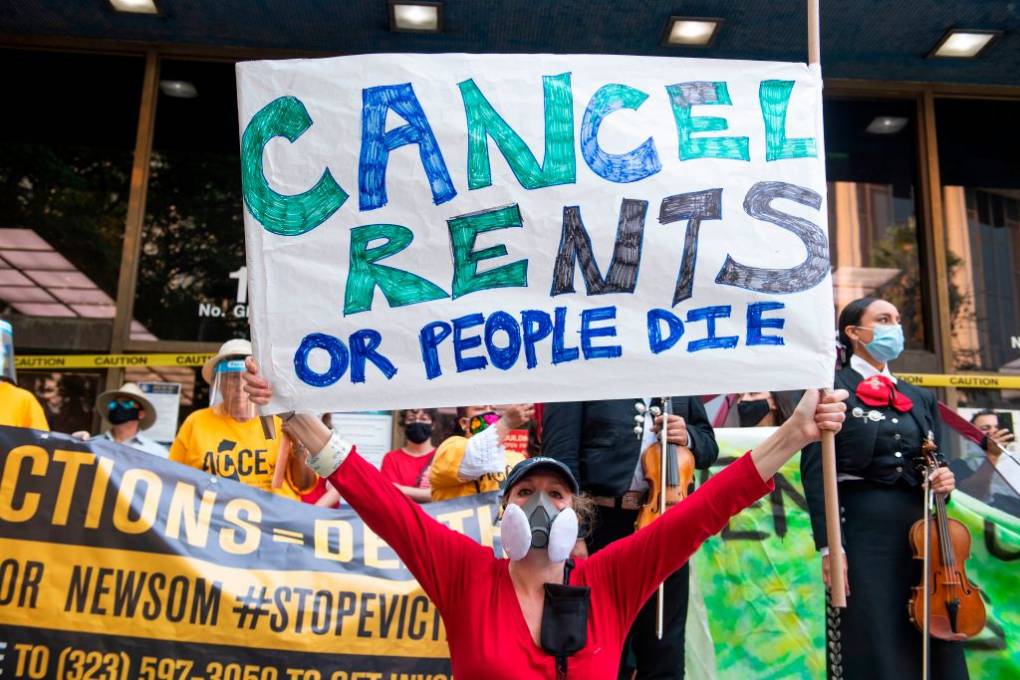
"caption": "Los Angeles renters and housing advocates demonstrate on Aug. 21, 2020, against evictions in the region. ",
"description": null,
"title": "US-ECONOMY-RENT-VIRUS-HEALTH",
"credit": "Valerie Macon/AFP via Getty Images",
"status": "inherit",
"altTag": "A woman holds up a big sign that says \"Cancel Rents of People Die.\"",
"isLoading": false,
"fetchFailed": false
},
"news_11879728": {
"type": "attachments",
"id": "news_11879728",
"meta": {
"index": "attachments_1716263798",
"site": "news",
"id": "11879728",
"found": true
},
"parent": 11879725,
"imgSizes": {
"twentyfourteen-full-width": {
"file": "https://ww2.kqed.org/app/uploads/sites/10/2021/06/RS46906_010_SanJose_AntiEvictionProtest_01272021-qut-1-1038x576.jpg",
"width": 1038,
"mimeType": "image/jpeg",
"height": 576
},
"thumbnail": {
"file": "https://ww2.kqed.org/app/uploads/sites/10/2021/06/RS46906_010_SanJose_AntiEvictionProtest_01272021-qut-1-160x107.jpg",
"width": 160,
"mimeType": "image/jpeg",
"height": 107
},
"post-thumbnail": {
"file": "https://ww2.kqed.org/app/uploads/sites/10/2021/06/RS46906_010_SanJose_AntiEvictionProtest_01272021-qut-1-672x372.jpg",
"width": 672,
"mimeType": "image/jpeg",
"height": 372
},
"kqedFullSize": {
"file": "https://ww2.kqed.org/app/uploads/sites/10/2021/06/RS46906_010_SanJose_AntiEvictionProtest_01272021-qut-1.jpg",
"width": 1920,
"height": 1280
},
"large": {
"file": "https://ww2.kqed.org/app/uploads/sites/10/2021/06/RS46906_010_SanJose_AntiEvictionProtest_01272021-qut-1-1020x680.jpg",
"width": 1020,
"mimeType": "image/jpeg",
"height": 680
},
"1536x1536": {
"file": "https://ww2.kqed.org/app/uploads/sites/10/2021/06/RS46906_010_SanJose_AntiEvictionProtest_01272021-qut-1-1536x1024.jpg",
"width": 1536,
"mimeType": "image/jpeg",
"height": 1024
},
"medium": {
"file": "https://ww2.kqed.org/app/uploads/sites/10/2021/06/RS46906_010_SanJose_AntiEvictionProtest_01272021-qut-1-800x533.jpg",
"width": 800,
"mimeType": "image/jpeg",
"height": 533
}
},
"publishDate": 1624993427,
"modified": 1648493683,
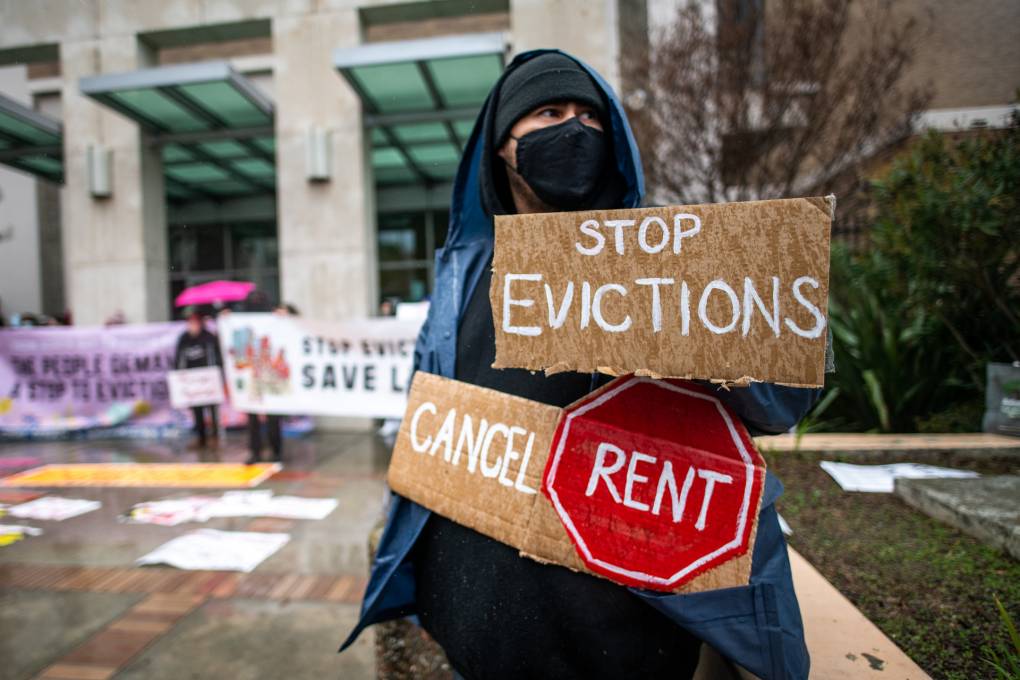
"caption": "An anti-eviction protester stands in front of Santa Clara County Superior Court on Jan. 27, 2021, during a demonstration calling for stronger statewide eviction protections.",
"description": null,
"title": "RS46906_010_SanJose_AntiEvictionProtest_01272021-qut",
"credit": "Beth LaBerge/KQED",
"status": "inherit",
"altTag": "A person wearing a black face mask and a jacket stands outside holding signs that read \"Stop Evictions\" and \"Cancel Rent.\"",
"isLoading": false,
"fetchFailed": false
}
},
"audioPlayerReducer": {
"postId": "stream_live",
"isPaused": true,
"isPlaying": false,
"pfsActive": false,
"pledgeModalIsOpen": true,
"playerDrawerIsOpen": false,
"liveAudioPlayStartedAt": 0,
"liveAudioPlayContext": ""
},
"authorsReducer": {
"byline_news_11978394": {
"type": "authors",
"id": "byline_news_11978394",
"meta": {
"override": true
},
"slug": "byline_news_11978394",
"name": "\u003ca href=\"https://calmatters.org/author/levi-sumagaysay/\">Levi Sumagaysay\u003c/a>",
"isLoading": false
},
"byline_news_11935109": {
"type": "authors",
"id": "byline_news_11935109",
"meta": {
"override": true
},
"slug": "byline_news_11935109",
"name": "Scott Horsley",
"isLoading": false
},
"byline_news_11909518": {
"type": "authors",
"id": "byline_news_11909518",
"meta": {
"override": true
},
"slug": "byline_news_11909518",
"name": "\u003ca href=\"https://calmatters.org/author/manuela-tobias\">Manuela Tobias\u003c/a> ",
"isLoading": false
},
"kdomara": {
"type": "authors",
"id": "1459",
"meta": {
"index": "authors_1716337520",
"id": "1459",
"found": true
},
"name": "Kelly O'Mara",
"firstName": "Kelly",
"lastName": "O'Mara",
"slug": "kdomara",
"email": "komara@kqed.org",
"display_author_email": false,
"staff_mastheads": [
"news"
],
"title": "KQED Contributor",
"bio": "Kelly O'Mara is a writer and reporter in the San Francisco Bay Area. She writes about food, health, sports, travel, business and California news. Her work has appeared on KQED, online for Outside Magazine, epsnW, VICE and in Competitor Magazine, among others. Follow Kelly on Twitter \u003ca href=\"https://twitter.com/kellydomara\">@kellydomara\u003c/a>.",
"avatar": "https://secure.gravatar.com/avatar/768fec7412028b72f13bdd0f5f9d8186?s=600&d=blank&r=g",
"twitter": null,
"facebook": null,
"instagram": null,
"linkedin": null,
"sites": [
{
"site": "arts",
"roles": []
},
{
"site": "news",
"roles": []
},
{
"site": "bayareabites",
"roles": []
},
{
"site": "stateofhealth",
"roles": []
},
{
"site": "science",
"roles": []
},
{
"site": "checkplease",
"roles": [
"editor"
]
},
{
"site": "food",
"roles": []
},
{
"site": "forum",
"roles": [
"editor"
]
},
{
"site": "liveblog",
"roles": [
"editor"
]
}
],
"headData": {
"title": "Kelly O'Mara | KQED",
"description": "KQED Contributor",
"ogImgSrc": "https://secure.gravatar.com/avatar/768fec7412028b72f13bdd0f5f9d8186?s=600&d=blank&r=g",
"twImgSrc": "https://secure.gravatar.com/avatar/768fec7412028b72f13bdd0f5f9d8186?s=600&d=blank&r=g"
},
"isLoading": false,
"link": "/author/kdomara"
},
"carlysevern": {
"type": "authors",
"id": "3243",
"meta": {
"index": "authors_1716337520",
"id": "3243",
"found": true
},
"name": "Carly Severn",
"firstName": "Carly",
"lastName": "Severn",
"slug": "carlysevern",
"email": "csevern@kqed.org",
"display_author_email": false,
"staff_mastheads": [
"news"
],
"title": "Senior Editor, Audience News ",
"bio": "Carly is KQED's Senior Editor of Audience News on the Digital News team, and has reported for the California Report Magazine, Bay Curious and KQED Arts. She's formerly the host of \u003ca href=\"http://ww2.kqed.org/pop/category/the-cooler/\" rel=\"noopener noreferrer\">The Cooler\u003c/a> podcast.",
"avatar": "https://secure.gravatar.com/avatar/54037bf5c128fe678f0ef26cec97a93f2e7f220a22d7285703328f12c42c1b1d?s=600&d=blank&r=g",
"twitter": "teacupinthebay",
"bluesky": null,
"facebook": null,
"instagram": null,
"linkedin": null,
"sites": [
{
"site": "",
"roles": [
"editor"
]
},
{
"site": "arts",
"roles": [
"editor"
]
},
{
"site": "news",
"roles": [
"administrator"
]
},
{
"site": "pop",
"roles": [
"editor"
]
},
{
"site": "futureofyou",
"roles": [
"editor"
]
},
{
"site": "about",
"roles": [
"administrator"
]
},
{
"site": "mindshift",
"roles": [
"editor"
]
},
{
"site": "bayareabites",
"roles": [
"editor"
]
},
{
"site": "stateofhealth",
"roles": [
"editor"
]
},
{
"site": "science",
"roles": [
"editor"
]
},
{
"site": "food",
"roles": [
"contributor"
]
},
{
"site": "forum",
"roles": [
"editor"
]
},
{
"site": "perspectives",
"roles": [
"administrator"
]
},
{
"site": "liveblog",
"roles": [
"editor"
]
}
],
"headData": {
"title": "Carly Severn | KQED",
"description": "Senior Editor, Audience News ",
"ogImgSrc": "https://secure.gravatar.com/avatar/54037bf5c128fe678f0ef26cec97a93f2e7f220a22d7285703328f12c42c1b1d?s=600&d=blank&r=g",
"twImgSrc": "https://secure.gravatar.com/avatar/54037bf5c128fe678f0ef26cec97a93f2e7f220a22d7285703328f12c42c1b1d?s=600&d=blank&r=g"
},
"isLoading": false,
"link": "/author/carlysevern"
},
"vrancano": {
"type": "authors",
"id": "11276",
"meta": {
"index": "authors_1716337520",
"id": "11276",
"found": true
},
"name": "Vanessa Rancaño",
"firstName": "Vanessa",
"lastName": "Rancaño",
"slug": "vrancano",
"email": "vrancano@kqed.org",
"display_author_email": false,
"staff_mastheads": [
"news"
],
"title": "Reporter",
"bio": "Vanessa Rancaño is a features reporter for KQED. She’s also covered homelessness and education for the station and reported from the Central Valley. Her work has aired across public radio, from flagship national news shows to longform narrative podcasts. Before taking up a mic, she worked as a freelance print journalist. She’s been recognized with a number of national and regional awards. Vanessa grew up in California's Central Valley. She's a former NPR Kroc Fellow, and a graduate of the UC Berkeley Graduate School of Journalism.",
"avatar": "https://secure.gravatar.com/avatar/b3a383dfb0e7ee1c17568f2cf067904ab654d6e3de9743fc661f3c788ade1bed?s=600&d=blank&r=g",
"twitter": "vanessarancano",
"bluesky": null,
"facebook": null,
"instagram": null,
"linkedin": null,
"sites": [
{
"site": "arts",
"roles": [
"editor"
]
},
{
"site": "news",
"roles": [
"editor"
]
},
{
"site": "liveblog",
"roles": [
"contributor"
]
}
],
"headData": {
"title": "Vanessa Rancaño | KQED",
"description": "Reporter",
"ogImgSrc": "https://secure.gravatar.com/avatar/b3a383dfb0e7ee1c17568f2cf067904ab654d6e3de9743fc661f3c788ade1bed?s=600&d=blank&r=g",
"twImgSrc": "https://secure.gravatar.com/avatar/b3a383dfb0e7ee1c17568f2cf067904ab654d6e3de9743fc661f3c788ade1bed?s=600&d=blank&r=g"
},
"isLoading": false,
"link": "/author/vrancano"
},
"katewolffe": {
"type": "authors",
"id": "11523",
"meta": {
"index": "authors_1716337520",
"id": "11523",
"found": true
},
"name": "Kate Wolffe",
"firstName": "Kate",
"lastName": "Wolffe",
"slug": "katewolffe",
"email": "kwolffe@kqed.org",
"display_author_email": true,
"staff_mastheads": [
"news"
],
"title": "KQED Reporter + Weekend Host",
"bio": "Kate Wolffe reports on local Bay Area happenings for KQED, and hosts the news on weekend afternoons. She joined KQED in 2018 as an intern on the Forum team, before moving to cover topics ranging from politics to criminal justice to homelessness. A Bay Area native and UC Berkeley graduate, Kate loves to discover new corners of the region.",
"avatar": "https://secure.gravatar.com/avatar/22455f14db824a03ee252f73052fe939?s=600&d=blank&r=g",
"twitter": "katewolffe",
"facebook": null,
"instagram": null,
"linkedin": null,
"sites": [
{
"site": "arts",
"roles": [
"editor"
]
},
{
"site": "news",
"roles": [
"author",
"edit_others_posts"
]
},
{
"site": "forum",
"roles": [
"editor"
]
}
],
"headData": {
"title": "Kate Wolffe | KQED",
"description": "KQED Reporter + Weekend Host",
"ogImgSrc": "https://secure.gravatar.com/avatar/22455f14db824a03ee252f73052fe939?s=600&d=blank&r=g",
"twImgSrc": "https://secure.gravatar.com/avatar/22455f14db824a03ee252f73052fe939?s=600&d=blank&r=g"
},
"isLoading": false,
"link": "/author/katewolffe"
},
"kmoghadam": {
"type": "authors",
"id": "11637",
"meta": {
"index": "authors_1716337520",
"id": "11637",
"found": true
},
"name": "Kyana Moghadam",
"firstName": "Kyana",
"lastName": "Moghadam",
"slug": "kmoghadam",
"email": "kmoghadam@kqed.org",
"display_author_email": false,
"staff_mastheads": [
"news"
],
"title": "Senior Producer ",
"bio": "Kyana Moghadam is a senior producer at KQED. Prior to joining KQED, she was an audio producer and editor with Al Jazeera, Jetty Studios, VOX Media, Democracy Now!, and Global Press.",
"avatar": "https://secure.gravatar.com/avatar/cdbd6cb0b9e99deaa9eb618abdba56f265d374a2c614710aebeb4e58decbc5f0?s=600&d=blank&r=g",
"twitter": null,
"bluesky": null,
"facebook": null,
"instagram": null,
"linkedin": "https://www.linkedin.com/in/kyanamoghadam/",
"sites": [
{
"site": "",
"roles": [
"editor"
]
},
{
"site": "arts",
"roles": [
"editor"
]
},
{
"site": "news",
"roles": [
"administrator"
]
},
{
"site": "pop",
"roles": [
"editor"
]
},
{
"site": "about",
"roles": [
"editor"
]
},
{
"site": "forum",
"roles": [
"editor"
]
},
{
"site": "perspectives",
"roles": [
"editor"
]
},
{
"site": "podcasts",
"roles": [
"administrator"
]
}
],
"headData": {
"title": "Kyana Moghadam | KQED",
"description": "Senior Producer ",
"ogImgSrc": "https://secure.gravatar.com/avatar/cdbd6cb0b9e99deaa9eb618abdba56f265d374a2c614710aebeb4e58decbc5f0?s=600&d=blank&r=g",
"twImgSrc": "https://secure.gravatar.com/avatar/cdbd6cb0b9e99deaa9eb618abdba56f265d374a2c614710aebeb4e58decbc5f0?s=600&d=blank&r=g"
},
"isLoading": false,
"link": "/author/kmoghadam"
},
"ebaldassari": {
"type": "authors",
"id": "11652",
"meta": {
"index": "authors_1716337520",
"id": "11652",
"found": true
},
"name": "Erin Baldassari",
"firstName": "Erin",
"lastName": "Baldassari",
"slug": "ebaldassari",
"email": "ebaldassari@KQED.org",
"display_author_email": true,
"staff_mastheads": [
"news"
],
"title": "Staff Writer",
"bio": "Erin Baldassari covers housing for KQED. She's a former print journalist and most recently worked as the transportation reporter for the \u003cem>Mercury News\u003c/em> and \u003cem>East Bay Times. \u003c/em>There, she focused on how the Bay Area’s housing shortage has changed the way people move around the region. She also served on the \u003cem>East Bay Times\u003c/em>’ 2017 Pulitzer Prize-winning team for coverage of the Ghost Ship Fire in Oakland. Prior to that, Erin worked as a breaking news and general assignment reporter for a variety of outlets in the Bay Area and the greater Boston area. A Tufts University alumna, Erin grew up in the foothills of the Sierra Nevada mountains and in Sonoma County. She is a life-long KQED listener.",
"avatar": "https://secure.gravatar.com/avatar/5e95cad64a8ca08288082212e199d2b0cbeb4fd8e8ef5339395f361032bbe005?s=600&d=blank&r=g",
"twitter": "e_baldi",
"bluesky": null,
"facebook": null,
"instagram": null,
"linkedin": null,
"sites": [
{
"site": "news",
"roles": [
"edit_others_posts",
"editor"
]
},
{
"site": "science",
"roles": [
"editor"
]
},
{
"site": "liveblog",
"roles": [
"editor"
]
}
],
"headData": {
"title": "Erin Baldassari | KQED",
"description": "Staff Writer",
"ogImgSrc": "https://secure.gravatar.com/avatar/5e95cad64a8ca08288082212e199d2b0cbeb4fd8e8ef5339395f361032bbe005?s=600&d=blank&r=g",
"twImgSrc": "https://secure.gravatar.com/avatar/5e95cad64a8ca08288082212e199d2b0cbeb4fd8e8ef5339395f361032bbe005?s=600&d=blank&r=g"
},
"isLoading": false,
"link": "/author/ebaldassari"
},
"naldana": {
"type": "authors",
"id": "11793",
"meta": {
"index": "authors_1716337520",
"id": "11793",
"found": true
},
"name": "Natalia Aldana",
"firstName": "Natalia",
"lastName": "Aldana",
"slug": "naldana",
"email": "naldana@kqed.org",
"display_author_email": false,
"staff_mastheads": [],
"title": "KQED Producer",
"bio": "Natalia Aldana is the senior engagement producer for KQED podcasts.",
"avatar": "https://secure.gravatar.com/avatar/c784d8a94359b38cc84991c1a7a565b2?s=600&d=blank&r=g",
"twitter": null,
"facebook": null,
"instagram": null,
"linkedin": null,
"sites": [
{
"site": "news",
"roles": [
"editor"
]
}
],
"headData": {
"title": "Natalia Aldana | KQED",
"description": "KQED Producer",
"ogImgSrc": "https://secure.gravatar.com/avatar/c784d8a94359b38cc84991c1a7a565b2?s=600&d=blank&r=g",
"twImgSrc": "https://secure.gravatar.com/avatar/c784d8a94359b38cc84991c1a7a565b2?s=600&d=blank&r=g"
},
"isLoading": false,
"link": "/author/naldana"
},
"apelit": {
"type": "authors",
"id": "11812",
"meta": {
"index": "authors_1716337520",
"id": "11812",
"found": true
},
"name": "Attila Pelit",
"firstName": "Attila",
"lastName": "Pelit",
"slug": "apelit",
"email": "apelit@kqed.org",
"display_author_email": false,
"staff_mastheads": [],
"title": "KQED Contributor",
"bio": null,
"avatar": "https://secure.gravatar.com/avatar/9b7b8a9e595d58a1f4d853f8608ae584?s=600&d=mm&r=g",
"twitter": null,
"facebook": null,
"instagram": null,
"linkedin": null,
"sites": [
{
"site": "news",
"roles": [
"editor"
]
},
{
"site": "science",
"roles": [
"editor"
]
},
{
"site": "elections",
"roles": [
"editor"
]
},
{
"site": "liveblog",
"roles": [
"editor"
]
}
],
"headData": {
"title": "Attila Pelit | KQED",
"description": "KQED Contributor",
"ogImgSrc": "https://secure.gravatar.com/avatar/9b7b8a9e595d58a1f4d853f8608ae584?s=600&d=mm&r=g",
"twImgSrc": "https://secure.gravatar.com/avatar/9b7b8a9e595d58a1f4d853f8608ae584?s=600&d=mm&r=g"
},
"isLoading": false,
"link": "/author/apelit"
},
"mbolanos": {
"type": "authors",
"id": "11895",
"meta": {
"index": "authors_1716337520",
"id": "11895",
"found": true
},
"name": "Madi Bolaños",
"firstName": "Madi",
"lastName": "Bolaños",
"slug": "mbolanos",
"email": "mbolanos@kqed.org",
"display_author_email": false,
"staff_mastheads": [],
"title": "KQED Contributor",
"bio": null,
"avatar": "https://secure.gravatar.com/avatar/e6df5601c1f2d951e46a3fb42764330f?s=600&d=blank&r=g",
"twitter": null,
"bluesky": null,
"facebook": null,
"instagram": null,
"linkedin": null,
"sites": [
{
"site": "news",
"roles": [
"author"
]
}
],
"headData": {
"title": "Madi Bolaños | KQED",
"description": "KQED Contributor",
"ogImgSrc": "https://secure.gravatar.com/avatar/e6df5601c1f2d951e46a3fb42764330f?s=600&d=blank&r=g",
"twImgSrc": "https://secure.gravatar.com/avatar/e6df5601c1f2d951e46a3fb42764330f?s=600&d=blank&r=g"
},
"isLoading": false,
"link": "/author/mbolanos"
}
},
"pagesReducer": {
"news_tag_rent": {
"type": "terms",
"id": "news_20967",
"meta": {
"index": "terms_1716263798",
"site": "news",
"id": "20967",
"score": 9.105365
},
"featImg": null,
"name": "Rent",
"description": null,
"taxonomy": "tag",
"headData": {
"twImgId": null,
"twTitle": null,
"ogTitle": null,
"ogImgId": null,
"twDescription": null,
"description": null,
"title": "Rent Archives | KQED News",
"ogDescription": null
},
"ttid": 20984,
"slug": "rent",
"isLoading": false,
"title": "Rent",
"pageMeta": {
"site": "news",
"WpPageTemplate": "page-topic-editorial",
"currentPage": 3
},
"blocks": [
{
"blockName": "kqed/post-list",
"attrs": {
"layout": "cardArticle2",
"query": "posts/news?tag=rent",
"seeMore": false,
"paginated": true,
"page": 3
}
},
{
"blockName": "kqed/ad"
}
]
}
},
"pfsSessionReducer": {},
"postsReducer": {
"stream_live": {
"type": "live",
"id": "stream_live",
"audioUrl": "https://streams.kqed.org/kqedradio",
"title": "Live Stream",
"excerpt": "Live Stream information currently unavailable.",
"link": "/radio",
"featImg": "",
"label": {
"name": "KQED Live",
"link": "/"
}
},
"stream_kqedNewscast": {
"type": "posts",
"id": "stream_kqedNewscast",
"audioUrl": "https://www.kqed.org/.stream/anon/radio/RDnews/newscast.mp3?_=1",
"title": "KQED Newscast",
"featImg": "",
"label": {
"name": "88.5 FM",
"link": "/"
}
},
"news_11989419": {
"type": "posts",
"id": "news_11989419",
"meta": {
"index": "posts_1716263798",
"site": "news",
"id": "11989419",
"score": null,
"sort": [
1718017210000
]
},
"guestAuthors": [],
"slug": "renters-could-get-help-building-credit-under-proposed-law-why-are-tenant-advocates-wary",
"title": "Renters Could Get Help Building Credit Under Proposed Law. Why Are Tenant Advocates Wary?",
"publishDate": 1718017210,
"format": "standard",
"headTitle": "Renters Could Get Help Building Credit Under Proposed Law. Why Are Tenant Advocates Wary? | KQED",
"labelTerm": {
"site": "news"
},
"content": "\u003cp>Landlords could be required to report rent payments to credit bureaus under a proposal making its way through the state legislature.\u003c/p>\n\u003cp>Assemblymember Matt Haney introduced \u003ca href=\"https://leginfo.legislature.ca.gov/faces/billTextClient.xhtml?bill_id=202320240AB2747\">AB 2747\u003c/a>, arguing it would help renters build credit by establishing a history of timely rent payments.\u003c/p>\n\u003cp>“To have access to a lot of things, whether it’s buying a home or buying a car or even having a place to rent, you need credit,” he said. “And a lot of people find themselves without the opportunity to build credit, even when they’re doing all of the right things, like paying their rent on time.”\u003c/p>\n\u003cp>Under the proposal, property owners would have to offer to report tenants’ positive rental payment information to one of the major credit bureaus. But the law carves out a major exception: it wouldn’t apply to most buildings with 15 or fewer units. Landlords could charge tenants for the cost of reporting, up to $10 a month, and renters could put in a written request to stop the reporting but would have to wait six months to re-enroll.\u003c/p>\n\u003cp>Haney frames the proposal as a matter of fairness: When homeowners pay their mortgages each month, the payments are usually reported to credit agencies, bolstering their credit. He argues that renters shouldn’t miss out on this benefit of paying rent on time, especially since they can suffer negative credit consequences if rental debt ends up in collections.\u003c/p>\n\u003cp>[ad fullwidth]\u003c/p>\n\u003cp>UCLA senior David Ramirez, 23, is the Government Relations Committee chair for the UC Student Association and is advocating for the bill on behalf of his peers. “It could be a game changer for many students,” he said. “Once we graduate, we’re going to need to find our own housing, we’re gonna need to buy our first car and do all these other things that would require a good credit. But we’re not necessarily prepared with the tools to really do that.”\u003c/p>\n\u003cp>\u003ca href=\"https://www.consumerfinance.gov/data-research/research-reports/data-point-credit-invisibles/\">According to the Consumer Financial Protection Bureau\u003c/a>, some 45 million Americans didn’t have credit scores in 2015. This group was disproportionately young, Black, Latino and low-income.\u003c/p>\n\u003cp>Rent reporting is increasingly being touted as a way to change that. To date, \u003ca href=\"https://housingmatters.urban.org/articles/what-can-policymakers-do-advance-use-rental-payment-data-mortgage-underwriting#:~:text=Incentivizing%20rent%20reporting&text=Currently%2C%20fewer%20than%205%20percent,than%20on%2Dtime%2C%20payments.\">fewer than 5% of renter households are estimated\u003c/a> to have rental payment information reflected in their credit files, but at least \u003ca href=\"https://www.urban.org/sites/default/files/2022-03/access-to-rental-data-for-underwriting-mortgage-credit.pdf\">three states\u003c/a> now have some form of rent reporting measure in place, including California.[aside label=\"Related Stories\" tag=\"renters\"]Haney’s proposal builds off a law passed in 2020 that requires landlords with 15 or more state-subsidized affordable units to \u003ca href=\"https://leginfo.legislature.ca.gov/faces/billNavClient.xhtml?bill_id=201920200SB1157\">offer rent reporting\u003c/a>.\u003c/p>\n\u003cp>When U.S. Department of Housing and Urban Development staff \u003ca href=\"https://www.huduser.gov/portal/pdredge/pdr-edge-trending-062822.html\">interviewed property owners\u003c/a> about their experiences with that law, they expressed frustrations with setting up and administering the program. They also described tenants’ distrust and said they struggled to explain the benefits of rent reporting. They estimated that only four to 15% of their renters opted into the program.\u003c/p>\n\u003cp>Some property owner groups have voiced their opposition to the current proposal, balking at what they see as the latest effort to tighten the regulatory chokehold around their livelihoods. The California Rental Housing Association \u003ca href=\"https://leginfo.legislature.ca.gov/faces/billAnalysisClient.xhtml?bill_id=202320240AB2747#\">argues the law could create logistical and financial burdens\u003c/a> for landlords.\u003c/p>\n\u003cp>Tenant and consumer advocates are also raising concerns about the proposal.\u003c/p>\n\u003cp>“There’s too many unintended consequences in this,” said Shanti Singh, communications and legislative director for Tenants Together. “It’s really a black box for tenants. We don’t really understand how these agencies are going to actually interpret rental payment.”\u003c/p>\n\u003cp>Among the unknowns Singh and others fret over: What happens if a tenant decides to opt out of reporting after a few months, or they move into a new building that isn’t required to offer reporting, or pay only part of their rent — will that negatively impact their score? If this becomes common practice, will landlords be biased against tenants who haven’t reported their rent payments? And what does that mean for those who can’t afford to pay for it?[aside label=\"More Coverage\" tag=\"tenants\"]National groups have \u003ca href=\"https://www.nclc.org/resources/even-the-catch-22s-come-with-catch-22s-potential-harms-drawbacks-of-rent-reporting/\">aired concerns about the practice\u003c/a> of rent reporting in general, arguing the biggest risks come with reporting both positive and negative rental payment history — but even reporting only on-time payments, like Haney’s bill proposes, could prove detrimental.\u003c/p>\n\u003cp>\u003ca href=\"https://www.urban.org/sites/default/files/2022-03/access-to-rental-data-for-underwriting-mortgage-credit.pdf\">Studies on the impacts of reporting positive rent payments\u003c/a> find that the vast majority of tenants experience credit score increases, but a subset see their scores drop. (Skeptics note the findings can be misleadingly positive because the studies involve small sample sizes and often \u003ca href=\"https://www.creditbuildersalliance.org/wp-content/uploads/2019/06/CBA-Power-of-Rent-Reporting-Pilot-White-Paper.pdf\">focus on residents in subsidized housing\u003c/a> whose rent payments are designed to be affordable. In some cases, the pilot programs paired \u003ca href=\"https://www.creditbuildersalliance.org/wp-content/uploads/2019/06/CBA-Power-of-Rent-Reporting-Pilot-White-Paper.pdf\">rent reporting with financial coaching\u003c/a>.)\u003c/p>\n\u003cp>Tina Rosales-Torres, a housing policy advocate with the Western Center on Law and Poverty, shares many of these concerns. But because Haney’s bill has so far gotten strong support from lawmakers, she’s focused on working with them to improve it. “How do we make it the best for people if it’s going to happen?” she said. “How do we ensure people can actually use this?”\u003c/p>\n\u003cp>\u003c/p>\n\u003cp>To that end, she’s pushing for fewer property owners to be exempted from the law. As the proposal stands, buildings with fewer than 15 units would be exempt, unless they’re owned by an LLC, a corporation, a trust or an individual with multiple residential properties. “The right to build their credit really shouldn’t be determined based on who owns their home,” she said.\u003c/p>\n\n",
"blocks": [],
"excerpt": "The bill requires property owners to offer to report tenants’ positive rental payment information to one of the major credit bureaus. However, tenant advocates warn that there could be unintended consequences. And landlords say the law could create logistical and financial burdens for them.",
"status": "publish",
"parent": 0,
"modified": 1738785244,
"stats": {
"hasAudio": false,
"hasVideo": false,
"hasChartOrMap": false,
"iframeSrcs": [],
"hasGoogleForm": false,
"hasGallery": false,
"hasHearkenModule": false,
"hasPolis": false,
"paragraphCount": 18,
"wordCount": 969
},
"headData": {
"title": "Renters Could Get Help Building Credit Under Proposed Law. Why Are Tenant Advocates Wary? | KQED",
"description": "The bill requires property owners to offer to report tenants’ positive rental payment information to one of the major credit bureaus. However, tenant advocates warn that there could be unintended consequences. And landlords say the law could create logistical and financial burdens for them.",
"ogTitle": "",
"ogDescription": "",
"ogImgId": "",
"twTitle": "",
"twDescription": "",
"twImgId": "",
"schema": {
"@context": "https://schema.org",
"@type": "NewsArticle",
"headline": "Renters Could Get Help Building Credit Under Proposed Law. Why Are Tenant Advocates Wary?",
"datePublished": "2024-06-10T04:00:10-07:00",
"dateModified": "2025-02-05T11:54:04-08:00",
"image": "https://cdn.kqed.org/wp-content/uploads/2020/02/KQED-OG-Image@1x.png",
"isAccessibleForFree": "True",
"publisher": {
"@type": "NewsMediaOrganization",
"@id": "https://www.kqed.org/#organization",
"name": "KQED",
"logo": "https://cdn.kqed.org/wp-content/uploads/2020/02/KQED-OG-Image@1x.png",
"url": "https://www.kqed.org",
"sameAs": [
"https://www.facebook.com/KQED",
"https://twitter.com/KQED",
"https://www.instagram.com/kqed/",
"https://www.tiktok.com/@kqedofficial",
"https://www.linkedin.com/company/kqed",
"https://www.youtube.com/channel/UCeC0IOo7i1P_61zVUWbJ4nw"
]
}
}
},
"sticky": false,
"nprStoryId": "kqed-11989419",
"excludeFromSiteSearch": "Include",
"articleAge": "0",
"path": "/news/11989419/renters-could-get-help-building-credit-under-proposed-law-why-are-tenant-advocates-wary",
"audioTrackLength": null,
"parsedContent": [
{
"type": "contentString",
"content": "\u003cdiv class=\"post-body\">\u003cp>\u003cp>Landlords could be required to report rent payments to credit bureaus under a proposal making its way through the state legislature.\u003c/p>\n\u003cp>Assemblymember Matt Haney introduced \u003ca href=\"https://leginfo.legislature.ca.gov/faces/billTextClient.xhtml?bill_id=202320240AB2747\">AB 2747\u003c/a>, arguing it would help renters build credit by establishing a history of timely rent payments.\u003c/p>\n\u003cp>“To have access to a lot of things, whether it’s buying a home or buying a car or even having a place to rent, you need credit,” he said. “And a lot of people find themselves without the opportunity to build credit, even when they’re doing all of the right things, like paying their rent on time.”\u003c/p>\n\u003cp>Under the proposal, property owners would have to offer to report tenants’ positive rental payment information to one of the major credit bureaus. But the law carves out a major exception: it wouldn’t apply to most buildings with 15 or fewer units. Landlords could charge tenants for the cost of reporting, up to $10 a month, and renters could put in a written request to stop the reporting but would have to wait six months to re-enroll.\u003c/p>\n\u003cp>Haney frames the proposal as a matter of fairness: When homeowners pay their mortgages each month, the payments are usually reported to credit agencies, bolstering their credit. He argues that renters shouldn’t miss out on this benefit of paying rent on time, especially since they can suffer negative credit consequences if rental debt ends up in collections.\u003c/p>\n\u003cp>\u003c/p>\u003c/div>",
"attributes": {
"named": {},
"numeric": []
}
},
{
"type": "component",
"content": "",
"name": "ad",
"attributes": {
"named": {
"label": "fullwidth"
},
"numeric": [
"fullwidth"
]
}
},
{
"type": "contentString",
"content": "\u003cdiv class=\"post-body\">\u003cp>\u003c/p>\n\u003cp>UCLA senior David Ramirez, 23, is the Government Relations Committee chair for the UC Student Association and is advocating for the bill on behalf of his peers. “It could be a game changer for many students,” he said. “Once we graduate, we’re going to need to find our own housing, we’re gonna need to buy our first car and do all these other things that would require a good credit. But we’re not necessarily prepared with the tools to really do that.”\u003c/p>\n\u003cp>\u003ca href=\"https://www.consumerfinance.gov/data-research/research-reports/data-point-credit-invisibles/\">According to the Consumer Financial Protection Bureau\u003c/a>, some 45 million Americans didn’t have credit scores in 2015. This group was disproportionately young, Black, Latino and low-income.\u003c/p>\n\u003cp>Rent reporting is increasingly being touted as a way to change that. To date, \u003ca href=\"https://housingmatters.urban.org/articles/what-can-policymakers-do-advance-use-rental-payment-data-mortgage-underwriting#:~:text=Incentivizing%20rent%20reporting&text=Currently%2C%20fewer%20than%205%20percent,than%20on%2Dtime%2C%20payments.\">fewer than 5% of renter households are estimated\u003c/a> to have rental payment information reflected in their credit files, but at least \u003ca href=\"https://www.urban.org/sites/default/files/2022-03/access-to-rental-data-for-underwriting-mortgage-credit.pdf\">three states\u003c/a> now have some form of rent reporting measure in place, including California.\u003c/p>\u003c/div>",
"attributes": {
"named": {},
"numeric": []
}
},
{
"type": "component",
"content": "",
"name": "aside",
"attributes": {
"named": {
"label": "Related Stories ",
"tag": "renters"
},
"numeric": []
}
},
{
"type": "contentString",
"content": "\u003cdiv class=\"post-body\">\u003cp>Haney’s proposal builds off a law passed in 2020 that requires landlords with 15 or more state-subsidized affordable units to \u003ca href=\"https://leginfo.legislature.ca.gov/faces/billNavClient.xhtml?bill_id=201920200SB1157\">offer rent reporting\u003c/a>.\u003c/p>\n\u003cp>When U.S. Department of Housing and Urban Development staff \u003ca href=\"https://www.huduser.gov/portal/pdredge/pdr-edge-trending-062822.html\">interviewed property owners\u003c/a> about their experiences with that law, they expressed frustrations with setting up and administering the program. They also described tenants’ distrust and said they struggled to explain the benefits of rent reporting. They estimated that only four to 15% of their renters opted into the program.\u003c/p>\n\u003cp>Some property owner groups have voiced their opposition to the current proposal, balking at what they see as the latest effort to tighten the regulatory chokehold around their livelihoods. The California Rental Housing Association \u003ca href=\"https://leginfo.legislature.ca.gov/faces/billAnalysisClient.xhtml?bill_id=202320240AB2747#\">argues the law could create logistical and financial burdens\u003c/a> for landlords.\u003c/p>\n\u003cp>Tenant and consumer advocates are also raising concerns about the proposal.\u003c/p>\n\u003cp>“There’s too many unintended consequences in this,” said Shanti Singh, communications and legislative director for Tenants Together. “It’s really a black box for tenants. We don’t really understand how these agencies are going to actually interpret rental payment.”\u003c/p>\n\u003cp>Among the unknowns Singh and others fret over: What happens if a tenant decides to opt out of reporting after a few months, or they move into a new building that isn’t required to offer reporting, or pay only part of their rent — will that negatively impact their score? If this becomes common practice, will landlords be biased against tenants who haven’t reported their rent payments? And what does that mean for those who can’t afford to pay for it?\u003c/p>\u003c/div>",
"attributes": {
"named": {},
"numeric": []
}
},
{
"type": "component",
"content": "",
"name": "aside",
"attributes": {
"named": {
"label": "More Coverage ",
"tag": "tenants"
},
"numeric": []
}
},
{
"type": "contentString",
"content": "\u003cdiv class=\"post-body\">\u003cp>National groups have \u003ca href=\"https://www.nclc.org/resources/even-the-catch-22s-come-with-catch-22s-potential-harms-drawbacks-of-rent-reporting/\">aired concerns about the practice\u003c/a> of rent reporting in general, arguing the biggest risks come with reporting both positive and negative rental payment history — but even reporting only on-time payments, like Haney’s bill proposes, could prove detrimental.\u003c/p>\n\u003cp>\u003ca href=\"https://www.urban.org/sites/default/files/2022-03/access-to-rental-data-for-underwriting-mortgage-credit.pdf\">Studies on the impacts of reporting positive rent payments\u003c/a> find that the vast majority of tenants experience credit score increases, but a subset see their scores drop. (Skeptics note the findings can be misleadingly positive because the studies involve small sample sizes and often \u003ca href=\"https://www.creditbuildersalliance.org/wp-content/uploads/2019/06/CBA-Power-of-Rent-Reporting-Pilot-White-Paper.pdf\">focus on residents in subsidized housing\u003c/a> whose rent payments are designed to be affordable. In some cases, the pilot programs paired \u003ca href=\"https://www.creditbuildersalliance.org/wp-content/uploads/2019/06/CBA-Power-of-Rent-Reporting-Pilot-White-Paper.pdf\">rent reporting with financial coaching\u003c/a>.)\u003c/p>\n\u003cp>Tina Rosales-Torres, a housing policy advocate with the Western Center on Law and Poverty, shares many of these concerns. But because Haney’s bill has so far gotten strong support from lawmakers, she’s focused on working with them to improve it. “How do we make it the best for people if it’s going to happen?” she said. “How do we ensure people can actually use this?”\u003c/p>\n\u003cp>\u003c/p>\n\u003cp>To that end, she’s pushing for fewer property owners to be exempted from the law. As the proposal stands, buildings with fewer than 15 units would be exempt, unless they’re owned by an LLC, a corporation, a trust or an individual with multiple residential properties. “The right to build their credit really shouldn’t be determined based on who owns their home,” she said.\u003c/p>\n\n\u003c/div>\u003c/p>",
"attributes": {
"named": {},
"numeric": []
}
}
],
"link": "/news/11989419/renters-could-get-help-building-credit-under-proposed-law-why-are-tenant-advocates-wary",
"authors": [
"11276"
],
"categories": [
"news_6266",
"news_8"
],
"tags": [
"news_1775",
"news_28957",
"news_20967",
"news_27707"
],
"featImg": "news_11989458",
"label": "news"
},
"news_11978394": {
"type": "posts",
"id": "news_11978394",
"meta": {
"index": "posts_1716263798",
"site": "news",
"id": "11978394",
"score": null,
"sort": [
1709762424000
]
},
"guestAuthors": [],
"slug": "californians-face-higher-costs-for-goods-and-services-despite-slowing-inflation",
"title": "Californians Face Higher Costs for Goods and Services Despite Slowing Inflation",
"publishDate": 1709762424,
"format": "standard",
"headTitle": "Californians Face Higher Costs for Goods and Services Despite Slowing Inflation | KQED",
"labelTerm": {},
"content": "\u003cp>Pandemic-era inflation has fallen from its peak two years ago, but the costs of many goods and services continue to rise and are still higher than before the onset of COVID-19, a couple of closely watched economic indicators show.\u003c/p>\n\u003cp>Prices have grown about 20% overall since 2020, according to an \u003ca href=\"https://lao.ca.gov/LAOEconTax/Article/Detail/766\">analysis\u003c/a> by the California Legislative Analyst’s Office based on the most recent consumer price index data. Over the past couple of months, prices in California appear to have risen slightly more than the country as a whole, according to data from the Bureau of Labor Statistics.\u003c/p>\n\u003cp>Continued rising prices are why many Californians are struggling in an economy that’s widely considered to be doing OK because the nation has avoided a recession, experts said.[pullquote size=\"medium\" align=\"right\" citation=\"Steven Hamburg, chief scientist, Environmental Defense Fund\"]‘When you go to the grocery store, your total bill is still much higher overall than a few years ago.’[/pullquote]While a slowdown in inflation, or price growth, is “great news, it’s not like those prices are declining,” said Sarah Bohn, economist and director of the Public Policy Institute of California Economic Policy Center. “When you go to the grocery store, your total bill is still much higher overall than a few years ago,” she said.\u003c/p>\n\u003cp>What’s more, Bohn said Californians’ wages have not kept up with inflation: “Wages only grew 15% than before the pandemic. On paper, that looks amazing, like a $5-an-hour increase. But after inflation, it feels like a pay cut — I \u003ca href=\"https://www.ppic.org/blog/whats-in-store-for-californias-economy/\">calculated\u003c/a> that it’s like a $1.25-an-hour cut.”\u003c/p>\n\u003cp>That’s a big concern, especially for low- and middle-income families who “have a lot less flexibility in terms of what they’re spending their resources on,” Bohn said.\u003c/p>\n\u003cp>Nationwide, services are mostly responsible for continued inflation, Bureau of Labor Statistics data shows. The prices of goods such as new vehicles and meat, poultry, eggs and fish were unchanged from December to January, while overall food prices were up almost 0.4%, slightly lower than the previous two months. Consumer costs for services such as electricity, rent, medical care, airfares and health and auto insurance all rose.\u003c/p>\n\u003cp>But in California, high prices for both goods and services persist.\u003c/p>\n\u003cp>[ad fullwidth]\u003c/p>\n\u003cp>Food banks say the cost of buying food hasn’t gone down — and the demand for their services remains high \u003ca href=\"https://calmatters.org/california-divide/2023/12/food-insecurity-california/\">as pandemic aid has expired\u003c/a> and inflation remains.\u003c/p>\n\u003cp>While the San Francisco-Marin Food Bank hasn’t seen “major” price increases for meat, and produce prices have stabilized, it continues to see high prices for some food, spokesperson Keely Hopkins said. The average price the food bank has paid for eggs has risen by $2.27 a dozen over the past eight months, Hopkins said.[aside postID=news_11953447 hero='https://ww2.kqed.org/app/uploads/sites/10/2023/06/RS66300_230613-SFMarinFoodPantry-11-BL-KQED-1020x680.jpg']High food prices have also been a problem for the Los Angeles Regional Food Bank, which buys 10% of its inventory to supplement donated food: The food bank now serves an average of 900,000 people per month, two and a half times the monthly average pre-pandemic.\u003c/p>\n\u003cp>“[That’s] the impact of the end of COVID-era programs such as the SNAP/CalFresh benefit boost and the continued impact of inflation,” said David May, a spokesperson for the food bank.\u003c/p>\n\u003cp>On the services side, some California residents are \u003ca href=\"https://calmatters.org/economy/2023/12/california-car-insurance/\">struggling to get affordable auto insurance\u003c/a>, with premiums rising 17.7% from 2023 to 2024, according to Bankrate.com. Electricity prices have also increased as regulators approve \u003ca href=\"https://calmatters.org/california-divide/2024/02/utility-rate-hikes-california/\">rate hikes\u003c/a> by major utilities such as PG&E.\u003c/p>\n\u003cp>As for rent, “shelter is the major driver of services inflation in the inflation numbers,” said Jerry Nickelsburg, senior economist for the UCLA Anderson Forecast. He added, “We are seeing a slowing in rental rates [negative in some parts of the state], but as leases come due and rent-stabilized units are vacated, average rents increase to today’s market rents.”\u003c/p>\n\u003cp>Rent in California is 38% higher than the national median, according to real-estate listings company Zillow. This month, the median rent of $2,755 in the state rose $5 from the month before but is $195 less than in March 2023, Zillow data shows.[pullquote size=\"medium\" align=\"right\" citation=\"Jerry Nickelsburg, senior economist, UCLA Anderson Forecast\"]‘We are seeing a slowing in rental rates [negative in some parts of the state], but as leases come due and rent-stabilized units are vacated, average rents increase to today’s market rents.’[/pullquote]Meanwhile, the personal consumption expenditures price index, which excludes food and energy costs, rose 0.4% in January from the previous month and 2.8% from the previous year, according to data released by the Commerce Department’s Bureau of Economic Analysis last week.\u003c/p>\n\u003cp>The Federal Reserve \u003ca href=\"https://www.cnbc.com/2024/02/29/pce-inflation-january-2023-.html\">is said to focus more on this index\u003c/a> instead of the consumer price index because it more accurately reflects actual consumer spending. Either way, since the Fed’s target inflation rate is 2%, continued inflation is not likely to slash interest rates anytime soon — meaning possible continued \u003ca href=\"https://www.latimes.com/california/story/2023-09-21/tracking-home-and-rent-prices-in-southern-california\">slowness in home buying, \u003c/a>getting loans to buy big-ticket items such as cars and borrowing by businesses.\u003c/p>\n\u003cp>Nickelsburg said he does not expect the Fed to reduce interest rates in the first half of the year. That’s in line with the expectations of other economists, such as those from Wells Fargo, who said in a report last month that continued inflation means the “road back to 2% inflation likely will have some potholes.”\u003c/p>\n\u003cp>\u003c/p>\n",
"blocks": [],
"excerpt": "In California, despite services being mostly responsible for ongoing inflation, prices for food and various goods remain high, according to the consumer price index.",
"status": "publish",
"parent": 0,
"modified": 1738787247,
"stats": {
"hasAudio": false,
"hasVideo": false,
"hasChartOrMap": false,
"iframeSrcs": [],
"hasGoogleForm": false,
"hasGallery": false,
"hasHearkenModule": false,
"hasPolis": false,
"paragraphCount": 17,
"wordCount": 985
},
"headData": {
"title": "Californians Face Higher Costs for Goods and Services Despite Slowing Inflation | KQED",
"description": "In California, despite services being mostly responsible for ongoing inflation, prices for food and various goods remain high, according to the consumer price index.",
"ogTitle": "",
"ogDescription": "",
"ogImgId": "",
"twTitle": "",
"twDescription": "",
"twImgId": "",
"schema": {
"@context": "https://schema.org",
"@type": "NewsArticle",
"headline": "Californians Face Higher Costs for Goods and Services Despite Slowing Inflation",
"datePublished": "2024-03-06T14:00:24-08:00",
"dateModified": "2025-02-05T12:27:27-08:00",
"image": "https://cdn.kqed.org/wp-content/uploads/2020/02/KQED-OG-Image@1x.png",
"isAccessibleForFree": "True",
"publisher": {
"@type": "NewsMediaOrganization",
"@id": "https://www.kqed.org/#organization",
"name": "KQED",
"logo": "https://cdn.kqed.org/wp-content/uploads/2020/02/KQED-OG-Image@1x.png",
"url": "https://www.kqed.org",
"sameAs": [
"https://www.facebook.com/KQED",
"https://twitter.com/KQED",
"https://www.instagram.com/kqed/",
"https://www.tiktok.com/@kqedofficial",
"https://www.linkedin.com/company/kqed",
"https://www.youtube.com/channel/UCeC0IOo7i1P_61zVUWbJ4nw"
]
}
}
},
"source": "CalMatters",
"sourceUrl": "https://calmatters.org/",
"sticky": false,
"nprByline": "\u003ca href=\"https://calmatters.org/author/levi-sumagaysay/\">Levi Sumagaysay\u003c/a>",
"excludeFromSiteSearch": "Include",
"showOnAuthorArchivePages": "No",
"articleAge": "0",
"path": "/news/11978394/californians-face-higher-costs-for-goods-and-services-despite-slowing-inflation",
"audioTrackLength": null,
"parsedContent": [
{
"type": "contentString",
"content": "\u003cdiv class=\"post-body\">\u003cp>\u003cp>Pandemic-era inflation has fallen from its peak two years ago, but the costs of many goods and services continue to rise and are still higher than before the onset of COVID-19, a couple of closely watched economic indicators show.\u003c/p>\n\u003cp>Prices have grown about 20% overall since 2020, according to an \u003ca href=\"https://lao.ca.gov/LAOEconTax/Article/Detail/766\">analysis\u003c/a> by the California Legislative Analyst’s Office based on the most recent consumer price index data. Over the past couple of months, prices in California appear to have risen slightly more than the country as a whole, according to data from the Bureau of Labor Statistics.\u003c/p>\n\u003cp>Continued rising prices are why many Californians are struggling in an economy that’s widely considered to be doing OK because the nation has avoided a recession, experts said.\u003c/p>\u003c/div>",
"attributes": {
"named": {},
"numeric": []
}
},
{
"type": "component",
"content": "‘When you go to the grocery store, your total bill is still much higher overall than a few years ago.’",
"name": "pullquote",
"attributes": {
"named": {
"size": "medium",
"align": "right",
"citation": "Steven Hamburg, chief scientist, Environmental Defense Fund",
"label": ""
},
"numeric": []
}
},
{
"type": "contentString",
"content": "\u003cdiv class=\"post-body\">\u003cp>While a slowdown in inflation, or price growth, is “great news, it’s not like those prices are declining,” said Sarah Bohn, economist and director of the Public Policy Institute of California Economic Policy Center. “When you go to the grocery store, your total bill is still much higher overall than a few years ago,” she said.\u003c/p>\n\u003cp>What’s more, Bohn said Californians’ wages have not kept up with inflation: “Wages only grew 15% than before the pandemic. On paper, that looks amazing, like a $5-an-hour increase. But after inflation, it feels like a pay cut — I \u003ca href=\"https://www.ppic.org/blog/whats-in-store-for-californias-economy/\">calculated\u003c/a> that it’s like a $1.25-an-hour cut.”\u003c/p>\n\u003cp>That’s a big concern, especially for low- and middle-income families who “have a lot less flexibility in terms of what they’re spending their resources on,” Bohn said.\u003c/p>\n\u003cp>Nationwide, services are mostly responsible for continued inflation, Bureau of Labor Statistics data shows. The prices of goods such as new vehicles and meat, poultry, eggs and fish were unchanged from December to January, while overall food prices were up almost 0.4%, slightly lower than the previous two months. Consumer costs for services such as electricity, rent, medical care, airfares and health and auto insurance all rose.\u003c/p>\n\u003cp>But in California, high prices for both goods and services persist.\u003c/p>\n\u003cp>\u003c/p>\u003c/div>",
"attributes": {
"named": {},
"numeric": []
}
},
{
"type": "component",
"content": "",
"name": "ad",
"attributes": {
"named": {
"label": "fullwidth"
},
"numeric": [
"fullwidth"
]
}
},
{
"type": "contentString",
"content": "\u003cdiv class=\"post-body\">\u003cp>\u003c/p>\n\u003cp>Food banks say the cost of buying food hasn’t gone down — and the demand for their services remains high \u003ca href=\"https://calmatters.org/california-divide/2023/12/food-insecurity-california/\">as pandemic aid has expired\u003c/a> and inflation remains.\u003c/p>\n\u003cp>While the San Francisco-Marin Food Bank hasn’t seen “major” price increases for meat, and produce prices have stabilized, it continues to see high prices for some food, spokesperson Keely Hopkins said. The average price the food bank has paid for eggs has risen by $2.27 a dozen over the past eight months, Hopkins said.\u003c/p>\u003c/div>",
"attributes": {
"named": {},
"numeric": []
}
},
{
"type": "component",
"content": "",
"name": "aside",
"attributes": {
"named": {
"postid": "news_11953447",
"hero": "https://ww2.kqed.org/app/uploads/sites/10/2023/06/RS66300_230613-SFMarinFoodPantry-11-BL-KQED-1020x680.jpg",
"label": ""
},
"numeric": []
}
},
{
"type": "contentString",
"content": "\u003cdiv class=\"post-body\">\u003cp>High food prices have also been a problem for the Los Angeles Regional Food Bank, which buys 10% of its inventory to supplement donated food: The food bank now serves an average of 900,000 people per month, two and a half times the monthly average pre-pandemic.\u003c/p>\n\u003cp>“[That’s] the impact of the end of COVID-era programs such as the SNAP/CalFresh benefit boost and the continued impact of inflation,” said David May, a spokesperson for the food bank.\u003c/p>\n\u003cp>On the services side, some California residents are \u003ca href=\"https://calmatters.org/economy/2023/12/california-car-insurance/\">struggling to get affordable auto insurance\u003c/a>, with premiums rising 17.7% from 2023 to 2024, according to Bankrate.com. Electricity prices have also increased as regulators approve \u003ca href=\"https://calmatters.org/california-divide/2024/02/utility-rate-hikes-california/\">rate hikes\u003c/a> by major utilities such as PG&E.\u003c/p>\n\u003cp>As for rent, “shelter is the major driver of services inflation in the inflation numbers,” said Jerry Nickelsburg, senior economist for the UCLA Anderson Forecast. He added, “We are seeing a slowing in rental rates [negative in some parts of the state], but as leases come due and rent-stabilized units are vacated, average rents increase to today’s market rents.”\u003c/p>\n\u003cp>Rent in California is 38% higher than the national median, according to real-estate listings company Zillow. This month, the median rent of $2,755 in the state rose $5 from the month before but is $195 less than in March 2023, Zillow data shows.\u003c/p>\u003c/div>",
"attributes": {
"named": {},
"numeric": []
}
},
{
"type": "component",
"content": "‘We are seeing a slowing in rental rates [negative in some parts of the state], but as leases come due and rent-stabilized units are vacated, average rents increase to today’s market rents.’",
"name": "pullquote",
"attributes": {
"named": {
"size": "medium",
"align": "right",
"citation": "Jerry Nickelsburg, senior economist, UCLA Anderson Forecast",
"label": ""
},
"numeric": []
}
},
{
"type": "contentString",
"content": "\u003cdiv class=\"post-body\">\u003cp>Meanwhile, the personal consumption expenditures price index, which excludes food and energy costs, rose 0.4% in January from the previous month and 2.8% from the previous year, according to data released by the Commerce Department’s Bureau of Economic Analysis last week.\u003c/p>\n\u003cp>The Federal Reserve \u003ca href=\"https://www.cnbc.com/2024/02/29/pce-inflation-january-2023-.html\">is said to focus more on this index\u003c/a> instead of the consumer price index because it more accurately reflects actual consumer spending. Either way, since the Fed’s target inflation rate is 2%, continued inflation is not likely to slash interest rates anytime soon — meaning possible continued \u003ca href=\"https://www.latimes.com/california/story/2023-09-21/tracking-home-and-rent-prices-in-southern-california\">slowness in home buying, \u003c/a>getting loans to buy big-ticket items such as cars and borrowing by businesses.\u003c/p>\n\u003cp>Nickelsburg said he does not expect the Fed to reduce interest rates in the first half of the year. That’s in line with the expectations of other economists, such as those from Wells Fargo, who said in a report last month that continued inflation means the “road back to 2% inflation likely will have some potholes.”\u003c/p>\n\u003cp>\u003c/p>\n\u003c/div>\u003c/p>",
"attributes": {
"named": {},
"numeric": []
}
}
],
"link": "/news/11978394/californians-face-higher-costs-for-goods-and-services-despite-slowing-inflation",
"authors": [
"byline_news_11978394"
],
"categories": [
"news_8"
],
"tags": [
"news_18538",
"news_3651",
"news_18545",
"news_27626",
"news_20337",
"news_30877",
"news_27660",
"news_20967",
"news_3327"
],
"affiliates": [
"news_18481"
],
"featImg": "news_11978395",
"label": "source_news_11978394"
},
"news_11977464": {
"type": "posts",
"id": "news_11977464",
"meta": {
"index": "posts_1716263798",
"site": "news",
"id": "11977464",
"score": null,
"sort": [
1709294412000
]
},
"guestAuthors": [],
"slug": "to-fight-rising-rents-these-fresno-county-residents-bought-their-mobile-home-park",
"title": "To Fight Rising Rents, These Fresno County Residents Bought Their Mobile Home Park",
"publishDate": 1709294412,
"format": "standard",
"headTitle": "To Fight Rising Rents, These Fresno County Residents Bought Their Mobile Home Park | KQED",
"labelTerm": {
"site": "news"
},
"content": "\u003cp>After years of fighting rising rents, a group of mostly Oaxacan farmworkers in Fresno County have done the seemingly impossible: purchased their mobile home park from its corporate landlord.\u003c/p>\n\u003cp>The group officially closed escrow on the park Thursday.\u003c/p>\n\u003cp>Previously called Shady Lakes Mobile Home Park, it will now be known as Nuevo Lago Mobile Home Park. The park will be run by a board of directors, made up of residents. Each household will have a small ownership interest in the park, which will be operated as a limited equity housing co-op. They’ll be able to make decisions about how much rent to charge, park finances and operating rules.\u003c/p>\n\u003cp>[pullquote size=\"medium\" align=\"right\" citation=\"Marcelino Santos, park resident\"]‘What we’ve accomplished, it’s stressful. But I hope we serve as an example that if we can do it, other communities can, too.’[/pullquote]“This is a dream,” said board member Juanita Pérez Sierra. “The people who live here are very humble and hardworking. So, to become the owners of the park where they live and to be able to take part in the decisions and the rules here, it’s something I haven’t fully wrapped my mind around yet.”\u003c/p>\n\u003cp>Amid California’s high priced housing market, mobile home parks \u003ca href=\"https://www.urban.org/sites/default/files/2022-07/The%20Role%20of%20Manufactured%20Housing%20in%20Increasing%20the%20Supply%20of%20Affordable%20Housing.pdf\">offer an affordable refuge for residents\u003c/a>, who are often low-income and at risk of homelessness. But that’s changed in recent years as \u003ca href=\"https://www.nytimes.com/2022/03/27/us/mobile-home-park-ownership-costs.html\">corporations have begun buying mobile home parks \u003c/a>across the country – and raising rents.\u003c/p>\n\u003cp>[ad fullwidth]\u003c/p>\n\u003cp>Taking control of their park wasn’t easy: It required five years of organizing on the part of residents, pro bono legal help and funding from both a national nonprofit and the state. But, residents at Nuevo Lago say it can be replicated.\u003c/p>\n\u003cp>[aside postID=\"news_11960237,news_11947567,news_11945257\" label=\"Related Stories\"]“What we’ve accomplished, it’s stressful,” said park resident Marcelino Santos. “But I hope we serve as an example that if we can do it, other communities can, too.”\u003c/p>\n\u003ch2>A Community Forms\u003c/h2>\n\u003cp>Pérez Sierra was seven years old when her parents moved her and her five siblings from San Miguel Cuevas, Oaxaca, to Fresno County. They lived out of a van their first few weeks. Eventually Pérez Sierra’s parents, who worked in the fields, were able to purchase a home at Shady Lakes Mobile Home Park.\u003c/p>\n\u003cp>“We were so happy to finally have a place to live,” she said in Spanish. “That’s why I still have so much love for this place.”\u003c/p>\n\u003cp>The Pérez Sierra family was one of the first from San Miguel Cuevas to move to the park 30 years ago. Now, most of the families who live there – about 52 out of the 60 who occupy the park – are from the same Oaxacan village. Many of them also share familiar ties, with grandparents, aunts and uncles, and cousins who have made the park home.\u003c/p>\n\u003cfigure id=\"attachment_11977457\" class=\"wp-caption aligncenter\" style=\"max-width: 2560px\">\u003ca href=\"https://cdn.kqed.org/wp-content/uploads/sites/10/2024/02/IMG_0206-scaled.jpg\">\u003cimg loading=\"lazy\" decoding=\"async\" class=\"size-full wp-image-11977457\" src=\"https://cdn.kqed.org/wp-content/uploads/sites/10/2024/02/IMG_0206-scaled.jpg\" alt='Three men and one woman stand in front of a sign that reads \"Shady Lakes\" next to some trees outside.' width=\"2560\" height=\"1920\" srcset=\"https://cdn.kqed.org/wp-content/uploads/sites/10/2024/02/IMG_0206-scaled.jpg 2560w, https://cdn.kqed.org/wp-content/uploads/sites/10/2024/02/IMG_0206-800x600.jpg 800w, https://cdn.kqed.org/wp-content/uploads/sites/10/2024/02/IMG_0206-1020x765.jpg 1020w, https://cdn.kqed.org/wp-content/uploads/sites/10/2024/02/IMG_0206-160x120.jpg 160w, https://cdn.kqed.org/wp-content/uploads/sites/10/2024/02/IMG_0206-1536x1152.jpg 1536w, https://cdn.kqed.org/wp-content/uploads/sites/10/2024/02/IMG_0206-2048x1536.jpg 2048w, https://cdn.kqed.org/wp-content/uploads/sites/10/2024/02/IMG_0206-1920x1440.jpg 1920w\" sizes=\"auto, (max-width: 2560px) 100vw, 2560px\">\u003c/a>\u003cfigcaption class=\"wp-caption-text\">From right to left, Juanita Pérez Sierra, Jesús Felipe Sierra López, Marcelino Santos and Margarito Solano Pérez pose for a photo in front of a sign for the Shady Lake Mobile Home Park in Fresno County, on Wednesday, Feb. 21, 2024. They are part of the board of directors for the park, which will be renamed the Nuevo Lago Mobile Home Park. Residents there formed a housing co-op to purchase the park from their corporate landlord, Harmony Communities California. \u003ccite>(Madi Bolanos/KQED)\u003c/cite>\u003c/figcaption>\u003c/figure>\n\u003cp>Situated outside of Fresno city limits, the park is surrounded by fallow fields and rows of grape vines. In the summertime, Pérez Sierra said the smell of grapes laying out to dry permeates the air.\u003c/p>\n\u003cp>When she was younger, Pérez Sierra said there used to be two lakes near the back of the park. Families would gather around them to fish and barbeque.\u003c/p>\n\u003cp>“It was beautiful,” she said. “We really felt like a community, not just neighbors living in the park.”\u003c/p>\n\u003cp>They were drawn to the park because of the low rent. In 2018, Pérez Sierra’s family paid $395. That same year, the average rent for a \u003ca href=\"https://www.deptofnumbers.com/rent/california/fresno/\">1-bedroom apartment in Fresno \u003c/a>was $1,034. Pérez Sierra, 37, lives with her parents.\u003c/p>\n\u003cp>“I can’t afford to live on my own,” Pérez Sierra said. “My parents would likely have to move in with one of my siblings, and I’d have to rent a room somewhere else.”\u003c/p>\n\u003cp>In 2019, the Stockton-based investment company, Harmony Communities California, purchased the park from its previous owners and the management style quickly changed, Pérez Sierra recalled. The previous owners were friendly and approachable, she said, and generally didn’t get ask much of residents.\u003c/p>\n\u003cp>“[Harmony] started enforcing these new rules, but all of the paperwork was in English,” she said. Many of the residents who live at the park speak Spanish or Mixteco, an indigenous Oaxacan language.\u003c/p>\n\u003cp>Harmony Communities’ Matt Davies did not respond to questions regarding these allegations.\u003c/p>\n\u003cfigure id=\"attachment_11977460\" class=\"wp-caption aligncenter\" style=\"max-width: 2560px\">\u003ca href=\"https://cdn.kqed.org/wp-content/uploads/sites/10/2024/02/IMG_2990-scaled.jpg\">\u003cimg loading=\"lazy\" decoding=\"async\" class=\"size-full wp-image-11977460\" src=\"https://cdn.kqed.org/wp-content/uploads/sites/10/2024/02/IMG_2990-scaled.jpg\" alt=\"A man wearing a hat and dark hoodie stands in front of a home.\" width=\"2560\" height=\"1920\" srcset=\"https://cdn.kqed.org/wp-content/uploads/sites/10/2024/02/IMG_2990-scaled.jpg 2560w, https://cdn.kqed.org/wp-content/uploads/sites/10/2024/02/IMG_2990-800x600.jpg 800w, https://cdn.kqed.org/wp-content/uploads/sites/10/2024/02/IMG_2990-1020x765.jpg 1020w, https://cdn.kqed.org/wp-content/uploads/sites/10/2024/02/IMG_2990-160x120.jpg 160w, https://cdn.kqed.org/wp-content/uploads/sites/10/2024/02/IMG_2990-1536x1152.jpg 1536w, https://cdn.kqed.org/wp-content/uploads/sites/10/2024/02/IMG_2990-2048x1536.jpg 2048w, https://cdn.kqed.org/wp-content/uploads/sites/10/2024/02/IMG_2990-1920x1440.jpg 1920w\" sizes=\"auto, (max-width: 2560px) 100vw, 2560px\">\u003c/a>\u003cfigcaption class=\"wp-caption-text\">Margarito Solano Pérez poses for a photo in front of his home at the Shady Lake Mobile Home Park in Fresno County, California, on Wednesday, February 28th, 2024. Solano Pérez is a member of the board of directors for the Nuevo Lago Mobile Home Park. \u003ccite>(Madi Bolanos/KQED)\u003c/cite>\u003c/figcaption>\u003c/figure>\n\u003cp>“We had no idea where we would go if we were evicted,” Santos said. “We lived in constant fear, thinking, ‘If they do kick us out, where will we go?’”\u003c/p>\n\u003ch2>Residents Unite\u003c/h2>\n\u003cp>Several cities and counties across California have enacted rent control for mobile home parks, but Fresno County, where Nuevo Lago is located, has not.\u003c/p>\n\u003cp>So, the residents banded together to fight back and formed the Grupo Comunitario de San Miguel Cuevas. They reached out to California Rural Legal Assistance (CRLA) with their complaints. The organization helped residents sue Harmony.\u003c/p>\n\u003cp>According to the \u003ca href=\"https://cdn.kqed.org/wp-content/uploads/sites/10/2024/02/19CECG04575-Complaint.pdf\">initial complaint filed in Fresno County Superior Court (PDF)\u003c/a>, residents alleged Harmony raised rents by 32%, maintained the park in “offensive, noxious, and unhealthy” conditions, retaliated against residents who voiced concerns, and failed to provide residents information in their languages.\u003c/p>\n\u003cp>Harmony, in \u003ca href=\"https://cdn.kqed.org/wp-content/uploads/sites/10/2024/02/19CECG04575-Notice-of-Motion-To-Strike.pdf\">court filings (PDF)\u003c/a>, described the eviction threats and illegal rent increases as “irrelevant” to the case. And ultimately, a judge \u003ca href=\"https://cdn.kqed.org/wp-content/uploads/sites/10/2024/02/19CECG04575-Proposed-Order-on-Motion-to-Strike.pdf\">agreed to strike them\u003c/a> from the complaint.\u003c/p>\n\u003cp>As the lawsuit progressed, the nonprofit California Center for Cooperative Development (CCCD) approached the group and offered a solution: They could help the residents buy the land and form a limited equity housing co-op.\u003c/p>\n\u003cp>Harmony ultimately agreed to sell the property as part of a settlement with residents, who agreed to drop their lawsuit.\u003c/p>\n\u003cp>Davies said he was happy with this outcome and felt that it vindicated the company’s denial of what he characterized as false accusations against it.\u003c/p>\n\u003cp>The California Center for Cooperative Development is a part of ROC USA’s network, a national nonprofit. ROC USA’s mission is to provide financing and management support to residents who are interested in forming housing cooperatives with the goal of taking mobile home parks off the private investment market.\u003c/p>\n\u003cp>Under this model, each resident would have a small ownership interest in the park and could only sell the park to another cooperative or non-profit. This ensures the mobile home park remains affordable and allows low-income households autonomy over decisions at the park, according to the \u003ca href=\"https://www.lincolninst.edu/sites/default/files/pubfiles/2485_1831_Ehlenz%20WP14ME1.pdf\">Lincoln Institute of Land Policy\u003c/a>.\u003c/p>\n\u003cp>“If you belong to a limited equity housing cooperative in California, you are agreeing when you come into the deal, you get a good price for the [park] and then you pass that on to the next person by limiting the appreciation on the [park] when you sell it.” said E. Kim Coontz, Executive Director of CCCD. “We’ve got this model that’s very, very successful and it preserves affordability. Why aren’t we doing more of this in California?”\u003c/p>\n\u003cp>Residents, however, were hesitant. They had never heard about this kind of co-op before, and there was a lot lost in translation between the Spanish- and Mixtec-speaking residents and English-speaking nonprofit workers.\u003c/p>\n\u003cp>“Our meetings resembled a United Nations meeting,” said Mariah Thompson, an attorney for CRLA representing the residents. “We had 52 households, members from CRLA, the lawyers representing residents in the purchase, and translators all in one Zoom meeting.”\u003c/p>\n\u003ch2>The Long Journey to Ownership\u003c/h2>\n\u003cp>Beyond the language barriers, there were other obstacles residents at Nuevo Lago faced. It required buy-in from all stakeholders. Harmony had to be willing to sell the property, and the residents had to take on the responsibility of owning and operating a park, which can be daunting for low-income households.\u003c/p>\n\u003cfigure id=\"attachment_11977461\" class=\"wp-caption aligncenter\" style=\"max-width: 2560px\">\u003ca href=\"https://cdn.kqed.org/wp-content/uploads/sites/10/2024/02/IMG_3017-scaled.jpg\">\u003cimg loading=\"lazy\" decoding=\"async\" class=\"size-full wp-image-11977461\" src=\"https://cdn.kqed.org/wp-content/uploads/sites/10/2024/02/IMG_3017-scaled.jpg\" alt=\"A man wearing a hat black and white striped shirt is seated at a table holding a microphone as four other people look at him.\" width=\"2560\" height=\"1920\" srcset=\"https://cdn.kqed.org/wp-content/uploads/sites/10/2024/02/IMG_3017-scaled.jpg 2560w, https://cdn.kqed.org/wp-content/uploads/sites/10/2024/02/IMG_3017-800x600.jpg 800w, https://cdn.kqed.org/wp-content/uploads/sites/10/2024/02/IMG_3017-1020x765.jpg 1020w, https://cdn.kqed.org/wp-content/uploads/sites/10/2024/02/IMG_3017-160x120.jpg 160w, https://cdn.kqed.org/wp-content/uploads/sites/10/2024/02/IMG_3017-1536x1152.jpg 1536w, https://cdn.kqed.org/wp-content/uploads/sites/10/2024/02/IMG_3017-2048x1536.jpg 2048w, https://cdn.kqed.org/wp-content/uploads/sites/10/2024/02/IMG_3017-1920x1440.jpg 1920w\" sizes=\"auto, (max-width: 2560px) 100vw, 2560px\">\u003c/a>\u003cfigcaption class=\"wp-caption-text\">Marcelino Santos, right, holds a microphone at a meeting for homeowners at the Shady Lake Mobile Home Park in Fresno County, California, on Wednesday, Feb. 21, 2024. The board members met to discuss final details for purchasing the park from their corporate landlord, Harmony Communities California. \u003ccite>(Madi Bolanos/KQED)\u003c/cite>\u003c/figcaption>\u003c/figure>\n\u003cp>“There are many meetings we had to attend, and paperwork that we had to familiarize ourselves with,” Santos said.\u003c/p>\n\u003cp>Then there was the matter of state funding. ROC USA could help the residents with a bridge loan, but only at a high interest rate, which could have raised the rents beyond what residents could pay.\u003c/p>\n\u003cp>So, yet another organization – the \u003ca href=\"https://www.law.uci.edu/academics/real-life-learning/clinics/ced.html\">UC Irvine Community & Economic Development Clinic\u003c/a> – helped park residents secure funding for the purchase through California’s \u003ca href=\"https://www.hcd.ca.gov/grants-and-funding/programs-active/manufactured-housing-opportunity-and-revitalization-program\">Manufactured Housing Opportunity & Revitalization Program\u003c/a> program and the \u003ca href=\"https://www.hcd.ca.gov/grants-and-funding/programs-active/joe-serna-jr-farmworker-housing-grant\">Farmworker Housing Grant Program\u003c/a>.\u003c/p>\n\u003cp>These programs, which provided $4.5 million and $3.25 million, respectively, along with a bridge loan from ROC USA, allowed the residents to purchase the park for a little more than $7.6 million, said Adam Cowing, a law professor at the clinic.\u003c/p>\n\u003cp>“This project would not be possible without the state funding,” Cowing said. “Part of the goal of the purchase of the park is to keep their rents affordable. In order to do that you need some form of subsidy. And that comes in the form of low interest loans from the state.”\u003c/p>\n\u003cp>These loans offer lower interest rates and allow the park to keep rents low, according to Cowing. He estimated the residents will pay closer to $500 in rent and other fees.\u003c/p>\n\u003cp>Cowing said that with the right amount of government funding, the limited housing co-op model is replicable, but it may not be right for every park. More legislation is needed, he said, to protect mobile home park residents and ensure they have decent housing conditions and affordable housing.\u003c/p>\n\u003cp>“We need to make sure that residents, where they don’t necessarily set up this type of ownership structure, are still protected,” he said.\u003c/p>\n\u003cp>In all, the entire process took five years, three organizations and countless hours from residents. But despite the hurdles, Santos said it was worth it.\u003c/p>\n\u003cp>[ad floatright]\u003c/p>\n\u003cp>“If we can do it,” he said, “anyone can.”\u003c/p>\n\n",
"blocks": [],
"excerpt": "As Californians deal with rising rents and a housing shortage, one group of mobile home park residents in Fresno County secured affordable housing for themselves by purchasing the land from the park’s corporate landlord. ",
"status": "publish",
"parent": 0,
"modified": 1738787254,
"stats": {
"hasAudio": false,
"hasVideo": false,
"hasChartOrMap": false,
"iframeSrcs": [],
"hasGoogleForm": false,
"hasGallery": false,
"hasHearkenModule": false,
"hasPolis": false,
"paragraphCount": 44,
"wordCount": 1911
},
"headData": {
"title": "To Fight Rising Rents, These Fresno County Residents Bought Their Mobile Home Park | KQED",
"description": "As Californians deal with rising rents and a housing shortage, one group of mobile home park residents in Fresno County secured affordable housing for themselves by purchasing the land from the park’s corporate landlord. ",
"ogTitle": "",
"ogDescription": "",
"ogImgId": "",
"twTitle": "",
"twDescription": "",
"twImgId": "",
"schema": {
"@context": "https://schema.org",
"@type": "NewsArticle",
"headline": "To Fight Rising Rents, These Fresno County Residents Bought Their Mobile Home Park",
"datePublished": "2024-03-01T04:00:12-08:00",
"dateModified": "2025-02-05T12:27:34-08:00",
"image": "https://cdn.kqed.org/wp-content/uploads/2020/02/KQED-OG-Image@1x.png",
"isAccessibleForFree": "True",
"publisher": {
"@type": "NewsMediaOrganization",
"@id": "https://www.kqed.org/#organization",
"name": "KQED",
"logo": "https://cdn.kqed.org/wp-content/uploads/2020/02/KQED-OG-Image@1x.png",
"url": "https://www.kqed.org",
"sameAs": [
"https://www.facebook.com/KQED",
"https://twitter.com/KQED",
"https://www.instagram.com/kqed/",
"https://www.tiktok.com/@kqedofficial",
"https://www.linkedin.com/company/kqed",
"https://www.youtube.com/channel/UCeC0IOo7i1P_61zVUWbJ4nw"
]
}
}
},
"audioUrl": "https://traffic.omny.fm/d/clips/0af137ef-751e-4b19-a055-aaef00d2d578/ffca7e9f-6831-41c5-bcaf-aaef00f5a073/20cabaad-7635-466a-8b99-b12600fe0e84/audio.mp3",
"sticky": false,
"excludeFromSiteSearch": "Include",
"showOnAuthorArchivePages": "No",
"articleAge": "0",
"path": "/news/11977464/to-fight-rising-rents-these-fresno-county-residents-bought-their-mobile-home-park",
"audioTrackLength": null,
"parsedContent": [
{
"type": "contentString",
"content": "\u003cdiv class=\"post-body\">\u003cp>\u003cp>After years of fighting rising rents, a group of mostly Oaxacan farmworkers in Fresno County have done the seemingly impossible: purchased their mobile home park from its corporate landlord.\u003c/p>\n\u003cp>The group officially closed escrow on the park Thursday.\u003c/p>\n\u003cp>Previously called Shady Lakes Mobile Home Park, it will now be known as Nuevo Lago Mobile Home Park. The park will be run by a board of directors, made up of residents. Each household will have a small ownership interest in the park, which will be operated as a limited equity housing co-op. They’ll be able to make decisions about how much rent to charge, park finances and operating rules.\u003c/p>\n\u003cp>\u003c/p>\u003c/div>",
"attributes": {
"named": {},
"numeric": []
}
},
{
"type": "component",
"content": "‘What we’ve accomplished, it’s stressful. But I hope we serve as an example that if we can do it, other communities can, too.’",
"name": "pullquote",
"attributes": {
"named": {
"size": "medium",
"align": "right",
"citation": "Marcelino Santos, park resident",
"label": ""
},
"numeric": []
}
},
{
"type": "contentString",
"content": "\u003cdiv class=\"post-body\">\u003cp>“This is a dream,” said board member Juanita Pérez Sierra. “The people who live here are very humble and hardworking. So, to become the owners of the park where they live and to be able to take part in the decisions and the rules here, it’s something I haven’t fully wrapped my mind around yet.”\u003c/p>\n\u003cp>Amid California’s high priced housing market, mobile home parks \u003ca href=\"https://www.urban.org/sites/default/files/2022-07/The%20Role%20of%20Manufactured%20Housing%20in%20Increasing%20the%20Supply%20of%20Affordable%20Housing.pdf\">offer an affordable refuge for residents\u003c/a>, who are often low-income and at risk of homelessness. But that’s changed in recent years as \u003ca href=\"https://www.nytimes.com/2022/03/27/us/mobile-home-park-ownership-costs.html\">corporations have begun buying mobile home parks \u003c/a>across the country – and raising rents.\u003c/p>\n\u003cp>\u003c/p>\u003c/div>",
"attributes": {
"named": {},
"numeric": []
}
},
{
"type": "component",
"content": "",
"name": "ad",
"attributes": {
"named": {
"label": "fullwidth"
},
"numeric": [
"fullwidth"
]
}
},
{
"type": "contentString",
"content": "\u003cdiv class=\"post-body\">\u003cp>\u003c/p>\n\u003cp>Taking control of their park wasn’t easy: It required five years of organizing on the part of residents, pro bono legal help and funding from both a national nonprofit and the state. But, residents at Nuevo Lago say it can be replicated.\u003c/p>\n\u003cp>\u003c/p>\u003c/div>",
"attributes": {
"named": {},
"numeric": []
}
},
{
"type": "component",
"content": "",
"name": "aside",
"attributes": {
"named": {
"postid": "news_11960237,news_11947567,news_11945257",
"label": "Related Stories "
},
"numeric": []
}
},
{
"type": "contentString",
"content": "\u003cdiv class=\"post-body\">\u003cp>“What we’ve accomplished, it’s stressful,” said park resident Marcelino Santos. “But I hope we serve as an example that if we can do it, other communities can, too.”\u003c/p>\n\u003ch2>A Community Forms\u003c/h2>\n\u003cp>Pérez Sierra was seven years old when her parents moved her and her five siblings from San Miguel Cuevas, Oaxaca, to Fresno County. They lived out of a van their first few weeks. Eventually Pérez Sierra’s parents, who worked in the fields, were able to purchase a home at Shady Lakes Mobile Home Park.\u003c/p>\n\u003cp>“We were so happy to finally have a place to live,” she said in Spanish. “That’s why I still have so much love for this place.”\u003c/p>\n\u003cp>The Pérez Sierra family was one of the first from San Miguel Cuevas to move to the park 30 years ago. Now, most of the families who live there – about 52 out of the 60 who occupy the park – are from the same Oaxacan village. Many of them also share familiar ties, with grandparents, aunts and uncles, and cousins who have made the park home.\u003c/p>\n\u003cfigure id=\"attachment_11977457\" class=\"wp-caption aligncenter\" style=\"max-width: 2560px\">\u003ca href=\"https://cdn.kqed.org/wp-content/uploads/sites/10/2024/02/IMG_0206-scaled.jpg\">\u003cimg loading=\"lazy\" decoding=\"async\" class=\"size-full wp-image-11977457\" src=\"https://cdn.kqed.org/wp-content/uploads/sites/10/2024/02/IMG_0206-scaled.jpg\" alt='Three men and one woman stand in front of a sign that reads \"Shady Lakes\" next to some trees outside.' width=\"2560\" height=\"1920\" srcset=\"https://cdn.kqed.org/wp-content/uploads/sites/10/2024/02/IMG_0206-scaled.jpg 2560w, https://cdn.kqed.org/wp-content/uploads/sites/10/2024/02/IMG_0206-800x600.jpg 800w, https://cdn.kqed.org/wp-content/uploads/sites/10/2024/02/IMG_0206-1020x765.jpg 1020w, https://cdn.kqed.org/wp-content/uploads/sites/10/2024/02/IMG_0206-160x120.jpg 160w, https://cdn.kqed.org/wp-content/uploads/sites/10/2024/02/IMG_0206-1536x1152.jpg 1536w, https://cdn.kqed.org/wp-content/uploads/sites/10/2024/02/IMG_0206-2048x1536.jpg 2048w, https://cdn.kqed.org/wp-content/uploads/sites/10/2024/02/IMG_0206-1920x1440.jpg 1920w\" sizes=\"auto, (max-width: 2560px) 100vw, 2560px\">\u003c/a>\u003cfigcaption class=\"wp-caption-text\">From right to left, Juanita Pérez Sierra, Jesús Felipe Sierra López, Marcelino Santos and Margarito Solano Pérez pose for a photo in front of a sign for the Shady Lake Mobile Home Park in Fresno County, on Wednesday, Feb. 21, 2024. They are part of the board of directors for the park, which will be renamed the Nuevo Lago Mobile Home Park. Residents there formed a housing co-op to purchase the park from their corporate landlord, Harmony Communities California. \u003ccite>(Madi Bolanos/KQED)\u003c/cite>\u003c/figcaption>\u003c/figure>\n\u003cp>Situated outside of Fresno city limits, the park is surrounded by fallow fields and rows of grape vines. In the summertime, Pérez Sierra said the smell of grapes laying out to dry permeates the air.\u003c/p>\n\u003cp>When she was younger, Pérez Sierra said there used to be two lakes near the back of the park. Families would gather around them to fish and barbeque.\u003c/p>\n\u003cp>“It was beautiful,” she said. “We really felt like a community, not just neighbors living in the park.”\u003c/p>\n\u003cp>They were drawn to the park because of the low rent. In 2018, Pérez Sierra’s family paid $395. That same year, the average rent for a \u003ca href=\"https://www.deptofnumbers.com/rent/california/fresno/\">1-bedroom apartment in Fresno \u003c/a>was $1,034. Pérez Sierra, 37, lives with her parents.\u003c/p>\n\u003cp>“I can’t afford to live on my own,” Pérez Sierra said. “My parents would likely have to move in with one of my siblings, and I’d have to rent a room somewhere else.”\u003c/p>\n\u003cp>In 2019, the Stockton-based investment company, Harmony Communities California, purchased the park from its previous owners and the management style quickly changed, Pérez Sierra recalled. The previous owners were friendly and approachable, she said, and generally didn’t get ask much of residents.\u003c/p>\n\u003cp>“[Harmony] started enforcing these new rules, but all of the paperwork was in English,” she said. Many of the residents who live at the park speak Spanish or Mixteco, an indigenous Oaxacan language.\u003c/p>\n\u003cp>Harmony Communities’ Matt Davies did not respond to questions regarding these allegations.\u003c/p>\n\u003cfigure id=\"attachment_11977460\" class=\"wp-caption aligncenter\" style=\"max-width: 2560px\">\u003ca href=\"https://cdn.kqed.org/wp-content/uploads/sites/10/2024/02/IMG_2990-scaled.jpg\">\u003cimg loading=\"lazy\" decoding=\"async\" class=\"size-full wp-image-11977460\" src=\"https://cdn.kqed.org/wp-content/uploads/sites/10/2024/02/IMG_2990-scaled.jpg\" alt=\"A man wearing a hat and dark hoodie stands in front of a home.\" width=\"2560\" height=\"1920\" srcset=\"https://cdn.kqed.org/wp-content/uploads/sites/10/2024/02/IMG_2990-scaled.jpg 2560w, https://cdn.kqed.org/wp-content/uploads/sites/10/2024/02/IMG_2990-800x600.jpg 800w, https://cdn.kqed.org/wp-content/uploads/sites/10/2024/02/IMG_2990-1020x765.jpg 1020w, https://cdn.kqed.org/wp-content/uploads/sites/10/2024/02/IMG_2990-160x120.jpg 160w, https://cdn.kqed.org/wp-content/uploads/sites/10/2024/02/IMG_2990-1536x1152.jpg 1536w, https://cdn.kqed.org/wp-content/uploads/sites/10/2024/02/IMG_2990-2048x1536.jpg 2048w, https://cdn.kqed.org/wp-content/uploads/sites/10/2024/02/IMG_2990-1920x1440.jpg 1920w\" sizes=\"auto, (max-width: 2560px) 100vw, 2560px\">\u003c/a>\u003cfigcaption class=\"wp-caption-text\">Margarito Solano Pérez poses for a photo in front of his home at the Shady Lake Mobile Home Park in Fresno County, California, on Wednesday, February 28th, 2024. Solano Pérez is a member of the board of directors for the Nuevo Lago Mobile Home Park. \u003ccite>(Madi Bolanos/KQED)\u003c/cite>\u003c/figcaption>\u003c/figure>\n\u003cp>“We had no idea where we would go if we were evicted,” Santos said. “We lived in constant fear, thinking, ‘If they do kick us out, where will we go?’”\u003c/p>\n\u003ch2>Residents Unite\u003c/h2>\n\u003cp>Several cities and counties across California have enacted rent control for mobile home parks, but Fresno County, where Nuevo Lago is located, has not.\u003c/p>\n\u003cp>So, the residents banded together to fight back and formed the Grupo Comunitario de San Miguel Cuevas. They reached out to California Rural Legal Assistance (CRLA) with their complaints. The organization helped residents sue Harmony.\u003c/p>\n\u003cp>According to the \u003ca href=\"https://cdn.kqed.org/wp-content/uploads/sites/10/2024/02/19CECG04575-Complaint.pdf\">initial complaint filed in Fresno County Superior Court (PDF)\u003c/a>, residents alleged Harmony raised rents by 32%, maintained the park in “offensive, noxious, and unhealthy” conditions, retaliated against residents who voiced concerns, and failed to provide residents information in their languages.\u003c/p>\n\u003cp>Harmony, in \u003ca href=\"https://cdn.kqed.org/wp-content/uploads/sites/10/2024/02/19CECG04575-Notice-of-Motion-To-Strike.pdf\">court filings (PDF)\u003c/a>, described the eviction threats and illegal rent increases as “irrelevant” to the case. And ultimately, a judge \u003ca href=\"https://cdn.kqed.org/wp-content/uploads/sites/10/2024/02/19CECG04575-Proposed-Order-on-Motion-to-Strike.pdf\">agreed to strike them\u003c/a> from the complaint.\u003c/p>\n\u003cp>As the lawsuit progressed, the nonprofit California Center for Cooperative Development (CCCD) approached the group and offered a solution: They could help the residents buy the land and form a limited equity housing co-op.\u003c/p>\n\u003cp>Harmony ultimately agreed to sell the property as part of a settlement with residents, who agreed to drop their lawsuit.\u003c/p>\n\u003cp>Davies said he was happy with this outcome and felt that it vindicated the company’s denial of what he characterized as false accusations against it.\u003c/p>\n\u003cp>The California Center for Cooperative Development is a part of ROC USA’s network, a national nonprofit. ROC USA’s mission is to provide financing and management support to residents who are interested in forming housing cooperatives with the goal of taking mobile home parks off the private investment market.\u003c/p>\n\u003cp>Under this model, each resident would have a small ownership interest in the park and could only sell the park to another cooperative or non-profit. This ensures the mobile home park remains affordable and allows low-income households autonomy over decisions at the park, according to the \u003ca href=\"https://www.lincolninst.edu/sites/default/files/pubfiles/2485_1831_Ehlenz%20WP14ME1.pdf\">Lincoln Institute of Land Policy\u003c/a>.\u003c/p>\n\u003cp>“If you belong to a limited equity housing cooperative in California, you are agreeing when you come into the deal, you get a good price for the [park] and then you pass that on to the next person by limiting the appreciation on the [park] when you sell it.” said E. Kim Coontz, Executive Director of CCCD. “We’ve got this model that’s very, very successful and it preserves affordability. Why aren’t we doing more of this in California?”\u003c/p>\n\u003cp>Residents, however, were hesitant. They had never heard about this kind of co-op before, and there was a lot lost in translation between the Spanish- and Mixtec-speaking residents and English-speaking nonprofit workers.\u003c/p>\n\u003cp>“Our meetings resembled a United Nations meeting,” said Mariah Thompson, an attorney for CRLA representing the residents. “We had 52 households, members from CRLA, the lawyers representing residents in the purchase, and translators all in one Zoom meeting.”\u003c/p>\n\u003ch2>The Long Journey to Ownership\u003c/h2>\n\u003cp>Beyond the language barriers, there were other obstacles residents at Nuevo Lago faced. It required buy-in from all stakeholders. Harmony had to be willing to sell the property, and the residents had to take on the responsibility of owning and operating a park, which can be daunting for low-income households.\u003c/p>\n\u003cfigure id=\"attachment_11977461\" class=\"wp-caption aligncenter\" style=\"max-width: 2560px\">\u003ca href=\"https://cdn.kqed.org/wp-content/uploads/sites/10/2024/02/IMG_3017-scaled.jpg\">\u003cimg loading=\"lazy\" decoding=\"async\" class=\"size-full wp-image-11977461\" src=\"https://cdn.kqed.org/wp-content/uploads/sites/10/2024/02/IMG_3017-scaled.jpg\" alt=\"A man wearing a hat black and white striped shirt is seated at a table holding a microphone as four other people look at him.\" width=\"2560\" height=\"1920\" srcset=\"https://cdn.kqed.org/wp-content/uploads/sites/10/2024/02/IMG_3017-scaled.jpg 2560w, https://cdn.kqed.org/wp-content/uploads/sites/10/2024/02/IMG_3017-800x600.jpg 800w, https://cdn.kqed.org/wp-content/uploads/sites/10/2024/02/IMG_3017-1020x765.jpg 1020w, https://cdn.kqed.org/wp-content/uploads/sites/10/2024/02/IMG_3017-160x120.jpg 160w, https://cdn.kqed.org/wp-content/uploads/sites/10/2024/02/IMG_3017-1536x1152.jpg 1536w, https://cdn.kqed.org/wp-content/uploads/sites/10/2024/02/IMG_3017-2048x1536.jpg 2048w, https://cdn.kqed.org/wp-content/uploads/sites/10/2024/02/IMG_3017-1920x1440.jpg 1920w\" sizes=\"auto, (max-width: 2560px) 100vw, 2560px\">\u003c/a>\u003cfigcaption class=\"wp-caption-text\">Marcelino Santos, right, holds a microphone at a meeting for homeowners at the Shady Lake Mobile Home Park in Fresno County, California, on Wednesday, Feb. 21, 2024. The board members met to discuss final details for purchasing the park from their corporate landlord, Harmony Communities California. \u003ccite>(Madi Bolanos/KQED)\u003c/cite>\u003c/figcaption>\u003c/figure>\n\u003cp>“There are many meetings we had to attend, and paperwork that we had to familiarize ourselves with,” Santos said.\u003c/p>\n\u003cp>Then there was the matter of state funding. ROC USA could help the residents with a bridge loan, but only at a high interest rate, which could have raised the rents beyond what residents could pay.\u003c/p>\n\u003cp>So, yet another organization – the \u003ca href=\"https://www.law.uci.edu/academics/real-life-learning/clinics/ced.html\">UC Irvine Community & Economic Development Clinic\u003c/a> – helped park residents secure funding for the purchase through California’s \u003ca href=\"https://www.hcd.ca.gov/grants-and-funding/programs-active/manufactured-housing-opportunity-and-revitalization-program\">Manufactured Housing Opportunity & Revitalization Program\u003c/a> program and the \u003ca href=\"https://www.hcd.ca.gov/grants-and-funding/programs-active/joe-serna-jr-farmworker-housing-grant\">Farmworker Housing Grant Program\u003c/a>.\u003c/p>\n\u003cp>These programs, which provided $4.5 million and $3.25 million, respectively, along with a bridge loan from ROC USA, allowed the residents to purchase the park for a little more than $7.6 million, said Adam Cowing, a law professor at the clinic.\u003c/p>\n\u003cp>“This project would not be possible without the state funding,” Cowing said. “Part of the goal of the purchase of the park is to keep their rents affordable. In order to do that you need some form of subsidy. And that comes in the form of low interest loans from the state.”\u003c/p>\n\u003cp>These loans offer lower interest rates and allow the park to keep rents low, according to Cowing. He estimated the residents will pay closer to $500 in rent and other fees.\u003c/p>\n\u003cp>Cowing said that with the right amount of government funding, the limited housing co-op model is replicable, but it may not be right for every park. More legislation is needed, he said, to protect mobile home park residents and ensure they have decent housing conditions and affordable housing.\u003c/p>\n\u003cp>“We need to make sure that residents, where they don’t necessarily set up this type of ownership structure, are still protected,” he said.\u003c/p>\n\u003cp>In all, the entire process took five years, three organizations and countless hours from residents. But despite the hurdles, Santos said it was worth it.\u003c/p>\n\u003cp>\u003c/p>\u003c/div>",
"attributes": {
"named": {},
"numeric": []
}
},
{
"type": "component",
"content": "",
"name": "ad",
"attributes": {
"named": {
"label": "floatright"
},
"numeric": [
"floatright"
]
}
},
{
"type": "contentString",
"content": "\u003cdiv class=\"post-body\">\u003cp>\u003c/p>\n\u003cp>“If we can do it,” he said, “anyone can.”\u003c/p>\n\n\u003c/div>\u003c/p>",
"attributes": {
"named": {},
"numeric": []
}
}
],
"link": "/news/11977464/to-fight-rising-rents-these-fresno-county-residents-bought-their-mobile-home-park",
"authors": [
"11895"
],
"categories": [
"news_6266",
"news_8"
],
"tags": [
"news_18269",
"news_27626",
"news_21216",
"news_1775",
"news_4652",
"news_20967"
],
"featImg": "news_11977459",
"label": "news"
},
"news_11955733": {
"type": "posts",
"id": "news_11955733",
"meta": {
"index": "posts_1716263798",
"site": "news",
"id": "11955733",
"score": null,
"sort": [
1689431459000
]
},
"guestAuthors": [],
"slug": "oaklands-eviction-moratorium-just-ended-whats-next-for-renters-and-landlords",
"title": "Oakland Eviction Moratorium Ends: What You Need to Know",
"publishDate": 1689431459,
"format": "standard",
"headTitle": "Oakland Eviction Moratorium Ends: What You Need to Know | KQED",
"labelTerm": {
"site": "news"
},
"content": "\u003cp>After months of debate, Oakland’s eviction moratorium expired on Saturday, July 15. The move comes after Alameda County ended its public health emergency and \u003ca href=\"https://www.kqed.org/news/11947933/alameda-countys-eviction-moratorium-ends-saturday-whats-next-for-renters-and-landlords\">its own eviction moratorium back in April\u003c/a>. Oakland had been one of the last remaining cities in the country with this type of protection for tenants, along with San Francisco and Berkeley.\u003c/p>\n\u003cp>In the rest of Alameda County, \u003ca href=\"https://oaklandside.org/2023/05/24/evictions-cases-are-rising-fast-after-end-of-alameda-county-moratorium/\">evictions spiked after the county’s moratorium was lifted, rising to above pre-pandemic highs\u003c/a>. With the majority of Oakland residents renting their homes, and the city \u003ca href=\"https://www.housinginitiative.org/uploads/1/3/2/9/132946414/hip_oakland_market_study_9-29-20_small.pdf\">having a higher percentage of renters compared to the county as a whole (PDF)\u003c/a>, many advocates fear that this change will lead to an even greater wave of evictions.\u003c/p>\n\u003cp>\u003cstrong>Jump straight to:\u003c/strong>\u003c/p>\n\u003cul>\n\u003cli>\u003ca href=\"#impacts\">\u003cstrong>What does the end of Oakland’s eviction moratorium mean for renters?\u003c/strong>\u003c/a>\u003c/li>\n\u003cli>\u003ca href=\"#evictions\">\u003cstrong>What can Oakland renters be evicted for starting July 15?\u003c/strong>\u003c/a>\u003c/li>\n\u003cli>\u003ca href=\"#backrent\">\u003cstrong>Do Oakland renters now have to pay back rent?\u003c/strong>\u003c/a>\u003c/li>\n\u003cli>\u003ca href=\"#advice\">\u003cstrong>Where can Oakland renters find legal advice and resources?\u003c/strong>\u003c/a>\u003c/li>\n\u003cli>\u003ca href=\"#landlords\">\u003cstrong>What should Oakland landlords know?\u003c/strong>\u003c/a>\u003c/li>\n\u003c/ul>\n\u003ch2>Evictions on the horizon\u003c/h2>\n\u003cp>“We’re all terrified to see [the moratorium] sunset,” said Anne Tamiko Omura, executive director of the \u003ca href=\"https://www.evictiondefensecenteroakland.org/\">Eviction Defense Center (EDC)\u003c/a>. “We’ve already seen the effects of the Alameda County moratorium sunsetting and the massive amounts of evictions that are being filed. So we can only imagine what’s waiting for us in Oakland.”\u003c/p>\n\u003cp>In 2019, Tamiko Omura said, there were less than 4,000 evictions — but she expects that after the moratorium lifts, evictions will now surpass that number in less than three months.\u003c/p>\n\u003cp>If you’re a renter, this doesn’t necessarily mean you can be immediately evicted, as various tenant protections still remain in place and some were recently added by the Oakland City Council.\u003c/p>\n\u003cul>\n\u003cli>\u003ca href=\"#tellus\">\u003cstrong>Tell us: What else do you need information about right now?\u003c/strong>\u003c/a>\u003c/li>\n\u003c/ul>\n\u003cp>Leah Simon-Weisberg, legal director of the \u003ca href=\"https://www.acceaction.org/renterhelp\">Alliance of Californians for Community Empowerment (ACCE)\u003c/a>, said her organization is “expecting to see a lot of evictions filed.”\u003c/p>\n\u003cp>Simon-Weisberg’s key message? “We’re working really hard to get the message out that you can’t be evicted for the rent that people may have accrued during the pandemic,” she said.\u003c/p>\n\u003cp>So what do you need to know about Oakland’s eviction moratorium expiring? If you’re an Oakland renter — or a landlord in the city — how will the end of the moratorium affect you? Keep reading for details on who can be evicted in Oakland and what renter protections continue to exist after July 15.\u003cbr>\n[ad fullwidth]\u003c/p>\n\u003ch2>\u003ca id=\"impacts\">\u003c/a>What does the end of the moratorium mean for renters?\u003c/h2>\n\u003cp>In March 2020, the Oakland City Council adopted an eviction moratorium in response to the COVID-19 pandemic — which ensured that renters could not be evicted over unpaid rent.\u003c/p>\n\u003cp>In fact, there were actually \u003ca href=\"https://www.oaklandca.gov/services/important-covid-19-information\">three renter protections Oakland put into place in 2020\u003c/a>:\u003c/p>\n\u003cul>\n\u003cli>All evictions were prohibited — unless they were on health or safety grounds, or under a state law that allows landlords to evict tenants if they’re permanently taking their units off the rental market (e.g., moving themselves or a family member into the unit).\u003c/li>\n\u003cli>All late fees for nonpayment of rent were prohibited.\u003c/li>\n\u003cli>All rent increases were prohibited unless they were established inflation adjustments or approved through a petition under \u003ca href=\"https://apps.oaklandca.gov/rappetitions/Petitions.aspx\">Oakland’s Rent Adjustment Program\u003c/a>.\u003c/li>\n\u003c/ul>\n\u003cp>So, what’s changing?\u003c/p>\n\u003cp>Starting July 15, \u003ca href=\"https://www.oaklandca.gov/news/2023/oakland-eviction-moratorium-phase-out\">landlords will be able to evict for nonpayment of rent moving forward\u003c/a>. Landlords will also be able to once again charge late fees.\u003c/p>\n\u003cp>However, \u003cstrong>the moratorium on\u003c/strong> \u003cstrong>rent increases is not ending on July 15\u003c/strong>. That will remain in place until July 1, 2024, one year away. Until that date, all rent increases will remain prohibited.\u003c/p>\n\u003cp>\u003ca href=\"https://www.oaklandca.gov/news/2023/oakland-eviction-moratorium-phase-out\">See the details of what will change for Oakland renters and landlords starting July 1 on the city of Oakland’s website.\u003c/a>\u003c/p>\n\u003ch2>\u003ca id=\"evictions\">\u003c/a>What can Oakland renters now be evicted for, starting July 15?\u003c/h2>\n\u003cp>Starting July 15, landlords in Oakland can now evict renters or terminate tenancies for any just cause, including not paying rent.\u003c/p>\n\u003cp>Because for most tenants rent is due on the first day of the month, this means that most Oakland renters will have to start paying their rent on or after August 1. And if they don’t, their landlord can start eviction proceedings. If you are someone who pays rent on the first of the month, be aware that \u003cstrong>your landlord could technically ask you on July 15 to pay half of your July rent\u003c/strong>.[aside label='More Guides from KQED' tag='audience-news']Oakland landlords can also resume charging their tenants late fees for late rent payments moving forward — but this does not include late payments during the moratorium period. So housing advocates stress that renters should start paying their landlord again as soon as their rent is due.\u003c/p>\n\u003cp>Tenants can also now be evicted for having violated their lease in other ways during the eviction moratorium. To this end, the Oakland City Council did approve a “just cause” ordinance, which says that the landlord must show that the lease violation is based on a reasonable term that the tenant accepted in writing and \u003ca href=\"https://oaklandside.org/2023/06/07/oakland-city-council-eviction-lease/\">it has to be a violation that causes substantial injury to the landlord\u003c/a>.\u003c/p>\n\u003cp>Additionally, city officials told KQED that a landlord cannot proceed with an eviction if the unit in question has not been registered with \u003ca href=\"https://www.oaklandca.gov/resources/rent-registration-in-oakland-information-and-faqs\">the city’s rent registry\u003c/a> — something the city now requires for all rental units covered by rent control or “just cause” protections.\u003c/p>\n\u003cp>\u003ca href=\"#advice\">\u003cstrong>Jump to more resources available to renters in Oakland.\u003c/strong>\u003c/a>\u003c/p>\n\u003ch2>\u003ca id=\"backrent\">\u003c/a>Do Oakland renters have to pay back rent now that the eviction moratorium has expired?\u003c/h2>\n\u003cp>Landlords in Oakland can demand back rent starting July 15, and can take tenants to small claims court. They can also ultimately pursue evictions for the back rent that was missed during the moratorium period.\u003c/p>\n\u003cp>However, this development regarding back rent comes with two big caveats.\u003c/p>\n\u003cp>First, \u003cstrong>tenants cannot be evicted for any back rent owed between March 9, 2020, and July 14, 2021\u003c/strong>, if they can show that the missed payment was due to financial hardship caused by the COVID-19 pandemic.\u003c/p>\n\u003cp>Additionally, \u003cstrong>tenants cannot be evicted for owing less than one month of fair market rent during that period\u003c/strong>.\u003c/p>\n\u003cp>How do you show that your financial hardship or loss \u003cem>was\u003c/em> caused by the pandemic? Alameda County Housing Secure advises that “you should submit \u003ca href=\"https://www.ac-housingsecure.org/ac-eviction-moratorium-guide\">proof of your COVID-related loss of income or increase in expenses to your landlord\u003c/a> in the form of pay stubs, bank statements, a letter from your employer, child care bills or medical bills.”\u003c/p>\n\u003cp>The city of Oakland is also encouraging \u003ca href=\"https://cao-94612.s3.amazonaws.com/documents/Info-Sheet_Tenant-Repayment-Negotiation_EN_10.11.22_FINAL.pdf\">tenants and landlords to enter into repayment negotiations (PDF)\u003c/a>. Legally, repayment plans cannot come with late fees and cannot be conditioned on changes to the lease.[pullquote size='medium' align='right']Tenants cannot be evicted for rent owed between March 9, 2020, and July 14, 2021, as long as they can prove it was due to a COVID-19 related hardship.[/pullquote]Simon-Weisberg, from ACCE, says that many tenants are being pressured by landlords who say they’ll forgive the debt if the tenant agrees to move out. And while that might sound like a good deal for those who may not have the budget to pay back the debt, she argues it’s more stressful to end up with nowhere to live.\u003c/p>\n\u003cp>“I think that people aren’t quite sure what to do with the debt that they owe,” said Simon-Weisberg. “So we really want to encourage folks to hang tight. And I think we’ll be going into a period of trying to really help people figure out what to do about the debt.”\u003c/p>\n\u003cfigure id=\"attachment_11955781\" class=\"wp-caption aligncenter\" style=\"max-width: 2560px\">\u003cimg loading=\"lazy\" decoding=\"async\" class=\"size-full wp-image-11955781\" src=\"https://ww2.kqed.org/app/uploads/sites/10/2023/07/GettyImages-861724936-scaled.jpg\" alt=\"A street in Oakland's Chinatown during the morning. Cars are parked along the street, in front of apartment buildings with shops on the ground level.\" width=\"2560\" height=\"1708\">\u003cfigcaption class=\"wp-caption-text\">The city of Oakland is encouraging tenants who owe back rent to enter into repayment negotiations with their landlords. Legally, repayment plans cannot come with late fees and cannot be conditioned on changes to the lease. \u003ccite>(Nicolo Sertorio/Getty Images)\u003c/cite>\u003c/figcaption>\u003c/figure>\n\u003ch2>\u003ca id=\"advice\">\u003c/a>Resources for Oakland renters\u003c/h2>\n\u003cp>Tamiko Omura, from the EDC, said that her group is advising renters “to do the best they can to pay their rent for the month of July and to contact a legal service provider if they get any paperwork as soon as possible.” Often, if you receive an eviction notice or summons, you have to respond within three days or face losing the opportunity to make your case.\u003c/p>\n\u003cp>During the debate over the eviction moratorium, Oakland City Council members said \u003ca href=\"https://www.oaklandca.gov/resources/housing-resources-erap-emergency-rental-assistance\">the city’s rental assistance program administered $60 million in assistance, but that these funds have not been fully utilized\u003c/a>. However, applications are now closed — though the program is administered through the following local nonprofits, many of which also offer legal assistance:\u003c/p>\n\u003cul>\n\u003cli>\u003ca href=\"https://www.bayareacs.org/\">Bay Area Community Services\u003c/a>\u003c/li>\n\u003cli>\u003ca href=\"https://www.self-sufficiency.org/\">Building Opportunities for Self-Sufficiency\u003c/a>\u003c/li>\n\u003cli>\u003ca href=\"https://www.cceb.org/\">Catholic Charities East Bay\u003c/a>\u003c/li>\n\u003cli>\u003ca href=\"https://www.centrolegal.org/?lang=es\">Centro Legal de la Raza\u003c/a>\u003c/li>\n\u003cli>\u003ca href=\"https://ebaldc.org/\">East Bay Asian Local Development Corporation\u003c/a>\u003c/li>\n\u003cli>\u003ca href=\"https://www.evictiondefensecenteroakland.org/\">Eviction Defense Center\u003c/a>\u003c/li>\n\u003cli>\u003ca href=\"https://safepassages.org/\">Safe Passages\u003c/a>\u003c/li>\n\u003c/ul>\n\u003cp>“Oakland has done everything it can to try to get more money. It’s not enough,” said Tamiko Omura. “The state coverage was not enough. The money we have left is not enough.”\u003c/p>\n\u003ch2>Which other Bay Area cities still have their own eviction moratoriums?\u003c/h2>\n\u003cp>These Bay Area cities still have their own, separate eviction moratoriums, which are ongoing:\u003c/p>\n\u003cp>\u003ca href=\"https://sf.gov/news/local-eviction-protections-non-payment-rent-during-covid-19-extended-through-august-29-2023#:~:text=Specifically%2C%20no%20tenant%20may%20be,19%20Proclamation%20of%20Local%20Emergency.\">\u003cstrong>San Francisco eviction moratorium:\u003c/strong>\u003c/a> After the city’s public health emergency ended on June 30, the rental eviction moratorium was extended to August 29, and will expire August 30.\u003c/p>\n\u003cp>\u003ca href=\"https://rentboard.berkeleyca.gov/rights-responsibilities/covid-19-information-tenants-landlords\">\u003cstrong>Berkeley eviction moratorium:\u003c/strong>\u003c/a> The city of Berkeley’s eviction moratorium is expiring in stages. Starting May 1, some evictions were allowed for health and safety, owner move-ins or nonpayment of rent where the tenant had not provided documentation establishing a reason for not paying. After September 1, the moratorium will fully expire.[aside postID=\"news_11952870\" hero=\"https://ww2.kqed.org/app/uploads/sites/10/2021/02/RS41773_007_KQED_HousingSanFrancisco_02102020_2898-qut-1020x680.jpg\"]\u003ca href=\"https://www.sanleandro.org/1199/Eviction-Moratorium\">\u003cstrong>San Leandro eviction moratorium:\u003c/strong>\u003c/a> The eviction moratorium in San Leandro will end July 31. Tenants will have to pay past due rent within 180 days.\u003c/p>\n\u003cp>Additionally, the Contra Costa cities of \u003cstrong>\u003ca href=\"https://www.ci.richmond.ca.us/4082/COVID-19-Rental-Related-Information?eType=EmailBlastContent&eId=44444444-4444-4444-4444-444444444444\">Richmond\u003c/a>\u003c/strong> and \u003cstrong>\u003ca href=\"https://ebho.org/covid19-policy/#:~:text=Residents%20of%20Alameda%20County%20are,ended%20on%20April%2029%2C%202023.\">El Cerrito\u003c/a>\u003c/strong> have some extra tenant protections related to missed rent during the pandemic — though neither city still has an eviction moratorium in place.\u003c/p>\n\u003ch2>\u003ca id=\"landlords\">\u003c/a>What should landlords in Oakland know?\u003c/h2>\n\u003cp>Landlords should be aware that if their property is under rent control, they are now required \u003ca href=\"https://www.oaklandca.gov/resources/rent-registration-in-oakland-information-and-faqs\">to register their units in the city’s rent registry\u003c/a>. The deadline to register was July 5, 2022. City officials told KQED that if a landlord has not registered a unit, they currently cannot proceed with an eviction for the tenants living in that unit.\u003c/p>\n\u003cp>“It is not that we are asking them to register their eviction, even though they are to provide the city with a copy,” said Oakland’s Rent Adjustment Program Manager Victor Ramirez. “The registration is not for them to register an eviction lawsuit. It is for them to provide information about the tenancy that they currently have.”\u003c/p>\n\u003cp>Another challenge landlords are facing is the sheer size of outstanding rent owed throughout the city. When Alameda County’s eviction moratorium expired back in April, Michelle Starratt, housing director for Alameda County, said there was between $125 million and $300 million in outstanding rent owed throughout the county — even with the federal and state assistance that had paid some of the back rent.[pullquote align=\"right\" size=\"medium\" citation=\"Michelle Starratt, housing director, Alameda County\"]‘At this point, the best recourse for landlords is to go to small claims court to obtain the back rent owed from those tenants.’[/pullquote]In an Alameda County survey of landlords from fall 2022 and spring 2023, landlords reported that 50% of the rent that was owed was actually owed by tenants who were considered over-income — as in, their income was higher than 80% of the area’s median income.\u003c/p>\n\u003cp>“At this point, the best recourse for landlords is to go to small claims court to obtain the back rent owed from those tenants,” Starratt said at the time. Alameda County also deployed about $5 million in emergency foreclosure prevention money.\u003c/p>\n\u003cp>During the Oakland City Council meetings, a number of smaller Oakland landlords spoke out about the financial stress they had been struggling with as well.\u003c/p>\n\u003cp>The state of California additionally \u003ca href=\"https://camortgagerelief.org/\">runs a mortgage relief program\u003c/a>, which earlier this year \u003ca href=\"https://calmatters.org/housing/2023/02/california-mortgage-relief-expansion/\">expanded who qualified\u003c/a>.\u003c/p>\n\u003cp>“We really don’t want landlords to lose their properties, so we’re trying to get some of these resources into the community,” Starratt said. “But nearly $5 million in funding is just a drop in the bucket if we have over $300 million worth of outstanding rent and half of that is for over-income tenants.”\u003c/p>\n\u003cp>“The over-income tenants need to help us by paying their rent,” said Starratt.\u003c/p>\n\u003cp>\u003cem>KQED’s Rachel Vasquez, Azul Dahlstrom-Eckman and Alexander Gonzalez contributed to this reporting.\u003c/em>\u003c/p>\n\u003ch2>\u003ca id=\"tellus\">\u003c/a>Tell us: What else do you need information about?\u003c/h2>\n\u003cp>At KQED News, we know that it can sometimes be hard to track down the answers to navigate life in the Bay Area in 2023. We’ve published \u003ca href=\"https://www.kqed.org/news/tag/coronavirus-resources-and-explainers\">clear, practical explainers and guides about COVID\u003c/a>, \u003ca href=\"https://www.kqed.org/news/11936674/how-to-prepare-for-this-weeks-atmospheric-river-storm-sandbags-emergency-kits-and-more\">how to cope with intense winter weather\u003c/a> and \u003ca href=\"https://www.kqed.org/news/11821950/how-to-safely-attend-a-protest-in-the-bay-area\">how to exercise your right to protest safely\u003c/a>.\u003c/p>\n\u003cp>So tell us: What do you need to know more about? Tell us, and you could see your question answered online or on social media. What you submit will make our reporting stronger, and help us decide what to cover here on our site, and on KQED Public Radio, too.\u003c/p>\n\u003cp>[hearken id=\"10483\" src=\"https://modules.wearehearken.com/kqed/embed/10483.js\"]\u003c/p>\n\u003cp>[ad fullwidth]\u003c/p>\n\u003cp>[ad floatright]\u003c/p>\n",
"blocks": [],
"excerpt": "Oakland's eviction moratorium ended on July 15, 2023 and tenants are now required to pay rent. Tenants who don't pay their rent can now be evicted by their landlord but there are still some protections left.",
"status": "publish",
"parent": 0,
"modified": 1746619364,
"stats": {
"hasAudio": false,
"hasVideo": false,
"hasChartOrMap": false,
"iframeSrcs": [],
"hasGoogleForm": false,
"hasGallery": false,
"hasHearkenModule": true,
"hasPolis": false,
"paragraphCount": 48,
"wordCount": 2337
},
"headData": {
"title": "Oakland Eviction Moratorium Ended: Are You Prepared? | KQED",
"description": "Oakland's eviction ban has lifted. Get crucial information now on updated rights, landlord obligations, and what to expect next for housing in the city.",
"ogTitle": "",
"ogDescription": "",
"ogImgId": "",
"twTitle": "",
"twDescription": "",
"twImgId": "",
"socialTitle": "Oakland Eviction Moratorium Ended: Are You Prepared? | KQED",
"socialDescription": "Oakland's eviction ban has lifted. Get crucial information now on updated rights, landlord obligations, and what to expect next for housing in the city.",
"schema": {
"@context": "https://schema.org",
"@type": "NewsArticle",
"headline": "Oakland Eviction Moratorium Ends: What You Need to Know",
"datePublished": "2023-07-15T07:30:59-07:00",
"dateModified": "2025-05-07T05:02:44-07:00",
"image": "https://cdn.kqed.org/wp-content/uploads/2020/02/KQED-OG-Image@1x.png",
"isAccessibleForFree": "True",
"publisher": {
"@type": "NewsMediaOrganization",
"@id": "https://www.kqed.org/#organization",
"name": "KQED",
"logo": "https://cdn.kqed.org/wp-content/uploads/2020/02/KQED-OG-Image@1x.png",
"url": "https://www.kqed.org",
"sameAs": [
"https://www.facebook.com/KQED",
"https://twitter.com/KQED",
"https://www.instagram.com/kqed/",
"https://www.tiktok.com/@kqedofficial",
"https://www.linkedin.com/company/kqed",
"https://www.youtube.com/channel/UCeC0IOo7i1P_61zVUWbJ4nw"
]
}
}
},
"sticky": false,
"templateType": "standard",
"featuredImageType": "standard",
"excludeFromSiteSearch": "Include",
"articleAge": "0",
"path": "/news/11955733/oaklands-eviction-moratorium-just-ended-whats-next-for-renters-and-landlords",
"audioTrackLength": null,
"parsedContent": [
{
"type": "contentString",
"content": "\u003cdiv class=\"post-body\">\u003cp>\u003cp>After months of debate, Oakland’s eviction moratorium expired on Saturday, July 15. The move comes after Alameda County ended its public health emergency and \u003ca href=\"https://www.kqed.org/news/11947933/alameda-countys-eviction-moratorium-ends-saturday-whats-next-for-renters-and-landlords\">its own eviction moratorium back in April\u003c/a>. Oakland had been one of the last remaining cities in the country with this type of protection for tenants, along with San Francisco and Berkeley.\u003c/p>\n\u003cp>In the rest of Alameda County, \u003ca href=\"https://oaklandside.org/2023/05/24/evictions-cases-are-rising-fast-after-end-of-alameda-county-moratorium/\">evictions spiked after the county’s moratorium was lifted, rising to above pre-pandemic highs\u003c/a>. With the majority of Oakland residents renting their homes, and the city \u003ca href=\"https://www.housinginitiative.org/uploads/1/3/2/9/132946414/hip_oakland_market_study_9-29-20_small.pdf\">having a higher percentage of renters compared to the county as a whole (PDF)\u003c/a>, many advocates fear that this change will lead to an even greater wave of evictions.\u003c/p>\n\u003cp>\u003cstrong>Jump straight to:\u003c/strong>\u003c/p>\n\u003cul>\n\u003cli>\u003ca href=\"#impacts\">\u003cstrong>What does the end of Oakland’s eviction moratorium mean for renters?\u003c/strong>\u003c/a>\u003c/li>\n\u003cli>\u003ca href=\"#evictions\">\u003cstrong>What can Oakland renters be evicted for starting July 15?\u003c/strong>\u003c/a>\u003c/li>\n\u003cli>\u003ca href=\"#backrent\">\u003cstrong>Do Oakland renters now have to pay back rent?\u003c/strong>\u003c/a>\u003c/li>\n\u003cli>\u003ca href=\"#advice\">\u003cstrong>Where can Oakland renters find legal advice and resources?\u003c/strong>\u003c/a>\u003c/li>\n\u003cli>\u003ca href=\"#landlords\">\u003cstrong>What should Oakland landlords know?\u003c/strong>\u003c/a>\u003c/li>\n\u003c/ul>\n\u003ch2>Evictions on the horizon\u003c/h2>\n\u003cp>“We’re all terrified to see [the moratorium] sunset,” said Anne Tamiko Omura, executive director of the \u003ca href=\"https://www.evictiondefensecenteroakland.org/\">Eviction Defense Center (EDC)\u003c/a>. “We’ve already seen the effects of the Alameda County moratorium sunsetting and the massive amounts of evictions that are being filed. So we can only imagine what’s waiting for us in Oakland.”\u003c/p>\n\u003cp>In 2019, Tamiko Omura said, there were less than 4,000 evictions — but she expects that after the moratorium lifts, evictions will now surpass that number in less than three months.\u003c/p>\n\u003cp>If you’re a renter, this doesn’t necessarily mean you can be immediately evicted, as various tenant protections still remain in place and some were recently added by the Oakland City Council.\u003c/p>\n\u003cul>\n\u003cli>\u003ca href=\"#tellus\">\u003cstrong>Tell us: What else do you need information about right now?\u003c/strong>\u003c/a>\u003c/li>\n\u003c/ul>\n\u003cp>Leah Simon-Weisberg, legal director of the \u003ca href=\"https://www.acceaction.org/renterhelp\">Alliance of Californians for Community Empowerment (ACCE)\u003c/a>, said her organization is “expecting to see a lot of evictions filed.”\u003c/p>\n\u003cp>Simon-Weisberg’s key message? “We’re working really hard to get the message out that you can’t be evicted for the rent that people may have accrued during the pandemic,” she said.\u003c/p>\n\u003cp>So what do you need to know about Oakland’s eviction moratorium expiring? If you’re an Oakland renter — or a landlord in the city — how will the end of the moratorium affect you? Keep reading for details on who can be evicted in Oakland and what renter protections continue to exist after July 15.\u003cbr>\n\u003c/p>\u003c/div>",
"attributes": {
"named": {},
"numeric": []
}
},
{
"type": "component",
"content": "",
"name": "ad",
"attributes": {
"named": {
"label": "fullwidth"
},
"numeric": [
"fullwidth"
]
}
},
{
"type": "contentString",
"content": "\u003cdiv class=\"post-body\">\u003cp>\u003c/p>\n\u003ch2>\u003ca id=\"impacts\">\u003c/a>What does the end of the moratorium mean for renters?\u003c/h2>\n\u003cp>In March 2020, the Oakland City Council adopted an eviction moratorium in response to the COVID-19 pandemic — which ensured that renters could not be evicted over unpaid rent.\u003c/p>\n\u003cp>In fact, there were actually \u003ca href=\"https://www.oaklandca.gov/services/important-covid-19-information\">three renter protections Oakland put into place in 2020\u003c/a>:\u003c/p>\n\u003cul>\n\u003cli>All evictions were prohibited — unless they were on health or safety grounds, or under a state law that allows landlords to evict tenants if they’re permanently taking their units off the rental market (e.g., moving themselves or a family member into the unit).\u003c/li>\n\u003cli>All late fees for nonpayment of rent were prohibited.\u003c/li>\n\u003cli>All rent increases were prohibited unless they were established inflation adjustments or approved through a petition under \u003ca href=\"https://apps.oaklandca.gov/rappetitions/Petitions.aspx\">Oakland’s Rent Adjustment Program\u003c/a>.\u003c/li>\n\u003c/ul>\n\u003cp>So, what’s changing?\u003c/p>\n\u003cp>Starting July 15, \u003ca href=\"https://www.oaklandca.gov/news/2023/oakland-eviction-moratorium-phase-out\">landlords will be able to evict for nonpayment of rent moving forward\u003c/a>. Landlords will also be able to once again charge late fees.\u003c/p>\n\u003cp>However, \u003cstrong>the moratorium on\u003c/strong> \u003cstrong>rent increases is not ending on July 15\u003c/strong>. That will remain in place until July 1, 2024, one year away. Until that date, all rent increases will remain prohibited.\u003c/p>\n\u003cp>\u003ca href=\"https://www.oaklandca.gov/news/2023/oakland-eviction-moratorium-phase-out\">See the details of what will change for Oakland renters and landlords starting July 1 on the city of Oakland’s website.\u003c/a>\u003c/p>\n\u003ch2>\u003ca id=\"evictions\">\u003c/a>What can Oakland renters now be evicted for, starting July 15?\u003c/h2>\n\u003cp>Starting July 15, landlords in Oakland can now evict renters or terminate tenancies for any just cause, including not paying rent.\u003c/p>\n\u003cp>Because for most tenants rent is due on the first day of the month, this means that most Oakland renters will have to start paying their rent on or after August 1. And if they don’t, their landlord can start eviction proceedings. If you are someone who pays rent on the first of the month, be aware that \u003cstrong>your landlord could technically ask you on July 15 to pay half of your July rent\u003c/strong>.\u003c/p>\u003c/div>",
"attributes": {
"named": {},
"numeric": []
}
},
{
"type": "component",
"content": "",
"name": "aside",
"attributes": {
"named": {
"label": "More Guides from KQED ",
"tag": "audience-news"
},
"numeric": []
}
},
{
"type": "contentString",
"content": "\u003cdiv class=\"post-body\">\u003cp>Oakland landlords can also resume charging their tenants late fees for late rent payments moving forward — but this does not include late payments during the moratorium period. So housing advocates stress that renters should start paying their landlord again as soon as their rent is due.\u003c/p>\n\u003cp>Tenants can also now be evicted for having violated their lease in other ways during the eviction moratorium. To this end, the Oakland City Council did approve a “just cause” ordinance, which says that the landlord must show that the lease violation is based on a reasonable term that the tenant accepted in writing and \u003ca href=\"https://oaklandside.org/2023/06/07/oakland-city-council-eviction-lease/\">it has to be a violation that causes substantial injury to the landlord\u003c/a>.\u003c/p>\n\u003cp>Additionally, city officials told KQED that a landlord cannot proceed with an eviction if the unit in question has not been registered with \u003ca href=\"https://www.oaklandca.gov/resources/rent-registration-in-oakland-information-and-faqs\">the city’s rent registry\u003c/a> — something the city now requires for all rental units covered by rent control or “just cause” protections.\u003c/p>\n\u003cp>\u003ca href=\"#advice\">\u003cstrong>Jump to more resources available to renters in Oakland.\u003c/strong>\u003c/a>\u003c/p>\n\u003ch2>\u003ca id=\"backrent\">\u003c/a>Do Oakland renters have to pay back rent now that the eviction moratorium has expired?\u003c/h2>\n\u003cp>Landlords in Oakland can demand back rent starting July 15, and can take tenants to small claims court. They can also ultimately pursue evictions for the back rent that was missed during the moratorium period.\u003c/p>\n\u003cp>However, this development regarding back rent comes with two big caveats.\u003c/p>\n\u003cp>First, \u003cstrong>tenants cannot be evicted for any back rent owed between March 9, 2020, and July 14, 2021\u003c/strong>, if they can show that the missed payment was due to financial hardship caused by the COVID-19 pandemic.\u003c/p>\n\u003cp>Additionally, \u003cstrong>tenants cannot be evicted for owing less than one month of fair market rent during that period\u003c/strong>.\u003c/p>\n\u003cp>How do you show that your financial hardship or loss \u003cem>was\u003c/em> caused by the pandemic? Alameda County Housing Secure advises that “you should submit \u003ca href=\"https://www.ac-housingsecure.org/ac-eviction-moratorium-guide\">proof of your COVID-related loss of income or increase in expenses to your landlord\u003c/a> in the form of pay stubs, bank statements, a letter from your employer, child care bills or medical bills.”\u003c/p>\n\u003cp>The city of Oakland is also encouraging \u003ca href=\"https://cao-94612.s3.amazonaws.com/documents/Info-Sheet_Tenant-Repayment-Negotiation_EN_10.11.22_FINAL.pdf\">tenants and landlords to enter into repayment negotiations (PDF)\u003c/a>. Legally, repayment plans cannot come with late fees and cannot be conditioned on changes to the lease.\u003c/p>\u003c/div>",
"attributes": {
"named": {},
"numeric": []
}
},
{
"type": "component",
"content": "Tenants cannot be evicted for rent owed between March 9, 2020, and July 14, 2021, as long as they can prove it was due to a COVID-19 related hardship.",
"name": "pullquote",
"attributes": {
"named": {
"size": "medium",
"align": "right",
"label": ""
},
"numeric": []
}
},
{
"type": "contentString",
"content": "\u003cdiv class=\"post-body\">\u003cp>Simon-Weisberg, from ACCE, says that many tenants are being pressured by landlords who say they’ll forgive the debt if the tenant agrees to move out. And while that might sound like a good deal for those who may not have the budget to pay back the debt, she argues it’s more stressful to end up with nowhere to live.\u003c/p>\n\u003cp>“I think that people aren’t quite sure what to do with the debt that they owe,” said Simon-Weisberg. “So we really want to encourage folks to hang tight. And I think we’ll be going into a period of trying to really help people figure out what to do about the debt.”\u003c/p>\n\u003cfigure id=\"attachment_11955781\" class=\"wp-caption aligncenter\" style=\"max-width: 2560px\">\u003cimg loading=\"lazy\" decoding=\"async\" class=\"size-full wp-image-11955781\" src=\"https://ww2.kqed.org/app/uploads/sites/10/2023/07/GettyImages-861724936-scaled.jpg\" alt=\"A street in Oakland's Chinatown during the morning. Cars are parked along the street, in front of apartment buildings with shops on the ground level.\" width=\"2560\" height=\"1708\">\u003cfigcaption class=\"wp-caption-text\">The city of Oakland is encouraging tenants who owe back rent to enter into repayment negotiations with their landlords. Legally, repayment plans cannot come with late fees and cannot be conditioned on changes to the lease. \u003ccite>(Nicolo Sertorio/Getty Images)\u003c/cite>\u003c/figcaption>\u003c/figure>\n\u003ch2>\u003ca id=\"advice\">\u003c/a>Resources for Oakland renters\u003c/h2>\n\u003cp>Tamiko Omura, from the EDC, said that her group is advising renters “to do the best they can to pay their rent for the month of July and to contact a legal service provider if they get any paperwork as soon as possible.” Often, if you receive an eviction notice or summons, you have to respond within three days or face losing the opportunity to make your case.\u003c/p>\n\u003cp>During the debate over the eviction moratorium, Oakland City Council members said \u003ca href=\"https://www.oaklandca.gov/resources/housing-resources-erap-emergency-rental-assistance\">the city’s rental assistance program administered $60 million in assistance, but that these funds have not been fully utilized\u003c/a>. However, applications are now closed — though the program is administered through the following local nonprofits, many of which also offer legal assistance:\u003c/p>\n\u003cul>\n\u003cli>\u003ca href=\"https://www.bayareacs.org/\">Bay Area Community Services\u003c/a>\u003c/li>\n\u003cli>\u003ca href=\"https://www.self-sufficiency.org/\">Building Opportunities for Self-Sufficiency\u003c/a>\u003c/li>\n\u003cli>\u003ca href=\"https://www.cceb.org/\">Catholic Charities East Bay\u003c/a>\u003c/li>\n\u003cli>\u003ca href=\"https://www.centrolegal.org/?lang=es\">Centro Legal de la Raza\u003c/a>\u003c/li>\n\u003cli>\u003ca href=\"https://ebaldc.org/\">East Bay Asian Local Development Corporation\u003c/a>\u003c/li>\n\u003cli>\u003ca href=\"https://www.evictiondefensecenteroakland.org/\">Eviction Defense Center\u003c/a>\u003c/li>\n\u003cli>\u003ca href=\"https://safepassages.org/\">Safe Passages\u003c/a>\u003c/li>\n\u003c/ul>\n\u003cp>“Oakland has done everything it can to try to get more money. It’s not enough,” said Tamiko Omura. “The state coverage was not enough. The money we have left is not enough.”\u003c/p>\n\u003ch2>Which other Bay Area cities still have their own eviction moratoriums?\u003c/h2>\n\u003cp>These Bay Area cities still have their own, separate eviction moratoriums, which are ongoing:\u003c/p>\n\u003cp>\u003ca href=\"https://sf.gov/news/local-eviction-protections-non-payment-rent-during-covid-19-extended-through-august-29-2023#:~:text=Specifically%2C%20no%20tenant%20may%20be,19%20Proclamation%20of%20Local%20Emergency.\">\u003cstrong>San Francisco eviction moratorium:\u003c/strong>\u003c/a> After the city’s public health emergency ended on June 30, the rental eviction moratorium was extended to August 29, and will expire August 30.\u003c/p>\n\u003cp>\u003ca href=\"https://rentboard.berkeleyca.gov/rights-responsibilities/covid-19-information-tenants-landlords\">\u003cstrong>Berkeley eviction moratorium:\u003c/strong>\u003c/a> The city of Berkeley’s eviction moratorium is expiring in stages. Starting May 1, some evictions were allowed for health and safety, owner move-ins or nonpayment of rent where the tenant had not provided documentation establishing a reason for not paying. After September 1, the moratorium will fully expire.\u003c/p>\u003c/div>",
"attributes": {
"named": {},
"numeric": []
}
},
{
"type": "component",
"content": "",
"name": "aside",
"attributes": {
"named": {
"postid": "news_11952870",
"hero": "https://ww2.kqed.org/app/uploads/sites/10/2021/02/RS41773_007_KQED_HousingSanFrancisco_02102020_2898-qut-1020x680.jpg",
"label": ""
},
"numeric": []
}
},
{
"type": "contentString",
"content": "\u003cdiv class=\"post-body\">\u003cp>\u003ca href=\"https://www.sanleandro.org/1199/Eviction-Moratorium\">\u003cstrong>San Leandro eviction moratorium:\u003c/strong>\u003c/a> The eviction moratorium in San Leandro will end July 31. Tenants will have to pay past due rent within 180 days.\u003c/p>\n\u003cp>Additionally, the Contra Costa cities of \u003cstrong>\u003ca href=\"https://www.ci.richmond.ca.us/4082/COVID-19-Rental-Related-Information?eType=EmailBlastContent&eId=44444444-4444-4444-4444-444444444444\">Richmond\u003c/a>\u003c/strong> and \u003cstrong>\u003ca href=\"https://ebho.org/covid19-policy/#:~:text=Residents%20of%20Alameda%20County%20are,ended%20on%20April%2029%2C%202023.\">El Cerrito\u003c/a>\u003c/strong> have some extra tenant protections related to missed rent during the pandemic — though neither city still has an eviction moratorium in place.\u003c/p>\n\u003ch2>\u003ca id=\"landlords\">\u003c/a>What should landlords in Oakland know?\u003c/h2>\n\u003cp>Landlords should be aware that if their property is under rent control, they are now required \u003ca href=\"https://www.oaklandca.gov/resources/rent-registration-in-oakland-information-and-faqs\">to register their units in the city’s rent registry\u003c/a>. The deadline to register was July 5, 2022. City officials told KQED that if a landlord has not registered a unit, they currently cannot proceed with an eviction for the tenants living in that unit.\u003c/p>\n\u003cp>“It is not that we are asking them to register their eviction, even though they are to provide the city with a copy,” said Oakland’s Rent Adjustment Program Manager Victor Ramirez. “The registration is not for them to register an eviction lawsuit. It is for them to provide information about the tenancy that they currently have.”\u003c/p>\n\u003cp>Another challenge landlords are facing is the sheer size of outstanding rent owed throughout the city. When Alameda County’s eviction moratorium expired back in April, Michelle Starratt, housing director for Alameda County, said there was between $125 million and $300 million in outstanding rent owed throughout the county — even with the federal and state assistance that had paid some of the back rent.\u003c/p>\u003c/div>",
"attributes": {
"named": {},
"numeric": []
}
},
{
"type": "component",
"content": "‘At this point, the best recourse for landlords is to go to small claims court to obtain the back rent owed from those tenants.’",
"name": "pullquote",
"attributes": {
"named": {
"align": "right",
"size": "medium",
"citation": "Michelle Starratt, housing director, Alameda County",
"label": ""
},
"numeric": []
}
},
{
"type": "contentString",
"content": "\u003cdiv class=\"post-body\">\u003cp>In an Alameda County survey of landlords from fall 2022 and spring 2023, landlords reported that 50% of the rent that was owed was actually owed by tenants who were considered over-income — as in, their income was higher than 80% of the area’s median income.\u003c/p>\n\u003cp>“At this point, the best recourse for landlords is to go to small claims court to obtain the back rent owed from those tenants,” Starratt said at the time. Alameda County also deployed about $5 million in emergency foreclosure prevention money.\u003c/p>\n\u003cp>During the Oakland City Council meetings, a number of smaller Oakland landlords spoke out about the financial stress they had been struggling with as well.\u003c/p>\n\u003cp>The state of California additionally \u003ca href=\"https://camortgagerelief.org/\">runs a mortgage relief program\u003c/a>, which earlier this year \u003ca href=\"https://calmatters.org/housing/2023/02/california-mortgage-relief-expansion/\">expanded who qualified\u003c/a>.\u003c/p>\n\u003cp>“We really don’t want landlords to lose their properties, so we’re trying to get some of these resources into the community,” Starratt said. “But nearly $5 million in funding is just a drop in the bucket if we have over $300 million worth of outstanding rent and half of that is for over-income tenants.”\u003c/p>\n\u003cp>“The over-income tenants need to help us by paying their rent,” said Starratt.\u003c/p>\n\u003cp>\u003cem>KQED’s Rachel Vasquez, Azul Dahlstrom-Eckman and Alexander Gonzalez contributed to this reporting.\u003c/em>\u003c/p>\n\u003ch2>\u003ca id=\"tellus\">\u003c/a>Tell us: What else do you need information about?\u003c/h2>\n\u003cp>At KQED News, we know that it can sometimes be hard to track down the answers to navigate life in the Bay Area in 2023. We’ve published \u003ca href=\"https://www.kqed.org/news/tag/coronavirus-resources-and-explainers\">clear, practical explainers and guides about COVID\u003c/a>, \u003ca href=\"https://www.kqed.org/news/11936674/how-to-prepare-for-this-weeks-atmospheric-river-storm-sandbags-emergency-kits-and-more\">how to cope with intense winter weather\u003c/a> and \u003ca href=\"https://www.kqed.org/news/11821950/how-to-safely-attend-a-protest-in-the-bay-area\">how to exercise your right to protest safely\u003c/a>.\u003c/p>\n\u003cp>So tell us: What do you need to know more about? Tell us, and you could see your question answered online or on social media. What you submit will make our reporting stronger, and help us decide what to cover here on our site, and on KQED Public Radio, too.\u003c/p>\n\u003cp>\u003c/p>\u003c/div>",
"attributes": {
"named": {},
"numeric": []
}
},
{
"type": "component",
"content": "",
"name": "hearken",
"attributes": {
"named": {
"id": "10483",
"src": "https://modules.wearehearken.com/kqed/embed/10483.js",
"label": ""
},
"numeric": []
}
},
{
"type": "contentString",
"content": "\u003cdiv class=\"post-body\">\u003cp>\u003c/p>\n\u003cp>\u003c/p>\u003c/div>",
"attributes": {
"named": {},
"numeric": []
}
},
{
"type": "component",
"content": "",
"name": "ad",
"attributes": {
"named": {
"label": "fullwidth"
},
"numeric": [
"fullwidth"
]
}
},
{
"type": "contentString",
"content": "\u003cdiv class=\"post-body\">\u003cp>\u003c/p>\n\u003cp>\u003c/p>\u003c/div>",
"attributes": {
"named": {},
"numeric": []
}
},
{
"type": "component",
"content": "",
"name": "ad",
"attributes": {
"named": {
"label": "floatright"
},
"numeric": [
"floatright"
]
}
},
{
"type": "contentString",
"content": "\u003cdiv class=\"post-body\">\u003cp>\u003c/p>\n\u003c/div>\u003c/p>",
"attributes": {
"named": {},
"numeric": []
}
}
],
"link": "/news/11955733/oaklands-eviction-moratorium-just-ended-whats-next-for-renters-and-landlords",
"authors": [
"11812",
"1459"
],
"categories": [
"news_6266",
"news_8",
"news_13"
],
"tags": [
"news_32707",
"news_27701",
"news_18372",
"news_27626",
"news_1775",
"news_26702",
"news_28957",
"news_6185",
"news_643",
"news_20967",
"news_27707"
],
"featImg": "news_11955794",
"label": "news"
},
"news_11935109": {
"type": "posts",
"id": "news_11935109",
"meta": {
"index": "posts_1716263798",
"site": "news",
"id": "11935109",
"score": null,
"sort": [
1670958919000
]
},
"guestAuthors": [],
"slug": "inflation-dips-in-november-as-gasoline-savings-eclipse-grocery-price-increases",
"title": "Inflation Dips in November, as Gasoline Savings Eclipse Grocery Price Increases",
"publishDate": 1670958919,
"format": "standard",
"headTitle": "Inflation Dips in November, as Gasoline Savings Eclipse Grocery Price Increases | KQED",
"labelTerm": {
"site": "news"
},
"content": "\u003cdiv class=\"storyMajorUpdateDate\">\u003cstrong>Updated Dec. 13, 2022, at 5:51 a.m. PT:\u003c/strong>\u003c/div>\n\u003cp>Americans are saving money at the gas pump, only to spend it in the produce aisle.\u003c/p>\n\u003cp>Gasoline and grocery prices moved in opposite directions last month, as the overall inflation rate declined slightly. Consumer prices in November were up 7.1% from a year ago, compared to an annual increase of 7.7% the month before.\u003c/p>\n\u003cp>It was the smallest 12-month increase since December of last year.\u003c/p>\n\u003cp>The inflation figures were \u003ca href=\"https://www.bls.gov/news.release/cpi.nr0.htm\">released Tuesday by the Labor Department\u003c/a>, just as the Federal Reserve prepares to raise interest rates for the seventh time in nine months on Wednesday.[pullquote size=\"medium\" align=\"right\" citation=\"Jerome Powell, chair, Federal Reserve of the United States\"]‘It is far too early to declare goods inflation vanquished. But if current trends continue, goods prices should begin to exert downward pressure on overall inflation in coming months.’[/pullquote]\u003c/p>\n\u003cp>For a year, Americans have seen racing inflation eat away at their savings and add to their credit card debt. A key source of pain was costly gasoline.\u003c/p>\n\u003cp>But gasoline prices dropped 2% between October and November and gas is now selling for less than it was a year ago, before Russia’s invasion of Ukraine.\u003c/p>\n\u003cp>As fuel prices fall, however, food prices have been climbing. Grocery prices rose 0.5% in November, led by a whopping 8.9% jump in the price of lettuce.\u003c/p>\n\u003cp>“I’ve never seen it like this,” said Brian Guarino, a produce distributor outside Philadelphia.\u003c/p>\n\u003cp>A wholesale box of romaine lettuce that typically sells for $25 to $30 on the east coast is costing up to $100, as a result of growing problems in California and high transportation costs.\u003c/p>\n\u003cp>“You can’t put lettuce on a hoagie and expect not to put an upcharge on it, when you’re paying $100 for 24 heads of lettuce,” Guarino said.\u003c/p>\n\u003cp>An insect-borne virus curbed lettuce production in the Salinas Valley this fall. And while gasoline prices have tumbled, the diesel fuel used to truck vegetables still costs nearly $5 a gallon.\u003c/p>\n\u003cp>\u003c!-- iframe plugin v.4.3 wordpress.org/plugins/iframe/ -->\u003cbr>\n\u003ciframe loading=\"lazy\" src=\"https://apps.npr.org/datawrapper/tZnyp/1/?initialWidth=763&childId=responsive-embed-tZnyp&parentTitle=Savings%20at%20the%20gas%20pump%20are%20eaten%20up%20at%20the%20supermarket%2C%20as%20inflation%20stays%20high%20%3A%20NPR&parentUrl=https%3A%2F%2Fwww.npr.org%2F2022%2F12%2F13%2F1141907024%2Fgas-food-inflation-november-prices-economy-cpi\" width=\"800\" height=\"450\" scrolling=\"yes\" class=\"iframe-class\" frameborder=\"0\">\u003c/iframe>\u003c/p>\n\u003cp>While food and energy prices are notoriously volatile, the prices of many other goods appear to be stabilizing. Used car prices fell 2.9% between October and November, while new car prices were flat.\u003c/p>\n\u003cp>“It is far too early to declare goods inflation vanquished,” Fed chairman Jerome Powell said two weeks ago, about the stabilization. “But if current trends continue, goods prices should begin to exert downward pressure on overall inflation in coming months.”\u003c/p>\n\u003ch2>People are getting roommates and, in turn, easing housing inflation\u003c/h2>\n\u003cp>Likewise, there are signs that housing inflation has begun to ease. Rents are still rising much faster than they were before the pandemic, but not at the breakneck pace they were in the spring.[aside label=\"related coverage\" tag=\"inflation\"]Shelter costs rose 0.6% in November, down from 0.8% the month before.\u003c/p>\n\u003cp>The average cost of renting a single-family home in April was nearly 14% higher than a year earlier, \u003ca href=\"https://www.corelogic.com/intelligence/corelogicannual-single-family-rent-growth-decelerates-for-fifth-consecutive-month-and-seasonal-patterns-return/\">according to CoreLogic\u003c/a>, a housing data company. By September, the annual increase had dropped to around 10%, partly because of softening demand.\u003c/p>\n\u003cp>“People are now, as a result of high rent, doubling up again, so we’re seeing an increase in the number of people moving in with roommates,” said CoreLogic economist Selma Hepp.\u003c/p>\n\u003cp>“There’s still some ways to go,” Hepp said, adding that she expects “very fast deceleration over the next year.”\u003c/p>\n\u003cp>Rents are reflected only gradually in the official inflation data, so the slowdown in housing costs is not yet fully evident in the consumer price index.\u003c/p>\n\u003cp>Still, Powell described the real-time reports from the rental industry as encouraging, with inflation in new leases falling.\u003c/p>\n\u003cp>“We would expect housing services inflation to begin falling sometime next year,” Powell said.\u003c/p>\n\u003ch2>Wages still pose an inflation threat\u003c/h2>\n\u003cp>The Fed chairman is less confident about the price of services, which includes everything from restaurant meals to haircuts and which is largely driven by the cost of labor.\u003c/p>\n\u003cp>Wages have been rising at a rapid rate, and Powell worries that could keep inflation stubbornly high.\u003c/p>\n\u003cp>“Despite some promising developments, we have a long way to go in restoring price stability,” he said.\u003c/p>\n\u003cp>Fed policymakers are meeting this week, and they’re widely expected to raise interest rates by another half percentage point, in an effort to tamp down demand and bring prices under control.\u003c/p>\n\u003cp>Interest rates have already risen from near zero in March to nearly 4%. Powell warned rates are likely to climb higher and stay up longer, adding that history cautions against easing up on the fight against inflation too soon.\u003c/p>\n\u003cp>“We will stay the course until the job is done,” he said.\u003c/p>\n\u003cdiv class=\"fullattribution\">Copyright 2022 NPR. To see more, visit https://www.npr.org.\u003cimg decoding=\"async\" src=\"https://www.google-analytics.com/__utm.gif?utmac=UA-5828686-4&utmdt=Inflation+dips+in+November%2C+as+gasoline+savings+eclipse+grocery+price+increases&utme=8(APIKey)9(MDAxOTAwOTE4MDEyMTkxMDAzNjczZDljZA004)\">\u003c/div>\n\u003cp>[ad fullwidth]\u003c/p>\n\u003cp>\u003c/p>\n",
"blocks": [],
"excerpt": "A new government report shows inflation cooled a bit in November. But prices are still climbing and the Federal Reserve is preparing to raise interest rates again.",
"status": "publish",
"parent": 0,
"modified": 1738787261,
"stats": {
"hasAudio": false,
"hasVideo": false,
"hasChartOrMap": true,
"iframeSrcs": [
"https://apps.npr.org/datawrapper/tZnyp/1/"
],
"hasGoogleForm": false,
"hasGallery": false,
"hasHearkenModule": false,
"hasPolis": false,
"paragraphCount": 29,
"wordCount": 828
},
"headData": {
"title": "Inflation Dips in November, as Gasoline Savings Eclipse Grocery Price Increases | KQED",
"description": "A new government report shows inflation cooled a bit in November. But prices are still climbing and the Federal Reserve is preparing to raise interest rates again.",
"ogTitle": "",
"ogDescription": "",
"ogImgId": "",
"twTitle": "",
"twDescription": "",
"twImgId": "",
"schema": {
"@context": "https://schema.org",
"@type": "NewsArticle",
"headline": "Inflation Dips in November, as Gasoline Savings Eclipse Grocery Price Increases",
"datePublished": "2022-12-13T11:15:19-08:00",
"dateModified": "2025-02-05T12:27:41-08:00",
"image": "https://cdn.kqed.org/wp-content/uploads/2020/02/KQED-OG-Image@1x.png",
"isAccessibleForFree": "True",
"publisher": {
"@type": "NewsMediaOrganization",
"@id": "https://www.kqed.org/#organization",
"name": "KQED",
"logo": "https://cdn.kqed.org/wp-content/uploads/2020/02/KQED-OG-Image@1x.png",
"url": "https://www.kqed.org",
"sameAs": [
"https://www.facebook.com/KQED",
"https://twitter.com/KQED",
"https://www.instagram.com/kqed/",
"https://www.tiktok.com/@kqedofficial",
"https://www.linkedin.com/company/kqed",
"https://www.youtube.com/channel/UCeC0IOo7i1P_61zVUWbJ4nw"
]
}
}
},
"sticky": false,
"nprImageCredit": "Robyn Beck",
"nprByline": "Scott Horsley",
"nprImageAgency": "AFP via Getty Images",
"nprStoryId": "1141907024",
"nprApiLink": "http://api.npr.org/query?id=1141907024&apiKey=MDAxOTAwOTE4MDEyMTkxMDAzNjczZDljZA004",
"nprHtmlLink": "https://www.npr.org/2022/12/13/1141907024/gas-food-inflation-november-prices-economy-cpi?ft=nprml&f=1141907024",
"nprRetrievedStory": "1",
"nprPubDate": "Tue, 13 Dec 2022 12:01:00 -0500",
"nprStoryDate": "Tue, 13 Dec 2022 05:01:05 -0500",
"nprLastModifiedDate": "Tue, 13 Dec 2022 12:01:05 -0500",
"nprAudio": "https://ondemand.npr.org/anon.npr-mp3/npr/me/2022/12/20221213_me_savings_at_the_gas_pump_are_eaten_up_at_the_supermarket_as_inflation_stays_high.mp3?orgId=1&topicId=1017&d=208&p=3&story=1141907024&ft=nprml&f=1141907024",
"nprAudioM3u": "http://api.npr.org/m3u/11142418979-ac75bb.m3u?orgId=1&topicId=1017&d=208&p=3&story=1141907024&ft=nprml&f=1141907024",
"excludeFromSiteSearch": "Include",
"showOnAuthorArchivePages": "No",
"path": "/news/11935109/inflation-dips-in-november-as-gasoline-savings-eclipse-grocery-price-increases",
"audioUrl": "https://ondemand.npr.org/anon.npr-mp3/npr/me/2022/12/20221213_me_savings_at_the_gas_pump_are_eaten_up_at_the_supermarket_as_inflation_stays_high.mp3?orgId=1&topicId=1017&d=208&p=3&story=1141907024&ft=nprml&f=1141907024",
"audioTrackLength": null,
"parsedContent": [
{
"type": "contentString",
"content": "\u003cdiv class=\"post-body\">\u003cp>\u003cdiv class=\"storyMajorUpdateDate\">\u003cstrong>Updated Dec. 13, 2022, at 5:51 a.m. PT:\u003c/strong>\u003c/div>\n\u003cp>Americans are saving money at the gas pump, only to spend it in the produce aisle.\u003c/p>\n\u003cp>Gasoline and grocery prices moved in opposite directions last month, as the overall inflation rate declined slightly. Consumer prices in November were up 7.1% from a year ago, compared to an annual increase of 7.7% the month before.\u003c/p>\n\u003cp>It was the smallest 12-month increase since December of last year.\u003c/p>\n\u003cp>The inflation figures were \u003ca href=\"https://www.bls.gov/news.release/cpi.nr0.htm\">released Tuesday by the Labor Department\u003c/a>, just as the Federal Reserve prepares to raise interest rates for the seventh time in nine months on Wednesday.\u003c/p>\u003c/div>",
"attributes": {
"named": {},
"numeric": []
}
},
{
"type": "component",
"content": "‘It is far too early to declare goods inflation vanquished. But if current trends continue, goods prices should begin to exert downward pressure on overall inflation in coming months.’",
"name": "pullquote",
"attributes": {
"named": {
"size": "medium",
"align": "right",
"citation": "Jerome Powell, chair, Federal Reserve of the United States",
"label": ""
},
"numeric": []
}
},
{
"type": "contentString",
"content": "\u003cdiv class=\"post-body\">\u003cp>\u003c/p>\n\u003cp>For a year, Americans have seen racing inflation eat away at their savings and add to their credit card debt. A key source of pain was costly gasoline.\u003c/p>\n\u003cp>But gasoline prices dropped 2% between October and November and gas is now selling for less than it was a year ago, before Russia’s invasion of Ukraine.\u003c/p>\n\u003cp>As fuel prices fall, however, food prices have been climbing. Grocery prices rose 0.5% in November, led by a whopping 8.9% jump in the price of lettuce.\u003c/p>\n\u003cp>“I’ve never seen it like this,” said Brian Guarino, a produce distributor outside Philadelphia.\u003c/p>\n\u003cp>A wholesale box of romaine lettuce that typically sells for $25 to $30 on the east coast is costing up to $100, as a result of growing problems in California and high transportation costs.\u003c/p>\n\u003cp>“You can’t put lettuce on a hoagie and expect not to put an upcharge on it, when you’re paying $100 for 24 heads of lettuce,” Guarino said.\u003c/p>\n\u003cp>An insect-borne virus curbed lettuce production in the Salinas Valley this fall. And while gasoline prices have tumbled, the diesel fuel used to truck vegetables still costs nearly $5 a gallon.\u003c/p>\n\u003cp>\u003c!-- iframe plugin v.4.3 wordpress.org/plugins/iframe/ -->\u003cbr>\n\u003ciframe loading=\"lazy\" src=\"https://apps.npr.org/datawrapper/tZnyp/1/?initialWidth=763&childId=responsive-embed-tZnyp&parentTitle=Savings%20at%20the%20gas%20pump%20are%20eaten%20up%20at%20the%20supermarket%2C%20as%20inflation%20stays%20high%20%3A%20NPR&parentUrl=https%3A%2F%2Fwww.npr.org%2F2022%2F12%2F13%2F1141907024%2Fgas-food-inflation-november-prices-economy-cpi\" width=\"800\" height=\"450\" scrolling=\"yes\" class=\"iframe-class\" frameborder=\"0\">\u003c/iframe>\u003c/p>\n\u003cp>While food and energy prices are notoriously volatile, the prices of many other goods appear to be stabilizing. Used car prices fell 2.9% between October and November, while new car prices were flat.\u003c/p>\n\u003cp>“It is far too early to declare goods inflation vanquished,” Fed chairman Jerome Powell said two weeks ago, about the stabilization. “But if current trends continue, goods prices should begin to exert downward pressure on overall inflation in coming months.”\u003c/p>\n\u003ch2>People are getting roommates and, in turn, easing housing inflation\u003c/h2>\n\u003cp>Likewise, there are signs that housing inflation has begun to ease. Rents are still rising much faster than they were before the pandemic, but not at the breakneck pace they were in the spring.\u003c/p>\u003c/div>",
"attributes": {
"named": {},
"numeric": []
}
},
{
"type": "component",
"content": "",
"name": "aside",
"attributes": {
"named": {
"label": "related coverage ",
"tag": "inflation"
},
"numeric": []
}
},
{
"type": "contentString",
"content": "\u003cdiv class=\"post-body\">\u003cp>Shelter costs rose 0.6% in November, down from 0.8% the month before.\u003c/p>\n\u003cp>The average cost of renting a single-family home in April was nearly 14% higher than a year earlier, \u003ca href=\"https://www.corelogic.com/intelligence/corelogicannual-single-family-rent-growth-decelerates-for-fifth-consecutive-month-and-seasonal-patterns-return/\">according to CoreLogic\u003c/a>, a housing data company. By September, the annual increase had dropped to around 10%, partly because of softening demand.\u003c/p>\n\u003cp>“People are now, as a result of high rent, doubling up again, so we’re seeing an increase in the number of people moving in with roommates,” said CoreLogic economist Selma Hepp.\u003c/p>\n\u003cp>“There’s still some ways to go,” Hepp said, adding that she expects “very fast deceleration over the next year.”\u003c/p>\n\u003cp>Rents are reflected only gradually in the official inflation data, so the slowdown in housing costs is not yet fully evident in the consumer price index.\u003c/p>\n\u003cp>Still, Powell described the real-time reports from the rental industry as encouraging, with inflation in new leases falling.\u003c/p>\n\u003cp>“We would expect housing services inflation to begin falling sometime next year,” Powell said.\u003c/p>\n\u003ch2>Wages still pose an inflation threat\u003c/h2>\n\u003cp>The Fed chairman is less confident about the price of services, which includes everything from restaurant meals to haircuts and which is largely driven by the cost of labor.\u003c/p>\n\u003cp>Wages have been rising at a rapid rate, and Powell worries that could keep inflation stubbornly high.\u003c/p>\n\u003cp>“Despite some promising developments, we have a long way to go in restoring price stability,” he said.\u003c/p>\n\u003cp>Fed policymakers are meeting this week, and they’re widely expected to raise interest rates by another half percentage point, in an effort to tamp down demand and bring prices under control.\u003c/p>\n\u003cp>Interest rates have already risen from near zero in March to nearly 4%. Powell warned rates are likely to climb higher and stay up longer, adding that history cautions against easing up on the fight against inflation too soon.\u003c/p>\n\u003cp>“We will stay the course until the job is done,” he said.\u003c/p>\n\u003cdiv class=\"fullattribution\">Copyright 2022 NPR. To see more, visit https://www.npr.org.\u003cimg decoding=\"async\" src=\"https://www.google-analytics.com/__utm.gif?utmac=UA-5828686-4&utmdt=Inflation+dips+in+November%2C+as+gasoline+savings+eclipse+grocery+price+increases&utme=8(APIKey)9(MDAxOTAwOTE4MDEyMTkxMDAzNjczZDljZA004)\">\u003c/div>\n\u003cp>\u003c/p>\u003c/div>",
"attributes": {
"named": {},
"numeric": []
}
},
{
"type": "component",
"content": "",
"name": "ad",
"attributes": {
"named": {
"label": "fullwidth"
},
"numeric": [
"fullwidth"
]
}
},
{
"type": "contentString",
"content": "\u003cdiv class=\"post-body\">\u003cp>\u003c/p>\n\u003cp>\u003c/p>\n\u003c/div>\u003c/p>",
"attributes": {
"named": {},
"numeric": []
}
}
],
"link": "/news/11935109/inflation-dips-in-november-as-gasoline-savings-eclipse-grocery-price-increases",
"authors": [
"byline_news_11935109"
],
"categories": [
"news_8"
],
"tags": [
"news_30877",
"news_20967"
],
"featImg": "news_11935110",
"label": "news"
},
"news_11927152": {
"type": "posts",
"id": "news_11927152",
"meta": {
"index": "posts_1716263798",
"site": "news",
"id": "11927152",
"score": null,
"sort": [
1664495052000
]
},
"guestAuthors": [],
"slug": "california-tenants-caught-up-in-state-fraud-probe-told-to-return-rent-relief-payments",
"title": "California Tenants Caught Up in State Fraud Probe, Told to Return Rent-Relief Payments",
"publishDate": 1664495052,
"format": "standard",
"headTitle": "California Tenants Caught Up in State Fraud Probe, Told to Return Rent-Relief Payments | KQED",
"labelTerm": {
"site": "news"
},
"content": "\u003cp>\u003cspan style=\"font-weight: 400\">When Flor Rodriguez got a $9,000 rent-relief check in the mail last December, it felt like an answer to her prayers. \u003c/span>\u003c/p>\n\u003cp>\u003cspan style=\"font-weight: 400\">Even before the pandemic started, it was hard for Rodriguez to make rent. She worked in Napa’s vineyards for years, but wildfires put her out of her job picking grapes. Then COVID slashed her hours cleaning houses. \u003c/span>\u003c/p>\n\u003cp>\u003cspan style=\"font-weight: 400\">She struggled to come up with $1,650 a month for the two-bedroom apartment she shares with the 9-year-old and 2-year-old daughters she’s raising on her own. The 39-year-old immigrated from Guatemala four years ago and has an asylum case pending.[pullquote size=\"medium\" align=\"right\" citation=\"Becky Castañeda, case manager, Napa County Recovery Center\"]‘It felt like a stab in the back. What was supposed to be an assistance to get tenants out of debt just put them back in it.’[/pullquote]\u003cspan style=\"font-weight: 400\">She was stressing about the possibility of losing their home when a social worker told Rodriguez about the state’s \u003c/span>\u003ca href=\"https://housing.ca.gov/covid_rr/program_overview.html\">\u003cspan style=\"font-weight: 400\">COVID rent-relief program\u003c/span>\u003c/a>\u003cspan style=\"font-weight: 400\">, which launched in mid-March of 2021 and allowed tenants and landlords to apply for up to 18 months in assistance.\u003c/span>\u003c/span>\u003c/p>\n\u003cp>\u003cspan style=\"font-weight: 400\">Rodriguez got approved and says she used the money to help cover her rental debt. But five months later, in April, the state told her she had to return the money. \u003c/span>\u003c/p>\n\u003cp>\u003cspan style=\"font-weight: 400\">California has \u003c/span>\u003ca href=\"https://housing.ca.gov/covid_rr/dashboard.html\">\u003cspan style=\"font-weight: 400\">handed out more than $4.3 billion\u003c/span>\u003c/a>\u003cspan style=\"font-weight: 400\"> in emergency COVID rent relief since the start of the pandemic. For Rodriguez and many other tenants with lower incomes who fell behind on rent, it’s been a lifeline. \u003c/span>\u003c/p>\n\u003cp>\u003cspan style=\"font-weight: 400\">Now the state is asking thousands of applicants to pay back the money — in most cases, after they received it. \u003c/span>\u003c/p>\n\u003cp>\u003cspan style=\"font-weight: 400\">“How am I going to come up with that money if I don’t have it?” Rodriguez said. \u003c/span>\u003c/p>\n\u003ch2>Who’s caught — and who’s caught up?\u003c/h2>\n\u003cp>\u003cspan style=\"font-weight: 400\">The state has issued almost 19,000 notices to California tenants and landlords who were originally approved for rent relief, saying they actually weren’t eligible. The vast majority of those denials — over 16,500 of them — went to people who’d already received the funds. \u003c/span>\u003c/p>\n\u003cp>\u003cspan style=\"font-weight: 400\">It’s part of an effort to catch fraud, according to the Department of Housing and Community Development.\u003c/span>\u003c/p>\n\u003cp>\u003cspan style=\"font-weight: 400\">“People get really clever. They are very, very smart and they do a lot of things to try to end-run around whatever kind of security you build into your systems,” said Jessica Hayes, who, as federal recovery branch chief for the HCD, manages its rent-relief operation and other federally funded programs.\u003c/span>\u003c/p>\n\u003cp>\u003cspan style=\"font-weight: 400\">With brazen examples of fraud in pandemic-aid programs surfacing around the country, Hayes touts the department’s track record. Administrators had to balance responsibly managing taxpayer money with a mandate from state lawmakers to get the program running quickly, she says.\u003c/span>\u003c/p>\n\u003cp>\u003cspan style=\"font-weight: 400\">“It would have been 100% preferable to have caught every single one of these on the front end,” she said. “But it’s also not possible. There’s no physical way when your goal is to be as open as possible and really help as many people as possible.” \u003c/span>\u003c/p>\n\u003cp>\u003cspan style=\"font-weight: 400\">Hayes wouldn’t disclose specific fraud-protection measures out of concern it would compromise the department’s work.\u003c/span>\u003c/p>\n\u003cp>\u003cspan style=\"font-weight: 400\">But advocates say tenants who desperately needed the assistance have gotten wrongfully caught up.\u003c/span>\u003c/p>\n\u003ch2>A helping hand\u003c/h2>\n\u003cp>\u003cspan style=\"font-weight: 400\">At the Napa County Recovery Center, case workers have been working to help clients like Rodriguez. \u003c/span>\u003c/p>\n\u003cp>\u003cspan style=\"font-weight: 400\">The center was one of many community organizations around the state that got a grant to work with renters in need and help them access the program. \u003c/span>\u003c/p>\n\u003cp>\u003cspan style=\"font-weight: 400\">But out of 147 people who got approved with their help, 35 were later denied. For many of them the news came months after they’d received the money. \u003c/span>\u003c/p>\n\u003cp>\u003cspan style=\"font-weight: 400\">“It felt like a stab in the back,” said Becky Castañeda, 20, one of the case managers in Napa hired to reach out to potential applicants and support them through the process. “What was supposed to be an assistance to get tenants out of debt just put them back in it.”\u003c/span>\u003c/p>\n\u003cfigure id=\"attachment_11927202\" class=\"wp-caption alignnone\" style=\"max-width: 800px\">\u003cimg loading=\"lazy\" decoding=\"async\" class=\"size-medium wp-image-11927202\" src=\"https://ww2.kqed.org/app/uploads/sites/10/2022/09/RS58155_DSC03268-qut-800x533.jpg\" alt=\"A young Latina woman of 20 with long black hair stands with her arms folded in front of a red wooden fence as she looks at the camera with a determined expression.\" width=\"800\" height=\"533\" srcset=\"https://cdn.kqed.org/wp-content/uploads/sites/10/2022/09/RS58155_DSC03268-qut-800x533.jpg 800w, https://cdn.kqed.org/wp-content/uploads/sites/10/2022/09/RS58155_DSC03268-qut-1020x680.jpg 1020w, https://cdn.kqed.org/wp-content/uploads/sites/10/2022/09/RS58155_DSC03268-qut-160x107.jpg 160w, https://cdn.kqed.org/wp-content/uploads/sites/10/2022/09/RS58155_DSC03268-qut-1536x1024.jpg 1536w, https://cdn.kqed.org/wp-content/uploads/sites/10/2022/09/RS58155_DSC03268-qut.jpg 1920w\" sizes=\"auto, (max-width: 800px) 100vw, 800px\">\u003cfigcaption class=\"wp-caption-text\">Becky Castañeda, case manager at Napa County Recovery Center, one of many community organizations around the state that got a grant to work with renters in need and help them access the program. She’s working with a mother of four named Monica who’s being asked to pay back $3,400. \u003ccite>(Aryk Copley/KQED)\u003c/cite>\u003c/figcaption>\u003c/figure>\n\u003cp>\u003cspan style=\"font-weight: 400\">The state does give applicants a chance to appeal before coming to a final decision and sending out a “recapture notice.” But advocates say the appeal process is overly difficult. Many of the denial notices cite “inconsistent or unverifiable information” but offer no specifics.\u003c/span>\u003c/p>\n\u003cp>\u003cspan style=\"font-weight: 400\">“How are they supposed to know what supporting paperwork to provide on their appeal?” Castañeda said. \u003c/span>\u003c/p>\n\u003cp>\u003cspan style=\"font-weight: 400\">She’s working with a mother of four named Monica who’s being asked to pay back $3,400. (We’re not using Monica’s last name to protect her privacy because she’s undocumented.) She says she lost her income when the restaurant where she works closed for a year early in the pandemic. She applied for aid in November, and was approved in mid-February. In March, after receiving a check, she got a notice informing her she’d have to pay it back.\u003c/span>\u003c/p>\n\u003cp>\u003cspan style=\"font-weight: 400\">After reviewing the application, Castañeda and her colleagues couldn’t identify any inaccuracies or unverifiable information, so, like they’ve done with many of these appeals, they sent in the same documents again — PG&E bills, lease agreements, income documentation. They submitted the appeal in early April and are still waiting on a decision, Castañeda says. \u003c/span>\u003c/p>\n\u003cp>\u003cspan style=\"font-weight: 400\">“It would have been better if they were honest from the beginning because now it seems like it was all a trick,” said Monica, 34, who’s desperate for an answer on the appeal. She’s stressed, wondering how the state will collect. She and her husband are back to working part-time now, she says, and while they’re caught up on rent for the time being, they’re still behind on some bills.\u003c/span>\u003c/p>\n\u003ch2>Vague charges, denied appeals\u003c/h2>\n\u003cp>In San Francisco, attorney Ora Prochovnick is representing a tenant who’s been told that her property manager needs to return $31,000 in rent relief they got on her behalf. Prochovnick, director of litigation and policy for the \u003ca href=\"https://evictiondefense.org/\">Eviction Defense Collaborative\u003c/a>, got involved after the client appealed the decision and was denied. She says the reason given for the denial was so vague it didn’t give her client a real chance to defend herself.\u003c/p>\n\u003cp>\u003cspan style=\"font-weight: 400\">Prochovnick says HCD finally provided a detailed list of the alleged problems with the application two months after the notice was issued, and only after she applied pressure. \u003c/span>\u003c/p>\n\u003cp>\u003cspan style=\"font-weight: 400\">“None of them had any merit and it didn’t take a lot of digging to find that,” Prochovnick said. “So it seems that what they did is a very cursory surface investigation and latched on to the easiest opportunity to deny rather than doing any homework so that they could approve.”\u003c/span>\u003c/p>\n\u003cp>\u003cspan style=\"font-weight: 400\">Among the list of issues reviewers flagged was an objection to the quality of her driver’s license photo and the font used on it, Prochovnick says. She has seen the license and calls the implication that it’s fraudulent “one of the craziest accusations I’ve ever read.”\u003c/span>\u003c/p>\n\u003cp>\u003cspan style=\"font-weight: 400\">The tenant is facing eviction, but Prochovnick says the landlord has agreed to put the process on hold while lawyers try to resolve the problem.\u003c/span>\u003c/p>\n\u003cp>\u003cspan style=\"font-weight: 400\">For Prochovnick, the case points to broader equity concerns. \u003c/span>\u003c/p>\n\u003cp>\u003cspan style=\"font-weight: 400\">“I am an experienced attorney who’s been a litigator for more than 35 years and I’m dumbfounded by this process,” she said. “I’m just imagining all of the many tenants who don’t have those types of resources and are just told, ‘Give back the money.’”\u003c/span>\u003c/p>\n\u003cp>\u003cspan style=\"font-weight: 400\">Earlier this summer, tenant advocacy groups \u003c/span>\u003ca href=\"https://publiccounsel.org/wp-content/uploads/2022/06/Petition-for-Writ-of-Mandate_Filed.pdf\">\u003cspan style=\"font-weight: 400\">filed a lawsuit\u003c/span>\u003c/a>\u003cspan style=\"font-weight: 400\"> on behalf of renters who were denied rent relief. A \u003c/span>\u003ca href=\"https://wclp.org/press-release-judge-orders-ca-dept-of-housing-community-development-to-stop-denying-state-rental-assistance-applications-until-further-review/\">\u003cspan style=\"font-weight: 400\">judge has ordered\u003c/span>\u003c/a>\u003cspan style=\"font-weight: 400\"> the state to stop issuing denials while the suit moves forward. For now, HCD officials say demands for repayment are on hold to ensure people have a chance to appeal. \u003c/span>\u003c/p>\n\u003cp>\u003cspan style=\"font-weight: 400\">“We hope the ultimate outcome of our lawsuit is a fairer process to ensure that everyone has an equal opportunity to get the help they need in order to stabilize their housing and not become homeless,” said Lorraine López, senior attorney for the \u003ca href=\"https://wclp.org/\">Western Center on Law and Poverty\u003c/a> who’s working on the case.\u003c/span>\u003c/p>\n\u003cp>\u003cspan style=\"font-weight: 400\">The suit alleges HCD’s denial process doesn’t provide applicants due process, and seeks a more transparent appeals process that grants them access to details about the reasons they were denied. \u003c/span>\u003c/p>\n\u003cp>\u003cspan style=\"font-weight: 400\">Of the 18,871 denials HCD issued after applicants were approved, only 2,503 have been appealed, according to the department, but there’s still time. \u003c/span>\u003c/p>\n\u003cp>\u003cspan style=\"font-weight: 400\">In Napa, case managers at the recovery center have only had seven appeals approved at this point, of the 25 they submitted. \u003c/span>\u003c/p>\n\u003ch2>An uncertain future\u003c/h2>\n\u003cp>\u003cspan style=\"font-weight: 400\">Even as Flor Rodriguez waits on her appeal, she’s preparing to move. \u003c/span>\u003c/p>\n\u003cp>\u003cspan style=\"font-weight: 400\">She’s being evicted by her landlord — not because of her difficulties with the rent-relief program, but because the landlord told Rodriguez she plans to renovate the apartment. \u003c/span>\u003c/p>\n\u003cp>\u003cspan style=\"font-weight: 400\">At home, with her 2-year-old daughter, Carmen, in her arms, Rodriguez is waiting for a ride from a friend to go see another apartment. But the odds aren’t in her favor. The vacancy rate for rental housing in the city of Napa is just 2%, according to the city’s Housing Division. \u003c/span>\u003c/p>\n\u003cp>\u003cspan style=\"font-weight: 400\">After weeks of looking for apartments, Rodriguez still hasn’t found anything. She says her 9-year-old daughter has started to ask what’s going to happen. “She’s worried we’re going to end up on the streets,” Rodriguez said. \u003c/span>\u003c/p>\n\u003cp>\u003cspan style=\"font-weight: 400\">She tells her daughter it will be OK. She’s trying to convince herself, too.\u003c/span>\u003c/p>\n\u003cp>[ad fullwidth]\u003c/p>\n\u003cp>\u003cem>Shortly after KQED published this story, attorney Ora Prochovnick received word from the state Department of Housing and Community Development that her client’s case was resolved and she would be able to keep the rental assistance she already received. \u003c/em>\u003c/p>\n\u003cp>[ad floatright]\u003c/p>\n",
"blocks": [],
"excerpt": "State asks COVID rent relief recipients to return aid but many claim to be wrongfully accused of fraud",
"status": "publish",
"parent": 0,
"modified": 1738785379,
"stats": {
"hasAudio": false,
"hasVideo": false,
"hasChartOrMap": false,
"iframeSrcs": [],
"hasGoogleForm": false,
"hasGallery": false,
"hasHearkenModule": false,
"hasPolis": false,
"paragraphCount": 43,
"wordCount": 1826
},
"headData": {
"title": "California Tenants Caught Up in State Fraud Probe, Told to Return Rent-Relief Payments | KQED",
"description": "State asks COVID rent relief recipients to return aid but many claim to be wrongfully accused of fraud",
"ogTitle": "",
"ogDescription": "",
"ogImgId": "",
"twTitle": "",
"twDescription": "",
"twImgId": "",
"schema": {
"@context": "https://schema.org",
"@type": "NewsArticle",
"headline": "California Tenants Caught Up in State Fraud Probe, Told to Return Rent-Relief Payments",
"datePublished": "2022-09-29T16:44:12-07:00",
"dateModified": "2025-02-05T11:56:19-08:00",
"image": "https://cdn.kqed.org/wp-content/uploads/2020/02/KQED-OG-Image@1x.png",
"isAccessibleForFree": "True",
"publisher": {
"@type": "NewsMediaOrganization",
"@id": "https://www.kqed.org/#organization",
"name": "KQED",
"logo": "https://cdn.kqed.org/wp-content/uploads/2020/02/KQED-OG-Image@1x.png",
"url": "https://www.kqed.org",
"sameAs": [
"https://www.facebook.com/KQED",
"https://twitter.com/KQED",
"https://www.instagram.com/kqed/",
"https://www.tiktok.com/@kqedofficial",
"https://www.linkedin.com/company/kqed",
"https://www.youtube.com/channel/UCeC0IOo7i1P_61zVUWbJ4nw"
]
}
}
},
"audioUrl": "https://traffic.omny.fm/d/clips/0af137ef-751e-4b19-a055-aaef00d2d578/ffca7e9f-6831-4[…]f-aaef00f5a073/3af89145-18d9-4745-a448-af1c011cab65/audio.mp3",
"sticky": false,
"excludeFromSiteSearch": "Include",
"path": "/news/11927152/california-tenants-caught-up-in-state-fraud-probe-told-to-return-rent-relief-payments",
"audioTrackLength": null,
"parsedContent": [
{
"type": "contentString",
"content": "\u003cdiv class=\"post-body\">\u003cp>\u003cp>\u003cspan style=\"font-weight: 400\">When Flor Rodriguez got a $9,000 rent-relief check in the mail last December, it felt like an answer to her prayers. \u003c/span>\u003c/p>\n\u003cp>\u003cspan style=\"font-weight: 400\">Even before the pandemic started, it was hard for Rodriguez to make rent. She worked in Napa’s vineyards for years, but wildfires put her out of her job picking grapes. Then COVID slashed her hours cleaning houses. \u003c/span>\u003c/p>\n\u003cp>\u003cspan style=\"font-weight: 400\">She struggled to come up with $1,650 a month for the two-bedroom apartment she shares with the 9-year-old and 2-year-old daughters she’s raising on her own. The 39-year-old immigrated from Guatemala four years ago and has an asylum case pending.\u003c/p>\u003c/div>",
"attributes": {
"named": {},
"numeric": []
}
},
{
"type": "component",
"content": "‘It felt like a stab in the back. What was supposed to be an assistance to get tenants out of debt just put them back in it.’",
"name": "pullquote",
"attributes": {
"named": {
"size": "medium",
"align": "right",
"citation": "Becky Castañeda, case manager, Napa County Recovery Center",
"label": ""
},
"numeric": []
}
},
{
"type": "contentString",
"content": "\u003cdiv class=\"post-body\">\u003cp>\u003cspan style=\"font-weight: 400\">She was stressing about the possibility of losing their home when a social worker told Rodriguez about the state’s \u003c/span>\u003ca href=\"https://housing.ca.gov/covid_rr/program_overview.html\">\u003cspan style=\"font-weight: 400\">COVID rent-relief program\u003c/span>\u003c/a>\u003cspan style=\"font-weight: 400\">, which launched in mid-March of 2021 and allowed tenants and landlords to apply for up to 18 months in assistance.\u003c/span>\u003c/span>\u003c/p>\n\u003cp>\u003cspan style=\"font-weight: 400\">Rodriguez got approved and says she used the money to help cover her rental debt. But five months later, in April, the state told her she had to return the money. \u003c/span>\u003c/p>\n\u003cp>\u003cspan style=\"font-weight: 400\">California has \u003c/span>\u003ca href=\"https://housing.ca.gov/covid_rr/dashboard.html\">\u003cspan style=\"font-weight: 400\">handed out more than $4.3 billion\u003c/span>\u003c/a>\u003cspan style=\"font-weight: 400\"> in emergency COVID rent relief since the start of the pandemic. For Rodriguez and many other tenants with lower incomes who fell behind on rent, it’s been a lifeline. \u003c/span>\u003c/p>\n\u003cp>\u003cspan style=\"font-weight: 400\">Now the state is asking thousands of applicants to pay back the money — in most cases, after they received it. \u003c/span>\u003c/p>\n\u003cp>\u003cspan style=\"font-weight: 400\">“How am I going to come up with that money if I don’t have it?” Rodriguez said. \u003c/span>\u003c/p>\n\u003ch2>Who’s caught — and who’s caught up?\u003c/h2>\n\u003cp>\u003cspan style=\"font-weight: 400\">The state has issued almost 19,000 notices to California tenants and landlords who were originally approved for rent relief, saying they actually weren’t eligible. The vast majority of those denials — over 16,500 of them — went to people who’d already received the funds. \u003c/span>\u003c/p>\n\u003cp>\u003cspan style=\"font-weight: 400\">It’s part of an effort to catch fraud, according to the Department of Housing and Community Development.\u003c/span>\u003c/p>\n\u003cp>\u003cspan style=\"font-weight: 400\">“People get really clever. They are very, very smart and they do a lot of things to try to end-run around whatever kind of security you build into your systems,” said Jessica Hayes, who, as federal recovery branch chief for the HCD, manages its rent-relief operation and other federally funded programs.\u003c/span>\u003c/p>\n\u003cp>\u003cspan style=\"font-weight: 400\">With brazen examples of fraud in pandemic-aid programs surfacing around the country, Hayes touts the department’s track record. Administrators had to balance responsibly managing taxpayer money with a mandate from state lawmakers to get the program running quickly, she says.\u003c/span>\u003c/p>\n\u003cp>\u003cspan style=\"font-weight: 400\">“It would have been 100% preferable to have caught every single one of these on the front end,” she said. “But it’s also not possible. There’s no physical way when your goal is to be as open as possible and really help as many people as possible.” \u003c/span>\u003c/p>\n\u003cp>\u003cspan style=\"font-weight: 400\">Hayes wouldn’t disclose specific fraud-protection measures out of concern it would compromise the department’s work.\u003c/span>\u003c/p>\n\u003cp>\u003cspan style=\"font-weight: 400\">But advocates say tenants who desperately needed the assistance have gotten wrongfully caught up.\u003c/span>\u003c/p>\n\u003ch2>A helping hand\u003c/h2>\n\u003cp>\u003cspan style=\"font-weight: 400\">At the Napa County Recovery Center, case workers have been working to help clients like Rodriguez. \u003c/span>\u003c/p>\n\u003cp>\u003cspan style=\"font-weight: 400\">The center was one of many community organizations around the state that got a grant to work with renters in need and help them access the program. \u003c/span>\u003c/p>\n\u003cp>\u003cspan style=\"font-weight: 400\">But out of 147 people who got approved with their help, 35 were later denied. For many of them the news came months after they’d received the money. \u003c/span>\u003c/p>\n\u003cp>\u003cspan style=\"font-weight: 400\">“It felt like a stab in the back,” said Becky Castañeda, 20, one of the case managers in Napa hired to reach out to potential applicants and support them through the process. “What was supposed to be an assistance to get tenants out of debt just put them back in it.”\u003c/span>\u003c/p>\n\u003cfigure id=\"attachment_11927202\" class=\"wp-caption alignnone\" style=\"max-width: 800px\">\u003cimg loading=\"lazy\" decoding=\"async\" class=\"size-medium wp-image-11927202\" src=\"https://ww2.kqed.org/app/uploads/sites/10/2022/09/RS58155_DSC03268-qut-800x533.jpg\" alt=\"A young Latina woman of 20 with long black hair stands with her arms folded in front of a red wooden fence as she looks at the camera with a determined expression.\" width=\"800\" height=\"533\" srcset=\"https://cdn.kqed.org/wp-content/uploads/sites/10/2022/09/RS58155_DSC03268-qut-800x533.jpg 800w, https://cdn.kqed.org/wp-content/uploads/sites/10/2022/09/RS58155_DSC03268-qut-1020x680.jpg 1020w, https://cdn.kqed.org/wp-content/uploads/sites/10/2022/09/RS58155_DSC03268-qut-160x107.jpg 160w, https://cdn.kqed.org/wp-content/uploads/sites/10/2022/09/RS58155_DSC03268-qut-1536x1024.jpg 1536w, https://cdn.kqed.org/wp-content/uploads/sites/10/2022/09/RS58155_DSC03268-qut.jpg 1920w\" sizes=\"auto, (max-width: 800px) 100vw, 800px\">\u003cfigcaption class=\"wp-caption-text\">Becky Castañeda, case manager at Napa County Recovery Center, one of many community organizations around the state that got a grant to work with renters in need and help them access the program. She’s working with a mother of four named Monica who’s being asked to pay back $3,400. \u003ccite>(Aryk Copley/KQED)\u003c/cite>\u003c/figcaption>\u003c/figure>\n\u003cp>\u003cspan style=\"font-weight: 400\">The state does give applicants a chance to appeal before coming to a final decision and sending out a “recapture notice.” But advocates say the appeal process is overly difficult. Many of the denial notices cite “inconsistent or unverifiable information” but offer no specifics.\u003c/span>\u003c/p>\n\u003cp>\u003cspan style=\"font-weight: 400\">“How are they supposed to know what supporting paperwork to provide on their appeal?” Castañeda said. \u003c/span>\u003c/p>\n\u003cp>\u003cspan style=\"font-weight: 400\">She’s working with a mother of four named Monica who’s being asked to pay back $3,400. (We’re not using Monica’s last name to protect her privacy because she’s undocumented.) She says she lost her income when the restaurant where she works closed for a year early in the pandemic. She applied for aid in November, and was approved in mid-February. In March, after receiving a check, she got a notice informing her she’d have to pay it back.\u003c/span>\u003c/p>\n\u003cp>\u003cspan style=\"font-weight: 400\">After reviewing the application, Castañeda and her colleagues couldn’t identify any inaccuracies or unverifiable information, so, like they’ve done with many of these appeals, they sent in the same documents again — PG&E bills, lease agreements, income documentation. They submitted the appeal in early April and are still waiting on a decision, Castañeda says. \u003c/span>\u003c/p>\n\u003cp>\u003cspan style=\"font-weight: 400\">“It would have been better if they were honest from the beginning because now it seems like it was all a trick,” said Monica, 34, who’s desperate for an answer on the appeal. She’s stressed, wondering how the state will collect. She and her husband are back to working part-time now, she says, and while they’re caught up on rent for the time being, they’re still behind on some bills.\u003c/span>\u003c/p>\n\u003ch2>Vague charges, denied appeals\u003c/h2>\n\u003cp>In San Francisco, attorney Ora Prochovnick is representing a tenant who’s been told that her property manager needs to return $31,000 in rent relief they got on her behalf. Prochovnick, director of litigation and policy for the \u003ca href=\"https://evictiondefense.org/\">Eviction Defense Collaborative\u003c/a>, got involved after the client appealed the decision and was denied. She says the reason given for the denial was so vague it didn’t give her client a real chance to defend herself.\u003c/p>\n\u003cp>\u003cspan style=\"font-weight: 400\">Prochovnick says HCD finally provided a detailed list of the alleged problems with the application two months after the notice was issued, and only after she applied pressure. \u003c/span>\u003c/p>\n\u003cp>\u003cspan style=\"font-weight: 400\">“None of them had any merit and it didn’t take a lot of digging to find that,” Prochovnick said. “So it seems that what they did is a very cursory surface investigation and latched on to the easiest opportunity to deny rather than doing any homework so that they could approve.”\u003c/span>\u003c/p>\n\u003cp>\u003cspan style=\"font-weight: 400\">Among the list of issues reviewers flagged was an objection to the quality of her driver’s license photo and the font used on it, Prochovnick says. She has seen the license and calls the implication that it’s fraudulent “one of the craziest accusations I’ve ever read.”\u003c/span>\u003c/p>\n\u003cp>\u003cspan style=\"font-weight: 400\">The tenant is facing eviction, but Prochovnick says the landlord has agreed to put the process on hold while lawyers try to resolve the problem.\u003c/span>\u003c/p>\n\u003cp>\u003cspan style=\"font-weight: 400\">For Prochovnick, the case points to broader equity concerns. \u003c/span>\u003c/p>\n\u003cp>\u003cspan style=\"font-weight: 400\">“I am an experienced attorney who’s been a litigator for more than 35 years and I’m dumbfounded by this process,” she said. “I’m just imagining all of the many tenants who don’t have those types of resources and are just told, ‘Give back the money.’”\u003c/span>\u003c/p>\n\u003cp>\u003cspan style=\"font-weight: 400\">Earlier this summer, tenant advocacy groups \u003c/span>\u003ca href=\"https://publiccounsel.org/wp-content/uploads/2022/06/Petition-for-Writ-of-Mandate_Filed.pdf\">\u003cspan style=\"font-weight: 400\">filed a lawsuit\u003c/span>\u003c/a>\u003cspan style=\"font-weight: 400\"> on behalf of renters who were denied rent relief. A \u003c/span>\u003ca href=\"https://wclp.org/press-release-judge-orders-ca-dept-of-housing-community-development-to-stop-denying-state-rental-assistance-applications-until-further-review/\">\u003cspan style=\"font-weight: 400\">judge has ordered\u003c/span>\u003c/a>\u003cspan style=\"font-weight: 400\"> the state to stop issuing denials while the suit moves forward. For now, HCD officials say demands for repayment are on hold to ensure people have a chance to appeal. \u003c/span>\u003c/p>\n\u003cp>\u003cspan style=\"font-weight: 400\">“We hope the ultimate outcome of our lawsuit is a fairer process to ensure that everyone has an equal opportunity to get the help they need in order to stabilize their housing and not become homeless,” said Lorraine López, senior attorney for the \u003ca href=\"https://wclp.org/\">Western Center on Law and Poverty\u003c/a> who’s working on the case.\u003c/span>\u003c/p>\n\u003cp>\u003cspan style=\"font-weight: 400\">The suit alleges HCD’s denial process doesn’t provide applicants due process, and seeks a more transparent appeals process that grants them access to details about the reasons they were denied. \u003c/span>\u003c/p>\n\u003cp>\u003cspan style=\"font-weight: 400\">Of the 18,871 denials HCD issued after applicants were approved, only 2,503 have been appealed, according to the department, but there’s still time. \u003c/span>\u003c/p>\n\u003cp>\u003cspan style=\"font-weight: 400\">In Napa, case managers at the recovery center have only had seven appeals approved at this point, of the 25 they submitted. \u003c/span>\u003c/p>\n\u003ch2>An uncertain future\u003c/h2>\n\u003cp>\u003cspan style=\"font-weight: 400\">Even as Flor Rodriguez waits on her appeal, she’s preparing to move. \u003c/span>\u003c/p>\n\u003cp>\u003cspan style=\"font-weight: 400\">She’s being evicted by her landlord — not because of her difficulties with the rent-relief program, but because the landlord told Rodriguez she plans to renovate the apartment. \u003c/span>\u003c/p>\n\u003cp>\u003cspan style=\"font-weight: 400\">At home, with her 2-year-old daughter, Carmen, in her arms, Rodriguez is waiting for a ride from a friend to go see another apartment. But the odds aren’t in her favor. The vacancy rate for rental housing in the city of Napa is just 2%, according to the city’s Housing Division. \u003c/span>\u003c/p>\n\u003cp>\u003cspan style=\"font-weight: 400\">After weeks of looking for apartments, Rodriguez still hasn’t found anything. She says her 9-year-old daughter has started to ask what’s going to happen. “She’s worried we’re going to end up on the streets,” Rodriguez said. \u003c/span>\u003c/p>\n\u003cp>\u003cspan style=\"font-weight: 400\">She tells her daughter it will be OK. She’s trying to convince herself, too.\u003c/span>\u003c/p>\n\u003cp>\u003c/p>\u003c/div>",
"attributes": {
"named": {},
"numeric": []
}
},
{
"type": "component",
"content": "",
"name": "ad",
"attributes": {
"named": {
"label": "fullwidth"
},
"numeric": [
"fullwidth"
]
}
},
{
"type": "contentString",
"content": "\u003cdiv class=\"post-body\">\u003cp>\u003c/p>\n\u003cp>\u003cem>Shortly after KQED published this story, attorney Ora Prochovnick received word from the state Department of Housing and Community Development that her client’s case was resolved and she would be able to keep the rental assistance she already received. \u003c/em>\u003c/p>\n\u003cp>\u003c/p>\u003c/div>",
"attributes": {
"named": {},
"numeric": []
}
},
{
"type": "component",
"content": "",
"name": "ad",
"attributes": {
"named": {
"label": "floatright"
},
"numeric": [
"floatright"
]
}
},
{
"type": "contentString",
"content": "\u003cdiv class=\"post-body\">\u003cp>\u003c/p>\n\u003c/div>\u003c/p>",
"attributes": {
"named": {},
"numeric": []
}
}
],
"link": "/news/11927152/california-tenants-caught-up-in-state-fraud-probe-told-to-return-rent-relief-payments",
"authors": [
"11276"
],
"categories": [
"news_6266",
"news_6188",
"news_8"
],
"tags": [
"news_27989",
"news_27626",
"news_1775",
"news_20967"
],
"featImg": "news_11927200",
"label": "news"
},
"news_11926851": {
"type": "posts",
"id": "news_11926851",
"meta": {
"index": "posts_1716263798",
"site": "news",
"id": "11926851",
"score": null,
"sort": [
1664371238000
]
},
"guestAuthors": [],
"slug": "faced-with-backlog-sf-hits-pause-on-new-applications-for-covid-rent-assistance",
"title": "Faced With Backlog, San Francisco Hits Pause on New Applications for COVID Rent Assistance",
"publishDate": 1664371238,
"format": "standard",
"headTitle": "Faced With Backlog, San Francisco Hits Pause on New Applications for COVID Rent Assistance | KQED",
"labelTerm": {
"site": "news"
},
"content": "\u003cp>San Francisco has abruptly hit pause on a rent-relief initiative that’s been drawing scores of new applications from tenants suffering from pandemic-related financial hardship.\u003c/p>\n\u003cp>The \u003ca href=\"https://sf.gov/renthelp\" target=\"_blank\" rel=\"noopener noreferrer\">San Francisco Emergency Rental Assistance Program\u003c/a> announced last Thursday that it would immediately stop accepting new applications. [aside postID=\"news_11918382,news_11907165,news_11889738\" label=\"Related Posts\"]That’s necessary, officials say, because the effort has been overwhelmed with requests for help since California shut down its statewide rent-relief program on April 1. With tenants filing about 300 new applications a week, the backlog for the city’s program now stands at 4,000 applications.\u003c/p>\n\u003cp>A group of local nonprofits has been helping the city process applications for the program, which offers lower-income tenants as much as $7,500 in rental assistance.\u003c/p>\n\u003cp>The volume of new requests was heavy enough that agencies were “basically barely treading water,” said Ora Prochovnick, director of litigation and policy with the Eviction Defense Collaborative, one of the nonprofits involved. “They were trying to keep up with the new applications and therefore never able to touch the backlog.”\u003c/p>\n\u003cp>Anne Stanley, a spokesperson for Mayor London Breed, said the emergency assistance model the city’s program has been using “is just not sustainable for the level of need that’s being shown.”\u003c/p>\n\u003cp>“What was supposed to be a safety net for people who had been kind of left behind by the state’s [rent-relief program] closure, ended up really being more of what clearly needed to be a ‘steady state’ program,” rather than just an emergency one, said Stanley.\u003c/p>\n\u003cp>She emphasized that the pause on accepting new rental-assistance applications is temporary, and intended to allow agencies to make a dent in the backlog while the city works to revamp and relaunch the effort by the end of the year.\u003c/p>\n\u003cp>Stanley said the city could commit as much as $30 million a year for rental assistance, a huge increase from the $4 million a year it budgeted for direct tenant aid before the pandemic. The city is also consulting with a wide range of housing agencies and advocacy groups to refine eligibility criteria.[pullquote size=\"medium\" align=\"right\" citation=\"Ora Prochovnick, director of litigation and policy, Eviction Defense Collaborative\"]‘I think it’s important to get the message out that this should not frighten people. It doesn’t mean that the funding isn’t there. The city has ample resources and has set aside funds to make sure that this rental assistance becomes available.’[/pullquote]Both Prochovnick and Stanley say the pause in accepting new rental-assistance applications won’t lead to a new wave of evictions because of other protections the city has put in place for tenants who have suffered pandemic-related hardships.\u003c/p>\n\u003cp>Those protections include an ordinance that gives tenants a right to counsel when they face the threat of eviction and a ban on evictions for nonpayment of rent, because of pandemic-related reasons, that was owed on or after July 1, 2022 .\u003c/p>\n\u003cp>“I think it’s important to get the message out that this should not frighten people,” Prochovnick said. “It doesn’t mean that the funding isn’t there. The city has ample resources and has set aside funds to make sure that this rental assistance becomes available.”\u003c/p>\n\u003cp>Even though the rent-relief program is technically closed to new applicants, Prochovnick says, there are still ways for nonprofits to access funds even for tenants who have not yet applied.\u003c/p>\n\u003cp>“If somebody is not already in the backlog and is at risk of imminent eviction, there will be ways the tenant right-to-counsel programs can intercede to make sure that those are still processed,” she said. “So it’s not going to lead to additional evictions, we don’t believe, because of the careful way that the city is trying to do this.”\u003c/p>\n\u003cp>[ad fullwidth]\u003c/p>\n\u003cp>\u003c/p>\n",
"blocks": [],
"excerpt": "With 4,000 requests for emergency rent assistance still unprocessed, San Francisco announced it would stop accepting new applications until later this year.",
"status": "publish",
"parent": 0,
"modified": 1738785386,
"stats": {
"hasAudio": false,
"hasVideo": false,
"hasChartOrMap": false,
"iframeSrcs": [],
"hasGoogleForm": false,
"hasGallery": false,
"hasHearkenModule": false,
"hasPolis": false,
"paragraphCount": 14,
"wordCount": 679
},
"headData": {
"title": "Faced With Backlog, San Francisco Hits Pause on New Applications for COVID Rent Assistance | KQED",
"description": "With 4,000 requests for emergency rent assistance still unprocessed, San Francisco announced it would stop accepting new applications until later this year.",
"ogTitle": "",
"ogDescription": "",
"ogImgId": "",
"twTitle": "",
"twDescription": "",
"twImgId": "",
"schema": {
"@context": "https://schema.org",
"@type": "NewsArticle",
"headline": "Faced With Backlog, San Francisco Hits Pause on New Applications for COVID Rent Assistance",
"datePublished": "2022-09-28T06:20:38-07:00",
"dateModified": "2025-02-05T11:56:26-08:00",
"image": "https://cdn.kqed.org/wp-content/uploads/2020/02/KQED-OG-Image@1x.png",
"isAccessibleForFree": "True",
"publisher": {
"@type": "NewsMediaOrganization",
"@id": "https://www.kqed.org/#organization",
"name": "KQED",
"logo": "https://cdn.kqed.org/wp-content/uploads/2020/02/KQED-OG-Image@1x.png",
"url": "https://www.kqed.org",
"sameAs": [
"https://www.facebook.com/KQED",
"https://twitter.com/KQED",
"https://www.instagram.com/kqed/",
"https://www.tiktok.com/@kqedofficial",
"https://www.linkedin.com/company/kqed",
"https://www.youtube.com/channel/UCeC0IOo7i1P_61zVUWbJ4nw"
]
}
}
},
"sticky": false,
"excludeFromSiteSearch": "Include",
"path": "/news/11926851/faced-with-backlog-sf-hits-pause-on-new-applications-for-covid-rent-assistance",
"audioTrackLength": null,
"parsedContent": [
{
"type": "contentString",
"content": "\u003cdiv class=\"post-body\">\u003cp>\u003cp>San Francisco has abruptly hit pause on a rent-relief initiative that’s been drawing scores of new applications from tenants suffering from pandemic-related financial hardship.\u003c/p>\n\u003cp>The \u003ca href=\"https://sf.gov/renthelp\" target=\"_blank\" rel=\"noopener noreferrer\">San Francisco Emergency Rental Assistance Program\u003c/a> announced last Thursday that it would immediately stop accepting new applications. \u003c/p>\u003c/div>",
"attributes": {
"named": {},
"numeric": []
}
},
{
"type": "component",
"content": "",
"name": "aside",
"attributes": {
"named": {
"postid": "news_11918382,news_11907165,news_11889738",
"label": "Related Posts "
},
"numeric": []
}
},
{
"type": "contentString",
"content": "\u003cdiv class=\"post-body\">\u003cp>That’s necessary, officials say, because the effort has been overwhelmed with requests for help since California shut down its statewide rent-relief program on April 1. With tenants filing about 300 new applications a week, the backlog for the city’s program now stands at 4,000 applications.\u003c/p>\n\u003cp>A group of local nonprofits has been helping the city process applications for the program, which offers lower-income tenants as much as $7,500 in rental assistance.\u003c/p>\n\u003cp>The volume of new requests was heavy enough that agencies were “basically barely treading water,” said Ora Prochovnick, director of litigation and policy with the Eviction Defense Collaborative, one of the nonprofits involved. “They were trying to keep up with the new applications and therefore never able to touch the backlog.”\u003c/p>\n\u003cp>Anne Stanley, a spokesperson for Mayor London Breed, said the emergency assistance model the city’s program has been using “is just not sustainable for the level of need that’s being shown.”\u003c/p>\n\u003cp>“What was supposed to be a safety net for people who had been kind of left behind by the state’s [rent-relief program] closure, ended up really being more of what clearly needed to be a ‘steady state’ program,” rather than just an emergency one, said Stanley.\u003c/p>\n\u003cp>She emphasized that the pause on accepting new rental-assistance applications is temporary, and intended to allow agencies to make a dent in the backlog while the city works to revamp and relaunch the effort by the end of the year.\u003c/p>\n\u003cp>Stanley said the city could commit as much as $30 million a year for rental assistance, a huge increase from the $4 million a year it budgeted for direct tenant aid before the pandemic. The city is also consulting with a wide range of housing agencies and advocacy groups to refine eligibility criteria.\u003c/p>\u003c/div>",
"attributes": {
"named": {},
"numeric": []
}
},
{
"type": "component",
"content": "‘I think it’s important to get the message out that this should not frighten people. It doesn’t mean that the funding isn’t there. The city has ample resources and has set aside funds to make sure that this rental assistance becomes available.’",
"name": "pullquote",
"attributes": {
"named": {
"size": "medium",
"align": "right",
"citation": "Ora Prochovnick, director of litigation and policy, Eviction Defense Collaborative",
"label": ""
},
"numeric": []
}
},
{
"type": "contentString",
"content": "\u003cdiv class=\"post-body\">\u003cp>Both Prochovnick and Stanley say the pause in accepting new rental-assistance applications won’t lead to a new wave of evictions because of other protections the city has put in place for tenants who have suffered pandemic-related hardships.\u003c/p>\n\u003cp>Those protections include an ordinance that gives tenants a right to counsel when they face the threat of eviction and a ban on evictions for nonpayment of rent, because of pandemic-related reasons, that was owed on or after July 1, 2022 .\u003c/p>\n\u003cp>“I think it’s important to get the message out that this should not frighten people,” Prochovnick said. “It doesn’t mean that the funding isn’t there. The city has ample resources and has set aside funds to make sure that this rental assistance becomes available.”\u003c/p>\n\u003cp>Even though the rent-relief program is technically closed to new applicants, Prochovnick says, there are still ways for nonprofits to access funds even for tenants who have not yet applied.\u003c/p>\n\u003cp>“If somebody is not already in the backlog and is at risk of imminent eviction, there will be ways the tenant right-to-counsel programs can intercede to make sure that those are still processed,” she said. “So it’s not going to lead to additional evictions, we don’t believe, because of the careful way that the city is trying to do this.”\u003c/p>\n\u003cp>\u003c/p>\u003c/div>",
"attributes": {
"named": {},
"numeric": []
}
},
{
"type": "component",
"content": "",
"name": "ad",
"attributes": {
"named": {
"label": "fullwidth"
},
"numeric": [
"fullwidth"
]
}
},
{
"type": "contentString",
"content": "\u003cdiv class=\"post-body\">\u003cp>\u003c/p>\n\u003cp>\u003c/p>\n\u003c/div>\u003c/p>",
"attributes": {
"named": {},
"numeric": []
}
}
],
"link": "/news/11926851/faced-with-backlog-sf-hits-pause-on-new-applications-for-covid-rent-assistance",
"authors": [
"11652"
],
"categories": [
"news_6266",
"news_8",
"news_13"
],
"tags": [
"news_27504",
"news_18372",
"news_1775",
"news_20967",
"news_38"
],
"featImg": "news_11850166",
"label": "news"
},
"news_11918382": {
"type": "posts",
"id": "news_11918382",
"meta": {
"index": "posts_1716263798",
"site": "news",
"id": "11918382",
"score": null,
"sort": [
1656601858000
]
},
"guestAuthors": [],
"slug": "starting-friday-thousands-of-california-tenants-still-waiting-on-rent-relief-can-be-evicted",
"title": "Thousands of California Tenants Still Waiting on Rent Relief Can Be Evicted",
"publishDate": 1656601858,
"format": "standard",
"headTitle": "Thousands of California Tenants Still Waiting on Rent Relief Can Be Evicted | KQED",
"labelTerm": {
"site": "news"
},
"content": "\u003cp>Tenants who have applied to \u003ca href=\"https://www.kqed.org/news/11908640/covid-rent-relief-taking-a-long-time-to-process-what-you-can-do-if-youre-waiting\">California’s emergency COVID rent relief program\u003c/a> and are still awaiting a response now can be evicted from their homes, as the last of the state’s pandemic-era eviction protections expired on June 30.\u003c/p>\n\u003cp>Sulima Navarrete, of Richmond, applied for rent relief in October after her husband lost his job during the pandemic doing construction work.\u003c/p>\n\u003cul>\n\u003cli>\u003cstrong>Jump to: \u003ca href=\"#rentreliefwaiting\">What to do if you’re now under threat of eviction\u003c/a>\u003c/strong>\u003c/li>\n\u003c/ul>\n\u003cp>He also contracted COVID and is still experiencing fatigue and other symptoms, making it hard for him to find new work, she said. The couple has three children, ranging in age from 6 to 20.\u003c/p>\n\u003cp>“It’s frustrating because it’s not something we asked for,” Navarrete said in Spanish. “It’s something the pandemic brought.”\u003c/p>\n\u003ch2>Exposed to eviction\u003c/h2>\n\u003cp>Navarrete is one of 34,510 applicants for the state’s rental aid program, called \u003ca href=\"https://housing.ca.gov/\" target=\"_blank\" rel=\"noopener noreferrer\">Housing Is Key\u003c/a>, whose applications were still under review as of June 29.\u003c/p>\n\u003cp>“It’s highly unlikely that [the state is] going to get through all these applications by June 30th when the eviction protections expire,” said Sarah Treuhaft, a researcher at PolicyLink.\u003c/p>\n\u003cp>“So, that means that people will still be waiting in line, and they will be exposed to eviction. They’re likely to be evicted or have eviction proceedings against them,” said Treuhaft.\u003c/p>\n\u003cfigure id=\"attachment_11918384\" class=\"wp-caption aligncenter\" style=\"max-width: 1920px\">\u003ca href=\"https://ww2.kqed.org/app/uploads/sites/10/2022/06/RS56999_003_KQED_HousingSulimaNavarrete_06292022-qut.jpg\">\u003cimg loading=\"lazy\" decoding=\"async\" class=\"size-full wp-image-11918384\" src=\"https://ww2.kqed.org/app/uploads/sites/10/2022/06/RS56999_003_KQED_HousingSulimaNavarrete_06292022-qut.jpg\" alt=\"\" width=\"1920\" height=\"1280\" srcset=\"https://cdn.kqed.org/wp-content/uploads/sites/10/2022/06/RS56999_003_KQED_HousingSulimaNavarrete_06292022-qut.jpg 1920w, https://cdn.kqed.org/wp-content/uploads/sites/10/2022/06/RS56999_003_KQED_HousingSulimaNavarrete_06292022-qut-800x533.jpg 800w, https://cdn.kqed.org/wp-content/uploads/sites/10/2022/06/RS56999_003_KQED_HousingSulimaNavarrete_06292022-qut-1020x680.jpg 1020w, https://cdn.kqed.org/wp-content/uploads/sites/10/2022/06/RS56999_003_KQED_HousingSulimaNavarrete_06292022-qut-160x107.jpg 160w, https://cdn.kqed.org/wp-content/uploads/sites/10/2022/06/RS56999_003_KQED_HousingSulimaNavarrete_06292022-qut-1536x1024.jpg 1536w\" sizes=\"auto, (max-width: 1920px) 100vw, 1920px\">\u003c/a>\u003cfigcaption class=\"wp-caption-text\">Sulima Navarrete organizes food in her kitchen at the apartment she has rented with her family, on June 26, 2022. She applied for rent relief in October but is still awaiting a response from the state on whether her application will be approved. \u003ccite>(Beth LaBerge/KQED)\u003c/cite>\u003c/figcaption>\u003c/figure>\n\u003cp>This includes Navarrete, who has already received an eviction notice from her landlord.\u003c/p>\n\u003cp>“They don’t understand,” Navarrete said of state officials. “The help is coming too late.”\u003c/p>\n\u003cp>California’s statewide moratorium on evictions expired last fall, on Sept. 30, 2021. The state’s rent relief program has afforded its own kind of eviction protections since then, since \u003ca href=\"https://housing.ca.gov/tenant/protection_guidelines.html\">any landlord wanting to evict a tenant for failing to pay rent as a result of COVID hardship needed to first apply for rental relief\u003c/a> before the March 31, 2022, deadline before continuing with an eviction lawsuit. Renters affected by COVID hardship could prevent an eviction from moving forward if they showed they had applied for the rent relief program as a defense in court. These protections expired on June 30.\u003c/p>\n\u003cp>Certain jurisdictions — like Alameda County, San Francisco and Marin County — have their own local protections in place that may still shield some tenants from eviction. \u003ca href=\"#rentreliefwaiting\">Read more about resources for people at risk of eviction.\u003c/a>\u003c/p>\n\u003cp>Joshua Howard, of the California Apartment Association, says his group is advising its members to hold off on evicting tenants who are still awaiting aid.\u003c/p>\n\u003cp>“It’s better to wait and get the money than to go through with the time, cost and stress of an eviction,” Howard said, “especially knowing those funds from the government are just around the corner.”\u003c/p>\n\u003cp>Attorney General Rob Bonta also issued legal guidance on July 13 to police and sheriff’s departments across the state on how to respond to reports of illegal eviction. That may include landlords changing the locks, shutting off water or electricity, and removing tenants’ belongings in order to force a tenant out of their home, among other behaviors.\u003c/p>\n\u003cp>“California’s families are facing a housing affordability crisis at levels never seen before,” he said. “We are facing an eviction crisis.”\u003c/p>\n\u003ch2>Applicants left in limbo\u003c/h2>\n\u003cp>The state processed 136,386 applications, or about 11,365 a week, since it stopped accepting new applications on April 1, said Alicia Murillo, a spokesperson for the \u003ca href=\"https://www.hcd.ca.gov/\">California Department of Housing and Community Development\u003c/a> (HCD).\u003c/p>\n\u003cp>“We have met our goals for processing applications and continue to work diligently to ensure we provide assistance to the qualified applicants,” Murillo said at the end of June. “We are on track to have all initial applications determined by June 30.”\u003c/p>\n\u003cfigure id=\"attachment_11883639\" class=\"wp-caption alignnone\" style=\"max-width: 1024px\">\u003cimg loading=\"lazy\" decoding=\"async\" class=\"wp-image-11883639 size-full\" src=\"https://ww2.kqed.org/app/uploads/sites/10/2021/08/GettyImages-1228140778.jpg\" alt='A woman holds up a big sign that says \"Cancel Rents or People Die.\"' width=\"1024\" height=\"683\" srcset=\"https://cdn.kqed.org/wp-content/uploads/sites/10/2021/08/GettyImages-1228140778.jpg 1024w, https://cdn.kqed.org/wp-content/uploads/sites/10/2021/08/GettyImages-1228140778-800x534.jpg 800w, https://cdn.kqed.org/wp-content/uploads/sites/10/2021/08/GettyImages-1228140778-1020x680.jpg 1020w, https://cdn.kqed.org/wp-content/uploads/sites/10/2021/08/GettyImages-1228140778-160x107.jpg 160w\" sizes=\"auto, (max-width: 1024px) 100vw, 1024px\">\u003cfigcaption class=\"wp-caption-text\">Los Angeles renters and housing advocates demonstrate on Aug. 21, 2020, against evictions in the region. \u003ccite>(Valerie Macon/AFP via Getty Images)\u003c/cite>\u003c/figcaption>\u003c/figure>\n\u003cp>She added, “That is to say, the only remaining applications in the system are those in an appeal process or those where there is still missing or unverifiable information from an applicant.”\u003c/p>\n\u003cp>But some tenants say they have been frustrated when their attempts to add or verify information are not accepted.\u003c/p>\n\u003cp>Yadira Placante, a Los Angeles renter, said she received two notices that her application was declined because she was unresponsive, despite two phone calls and an email attempting to respond to the requests.\u003c/p>\n\u003cp>“I called them and asked them what happened, and they told me I needed to appeal,” Placante said.\u003c/p>\n\u003cp>Instead, she put in a new application. That was about three months ago, and Placante says she is still waiting for a response.\u003c/p>\n\u003cp>“It’s been very, very, very like a nightmare for us,” Placante said.\u003c/p>\n\u003ch2>A rise in denied applications\u003c/h2>\n\u003cp>In May, a coalition of tenant organizations filed a lawsuit against the state, claiming its process for denying applications is unfair and opaque. Since the program closed to new applicants on April 1, denials increased from around 20% to about 33% of all applications, Treuhaft said.\u003c/p>\n\u003cp>“We’ve seen this spike in denials,” she said. “So, that raises big questions around, are people receiving due process or should they actually be denied this assistance?”\u003c/p>\n\u003cp>On July 7, a judge agreed and ordered HCD to stop issuing denials. Applicants have 30 days to file an appeal, so the judge also ordered the state to keep those cases open until it could determine whether the agency’s process for issuing denials violates applicants’ right to due process.\u003c/p>\n\u003cp>HCD’s Murillo said all denials receive explanations for why they were denied. The main reason, she said, is that the applicant didn’t qualify for assistance.\u003c/p>\n\u003cfigure id=\"attachment_11909167\" class=\"wp-caption alignnone\" style=\"max-width: 1920px\">\u003cimg loading=\"lazy\" decoding=\"async\" class=\"size-full wp-image-11909167\" src=\"https://ww2.kqed.org/app/uploads/sites/10/2022/03/RS50490_007_SanFrancisco_Housing_07292021-qut.jpg\" alt=\"A red 'for rent' sign hangs in window of classic SF victorian building with downtown skyline in background\" width=\"1920\" height=\"1280\" srcset=\"https://cdn.kqed.org/wp-content/uploads/sites/10/2022/03/RS50490_007_SanFrancisco_Housing_07292021-qut.jpg 1920w, https://cdn.kqed.org/wp-content/uploads/sites/10/2022/03/RS50490_007_SanFrancisco_Housing_07292021-qut-800x533.jpg 800w, https://cdn.kqed.org/wp-content/uploads/sites/10/2022/03/RS50490_007_SanFrancisco_Housing_07292021-qut-1020x680.jpg 1020w, https://cdn.kqed.org/wp-content/uploads/sites/10/2022/03/RS50490_007_SanFrancisco_Housing_07292021-qut-160x107.jpg 160w, https://cdn.kqed.org/wp-content/uploads/sites/10/2022/03/RS50490_007_SanFrancisco_Housing_07292021-qut-1536x1024.jpg 1536w\" sizes=\"auto, (max-width: 1920px) 100vw, 1920px\">\u003cfigcaption class=\"wp-caption-text\">A ‘For Rent’ sign hangs in the window of an apartment building in Nob Hill in San Francisco on July 29, 2021. \u003ccite>(Beth LaBerge/KQED)\u003c/cite>\u003c/figcaption>\u003c/figure>\n\u003cp>That could be for a number of factors, including that the applicant’s income was too high, or they couldn’t demonstrate they were a tenant or that they had lost income during the pandemic. Murillo said that as of June 3, about 89,000 applications, or 62% of denials, were for these reasons.\u003c/p>\n\u003cp>The remaining 38%, or around 55,200 applications, were denied due to non-responsiveness, she said.\u003c/p>\n\u003cp>“If an applicant believes we made an error or has more information to share, they can \u003ca href=\"https://housing.ca.gov/\">file an appeal through the online portal\u003c/a> or by calling the hotline [at (833) 430-2122],” Murillo said. “We also have an appointment center available to help applicants through the appeal in English and other languages.”\u003c/p>\n\u003ch2>‘Families just like mine’\u003c/h2>\n\u003cp>But despite the state’s efforts to keep residents housed during the pandemic, some have been evicted anyway.\u003c/p>\n\u003cp>Delilah Medina of South Los Angeles lost her hotel job during the pandemic. She started working at Walmart, even though it was a big pay cut.\u003c/p>\n\u003cp>Medina applied for rent relief and got some money but had to reapply in January for more.\u003c/p>\n\u003cp>Shortly after that, she said, her partner received an eviction notice. Since her name was on the rent relief application, the landlord was able to skirt the state protections.\u003c/p>\n\u003cp>“We are not shiftless people,” Medina said. “We are like the millions of Americans who don’t make a wage that supports the rising cost of rent and living.”\u003c/p>\n\u003cp>Medina says now, she and her two young children live in her car. They occasionally use a friend’s house to shower and rest during the day.\u003c/p>\n\u003cp>“How many more families just like mine are going to suffer?” she asks.\u003c/p>\n\u003cp>[ad fullwidth]\u003c/p>\n\u003ch2>\u003ca id=\"rentreliefwaiting\">\u003c/a>What to do if you’re under threat of eviction\u003c/h2>\n\u003cp>\u003cstrong>Check whether your city or county has eviction protections\u003c/strong>\u003c/p>\n\u003cp>Several cities and counties across the state had their own rent-related eviction moratoriums that stayed in place after the state moratorium expired. In the Bay Area, those places are:\u003c/p>\n\u003cul>\n\u003cli>\u003ca href=\"https://www.acgov.org/cda/hcd/\">Alameda County\u003c/a>: The eviction moratorium ordinance will remain in effect until 60 days after the local health emergency is lifted. \u003ca href=\"https://www.acgov.org/cda/hcd/\">Read more about Alameda County’s eviction moratorium.\u003c/a>\u003c/li>\n\u003cli>\u003ca href=\"https://www.cityofberkeley.info/Rent_Stabilization_Board/Home/Can_t_Pay_Rent_Due_to_COVID-19_.aspx\">City of Berkeley\u003c/a>: Berkeley’s eviction moratorium will end once the local COVID-19 emergency order is lifted. \u003ca href=\"https://www.cityofberkeley.info/Rent_Stabilization_Board/Home/Can_t_Pay_Rent_Due_to_COVID-19_.aspx\">Read more about the city of Berkeley’s eviction moratorium.\u003c/a>\u003c/li>\n\u003cli>\u003ca href=\"https://www.oaklandca.gov/news/2021/state-extends-eviction-moratorium-what-this-means-for-oakland-tenants-and-property-managers\">City of Oakland\u003c/a>: Oakland’s moratorium on evictions and rent increases will last until the local emergency is terminated by the Oakland City Council. \u003ca href=\"https://www.oaklandca.gov/news/2021/state-extends-eviction-moratorium-what-this-means-for-oakland-tenants-and-property-managers\">Read more about the city of Oakland’s eviction moratorium.\u003c/a>\u003c/li>\n\u003cli>\u003ca href=\"https://www.solanocounty.com/depts/ph/coronavirus_links/faq___eviction_moratorium.asp\">Solano County\u003c/a>: Solano County’s ban on COVID-19-related evictions will extend for an additional 90 days once the county’s state of emergency has been lifted. \u003ca href=\"https://www.solanocounty.com/depts/ph/coronavirus_links/faq___eviction_moratorium.asp\">Read more about Solano County’s eviction moratorium.\u003c/a>\u003c/li>\n\u003c/ul>\n\u003cp>San Francisco’s local rules continue to ban evictions for a number of reasons, including owner move-in, condo conversion, breach of contract, capital improvements and demolition. But \u003ca href=\"https://sfrb.org/temporary-eviction-moratorium\">evictions in San Francisco \u003cem>can\u003c/em> move forward for nonpayment of rent\u003c/a>, for health or safety issues, or if the owner decides to remove the property from the rental market. San Francisco also \u003ca href=\"https://sf.gov/information/covid-19-emergency-tenant-protections\">introduced new eviction protections for renters starting April 1\u003c/a>.\u003c/p>\n\u003cfigure id=\"attachment_11918427\" class=\"wp-caption alignnone\" style=\"max-width: 1920px\">\u003cimg loading=\"lazy\" decoding=\"async\" class=\"size-full wp-image-11918427\" src=\"https://ww2.kqed.org/app/uploads/sites/10/2022/06/RS57002_005_KQED_HousingSulimaNavarrete_06292022-qut.jpg\" alt=\"A woman, Sulima Navarrete, wearing a white shirt holds a cardboard box containing an old-looking faucet. The photo is taken above looking down directly into the box\" width=\"1920\" height=\"1280\" srcset=\"https://cdn.kqed.org/wp-content/uploads/sites/10/2022/06/RS57002_005_KQED_HousingSulimaNavarrete_06292022-qut.jpg 1920w, https://cdn.kqed.org/wp-content/uploads/sites/10/2022/06/RS57002_005_KQED_HousingSulimaNavarrete_06292022-qut-800x533.jpg 800w, https://cdn.kqed.org/wp-content/uploads/sites/10/2022/06/RS57002_005_KQED_HousingSulimaNavarrete_06292022-qut-1020x680.jpg 1020w, https://cdn.kqed.org/wp-content/uploads/sites/10/2022/06/RS57002_005_KQED_HousingSulimaNavarrete_06292022-qut-160x107.jpg 160w, https://cdn.kqed.org/wp-content/uploads/sites/10/2022/06/RS57002_005_KQED_HousingSulimaNavarrete_06292022-qut-1536x1024.jpg 1536w\" sizes=\"auto, (max-width: 1920px) 100vw, 1920px\">\u003cfigcaption class=\"wp-caption-text\">Sulima Navarrete holds an old faucet that she paid to replace at the apartment in Richmond she shares with her family on June 26, 2022. \u003ccite>(Beth LaBerge/KQED)\u003c/cite>\u003c/figcaption>\u003c/figure>\n\u003cp>\u003cstrong>Find resources and legal assistance\u003c/strong>\u003c/p>\n\u003cp>According to the ACLU, \u003ca href=\"https://www.aclu.org/news/racial-justice/tenants-right-to-counsel-is-critical-to-fight-mass-evictions-and-advance-race-equity-during-the-pandemic-and-beyond/\">10% of tenants have an attorney in court, compared with 90% of landlords\u003c/a>.\u003c/p>\n\u003cp>\u003ca href=\"https://www.lawhelpca.org/legal-information\">Find a legal aid office near you \u003c/a>via LawHelpCA. You can also use the Housing Is Key site to \u003ca href=\"https://housing.ca.gov/tenant/resources.html\">find eviction resources for tenants\u003c/a>, or \u003ca href=\"https://housing.ca.gov/covid_rr/resources.html#local_resources\">look up whether your city or county has additional resources, including local rent relief programs\u003c/a>.\u003c/p>\n\u003cp>Lorraine López, senior attorney with the Western Center on Law and Poverty, recommends that you also look up community organizations and nonprofit legal services that assist tenants, and access their information sheets, workshops and clinics to educate you about your rights in the event your landlord issues you with a legal notice.\u003c/p>\n\u003cp>\u003cstrong>Don’t move out\u003c/strong>\u003c/p>\n\u003cp>If you’re facing eviction, López says it’s critical that you don’t move out of your home.\u003c/p>\n\u003cp>“We call this ‘self-eviction,'” she explains, and said while “many tenants think that a notice is enough to evict them, in California a landlord needs to get a court order to remove you from your home.”\u003c/p>\n\u003cp>So until a court has issued an order telling you to move? Don’t leave.\u003c/p>\n\u003cp>“In some cities and counties, a landlord can face not only criminal penalties if they forcibly remove you from your home without a court order, but also monetary penalties if the tenant files a lawsuit. The moment you leave, you lose many valuable protections and you may even end up with a judgment against you,” said López.\u003c/p>\n\u003cp>\u003cem>KQED’s Carly Severn and Kate Wolffe contributed to this story.\u003c/em>\u003c/p>\n\u003cp>\u003cem>This story has been updated.\u003c/em>\u003c/p>\n\u003cp>[ad floatright]\u003c/p>\n",
"blocks": [],
"excerpt": "Tenants waiting on rent relief were no longer protected from eviction after June 30, even if they qualified for aid.",
"status": "publish",
"parent": 0,
"modified": 1738785391,
"stats": {
"hasAudio": false,
"hasVideo": false,
"hasChartOrMap": false,
"iframeSrcs": [],
"hasGoogleForm": false,
"hasGallery": false,
"hasHearkenModule": false,
"hasPolis": false,
"paragraphCount": 53,
"wordCount": 1938
},
"headData": {
"title": "Thousands of California Tenants Still Waiting on Rent Relief Can Be Evicted | KQED",
"description": "Tenants waiting on rent relief were no longer protected from eviction after June 30, even if they qualified for aid.",
"ogTitle": "",
"ogDescription": "",
"ogImgId": "",
"twTitle": "",
"twDescription": "",
"twImgId": "",
"schema": {
"@context": "https://schema.org",
"@type": "NewsArticle",
"headline": "Thousands of California Tenants Still Waiting on Rent Relief Can Be Evicted",
"datePublished": "2022-06-30T08:10:58-07:00",
"dateModified": "2025-02-05T11:56:31-08:00",
"image": "https://cdn.kqed.org/wp-content/uploads/2020/02/KQED-OG-Image@1x.png",
"isAccessibleForFree": "True",
"publisher": {
"@type": "NewsMediaOrganization",
"@id": "https://www.kqed.org/#organization",
"name": "KQED",
"logo": "https://cdn.kqed.org/wp-content/uploads/2020/02/KQED-OG-Image@1x.png",
"url": "https://www.kqed.org",
"sameAs": [
"https://www.facebook.com/KQED",
"https://twitter.com/KQED",
"https://www.instagram.com/kqed/",
"https://www.tiktok.com/@kqedofficial",
"https://www.linkedin.com/company/kqed",
"https://www.youtube.com/channel/UCeC0IOo7i1P_61zVUWbJ4nw"
]
}
}
},
"audioUrl": "https://traffic.omny.fm/d/clips/0af137ef-751e-4b19-a055-aaef00d2d578/ffca7e9f-6831-41c5-bcaf-aaef00f5a073/38c7451c-963f-4074-94fd-aec4012d67cc/audio.mp3",
"sticky": false,
"excludeFromSiteSearch": "Include",
"path": "/news/11918382/starting-friday-thousands-of-california-tenants-still-waiting-on-rent-relief-can-be-evicted",
"audioTrackLength": null,
"parsedContent": [
{
"type": "contentString",
"content": "\u003cdiv class=\"post-body\">\u003cp>\u003cp>Tenants who have applied to \u003ca href=\"https://www.kqed.org/news/11908640/covid-rent-relief-taking-a-long-time-to-process-what-you-can-do-if-youre-waiting\">California’s emergency COVID rent relief program\u003c/a> and are still awaiting a response now can be evicted from their homes, as the last of the state’s pandemic-era eviction protections expired on June 30.\u003c/p>\n\u003cp>Sulima Navarrete, of Richmond, applied for rent relief in October after her husband lost his job during the pandemic doing construction work.\u003c/p>\n\u003cul>\n\u003cli>\u003cstrong>Jump to: \u003ca href=\"#rentreliefwaiting\">What to do if you’re now under threat of eviction\u003c/a>\u003c/strong>\u003c/li>\n\u003c/ul>\n\u003cp>He also contracted COVID and is still experiencing fatigue and other symptoms, making it hard for him to find new work, she said. The couple has three children, ranging in age from 6 to 20.\u003c/p>\n\u003cp>“It’s frustrating because it’s not something we asked for,” Navarrete said in Spanish. “It’s something the pandemic brought.”\u003c/p>\n\u003ch2>Exposed to eviction\u003c/h2>\n\u003cp>Navarrete is one of 34,510 applicants for the state’s rental aid program, called \u003ca href=\"https://housing.ca.gov/\" target=\"_blank\" rel=\"noopener noreferrer\">Housing Is Key\u003c/a>, whose applications were still under review as of June 29.\u003c/p>\n\u003cp>“It’s highly unlikely that [the state is] going to get through all these applications by June 30th when the eviction protections expire,” said Sarah Treuhaft, a researcher at PolicyLink.\u003c/p>\n\u003cp>“So, that means that people will still be waiting in line, and they will be exposed to eviction. They’re likely to be evicted or have eviction proceedings against them,” said Treuhaft.\u003c/p>\n\u003cfigure id=\"attachment_11918384\" class=\"wp-caption aligncenter\" style=\"max-width: 1920px\">\u003ca href=\"https://ww2.kqed.org/app/uploads/sites/10/2022/06/RS56999_003_KQED_HousingSulimaNavarrete_06292022-qut.jpg\">\u003cimg loading=\"lazy\" decoding=\"async\" class=\"size-full wp-image-11918384\" src=\"https://ww2.kqed.org/app/uploads/sites/10/2022/06/RS56999_003_KQED_HousingSulimaNavarrete_06292022-qut.jpg\" alt=\"\" width=\"1920\" height=\"1280\" srcset=\"https://cdn.kqed.org/wp-content/uploads/sites/10/2022/06/RS56999_003_KQED_HousingSulimaNavarrete_06292022-qut.jpg 1920w, https://cdn.kqed.org/wp-content/uploads/sites/10/2022/06/RS56999_003_KQED_HousingSulimaNavarrete_06292022-qut-800x533.jpg 800w, https://cdn.kqed.org/wp-content/uploads/sites/10/2022/06/RS56999_003_KQED_HousingSulimaNavarrete_06292022-qut-1020x680.jpg 1020w, https://cdn.kqed.org/wp-content/uploads/sites/10/2022/06/RS56999_003_KQED_HousingSulimaNavarrete_06292022-qut-160x107.jpg 160w, https://cdn.kqed.org/wp-content/uploads/sites/10/2022/06/RS56999_003_KQED_HousingSulimaNavarrete_06292022-qut-1536x1024.jpg 1536w\" sizes=\"auto, (max-width: 1920px) 100vw, 1920px\">\u003c/a>\u003cfigcaption class=\"wp-caption-text\">Sulima Navarrete organizes food in her kitchen at the apartment she has rented with her family, on June 26, 2022. She applied for rent relief in October but is still awaiting a response from the state on whether her application will be approved. \u003ccite>(Beth LaBerge/KQED)\u003c/cite>\u003c/figcaption>\u003c/figure>\n\u003cp>This includes Navarrete, who has already received an eviction notice from her landlord.\u003c/p>\n\u003cp>“They don’t understand,” Navarrete said of state officials. “The help is coming too late.”\u003c/p>\n\u003cp>California’s statewide moratorium on evictions expired last fall, on Sept. 30, 2021. The state’s rent relief program has afforded its own kind of eviction protections since then, since \u003ca href=\"https://housing.ca.gov/tenant/protection_guidelines.html\">any landlord wanting to evict a tenant for failing to pay rent as a result of COVID hardship needed to first apply for rental relief\u003c/a> before the March 31, 2022, deadline before continuing with an eviction lawsuit. Renters affected by COVID hardship could prevent an eviction from moving forward if they showed they had applied for the rent relief program as a defense in court. These protections expired on June 30.\u003c/p>\n\u003cp>Certain jurisdictions — like Alameda County, San Francisco and Marin County — have their own local protections in place that may still shield some tenants from eviction. \u003ca href=\"#rentreliefwaiting\">Read more about resources for people at risk of eviction.\u003c/a>\u003c/p>\n\u003cp>Joshua Howard, of the California Apartment Association, says his group is advising its members to hold off on evicting tenants who are still awaiting aid.\u003c/p>\n\u003cp>“It’s better to wait and get the money than to go through with the time, cost and stress of an eviction,” Howard said, “especially knowing those funds from the government are just around the corner.”\u003c/p>\n\u003cp>Attorney General Rob Bonta also issued legal guidance on July 13 to police and sheriff’s departments across the state on how to respond to reports of illegal eviction. That may include landlords changing the locks, shutting off water or electricity, and removing tenants’ belongings in order to force a tenant out of their home, among other behaviors.\u003c/p>\n\u003cp>“California’s families are facing a housing affordability crisis at levels never seen before,” he said. “We are facing an eviction crisis.”\u003c/p>\n\u003ch2>Applicants left in limbo\u003c/h2>\n\u003cp>The state processed 136,386 applications, or about 11,365 a week, since it stopped accepting new applications on April 1, said Alicia Murillo, a spokesperson for the \u003ca href=\"https://www.hcd.ca.gov/\">California Department of Housing and Community Development\u003c/a> (HCD).\u003c/p>\n\u003cp>“We have met our goals for processing applications and continue to work diligently to ensure we provide assistance to the qualified applicants,” Murillo said at the end of June. “We are on track to have all initial applications determined by June 30.”\u003c/p>\n\u003cfigure id=\"attachment_11883639\" class=\"wp-caption alignnone\" style=\"max-width: 1024px\">\u003cimg loading=\"lazy\" decoding=\"async\" class=\"wp-image-11883639 size-full\" src=\"https://ww2.kqed.org/app/uploads/sites/10/2021/08/GettyImages-1228140778.jpg\" alt='A woman holds up a big sign that says \"Cancel Rents or People Die.\"' width=\"1024\" height=\"683\" srcset=\"https://cdn.kqed.org/wp-content/uploads/sites/10/2021/08/GettyImages-1228140778.jpg 1024w, https://cdn.kqed.org/wp-content/uploads/sites/10/2021/08/GettyImages-1228140778-800x534.jpg 800w, https://cdn.kqed.org/wp-content/uploads/sites/10/2021/08/GettyImages-1228140778-1020x680.jpg 1020w, https://cdn.kqed.org/wp-content/uploads/sites/10/2021/08/GettyImages-1228140778-160x107.jpg 160w\" sizes=\"auto, (max-width: 1024px) 100vw, 1024px\">\u003cfigcaption class=\"wp-caption-text\">Los Angeles renters and housing advocates demonstrate on Aug. 21, 2020, against evictions in the region. \u003ccite>(Valerie Macon/AFP via Getty Images)\u003c/cite>\u003c/figcaption>\u003c/figure>\n\u003cp>She added, “That is to say, the only remaining applications in the system are those in an appeal process or those where there is still missing or unverifiable information from an applicant.”\u003c/p>\n\u003cp>But some tenants say they have been frustrated when their attempts to add or verify information are not accepted.\u003c/p>\n\u003cp>Yadira Placante, a Los Angeles renter, said she received two notices that her application was declined because she was unresponsive, despite two phone calls and an email attempting to respond to the requests.\u003c/p>\n\u003cp>“I called them and asked them what happened, and they told me I needed to appeal,” Placante said.\u003c/p>\n\u003cp>Instead, she put in a new application. That was about three months ago, and Placante says she is still waiting for a response.\u003c/p>\n\u003cp>“It’s been very, very, very like a nightmare for us,” Placante said.\u003c/p>\n\u003ch2>A rise in denied applications\u003c/h2>\n\u003cp>In May, a coalition of tenant organizations filed a lawsuit against the state, claiming its process for denying applications is unfair and opaque. Since the program closed to new applicants on April 1, denials increased from around 20% to about 33% of all applications, Treuhaft said.\u003c/p>\n\u003cp>“We’ve seen this spike in denials,” she said. “So, that raises big questions around, are people receiving due process or should they actually be denied this assistance?”\u003c/p>\n\u003cp>On July 7, a judge agreed and ordered HCD to stop issuing denials. Applicants have 30 days to file an appeal, so the judge also ordered the state to keep those cases open until it could determine whether the agency’s process for issuing denials violates applicants’ right to due process.\u003c/p>\n\u003cp>HCD’s Murillo said all denials receive explanations for why they were denied. The main reason, she said, is that the applicant didn’t qualify for assistance.\u003c/p>\n\u003cfigure id=\"attachment_11909167\" class=\"wp-caption alignnone\" style=\"max-width: 1920px\">\u003cimg loading=\"lazy\" decoding=\"async\" class=\"size-full wp-image-11909167\" src=\"https://ww2.kqed.org/app/uploads/sites/10/2022/03/RS50490_007_SanFrancisco_Housing_07292021-qut.jpg\" alt=\"A red 'for rent' sign hangs in window of classic SF victorian building with downtown skyline in background\" width=\"1920\" height=\"1280\" srcset=\"https://cdn.kqed.org/wp-content/uploads/sites/10/2022/03/RS50490_007_SanFrancisco_Housing_07292021-qut.jpg 1920w, https://cdn.kqed.org/wp-content/uploads/sites/10/2022/03/RS50490_007_SanFrancisco_Housing_07292021-qut-800x533.jpg 800w, https://cdn.kqed.org/wp-content/uploads/sites/10/2022/03/RS50490_007_SanFrancisco_Housing_07292021-qut-1020x680.jpg 1020w, https://cdn.kqed.org/wp-content/uploads/sites/10/2022/03/RS50490_007_SanFrancisco_Housing_07292021-qut-160x107.jpg 160w, https://cdn.kqed.org/wp-content/uploads/sites/10/2022/03/RS50490_007_SanFrancisco_Housing_07292021-qut-1536x1024.jpg 1536w\" sizes=\"auto, (max-width: 1920px) 100vw, 1920px\">\u003cfigcaption class=\"wp-caption-text\">A ‘For Rent’ sign hangs in the window of an apartment building in Nob Hill in San Francisco on July 29, 2021. \u003ccite>(Beth LaBerge/KQED)\u003c/cite>\u003c/figcaption>\u003c/figure>\n\u003cp>That could be for a number of factors, including that the applicant’s income was too high, or they couldn’t demonstrate they were a tenant or that they had lost income during the pandemic. Murillo said that as of June 3, about 89,000 applications, or 62% of denials, were for these reasons.\u003c/p>\n\u003cp>The remaining 38%, or around 55,200 applications, were denied due to non-responsiveness, she said.\u003c/p>\n\u003cp>“If an applicant believes we made an error or has more information to share, they can \u003ca href=\"https://housing.ca.gov/\">file an appeal through the online portal\u003c/a> or by calling the hotline [at (833) 430-2122],” Murillo said. “We also have an appointment center available to help applicants through the appeal in English and other languages.”\u003c/p>\n\u003ch2>‘Families just like mine’\u003c/h2>\n\u003cp>But despite the state’s efforts to keep residents housed during the pandemic, some have been evicted anyway.\u003c/p>\n\u003cp>Delilah Medina of South Los Angeles lost her hotel job during the pandemic. She started working at Walmart, even though it was a big pay cut.\u003c/p>\n\u003cp>Medina applied for rent relief and got some money but had to reapply in January for more.\u003c/p>\n\u003cp>Shortly after that, she said, her partner received an eviction notice. Since her name was on the rent relief application, the landlord was able to skirt the state protections.\u003c/p>\n\u003cp>“We are not shiftless people,” Medina said. “We are like the millions of Americans who don’t make a wage that supports the rising cost of rent and living.”\u003c/p>\n\u003cp>Medina says now, she and her two young children live in her car. They occasionally use a friend’s house to shower and rest during the day.\u003c/p>\n\u003cp>“How many more families just like mine are going to suffer?” she asks.\u003c/p>\n\u003cp>\u003c/p>\u003c/div>",
"attributes": {
"named": {},
"numeric": []
}
},
{
"type": "component",
"content": "",
"name": "ad",
"attributes": {
"named": {
"label": "fullwidth"
},
"numeric": [
"fullwidth"
]
}
},
{
"type": "contentString",
"content": "\u003cdiv class=\"post-body\">\u003cp>\u003c/p>\n\u003ch2>\u003ca id=\"rentreliefwaiting\">\u003c/a>What to do if you’re under threat of eviction\u003c/h2>\n\u003cp>\u003cstrong>Check whether your city or county has eviction protections\u003c/strong>\u003c/p>\n\u003cp>Several cities and counties across the state had their own rent-related eviction moratoriums that stayed in place after the state moratorium expired. In the Bay Area, those places are:\u003c/p>\n\u003cul>\n\u003cli>\u003ca href=\"https://www.acgov.org/cda/hcd/\">Alameda County\u003c/a>: The eviction moratorium ordinance will remain in effect until 60 days after the local health emergency is lifted. \u003ca href=\"https://www.acgov.org/cda/hcd/\">Read more about Alameda County’s eviction moratorium.\u003c/a>\u003c/li>\n\u003cli>\u003ca href=\"https://www.cityofberkeley.info/Rent_Stabilization_Board/Home/Can_t_Pay_Rent_Due_to_COVID-19_.aspx\">City of Berkeley\u003c/a>: Berkeley’s eviction moratorium will end once the local COVID-19 emergency order is lifted. \u003ca href=\"https://www.cityofberkeley.info/Rent_Stabilization_Board/Home/Can_t_Pay_Rent_Due_to_COVID-19_.aspx\">Read more about the city of Berkeley’s eviction moratorium.\u003c/a>\u003c/li>\n\u003cli>\u003ca href=\"https://www.oaklandca.gov/news/2021/state-extends-eviction-moratorium-what-this-means-for-oakland-tenants-and-property-managers\">City of Oakland\u003c/a>: Oakland’s moratorium on evictions and rent increases will last until the local emergency is terminated by the Oakland City Council. \u003ca href=\"https://www.oaklandca.gov/news/2021/state-extends-eviction-moratorium-what-this-means-for-oakland-tenants-and-property-managers\">Read more about the city of Oakland’s eviction moratorium.\u003c/a>\u003c/li>\n\u003cli>\u003ca href=\"https://www.solanocounty.com/depts/ph/coronavirus_links/faq___eviction_moratorium.asp\">Solano County\u003c/a>: Solano County’s ban on COVID-19-related evictions will extend for an additional 90 days once the county’s state of emergency has been lifted. \u003ca href=\"https://www.solanocounty.com/depts/ph/coronavirus_links/faq___eviction_moratorium.asp\">Read more about Solano County’s eviction moratorium.\u003c/a>\u003c/li>\n\u003c/ul>\n\u003cp>San Francisco’s local rules continue to ban evictions for a number of reasons, including owner move-in, condo conversion, breach of contract, capital improvements and demolition. But \u003ca href=\"https://sfrb.org/temporary-eviction-moratorium\">evictions in San Francisco \u003cem>can\u003c/em> move forward for nonpayment of rent\u003c/a>, for health or safety issues, or if the owner decides to remove the property from the rental market. San Francisco also \u003ca href=\"https://sf.gov/information/covid-19-emergency-tenant-protections\">introduced new eviction protections for renters starting April 1\u003c/a>.\u003c/p>\n\u003cfigure id=\"attachment_11918427\" class=\"wp-caption alignnone\" style=\"max-width: 1920px\">\u003cimg loading=\"lazy\" decoding=\"async\" class=\"size-full wp-image-11918427\" src=\"https://ww2.kqed.org/app/uploads/sites/10/2022/06/RS57002_005_KQED_HousingSulimaNavarrete_06292022-qut.jpg\" alt=\"A woman, Sulima Navarrete, wearing a white shirt holds a cardboard box containing an old-looking faucet. The photo is taken above looking down directly into the box\" width=\"1920\" height=\"1280\" srcset=\"https://cdn.kqed.org/wp-content/uploads/sites/10/2022/06/RS57002_005_KQED_HousingSulimaNavarrete_06292022-qut.jpg 1920w, https://cdn.kqed.org/wp-content/uploads/sites/10/2022/06/RS57002_005_KQED_HousingSulimaNavarrete_06292022-qut-800x533.jpg 800w, https://cdn.kqed.org/wp-content/uploads/sites/10/2022/06/RS57002_005_KQED_HousingSulimaNavarrete_06292022-qut-1020x680.jpg 1020w, https://cdn.kqed.org/wp-content/uploads/sites/10/2022/06/RS57002_005_KQED_HousingSulimaNavarrete_06292022-qut-160x107.jpg 160w, https://cdn.kqed.org/wp-content/uploads/sites/10/2022/06/RS57002_005_KQED_HousingSulimaNavarrete_06292022-qut-1536x1024.jpg 1536w\" sizes=\"auto, (max-width: 1920px) 100vw, 1920px\">\u003cfigcaption class=\"wp-caption-text\">Sulima Navarrete holds an old faucet that she paid to replace at the apartment in Richmond she shares with her family on June 26, 2022. \u003ccite>(Beth LaBerge/KQED)\u003c/cite>\u003c/figcaption>\u003c/figure>\n\u003cp>\u003cstrong>Find resources and legal assistance\u003c/strong>\u003c/p>\n\u003cp>According to the ACLU, \u003ca href=\"https://www.aclu.org/news/racial-justice/tenants-right-to-counsel-is-critical-to-fight-mass-evictions-and-advance-race-equity-during-the-pandemic-and-beyond/\">10% of tenants have an attorney in court, compared with 90% of landlords\u003c/a>.\u003c/p>\n\u003cp>\u003ca href=\"https://www.lawhelpca.org/legal-information\">Find a legal aid office near you \u003c/a>via LawHelpCA. You can also use the Housing Is Key site to \u003ca href=\"https://housing.ca.gov/tenant/resources.html\">find eviction resources for tenants\u003c/a>, or \u003ca href=\"https://housing.ca.gov/covid_rr/resources.html#local_resources\">look up whether your city or county has additional resources, including local rent relief programs\u003c/a>.\u003c/p>\n\u003cp>Lorraine López, senior attorney with the Western Center on Law and Poverty, recommends that you also look up community organizations and nonprofit legal services that assist tenants, and access their information sheets, workshops and clinics to educate you about your rights in the event your landlord issues you with a legal notice.\u003c/p>\n\u003cp>\u003cstrong>Don’t move out\u003c/strong>\u003c/p>\n\u003cp>If you’re facing eviction, López says it’s critical that you don’t move out of your home.\u003c/p>\n\u003cp>“We call this ‘self-eviction,'” she explains, and said while “many tenants think that a notice is enough to evict them, in California a landlord needs to get a court order to remove you from your home.”\u003c/p>\n\u003cp>So until a court has issued an order telling you to move? Don’t leave.\u003c/p>\n\u003cp>“In some cities and counties, a landlord can face not only criminal penalties if they forcibly remove you from your home without a court order, but also monetary penalties if the tenant files a lawsuit. The moment you leave, you lose many valuable protections and you may even end up with a judgment against you,” said López.\u003c/p>\n\u003cp>\u003cem>KQED’s Carly Severn and Kate Wolffe contributed to this story.\u003c/em>\u003c/p>\n\u003cp>\u003cem>This story has been updated.\u003c/em>\u003c/p>\n\u003cp>\u003c/p>\u003c/div>",
"attributes": {
"named": {},
"numeric": []
}
},
{
"type": "component",
"content": "",
"name": "ad",
"attributes": {
"named": {
"label": "floatright"
},
"numeric": [
"floatright"
]
}
},
{
"type": "contentString",
"content": "\u003cdiv class=\"post-body\">\u003cp>\u003c/p>\n\u003c/div>\u003c/p>",
"attributes": {
"named": {},
"numeric": []
}
}
],
"link": "/news/11918382/starting-friday-thousands-of-california-tenants-still-waiting-on-rent-relief-can-be-evicted",
"authors": [
"11652"
],
"categories": [
"news_6266",
"news_8"
],
"tags": [
"news_29029",
"news_18372",
"news_27626",
"news_1775",
"news_20967",
"news_27707"
],
"featImg": "news_11918386",
"label": "news"
},
"news_11911130": {
"type": "posts",
"id": "news_11911130",
"meta": {
"index": "posts_1716263798",
"site": "news",
"id": "11911130",
"score": null,
"sort": [
1650915313000
]
},
"guestAuthors": [],
"slug": "bonus-your-stories-and-solutions-for-the-housing-crisis",
"title": "Bonus: Your Stories and Solutions for the Housing Crisis",
"publishDate": 1650915313,
"format": "audio",
"headTitle": "Bonus: Your Stories and Solutions for the Housing Crisis | KQED",
"labelTerm": {},
"content": "\u003cp>\u003cspan style=\"font-weight: 400\">What are your biggest ideas on how to solve the housing crisis? How has housing shaped your life?\u003c/span>\u003c/p>\n\u003cp>\u003cspan style=\"font-weight: 400\">Throughout this season, we wanted to hear from you — the Sold Out audience. We asked you to get in touch, and you came through!\u003c/span>\u003c/p>\n\u003cp>\u003cspan style=\"font-weight: 400\">From voice memos to emails and social media, dozens of listeners reached out and shared stories of housing insecurity and loss, advocacy work, and visions for an equitable housing future.\u003c/span>\u003c/p>\n\u003cp>\u003cspan style=\"font-weight: 400\">In this bonus episode, hear from seven people for whom housing is at the center of everything. \u003c/span>\u003c/p>\n\u003ch5 id=\"embed-code\" class=\"inconsolata\">\n\u003c!-- iframe plugin v.4.3 wordpress.org/plugins/iframe/ -->\u003cbr>\n\u003ciframe loading=\"lazy\" frameborder=\"0\" height=\"200\" scrolling=\"no\" src=\"https://playlist.megaphone.fm?e=KQINC9285725518&light=true\" width=\"100%\" class=\"iframe-class\">\u003c/iframe>\u003cbr>\n\u003c/h5>\n\u003chr>\n\u003cp>\u003cb>[TRANSCRIPT]\u003c/b>\u003c/p>\n\u003cp>\u003cstrong>MOLLY SOLOMON: \u003c/strong>Hi! I’m Molly Solomon.\u003c/p>\n\u003cp>[ad fullwidth]\u003c/p>\n\u003cp>\u003cstrong>ERIN BALDASSARI: \u003c/strong>\u003cspan style=\"font-weight: 400\">And I’m Erin Baldassari. You’re listening to Sold Out: Rethinking Housing in America, and today we’ve got something special for you from producer Natalia Aldana.\u003c/span>\u003c/p>\n\u003cp>\u003cspan style=\"font-weight: 400\">Take it away, Natalia.\u003c/span>\u003c/p>\n\u003cp>\u003cb>[SOLD OUT THEME MUSIC BEGINS]\u003c/b>\u003c/p>\n\u003cfigure id=\"attachment_11841421\" class=\"wp-caption aligncenter\" style=\"max-width: 451px\">\u003cimg loading=\"lazy\" decoding=\"async\" class=\" wp-image-11841421\" src=\"https://ww2.kqed.org/app/uploads/sites/10/2020/10/RS16247_GettyImages-150582090-qut-800x530.jpg\" alt=\"\" width=\"451\" height=\"299\" srcset=\"https://cdn.kqed.org/wp-content/uploads/sites/10/2020/10/RS16247_GettyImages-150582090-qut-800x530.jpg 800w, https://cdn.kqed.org/wp-content/uploads/sites/10/2020/10/RS16247_GettyImages-150582090-qut-1020x676.jpg 1020w, https://cdn.kqed.org/wp-content/uploads/sites/10/2020/10/RS16247_GettyImages-150582090-qut-160x106.jpg 160w, https://cdn.kqed.org/wp-content/uploads/sites/10/2020/10/RS16247_GettyImages-150582090-qut-1536x1018.jpg 1536w, https://cdn.kqed.org/wp-content/uploads/sites/10/2020/10/RS16247_GettyImages-150582090-qut.jpg 1920w\" sizes=\"auto, (max-width: 451px) 100vw, 451px\">\u003cfigcaption class=\"wp-caption-text\">A red for sale sign outside a home with a “sold pending” sticker posted across the front. \u003ccite>(Justin Sullivan/KQED)\u003c/cite>\u003c/figcaption>\u003c/figure>\n\u003cp>\u003cb>NATALIA ALDANA:\u003c/b>\u003cspan style=\"font-weight: 400\"> When it comes to the housing crisis, every Californian has something to say about it.\u003c/span>\u003c/p>\n\u003cp>\u003cb>MARGOT RINALDO: \u003c/b>\u003cspan style=\"font-weight: 400\">Man, it’s like — it’s like the air we breathe. It is literally, like, a fact of life if you live in California.\u003c/span>\u003c/p>\n\u003cp>\u003cspan style=\"font-weight: 400\">\u003cstrong>NATALIA: \u003c/strong>We can all point to how it’s impacted us — affected our families, our neighborhoods, and our livelihoods.\u003c/span>\u003c/p>\n\u003cp>\u003cspan style=\"font-weight: 400\">Throughout this season of Sold Out, we’ve been asking for your thoughts and experiences when it comes to housing. \u003c/span>\u003c/p>\n\u003cp>\u003cspan style=\"font-weight: 400\">So many of you got in touch. And today, you’ll hear from seven people whose stories might challenge you, empathize with you, and hopefully, inspire you.\u003c/span>\u003c/p>\n\u003cp>\u003cb>[MUSIC – DECK LOFI]\u003c/b>\u003c/p>\n\u003cp>\u003cspan style=\"font-weight: 400\">First up, we have a listener who wants us to rethink how we live — literally\u003c/span> \u003cspan style=\"font-weight: 400\">who we share a roof with, and how the \u003c/span>\u003cspan style=\"font-weight: 400\">way \u003c/span>\u003cspan style=\"font-weight: 400\">we understand family impacts our housing.\u003c/span>\u003c/p>\n\u003cp>\u003cspan style=\"font-weight: 400\">Cam Coulter rents an apartment with his partner in San Jose. And Cam thinks the housing system favors homeowners. \u003c/span>\u003c/p>\n\u003cp>\u003cb>CAM COULTER: \u003c/b>\u003cspan style=\"font-weight: 400\">This is probably a little hot-take, but I wish I could write off my rent payments as tax-deductible.\u003c/span>\u003c/p>\n\u003cp>\u003cb>NATALIA: \u003c/b>\u003cspan style=\"font-weight: 400\">Cam recognizes that tax incentives are meant to motivate homeownership. \u003c/span>\u003c/p>\n\u003cp>\u003cb>CAM:\u003c/b>\u003cspan style=\"font-weight: 400\"> And that might work in other parts of the country. But here I feel like it really just punishes the people who can’t afford to buy a home.\u003c/span>\u003c/p>\n\u003cp>\u003cb>NATALIA: \u003c/b>\u003cspan style=\"font-weight: 400\">Although rent is not tax-deductible in California — the state does award a $60 renters tax credit for qualifying single filers who earn less than $43,533 a year. Since Cam and I last spoke, \u003ca href=\"https://www.msn.com/en-us/news/us/californias-renter-tax-credit-has-remained-unchanged-for-43-years-it-could-soon-increase/ar-AAW402s\">a state bill has been proposed that could potentially increase that credit to $500.\u003c/a>\u003c/span>\u003c/p>\n\u003cp>\u003cb>[MUSIC OUT – DECK LOFI OUT]\u003c/b>\u003c/p>\n\u003cp>\u003cspan style=\"font-weight: 400\">While Cam\u003c/span>\u003cspan style=\"font-weight: 400\"> doesn’t really want to buy a h\u003c/span>\u003cspan style=\"font-weight: 400\">ome, they do want to build equity.\u003c/span>\u003c/p>\n\u003cp>\u003cb>CAM: \u003c/b>\u003cspan style=\"font-weight: 400\">So I see the way that the desire to own a home is sort of constructed by the fact that it’s a great way to build wealth and have long-term stability. But I wish there were other ways to achieve that.\u003c/span>\u003c/p>\n\u003cfigure id=\"attachment_11911686\" class=\"wp-caption alignright\" style=\"max-width: 334px\">\u003cimg loading=\"lazy\" decoding=\"async\" class=\" wp-image-11911686\" src=\"https://ww2.kqed.org/app/uploads/sites/10/2022/04/Cam-Coulter-800x800.jpeg\" alt=\"A person sits on the grass.\" width=\"334\" height=\"334\" srcset=\"https://cdn.kqed.org/wp-content/uploads/sites/10/2022/04/Cam-Coulter-800x800.jpeg 800w, https://cdn.kqed.org/wp-content/uploads/sites/10/2022/04/Cam-Coulter-1020x1020.jpeg 1020w, https://cdn.kqed.org/wp-content/uploads/sites/10/2022/04/Cam-Coulter-160x160.jpeg 160w, https://cdn.kqed.org/wp-content/uploads/sites/10/2022/04/Cam-Coulter-1536x1536.jpeg 1536w, https://cdn.kqed.org/wp-content/uploads/sites/10/2022/04/Cam-Coulter-1920x1920.jpeg 1920w, https://cdn.kqed.org/wp-content/uploads/sites/10/2022/04/Cam-Coulter.jpeg 2048w\" sizes=\"auto, (max-width: 334px) 100vw, 334px\">\u003cfigcaption class=\"wp-caption-text\">Cam Coulter wants KQED listeners to reimagine who we consider family, and how that might improve the housing crisis. \u003ccite>(Courtesy of Cam Coulter)\u003c/cite>\u003c/figcaption>\u003c/figure>\n\u003cp>\u003cb>NATALIA:\u003c/b>\u003cspan style=\"font-weight: 400\"> As for their other pie in the sky: Cam wants more \u003c/span>\u003ca href=\"https://www.ic.org/what-is-an-intentional-community-30th-birthday-day-13/\">\u003cspan style=\"font-weight: 400\">intentional housing or co-housing communities\u003c/span>\u003c/a>\u003cspan style=\"font-weight: 400\">.\u003c/span>\u003c/p>\n\u003cp>\u003cspan style=\"font-weight: 400\"> \u003c/span>\u003cb>CAM: \u003c/b>\u003cspan style=\"font-weight: 400\">When I stop and dream about what, like, a beautiful, sustainable, healthy future would look like, I see housing that looks more like this.\u003c/span>\u003c/p>\n\u003cp>\u003cspan style=\"font-weight: 400\">I’ve lived in intentional community before, and I’d like to do that again in the future.\u003c/span>\u003c/p>\n\u003cp>\u003cb>[MUSIC IN – \u003c/b>\u003cb>SUNKISSED]\u003c/b>\u003c/p>\n\u003cp>\u003cspan style=\"font-weight: 400\">Live not just with my own, how to say, like, nuclear family, but with other people, and to share space with them, share grocery budgets, do communal activities.\u003c/span>\u003c/p>\n\u003cp>\u003cspan style=\"font-weight: 400\">I would love to live in a co-housing community where my partner and I could have some of our own space but also share common spaces with community. I would love to live in, like, a larger, multi-family home where maybe four to 10 adults, or kids, could comfortably live together without overcrowding.\u003c/span>\u003c/p>\n\u003cp>\u003cspan style=\"font-weight: 400\">And this could benefit a lot of multi-generational families who I know are already overcrowded in their small single-family home. I think we have too few of those options.\u003c/span>\u003c/p>\n\u003cp>\u003cb>[MUSIC OUT – \u003c/b>\u003cb>SUNKISSED]\u003c/b>\u003c/p>\n\u003cp>\u003cb>NATALIA: \u003c/b>\u003cspan style=\"font-weight: 400\">Cam is nonbinary, and says the connection between queer and trans folks living in found families has probably influenced this perspective.\u003c/span>\u003c/p>\n\u003cp>\u003cb>CAM: \u003c/b>\u003cspan style=\"font-weight: 400\">One thing that makes me frustrated is that so many of the housing units we have are designed for a nuclear family. Or perhaps, you know, you can have maybe grandparents or something, but they’re really designed as like single-family homes or small apartments, or just one or a couple of people. But that’s not really what I want.\u003c/span>\u003c/p>\n\u003cp>\u003cb>NATALIA: \u003c/b>\u003cspan style=\"font-weight: 400\">One of the largest barriers to\u003c/span> \u003cspan style=\"font-weight: 400\">building more co-housing is, no surprise, money. But,\u003c/span> \u003cspan style=\"font-weight: 400\">Cam is cheering on organizations like the \u003c/span>\u003ca href=\"https://southbayclt.org/\">\u003cspan style=\"font-weight: 400\">South Bay Community Land Trust\u003c/span>\u003c/a>\u003cspan style=\"font-weight: 400\">, which is working on acquiring their \u003c/span>\u003ca href=\"https://southbayclt.org/capital-campaign-reed-st-acquisition/\">\u003cspan style=\"font-weight: 400\">first community-owned house in San Jose\u003c/span>\u003c/a>\u003cspan style=\"font-weight: 400\">.\u003c/span>\u003c/p>\n\u003cp>\u003cspan style=\"font-weight: 400\">Cam believes co-housing can have additional benefits, like boosting our social health.\u003c/span>\u003c/p>\n\u003cp>\u003cb>CAM: \u003c/b>\u003cspan style=\"font-weight: 400\">That’s like a really big issue these days, is that so many people are isolated. And when I lived in community before, I really loved just constantly having people around. \u003c/span>\u003c/p>\n\u003cp>\u003cspan style=\"font-weight: 400\">It did a lot of good for me.\u003c/span>\u003c/p>\n\u003cp>\u003cb>[MUSIC IN – SEARCHING FOR TREASURE]\u003c/b>\u003c/p>\n\u003cp>\u003cb>NATALIA: \u003c/b>\u003cspan style=\"font-weight: 400\">Our next listener knows that\u003c/span> \u003cspan style=\"font-weight: 400\">the housing crisis should be attacked on every single front. So Santa Cruz renter Ernesto Anguiano is setting his sights on a culprit that some might consider a friend.\u003c/span>\u003c/p>\n\u003cp>\u003cspan style=\"font-weight: 400\">You see… Ernesto wants to see cities change their zoning laws to allow for more multi-family housing. And he wants to see Bay Area cities built denser. He thinks one way to achieve that is by rethinking parking.\u003c/span>\u003c/p>\n\u003cfigure id=\"attachment_11911347\" class=\"wp-caption alignleft\" style=\"max-width: 536px\">\u003cimg loading=\"lazy\" decoding=\"async\" class=\"wp-image-11911347 \" src=\"https://ww2.kqed.org/app/uploads/sites/10/2022/04/ErnestoA-1020x689.jpg\" alt=\"A man stands on a mountainside with a board.\" width=\"536\" height=\"362\" srcset=\"https://cdn.kqed.org/wp-content/uploads/sites/10/2022/04/ErnestoA-1020x689.jpg 1020w, https://cdn.kqed.org/wp-content/uploads/sites/10/2022/04/ErnestoA-800x540.jpg 800w, https://cdn.kqed.org/wp-content/uploads/sites/10/2022/04/ErnestoA-160x108.jpg 160w, https://cdn.kqed.org/wp-content/uploads/sites/10/2022/04/ErnestoA-1536x1038.jpg 1536w, https://cdn.kqed.org/wp-content/uploads/sites/10/2022/04/ErnestoA.jpg 1818w\" sizes=\"auto, (max-width: 536px) 100vw, 536px\">\u003cfigcaption class=\"wp-caption-text\">Ernesto Anguiano rents in Santa Cruz and wants listeners to consider how their car might impact the housing crisis. \u003ccite>(Courtesy of Ernesto Anguiano)\u003c/cite>\u003c/figcaption>\u003c/figure>\n\u003cp>\u003cb>[MUSIC OUT – SEARCHING FOR TREASURE]\u003c/b>\u003c/p>\n\u003cp>\u003cb>ERNESTO: \u003c/b>\u003cspan style=\"font-weight: 400\">There’s a lot of things that affect your ability to purchase a home. And the parking one was a unique aspect on it\u003c/span>\u003ci>\u003cspan style=\"font-weight: 400\">.\u003c/span>\u003c/i>\u003c/p>\n\u003cp>\u003cb>NATALIA: \u003c/b>\u003cspan style=\"font-weight: 400\">When there are parking minimums for housing developments\u003c/span>\u003cspan style=\"font-weight: 400\">, spaces for cars eat up what could be spaces for housing.\u003c/span>\u003c/p>\n\u003cp>\u003cb>ERNESTO: \u003c/b>\u003cspan style=\"font-weight: 400\">So you’re essentially subsidizing that parking space that you could be building valuable housing in.\u003c/span>\u003c/p>\n\u003cp>\u003cb>NATALIA: \u003c/b>\u003cspan style=\"font-weight: 400\">As Ernesto sees it, denser cities create more transit options, so reducing a dependency on cars can help the environment, \u003c/span>\u003cspan style=\"font-weight: 400\">and makes it possible to afford a home. \u003c/span>\u003c/p>\n\u003cp>\u003cspan style=\"font-weight: 400\">All of these changes can help the housing crisis.\u003c/span>\u003cspan style=\"font-weight: 400\"> \u003c/span>\u003c/p>\n\u003cp>\u003cb>ERNESTO: \u003c/b>\u003cspan style=\"font-weight: 400\">You know, everybody should have the opportunity and the ability to live where they want to live. \u003c/span>\u003c/p>\n\u003cp>\u003cspan style=\"font-weight: 400\">And if you want to have, you know, your single-family home, or your single-family neighborhood, you know, I can respect that. But at the same time, you have to give others the opportunity to live in that same neighborhood.\u003c/span>\u003c/p>\n\u003cp>\u003cb>[MUSIC IN: WURLY REGGAETON]\u003c/b>\u003c/p>\n\u003cp>\u003cb>NATALIA: \u003c/b>\u003cspan style=\"font-weight: 400\">Ernesto knows folks have a reliance on cars, but he hopes he’s planted the seed for more conversations in the future.\u003c/span>\u003c/p>\n\u003cp>\u003cspan style=\"font-weight: 400\">Next, we turn to Eva Hopkins who has a vision for Oakland, her hometown. She has big thoughts on gentrification and ways to address it.\u003c/span>\u003c/p>\n\u003cp>\u003cb>EVA HOPKINS:\u003c/b>\u003cspan style=\"font-weight: 400\"> You have to at least have one point something million dollars to get a good house, in a good area, in Oakland. And I essentially got priced out of Oakland.\u003c/span>\u003c/p>\n\u003cp>\u003cb>NATALIA: \u003c/b>\u003cspan style=\"font-weight: 400\">When we spoke Eva had just sold her condo in Emeryville and was preparing to move into her new home in Hercules. \u003c/span>\u003c/p>\n\u003cp>\u003cb>[MUSIC OUT: WURLY REGGAETON]\u003c/b>\u003c/p>\n\u003cp>\u003cspan style=\"font-weight: 400\">She sees how Oakland has changed. \u003c/span>\u003c/p>\n\u003cfigure id=\"attachment_11830938\" class=\"wp-caption aligncenter\" style=\"max-width: 800px\">\u003cimg loading=\"lazy\" decoding=\"async\" class=\"size-medium wp-image-11830938\" src=\"https://ww2.kqed.org/app/uploads/sites/10/2020/07/RS41536_009_KQED_Housing_Oakland_02212020_3511-qut-800x533.jpg\" alt=\"\" width=\"800\" height=\"533\" srcset=\"https://cdn.kqed.org/wp-content/uploads/sites/10/2020/07/RS41536_009_KQED_Housing_Oakland_02212020_3511-qut-800x533.jpg 800w, https://cdn.kqed.org/wp-content/uploads/sites/10/2020/07/RS41536_009_KQED_Housing_Oakland_02212020_3511-qut-1020x680.jpg 1020w, https://cdn.kqed.org/wp-content/uploads/sites/10/2020/07/RS41536_009_KQED_Housing_Oakland_02212020_3511-qut-160x107.jpg 160w, https://cdn.kqed.org/wp-content/uploads/sites/10/2020/07/RS41536_009_KQED_Housing_Oakland_02212020_3511-qut-1536x1024.jpg 1536w, https://cdn.kqed.org/wp-content/uploads/sites/10/2020/07/RS41536_009_KQED_Housing_Oakland_02212020_3511-qut.jpg 1920w\" sizes=\"auto, (max-width: 800px) 100vw, 800px\">\u003cfigcaption class=\"wp-caption-text\">Single-family homes near MacArthur BART station in Oakland, on Feb. 21, 2020. \u003ccite>(Beth LaBerge/KQED)\u003c/cite>\u003c/figcaption>\u003c/figure>\n\u003cp>\u003cb>EVA: \u003c/b>\u003cspan style=\"font-weight: 400\">All these developers coming in, and I’m going to say, white developers, coming in and kicking us all out, rebuilding stuff, and making it unaffordable for the people that were there before. \u003c/span>\u003c/p>\n\u003cp>\u003cspan style=\"font-weight: 400\">Where you could have been paying $1,000 for rent, now you’re paying $4,000 for rent.\u003c/span>\u003c/p>\n\u003cp>\u003cb>[MUSIC IN: DIZZY]\u003c/b>\u003c/p>\n\u003cp>\u003cspan style=\"font-weight: 400\">Because if you talk about poverty, and stuff like that, you’re pushing us into poverty because we can’t afford this, and people don’t have anywhere to go. So where does that push them? When you push them out, that pushes them on the streets, and there’s poverty right there, right? So it’s basically keeping us from rising on top, and pushing us straight to the bottom.\u003c/span>\u003c/p>\n\u003cp>\u003cspan style=\"font-weight: 400\">It’s really important that when there are major developers coming in and redeveloping places, that they are community-driven. Get those construction companies that are in the community that you’re building in and get those residents working somehow, someway on this project so that they can live in the places that they build.\u003c/span>\u003c/p>\n\u003cp>\u003cb>NATALIA: \u003c/b>\u003cspan style=\"font-weight: 400\">And it’s not just Oakland\u003c/span>\u003cb> — \u003c/b>\u003cspan style=\"font-weight: 400\">Eva works at a non-profit in San Francisco, and points to the \u003c/span>\u003ca href=\"https://sf-hrc.org/sites/default/files/Dream%20Keeper%20Initiative_One%20Pager.pdf\">\u003cspan style=\"font-weight: 400\">Dream Keeper Initiative\u003c/span>\u003c/a>\u003cspan style=\"font-weight: 400\"> as one tool to address gentrification there.\u003c/span>\u003c/p>\n\u003cp>\u003cb>[MUSIC OUT: DIZZY]\u003c/b>\u003c/p>\n\u003cp>\u003cspan style=\"font-weight: 400\">It’s a city-wide effort to reinvest $120 million from law enforcement into San Francisco’s Black community. $10 million is allocated for housing and homeownership.\u003c/span>\u003c/p>\n\u003cp>\u003cspan style=\"font-weight: 400\">As Eva navigated the buyer and seller’s market these past few months, she said similar programs and initiatives really helped her, and she hopes prospective home buyers will take advantage of resources out there.\u003c/span>\u003c/p>\n\u003cp>\u003cb>EVA: \u003c/b>\u003cspan style=\"font-weight: 400\">They are making it possible for people of color, and you know us, to buy homes, so take advantage of it.\u003c/span>\u003c/p>\n\u003cp>\u003cb>NATALIA: \u003c/b>\u003cspan style=\"font-weight: 400\">Taking advantage of programs is just one way to stabilize communities. But while that may not have been enough to help Eva own in Oakland, she said she’s proud to live in a Bay Area city and remain near her mom and brother.\u003c/span>\u003c/p>\n\u003cp>\u003cb>[MUSIC TRANSITION]\u003c/b>\u003c/p>\n\u003cp>\u003cb>NATALIA:\u003c/b>\u003cspan style=\"font-weight: 400\"> We’re going to take a quick break. Coming up, one listener points to some legislation they think could make waves in affordability, a landlord who considered leaving the business, and someone who shows us the devastating effects of displacement.\u003c/span>\u003c/p>\n\u003cp>\u003cb>[MIDROLL – ADVERTISEMENT]\u003c/b>\u003c/p>\n\u003cp>\u003cb>NATALIA: \u003c/b>\u003cspan style=\"font-weight: 400\">Sean Ripley emailed us wanting to talk about a controversial policy in his city. \u003c/span>\u003c/p>\n\u003cp>\u003cspan style=\"font-weight: 400\">The Opportunity to Purchase Act, or OPA, would give current tenants, as well as qualifying nonprofits, the first shot at buying certain residential properties.\u003c/span>\u003c/p>\n\u003cp>\u003cb>SEAN RIPLEY: \u003c/b>\u003cspan style=\"font-weight: 400\">The hope is that this will create housing that has a permanent affordability to it, like the housing preservation that will happen over time.\u003c/span>\u003c/p>\n\u003cp>\u003cb>NATALIA: \u003c/b>\u003cspan style=\"font-weight: 400\">Although OPA has been discussed in the city since \u003c/span>\u003ca href=\"https://www.cityofepa.org/sites/default/files/fileattachments/housing/page/20967/2021.10.05_ppt_epa_opportunity_to_purchase_act_final.pdf\">\u003cspan style=\"font-weight: 400\">2018\u003c/span>\u003c/a>\u003cspan style=\"font-weight: 400\">, it was first formally considered by the East Palo Alto City Council in \u003c/span>\u003ca href=\"https://www.cityofepa.org/sites/default/files/fileattachments/housing/page/20967/2021.10.05_ppt_epa_opportunity_to_purchase_act_final.pdf\">\u003cspan style=\"font-weight: 400\">October 2021\u003c/span>\u003c/a>\u003cspan style=\"font-weight: 400\"> — and the disagreements soon followed, through Facebook forums and city protests.\u003c/span>\u003c/p>\n\u003cp>\u003cspan style=\"font-weight: 400\">According to the \u003c/span>\u003ca href=\"https://www.noepaopa.com/home\">\u003cspan style=\"font-weight: 400\">NO to EPA OPA\u003c/span>\u003c/a>\u003cspan style=\"font-weight: 400\"> website, one of the arguments against this ordinance is that it could damage the single-family housing market and property values.\u003c/span>\u003c/p>\n\u003cfigure id=\"attachment_11911350\" class=\"wp-caption alignright\" style=\"max-width: 332px\">\u003cimg loading=\"lazy\" decoding=\"async\" class=\"wp-image-11911350 \" src=\"https://ww2.kqed.org/app/uploads/sites/10/2022/04/Sean-Ripley-Day-of-Love-1020x1530.jpeg\" alt=\"A man smiles at the camera while wearing a bright red jacket, in front of a wall of bright red flowers.\" width=\"332\" height=\"498\" srcset=\"https://cdn.kqed.org/wp-content/uploads/sites/10/2022/04/Sean-Ripley-Day-of-Love-1020x1530.jpeg 1020w, https://cdn.kqed.org/wp-content/uploads/sites/10/2022/04/Sean-Ripley-Day-of-Love-800x1200.jpeg 800w, https://cdn.kqed.org/wp-content/uploads/sites/10/2022/04/Sean-Ripley-Day-of-Love-160x240.jpeg 160w, https://cdn.kqed.org/wp-content/uploads/sites/10/2022/04/Sean-Ripley-Day-of-Love-1024x1536.jpeg 1024w, https://cdn.kqed.org/wp-content/uploads/sites/10/2022/04/Sean-Ripley-Day-of-Love.jpeg 1365w\" sizes=\"auto, (max-width: 332px) 100vw, 332px\">\u003cfigcaption class=\"wp-caption-text\">Sean Ripley, seen here posing for a local event, wants KQED listeners to know what’s happening in his city of East Palo Alto. \u003ccite>(Jerry Chang, courtesy of Sean Ripley)\u003c/cite>\u003c/figcaption>\u003c/figure>\n\u003cp>\u003cb>SEAN: \u003c/b>\u003cspan style=\"font-weight: 400\">It’s kind of that part of the conversation, the financial argument on one side, against the kind of, housing and restorative justice aspect on the other side.\u003c/span>\u003c/p>\n\u003cp>\u003cb>NATALIA: \u003c/b>\u003cspan style=\"font-weight: 400\">Sean and his wife own a single-family home in East Palo Alto. As a homeowner, he recognizes that his property value could fall, but in the end, he says he wants to see everyone in his community have an equitable opportunity to grow and thrive.\u003c/span>\u003c/p>\n\u003cp>\u003cb>SEAN: \u003c/b>\u003cspan style=\"font-weight: 400\">I do care about the value of my house. But I would be willing to take a hit to that value if I knew that the neighbors around me would be able to be uplifted.\u003c/span>\u003c/p>\n\u003cp>\u003cb>[MUSIC IN: ALWAYS ON THE UP HIP HOP]\u003c/b>\u003c/p>\n\u003cp>\u003cspan style=\"font-weight: 400\">Because I know that them being uplifted raises everything, including myself. I don’t have to just focus on my property, in my silo, in my small piece of the world — I live in something bigger. \u003c/span>\u003cspan style=\"font-weight: 400\"> \u003c/span>\u003c/p>\n\u003cp>\u003cb>NATALIA: \u003c/b>\u003cspan style=\"font-weight: 400\">When I spoke to Sean in February, a vote was expected on OPA on March 1st, \u003c/span>\u003ca href=\"https://www.mercurynews.com/2022/03/02/east-palo-alto-tables-considers-diluting-controversial-tenants-rights-ordinance/\">\u003cspan style=\"font-weight: 400\">but it’s since been postponed, likely, for up to 10 months.\u003c/span>\u003c/a>\u003cspan style=\"font-weight: 400\"> \u003c/span>\u003c/p>\n\u003cp>\u003cspan style=\"font-weight: 400\">This season of Sold Out talked about the loss of small landlords, and how the rise of corporate landlords has led to more evictions. But what makes a small landlord want to stop being a landlord?\u003c/span>\u003c/p>\n\u003cp>\u003cspan style=\"font-weight: 400\">Jenny Johnston says so much of being a landlord has changed, and recently, she considered leaving the business.\u003c/span>\u003c/p>\n\u003cp>\u003cspan style=\"font-weight: 400\">Jenny lives in a Berkeley duplex she and her husband purchased in 2003, and they started renting it out to help pay their mortgage.\u003c/span>\u003c/p>\n\u003cp>\u003cspan style=\"font-weight: 400\">Back then, she says identifying a tenant was a lot easier. \u003c/span>\u003c/p>\n\u003cp>\u003cb>[MUSIC OUT: ALWAYS ON THE UP HIP HOP]\u003c/b>\u003c/p>\n\u003cp>\u003cb>JENNY JOHNSTON: \u003c/b>\u003cspan style=\"font-weight: 400\">And at that time, we interviewed people and we did a background check, and we checked and saw what they were earning. We kind of basically just said, “Well, I don’t know, did you get a good feeling from those people or not?”\u003c/span>\u003c/p>\n\u003cp>\u003cb>NATALIA: \u003c/b>\u003cspan style=\"font-weight: 400\">But now, she says the pandemic’s impacts on the economy, plus the eviction moratorium have made it much more challenging to be a landlord.\u003c/span>\u003c/p>\n\u003cfigure id=\"attachment_11809882\" class=\"wp-caption aligncenter\" style=\"max-width: 800px\">\u003cimg loading=\"lazy\" decoding=\"async\" class=\"size-medium wp-image-11809882\" src=\"https://ww2.kqed.org/app/uploads/sites/10/2020/04/RS612_foreclosure20120511-800x523.jpg\" alt=\"Two houses, side by side, one with boarded-up windows.\" width=\"800\" height=\"523\" srcset=\"https://cdn.kqed.org/wp-content/uploads/sites/10/2020/04/RS612_foreclosure20120511-800x523.jpg 800w, https://cdn.kqed.org/wp-content/uploads/sites/10/2020/04/RS612_foreclosure20120511-160x105.jpg 160w, https://cdn.kqed.org/wp-content/uploads/sites/10/2020/04/RS612_foreclosure20120511-1020x666.jpg 1020w, https://cdn.kqed.org/wp-content/uploads/sites/10/2020/04/RS612_foreclosure20120511-1920x1254.jpg 1920w\" sizes=\"auto, (max-width: 800px) 100vw, 800px\">\u003cfigcaption class=\"wp-caption-text\">Gov. Gavin Newsom’s moratorium on evictions came after advocacy organizations and some state lawmakers made repeated calls to the governor to provide protection to renters when residents were told to shelter in place. \u003ccite>(Justin Sullivan/Getty Images)\u003c/cite>\u003c/figcaption>\u003c/figure>\n\u003cp>\u003cb>JENNY: \u003c/b>\u003cspan style=\"font-weight: 400\">The criteria have gotten stricter. I needed to make sure that people had almost like an extra cushion, that they would be able to, you know — and maybe I’m very careful — like, you know, what if somebody was working for a restaurant or a bakery? Well, you know, it could shut down if business wasn’t good, right?\u003c/span>\u003c/p>\n\u003cp>\u003cb>NATALIA:\u003c/b>\u003cspan style=\"font-weight: 400\"> It even made Jenny question whether this was still a sustainable source of income.\u003c/span>\u003c/p>\n\u003cp>\u003cb>JENNY: \u003c/b>\u003cspan style=\"font-weight: 400\">If I look back that far and I say, hey, if I had gotten out of this and just put the money into some mutual fund in the stock market or something, I would have actually done better.\u003c/span>\u003c/p>\n\u003cp>\u003cb>[MUSIC IN: PASTIME]\u003c/b>\u003c/p>\n\u003cp>\u003cspan style=\"font-weight: 400\"> \u003c/span>\u003cb>NATALIA: \u003c/b>\u003cspan style=\"font-weight: 400\">Today, companies own at least two-thirds of apartment buildings nationwide — a big change from the late 80’s when a majority of landlords were considered “mom and pop” shops.\u003c/span>\u003c/p>\n\u003cp>\u003cspan style=\"font-weight: 400\">Jenny says she knows of other property owners who have stopped renting because the process has become too difficult to manage.\u003c/span>\u003c/p>\n\u003cp>\u003cb>JENNY:\u003c/b>\u003cspan style=\"font-weight: 400\"> I mean, I understand that during the pandemic the government didn’t want people to be kicked out of their housing because of the lack of rent, but I’ve heard of several cases of other friends of mine who have units who just stopped renting them because they didn’t want to rent out without knowing that they had some control over what was happening on their property.\u003c/span>\u003c/p>\n\u003cp>\u003cb>NATALIA: \u003c/b>\u003cspan style=\"font-weight: 400\">Jenny says regulations like eviction protections and rent payment postponement, have made renting more labor-intensive, and financially riskier for her.\u003c/span>\u003c/p>\n\u003cp>\u003cb>[MUSIC OUT: PASTIME]\u003c/b>\u003c/p>\n\u003cp>\u003cspan style=\"font-weight: 400\">She believes a way out of the crisis is to build more housing, rather than placing more restrictions on the limited housing available.\u003c/span>\u003c/p>\n\u003cp>\u003cb>JENNY:\u003c/b>\u003cspan style=\"font-weight: 400\"> If you take a number of places that already exist and start to make a lot of rules about how people can offer those, it doesn’t make more places for people to live, it actually makes it harder.\u003c/span>\u003c/p>\n\u003cp>\u003cspan style=\"font-weight: 400\">I don’t hear that point of view very often. And I know that, you know, different people see this in different ways and that, you know, some protections are important, but just trying to make people offer their units in a certain way is not going to create new units or places for people to live.\u003c/span>\u003c/p>\n\u003cp>\u003cb>NATALIA: \u003c/b>\u003cspan style=\"font-weight: 400\">Jenny continues to rent out her place in Berkeley, and says seeing more houses built in her East Bay community gives her hope.\u003c/span>\u003c/p>\n\u003cp>\u003cb>[MUSIC IN: Lo Fi Fun Rap]\u003c/b>\u003c/p>\n\u003cp>\u003cb>NATALIA: \u003c/b>\u003cspan style=\"font-weight: 400\">Next, we’ll hear from two organizers — the experiences that brought them to this work, and the issues they’re determined to solve.\u003c/span>\u003c/p>\n\u003cp>\u003cb>ALEX MELENDREZ: \u003c/b>\u003cspan style=\"font-weight: 400\">Housing is a human right.\u003c/span>\u003c/p>\n\u003cp>\u003cb>NATALIA: \u003c/b>\u003cspan style=\"font-weight: 400\">Alex Melendrez lives with his parents in San Bruno, where he pays rent.\u003c/span>\u003c/p>\n\u003cp>\u003cspan style=\"font-weight: 400\">And he has a guiding principle for his work.\u003c/span>\u003c/p>\n\u003cp>\u003cspan style=\"font-weight: 400\"> \u003c/span>\u003cb>ALEX: \u003c/b>\u003cspan style=\"font-weight: 400\">Everyone deserves a stable home.\u003c/span>\u003c/p>\n\u003cp>\u003cb>[MUSIC OUT: Lo Fi Fun Rap]\u003c/b>\u003cb>\u003cbr>\n\u003c/b>\u003c/p>\n\u003cp>\u003cb>NATALIA: \u003c/b>\u003cspan style=\"font-weight: 400\">As the son of Mexican and Afghan immigrants, Alex is concerned with how the housing crisis has led to overcrowding in immigrant and refugee communities.\u003c/span>\u003c/p>\n\u003cp>\u003cb>ALEX: \u003c/b>\u003cspan style=\"font-weight: 400\">Many of them will tell you finding permanently affordable housing is the biggest challenge to stabilizing community members who already face large barriers and cultural changes that make adjusting difficult.\u003c/span>\u003c/p>\n\u003cp>\u003cspan style=\"font-weight: 400\">It’s not a recipe for success if you do not have a stable home.\u003c/span>\u003cb>\u003cbr>\n\u003c/b>\u003c/p>\n\u003cfigure id=\"attachment_11911688\" class=\"wp-caption alignleft\" style=\"max-width: 372px\">\u003cimg loading=\"lazy\" decoding=\"async\" class=\" wp-image-11911688\" src=\"https://ww2.kqed.org/app/uploads/sites/10/2022/04/Alex-Melendrez-800x1000.jpg\" alt=\"A young man stands in the snow.\" width=\"372\" height=\"465\" srcset=\"https://cdn.kqed.org/wp-content/uploads/sites/10/2022/04/Alex-Melendrez-800x1000.jpg 800w, https://cdn.kqed.org/wp-content/uploads/sites/10/2022/04/Alex-Melendrez-1020x1275.jpg 1020w, https://cdn.kqed.org/wp-content/uploads/sites/10/2022/04/Alex-Melendrez-160x200.jpg 160w, https://cdn.kqed.org/wp-content/uploads/sites/10/2022/04/Alex-Melendrez-1229x1536.jpg 1229w, https://cdn.kqed.org/wp-content/uploads/sites/10/2022/04/Alex-Melendrez.jpg 1440w\" sizes=\"auto, (max-width: 372px) 100vw, 372px\">\u003cfigcaption class=\"wp-caption-text\">Alex Melendrez wrote to KQED wanting to talk about the effects the housing crisis has had on refugee communities. \u003ccite>(Courtesy of Alex Melendrez)\u003c/cite>\u003c/figcaption>\u003c/figure>\n\u003cp>\u003cb>NATALIA:\u003c/b>\u003cspan style=\"font-weight: 400\"> Despite all the challenges surrounding the housing crisis, Alex remains hopeful.\u003c/span>\u003c/p>\n\u003cp>\u003cb>[MUSIC IN: PEACEFUL WONDER]\u003c/b>\u003c/p>\n\u003cp>\u003cb>ALEX: \u003c/b>\u003cspan style=\"font-weight: 400\">As cheesy as it sounds, never underestimate your power to be part of the solution. Sending an email, making public comments, participating in an upcoming housing discussion.\u003c/span>\u003c/p>\n\u003cp>\u003cspan style=\"font-weight: 400\">I like to say any good organizer who loves policies or the debates around these conversations knows that policy isn’t what organizes people — it’s stories and impact.\u003c/span>\u003c/p>\n\u003cp>\u003cb>NATALIA\u003c/b>\u003cspan style=\"font-weight: 400\">: With that, we turn to our final conversation with someone who has experienced eviction very young — Margot Rinaldo.\u003c/span>\u003c/p>\n\u003cp>\u003cspan style=\"font-weight: 400\">Knowing its effects firsthand has been a huge motivation in Margot’s work today, and it gives her a unique perspective on politics.\u003c/span>\u003c/p>\n\u003cp>\u003cspan style=\"font-weight: 400\">Her story starts in San Jose — the place where she last felt stability during her childhood.\u003c/span>\u003c/p>\n\u003cp>\u003cb>MARGOT RINALDO: \u003c/b>\u003cspan style=\"font-weight: 400\">It was a two-story house. It was like a white building with, like, blue roofs.\u003c/span>\u003c/p>\n\u003cp>\u003cspan style=\"font-weight: 400\">I lived in that house until I was 11. What I really remember about that home was like, it was ours, like, it was ours.\u003c/span>\u003c/p>\n\u003cp>\u003cspan style=\"font-weight: 400\">All of that started changing around 2007, which is when my dad started receiving lots of calls from the bank.\u003c/span>\u003c/p>\n\u003cp>\u003cb>[MUSIC OUT: PEACEFUL WONDER]\u003c/b>\u003c/p>\n\u003cp>\u003cspan style=\"font-weight: 400\">And then finally, in like 2008, I remember one day my dad telling us, we’re going to lose the house.\u003c/span>\u003c/p>\n\u003cp>\u003cb>NATALIA: \u003c/b>\u003cspan style=\"font-weight: 400\">This was during the Great Recession. Without an immediate place to go, her dad put their belongings in a storage unit.\u003c/span>\u003cspan style=\"font-weight: 400\">\u003cbr>\n\u003c/span>\u003cspan style=\"font-weight: 400\">\u003cbr>\n\u003c/span>\u003cb>MARGOT:\u003c/b>\u003cspan style=\"font-weight: 400\"> And I remember, like, just staring at a pile of my toys and thinking to myself, like, I’m not going to be able to take all of these with me.\u003c/span>\u003c/p>\n\u003cp>\u003cb>NATALIA: \u003c/b>\u003cspan style=\"font-weight: 400\">As a child, Margot says she didn’t understand the foreclosure crisis, or why the things that comforted her were now going away.\u003c/span>\u003c/p>\n\u003cp>\u003cspan style=\"font-weight: 400\">She has a strong memory of sitting in her dad’s car.\u003c/span>\u003c/p>\n\u003cp>\u003cb>MARGOT: \u003c/b>\u003cspan style=\"font-weight: 400\">And like looking up at the sky and being like, I hope to God he finds a house soon. Like, that we can be a family again.\u003c/span>\u003c/p>\n\u003cp>\u003cb>NATALIA: \u003c/b>\u003cspan style=\"font-weight: 400\">Margot moved around a lot over the next few years — 4 different cities, 3 different high schools, and many different homes.\u003c/span>\u003c/p>\n\u003cp>\u003cspan style=\"font-weight: 400\">She told me about the place they moved into after losing her childhood home.\u003c/span>\u003c/p>\n\u003cp>\u003cb>MARGOT:\u003c/b>\u003cspan style=\"font-weight: 400\"> The only house we could get was not equipped for people to be living in.\u003c/span>\u003c/p>\n\u003cp>\u003cspan style=\"font-weight: 400\">I just remember like constantly, like, scratching at my ankles, and like these open sores would be on my ankles for, like, days because of all the flea bites. And we also didn’t have any furniture in that house.\u003c/span>\u003c/p>\n\u003cp>\u003cb>NATALIA:\u003c/b>\u003cspan style=\"font-weight: 400\"> Margot says housing instability dominoed into every part of her life.\u003c/span>\u003c/p>\n\u003cp>\u003cb>MARGOT: \u003c/b>\u003cspan style=\"font-weight: 400\">It’s largely like a lack of security, a lack of the ability to feel calm, a lack of the ability to relax or, you know, feel confident in your future.\u003c/span>\u003c/p>\n\u003cp>\u003cb>NATALIA: \u003c/b>\u003cspan style=\"font-weight: 400\">That lack of security affected\u003c/span> \u003cspan style=\"font-weight: 400\">Margot’s grades and social life. She remembers getting a D in Spanish class, despite being a native speaker.\u003c/span>\u003c/p>\n\u003cp>\u003cb>MARGOT: \u003c/b>\u003cspan style=\"font-weight: 400\">I remember sitting at the Caltrain and, like, thinking, like, there’s no future for me to go to college or anything like that.\u003c/span>\u003c/p>\n\u003cp>\u003cb>NATALIA: \u003c/b>\u003cspan style=\"font-weight: 400\">But Margot remained determined to continue her education.\u003c/span> \u003cspan style=\"font-weight: 400\">In her senior year of high school, she worked 40 hours a week to save enough money for the first few months of rent in the college dorms.\u003c/span>\u003c/p>\n\u003cp>\u003cb>MARGOT: \u003c/b>\u003cspan style=\"font-weight: 400\">Then for my 18th birthday present, my dad bought me a chance to take the S.A.T. and so that was my — I remember that was my 18th birthday present.\u003c/span>\u003c/p>\n\u003cp>\u003cb>NATALIA: \u003c/b>\u003cspan style=\"font-weight: 400\">Margot’s experiences with the housing crisis set her on her life path.\u003c/span>\u003c/p>\n\u003cfigure id=\"attachment_11911349\" class=\"wp-caption alignright\" style=\"max-width: 342px\">\u003cimg loading=\"lazy\" decoding=\"async\" class=\"wp-image-11911349 \" src=\"https://ww2.kqed.org/app/uploads/sites/10/2022/04/IMG_5823-1020x1360.jpeg\" alt=\"A young woman with red glasses takes a selfie while in a room decorated with books.\" width=\"342\" height=\"456\" srcset=\"https://cdn.kqed.org/wp-content/uploads/sites/10/2022/04/IMG_5823-1020x1360.jpeg 1020w, https://cdn.kqed.org/wp-content/uploads/sites/10/2022/04/IMG_5823-800x1067.jpeg 800w, https://cdn.kqed.org/wp-content/uploads/sites/10/2022/04/IMG_5823-160x213.jpeg 160w, https://cdn.kqed.org/wp-content/uploads/sites/10/2022/04/IMG_5823-1152x1536.jpeg 1152w, https://cdn.kqed.org/wp-content/uploads/sites/10/2022/04/IMG_5823-1536x2048.jpeg 1536w, https://cdn.kqed.org/wp-content/uploads/sites/10/2022/04/IMG_5823-scaled.jpeg 1920w\" sizes=\"auto, (max-width: 342px) 100vw, 342px\">\u003cfigcaption class=\"wp-caption-text\">Margot Rinaldo wrote to KQED wanting to share how her childhood shaped her views on housing issues. \u003ccite>(Courtesy of Margot Rinaldo)\u003c/cite>\u003c/figcaption>\u003c/figure>\n\u003cp>\u003cb>[MUSIC IN: NEW INQUIRY]\u003c/b>\u003c/p>\n\u003cp>\u003cspan style=\"font-weight: 400\">She graduated from Sacramento State in December 2021 with a degree in political science. She now lives in Sacramento and is a community organizer.\u003c/span>\u003c/p>\n\u003cp>\u003cspan style=\"font-weight: 400\">She’s \u003c/span>\u003cspan style=\"font-weight: 400\">also\u003c/span>\u003cspan style=\"font-weight: 400\"> a regular at City Council meetings.\u003c/span>\u003c/p>\n\u003cp>\u003cb>MARGOT: \u003c/b>\u003cspan style=\"font-weight: 400\">If you’re a homeowner, you’re listened to when you call into the City Council meetings and you tell them you don’t like the look of unhoused people living near your neighborhood. They’ll go and sweep those people because you’re a homeowner, like, you matter.\u003c/span>\u003c/p>\n\u003cp>\u003cspan style=\"font-weight: 400\">What’s clear to me is, like, certain people’s housing is a priority.\u003c/span>\u003c/p>\n\u003cp>\u003cb>[MUSIC OUT: NEW INQUIRY]\u003c/b>\u003c/p>\n\u003cp>\u003cb>NATALIA:\u003c/b>\u003cspan style=\"font-weight: 400\"> \u003c/span>\u003cspan style=\"font-weight: 400\">What Margot has learned throughout her childhood, her studies and her involvement in the community is that housing instability and displacement is not a failure of individuals.\u003c/span>\u003c/p>\n\u003cp>\u003cb>MARGOT: \u003c/b>\u003cspan style=\"font-weight: 400\">It’s a collective failure of our society. Especially for folks who have gone through so much housing insecurity like it’s really important to like, reclaim your sense of self.\u003c/span>\u003c/p>\n\u003cp>\u003cb>NATALIA: \u003c/b>\u003cspan style=\"font-weight: 400\">As for solutions, Margot has a lot of ideas on how we can begin to chip away at the housing crisis, starting with more action from government leaders.\u003c/span>\u003c/p>\n\u003cp>\u003cb>MARGOT: \u003c/b>You know, o\u003cspan style=\"font-weight: 400\">ur local representatives need to start advocating at the state level. If they are being burdened by state policies that are not allowing them to move quickly enough for renters or for unhoused people, like, they need to start advocating at the state level. \u003c/span>\u003c/p>\n\u003cp>\u003cb>NATALIA: \u003c/b>\u003cspan style=\"font-weight: 400\">And she’s got some advice on how to get started.\u003c/span>\u003c/p>\n\u003cp>\u003cb>MARGOT: \u003c/b>\u003cspan style=\"font-weight: 400\">I hope if any young people are listening like you have power — you do have power. It takes a bit to organize and to, like, get to know where your supporters are in your community, but they’re there.\u003c/span>\u003c/p>\n\u003cp>\u003cspan style=\"font-weight: 400\">Not only should you join an organization, but you should also be, like, reevaluating possibly how your individual circumstances are connected to the larger community around you.\u003c/span>\u003c/p>\n\u003cp>\u003cb>[MUSIC IN: LEAVING THE CITY]\u003c/b>\u003cspan style=\"font-weight: 400\">\u003cbr>\n\u003c/span>\u003c/p>\n\u003cp>\u003cb>MARGOT:\u003c/b>\u003cspan style=\"font-weight: 400\"> When I think of home, I think about how every time I go to the Bay now, I take the Amtrak. When I get off the Amtrak, the bus transfer is right in front of the biggest Chase Bank building you’ve ever seen. When I sit across the street from that building, I wonder who is allowed in the highest levels of that building?\u003c/span>\u003c/p>\n\u003cp>\u003cspan style=\"font-weight: 400\">I know that my view of San Francisco is really different than theirs. And so in those moments, I’m really overcome with, like, bittersweet homesickness. That reminds me of when I was growing up there.\u003c/span>\u003c/p>\n\u003cp>\u003cspan style=\"font-weight: 400\">I feel like the Bay Area for me has always been an art gallery, where the paintings are placed really high so only the tallest people are ever able to see them. And then as I’ve gotten older, I’ve been able to identify that the place that I’ve always considered home has always seemed to reject me.\u003c/span>\u003c/p>\n\u003cp>\u003cb>NATALIA: \u003c/b>\u003cspan style=\"font-weight: 400\">Margot has been dedicating her energy on political education, by organizing teach-ins on Sacramento’s history of housing segregation, how housing policies work, and how to inspire greater local advocacy.\u003c/span>\u003c/p>\n\u003cp>\u003cspan style=\"font-weight: 400\">Thank you to everyone who shared their stories with me. That’s Cam Coulter, Ernesto Anguiano, Eva Hopkins, and Sean Ripley, Jenny Johnston, Alex Melendrez, and Margot Rinaldo.\u003c/span>\u003c/p>\n\u003cp>\u003cb>[MUSIC OUT: LEAVING THE CITY]\u003c/b>\u003c/p>\n\u003cp>\u003cspan style=\"font-weight: 400\">And to the many others who shared their housing experiences — thank you.\u003c/span>\u003c/p>\n\u003cp>\u003cb>[THEME MUSIC IN] \u003c/b>\u003c/p>\n\u003cp>\u003cspan style=\"font-weight: 400\">For those of you who haven’t gotten in touch — and still want to — we’re here! Send us an email at \u003ca href=\"mailto:housing@kqed.org\">housing@kqed.org\u003c/a>\u003c/span>\u003c/p>\n\u003cp>\u003cspan style=\"font-weight: 400\">We always want to hear your experiences and your biggest, boldest and wildest idea for the future of housing.\u003c/span>\u003c/p>\n\u003cp>\u003cb>ERIN: \u003c/b>\u003cspan style=\"font-weight: 400\">That was Sold Out producer Natalia Aldana.\u003c/span>\u003cspan style=\"font-weight: 400\"> \u003c/span>\u003c/p>\n\u003cp>\u003cspan style=\"font-weight: 400\">Thank you to everyone who shared a tweet, Instagram post, or called and emailed us.\u003c/span>\u003c/p>\n\u003cp>\u003cspan style=\"font-weight: 400\">Sold Out is a production of KQED. Natalia Aldana reported and produced this story. Editing by Kyana Moghadam and Jessica Placzek. Additional support came from Erika Kelly, Molly Solomon, and me, Erin Baldassari.\u003c/span>\u003c/p>\n\u003cp>\u003cspan style=\"font-weight: 400\">\u003cstrong>MOLLY: \u003c/strong>Brendan Willard is our sound engineer. And Rob Speight wrote our theme song. Gerald Fermin is our engagement intern.\u003c/span>\u003c/p>\n\u003cp>\u003cspan style=\"font-weight: 400\">We couldn’t have made this season without Ethan Toven-Lindsey, Holly Kernan, Erika Aguilar and Vinnee Tong.\u003c/span>\u003c/p>\n\u003cp>\u003cspan style=\"font-weight: 400\">\u003cstrong>ERIN: \u003c/strong>Thanks so much for listening. That’s a wrap!\u003c/span>\u003c/p>\n\u003cp>[ad floatright]\u003c/p>\n\u003cp>\u003cb>[THEME MUSIC OUT]\u003c/b>\u003c/p>\n\n",
"blocks": [],
"excerpt": null,
"status": "publish",
"parent": 0,
"modified": 1739919820,
"stats": {
"hasAudio": true,
"hasVideo": false,
"hasChartOrMap": false,
"iframeSrcs": [],
"hasGoogleForm": false,
"hasGallery": false,
"hasHearkenModule": false,
"hasPolis": false,
"paragraphCount": 168,
"wordCount": 4285
},
"headData": {
"title": "Bonus: Your Stories and Solutions for the Housing Crisis | KQED",
"description": "What are your biggest ideas on how to solve the housing crisis? How has housing shaped your life? Throughout this season, we wanted to hear from you — the Sold Out audience. We asked you to get in touch, and you came through! From voice memos to emails and social media, dozens of listeners reached out and shared stories of housing insecurity and loss, advocacy work, and visions for an equitable housing future. In this bonus episode, hear from seven people for whom housing is at the center of everything. MOLLY SOLOMON: Hi! I’m Molly Solomon. ERIN BALDASSARI: And",
"ogTitle": "",
"ogDescription": "",
"ogImgId": "",
"twTitle": "",
"twDescription": "",
"twImgId": "",
"schema": {
"@context": "https://schema.org",
"@type": "NewsArticle",
"headline": "Bonus: Your Stories and Solutions for the Housing Crisis",
"datePublished": "2022-04-25T12:35:13-07:00",
"dateModified": "2025-02-18T15:03:40-08:00",
"image": "https://cdn.kqed.org/wp-content/uploads/2020/02/KQED-OG-Image@1x.png",
"isAccessibleForFree": "True",
"publisher": {
"@type": "NewsMediaOrganization",
"@id": "https://www.kqed.org/#organization",
"name": "KQED",
"logo": "https://cdn.kqed.org/wp-content/uploads/2020/02/KQED-OG-Image@1x.png",
"url": "https://www.kqed.org",
"sameAs": [
"https://www.facebook.com/KQED",
"https://twitter.com/KQED",
"https://www.instagram.com/kqed/",
"https://www.tiktok.com/@kqedofficial",
"https://www.linkedin.com/company/kqed",
"https://www.youtube.com/channel/UCeC0IOo7i1P_61zVUWbJ4nw"
]
}
}
},
"source": "SOLD OUT",
"sourceUrl": "https://www.kqed.org/podcasts/soldout",
"audioUrl": "https://www.podtrac.com/pts/redirect.mp3/traffic.megaphone.fm/KQINC9285725518.mp3?updated=1650648347",
"sticky": false,
"excludeFromSiteSearch": "Include",
"path": "/news/11911130/bonus-your-stories-and-solutions-for-the-housing-crisis",
"audioTrackLength": null,
"parsedContent": [
{
"type": "contentString",
"content": "\u003cdiv class=\"post-body\">\u003cp>\u003cp>\u003cspan style=\"font-weight: 400\">What are your biggest ideas on how to solve the housing crisis? How has housing shaped your life?\u003c/span>\u003c/p>\n\u003cp>\u003cspan style=\"font-weight: 400\">Throughout this season, we wanted to hear from you — the Sold Out audience. We asked you to get in touch, and you came through!\u003c/span>\u003c/p>\n\u003cp>\u003cspan style=\"font-weight: 400\">From voice memos to emails and social media, dozens of listeners reached out and shared stories of housing insecurity and loss, advocacy work, and visions for an equitable housing future.\u003c/span>\u003c/p>\n\u003cp>\u003cspan style=\"font-weight: 400\">In this bonus episode, hear from seven people for whom housing is at the center of everything. \u003c/span>\u003c/p>\n\u003ch5 id=\"embed-code\" class=\"inconsolata\">\n\u003c!-- iframe plugin v.4.3 wordpress.org/plugins/iframe/ -->\u003cbr>\n\u003ciframe loading=\"lazy\" frameborder=\"0\" height=\"200\" scrolling=\"no\" src=\"https://playlist.megaphone.fm?e=KQINC9285725518&light=true\" width=\"100%\" class=\"iframe-class\">\u003c/iframe>\u003cbr>\n\u003c/h5>\n\u003chr>\n\u003cp>\u003cb>[TRANSCRIPT]\u003c/b>\u003c/p>\n\u003cp>\u003cstrong>MOLLY SOLOMON: \u003c/strong>Hi! I’m Molly Solomon.\u003c/p>\n\u003cp>\u003c/p>\u003c/div>",
"attributes": {
"named": {},
"numeric": []
}
},
{
"type": "component",
"content": "",
"name": "ad",
"attributes": {
"named": {
"label": "fullwidth"
},
"numeric": [
"fullwidth"
]
}
},
{
"type": "contentString",
"content": "\u003cdiv class=\"post-body\">\u003cp>\u003c/p>\n\u003cp>\u003cstrong>ERIN BALDASSARI: \u003c/strong>\u003cspan style=\"font-weight: 400\">And I’m Erin Baldassari. You’re listening to Sold Out: Rethinking Housing in America, and today we’ve got something special for you from producer Natalia Aldana.\u003c/span>\u003c/p>\n\u003cp>\u003cspan style=\"font-weight: 400\">Take it away, Natalia.\u003c/span>\u003c/p>\n\u003cp>\u003cb>[SOLD OUT THEME MUSIC BEGINS]\u003c/b>\u003c/p>\n\u003cfigure id=\"attachment_11841421\" class=\"wp-caption aligncenter\" style=\"max-width: 451px\">\u003cimg loading=\"lazy\" decoding=\"async\" class=\" wp-image-11841421\" src=\"https://ww2.kqed.org/app/uploads/sites/10/2020/10/RS16247_GettyImages-150582090-qut-800x530.jpg\" alt=\"\" width=\"451\" height=\"299\" srcset=\"https://cdn.kqed.org/wp-content/uploads/sites/10/2020/10/RS16247_GettyImages-150582090-qut-800x530.jpg 800w, https://cdn.kqed.org/wp-content/uploads/sites/10/2020/10/RS16247_GettyImages-150582090-qut-1020x676.jpg 1020w, https://cdn.kqed.org/wp-content/uploads/sites/10/2020/10/RS16247_GettyImages-150582090-qut-160x106.jpg 160w, https://cdn.kqed.org/wp-content/uploads/sites/10/2020/10/RS16247_GettyImages-150582090-qut-1536x1018.jpg 1536w, https://cdn.kqed.org/wp-content/uploads/sites/10/2020/10/RS16247_GettyImages-150582090-qut.jpg 1920w\" sizes=\"auto, (max-width: 451px) 100vw, 451px\">\u003cfigcaption class=\"wp-caption-text\">A red for sale sign outside a home with a “sold pending” sticker posted across the front. \u003ccite>(Justin Sullivan/KQED)\u003c/cite>\u003c/figcaption>\u003c/figure>\n\u003cp>\u003cb>NATALIA ALDANA:\u003c/b>\u003cspan style=\"font-weight: 400\"> When it comes to the housing crisis, every Californian has something to say about it.\u003c/span>\u003c/p>\n\u003cp>\u003cb>MARGOT RINALDO: \u003c/b>\u003cspan style=\"font-weight: 400\">Man, it’s like — it’s like the air we breathe. It is literally, like, a fact of life if you live in California.\u003c/span>\u003c/p>\n\u003cp>\u003cspan style=\"font-weight: 400\">\u003cstrong>NATALIA: \u003c/strong>We can all point to how it’s impacted us — affected our families, our neighborhoods, and our livelihoods.\u003c/span>\u003c/p>\n\u003cp>\u003cspan style=\"font-weight: 400\">Throughout this season of Sold Out, we’ve been asking for your thoughts and experiences when it comes to housing. \u003c/span>\u003c/p>\n\u003cp>\u003cspan style=\"font-weight: 400\">So many of you got in touch. And today, you’ll hear from seven people whose stories might challenge you, empathize with you, and hopefully, inspire you.\u003c/span>\u003c/p>\n\u003cp>\u003cb>[MUSIC – DECK LOFI]\u003c/b>\u003c/p>\n\u003cp>\u003cspan style=\"font-weight: 400\">First up, we have a listener who wants us to rethink how we live — literally\u003c/span> \u003cspan style=\"font-weight: 400\">who we share a roof with, and how the \u003c/span>\u003cspan style=\"font-weight: 400\">way \u003c/span>\u003cspan style=\"font-weight: 400\">we understand family impacts our housing.\u003c/span>\u003c/p>\n\u003cp>\u003cspan style=\"font-weight: 400\">Cam Coulter rents an apartment with his partner in San Jose. And Cam thinks the housing system favors homeowners. \u003c/span>\u003c/p>\n\u003cp>\u003cb>CAM COULTER: \u003c/b>\u003cspan style=\"font-weight: 400\">This is probably a little hot-take, but I wish I could write off my rent payments as tax-deductible.\u003c/span>\u003c/p>\n\u003cp>\u003cb>NATALIA: \u003c/b>\u003cspan style=\"font-weight: 400\">Cam recognizes that tax incentives are meant to motivate homeownership. \u003c/span>\u003c/p>\n\u003cp>\u003cb>CAM:\u003c/b>\u003cspan style=\"font-weight: 400\"> And that might work in other parts of the country. But here I feel like it really just punishes the people who can’t afford to buy a home.\u003c/span>\u003c/p>\n\u003cp>\u003cb>NATALIA: \u003c/b>\u003cspan style=\"font-weight: 400\">Although rent is not tax-deductible in California — the state does award a $60 renters tax credit for qualifying single filers who earn less than $43,533 a year. Since Cam and I last spoke, \u003ca href=\"https://www.msn.com/en-us/news/us/californias-renter-tax-credit-has-remained-unchanged-for-43-years-it-could-soon-increase/ar-AAW402s\">a state bill has been proposed that could potentially increase that credit to $500.\u003c/a>\u003c/span>\u003c/p>\n\u003cp>\u003cb>[MUSIC OUT – DECK LOFI OUT]\u003c/b>\u003c/p>\n\u003cp>\u003cspan style=\"font-weight: 400\">While Cam\u003c/span>\u003cspan style=\"font-weight: 400\"> doesn’t really want to buy a h\u003c/span>\u003cspan style=\"font-weight: 400\">ome, they do want to build equity.\u003c/span>\u003c/p>\n\u003cp>\u003cb>CAM: \u003c/b>\u003cspan style=\"font-weight: 400\">So I see the way that the desire to own a home is sort of constructed by the fact that it’s a great way to build wealth and have long-term stability. But I wish there were other ways to achieve that.\u003c/span>\u003c/p>\n\u003cfigure id=\"attachment_11911686\" class=\"wp-caption alignright\" style=\"max-width: 334px\">\u003cimg loading=\"lazy\" decoding=\"async\" class=\" wp-image-11911686\" src=\"https://ww2.kqed.org/app/uploads/sites/10/2022/04/Cam-Coulter-800x800.jpeg\" alt=\"A person sits on the grass.\" width=\"334\" height=\"334\" srcset=\"https://cdn.kqed.org/wp-content/uploads/sites/10/2022/04/Cam-Coulter-800x800.jpeg 800w, https://cdn.kqed.org/wp-content/uploads/sites/10/2022/04/Cam-Coulter-1020x1020.jpeg 1020w, https://cdn.kqed.org/wp-content/uploads/sites/10/2022/04/Cam-Coulter-160x160.jpeg 160w, https://cdn.kqed.org/wp-content/uploads/sites/10/2022/04/Cam-Coulter-1536x1536.jpeg 1536w, https://cdn.kqed.org/wp-content/uploads/sites/10/2022/04/Cam-Coulter-1920x1920.jpeg 1920w, https://cdn.kqed.org/wp-content/uploads/sites/10/2022/04/Cam-Coulter.jpeg 2048w\" sizes=\"auto, (max-width: 334px) 100vw, 334px\">\u003cfigcaption class=\"wp-caption-text\">Cam Coulter wants KQED listeners to reimagine who we consider family, and how that might improve the housing crisis. \u003ccite>(Courtesy of Cam Coulter)\u003c/cite>\u003c/figcaption>\u003c/figure>\n\u003cp>\u003cb>NATALIA:\u003c/b>\u003cspan style=\"font-weight: 400\"> As for their other pie in the sky: Cam wants more \u003c/span>\u003ca href=\"https://www.ic.org/what-is-an-intentional-community-30th-birthday-day-13/\">\u003cspan style=\"font-weight: 400\">intentional housing or co-housing communities\u003c/span>\u003c/a>\u003cspan style=\"font-weight: 400\">.\u003c/span>\u003c/p>\n\u003cp>\u003cspan style=\"font-weight: 400\"> \u003c/span>\u003cb>CAM: \u003c/b>\u003cspan style=\"font-weight: 400\">When I stop and dream about what, like, a beautiful, sustainable, healthy future would look like, I see housing that looks more like this.\u003c/span>\u003c/p>\n\u003cp>\u003cspan style=\"font-weight: 400\">I’ve lived in intentional community before, and I’d like to do that again in the future.\u003c/span>\u003c/p>\n\u003cp>\u003cb>[MUSIC IN – \u003c/b>\u003cb>SUNKISSED]\u003c/b>\u003c/p>\n\u003cp>\u003cspan style=\"font-weight: 400\">Live not just with my own, how to say, like, nuclear family, but with other people, and to share space with them, share grocery budgets, do communal activities.\u003c/span>\u003c/p>\n\u003cp>\u003cspan style=\"font-weight: 400\">I would love to live in a co-housing community where my partner and I could have some of our own space but also share common spaces with community. I would love to live in, like, a larger, multi-family home where maybe four to 10 adults, or kids, could comfortably live together without overcrowding.\u003c/span>\u003c/p>\n\u003cp>\u003cspan style=\"font-weight: 400\">And this could benefit a lot of multi-generational families who I know are already overcrowded in their small single-family home. I think we have too few of those options.\u003c/span>\u003c/p>\n\u003cp>\u003cb>[MUSIC OUT – \u003c/b>\u003cb>SUNKISSED]\u003c/b>\u003c/p>\n\u003cp>\u003cb>NATALIA: \u003c/b>\u003cspan style=\"font-weight: 400\">Cam is nonbinary, and says the connection between queer and trans folks living in found families has probably influenced this perspective.\u003c/span>\u003c/p>\n\u003cp>\u003cb>CAM: \u003c/b>\u003cspan style=\"font-weight: 400\">One thing that makes me frustrated is that so many of the housing units we have are designed for a nuclear family. Or perhaps, you know, you can have maybe grandparents or something, but they’re really designed as like single-family homes or small apartments, or just one or a couple of people. But that’s not really what I want.\u003c/span>\u003c/p>\n\u003cp>\u003cb>NATALIA: \u003c/b>\u003cspan style=\"font-weight: 400\">One of the largest barriers to\u003c/span> \u003cspan style=\"font-weight: 400\">building more co-housing is, no surprise, money. But,\u003c/span> \u003cspan style=\"font-weight: 400\">Cam is cheering on organizations like the \u003c/span>\u003ca href=\"https://southbayclt.org/\">\u003cspan style=\"font-weight: 400\">South Bay Community Land Trust\u003c/span>\u003c/a>\u003cspan style=\"font-weight: 400\">, which is working on acquiring their \u003c/span>\u003ca href=\"https://southbayclt.org/capital-campaign-reed-st-acquisition/\">\u003cspan style=\"font-weight: 400\">first community-owned house in San Jose\u003c/span>\u003c/a>\u003cspan style=\"font-weight: 400\">.\u003c/span>\u003c/p>\n\u003cp>\u003cspan style=\"font-weight: 400\">Cam believes co-housing can have additional benefits, like boosting our social health.\u003c/span>\u003c/p>\n\u003cp>\u003cb>CAM: \u003c/b>\u003cspan style=\"font-weight: 400\">That’s like a really big issue these days, is that so many people are isolated. And when I lived in community before, I really loved just constantly having people around. \u003c/span>\u003c/p>\n\u003cp>\u003cspan style=\"font-weight: 400\">It did a lot of good for me.\u003c/span>\u003c/p>\n\u003cp>\u003cb>[MUSIC IN – SEARCHING FOR TREASURE]\u003c/b>\u003c/p>\n\u003cp>\u003cb>NATALIA: \u003c/b>\u003cspan style=\"font-weight: 400\">Our next listener knows that\u003c/span> \u003cspan style=\"font-weight: 400\">the housing crisis should be attacked on every single front. So Santa Cruz renter Ernesto Anguiano is setting his sights on a culprit that some might consider a friend.\u003c/span>\u003c/p>\n\u003cp>\u003cspan style=\"font-weight: 400\">You see… Ernesto wants to see cities change their zoning laws to allow for more multi-family housing. And he wants to see Bay Area cities built denser. He thinks one way to achieve that is by rethinking parking.\u003c/span>\u003c/p>\n\u003cfigure id=\"attachment_11911347\" class=\"wp-caption alignleft\" style=\"max-width: 536px\">\u003cimg loading=\"lazy\" decoding=\"async\" class=\"wp-image-11911347 \" src=\"https://ww2.kqed.org/app/uploads/sites/10/2022/04/ErnestoA-1020x689.jpg\" alt=\"A man stands on a mountainside with a board.\" width=\"536\" height=\"362\" srcset=\"https://cdn.kqed.org/wp-content/uploads/sites/10/2022/04/ErnestoA-1020x689.jpg 1020w, https://cdn.kqed.org/wp-content/uploads/sites/10/2022/04/ErnestoA-800x540.jpg 800w, https://cdn.kqed.org/wp-content/uploads/sites/10/2022/04/ErnestoA-160x108.jpg 160w, https://cdn.kqed.org/wp-content/uploads/sites/10/2022/04/ErnestoA-1536x1038.jpg 1536w, https://cdn.kqed.org/wp-content/uploads/sites/10/2022/04/ErnestoA.jpg 1818w\" sizes=\"auto, (max-width: 536px) 100vw, 536px\">\u003cfigcaption class=\"wp-caption-text\">Ernesto Anguiano rents in Santa Cruz and wants listeners to consider how their car might impact the housing crisis. \u003ccite>(Courtesy of Ernesto Anguiano)\u003c/cite>\u003c/figcaption>\u003c/figure>\n\u003cp>\u003cb>[MUSIC OUT – SEARCHING FOR TREASURE]\u003c/b>\u003c/p>\n\u003cp>\u003cb>ERNESTO: \u003c/b>\u003cspan style=\"font-weight: 400\">There’s a lot of things that affect your ability to purchase a home. And the parking one was a unique aspect on it\u003c/span>\u003ci>\u003cspan style=\"font-weight: 400\">.\u003c/span>\u003c/i>\u003c/p>\n\u003cp>\u003cb>NATALIA: \u003c/b>\u003cspan style=\"font-weight: 400\">When there are parking minimums for housing developments\u003c/span>\u003cspan style=\"font-weight: 400\">, spaces for cars eat up what could be spaces for housing.\u003c/span>\u003c/p>\n\u003cp>\u003cb>ERNESTO: \u003c/b>\u003cspan style=\"font-weight: 400\">So you’re essentially subsidizing that parking space that you could be building valuable housing in.\u003c/span>\u003c/p>\n\u003cp>\u003cb>NATALIA: \u003c/b>\u003cspan style=\"font-weight: 400\">As Ernesto sees it, denser cities create more transit options, so reducing a dependency on cars can help the environment, \u003c/span>\u003cspan style=\"font-weight: 400\">and makes it possible to afford a home. \u003c/span>\u003c/p>\n\u003cp>\u003cspan style=\"font-weight: 400\">All of these changes can help the housing crisis.\u003c/span>\u003cspan style=\"font-weight: 400\"> \u003c/span>\u003c/p>\n\u003cp>\u003cb>ERNESTO: \u003c/b>\u003cspan style=\"font-weight: 400\">You know, everybody should have the opportunity and the ability to live where they want to live. \u003c/span>\u003c/p>\n\u003cp>\u003cspan style=\"font-weight: 400\">And if you want to have, you know, your single-family home, or your single-family neighborhood, you know, I can respect that. But at the same time, you have to give others the opportunity to live in that same neighborhood.\u003c/span>\u003c/p>\n\u003cp>\u003cb>[MUSIC IN: WURLY REGGAETON]\u003c/b>\u003c/p>\n\u003cp>\u003cb>NATALIA: \u003c/b>\u003cspan style=\"font-weight: 400\">Ernesto knows folks have a reliance on cars, but he hopes he’s planted the seed for more conversations in the future.\u003c/span>\u003c/p>\n\u003cp>\u003cspan style=\"font-weight: 400\">Next, we turn to Eva Hopkins who has a vision for Oakland, her hometown. She has big thoughts on gentrification and ways to address it.\u003c/span>\u003c/p>\n\u003cp>\u003cb>EVA HOPKINS:\u003c/b>\u003cspan style=\"font-weight: 400\"> You have to at least have one point something million dollars to get a good house, in a good area, in Oakland. And I essentially got priced out of Oakland.\u003c/span>\u003c/p>\n\u003cp>\u003cb>NATALIA: \u003c/b>\u003cspan style=\"font-weight: 400\">When we spoke Eva had just sold her condo in Emeryville and was preparing to move into her new home in Hercules. \u003c/span>\u003c/p>\n\u003cp>\u003cb>[MUSIC OUT: WURLY REGGAETON]\u003c/b>\u003c/p>\n\u003cp>\u003cspan style=\"font-weight: 400\">She sees how Oakland has changed. \u003c/span>\u003c/p>\n\u003cfigure id=\"attachment_11830938\" class=\"wp-caption aligncenter\" style=\"max-width: 800px\">\u003cimg loading=\"lazy\" decoding=\"async\" class=\"size-medium wp-image-11830938\" src=\"https://ww2.kqed.org/app/uploads/sites/10/2020/07/RS41536_009_KQED_Housing_Oakland_02212020_3511-qut-800x533.jpg\" alt=\"\" width=\"800\" height=\"533\" srcset=\"https://cdn.kqed.org/wp-content/uploads/sites/10/2020/07/RS41536_009_KQED_Housing_Oakland_02212020_3511-qut-800x533.jpg 800w, https://cdn.kqed.org/wp-content/uploads/sites/10/2020/07/RS41536_009_KQED_Housing_Oakland_02212020_3511-qut-1020x680.jpg 1020w, https://cdn.kqed.org/wp-content/uploads/sites/10/2020/07/RS41536_009_KQED_Housing_Oakland_02212020_3511-qut-160x107.jpg 160w, https://cdn.kqed.org/wp-content/uploads/sites/10/2020/07/RS41536_009_KQED_Housing_Oakland_02212020_3511-qut-1536x1024.jpg 1536w, https://cdn.kqed.org/wp-content/uploads/sites/10/2020/07/RS41536_009_KQED_Housing_Oakland_02212020_3511-qut.jpg 1920w\" sizes=\"auto, (max-width: 800px) 100vw, 800px\">\u003cfigcaption class=\"wp-caption-text\">Single-family homes near MacArthur BART station in Oakland, on Feb. 21, 2020. \u003ccite>(Beth LaBerge/KQED)\u003c/cite>\u003c/figcaption>\u003c/figure>\n\u003cp>\u003cb>EVA: \u003c/b>\u003cspan style=\"font-weight: 400\">All these developers coming in, and I’m going to say, white developers, coming in and kicking us all out, rebuilding stuff, and making it unaffordable for the people that were there before. \u003c/span>\u003c/p>\n\u003cp>\u003cspan style=\"font-weight: 400\">Where you could have been paying $1,000 for rent, now you’re paying $4,000 for rent.\u003c/span>\u003c/p>\n\u003cp>\u003cb>[MUSIC IN: DIZZY]\u003c/b>\u003c/p>\n\u003cp>\u003cspan style=\"font-weight: 400\">Because if you talk about poverty, and stuff like that, you’re pushing us into poverty because we can’t afford this, and people don’t have anywhere to go. So where does that push them? When you push them out, that pushes them on the streets, and there’s poverty right there, right? So it’s basically keeping us from rising on top, and pushing us straight to the bottom.\u003c/span>\u003c/p>\n\u003cp>\u003cspan style=\"font-weight: 400\">It’s really important that when there are major developers coming in and redeveloping places, that they are community-driven. Get those construction companies that are in the community that you’re building in and get those residents working somehow, someway on this project so that they can live in the places that they build.\u003c/span>\u003c/p>\n\u003cp>\u003cb>NATALIA: \u003c/b>\u003cspan style=\"font-weight: 400\">And it’s not just Oakland\u003c/span>\u003cb> — \u003c/b>\u003cspan style=\"font-weight: 400\">Eva works at a non-profit in San Francisco, and points to the \u003c/span>\u003ca href=\"https://sf-hrc.org/sites/default/files/Dream%20Keeper%20Initiative_One%20Pager.pdf\">\u003cspan style=\"font-weight: 400\">Dream Keeper Initiative\u003c/span>\u003c/a>\u003cspan style=\"font-weight: 400\"> as one tool to address gentrification there.\u003c/span>\u003c/p>\n\u003cp>\u003cb>[MUSIC OUT: DIZZY]\u003c/b>\u003c/p>\n\u003cp>\u003cspan style=\"font-weight: 400\">It’s a city-wide effort to reinvest $120 million from law enforcement into San Francisco’s Black community. $10 million is allocated for housing and homeownership.\u003c/span>\u003c/p>\n\u003cp>\u003cspan style=\"font-weight: 400\">As Eva navigated the buyer and seller’s market these past few months, she said similar programs and initiatives really helped her, and she hopes prospective home buyers will take advantage of resources out there.\u003c/span>\u003c/p>\n\u003cp>\u003cb>EVA: \u003c/b>\u003cspan style=\"font-weight: 400\">They are making it possible for people of color, and you know us, to buy homes, so take advantage of it.\u003c/span>\u003c/p>\n\u003cp>\u003cb>NATALIA: \u003c/b>\u003cspan style=\"font-weight: 400\">Taking advantage of programs is just one way to stabilize communities. But while that may not have been enough to help Eva own in Oakland, she said she’s proud to live in a Bay Area city and remain near her mom and brother.\u003c/span>\u003c/p>\n\u003cp>\u003cb>[MUSIC TRANSITION]\u003c/b>\u003c/p>\n\u003cp>\u003cb>NATALIA:\u003c/b>\u003cspan style=\"font-weight: 400\"> We’re going to take a quick break. Coming up, one listener points to some legislation they think could make waves in affordability, a landlord who considered leaving the business, and someone who shows us the devastating effects of displacement.\u003c/span>\u003c/p>\n\u003cp>\u003cb>[MIDROLL – ADVERTISEMENT]\u003c/b>\u003c/p>\n\u003cp>\u003cb>NATALIA: \u003c/b>\u003cspan style=\"font-weight: 400\">Sean Ripley emailed us wanting to talk about a controversial policy in his city. \u003c/span>\u003c/p>\n\u003cp>\u003cspan style=\"font-weight: 400\">The Opportunity to Purchase Act, or OPA, would give current tenants, as well as qualifying nonprofits, the first shot at buying certain residential properties.\u003c/span>\u003c/p>\n\u003cp>\u003cb>SEAN RIPLEY: \u003c/b>\u003cspan style=\"font-weight: 400\">The hope is that this will create housing that has a permanent affordability to it, like the housing preservation that will happen over time.\u003c/span>\u003c/p>\n\u003cp>\u003cb>NATALIA: \u003c/b>\u003cspan style=\"font-weight: 400\">Although OPA has been discussed in the city since \u003c/span>\u003ca href=\"https://www.cityofepa.org/sites/default/files/fileattachments/housing/page/20967/2021.10.05_ppt_epa_opportunity_to_purchase_act_final.pdf\">\u003cspan style=\"font-weight: 400\">2018\u003c/span>\u003c/a>\u003cspan style=\"font-weight: 400\">, it was first formally considered by the East Palo Alto City Council in \u003c/span>\u003ca href=\"https://www.cityofepa.org/sites/default/files/fileattachments/housing/page/20967/2021.10.05_ppt_epa_opportunity_to_purchase_act_final.pdf\">\u003cspan style=\"font-weight: 400\">October 2021\u003c/span>\u003c/a>\u003cspan style=\"font-weight: 400\"> — and the disagreements soon followed, through Facebook forums and city protests.\u003c/span>\u003c/p>\n\u003cp>\u003cspan style=\"font-weight: 400\">According to the \u003c/span>\u003ca href=\"https://www.noepaopa.com/home\">\u003cspan style=\"font-weight: 400\">NO to EPA OPA\u003c/span>\u003c/a>\u003cspan style=\"font-weight: 400\"> website, one of the arguments against this ordinance is that it could damage the single-family housing market and property values.\u003c/span>\u003c/p>\n\u003cfigure id=\"attachment_11911350\" class=\"wp-caption alignright\" style=\"max-width: 332px\">\u003cimg loading=\"lazy\" decoding=\"async\" class=\"wp-image-11911350 \" src=\"https://ww2.kqed.org/app/uploads/sites/10/2022/04/Sean-Ripley-Day-of-Love-1020x1530.jpeg\" alt=\"A man smiles at the camera while wearing a bright red jacket, in front of a wall of bright red flowers.\" width=\"332\" height=\"498\" srcset=\"https://cdn.kqed.org/wp-content/uploads/sites/10/2022/04/Sean-Ripley-Day-of-Love-1020x1530.jpeg 1020w, https://cdn.kqed.org/wp-content/uploads/sites/10/2022/04/Sean-Ripley-Day-of-Love-800x1200.jpeg 800w, https://cdn.kqed.org/wp-content/uploads/sites/10/2022/04/Sean-Ripley-Day-of-Love-160x240.jpeg 160w, https://cdn.kqed.org/wp-content/uploads/sites/10/2022/04/Sean-Ripley-Day-of-Love-1024x1536.jpeg 1024w, https://cdn.kqed.org/wp-content/uploads/sites/10/2022/04/Sean-Ripley-Day-of-Love.jpeg 1365w\" sizes=\"auto, (max-width: 332px) 100vw, 332px\">\u003cfigcaption class=\"wp-caption-text\">Sean Ripley, seen here posing for a local event, wants KQED listeners to know what’s happening in his city of East Palo Alto. \u003ccite>(Jerry Chang, courtesy of Sean Ripley)\u003c/cite>\u003c/figcaption>\u003c/figure>\n\u003cp>\u003cb>SEAN: \u003c/b>\u003cspan style=\"font-weight: 400\">It’s kind of that part of the conversation, the financial argument on one side, against the kind of, housing and restorative justice aspect on the other side.\u003c/span>\u003c/p>\n\u003cp>\u003cb>NATALIA: \u003c/b>\u003cspan style=\"font-weight: 400\">Sean and his wife own a single-family home in East Palo Alto. As a homeowner, he recognizes that his property value could fall, but in the end, he says he wants to see everyone in his community have an equitable opportunity to grow and thrive.\u003c/span>\u003c/p>\n\u003cp>\u003cb>SEAN: \u003c/b>\u003cspan style=\"font-weight: 400\">I do care about the value of my house. But I would be willing to take a hit to that value if I knew that the neighbors around me would be able to be uplifted.\u003c/span>\u003c/p>\n\u003cp>\u003cb>[MUSIC IN: ALWAYS ON THE UP HIP HOP]\u003c/b>\u003c/p>\n\u003cp>\u003cspan style=\"font-weight: 400\">Because I know that them being uplifted raises everything, including myself. I don’t have to just focus on my property, in my silo, in my small piece of the world — I live in something bigger. \u003c/span>\u003cspan style=\"font-weight: 400\"> \u003c/span>\u003c/p>\n\u003cp>\u003cb>NATALIA: \u003c/b>\u003cspan style=\"font-weight: 400\">When I spoke to Sean in February, a vote was expected on OPA on March 1st, \u003c/span>\u003ca href=\"https://www.mercurynews.com/2022/03/02/east-palo-alto-tables-considers-diluting-controversial-tenants-rights-ordinance/\">\u003cspan style=\"font-weight: 400\">but it’s since been postponed, likely, for up to 10 months.\u003c/span>\u003c/a>\u003cspan style=\"font-weight: 400\"> \u003c/span>\u003c/p>\n\u003cp>\u003cspan style=\"font-weight: 400\">This season of Sold Out talked about the loss of small landlords, and how the rise of corporate landlords has led to more evictions. But what makes a small landlord want to stop being a landlord?\u003c/span>\u003c/p>\n\u003cp>\u003cspan style=\"font-weight: 400\">Jenny Johnston says so much of being a landlord has changed, and recently, she considered leaving the business.\u003c/span>\u003c/p>\n\u003cp>\u003cspan style=\"font-weight: 400\">Jenny lives in a Berkeley duplex she and her husband purchased in 2003, and they started renting it out to help pay their mortgage.\u003c/span>\u003c/p>\n\u003cp>\u003cspan style=\"font-weight: 400\">Back then, she says identifying a tenant was a lot easier. \u003c/span>\u003c/p>\n\u003cp>\u003cb>[MUSIC OUT: ALWAYS ON THE UP HIP HOP]\u003c/b>\u003c/p>\n\u003cp>\u003cb>JENNY JOHNSTON: \u003c/b>\u003cspan style=\"font-weight: 400\">And at that time, we interviewed people and we did a background check, and we checked and saw what they were earning. We kind of basically just said, “Well, I don’t know, did you get a good feeling from those people or not?”\u003c/span>\u003c/p>\n\u003cp>\u003cb>NATALIA: \u003c/b>\u003cspan style=\"font-weight: 400\">But now, she says the pandemic’s impacts on the economy, plus the eviction moratorium have made it much more challenging to be a landlord.\u003c/span>\u003c/p>\n\u003cfigure id=\"attachment_11809882\" class=\"wp-caption aligncenter\" style=\"max-width: 800px\">\u003cimg loading=\"lazy\" decoding=\"async\" class=\"size-medium wp-image-11809882\" src=\"https://ww2.kqed.org/app/uploads/sites/10/2020/04/RS612_foreclosure20120511-800x523.jpg\" alt=\"Two houses, side by side, one with boarded-up windows.\" width=\"800\" height=\"523\" srcset=\"https://cdn.kqed.org/wp-content/uploads/sites/10/2020/04/RS612_foreclosure20120511-800x523.jpg 800w, https://cdn.kqed.org/wp-content/uploads/sites/10/2020/04/RS612_foreclosure20120511-160x105.jpg 160w, https://cdn.kqed.org/wp-content/uploads/sites/10/2020/04/RS612_foreclosure20120511-1020x666.jpg 1020w, https://cdn.kqed.org/wp-content/uploads/sites/10/2020/04/RS612_foreclosure20120511-1920x1254.jpg 1920w\" sizes=\"auto, (max-width: 800px) 100vw, 800px\">\u003cfigcaption class=\"wp-caption-text\">Gov. Gavin Newsom’s moratorium on evictions came after advocacy organizations and some state lawmakers made repeated calls to the governor to provide protection to renters when residents were told to shelter in place. \u003ccite>(Justin Sullivan/Getty Images)\u003c/cite>\u003c/figcaption>\u003c/figure>\n\u003cp>\u003cb>JENNY: \u003c/b>\u003cspan style=\"font-weight: 400\">The criteria have gotten stricter. I needed to make sure that people had almost like an extra cushion, that they would be able to, you know — and maybe I’m very careful — like, you know, what if somebody was working for a restaurant or a bakery? Well, you know, it could shut down if business wasn’t good, right?\u003c/span>\u003c/p>\n\u003cp>\u003cb>NATALIA:\u003c/b>\u003cspan style=\"font-weight: 400\"> It even made Jenny question whether this was still a sustainable source of income.\u003c/span>\u003c/p>\n\u003cp>\u003cb>JENNY: \u003c/b>\u003cspan style=\"font-weight: 400\">If I look back that far and I say, hey, if I had gotten out of this and just put the money into some mutual fund in the stock market or something, I would have actually done better.\u003c/span>\u003c/p>\n\u003cp>\u003cb>[MUSIC IN: PASTIME]\u003c/b>\u003c/p>\n\u003cp>\u003cspan style=\"font-weight: 400\"> \u003c/span>\u003cb>NATALIA: \u003c/b>\u003cspan style=\"font-weight: 400\">Today, companies own at least two-thirds of apartment buildings nationwide — a big change from the late 80’s when a majority of landlords were considered “mom and pop” shops.\u003c/span>\u003c/p>\n\u003cp>\u003cspan style=\"font-weight: 400\">Jenny says she knows of other property owners who have stopped renting because the process has become too difficult to manage.\u003c/span>\u003c/p>\n\u003cp>\u003cb>JENNY:\u003c/b>\u003cspan style=\"font-weight: 400\"> I mean, I understand that during the pandemic the government didn’t want people to be kicked out of their housing because of the lack of rent, but I’ve heard of several cases of other friends of mine who have units who just stopped renting them because they didn’t want to rent out without knowing that they had some control over what was happening on their property.\u003c/span>\u003c/p>\n\u003cp>\u003cb>NATALIA: \u003c/b>\u003cspan style=\"font-weight: 400\">Jenny says regulations like eviction protections and rent payment postponement, have made renting more labor-intensive, and financially riskier for her.\u003c/span>\u003c/p>\n\u003cp>\u003cb>[MUSIC OUT: PASTIME]\u003c/b>\u003c/p>\n\u003cp>\u003cspan style=\"font-weight: 400\">She believes a way out of the crisis is to build more housing, rather than placing more restrictions on the limited housing available.\u003c/span>\u003c/p>\n\u003cp>\u003cb>JENNY:\u003c/b>\u003cspan style=\"font-weight: 400\"> If you take a number of places that already exist and start to make a lot of rules about how people can offer those, it doesn’t make more places for people to live, it actually makes it harder.\u003c/span>\u003c/p>\n\u003cp>\u003cspan style=\"font-weight: 400\">I don’t hear that point of view very often. And I know that, you know, different people see this in different ways and that, you know, some protections are important, but just trying to make people offer their units in a certain way is not going to create new units or places for people to live.\u003c/span>\u003c/p>\n\u003cp>\u003cb>NATALIA: \u003c/b>\u003cspan style=\"font-weight: 400\">Jenny continues to rent out her place in Berkeley, and says seeing more houses built in her East Bay community gives her hope.\u003c/span>\u003c/p>\n\u003cp>\u003cb>[MUSIC IN: Lo Fi Fun Rap]\u003c/b>\u003c/p>\n\u003cp>\u003cb>NATALIA: \u003c/b>\u003cspan style=\"font-weight: 400\">Next, we’ll hear from two organizers — the experiences that brought them to this work, and the issues they’re determined to solve.\u003c/span>\u003c/p>\n\u003cp>\u003cb>ALEX MELENDREZ: \u003c/b>\u003cspan style=\"font-weight: 400\">Housing is a human right.\u003c/span>\u003c/p>\n\u003cp>\u003cb>NATALIA: \u003c/b>\u003cspan style=\"font-weight: 400\">Alex Melendrez lives with his parents in San Bruno, where he pays rent.\u003c/span>\u003c/p>\n\u003cp>\u003cspan style=\"font-weight: 400\">And he has a guiding principle for his work.\u003c/span>\u003c/p>\n\u003cp>\u003cspan style=\"font-weight: 400\"> \u003c/span>\u003cb>ALEX: \u003c/b>\u003cspan style=\"font-weight: 400\">Everyone deserves a stable home.\u003c/span>\u003c/p>\n\u003cp>\u003cb>[MUSIC OUT: Lo Fi Fun Rap]\u003c/b>\u003cb>\u003cbr>\n\u003c/b>\u003c/p>\n\u003cp>\u003cb>NATALIA: \u003c/b>\u003cspan style=\"font-weight: 400\">As the son of Mexican and Afghan immigrants, Alex is concerned with how the housing crisis has led to overcrowding in immigrant and refugee communities.\u003c/span>\u003c/p>\n\u003cp>\u003cb>ALEX: \u003c/b>\u003cspan style=\"font-weight: 400\">Many of them will tell you finding permanently affordable housing is the biggest challenge to stabilizing community members who already face large barriers and cultural changes that make adjusting difficult.\u003c/span>\u003c/p>\n\u003cp>\u003cspan style=\"font-weight: 400\">It’s not a recipe for success if you do not have a stable home.\u003c/span>\u003cb>\u003cbr>\n\u003c/b>\u003c/p>\n\u003cfigure id=\"attachment_11911688\" class=\"wp-caption alignleft\" style=\"max-width: 372px\">\u003cimg loading=\"lazy\" decoding=\"async\" class=\" wp-image-11911688\" src=\"https://ww2.kqed.org/app/uploads/sites/10/2022/04/Alex-Melendrez-800x1000.jpg\" alt=\"A young man stands in the snow.\" width=\"372\" height=\"465\" srcset=\"https://cdn.kqed.org/wp-content/uploads/sites/10/2022/04/Alex-Melendrez-800x1000.jpg 800w, https://cdn.kqed.org/wp-content/uploads/sites/10/2022/04/Alex-Melendrez-1020x1275.jpg 1020w, https://cdn.kqed.org/wp-content/uploads/sites/10/2022/04/Alex-Melendrez-160x200.jpg 160w, https://cdn.kqed.org/wp-content/uploads/sites/10/2022/04/Alex-Melendrez-1229x1536.jpg 1229w, https://cdn.kqed.org/wp-content/uploads/sites/10/2022/04/Alex-Melendrez.jpg 1440w\" sizes=\"auto, (max-width: 372px) 100vw, 372px\">\u003cfigcaption class=\"wp-caption-text\">Alex Melendrez wrote to KQED wanting to talk about the effects the housing crisis has had on refugee communities. \u003ccite>(Courtesy of Alex Melendrez)\u003c/cite>\u003c/figcaption>\u003c/figure>\n\u003cp>\u003cb>NATALIA:\u003c/b>\u003cspan style=\"font-weight: 400\"> Despite all the challenges surrounding the housing crisis, Alex remains hopeful.\u003c/span>\u003c/p>\n\u003cp>\u003cb>[MUSIC IN: PEACEFUL WONDER]\u003c/b>\u003c/p>\n\u003cp>\u003cb>ALEX: \u003c/b>\u003cspan style=\"font-weight: 400\">As cheesy as it sounds, never underestimate your power to be part of the solution. Sending an email, making public comments, participating in an upcoming housing discussion.\u003c/span>\u003c/p>\n\u003cp>\u003cspan style=\"font-weight: 400\">I like to say any good organizer who loves policies or the debates around these conversations knows that policy isn’t what organizes people — it’s stories and impact.\u003c/span>\u003c/p>\n\u003cp>\u003cb>NATALIA\u003c/b>\u003cspan style=\"font-weight: 400\">: With that, we turn to our final conversation with someone who has experienced eviction very young — Margot Rinaldo.\u003c/span>\u003c/p>\n\u003cp>\u003cspan style=\"font-weight: 400\">Knowing its effects firsthand has been a huge motivation in Margot’s work today, and it gives her a unique perspective on politics.\u003c/span>\u003c/p>\n\u003cp>\u003cspan style=\"font-weight: 400\">Her story starts in San Jose — the place where she last felt stability during her childhood.\u003c/span>\u003c/p>\n\u003cp>\u003cb>MARGOT RINALDO: \u003c/b>\u003cspan style=\"font-weight: 400\">It was a two-story house. It was like a white building with, like, blue roofs.\u003c/span>\u003c/p>\n\u003cp>\u003cspan style=\"font-weight: 400\">I lived in that house until I was 11. What I really remember about that home was like, it was ours, like, it was ours.\u003c/span>\u003c/p>\n\u003cp>\u003cspan style=\"font-weight: 400\">All of that started changing around 2007, which is when my dad started receiving lots of calls from the bank.\u003c/span>\u003c/p>\n\u003cp>\u003cb>[MUSIC OUT: PEACEFUL WONDER]\u003c/b>\u003c/p>\n\u003cp>\u003cspan style=\"font-weight: 400\">And then finally, in like 2008, I remember one day my dad telling us, we’re going to lose the house.\u003c/span>\u003c/p>\n\u003cp>\u003cb>NATALIA: \u003c/b>\u003cspan style=\"font-weight: 400\">This was during the Great Recession. Without an immediate place to go, her dad put their belongings in a storage unit.\u003c/span>\u003cspan style=\"font-weight: 400\">\u003cbr>\n\u003c/span>\u003cspan style=\"font-weight: 400\">\u003cbr>\n\u003c/span>\u003cb>MARGOT:\u003c/b>\u003cspan style=\"font-weight: 400\"> And I remember, like, just staring at a pile of my toys and thinking to myself, like, I’m not going to be able to take all of these with me.\u003c/span>\u003c/p>\n\u003cp>\u003cb>NATALIA: \u003c/b>\u003cspan style=\"font-weight: 400\">As a child, Margot says she didn’t understand the foreclosure crisis, or why the things that comforted her were now going away.\u003c/span>\u003c/p>\n\u003cp>\u003cspan style=\"font-weight: 400\">She has a strong memory of sitting in her dad’s car.\u003c/span>\u003c/p>\n\u003cp>\u003cb>MARGOT: \u003c/b>\u003cspan style=\"font-weight: 400\">And like looking up at the sky and being like, I hope to God he finds a house soon. Like, that we can be a family again.\u003c/span>\u003c/p>\n\u003cp>\u003cb>NATALIA: \u003c/b>\u003cspan style=\"font-weight: 400\">Margot moved around a lot over the next few years — 4 different cities, 3 different high schools, and many different homes.\u003c/span>\u003c/p>\n\u003cp>\u003cspan style=\"font-weight: 400\">She told me about the place they moved into after losing her childhood home.\u003c/span>\u003c/p>\n\u003cp>\u003cb>MARGOT:\u003c/b>\u003cspan style=\"font-weight: 400\"> The only house we could get was not equipped for people to be living in.\u003c/span>\u003c/p>\n\u003cp>\u003cspan style=\"font-weight: 400\">I just remember like constantly, like, scratching at my ankles, and like these open sores would be on my ankles for, like, days because of all the flea bites. And we also didn’t have any furniture in that house.\u003c/span>\u003c/p>\n\u003cp>\u003cb>NATALIA:\u003c/b>\u003cspan style=\"font-weight: 400\"> Margot says housing instability dominoed into every part of her life.\u003c/span>\u003c/p>\n\u003cp>\u003cb>MARGOT: \u003c/b>\u003cspan style=\"font-weight: 400\">It’s largely like a lack of security, a lack of the ability to feel calm, a lack of the ability to relax or, you know, feel confident in your future.\u003c/span>\u003c/p>\n\u003cp>\u003cb>NATALIA: \u003c/b>\u003cspan style=\"font-weight: 400\">That lack of security affected\u003c/span> \u003cspan style=\"font-weight: 400\">Margot’s grades and social life. She remembers getting a D in Spanish class, despite being a native speaker.\u003c/span>\u003c/p>\n\u003cp>\u003cb>MARGOT: \u003c/b>\u003cspan style=\"font-weight: 400\">I remember sitting at the Caltrain and, like, thinking, like, there’s no future for me to go to college or anything like that.\u003c/span>\u003c/p>\n\u003cp>\u003cb>NATALIA: \u003c/b>\u003cspan style=\"font-weight: 400\">But Margot remained determined to continue her education.\u003c/span> \u003cspan style=\"font-weight: 400\">In her senior year of high school, she worked 40 hours a week to save enough money for the first few months of rent in the college dorms.\u003c/span>\u003c/p>\n\u003cp>\u003cb>MARGOT: \u003c/b>\u003cspan style=\"font-weight: 400\">Then for my 18th birthday present, my dad bought me a chance to take the S.A.T. and so that was my — I remember that was my 18th birthday present.\u003c/span>\u003c/p>\n\u003cp>\u003cb>NATALIA: \u003c/b>\u003cspan style=\"font-weight: 400\">Margot’s experiences with the housing crisis set her on her life path.\u003c/span>\u003c/p>\n\u003cfigure id=\"attachment_11911349\" class=\"wp-caption alignright\" style=\"max-width: 342px\">\u003cimg loading=\"lazy\" decoding=\"async\" class=\"wp-image-11911349 \" src=\"https://ww2.kqed.org/app/uploads/sites/10/2022/04/IMG_5823-1020x1360.jpeg\" alt=\"A young woman with red glasses takes a selfie while in a room decorated with books.\" width=\"342\" height=\"456\" srcset=\"https://cdn.kqed.org/wp-content/uploads/sites/10/2022/04/IMG_5823-1020x1360.jpeg 1020w, https://cdn.kqed.org/wp-content/uploads/sites/10/2022/04/IMG_5823-800x1067.jpeg 800w, https://cdn.kqed.org/wp-content/uploads/sites/10/2022/04/IMG_5823-160x213.jpeg 160w, https://cdn.kqed.org/wp-content/uploads/sites/10/2022/04/IMG_5823-1152x1536.jpeg 1152w, https://cdn.kqed.org/wp-content/uploads/sites/10/2022/04/IMG_5823-1536x2048.jpeg 1536w, https://cdn.kqed.org/wp-content/uploads/sites/10/2022/04/IMG_5823-scaled.jpeg 1920w\" sizes=\"auto, (max-width: 342px) 100vw, 342px\">\u003cfigcaption class=\"wp-caption-text\">Margot Rinaldo wrote to KQED wanting to share how her childhood shaped her views on housing issues. \u003ccite>(Courtesy of Margot Rinaldo)\u003c/cite>\u003c/figcaption>\u003c/figure>\n\u003cp>\u003cb>[MUSIC IN: NEW INQUIRY]\u003c/b>\u003c/p>\n\u003cp>\u003cspan style=\"font-weight: 400\">She graduated from Sacramento State in December 2021 with a degree in political science. She now lives in Sacramento and is a community organizer.\u003c/span>\u003c/p>\n\u003cp>\u003cspan style=\"font-weight: 400\">She’s \u003c/span>\u003cspan style=\"font-weight: 400\">also\u003c/span>\u003cspan style=\"font-weight: 400\"> a regular at City Council meetings.\u003c/span>\u003c/p>\n\u003cp>\u003cb>MARGOT: \u003c/b>\u003cspan style=\"font-weight: 400\">If you’re a homeowner, you’re listened to when you call into the City Council meetings and you tell them you don’t like the look of unhoused people living near your neighborhood. They’ll go and sweep those people because you’re a homeowner, like, you matter.\u003c/span>\u003c/p>\n\u003cp>\u003cspan style=\"font-weight: 400\">What’s clear to me is, like, certain people’s housing is a priority.\u003c/span>\u003c/p>\n\u003cp>\u003cb>[MUSIC OUT: NEW INQUIRY]\u003c/b>\u003c/p>\n\u003cp>\u003cb>NATALIA:\u003c/b>\u003cspan style=\"font-weight: 400\"> \u003c/span>\u003cspan style=\"font-weight: 400\">What Margot has learned throughout her childhood, her studies and her involvement in the community is that housing instability and displacement is not a failure of individuals.\u003c/span>\u003c/p>\n\u003cp>\u003cb>MARGOT: \u003c/b>\u003cspan style=\"font-weight: 400\">It’s a collective failure of our society. Especially for folks who have gone through so much housing insecurity like it’s really important to like, reclaim your sense of self.\u003c/span>\u003c/p>\n\u003cp>\u003cb>NATALIA: \u003c/b>\u003cspan style=\"font-weight: 400\">As for solutions, Margot has a lot of ideas on how we can begin to chip away at the housing crisis, starting with more action from government leaders.\u003c/span>\u003c/p>\n\u003cp>\u003cb>MARGOT: \u003c/b>You know, o\u003cspan style=\"font-weight: 400\">ur local representatives need to start advocating at the state level. If they are being burdened by state policies that are not allowing them to move quickly enough for renters or for unhoused people, like, they need to start advocating at the state level. \u003c/span>\u003c/p>\n\u003cp>\u003cb>NATALIA: \u003c/b>\u003cspan style=\"font-weight: 400\">And she’s got some advice on how to get started.\u003c/span>\u003c/p>\n\u003cp>\u003cb>MARGOT: \u003c/b>\u003cspan style=\"font-weight: 400\">I hope if any young people are listening like you have power — you do have power. It takes a bit to organize and to, like, get to know where your supporters are in your community, but they’re there.\u003c/span>\u003c/p>\n\u003cp>\u003cspan style=\"font-weight: 400\">Not only should you join an organization, but you should also be, like, reevaluating possibly how your individual circumstances are connected to the larger community around you.\u003c/span>\u003c/p>\n\u003cp>\u003cb>[MUSIC IN: LEAVING THE CITY]\u003c/b>\u003cspan style=\"font-weight: 400\">\u003cbr>\n\u003c/span>\u003c/p>\n\u003cp>\u003cb>MARGOT:\u003c/b>\u003cspan style=\"font-weight: 400\"> When I think of home, I think about how every time I go to the Bay now, I take the Amtrak. When I get off the Amtrak, the bus transfer is right in front of the biggest Chase Bank building you’ve ever seen. When I sit across the street from that building, I wonder who is allowed in the highest levels of that building?\u003c/span>\u003c/p>\n\u003cp>\u003cspan style=\"font-weight: 400\">I know that my view of San Francisco is really different than theirs. And so in those moments, I’m really overcome with, like, bittersweet homesickness. That reminds me of when I was growing up there.\u003c/span>\u003c/p>\n\u003cp>\u003cspan style=\"font-weight: 400\">I feel like the Bay Area for me has always been an art gallery, where the paintings are placed really high so only the tallest people are ever able to see them. And then as I’ve gotten older, I’ve been able to identify that the place that I’ve always considered home has always seemed to reject me.\u003c/span>\u003c/p>\n\u003cp>\u003cb>NATALIA: \u003c/b>\u003cspan style=\"font-weight: 400\">Margot has been dedicating her energy on political education, by organizing teach-ins on Sacramento’s history of housing segregation, how housing policies work, and how to inspire greater local advocacy.\u003c/span>\u003c/p>\n\u003cp>\u003cspan style=\"font-weight: 400\">Thank you to everyone who shared their stories with me. That’s Cam Coulter, Ernesto Anguiano, Eva Hopkins, and Sean Ripley, Jenny Johnston, Alex Melendrez, and Margot Rinaldo.\u003c/span>\u003c/p>\n\u003cp>\u003cb>[MUSIC OUT: LEAVING THE CITY]\u003c/b>\u003c/p>\n\u003cp>\u003cspan style=\"font-weight: 400\">And to the many others who shared their housing experiences — thank you.\u003c/span>\u003c/p>\n\u003cp>\u003cb>[THEME MUSIC IN] \u003c/b>\u003c/p>\n\u003cp>\u003cspan style=\"font-weight: 400\">For those of you who haven’t gotten in touch — and still want to — we’re here! Send us an email at \u003ca href=\"mailto:housing@kqed.org\">housing@kqed.org\u003c/a>\u003c/span>\u003c/p>\n\u003cp>\u003cspan style=\"font-weight: 400\">We always want to hear your experiences and your biggest, boldest and wildest idea for the future of housing.\u003c/span>\u003c/p>\n\u003cp>\u003cb>ERIN: \u003c/b>\u003cspan style=\"font-weight: 400\">That was Sold Out producer Natalia Aldana.\u003c/span>\u003cspan style=\"font-weight: 400\"> \u003c/span>\u003c/p>\n\u003cp>\u003cspan style=\"font-weight: 400\">Thank you to everyone who shared a tweet, Instagram post, or called and emailed us.\u003c/span>\u003c/p>\n\u003cp>\u003cspan style=\"font-weight: 400\">Sold Out is a production of KQED. Natalia Aldana reported and produced this story. Editing by Kyana Moghadam and Jessica Placzek. Additional support came from Erika Kelly, Molly Solomon, and me, Erin Baldassari.\u003c/span>\u003c/p>\n\u003cp>\u003cspan style=\"font-weight: 400\">\u003cstrong>MOLLY: \u003c/strong>Brendan Willard is our sound engineer. And Rob Speight wrote our theme song. Gerald Fermin is our engagement intern.\u003c/span>\u003c/p>\n\u003cp>\u003cspan style=\"font-weight: 400\">We couldn’t have made this season without Ethan Toven-Lindsey, Holly Kernan, Erika Aguilar and Vinnee Tong.\u003c/span>\u003c/p>\n\u003cp>\u003cspan style=\"font-weight: 400\">\u003cstrong>ERIN: \u003c/strong>Thanks so much for listening. That’s a wrap!\u003c/span>\u003c/p>\n\u003cp>\u003c/p>\u003c/div>",
"attributes": {
"named": {},
"numeric": []
}
},
{
"type": "component",
"content": "",
"name": "ad",
"attributes": {
"named": {
"label": "floatright"
},
"numeric": [
"floatright"
]
}
},
{
"type": "contentString",
"content": "\u003cdiv class=\"post-body\">\u003cp>\u003c/p>\n\u003cp>\u003cb>[THEME MUSIC OUT]\u003c/b>\u003c/p>\n\n\u003c/div>\u003c/p>",
"attributes": {
"named": {},
"numeric": []
}
}
],
"link": "/news/11911130/bonus-your-stories-and-solutions-for-the-housing-crisis",
"authors": [
"11793",
"11637"
],
"programs": [
"news_33522"
],
"categories": [
"news_18540",
"news_6266",
"news_8",
"news_33520"
],
"tags": [
"news_3921",
"news_129",
"news_18538",
"news_22960",
"news_4612",
"news_20013",
"news_19542",
"news_27626",
"news_4020",
"news_1775",
"news_21358",
"news_28082",
"news_28426",
"news_20967",
"news_95",
"news_38",
"news_18541",
"news_28541",
"news_21285",
"news_423"
],
"featImg": "news_11837953",
"label": "source_news_11911130"
},
"news_11908640": {
"type": "posts",
"id": "news_11908640",
"meta": {
"index": "posts_1716263798",
"site": "news",
"id": "11908640",
"score": null,
"sort": [
1648840555000
]
},
"guestAuthors": [],
"slug": "covid-rent-relief-taking-a-long-time-to-process-what-you-can-do-if-youre-waiting",
"title": "COVID Rent Relief: Already Applied and Still Waiting? Here's What You (and Your Landlord) Can Do Now",
"publishDate": 1648840555,
"format": "standard",
"headTitle": "COVID Rent Relief: Already Applied and Still Waiting? Here’s What You (and Your Landlord) Can Do Now | KQED",
"labelTerm": {
"site": "news"
},
"content": "\u003cp>\u003ca href=\"https://www.kqed.org/news/11909493/que-hacer-si-su-tramite-para-recibir-ayuda-para-la-renta-de-california-se-esta-demorando\">\u003cem>Leer en español\u003c/em>\u003c/a>\u003c/p>\n\u003cp>At the very last minute, \u003ca href=\"https://www.kqed.org/news/11909880/california-lawmakers-extend-eviction-protections-for-tenants-awaiting-rent-relief\">California extended eviction protections\u003c/a> for people who applied for the state’s COVID-19 Rent Relief program by the deadline of March 31.\u003c/p>\n\u003cp>This means that if you’re a tenant who applied for the program to receive help with your back rent — either in partnership with your landlord, or by yourself — the fact that you’ve applied will technically continue to protect you against eviction through June 30.\u003c/p>\n\u003cp>But more than half a million people have applied to the state’s emergency rent relief program — called \u003ca href=\"https://housing.ca.gov/\">Housing Is Key\u003c/a> — since it launched in March 2021, and \u003ca href=\"https://housing.ca.gov/covid_rr/dashboard.html\">fewer than half of those applicants have received payments\u003c/a>, according to the state’s own dashboard.\u003c/p>\n\u003cp>So if you’re one of those who’ve applied and are still waiting on your money, what can you practically do during this time? And what can your landlord do while you’re waiting for news on your application? Read on.\u003c/p>\n\u003ch2>Does this extension of eviction protections mean there’s a statewide eviction moratorium again?\u003c/h2>\n\u003cp>No. California’s statewide moratorium on evictions expired last fall, on Sept. 30, 2021.\u003c/p>\n\u003cp>But the state’s COVID Rent Relief program has afforded its own kind of eviction protections, which started on Oct. 1, 2021. That’s because, since that date, \u003ca href=\"https://housing.ca.gov/tenant/protection_guidelines.html\">any landlord wanting to evict a tenant for failing to pay rent as a result of COVID hardship needs to first apply for rental relief\u003c/a> before continuing with an eviction lawsuit. And renters affected by COVID hardship can prevent an eviction from moving forward if they show they’ve applied for the rent relief program as a defense in court.\u003c/p>\n\u003cp>\u003ca href=\"https://www.kqed.org/news/11909880/california-lawmakers-extend-eviction-protections-for-tenants-awaiting-rent-relief\">These protections would have expired on March 31\u003c/a>, but now have been extended through June 30 by California’s new legislation — although that’s only for people who applied for the rent relief program by March 31.\u003c/p>\n\u003cp>Several cities and counties across the state had their own rent-related eviction moratoriums that stayed in place after the state moratorium expired. \u003ca href=\"https://www.kqed.org/news/11889738/covid-rent-relief-what-renters-and-landlords-need-to-know-as-californias-eviction-moratorium-ends#renters\">See if your Bay Area county still has an eviction moratorium.\u003c/a>\u003c/p>\n\u003cfigure id=\"attachment_11888869\" class=\"wp-caption alignnone\" style=\"max-width: 1920px\">\u003cimg loading=\"lazy\" decoding=\"async\" class=\"size-full wp-image-11888869\" src=\"https://ww2.kqed.org/app/uploads/sites/10/2021/09/EDD-UNEMPLOYMENT.jpg\" alt=\"A woman in a green sweater sits on a couch using a laptop.\" width=\"1920\" height=\"1280\" srcset=\"https://cdn.kqed.org/wp-content/uploads/sites/10/2021/09/EDD-UNEMPLOYMENT.jpg 1920w, https://cdn.kqed.org/wp-content/uploads/sites/10/2021/09/EDD-UNEMPLOYMENT-800x533.jpg 800w, https://cdn.kqed.org/wp-content/uploads/sites/10/2021/09/EDD-UNEMPLOYMENT-1020x680.jpg 1020w, https://cdn.kqed.org/wp-content/uploads/sites/10/2021/09/EDD-UNEMPLOYMENT-160x107.jpg 160w, https://cdn.kqed.org/wp-content/uploads/sites/10/2021/09/EDD-UNEMPLOYMENT-1536x1024.jpg 1536w\" sizes=\"auto, (max-width: 1920px) 100vw, 1920px\">\u003cfigcaption class=\"wp-caption-text\">For renters and property owners who’ve applied for rent relief, there are still several important things to know about eviction protections. \u003ccite>(Liza Summer/Pexels)\u003c/cite>\u003c/figcaption>\u003c/figure>\n\u003ch2>I applied for rent relief before March 31. Am I guaranteed to get the money?\u003c/h2>\n\u003cp>The state says that “\u003ca href=\"https://housing.ca.gov/covid_rr/resources.html\">all eligible applications received on or before March 31, 2022, for rent or utilities owed between April 1, 2020 through March 31, 2022, will be paid.\u003c/a>”\u003c/p>\n\u003cp>But, although the Department of Housing and Community Development maintains that their goal is to turn applications around in 30 days, \u003ca href=\"https://nationalequityatlas.org/CARentalAssistance\">the average wait time is much longer — four months, on average\u003c/a>, according to a recent report by the National Equity Atlas.\u003c/p>\n\u003cp>The state says as long as you’ve submitted your application by March 31, \u003ca href=\"https://housing.ca.gov/covid_rr/resources.html\">you’ll still be able to access your application after that date\u003c/a> “to check the status, respond to tasks, and provide additional information requested by your case manager.”\u003c/p>\n\u003ch2>If I applied by the deadline, is there any chance my landlord could still try to evict me?\u003c/h2>\n\u003cp>When the law is working as it should, if you filled out an application and hit “submit” on or before March 31, you should be protected from eviction under this law. But, that doesn’t mean the law always works as it should.\u003c/p>\n\u003cp>Some tenant attorneys and advocates have reported clients who submitted an application that was still under review but received an eviction notice anyway. Usually, this is because the landlord either was not aware the tenant had applied or was falsely claiming their tenant hadn’t filed all the required documentation for the application.\u003c/p>\n\u003cp>In late March, the state attorney general’s office sent warning letters to 91 law firms representing landlords across the state, reminding them that filing false declarations is against the law.[pullquote size=\"large\" align=\"left\"]With the new state legislation, you can’t be evicted for not paying rent before March 31 — but you \u003cem>can\u003c/em> be evicted for nonpayment after that date.[/pullquote]“Filing false averments in court violates multiple state laws,” wrote Deputy Attorney General Hunter Landerholm, “as does maintaining such a case after learning that the declaration used to initiate it is false.”\u003c/p>\n\u003cp>The letter encouraged those law firms to “review” the eviction cases on file to “ensure that they comply with the law.”\u003c/p>\n\u003cp>Evictions \u003cem>are\u003c/em> still happening, said Madeline Howard, senior attorney at the Western Center on Law and Poverty, “because the protections are imperfect. And it’s really hard to enforce them without an attorney.”\u003c/p>\n\u003cp>Typically, a lawyer \u003cem>can\u003c/em> help a tenant combat these claims. So, if you applied for rent relief on or before March 31 and the application is still pending, but you’re getting an eviction notice, contact a lawyer. \u003ca href=\"https://www.lawhelpca.org/legal-information\">Find a legal aid office near you.\u003c/a>\u003c/p>\n\u003cp>If your landlord is asking for proof that you’ve applied to the rent relief program, Howard advises that you download your application document on the Housing Is Key website, and send that to them, to “make it very clear that you have applied.”\u003c/p>\n\u003cp>A key thing to remember: For most tenants in California, starting April 1, landlords will still be able to take their tenants to court and start eviction proceedings over missed rent. That’s because \u003ca href=\"https://www.kqed.org/news/11909880/california-lawmakers-extend-eviction-protections-for-tenants-awaiting-rent-relief\">this new state legislation\u003c/a> means a landlord can’t evict you for not paying rent you owed before March 31 — but it doesn’t protect you from eviction for not paying rent after that date.\u003c/p>\n\u003ch2>My city lets me apply for rent relief after March 31. Could I be evicted while waiting for funds?\u003c/h2>\n\u003cp>If you apply for rent relief, the funds will come either from the state or your own county, depending on where you live. You also can be eligible for both. When you \u003ca href=\"https://housing.ca.gov/covid_rr/index.html\">applied through the state’s COVID rent relief portal\u003c/a>, you would have been directed to the right place to apply depending on your location, whether it’s state assistance or local assistance.\u003c/p>\n\u003cp>\u003ca href=\"https://www.kqed.org/news/11909880/california-lawmakers-extend-eviction-protections-for-tenants-awaiting-rent-relief\">The state’s extension of eviction protections\u003c/a> only applies to tenants who applied for rent relief on or before March 31. That means that if you live in a jurisdiction where your city or county is administering the rent relief program (and it’s \u003cem>not\u003c/em> going through the state’s Housing Is Key program), and they allow you to submit an application for rent relief \u003cem>after\u003c/em> April 1, you could still be evicted even if you’re waiting on rent relief from your city or county.\u003c/p>\n\u003cfigure id=\"attachment_11864604\" class=\"wp-caption alignnone\" style=\"max-width: 1920px\">\u003cimg loading=\"lazy\" decoding=\"async\" class=\"wp-image-11864604 size-full\" src=\"https://ww2.kqed.org/app/uploads/sites/10/2021/03/pexels-karolina-grabowska-4386433.jpg\" alt=\"A person's hands touching money in a wallet\" width=\"1920\" height=\"1200\" srcset=\"https://cdn.kqed.org/wp-content/uploads/sites/10/2021/03/pexels-karolina-grabowska-4386433.jpg 1920w, https://cdn.kqed.org/wp-content/uploads/sites/10/2021/03/pexels-karolina-grabowska-4386433-800x500.jpg 800w, https://cdn.kqed.org/wp-content/uploads/sites/10/2021/03/pexels-karolina-grabowska-4386433-1020x638.jpg 1020w, https://cdn.kqed.org/wp-content/uploads/sites/10/2021/03/pexels-karolina-grabowska-4386433-160x100.jpg 160w, https://cdn.kqed.org/wp-content/uploads/sites/10/2021/03/pexels-karolina-grabowska-4386433-1536x960.jpg 1536w\" sizes=\"auto, (max-width: 1920px) 100vw, 1920px\">\u003cfigcaption class=\"wp-caption-text\">Landlords can still take tenants to court after April 1 for rent not paid after that date. \u003ccite>(Karolina Grabowska/Pexels)\u003c/cite>\u003c/figcaption>\u003c/figure>\n\u003ch2>What if my landlord \u003cem>is\u003c/em> threatening to evict me?\u003c/h2>\n\u003cp>Howard said if you do get an eviction notice, “Please contact a legal aid office as soon as you can, because those cases move very, very quickly.” \u003ca href=\"https://www.lawhelpca.org/legal-information\">Find a legal aid office near you.\u003c/a>\u003c/p>\n\u003cp>Remember, since the official state eviction moratorium expired Sept. 30, 2021, renters affected by COVID hardship could prevent an eviction from moving forward if they presented their pending relief application as a defense in court — and this new extension of eviction protections means that’ll now stay true through June 30.\u003c/p>\n\u003cp>“One of the problems with the statewide protections is they’re very complicated and it’s really hard for a tenant to use the state protections if they don’t have an attorney,” Howard said. “And most tenants who face eviction have to go to court without an attorney.”\u003c/p>\n\u003cp>According to the ACLU, \u003ca href=\"https://www.aclu.org/news/racial-justice/tenants-right-to-counsel-is-critical-to-fight-mass-evictions-and-advance-race-equity-during-the-pandemic-and-beyond/\">10% of tenants have an attorney in court, compared with 90% of landlords\u003c/a>.\u003c/p>\n\u003cp>Howard’s colleague Lorraine López, senior attorney with the Western Center on Law and Poverty, recommends that you also look up community organizations and nonprofit legal services that assist tenants and access their information sheets, workshops and clinics to educate you about your rights in the event your landlord issues you with a legal notice. \u003ca href=\"https://www.lawhelpca.org/legal-information\">Find a legal aid office near you\u003c/a>.\u003c/p>\n\u003cp>It’s also critical that you \u003cem>don’t move out\u003c/em>, said López. “We call this ‘self-eviction,'” she explains, and said while “many tenants think that a notice is enough to evict them, in California a landlord needs to get a court order to remove you from your home.”\u003c/p>\n\u003cp>So until a court has issued an order telling you to move? Don’t leave.\u003c/p>\n\u003cp>“In some cities and counties, a landlord can face not only criminal penalties if they forcibly remove you from your home without a court order, but also monetary penalties if the tenant files a lawsuit. The moment you leave, you lose many valuable protections and you may even end up with a judgment against you,” said López.\u003c/p>\n\u003ch2>If it’s taking so long to process the claims, what happens if I’m still waiting by June 30?\u003c/h2>\n\u003cp>If your application is still pending after this extension expires, yes: You could be evicted.\u003c/p>\n\u003cp>And it’s likely that many — tens of thousands of people — will find themselves in this category. Howard noted that an analysis of the rent relief program by the research group PolicyLink shows that at the current rate applications are being approved, \u003ca href=\"https://nationalequityatlas.org/CARentalAssistance\">some applicants will still be waiting for a decision at Thanksgiving\u003c/a>.\u003c/p>\n\u003cp>That said, there are some things lawyers can do to help. If you find yourself in that situation — with a pending rent relief application and an eviction notice — you should contact a lawyer. \u003ca href=\"https://www.lawhelpca.org/legal-information\">Find a legal aid office near you\u003c/a>.\u003c/p>\n\u003ch2>Is there anything I can do to speed up my application?\u003c/h2>\n\u003cp>“If you have an application in already and you’re just waiting, I would suggest reaching out to HCD [the Housing and Community Development Department],” Howard said. She recommends calling the help line at (833) 430-2122.\u003c/p>\n\u003cp>If you’ve gotten a “pay or quit” eviction notice from your landlord, Howard recommends telling HCD you need them to expedite your application. The department operates off a prioritization list, and your application could be considered sooner if you’re in an emergency situation.\u003c/p>\n\u003cfigure id=\"attachment_11909167\" class=\"wp-caption alignnone\" style=\"max-width: 1920px\">\u003cimg loading=\"lazy\" decoding=\"async\" class=\"size-full wp-image-11909167\" src=\"https://ww2.kqed.org/app/uploads/sites/10/2022/03/RS50490_007_SanFrancisco_Housing_07292021-qut.jpg\" alt=\"red sign hangs in window of classic SF victorian building with downtown skyline in background\" width=\"1920\" height=\"1280\" srcset=\"https://cdn.kqed.org/wp-content/uploads/sites/10/2022/03/RS50490_007_SanFrancisco_Housing_07292021-qut.jpg 1920w, https://cdn.kqed.org/wp-content/uploads/sites/10/2022/03/RS50490_007_SanFrancisco_Housing_07292021-qut-800x533.jpg 800w, https://cdn.kqed.org/wp-content/uploads/sites/10/2022/03/RS50490_007_SanFrancisco_Housing_07292021-qut-1020x680.jpg 1020w, https://cdn.kqed.org/wp-content/uploads/sites/10/2022/03/RS50490_007_SanFrancisco_Housing_07292021-qut-160x107.jpg 160w, https://cdn.kqed.org/wp-content/uploads/sites/10/2022/03/RS50490_007_SanFrancisco_Housing_07292021-qut-1536x1024.jpg 1536w\" sizes=\"auto, (max-width: 1920px) 100vw, 1920px\">\u003cfigcaption class=\"wp-caption-text\">A ‘For Rent’ sign hangs in the window of an apartment building in Nob Hill in San Francisco on July 29, 2021. In the first full year of the pandemic, San Francisco, New York, Los Angeles and Chicago saw the greatest population losses in the nation, according to data from the U.S. Census Bureau released Thursday. \u003ccite>(Beth LaBerge/KQED)\u003c/cite>\u003c/figcaption>\u003c/figure>\n\u003ch2>My county is rolling out its own eviction protections on April 1. Do they overrule the state’s laws?\u003c/h2>\n\u003cp>This is where things get really complicated.\u003c/p>\n\u003cp>If your local jurisdiction enacted eviction protections before Aug. 19, 2020, those protections are grandfathered in and will remain in place. This includes those passed in Alameda County, Oakland and the city of Los Angeles.\u003c/p>\n\u003cp>If your local jurisdiction enacted stronger local protections after that date, you are \u003cem>not\u003c/em> grandfathered in. That means residents in San Francisco and Los Angeles County who would have been protected under new local regulations will no longer be protected.\u003c/p>\n\u003cp>If this strikes you as counterintuitive, you’re not alone. Howard questions the “fundamental mismatch” in how California is effectively now “blocking these local protections that would have helped people for a time period that is not covered at all or addressed at all by the state law.”\u003c/p>\n\u003ch2>I missed the rent relief application deadline of March 31. Is there anything I can do?\u003c/h2>\n\u003cp>It depends.\u003c/p>\n\u003cp>If you have not submitted an application to Housing Is Key, you will not be able to submit a new one after March 31.\u003c/p>\n\u003cp>If you’ve already submitted a Housing Is Key application, it’s possible the state may allow you to reapply for additional funds, including for prospective months.\u003c/p>\n\u003cp>If you live in a jurisdiction with its own rent relief program (like Sacramento, Oakland and Fresno), your local program may continue accepting applications beyond March 31.\u003c/p>\n\u003cp>That said, there may also be local resources that can help you with your rent. If you live in the Bay Area, call 311 to find out more.\u003c/p>\n\u003cp>[ad fullwidth]\u003c/p>\n\u003ch2>What other financial assistance is available?\u003c/h2>\n\u003cp>The CalFresh food program is California’s version of the federal Supplemental Nutrition Assistance Program, or SNAP, which provides food benefits (also known as food stamps) to lower-income families. New CalFresh applicants can \u003ca href=\"https://www.getcalfresh.org/\" target=\"_blank\" rel=\"noopener noreferrer\">start their application online in English, Spanish or Chinese\u003c/a> using the state’s official site, or by calling (877) 847-3663. You also can apply in person at your county’s designated CalFresh office.\u003c/p>\n\u003cp>The state says that if you receive assistance from its COVID-19 Rent Relief program, \u003ca href=\"https://housing.ca.gov/covid_rr/program_overview.html\">this won’t disqualify you from any other state benefit assistance programs like CalFresh\u003c/a>.\u003c/p>\n\u003cp>\u003cem>A version of this story was originally published on March 21, 2022. This story includes reporting from The Associated Press.\u003c/em>\u003c/p>\n\u003cp>[ad floatright]\u003c/p>\n",
"blocks": [],
"excerpt": "With the extension of eviction protections from AB 2179, here's what happens while you wait on your Housing Is Key application for COVID rent relief in California.",
"status": "publish",
"parent": 0,
"modified": 1738785394,
"stats": {
"hasAudio": false,
"hasVideo": false,
"hasChartOrMap": false,
"iframeSrcs": [],
"hasGoogleForm": false,
"hasGallery": false,
"hasHearkenModule": false,
"hasPolis": false,
"paragraphCount": 49,
"wordCount": 2260
},
"headData": {
"title": "COVID Rent Relief: Already Applied and Still Waiting? Here's What You (and Your Landlord) Can Do Now | KQED",
"description": "With the extension of eviction protections from AB 2179, here's what happens while you wait on your Housing Is Key application for COVID rent relief in California.",
"ogTitle": "",
"ogDescription": "",
"ogImgId": "",
"twTitle": "",
"twDescription": "",
"twImgId": "",
"schema": {
"@context": "https://schema.org",
"@type": "NewsArticle",
"headline": "COVID Rent Relief: Already Applied and Still Waiting? Here's What You (and Your Landlord) Can Do Now",
"datePublished": "2022-04-01T12:15:55-07:00",
"dateModified": "2025-02-05T11:56:34-08:00",
"image": "https://cdn.kqed.org/wp-content/uploads/2020/02/KQED-OG-Image@1x.png",
"isAccessibleForFree": "True",
"publisher": {
"@type": "NewsMediaOrganization",
"@id": "https://www.kqed.org/#organization",
"name": "KQED",
"logo": "https://cdn.kqed.org/wp-content/uploads/2020/02/KQED-OG-Image@1x.png",
"url": "https://www.kqed.org",
"sameAs": [
"https://www.facebook.com/KQED",
"https://twitter.com/KQED",
"https://www.instagram.com/kqed/",
"https://www.tiktok.com/@kqedofficial",
"https://www.linkedin.com/company/kqed",
"https://www.youtube.com/channel/UCeC0IOo7i1P_61zVUWbJ4nw"
]
}
}
},
"sticky": false,
"excludeFromSiteSearch": "Include",
"path": "/news/11908640/covid-rent-relief-taking-a-long-time-to-process-what-you-can-do-if-youre-waiting",
"audioTrackLength": null,
"parsedContent": [
{
"type": "contentString",
"content": "\u003cdiv class=\"post-body\">\u003cp>\u003cp>\u003ca href=\"https://www.kqed.org/news/11909493/que-hacer-si-su-tramite-para-recibir-ayuda-para-la-renta-de-california-se-esta-demorando\">\u003cem>Leer en español\u003c/em>\u003c/a>\u003c/p>\n\u003cp>At the very last minute, \u003ca href=\"https://www.kqed.org/news/11909880/california-lawmakers-extend-eviction-protections-for-tenants-awaiting-rent-relief\">California extended eviction protections\u003c/a> for people who applied for the state’s COVID-19 Rent Relief program by the deadline of March 31.\u003c/p>\n\u003cp>This means that if you’re a tenant who applied for the program to receive help with your back rent — either in partnership with your landlord, or by yourself — the fact that you’ve applied will technically continue to protect you against eviction through June 30.\u003c/p>\n\u003cp>But more than half a million people have applied to the state’s emergency rent relief program — called \u003ca href=\"https://housing.ca.gov/\">Housing Is Key\u003c/a> — since it launched in March 2021, and \u003ca href=\"https://housing.ca.gov/covid_rr/dashboard.html\">fewer than half of those applicants have received payments\u003c/a>, according to the state’s own dashboard.\u003c/p>\n\u003cp>So if you’re one of those who’ve applied and are still waiting on your money, what can you practically do during this time? And what can your landlord do while you’re waiting for news on your application? Read on.\u003c/p>\n\u003ch2>Does this extension of eviction protections mean there’s a statewide eviction moratorium again?\u003c/h2>\n\u003cp>No. California’s statewide moratorium on evictions expired last fall, on Sept. 30, 2021.\u003c/p>\n\u003cp>But the state’s COVID Rent Relief program has afforded its own kind of eviction protections, which started on Oct. 1, 2021. That’s because, since that date, \u003ca href=\"https://housing.ca.gov/tenant/protection_guidelines.html\">any landlord wanting to evict a tenant for failing to pay rent as a result of COVID hardship needs to first apply for rental relief\u003c/a> before continuing with an eviction lawsuit. And renters affected by COVID hardship can prevent an eviction from moving forward if they show they’ve applied for the rent relief program as a defense in court.\u003c/p>\n\u003cp>\u003ca href=\"https://www.kqed.org/news/11909880/california-lawmakers-extend-eviction-protections-for-tenants-awaiting-rent-relief\">These protections would have expired on March 31\u003c/a>, but now have been extended through June 30 by California’s new legislation — although that’s only for people who applied for the rent relief program by March 31.\u003c/p>\n\u003cp>Several cities and counties across the state had their own rent-related eviction moratoriums that stayed in place after the state moratorium expired. \u003ca href=\"https://www.kqed.org/news/11889738/covid-rent-relief-what-renters-and-landlords-need-to-know-as-californias-eviction-moratorium-ends#renters\">See if your Bay Area county still has an eviction moratorium.\u003c/a>\u003c/p>\n\u003cfigure id=\"attachment_11888869\" class=\"wp-caption alignnone\" style=\"max-width: 1920px\">\u003cimg loading=\"lazy\" decoding=\"async\" class=\"size-full wp-image-11888869\" src=\"https://ww2.kqed.org/app/uploads/sites/10/2021/09/EDD-UNEMPLOYMENT.jpg\" alt=\"A woman in a green sweater sits on a couch using a laptop.\" width=\"1920\" height=\"1280\" srcset=\"https://cdn.kqed.org/wp-content/uploads/sites/10/2021/09/EDD-UNEMPLOYMENT.jpg 1920w, https://cdn.kqed.org/wp-content/uploads/sites/10/2021/09/EDD-UNEMPLOYMENT-800x533.jpg 800w, https://cdn.kqed.org/wp-content/uploads/sites/10/2021/09/EDD-UNEMPLOYMENT-1020x680.jpg 1020w, https://cdn.kqed.org/wp-content/uploads/sites/10/2021/09/EDD-UNEMPLOYMENT-160x107.jpg 160w, https://cdn.kqed.org/wp-content/uploads/sites/10/2021/09/EDD-UNEMPLOYMENT-1536x1024.jpg 1536w\" sizes=\"auto, (max-width: 1920px) 100vw, 1920px\">\u003cfigcaption class=\"wp-caption-text\">For renters and property owners who’ve applied for rent relief, there are still several important things to know about eviction protections. \u003ccite>(Liza Summer/Pexels)\u003c/cite>\u003c/figcaption>\u003c/figure>\n\u003ch2>I applied for rent relief before March 31. Am I guaranteed to get the money?\u003c/h2>\n\u003cp>The state says that “\u003ca href=\"https://housing.ca.gov/covid_rr/resources.html\">all eligible applications received on or before March 31, 2022, for rent or utilities owed between April 1, 2020 through March 31, 2022, will be paid.\u003c/a>”\u003c/p>\n\u003cp>But, although the Department of Housing and Community Development maintains that their goal is to turn applications around in 30 days, \u003ca href=\"https://nationalequityatlas.org/CARentalAssistance\">the average wait time is much longer — four months, on average\u003c/a>, according to a recent report by the National Equity Atlas.\u003c/p>\n\u003cp>The state says as long as you’ve submitted your application by March 31, \u003ca href=\"https://housing.ca.gov/covid_rr/resources.html\">you’ll still be able to access your application after that date\u003c/a> “to check the status, respond to tasks, and provide additional information requested by your case manager.”\u003c/p>\n\u003ch2>If I applied by the deadline, is there any chance my landlord could still try to evict me?\u003c/h2>\n\u003cp>When the law is working as it should, if you filled out an application and hit “submit” on or before March 31, you should be protected from eviction under this law. But, that doesn’t mean the law always works as it should.\u003c/p>\n\u003cp>Some tenant attorneys and advocates have reported clients who submitted an application that was still under review but received an eviction notice anyway. Usually, this is because the landlord either was not aware the tenant had applied or was falsely claiming their tenant hadn’t filed all the required documentation for the application.\u003c/p>\n\u003cp>In late March, the state attorney general’s office sent warning letters to 91 law firms representing landlords across the state, reminding them that filing false declarations is against the law.\u003c/p>\u003c/div>",
"attributes": {
"named": {},
"numeric": []
}
},
{
"type": "component",
"content": "With the new state legislation, you can’t be evicted for not paying rent before March 31 — but you \u003cem>can\u003c/em> be evicted for nonpayment after that date.",
"name": "pullquote",
"attributes": {
"named": {
"size": "large",
"align": "left",
"label": ""
},
"numeric": []
}
},
{
"type": "contentString",
"content": "\u003cdiv class=\"post-body\">\u003cp>“Filing false averments in court violates multiple state laws,” wrote Deputy Attorney General Hunter Landerholm, “as does maintaining such a case after learning that the declaration used to initiate it is false.”\u003c/p>\n\u003cp>The letter encouraged those law firms to “review” the eviction cases on file to “ensure that they comply with the law.”\u003c/p>\n\u003cp>Evictions \u003cem>are\u003c/em> still happening, said Madeline Howard, senior attorney at the Western Center on Law and Poverty, “because the protections are imperfect. And it’s really hard to enforce them without an attorney.”\u003c/p>\n\u003cp>Typically, a lawyer \u003cem>can\u003c/em> help a tenant combat these claims. So, if you applied for rent relief on or before March 31 and the application is still pending, but you’re getting an eviction notice, contact a lawyer. \u003ca href=\"https://www.lawhelpca.org/legal-information\">Find a legal aid office near you.\u003c/a>\u003c/p>\n\u003cp>If your landlord is asking for proof that you’ve applied to the rent relief program, Howard advises that you download your application document on the Housing Is Key website, and send that to them, to “make it very clear that you have applied.”\u003c/p>\n\u003cp>A key thing to remember: For most tenants in California, starting April 1, landlords will still be able to take their tenants to court and start eviction proceedings over missed rent. That’s because \u003ca href=\"https://www.kqed.org/news/11909880/california-lawmakers-extend-eviction-protections-for-tenants-awaiting-rent-relief\">this new state legislation\u003c/a> means a landlord can’t evict you for not paying rent you owed before March 31 — but it doesn’t protect you from eviction for not paying rent after that date.\u003c/p>\n\u003ch2>My city lets me apply for rent relief after March 31. Could I be evicted while waiting for funds?\u003c/h2>\n\u003cp>If you apply for rent relief, the funds will come either from the state or your own county, depending on where you live. You also can be eligible for both. When you \u003ca href=\"https://housing.ca.gov/covid_rr/index.html\">applied through the state’s COVID rent relief portal\u003c/a>, you would have been directed to the right place to apply depending on your location, whether it’s state assistance or local assistance.\u003c/p>\n\u003cp>\u003ca href=\"https://www.kqed.org/news/11909880/california-lawmakers-extend-eviction-protections-for-tenants-awaiting-rent-relief\">The state’s extension of eviction protections\u003c/a> only applies to tenants who applied for rent relief on or before March 31. That means that if you live in a jurisdiction where your city or county is administering the rent relief program (and it’s \u003cem>not\u003c/em> going through the state’s Housing Is Key program), and they allow you to submit an application for rent relief \u003cem>after\u003c/em> April 1, you could still be evicted even if you’re waiting on rent relief from your city or county.\u003c/p>\n\u003cfigure id=\"attachment_11864604\" class=\"wp-caption alignnone\" style=\"max-width: 1920px\">\u003cimg loading=\"lazy\" decoding=\"async\" class=\"wp-image-11864604 size-full\" src=\"https://ww2.kqed.org/app/uploads/sites/10/2021/03/pexels-karolina-grabowska-4386433.jpg\" alt=\"A person's hands touching money in a wallet\" width=\"1920\" height=\"1200\" srcset=\"https://cdn.kqed.org/wp-content/uploads/sites/10/2021/03/pexels-karolina-grabowska-4386433.jpg 1920w, https://cdn.kqed.org/wp-content/uploads/sites/10/2021/03/pexels-karolina-grabowska-4386433-800x500.jpg 800w, https://cdn.kqed.org/wp-content/uploads/sites/10/2021/03/pexels-karolina-grabowska-4386433-1020x638.jpg 1020w, https://cdn.kqed.org/wp-content/uploads/sites/10/2021/03/pexels-karolina-grabowska-4386433-160x100.jpg 160w, https://cdn.kqed.org/wp-content/uploads/sites/10/2021/03/pexels-karolina-grabowska-4386433-1536x960.jpg 1536w\" sizes=\"auto, (max-width: 1920px) 100vw, 1920px\">\u003cfigcaption class=\"wp-caption-text\">Landlords can still take tenants to court after April 1 for rent not paid after that date. \u003ccite>(Karolina Grabowska/Pexels)\u003c/cite>\u003c/figcaption>\u003c/figure>\n\u003ch2>What if my landlord \u003cem>is\u003c/em> threatening to evict me?\u003c/h2>\n\u003cp>Howard said if you do get an eviction notice, “Please contact a legal aid office as soon as you can, because those cases move very, very quickly.” \u003ca href=\"https://www.lawhelpca.org/legal-information\">Find a legal aid office near you.\u003c/a>\u003c/p>\n\u003cp>Remember, since the official state eviction moratorium expired Sept. 30, 2021, renters affected by COVID hardship could prevent an eviction from moving forward if they presented their pending relief application as a defense in court — and this new extension of eviction protections means that’ll now stay true through June 30.\u003c/p>\n\u003cp>“One of the problems with the statewide protections is they’re very complicated and it’s really hard for a tenant to use the state protections if they don’t have an attorney,” Howard said. “And most tenants who face eviction have to go to court without an attorney.”\u003c/p>\n\u003cp>According to the ACLU, \u003ca href=\"https://www.aclu.org/news/racial-justice/tenants-right-to-counsel-is-critical-to-fight-mass-evictions-and-advance-race-equity-during-the-pandemic-and-beyond/\">10% of tenants have an attorney in court, compared with 90% of landlords\u003c/a>.\u003c/p>\n\u003cp>Howard’s colleague Lorraine López, senior attorney with the Western Center on Law and Poverty, recommends that you also look up community organizations and nonprofit legal services that assist tenants and access their information sheets, workshops and clinics to educate you about your rights in the event your landlord issues you with a legal notice. \u003ca href=\"https://www.lawhelpca.org/legal-information\">Find a legal aid office near you\u003c/a>.\u003c/p>\n\u003cp>It’s also critical that you \u003cem>don’t move out\u003c/em>, said López. “We call this ‘self-eviction,'” she explains, and said while “many tenants think that a notice is enough to evict them, in California a landlord needs to get a court order to remove you from your home.”\u003c/p>\n\u003cp>So until a court has issued an order telling you to move? Don’t leave.\u003c/p>\n\u003cp>“In some cities and counties, a landlord can face not only criminal penalties if they forcibly remove you from your home without a court order, but also monetary penalties if the tenant files a lawsuit. The moment you leave, you lose many valuable protections and you may even end up with a judgment against you,” said López.\u003c/p>\n\u003ch2>If it’s taking so long to process the claims, what happens if I’m still waiting by June 30?\u003c/h2>\n\u003cp>If your application is still pending after this extension expires, yes: You could be evicted.\u003c/p>\n\u003cp>And it’s likely that many — tens of thousands of people — will find themselves in this category. Howard noted that an analysis of the rent relief program by the research group PolicyLink shows that at the current rate applications are being approved, \u003ca href=\"https://nationalequityatlas.org/CARentalAssistance\">some applicants will still be waiting for a decision at Thanksgiving\u003c/a>.\u003c/p>\n\u003cp>That said, there are some things lawyers can do to help. If you find yourself in that situation — with a pending rent relief application and an eviction notice — you should contact a lawyer. \u003ca href=\"https://www.lawhelpca.org/legal-information\">Find a legal aid office near you\u003c/a>.\u003c/p>\n\u003ch2>Is there anything I can do to speed up my application?\u003c/h2>\n\u003cp>“If you have an application in already and you’re just waiting, I would suggest reaching out to HCD [the Housing and Community Development Department],” Howard said. She recommends calling the help line at (833) 430-2122.\u003c/p>\n\u003cp>If you’ve gotten a “pay or quit” eviction notice from your landlord, Howard recommends telling HCD you need them to expedite your application. The department operates off a prioritization list, and your application could be considered sooner if you’re in an emergency situation.\u003c/p>\n\u003cfigure id=\"attachment_11909167\" class=\"wp-caption alignnone\" style=\"max-width: 1920px\">\u003cimg loading=\"lazy\" decoding=\"async\" class=\"size-full wp-image-11909167\" src=\"https://ww2.kqed.org/app/uploads/sites/10/2022/03/RS50490_007_SanFrancisco_Housing_07292021-qut.jpg\" alt=\"red sign hangs in window of classic SF victorian building with downtown skyline in background\" width=\"1920\" height=\"1280\" srcset=\"https://cdn.kqed.org/wp-content/uploads/sites/10/2022/03/RS50490_007_SanFrancisco_Housing_07292021-qut.jpg 1920w, https://cdn.kqed.org/wp-content/uploads/sites/10/2022/03/RS50490_007_SanFrancisco_Housing_07292021-qut-800x533.jpg 800w, https://cdn.kqed.org/wp-content/uploads/sites/10/2022/03/RS50490_007_SanFrancisco_Housing_07292021-qut-1020x680.jpg 1020w, https://cdn.kqed.org/wp-content/uploads/sites/10/2022/03/RS50490_007_SanFrancisco_Housing_07292021-qut-160x107.jpg 160w, https://cdn.kqed.org/wp-content/uploads/sites/10/2022/03/RS50490_007_SanFrancisco_Housing_07292021-qut-1536x1024.jpg 1536w\" sizes=\"auto, (max-width: 1920px) 100vw, 1920px\">\u003cfigcaption class=\"wp-caption-text\">A ‘For Rent’ sign hangs in the window of an apartment building in Nob Hill in San Francisco on July 29, 2021. In the first full year of the pandemic, San Francisco, New York, Los Angeles and Chicago saw the greatest population losses in the nation, according to data from the U.S. Census Bureau released Thursday. \u003ccite>(Beth LaBerge/KQED)\u003c/cite>\u003c/figcaption>\u003c/figure>\n\u003ch2>My county is rolling out its own eviction protections on April 1. Do they overrule the state’s laws?\u003c/h2>\n\u003cp>This is where things get really complicated.\u003c/p>\n\u003cp>If your local jurisdiction enacted eviction protections before Aug. 19, 2020, those protections are grandfathered in and will remain in place. This includes those passed in Alameda County, Oakland and the city of Los Angeles.\u003c/p>\n\u003cp>If your local jurisdiction enacted stronger local protections after that date, you are \u003cem>not\u003c/em> grandfathered in. That means residents in San Francisco and Los Angeles County who would have been protected under new local regulations will no longer be protected.\u003c/p>\n\u003cp>If this strikes you as counterintuitive, you’re not alone. Howard questions the “fundamental mismatch” in how California is effectively now “blocking these local protections that would have helped people for a time period that is not covered at all or addressed at all by the state law.”\u003c/p>\n\u003ch2>I missed the rent relief application deadline of March 31. Is there anything I can do?\u003c/h2>\n\u003cp>It depends.\u003c/p>\n\u003cp>If you have not submitted an application to Housing Is Key, you will not be able to submit a new one after March 31.\u003c/p>\n\u003cp>If you’ve already submitted a Housing Is Key application, it’s possible the state may allow you to reapply for additional funds, including for prospective months.\u003c/p>\n\u003cp>If you live in a jurisdiction with its own rent relief program (like Sacramento, Oakland and Fresno), your local program may continue accepting applications beyond March 31.\u003c/p>\n\u003cp>That said, there may also be local resources that can help you with your rent. If you live in the Bay Area, call 311 to find out more.\u003c/p>\n\u003cp>\u003c/p>\u003c/div>",
"attributes": {
"named": {},
"numeric": []
}
},
{
"type": "component",
"content": "",
"name": "ad",
"attributes": {
"named": {
"label": "fullwidth"
},
"numeric": [
"fullwidth"
]
}
},
{
"type": "contentString",
"content": "\u003cdiv class=\"post-body\">\u003cp>\u003c/p>\n\u003ch2>What other financial assistance is available?\u003c/h2>\n\u003cp>The CalFresh food program is California’s version of the federal Supplemental Nutrition Assistance Program, or SNAP, which provides food benefits (also known as food stamps) to lower-income families. New CalFresh applicants can \u003ca href=\"https://www.getcalfresh.org/\" target=\"_blank\" rel=\"noopener noreferrer\">start their application online in English, Spanish or Chinese\u003c/a> using the state’s official site, or by calling (877) 847-3663. You also can apply in person at your county’s designated CalFresh office.\u003c/p>\n\u003cp>The state says that if you receive assistance from its COVID-19 Rent Relief program, \u003ca href=\"https://housing.ca.gov/covid_rr/program_overview.html\">this won’t disqualify you from any other state benefit assistance programs like CalFresh\u003c/a>.\u003c/p>\n\u003cp>\u003cem>A version of this story was originally published on March 21, 2022. This story includes reporting from The Associated Press.\u003c/em>\u003c/p>\n\u003cp>\u003c/p>\u003c/div>",
"attributes": {
"named": {},
"numeric": []
}
},
{
"type": "component",
"content": "",
"name": "ad",
"attributes": {
"named": {
"label": "floatright"
},
"numeric": [
"floatright"
]
}
},
{
"type": "contentString",
"content": "\u003cdiv class=\"post-body\">\u003cp>\u003c/p>\n\u003c/div>\u003c/p>",
"attributes": {
"named": {},
"numeric": []
}
}
],
"link": "/news/11908640/covid-rent-relief-taking-a-long-time-to-process-what-you-can-do-if-youre-waiting",
"authors": [
"11523",
"11652",
"3243"
],
"categories": [
"news_6266",
"news_8"
],
"tags": [
"news_3921",
"news_27989",
"news_21883",
"news_27626",
"news_20967"
],
"featImg": "news_11908810",
"label": "news"
},
"news_11909880": {
"type": "posts",
"id": "news_11909880",
"meta": {
"index": "posts_1716263798",
"site": "news",
"id": "11909880",
"score": null,
"sort": [
1648750281000
]
},
"guestAuthors": [],
"slug": "california-lawmakers-extend-eviction-protections-for-tenants-awaiting-rent-relief",
"title": "California Lawmakers Extend Eviction Protections for Tenants Awaiting Rent Relief",
"publishDate": 1648750281,
"format": "standard",
"headTitle": "California Lawmakers Extend Eviction Protections for Tenants Awaiting Rent Relief | KQED",
"labelTerm": {
"site": "news"
},
"content": "\u003cp>Tenants still waiting on rent relief will now have more time before their landlords can evict them.\u003c/p>\n\u003cp>The Legislature voted Thursday to extend eviction protections through June 30 — just hours before those safeguards were set to expire. The bill was \u003ca href=\"https://twitter.com/rendon63rd/status/1509638907918368800?s=21&t=RGcy14Ip8FSUA-b9HOeVqA\">signed into law\u003c/a> Thursday afternoon by Lt. Gov. Eleni Kounalakis.\u003c/p>\n\u003cp>The new legislation, \u003ca href=\"https://leginfo.legislature.ca.gov/faces/billNavClient.xhtml?bill_id=202120220AB2179\">AB 2179\u003c/a>, which takes effect immediately, prevents landlords from evicting tenants who have applied for emergency rent relief from the state but whose applications have not yet been approved, or who haven’t yet received payments.\u003c/p>\n\u003cp>The bill, however, maintains an existing deadline of March 31 — today — to submit applications to the state rent relief program. Those who apply by today will be protected from eviction through the end of June — \u003cem>but no new applications will be accepted after today.\u003c/em>[pullquote align=\"right\" size=\"medium\" citation=\"Rodney Davis, Sacramento resident\"]‘Chances are I would have been homeless on my birthday. And, you know, that’s not right. And not just me, but thousands of others.’[/pullquote]Rodney Davis, 61, a renter in Sacramento, is one of those tenants who would likely be evicted if not for an extension. He applied for assistance in October, and is still waiting on a payment from the city’s \u003ca href=\"https://apply.serashra.org/?locale=en\">local rent relief program\u003c/a>, known as SERA2. He said he would be elated if the bill were signed.\u003c/p>\n\u003cp>“I have a fighting chance,” Davis said. “It’s a chance to give the SERA2 program what they promised they would do for me and so many others.”\u003c/p>\n\u003cp>[ad fullwidth]\u003c/p>\n\u003cp>More than half a million people have applied to the state’s emergency rent relief program — called \u003ca href=\"https://housing.ca.gov/\">Housing Is Key\u003c/a> — since it launched in March 2021. But \u003ca href=\"https://housing.ca.gov/covid_rr/dashboard.html\">fewer than half of those applicants have received payments\u003c/a>, according to the state’s dashboard.\u003c/p>\n\u003cp>Meanwhile, \u003ca href=\"https://nationalequityatlas.org/ca-rental-assistance\">more than a third of applicants have reported receiving an eviction notice\u003c/a> or some other active threat of eviction at the time they applied for the funds, according to the National Equity Atlas.\u003c/p>\n\u003cp>“My birthday’s [next week],” Davis said. “Chances are I would have been homeless on my birthday. And, you know, that’s not right. And not just me, but thousands of others.”\u003c/p>\n\u003cp>The state received more than \u003ca href=\"https://www.gov.ca.gov/2021/06/25/governor-newsom-legislative-leaders-announce-eviction-moratorium-extension-increased-compensation-for-rent-relief/\">$5 billion\u003c/a> from the federal government to assist renters who fell behind on payments due to the pandemic. Some of that money has gone to cities that set up their own rent relief options, such as Sacramento’s SERA2 program. The state’s dashboard does not show how many people have received assistance that way.\u003c/p>\n\u003cp>“It would be cruel” if protections expired March 31, said Assemblymember Tim Grayson, D-Concord, who co-authored the extension bill. “It would be wasteful and unfair to subject Californians to eviction or the loss of rental income now, when they have done everything that they have been asked and also the distribution of their emergency rental assistance is imminent.”\u003c/p>\n\u003cp>Housing Is Key has been \u003ca href=\"https://www.mercurynews.com/2021/06/10/changes-ahead-for-state-rental-relief-program/\">mired with problems\u003c/a> from the start. Tenants and landlords have complained about the lengthy and confusing application, technological barriers, and a general lack of outreach to let people know about the program, among\u003ca href=\"https://www.policylink.org/research/preventing_an_eviction_epidemic\"> a slew of other issues\u003c/a>. The application also has \u003ca href=\"https://www.kqed.org/news/11869250/a-discriminatory-barrier-californias-rent-relief-website-lacks-translations-advocates-say\">not been translated into enough languages\u003c/a> to sufficiently accommodate the state’s diverse population, some advocates say, making it difficult for some non-English speakers to apply.\u003c/p>\n\u003cp>The state took action last year to remedy some of those issues, but applicants were \u003ca href=\"https://actionnetwork.org/user_files/user_files/000/072/973/original/TT_2021-22_ERAP_Survey.pdf\">still reporting problems\u003c/a> as late as February. An analysis of the program by the research group PolicyLink found that \u003ca href=\"https://nationalequityatlas.org/CARentalAssistance\">non-English speakers are still underrepresented\u003c/a> among those who have applied.\u003c/p>\n\u003cp>But one of the biggest barriers — and complaints — has been the time it takes to get paid. Jim Siegel, 66, has nine rental properties in San Francisco and Sonoma counties. He applied for rent relief on behalf of six of his tenants in April 2021, but said he is still waiting on payouts for two of them.\u003c/p>\n\u003cp>Together, the outstanding balance totals around $150,000, he said.\u003c/p>\n\u003cp>“This wiped out my bank accounts,” Siegel said. “I have no money in the bank. I cannot retire. I’m going to have to continue to work.”\u003c/p>\n\u003cp>Many tenants say they are just now returning to work, and insist the ongoing protections are crucial. Concord resident Carlos Gama, 62, a banquet waiter at a hotel in San Francisco, said he only got called to resume work in April, and expects it will take time for him to regain his normal salary.\u003c/p>\n\u003cp>“We just need a little more time until everything gets back to normal,” he said in Spanish.[aside label=\"related coverage\" tag=\"rent-relief\"]Despite these concerns, the California Rental Housing Association, a group that represents mostly small landlords, criticized the extension bill, saying “enough is enough.”\u003c/p>\n\u003cp>“As the state has reopened and the pandemic regresses, there is no longer a need to have a statewide eviction moratorium,” said lobbyist Kate Bell, who represents the organization.\u003c/p>\n\u003cp>Some tenant advocates are also blasting the bill for overriding stronger, local protections for renters in some areas – including those in \u003ca href=\"https://www.sfpublicpress.org/need-to-understand-eviction-protections-before-they-expire-we-made-a-flow-chart/\">San Francisco\u003c/a> and \u003ca href=\"https://laist.com/news/housing-homelessness/los-angeles-la-county-eviction-protections-what-it-means-local-renters-rent-freeze\">Los Angeles County\u003c/a>.\u003c/p>\n\u003cp>Madeline Howard, a senior staff attorney at Western Center on Law and Poverty, said that loophole in the law is “bad public policy,” because in many cases, local laws add protections not covered by the statewide law.\u003c/p>\n\u003cp>“We’re blocking these local protections that would have helped people for a time period that is not covered at all or addressed at all by the state law,” she said. “So there’s this fundamental mismatch there.”\u003c/p>\n\u003cp>Speaking at a Senate hearing on Thursday morning, Sen. Scott Wiener, D-San Francisco, said he intended to vote against the bill for that reason.\u003c/p>\n\u003cp>“We want to locally protect our renters,” he said. “We should not be stopping cities from stepping in to protect renters who have been harmed by COVID.”\u003c/p>\n\u003cp>Some lawmakers also questioned whether the state would be able to clear its existing backlog of applications by June 30. The PolicyLink analysis found that, at the current pace, \u003ca href=\"https://nationalequityatlas.org/CARentalAssistance\">clearing that backlog could take until Thanksgiving\u003c/a>.\u003c/p>\n\u003cp>“We’re extending time to help a process that has been slow and riddled with problems, without any discussion about putting more people on board to help manage this in a quicker, more efficient way,” said state Sen. Sydney Kamlager, D-Los Angeles, at a Senate Appropriations Committee hearing Wednesday.\u003c/p>\n\u003cp>A letter from Gustavo Velasquez, director of the California Department of Housing and Community Development, which administers the program, asked the bill’s authors to extend the eviction protections an additional month — until July 31 — to give his agency more time to clear the applications in the queue.\u003c/p>\n\u003cp>“Without additional time, there is a significant risk that tenants who have been notified of payment approval, but who have not yet received their payment, may self-evict,” Velasquez wrote. “Unlike other relief programs, the timing of the receipt of rental assistance is inextricably linked to potential legal actions, with serious consequences if the timing is not perfectly aligned.”\u003c/p>\n\u003cp>Velasquez said his department is now processing as many as 10,000 applications a week.\u003c/p>\n\u003cp>But at Wednesday’s Senate hearing, the bill’s authors doubled down on the June 30 deadline, emphasizing that part of the problem has been the slow distribution of federal funds to the state. They noted the Legislature in February agreed to \u003ca href=\"https://leginfo.legislature.ca.gov/faces/billTextClient.xhtml?bill_id=202120220SB115\">loan money\u003c/a> from the state’s general fund to the program to expedite payments.\u003c/p>\n\u003cp>“It’s our hope that that will give us enough time to honor all the commitments that we’ve had,” said Assemblymember Buffy Wicks, D-Oakland, a co-author of the bill.\u003c/p>\n\u003cp>[ad floatright]\u003c/p>\n\u003cp>\u003ci>Are you waiting on a rent relief payment for yourself or from a tenant? \u003ca href=\"https://www.kqed.org/news/11889738/covid-rent-relief-what-renters-and-landlords-need-to-know-as-californias-eviction-moratorium-ends\">Here’s what you need to know.\u003c/a>\u003c/i>\u003c/p>\n\n",
"blocks": [],
"excerpt": "Approved just hours before safeguards were set to expire, the bill extends eviction protections through June 30 to tenants who have applied for emergency rent relief — by March 31 — and are still awaiting approval or payment.",
"status": "publish",
"parent": 0,
"modified": 1738785401,
"stats": {
"hasAudio": false,
"hasVideo": false,
"hasChartOrMap": false,
"iframeSrcs": [],
"hasGoogleForm": false,
"hasGallery": false,
"hasHearkenModule": false,
"hasPolis": false,
"paragraphCount": 33,
"wordCount": 1378
},
"headData": {
"title": "California Lawmakers Extend Eviction Protections for Tenants Awaiting Rent Relief | KQED",
"description": "Approved just hours before safeguards were set to expire, the bill extends eviction protections through June 30 to tenants who have applied for emergency rent relief — by March 31 — and are still awaiting approval or payment.",
"ogTitle": "",
"ogDescription": "",
"ogImgId": "",
"twTitle": "",
"twDescription": "",
"twImgId": "",
"schema": {
"@context": "https://schema.org",
"@type": "NewsArticle",
"headline": "California Lawmakers Extend Eviction Protections for Tenants Awaiting Rent Relief",
"datePublished": "2022-03-31T11:11:21-07:00",
"dateModified": "2025-02-05T11:56:41-08:00",
"image": "https://cdn.kqed.org/wp-content/uploads/2020/02/KQED-OG-Image@1x.png",
"isAccessibleForFree": "True",
"publisher": {
"@type": "NewsMediaOrganization",
"@id": "https://www.kqed.org/#organization",
"name": "KQED",
"logo": "https://cdn.kqed.org/wp-content/uploads/2020/02/KQED-OG-Image@1x.png",
"url": "https://www.kqed.org",
"sameAs": [
"https://www.facebook.com/KQED",
"https://twitter.com/KQED",
"https://www.instagram.com/kqed/",
"https://www.tiktok.com/@kqedofficial",
"https://www.linkedin.com/company/kqed",
"https://www.youtube.com/channel/UCeC0IOo7i1P_61zVUWbJ4nw"
]
}
}
},
"sticky": false,
"excludeFromSiteSearch": "Include",
"path": "/news/11909880/california-lawmakers-extend-eviction-protections-for-tenants-awaiting-rent-relief",
"audioTrackLength": null,
"parsedContent": [
{
"type": "contentString",
"content": "\u003cdiv class=\"post-body\">\u003cp>\u003cp>Tenants still waiting on rent relief will now have more time before their landlords can evict them.\u003c/p>\n\u003cp>The Legislature voted Thursday to extend eviction protections through June 30 — just hours before those safeguards were set to expire. The bill was \u003ca href=\"https://twitter.com/rendon63rd/status/1509638907918368800?s=21&t=RGcy14Ip8FSUA-b9HOeVqA\">signed into law\u003c/a> Thursday afternoon by Lt. Gov. Eleni Kounalakis.\u003c/p>\n\u003cp>The new legislation, \u003ca href=\"https://leginfo.legislature.ca.gov/faces/billNavClient.xhtml?bill_id=202120220AB2179\">AB 2179\u003c/a>, which takes effect immediately, prevents landlords from evicting tenants who have applied for emergency rent relief from the state but whose applications have not yet been approved, or who haven’t yet received payments.\u003c/p>\n\u003cp>The bill, however, maintains an existing deadline of March 31 — today — to submit applications to the state rent relief program. Those who apply by today will be protected from eviction through the end of June — \u003cem>but no new applications will be accepted after today.\u003c/em>\u003c/p>\u003c/div>",
"attributes": {
"named": {},
"numeric": []
}
},
{
"type": "component",
"content": "‘Chances are I would have been homeless on my birthday. And, you know, that’s not right. And not just me, but thousands of others.’",
"name": "pullquote",
"attributes": {
"named": {
"align": "right",
"size": "medium",
"citation": "Rodney Davis, Sacramento resident",
"label": ""
},
"numeric": []
}
},
{
"type": "contentString",
"content": "\u003cdiv class=\"post-body\">\u003cp>Rodney Davis, 61, a renter in Sacramento, is one of those tenants who would likely be evicted if not for an extension. He applied for assistance in October, and is still waiting on a payment from the city’s \u003ca href=\"https://apply.serashra.org/?locale=en\">local rent relief program\u003c/a>, known as SERA2. He said he would be elated if the bill were signed.\u003c/p>\n\u003cp>“I have a fighting chance,” Davis said. “It’s a chance to give the SERA2 program what they promised they would do for me and so many others.”\u003c/p>\n\u003cp>\u003c/p>\u003c/div>",
"attributes": {
"named": {},
"numeric": []
}
},
{
"type": "component",
"content": "",
"name": "ad",
"attributes": {
"named": {
"label": "fullwidth"
},
"numeric": [
"fullwidth"
]
}
},
{
"type": "contentString",
"content": "\u003cdiv class=\"post-body\">\u003cp>\u003c/p>\n\u003cp>More than half a million people have applied to the state’s emergency rent relief program — called \u003ca href=\"https://housing.ca.gov/\">Housing Is Key\u003c/a> — since it launched in March 2021. But \u003ca href=\"https://housing.ca.gov/covid_rr/dashboard.html\">fewer than half of those applicants have received payments\u003c/a>, according to the state’s dashboard.\u003c/p>\n\u003cp>Meanwhile, \u003ca href=\"https://nationalequityatlas.org/ca-rental-assistance\">more than a third of applicants have reported receiving an eviction notice\u003c/a> or some other active threat of eviction at the time they applied for the funds, according to the National Equity Atlas.\u003c/p>\n\u003cp>“My birthday’s [next week],” Davis said. “Chances are I would have been homeless on my birthday. And, you know, that’s not right. And not just me, but thousands of others.”\u003c/p>\n\u003cp>The state received more than \u003ca href=\"https://www.gov.ca.gov/2021/06/25/governor-newsom-legislative-leaders-announce-eviction-moratorium-extension-increased-compensation-for-rent-relief/\">$5 billion\u003c/a> from the federal government to assist renters who fell behind on payments due to the pandemic. Some of that money has gone to cities that set up their own rent relief options, such as Sacramento’s SERA2 program. The state’s dashboard does not show how many people have received assistance that way.\u003c/p>\n\u003cp>“It would be cruel” if protections expired March 31, said Assemblymember Tim Grayson, D-Concord, who co-authored the extension bill. “It would be wasteful and unfair to subject Californians to eviction or the loss of rental income now, when they have done everything that they have been asked and also the distribution of their emergency rental assistance is imminent.”\u003c/p>\n\u003cp>Housing Is Key has been \u003ca href=\"https://www.mercurynews.com/2021/06/10/changes-ahead-for-state-rental-relief-program/\">mired with problems\u003c/a> from the start. Tenants and landlords have complained about the lengthy and confusing application, technological barriers, and a general lack of outreach to let people know about the program, among\u003ca href=\"https://www.policylink.org/research/preventing_an_eviction_epidemic\"> a slew of other issues\u003c/a>. The application also has \u003ca href=\"https://www.kqed.org/news/11869250/a-discriminatory-barrier-californias-rent-relief-website-lacks-translations-advocates-say\">not been translated into enough languages\u003c/a> to sufficiently accommodate the state’s diverse population, some advocates say, making it difficult for some non-English speakers to apply.\u003c/p>\n\u003cp>The state took action last year to remedy some of those issues, but applicants were \u003ca href=\"https://actionnetwork.org/user_files/user_files/000/072/973/original/TT_2021-22_ERAP_Survey.pdf\">still reporting problems\u003c/a> as late as February. An analysis of the program by the research group PolicyLink found that \u003ca href=\"https://nationalequityatlas.org/CARentalAssistance\">non-English speakers are still underrepresented\u003c/a> among those who have applied.\u003c/p>\n\u003cp>But one of the biggest barriers — and complaints — has been the time it takes to get paid. Jim Siegel, 66, has nine rental properties in San Francisco and Sonoma counties. He applied for rent relief on behalf of six of his tenants in April 2021, but said he is still waiting on payouts for two of them.\u003c/p>\n\u003cp>Together, the outstanding balance totals around $150,000, he said.\u003c/p>\n\u003cp>“This wiped out my bank accounts,” Siegel said. “I have no money in the bank. I cannot retire. I’m going to have to continue to work.”\u003c/p>\n\u003cp>Many tenants say they are just now returning to work, and insist the ongoing protections are crucial. Concord resident Carlos Gama, 62, a banquet waiter at a hotel in San Francisco, said he only got called to resume work in April, and expects it will take time for him to regain his normal salary.\u003c/p>\n\u003cp>“We just need a little more time until everything gets back to normal,” he said in Spanish.\u003c/p>\u003c/div>",
"attributes": {
"named": {},
"numeric": []
}
},
{
"type": "component",
"content": "",
"name": "aside",
"attributes": {
"named": {
"label": "related coverage ",
"tag": "rent-relief"
},
"numeric": []
}
},
{
"type": "contentString",
"content": "\u003cdiv class=\"post-body\">\u003cp>Despite these concerns, the California Rental Housing Association, a group that represents mostly small landlords, criticized the extension bill, saying “enough is enough.”\u003c/p>\n\u003cp>“As the state has reopened and the pandemic regresses, there is no longer a need to have a statewide eviction moratorium,” said lobbyist Kate Bell, who represents the organization.\u003c/p>\n\u003cp>Some tenant advocates are also blasting the bill for overriding stronger, local protections for renters in some areas – including those in \u003ca href=\"https://www.sfpublicpress.org/need-to-understand-eviction-protections-before-they-expire-we-made-a-flow-chart/\">San Francisco\u003c/a> and \u003ca href=\"https://laist.com/news/housing-homelessness/los-angeles-la-county-eviction-protections-what-it-means-local-renters-rent-freeze\">Los Angeles County\u003c/a>.\u003c/p>\n\u003cp>Madeline Howard, a senior staff attorney at Western Center on Law and Poverty, said that loophole in the law is “bad public policy,” because in many cases, local laws add protections not covered by the statewide law.\u003c/p>\n\u003cp>“We’re blocking these local protections that would have helped people for a time period that is not covered at all or addressed at all by the state law,” she said. “So there’s this fundamental mismatch there.”\u003c/p>\n\u003cp>Speaking at a Senate hearing on Thursday morning, Sen. Scott Wiener, D-San Francisco, said he intended to vote against the bill for that reason.\u003c/p>\n\u003cp>“We want to locally protect our renters,” he said. “We should not be stopping cities from stepping in to protect renters who have been harmed by COVID.”\u003c/p>\n\u003cp>Some lawmakers also questioned whether the state would be able to clear its existing backlog of applications by June 30. The PolicyLink analysis found that, at the current pace, \u003ca href=\"https://nationalequityatlas.org/CARentalAssistance\">clearing that backlog could take until Thanksgiving\u003c/a>.\u003c/p>\n\u003cp>“We’re extending time to help a process that has been slow and riddled with problems, without any discussion about putting more people on board to help manage this in a quicker, more efficient way,” said state Sen. Sydney Kamlager, D-Los Angeles, at a Senate Appropriations Committee hearing Wednesday.\u003c/p>\n\u003cp>A letter from Gustavo Velasquez, director of the California Department of Housing and Community Development, which administers the program, asked the bill’s authors to extend the eviction protections an additional month — until July 31 — to give his agency more time to clear the applications in the queue.\u003c/p>\n\u003cp>“Without additional time, there is a significant risk that tenants who have been notified of payment approval, but who have not yet received their payment, may self-evict,” Velasquez wrote. “Unlike other relief programs, the timing of the receipt of rental assistance is inextricably linked to potential legal actions, with serious consequences if the timing is not perfectly aligned.”\u003c/p>\n\u003cp>Velasquez said his department is now processing as many as 10,000 applications a week.\u003c/p>\n\u003cp>But at Wednesday’s Senate hearing, the bill’s authors doubled down on the June 30 deadline, emphasizing that part of the problem has been the slow distribution of federal funds to the state. They noted the Legislature in February agreed to \u003ca href=\"https://leginfo.legislature.ca.gov/faces/billTextClient.xhtml?bill_id=202120220SB115\">loan money\u003c/a> from the state’s general fund to the program to expedite payments.\u003c/p>\n\u003cp>“It’s our hope that that will give us enough time to honor all the commitments that we’ve had,” said Assemblymember Buffy Wicks, D-Oakland, a co-author of the bill.\u003c/p>\n\u003cp>\u003c/p>\u003c/div>",
"attributes": {
"named": {},
"numeric": []
}
},
{
"type": "component",
"content": "",
"name": "ad",
"attributes": {
"named": {
"label": "floatright"
},
"numeric": [
"floatright"
]
}
},
{
"type": "contentString",
"content": "\u003cdiv class=\"post-body\">\u003cp>\u003c/p>\n\u003cp>\u003ci>Are you waiting on a rent relief payment for yourself or from a tenant? \u003ca href=\"https://www.kqed.org/news/11889738/covid-rent-relief-what-renters-and-landlords-need-to-know-as-californias-eviction-moratorium-ends\">Here’s what you need to know.\u003c/a>\u003c/i>\u003c/p>\n\n\u003c/div>\u003c/p>",
"attributes": {
"named": {},
"numeric": []
}
}
],
"link": "/news/11909880/california-lawmakers-extend-eviction-protections-for-tenants-awaiting-rent-relief",
"authors": [
"11652"
],
"categories": [
"news_6266",
"news_8"
],
"tags": [
"news_20179",
"news_18372",
"news_27626",
"news_1775",
"news_20967",
"news_23596"
],
"featImg": "news_11883639",
"label": "news"
},
"news_11909518": {
"type": "posts",
"id": "news_11909518",
"meta": {
"index": "posts_1716263798",
"site": "news",
"id": "11909518",
"score": null,
"sort": [
1648498965000
]
},
"guestAuthors": [],
"slug": "california-lawmakers-struck-a-deal-to-extend-eviction-protections-after-delays-in-rent-relief-program",
"title": "California Lawmakers Strike a Deal to Extend Eviction Protections After Delays in Rent Relief Program",
"publishDate": 1648498965,
"format": "standard",
"headTitle": "California Lawmakers Strike a Deal to Extend Eviction Protections After Delays in Rent Relief Program | KQED",
"labelTerm": {},
"content": "\u003cp>When California legislators voted last June to again extend eviction protections, they promised \u003ca href=\"https://calmatters.org/housing/2021/06/california-eviction-moratorium-deal/\">the third time would be the charm\u003c/a>.\u003c/p>\n\u003cp>But the state’s rent relief program, which has \u003ca href=\"https://calmatters.org/housing/2021/04/california-rent-relief-tenants/\">struggled to reach the neediest tenants and landlords from the start\u003c/a>, continues to lag. As of last week, the state has paid $2.4 billion to about \u003ca href=\"https://housing.ca.gov/covid_rr/dashboard.html\">214,000 households\u003c/a> — fewer than half of all that have applied for aid.\u003c/p>\n\u003cp>Those delays — which one study found left the average tenant waiting \u003ca href=\"https://calmatters.org/housing/2022/03/california-rent-relief-wait/\">about three months to get paid\u003c/a> — forced legislators’ hands: Last Thursday, the state’s top legislative leaders struck another last-minute deal designed to stave off eviction for another three months for hundreds of thousands of renters who have applied for relief but are still waiting to hear back.[pullquote size=\"medium\" align=\"right\" citation=\"Assemblymember Tim Grayson\"]‘It would be cruel, wasteful and unfair to subject these Californians to eviction or the loss of rental income now, when they have done everything asked of them, and distribution of their emergency rental assistance is imminent.’[/pullquote]\u003c/p>\n\u003cp>The first hearing on \u003ca href=\"https://leginfo.legislature.ca.gov/faces/billNavClient.xhtml?bill_id=202120220AB2179\">Assembly Bill 2179\u003c/a> is scheduled for today. To pass, it requires two-thirds majorities in both the Assembly and state Senate. The current law, set to expire Thursday, says a judge must pause an eviction proceeding if a rent relief application is pending. The new legislation, expected to go into effect by Thursday, would shield tenants through June 30 as the state continues to process their paperwork.\u003c/p>\n\u003cp>“It is on us to take care of the thousands of Californians — landlords and tenants alike — who reached out to COVID-19 emergency rental assistance programs for help and still have their applications pending,” said Assemblymember Tim Grayson, a Concord Democrat who is the bill’s co-author.\u003c/p>\n\u003cp>“It would be cruel, wasteful and unfair to subject these Californians to eviction or the loss of rental income now, when they have done everything asked of them, and distribution of their emergency rental assistance is imminent,” he said in a statement.\u003c/p>\n\u003cp>But renters who do not \u003ca href=\"https://housing.ca.gov/covid_rr/index.html\">apply to the program\u003c/a> by the Thursday deadline will not receive any protections. Landlords will still be able to take those tenants to court over missed rent starting Friday.[aside postID=\"news_11908640,news_11907165,news_11889738\" label=\"Related Posts\"]California has about $5.4 billion in federal funds to help qualified applicants with 100% of unpaid rent dating back to April 2020, some of which is being distributed by local rent relief programs. Lawmakers last month \u003ca href=\"https://leginfo.legislature.ca.gov/faces/billTextClient.xhtml?bill_id=202120220SB115\">authorized more state spending\u003c/a> if the federal dollars don’t cover the costs.\u003c/p>\n\u003cp>Senate President Pro Tempore Toni Atkins, a San Diego Democrat, and Assembly Speaker Anthony Rendon, a Lakewood Democrat, \u003ca href=\"https://sd39.senate.ca.gov/news/20220324-legislative-leaders-issue-statement-extension-rent-relief-legislation\">endorsed the new bill in a joint statement\u003c/a> Thursday, promising it would move quickly through both houses.\u003c/p>\n\u003cp>Gov. Gavin Newsom appears likely to sign the bill. A spokesperson told CalMatters in an email: “The governor strongly supports an extension that continues to protect tenants well into the summer and ensures that every eligible applicant is protected under this nation-leading rent relief program as it winds down.”\u003c/p>\n\u003ch2>Local protections at risk\u003c/h2>\n\u003cp>On Friday, the \u003ca href=\"https://cal-rha.org/\">California Rental Housing Association\u003c/a>, which says it represents more than 20,000 landlords with 575,000 units across the state, issued a statement opposing the bill. The group said that statewide eviction protections are no longer necessary, and it urged the timely payment of rent relief. (Some major provisions of the statewide moratorium expired September 30.)\u003c/p>\n\u003cp>“Enough is enough,” said Christine Kevane LaMarca, CalRHA president. “By halting applications for those in need, and extending the eviction moratorium, rental housing providers are being forced to carry the financial weight of the pandemic and some of them will lose their properties as a result.”\u003c/p>\n\u003cp>Legislative leaders drove negotiations for the last-minute deal, according to Debra Carlton, executive vice president of the \u003ca href=\"https://caanet.org/\">California Apartment Association\u003c/a>, which also represents landlords at the state Capitol. As in the most recent extension negotiations last summer, Carlton said neither her group nor tenant advocates were at the table, but their recommendations were taken into account.\u003c/p>\n\u003cp>The association’s main request was granted: Local jurisdictions won’t be allowed to enact new tenant protections until July 1, and any protections put in place by local governments after Aug. 19, 2020, also will be delayed.\u003c/p>\n\u003cp>That’s exactly what worries tenant advocates. The bill would postpone hard-fought protections that were set to go into effect on April 1, notably in \u003ca href=\"https://laist.com/news/housing-homelessness/los-angeles-la-county-eviction-protections-what-it-means-local-renters-rent-freeze\">Los Angeles County\u003c/a>, \u003ca href=\"https://sf.gov/information/covid-19-emergency-tenant-protections\">San Francisco\u003c/a> and \u003ca href=\"https://www.fresnobee.com/fresnoland/article254508367.html\">Fresno\u003c/a>. A few protections put in place before the cutoff — including in the \u003ca href=\"https://housing.lacity.org/covid-19/renter-protections\">city of Los Angeles\u003c/a> and \u003ca href=\"https://www.acgov.org/cda/hcd/documents/EvictionMoratoriumOrdinanceSummaryFAQ8.11.20.pdf\">Alameda County\u003c/a> — will remain in place.\u003c/p>\n\u003cp>“I see it as honestly cruel,” said Alexander Harnden, a staff attorney at \u003ca href=\"https://innercitylaw.org/\">Inner City Law Center\u003c/a>, which serves tenants across LA County. “Repealing protections the day before they’re set to kick in means a lot of people are not going to get that information. It’s really setting people up to get evicted.”\u003c/p>\n\u003cp>Informing renters of the patchwork of protections in LA County has been no easy feat, Harnden said, as some tenants continue to have the false belief there’s an outright eviction ban statewide. In fact, sheriff’s departments across California have carried out \u003ca href=\"https://calmatters.org/housing/2021/07/california-eviction-moratorium-tenants/\">at least 10,000 lockouts\u003c/a> — the last step in an eviction process — since the start of the pandemic, according to a CalMatters investigation last summer.\u003c/p>\n\u003cp>Using data obtained through a Public Records Act request, Kyle Nelson, a Ph.D. candidate in sociology at the University of California, Los Angeles, found the LA County Sheriff’s Department performed lockouts at more than 8,600 households between April 2020 and September 2021.\u003c/p>\n\u003cp>Tenant advocates worry that after the application deadline for rent relief passes on Thursday, thousands of renters will still need help. In the \u003ca href=\"https://www.census.gov/data/tables/2022/demo/hhp/hhp43.html\">most recent survey\u003c/a> conducted by the U.S. Census Bureau, more than 977,000 California households at all income levels reported no confidence in their ability to pay April’s rent.\u003c/p>\n\u003cp>According to \u003ca href=\"https://www.ppic.org/publication/ppic-statewide-survey-californians-and-their-government-march-2022/?utm_source=CalMatters+Newsletters&utm_campaign=e9e6242105-WHATMATTERS&utm_medium=email&utm_term=0_faa7be558d-e9e6242105-151326976&mc_cid=e9e6242105&mc_eid=119767cb73\">another poll released last week\u003c/a>, 34% of renters said they are “very concerned” about not having enough money to pay their housing costs.\u003c/p>\n\u003cp>“It feels like a mixed bag,” said Tina Rosales, legislative advocate at the \u003ca href=\"https://wclp.org/\">Western Center on Law and Poverty\u003c/a>. “With our \u003ca href=\"https://calmatters.org/politics/2022/01/california-budget-newsom/\">budget surplus\u003c/a>, we thought that there would be an extension of the deadline to apply for [rent relief], and there wasn’t.”\u003c/p>\n\u003cp>According to another \u003ca href=\"https://actionnetwork.org/user_files/user_files/000/072/973/original/TT_2021-22_ERAP_Survey.pdf\">recent survey of 58 tenant organizations\u003c/a> across the state by \u003ca href=\"https://www.tenantstogether.org/\">Tenants Together\u003c/a>, an advocacy group, 90% of organizations helping renters apply for aid said their tenants reported difficulties applying. Half of survey respondents complained of inadequate language access and lack of community outreach.\u003c/p>\n\u003cp>“They’re basically saying, ‘Tough luck,’” said Shanti Singh, legislative and communications director for the group. “‘If we didn’t do our job telling you this program exists, that’s your problem now.’”\u003c/p>\n\u003cp>Last June, a coalition of tenant advocacy groups filed a discrimination complaint against the state over \u003ca href=\"https://calmatters.org/housing/2021/10/california-rent-relief-immigrants-barriers/\">language barriers\u003c/a> for non-English speakers. The case is now under \u003ca href=\"https://www.hud.gov/program_offices/fair_housing_equal_opp/complaint-process\">investigation\u003c/a> by the U.S. Department of Housing and Urban Development, according to Tiffany Hickey, a staff attorney at the \u003ca href=\"https://www.advancingjustice-alc.org/\">Asian Law Caucus\u003c/a>.\u003c/p>\n\u003cp>“Throughout this complaint process, we’ve really been pushing to have this investigated and addressed as quickly as possible because people are being left out of relief because they can’t access the program,” Hickey said.\u003c/p>\n\u003cp>[ad fullwidth]\u003c/p>\n\u003cp>[ad floatright]\u003c/p>\n",
"blocks": [],
"excerpt": "State lawmakers are rushing this week to extend California eviction protections for hundreds of thousands of tenants waiting for rent relief. But some advocacy groups for landlords and tenants alike are unhappy with the bill.",
"status": "publish",
"parent": 0,
"modified": 1738785407,
"stats": {
"hasAudio": false,
"hasVideo": false,
"hasChartOrMap": false,
"iframeSrcs": [],
"hasGoogleForm": false,
"hasGallery": false,
"hasHearkenModule": false,
"hasPolis": false,
"paragraphCount": 26,
"wordCount": 1329
},
"headData": {
"title": "California Lawmakers Strike a Deal to Extend Eviction Protections After Delays in Rent Relief Program | KQED",
"description": "State lawmakers are rushing this week to extend California eviction protections for hundreds of thousands of tenants waiting for rent relief. But some advocacy groups for landlords and tenants alike are unhappy with the bill.",
"ogTitle": "",
"ogDescription": "",
"ogImgId": "",
"twTitle": "",
"twDescription": "",
"twImgId": "",
"schema": {
"@context": "https://schema.org",
"@type": "NewsArticle",
"headline": "California Lawmakers Strike a Deal to Extend Eviction Protections After Delays in Rent Relief Program",
"datePublished": "2022-03-28T13:22:45-07:00",
"dateModified": "2025-02-05T11:56:47-08:00",
"image": "https://cdn.kqed.org/wp-content/uploads/2020/02/KQED-OG-Image@1x.png",
"isAccessibleForFree": "True",
"publisher": {
"@type": "NewsMediaOrganization",
"@id": "https://www.kqed.org/#organization",
"name": "KQED",
"logo": "https://cdn.kqed.org/wp-content/uploads/2020/02/KQED-OG-Image@1x.png",
"url": "https://www.kqed.org",
"sameAs": [
"https://www.facebook.com/KQED",
"https://twitter.com/KQED",
"https://www.instagram.com/kqed/",
"https://www.tiktok.com/@kqedofficial",
"https://www.linkedin.com/company/kqed",
"https://www.youtube.com/channel/UCeC0IOo7i1P_61zVUWbJ4nw"
]
}
}
},
"source": "CalMatters",
"sourceUrl": "https://calmatters.org/",
"sticky": false,
"nprByline": "\u003ca href=\"https://calmatters.org/author/manuela-tobias\">Manuela Tobias\u003c/a> ",
"excludeFromSiteSearch": "Include",
"showOnAuthorArchivePages": "No",
"path": "/news/11909518/california-lawmakers-struck-a-deal-to-extend-eviction-protections-after-delays-in-rent-relief-program",
"audioTrackLength": null,
"parsedContent": [
{
"type": "contentString",
"content": "\u003cdiv class=\"post-body\">\u003cp>\u003cp>When California legislators voted last June to again extend eviction protections, they promised \u003ca href=\"https://calmatters.org/housing/2021/06/california-eviction-moratorium-deal/\">the third time would be the charm\u003c/a>.\u003c/p>\n\u003cp>But the state’s rent relief program, which has \u003ca href=\"https://calmatters.org/housing/2021/04/california-rent-relief-tenants/\">struggled to reach the neediest tenants and landlords from the start\u003c/a>, continues to lag. As of last week, the state has paid $2.4 billion to about \u003ca href=\"https://housing.ca.gov/covid_rr/dashboard.html\">214,000 households\u003c/a> — fewer than half of all that have applied for aid.\u003c/p>\n\u003cp>Those delays — which one study found left the average tenant waiting \u003ca href=\"https://calmatters.org/housing/2022/03/california-rent-relief-wait/\">about three months to get paid\u003c/a> — forced legislators’ hands: Last Thursday, the state’s top legislative leaders struck another last-minute deal designed to stave off eviction for another three months for hundreds of thousands of renters who have applied for relief but are still waiting to hear back.\u003c/p>\u003c/div>",
"attributes": {
"named": {},
"numeric": []
}
},
{
"type": "component",
"content": "‘It would be cruel, wasteful and unfair to subject these Californians to eviction or the loss of rental income now, when they have done everything asked of them, and distribution of their emergency rental assistance is imminent.’",
"name": "pullquote",
"attributes": {
"named": {
"size": "medium",
"align": "right",
"citation": "Assemblymember Tim Grayson",
"label": ""
},
"numeric": []
}
},
{
"type": "contentString",
"content": "\u003cdiv class=\"post-body\">\u003cp>\u003c/p>\n\u003cp>The first hearing on \u003ca href=\"https://leginfo.legislature.ca.gov/faces/billNavClient.xhtml?bill_id=202120220AB2179\">Assembly Bill 2179\u003c/a> is scheduled for today. To pass, it requires two-thirds majorities in both the Assembly and state Senate. The current law, set to expire Thursday, says a judge must pause an eviction proceeding if a rent relief application is pending. The new legislation, expected to go into effect by Thursday, would shield tenants through June 30 as the state continues to process their paperwork.\u003c/p>\n\u003cp>“It is on us to take care of the thousands of Californians — landlords and tenants alike — who reached out to COVID-19 emergency rental assistance programs for help and still have their applications pending,” said Assemblymember Tim Grayson, a Concord Democrat who is the bill’s co-author.\u003c/p>\n\u003cp>“It would be cruel, wasteful and unfair to subject these Californians to eviction or the loss of rental income now, when they have done everything asked of them, and distribution of their emergency rental assistance is imminent,” he said in a statement.\u003c/p>\n\u003cp>But renters who do not \u003ca href=\"https://housing.ca.gov/covid_rr/index.html\">apply to the program\u003c/a> by the Thursday deadline will not receive any protections. Landlords will still be able to take those tenants to court over missed rent starting Friday.\u003c/p>\u003c/div>",
"attributes": {
"named": {},
"numeric": []
}
},
{
"type": "component",
"content": "",
"name": "aside",
"attributes": {
"named": {
"postid": "news_11908640,news_11907165,news_11889738",
"label": "Related Posts "
},
"numeric": []
}
},
{
"type": "contentString",
"content": "\u003cdiv class=\"post-body\">\u003cp>California has about $5.4 billion in federal funds to help qualified applicants with 100% of unpaid rent dating back to April 2020, some of which is being distributed by local rent relief programs. Lawmakers last month \u003ca href=\"https://leginfo.legislature.ca.gov/faces/billTextClient.xhtml?bill_id=202120220SB115\">authorized more state spending\u003c/a> if the federal dollars don’t cover the costs.\u003c/p>\n\u003cp>Senate President Pro Tempore Toni Atkins, a San Diego Democrat, and Assembly Speaker Anthony Rendon, a Lakewood Democrat, \u003ca href=\"https://sd39.senate.ca.gov/news/20220324-legislative-leaders-issue-statement-extension-rent-relief-legislation\">endorsed the new bill in a joint statement\u003c/a> Thursday, promising it would move quickly through both houses.\u003c/p>\n\u003cp>Gov. Gavin Newsom appears likely to sign the bill. A spokesperson told CalMatters in an email: “The governor strongly supports an extension that continues to protect tenants well into the summer and ensures that every eligible applicant is protected under this nation-leading rent relief program as it winds down.”\u003c/p>\n\u003ch2>Local protections at risk\u003c/h2>\n\u003cp>On Friday, the \u003ca href=\"https://cal-rha.org/\">California Rental Housing Association\u003c/a>, which says it represents more than 20,000 landlords with 575,000 units across the state, issued a statement opposing the bill. The group said that statewide eviction protections are no longer necessary, and it urged the timely payment of rent relief. (Some major provisions of the statewide moratorium expired September 30.)\u003c/p>\n\u003cp>“Enough is enough,” said Christine Kevane LaMarca, CalRHA president. “By halting applications for those in need, and extending the eviction moratorium, rental housing providers are being forced to carry the financial weight of the pandemic and some of them will lose their properties as a result.”\u003c/p>\n\u003cp>Legislative leaders drove negotiations for the last-minute deal, according to Debra Carlton, executive vice president of the \u003ca href=\"https://caanet.org/\">California Apartment Association\u003c/a>, which also represents landlords at the state Capitol. As in the most recent extension negotiations last summer, Carlton said neither her group nor tenant advocates were at the table, but their recommendations were taken into account.\u003c/p>\n\u003cp>The association’s main request was granted: Local jurisdictions won’t be allowed to enact new tenant protections until July 1, and any protections put in place by local governments after Aug. 19, 2020, also will be delayed.\u003c/p>\n\u003cp>That’s exactly what worries tenant advocates. The bill would postpone hard-fought protections that were set to go into effect on April 1, notably in \u003ca href=\"https://laist.com/news/housing-homelessness/los-angeles-la-county-eviction-protections-what-it-means-local-renters-rent-freeze\">Los Angeles County\u003c/a>, \u003ca href=\"https://sf.gov/information/covid-19-emergency-tenant-protections\">San Francisco\u003c/a> and \u003ca href=\"https://www.fresnobee.com/fresnoland/article254508367.html\">Fresno\u003c/a>. A few protections put in place before the cutoff — including in the \u003ca href=\"https://housing.lacity.org/covid-19/renter-protections\">city of Los Angeles\u003c/a> and \u003ca href=\"https://www.acgov.org/cda/hcd/documents/EvictionMoratoriumOrdinanceSummaryFAQ8.11.20.pdf\">Alameda County\u003c/a> — will remain in place.\u003c/p>\n\u003cp>“I see it as honestly cruel,” said Alexander Harnden, a staff attorney at \u003ca href=\"https://innercitylaw.org/\">Inner City Law Center\u003c/a>, which serves tenants across LA County. “Repealing protections the day before they’re set to kick in means a lot of people are not going to get that information. It’s really setting people up to get evicted.”\u003c/p>\n\u003cp>Informing renters of the patchwork of protections in LA County has been no easy feat, Harnden said, as some tenants continue to have the false belief there’s an outright eviction ban statewide. In fact, sheriff’s departments across California have carried out \u003ca href=\"https://calmatters.org/housing/2021/07/california-eviction-moratorium-tenants/\">at least 10,000 lockouts\u003c/a> — the last step in an eviction process — since the start of the pandemic, according to a CalMatters investigation last summer.\u003c/p>\n\u003cp>Using data obtained through a Public Records Act request, Kyle Nelson, a Ph.D. candidate in sociology at the University of California, Los Angeles, found the LA County Sheriff’s Department performed lockouts at more than 8,600 households between April 2020 and September 2021.\u003c/p>\n\u003cp>Tenant advocates worry that after the application deadline for rent relief passes on Thursday, thousands of renters will still need help. In the \u003ca href=\"https://www.census.gov/data/tables/2022/demo/hhp/hhp43.html\">most recent survey\u003c/a> conducted by the U.S. Census Bureau, more than 977,000 California households at all income levels reported no confidence in their ability to pay April’s rent.\u003c/p>\n\u003cp>According to \u003ca href=\"https://www.ppic.org/publication/ppic-statewide-survey-californians-and-their-government-march-2022/?utm_source=CalMatters+Newsletters&utm_campaign=e9e6242105-WHATMATTERS&utm_medium=email&utm_term=0_faa7be558d-e9e6242105-151326976&mc_cid=e9e6242105&mc_eid=119767cb73\">another poll released last week\u003c/a>, 34% of renters said they are “very concerned” about not having enough money to pay their housing costs.\u003c/p>\n\u003cp>“It feels like a mixed bag,” said Tina Rosales, legislative advocate at the \u003ca href=\"https://wclp.org/\">Western Center on Law and Poverty\u003c/a>. “With our \u003ca href=\"https://calmatters.org/politics/2022/01/california-budget-newsom/\">budget surplus\u003c/a>, we thought that there would be an extension of the deadline to apply for [rent relief], and there wasn’t.”\u003c/p>\n\u003cp>According to another \u003ca href=\"https://actionnetwork.org/user_files/user_files/000/072/973/original/TT_2021-22_ERAP_Survey.pdf\">recent survey of 58 tenant organizations\u003c/a> across the state by \u003ca href=\"https://www.tenantstogether.org/\">Tenants Together\u003c/a>, an advocacy group, 90% of organizations helping renters apply for aid said their tenants reported difficulties applying. Half of survey respondents complained of inadequate language access and lack of community outreach.\u003c/p>\n\u003cp>“They’re basically saying, ‘Tough luck,’” said Shanti Singh, legislative and communications director for the group. “‘If we didn’t do our job telling you this program exists, that’s your problem now.’”\u003c/p>\n\u003cp>Last June, a coalition of tenant advocacy groups filed a discrimination complaint against the state over \u003ca href=\"https://calmatters.org/housing/2021/10/california-rent-relief-immigrants-barriers/\">language barriers\u003c/a> for non-English speakers. The case is now under \u003ca href=\"https://www.hud.gov/program_offices/fair_housing_equal_opp/complaint-process\">investigation\u003c/a> by the U.S. Department of Housing and Urban Development, according to Tiffany Hickey, a staff attorney at the \u003ca href=\"https://www.advancingjustice-alc.org/\">Asian Law Caucus\u003c/a>.\u003c/p>\n\u003cp>“Throughout this complaint process, we’ve really been pushing to have this investigated and addressed as quickly as possible because people are being left out of relief because they can’t access the program,” Hickey said.\u003c/p>\n\u003cp>\u003c/p>\u003c/div>",
"attributes": {
"named": {},
"numeric": []
}
},
{
"type": "component",
"content": "",
"name": "ad",
"attributes": {
"named": {
"label": "fullwidth"
},
"numeric": [
"fullwidth"
]
}
},
{
"type": "contentString",
"content": "\u003cdiv class=\"post-body\">\u003cp>\u003c/p>\n\u003cp>\u003c/p>\u003c/div>",
"attributes": {
"named": {},
"numeric": []
}
},
{
"type": "component",
"content": "",
"name": "ad",
"attributes": {
"named": {
"label": "floatright"
},
"numeric": [
"floatright"
]
}
},
{
"type": "contentString",
"content": "\u003cdiv class=\"post-body\">\u003cp>\u003c/p>\n\u003c/div>\u003c/p>",
"attributes": {
"named": {},
"numeric": []
}
}
],
"link": "/news/11909518/california-lawmakers-struck-a-deal-to-extend-eviction-protections-after-delays-in-rent-relief-program",
"authors": [
"byline_news_11909518"
],
"categories": [
"news_6266",
"news_8"
],
"tags": [
"news_1775",
"news_28957",
"news_20967",
"news_27707"
],
"featImg": "news_11879728",
"label": "source_news_11909518"
}
},
"podcastsReducer": {
"isFetching": false,
"fetchFailed": false,
"hasFetched": false,
"podcasts": {}
},
"radioProgramsReducer": {
"isFetching": false,
"fetchFailed": false,
"hasFetched": false,
"radioPrograms": {}
},
"radioSearchSegmentsReducer": {},
"programsReducer": {
"all-things-considered": {
"id": "all-things-considered",
"title": "All Things Considered",
"info": "Every weekday, \u003cem>All Things Considered\u003c/em> hosts Robert Siegel, Audie Cornish, Ari Shapiro, and Kelly McEvers present the program's trademark mix of news, interviews, commentaries, reviews, and offbeat features. Michel Martin hosts on the weekends.",
"airtime": "MON-FRI 1pm-2pm, 4:30pm-6:30pm\u003cbr />SAT-SUN 5pm-6pm",
"imageSrc": "https://cdn.kqed.org/wp-content/uploads/2024/04/All-Things-Considered-Podcast-Tile-360x360-1.jpg",
"officialWebsiteLink": "https://www.npr.org/programs/all-things-considered/",
"meta": {
"site": "news",
"source": "npr"
},
"link": "/radio/program/all-things-considered"
},
"american-suburb-podcast": {
"id": "american-suburb-podcast",
"title": "American Suburb: The Podcast",
"tagline": "The flip side of gentrification, told through one town",
"info": "Gentrification is changing cities across America, forcing people from neighborhoods they have long called home. Call them the displaced. Now those priced out of the Bay Area are looking for a better life in an unlikely place. American Suburb follows this migration to one California town along the Delta, 45 miles from San Francisco. But is this once sleepy suburb ready for them?",
"imageSrc": "https://cdn.kqed.org/wp-content/uploads/2024/04/American-Suburb-Podcast-Tile-703x703-1.jpg",
"officialWebsiteLink": "/news/series/american-suburb-podcast",
"meta": {
"site": "news",
"source": "kqed",
"order": 19
},
"link": "/news/series/american-suburb-podcast/",
"subscribe": {
"npr": "https://rpb3r.app.goo.gl/RBrW",
"apple": "https://itunes.apple.com/WebObjects/MZStore.woa/wa/viewPodcast?mt=2&id=1287748328",
"tuneIn": "https://tunein.com/radio/American-Suburb-p1086805/",
"rss": "https://ww2.kqed.org/news/series/american-suburb-podcast/feed/podcast",
"google": "https://podcasts.google.com/feed/aHR0cHM6Ly9mZWVkcy5tZWdhcGhvbmUuZm0vS1FJTkMzMDExODgxNjA5"
}
},
"baycurious": {
"id": "baycurious",
"title": "Bay Curious",
"tagline": "Exploring the Bay Area, one question at a time",
"info": "KQED’s new podcast, Bay Curious, gets to the bottom of the mysteries — both profound and peculiar — that give the Bay Area its unique identity. And we’ll do it with your help! You ask the questions. You decide what Bay Curious investigates. And you join us on the journey to find the answers.",
"imageSrc": "https://cdn.kqed.org/wp-content/uploads/2024/04/Bay-Curious-Podcast-Tile-703x703-1.jpg",
"imageAlt": "KQED Bay Curious",
"officialWebsiteLink": "/news/series/baycurious",
"meta": {
"site": "news",
"source": "kqed",
"order": 3
},
"link": "/podcasts/baycurious",
"subscribe": {
"apple": "https://podcasts.apple.com/us/podcast/bay-curious/id1172473406",
"npr": "https://www.npr.org/podcasts/500557090/bay-curious",
"rss": "https://ww2.kqed.org/news/category/bay-curious-podcast/feed/podcast",
"amazon": "https://music.amazon.com/podcasts/9a90d476-aa04-455d-9a4c-0871ed6216d4/bay-curious",
"stitcher": "https://www.stitcher.com/podcast/kqed/bay-curious",
"spotify": "https://open.spotify.com/show/6O76IdmhixfijmhTZLIJ8k"
}
},
"bbc-world-service": {
"id": "bbc-world-service",
"title": "BBC World Service",
"info": "The day's top stories from BBC News compiled twice daily in the week, once at weekends.",
"airtime": "MON-FRI 9pm-10pm, TUE-FRI 1am-2am",
"imageSrc": "https://cdn.kqed.org/wp-content/uploads/2024/04/BBC-World-Service-Podcast-Tile-360x360-1.jpg",
"officialWebsiteLink": "https://www.bbc.co.uk/sounds/play/live:bbc_world_service",
"meta": {
"site": "news",
"source": "BBC World Service"
},
"link": "/radio/program/bbc-world-service",
"subscribe": {
"apple": "https://itunes.apple.com/us/podcast/global-news-podcast/id135067274?mt=2",
"tuneIn": "https://tunein.com/radio/BBC-World-Service-p455581/",
"rss": "https://podcasts.files.bbci.co.uk/p02nq0gn.rss"
}
},
"californiareport": {
"id": "californiareport",
"title": "The California Report",
"tagline": "California, day by day",
"info": "KQED’s statewide radio news program providing daily coverage of issues, trends and public policy decisions.",
"imageSrc": "https://cdn.kqed.org/wp-content/uploads/2024/04/The-California-Report-Podcast-Tile-703x703-1.jpg",
"imageAlt": "KQED The California Report",
"officialWebsiteLink": "/californiareport",
"meta": {
"site": "news",
"source": "kqed",
"order": 8
},
"link": "/californiareport",
"subscribe": {
"apple": "https://podcasts.apple.com/us/podcast/kqeds-the-california-report/id79681292",
"amazon": "https://music.amazon.com/podcasts/26099305-72af-4542-9dde-ac1807fe36d5/kqed-s-the-california-report",
"npr": "https://www.npr.org/podcasts/432285393/the-california-report",
"stitcher": "https://www.stitcher.com/podcast/kqedfm-kqeds-the-california-report-podcast-8838",
"rss": "https://ww2.kqed.org/news/tag/tcram/feed/podcast"
}
},
"californiareportmagazine": {
"id": "californiareportmagazine",
"title": "The California Report Magazine",
"tagline": "Your state, your stories",
"info": "Every week, The California Report Magazine takes you on a road trip for the ears: to visit the places and meet the people who make California unique. The in-depth storytelling podcast from the California Report.",
"airtime": "FRI 4:30pm-5pm, 6:30pm-7pm, 11pm-11:30pm",
"imageSrc": "https://cdn.kqed.org/wp-content/uploads/2024/04/The-California-Report-Magazine-Podcast-Tile-703x703-1.jpg",
"imageAlt": "KQED The California Report Magazine",
"officialWebsiteLink": "/californiareportmagazine",
"meta": {
"site": "news",
"source": "kqed",
"order": 10
},
"link": "/californiareportmagazine",
"subscribe": {
"apple": "https://podcasts.apple.com/us/podcast/the-california-report-magazine/id1314750545",
"google": "https://podcasts.google.com/feed/aHR0cHM6Ly9mZWVkcy5tZWdhcGhvbmUuZm0vS1FJTkM3NjkwNjk1OTAz",
"npr": "https://www.npr.org/podcasts/564733126/the-california-report-magazine",
"stitcher": "https://www.stitcher.com/podcast/kqed/the-california-report-magazine",
"rss": "https://ww2.kqed.org/news/tag/tcrmag/feed/podcast"
}
},
"city-arts": {
"id": "city-arts",
"title": "City Arts & Lectures",
"info": "A one-hour radio program to hear celebrated writers, artists and thinkers address contemporary ideas and values, often discussing the creative process. Please note: tapes or transcripts are not available",
"imageSrc": "https://ww2.kqed.org/radio/wp-content/uploads/sites/50/2018/05/cityartsandlecture-300x300.jpg",
"officialWebsiteLink": "https://www.cityarts.net/",
"airtime": "SUN 1pm-2pm, TUE 10pm, WED 1am",
"meta": {
"site": "news",
"source": "City Arts & Lectures"
},
"link": "https://www.cityarts.net",
"subscribe": {
"tuneIn": "https://tunein.com/radio/City-Arts-and-Lectures-p692/",
"rss": "https://www.cityarts.net/feed/"
}
},
"closealltabs": {
"id": "closealltabs",
"title": "Close All Tabs",
"tagline": "Your irreverent guide to the trends redefining our world",
"info": "Close All Tabs breaks down how digital culture shapes our world through thoughtful insights and irreverent humor.",
"imageSrc": "https://cdn.kqed.org/wp-content/uploads/2025/02/CAT_2_Tile-scaled.jpg",
"imageAlt": "KQED Close All Tabs",
"officialWebsiteLink": "/podcasts/closealltabs",
"meta": {
"site": "news",
"source": "kqed",
"order": 1
},
"link": "/podcasts/closealltabs",
"subscribe": {
"apple": "https://podcasts.apple.com/us/podcast/close-all-tabs/id214663465",
"rss": "https://feeds.megaphone.fm/KQINC6993880386",
"amazon": "https://music.amazon.com/podcasts/92d9d4ac-67a3-4eed-b10a-fb45d45b1ef2/close-all-tabs",
"spotify": "https://open.spotify.com/show/6LAJFHnGK1pYXYzv6SIol6?si=deb0cae19813417c"
}
},
"code-switch-life-kit": {
"id": "code-switch-life-kit",
"title": "Code Switch / Life Kit",
"info": "\u003cem>Code Switch\u003c/em>, which listeners will hear in the first part of the hour, has fearless and much-needed conversations about race. Hosted by journalists of color, the show tackles the subject of race head-on, exploring how it impacts every part of society — from politics and pop culture to history, sports and more.\u003cbr />\u003cbr />\u003cem>Life Kit\u003c/em>, which will be in the second part of the hour, guides you through spaces and feelings no one prepares you for — from finances to mental health, from workplace microaggressions to imposter syndrome, from relationships to parenting. The show features experts with real world experience and shares their knowledge. Because everyone needs a little help being human.\u003cbr />\u003cbr />\u003ca href=\"https://www.npr.org/podcasts/510312/codeswitch\">\u003cem>Code Switch\u003c/em> offical site and podcast\u003c/a>\u003cbr />\u003ca href=\"https://www.npr.org/lifekit\">\u003cem>Life Kit\u003c/em> offical site and podcast\u003c/a>\u003cbr />",
"airtime": "SUN 9pm-10pm",
"imageSrc": "https://cdn.kqed.org/wp-content/uploads/2024/04/Code-Switch-Life-Kit-Podcast-Tile-360x360-1.jpg",
"meta": {
"site": "radio",
"source": "npr"
},
"link": "/radio/program/code-switch-life-kit",
"subscribe": {
"apple": "https://podcasts.apple.com/podcast/1112190608?mt=2&at=11l79Y&ct=nprdirectory",
"google": "https://podcasts.google.com/feed/aHR0cHM6Ly93d3cubnByLm9yZy9yc3MvcG9kY2FzdC5waHA_aWQ9NTEwMzEy",
"spotify": "https://open.spotify.com/show/3bExJ9JQpkwNhoHvaIIuyV",
"rss": "https://feeds.npr.org/510312/podcast.xml"
}
},
"commonwealth-club": {
"id": "commonwealth-club",
"title": "Commonwealth Club of California Podcast",
"info": "The Commonwealth Club of California is the nation's oldest and largest public affairs forum. As a non-partisan forum, The Club brings to the public airwaves diverse viewpoints on important topics. The Club's weekly radio broadcast - the oldest in the U.S., dating back to 1924 - is carried across the nation on public radio stations and is now podcasting. Our website archive features audio of our recent programs, as well as selected speeches from our long and distinguished history. This podcast feed is usually updated twice a week and is always un-edited.",
"airtime": "THU 10pm, FRI 1am",
"imageSrc": "https://cdn.kqed.org/wp-content/uploads/2024/04/Commonwealth-Club-Podcast-Tile-360x360-1.jpg",
"officialWebsiteLink": "https://www.commonwealthclub.org/podcasts",
"meta": {
"site": "news",
"source": "Commonwealth Club of California"
},
"link": "/radio/program/commonwealth-club",
"subscribe": {
"apple": "https://itunes.apple.com/us/podcast/commonwealth-club-of-california-podcast/id976334034?mt=2",
"google": "https://podcasts.google.com/feed/aHR0cDovL3d3dy5jb21tb253ZWFsdGhjbHViLm9yZy9hdWRpby9wb2RjYXN0L3dlZWtseS54bWw",
"tuneIn": "https://tunein.com/radio/Commonwealth-Club-of-California-p1060/"
}
},
"forum": {
"id": "forum",
"title": "Forum",
"tagline": "The conversation starts here",
"info": "KQED’s live call-in program discussing local, state, national and international issues, as well as in-depth interviews.",
"airtime": "MON-FRI 9am-11am, 10pm-11pm",
"imageSrc": "https://cdn.kqed.org/wp-content/uploads/2024/04/Forum-Podcast-Tile-703x703-1.jpg",
"imageAlt": "KQED Forum with Mina Kim and Alexis Madrigal",
"officialWebsiteLink": "/forum",
"meta": {
"site": "news",
"source": "kqed",
"order": 9
},
"link": "/forum",
"subscribe": {
"apple": "https://podcasts.apple.com/us/podcast/kqeds-forum/id73329719",
"google": "https://podcasts.google.com/feed/aHR0cHM6Ly9mZWVkcy5tZWdhcGhvbmUuZm0vS1FJTkM5NTU3MzgxNjMz",
"npr": "https://www.npr.org/podcasts/432307980/forum",
"stitcher": "https://www.stitcher.com/podcast/kqedfm-kqeds-forum-podcast",
"rss": "https://feeds.megaphone.fm/KQINC9557381633"
}
},
"freakonomics-radio": {
"id": "freakonomics-radio",
"title": "Freakonomics Radio",
"info": "Freakonomics Radio is a one-hour award-winning podcast and public-radio project hosted by Stephen Dubner, with co-author Steve Levitt as a regular guest. It is produced in partnership with WNYC.",
"imageSrc": "https://ww2.kqed.org/news/wp-content/uploads/sites/10/2018/05/freakonomicsRadio.png",
"officialWebsiteLink": "http://freakonomics.com/",
"airtime": "SUN 1am-2am, SAT 3pm-4pm",
"meta": {
"site": "radio",
"source": "WNYC"
},
"link": "/radio/program/freakonomics-radio",
"subscribe": {
"npr": "https://rpb3r.app.goo.gl/4s8b",
"apple": "https://itunes.apple.com/us/podcast/freakonomics-radio/id354668519",
"tuneIn": "https://tunein.com/podcasts/WNYC-Podcasts/Freakonomics-Radio-p272293/",
"rss": "https://feeds.feedburner.com/freakonomicsradio"
}
},
"fresh-air": {
"id": "fresh-air",
"title": "Fresh Air",
"info": "Hosted by Terry Gross, \u003cem>Fresh Air from WHYY\u003c/em> is the Peabody Award-winning weekday magazine of contemporary arts and issues. One of public radio's most popular programs, Fresh Air features intimate conversations with today's biggest luminaries.",
"airtime": "MON-FRI 7pm-8pm",
"imageSrc": "https://cdn.kqed.org/wp-content/uploads/2024/04/Fresh-Air-Podcast-Tile-360x360-1.jpg",
"officialWebsiteLink": "https://www.npr.org/programs/fresh-air/",
"meta": {
"site": "radio",
"source": "npr"
},
"link": "/radio/program/fresh-air",
"subscribe": {
"npr": "https://rpb3r.app.goo.gl/4s8b",
"apple": "https://itunes.apple.com/WebObjects/MZStore.woa/wa/viewPodcast?s=143441&mt=2&id=214089682&at=11l79Y&ct=nprdirectory",
"tuneIn": "https://tunein.com/radio/Fresh-Air-p17/",
"rss": "https://feeds.npr.org/381444908/podcast.xml"
}
},
"here-and-now": {
"id": "here-and-now",
"title": "Here & Now",
"info": "A live production of NPR and WBUR Boston, in collaboration with stations across the country, Here & Now reflects the fluid world of news as it's happening in the middle of the day, with timely, in-depth news, interviews and conversation. Hosted by Robin Young, Jeremy Hobson and Tonya Mosley.",
"airtime": "MON-THU 11am-12pm",
"imageSrc": "https://cdn.kqed.org/wp-content/uploads/2024/04/Here-And-Now-Podcast-Tile-360x360-1.jpg",
"officialWebsiteLink": "http://www.wbur.org/hereandnow",
"meta": {
"site": "news",
"source": "npr"
},
"link": "/radio/program/here-and-now",
"subsdcribe": {
"apple": "https://itunes.apple.com/WebObjects/MZStore.woa/wa/viewPodcast?mt=2&id=426698661",
"tuneIn": "https://tunein.com/radio/Here--Now-p211/",
"rss": "https://feeds.npr.org/510051/podcast.xml"
}
},
"hidden-brain": {
"id": "hidden-brain",
"title": "Hidden Brain",
"info": "Shankar Vedantam uses science and storytelling to reveal the unconscious patterns that drive human behavior, shape our choices and direct our relationships.",
"imageSrc": "https://ww2.kqed.org/radio/wp-content/uploads/sites/50/2018/05/hiddenbrain.jpg",
"officialWebsiteLink": "https://www.npr.org/series/423302056/hidden-brain",
"airtime": "SUN 7pm-8pm",
"meta": {
"site": "news",
"source": "NPR"
},
"link": "/radio/program/hidden-brain",
"subscribe": {
"apple": "https://itunes.apple.com/us/podcast/hidden-brain/id1028908750?mt=2",
"tuneIn": "https://tunein.com/podcasts/Science-Podcasts/Hidden-Brain-p787503/",
"rss": "https://feeds.npr.org/510308/podcast.xml"
}
},
"how-i-built-this": {
"id": "how-i-built-this",
"title": "How I Built This with Guy Raz",
"info": "Guy Raz dives into the stories behind some of the world's best known companies. How I Built This weaves a narrative journey about innovators, entrepreneurs and idealists—and the movements they built.",
"imageSrc": "https://ww2.kqed.org/news/wp-content/uploads/sites/10/2018/05/howIBuiltThis.png",
"officialWebsiteLink": "https://www.npr.org/podcasts/510313/how-i-built-this",
"airtime": "SUN 7:30pm-8pm",
"meta": {
"site": "news",
"source": "npr"
},
"link": "/radio/program/how-i-built-this",
"subscribe": {
"npr": "https://rpb3r.app.goo.gl/3zxy",
"apple": "https://itunes.apple.com/us/podcast/how-i-built-this-with-guy-raz/id1150510297?mt=2",
"tuneIn": "https://tunein.com/podcasts/Arts--Culture-Podcasts/How-I-Built-This-p910896/",
"rss": "https://feeds.npr.org/510313/podcast.xml"
}
},
"hyphenacion": {
"id": "hyphenacion",
"title": "Hyphenación",
"tagline": "Where conversation and cultura meet",
"info": "What kind of no sabo word is Hyphenación? For us, it’s about living within a hyphenation. Like being a third-gen Mexican-American from the Texas border now living that Bay Area Chicano life. Like Xorje! Each week we bring together a couple of hyphenated Latinos to talk all about personal life choices: family, careers, relationships, belonging … everything is on the table. ",
"imageSrc": "https://cdn.kqed.org/wp-content/uploads/2025/03/Hyphenacion_FinalAssets_PodcastTile.png",
"imageAlt": "KQED Hyphenación",
"officialWebsiteLink": "/podcasts/hyphenacion",
"meta": {
"site": "news",
"source": "kqed",
"order": 15
},
"link": "/podcasts/hyphenacion",
"subscribe": {
"apple": "https://podcasts.apple.com/us/podcast/hyphenaci%C3%B3n/id1191591838",
"spotify": "https://open.spotify.com/show/2p3Fifq96nw9BPcmFdIq0o?si=39209f7b25774f38",
"youtube": "https://www.youtube.com/c/kqedarts",
"amazon": "https://music.amazon.com/podcasts/6c3dd23c-93fb-4aab-97ba-1725fa6315f1/hyphenaci%C3%B3n",
"rss": "https://feeds.megaphone.fm/KQINC2275451163"
}
},
"jerrybrown": {
"id": "jerrybrown",
"title": "The Political Mind of Jerry Brown",
"tagline": "Lessons from a lifetime in politics",
"info": "The Political Mind of Jerry Brown brings listeners the wisdom of the former Governor, Mayor, and presidential candidate. Scott Shafer interviewed Brown for more than 40 hours, covering the former governor's life and half-century in the political game – and Brown has some lessons he'd like to share. ",
"imageSrc": "https://cdn.kqed.org/wp-content/uploads/2024/04/The-Political-Mind-of-Jerry-Brown-Podcast-Tile-703x703-1.jpg",
"imageAlt": "KQED The Political Mind of Jerry Brown",
"officialWebsiteLink": "/podcasts/jerrybrown",
"meta": {
"site": "news",
"source": "kqed",
"order": 18
},
"link": "/podcasts/jerrybrown",
"subscribe": {
"npr": "https://www.npr.org/podcasts/790253322/the-political-mind-of-jerry-brown",
"apple": "https://itunes.apple.com/us/podcast/id1492194549",
"rss": "https://ww2.kqed.org/news/series/jerrybrown/feed/podcast/",
"tuneIn": "http://tun.in/pjGcK",
"stitcher": "https://www.stitcher.com/podcast/kqed/the-political-mind-of-jerry-brown",
"spotify": "https://open.spotify.com/show/54C1dmuyFyKMFttY6X2j6r?si=K8SgRCoISNK6ZbjpXrX5-w",
"amazon": "https://music.amazon.com/podcasts/44420f75-3b0e-4301-ab3b-16da6b09e543/the-political-mind-of-jerry-brown"
}
},
"latino-usa": {
"id": "latino-usa",
"title": "Latino USA",
"airtime": "MON 1am-2am, SUN 6pm-7pm",
"info": "Latino USA, the radio journal of news and culture, is the only national, English-language radio program produced from a Latino perspective.",
"imageSrc": "https://ww2.kqed.org/radio/wp-content/uploads/sites/50/2018/04/latinoUsa.jpg",
"officialWebsiteLink": "http://latinousa.org/",
"meta": {
"site": "news",
"source": "npr"
},
"link": "/radio/program/latino-usa",
"subscribe": {
"npr": "https://rpb3r.app.goo.gl/xtTd",
"apple": "https://itunes.apple.com/WebObjects/MZStore.woa/wa/viewPodcast?s=143441&mt=2&id=79681317&at=11l79Y&ct=nprdirectory",
"tuneIn": "https://tunein.com/radio/Latino-USA-p621/",
"rss": "https://feeds.npr.org/510016/podcast.xml"
}
},
"marketplace": {
"id": "marketplace",
"title": "Marketplace",
"info": "Our flagship program, helmed by Kai Ryssdal, examines what the day in money delivered, through stories, conversations, newsworthy numbers and more. Updated Monday through Friday at about 3:30 p.m. PT.",
"airtime": "MON-FRI 4pm-4:30pm, MON-WED 6:30pm-7pm",
"imageSrc": "https://cdn.kqed.org/wp-content/uploads/2024/04/Marketplace-Podcast-Tile-360x360-1.jpg",
"officialWebsiteLink": "https://www.marketplace.org/",
"meta": {
"site": "news",
"source": "American Public Media"
},
"link": "/radio/program/marketplace",
"subscribe": {
"apple": "https://itunes.apple.com/WebObjects/MZStore.woa/wa/viewPodcast?s=143441&mt=2&id=201853034&at=11l79Y&ct=nprdirectory",
"tuneIn": "https://tunein.com/radio/APM-Marketplace-p88/",
"rss": "https://feeds.publicradio.org/public_feeds/marketplace-pm/rss/rss"
}
},
"masters-of-scale": {
"id": "masters-of-scale",
"title": "Masters of Scale",
"info": "Masters of Scale is an original podcast in which LinkedIn co-founder and Greylock Partner Reid Hoffman sets out to describe and prove theories that explain how great entrepreneurs take their companies from zero to a gazillion in ingenious fashion.",
"airtime": "Every other Wednesday June 12 through October 16 at 8pm (repeats Thursdays at 2am)",
"imageSrc": "https://cdn.kqed.org/wp-content/uploads/2024/04/Masters-of-Scale-Podcast-Tile-360x360-1.jpg",
"officialWebsiteLink": "https://mastersofscale.com/",
"meta": {
"site": "radio",
"source": "WaitWhat"
},
"link": "/radio/program/masters-of-scale",
"subscribe": {
"apple": "http://mastersofscale.app.link/",
"rss": "https://rss.art19.com/masters-of-scale"
}
},
"mindshift": {
"id": "mindshift",
"title": "MindShift",
"tagline": "A podcast about the future of learning and how we raise our kids",
"info": "The MindShift podcast explores the innovations in education that are shaping how kids learn. Hosts Ki Sung and Katrina Schwartz introduce listeners to educators, researchers, parents and students who are developing effective ways to improve how kids learn. We cover topics like how fed-up administrators are developing surprising tactics to deal with classroom disruptions; how listening to podcasts are helping kids develop reading skills; the consequences of overparenting; and why interdisciplinary learning can engage students on all ends of the traditional achievement spectrum. This podcast is part of the MindShift education site, a division of KQED News. KQED is an NPR/PBS member station based in San Francisco. You can also visit the MindShift website for episodes and supplemental blog posts or tweet us \u003ca href=\"https://twitter.com/MindShiftKQED\">@MindShiftKQED\u003c/a> or visit us at \u003ca href=\"/mindshift\">MindShift.KQED.org\u003c/a>",
"imageSrc": "https://cdn.kqed.org/wp-content/uploads/2024/04/Mindshift-Podcast-Tile-703x703-1.jpg",
"imageAlt": "KQED MindShift: How We Will Learn",
"officialWebsiteLink": "/mindshift/",
"meta": {
"site": "news",
"source": "kqed",
"order": 12
},
"link": "/podcasts/mindshift",
"subscribe": {
"apple": "https://podcasts.apple.com/us/podcast/mindshift-podcast/id1078765985",
"google": "https://podcasts.google.com/feed/aHR0cHM6Ly9mZWVkcy5tZWdhcGhvbmUuZm0vS1FJTkM1NzY0NjAwNDI5",
"npr": "https://www.npr.org/podcasts/464615685/mind-shift-podcast",
"stitcher": "https://www.stitcher.com/podcast/kqed/stories-teachers-share",
"spotify": "https://open.spotify.com/show/0MxSpNYZKNprFLCl7eEtyx"
}
},
"morning-edition": {
"id": "morning-edition",
"title": "Morning Edition",
"info": "\u003cem>Morning Edition\u003c/em> takes listeners around the country and the world with multi-faceted stories and commentaries every weekday. Hosts Steve Inskeep, David Greene and Rachel Martin bring you the latest breaking news and features to prepare you for the day.",
"airtime": "MON-FRI 3am-9am",
"imageSrc": "https://cdn.kqed.org/wp-content/uploads/2024/04/Morning-Edition-Podcast-Tile-360x360-1.jpg",
"officialWebsiteLink": "https://www.npr.org/programs/morning-edition/",
"meta": {
"site": "news",
"source": "npr"
},
"link": "/radio/program/morning-edition"
},
"onourwatch": {
"id": "onourwatch",
"title": "On Our Watch",
"tagline": "Deeply-reported investigative journalism",
"info": "For decades, the process for how police police themselves has been inconsistent – if not opaque. In some states, like California, these proceedings were completely hidden. After a new police transparency law unsealed scores of internal affairs files, our reporters set out to examine these cases and the shadow world of police discipline. On Our Watch brings listeners into the rooms where officers are questioned and witnesses are interrogated to find out who this system is really protecting. Is it the officers, or the public they've sworn to serve?",
"imageSrc": "https://cdn.kqed.org/wp-content/uploads/2024/04/On-Our-Watch-Podcast-Tile-703x703-1.jpg",
"imageAlt": "On Our Watch from NPR and KQED",
"officialWebsiteLink": "/podcasts/onourwatch",
"meta": {
"site": "news",
"source": "kqed",
"order": 11
},
"link": "/podcasts/onourwatch",
"subscribe": {
"apple": "https://podcasts.apple.com/podcast/id1567098962",
"google": "https://podcasts.google.com/feed/aHR0cHM6Ly9mZWVkcy5ucHIub3JnLzUxMDM2MC9wb2RjYXN0LnhtbD9zYz1nb29nbGVwb2RjYXN0cw",
"npr": "https://rpb3r.app.goo.gl/onourwatch",
"spotify": "https://open.spotify.com/show/0OLWoyizopu6tY1XiuX70x",
"tuneIn": "https://tunein.com/radio/On-Our-Watch-p1436229/",
"stitcher": "https://www.stitcher.com/show/on-our-watch",
"rss": "https://feeds.npr.org/510360/podcast.xml"
}
},
"on-the-media": {
"id": "on-the-media",
"title": "On The Media",
"info": "Our weekly podcast explores how the media 'sausage' is made, casts an incisive eye on fluctuations in the marketplace of ideas, and examines threats to the freedom of information and expression in America and abroad. For one hour a week, the show tries to lift the veil from the process of \"making media,\" especially news media, because it's through that lens that we see the world and the world sees us",
"airtime": "SUN 2pm-3pm, MON 12am-1am",
"imageSrc": "https://ww2.kqed.org/radio/wp-content/uploads/sites/50/2018/04/onTheMedia.png",
"officialWebsiteLink": "https://www.wnycstudios.org/shows/otm",
"meta": {
"site": "news",
"source": "wnyc"
},
"link": "/radio/program/on-the-media",
"subscribe": {
"apple": "https://itunes.apple.com/us/podcast/on-the-media/id73330715?mt=2",
"tuneIn": "https://tunein.com/radio/On-the-Media-p69/",
"rss": "http://feeds.wnyc.org/onthemedia"
}
},
"pbs-newshour": {
"id": "pbs-newshour",
"title": "PBS NewsHour",
"info": "Analysis, background reports and updates from the PBS NewsHour putting today's news in context.",
"airtime": "MON-FRI 3pm-4pm",
"imageSrc": "https://cdn.kqed.org/wp-content/uploads/2024/04/PBS-News-Hour-Podcast-Tile-360x360-1.jpg",
"officialWebsiteLink": "https://www.pbs.org/newshour/",
"meta": {
"site": "news",
"source": "pbs"
},
"link": "/radio/program/pbs-newshour",
"subscribe": {
"apple": "https://itunes.apple.com/us/podcast/pbs-newshour-full-show/id394432287?mt=2",
"tuneIn": "https://tunein.com/radio/PBS-NewsHour---Full-Show-p425698/",
"rss": "https://www.pbs.org/newshour/feeds/rss/podcasts/show"
}
},
"perspectives": {
"id": "perspectives",
"title": "Perspectives",
"tagline": "KQED's series of daily listener commentaries since 1991",
"info": "KQED's series of daily listener commentaries since 1991.",
"imageSrc": "https://cdn.kqed.org/wp-content/uploads/2025/01/Perspectives_Tile_Final.jpg",
"imageAlt": "KQED Perspectives",
"officialWebsiteLink": "/perspectives/",
"meta": {
"site": "radio",
"source": "kqed",
"order": 14
},
"link": "/perspectives",
"subscribe": {
"apple": "https://podcasts.apple.com/us/podcast/id73801135",
"npr": "https://www.npr.org/podcasts/432309616/perspectives",
"rss": "https://ww2.kqed.org/perspectives/category/perspectives/feed/",
"google": "https://podcasts.google.com/feed/aHR0cHM6Ly93dzIua3FlZC5vcmcvcGVyc3BlY3RpdmVzL2NhdGVnb3J5L3BlcnNwZWN0aXZlcy9mZWVkLw"
}
},
"planet-money": {
"id": "planet-money",
"title": "Planet Money",
"info": "The economy explained. Imagine you could call up a friend and say, Meet me at the bar and tell me what's going on with the economy. Now imagine that's actually a fun evening.",
"airtime": "SUN 3pm-4pm",
"imageSrc": "https://ww2.kqed.org/radio/wp-content/uploads/sites/50/2018/04/planetmoney.jpg",
"officialWebsiteLink": "https://www.npr.org/sections/money/",
"meta": {
"site": "news",
"source": "npr"
},
"link": "/radio/program/planet-money",
"subscribe": {
"npr": "https://rpb3r.app.goo.gl/M4f5",
"apple": "https://itunes.apple.com/us/podcast/planet-money/id290783428?mt=2",
"tuneIn": "https://tunein.com/podcasts/Business--Economics-Podcasts/Planet-Money-p164680/",
"rss": "https://feeds.npr.org/510289/podcast.xml"
}
},
"politicalbreakdown": {
"id": "politicalbreakdown",
"title": "Political Breakdown",
"tagline": "Politics from a personal perspective",
"info": "Political Breakdown is a new series that explores the political intersection of California and the nation. Each week hosts Scott Shafer and Marisa Lagos are joined with a new special guest to unpack politics -- with personality — and offer an insider’s glimpse at how politics happens.",
"airtime": "THU 6:30pm-7pm",
"imageSrc": "https://cdn.kqed.org/wp-content/uploads/2024/04/Political-Breakdown-2024-Podcast-Tile-703x703-1.jpg",
"imageAlt": "KQED Political Breakdown",
"officialWebsiteLink": "/podcasts/politicalbreakdown",
"meta": {
"site": "radio",
"source": "kqed",
"order": 5
},
"link": "/podcasts/politicalbreakdown",
"subscribe": {
"apple": "https://podcasts.apple.com/us/podcast/political-breakdown/id1327641087",
"amazon": "https://music.amazon.com/podcasts/e0c2d153-ad36-4c8d-901d-f1da6a724824/political-breakdown",
"npr": "https://www.npr.org/podcasts/572155894/political-breakdown",
"stitcher": "https://www.stitcher.com/podcast/kqed/political-breakdown",
"spotify": "https://open.spotify.com/show/07RVyIjIdk2WDuVehvBMoN",
"rss": "https://ww2.kqed.org/news/tag/political-breakdown/feed/podcast"
}
},
"possible": {
"id": "possible",
"title": "Possible",
"info": "Possible is hosted by entrepreneur Reid Hoffman and writer Aria Finger. Together in Possible, Hoffman and Finger lead enlightening discussions about building a brighter collective future. The show features interviews with visionary guests like Trevor Noah, Sam Altman and Janette Sadik-Khan. Possible paints an optimistic portrait of the world we can create through science, policy, business, art and our shared humanity. It asks: What if everything goes right for once? How can we get there? Each episode also includes a short fiction story generated by advanced AI GPT-4, serving as a thought-provoking springboard to speculate how humanity could leverage technology for good.",
"airtime": "SUN 2pm",
"imageSrc": "https://cdn.kqed.org/wp-content/uploads/2024/04/Possible-Podcast-Tile-360x360-1.jpg",
"officialWebsiteLink": "https://www.possible.fm/",
"meta": {
"site": "news",
"source": "Possible"
},
"link": "/radio/program/possible",
"subscribe": {
"apple": "https://podcasts.apple.com/us/podcast/possible/id1677184070",
"spotify": "https://open.spotify.com/show/730YpdUSNlMyPQwNnyjp4k"
}
},
"pri-the-world": {
"id": "pri-the-world",
"title": "PRI's The World: Latest Edition",
"info": "Each weekday, host Marco Werman and his team of producers bring you the world's most interesting stories in an hour of radio that reminds us just how small our planet really is.",
"airtime": "MON-FRI 2pm-3pm",
"imageSrc": "https://cdn.kqed.org/wp-content/uploads/2024/04/The-World-Podcast-Tile-360x360-1.jpg",
"officialWebsiteLink": "https://www.pri.org/programs/the-world",
"meta": {
"site": "news",
"source": "PRI"
},
"link": "/radio/program/pri-the-world",
"subscribe": {
"apple": "https://itunes.apple.com/us/podcast/pris-the-world-latest-edition/id278196007?mt=2",
"tuneIn": "https://tunein.com/podcasts/News--Politics-Podcasts/PRIs-The-World-p24/",
"rss": "http://feeds.feedburner.com/pri/theworld"
}
},
"radiolab": {
"id": "radiolab",
"title": "Radiolab",
"info": "A two-time Peabody Award-winner, Radiolab is an investigation told through sounds and stories, and centered around one big idea. In the Radiolab world, information sounds like music and science and culture collide. Hosted by Jad Abumrad and Robert Krulwich, the show is designed for listeners who demand skepticism, but appreciate wonder. WNYC Studios is the producer of other leading podcasts including Freakonomics Radio, Death, Sex & Money, On the Media and many more.",
"airtime": "SUN 12am-1am, SAT 2pm-3pm",
"imageSrc": "https://ww2.kqed.org/radio/wp-content/uploads/sites/50/2018/04/radiolab1400.png",
"officialWebsiteLink": "https://www.wnycstudios.org/shows/radiolab/",
"meta": {
"site": "science",
"source": "WNYC"
},
"link": "/radio/program/radiolab",
"subscribe": {
"apple": "https://itunes.apple.com/us/podcast/radiolab/id152249110?mt=2",
"tuneIn": "https://tunein.com/radio/RadioLab-p68032/",
"rss": "https://feeds.wnyc.org/radiolab"
}
},
"reveal": {
"id": "reveal",
"title": "Reveal",
"info": "Created by The Center for Investigative Reporting and PRX, Reveal is public radios first one-hour weekly radio show and podcast dedicated to investigative reporting. Credible, fact based and without a partisan agenda, Reveal combines the power and artistry of driveway moment storytelling with data-rich reporting on critically important issues. The result is stories that inform and inspire, arming our listeners with information to right injustices, hold the powerful accountable and improve lives.Reveal is hosted by Al Letson and showcases the award-winning work of CIR and newsrooms large and small across the nation. In a radio and podcast market crowded with choices, Reveal focuses on important and often surprising stories that illuminate the world for our listeners.",
"airtime": "SAT 4pm-5pm",
"imageSrc": "https://ww2.kqed.org/radio/wp-content/uploads/sites/50/2018/04/reveal300px.png",
"officialWebsiteLink": "https://www.revealnews.org/episodes/",
"meta": {
"site": "news",
"source": "npr"
},
"link": "/radio/program/reveal",
"subscribe": {
"apple": "https://itunes.apple.com/us/podcast/reveal/id886009669",
"tuneIn": "https://tunein.com/radio/Reveal-p679597/",
"rss": "http://feeds.revealradio.org/revealpodcast"
}
},
"rightnowish": {
"id": "rightnowish",
"title": "Rightnowish",
"tagline": "Art is where you find it",
"info": "Rightnowish digs into life in the Bay Area right now… ish. Journalist Pendarvis Harshaw takes us to galleries painted on the sides of liquor stores in West Oakland. We'll dance in warehouses in the Bayview, make smoothies with kids in South Berkeley, and listen to classical music in a 1984 Cutlass Supreme in Richmond. Every week, Pen talks to movers and shakers about how the Bay Area shapes what they create, and how they shape the place we call home.",
"imageSrc": "https://cdn.kqed.org/wp-content/uploads/2024/04/Rightnowish-Podcast-Tile-500x500-1.jpg",
"imageAlt": "KQED Rightnowish with Pendarvis Harshaw",
"officialWebsiteLink": "/podcasts/rightnowish",
"meta": {
"site": "arts",
"source": "kqed",
"order": 16
},
"link": "/podcasts/rightnowish",
"subscribe": {
"npr": "https://www.npr.org/podcasts/721590300/rightnowish",
"rss": "https://ww2.kqed.org/arts/programs/rightnowish/feed/podcast",
"apple": "https://podcasts.apple.com/us/podcast/rightnowish/id1482187648",
"stitcher": "https://www.stitcher.com/podcast/kqed/rightnowish",
"google": "https://podcasts.google.com/feed/aHR0cHM6Ly9mZWVkcy5tZWdhcGhvbmUuZm0vS1FJTkMxMjU5MTY3NDc4",
"spotify": "https://open.spotify.com/show/7kEJuafTzTVan7B78ttz1I"
}
},
"science-friday": {
"id": "science-friday",
"title": "Science Friday",
"info": "Science Friday is a weekly science talk show, broadcast live over public radio stations nationwide. Each week, the show focuses on science topics that are in the news and tries to bring an educated, balanced discussion to bear on the scientific issues at hand. Panels of expert guests join host Ira Flatow, a veteran science journalist, to discuss science and to take questions from listeners during the call-in portion of the program.",
"airtime": "FRI 11am-1pm",
"imageSrc": "https://cdn.kqed.org/wp-content/uploads/2024/04/Science-Friday-Podcast-Tile-360x360-1.jpg",
"officialWebsiteLink": "https://www.wnycstudios.org/shows/science-friday",
"meta": {
"site": "news",
"source": "npr"
},
"link": "/radio/program/science-friday",
"subscribe": {
"apple": "https://itunes.apple.com/WebObjects/MZStore.woa/wa/viewPodcast?s=143441&mt=2&id=73329284&at=11l79Y&ct=nprdirectory",
"tuneIn": "https://tunein.com/radio/Science-Friday-p394/",
"rss": "http://feeds.wnyc.org/science-friday"
}
},
"snap-judgment": {
"id": "snap-judgment",
"title": "Snap Judgment",
"tagline": "Real stories with killer beats",
"info": "The Snap Judgment radio show and podcast mixes real stories with killer beats to produce cinematic, dramatic radio. Snap's musical brand of storytelling dares listeners to see the world through the eyes of another. This is storytelling... with a BEAT!! Snap first aired on public radio stations nationwide in July 2010. Today, Snap Judgment airs on over 450 public radio stations and is brought to the airwaves by KQED & PRX.",
"airtime": "SAT 1pm-2pm, 9pm-10pm",
"imageSrc": "https://cdn.kqed.org/wp-content/uploads/2024/05/Snap-Judgment-Podcast-Tile-703x703-1.jpg",
"imageAlt": "KQED Snap Judgment",
"officialWebsiteLink": "https://snapjudgment.org",
"meta": {
"site": "arts",
"source": "kqed",
"order": 4
},
"link": "https://snapjudgment.org",
"subscribe": {
"apple": "https://podcasts.apple.com/us/podcast/snap-judgment/id283657561",
"npr": "https://www.npr.org/podcasts/449018144/snap-judgment",
"stitcher": "https://www.pandora.com/podcast/snap-judgment/PC:241?source=stitcher-sunset",
"spotify": "https://open.spotify.com/show/3Cct7ZWmxHNAtLgBTqjC5v",
"rss": "https://snap.feed.snapjudgment.org/"
}
},
"soldout": {
"id": "soldout",
"title": "SOLD OUT: Rethinking Housing in America",
"tagline": "A new future for housing",
"info": "Sold Out: Rethinking Housing in America",
"imageSrc": "https://cdn.kqed.org/wp-content/uploads/2024/04/Sold-Out-Podcast-Tile-703x703-1.jpg",
"imageAlt": "KQED Sold Out: Rethinking Housing in America",
"officialWebsiteLink": "/podcasts/soldout",
"meta": {
"site": "news",
"source": "kqed",
"order": 13
},
"link": "/podcasts/soldout",
"subscribe": {
"npr": "https://www.npr.org/podcasts/911586047/s-o-l-d-o-u-t-a-new-future-for-housing",
"apple": "https://podcasts.apple.com/us/podcast/introducing-sold-out-rethinking-housing-in-america/id1531354937",
"rss": "https://feeds.megaphone.fm/soldout",
"spotify": "https://open.spotify.com/show/38dTBSk2ISFoPiyYNoKn1X",
"stitcher": "https://www.stitcher.com/podcast/kqed/sold-out-rethinking-housing-in-america",
"tunein": "https://tunein.com/radio/SOLD-OUT-Rethinking-Housing-in-America-p1365871/"
}
},
"spooked": {
"id": "spooked",
"title": "Spooked",
"tagline": "True-life supernatural stories",
"info": "",
"imageSrc": "https://cdn.kqed.org/wp-content/uploads/2024/10/Spooked-Podcast-Tile-703x703-1.jpg",
"imageAlt": "KQED Spooked",
"officialWebsiteLink": "https://spookedpodcast.org/",
"meta": {
"site": "news",
"source": "kqed",
"order": 7
},
"link": "https://spookedpodcast.org/",
"subscribe": {
"apple": "https://podcasts.apple.com/us/podcast/spooked/id1279361017",
"npr": "https://www.npr.org/podcasts/549547848/snap-judgment-presents-spooked",
"spotify": "https://open.spotify.com/show/76571Rfl3m7PLJQZKQIGCT",
"rss": "https://feeds.simplecast.com/TBotaapn"
}
},
"tech-nation": {
"id": "tech-nation",
"title": "Tech Nation Radio Podcast",
"info": "Tech Nation is a weekly public radio program, hosted by Dr. Moira Gunn. Founded in 1993, it has grown from a simple interview show to a multi-faceted production, featuring conversations with noted technology and science leaders, and a weekly science and technology-related commentary.",
"airtime": "FRI 10pm",
"imageSrc": "https://cdn.kqed.org/wp-content/uploads/2024/04/Tech-Nation-Radio-Podcast-Tile-360x360-1.jpg",
"officialWebsiteLink": "http://technation.podomatic.com/",
"meta": {
"site": "science",
"source": "Tech Nation Media"
},
"link": "/radio/program/tech-nation",
"subscribe": {
"rss": "https://technation.podomatic.com/rss2.xml"
}
},
"ted-radio-hour": {
"id": "ted-radio-hour",
"title": "TED Radio Hour",
"info": "The TED Radio Hour is a journey through fascinating ideas, astonishing inventions, fresh approaches to old problems, and new ways to think and create.",
"airtime": "SUN 3pm-4pm, SAT 10pm-11pm",
"imageSrc": "https://ww2.kqed.org/radio/wp-content/uploads/sites/50/2018/04/tedRadioHour.jpg",
"officialWebsiteLink": "https://www.npr.org/programs/ted-radio-hour/?showDate=2018-06-22",
"meta": {
"site": "news",
"source": "npr"
},
"link": "/radio/program/ted-radio-hour",
"subscribe": {
"npr": "https://rpb3r.app.goo.gl/8vsS",
"apple": "https://itunes.apple.com/WebObjects/MZStore.woa/wa/viewPodcast?s=143441&mt=2&id=523121474&at=11l79Y&ct=nprdirectory",
"tuneIn": "https://tunein.com/radio/TED-Radio-Hour-p418021/",
"rss": "https://feeds.npr.org/510298/podcast.xml"
}
},
"thebay": {
"id": "thebay",
"title": "The Bay",
"tagline": "Local news to keep you rooted",
"info": "Host Devin Katayama walks you through the biggest story of the day with reporters and newsmakers.",
"imageSrc": "https://cdn.kqed.org/wp-content/uploads/2024/04/The-Bay-Podcast-Tile-703x703-1.jpg",
"imageAlt": "KQED The Bay",
"officialWebsiteLink": "/podcasts/thebay",
"meta": {
"site": "radio",
"source": "kqed",
"order": 2
},
"link": "/podcasts/thebay",
"subscribe": {
"apple": "https://podcasts.apple.com/us/podcast/the-bay/id1350043452",
"amazon": "https://music.amazon.com/podcasts/d800ea4c-7a2c-42f2-b861-edaf78a5db0b/the-bay",
"npr": "https://www.npr.org/podcasts/586725995/the-bay",
"stitcher": "https://www.stitcher.com/podcast/kqed/the-bay",
"spotify": "https://open.spotify.com/show/4BIKBKIujizLHlIlBNaAqQ",
"rss": "https://feeds.megaphone.fm/KQINC8259786327"
}
},
"thelatest": {
"id": "thelatest",
"title": "The Latest",
"tagline": "Trusted local news in real time",
"info": "",
"imageSrc": "https://cdn.kqed.org/wp-content/uploads/2025/05/The-Latest-2025-Podcast-Tile-703x703-1.jpg",
"imageAlt": "KQED The Latest",
"officialWebsiteLink": "/thelatest",
"meta": {
"site": "news",
"source": "kqed",
"order": 6
},
"link": "/thelatest",
"subscribe": {
"apple": "https://podcasts.apple.com/us/podcast/the-latest-from-kqed/id1197721799",
"npr": "https://www.npr.org/podcasts/1257949365/the-latest-from-k-q-e-d",
"spotify": "https://open.spotify.com/show/5KIIXMgM9GTi5AepwOYvIZ?si=bd3053fec7244dba",
"rss": "https://feeds.megaphone.fm/KQINC9137121918"
}
},
"theleap": {
"id": "theleap",
"title": "The Leap",
"tagline": "What if you closed your eyes, and jumped?",
"info": "Stories about people making dramatic, risky changes, told by award-winning public radio reporter Judy Campbell.",
"imageSrc": "https://cdn.kqed.org/wp-content/uploads/2024/04/The-Leap-Podcast-Tile-703x703-1.jpg",
"imageAlt": "KQED The Leap",
"officialWebsiteLink": "/podcasts/theleap",
"meta": {
"site": "news",
"source": "kqed",
"order": 17
},
"link": "/podcasts/theleap",
"subscribe": {
"apple": "https://podcasts.apple.com/us/podcast/the-leap/id1046668171",
"npr": "https://www.npr.org/podcasts/447248267/the-leap",
"stitcher": "https://www.stitcher.com/podcast/kqed/the-leap",
"spotify": "https://open.spotify.com/show/3sSlVHHzU0ytLwuGs1SD1U",
"rss": "https://ww2.kqed.org/news/programs/the-leap/feed/podcast"
}
},
"the-moth-radio-hour": {
"id": "the-moth-radio-hour",
"title": "The Moth Radio Hour",
"info": "Since its launch in 1997, The Moth has presented thousands of true stories, told live and without notes, to standing-room-only crowds worldwide. Moth storytellers stand alone, under a spotlight, with only a microphone and a roomful of strangers. The storyteller and the audience embark on a high-wire act of shared experience which is both terrifying and exhilarating. Since 2008, The Moth podcast has featured many of our favorite stories told live on Moth stages around the country. For information on all of our programs and live events, visit themoth.org.",
"airtime": "SAT 8pm-9pm and SUN 11am-12pm",
"imageSrc": "https://ww2.kqed.org/radio/wp-content/uploads/sites/50/2018/04/theMoth.jpg",
"officialWebsiteLink": "https://themoth.org/",
"meta": {
"site": "arts",
"source": "prx"
},
"link": "/radio/program/the-moth-radio-hour",
"subscribe": {
"apple": "https://itunes.apple.com/us/podcast/the-moth-podcast/id275699983?mt=2",
"tuneIn": "https://tunein.com/radio/The-Moth-p273888/",
"rss": "http://feeds.themoth.org/themothpodcast"
}
},
"the-new-yorker-radio-hour": {
"id": "the-new-yorker-radio-hour",
"title": "The New Yorker Radio Hour",
"info": "The New Yorker Radio Hour is a weekly program presented by the magazine's editor, David Remnick, and produced by WNYC Studios and The New Yorker. Each episode features a diverse mix of interviews, profiles, storytelling, and an occasional burst of humor inspired by the magazine, and shaped by its writers, artists, and editors. This isn't a radio version of a magazine, but something all its own, reflecting the rich possibilities of audio storytelling and conversation. Theme music for the show was composed and performed by Merrill Garbus of tUnE-YArDs.",
"airtime": "SAT 10am-11am",
"imageSrc": "https://cdn.kqed.org/wp-content/uploads/2024/04/The-New-Yorker-Podcast-Tile-360x360-1.jpg",
"officialWebsiteLink": "https://www.wnycstudios.org/shows/tnyradiohour",
"meta": {
"site": "arts",
"source": "WNYC"
},
"link": "/radio/program/the-new-yorker-radio-hour",
"subscribe": {
"apple": "https://itunes.apple.com/us/podcast/id1050430296",
"tuneIn": "https://tunein.com/podcasts/WNYC-Podcasts/New-Yorker-Radio-Hour-p803804/",
"rss": "https://feeds.feedburner.com/newyorkerradiohour"
}
},
"the-sam-sanders-show": {
"id": "the-sam-sanders-show",
"title": "The Sam Sanders Show",
"info": "One of public radio's most dynamic voices, Sam Sanders helped launch The NPR Politics Podcast and hosted NPR's hit show It's Been A Minute. Now, the award-winning host returns with something brand new, The Sam Sanders Show. Every week, Sam Sanders and friends dig into the culture that shapes our lives: what's driving the biggest trends, how artists really think, and even the memes you can't stop scrolling past. Sam is beloved for his way of unpacking the world and bringing you up close to fresh currents and engaging conversations. The Sam Sanders Show is smart, funny and always a good time.",
"airtime": "FRI 12-1pm AND SAT 11am-12pm",
"imageSrc": "https://cdn.kqed.org/wp-content/uploads/2025/11/The-Sam-Sanders-Show-Podcast-Tile-400x400-1.jpg",
"officialWebsiteLink": "https://www.kcrw.com/shows/the-sam-sanders-show/latest",
"meta": {
"site": "arts",
"source": "KCRW"
},
"link": "https://www.kcrw.com/shows/the-sam-sanders-show/latest",
"subscribe": {
"rss": "https://feed.cdnstream1.com/zjb/feed/download/ac/28/59/ac28594c-e1d0-4231-8728-61865cdc80e8.xml"
}
},
"the-splendid-table": {
"id": "the-splendid-table",
"title": "The Splendid Table",
"info": "\u003cem>The Splendid Table\u003c/em> hosts our nation's conversations about cooking, sustainability and food culture.",
"imageSrc": "https://cdn.kqed.org/wp-content/uploads/2024/04/The-Splendid-Table-Podcast-Tile-360x360-1.jpg",
"officialWebsiteLink": "https://www.splendidtable.org/",
"airtime": "SUN 10-11 pm",
"meta": {
"site": "radio",
"source": "npr"
},
"link": "/radio/program/the-splendid-table"
},
"this-american-life": {
"id": "this-american-life",
"title": "This American Life",
"info": "This American Life is a weekly public radio show, heard by 2.2 million people on more than 500 stations. Another 2.5 million people download the weekly podcast. It is hosted by Ira Glass, produced in collaboration with Chicago Public Media, delivered to stations by PRX The Public Radio Exchange, and has won all of the major broadcasting awards.",
"airtime": "SAT 12pm-1pm, 7pm-8pm",
"imageSrc": "https://ww2.kqed.org/radio/wp-content/uploads/sites/50/2018/04/thisAmericanLife.png",
"officialWebsiteLink": "https://www.thisamericanlife.org/",
"meta": {
"site": "news",
"source": "wbez"
},
"link": "/radio/program/this-american-life",
"subscribe": {
"apple": "https://itunes.apple.com/WebObjects/MZStore.woa/wa/viewPodcast?s=143441&mt=2&id=201671138&at=11l79Y&ct=nprdirectory",
"rss": "https://www.thisamericanlife.org/podcast/rss.xml"
}
},
"tinydeskradio": {
"id": "tinydeskradio",
"title": "Tiny Desk Radio",
"info": "We're bringing the best of Tiny Desk to the airwaves, only on public radio.",
"airtime": "SUN 8pm and SAT 9pm",
"imageSrc": "https://cdn.kqed.org/wp-content/uploads/2025/04/300x300-For-Member-Station-Logo-Tiny-Desk-Radio-@2x.png",
"officialWebsiteLink": "https://www.npr.org/series/g-s1-52030/tiny-desk-radio",
"meta": {
"site": "news",
"source": "npr"
},
"link": "/radio/program/tinydeskradio",
"subscribe": {
"rss": "https://feeds.npr.org/g-s1-52030/rss.xml"
}
},
"wait-wait-dont-tell-me": {
"id": "wait-wait-dont-tell-me",
"title": "Wait Wait... Don't Tell Me!",
"info": "Peter Sagal and Bill Kurtis host the weekly NPR News quiz show alongside some of the best and brightest news and entertainment personalities.",
"airtime": "SUN 10am-11am, SAT 11am-12pm, SAT 6pm-7pm",
"imageSrc": "https://cdn.kqed.org/wp-content/uploads/2024/04/Wait-Wait-Podcast-Tile-300x300-1.jpg",
"officialWebsiteLink": "https://www.npr.org/programs/wait-wait-dont-tell-me/",
"meta": {
"site": "news",
"source": "npr"
},
"link": "/radio/program/wait-wait-dont-tell-me",
"subscribe": {
"npr": "https://rpb3r.app.goo.gl/Xogv",
"apple": "https://itunes.apple.com/WebObjects/MZStore.woa/wa/viewPodcast?s=143441&mt=2&id=121493804&at=11l79Y&ct=nprdirectory",
"tuneIn": "https://tunein.com/radio/Wait-Wait-Dont-Tell-Me-p46/",
"rss": "https://feeds.npr.org/344098539/podcast.xml"
}
},
"weekend-edition-saturday": {
"id": "weekend-edition-saturday",
"title": "Weekend Edition Saturday",
"info": "Weekend Edition Saturday wraps up the week's news and offers a mix of analysis and features on a wide range of topics, including arts, sports, entertainment, and human interest stories. The two-hour program is hosted by NPR's Peabody Award-winning Scott Simon.",
"airtime": "SAT 5am-10am",
"imageSrc": "https://cdn.kqed.org/wp-content/uploads/2024/04/Weekend-Edition-Podcast-Tile-360x360-1.jpg",
"officialWebsiteLink": "https://www.npr.org/programs/weekend-edition-saturday/",
"meta": {
"site": "news",
"source": "npr"
},
"link": "/radio/program/weekend-edition-saturday"
},
"weekend-edition-sunday": {
"id": "weekend-edition-sunday",
"title": "Weekend Edition Sunday",
"info": "Weekend Edition Sunday features interviews with newsmakers, artists, scientists, politicians, musicians, writers, theologians and historians. The program has covered news events from Nelson Mandela's 1990 release from a South African prison to the capture of Saddam Hussein.",
"airtime": "SUN 5am-10am",
"imageSrc": "https://cdn.kqed.org/wp-content/uploads/2024/04/Weekend-Edition-Podcast-Tile-360x360-1.jpg",
"officialWebsiteLink": "https://www.npr.org/programs/weekend-edition-sunday/",
"meta": {
"site": "news",
"source": "npr"
},
"link": "/radio/program/weekend-edition-sunday"
}
},
"racesReducer": {},
"racesGenElectionReducer": {},
"racesGenElection2026Reducer": {},
"racesGenElection2026PresidentialReducer": {},
"radioSchedulesReducer": {},
"listsReducer": {
"posts/news?tag=rent": {
"isFetching": false,
"latestQuery": {
"from": 24,
"size": 12
},
"vitalsOnly": false,
"totalRequested": 12,
"isLoading": false,
"isLoadingMore": true,
"total": {
"value": 88,
"relation": "eq"
},
"items": [
"news_11989419",
"news_11978394",
"news_11977464",
"news_11955733",
"news_11935109",
"news_11927152",
"news_11926851",
"news_11918382",
"news_11911130",
"news_11908640",
"news_11909880",
"news_11909518"
],
"complete": true
}
},
"recallGuideReducer": {
"intros": {},
"policy": {},
"candidates": {}
},
"savedArticleReducer": {
"articles": [],
"status": {}
},
"newslettersReducer": {
"isFetching": false,
"fetchFailed": false,
"hasFetched": false,
"newsletters": {},
"isSubscribing": false,
"isUnsubscribing": false,
"subscribedNewsletters": {}
},
"termsReducer": {
"about": {
"name": "About",
"type": "terms",
"id": "about",
"slug": "about",
"link": "/about",
"taxonomy": "site"
},
"arts": {
"name": "Arts & Culture",
"grouping": [
"arts",
"pop",
"trulyca"
],
"description": "KQED Arts provides daily in-depth coverage of the Bay Area's music, art, film, performing arts, literature and arts news, as well as cultural commentary and criticism.",
"type": "terms",
"id": "arts",
"slug": "arts",
"link": "/arts",
"taxonomy": "site"
},
"artschool": {
"name": "Art School",
"parent": "arts",
"type": "terms",
"id": "artschool",
"slug": "artschool",
"link": "/artschool",
"taxonomy": "site"
},
"bayareabites": {
"name": "KQED food",
"grouping": [
"food",
"bayareabites",
"checkplease"
],
"parent": "food",
"type": "terms",
"id": "bayareabites",
"slug": "bayareabites",
"link": "/food",
"taxonomy": "site"
},
"bayareahiphop": {
"name": "Bay Area Hiphop",
"type": "terms",
"id": "bayareahiphop",
"slug": "bayareahiphop",
"link": "/bayareahiphop",
"taxonomy": "site"
},
"campaign21": {
"name": "Campaign 21",
"type": "terms",
"id": "campaign21",
"slug": "campaign21",
"link": "/campaign21",
"taxonomy": "site"
},
"careers": {
"name": "Careers",
"type": "terms",
"id": "careers",
"slug": "careers",
"link": "/careers",
"taxonomy": "site"
},
"checkplease": {
"name": "KQED food",
"grouping": [
"food",
"bayareabites",
"checkplease"
],
"parent": "food",
"type": "terms",
"id": "checkplease",
"slug": "checkplease",
"link": "/food",
"taxonomy": "site"
},
"education": {
"name": "Education",
"grouping": [
"education"
],
"type": "terms",
"id": "education",
"slug": "education",
"link": "/education",
"taxonomy": "site"
},
"elections": {
"name": "Elections",
"type": "terms",
"id": "elections",
"slug": "elections",
"link": "/elections",
"taxonomy": "site"
},
"events": {
"name": "Events",
"type": "terms",
"id": "events",
"slug": "events",
"link": "/events",
"taxonomy": "site"
},
"event": {
"name": "Event",
"alias": "events",
"type": "terms",
"id": "event",
"slug": "event",
"link": "/event",
"taxonomy": "site"
},
"filmschoolshorts": {
"name": "Film School Shorts",
"type": "terms",
"id": "filmschoolshorts",
"slug": "filmschoolshorts",
"link": "/filmschoolshorts",
"taxonomy": "site"
},
"food": {
"name": "KQED food",
"grouping": [
"food",
"bayareabites",
"checkplease"
],
"type": "terms",
"id": "food",
"slug": "food",
"link": "/food",
"taxonomy": "site"
},
"forum": {
"name": "Forum",
"relatedContentQuery": "posts/forum?",
"parent": "news",
"type": "terms",
"id": "forum",
"slug": "forum",
"link": "/forum",
"taxonomy": "site"
},
"futureofyou": {
"name": "Future of You",
"grouping": [
"science",
"futureofyou"
],
"parent": "science",
"type": "terms",
"id": "futureofyou",
"slug": "futureofyou",
"link": "/futureofyou",
"taxonomy": "site"
},
"jpepinheart": {
"name": "KQED food",
"relatedContentQuery": "posts/food,bayareabites,checkplease",
"parent": "food",
"type": "terms",
"id": "jpepinheart",
"slug": "jpepinheart",
"link": "/food",
"taxonomy": "site"
},
"liveblog": {
"name": "Live Blog",
"type": "terms",
"id": "liveblog",
"slug": "liveblog",
"link": "/liveblog",
"taxonomy": "site"
},
"livetv": {
"name": "Live TV",
"parent": "tv",
"type": "terms",
"id": "livetv",
"slug": "livetv",
"link": "/livetv",
"taxonomy": "site"
},
"lowdown": {
"name": "The Lowdown",
"relatedContentQuery": "posts/lowdown?",
"parent": "news",
"type": "terms",
"id": "lowdown",
"slug": "lowdown",
"link": "/lowdown",
"taxonomy": "site"
},
"mindshift": {
"name": "Mindshift",
"parent": "news",
"description": "MindShift explores the future of education by highlighting the innovative – and sometimes counterintuitive – ways educators and parents are helping all children succeed.",
"type": "terms",
"id": "mindshift",
"slug": "mindshift",
"link": "/mindshift",
"taxonomy": "site"
},
"news": {
"name": "News",
"grouping": [
"news",
"forum"
],
"type": "terms",
"id": "news",
"slug": "news",
"link": "/news",
"taxonomy": "site"
},
"newsletters": {
"name": "newsletters",
"type": "terms",
"id": "newsletters",
"slug": "newsletters",
"link": "/newsletters",
"taxonomy": "site"
},
"perspectives": {
"name": "Perspectives",
"parent": "radio",
"type": "terms",
"id": "perspectives",
"slug": "perspectives",
"link": "/perspectives",
"taxonomy": "site"
},
"podcasts": {
"name": "Podcasts",
"type": "terms",
"id": "podcasts",
"slug": "podcasts",
"link": "/podcasts",
"taxonomy": "site"
},
"pop": {
"name": "Pop",
"parent": "arts",
"type": "terms",
"id": "pop",
"slug": "pop",
"link": "/pop",
"taxonomy": "site"
},
"pressroom": {
"name": "Pressroom",
"type": "terms",
"id": "pressroom",
"slug": "pressroom",
"link": "/pressroom",
"taxonomy": "site"
},
"quest": {
"name": "Quest",
"parent": "science",
"type": "terms",
"id": "quest",
"slug": "quest",
"link": "/quest",
"taxonomy": "site"
},
"radio": {
"name": "Radio",
"grouping": [
"forum",
"perspectives"
],
"description": "Listen to KQED Public Radio – home of Forum and The California Report – on 88.5 FM in San Francisco, 89.3 FM in Sacramento, 88.3 FM in Santa Rosa and 88.1 FM in Martinez.",
"type": "terms",
"id": "radio",
"slug": "radio",
"link": "/radio",
"taxonomy": "site"
},
"root": {
"name": "KQED",
"image": "https://ww2.kqed.org/app/uploads/2020/02/KQED-OG-Image@1x.png",
"imageWidth": 1200,
"imageHeight": 630,
"headData": {
"title": "KQED | News, Radio, Podcasts, TV | Public Media for Northern California",
"description": "KQED provides public radio, television, and independent reporting on issues that matter to the Bay Area. We’re the NPR and PBS member station for Northern California."
},
"type": "terms",
"id": "root",
"slug": "root",
"link": "/root",
"taxonomy": "site"
},
"science": {
"name": "Science",
"grouping": [
"science",
"futureofyou"
],
"description": "KQED Science brings you award-winning science and environment coverage from the Bay Area and beyond.",
"type": "terms",
"id": "science",
"slug": "science",
"link": "/science",
"taxonomy": "site"
},
"stateofhealth": {
"name": "State of Health",
"parent": "science",
"type": "terms",
"id": "stateofhealth",
"slug": "stateofhealth",
"link": "/stateofhealth",
"taxonomy": "site"
},
"support": {
"name": "Support",
"type": "terms",
"id": "support",
"slug": "support",
"link": "/support",
"taxonomy": "site"
},
"thedolist": {
"name": "The Do List",
"parent": "arts",
"type": "terms",
"id": "thedolist",
"slug": "thedolist",
"link": "/thedolist",
"taxonomy": "site"
},
"trulyca": {
"name": "Truly CA",
"grouping": [
"arts",
"pop",
"trulyca"
],
"parent": "arts",
"type": "terms",
"id": "trulyca",
"slug": "trulyca",
"link": "/trulyca",
"taxonomy": "site"
},
"tv": {
"name": "TV",
"type": "terms",
"id": "tv",
"slug": "tv",
"link": "/tv",
"taxonomy": "site"
},
"voterguide": {
"name": "Voter Guide",
"parent": "elections",
"alias": "elections",
"type": "terms",
"id": "voterguide",
"slug": "voterguide",
"link": "/voterguide",
"taxonomy": "site"
},
"guiaelectoral": {
"name": "Guia Electoral",
"parent": "elections",
"alias": "elections",
"type": "terms",
"id": "guiaelectoral",
"slug": "guiaelectoral",
"link": "/guiaelectoral",
"taxonomy": "site"
},
"news_tag_rent": {
"isLoading": true
},
"news_20967": {
"type": "terms",
"id": "news_20967",
"meta": {
"index": "terms_1716263798",
"site": "news",
"id": "20967",
"found": true
},
"relationships": {},
"featImg": null,
"name": "Rent",
"description": null,
"taxonomy": "tag",
"headData": {
"twImgId": null,
"twTitle": null,
"ogTitle": null,
"ogImgId": null,
"twDescription": null,
"description": null,
"title": "Rent Archives | KQED News",
"ogDescription": null
},
"ttid": 20984,
"slug": "rent",
"isLoading": false,
"link": "/news/tag/rent"
},
"source_news_11978394": {
"type": "terms",
"id": "source_news_11978394",
"meta": {
"override": true
},
"name": "CalMatters",
"link": "https://calmatters.org/",
"isLoading": false
},
"source_news_11911130": {
"type": "terms",
"id": "source_news_11911130",
"meta": {
"override": true
},
"name": "SOLD OUT",
"link": "https://www.kqed.org/podcasts/soldout",
"isLoading": false
},
"source_news_11909518": {
"type": "terms",
"id": "source_news_11909518",
"meta": {
"override": true
},
"name": "CalMatters",
"link": "https://calmatters.org/",
"isLoading": false
},
"news_6266": {
"type": "terms",
"id": "news_6266",
"meta": {
"index": "terms_1716263798",
"site": "news",
"id": "6266",
"found": true
},
"relationships": {},
"featImg": null,
"name": "Housing",
"description": null,
"taxonomy": "category",
"headData": {
"twImgId": null,
"twTitle": null,
"ogTitle": null,
"ogImgId": null,
"twDescription": null,
"description": null,
"title": "Housing Archives | KQED News",
"ogDescription": null
},
"ttid": 6290,
"slug": "housing",
"isLoading": false,
"link": "/news/category/housing"
},
"news_8": {
"type": "terms",
"id": "news_8",
"meta": {
"index": "terms_1716263798",
"site": "news",
"id": "8",
"found": true
},
"relationships": {},
"featImg": null,
"name": "News",
"description": null,
"taxonomy": "category",
"headData": {
"twImgId": null,
"twTitle": null,
"ogTitle": null,
"ogImgId": null,
"twDescription": null,
"description": null,
"title": "News Archives | KQED News",
"ogDescription": null
},
"ttid": 8,
"slug": "news",
"isLoading": false,
"link": "/news/category/news"
},
"news_1775": {
"type": "terms",
"id": "news_1775",
"meta": {
"index": "terms_1716263798",
"site": "news",
"id": "1775",
"found": true
},
"relationships": {},
"featImg": null,
"name": "housing",
"description": null,
"taxonomy": "tag",
"headData": {
"twImgId": null,
"twTitle": null,
"ogTitle": null,
"ogImgId": null,
"twDescription": null,
"description": null,
"title": "housing Archives | KQED News",
"ogDescription": null
},
"ttid": 1790,
"slug": "housing",
"isLoading": false,
"link": "/news/tag/housing"
},
"news_28957": {
"type": "terms",
"id": "news_28957",
"meta": {
"index": "terms_1716263798",
"site": "news",
"id": "28957",
"found": true
},
"relationships": {},
"featImg": null,
"name": "landlords",
"description": null,
"taxonomy": "tag",
"headData": {
"twImgId": null,
"twTitle": null,
"ogTitle": null,
"ogImgId": null,
"twDescription": null,
"description": null,
"title": "landlords Archives | KQED News",
"ogDescription": null
},
"ttid": 28974,
"slug": "landlords",
"isLoading": false,
"link": "/news/tag/landlords"
},
"news_27707": {
"type": "terms",
"id": "news_27707",
"meta": {
"index": "terms_1716263798",
"site": "news",
"id": "27707",
"found": true
},
"relationships": {},
"featImg": null,
"name": "tenants",
"description": null,
"taxonomy": "tag",
"headData": {
"twImgId": null,
"twTitle": null,
"ogTitle": null,
"ogImgId": null,
"twDescription": null,
"description": null,
"title": "tenants Archives | KQED News",
"ogDescription": null
},
"ttid": 27724,
"slug": "tenants",
"isLoading": false,
"link": "/news/tag/tenants"
},
"news_18538": {
"type": "terms",
"id": "news_18538",
"meta": {
"index": "terms_1716263798",
"site": "news",
"id": "18538",
"found": true
},
"relationships": {},
"featImg": null,
"name": "California",
"description": null,
"taxonomy": "tag",
"headData": {
"twImgId": null,
"twTitle": null,
"ogTitle": null,
"ogImgId": null,
"twDescription": null,
"description": null,
"title": "California Archives | KQED News",
"ogDescription": null
},
"ttid": 31,
"slug": "california",
"isLoading": false,
"link": "/news/tag/california"
},
"news_3651": {
"type": "terms",
"id": "news_3651",
"meta": {
"index": "terms_1716263798",
"site": "news",
"id": "3651",
"found": true
},
"relationships": {},
"featImg": null,
"name": "California economy",
"description": null,
"taxonomy": "tag",
"headData": {
"twImgId": null,
"twTitle": null,
"ogTitle": null,
"ogImgId": null,
"twDescription": null,
"description": null,
"title": "California economy Archives | KQED News",
"ogDescription": null
},
"ttid": 3669,
"slug": "california-economy",
"isLoading": false,
"link": "/news/tag/california-economy"
},
"news_18545": {
"type": "terms",
"id": "news_18545",
"meta": {
"index": "terms_1716263798",
"site": "news",
"id": "18545",
"found": true
},
"relationships": {},
"featImg": null,
"name": "Economy",
"description": null,
"taxonomy": "tag",
"headData": {
"twImgId": null,
"twTitle": null,
"ogTitle": null,
"ogImgId": null,
"twDescription": null,
"description": null,
"title": "Economy Archives | KQED News",
"ogDescription": null
},
"ttid": 1771,
"slug": "economy",
"isLoading": false,
"link": "/news/tag/economy"
},
"news_27626": {
"type": "terms",
"id": "news_27626",
"meta": {
"index": "terms_1716263798",
"site": "news",
"id": "27626",
"found": true
},
"relationships": {},
"featImg": null,
"name": "featured-news",
"description": null,
"taxonomy": "tag",
"headData": {
"twImgId": null,
"twTitle": null,
"ogTitle": null,
"ogImgId": null,
"twDescription": null,
"description": null,
"title": "featured-news Archives | KQED News",
"ogDescription": null
},
"ttid": 27643,
"slug": "featured-news",
"isLoading": false,
"link": "/news/tag/featured-news"
},
"news_20337": {
"type": "terms",
"id": "news_20337",
"meta": {
"index": "terms_1716263798",
"site": "news",
"id": "20337",
"found": true
},
"relationships": {},
"featImg": null,
"name": "food banks",
"description": null,
"taxonomy": "tag",
"headData": {
"twImgId": null,
"twTitle": null,
"ogTitle": null,
"ogImgId": null,
"twDescription": null,
"description": null,
"title": "food banks Archives | KQED News",
"ogDescription": null
},
"ttid": 20354,
"slug": "food-banks",
"isLoading": false,
"link": "/news/tag/food-banks"
},
"news_30877": {
"type": "terms",
"id": "news_30877",
"meta": {
"index": "terms_1716263798",
"site": "news",
"id": "30877",
"found": true
},
"relationships": {},
"featImg": null,
"name": "inflation",
"description": null,
"taxonomy": "tag",
"headData": {
"twImgId": null,
"twTitle": null,
"ogTitle": null,
"ogImgId": null,
"twDescription": null,
"description": null,
"title": "inflation Archives | KQED News",
"ogDescription": null
},
"ttid": 30894,
"slug": "inflation",
"isLoading": false,
"link": "/news/tag/inflation"
},
"news_27660": {
"type": "terms",
"id": "news_27660",
"meta": {
"index": "terms_1716263798",
"site": "news",
"id": "27660",
"found": true
},
"relationships": {},
"featImg": null,
"name": "pandemic",
"description": null,
"taxonomy": "tag",
"headData": {
"twImgId": null,
"twTitle": null,
"ogTitle": null,
"ogImgId": null,
"twDescription": null,
"description": null,
"title": "pandemic Archives | KQED News",
"ogDescription": null
},
"ttid": 27677,
"slug": "pandemic",
"isLoading": false,
"link": "/news/tag/pandemic"
},
"news_3327": {
"type": "terms",
"id": "news_3327",
"meta": {
"index": "terms_1716263798",
"site": "news",
"id": "3327",
"found": true
},
"relationships": {},
"featImg": null,
"name": "shelter",
"description": null,
"taxonomy": "tag",
"headData": {
"twImgId": null,
"twTitle": null,
"ogTitle": null,
"ogImgId": null,
"twDescription": null,
"description": null,
"title": "shelter Archives | KQED News",
"ogDescription": null
},
"ttid": 3345,
"slug": "shelter",
"isLoading": false,
"link": "/news/tag/shelter"
},
"news_18481": {
"type": "terms",
"id": "news_18481",
"meta": {
"index": "terms_1716263798",
"site": "news",
"id": "18481",
"found": true
},
"relationships": {},
"featImg": null,
"name": "CALmatters",
"description": null,
"taxonomy": "affiliate",
"headData": {
"twImgId": null,
"twTitle": null,
"ogTitle": null,
"ogImgId": null,
"twDescription": null,
"description": null,
"title": "CALmatters Archives | KQED Arts",
"ogDescription": null
},
"ttid": 18515,
"slug": "calmatters",
"isLoading": false,
"link": "/news/affiliate/calmatters"
},
"news_33733": {
"type": "terms",
"id": "news_33733",
"meta": {
"index": "terms_1716263798",
"site": "news",
"id": "33733",
"found": true
},
"relationships": {},
"featImg": null,
"name": "News",
"description": null,
"taxonomy": "interest",
"headData": {
"twImgId": null,
"twTitle": null,
"ogTitle": null,
"ogImgId": null,
"twDescription": null,
"description": null,
"title": "News Archives | KQED News",
"ogDescription": null
},
"ttid": 33750,
"slug": "news",
"isLoading": false,
"link": "/news/interest/news"
},
"news_18269": {
"type": "terms",
"id": "news_18269",
"meta": {
"index": "terms_1716263798",
"site": "news",
"id": "18269",
"found": true
},
"relationships": {},
"featImg": null,
"name": "farmworkers",
"description": null,
"taxonomy": "tag",
"headData": {
"twImgId": null,
"twTitle": null,
"ogTitle": null,
"ogImgId": null,
"twDescription": null,
"description": null,
"title": "farmworkers Archives | KQED News",
"ogDescription": null
},
"ttid": 18303,
"slug": "farmworkers",
"isLoading": false,
"link": "/news/tag/farmworkers"
},
"news_21216": {
"type": "terms",
"id": "news_21216",
"meta": {
"index": "terms_1716263798",
"site": "news",
"id": "21216",
"found": true
},
"relationships": {},
"featImg": null,
"name": "Fresno County",
"description": null,
"taxonomy": "tag",
"headData": {
"twImgId": null,
"twTitle": null,
"ogTitle": null,
"ogImgId": null,
"twDescription": null,
"description": null,
"title": "Fresno County Archives | KQED News",
"ogDescription": null
},
"ttid": 21233,
"slug": "fresno-county",
"isLoading": false,
"link": "/news/tag/fresno-county"
},
"news_4652": {
"type": "terms",
"id": "news_4652",
"meta": {
"index": "terms_1716263798",
"site": "news",
"id": "4652",
"found": true
},
"relationships": {},
"featImg": null,
"name": "mobile homes",
"description": null,
"taxonomy": "tag",
"headData": {
"twImgId": null,
"twTitle": null,
"ogTitle": null,
"ogImgId": null,
"twDescription": null,
"description": null,
"title": "mobile homes Archives | KQED News",
"ogDescription": null
},
"ttid": 4671,
"slug": "mobile-homes",
"isLoading": false,
"link": "/news/tag/mobile-homes"
},
"news_33739": {
"type": "terms",
"id": "news_33739",
"meta": {
"index": "terms_1716263798",
"site": "news",
"id": "33739",
"found": true
},
"relationships": {},
"featImg": null,
"name": "Housing",
"description": null,
"taxonomy": "interest",
"headData": {
"twImgId": null,
"twTitle": null,
"ogTitle": null,
"ogImgId": null,
"twDescription": null,
"description": null,
"title": "Housing Archives | KQED News",
"ogDescription": null
},
"ttid": 33756,
"slug": "housing",
"isLoading": false,
"link": "/news/interest/housing"
},
"news_33748": {
"type": "terms",
"id": "news_33748",
"meta": {
"index": "terms_1716263798",
"site": "news",
"id": "33748",
"found": true
},
"relationships": {},
"featImg": null,
"name": "Immigration",
"description": null,
"taxonomy": "interest",
"headData": {
"twImgId": null,
"twTitle": null,
"ogTitle": null,
"ogImgId": null,
"twDescription": null,
"description": null,
"title": "Immigration Archives | KQED News",
"ogDescription": null
},
"ttid": 33765,
"slug": "immigration",
"isLoading": false,
"link": "/news/interest/immigration"
},
"news_13": {
"type": "terms",
"id": "news_13",
"meta": {
"index": "terms_1716263798",
"site": "news",
"id": "13",
"found": true
},
"relationships": {},
"name": "Politics",
"slug": "politics",
"taxonomy": "category",
"description": null,
"featImg": null,
"headData": {
"title": "Politics | KQED News",
"description": null,
"ogTitle": null,
"ogDescription": null,
"ogImgId": null,
"twTitle": null,
"twDescription": null,
"twImgId": null
},
"ttid": 13,
"isLoading": false,
"link": "/news/category/politics"
},
"news_32707": {
"type": "terms",
"id": "news_32707",
"meta": {
"index": "terms_1716263798",
"site": "news",
"id": "32707",
"found": true
},
"relationships": {},
"featImg": null,
"name": "audience-news",
"description": null,
"taxonomy": "tag",
"headData": {
"twImgId": null,
"twTitle": null,
"ogTitle": null,
"ogImgId": null,
"twDescription": null,
"description": null,
"title": "audience-news Archives | KQED News",
"ogDescription": null
},
"ttid": 32724,
"slug": "audience-news",
"isLoading": false,
"link": "/news/tag/audience-news"
},
"news_27701": {
"type": "terms",
"id": "news_27701",
"meta": {
"index": "terms_1716263798",
"site": "news",
"id": "27701",
"found": true
},
"relationships": {},
"featImg": null,
"name": "eviction moratorium",
"description": null,
"taxonomy": "tag",
"headData": {
"twImgId": null,
"twTitle": null,
"ogTitle": null,
"ogImgId": null,
"twDescription": null,
"description": null,
"title": "eviction moratorium Archives | KQED News",
"ogDescription": null
},
"ttid": 27718,
"slug": "eviction-moratorium",
"isLoading": false,
"link": "/news/tag/eviction-moratorium"
},
"news_18372": {
"type": "terms",
"id": "news_18372",
"meta": {
"index": "terms_1716263798",
"site": "news",
"id": "18372",
"found": true
},
"relationships": {},
"featImg": null,
"name": "evictions",
"description": null,
"taxonomy": "tag",
"headData": {
"twImgId": null,
"twTitle": null,
"ogTitle": null,
"ogImgId": null,
"twDescription": null,
"description": null,
"title": "evictions Archives | KQED News",
"ogDescription": null
},
"ttid": 18406,
"slug": "evictions",
"isLoading": false,
"link": "/news/tag/evictions"
},
"news_26702": {
"type": "terms",
"id": "news_26702",
"meta": {
"index": "terms_1716263798",
"site": "news",
"id": "26702",
"found": true
},
"relationships": {},
"featImg": null,
"name": "KQED guides",
"description": null,
"taxonomy": "tag",
"headData": {
"twImgId": null,
"twTitle": null,
"ogTitle": null,
"ogImgId": null,
"twDescription": null,
"description": null,
"title": "KQED guides Archives | KQED News",
"ogDescription": null
},
"ttid": 26719,
"slug": "kqed-guides",
"isLoading": false,
"link": "/news/tag/kqed-guides"
},
"news_6185": {
"type": "terms",
"id": "news_6185",
"meta": {
"index": "terms_1716263798",
"site": "news",
"id": "6185",
"found": true
},
"relationships": {},
"name": "Oakland Airport Connector",
"slug": "oakland-airport-connector",
"taxonomy": "tag",
"description": null,
"featImg": null,
"headData": {
"title": "Oakland Airport Connector | KQED News",
"description": null,
"ogTitle": null,
"ogDescription": null,
"ogImgId": null,
"twTitle": null,
"twDescription": null,
"twImgId": null,
"metaRobotsNoIndex": "noindex"
},
"ttid": 6209,
"isLoading": false,
"link": "/news/tag/oakland-airport-connector"
},
"news_643": {
"type": "terms",
"id": "news_643",
"meta": {
"index": "terms_1716263798",
"site": "news",
"id": "643",
"found": true
},
"relationships": {},
"featImg": null,
"name": "Oakland City Council",
"description": null,
"taxonomy": "tag",
"headData": {
"twImgId": null,
"twTitle": null,
"ogTitle": null,
"ogImgId": null,
"twDescription": null,
"description": null,
"title": "Oakland City Council Archives | KQED News",
"ogDescription": null
},
"ttid": 652,
"slug": "oakland-city-council",
"isLoading": false,
"link": "/news/tag/oakland-city-council"
},
"news_6188": {
"type": "terms",
"id": "news_6188",
"meta": {
"index": "terms_1716263798",
"site": "news",
"id": "6188",
"found": true
},
"relationships": {},
"featImg": null,
"name": "Law and Justice",
"description": null,
"taxonomy": "category",
"headData": {
"twImgId": null,
"twTitle": null,
"ogTitle": null,
"ogImgId": null,
"twDescription": null,
"description": null,
"title": "Law and Justice Archives | KQED News",
"ogDescription": null
},
"ttid": 6212,
"slug": "law-and-justice",
"isLoading": false,
"link": "/news/category/law-and-justice"
},
"news_27989": {
"type": "terms",
"id": "news_27989",
"meta": {
"index": "terms_1716263798",
"site": "news",
"id": "27989",
"found": true
},
"relationships": {},
"featImg": null,
"name": "covid",
"description": null,
"taxonomy": "tag",
"headData": {
"twImgId": null,
"twTitle": null,
"ogTitle": null,
"ogImgId": null,
"twDescription": null,
"description": null,
"title": "covid Archives | KQED News",
"ogDescription": null
},
"ttid": 28006,
"slug": "covid",
"isLoading": false,
"link": "/news/tag/covid"
},
"news_27504": {
"type": "terms",
"id": "news_27504",
"meta": {
"index": "terms_1716263798",
"site": "news",
"id": "27504",
"found": true
},
"relationships": {},
"featImg": null,
"name": "covid-19",
"description": null,
"taxonomy": "tag",
"headData": {
"twImgId": null,
"twTitle": null,
"ogTitle": null,
"ogImgId": null,
"twDescription": null,
"description": null,
"title": "covid-19 Archives | KQED News",
"ogDescription": null
},
"ttid": 27521,
"slug": "covid-19",
"isLoading": false,
"link": "/news/tag/covid-19"
},
"news_38": {
"type": "terms",
"id": "news_38",
"meta": {
"index": "terms_1716263798",
"site": "news",
"id": "38",
"found": true
},
"relationships": {},
"featImg": null,
"name": "San Francisco",
"description": null,
"taxonomy": "tag",
"headData": {
"twImgId": null,
"twTitle": null,
"ogTitle": null,
"ogImgId": null,
"twDescription": null,
"description": null,
"title": "San Francisco Archives | KQED News",
"ogDescription": null
},
"ttid": 58,
"slug": "san-francisco",
"isLoading": false,
"link": "/news/tag/san-francisco"
},
"news_29029": {
"type": "terms",
"id": "news_29029",
"meta": {
"index": "terms_1716263798",
"site": "news",
"id": "29029",
"found": true
},
"relationships": {},
"featImg": null,
"name": "Coronavirus Resources and Explainers",
"description": null,
"taxonomy": "tag",
"headData": {
"twImgId": null,
"twTitle": null,
"ogTitle": null,
"ogImgId": null,
"twDescription": null,
"description": null,
"title": "Coronavirus Resources and Explainers Archives | KQED News",
"ogDescription": null
},
"ttid": 29046,
"slug": "coronavirus-resources-and-explainers",
"isLoading": false,
"link": "/news/tag/coronavirus-resources-and-explainers"
},
"news_33522": {
"type": "terms",
"id": "news_33522",
"meta": {
"index": "terms_1716263798",
"site": "news",
"id": "33522",
"found": true
},
"relationships": {},
"featImg": null,
"name": "SOLD OUT",
"description": null,
"taxonomy": "program",
"headData": {
"twImgId": null,
"twTitle": null,
"ogTitle": null,
"ogImgId": null,
"twDescription": null,
"description": null,
"title": "SOLD OUT Archives | KQED News",
"ogDescription": null
},
"ttid": 33539,
"slug": "sold-out",
"isLoading": false,
"link": "/news/program/sold-out"
},
"news_18540": {
"type": "terms",
"id": "news_18540",
"meta": {
"index": "terms_1716263798",
"site": "news",
"id": "18540",
"found": true
},
"relationships": {},
"featImg": null,
"name": "Education",
"description": null,
"taxonomy": "category",
"headData": {
"twImgId": null,
"twTitle": null,
"ogTitle": null,
"ogImgId": null,
"twDescription": null,
"description": null,
"title": "Education Archives | KQED News",
"ogDescription": null
},
"ttid": 2595,
"slug": "education",
"isLoading": false,
"link": "/news/category/education"
},
"news_33520": {
"type": "terms",
"id": "news_33520",
"meta": {
"index": "terms_1716263798",
"site": "news",
"id": "33520",
"found": true
},
"relationships": {},
"featImg": null,
"name": "Podcast",
"description": null,
"taxonomy": "category",
"headData": {
"twImgId": null,
"twTitle": null,
"ogTitle": null,
"ogImgId": null,
"twDescription": null,
"description": null,
"title": "Podcast Archives | KQED News",
"ogDescription": null
},
"ttid": 33537,
"slug": "podcast",
"isLoading": false,
"link": "/news/category/podcast"
},
"news_3921": {
"type": "terms",
"id": "news_3921",
"meta": {
"index": "terms_1716263798",
"site": "news",
"id": "3921",
"found": true
},
"relationships": {},
"featImg": null,
"name": "affordable housing",
"description": null,
"taxonomy": "tag",
"headData": {
"twImgId": null,
"twTitle": null,
"ogTitle": null,
"ogImgId": null,
"twDescription": null,
"description": null,
"title": "affordable housing Archives | KQED News",
"ogDescription": null
},
"ttid": 3940,
"slug": "affordable-housing",
"isLoading": false,
"link": "/news/tag/affordable-housing"
},
"news_129": {
"type": "terms",
"id": "news_129",
"meta": {
"index": "terms_1716263798",
"site": "news",
"id": "129",
"found": true
},
"relationships": {},
"featImg": null,
"name": "Berkeley",
"description": null,
"taxonomy": "tag",
"headData": {
"twImgId": null,
"twTitle": null,
"ogTitle": null,
"ogImgId": null,
"twDescription": null,
"description": null,
"title": "Berkeley Archives | KQED News",
"ogDescription": null
},
"ttid": 133,
"slug": "berkeley",
"isLoading": false,
"link": "/news/tag/berkeley"
},
"news_22960": {
"type": "terms",
"id": "news_22960",
"meta": {
"index": "terms_1716263798",
"site": "news",
"id": "22960",
"found": true
},
"relationships": {},
"featImg": null,
"name": "community",
"description": null,
"taxonomy": "tag",
"headData": {
"twImgId": null,
"twTitle": null,
"ogTitle": null,
"ogImgId": null,
"twDescription": null,
"description": null,
"title": "community Archives | KQED News",
"ogDescription": null
},
"ttid": 22977,
"slug": "community",
"isLoading": false,
"link": "/news/tag/community"
},
"news_4612": {
"type": "terms",
"id": "news_4612",
"meta": {
"index": "terms_1716263798",
"site": "news",
"id": "4612",
"found": true
},
"relationships": {},
"featImg": null,
"name": "East Palo Alto",
"description": null,
"taxonomy": "tag",
"headData": {
"twImgId": null,
"twTitle": null,
"ogTitle": null,
"ogImgId": null,
"twDescription": null,
"description": null,
"title": "East Palo Alto Archives | KQED News",
"ogDescription": null
},
"ttid": 4631,
"slug": "east-palo-alto",
"isLoading": false,
"link": "/news/tag/east-palo-alto"
},
"news_20013": {
"type": "terms",
"id": "news_20013",
"meta": {
"index": "terms_1716263798",
"site": "news",
"id": "20013",
"found": true
},
"relationships": {},
"featImg": null,
"name": "education",
"description": null,
"taxonomy": "tag",
"headData": {
"twImgId": null,
"twTitle": null,
"ogTitle": null,
"ogImgId": null,
"twDescription": null,
"description": null,
"title": "education Archives | KQED News",
"ogDescription": null
},
"ttid": 20030,
"slug": "education",
"isLoading": false,
"link": "/news/tag/education"
},
"news_19542": {
"type": "terms",
"id": "news_19542",
"meta": {
"index": "terms_1716263798",
"site": "news",
"id": "19542",
"found": true
},
"relationships": {},
"featImg": null,
"name": "featured",
"description": null,
"taxonomy": "tag",
"headData": {
"twImgId": null,
"twTitle": null,
"ogTitle": null,
"ogImgId": null,
"twDescription": null,
"description": null,
"title": "featured Archives | KQED News",
"ogDescription": null
},
"ttid": 19559,
"slug": "featured",
"isLoading": false,
"link": "/news/tag/featured"
},
"news_4020": {
"type": "terms",
"id": "news_4020",
"meta": {
"index": "terms_1716263798",
"site": "news",
"id": "4020",
"found": true
},
"relationships": {},
"name": "Homelessness",
"slug": "homelessness",
"taxonomy": "tag",
"description": null,
"featImg": null,
"headData": {
"title": "Homelessness | KQED News",
"description": null,
"ogTitle": null,
"ogDescription": null,
"ogImgId": null,
"twTitle": null,
"twDescription": null,
"twImgId": null,
"metaRobotsNoIndex": "index"
},
"ttid": 4039,
"isLoading": false,
"link": "/news/tag/homelessness"
},
"news_21358": {
"type": "terms",
"id": "news_21358",
"meta": {
"index": "terms_1716263798",
"site": "news",
"id": "21358",
"found": true
},
"relationships": {},
"featImg": null,
"name": "housing crisis",
"description": null,
"taxonomy": "tag",
"headData": {
"twImgId": null,
"twTitle": null,
"ogTitle": null,
"ogImgId": null,
"twDescription": null,
"description": null,
"title": "housing crisis Archives | KQED News",
"ogDescription": null
},
"ttid": 21375,
"slug": "housing-crisis",
"isLoading": false,
"link": "/news/tag/housing-crisis"
},
"news_28082": {
"type": "terms",
"id": "news_28082",
"meta": {
"index": "terms_1716263798",
"site": "news",
"id": "28082",
"found": true
},
"relationships": {},
"featImg": null,
"name": "landlord",
"description": null,
"taxonomy": "tag",
"headData": {
"twImgId": null,
"twTitle": null,
"ogTitle": null,
"ogImgId": null,
"twDescription": null,
"description": null,
"title": "landlord Archives | KQED News",
"ogDescription": null
},
"ttid": 28099,
"slug": "landlord",
"isLoading": false,
"link": "/news/tag/landlord"
},
"news_28426": {
"type": "terms",
"id": "news_28426",
"meta": {
"index": "terms_1716263798",
"site": "news",
"id": "28426",
"found": true
},
"relationships": {},
"featImg": null,
"name": "podcast",
"description": null,
"taxonomy": "tag",
"headData": {
"twImgId": null,
"twTitle": null,
"ogTitle": null,
"ogImgId": null,
"twDescription": null,
"description": null,
"title": "podcast Archives | KQED News",
"ogDescription": null
},
"ttid": 28443,
"slug": "podcast",
"isLoading": false,
"link": "/news/tag/podcast"
},
"news_95": {
"type": "terms",
"id": "news_95",
"meta": {
"index": "terms_1716263798",
"site": "news",
"id": "95",
"found": true
},
"relationships": {},
"featImg": null,
"name": "Sacramento",
"description": null,
"taxonomy": "tag",
"headData": {
"twImgId": null,
"twTitle": null,
"ogTitle": null,
"ogImgId": null,
"twDescription": null,
"description": null,
"title": "Sacramento Archives | KQED News",
"ogDescription": null
},
"ttid": 411,
"slug": "sacramento",
"isLoading": false,
"link": "/news/tag/sacramento"
},
"news_18541": {
"type": "terms",
"id": "news_18541",
"meta": {
"index": "terms_1716263798",
"site": "news",
"id": "18541",
"found": true
},
"relationships": {},
"featImg": null,
"name": "San Jose",
"description": null,
"taxonomy": "tag",
"headData": {
"twImgId": null,
"twTitle": null,
"ogTitle": null,
"ogImgId": null,
"twDescription": null,
"description": null,
"title": "San Jose Archives | KQED News",
"ogDescription": null
},
"ttid": 91,
"slug": "san-jose",
"isLoading": false,
"link": "/news/tag/san-jose"
},
"news_28541": {
"type": "terms",
"id": "news_28541",
"meta": {
"index": "terms_1716263798",
"site": "news",
"id": "28541",
"found": true
},
"relationships": {},
"featImg": null,
"name": "sold out",
"description": null,
"taxonomy": "tag",
"headData": {
"twImgId": null,
"twTitle": null,
"ogTitle": null,
"ogImgId": null,
"twDescription": null,
"description": null,
"title": "sold out Archives | KQED News",
"ogDescription": null
},
"ttid": 28558,
"slug": "sold-out",
"isLoading": false,
"link": "/news/tag/sold-out"
},
"news_21285": {
"type": "terms",
"id": "news_21285",
"meta": {
"index": "terms_1716263798",
"site": "news",
"id": "21285",
"found": true
},
"relationships": {},
"featImg": null,
"name": "South Bay",
"description": null,
"taxonomy": "tag",
"headData": {
"twImgId": null,
"twTitle": null,
"ogTitle": null,
"ogImgId": null,
"twDescription": null,
"description": null,
"title": "South Bay Archives | KQED News",
"ogDescription": null
},
"ttid": 21302,
"slug": "south-bay",
"isLoading": false,
"link": "/news/tag/south-bay"
},
"news_423": {
"type": "terms",
"id": "news_423",
"meta": {
"index": "terms_1716263798",
"site": "news",
"id": "423",
"found": true
},
"relationships": {},
"featImg": null,
"name": "taxes",
"description": null,
"taxonomy": "tag",
"headData": {
"twImgId": null,
"twTitle": null,
"ogTitle": null,
"ogImgId": null,
"twDescription": null,
"description": null,
"title": "taxes Archives | KQED News",
"ogDescription": null
},
"ttid": 432,
"slug": "taxes",
"isLoading": false,
"link": "/news/tag/taxes"
},
"news_21883": {
"type": "terms",
"id": "news_21883",
"meta": {
"index": "terms_1716263798",
"site": "news",
"id": "21883",
"found": true
},
"relationships": {},
"featImg": null,
"name": "eviction",
"description": null,
"taxonomy": "tag",
"headData": {
"twImgId": null,
"twTitle": null,
"ogTitle": null,
"ogImgId": null,
"twDescription": null,
"description": null,
"title": "eviction Archives | KQED News",
"ogDescription": null
},
"ttid": 21900,
"slug": "eviction",
"isLoading": false,
"link": "/news/tag/eviction"
},
"news_20179": {
"type": "terms",
"id": "news_20179",
"meta": {
"index": "terms_1716263798",
"site": "news",
"id": "20179",
"found": true
},
"relationships": {},
"featImg": null,
"name": "Buffy Wicks",
"description": null,
"taxonomy": "tag",
"headData": {
"twImgId": null,
"twTitle": null,
"ogTitle": null,
"ogImgId": null,
"twDescription": null,
"description": null,
"title": "Buffy Wicks Archives | KQED News",
"ogDescription": null
},
"ttid": 20196,
"slug": "buffy-wicks",
"isLoading": false,
"link": "/news/tag/buffy-wicks"
},
"news_23596": {
"type": "terms",
"id": "news_23596",
"meta": {
"index": "terms_1716263798",
"site": "news",
"id": "23596",
"found": true
},
"relationships": {},
"featImg": null,
"name": "State Legislature",
"description": null,
"taxonomy": "tag",
"headData": {
"twImgId": null,
"twTitle": null,
"ogTitle": null,
"ogImgId": null,
"twDescription": null,
"description": null,
"title": "State Legislature Archives | KQED News",
"ogDescription": null
},
"ttid": 23613,
"slug": "state-legislature",
"isLoading": false,
"link": "/news/tag/state-legislature"
}
},
"userPermissionsReducer": {
"wpLoggedIn": false
},
"eventsReducer": {},
"fssReducer": {},
"tvDailyScheduleReducer": {},
"tvWeeklyScheduleReducer": {},
"tvPrimetimeScheduleReducer": {},
"tvMonthlyScheduleReducer": {},
"userAccountReducer": {
"user": {
"email": null,
"emailStatus": "EMAIL_UNVALIDATED",
"loggedStatus": "LOGGED_OUT",
"loggingChecked": false,
"articles": [],
"firstName": null,
"lastName": null,
"phoneNumber": null,
"fetchingMembership": false,
"membershipError": false,
"memberships": [
{
"id": null,
"startDate": null,
"firstName": null,
"lastName": null,
"familyNumber": null,
"memberNumber": null,
"memberSince": null,
"expirationDate": null,
"pfsEligible": false,
"isSustaining": false,
"membershipLevel": "Prospect",
"membershipStatus": "Non Member",
"lastGiftDate": null,
"renewalDate": null,
"lastDonationAmount": null
}
]
},
"authModal": {
"isOpen": false,
"view": "LANDING_VIEW"
},
"error": null
},
"youthMediaReducer": {},
"checkPleaseReducer": {
"filterData": {
"region": {
"key": "Restaurant Region",
"filters": [
"Any Region"
]
},
"cuisine": {
"key": "Restaurant Cuisine",
"filters": [
"Any Cuisine"
]
}
},
"restaurantDataById": {},
"restaurantIdsSorted": [],
"error": null
},
"userAgentReducer": {
"userAgent": "Mozilla/5.0 AppleWebKit/537.36 (KHTML, like Gecko; compatible; ClaudeBot/1.0; +claudebot@anthropic.com)",
"isBot": true
},
"requestOutcomesReducer": {
"notFound": []
}
}